A social story and activity set featuring dinosaurs to help students learn the expectations for walking in a line. Includes a visual presentation, a printable storybook, and reinforcement activities.
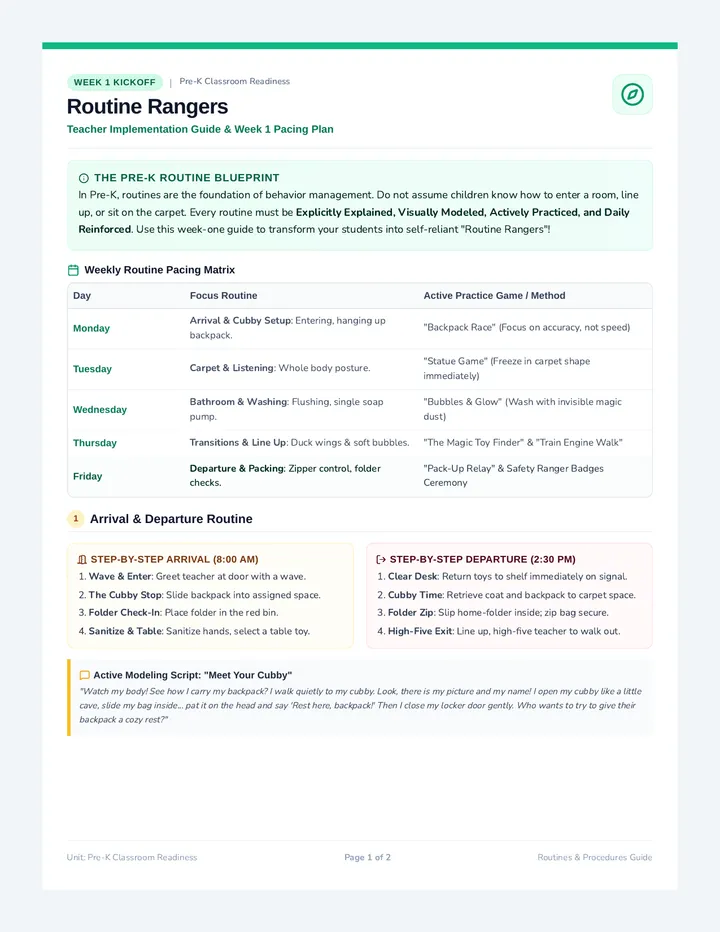
A foundational unit designed to establish essential routines, behavioral expectations, and self-regulation skills in Pre-K students during the critical first weeks of school. Features visual supports, structured practice, and school-to-home partnership resources.
A comprehensive, visually engaging lesson dedicated to helping young learners master the essential life skill of shoe-tying using the traditional Loop-and-Swoop method.
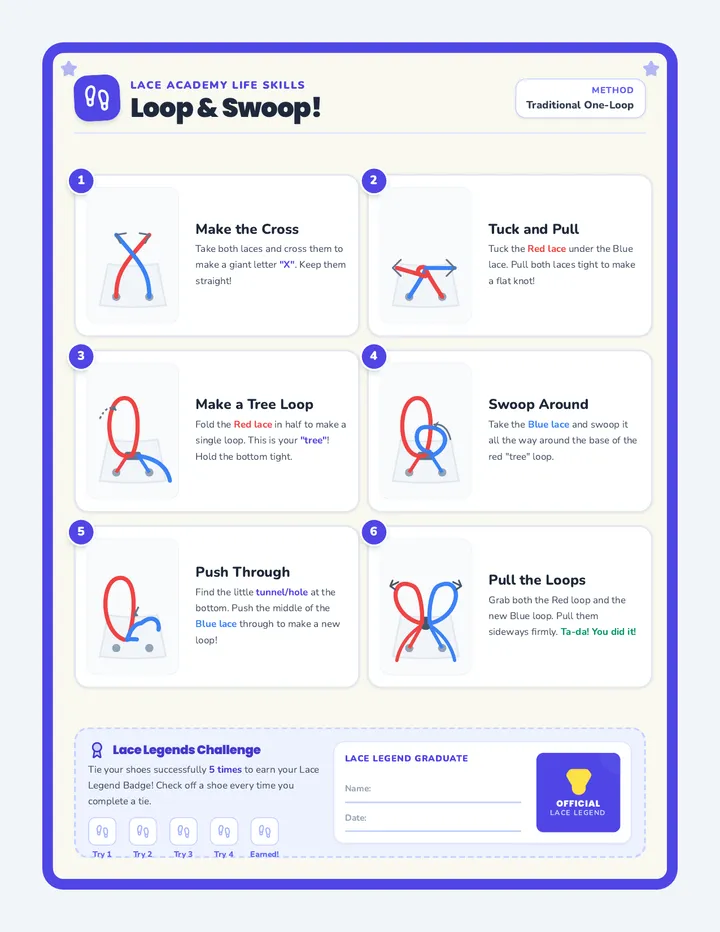
A single-page printable step-by-step poster for classrooms or student binders. It breaks down the traditional 'Loop-and-Swoop' shoe-tying method into 6 clear visual steps with distinct color-coded laces (Red and Blue) to make teaching and learning intuitive. Includes a fun practice tracking section at the bottom.
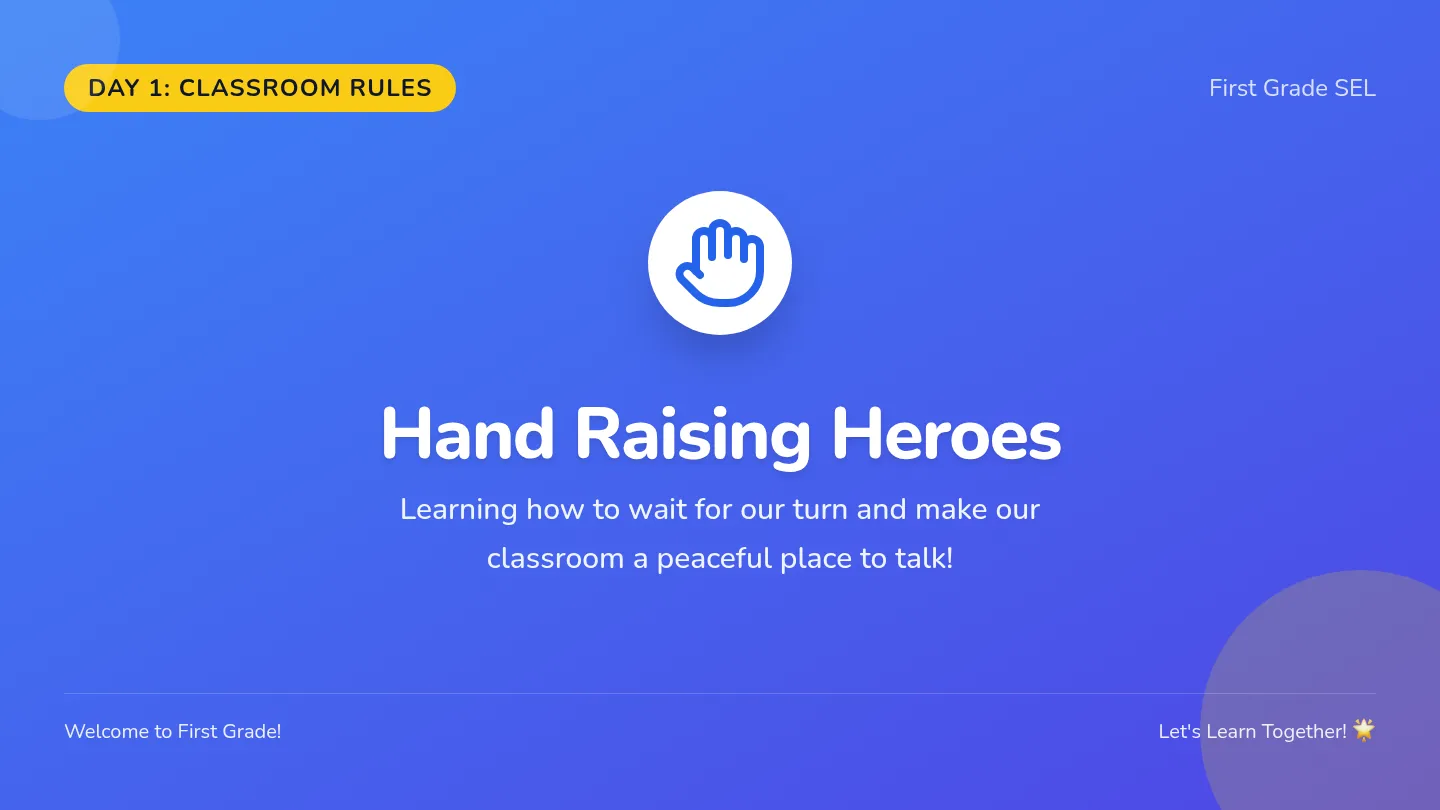
A five-day social-emotional learning sequence for the first week of first grade. Students learn essential classroom expectations—hand-raising, active listening, sharing, kindness, and respect—through interactive slides, colorful anchor charts, and daily carpet-time pocket chart sorting activities.
A comprehensive workshop and toolset designed for upper primary girls in diverse Western Australian classrooms. This lesson focuses on building emotional resilience, stopping teasing or meanness, and navigating friendship conflicts with inclusive, culturally-responsive strategies.
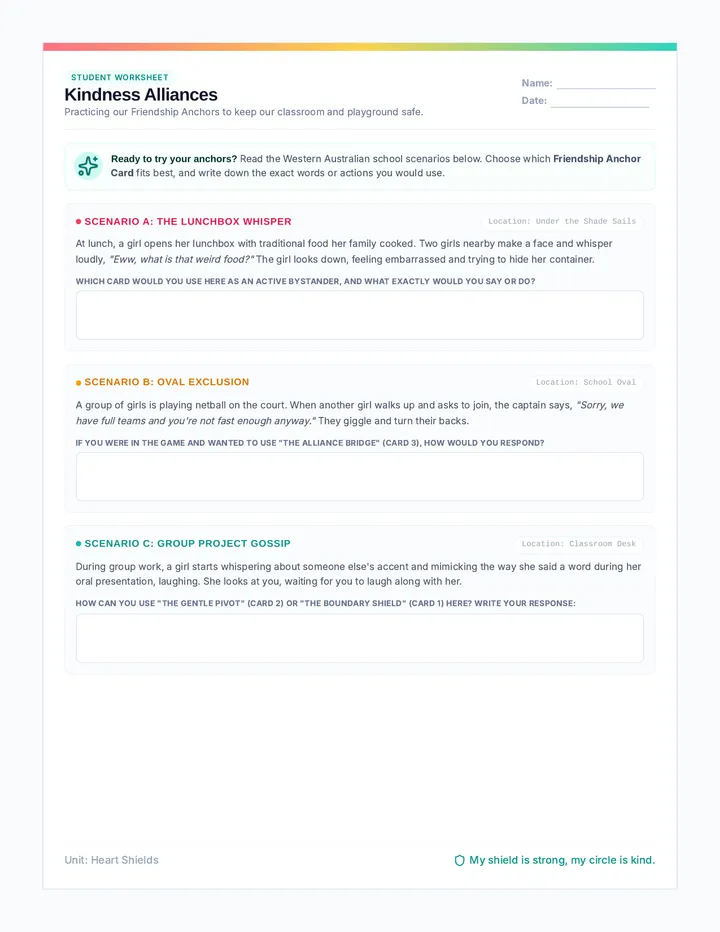
A student-facing activity sheet featuring real-world Western Australian school scenarios. It guides students to apply the 'Friendship Anchors' to address teasing, exclusionary lunchbox comments, and playground cliques, with dedicated writing spaces.
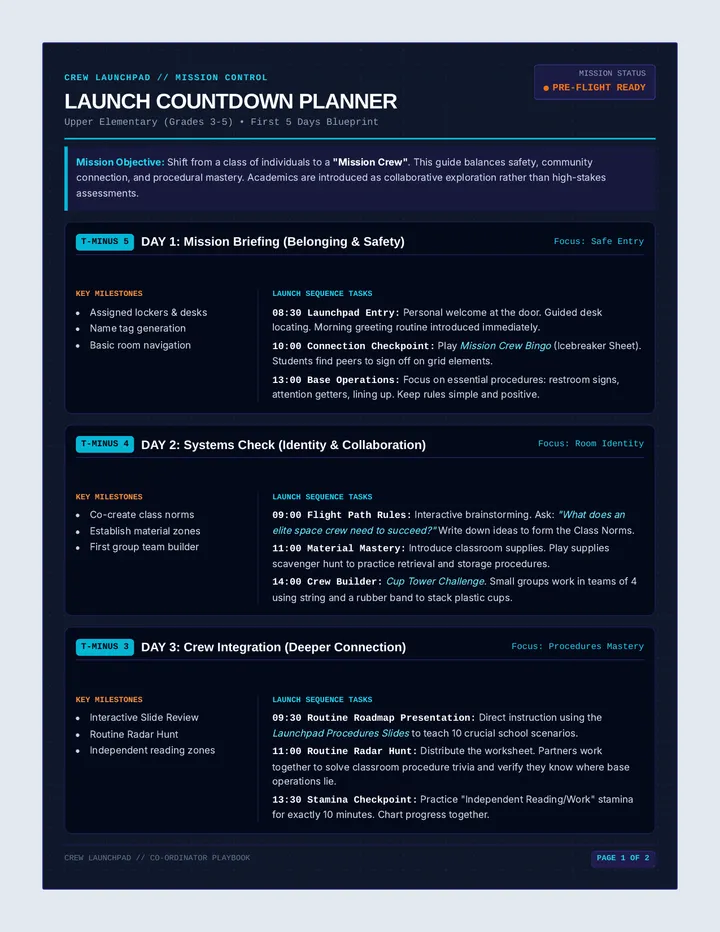
A comprehensive back-to-school launch kit for Upper Elementary (grades 3-5). It includes a detailed five-day lesson planner, engaging community-building activities, and an interactive slide-deck and scavenger hunt to master classroom routines.
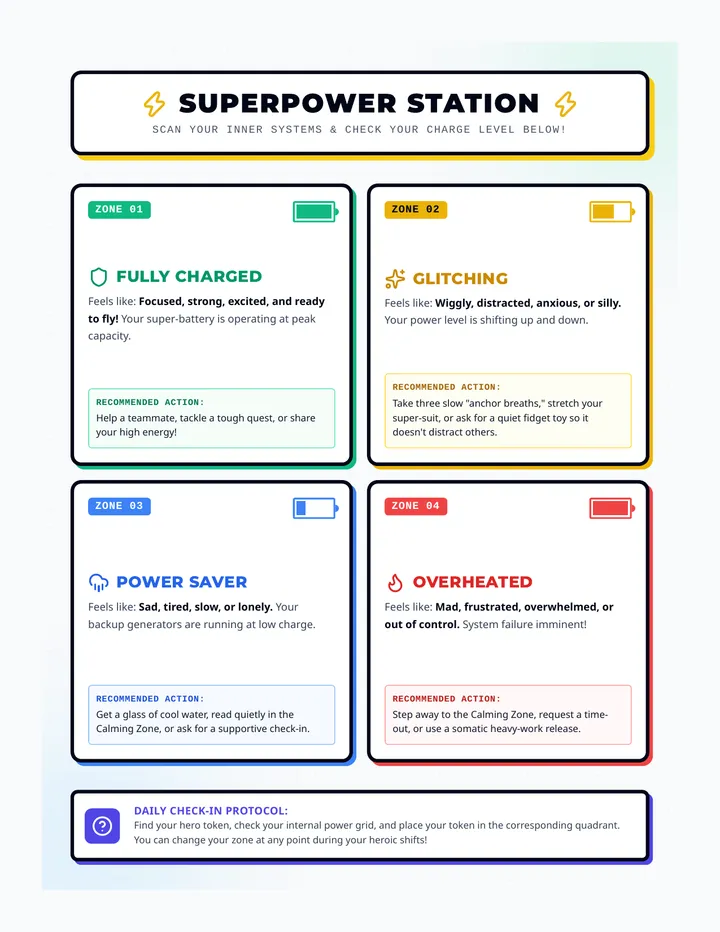
A superhero-themed emotional wellbeing check-in system for primary classrooms. Students rate their emotional state as an inner 'battery charge' and use superhero-themed tokens to check in daily, supported by reflection worksheets and a teacher facilitation guide.
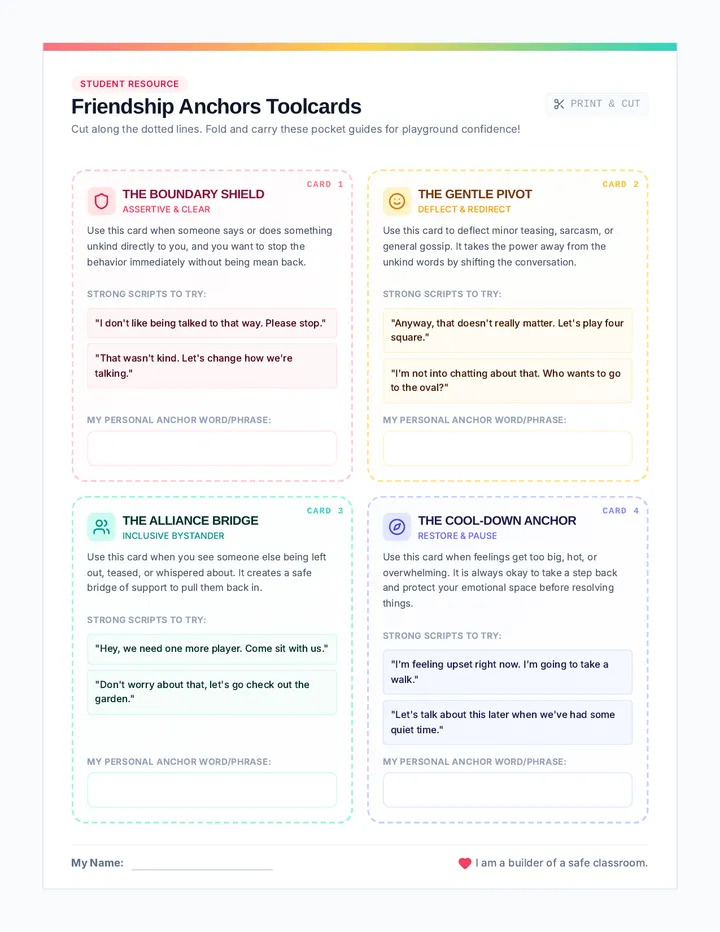
A printable page of 4 portable, step-by-step strategy toolcards designed for students. Each card provides actionable verbal scripts and physical steps to de-escalate teasing, build alliances, and set boundaries, complete with handwriting spaces for personalization.
A comprehensive character education curriculum for kindergarten students focusing on Respect, Perseverance, Honesty, Cooperation, Courage, and Creativity. It combines slide-based instruction with interactive problem-solving scenarios and integrated printables.
A comprehensive 10-day unit designed to teach, model, and reinforce essential classroom routines and transitions for kindergarteners. Includes structured pacing, visual slide guides, and actionable interactive lessons.
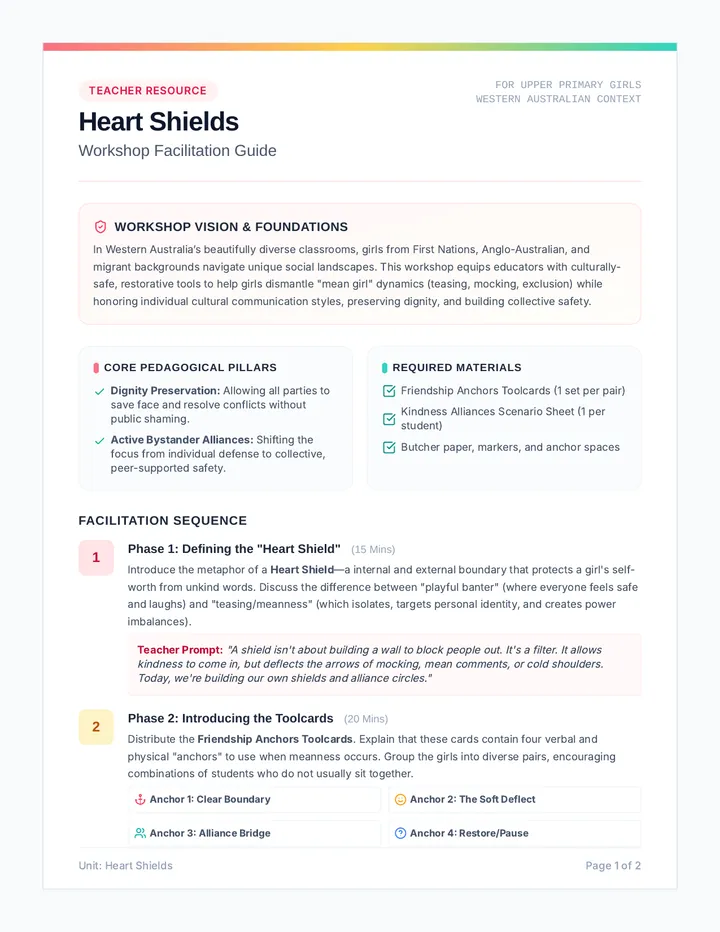
A 2-page facilitator guide for educators delivering the Heart Shields workshop. It provides a step-by-step facilitation framework, discussion prompts, and culturally-responsive strategies to address teasing and build inclusive friendships in diverse classrooms.