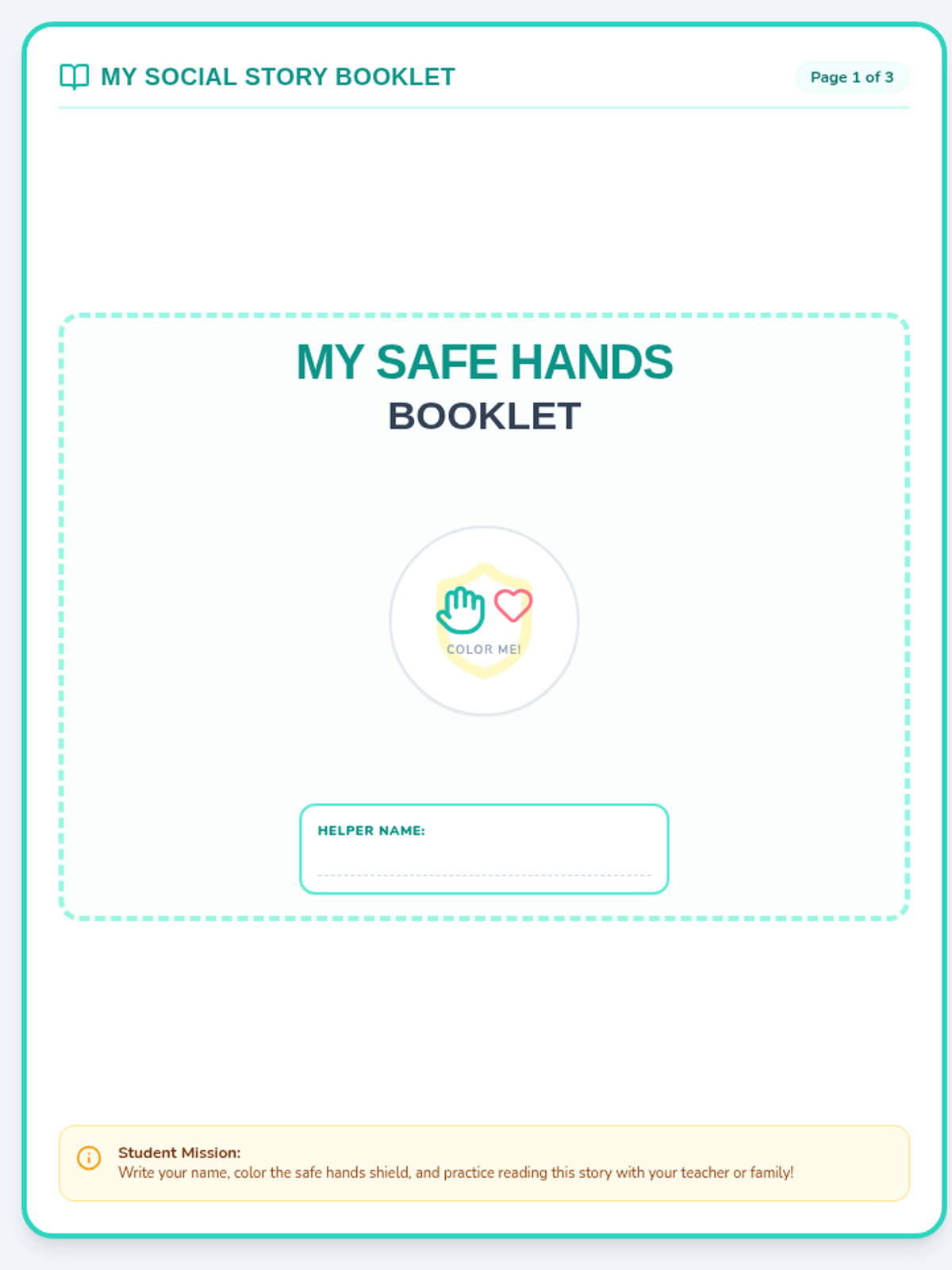
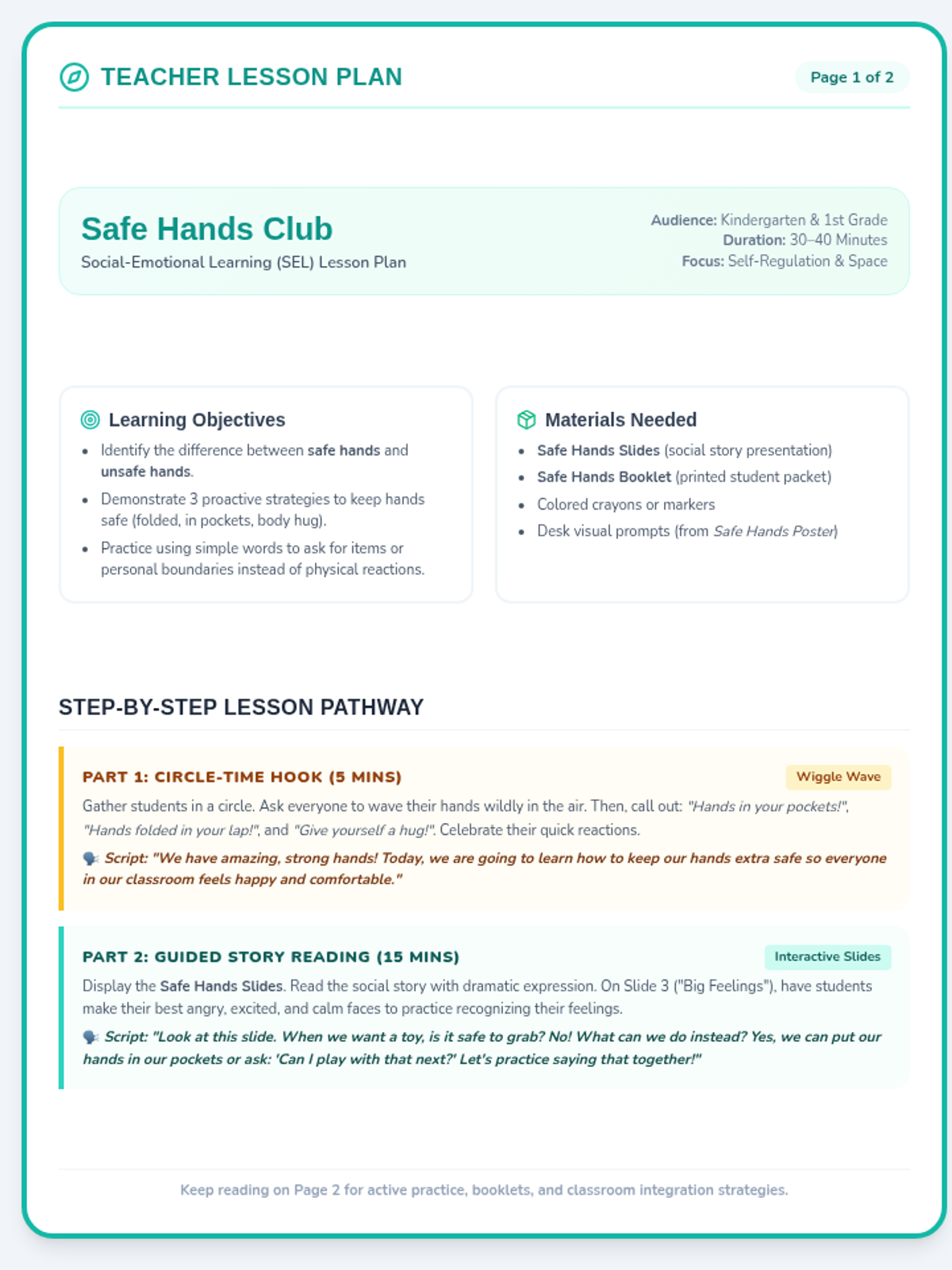
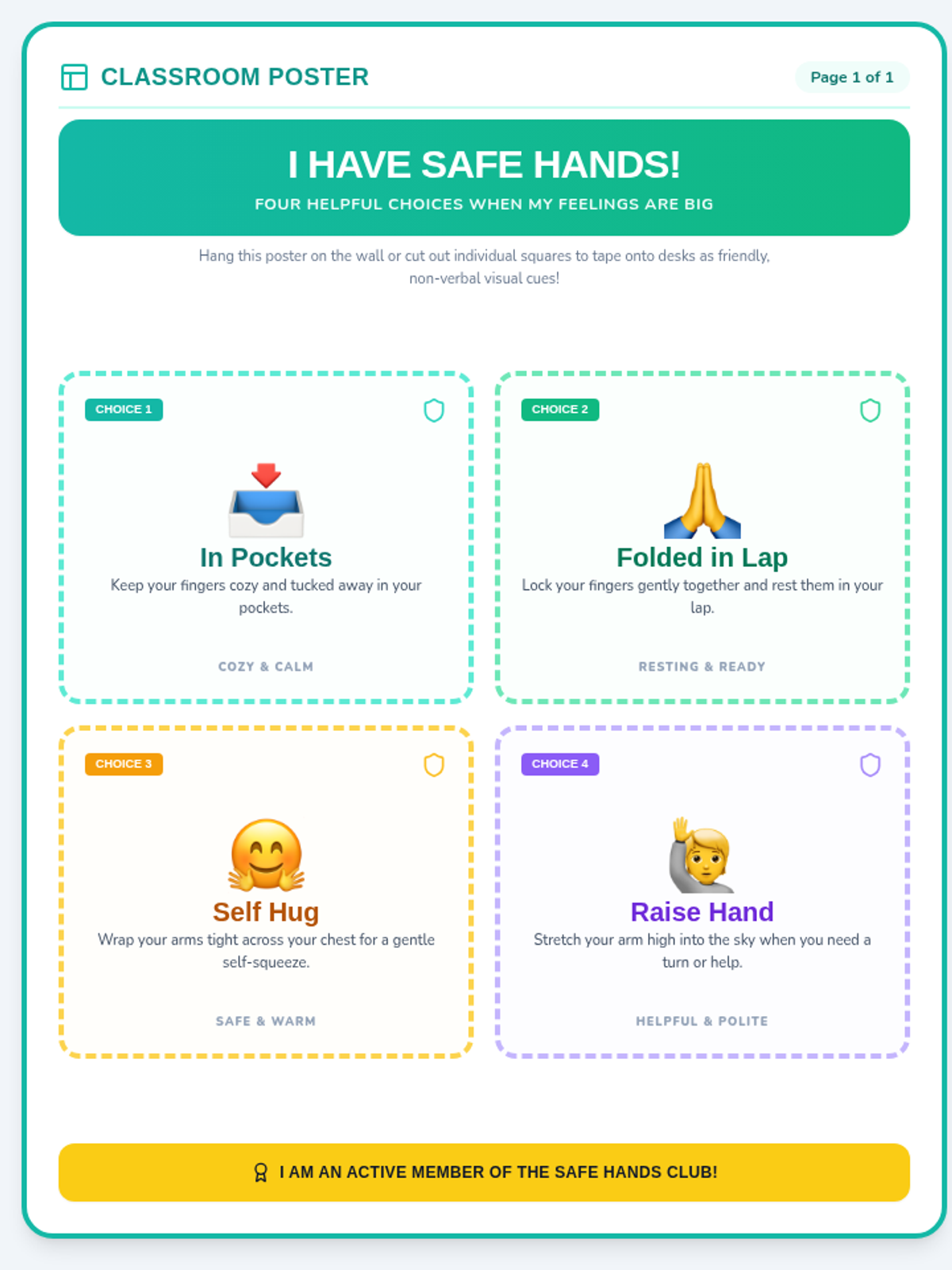
Focuses on physical boundaries and 'gentle hands' to help students understand how to be nice to others physically and avoid aggressive behaviors.
Creating a personalized self-regulation plan that combines identifying triggers, body signals, and chosen coping strategies.
Learning how to use helpful self-talk and perspective-shifting to navigate through difficult emotional 'clouds'.
Developing a toolkit of sensory and breathing-based coping strategies to manage intense weather patterns in the mind.
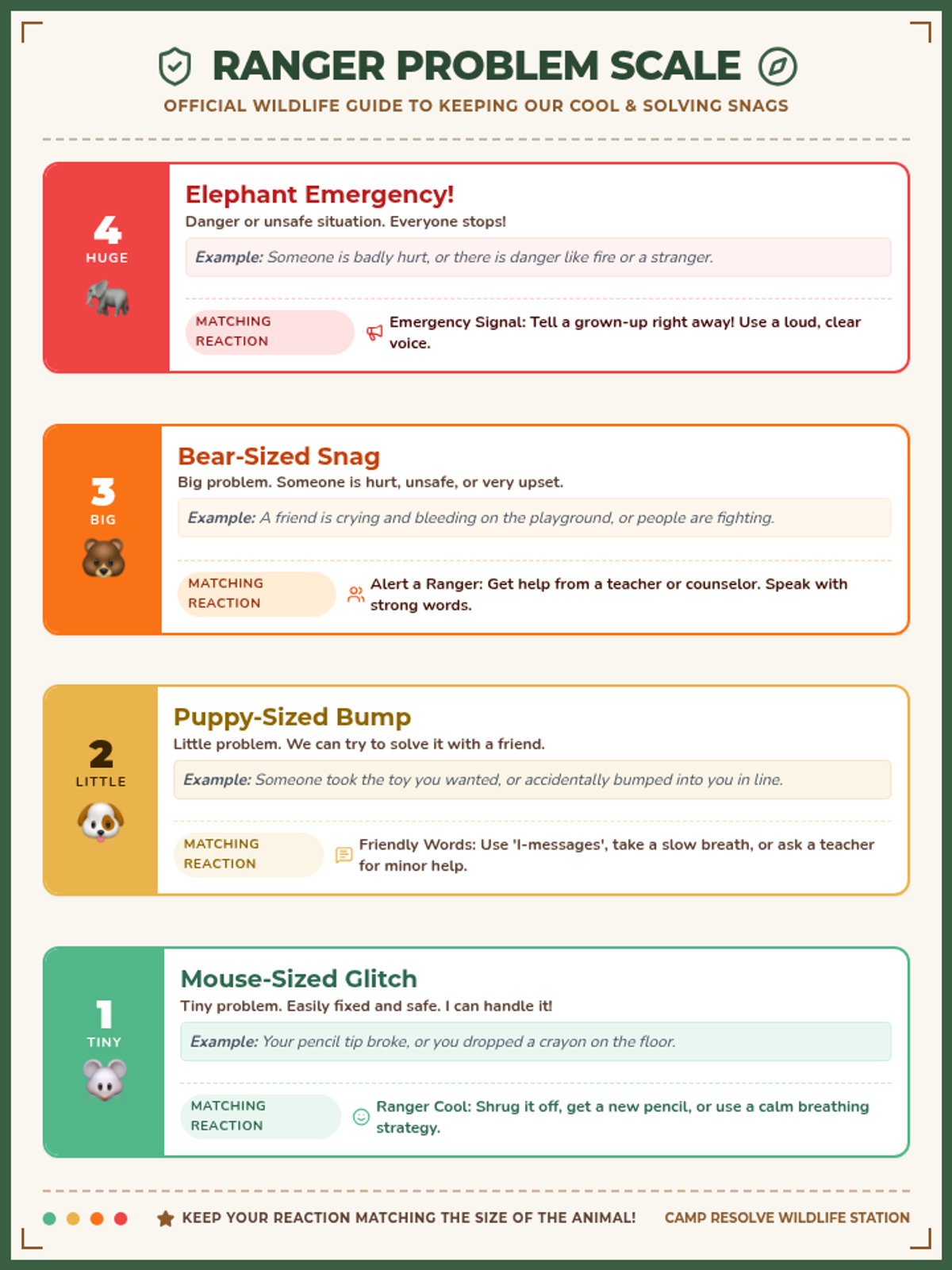
Exploring the intensity of emotions and using a scale to determine when big feelings require specific coping tools.
Learning to recognize the physical 'early warning' signs our bodies give us when we experience different emotions.
Introduction to identifying a wide range of emotions and understanding that all feelings are temporary, like weather patterns.
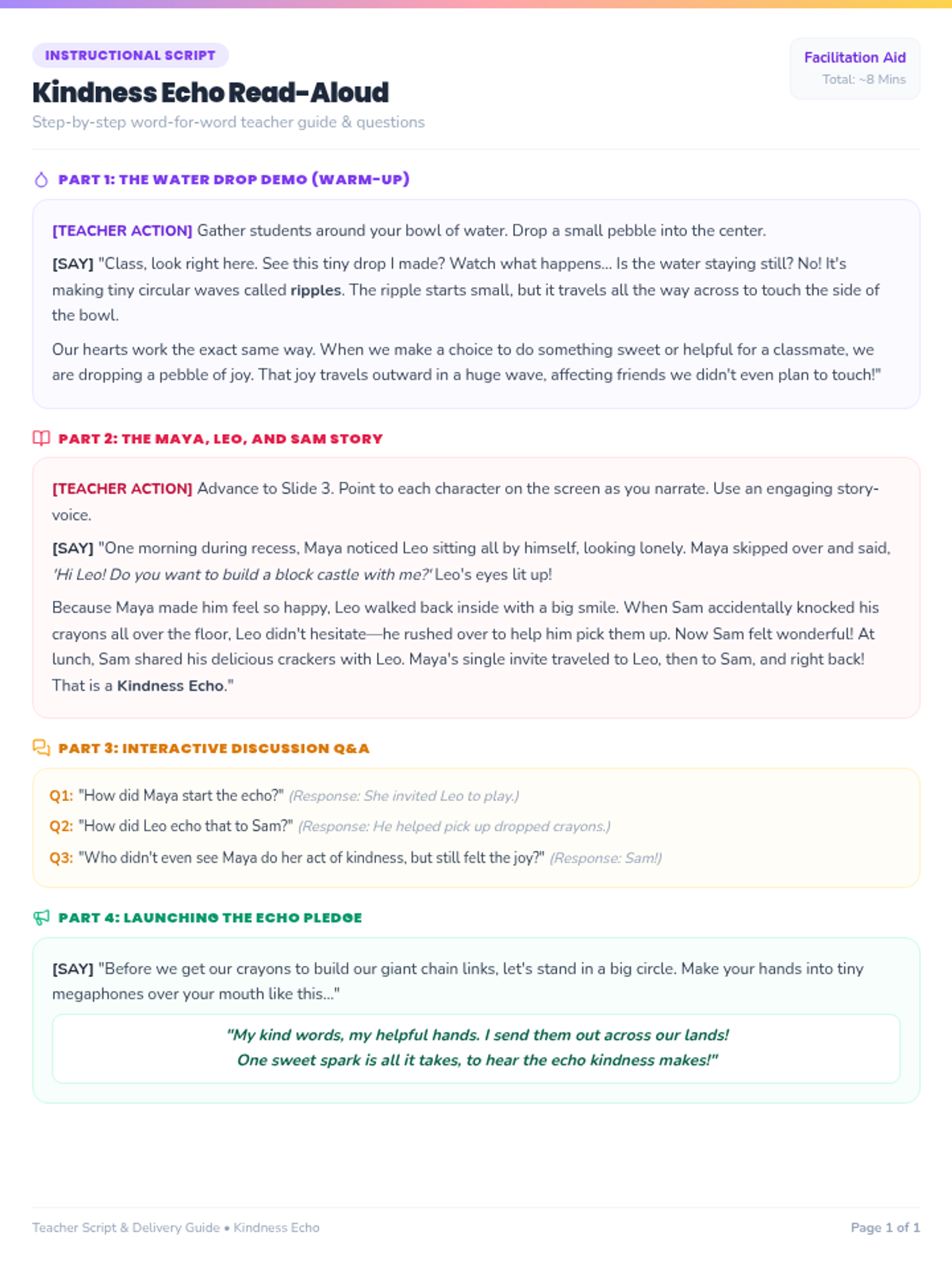
A comprehensive program to launch a kindness challenge in the classroom, featuring daily missions, tracking tools, and reflective journaling to build a culture of empathy and positive social interactions.
A comprehensive lesson on identifying when a compromise is needed using the 'Bridge Builders' metaphor to help students find middle ground in conflicts.
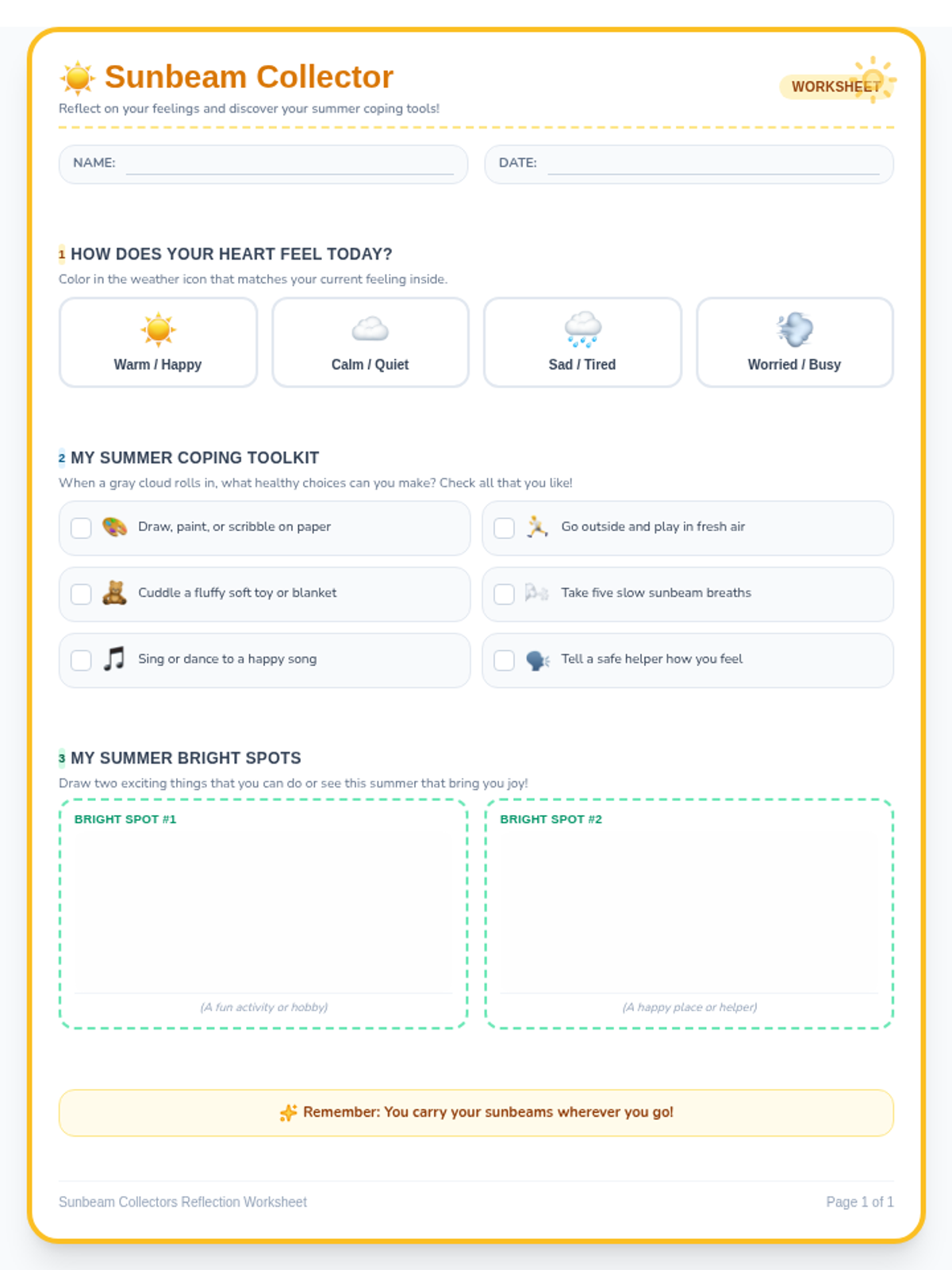
A K-2 lesson that uses weather metaphors to help students identify, express, and normalize their emotions while learning simple coping strategies.
Focuses on the dynamics of group play, including waiting for a turn and making positive comments about others' play.
This lesson covers the essentials of interacting during play, specifically focusing on how to share toys and space with others.
This lesson focuses on how to initiate play and make clear requests to join others. Students will learn the three-step 'Watch, Wait, and Ask' method.
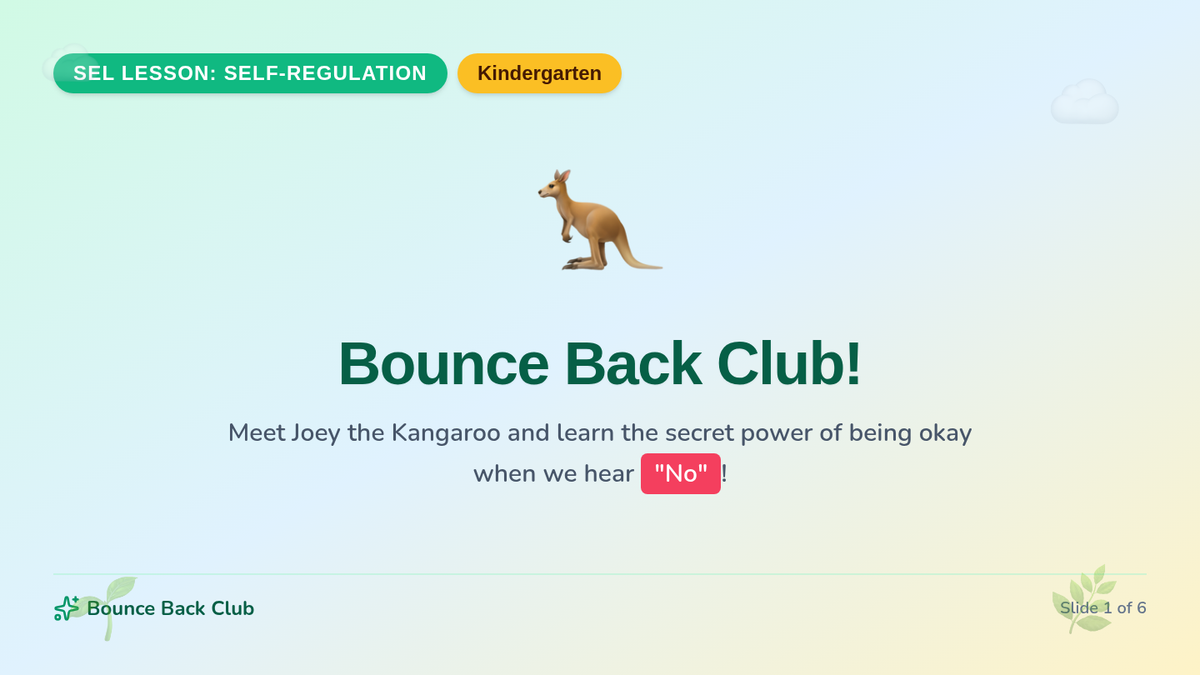
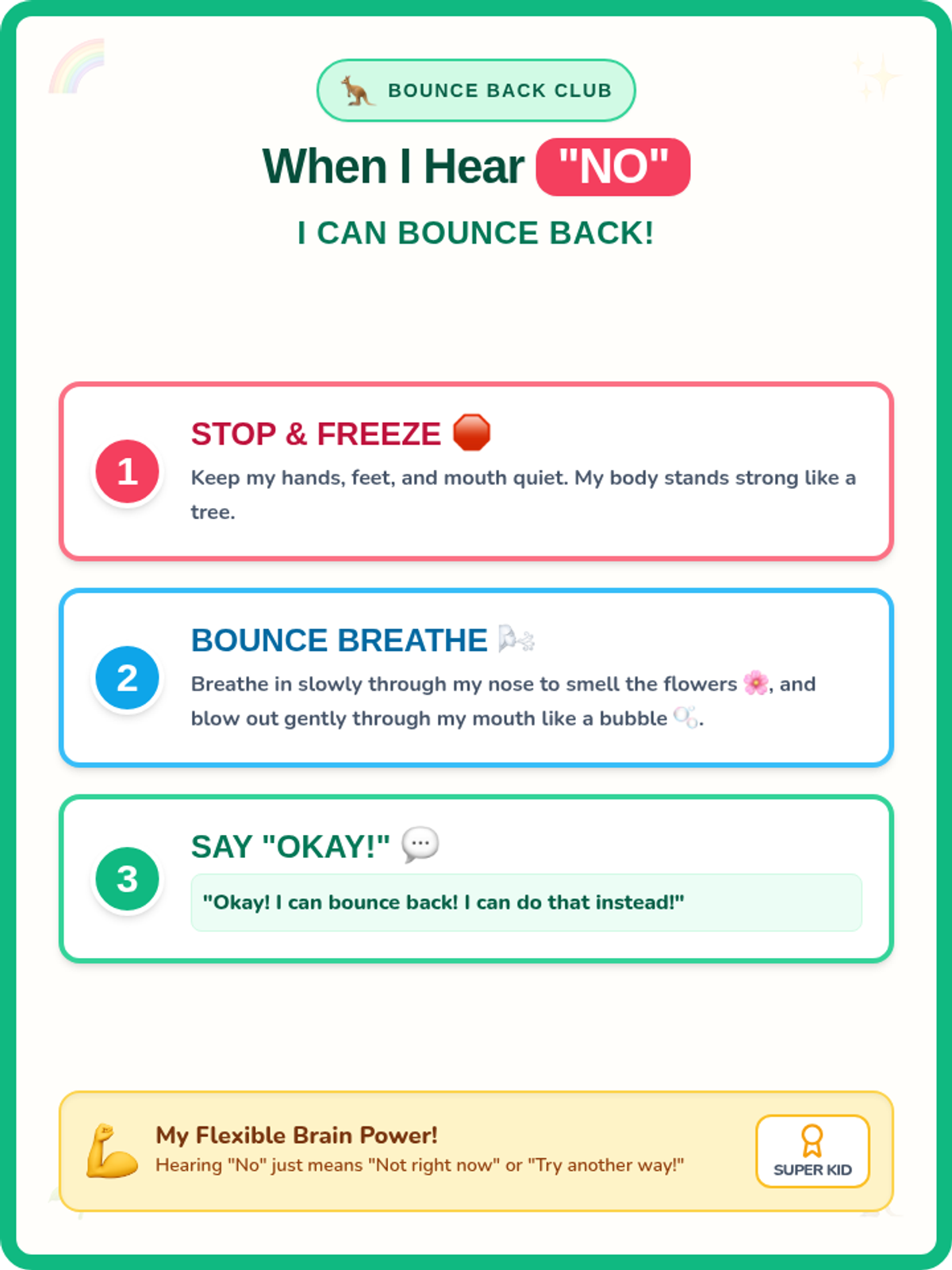
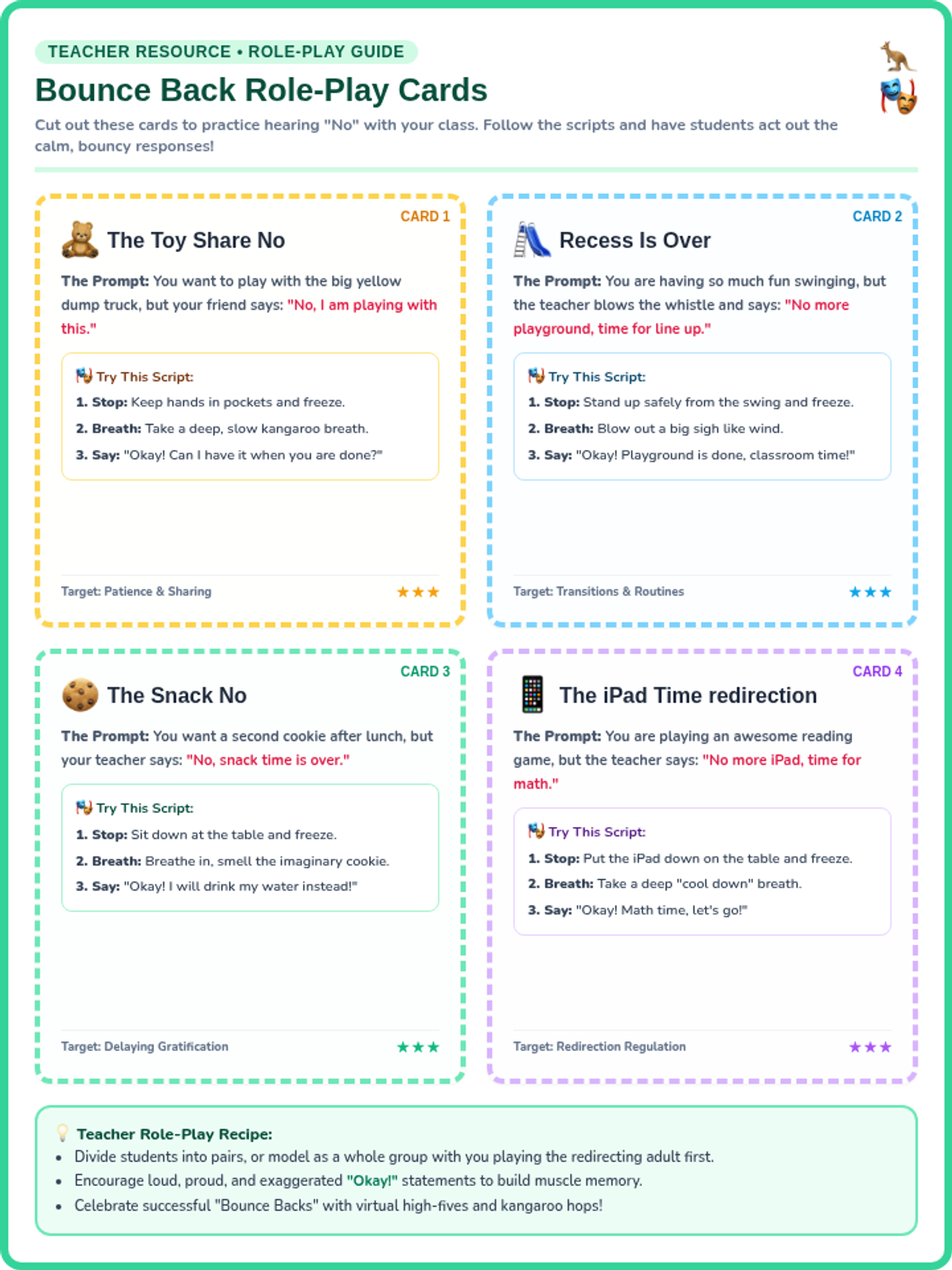
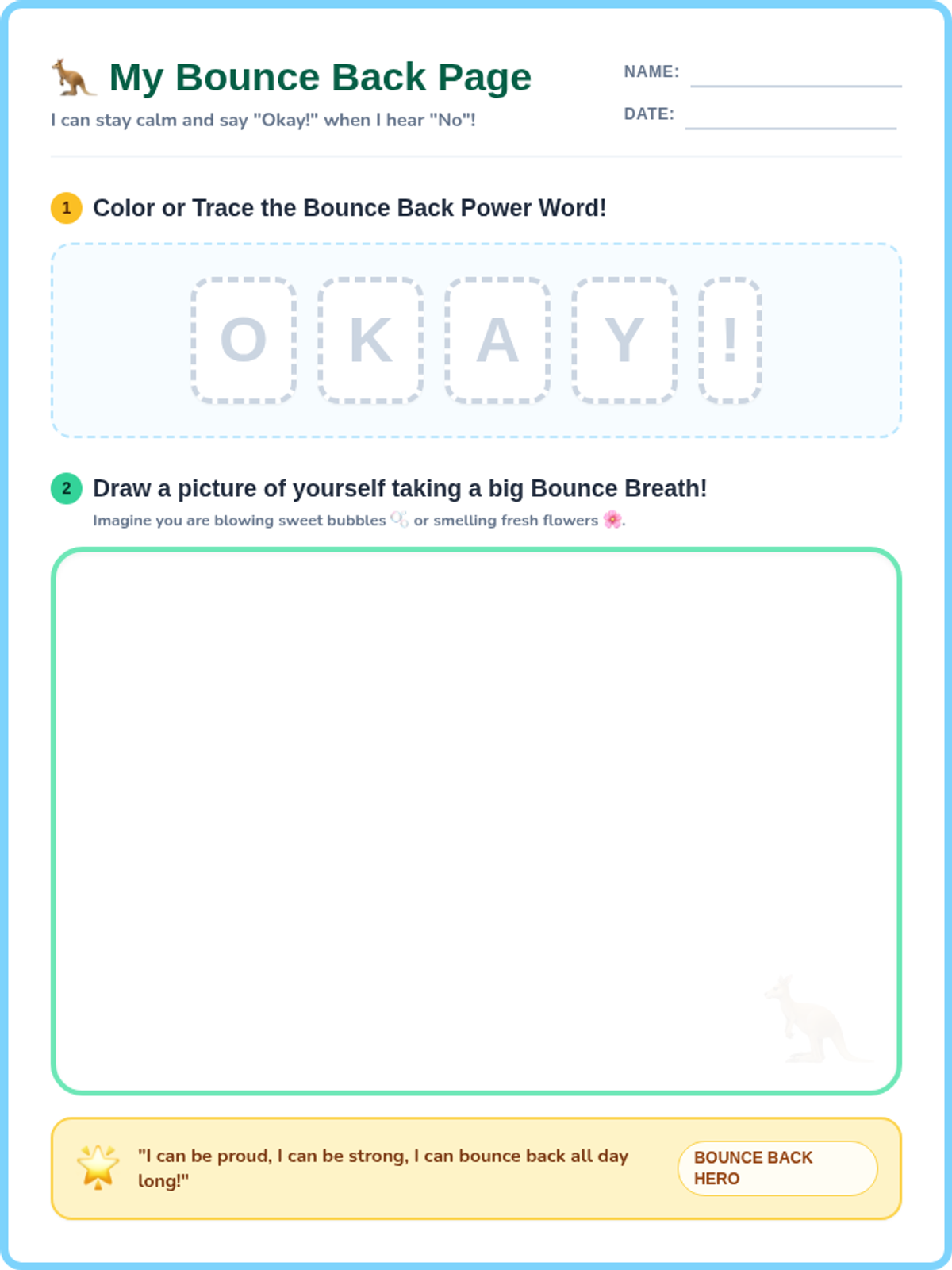
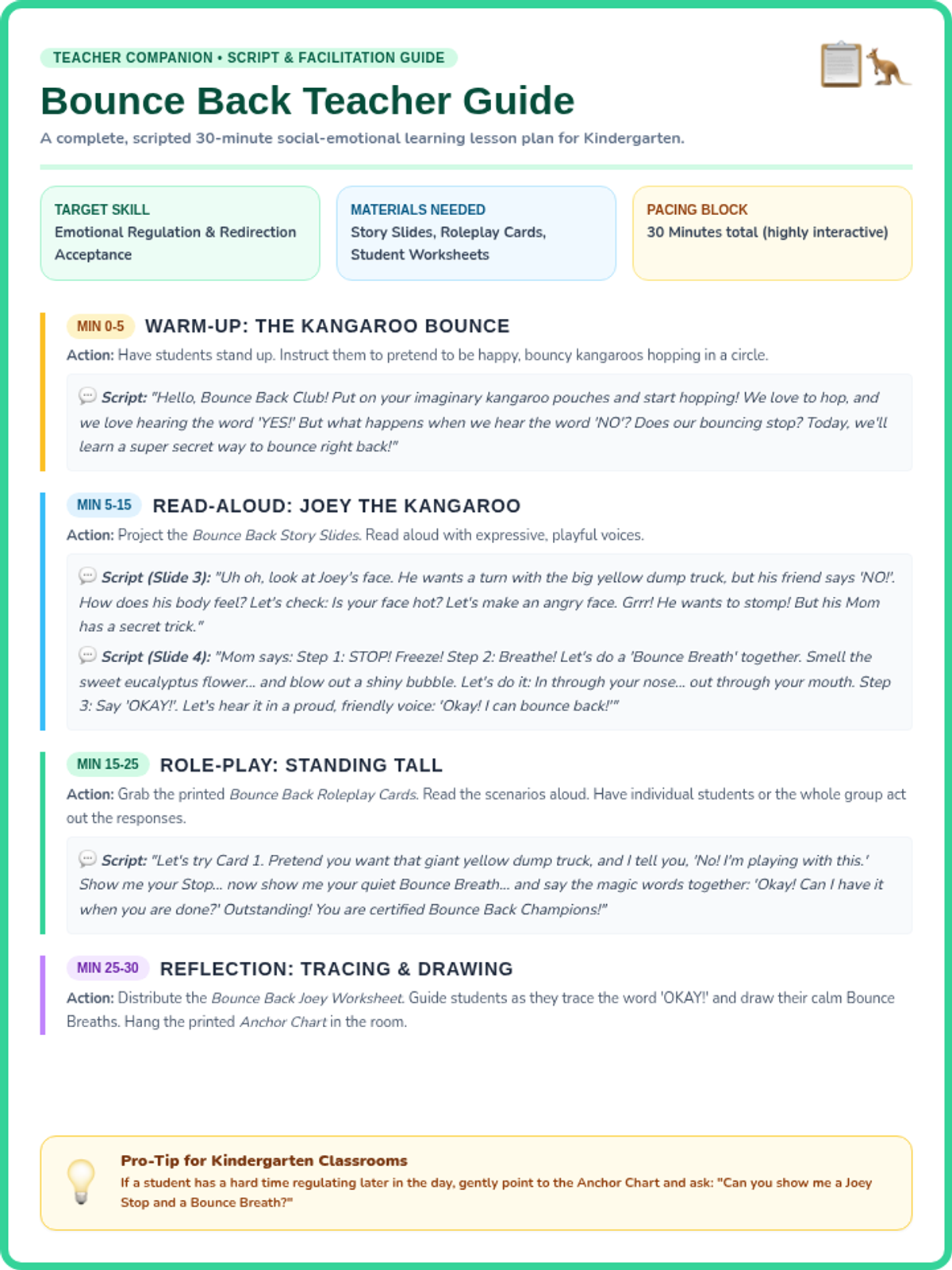
A 30-minute individual counseling session focused on self-control, accepting "no", and coping strategies using the book 'When Sophie Gets Angry - Really, Really Angry...' by Molly Bang.
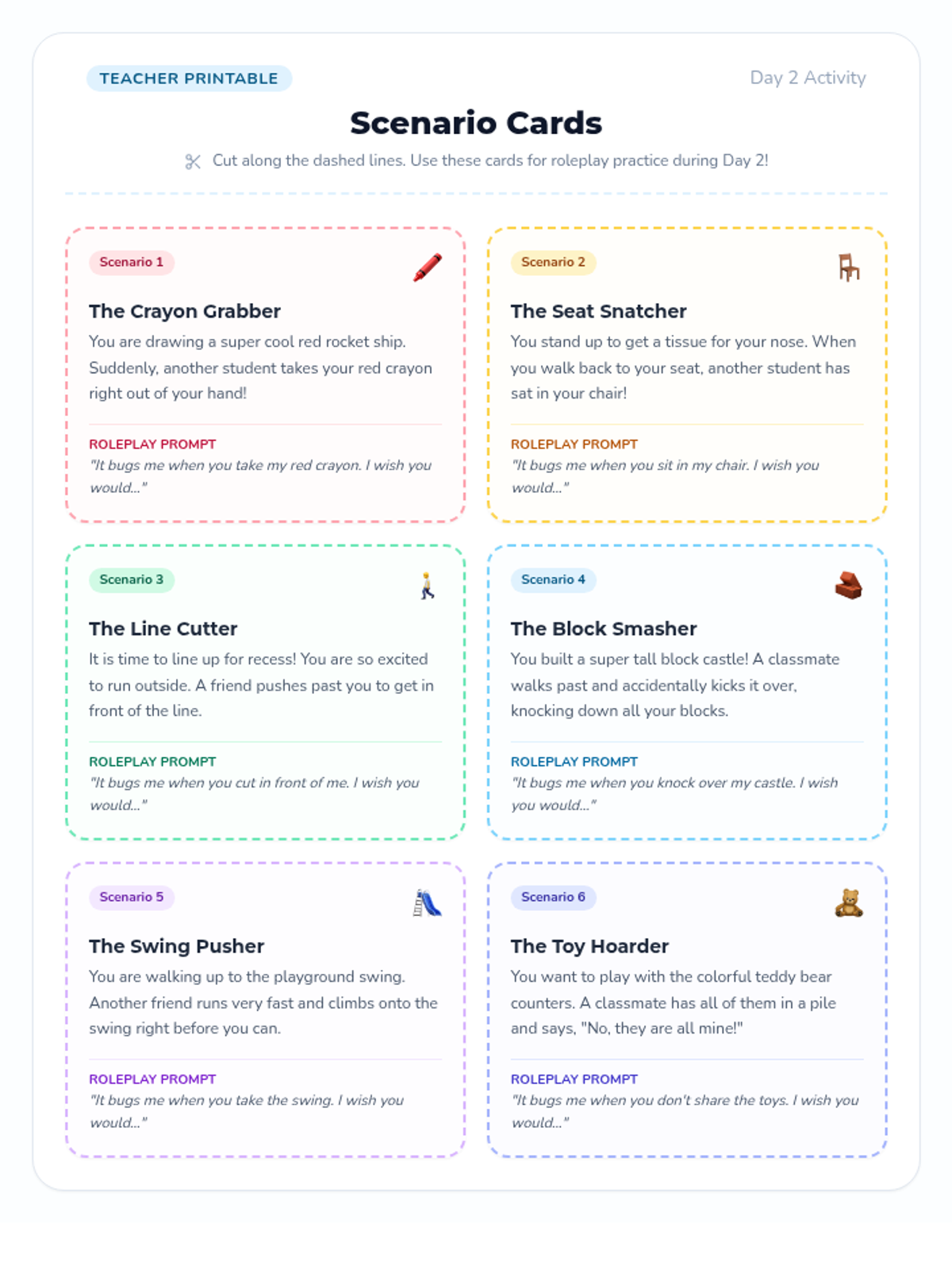
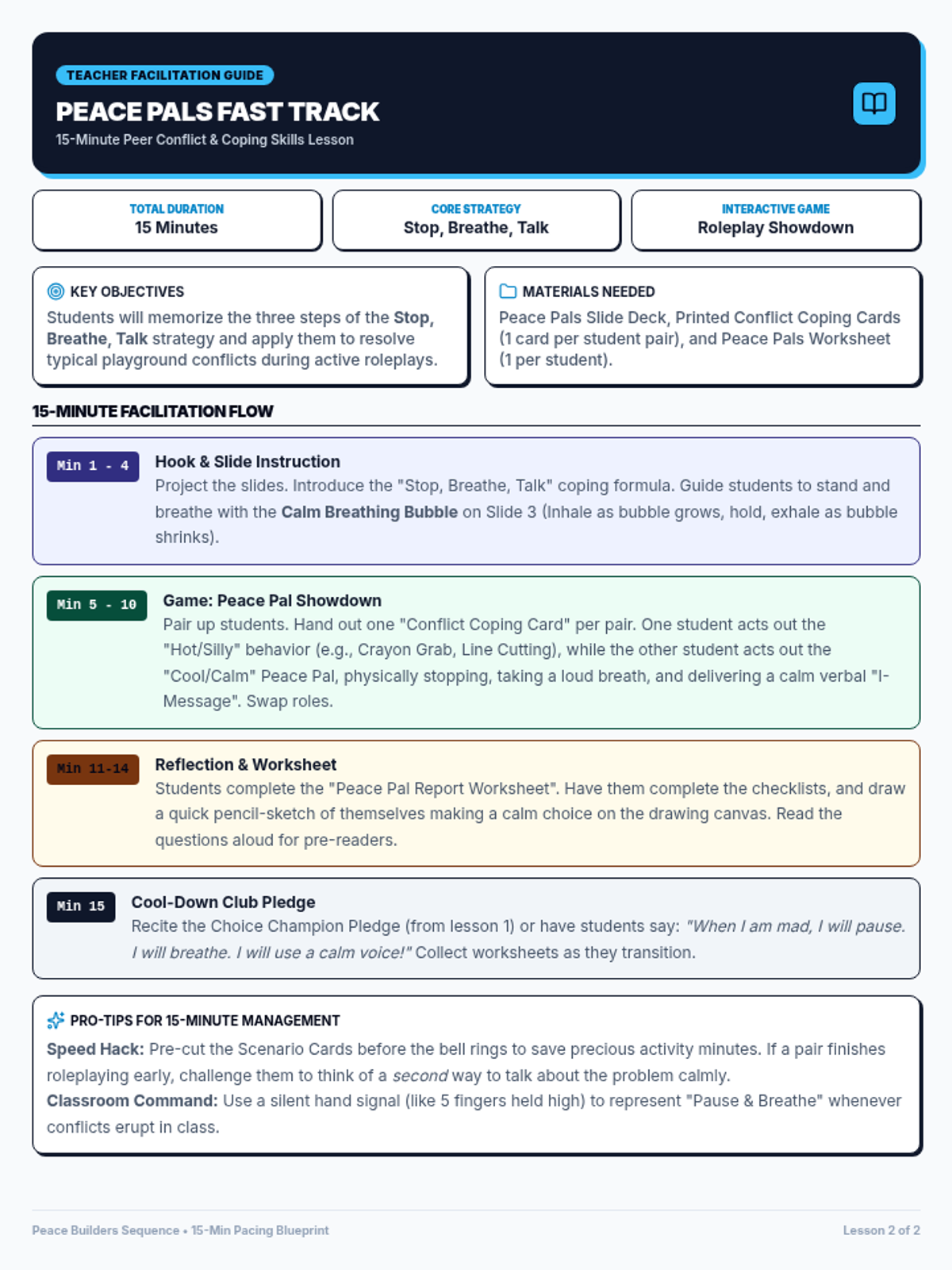
A practical application lesson where students practice their new skills through role-play scenarios and earn their 'Respect Squad' badges for demonstrating positive social behaviors.
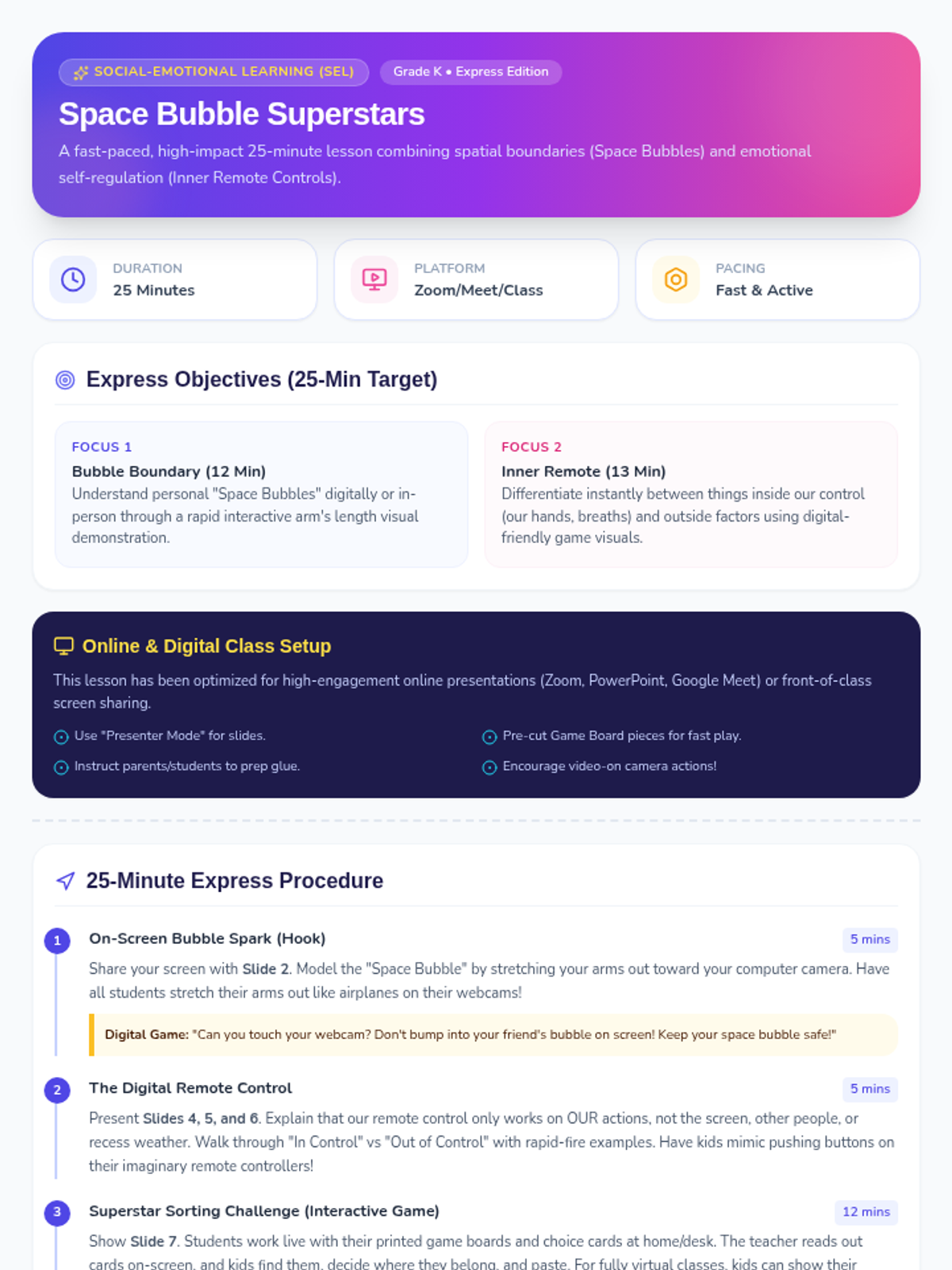
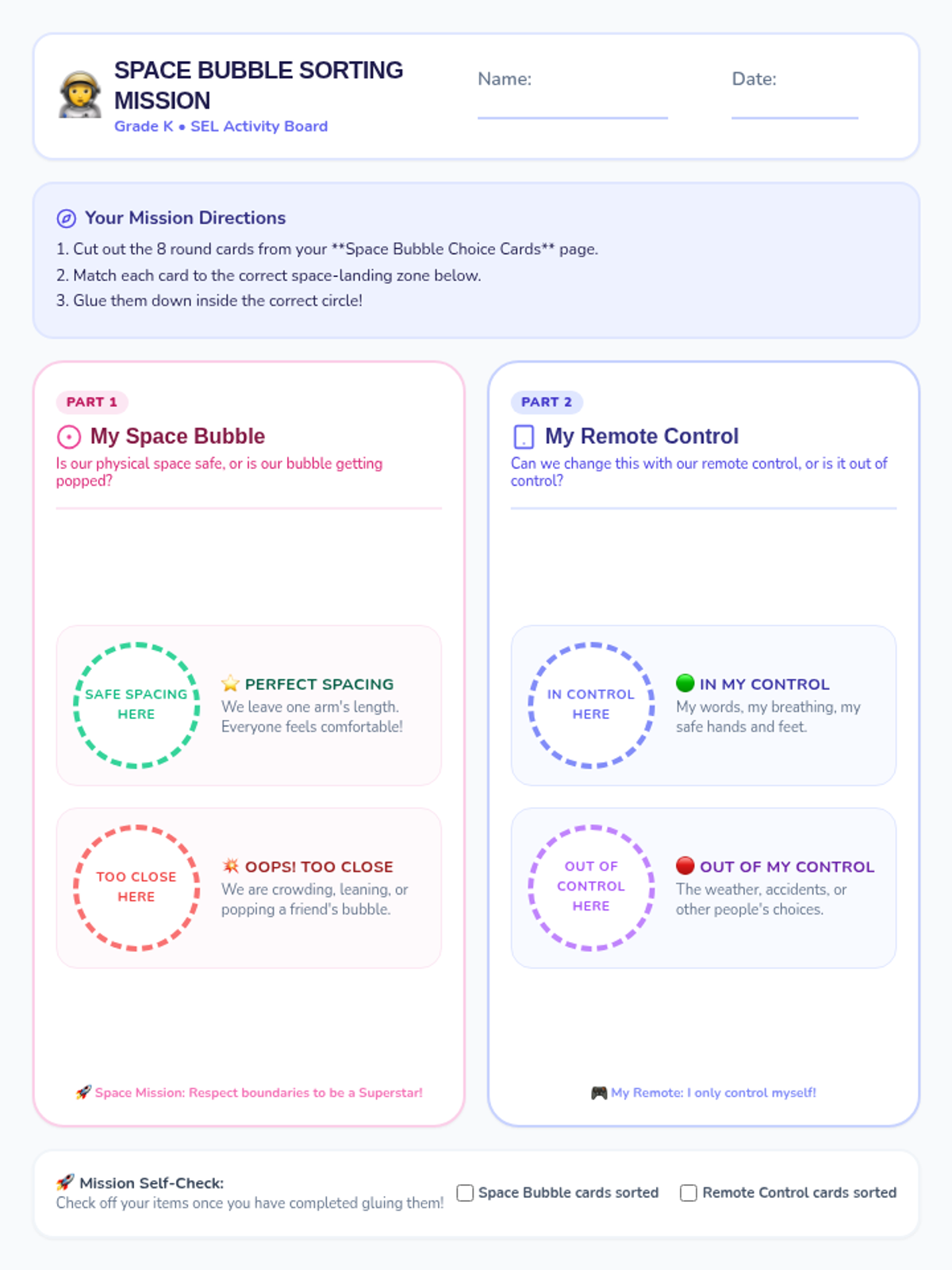
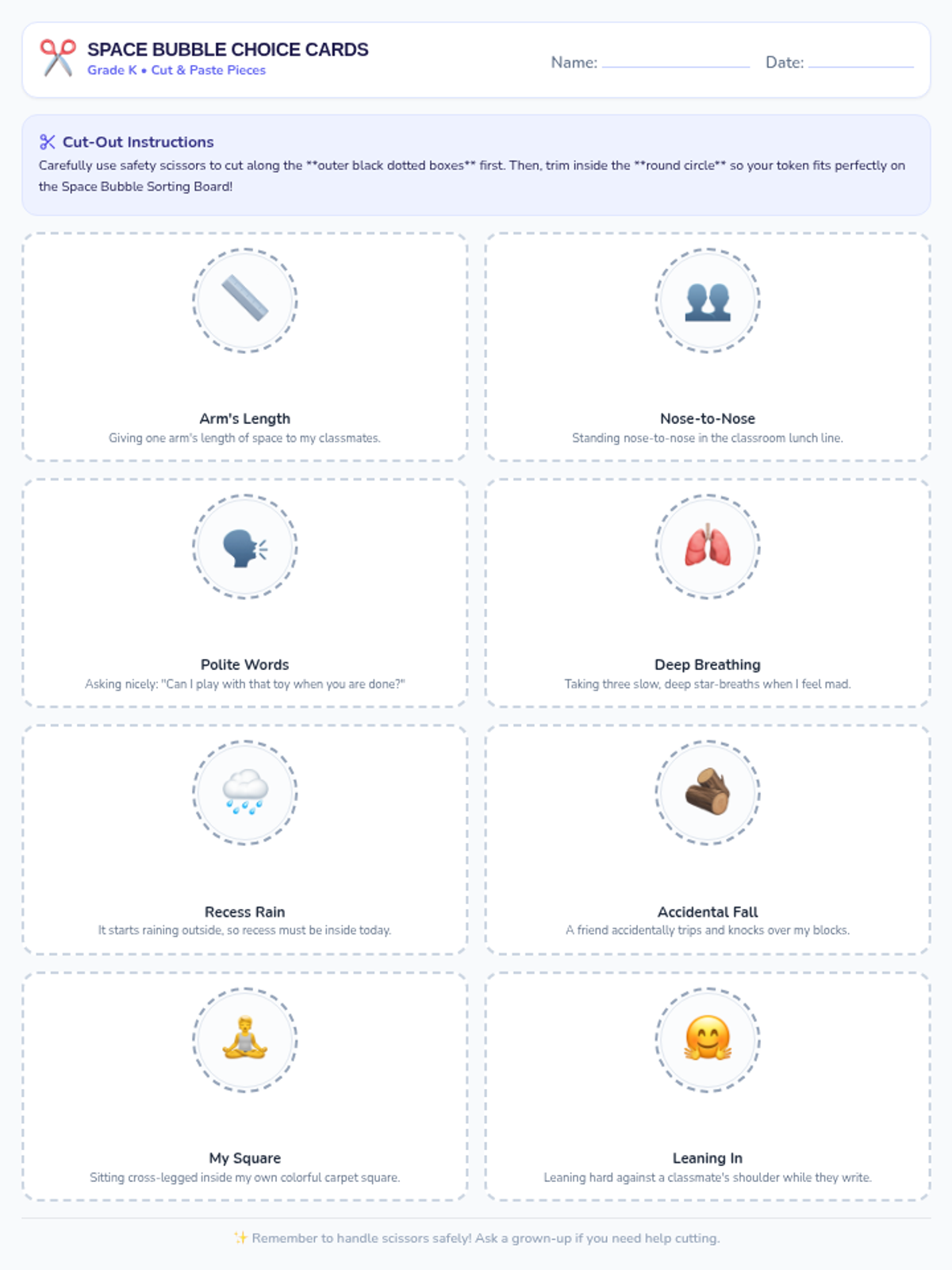
Teaches students the concept of personal space using the 'Invisible Bubble' metaphor, helping them understand how to keep their hands and feet to themselves while staying connected to others.
Focuses on the importance of waiting for a turn to speak, recognizing natural pauses in conversation, and avoiding interruptions through the 'Interrupting Volcano' and 'Traffic Light' analogies.
A comprehensive set of activities designed to help students identify, practice, and internalize respect for themselves, others, rules, and authority through scenarios, puzzles, and creative reflection.
A social-emotional learning lesson where students use inferencing skills to identify emotions through body language and situational context. Students act out scenarios and their peers 'detect' the underlying emotion.
This lesson helps elementary students build self-confidence by identifying personal strengths, practicing positive self-talk, and understanding that mistakes are part of learning.
A cumulative review of social skills learned over the past four weeks, ending in a structured play session to practice new behaviors.