This lesson focuses on how to initiate play and make clear requests to join others. Students will learn the three-step 'Watch, Wait, and Ask' method.
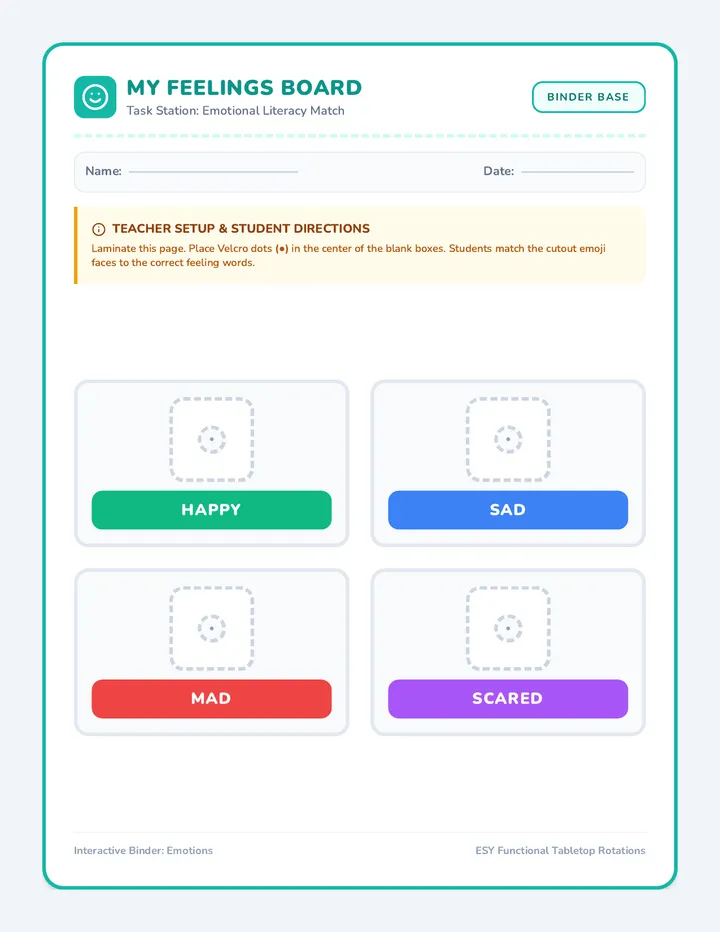
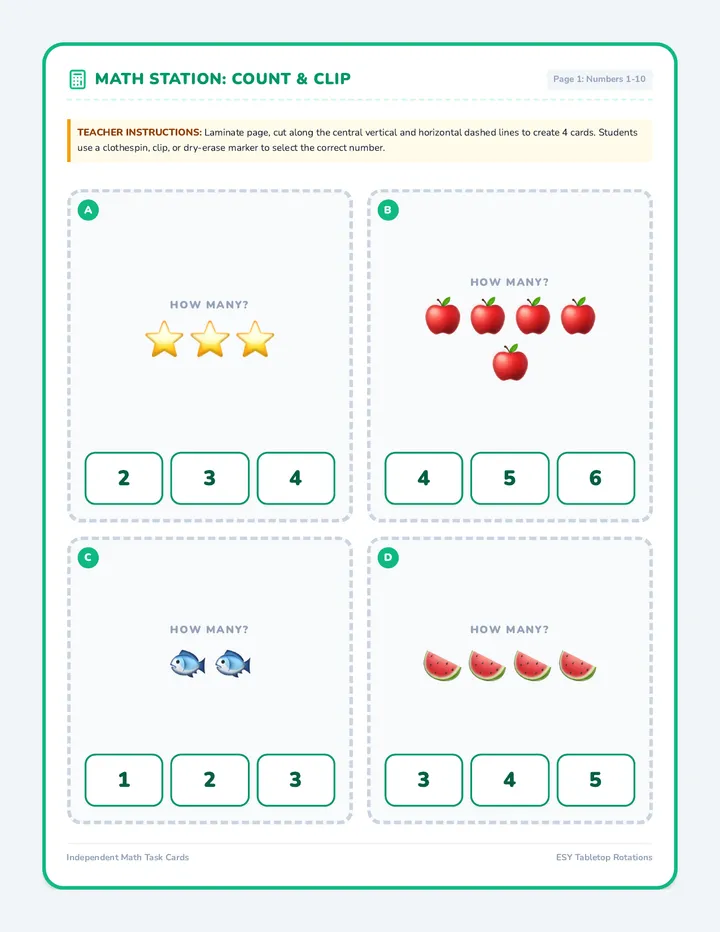
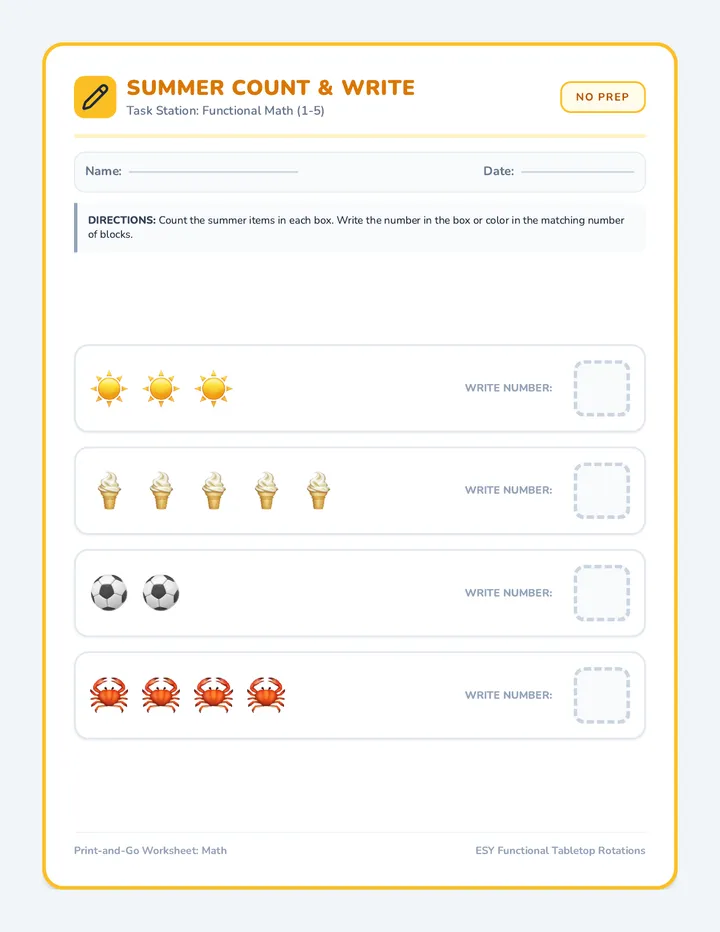
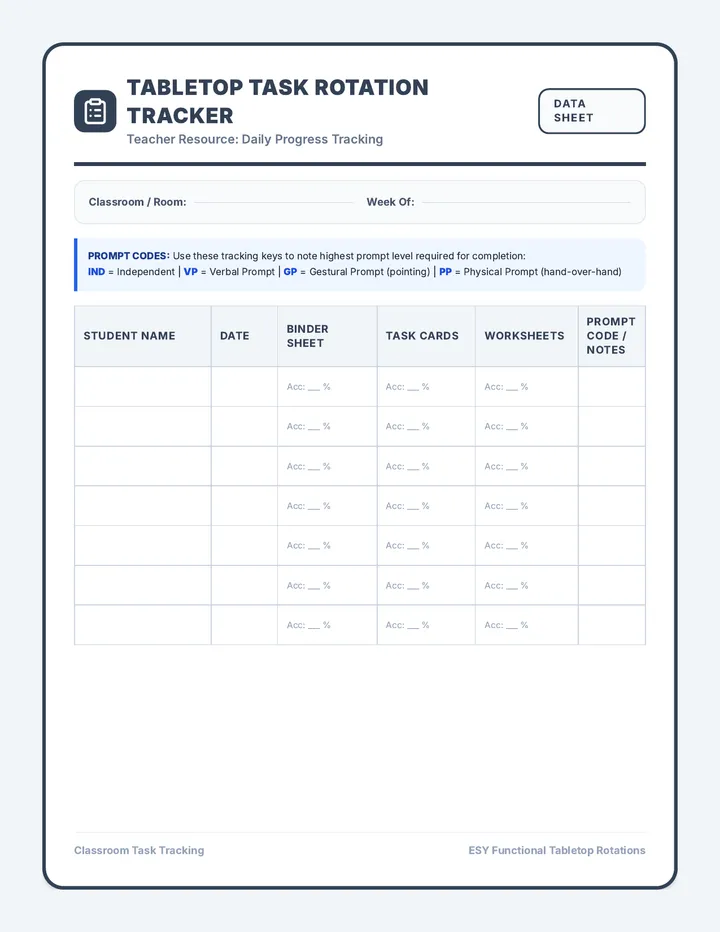
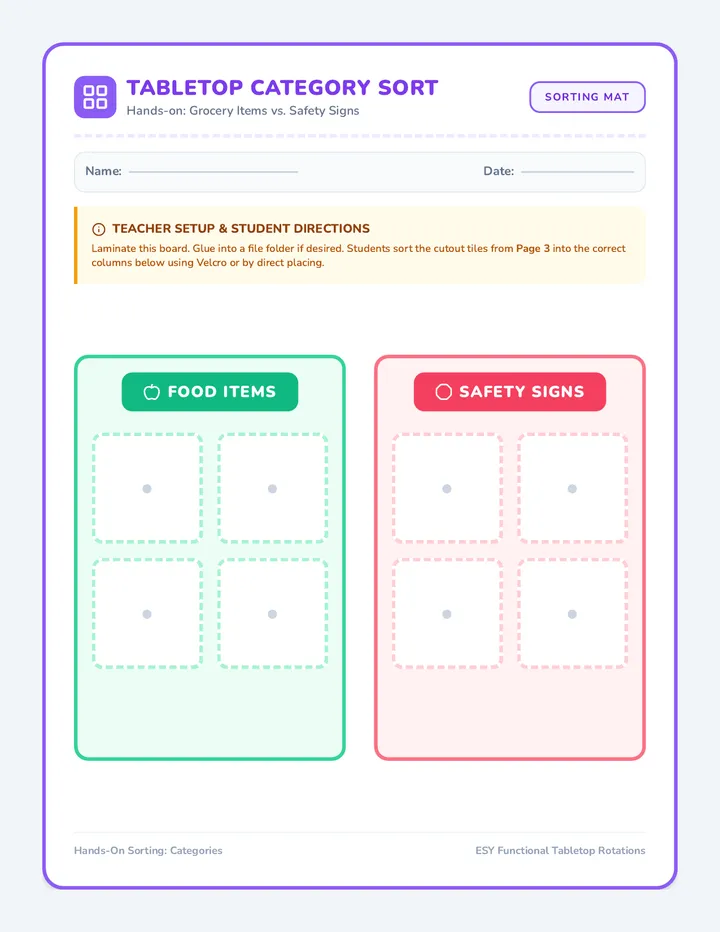
A cohesive suite of tabletop task stations, reusable binder sheets, print-and-go worksheets, and teacher data tracking sheets designed for ESY students with mild/moderate disabilities and autism. Focuses on functional math (counting objects), emotional literacy (identifying emotions), and functional sight words.
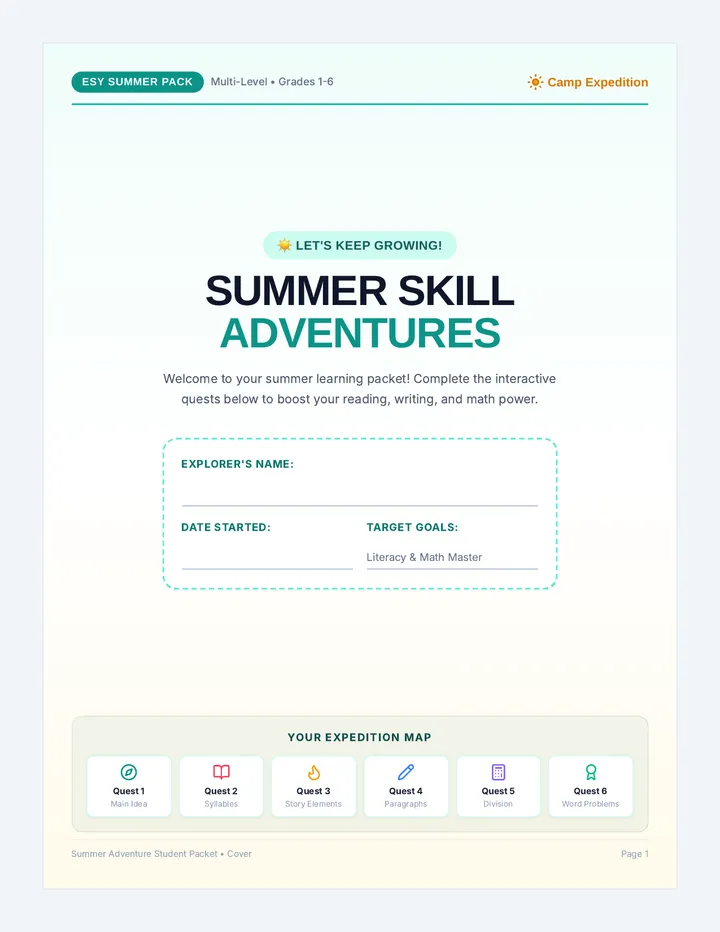
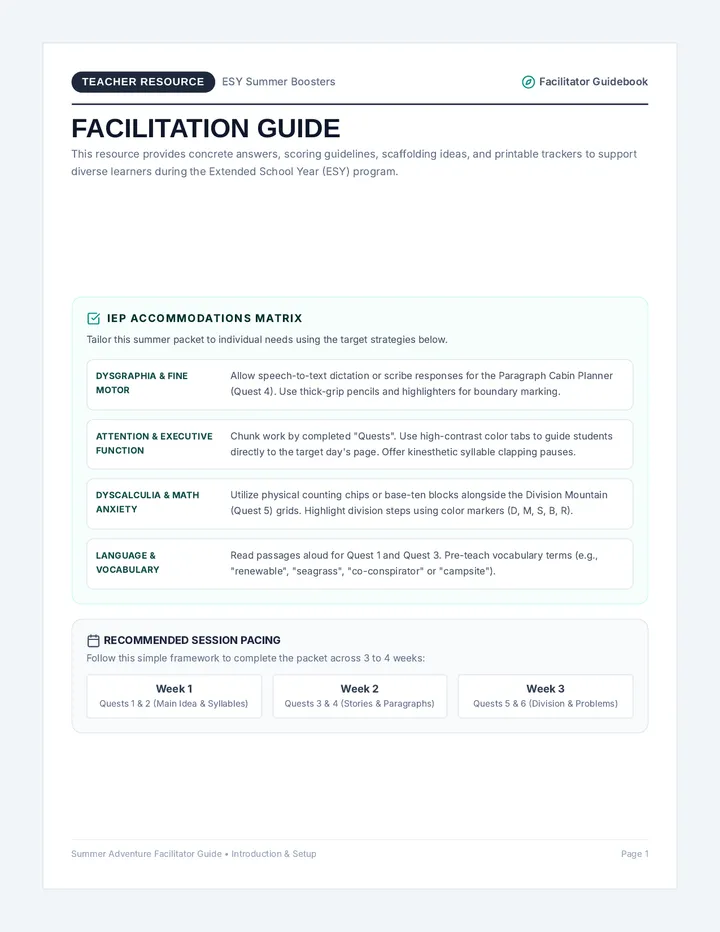
An Extended School Year (ESY) summer packet combining targeted skill-building in main idea, two-syllable words, story elements, paragraph writing, division, and multi-step word problems. Features visual scaffolds, grids, graphic organizers, and multi-level tasks spanning grades 1 to 6.
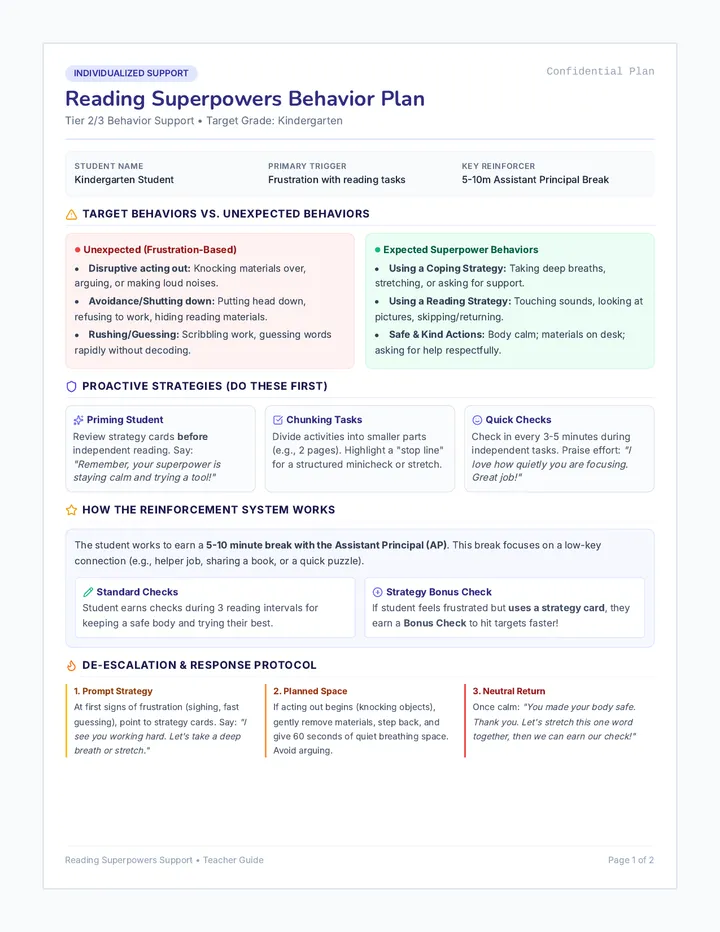
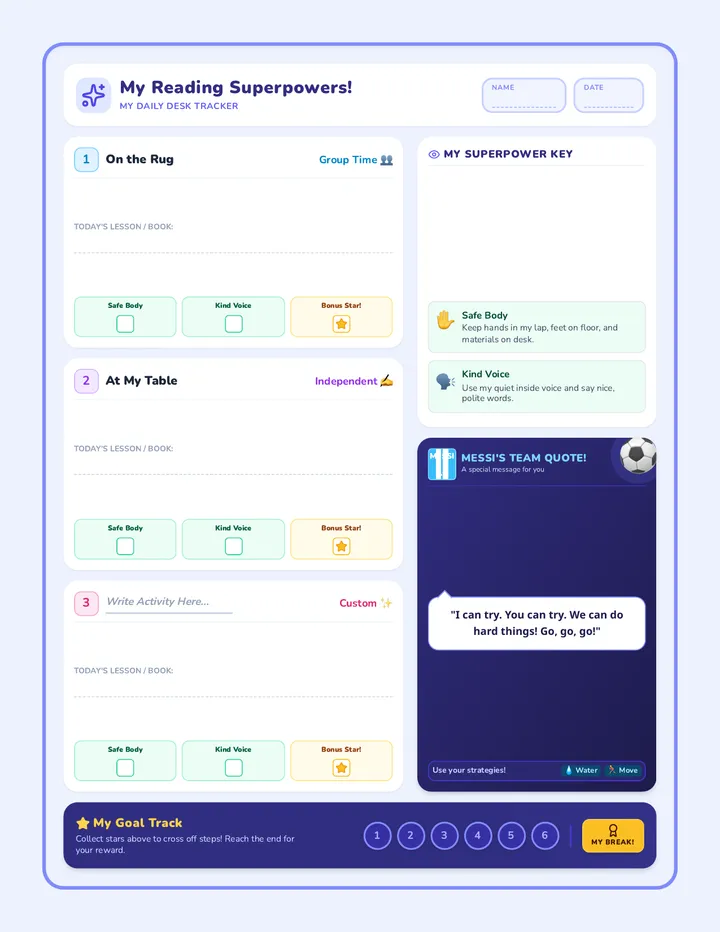
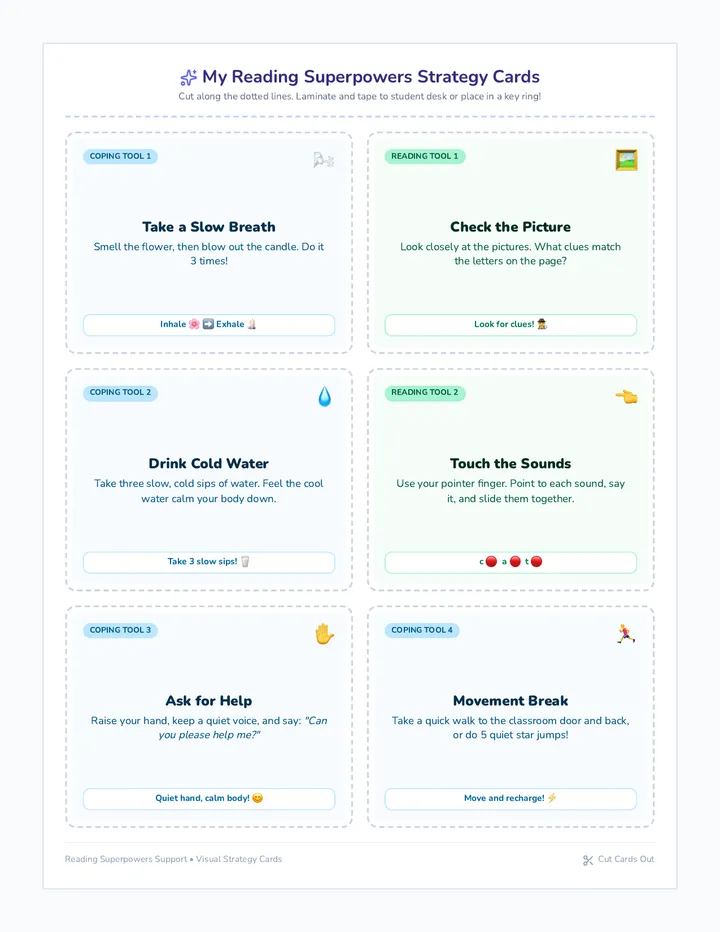
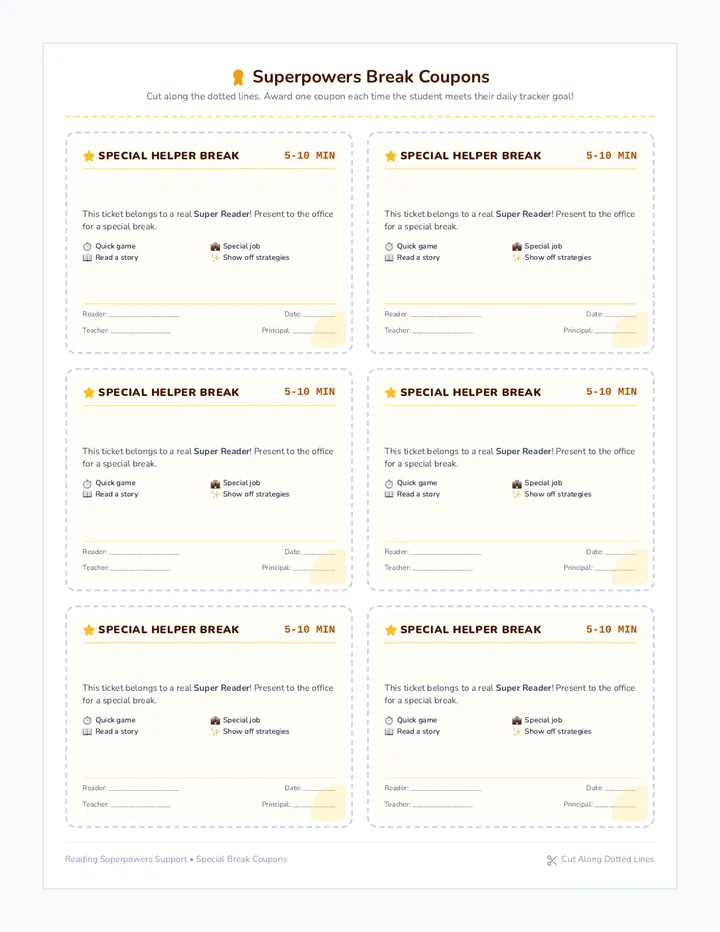
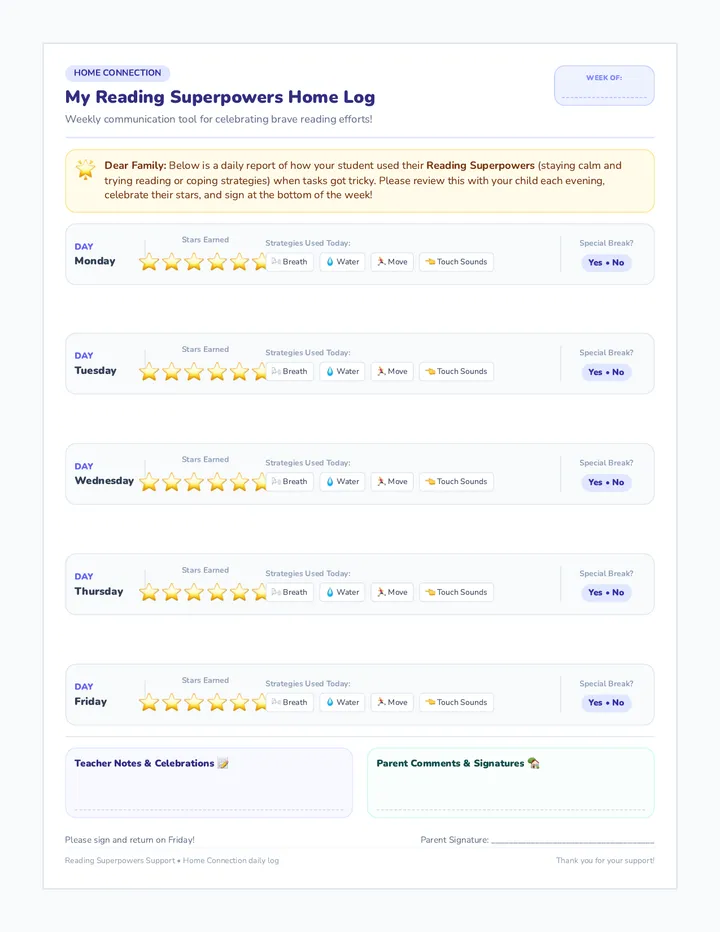
A complete visual behavior support kit for a kindergarten student experiencing frustration-based behaviors after graduating from small group reading. Includes a teacher-parent behavior plan, daily desk tracker, coping and reading strategy cards, assistant principal break coupons, and a weekly home communication log.
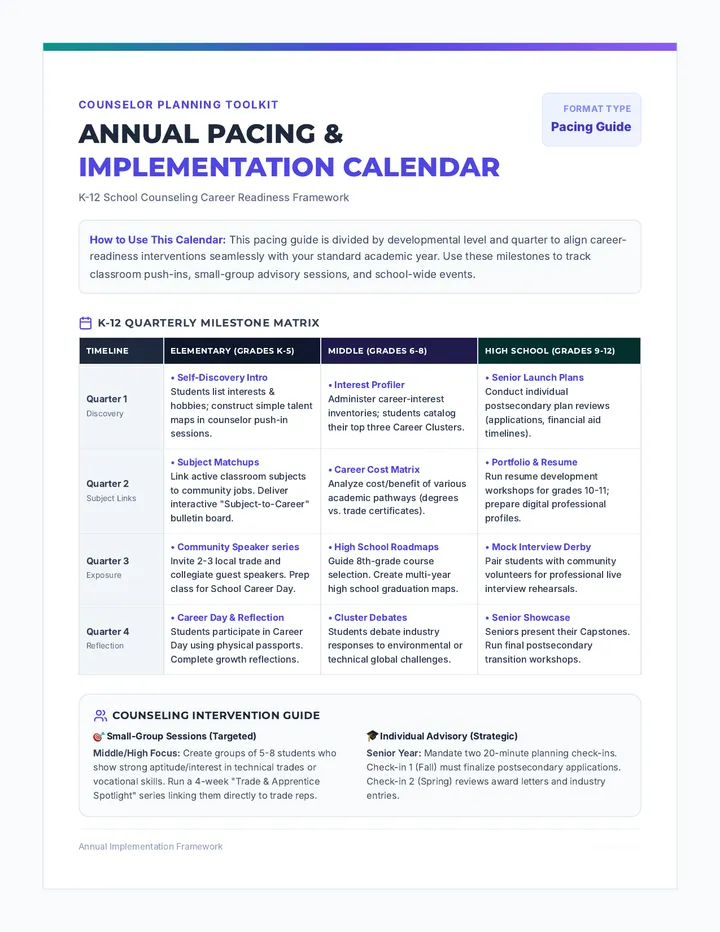
Actionable planning resources, school-wide career day guides, and implementation templates for school counselors to deploy career readiness curricula.
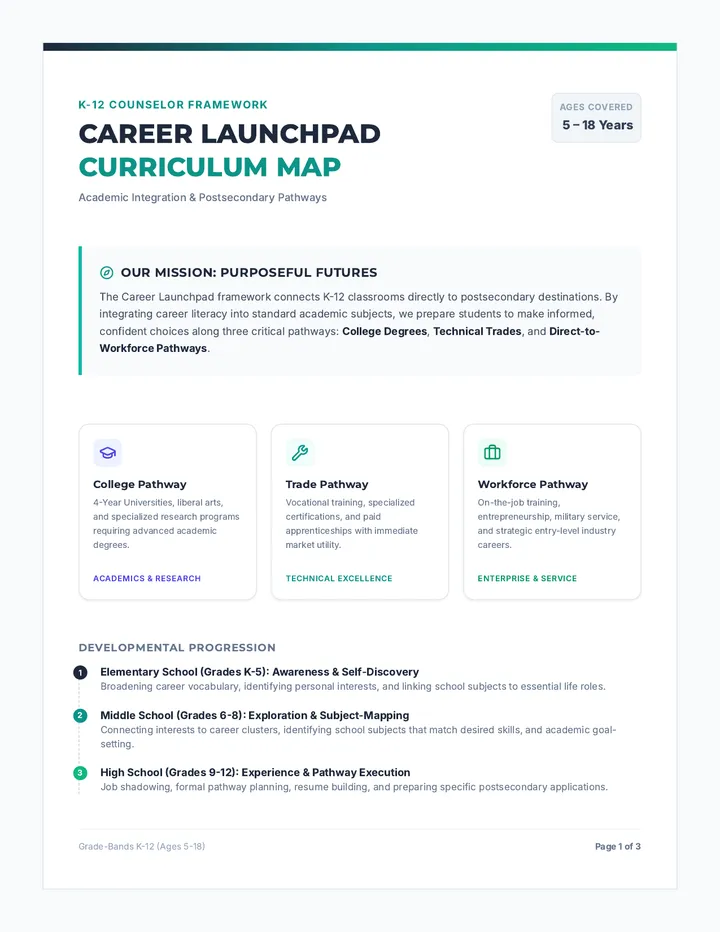
High-level scope, sequence, and developmental milestones for elementary, middle, and high school career exploration. This framework links classroom subjects to real-world college, trade, and workforce pathways.
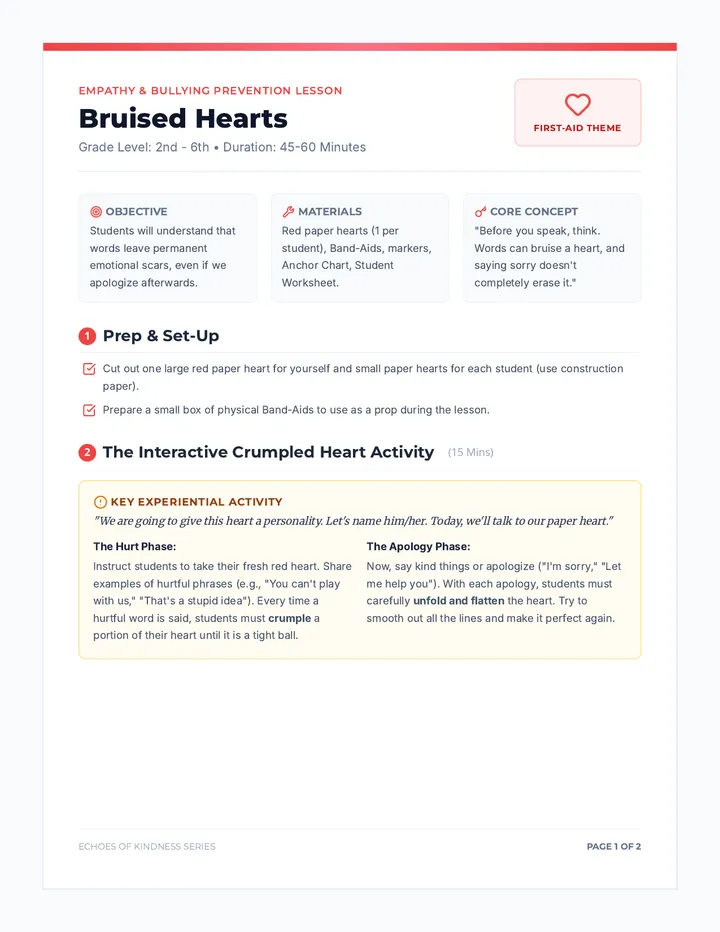
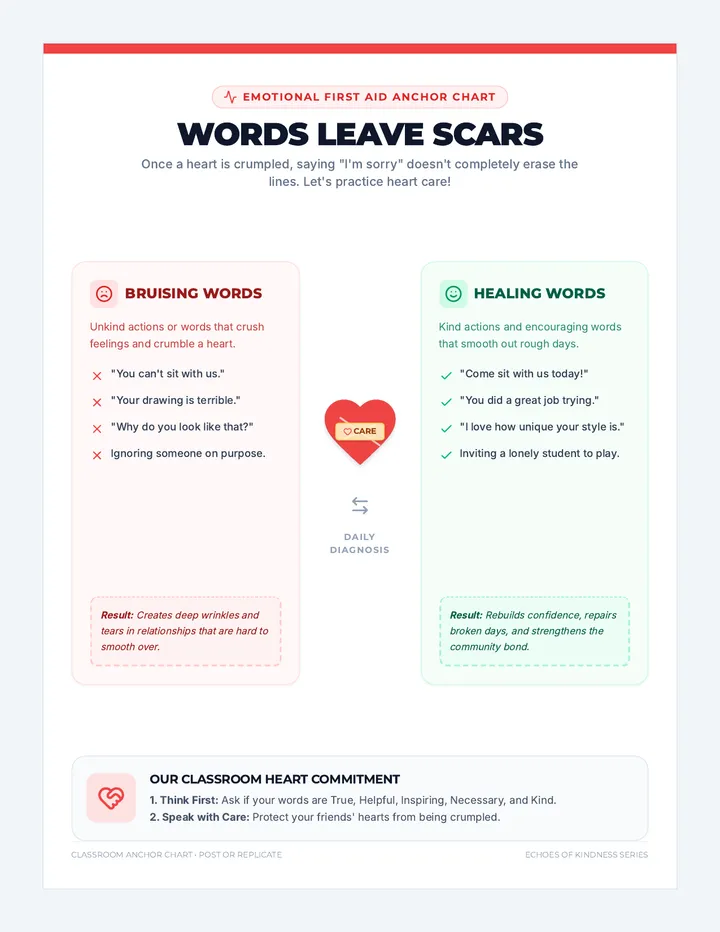
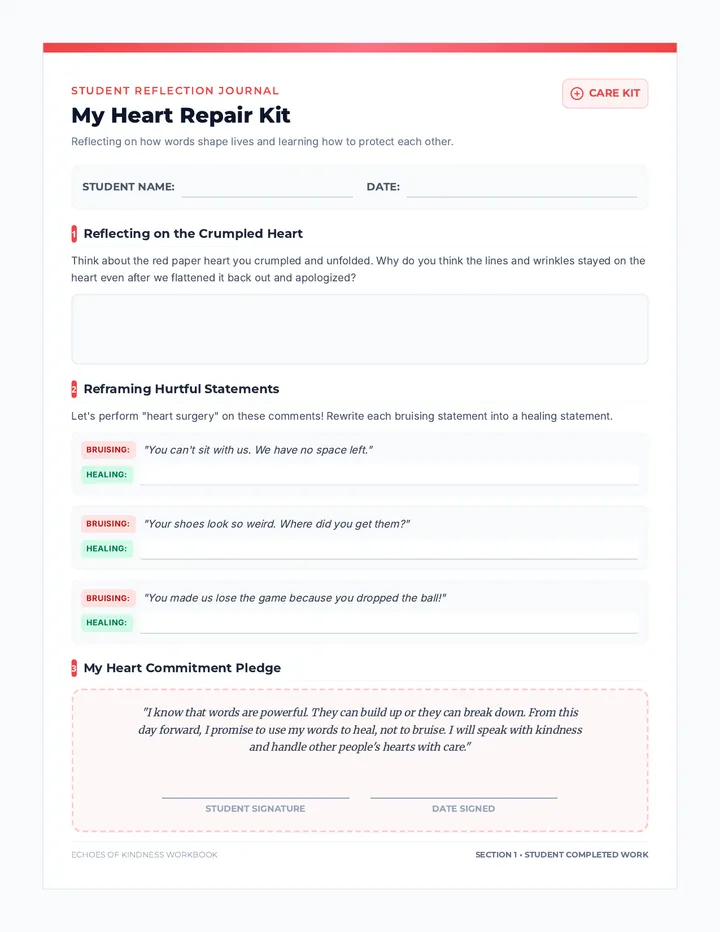
A powerful kindness and bullying prevention lesson exploring how hurtful words affect others and how we can repair hearts. Students engage in a paper-heart crumbling activity to visually understand the lasting impact of unkindness.
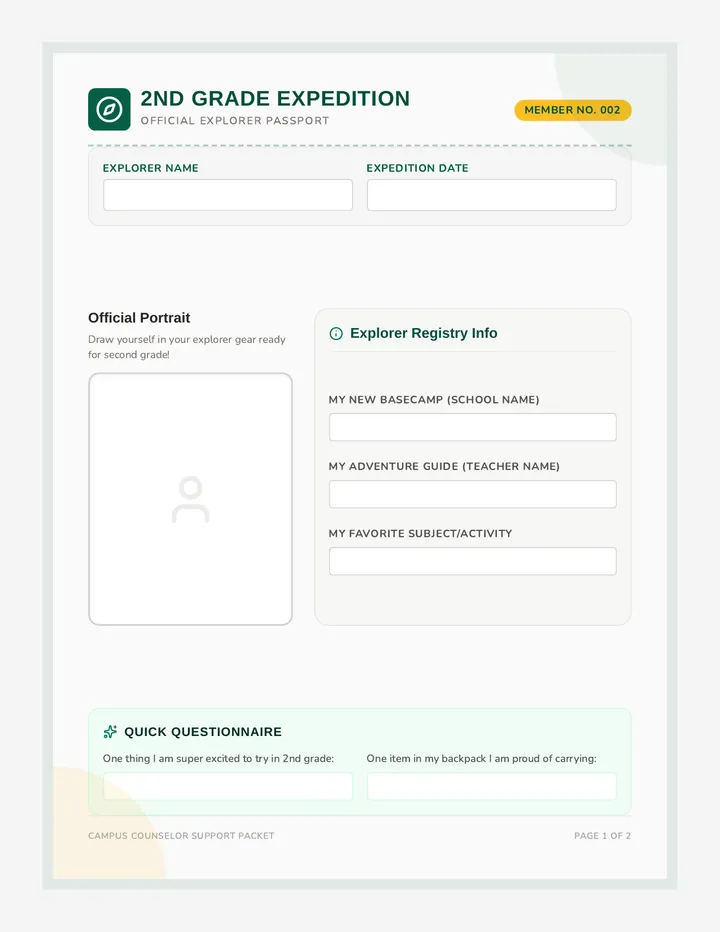
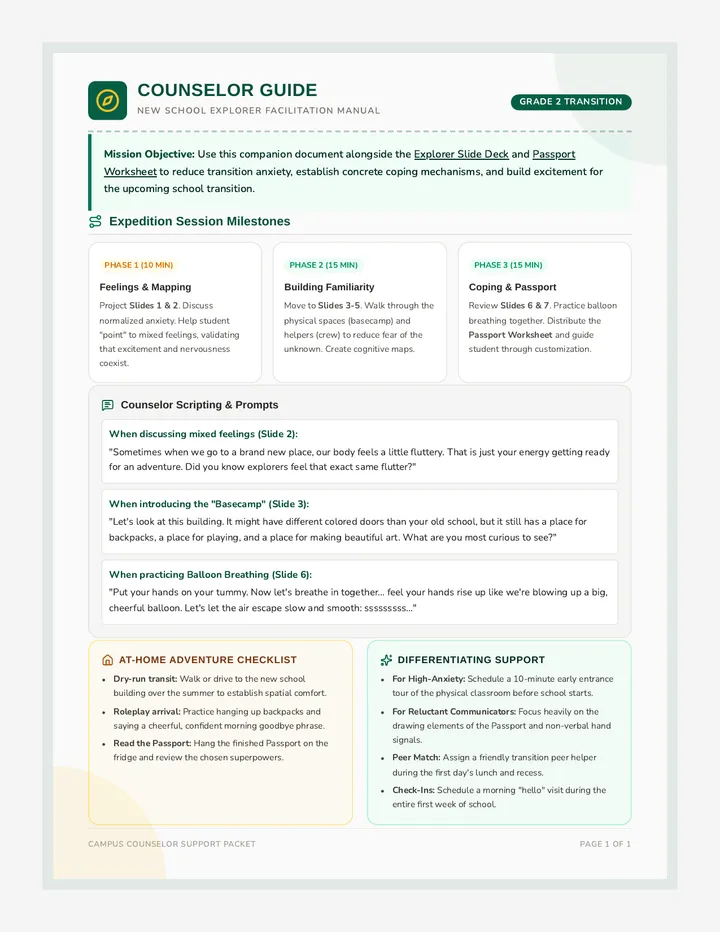
A transition support unit designed for rising 2nd graders entering a new school. Includes a social story presentation, a personal passport worksheet, and a counselor guidance document.
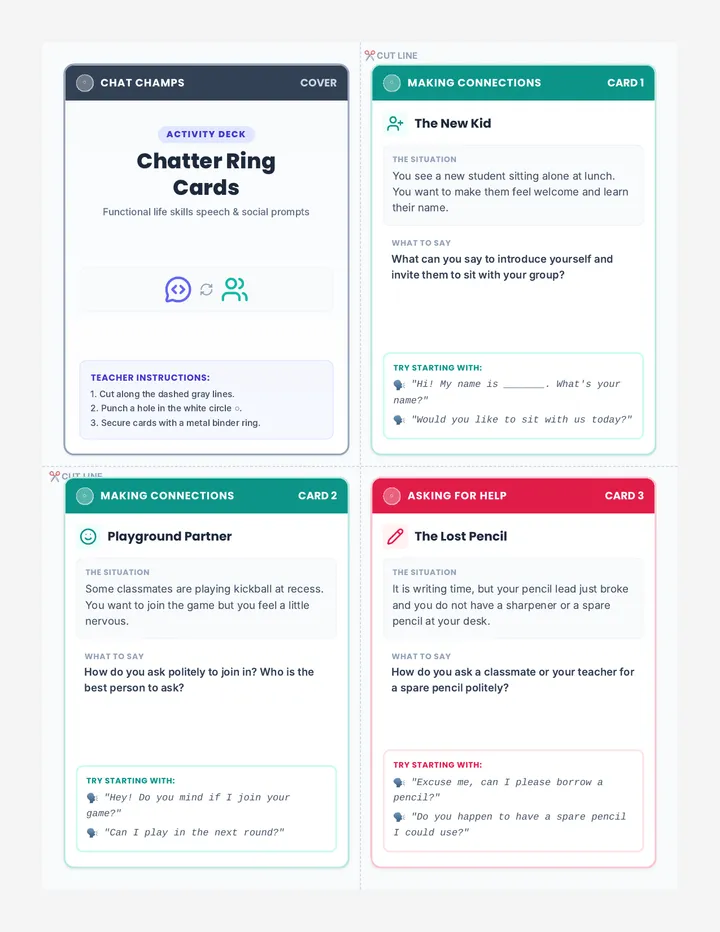
A lesson focused on equipping elementary students with functional verbal communication skills for everyday real-world interactions. Students practice through guided peer discussions, roleplays, and task cards.
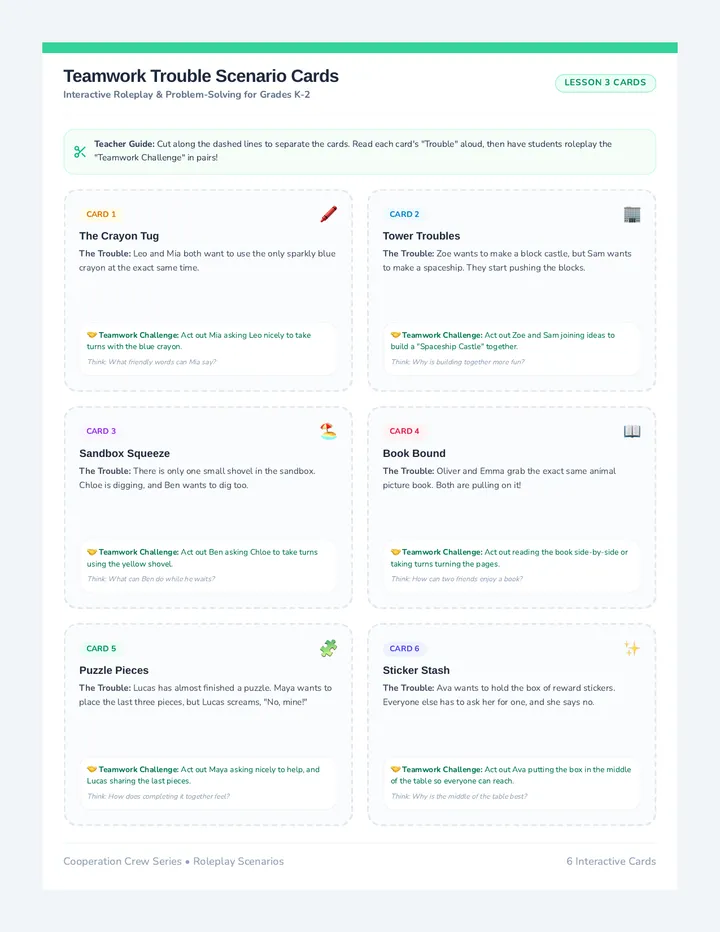
Day 3 focuses on cooperative group work to solve dilemmas, acting out teamwork scenarios, and completing the visual post-test to evaluate progress.
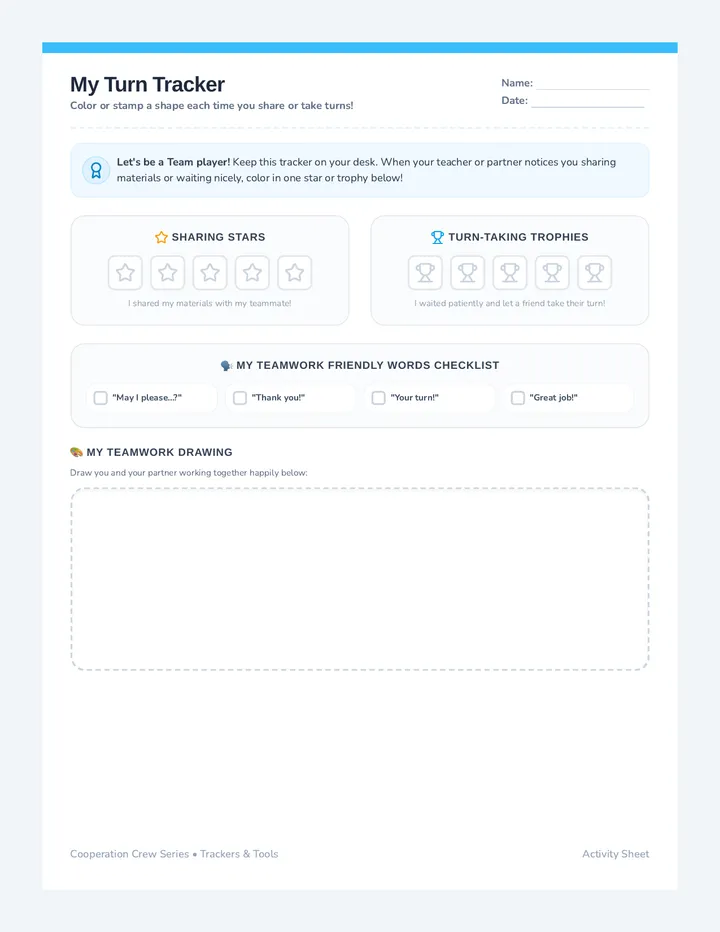
Day 2 emphasizes structured turn-taking, active waiting strategies, and practicing self-regulation with a physical tracker during small-group play.
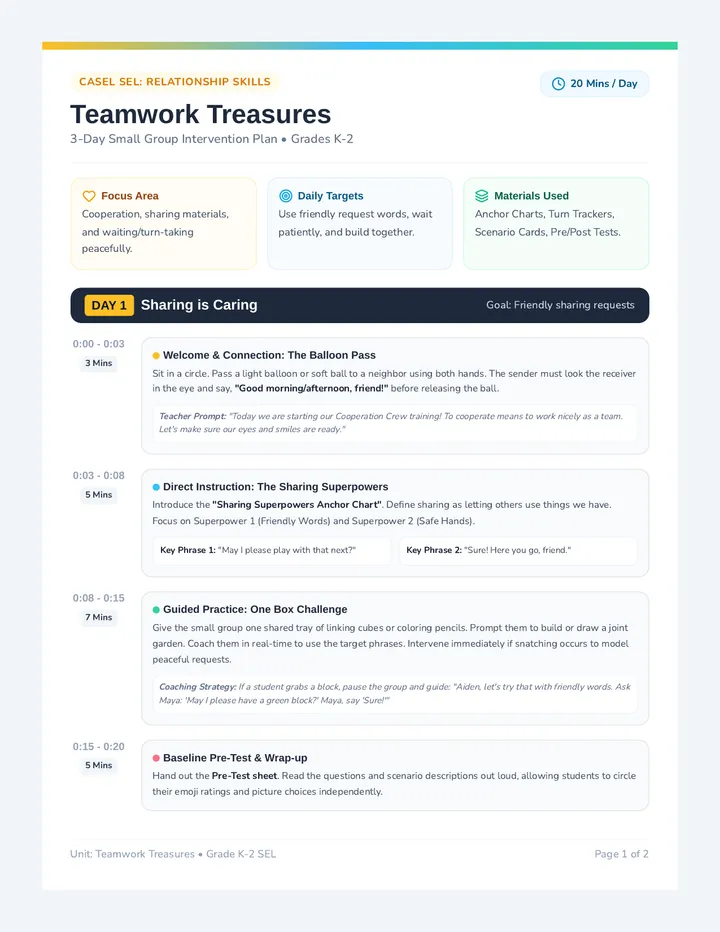
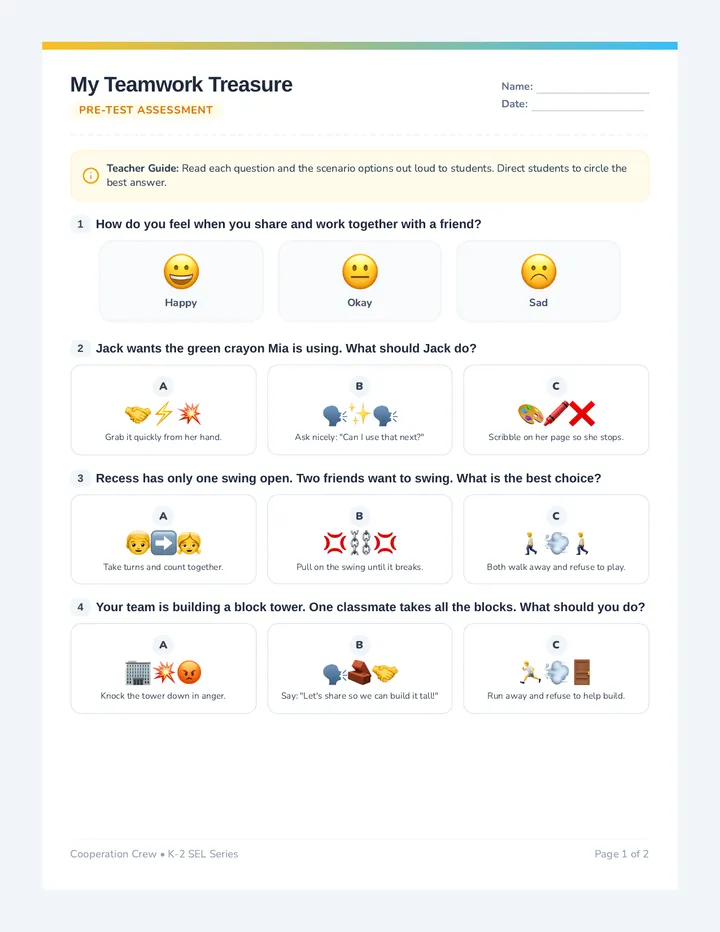
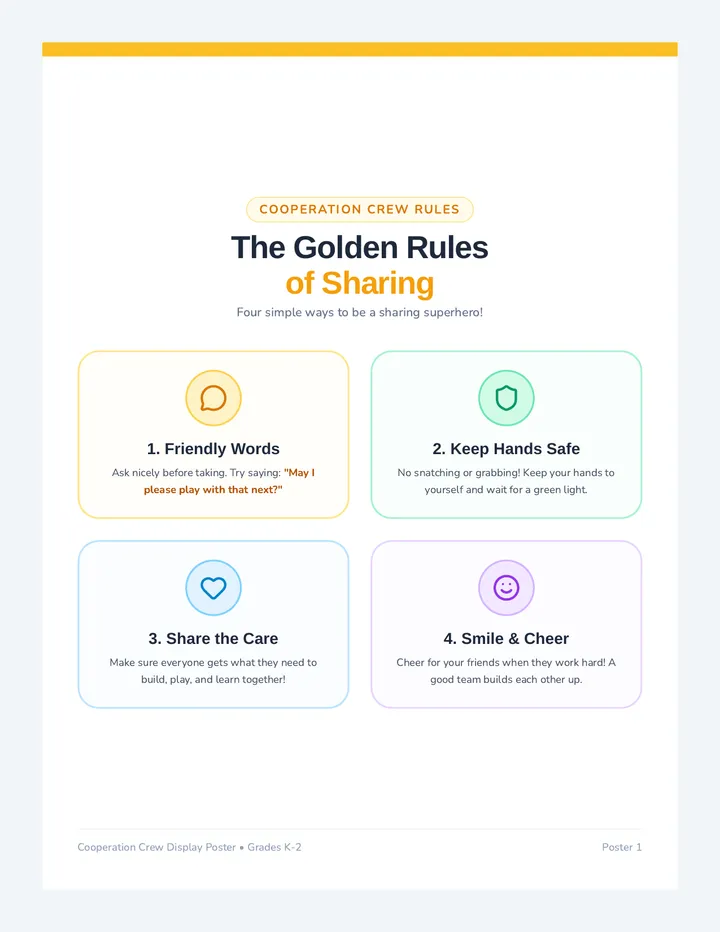
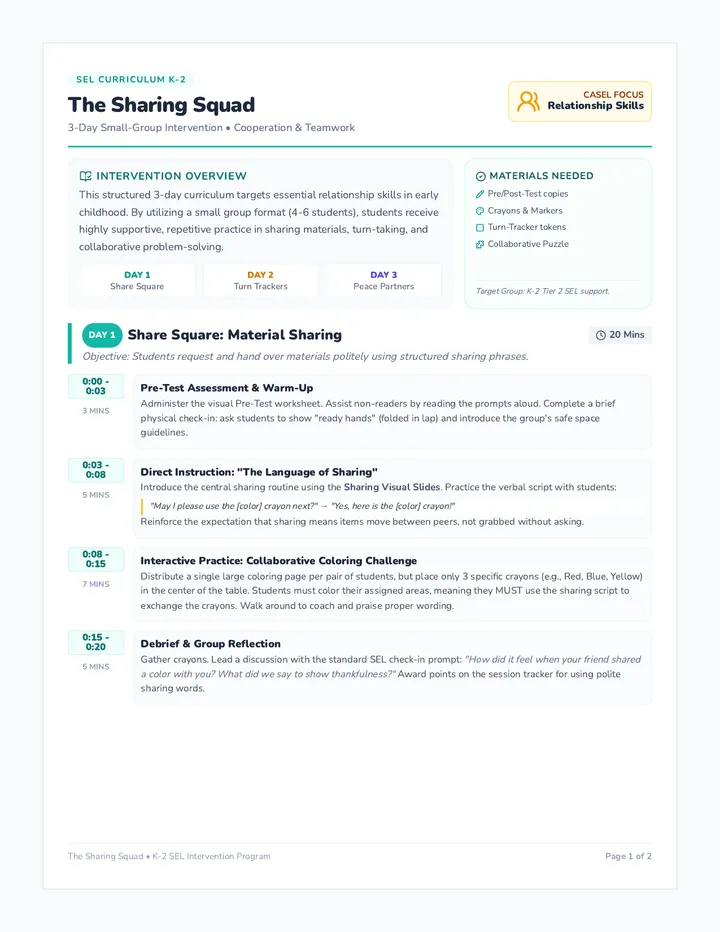
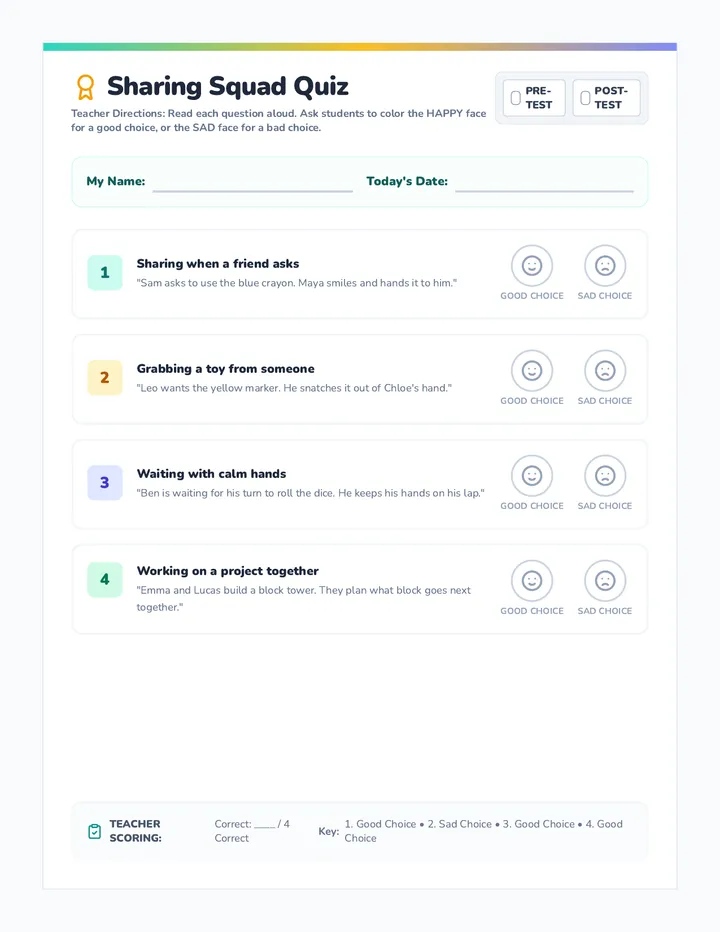
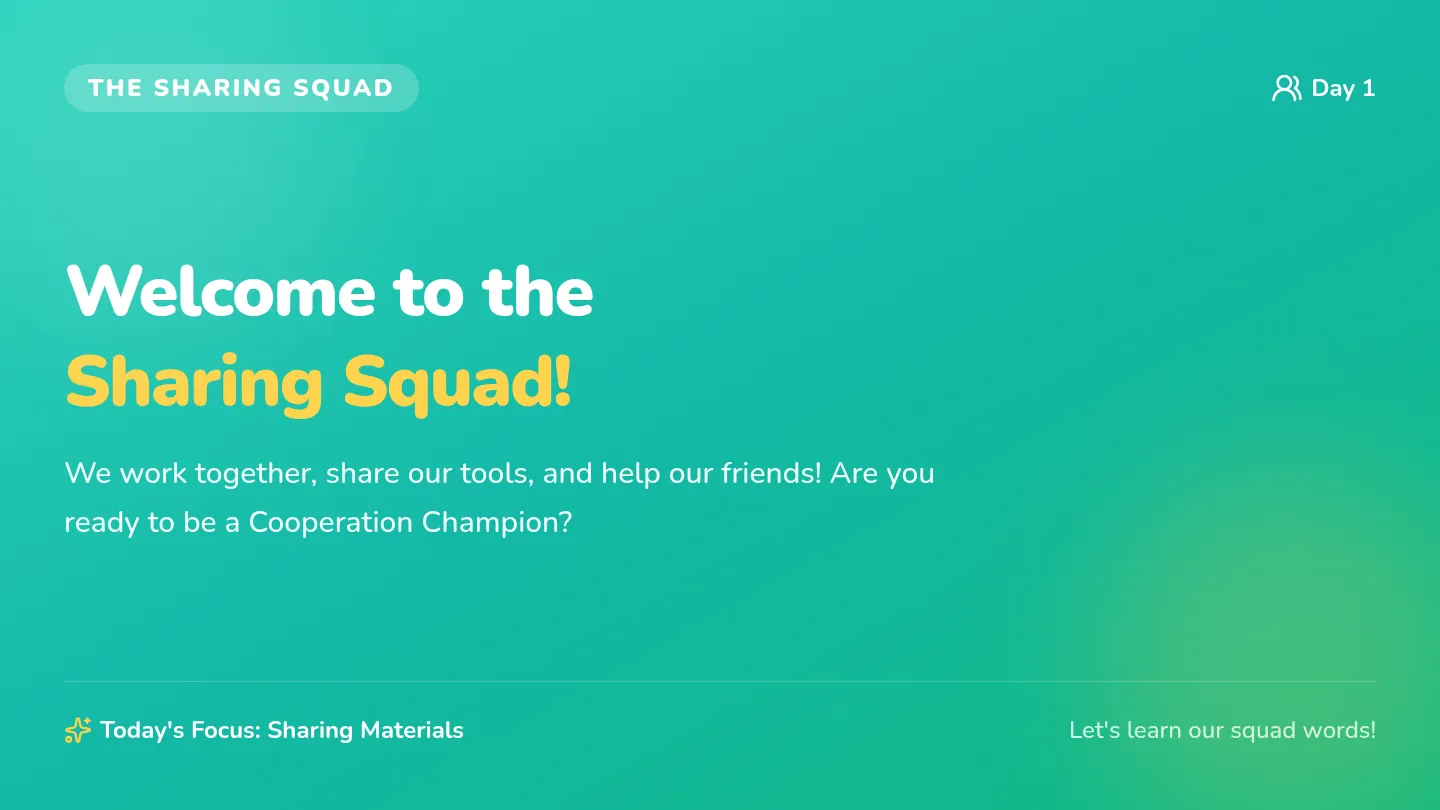
Day 1 focuses on the golden rules of sharing materials, using friendly request phrases, and administering the baseline visual pre-test.
Day 3 of the Sharing Squad small-group intervention. Students combine their sharing and turn-taking skills to complete a collaborative puzzle drawing peacefully, followed by a graduation ceremony.
Day 2 of the Sharing Squad small-group intervention. Students focus on the concept of wait time and turn-taking through interactive games and a physical "Turn Tracker" token activity.
Day 1 of the Sharing Squad small-group intervention. Students learn the importance of sharing art materials, practice key sharing phrases, and complete a collaborative coloring challenge.
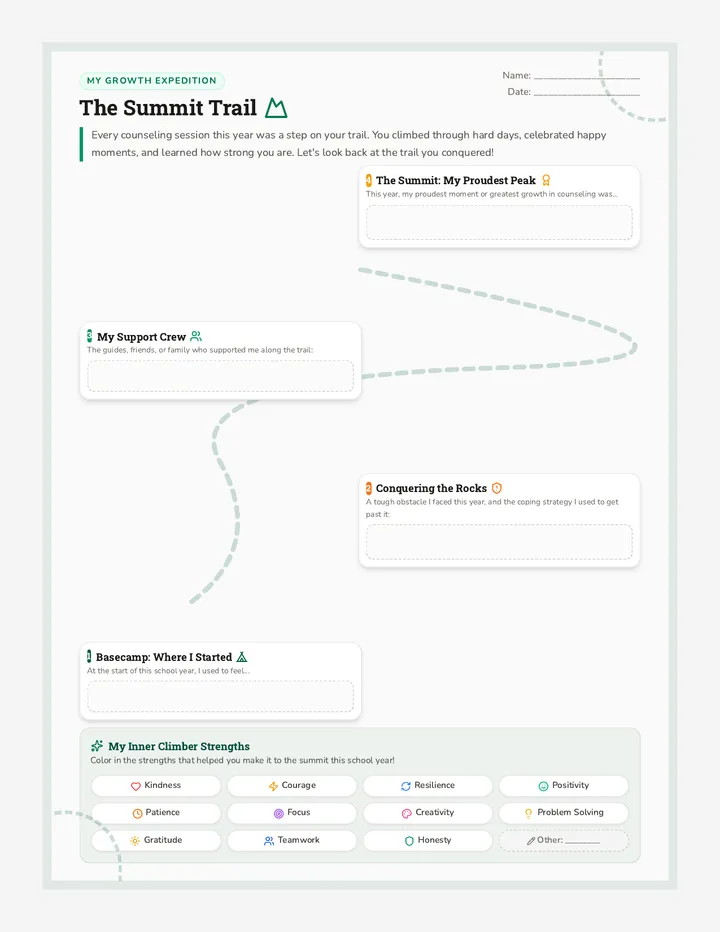
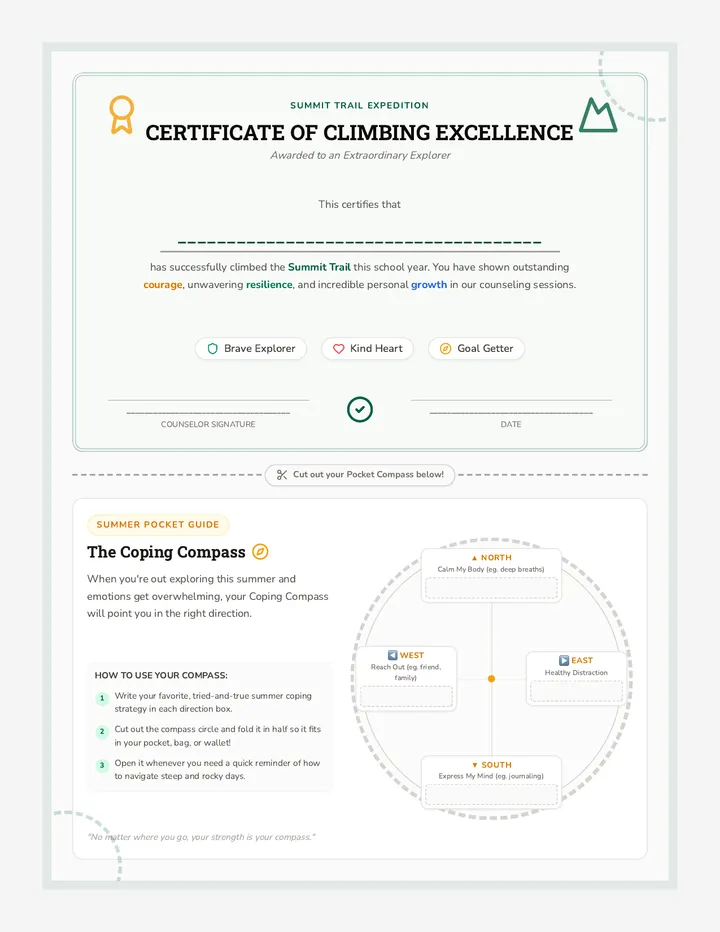
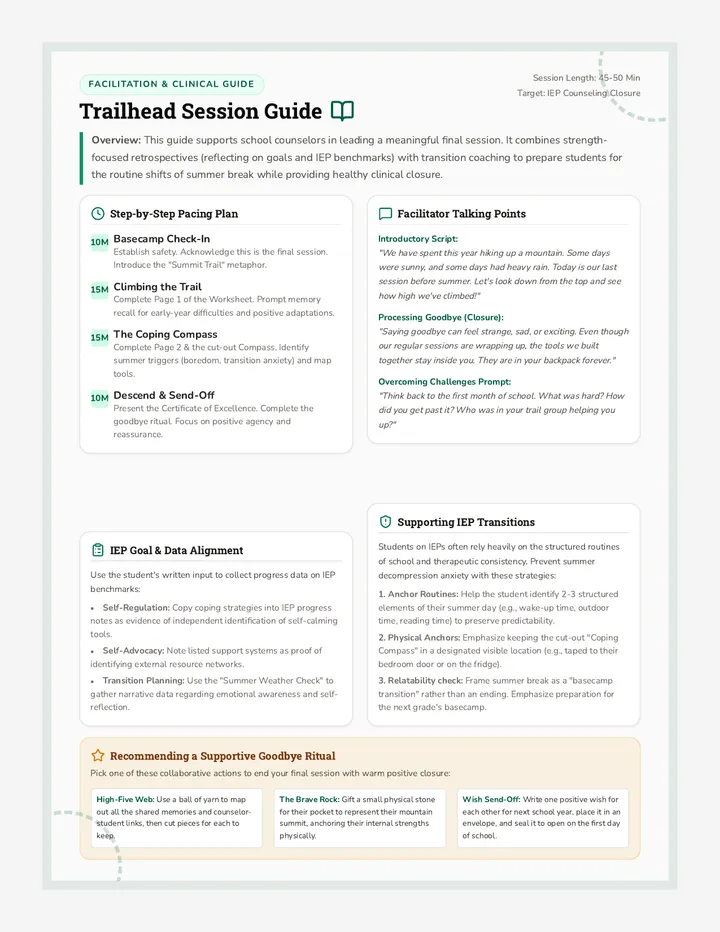
A supportive, mountain-trail-themed final counseling session designed for students on IEPs to celebrate their personal growth, develop summer coping strategies, set future goals, and process closure with their counselor.
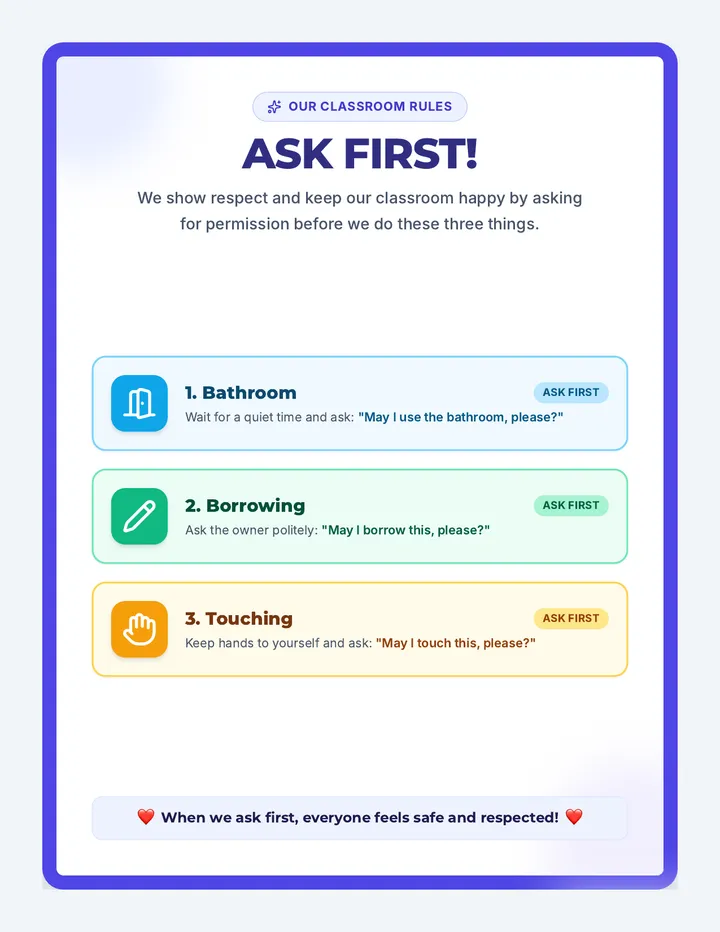
A collection of visual guides and posters to teach and remind elementary students how and when to ask for permission for daily routines.
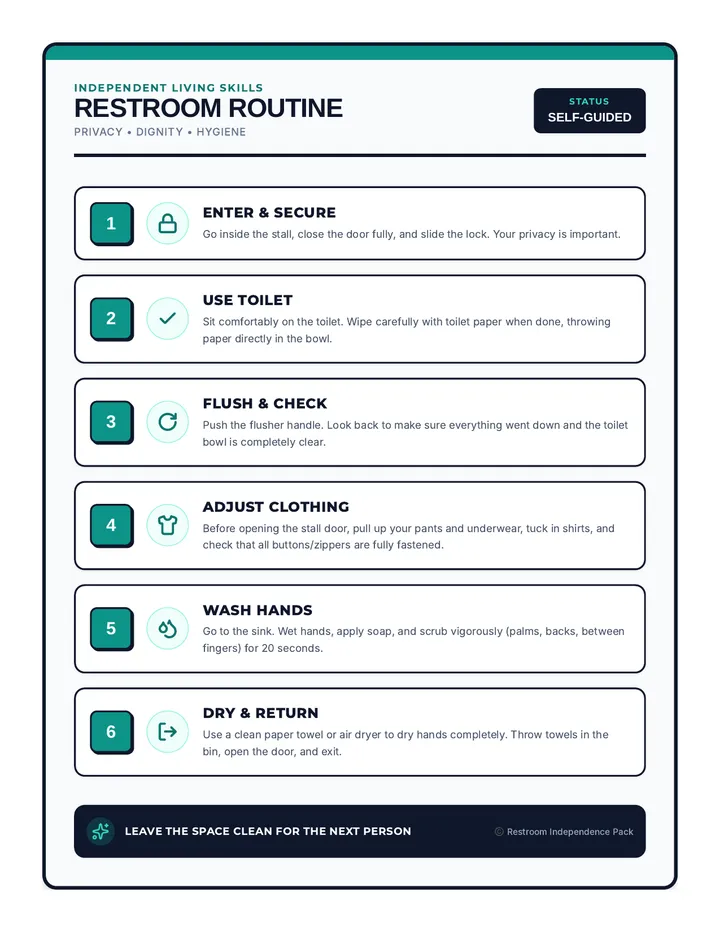
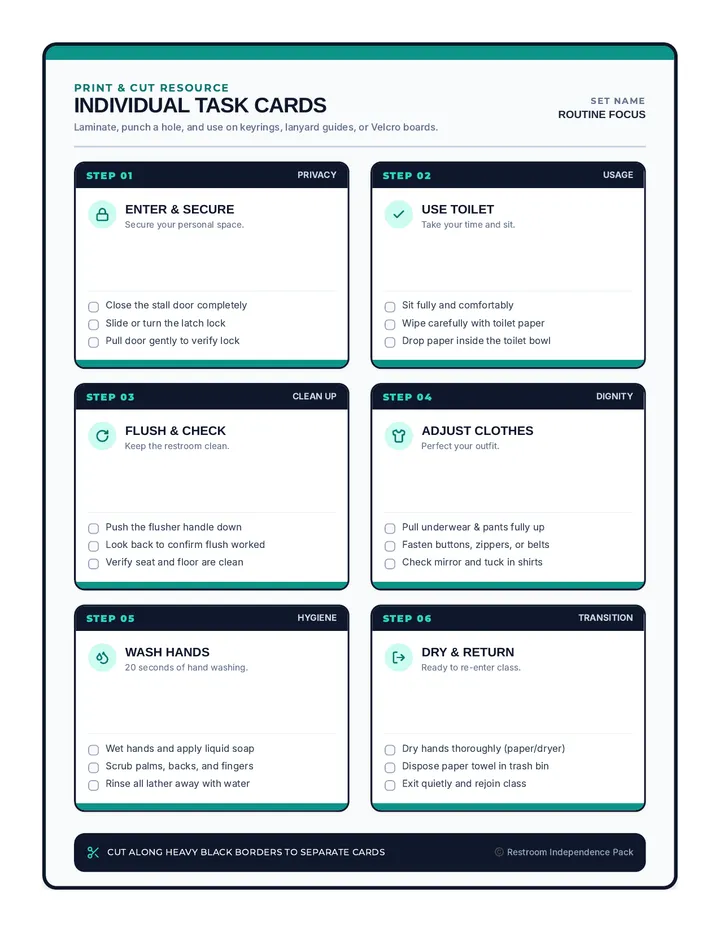
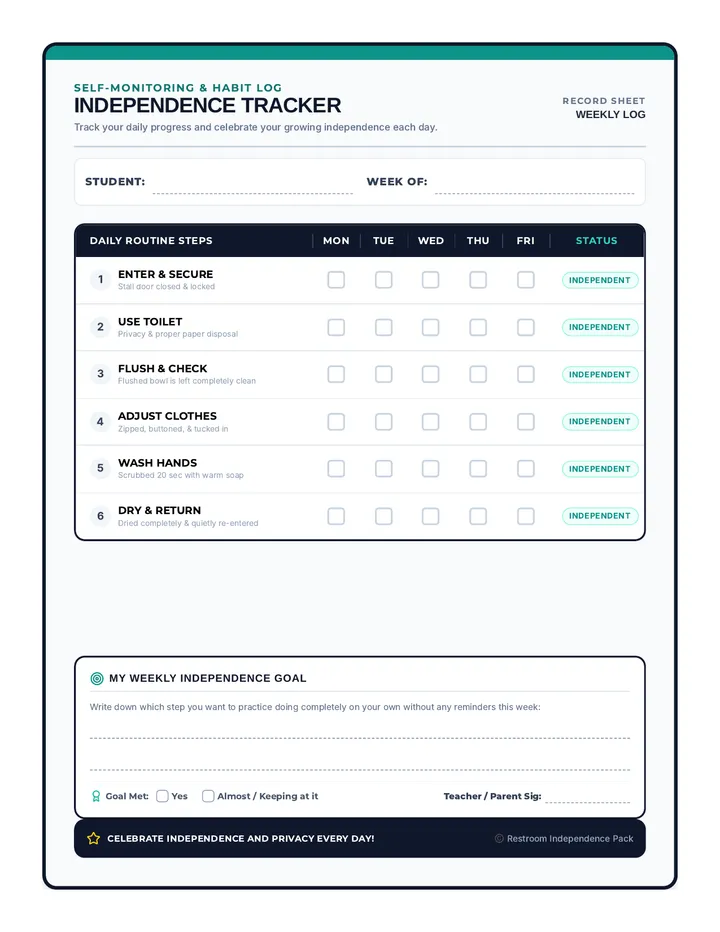
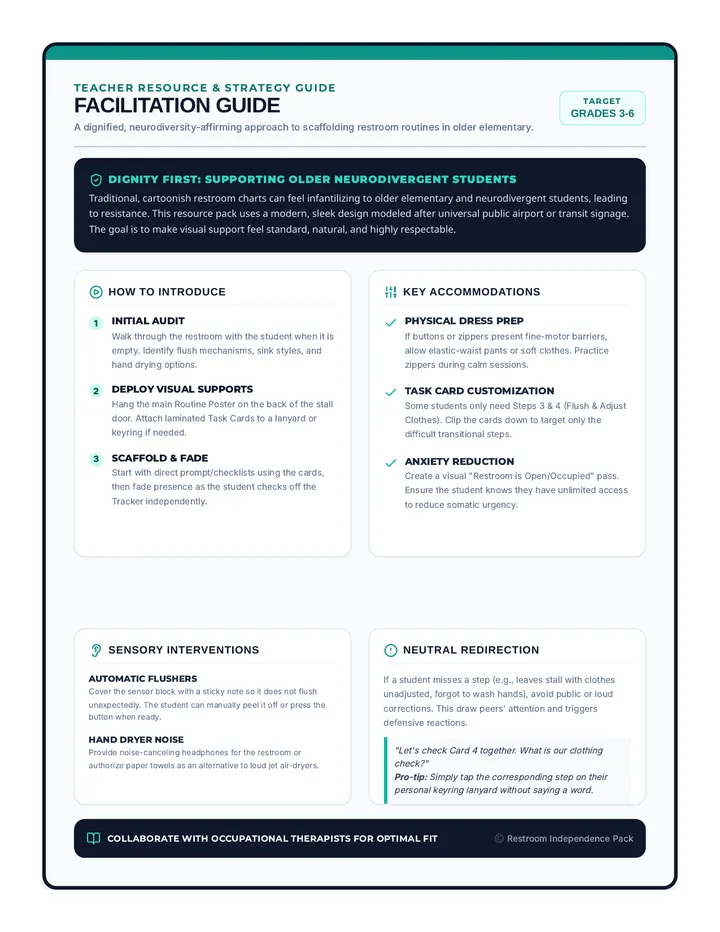
A complete visual support and routine mastery pack designed for older elementary and neurodivergent students. Includes a wall poster, individual task cards, a progress tracker, and a comprehensive implementation guide to foster dignity and privacy.