A set of visual aids and practice tools to help elementary students memorize and master their 4-digit cafeteria pin numbers using color-coded position cues.
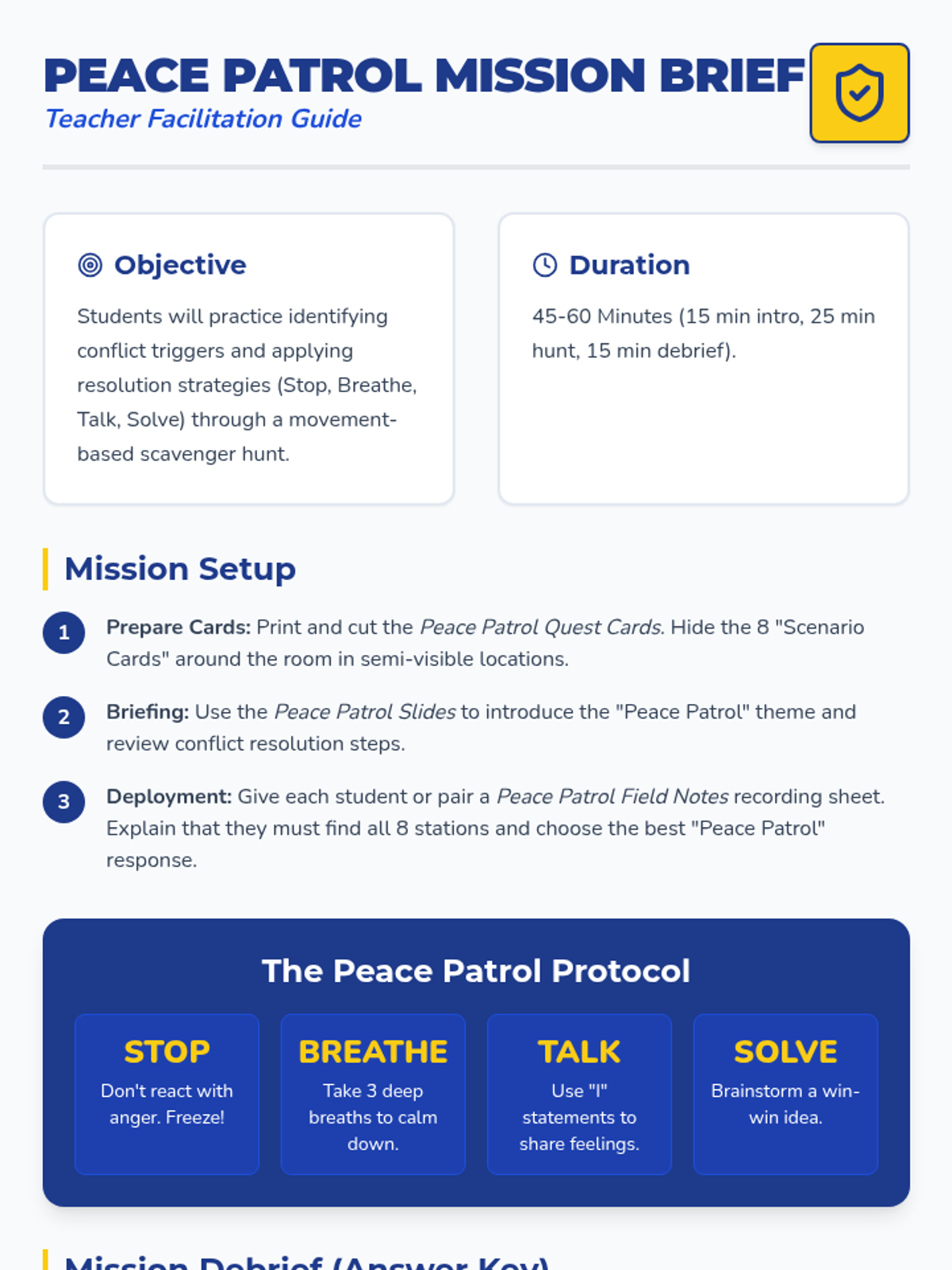
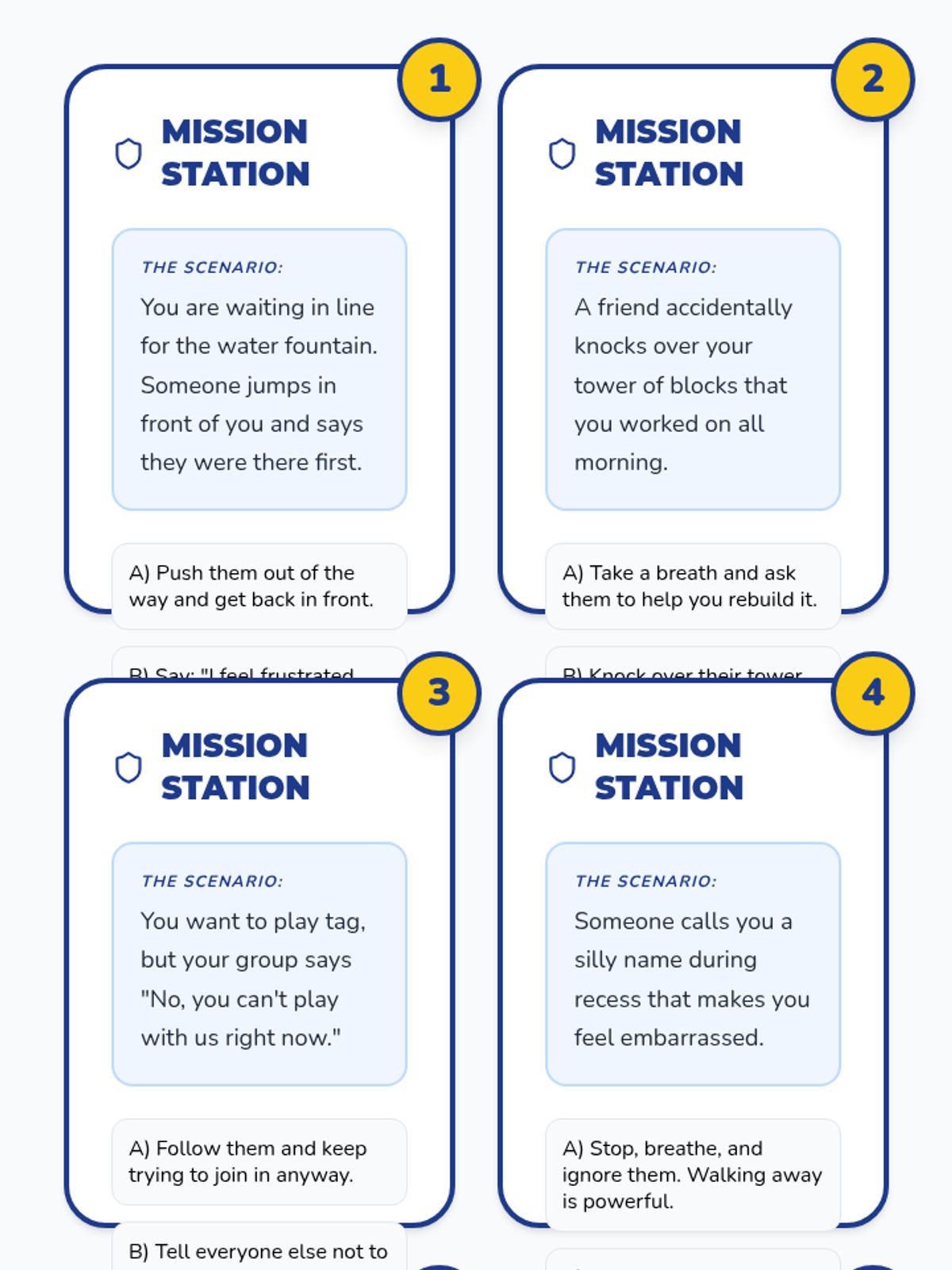
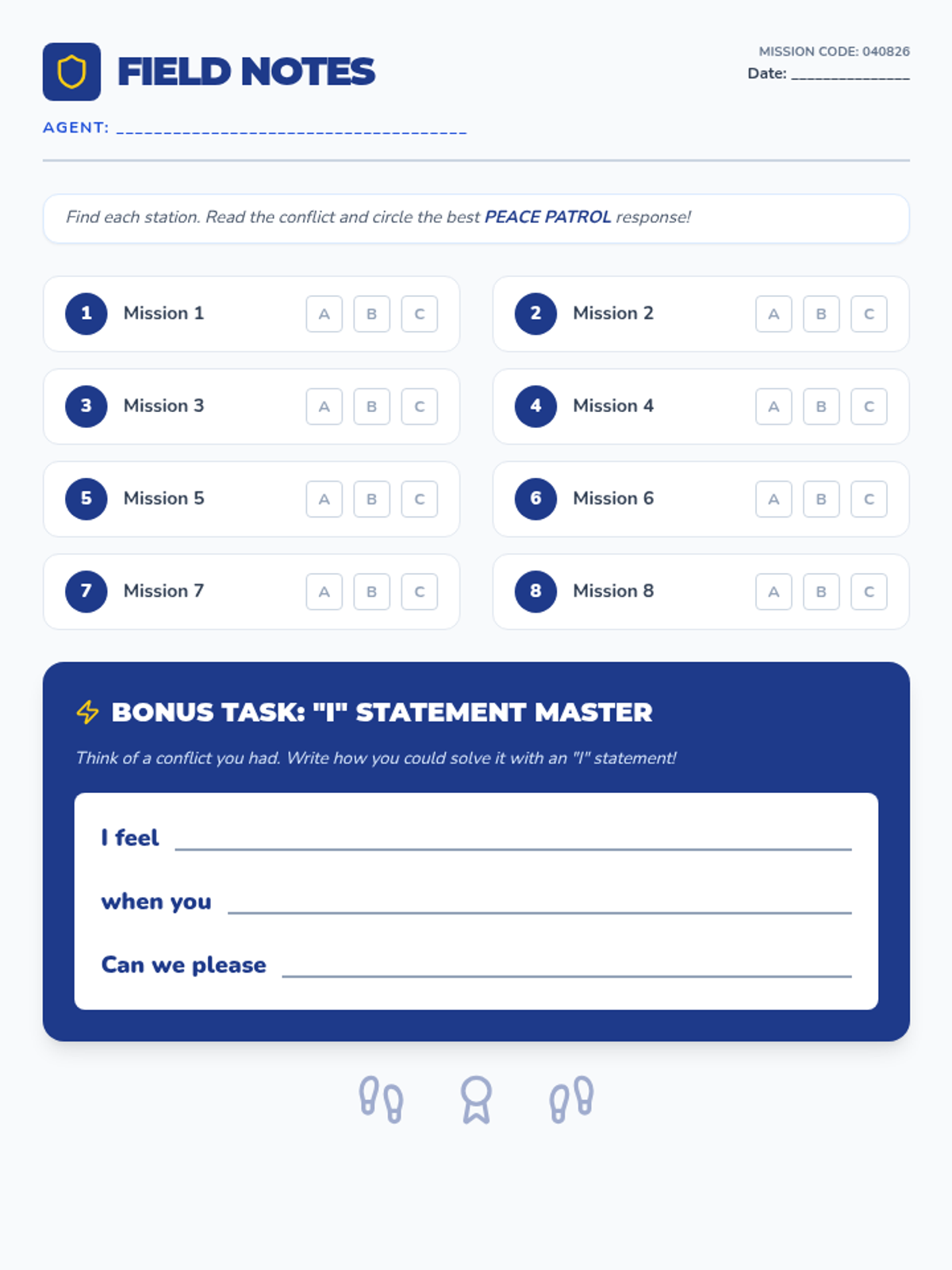
A movement-based scavenger hunt lesson where students practice conflict resolution strategies by solving 'peace missions' hidden around the classroom. Students learn to identify triggers, use 'I' statements, and find win-win solutions.
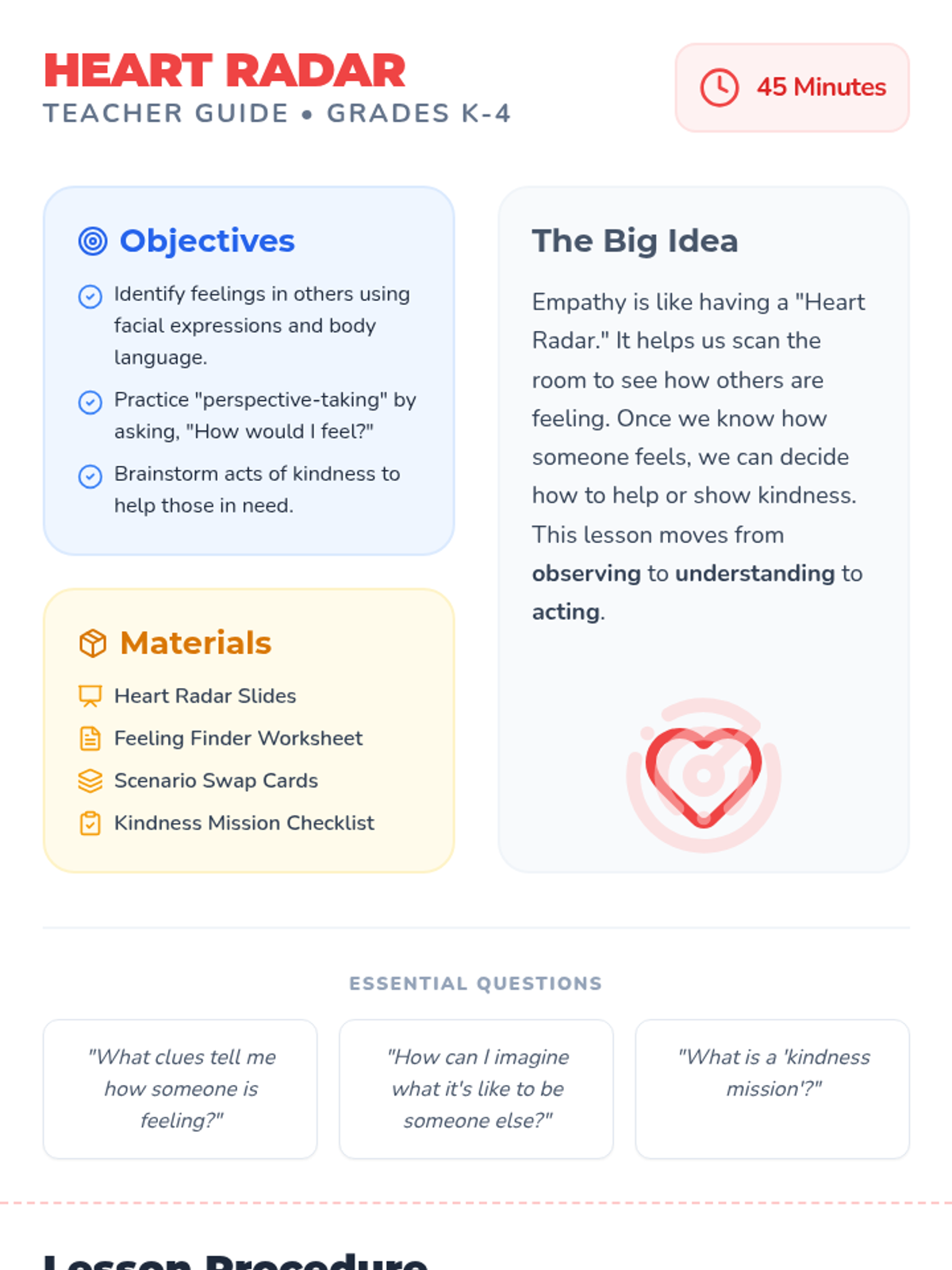
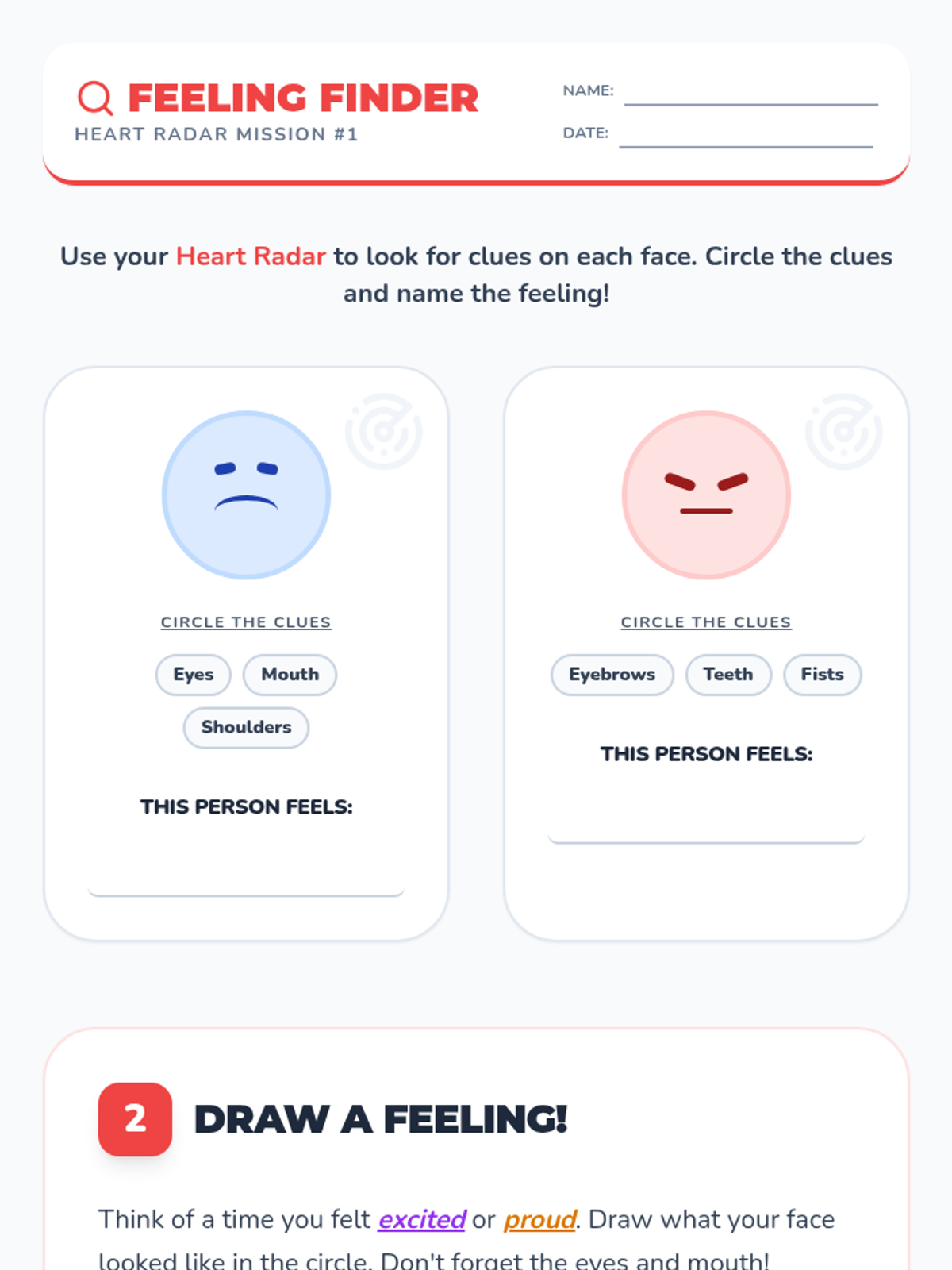
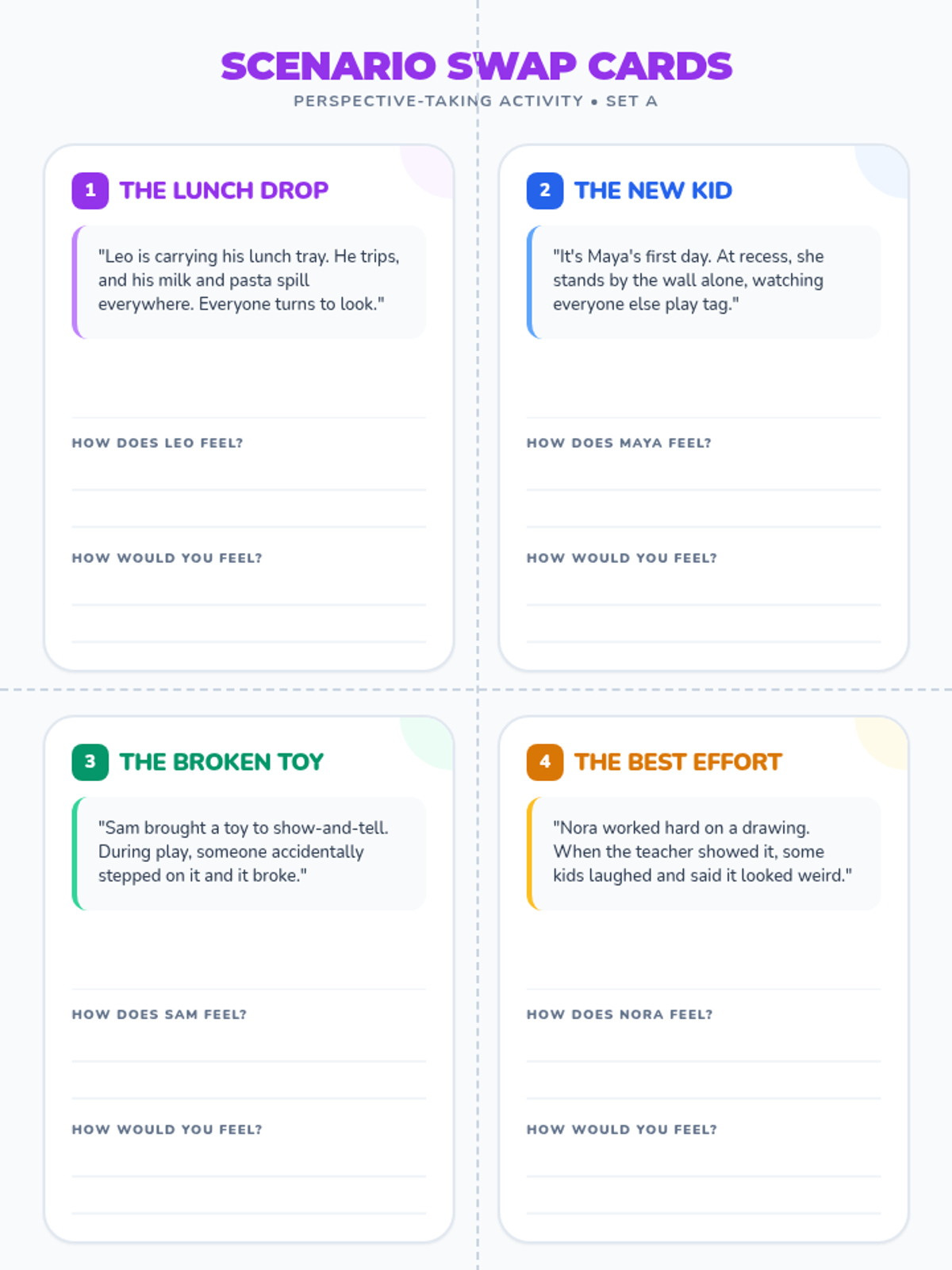
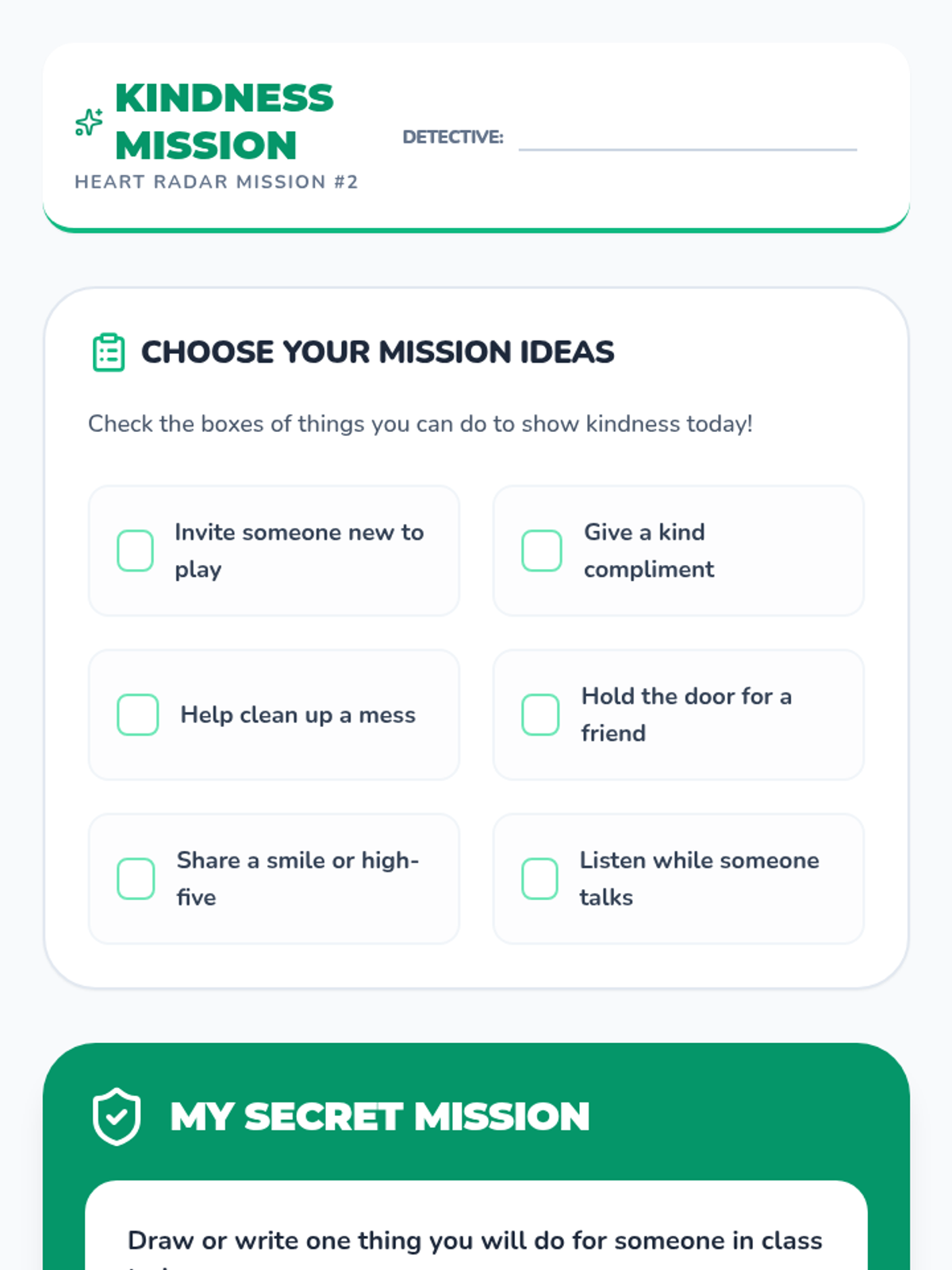
A 45-minute social-emotional learning lesson for grades K-4. Students develop empathy by learning to identify feelings in others, take different perspectives, and practice compassion through acts of kindness.
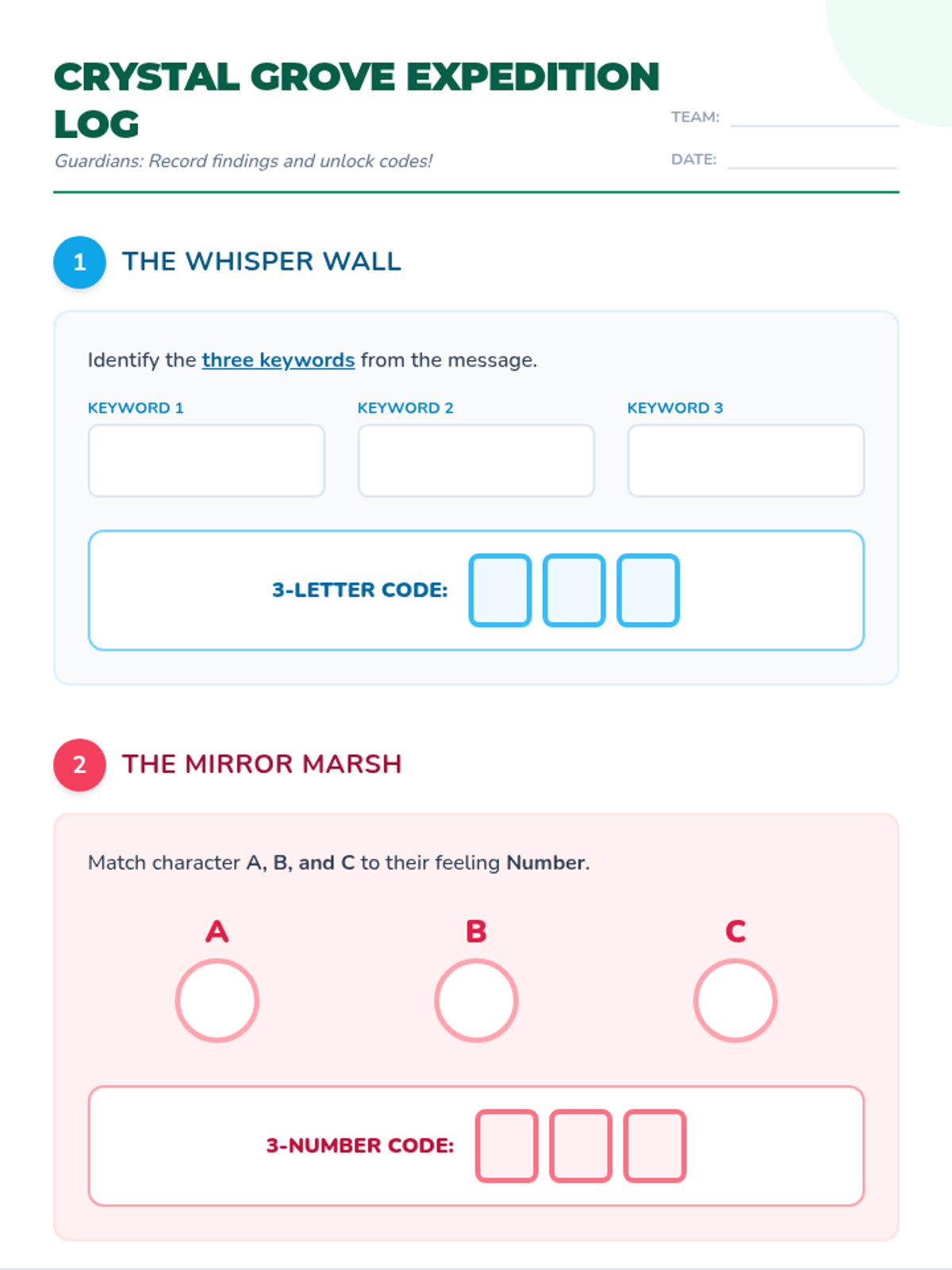
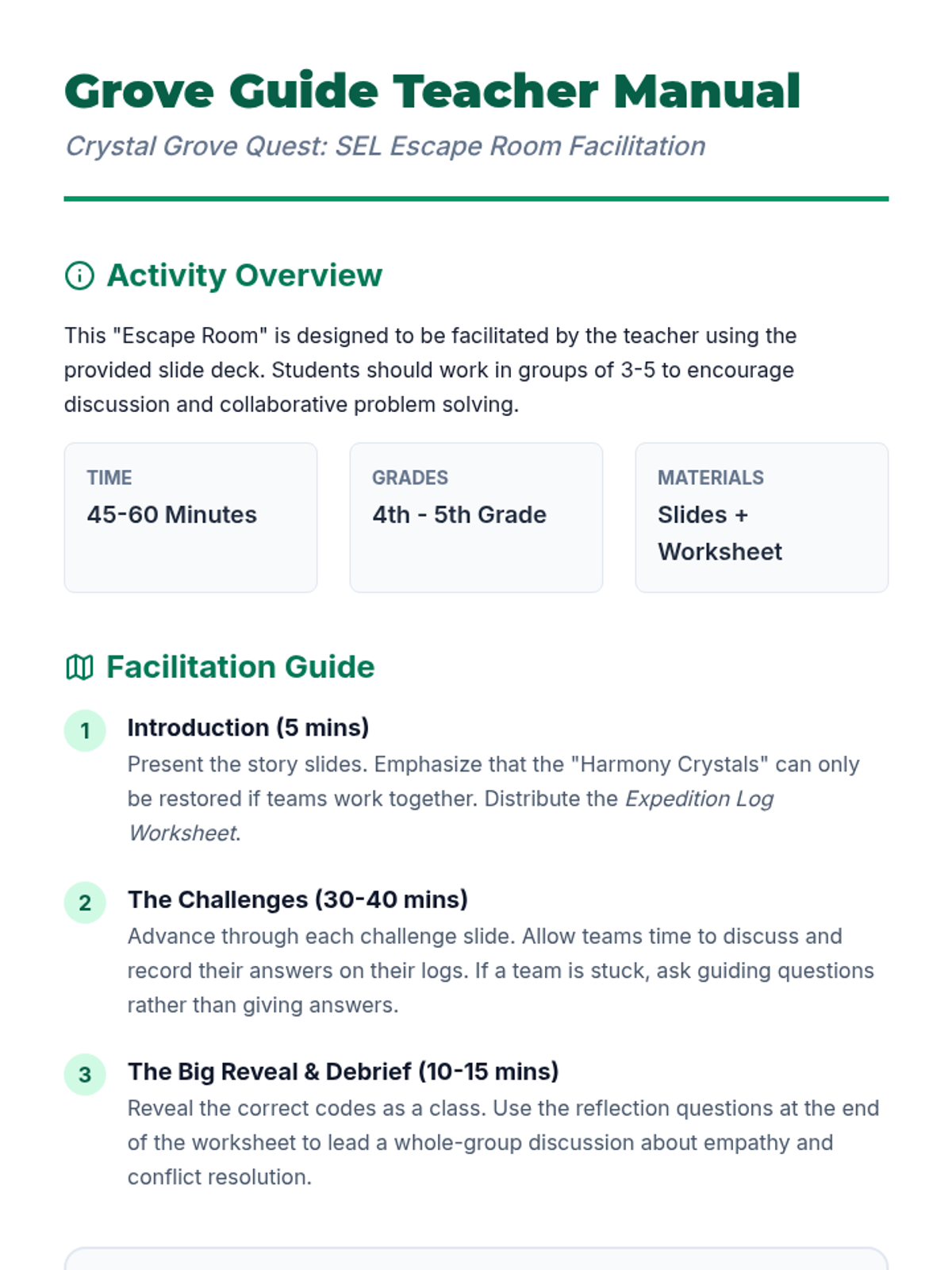
An SEL escape room experience where students work together to solve puzzles based on active listening, empathy, and conflict resolution to save a magical grove.
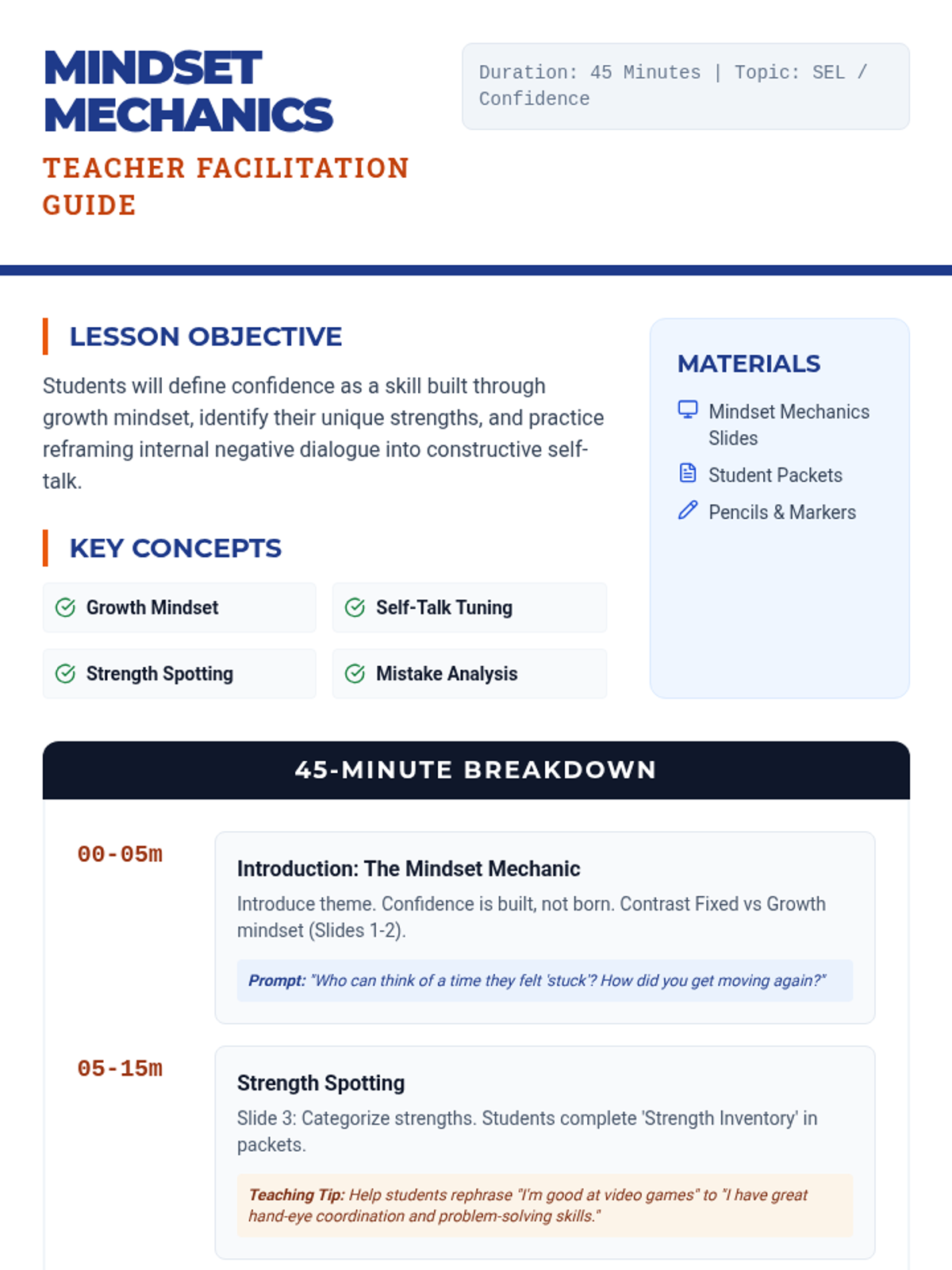
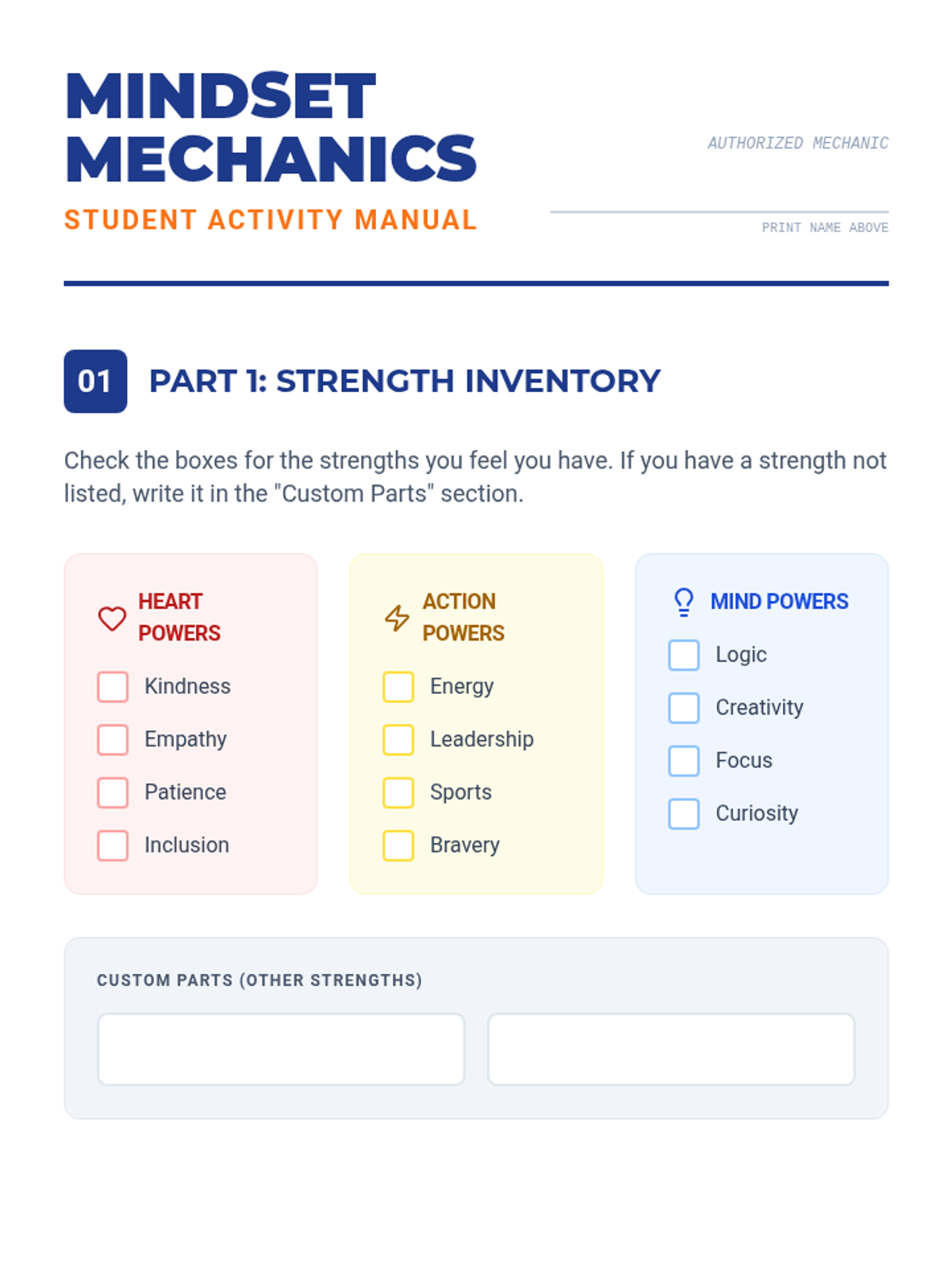
A comprehensive SEL lesson focused on building confidence through growth mindset, identifying personal strengths, reframing mistakes, and practicing positive self-talk. Students act as 'Mindset Mechanics' to tune up their internal dialogue and build a resilient self-image.
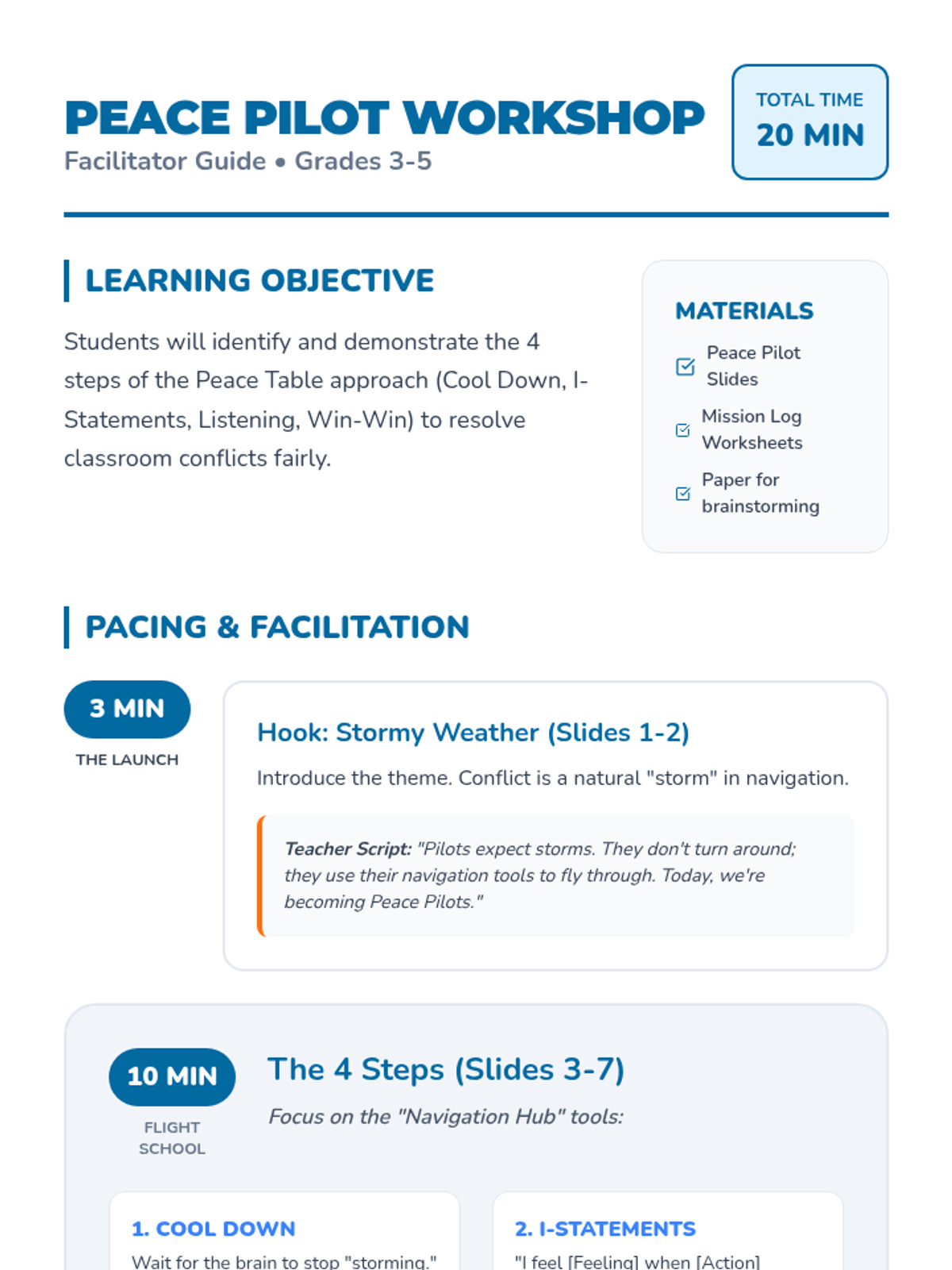
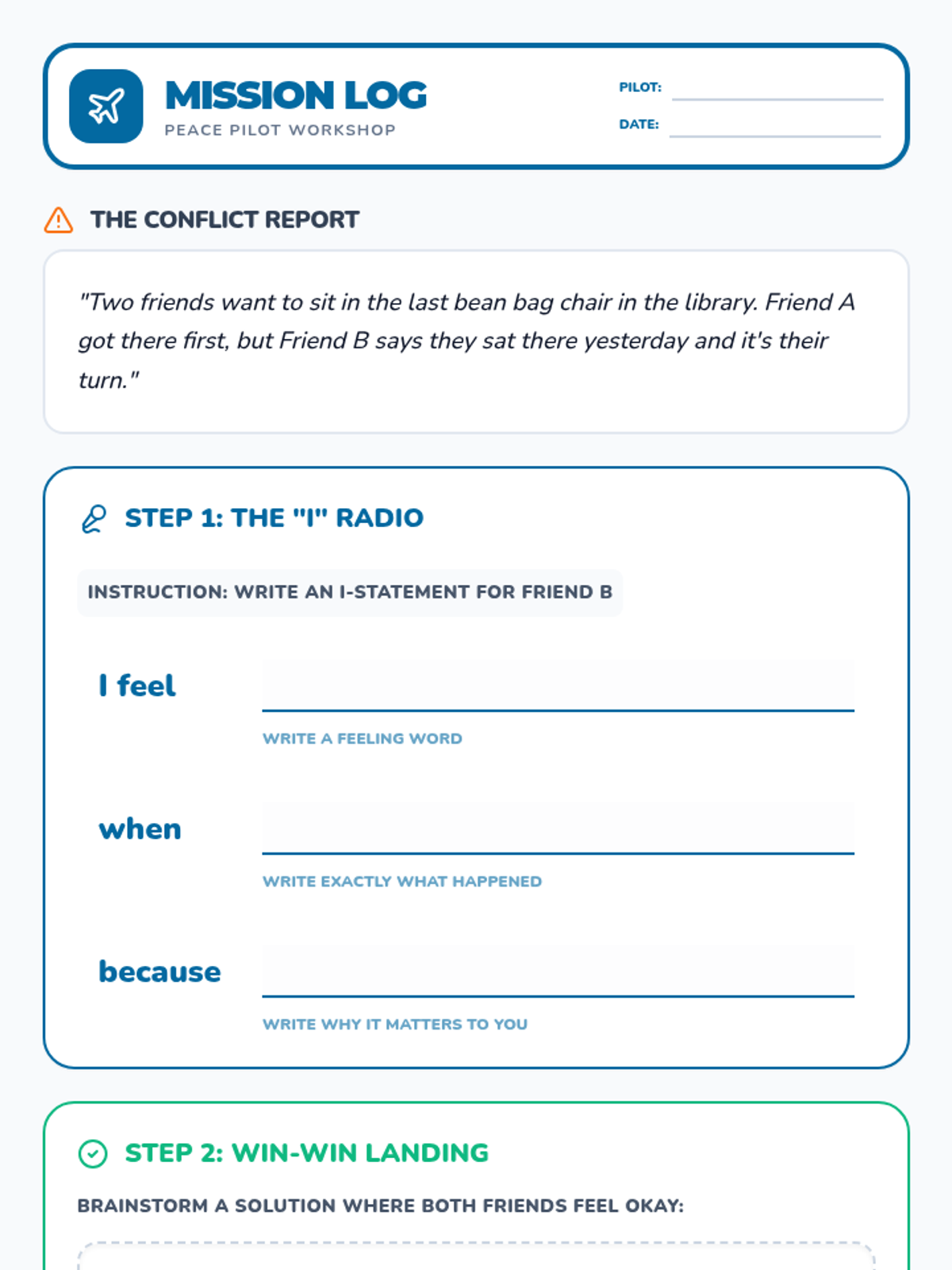
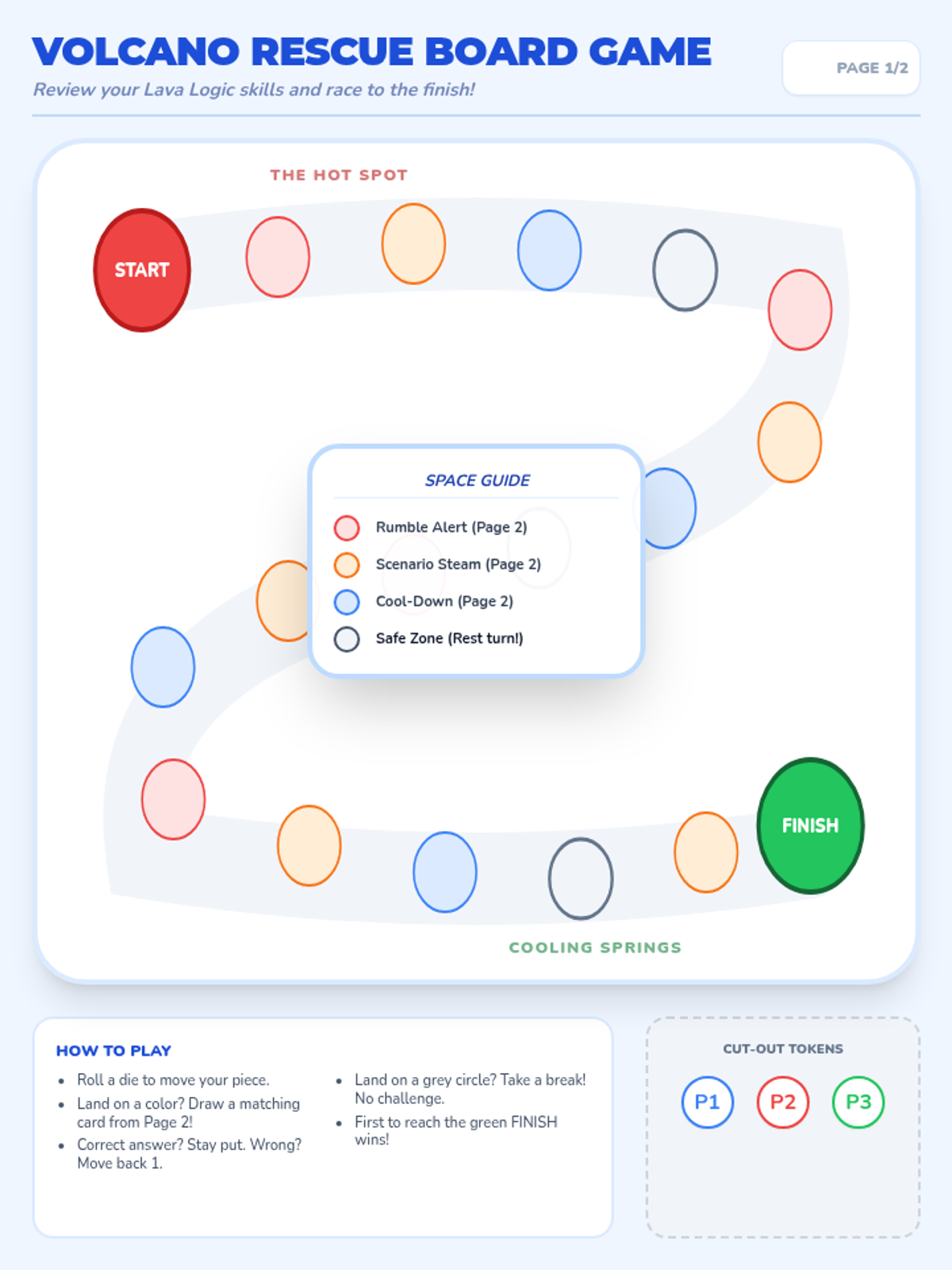
A 20-minute whole-class workshop for grades 3-5 focused on the Peace Table approach to conflict resolution. Students learn to navigate disagreements through cool-down periods, I-statements, active listening, and collaborative problem-solving.
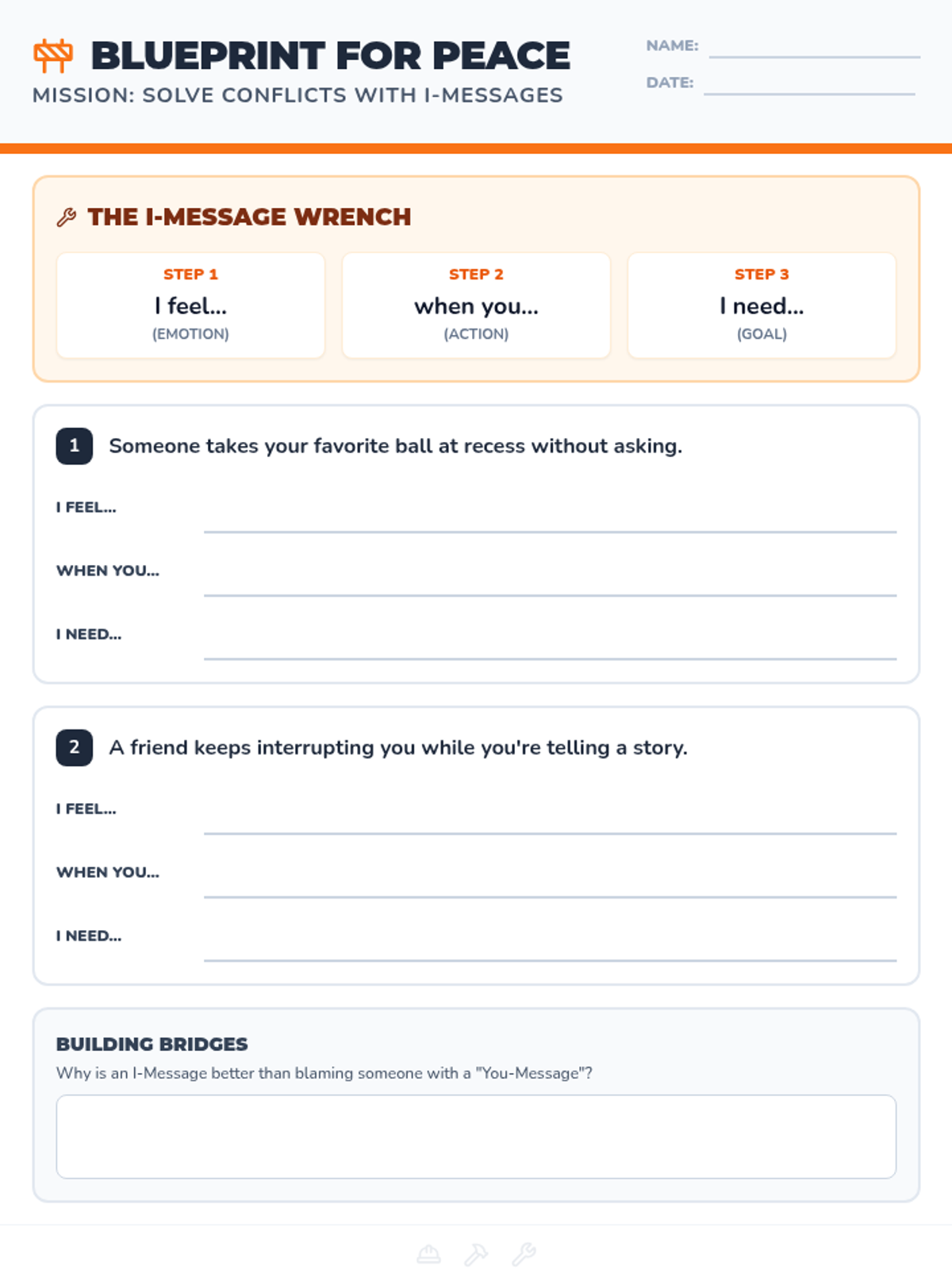
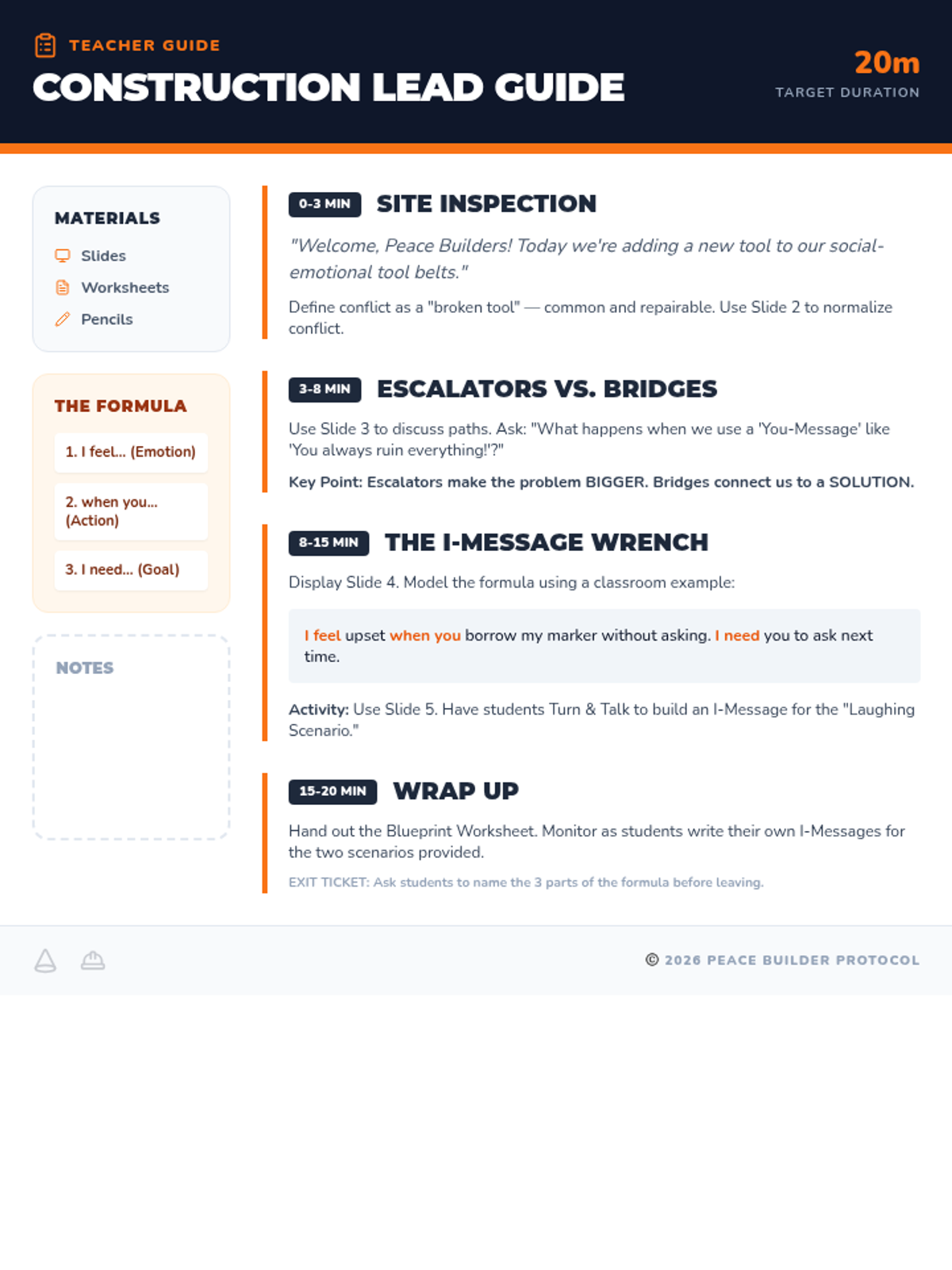
A high-energy, 20-minute introduction to resolving conflicts using 'I-Messages'. Students learn to identify conflict escalators and build peace bridges through clear, respectful communication.
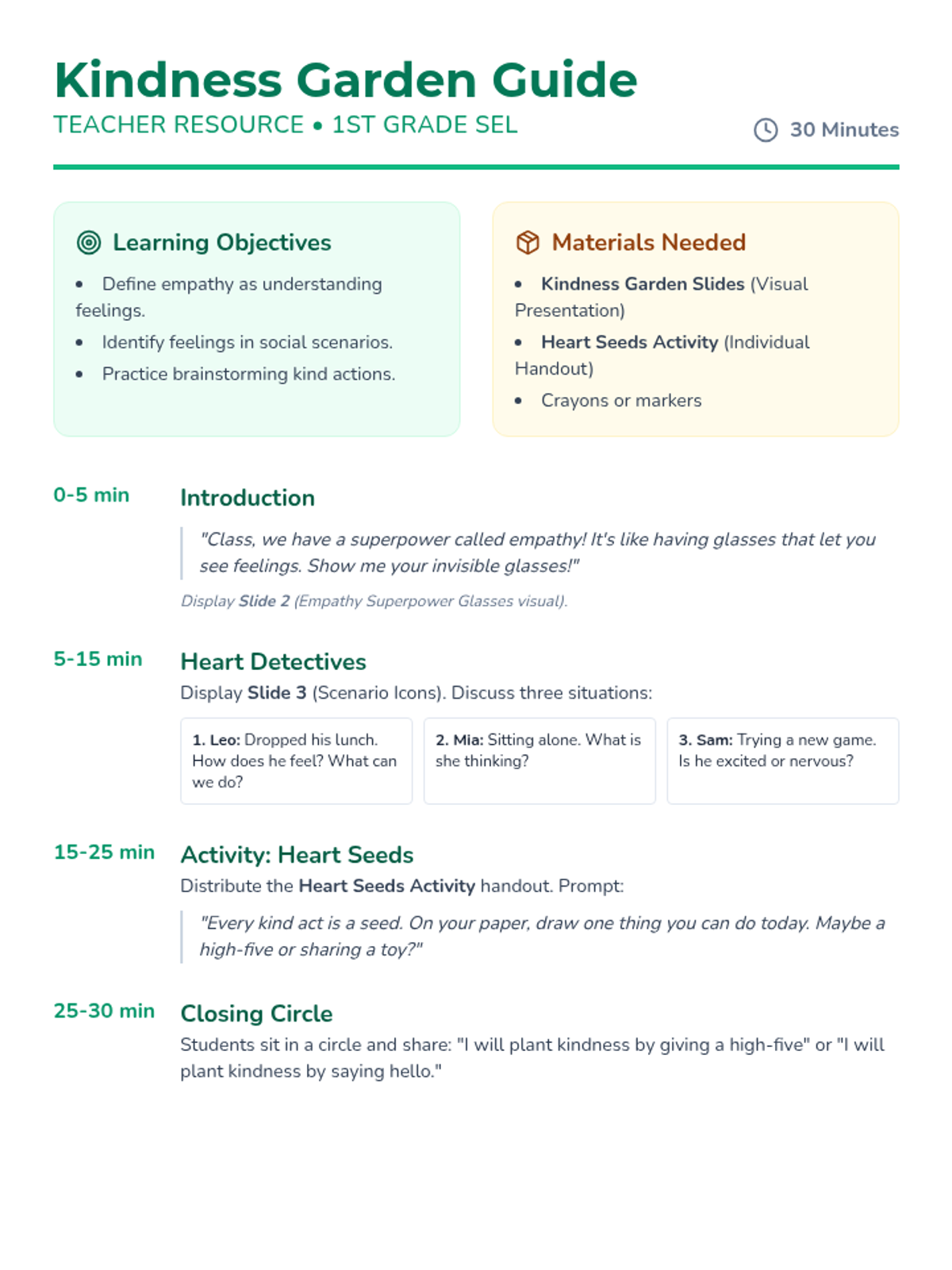
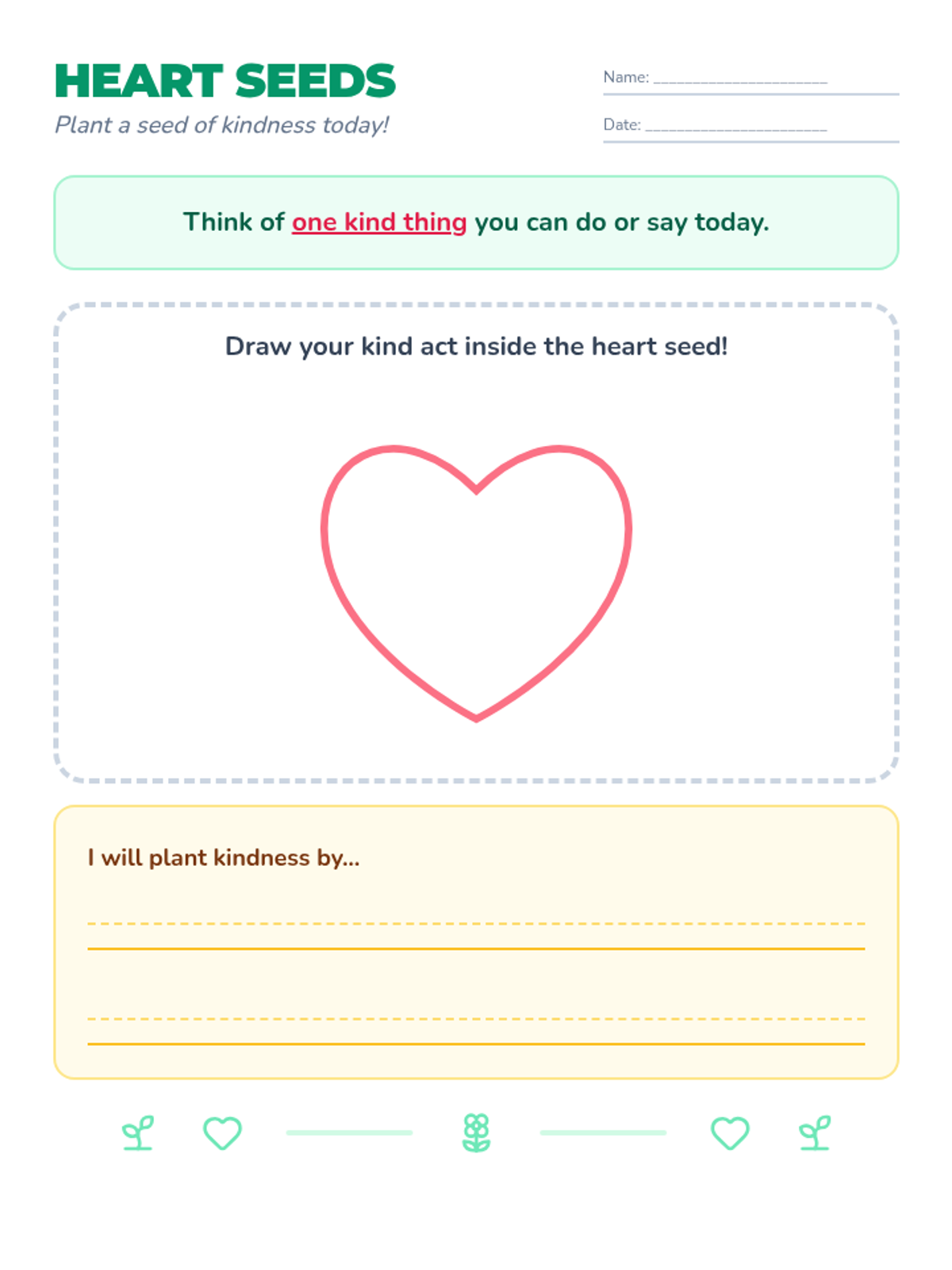
A 30-minute introductory lesson for 1st graders on kindness and empathy, using the metaphor of a garden to explore how small actions help others feel good.
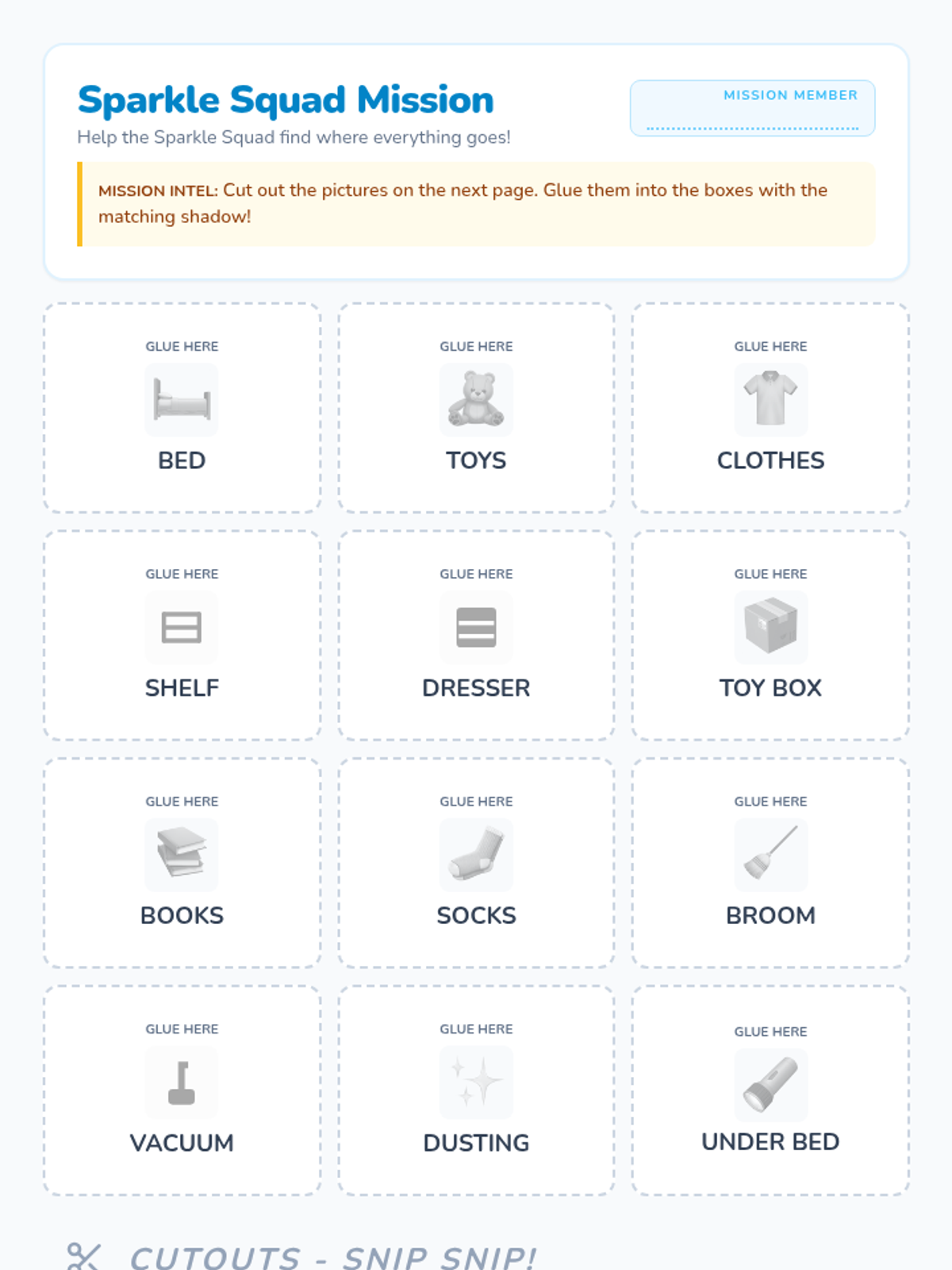
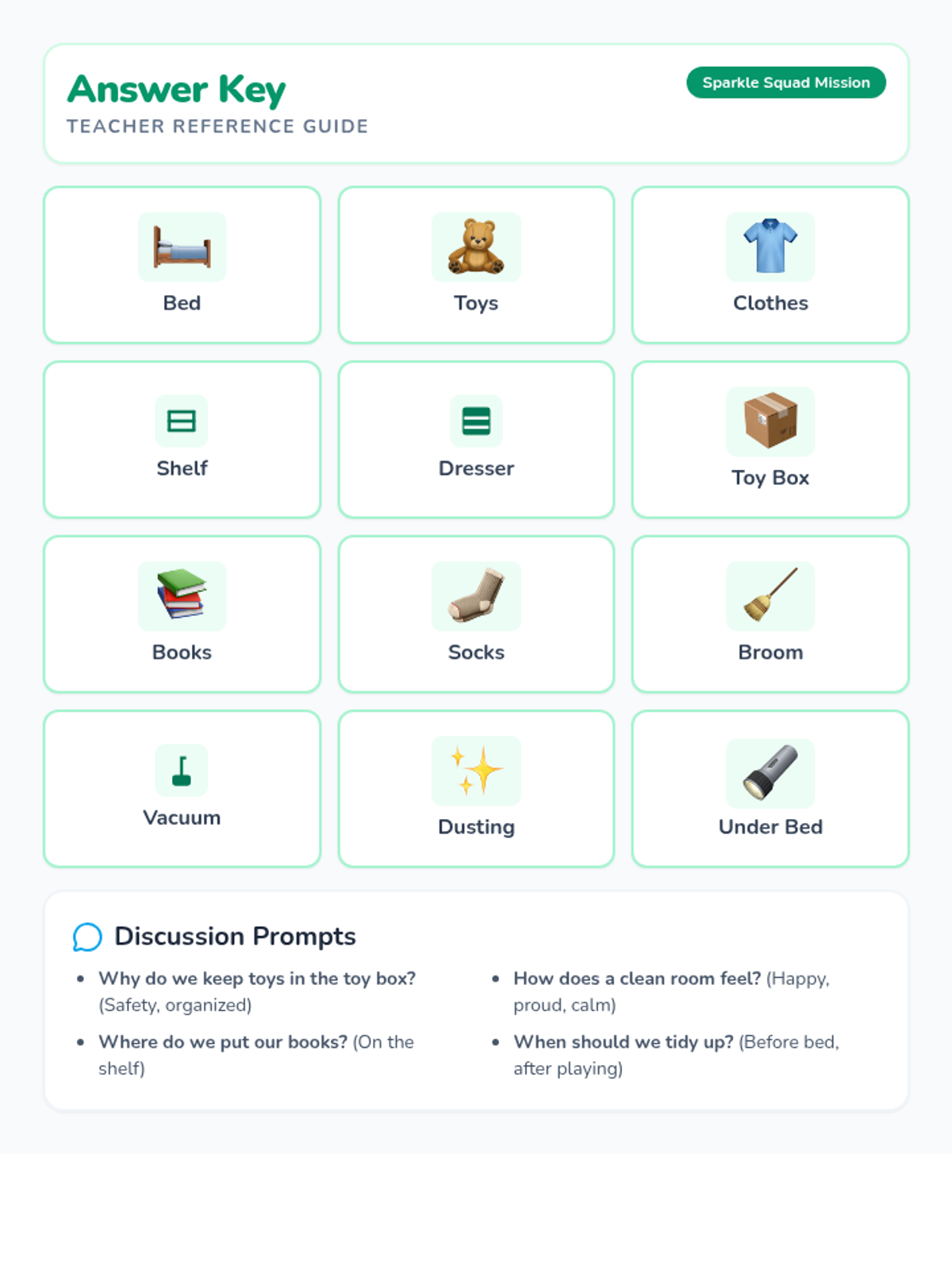
A fun, visual lesson for kindergarteners about identifying and organizing items to keep a bedroom clean and tidy.
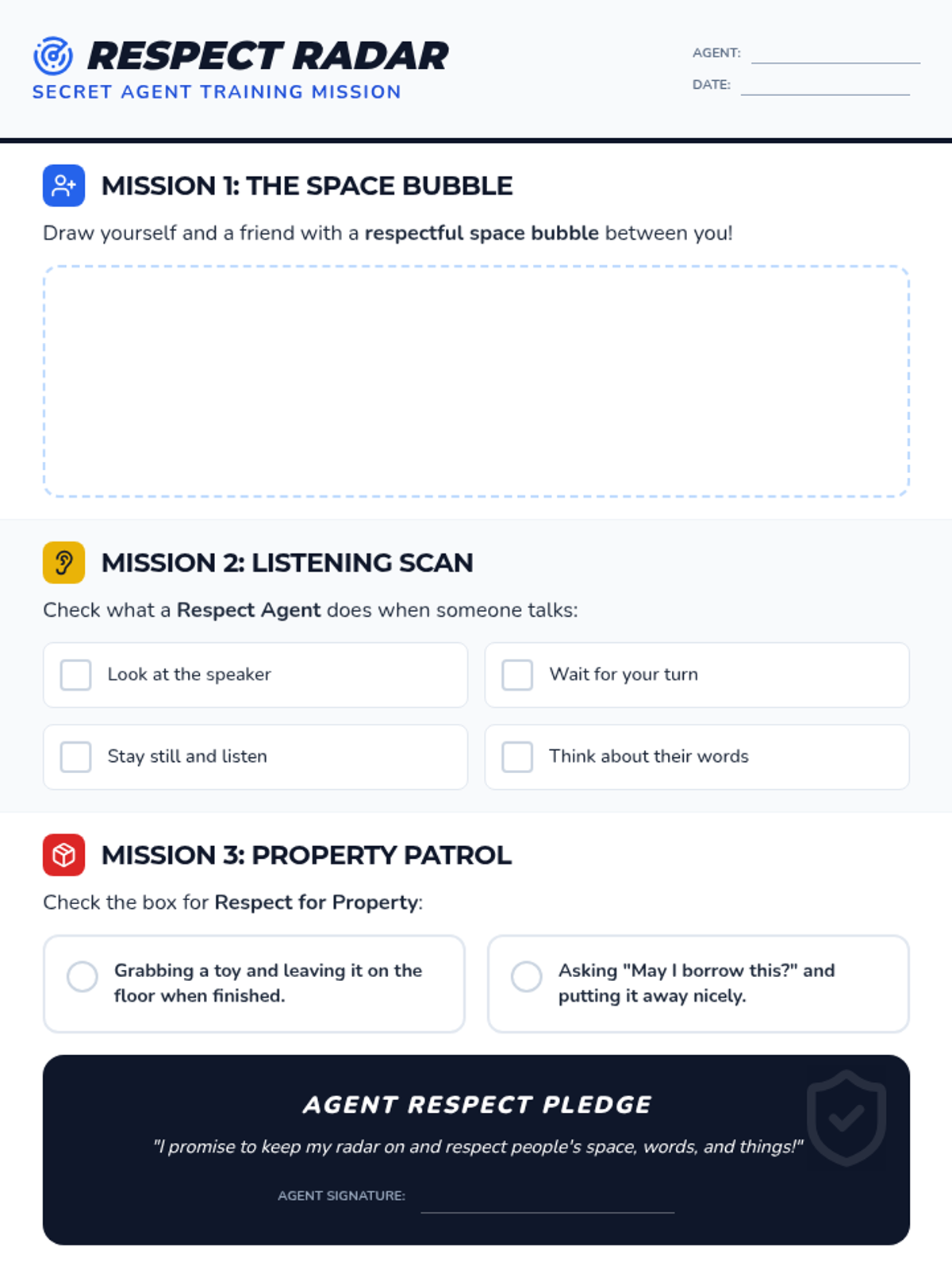
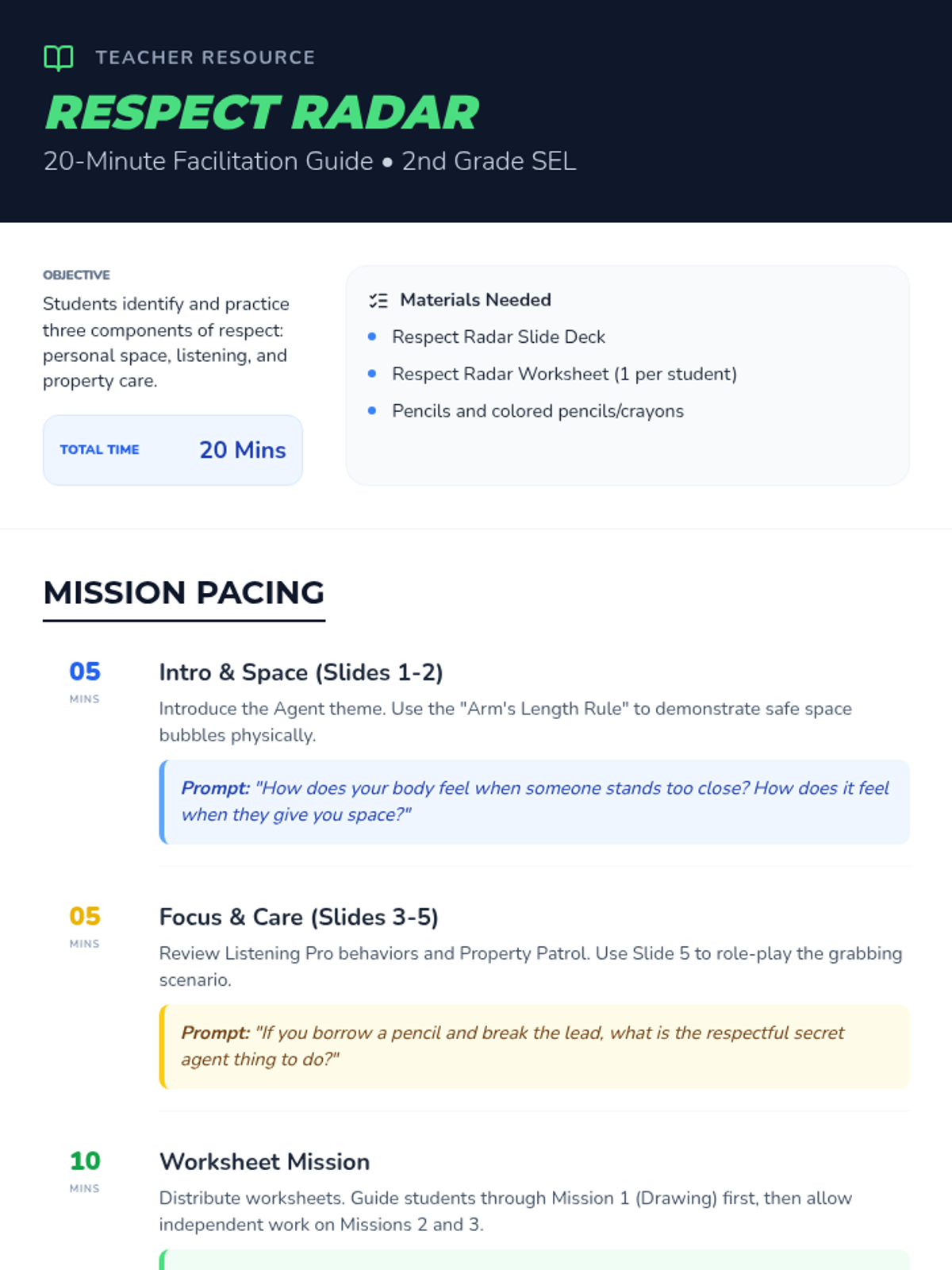
A fast-paced, interactive lesson teaching students how to scan their surroundings for ways to show respect by maintaining personal space, active listening, and property care.
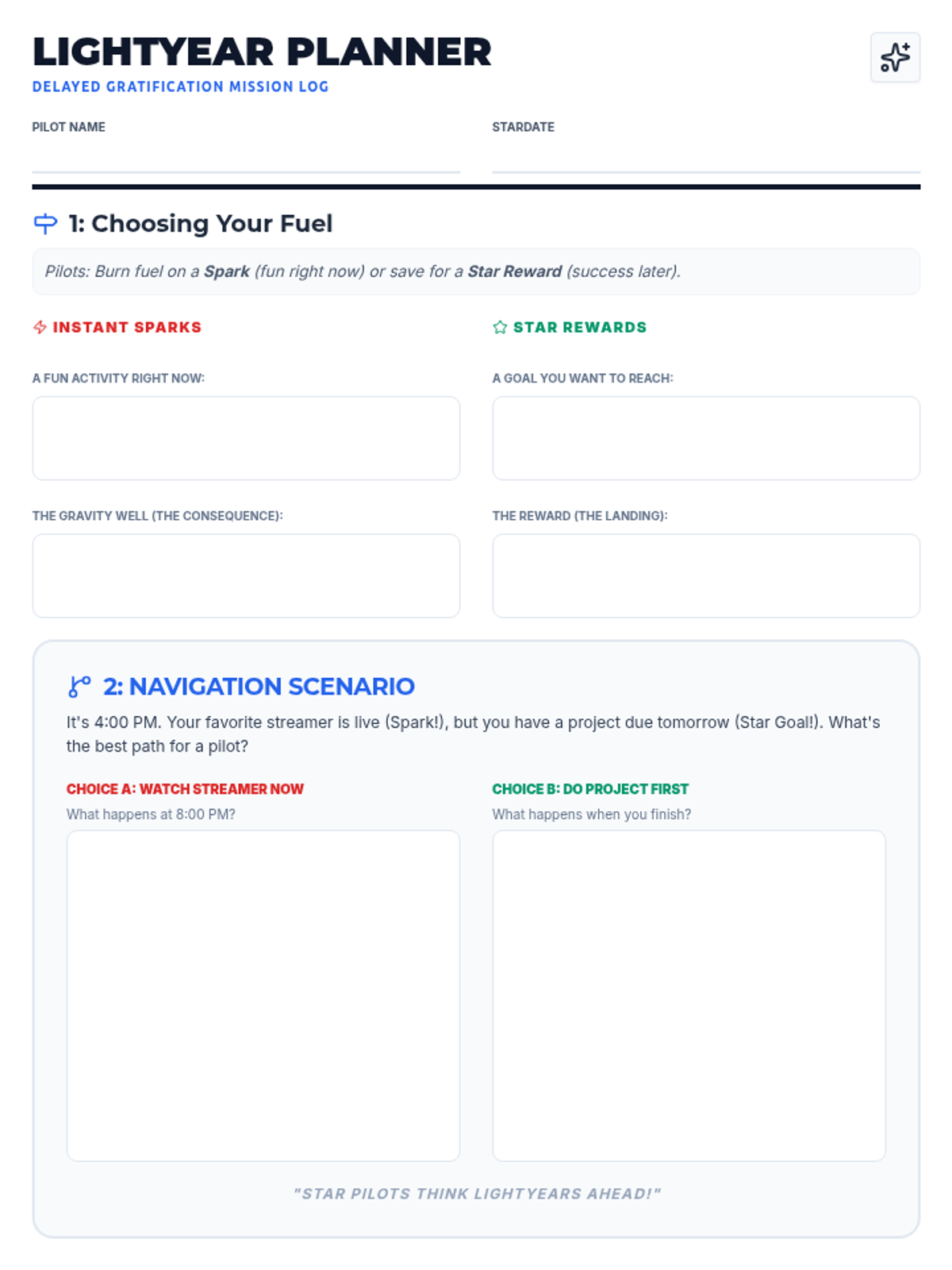
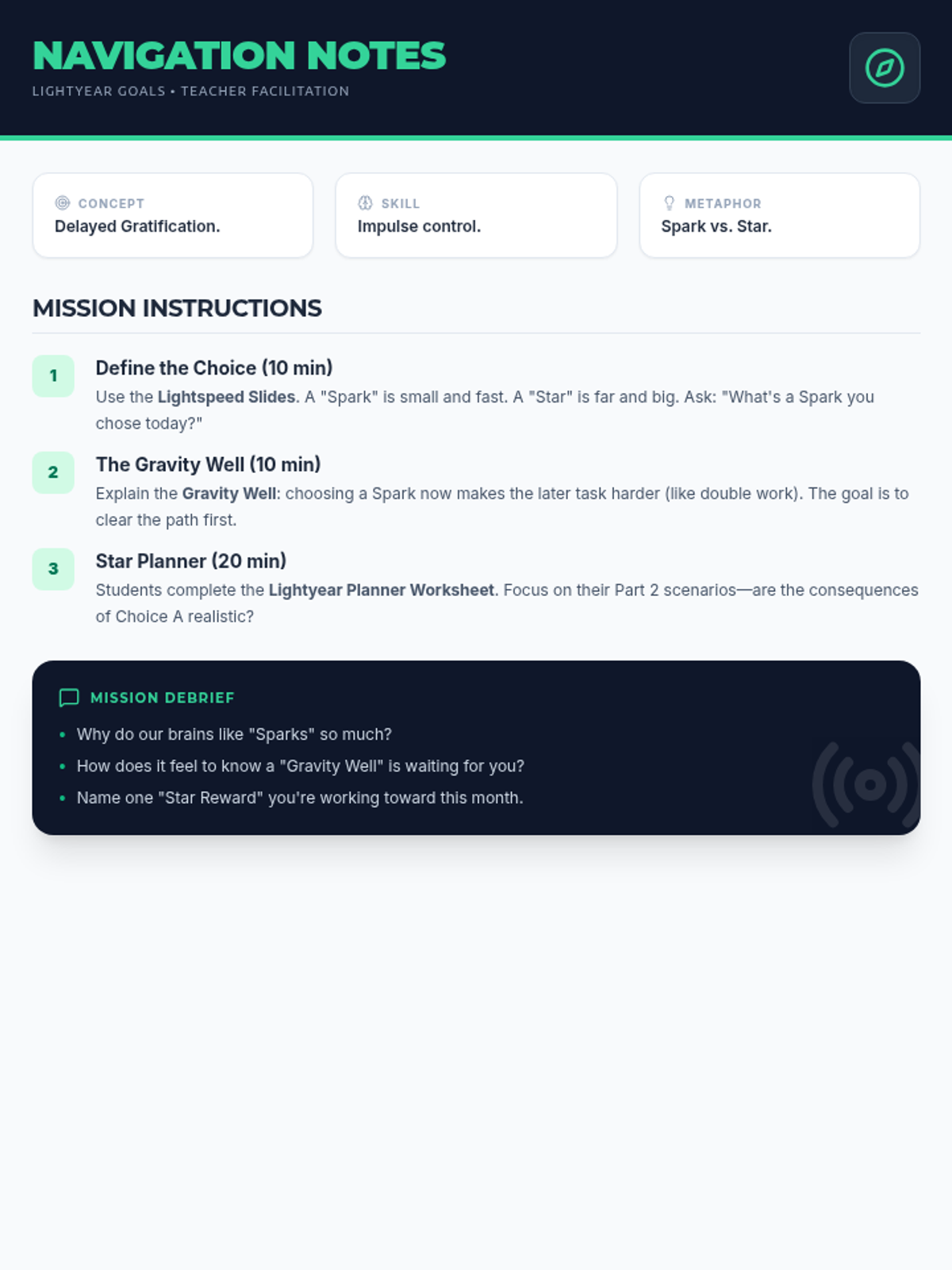
A lesson focused on understanding delayed gratification through the 'Instant Spark' vs. 'Star Goal' space metaphor. Students learn to weigh immediate fun against long-term success and the 'Gravity Well' consequences of procrastination.
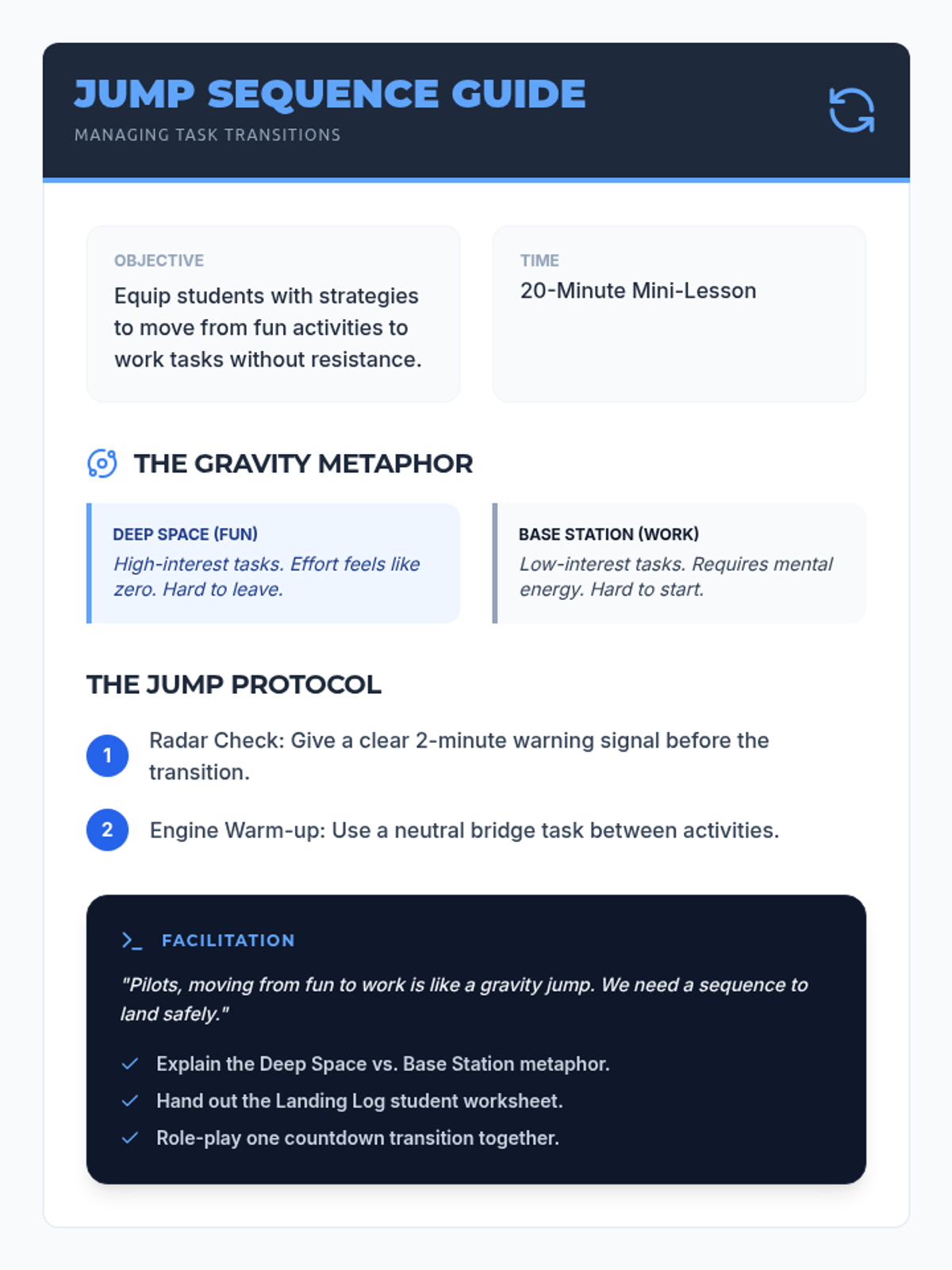
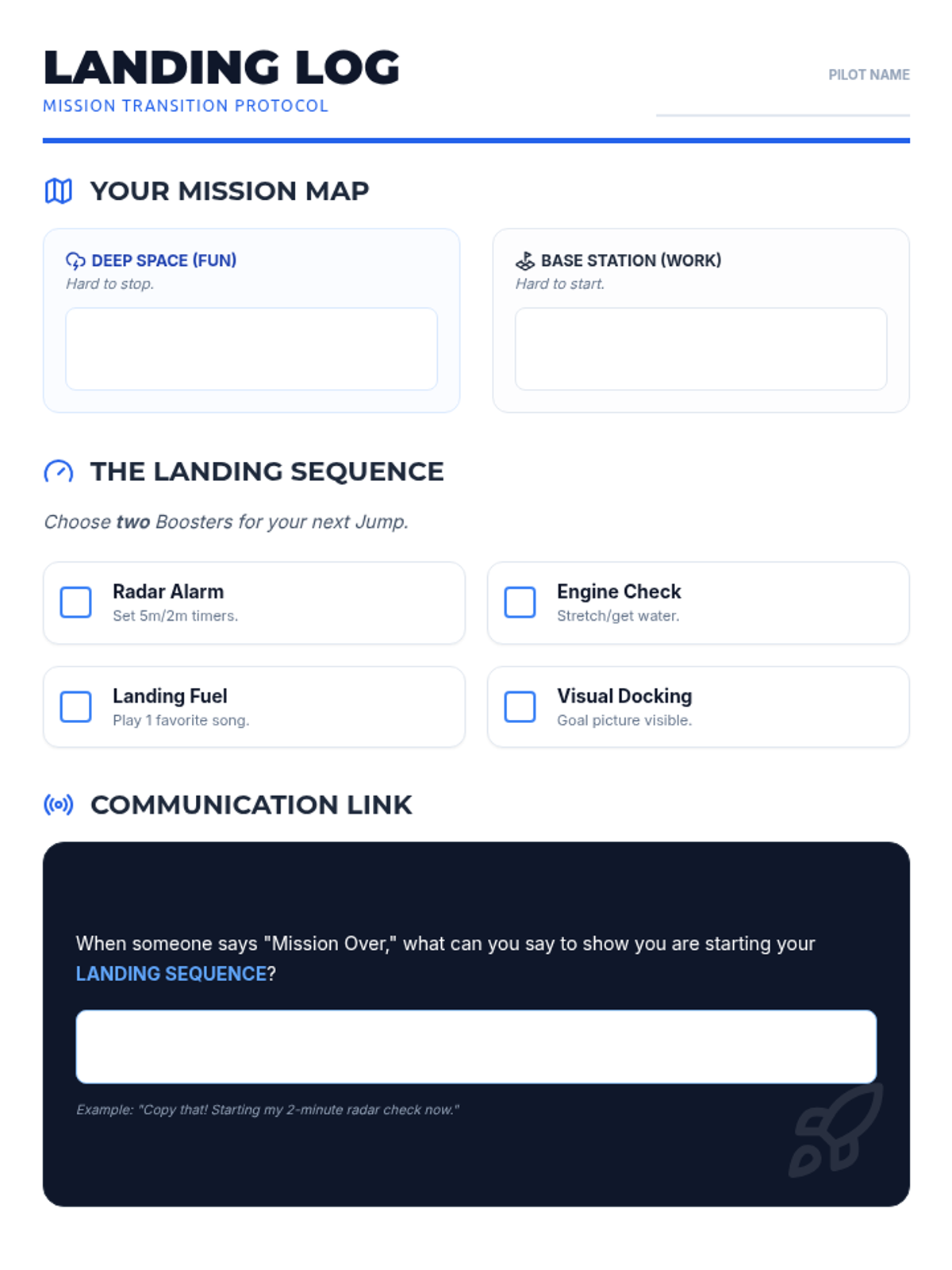
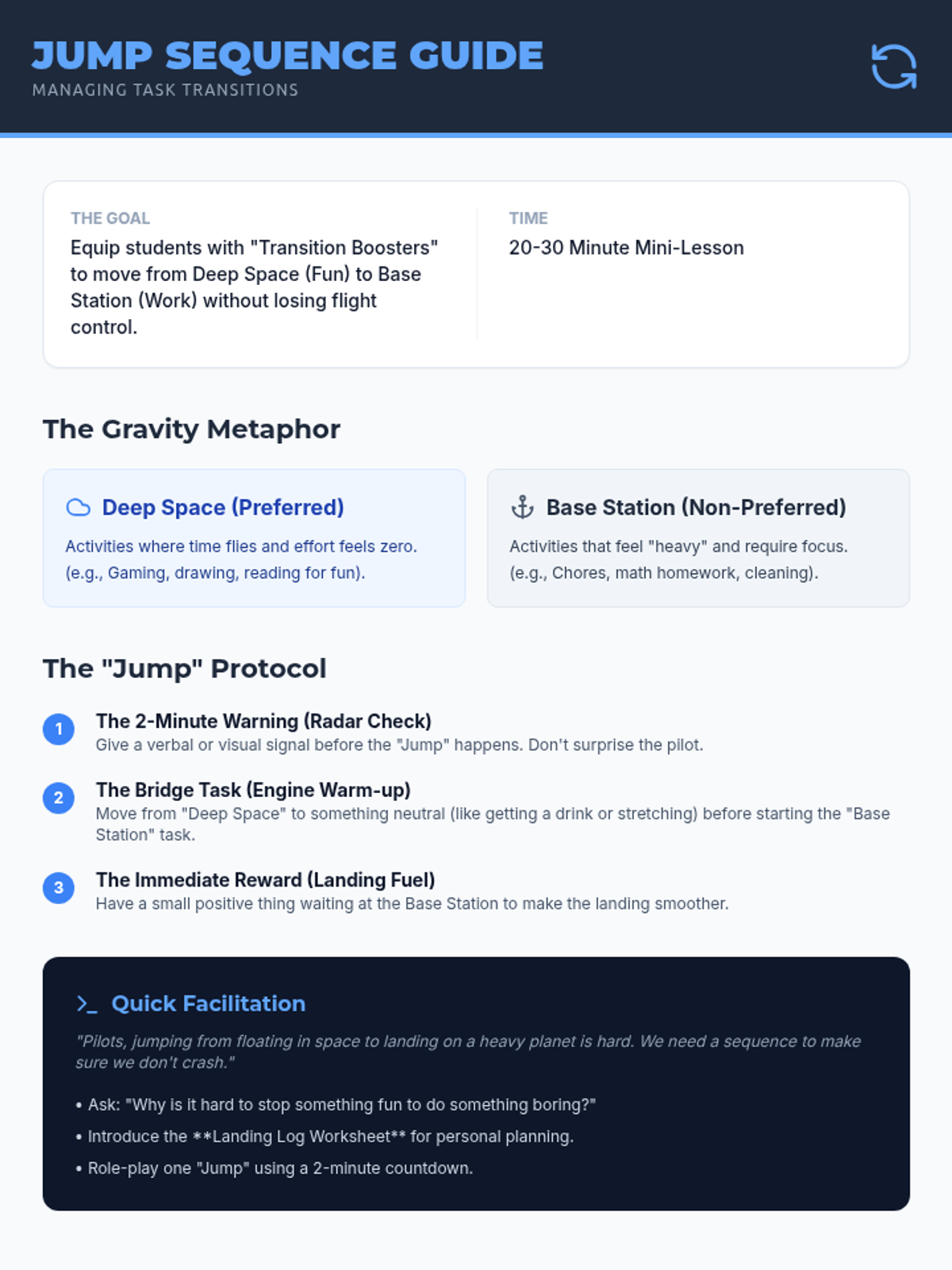
A focused lesson on managing transitions between preferred and non-preferred tasks using a 'Gravity Jump' space theme. Students learn to use 'boosters' (strategies) to move from high-interest activities to necessary duties.
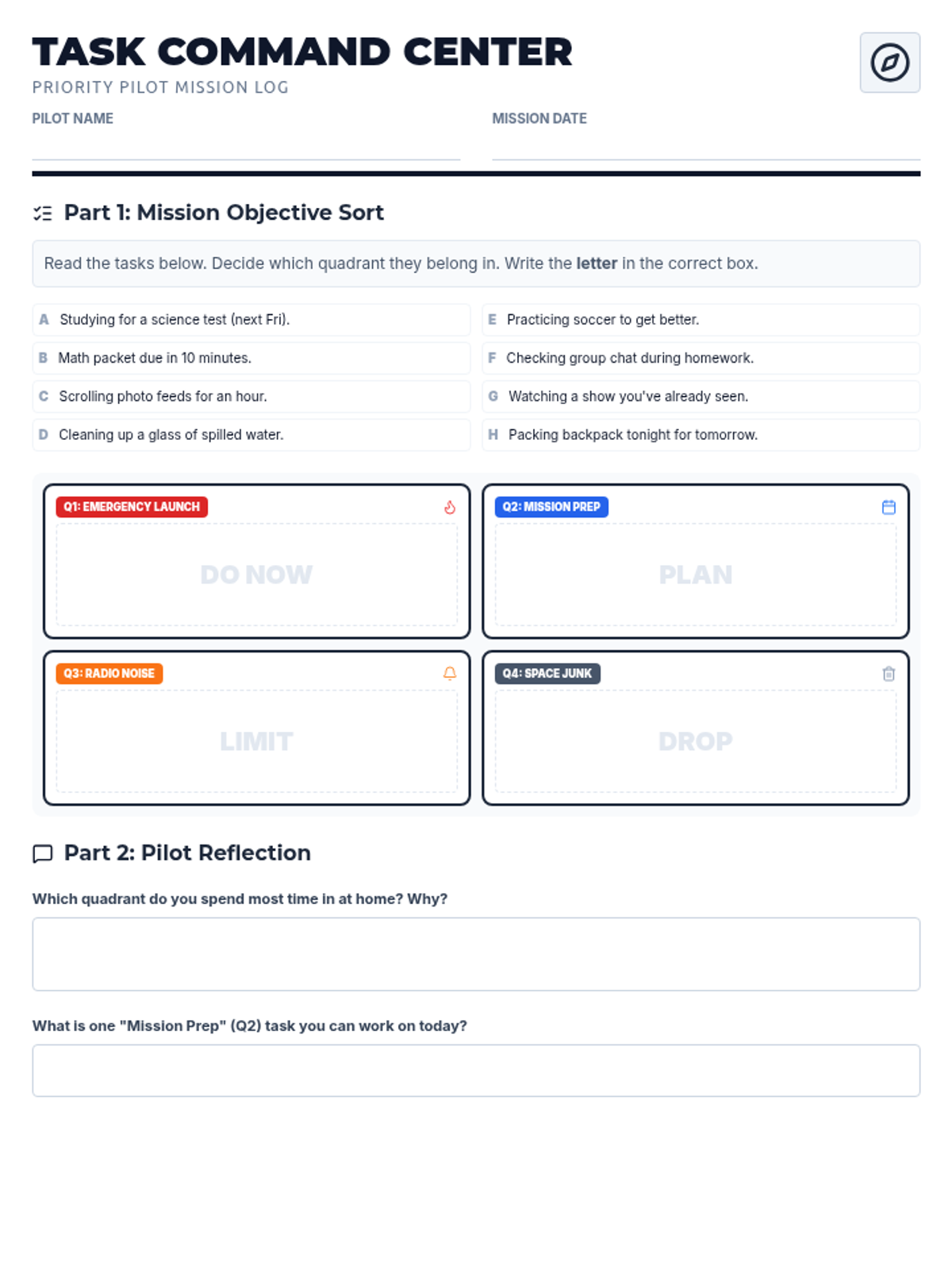
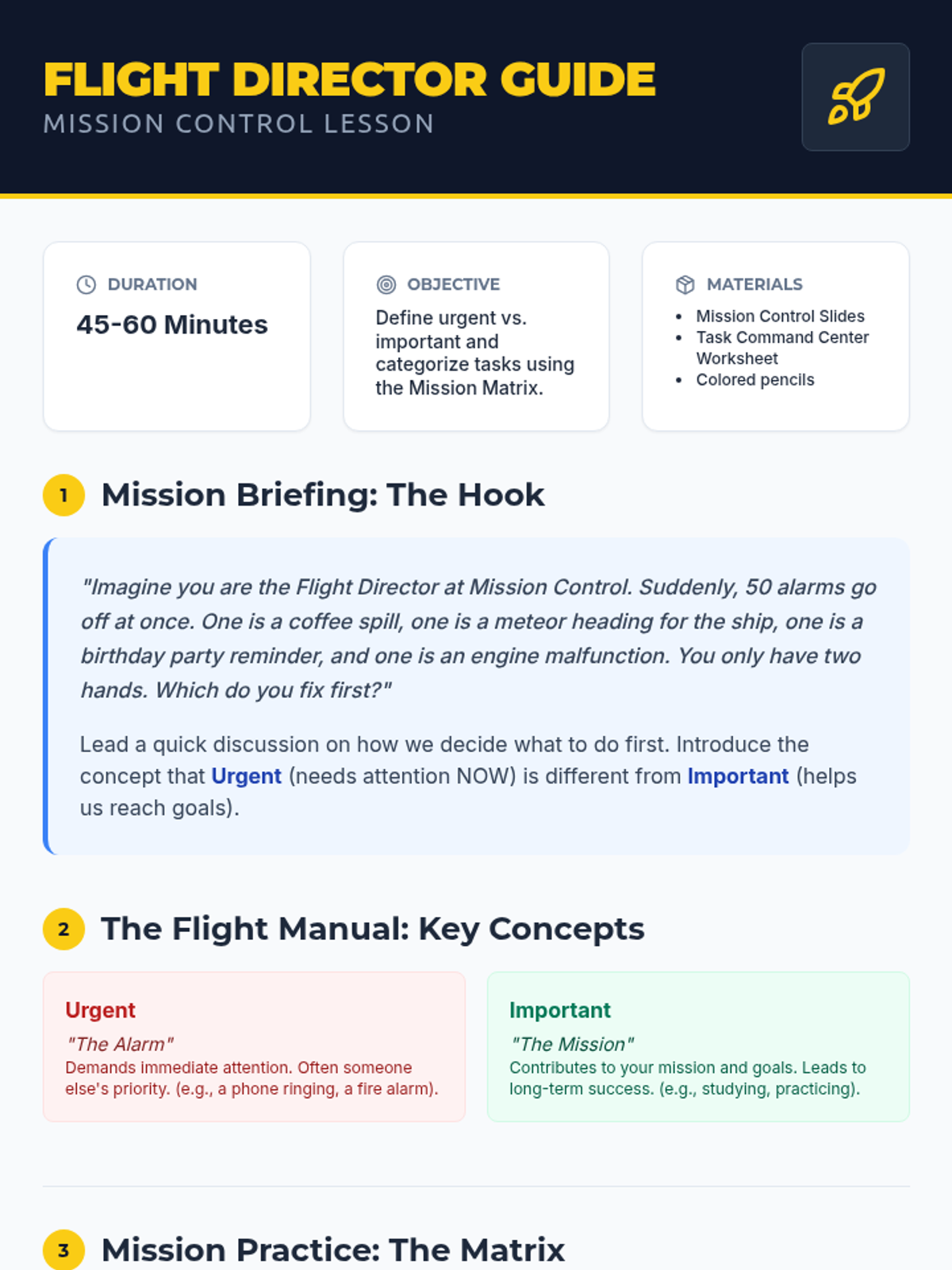
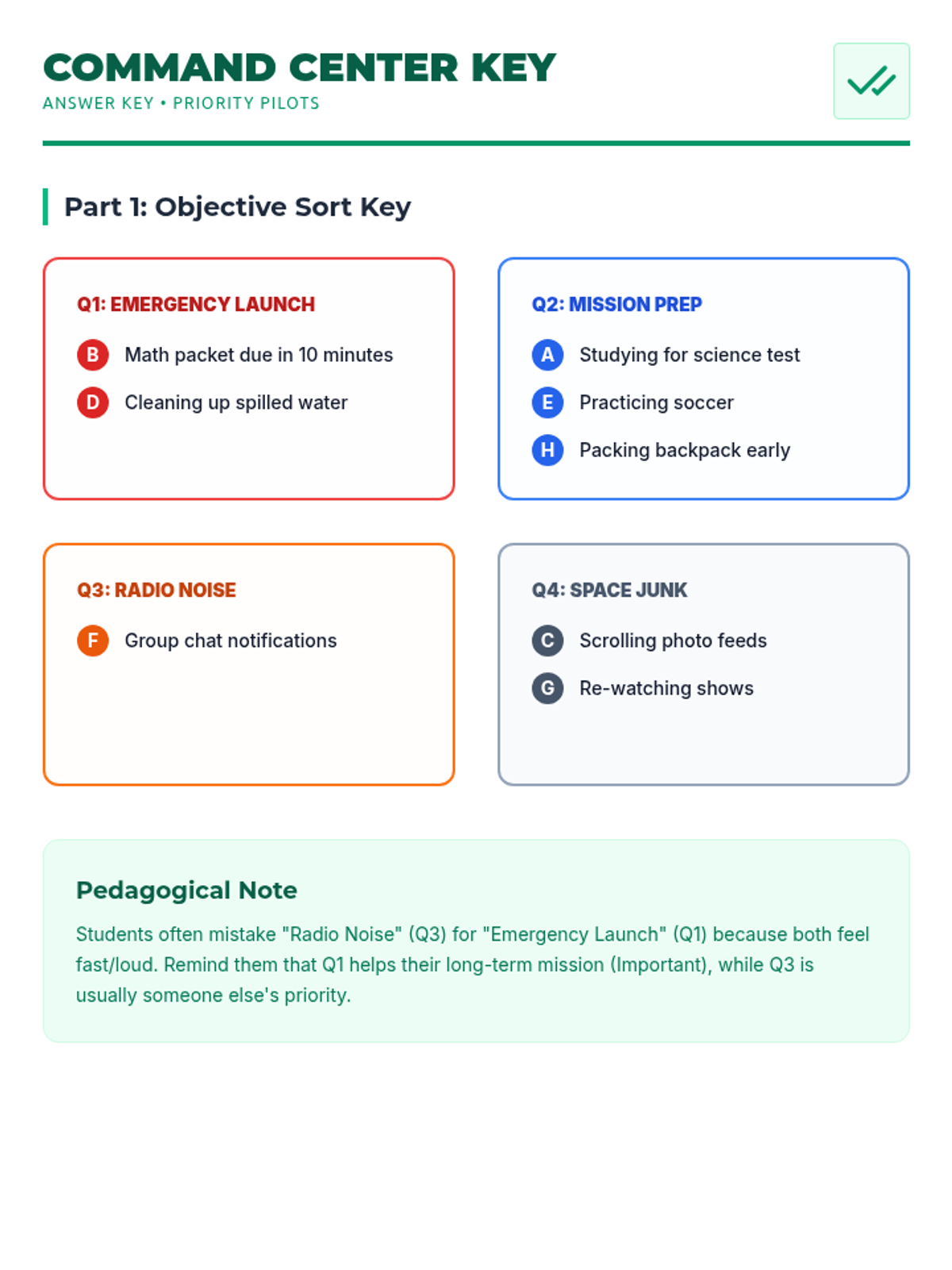
A high-energy lesson that introduces the Eisenhower Matrix to 5th graders through a space exploration 'Mission Control' theme. Students will learn to distinguish between urgent and important tasks to better manage their daily responsibilities.
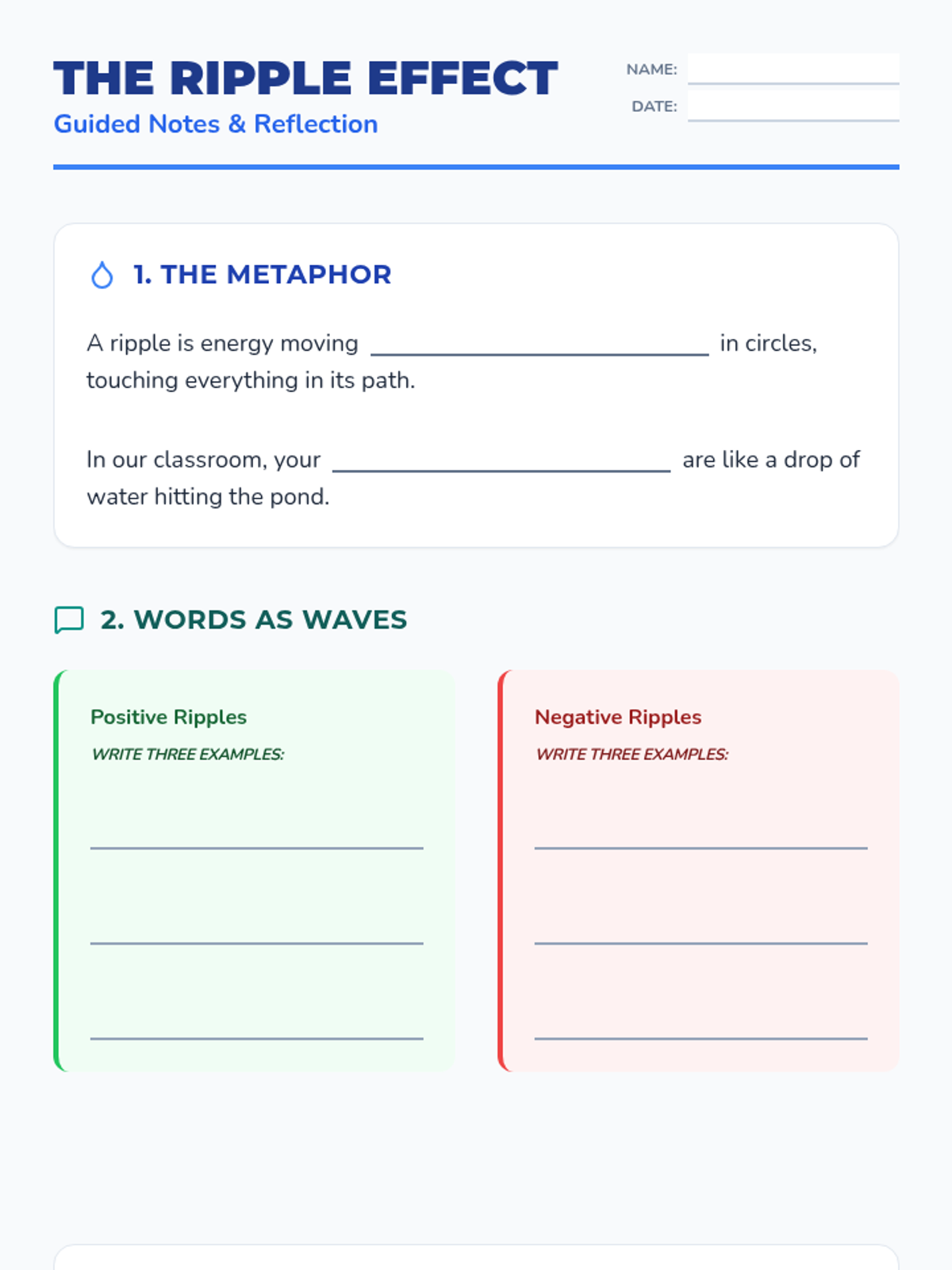
A Social Emotional Learning lesson exploring the concept of the ripple effect, helping students understand how their individual choices and behaviors impact their peers and the overall classroom environment.
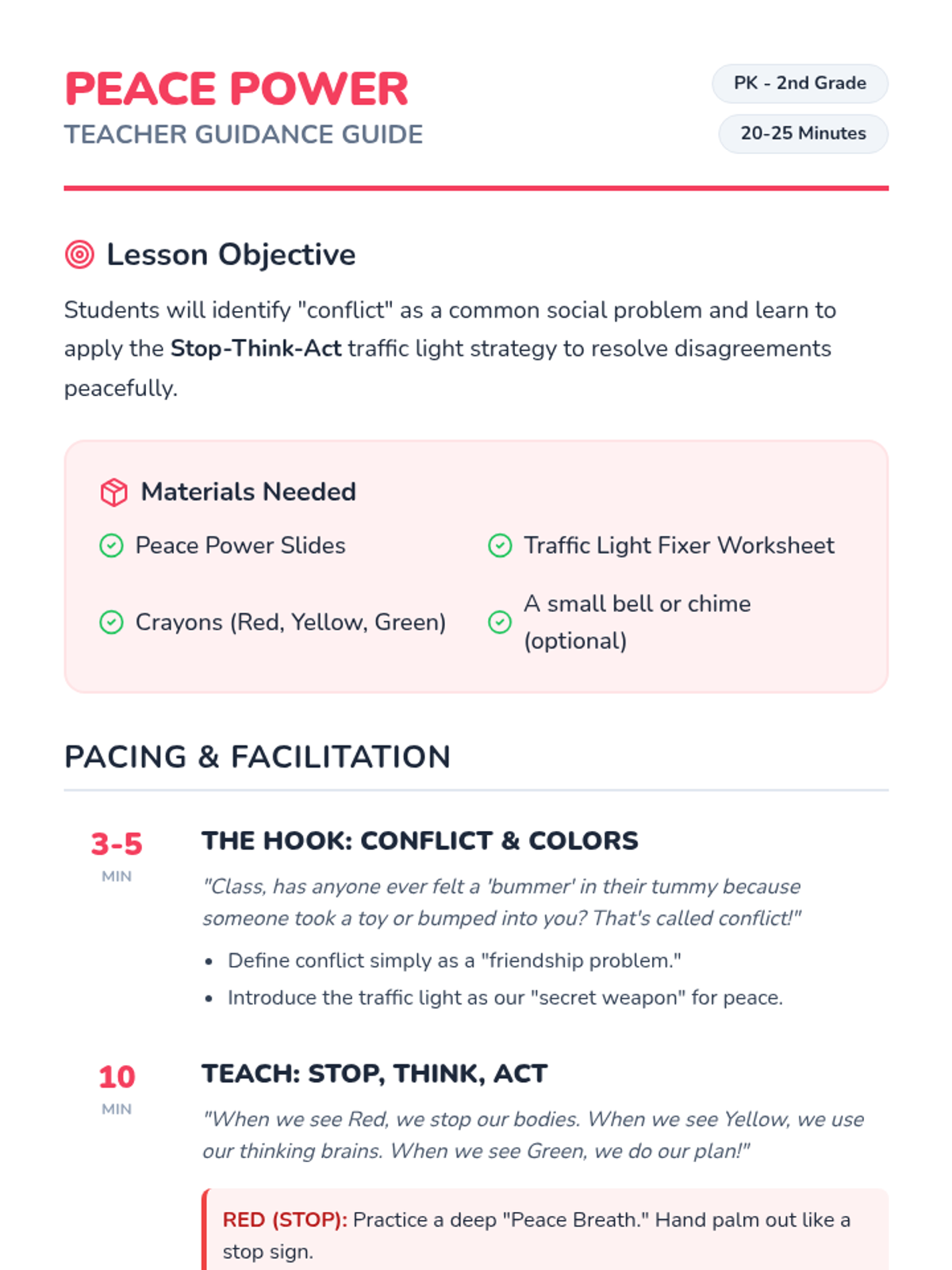
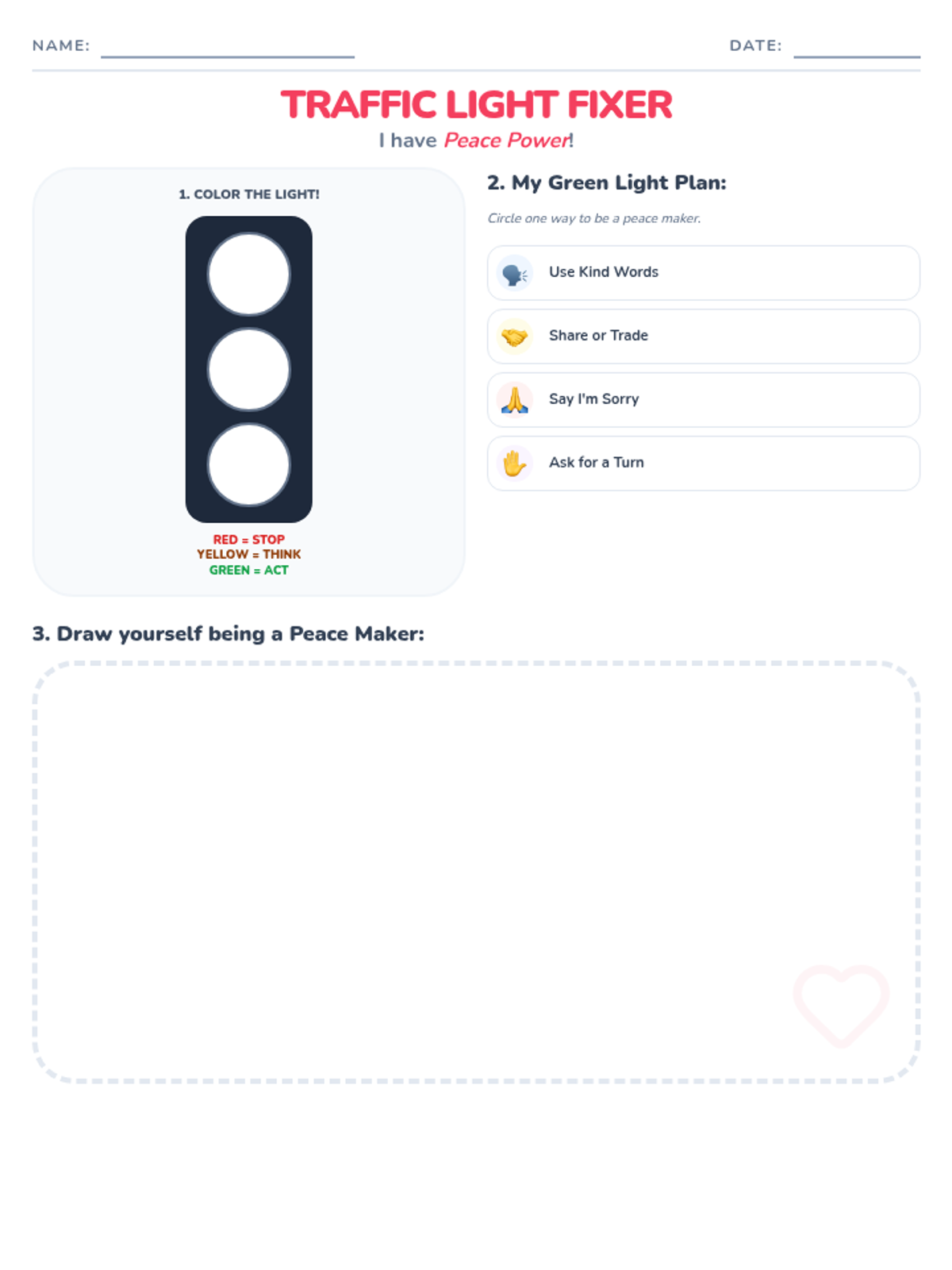
A vibrant, interactive guidance lesson for PK-2nd grade students focusing on the 'Stop-Think-Act' conflict resolution strategy using a traffic light metaphor. Emphasizes self-regulation and kind choices.
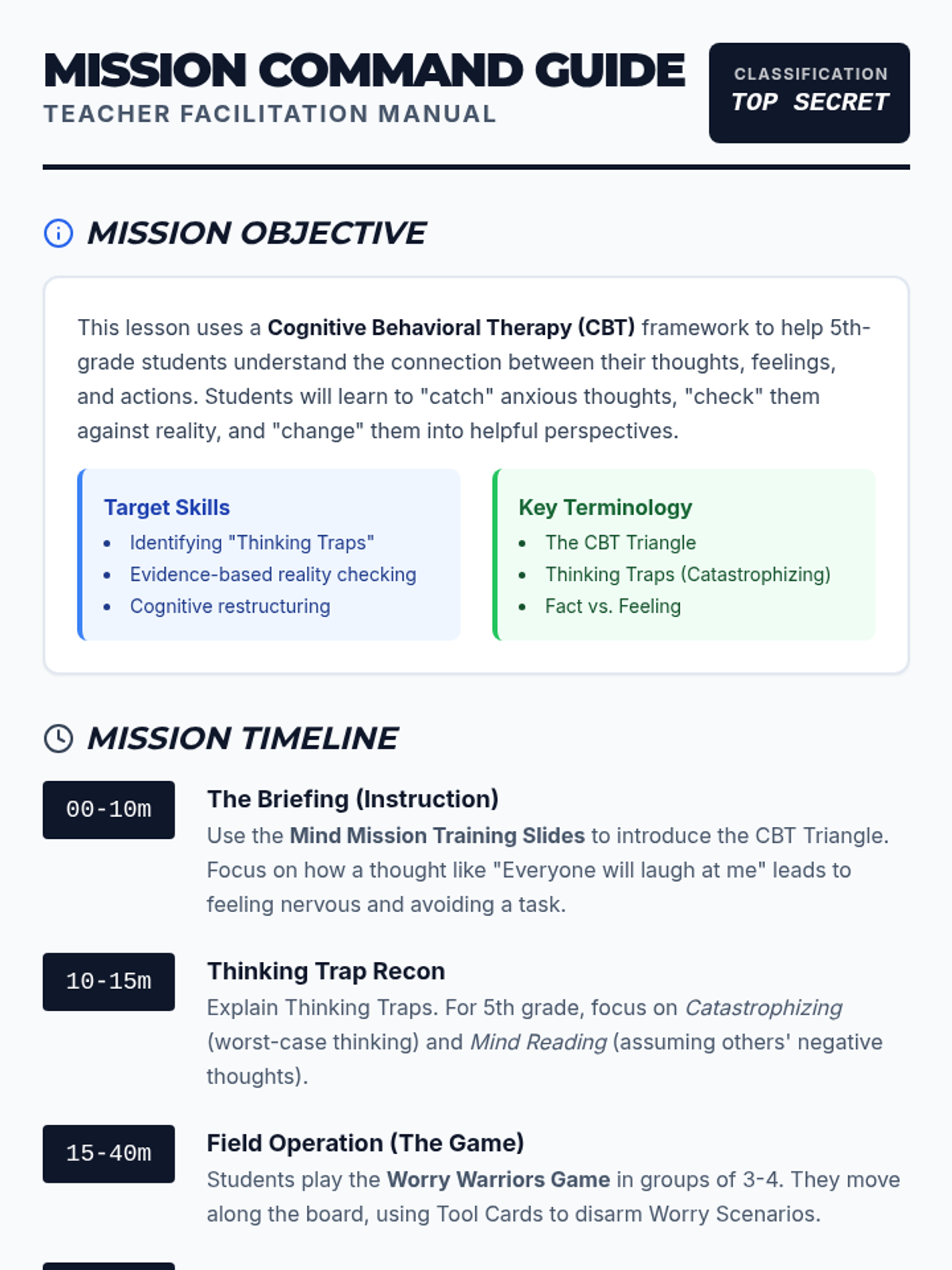
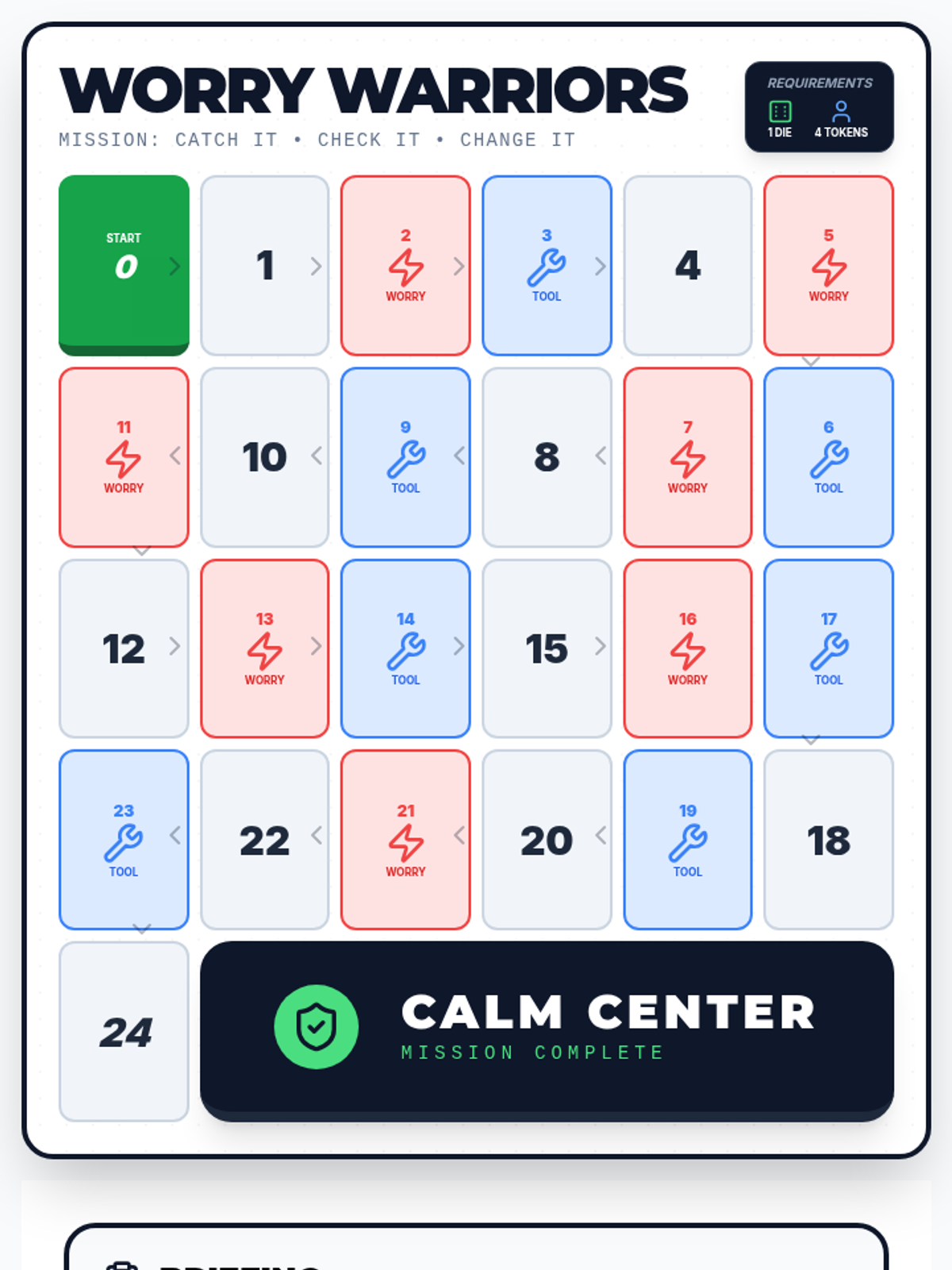
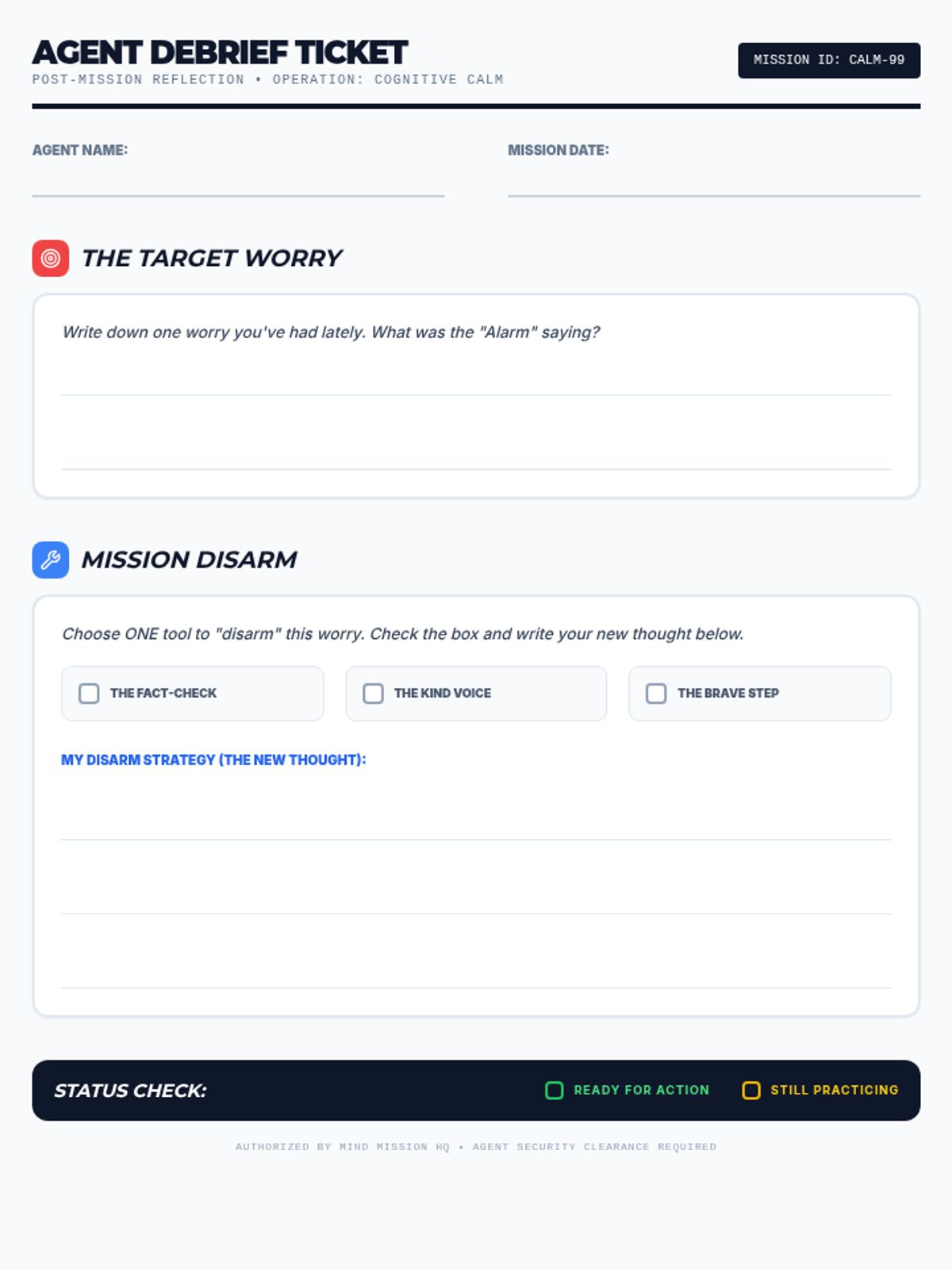
A secret-agent themed lesson that introduces 5th graders to Cognitive Behavioral Therapy (CBT) techniques to identify and challenge anxious thoughts through a collaborative board game.
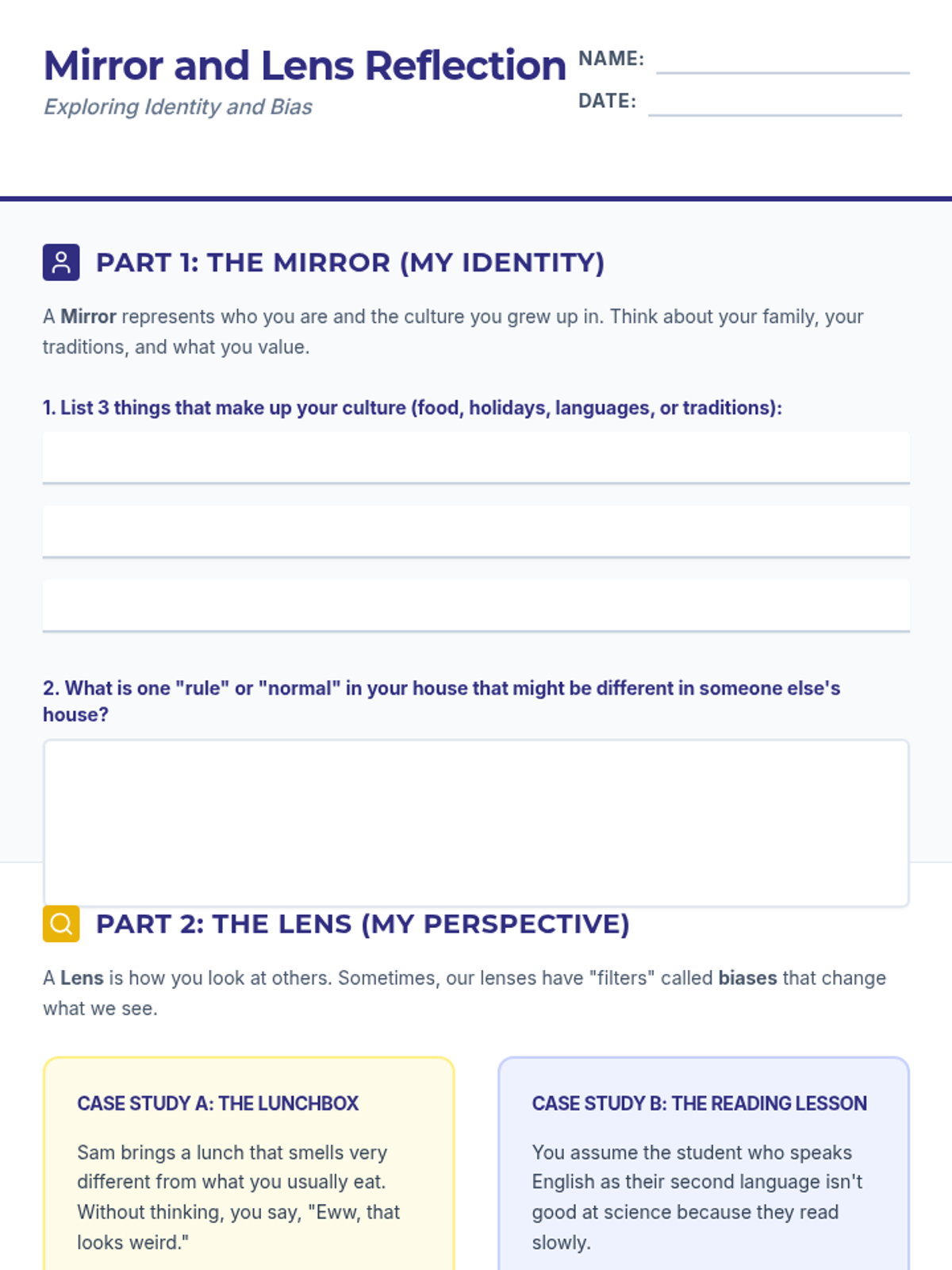
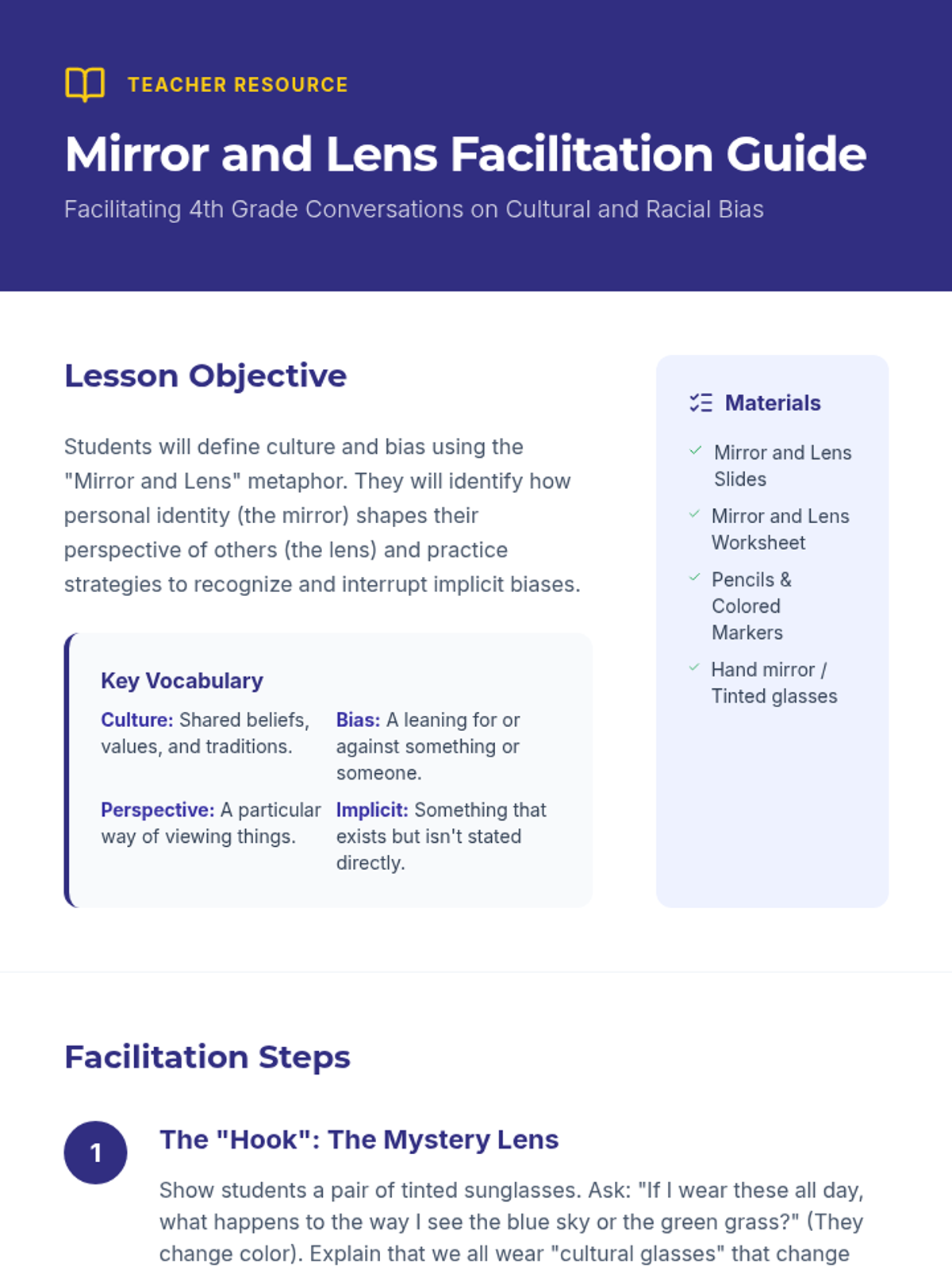
An introductory exploration of cultural and racial bias for 4th graders, using the metaphors of mirrors and lenses to understand personal perspective and systemic filters.
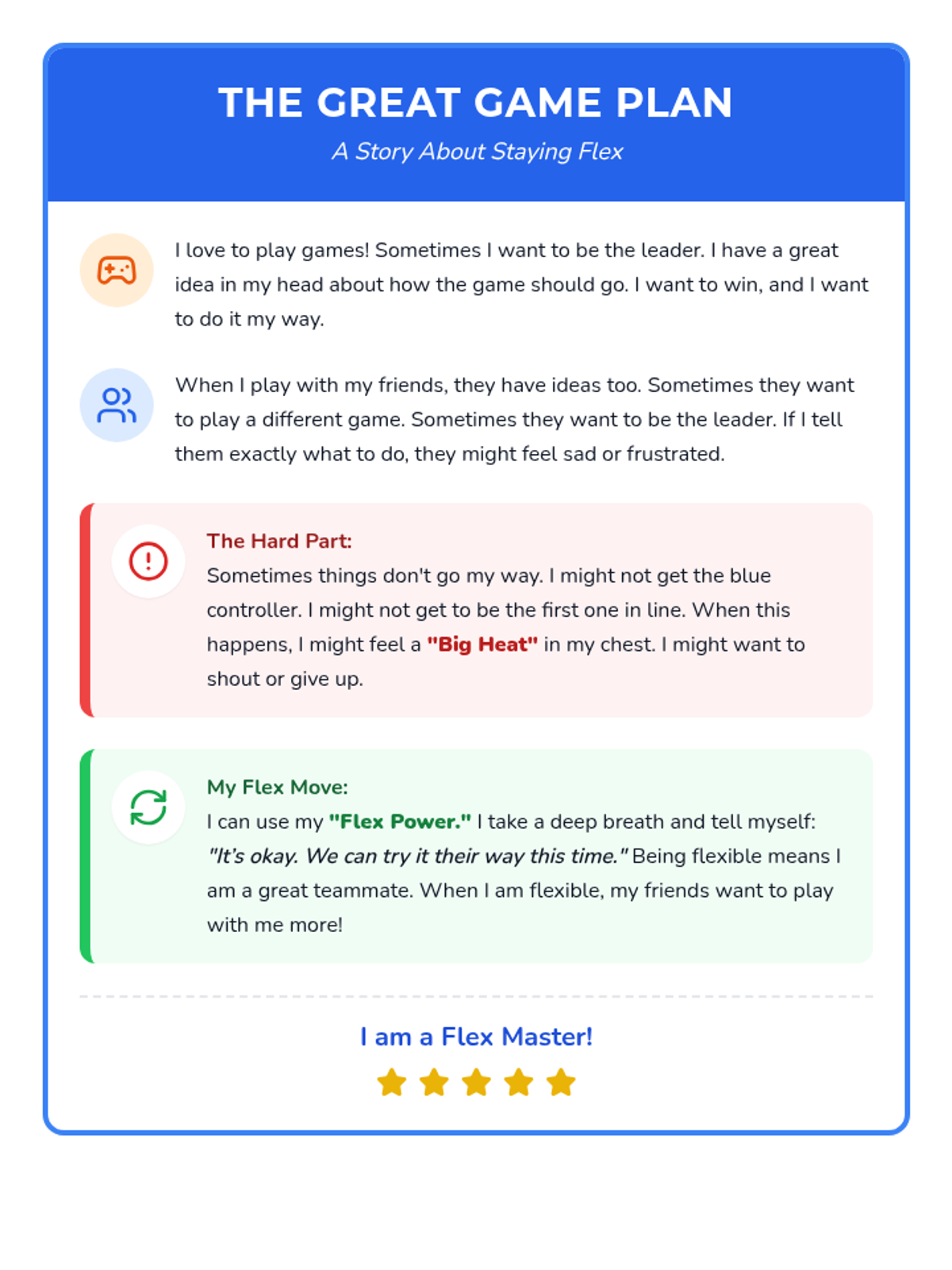
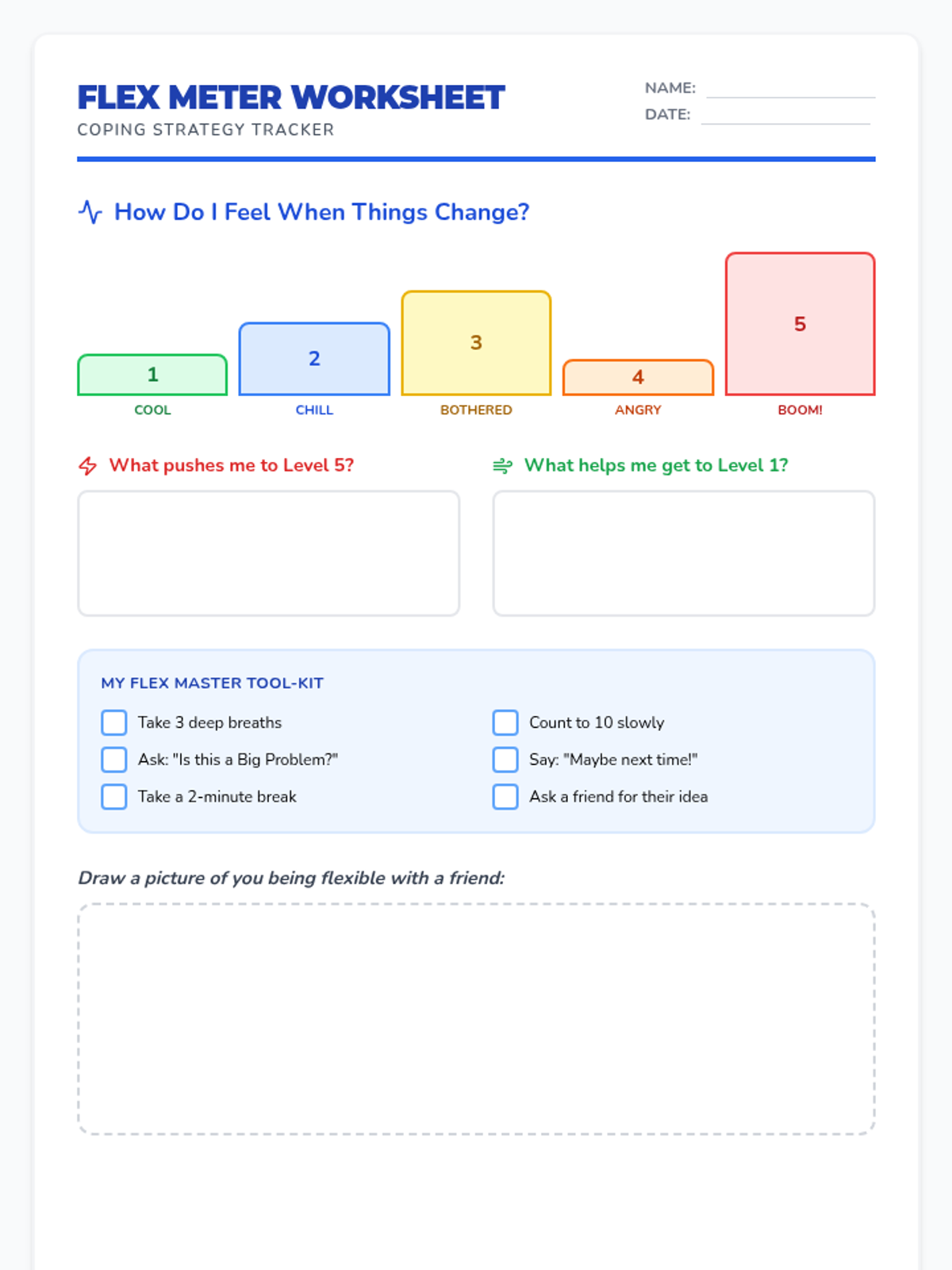
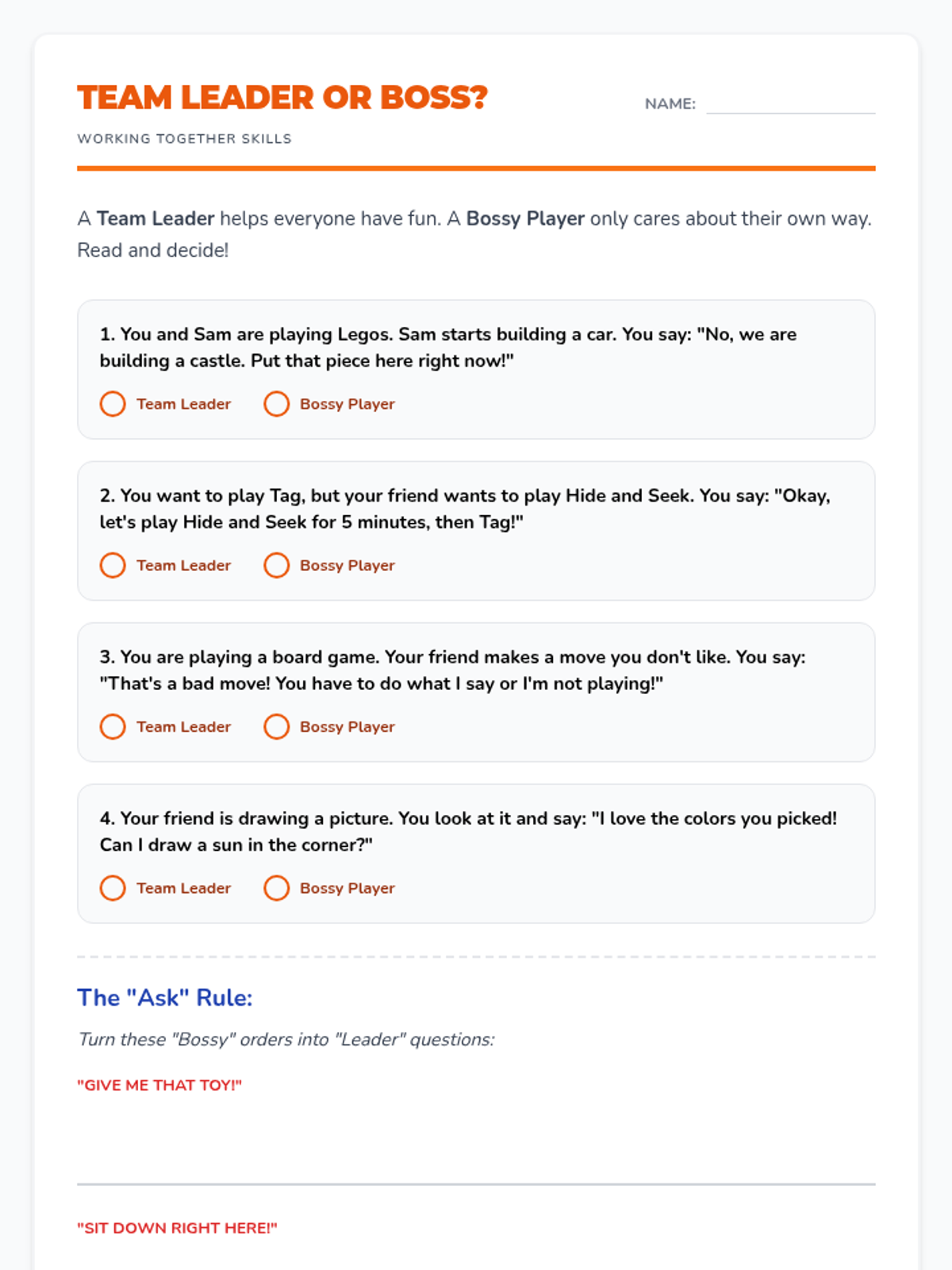
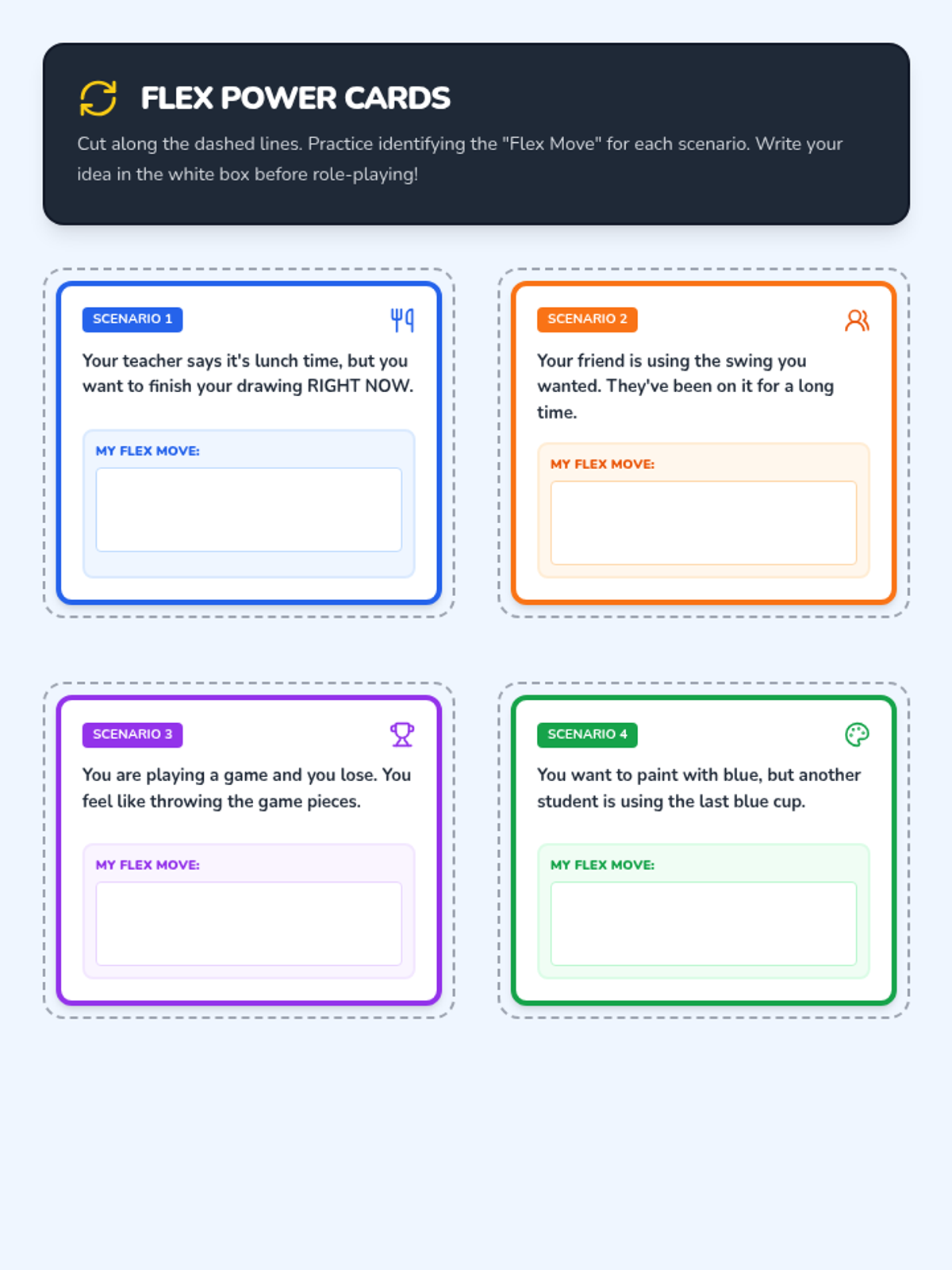
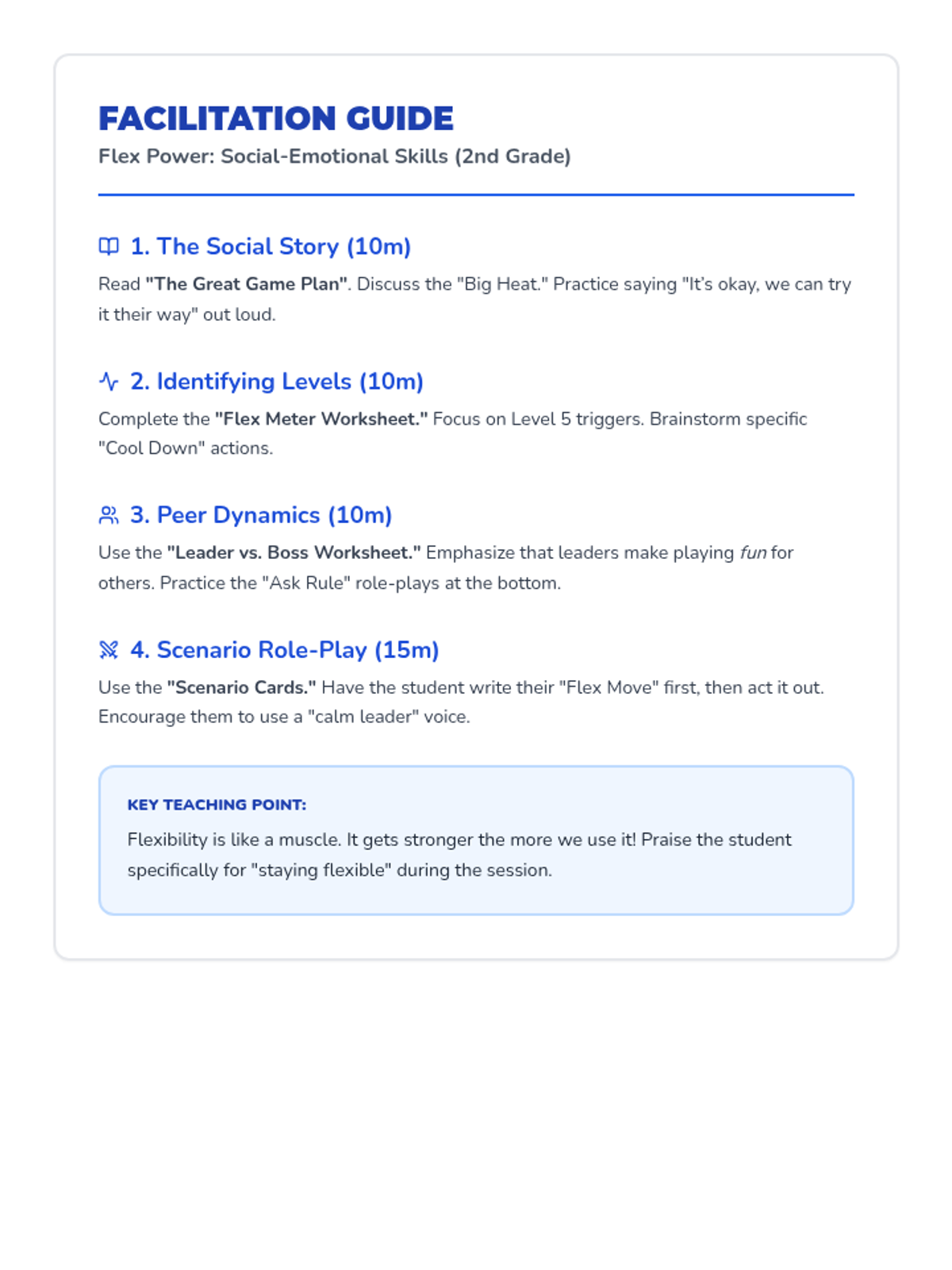
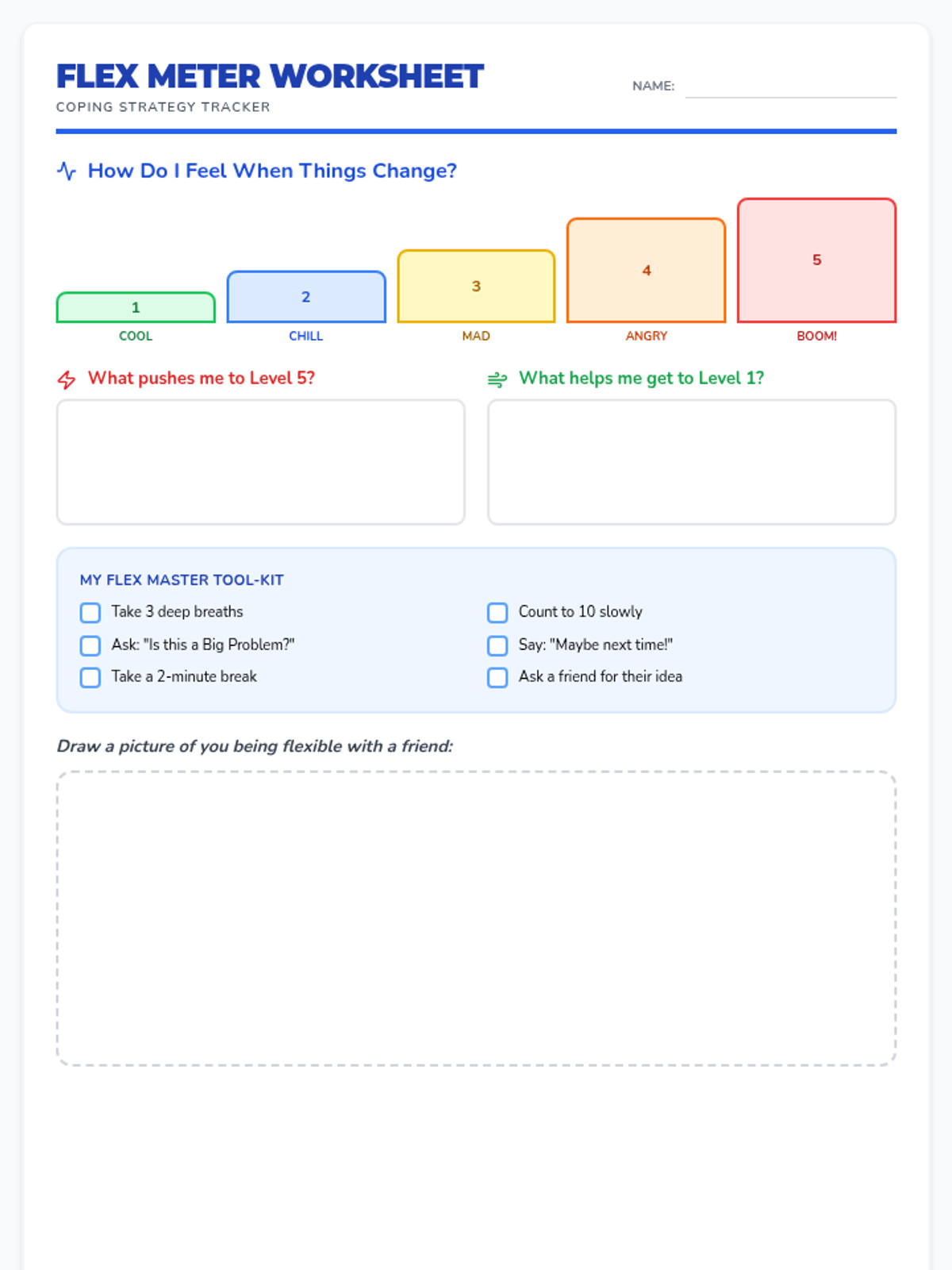
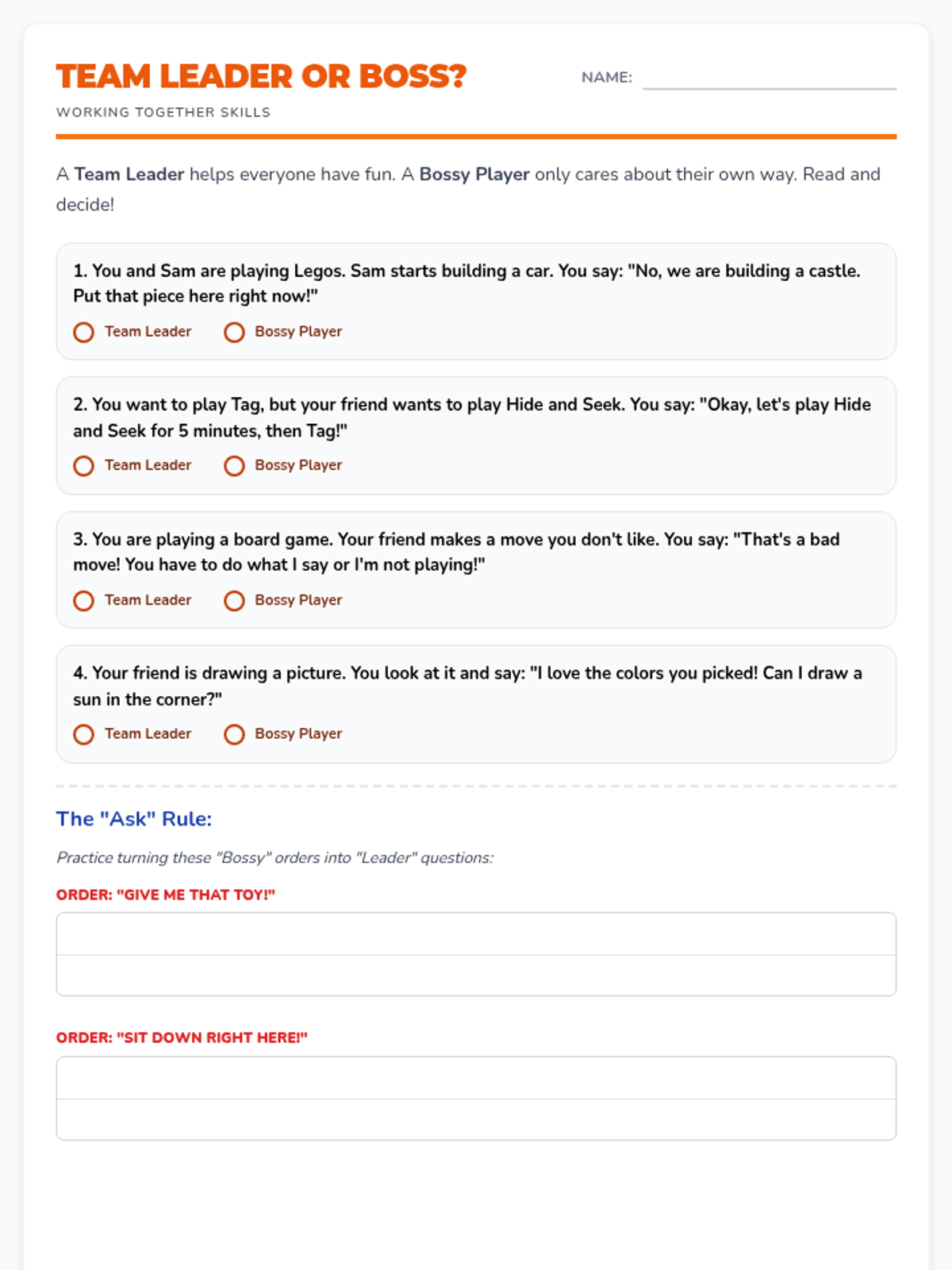
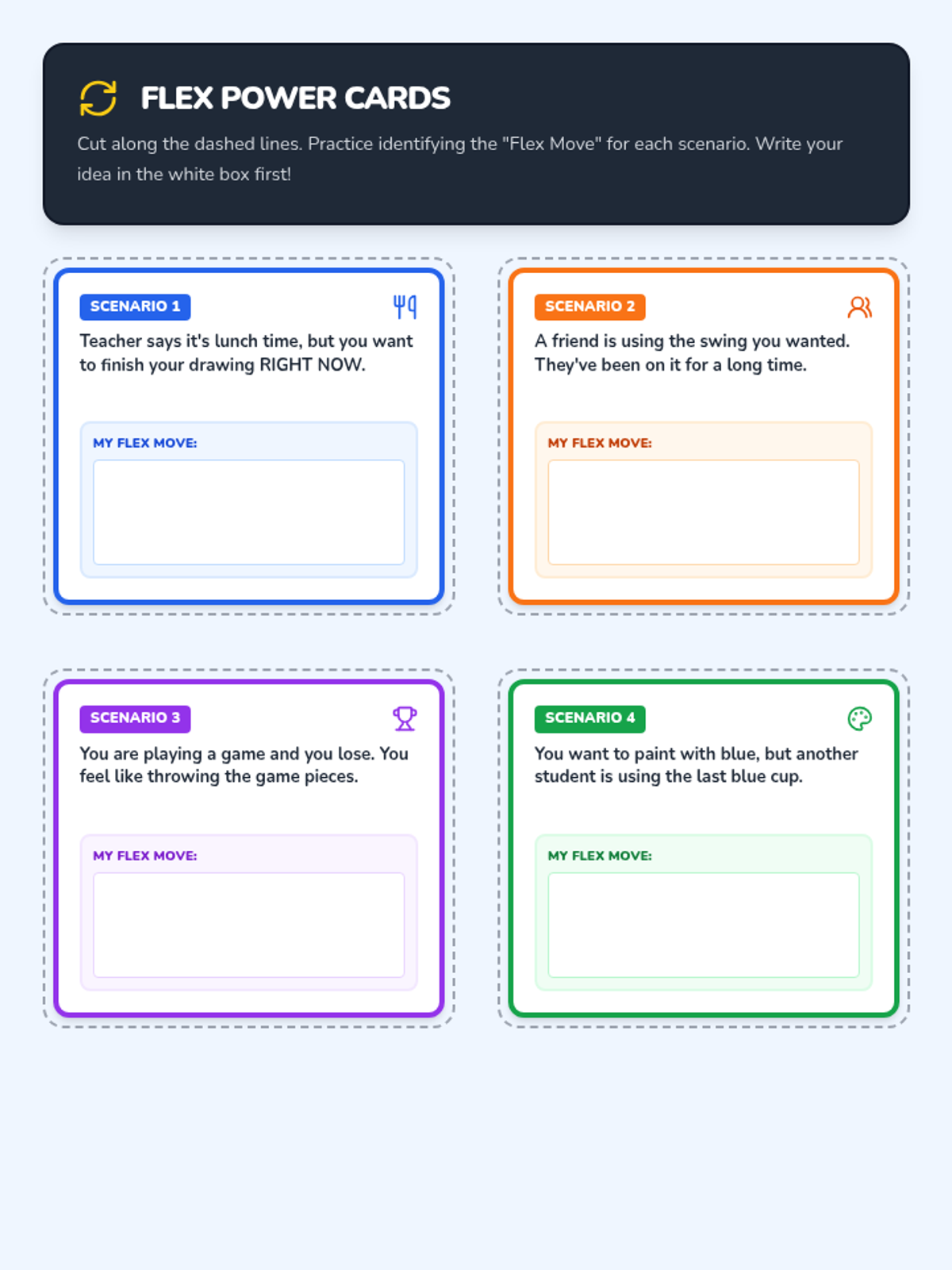
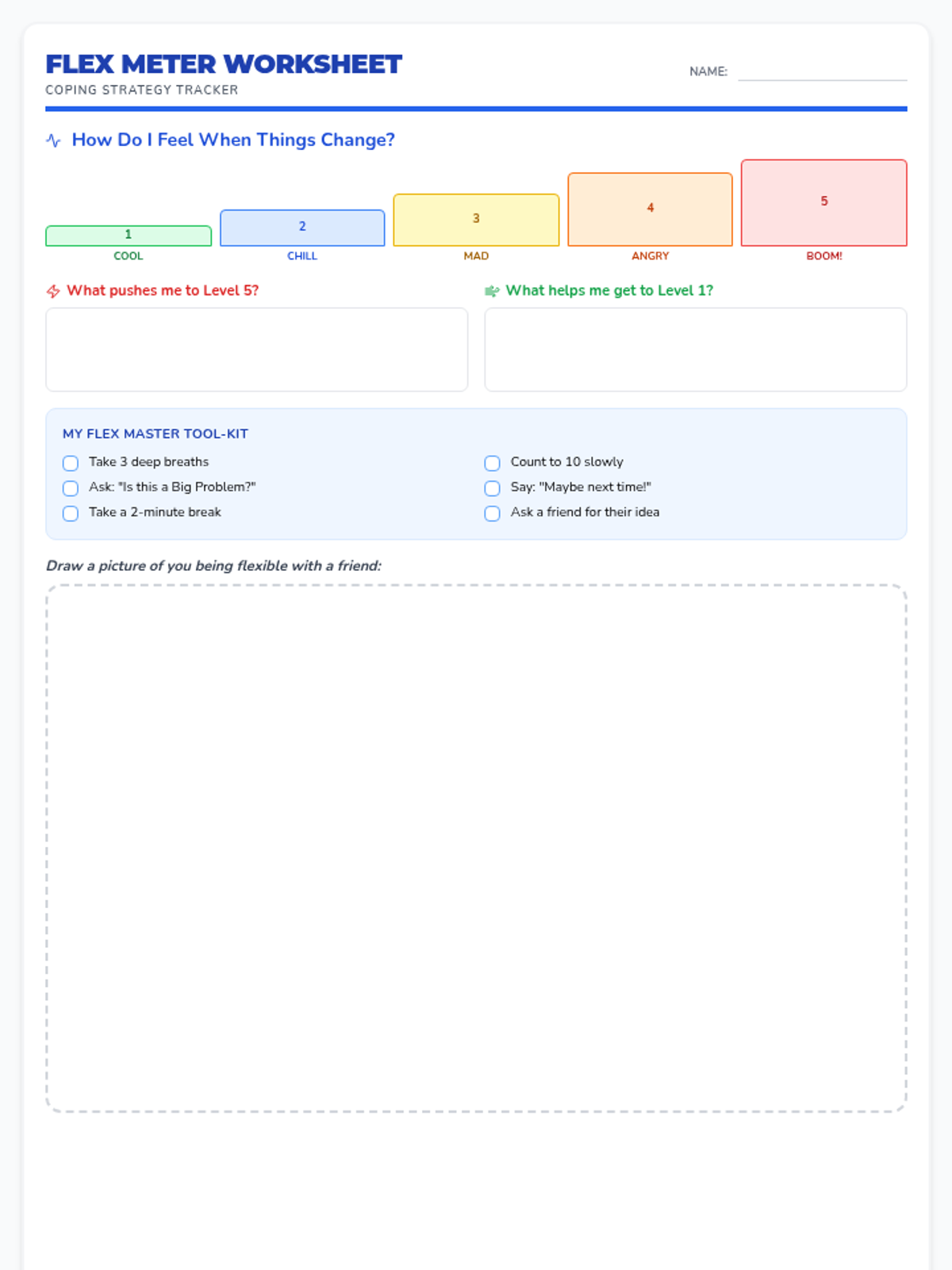
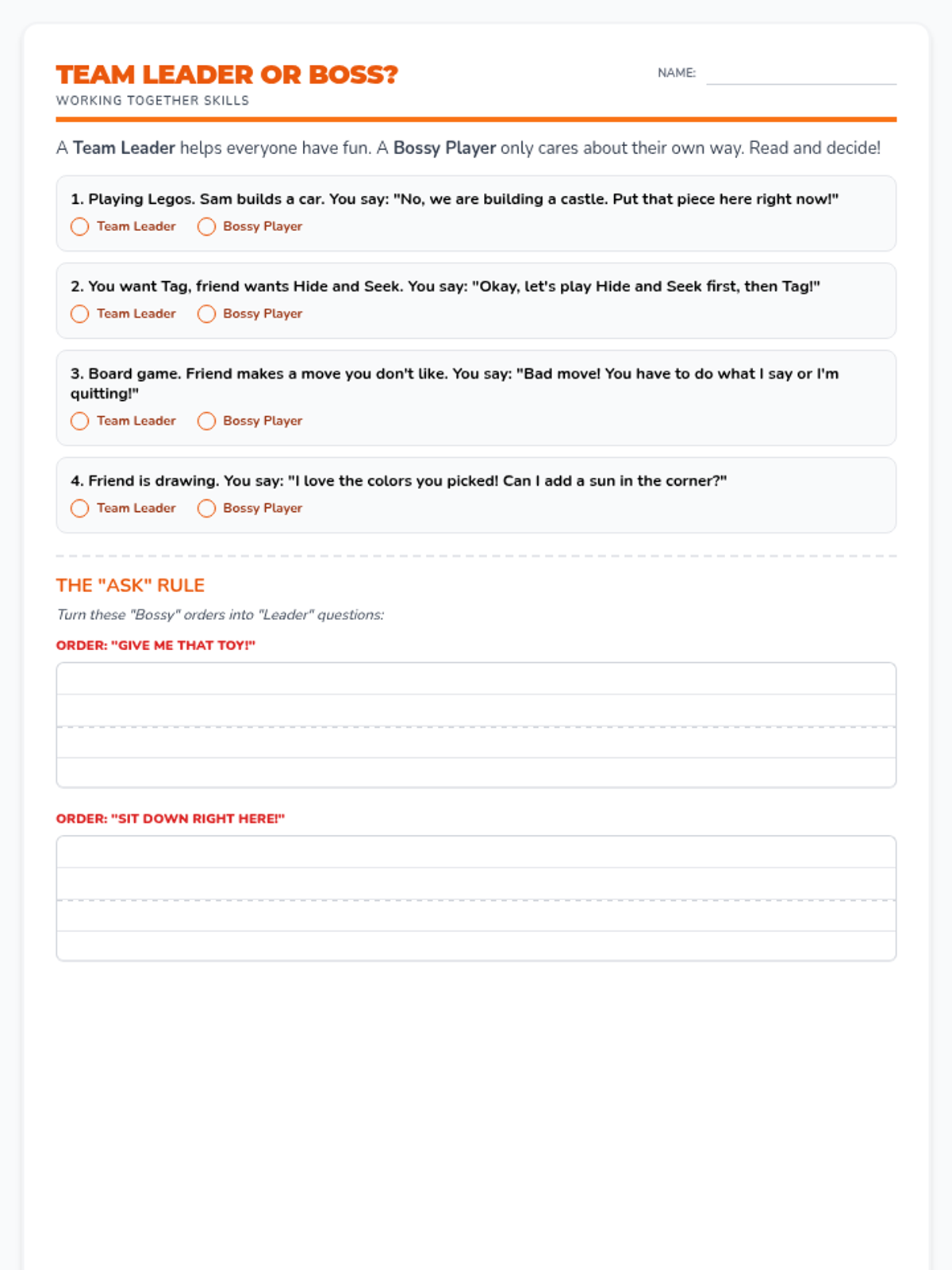
A lesson designed for one-on-one SEL sessions focusing on flexibility, managing disappointment, and cooperative play with peers.
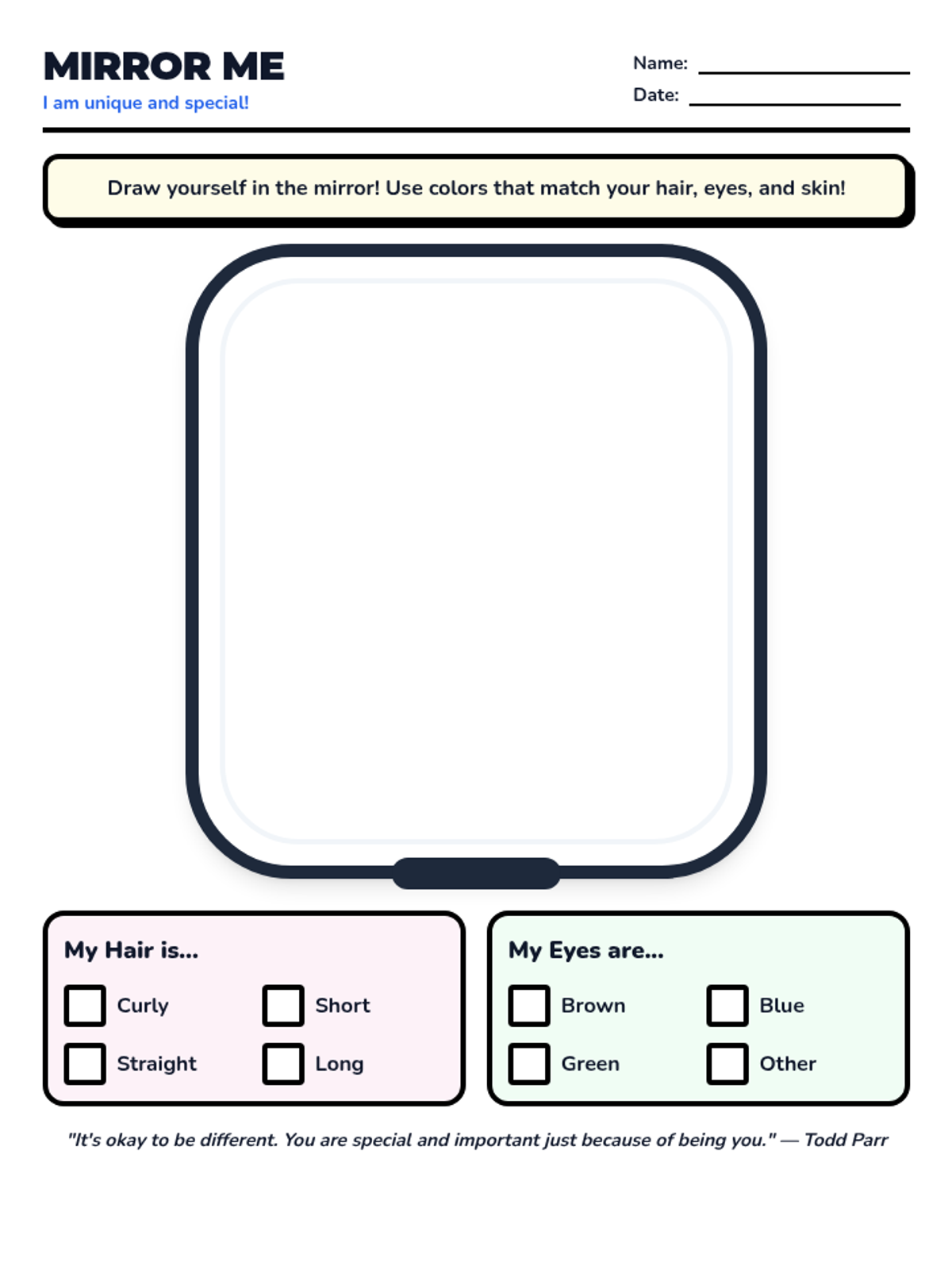
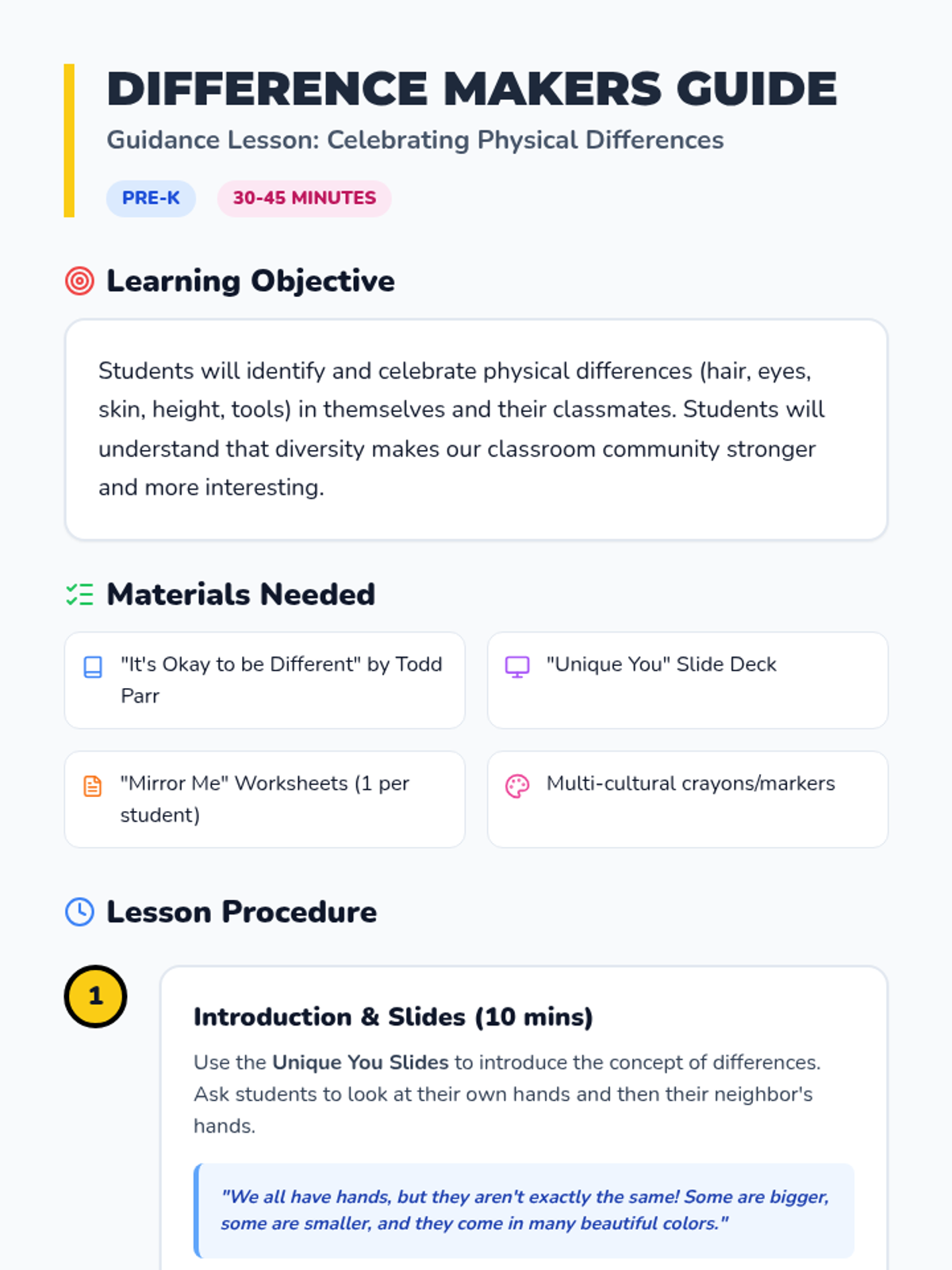
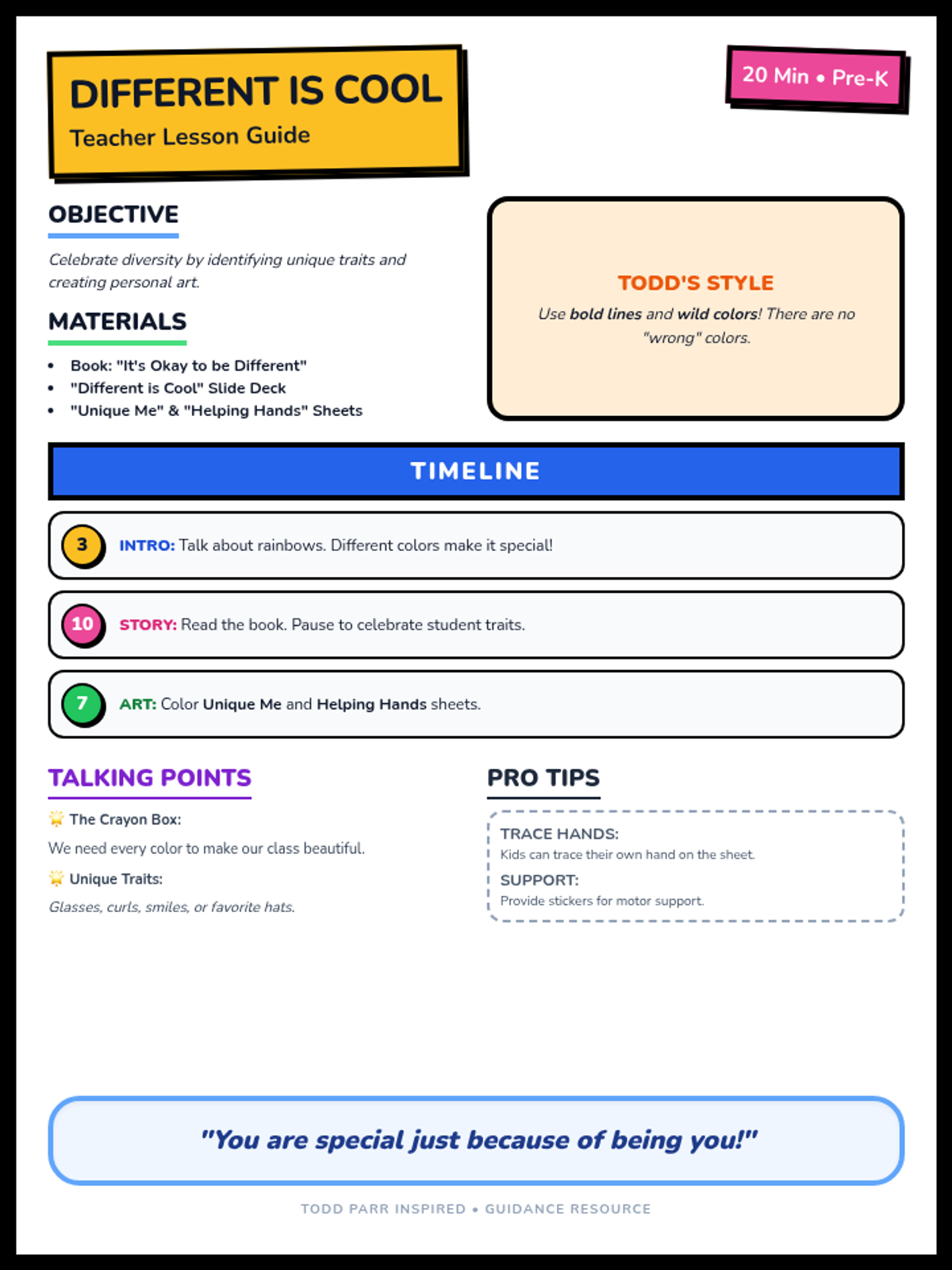
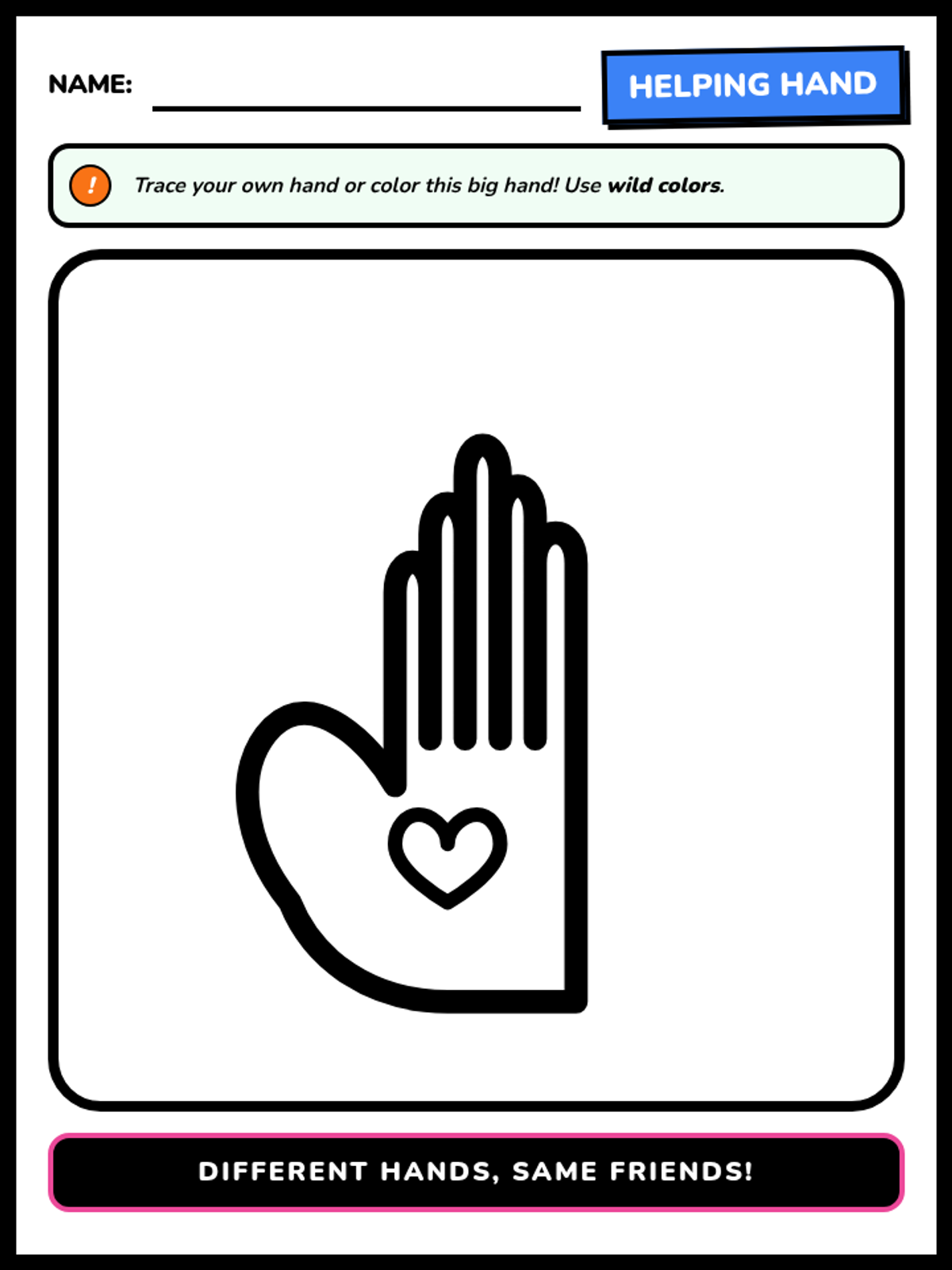
A Pre-K guidance lesson focused on celebrating physical differences, inspired by Todd Parr's book 'It's Okay to be Different'. Students explore what makes them unique and learn to appreciate the diversity in their classroom.
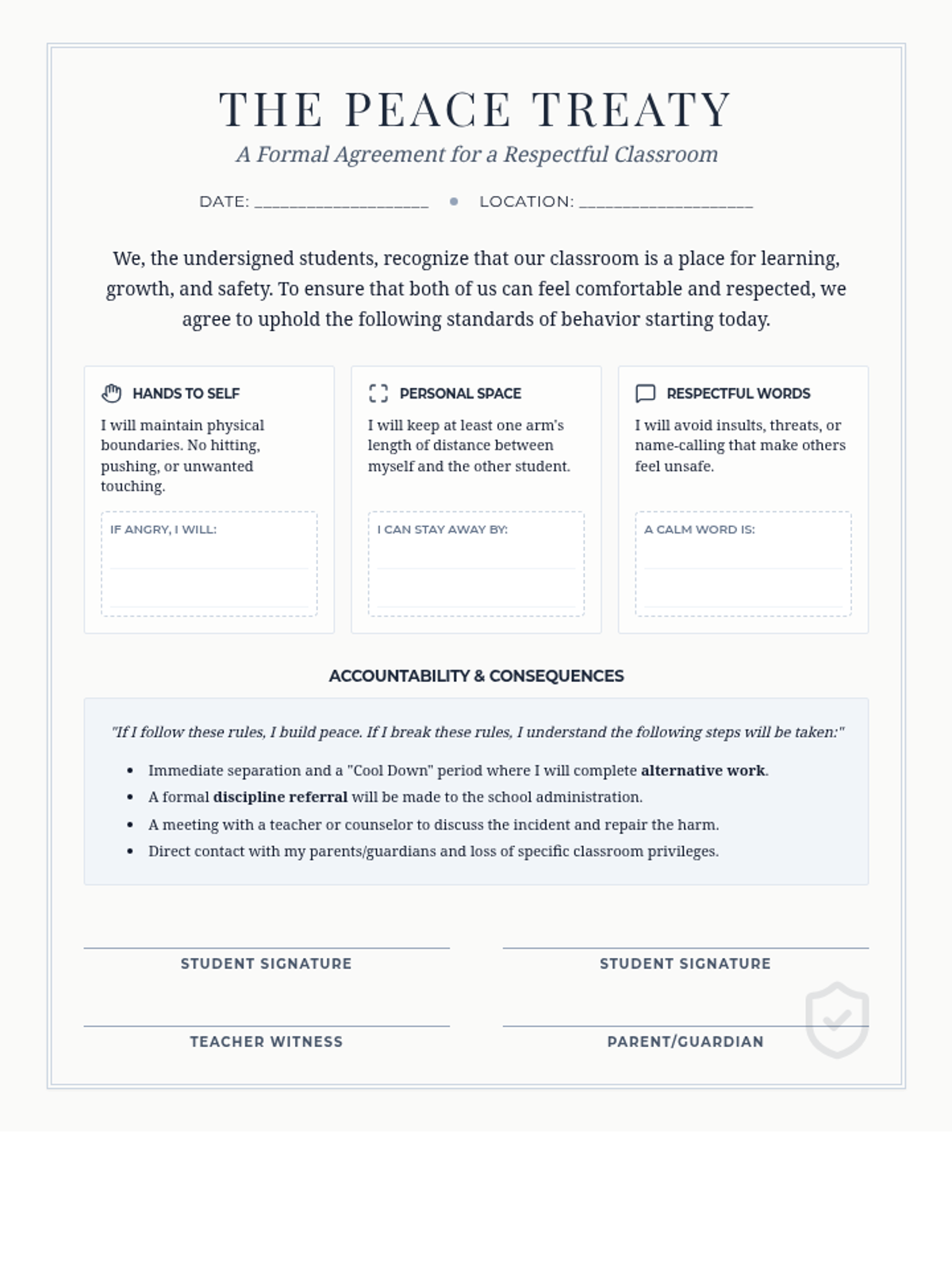
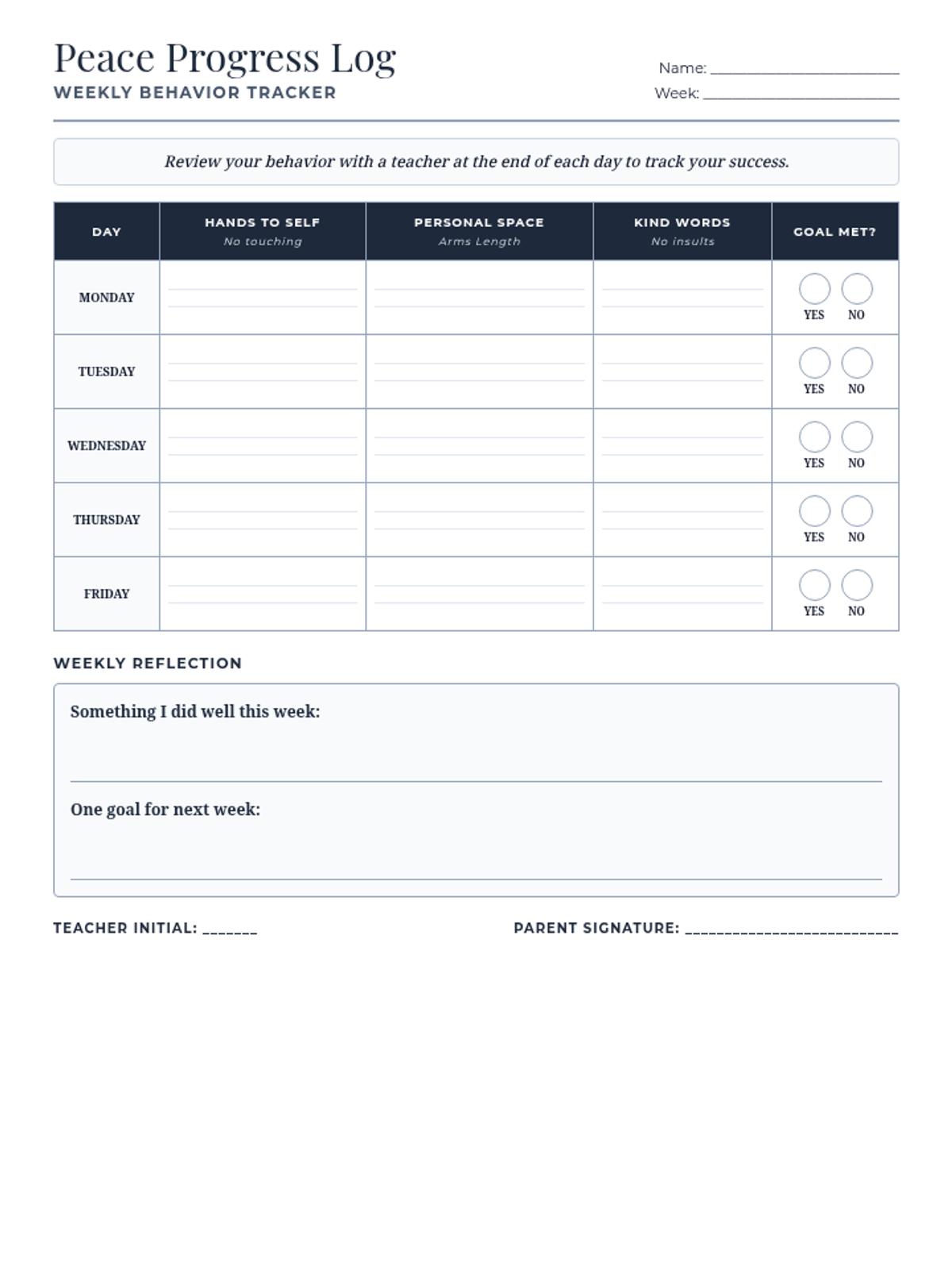
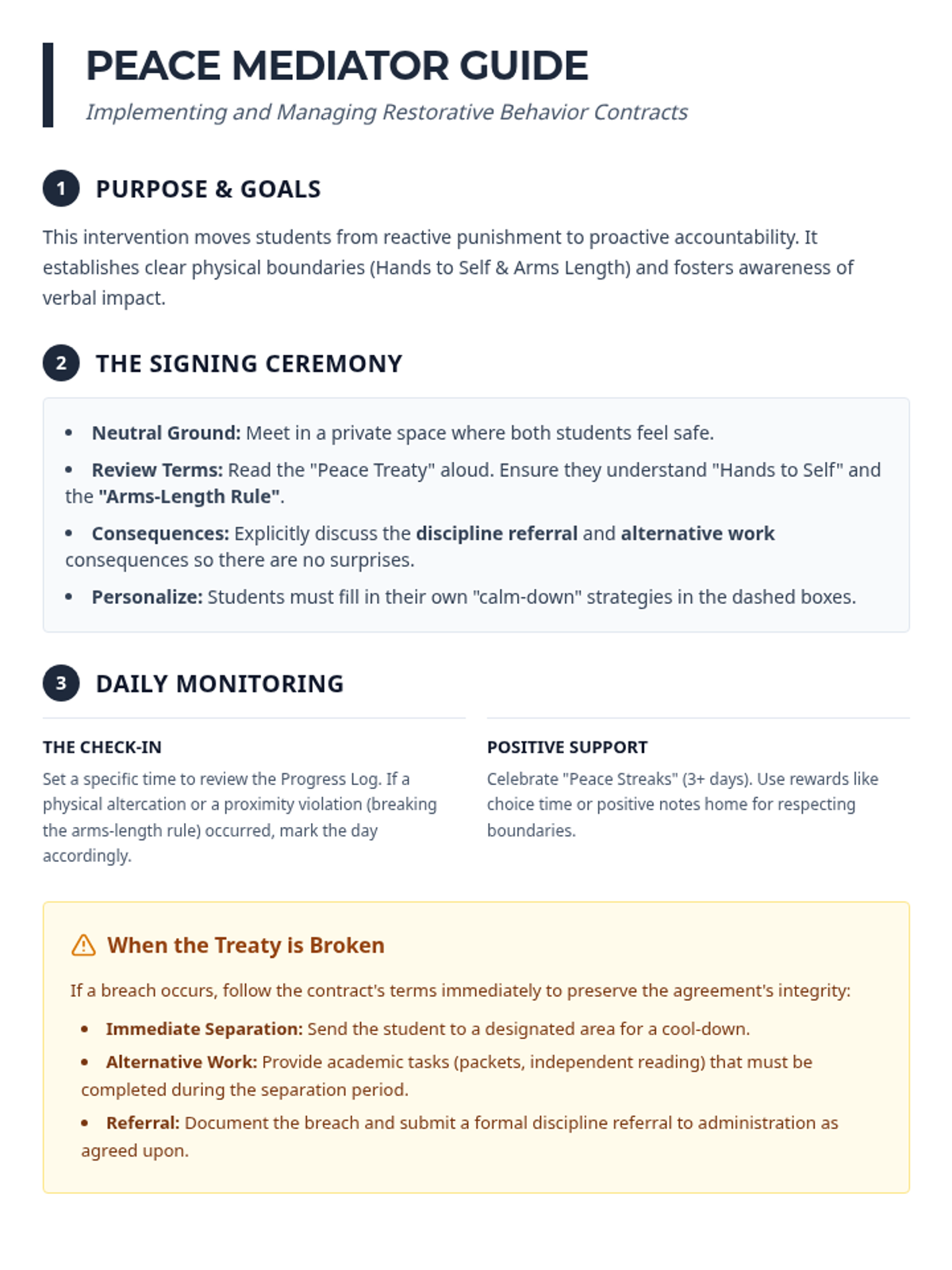
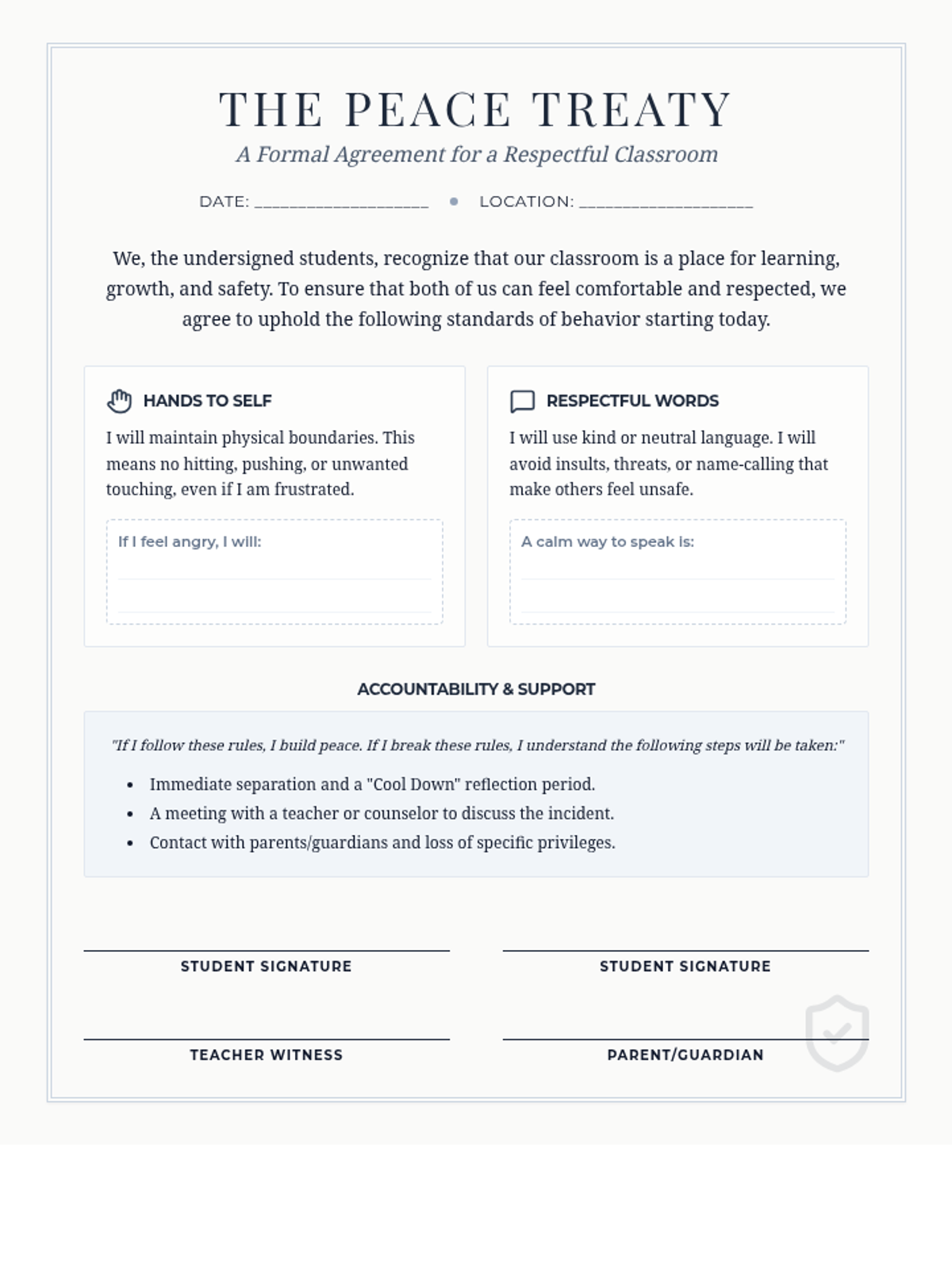
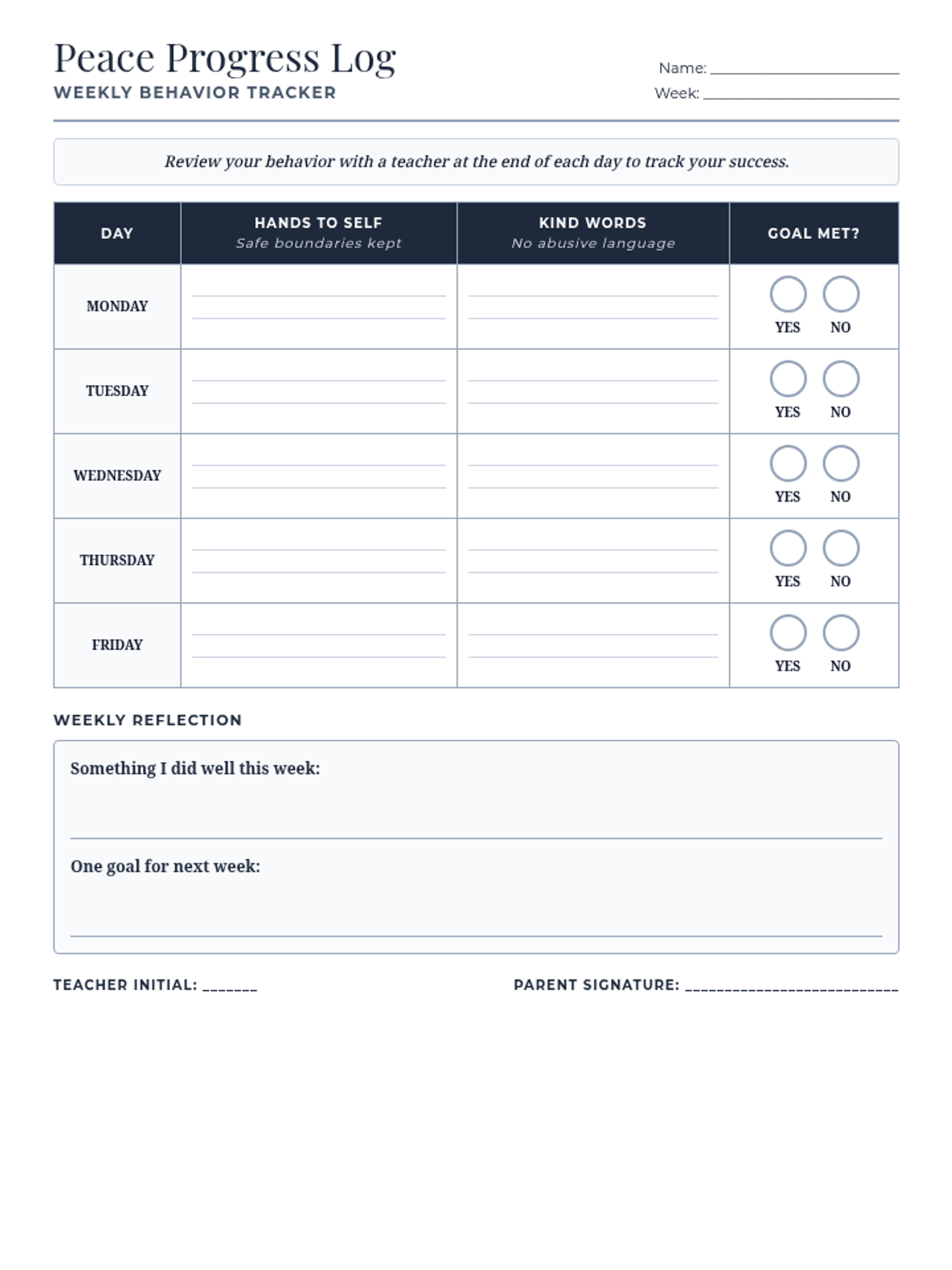
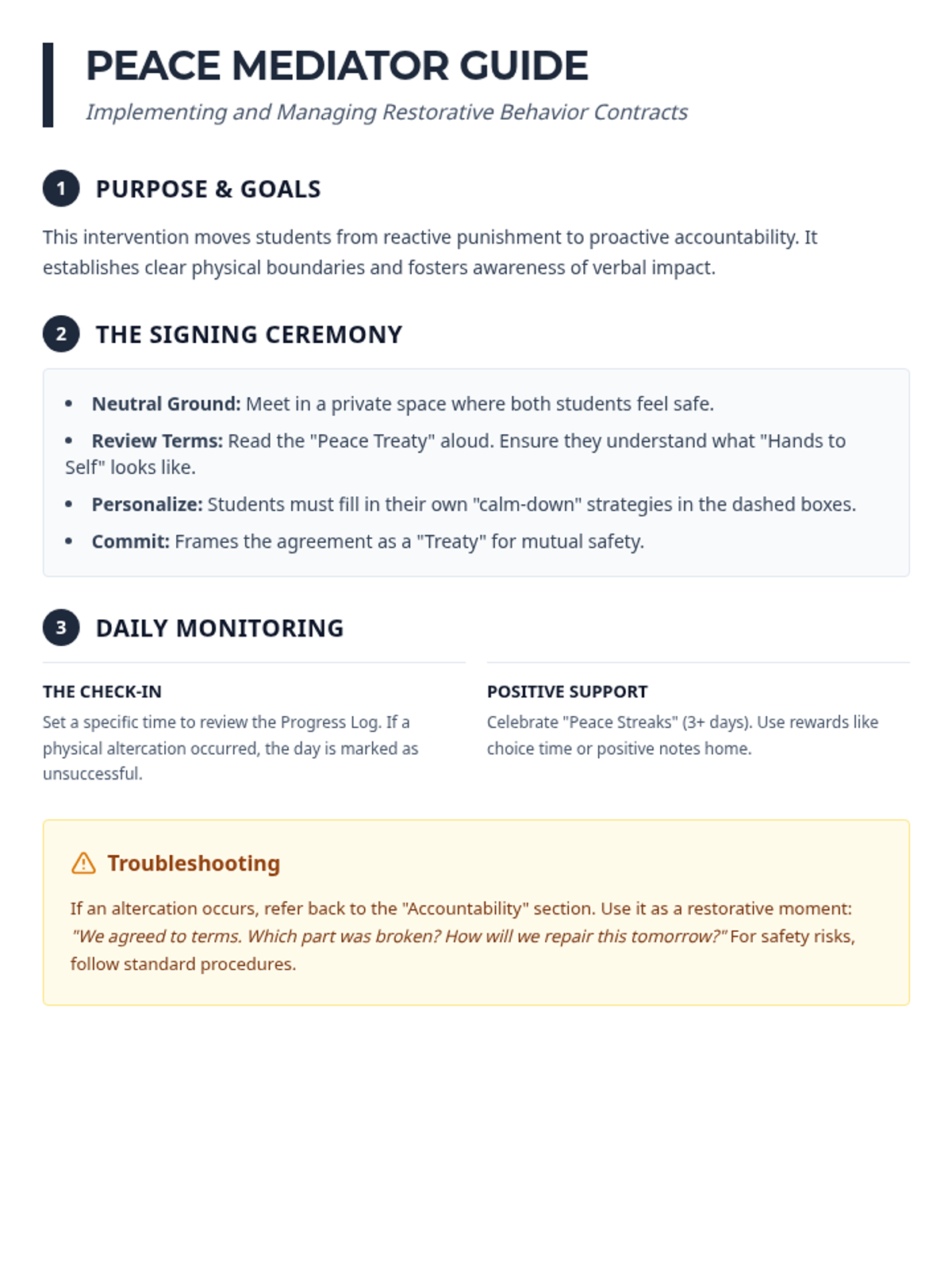
A restorative behavioral intervention focused on resolving physical conflict and verbal aggression through a formal behavior contract and daily progress tracking.
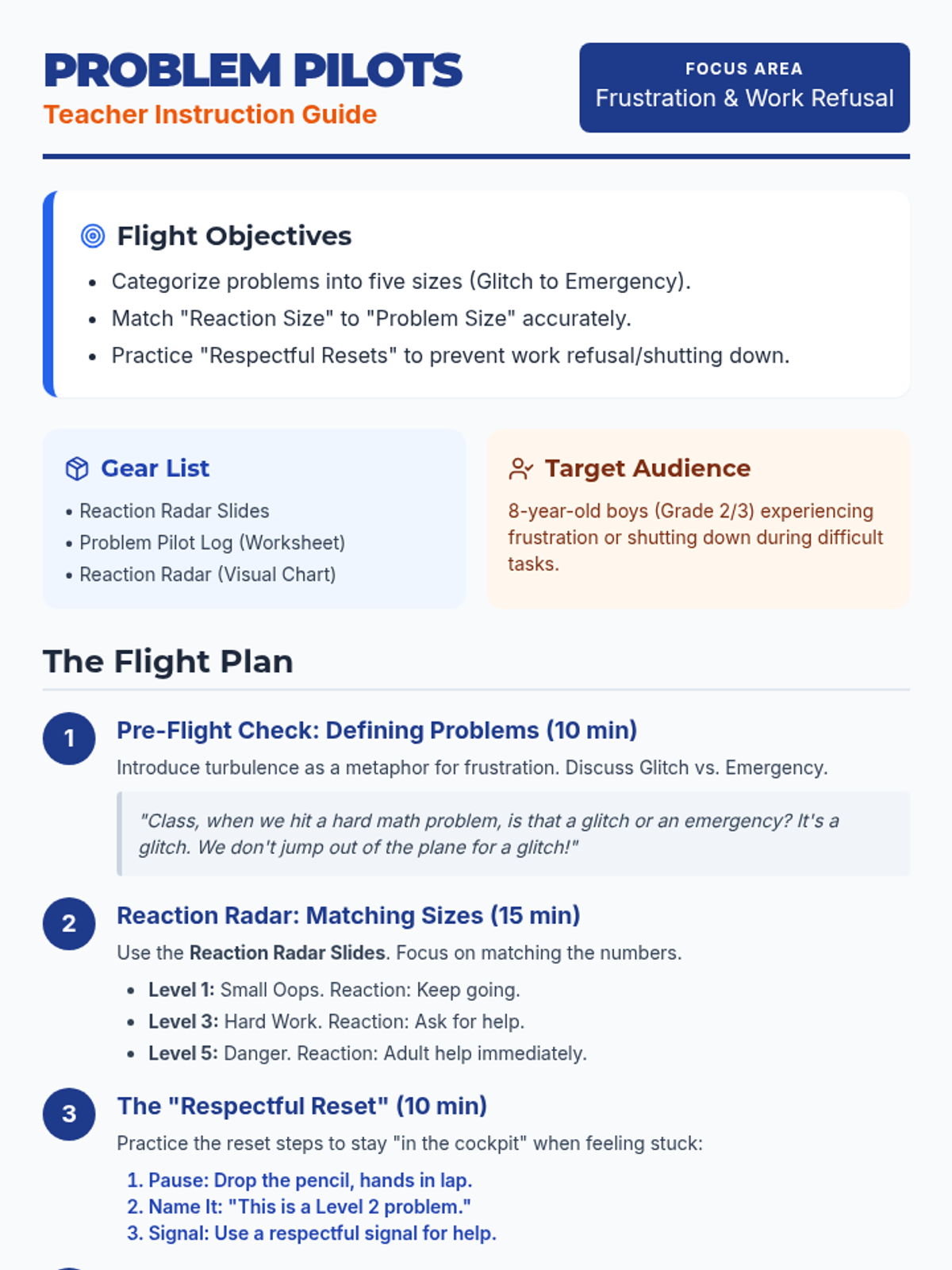
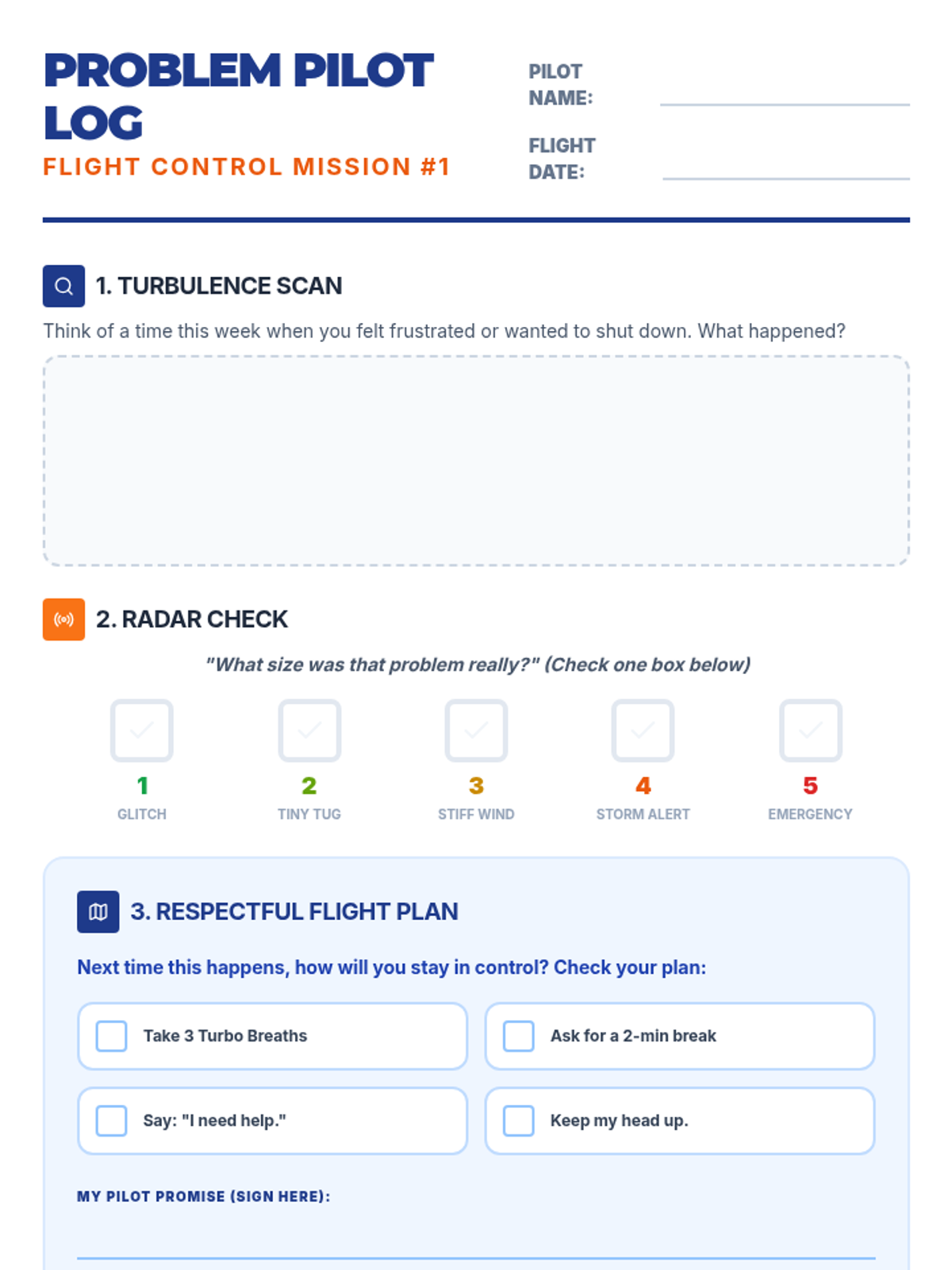
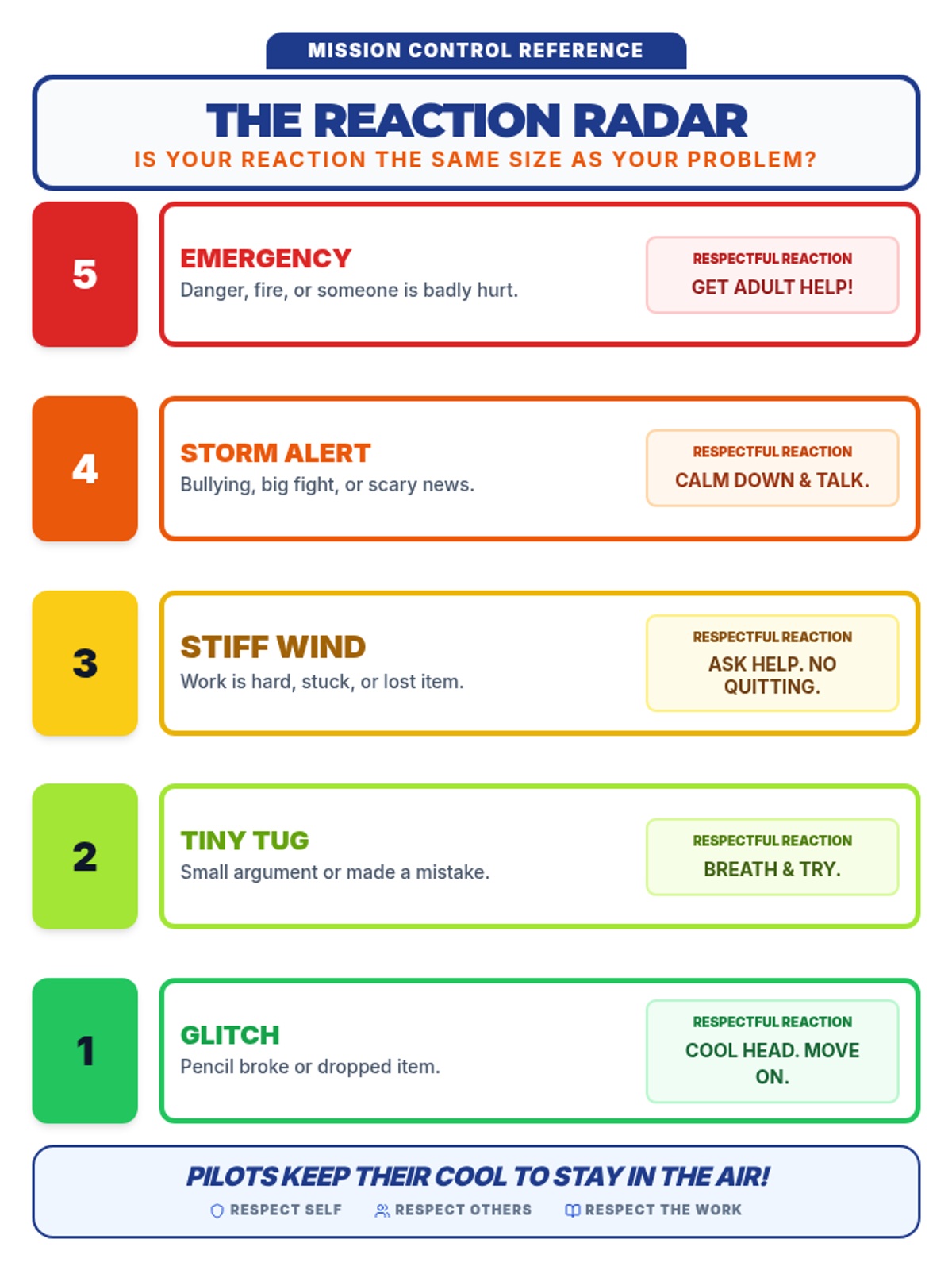
A social-emotional learning lesson for 8-year-old boys focused on matching reaction size to problem size, specifically targeting frustration and work refusal through a 'Problem Pilot' aviation theme.
A restorative behavioral intervention focused on resolving physical conflict and verbal aggression between two students through a formal agreement and daily tracking.
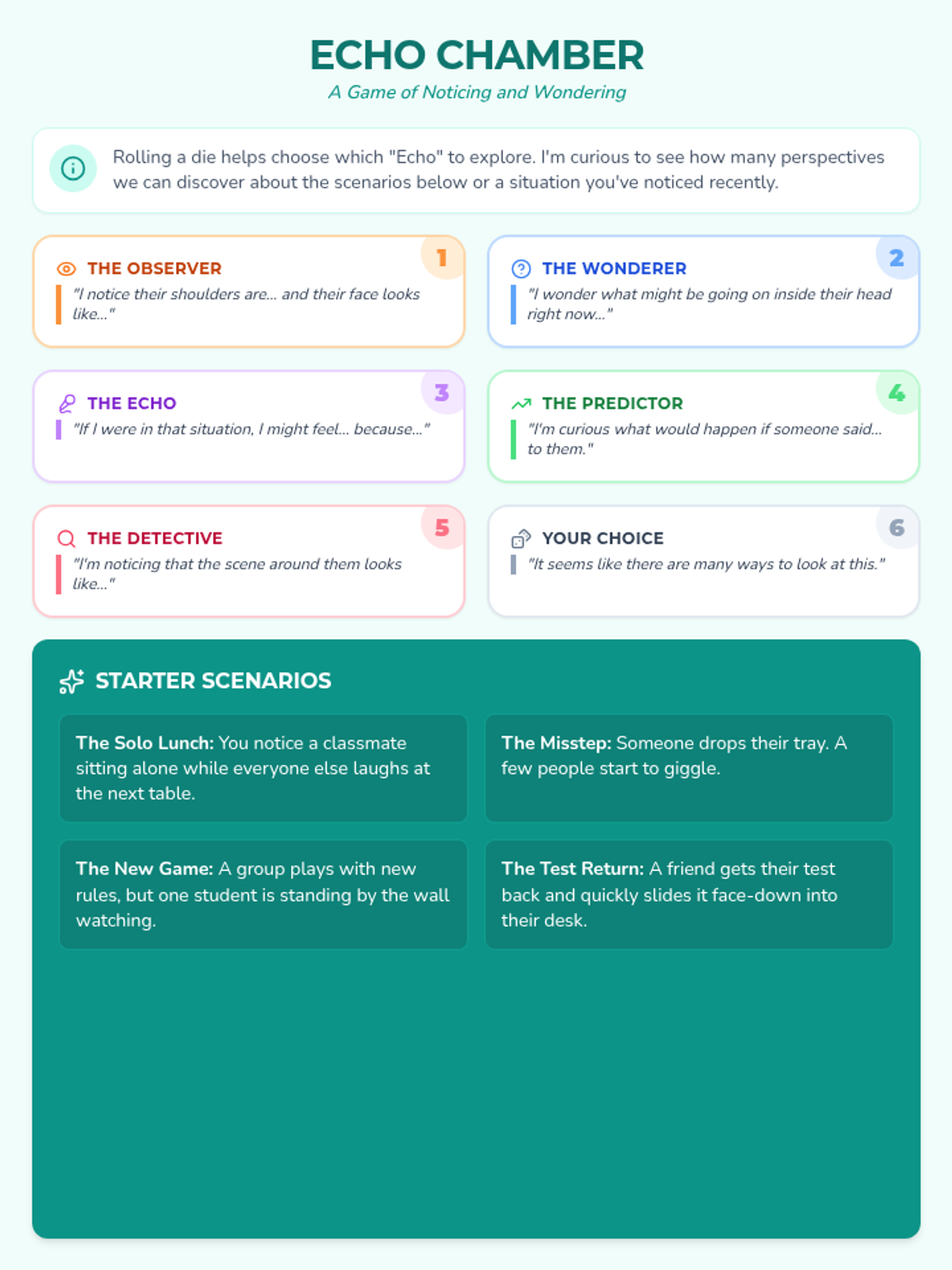
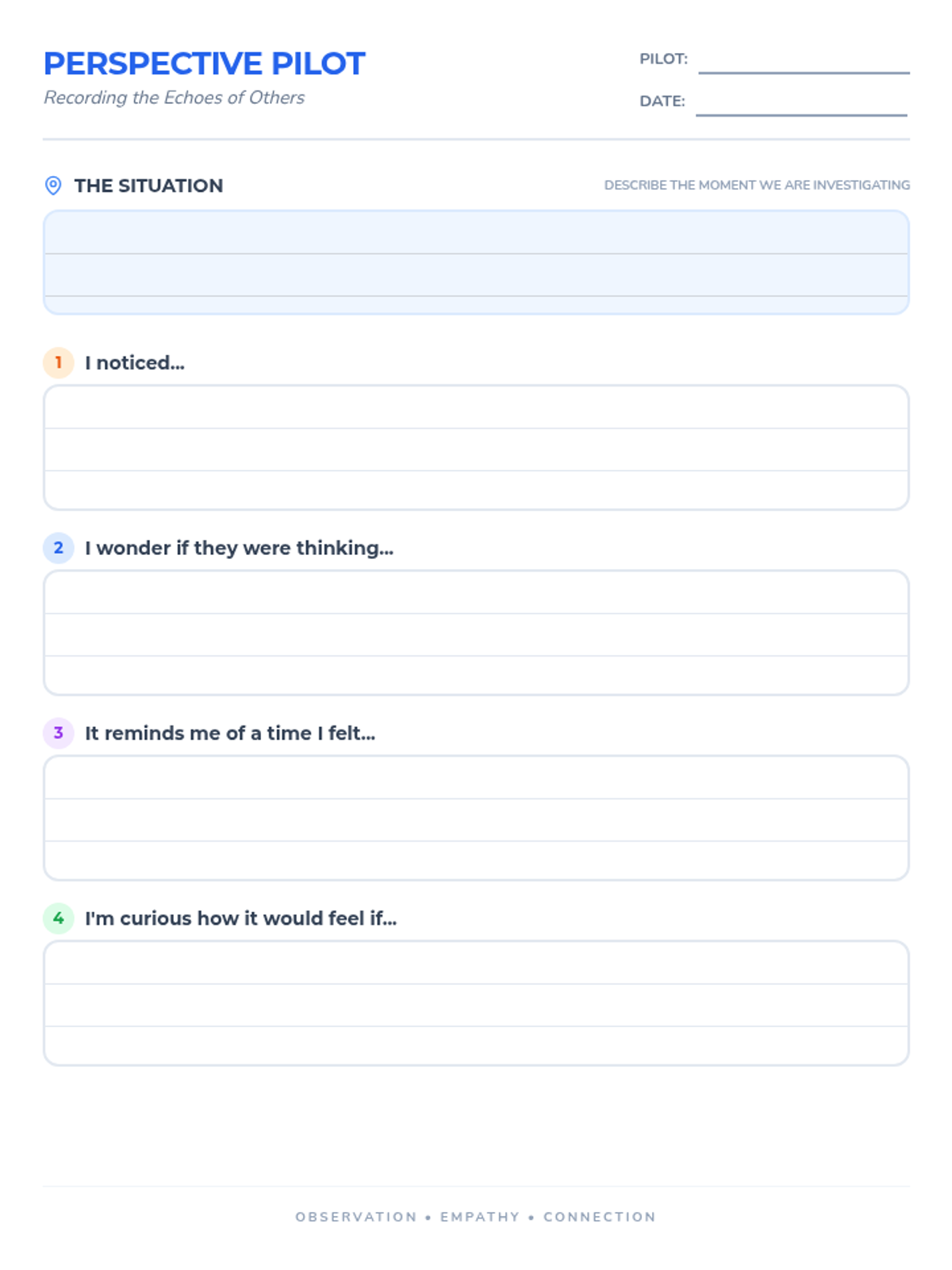
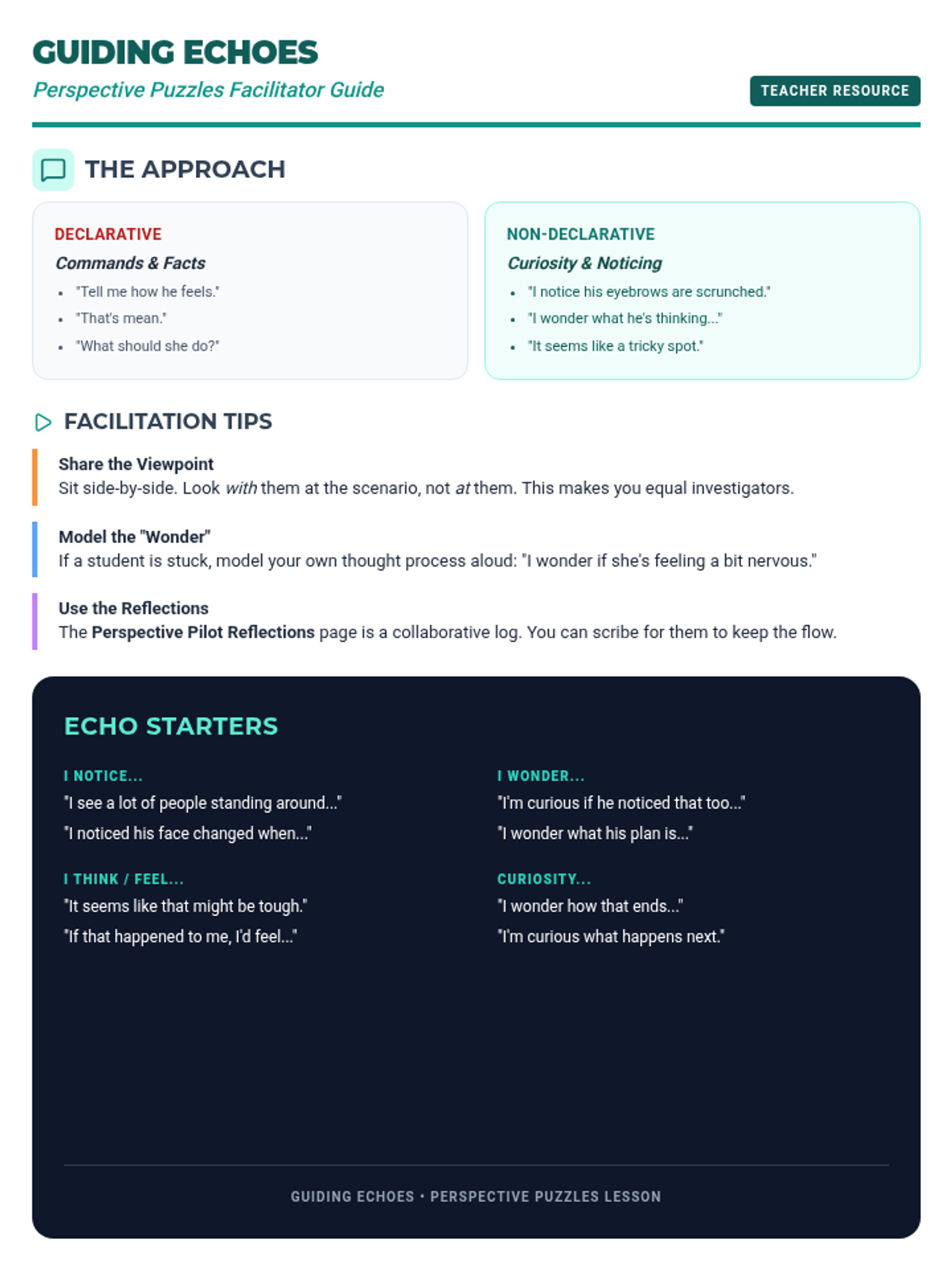
A dice-based exploration of empathy and perspective-taking using non-declarative language techniques to help 4th graders notice social cues and understand others' internal worlds.
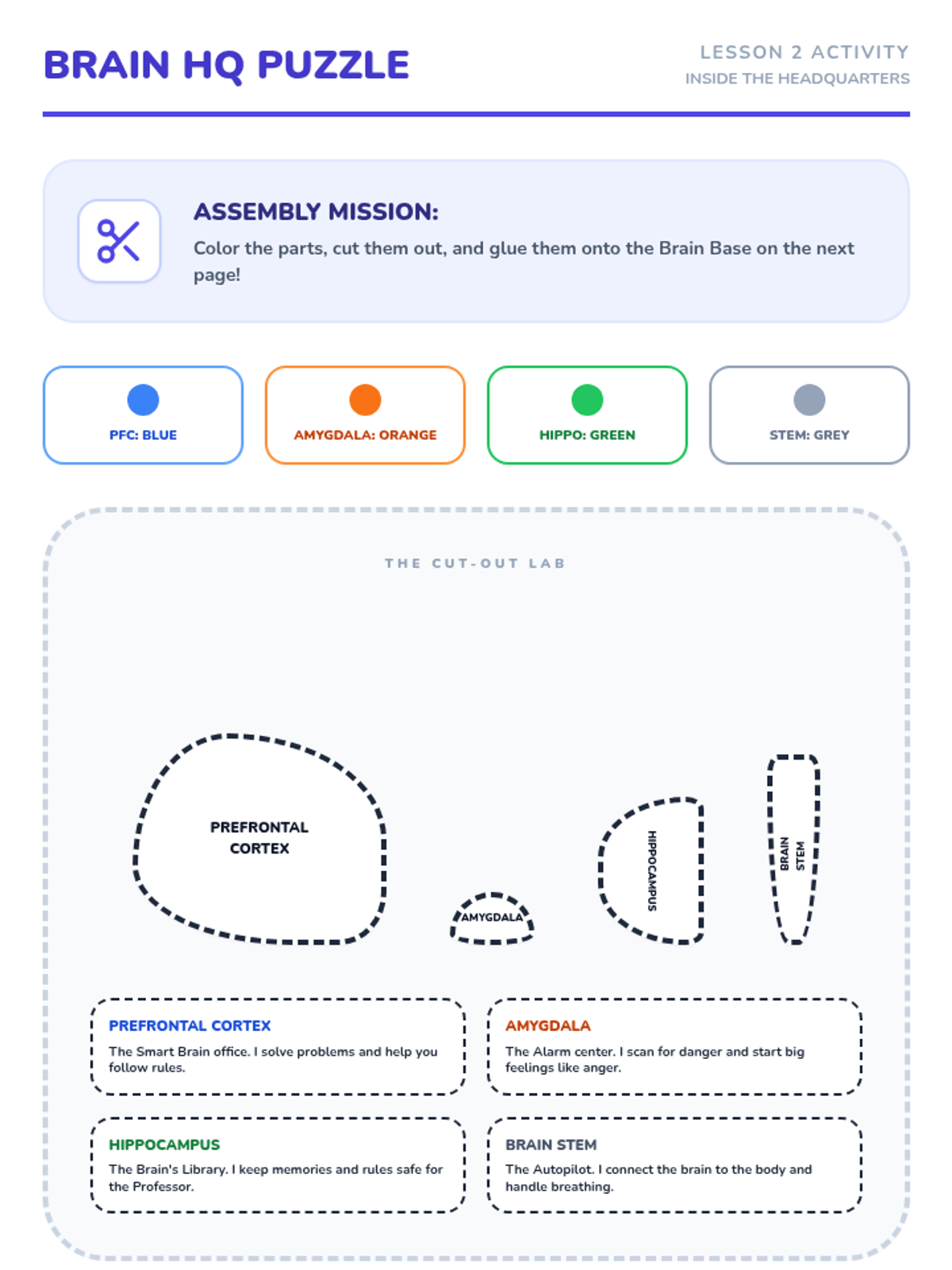
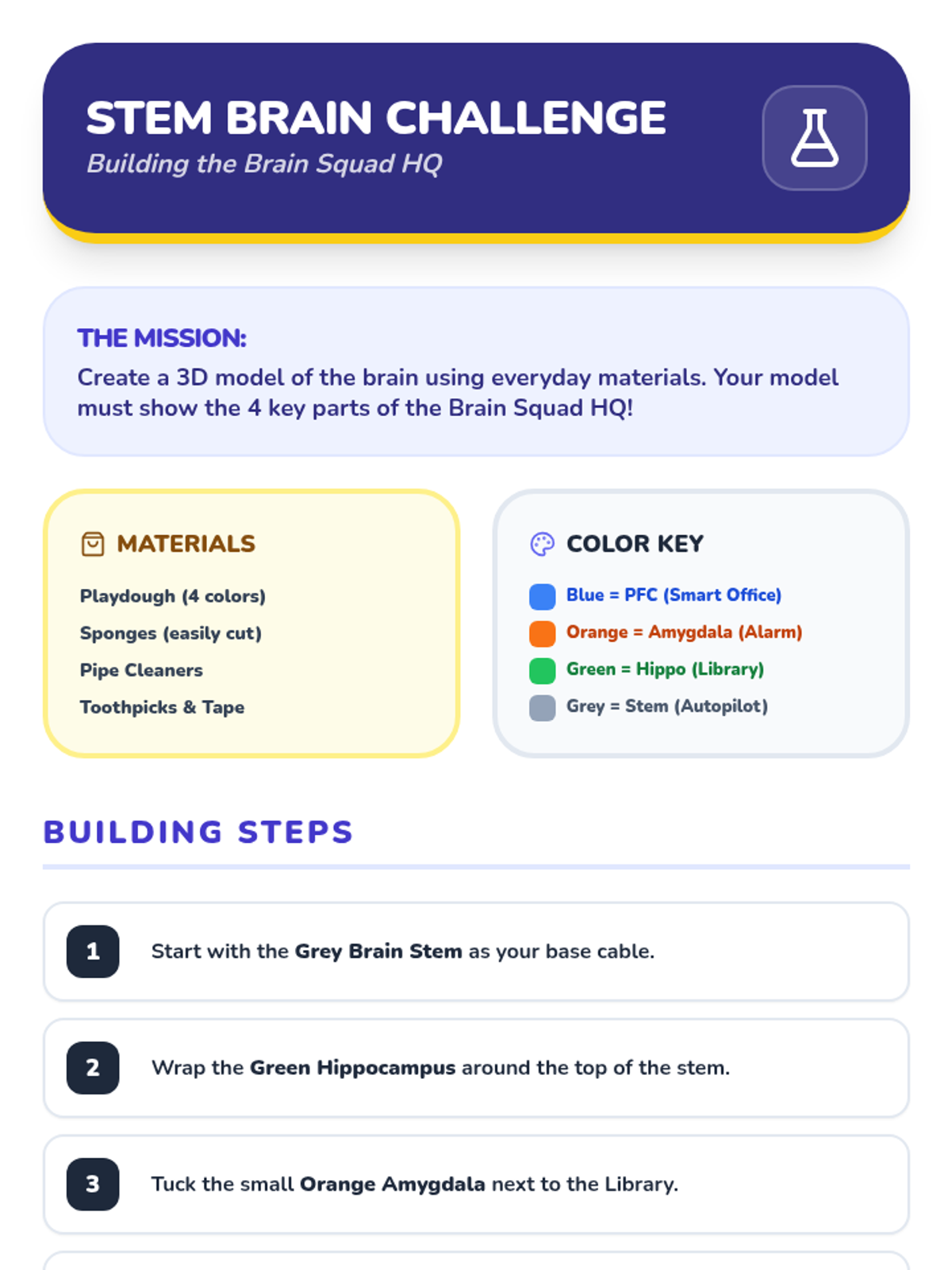
A deep dive into the biological parts of the brain (Amygdala, Prefrontal Cortex, Hippocampus, and Brain Stem) and how they function as the home for Sparky and Professor PFC.
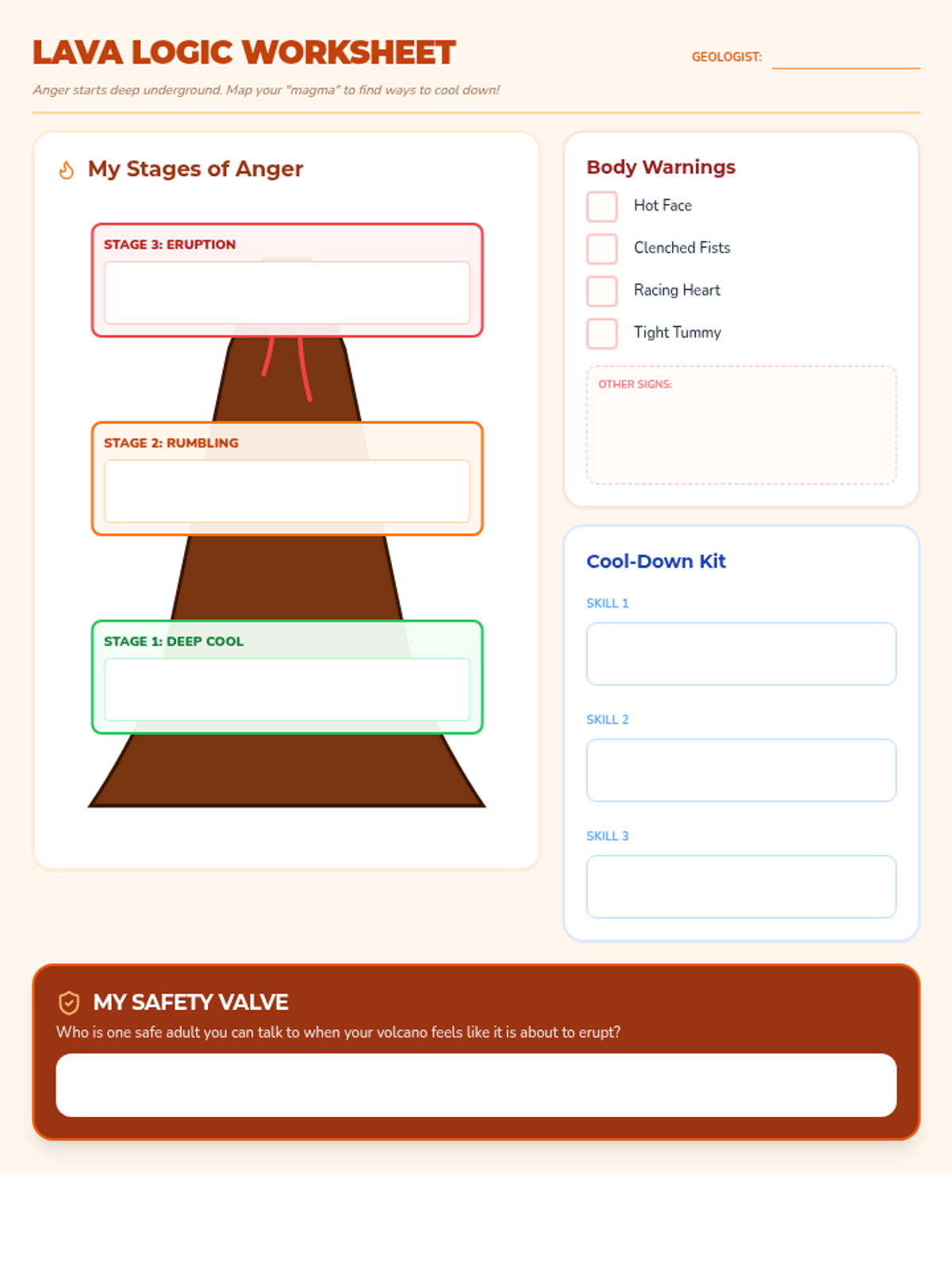
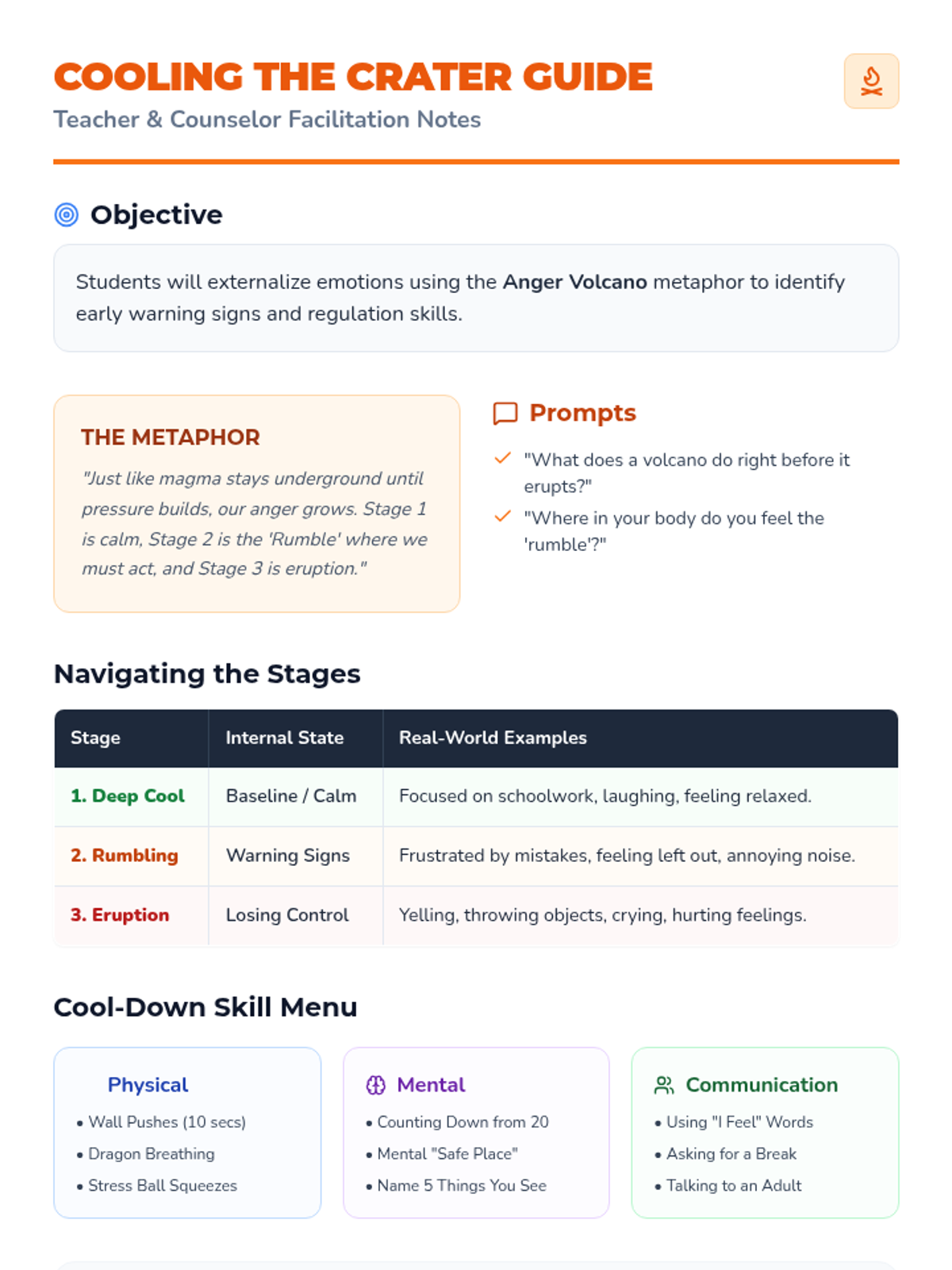
This lesson helps 3rd and 4th grade students identify their personal anger triggers, physical warning signs, and coping strategies using the metaphor of a volcano. Students will map out their 'stages of eruption' to better understand and regulate their emotions.
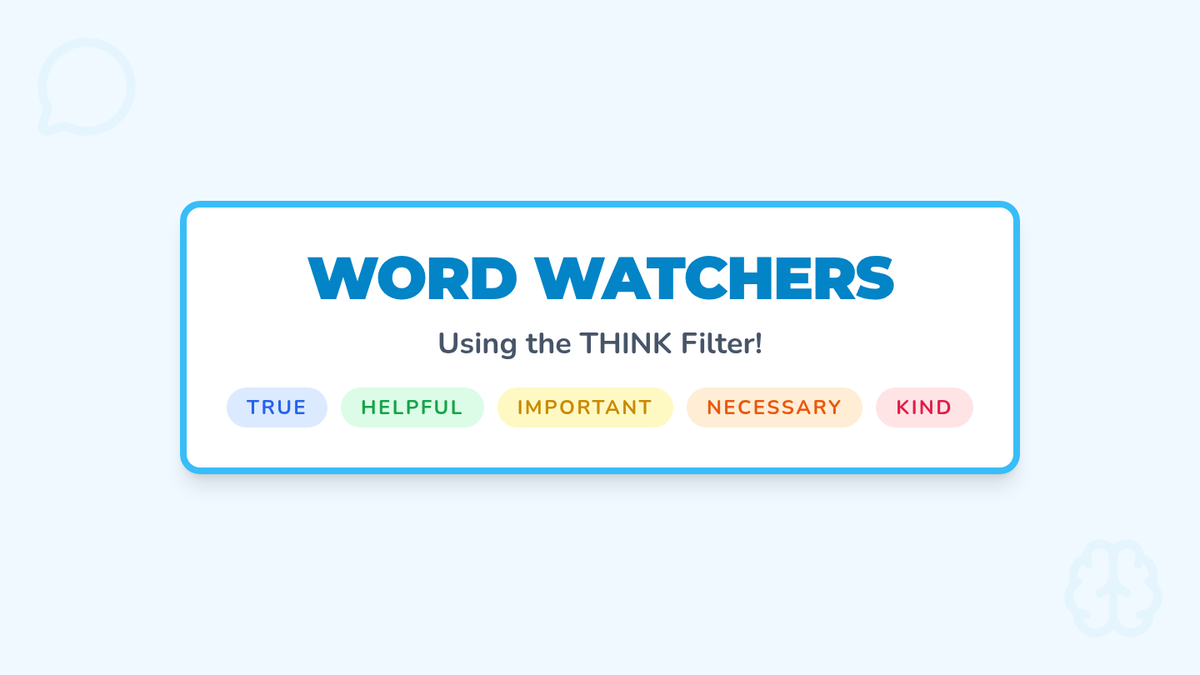
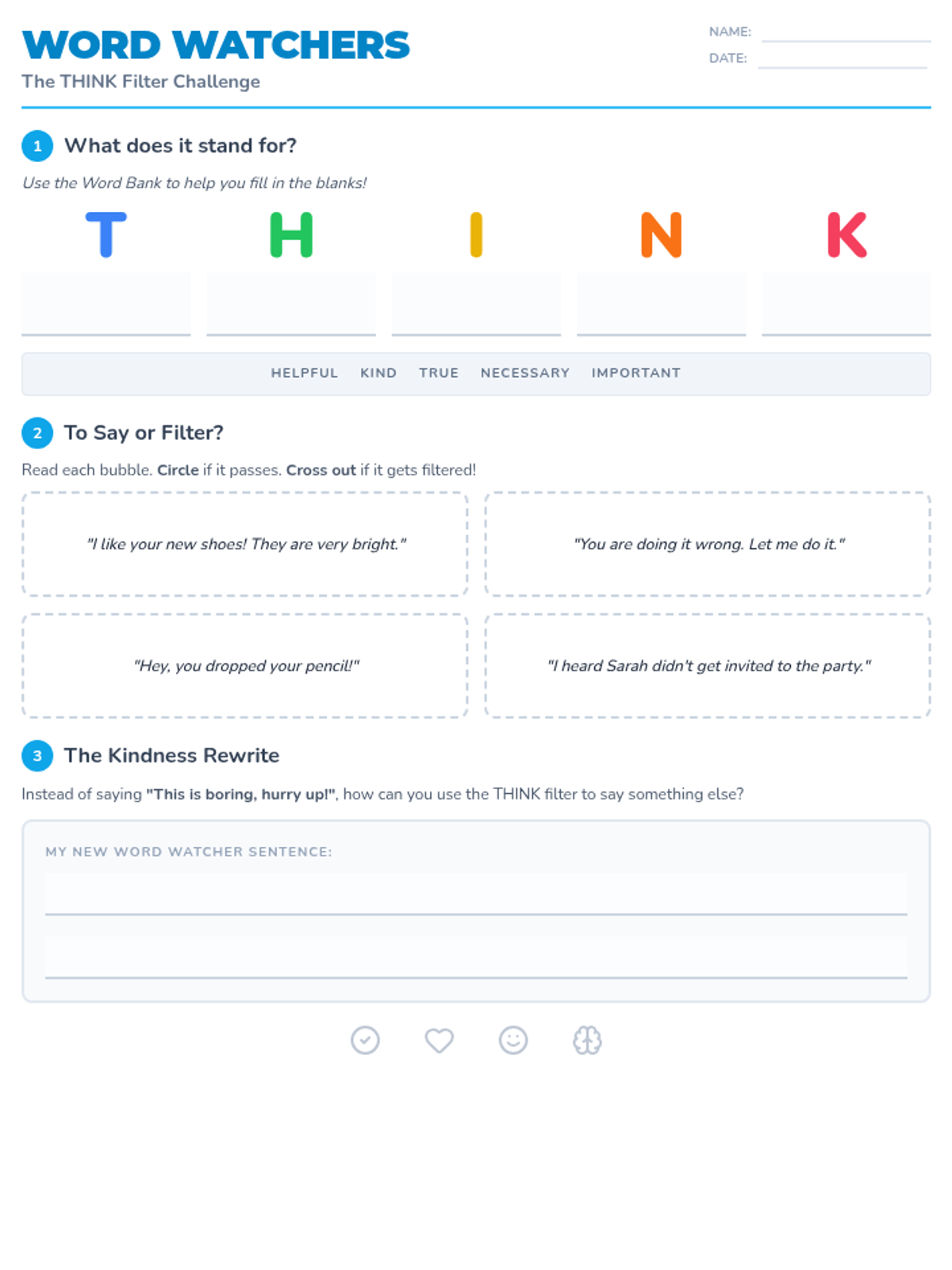
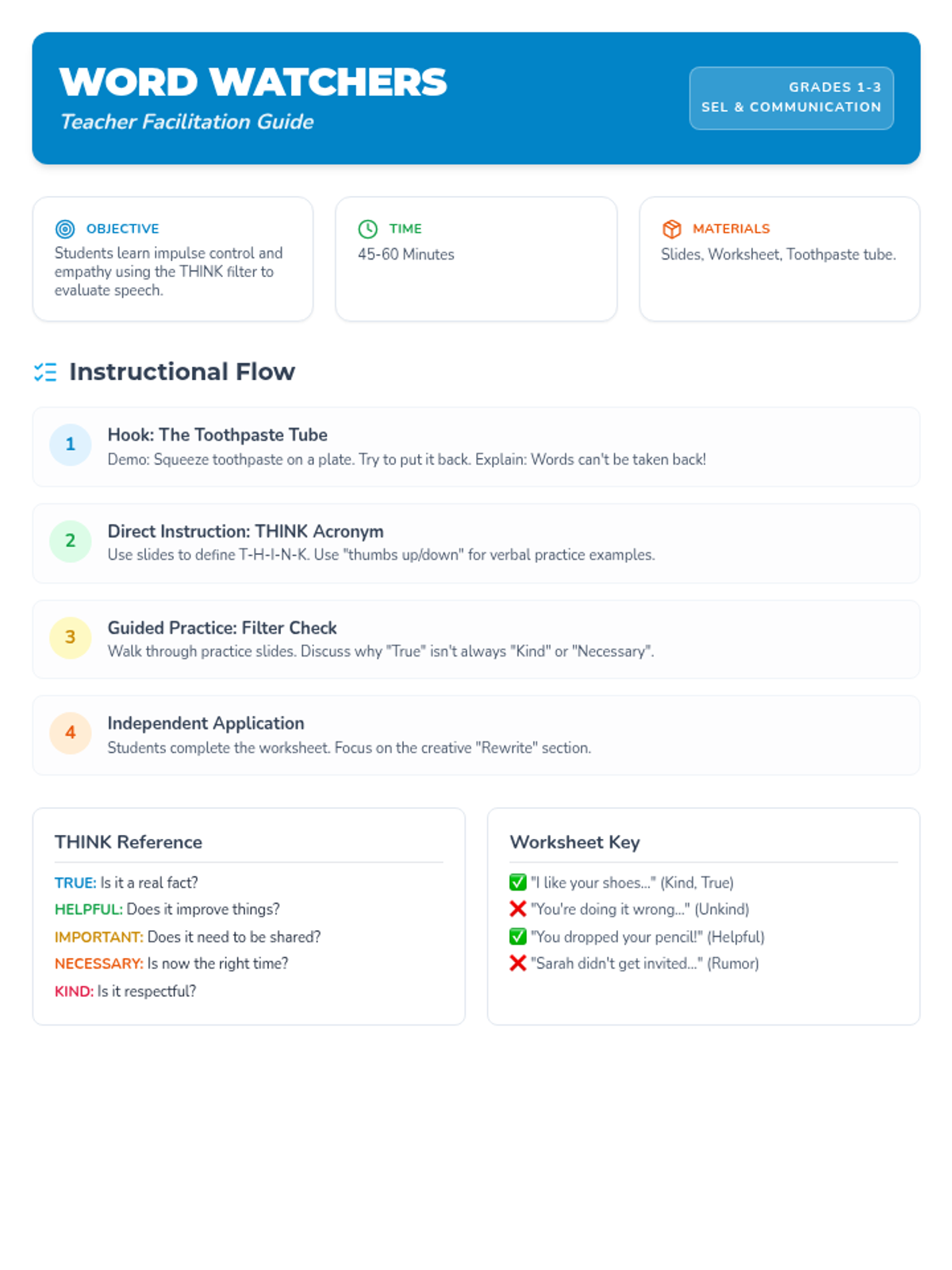
A lesson for 1st-3rd graders on the THINK acronym (True, Helpful, Important, Necessary, Kind) to promote mindful communication and social-emotional learning.
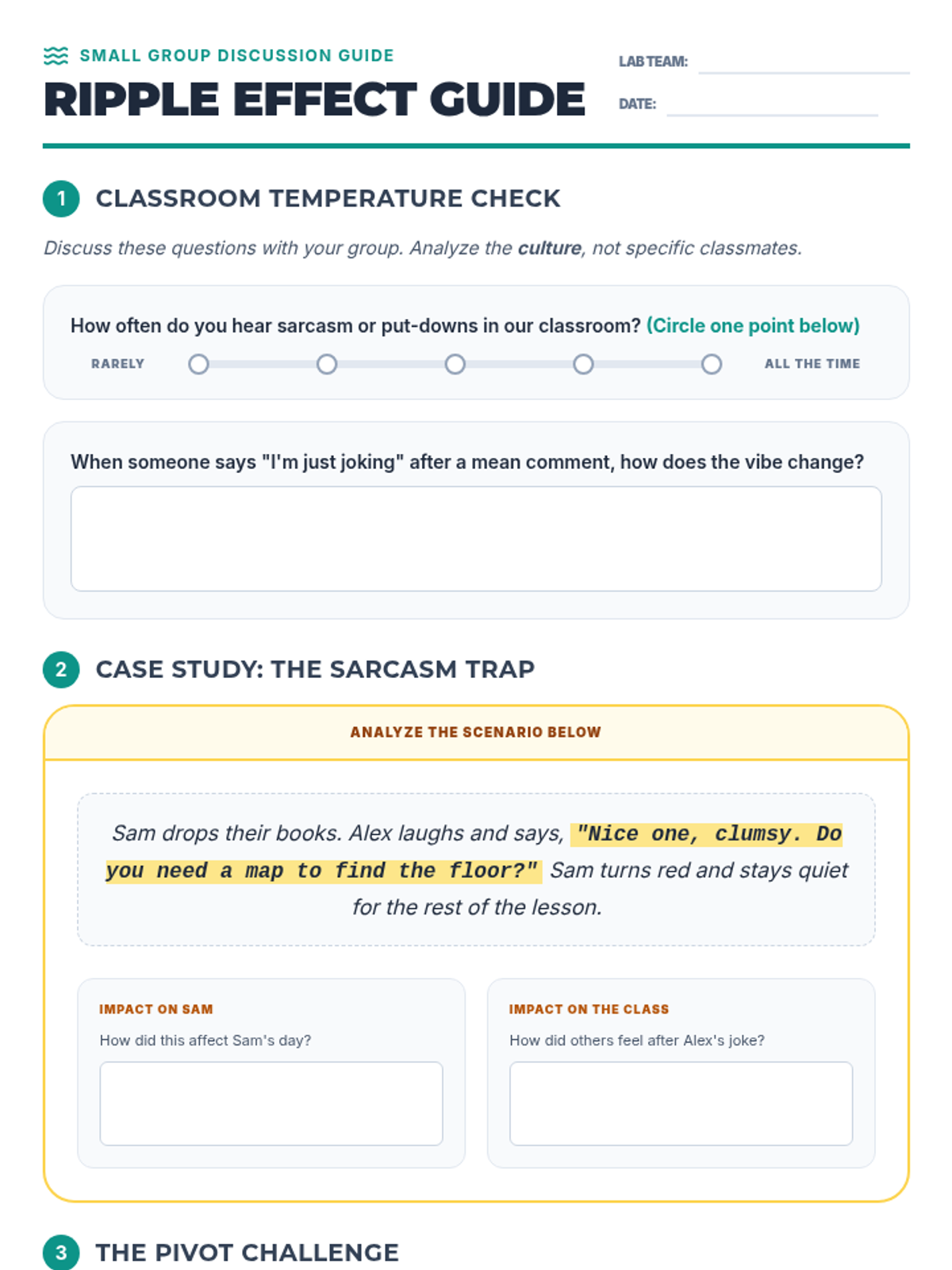
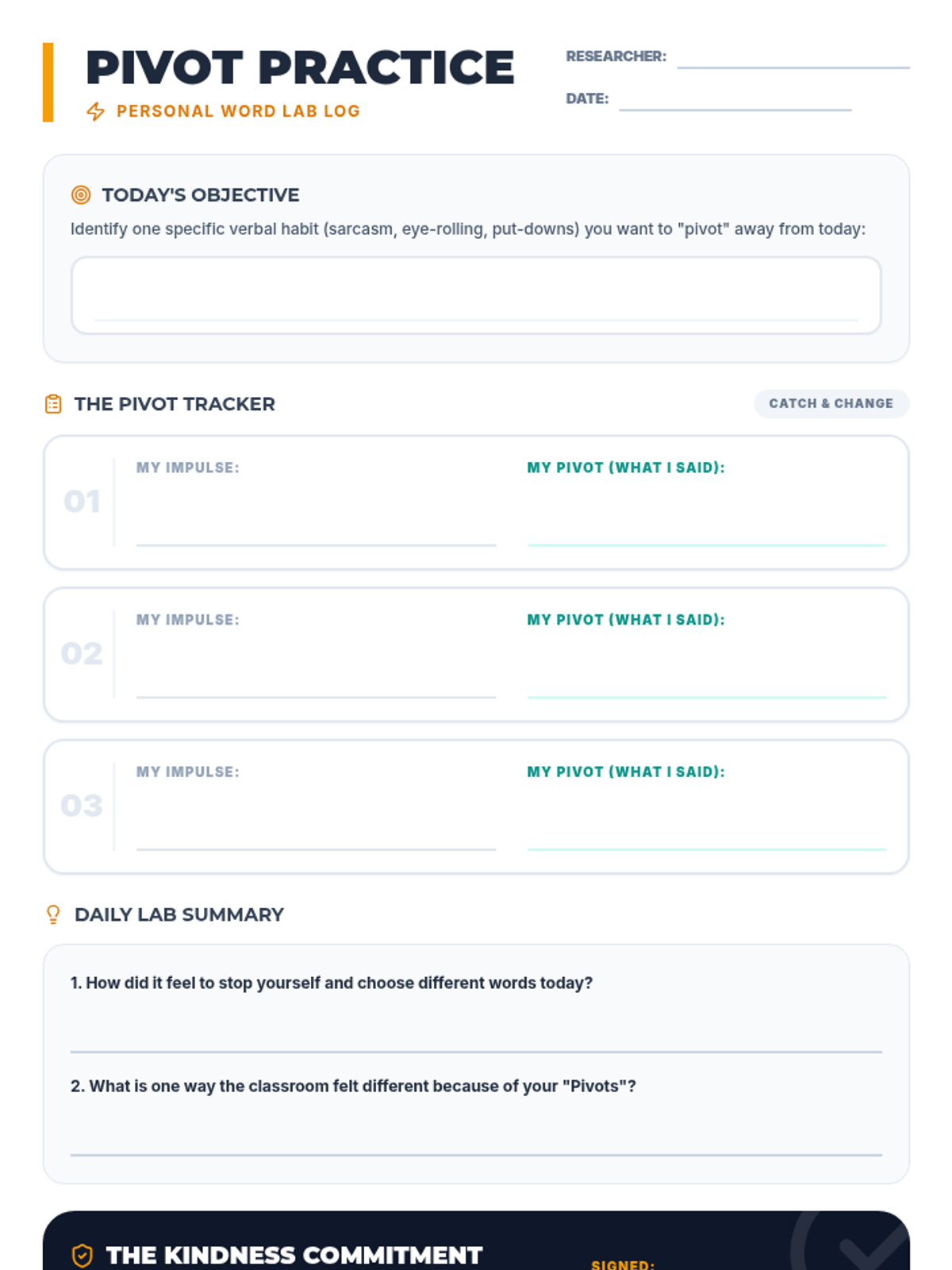
This lesson focuses on identifying and reducing verbal put-downs and sarcasm in the classroom. It helps students understand the impact of their words and provides strategies for building a supportive peer culture through small group discussions and self-reflection.
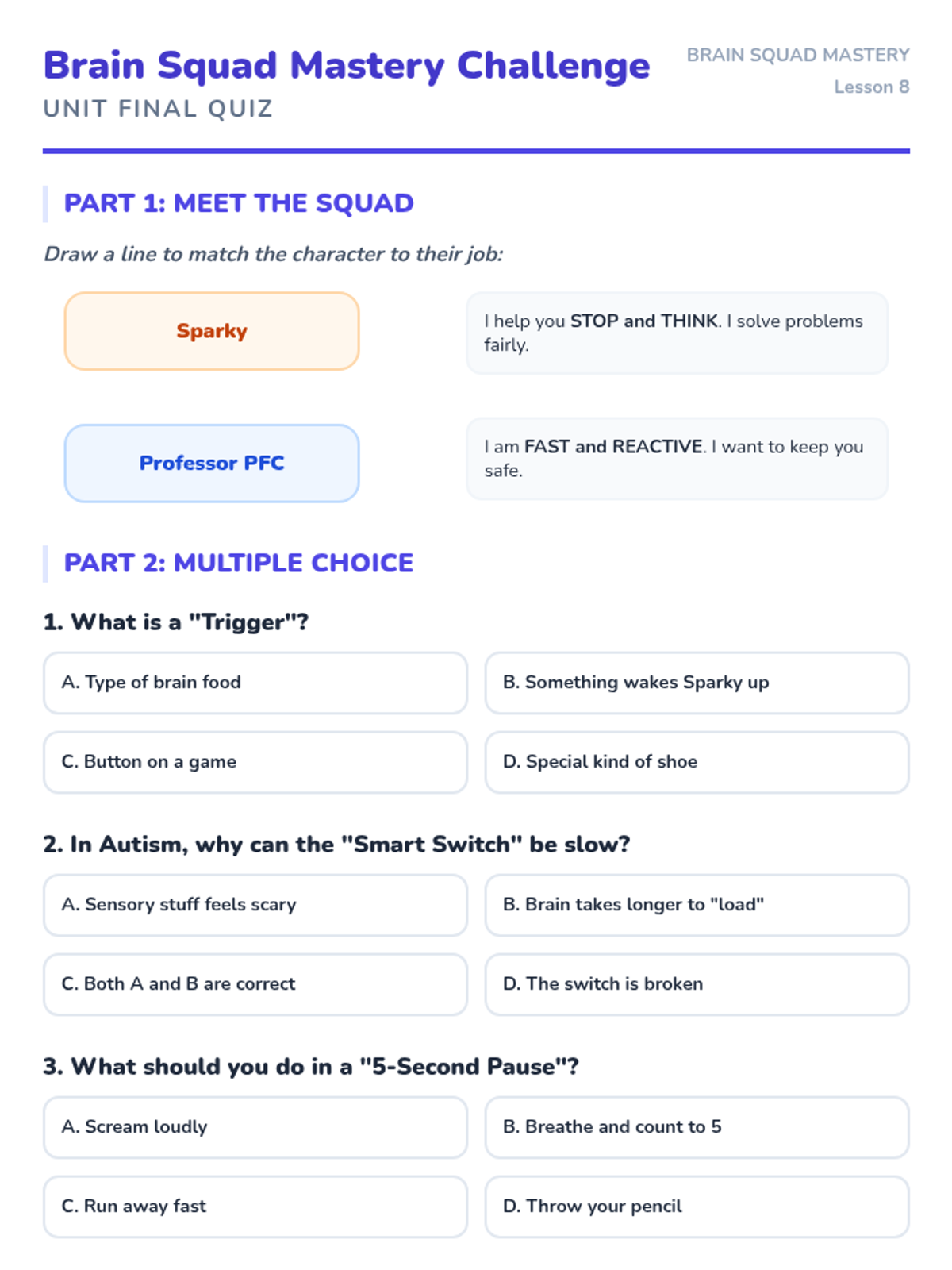
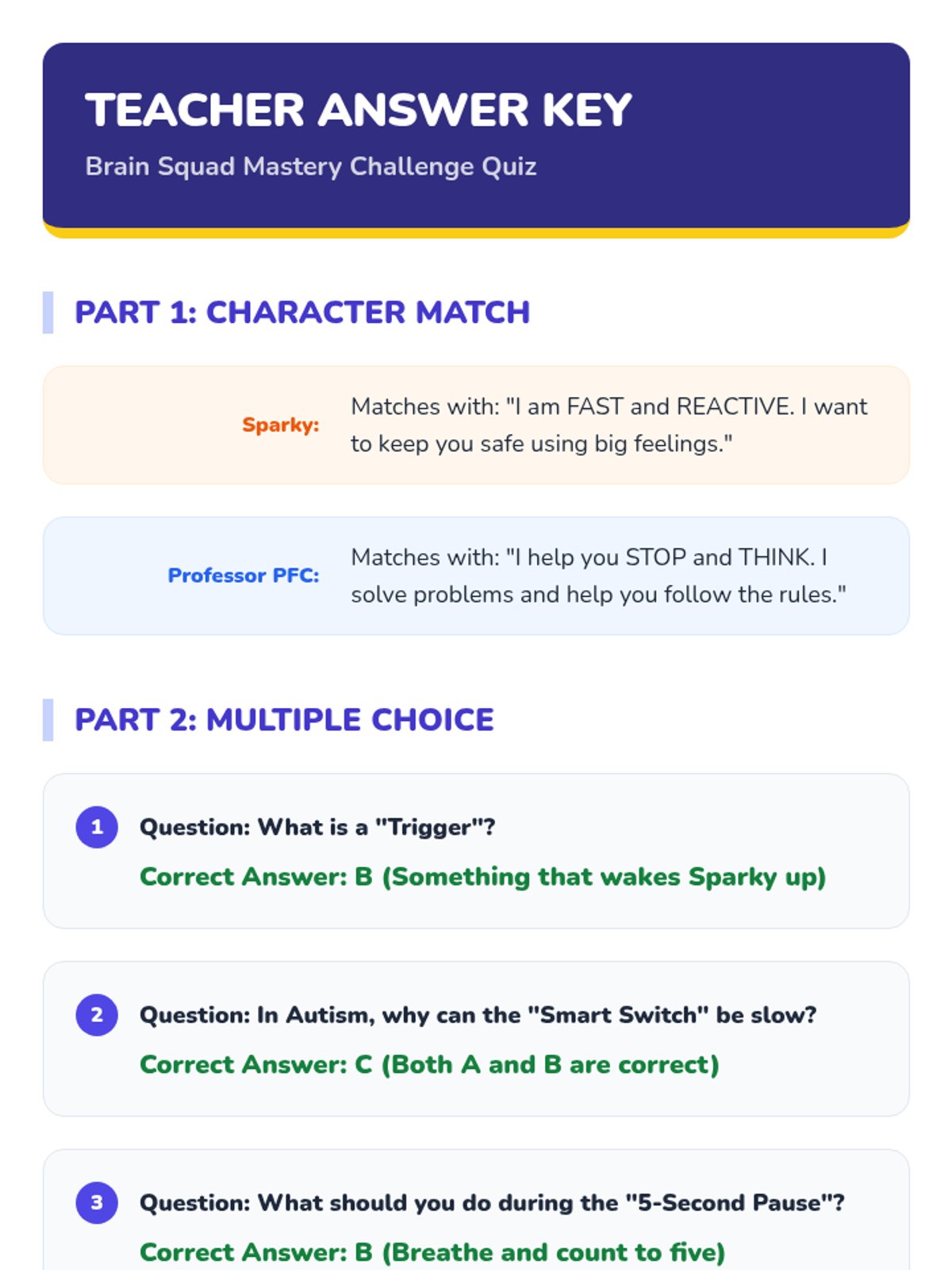
Reviewing unit concepts through a final quiz and celebrating mastery of brain squad strategies.
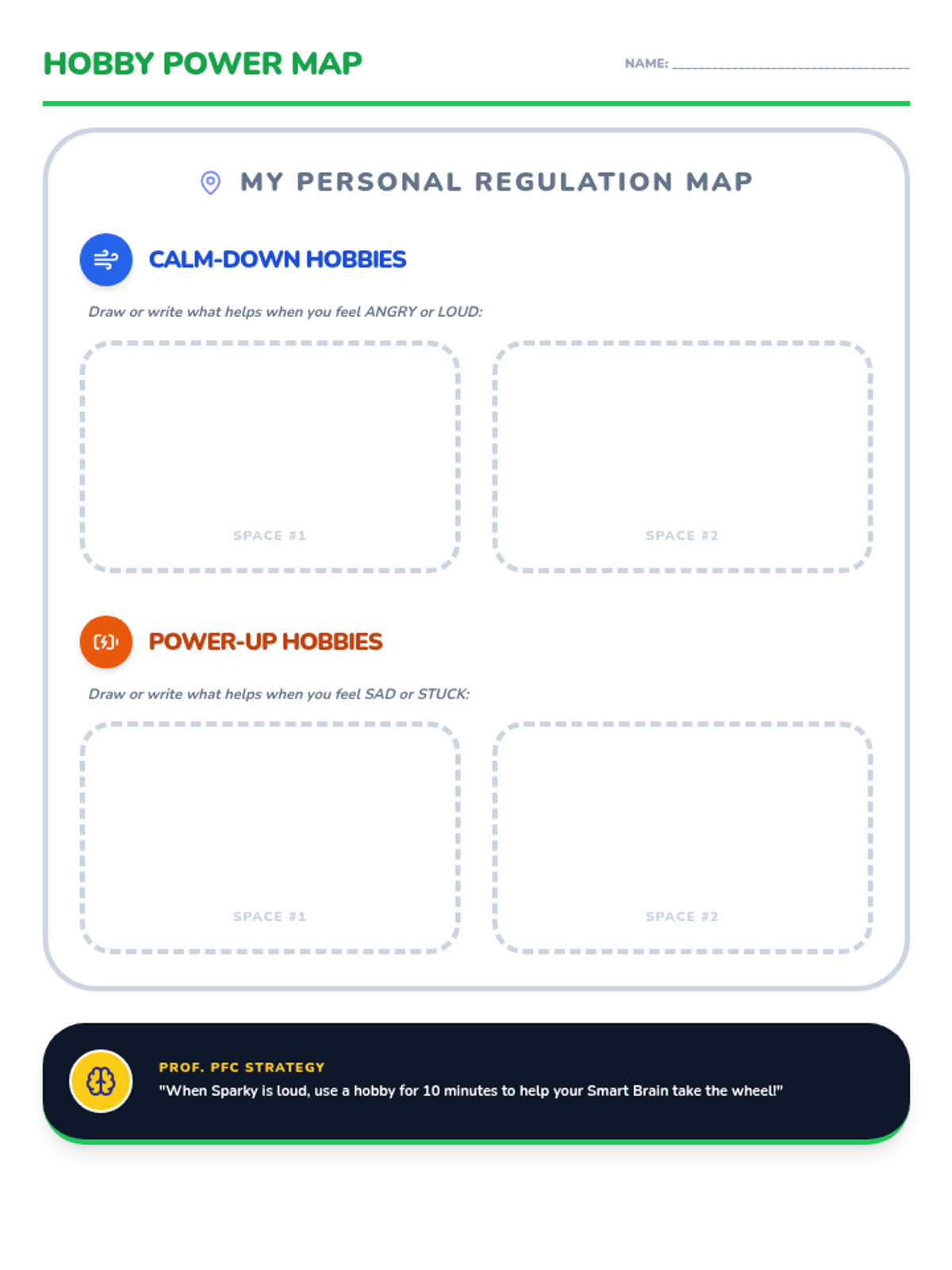
Discovering personal hobbies and interests that act as tools for emotional regulation and positive expression.
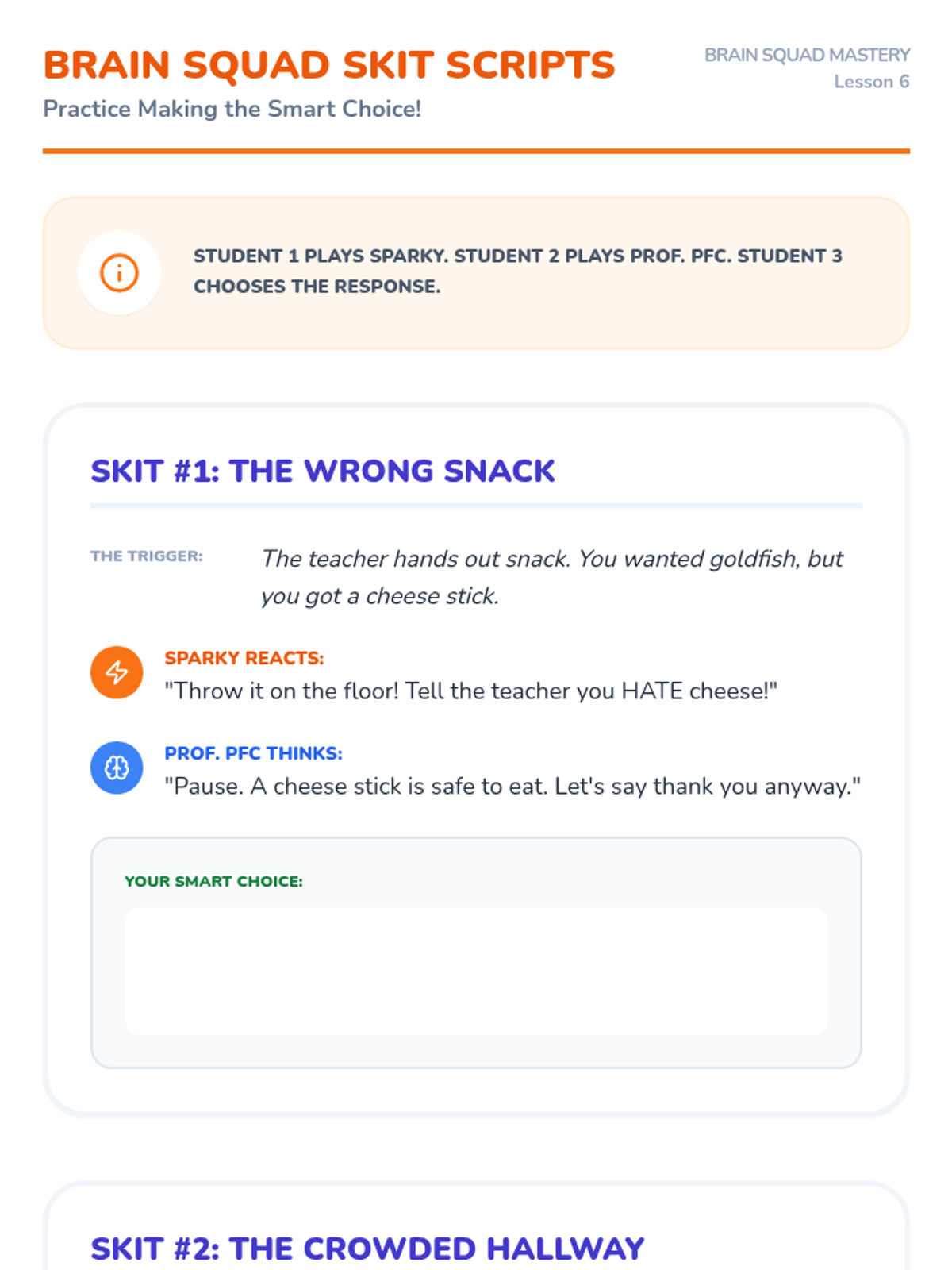
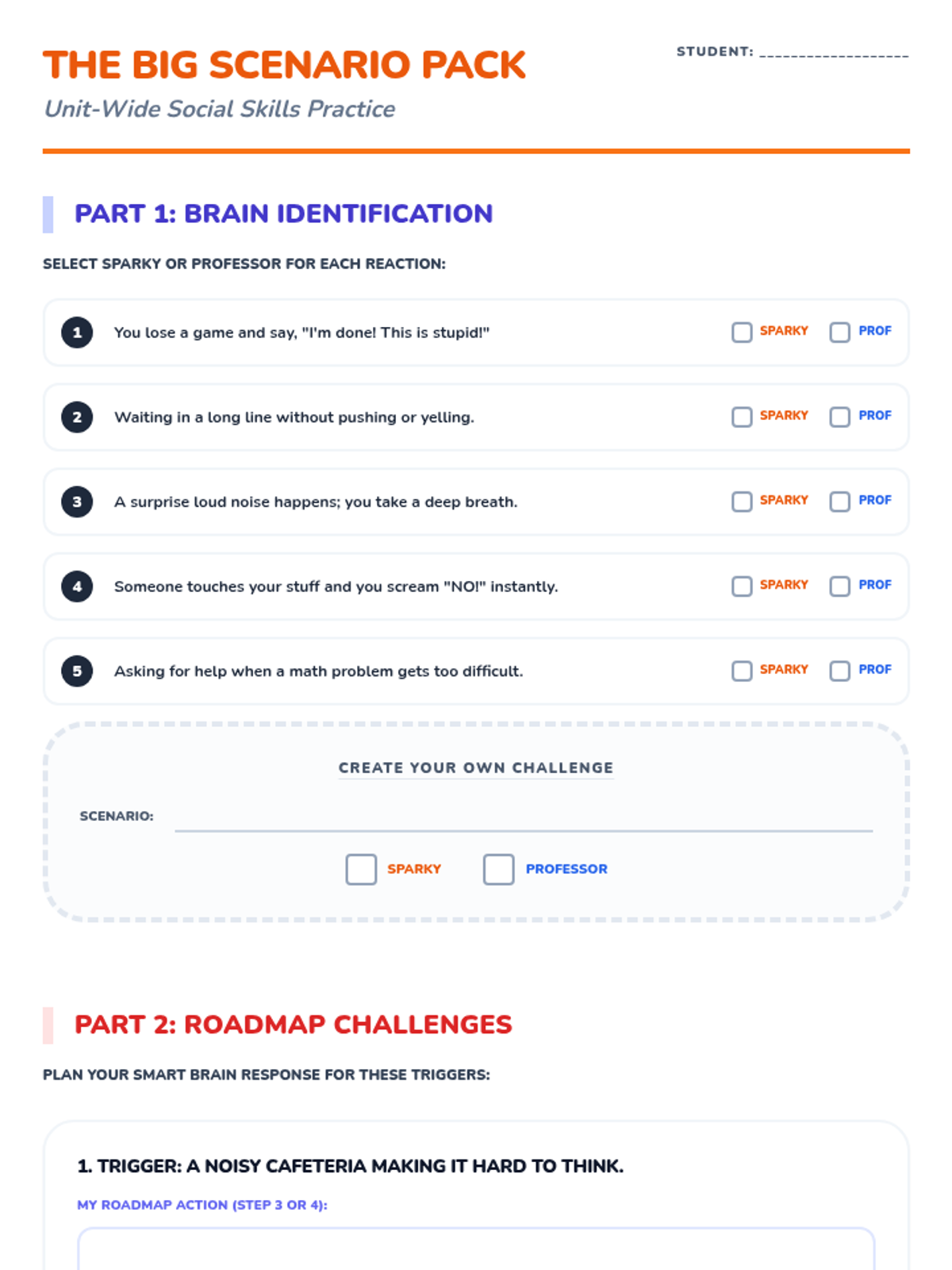
Applying brain squad concepts to real-world scenarios through skits and 'What Would You Do?' games.
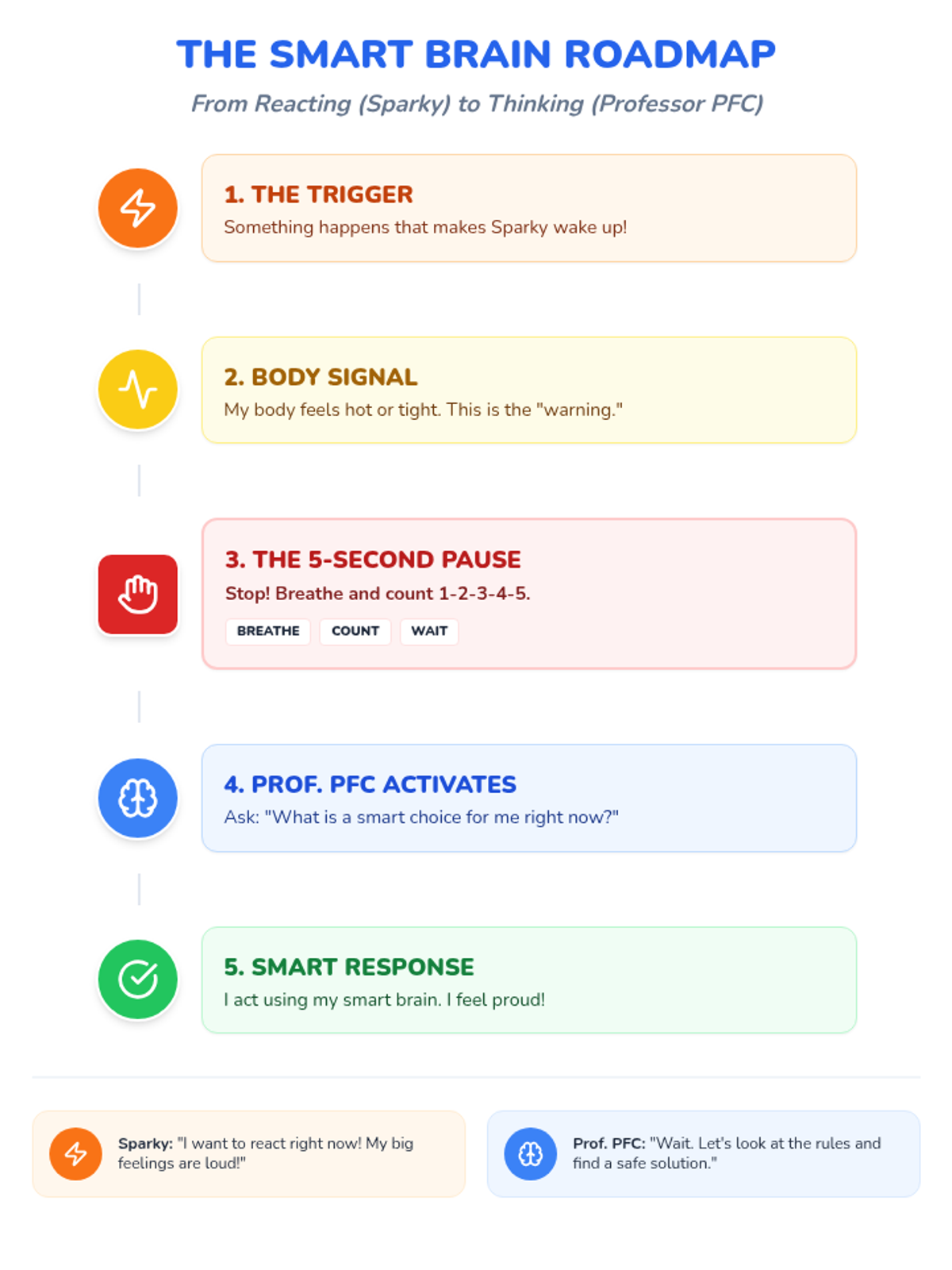
Using a visual flowchart to guide students through the process of moving from a trigger to a smart brain response.
Understanding the 'flipped lid' concept and the difference between immediate reactions and thoughtful responses.
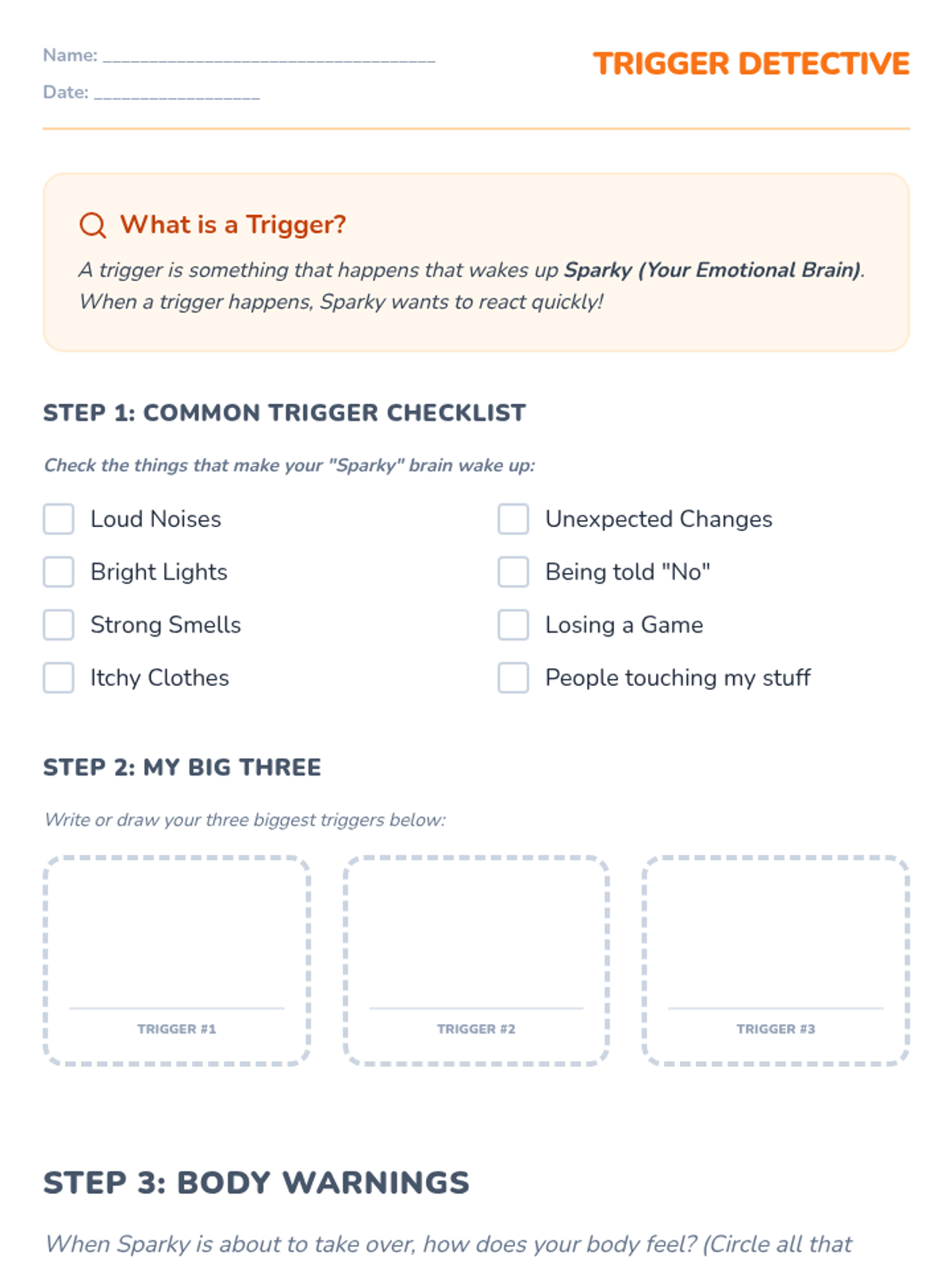
Identifying personal and environmental triggers that activate the emotional brain.
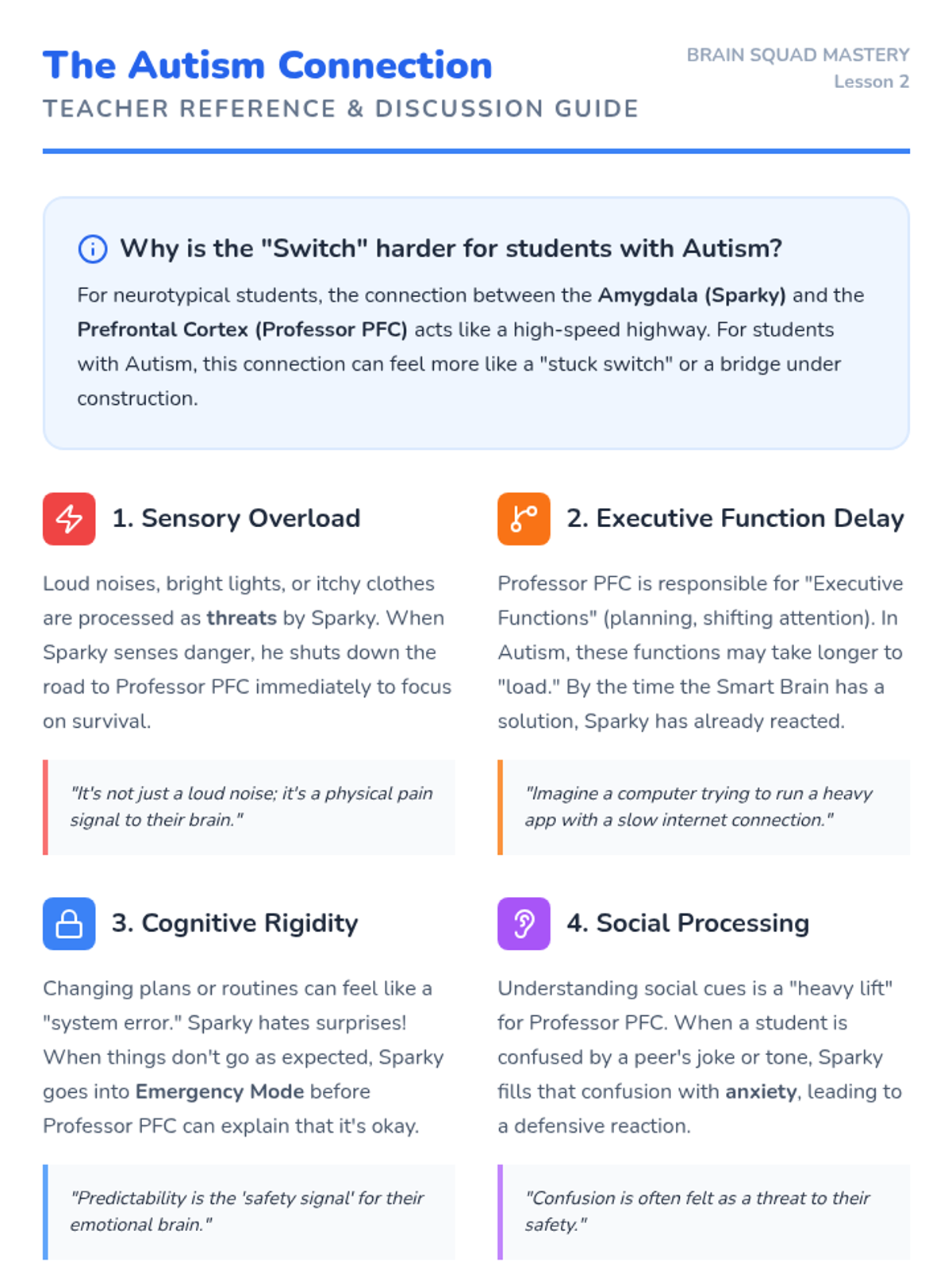
Exploring how Autism impacts the connection between the emotional and smart brain, focusing on sensory processing and executive function.
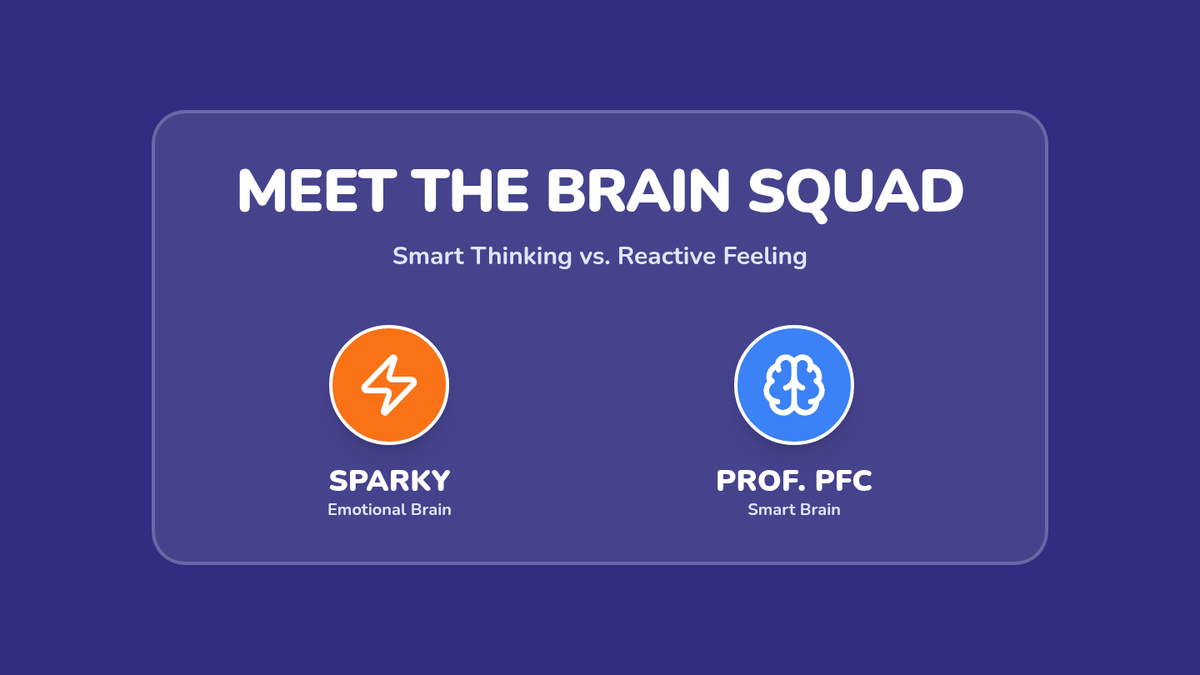
Introduction to the two parts of the brain: the emotional/reactive brain (Sparky) and the smart/thinking brain (Professor PFC).
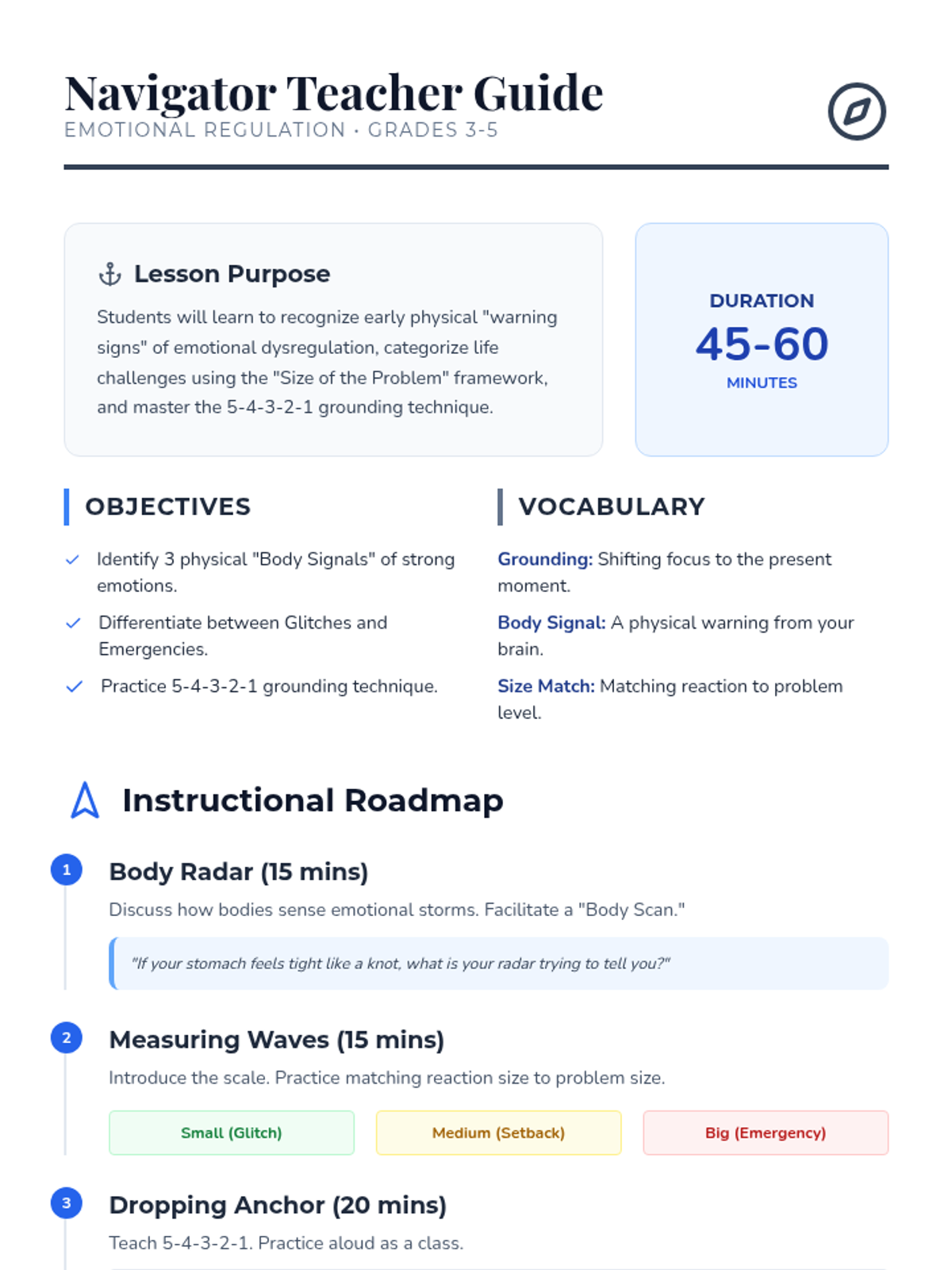
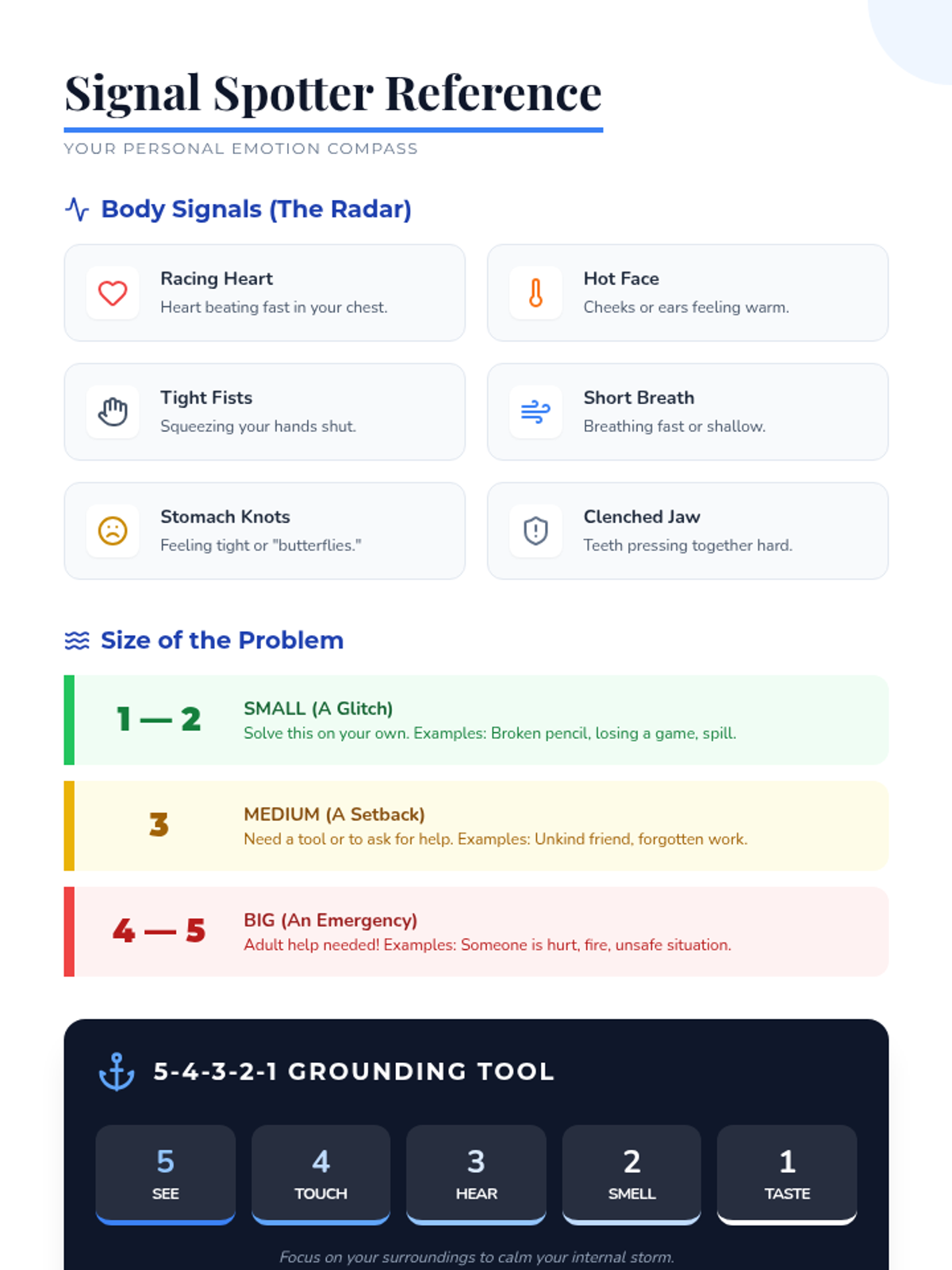
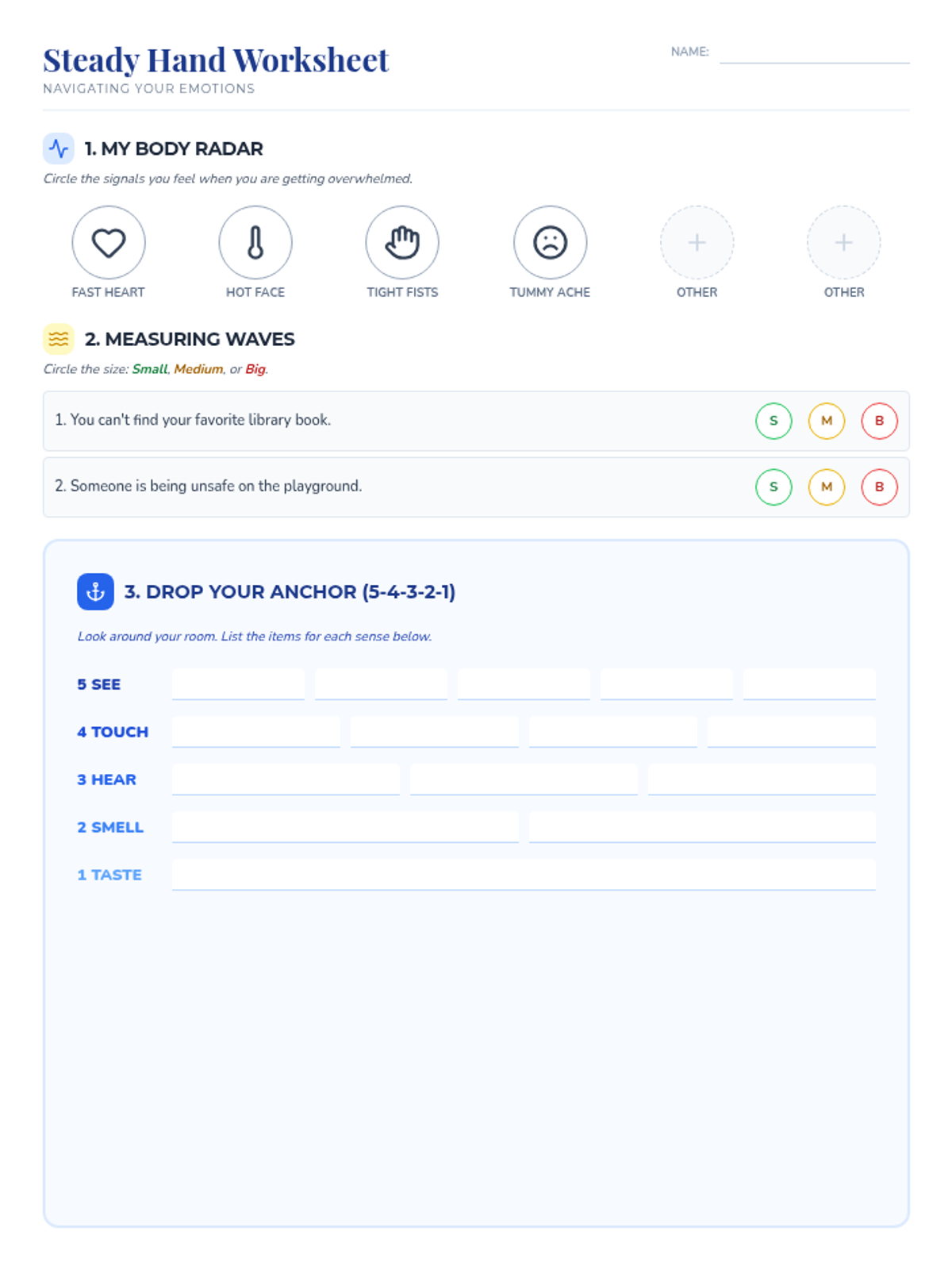
A comprehensive lesson on emotional regulation focusing on physical body signals, categorizing the 'size' of problems, and practicing the 5-4-3-2-1 grounding technique.
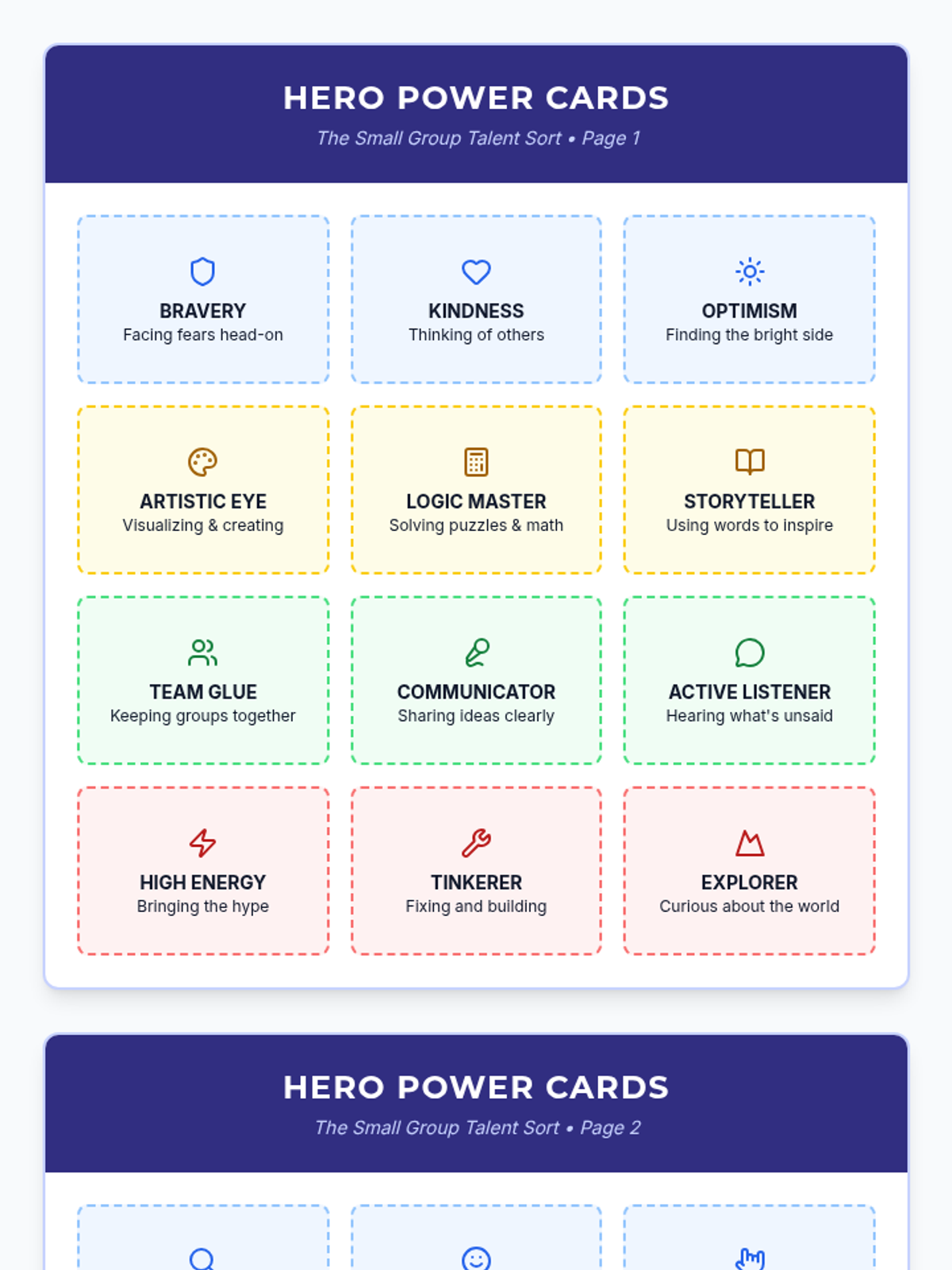
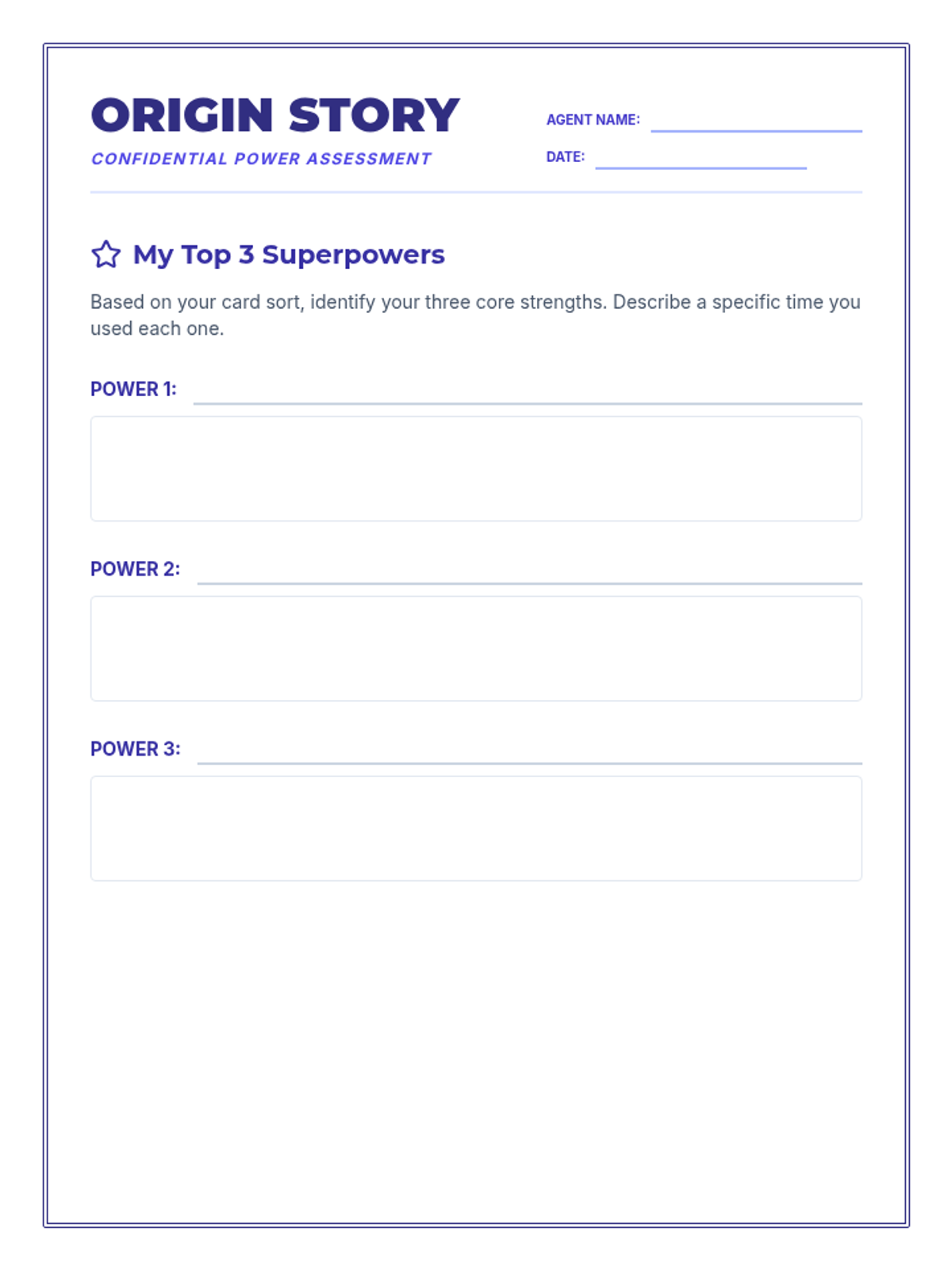
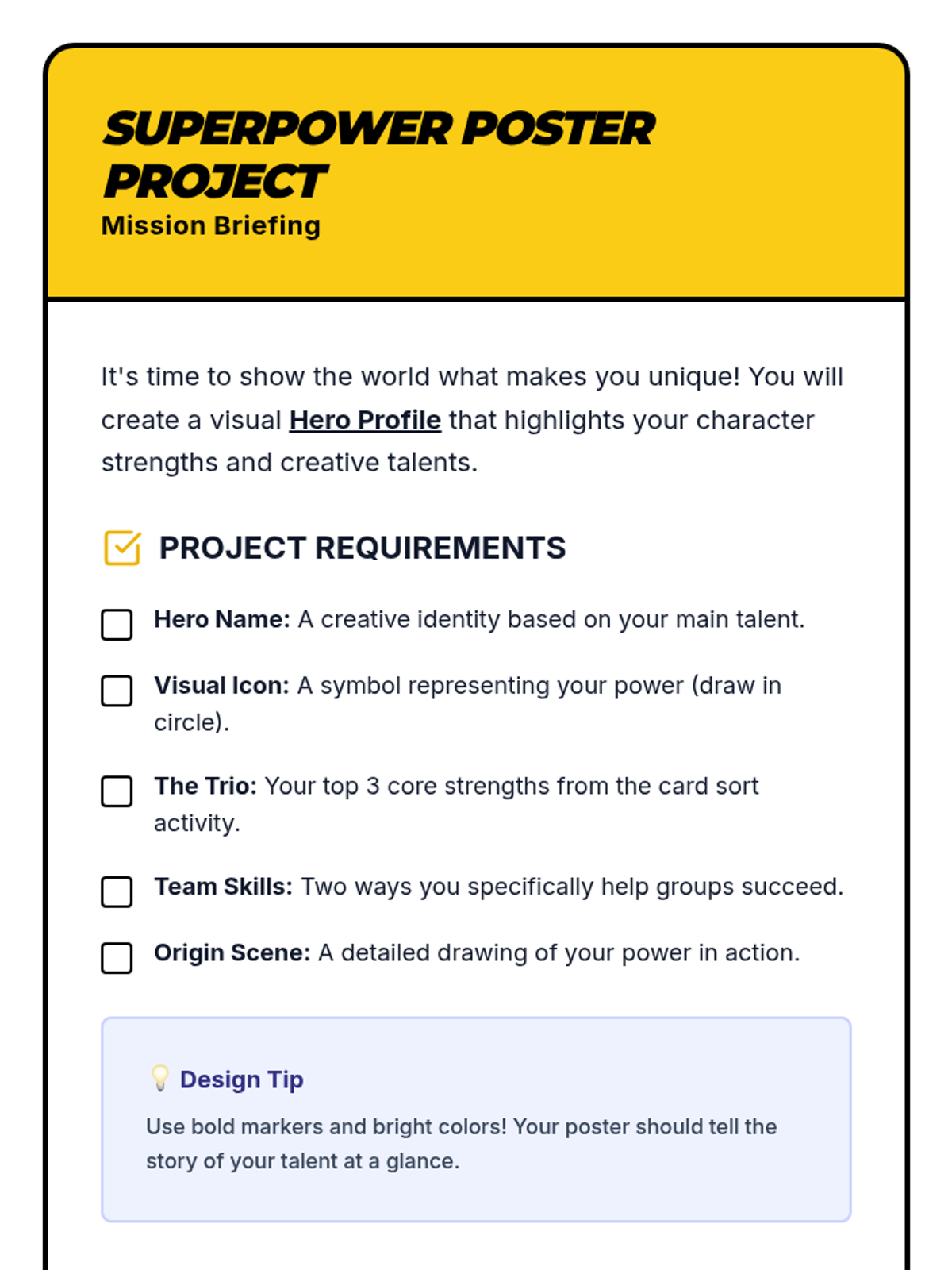
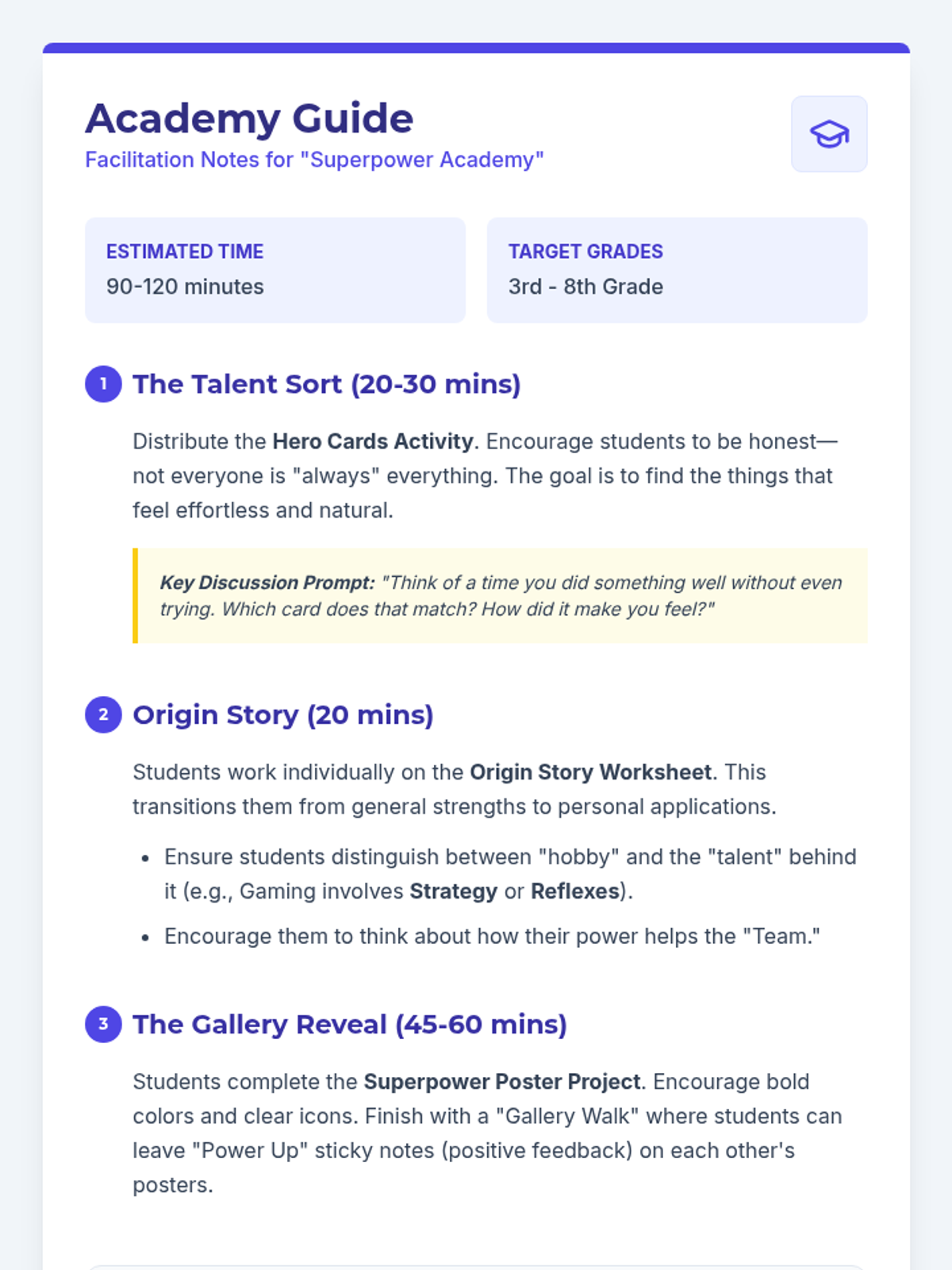
A high-energy lesson where students identify their unique character strengths, academic talents, and social skills through a collaborative card sort, self-reflection, and a creative poster project.
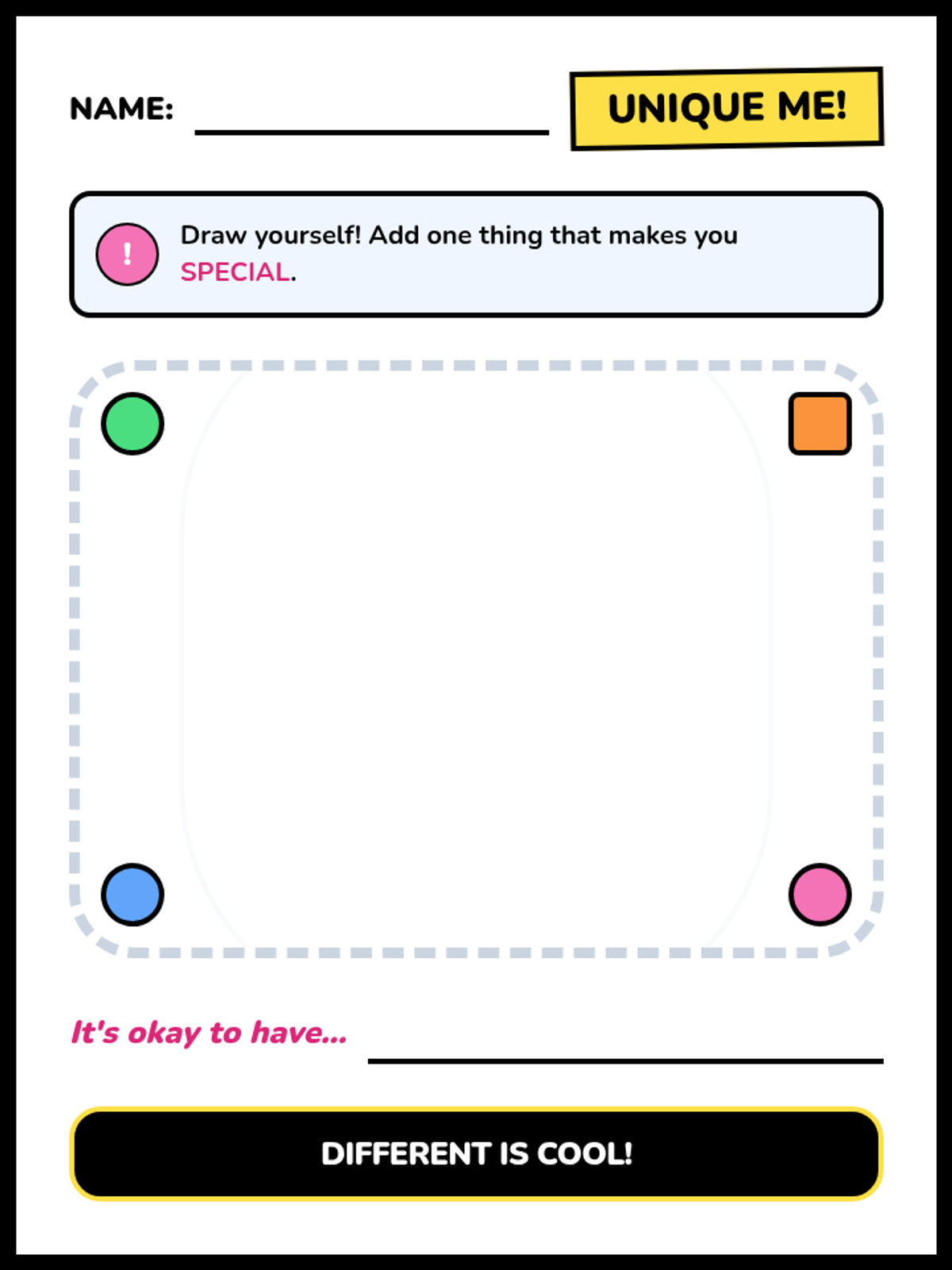
A 20-minute guidance lesson for Pre-K focusing on diversity and self-acceptance using Todd Parr's "It's Okay to be Different." Students will explore what makes them unique and create a self-portrait.
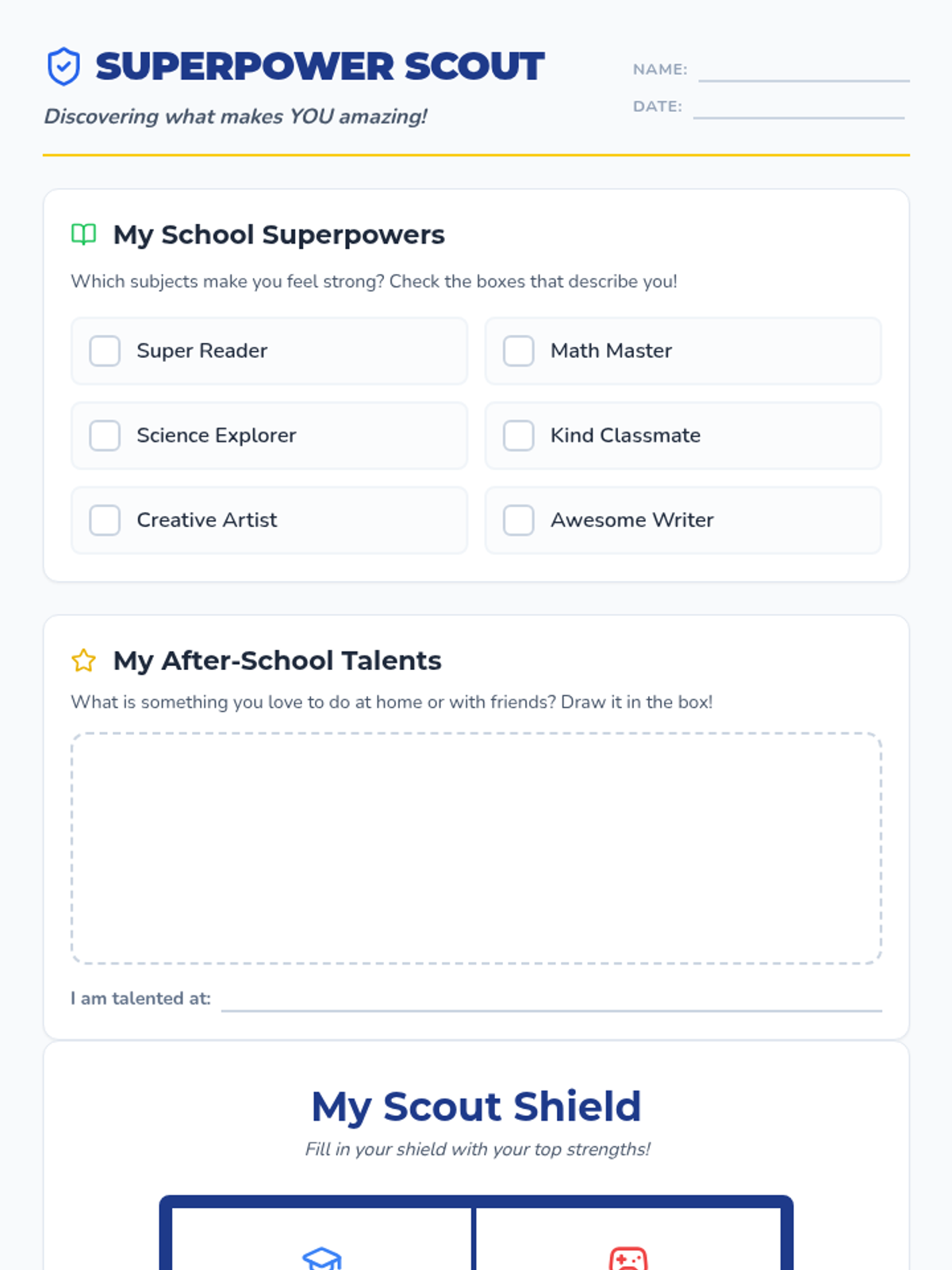
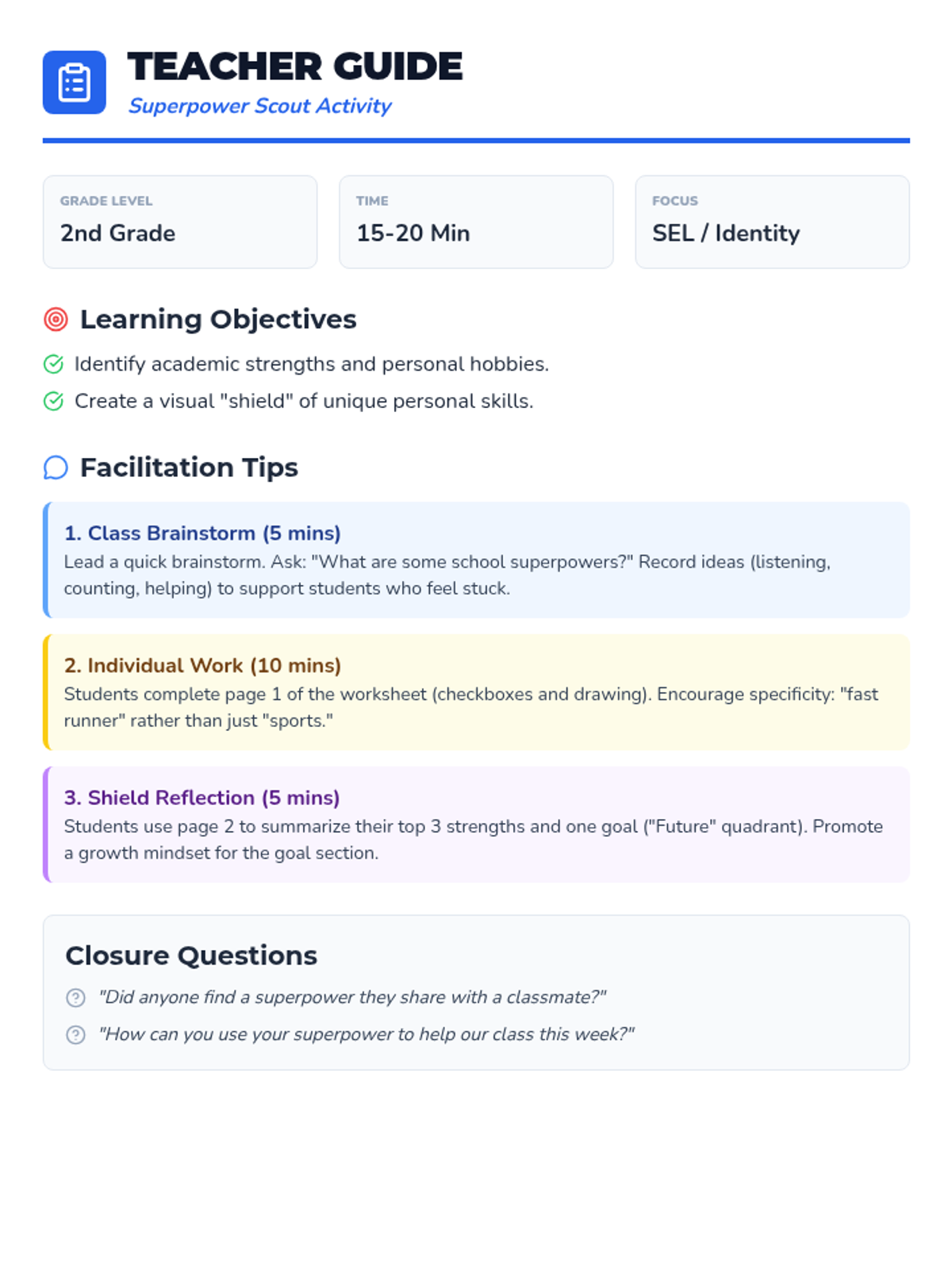
A quick individual activity for 2nd graders to explore and celebrate their unique academic strengths and personal hobbies through a creative "Superpower" theme.
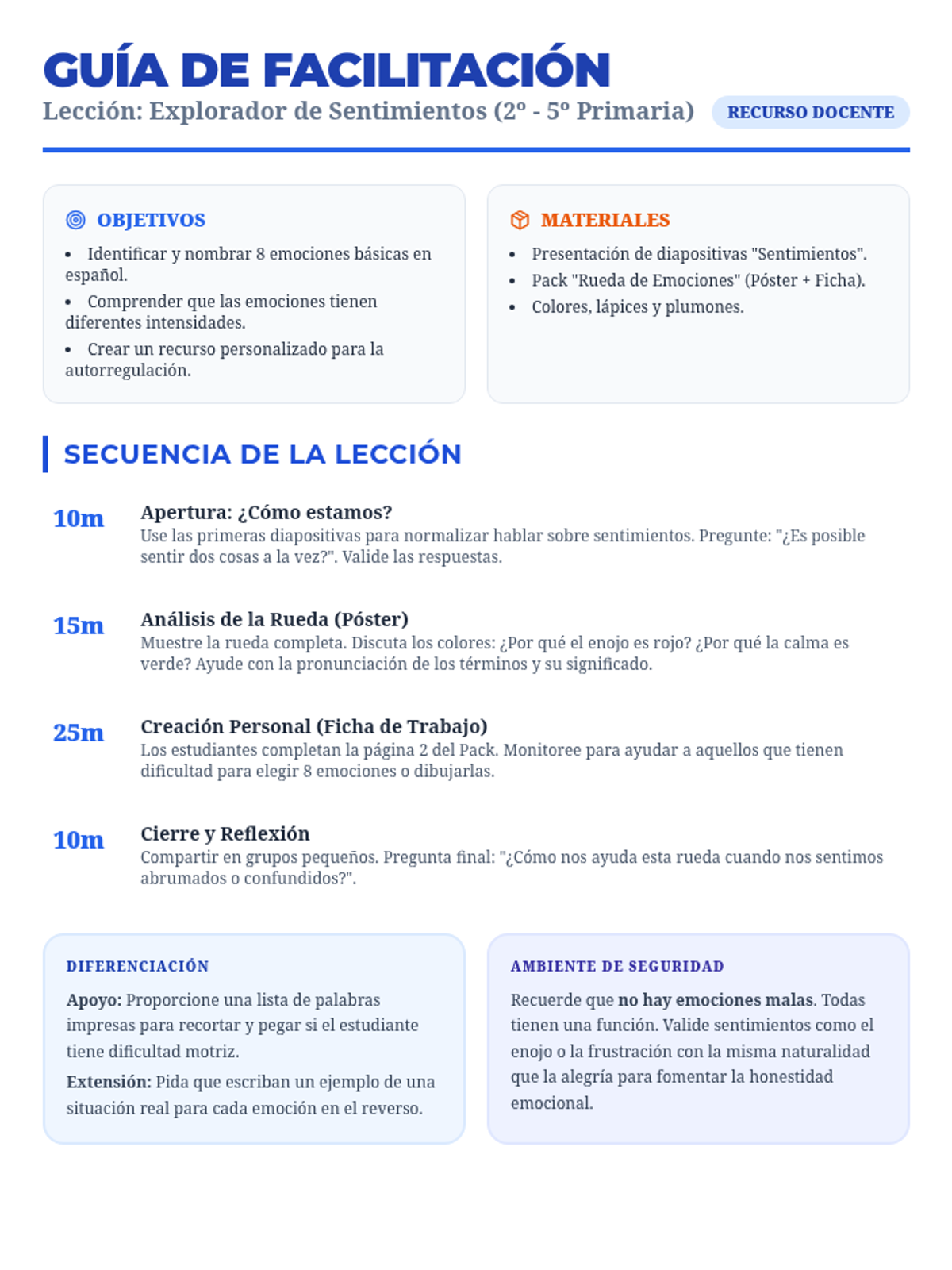
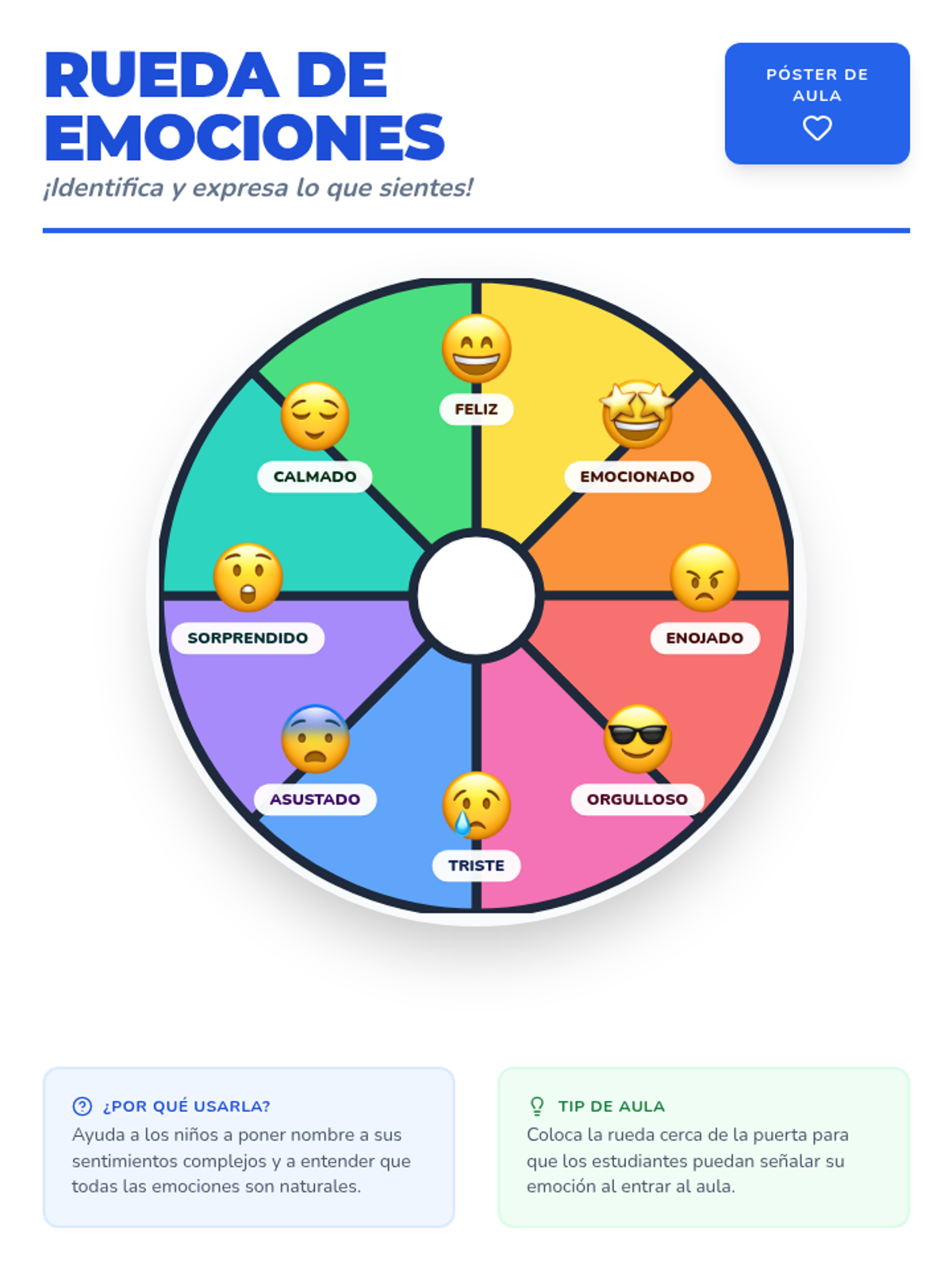
Un recurso completo para ayudar a los estudiantes de primaria a identificar y expresar sus emociones en español a través de una rueda visual interactiva.