Un recurso completo para ayudar a los estudiantes de primaria a identificar y expresar sus emociones en español a través de una rueda visual interactiva.
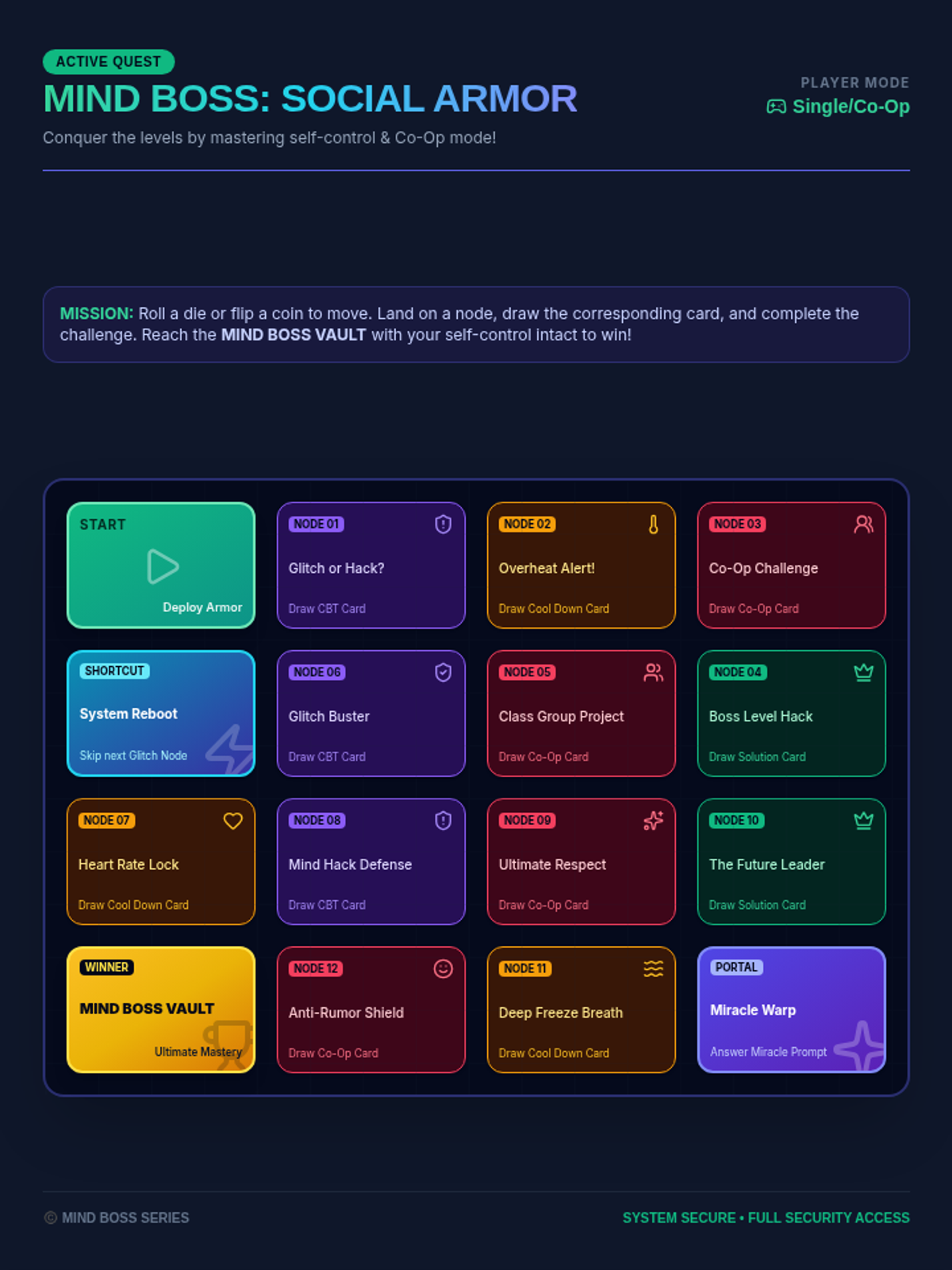
A secret-agent themed lesson that introduces 5th graders to Cognitive Behavioral Therapy (CBT) techniques to identify and challenge anxious thoughts through a collaborative board game.
An introductory exploration of cultural and racial bias for 4th graders, using the metaphors of mirrors and lenses to understand personal perspective and systemic filters.
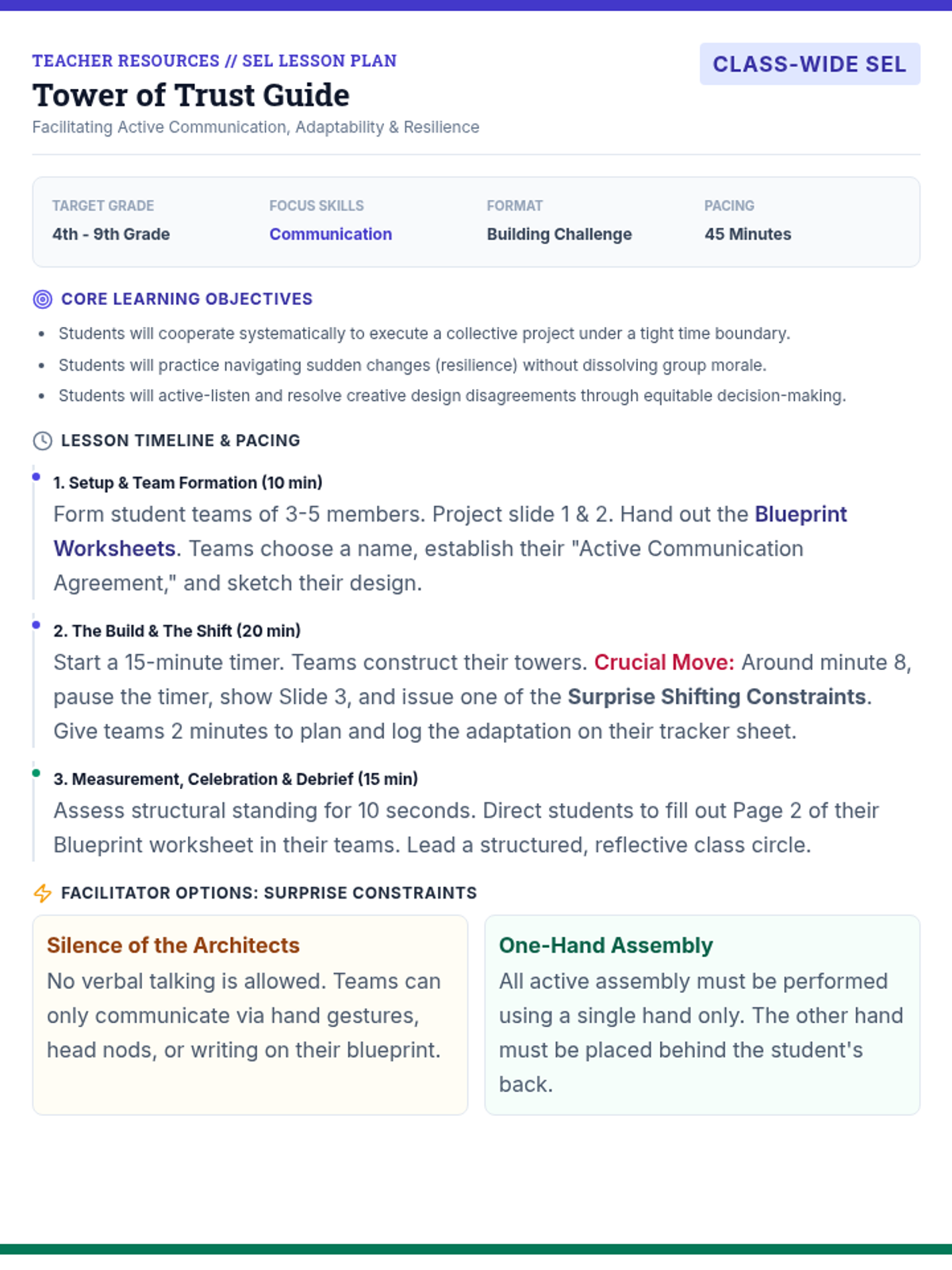
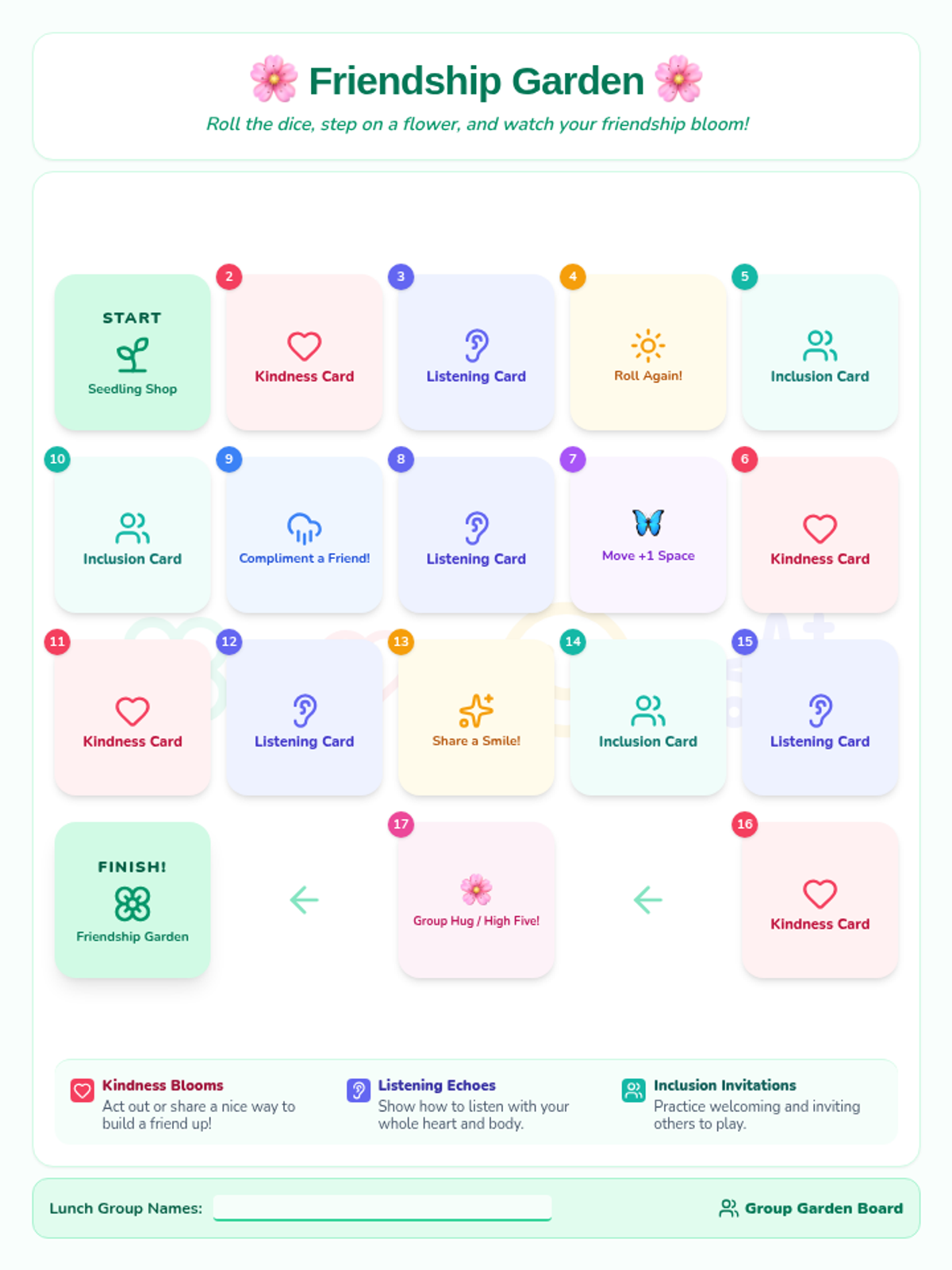
A lesson designed for one-on-one SEL sessions focusing on flexibility, managing disappointment, and cooperative play with peers.
A restorative behavioral intervention focused on resolving physical conflict and verbal aggression through a formal behavior contract and daily progress tracking.
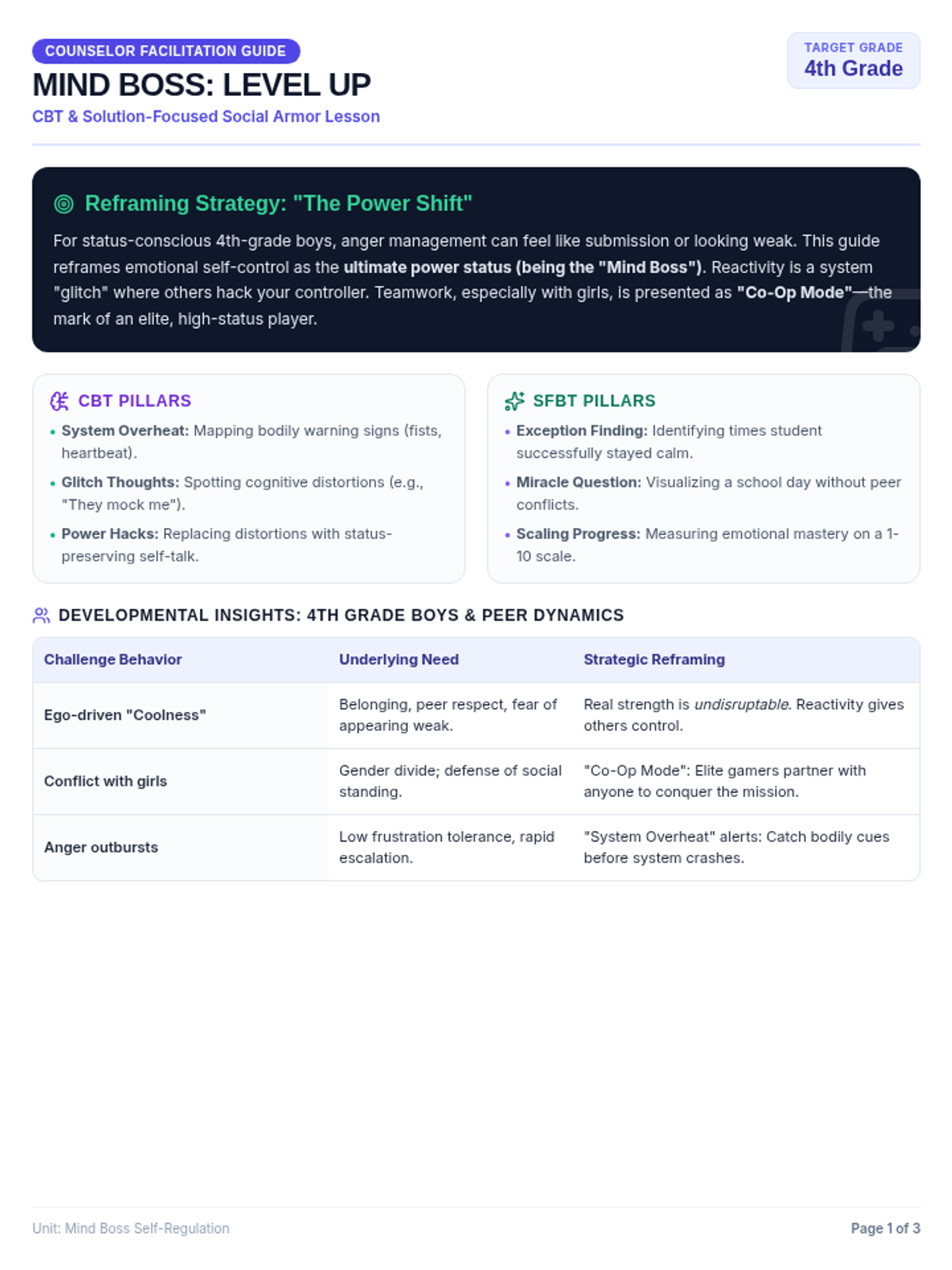
A social-emotional learning lesson for 8-year-old boys focused on matching reaction size to problem size, specifically targeting frustration and work refusal through a 'Problem Pilot' aviation theme.
A restorative behavioral intervention focused on resolving physical conflict and verbal aggression between two students through a formal agreement and daily tracking.
A dice-based exploration of empathy and perspective-taking using non-declarative language techniques to help 4th graders notice social cues and understand others' internal worlds.
A deep dive into the biological parts of the brain (Amygdala, Prefrontal Cortex, Hippocampus, and Brain Stem) and how they function as the home for Sparky and Professor PFC.
This lesson helps 3rd and 4th grade students identify their personal anger triggers, physical warning signs, and coping strategies using the metaphor of a volcano. Students will map out their 'stages of eruption' to better understand and regulate their emotions.
A lesson for 1st-3rd graders on the THINK acronym (True, Helpful, Important, Necessary, Kind) to promote mindful communication and social-emotional learning.
This lesson focuses on identifying and reducing verbal put-downs and sarcasm in the classroom. It helps students understand the impact of their words and provides strategies for building a supportive peer culture through small group discussions and self-reflection.
Reviewing unit concepts through a final quiz and celebrating mastery of brain squad strategies.
Discovering personal hobbies and interests that act as tools for emotional regulation and positive expression.