Students discover their personal working memory baseline through digit-span tests and learn about the concept of cognitive load.
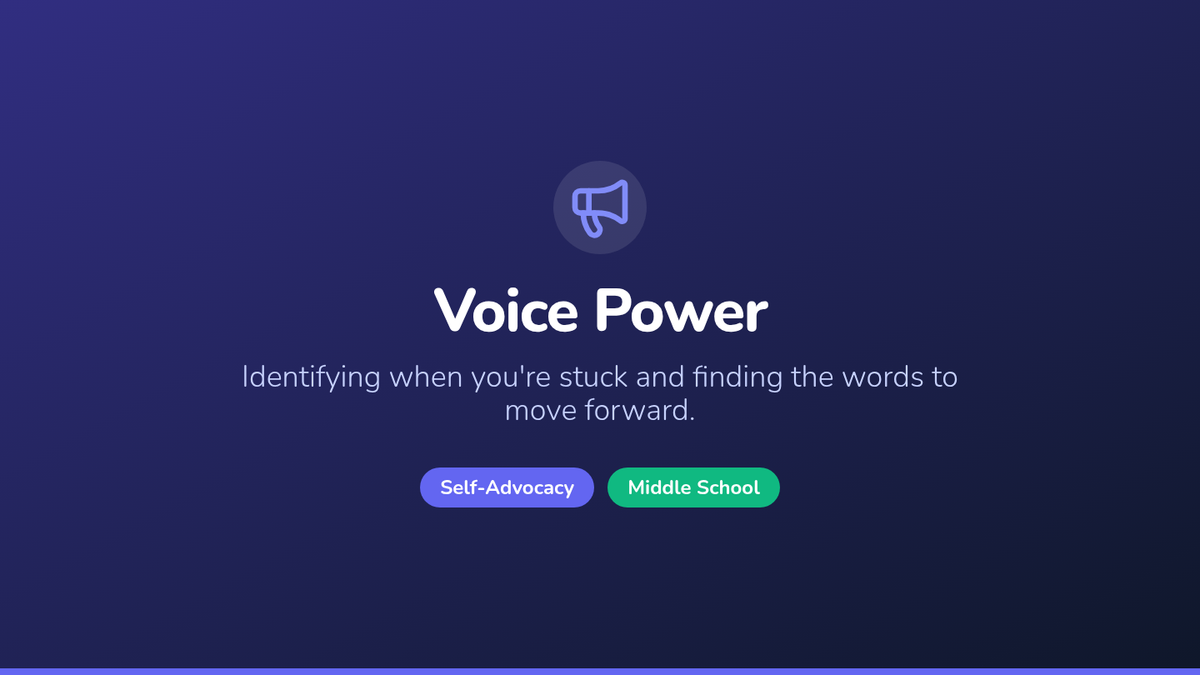
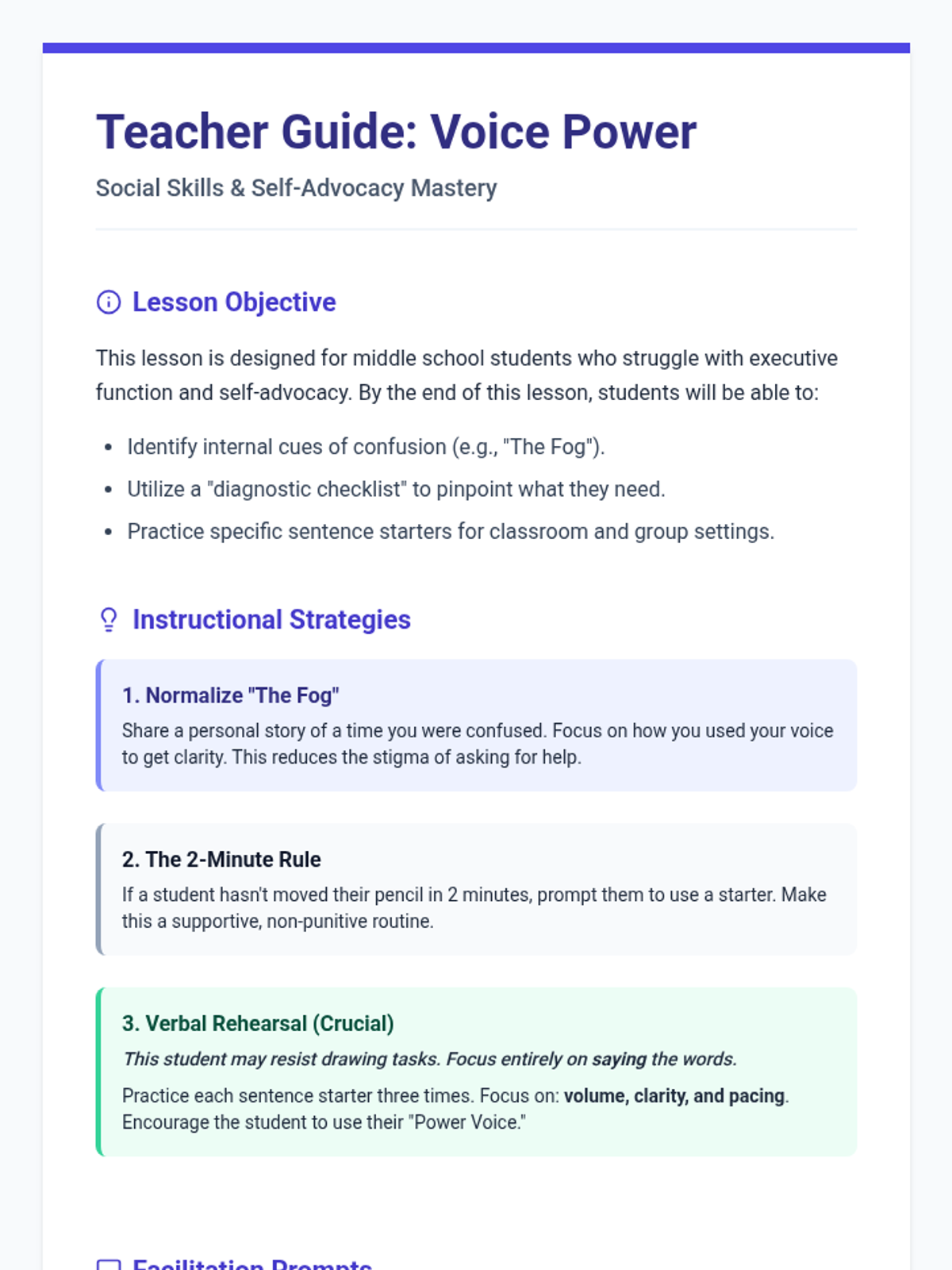
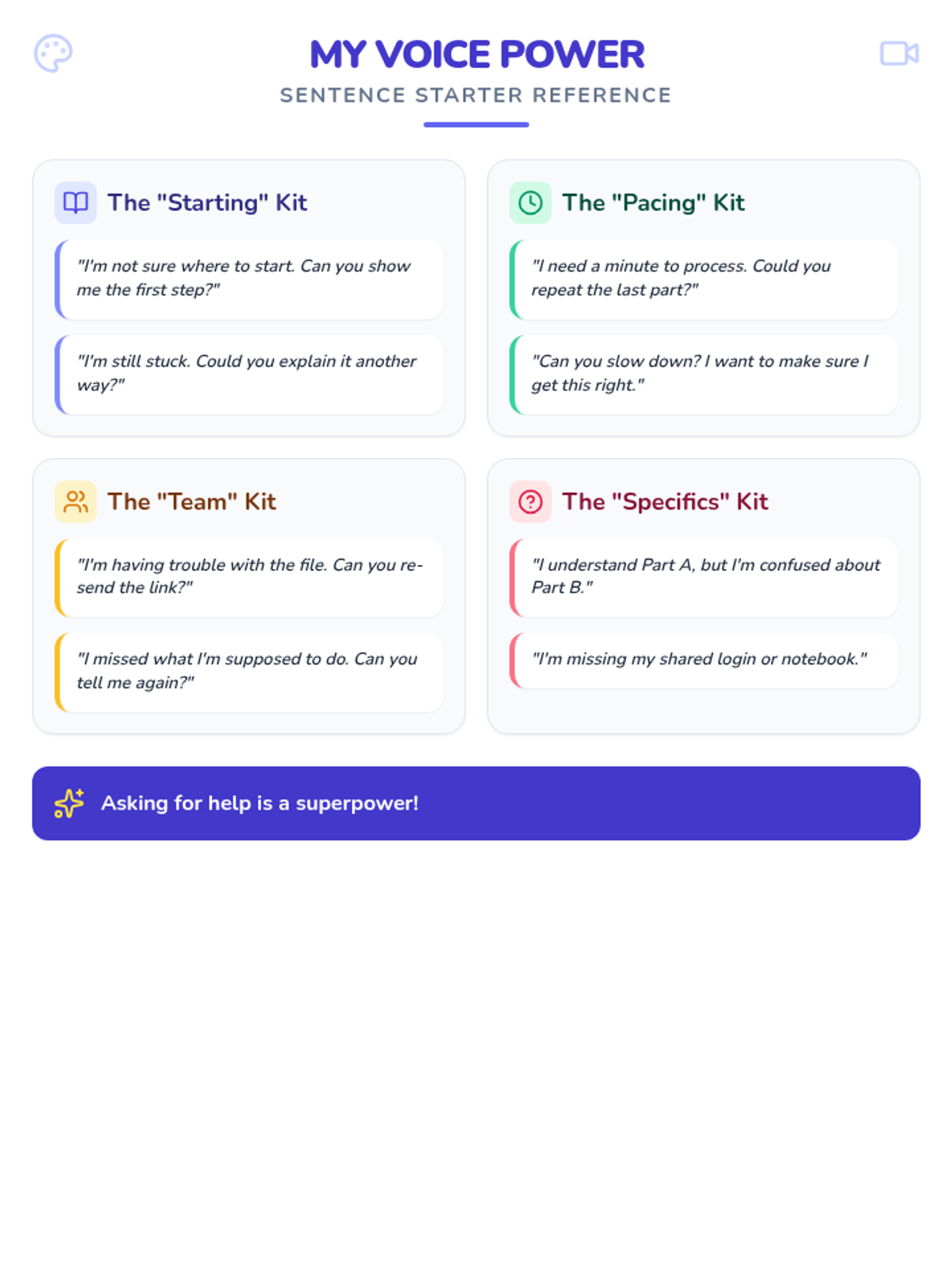
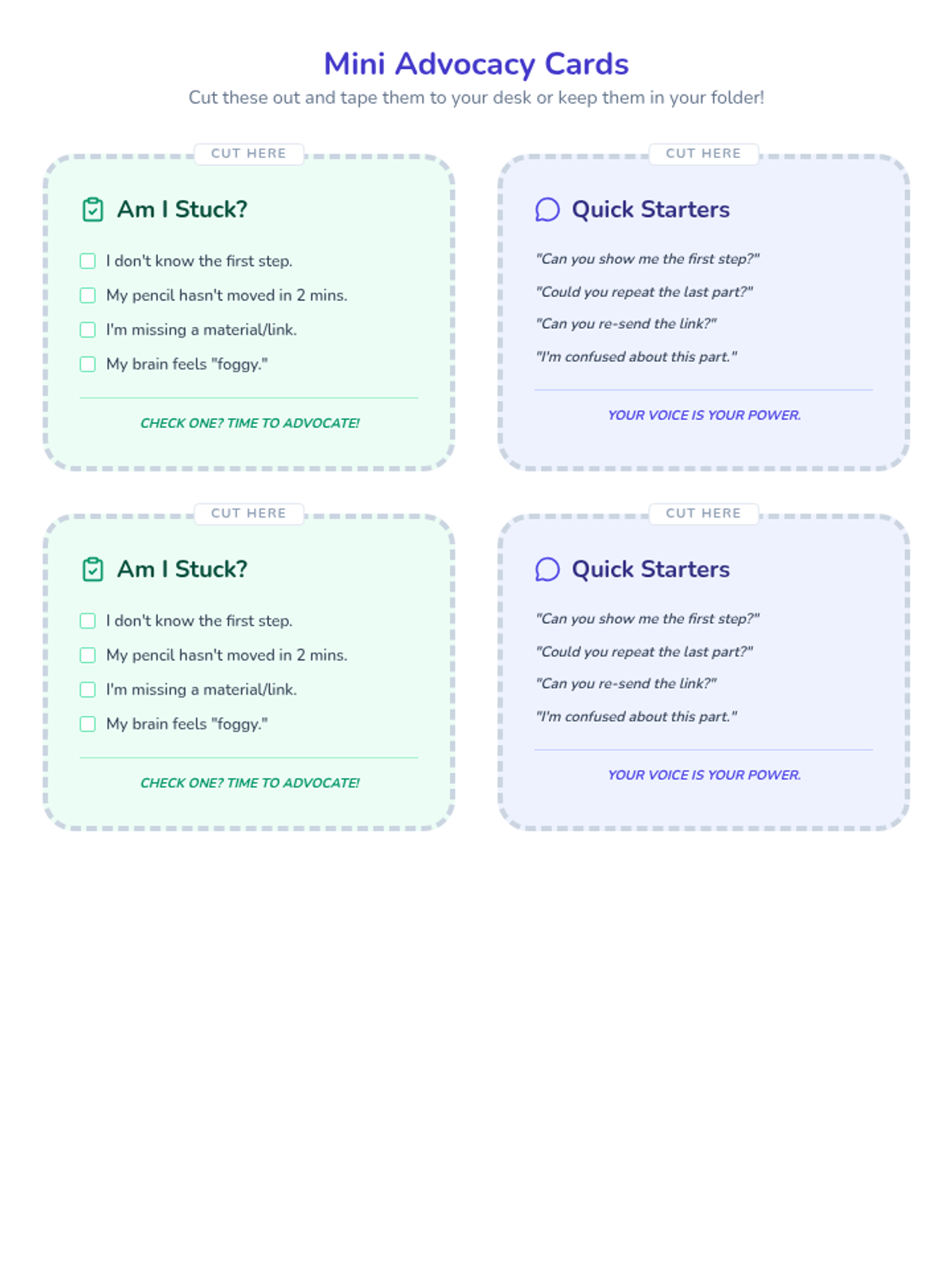
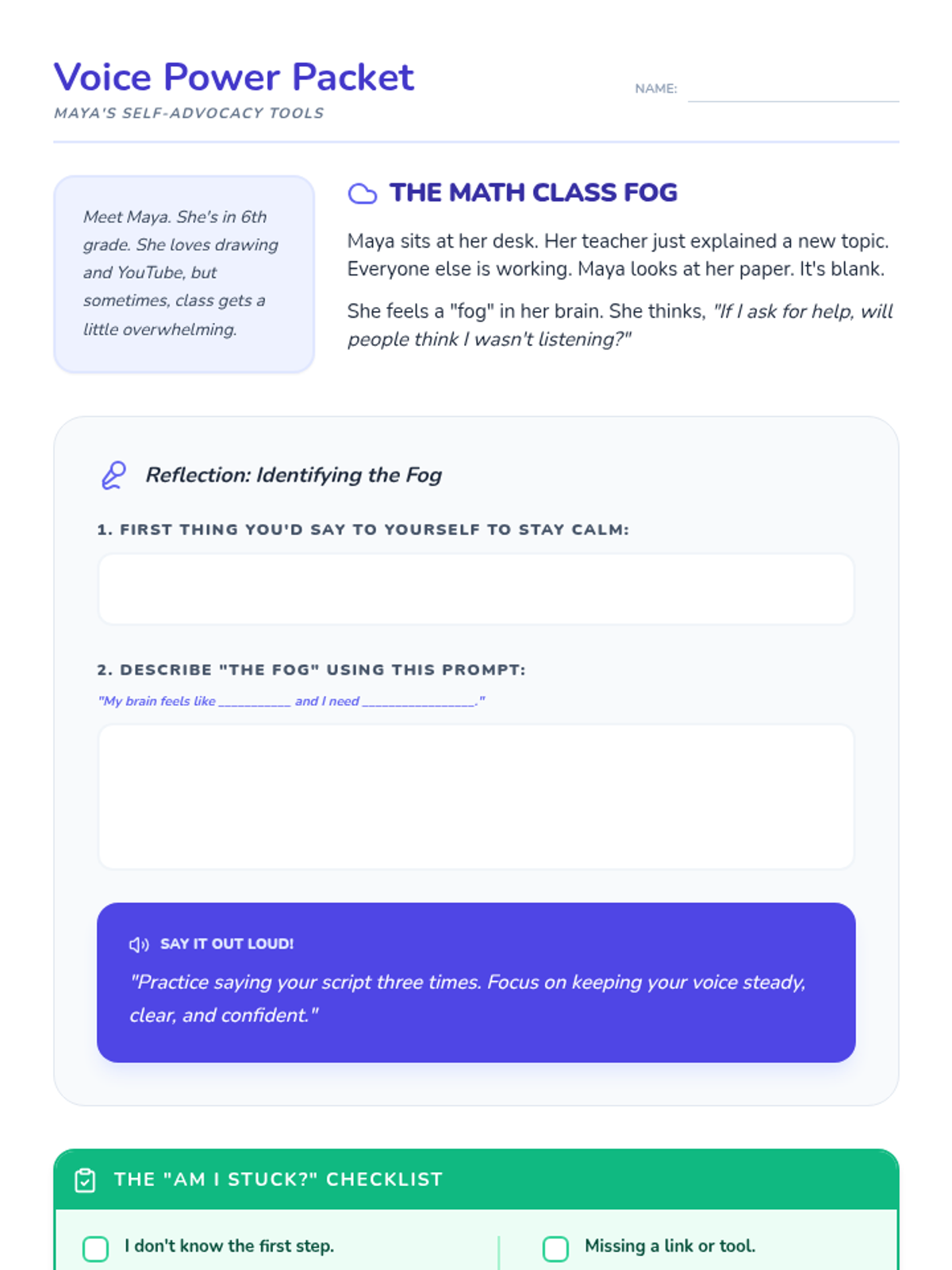
This lesson helps middle school students identify when they need help and practice self-advocacy through a relatable social story, checklists, and sentence starters.
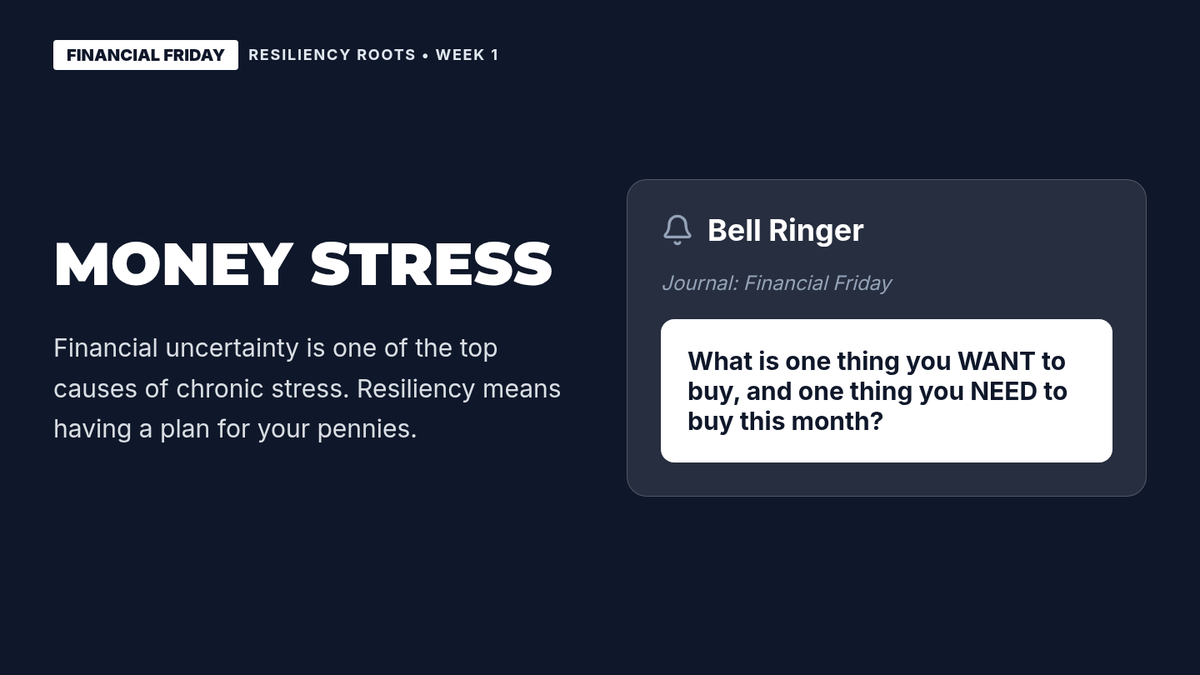
Connects financial literacy with stress management, teaching students how to handle money-related anxiety through basic budgeting and awareness.
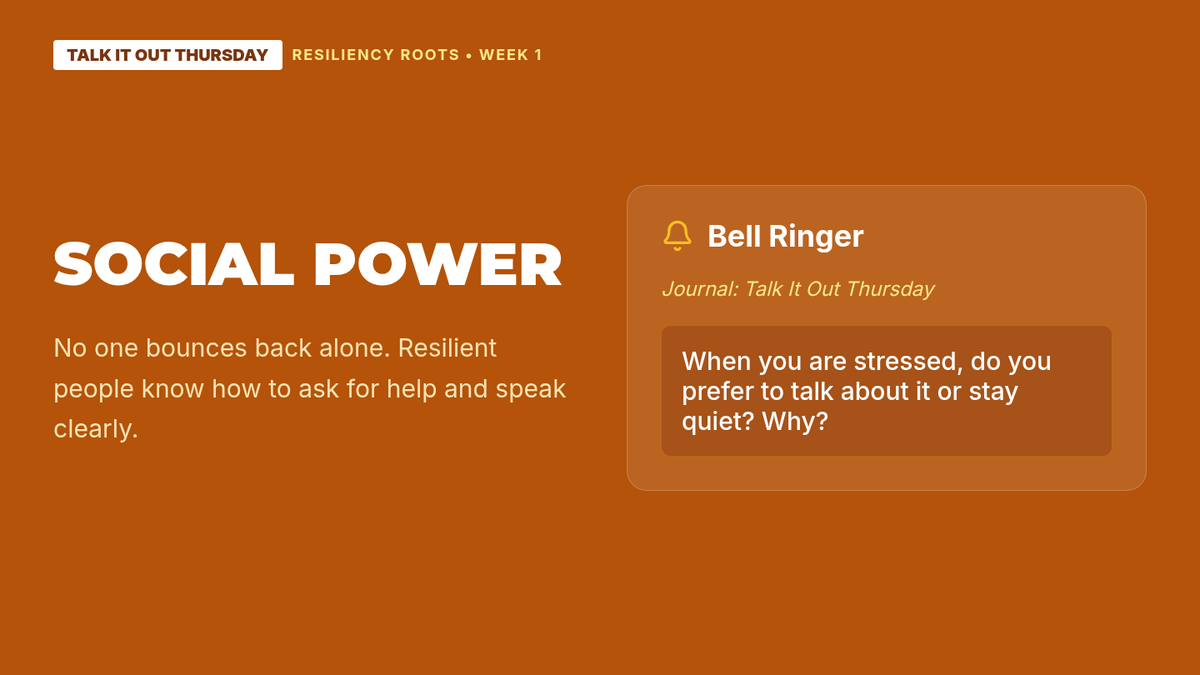
Teaches communication skills and conflict resolution as vital tools for navigating social stress and maintaining support networks.
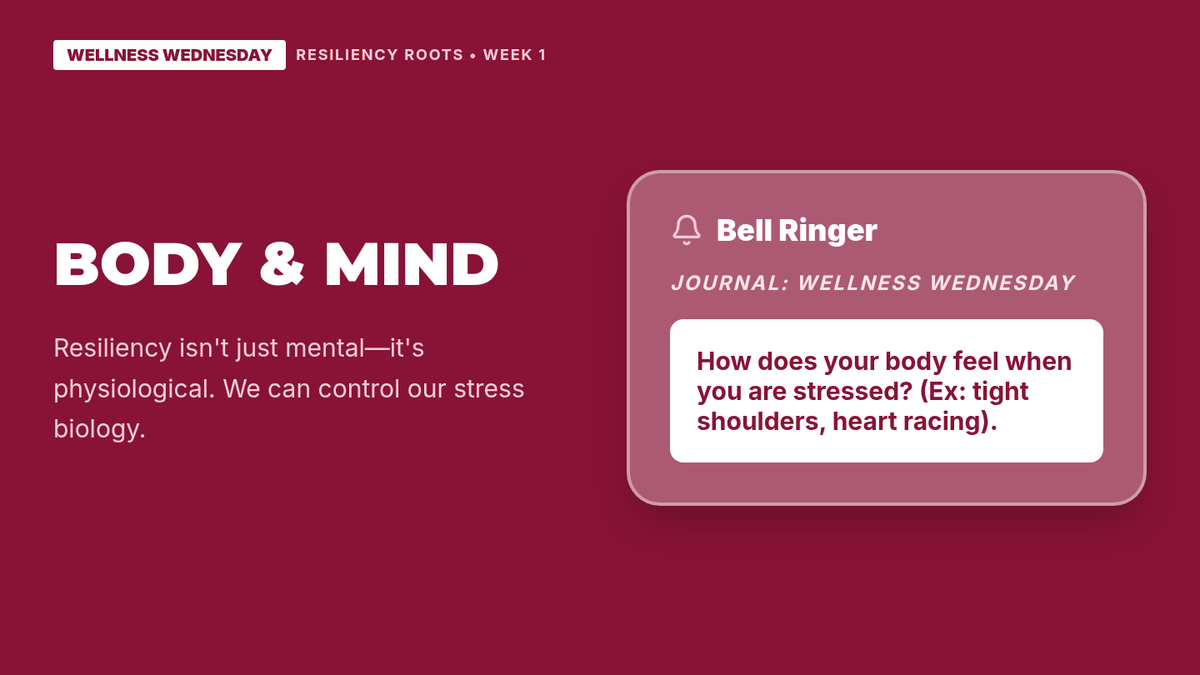
Covers physical and mental wellness strategies, including breathing exercises and healthy habits, to maintain a resilient body and mind.
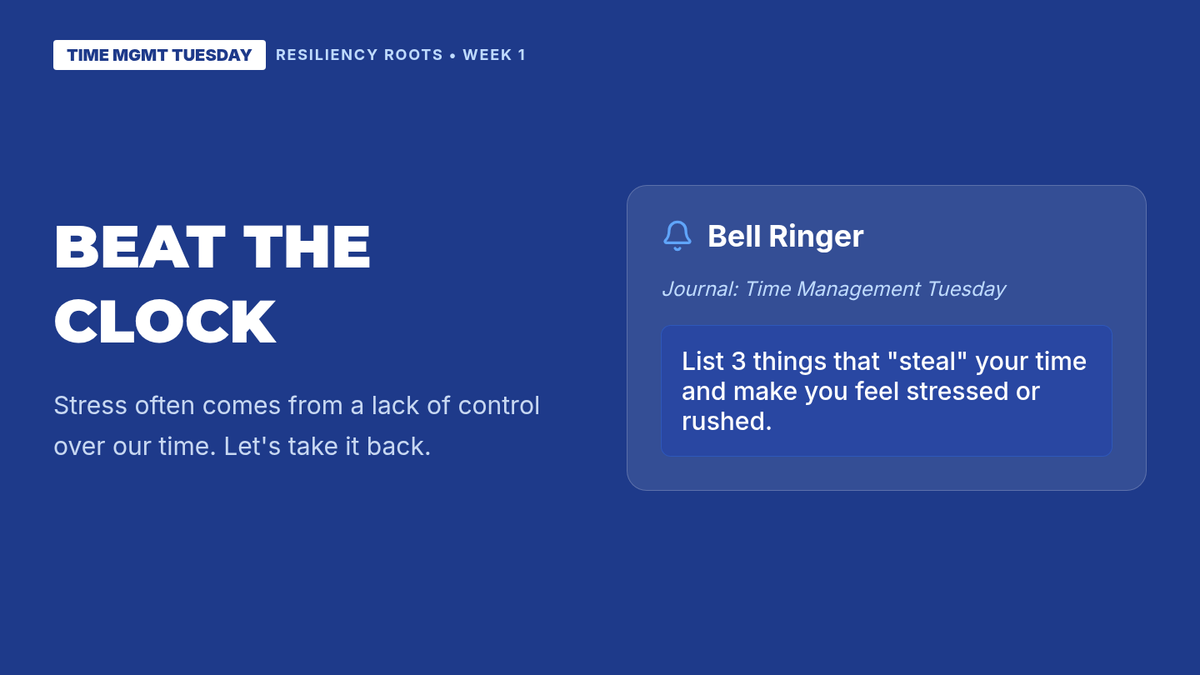
Explores how effective scheduling and prioritization can reduce stress and prevent burnout.
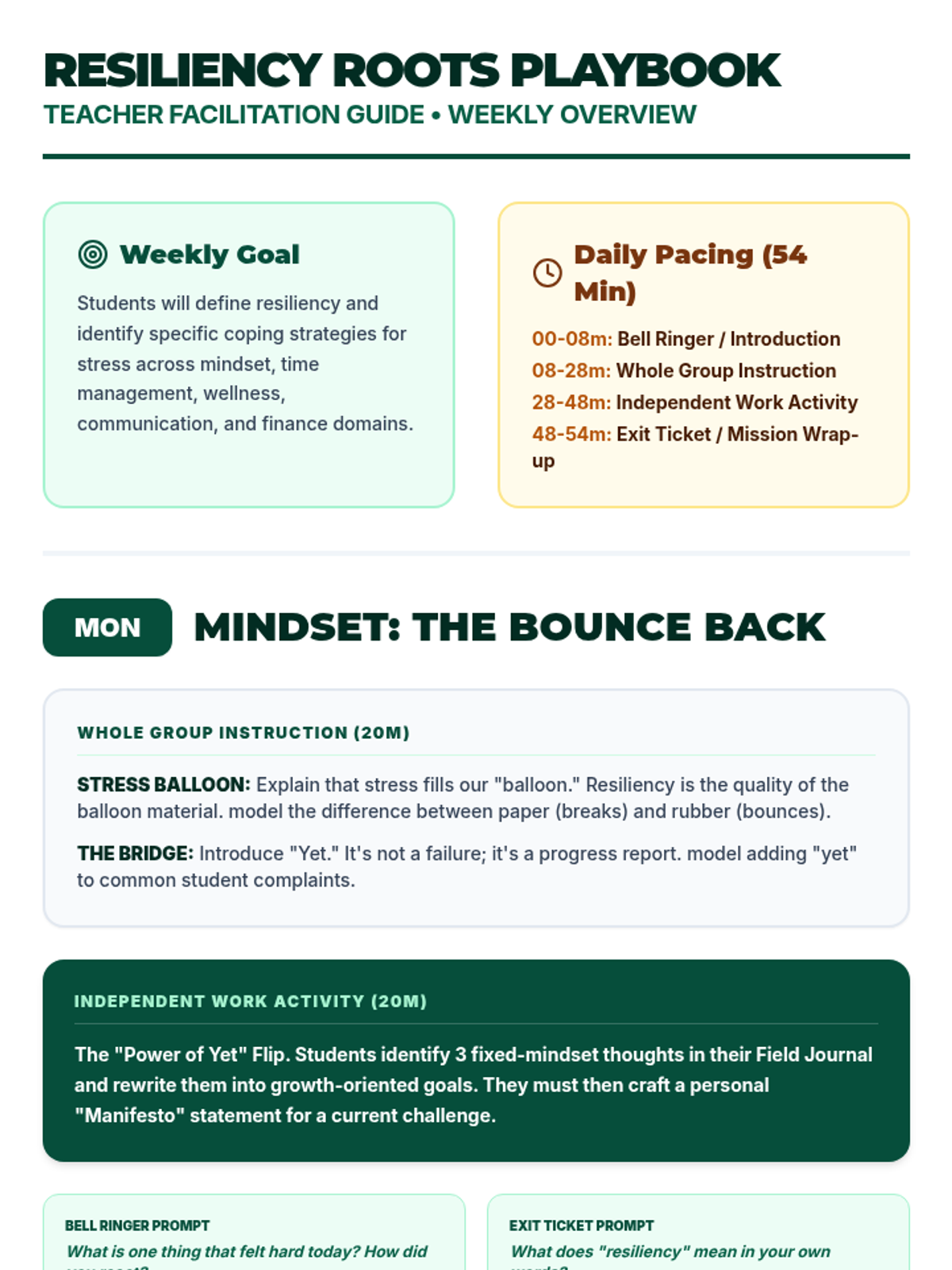
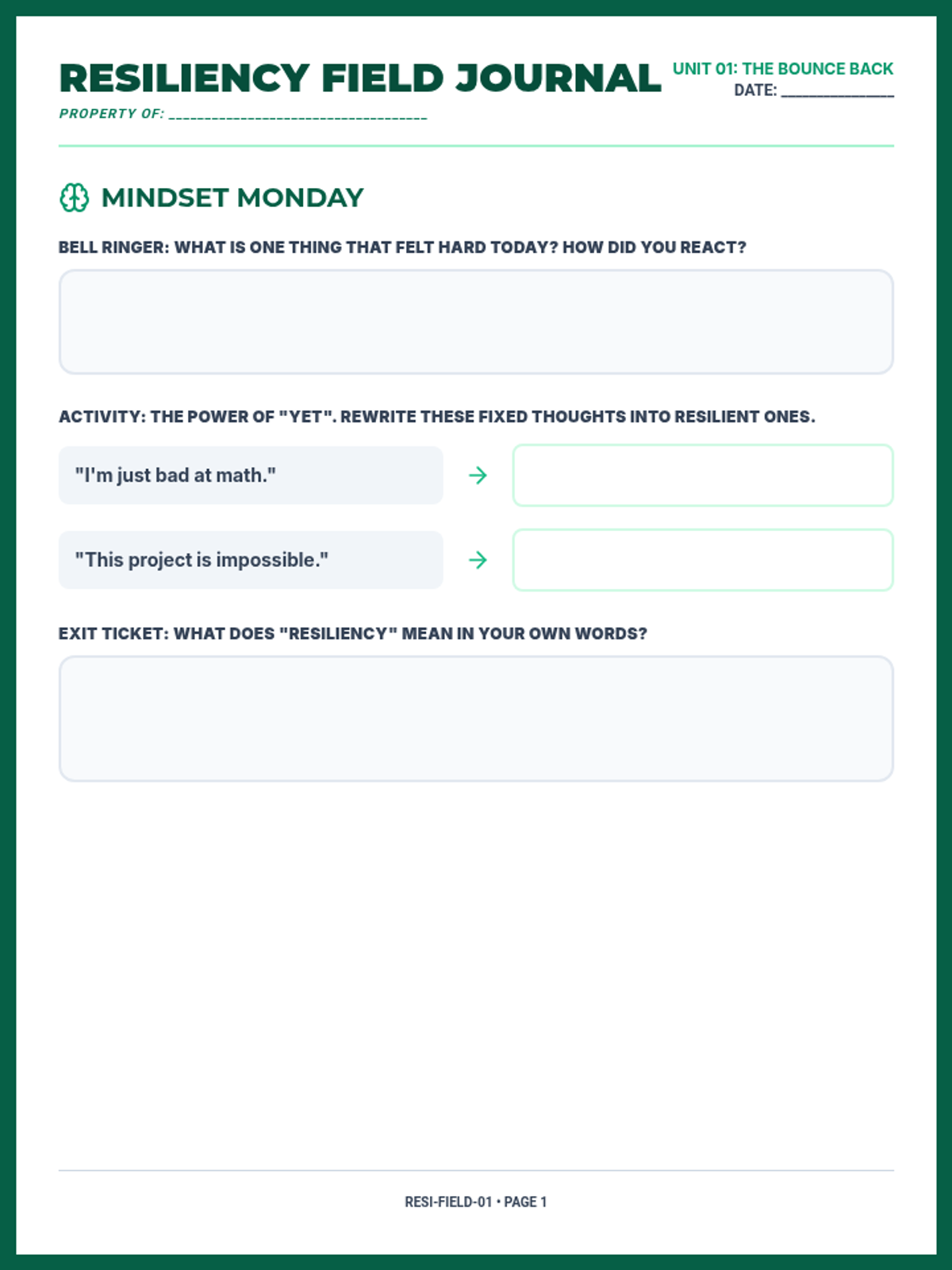
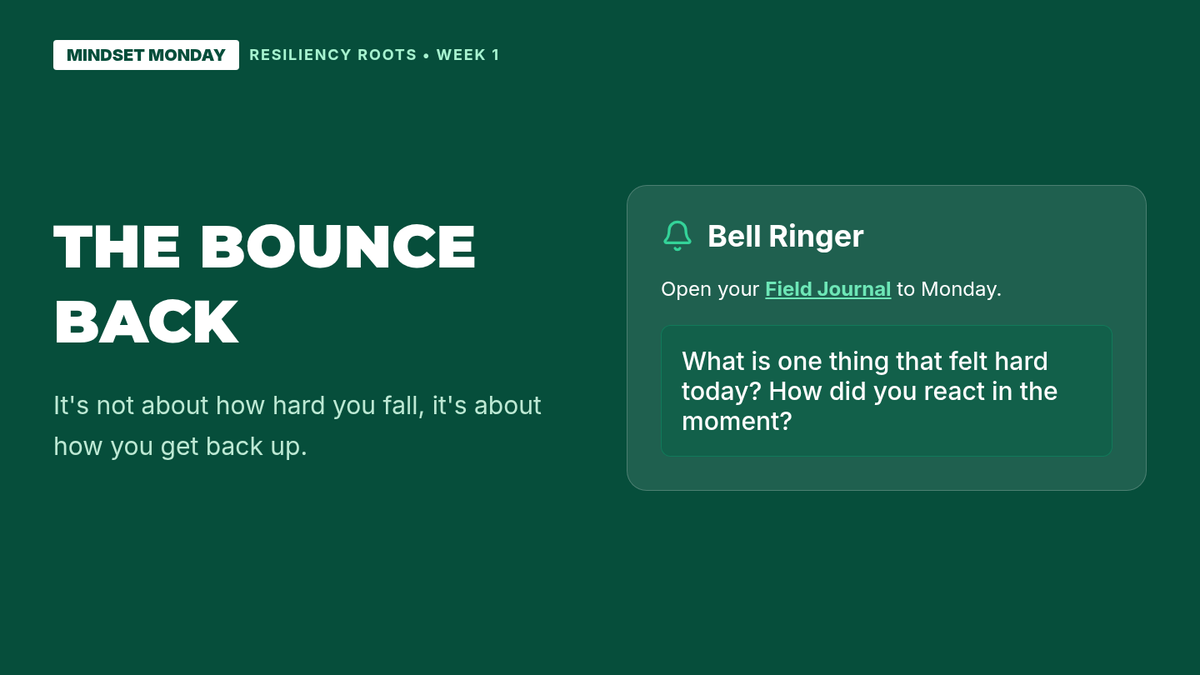
Focuses on developing a growth mindset and the 'Power of Yet' to build mental toughness and perspective when facing setbacks.
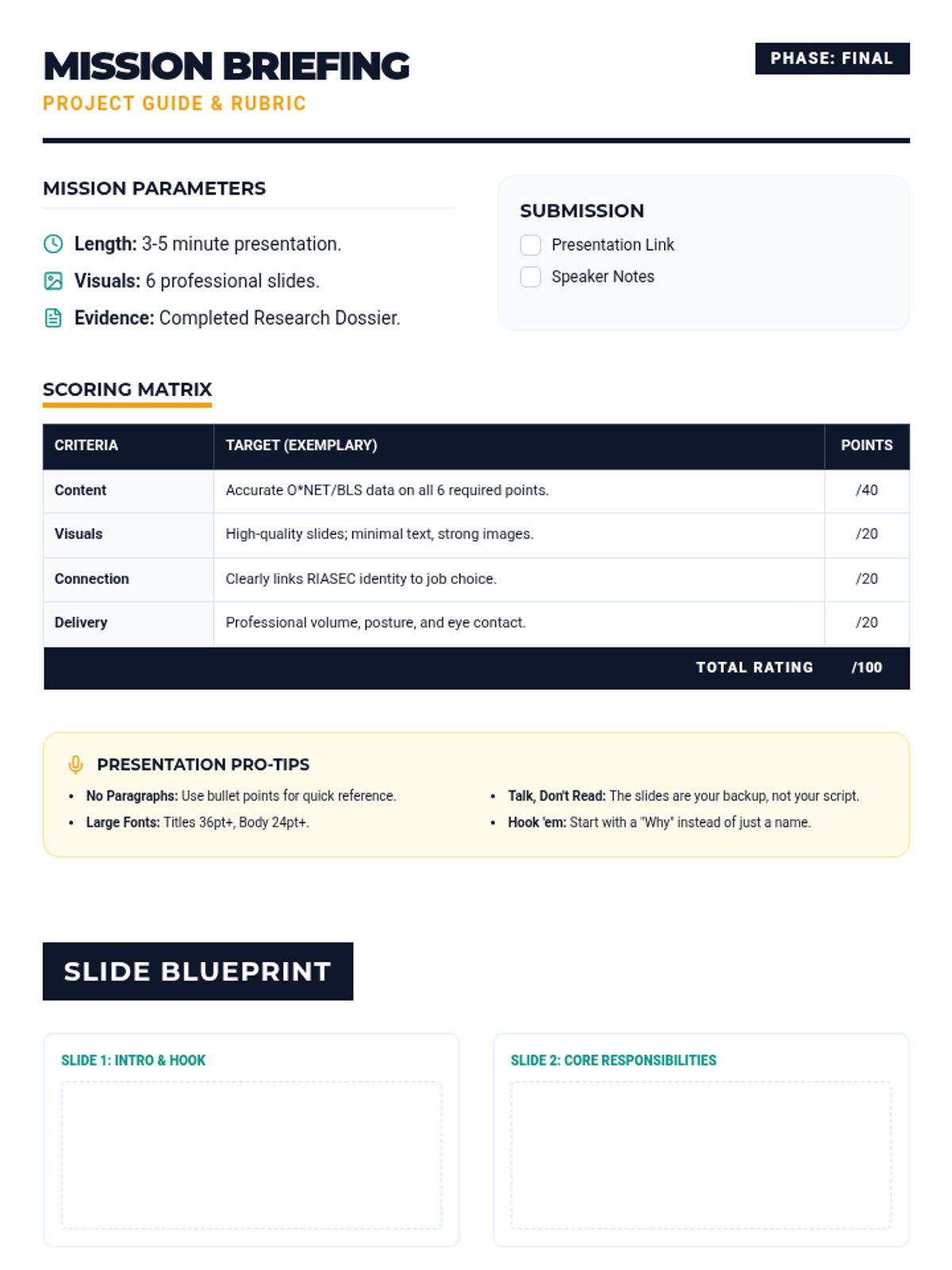
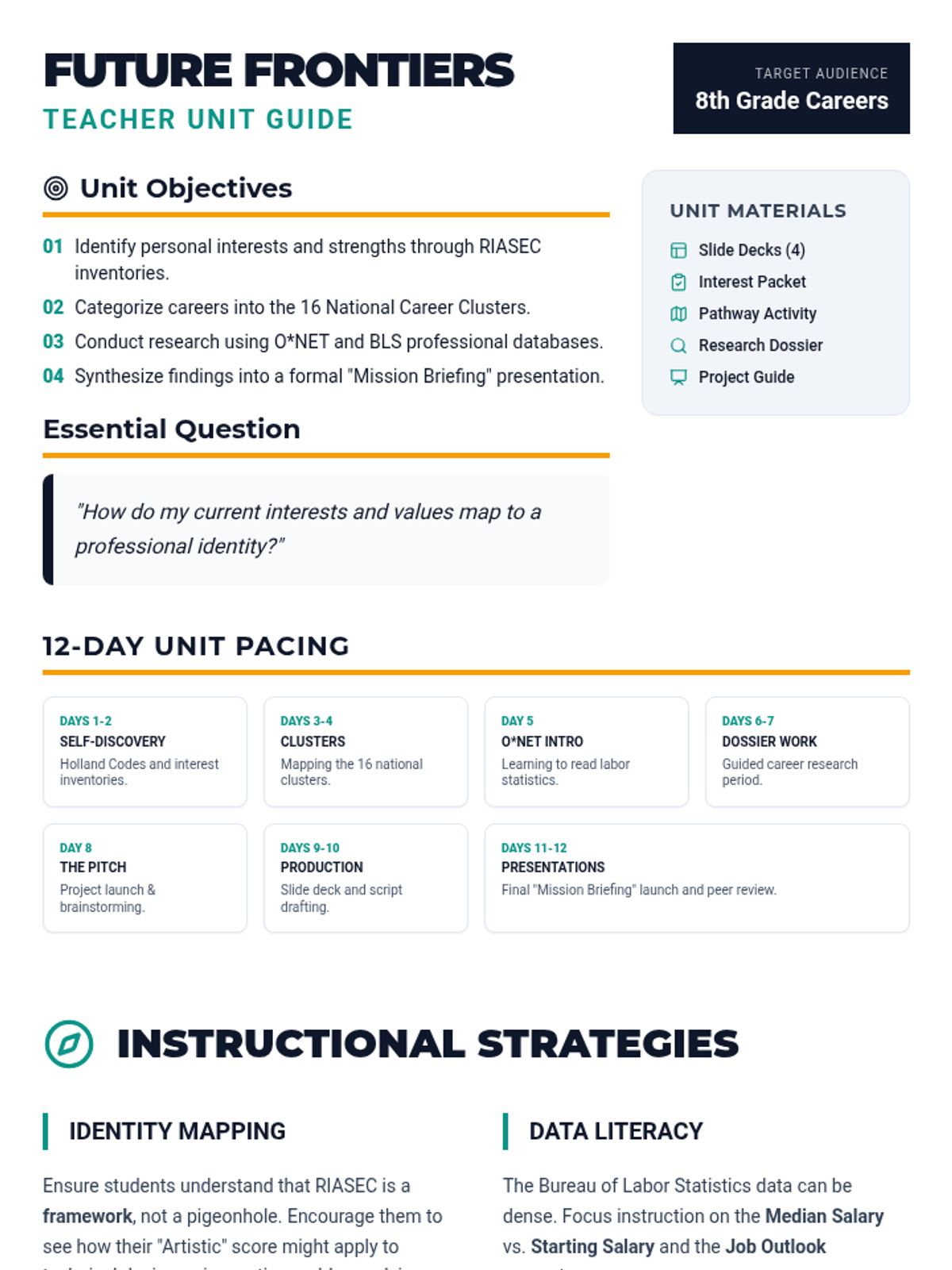
The culminating project where students synthesize their research into a presentation about their future career choice.
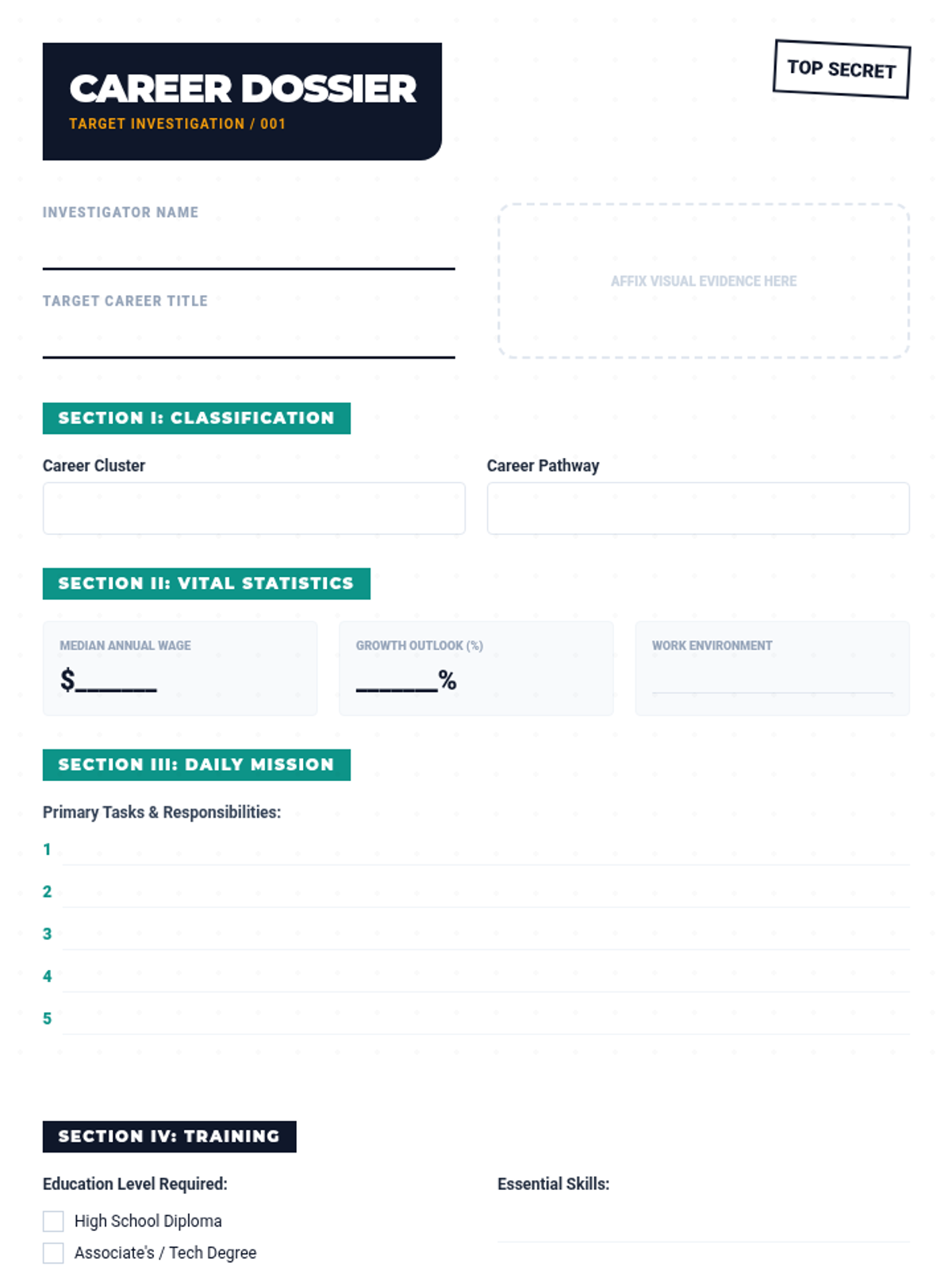
Guided research using various tools to understand the day-to-day duties, education requirements, and salary of specific careers.
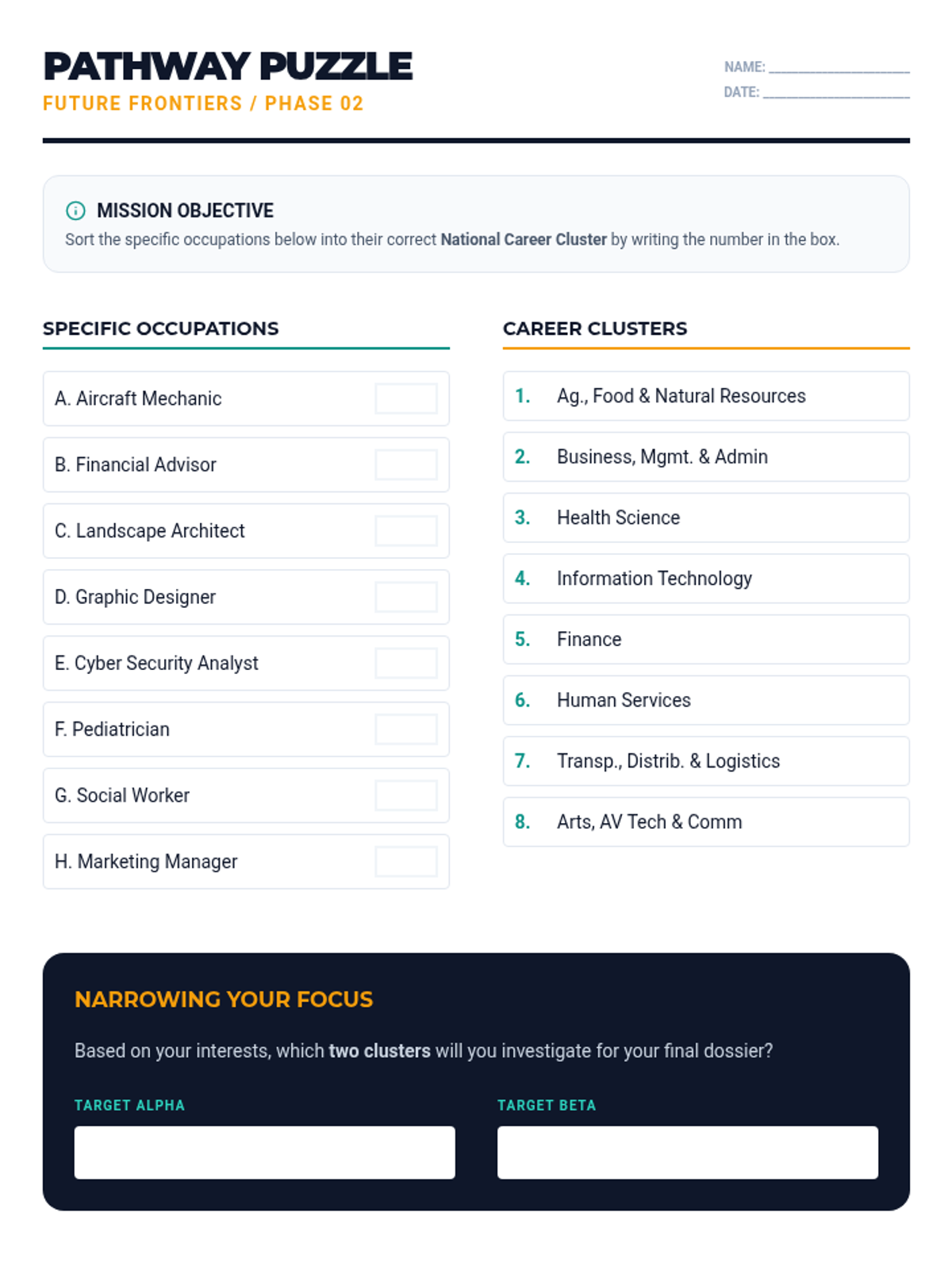
An exploration of the 16 national career clusters and how different jobs fit into specific pathways.
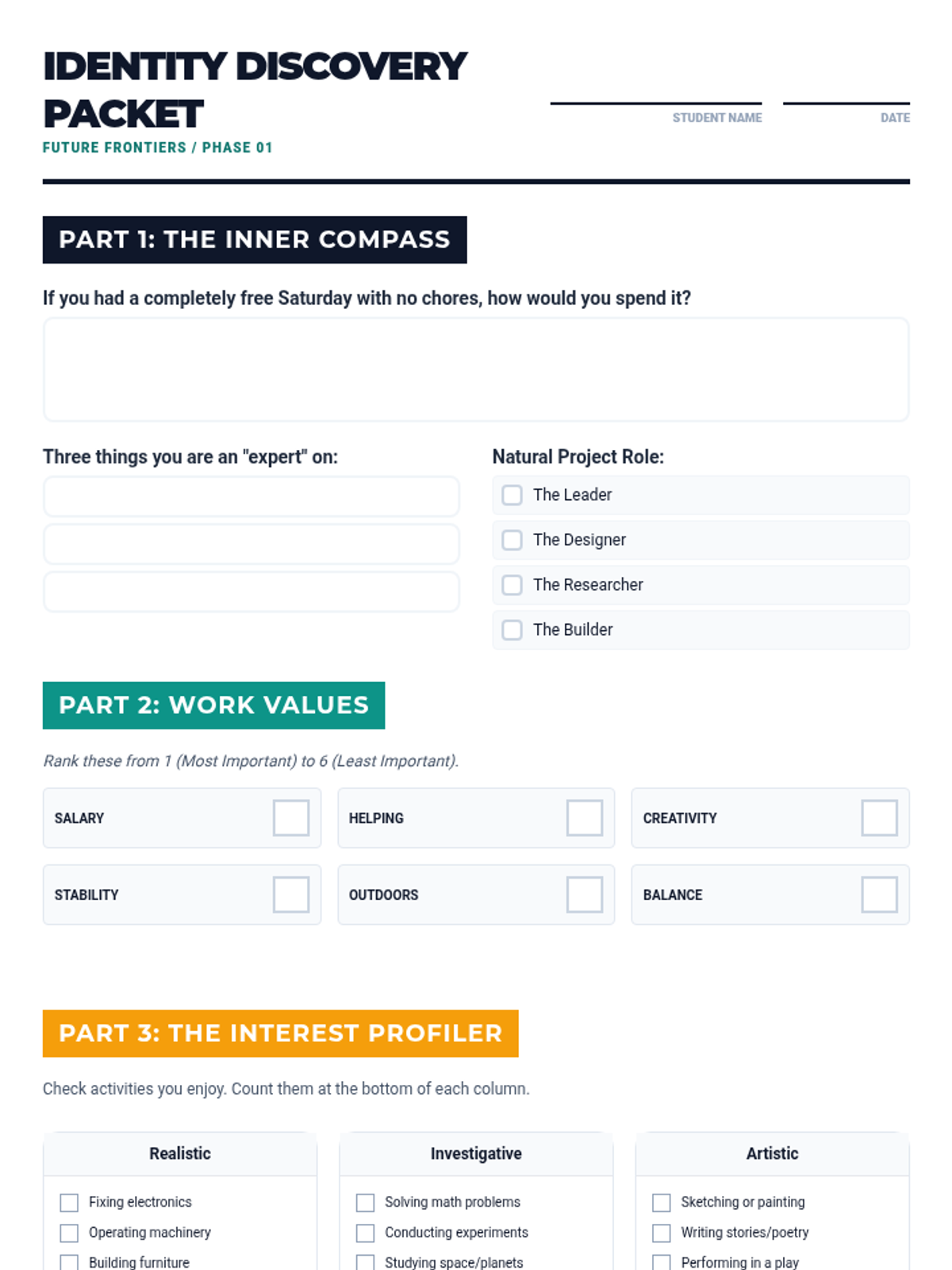
Students will complete interest inventories to identify their strengths, values, and potential career matches.
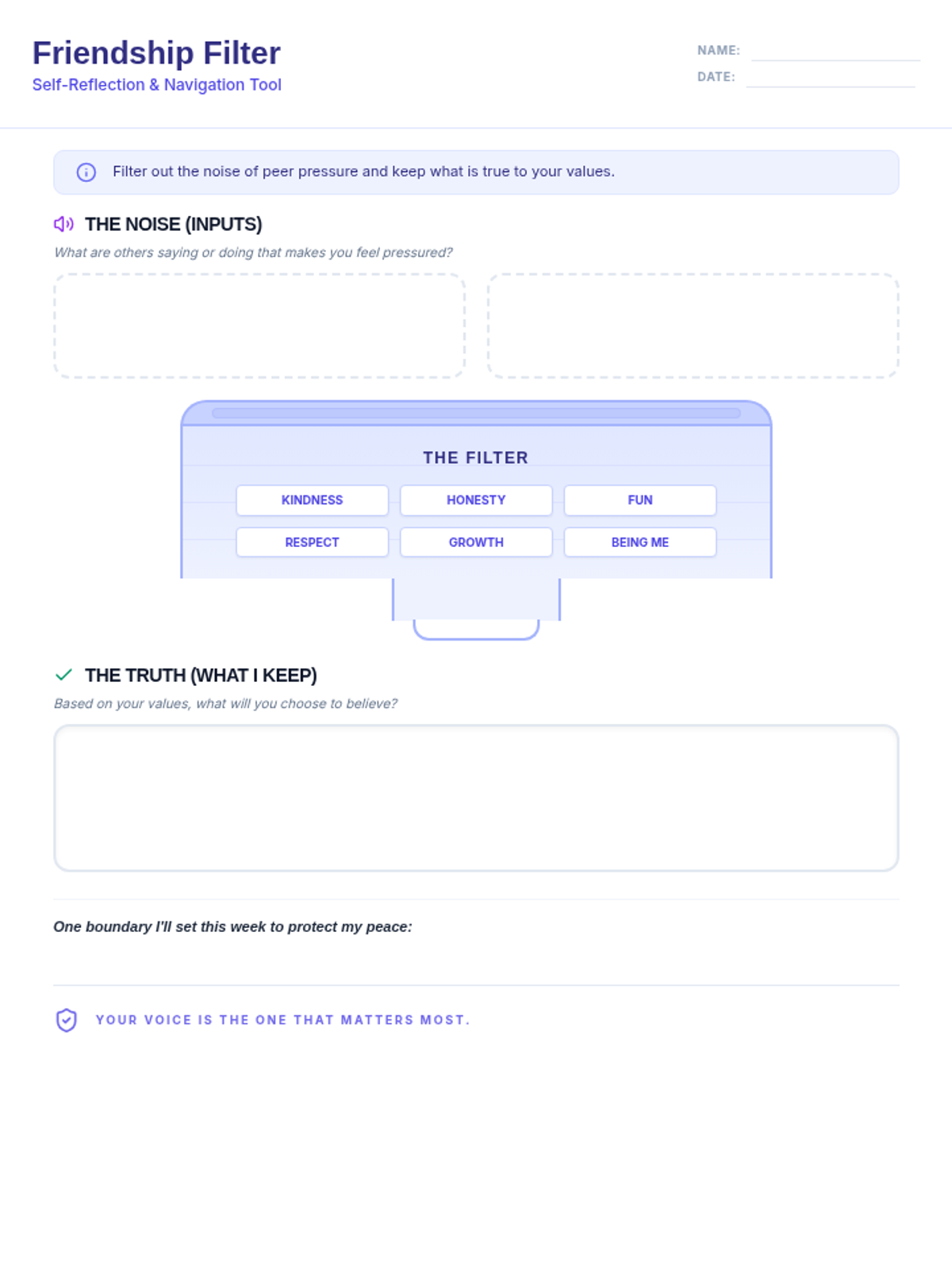
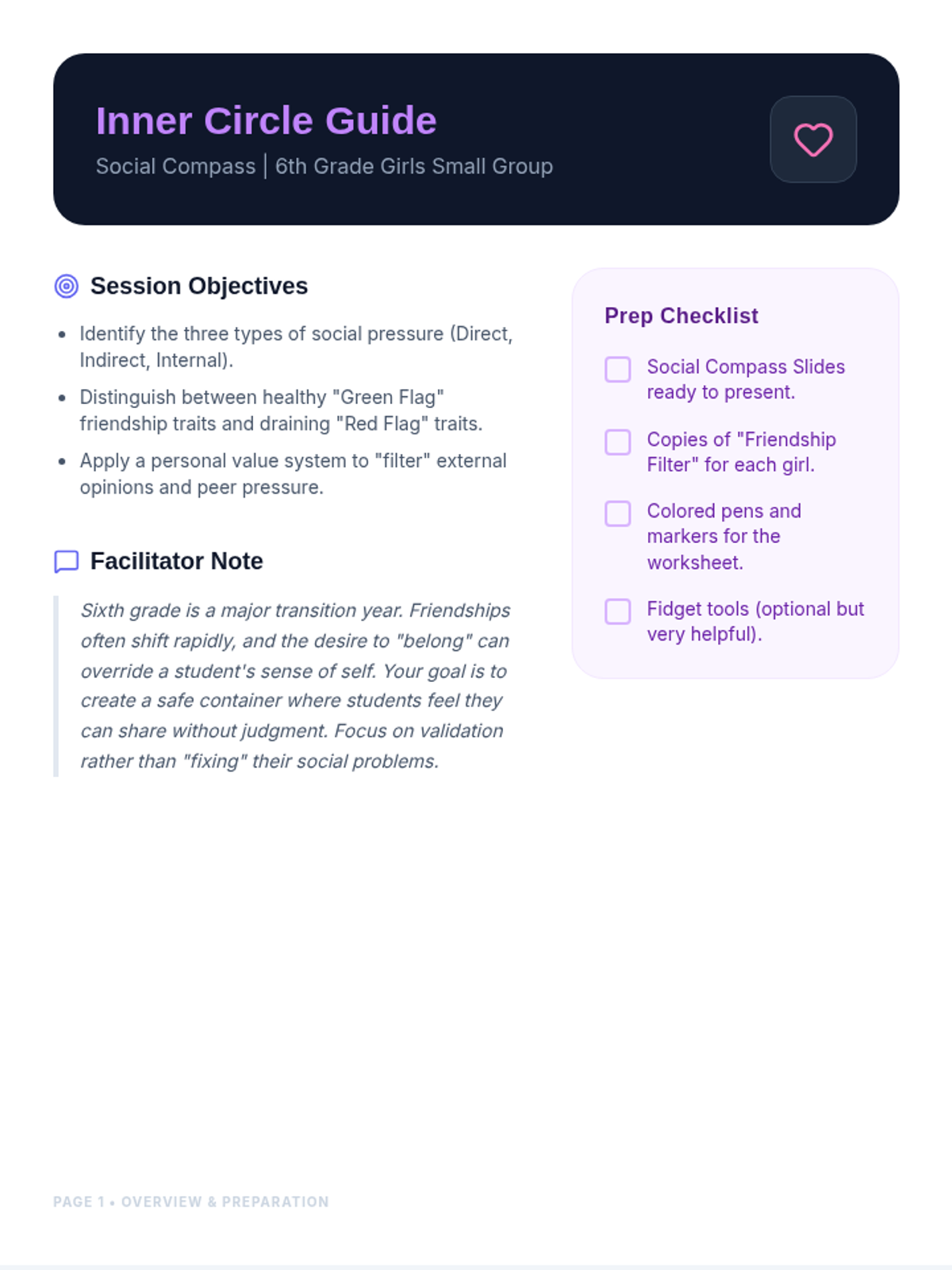
A small group session for 6th-grade girls focused on building self-confidence by navigating social dynamics, understanding peer pressure, and identifying healthy friendship traits.
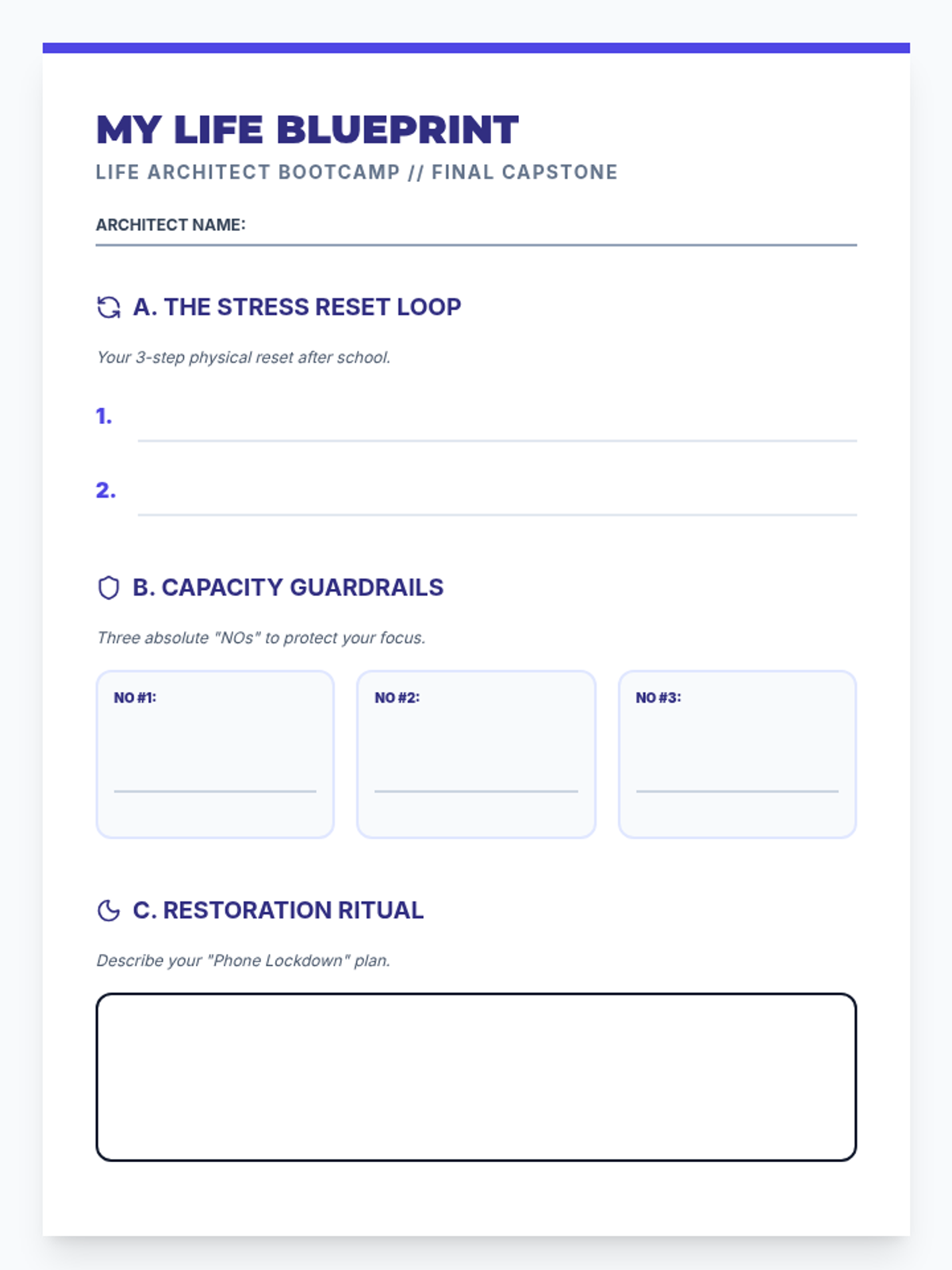
Students assemble their 'Ultimate Life Blueprint' and create a 'Pocket Panic Card' for quick stress-relief during high-pressure moments like finals week.
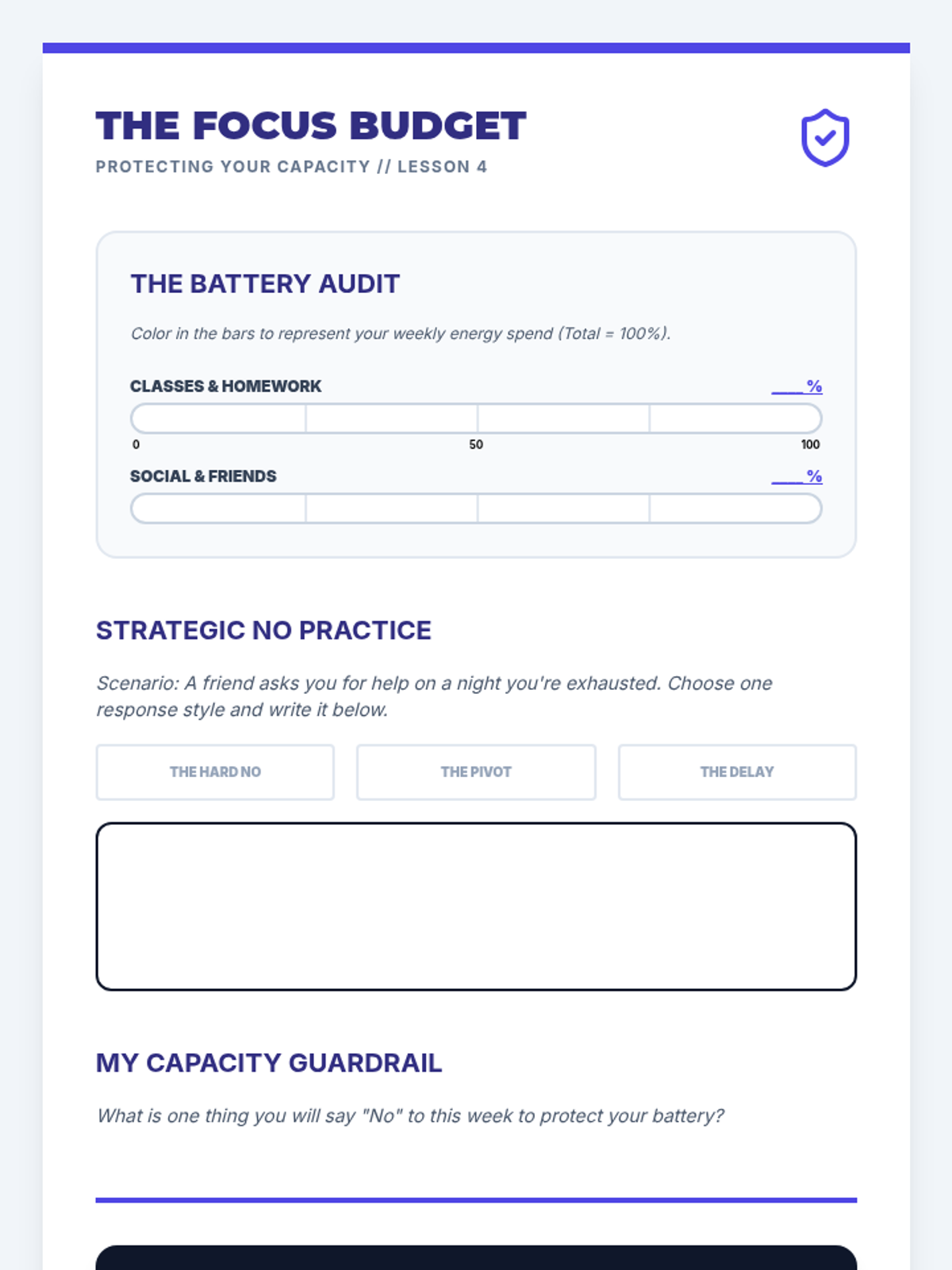
Teaches the 'Power of No' to handle FOMO and over-scheduling, helping students protect their time for the things that actually matter to them.
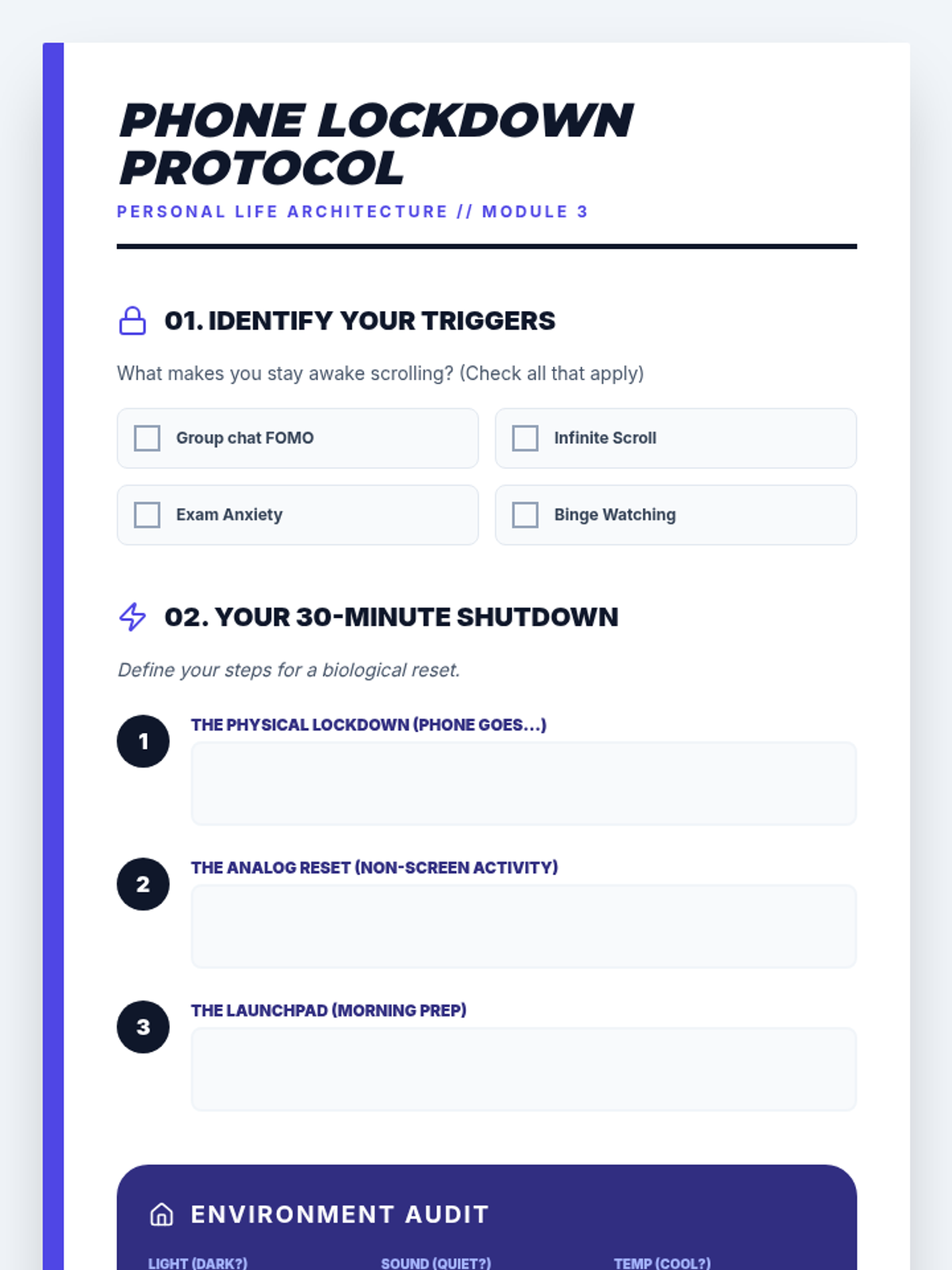
Explores why sleep is a superpower for grades and mood, helping students design a 'Phone Lockdown' ritual to beat late-night screen scrolling.
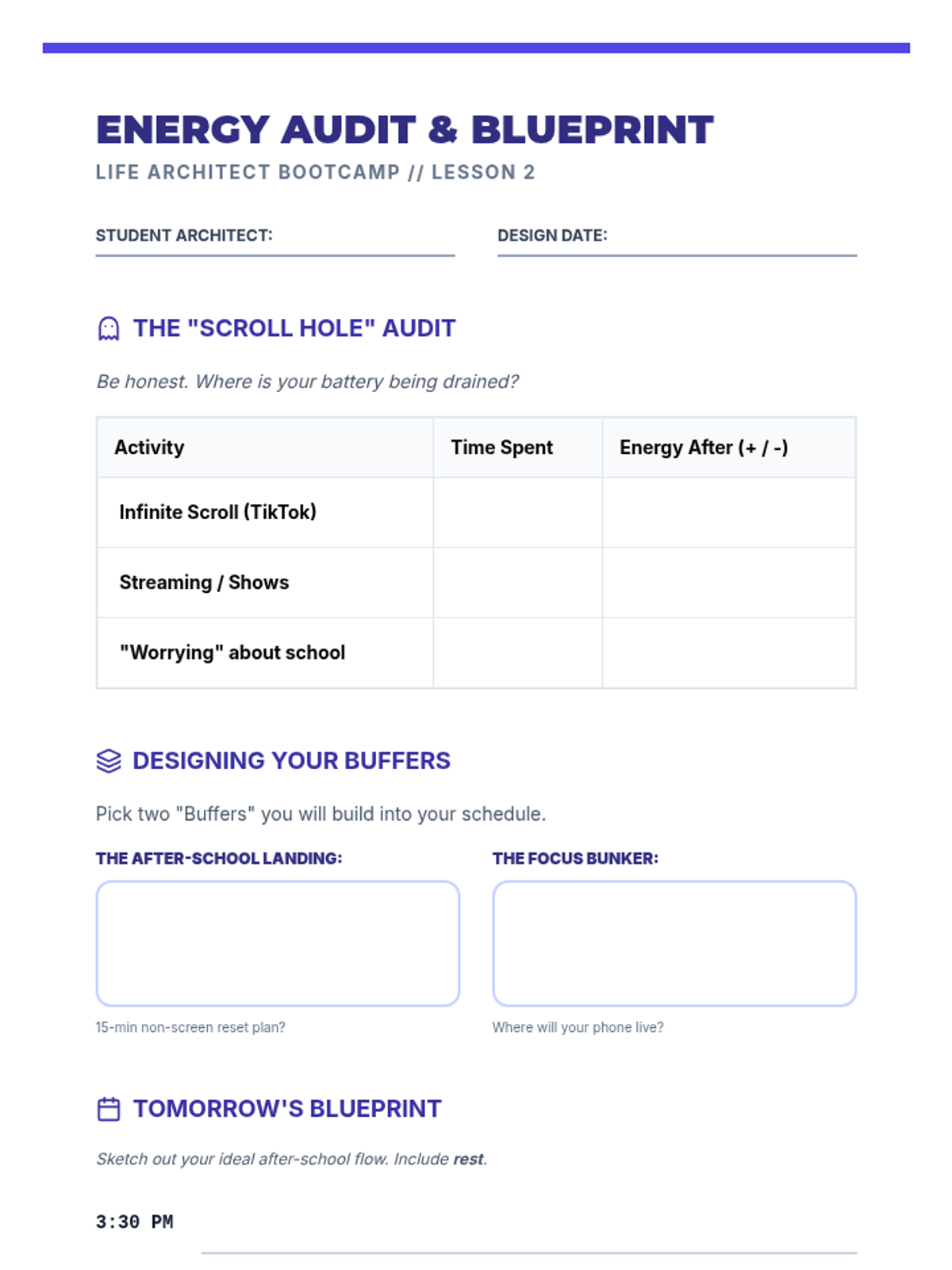
Moves beyond simple planners to teach 'energy auditing.' Students identify 'time thieves' like infinite scrolling and design a schedule that includes guilt-free rest.
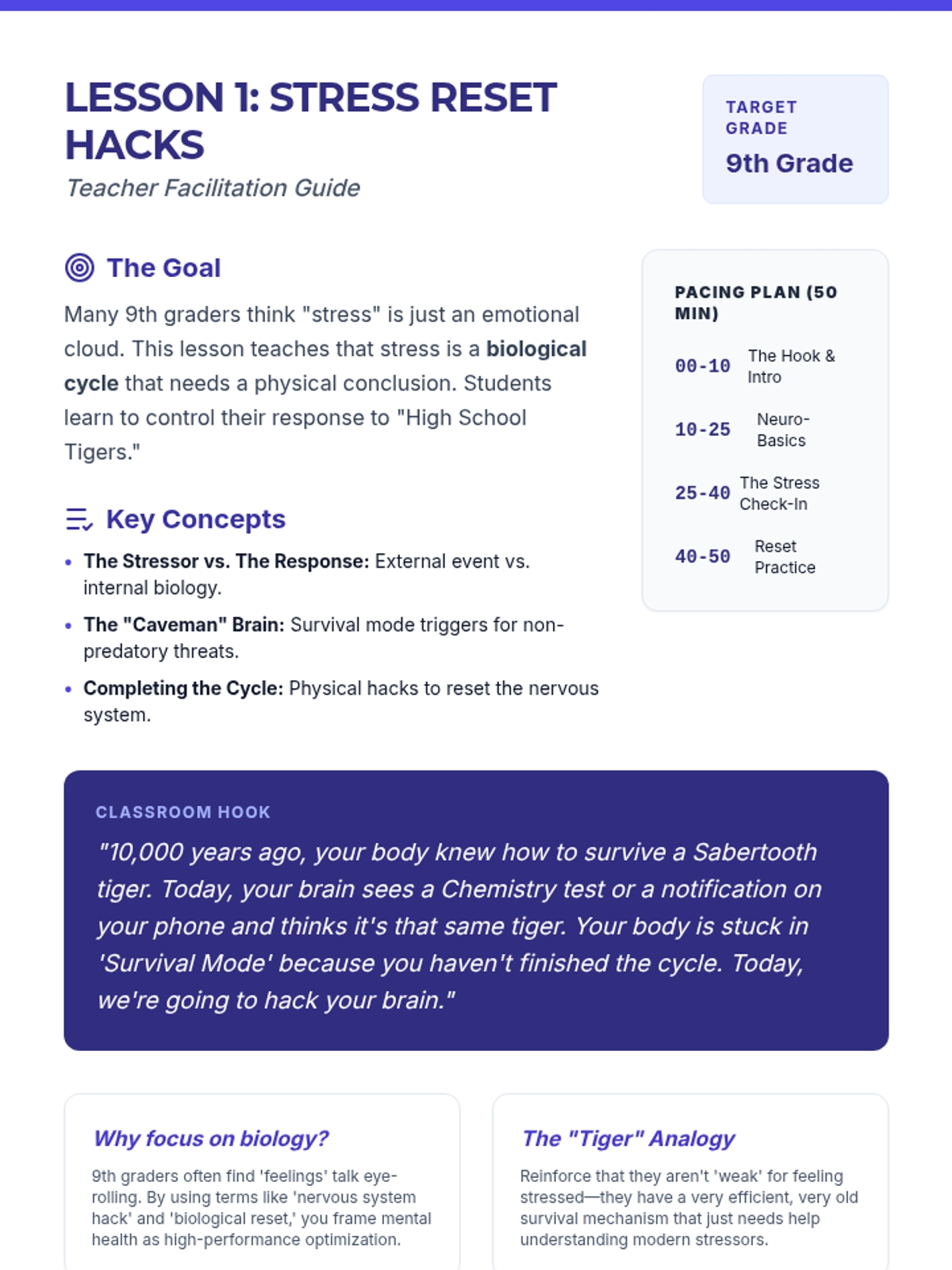
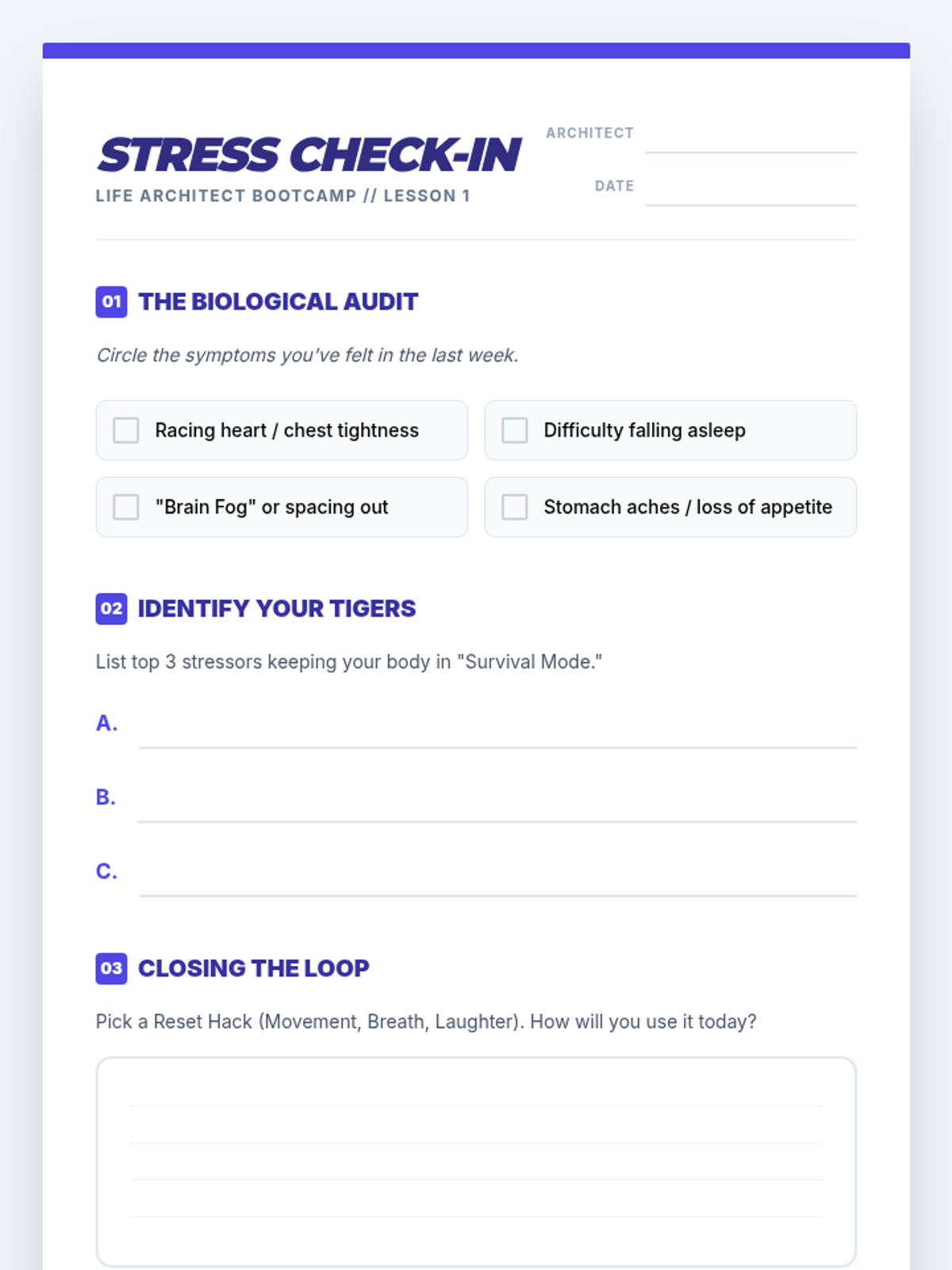
Students learn to tell the difference between 'stressors' (the math test) and the 'stress response' (the racing heart), practicing physical hacks to tell their brains they are safe.
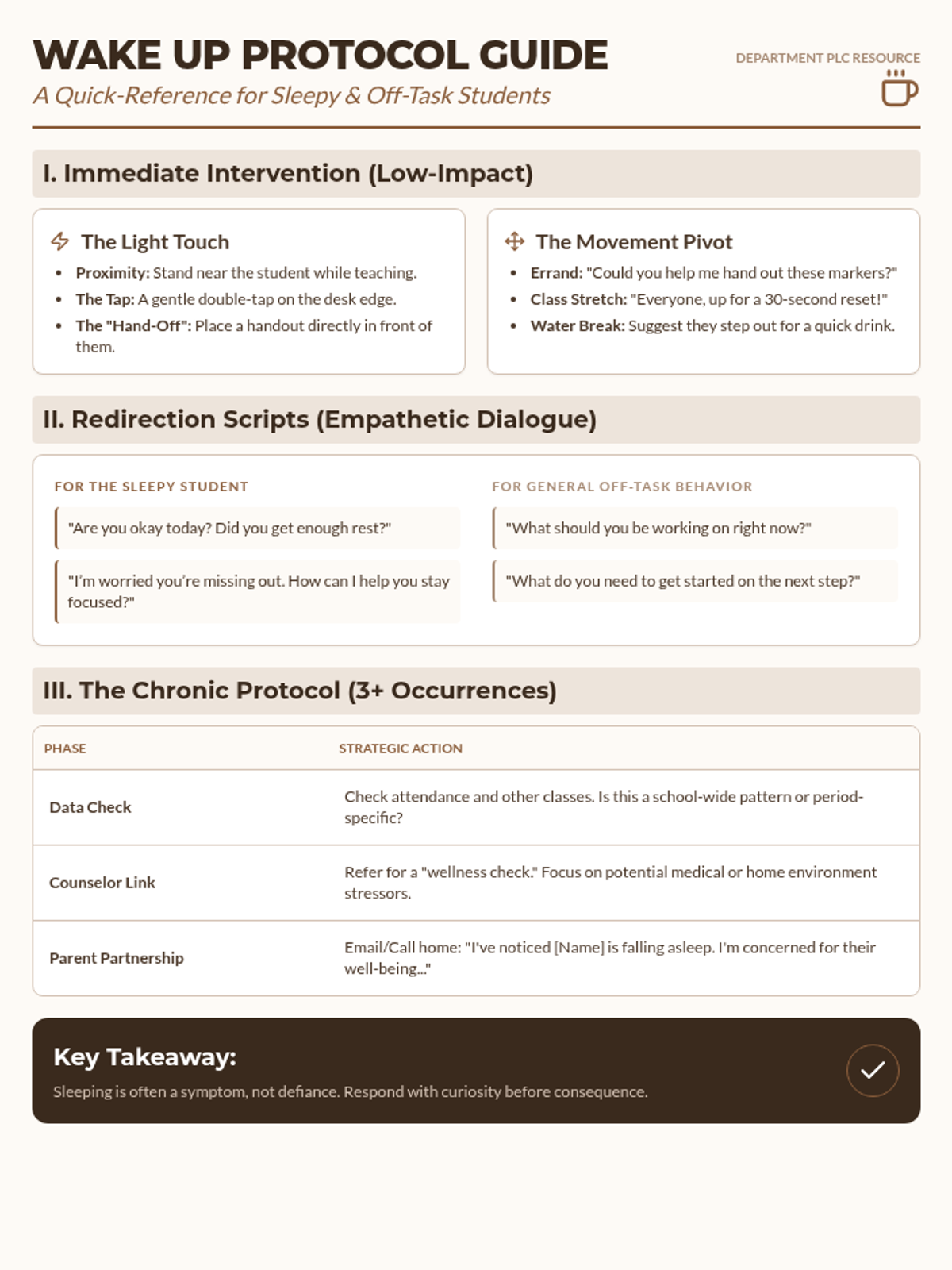
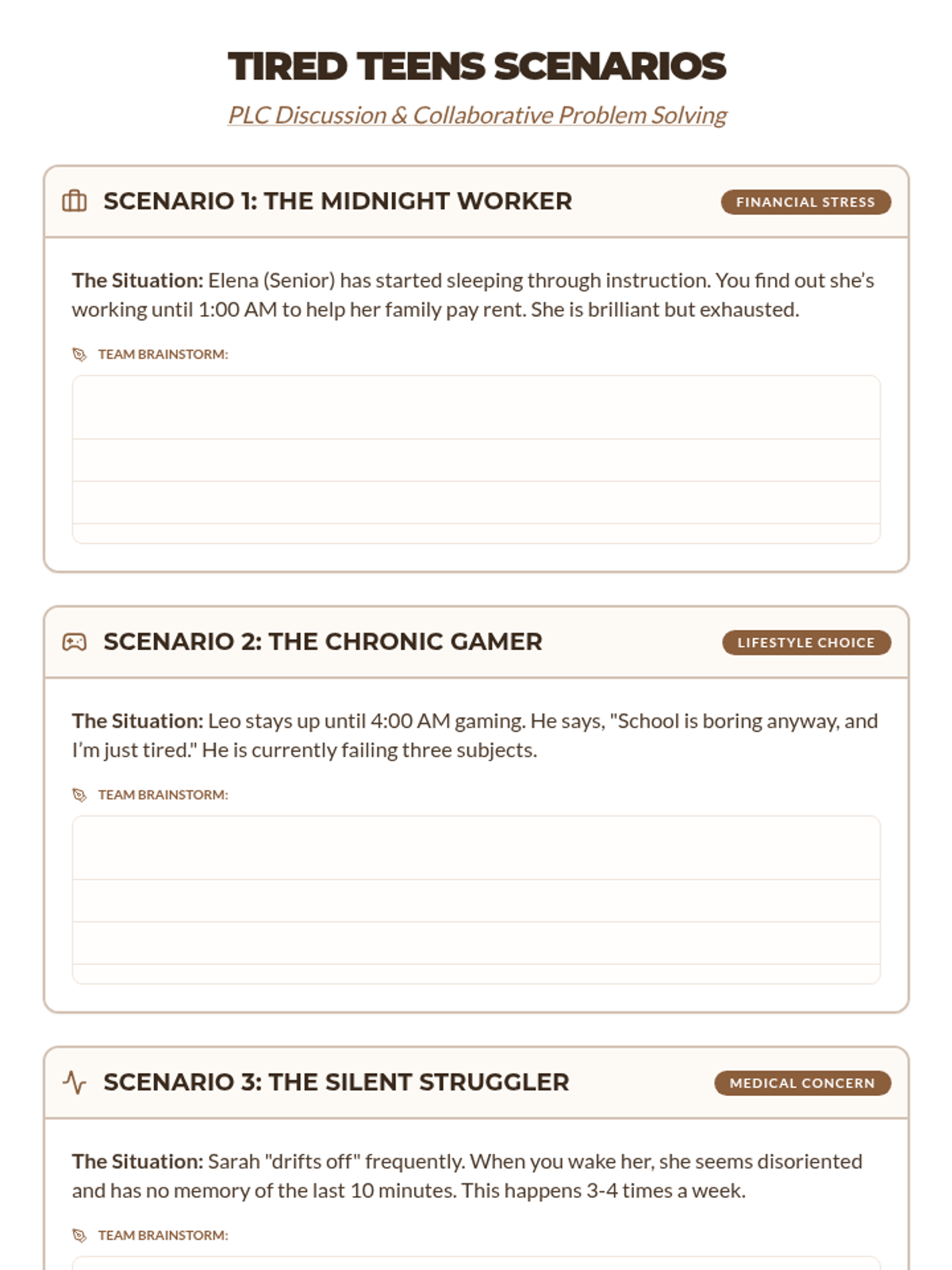
This lesson provides middle and high school teachers with actionable strategies for managing students who sleep in class, moving from frustration to empathetic problem-solving. It covers root causes, immediate intervention techniques, and long-term support systems.
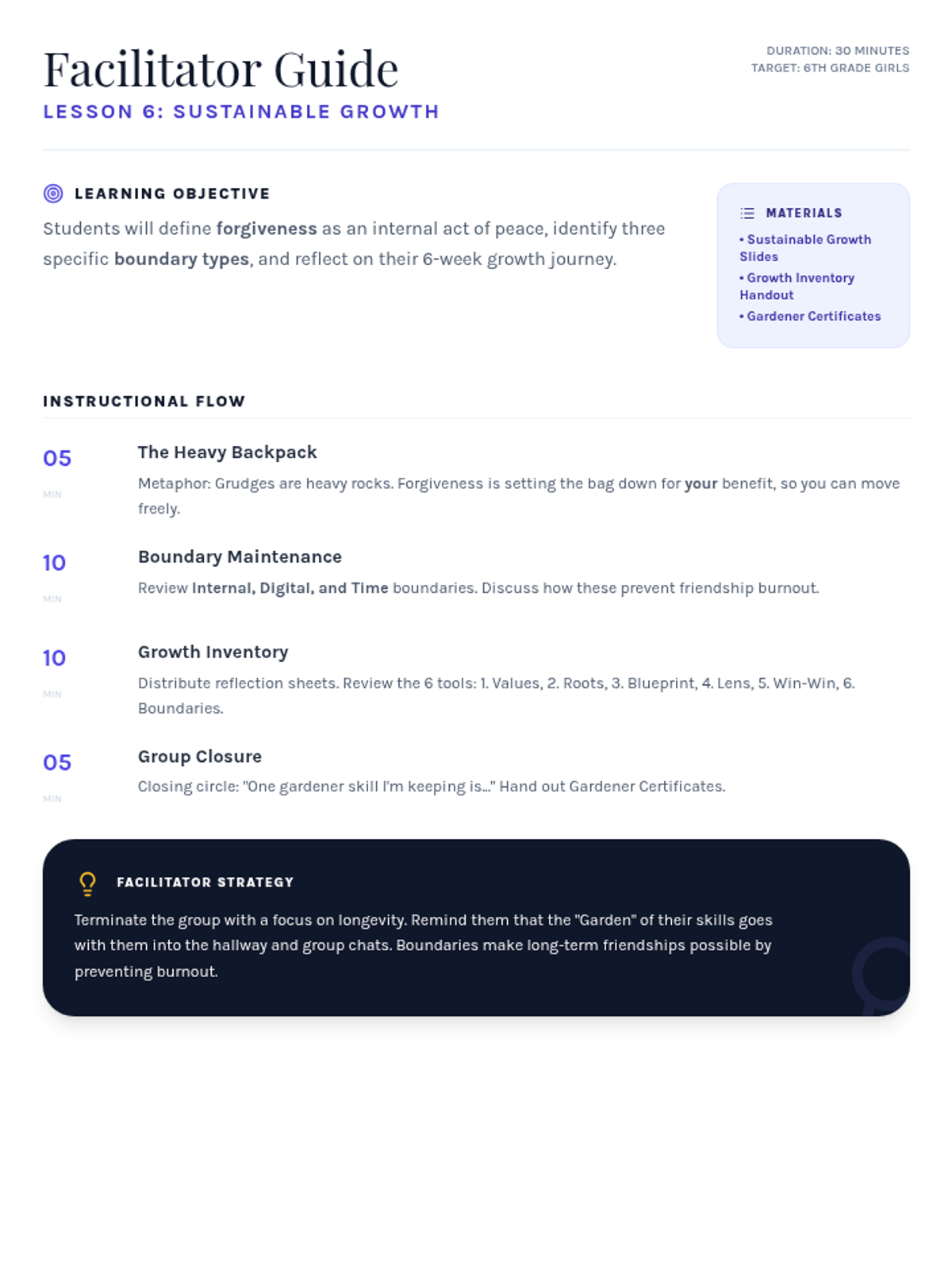
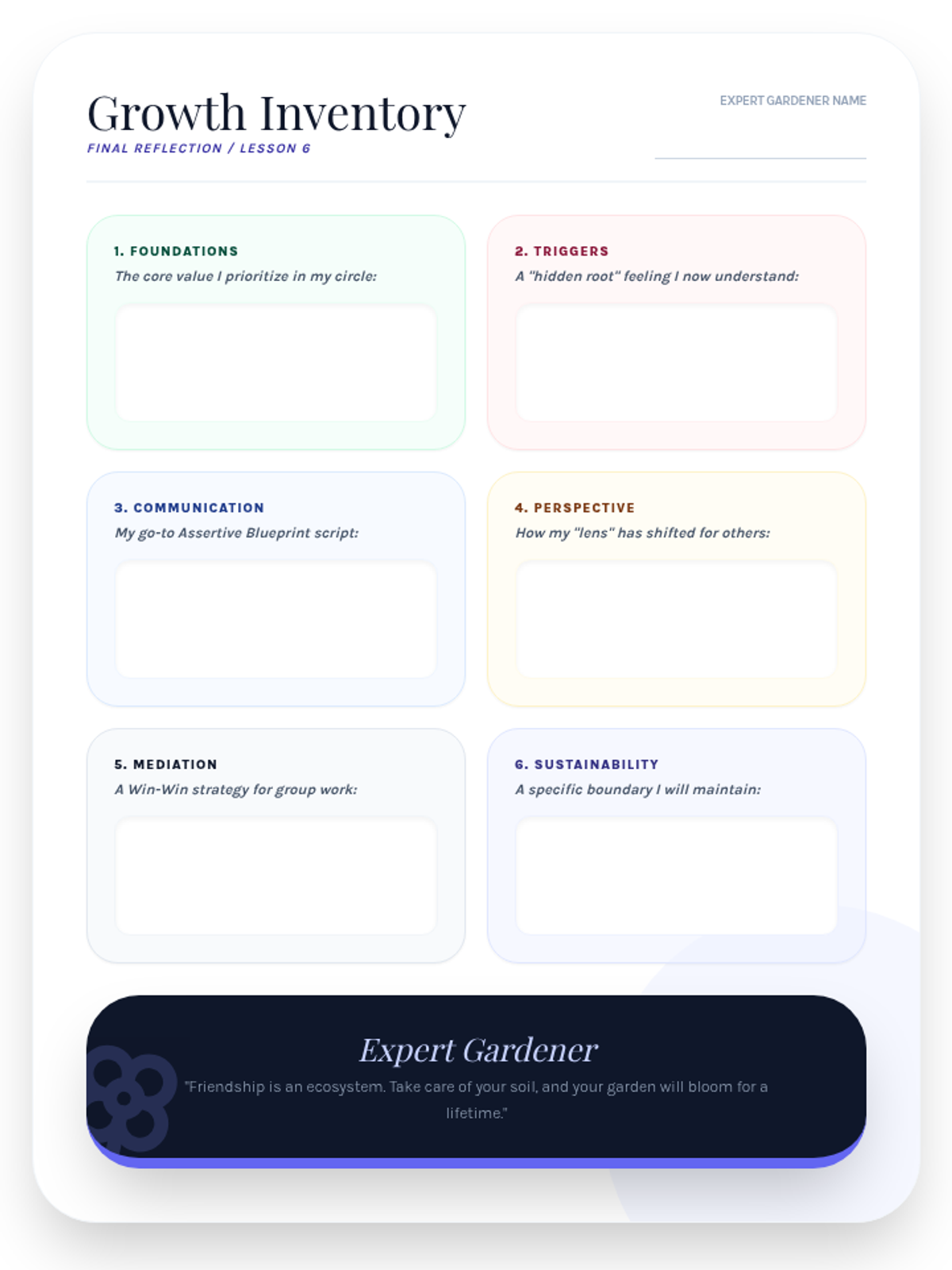
The final session focuses on maintaining healthy social boundaries, the role of forgiveness in growth, and group closure.
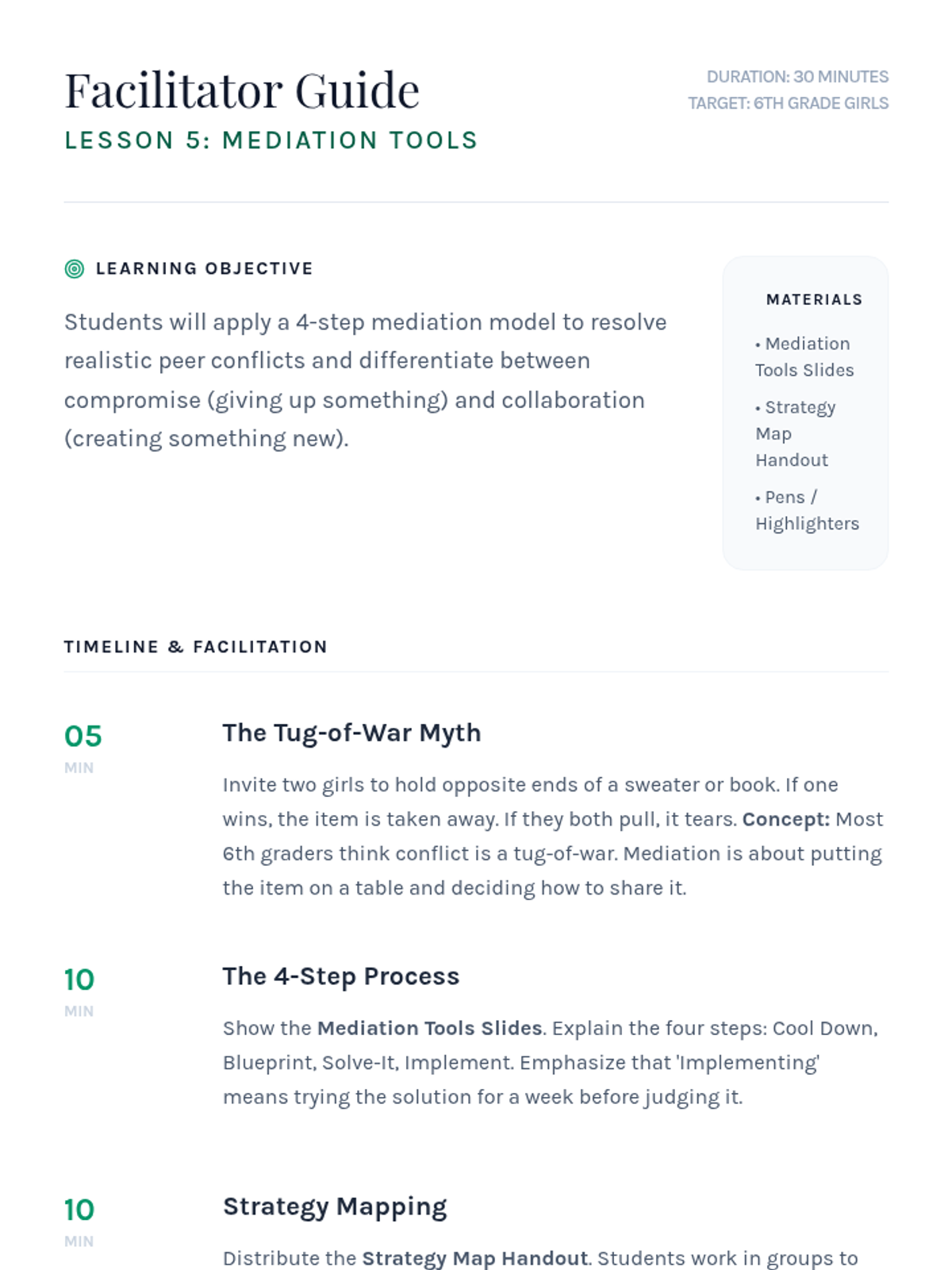
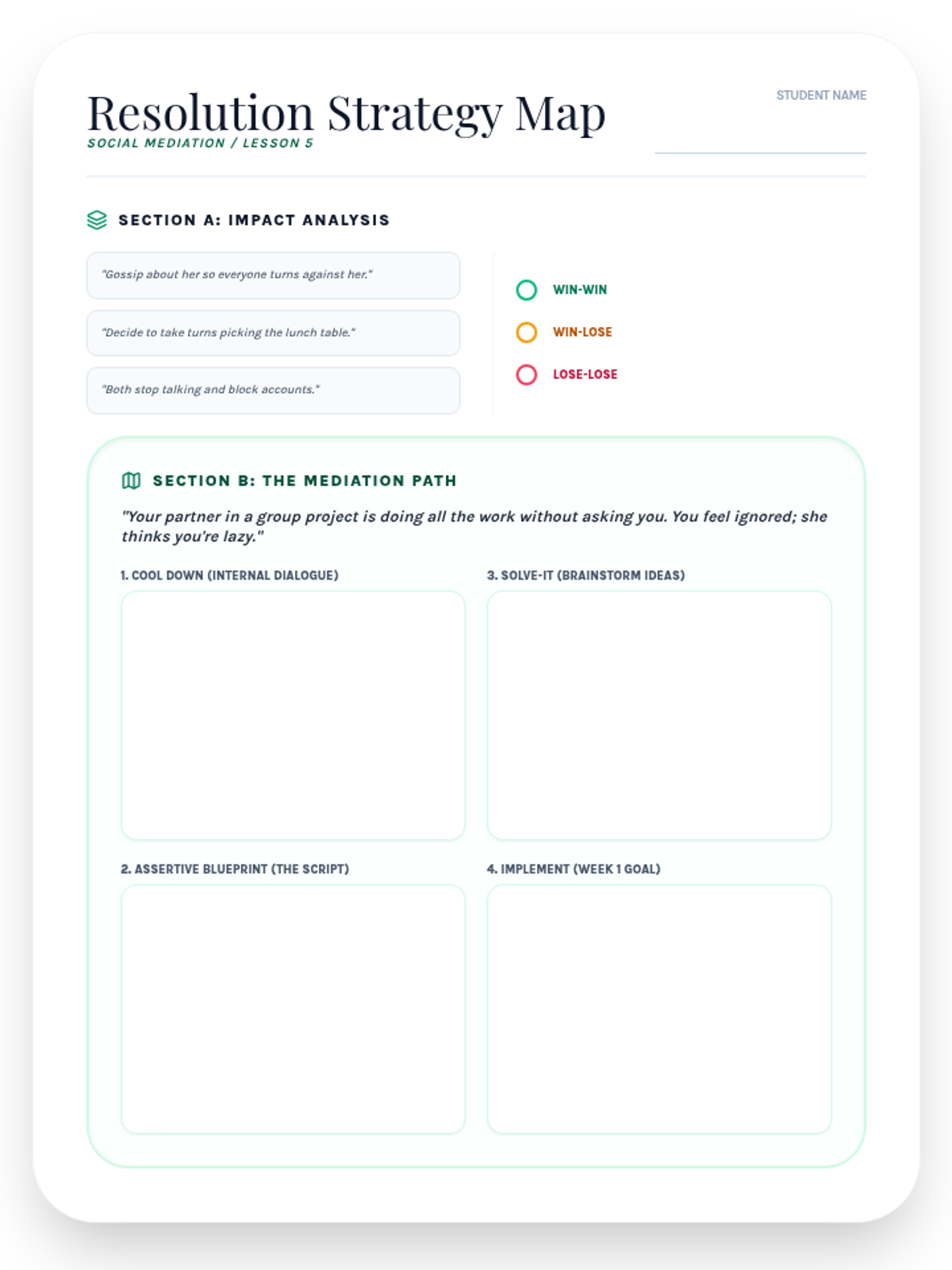
Students apply a conflict mediation model to realistic middle school scenarios, focusing on sustainable compromise and healthy boundaries.
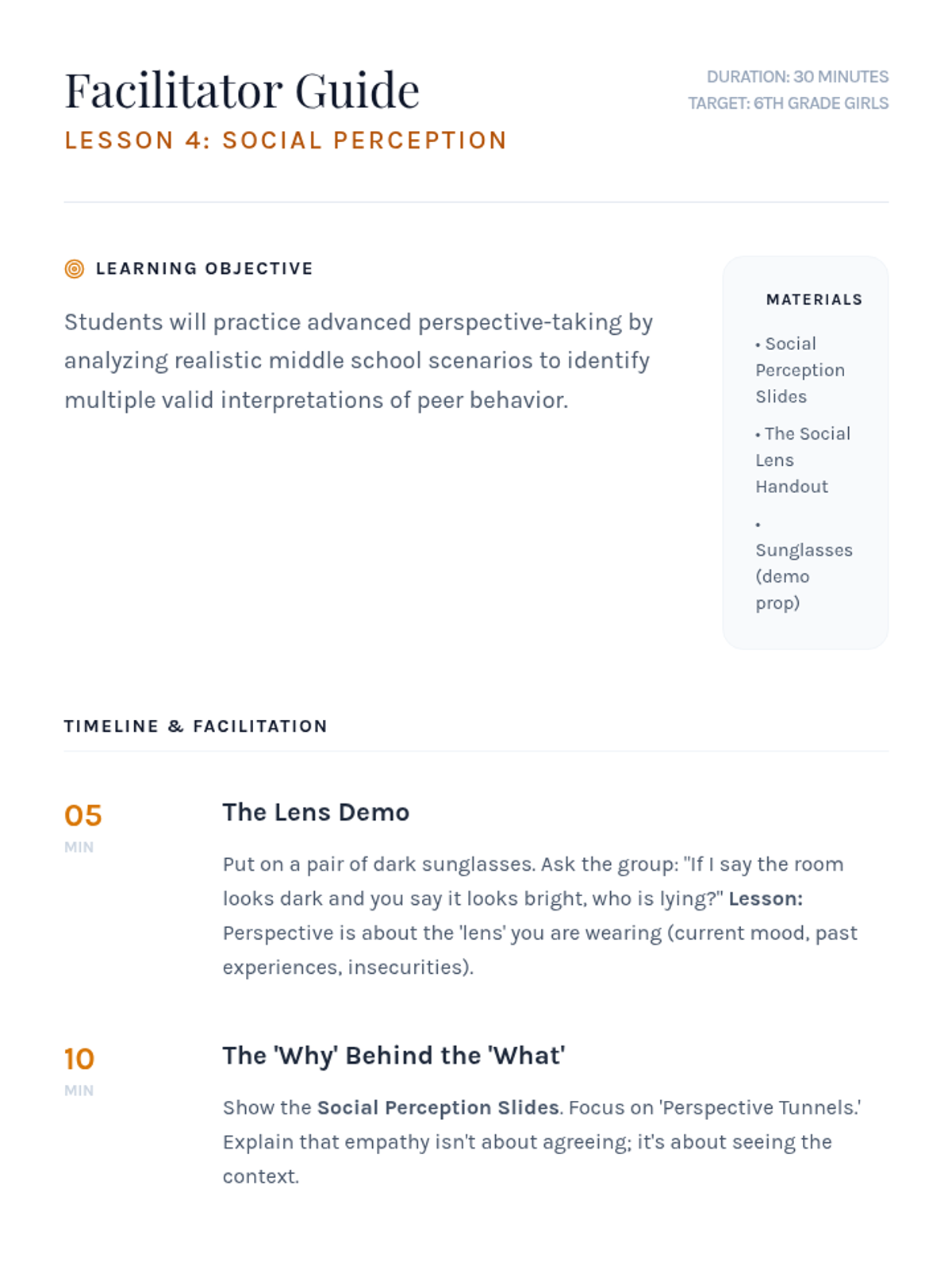
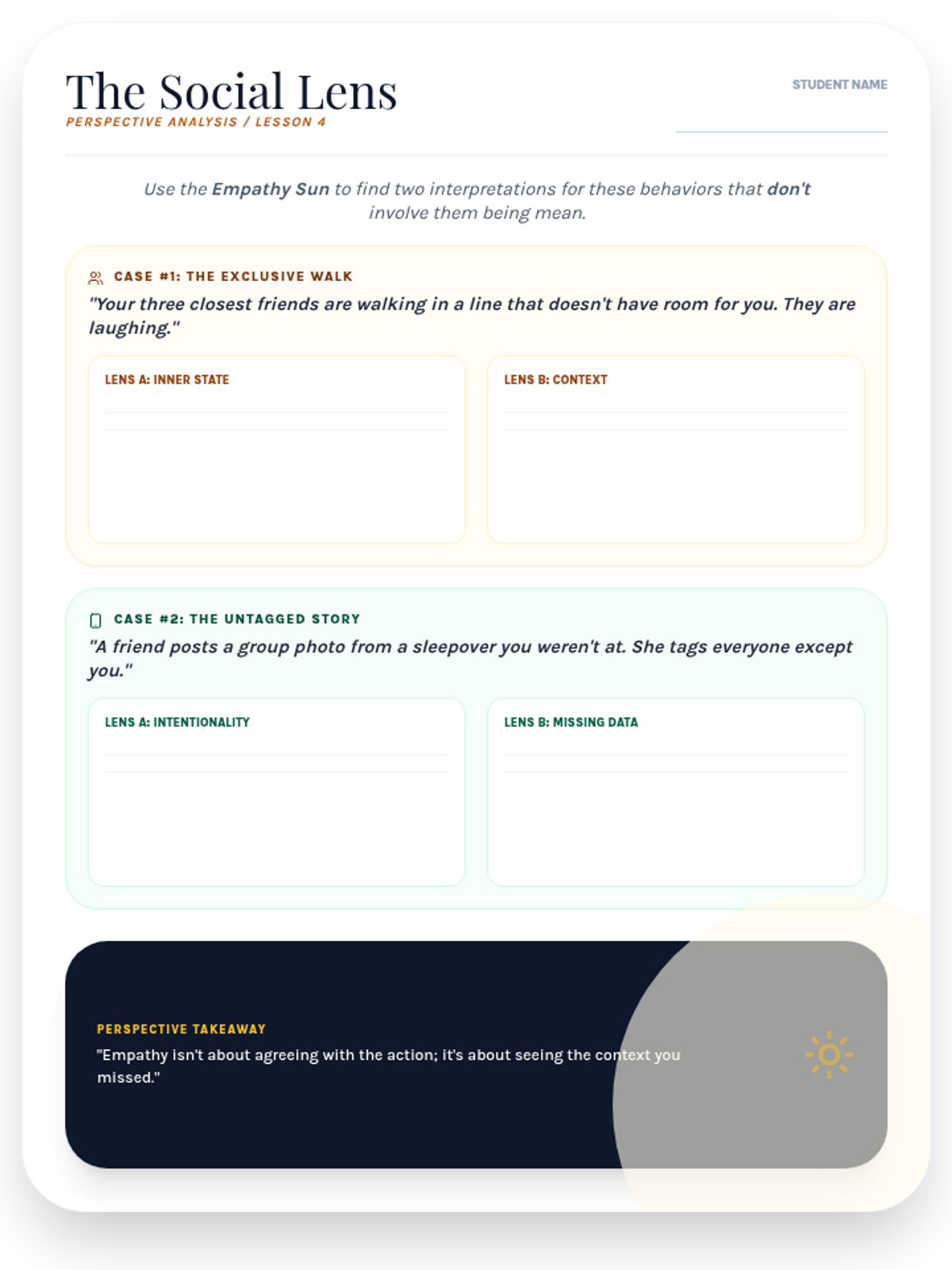
Students practice advanced perspective-taking to navigate complex social situations and understand the role of perception in peer groups.
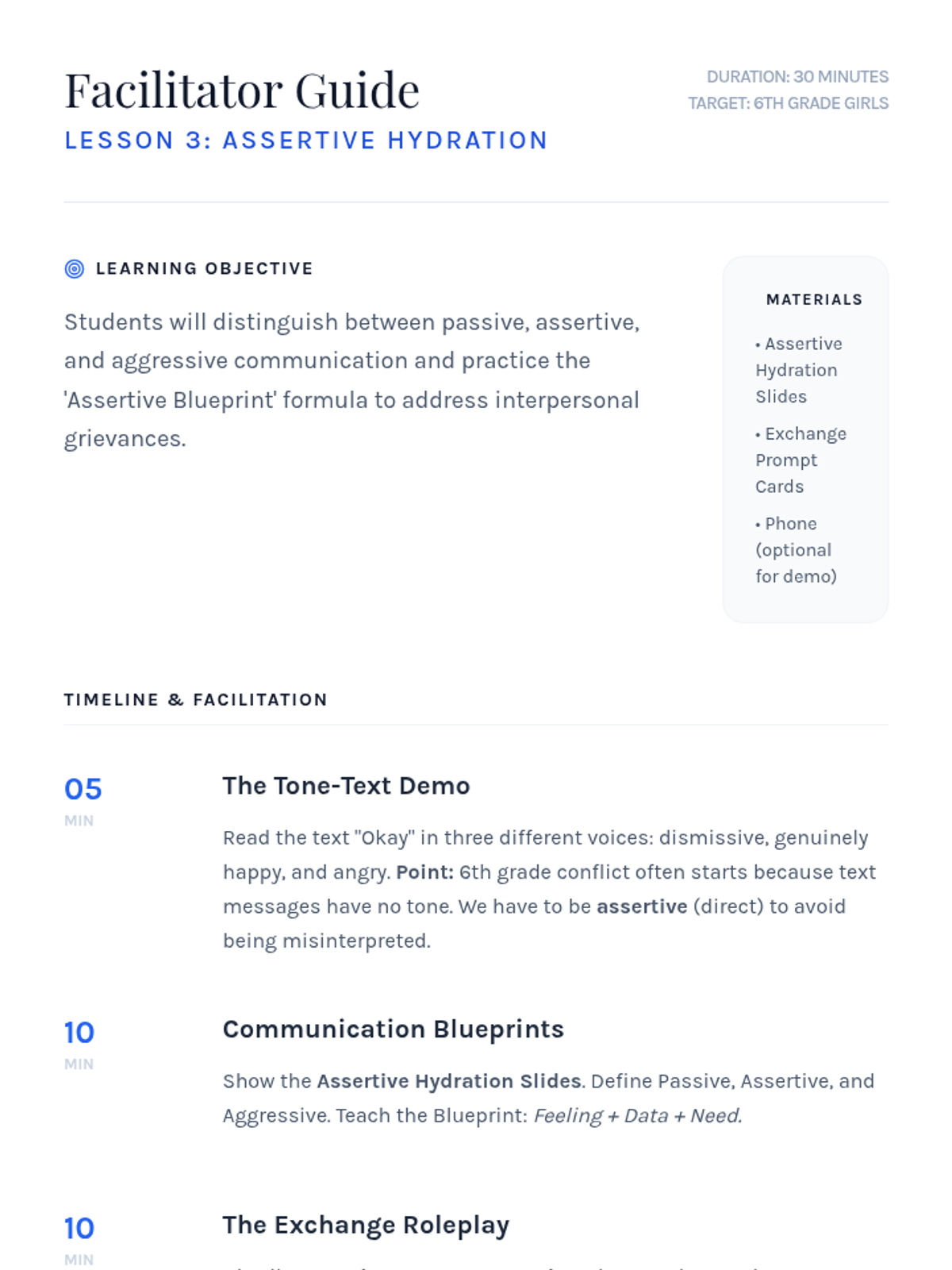
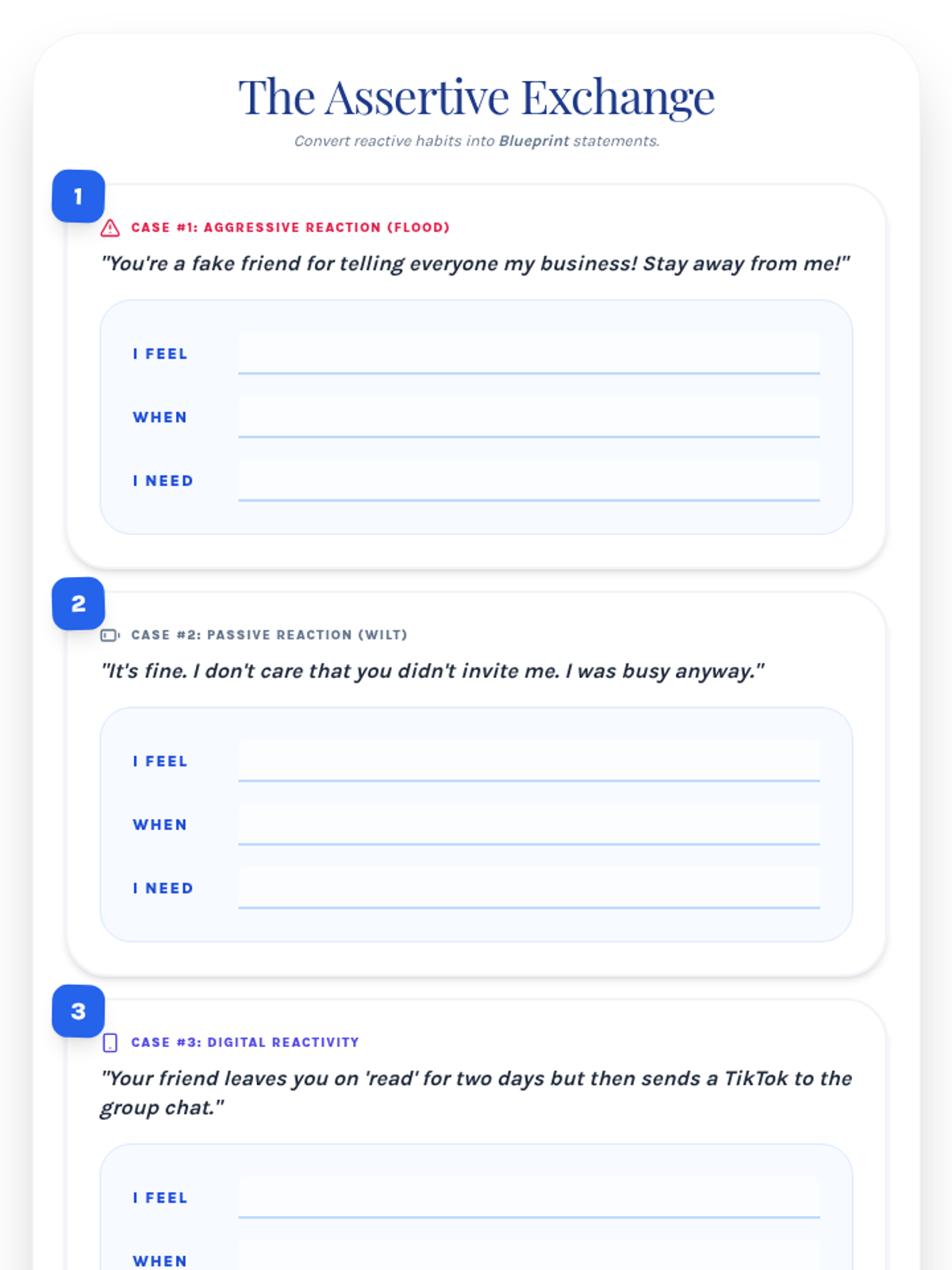
This lesson focuses on assertive communication and the impact of digital tone, teaching students to advocate for their needs without aggression.
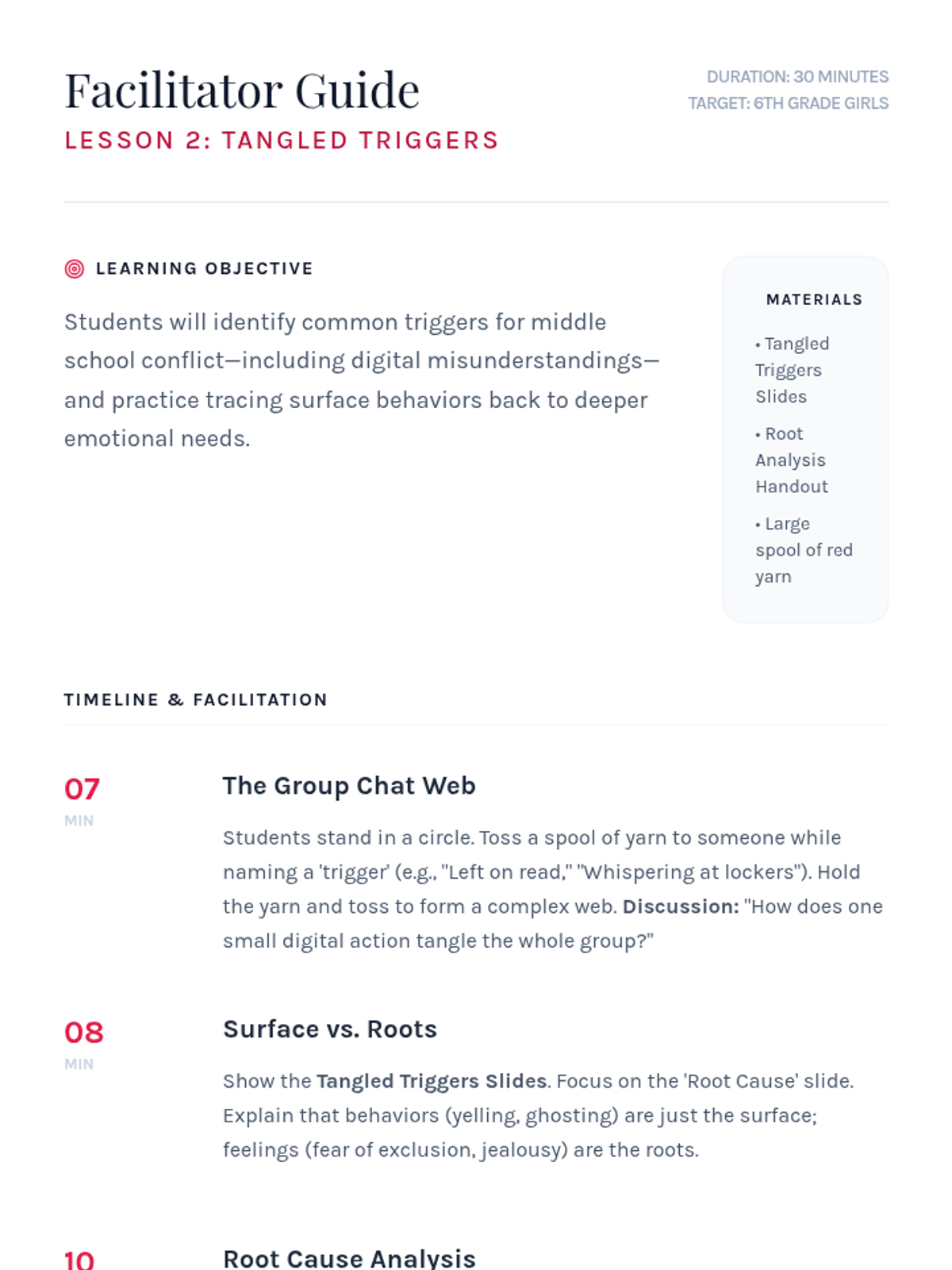
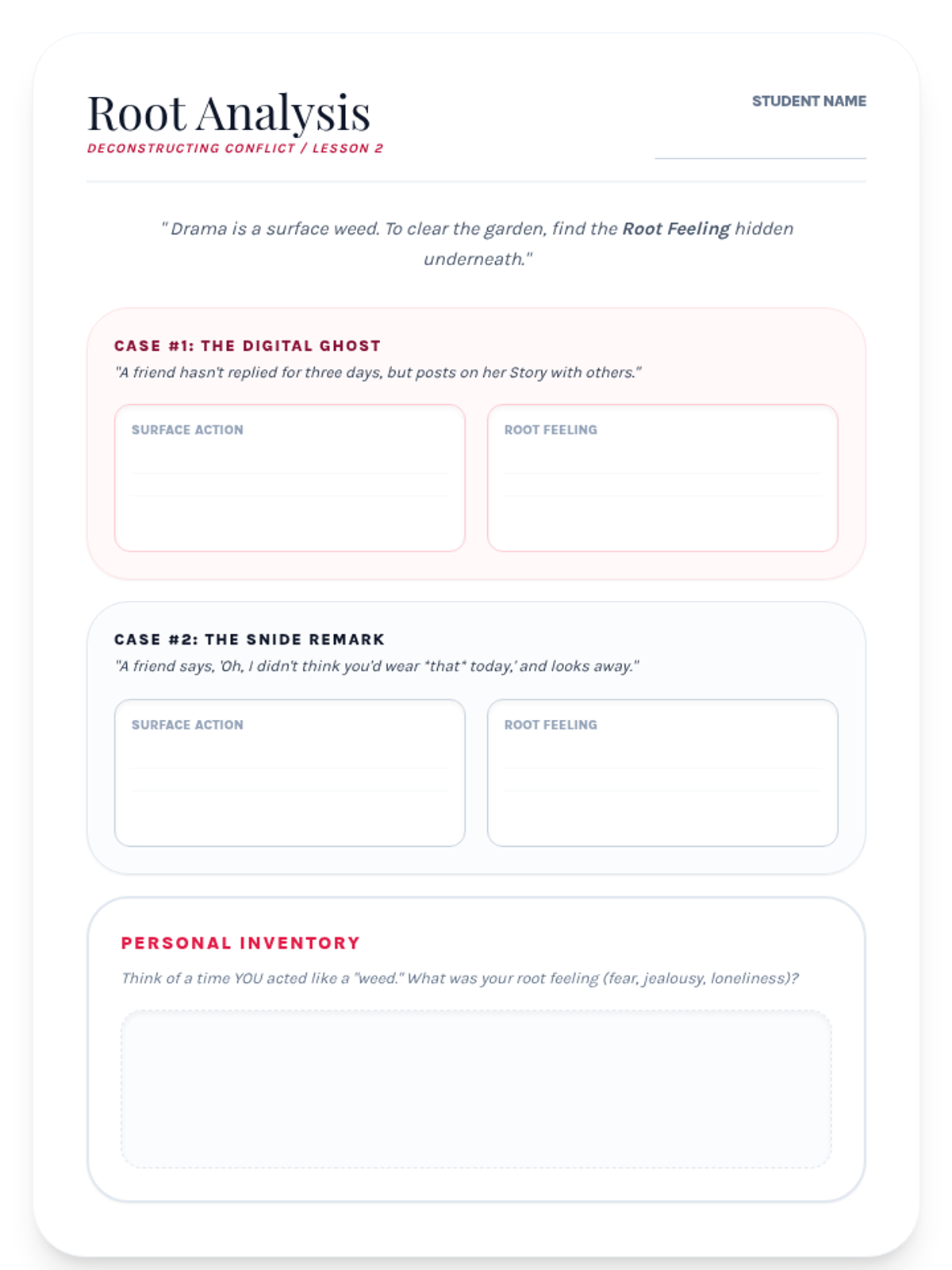
Students analyze common middle school conflict triggers, including digital drama and social hierarchy, distinguishing between surface behaviors and underlying needs.
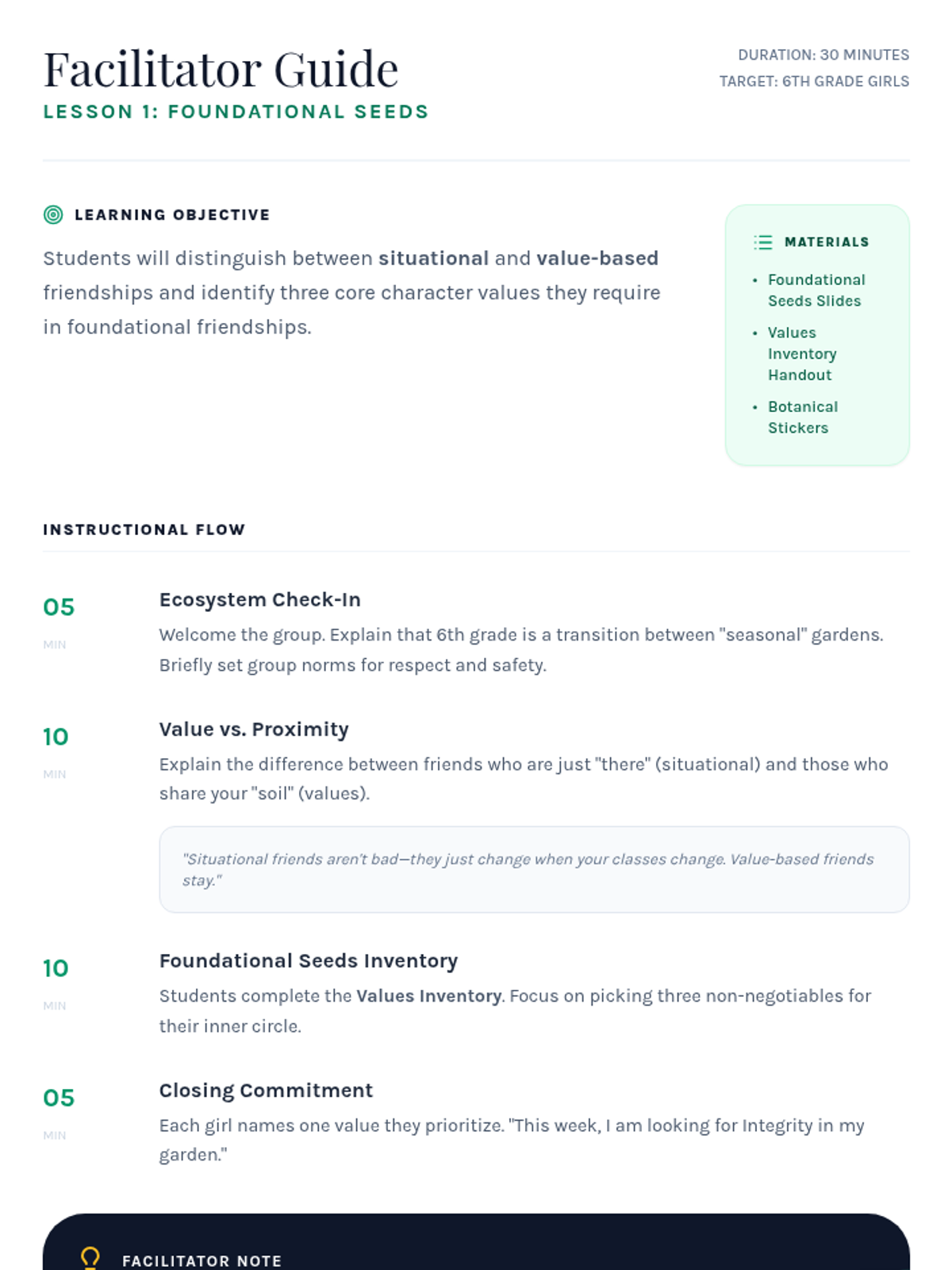
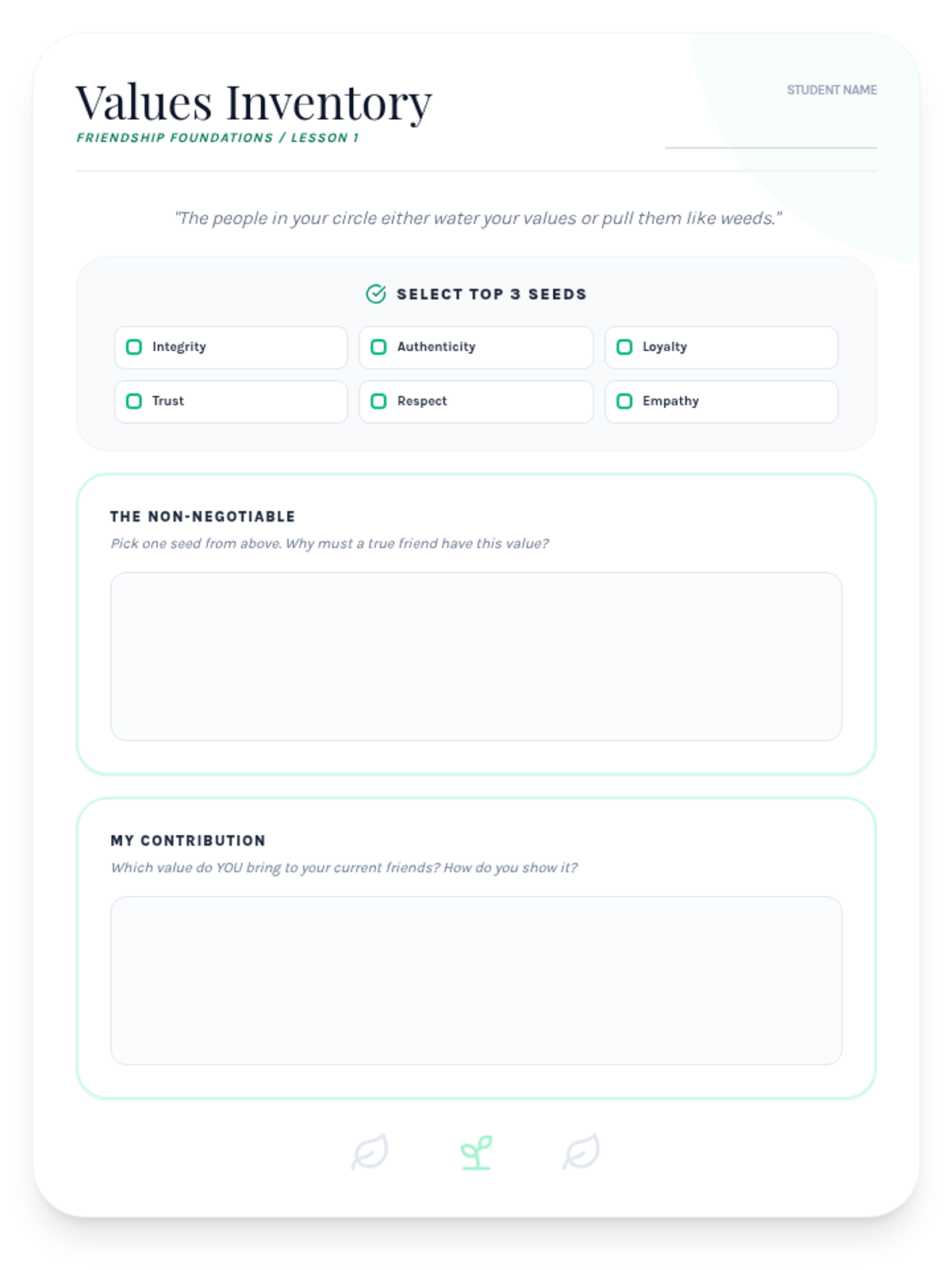
Students identify the core values that ground healthy friendships and analyze the difference between 'situational friends' and 'value-based friends.'
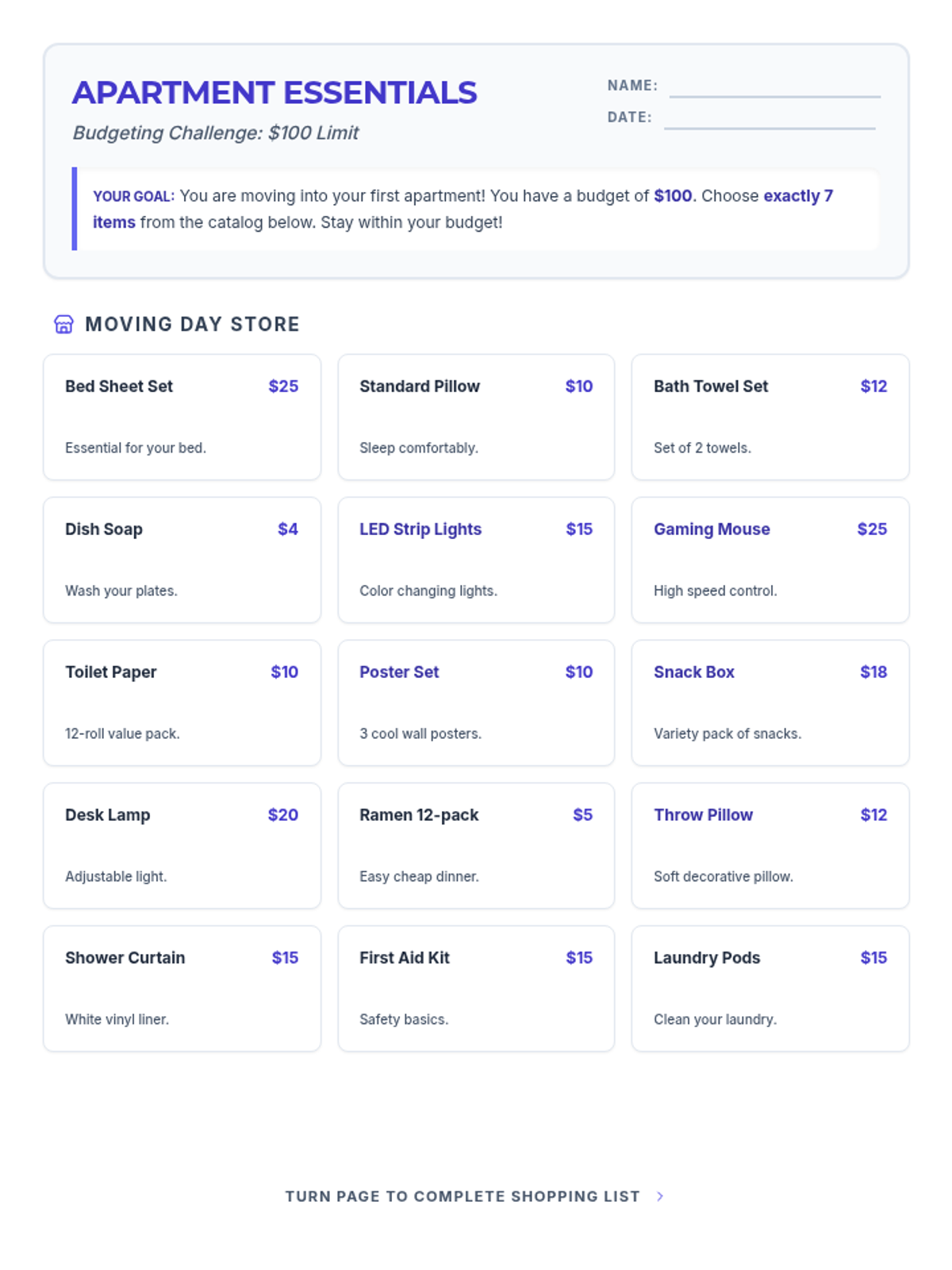
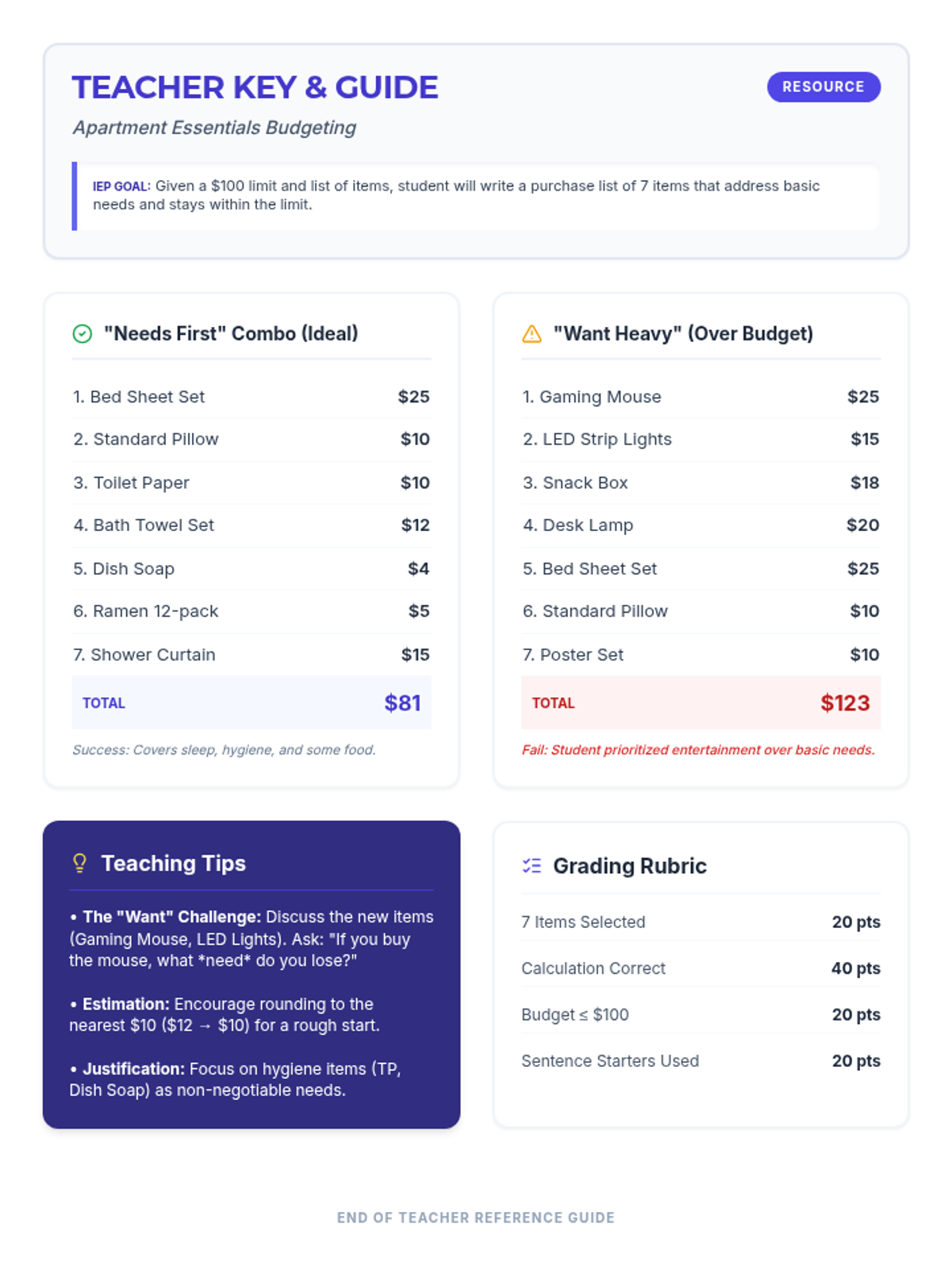
A practical budgeting lesson focused on selecting essential apartment items within a $100 limit, supporting IEP goals for functional math and decision-making.
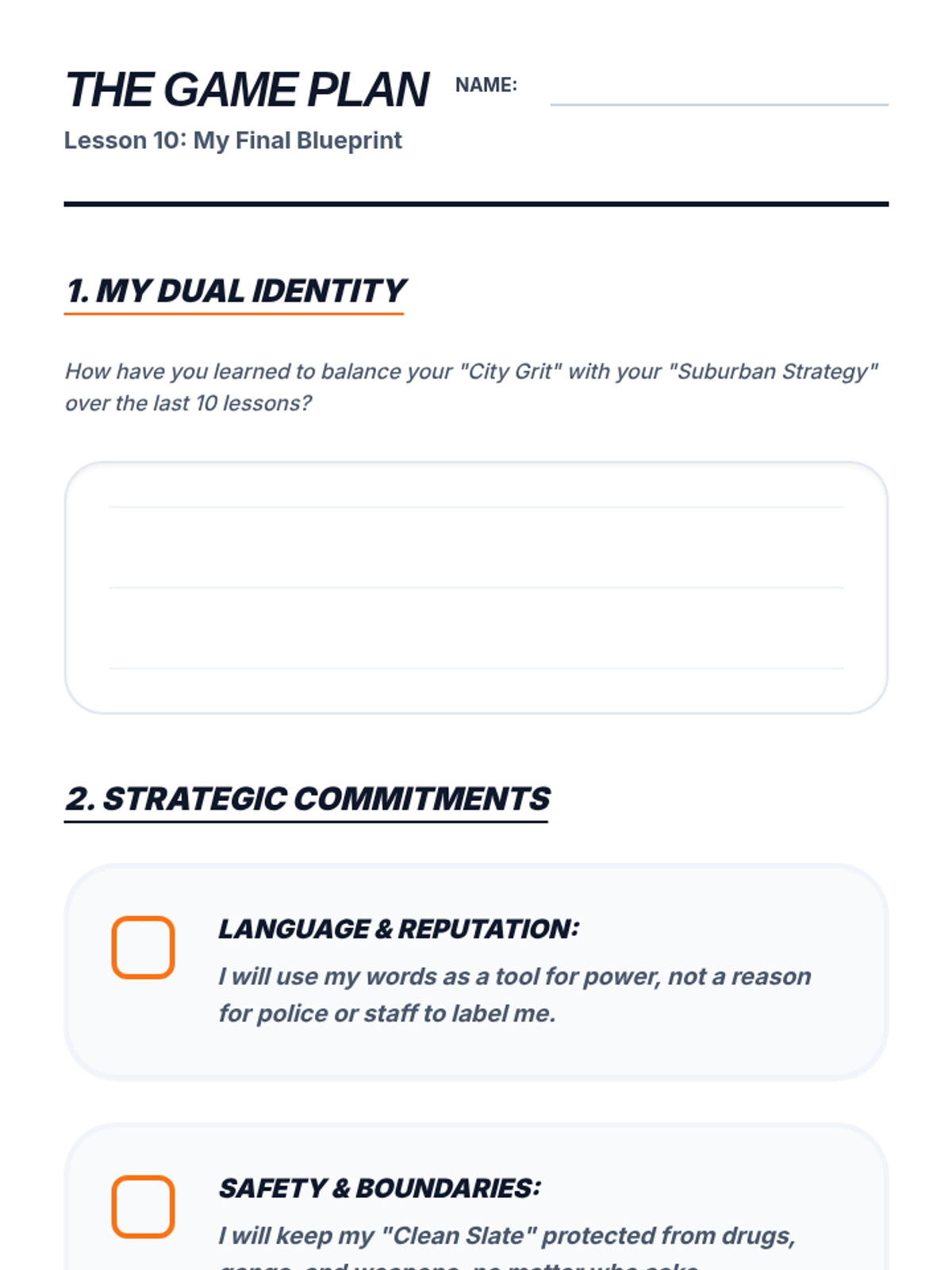
Synthesizes all lessons into a long-term goal plan and commitment to personal excellence.
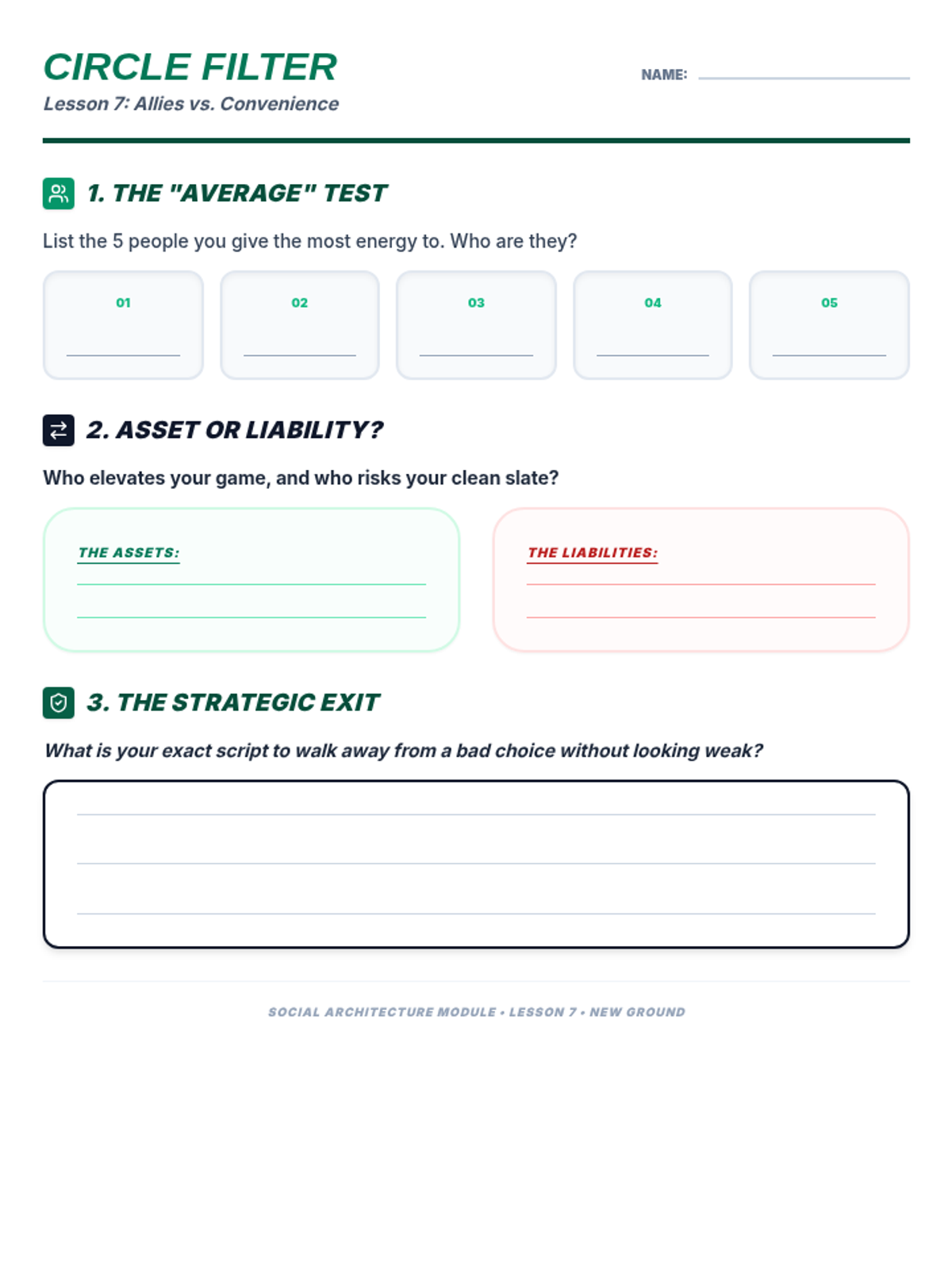
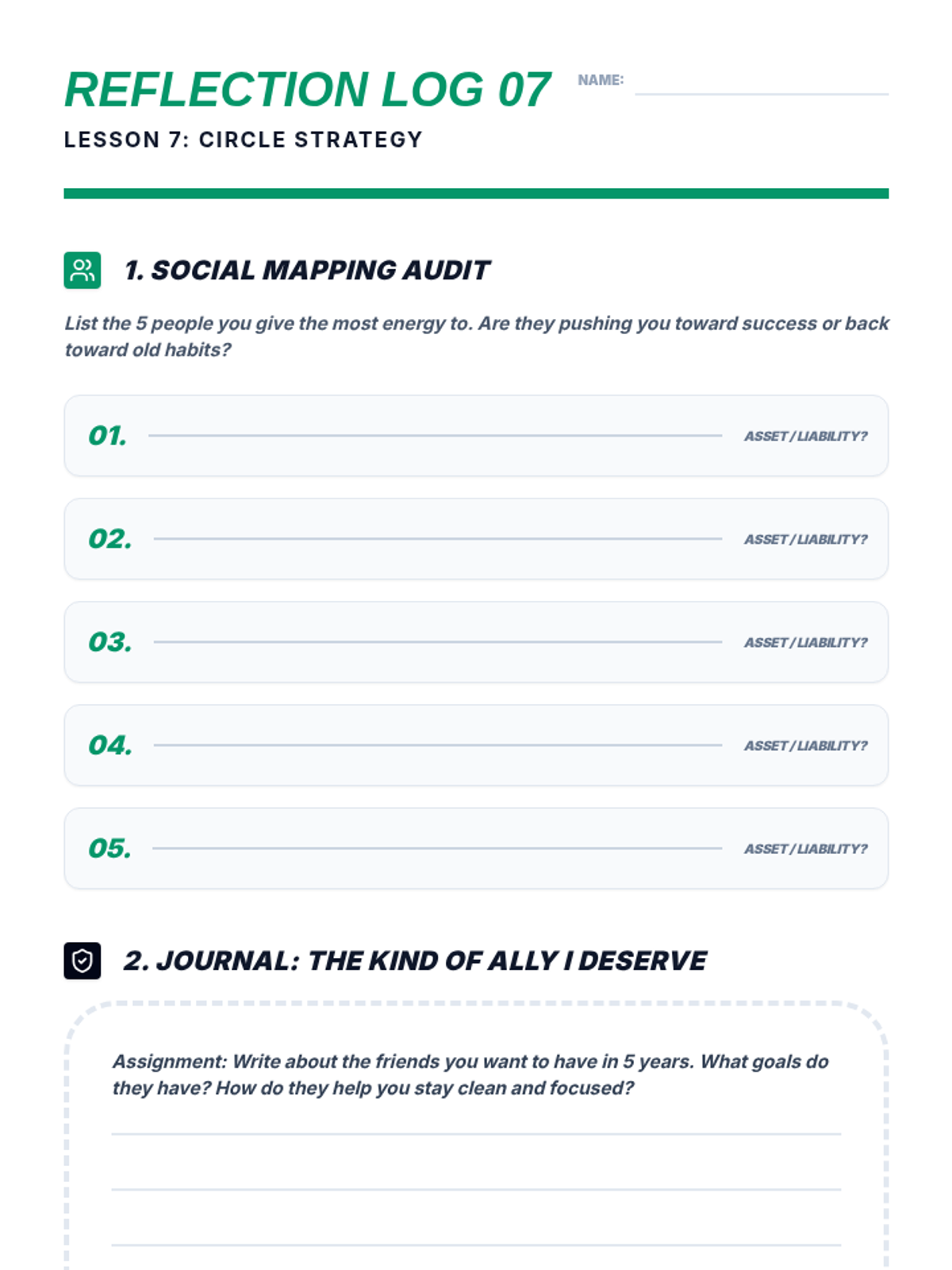
Focuses on distinguishing between convenience friends and true allies, and developing exit strategies for peer pressure.
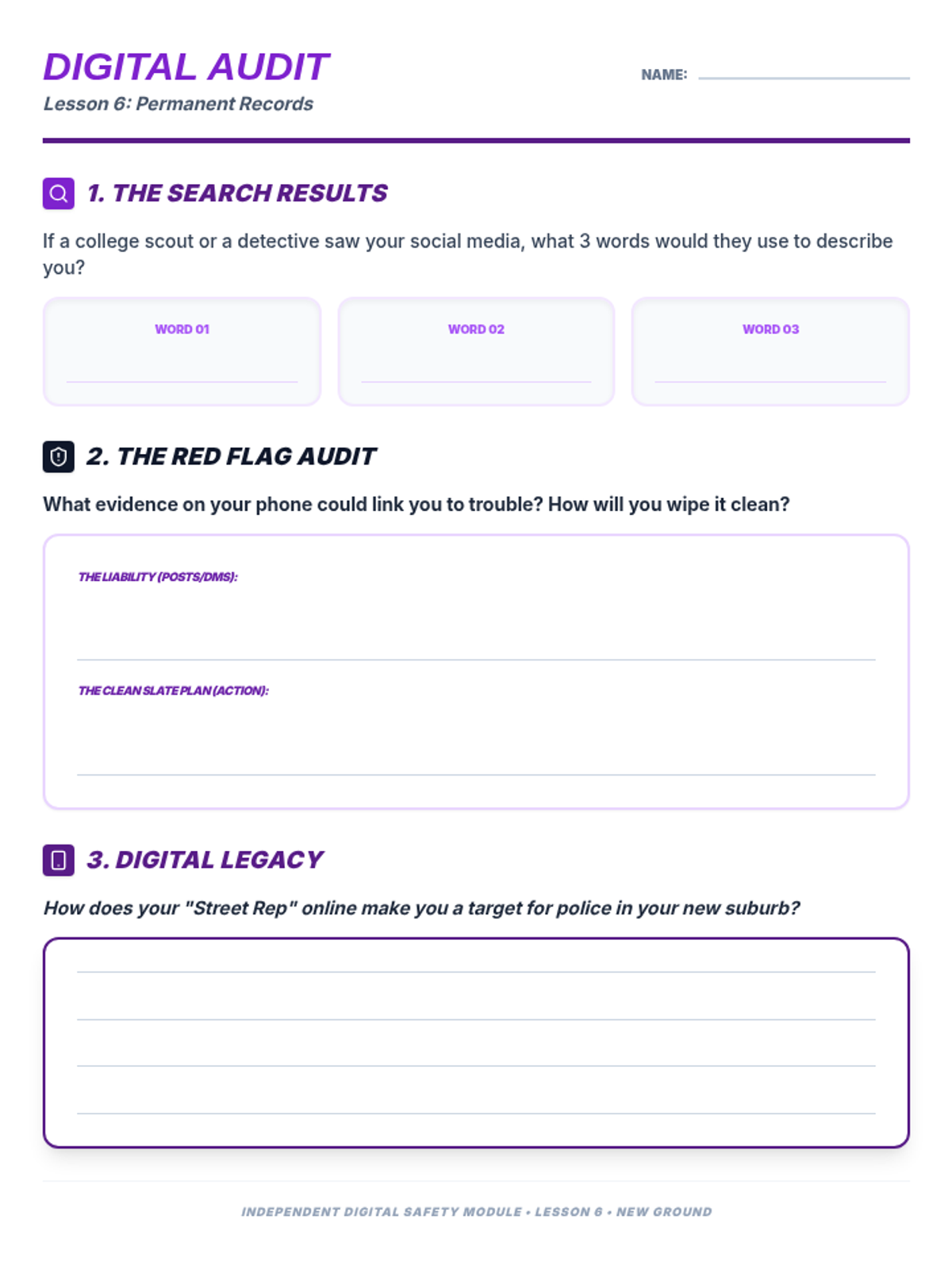
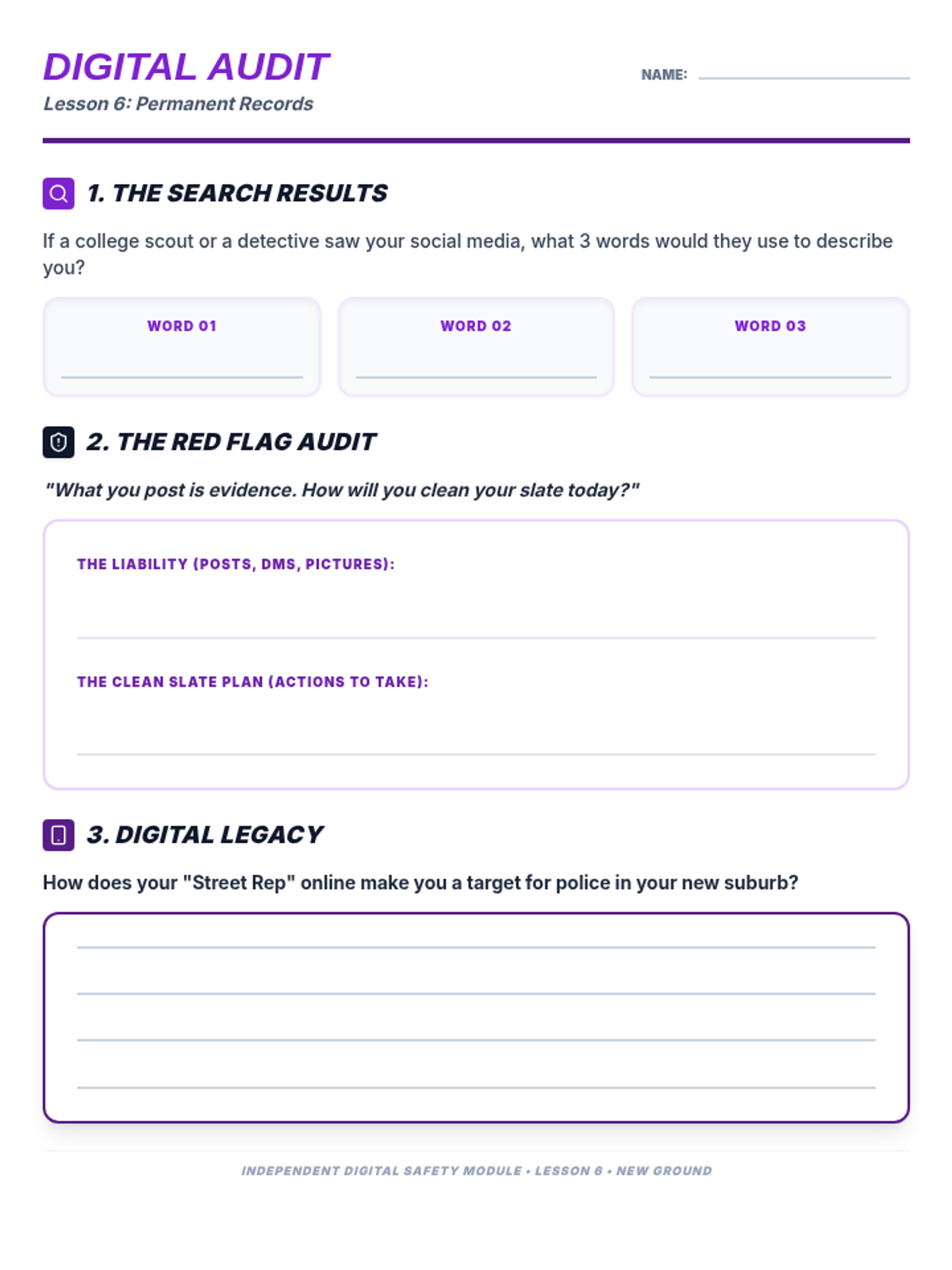
Discusses the permanence of digital footprints and how social media activity can attract unwanted surveillance or consequences.
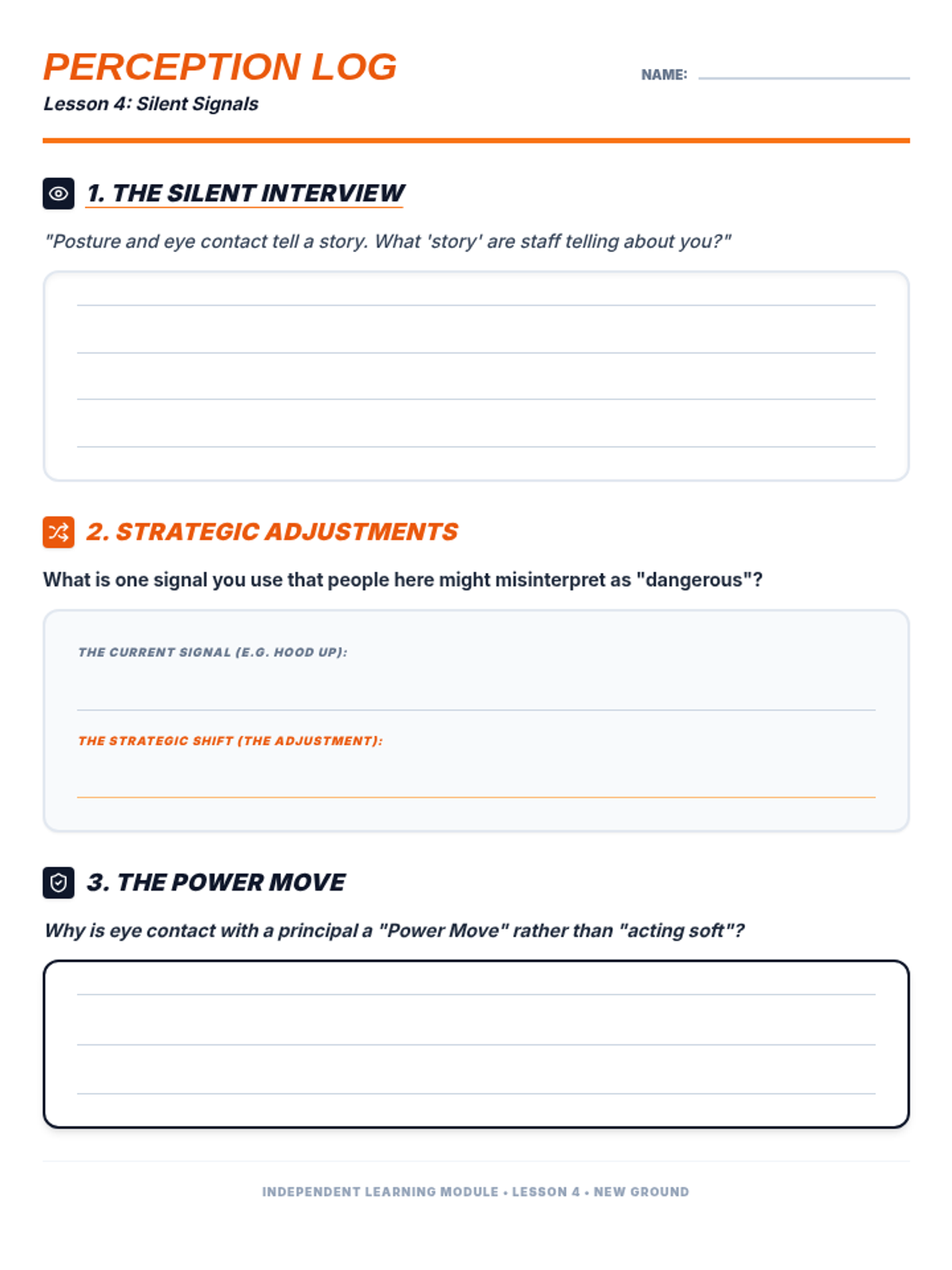
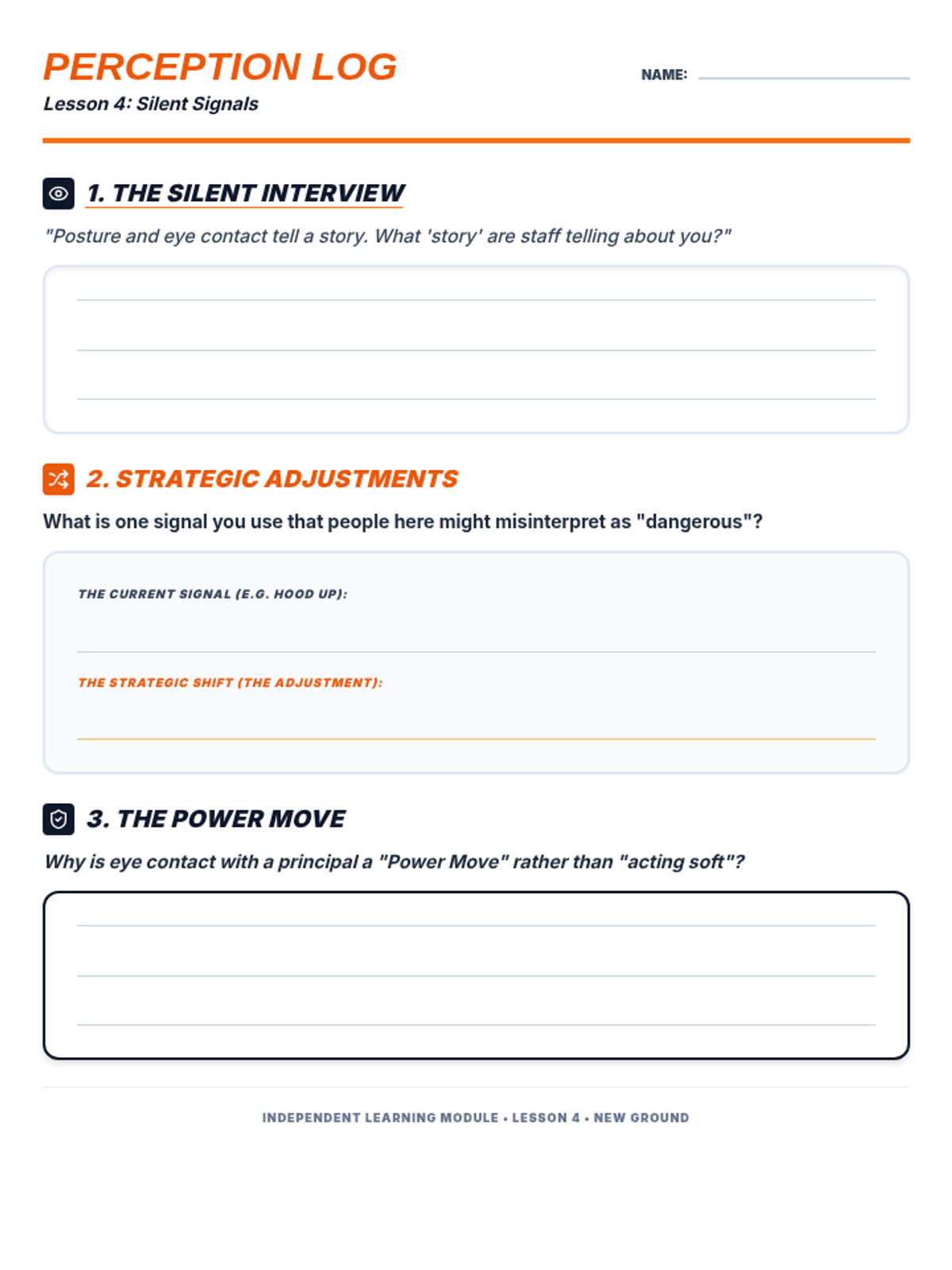
Explores how body language and non-verbal cues impact perception by school staff and suburban community members.
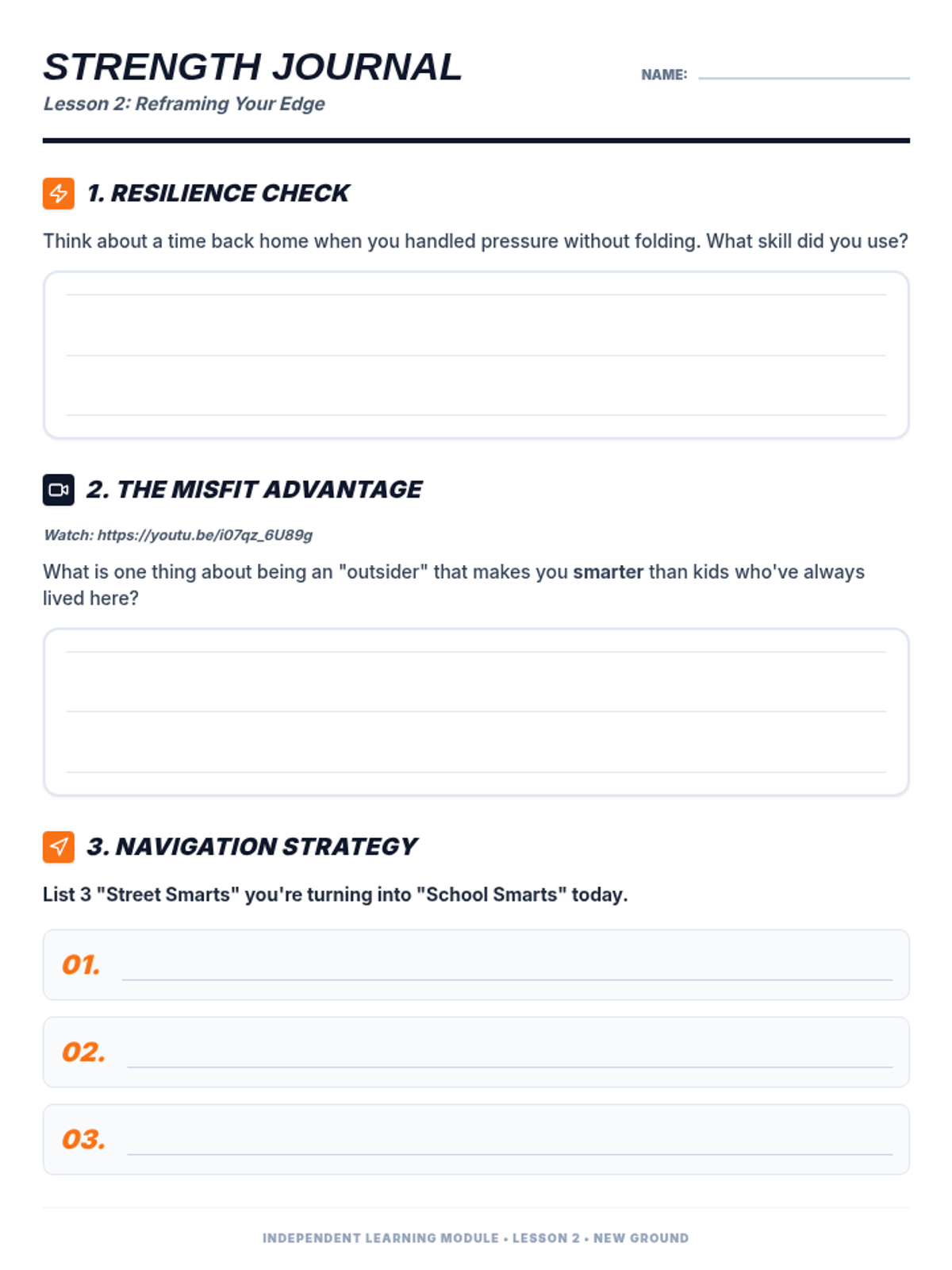
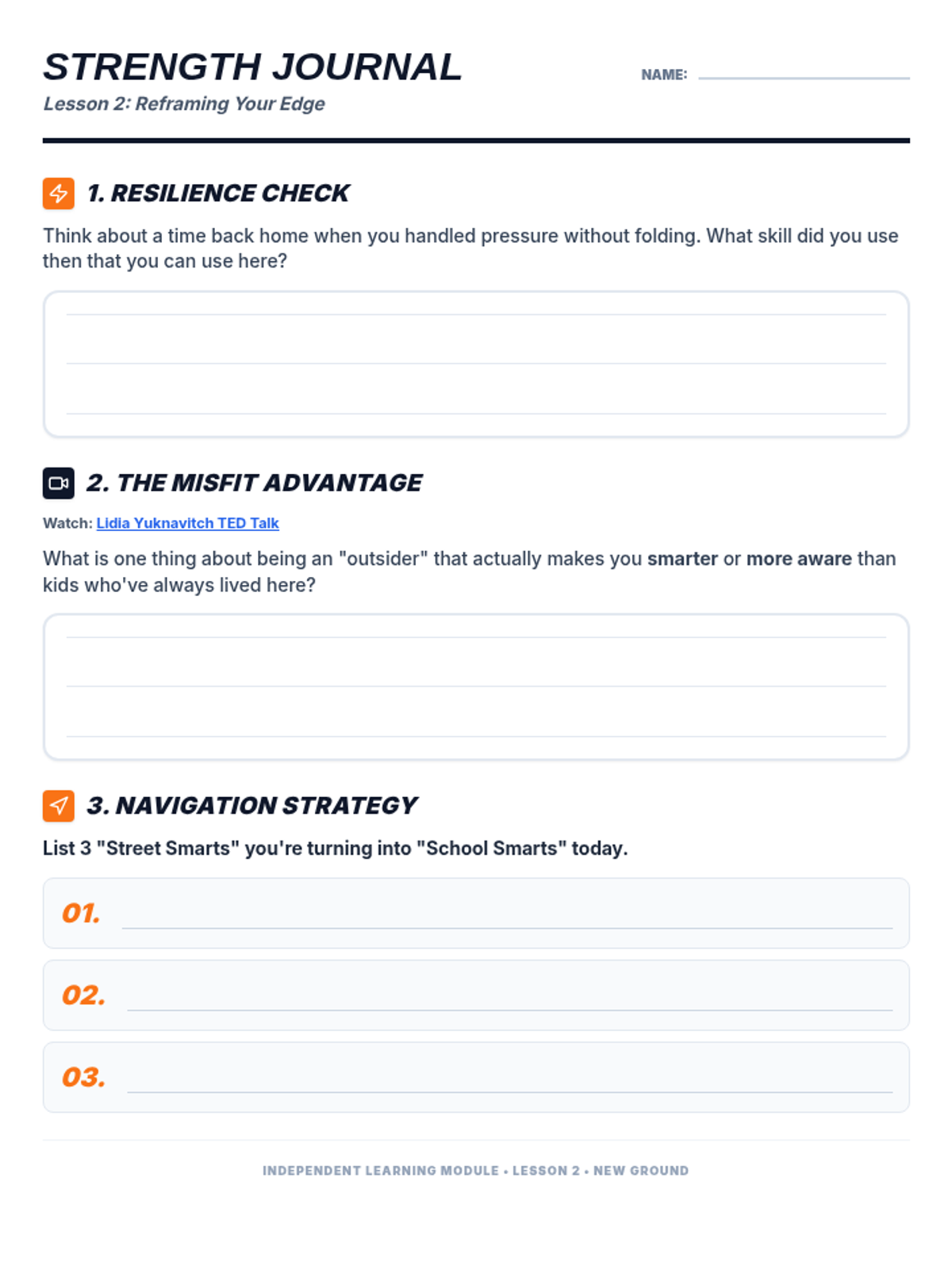
Identifies the unique strengths developed in an urban environment and reframes them as assets for suburban success.
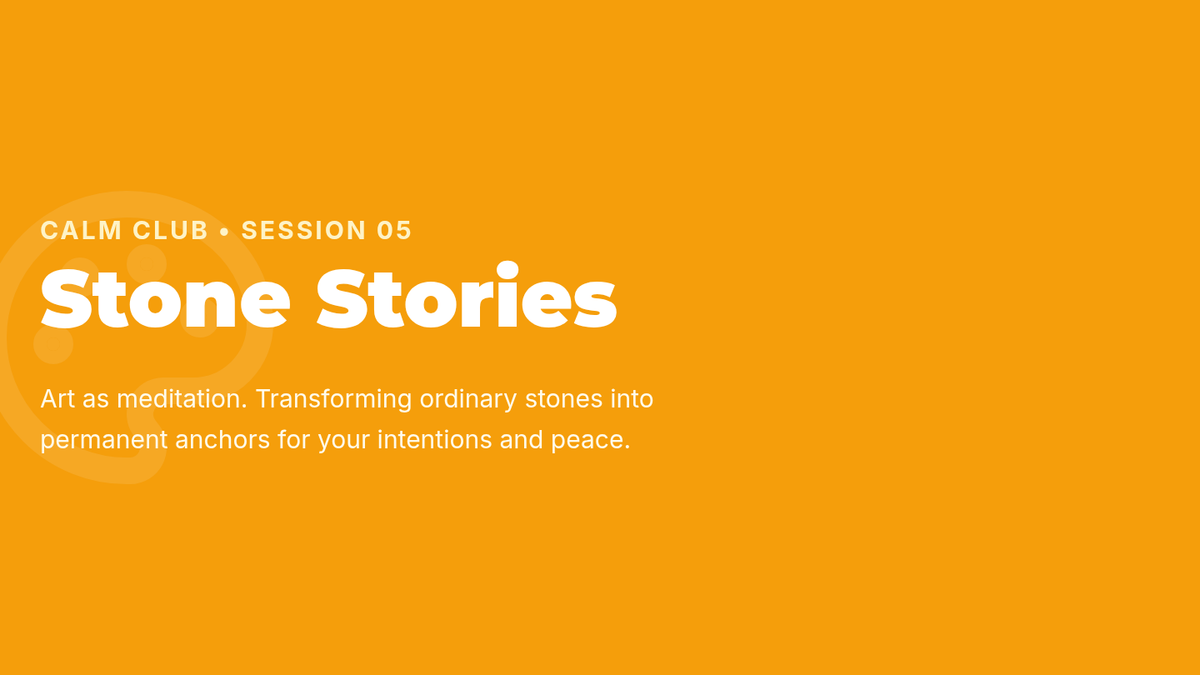
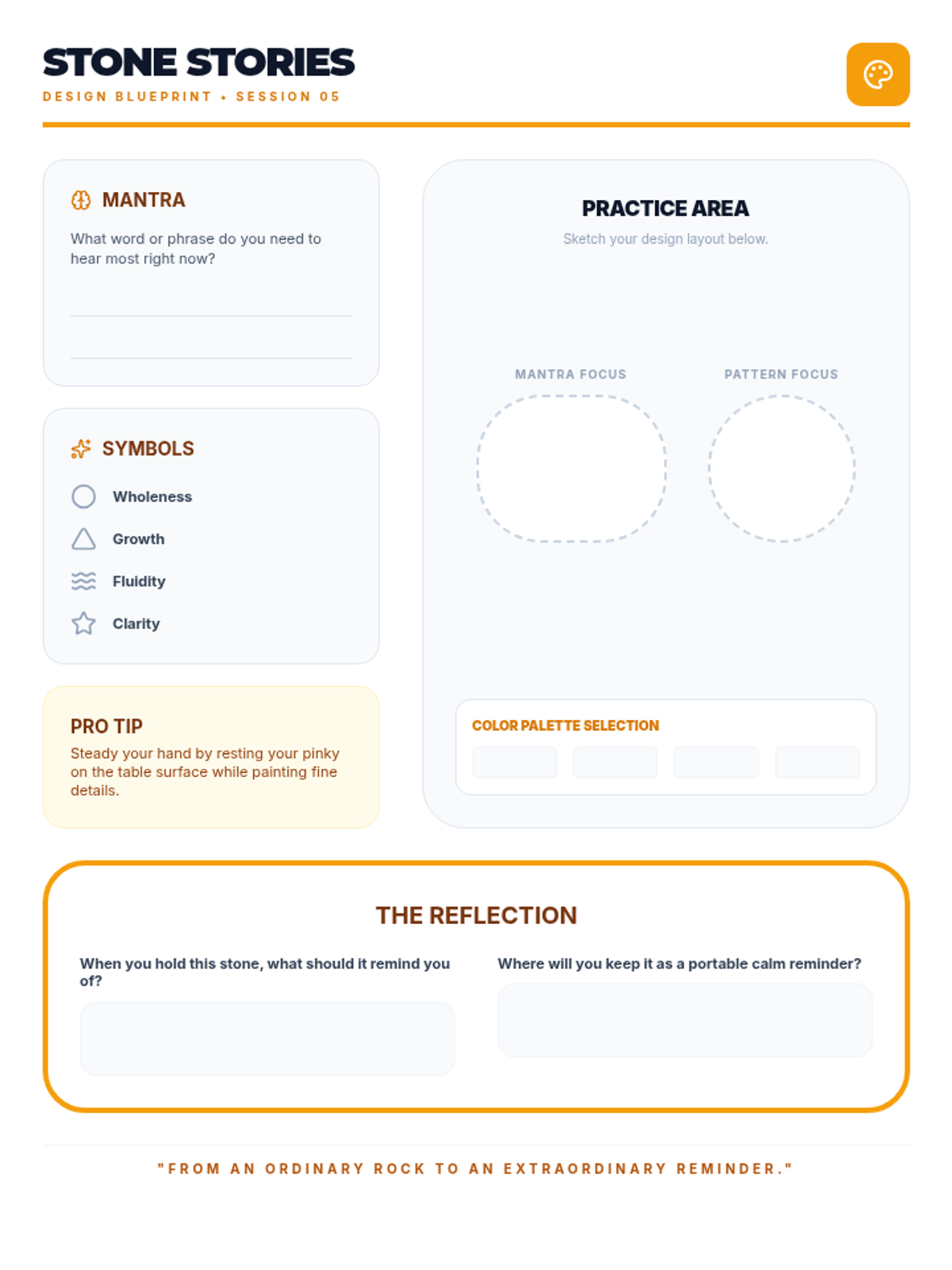
A mindful art session where students paint smooth stones with personal mantras, symbols, or intricate patterns to serve as portable 'calm reminders.'
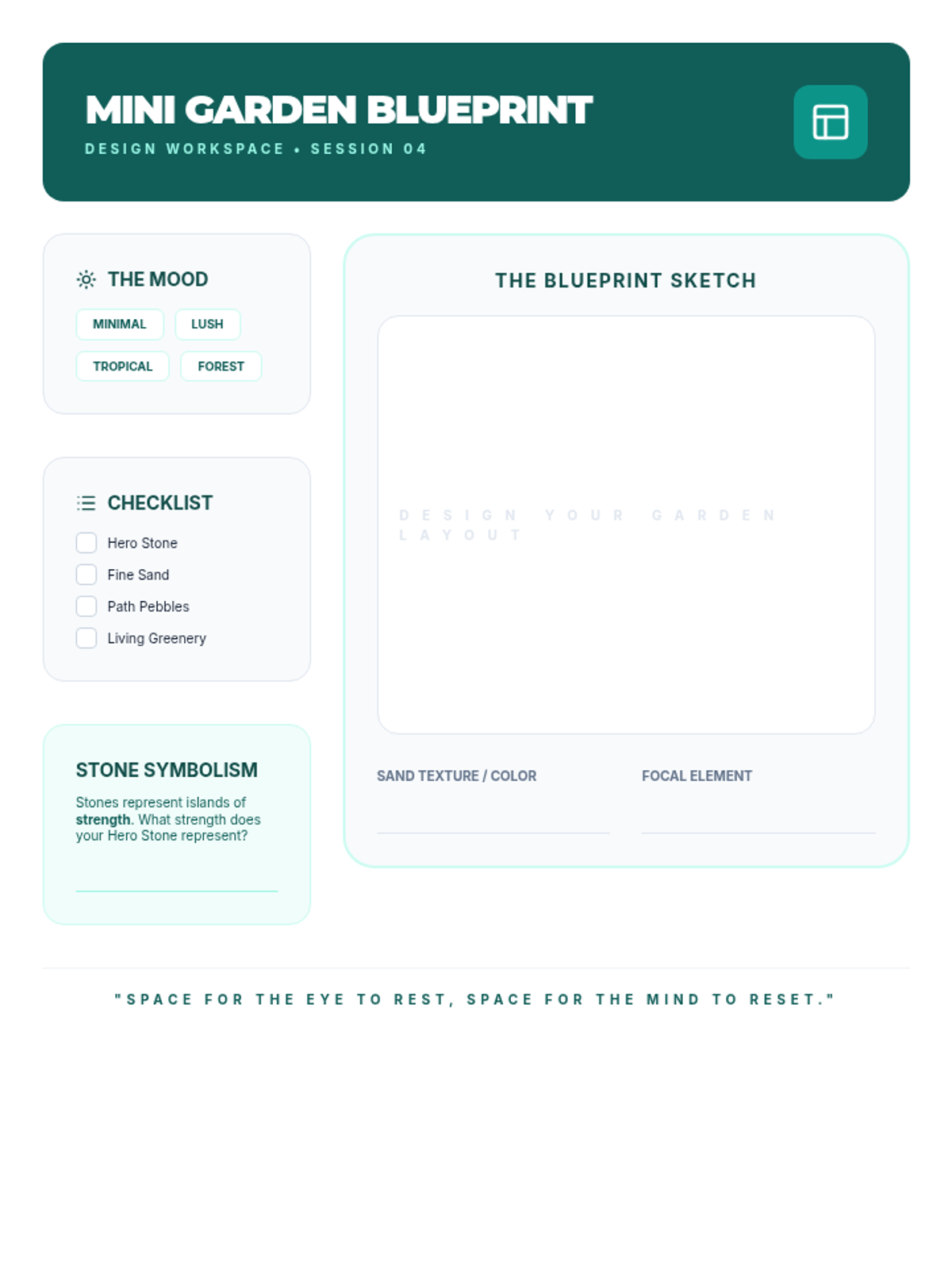
A creative session for building miniature desktop zen gardens using sand, stones, and succulents to create a permanent 'calm corner' for students.
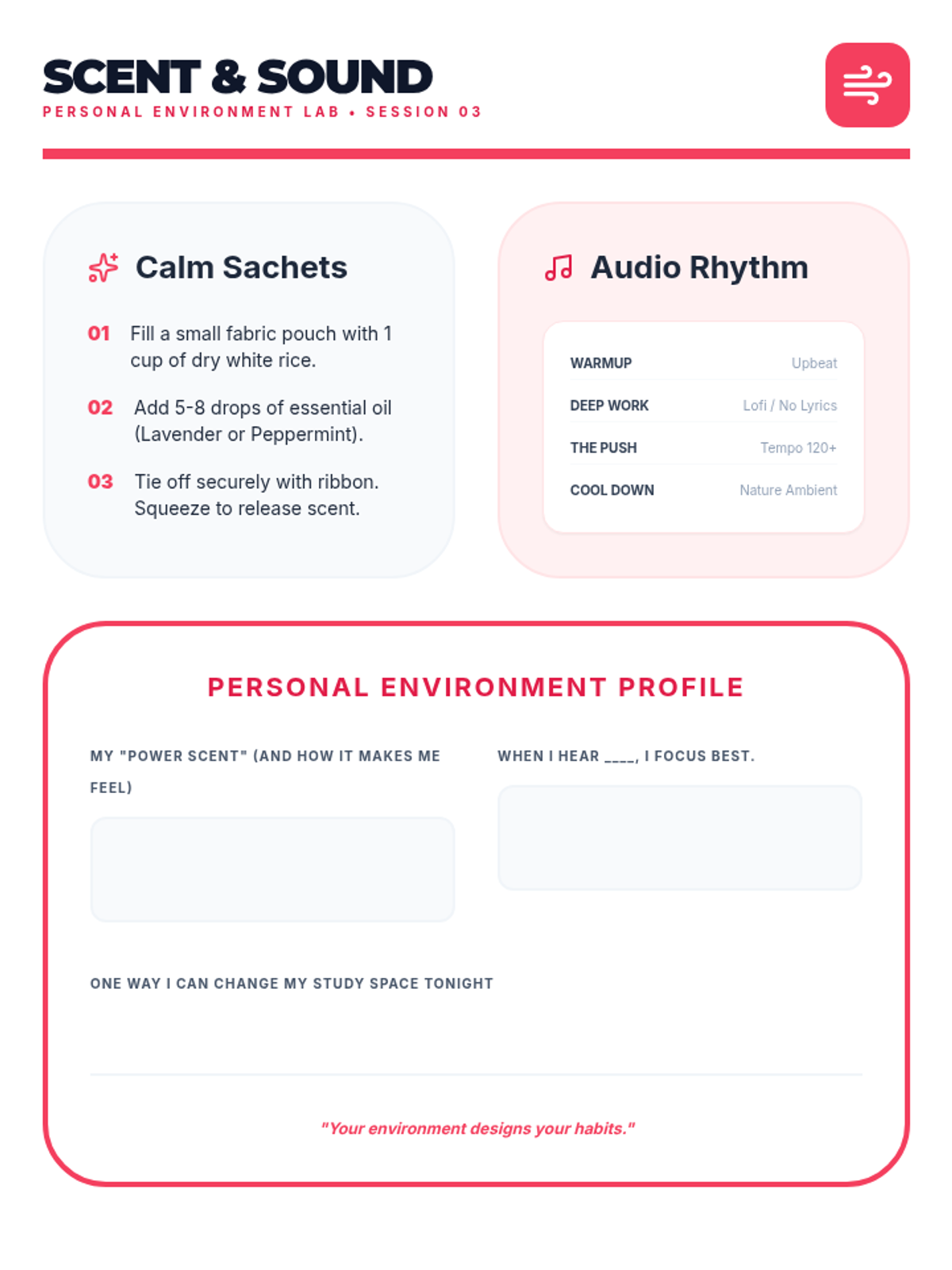
An exploration of how smell and sound affect the nervous system, featuring DIY aromatherapy sachets and personalized focus playlists.
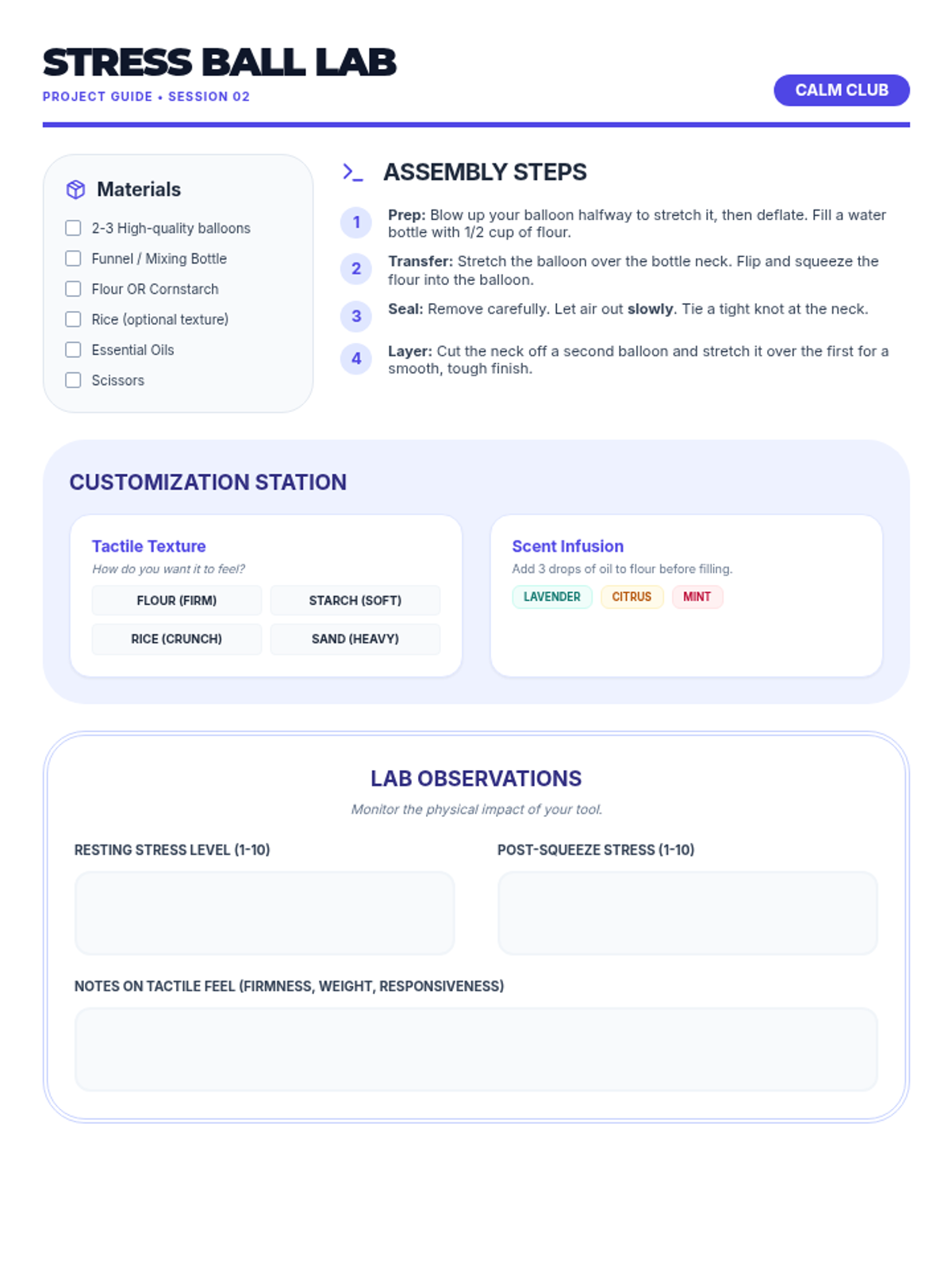
A workshop focused on creating physical tools like custom stress balls and kinetic sand to manage fidgeting and provide tactile relief.
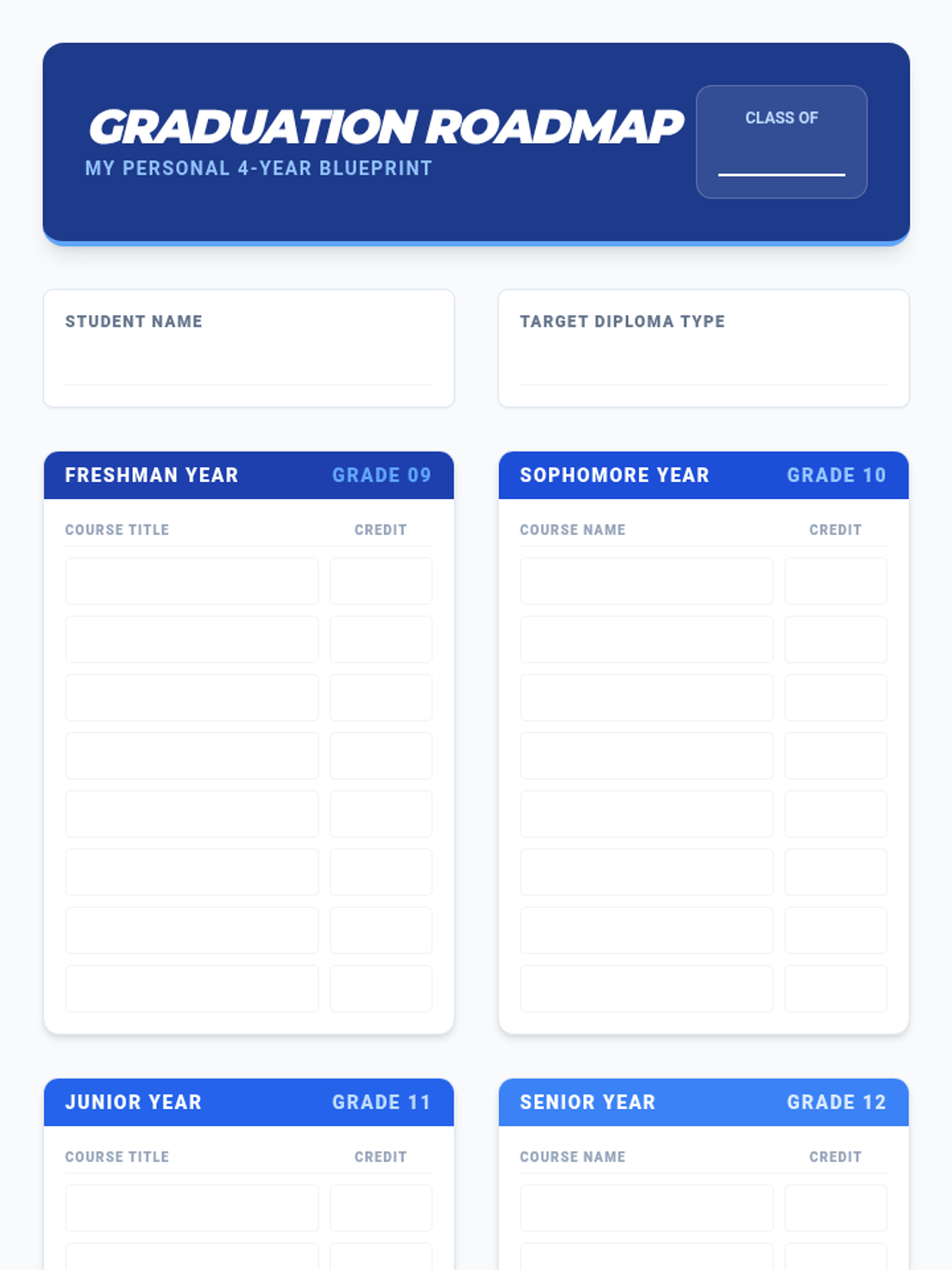
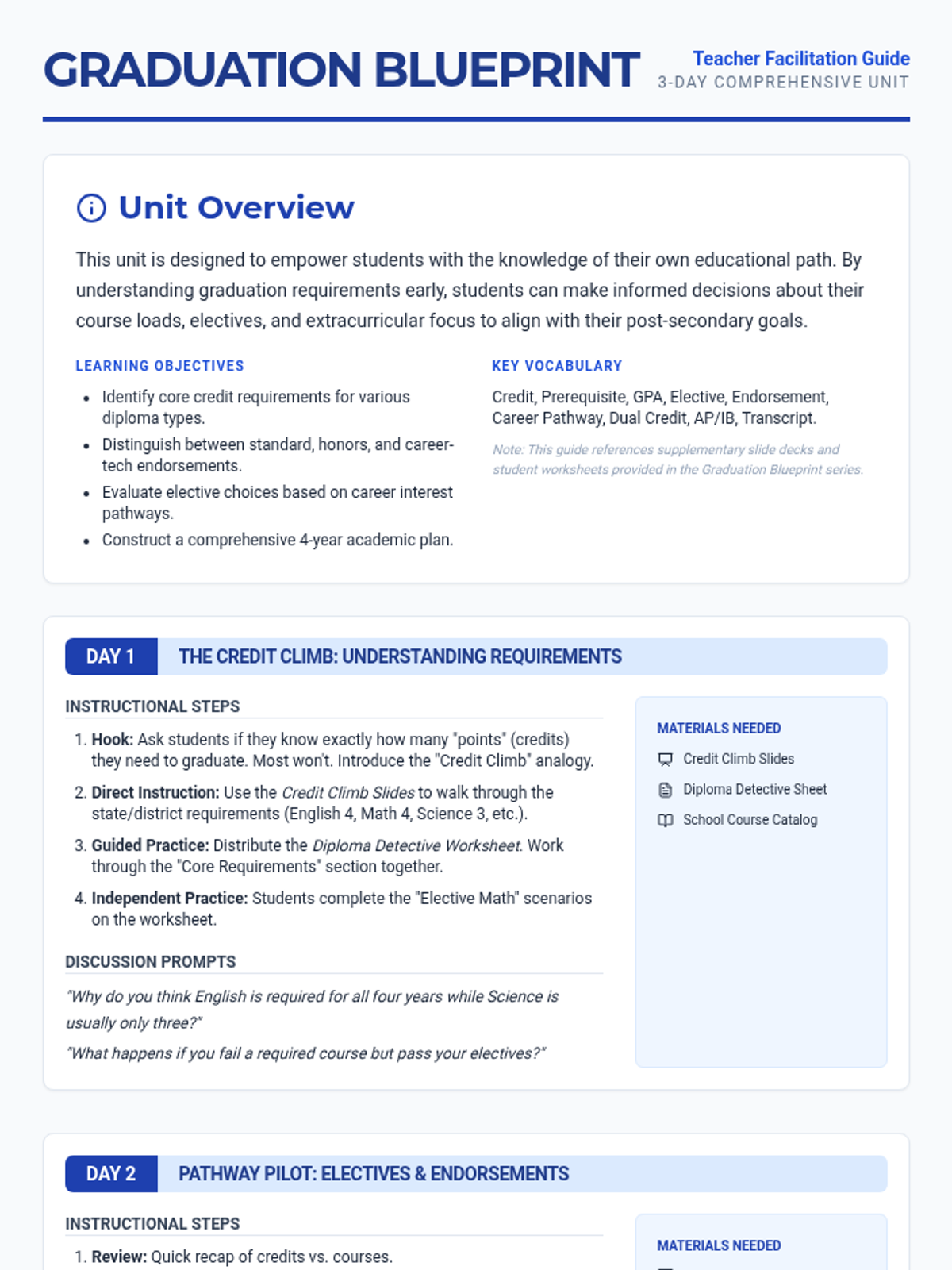
Day 3 is a hands-on workshop where students create their own four-year plan and conduct a personal graduation audit.
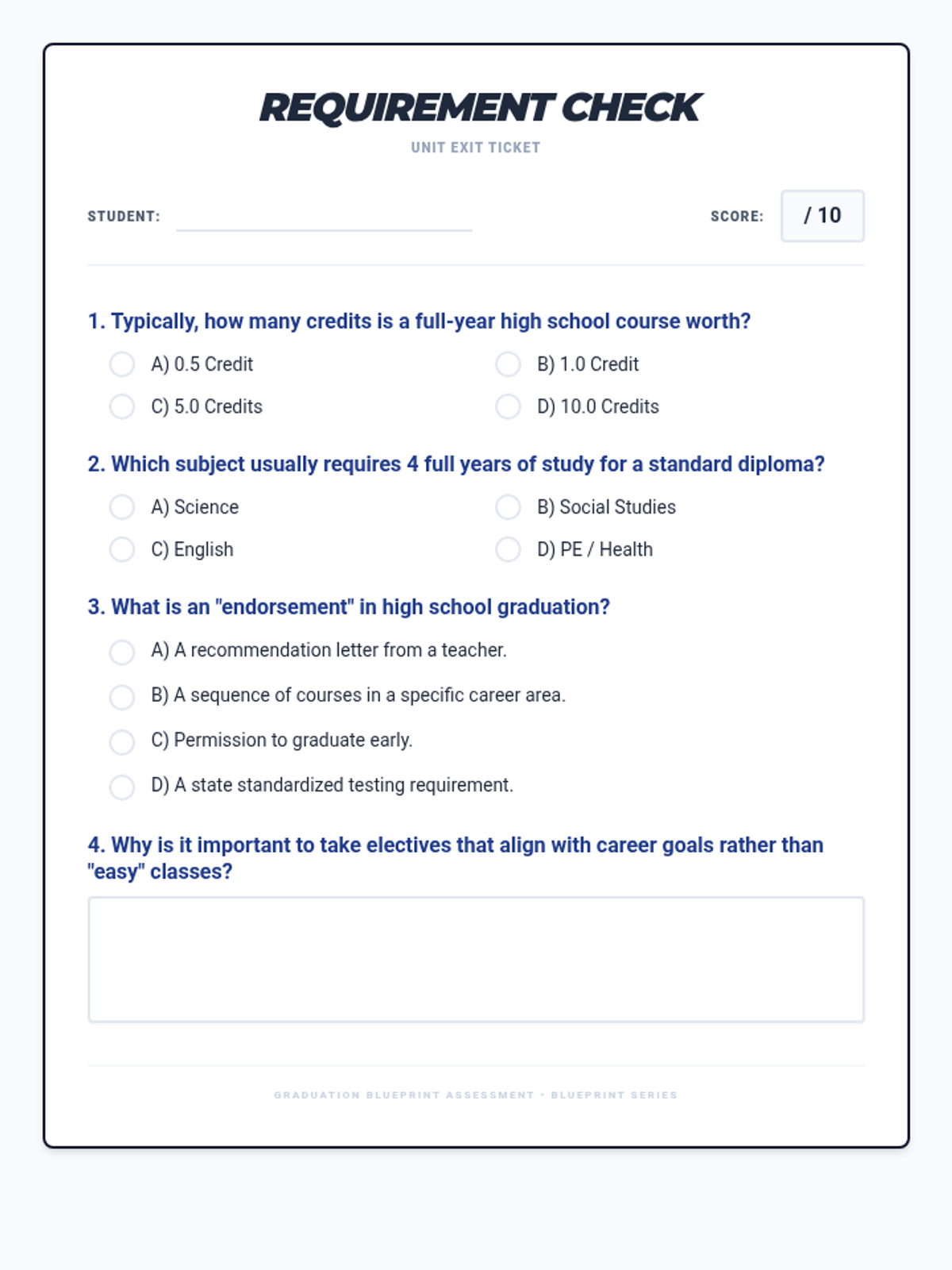
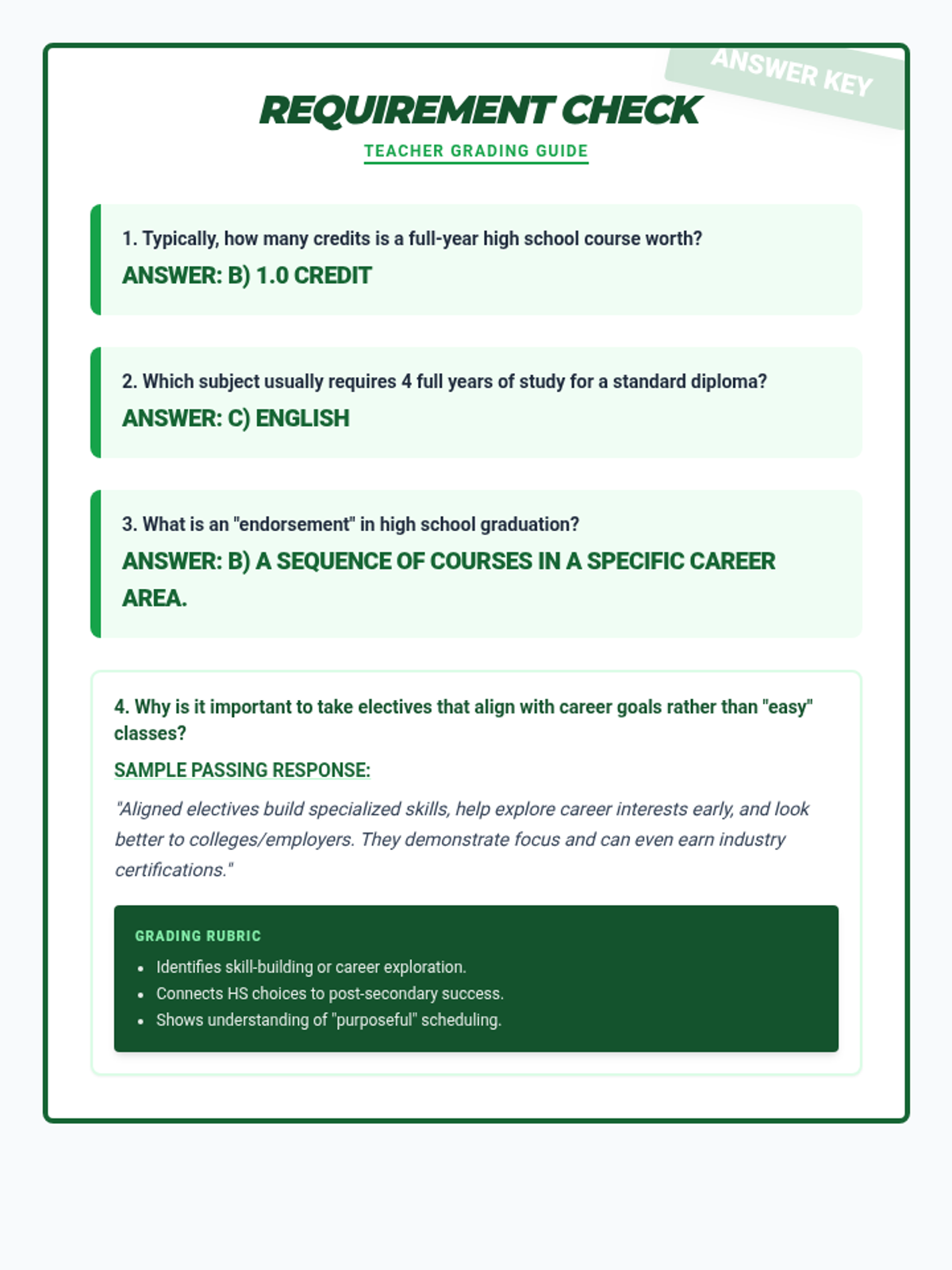
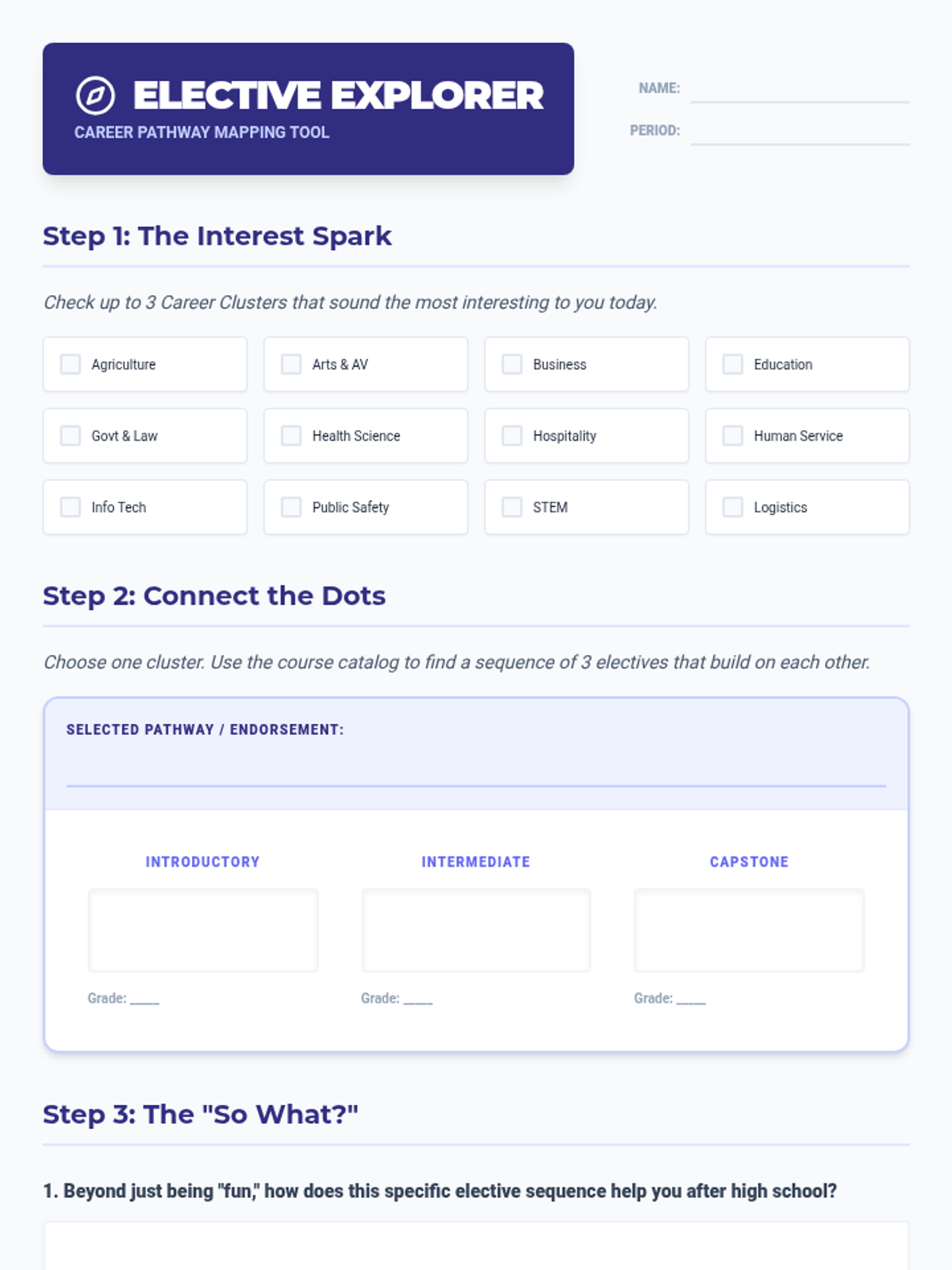
Day 2 explores career pathways, endorsements, and how elective choices align with future goals.
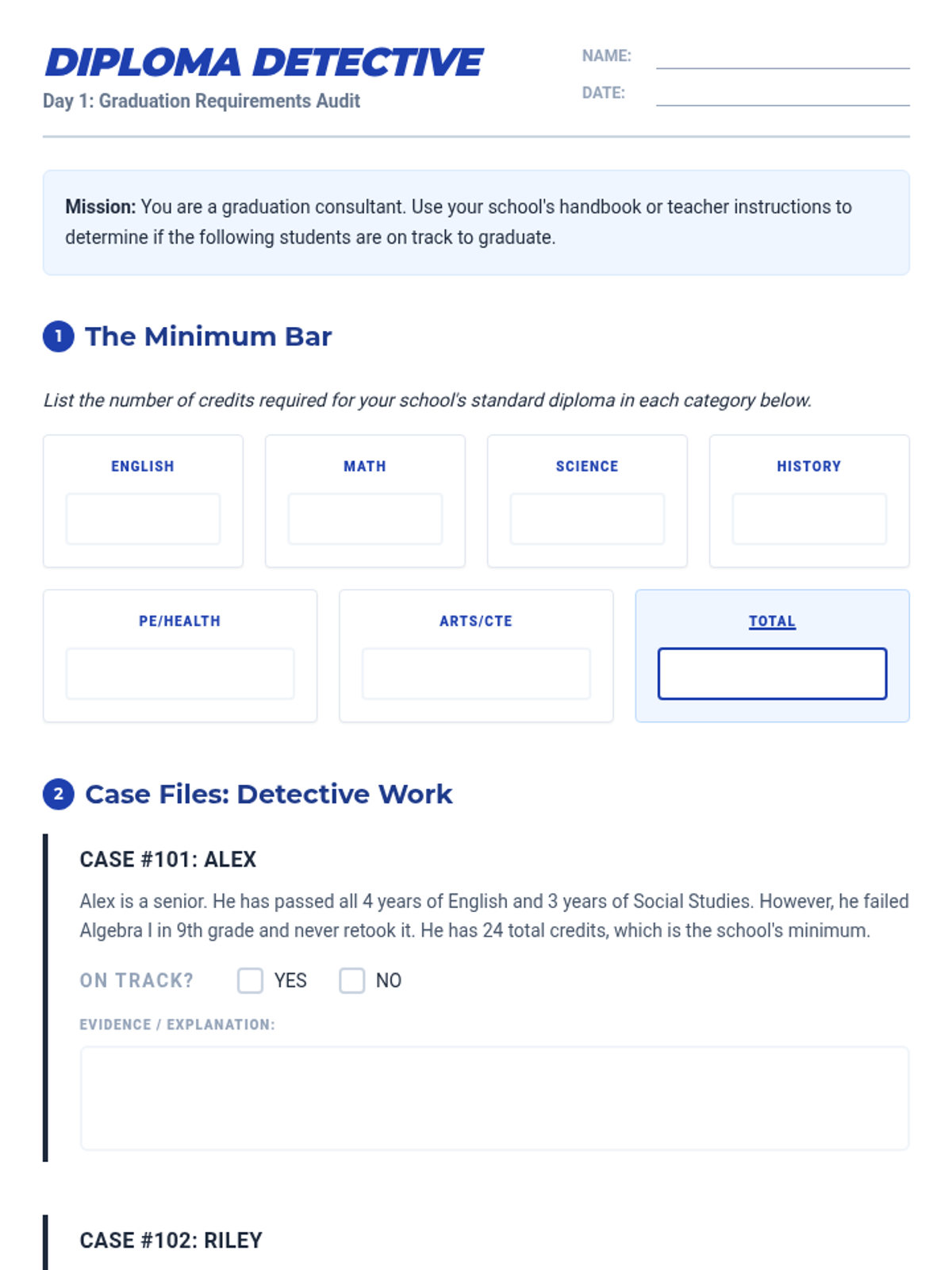
Day 1 focuses on understanding the credit system, core subject requirements, and the different types of diplomas available.
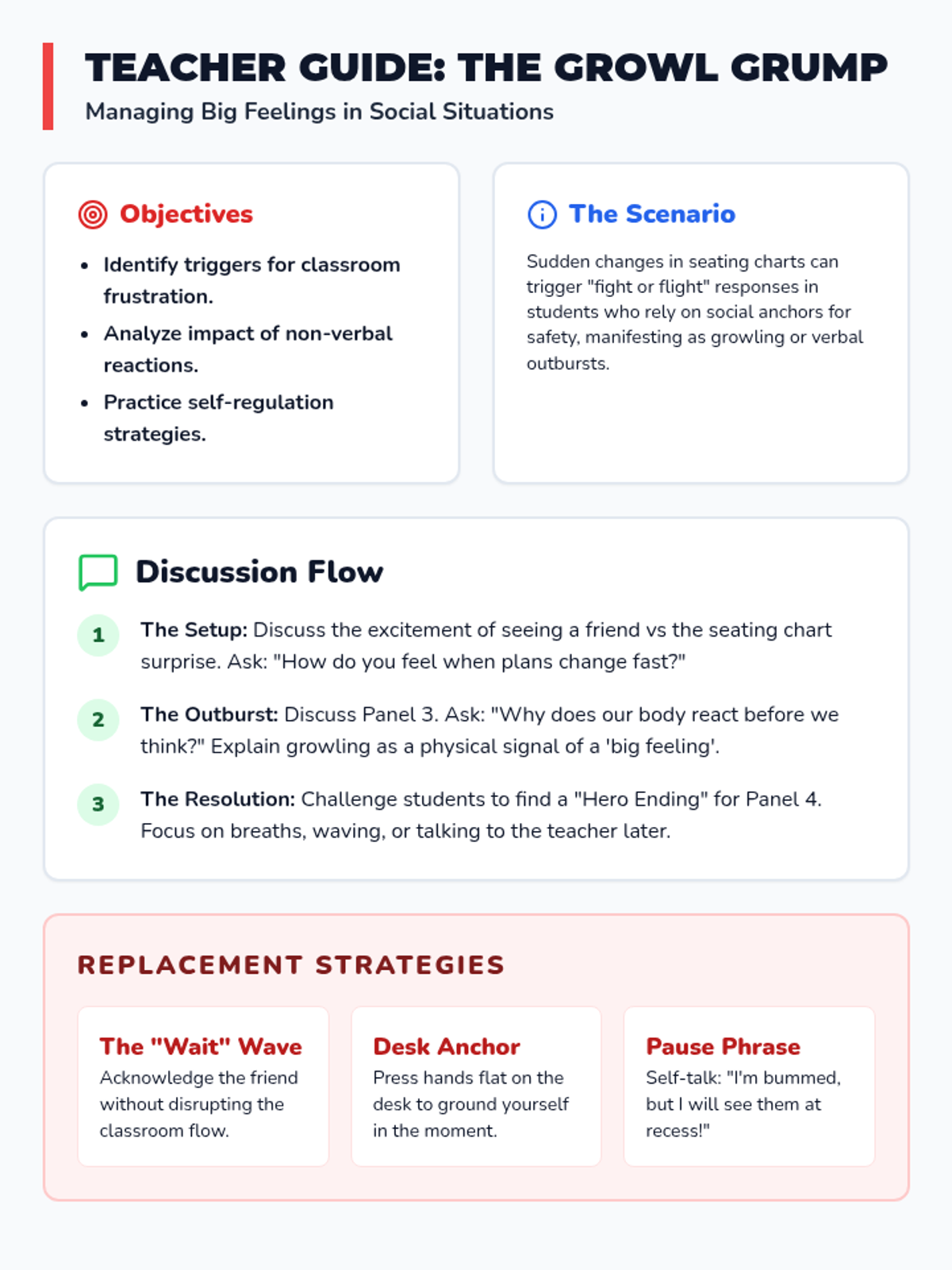
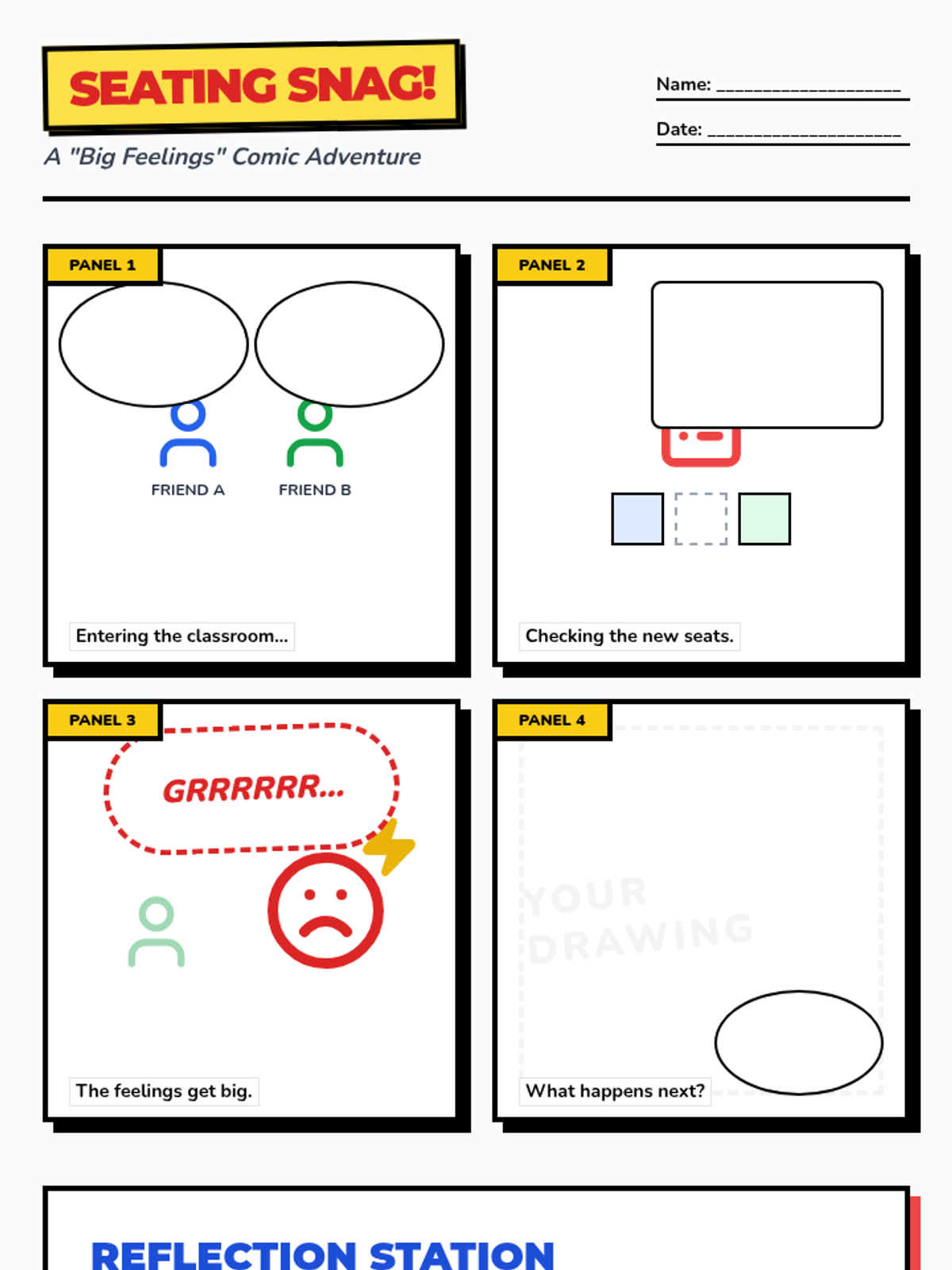
A social-emotional learning lesson focusing on identifying and managing frustration when things don't go as planned in the classroom, using a comic strip scenario.
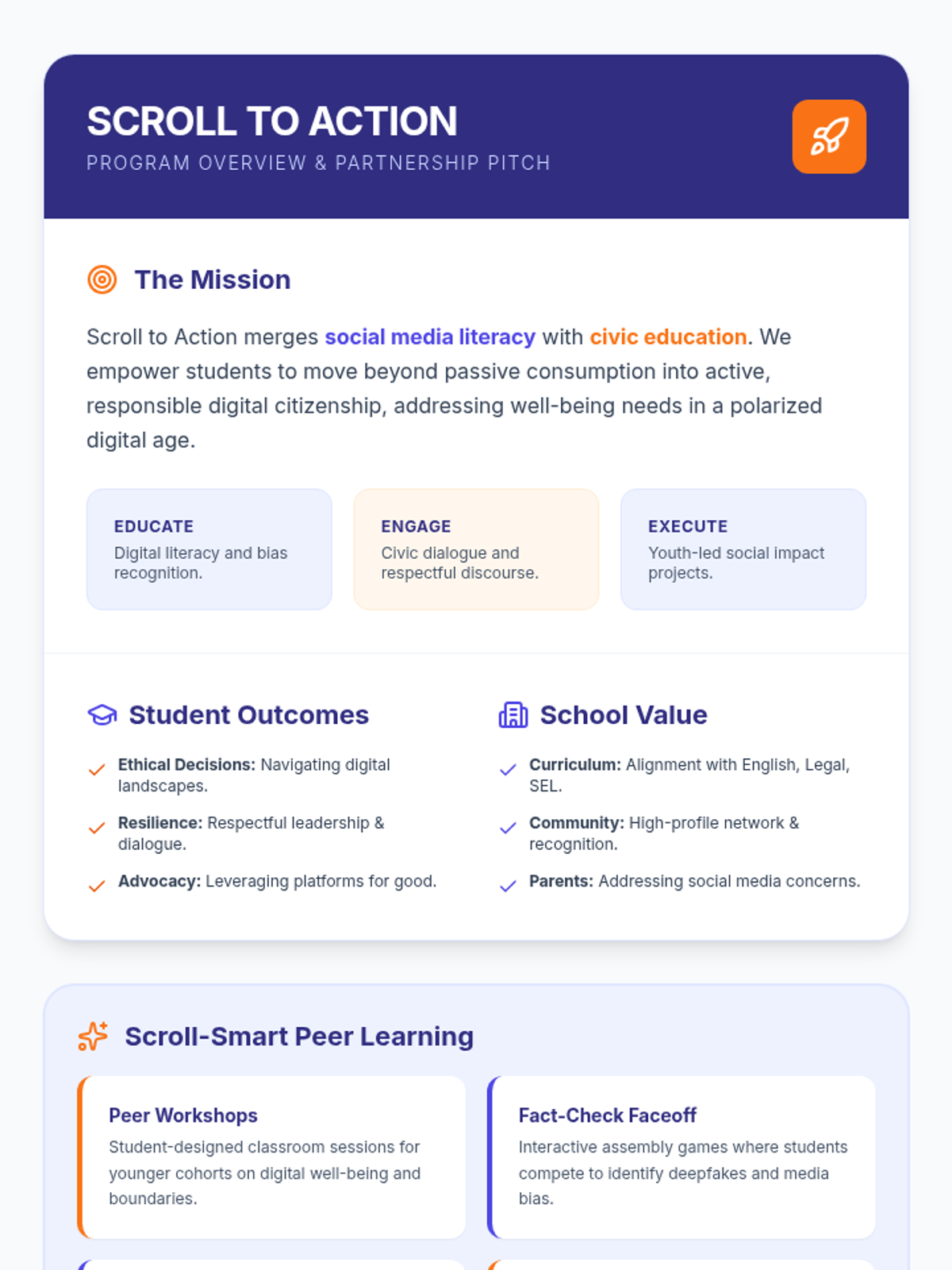
A pitch deck and supplementary handout designed to help educators present the 'Scroll to Action' program to school leadership for integration into the curriculum.
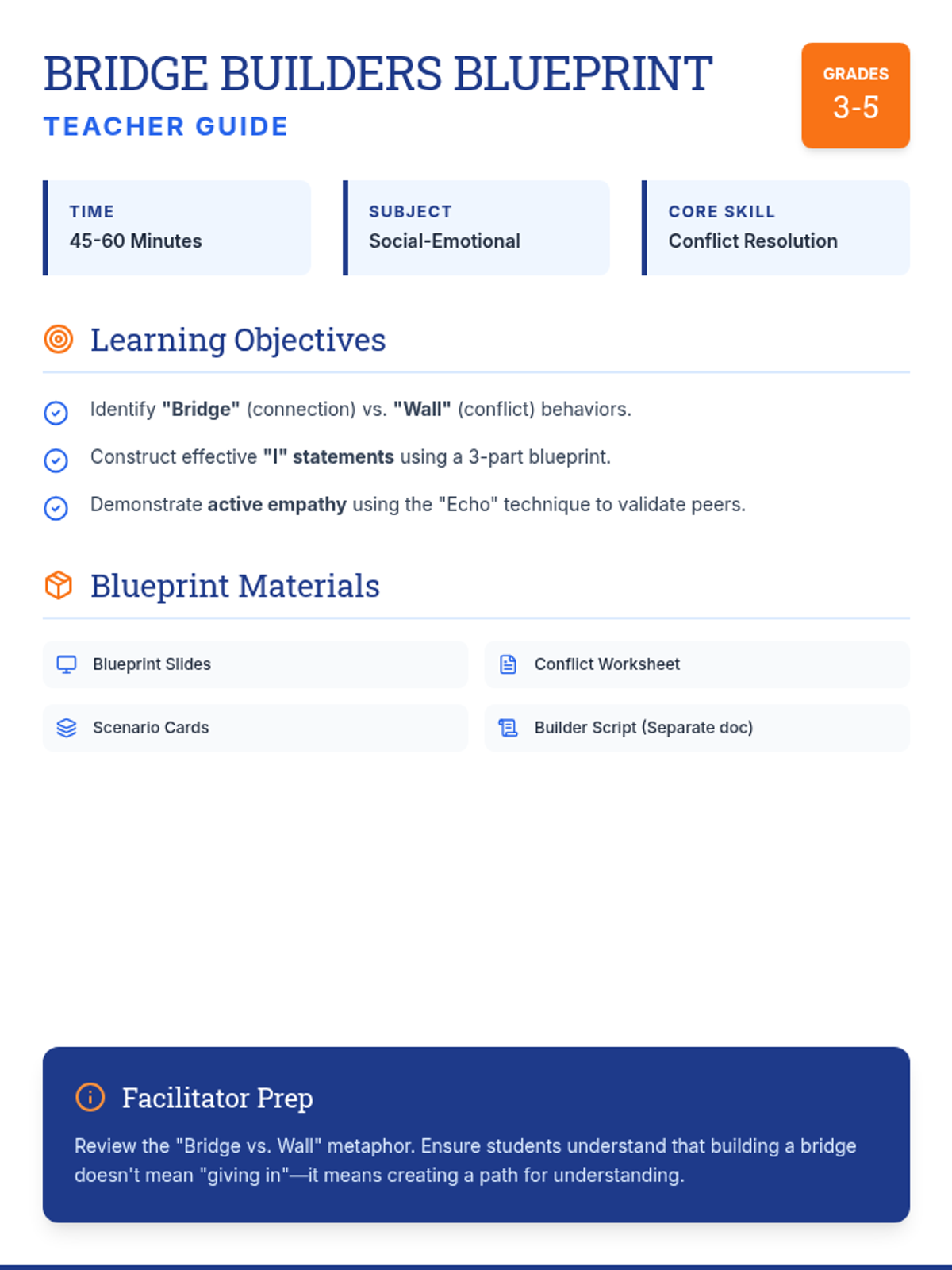
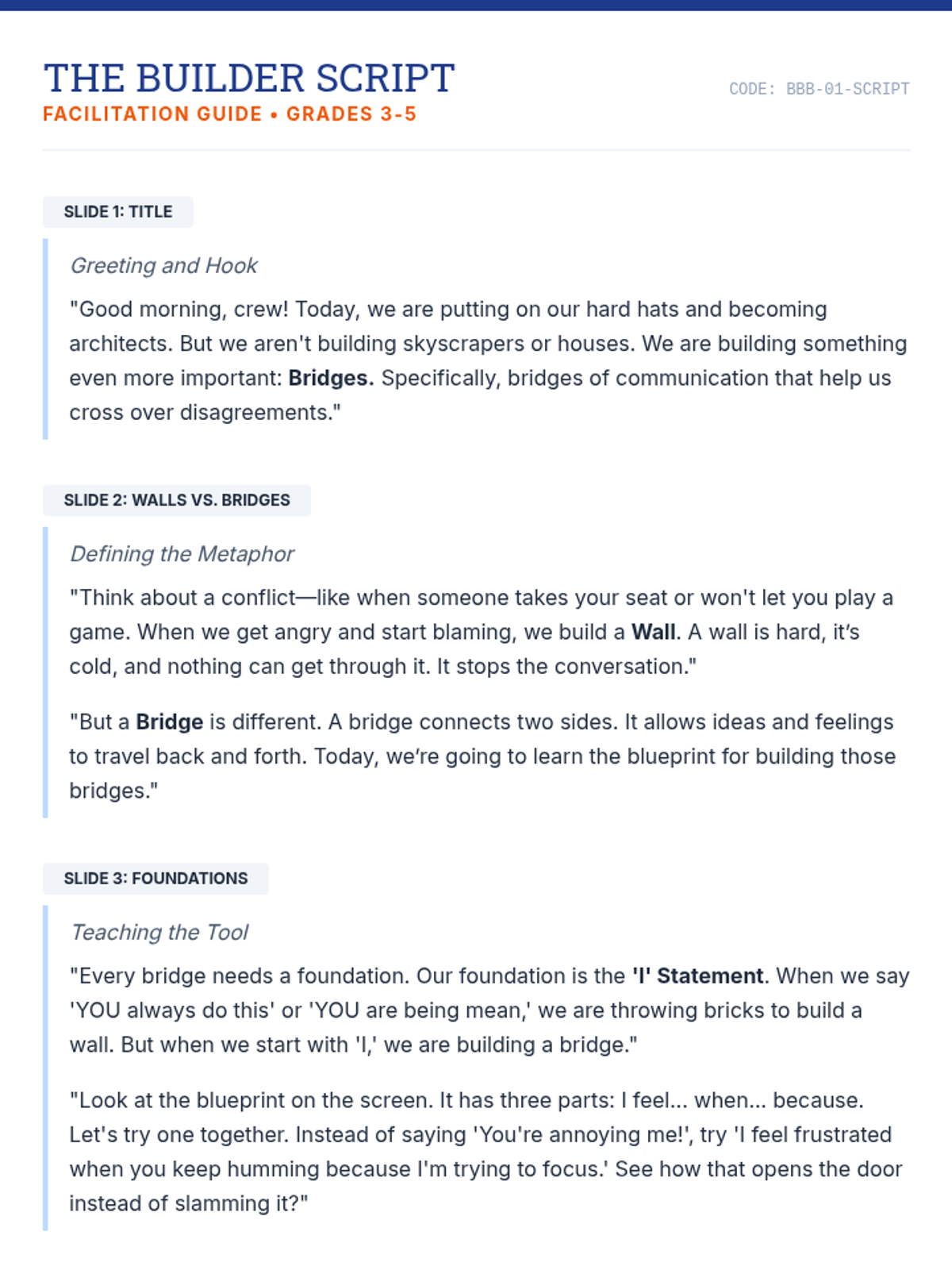
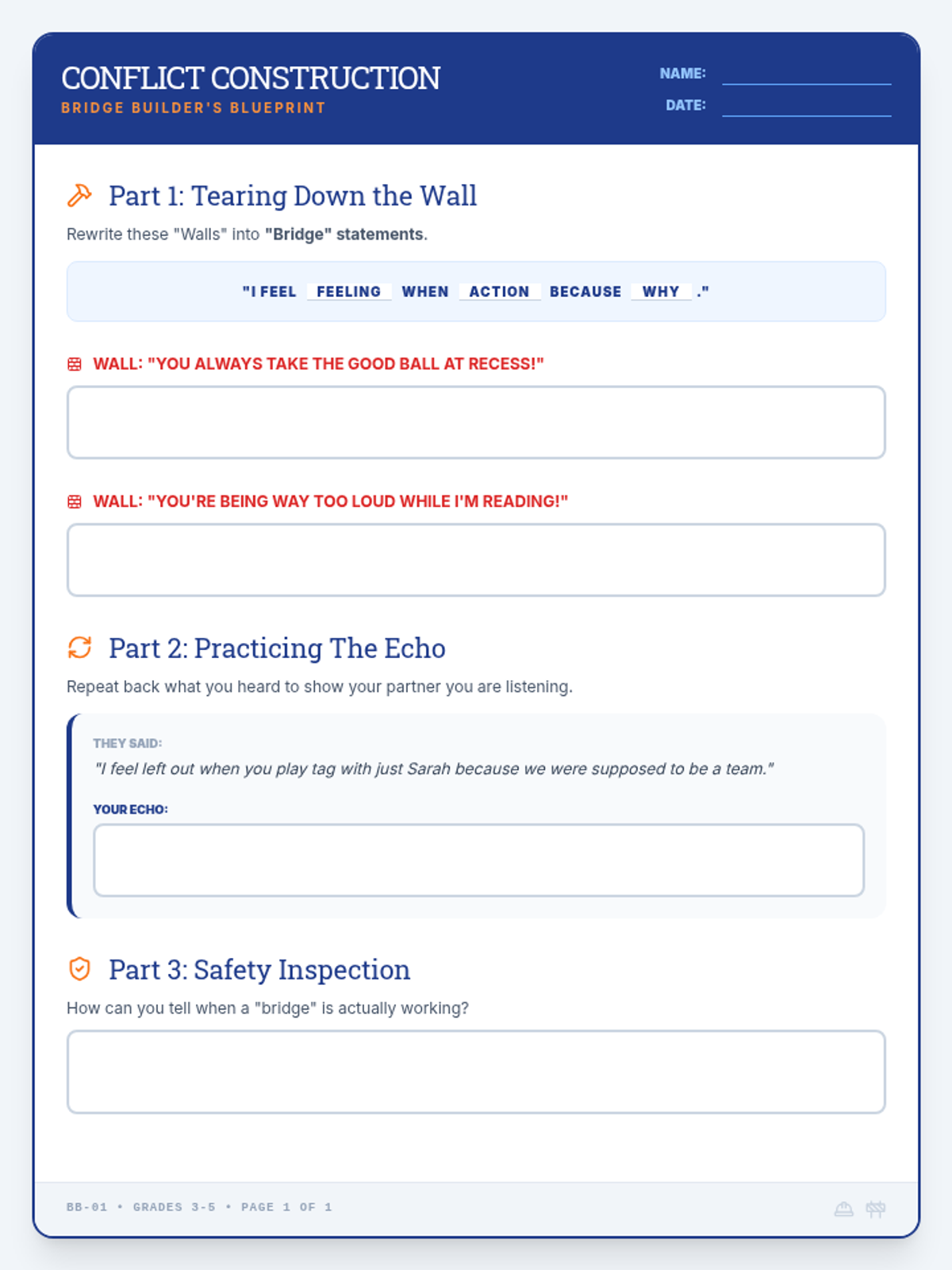
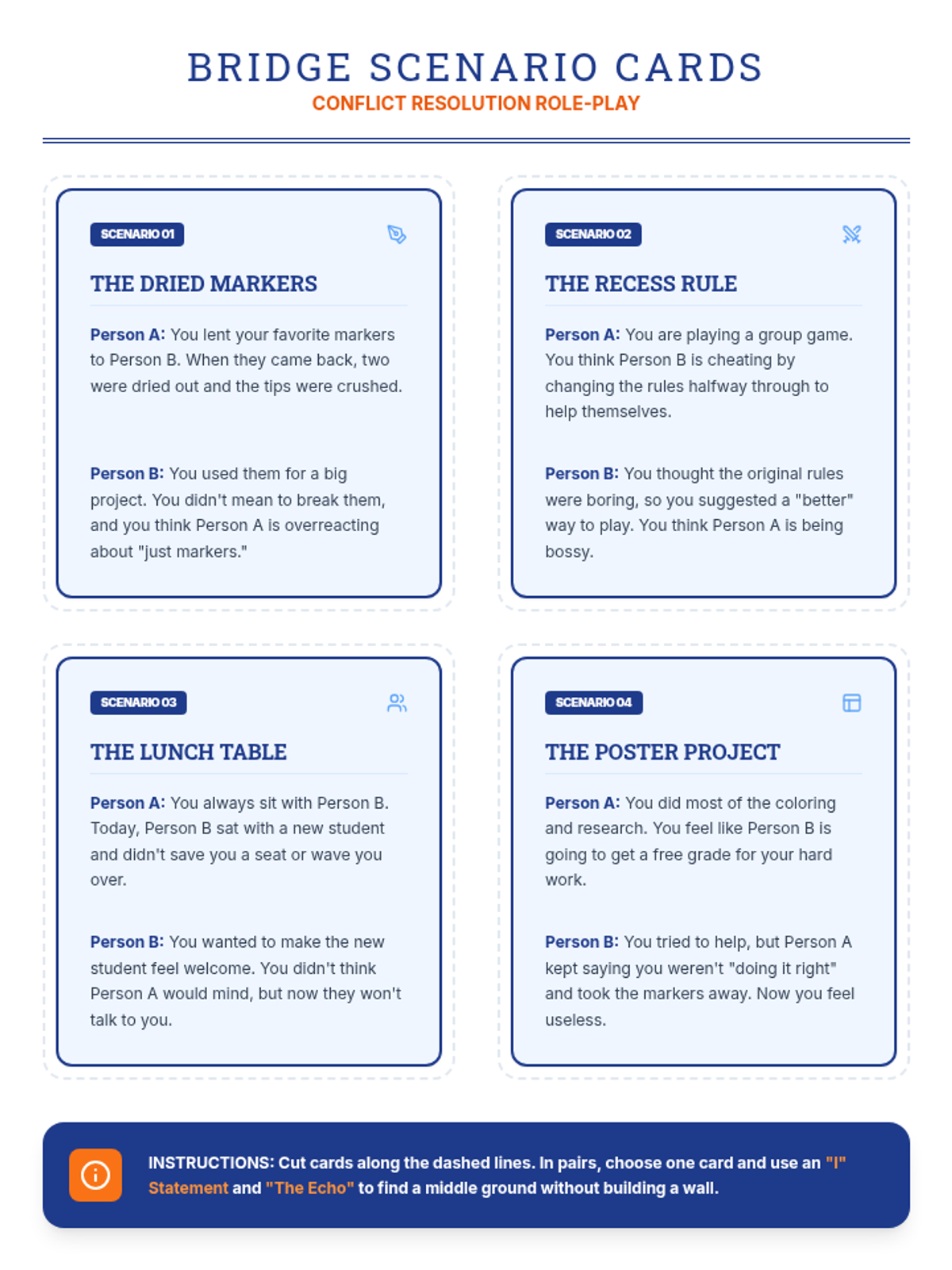
A comprehensive lesson on conflict resolution for grades 3-5, using the metaphor of bridge-building to teach "I" statements, empathy, and compromise.
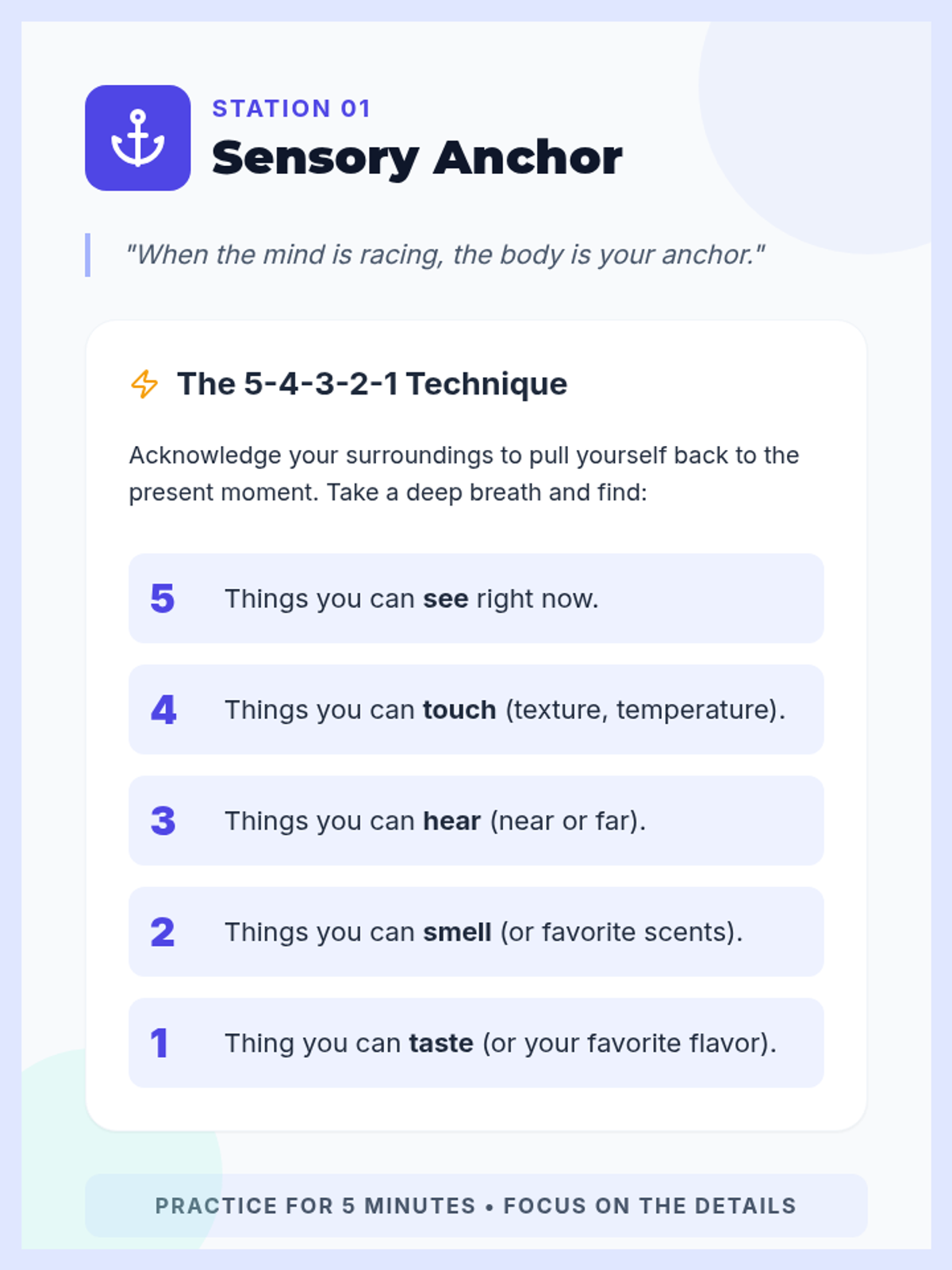
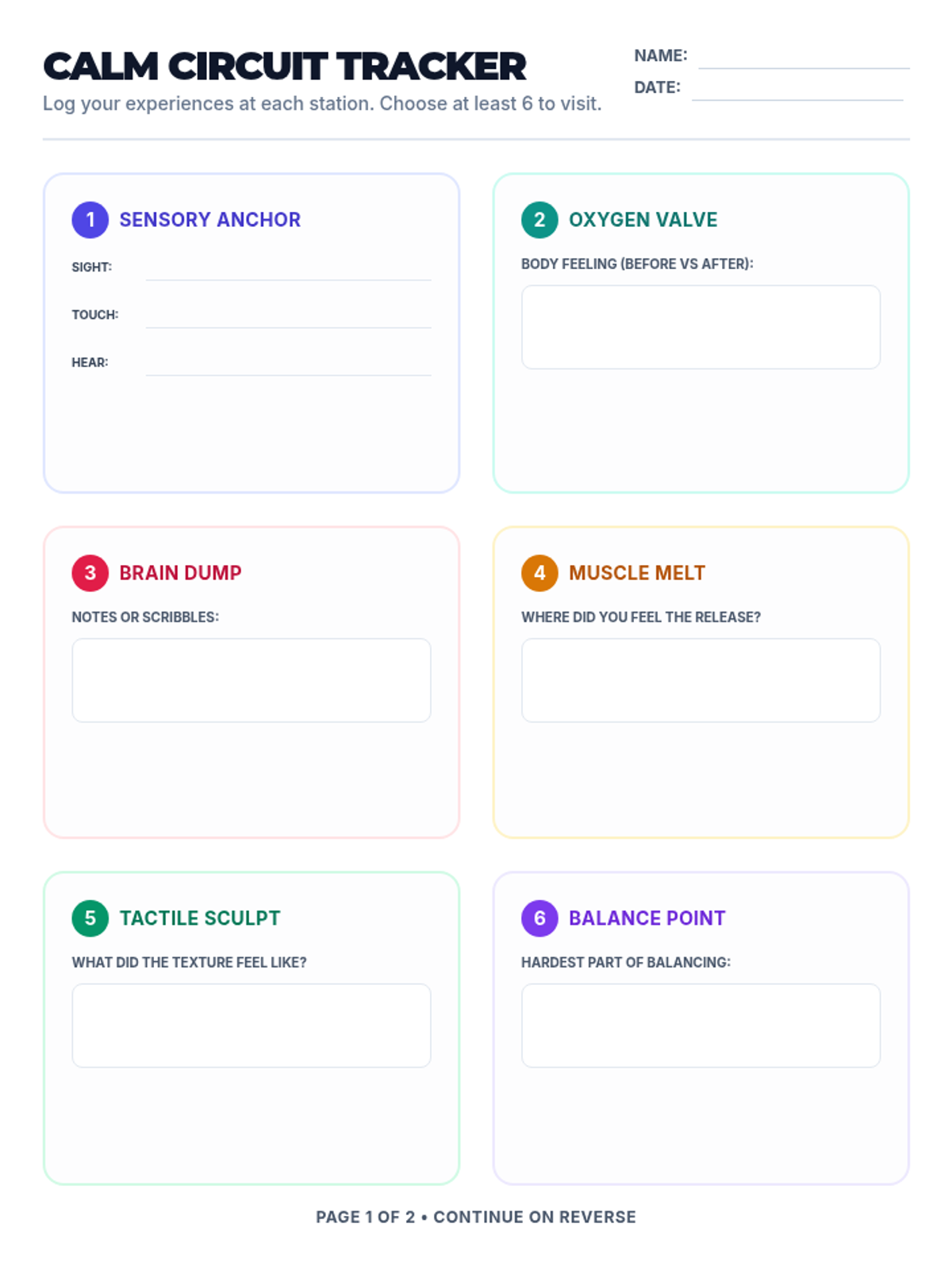
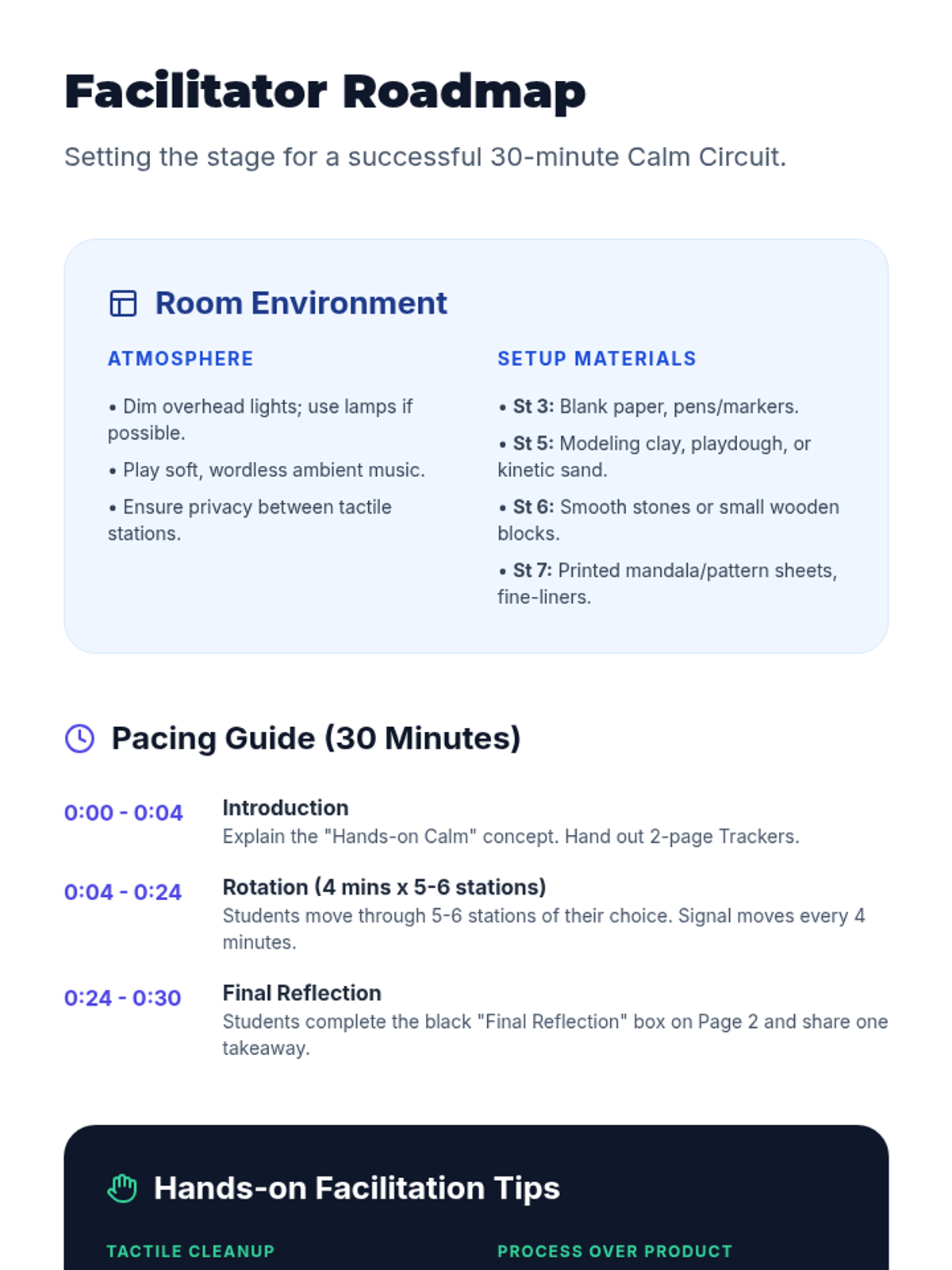
A series of rotational stations designed for high school students to practice mindfulness, emotional regulation, and stress management in a 30-minute session.
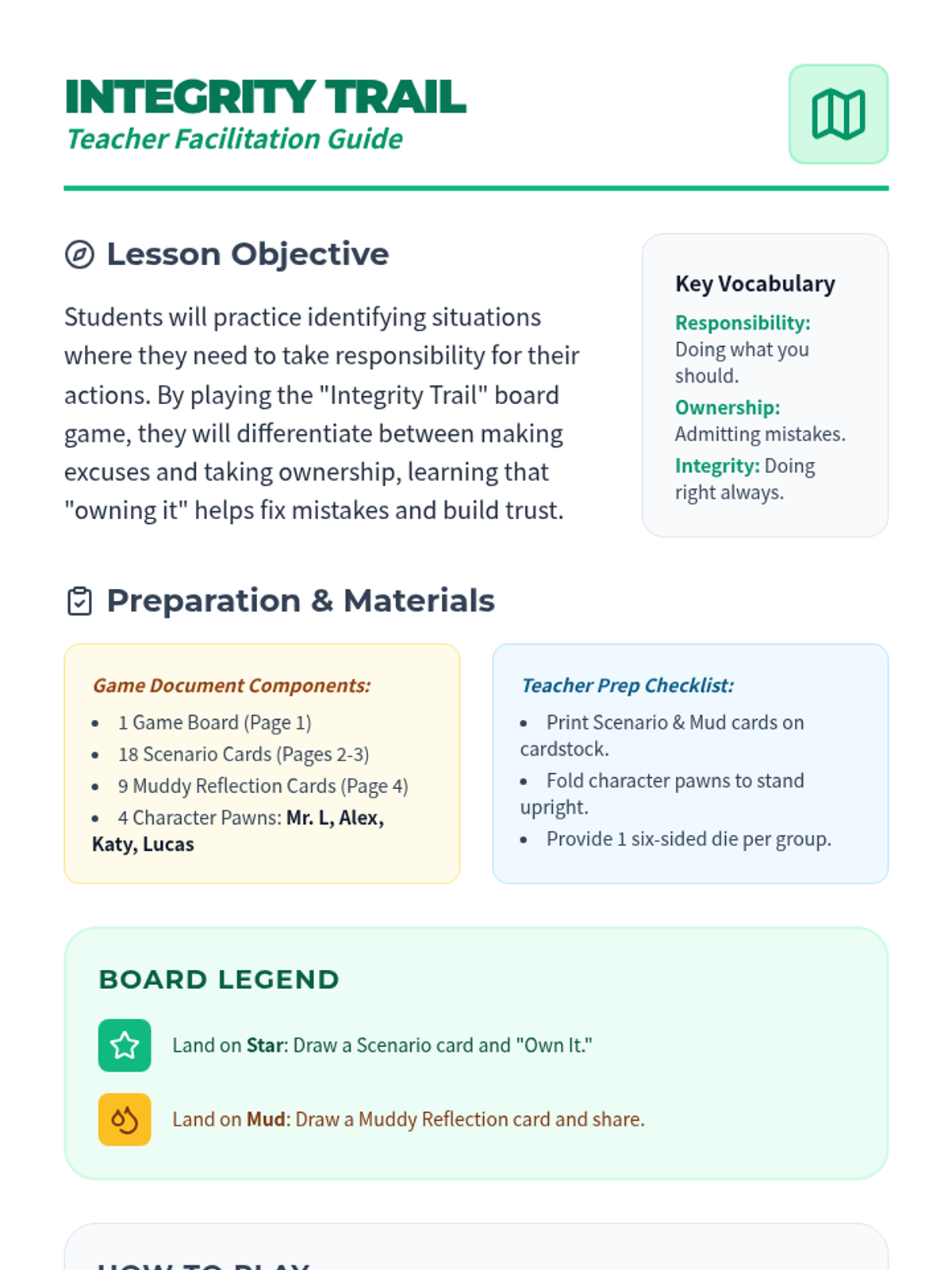
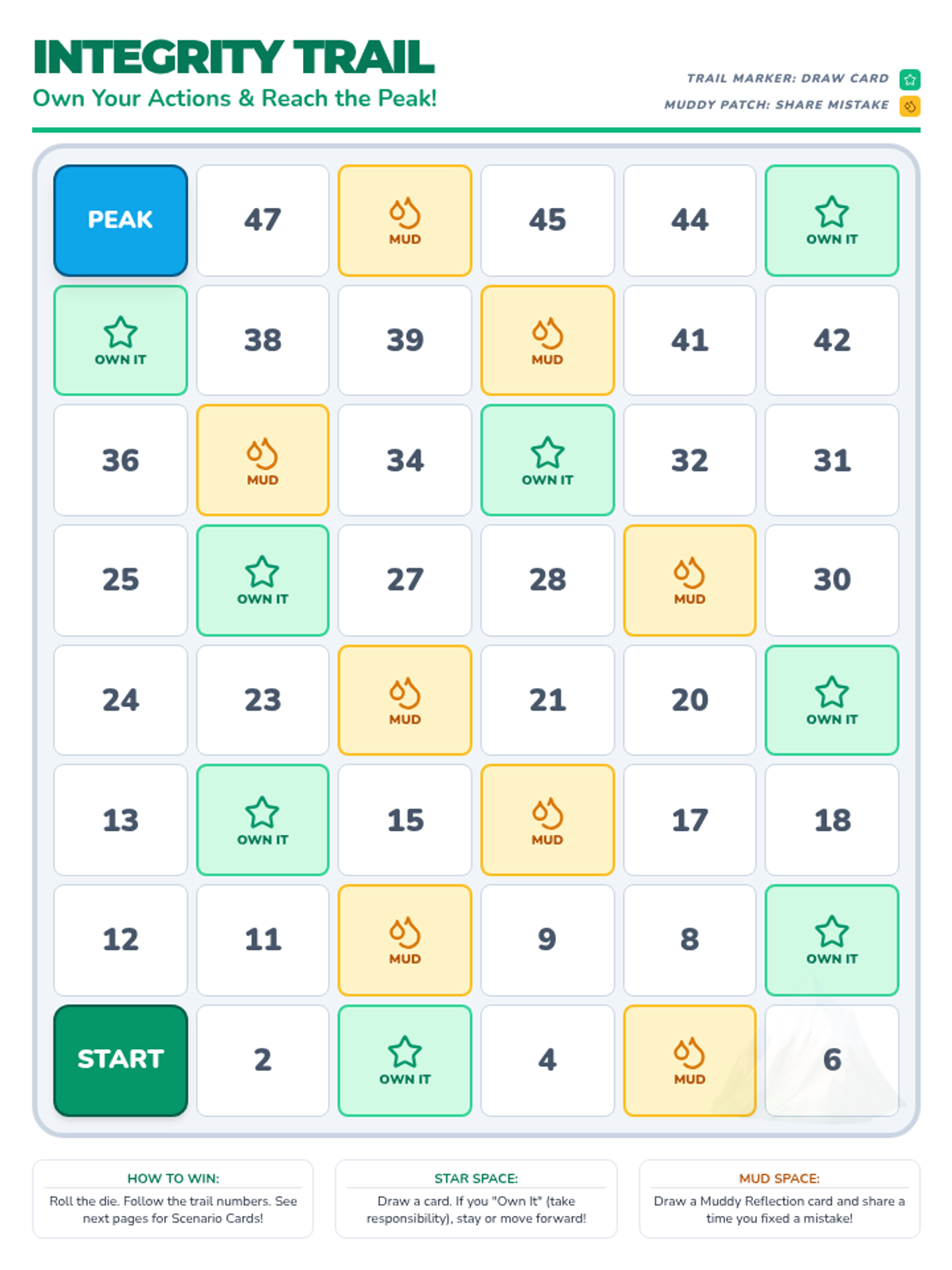
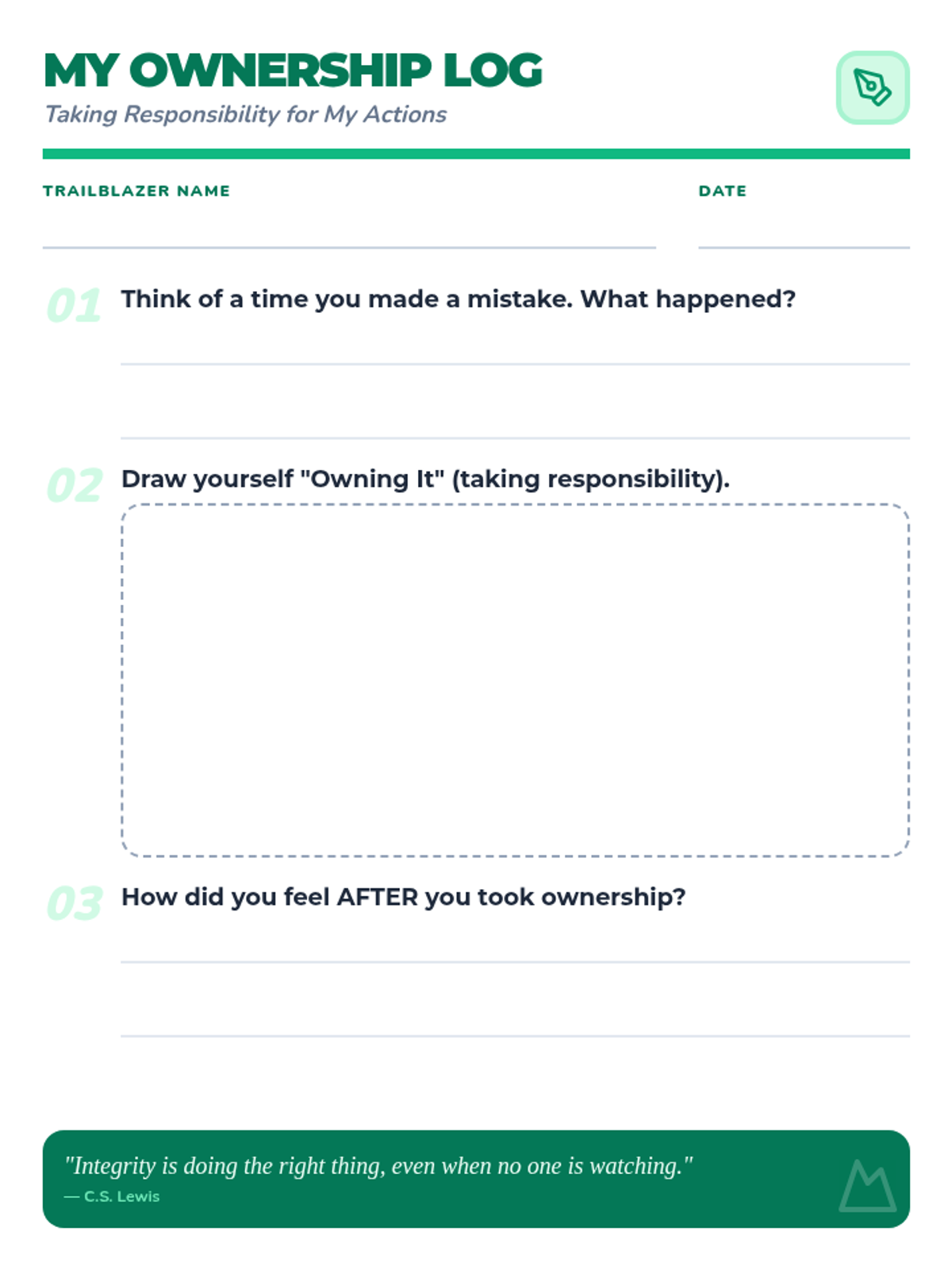
A character-building lesson centered around a board game where students navigate real-life scenarios to practice taking ownership of their actions and choices.
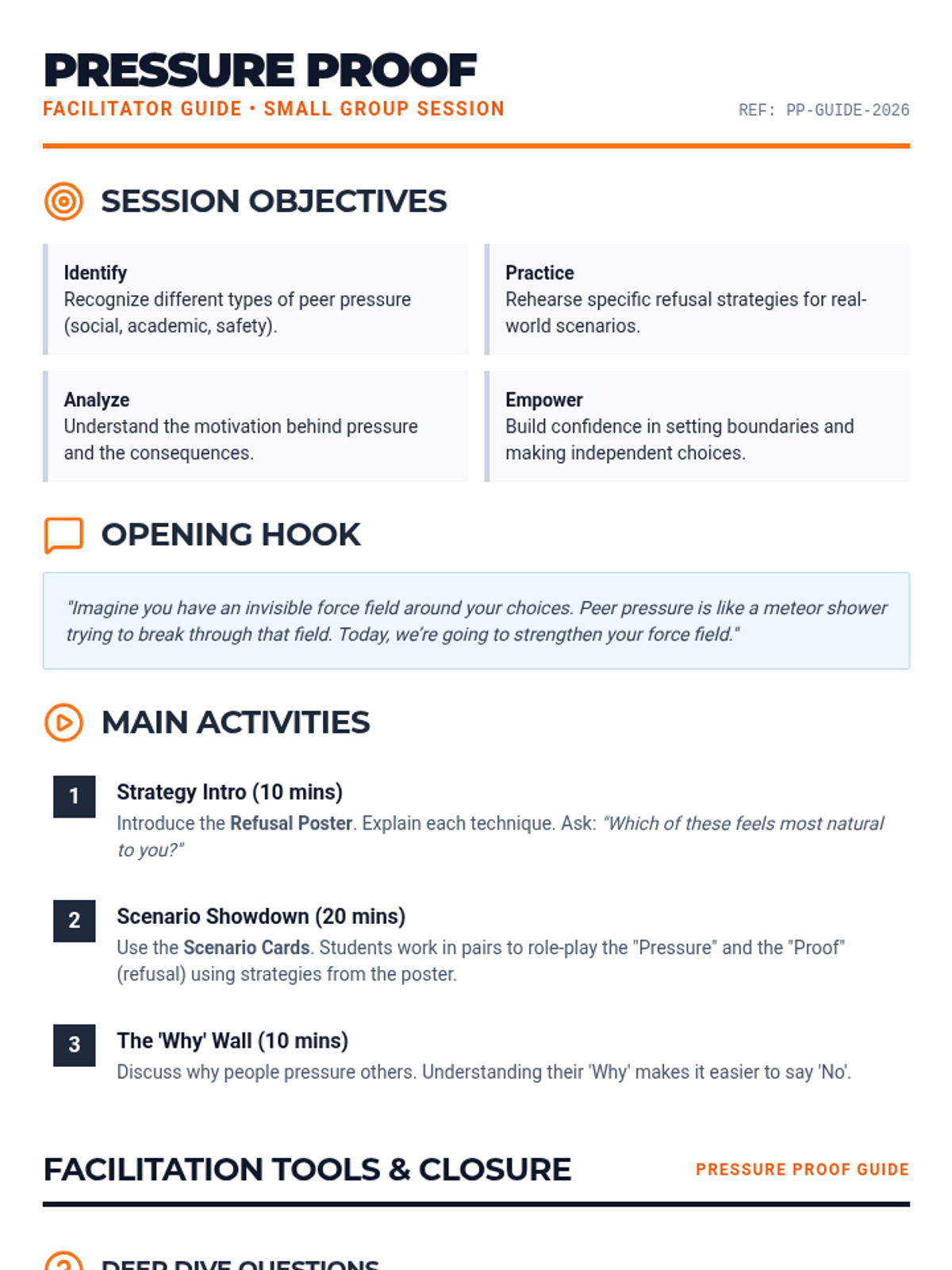
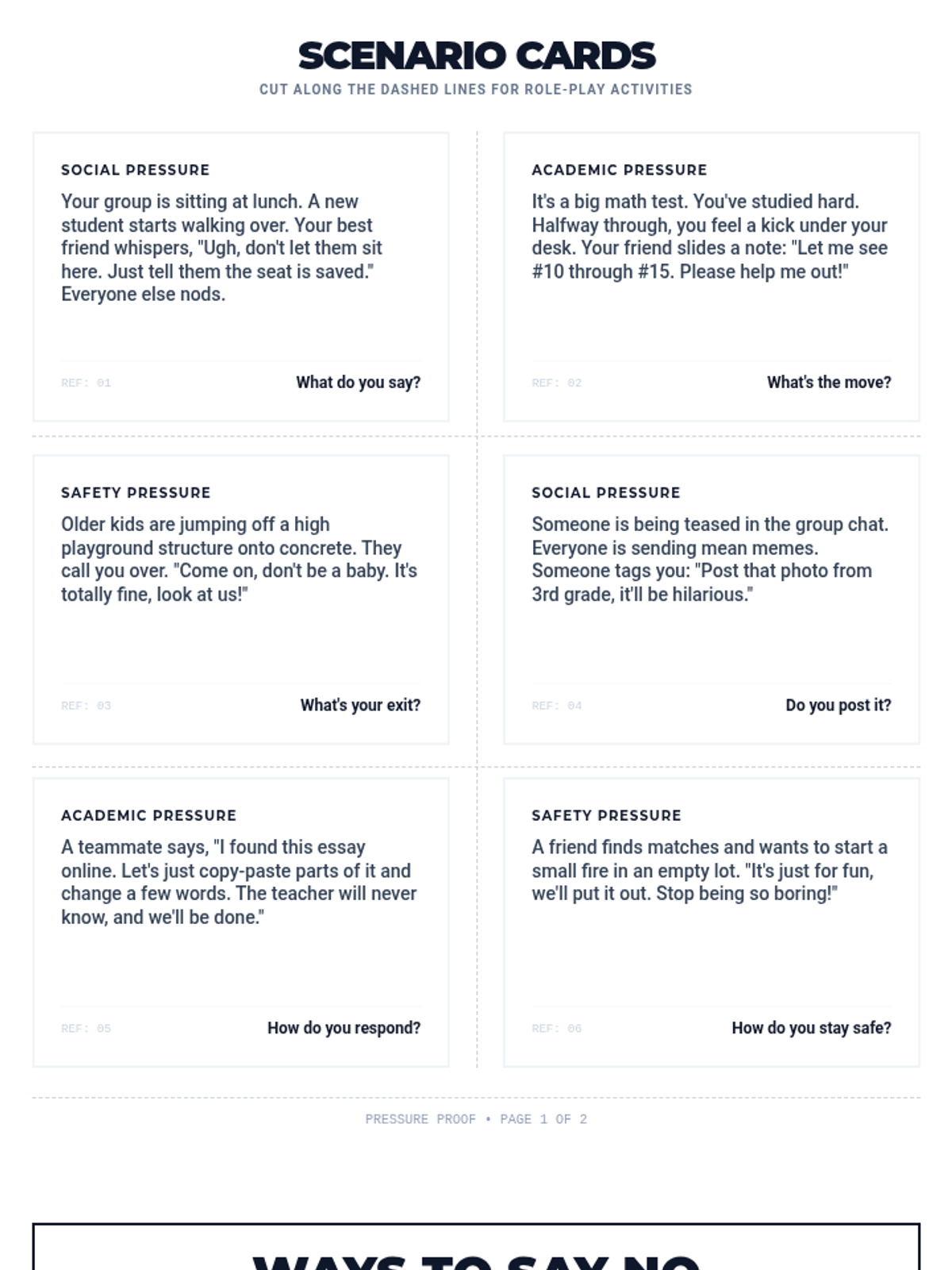
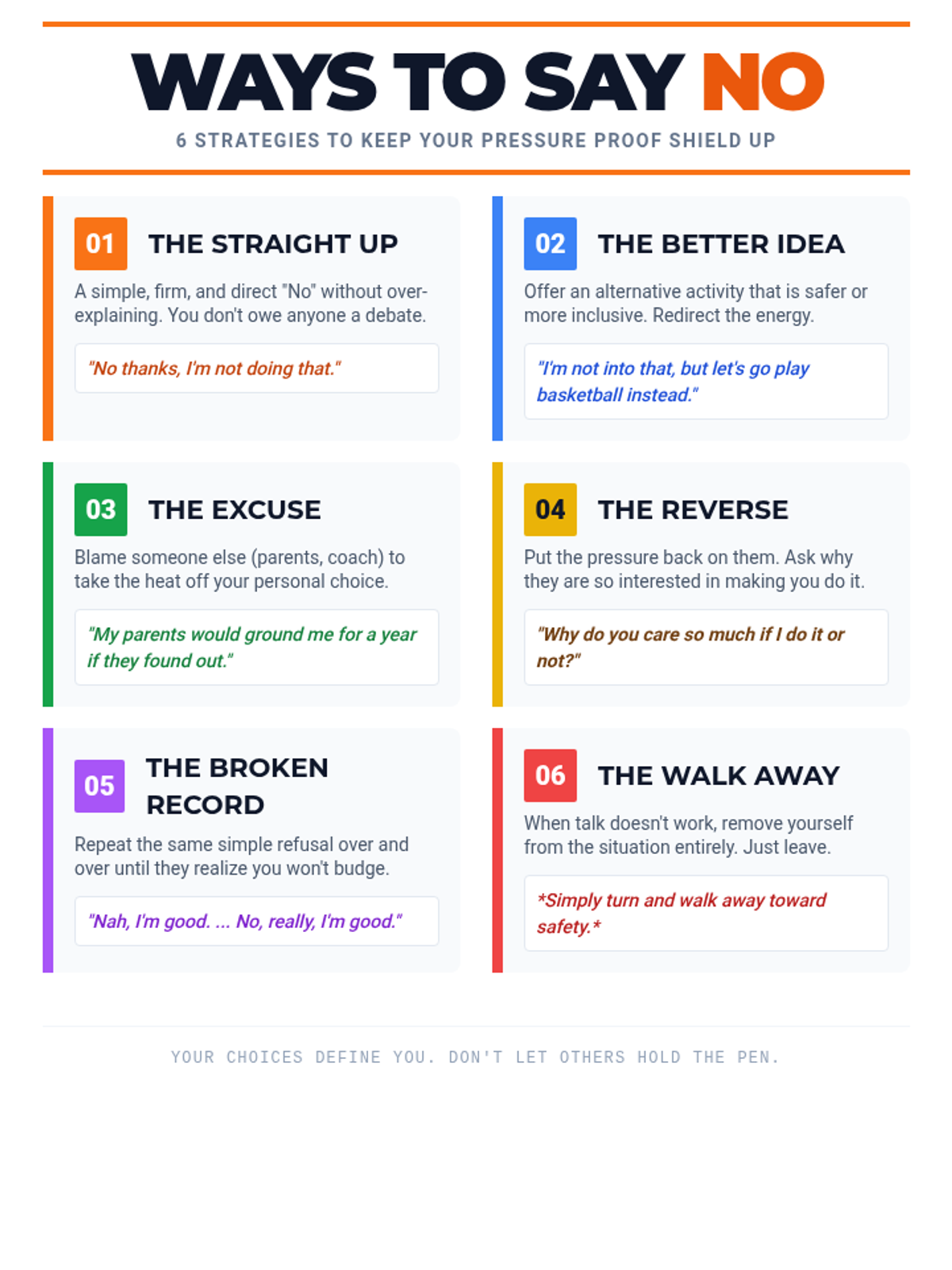
A comprehensive small-group session guide and set of resources designed to help students navigate peer pressure in social, academic, and physical safety situations.
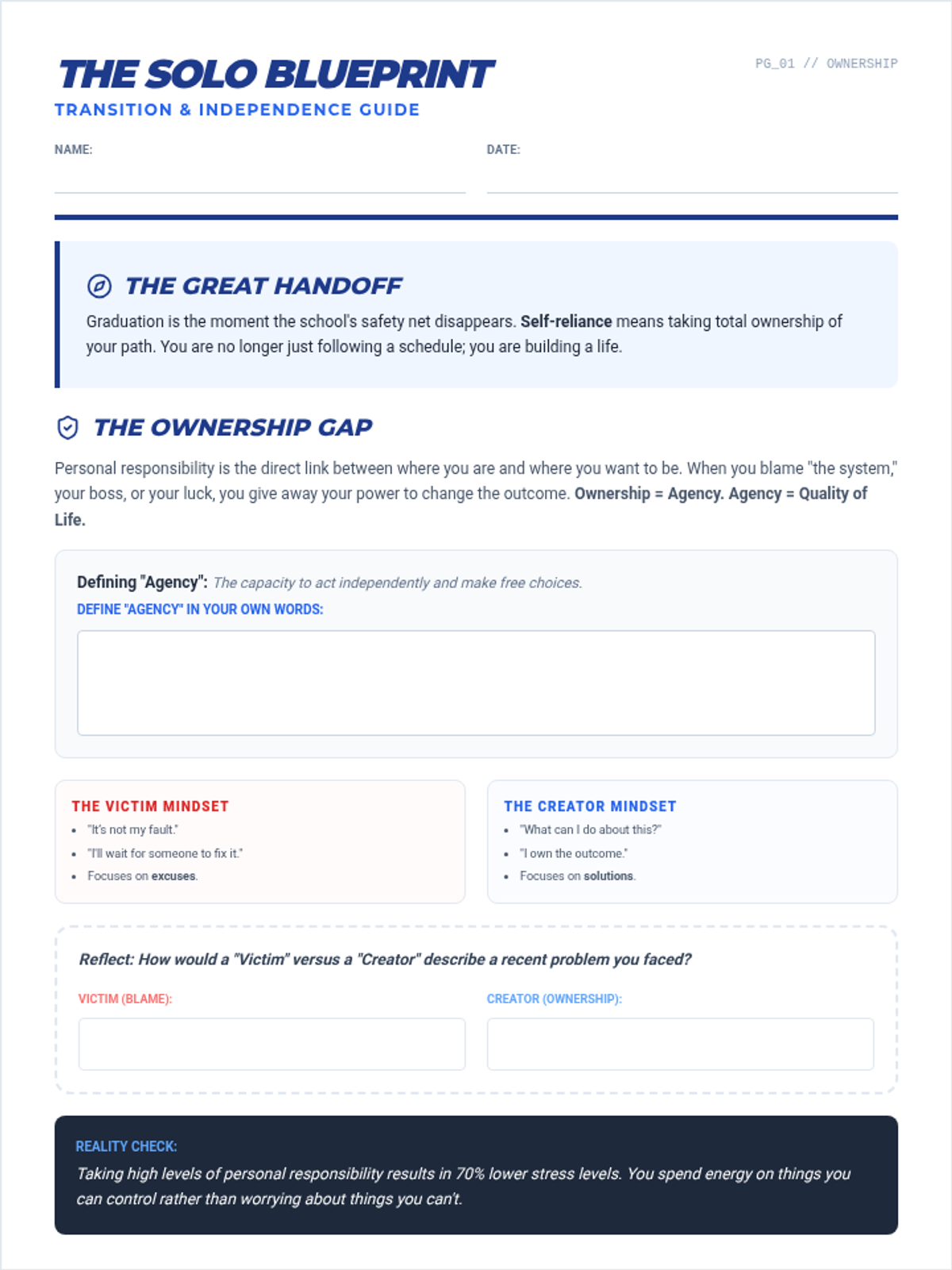
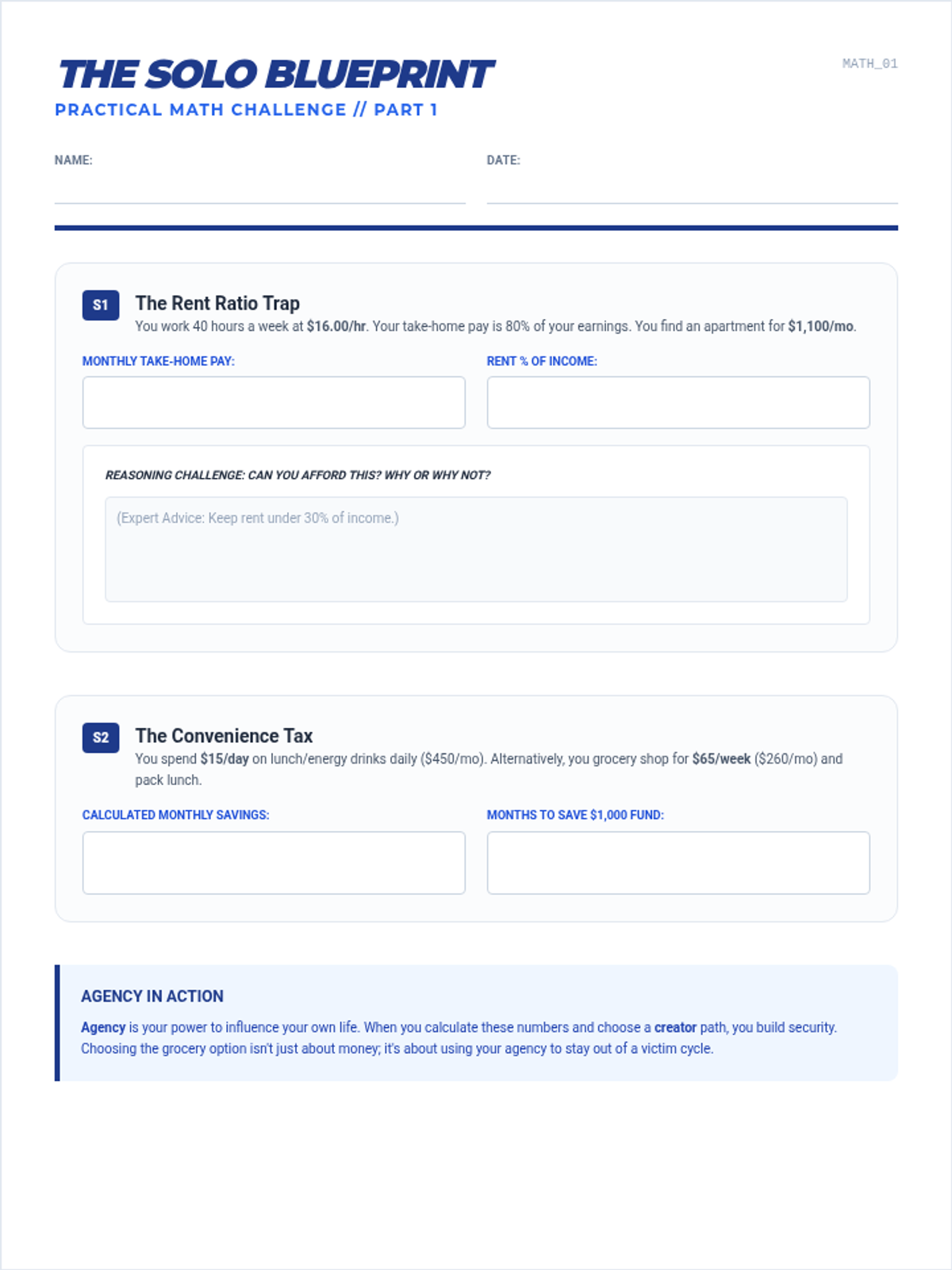
A comprehensive lesson for graduating seniors on transitioning to independence, covering ownership mindsets, financial survival, and time management.
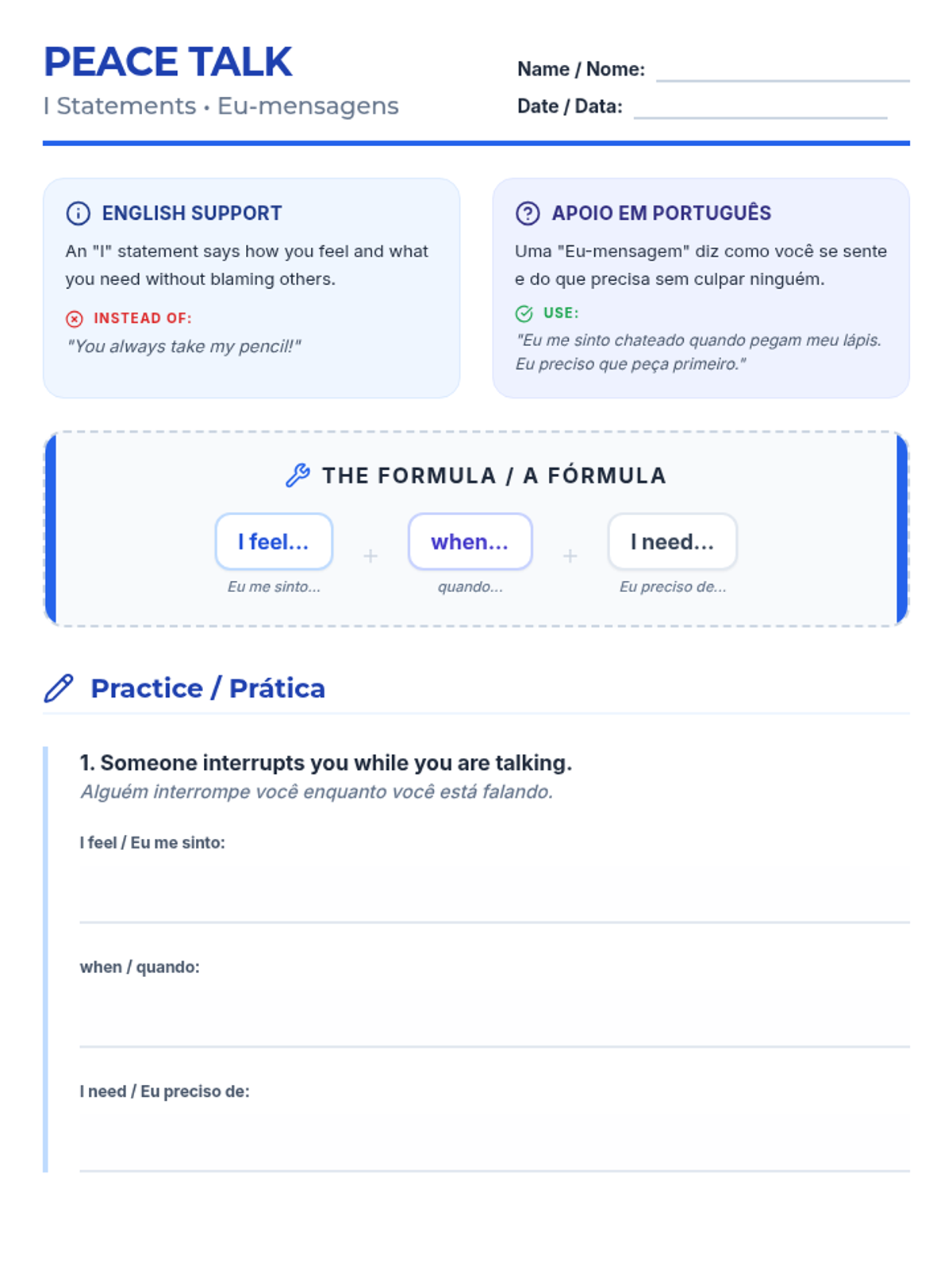
A lesson designed to help newcomer Portuguese students and native English speakers master the art of assertive communication using 'I' statements in classroom settings.
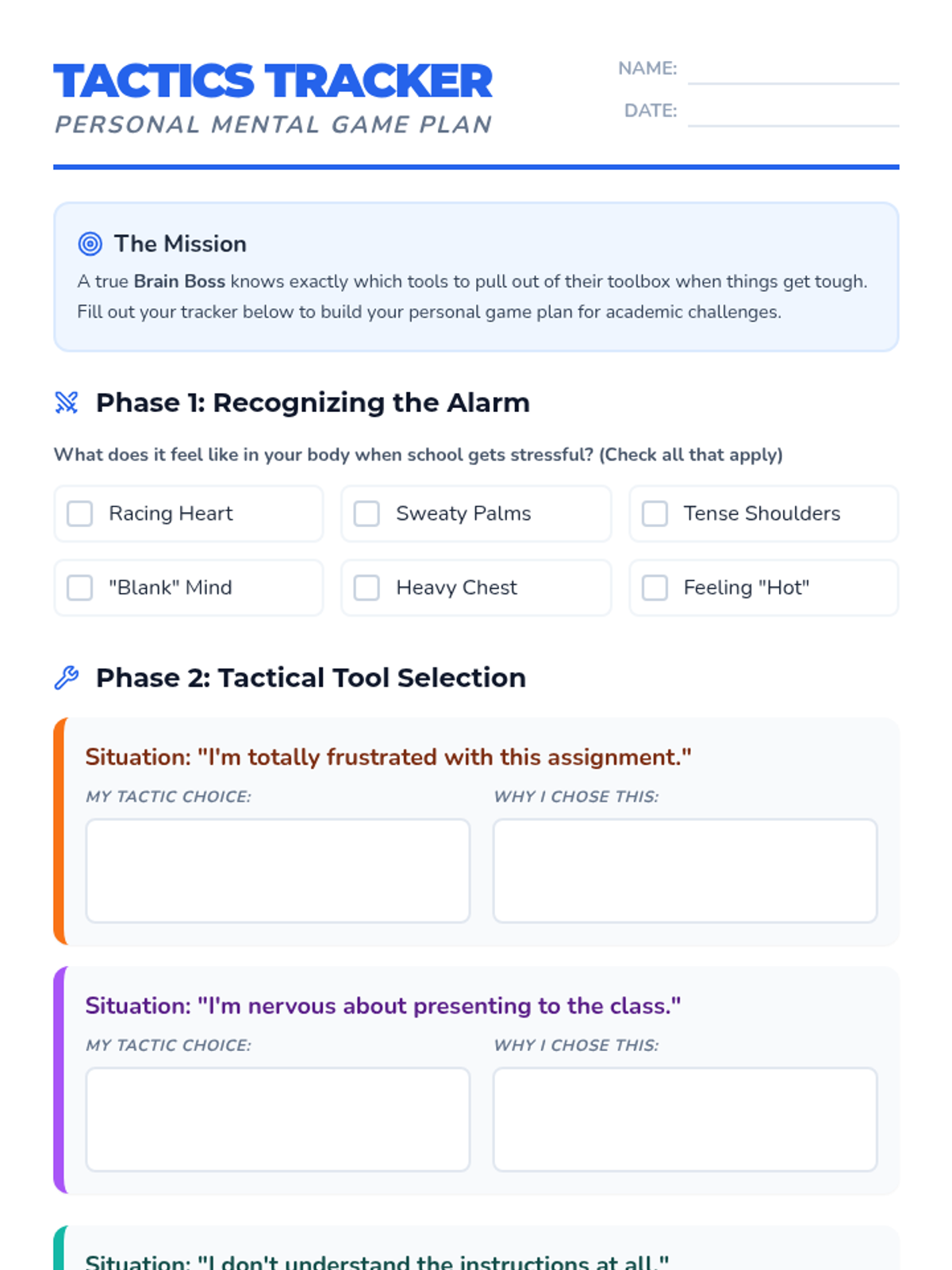
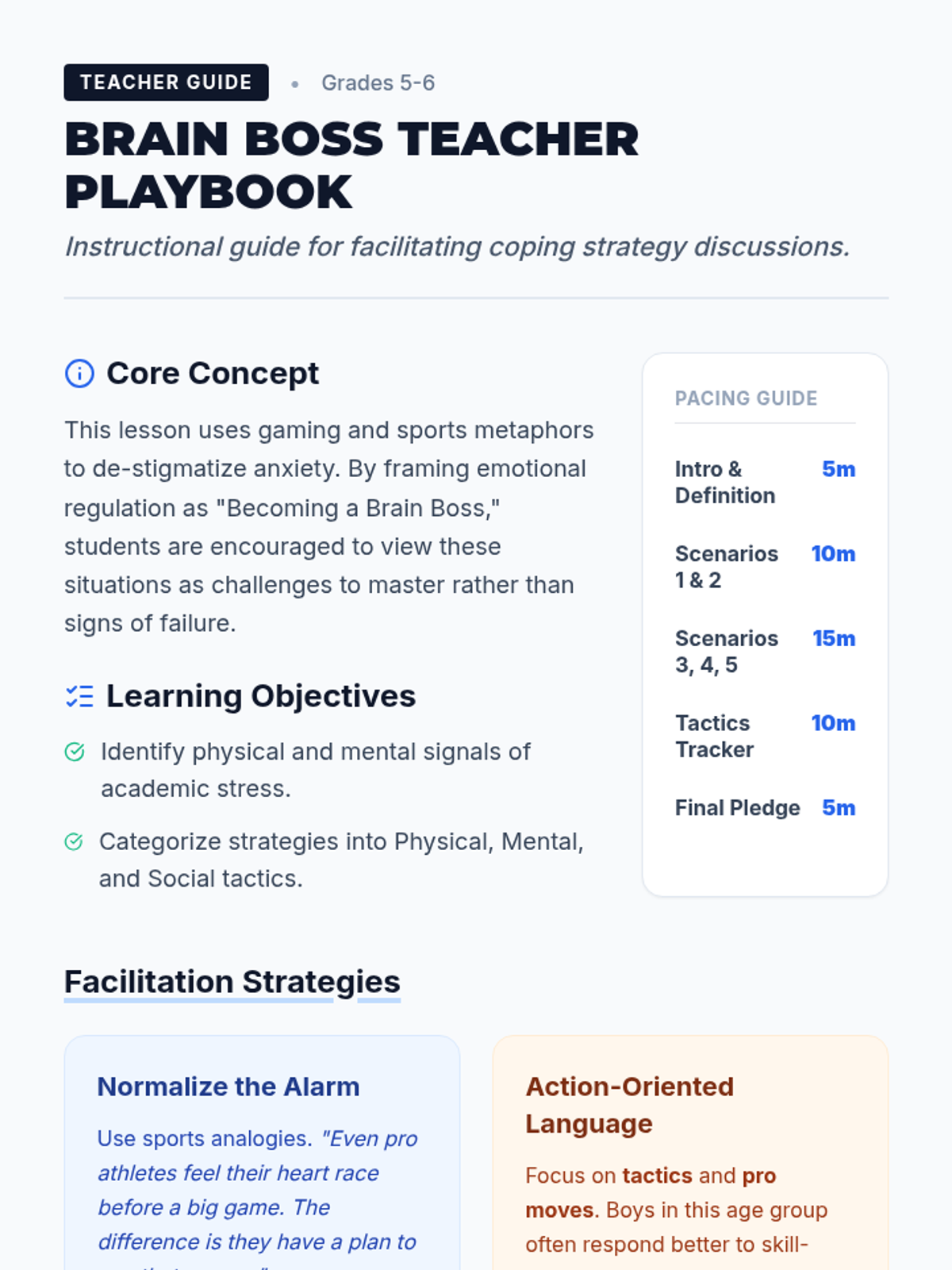
A comprehensive lesson designed to help 5th-grade students, particularly boys, develop and apply coping strategies for common academic stressors like testing, public speaking, and difficult assignments.
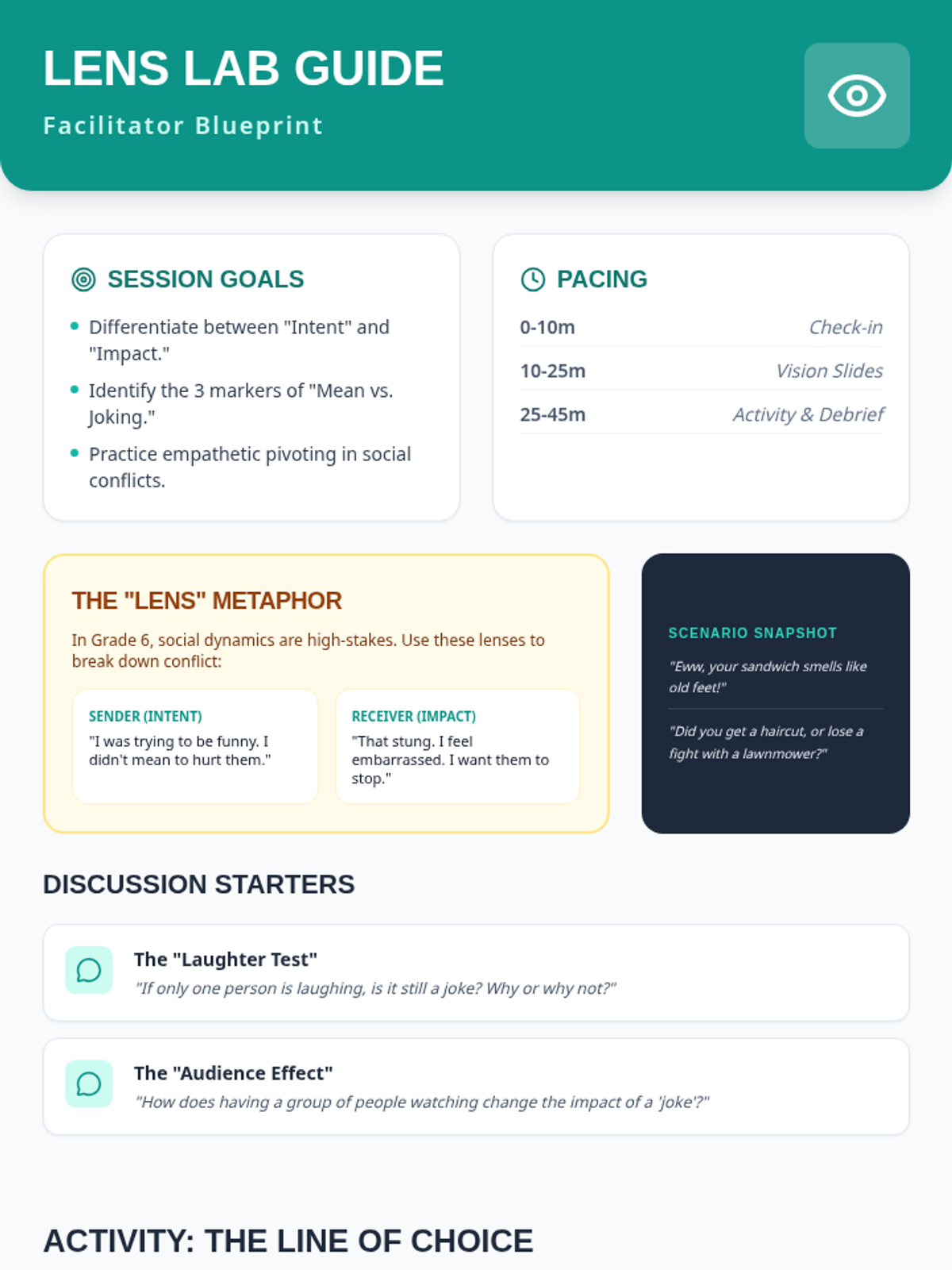
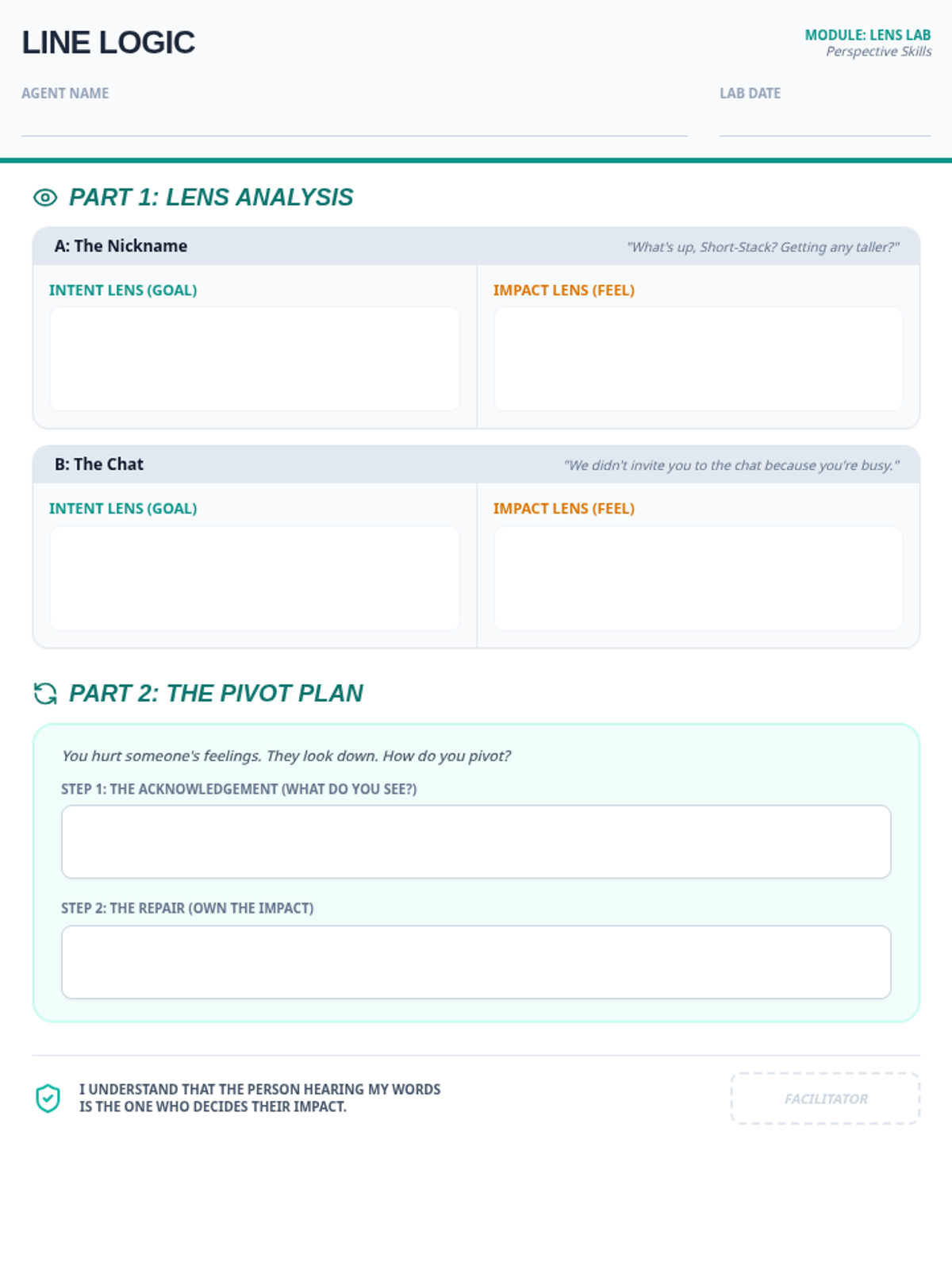
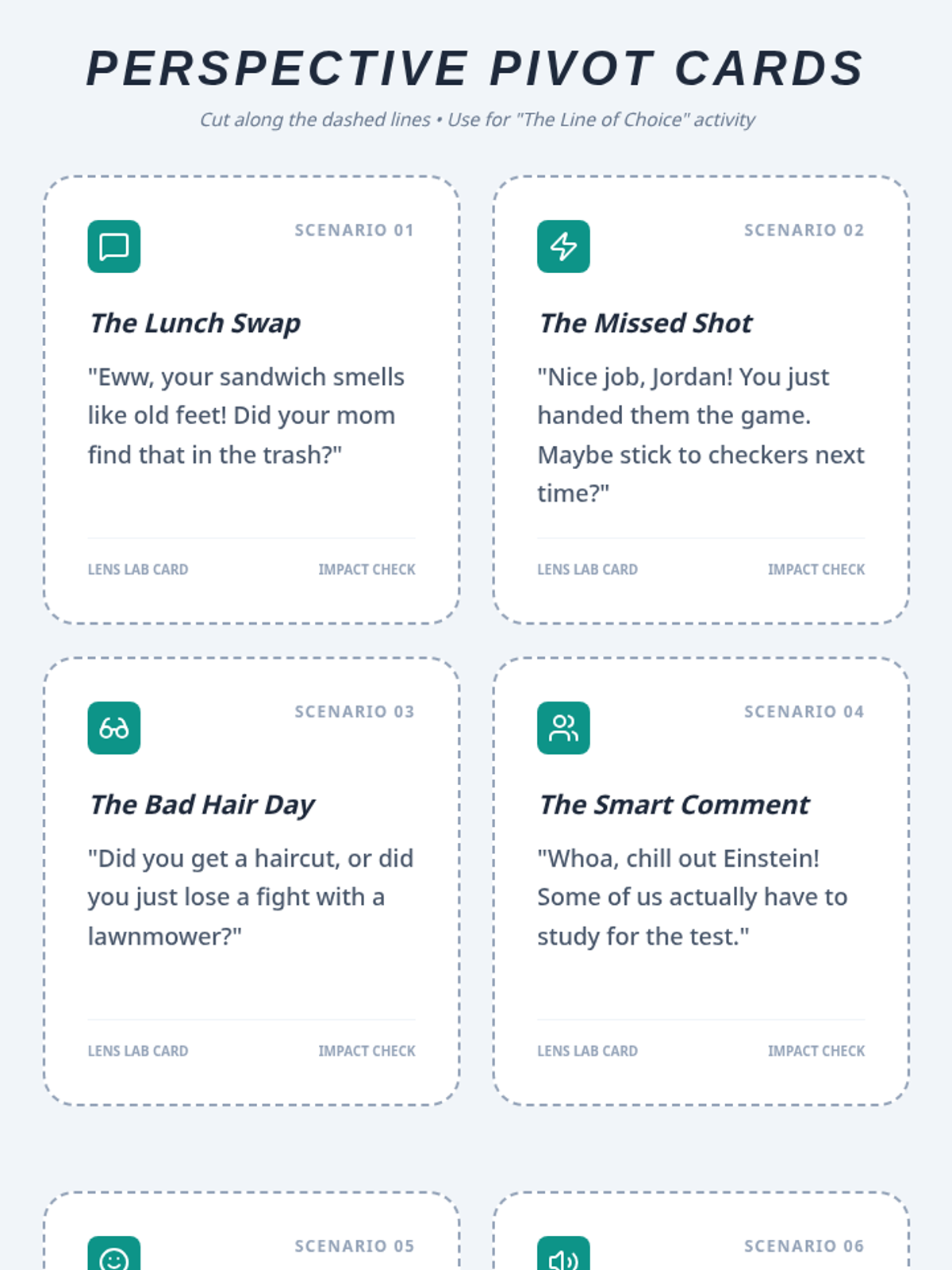
A social skills lesson for 6th grade students focused on empathy and distinguishing between playful joking and mean-spirited behavior using the 'Intent vs. Impact' perspective-taking model.
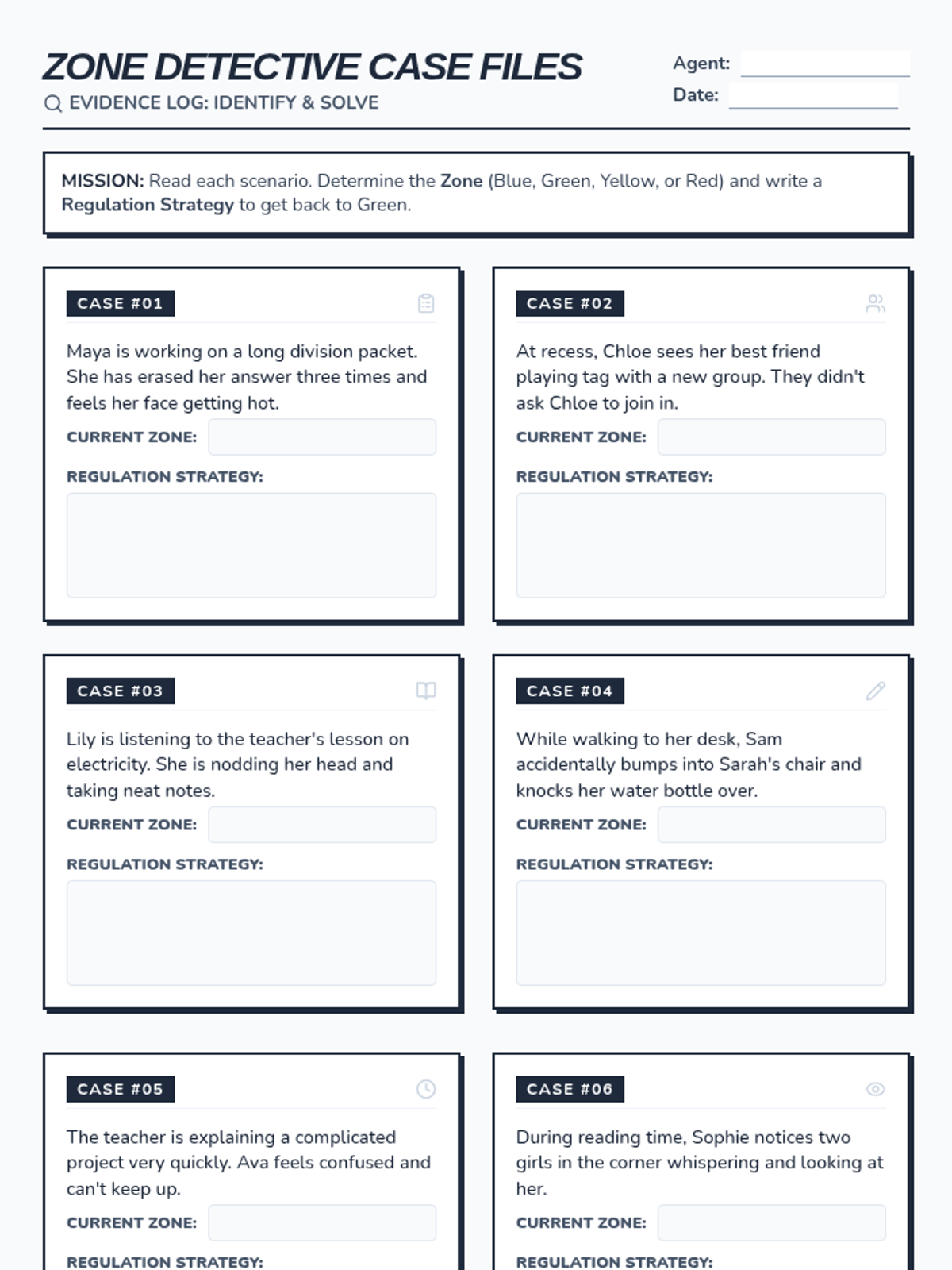
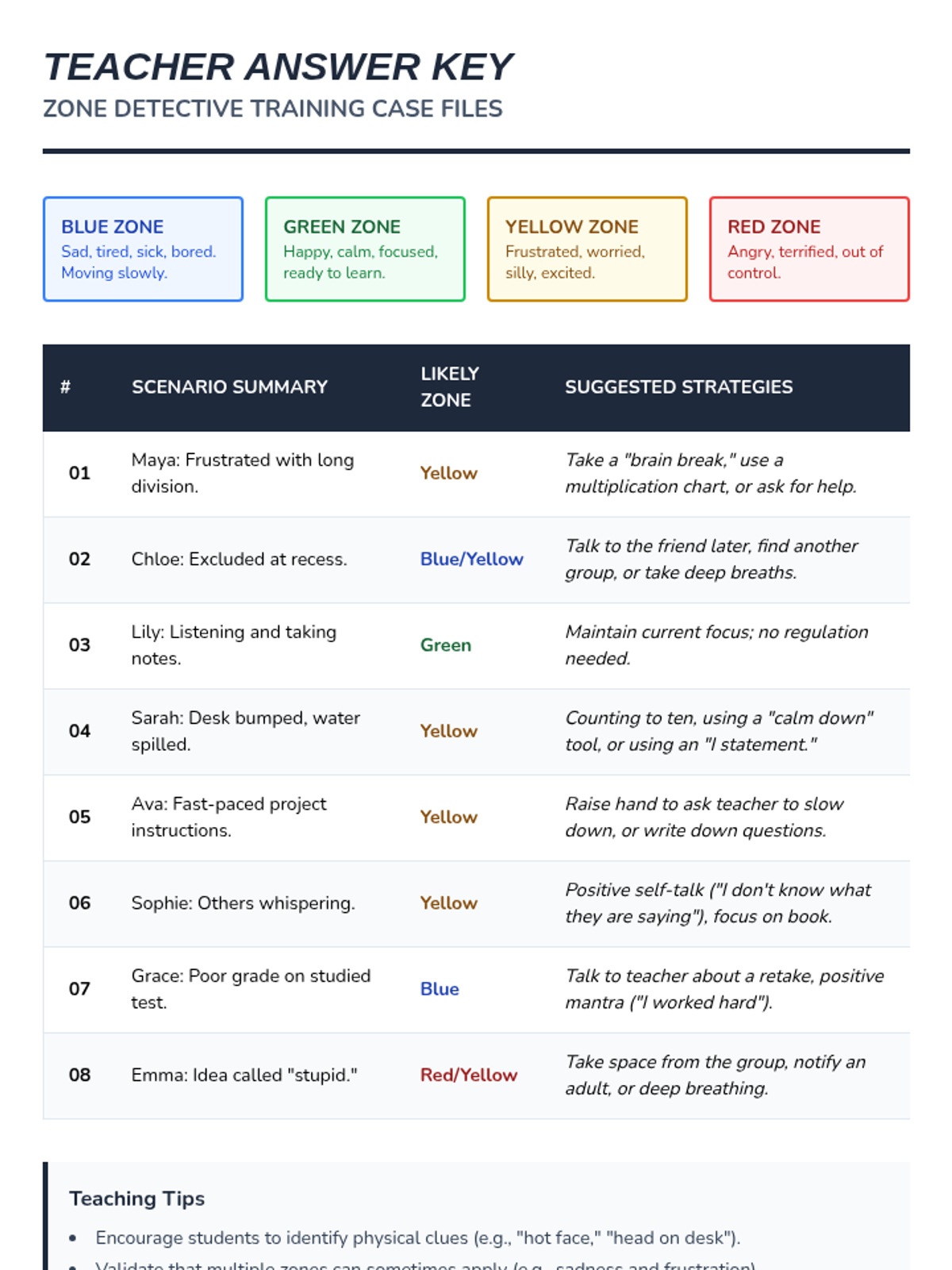
A lesson focused on identifying emotional zones and selecting appropriate self-regulation strategies for classroom and social scenarios.
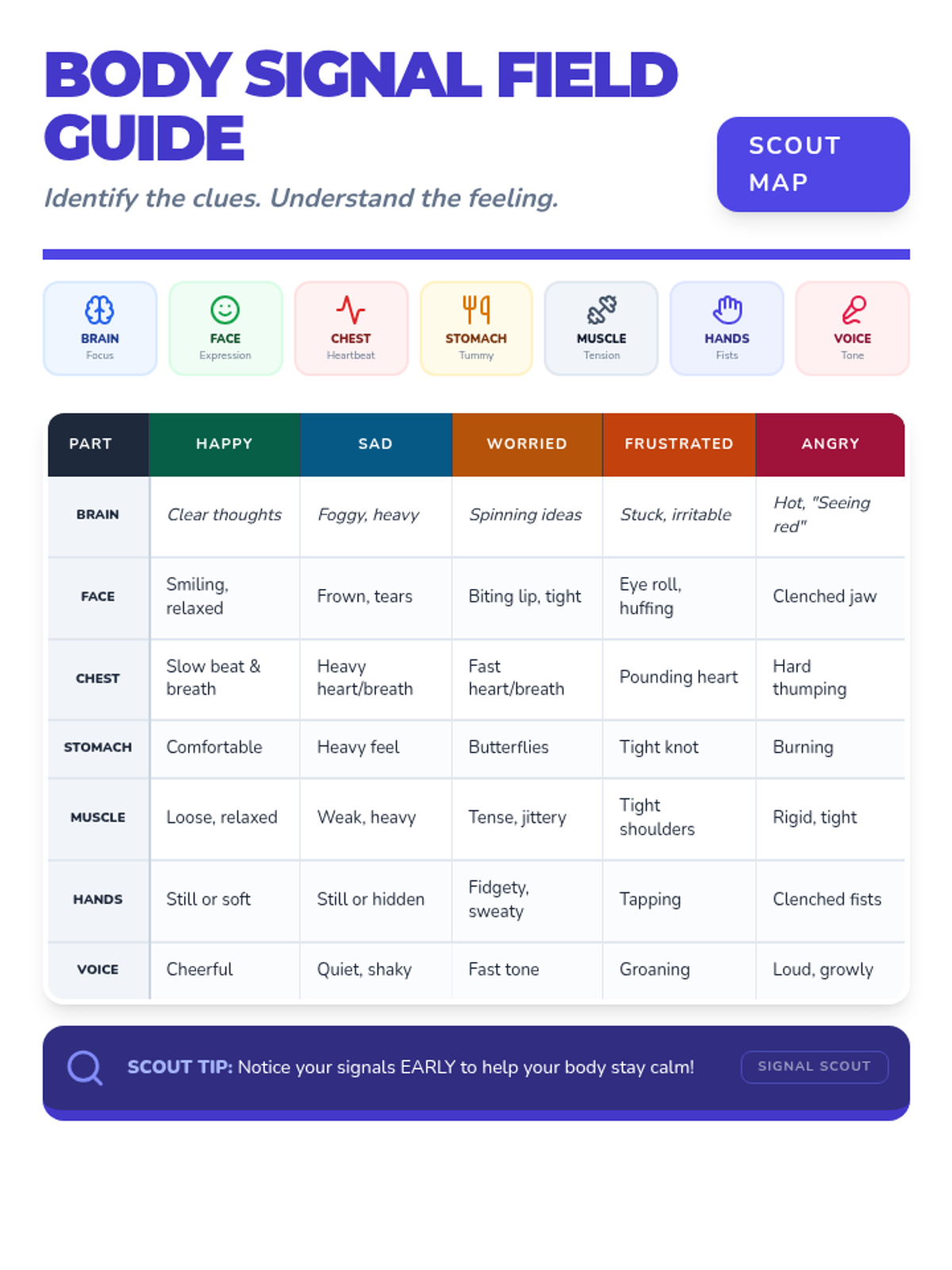
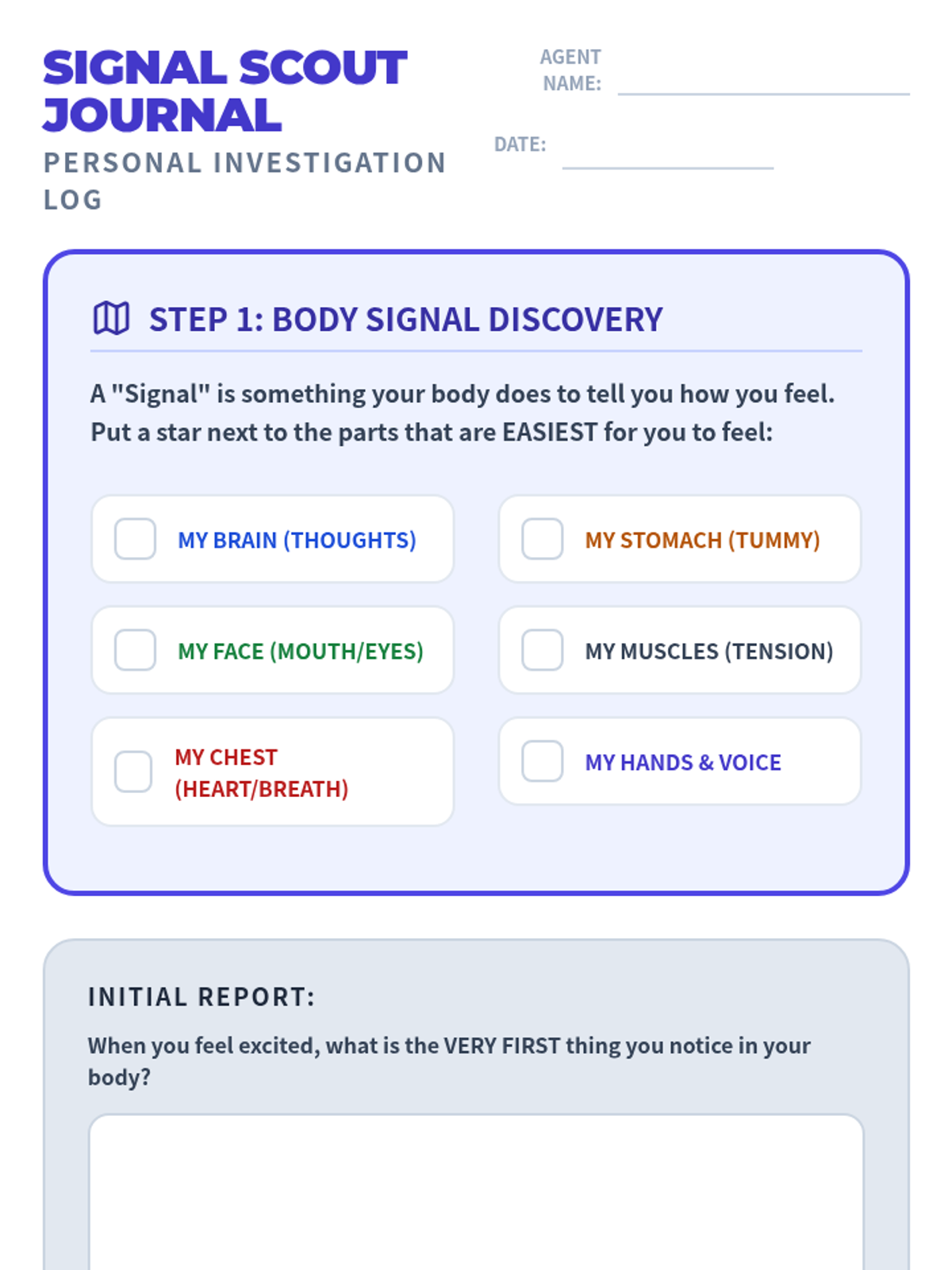
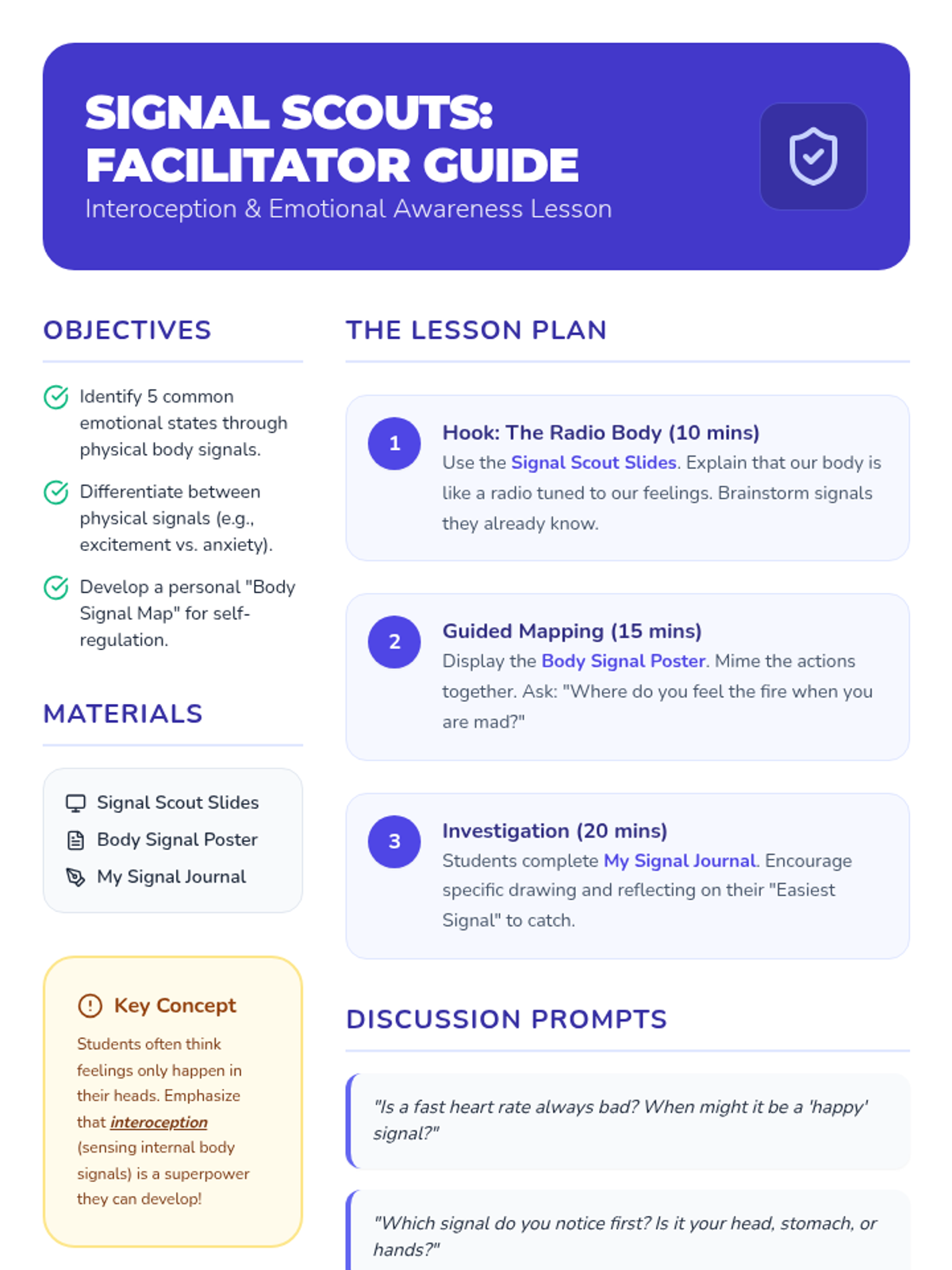
A lesson designed to help students identify and understand the physical signals their bodies send during different emotional states, using a 'Signal Scouts' theme to encourage self-awareness and emotional regulation.
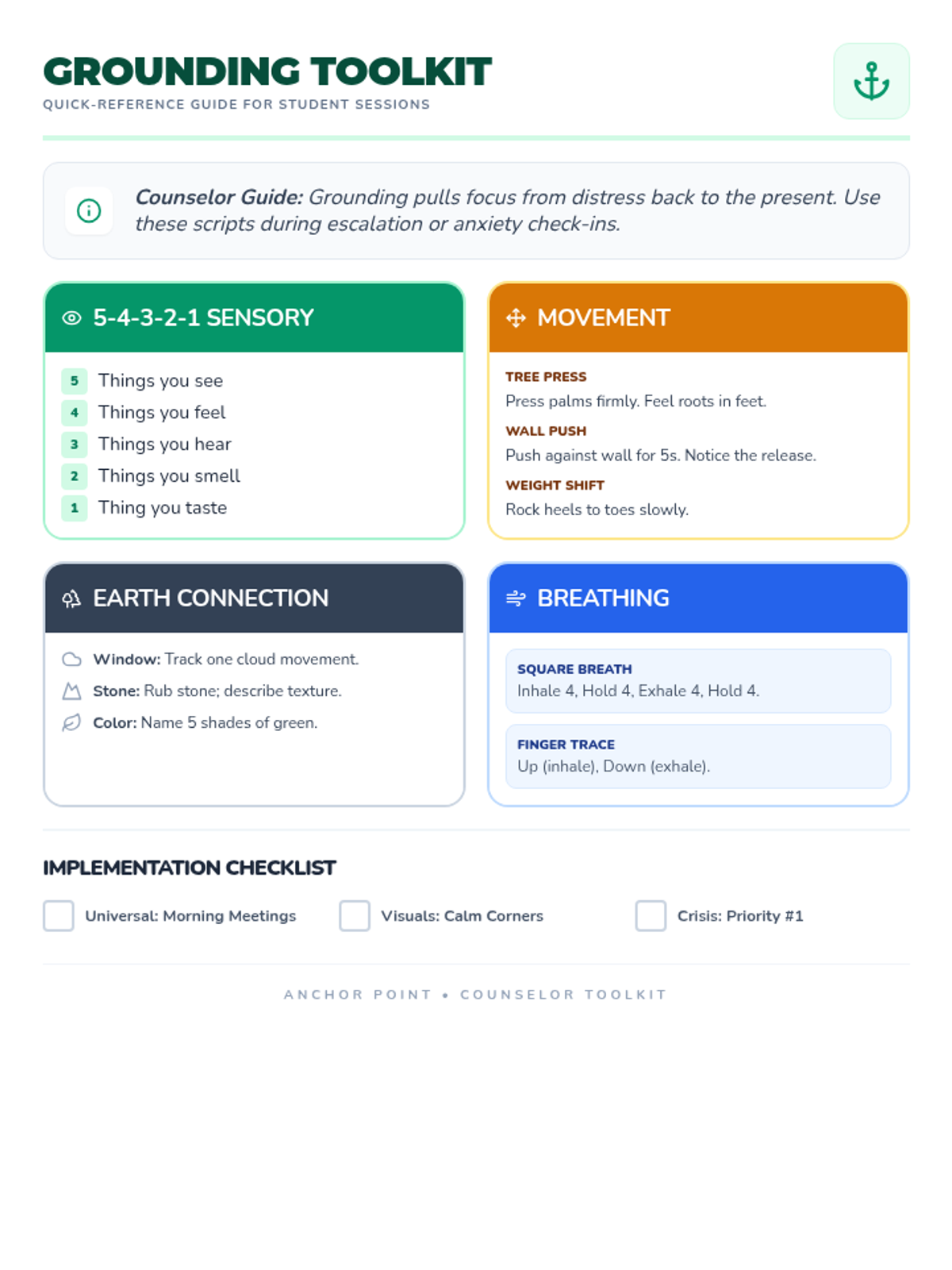
A comprehensive training session for school counselors on teaching effective grounding techniques to students, focusing on sensory, movement, nature-based, and breathing strategies.
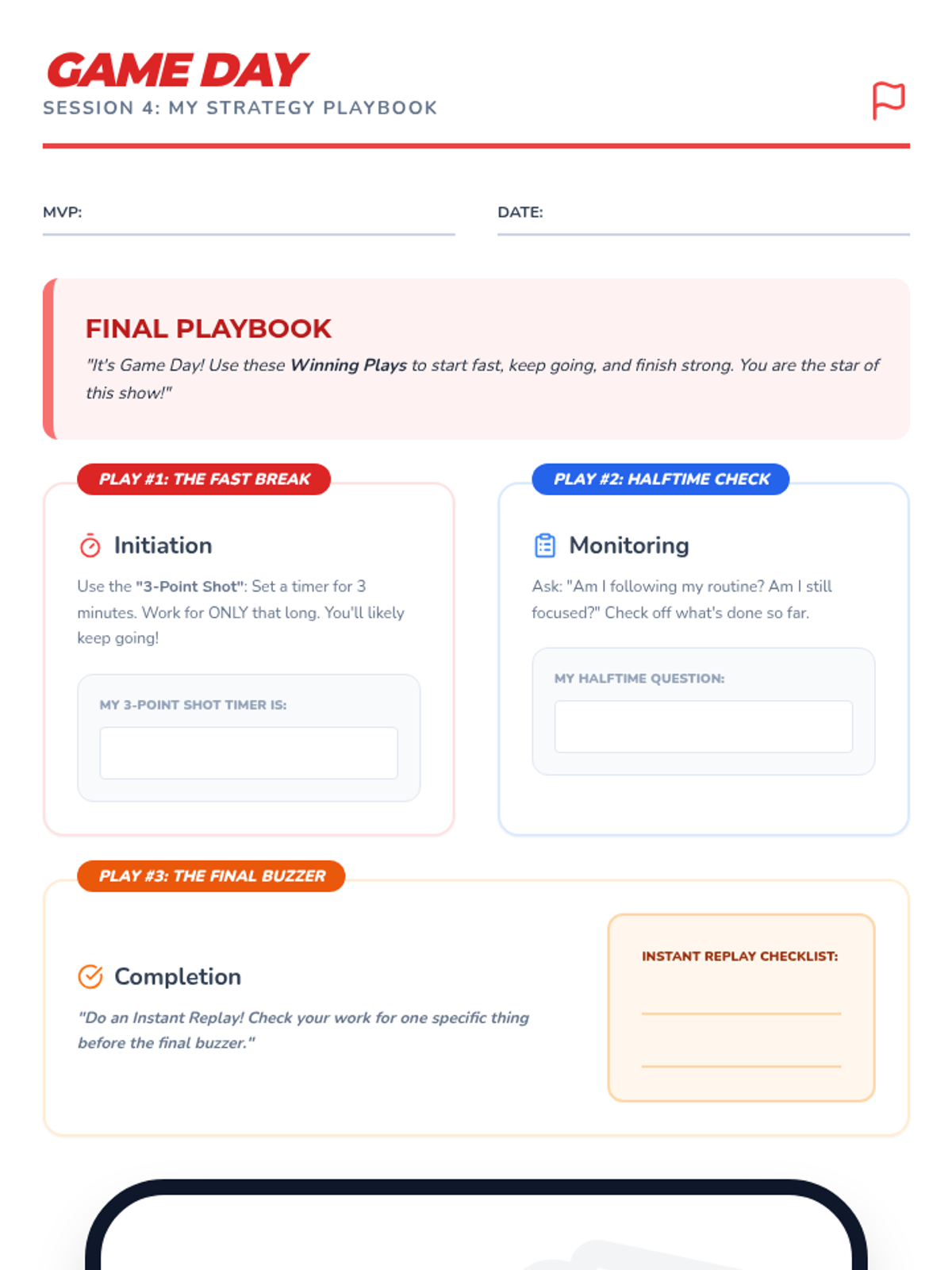
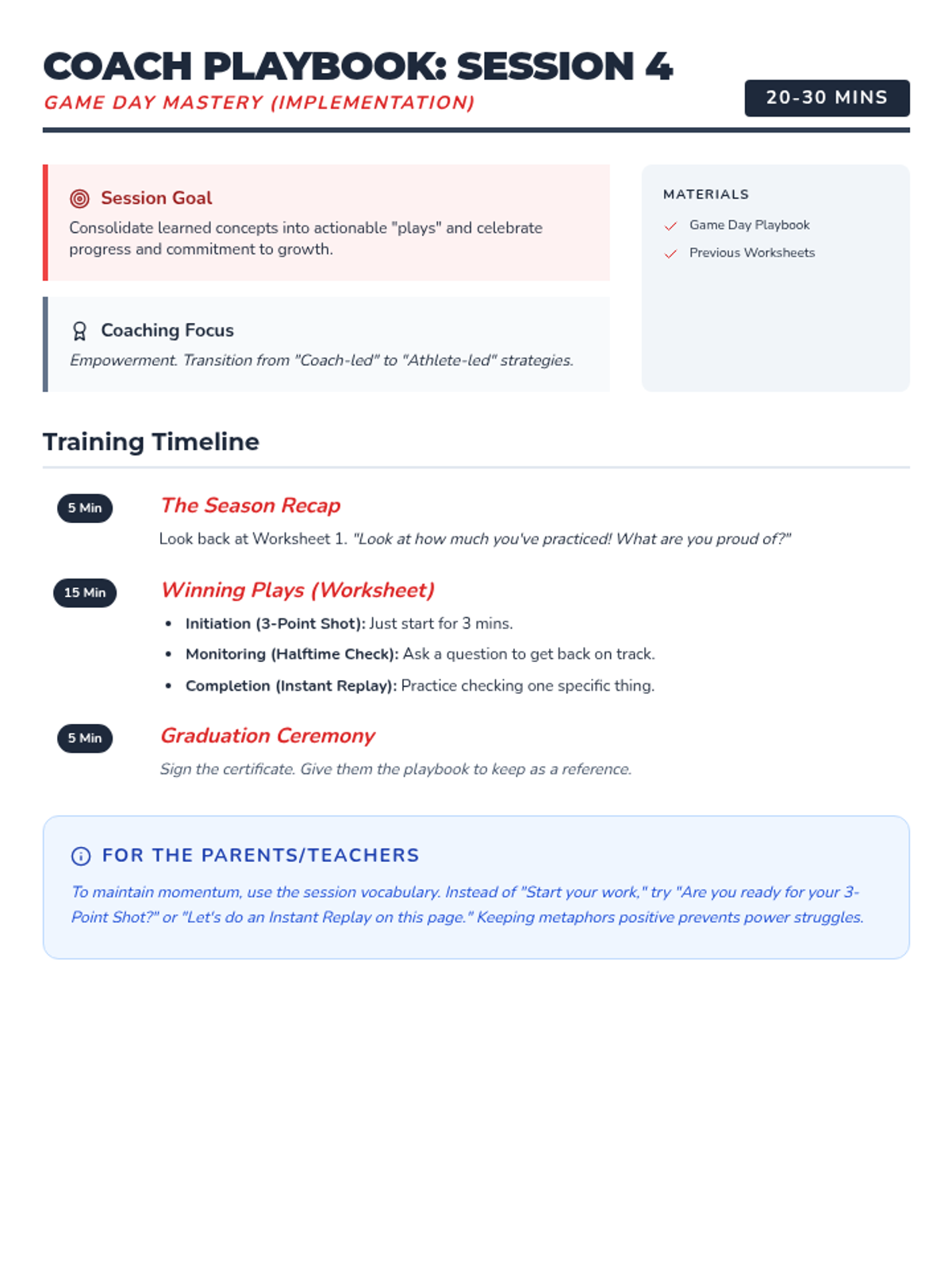
Students learn and practice specific strategies for task initiation, self-monitoring, and independence to finish their 'game' strong.