Students explore how tone of voice and body language change the meaning of words, focusing on distinguishing between respectful and disrespectful communication.
No materials in this lesson yet.
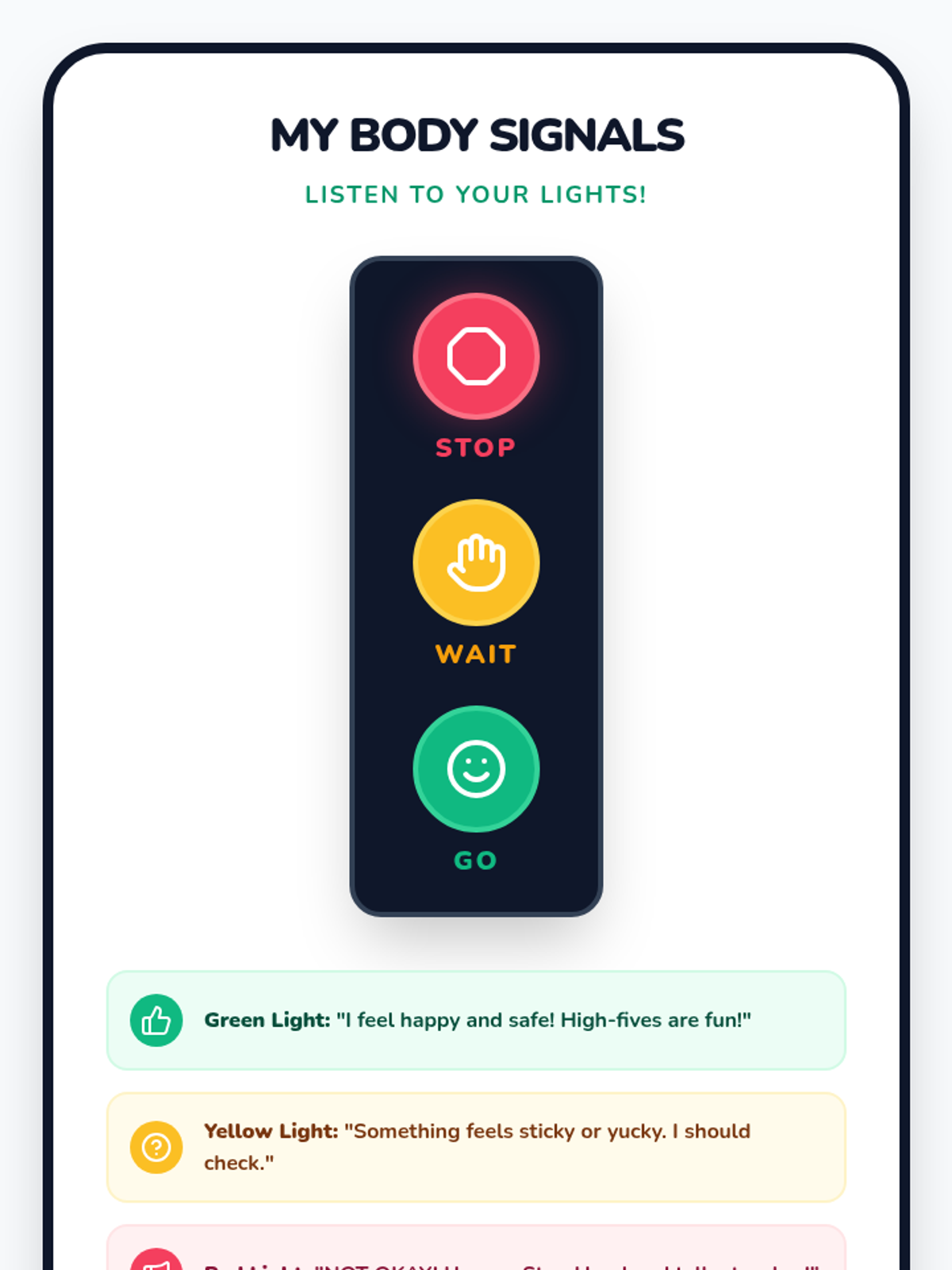
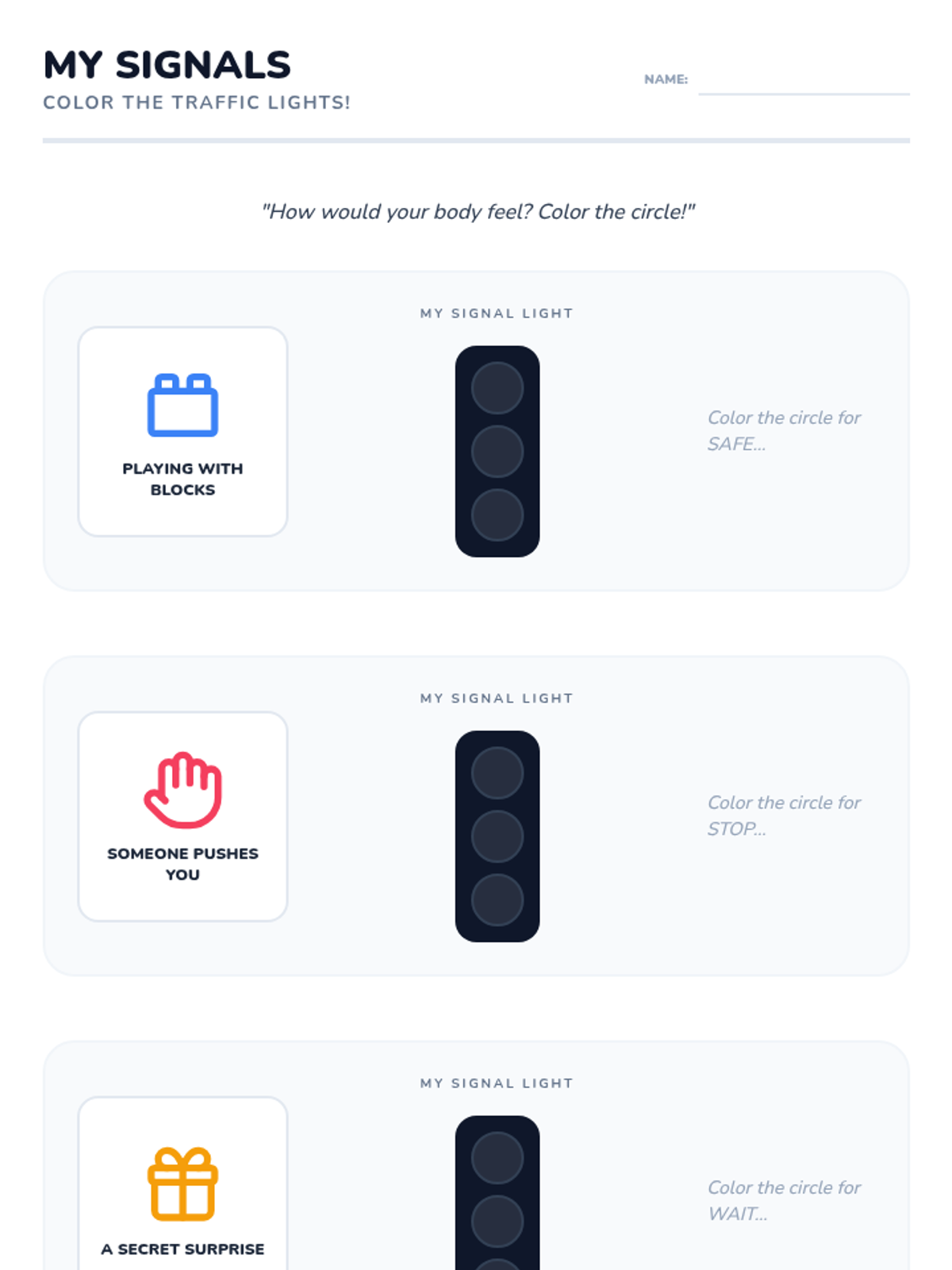
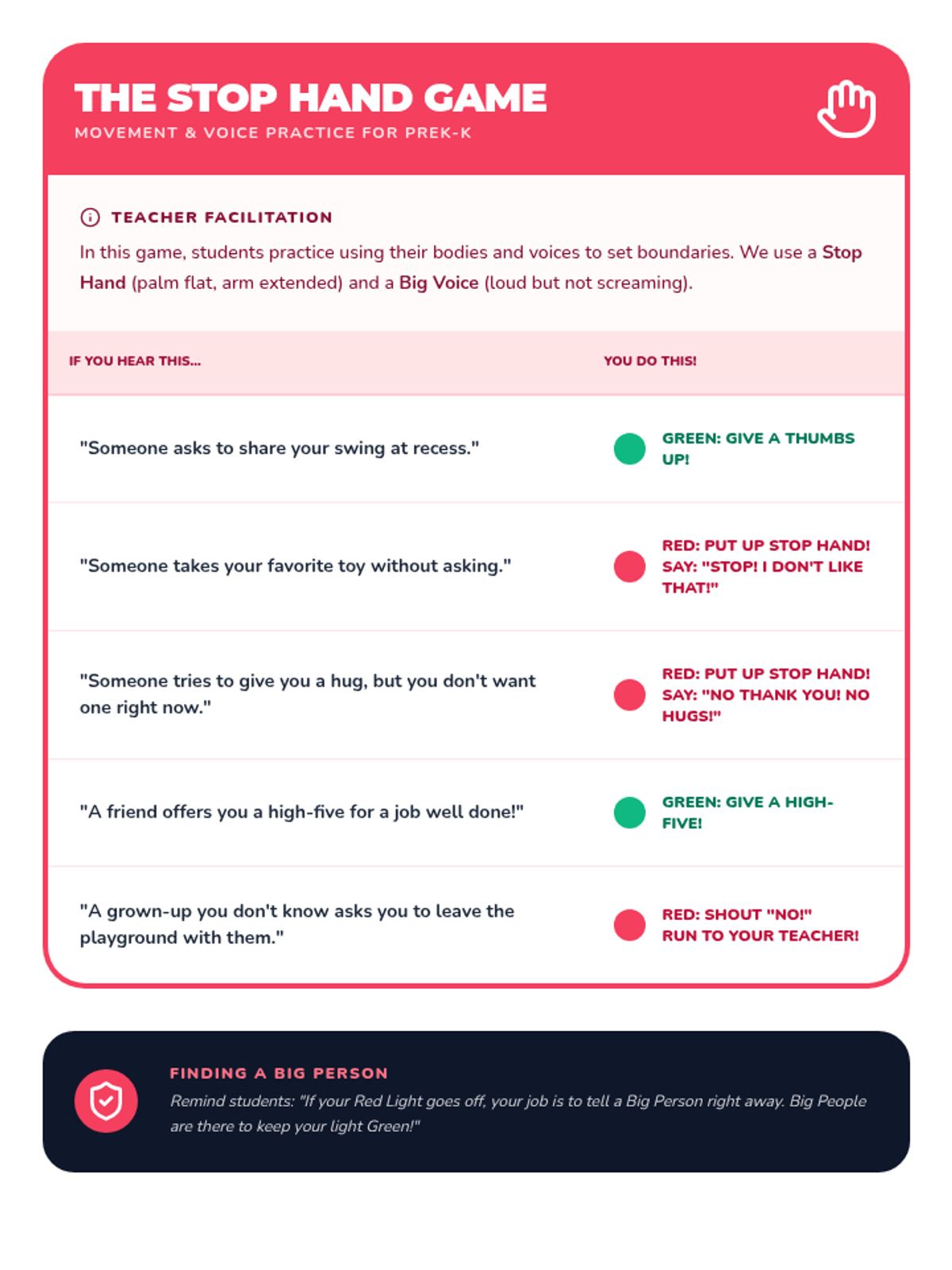
A foundational social-emotional learning lesson for PreK and Kindergarten students using a stoplight theme to teach body autonomy, safe touch, and asking for help from trusted adults.
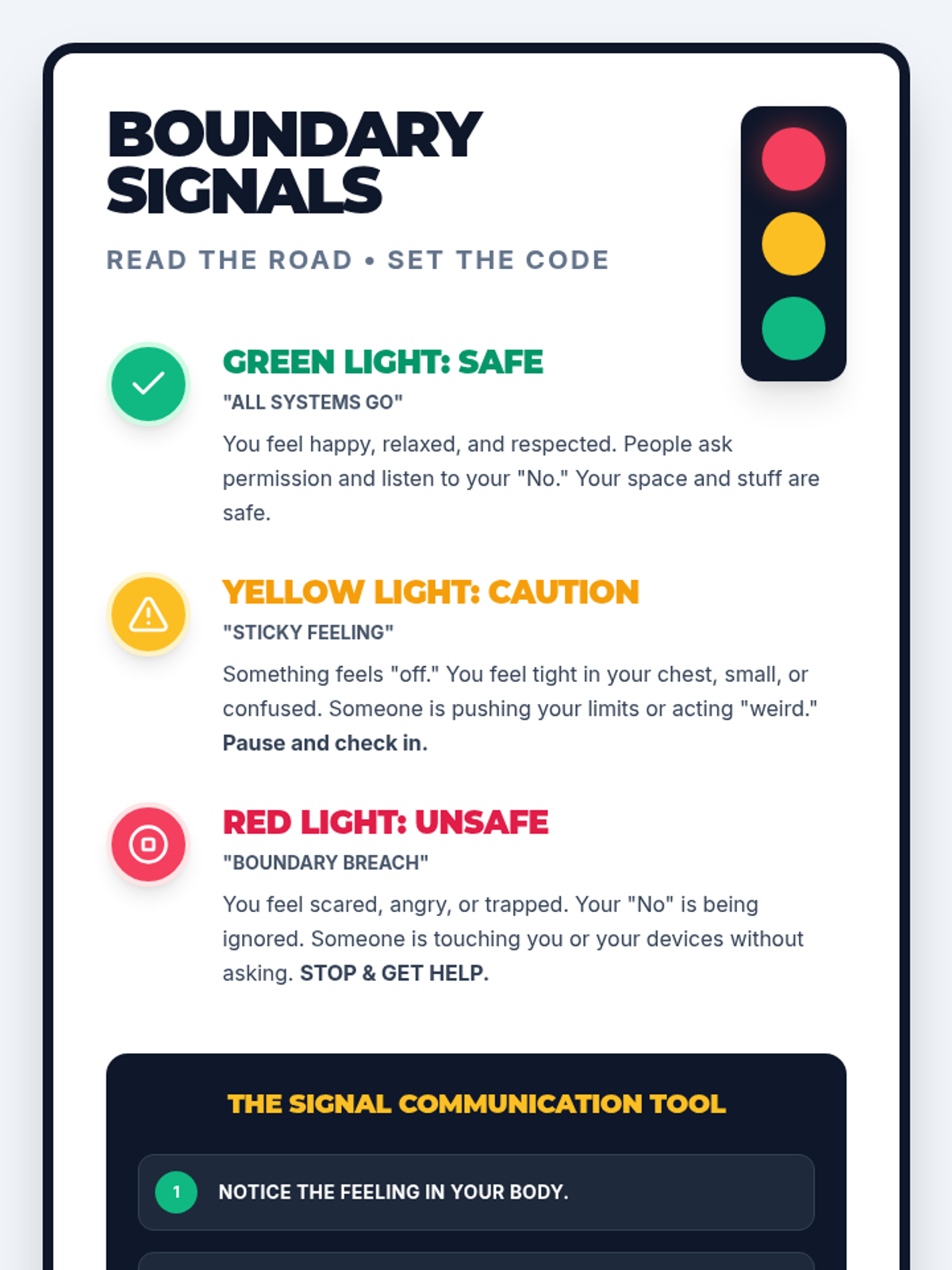
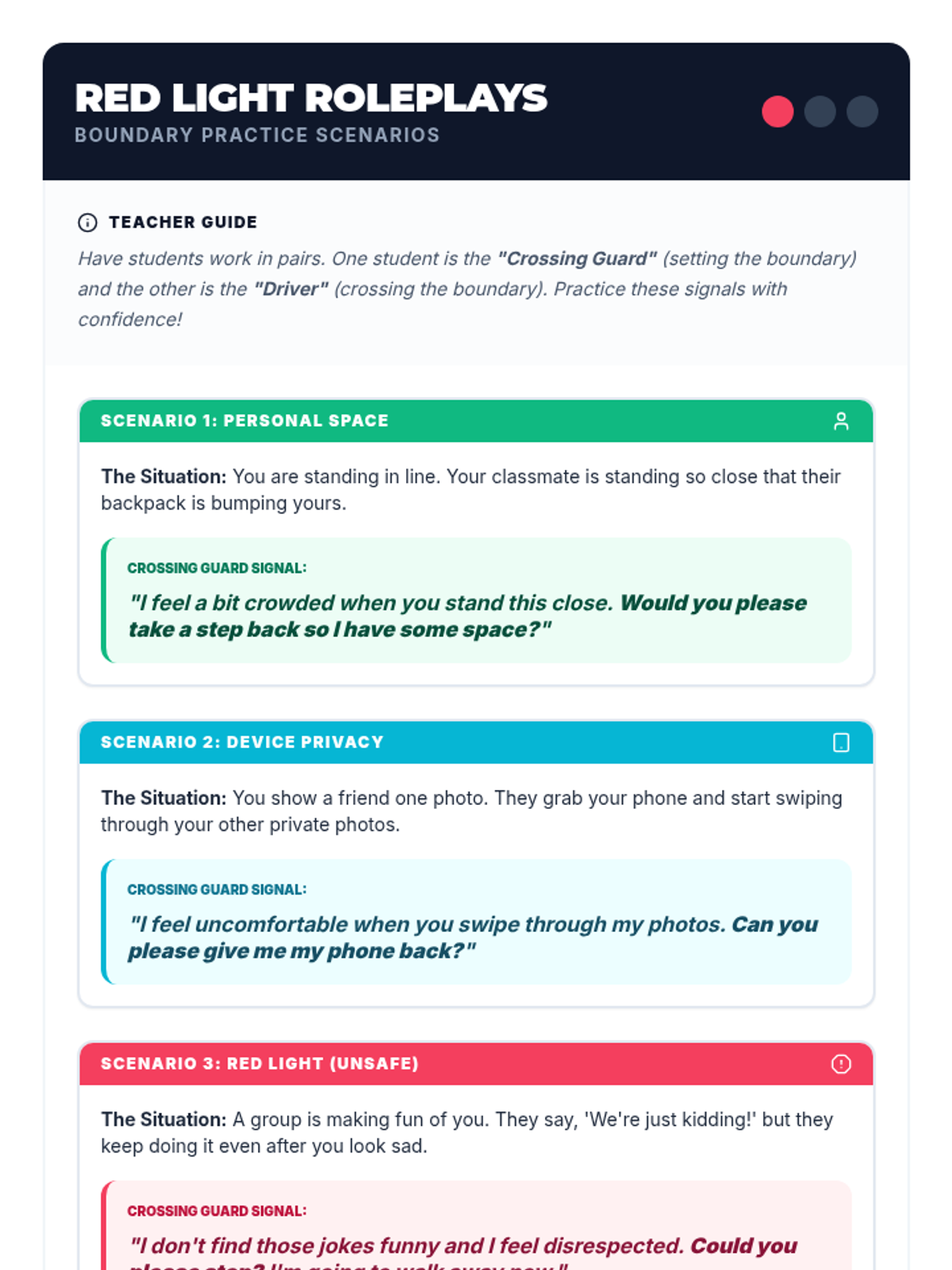
A safety-focused social-emotional learning lesson for 4th and 5th graders using a stoplight theme to identify safe, cautious, and unsafe boundaries in personal and digital spaces.
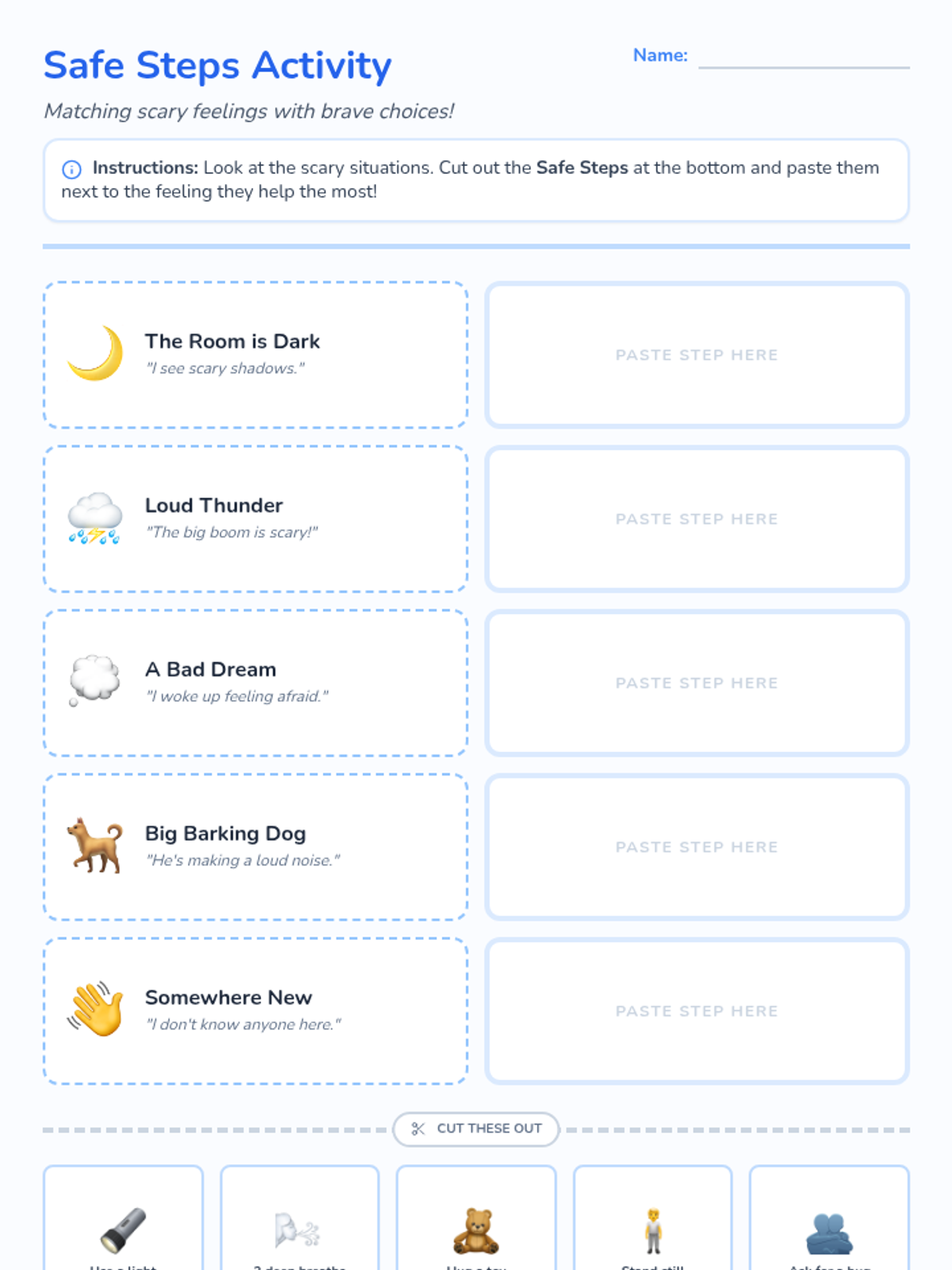
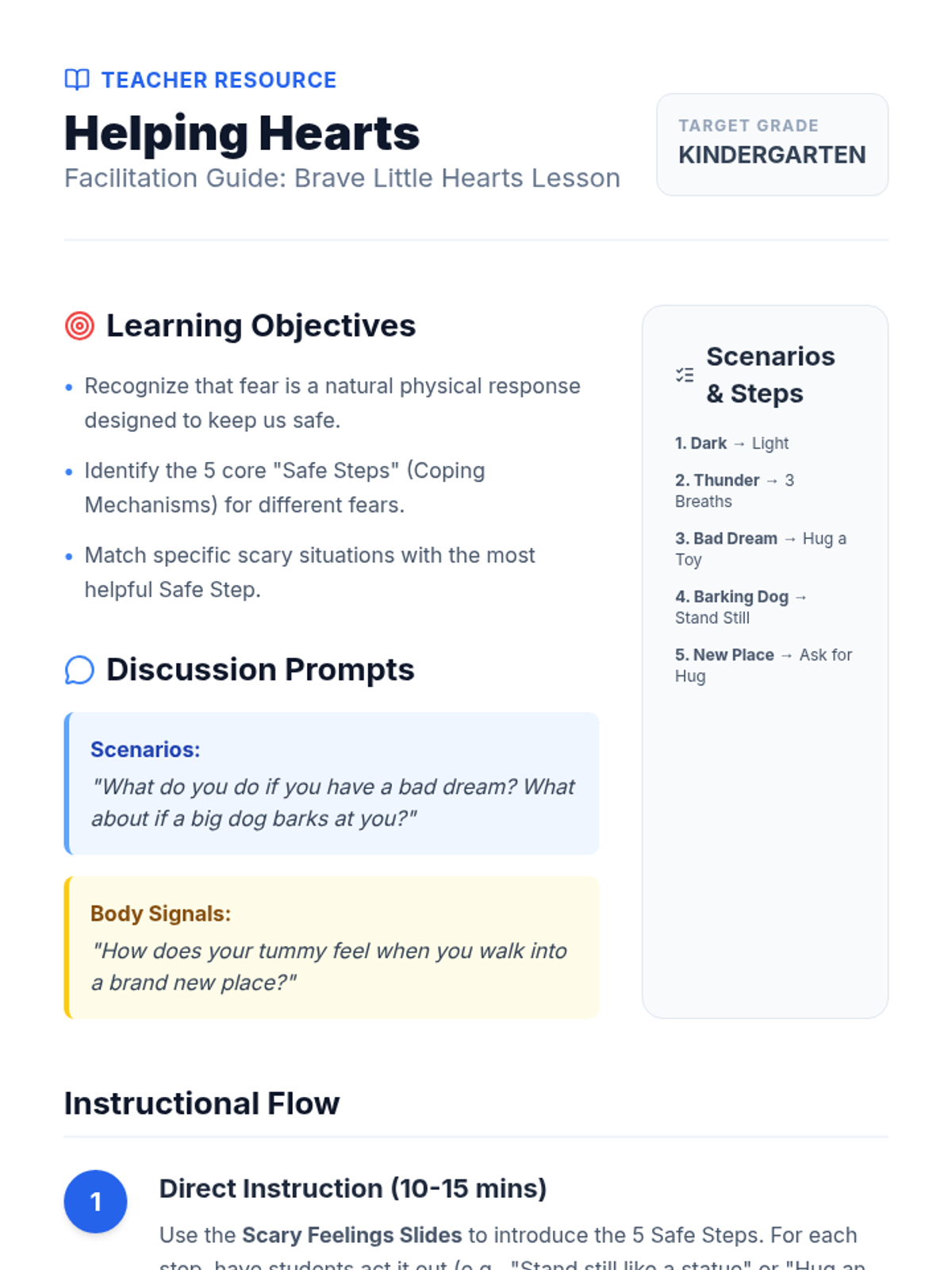
This lesson helps Kindergarten students understand that feeling scared is a natural response and introduces practical, healthy coping mechanisms to manage those feelings safely. Students will identify scary situations and match them with supportive 'Safe Steps' through discussion and a hands-on activity.
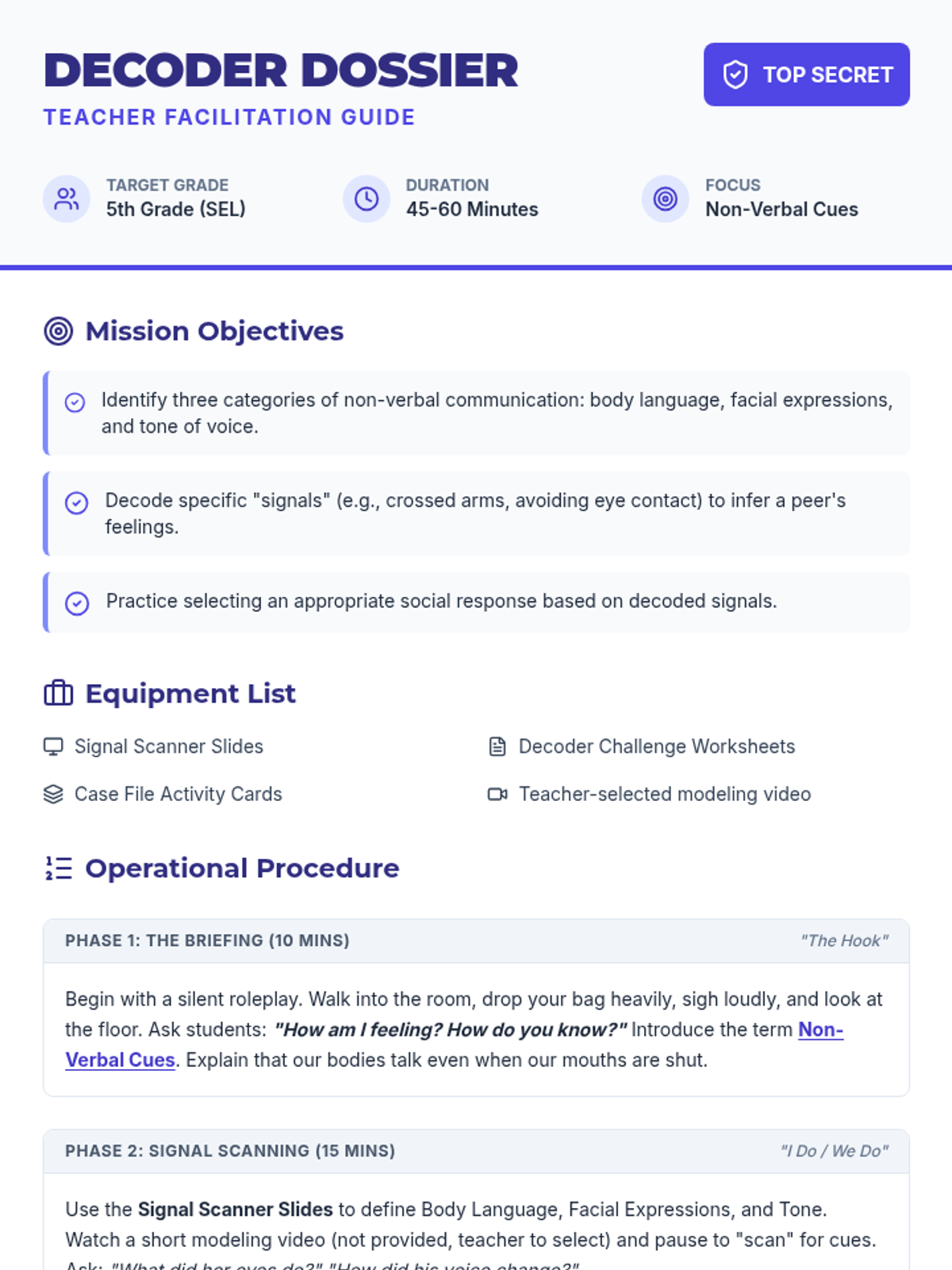
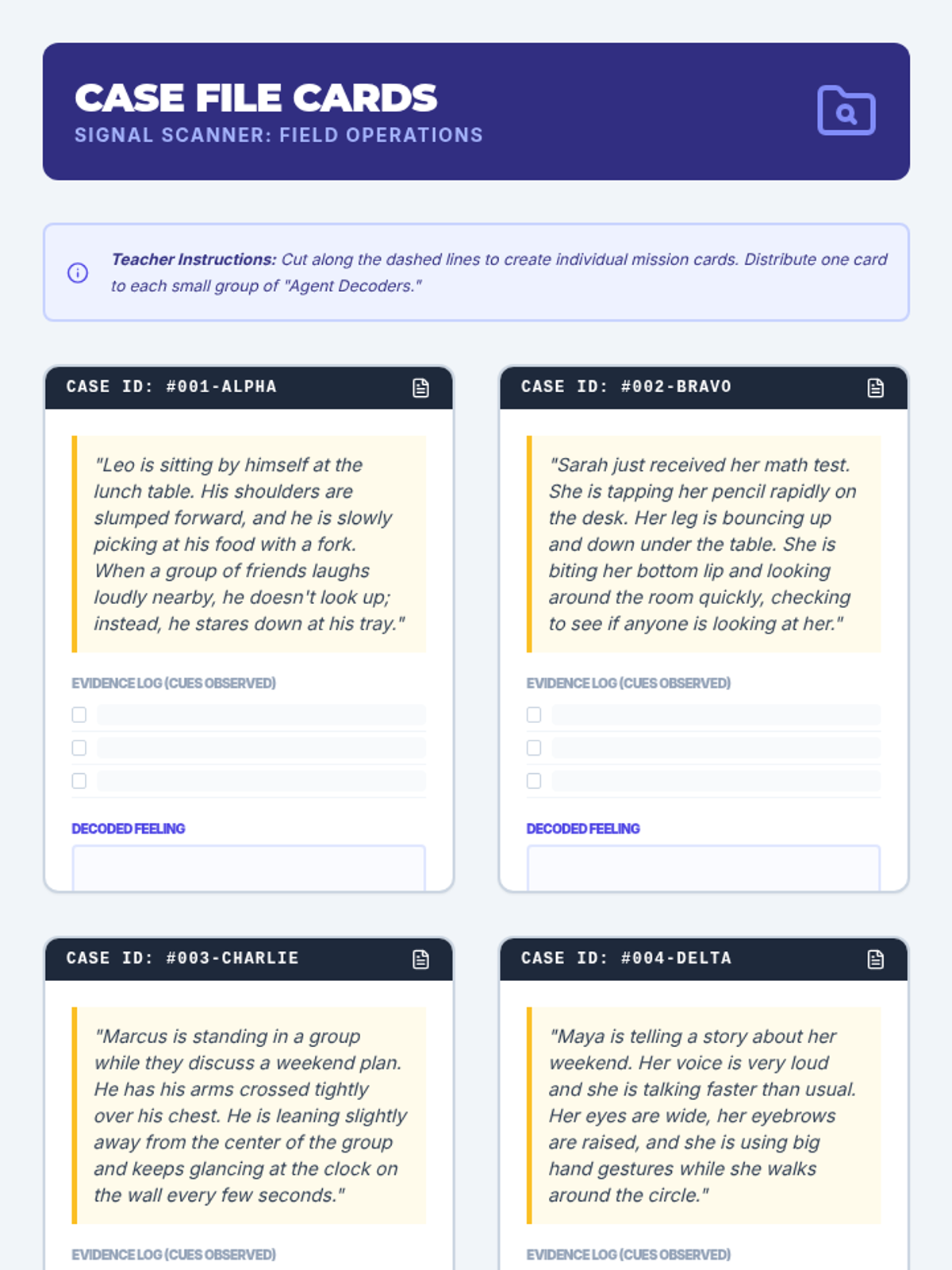
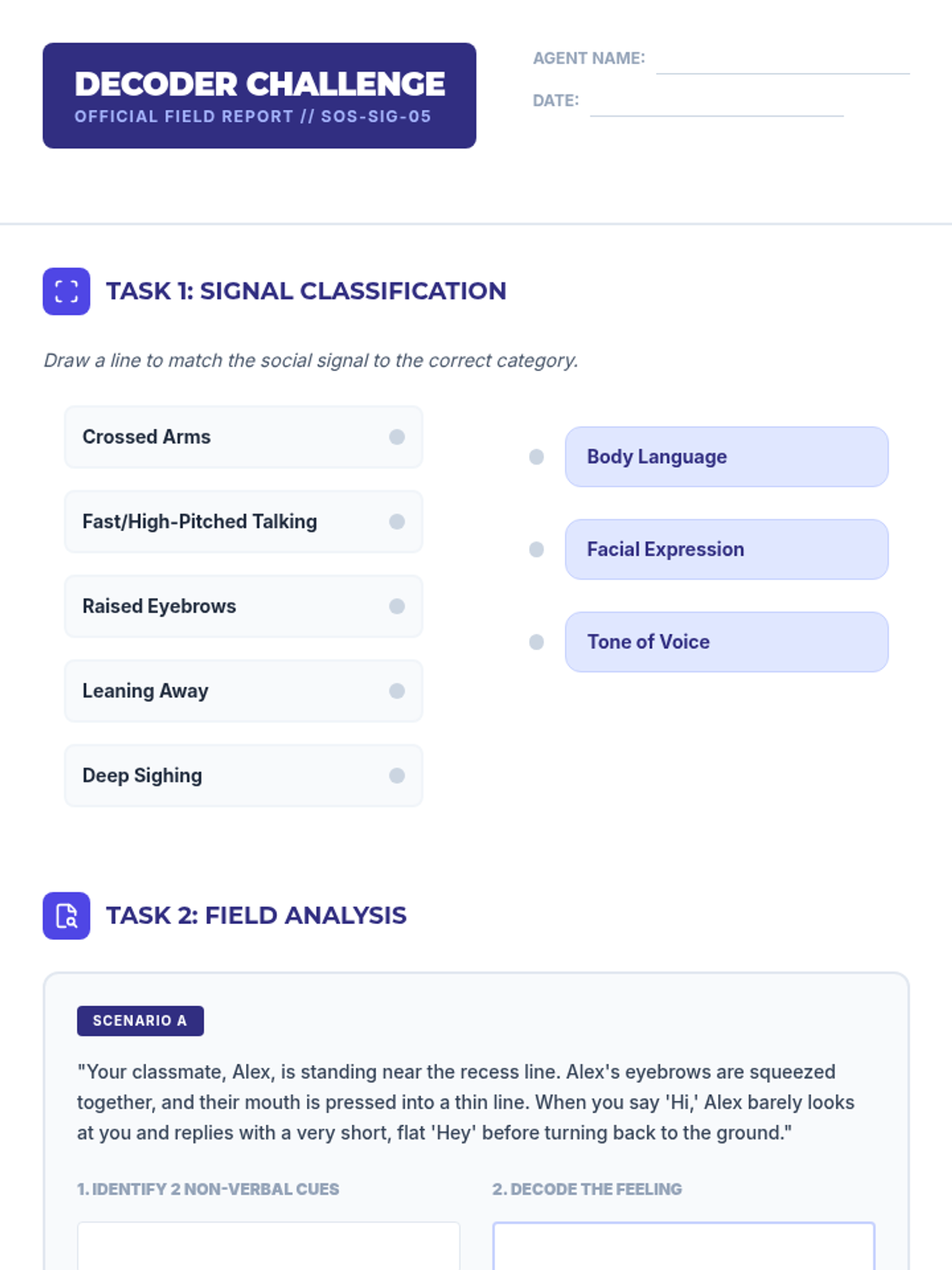
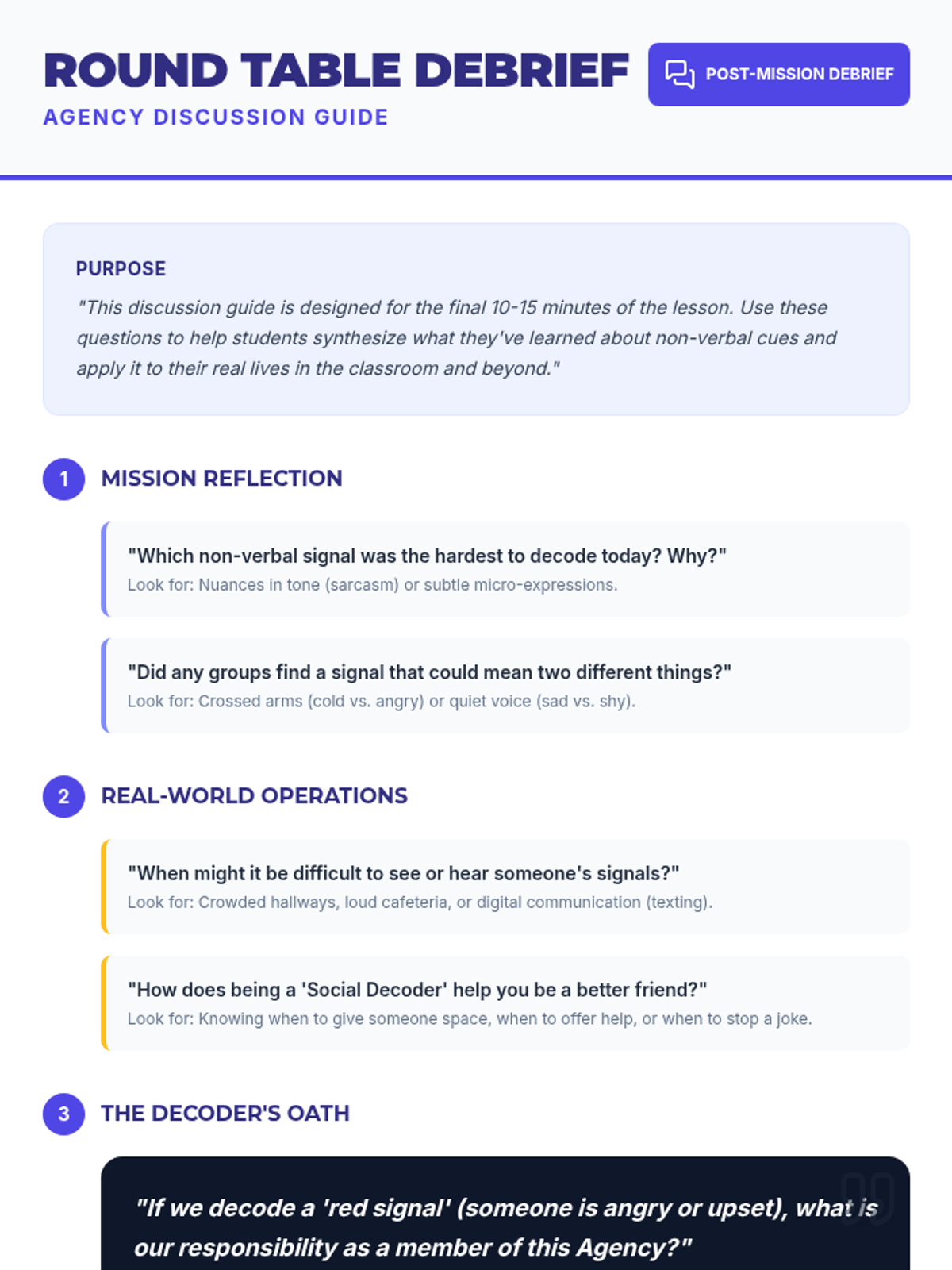
A comprehensive social-emotional learning lesson designed for 5th-grade students to master the art of interpreting non-verbal cues. Students act as 'Social Decoders' to analyze body language, facial expressions, and tone of voice through explicit instruction and guided practice.
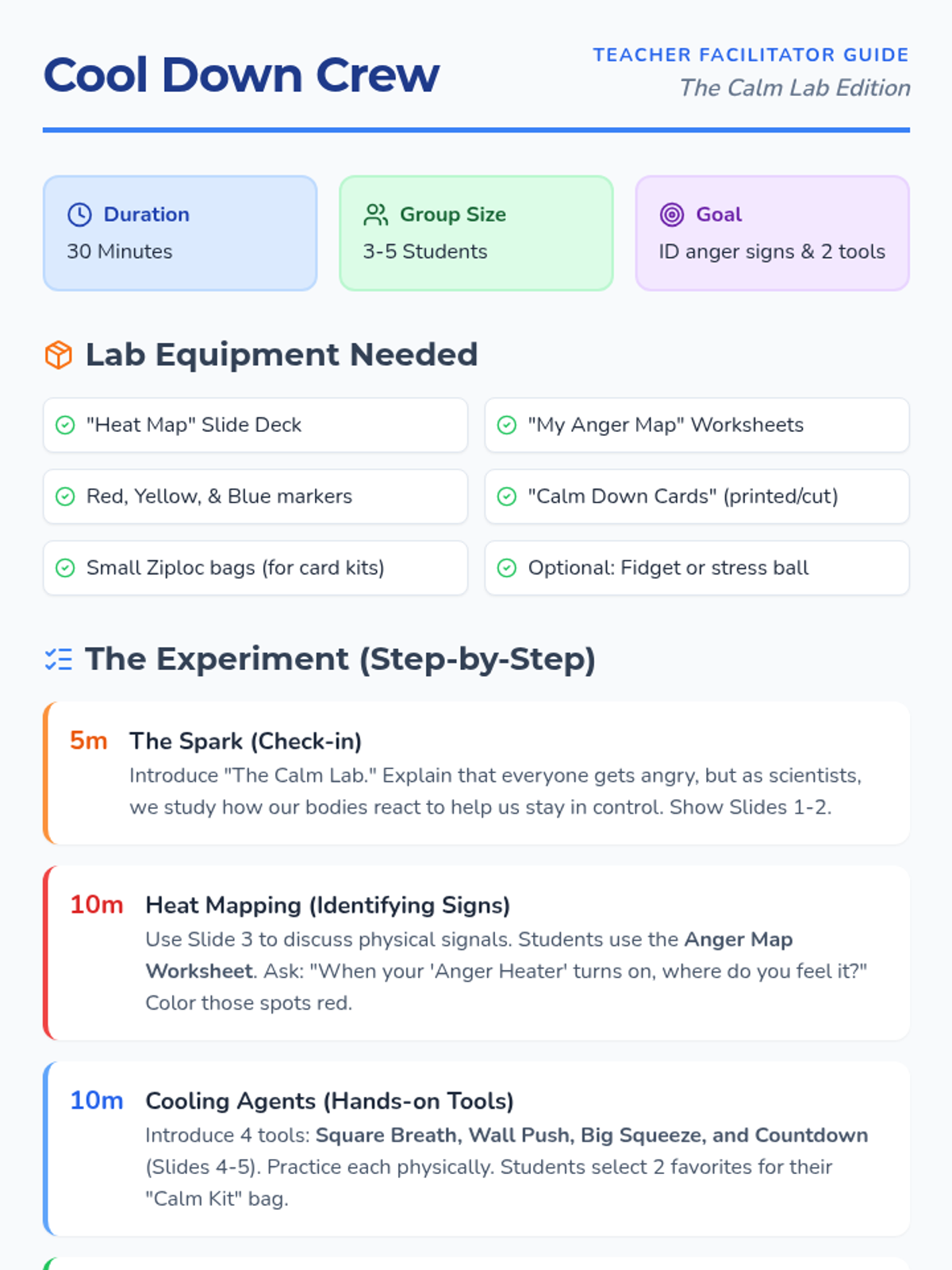
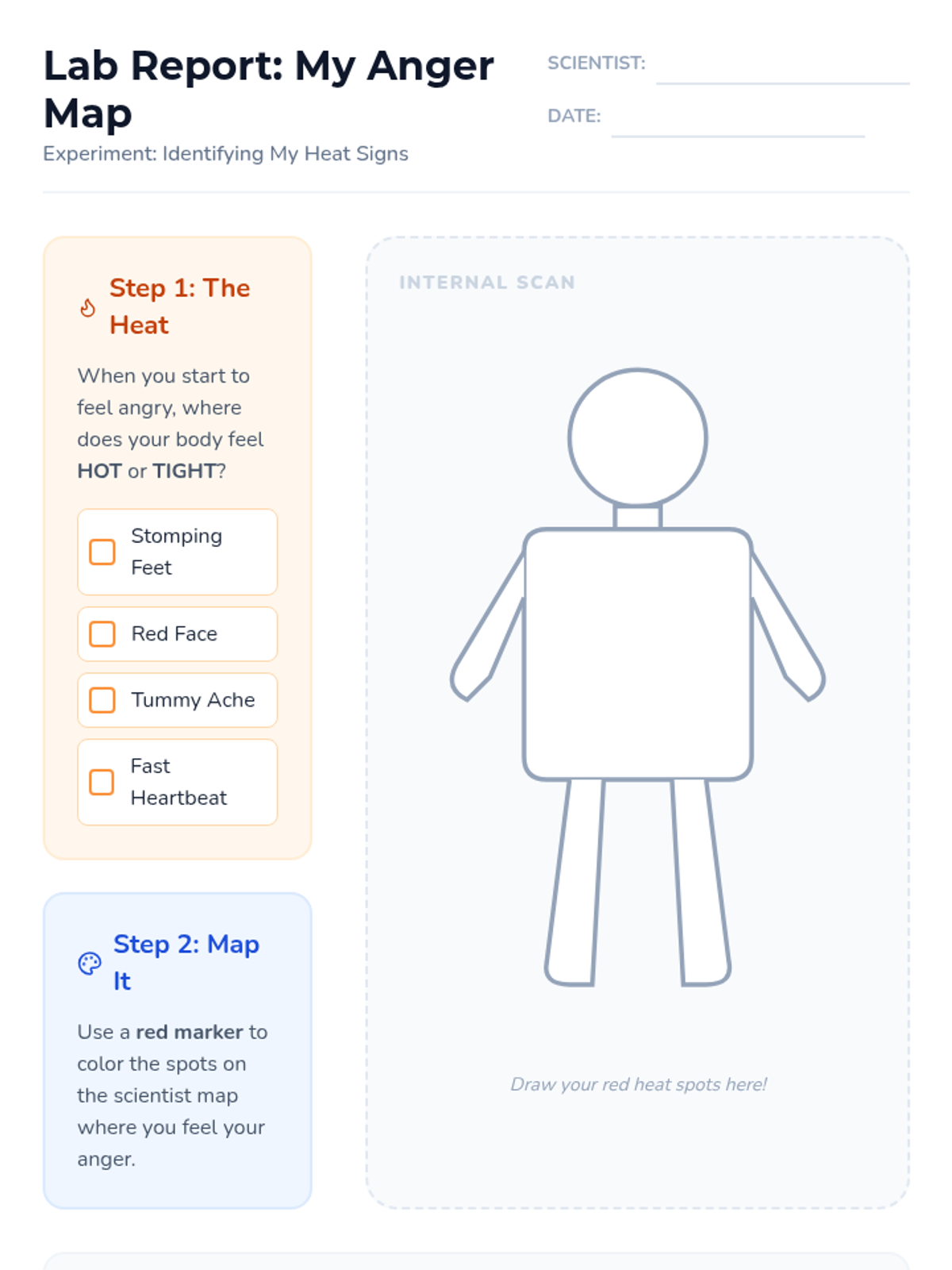
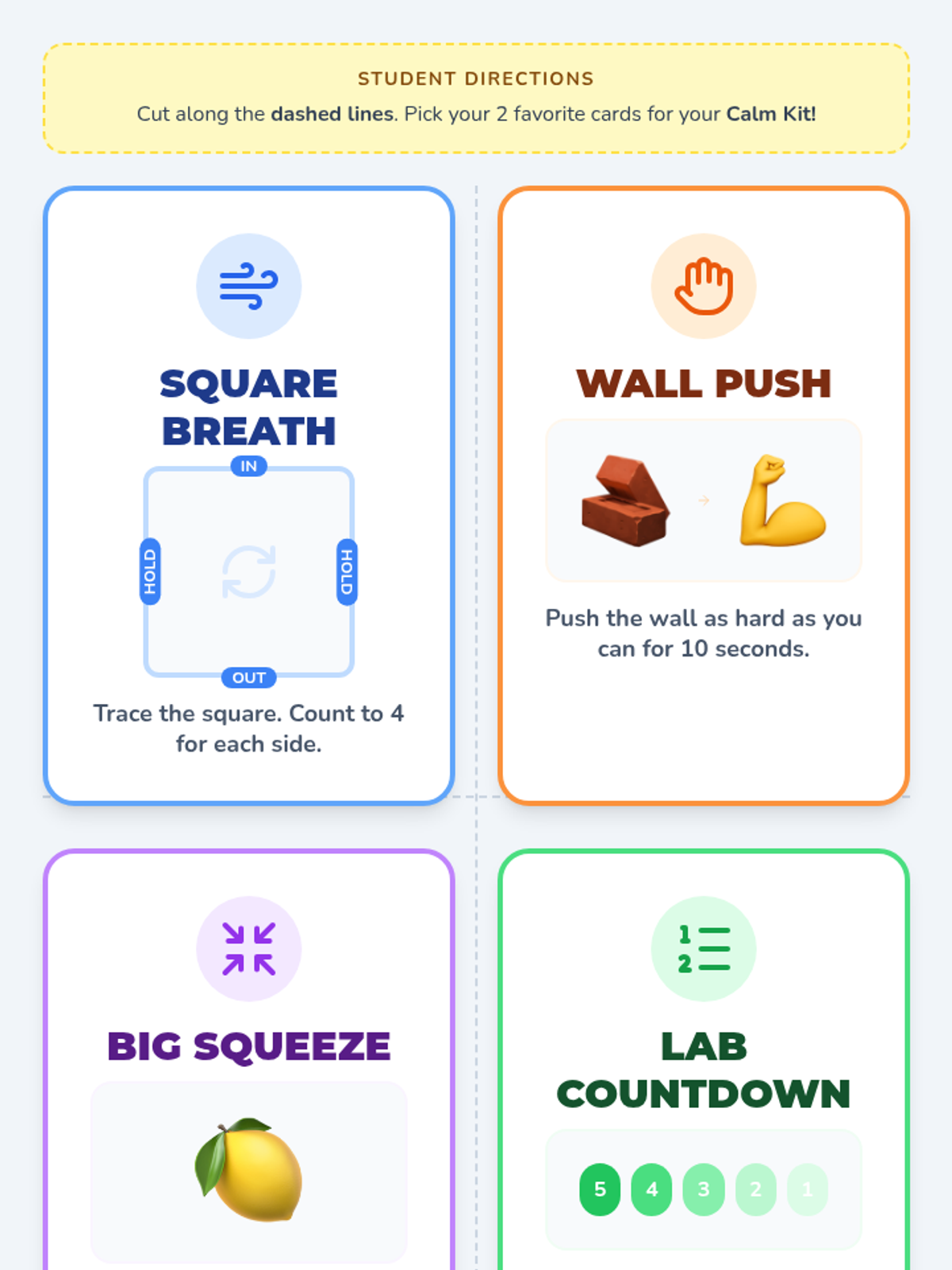
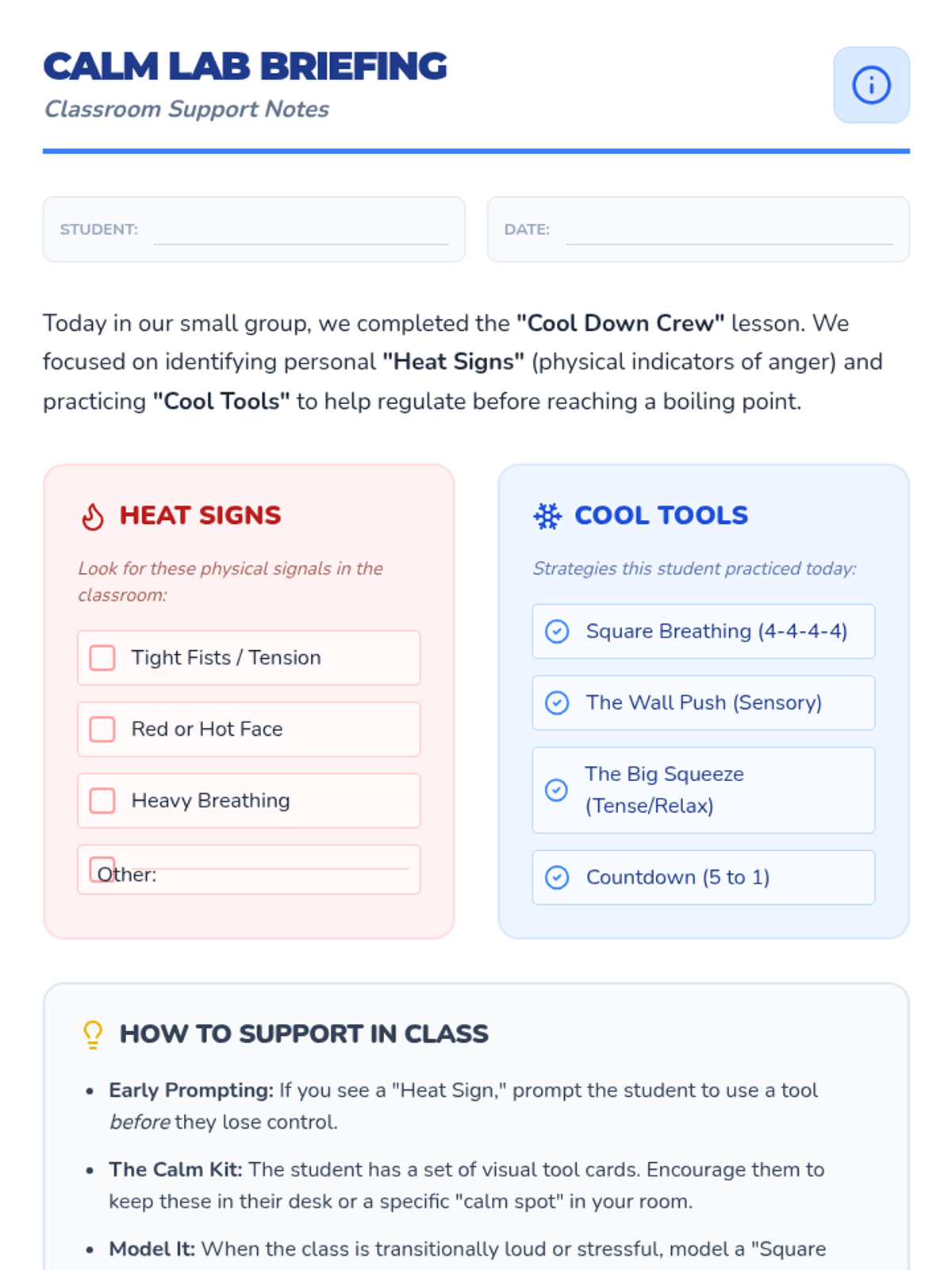
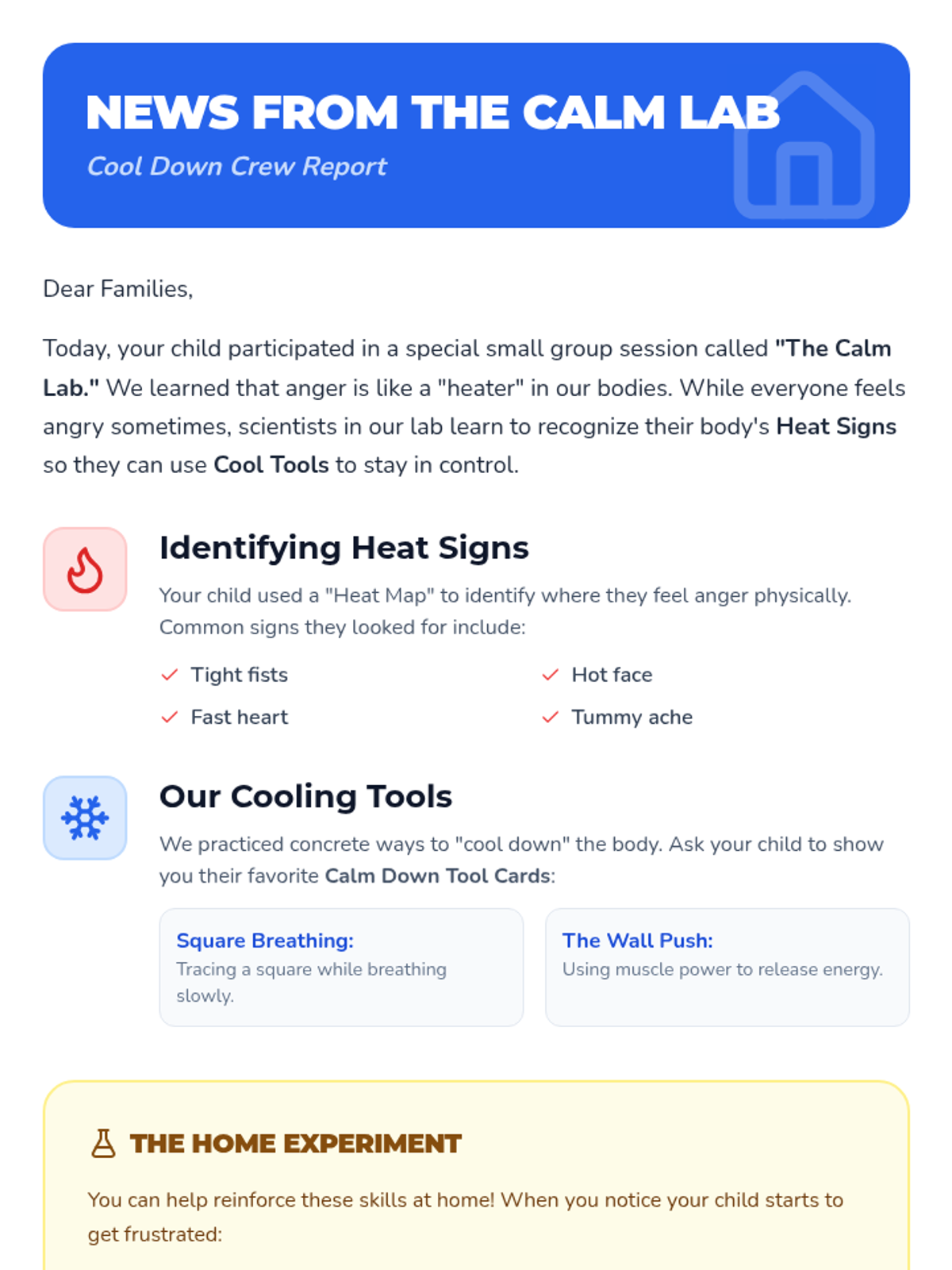
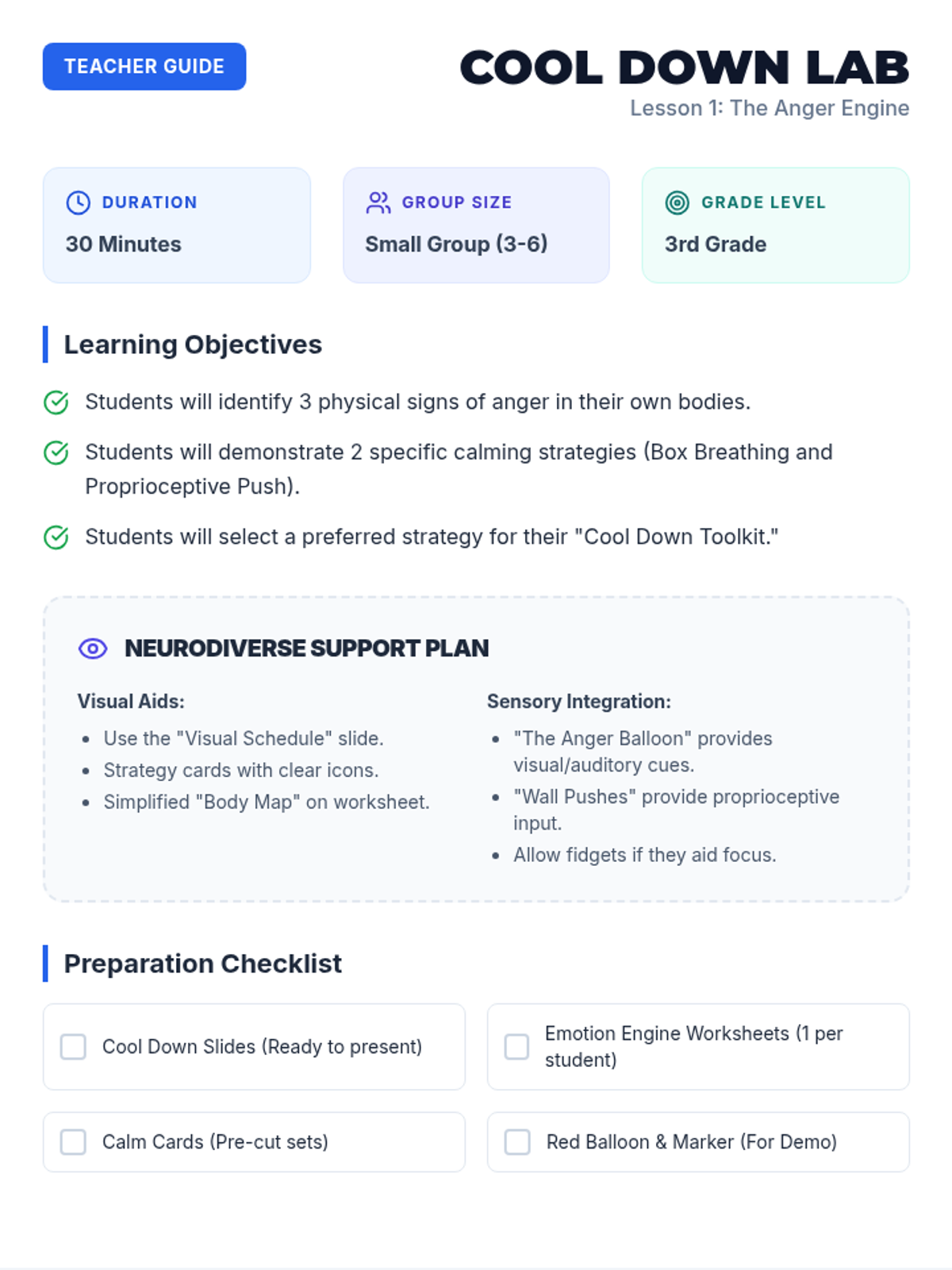
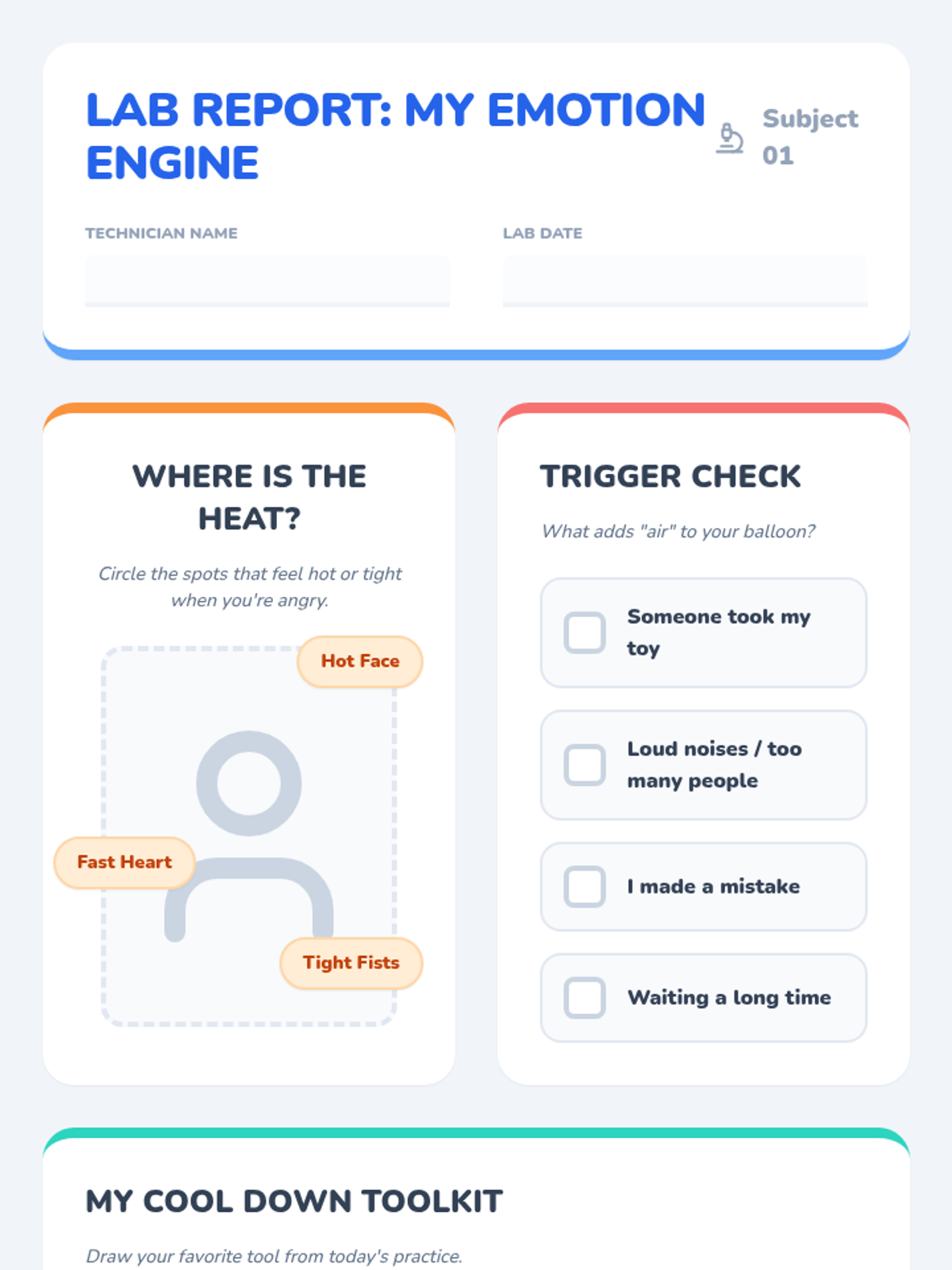
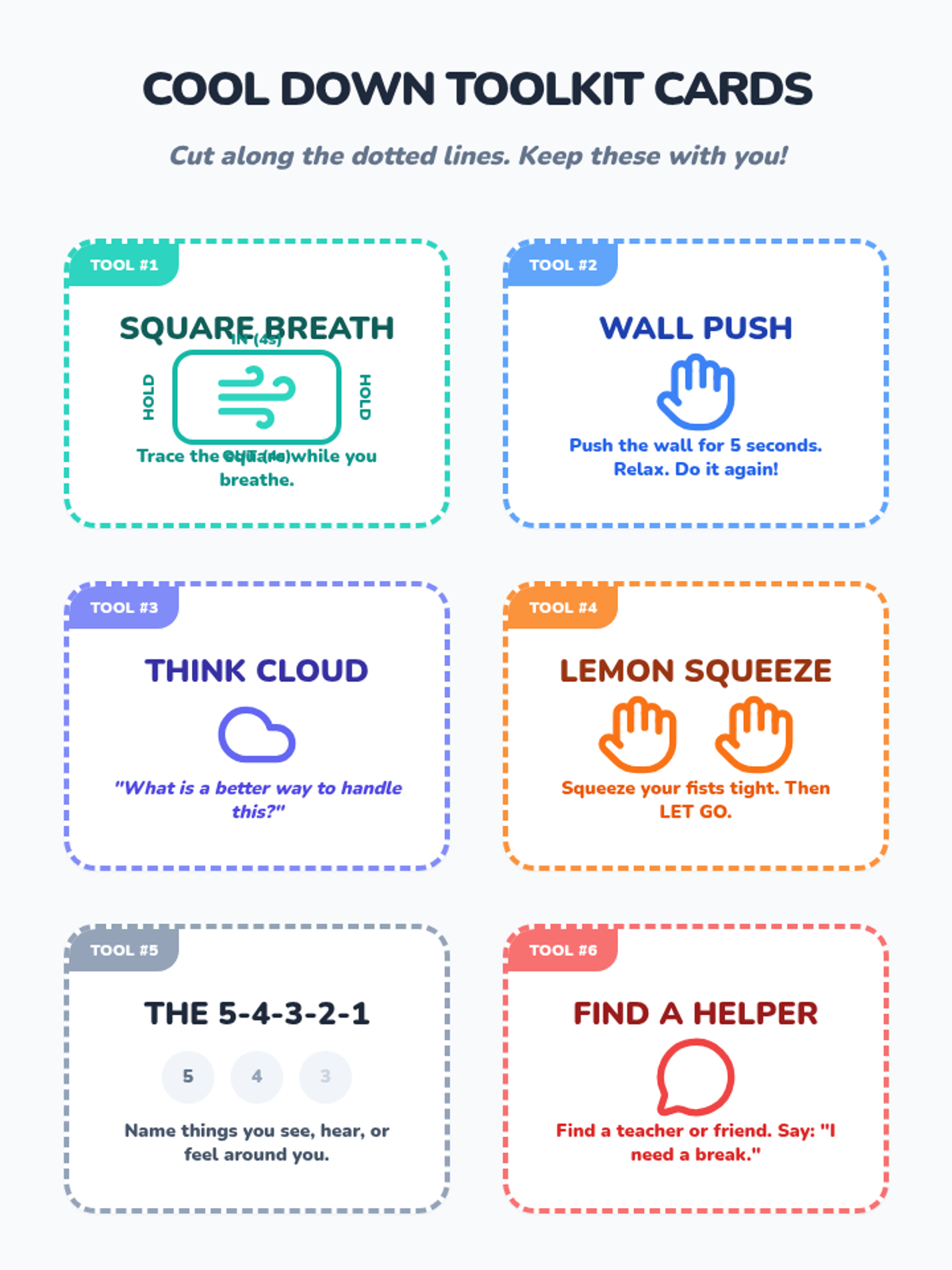
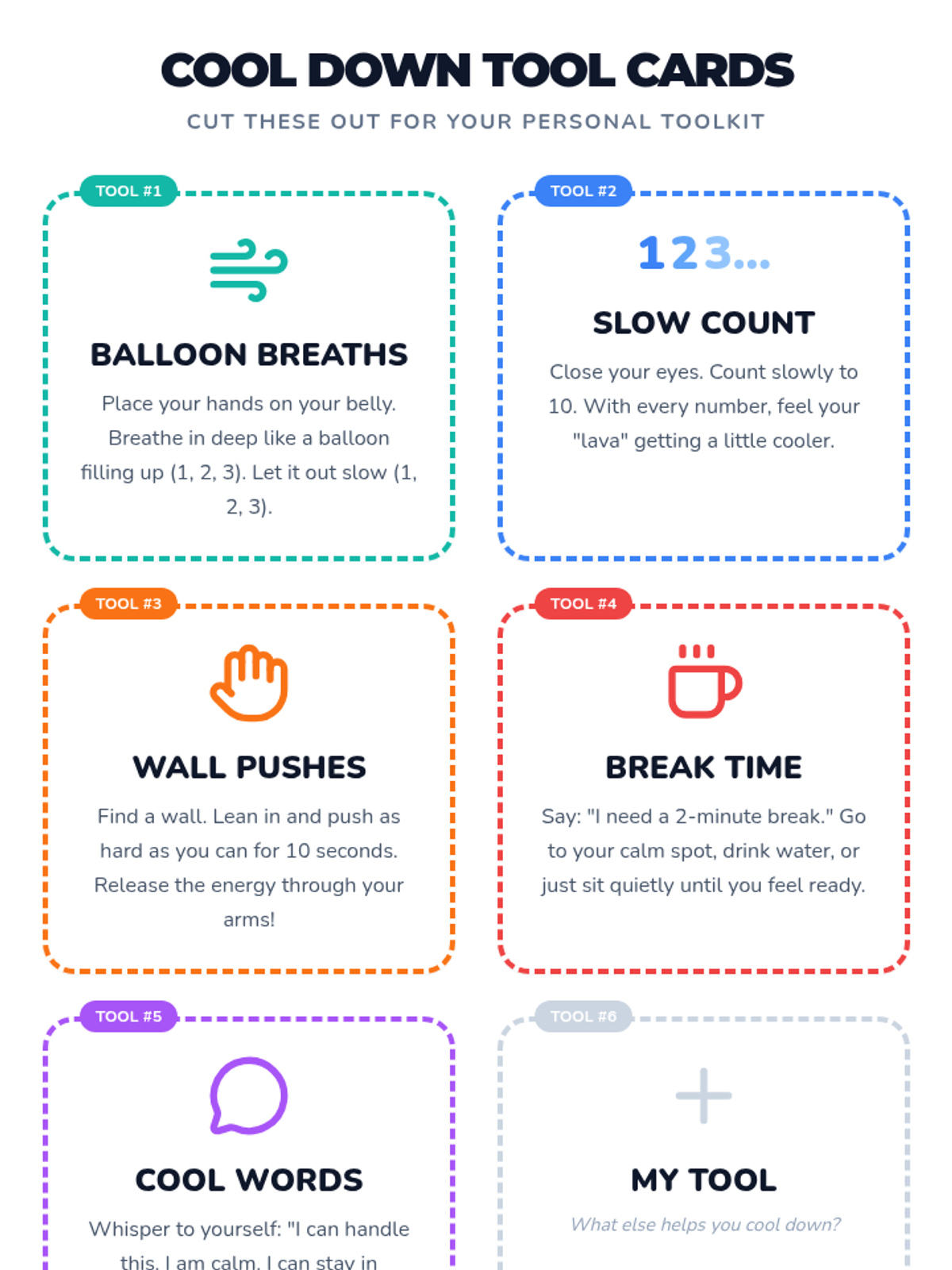
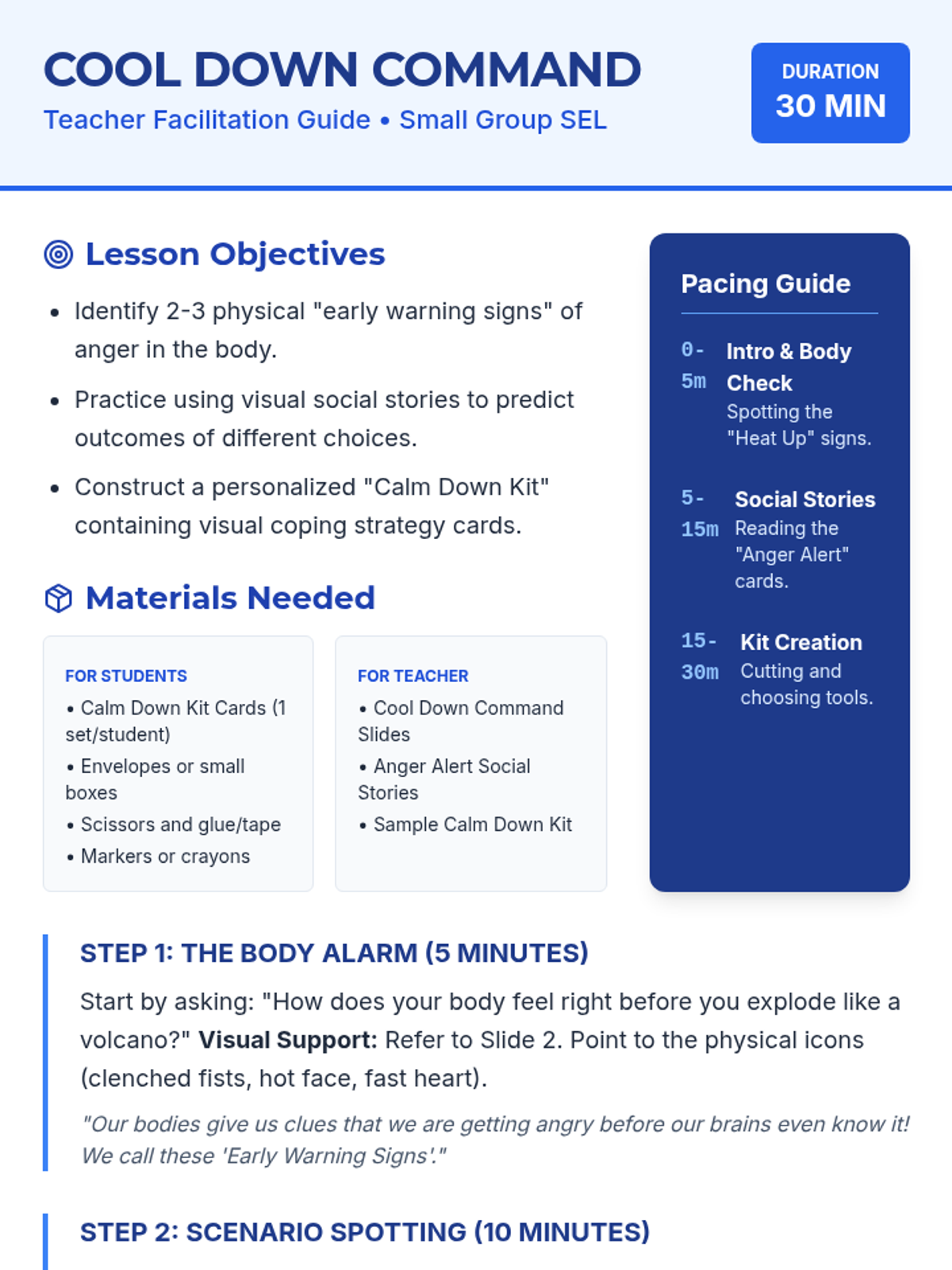
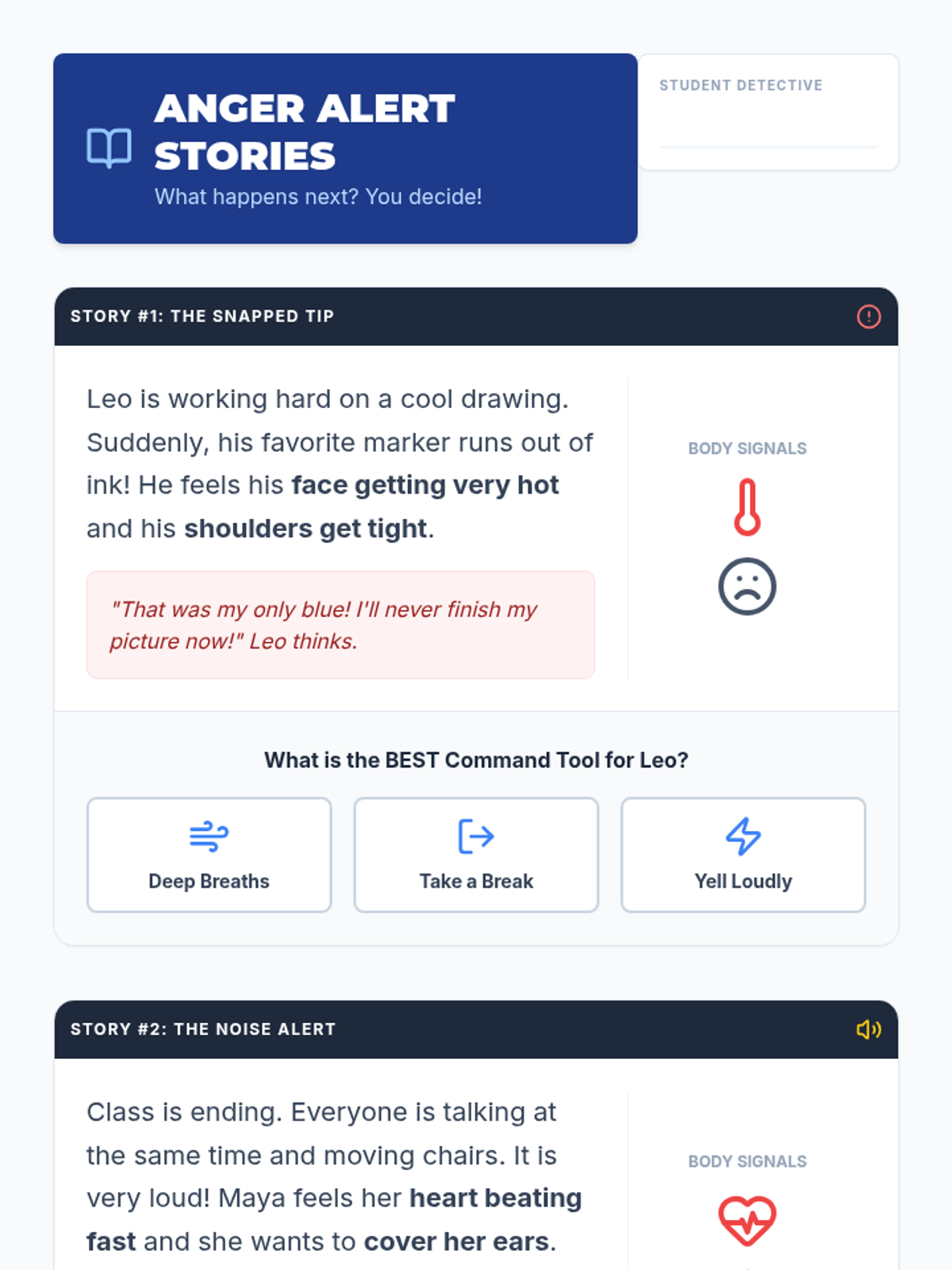
A 30-minute small group session focused on recognizing physical signs of anger and practicing concrete cooling strategies using visual and hands-on tools.
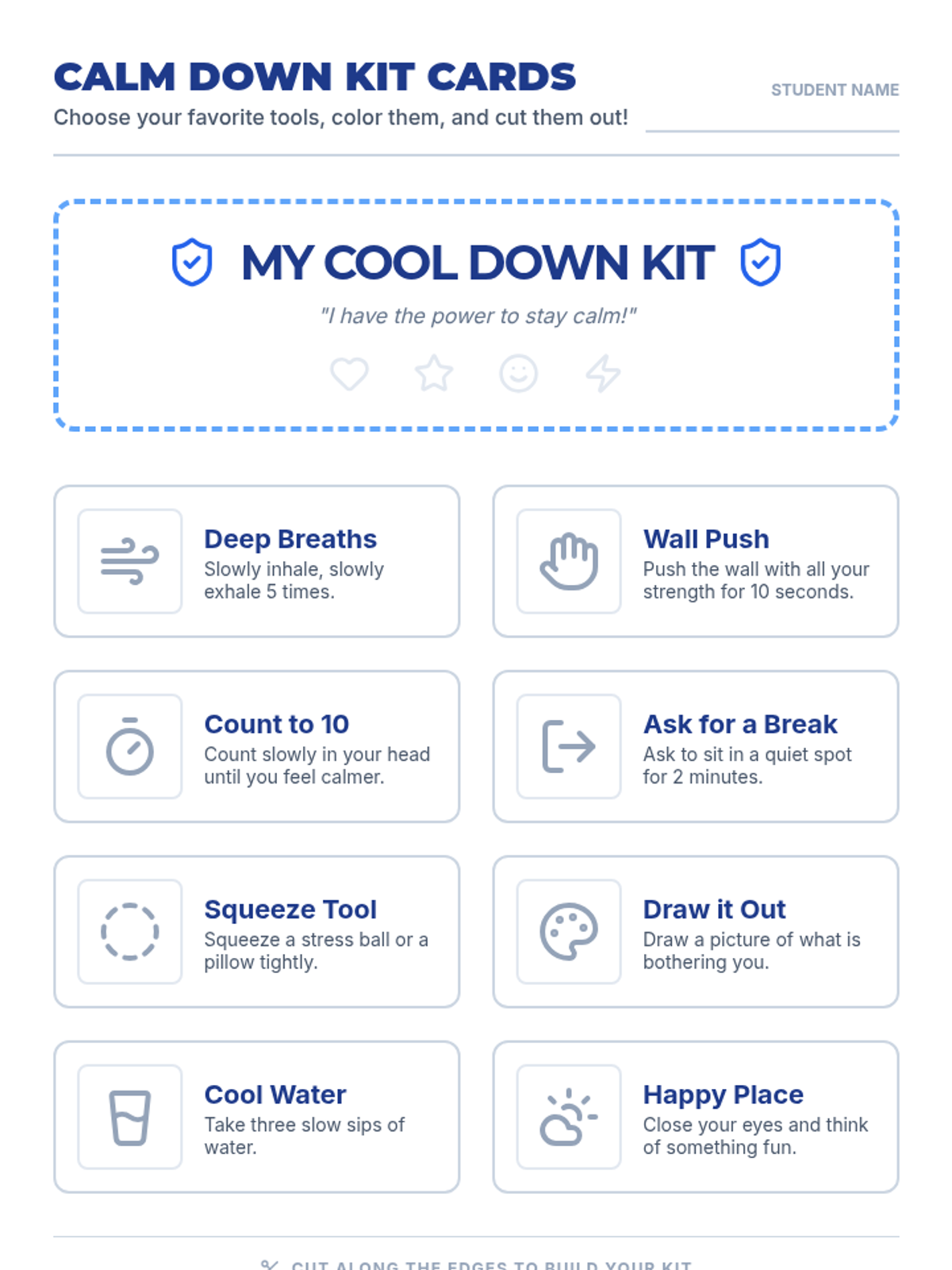
A small-group lesson focused on identifying the physical signs of anger and practicing tactile calming strategies, designed with visual supports for diverse learners.
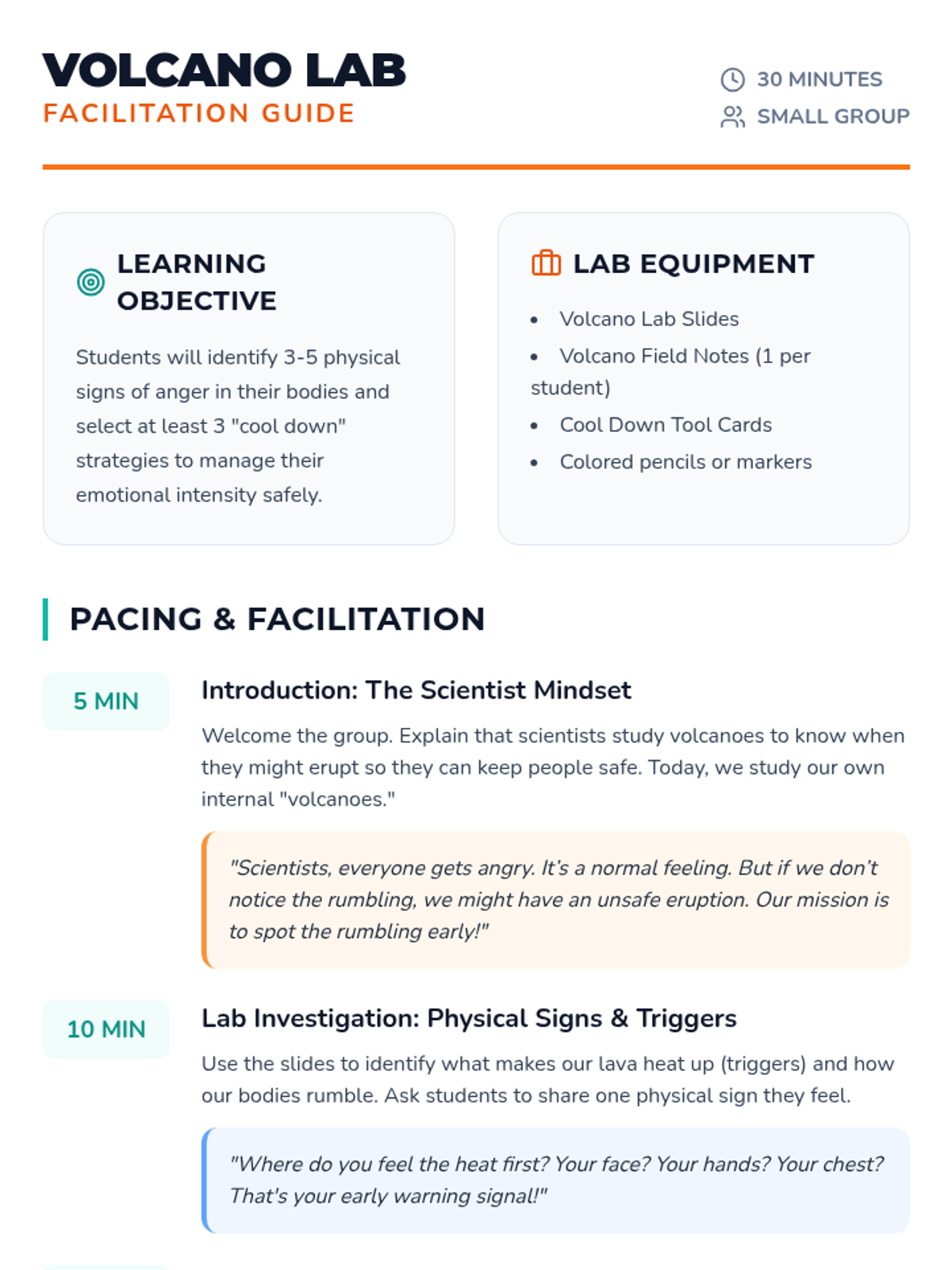
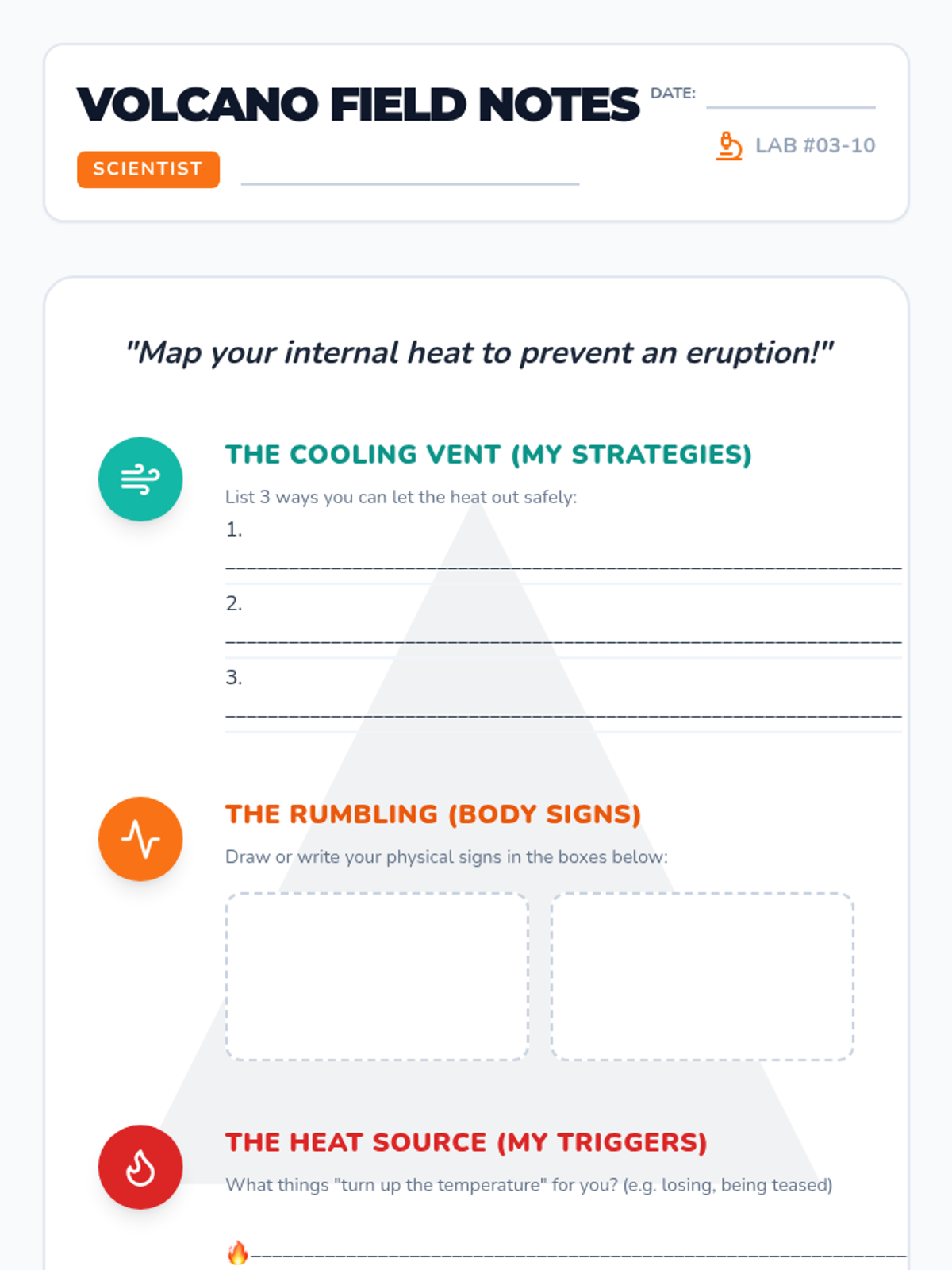
A 30-minute small group lesson for 3rd graders focused on recognizing the physical signs of anger and building a personal 'cool down' toolkit using a volcano metaphor.
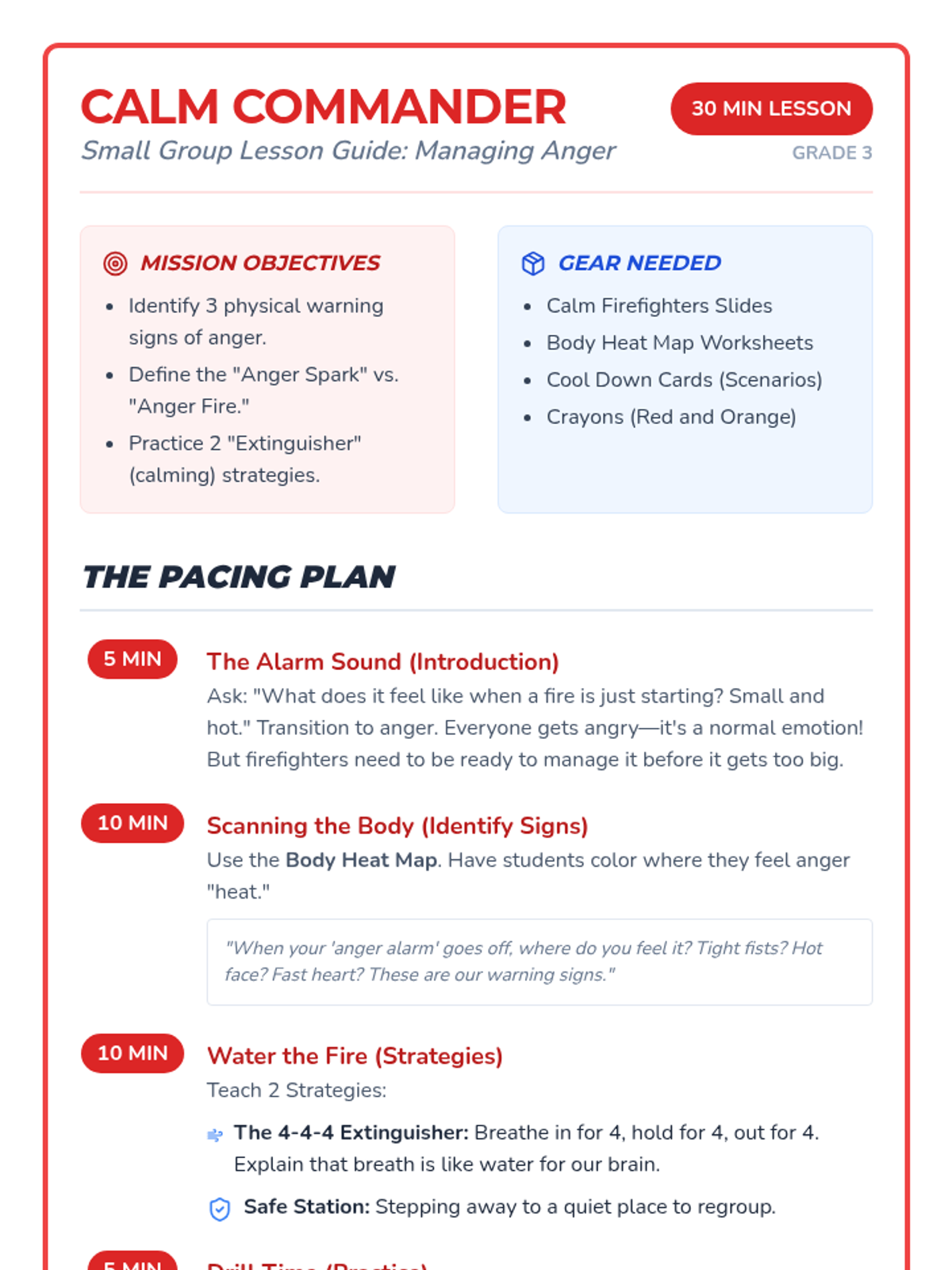
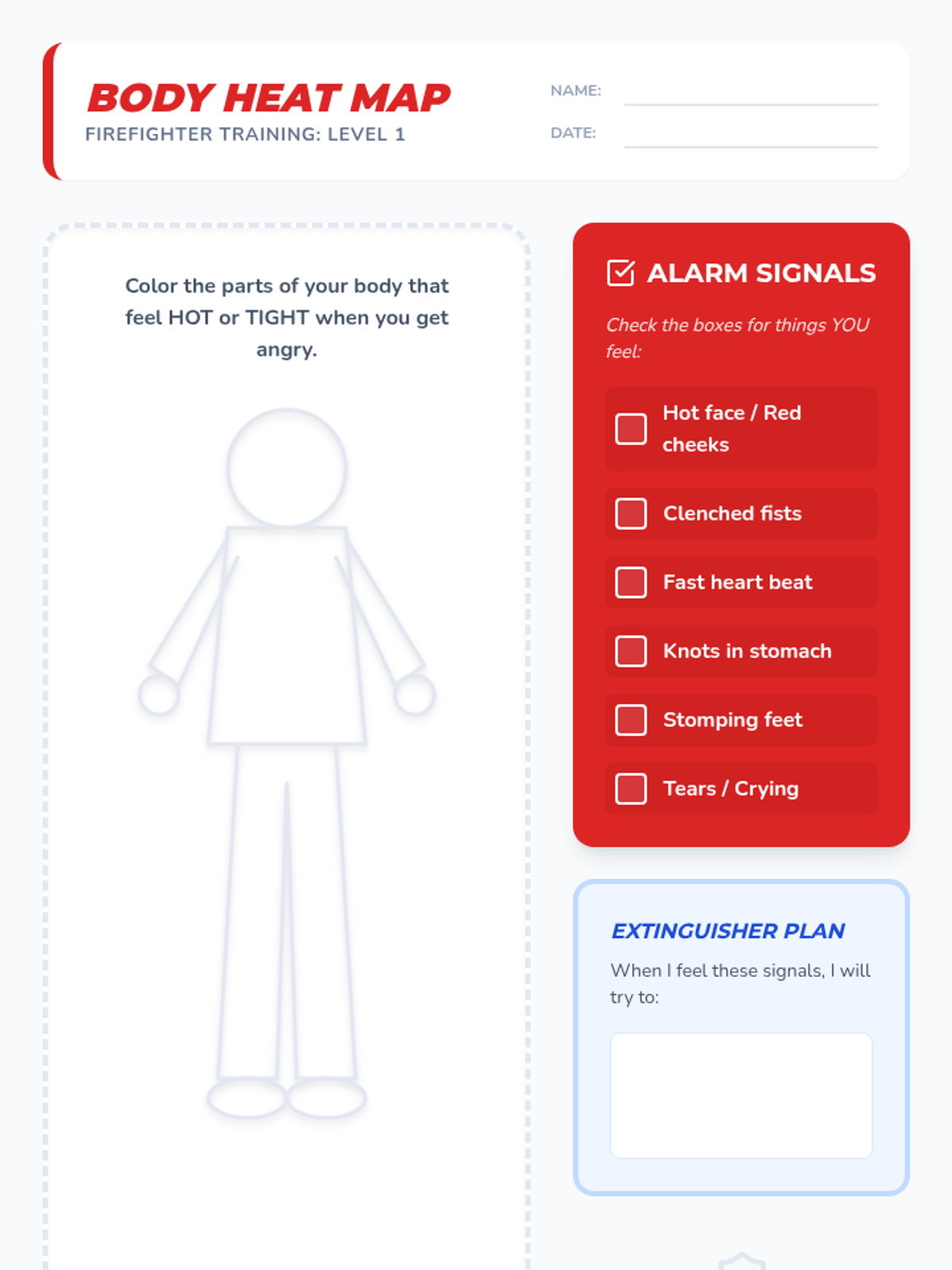
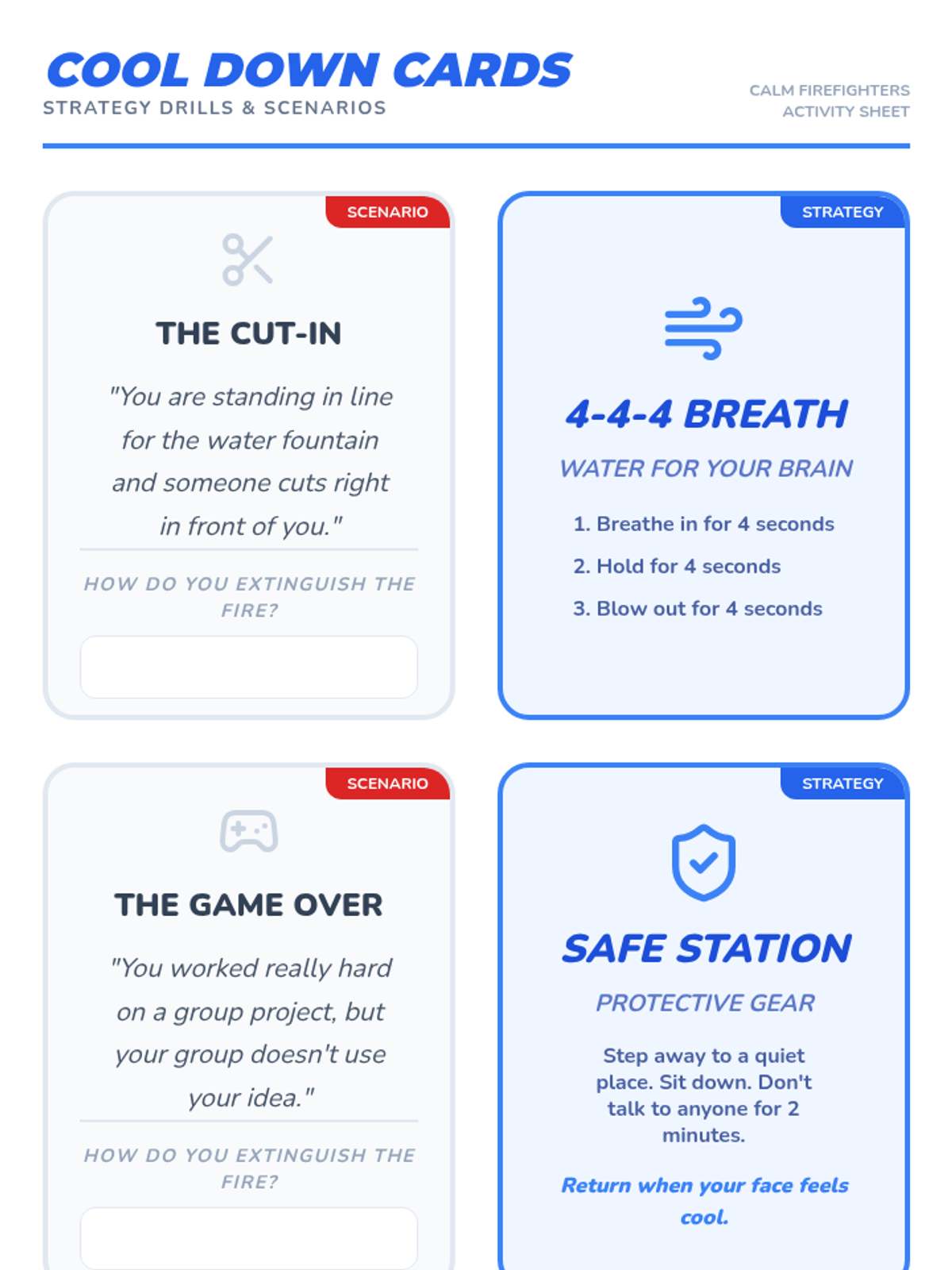
A 30-minute small group lesson for 3rd graders focused on recognizing physical signs of anger and practicing 'cool down' strategies using a firefighter theme.
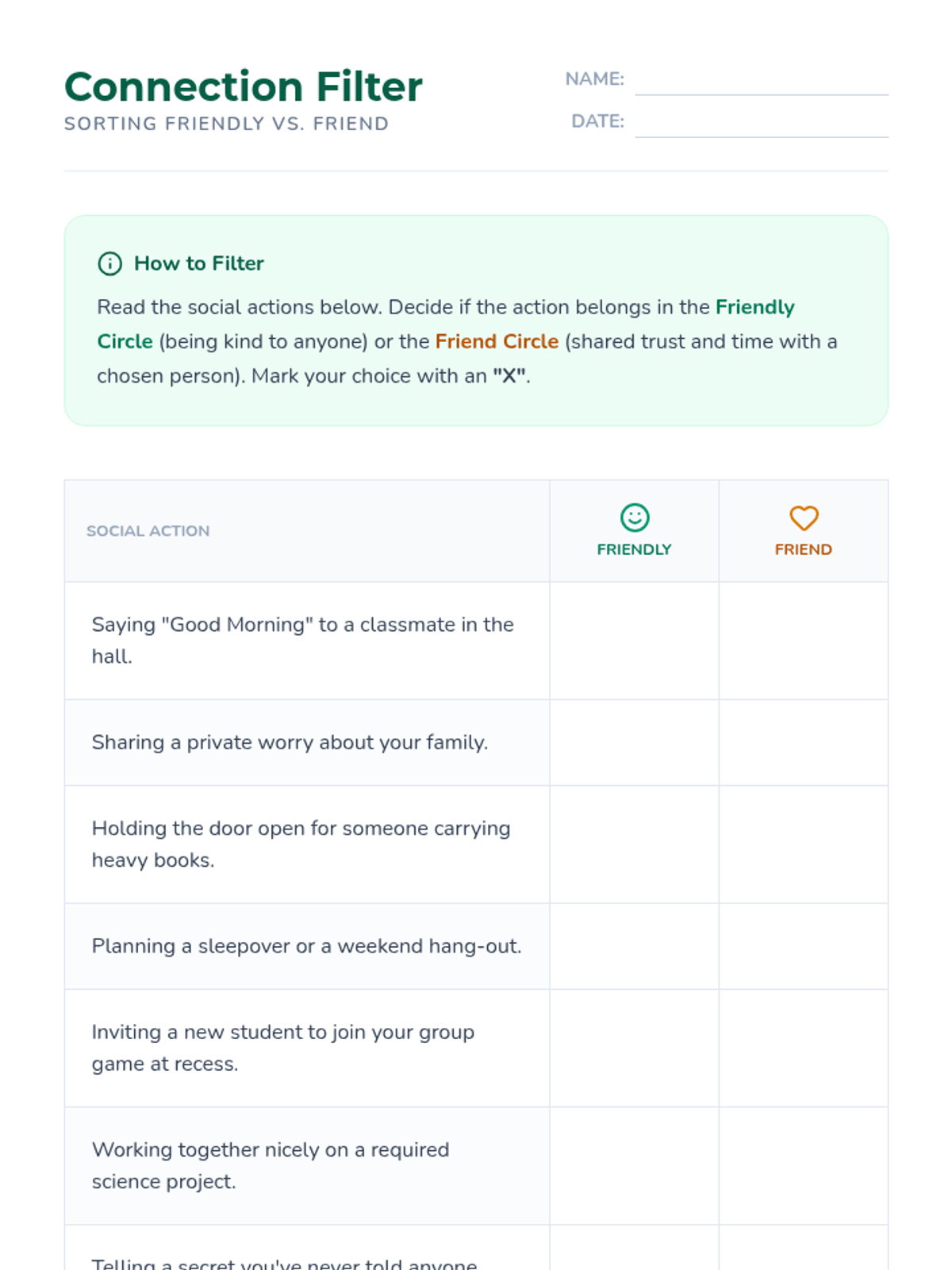
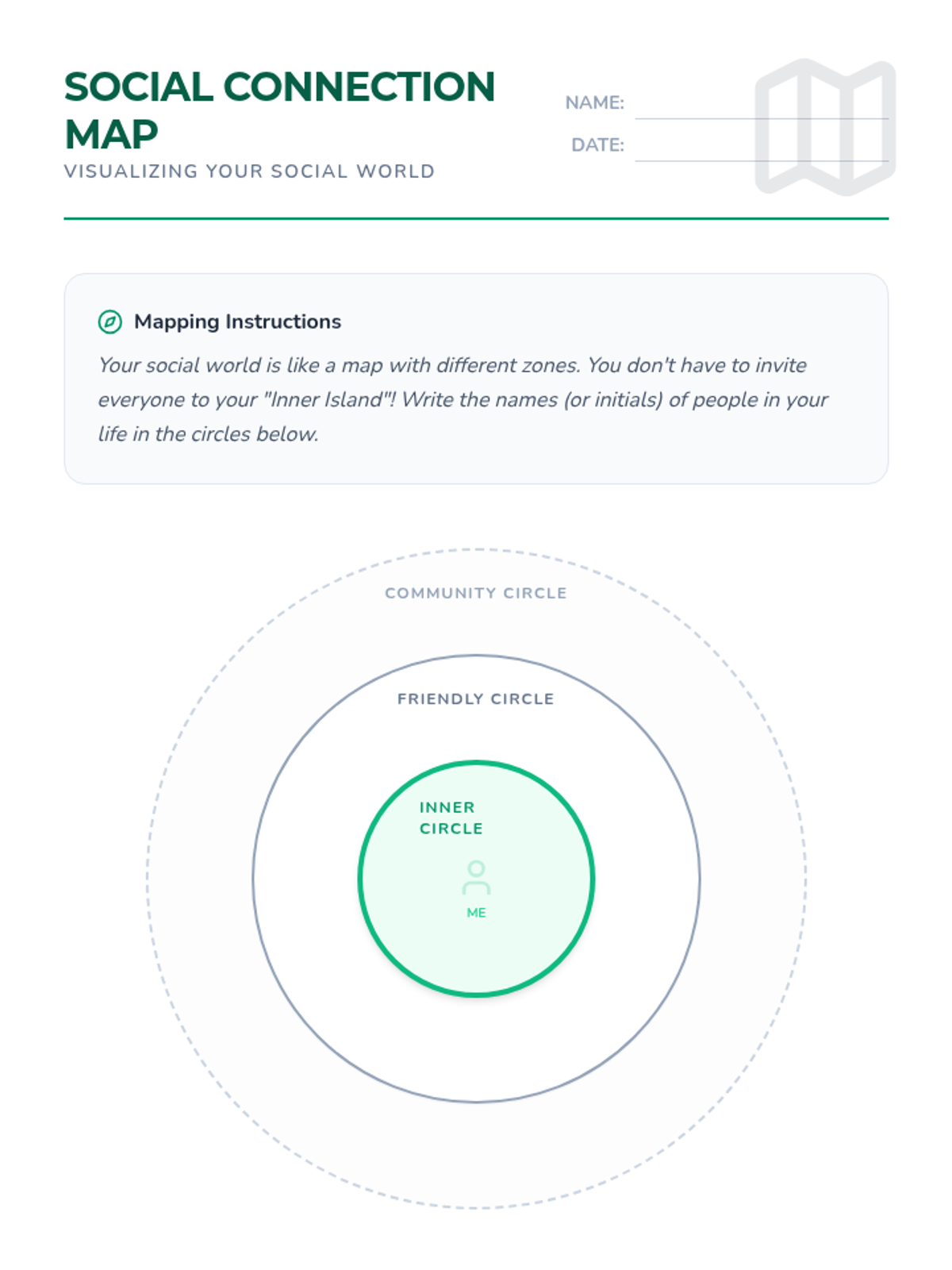
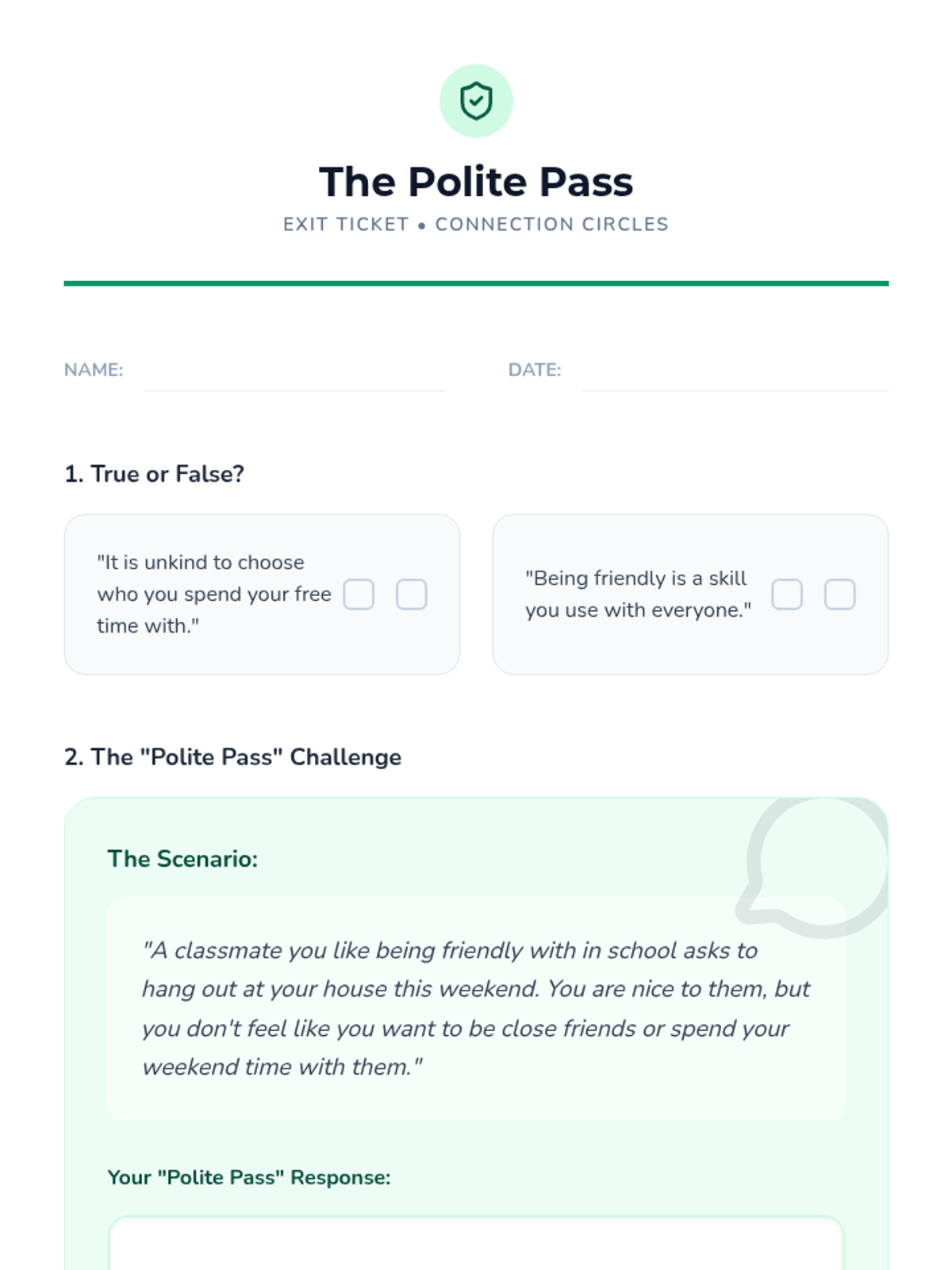
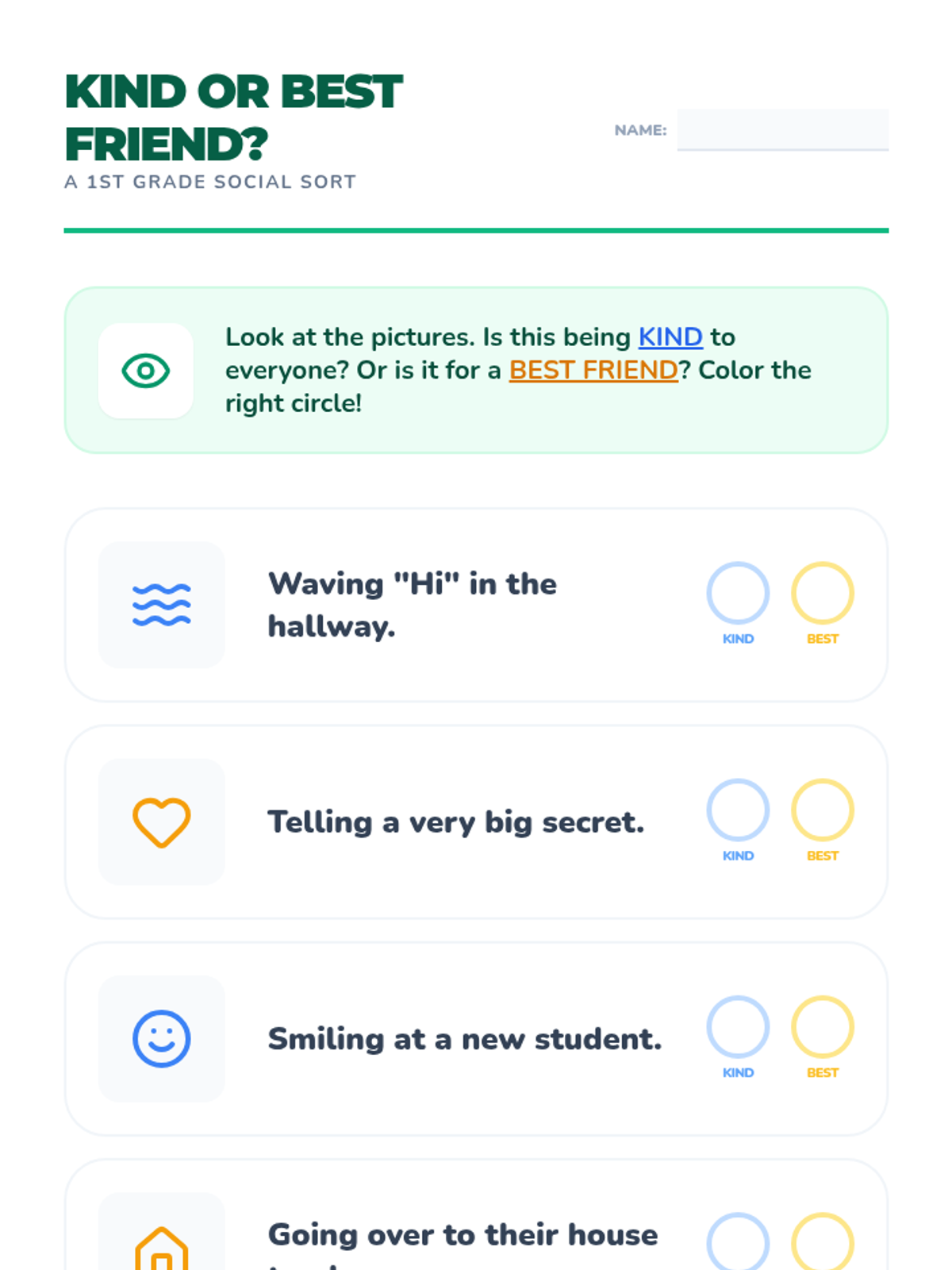
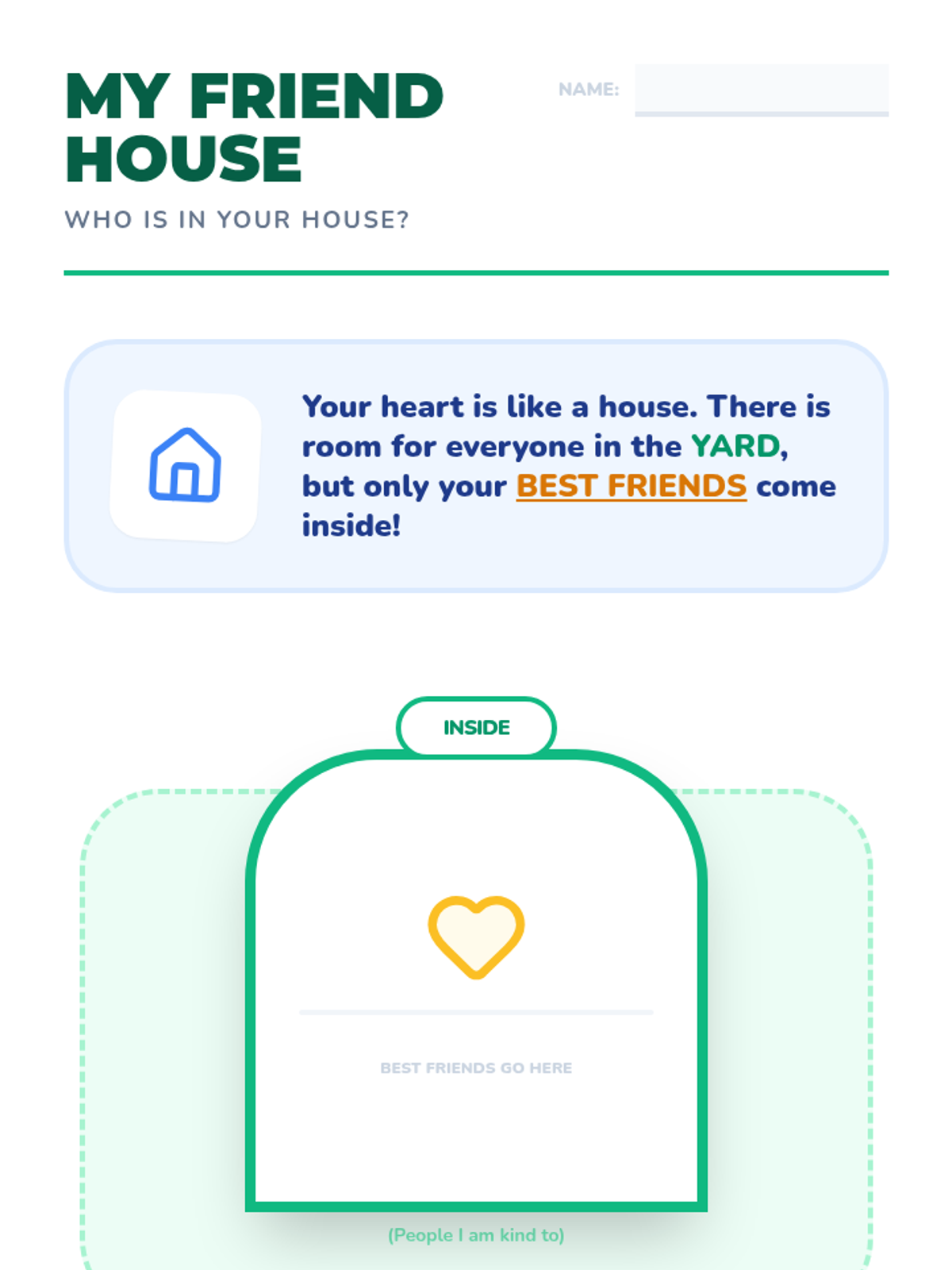
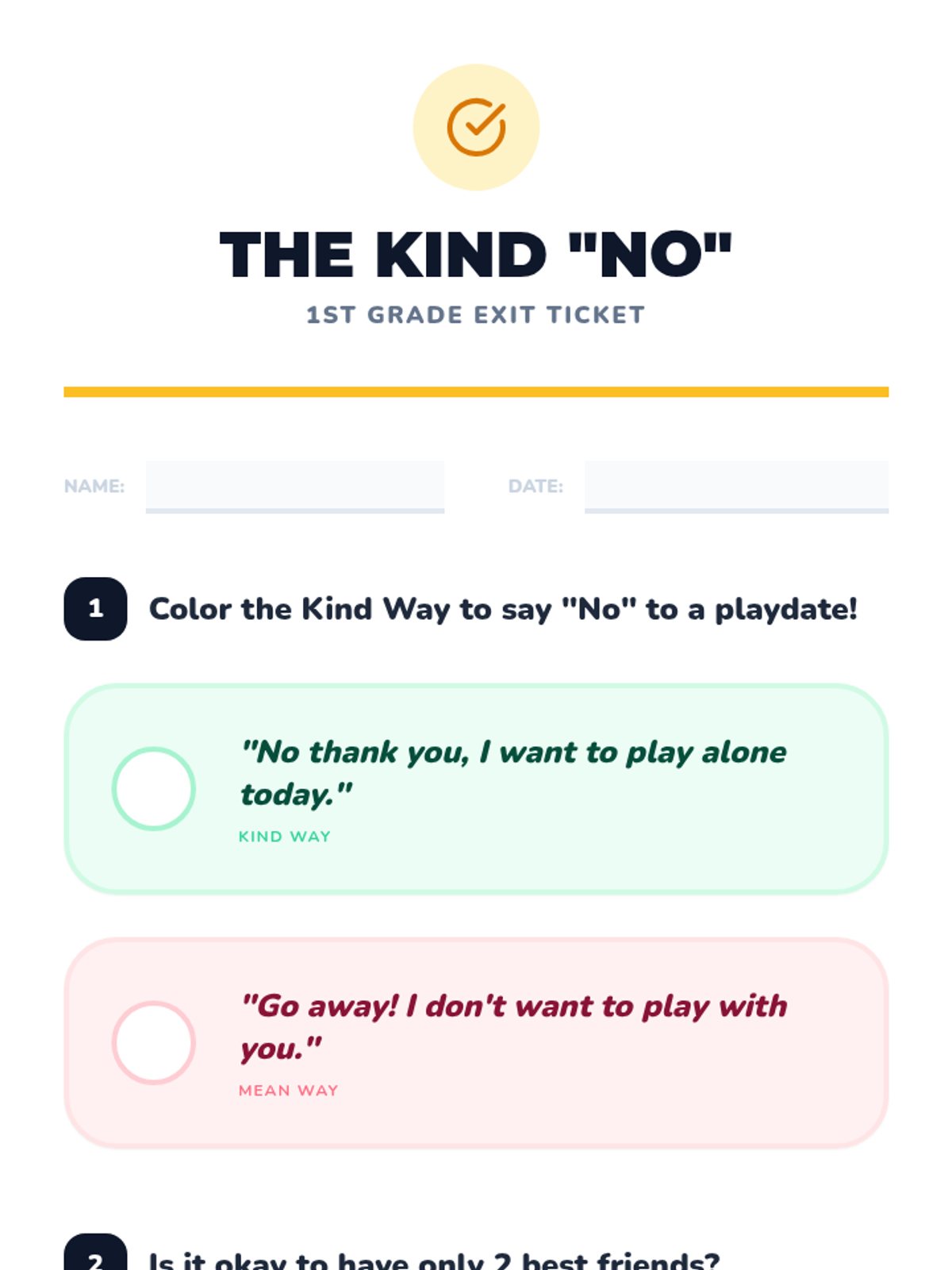
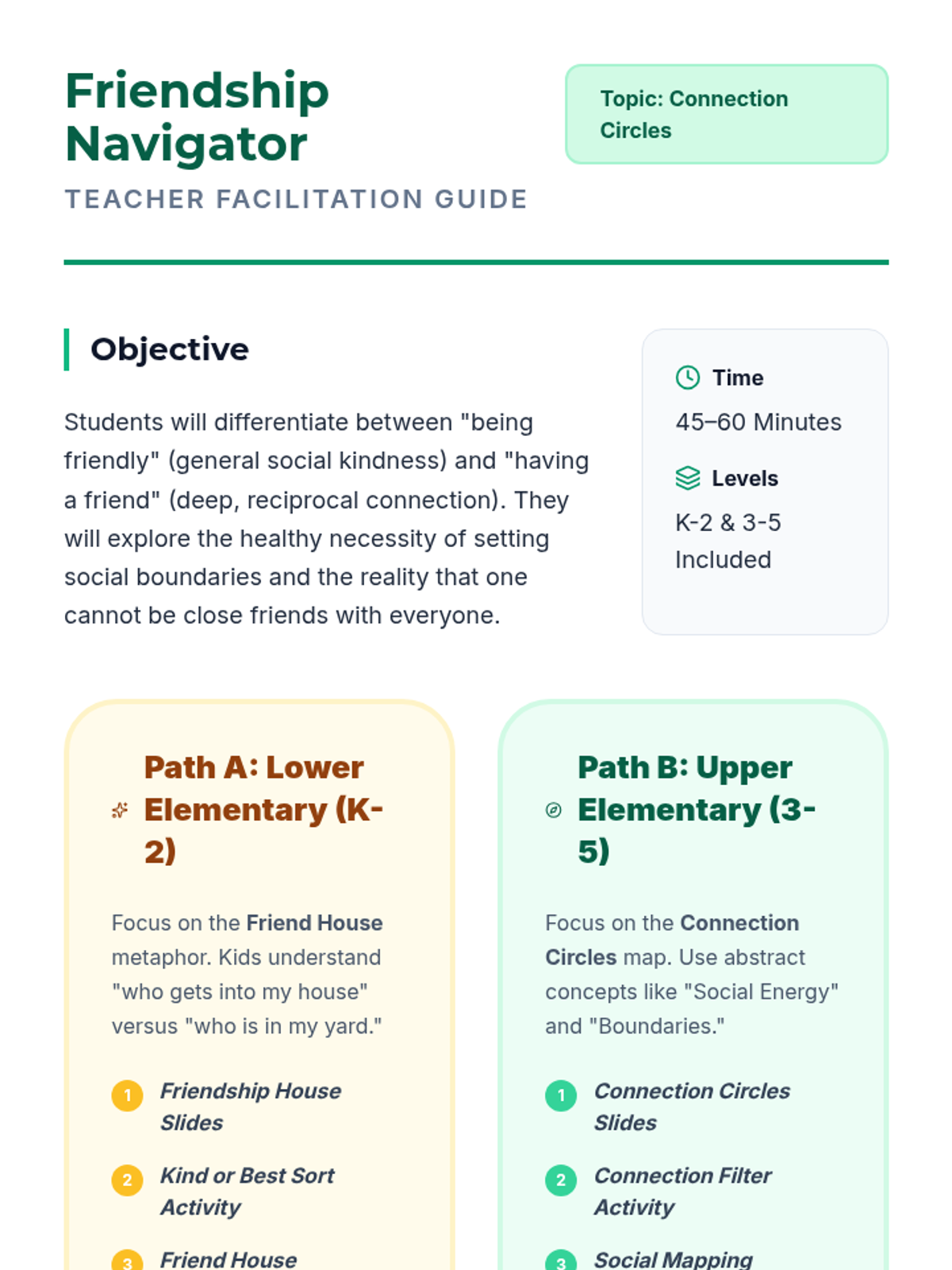
This lesson helps students navigate social boundaries by distinguishing between being friendly to everyone and forming deep friendships. Through a mapping metaphor, students learn that it is healthy and okay to choose their close friends while remaining kind to others.
A 30-minute small group lesson designed for 3rd graders, including students with autism, focused on recognizing physical signs of anger and building a personalized calm-down kit with visual coping strategies.
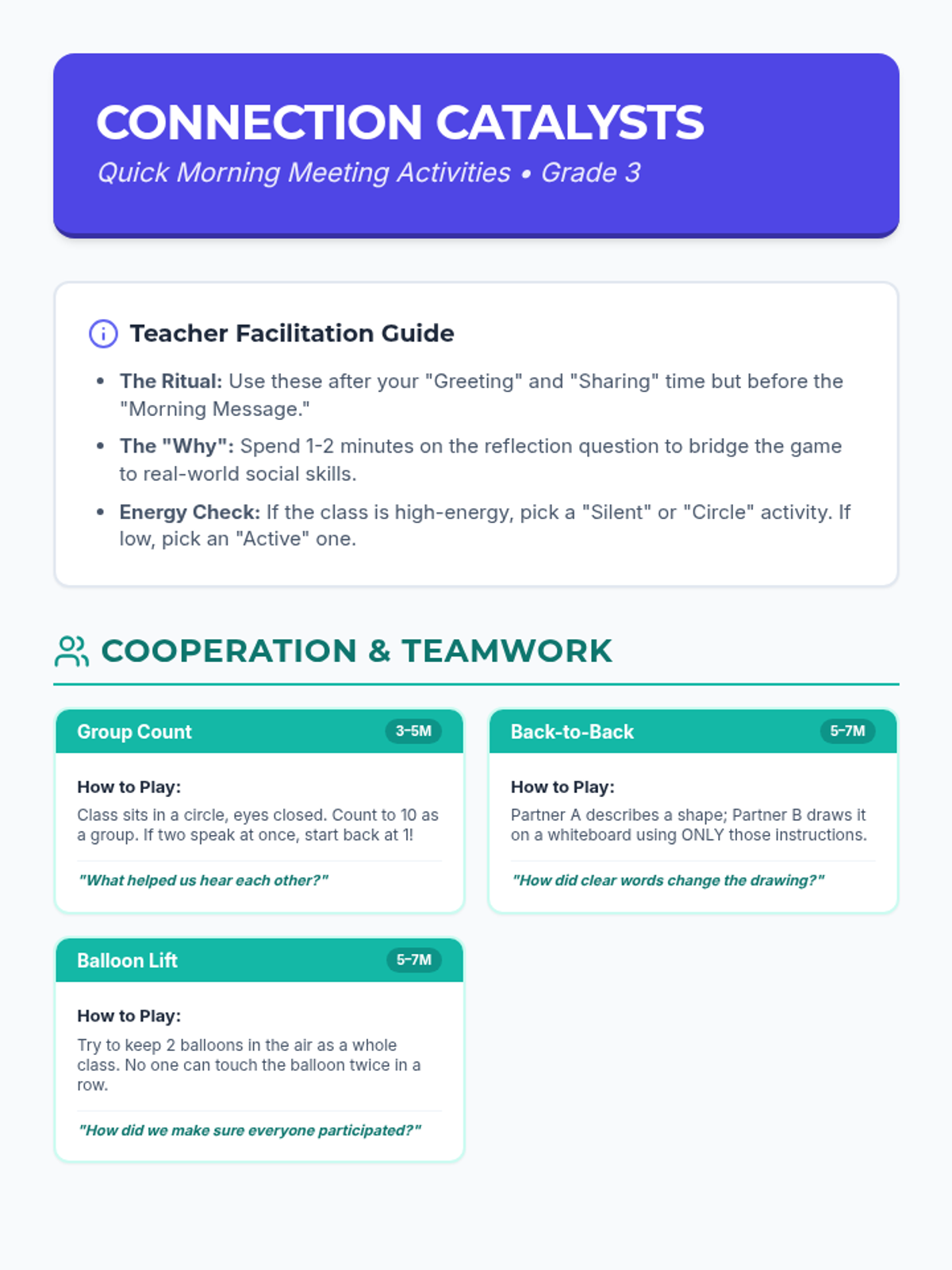
A collection of quick, engaging morning meeting activities designed to build social skills in 3rd grade students, focusing on teamwork, conflict resolution, and communication.
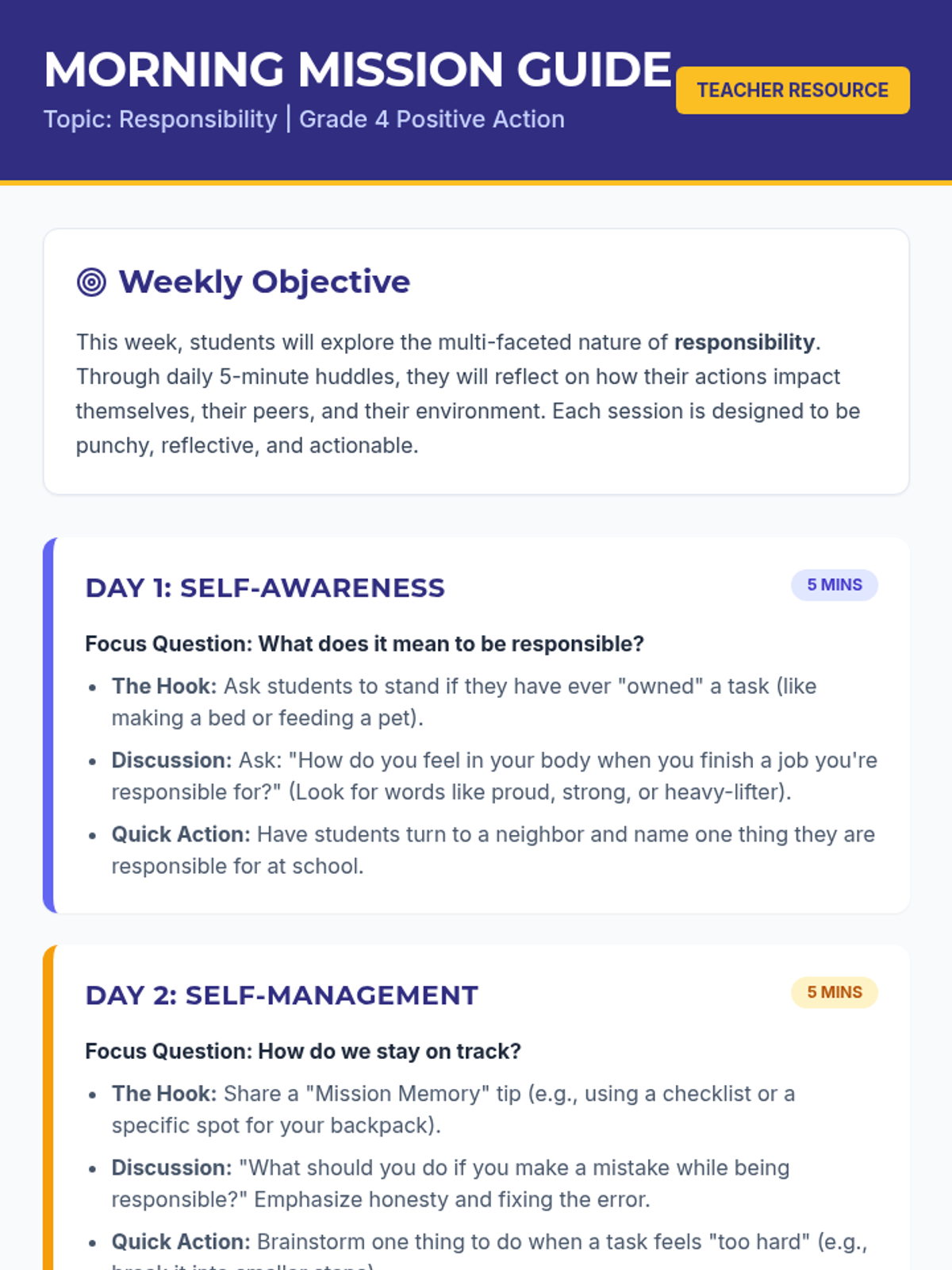
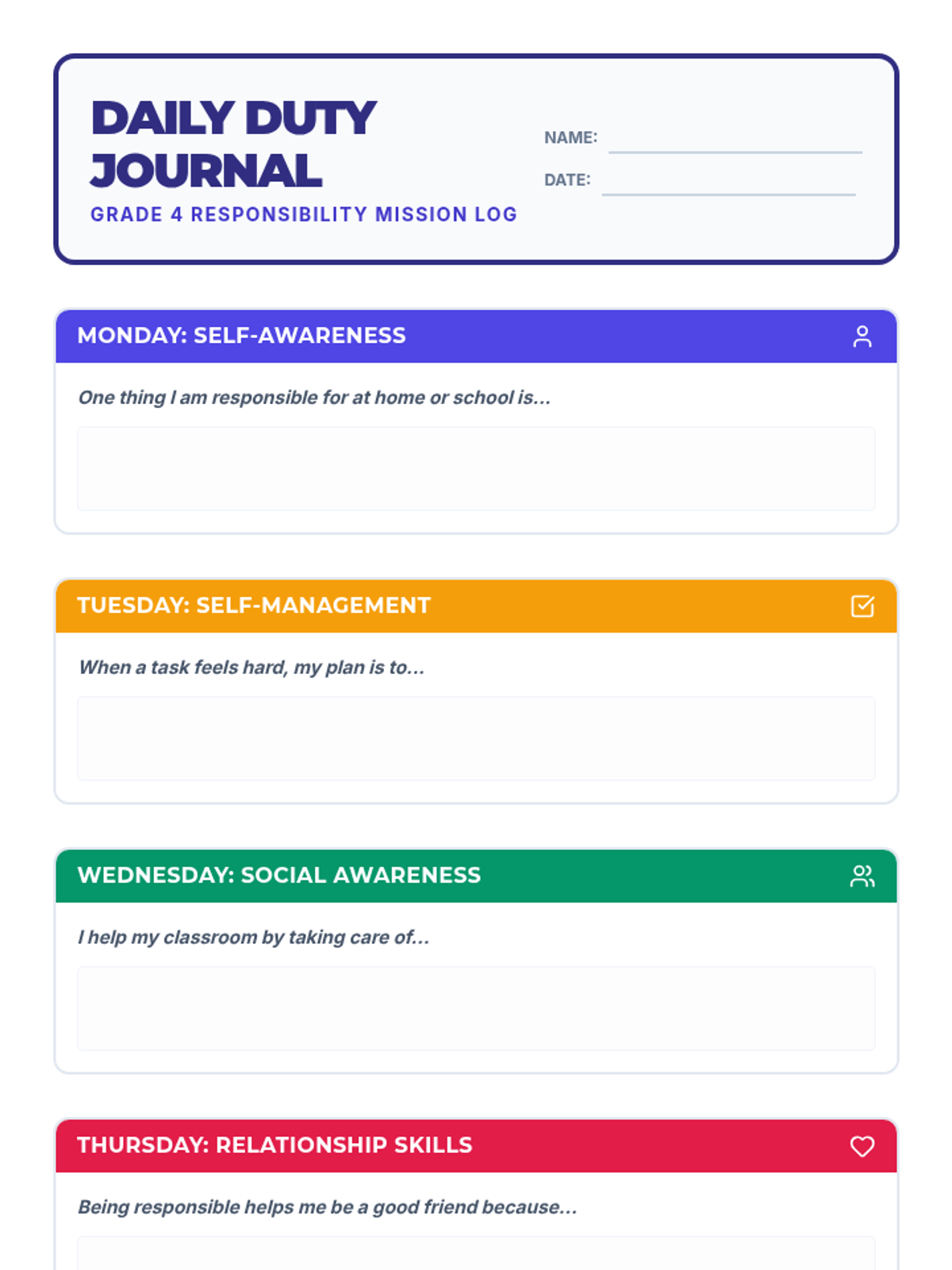
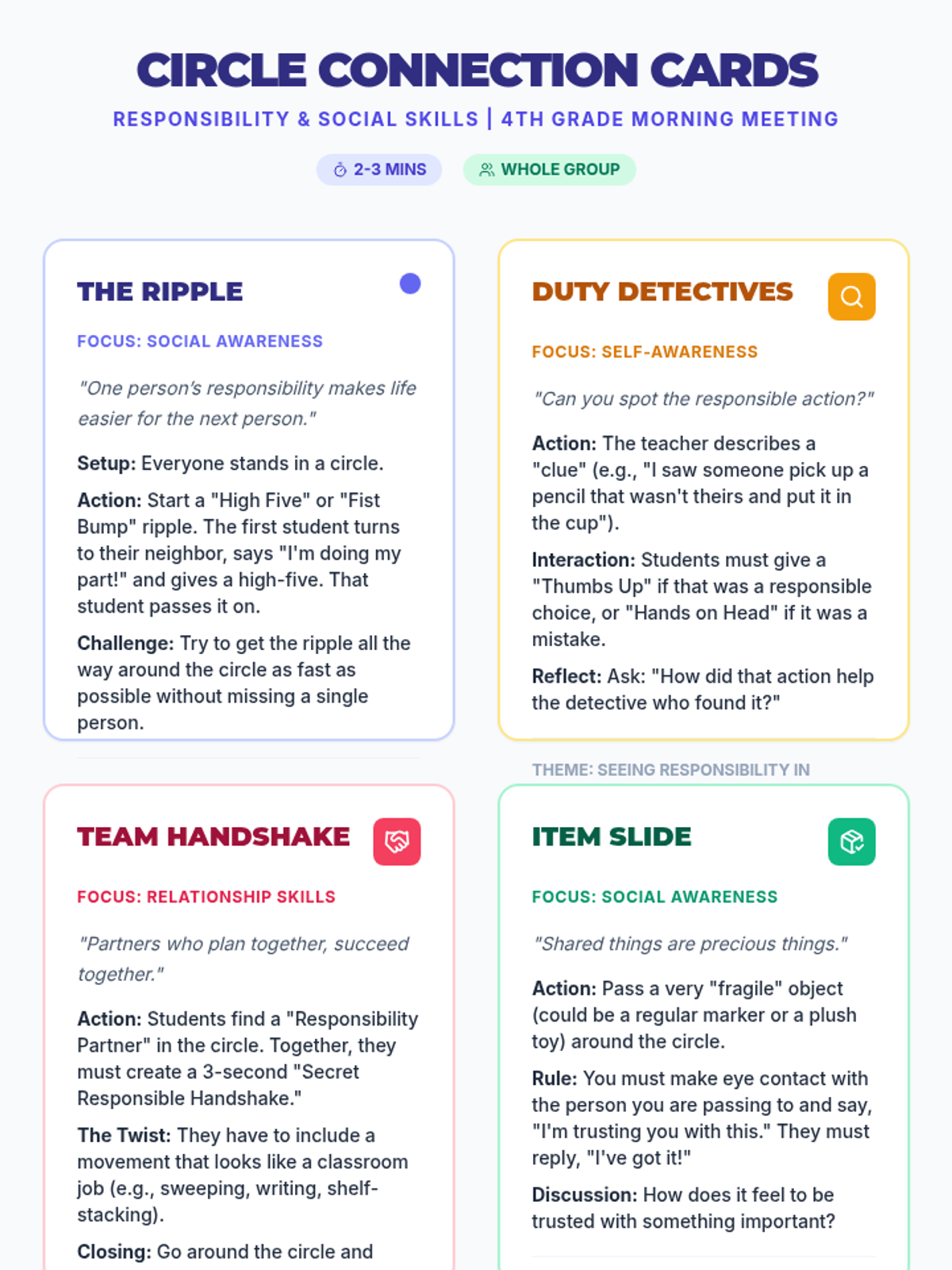
Daily 5-minute morning meeting activities designed to build self-awareness, management, and social skills through the lens of responsibility.
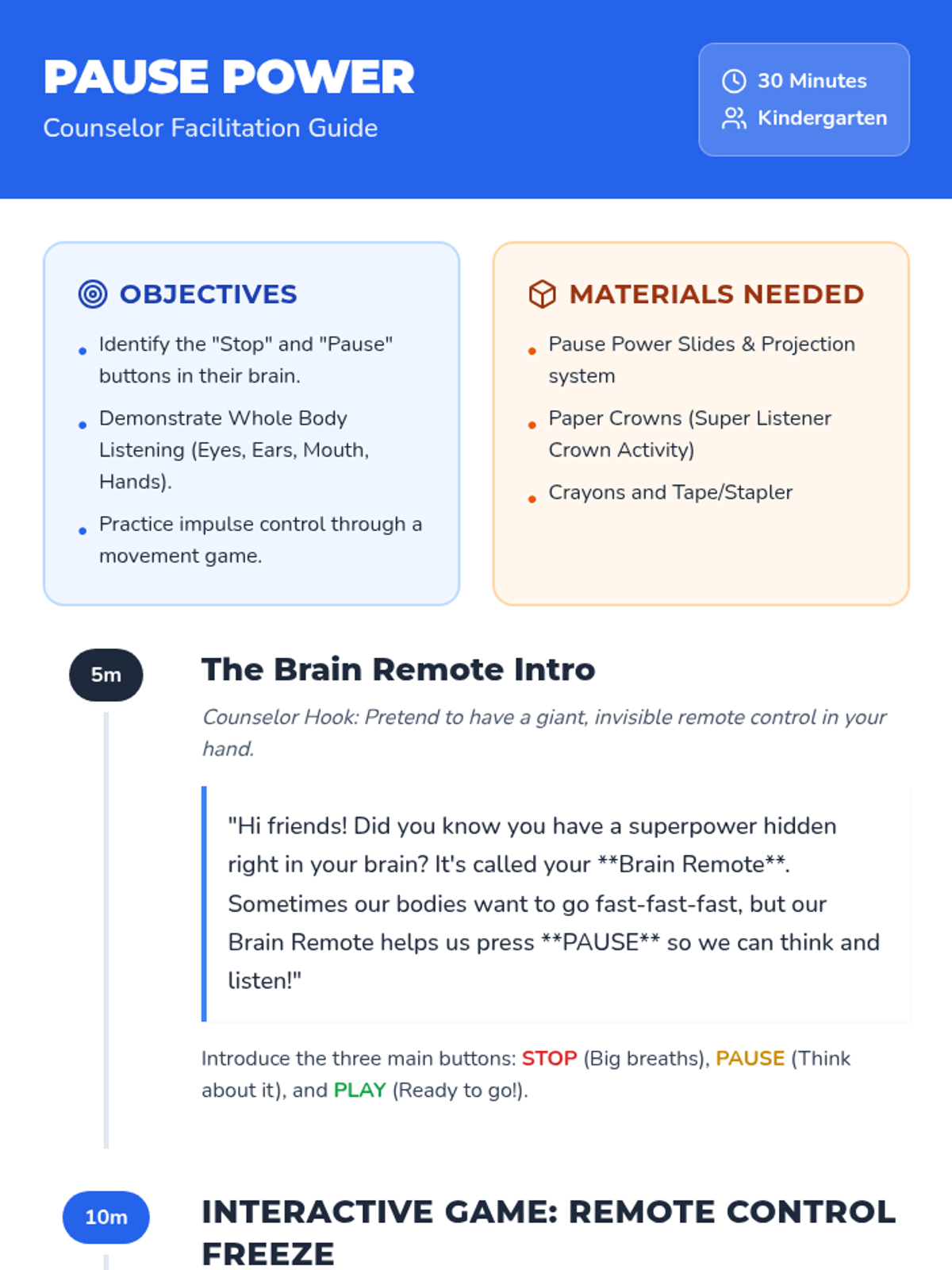
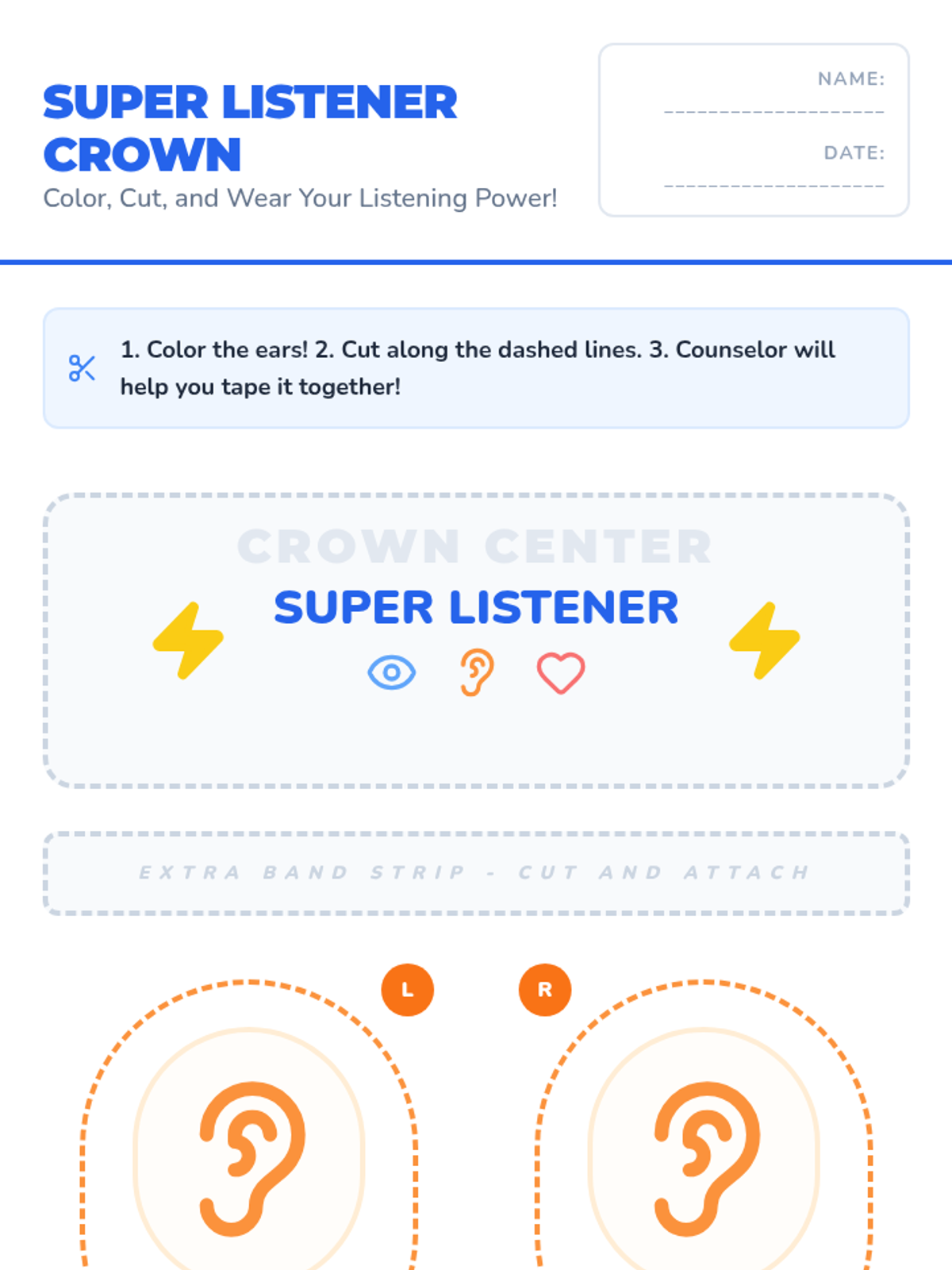
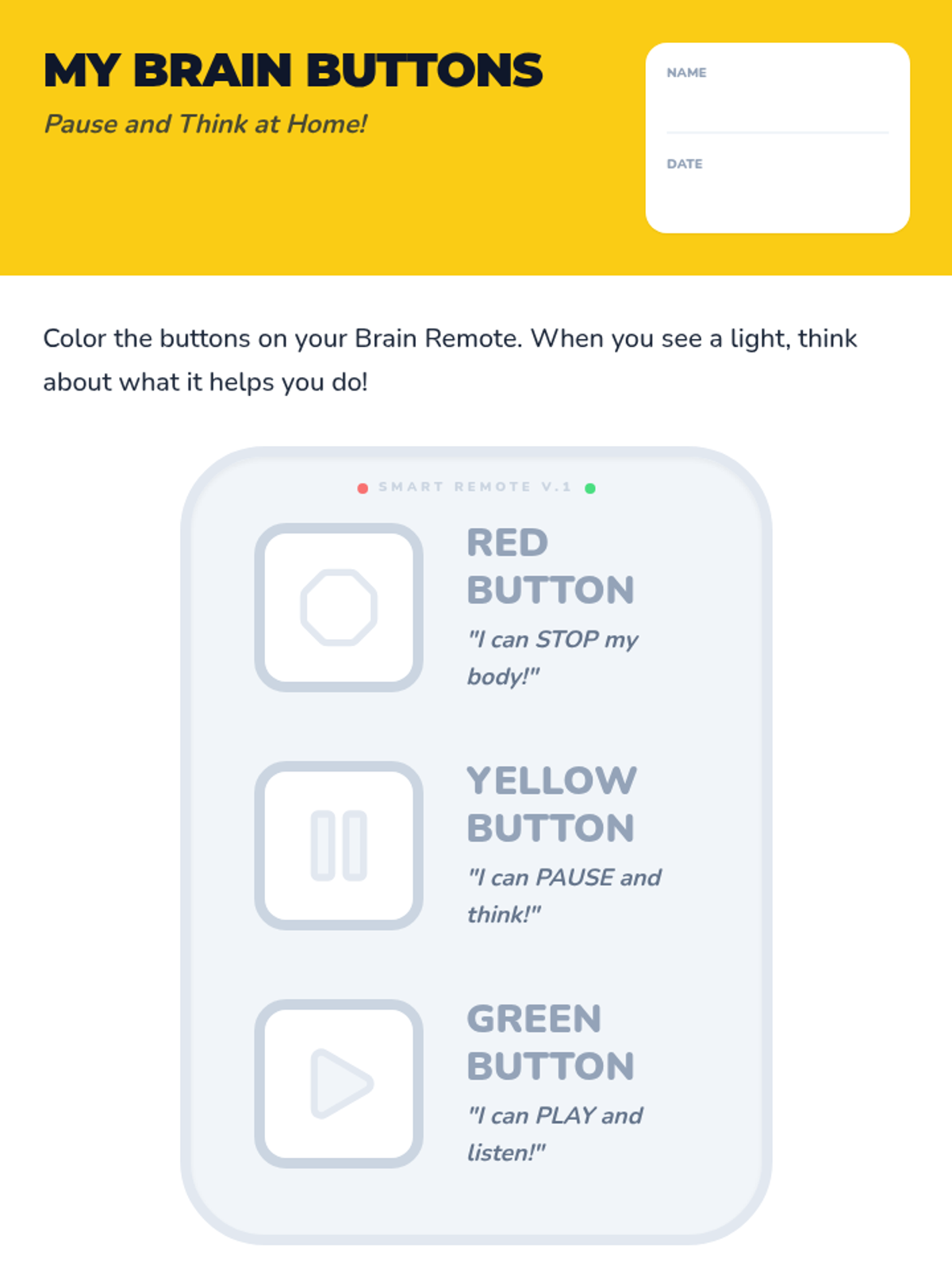
An interactive 30-minute lesson teaching kindergarteners how to use their 'internal remote control' to stop, think, and listen. Includes movement games and a creative craft to reinforce whole-body listening.
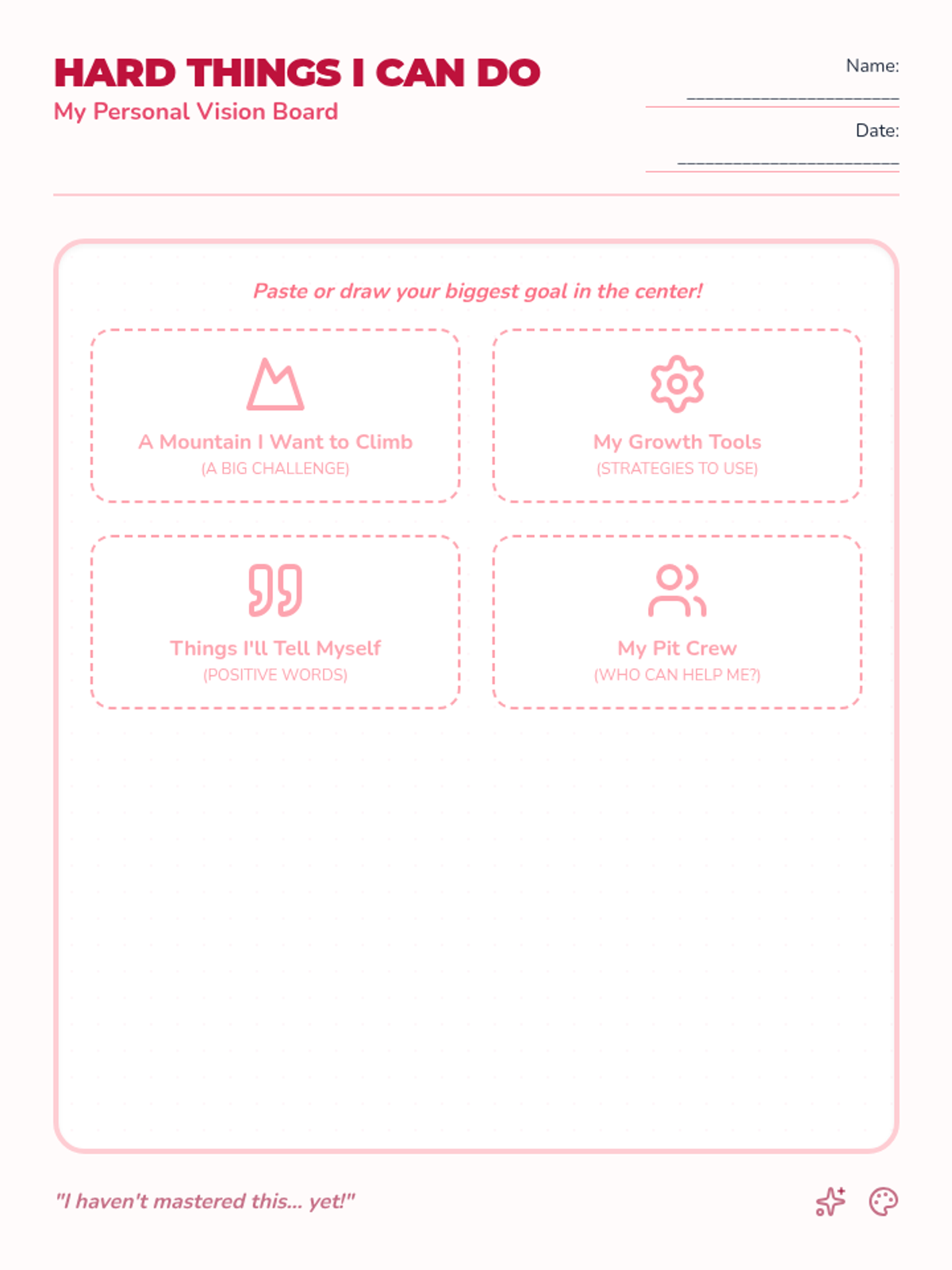
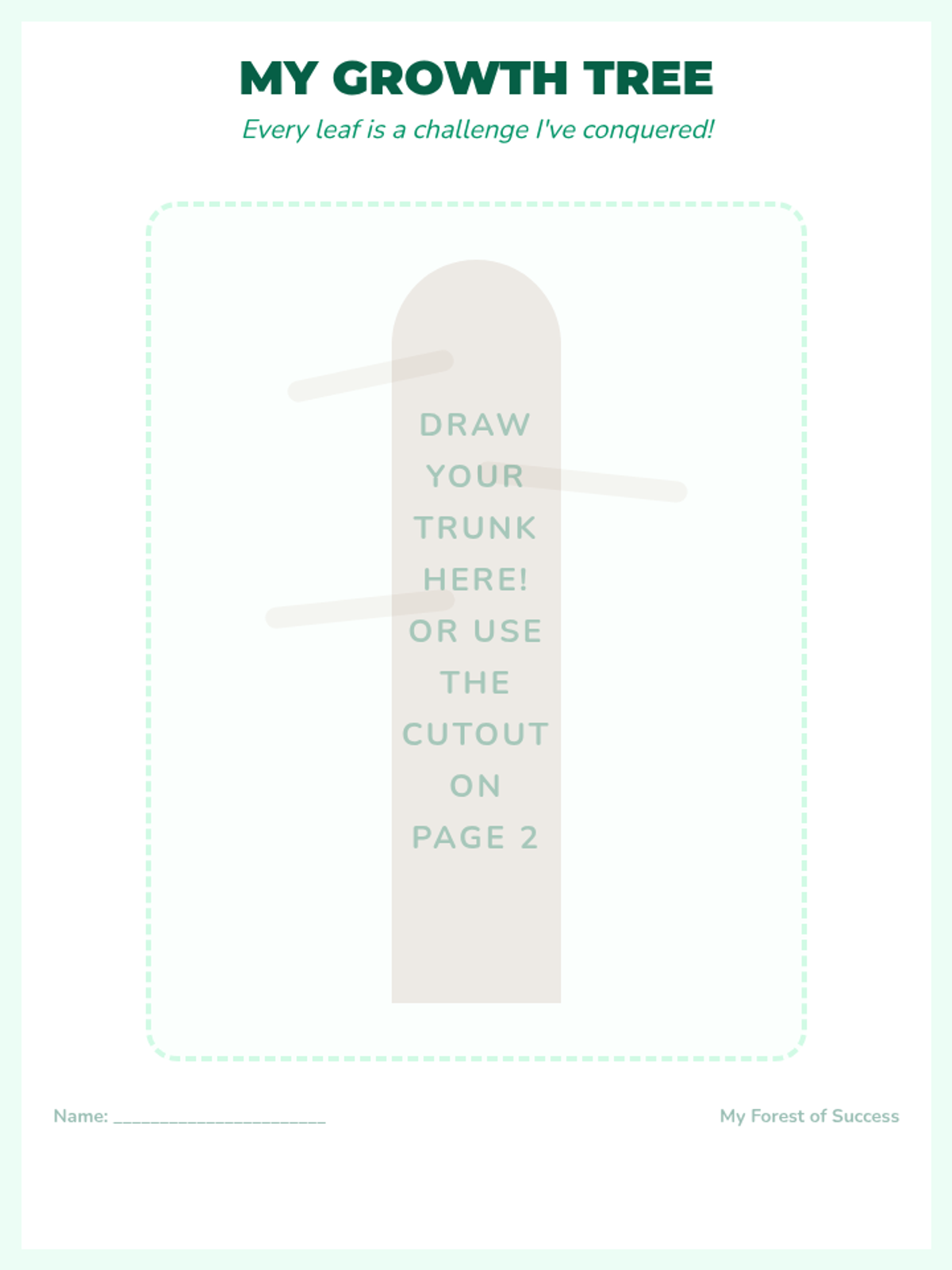
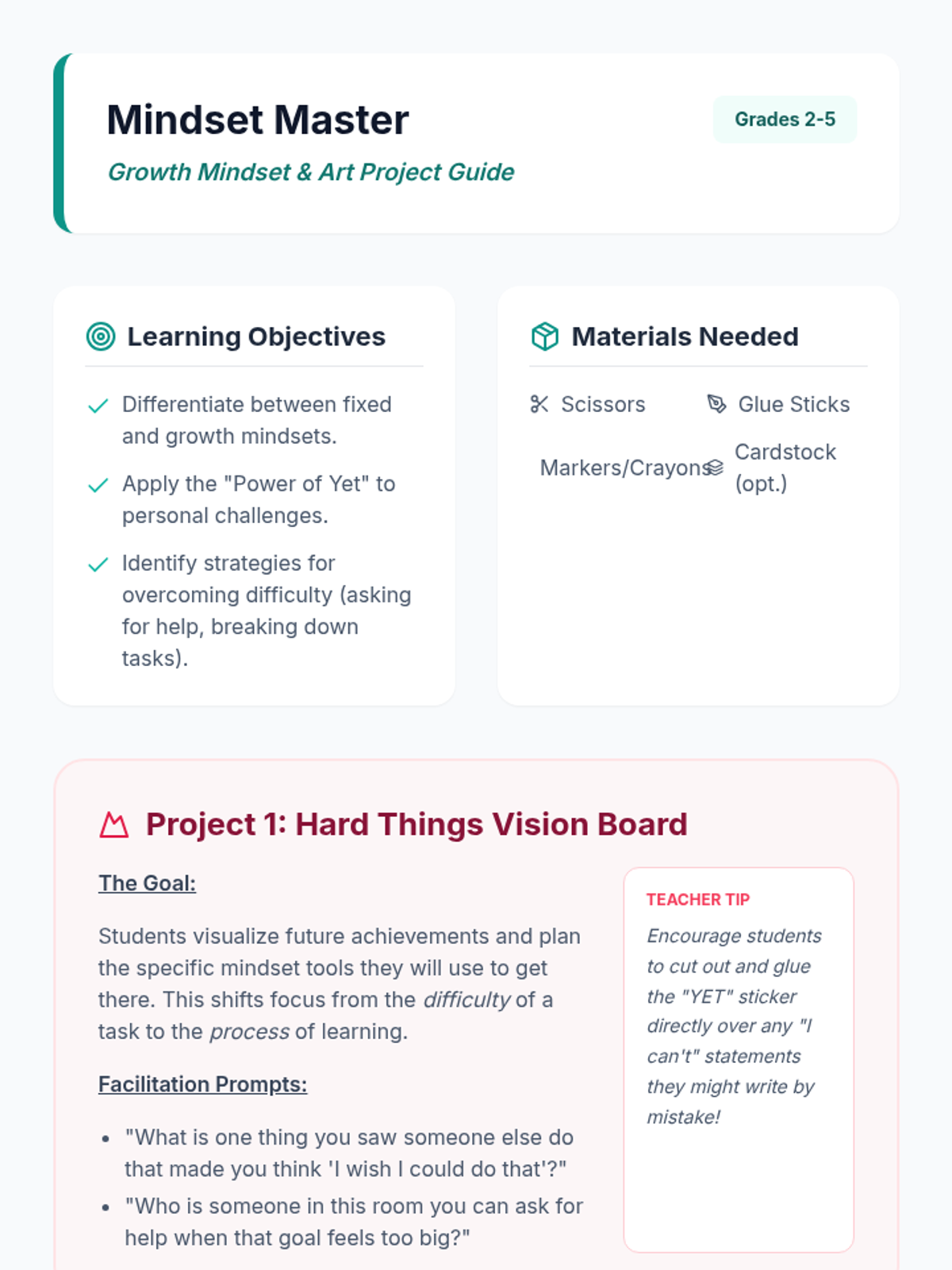
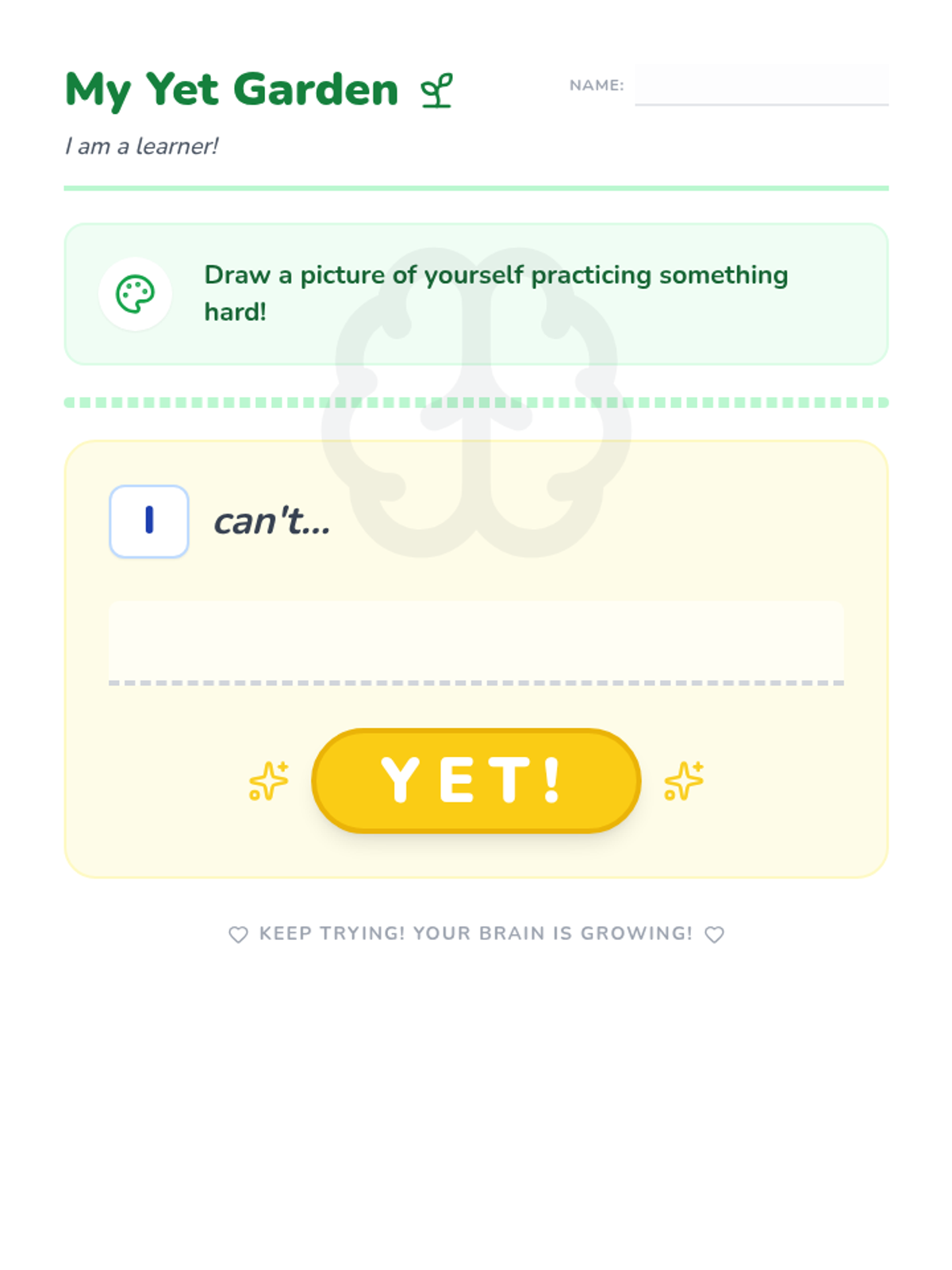
Introduces the concept of growth mindset and the 'power of yet' through two creative projects: a vision board for future goals and a growth tree for past achievements.
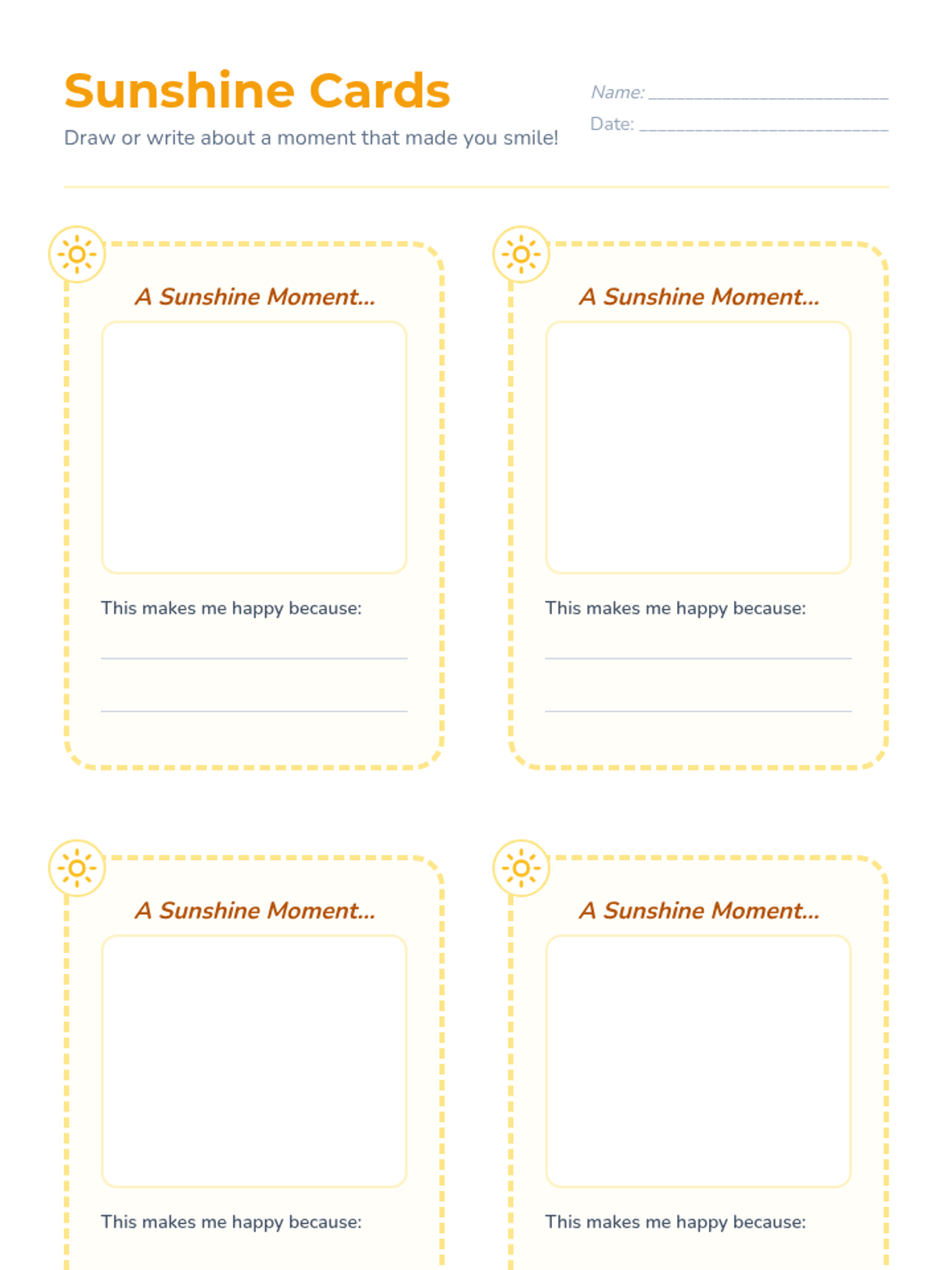
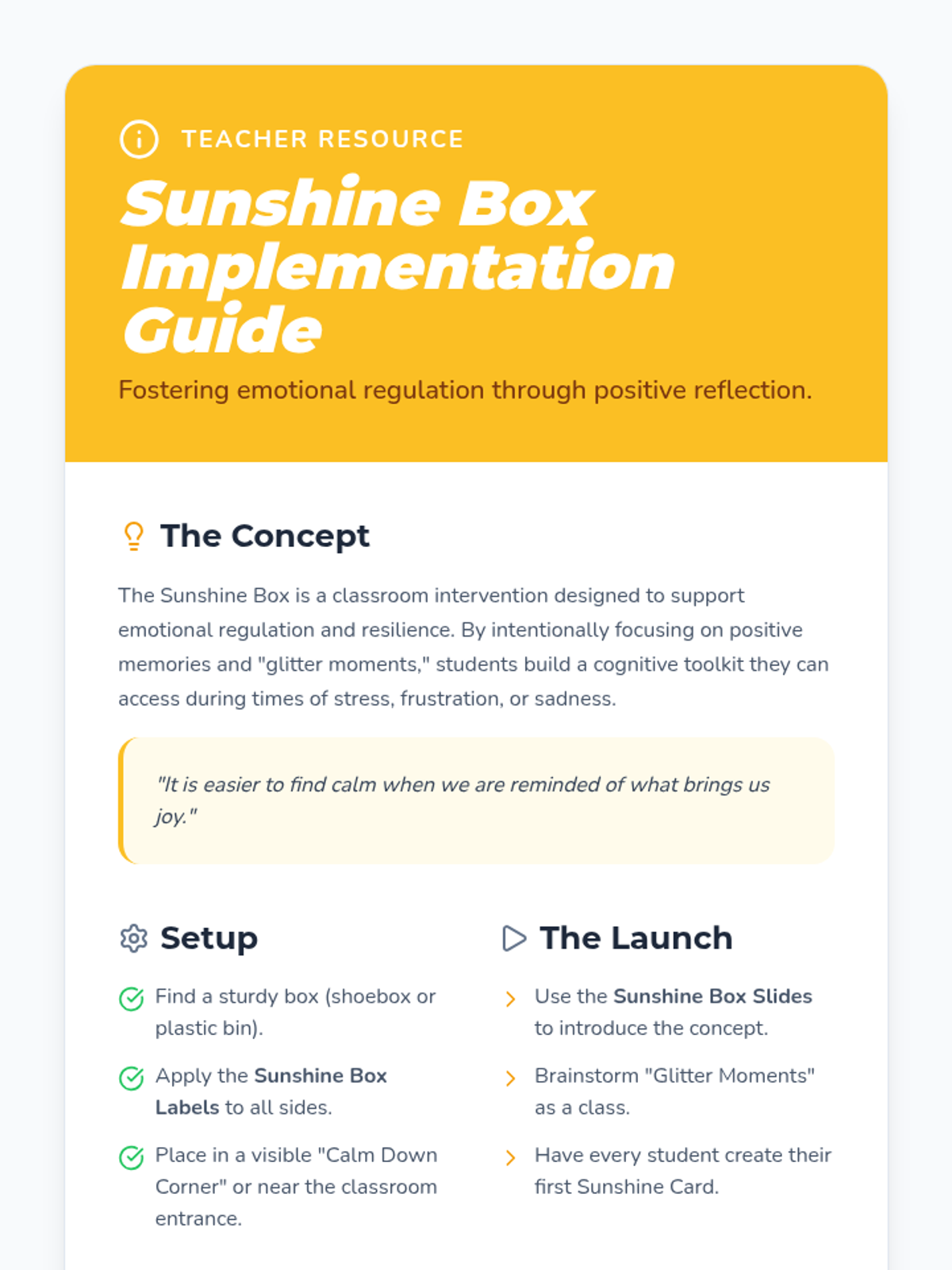
A collection of resources to help students regulate emotions and find calm by focusing on positive memories and happy moments.
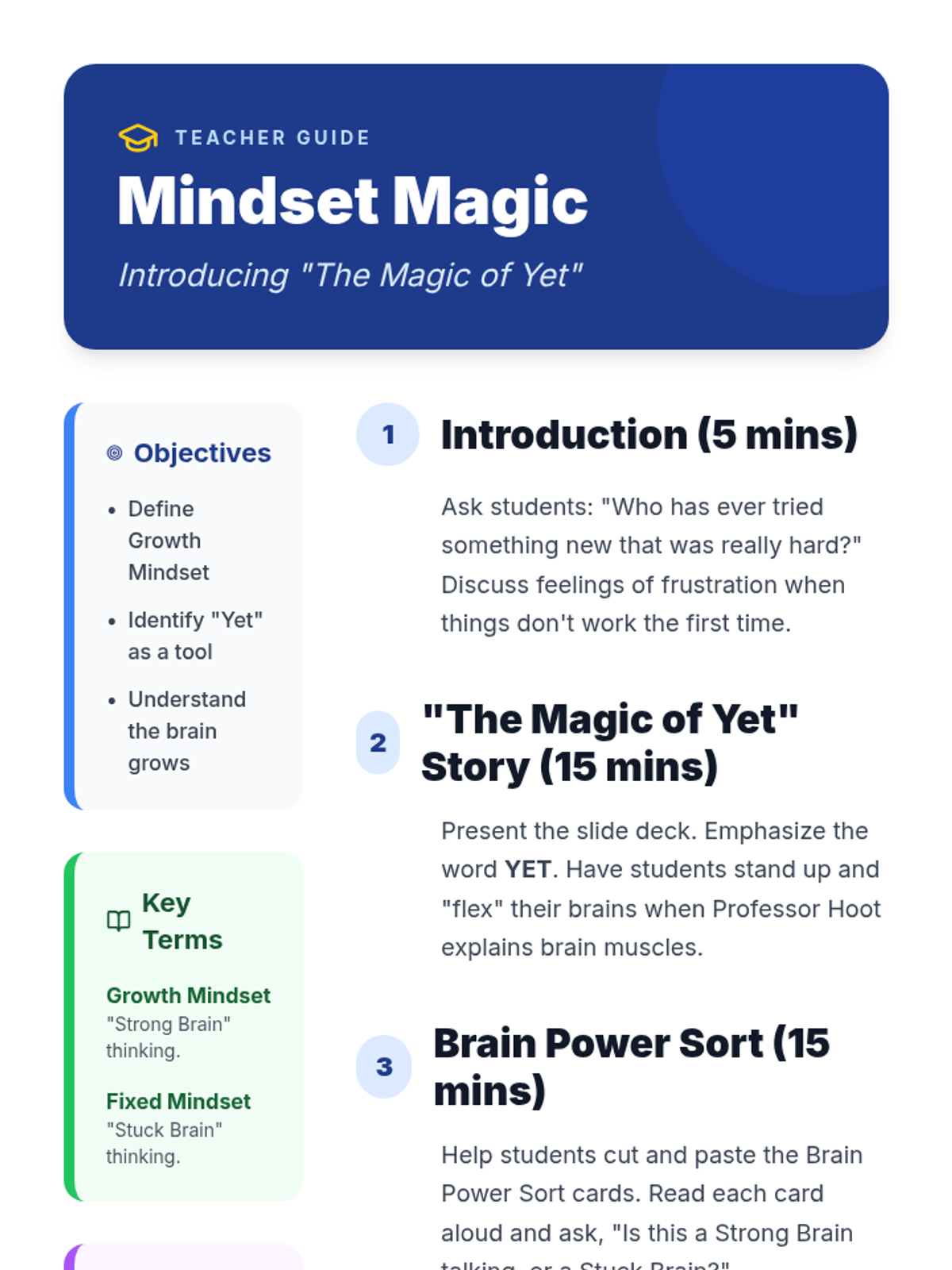
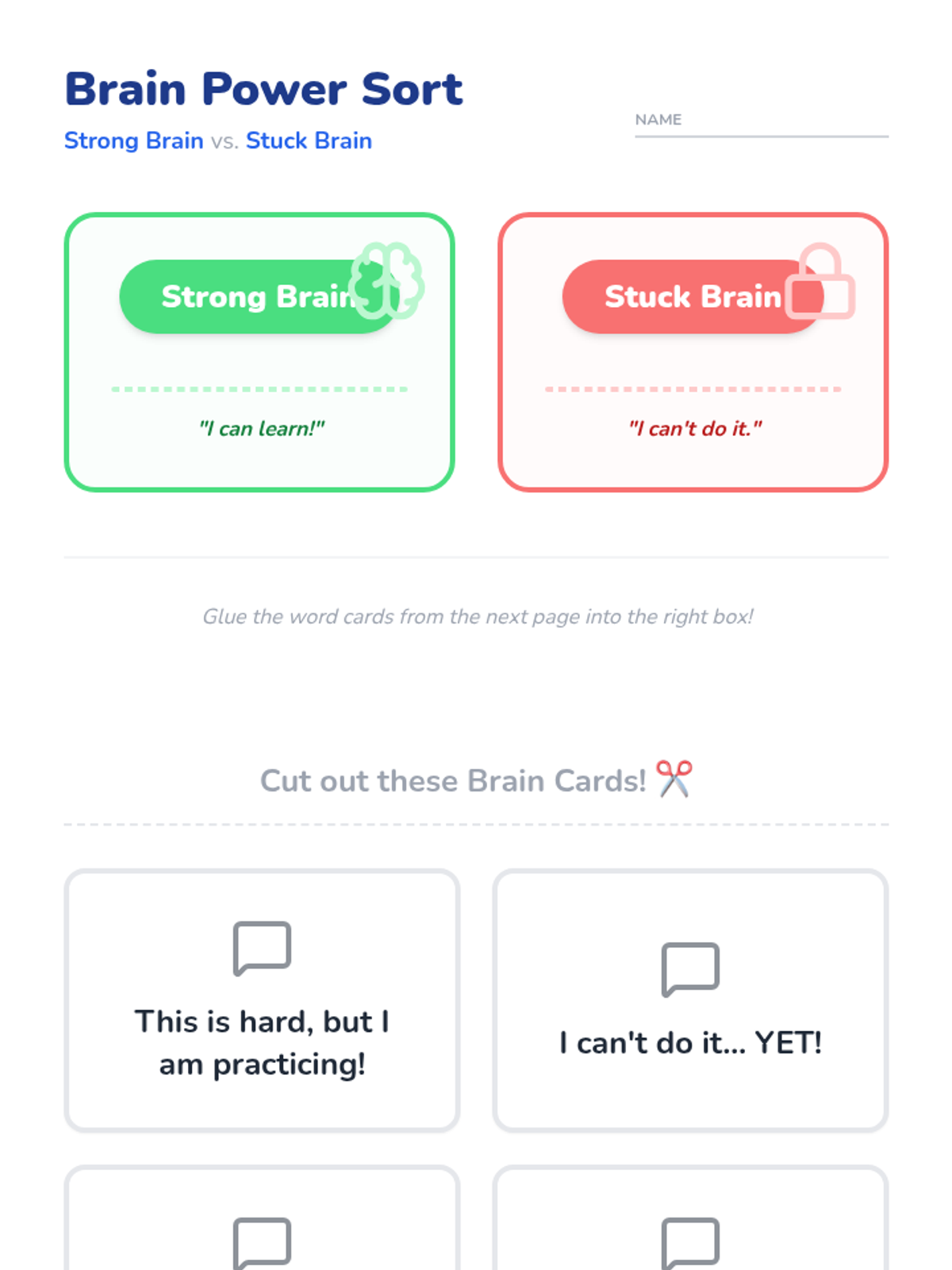
A lesson focused on introducing the concept of a growth mindset using a storybook format. Students will meet Pip, a character who learns that 'I can't' becomes 'I can't yet' with practice and persistence.
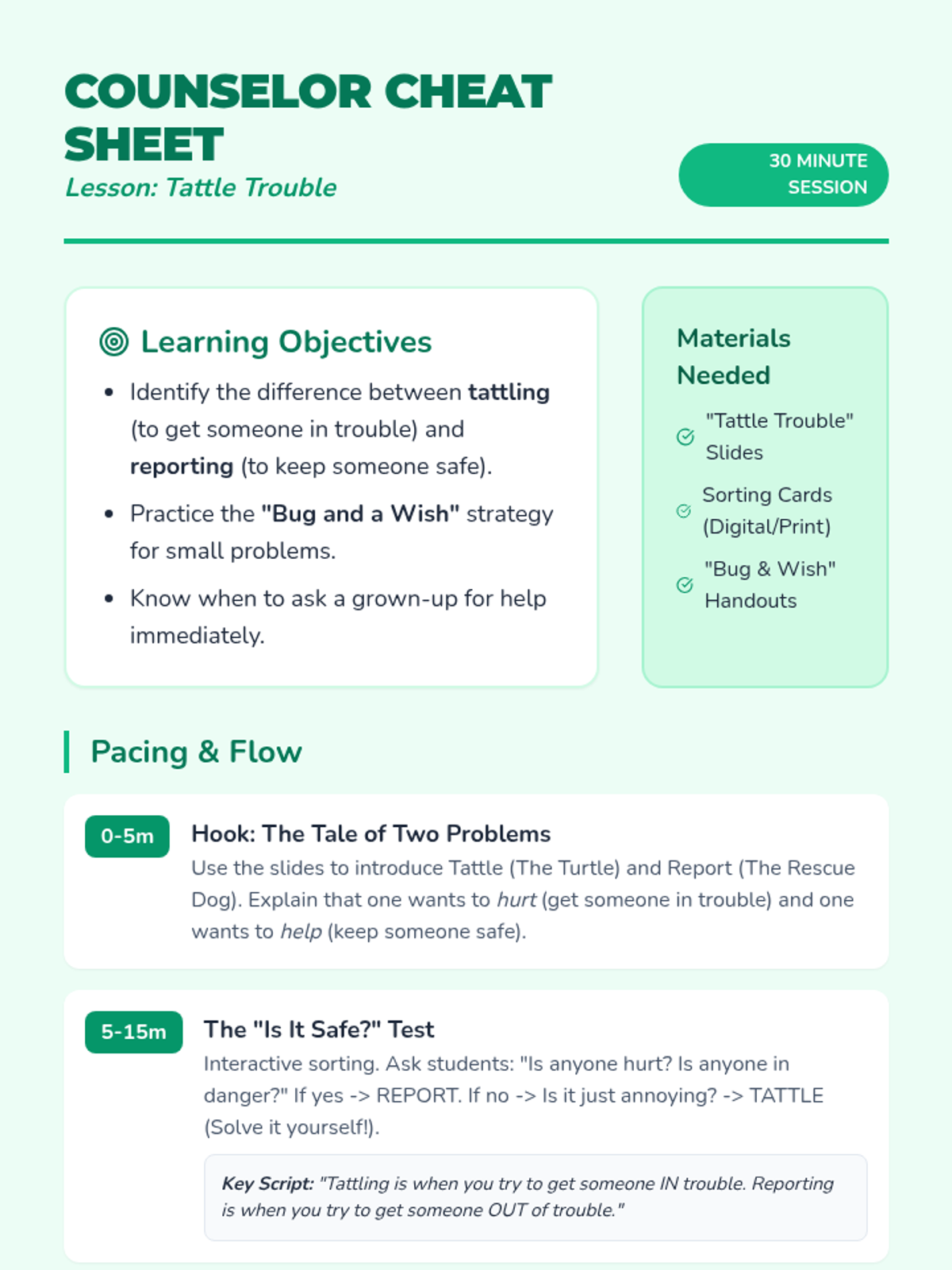
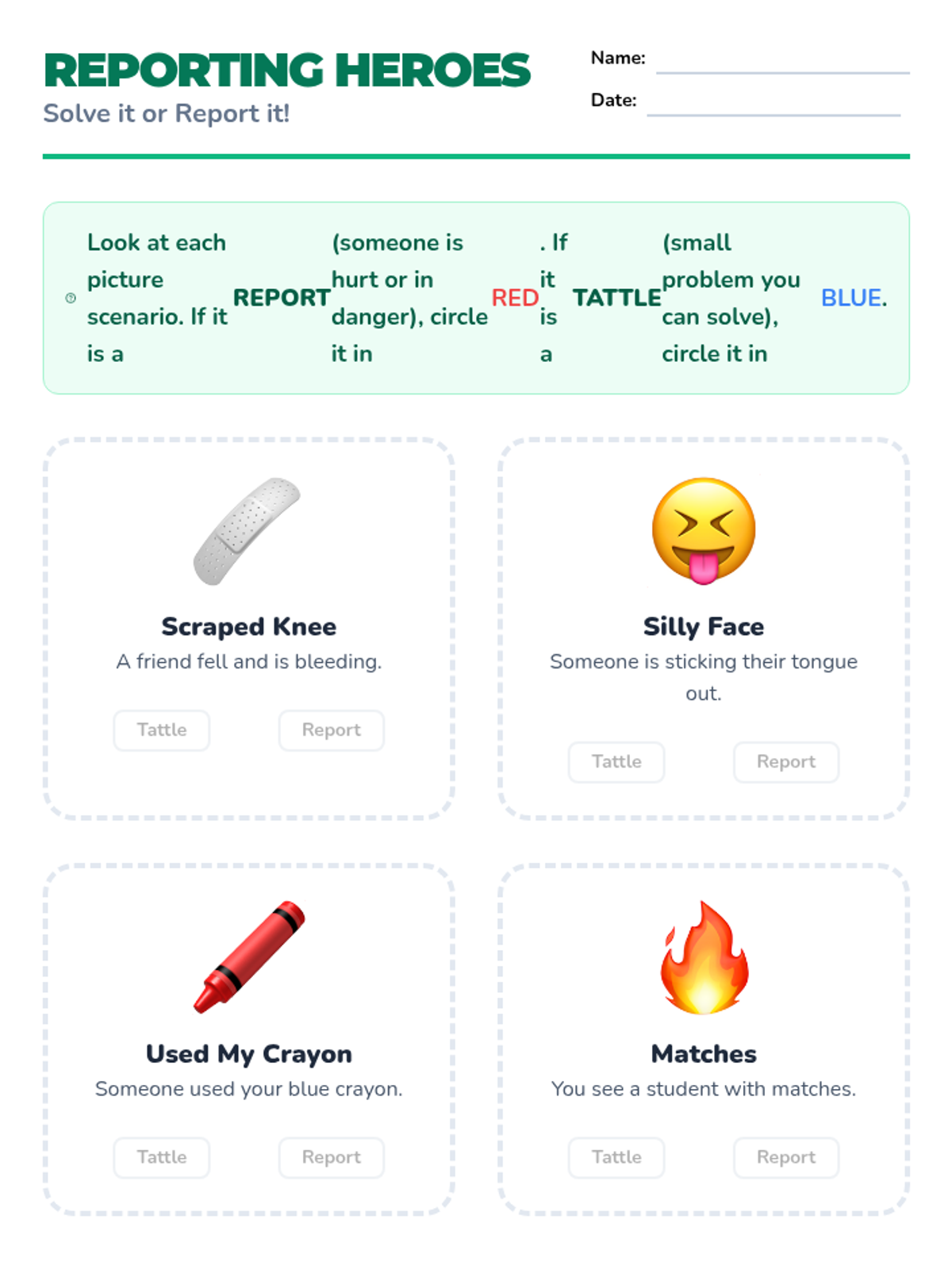
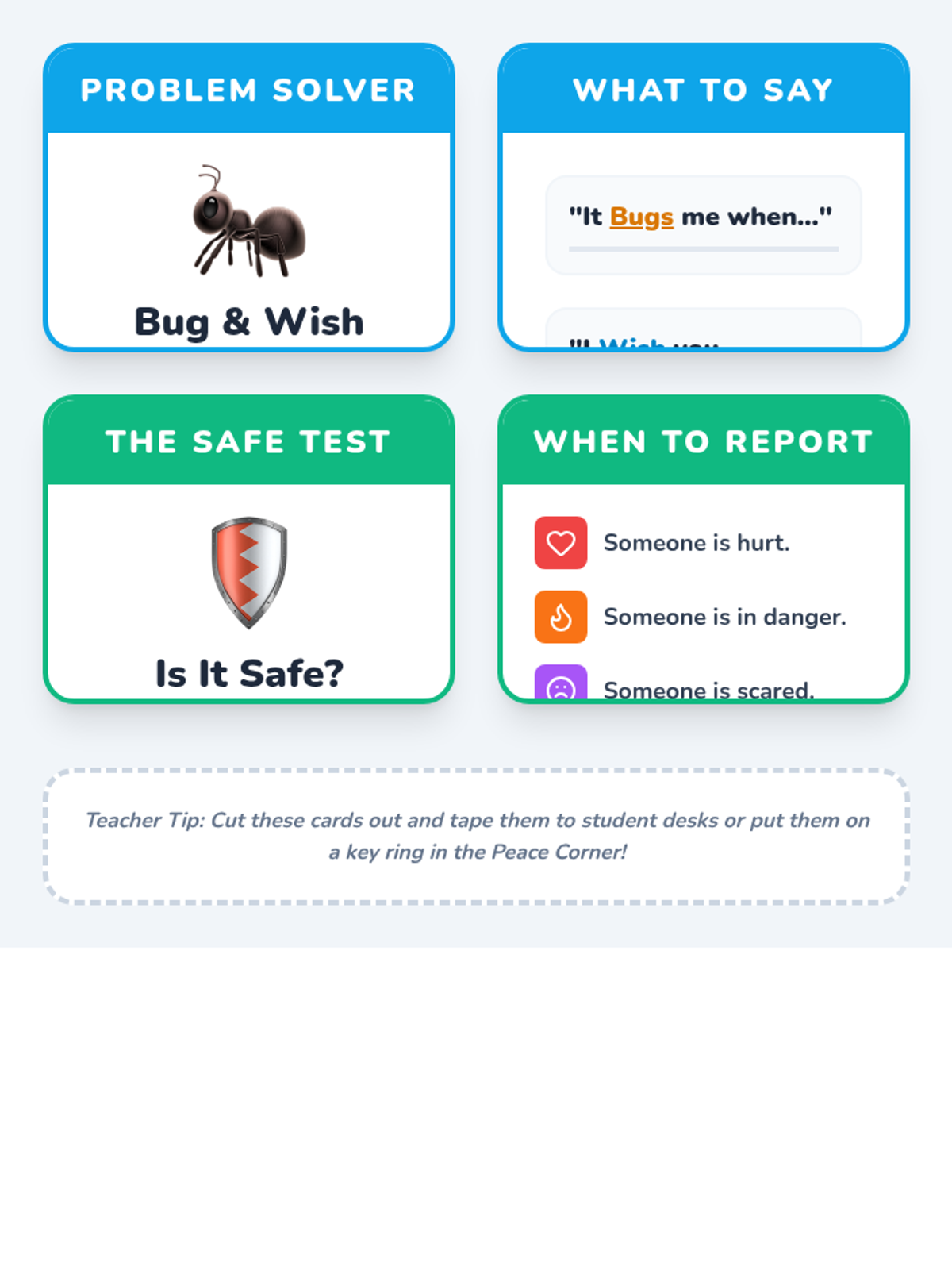
A kindergarten lesson focused on distinguishing between tattling and reporting, providing students with practical tools for independent conflict resolution.
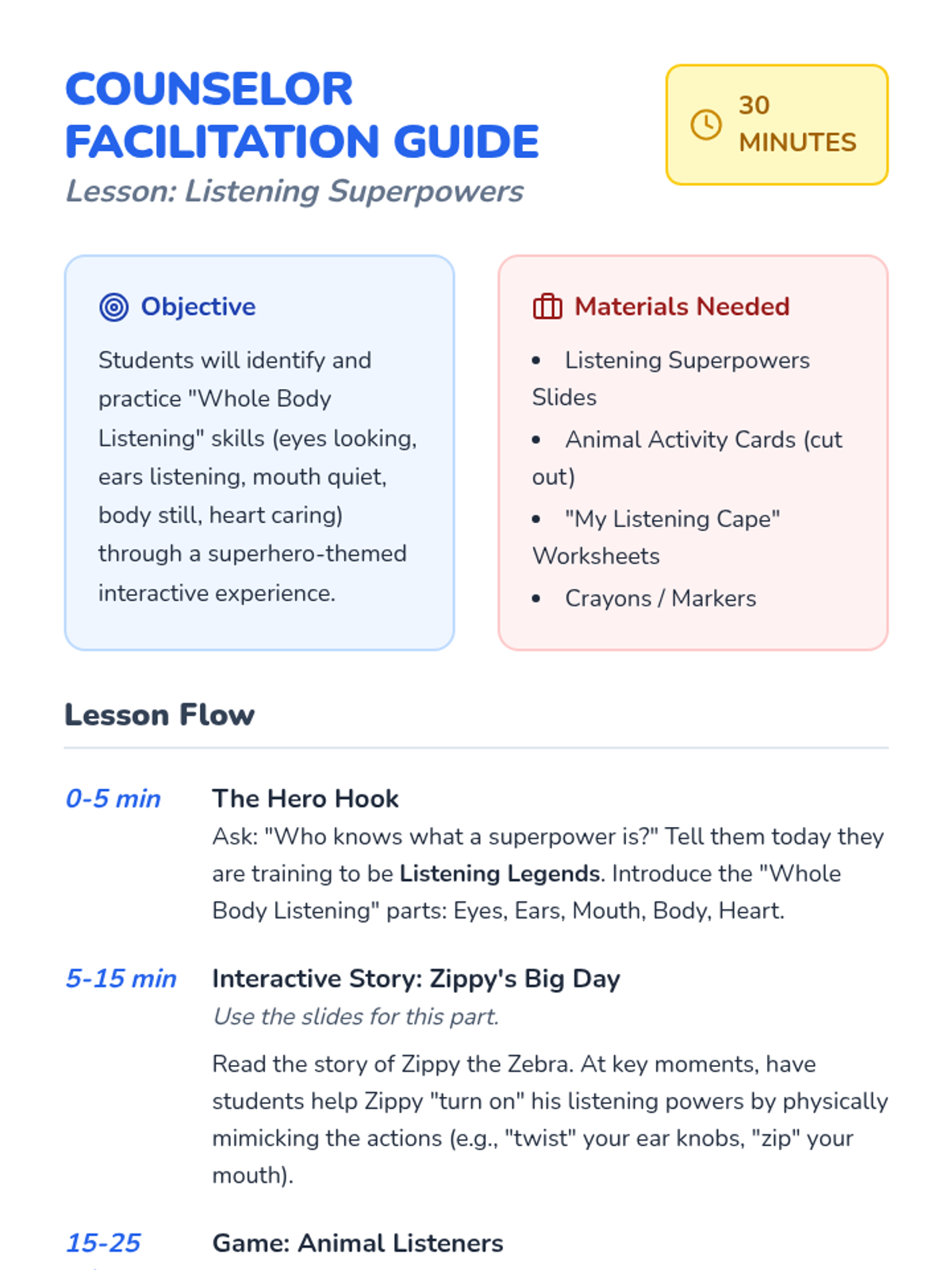
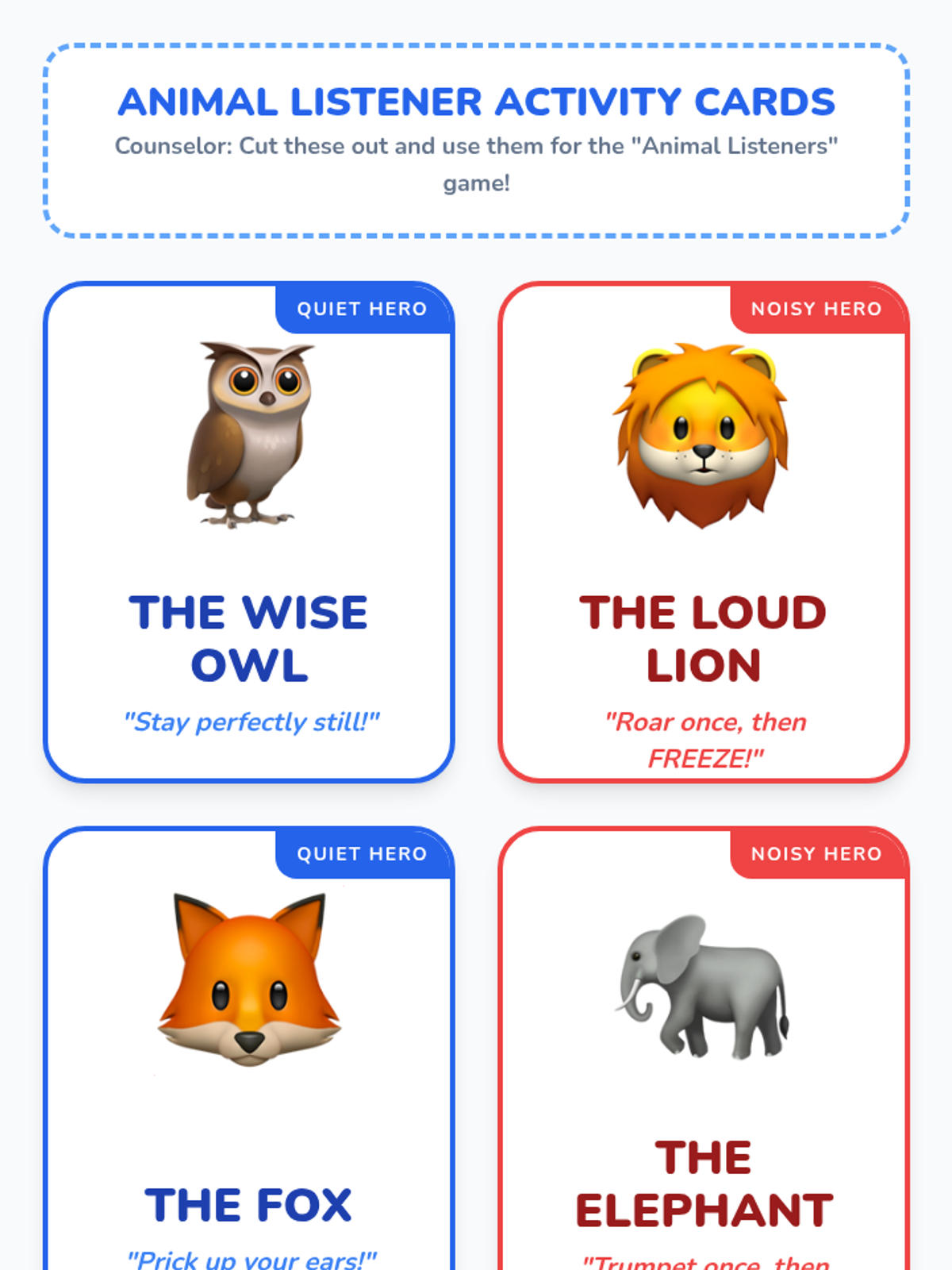
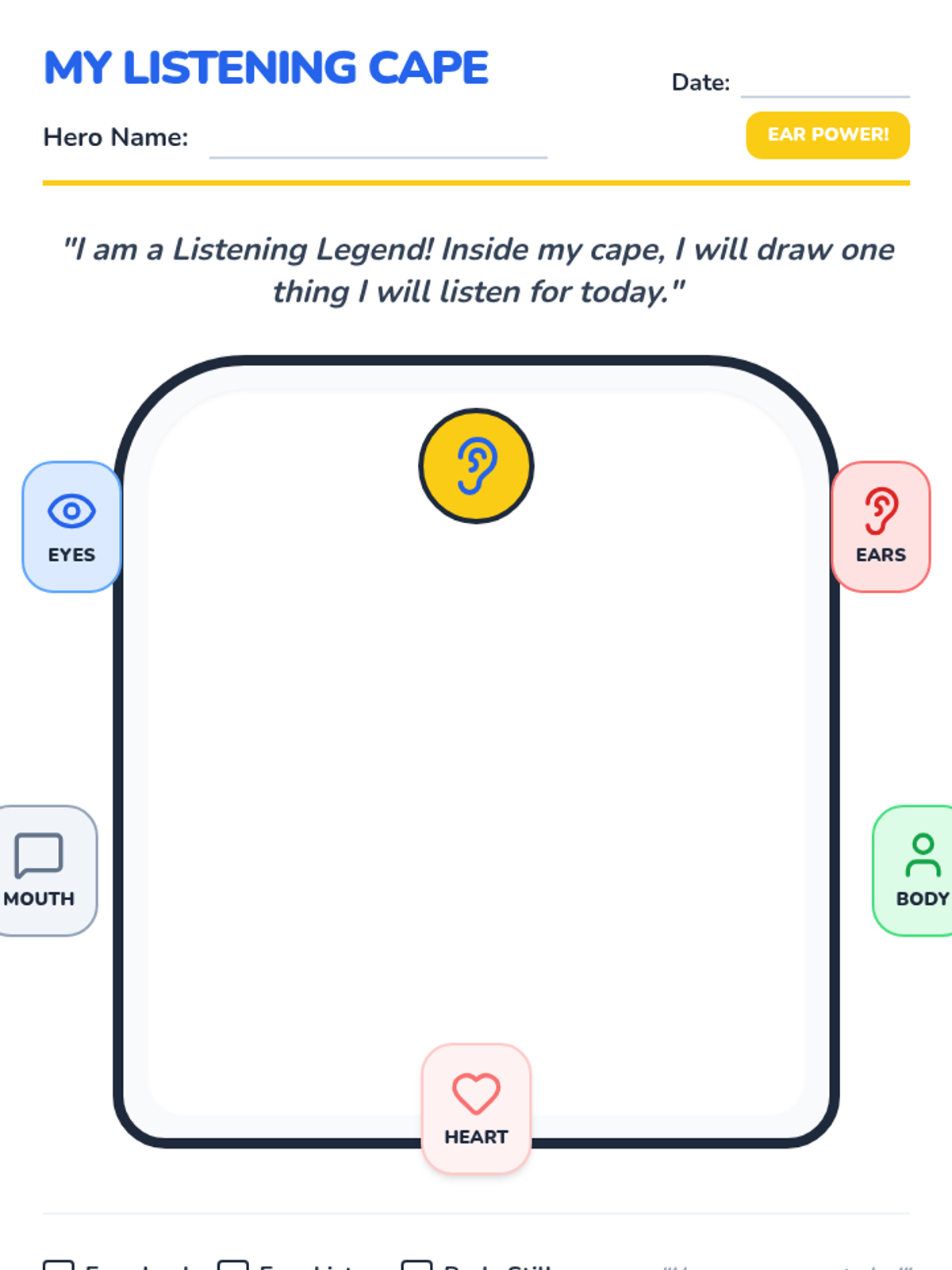
An interactive 30-minute lesson where kindergarteners discover their 'Listening Superpowers' using their whole bodies, featuring a participatory story and movement games.
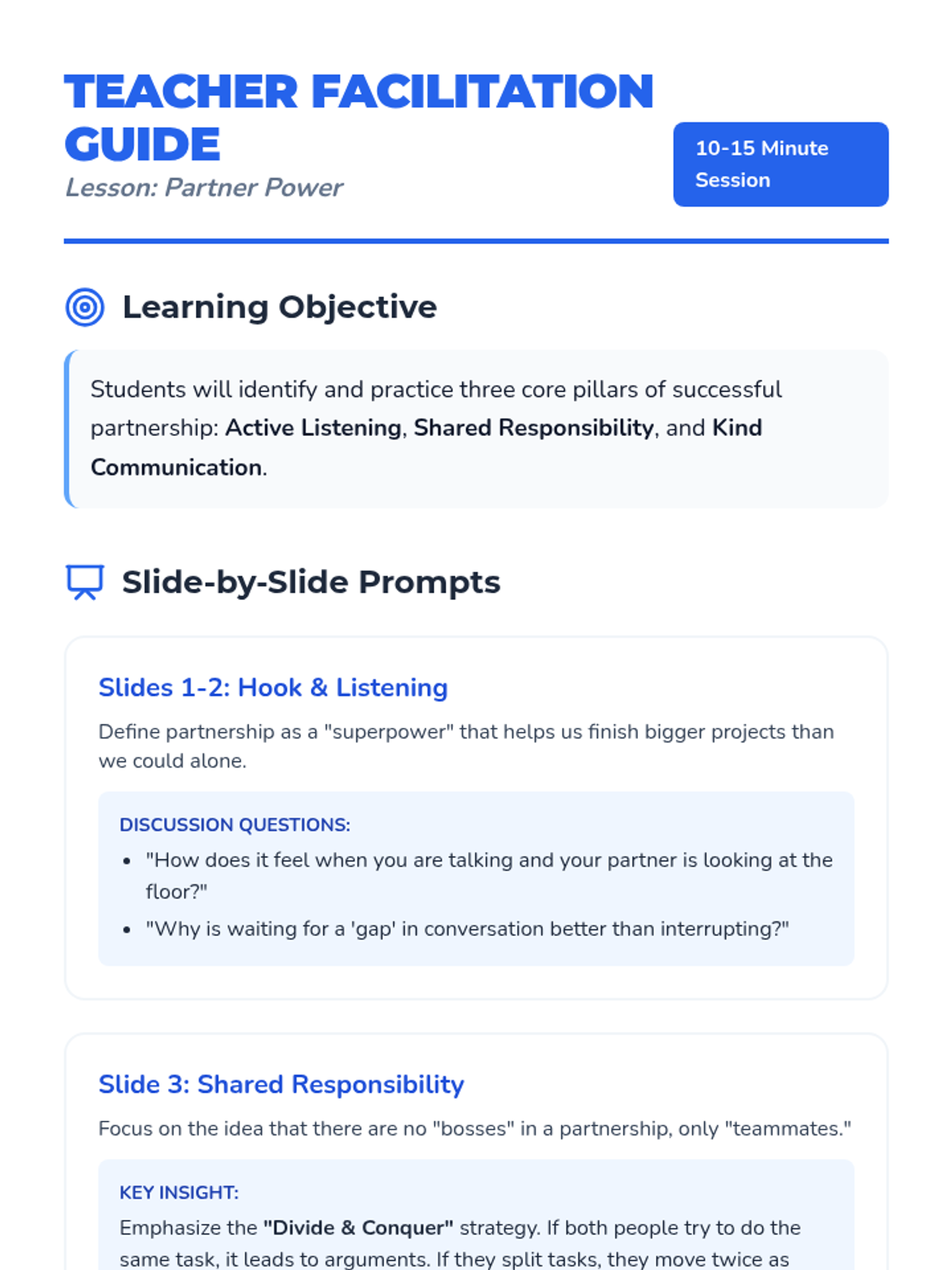
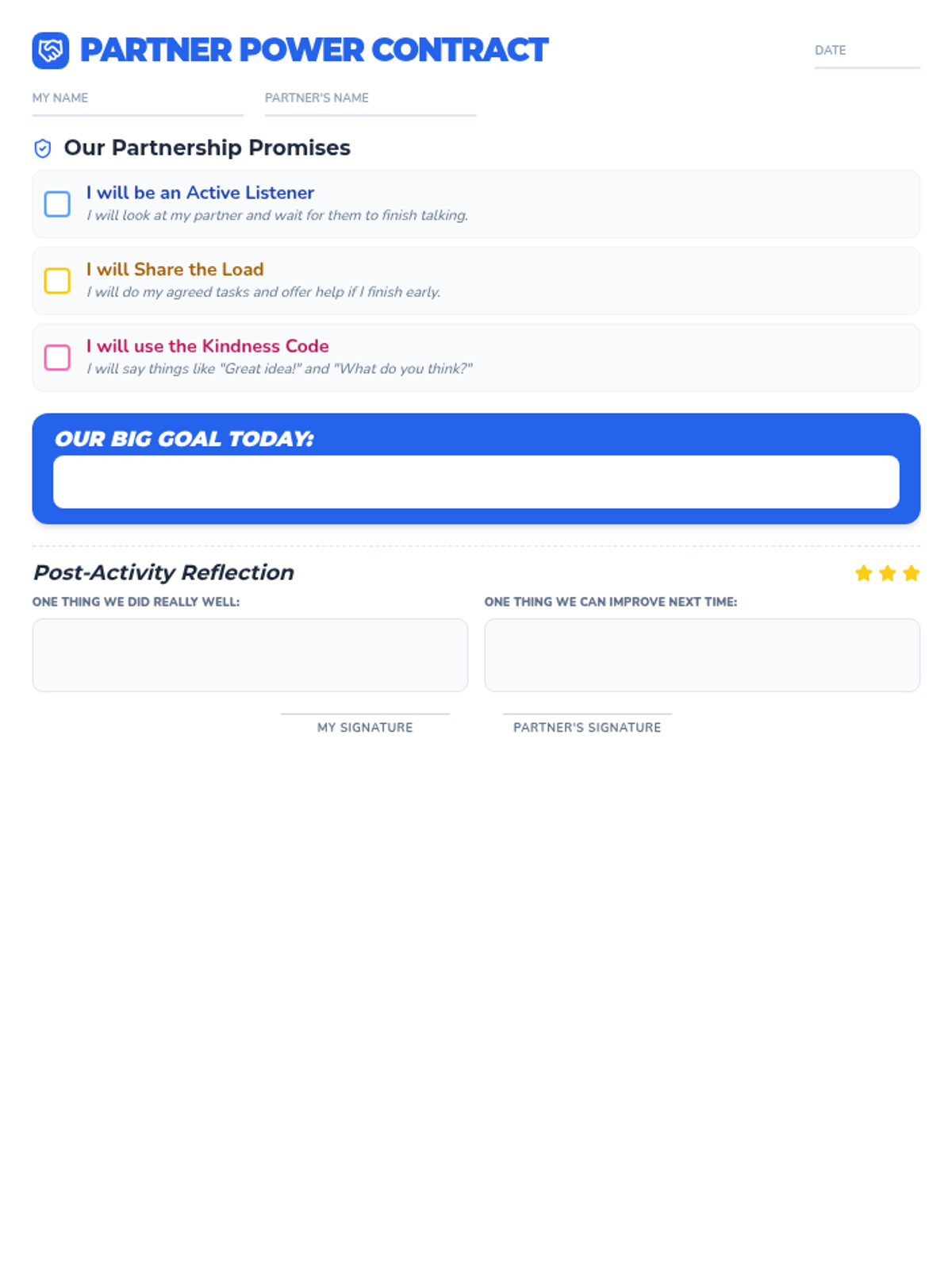
A focused session on the essential social-emotional skills required for successful peer collaboration, including active listening, equitable responsibility, and kindness.
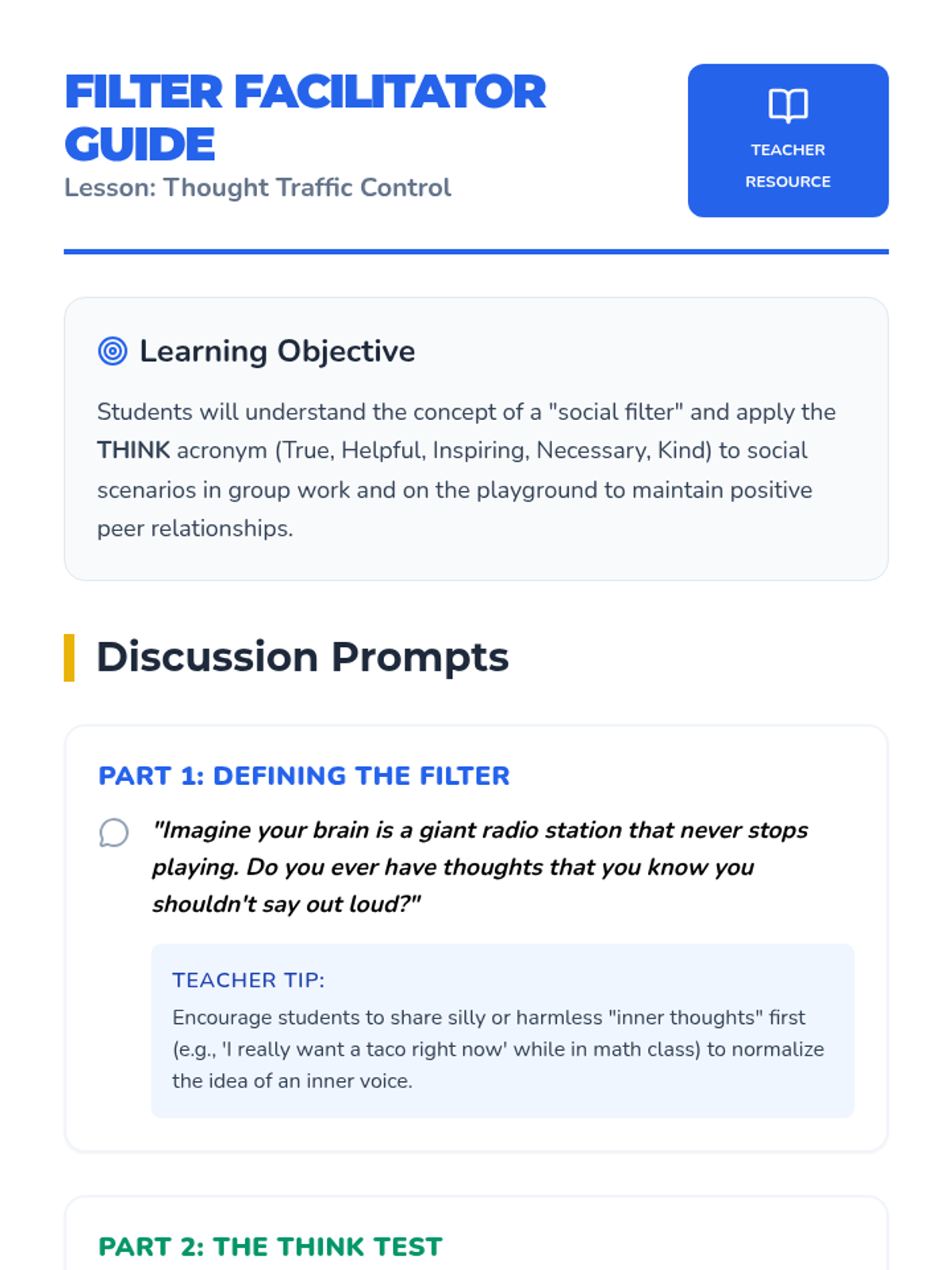
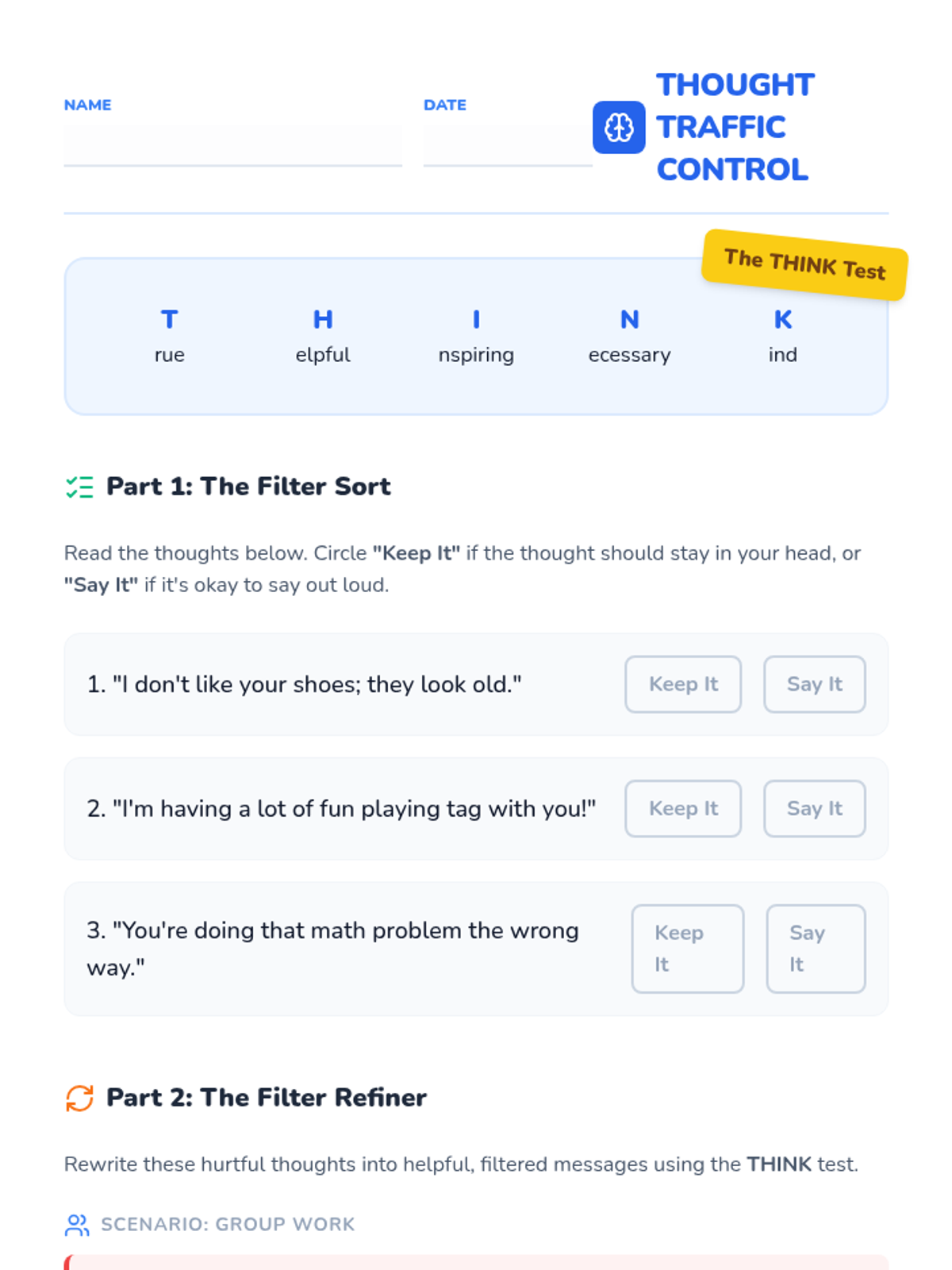
In this lesson, students will learn the 'THINK' acronym to evaluate their thoughts before speaking, specifically focusing on interactions during group work and on the playground.
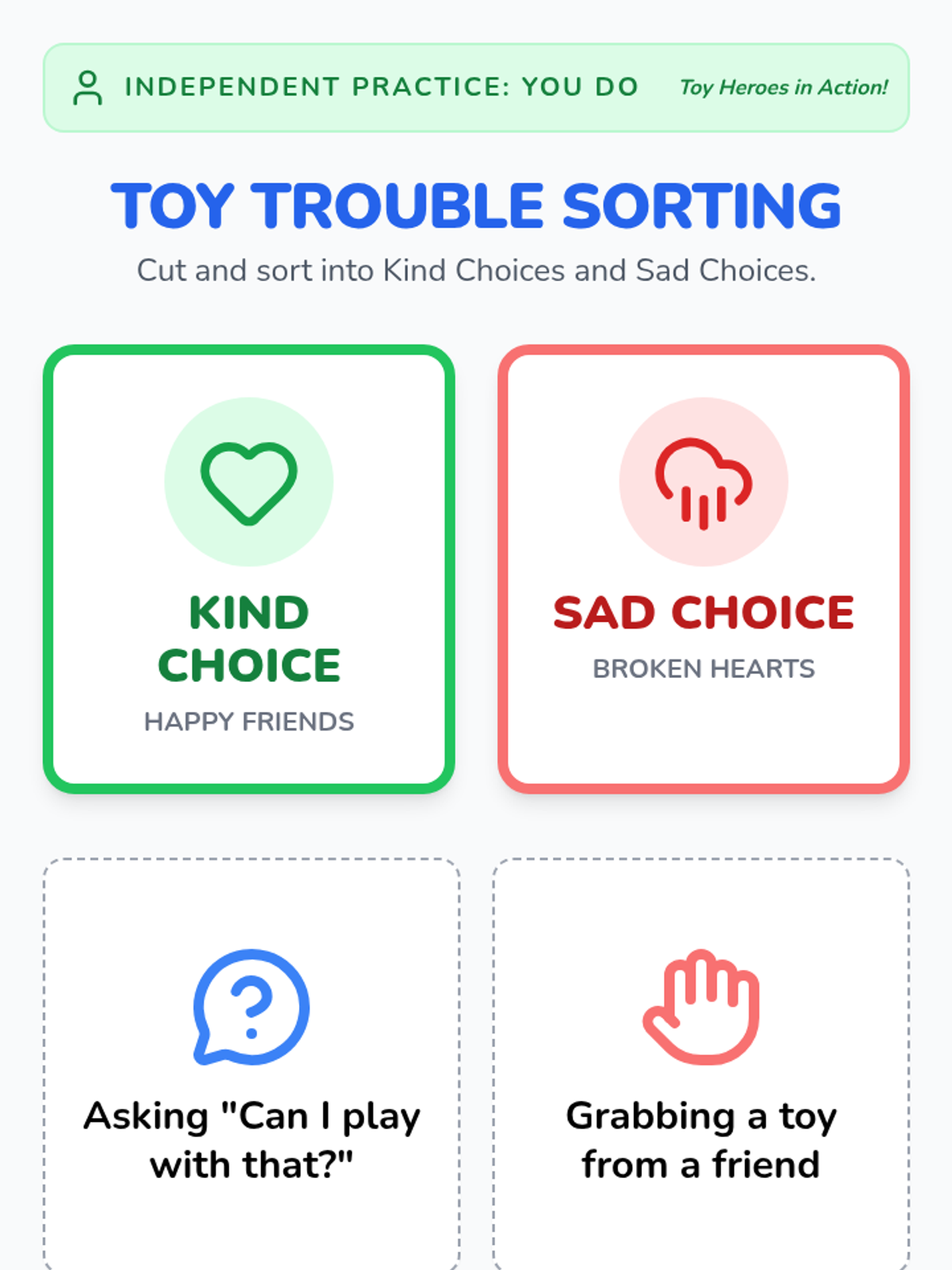
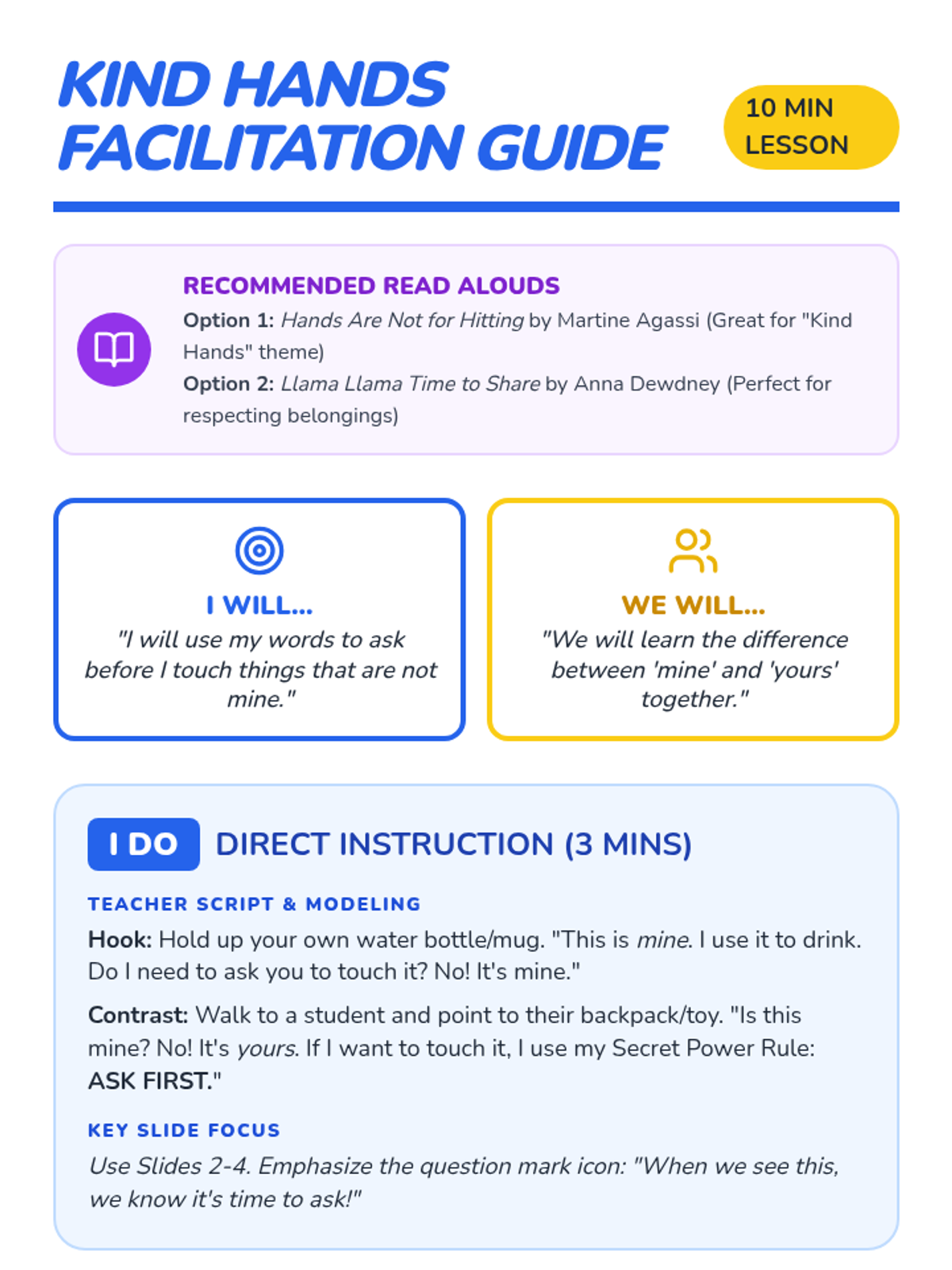
A short, engaging 10-minute lesson for Pre-K students focused on respecting others' belongings through visual storytelling and interactive sorting.
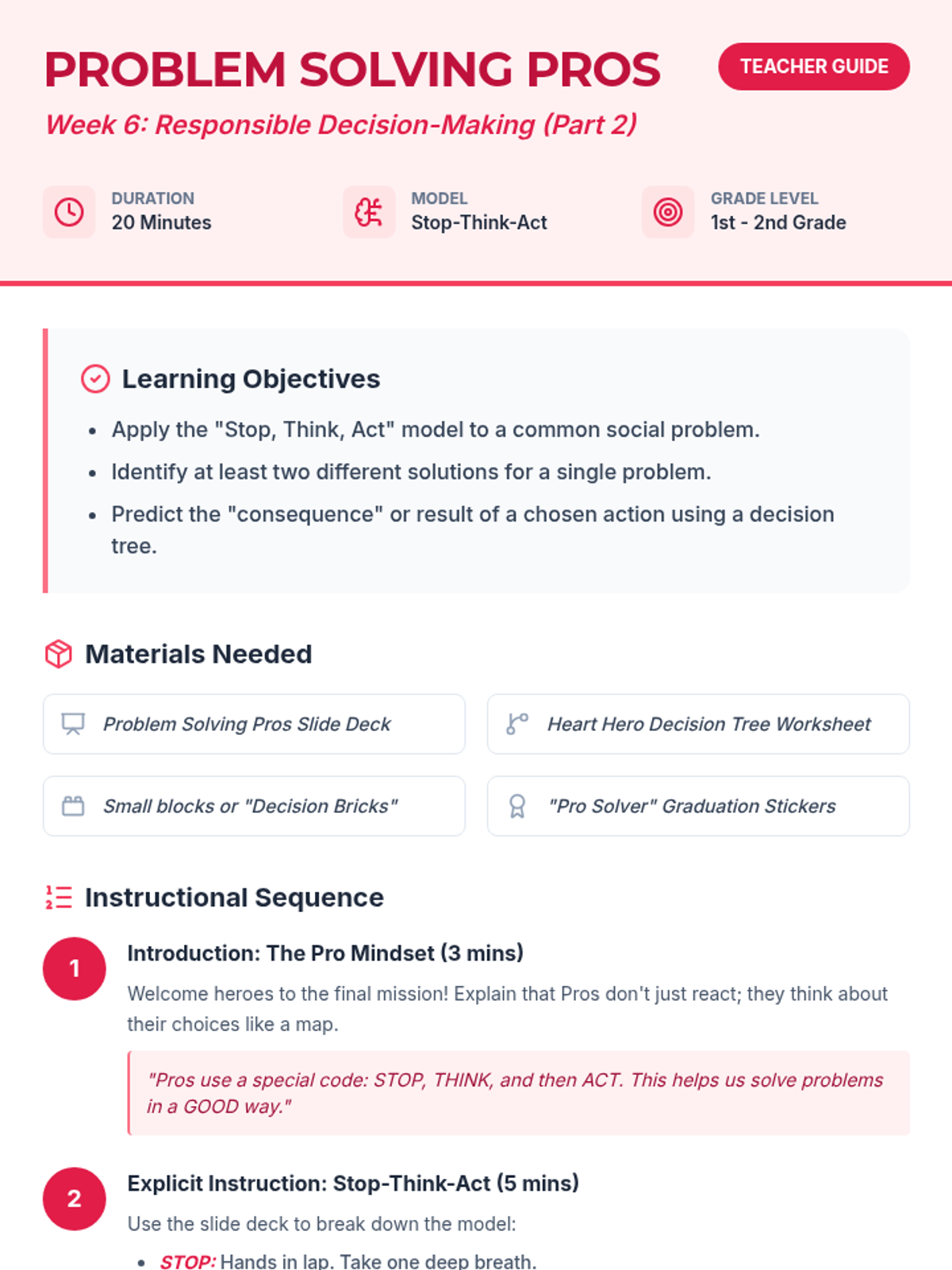
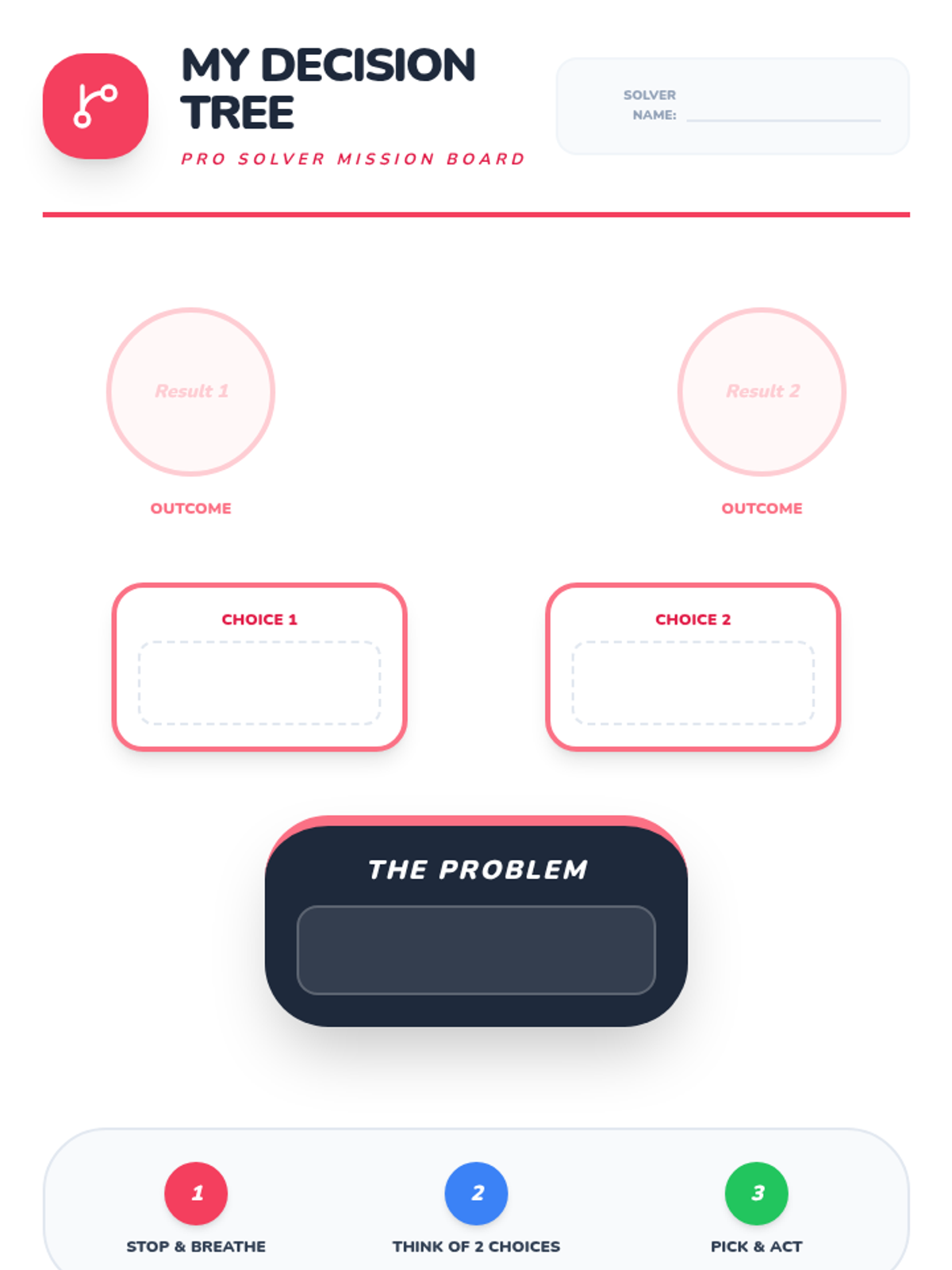
Students apply the 'Stop, Think, Act' model and decision trees to solve common social problems.