A social skills lesson for teens and adults focused on building a consistent system for maintaining friendships through digital and personal 'reach out' schedules.
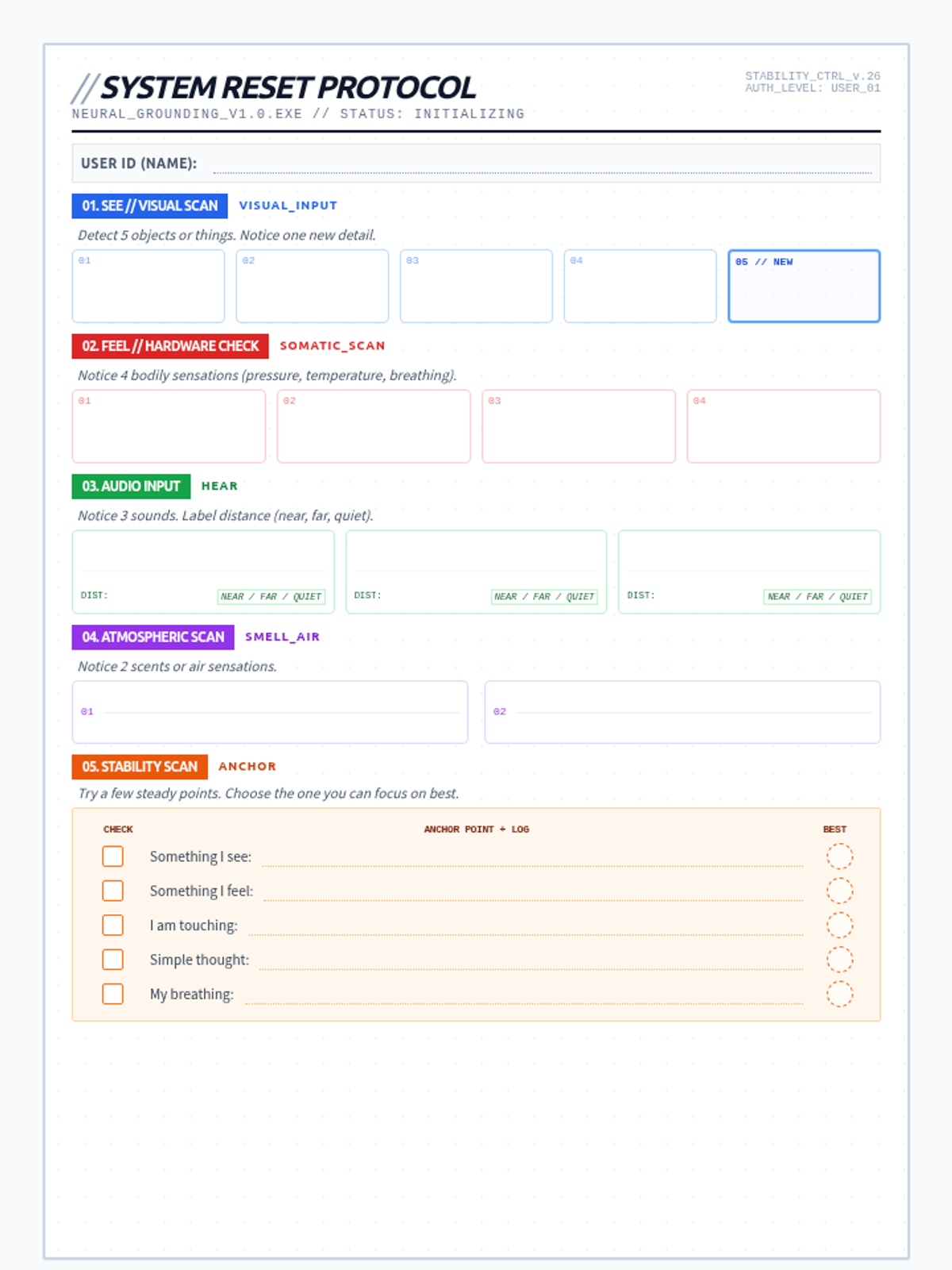
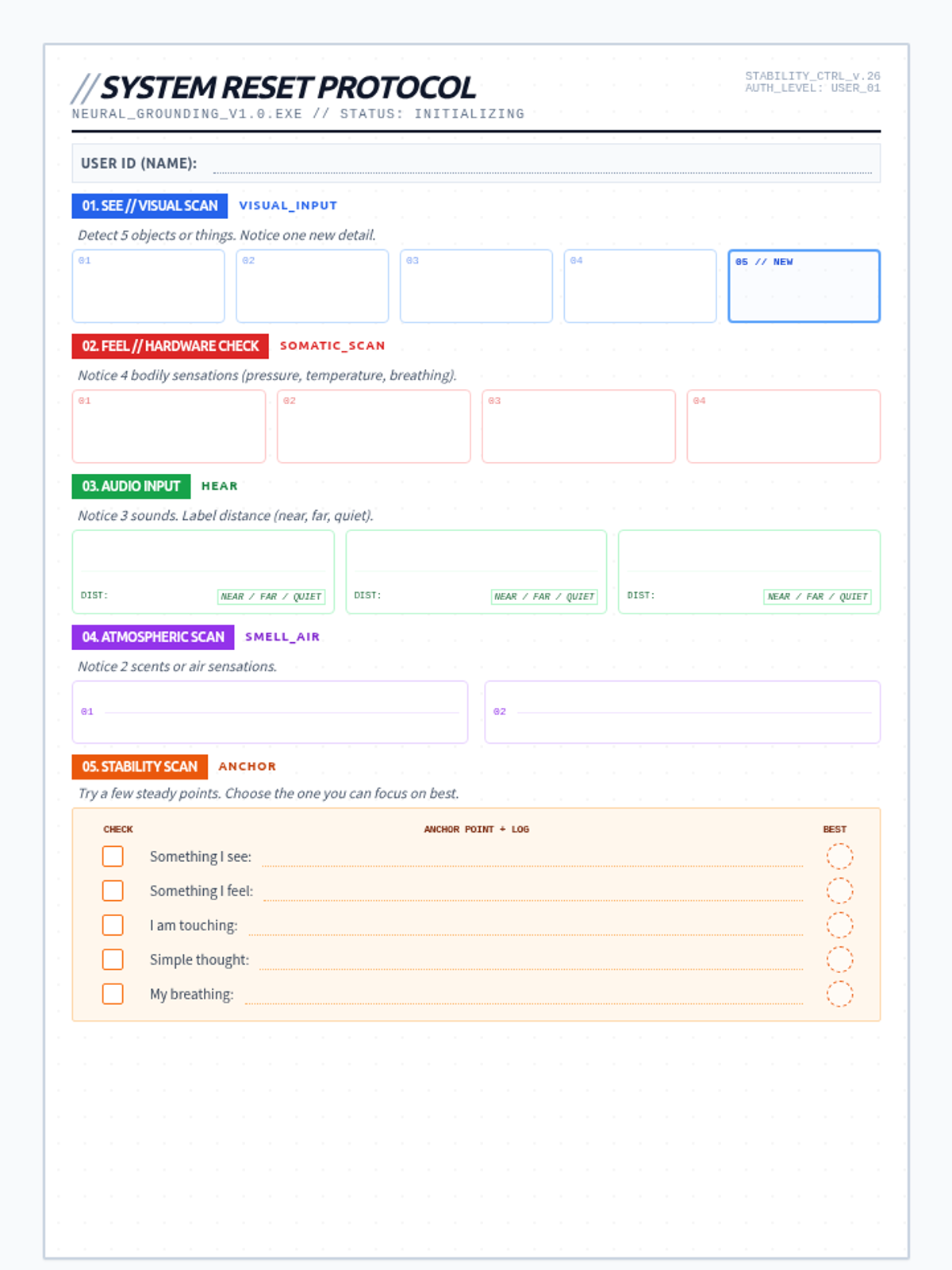
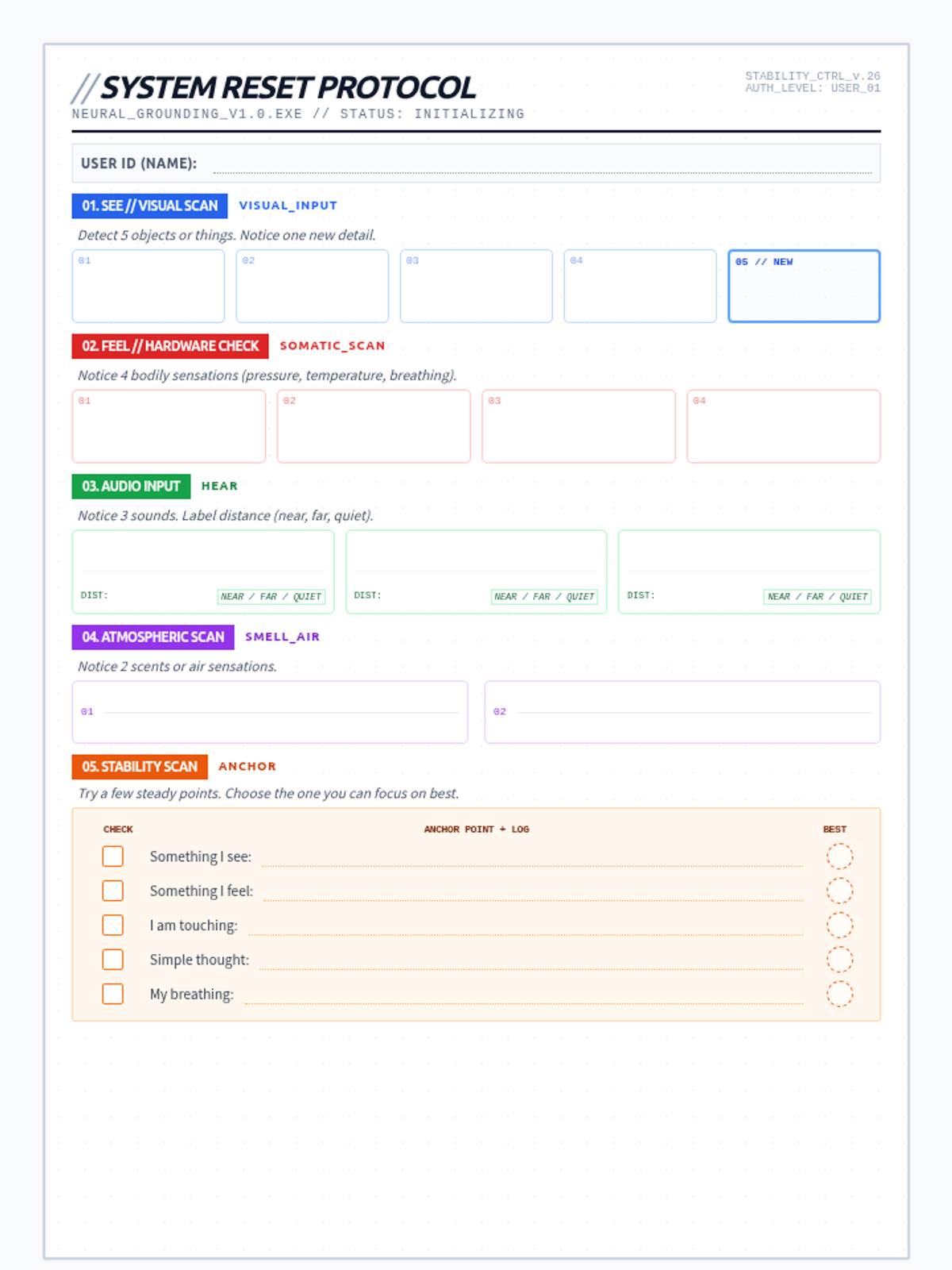
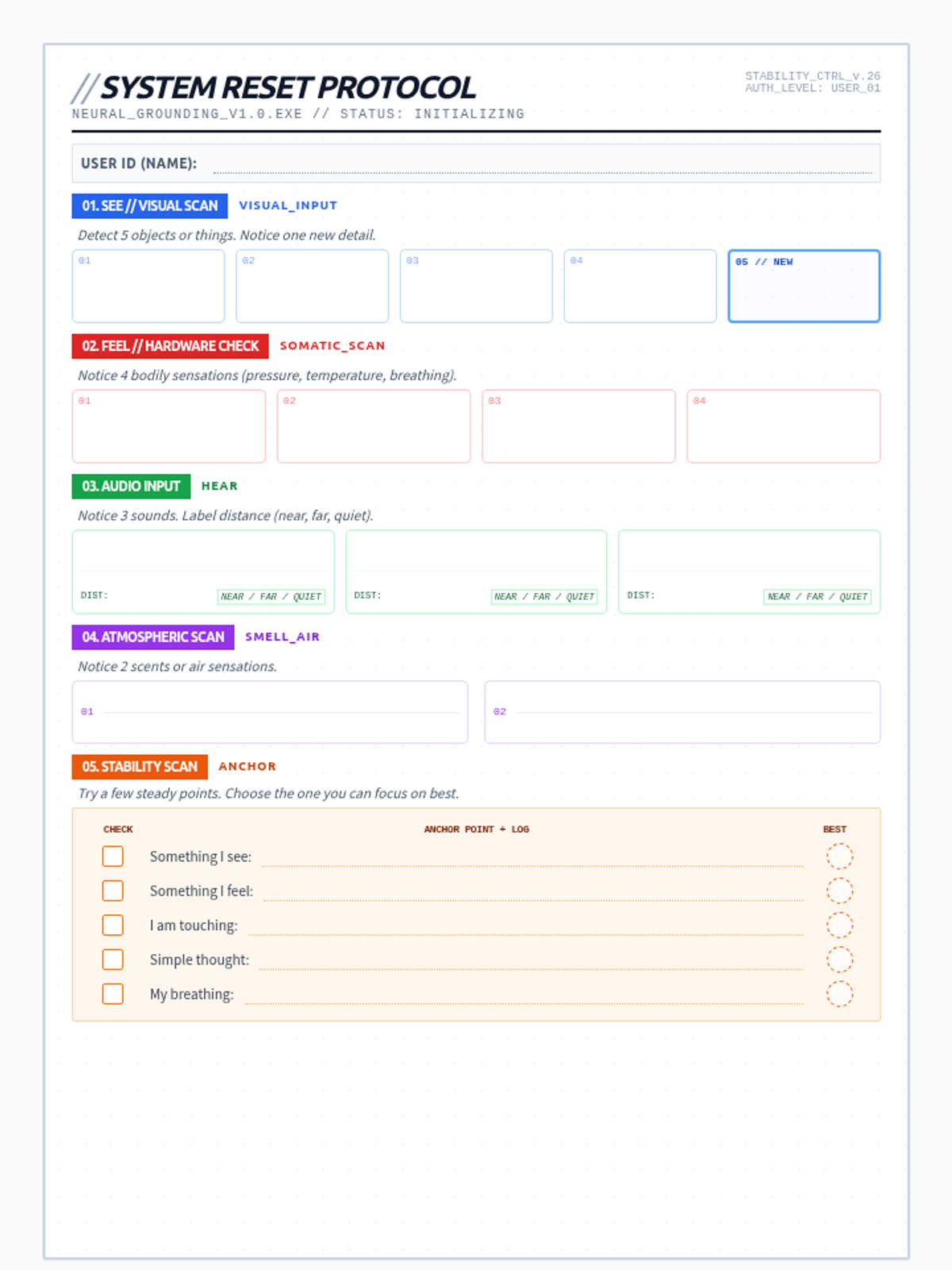
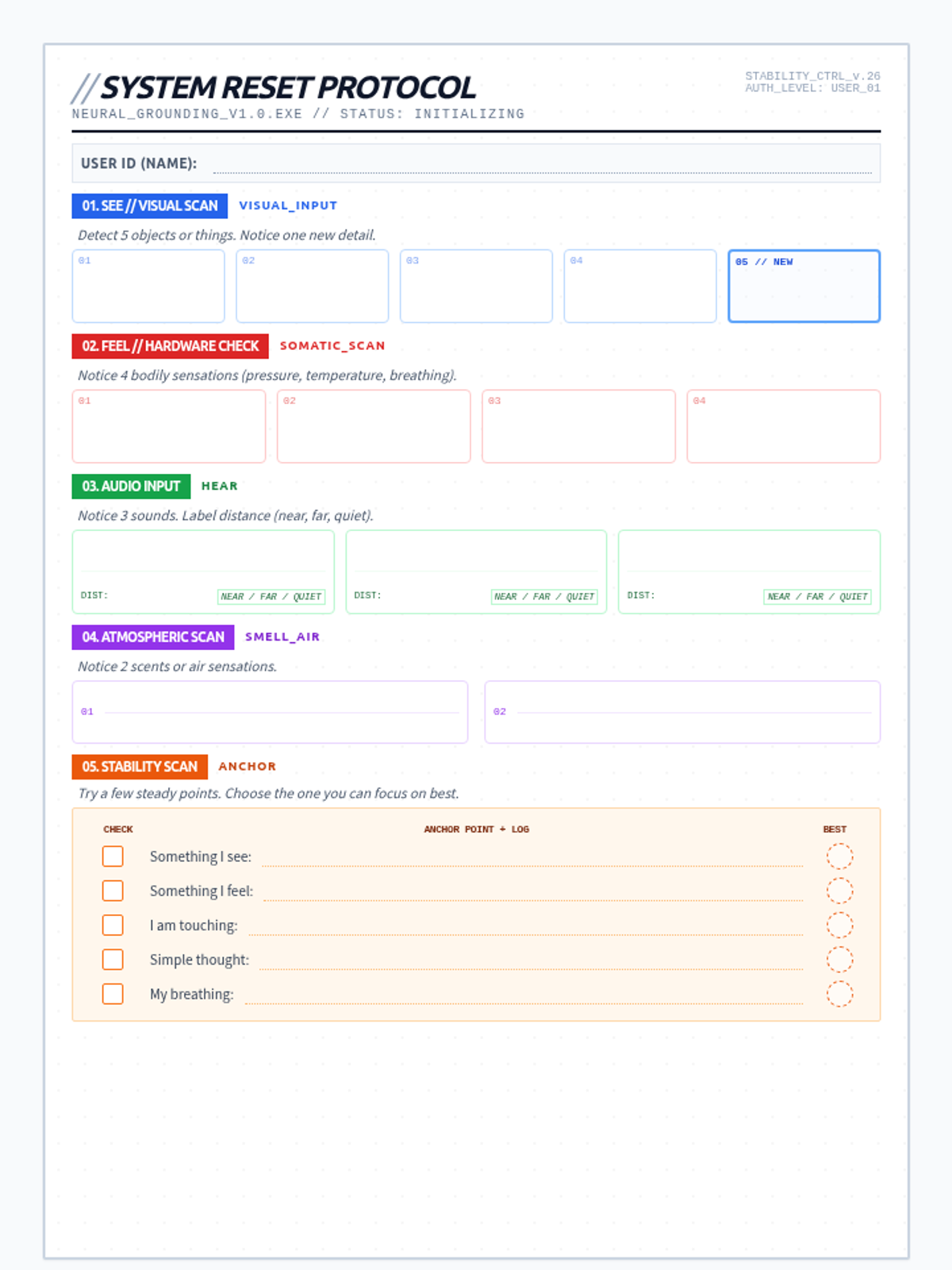
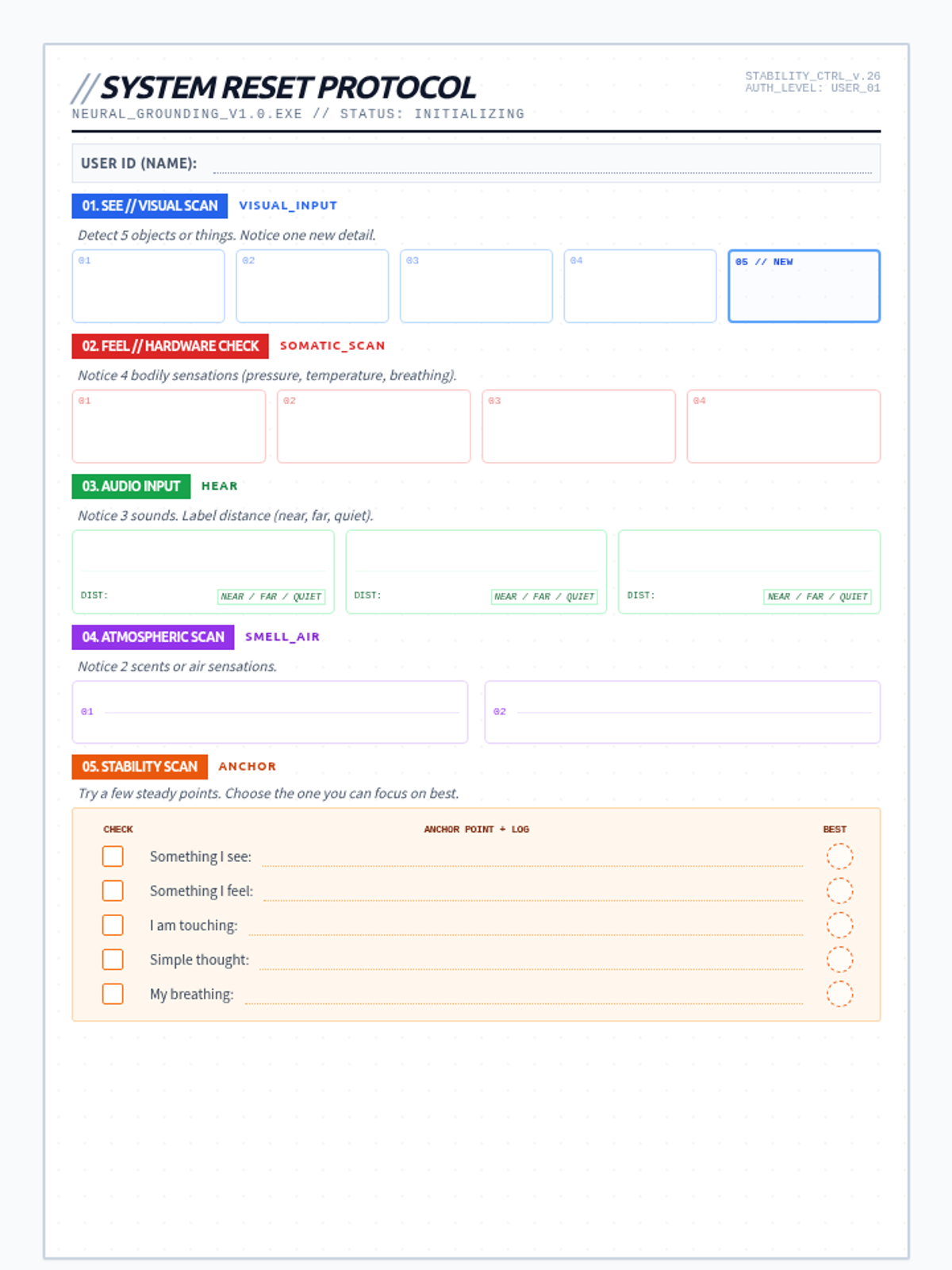
A lesson focusing on sensory grounding techniques to help students manage stress and improve focus.
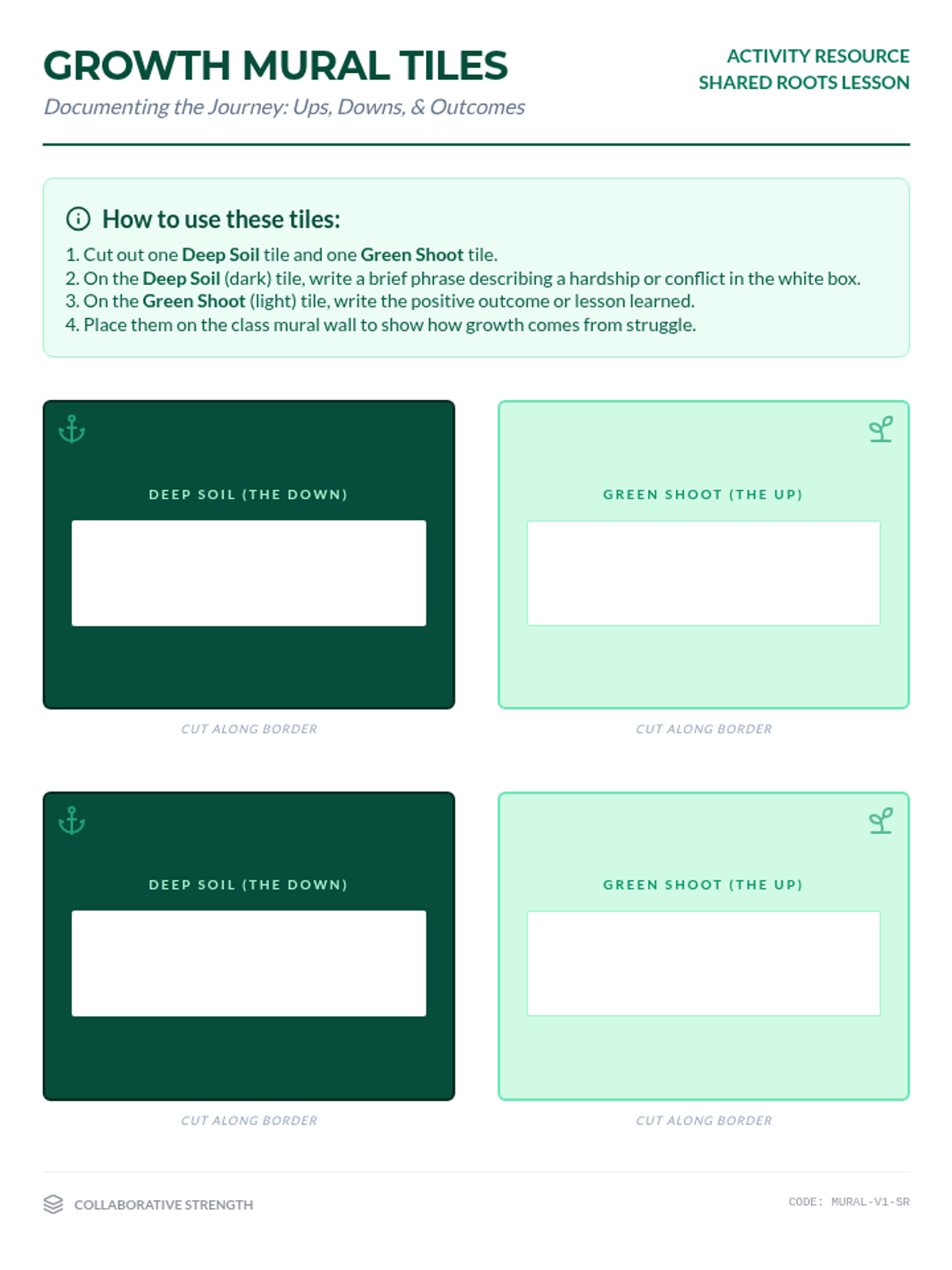
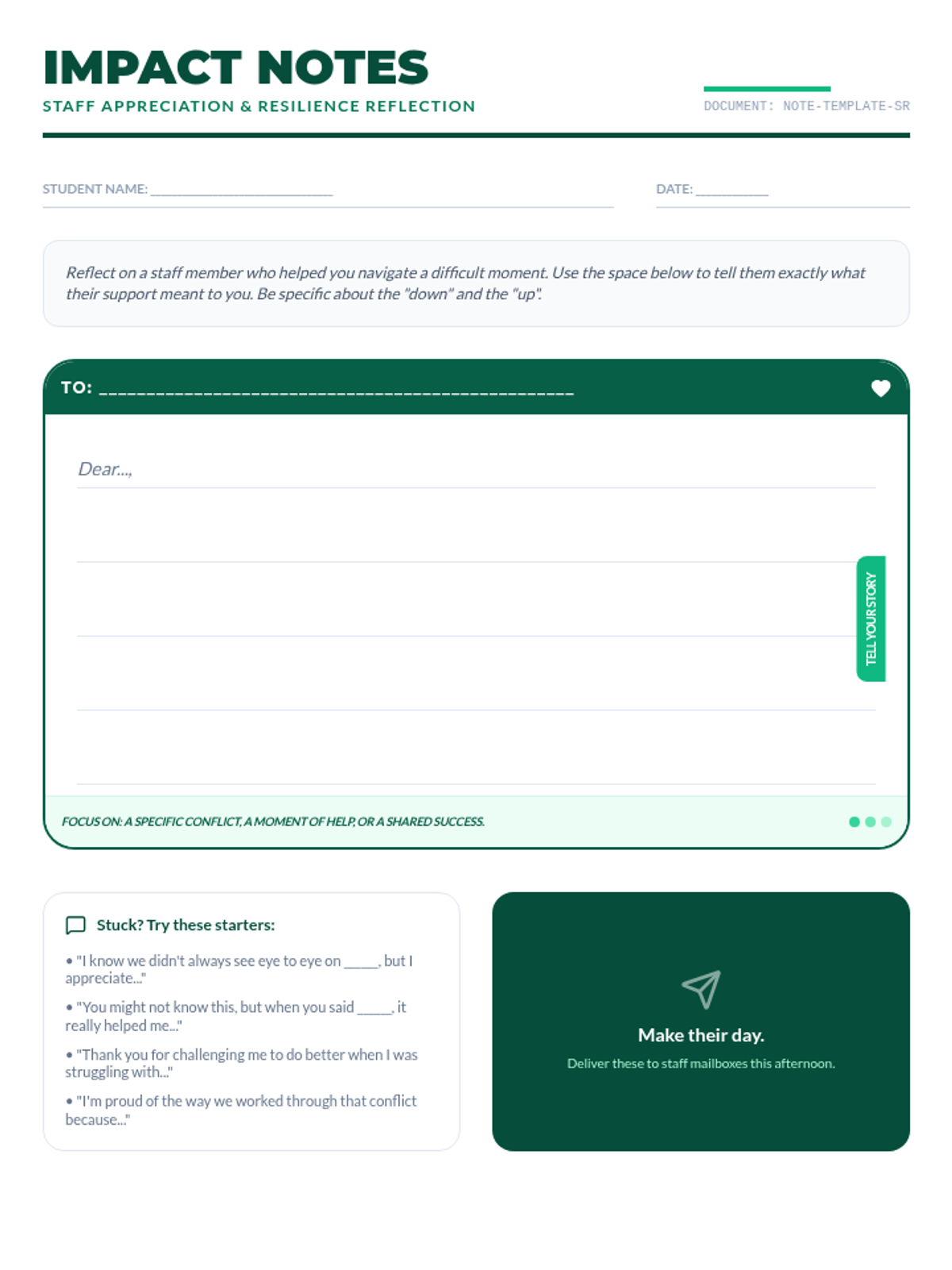
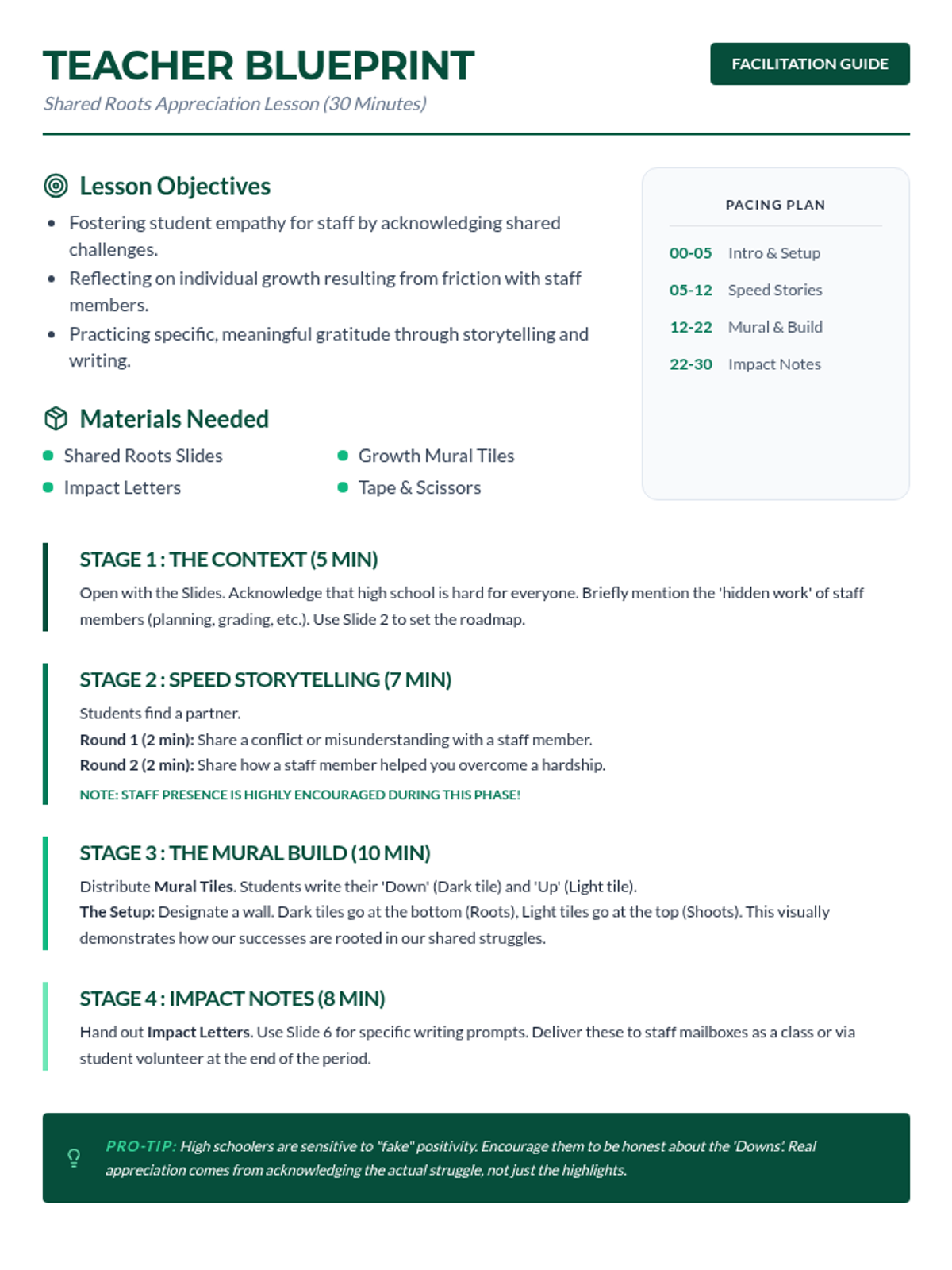
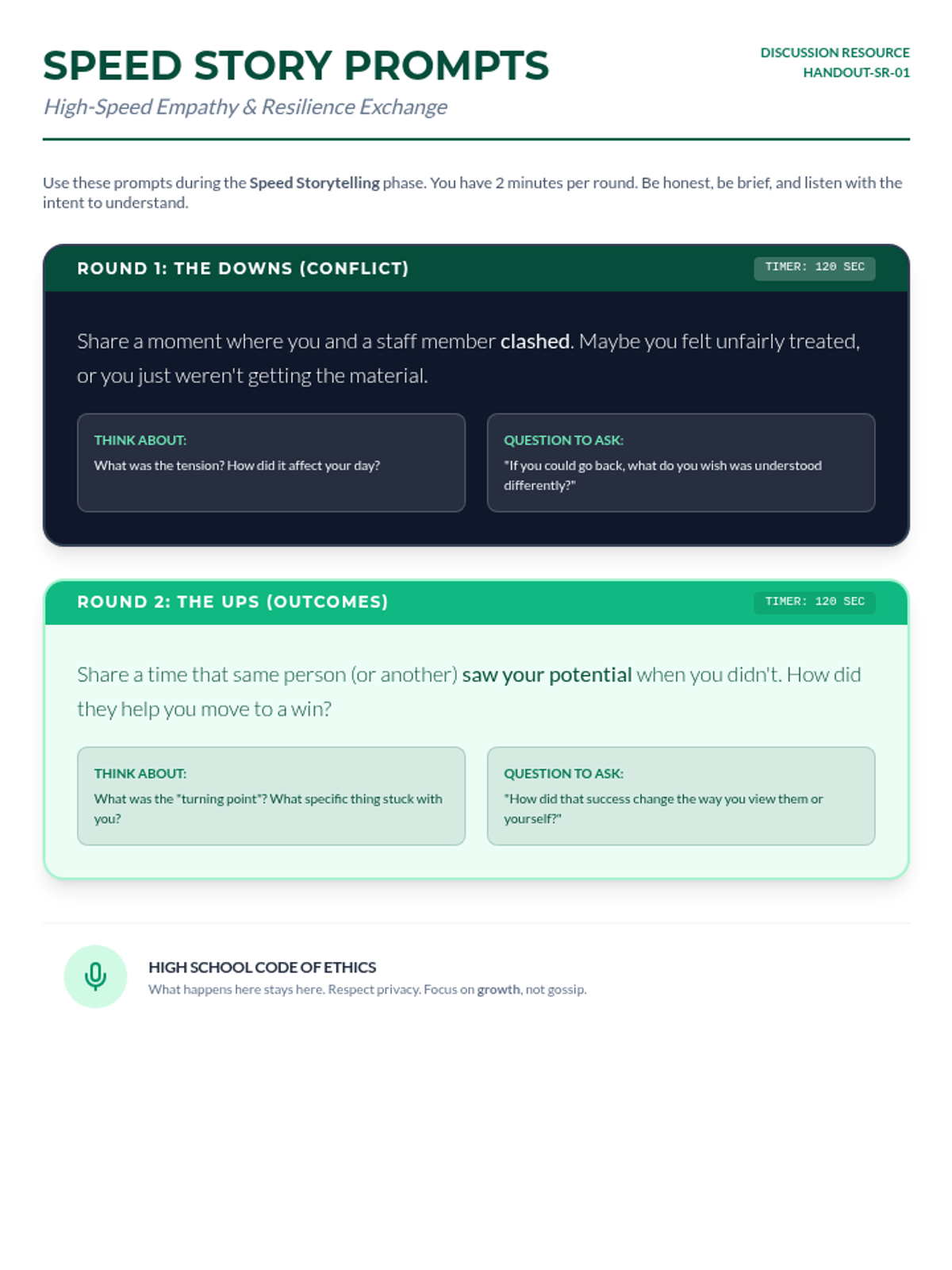
A 30-minute high school lesson designed to foster empathy and appreciation for school staff by exploring shared challenges and successes through storytelling and a collaborative mural.
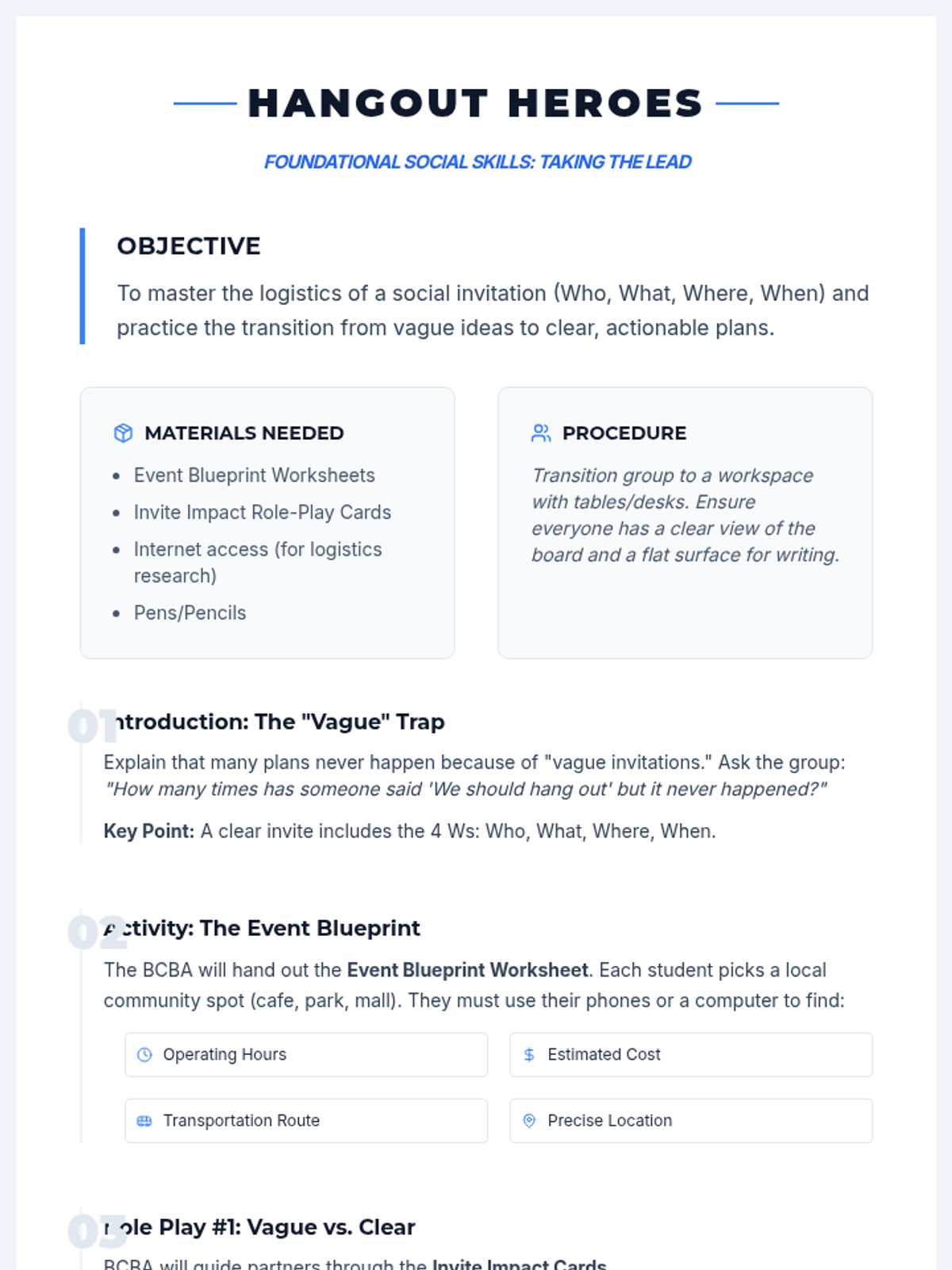
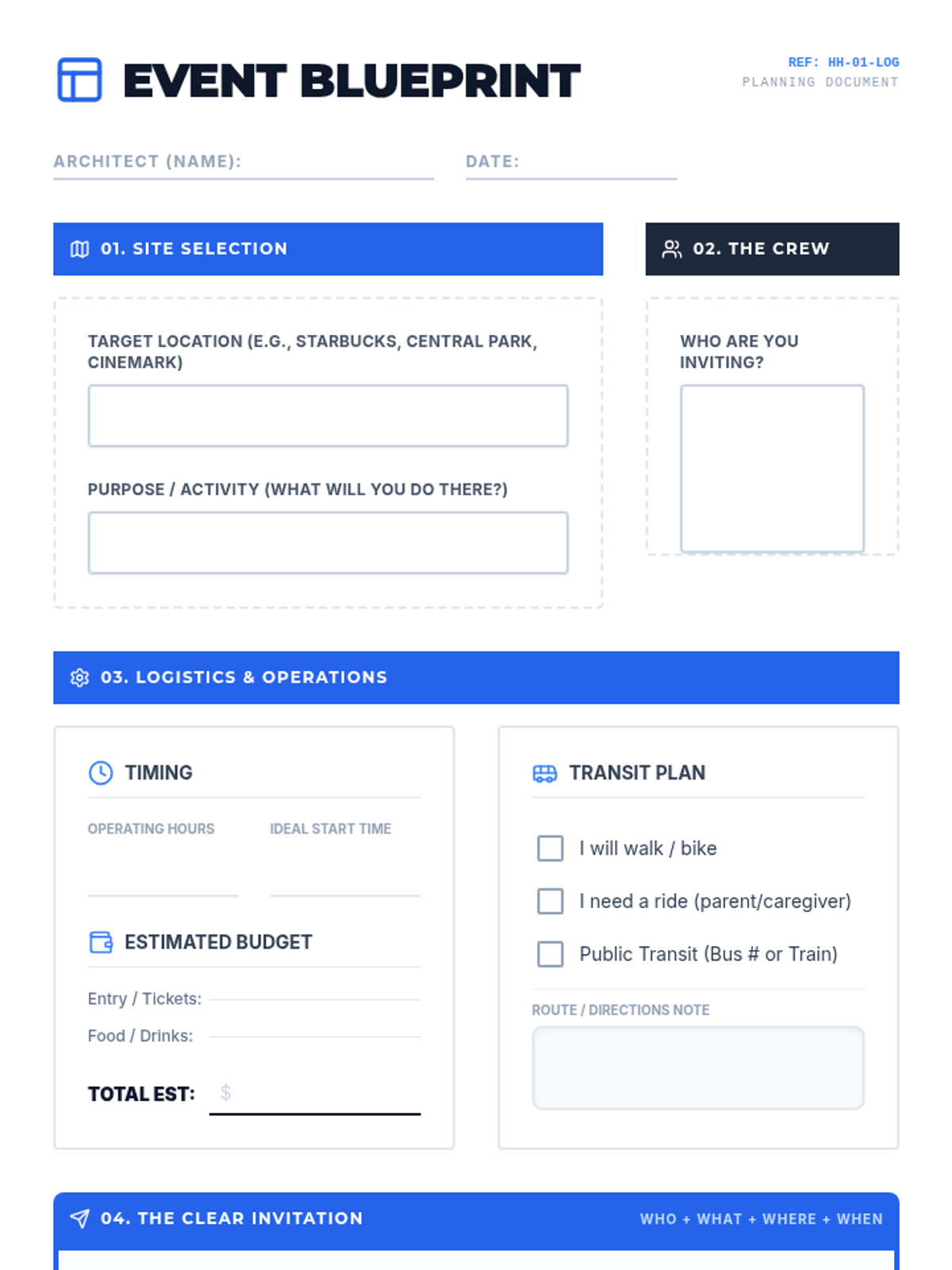
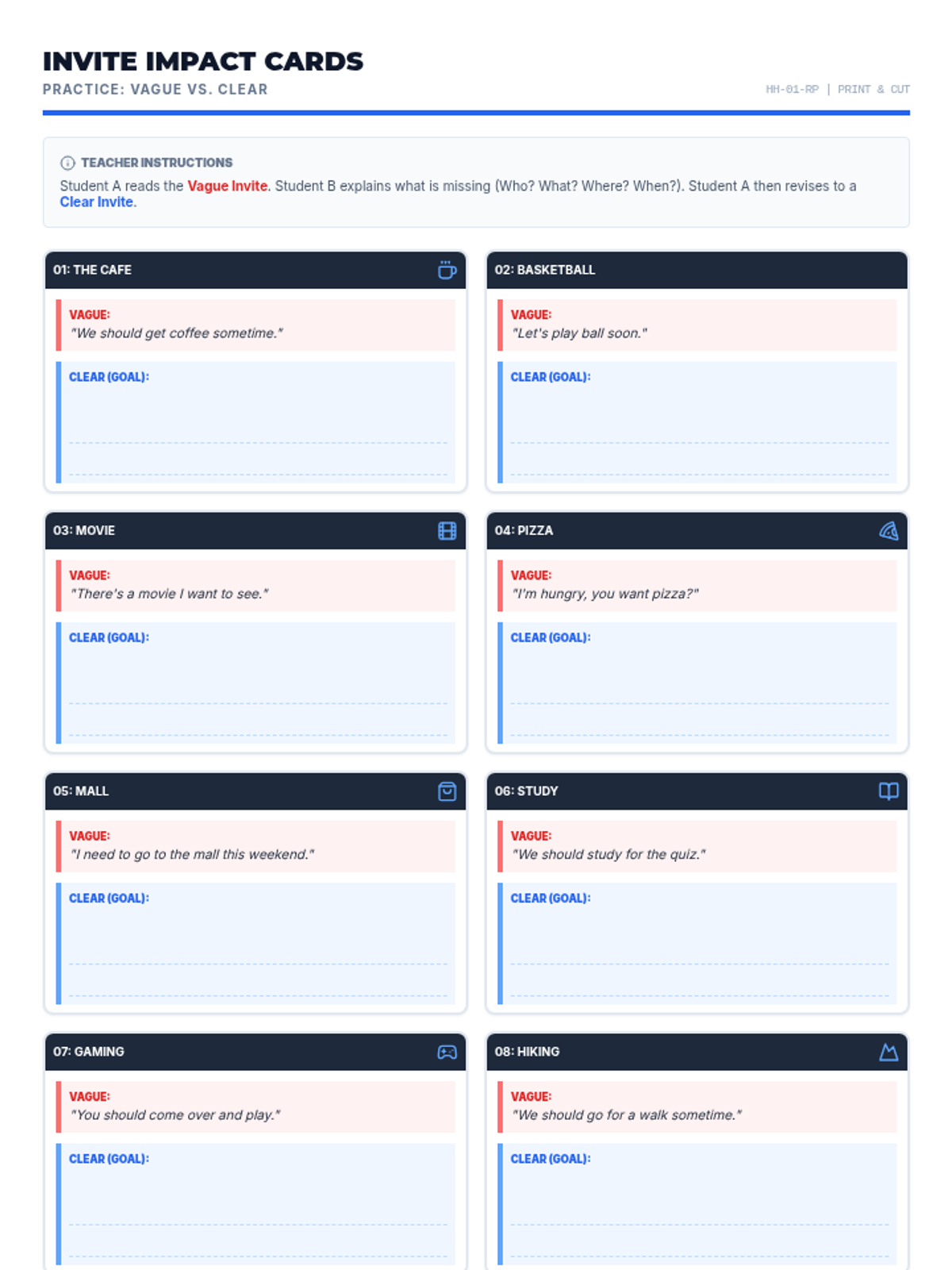
A foundational social skills lesson focused on the logistics of planning a hangout and the importance of making clear, actionable invitations versus vague ones.
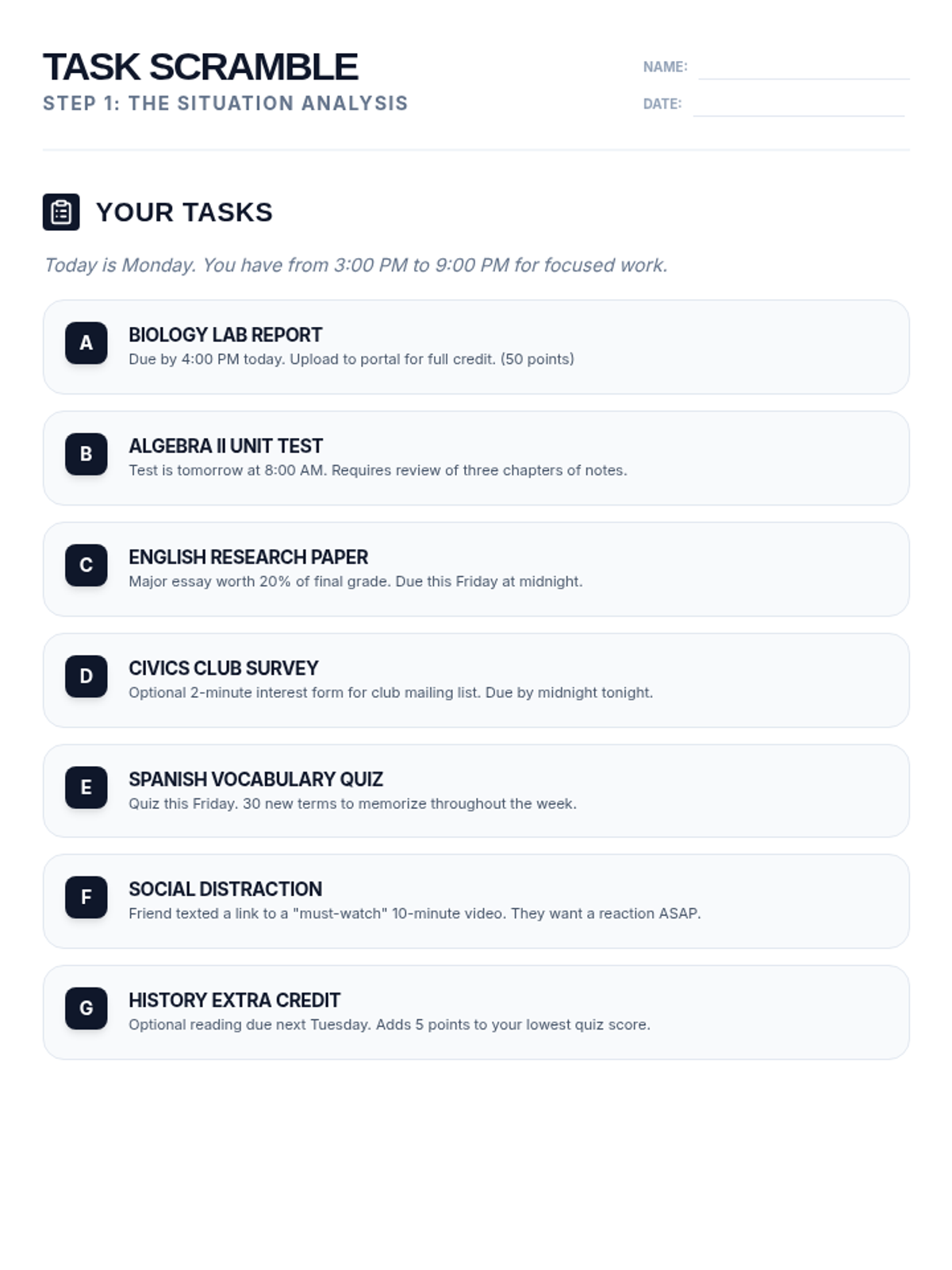
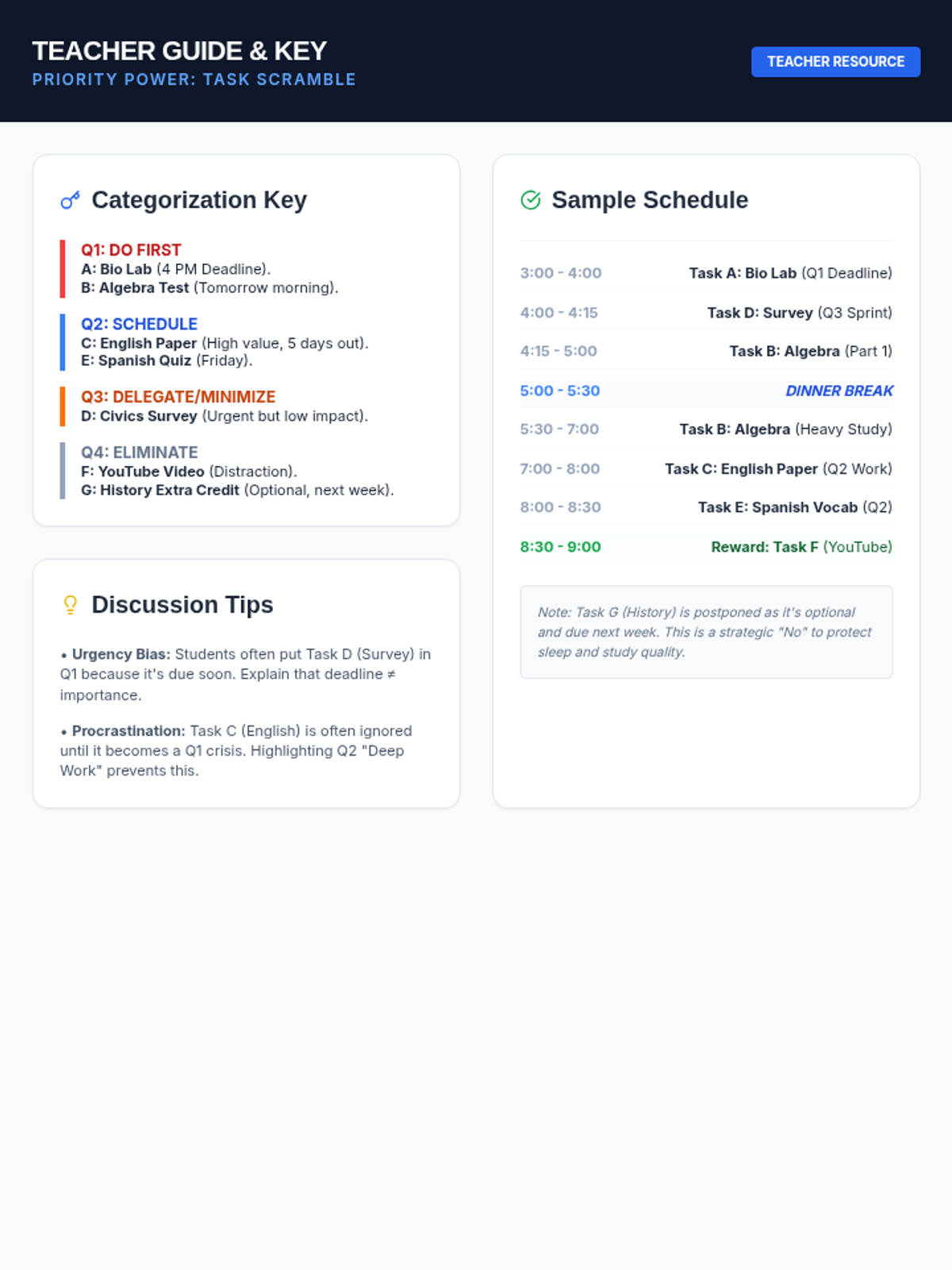
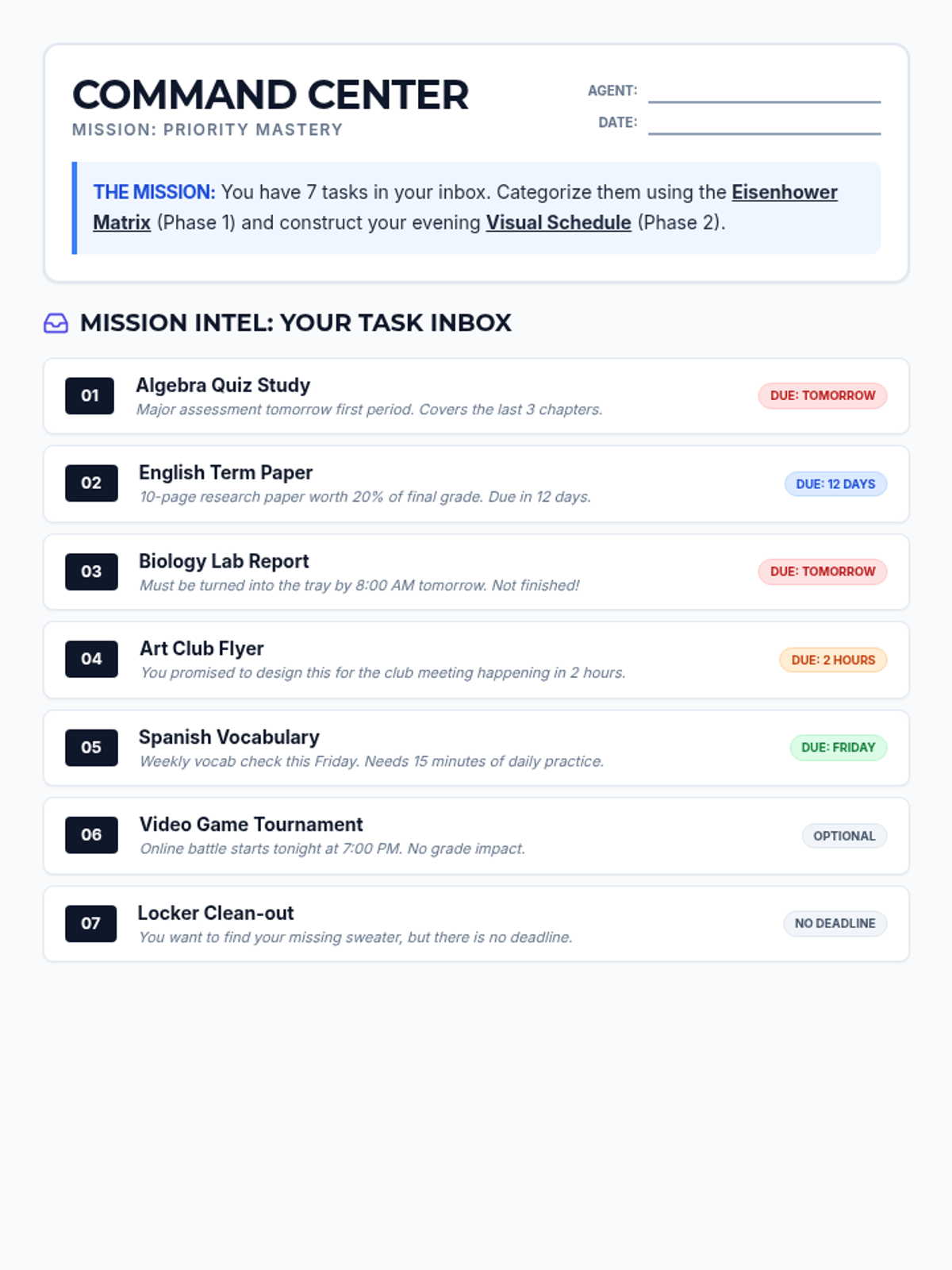
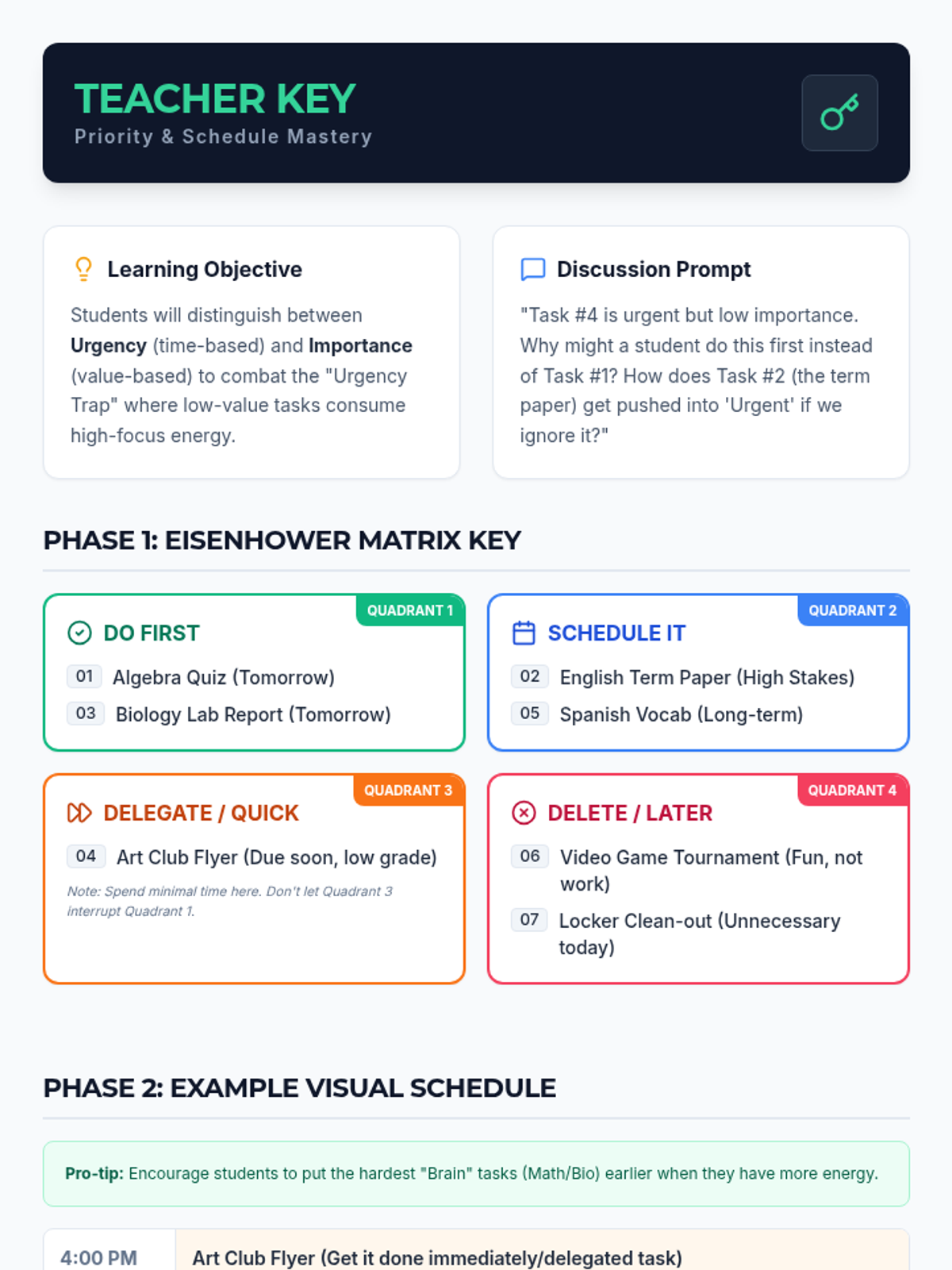
A lesson focused on executive functioning skills, specifically prioritizing tasks using the Eisenhower Matrix and organizing them into a daily block schedule for maximum efficiency.
A focused lesson on executive functioning skills, specifically teaching students how to prioritize tasks using the Eisenhower Matrix and translate those priorities into a functional visual schedule.
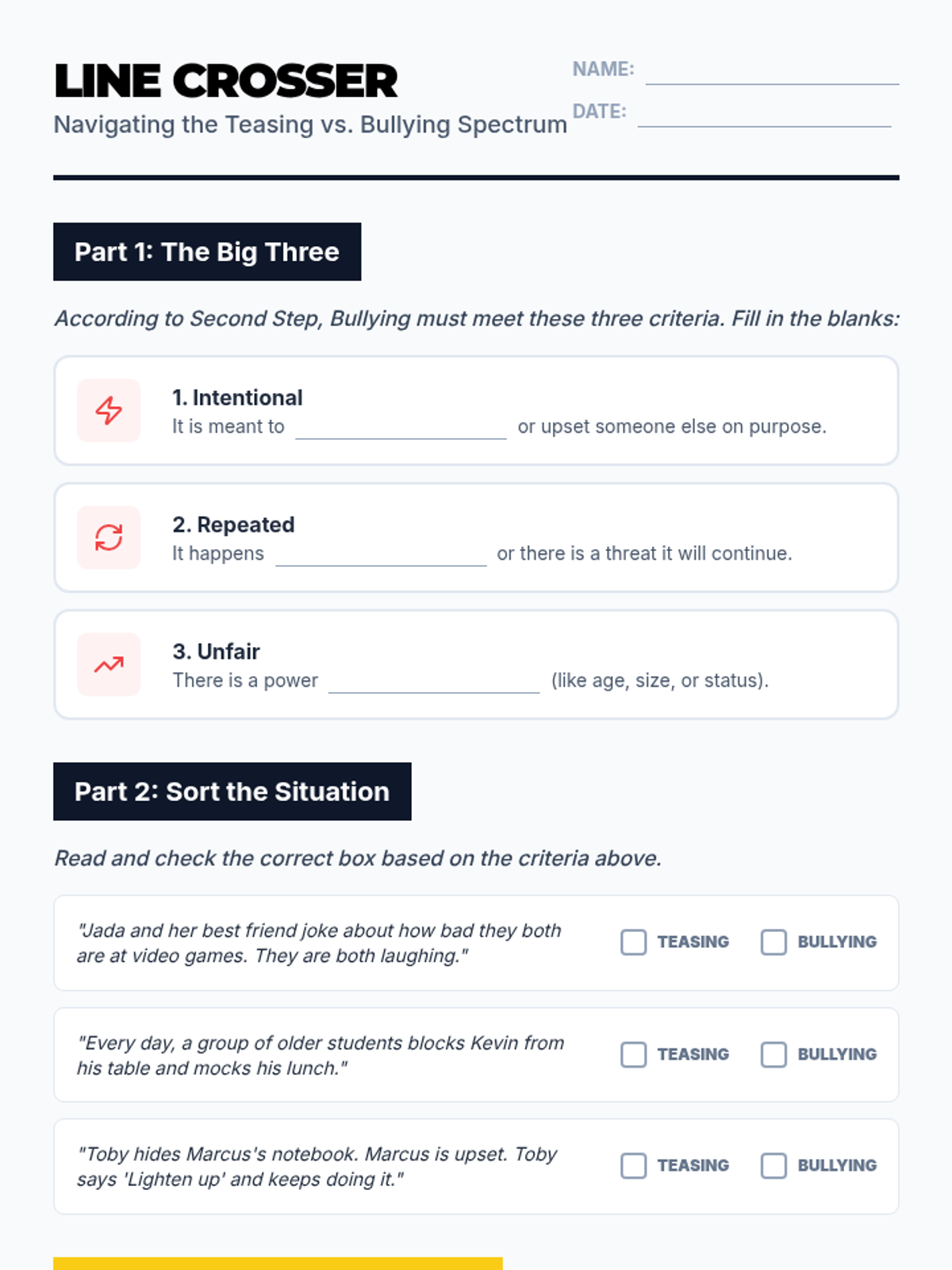
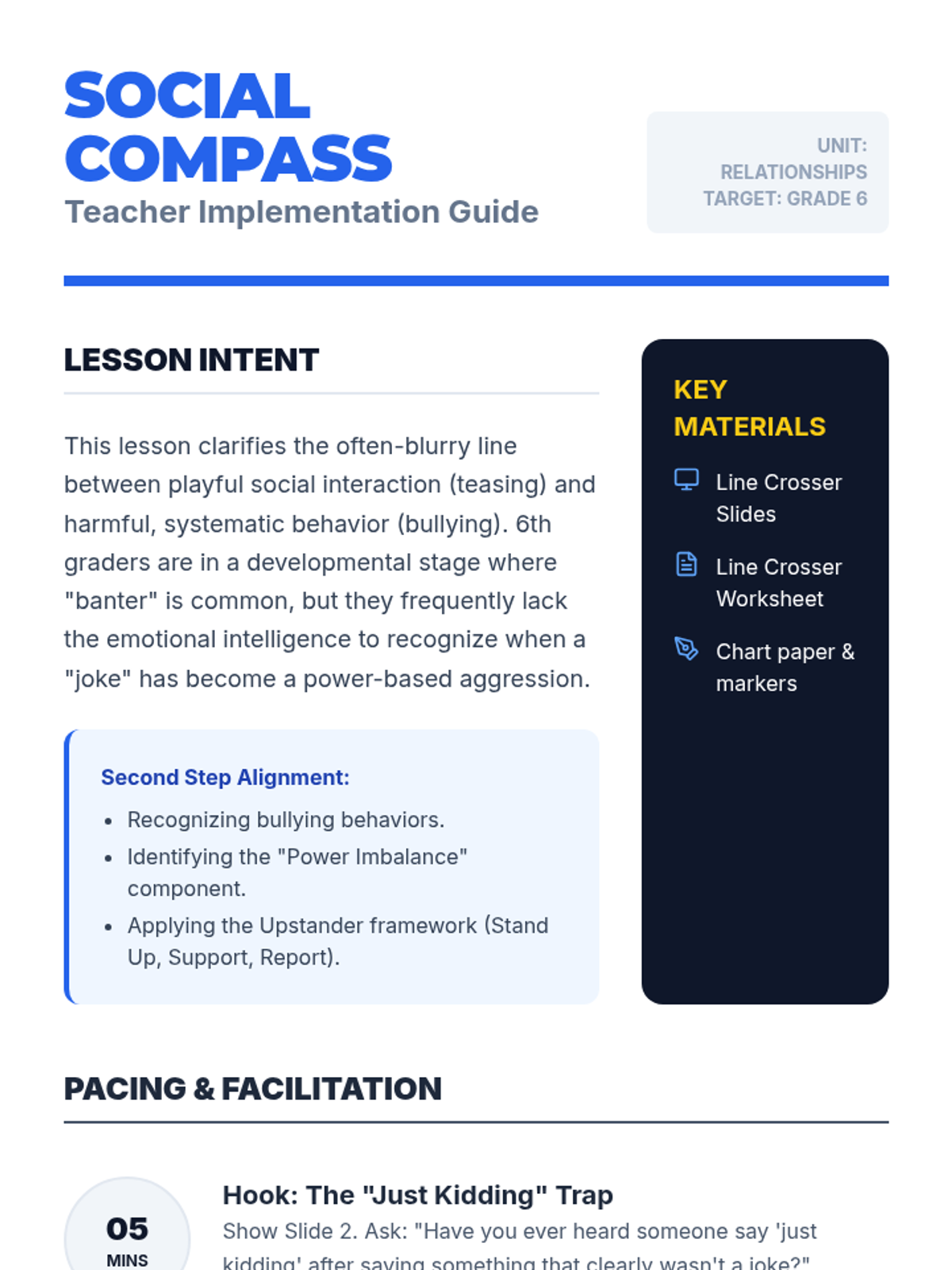
A middle school lesson exploring the critical differences between playful teasing and harmful bullying, grounded in Second Step definitions of power imbalance, intent, and repetition.
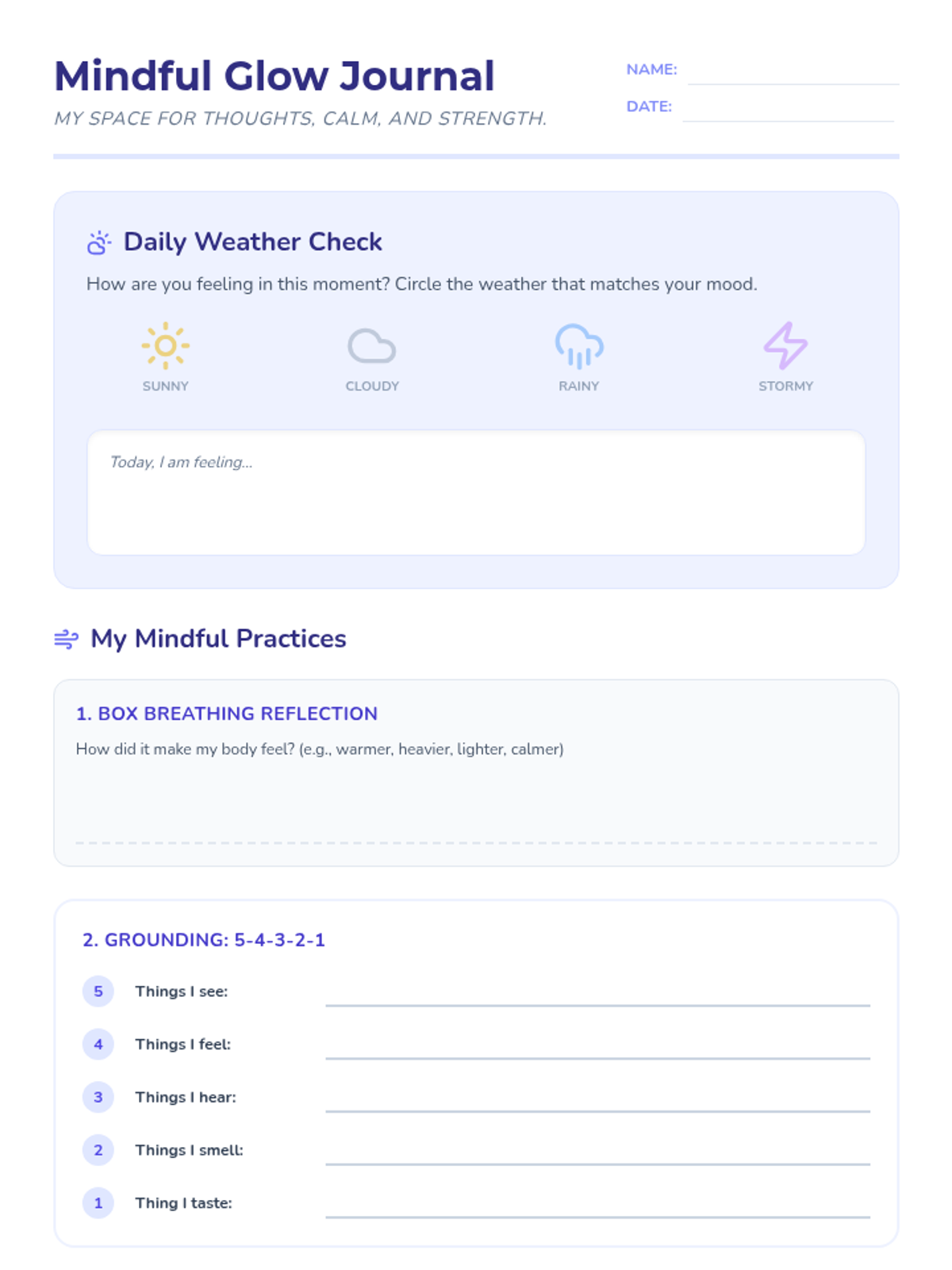
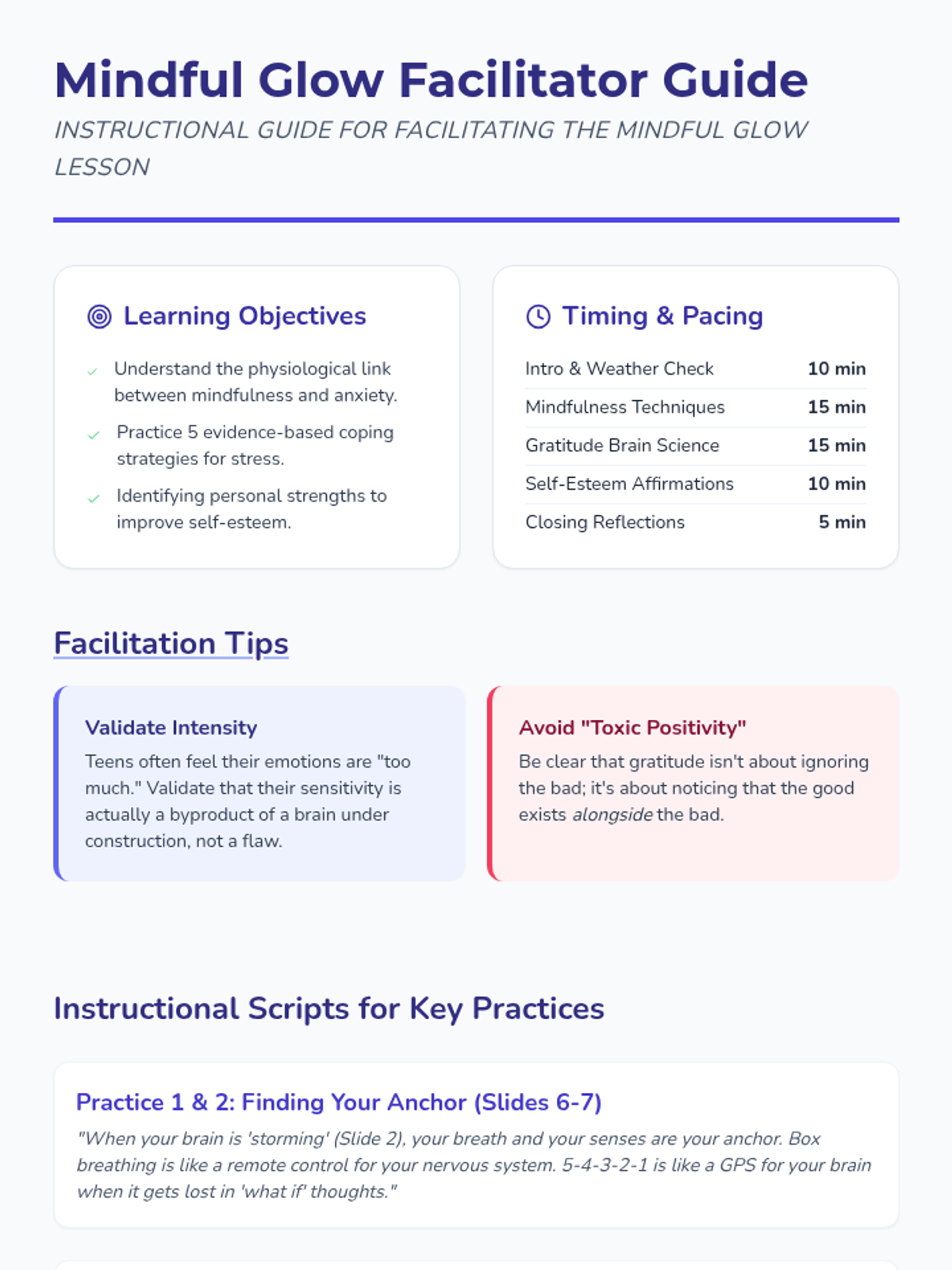
A comprehensive psychoeducation lesson designed for teenage girls to explore mindfulness and gratitude as tools for managing anxiety and building self-esteem. Includes a 20+ slide presentation, a personal reflection journal, and a facilitator's guide.
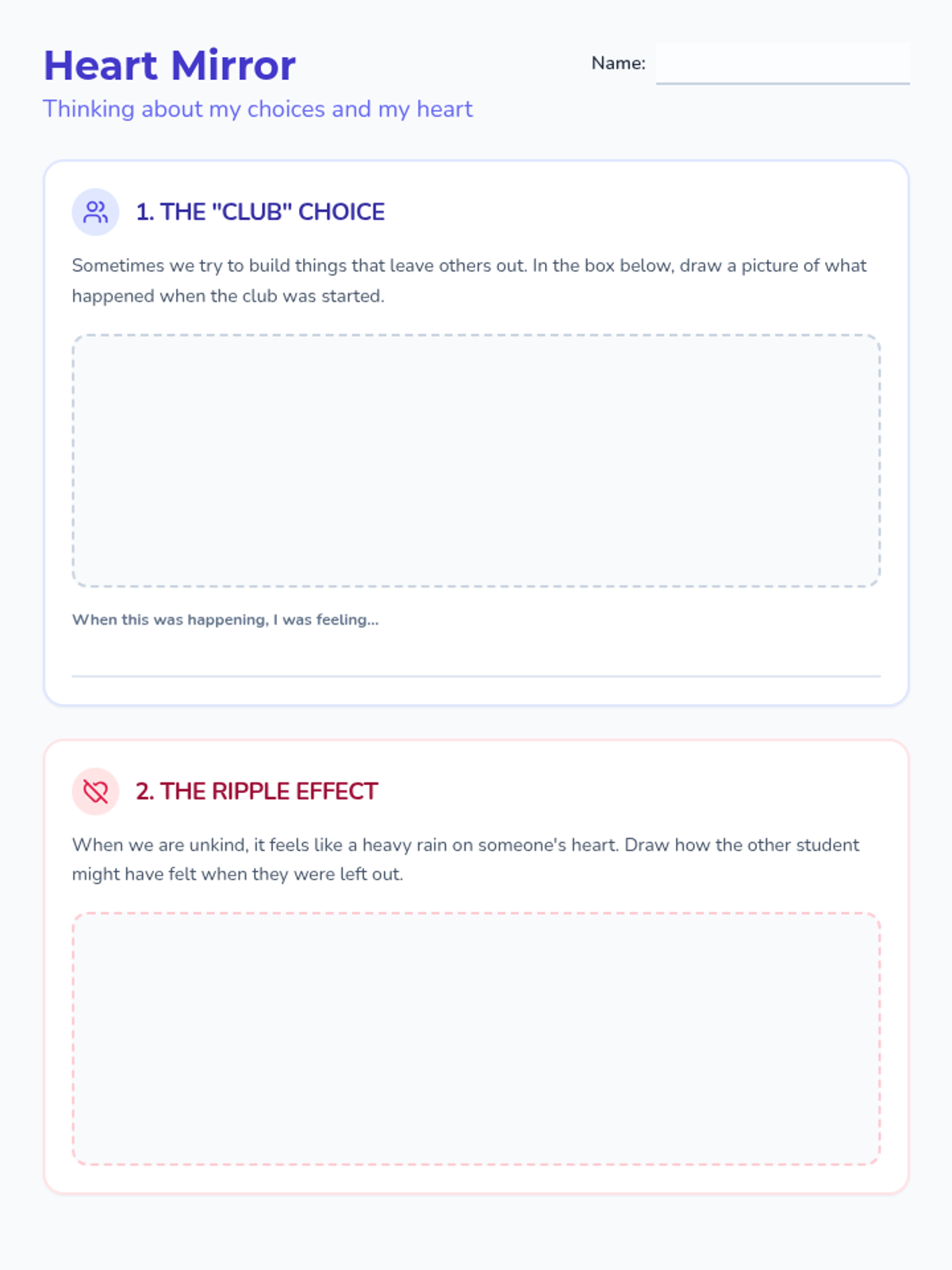
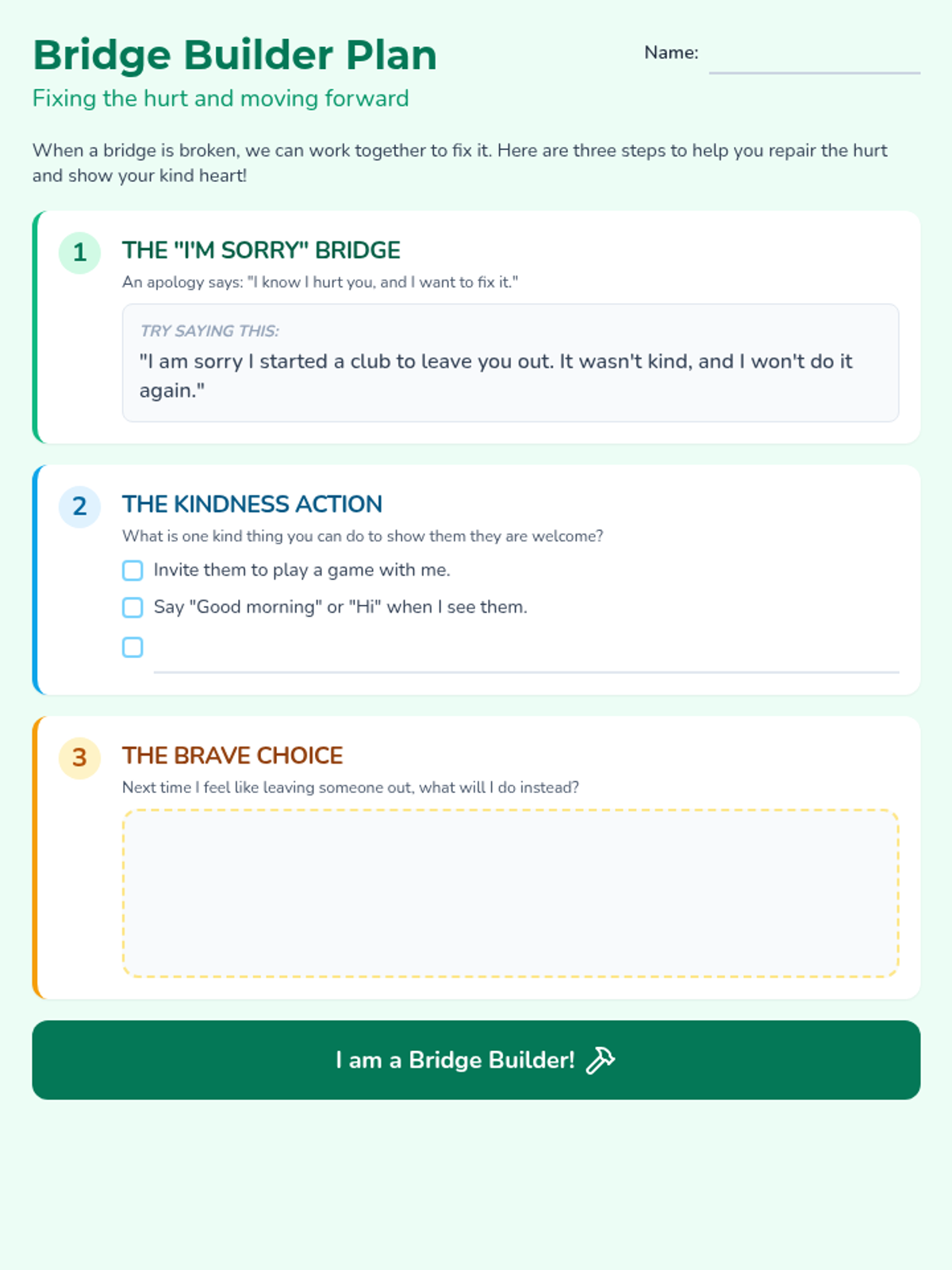
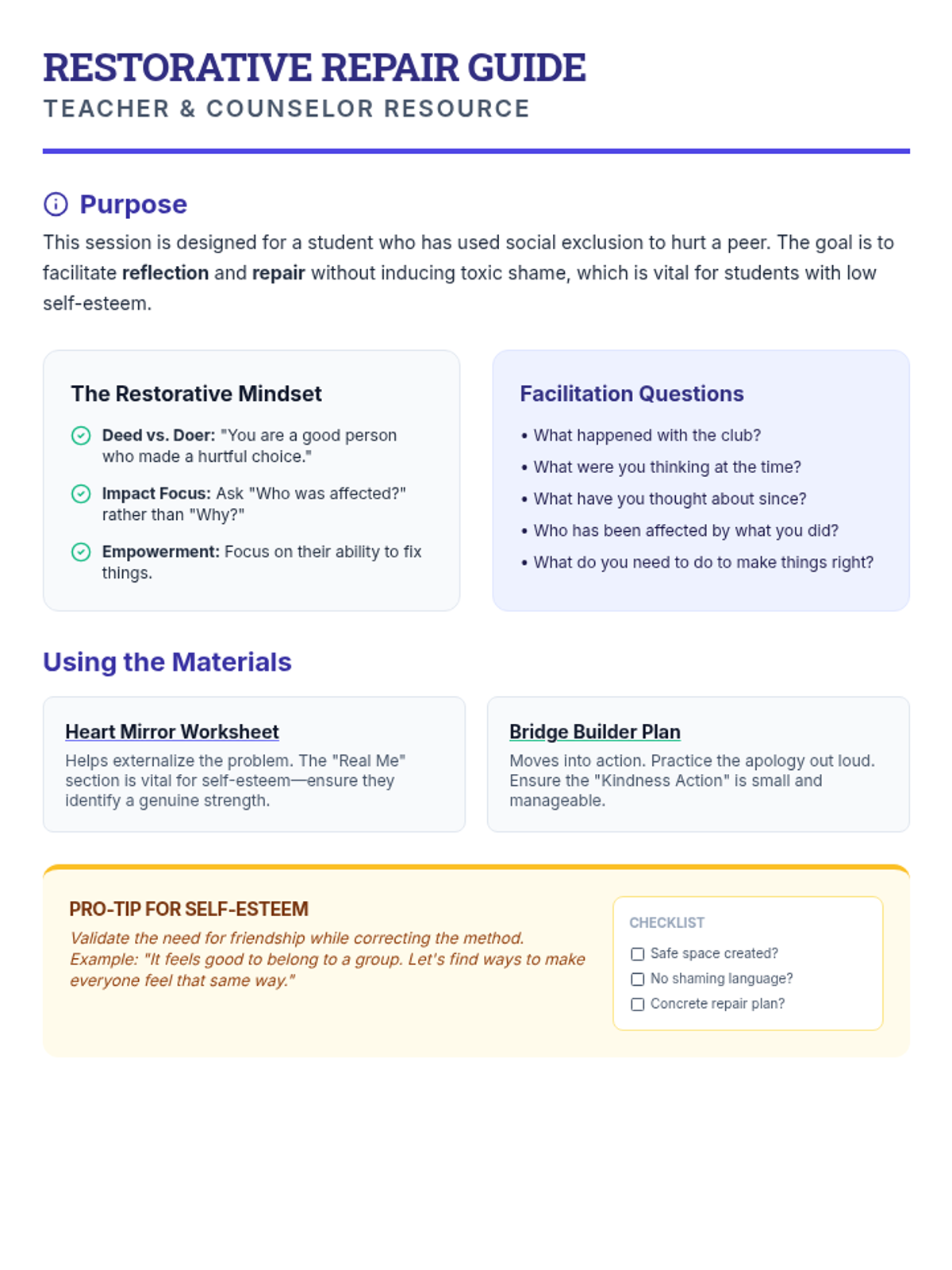
A restorative activity focused on helping a 2nd grade student reflect on exclusionary behavior and create a plan for repair while maintaining self-esteem.
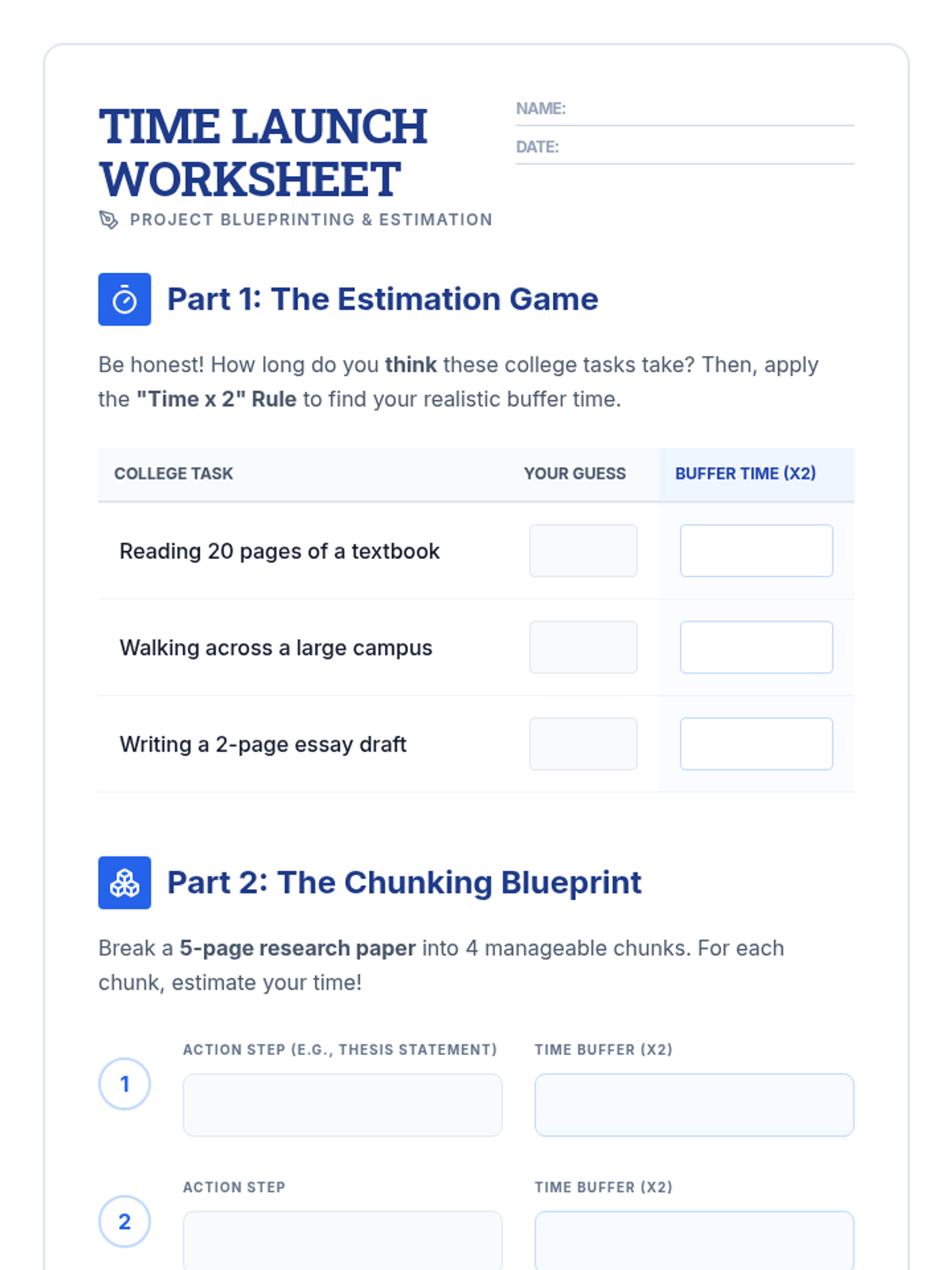
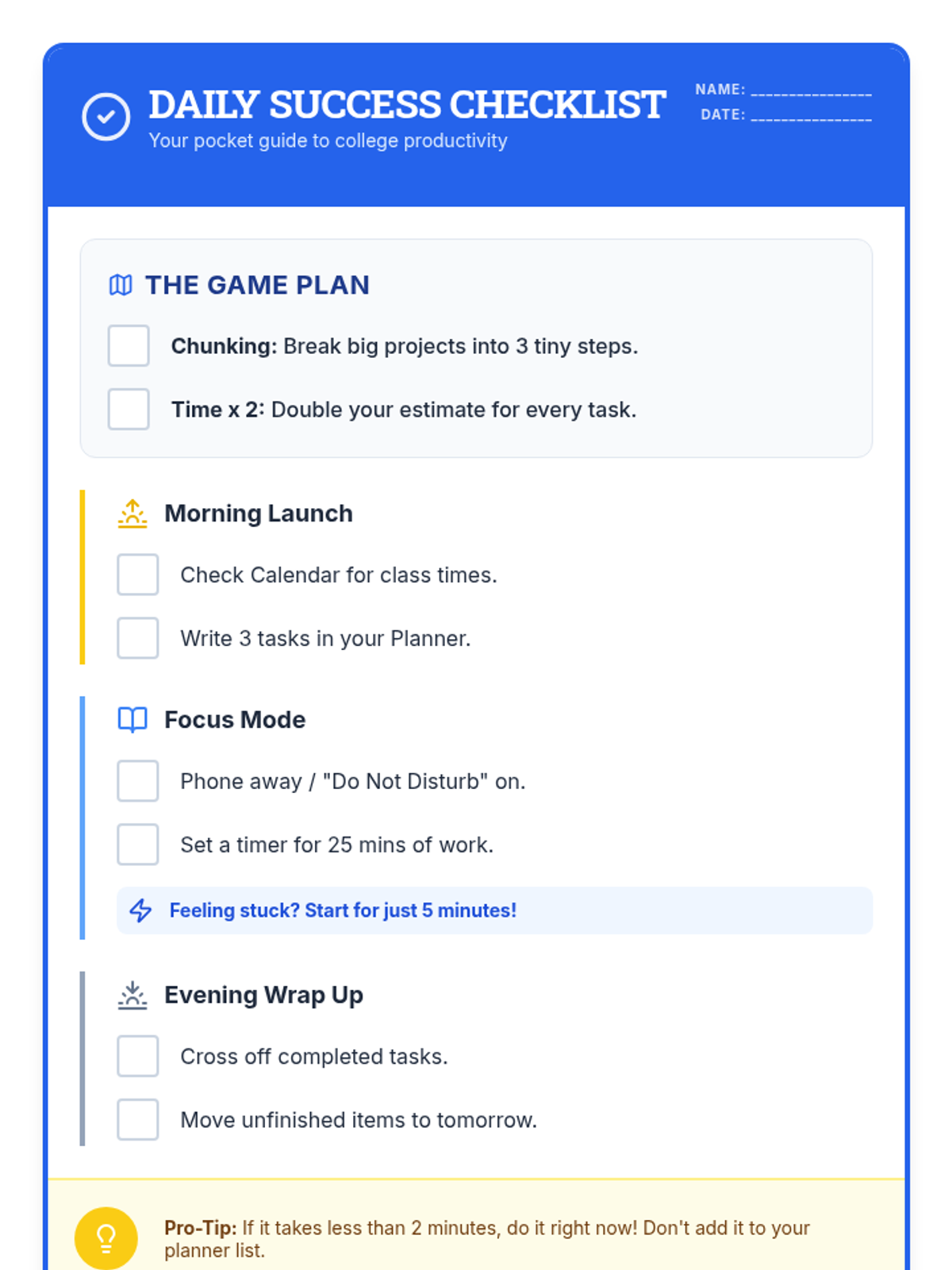
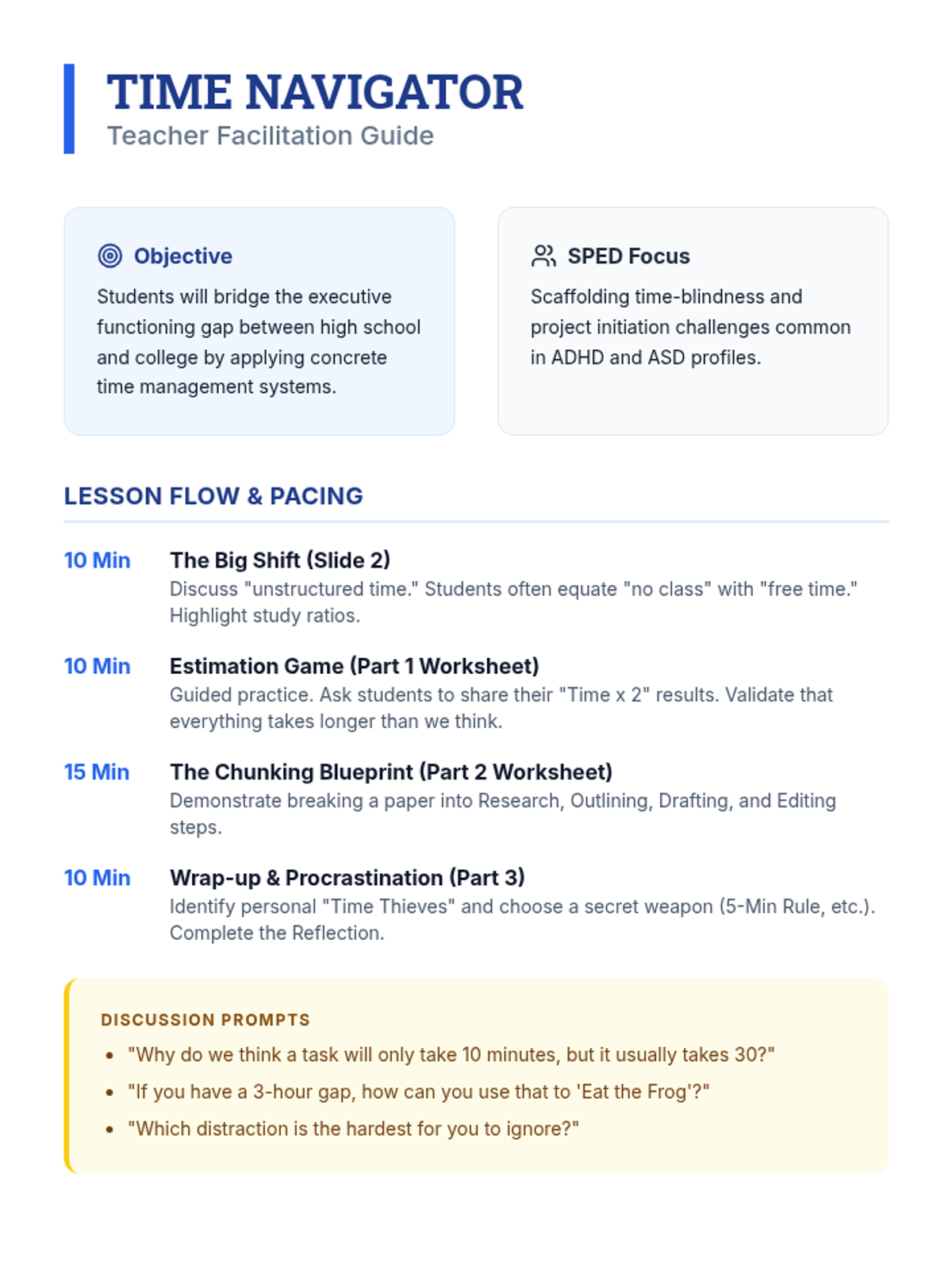
A comprehensive lesson designed for 12th-grade special education students to master essential time management skills needed for the transition to college, focusing on planners, project chunking, and procrastination strategies.
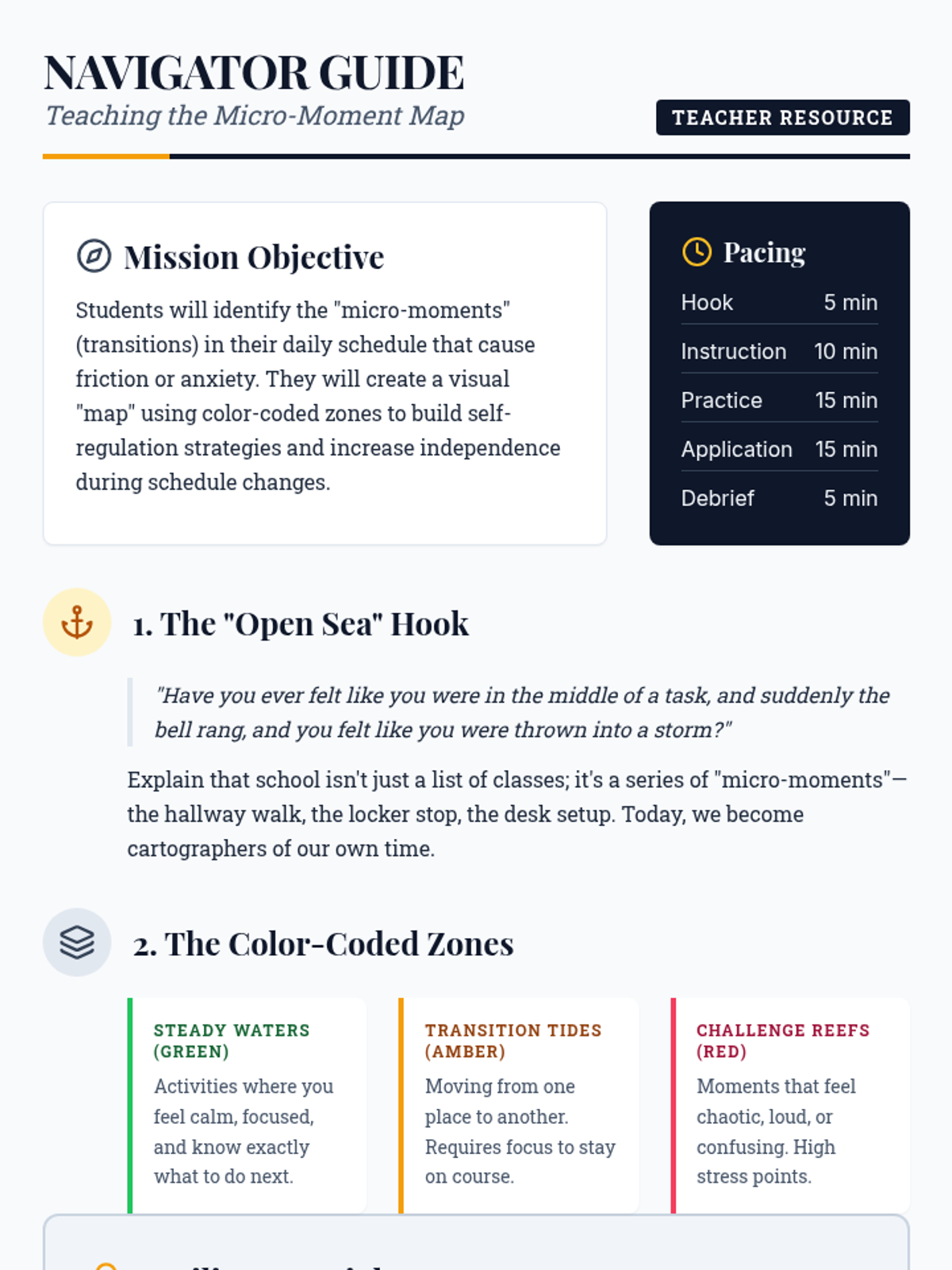
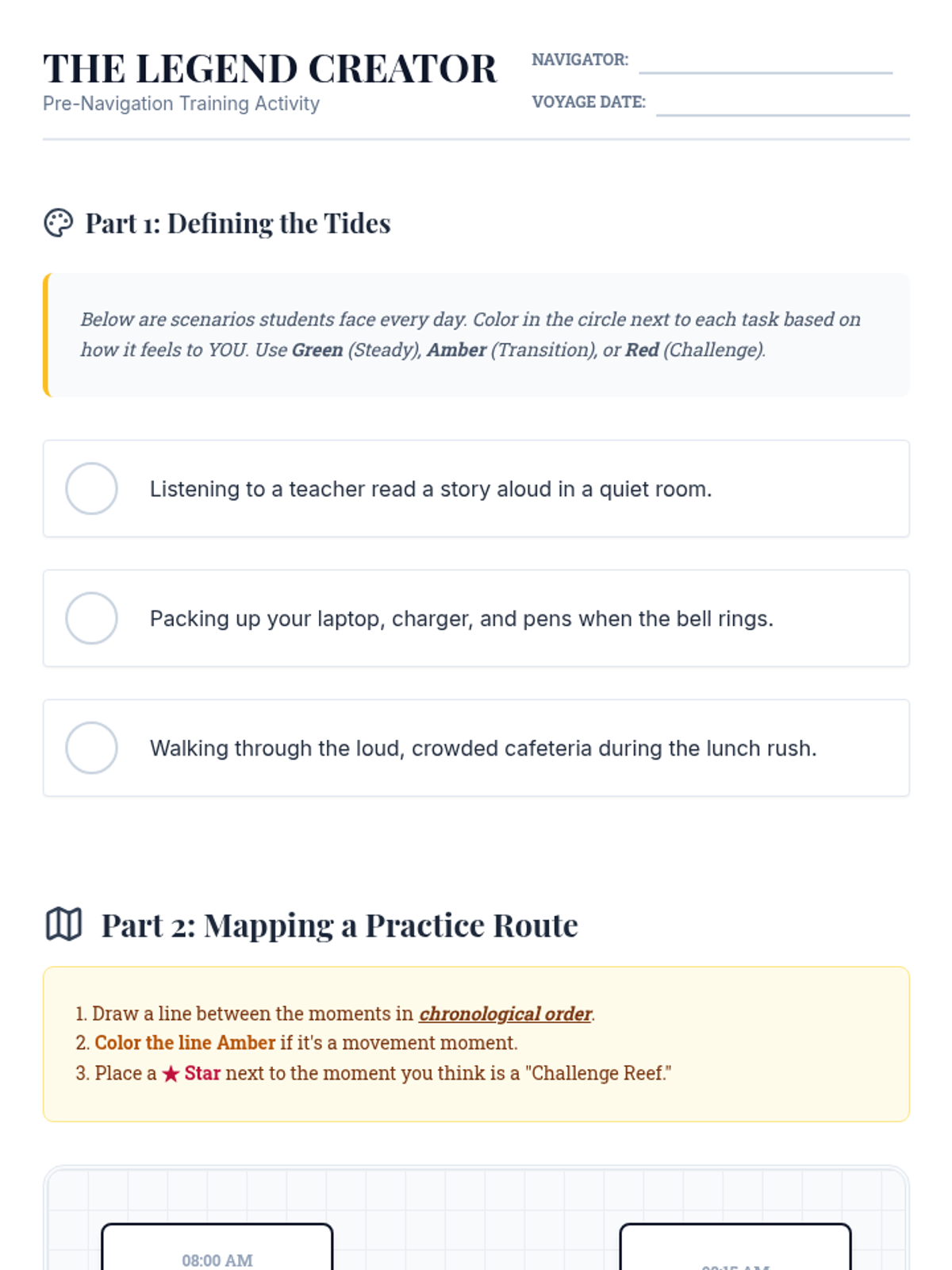
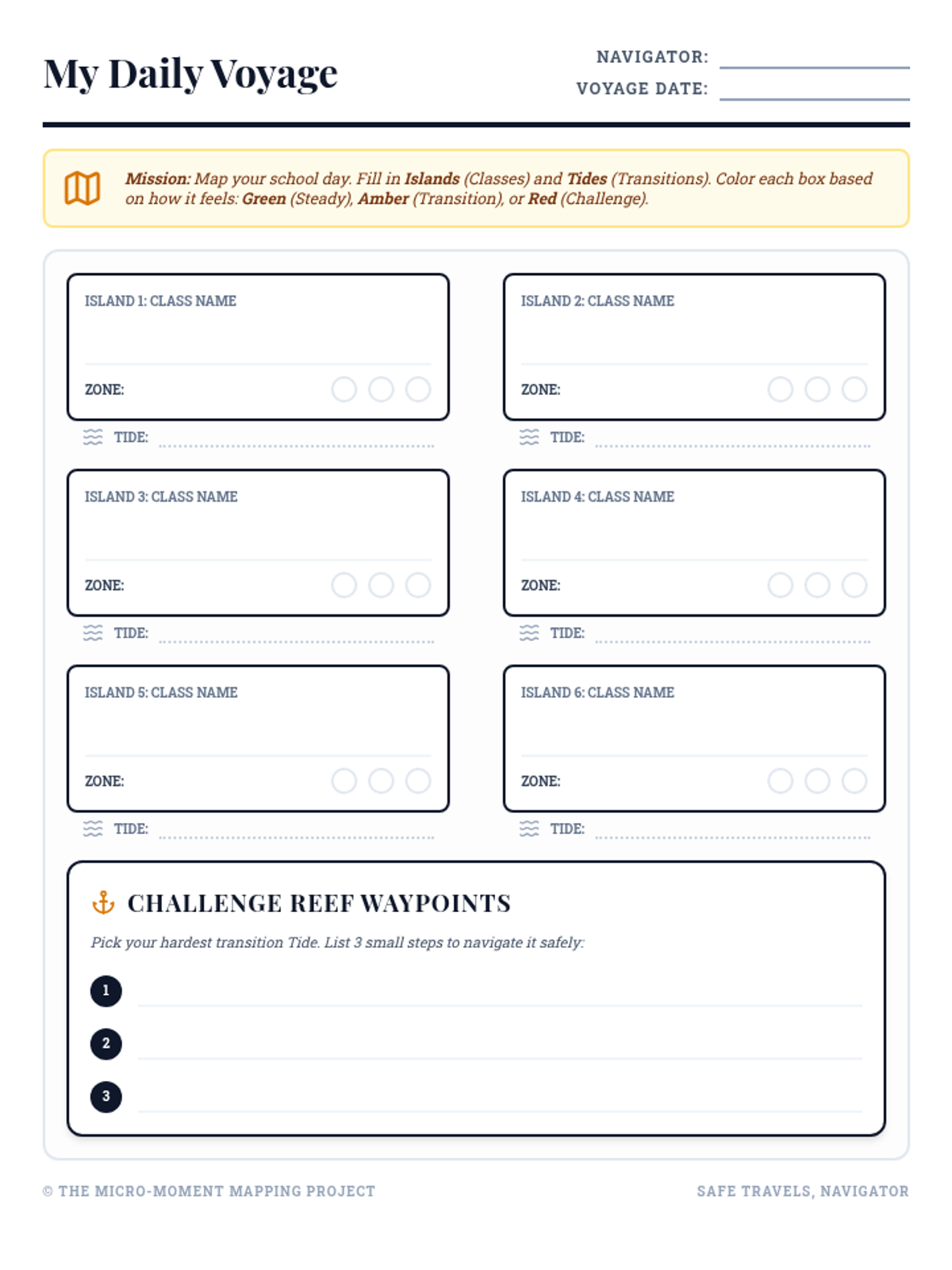
An executive functioning workshop focused on helping students visualize and manage the small transitions (micro-moments) throughout their school day using a cartography-inspired mapping system.
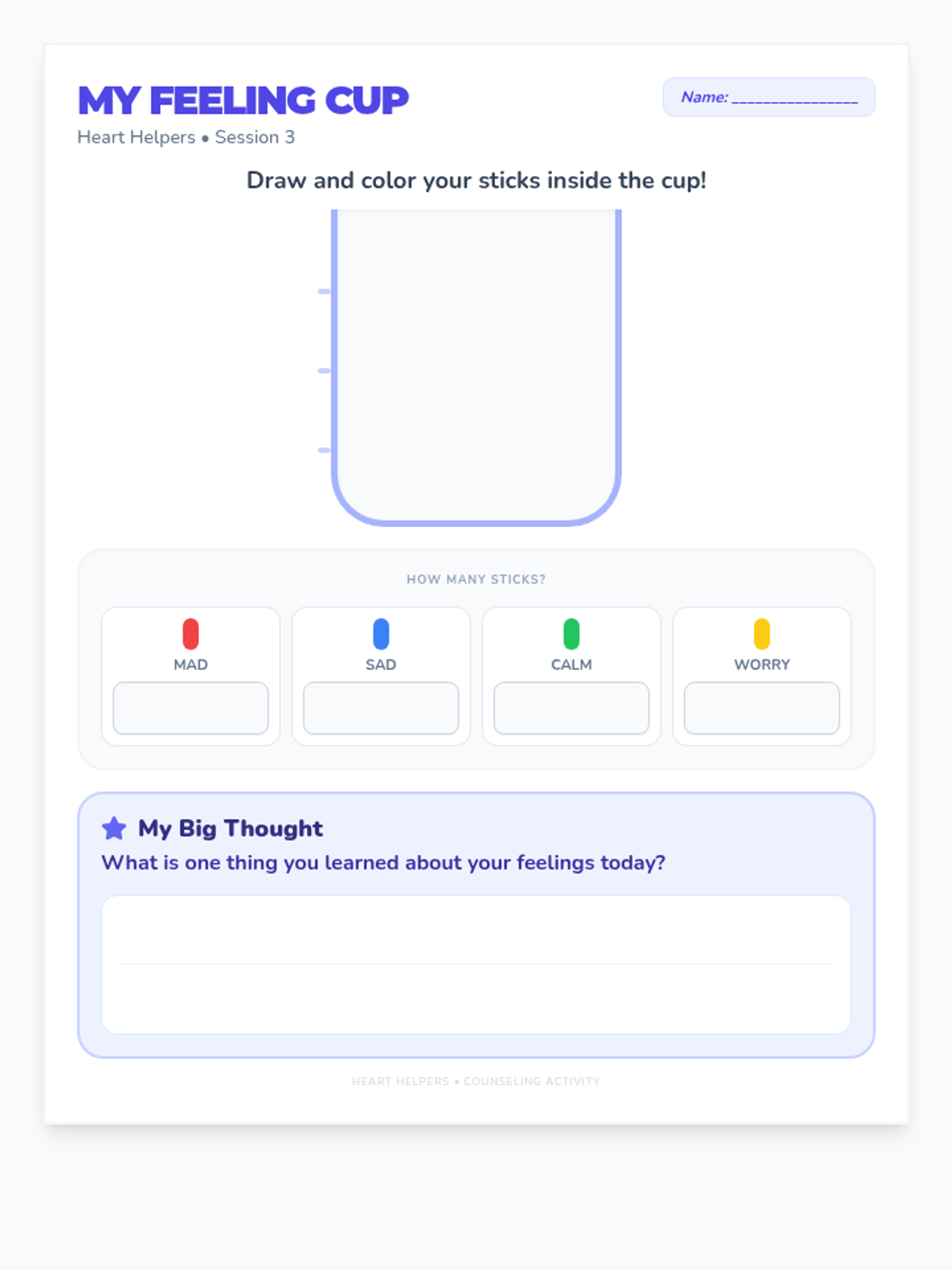
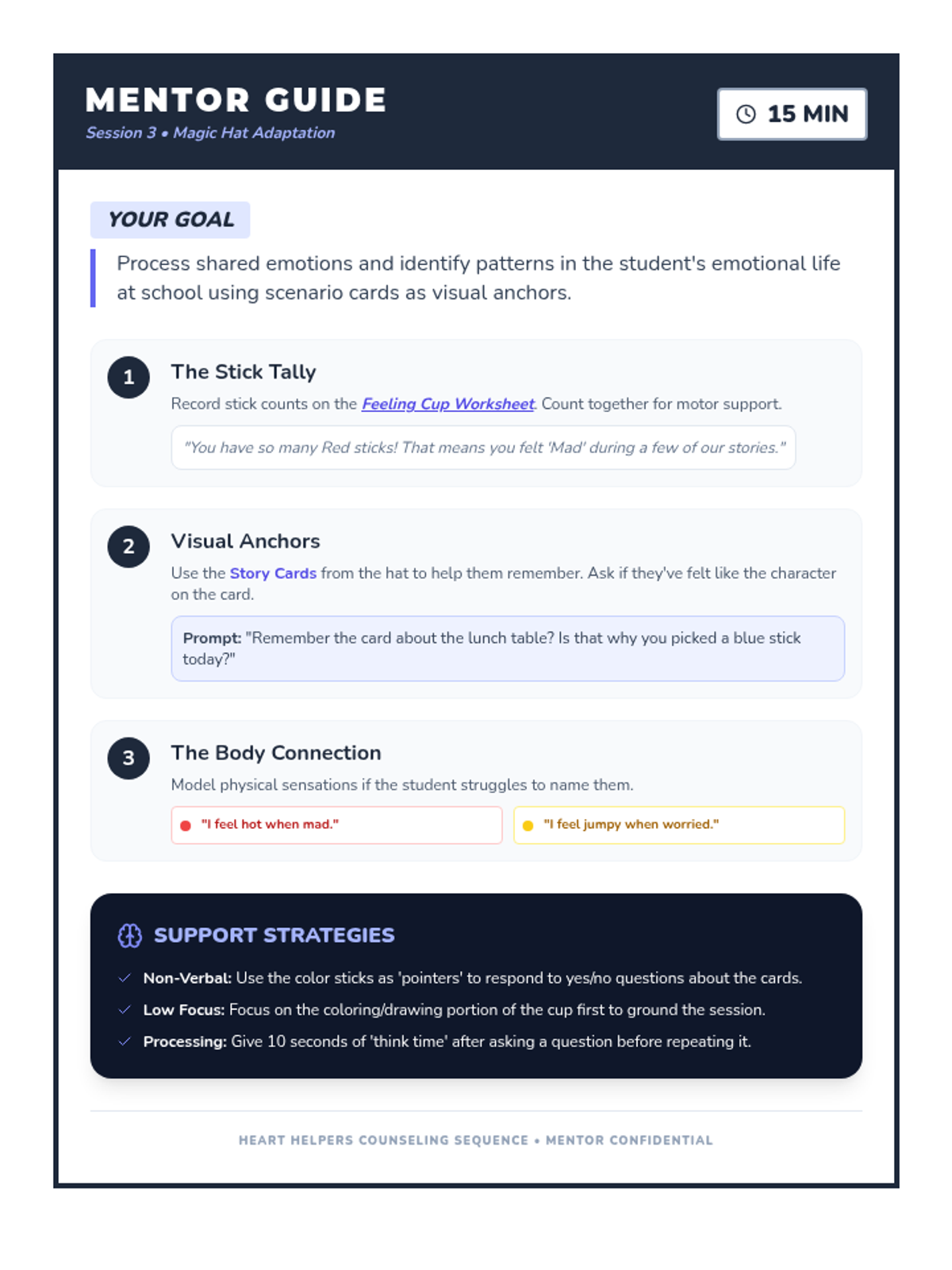
Session 3 of the Heart Helpers program focused on identifying school-based emotions through the Popsicle Break interactive sharing activity.
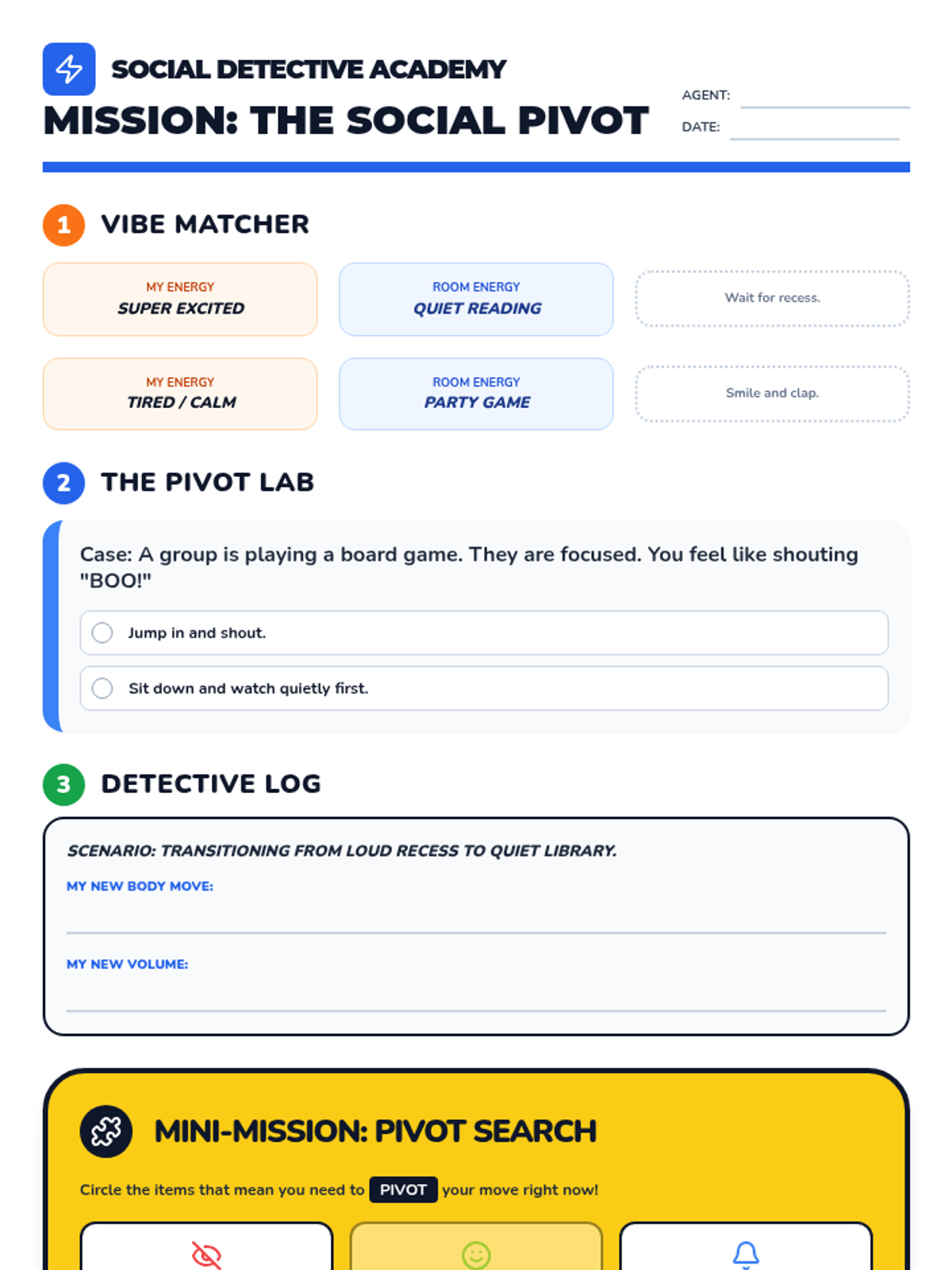
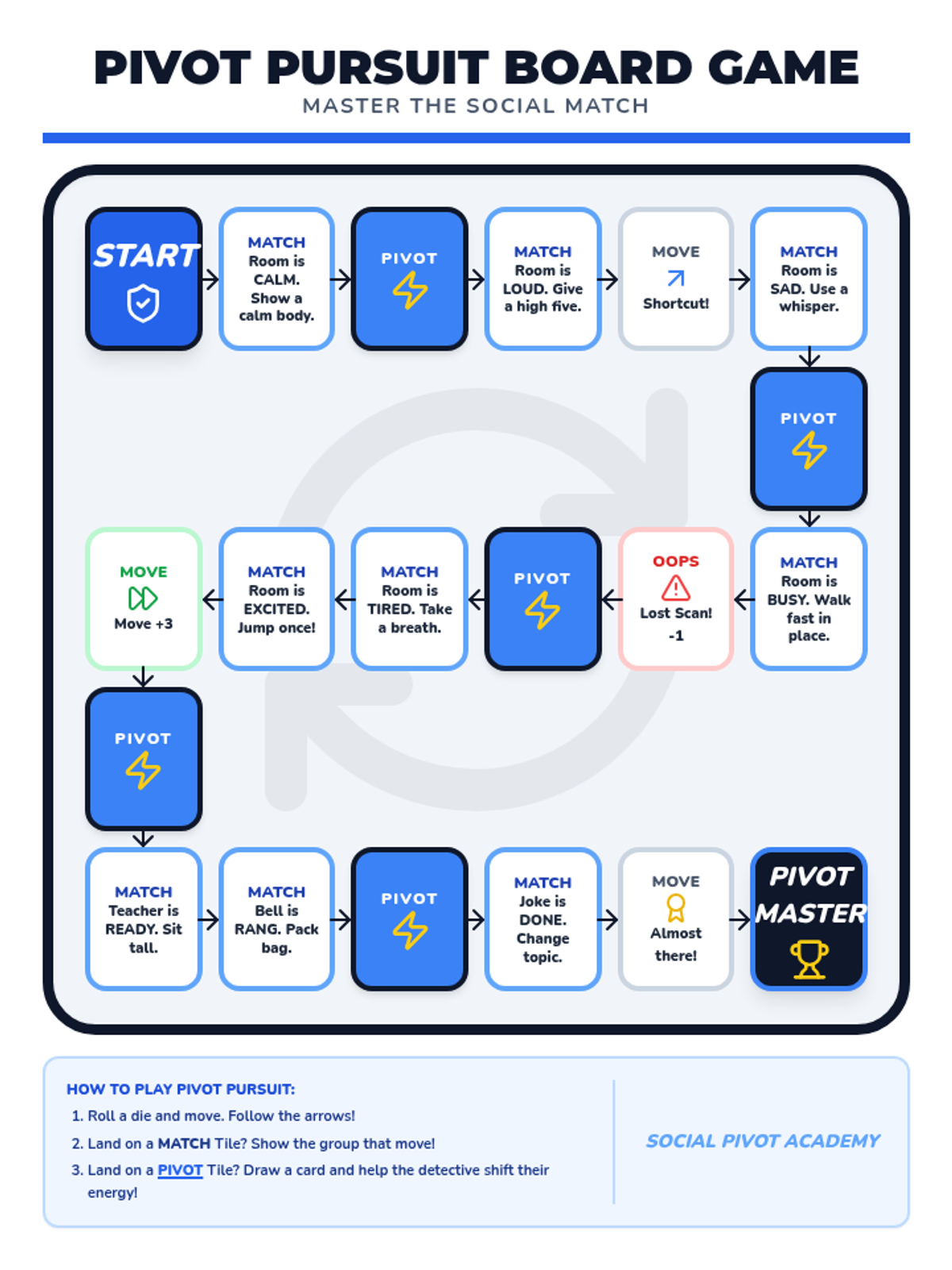
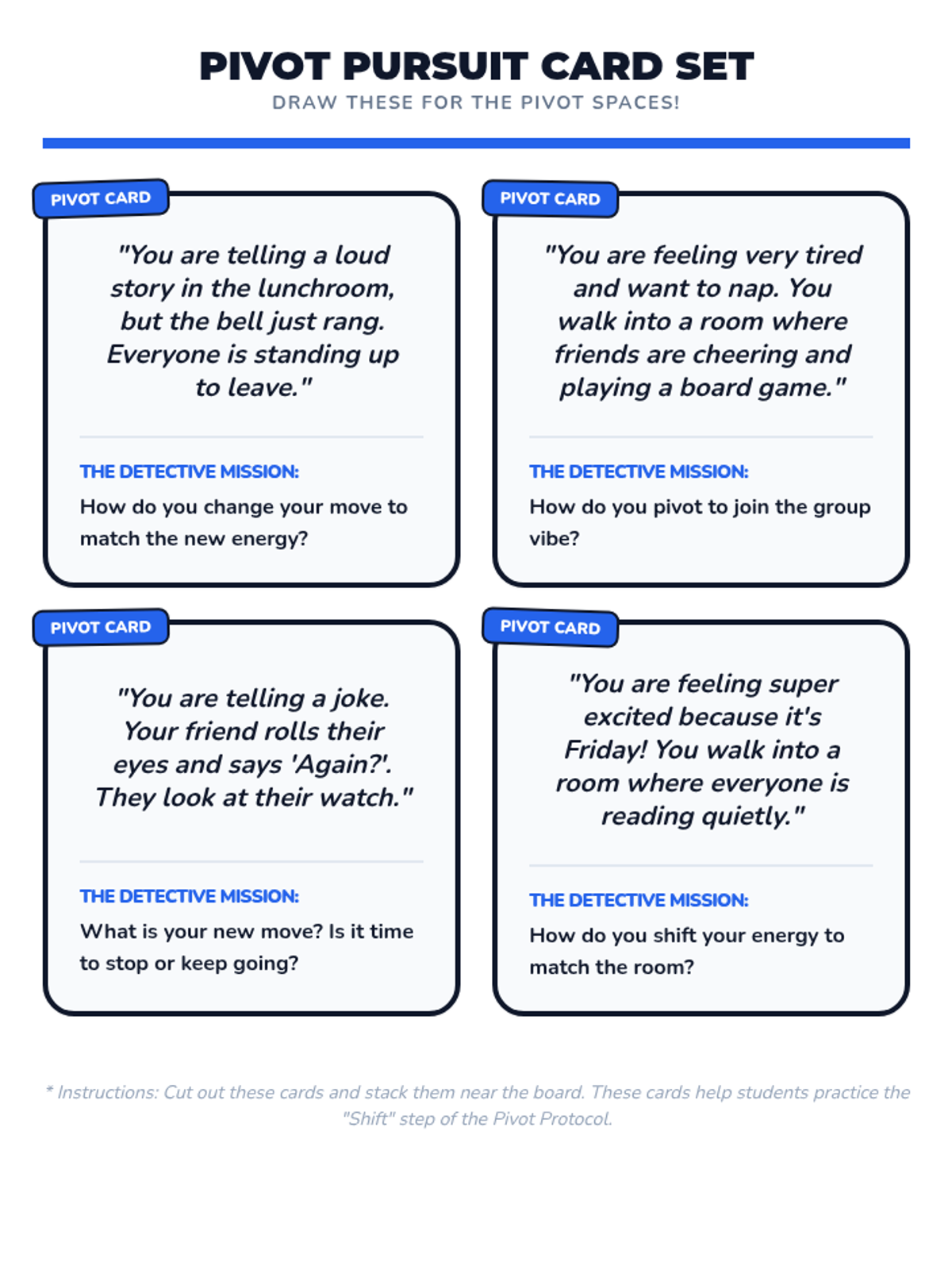
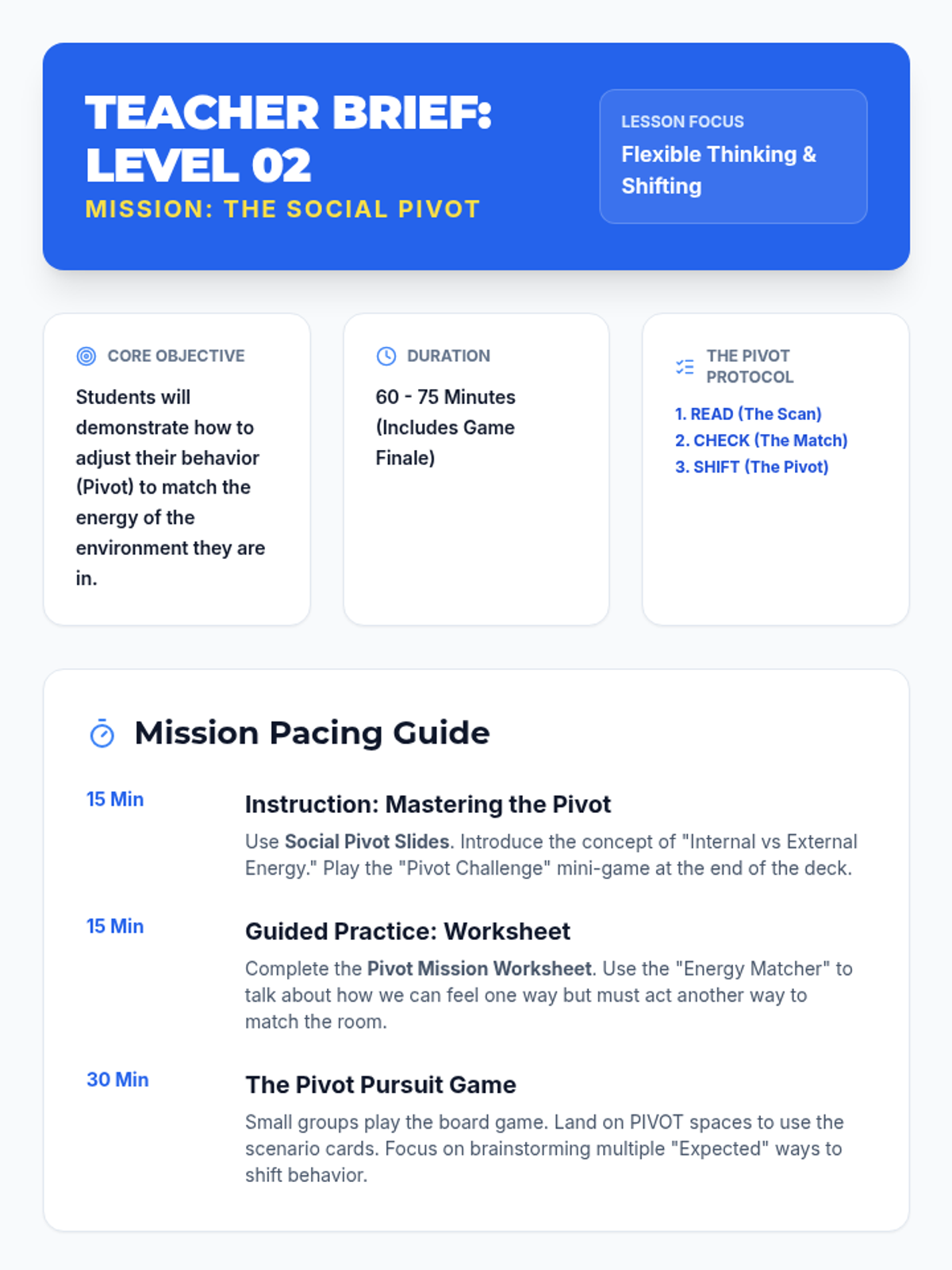
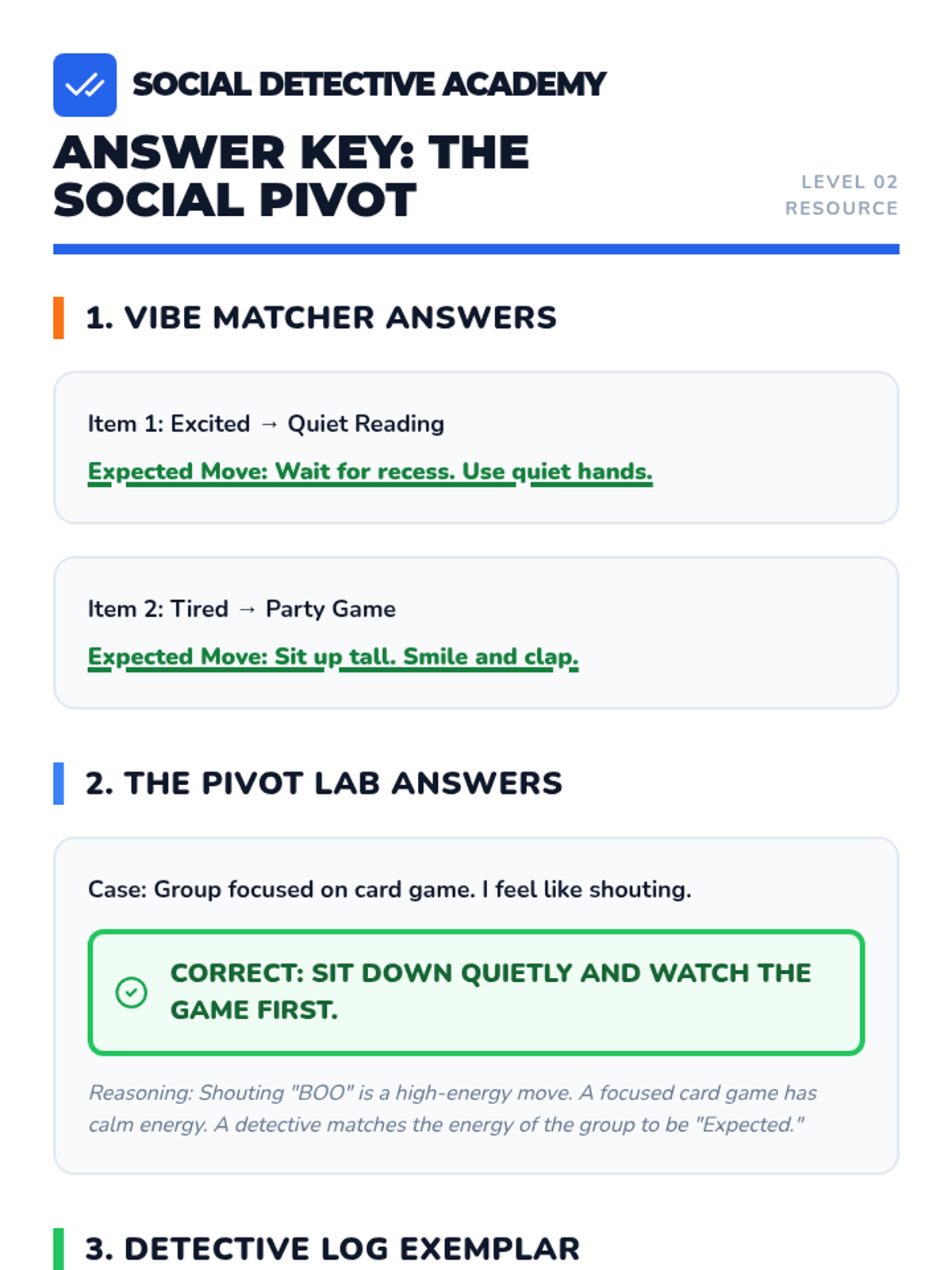
This lesson builds on 'Reading the Room' by teaching students the 'Pivot Protocol'—the ability to shift behavior once a social cue is detected. Students will practice matching their internal energy to the environment, understanding expected vs. unexpected reactions, and using flexible thinking to navigate social shifts.
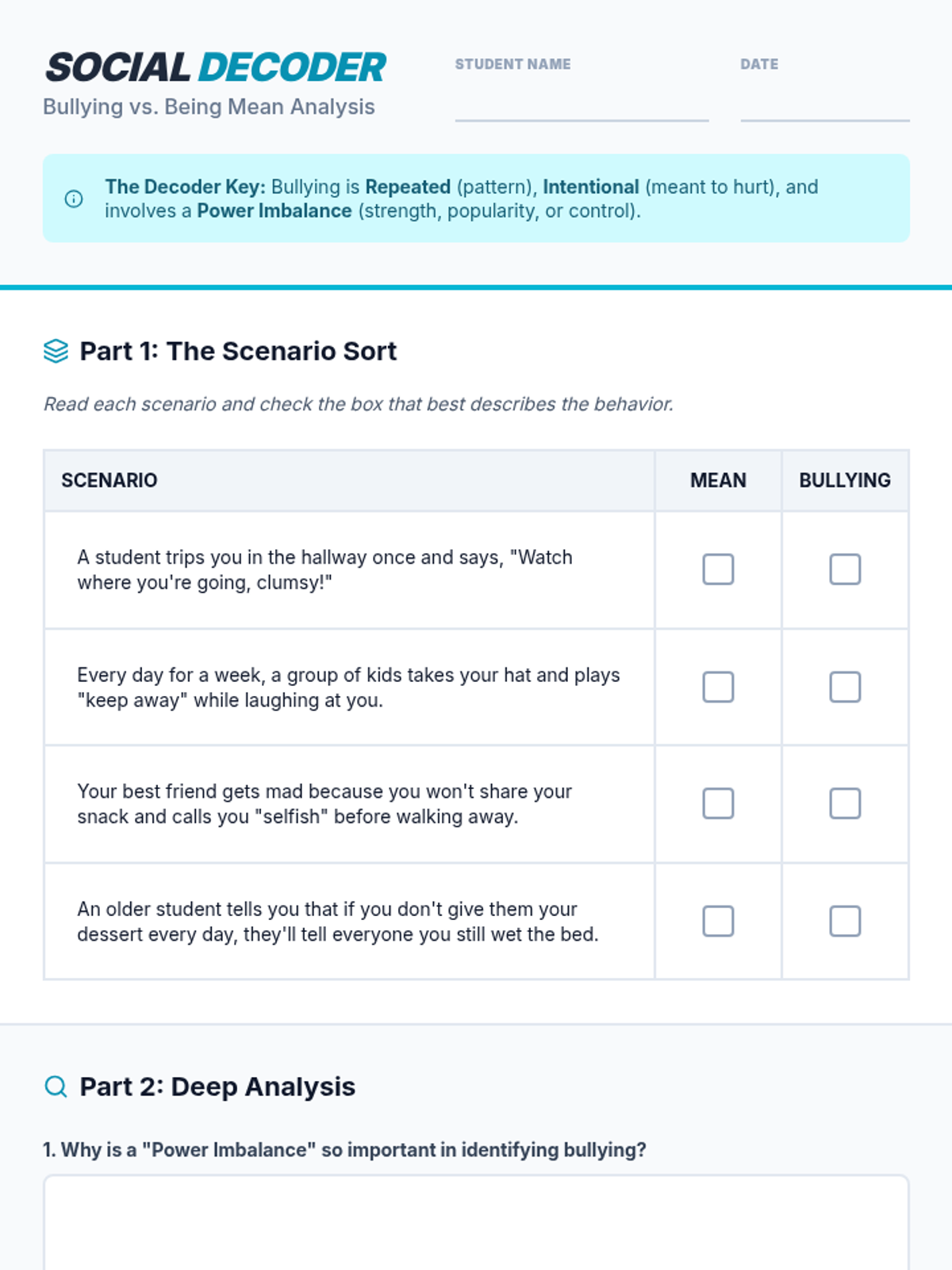
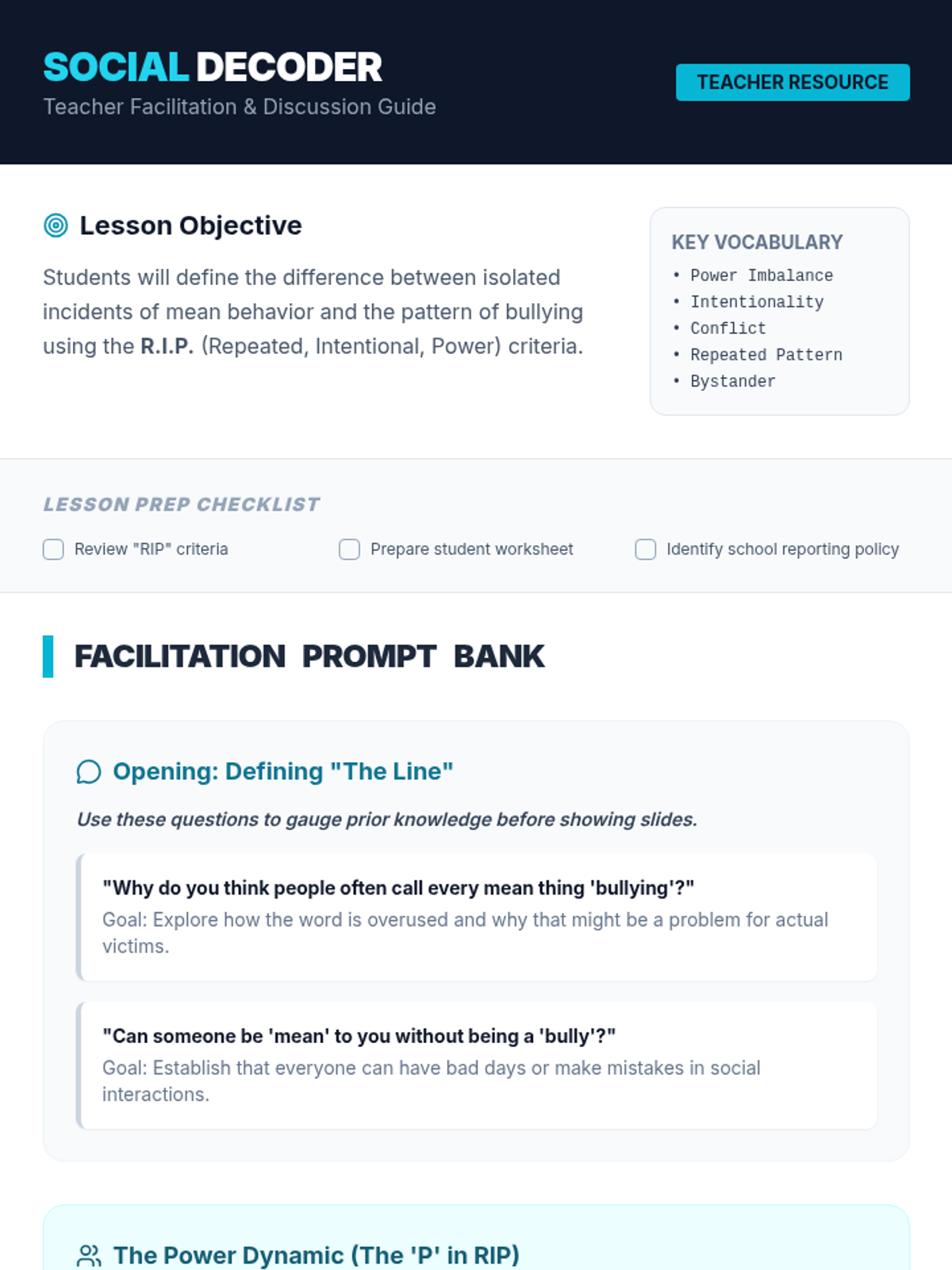
This lesson helps students distinguish between 'mean' behavior and 'bullying' by analyzing intent, frequency, and power dynamics through interactive scenarios and discussion.
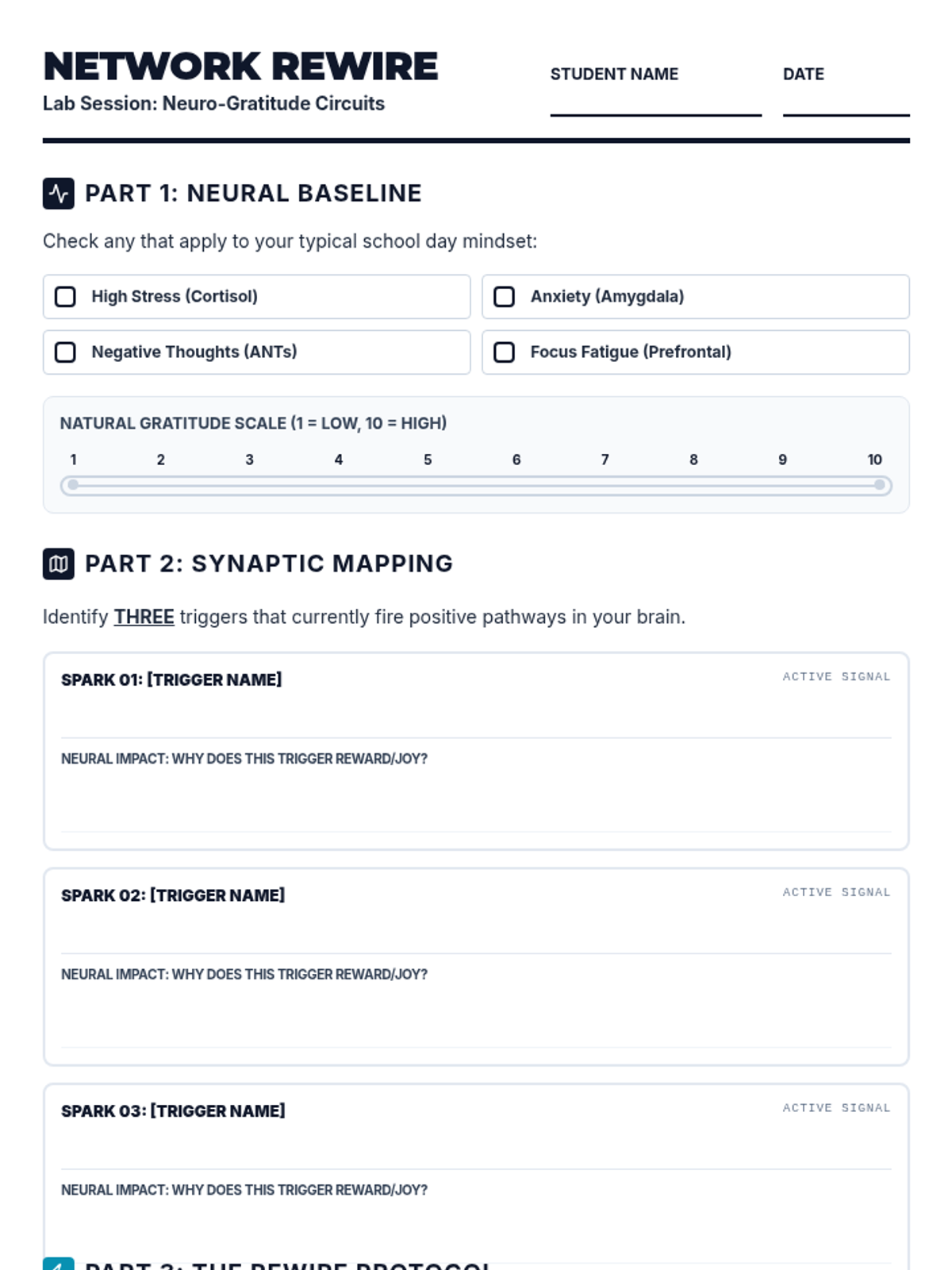
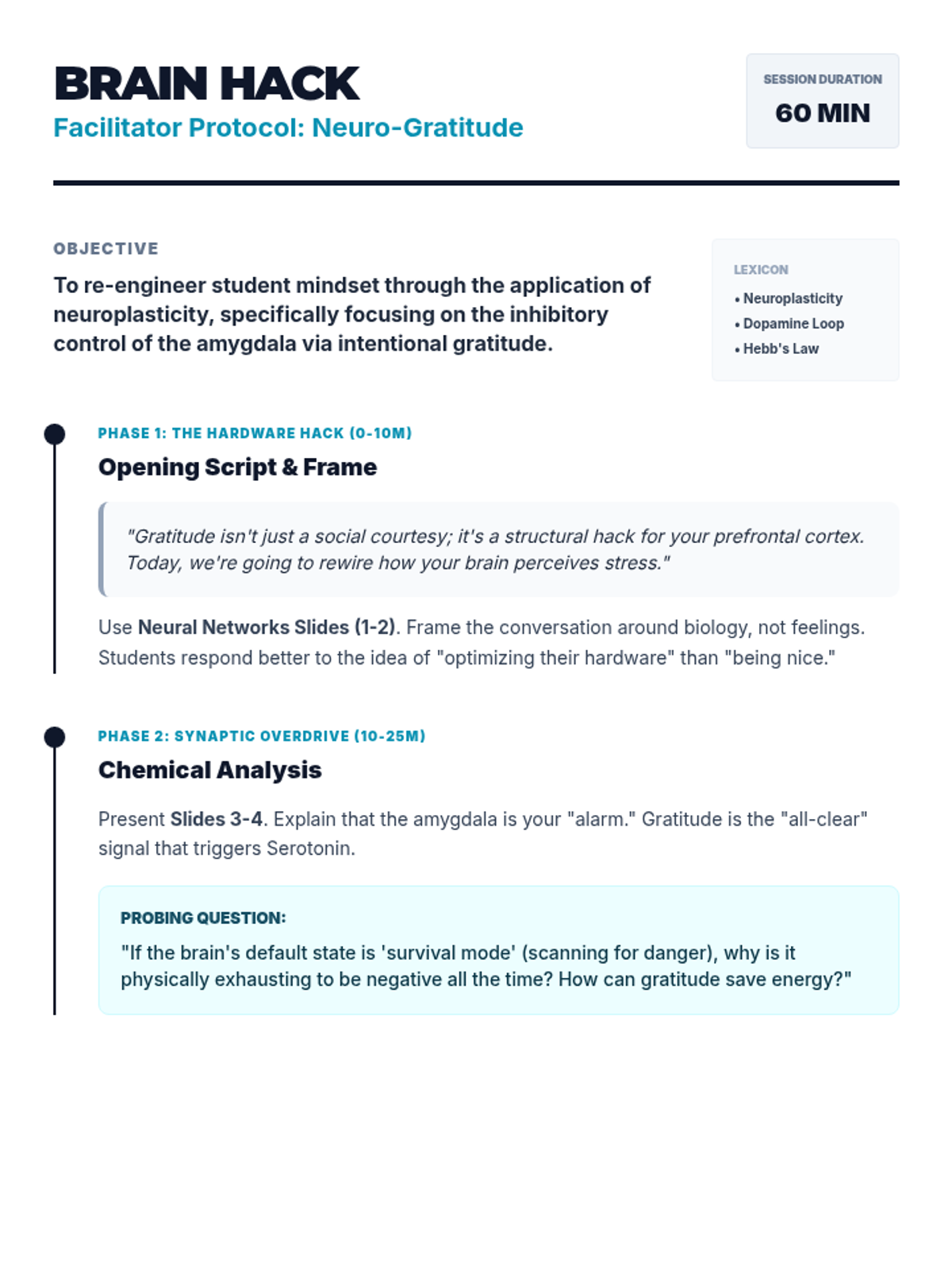
A deep dive into the neuroscience of gratitude, exploring how thankfulness triggers chemical changes in the brain and strengthens neural pathways for long-term well-being. Students will map their own 'gratitude circuits' and practice evidence-based techniques to rewire their thinking.
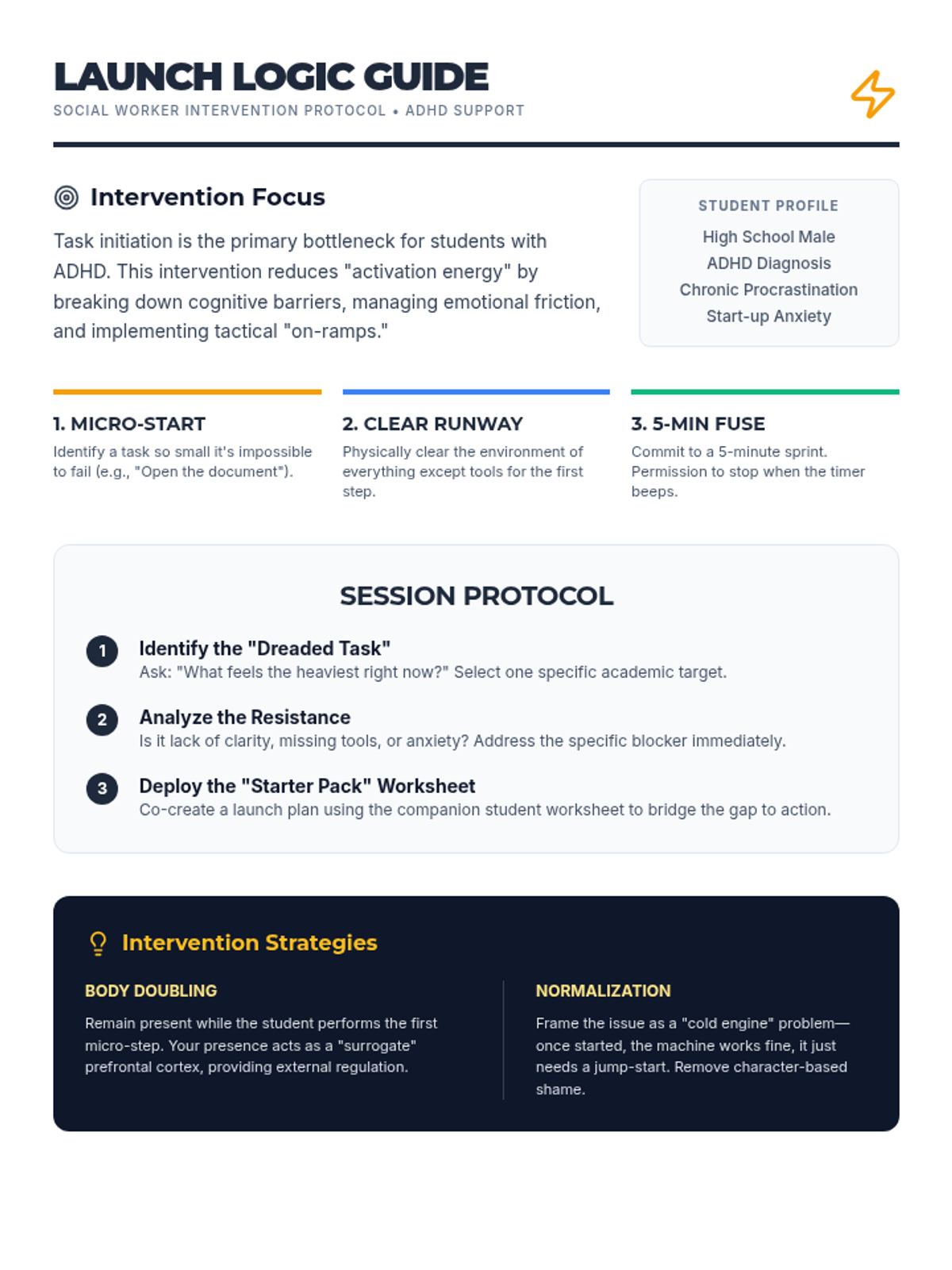
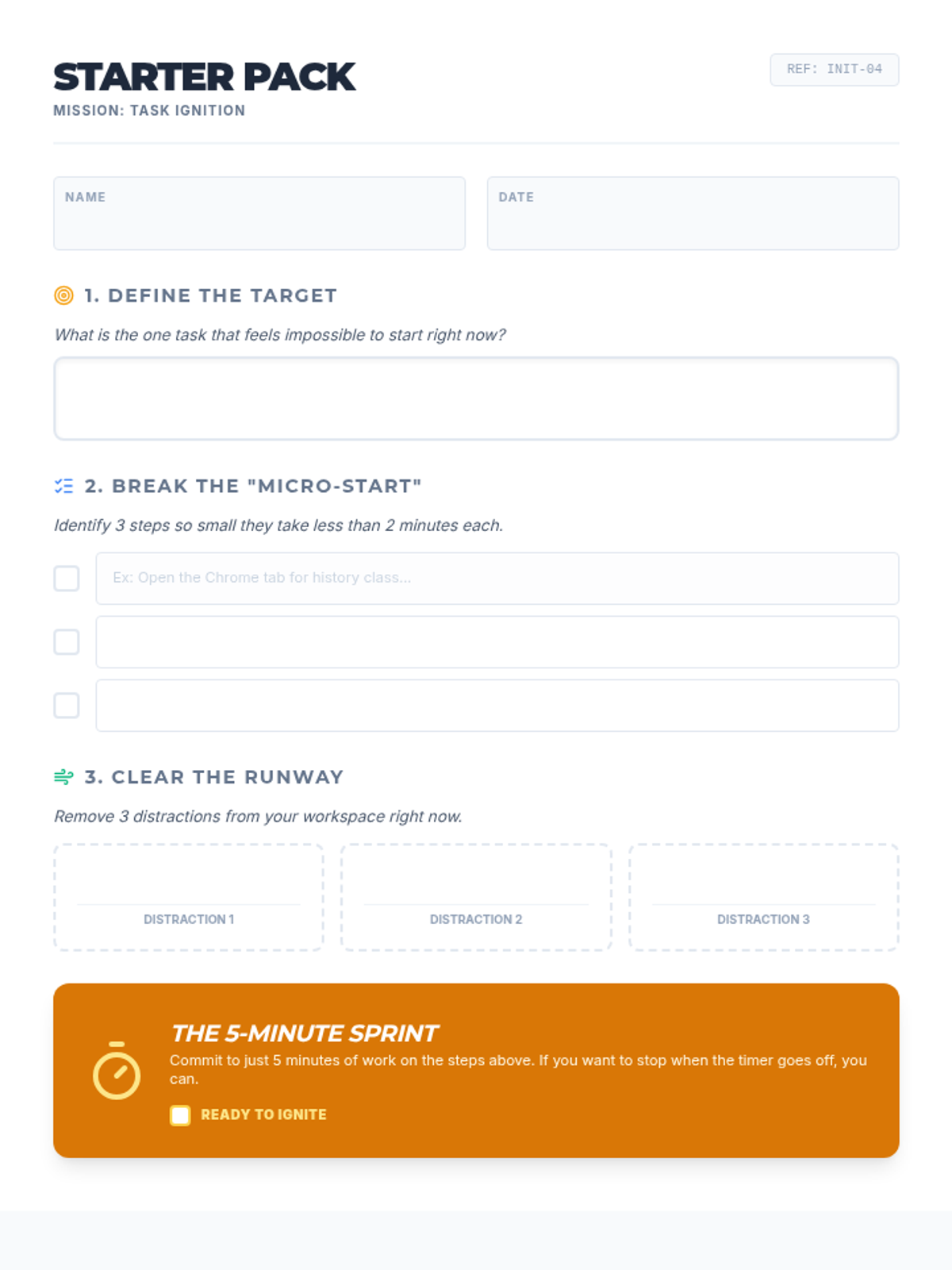
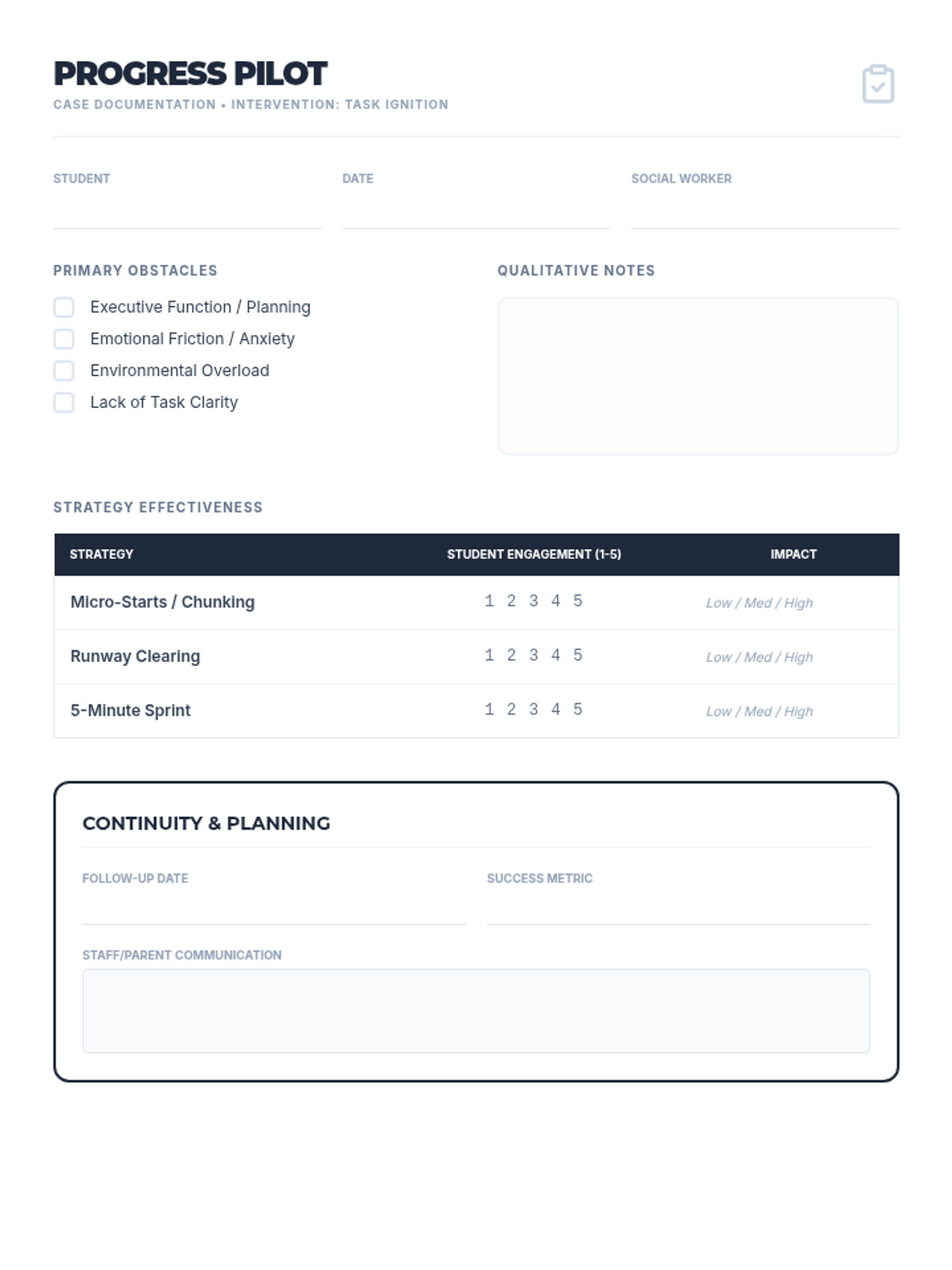
A social work intervention focusing on overcoming task initiation barriers for high school students with ADHD. This lesson provides tactical strategies to bridge the gap between intention and action.
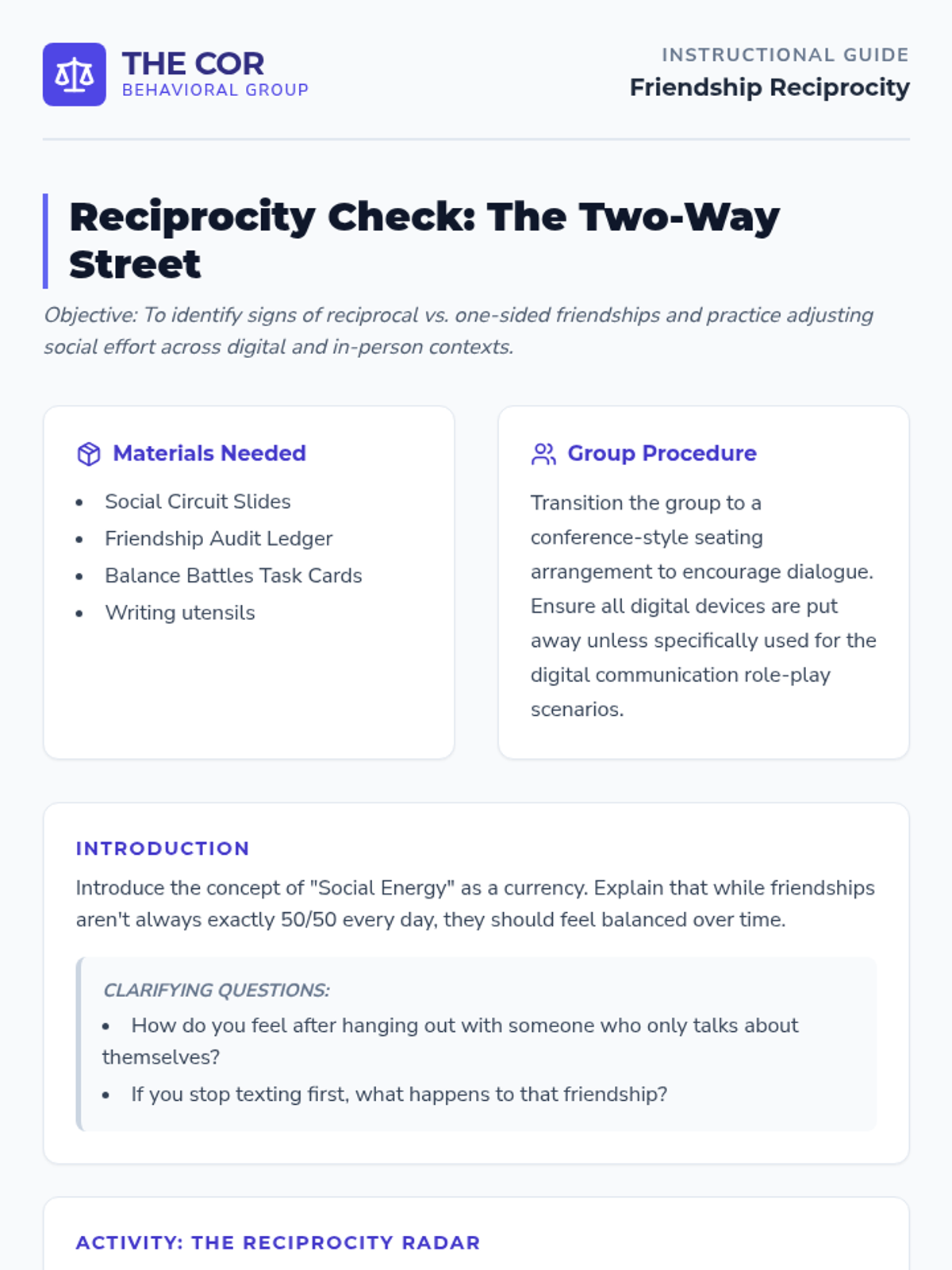
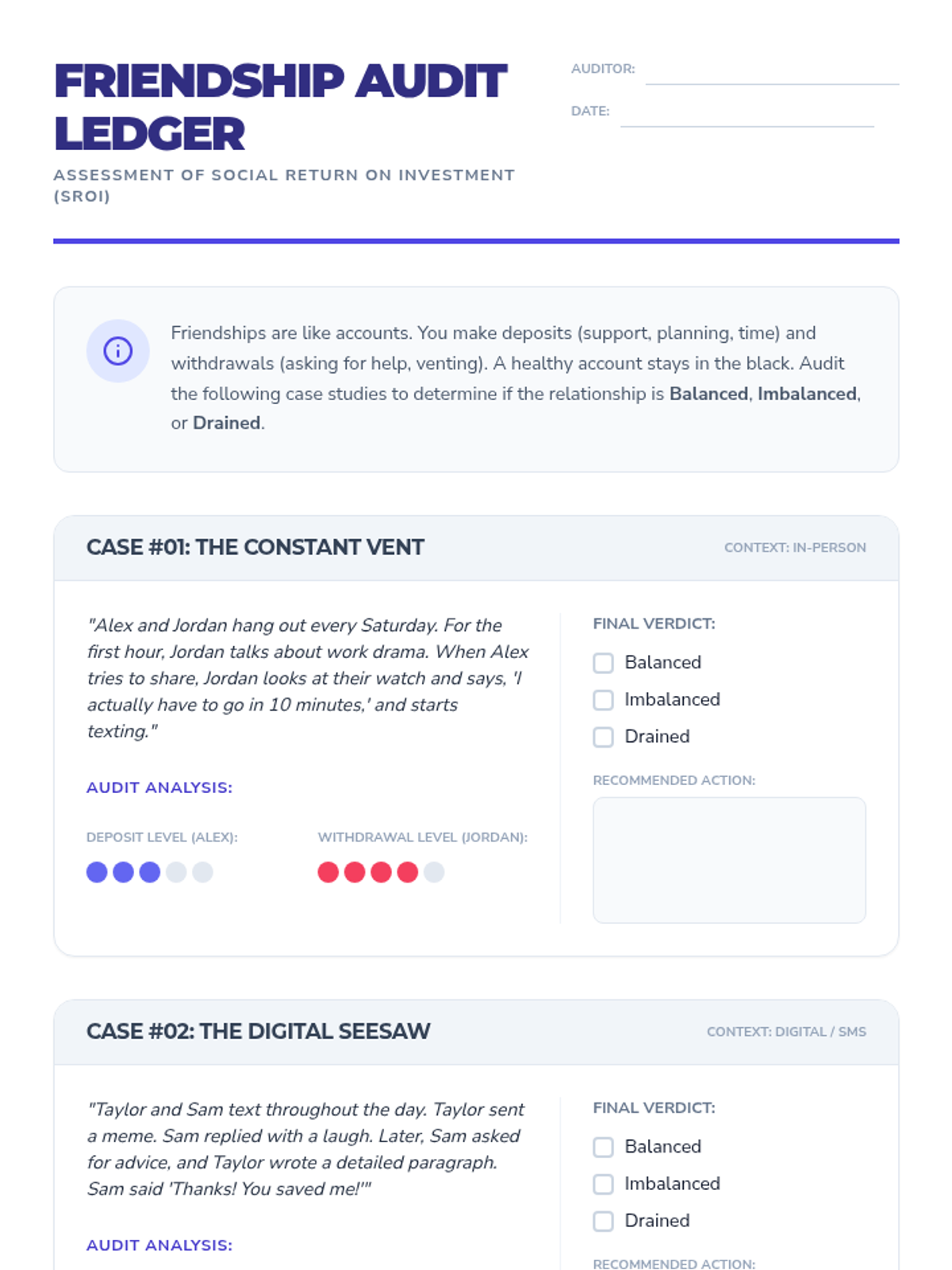
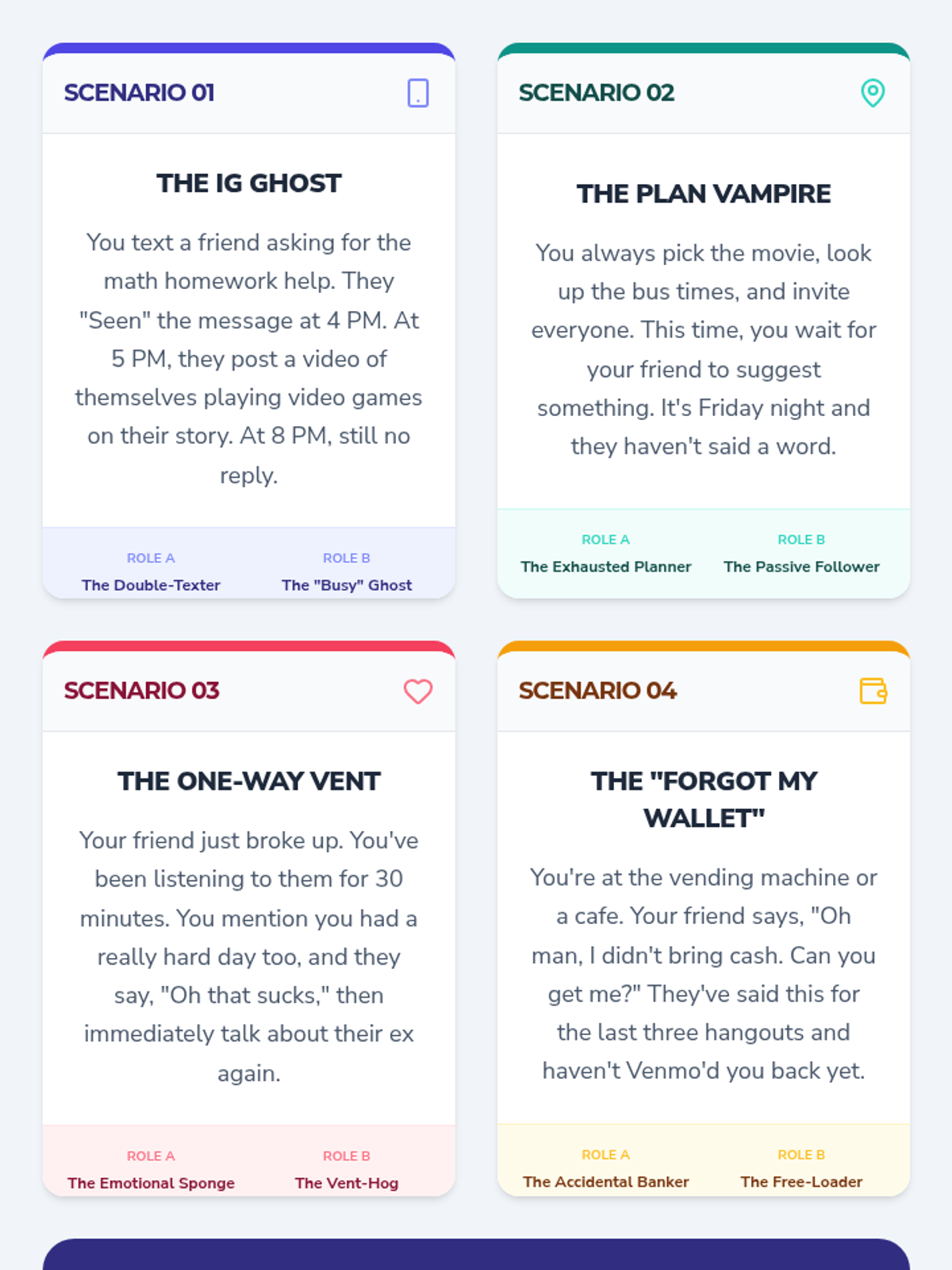
A comprehensive lesson designed for young adults to evaluate the health and balance of their friendships, focusing on identifying one-sided dynamics and practicing strategies for healthy reciprocity in both digital and in-person interactions.
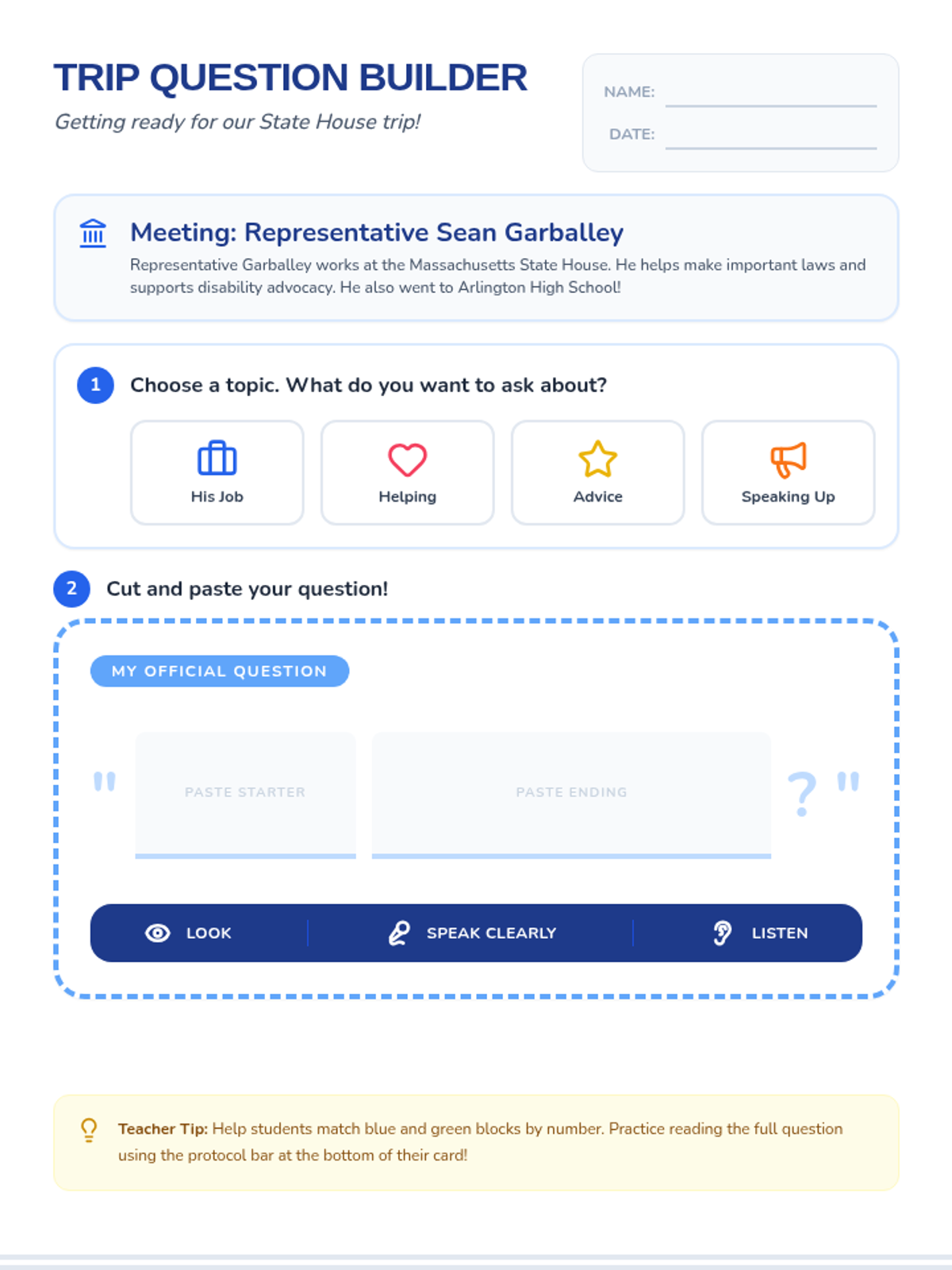
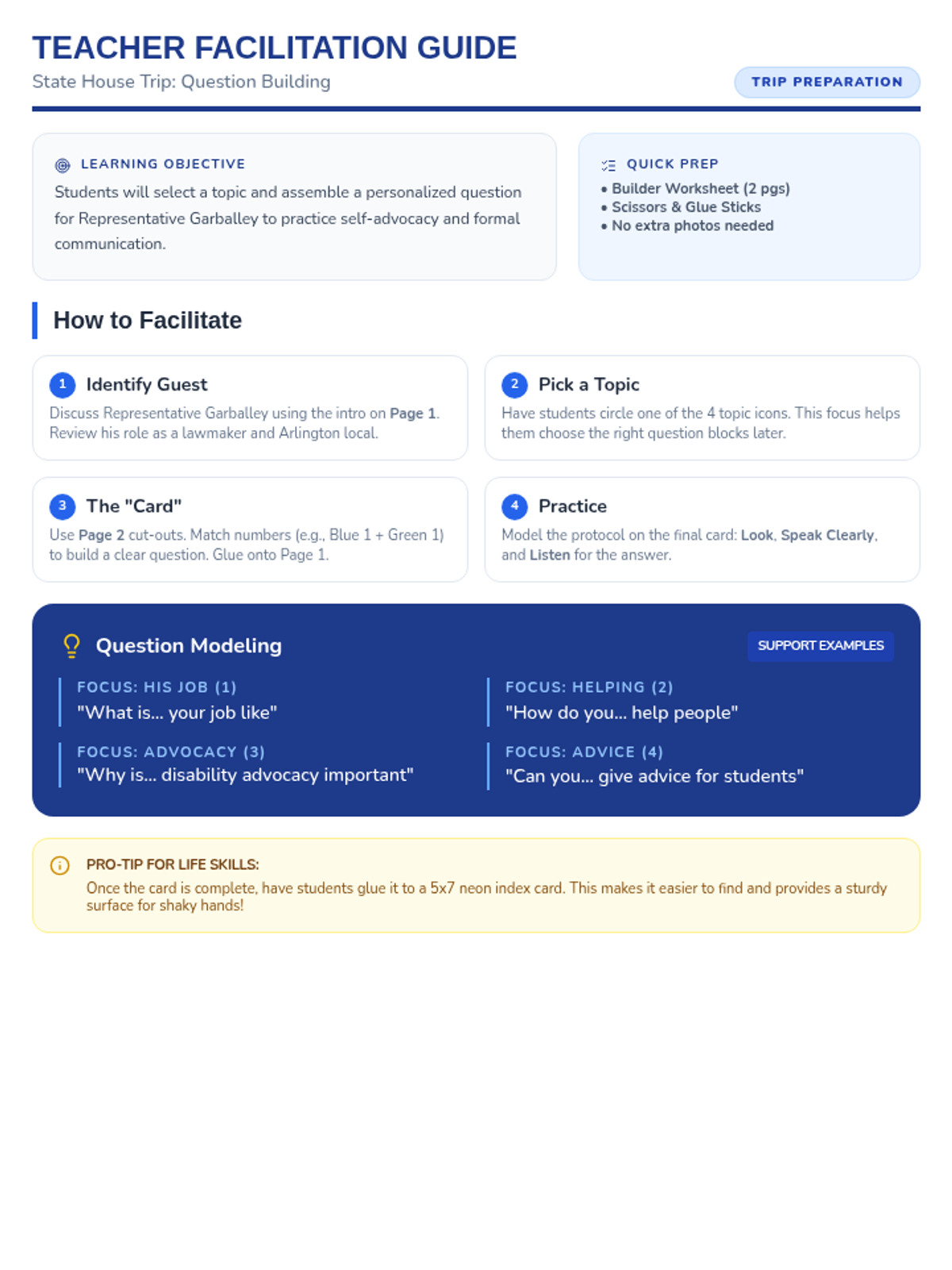
A preparation lesson for students to practice self-advocacy and speaking skills ahead of their field trip to the Massachusetts State House. Students will build a personalized question for Representative Sean Garballey.
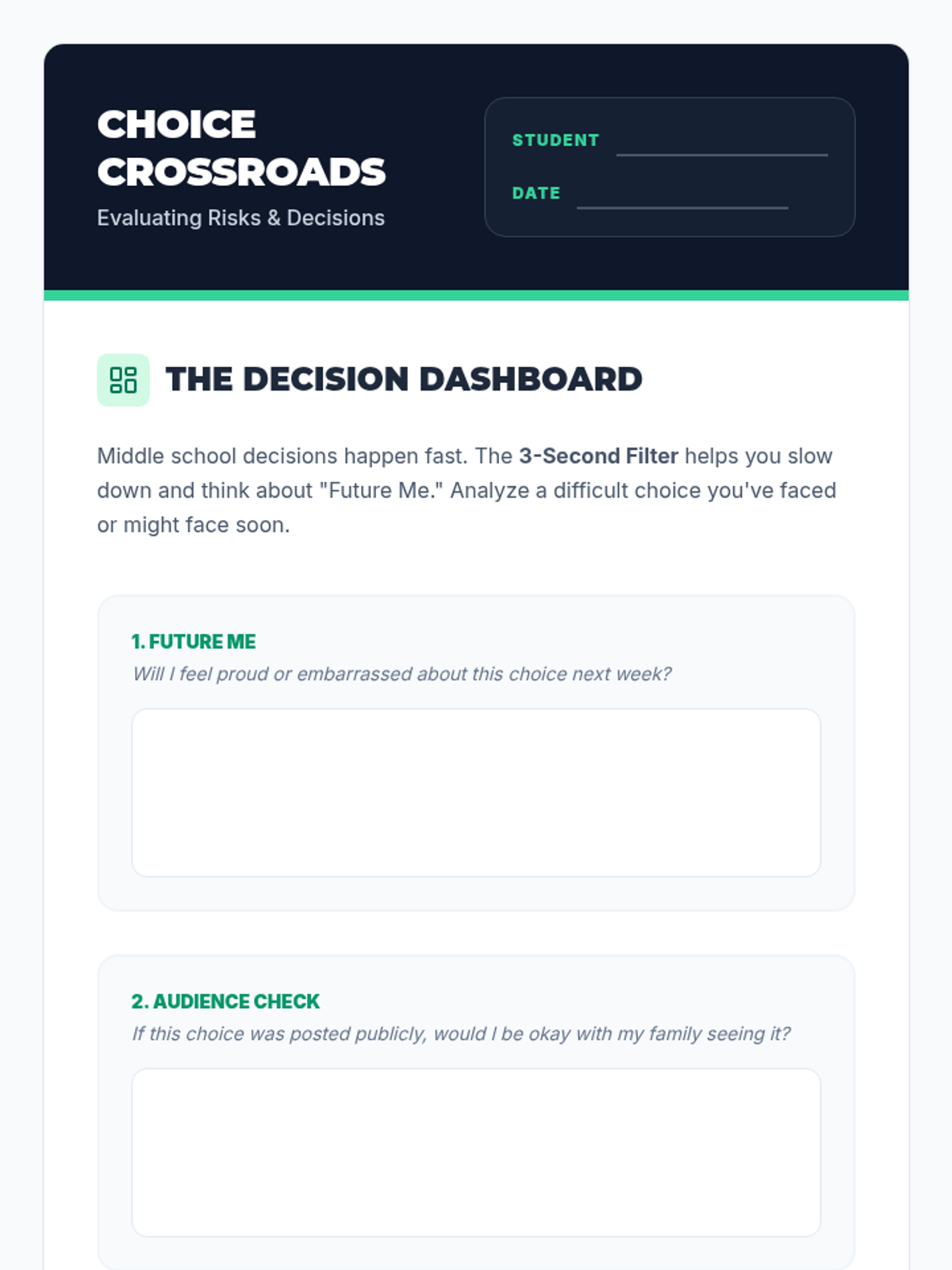
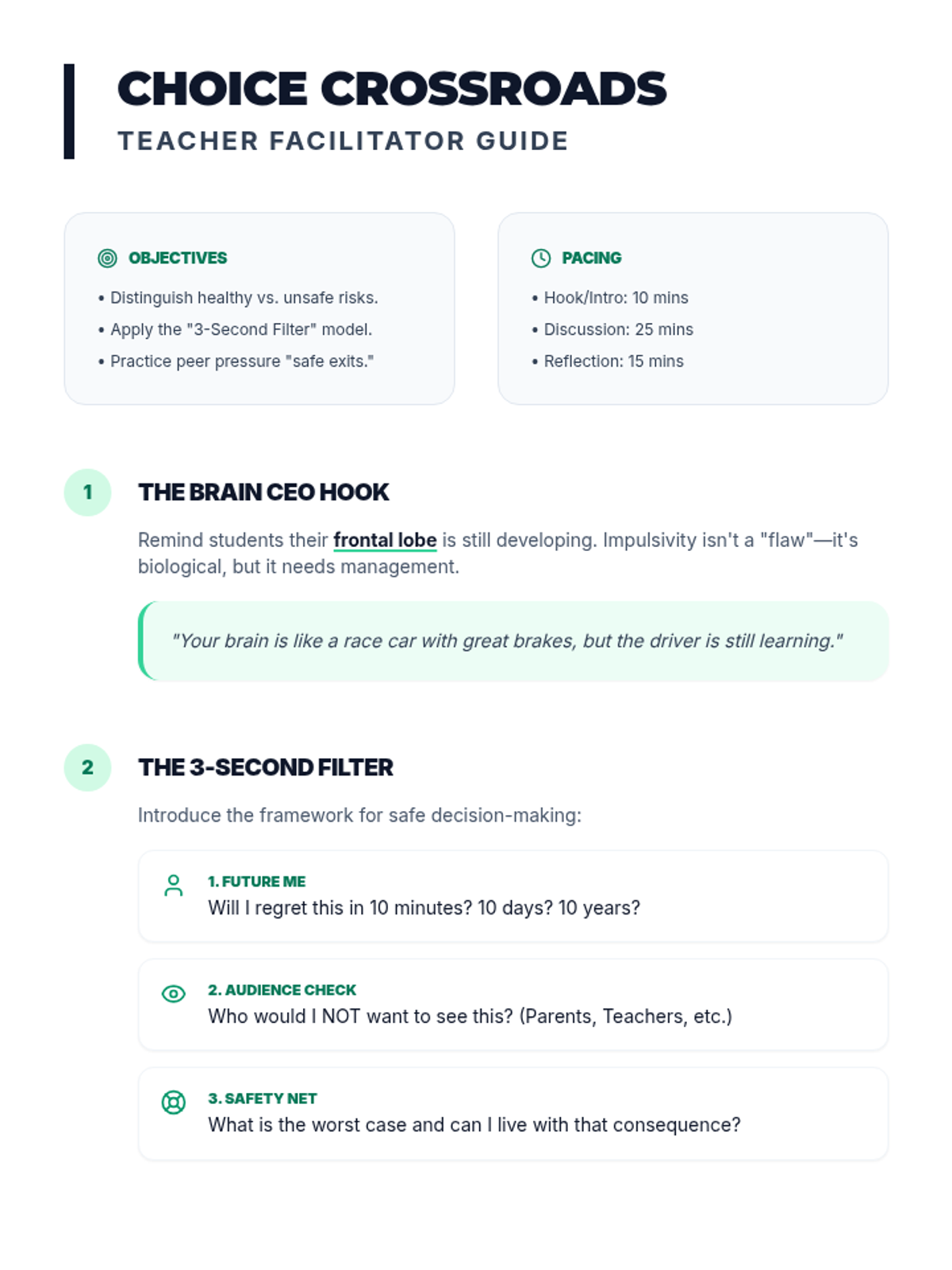
A social-emotional learning lesson for 7th graders focused on identifying risks, evaluating consequences, and practicing the decision-making process in social, digital, and physical environments.
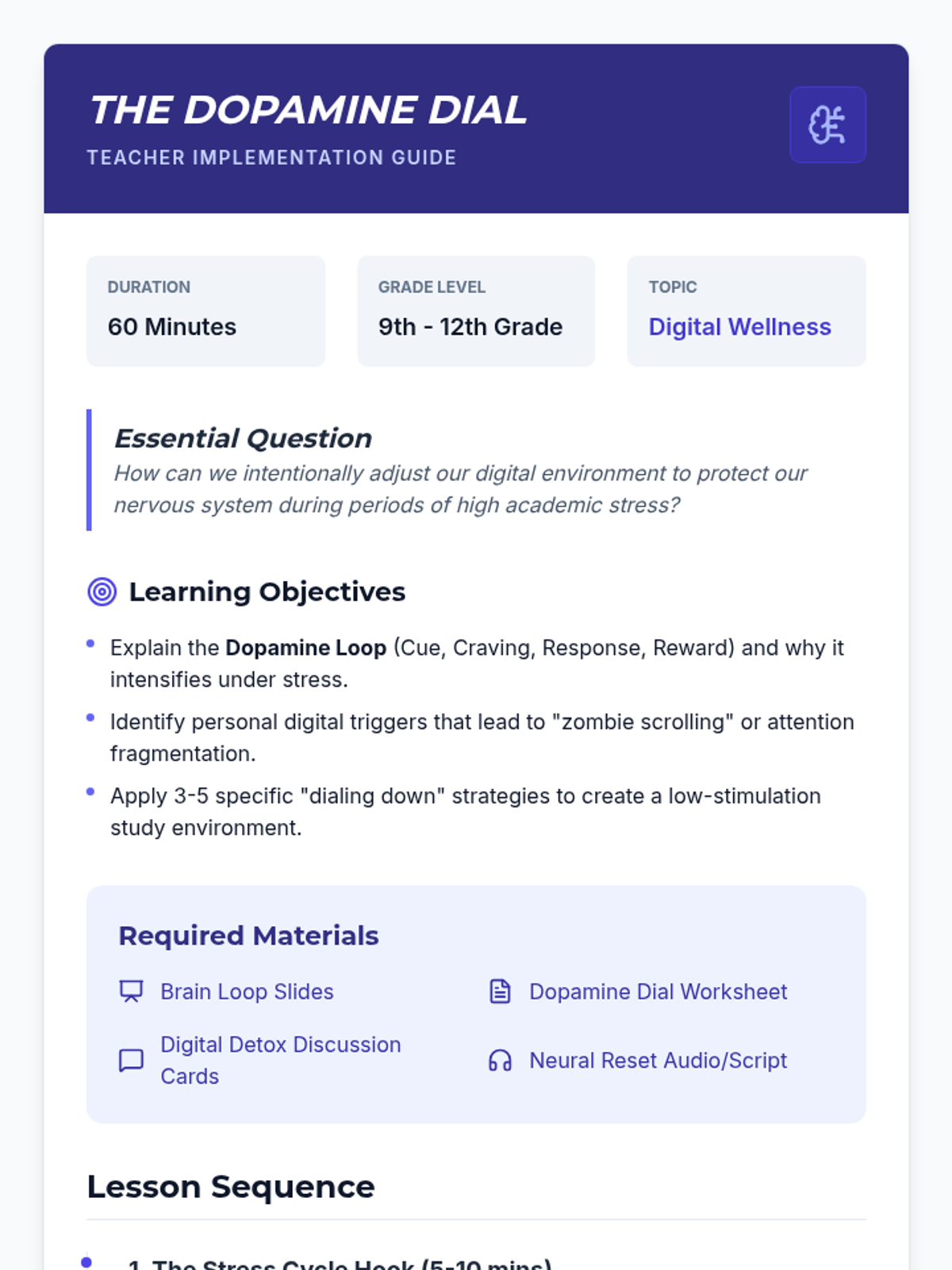
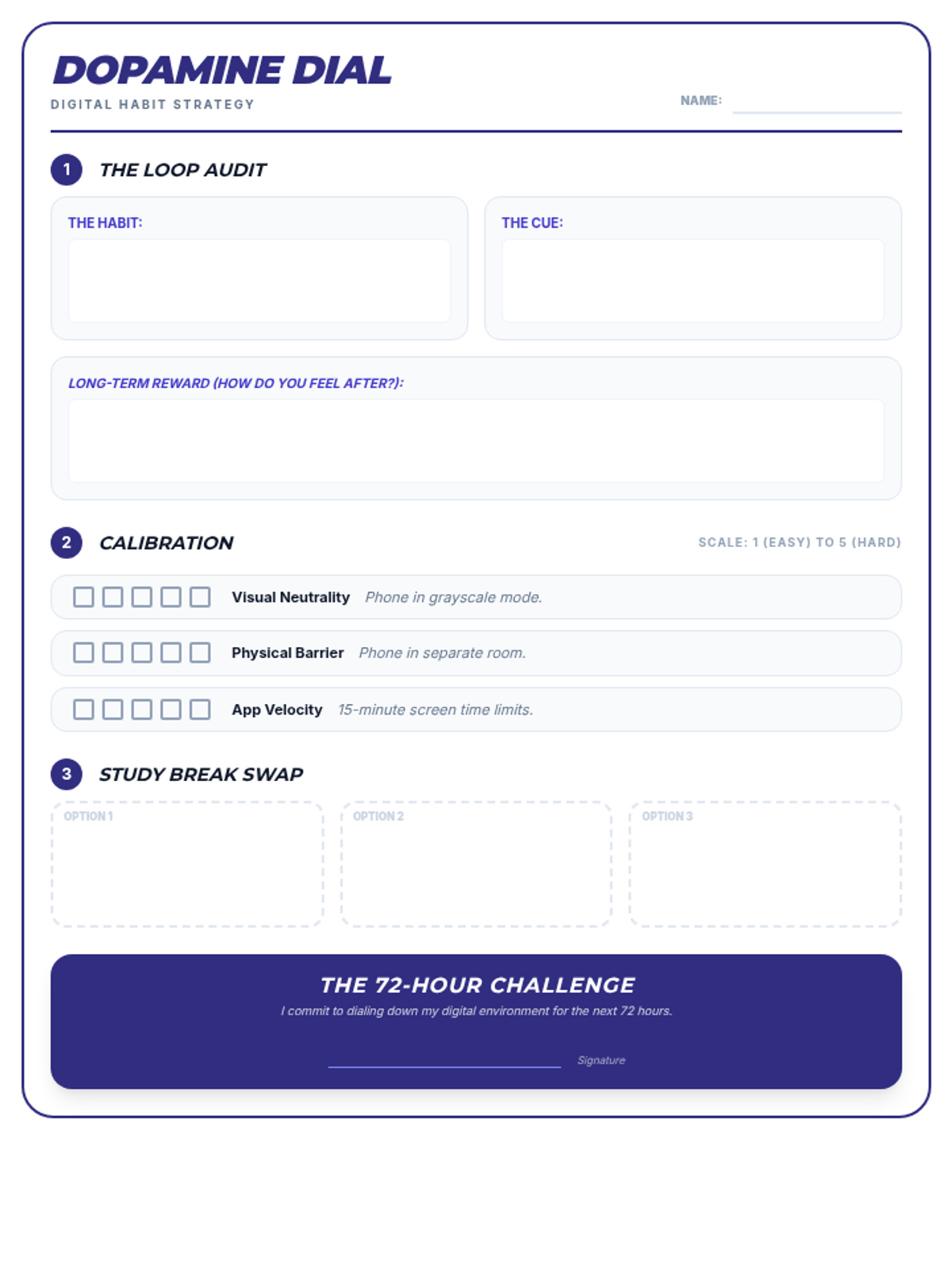
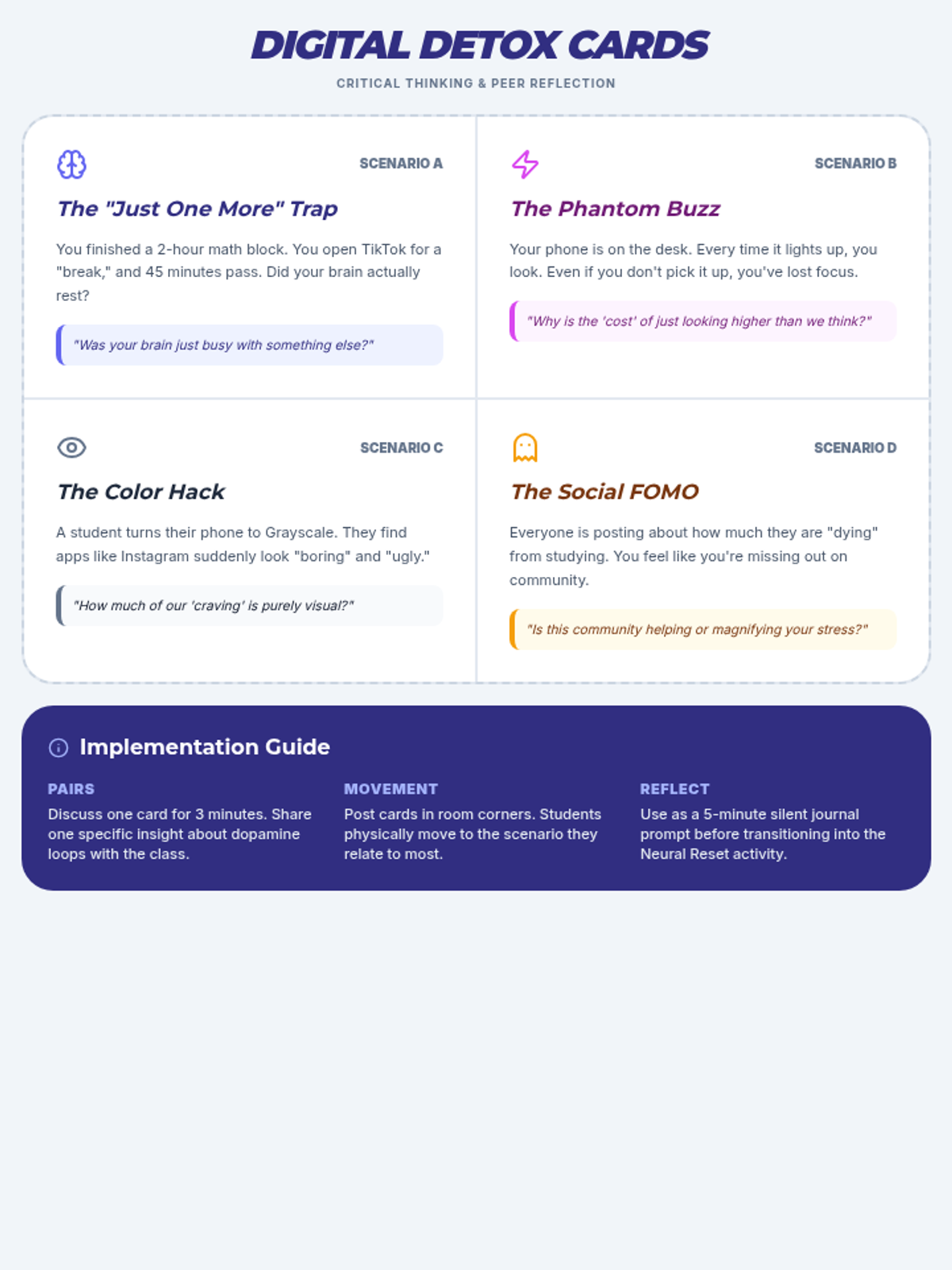
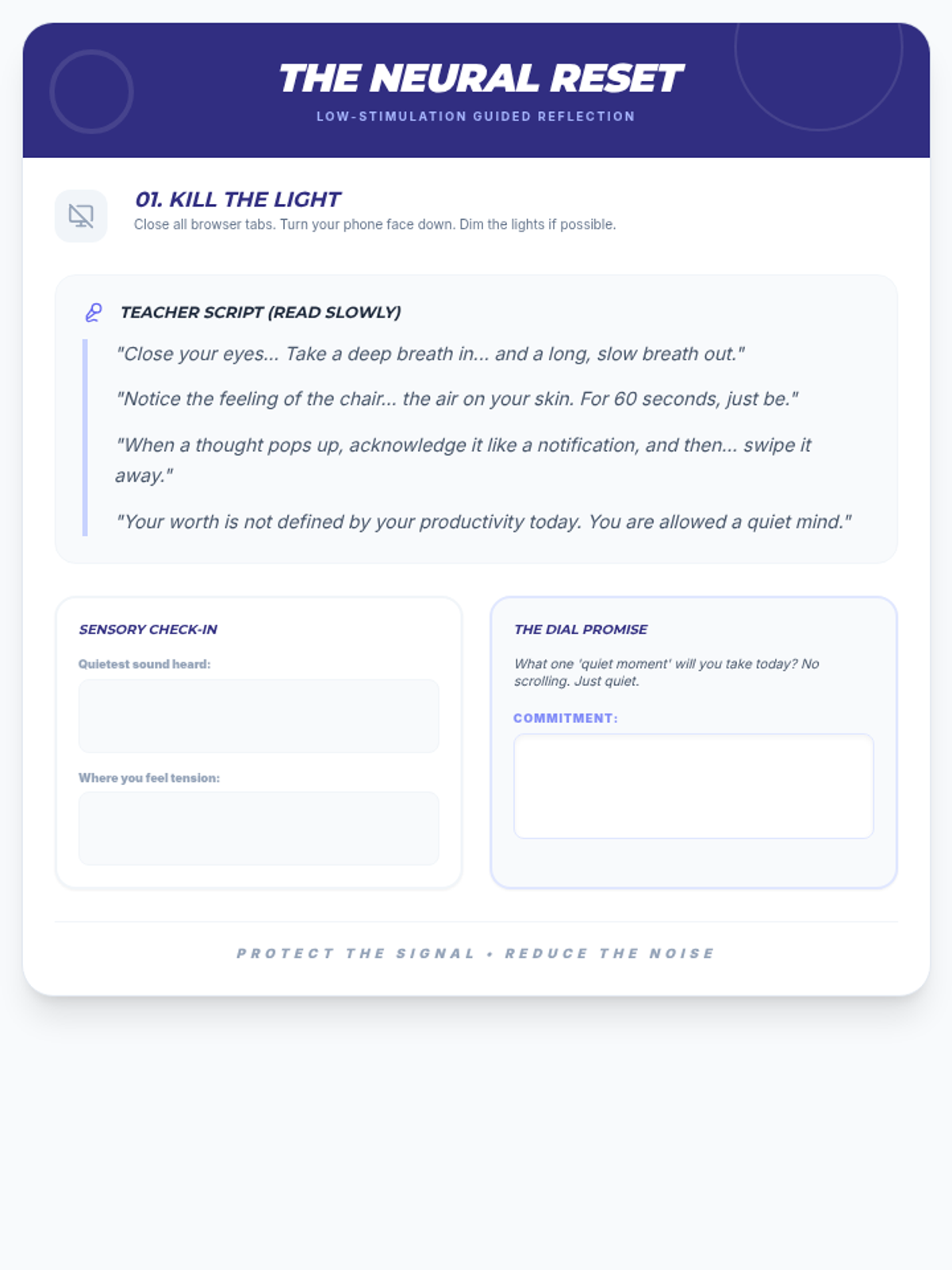
A high-impact lesson for high school students on managing digital dopamine loops during stressful periods like finals and AP exams. Students will learn the neurobiology of craving and practical 'dialing' techniques to protect their focus and mental health.
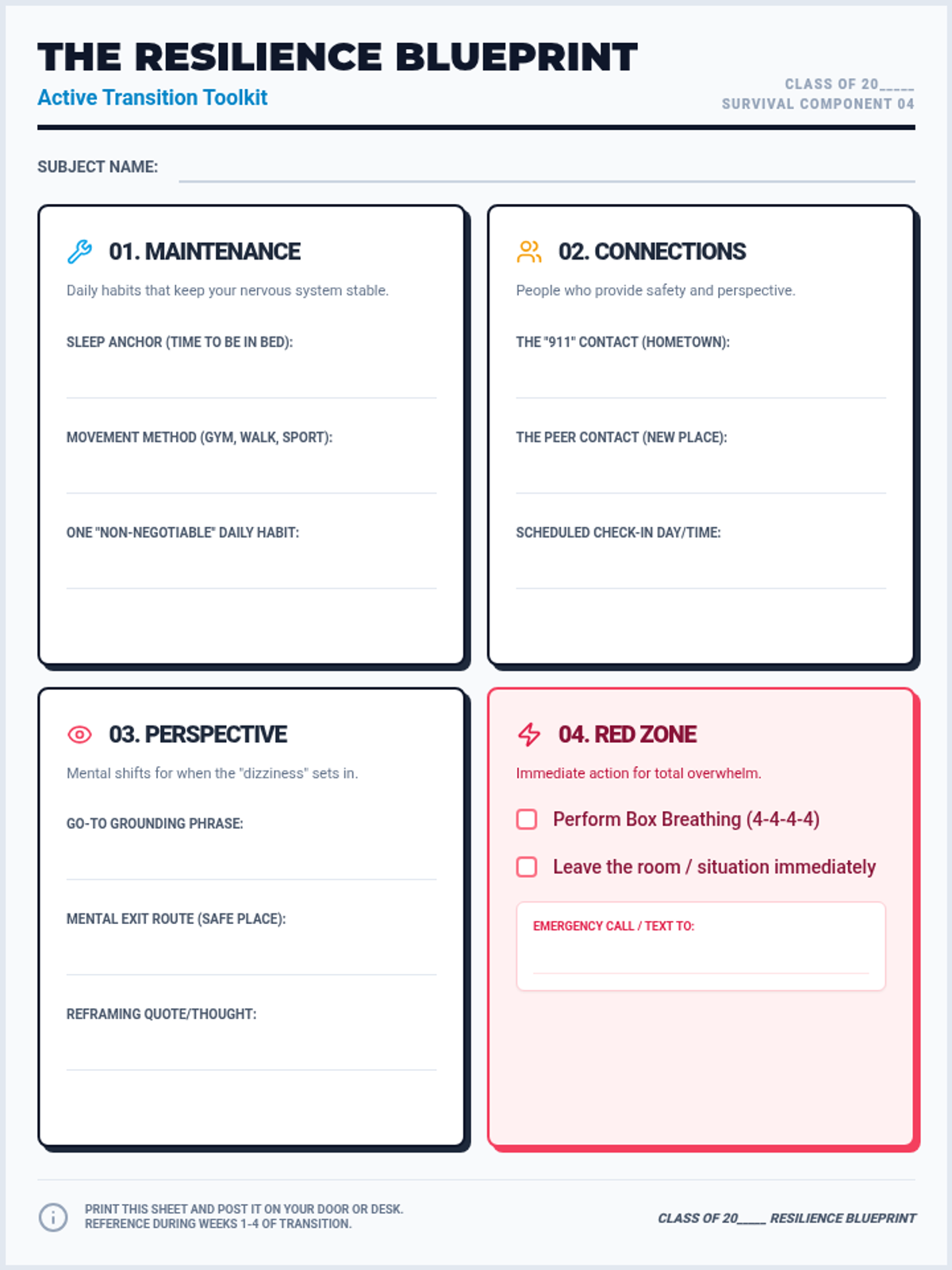
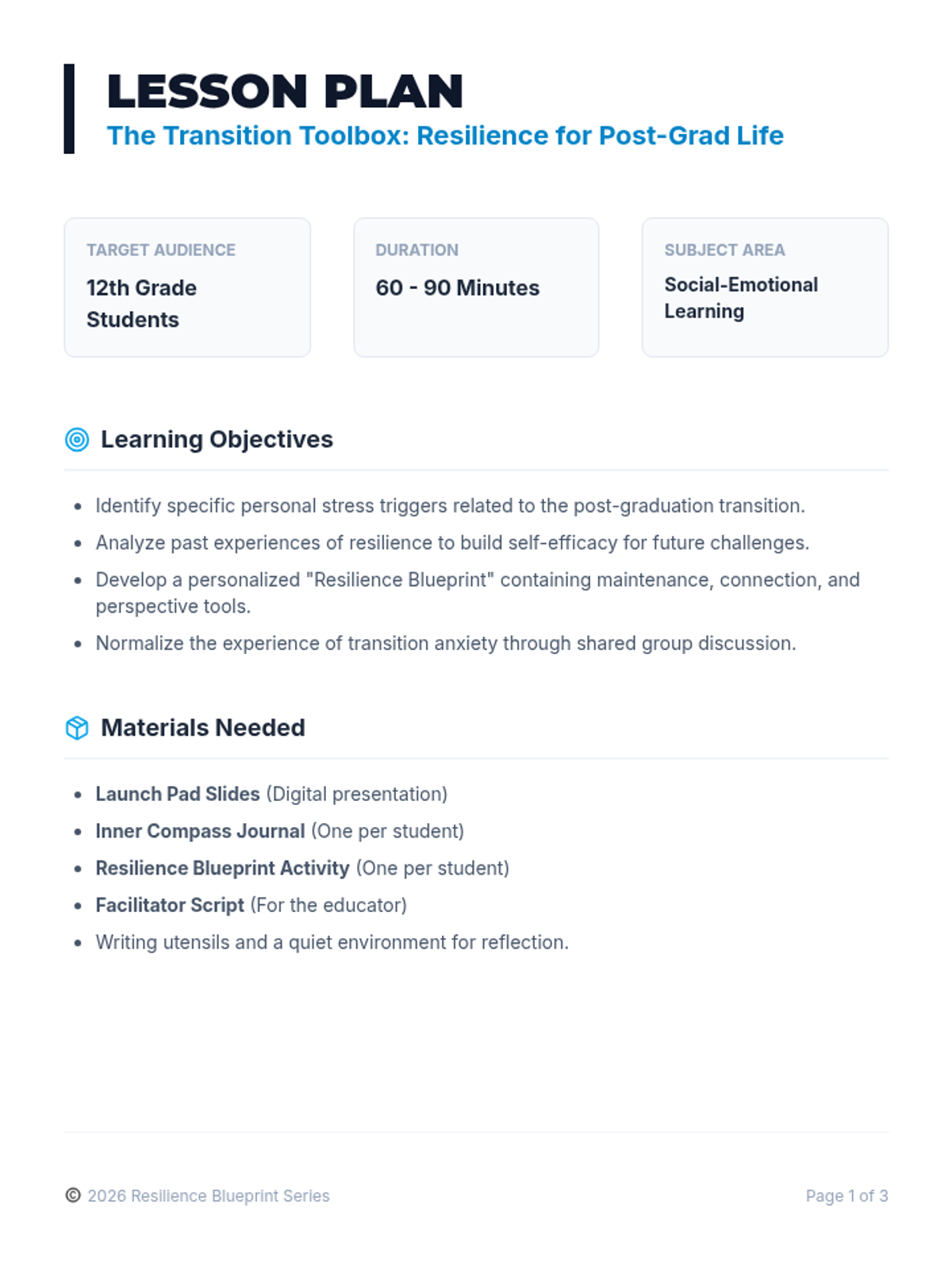
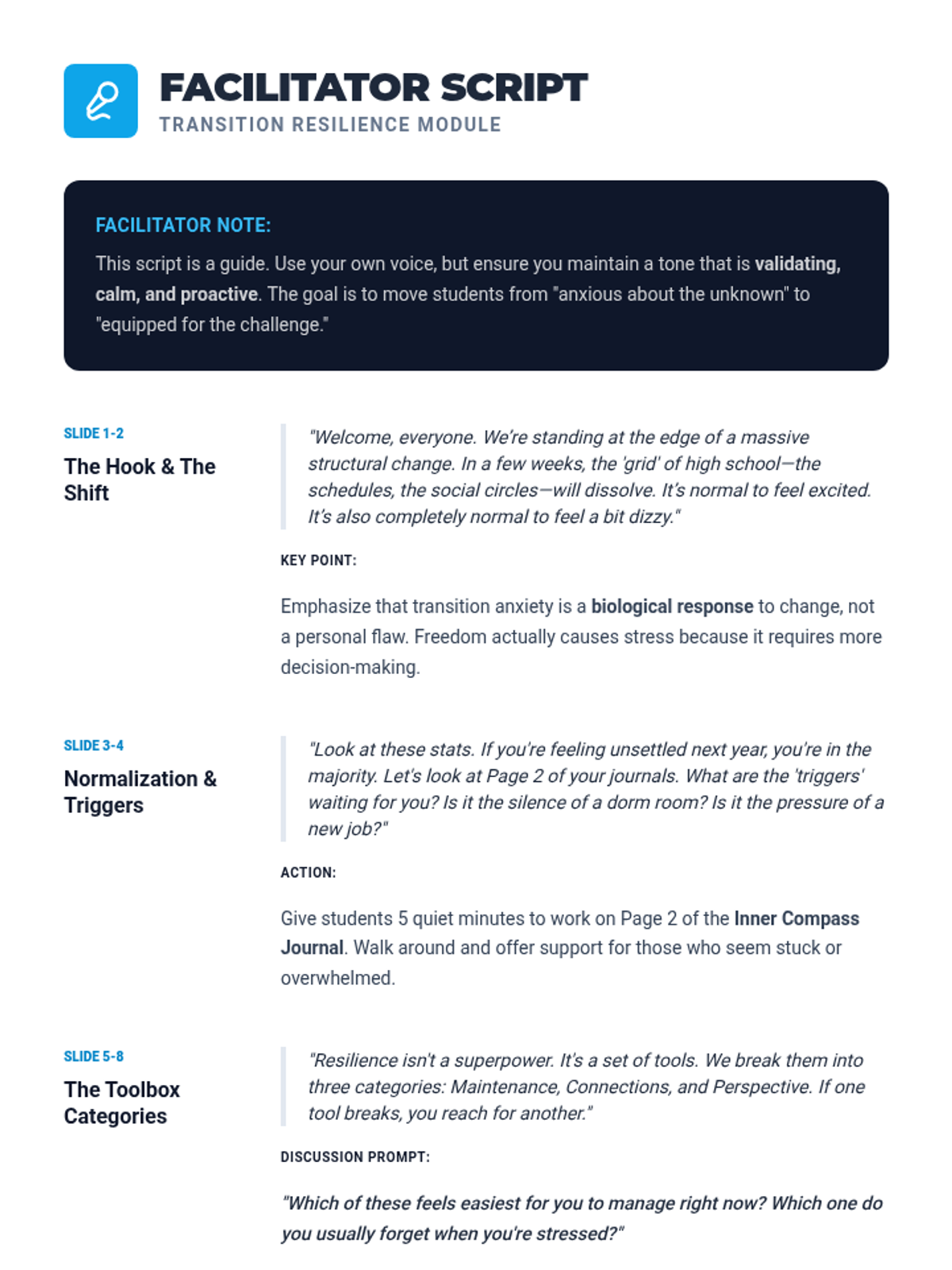
A comprehensive social-emotional module designed to equip graduating seniors with resilience strategies and coping mechanisms for the transition to post-grad life. through self-reflection and group discussion.
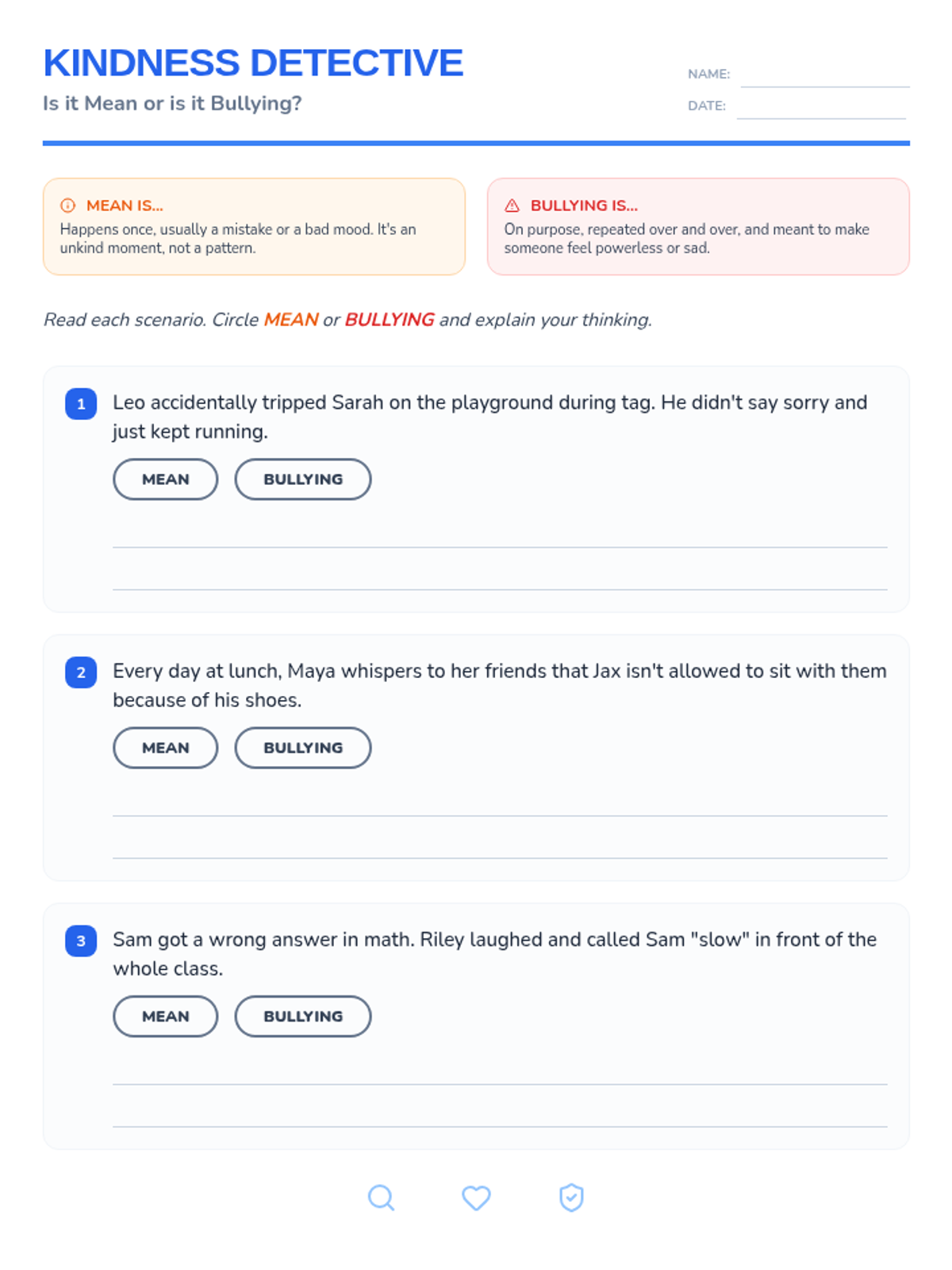
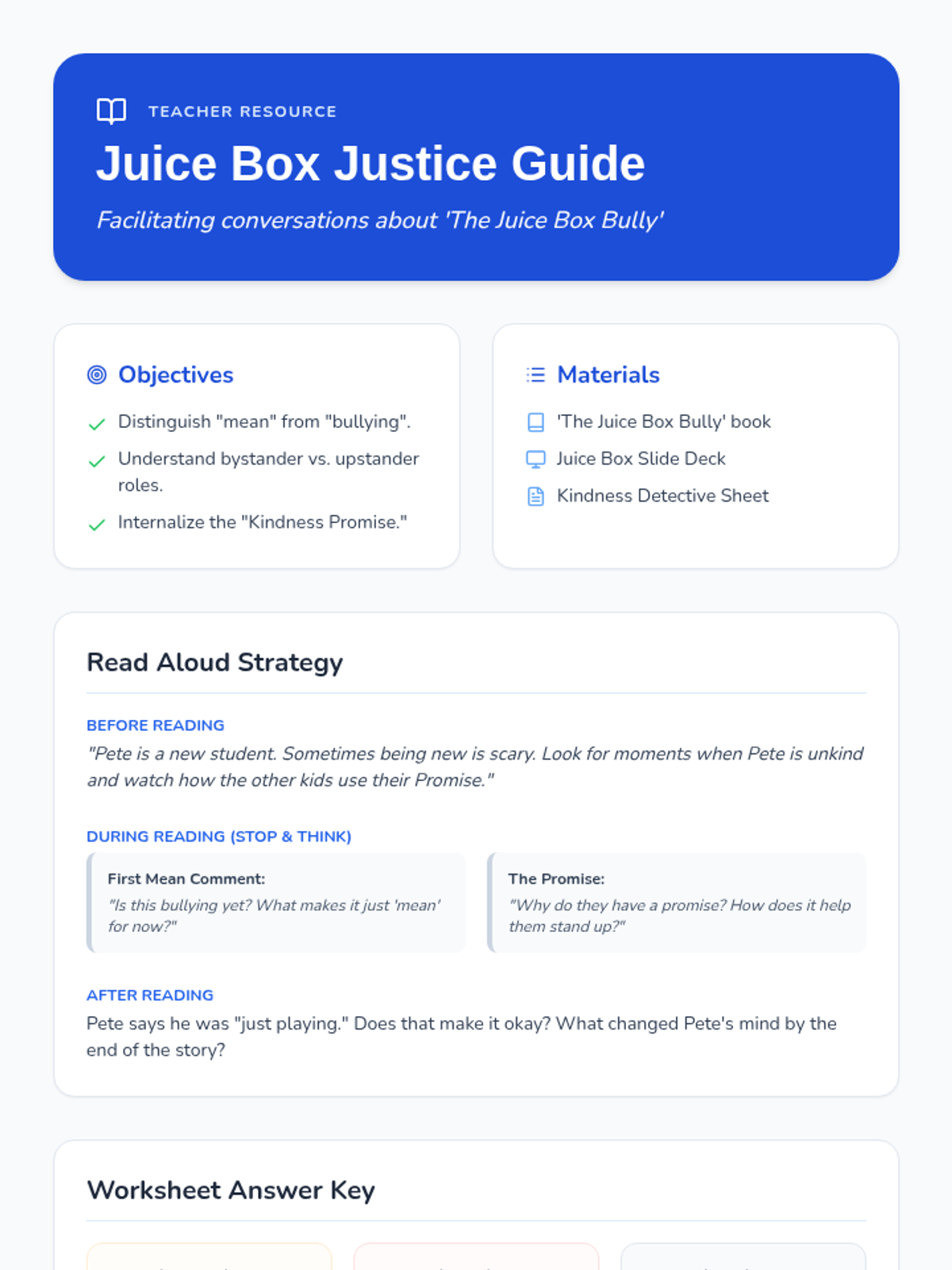
A lesson centered on the book 'The Juice Box Bully', teaching 2nd graders to distinguish between one-time mean acts and repeated bullying behavior through class discussion and scenario analysis.
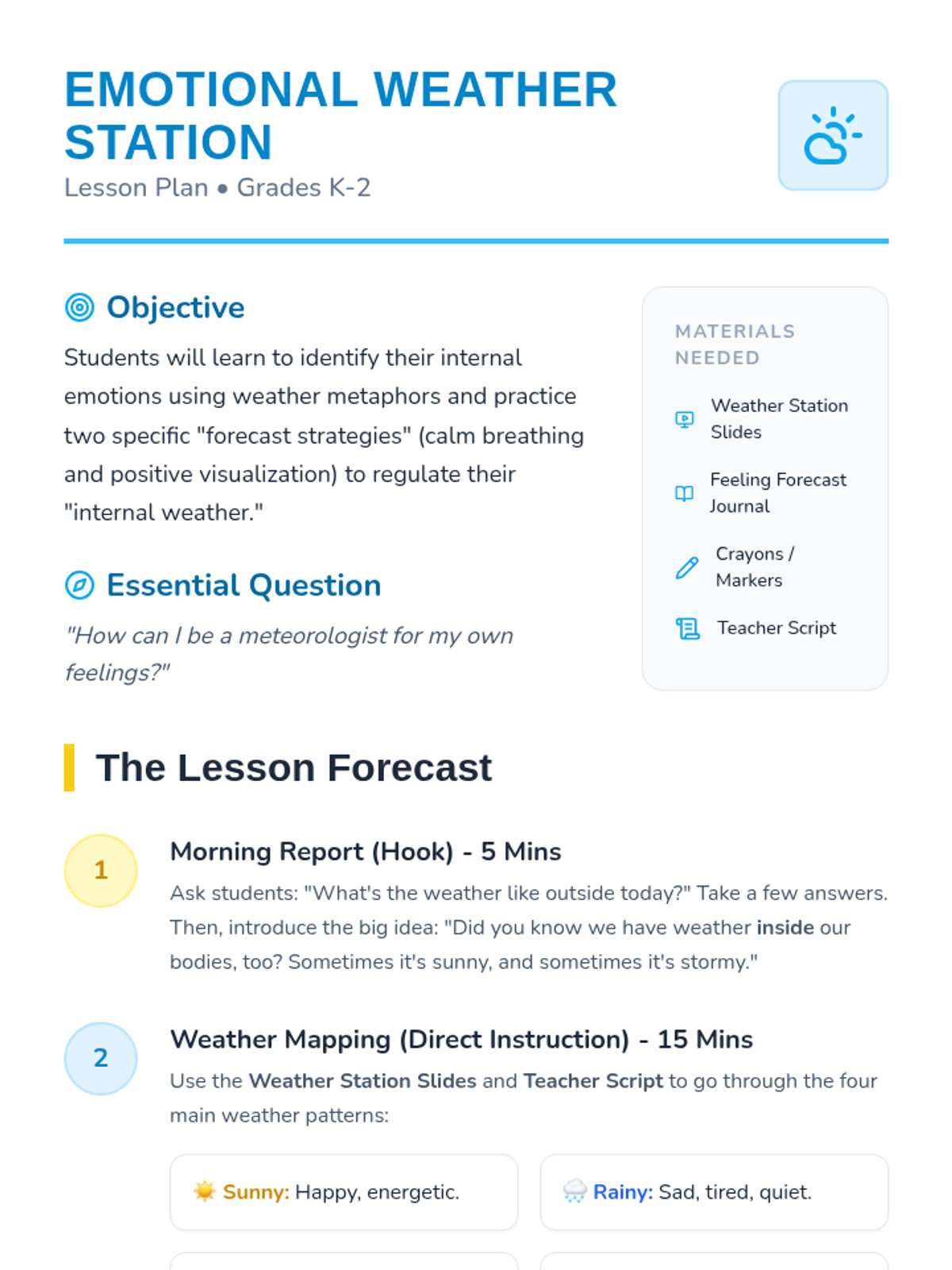
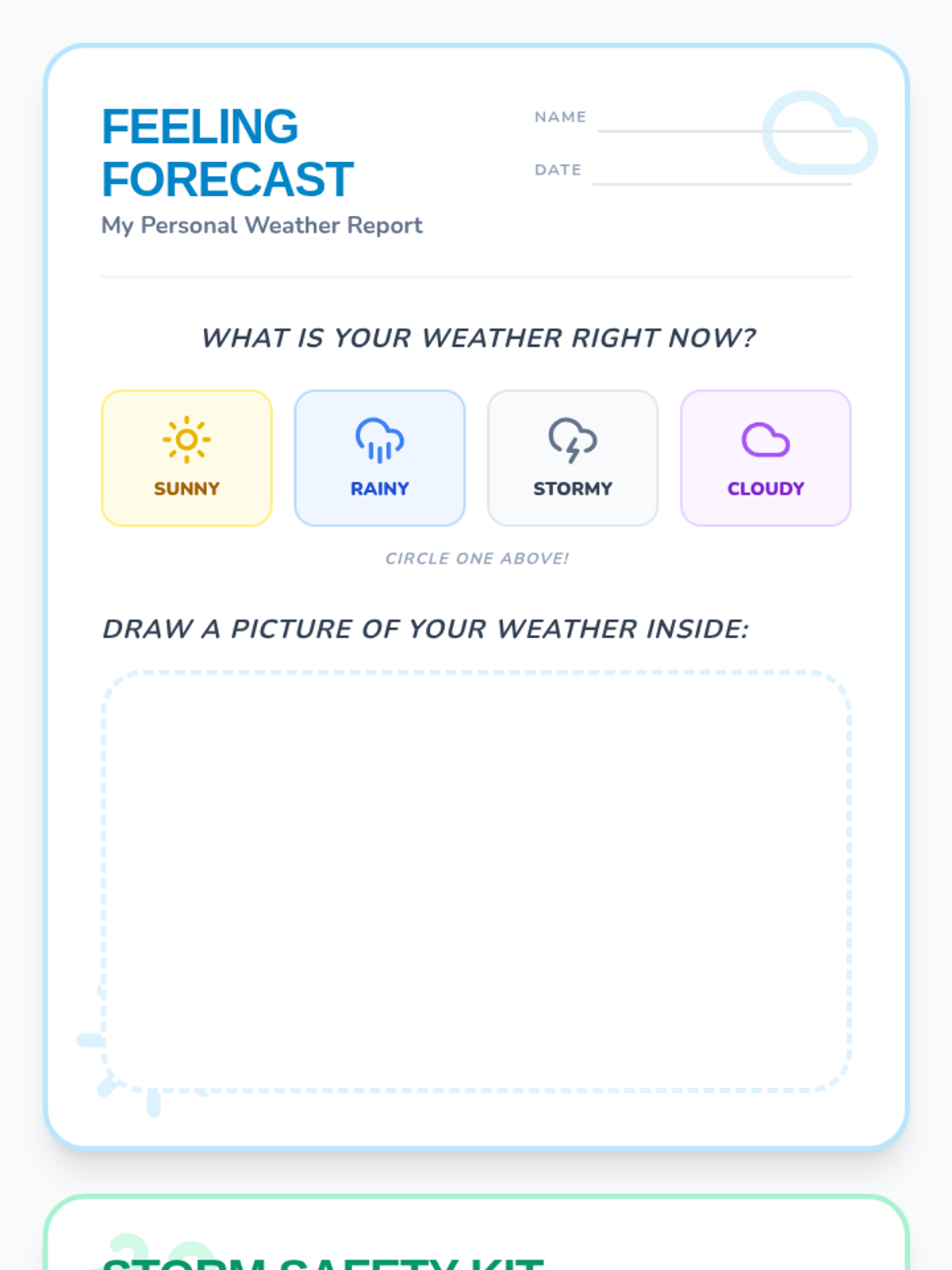
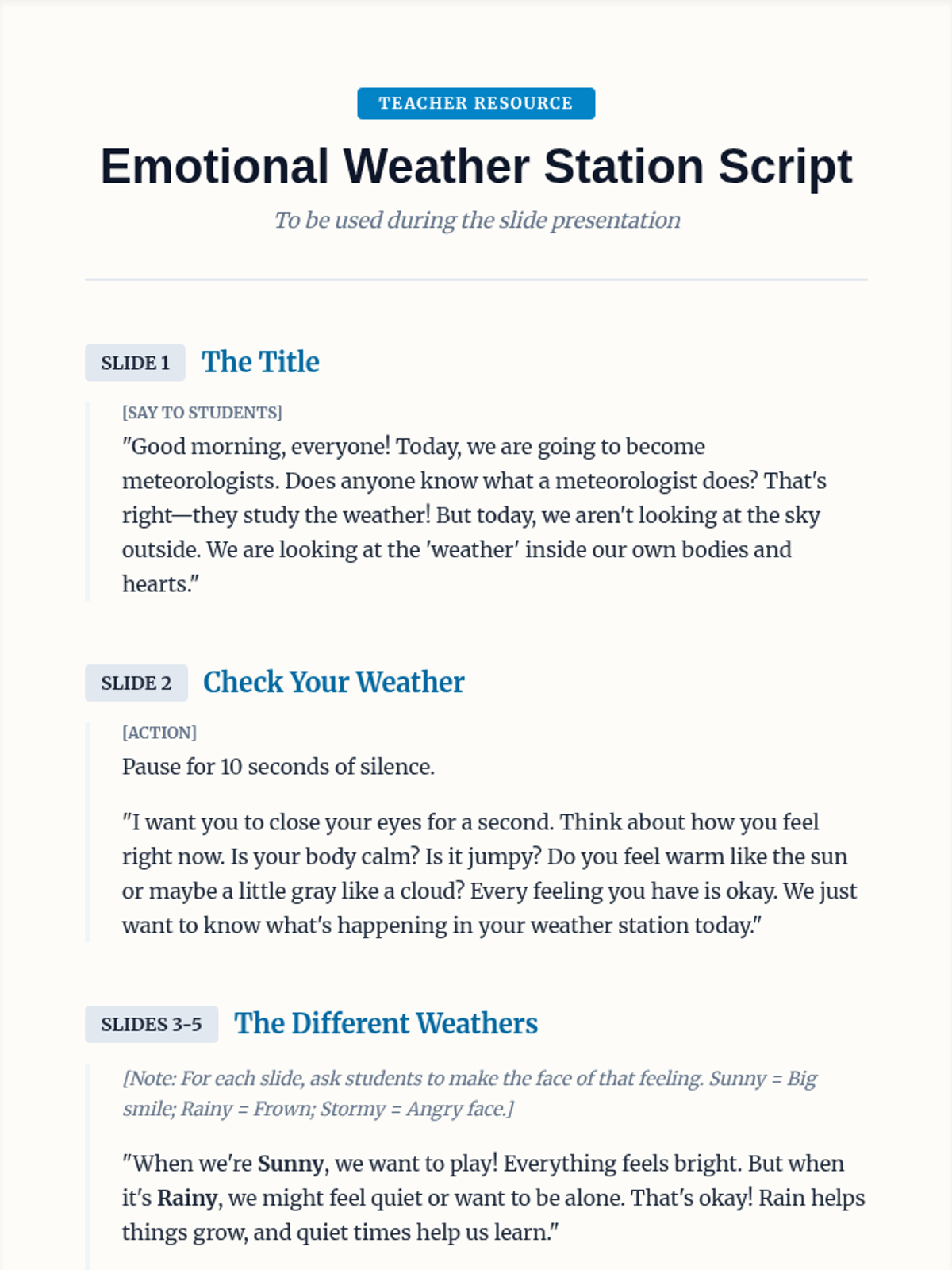
Kindergarten through 2nd grade students explore emotional regulation by comparing feelings to weather patterns and learning 'forecast' strategies to manage internal storms.
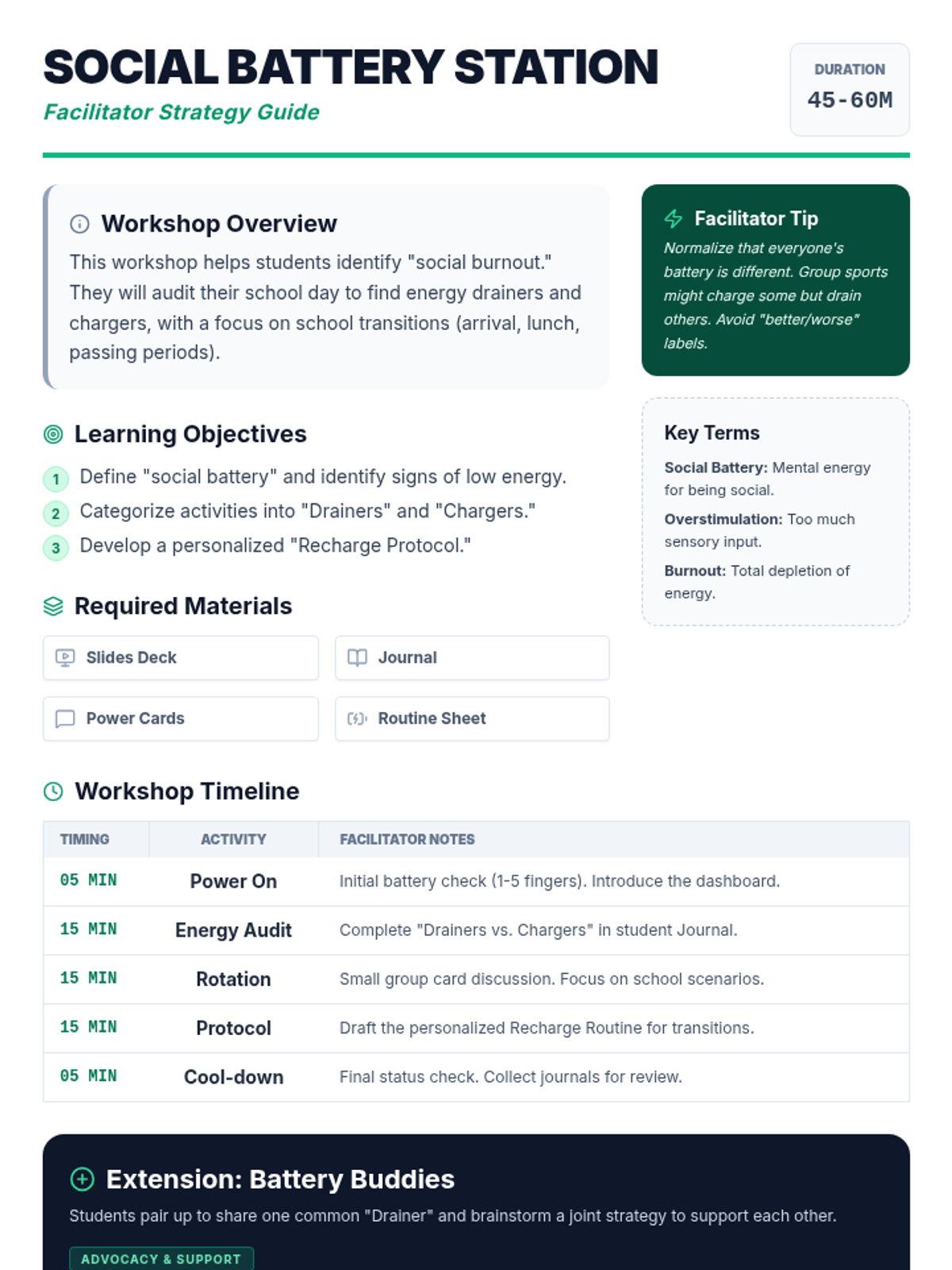
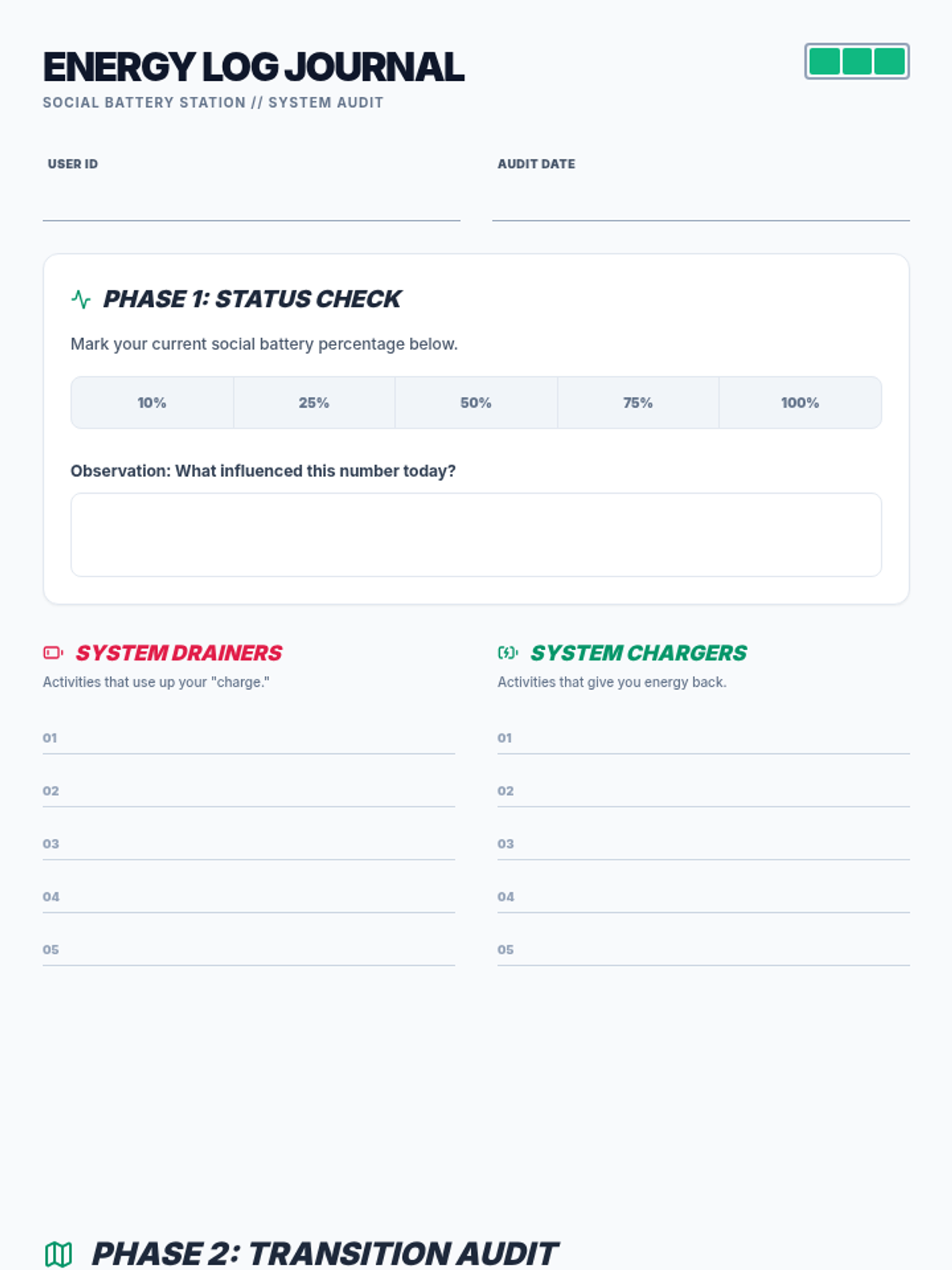
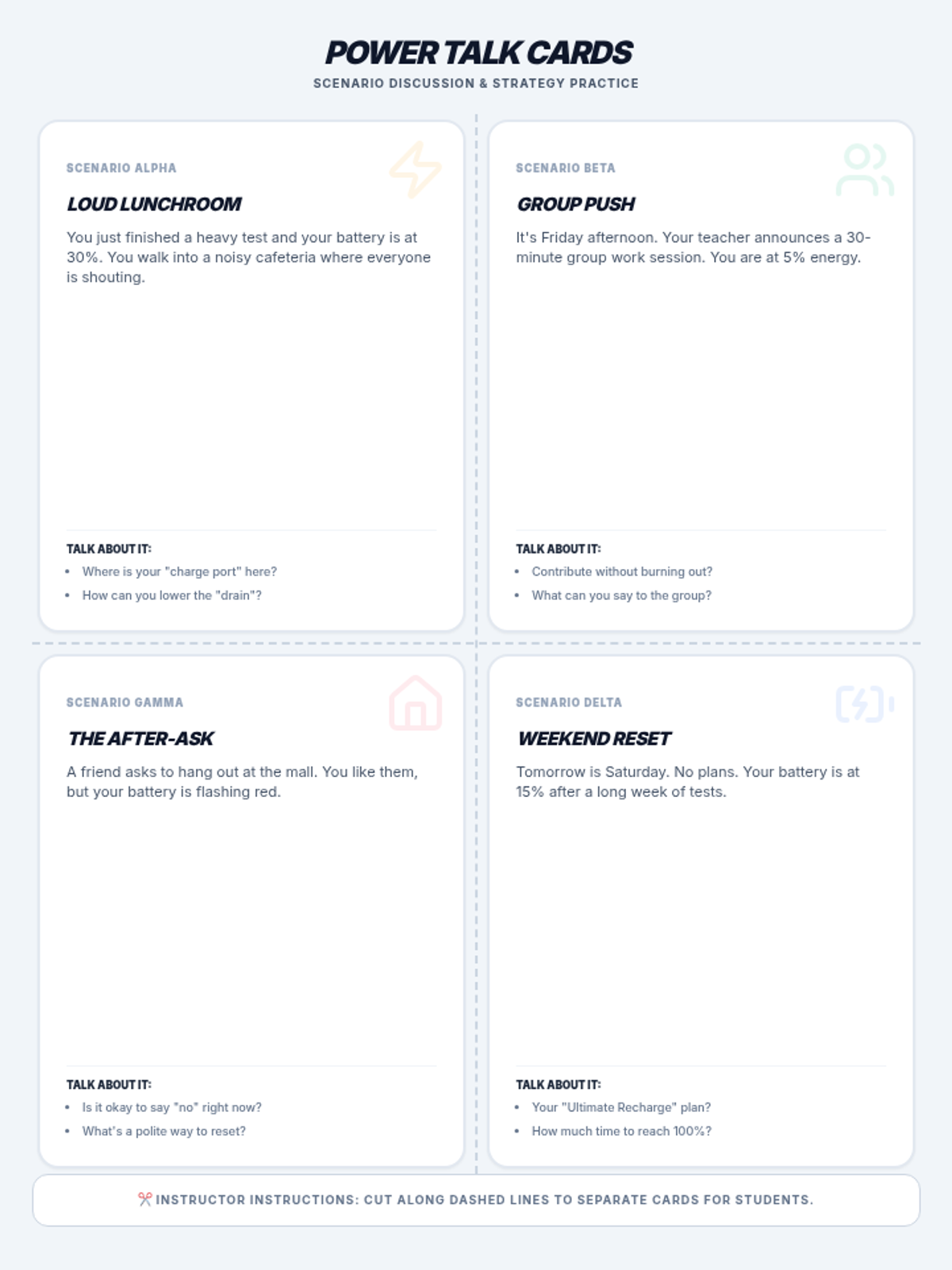
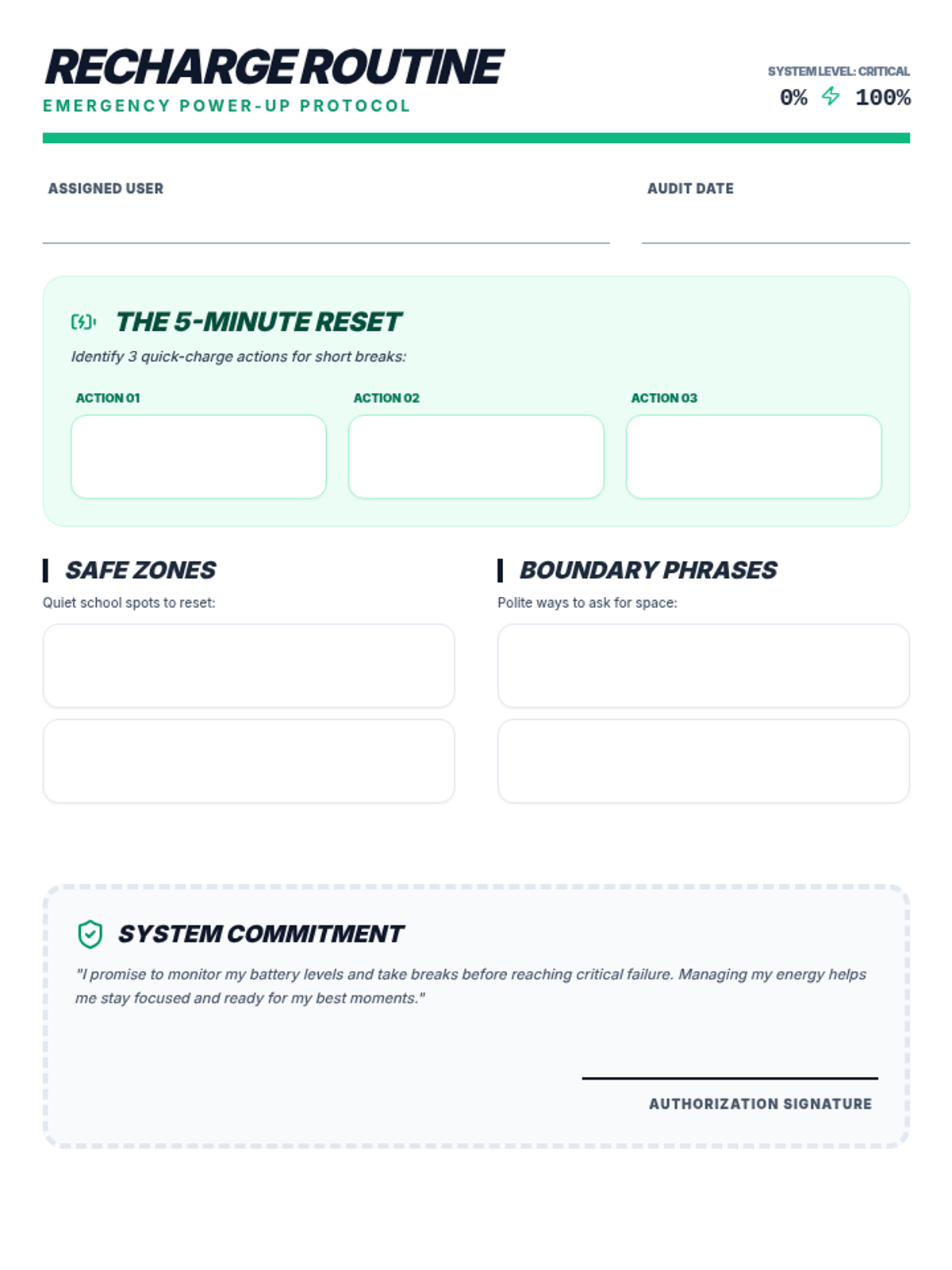
A self-awareness workshop focusing on energy management and social endurance, helping students identify social drainers and chargers.