Kindergarten through 2nd grade students explore emotional regulation by comparing feelings to weather patterns and learning 'forecast' strategies to manage internal storms.
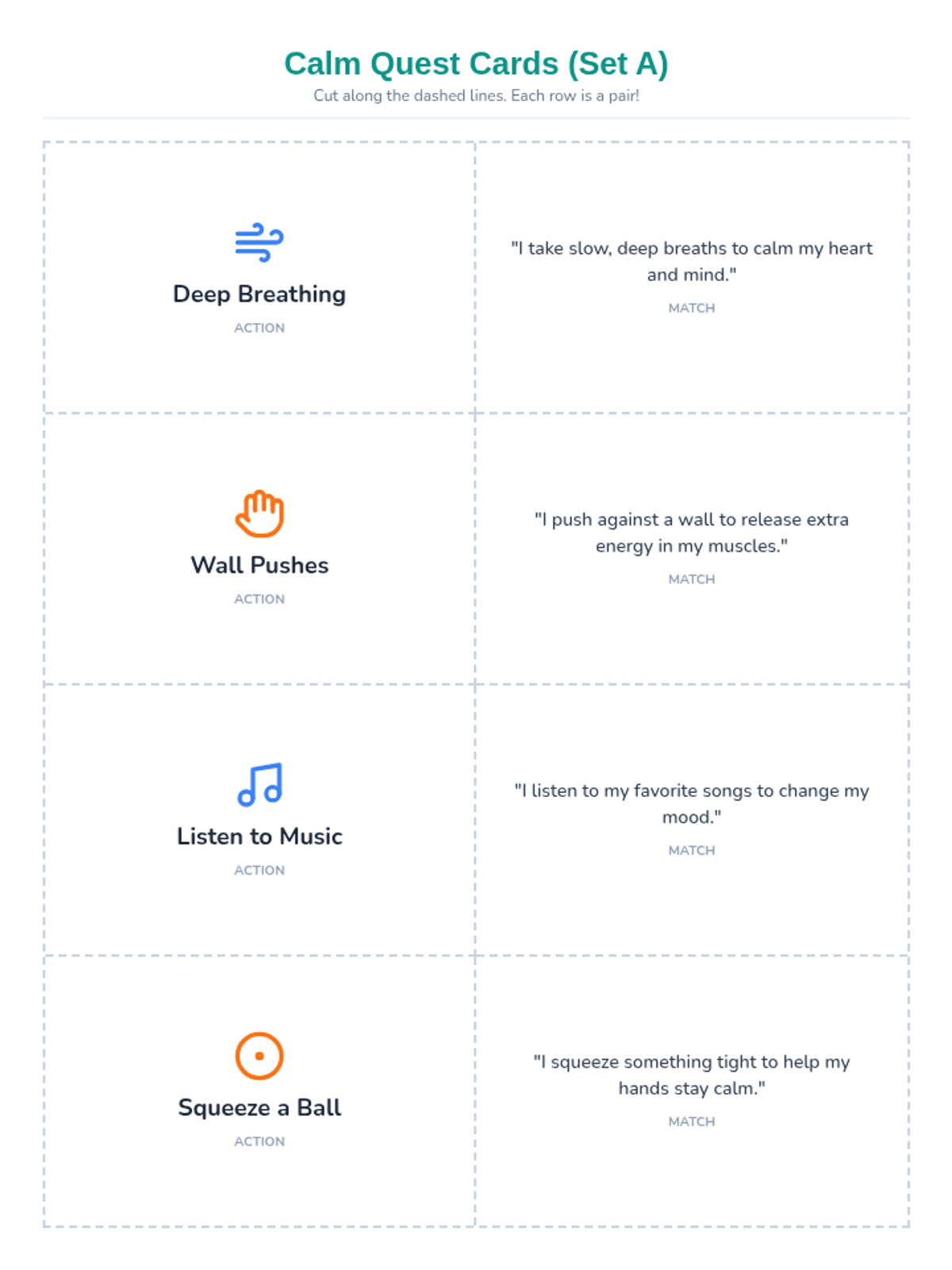
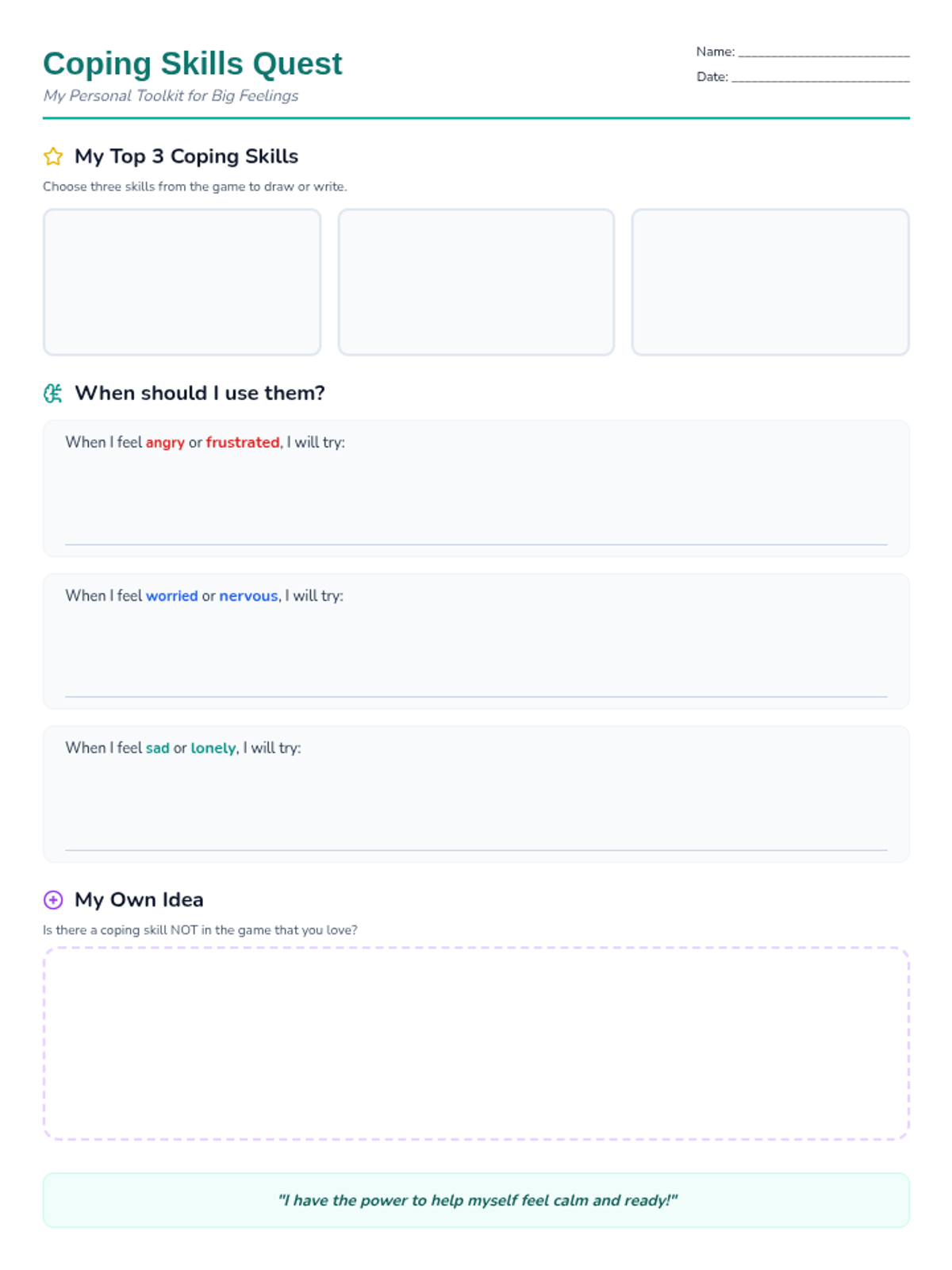
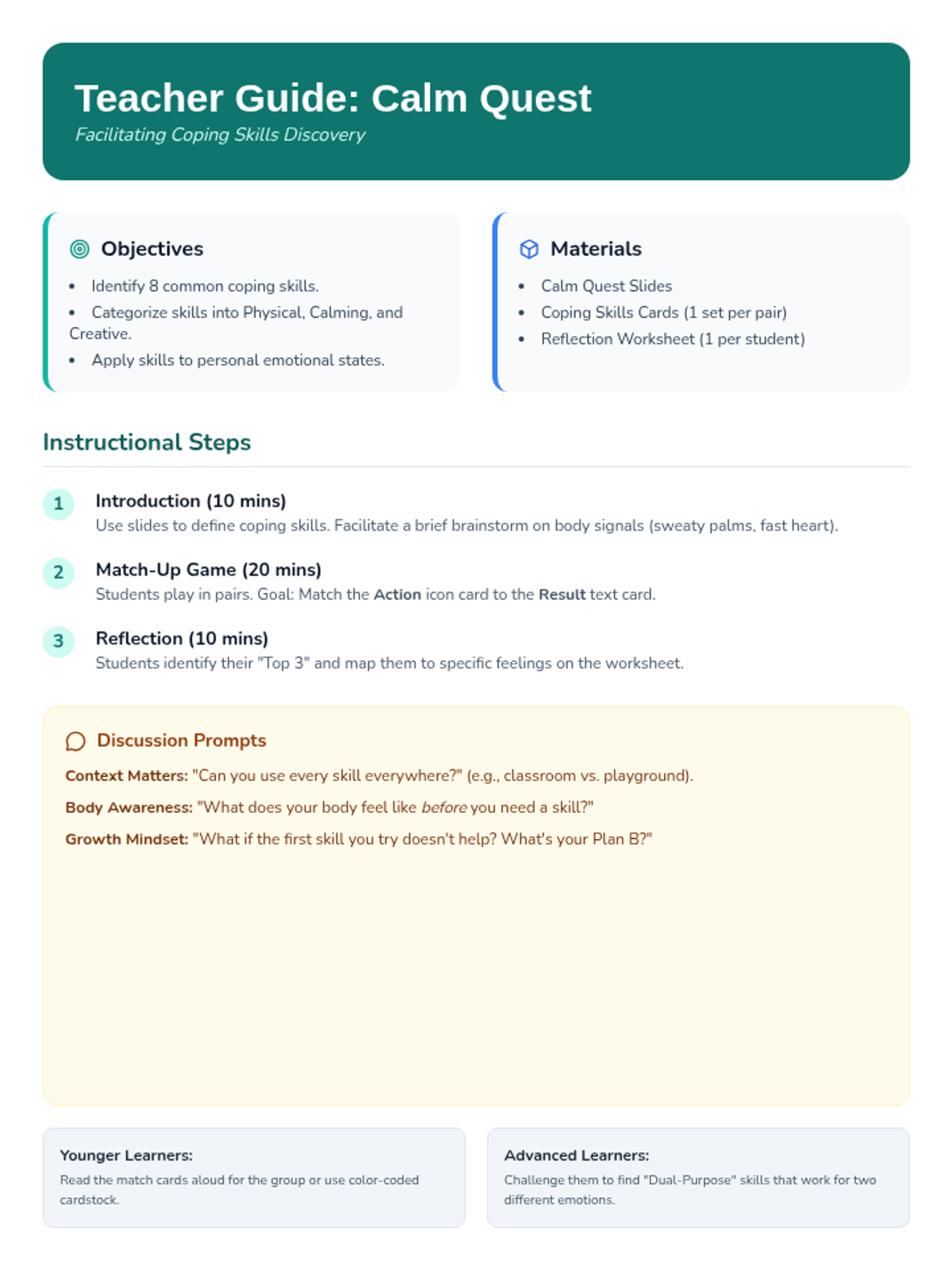
A social-emotional learning lesson designed to help students identify, categorize, and practice various coping skills through an engaging matching game. Students will learn how different strategies help regulate emotions and create their own personal 'Calm Quest' toolkit.
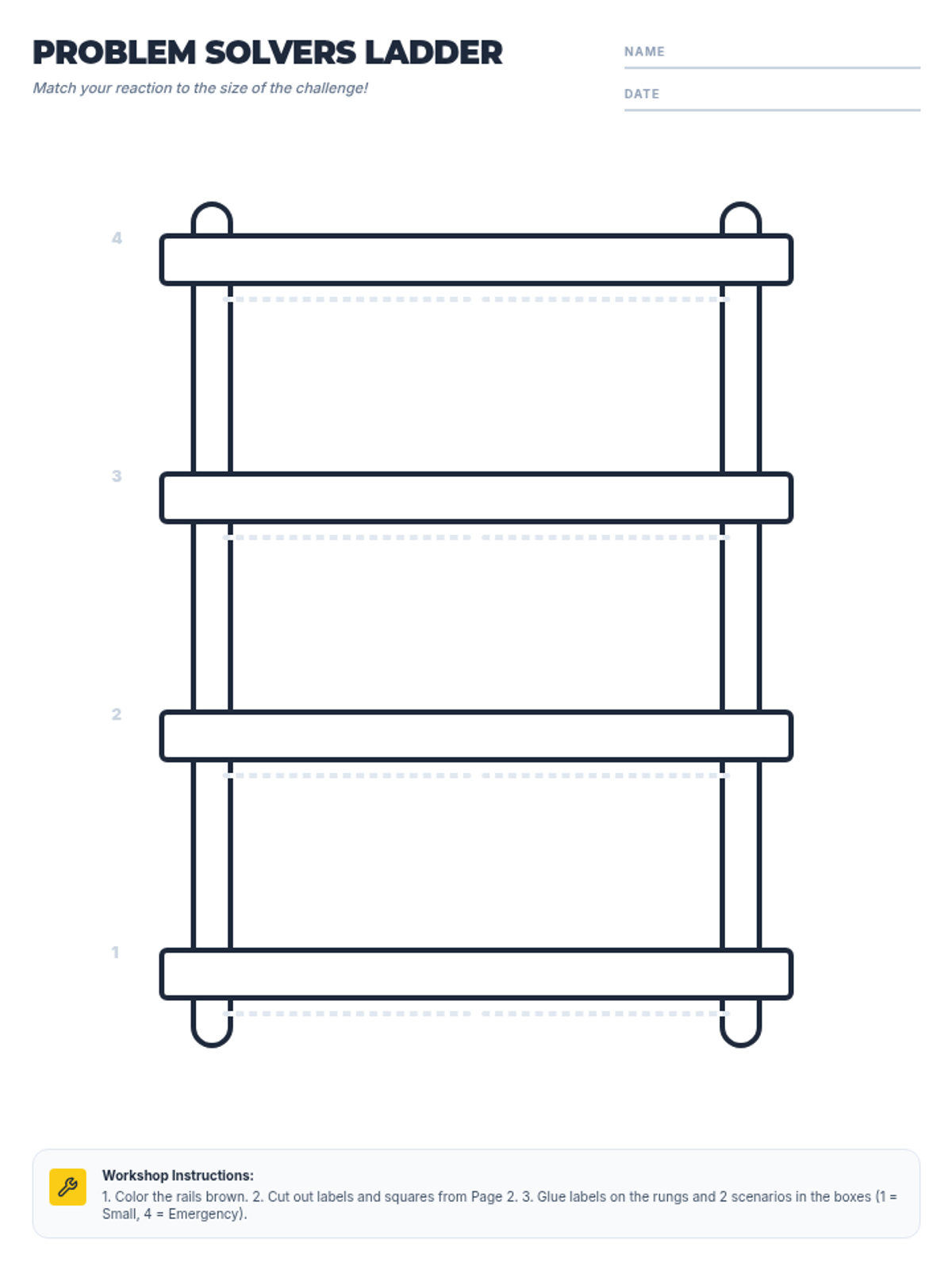
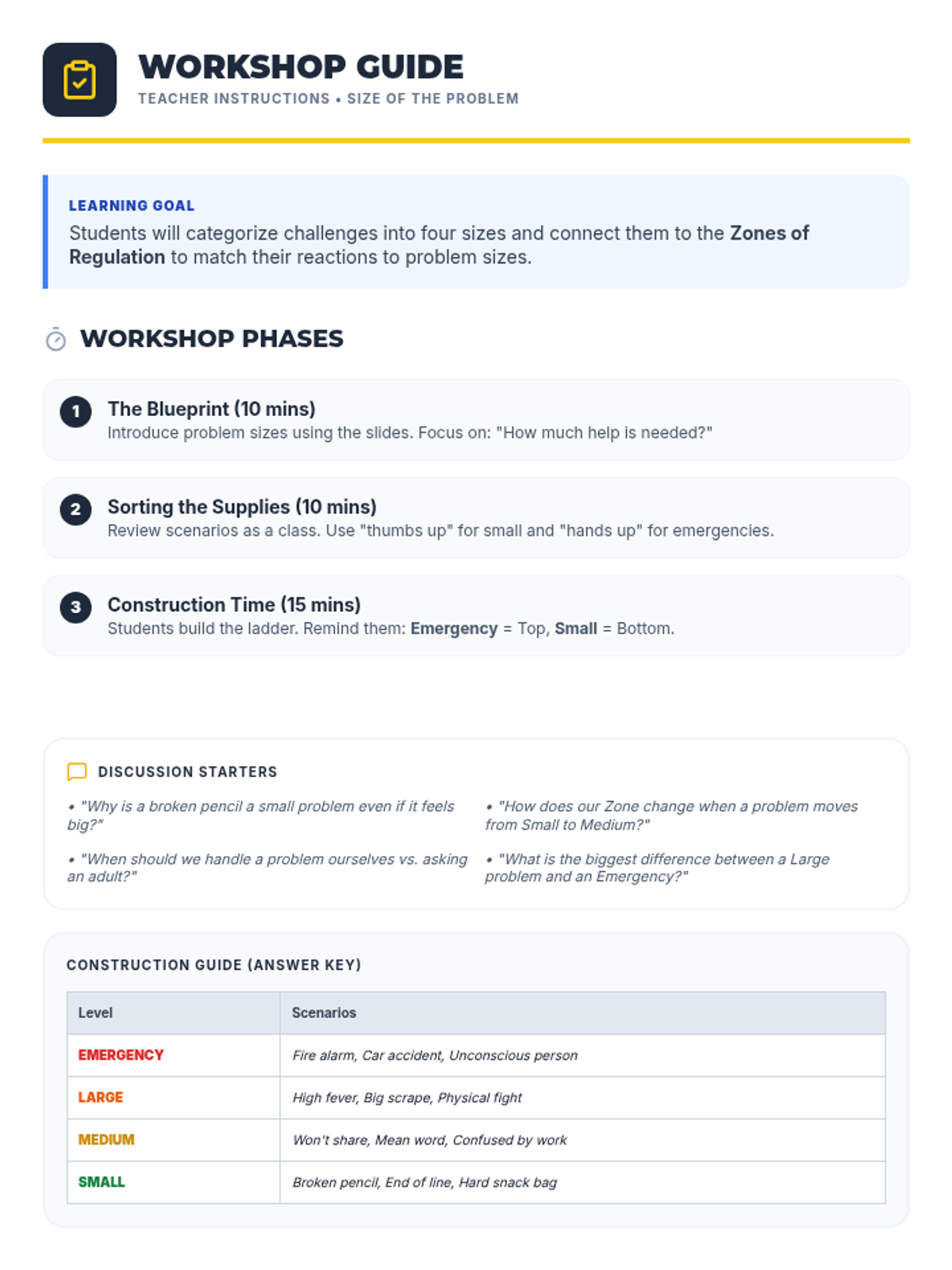
A hands-on lesson teaching students to categorize life's challenges using a ladder metaphor, integrated with Zones of Regulation concepts to help them match their reaction to the problem size.
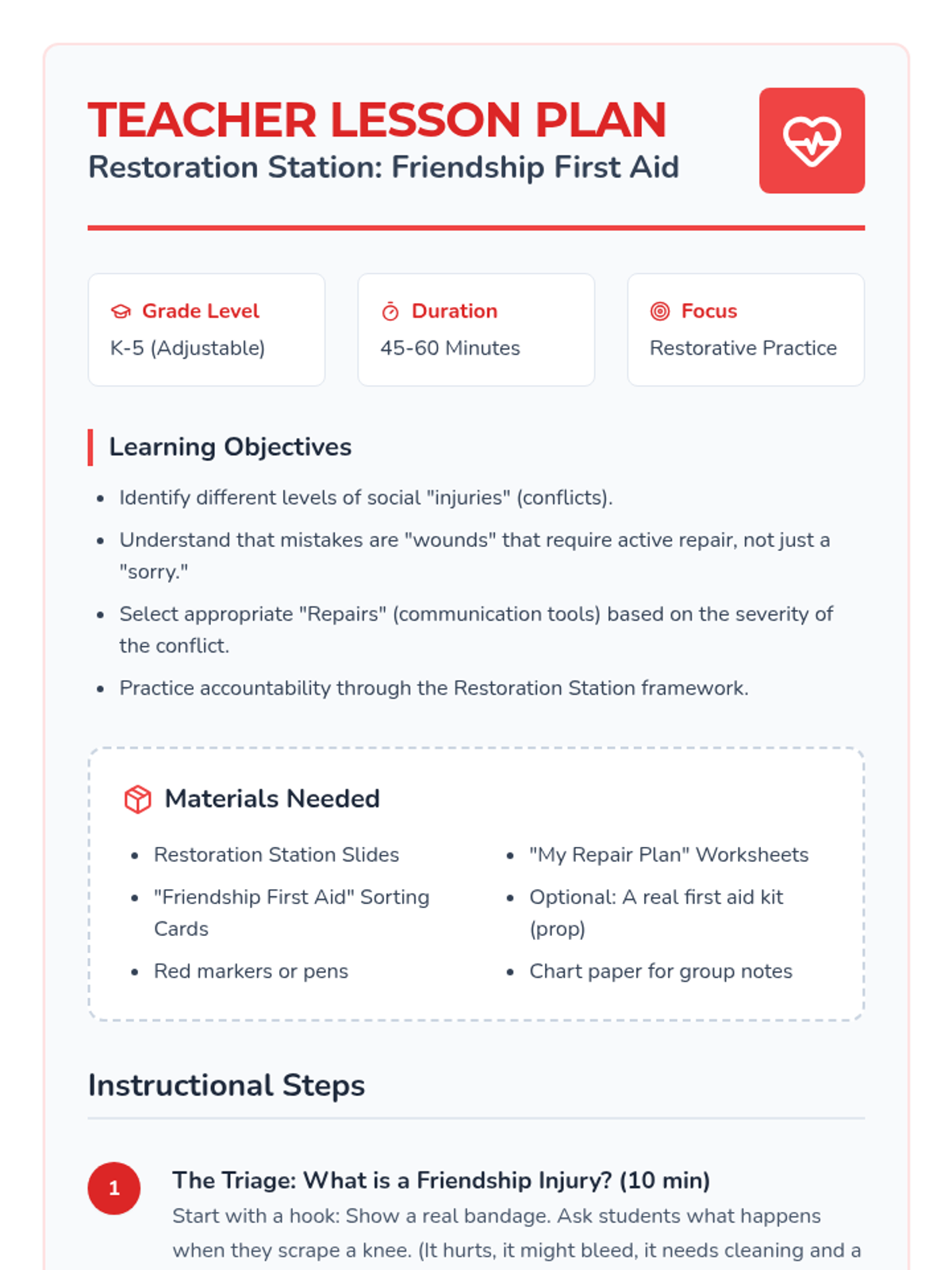
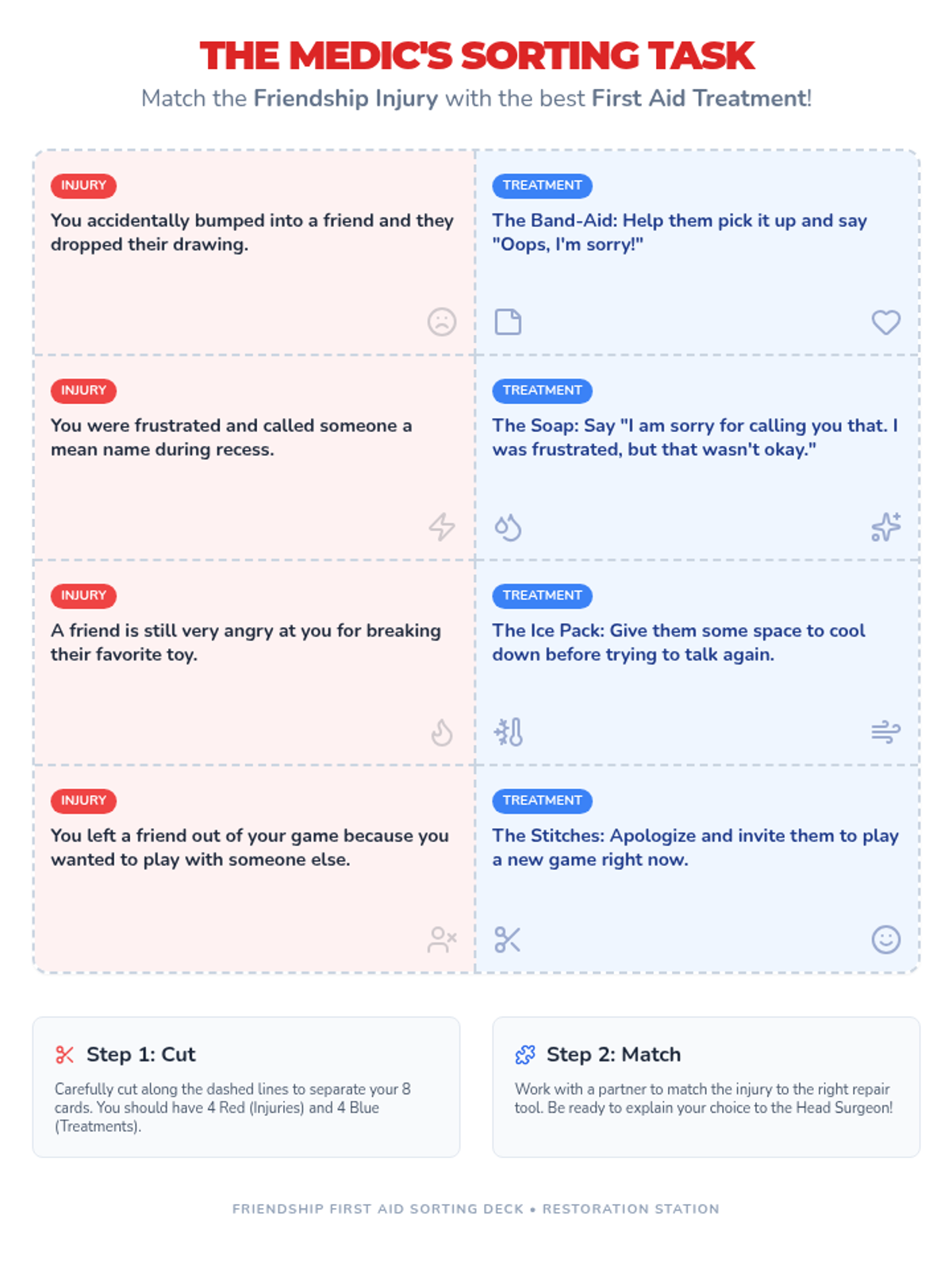
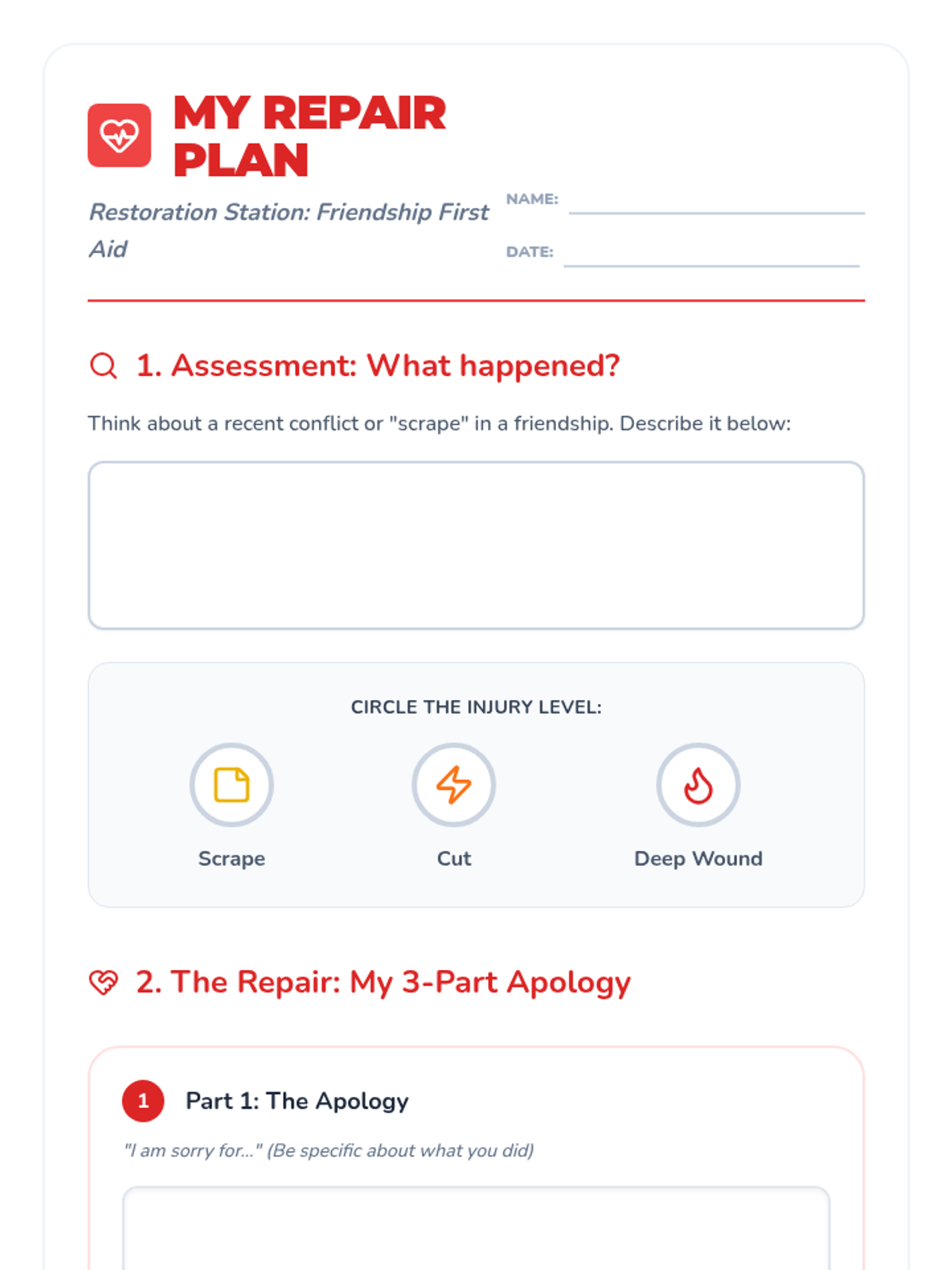
A restorative practice lesson for K-5 students using a first-aid metaphor to teach accountability and relationship repair after social conflicts. Students learn to assess friendship 'injuries' and apply the right communication 'treatments' to heal them.
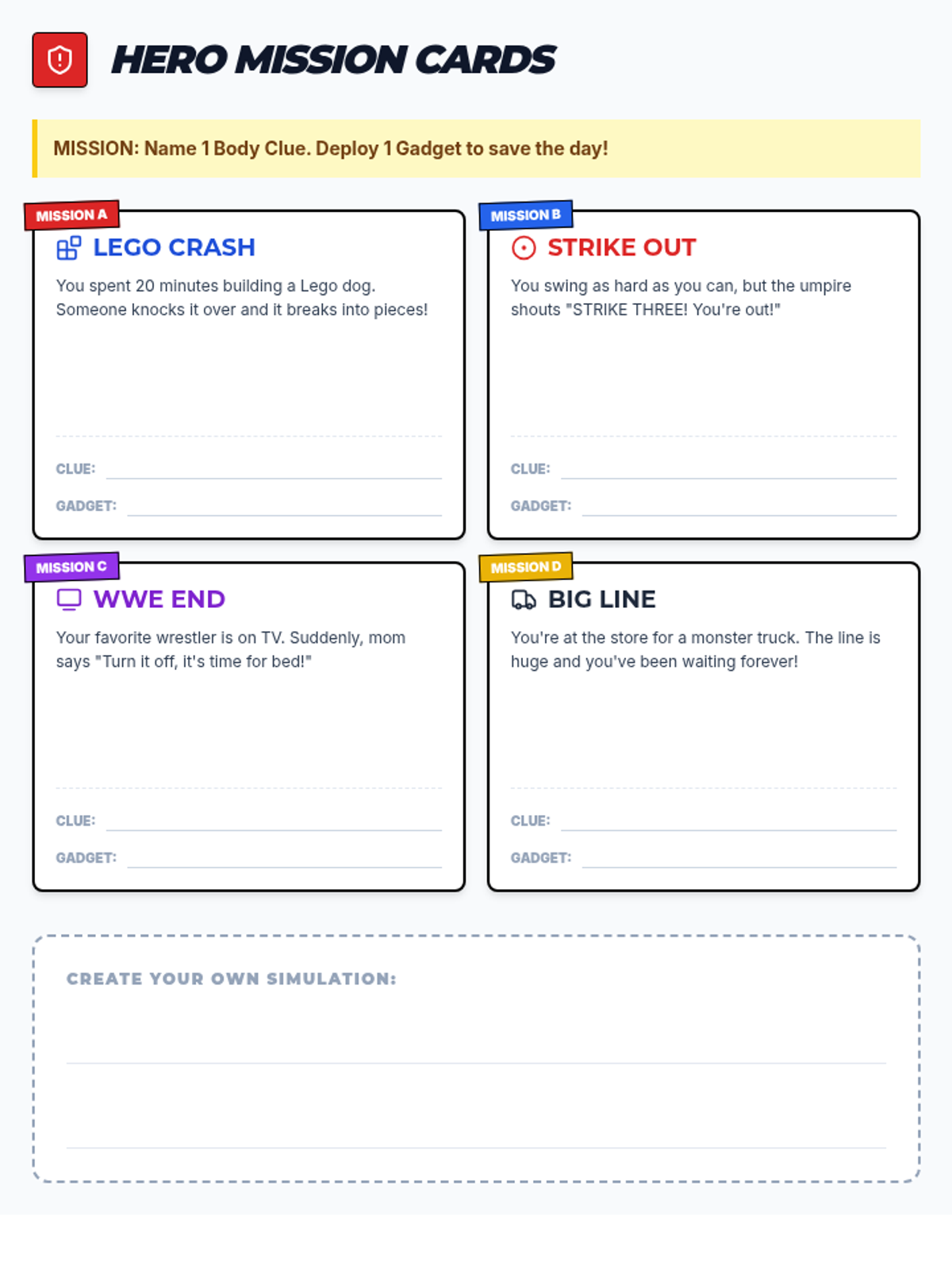
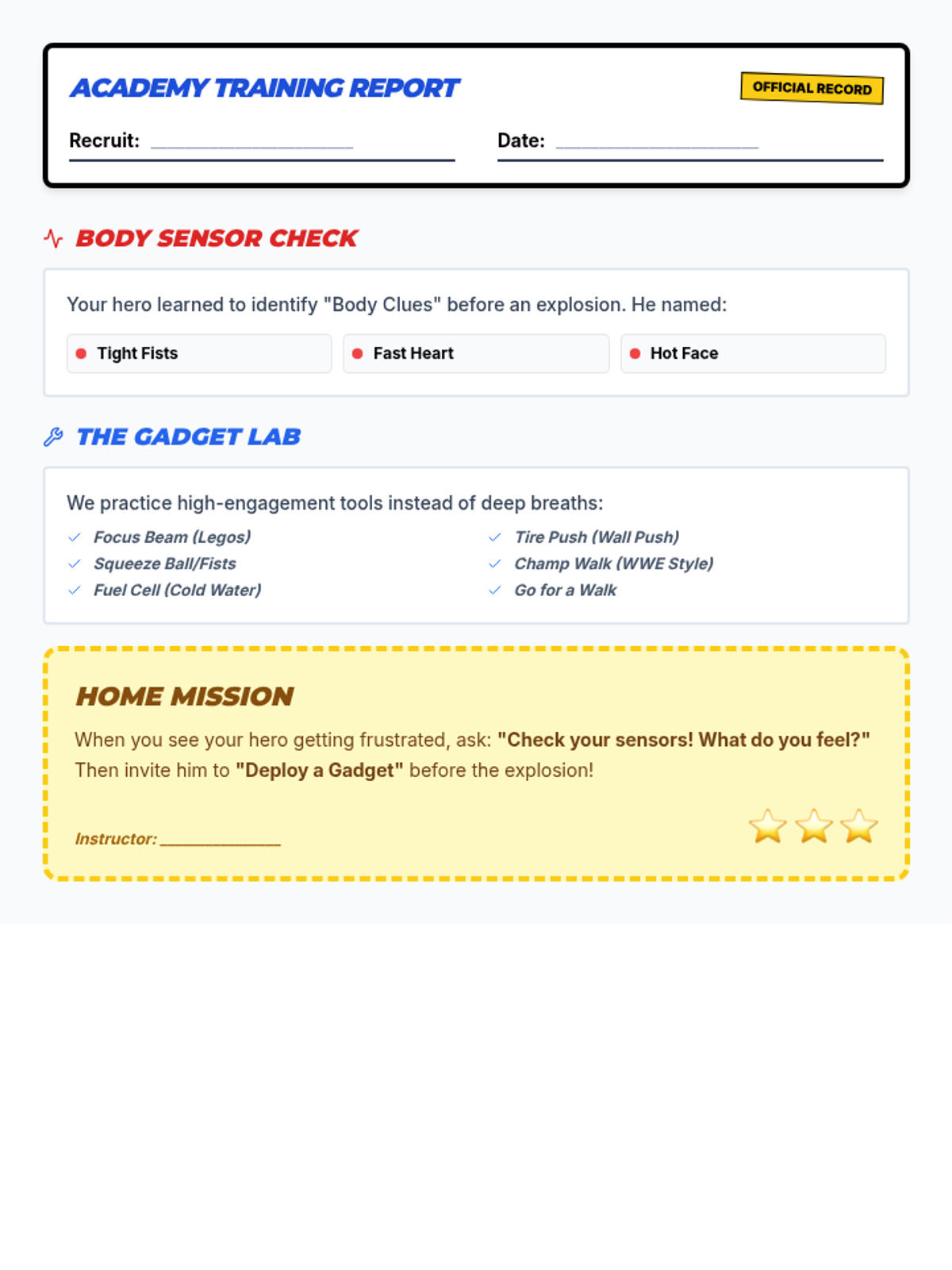
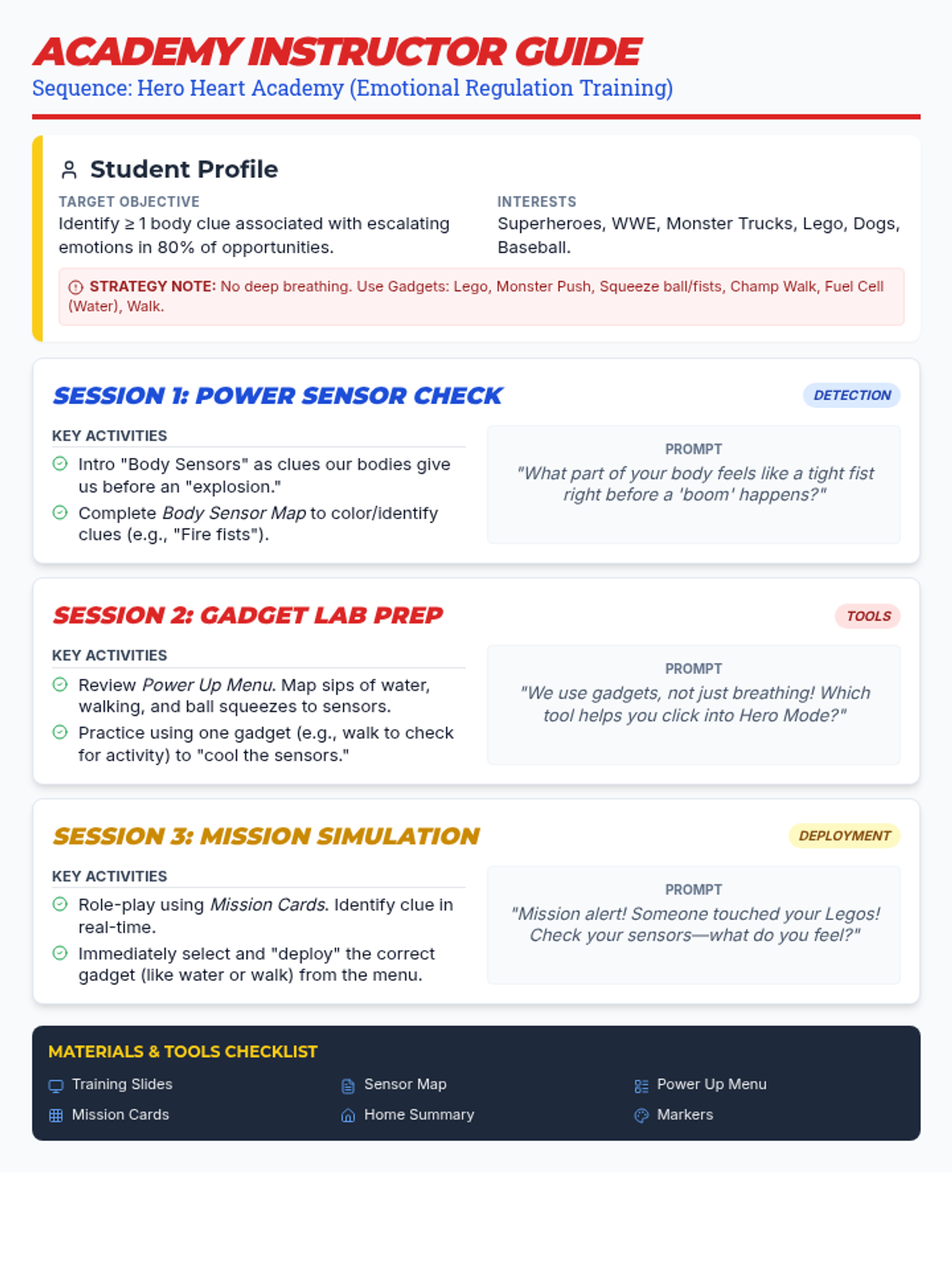
Session 3 utilizes role-play scenarios to practice identifying body clues in real-time and selecting appropriate 'gadget' strategies to maintain emotional regulation.
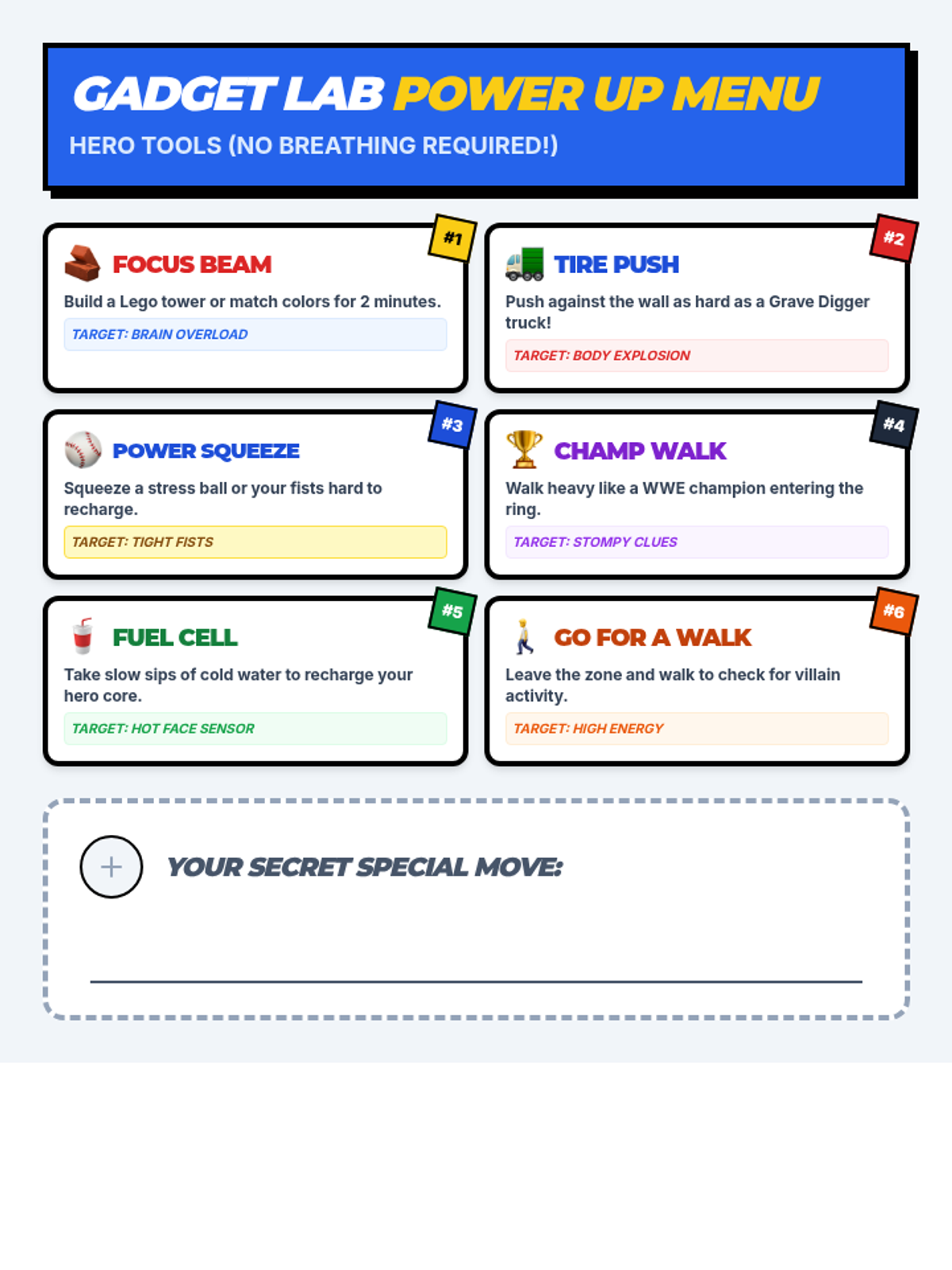
Session 2 introduces the 'Gadget Lab' where the student identifies coping strategies that align with his interests (Lego, Monster Trucks, Baseball) while avoiding resistant strategies like deep breathing.
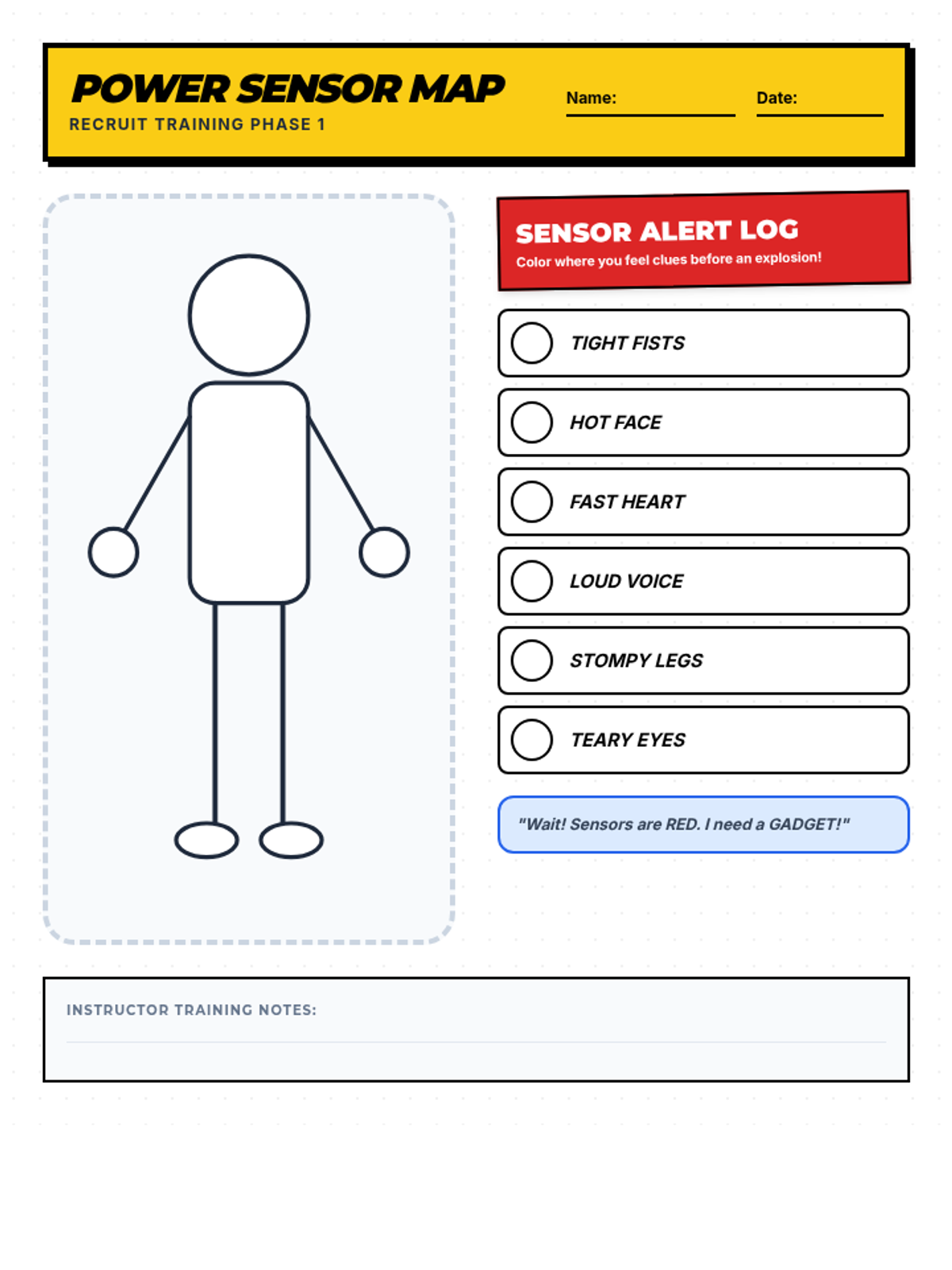
Session 1 focuses on identifying physical sensations in the body (Body Sensors) that signal escalating emotions, using superhero-themed body mapping.
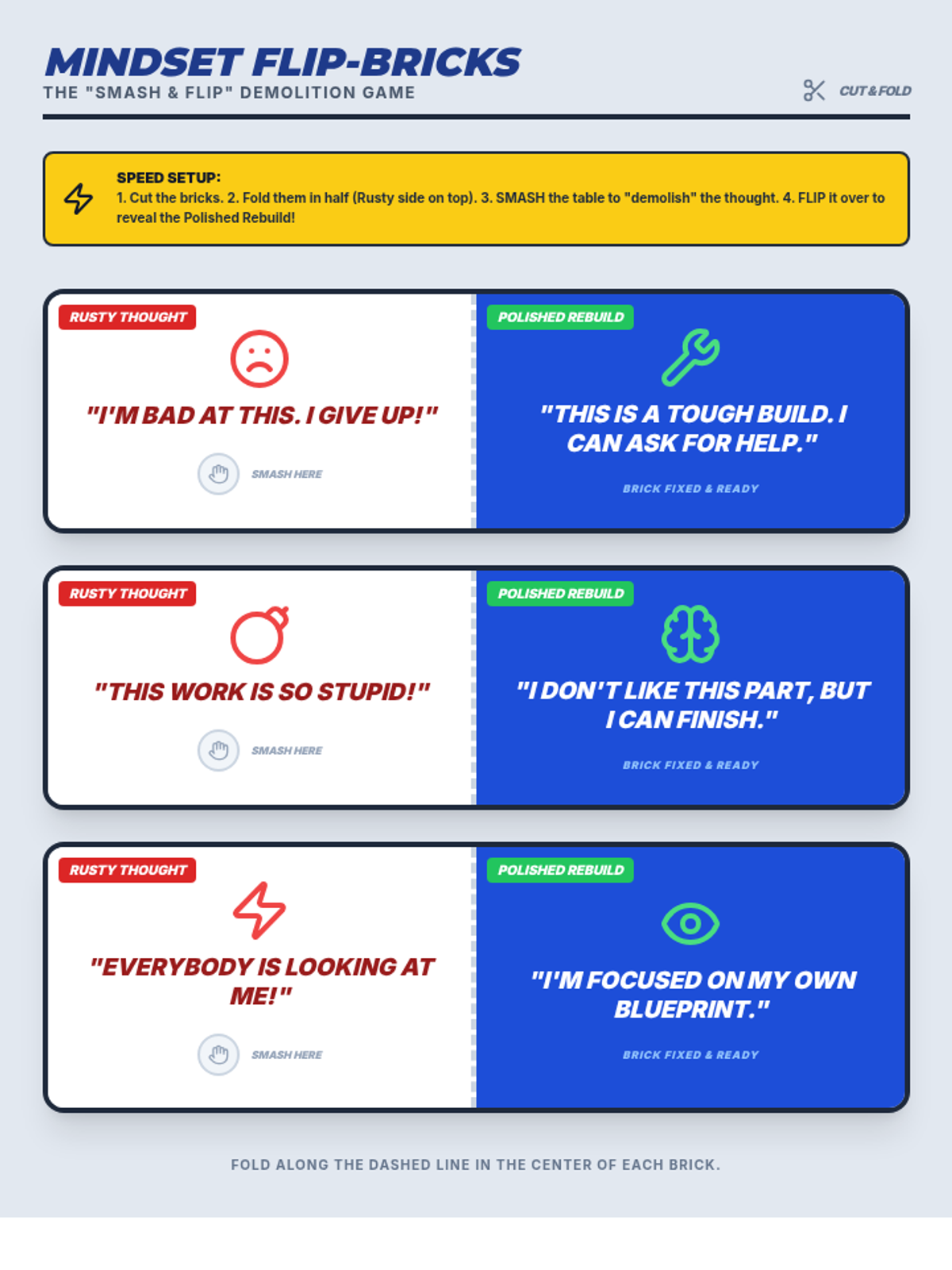
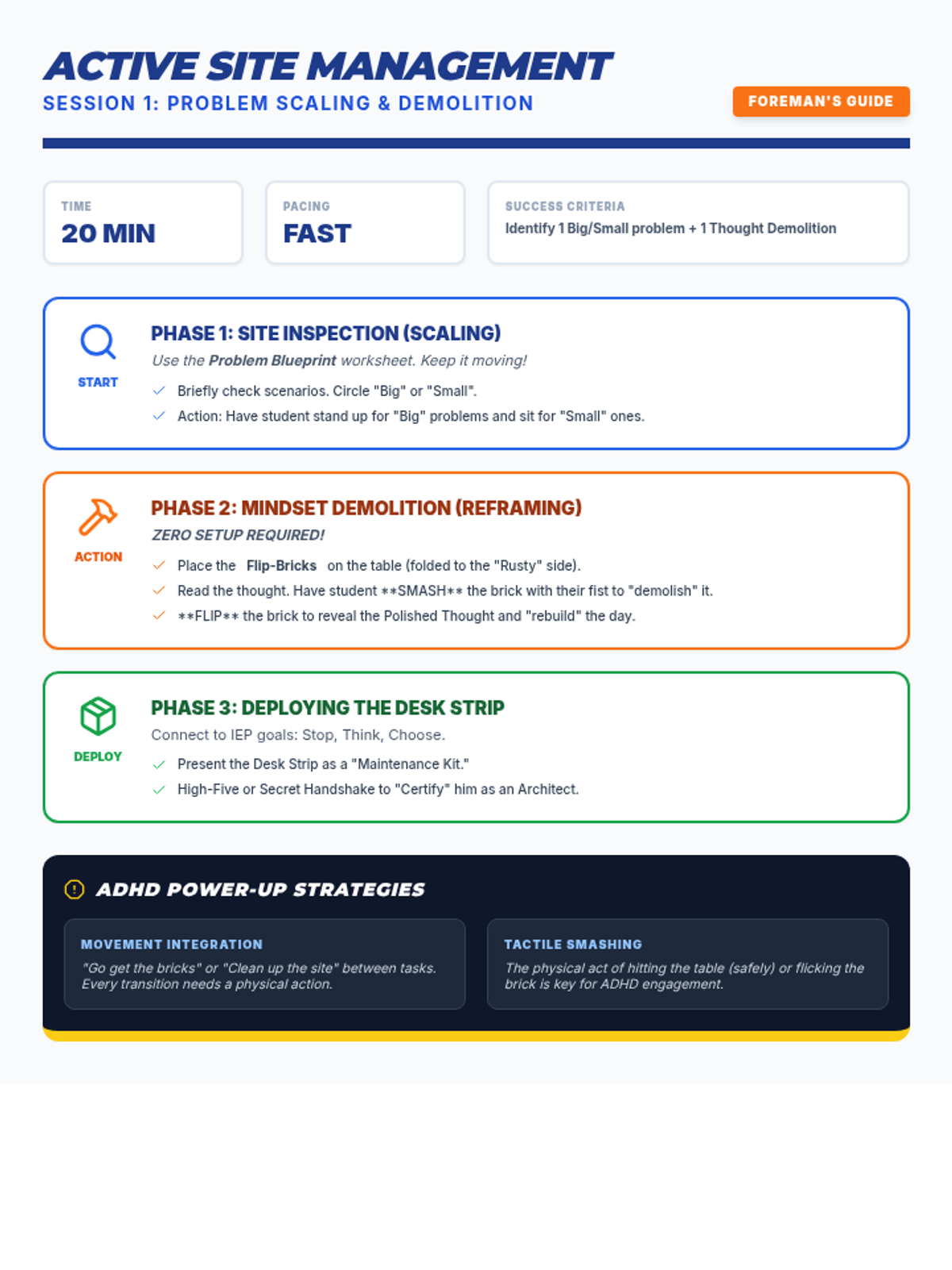
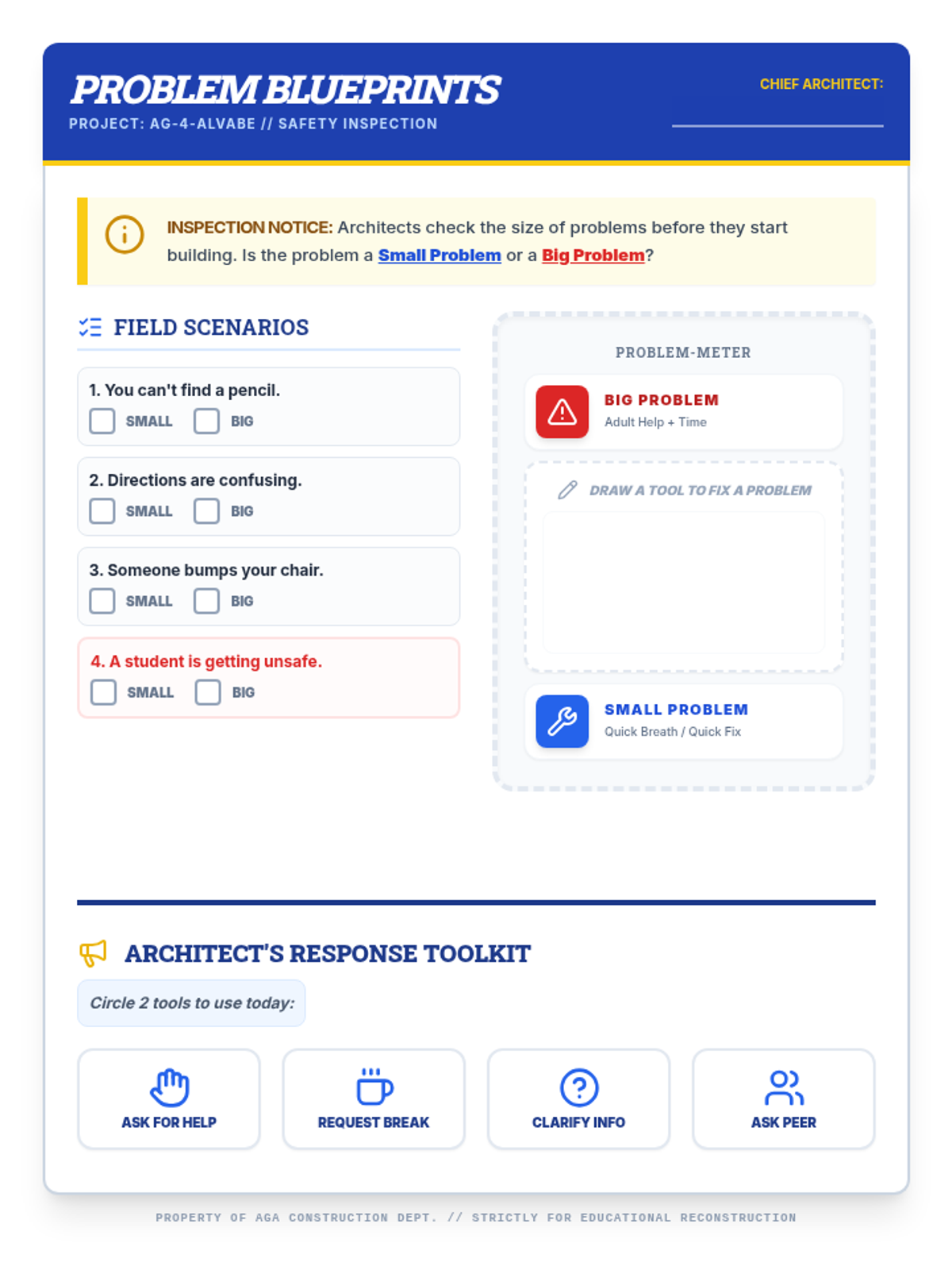
A 20-minute hands-on session focusing on differentiating between big and small school problems and reframing unkind thoughts through a construction-themed lens.
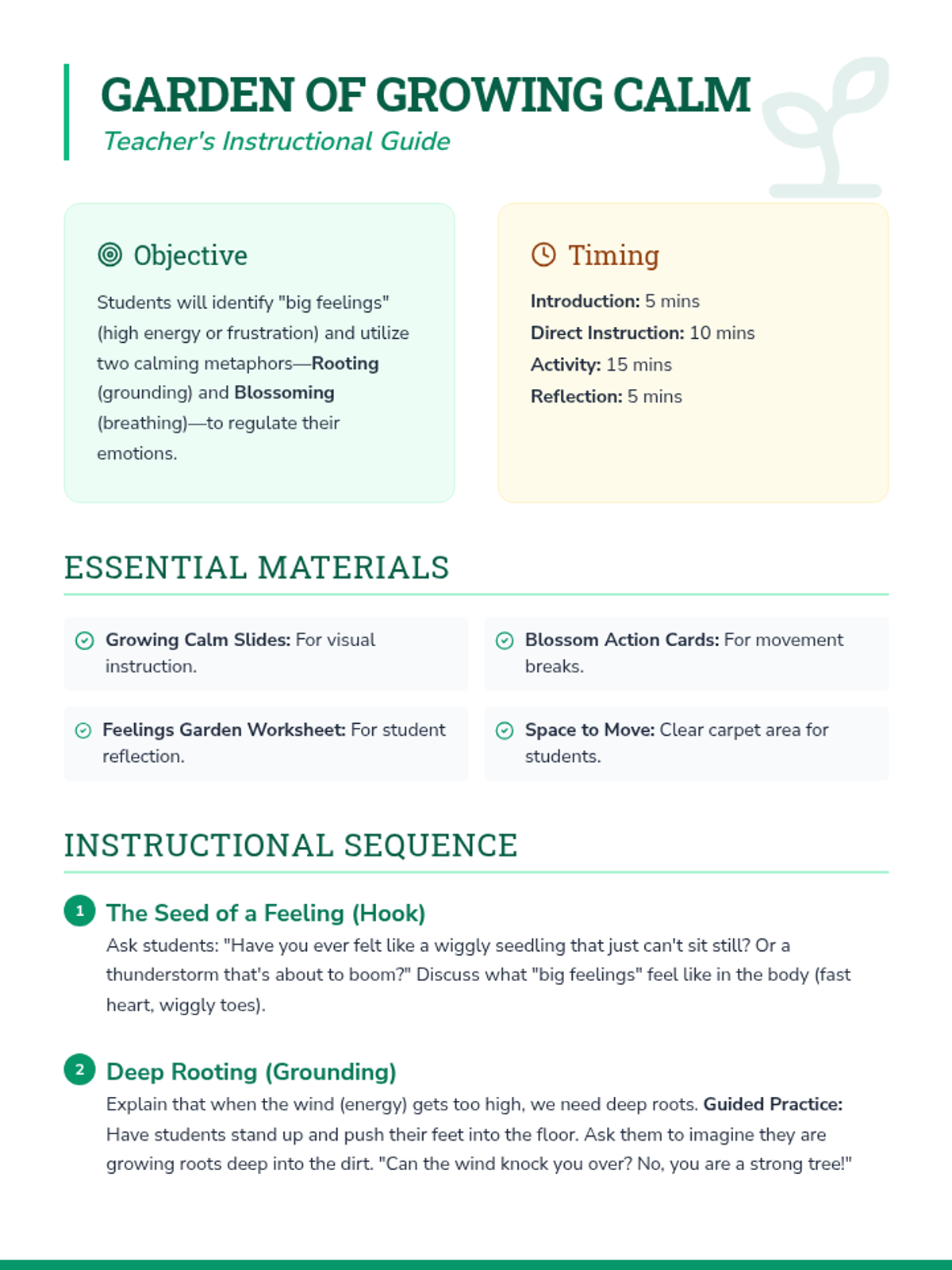
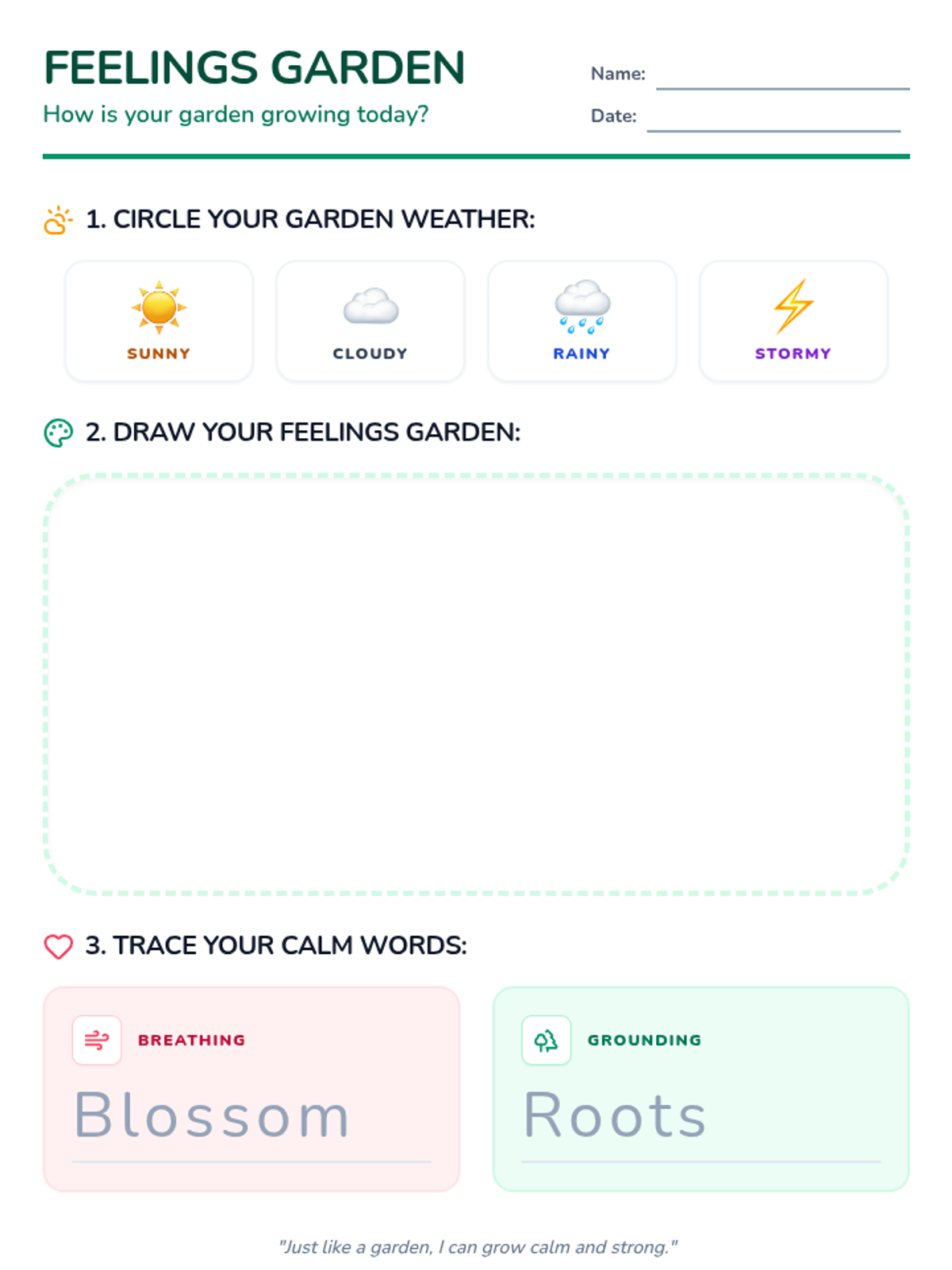
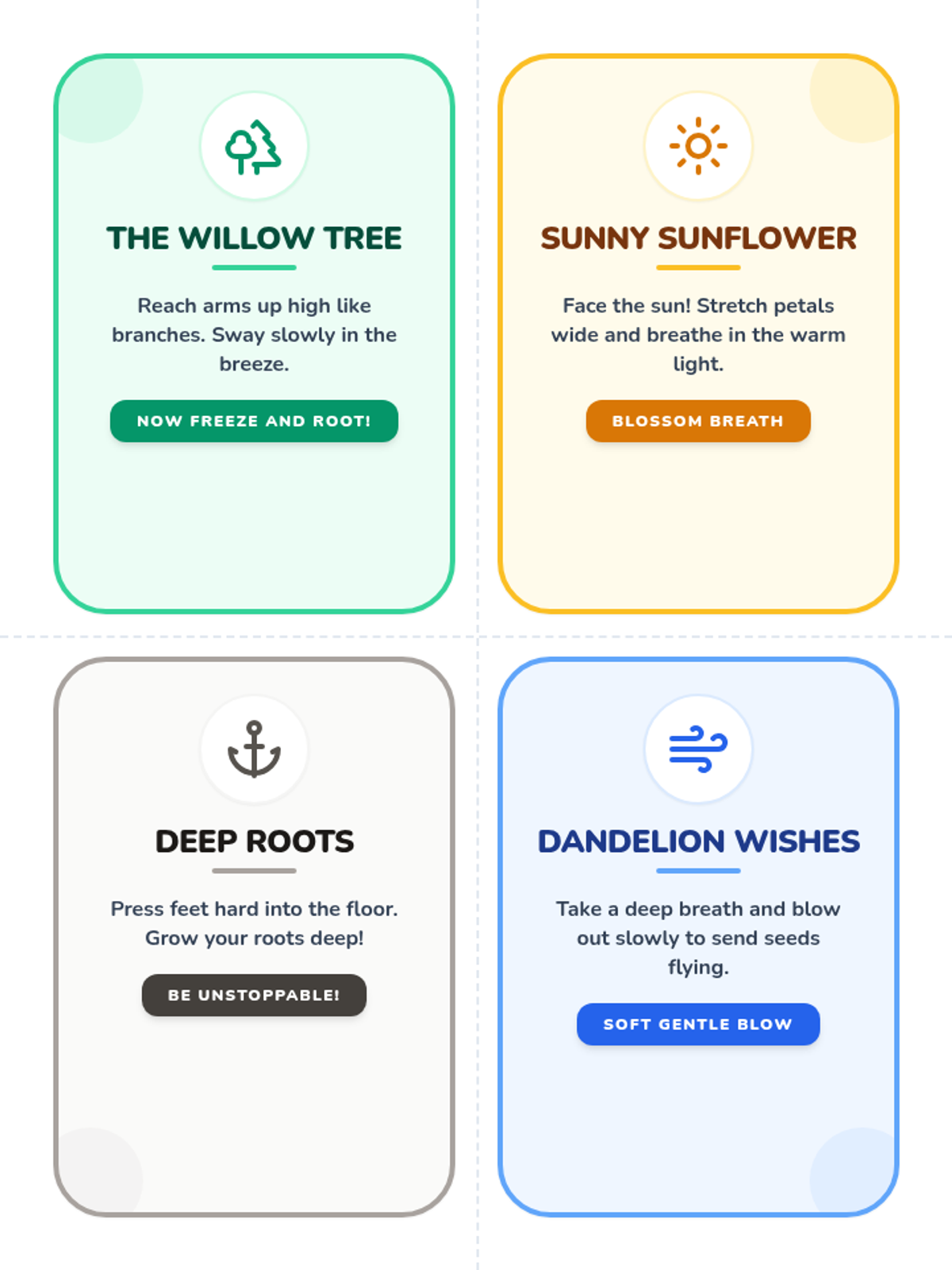
A social-emotional learning lesson for Pre-K through 1st grade that uses gardening metaphors to teach grounding and breathing techniques for emotional regulation. Students learn to 'root' their bodies for stability and 'blossom' their breath to calm high energy.
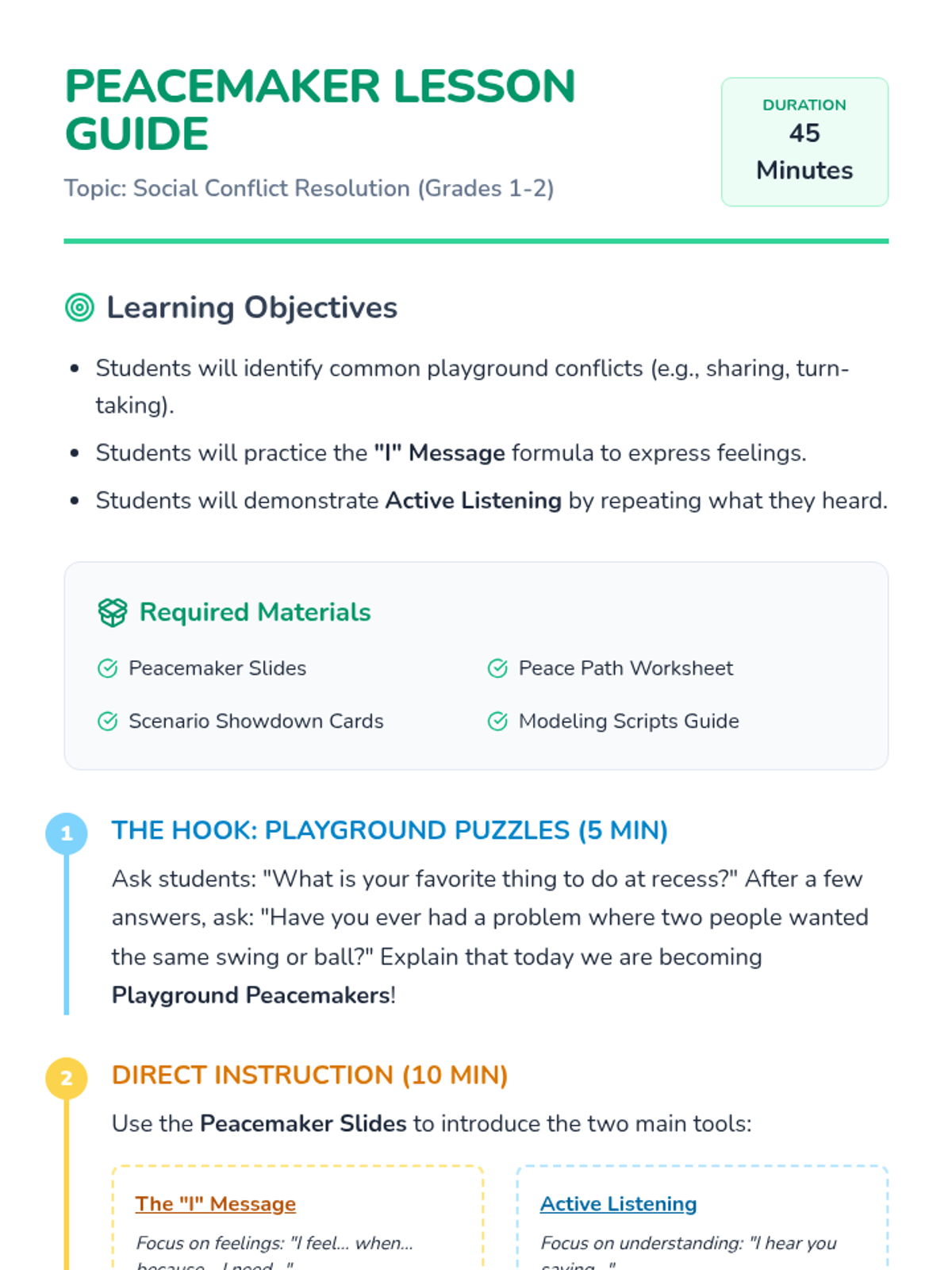
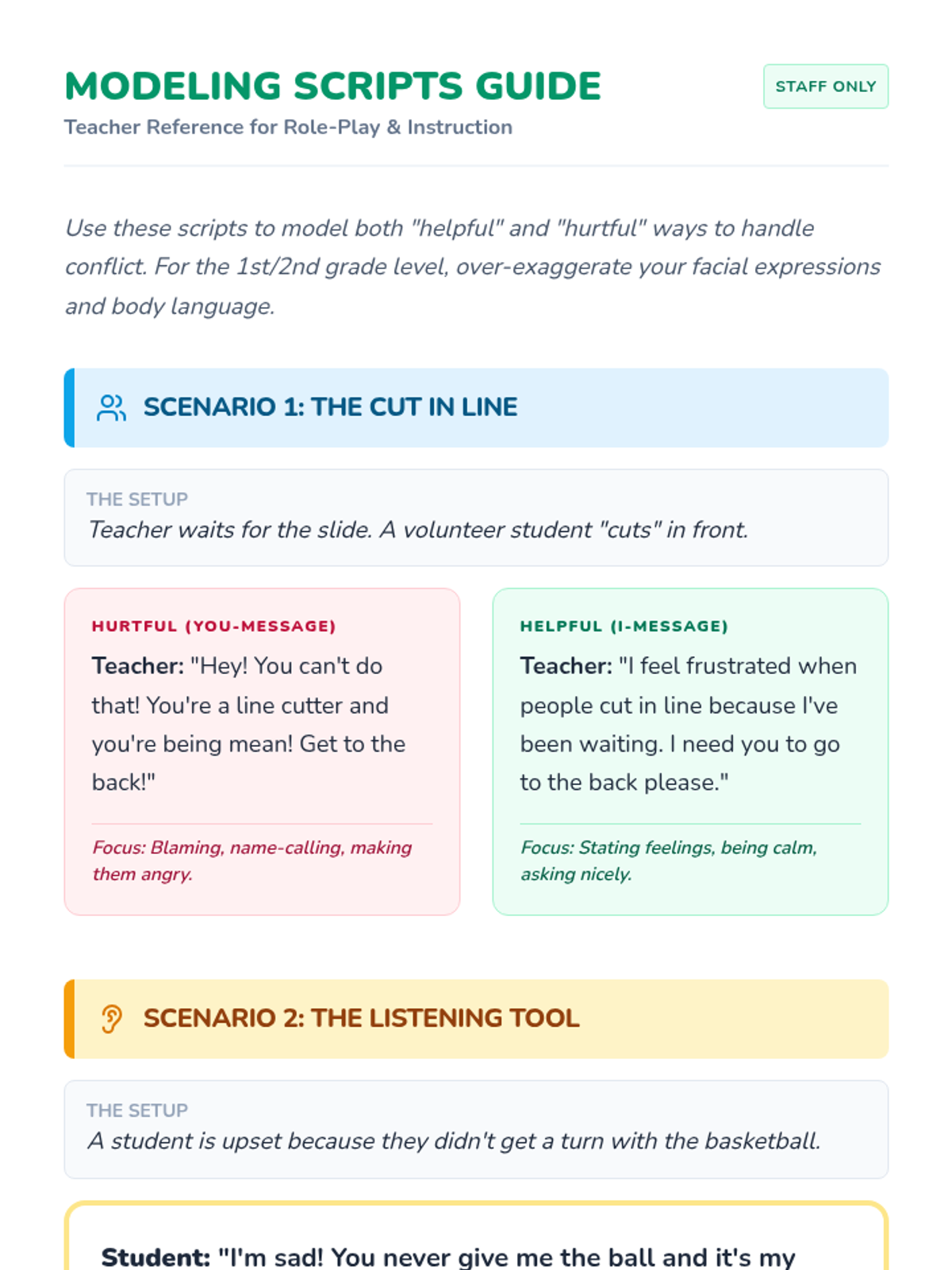
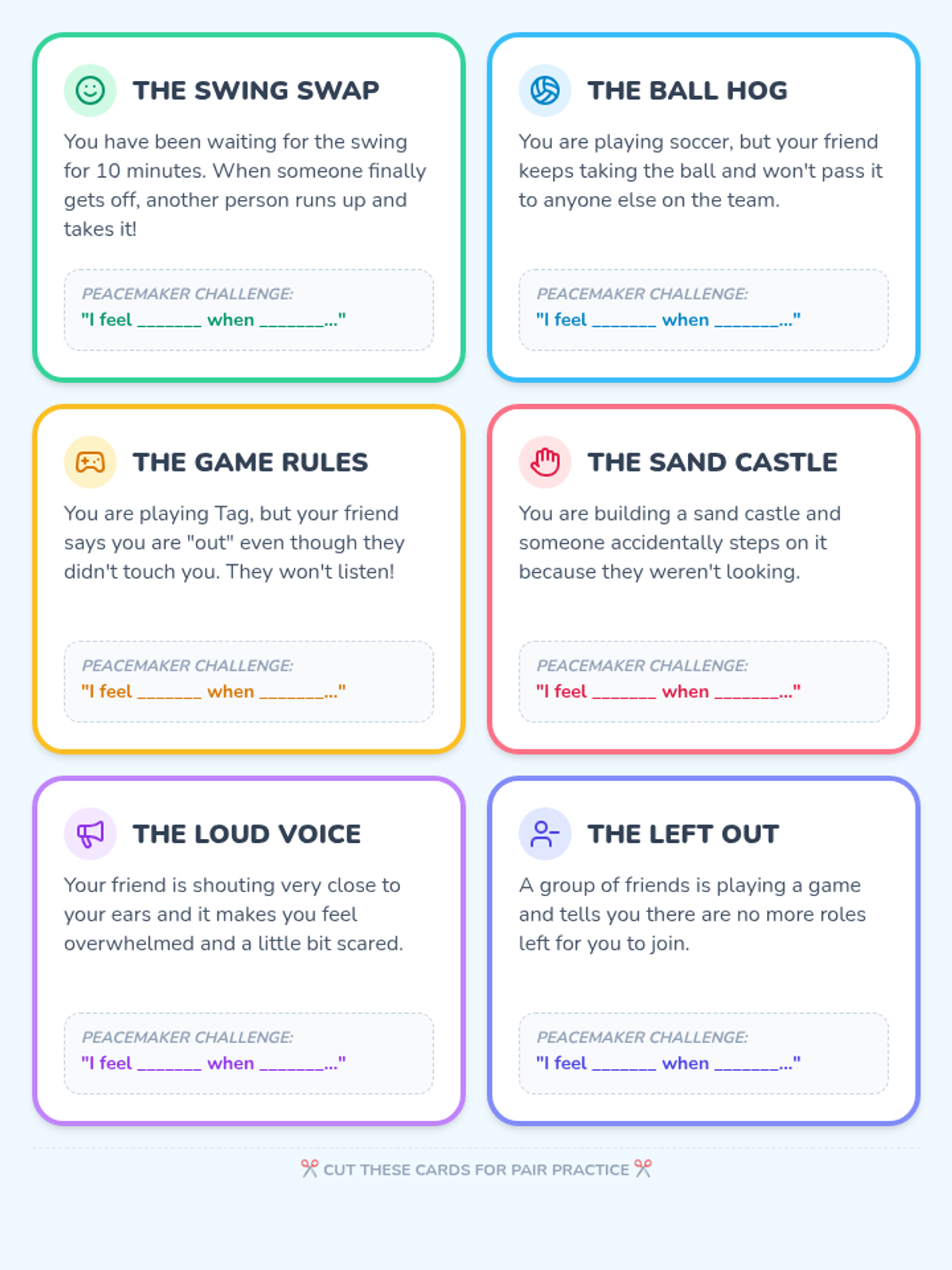
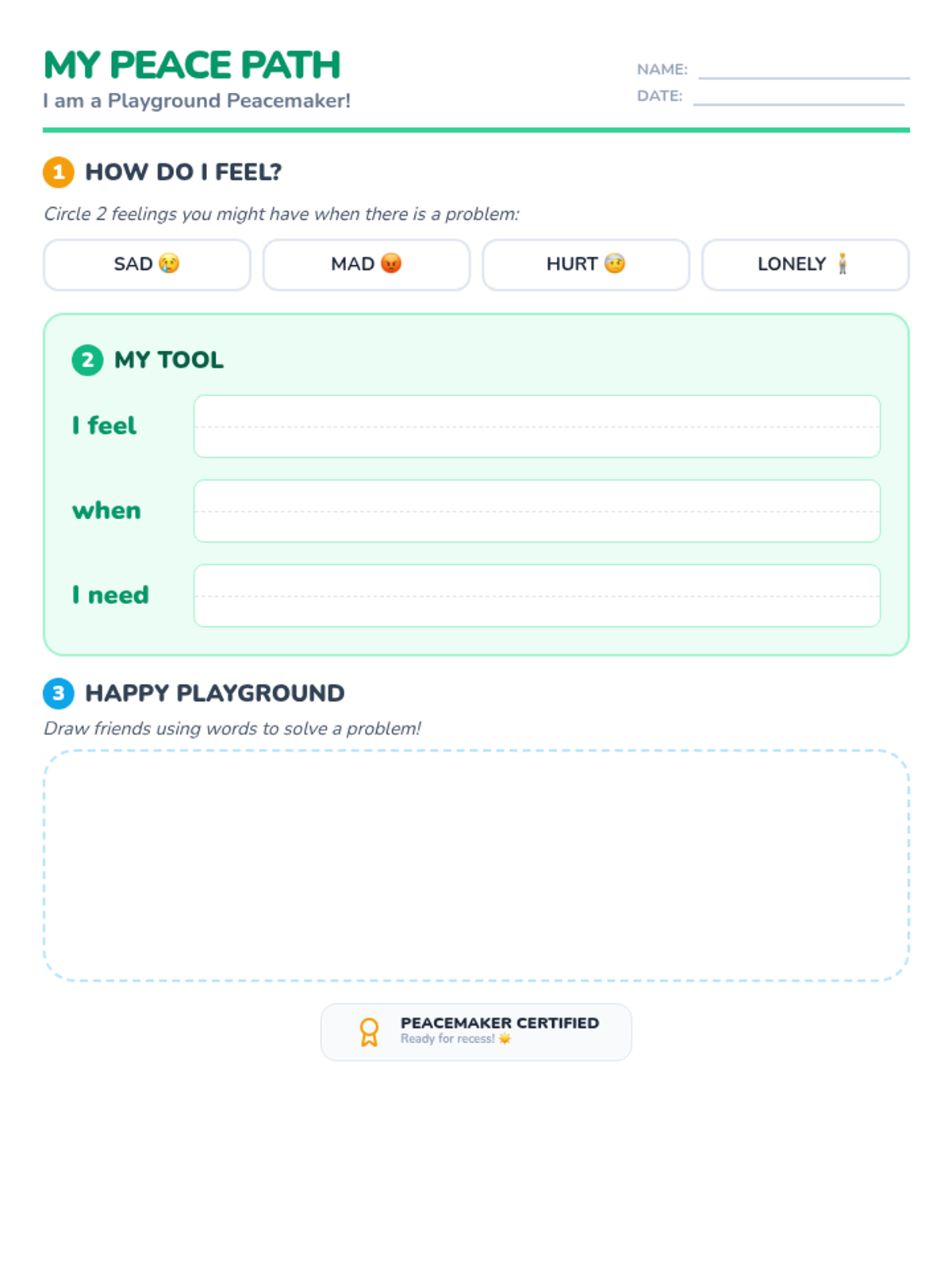
A social-emotional learning lesson for 1st and 2nd graders focused on resolving playground conflicts using 'I' messages and active listening. Students learn to handle common spring-play disagreements independently through role-play and reflection.