Students explore the career of a paleontologist through a video, brainstorming session, and a creative job application activity focused on persuasive writing and scientific traits.
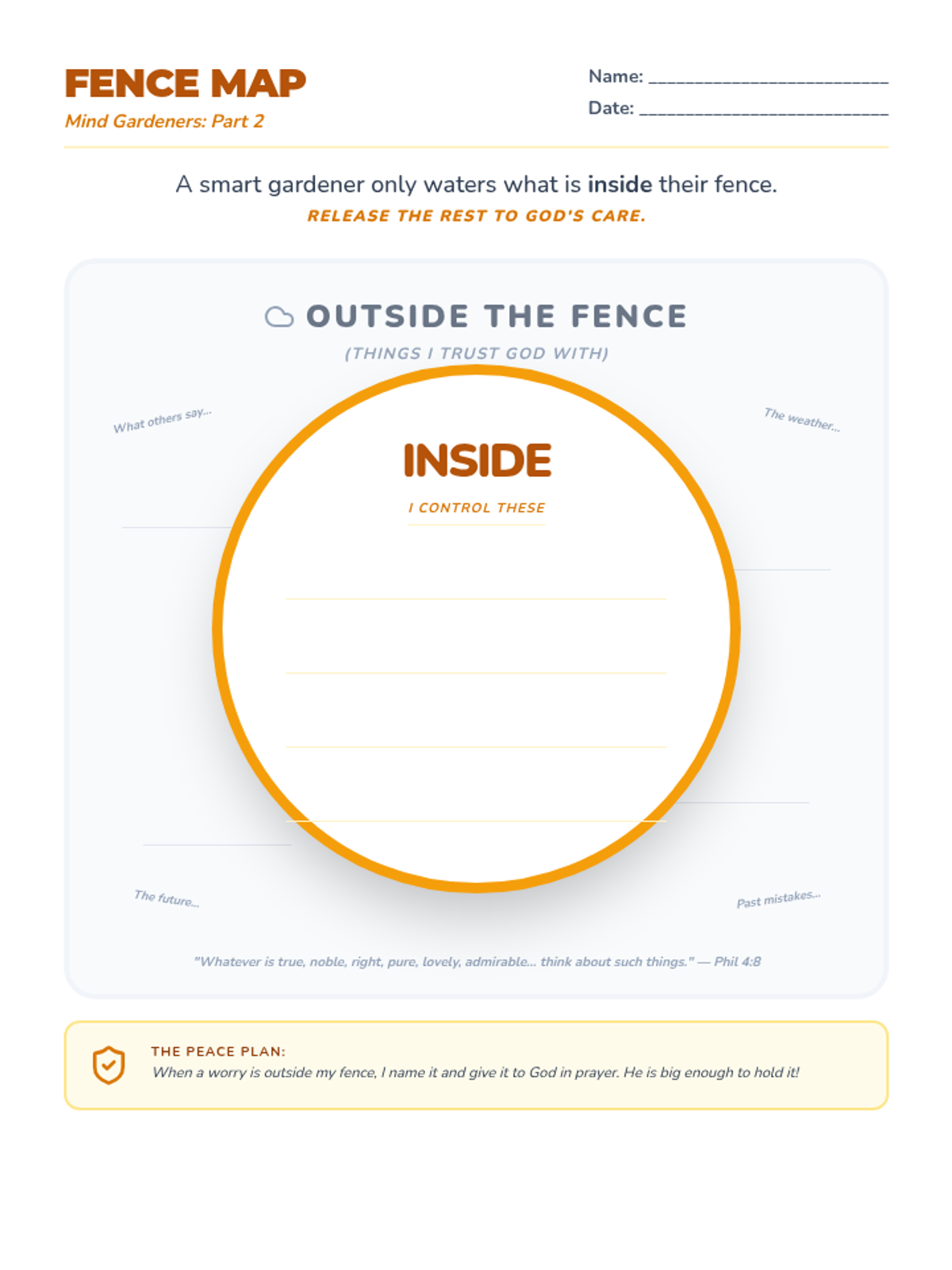
Students explore the concept of the Circle of Control, learning to distinguish between things they can change (inside the garden fence) and things they must accept (outside the fence).
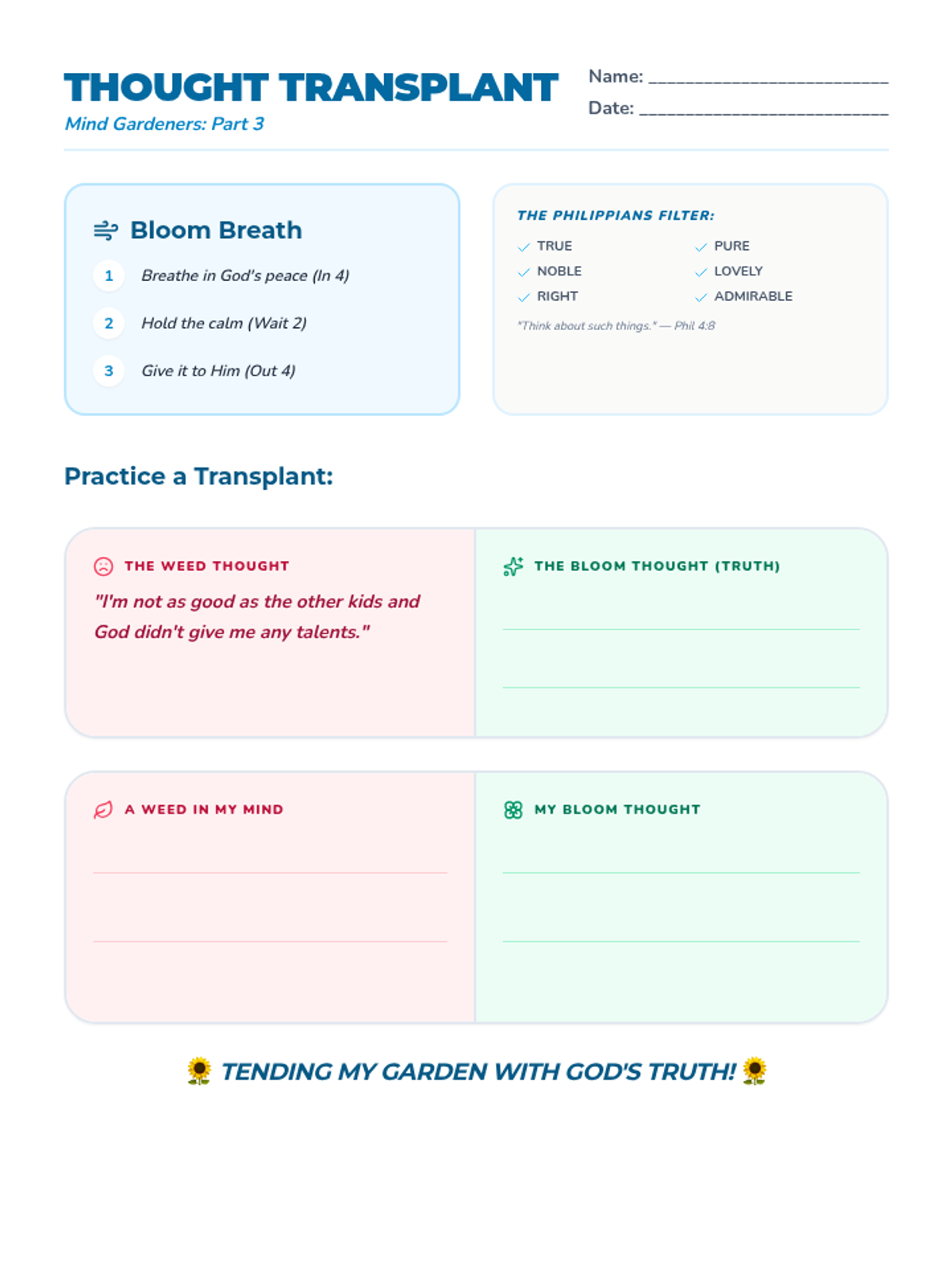
Students practice reframing unhelpful thoughts and building a toolkit of coping strategies to 'bloom' through challenging emotions.
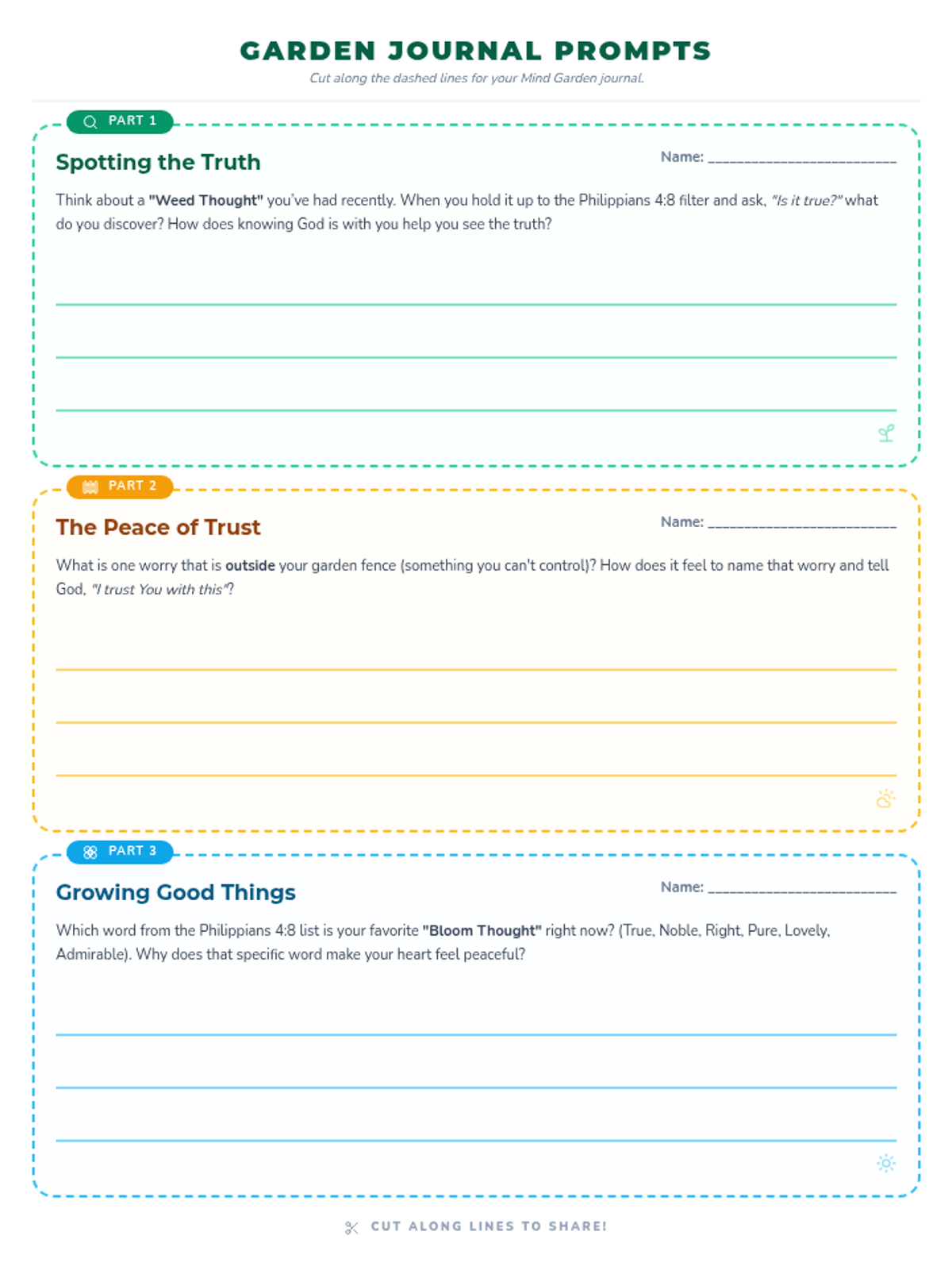
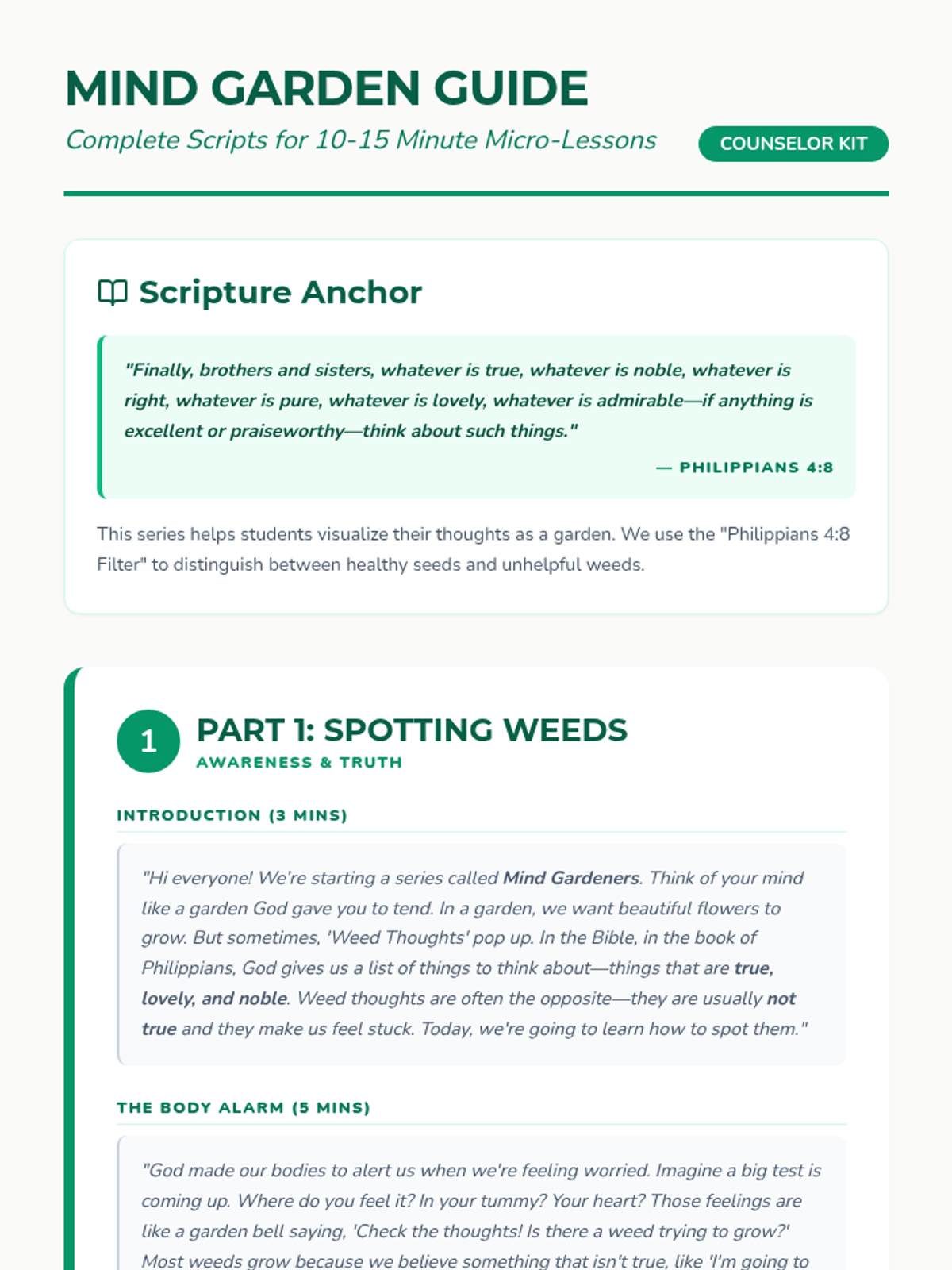
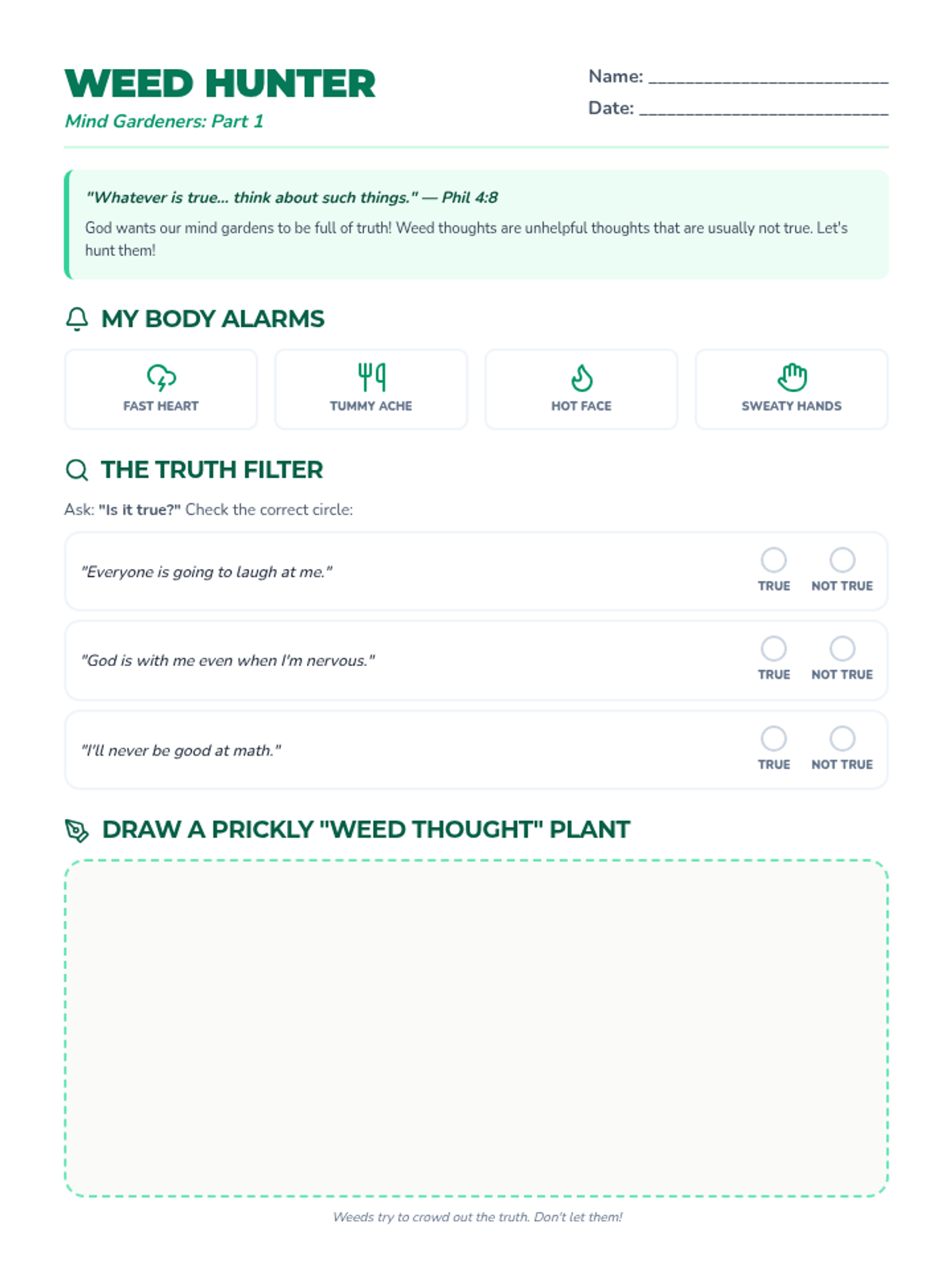
Students learn to identify physical signs of anxiety and recognize 'weed thoughts'—unhelpful or negative thoughts that can crowd out calm ones.
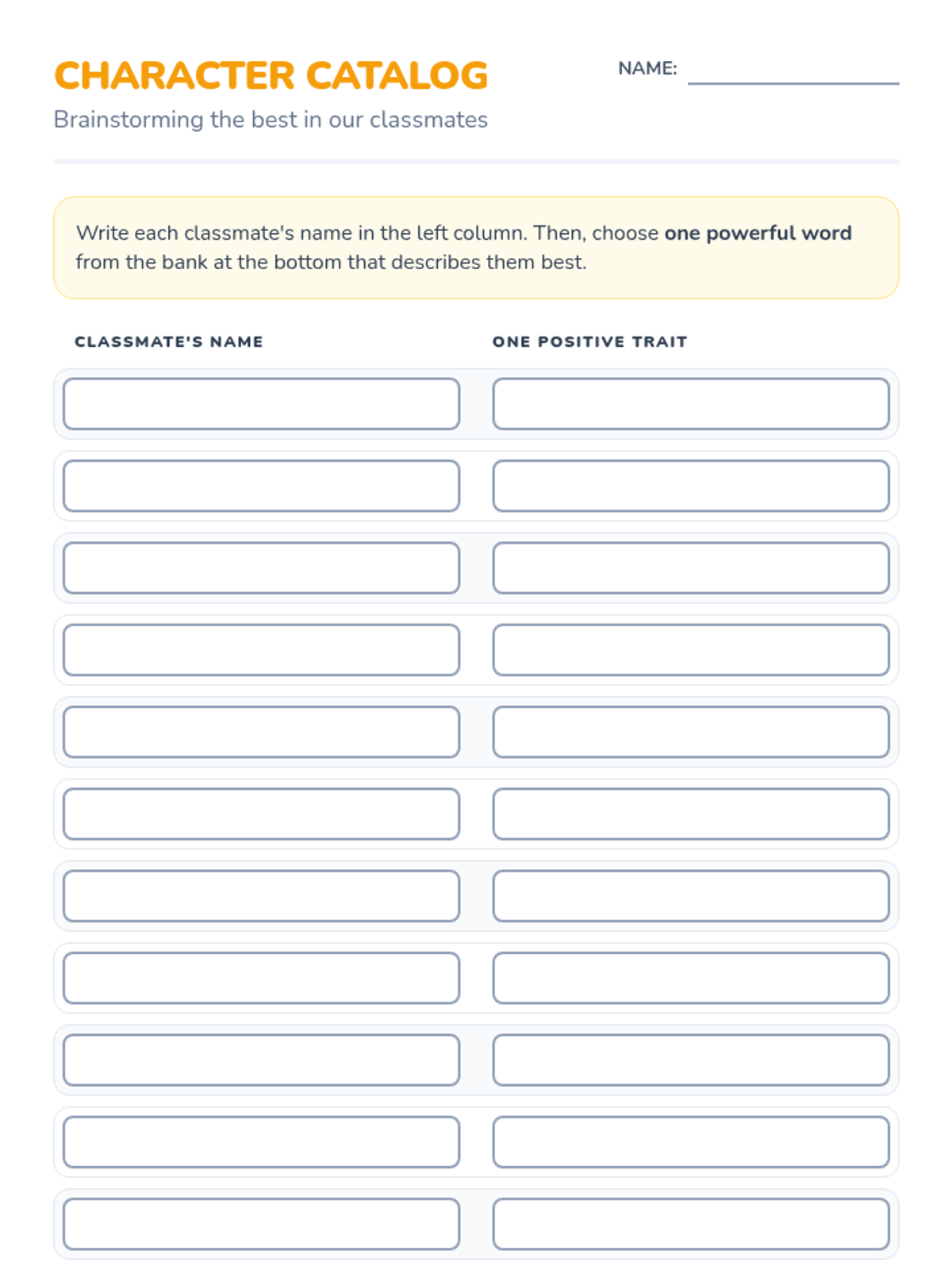
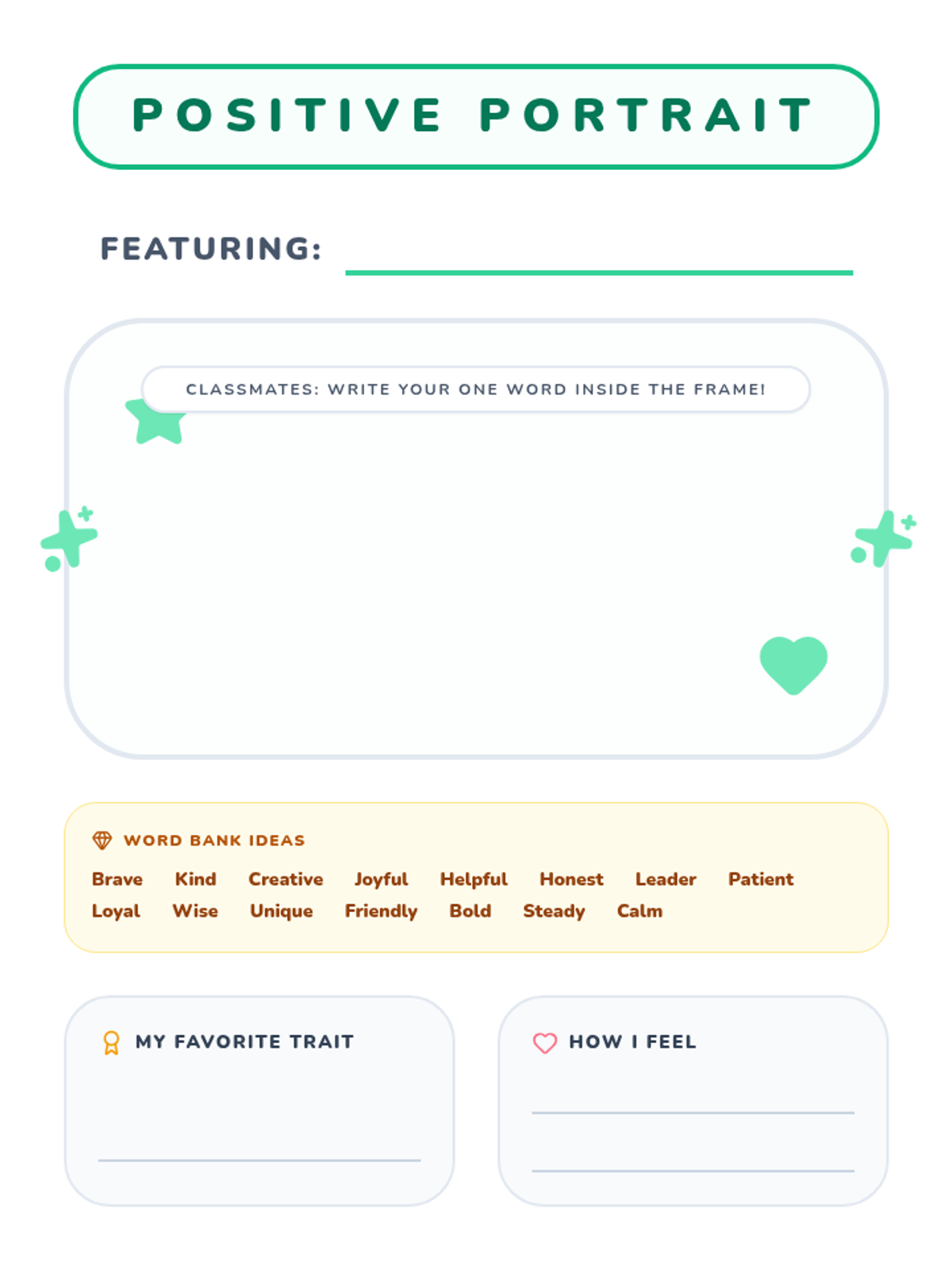
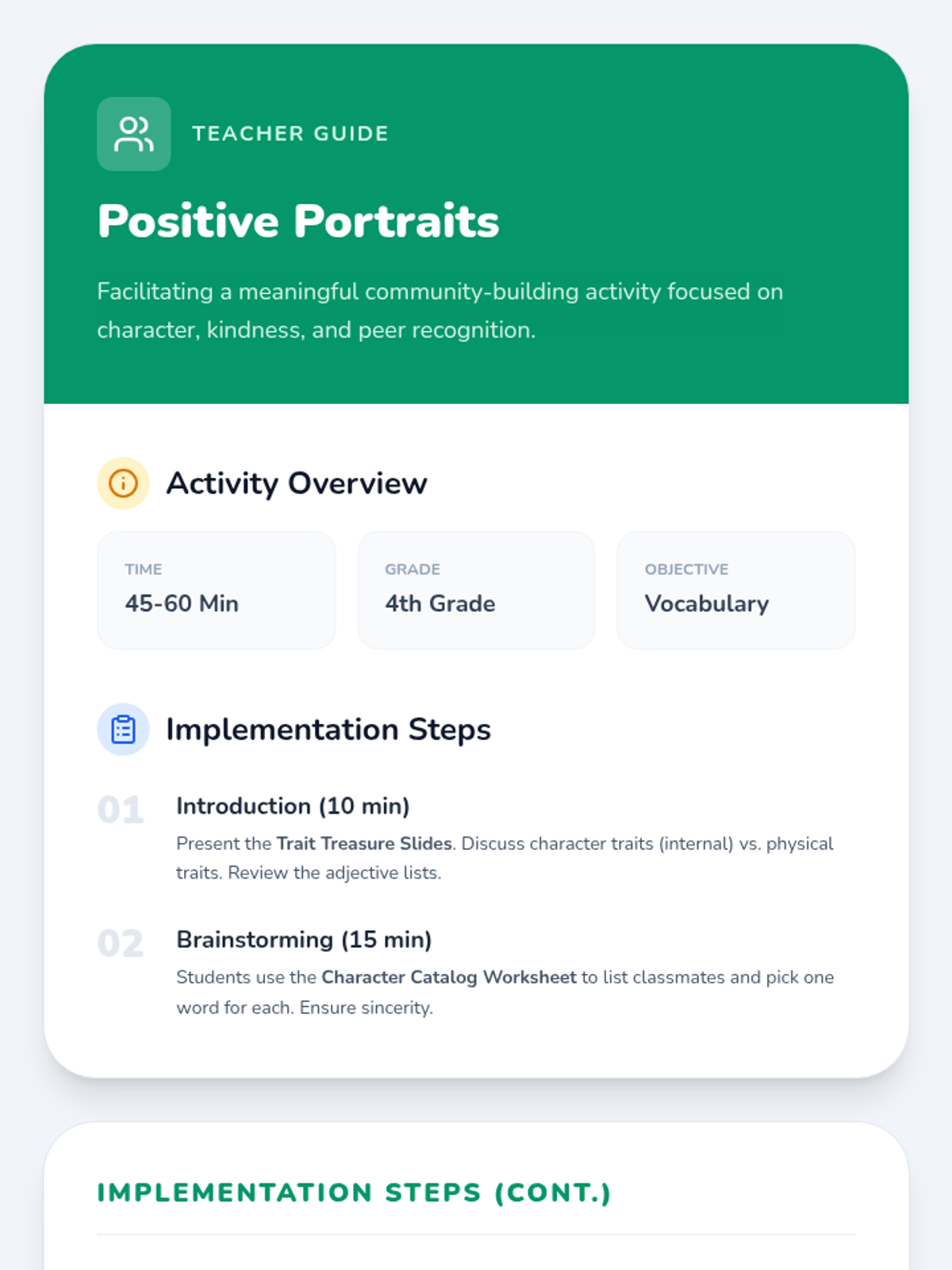
A community-building lesson where 4th-grade students explore positive character traits and choose a single, powerful adjective to describe each of their classmates.
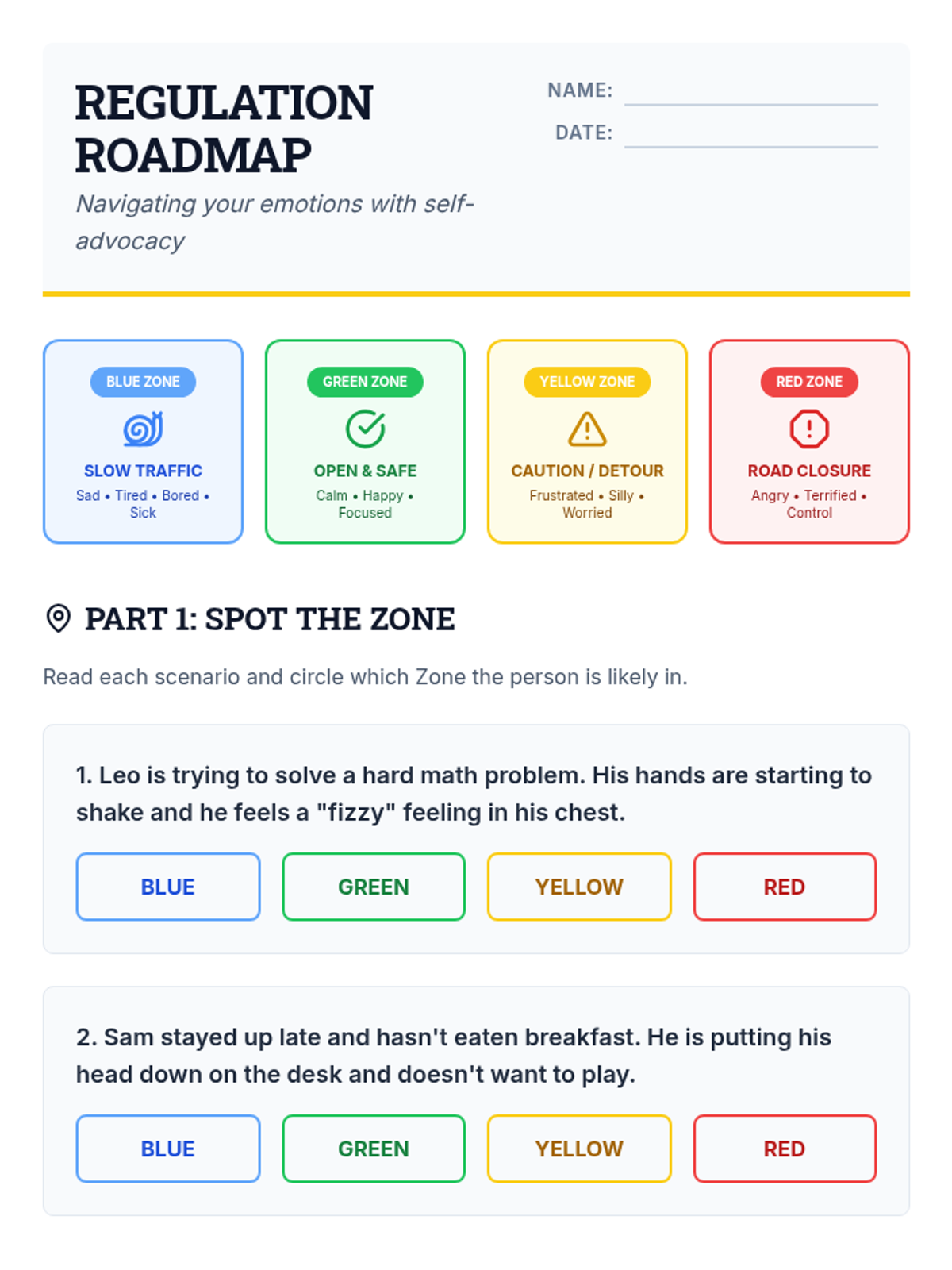
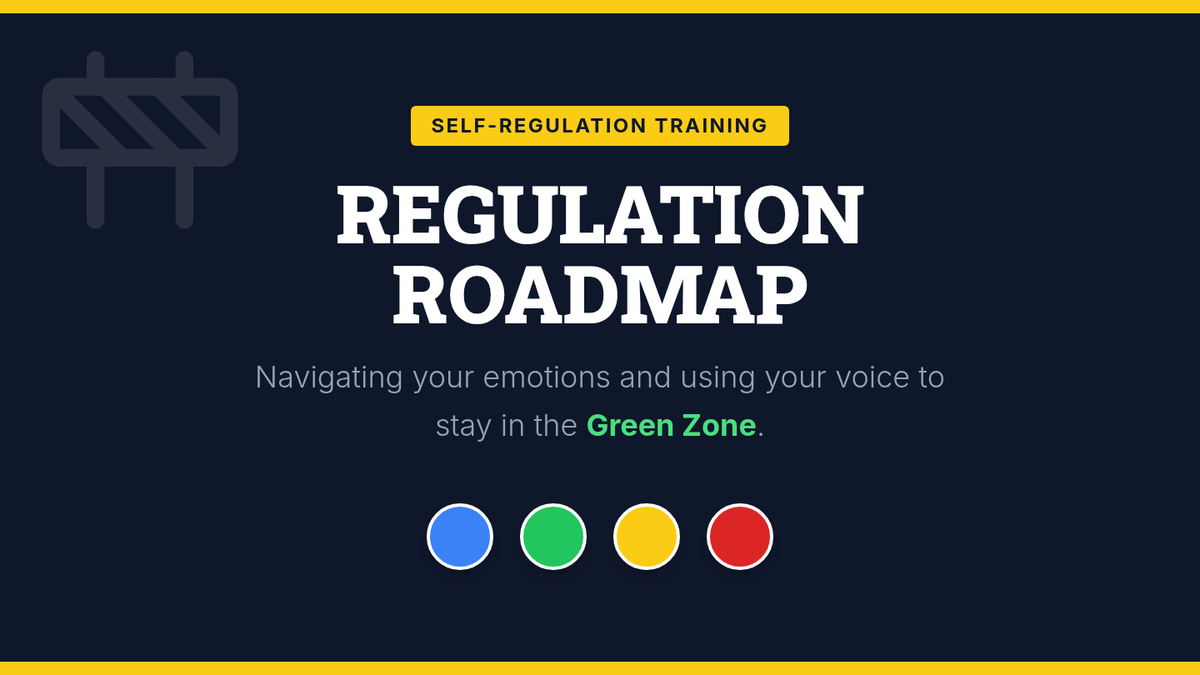
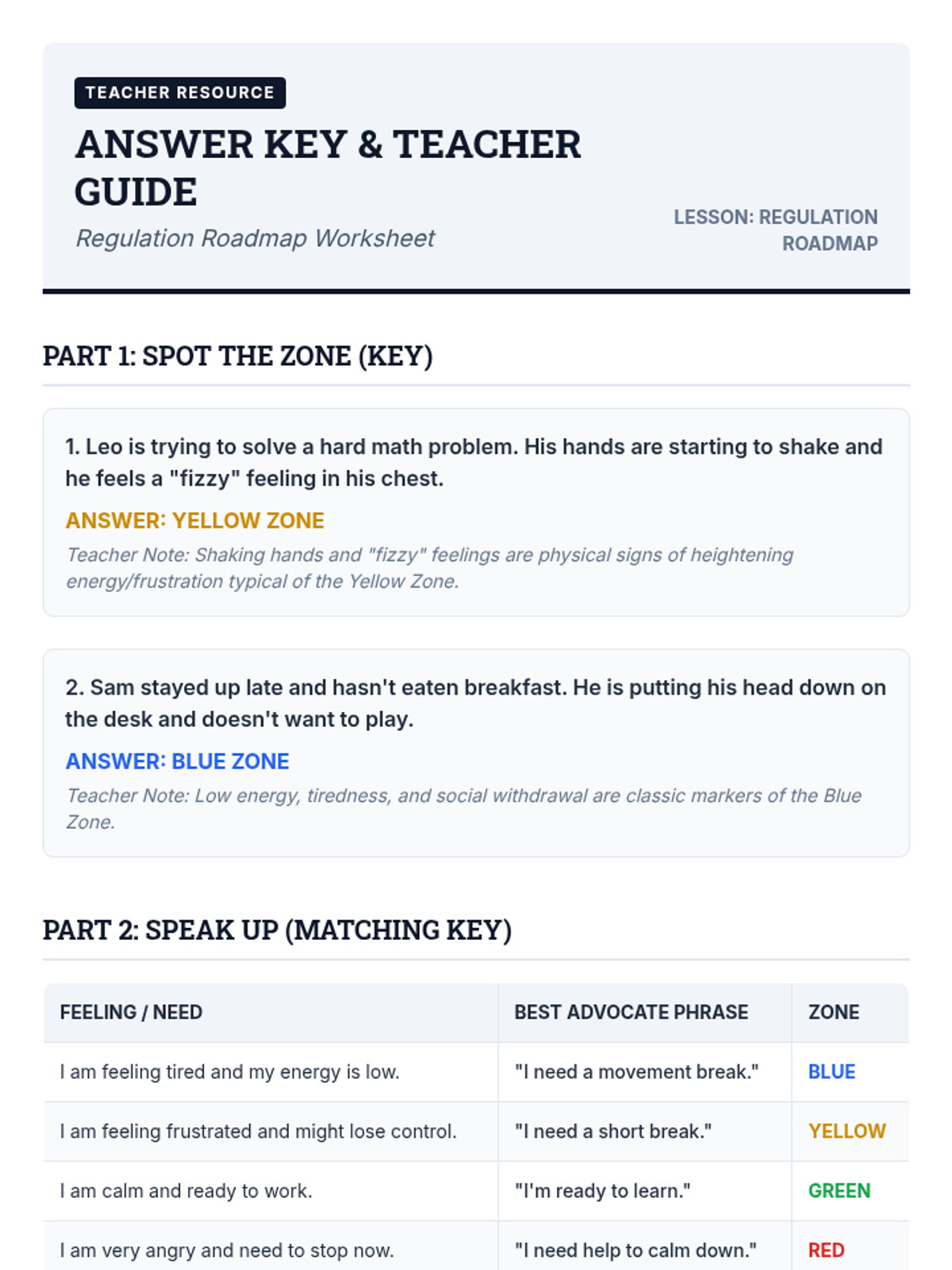
A lesson introducing the Zones of Regulation framework using a construction zone analogy, focusing on identifying emotions and using self-advocacy phrases to manage them.
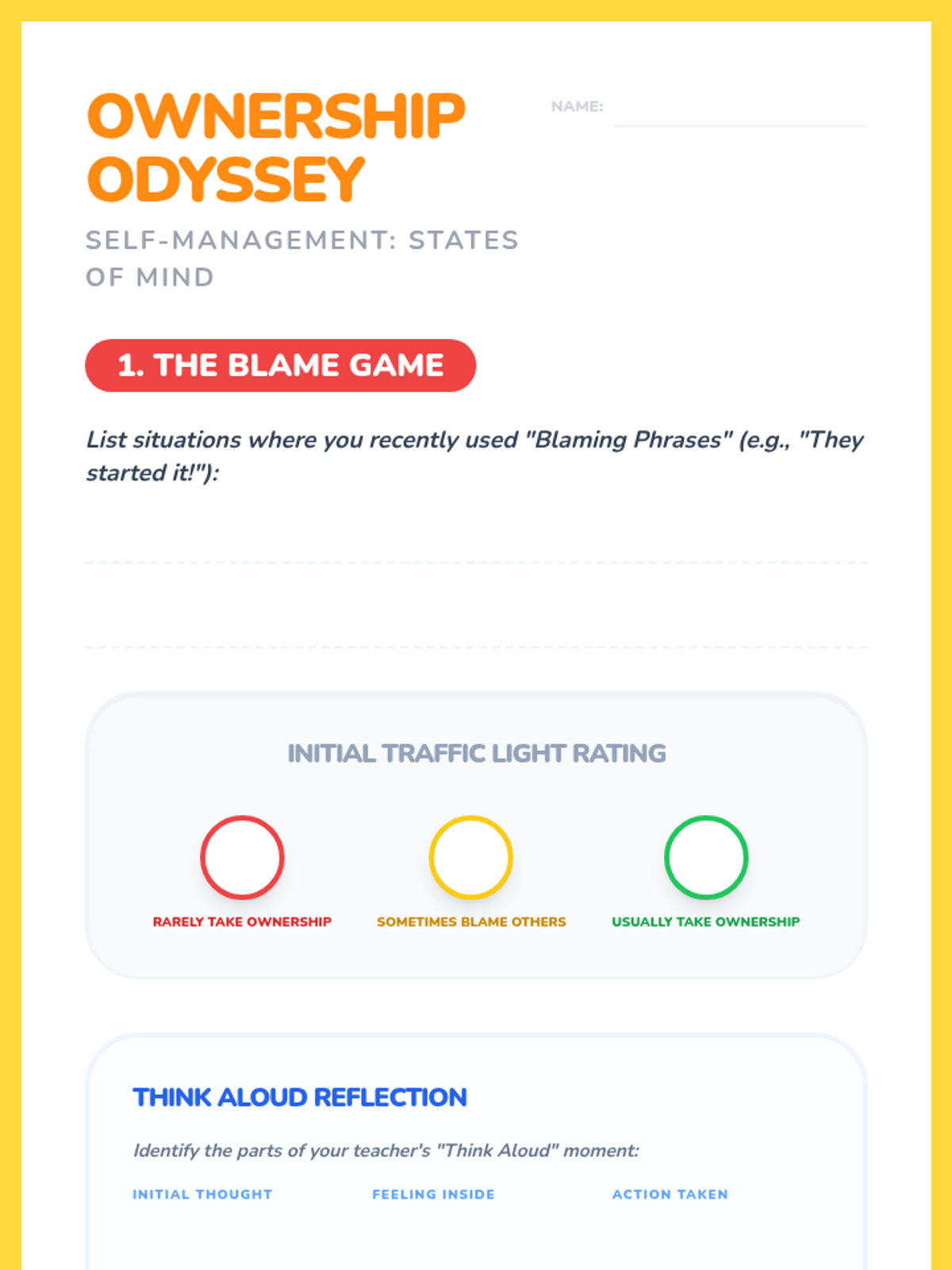
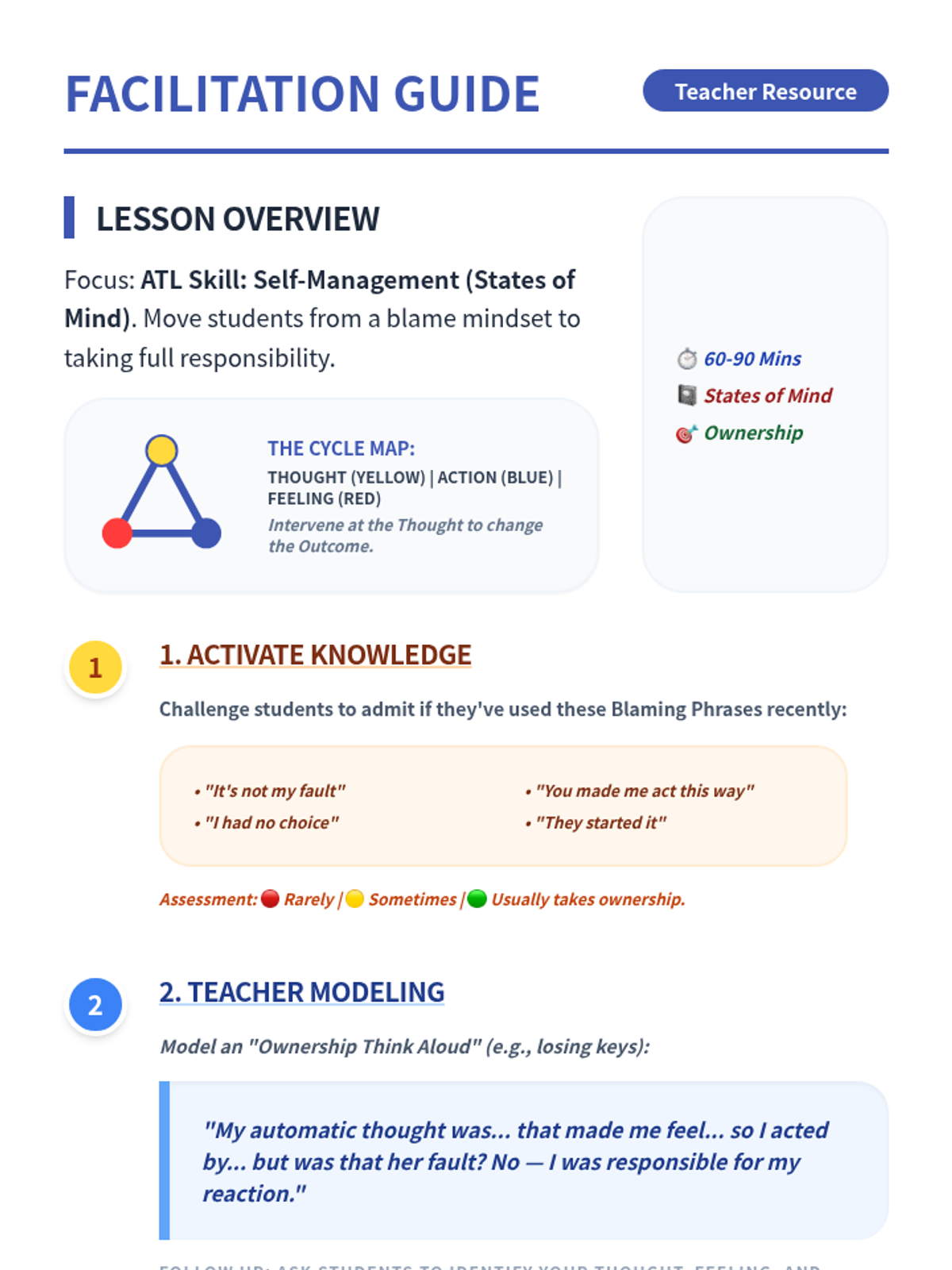
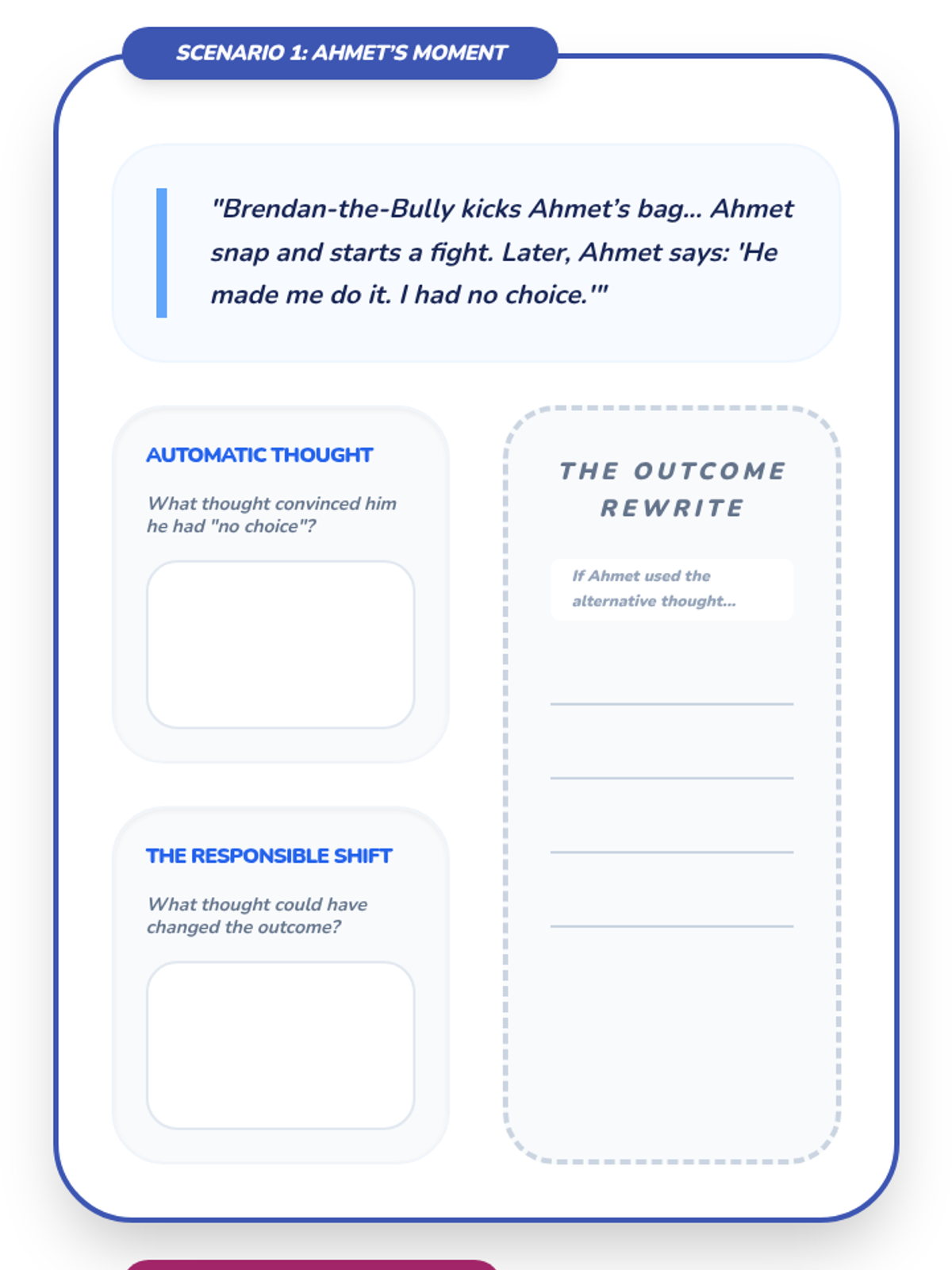
A comprehensive self-management lesson that uses Cognitive Behavioral Therapy (CBT) principles to help students move from a blame mindset to taking full responsibility for their actions. Students analyze characters from 'Inside Out 2' and 'The Boy at the Back of the Class' to understand the connection between thoughts, feelings, and behaviors.
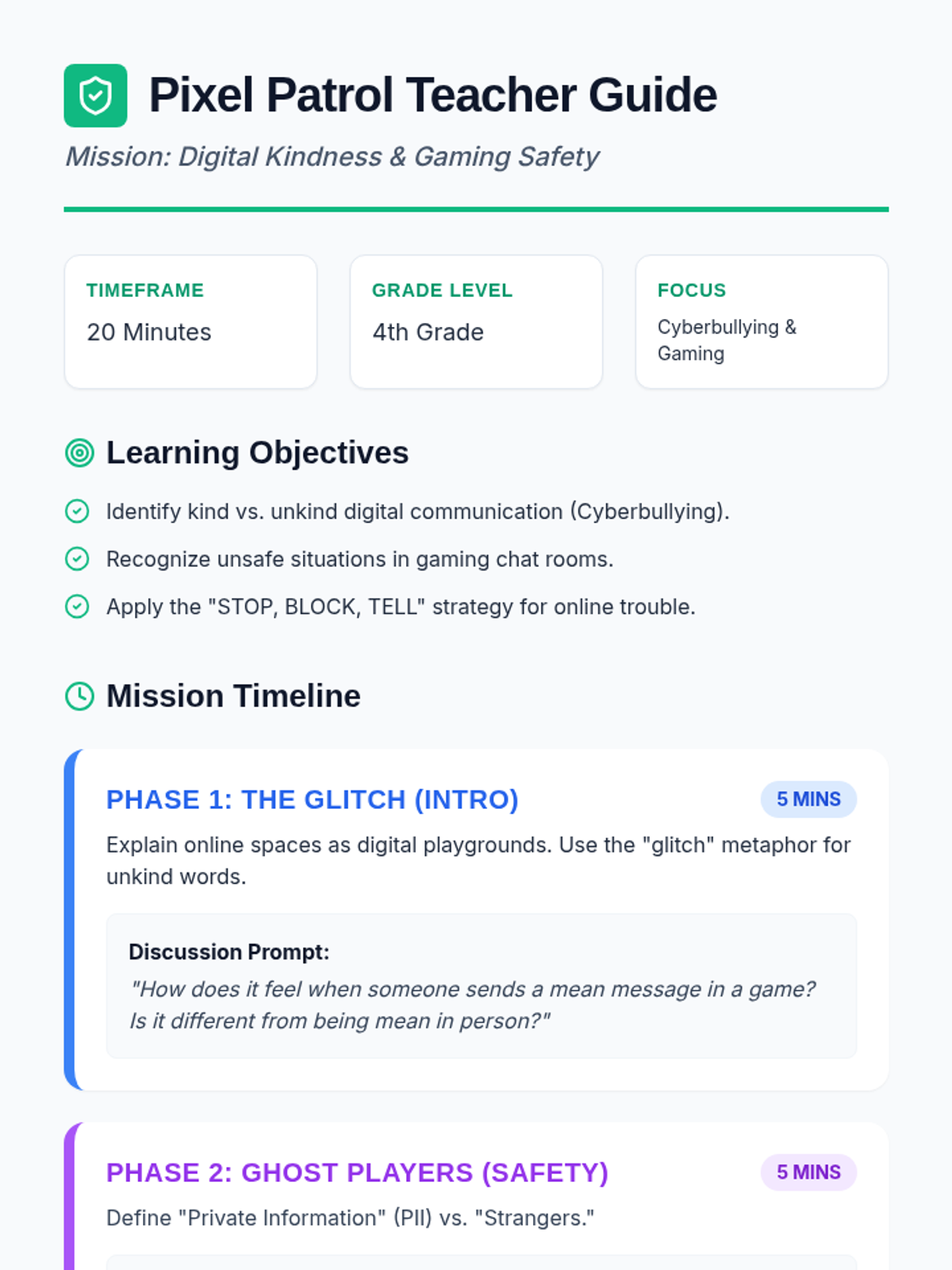
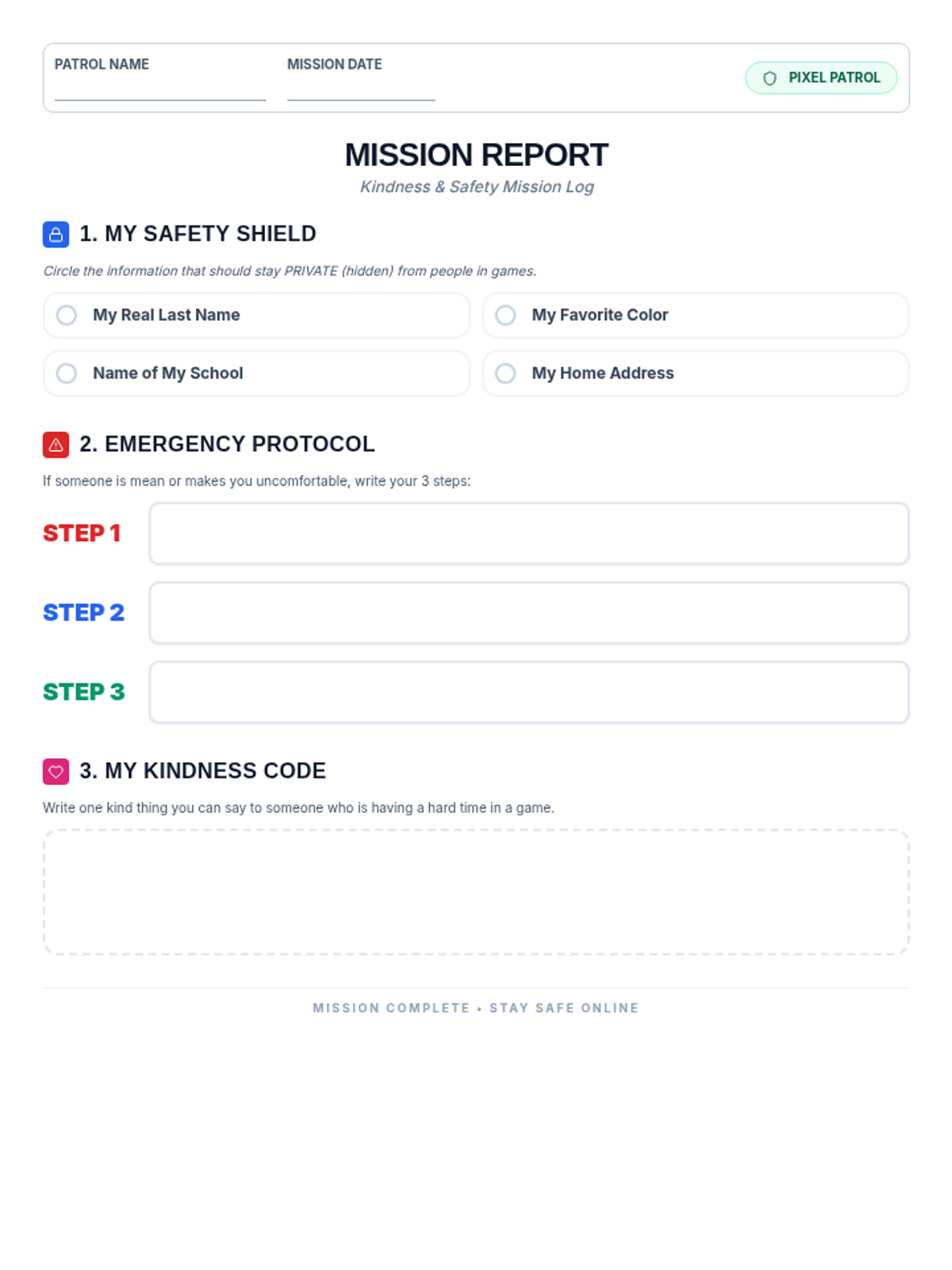
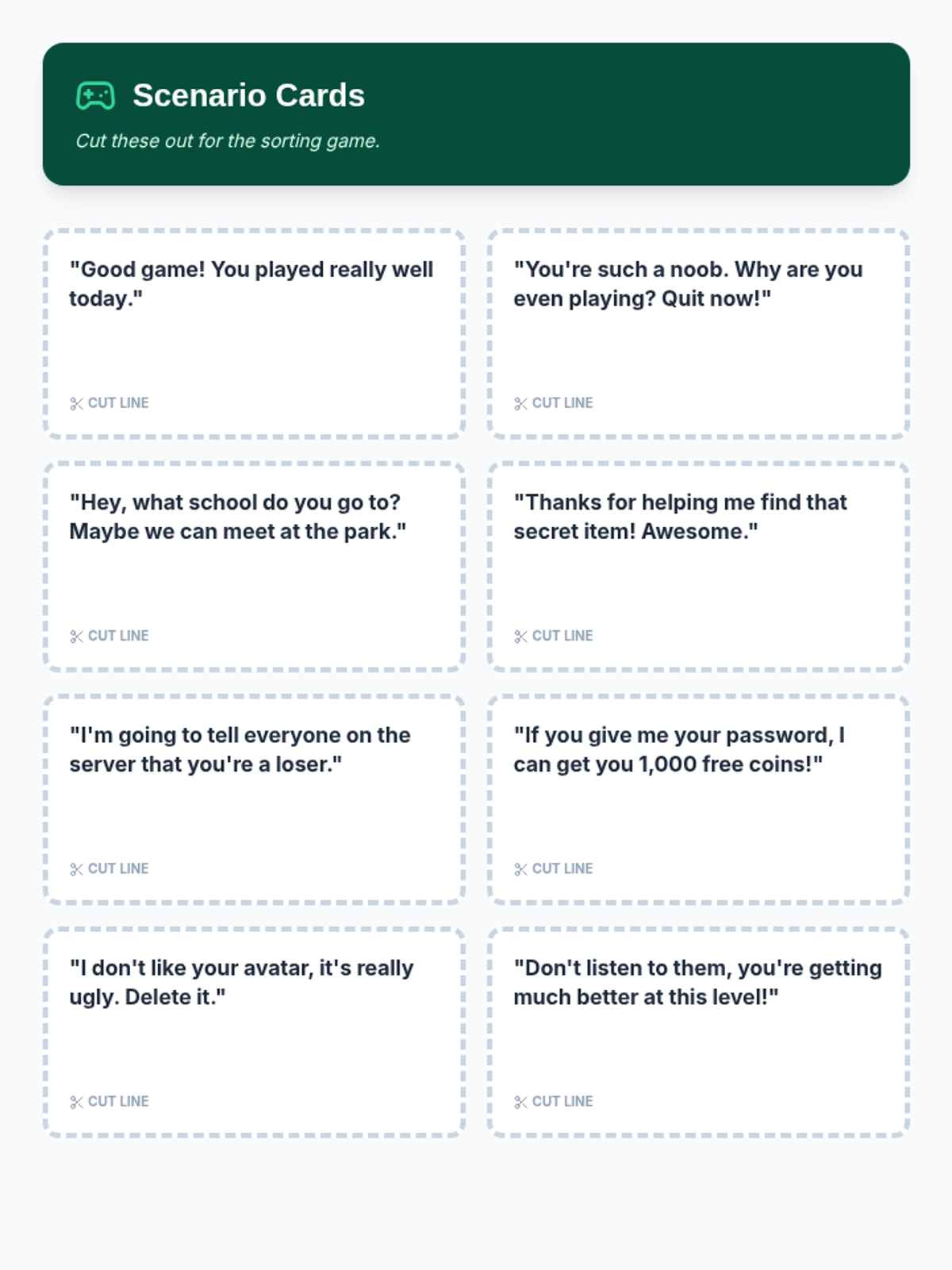
A 20-minute mission-based lesson for 4th graders focusing on kind digital communication and staying safe in gaming environments and chat rooms. Students become 'Pixel Patrollers' to learn how to identify and respond to cyberbullying and unsafe interactions.
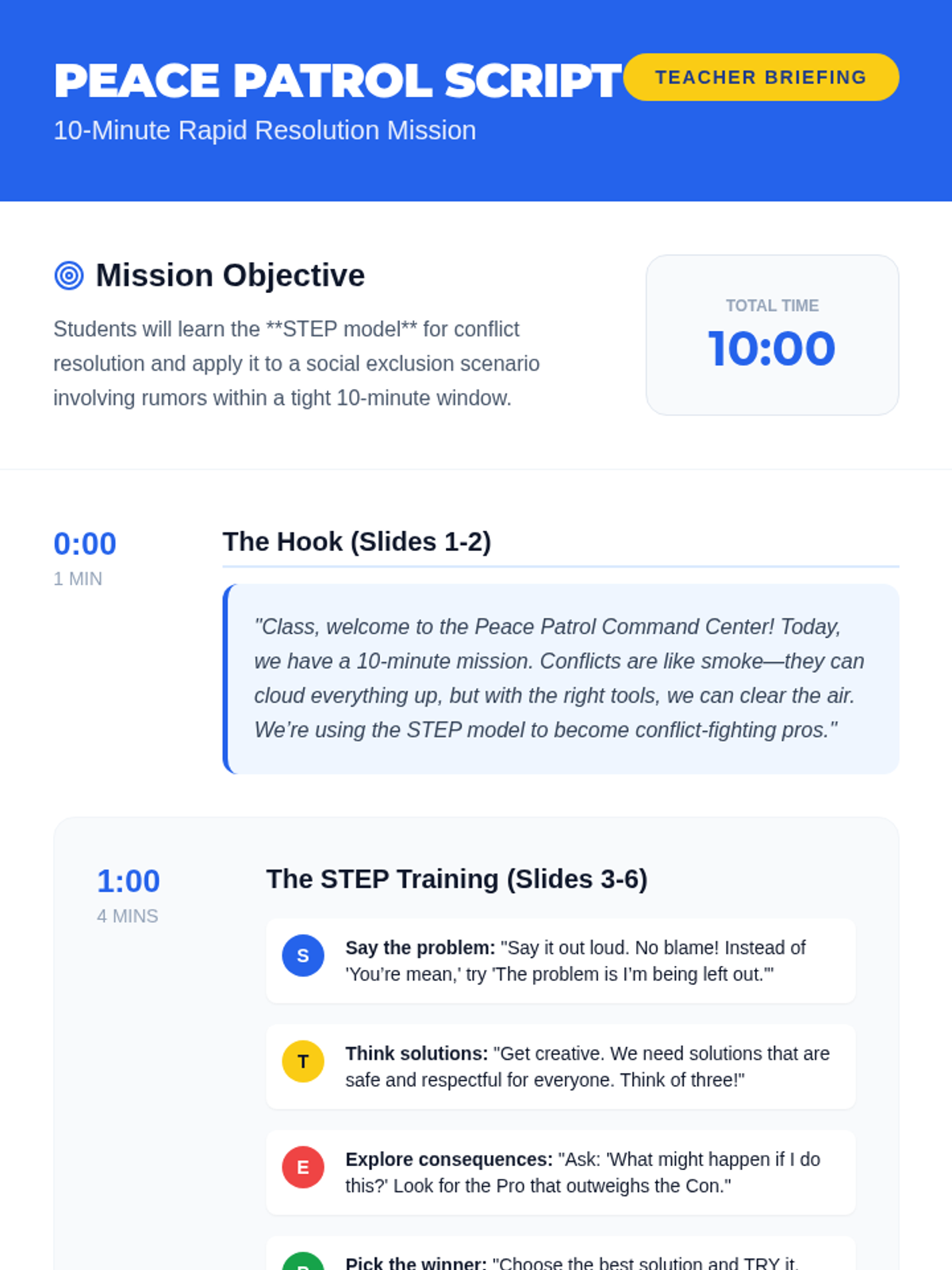
A fast-paced, high-energy 10-minute lesson teaching the STEP model for conflict resolution through a social exclusion scenario. Students learn to navigate rumors and friendship friction like a pro.
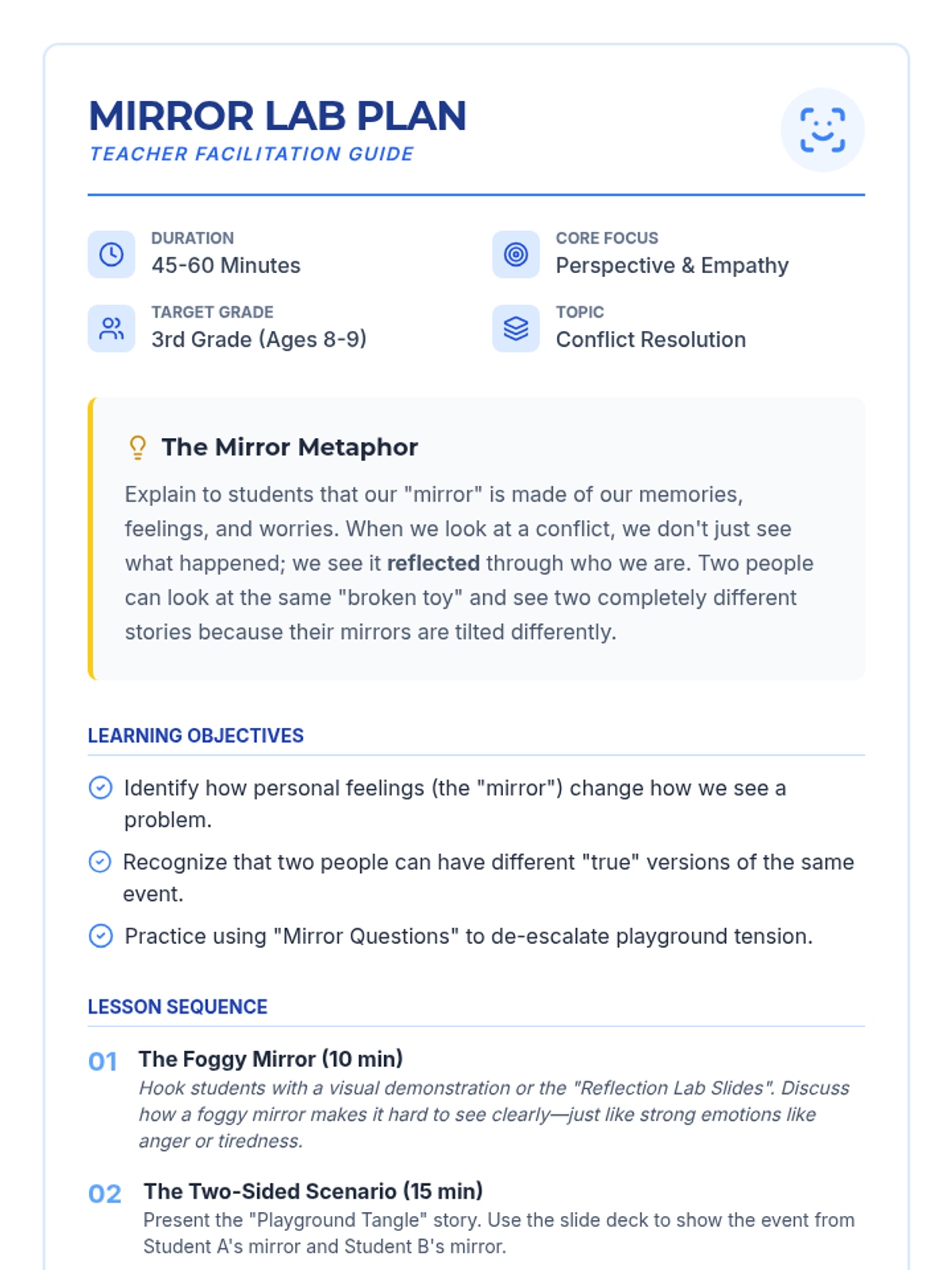
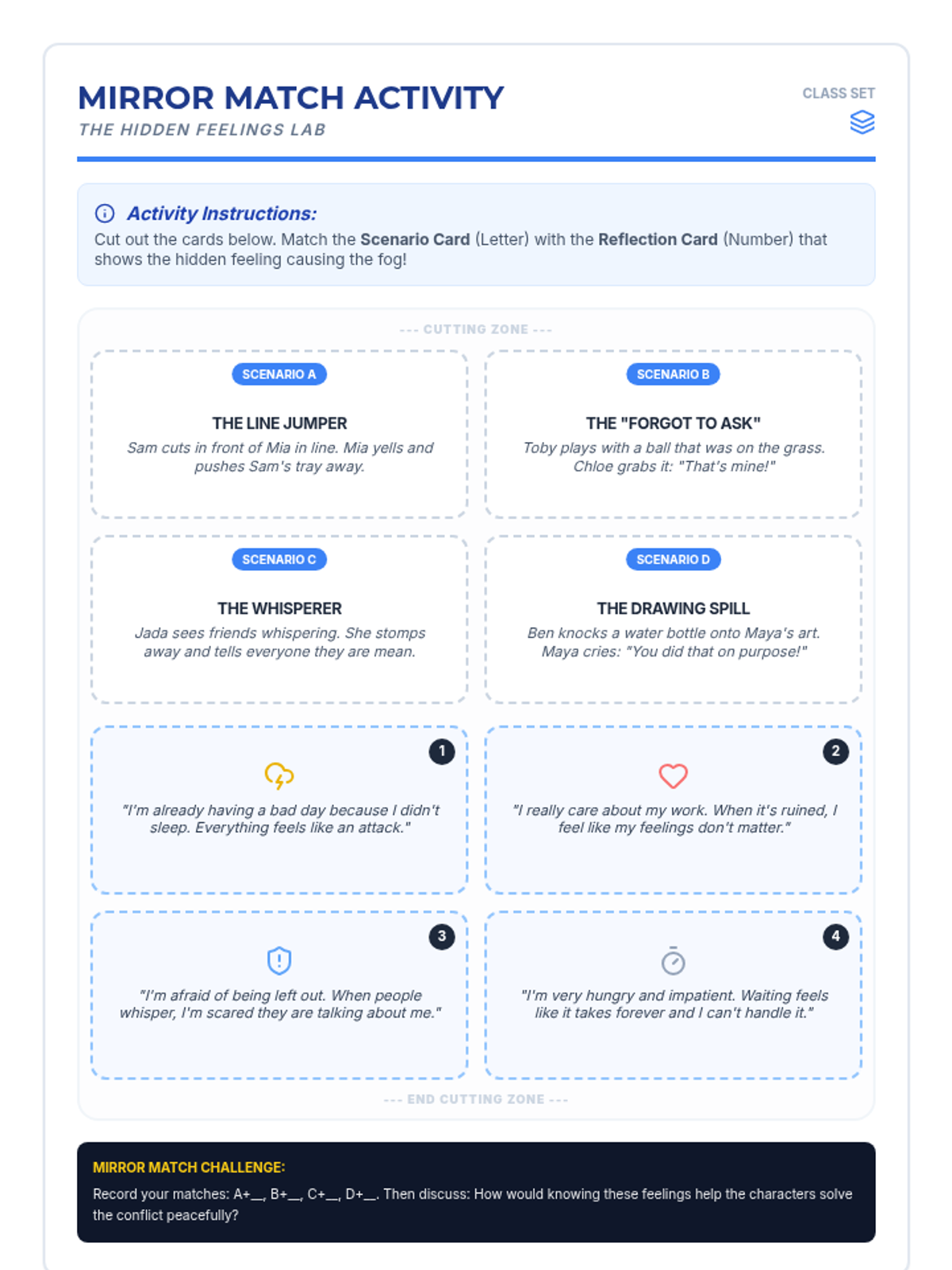
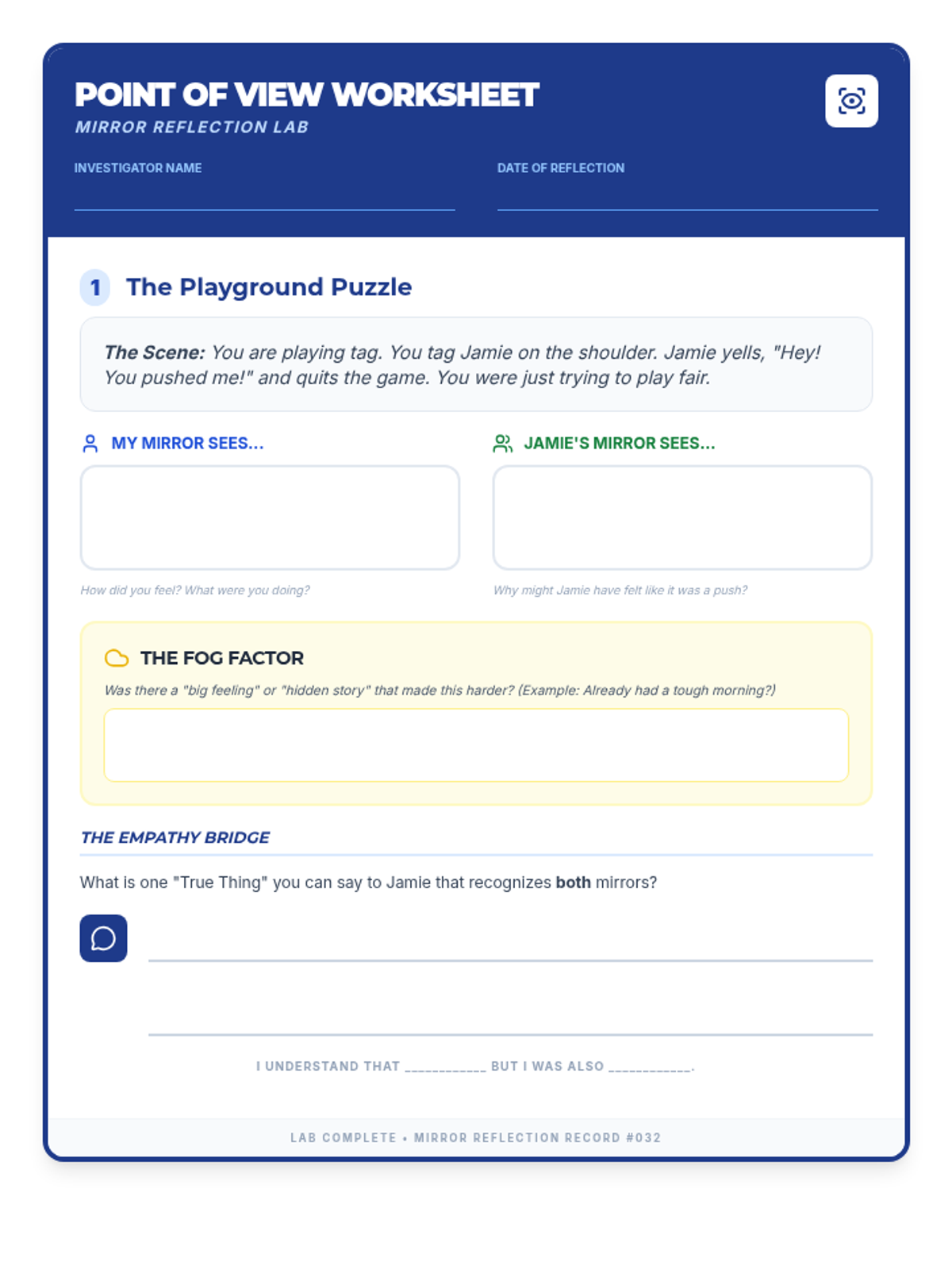
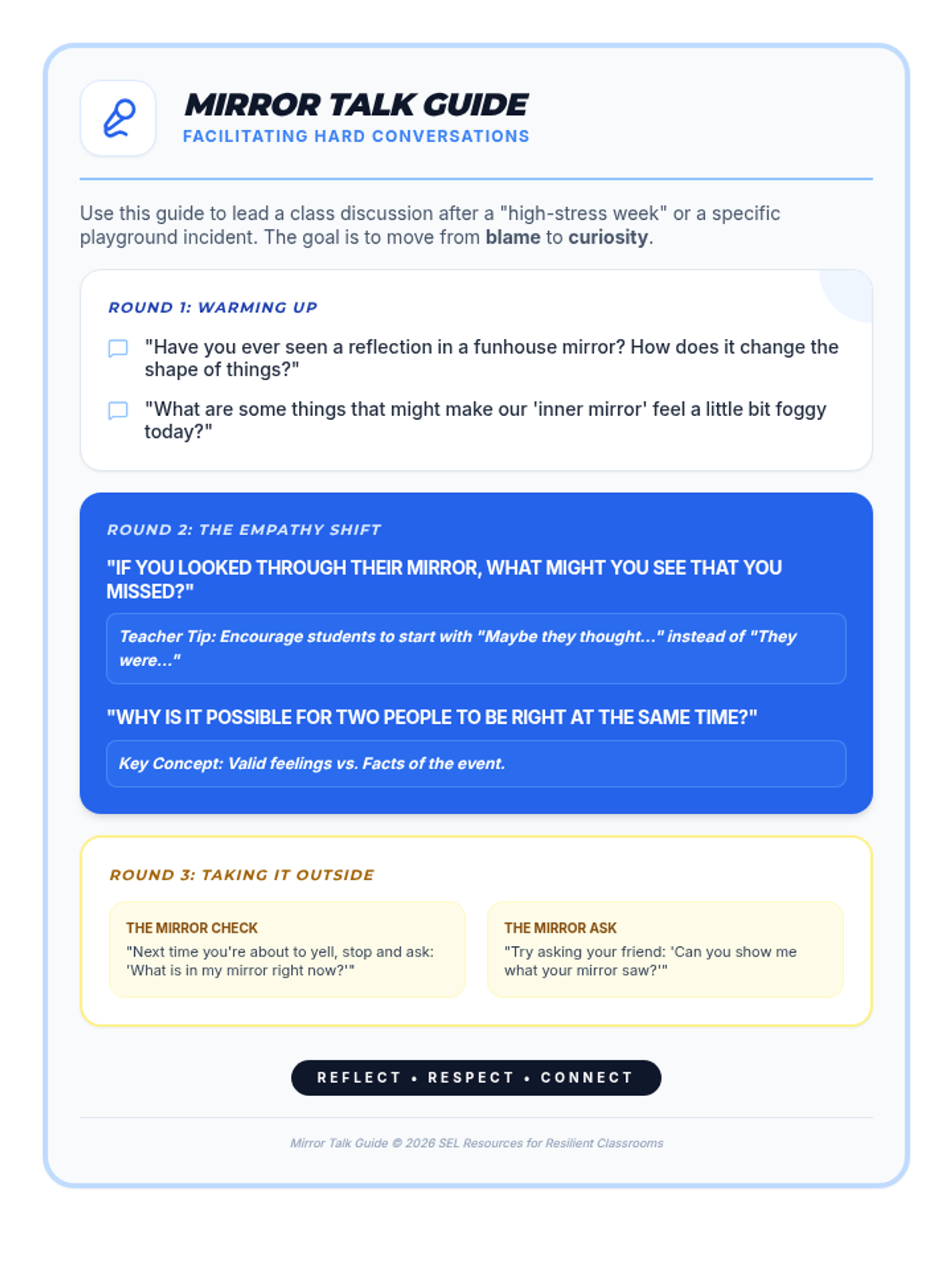
A Social-Emotional Learning lesson for 3rd graders exploring how personal experiences and emotions act as 'mirrors' that shape their perspective on conflicts. Students practice identifying multiple valid viewpoints to build empathy and resolve playground disagreements.

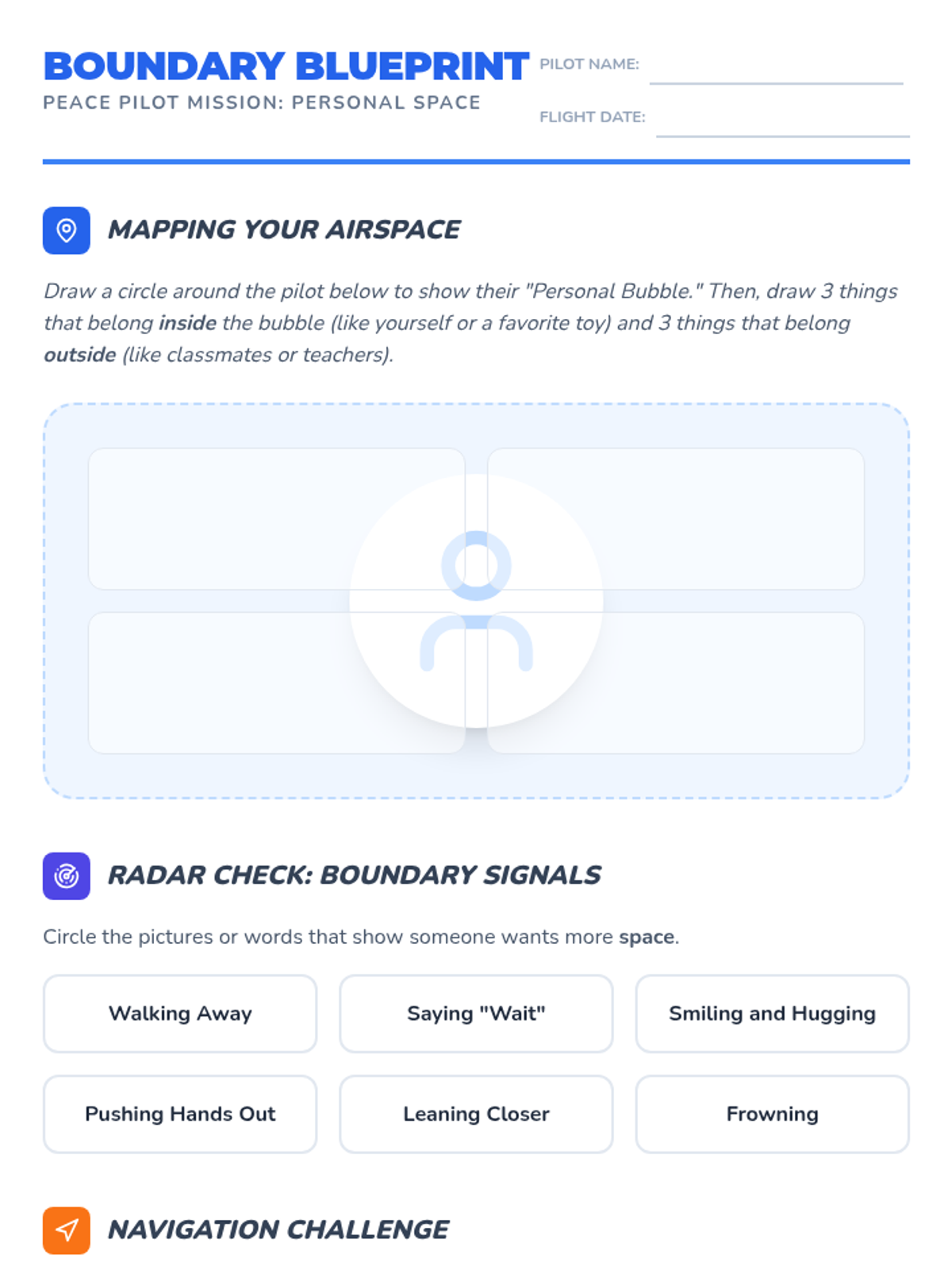
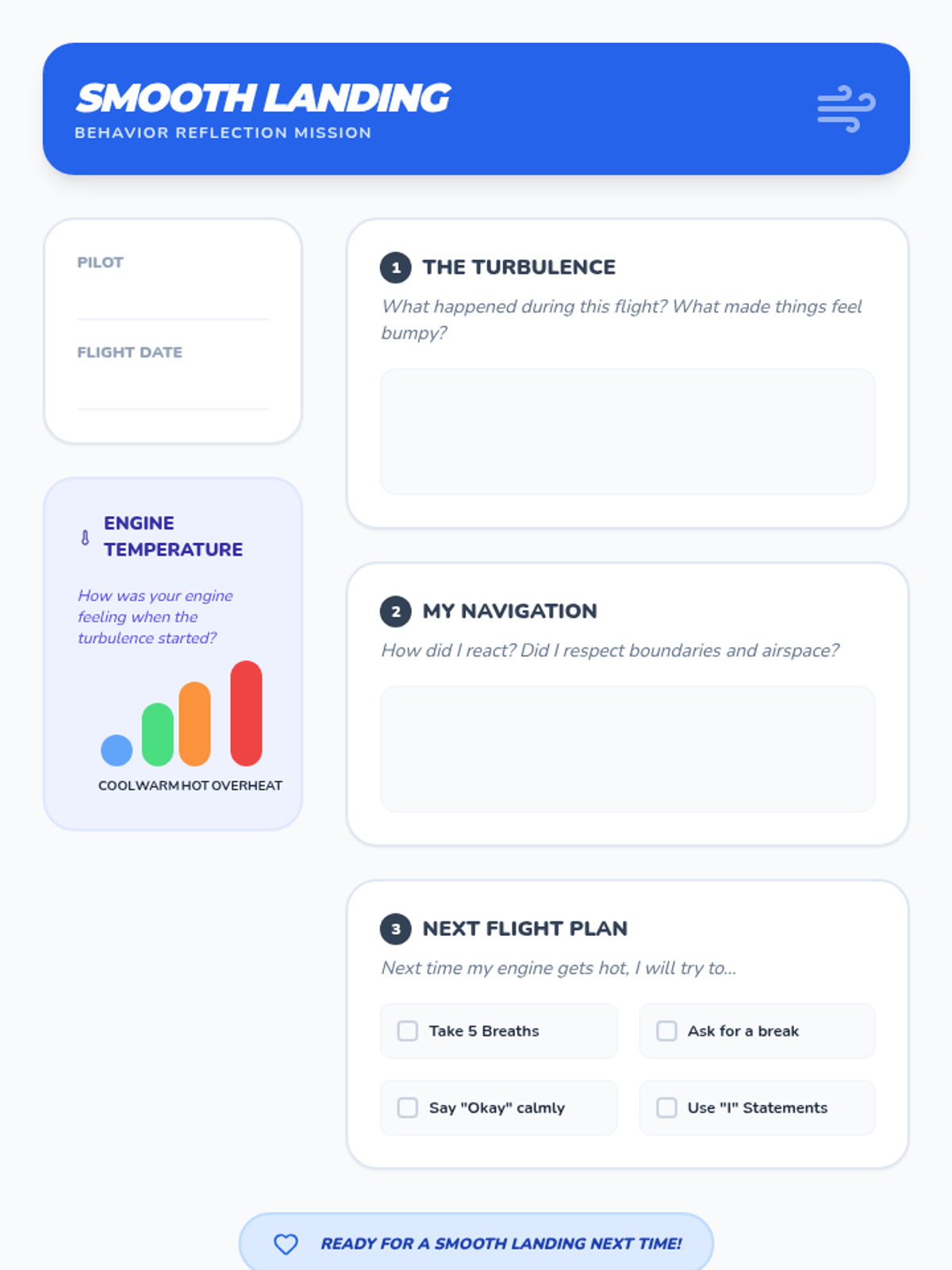
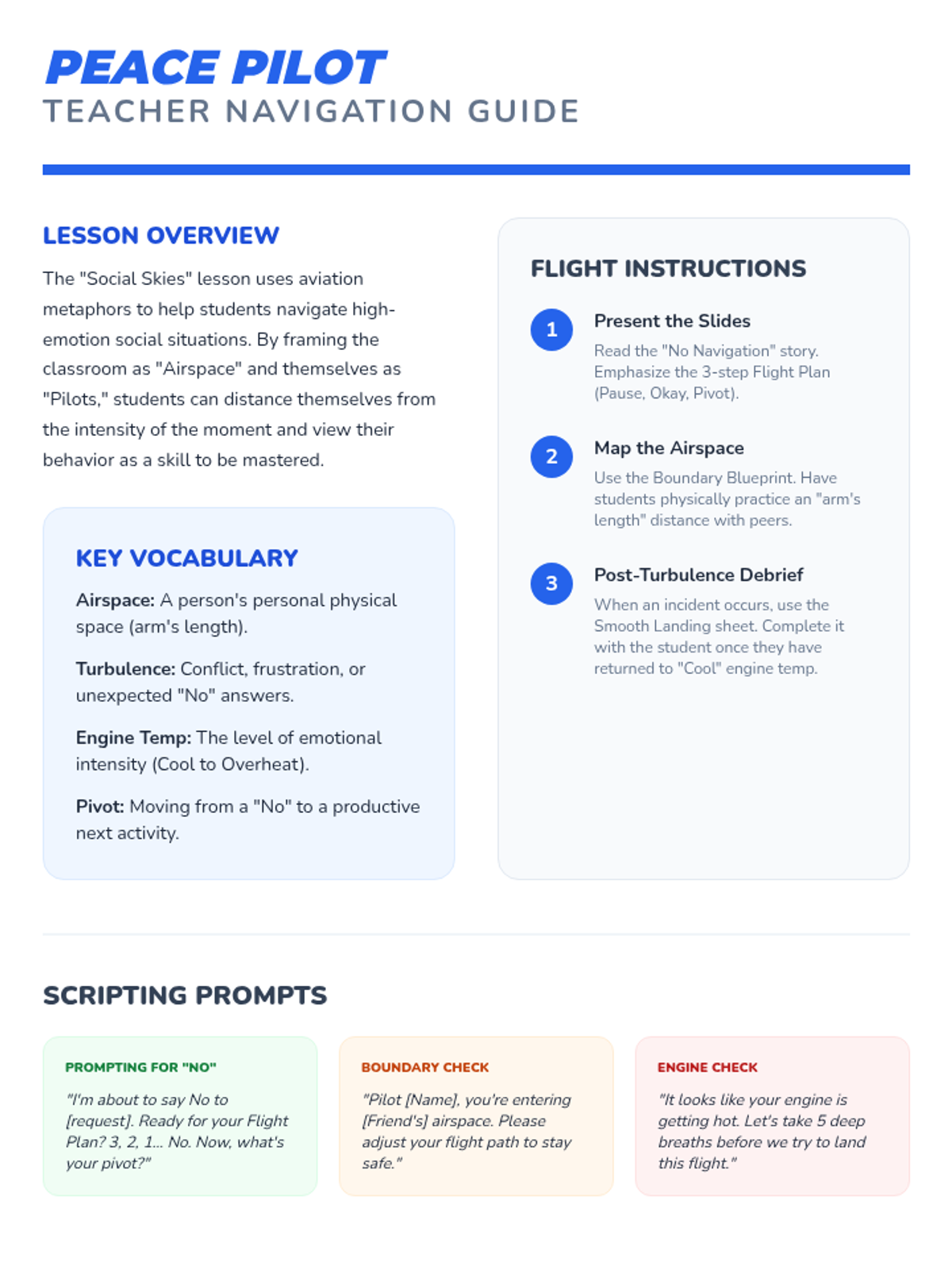
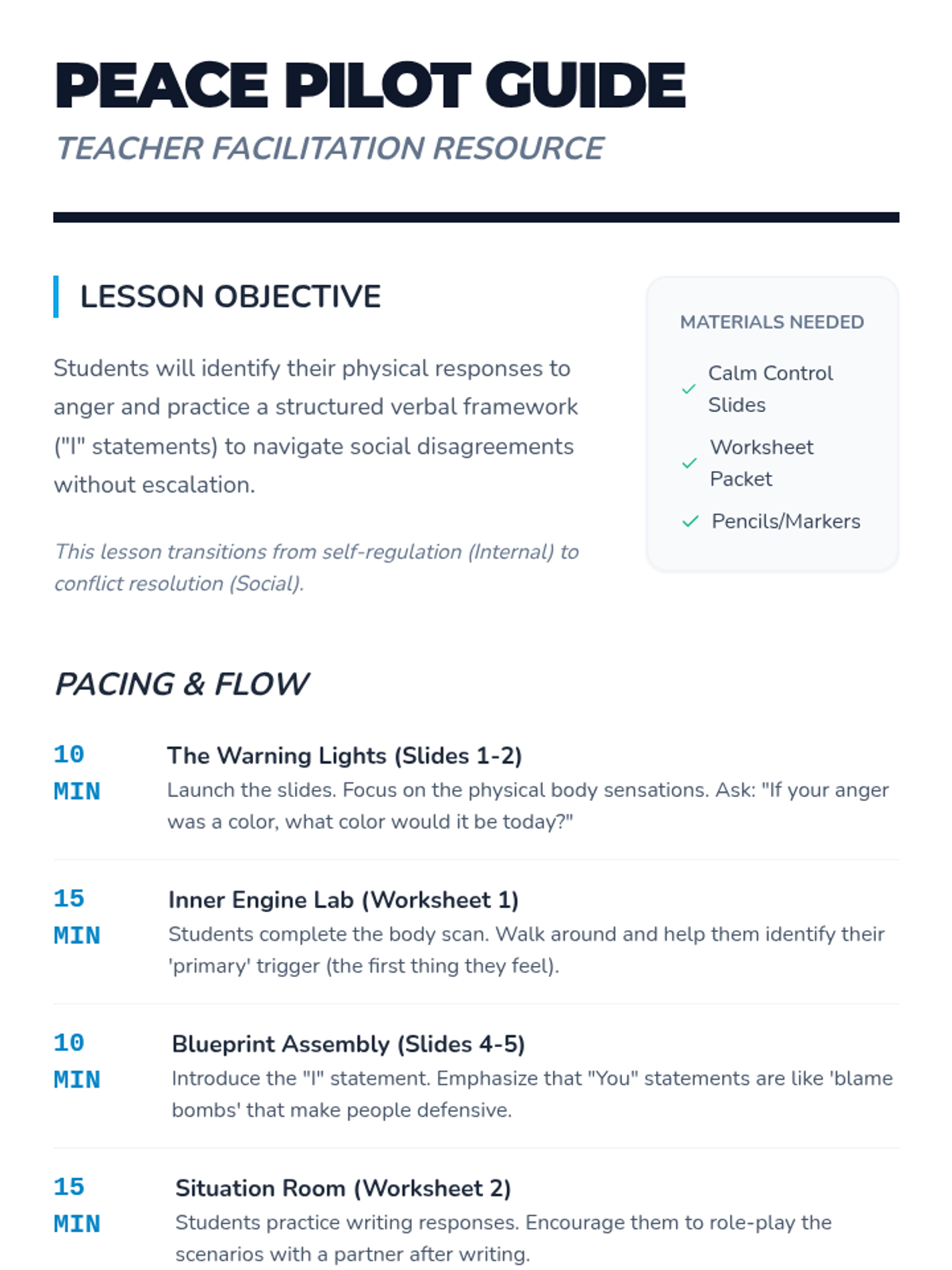
A social-emotional learning lesson focused on accepting 'no', respecting personal space boundaries, and reflecting on behavioral choices. Students learn to navigate social challenges with the 'Peace Pilot' framework for staying calm and respectful.
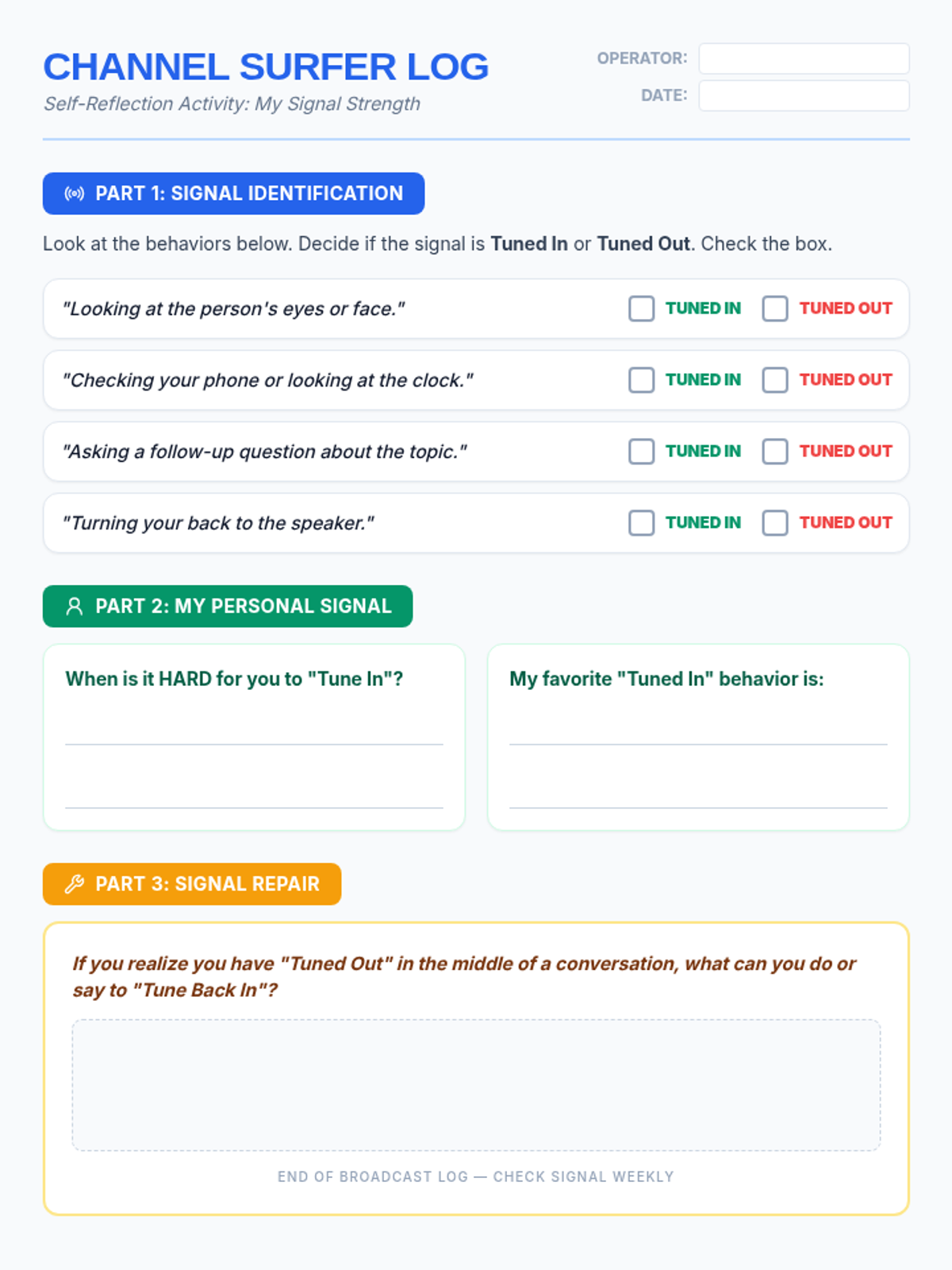
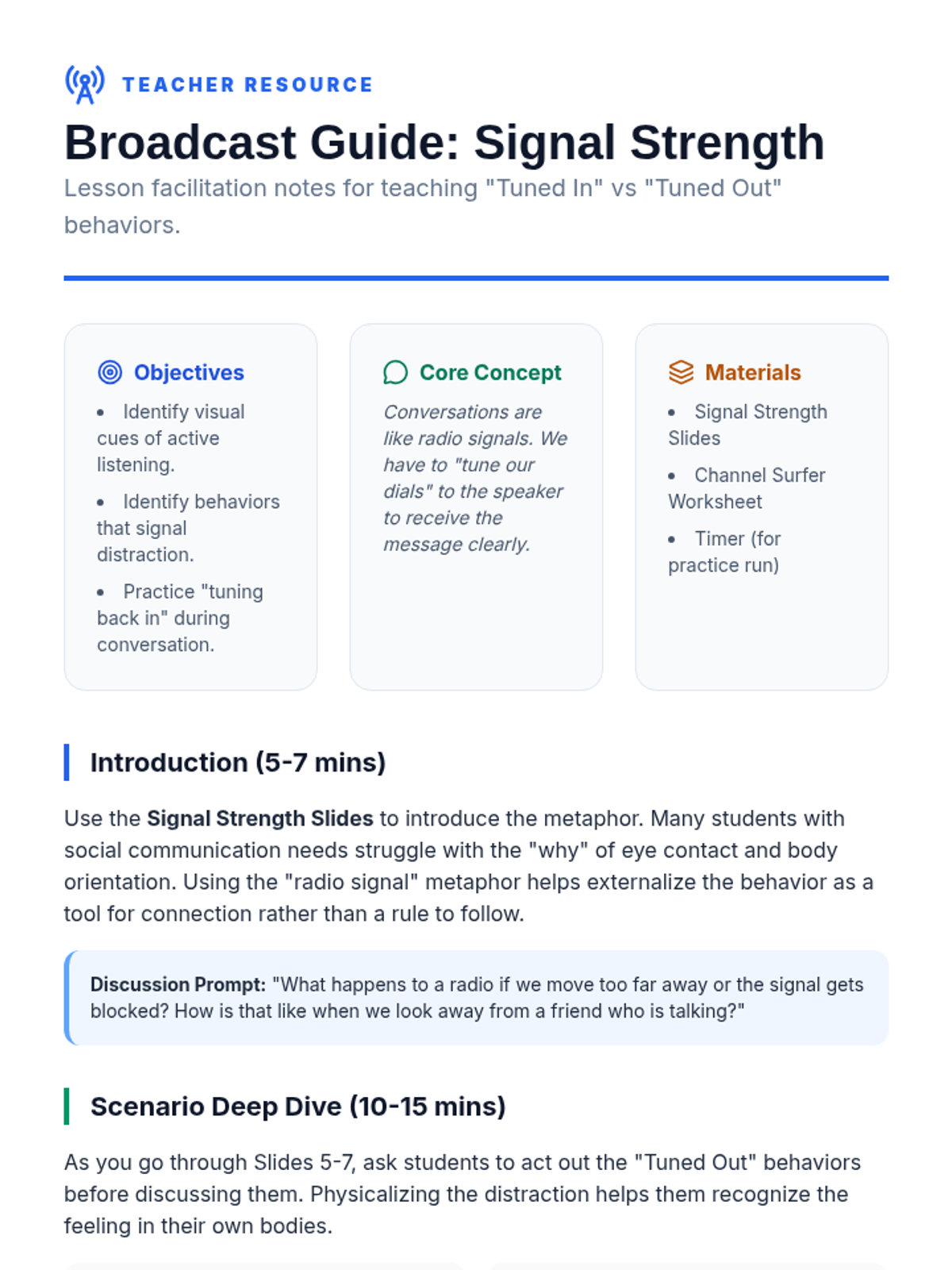
A social skills lesson for speech therapy sessions focusing on identifying and practicing 'tuned in' vs 'tuned out' behaviors using a radio/broadcast signal metaphor.
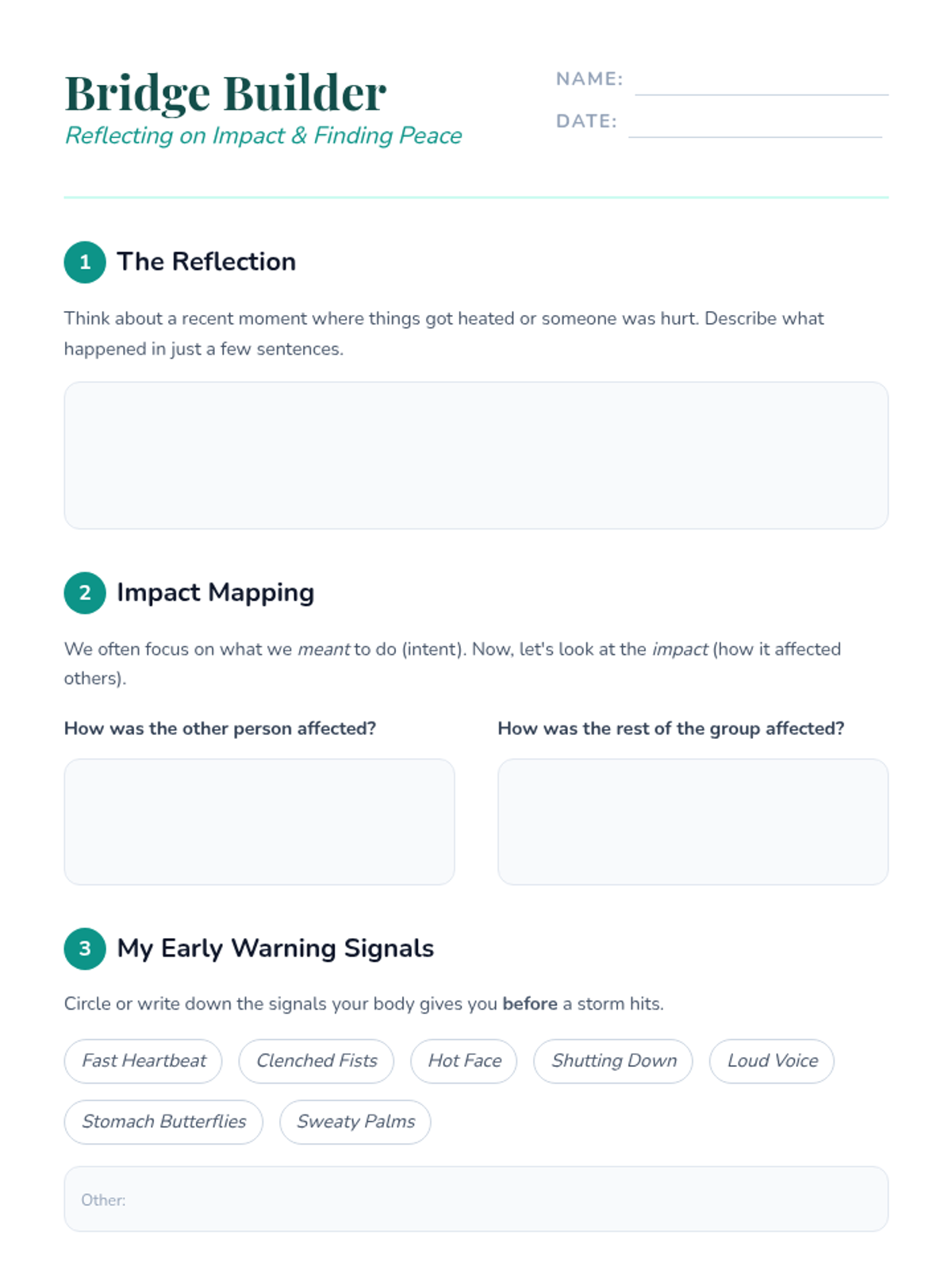
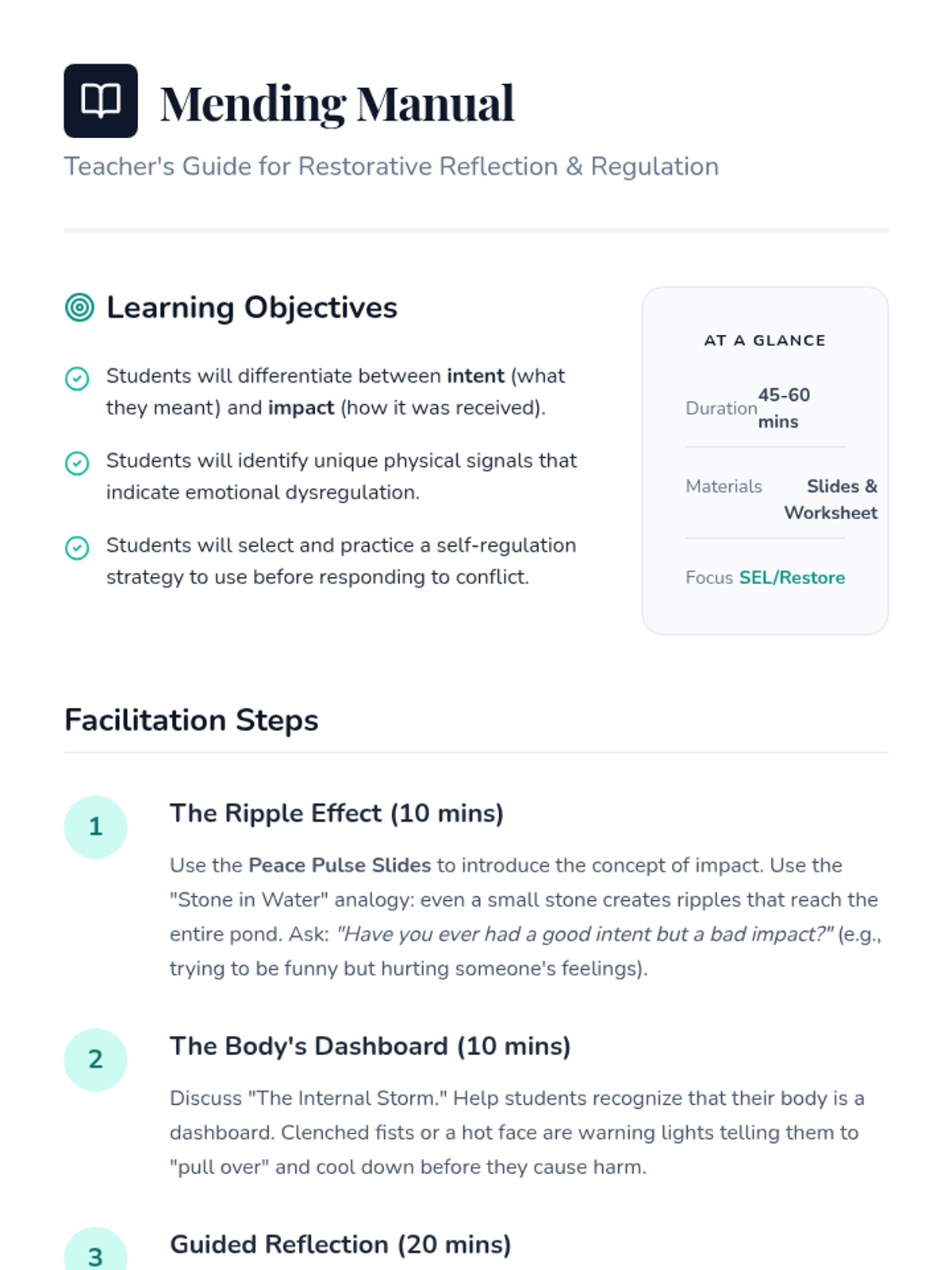
A lesson focused on restorative justice principles, helping students identify the impact of their actions and master self-regulation strategies to rebuild relationships.
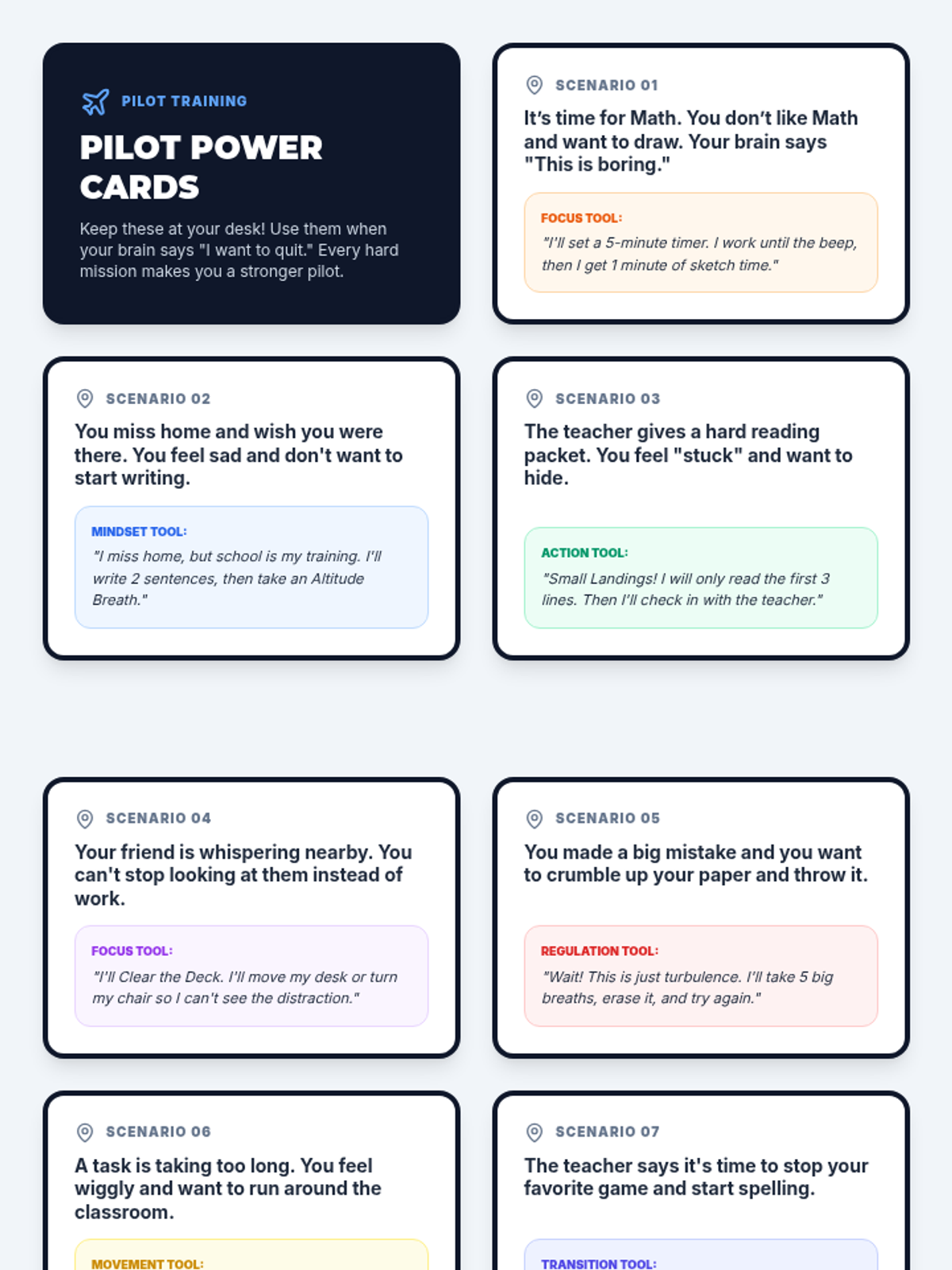
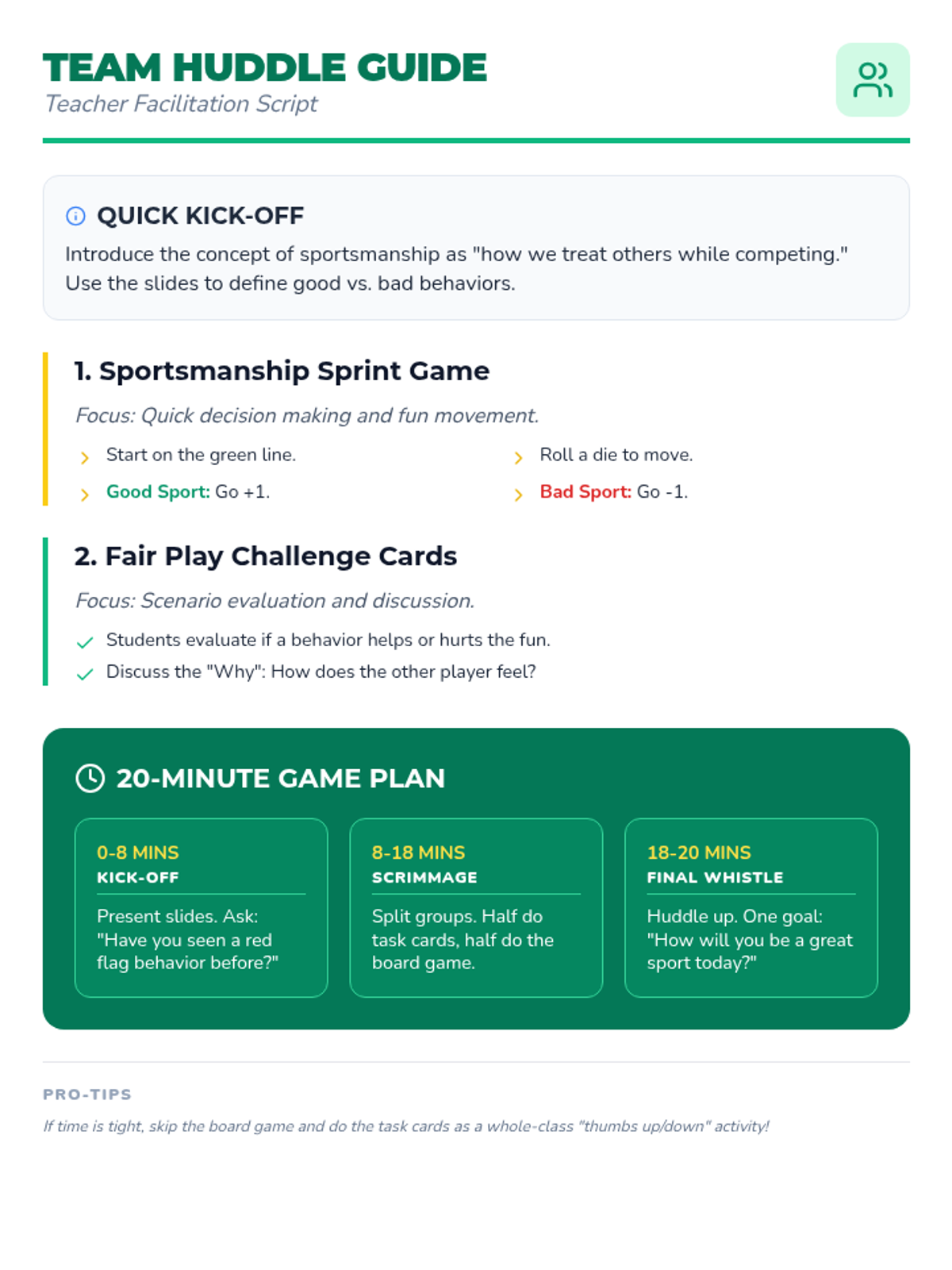
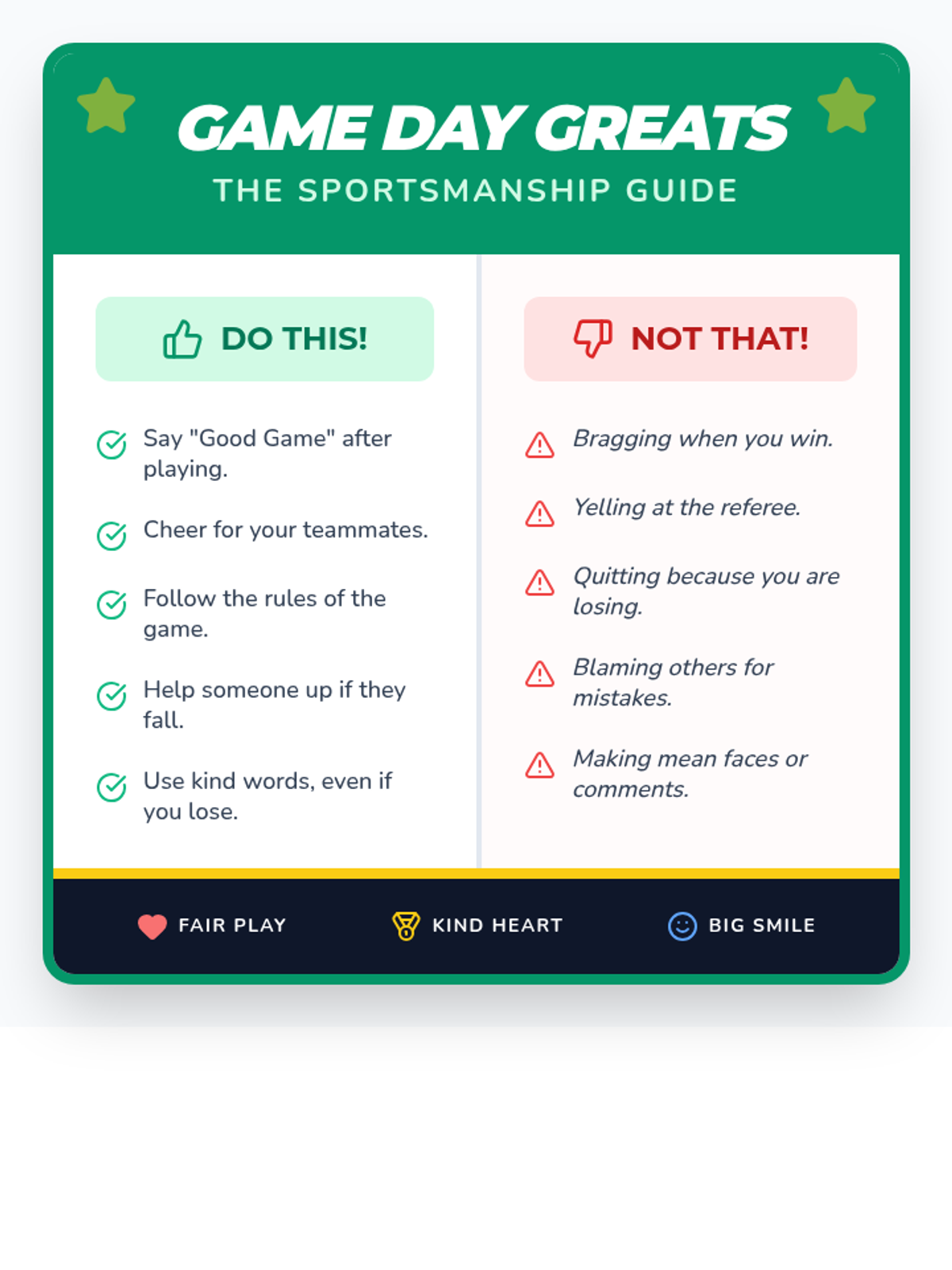
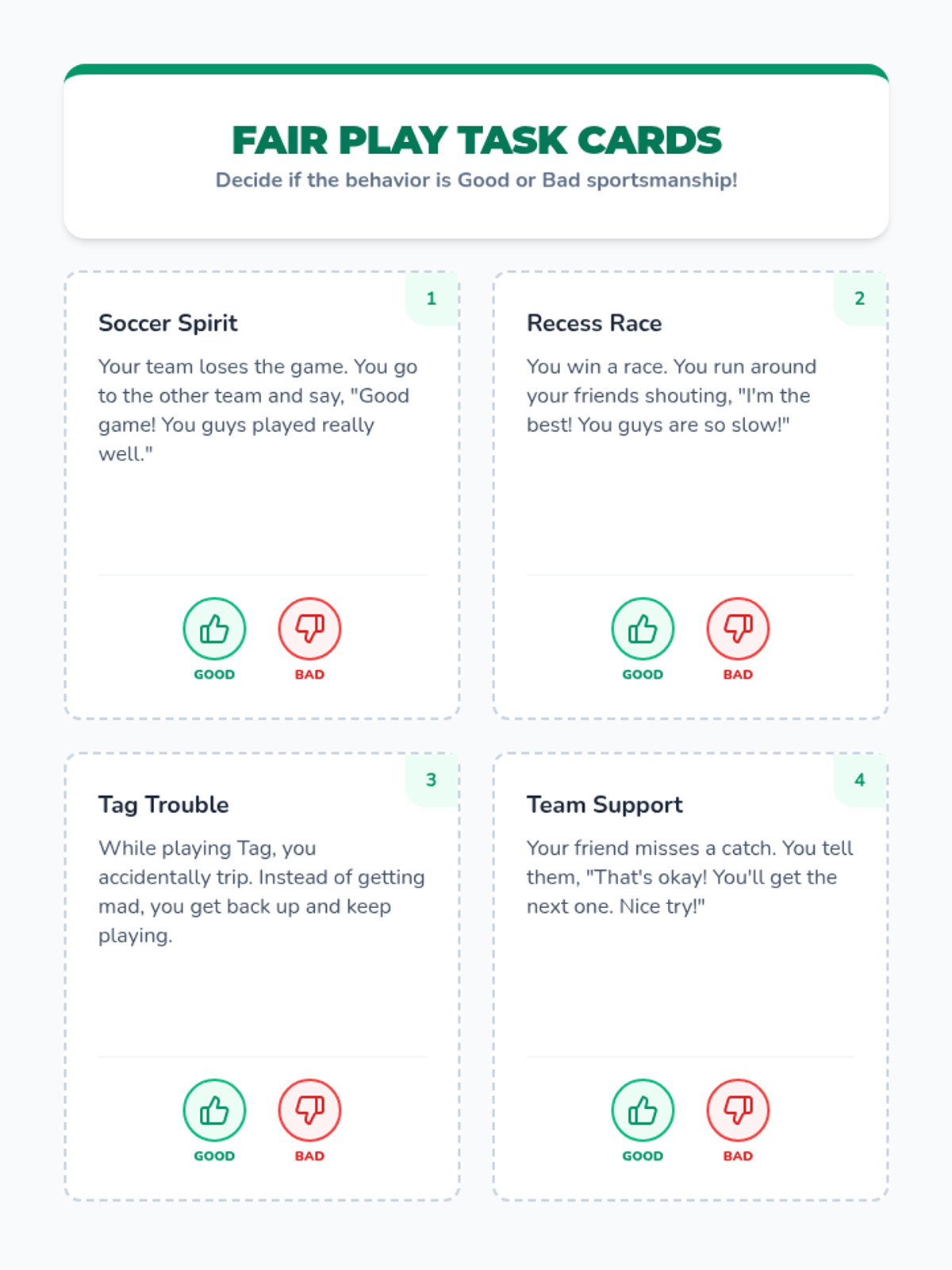
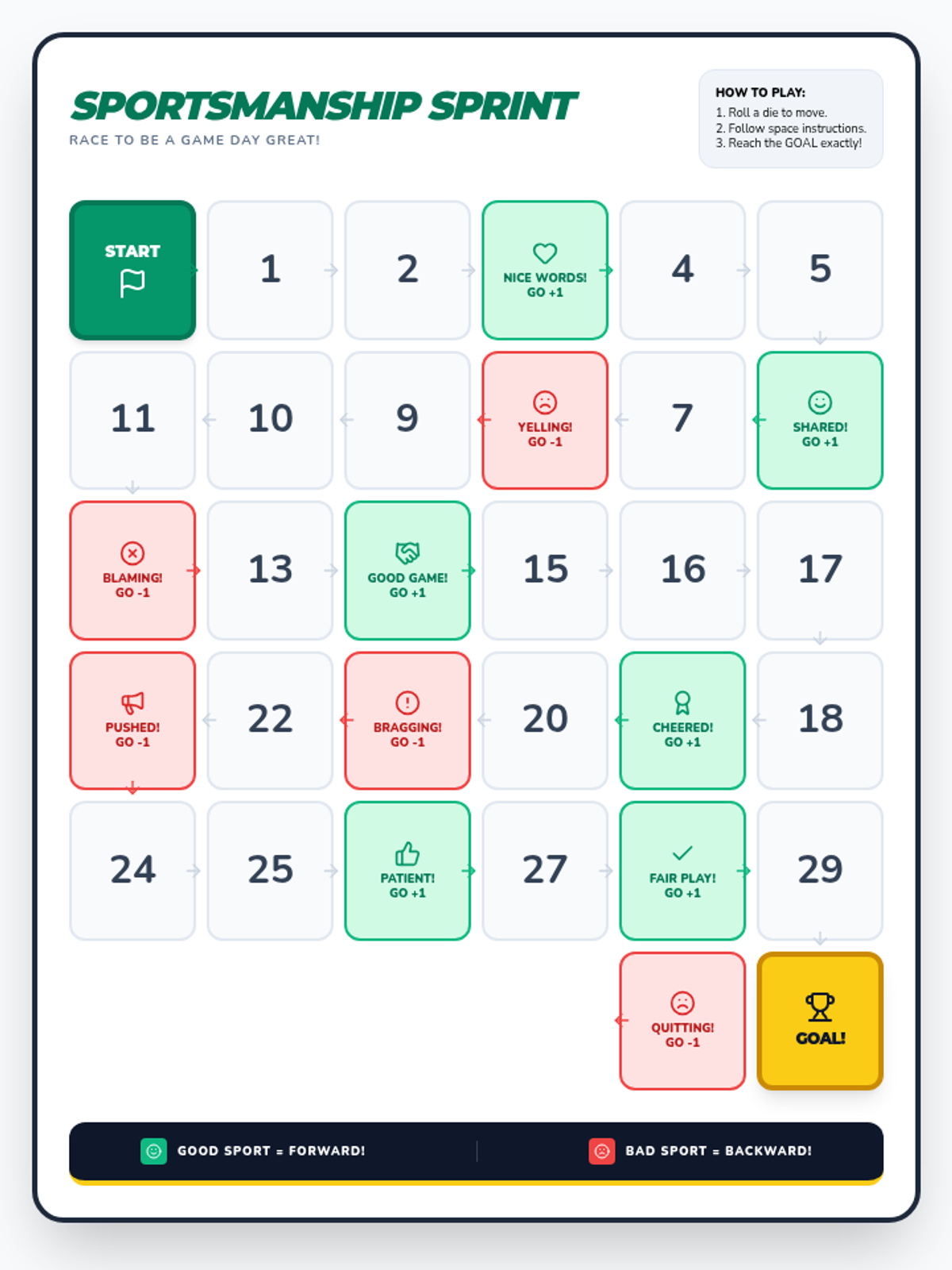
A high-energy, 20-minute lesson on sportsmanship, focusing on how to be a 'Game Day Great' by handling wins and losses with grace. Includes slides, a small group guide, an anchor chart, task cards, and a board game.
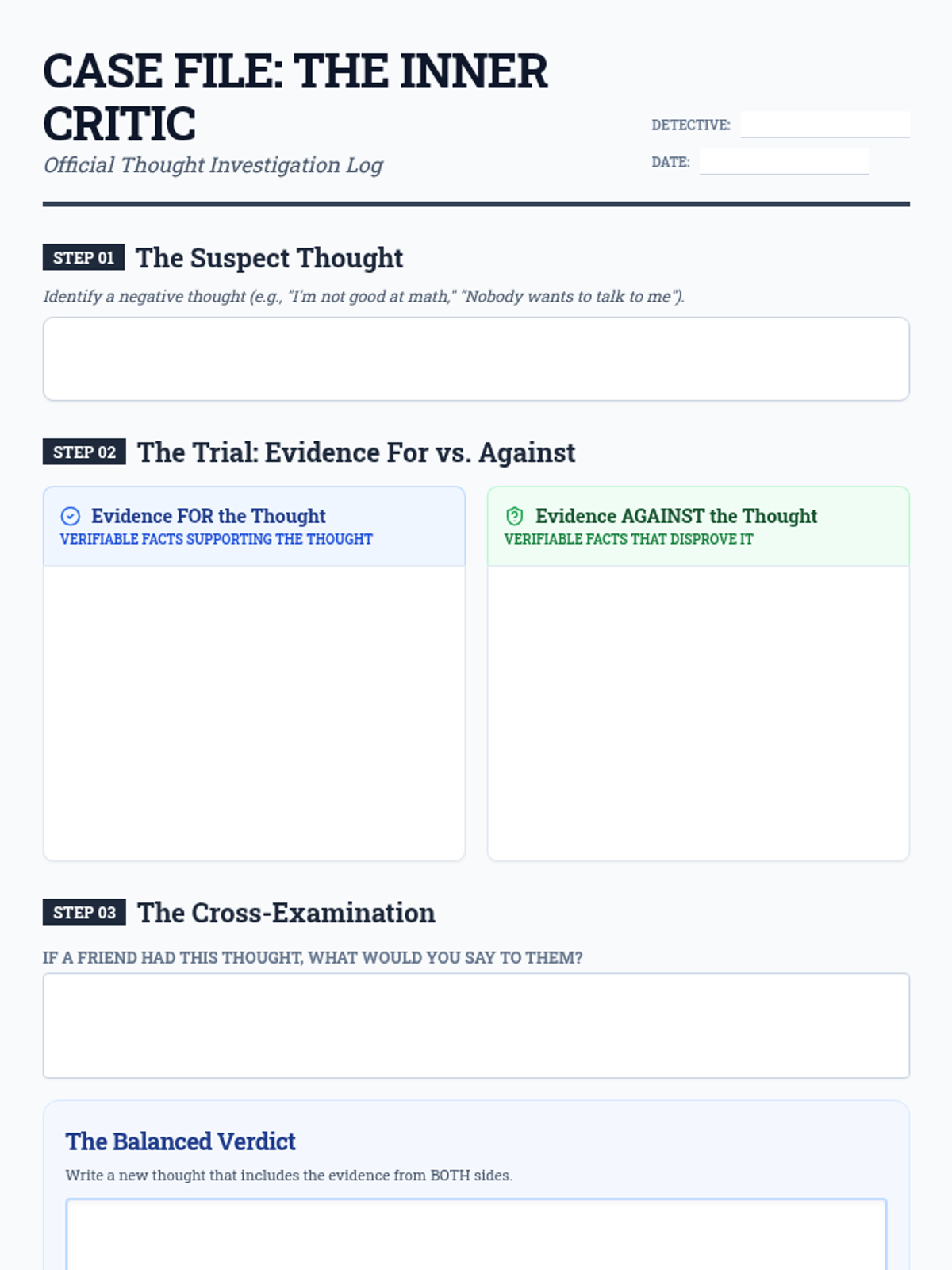
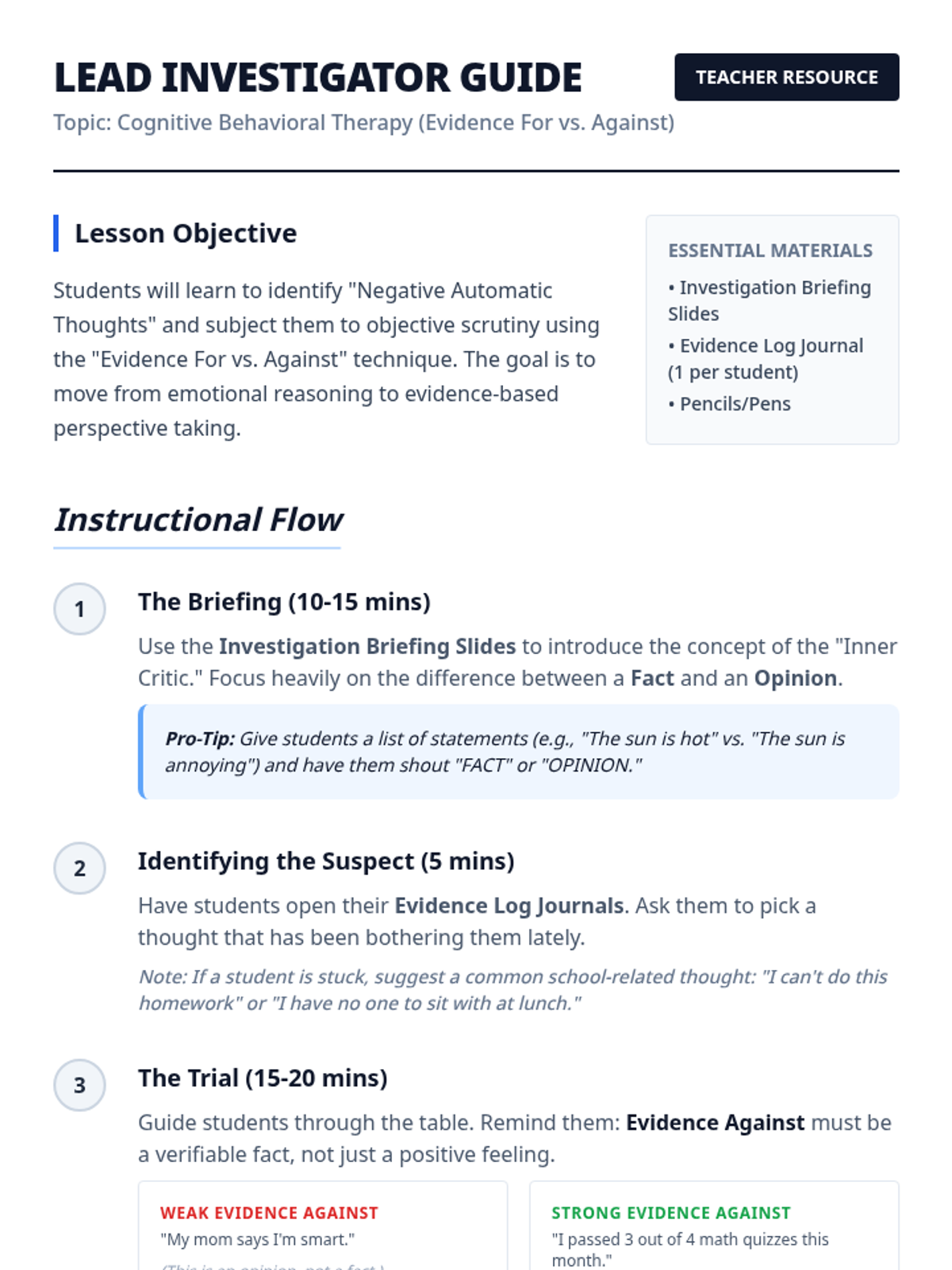
A lesson focused on identifying and challenging cognitive distortions through the 'evidence for vs. against' technique, styled as a psychological investigation.
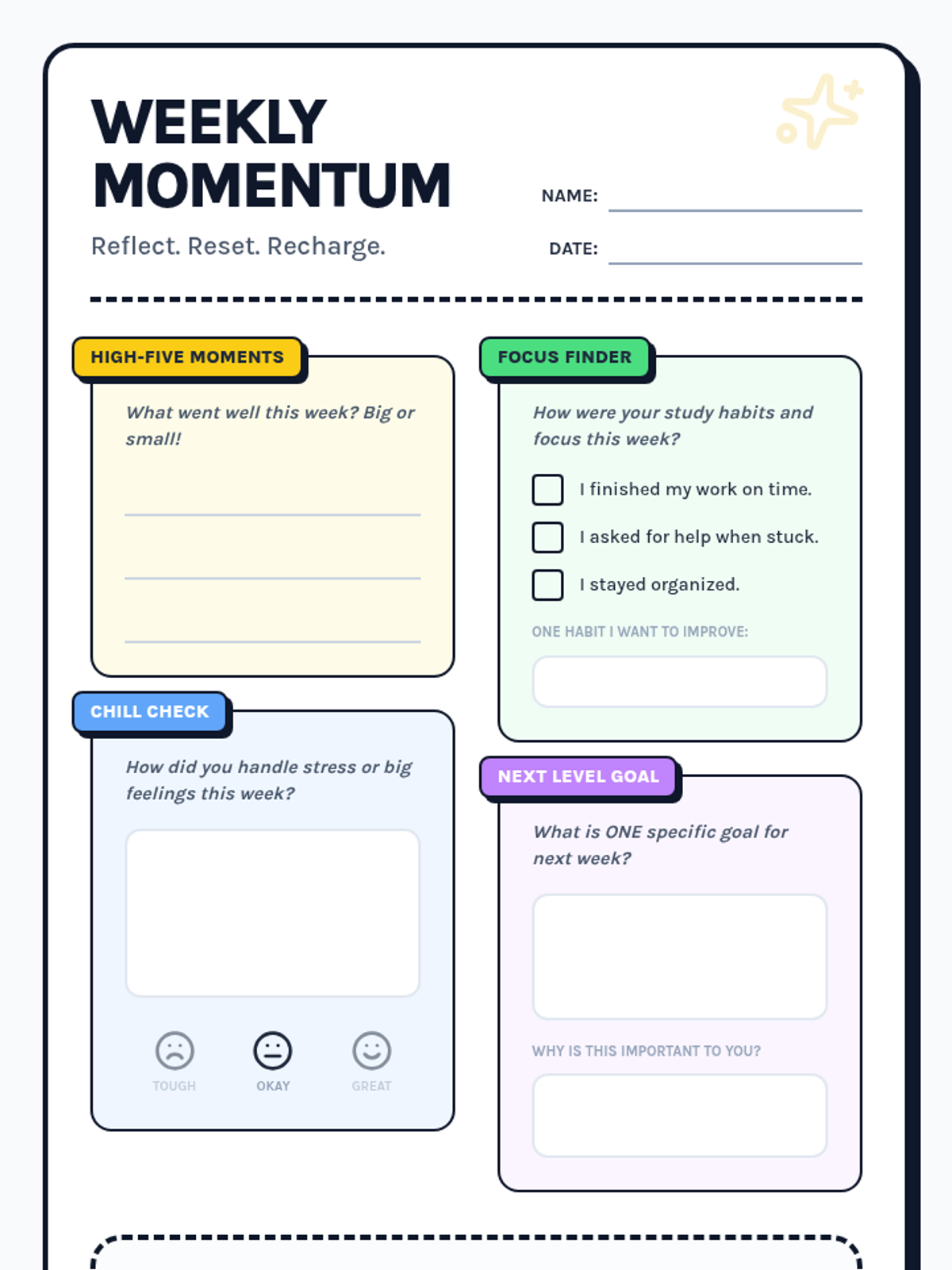
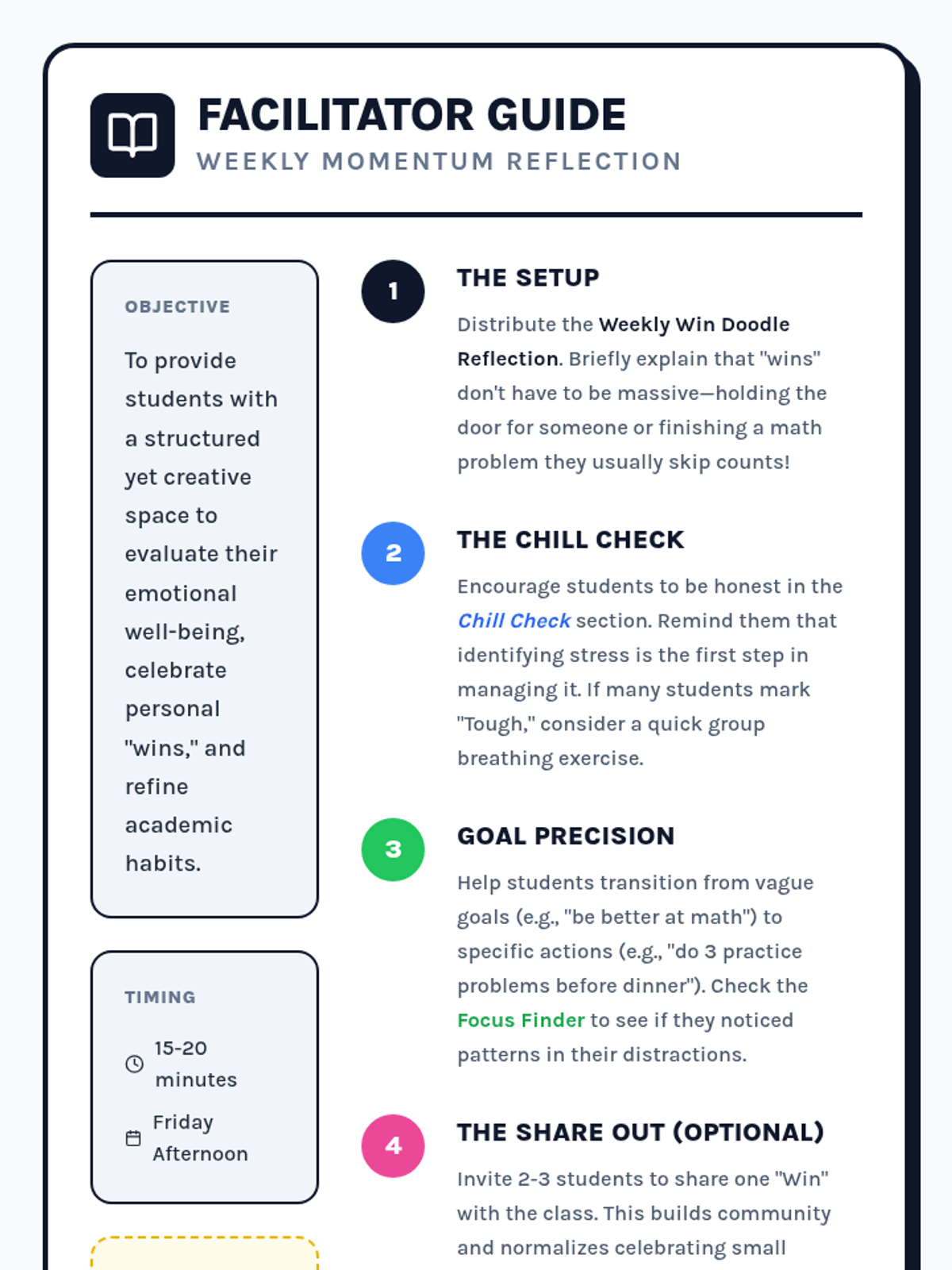
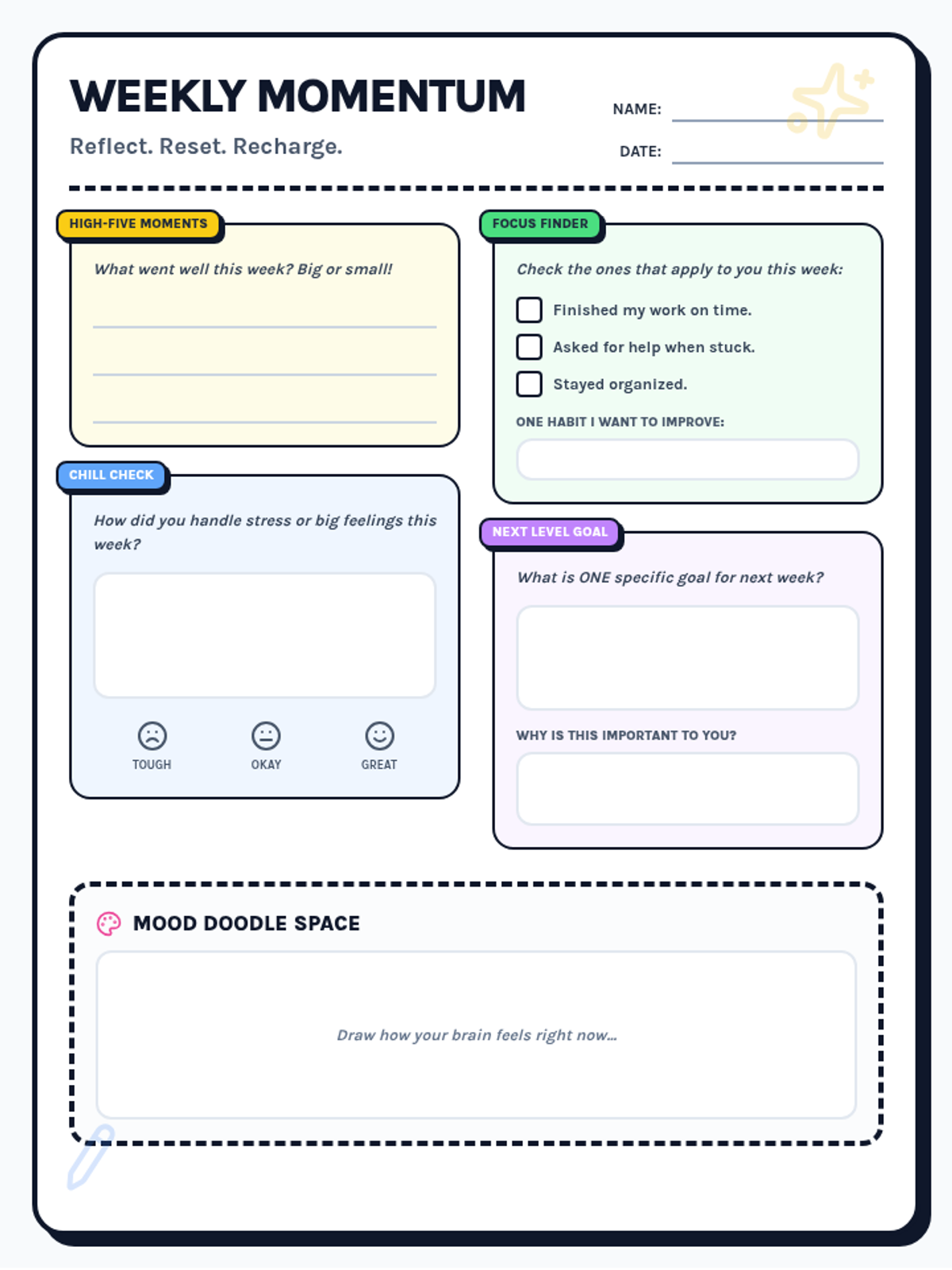
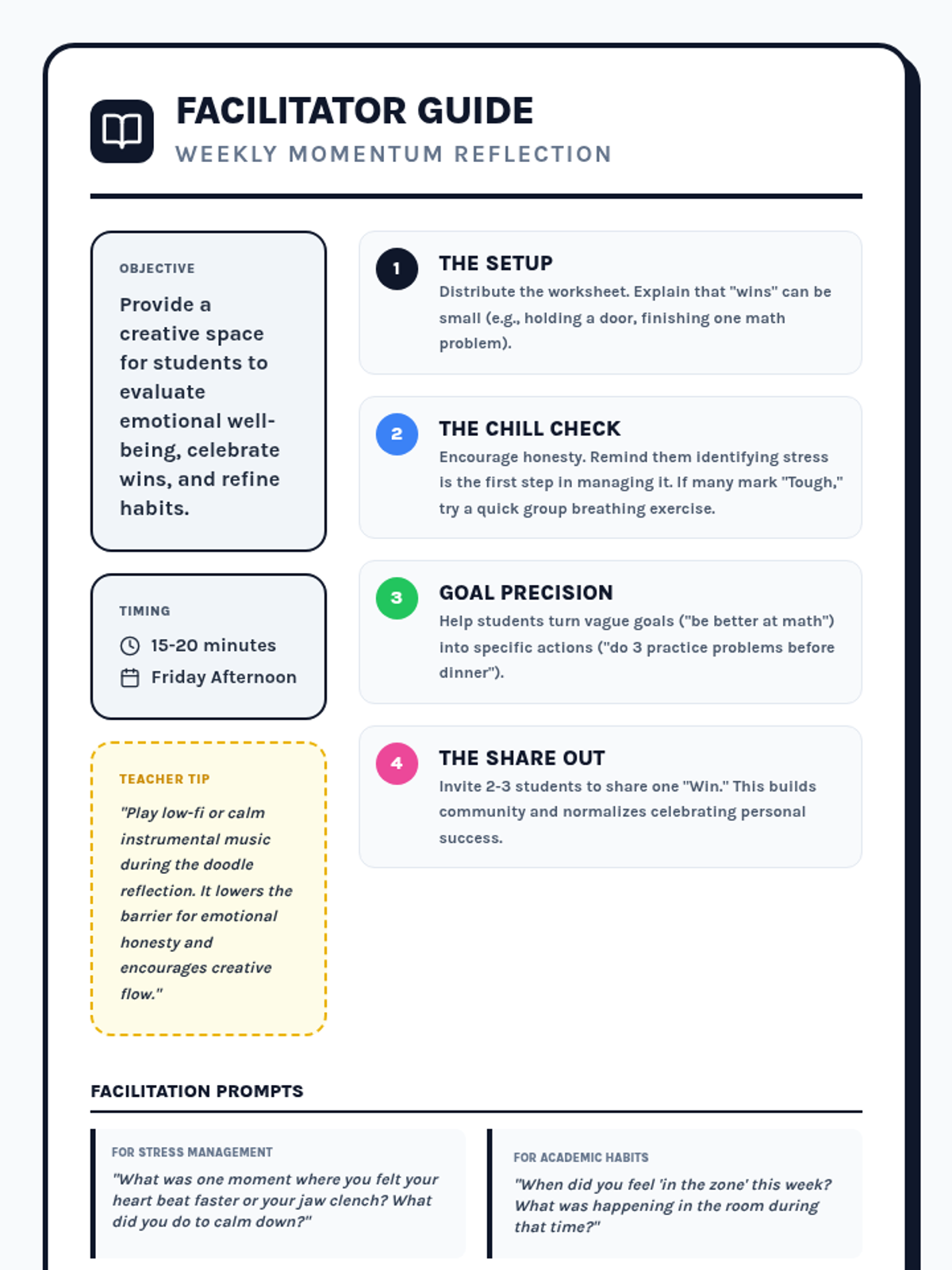
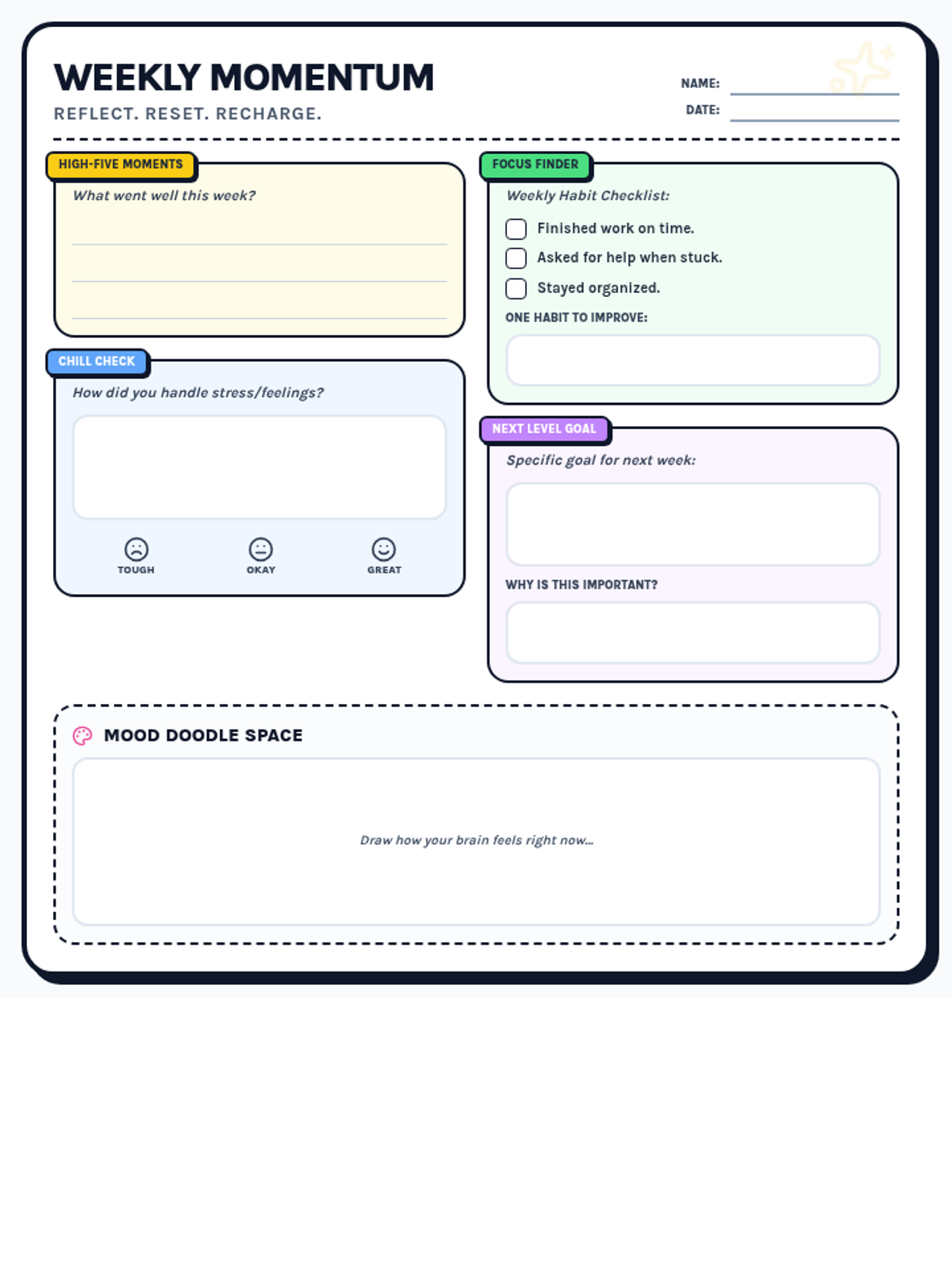
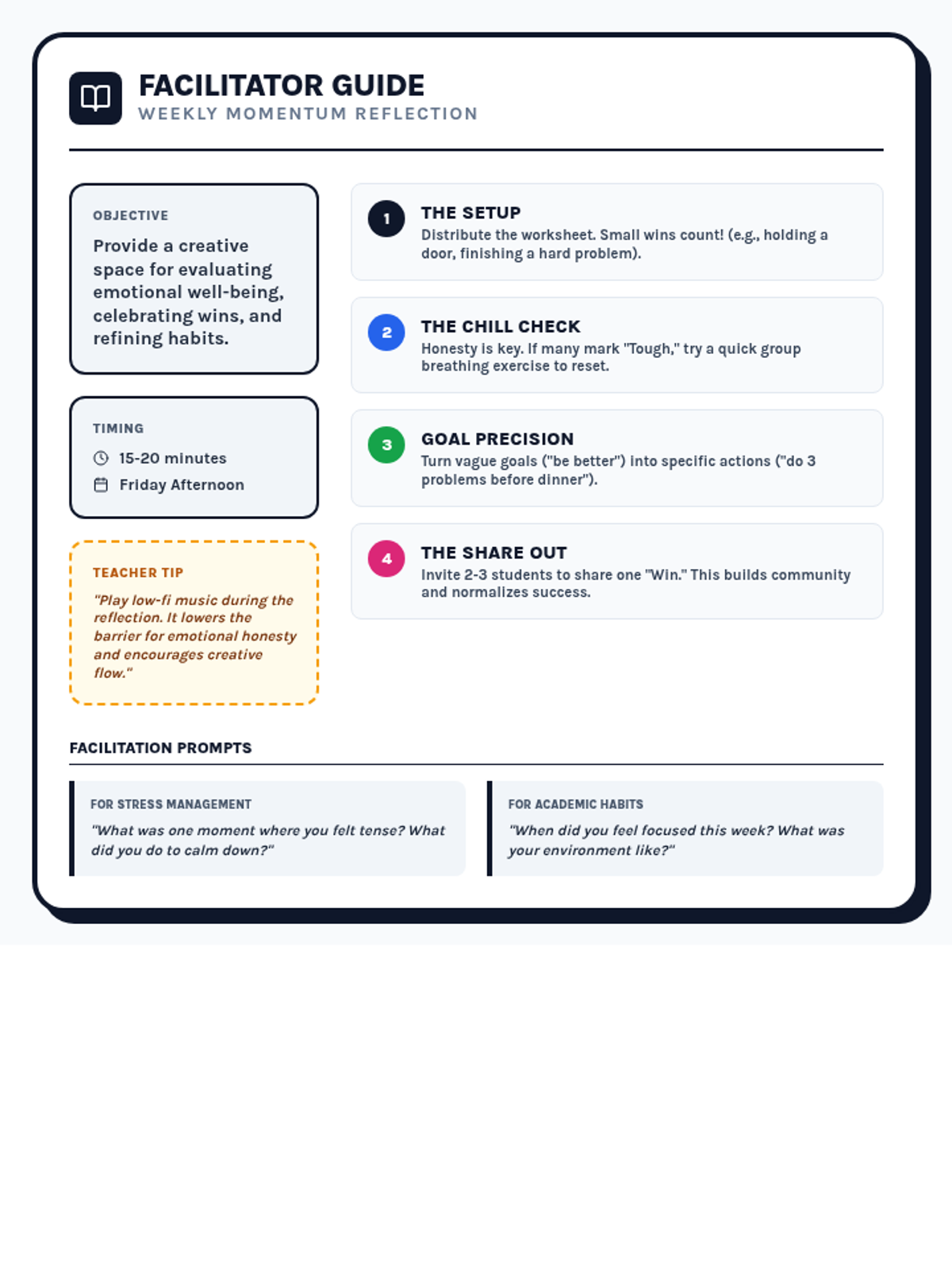
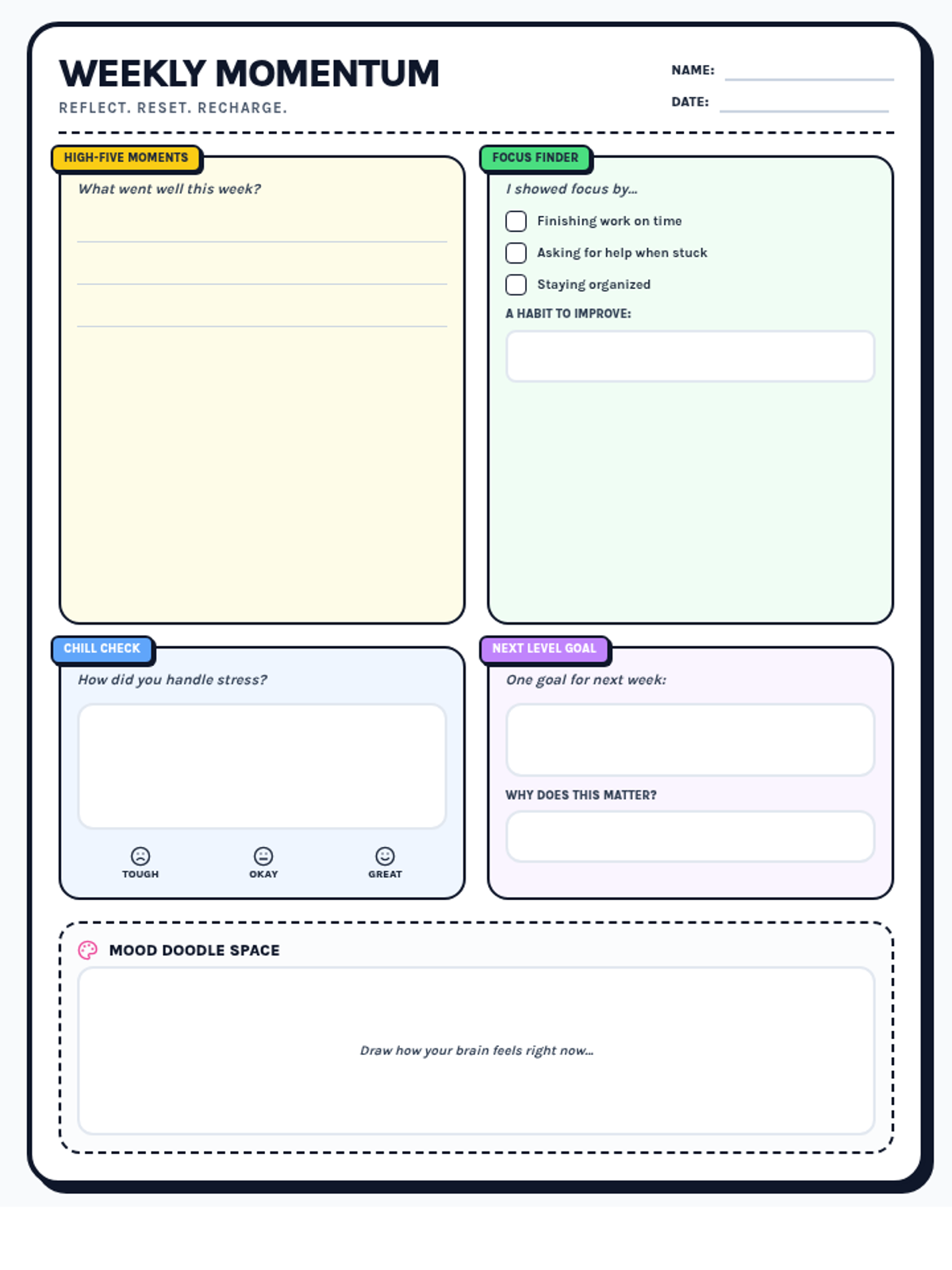
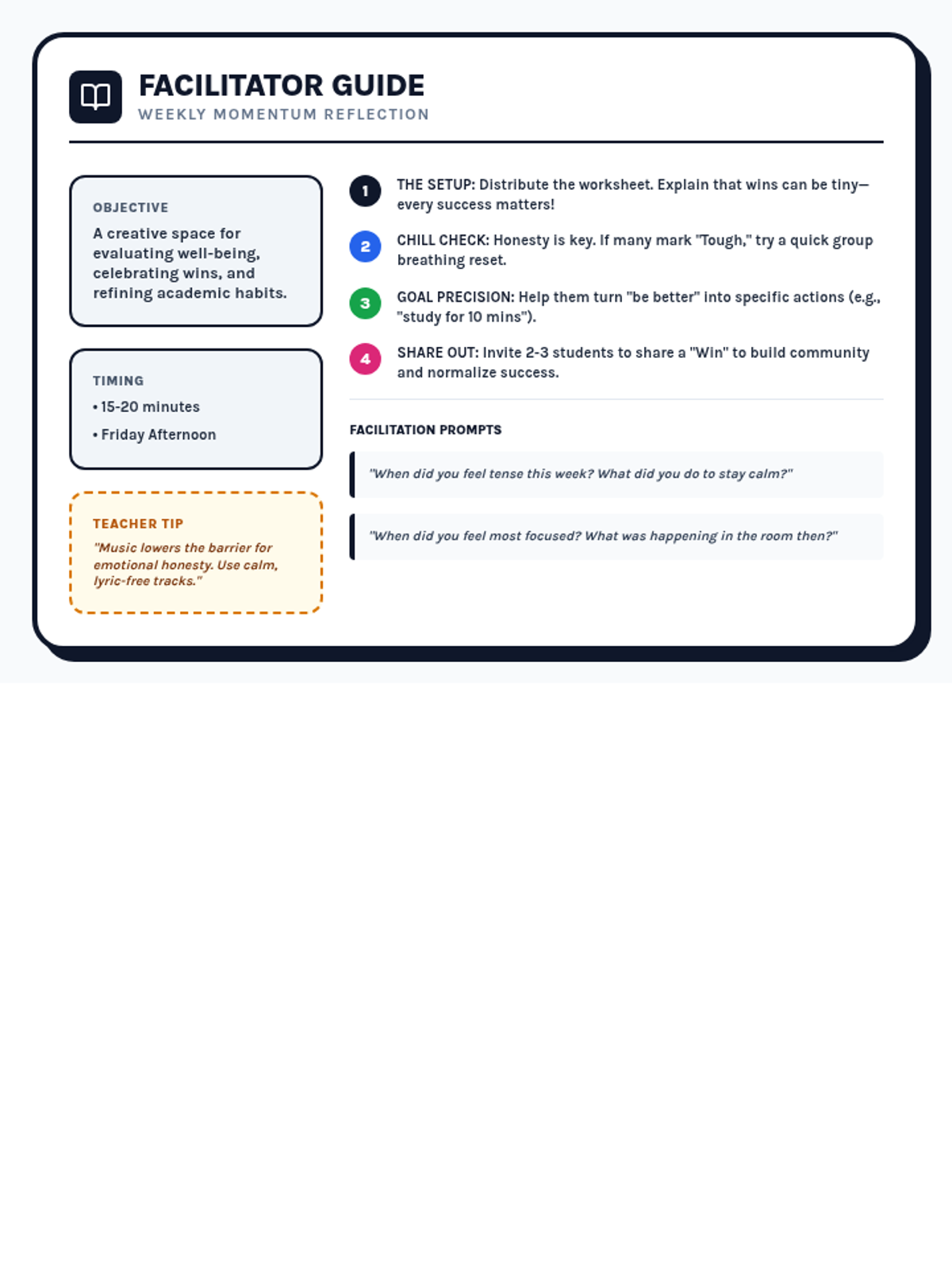
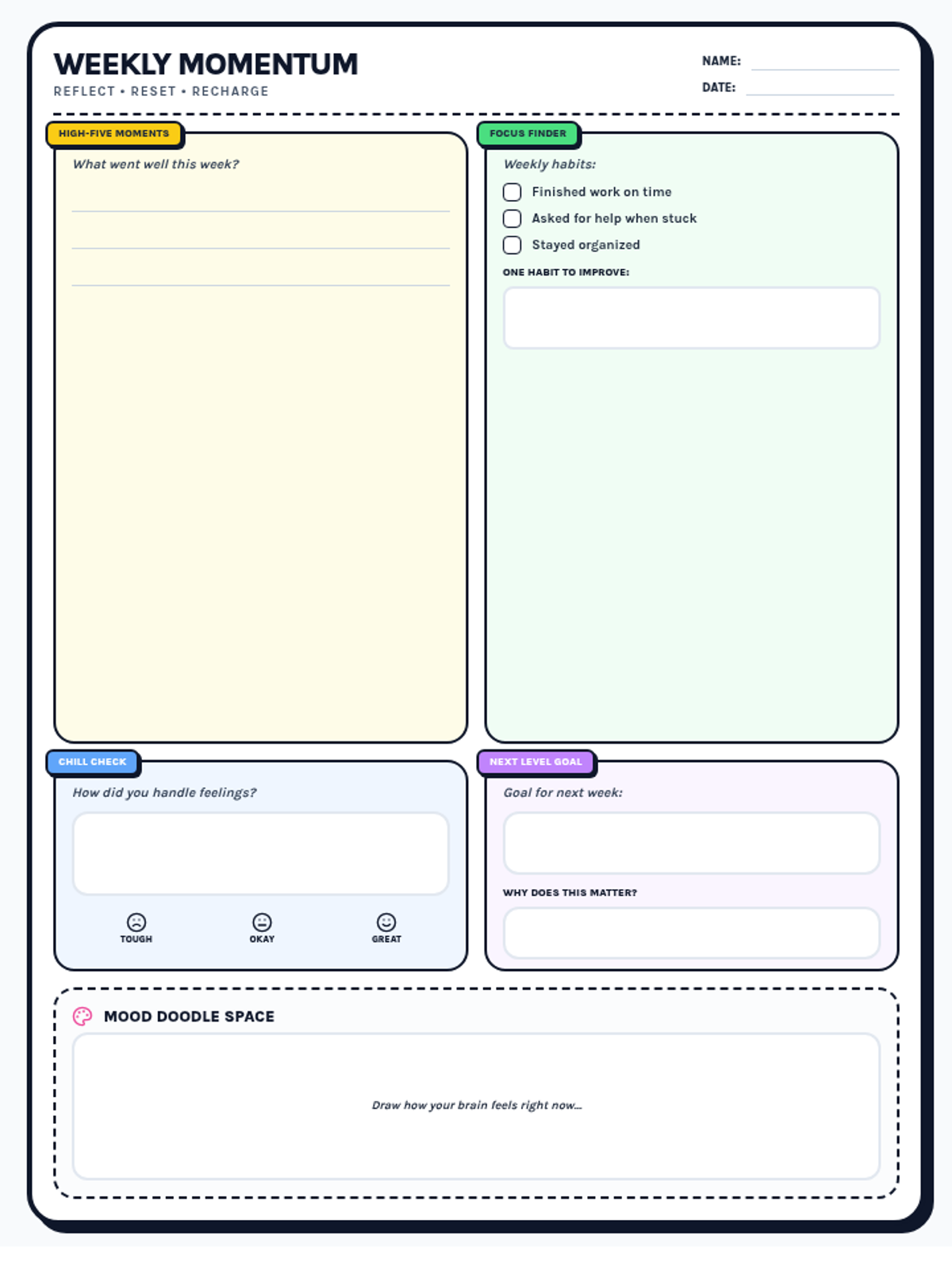
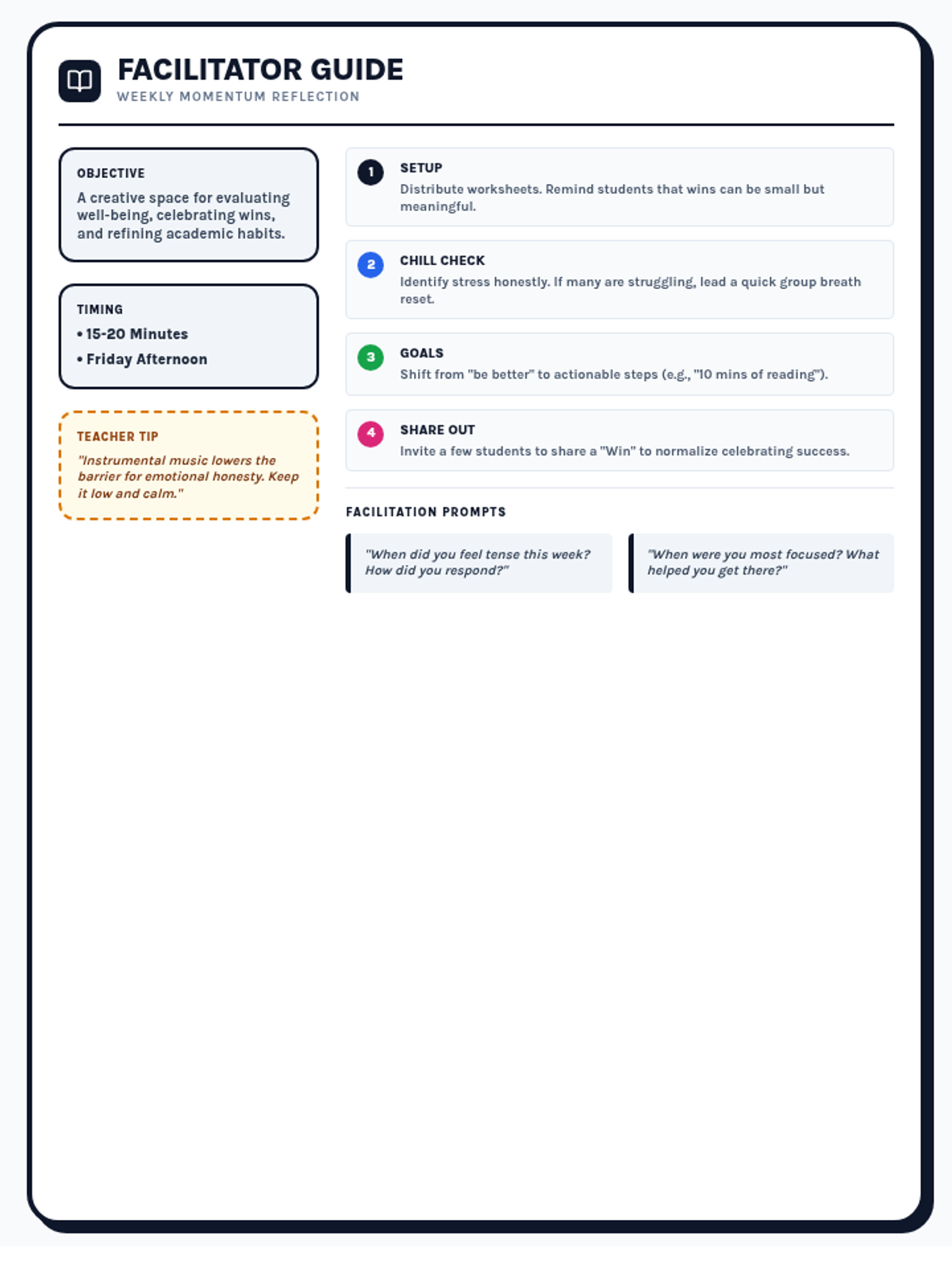
A recurring weekly reflection tool designed to help students celebrate successes, manage their emotional well-being, and sharpen their academic focus through a creative doodle-inspired layout.
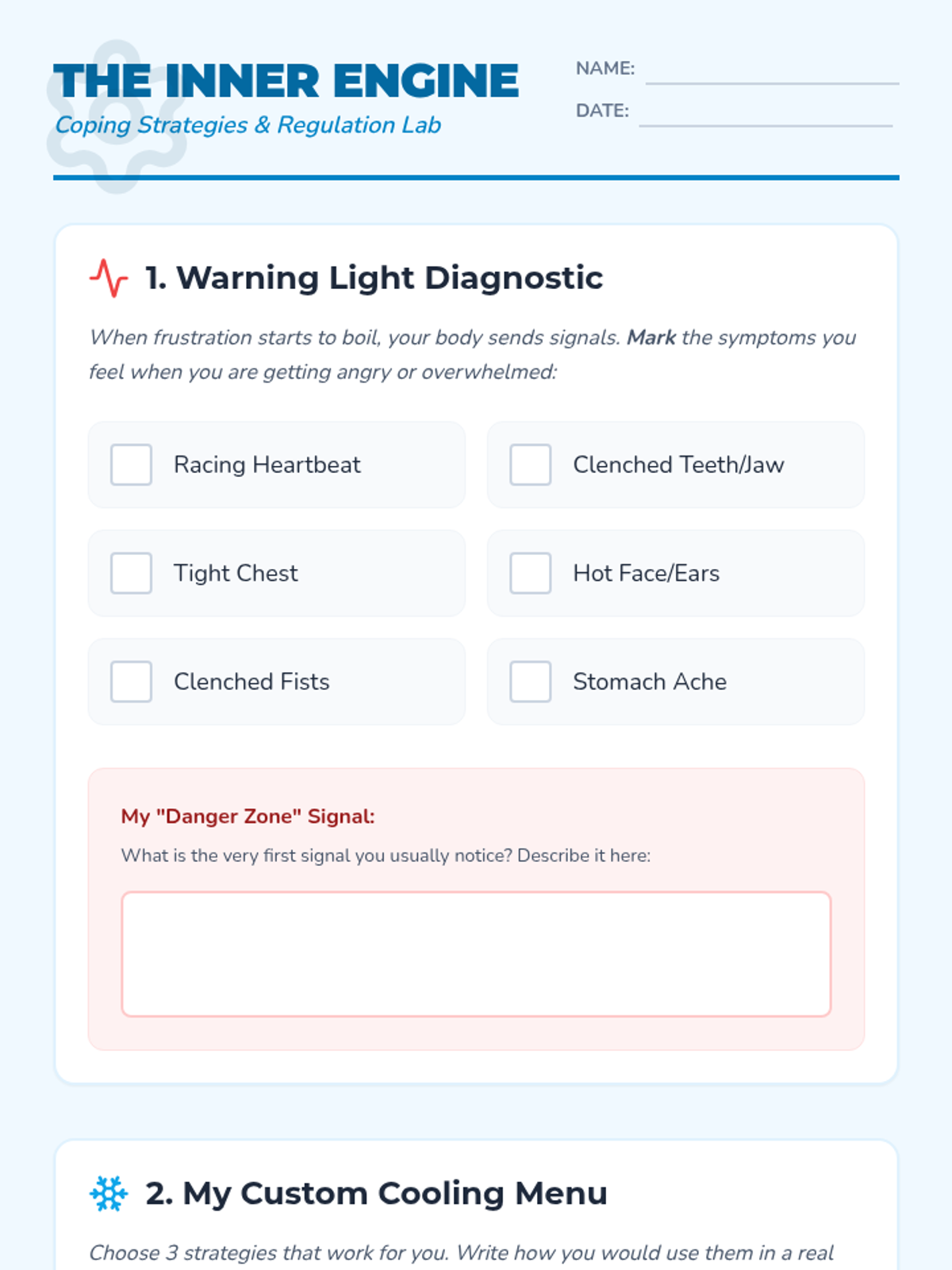
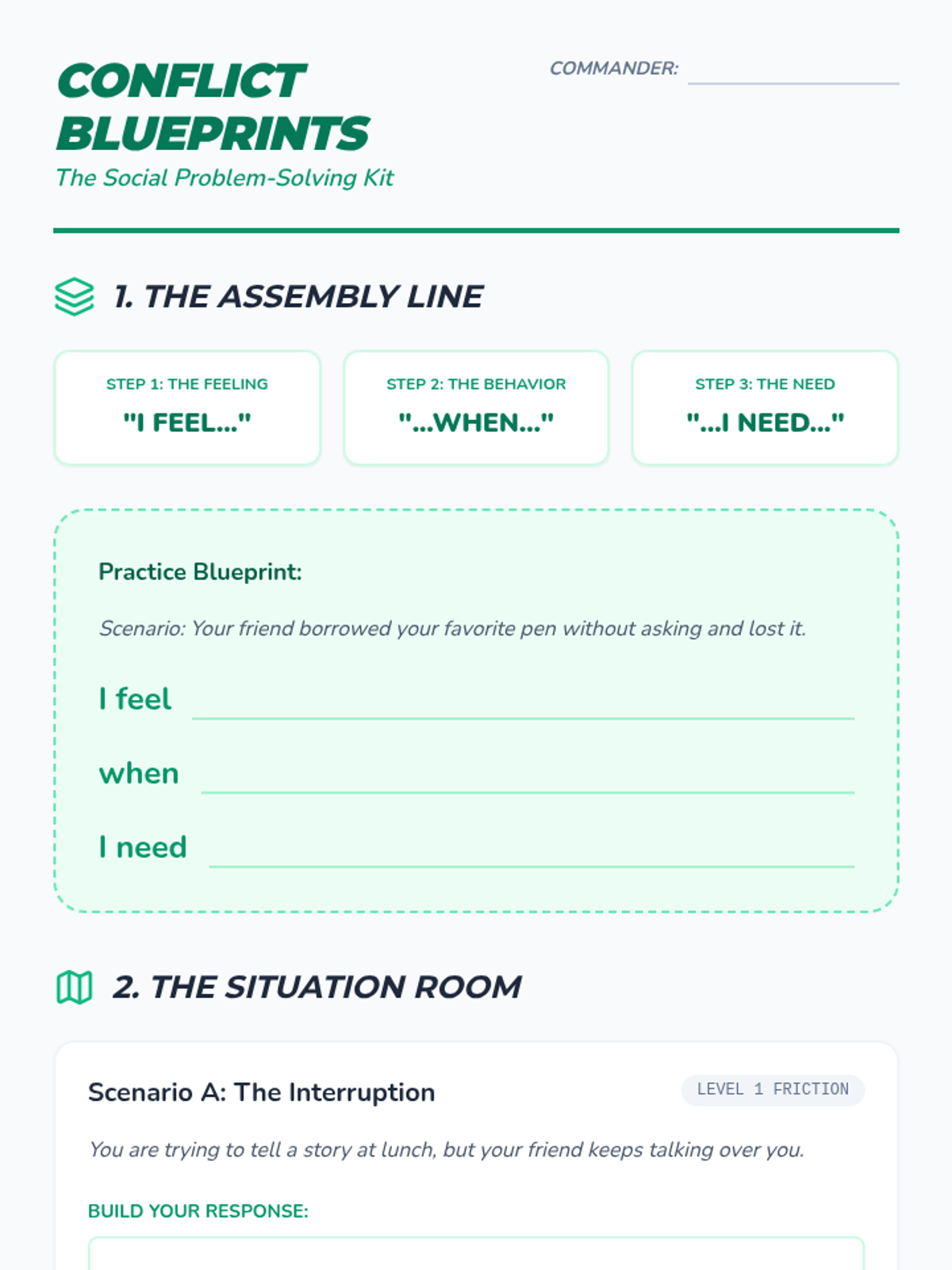
This lesson covers the physical sensations of frustration and provides a structured framework for navigating social conflicts using 'I' statements and perspective-taking.
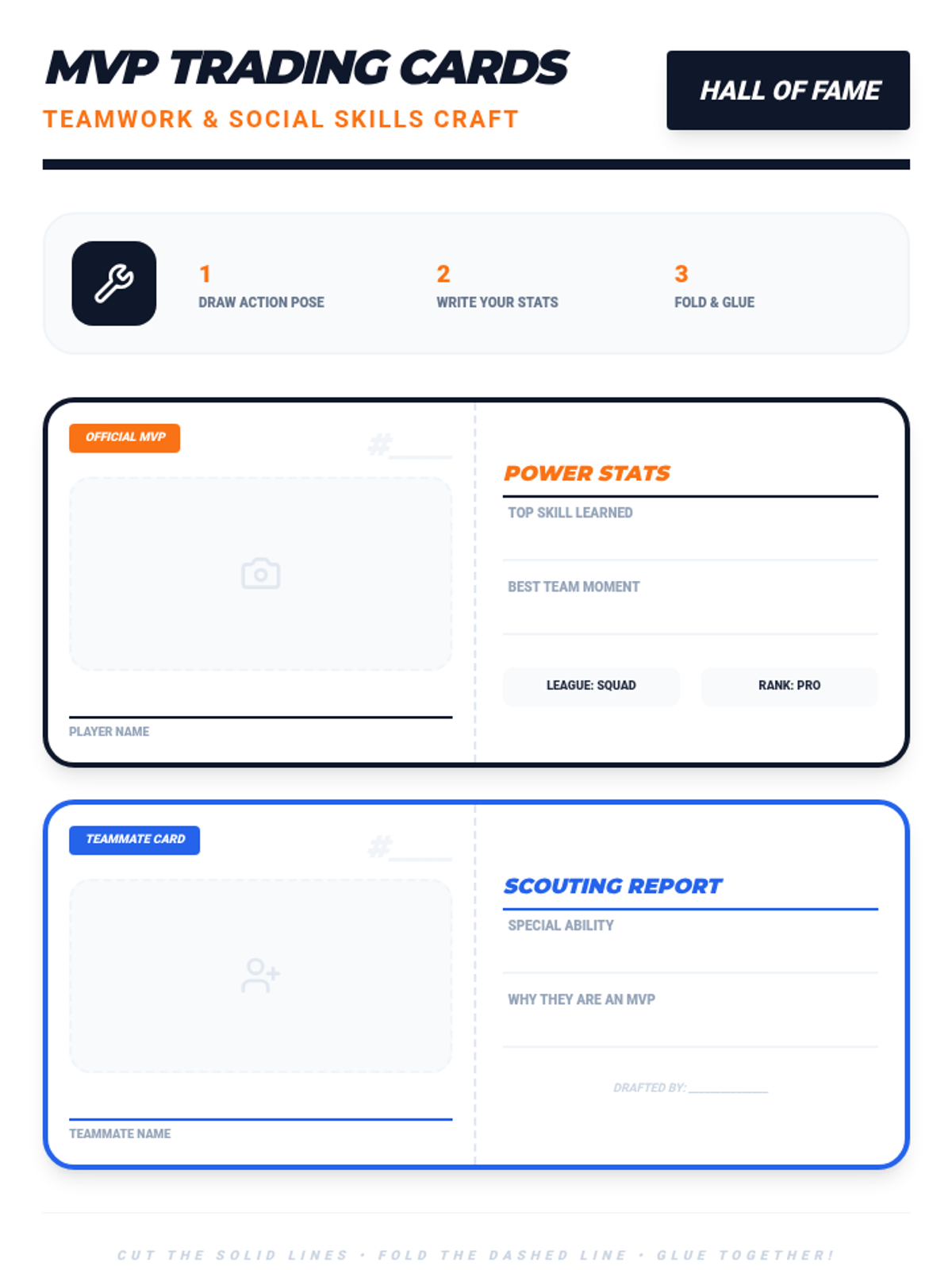
Final review of skills and the MVP Trading Cards craft activity to celebrate individual and group growth.
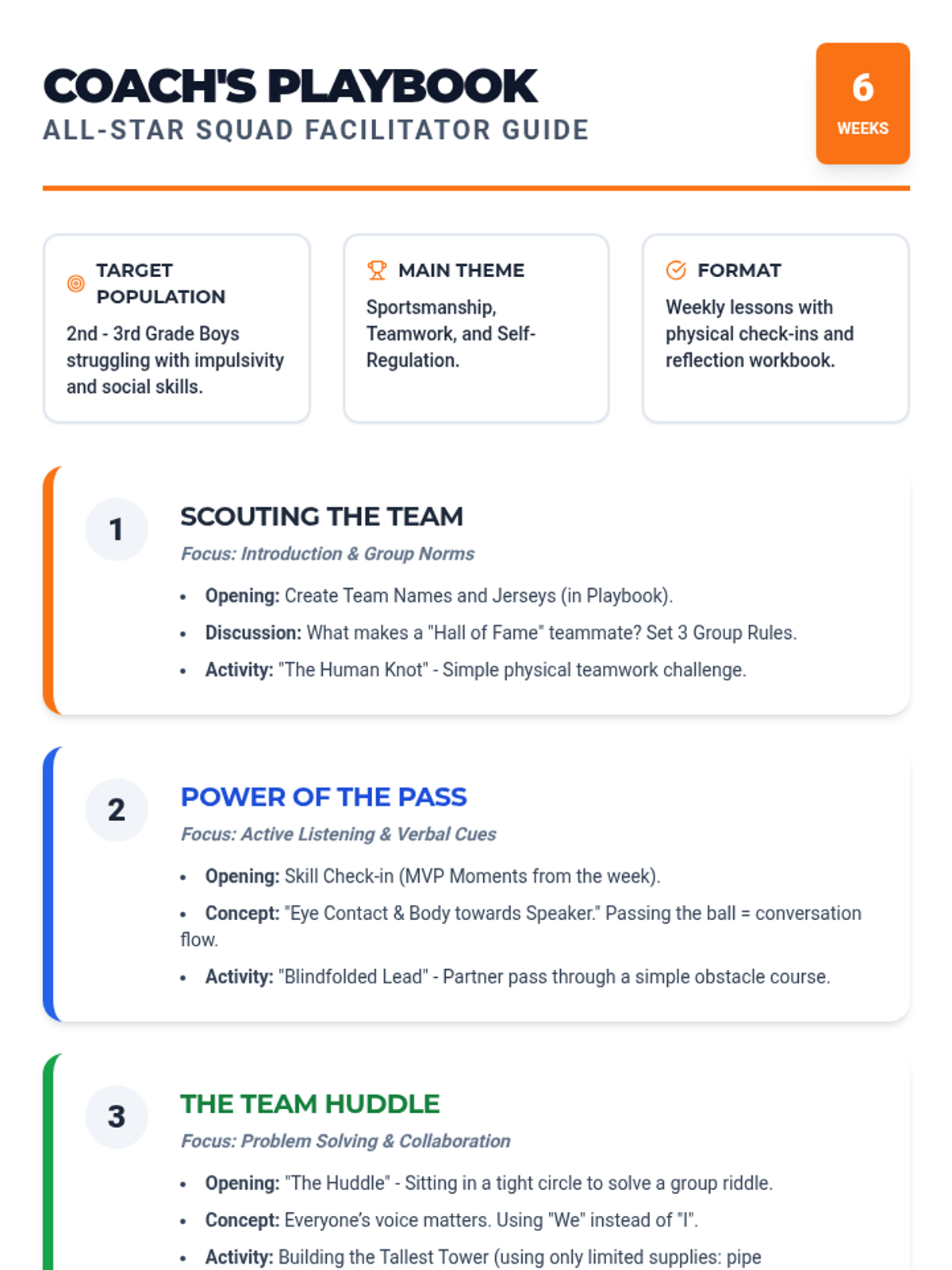
Differentiating between good sportsmanship and poor sportsmanship, specifically handling winning and losing.
Strategies for managing impulsivity and 'big feelings' when games get intense or things don't go as planned.
Collaborative problem-solving and understanding the value of working together to achieve a goal.
Focusing on communication, active listening, and sharing the spotlight during group activities.
Introduction to the group, setting goals, and identifying individual strengths within the team.
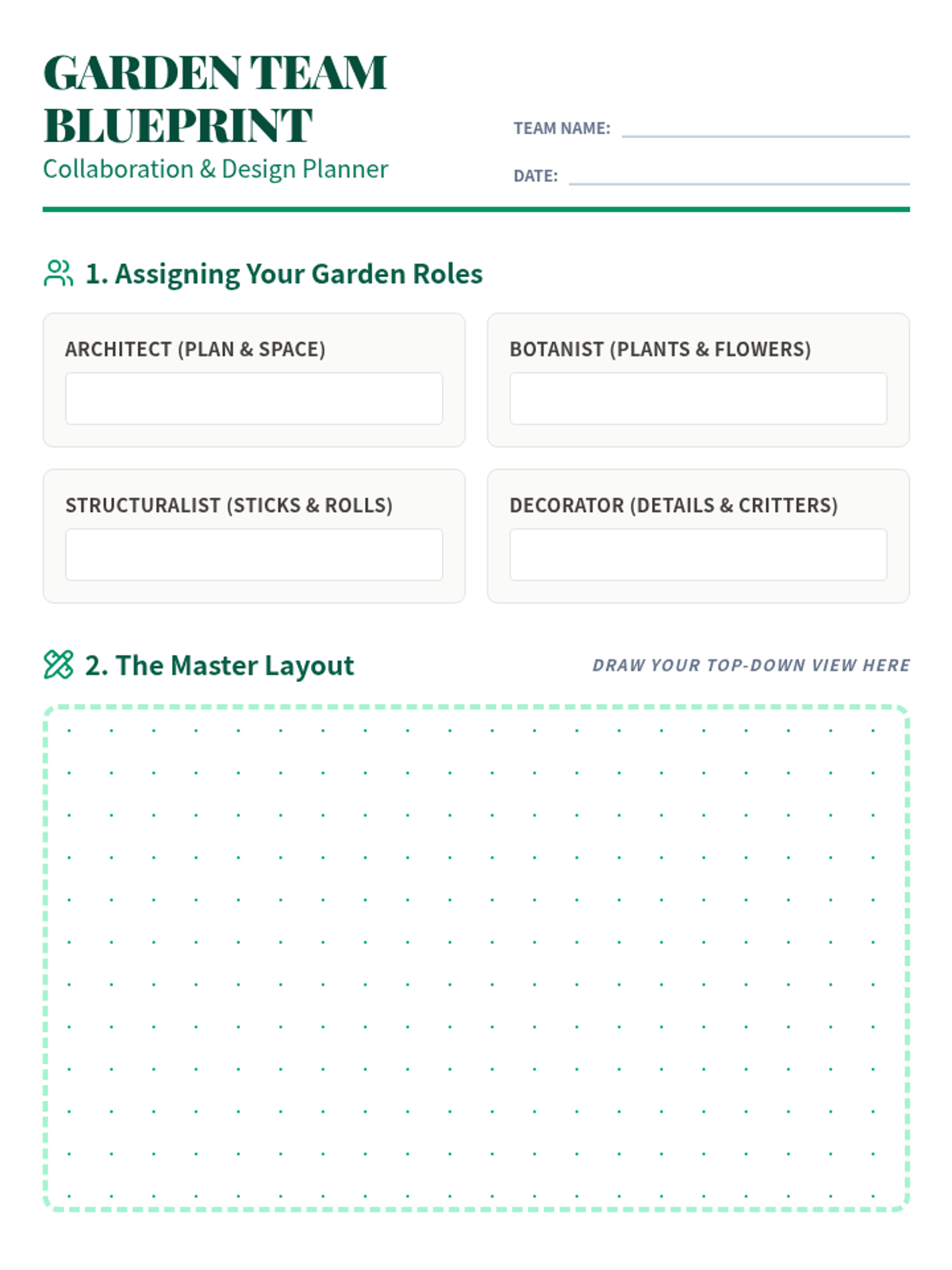
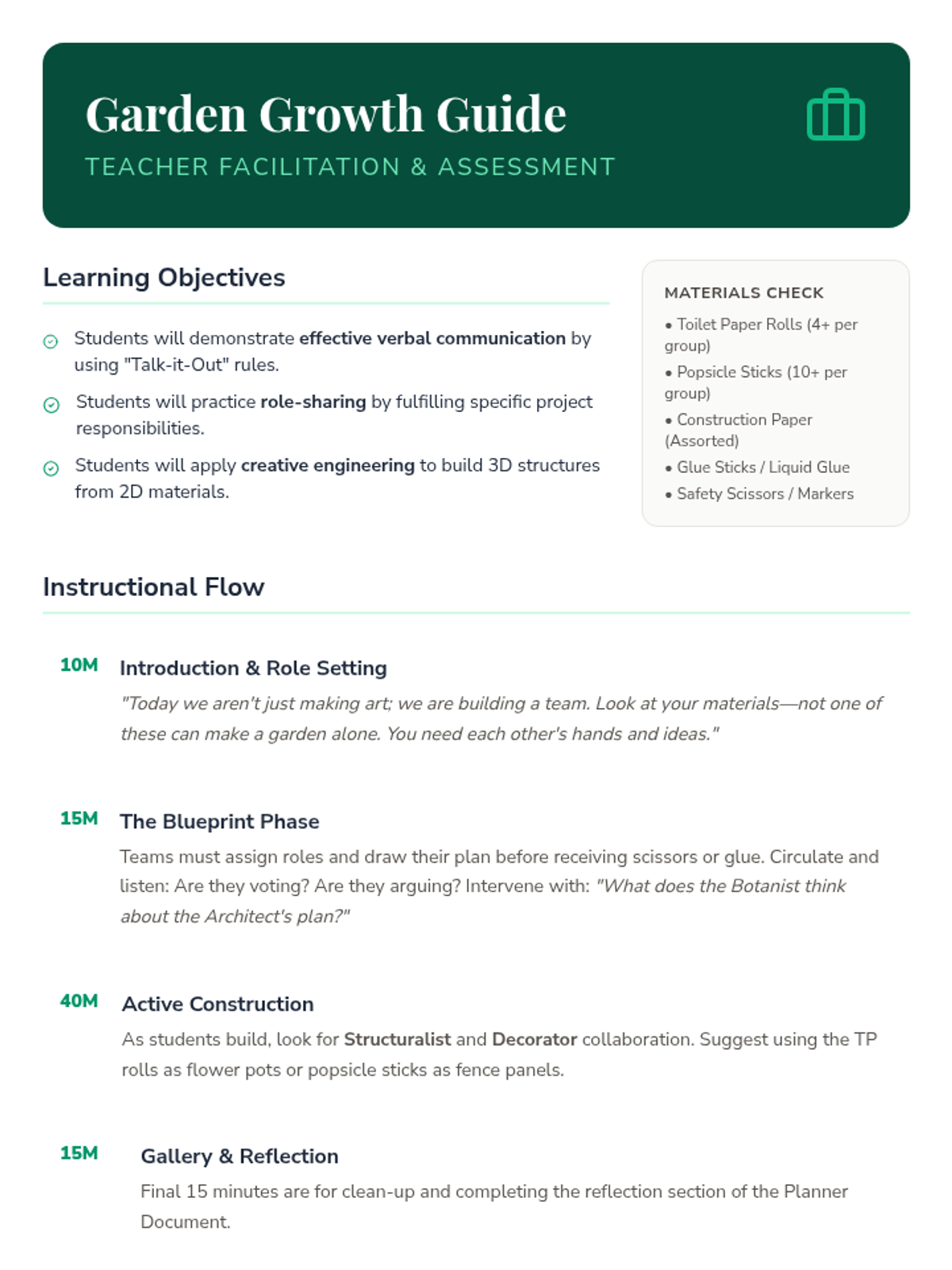
A collaborative hands-on project where students use recycled materials to build a spring garden while practicing effective communication and role-sharing.
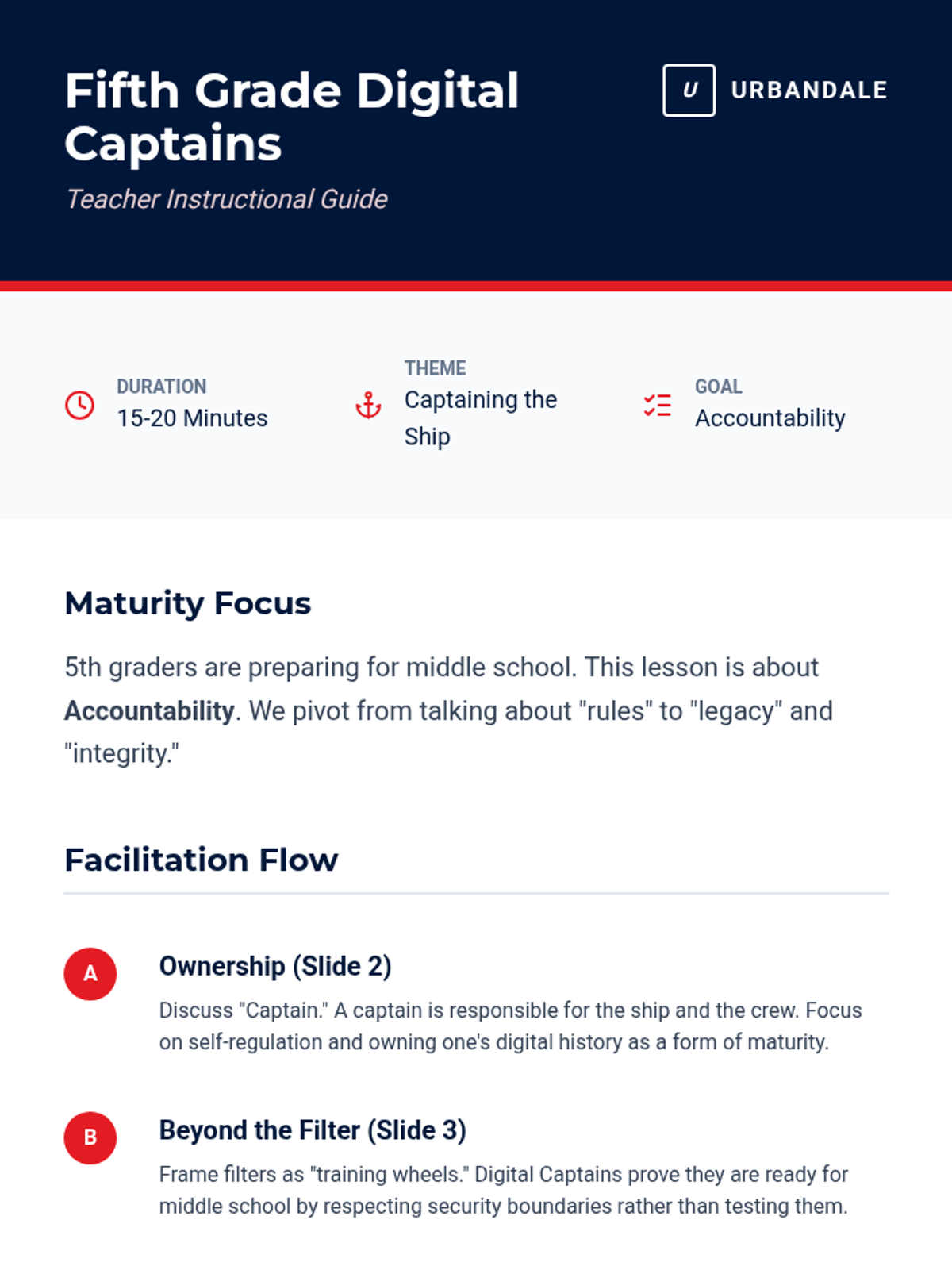
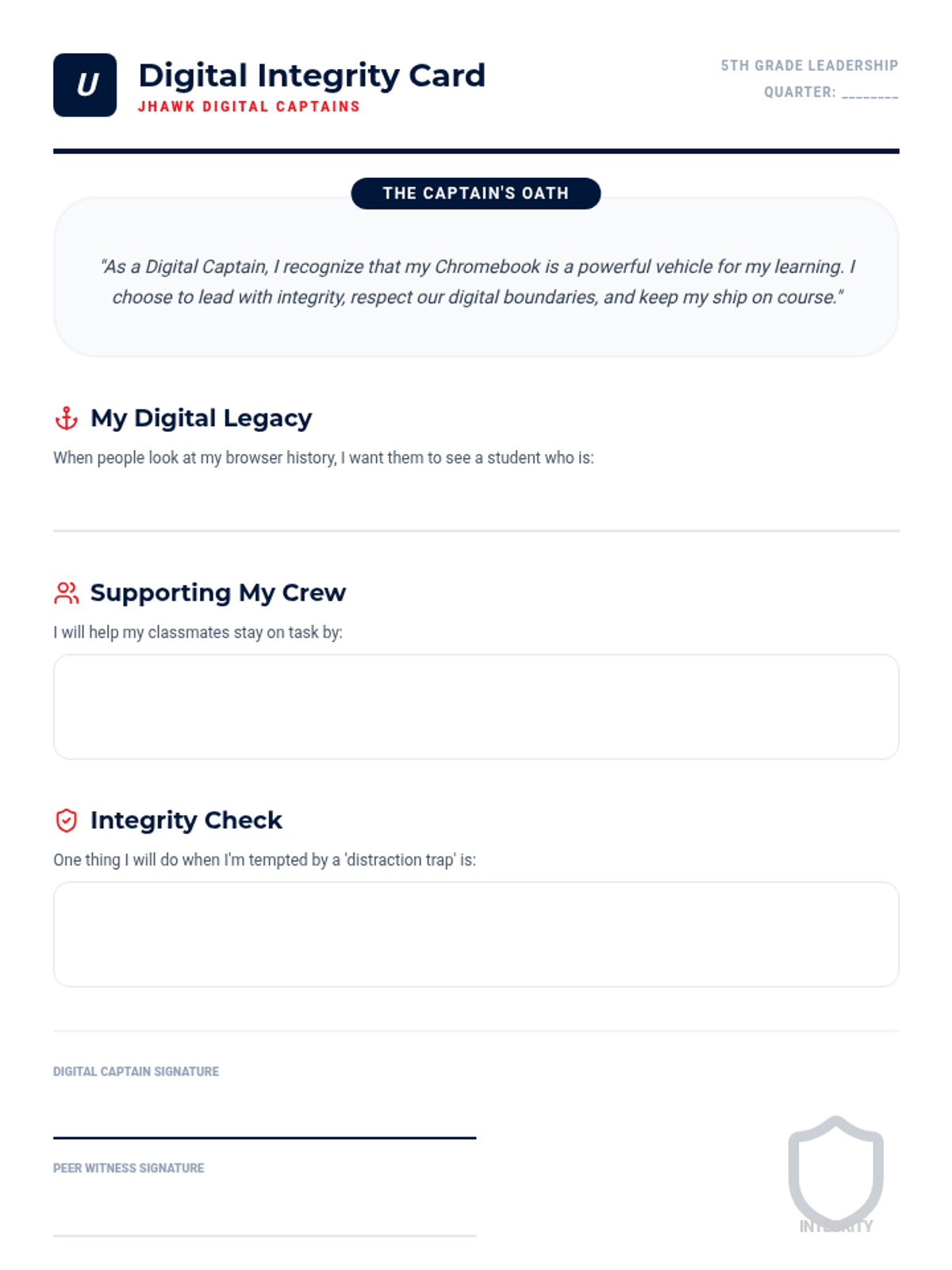
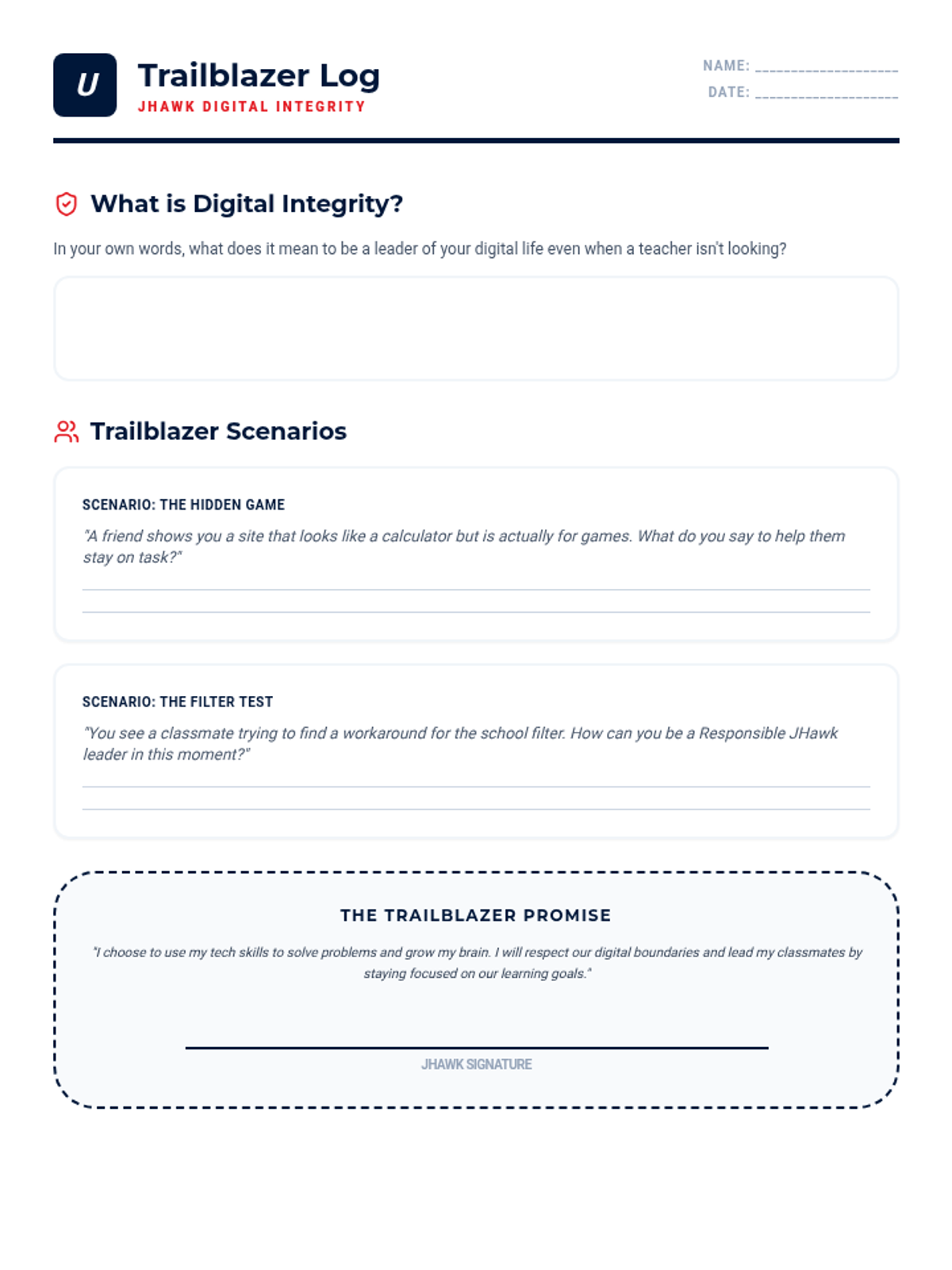
Empowers 5th graders to lead by example, discussing the importance of academic integrity and resisting the urge to bypass school filters.
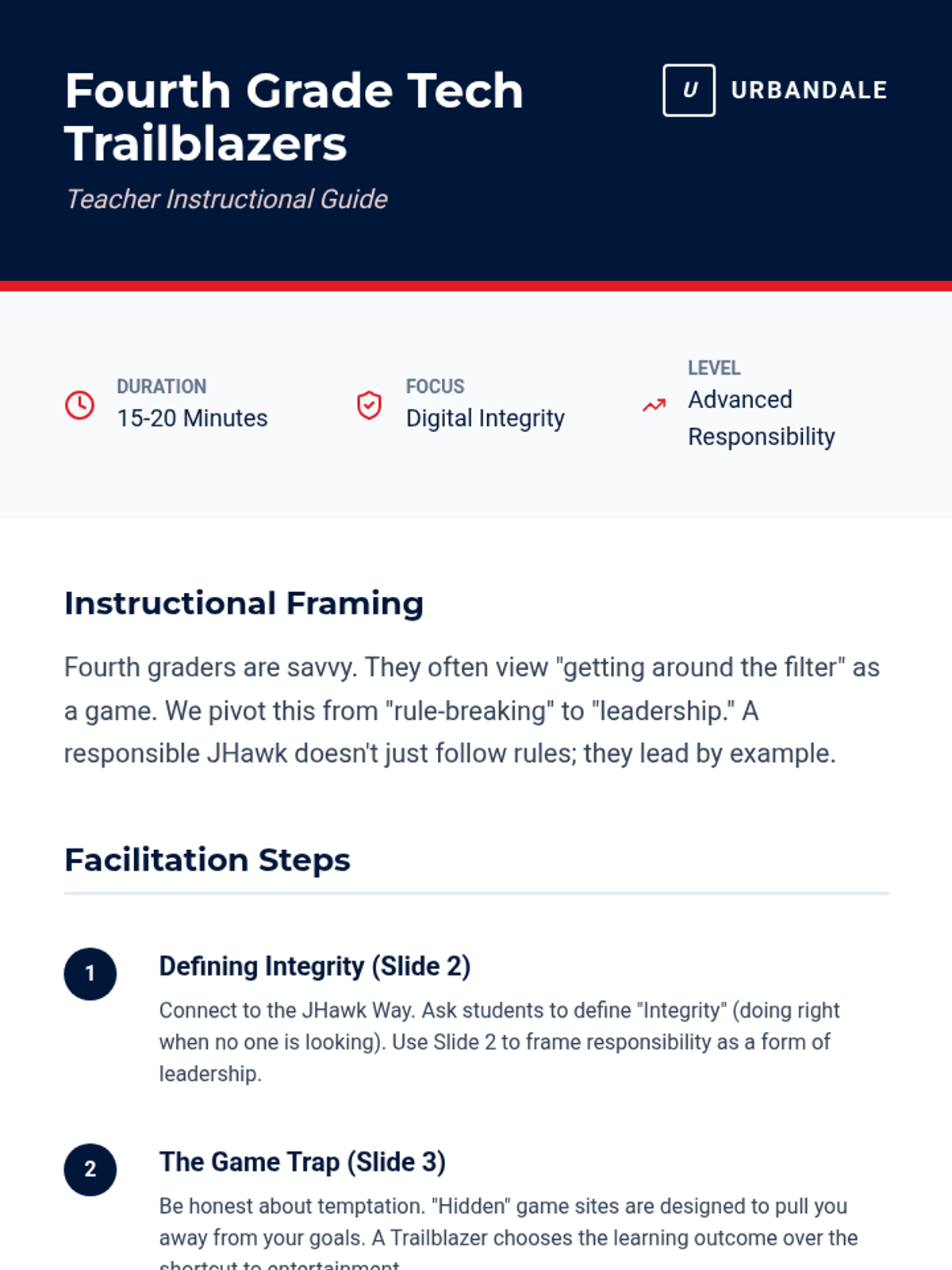
Addresses the specific challenges of 4th graders, focusing on avoiding game websites and maintaining focus on assigned tasks.
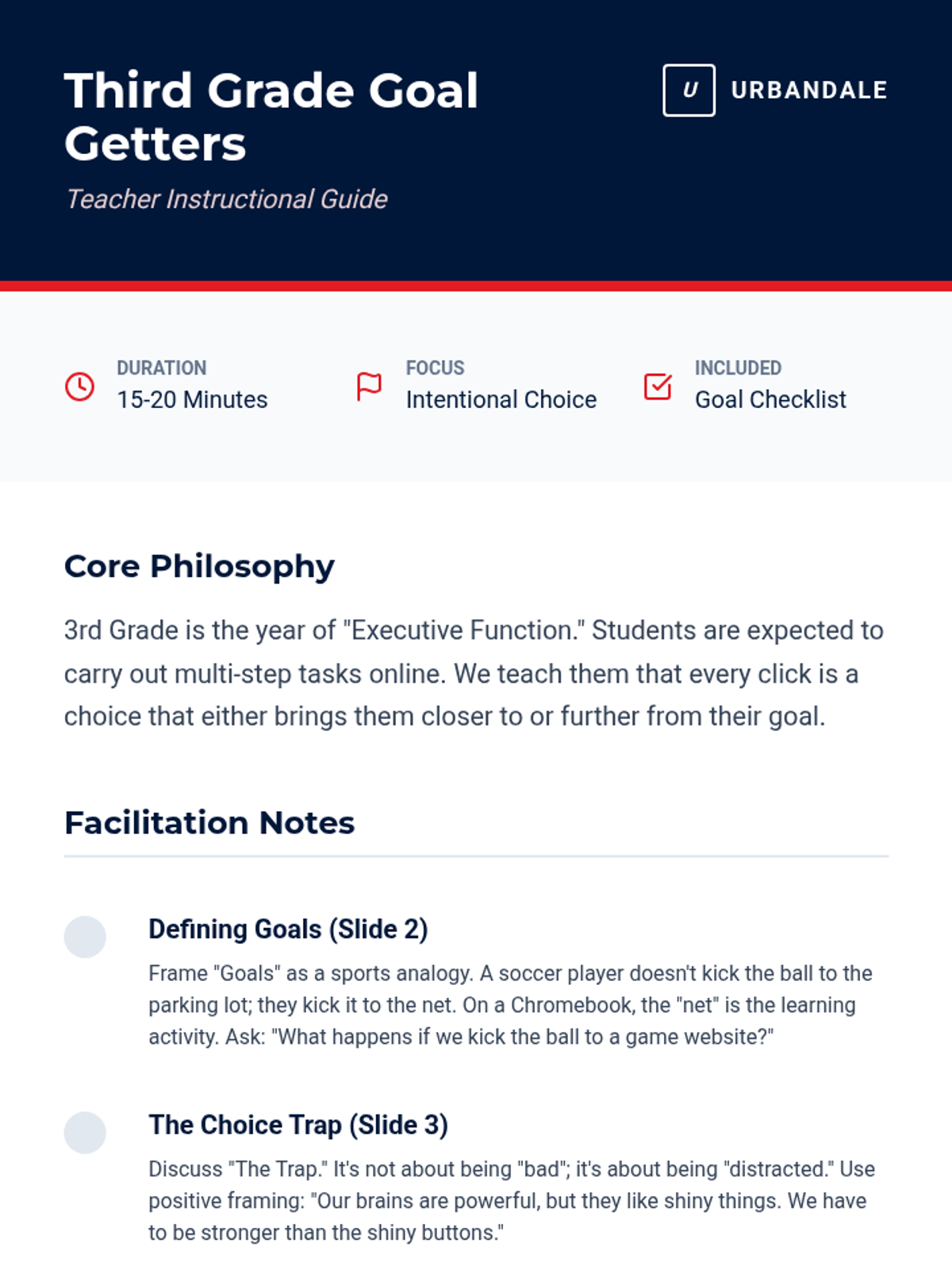
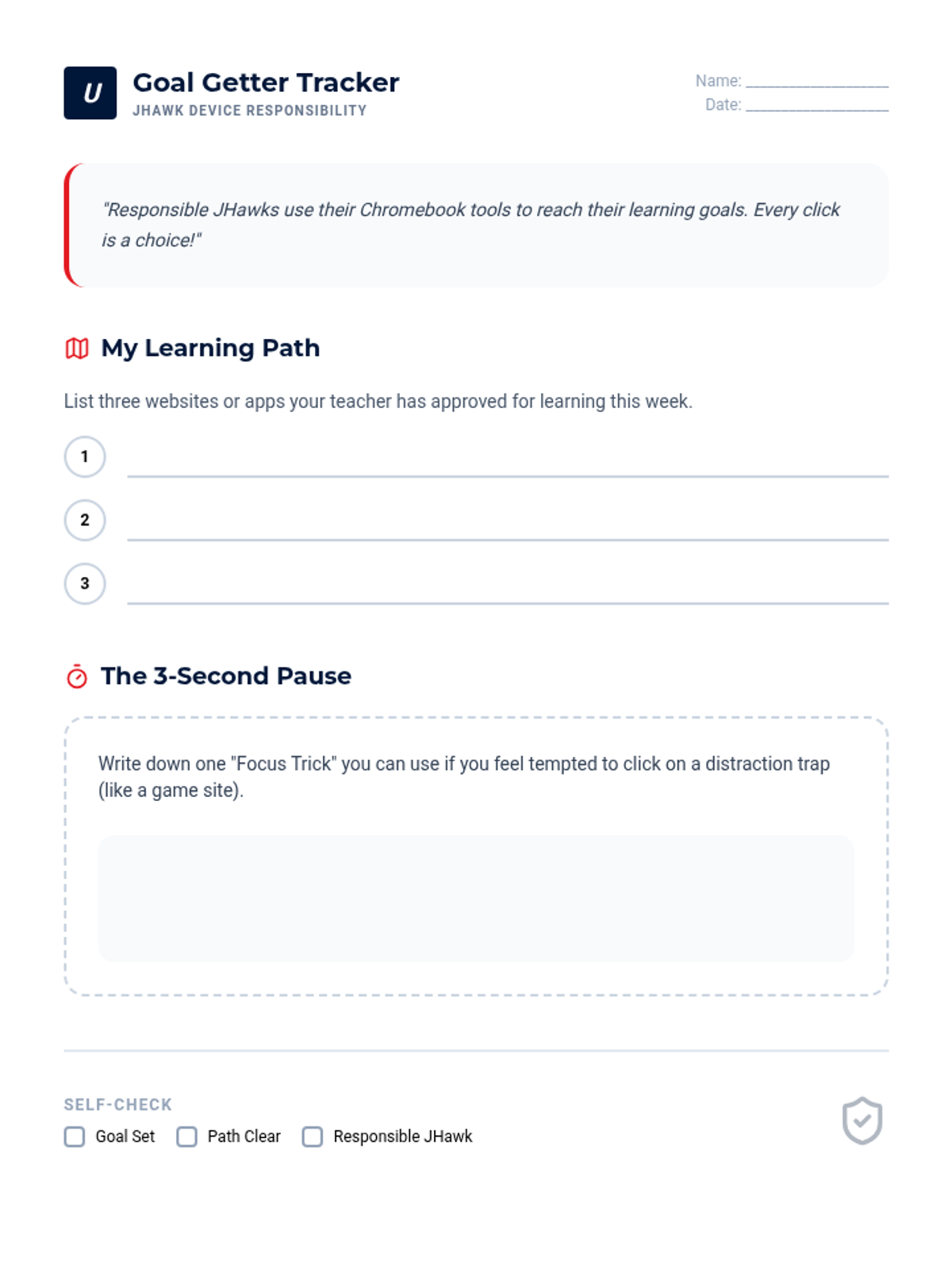
Helps 3rd graders identify common online distractions and practice making responsible choices that align with their learning goals.
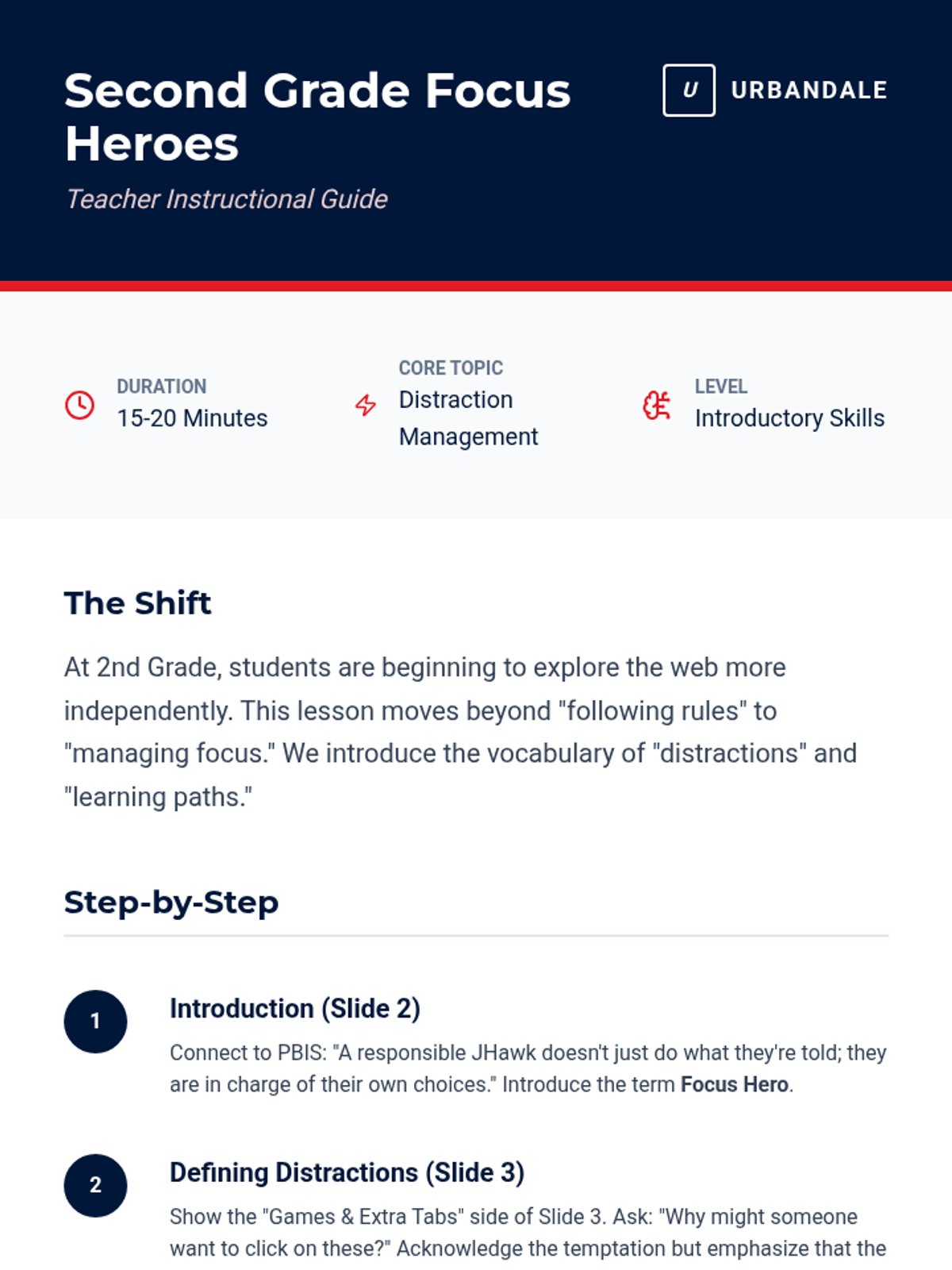
Introduces 2nd graders to the idea of managing digital distractions and staying on task during learning time.
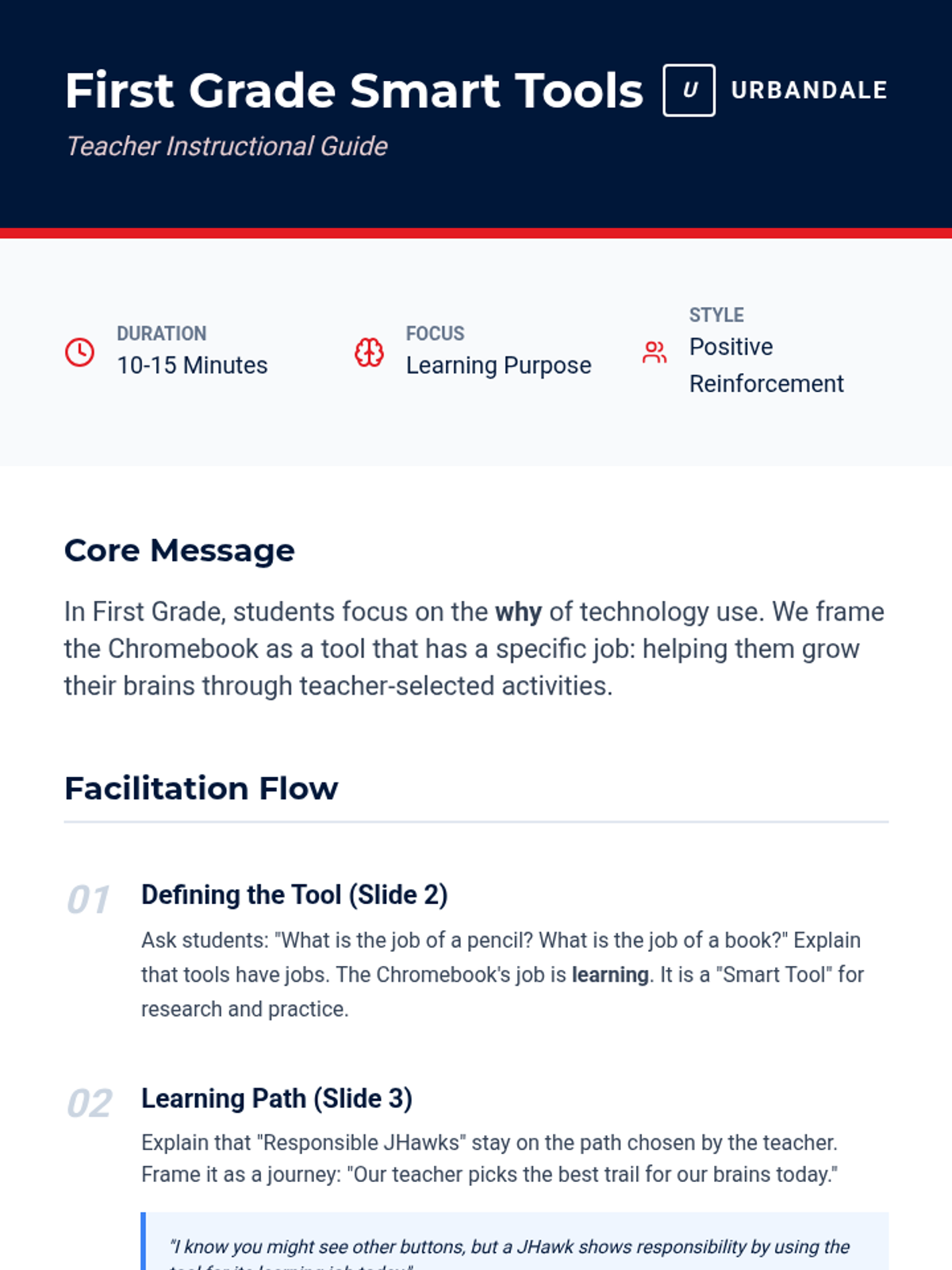
Reinforces the 'Tool not Toy' concept for 1st graders, emphasizing the JHawk Way of being Responsible with school technology.
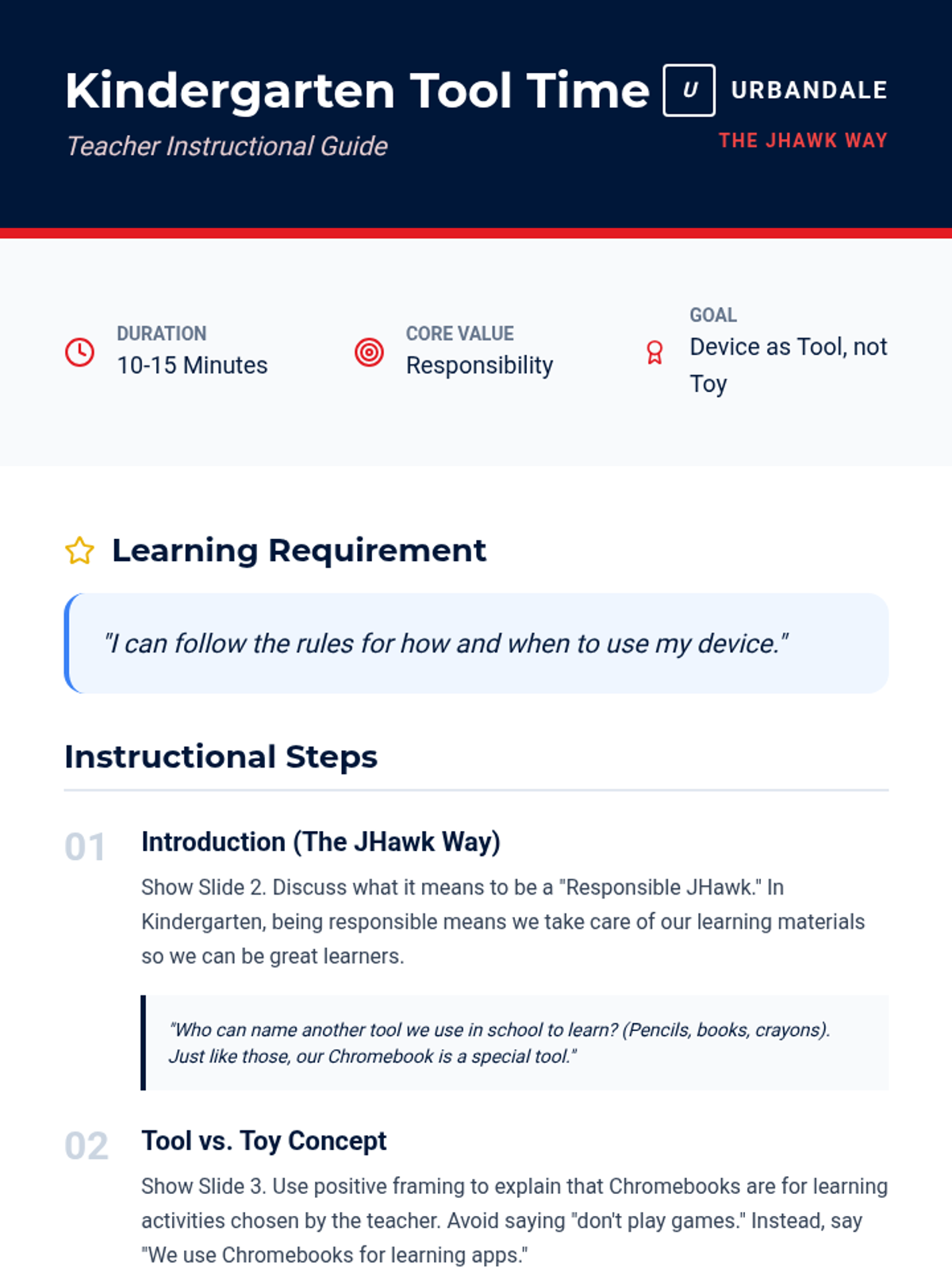
Introduces Kindergarteners to the concept that Chromebooks are learning tools, not toys, focusing on following teacher directions for when to use them.
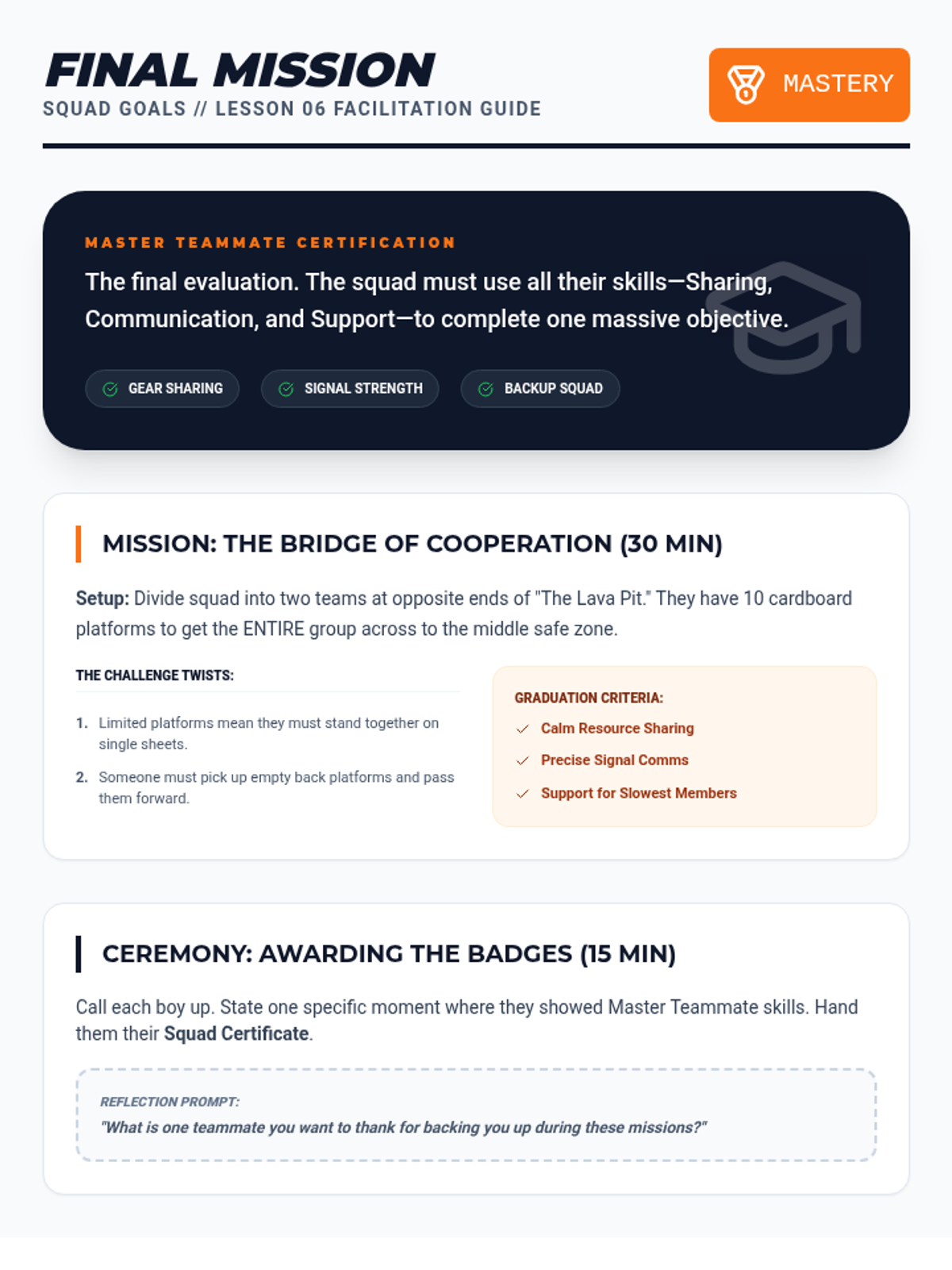
A final collaborative challenge where students apply all learned skills to earn their 'Master Teammate' status.
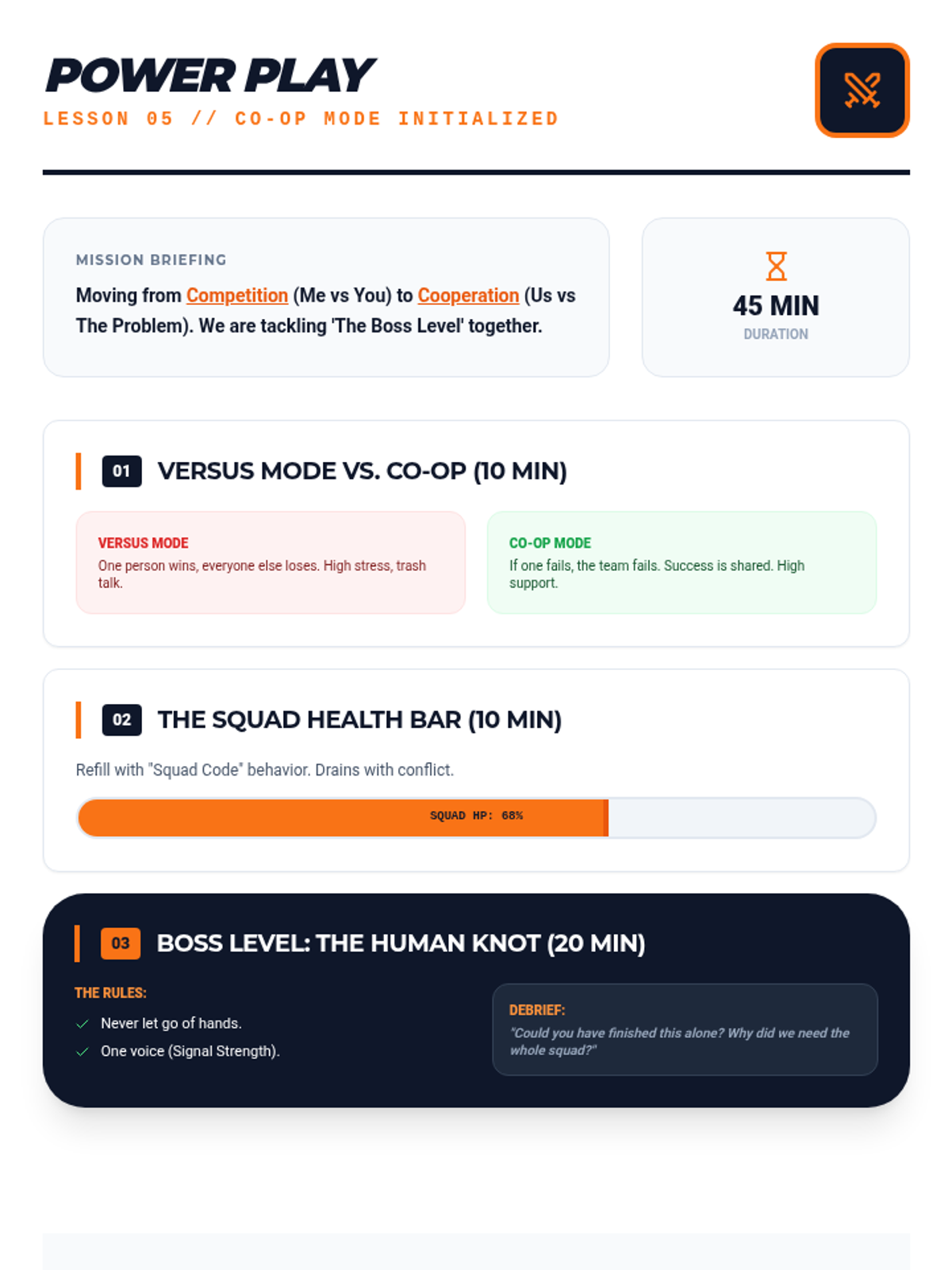
Shifts the focus from individual achievement to collective goals and handling competition healthily.
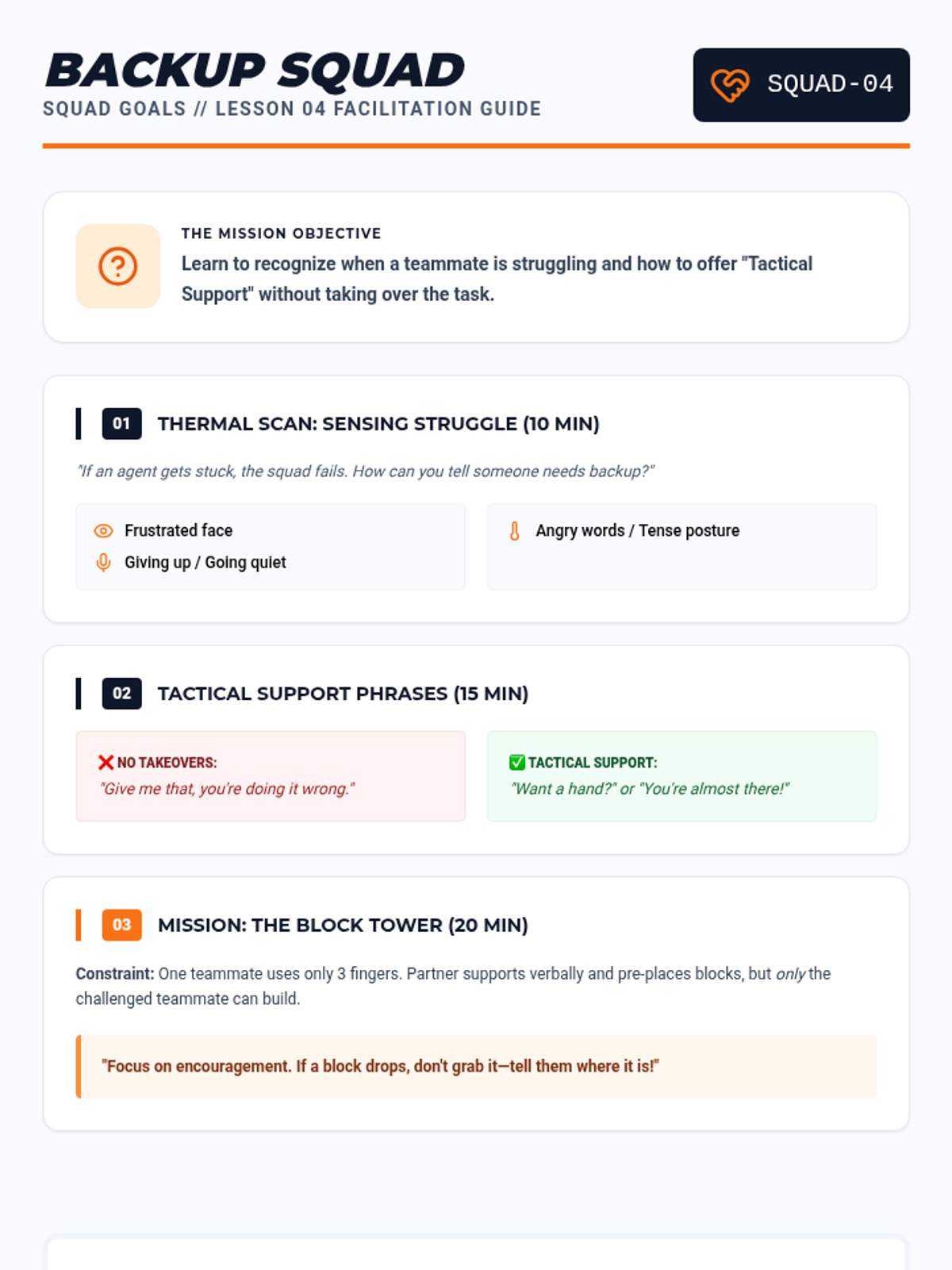
Teaches students how to encourage teammates and offer help when someone is struggling.
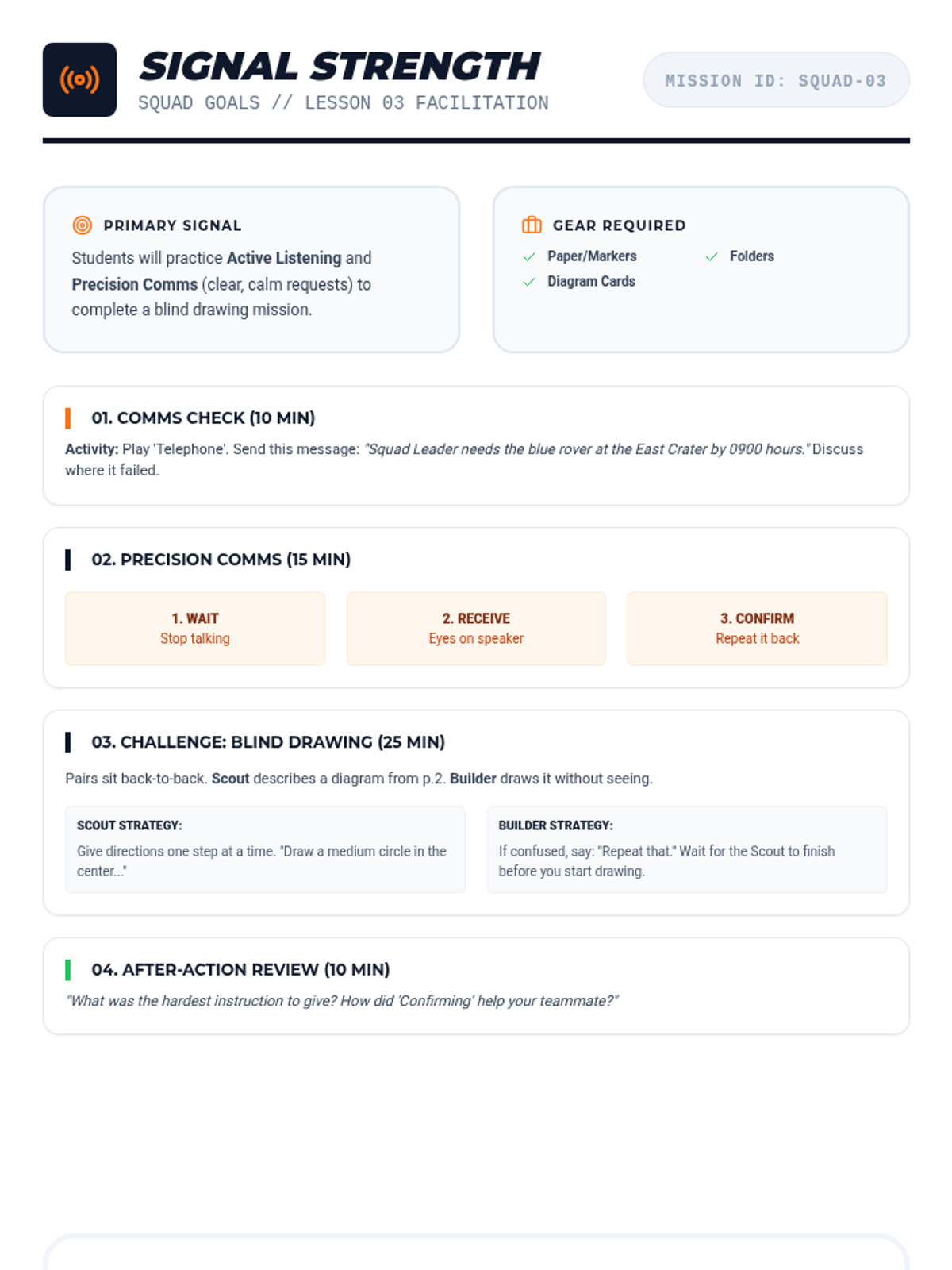
Explores active listening and clear verbal communication as essential tools for team success.
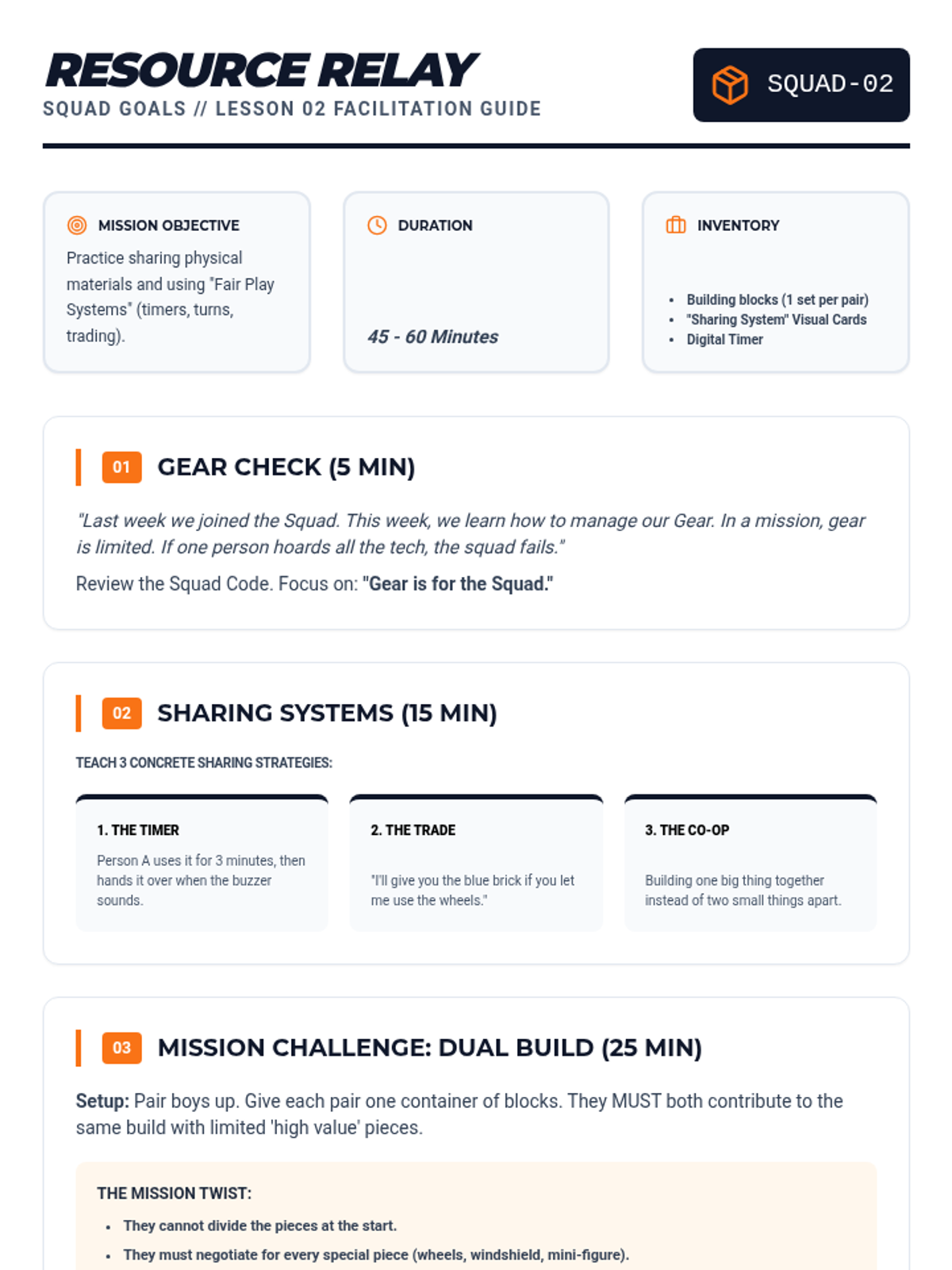
Focuses on the mechanics of sharing physical resources and time fairly within a group.
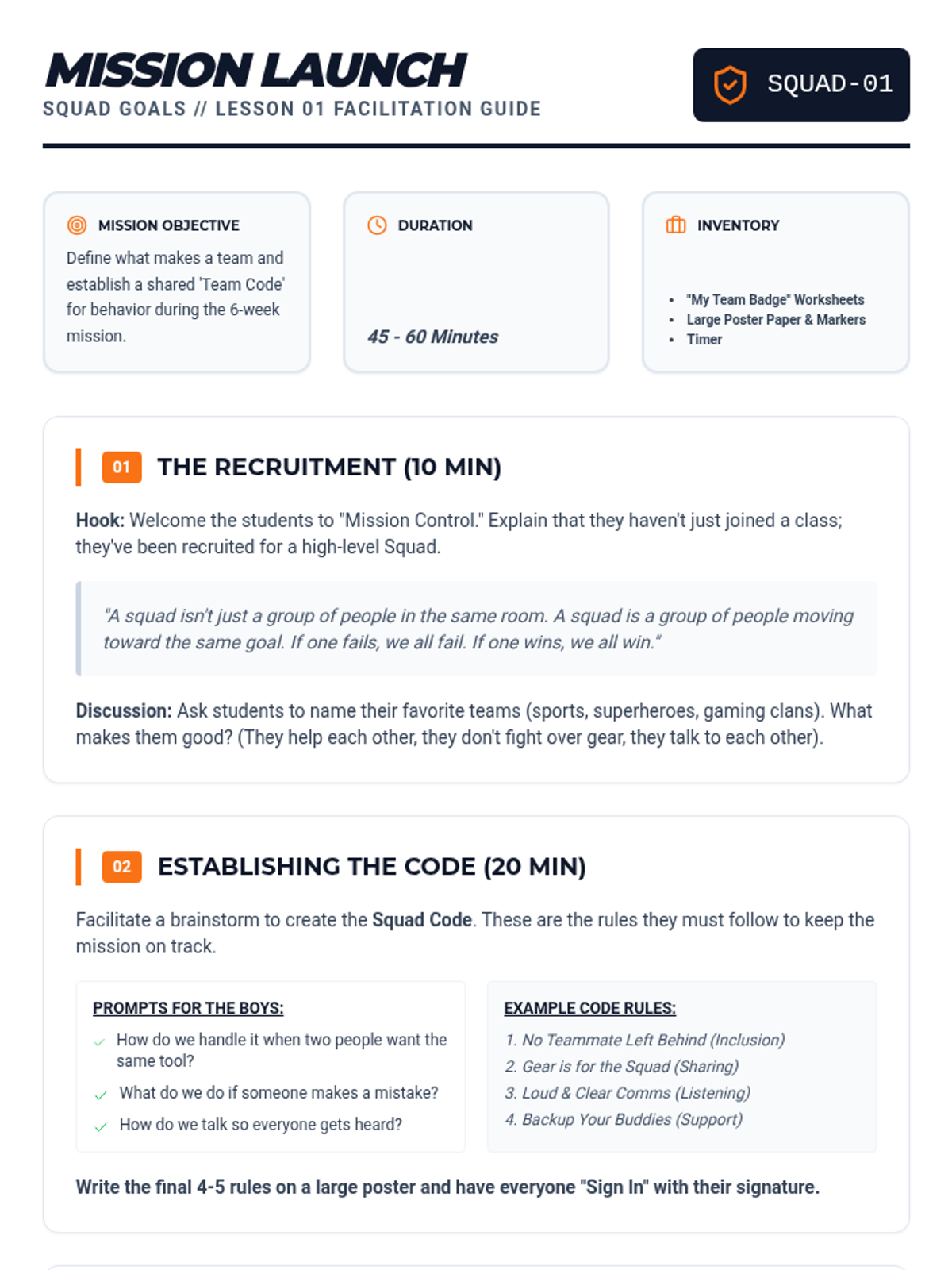
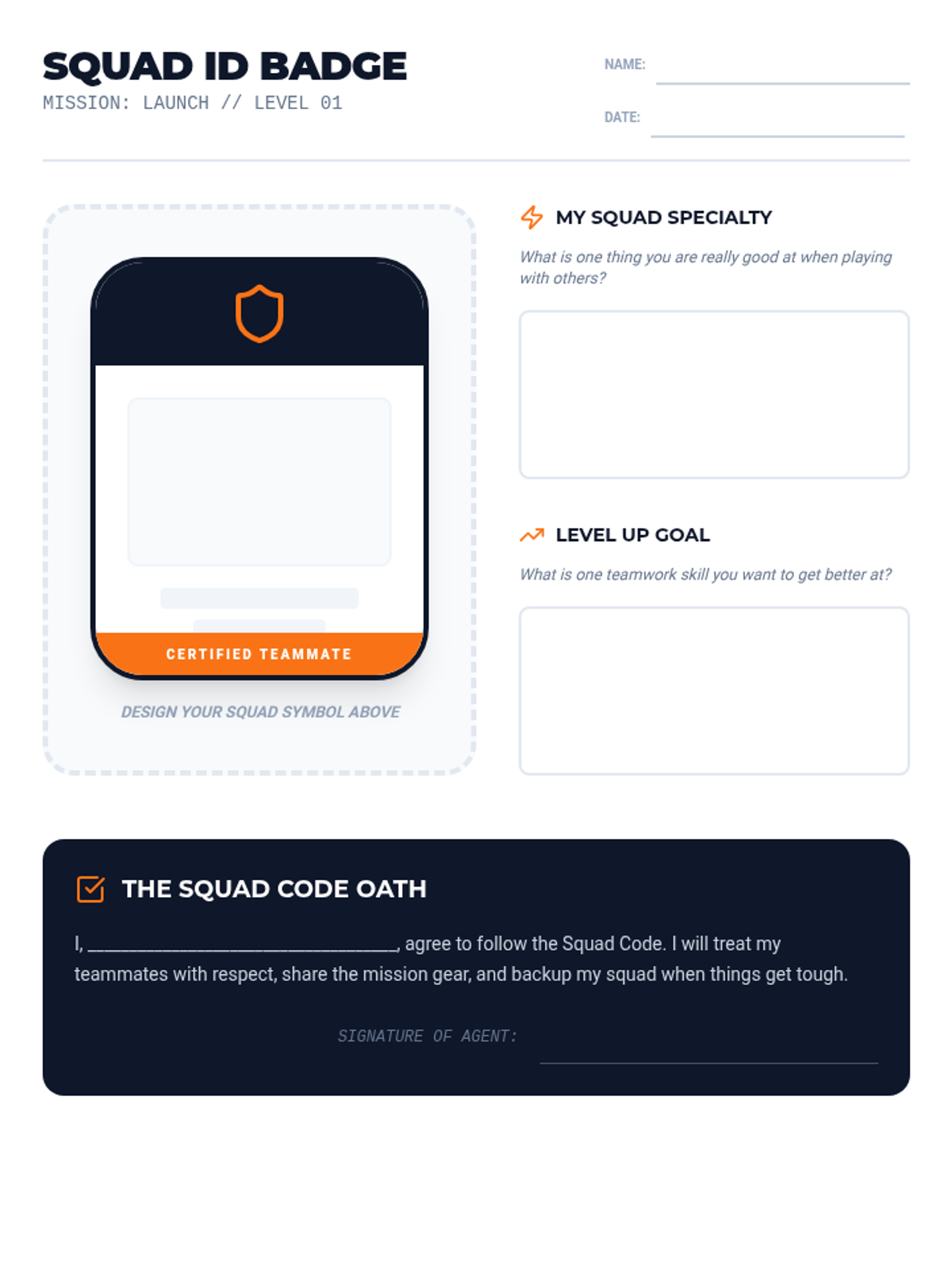
Introduction to the concept of a 'Squad' and establishing group norms and the 'Team Code'.
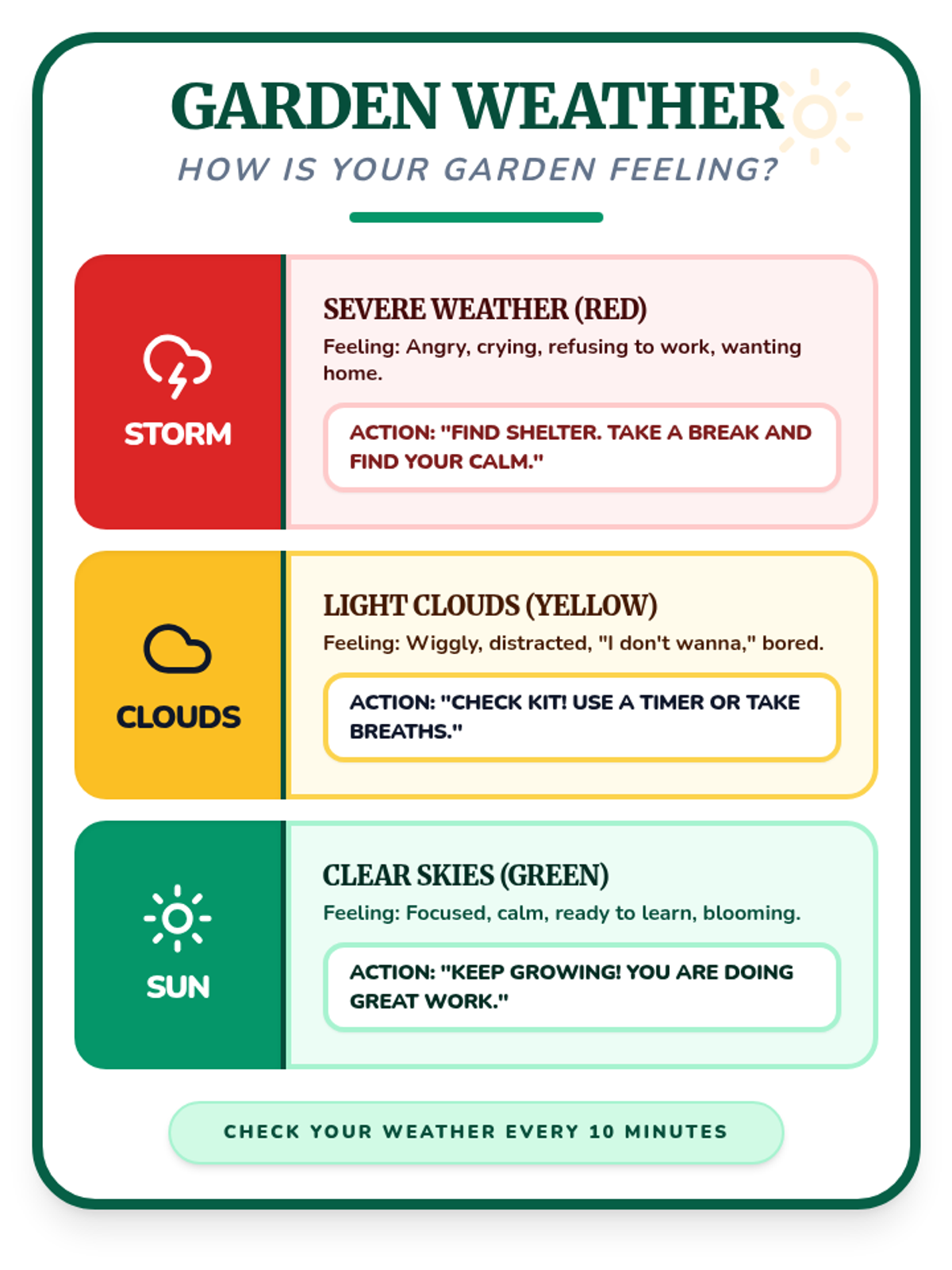
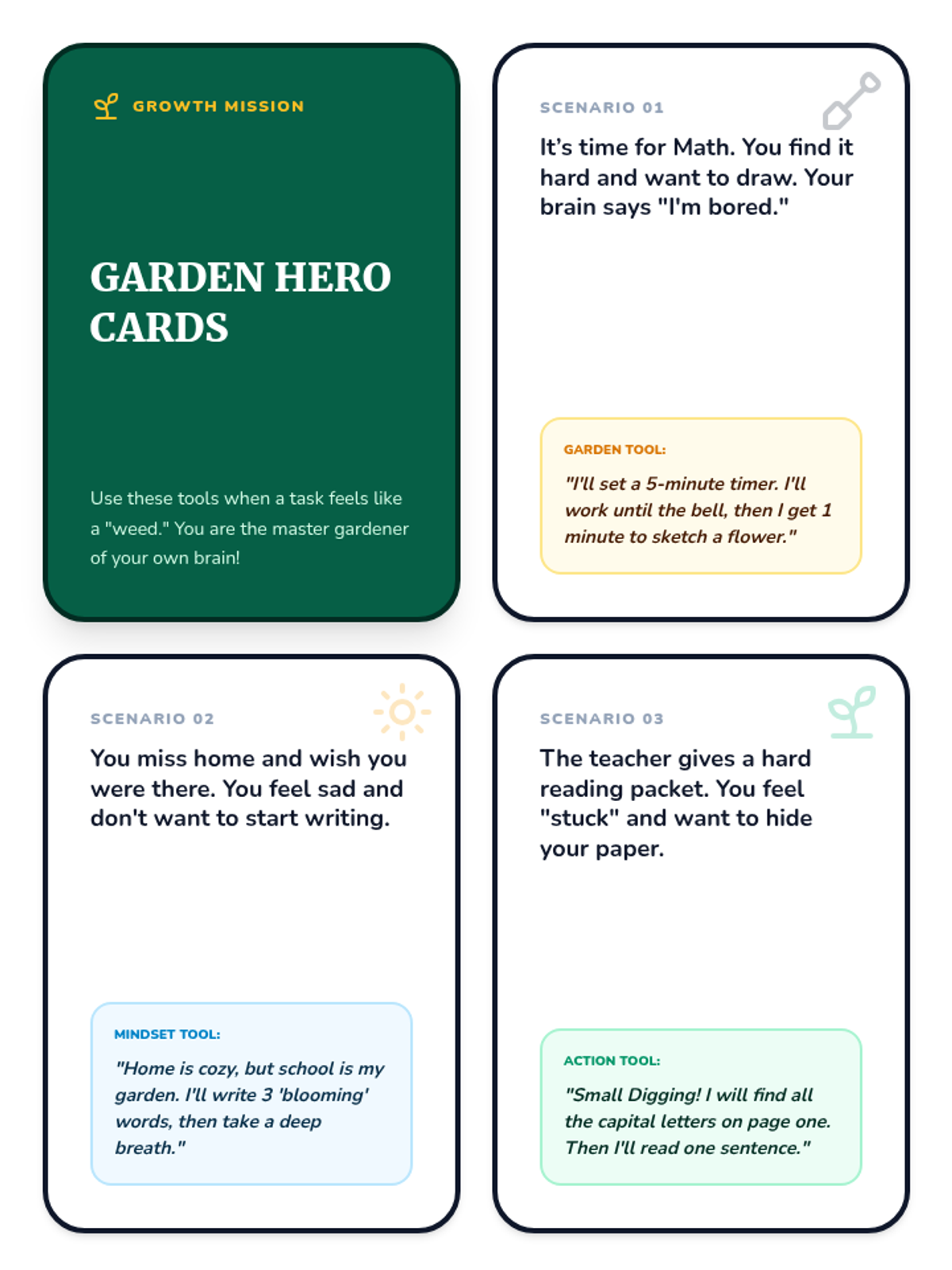
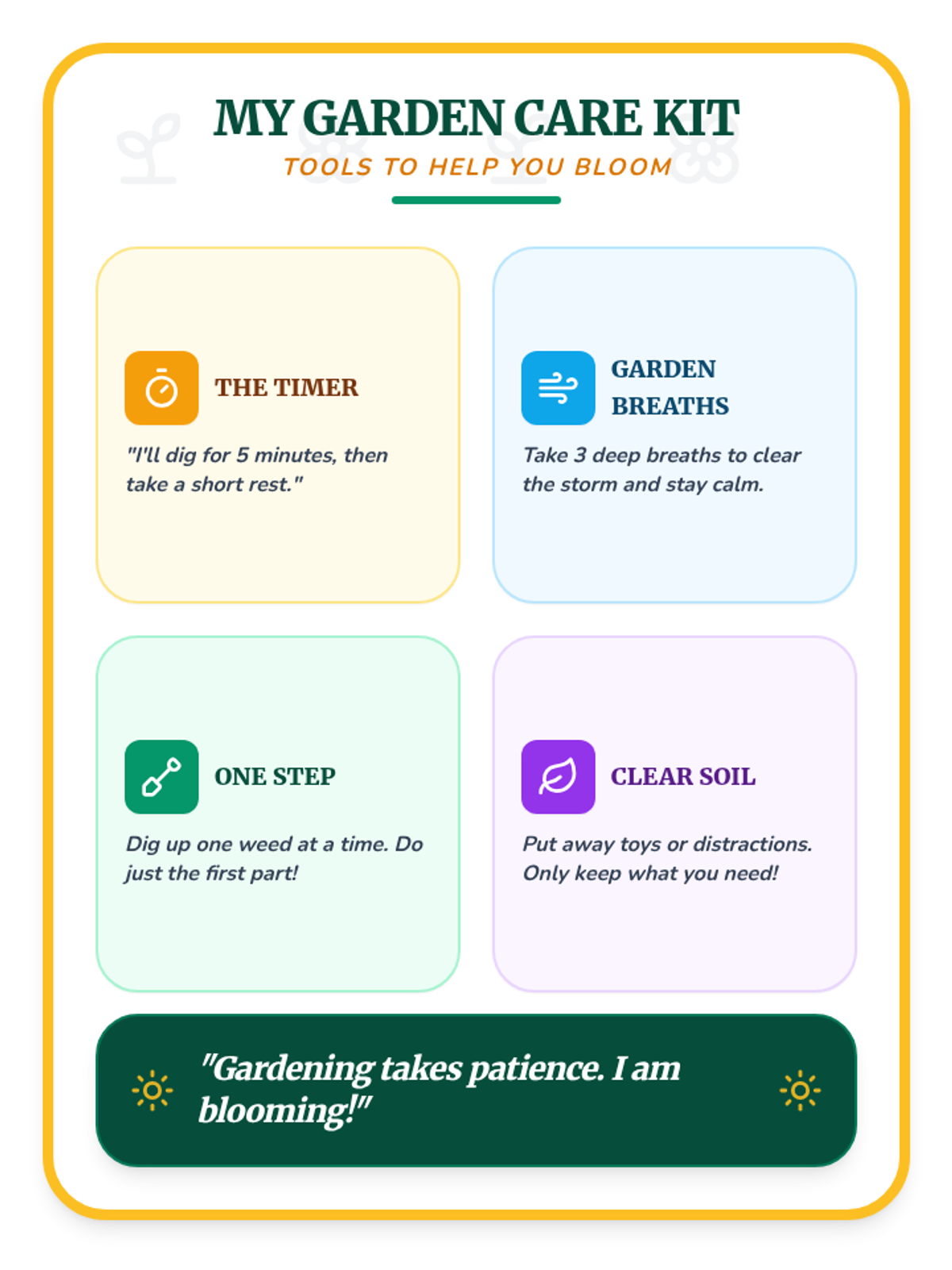
Navigating emotional regulation and frustration by understanding 'garden weather' and using tools to handle academic storms.
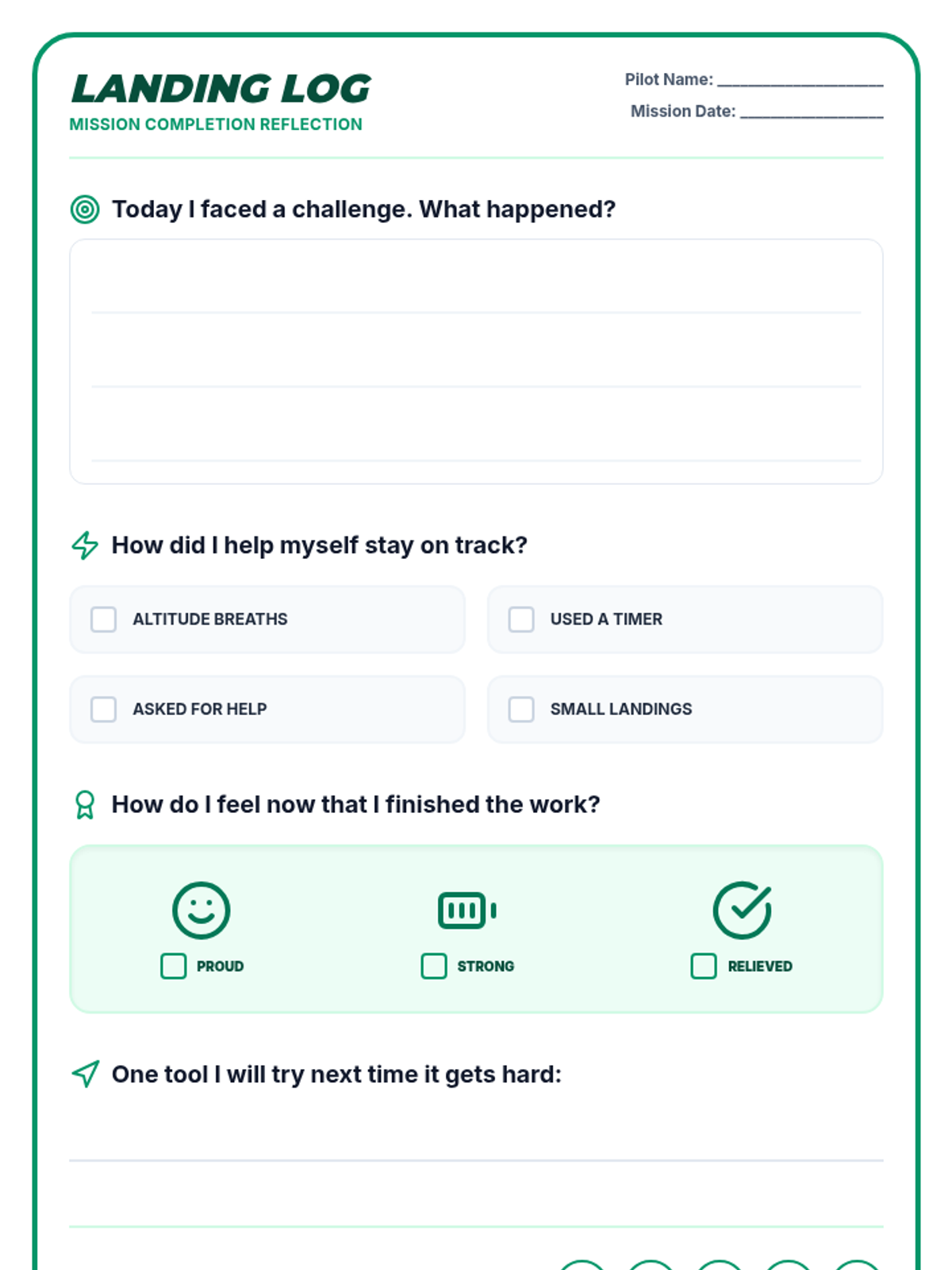
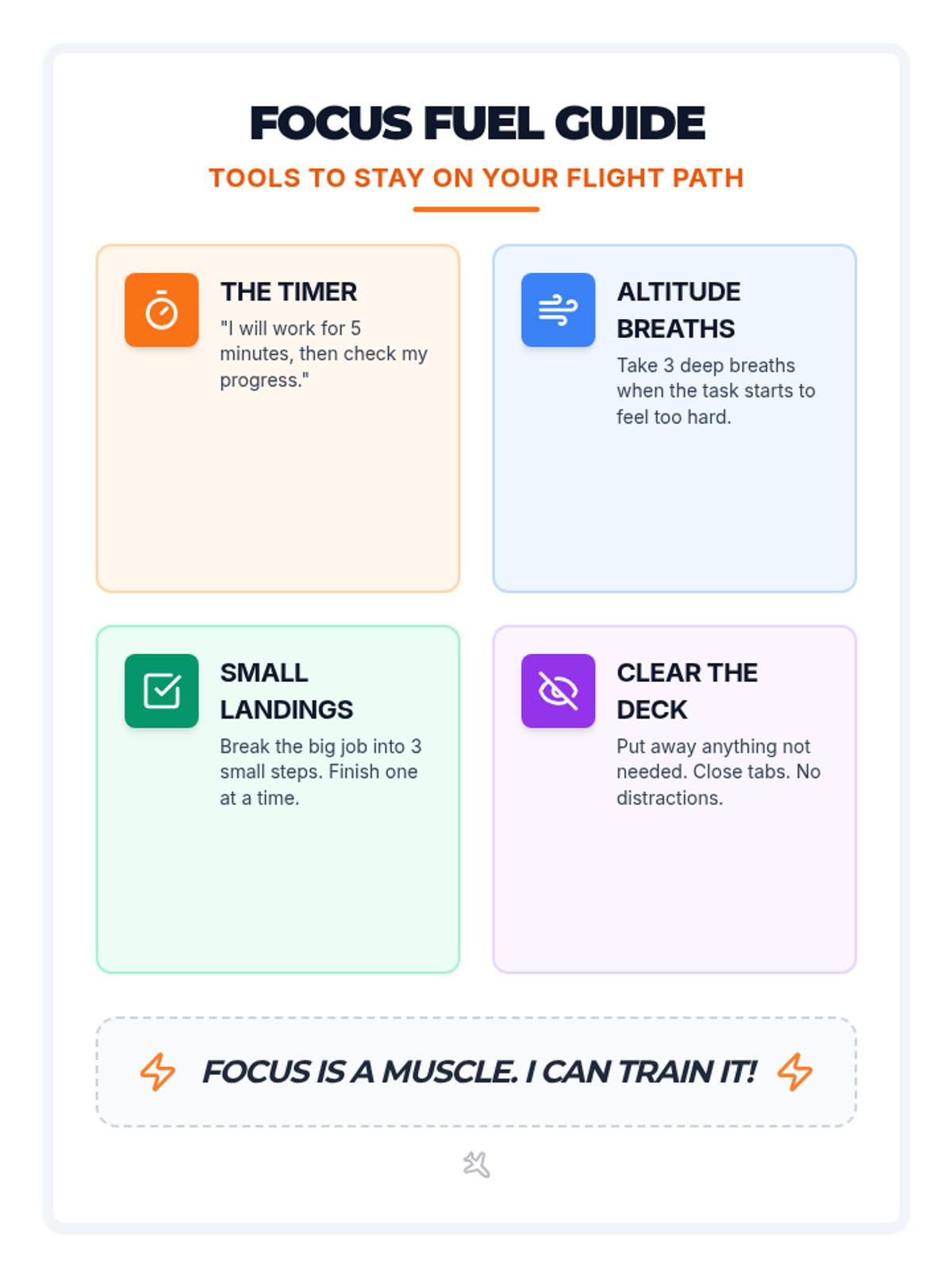
Developing executive functioning skills for sustained attention, treating focus as a toolkit for tending to academic tasks.
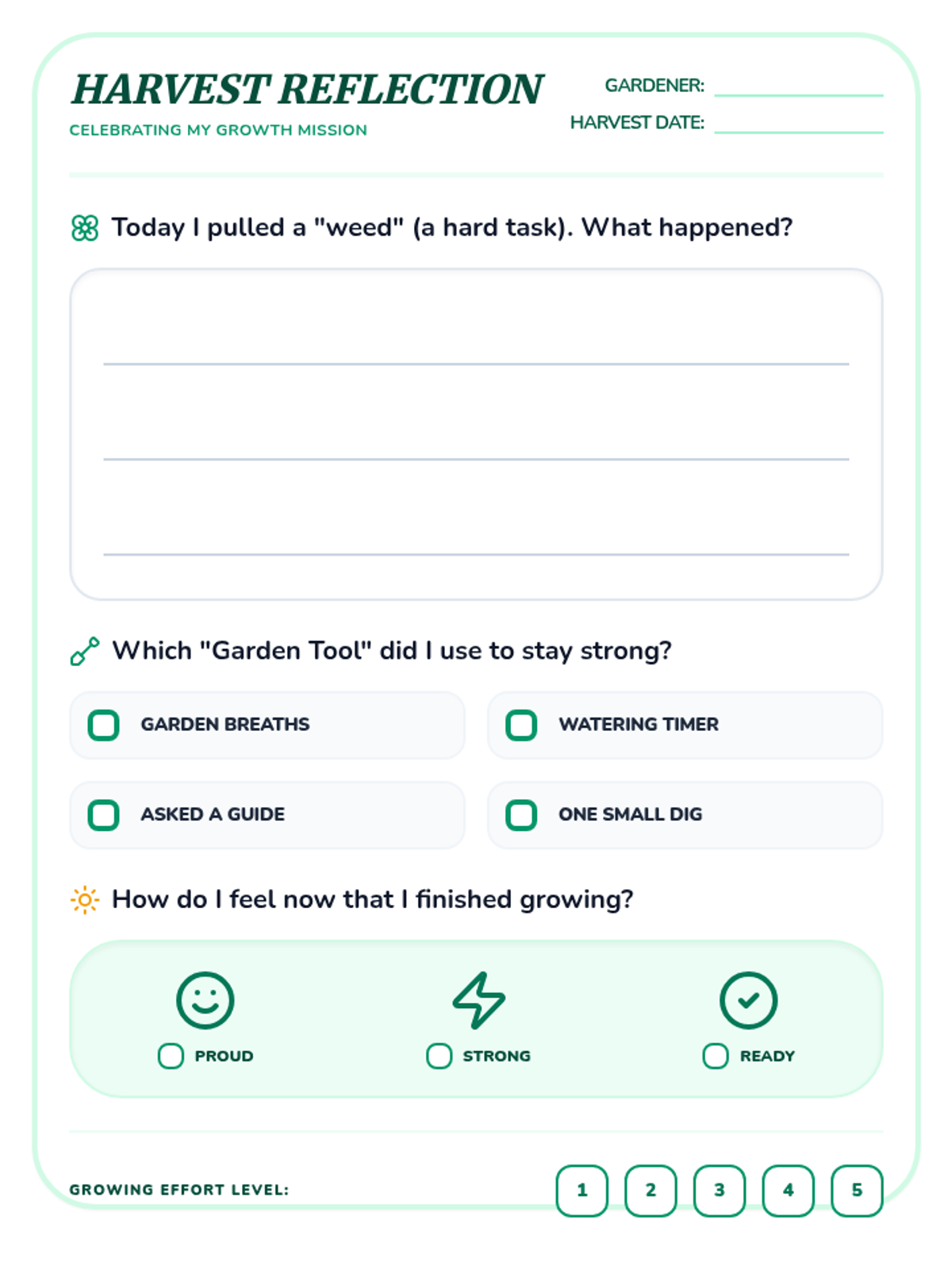
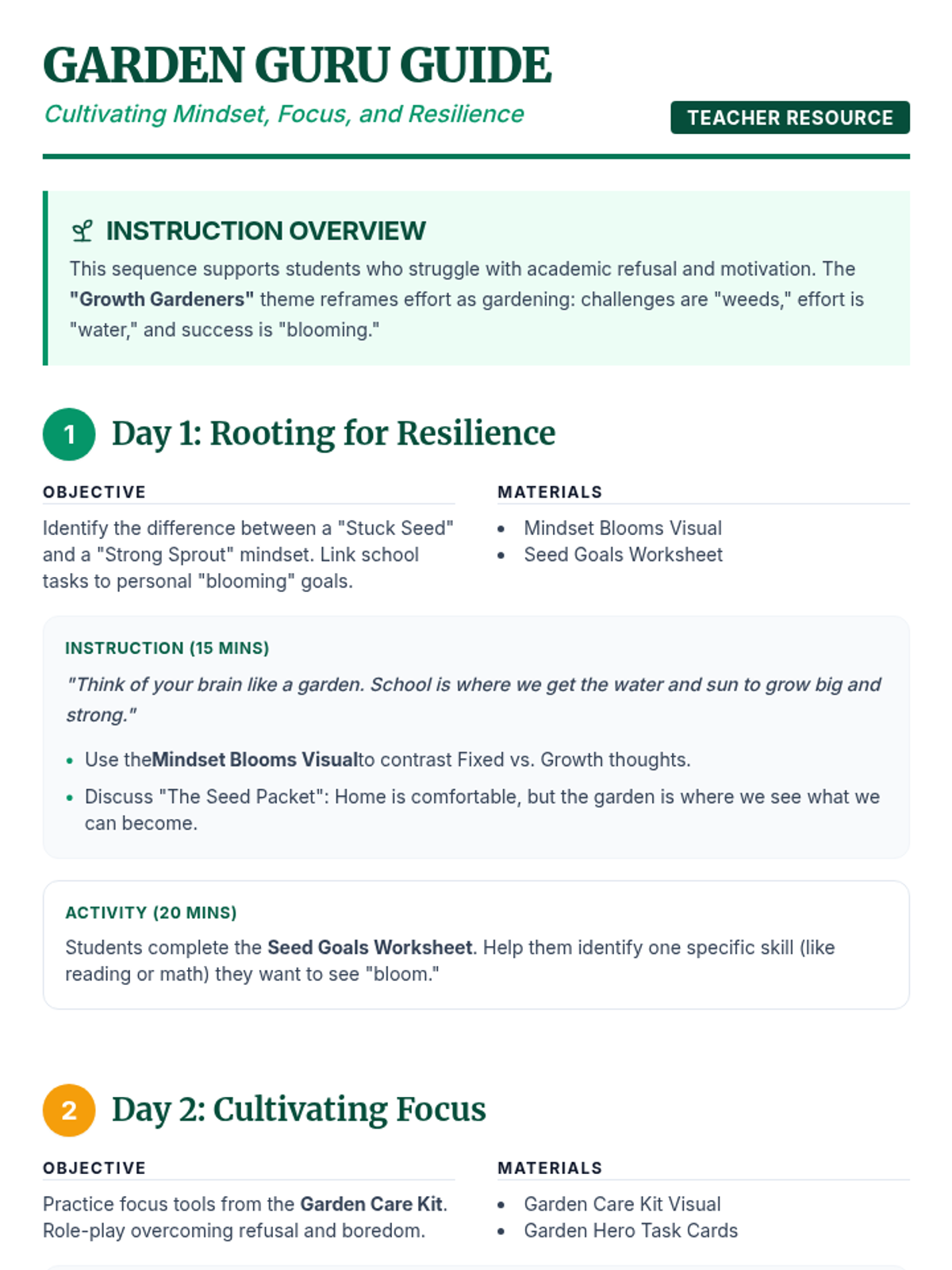
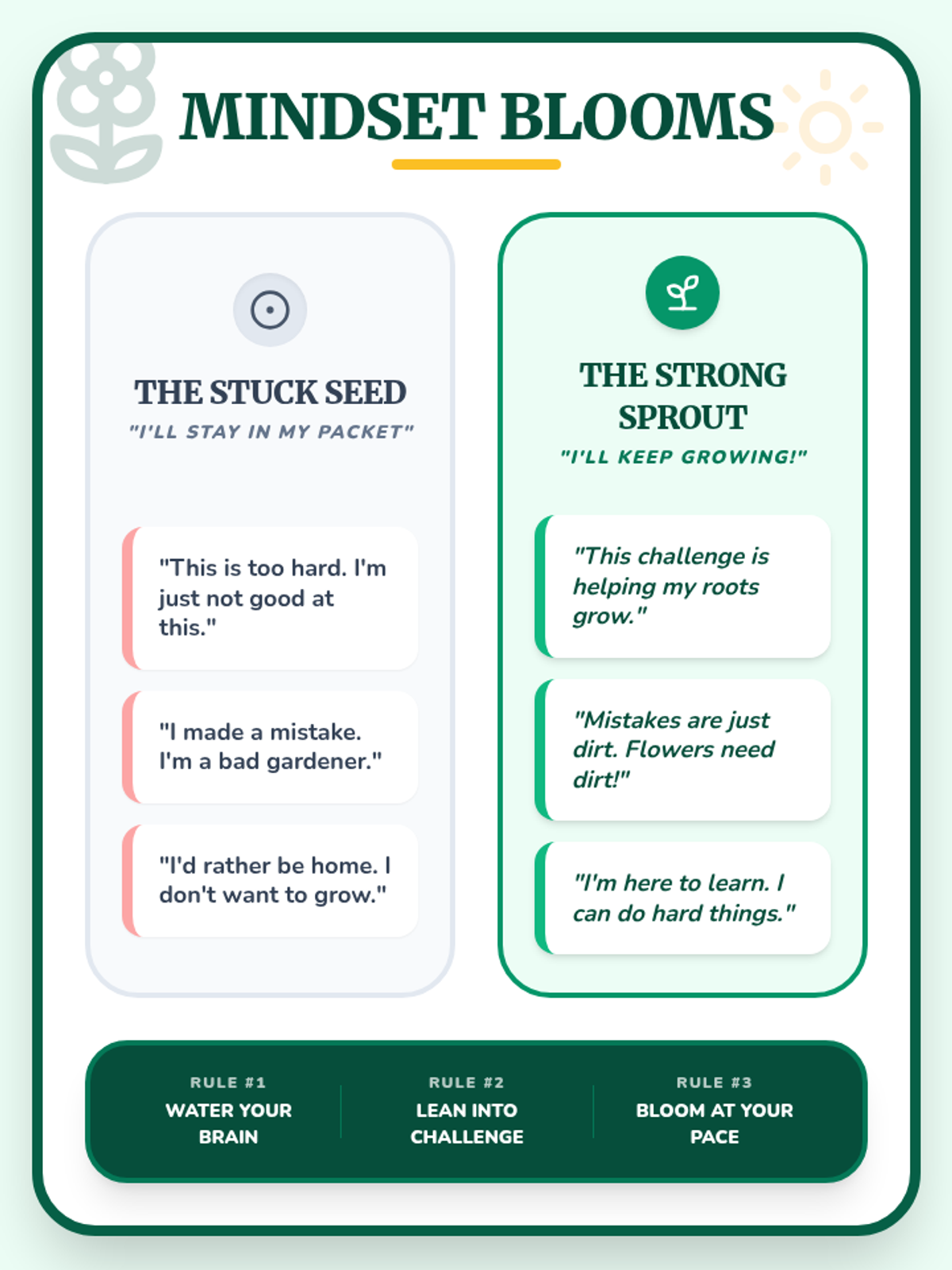
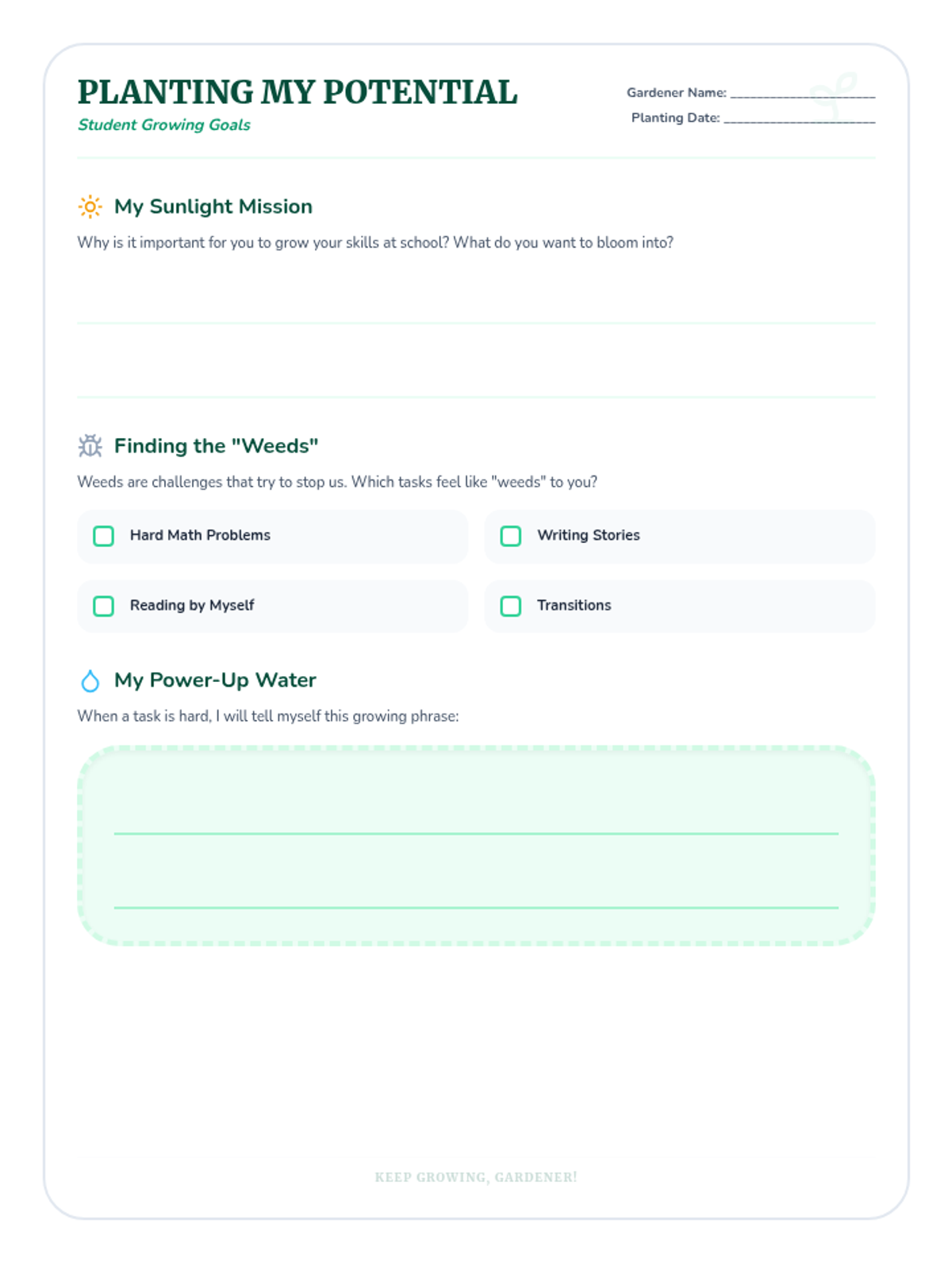
Introduction to growth mindset through the metaphor of gardening, helping students see that effort is the 'water' that helps their skills grow.
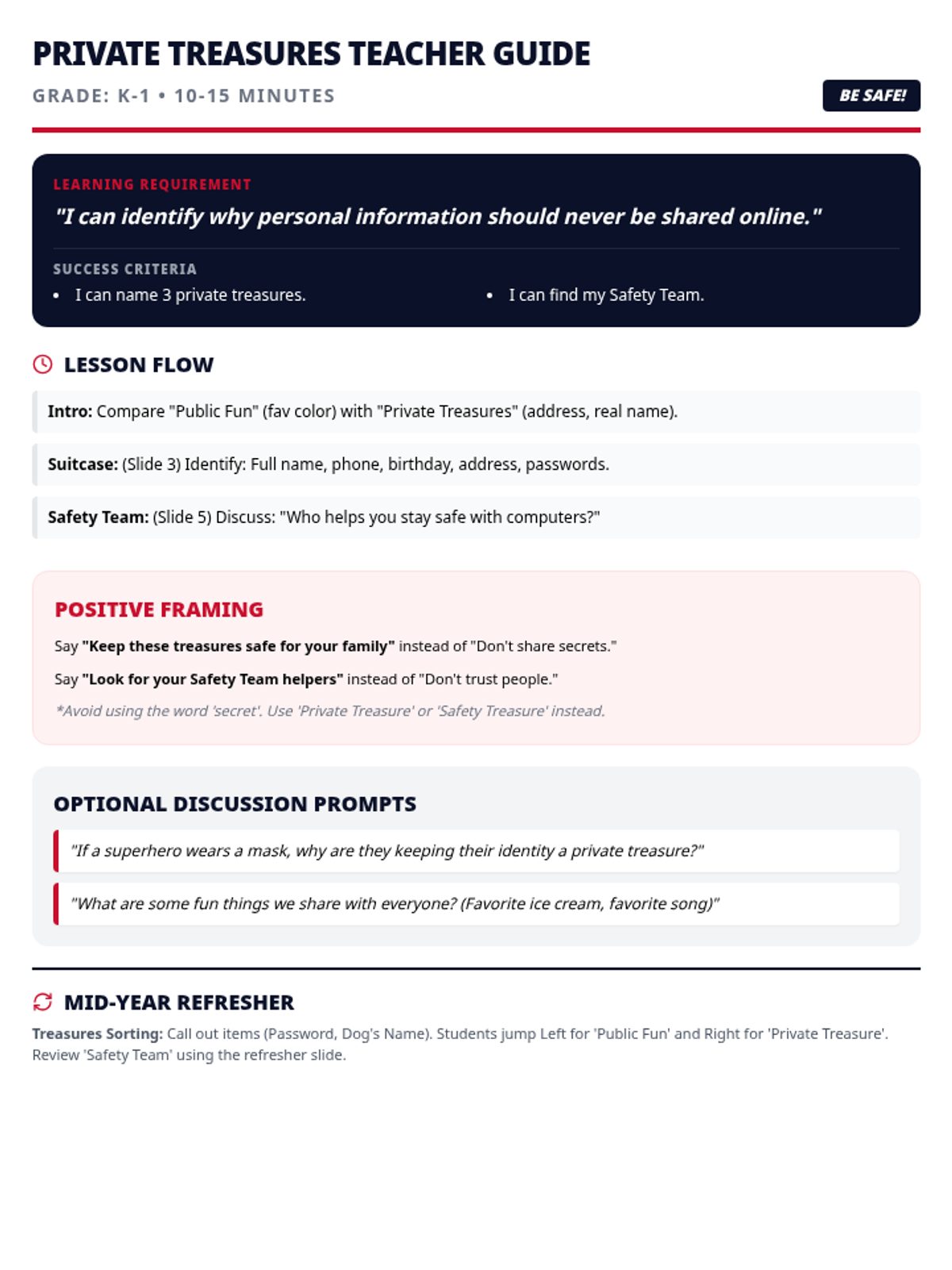
A 10-15 minute introductory lesson for K-1 students on identifying and protecting private information using the JHawk Way of being safe. Includes partner activities and positive framing for early learners.
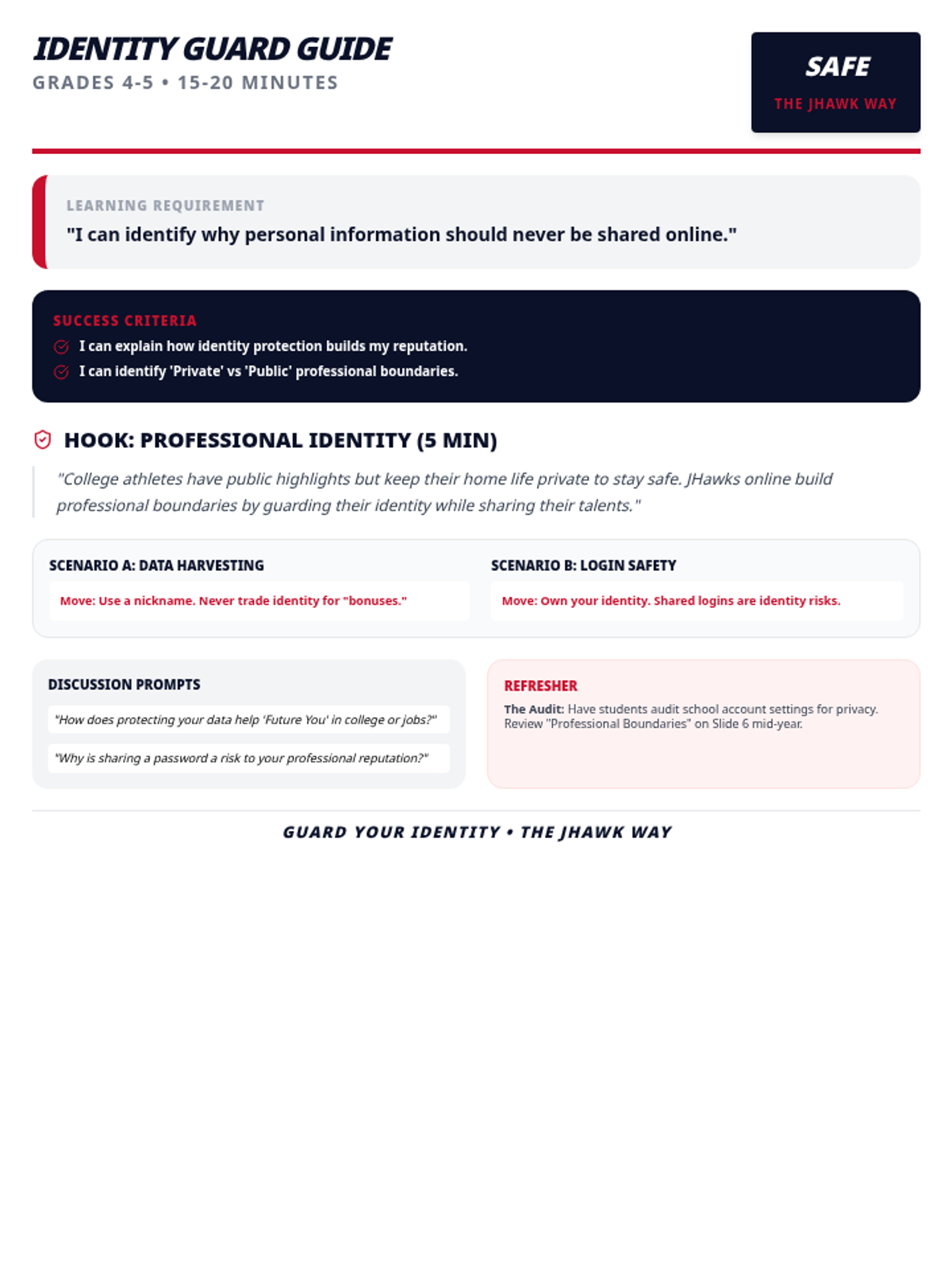
A 15-20 minute lesson for 4-5 students on identity protection and the importance of a secure digital footprint. Students analyze scenarios to practice being safe and professional online.
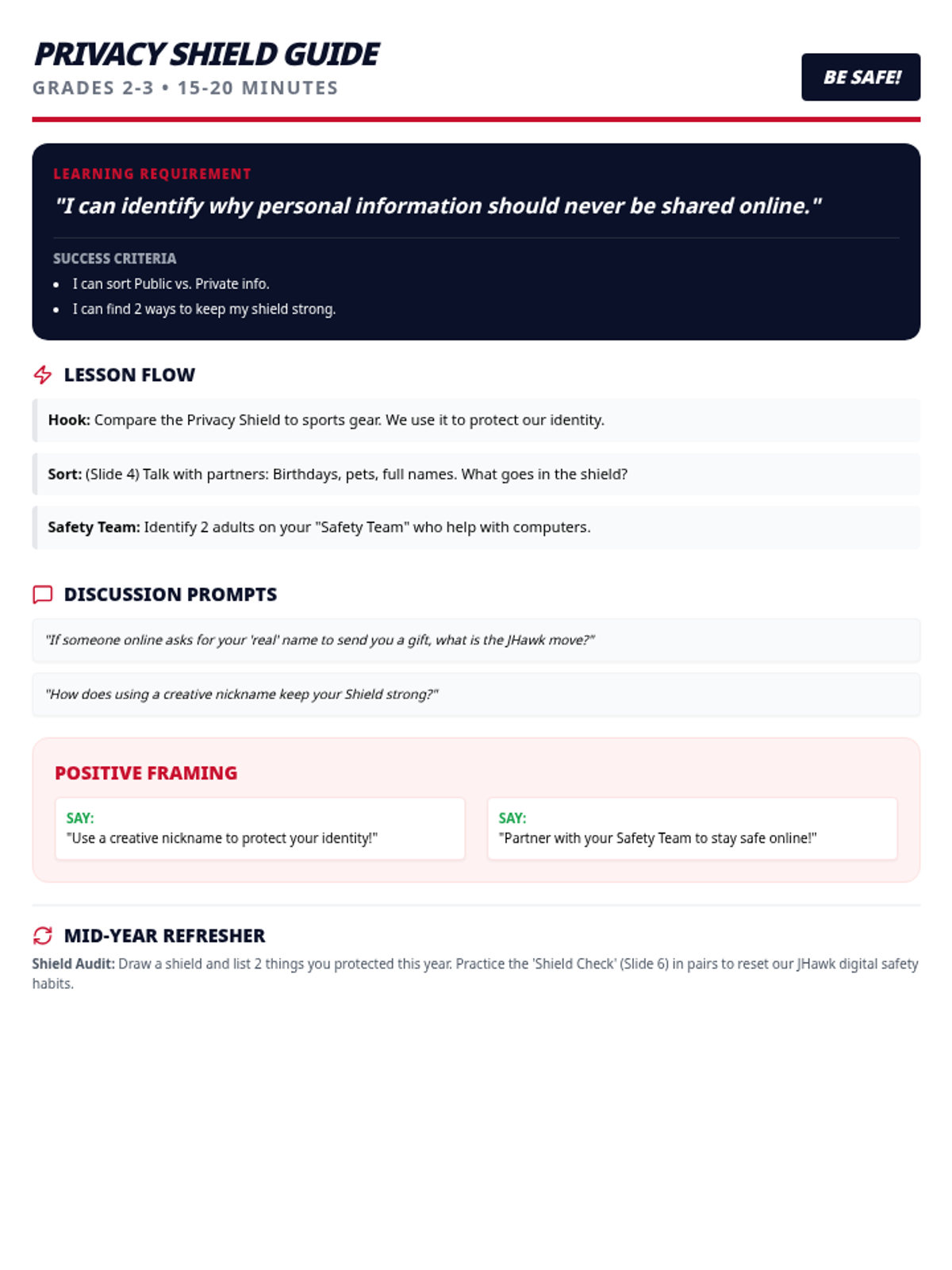
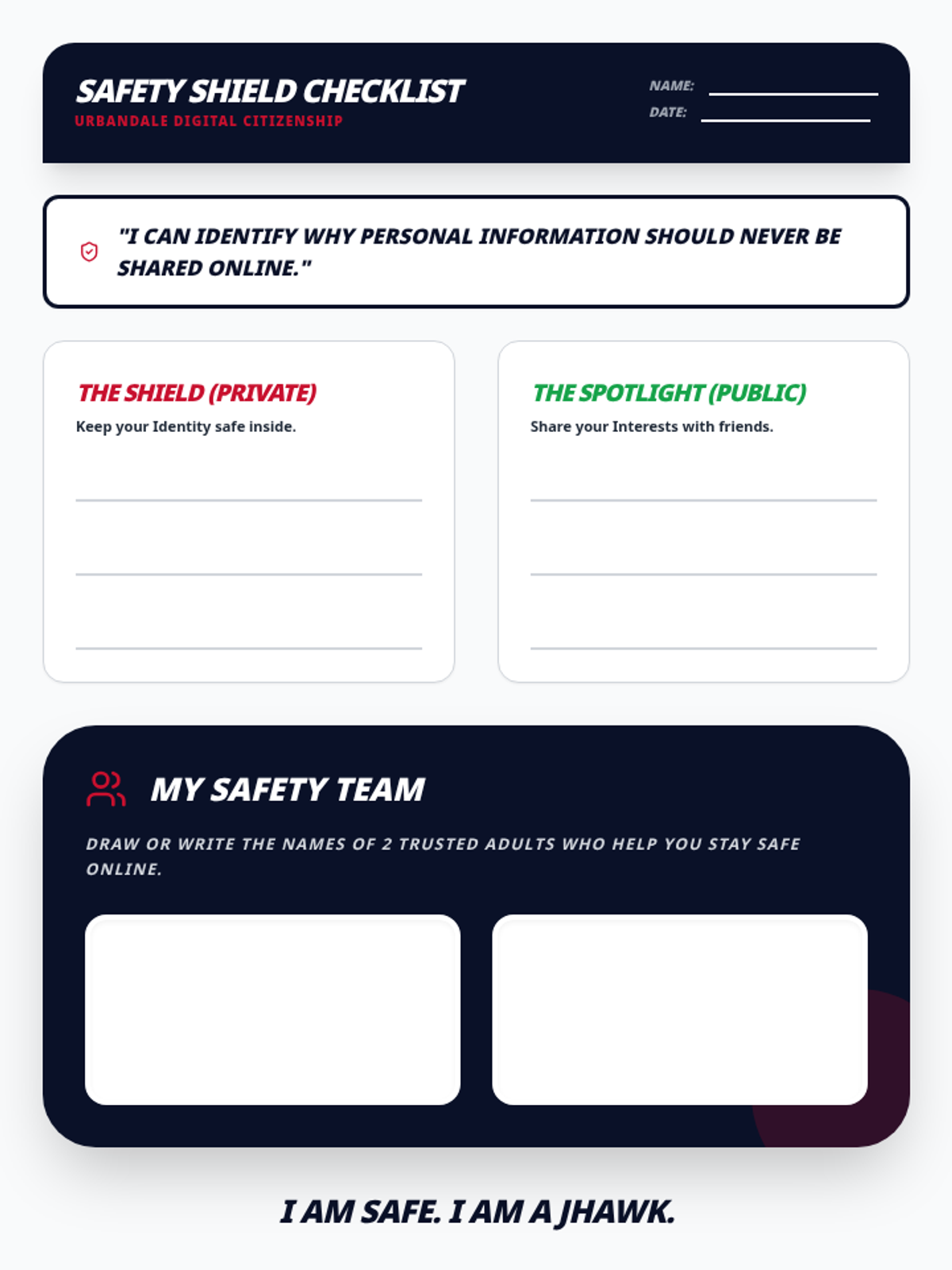
A 15-20 minute lesson for 2-3 students on building a 'Privacy Shield' to protect their identity online while staying safe and responsible. Features collaborative sorting activities and JHawk Way connections.
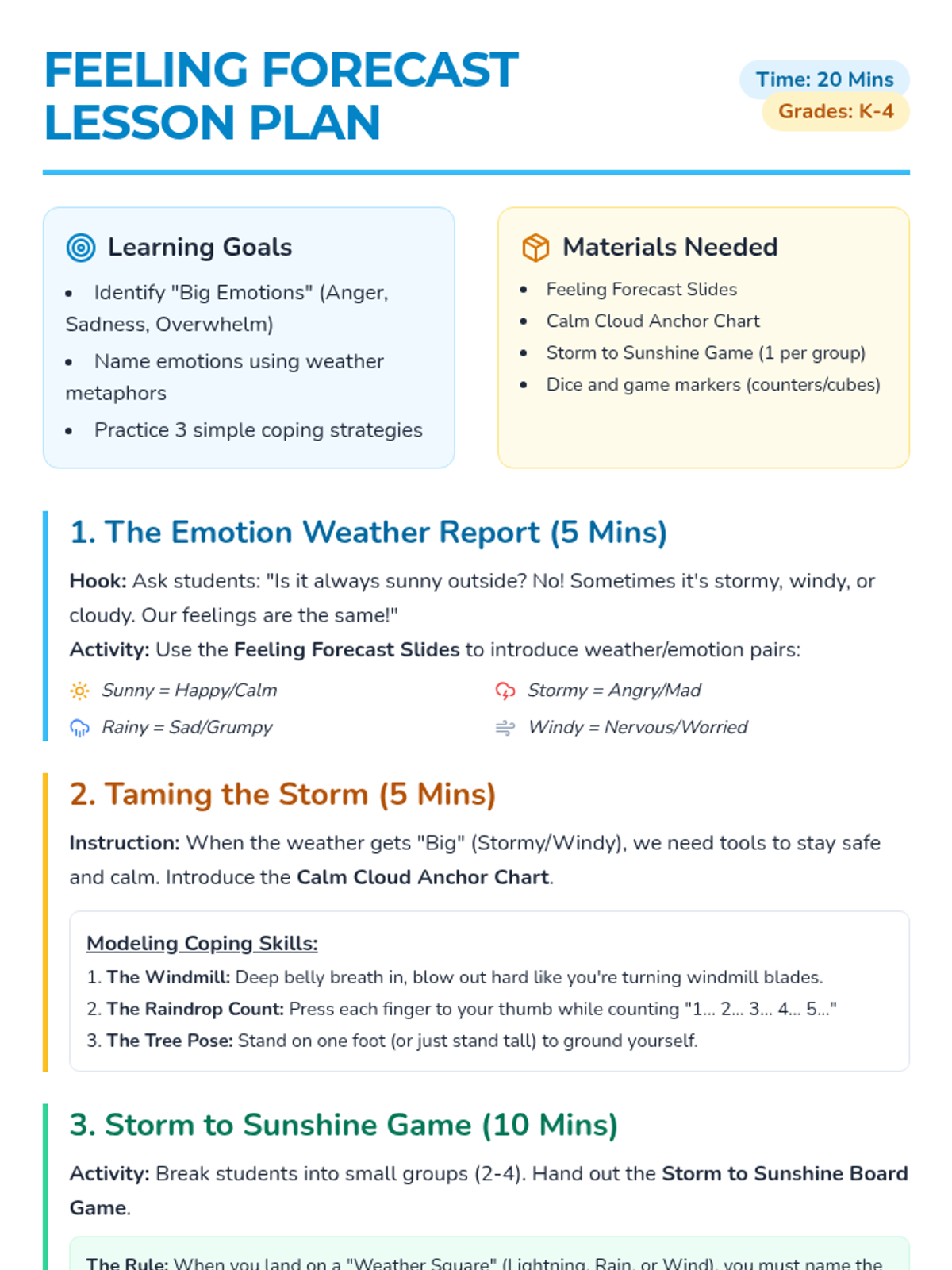
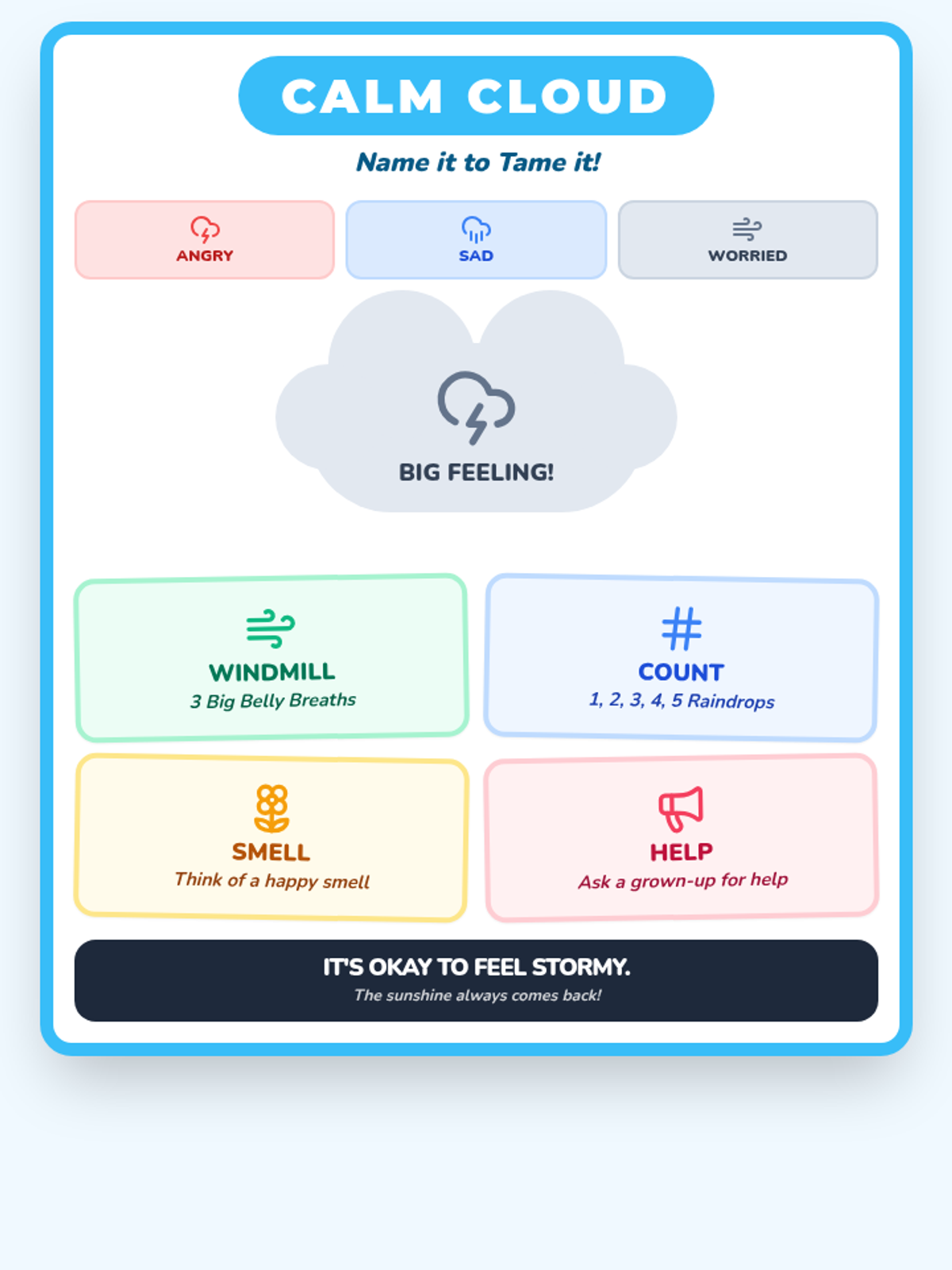
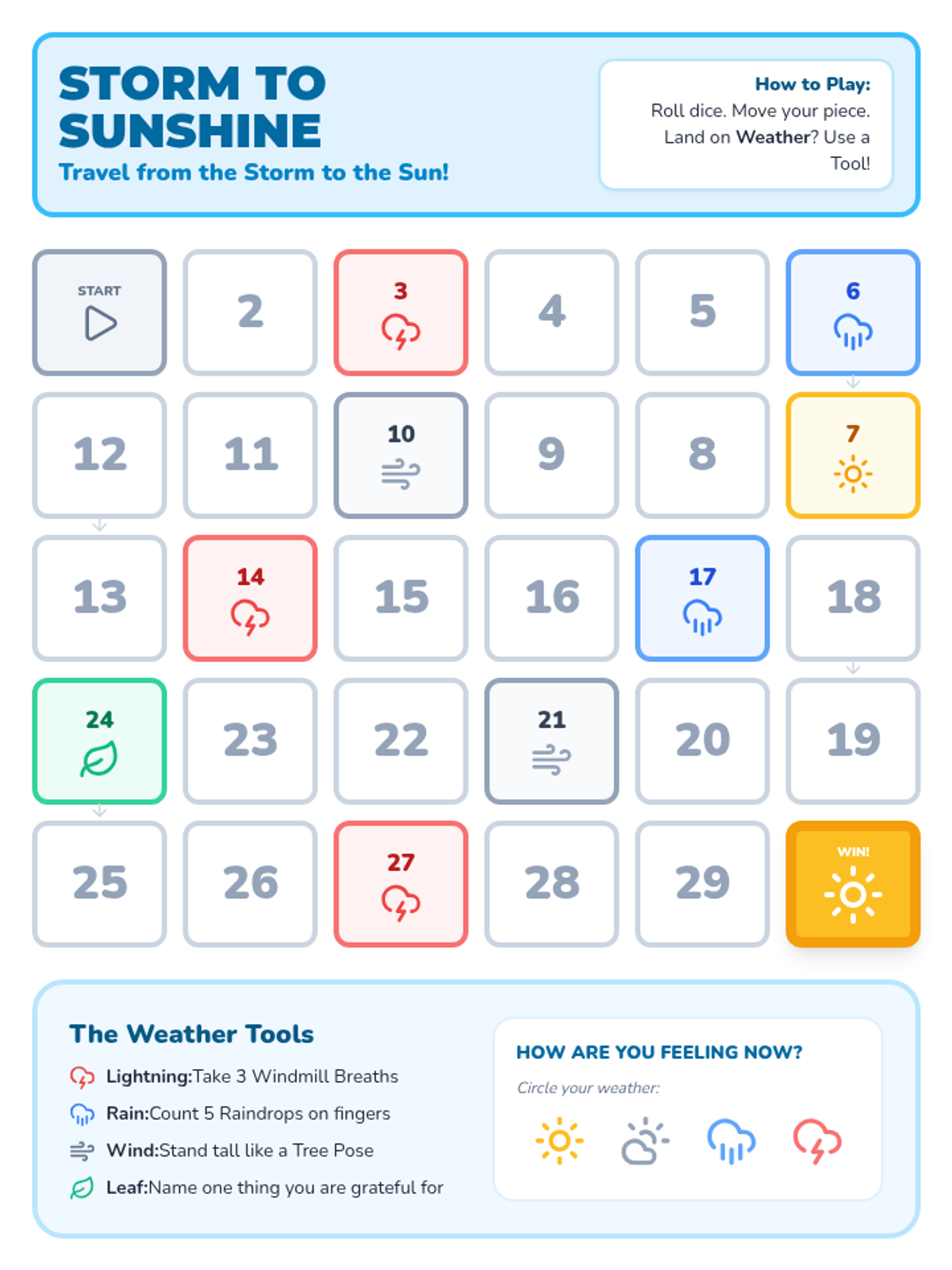
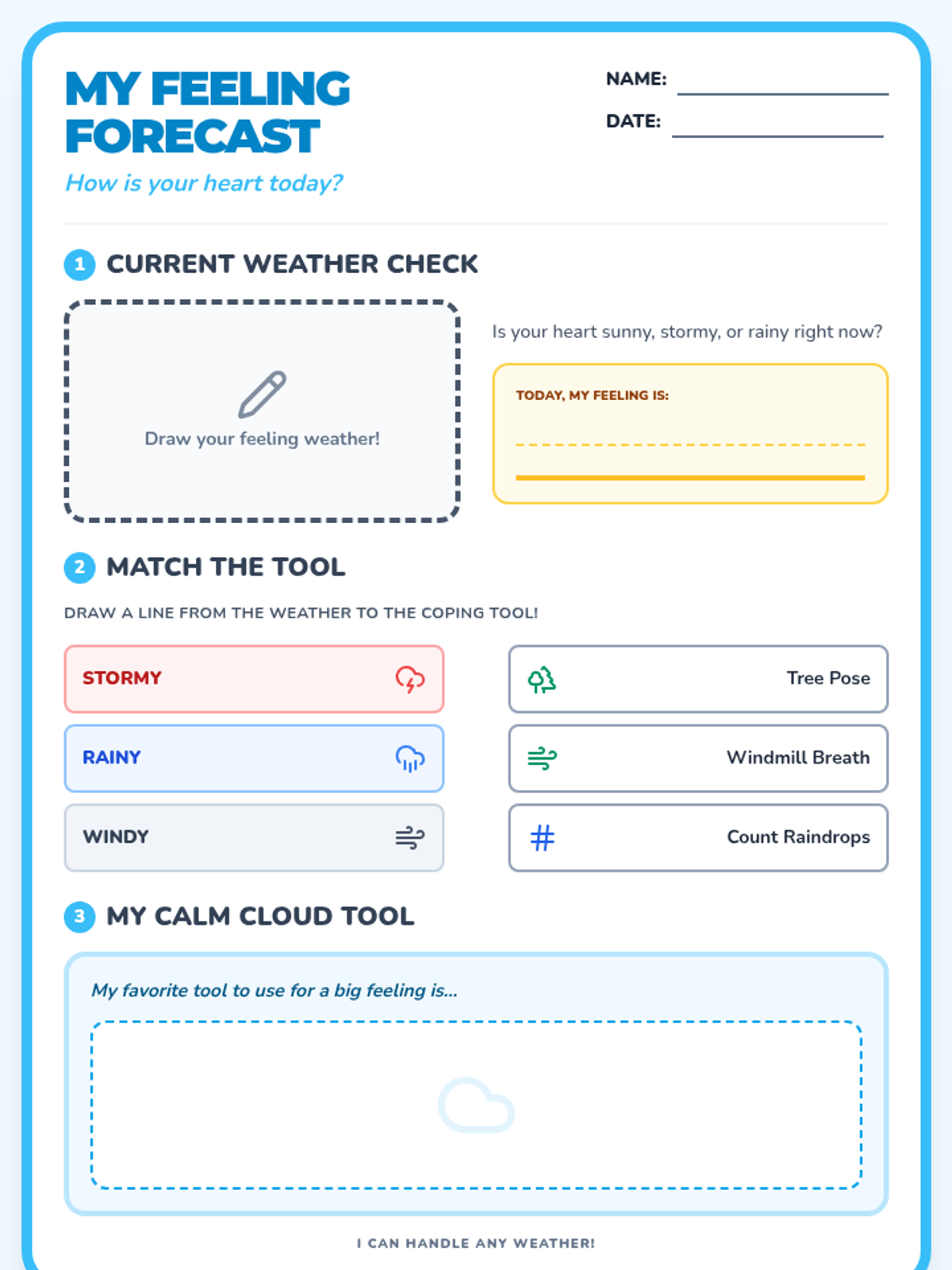
A 20-minute interactive lesson for grades K-4 focused on identifying 'big' emotions and practicing simple coping strategies using a weather-themed metaphor.
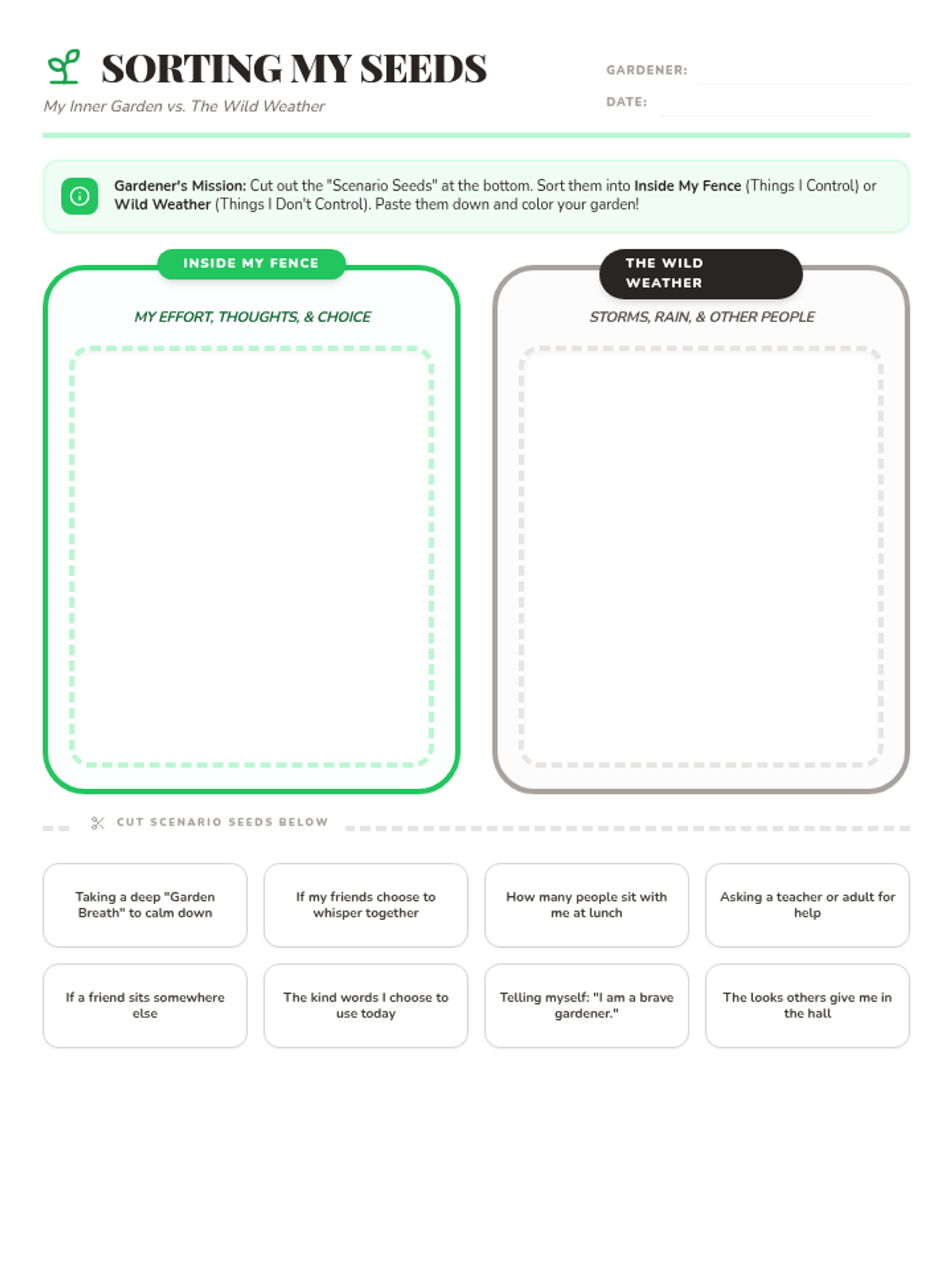
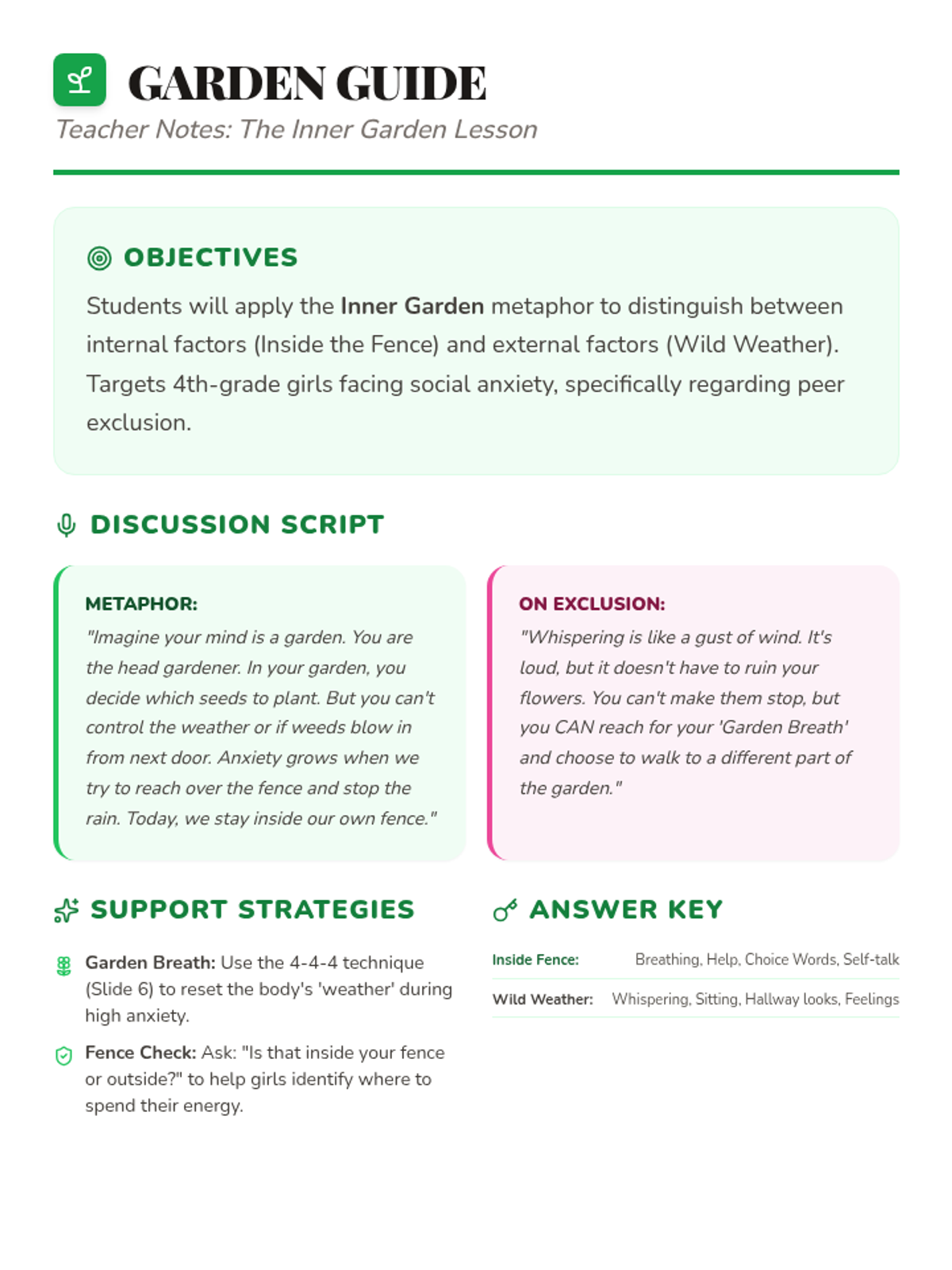
A social-emotional learning lesson for 4th-grade girls focusing on identifying what is within their control during friendship conflicts using a garden metaphor.
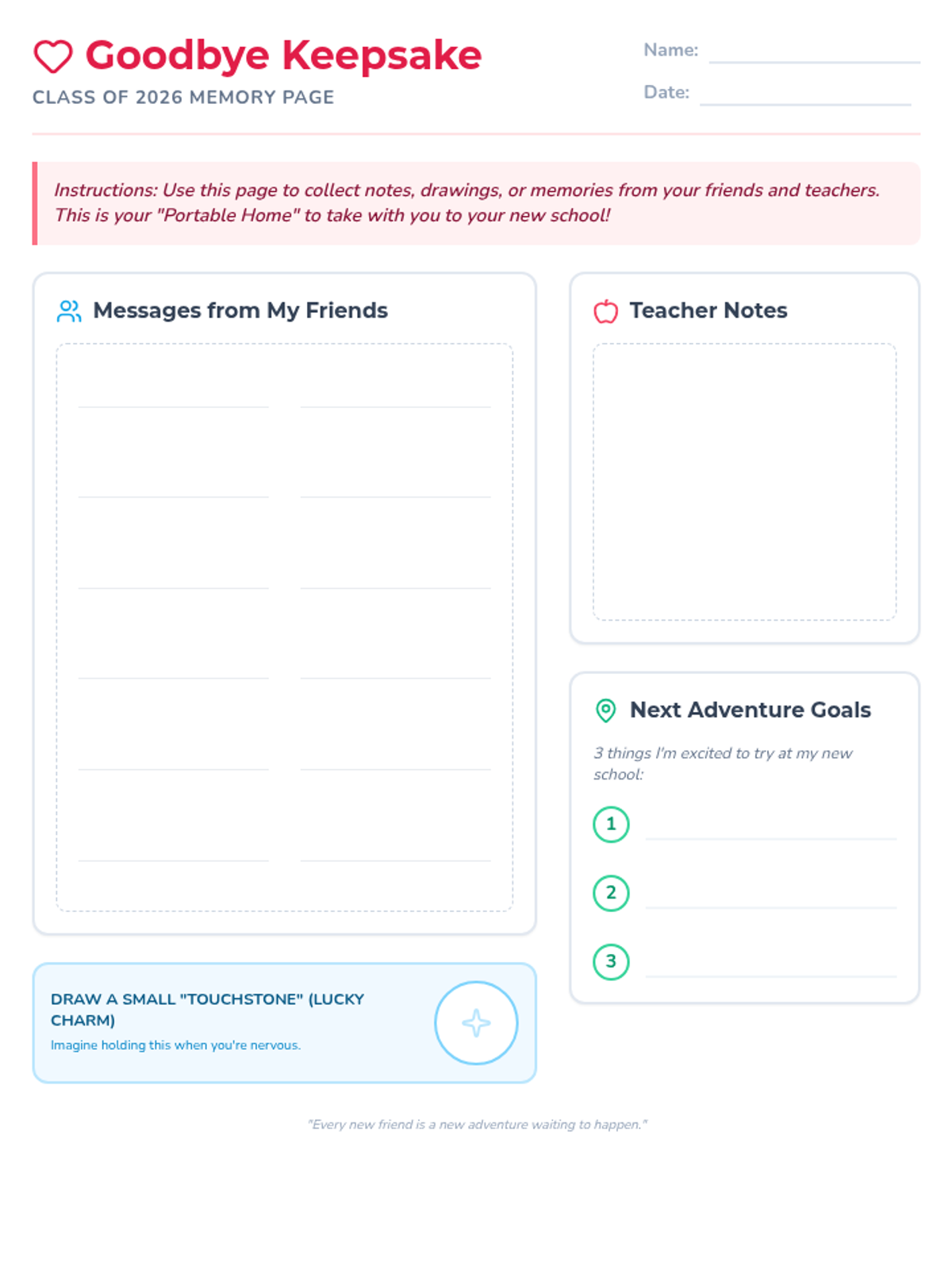
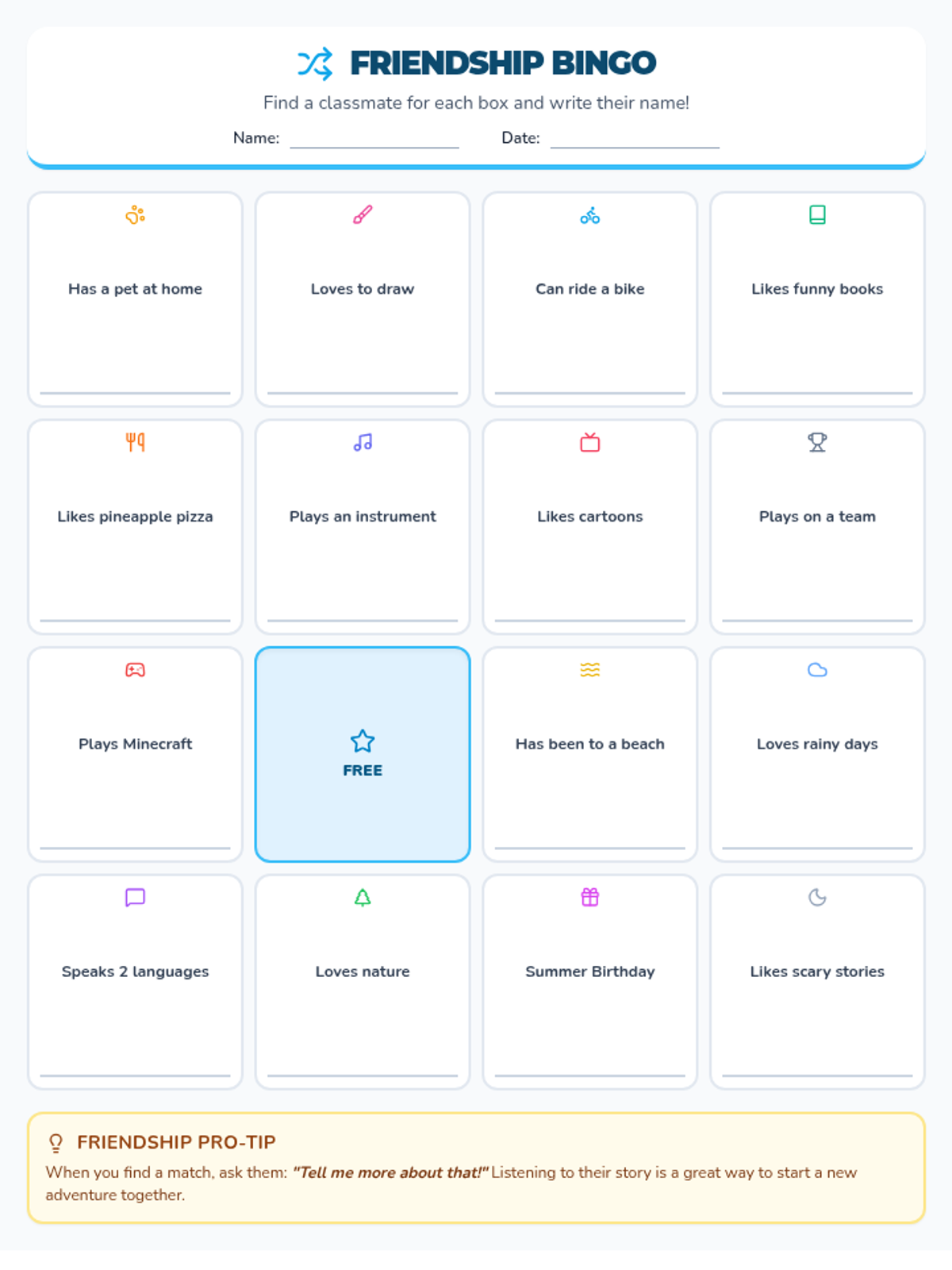
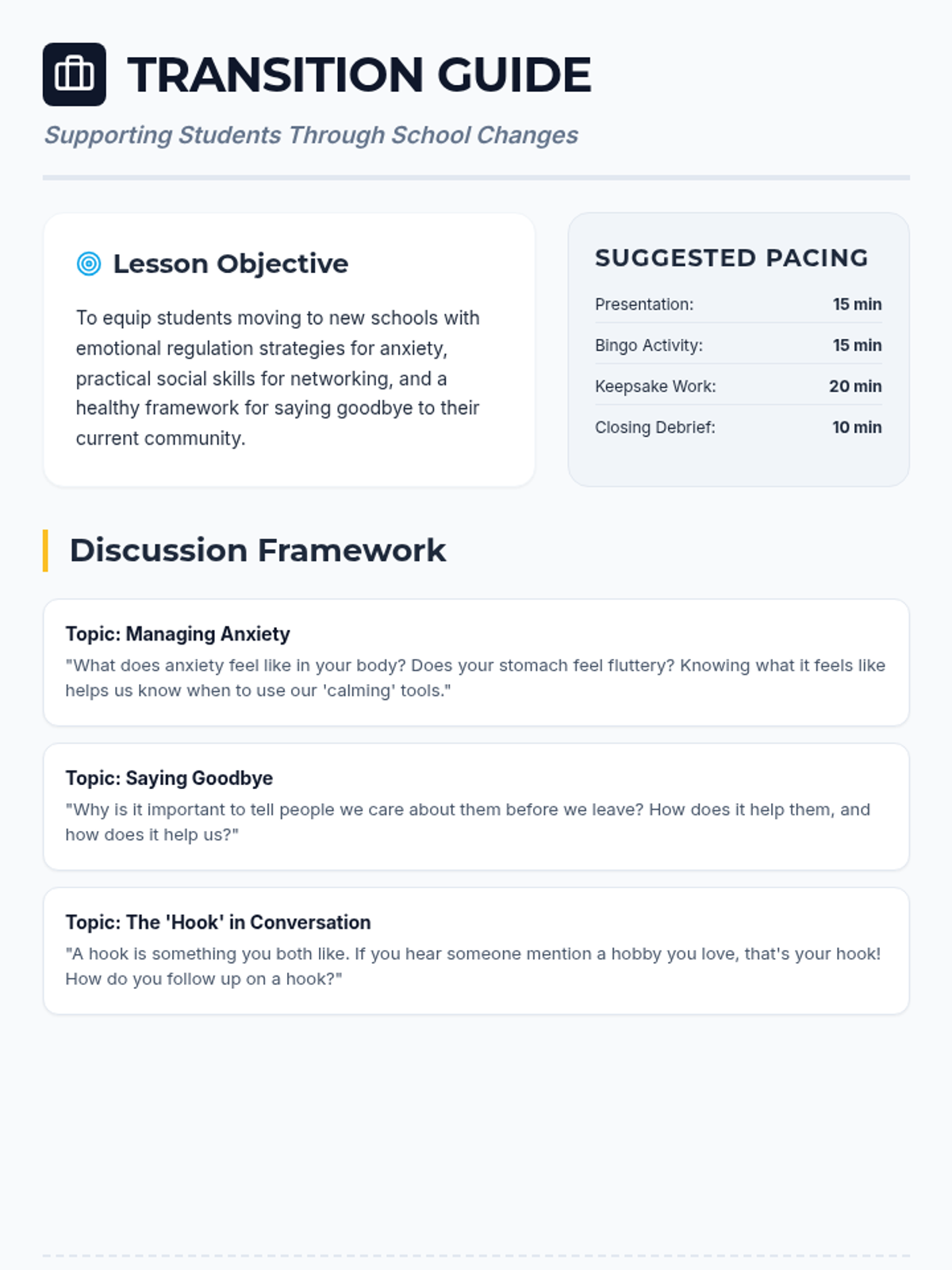
A supportive lesson designed to help 3rd graders transition to a new elementary school by managing anxiety, learning how to say goodbye, and practicing social skills for meeting new people.
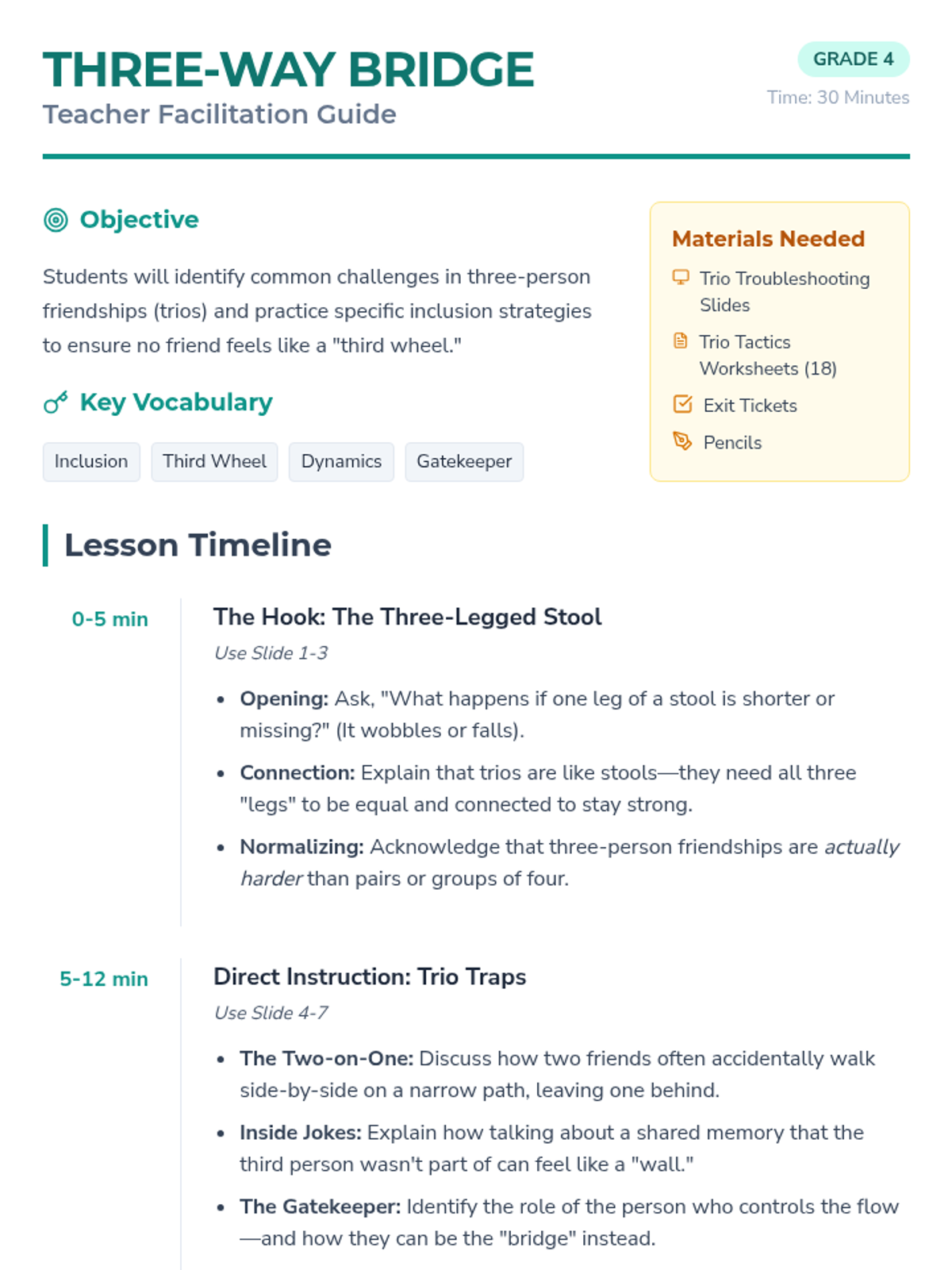
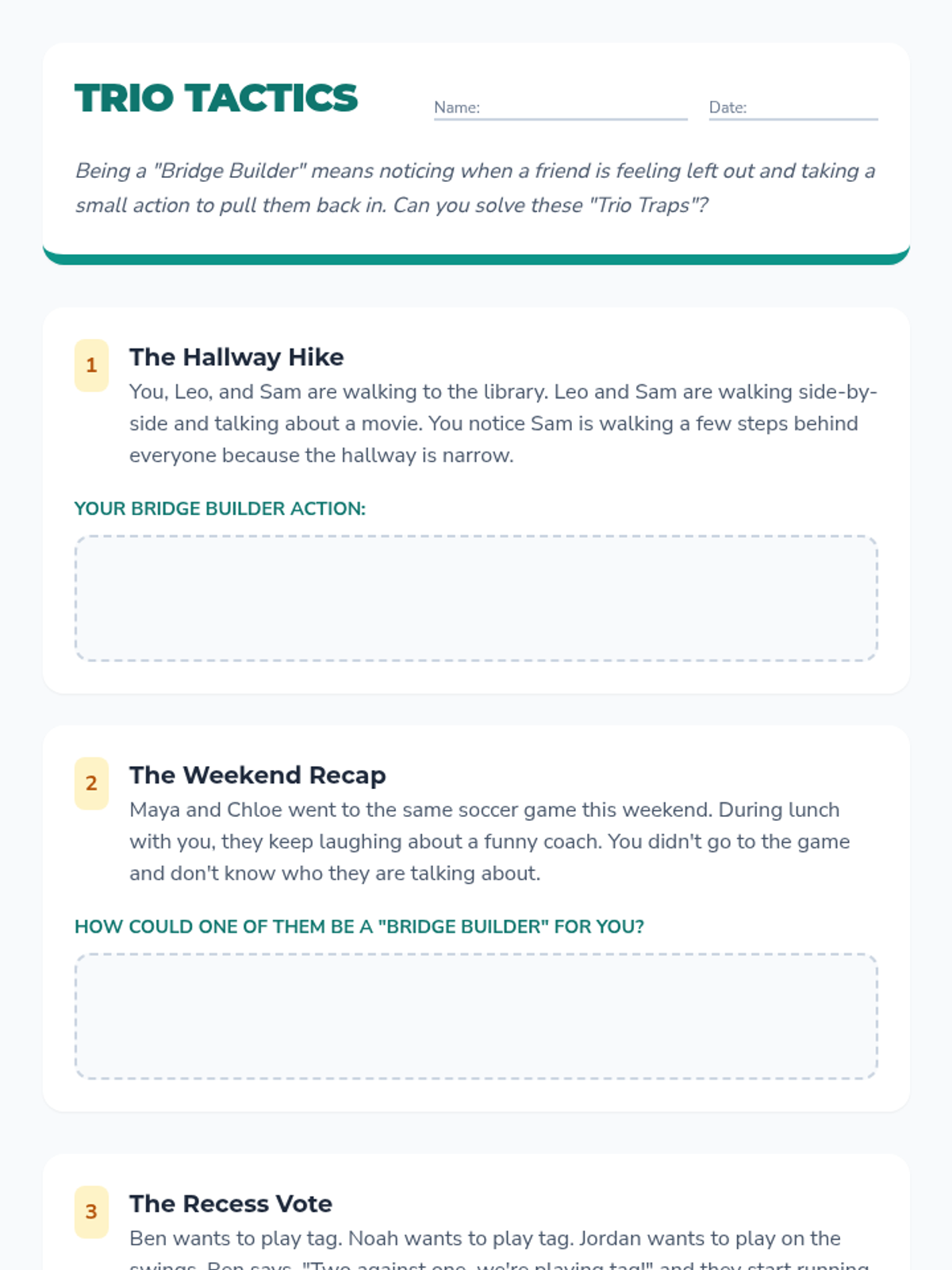
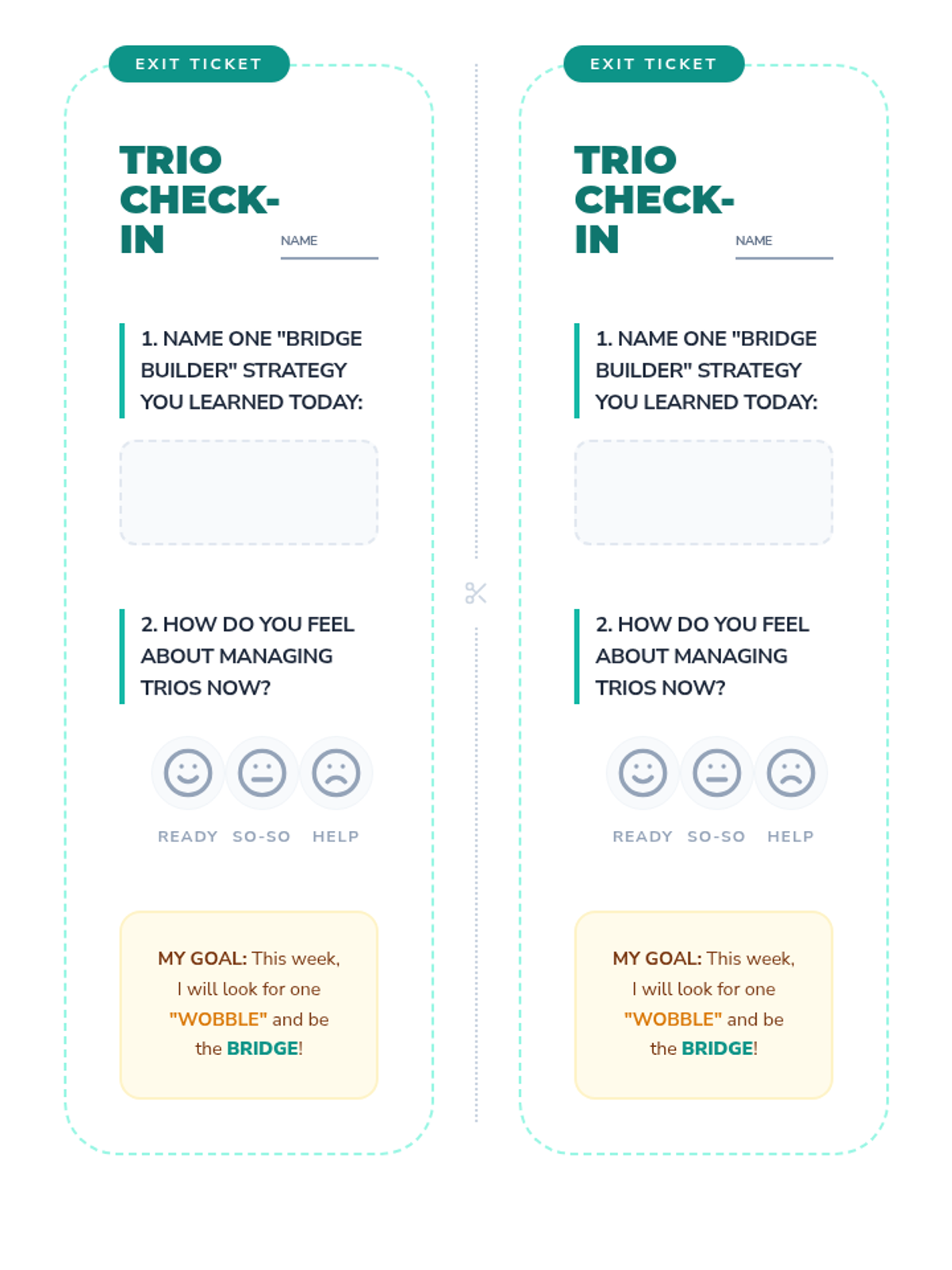
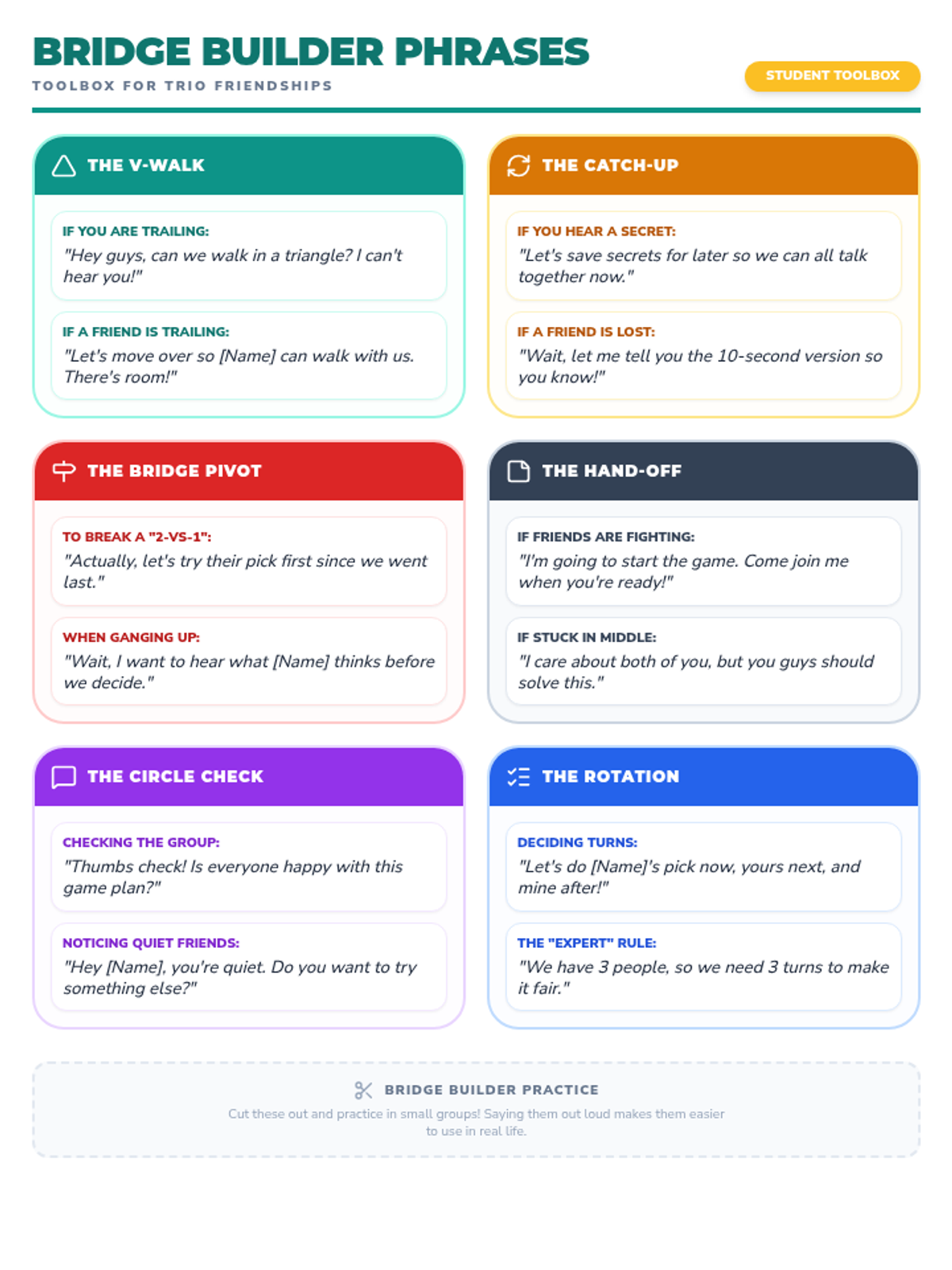
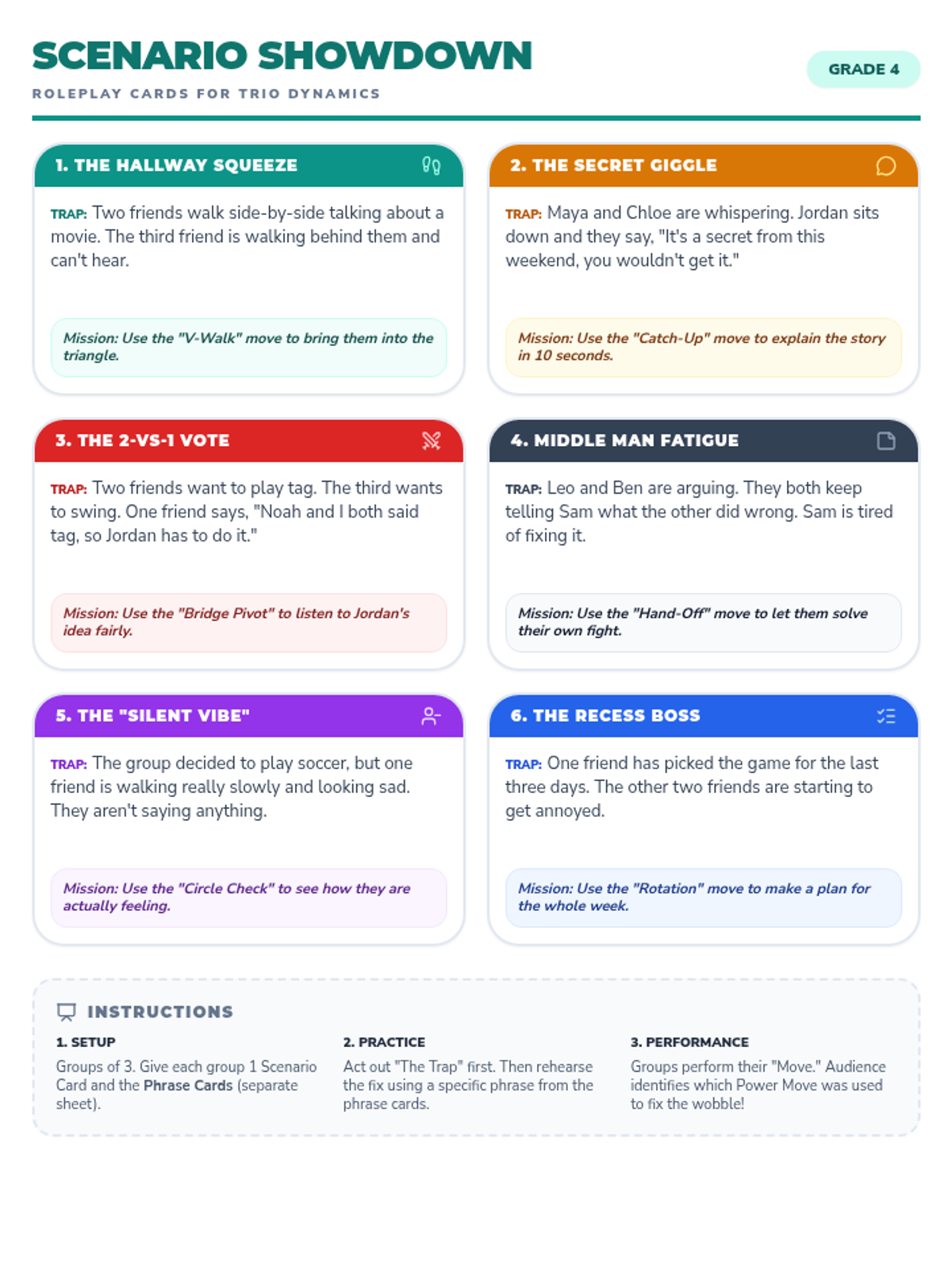
A 30-minute lesson for 4th graders on navigating the dynamics of three-person friendships, focusing on inclusion, communication, and preventing the 'third wheel' feeling.
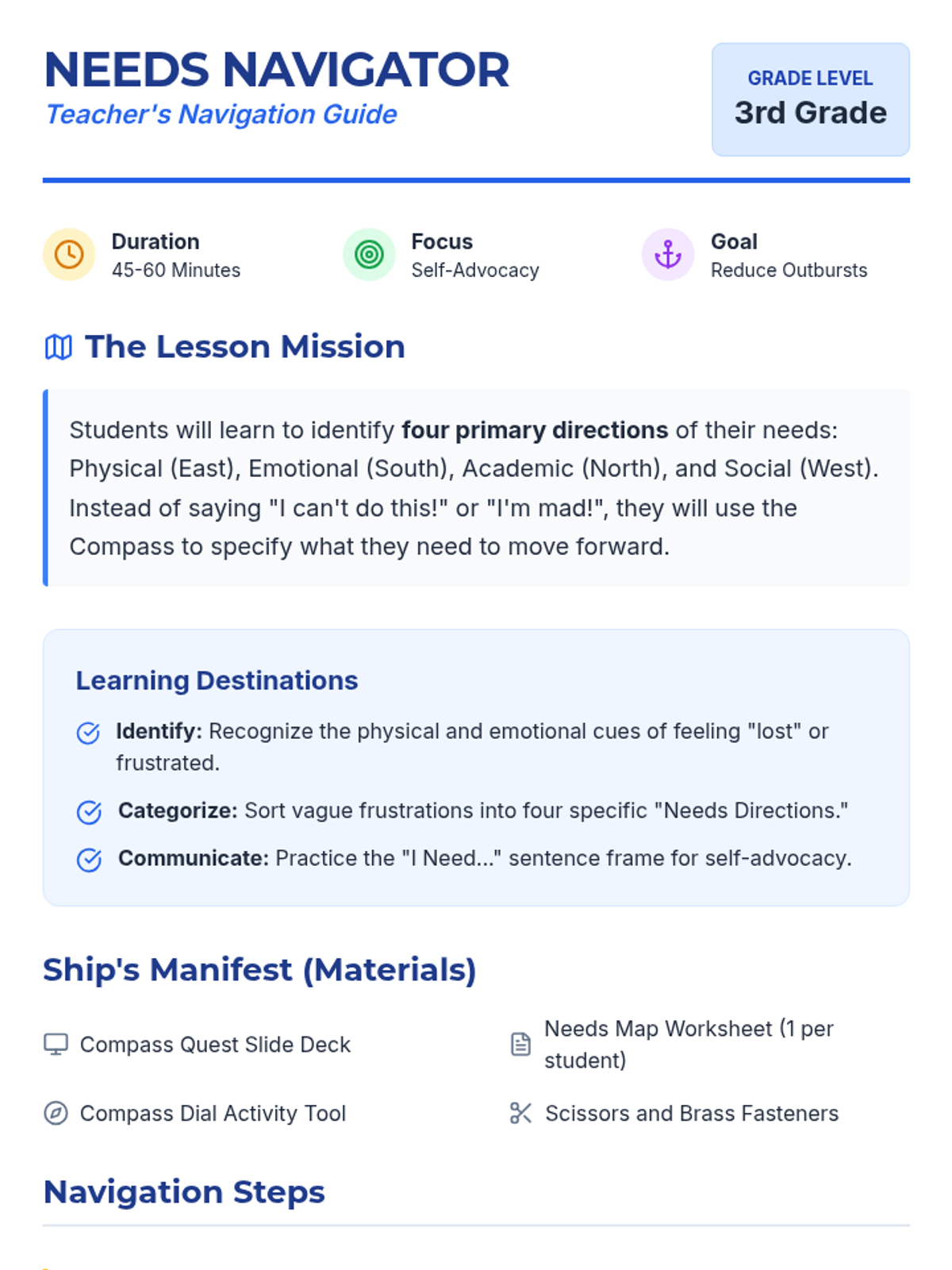
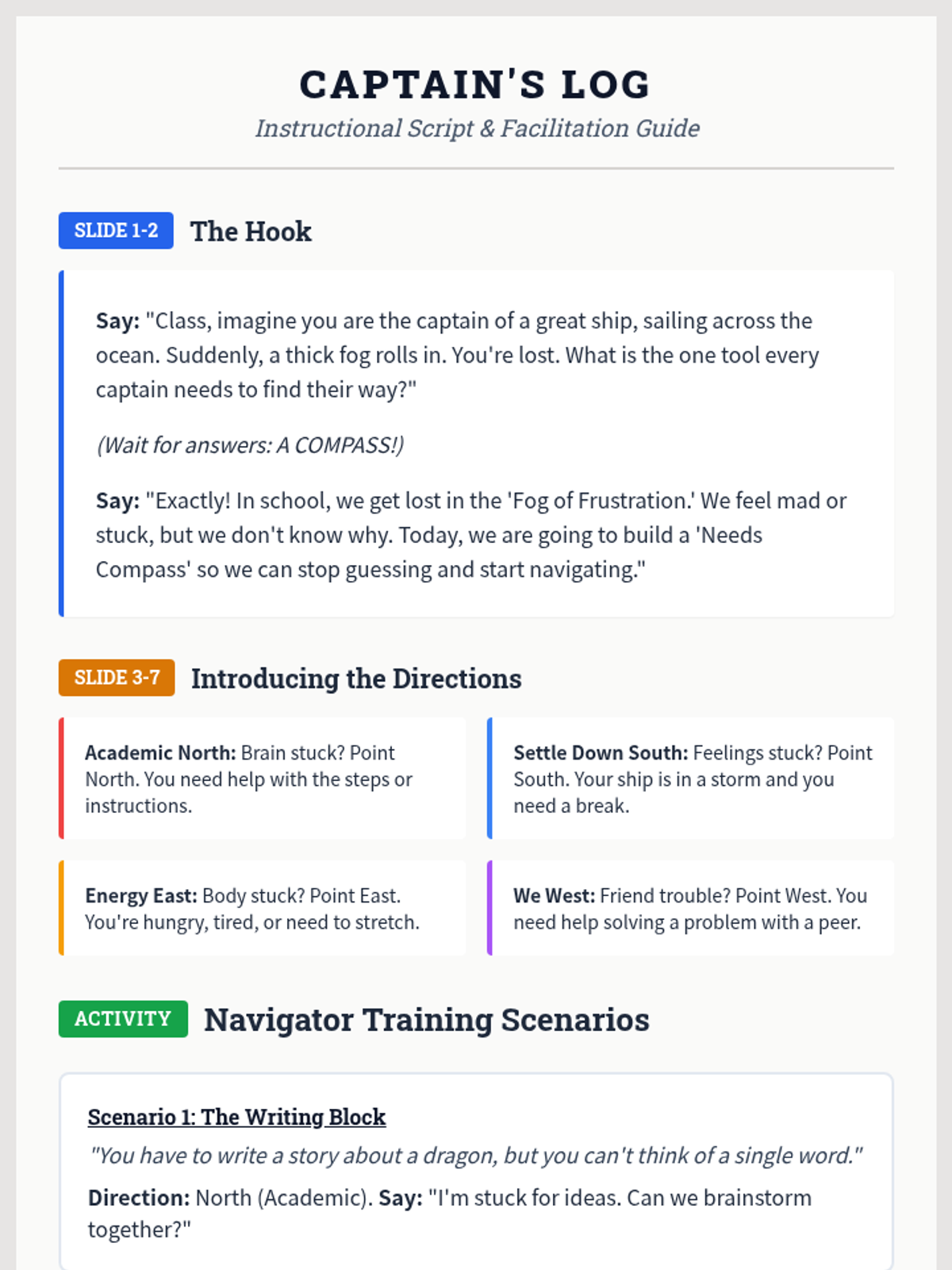
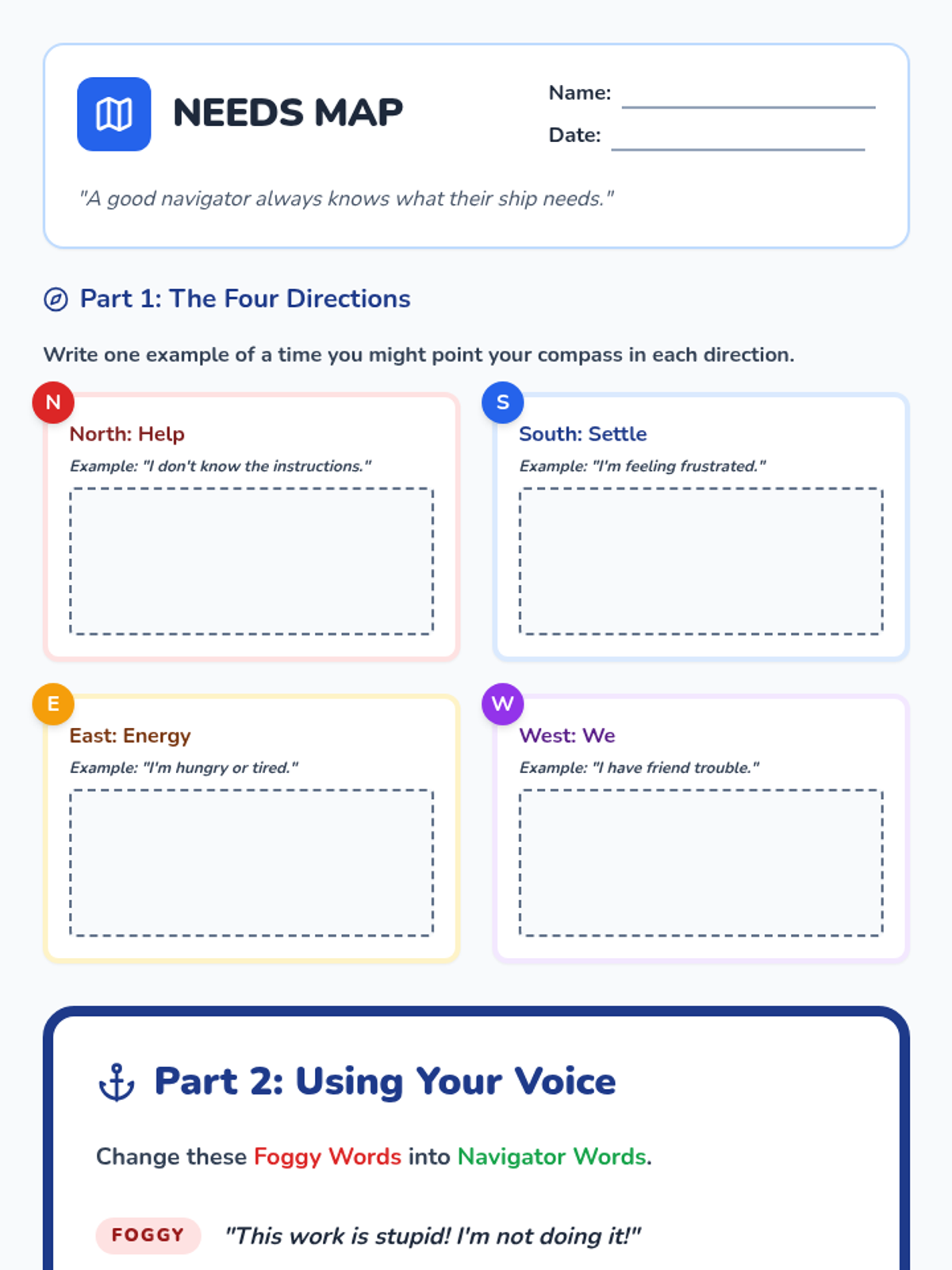
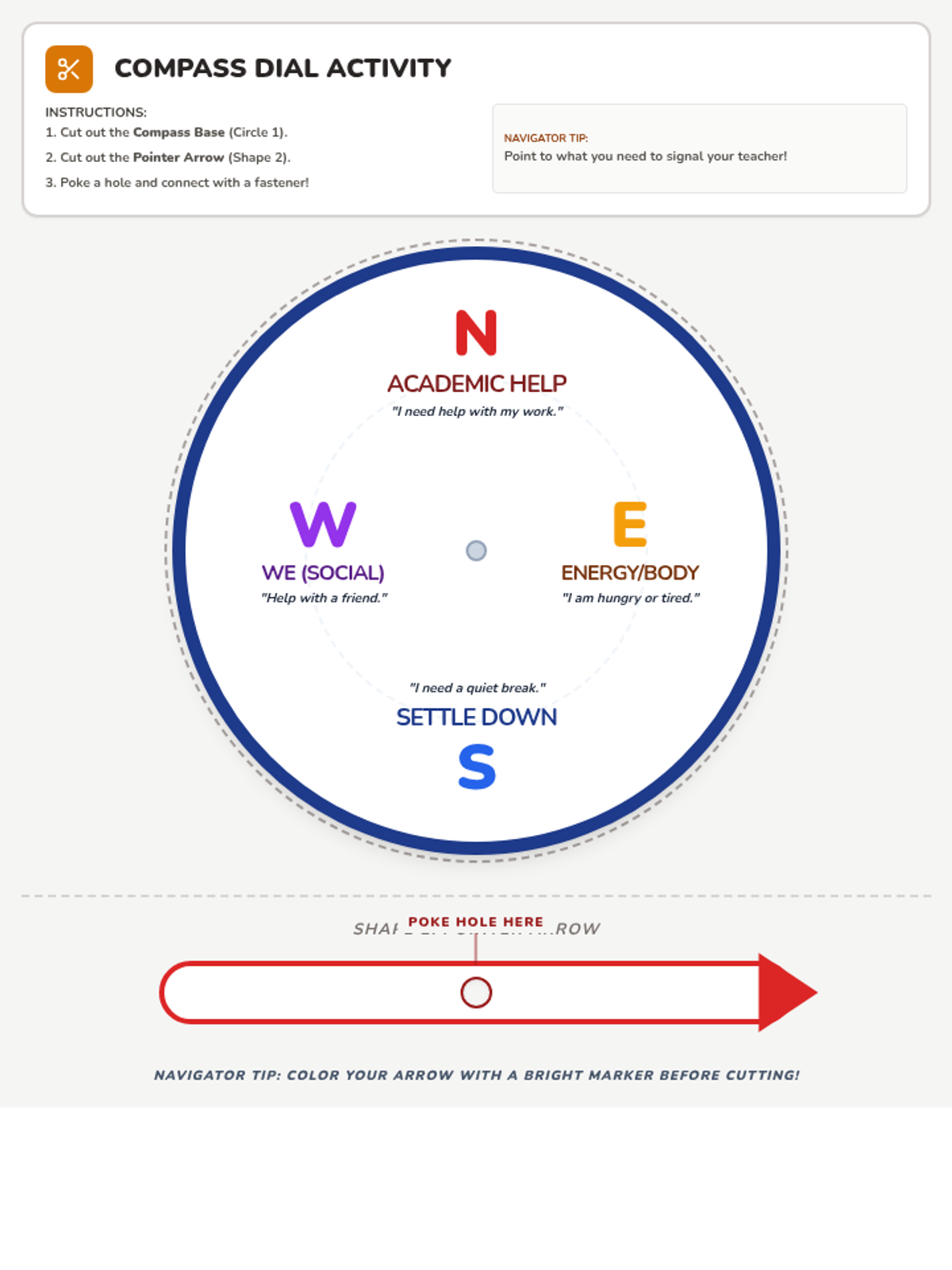
A lesson for third graders to identify specific emotional and academic needs and communicate them effectively. Students use a 'needs compass' metaphor to navigate frustration and advocate for themselves productively.
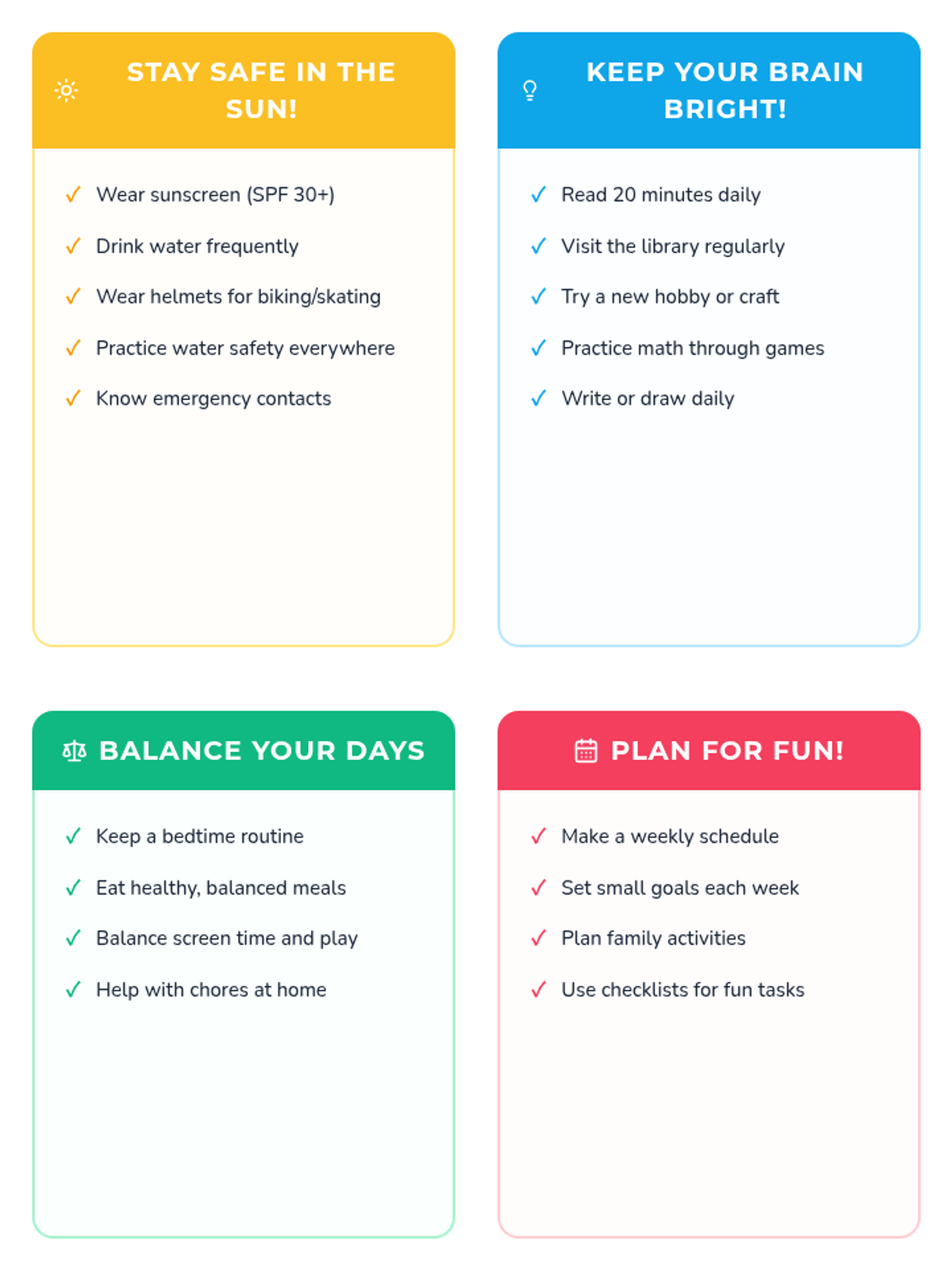
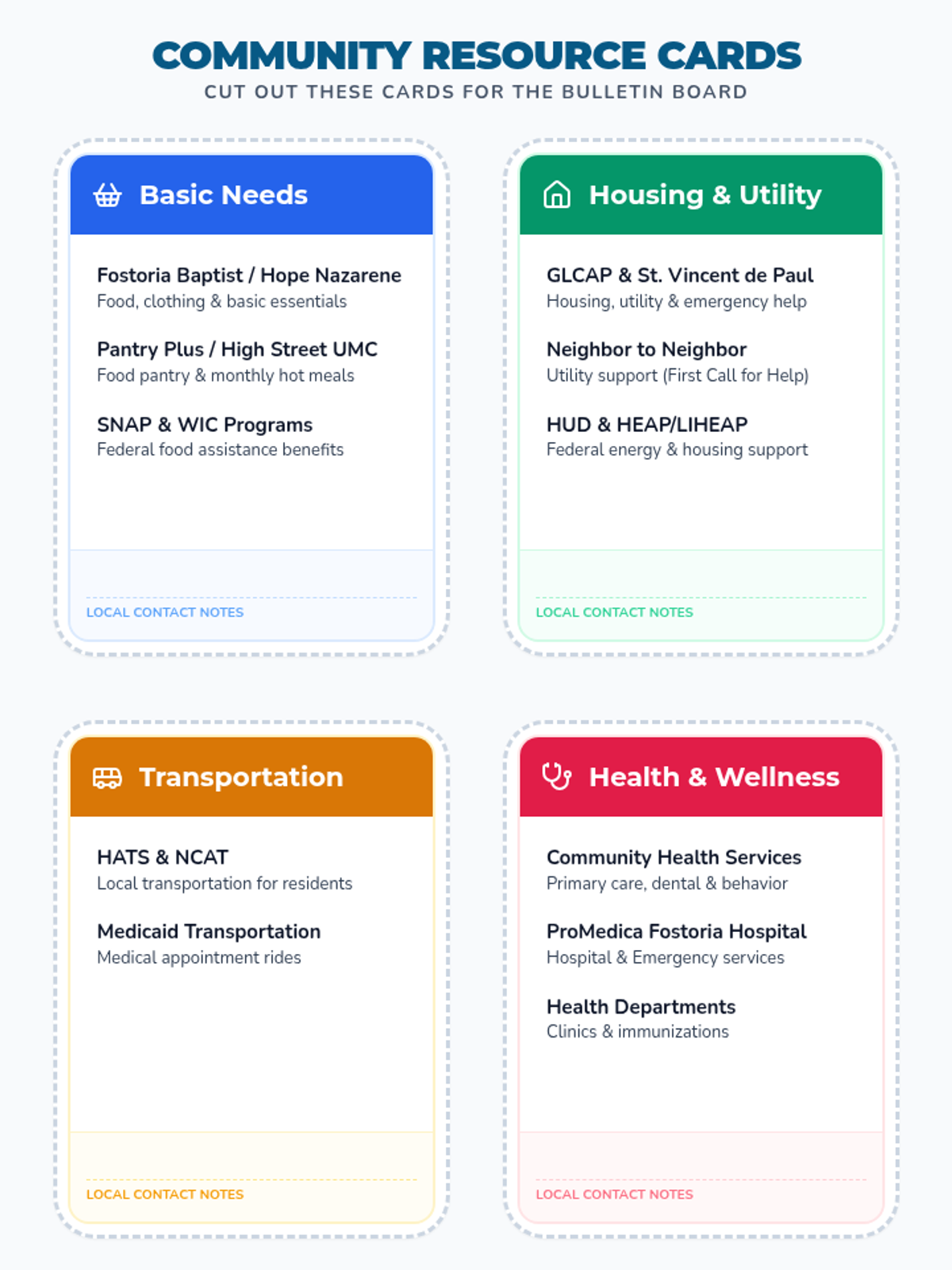
A collection of printable banners, headers, advice cards, and community resource listings to create an engaging summer-themed bulletin board.
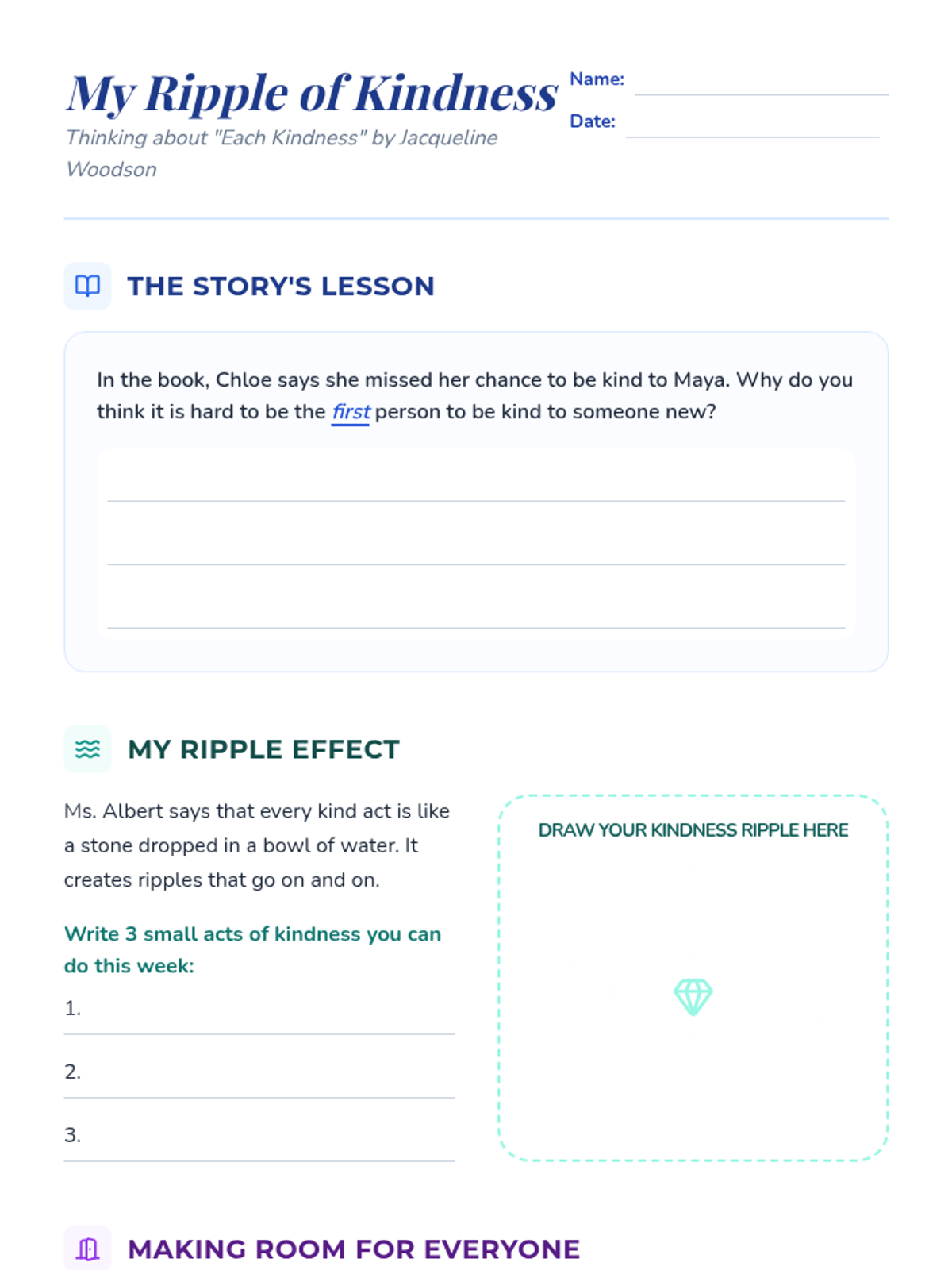
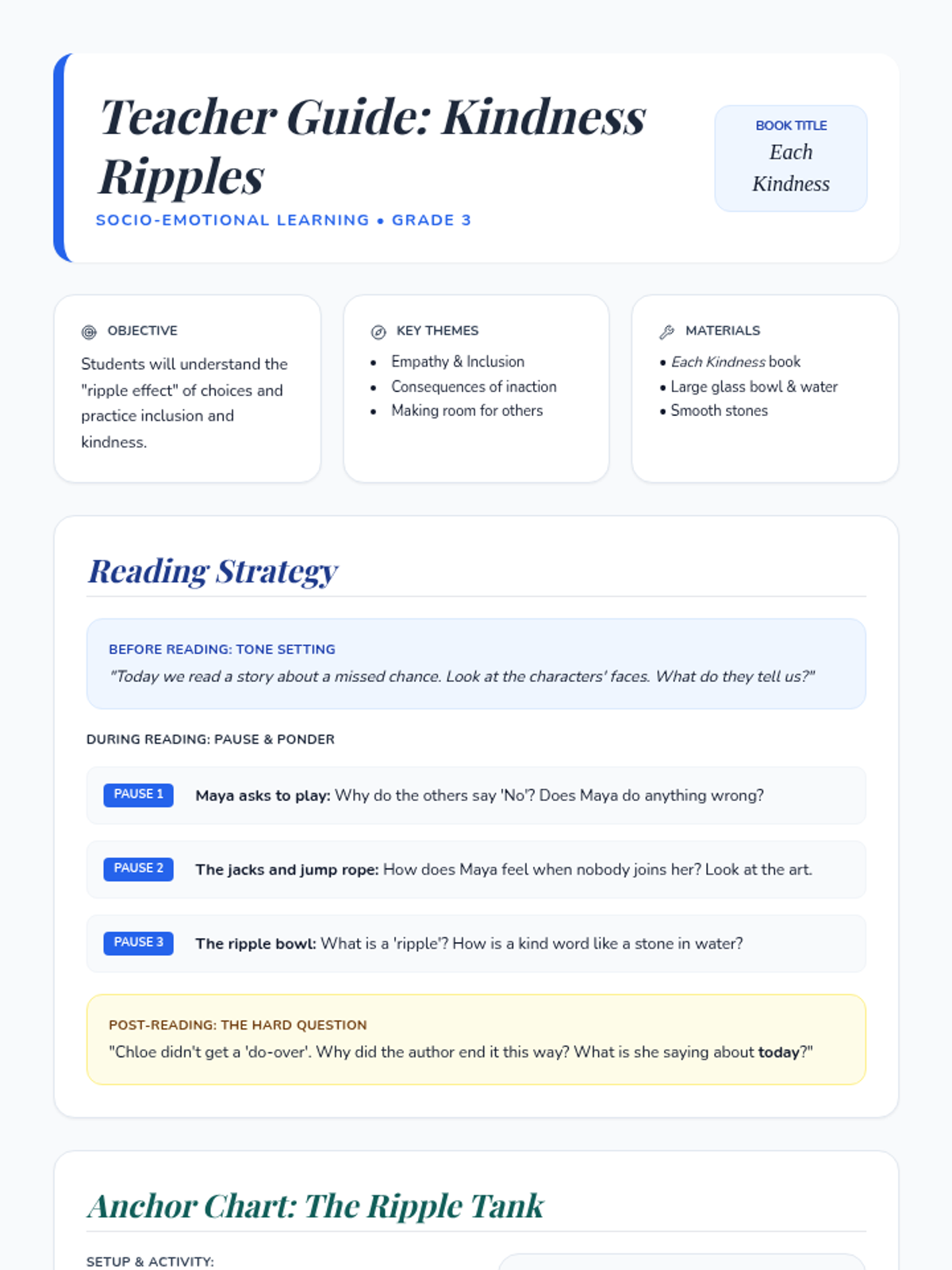
A reflective lesson based on 'Each Kindness' by Jacqueline Woodson, focusing on the ripple effect of small actions and the importance of inclusive behavior in the classroom.
A comprehensive emotional literacy lesson designed to help elementary students identify, name, and manage eight key emotions through creative journaling and guided reflection.
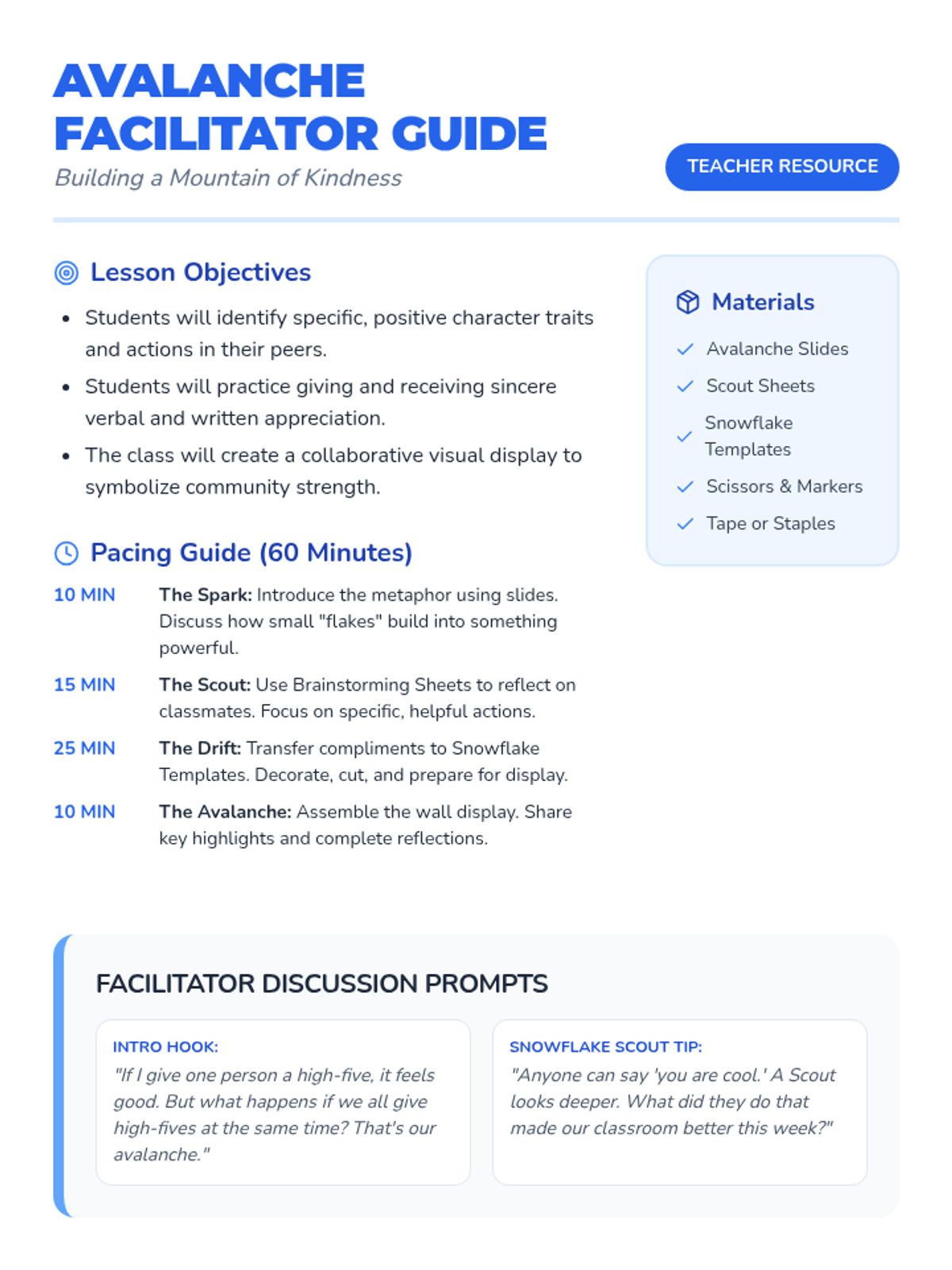
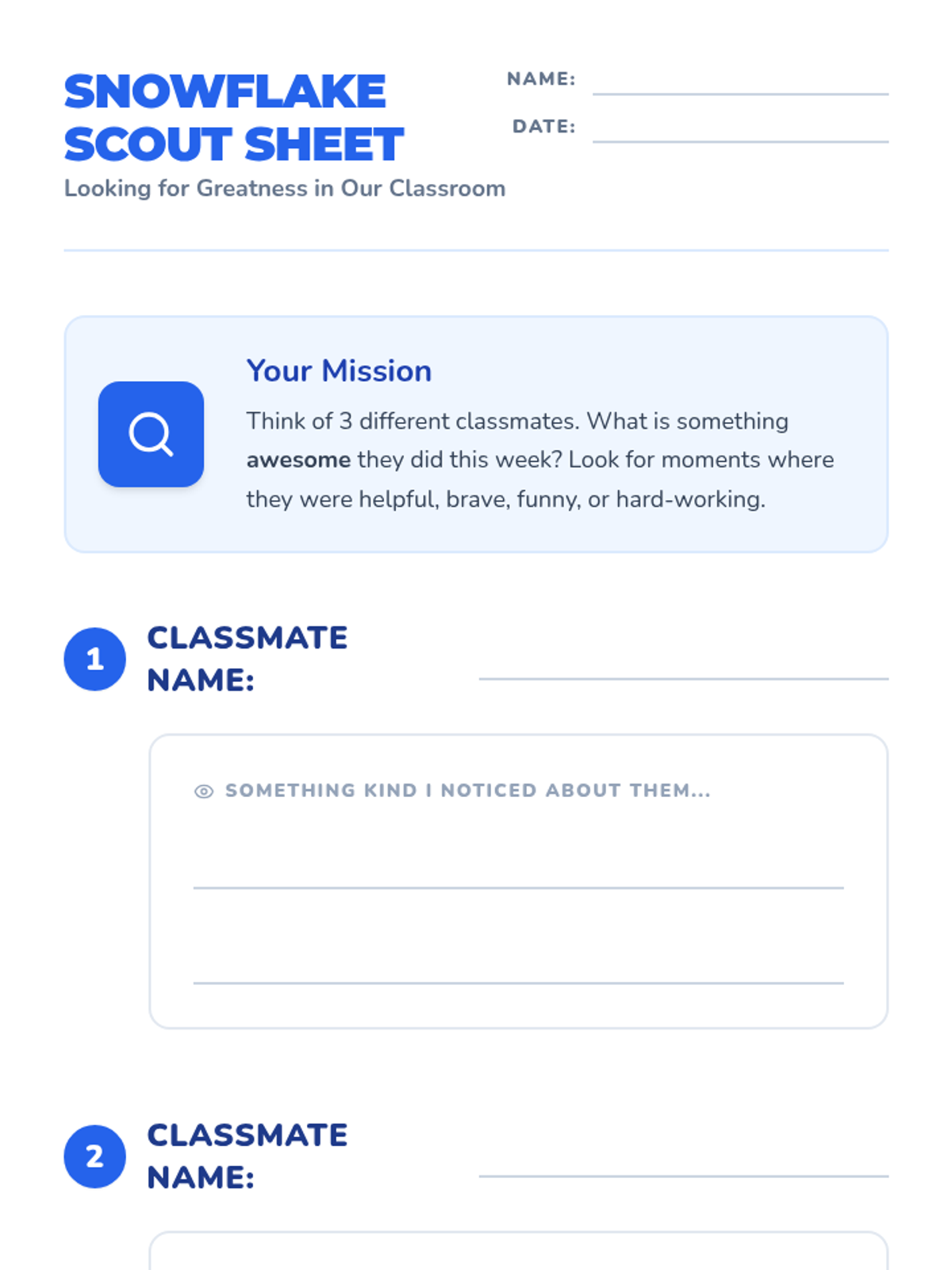
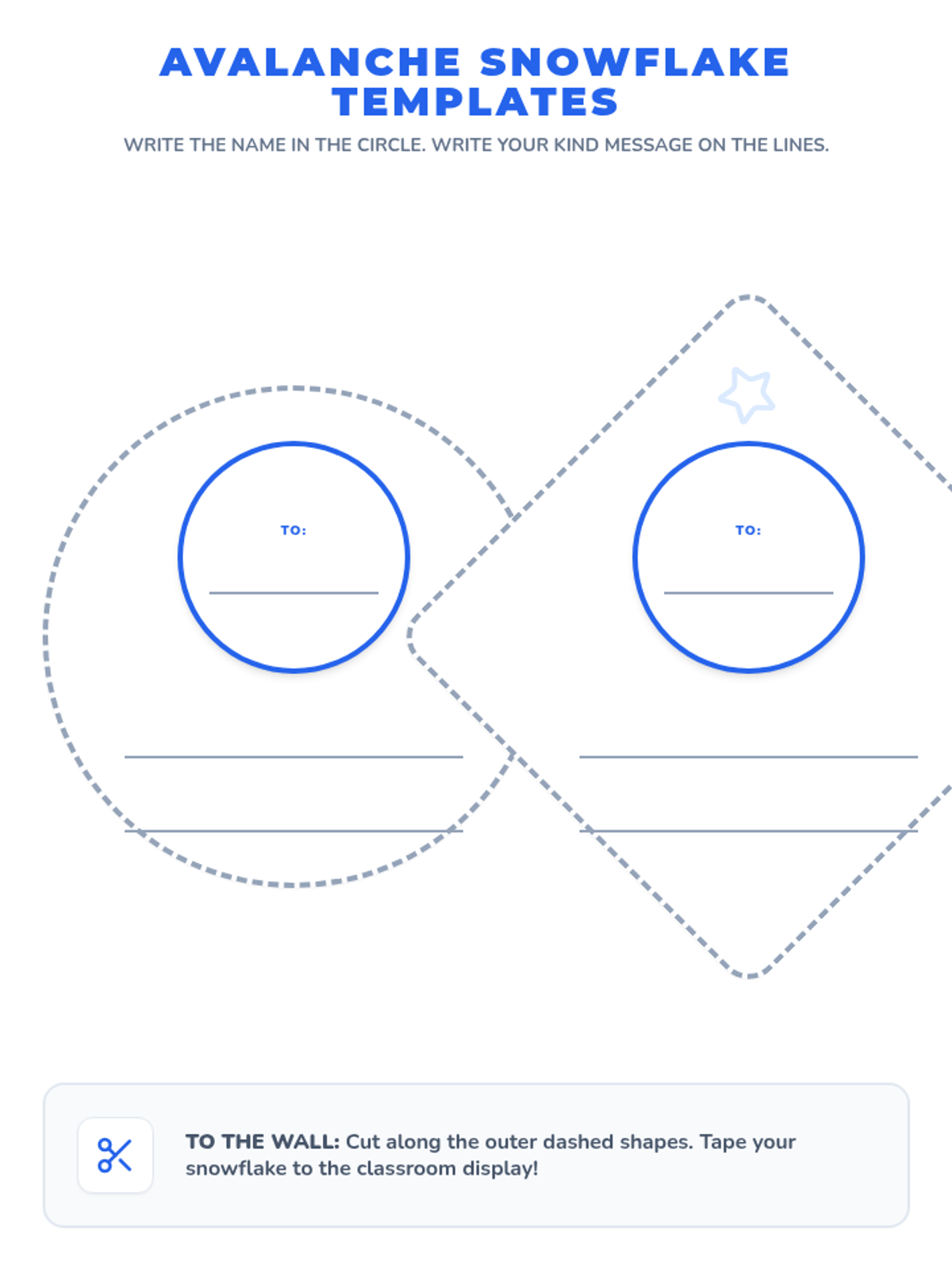
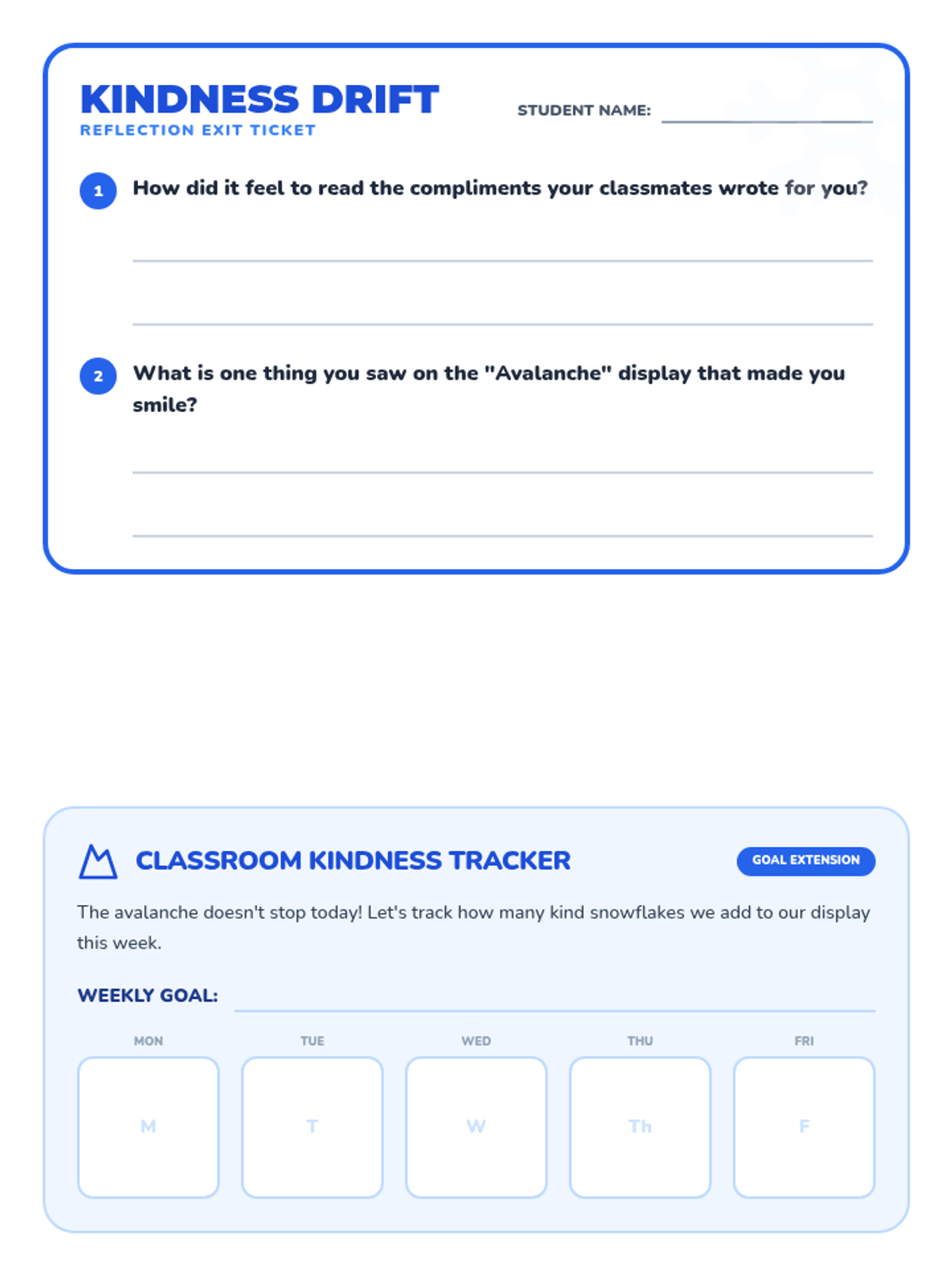
A community-building lesson where students transform positive peer observations into a visual 'avalanche' of paper snowflakes, reinforcing kindness during the high-energy spring season.