Students learn to identify emotions as diagnostic signals, measuring their intensity and physical 'readouts' to improve emotional awareness and regulation.
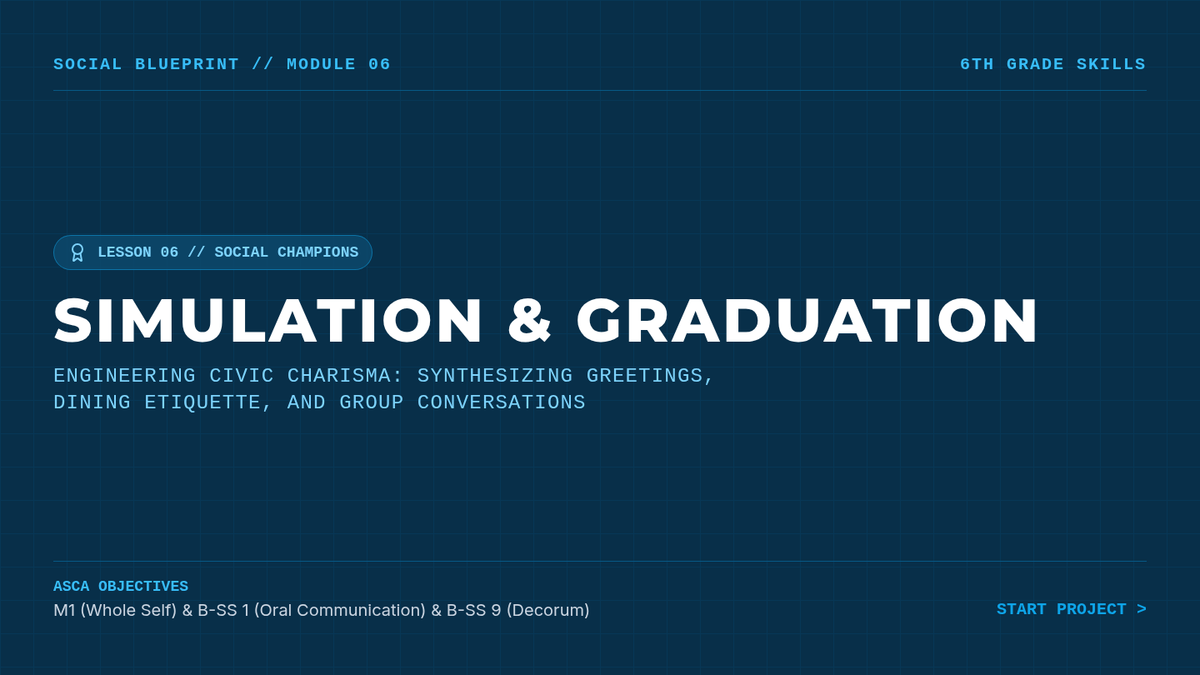
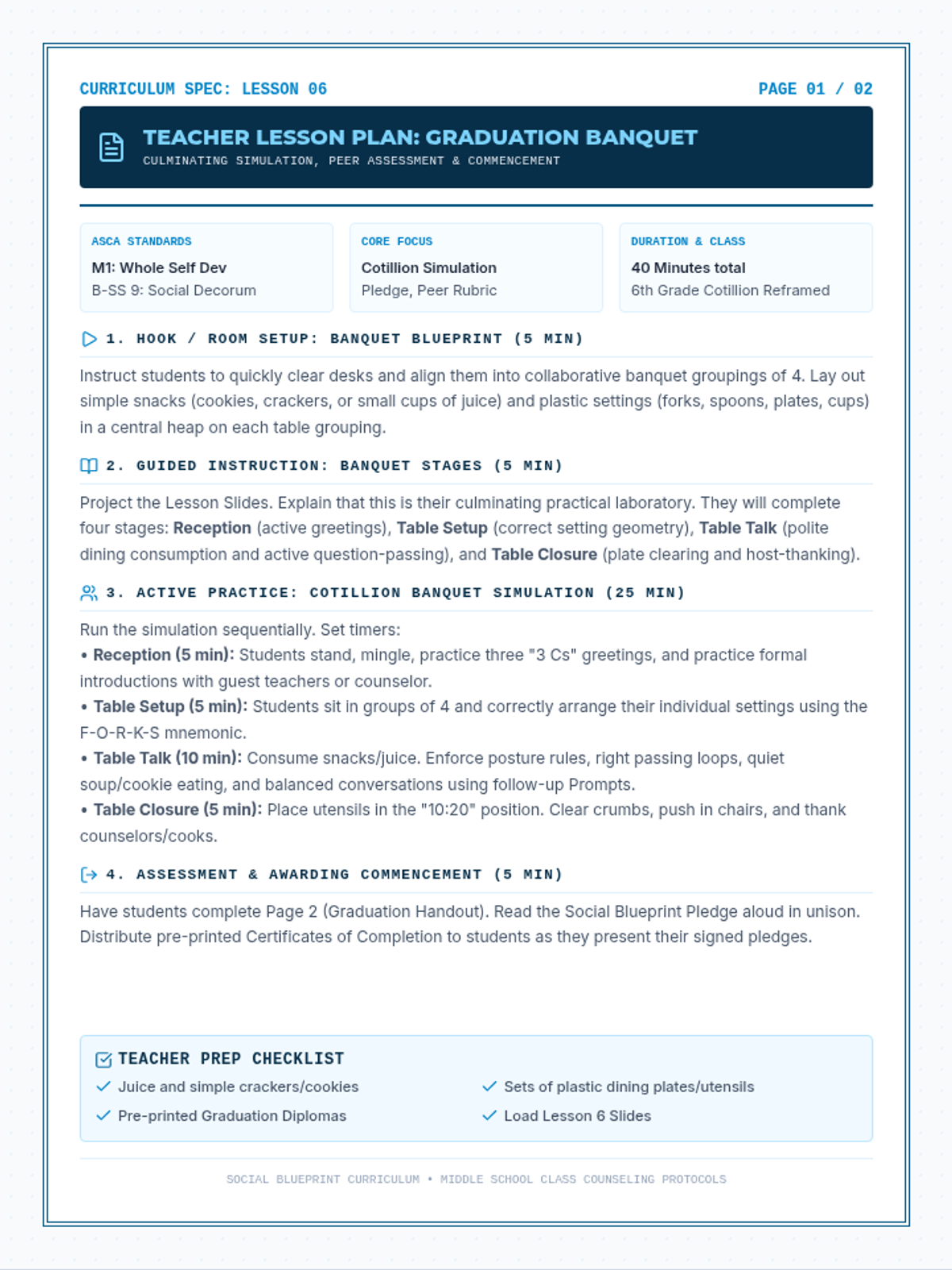
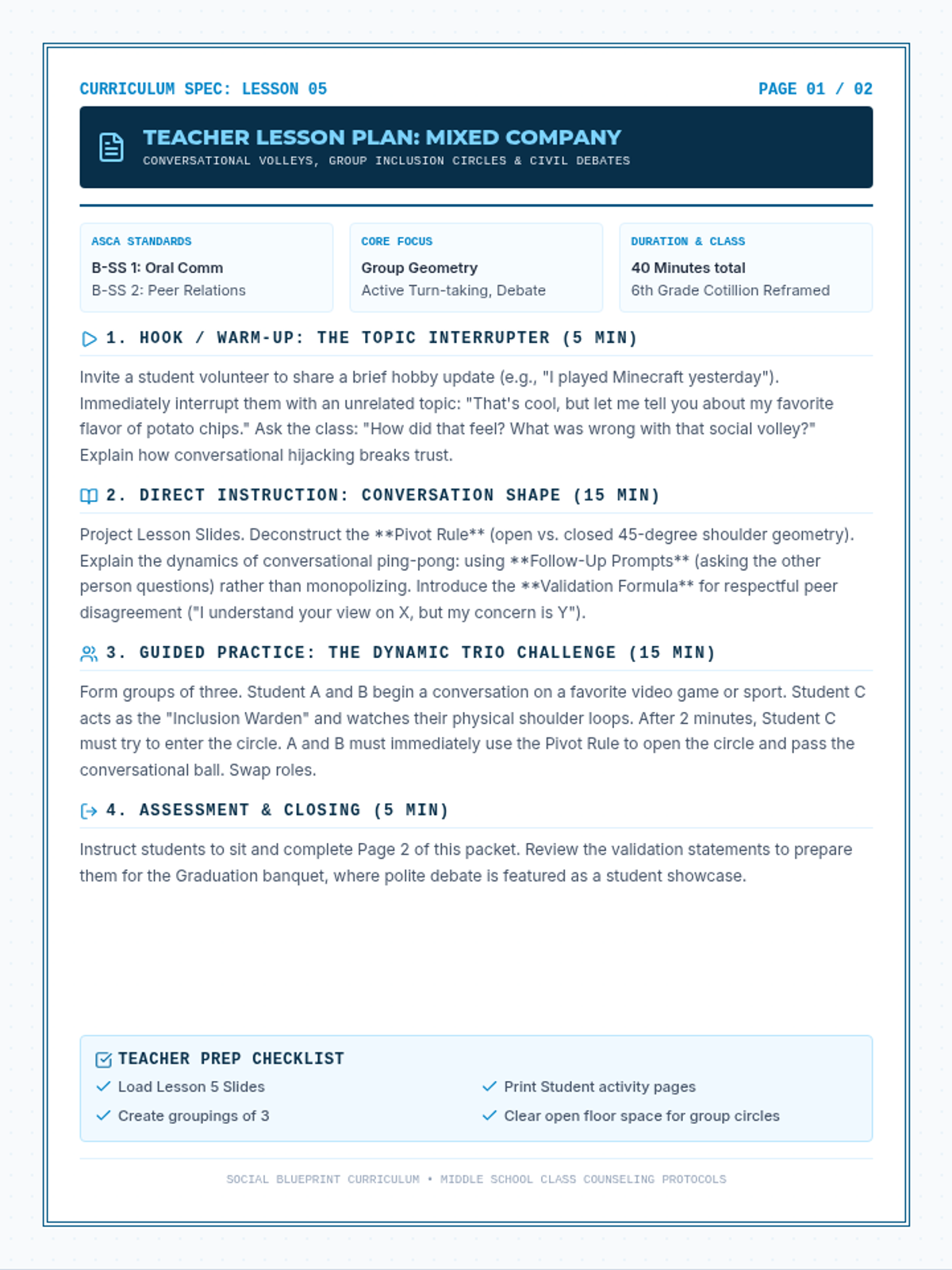
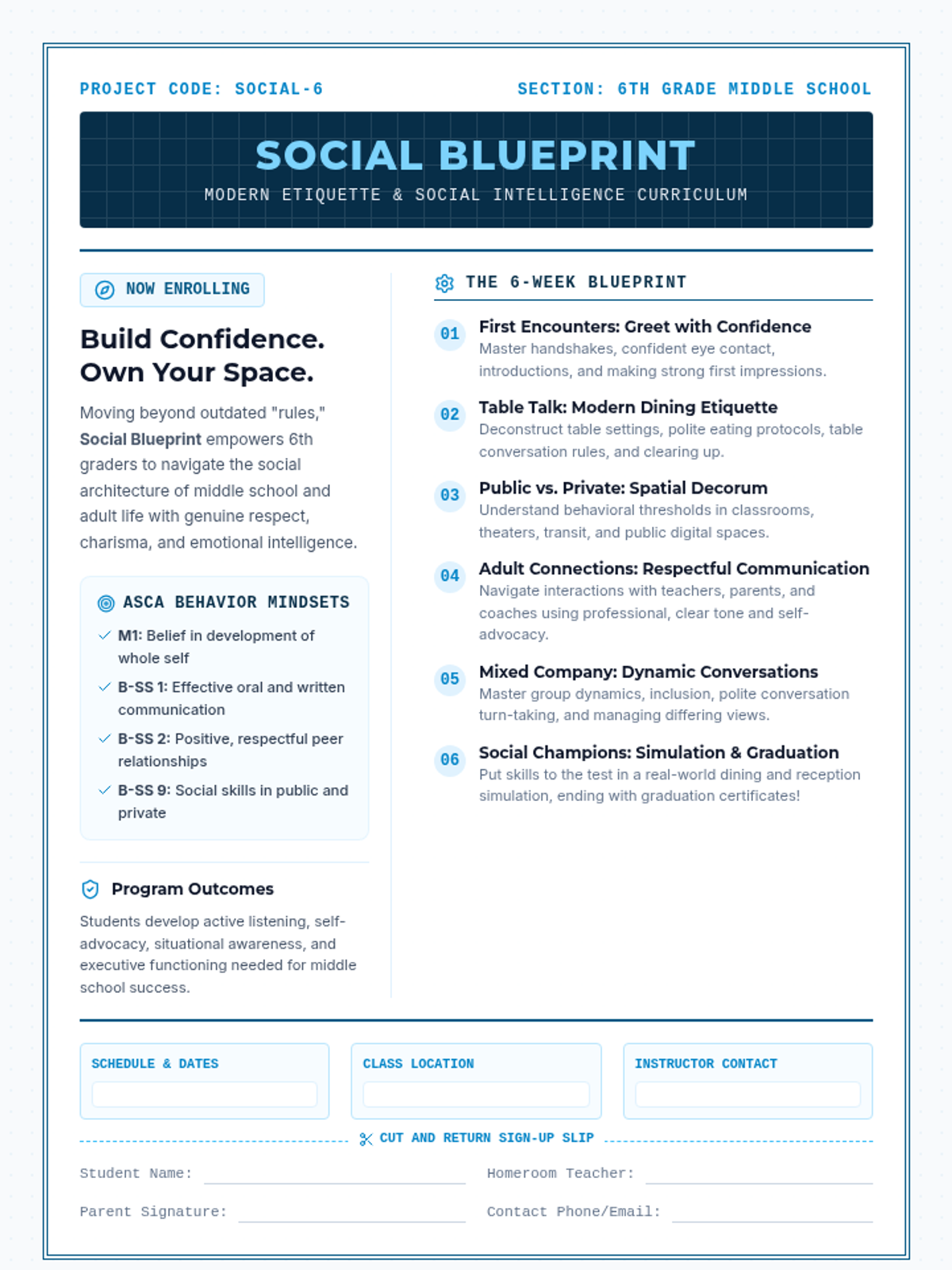
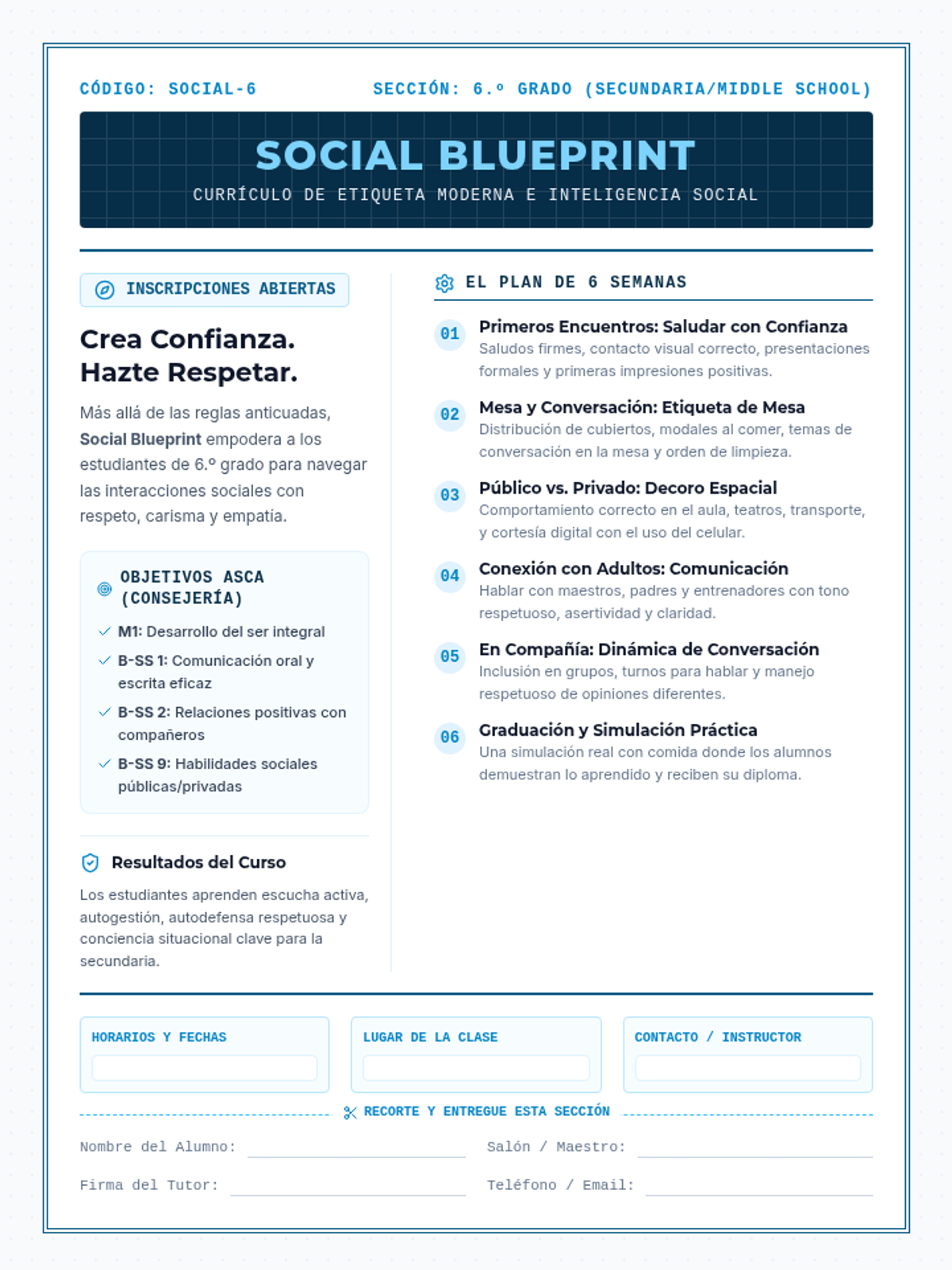
A culminating interactive simulation and graduation ceremony where students showcase all skills learned (dining, introductions, public deportment) and receive certificates of completion.
Students explore social dynamics in mixed peer groups, practicing inclusive conversations, group introductions, handling differing opinions, and the art of polite conversational turn-taking.
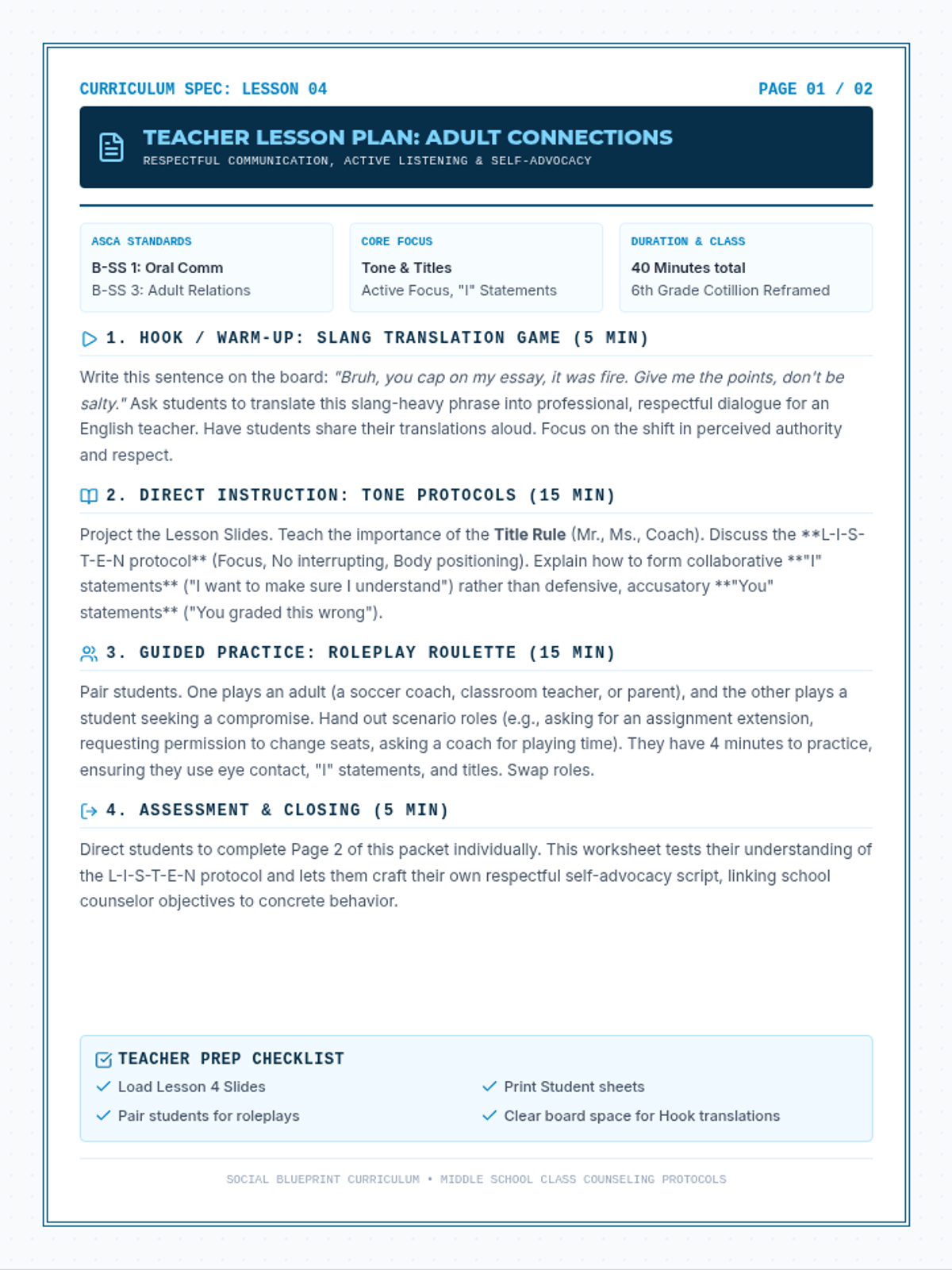
Students develop skills for respectful communication with teachers, parents, coaches, and administrators, focusing on tone of voice, active listening, requesting help, and body language.
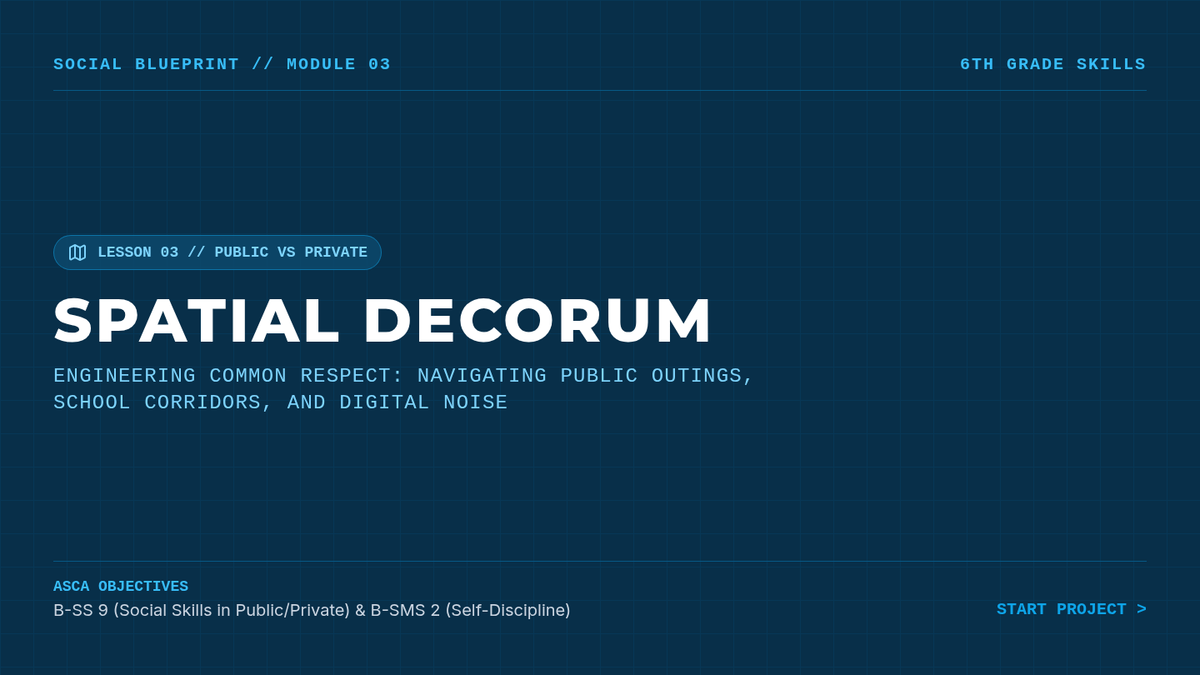
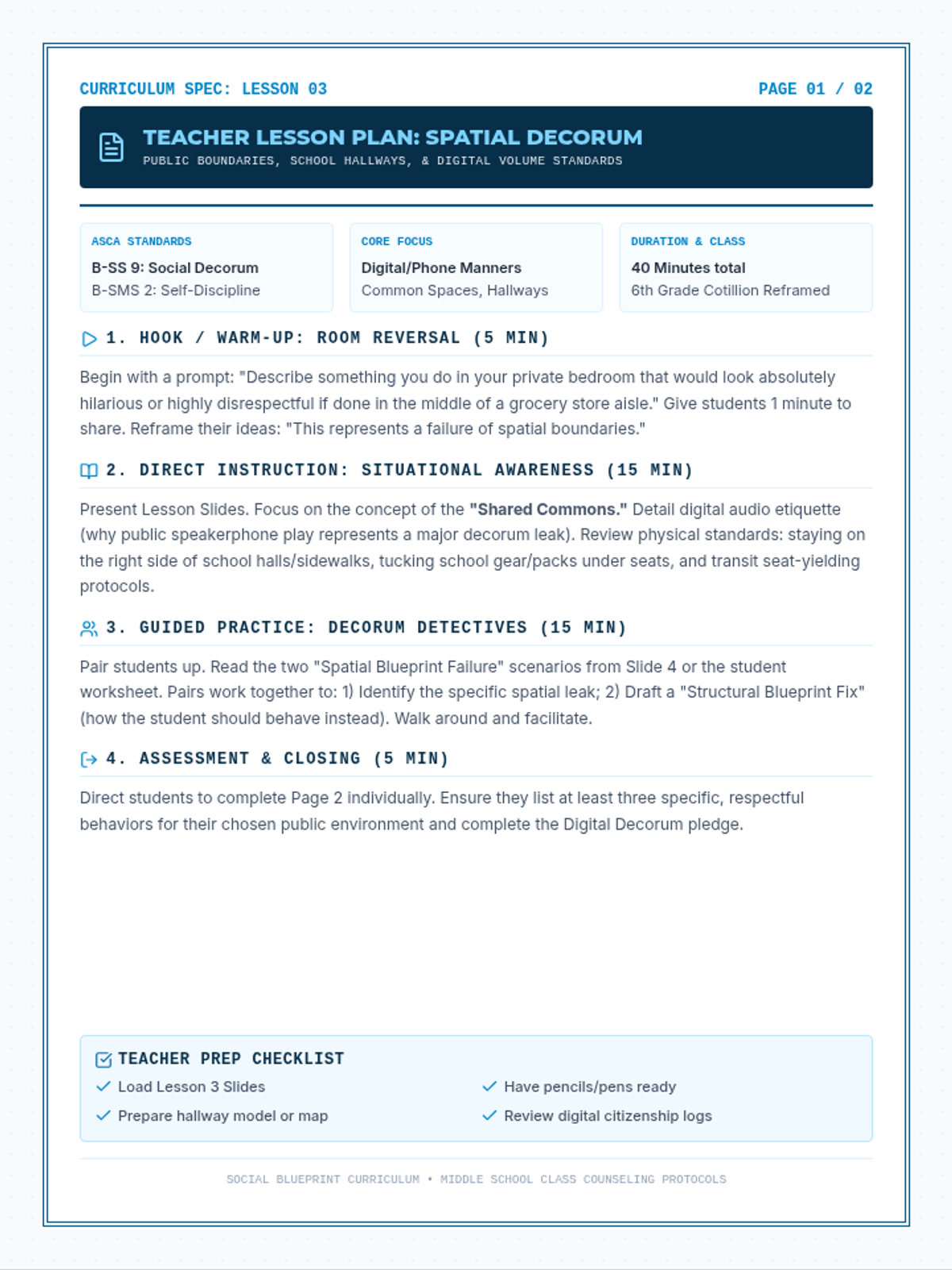
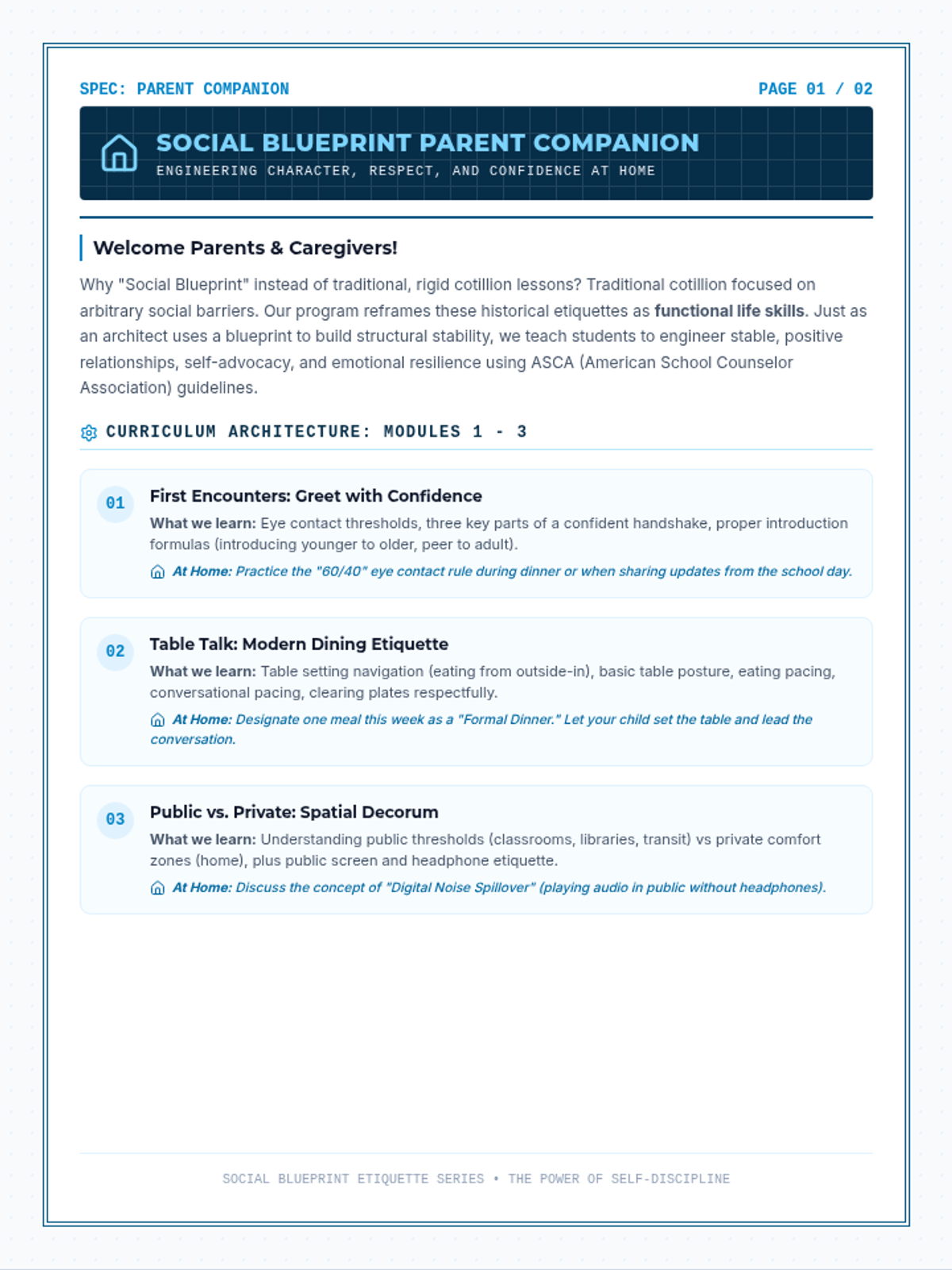
Students distinguish between appropriate behaviors in public spaces (classrooms, theaters, transit, stores) versus private spaces (home), including public digital etiquette and respect for shared spaces.
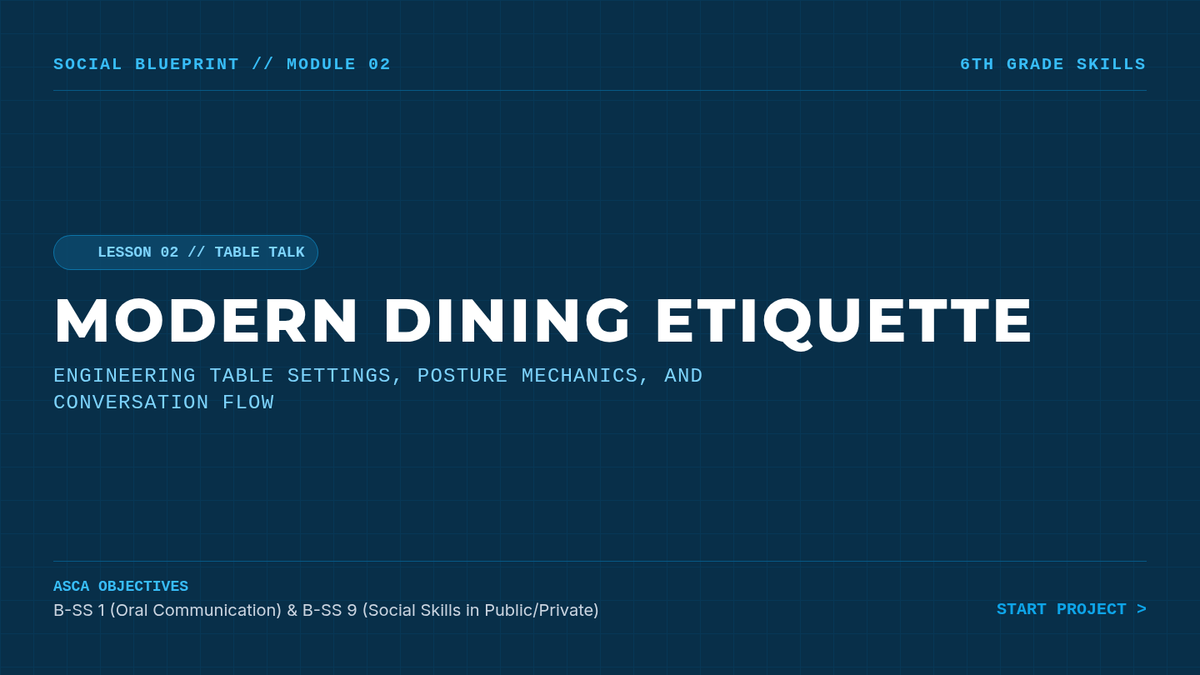
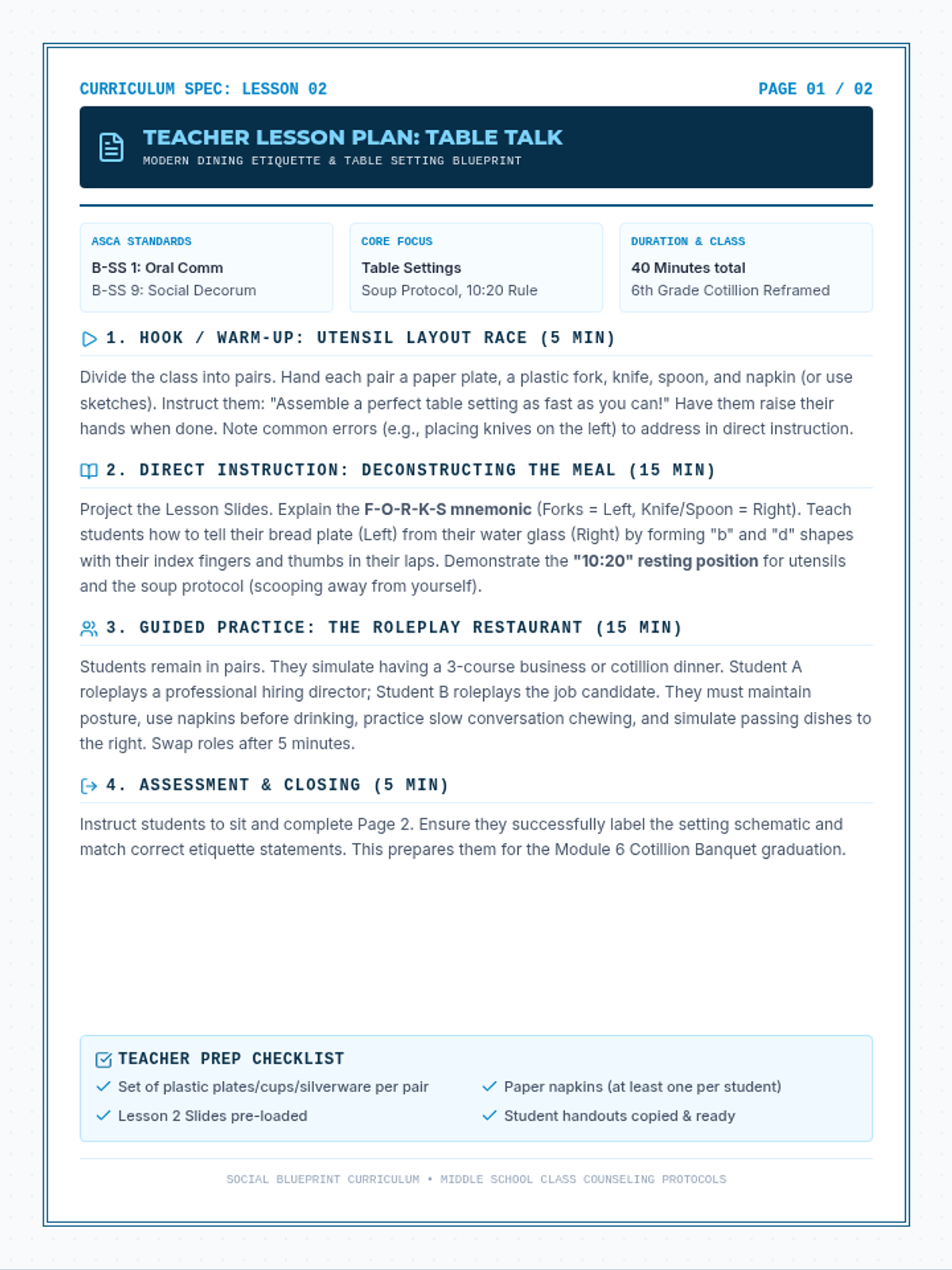
Students master table manners and dining etiquette, exploring the anatomy of a standard table setting, polite eating habits, conversational respect, and table cleanup.
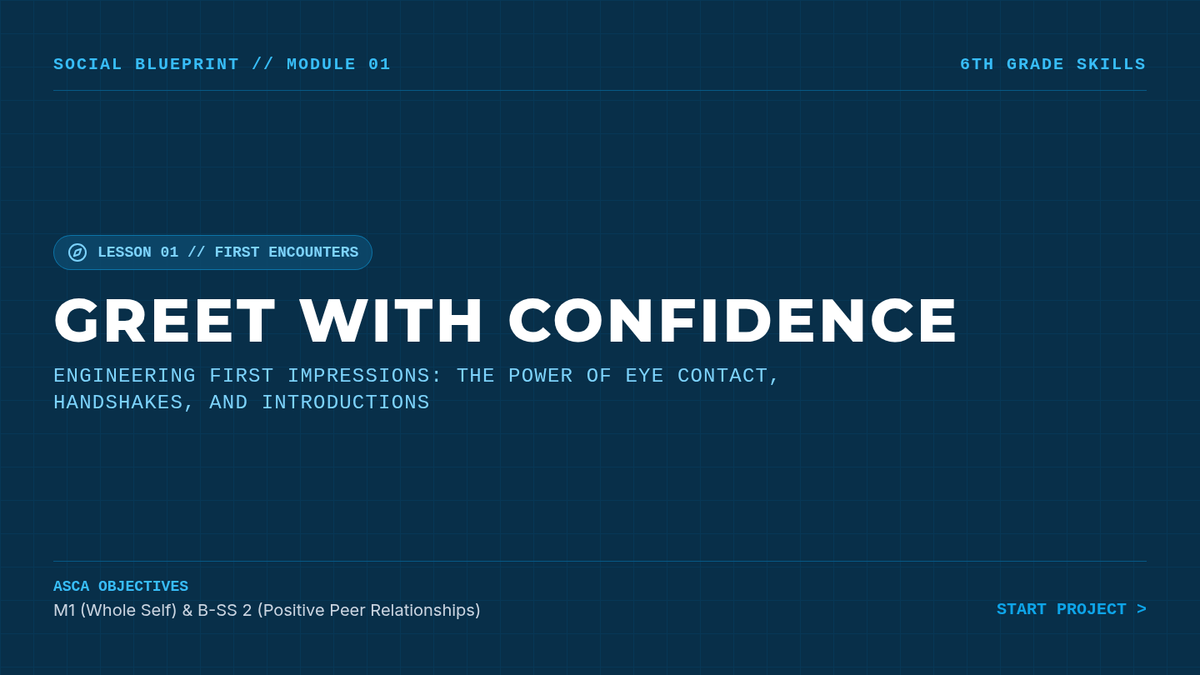
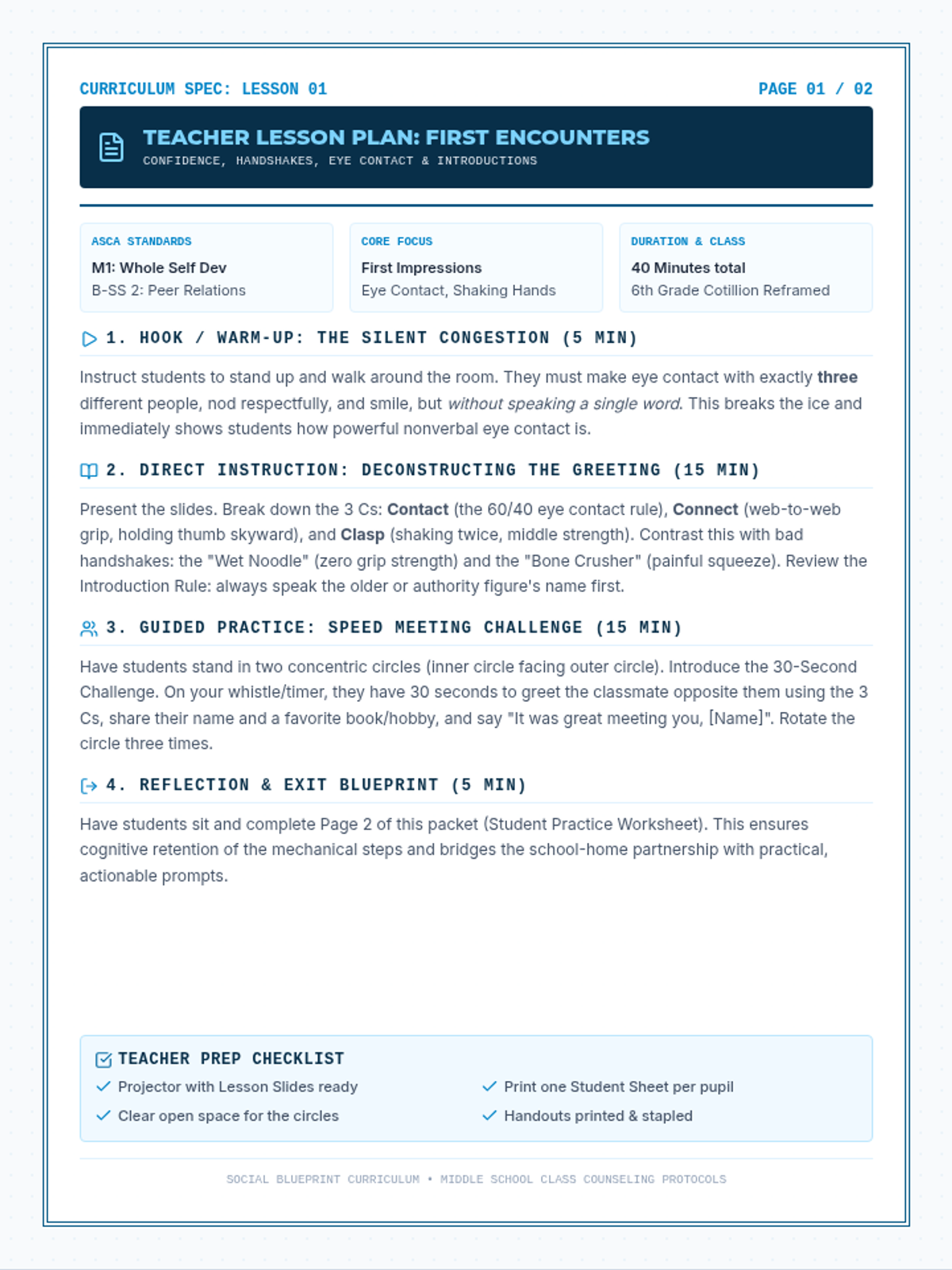
Students learn the art of first impressions, including confident introductions, appropriate eye contact, firm handshakes, and representing themselves respectfully to adults and peers alike.
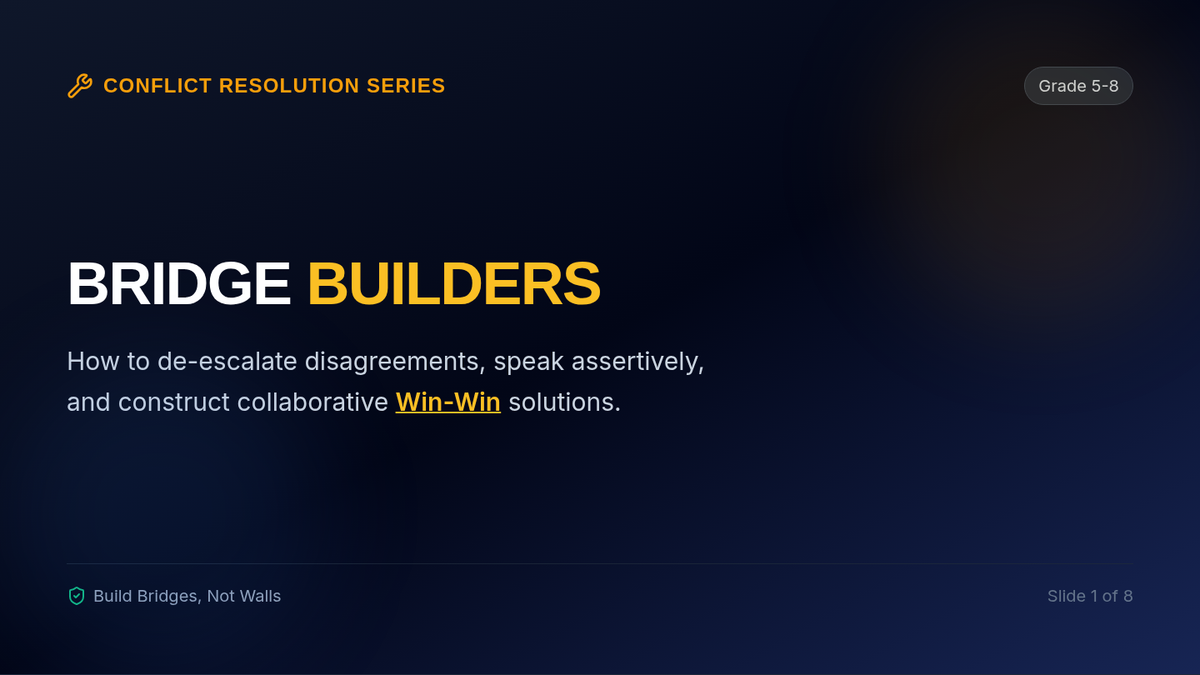
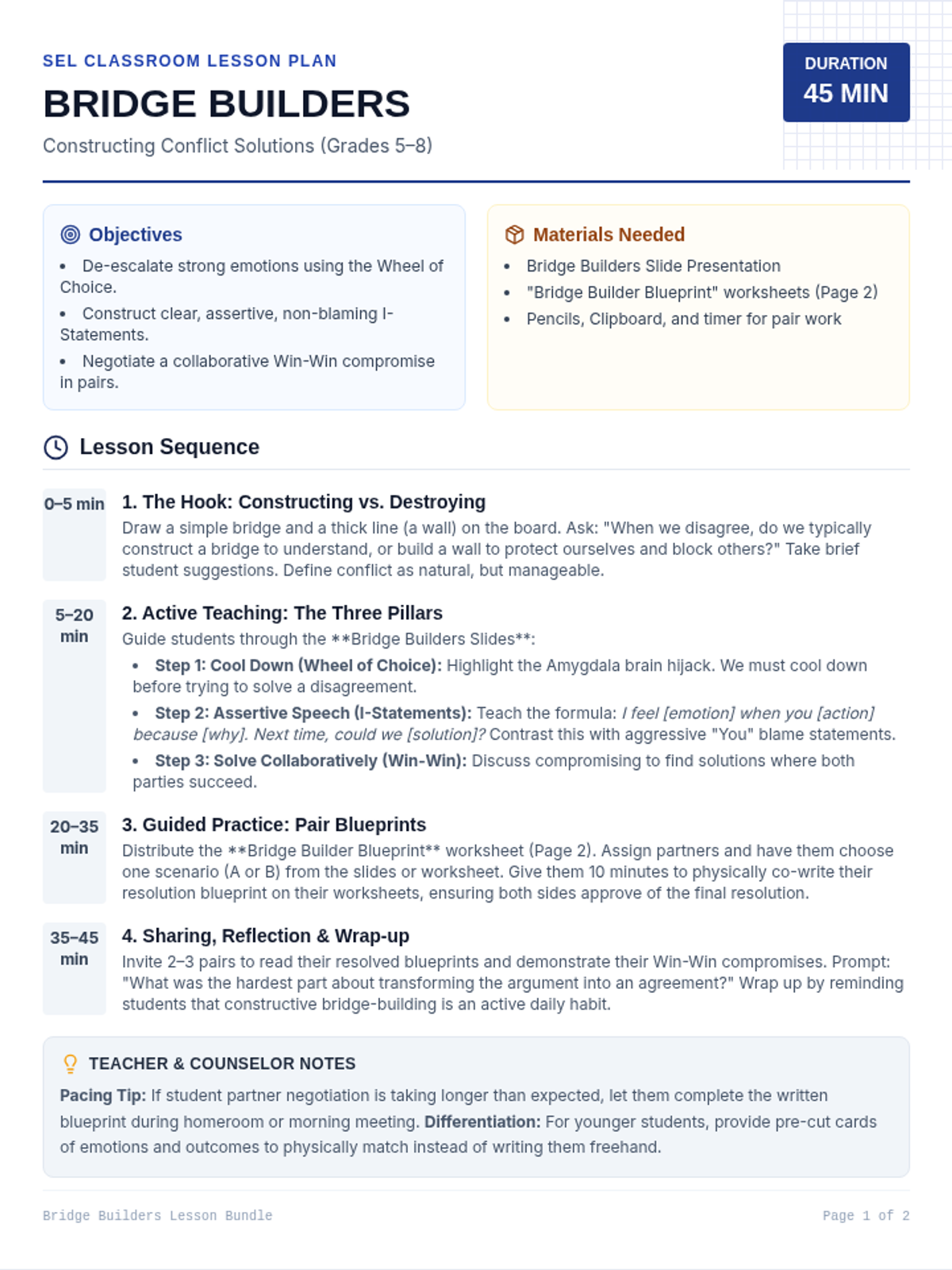
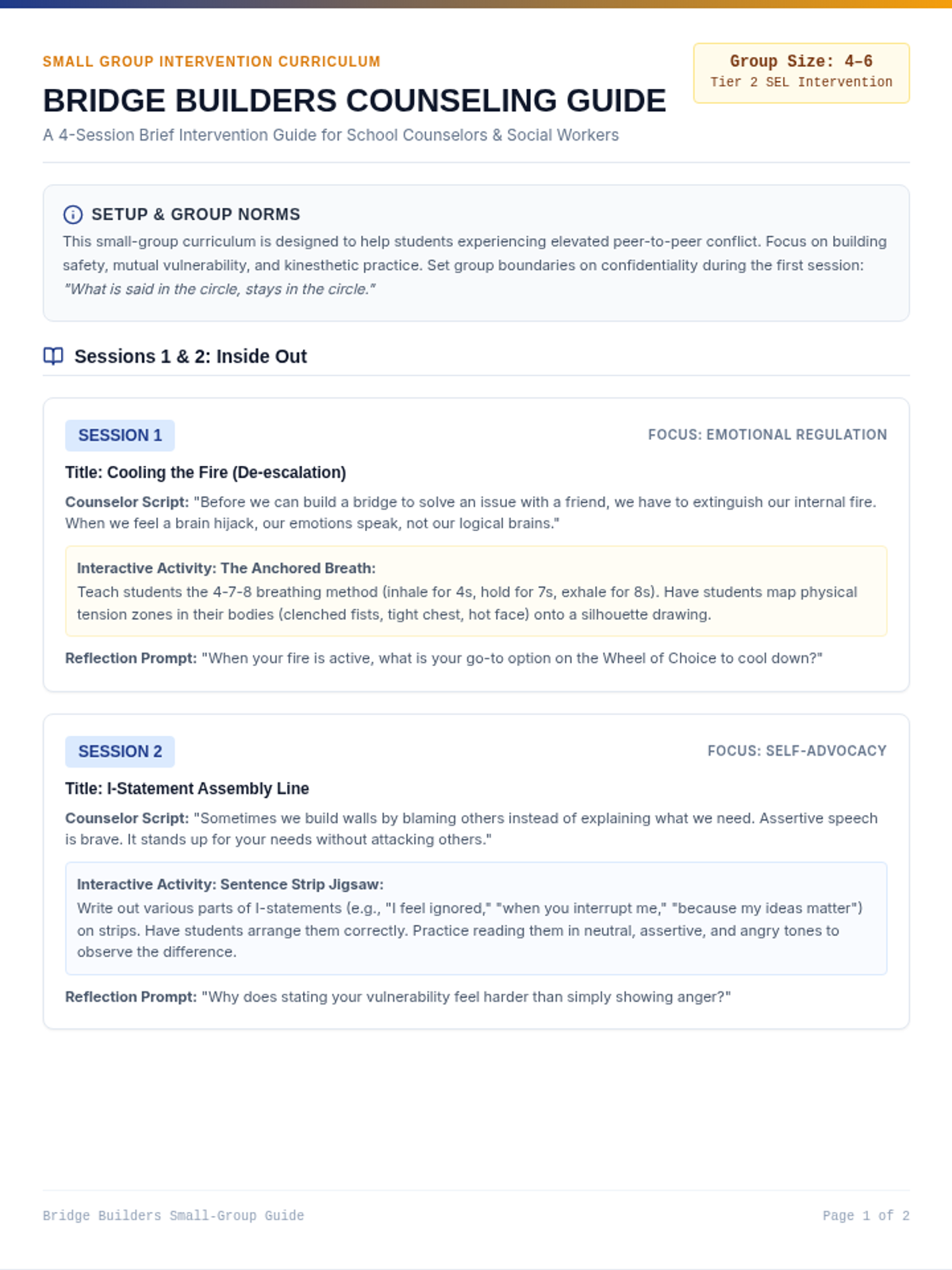
A comprehensive social-emotional learning lesson package designed to teach middle-grade students how to de-escalate conflicts, communicate assertively using I-Statements and Active Listening, and negotiate collaborative Win-Win solutions. Includes visual presentation slides, a complete 45-minute classroom lesson plan with an integrated student activity sheet, and a specialized small-group counseling guide.
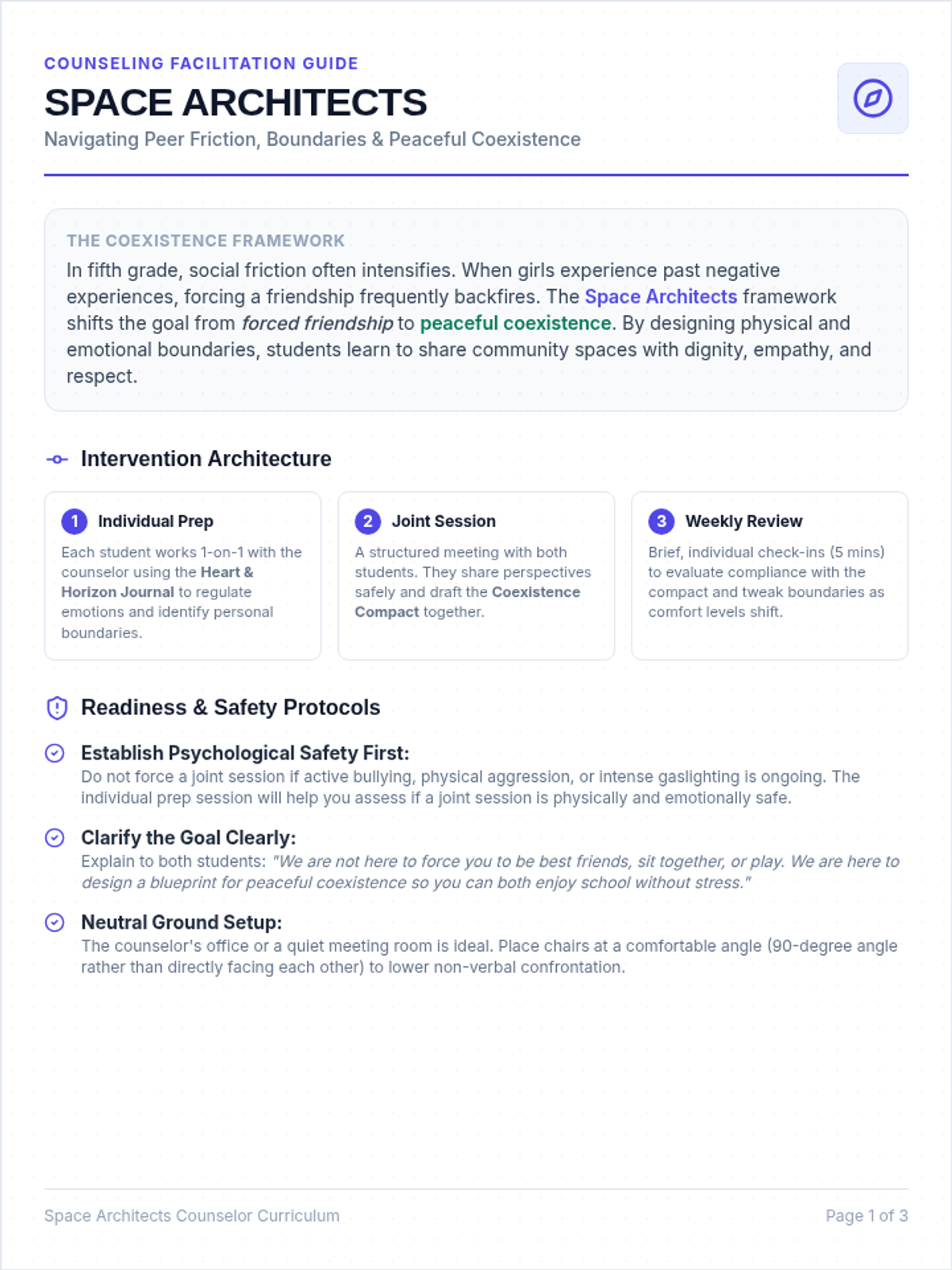
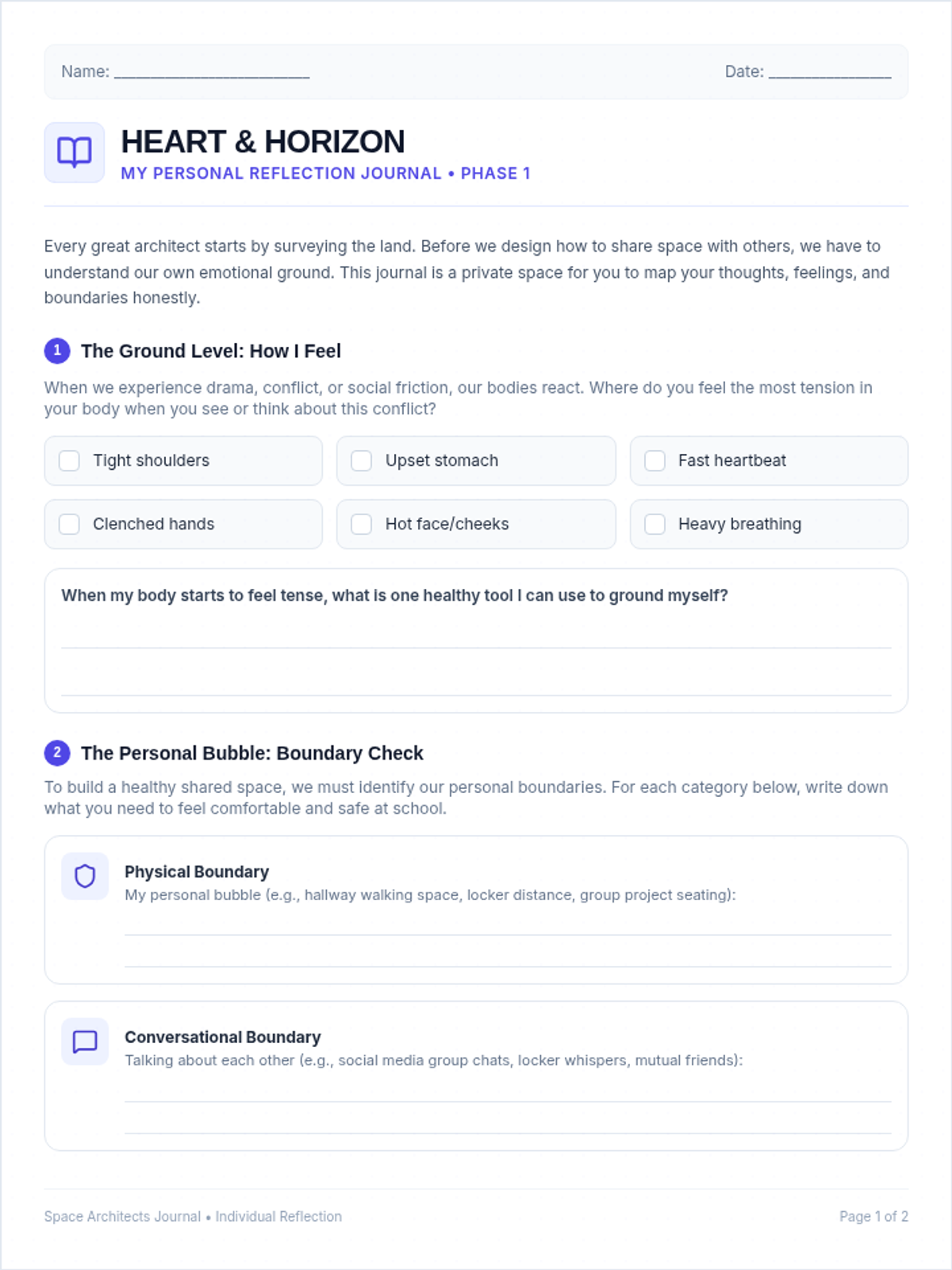
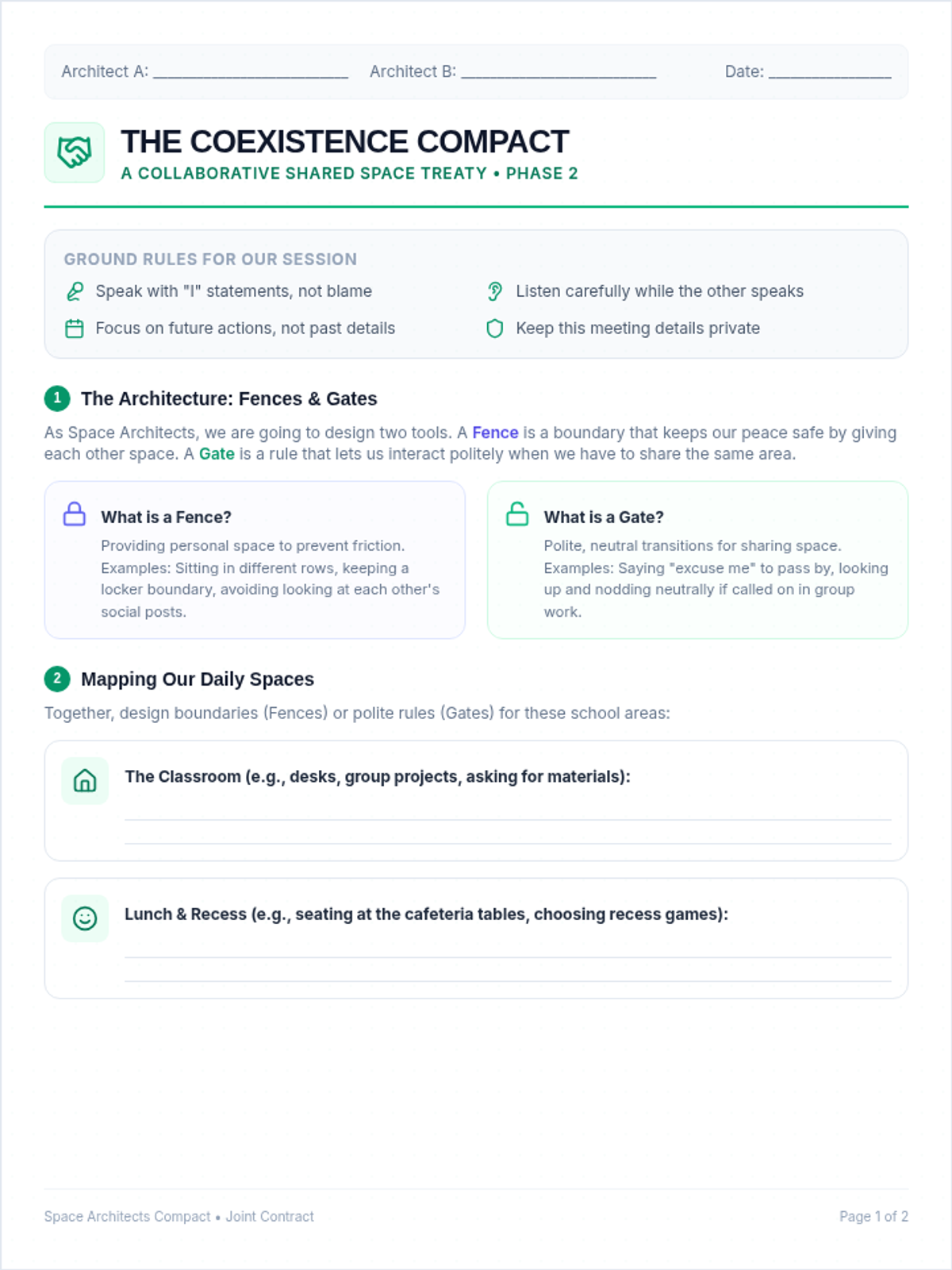
A structured counseling intervention designed for fifth-grade girls experiencing peer conflict and social friction. This lesson guides students through individual emotional regulation, perspective-taking, and a collaborative boundary-setting contract to establish peaceful coexistence.
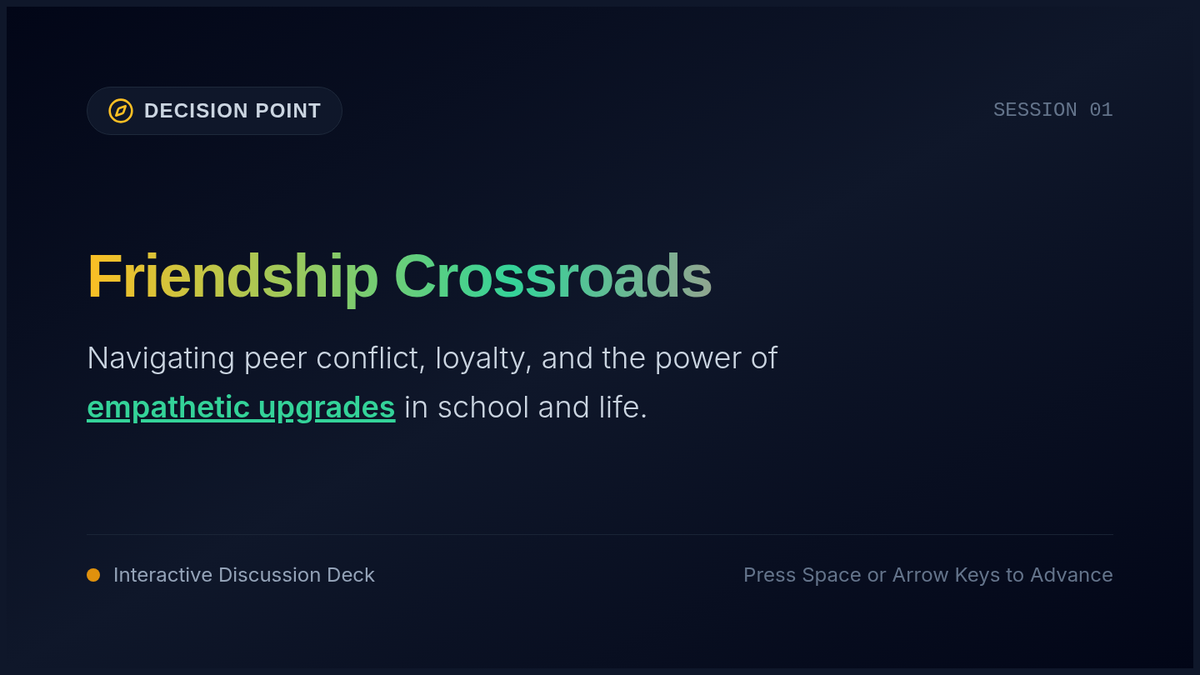
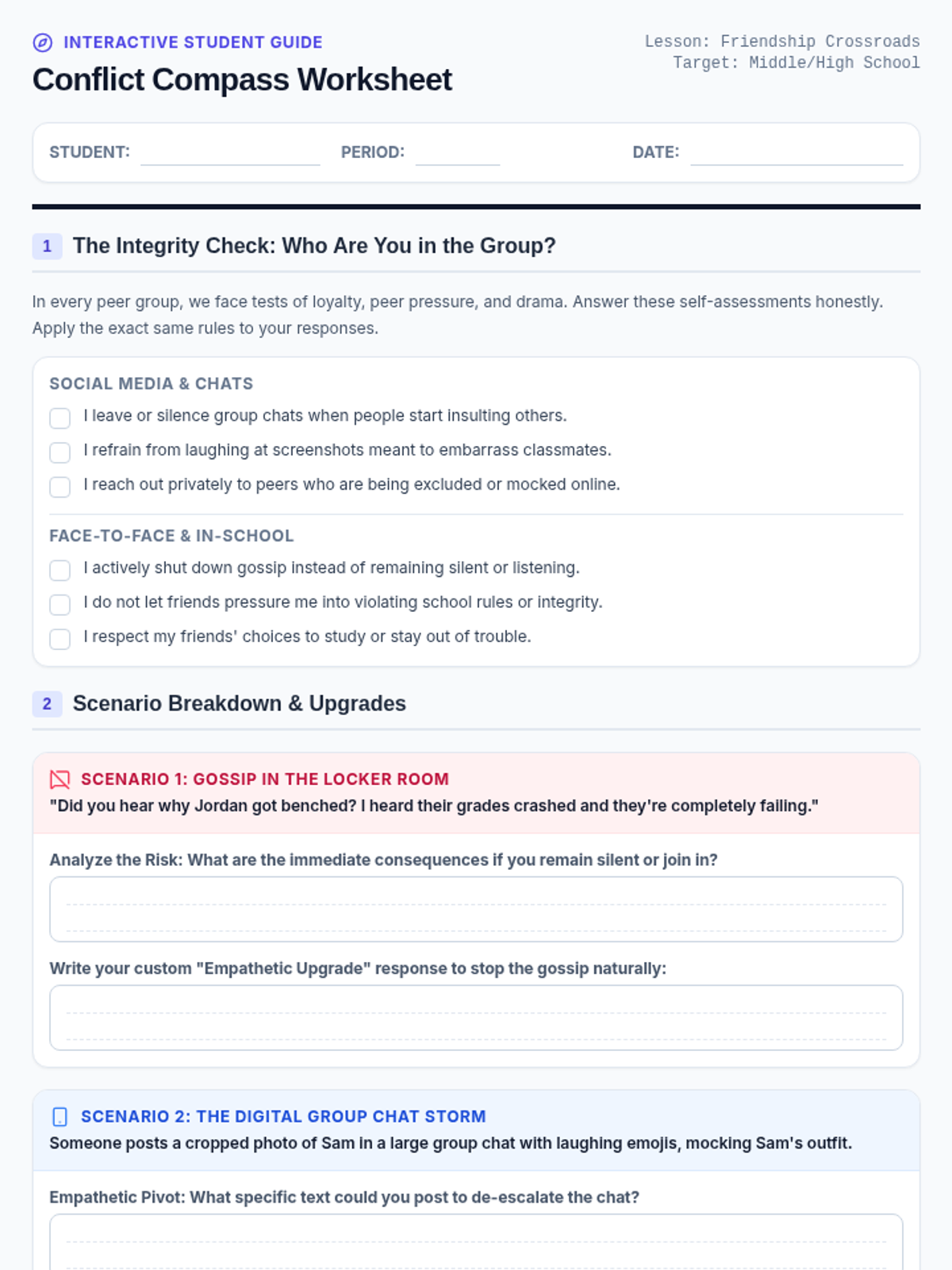
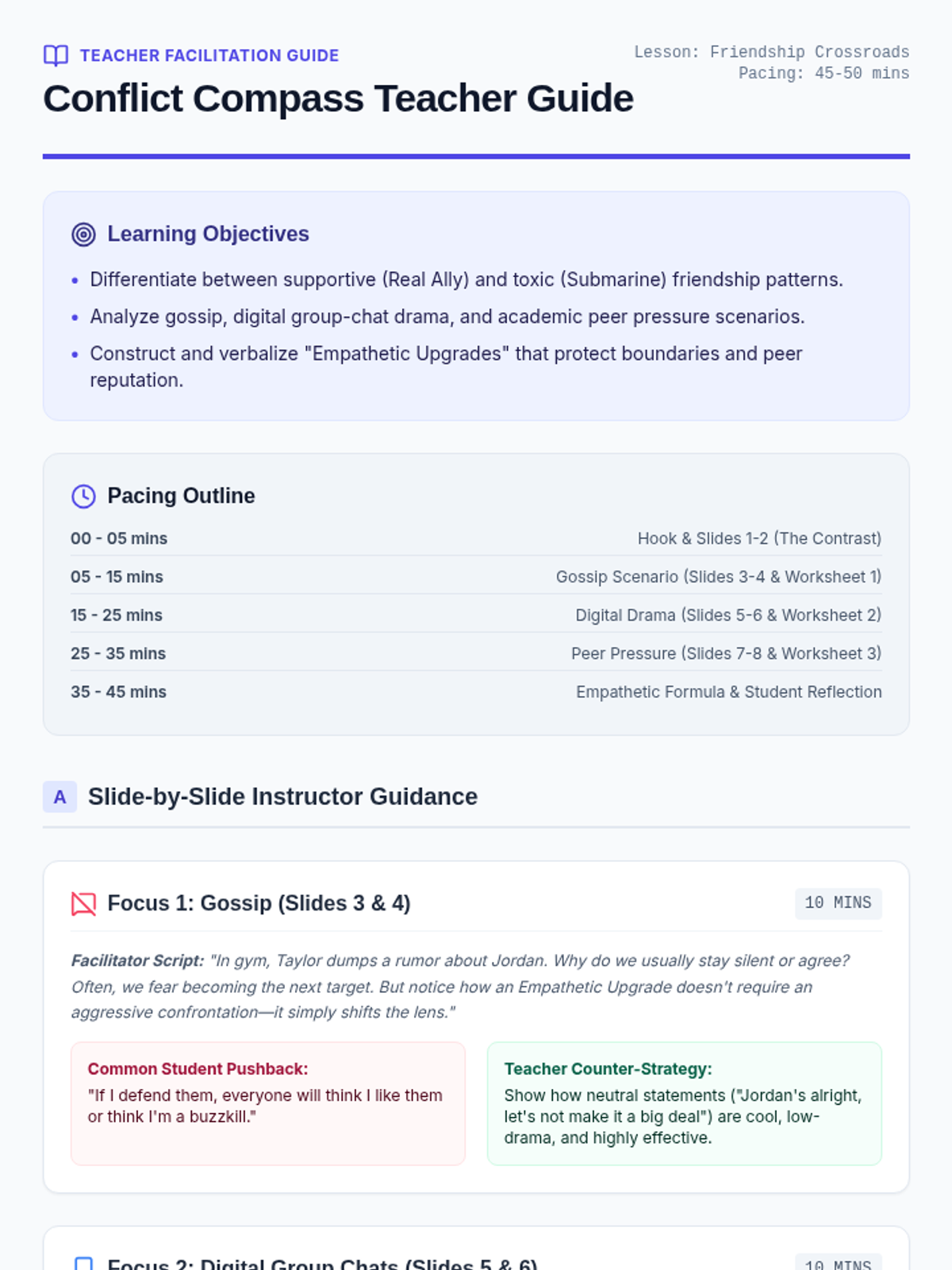
An interactive, highly engaging lesson designed to help middle and high school students navigate complex peer conflicts. Through realistic scenarios involving gossiping, social media drama, and peer pressure, students analyze the differences between supportive and harmful friendship behaviors and practice direct, empathetic communication.
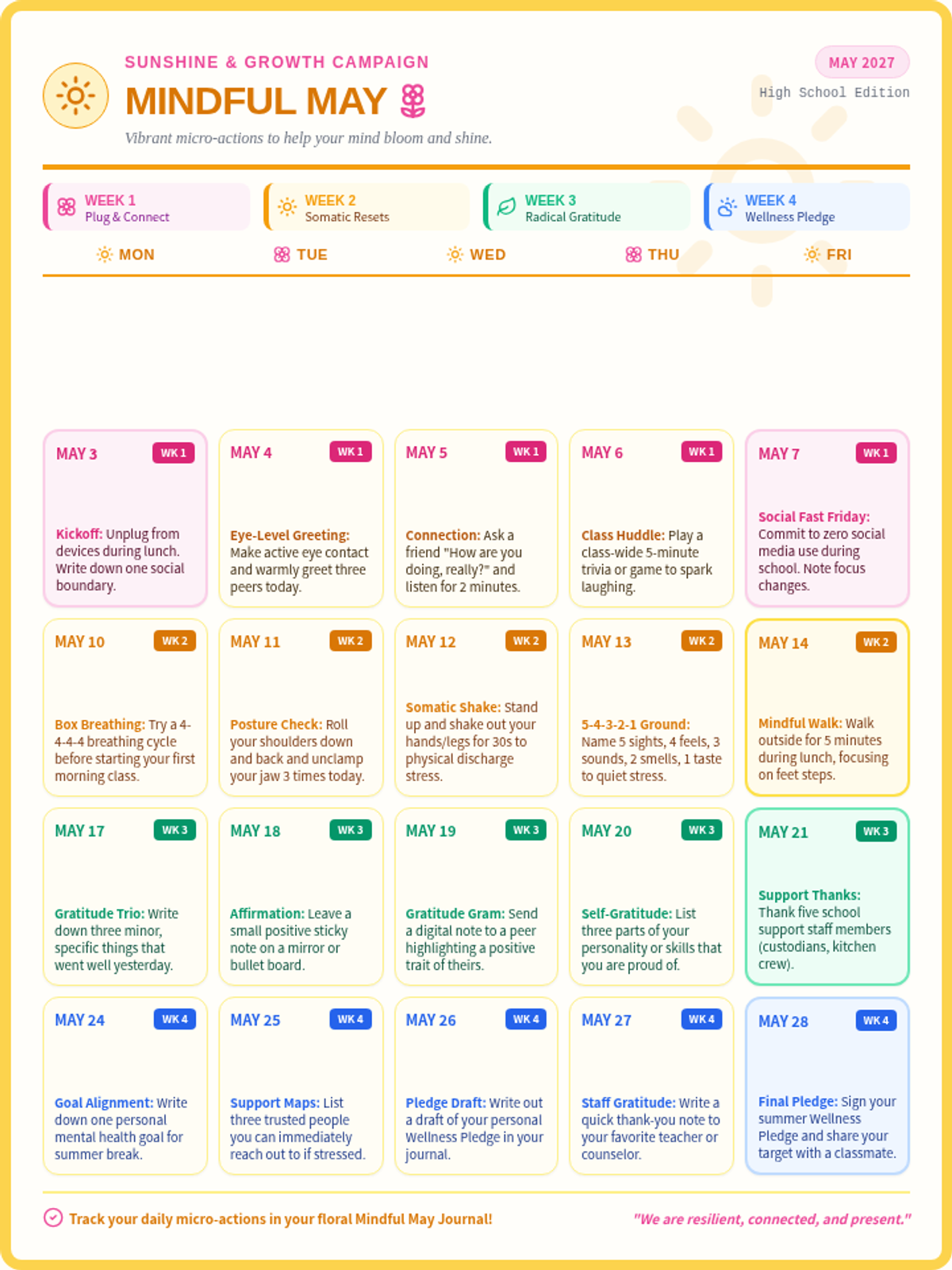
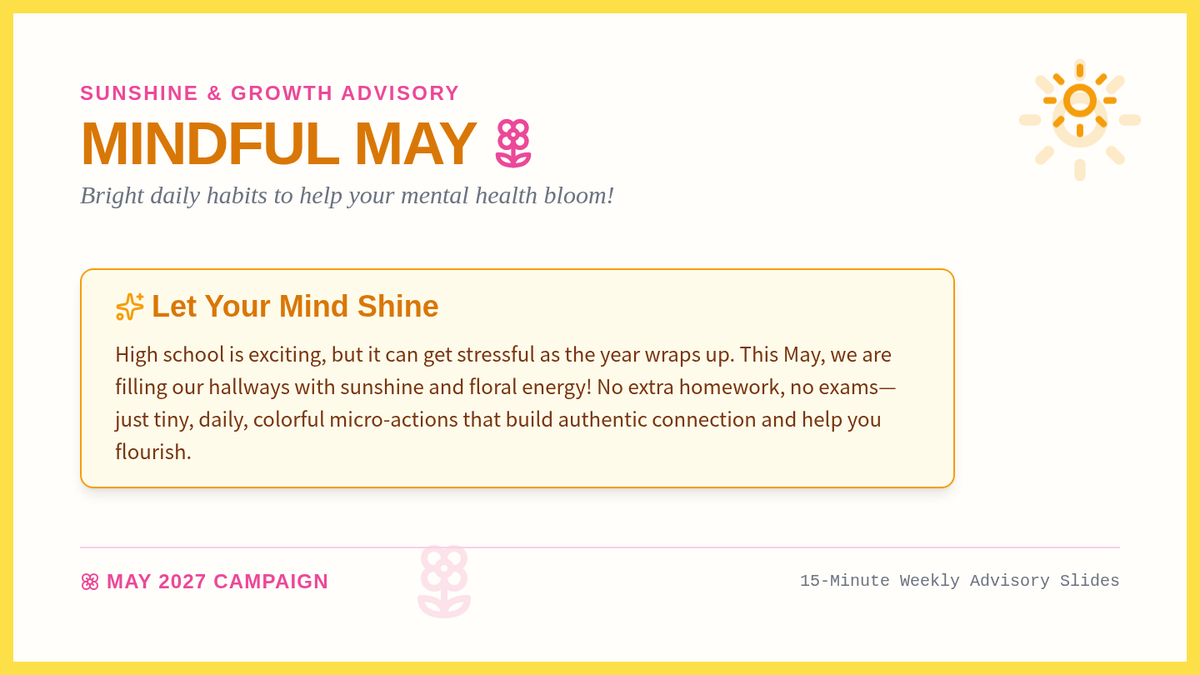
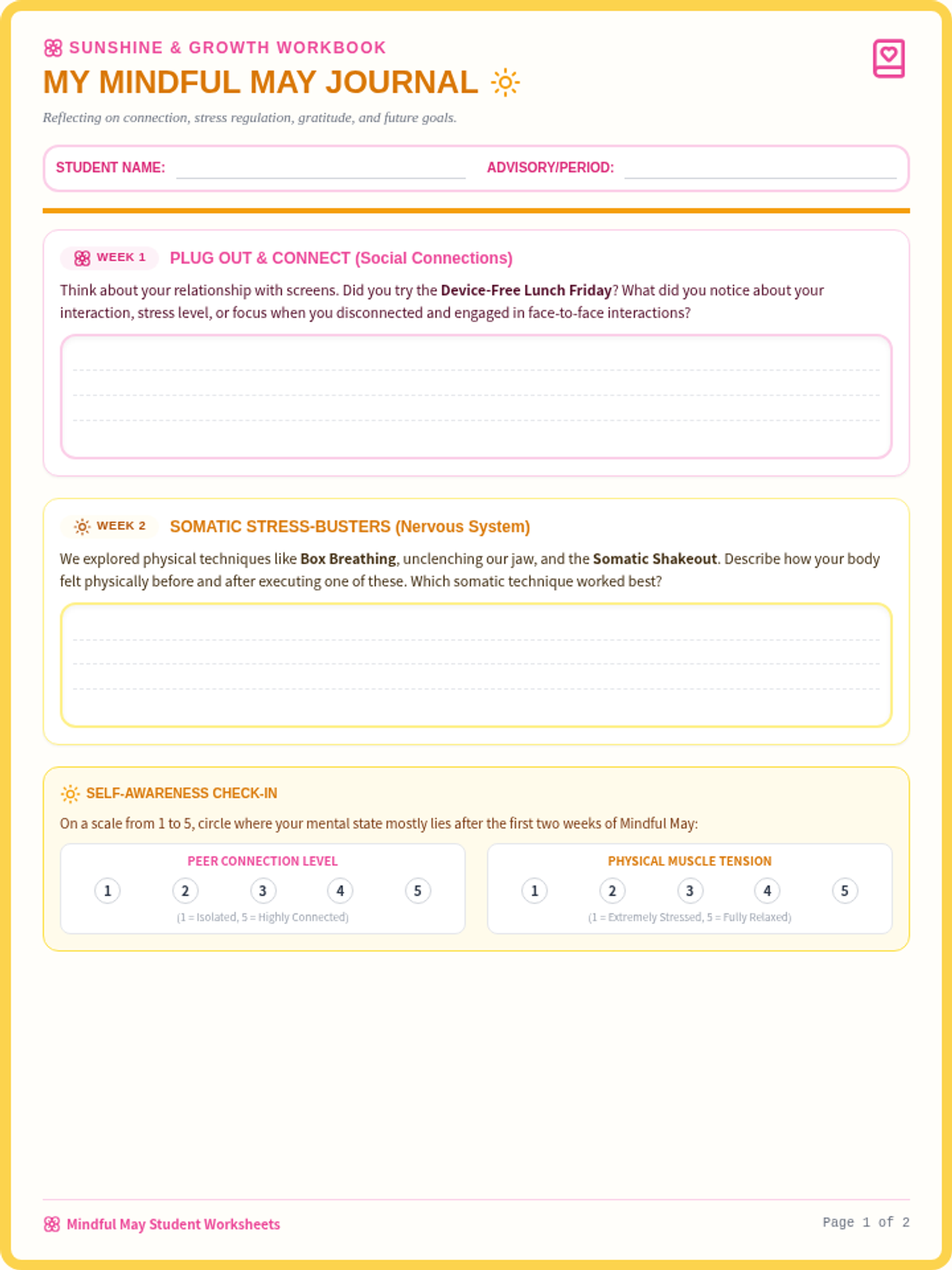
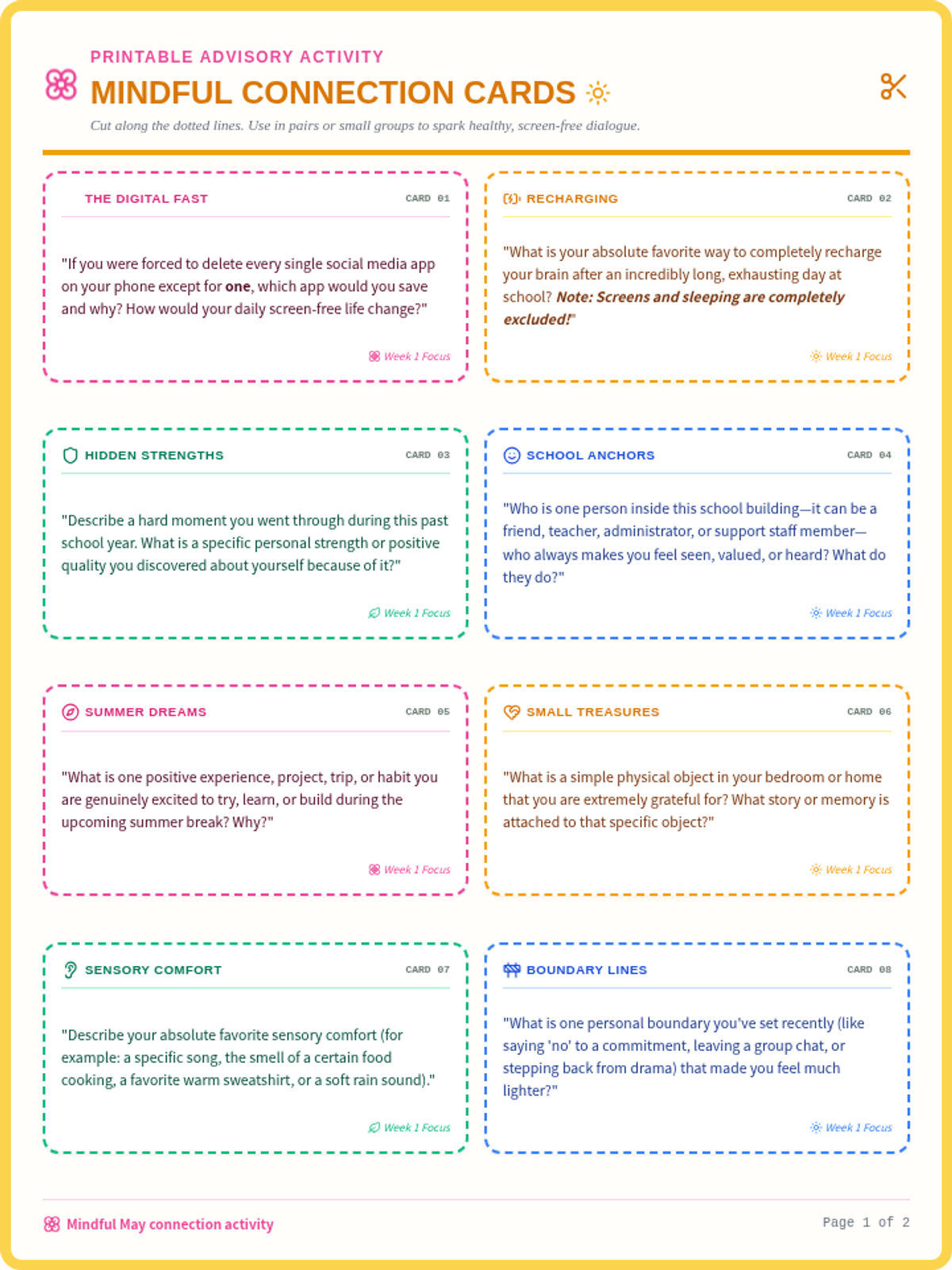
A complete, high-school-focused mental health awareness program for May. Includes a master daily calendar, weekly advisory lesson outlines, kickoff slides, a personal reflection journal, and collaborative connection cards.
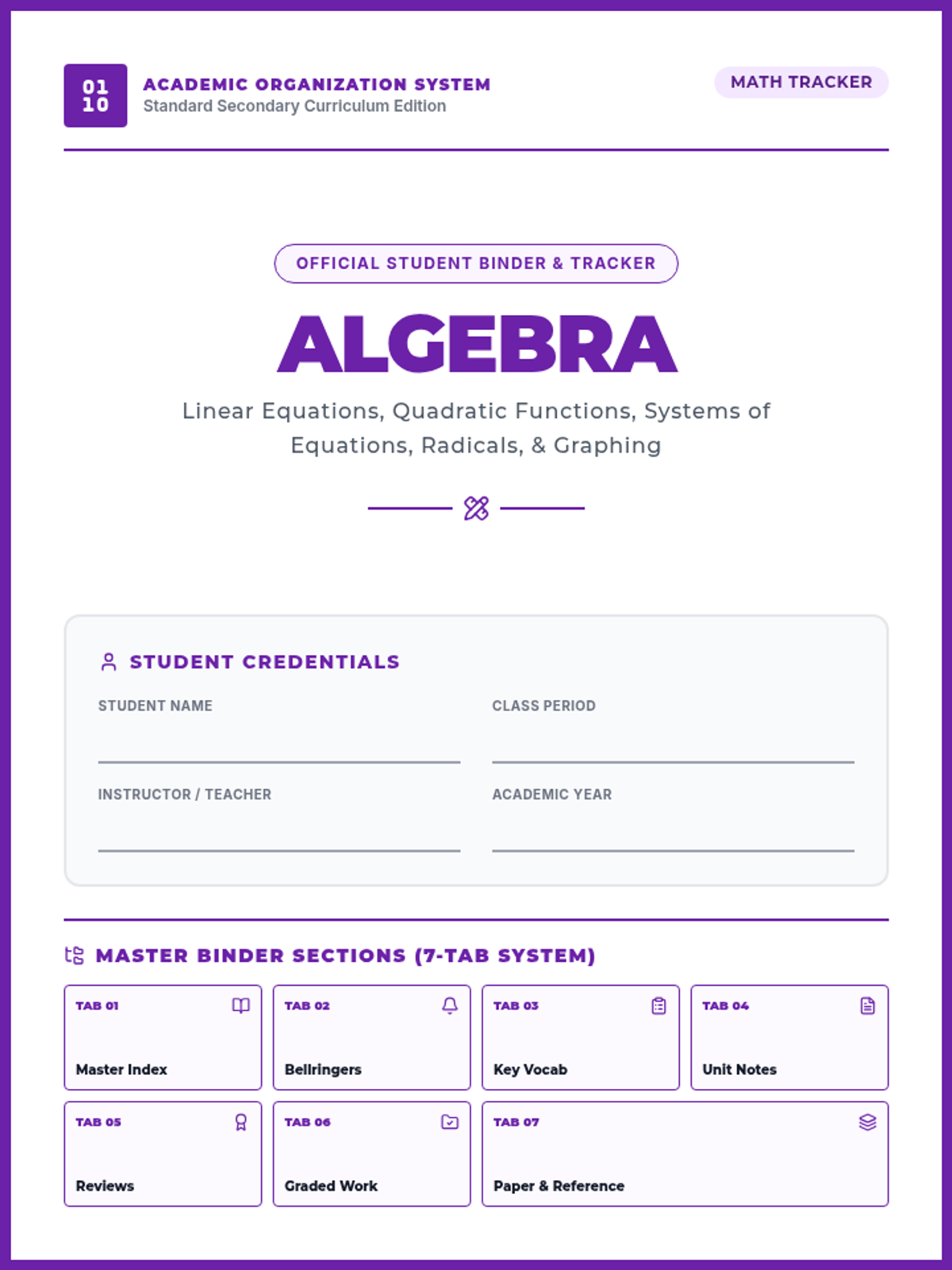
A complete set of high-contrast, professional binder organization kits for Economics, Business Mathematics, Algebra, and Personal Finance. Each kit contains a master index cover page, table of contents, customizable assignment logs, and printable color-coded divider tabs with matching spine inserts.
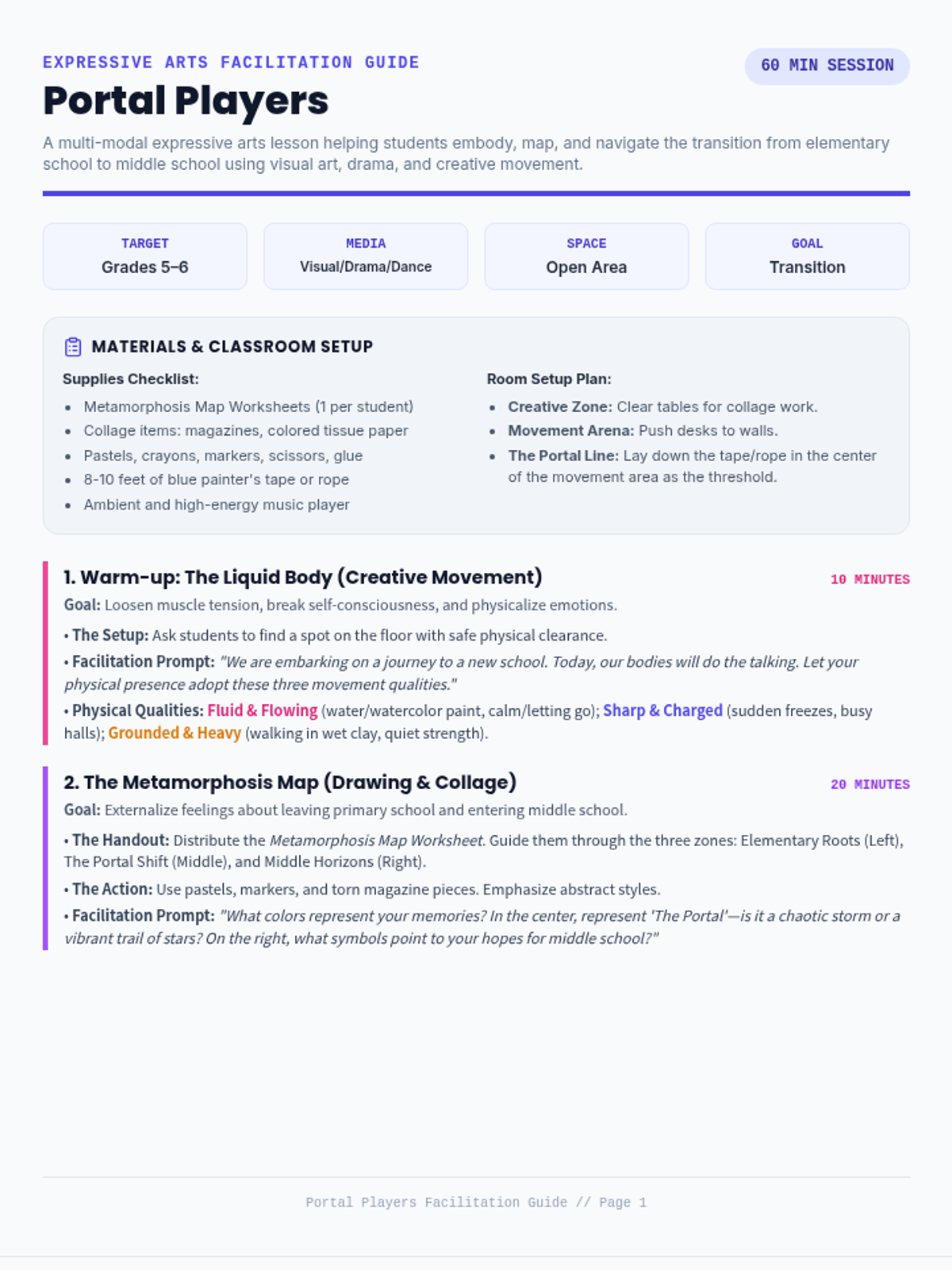
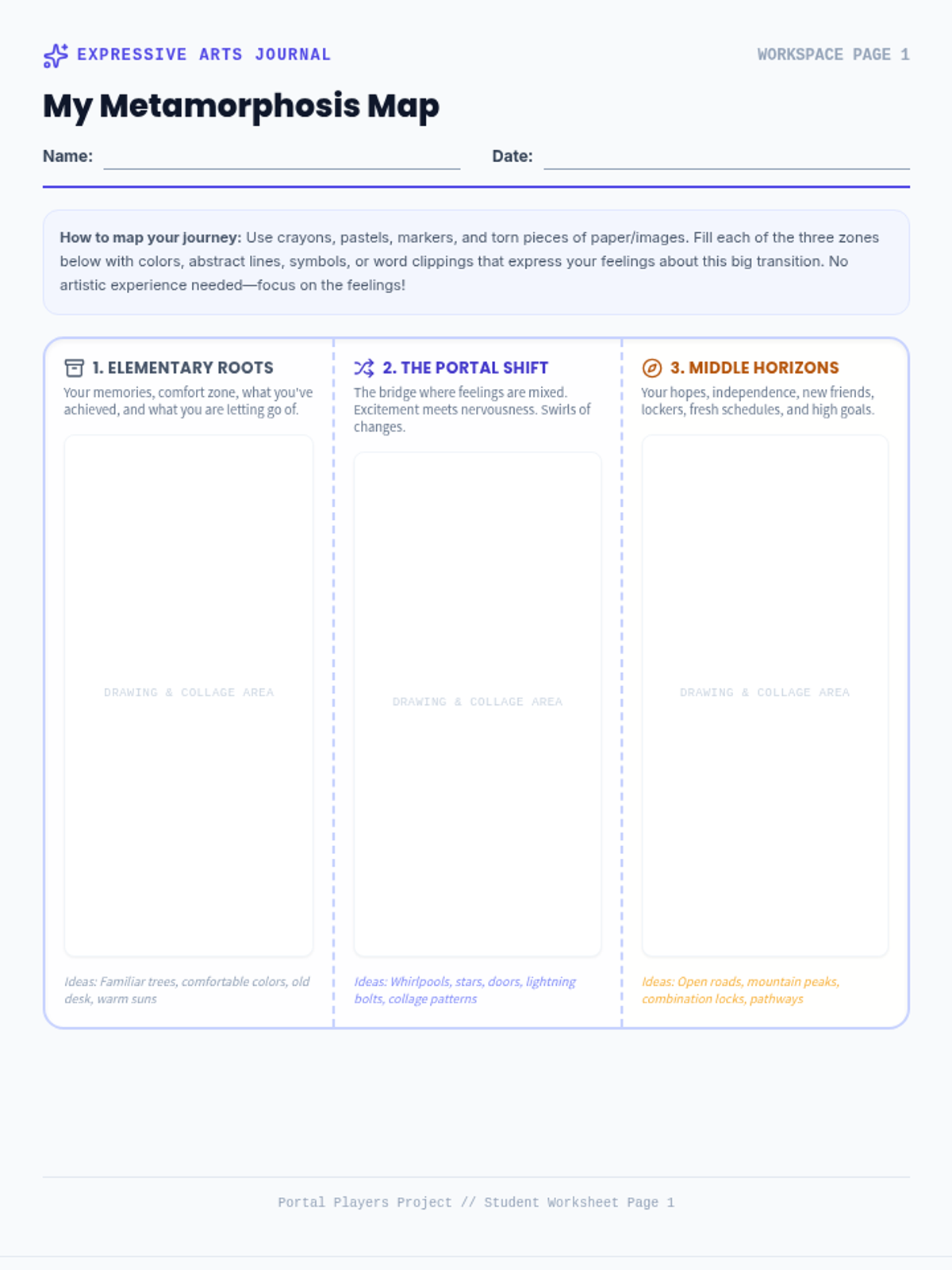
An expressive arts lesson designed to support students transitioning to middle school. Through drawing, collage, drama, role-play, and movement, students map their feelings, practice real scenarios, and physically embody growth and confidence.
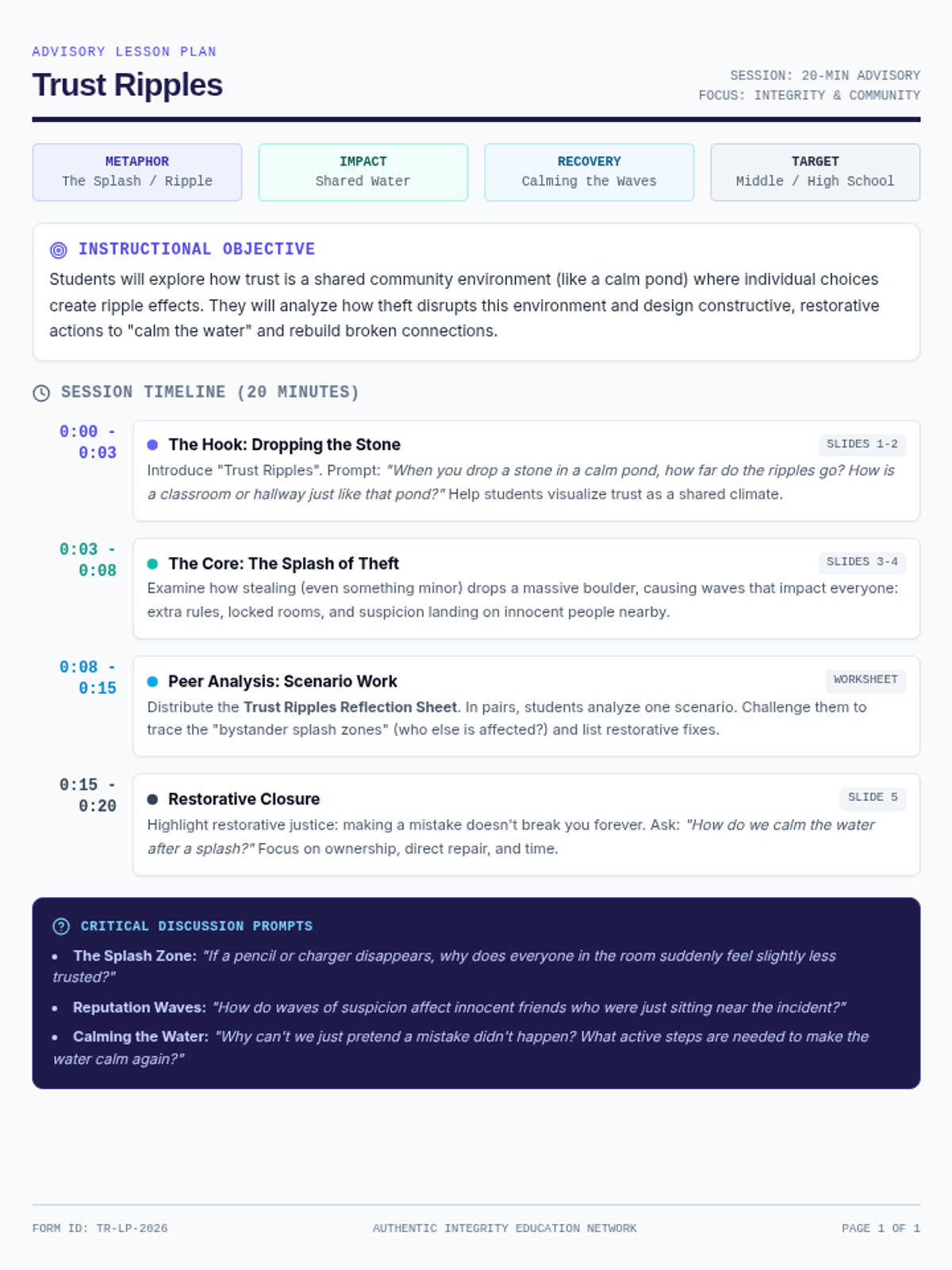
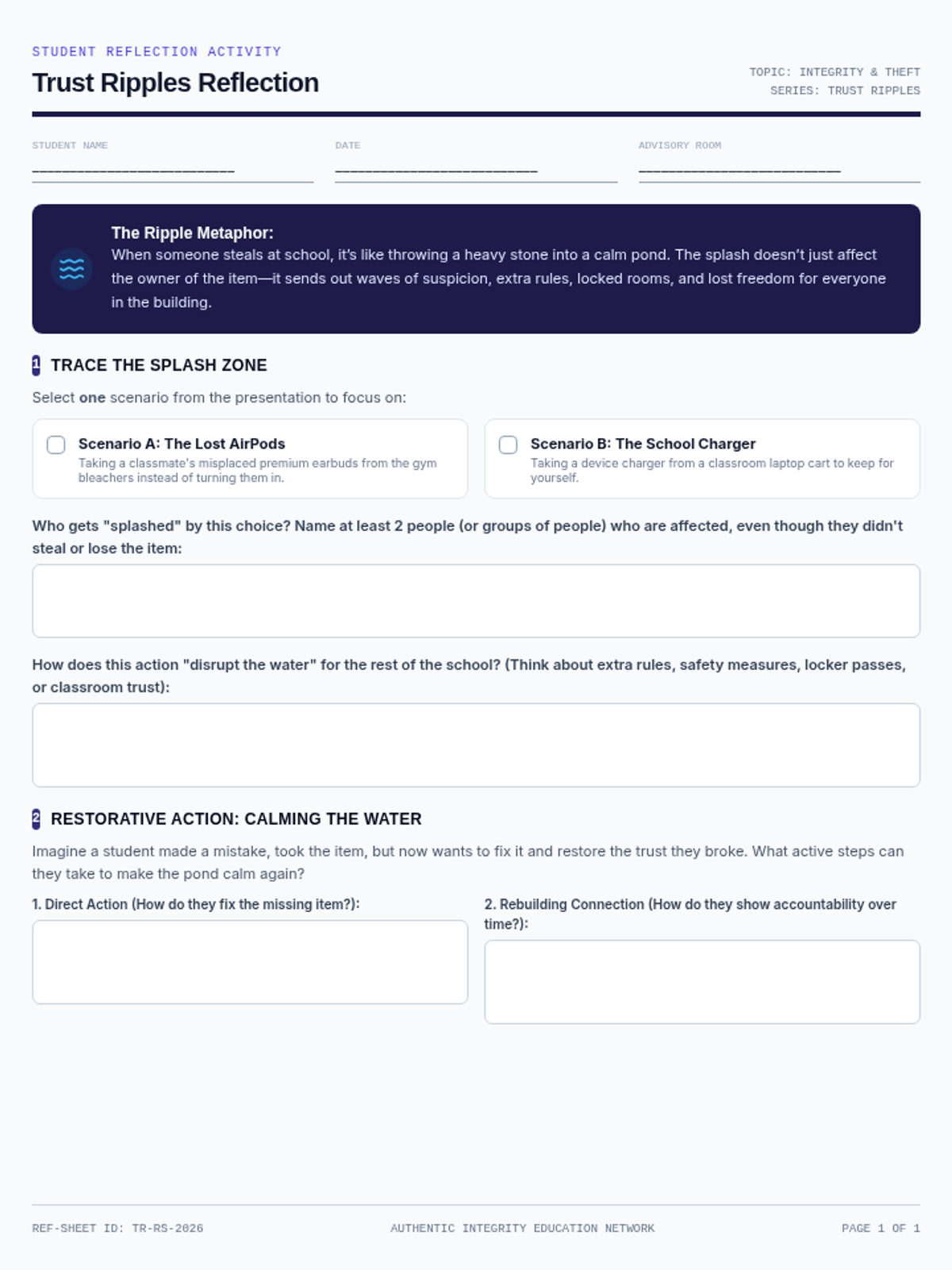
A direct, literal 20-minute advisory lesson exploring why theft is unacceptable in school. Students look past metaphors to analyze the direct consequences of stealing on school culture, rules, innocent peers, and the practical steps to repair relationships after a mistake is made.
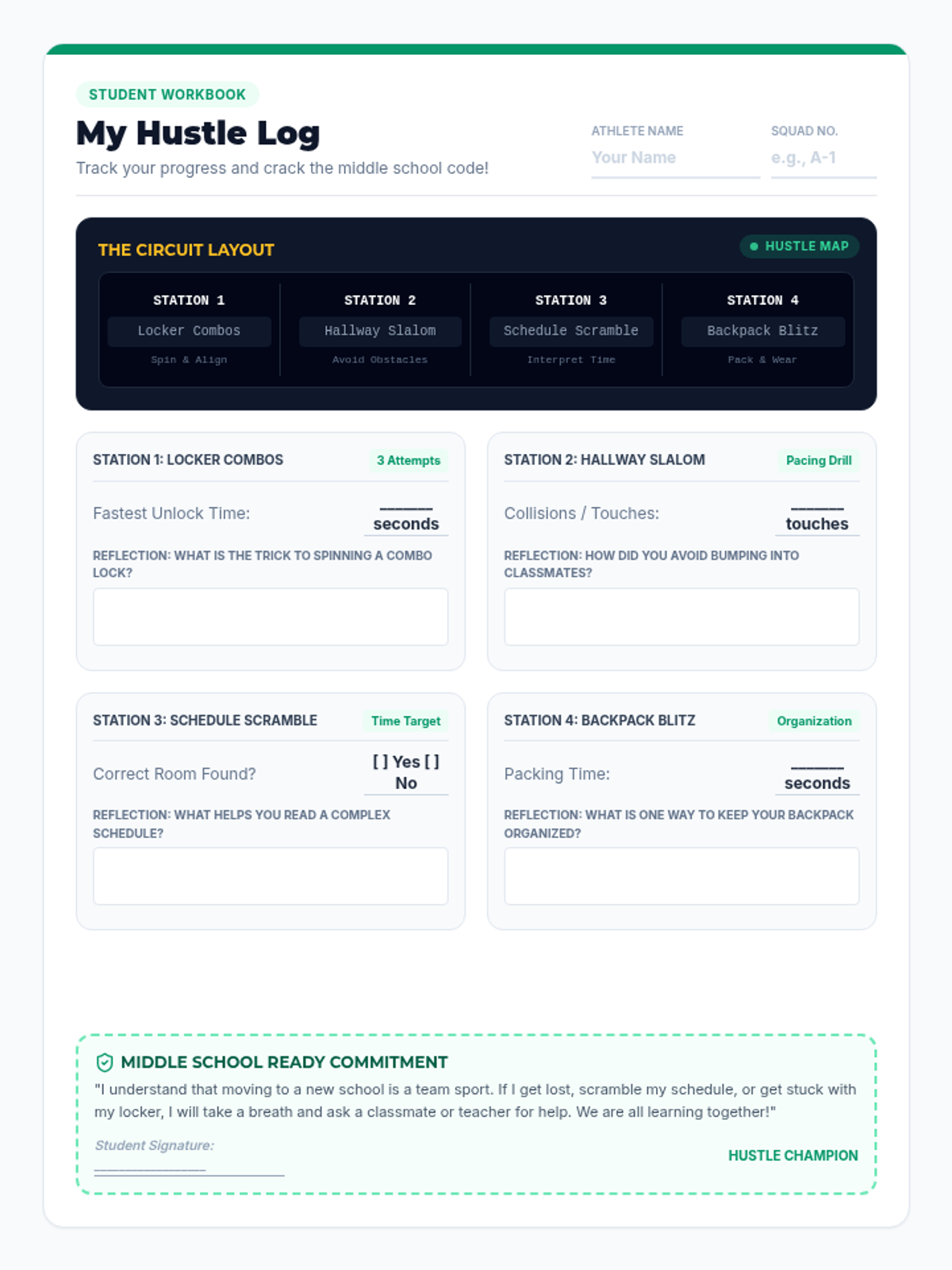
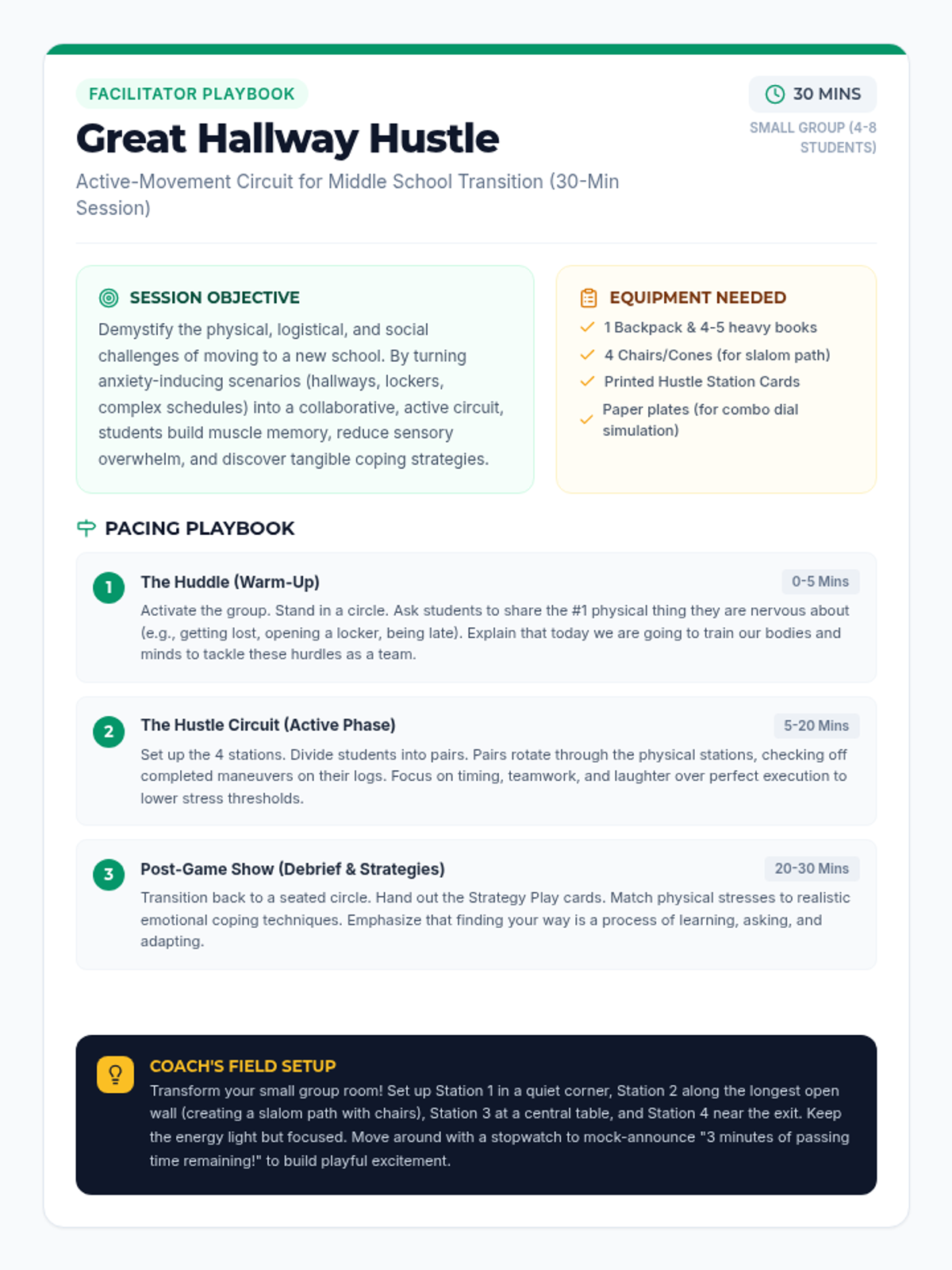
A 30-minute small group session that uses a high-energy movement circuit to address the transition concerns of moving to a new middle school, simulating lockers, hallways, backpacks, and schedules.
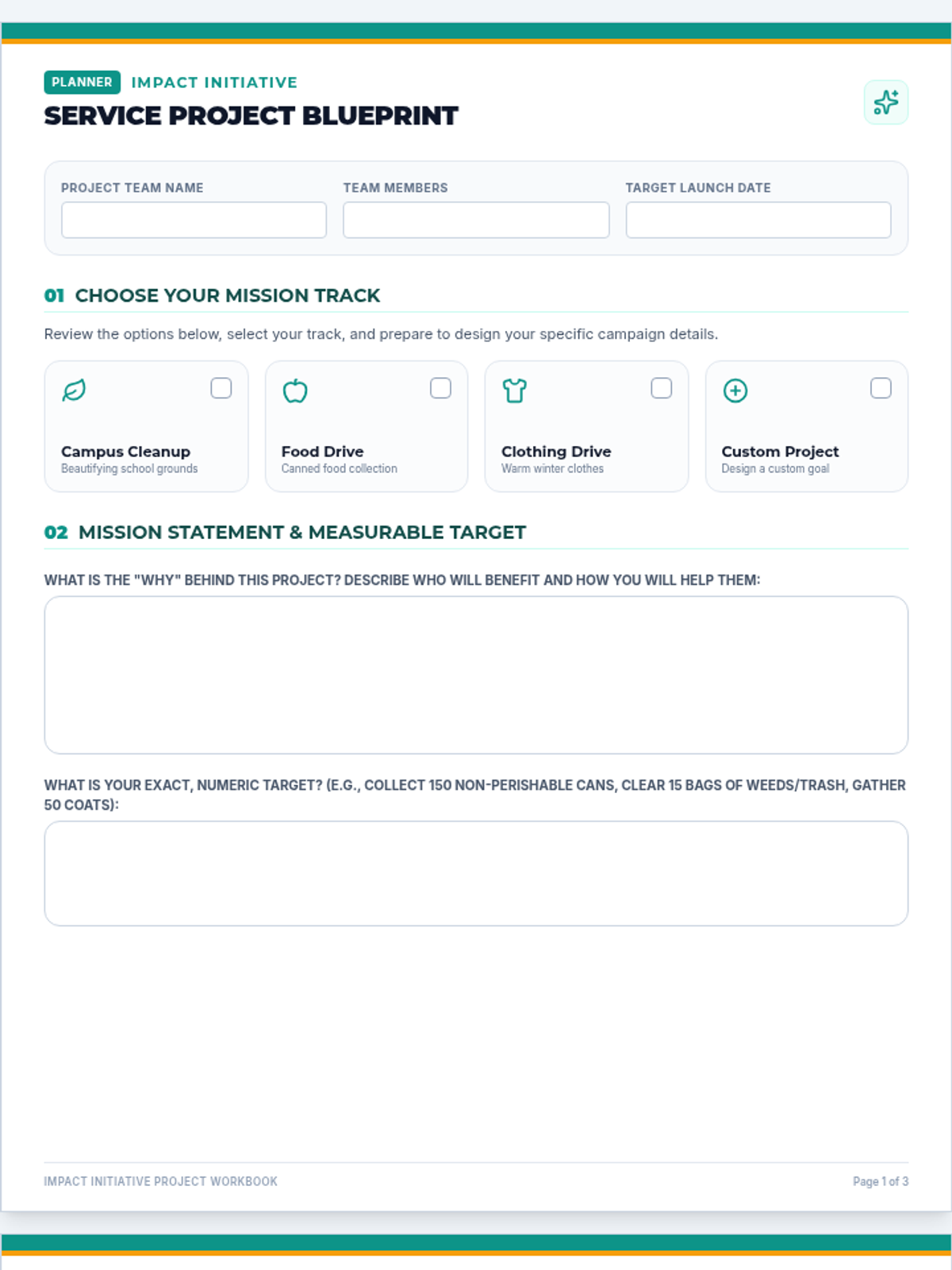
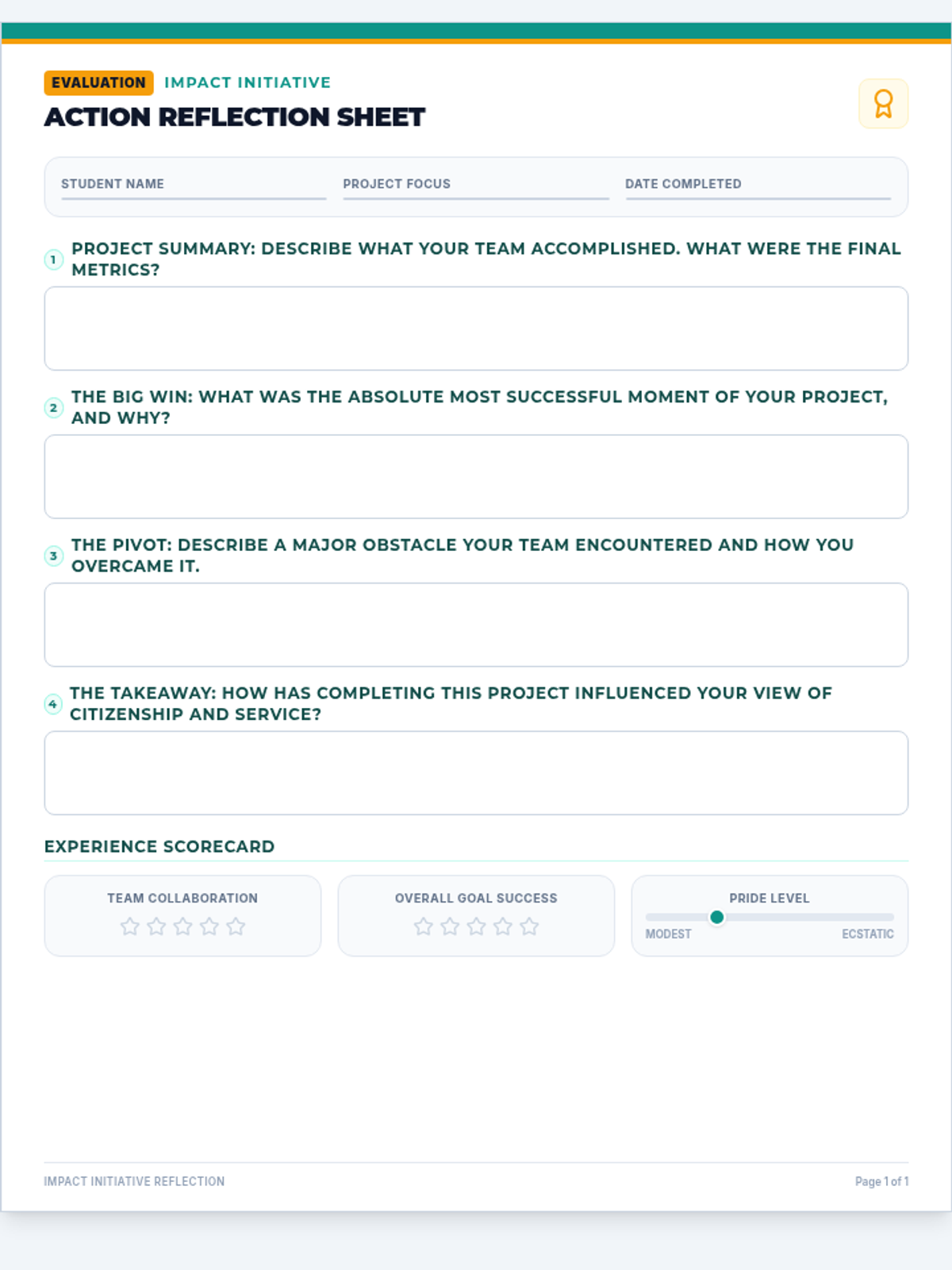
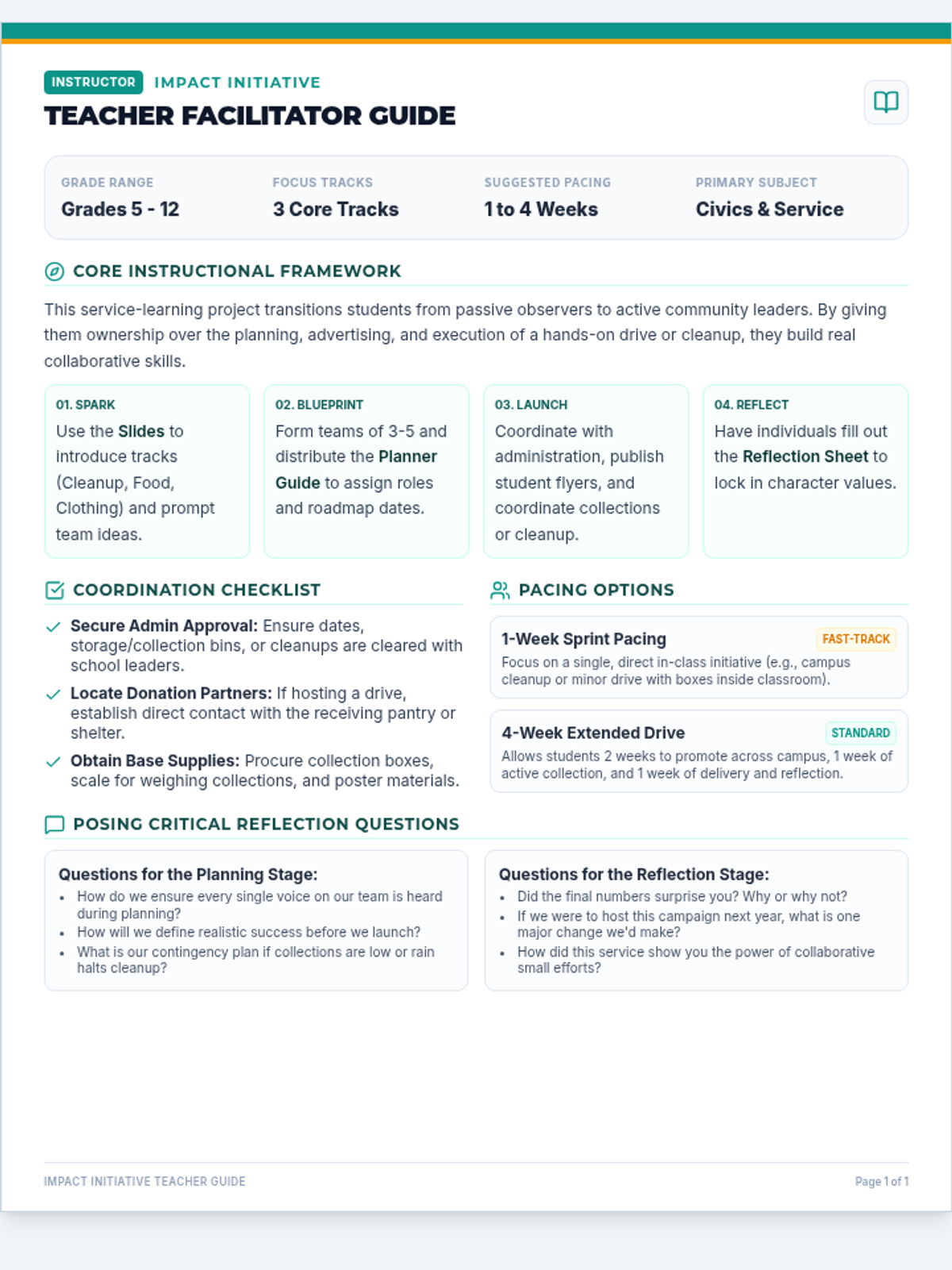
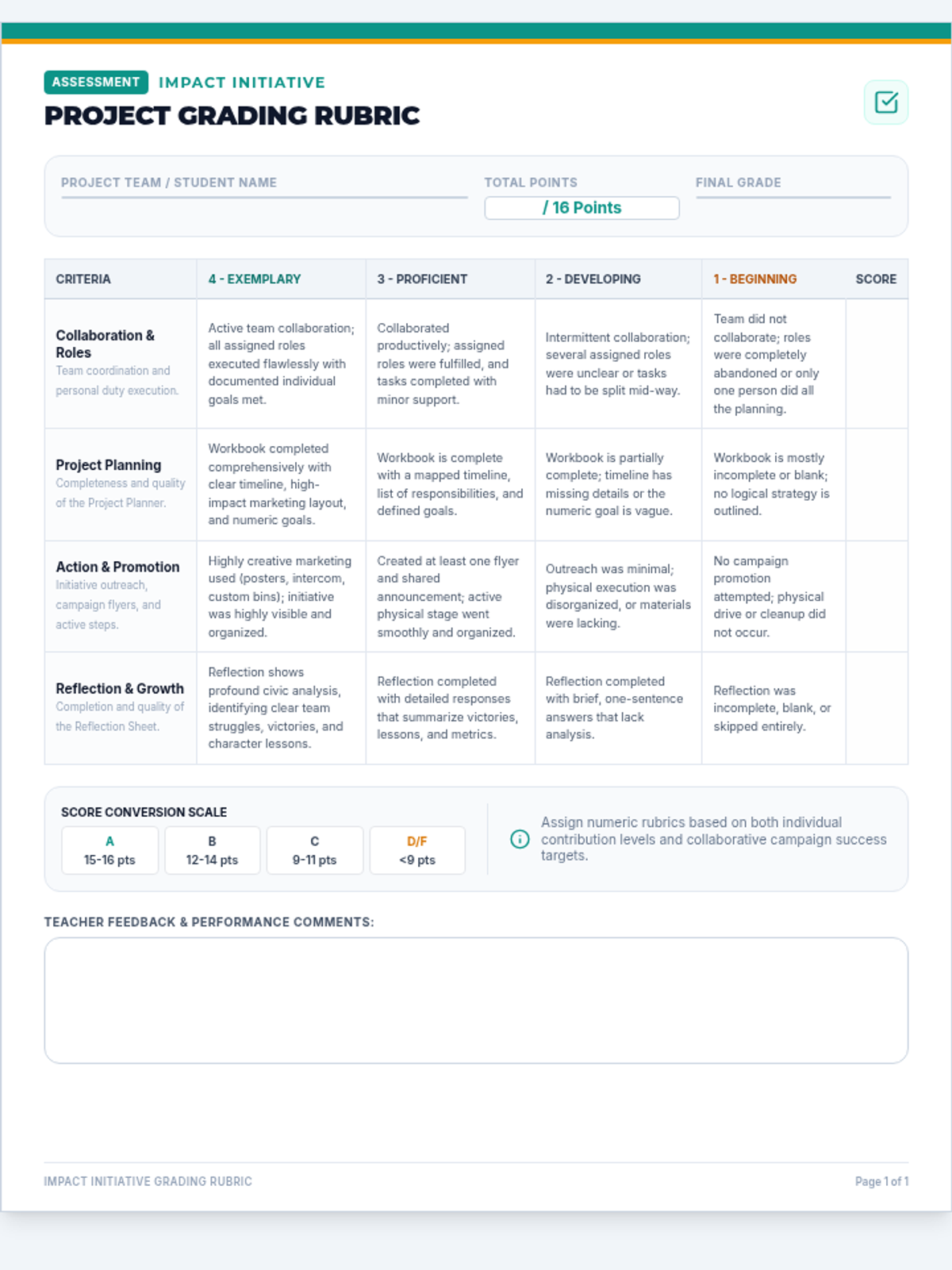
A service-learning lesson where students plan, execute, and reflect on a community service project of their choice (school campus cleanup, food drive, or clothing drive). It includes interactive presentation slides, a step-by-step project planning guide, a simplified reflection worksheet, and a teacher facilitation guide.
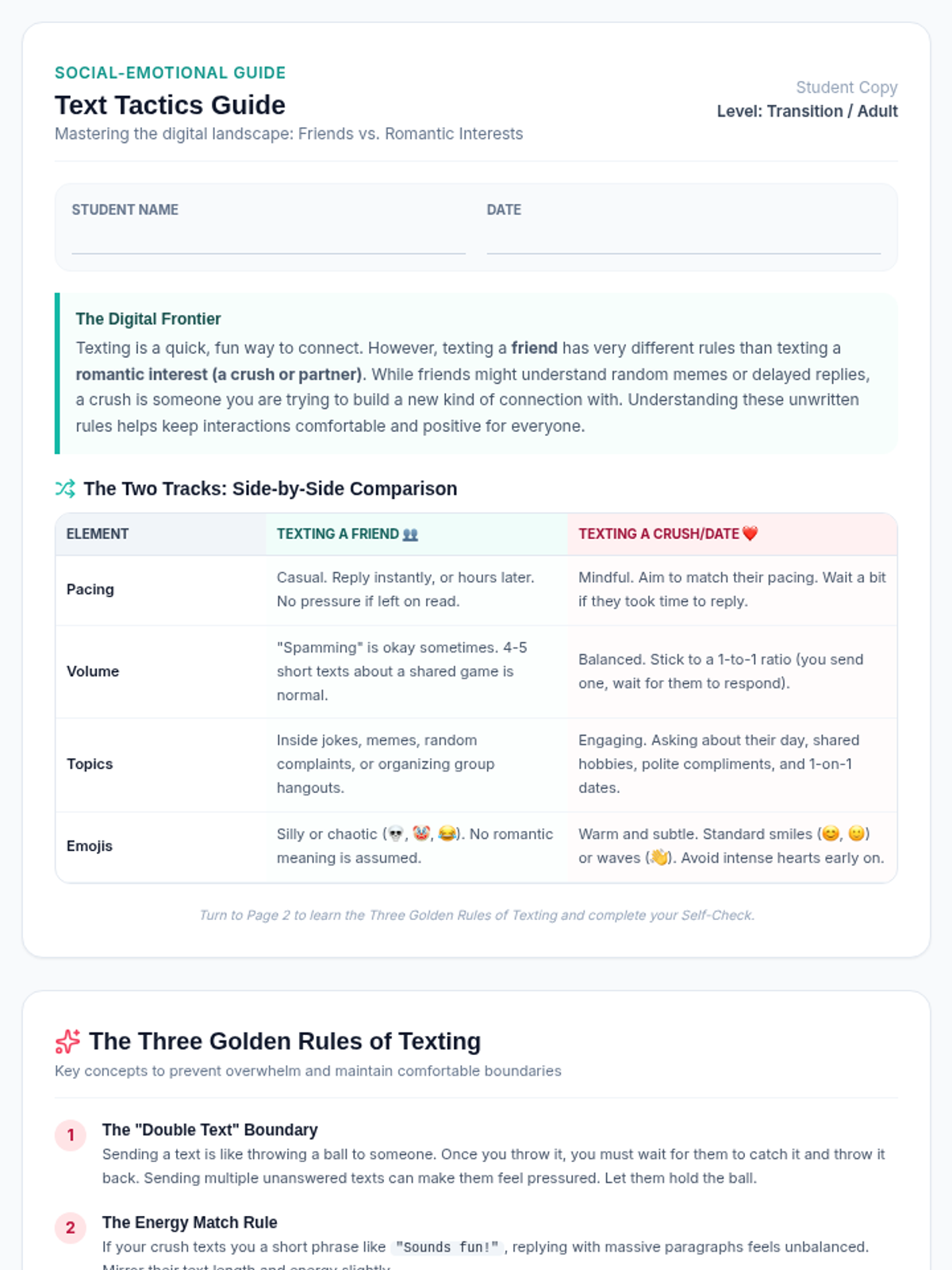
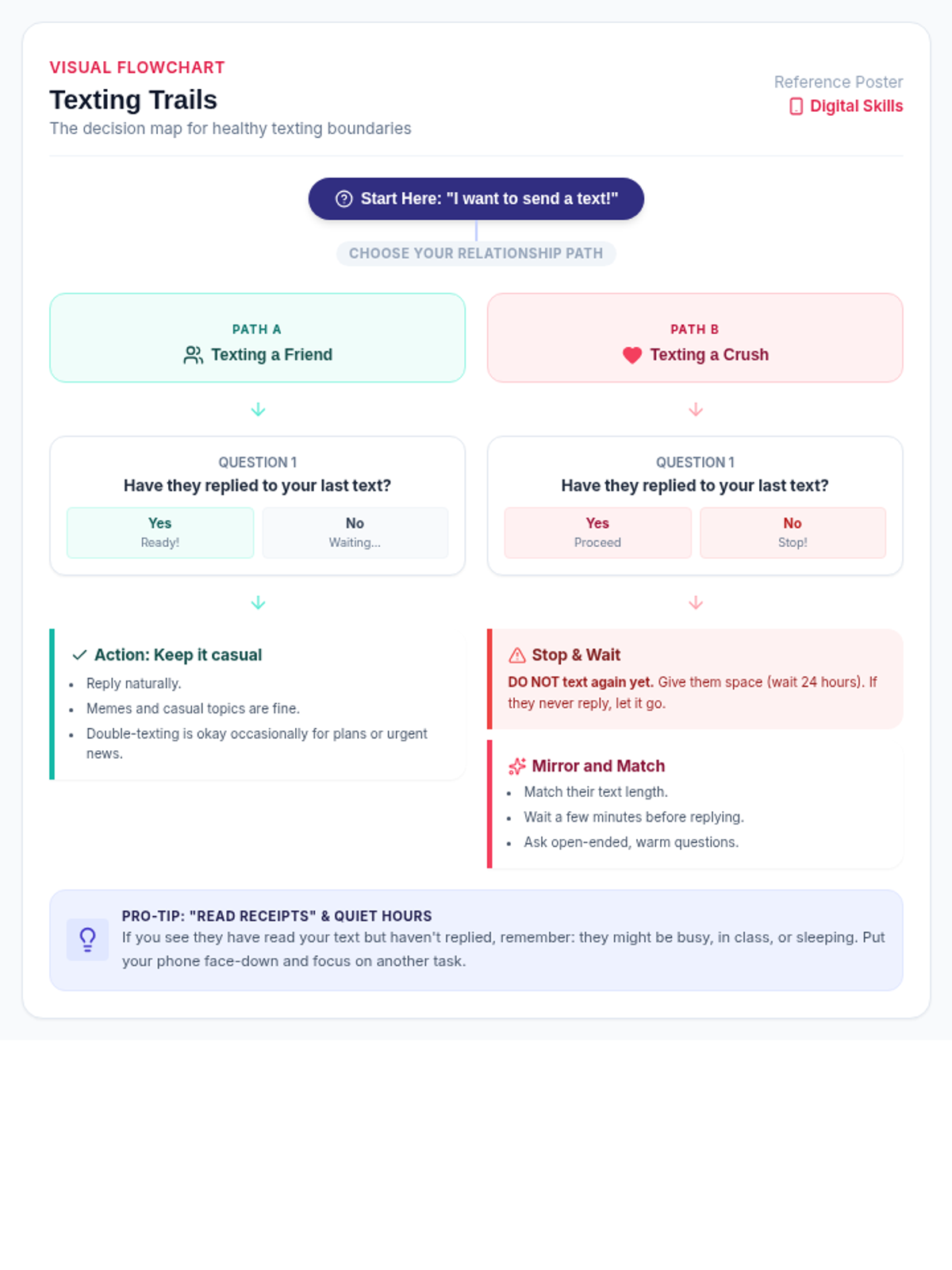
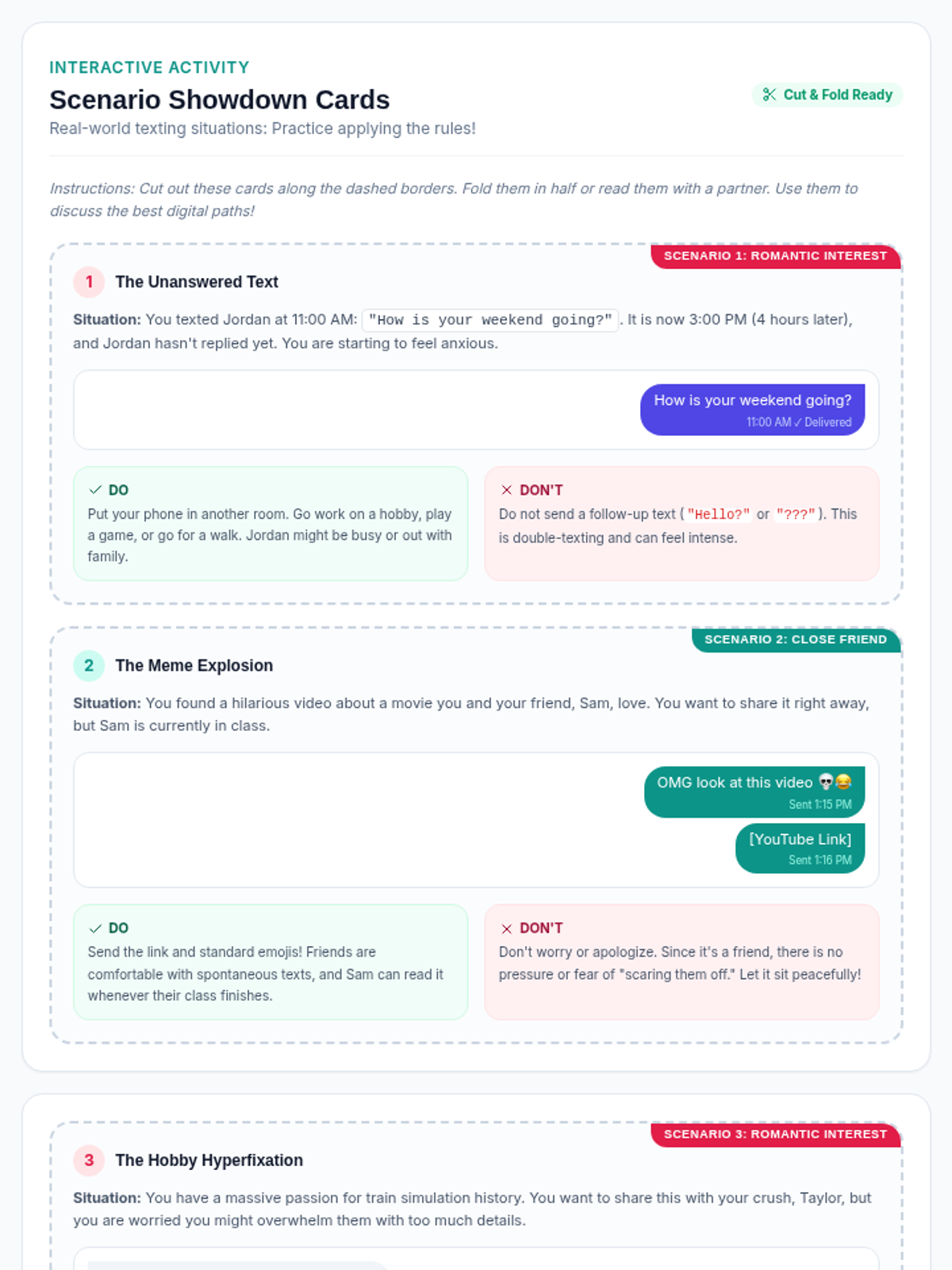
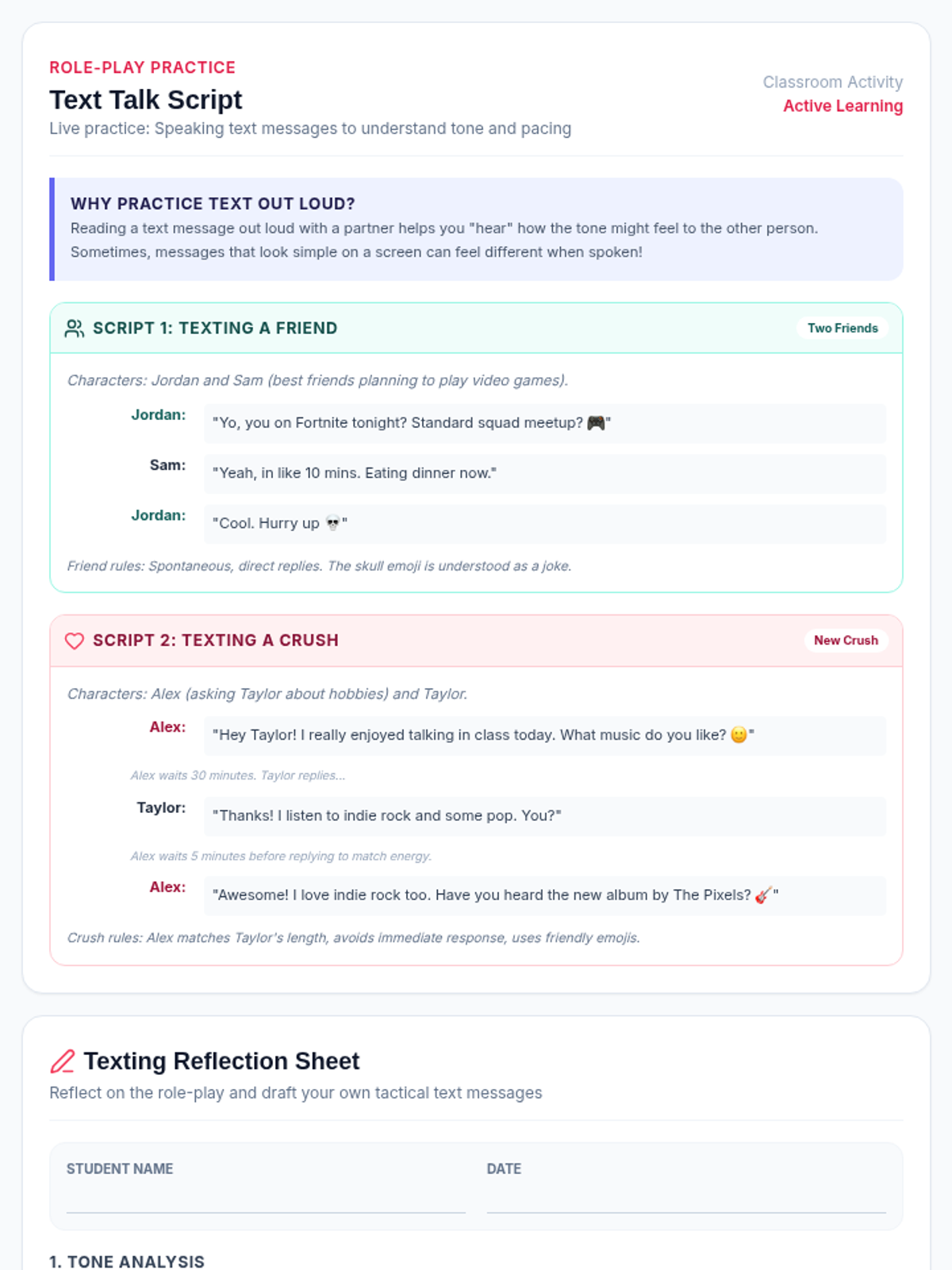
A structured social-emotional learning lesson designed for young adults with autism to navigate the nuances of digital communication. The lesson contrasts texting with friends against texting romantic interests, using visual guides, scenario cards, and role-play.
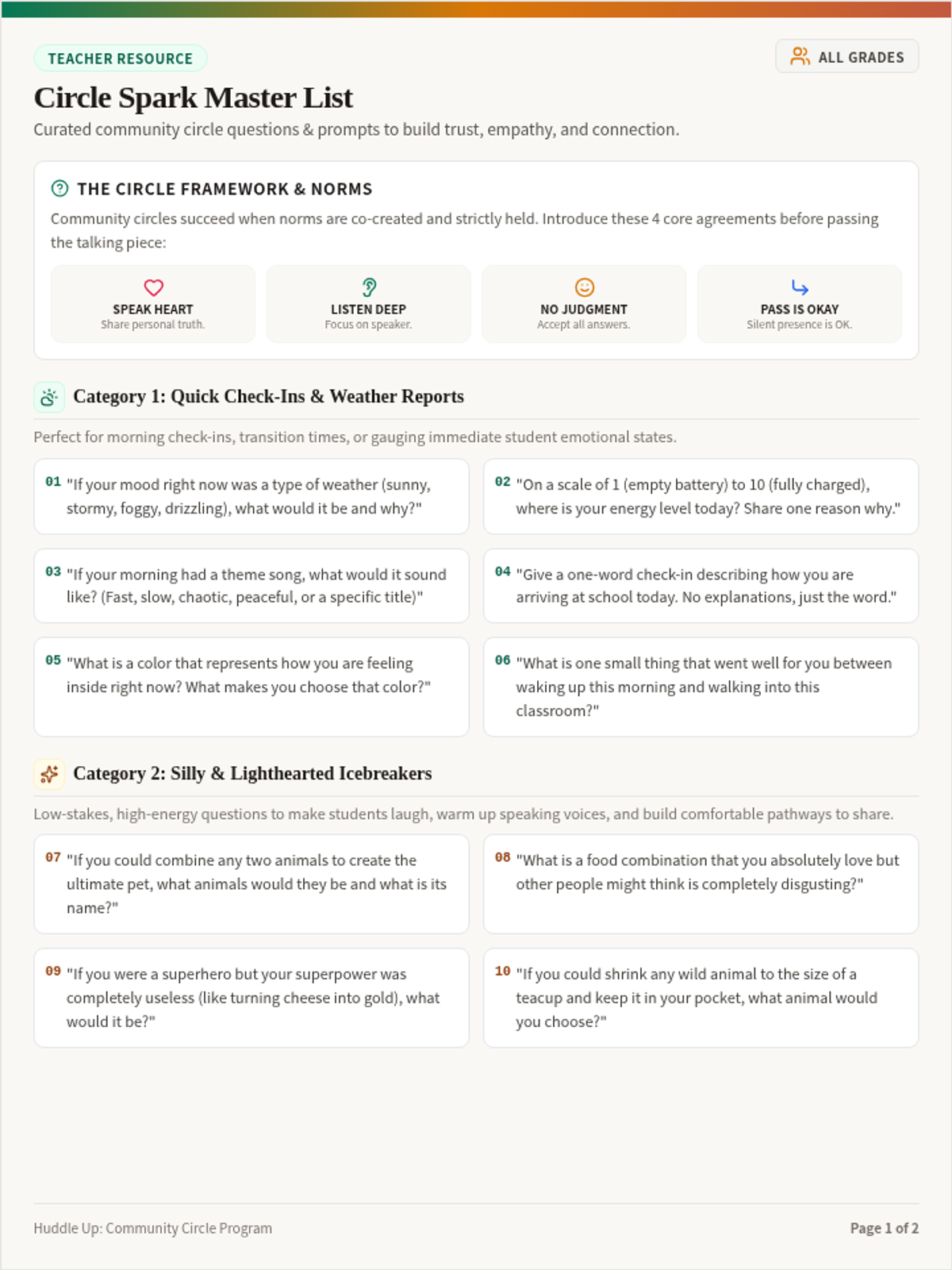
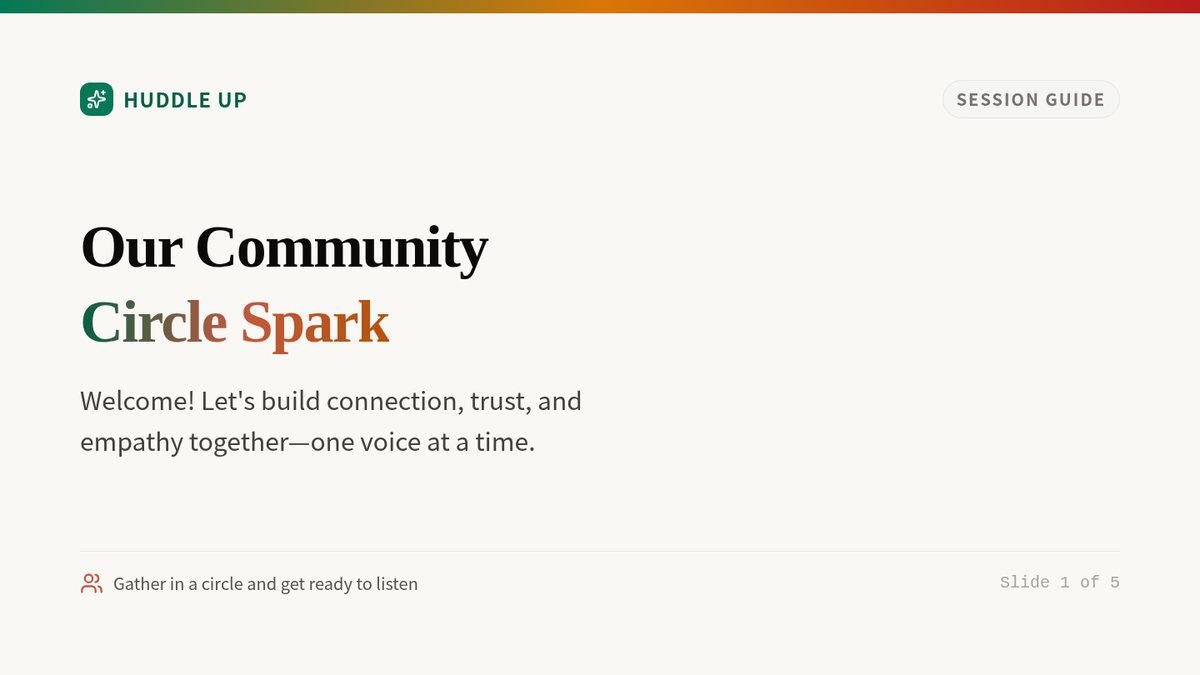
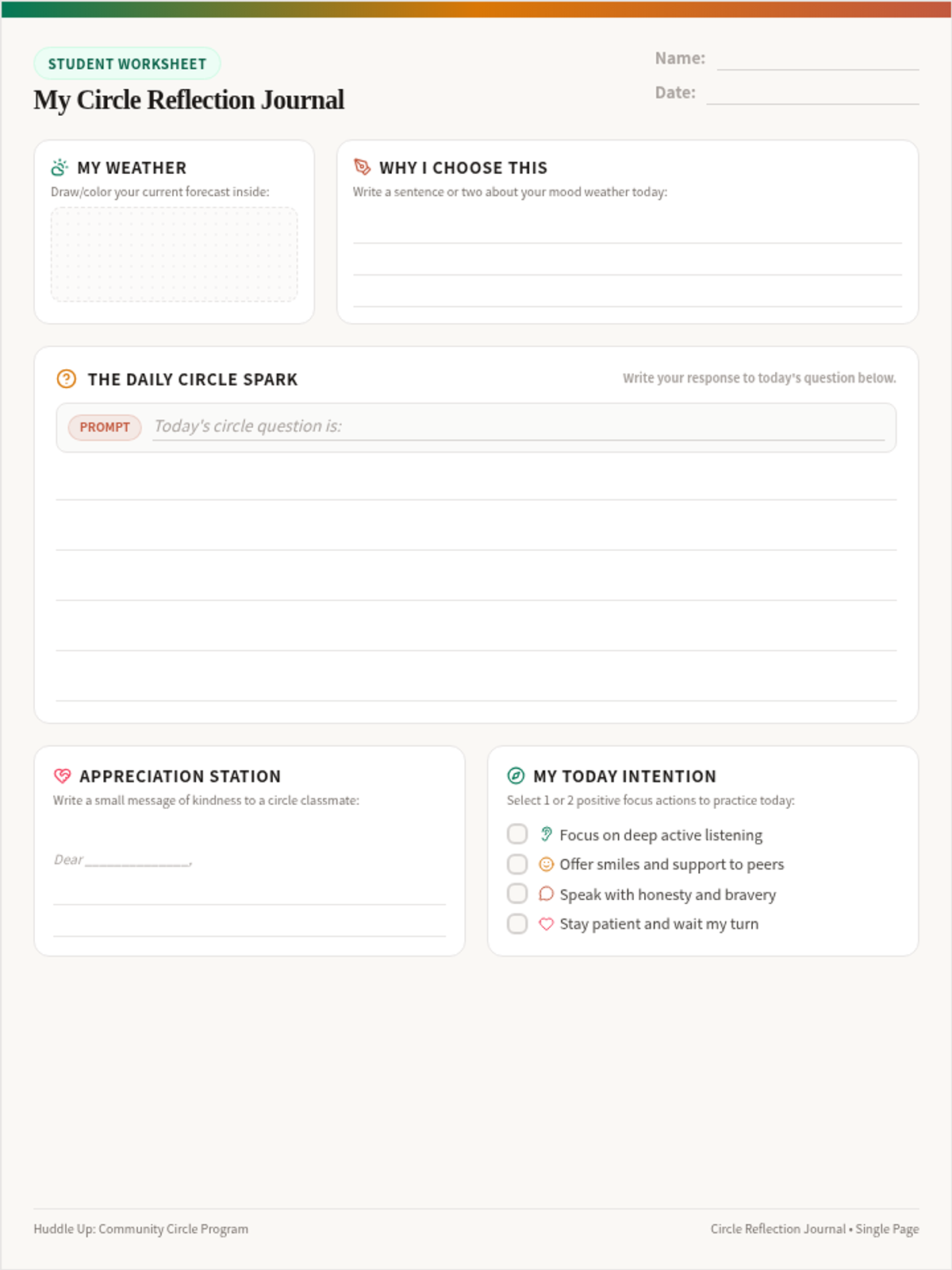
A complete toolkit to establish, run, and maintain engaging daily or weekly community circles that foster empathy, build classroom relationships, and check in on students' social-emotional well-being.
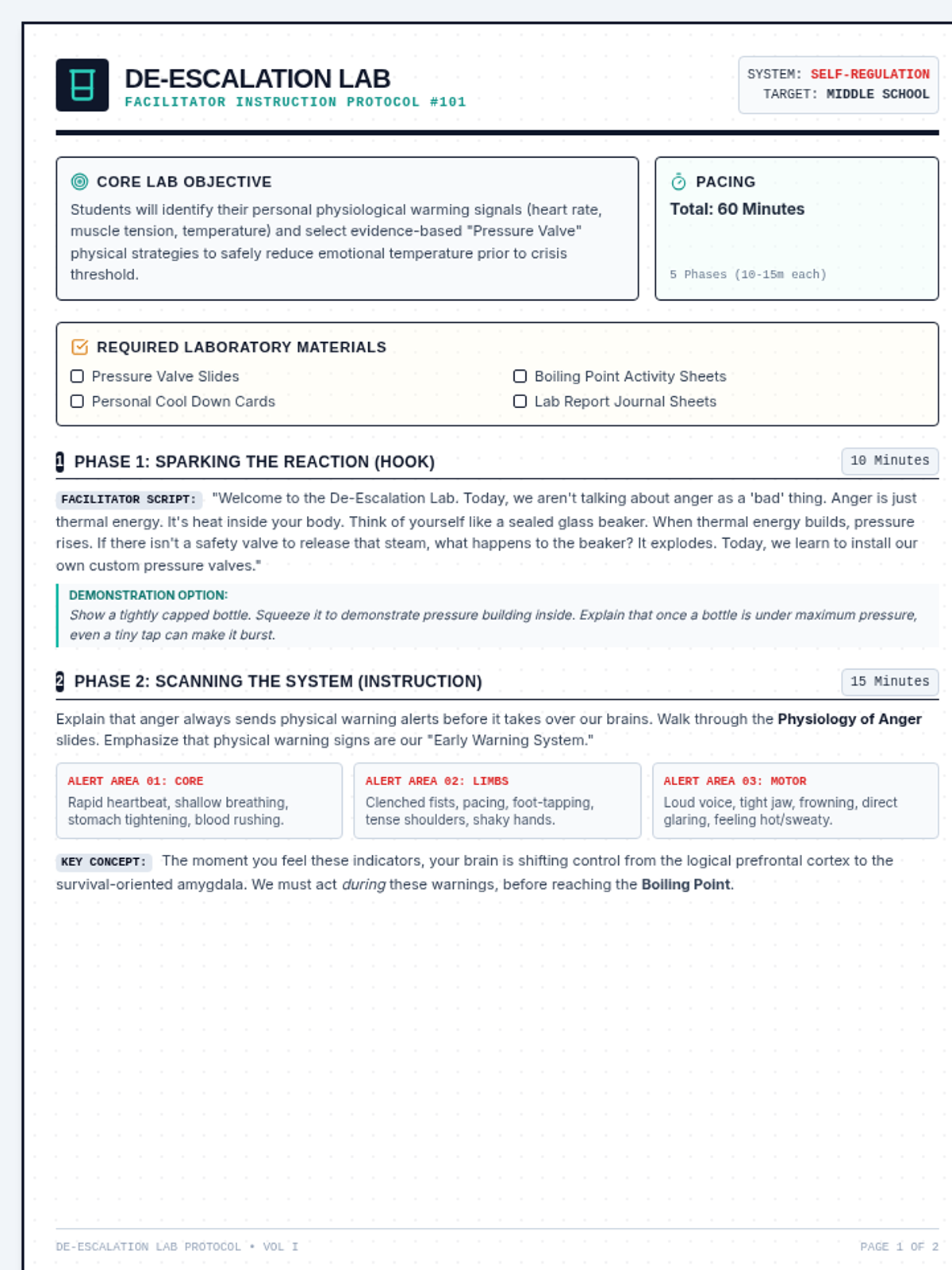
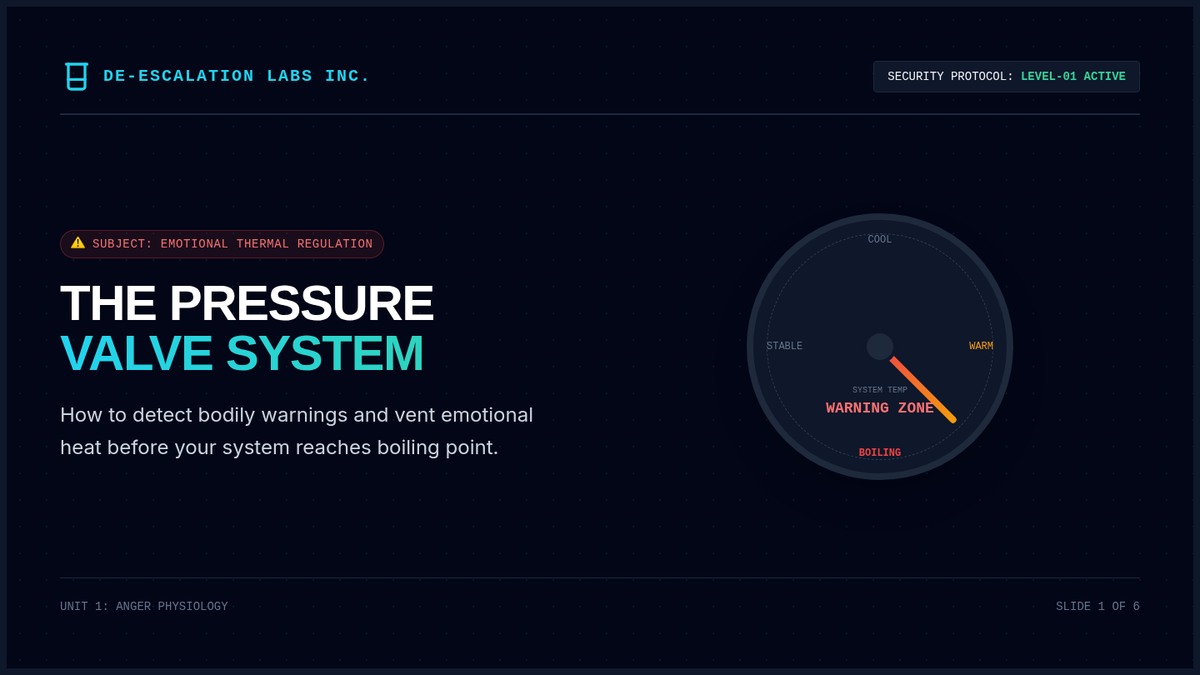
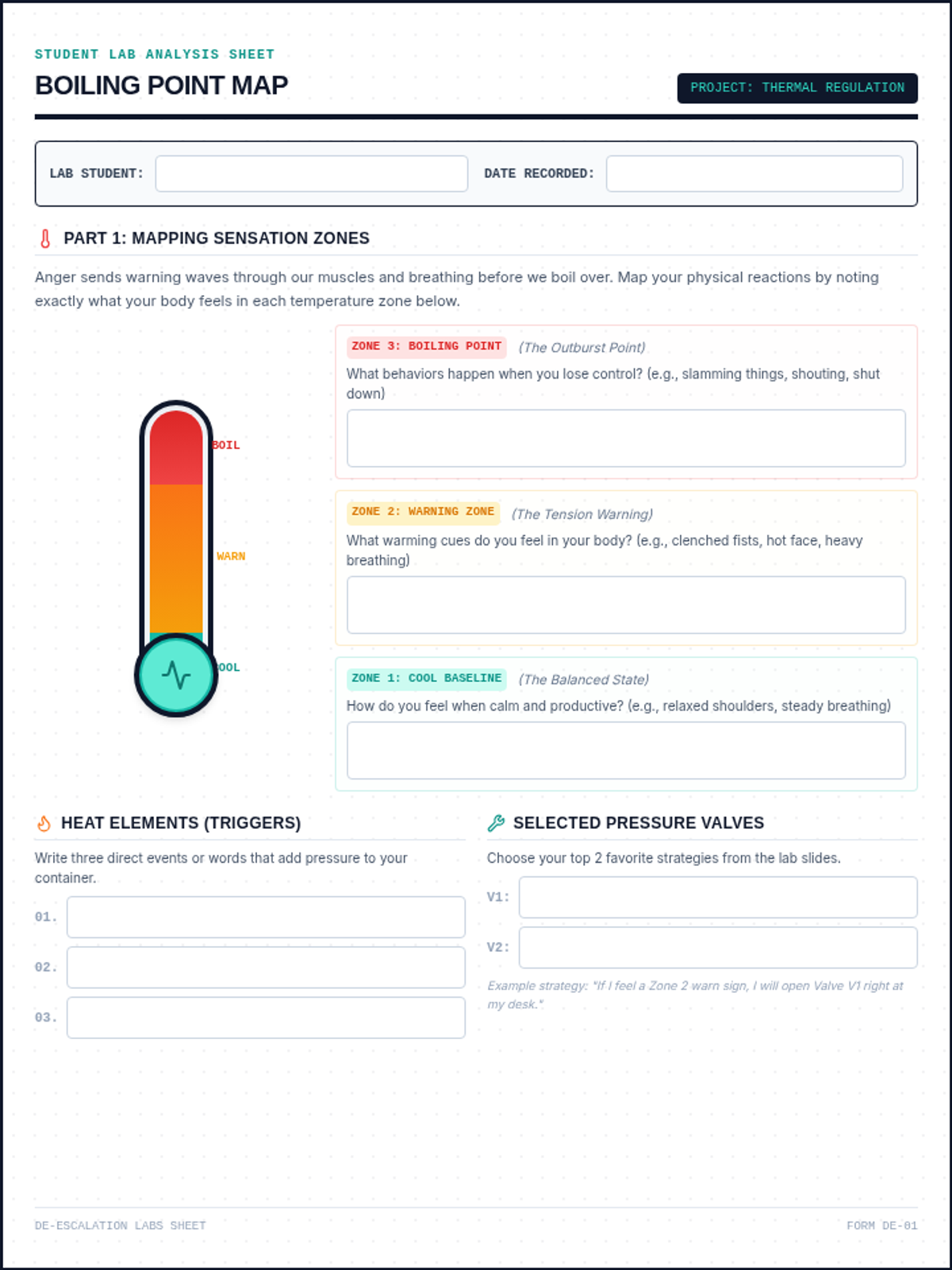
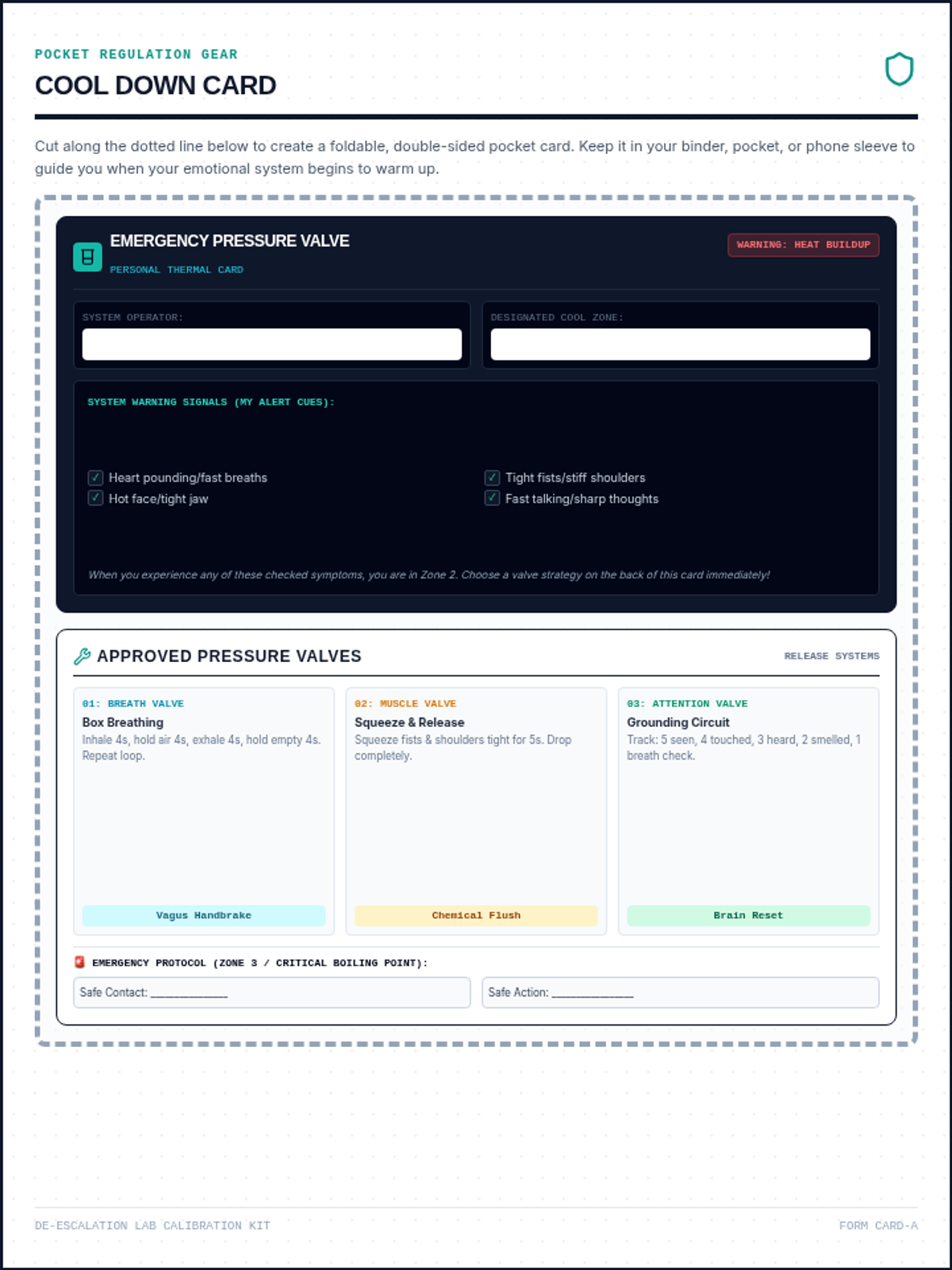
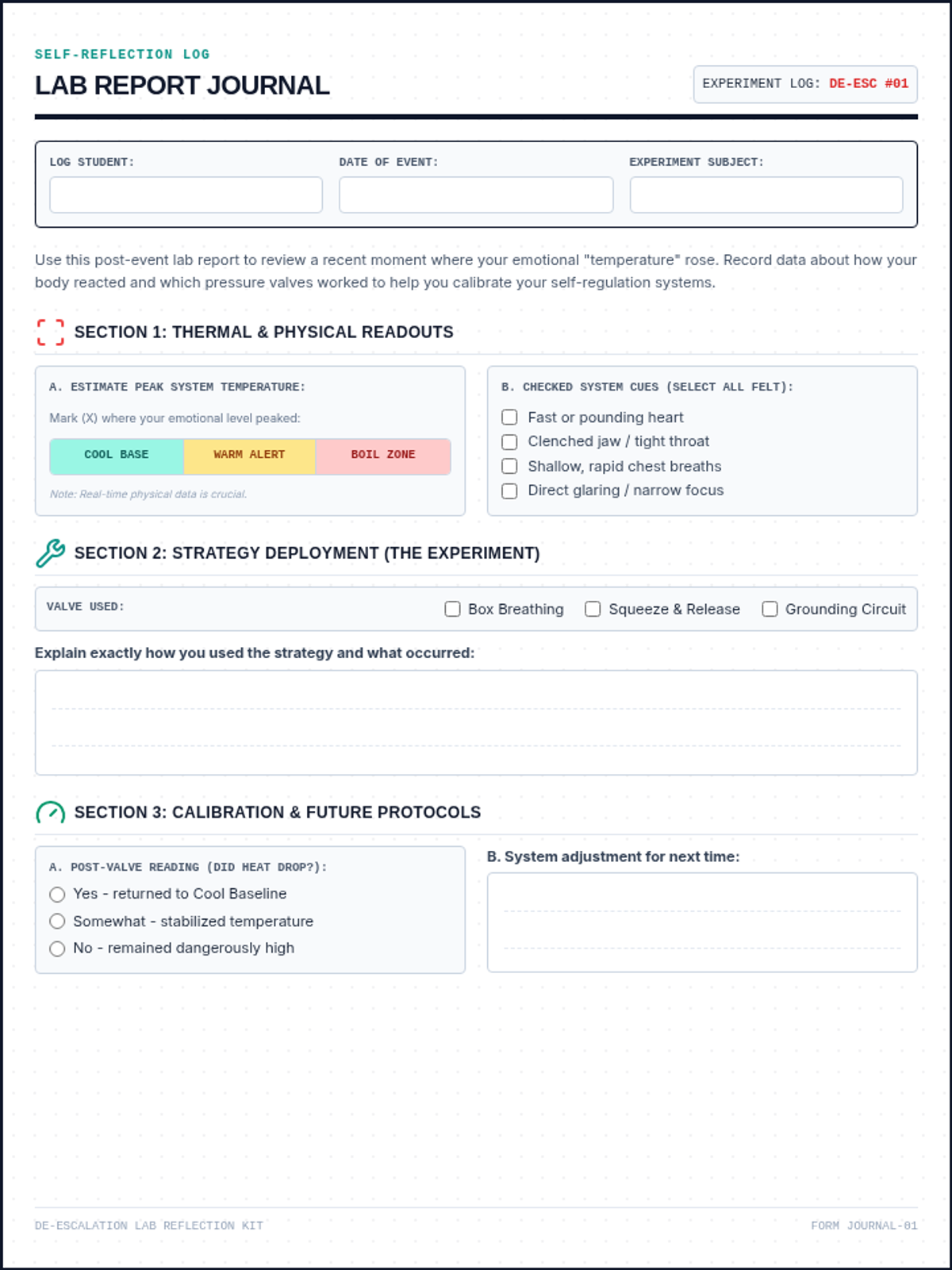
A behavioral intervention lesson for middle schoolers that uses a laboratory theme to explore the physical sensations of anger. Students identify their physiological warning signs, experiment with 'pressure valve' strategies, and create custom self-regulation plans to prevent emotional blow-ups.
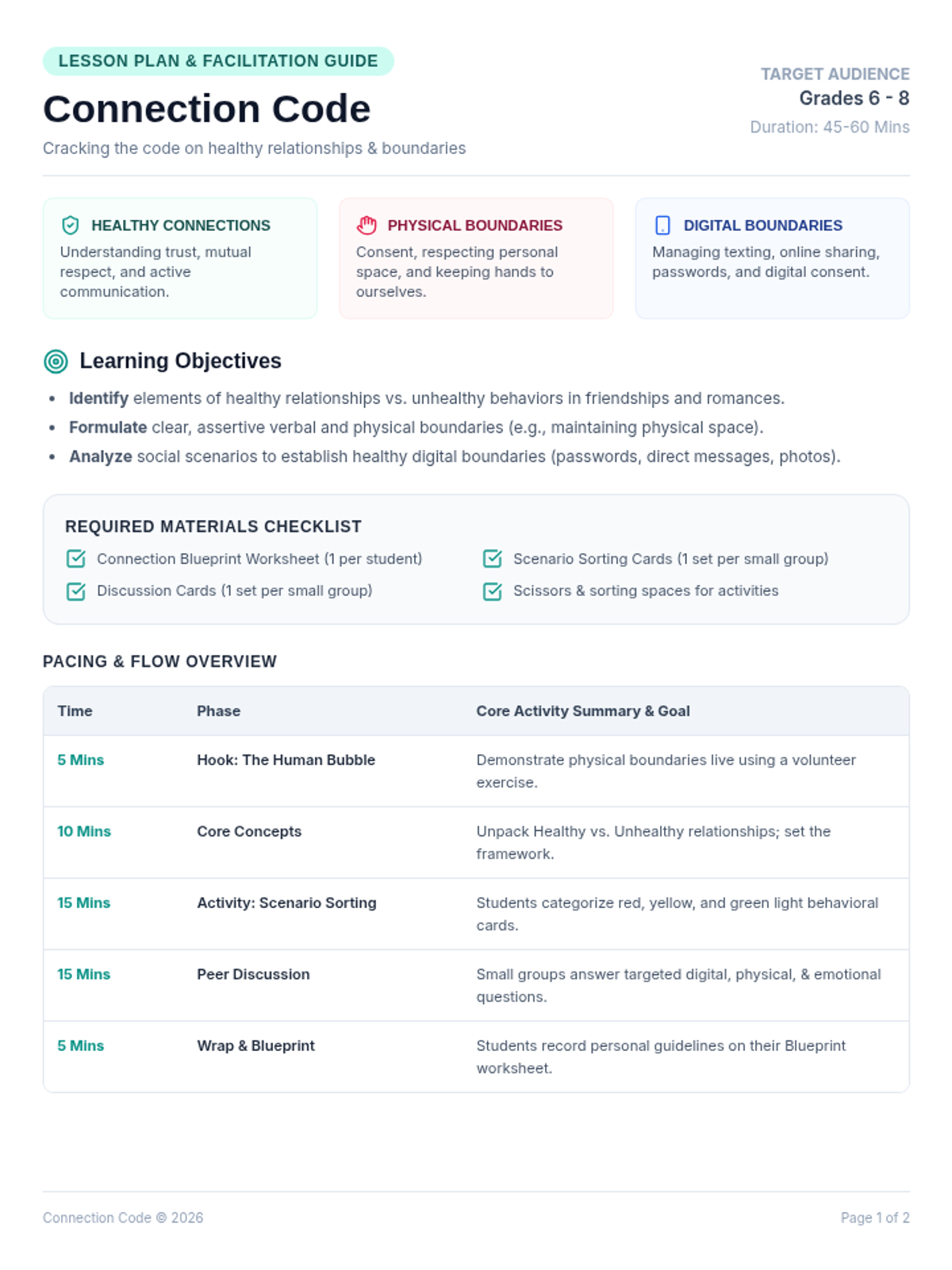
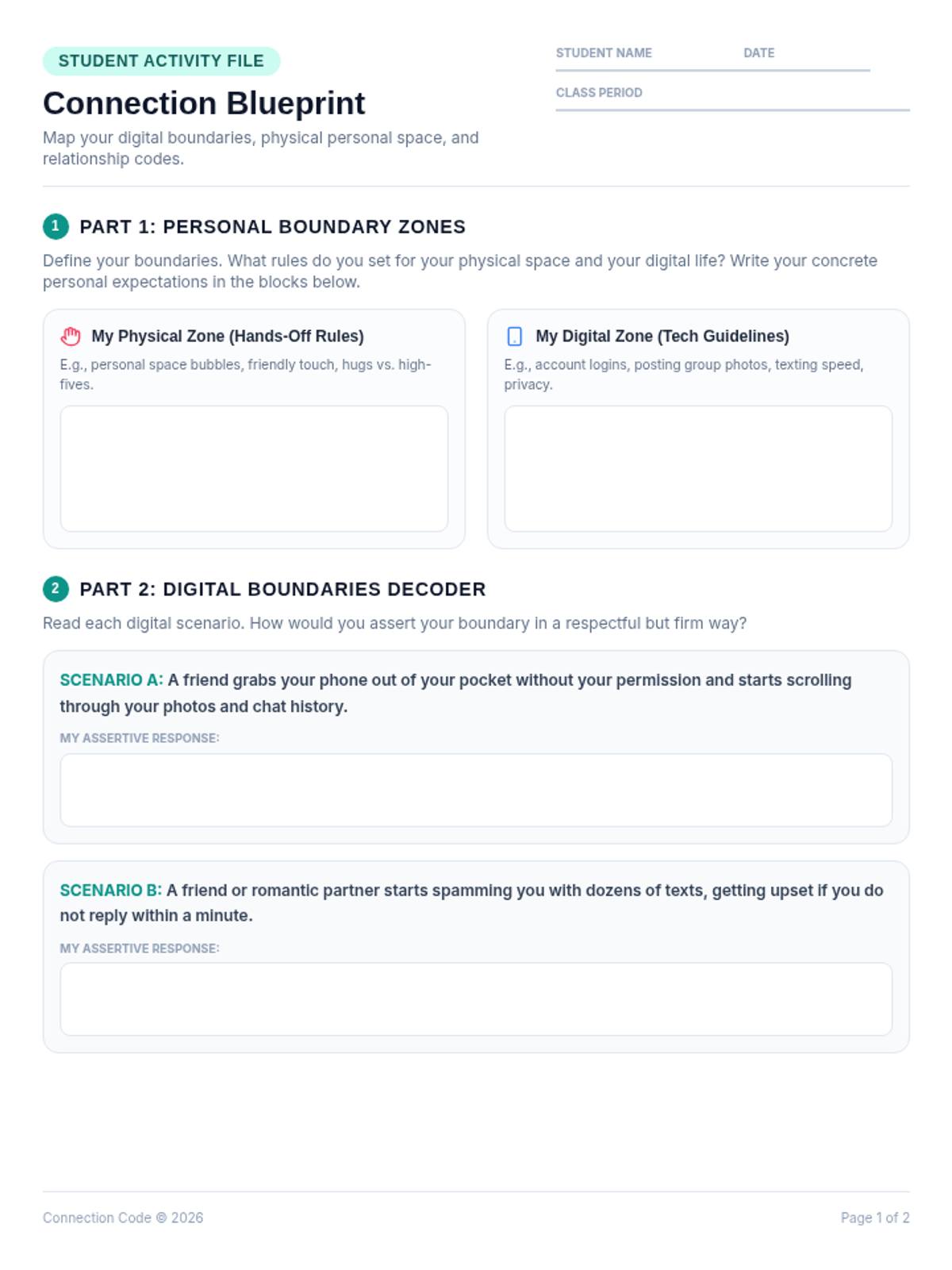
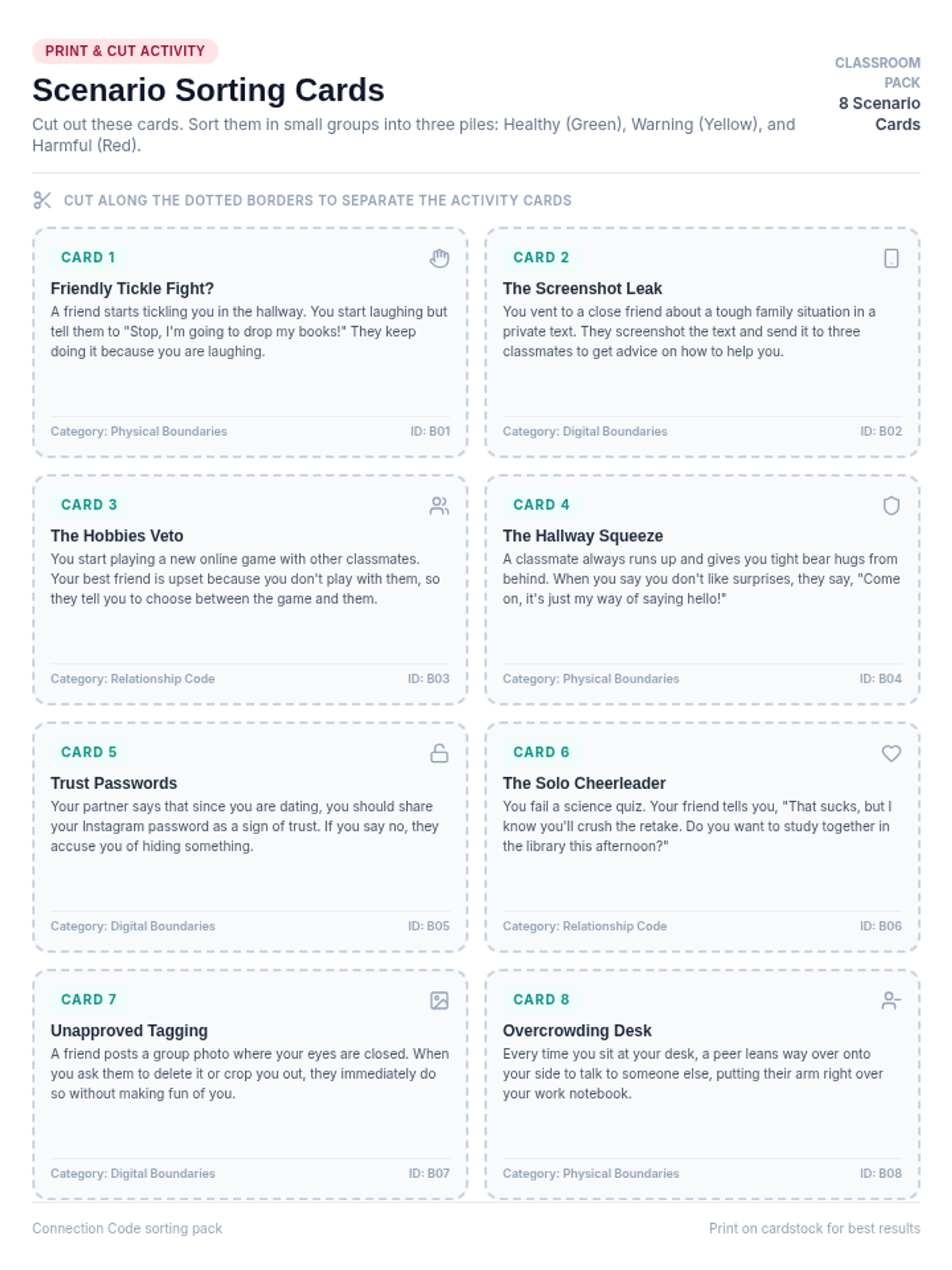
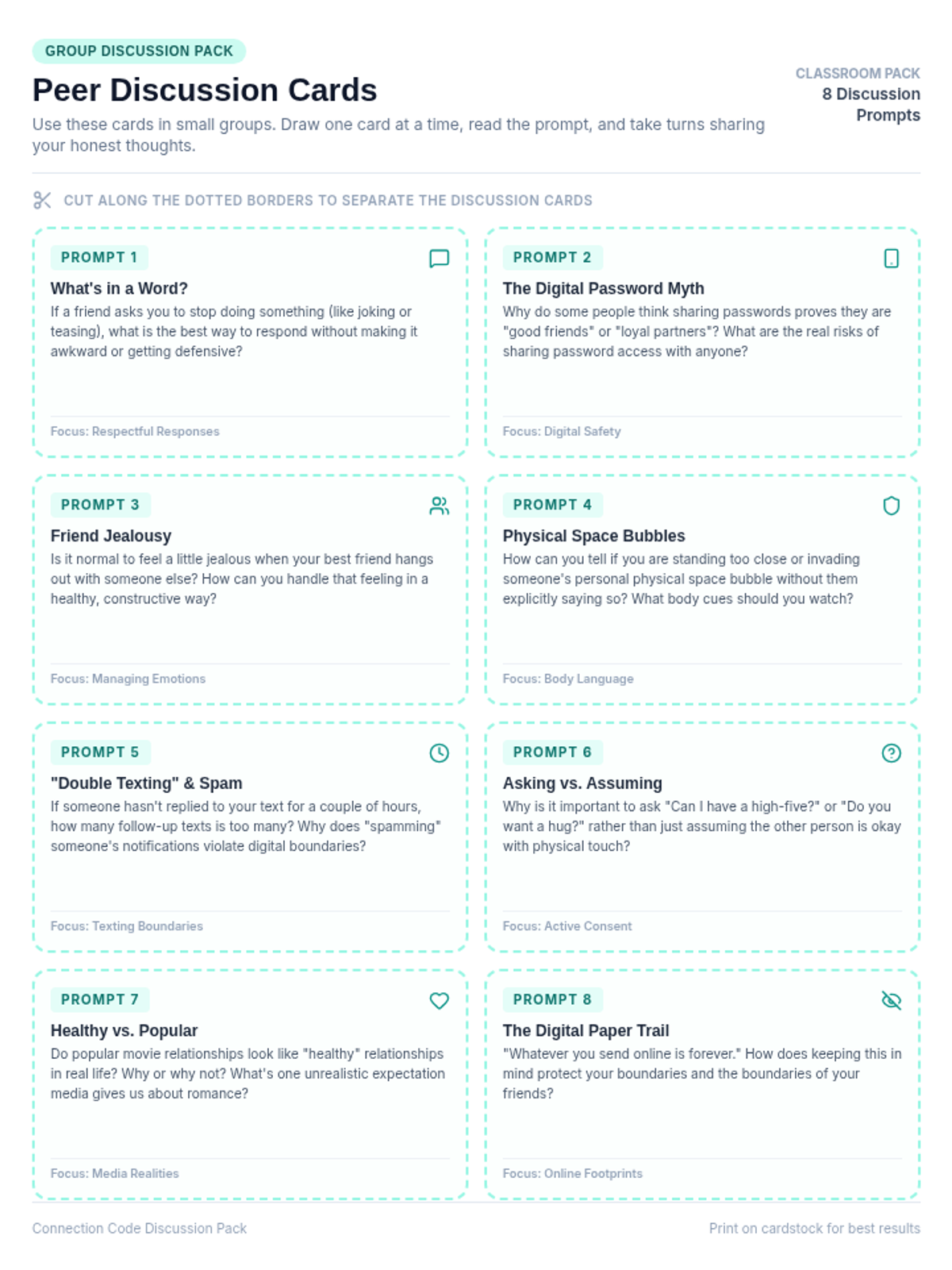
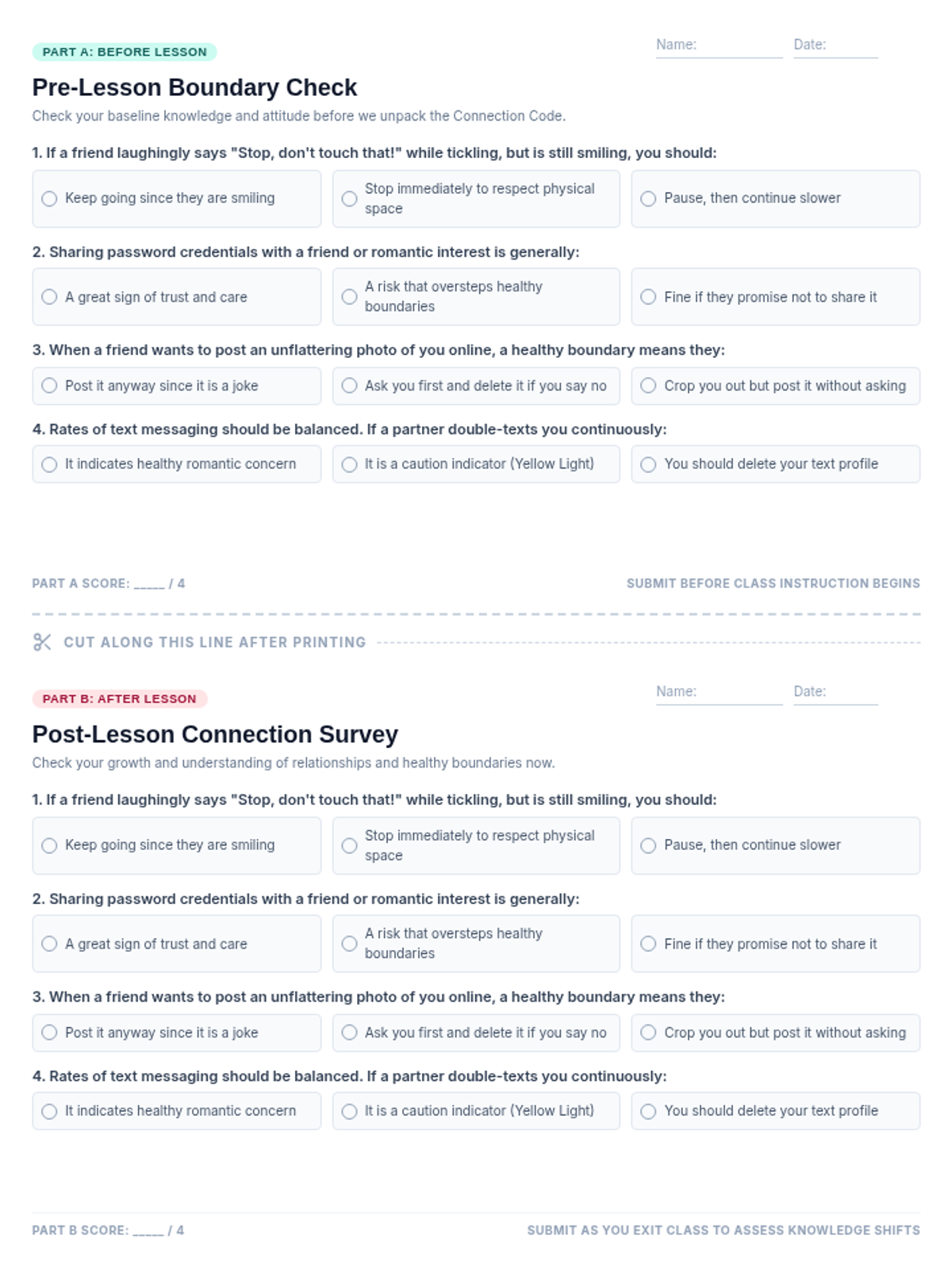
An interactive, high-impact middle school lesson plan focusing on healthy relationships, physical boundaries, and digital consent. Includes a step-by-step teacher guide, student blueprint worksheet, scenario sorting activity, and peer discussion cards.
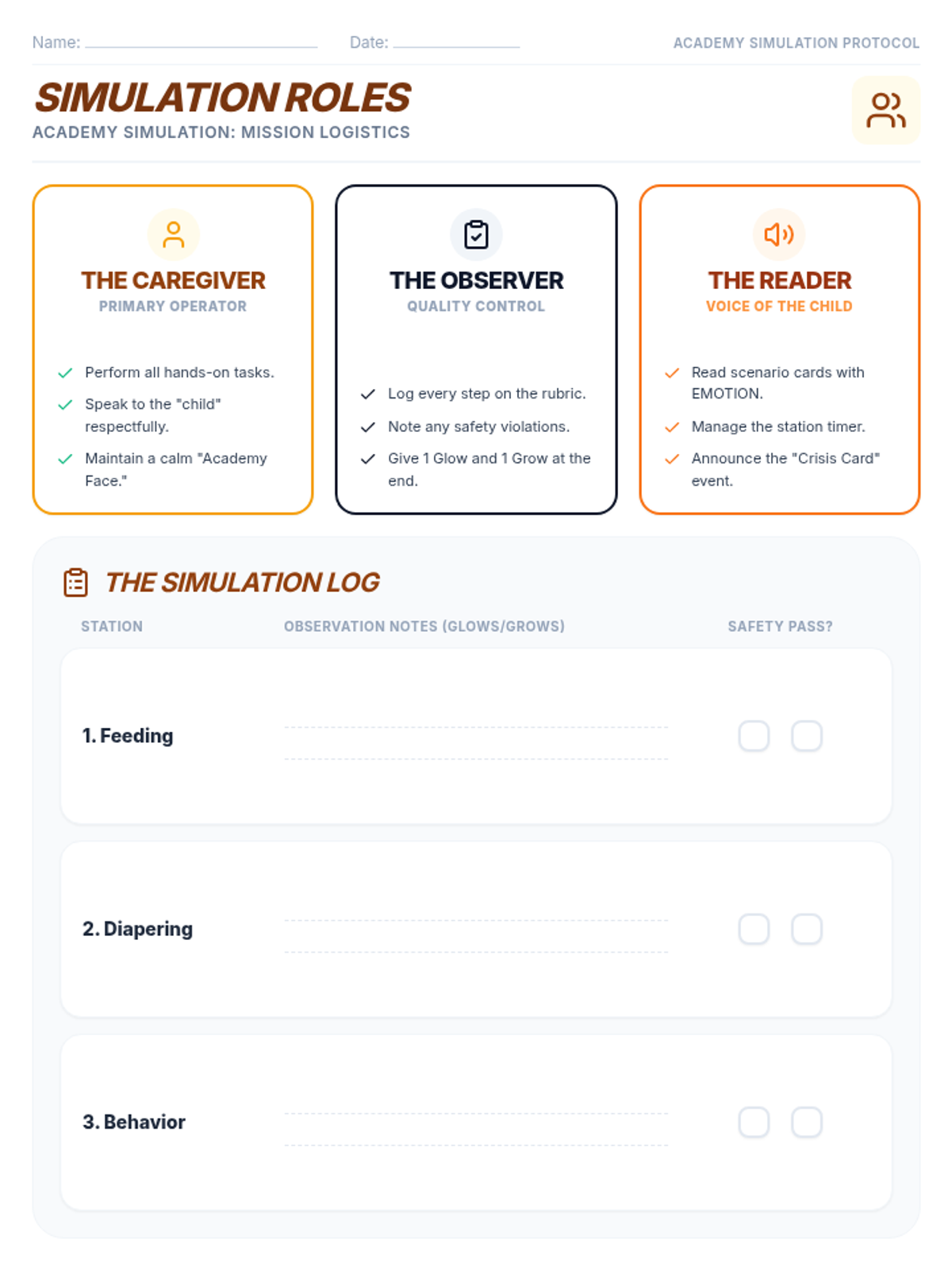
This lesson focuses on Academy Simulation Mission Logistics, including simulation roles (Caregiver, Observer, and Reader) and the simulation log for documenting observations across different stations.
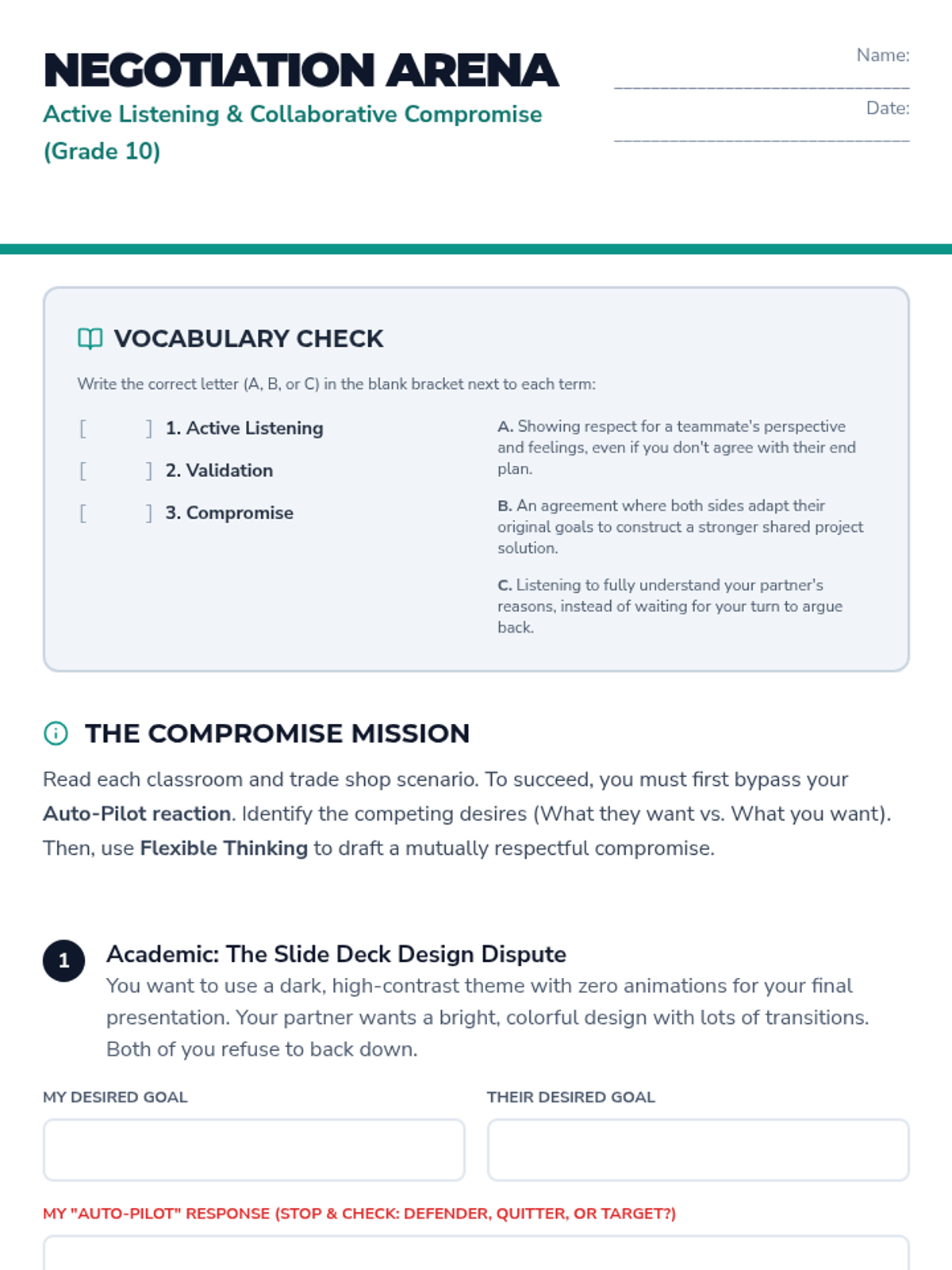
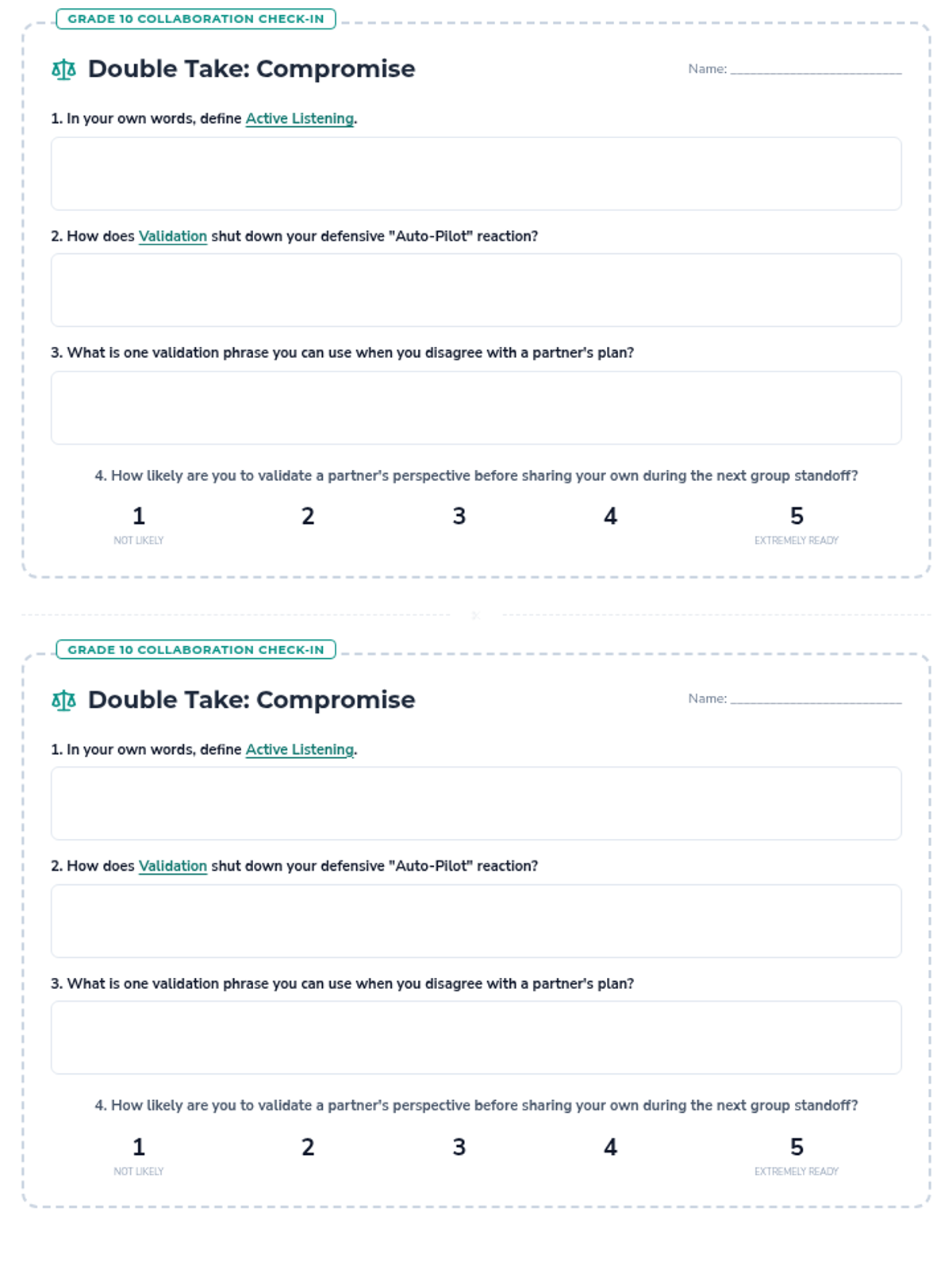
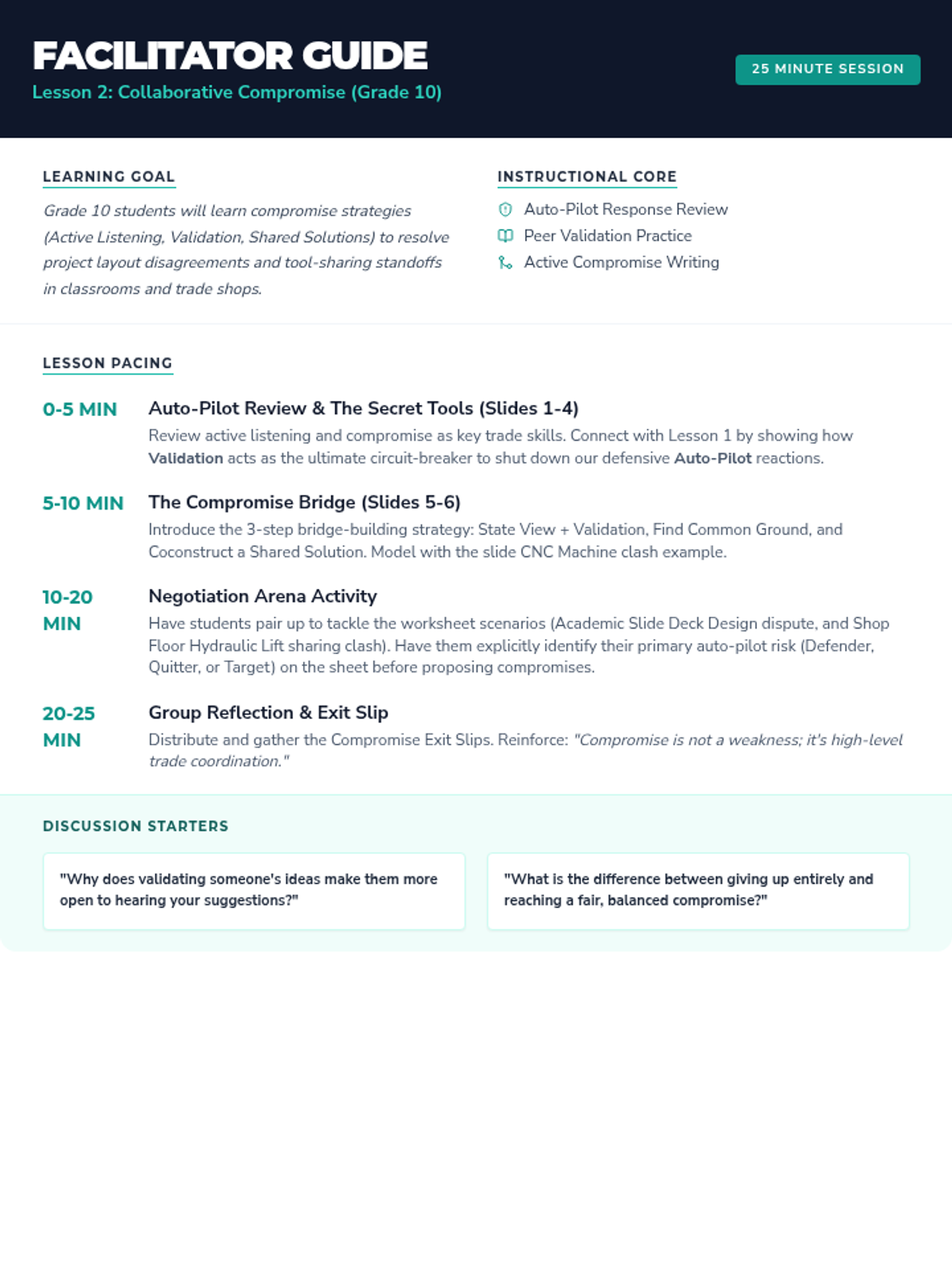
A 25-minute counseling lesson focusing on active listening, validation, and compromising to resolve teammate friction and competing visions in both classrooms and shops.
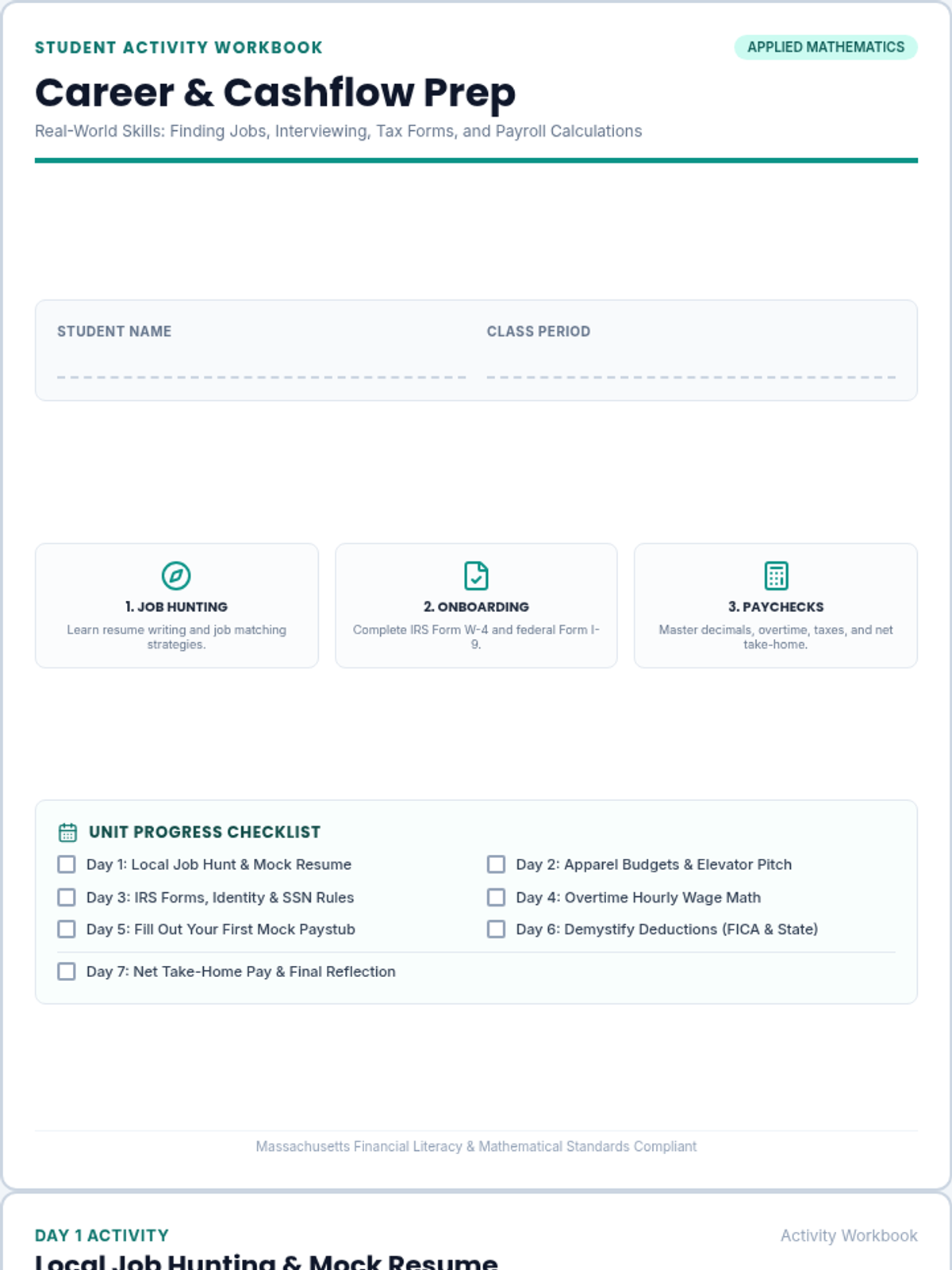
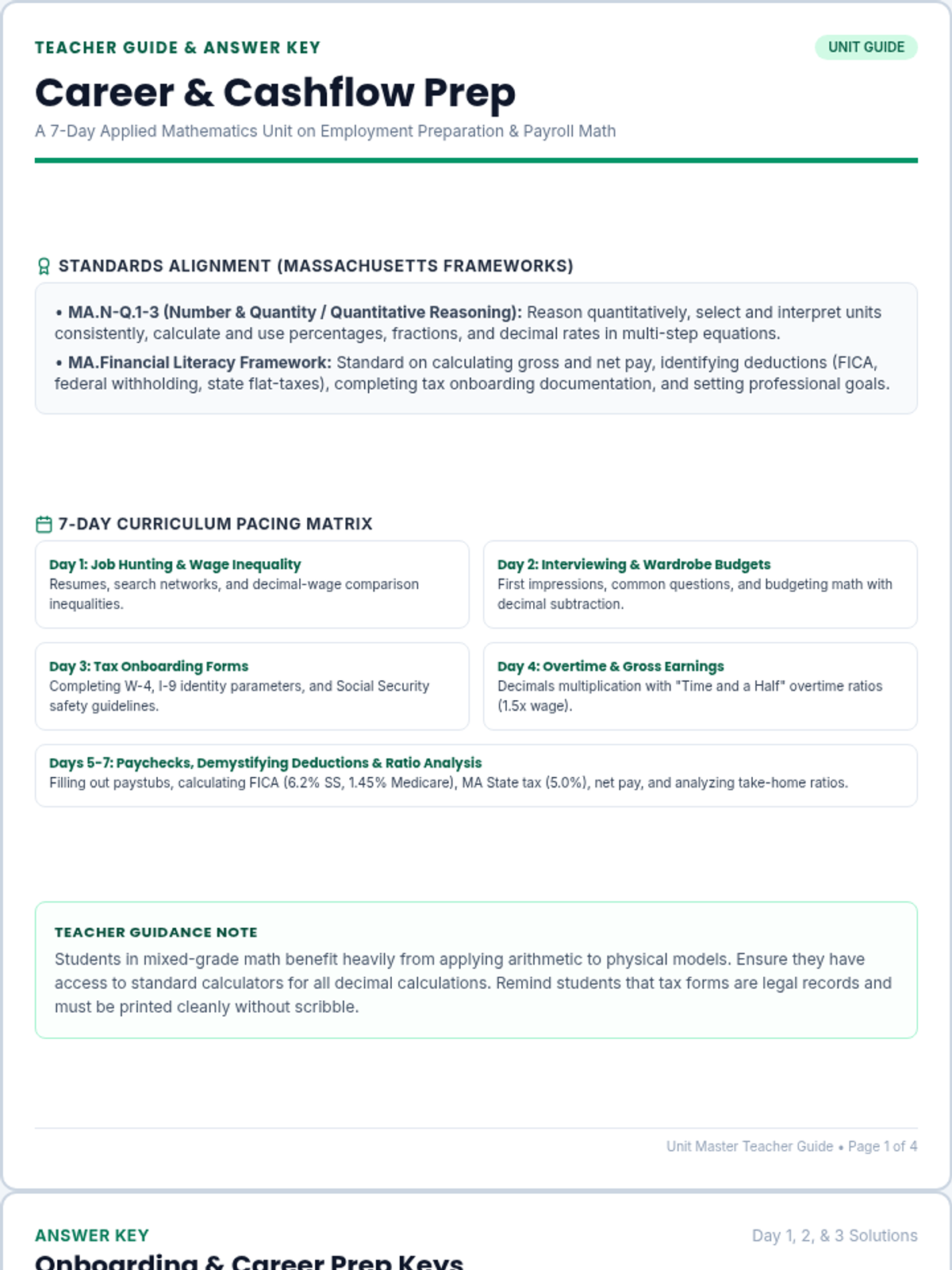
A comprehensive 7-day applied math unit on employment preparation and paycheck calculations. Students learn the job-hunting process, professional interviews, tax withholding forms (W-4 and I-9), and master decimal calculations to compute gross wages, overtime, FICA/state tax deductions, and net take-home pay.
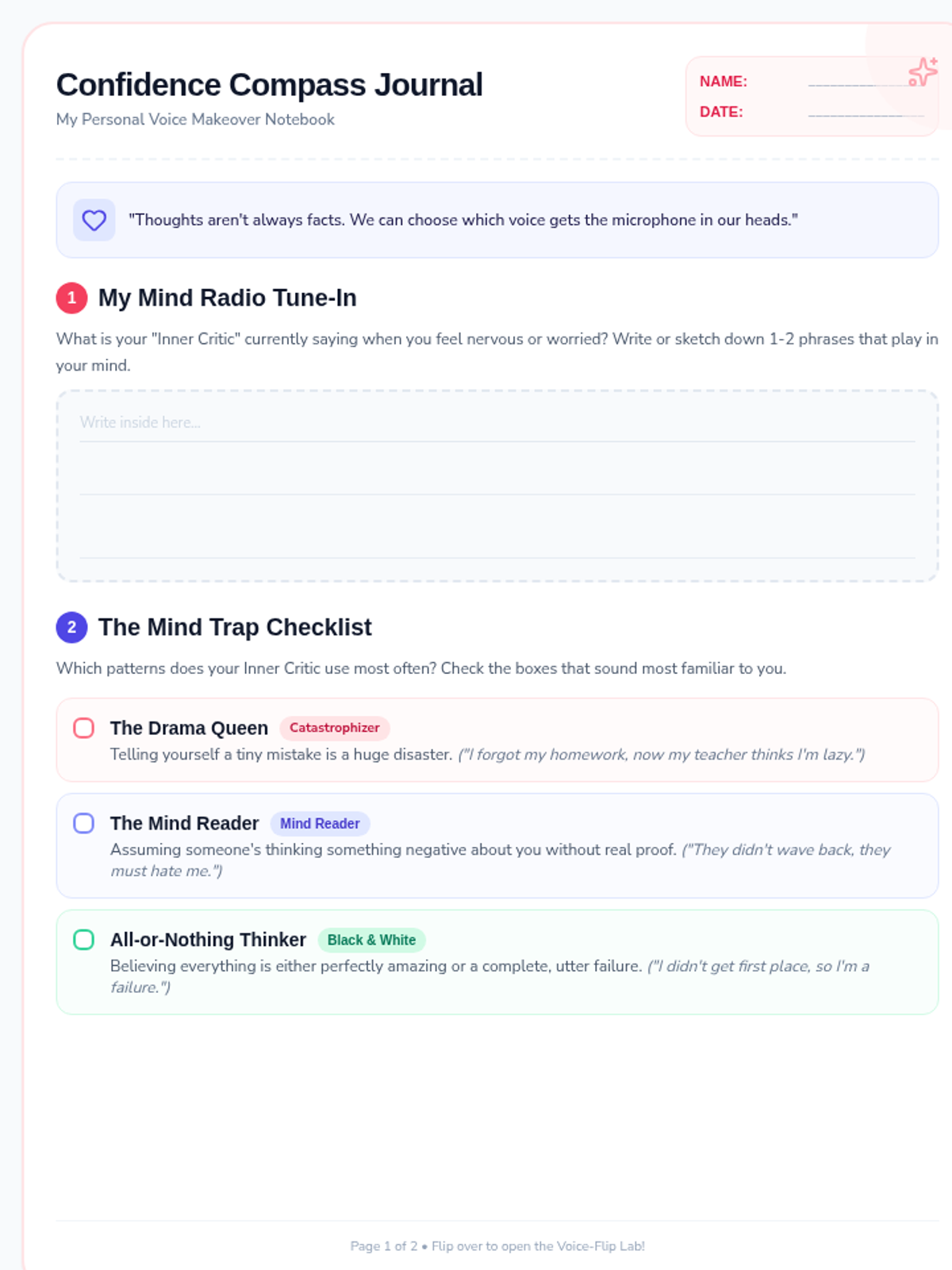
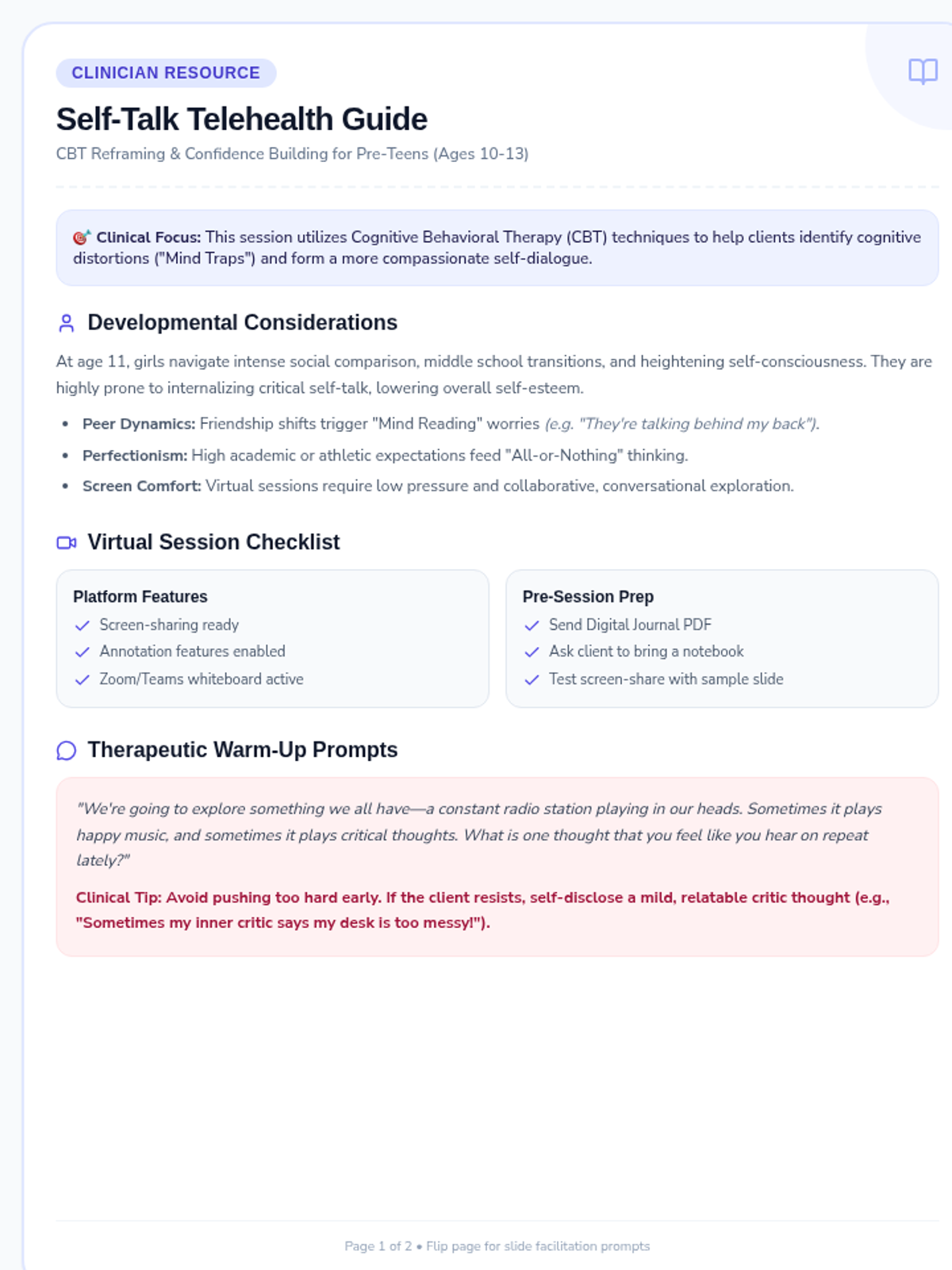
A teletherapy-optimized lesson designed for pre-teens (specifically 11-year-old girls) to recognize, challenge, and reframe negative self-talk into realistic, empowering self-belief. This CBT-based session uses engaging, developmental metaphors suitable for virtual screen-sharing.