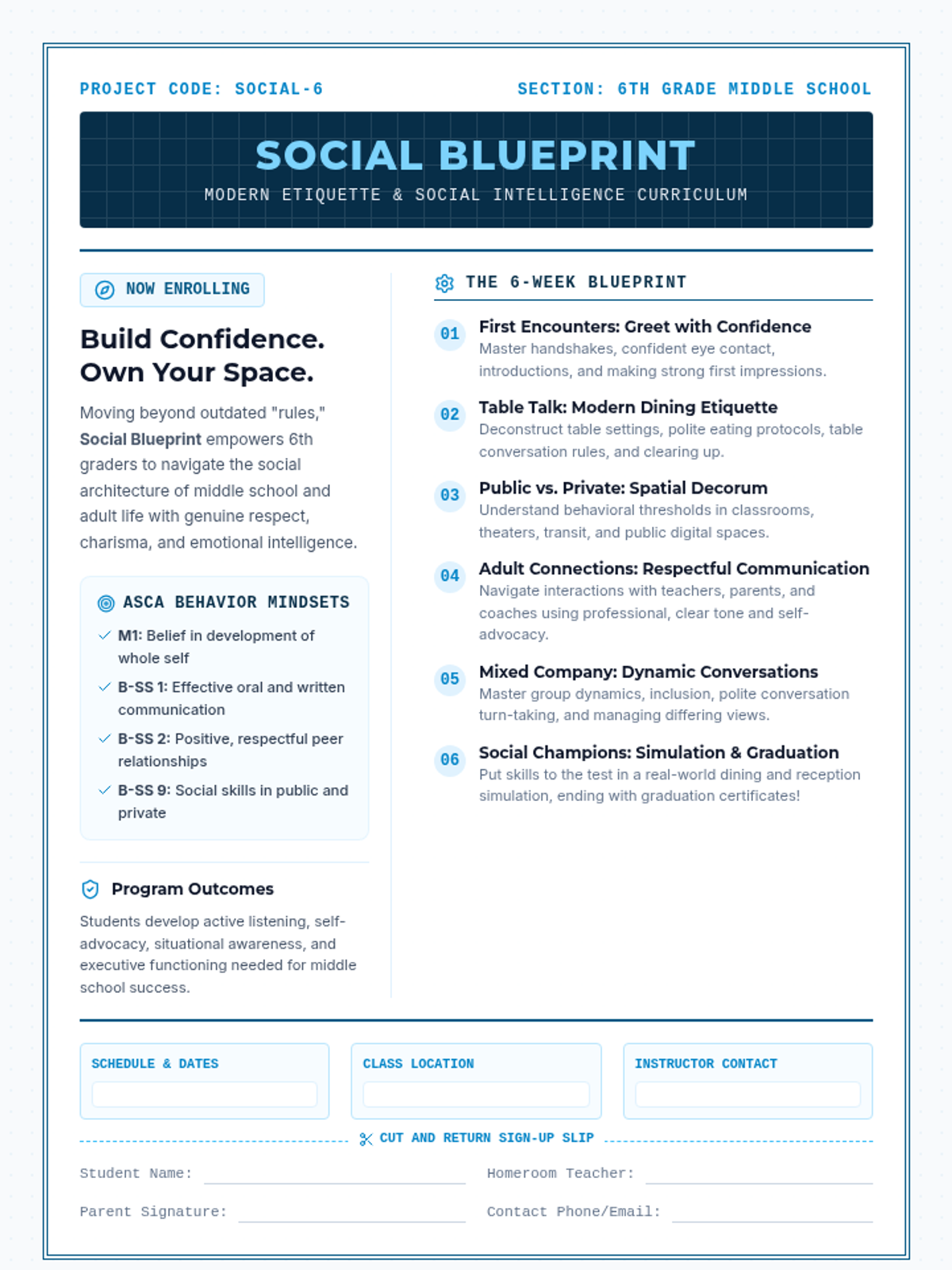
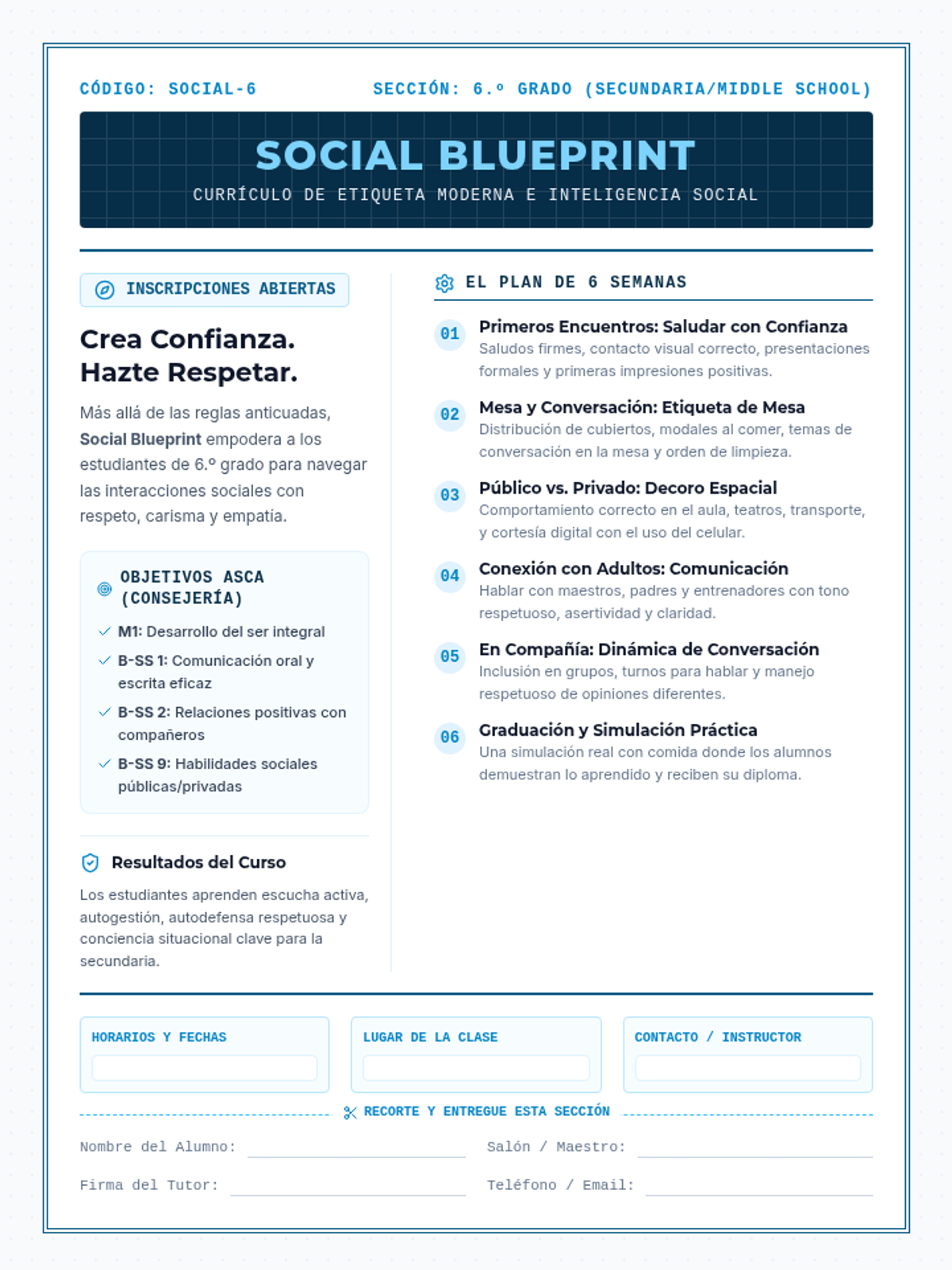
Students master table manners and dining etiquette, exploring the anatomy of a standard table setting, polite eating habits, conversational respect, and table cleanup.
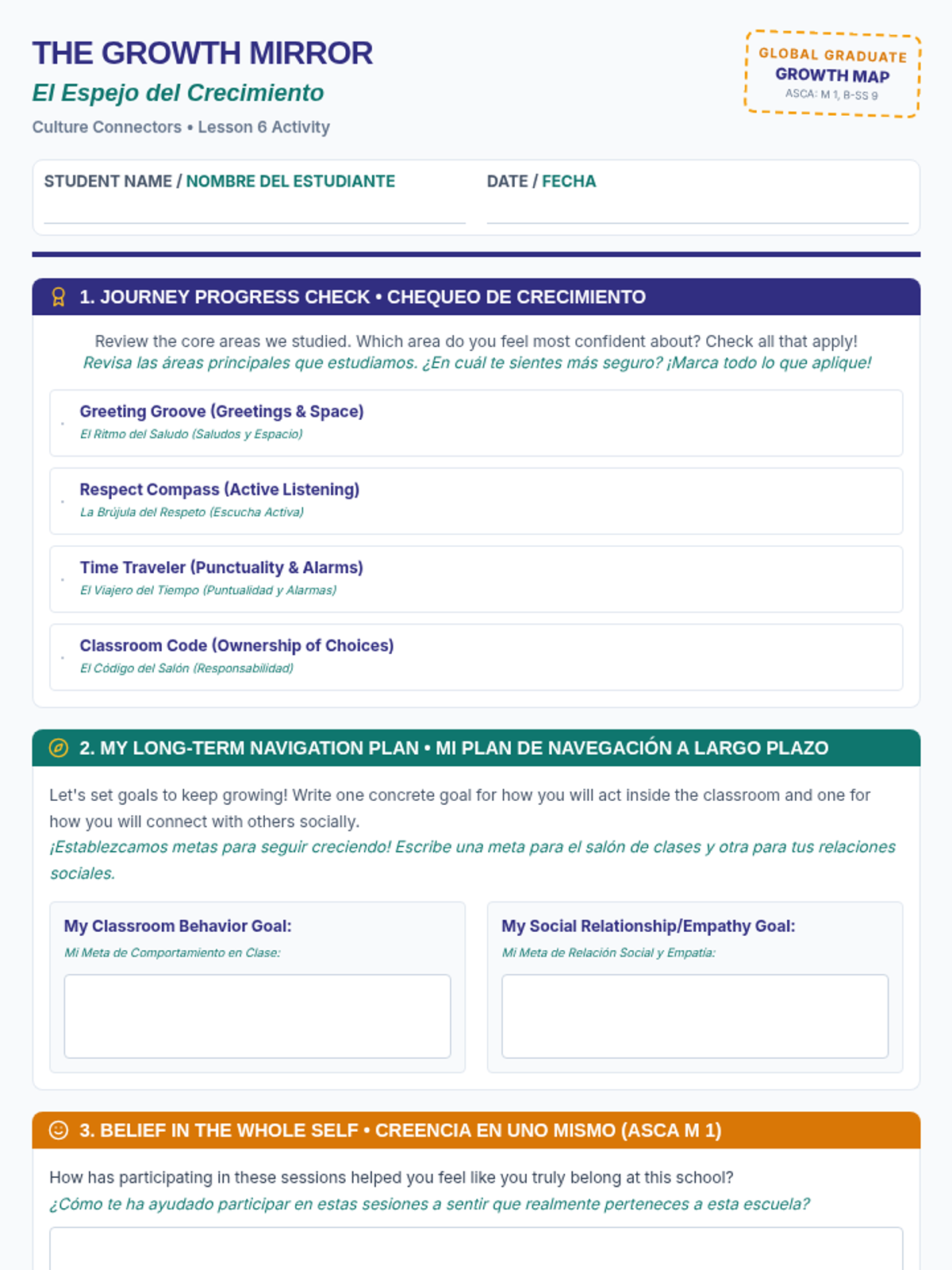
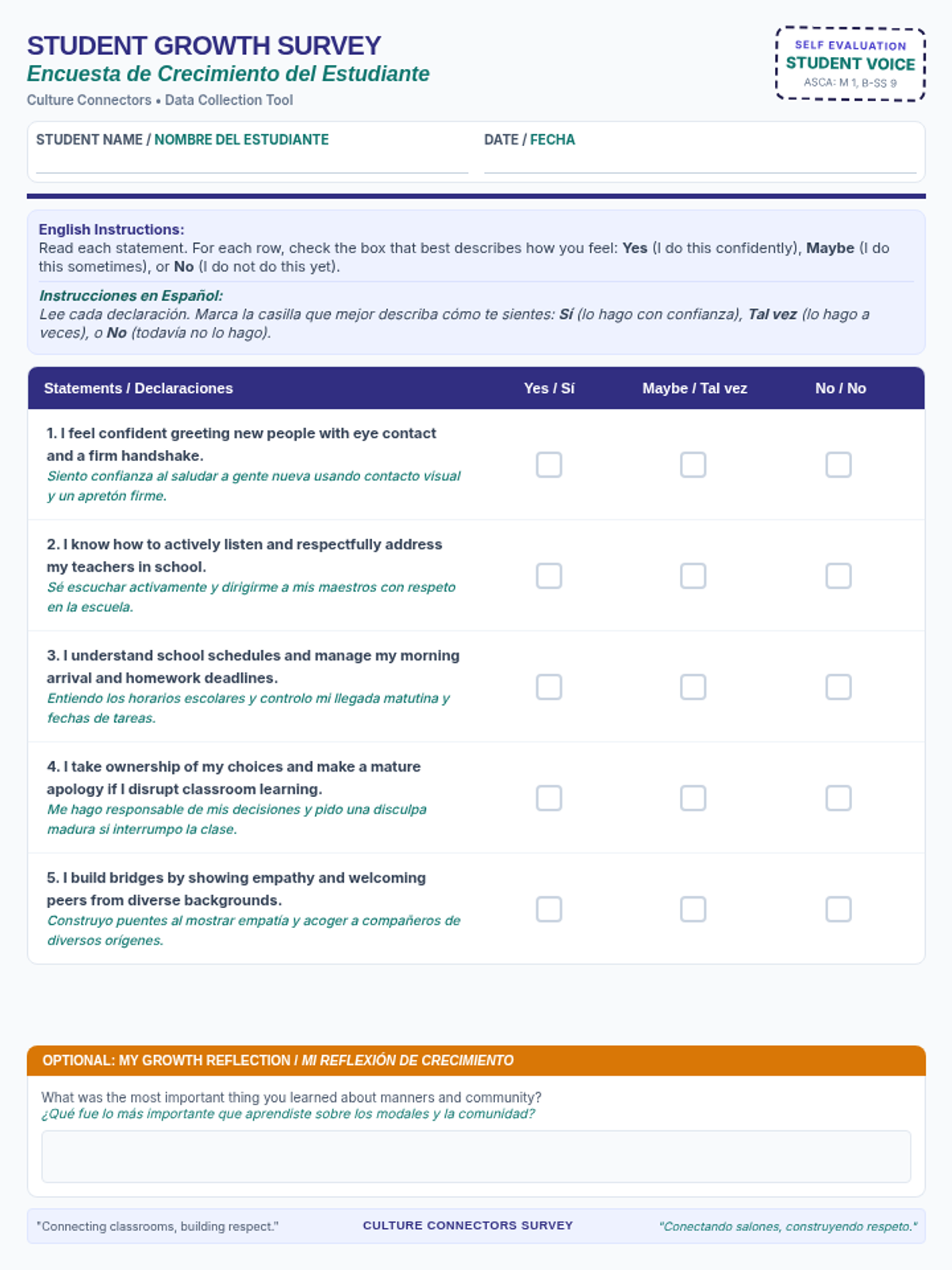
Encourages self-reflection and belief in the development of the whole self. Students reflect on their growth throughout the curriculum and complete personal goal-setting plans. Includes bilingual Likert scales for data collection.
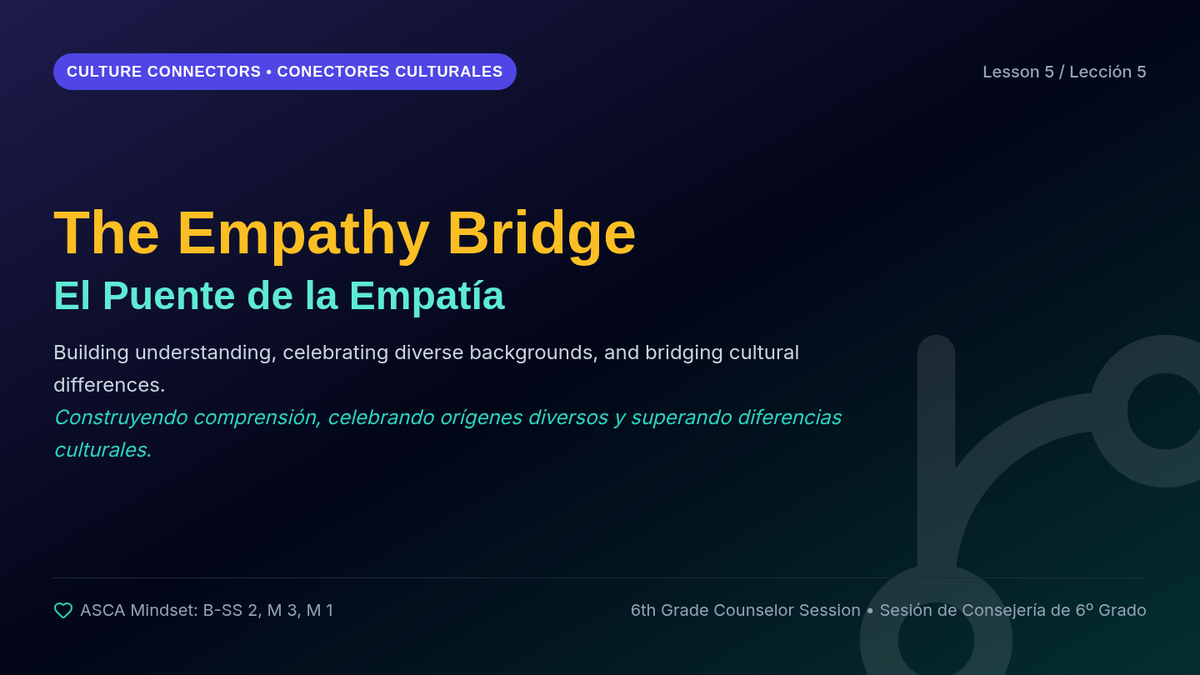
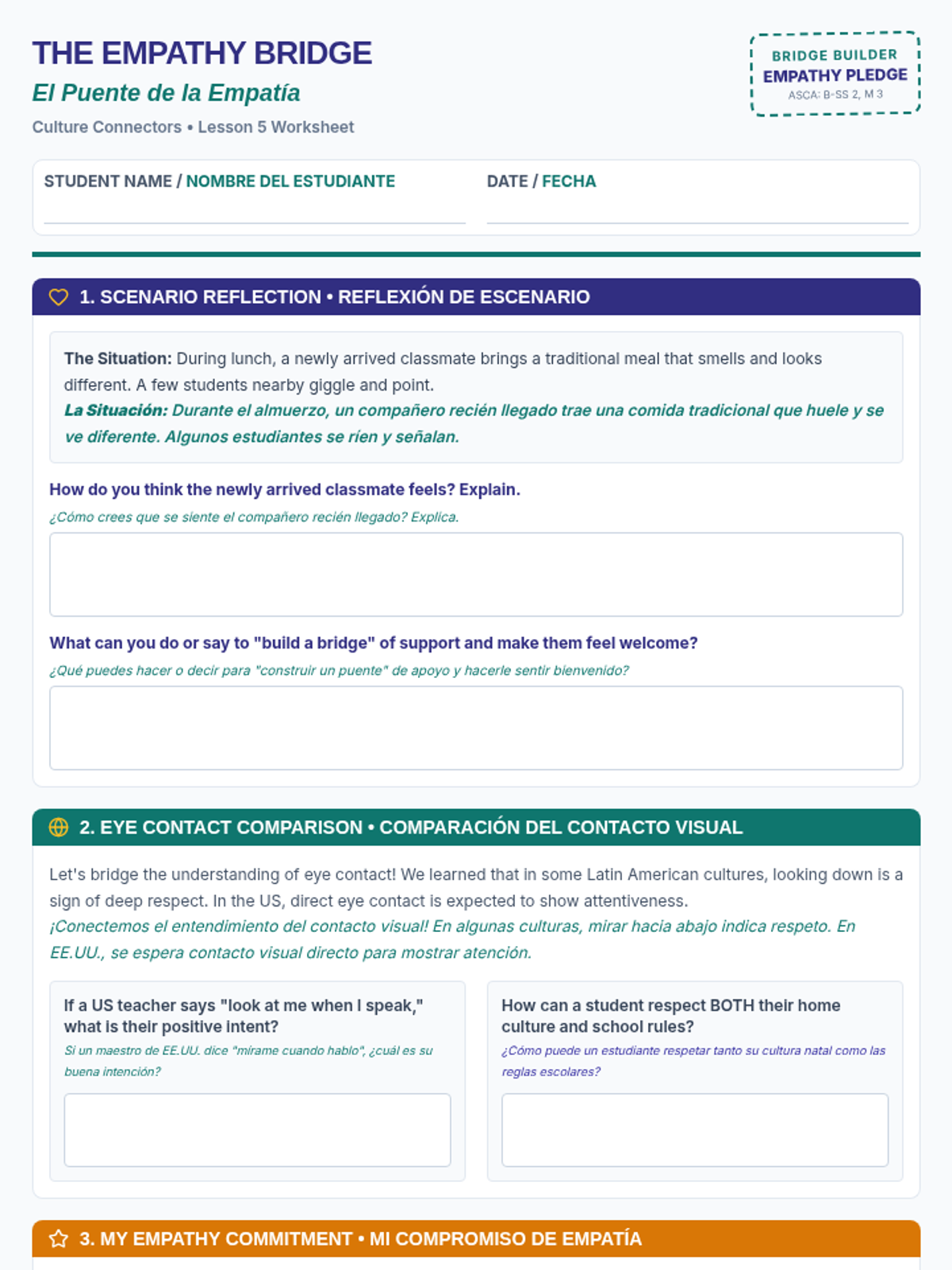
Explores perspective-taking, diversity, understanding cultural differences in expectations, and resolving social conflicts respectfully. Helps students find common ground while celebrating unique cultural identities.
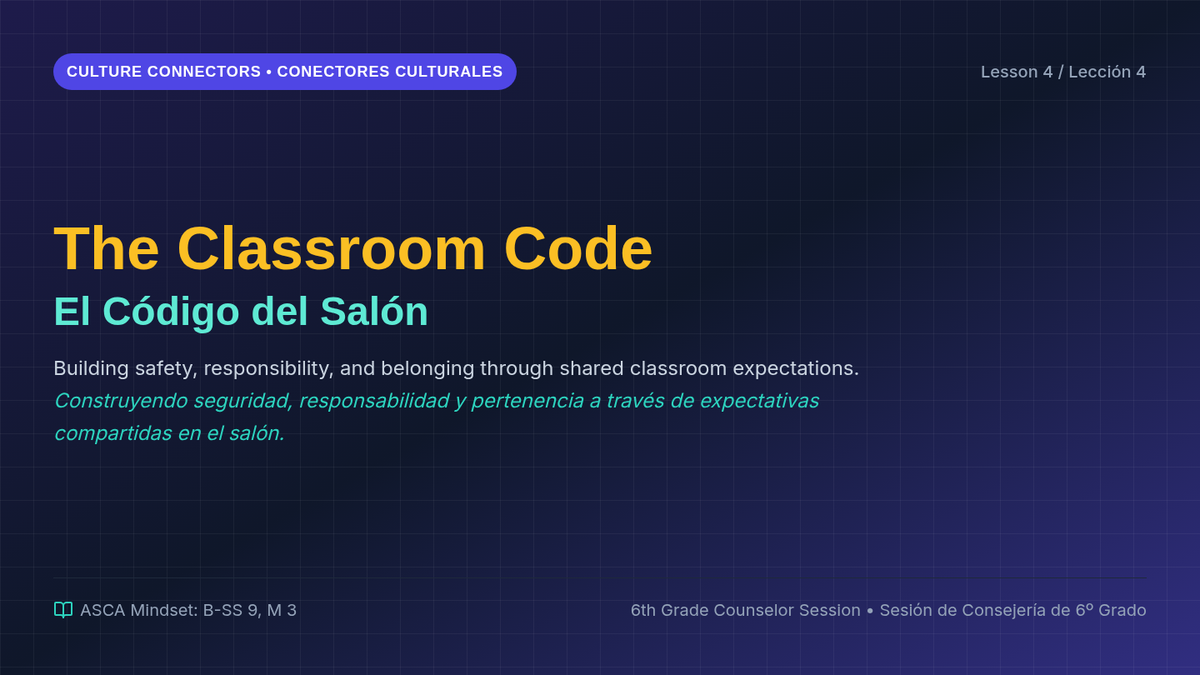
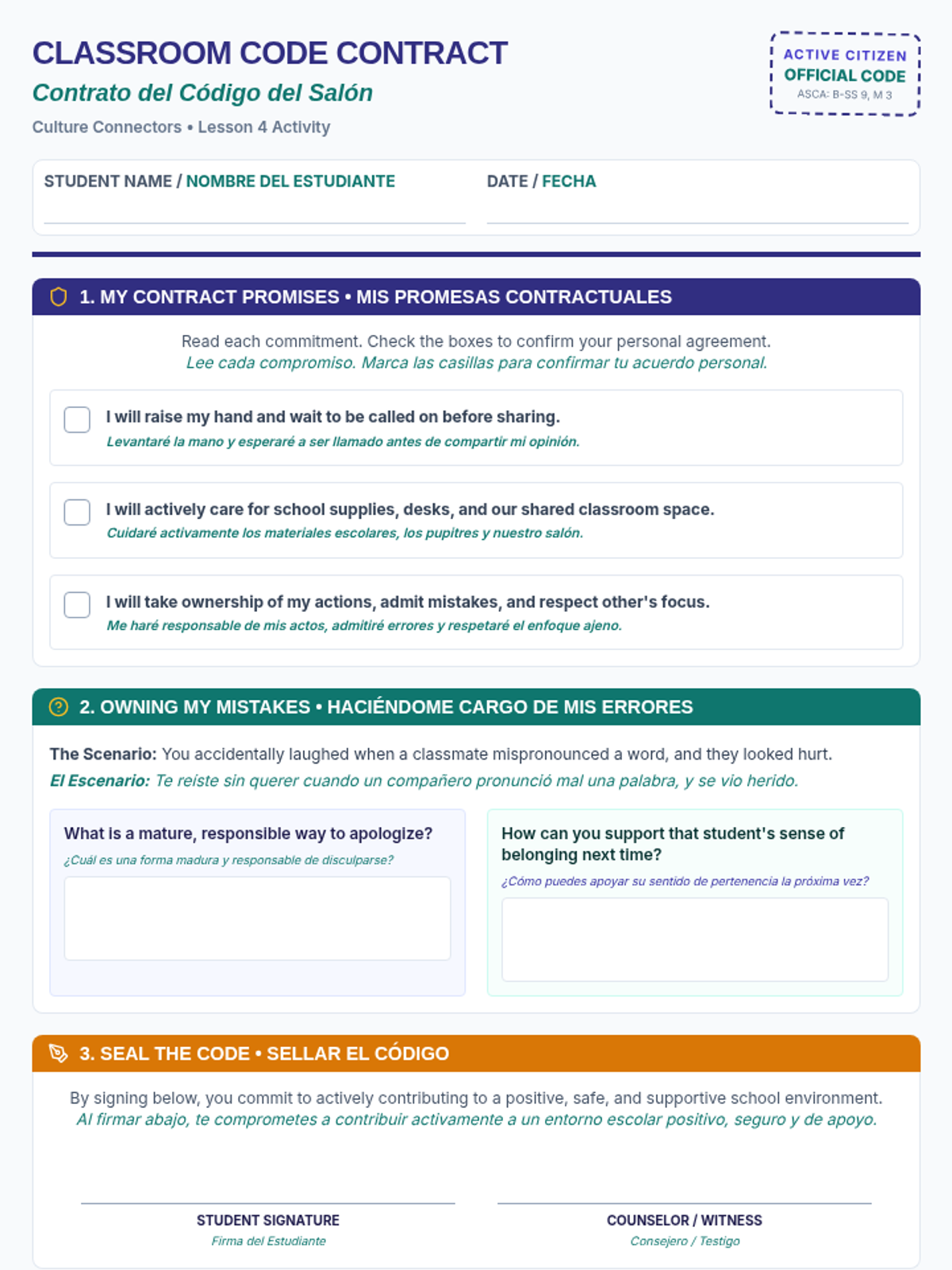
Guides students through classroom behavior expectations, raising hands, active participation, and taking ownership of school behavior to foster a strong sense of school community belonging.
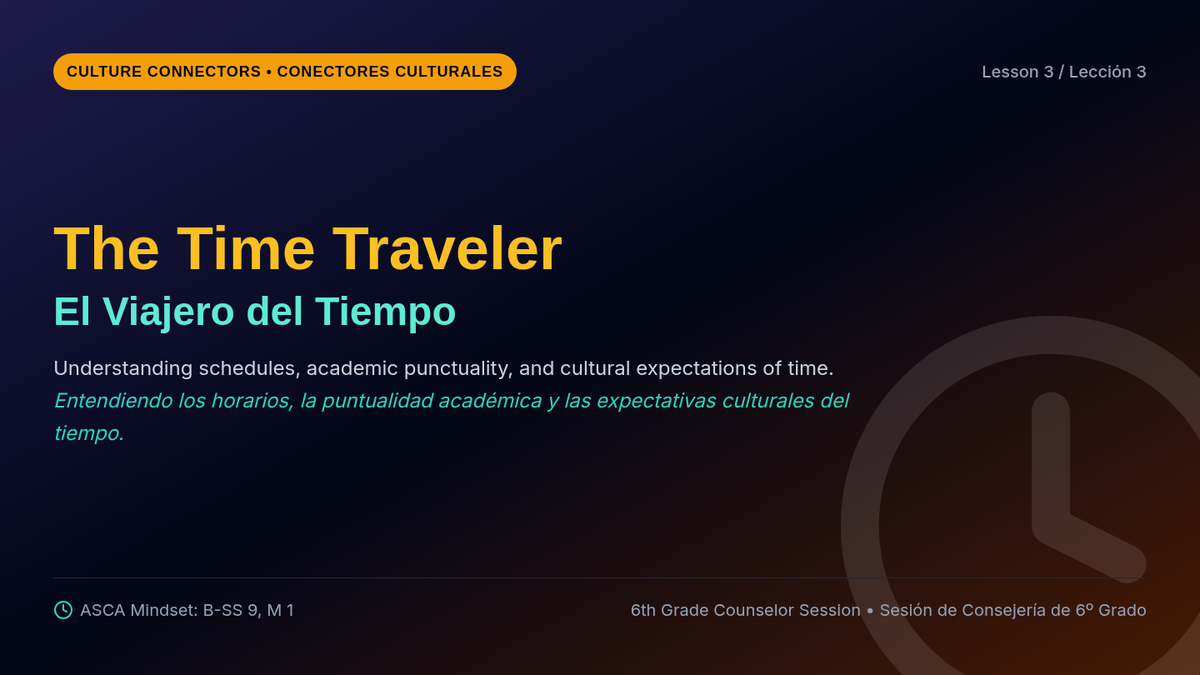
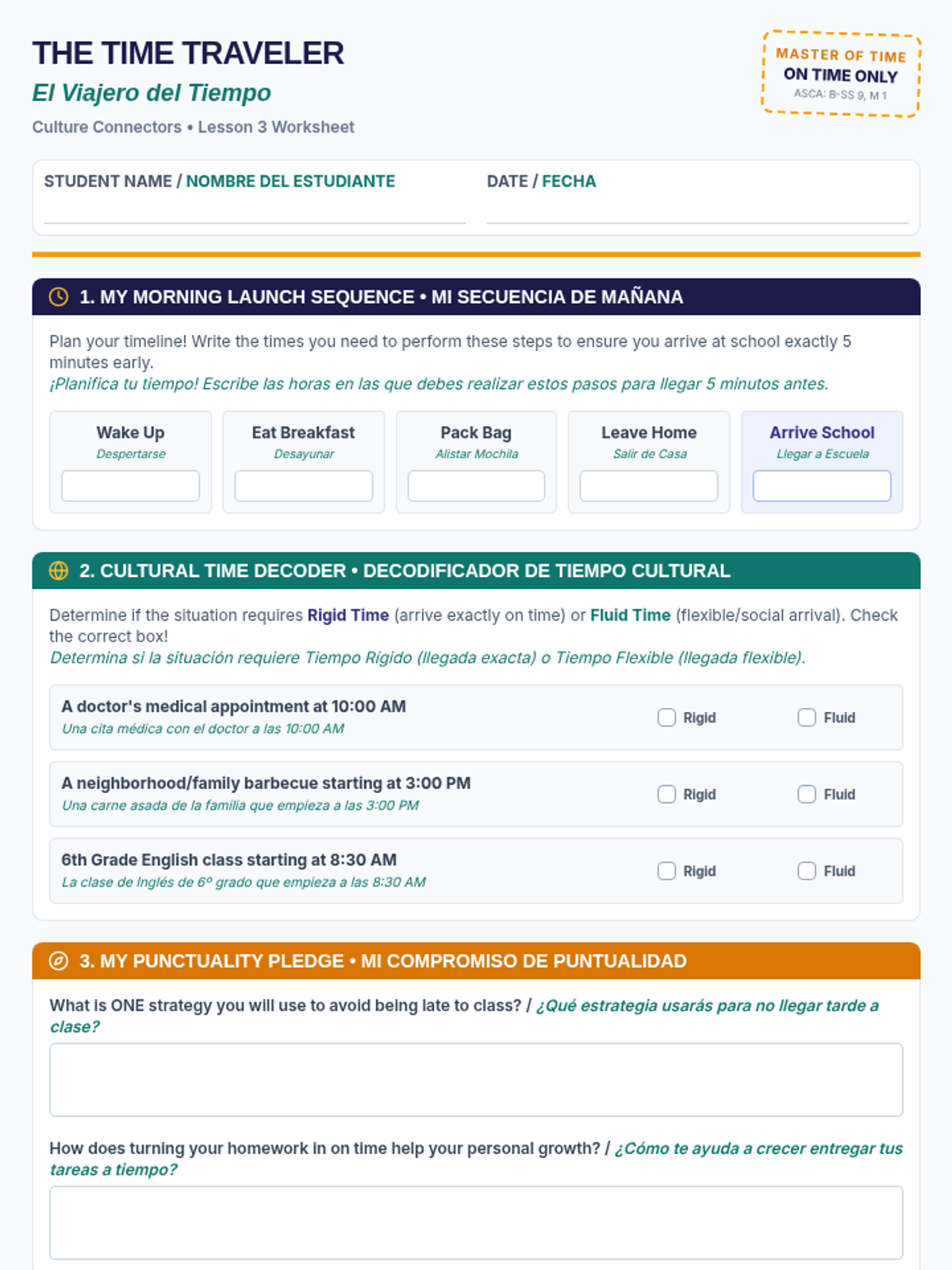
Covers punctuality, deadlines, and time expectations in academic and social settings. Helps students understand the cultural differences in time concepts while developing school success habits.
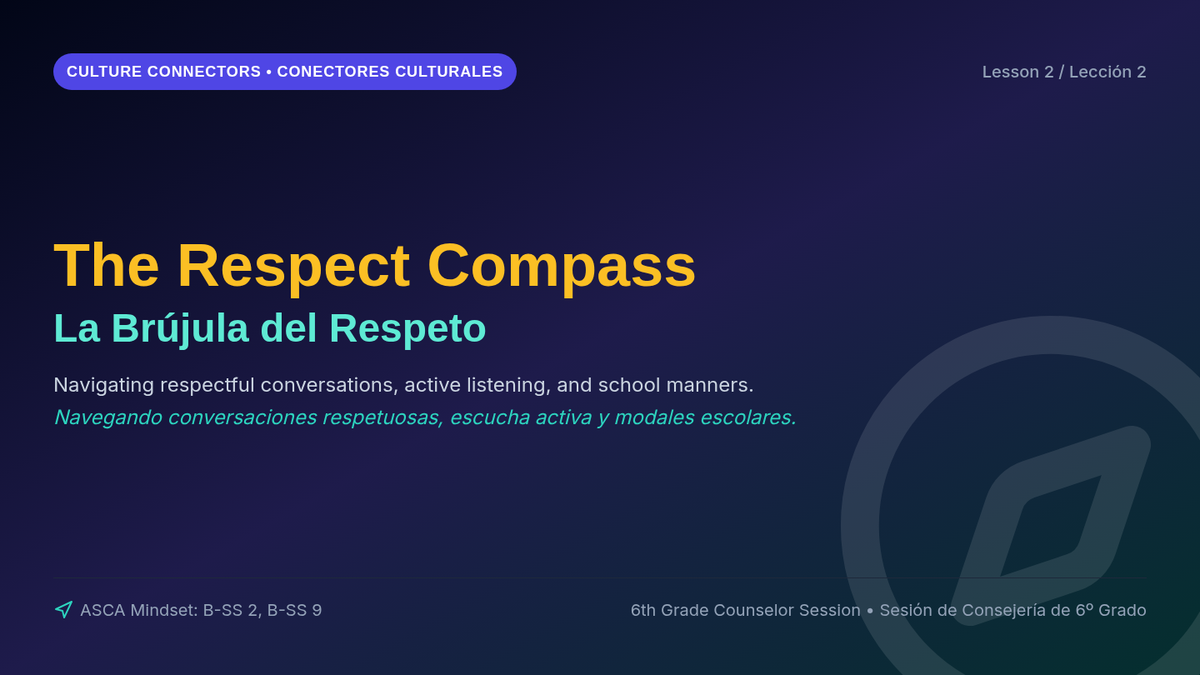
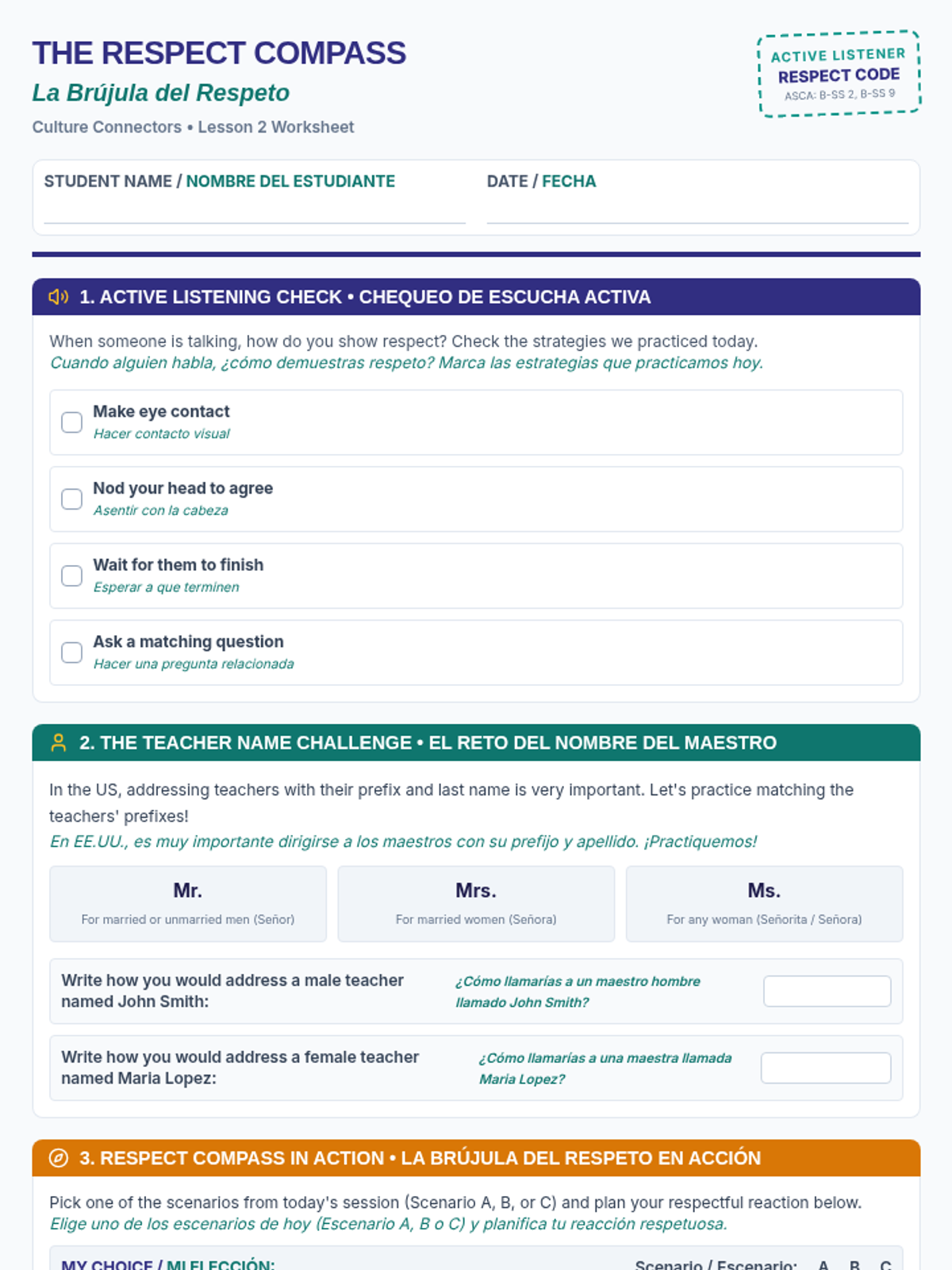
Explores active listening, manners, and showing respect to teachers, peers, and authority figures. Students practice bilingual courtesy terms and cross-cultural respectful communication.
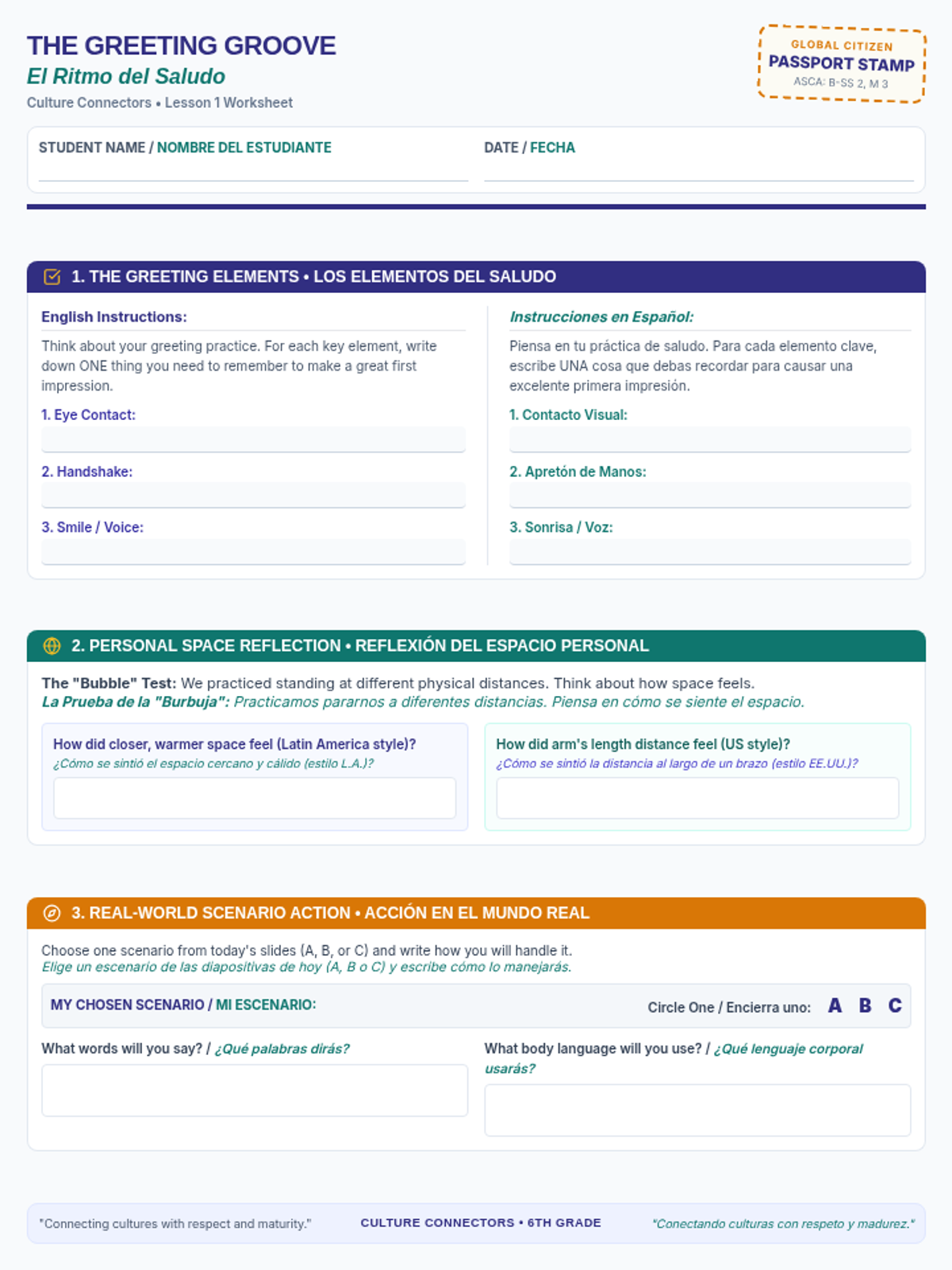
Focuses on greetings, eye contact, handshakes, and physical space in the US vs. Latin America. Students learn the mechanics of a positive first impression in various cultural contexts.
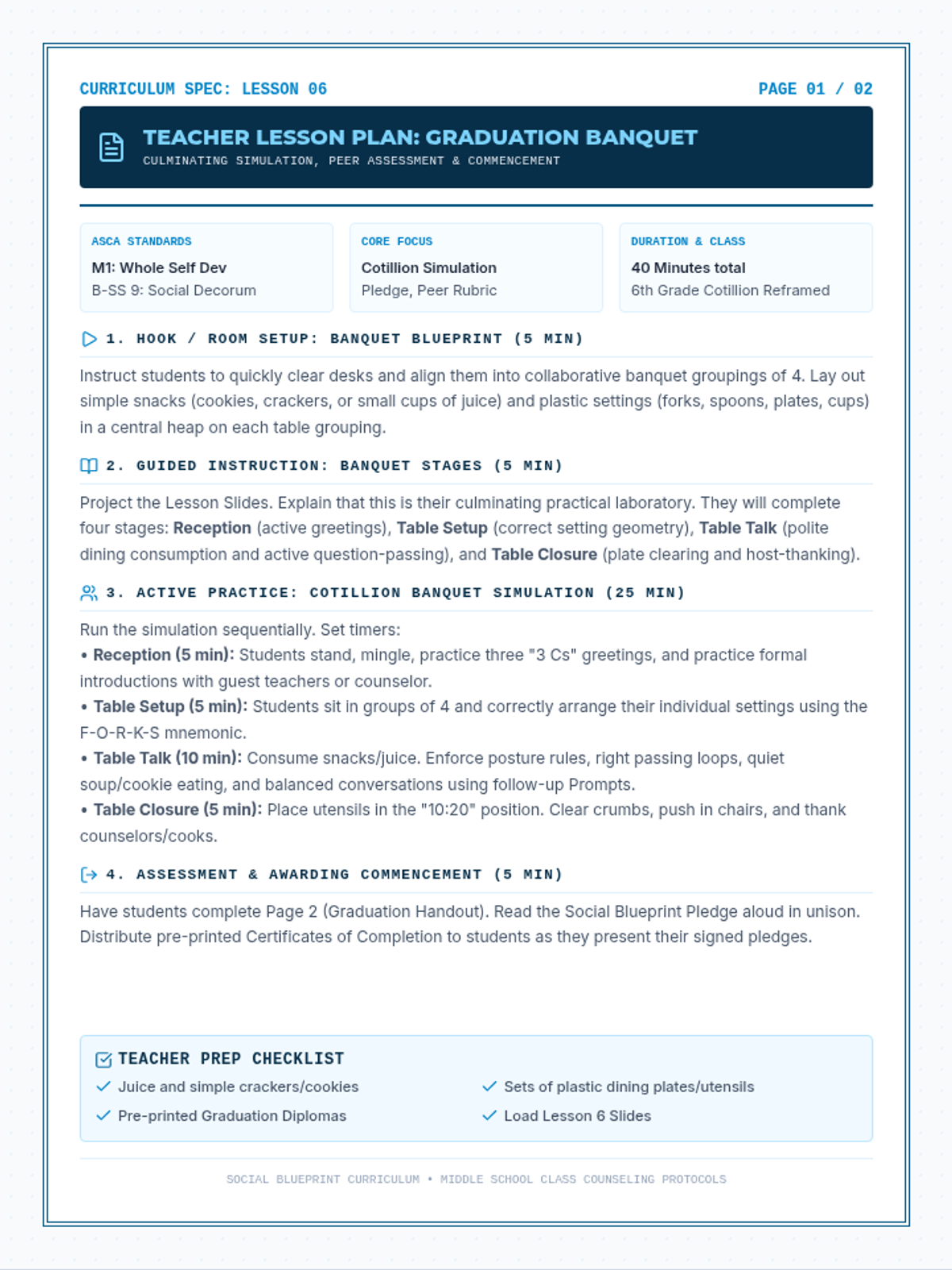
A culminating interactive simulation and graduation ceremony where students showcase all skills learned (dining, introductions, public deportment) and receive certificates of completion.
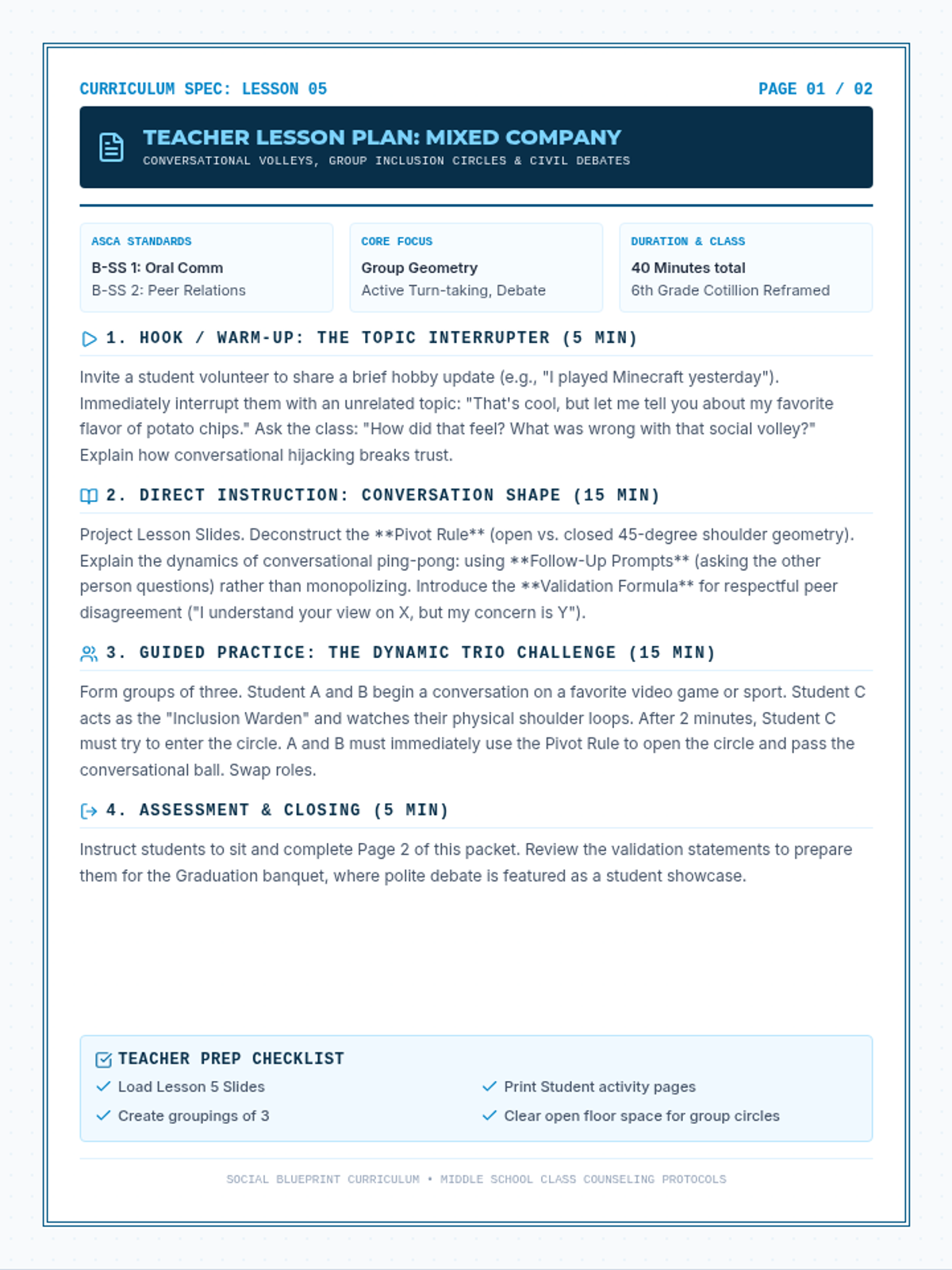
Students explore social dynamics in mixed peer groups, practicing inclusive conversations, group introductions, handling differing opinions, and the art of polite conversational turn-taking.
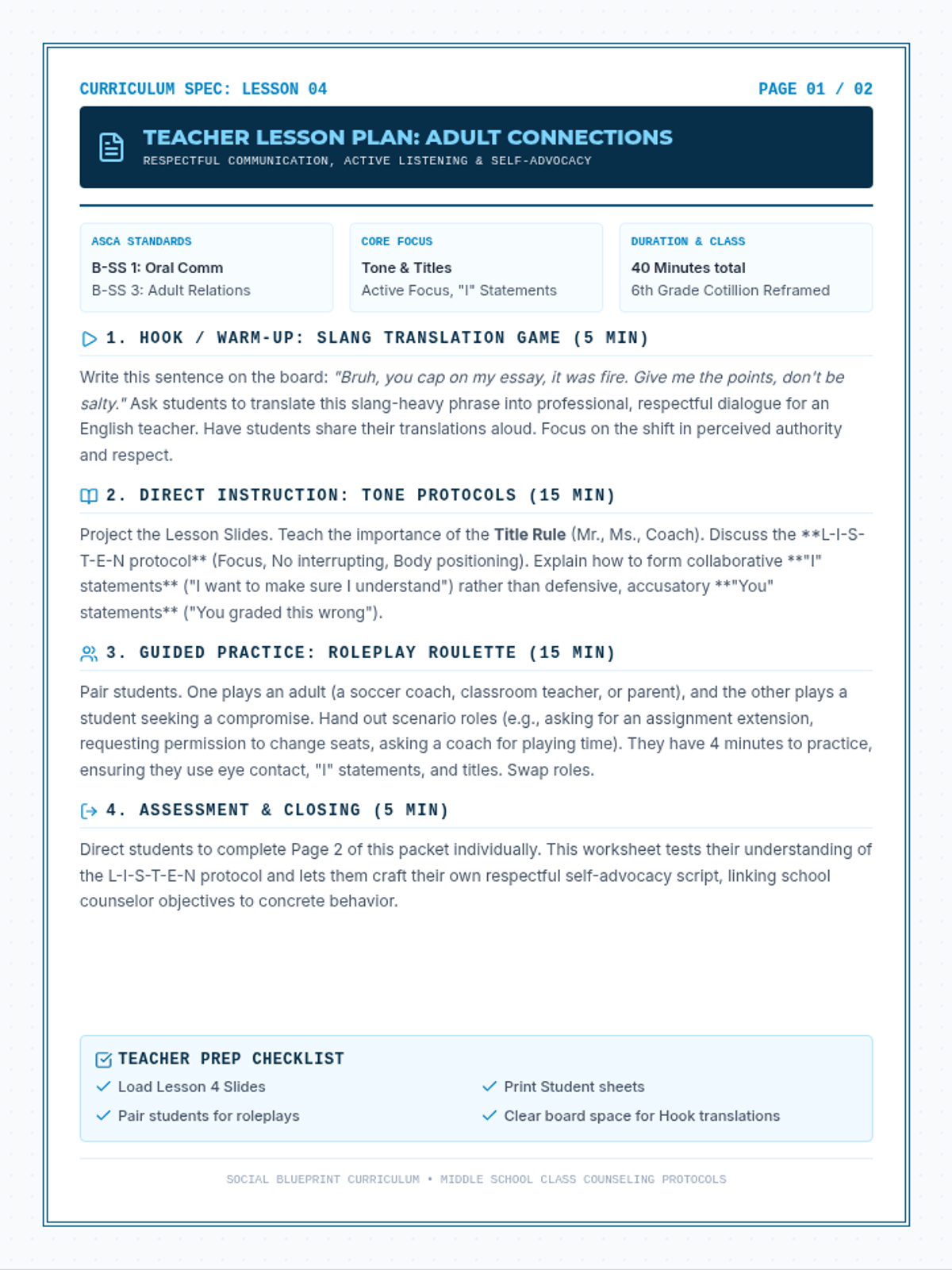
Students develop skills for respectful communication with teachers, parents, coaches, and administrators, focusing on tone of voice, active listening, requesting help, and body language.
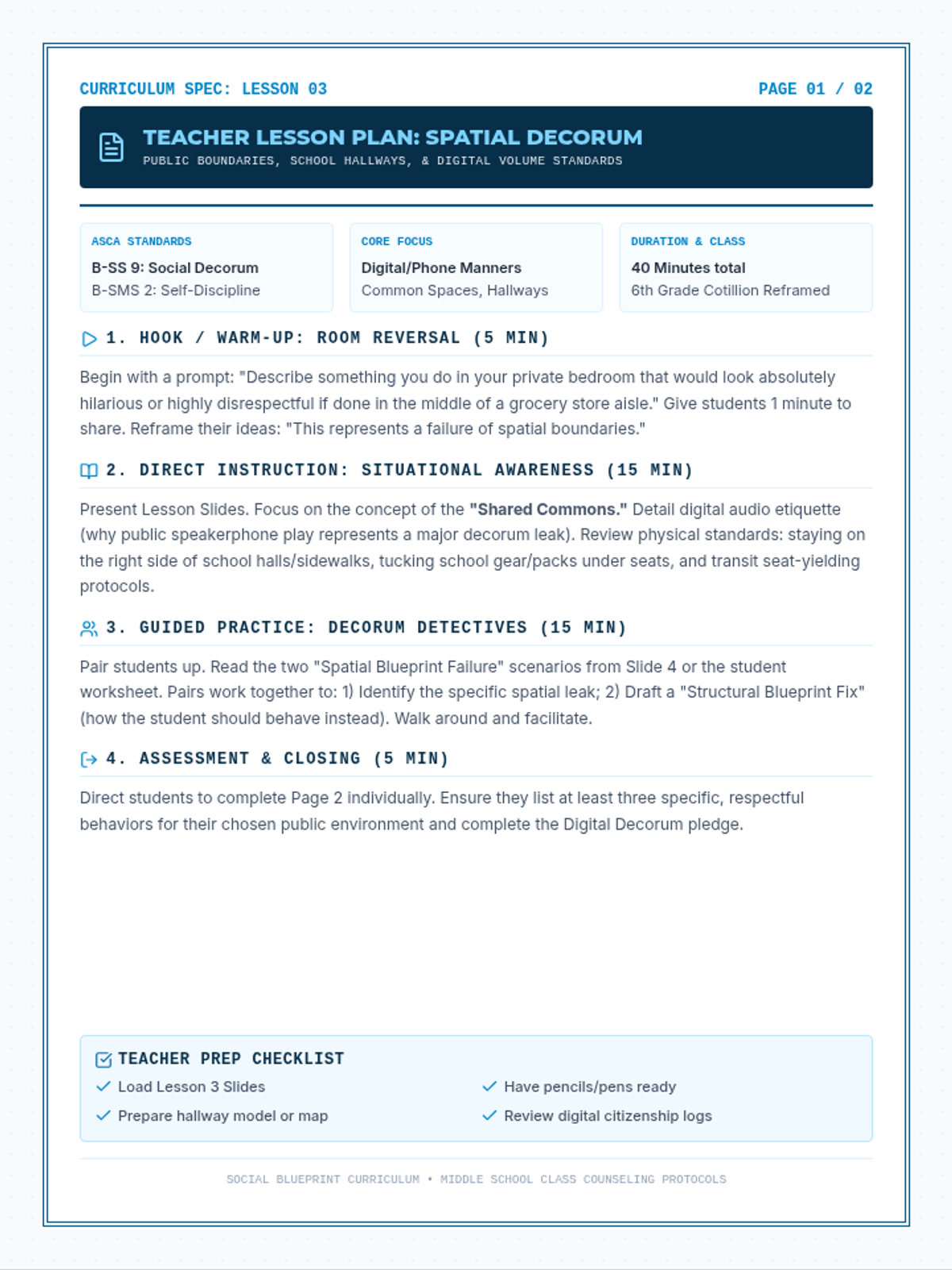
Students distinguish between appropriate behaviors in public spaces (classrooms, theaters, transit, stores) versus private spaces (home), including public digital etiquette and respect for shared spaces.
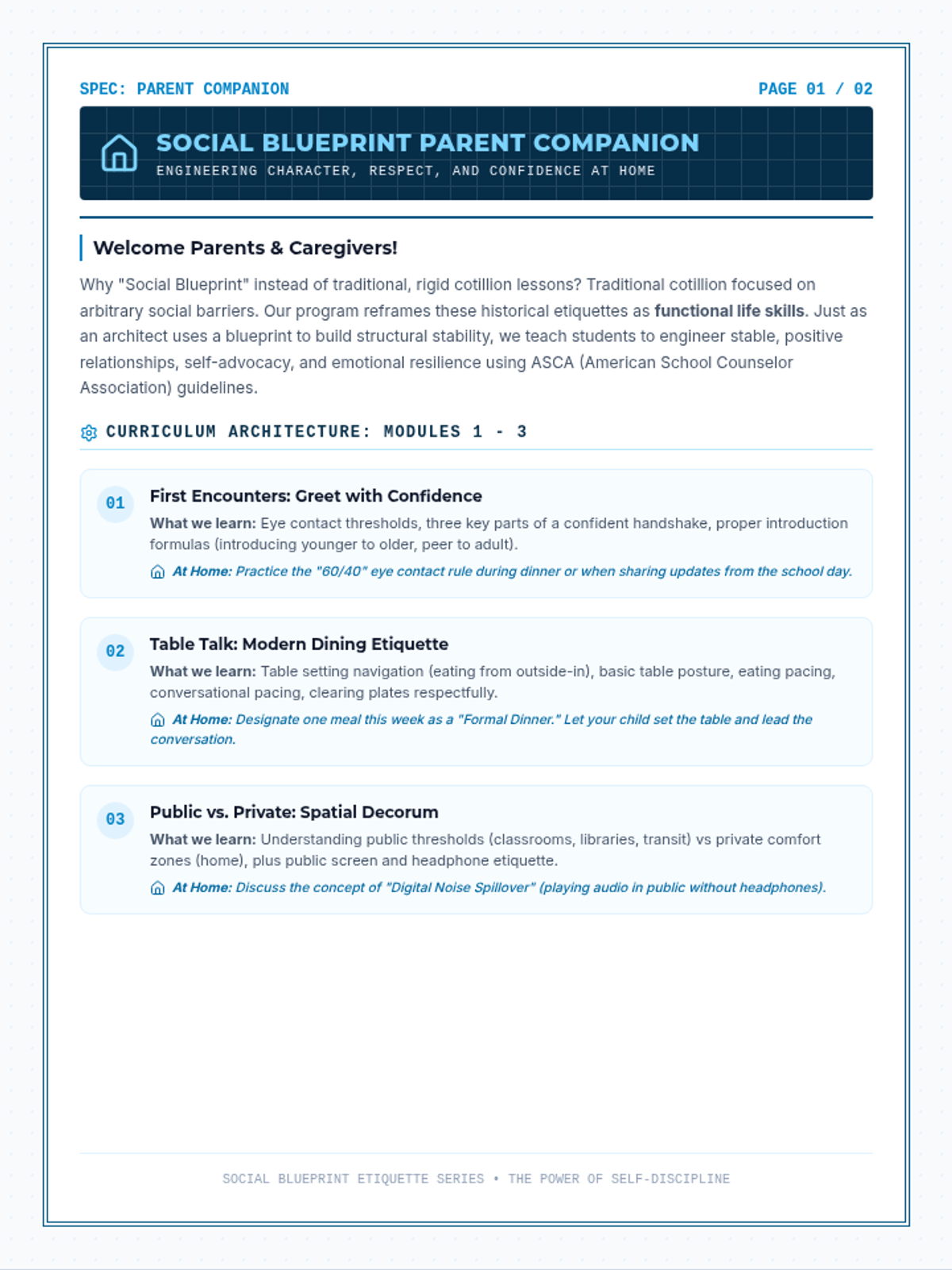
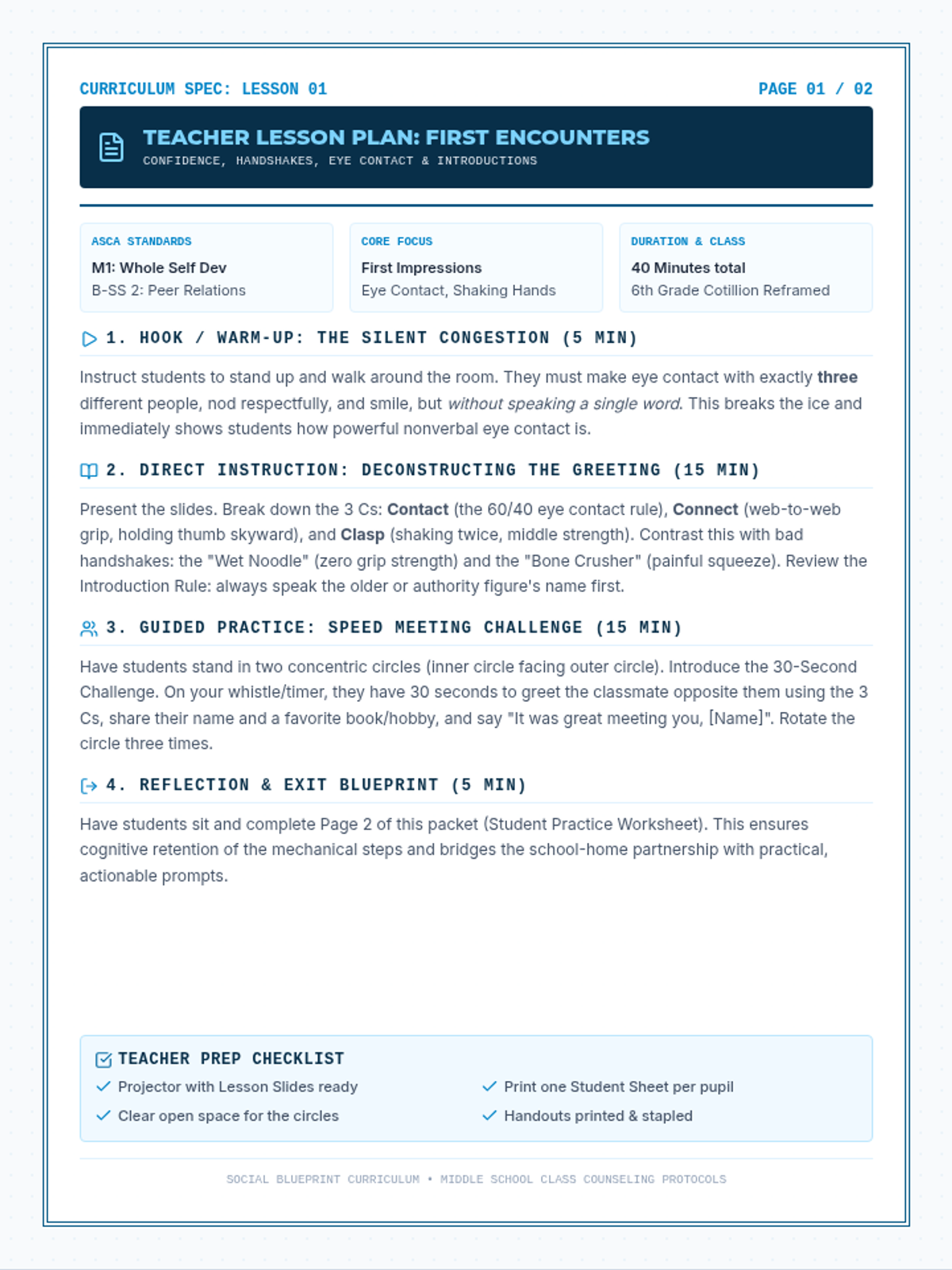
Students learn the art of first impressions, including confident introductions, appropriate eye contact, firm handshakes, and representing themselves respectfully to adults and peers alike.
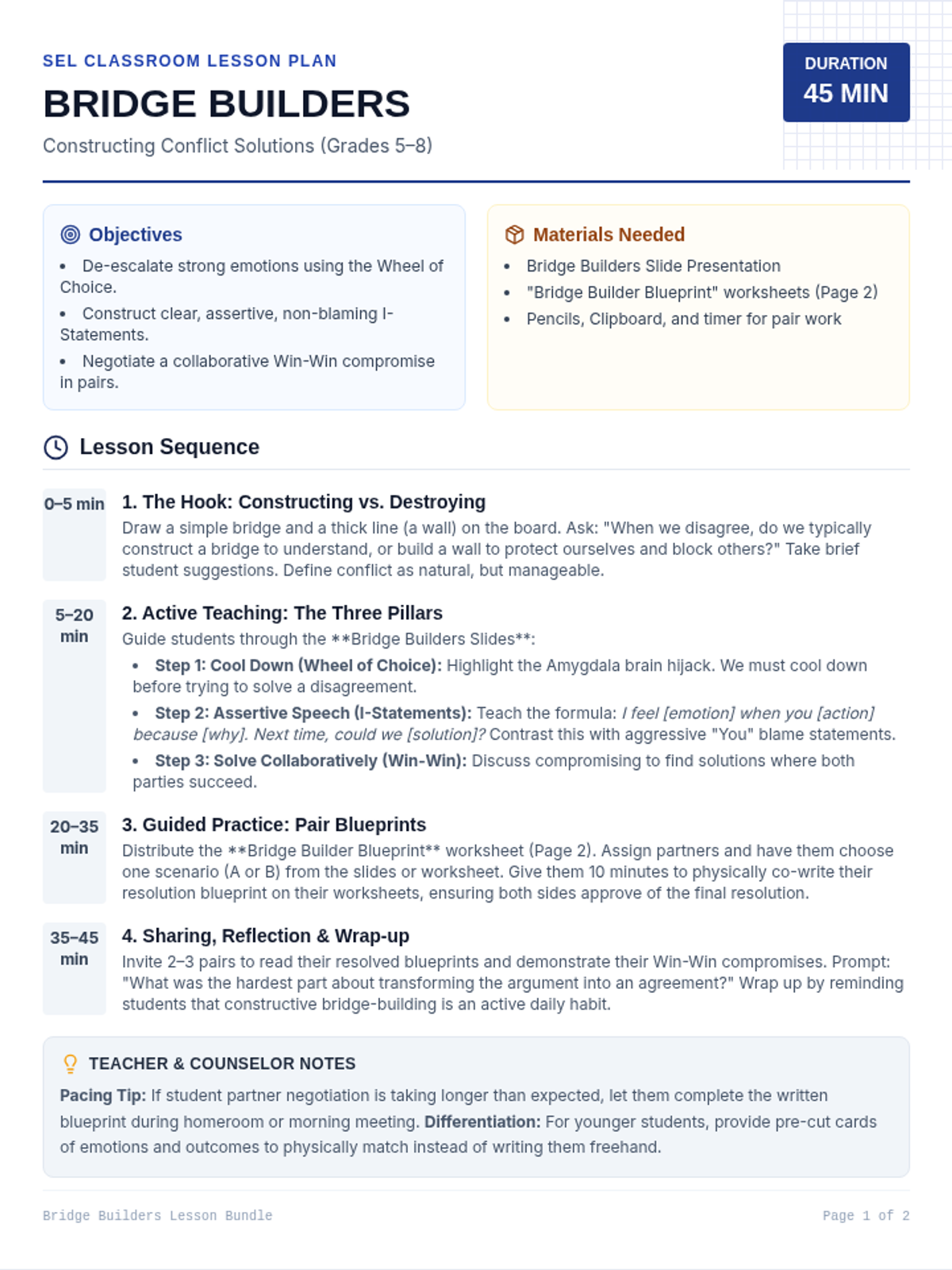
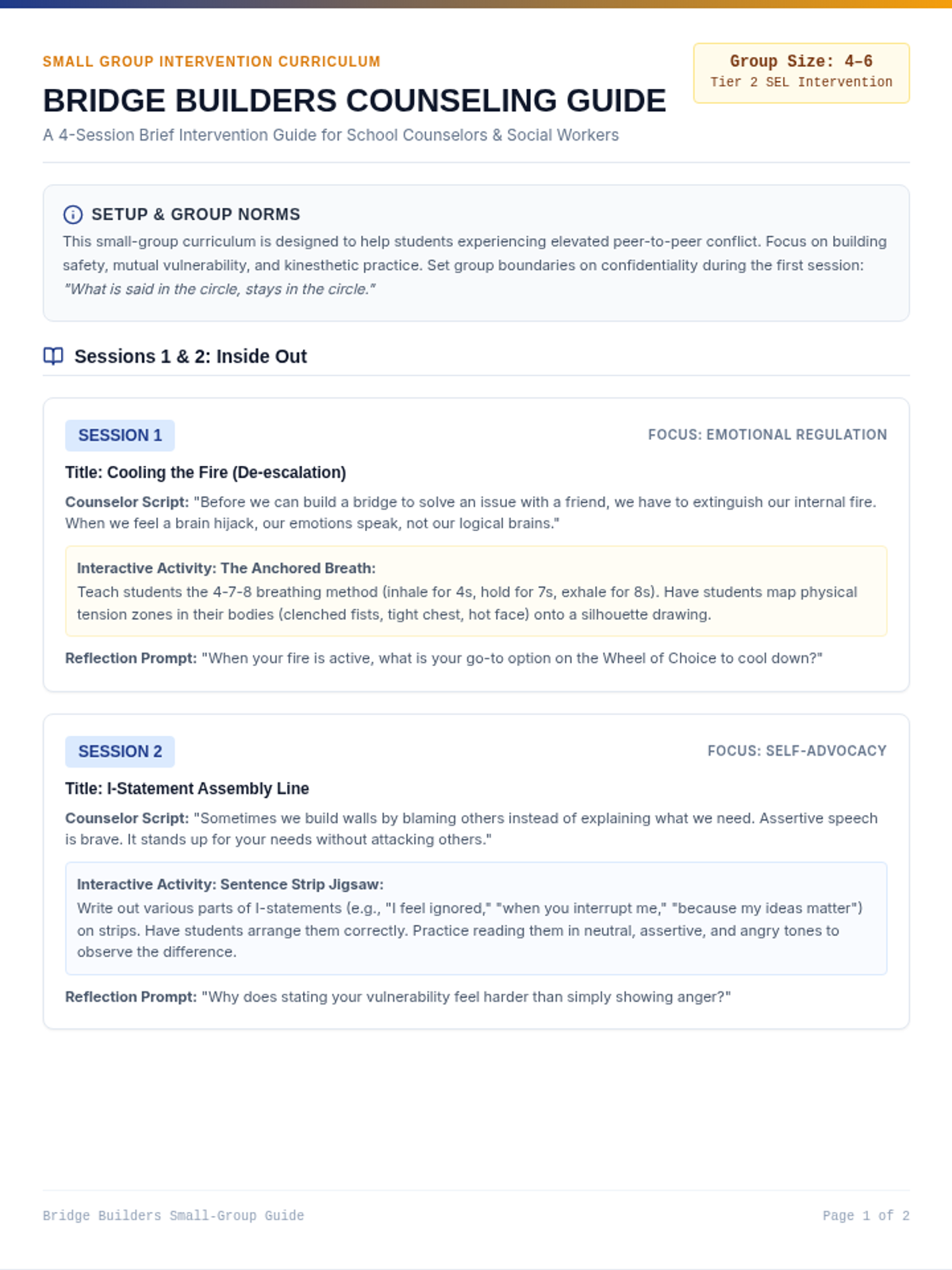
A comprehensive social-emotional learning lesson package designed to teach middle-grade students how to de-escalate conflicts, communicate assertively using I-Statements and Active Listening, and negotiate collaborative Win-Win solutions. Includes visual presentation slides, a complete 45-minute classroom lesson plan with an integrated student activity sheet, and a specialized small-group counseling guide.
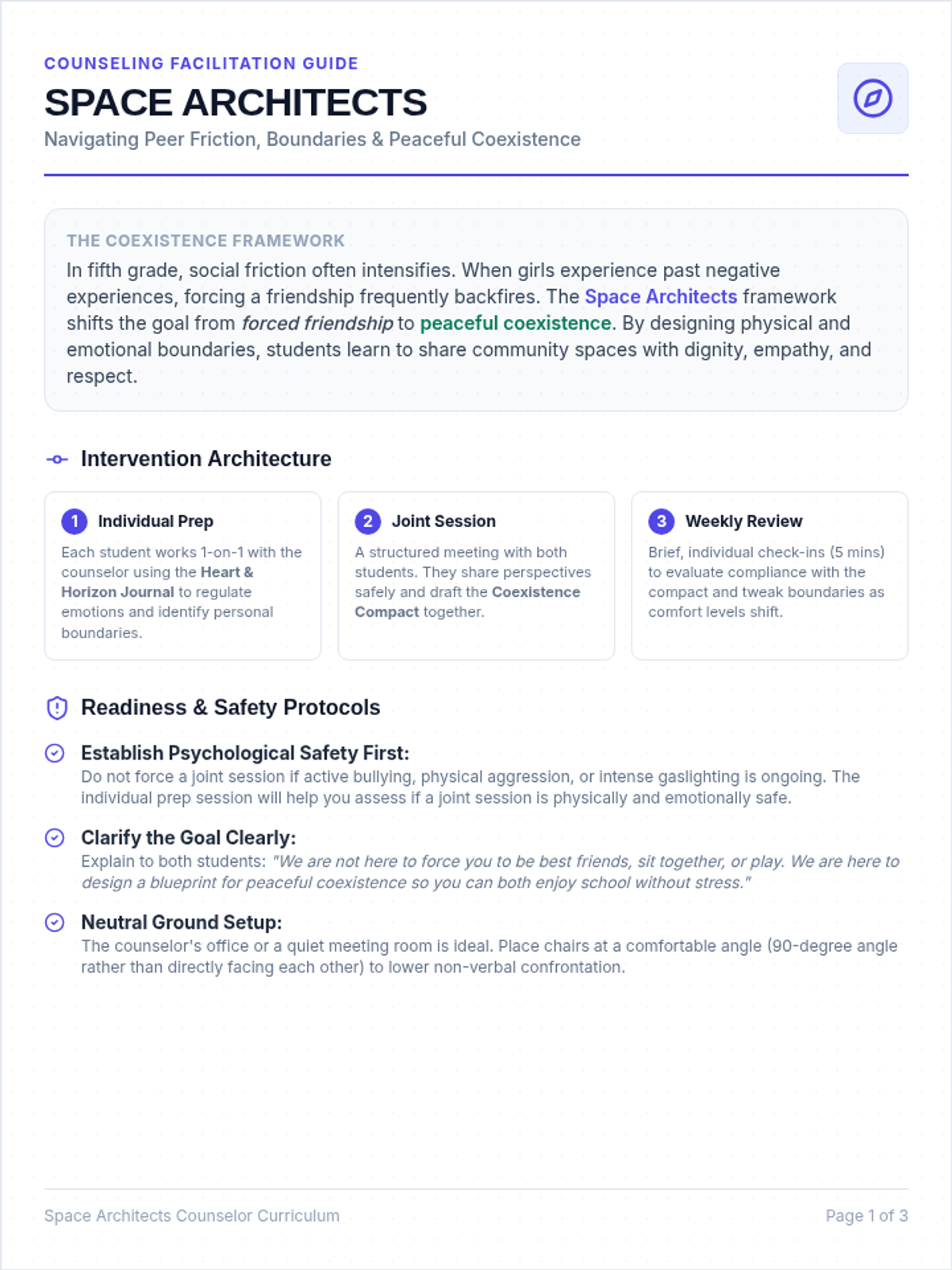
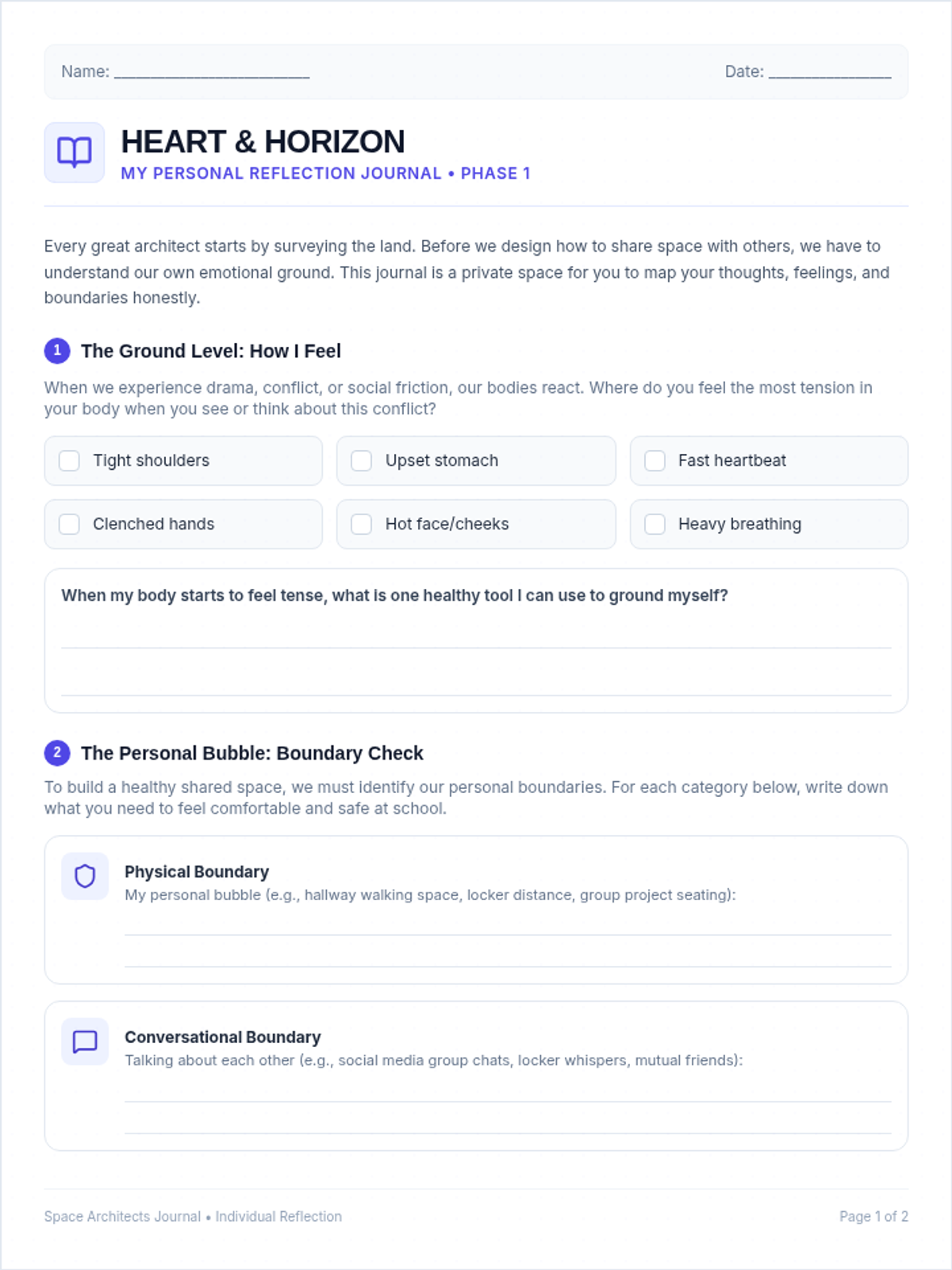
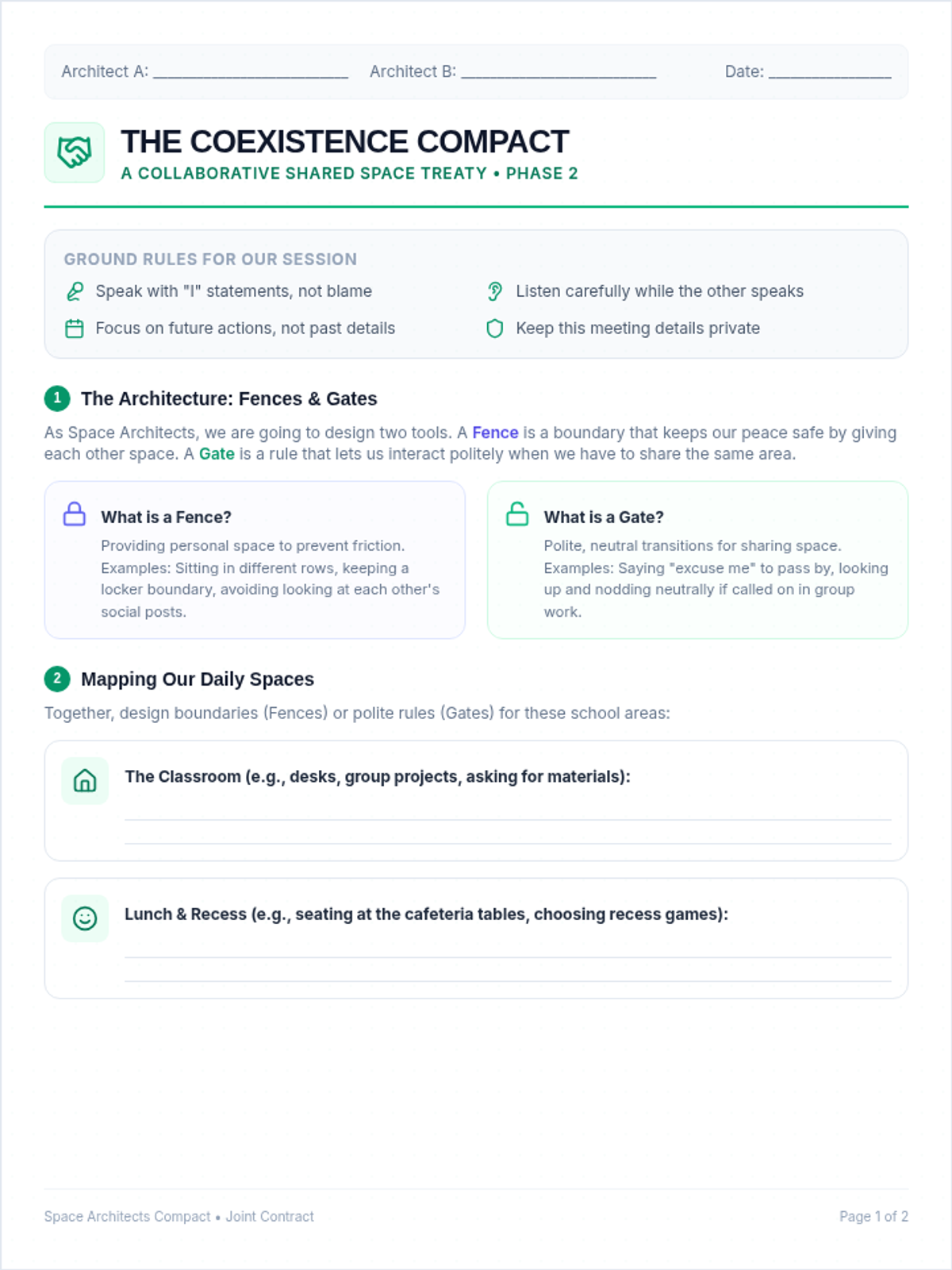
A structured counseling intervention designed for fifth-grade girls experiencing peer conflict and social friction. This lesson guides students through individual emotional regulation, perspective-taking, and a collaborative boundary-setting contract to establish peaceful coexistence.
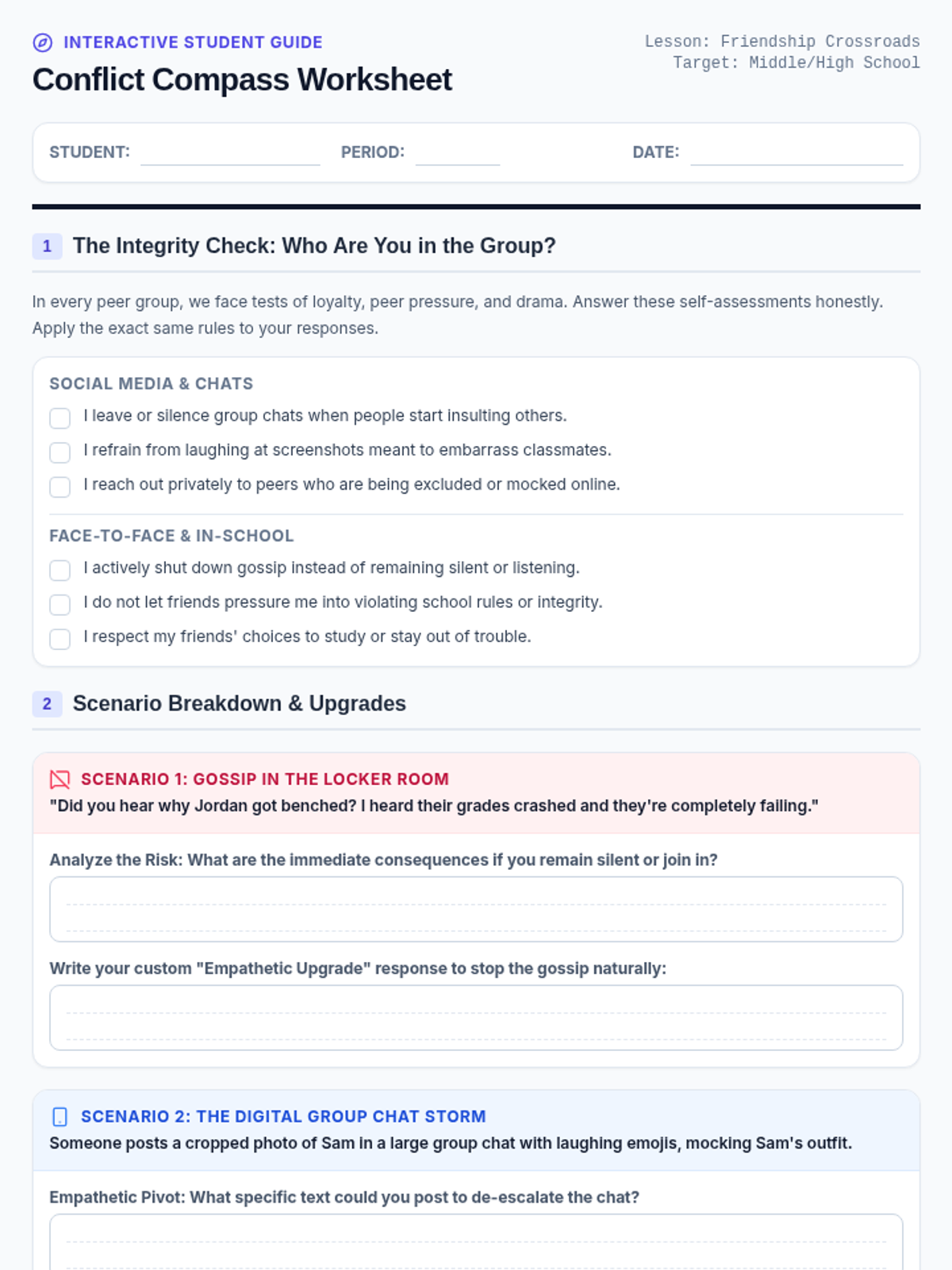
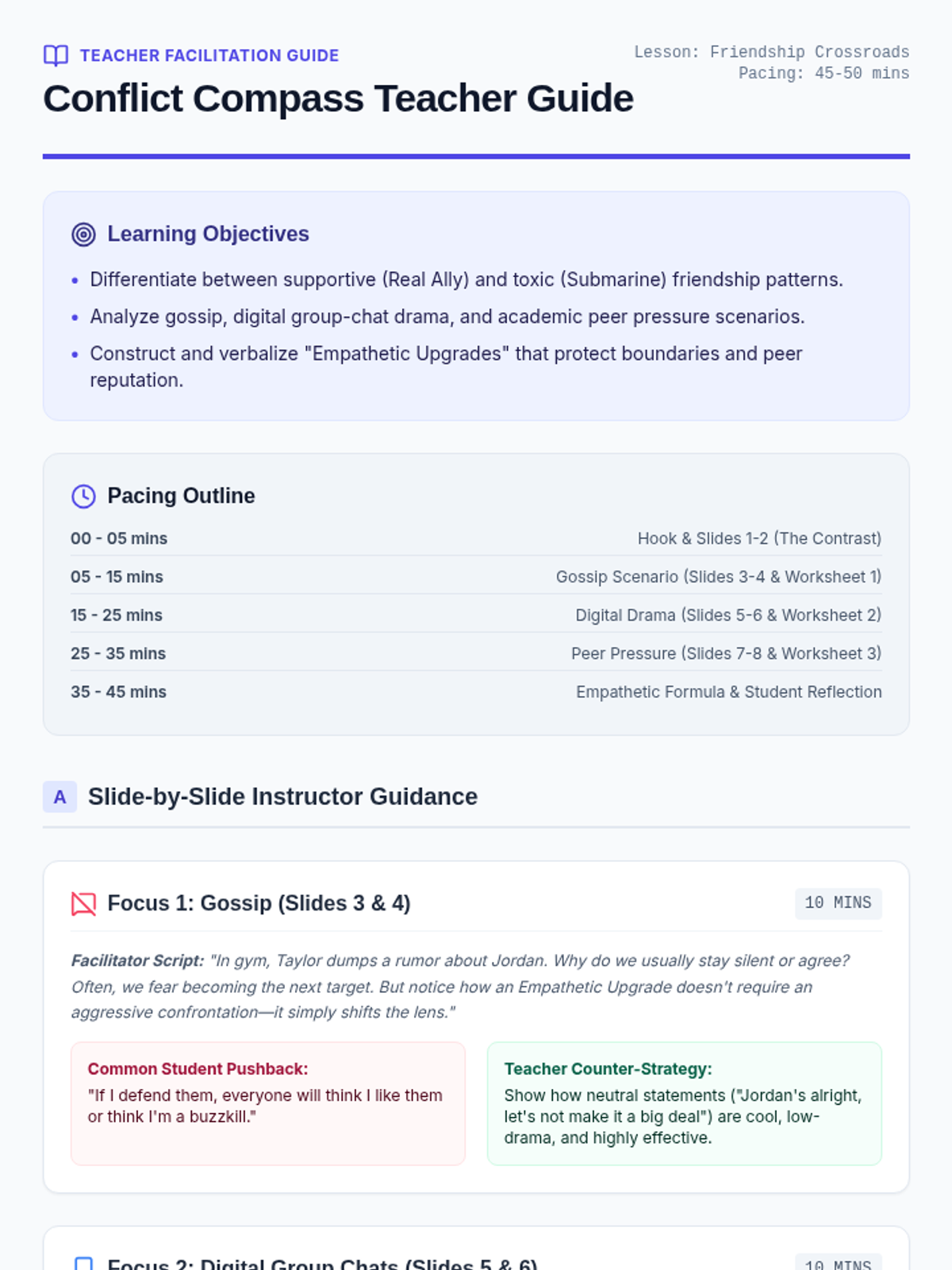
An interactive, highly engaging lesson designed to help middle and high school students navigate complex peer conflicts. Through realistic scenarios involving gossiping, social media drama, and peer pressure, students analyze the differences between supportive and harmful friendship behaviors and practice direct, empathetic communication.
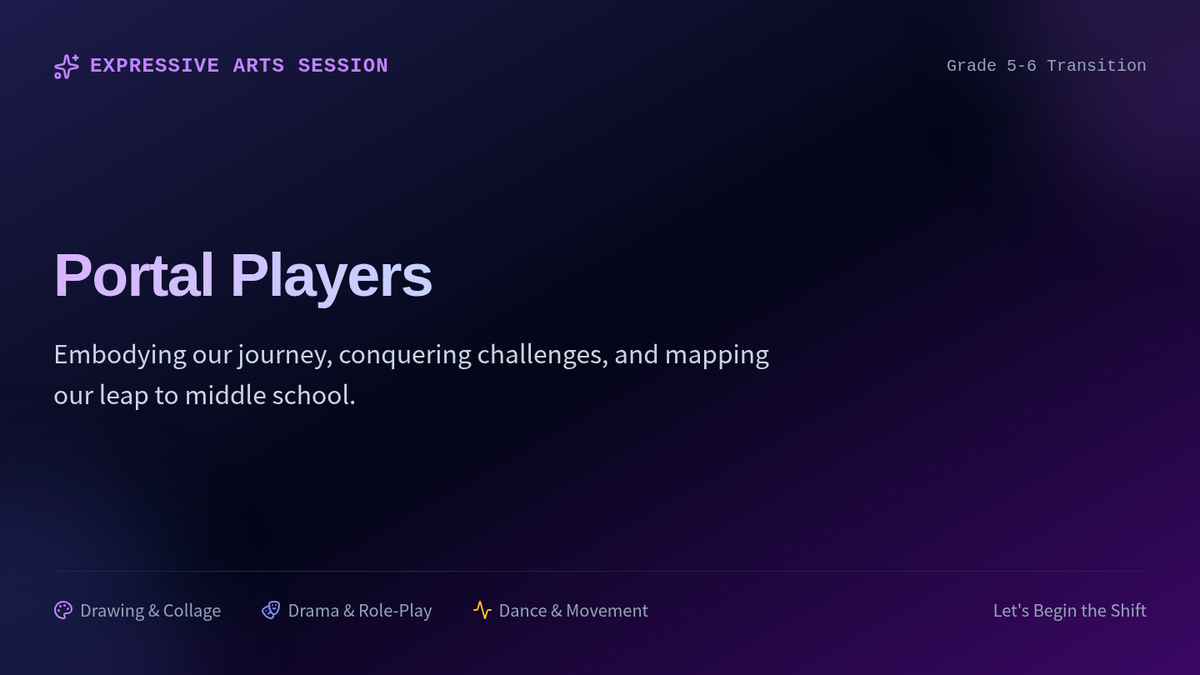
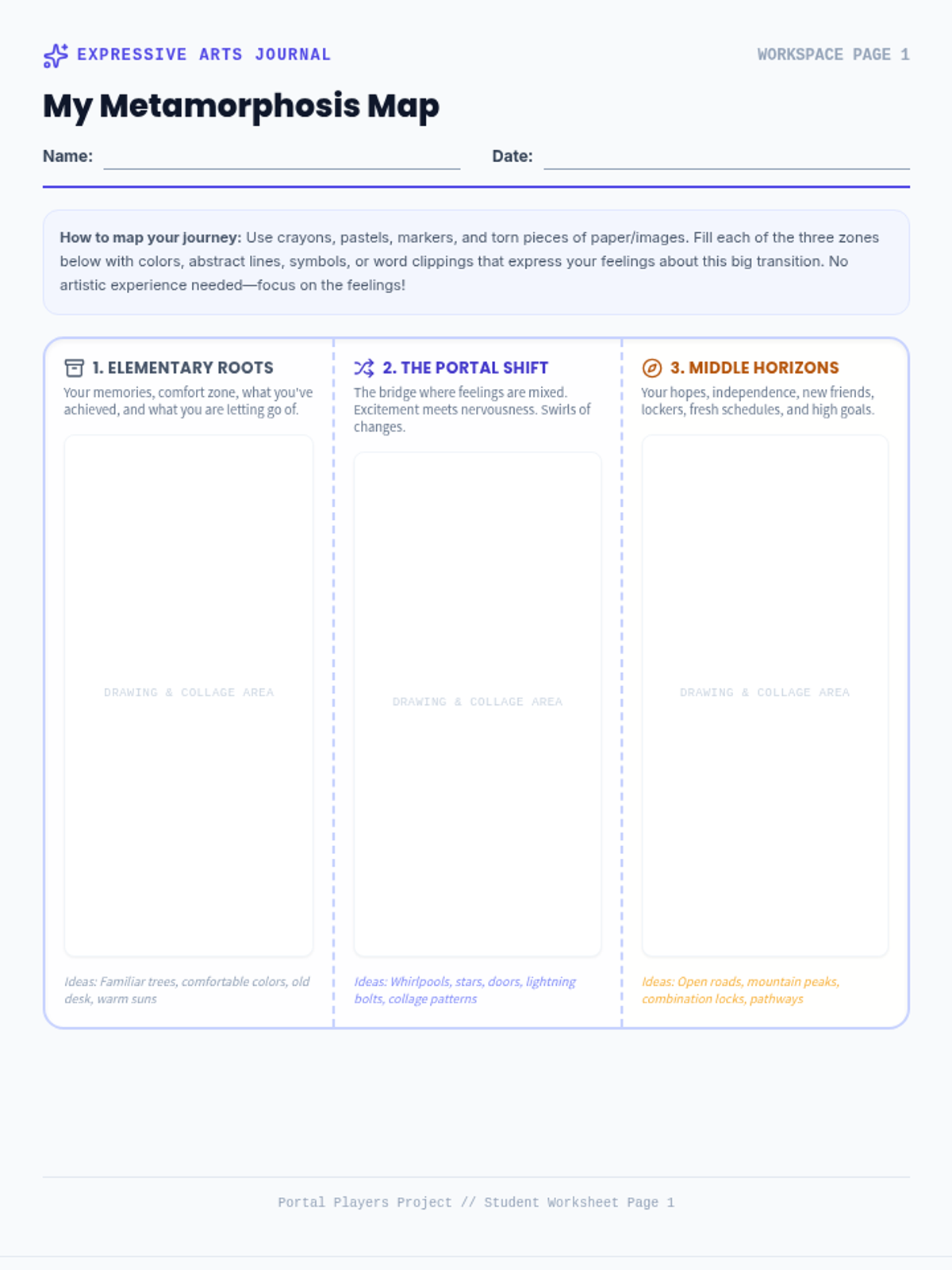
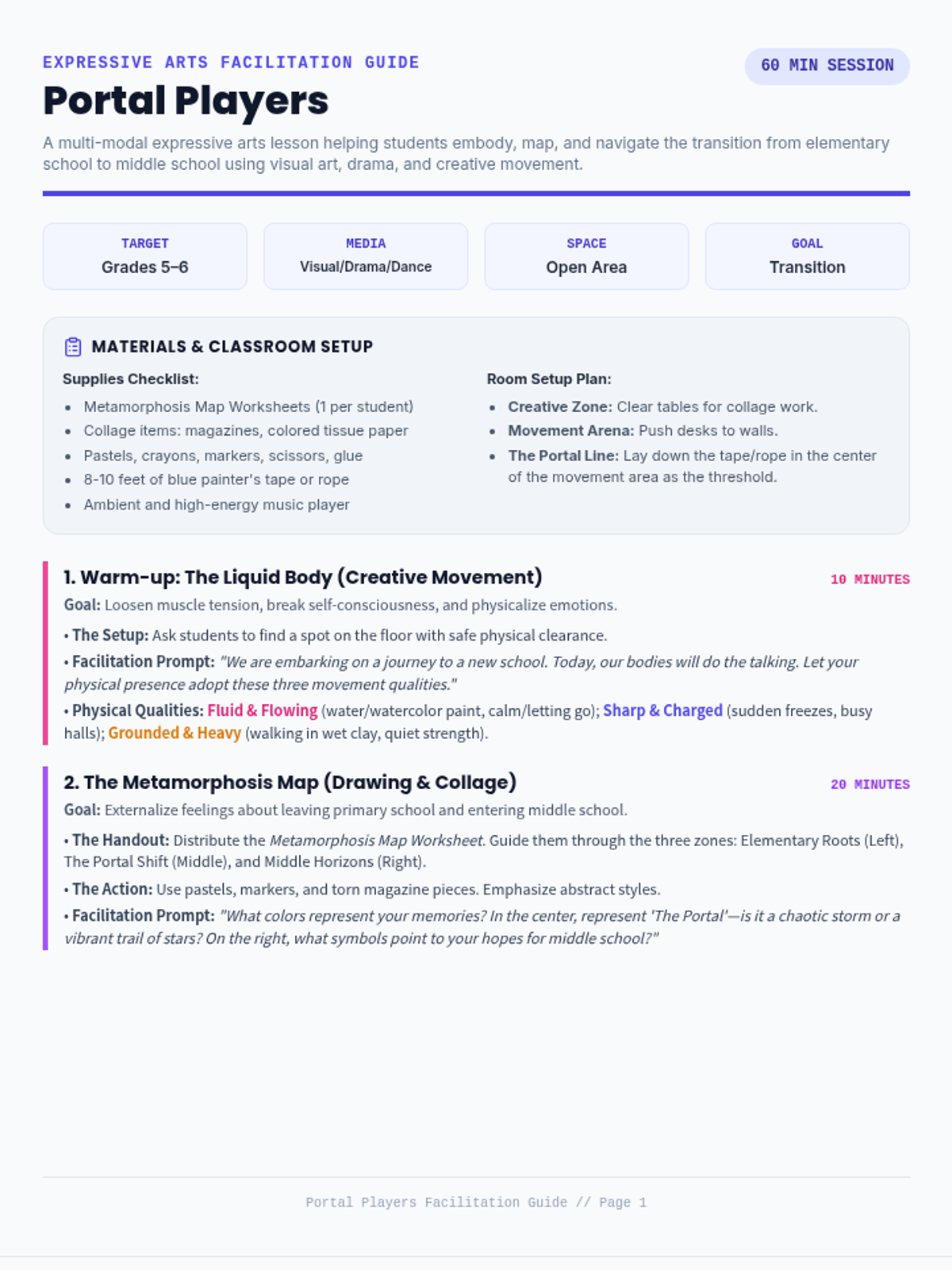
An expressive arts lesson designed to support students transitioning to middle school. Through drawing, collage, drama, role-play, and movement, students map their feelings, practice real scenarios, and physically embody growth and confidence.
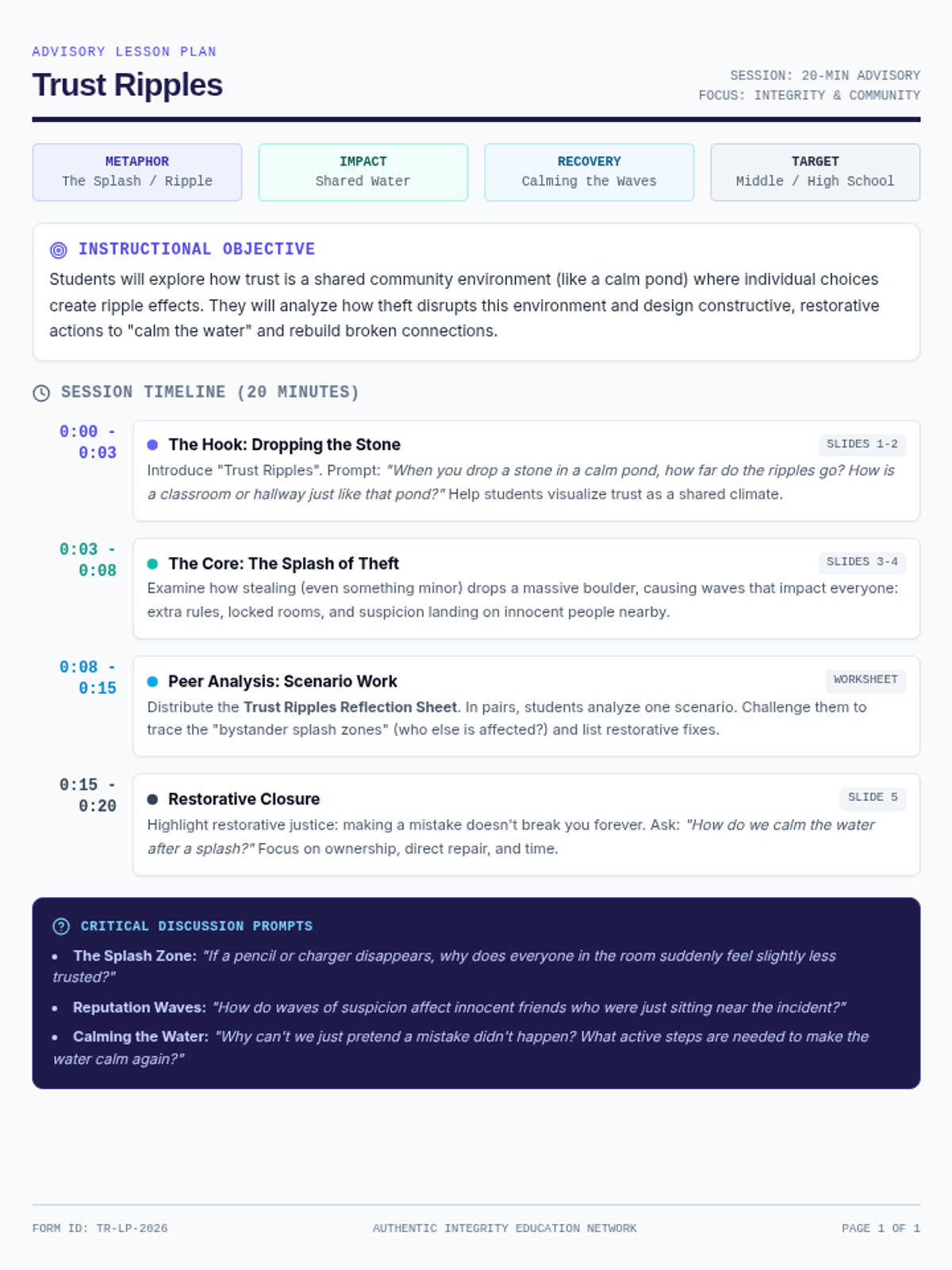
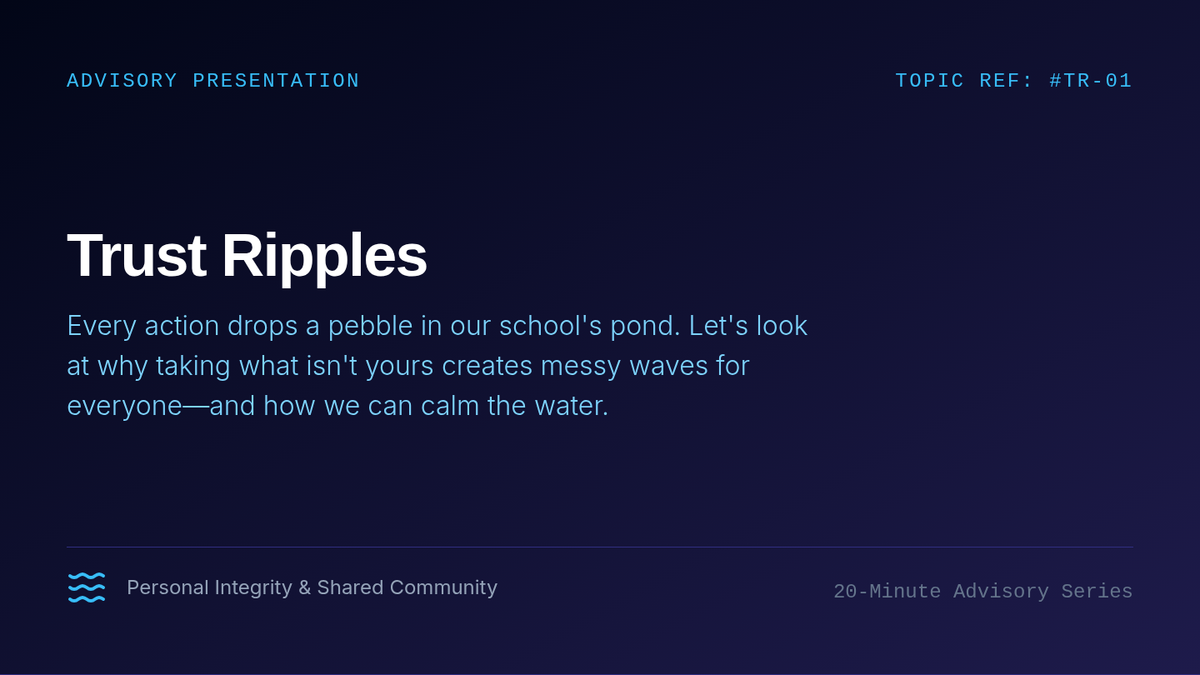
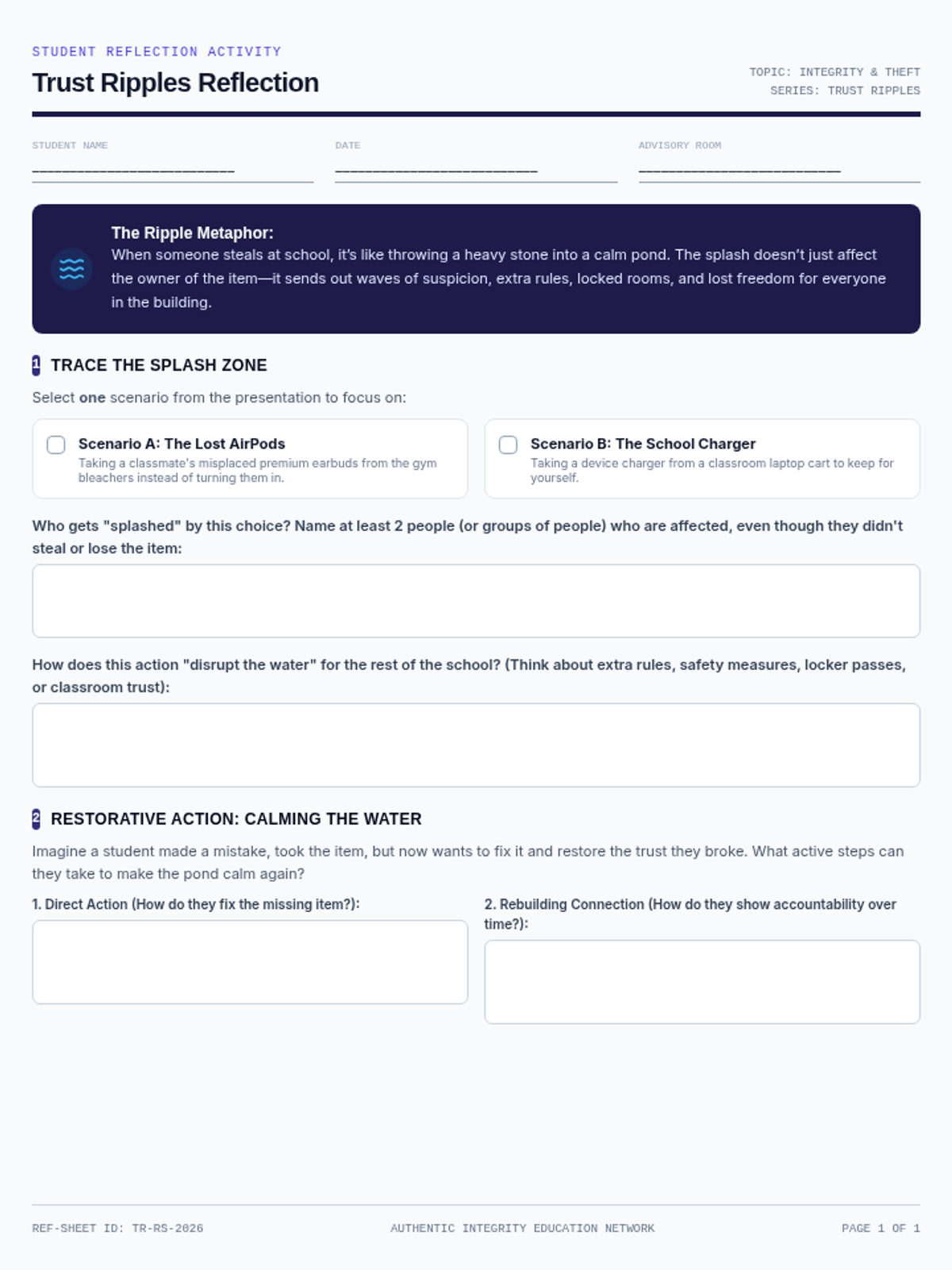
A direct, literal 20-minute advisory lesson exploring why theft is unacceptable in school. Students look past metaphors to analyze the direct consequences of stealing on school culture, rules, innocent peers, and the practical steps to repair relationships after a mistake is made.