This lesson focuses on Academy Simulation Mission Logistics, including simulation roles (Caregiver, Observer, and Reader) and the simulation log for documenting observations across different stations.
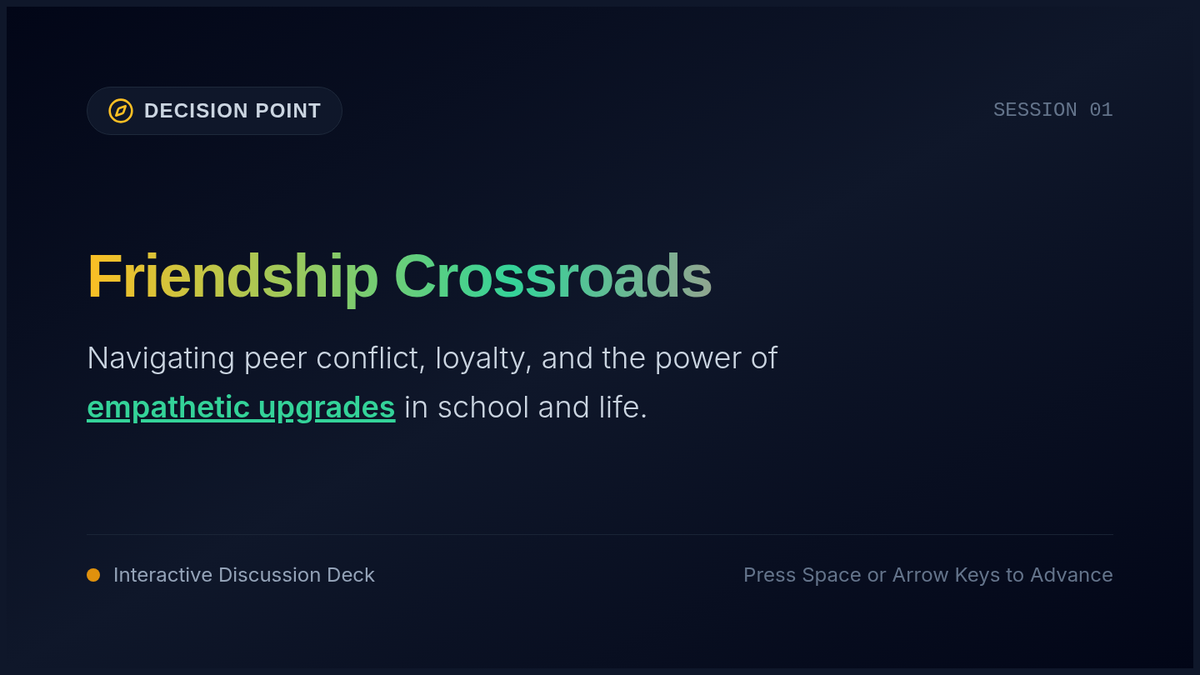
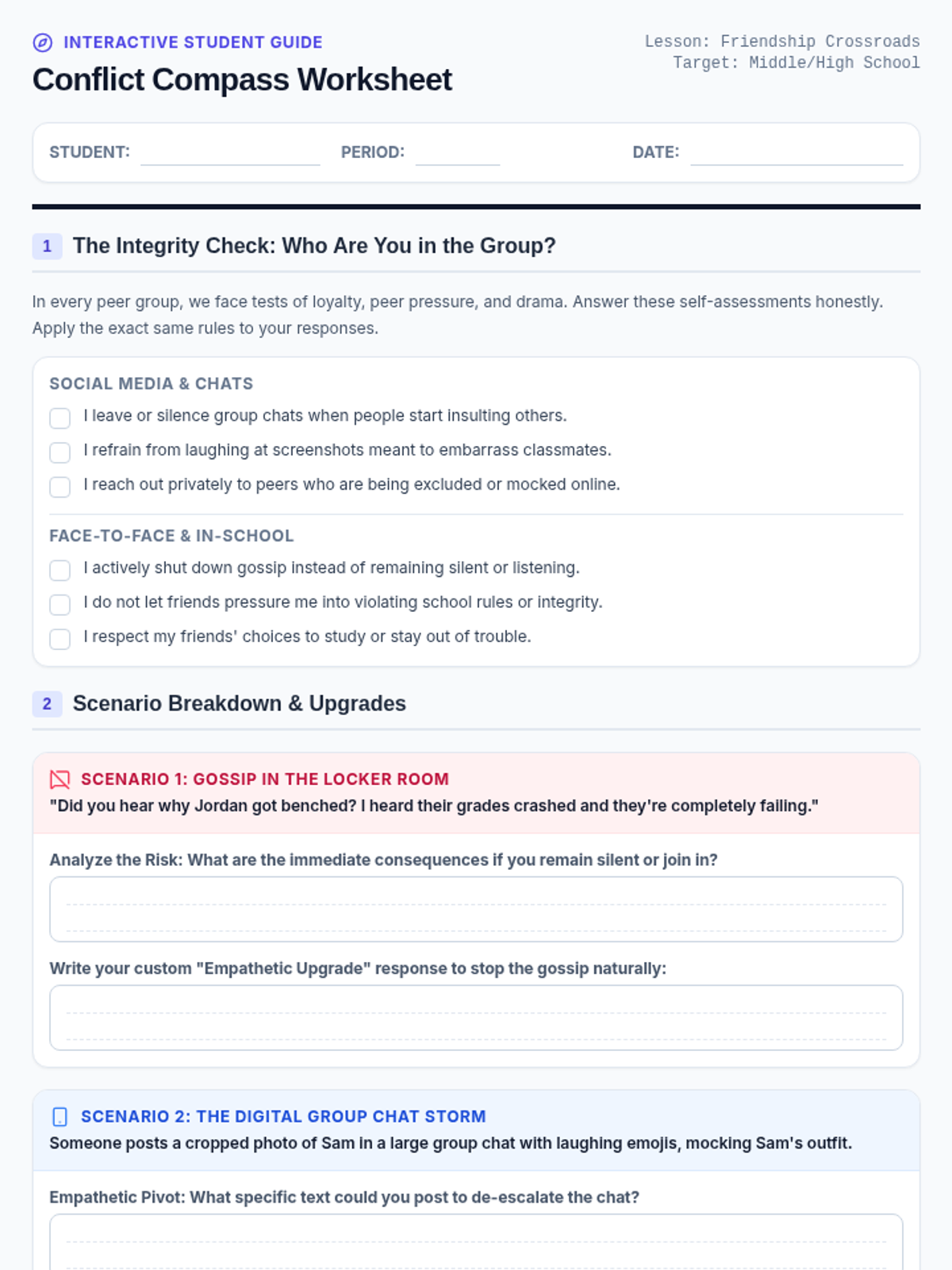
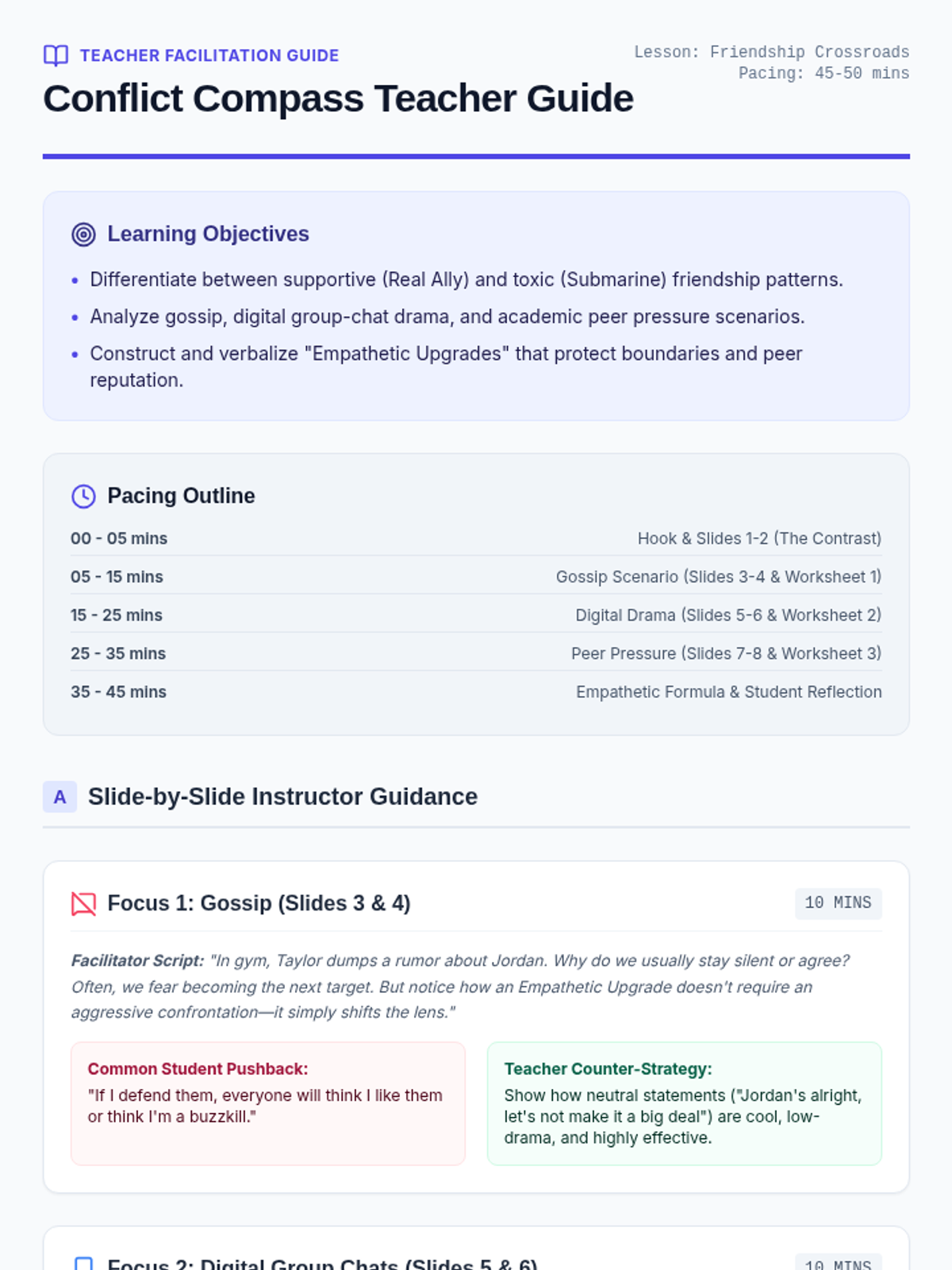
An interactive, highly engaging lesson designed to help middle and high school students navigate complex peer conflicts. Through realistic scenarios involving gossiping, social media drama, and peer pressure, students analyze the differences between supportive and harmful friendship behaviors and practice direct, empathetic communication.
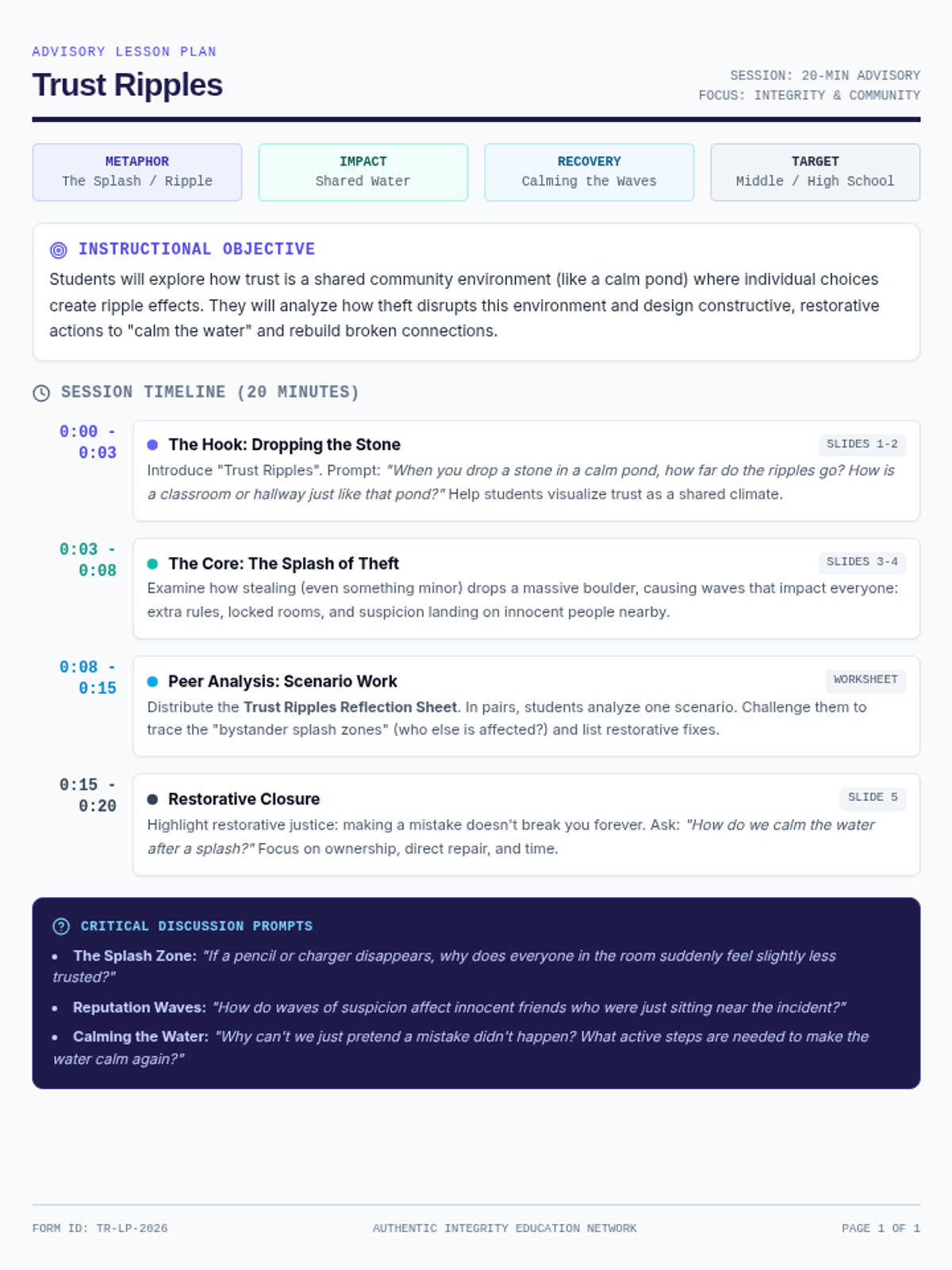
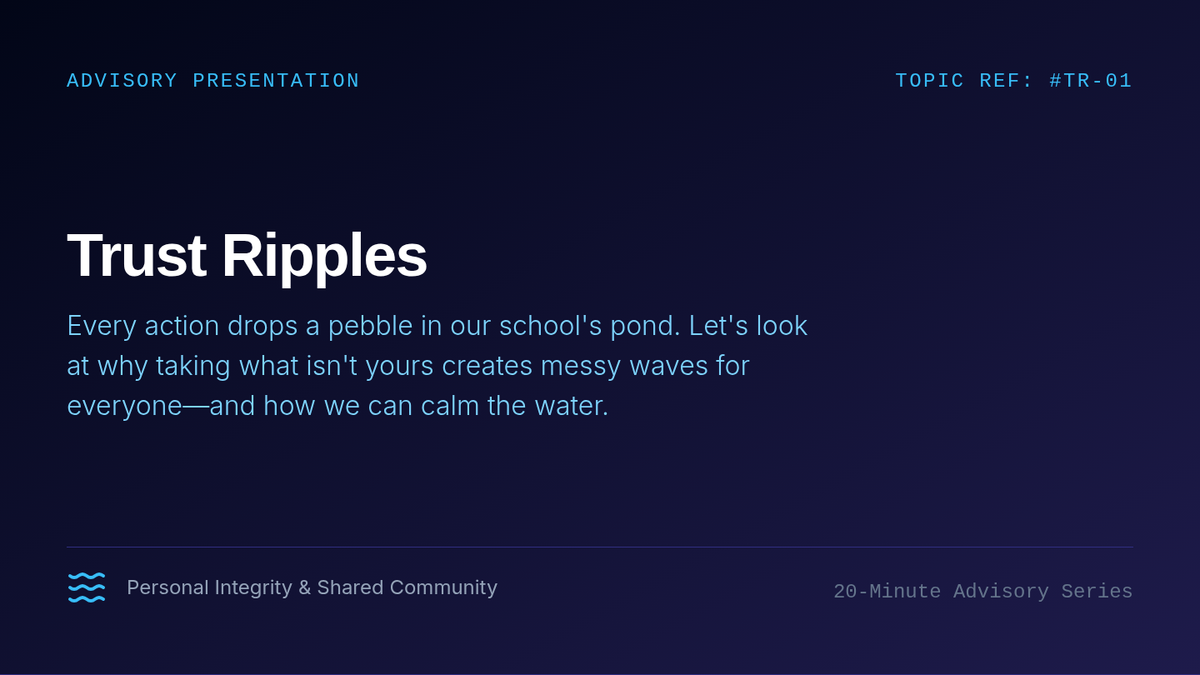
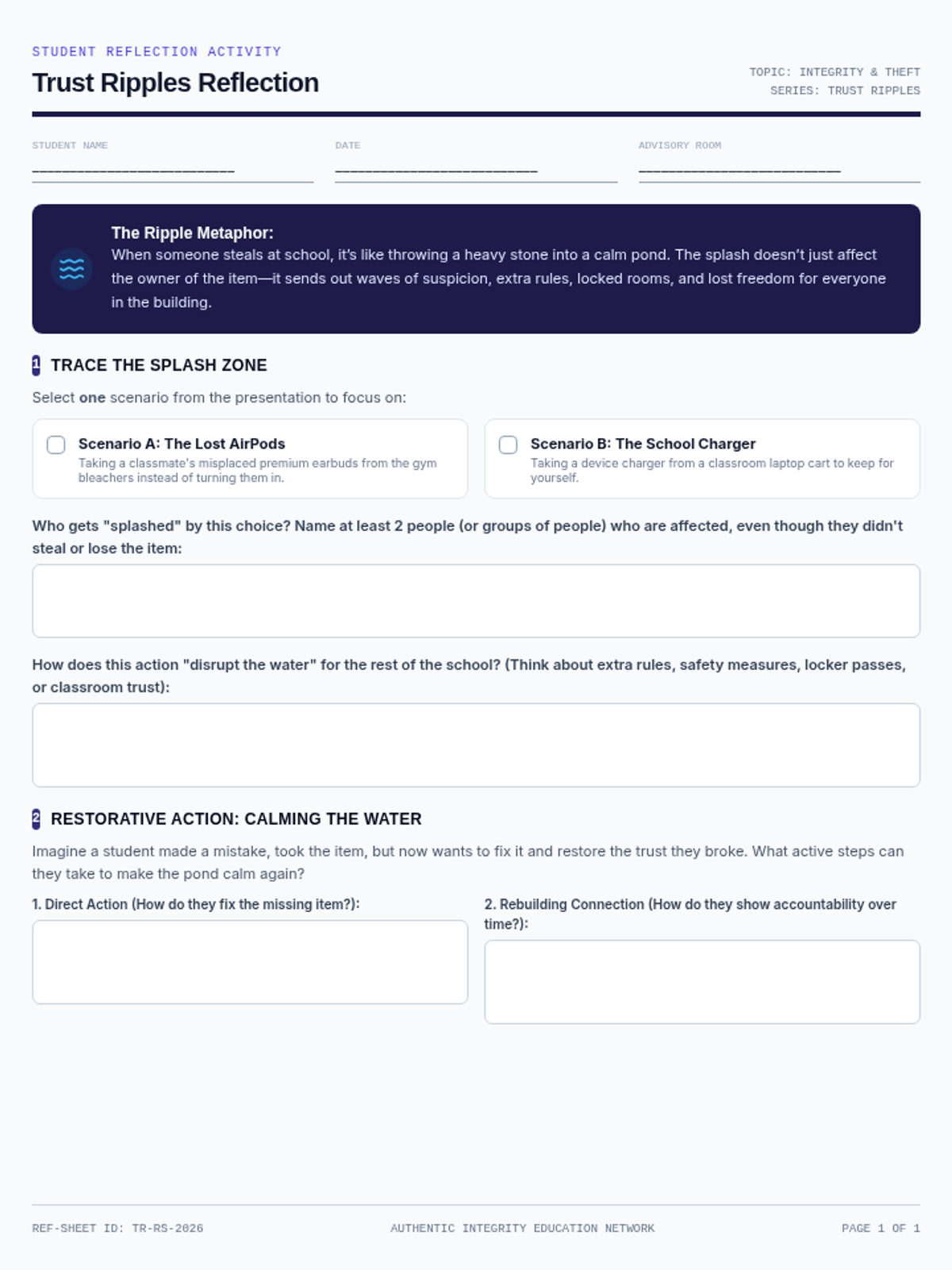
A direct, literal 20-minute advisory lesson exploring why theft is unacceptable in school. Students look past metaphors to analyze the direct consequences of stealing on school culture, rules, innocent peers, and the practical steps to repair relationships after a mistake is made.
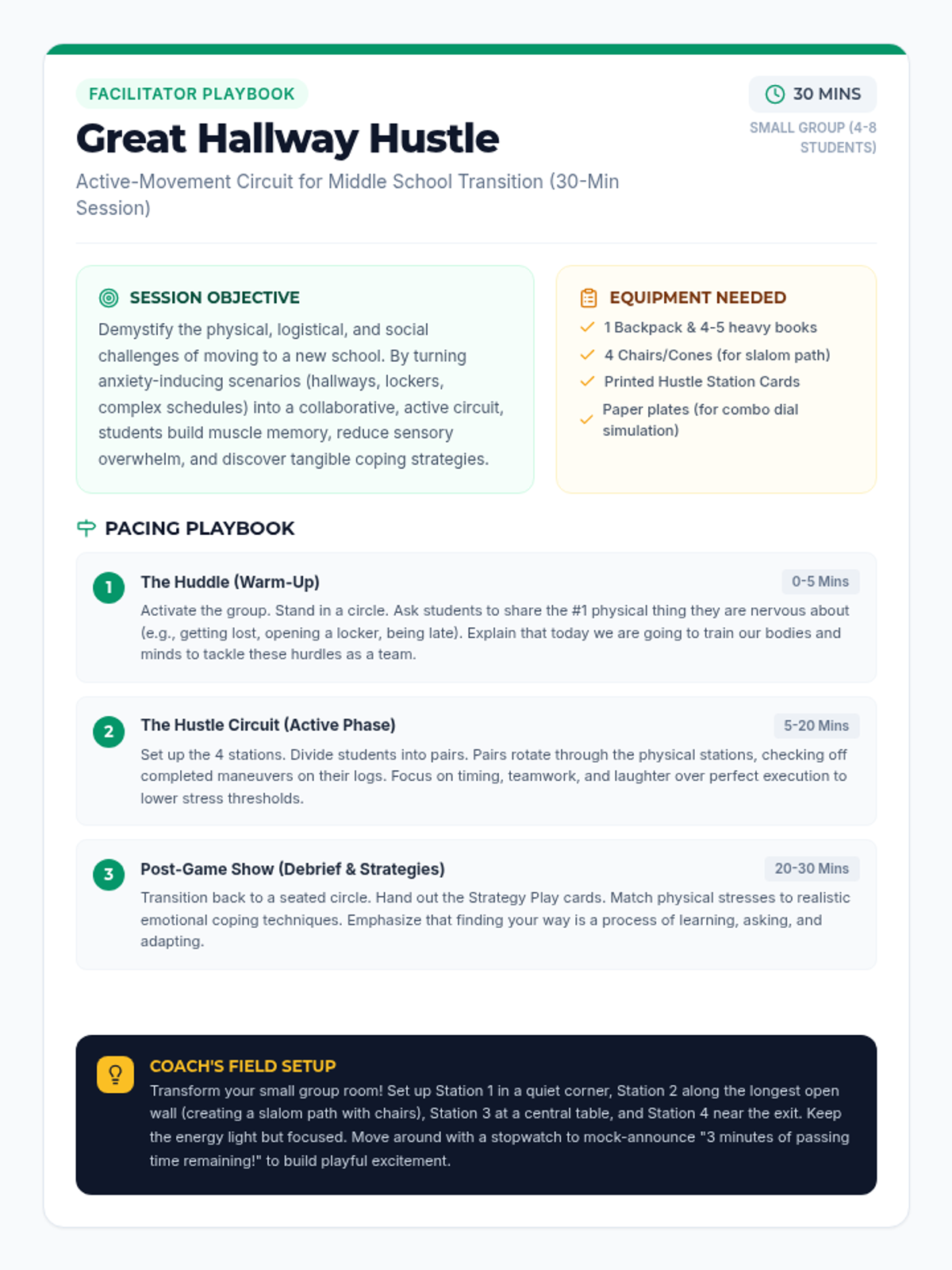
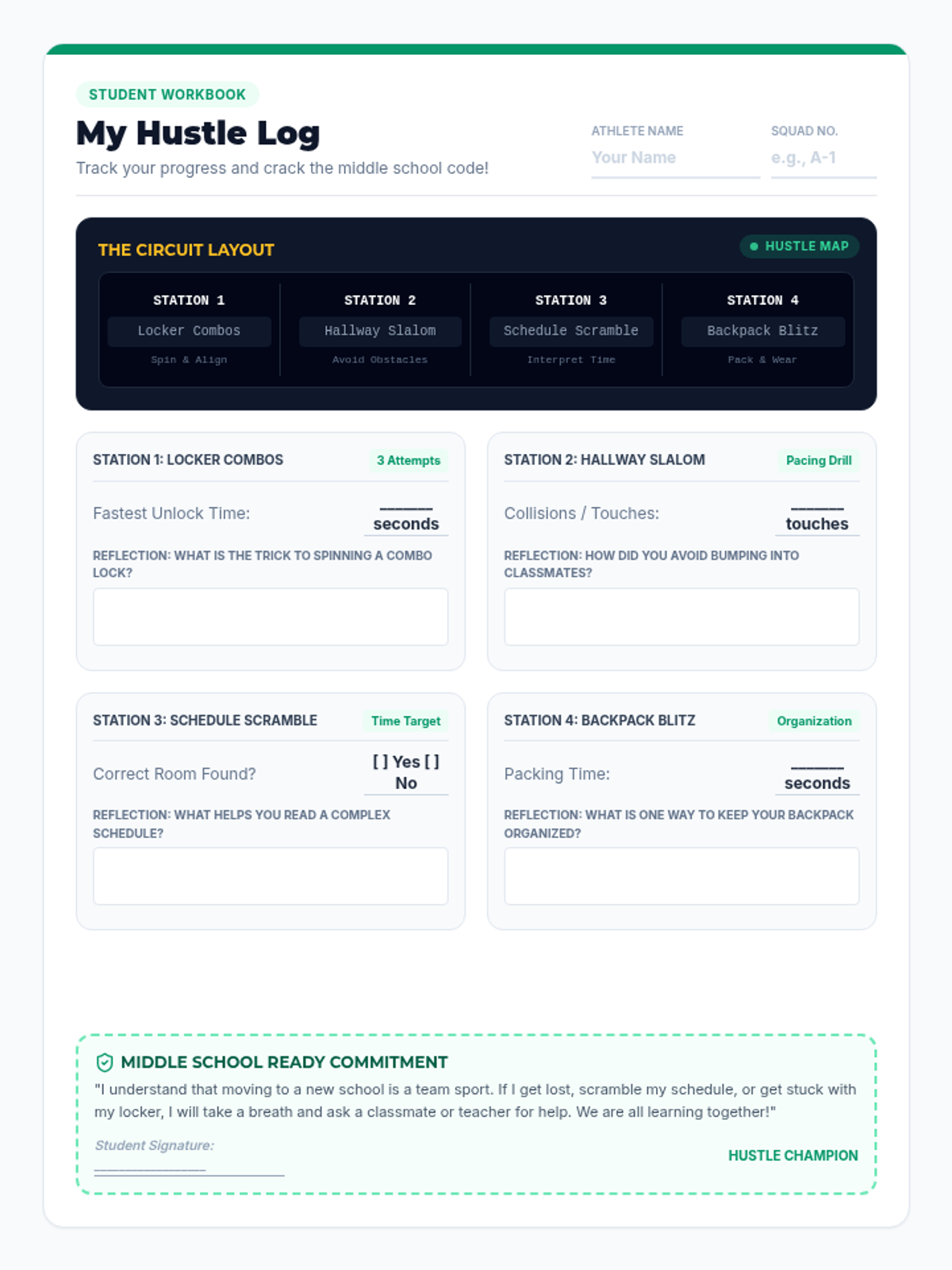
A 30-minute small group session that uses a high-energy movement circuit to address the transition concerns of moving to a new middle school, simulating lockers, hallways, backpacks, and schedules.
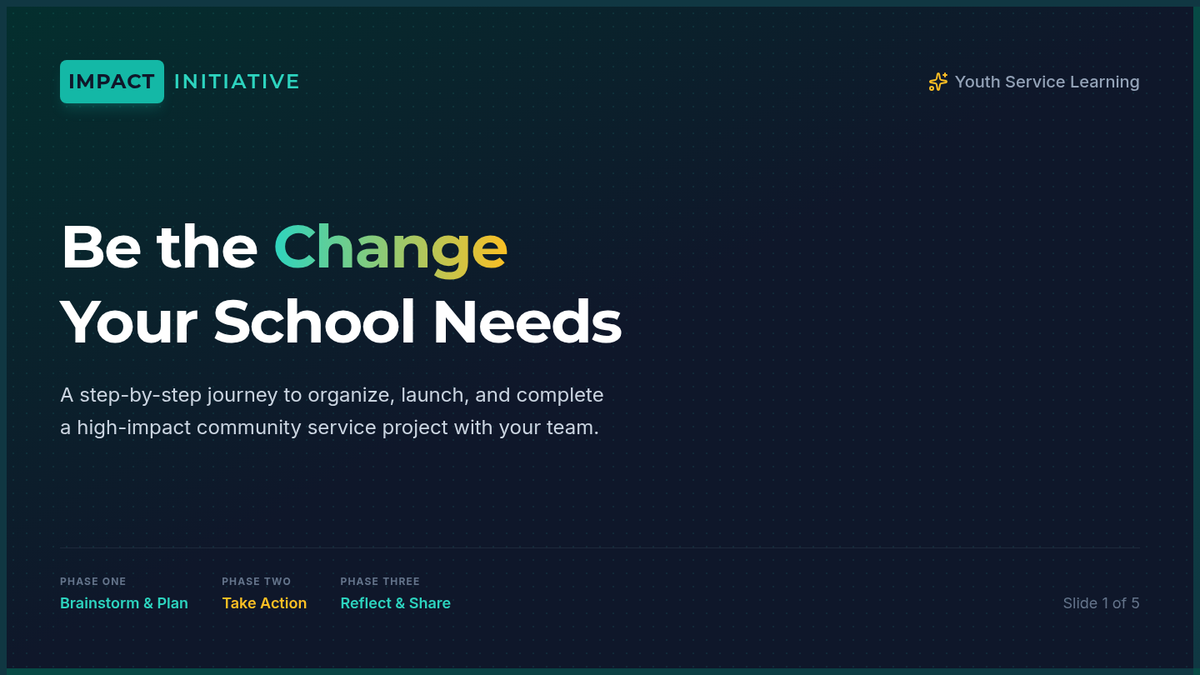
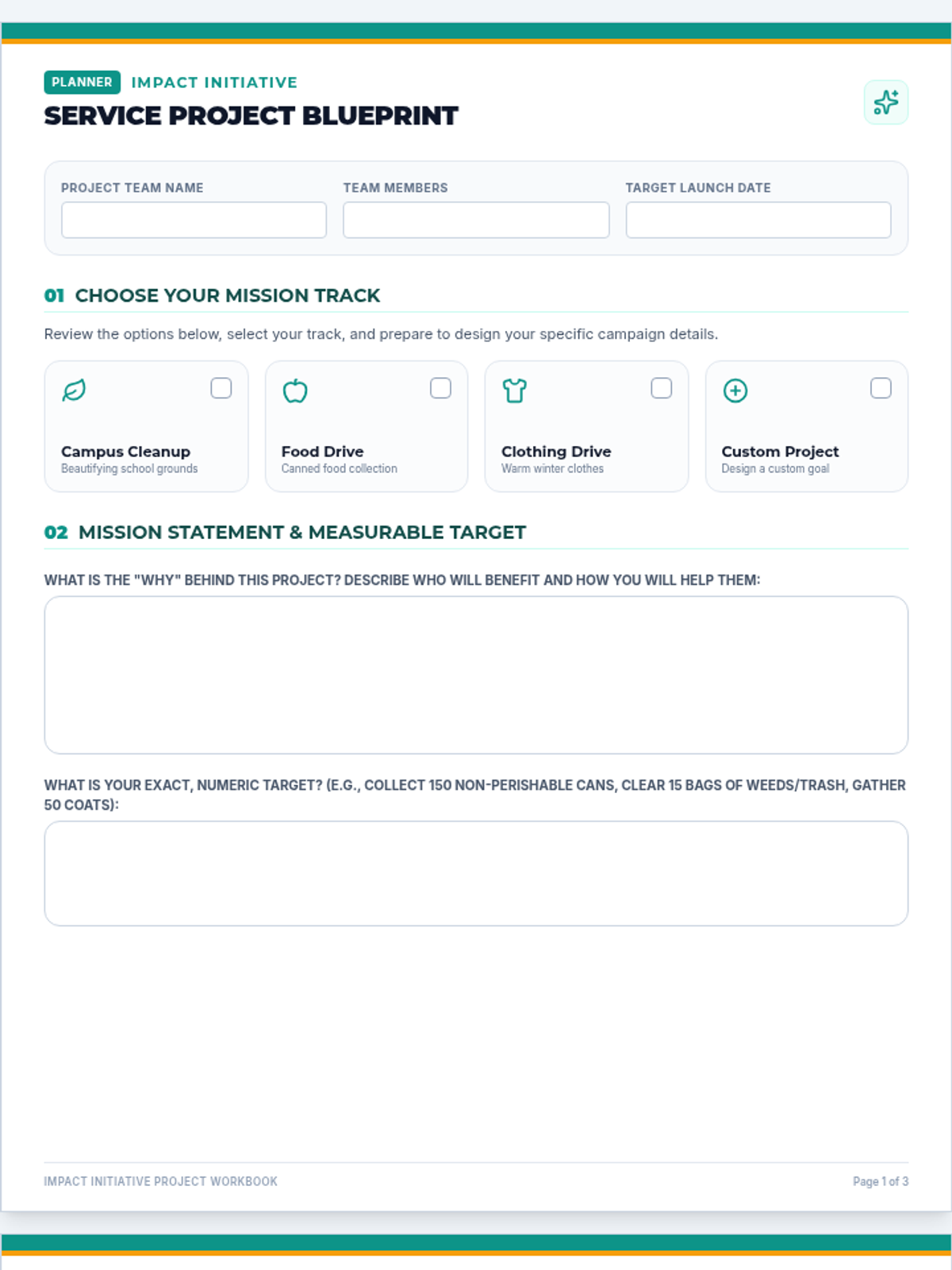
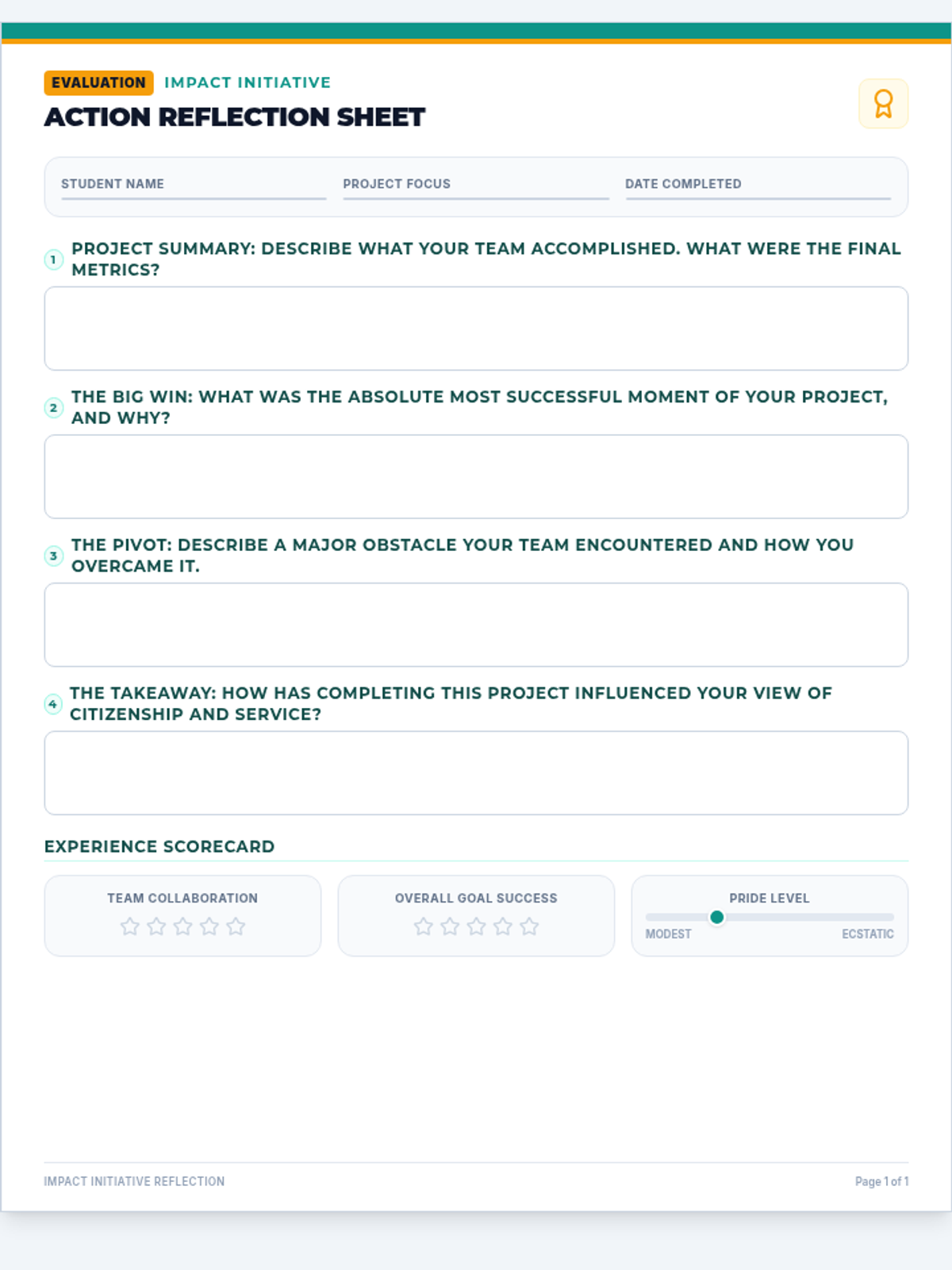
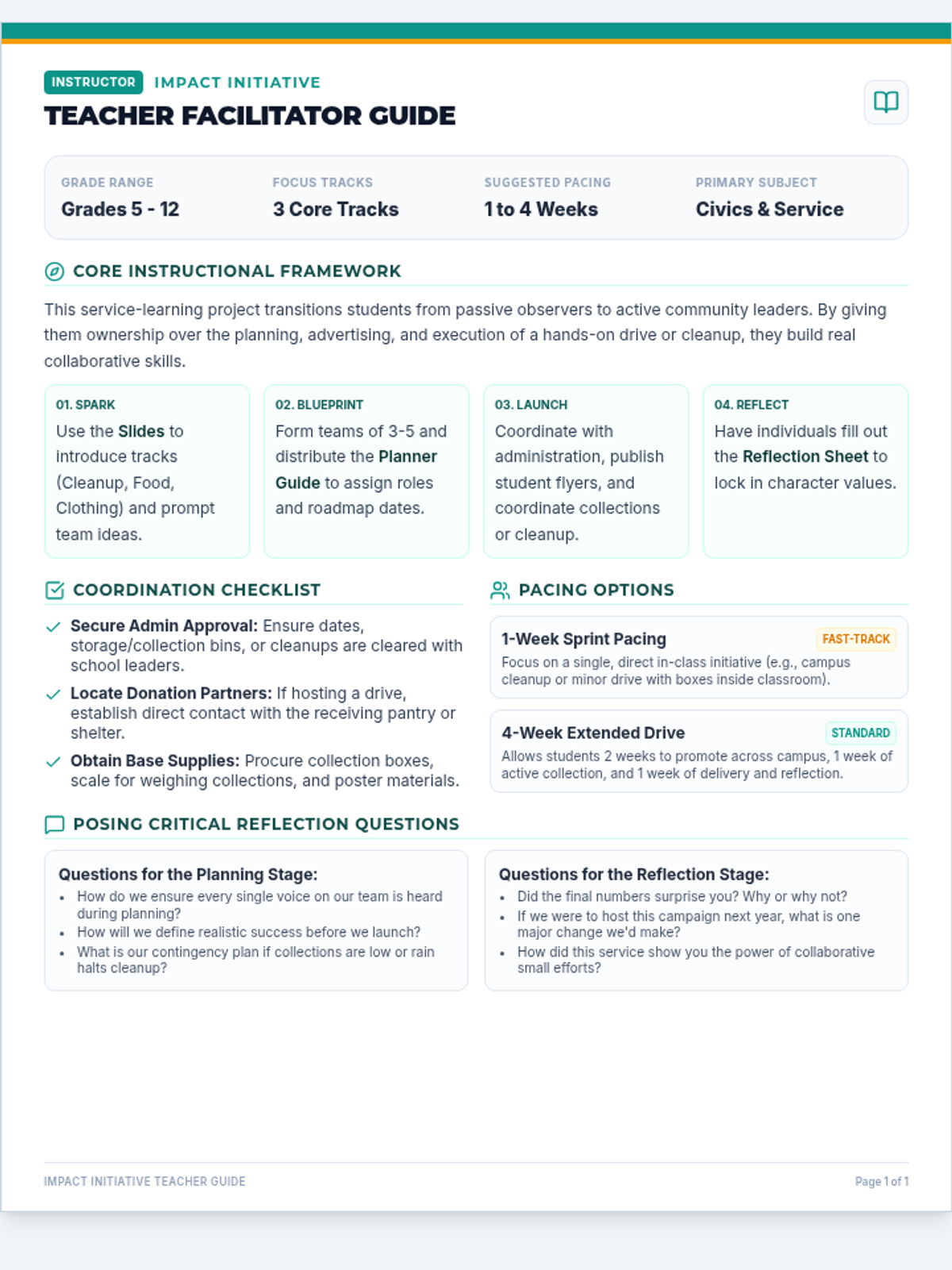
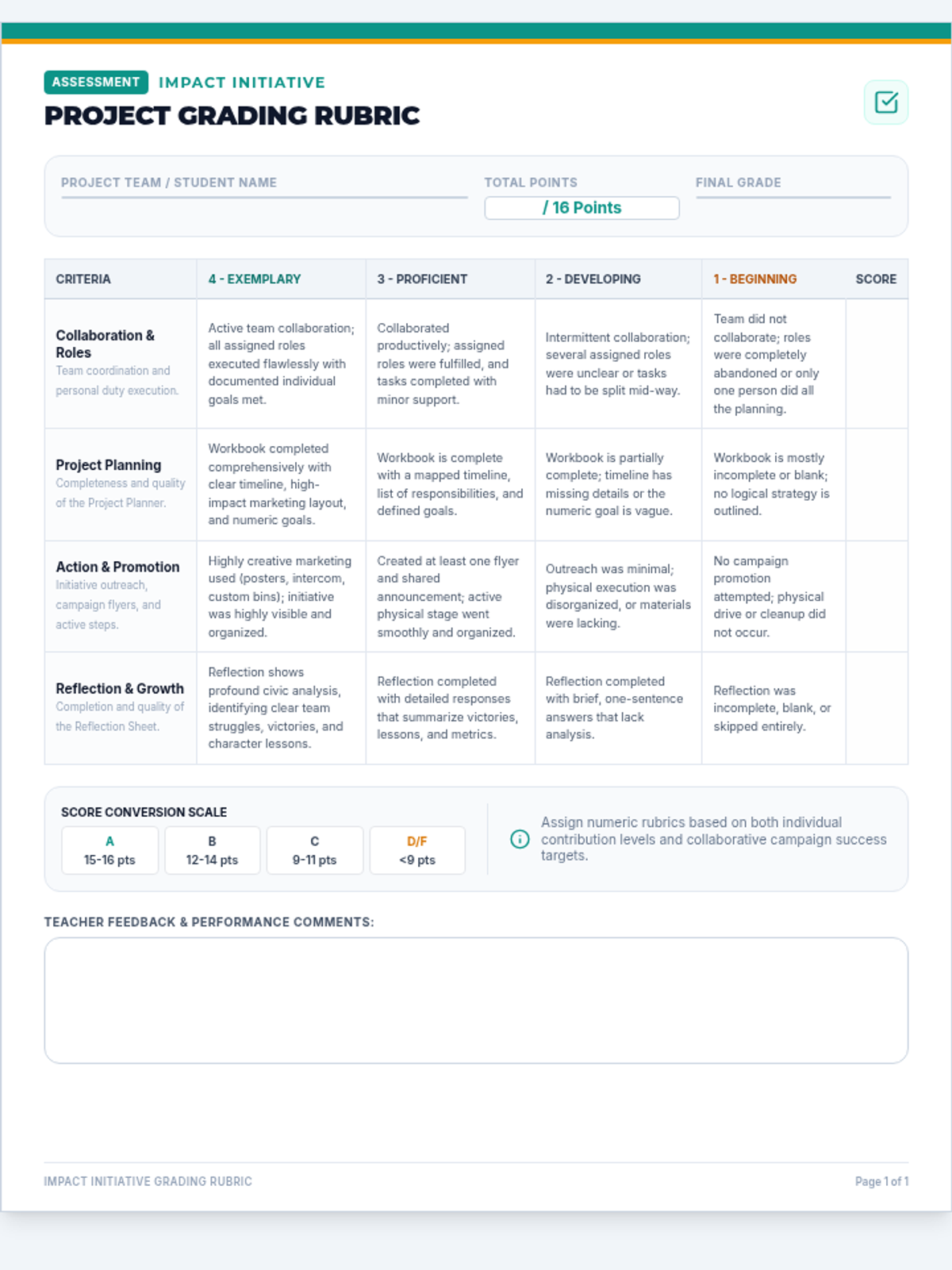
A service-learning lesson where students plan, execute, and reflect on a community service project of their choice (school campus cleanup, food drive, or clothing drive). It includes interactive presentation slides, a step-by-step project planning guide, a simplified reflection worksheet, and a teacher facilitation guide.
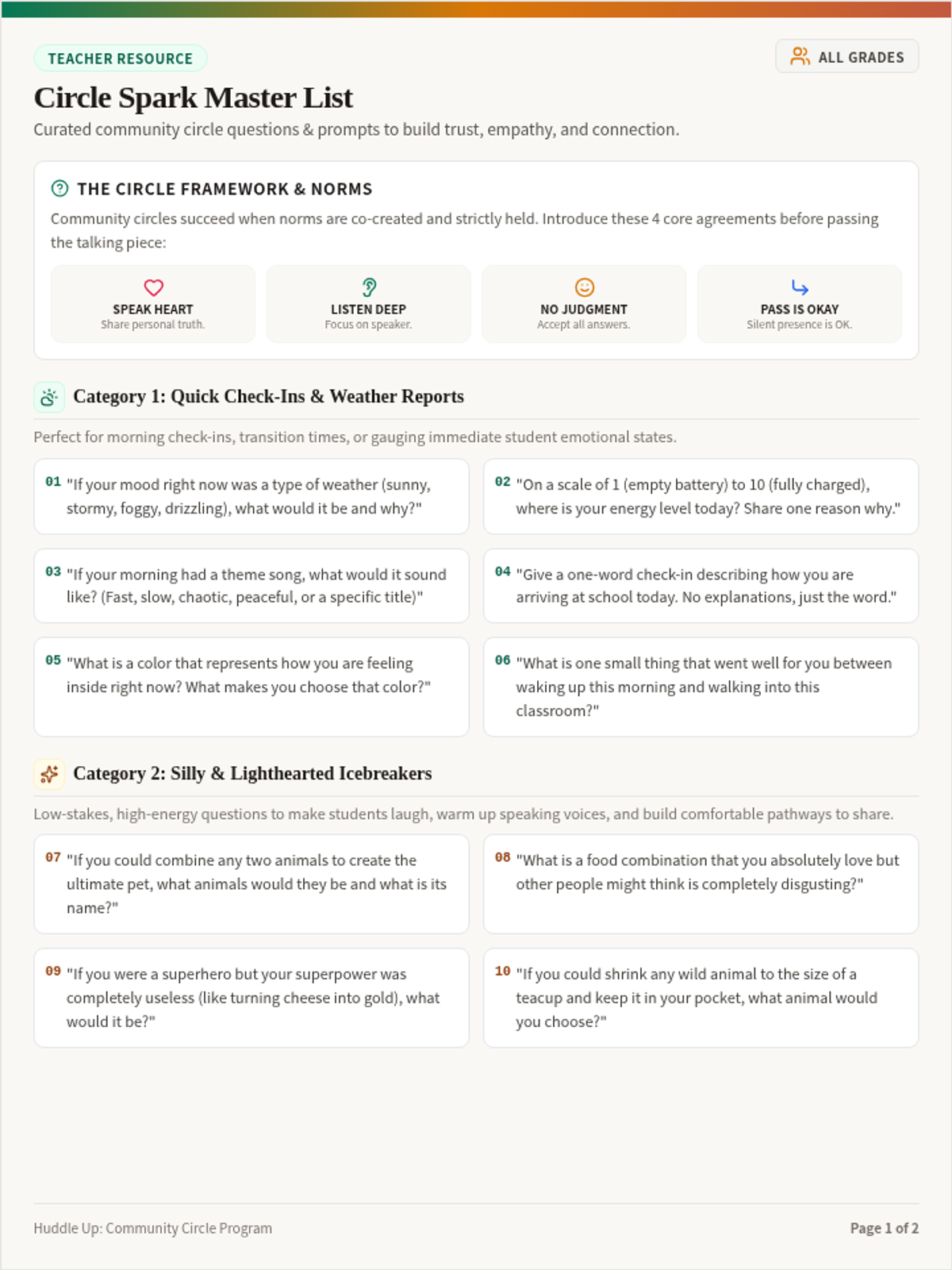
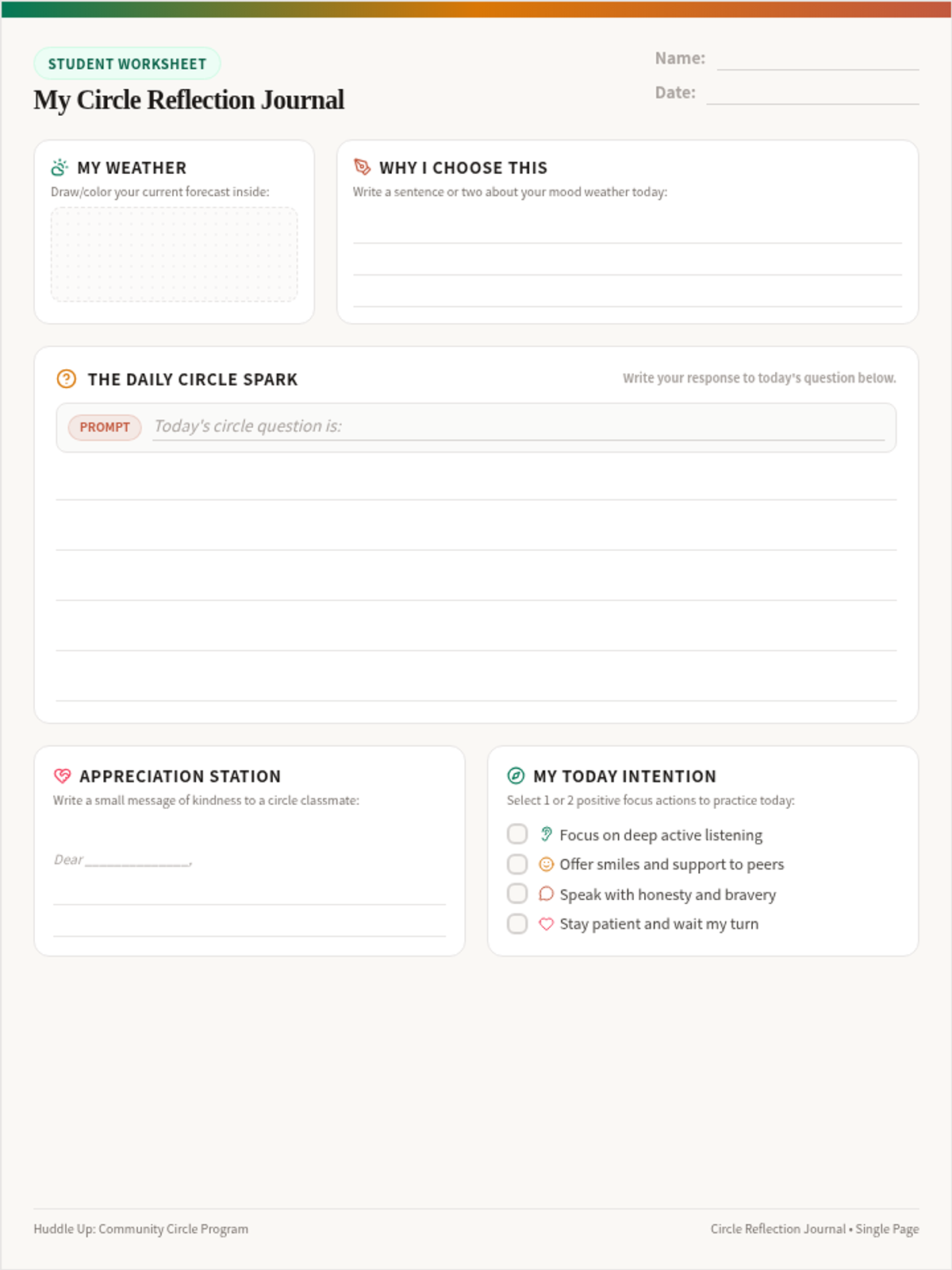
A complete toolkit to establish, run, and maintain engaging daily or weekly community circles that foster empathy, build classroom relationships, and check in on students' social-emotional well-being.
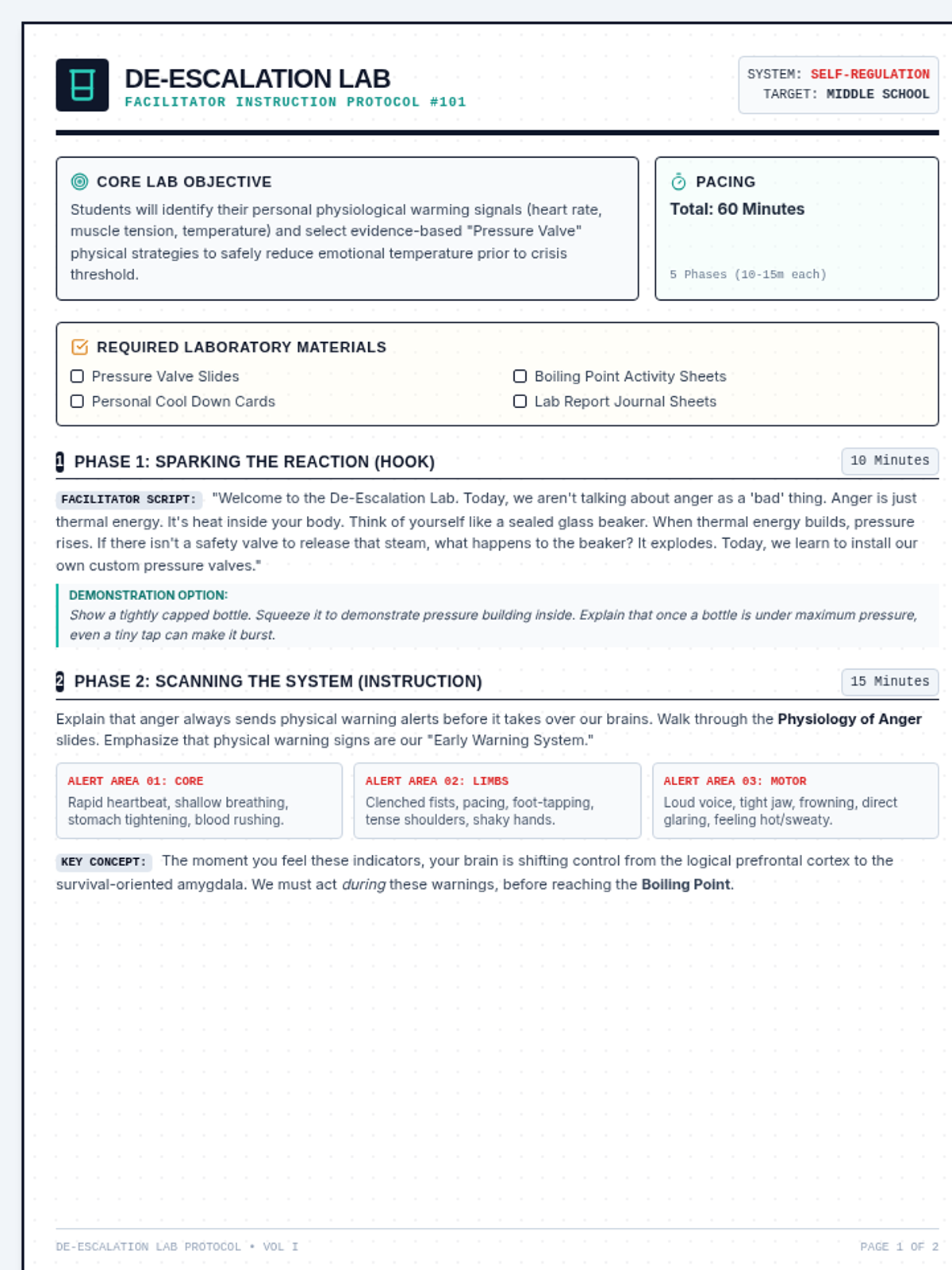
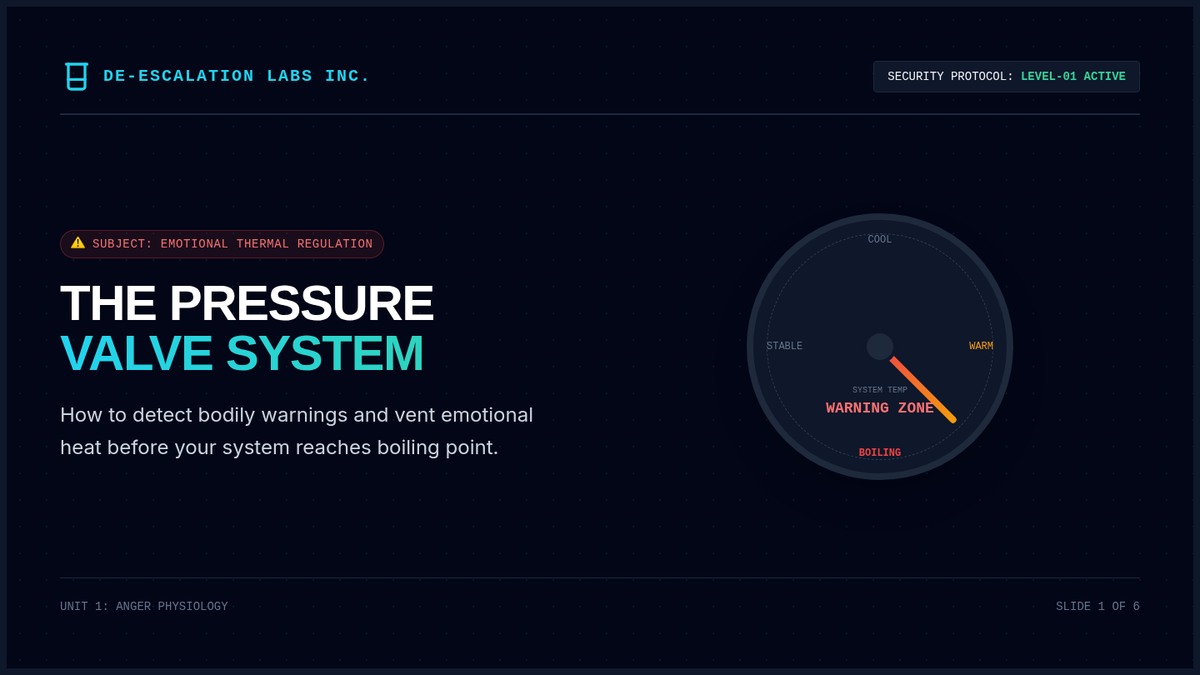
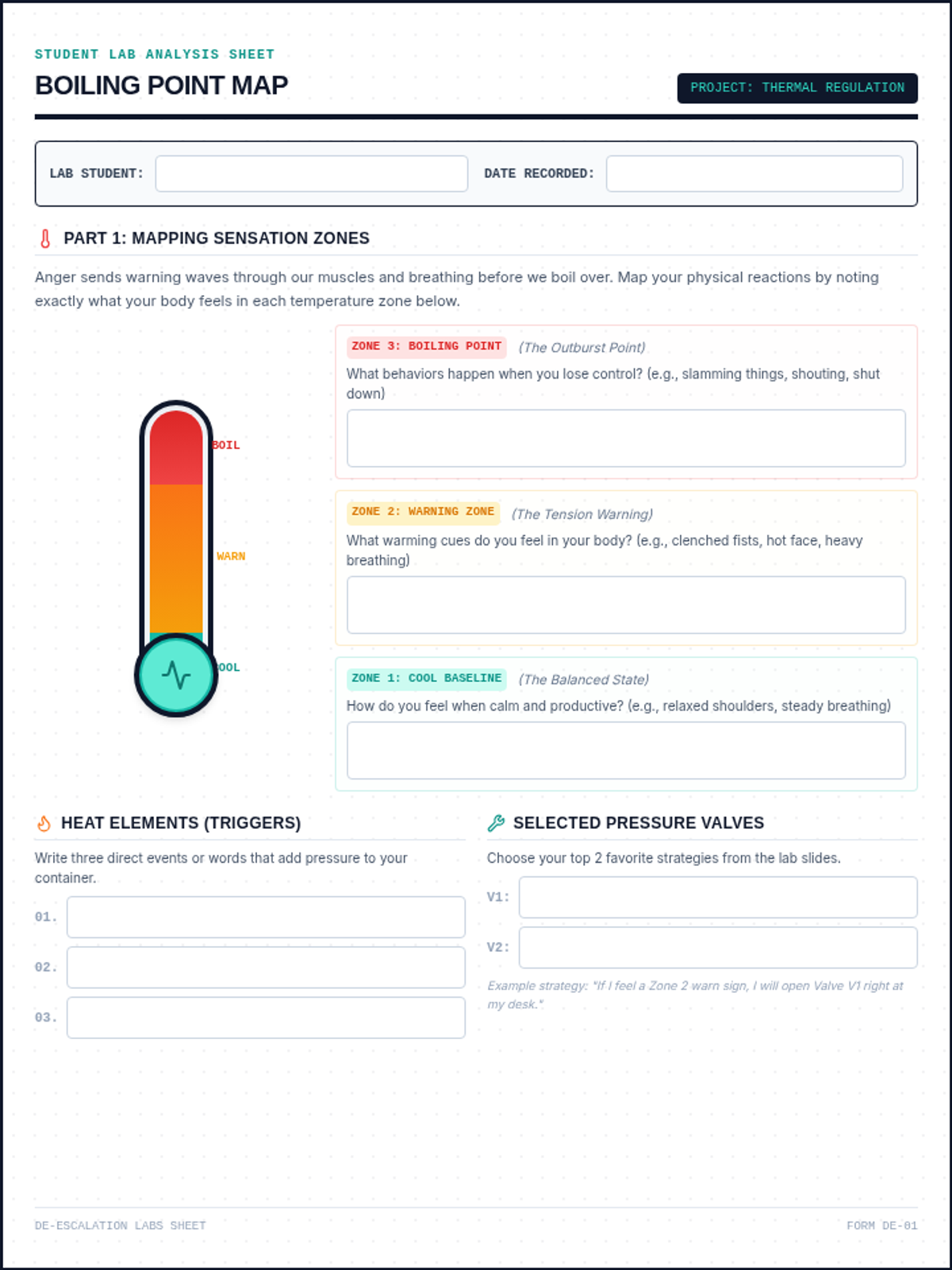
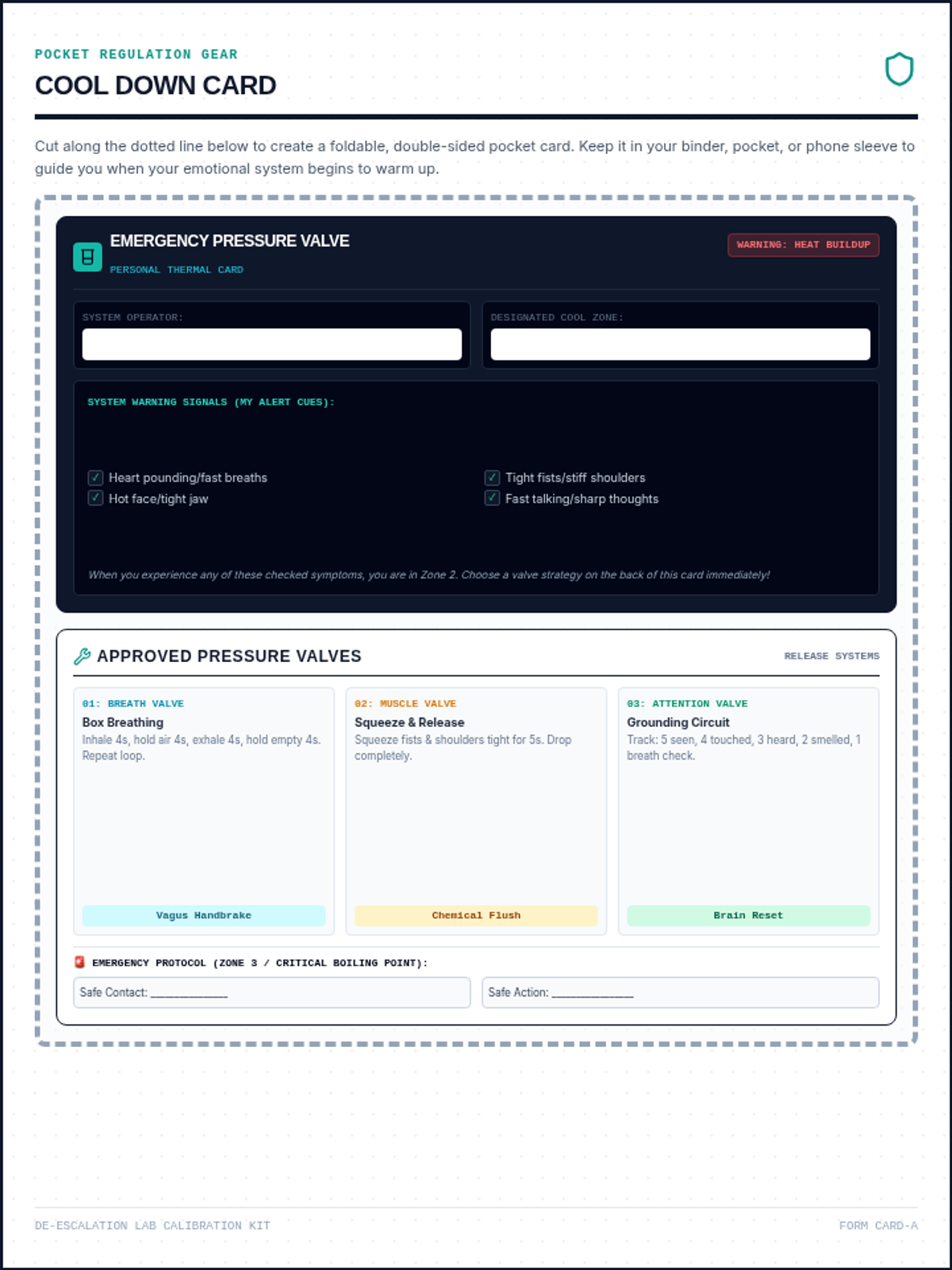
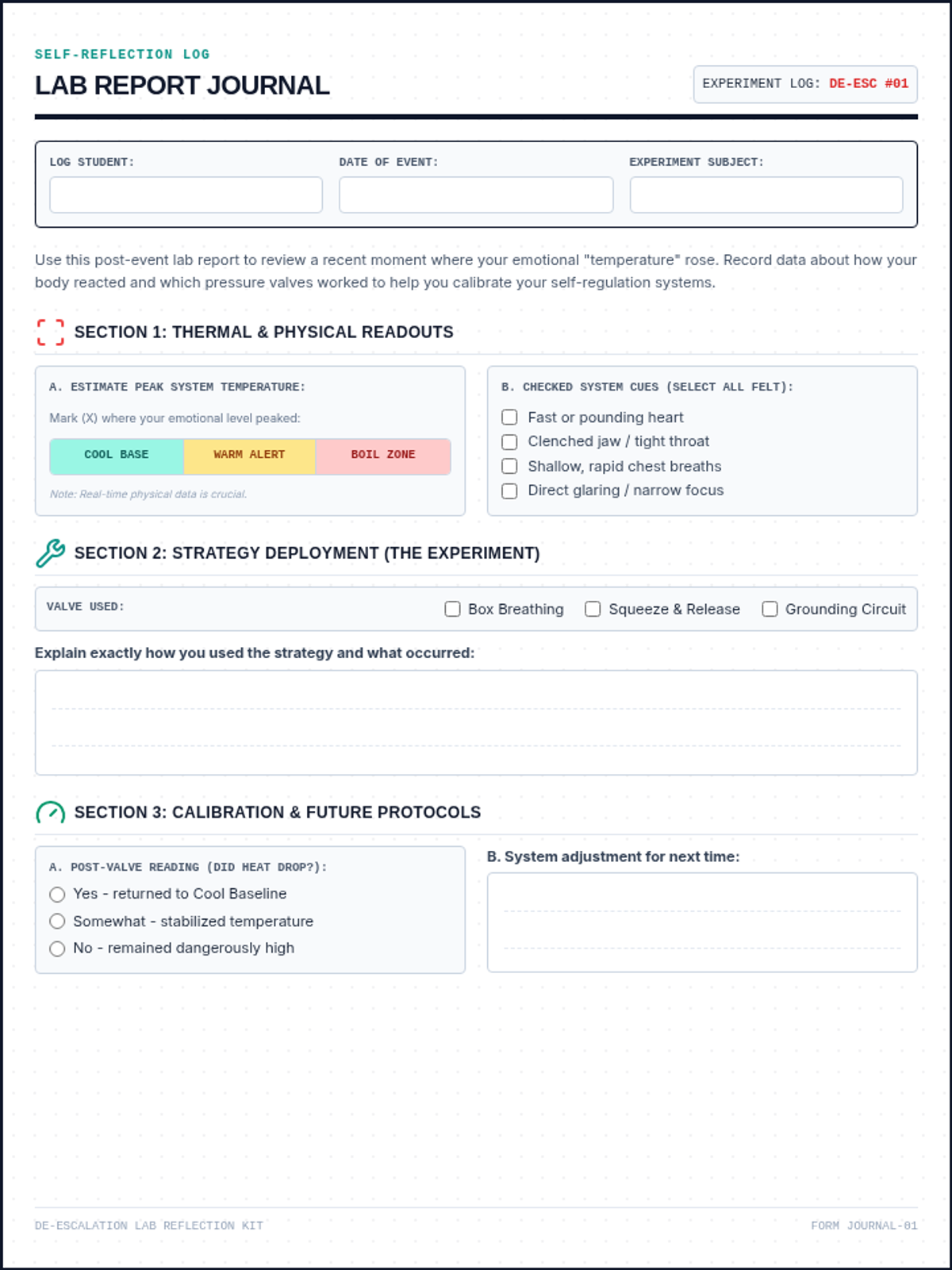
A behavioral intervention lesson for middle schoolers that uses a laboratory theme to explore the physical sensations of anger. Students identify their physiological warning signs, experiment with 'pressure valve' strategies, and create custom self-regulation plans to prevent emotional blow-ups.
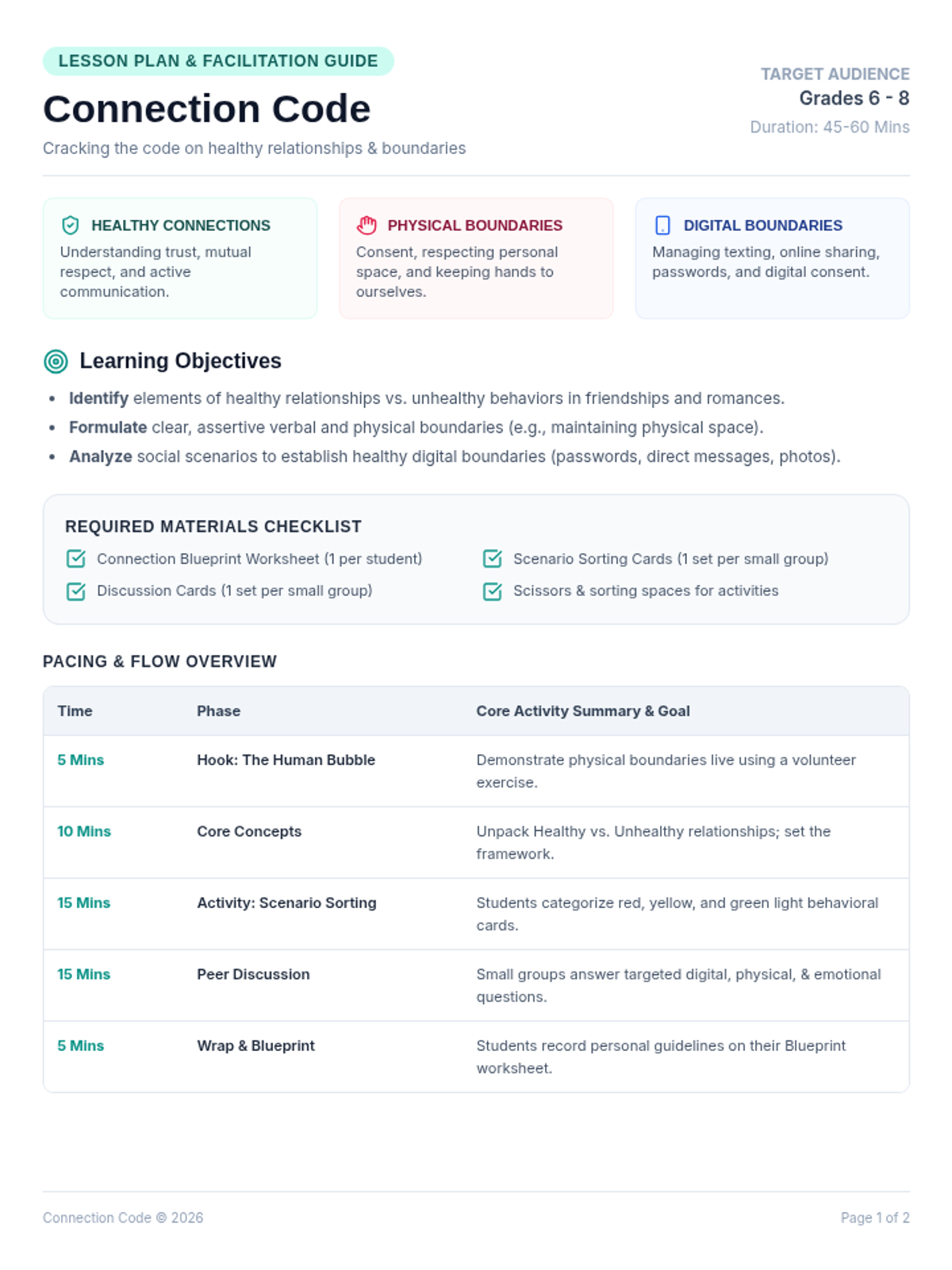
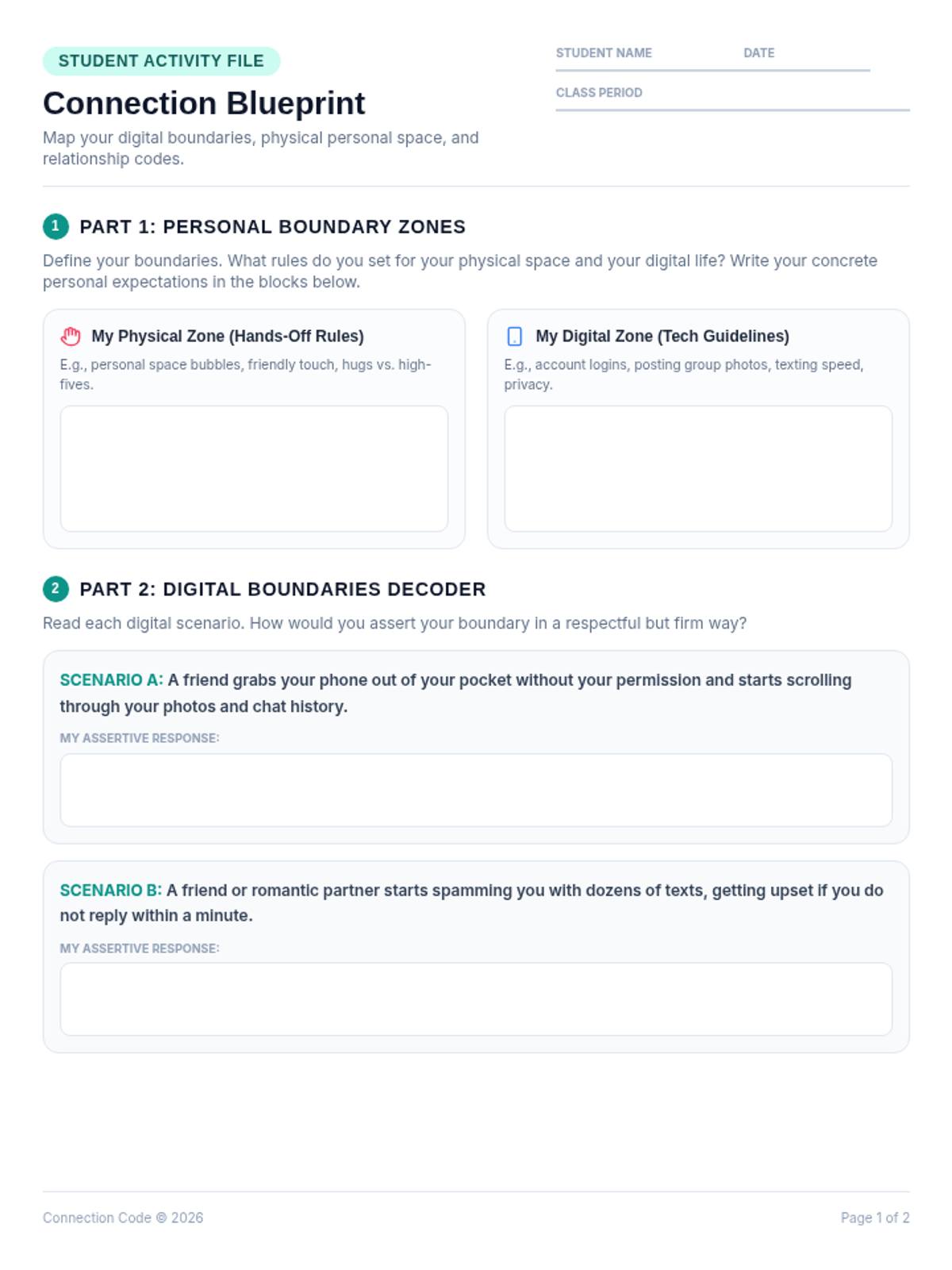
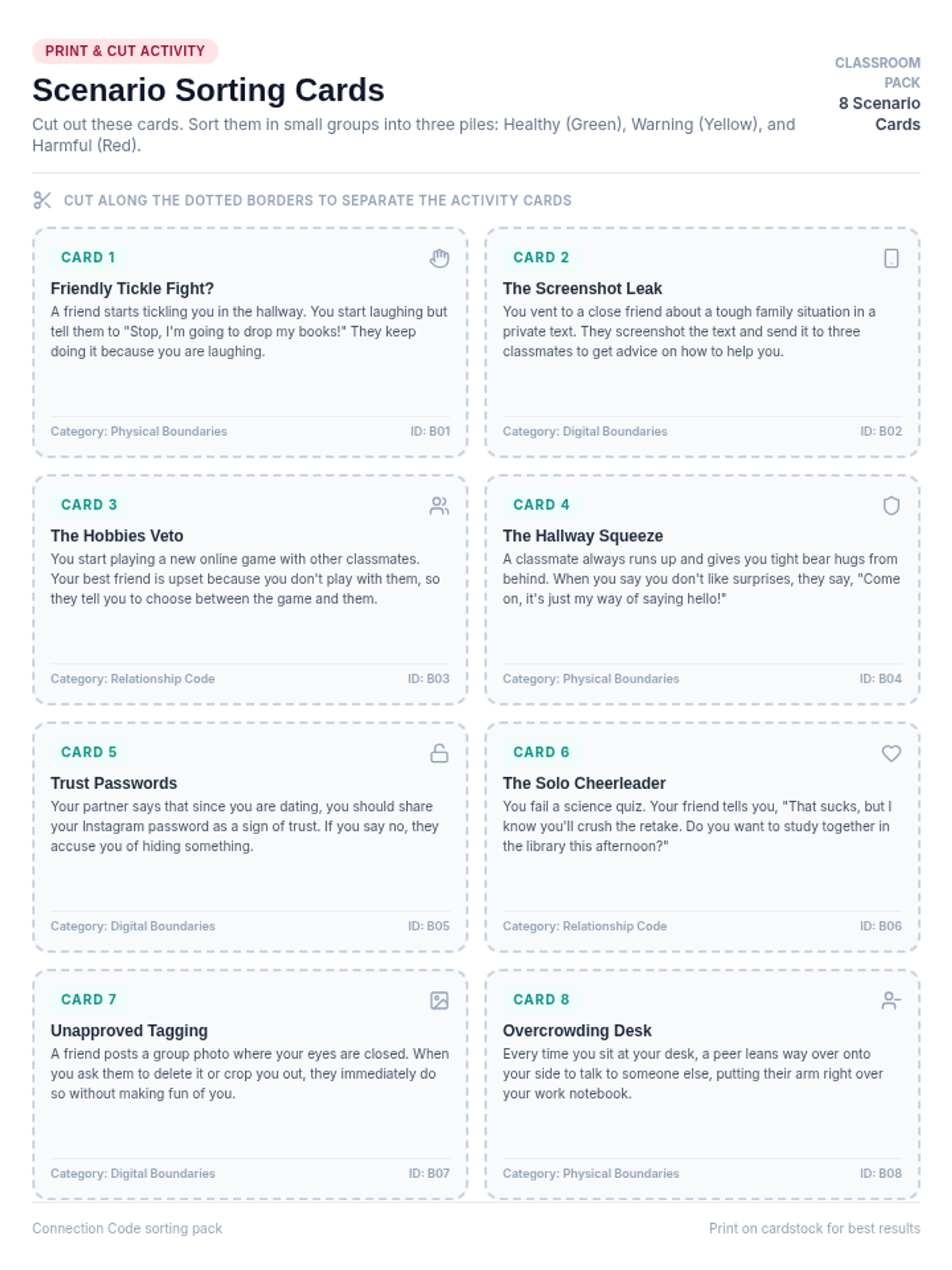
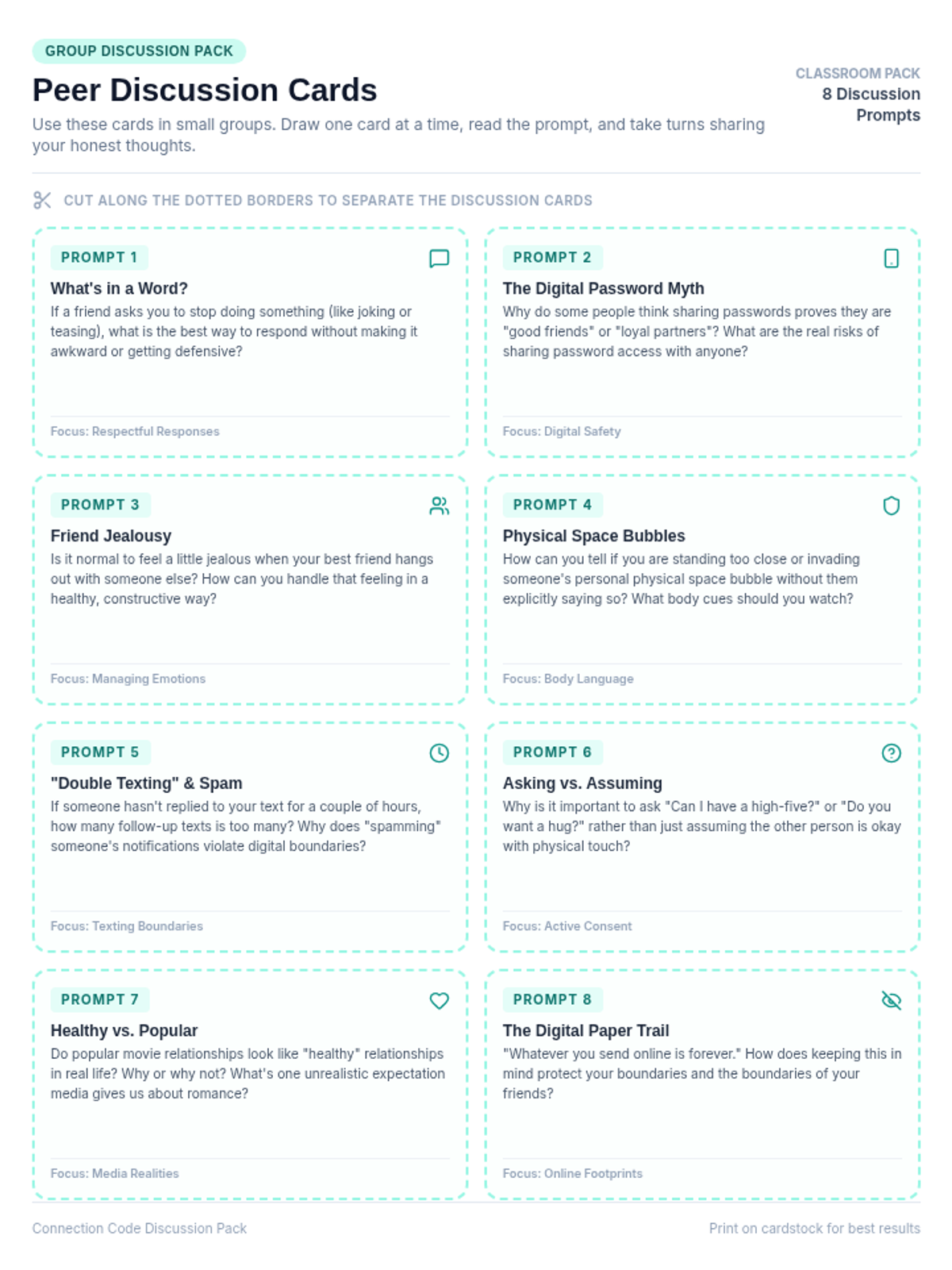
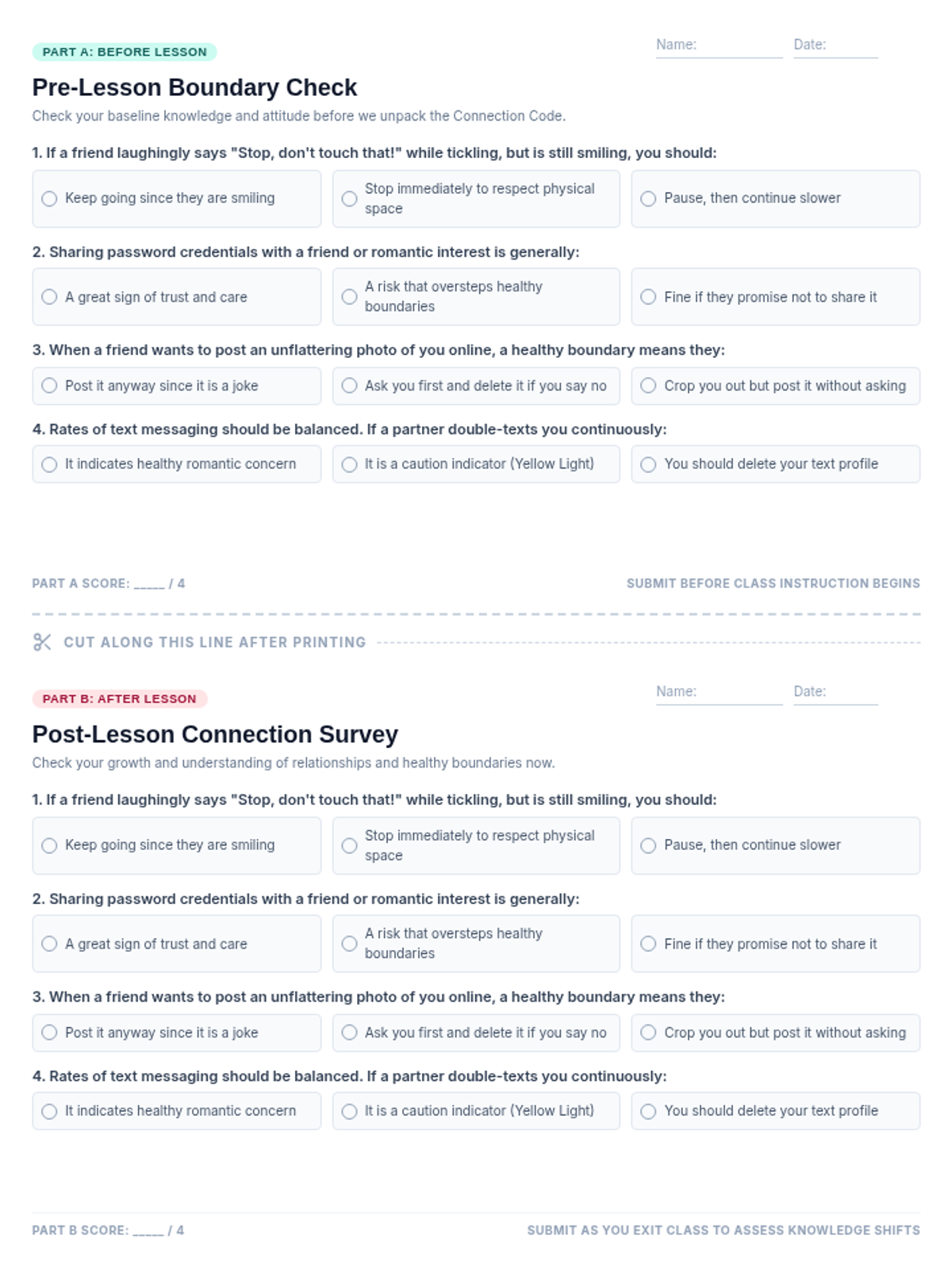
An interactive, high-impact middle school lesson plan focusing on healthy relationships, physical boundaries, and digital consent. Includes a step-by-step teacher guide, student blueprint worksheet, scenario sorting activity, and peer discussion cards.
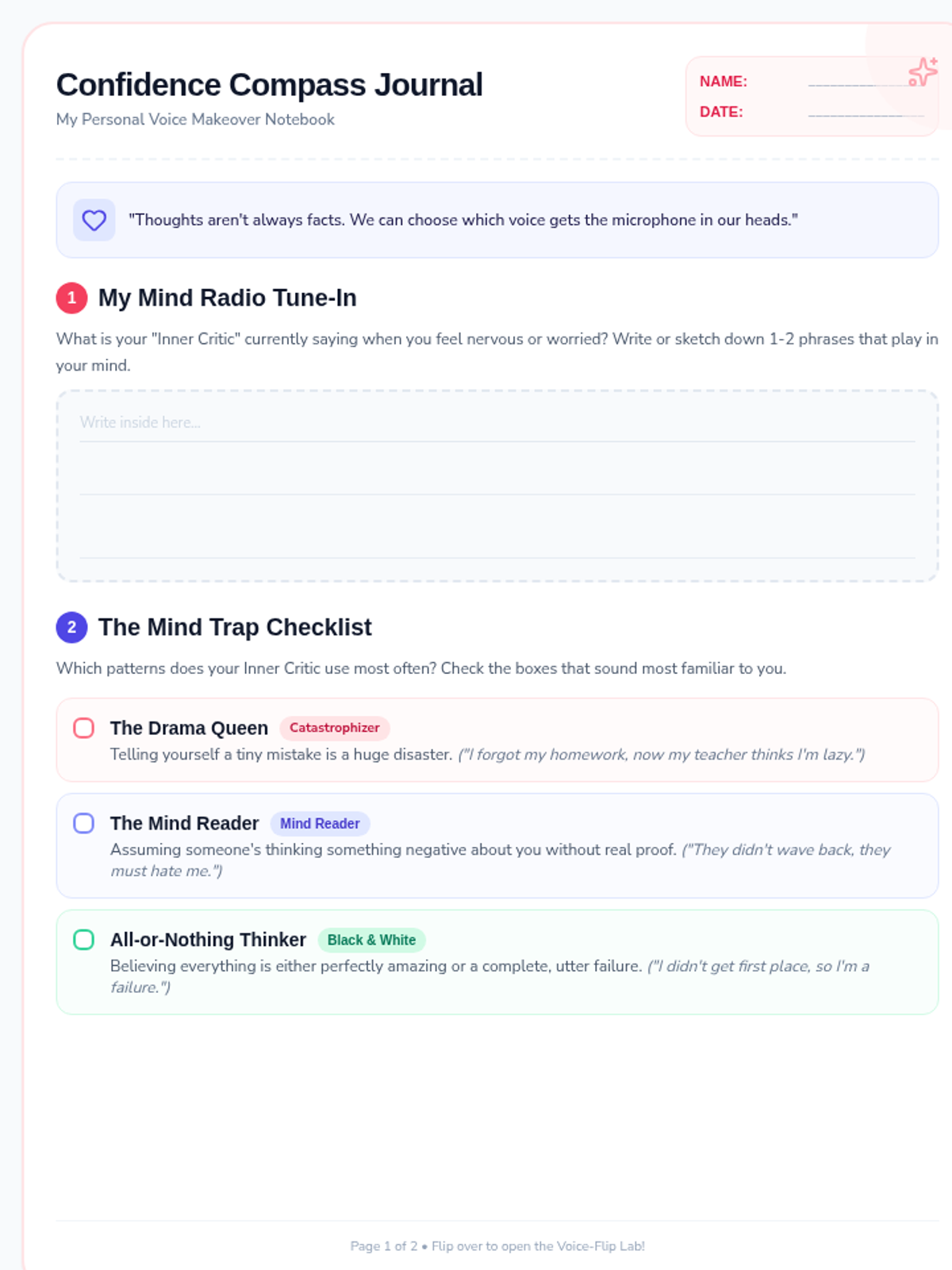
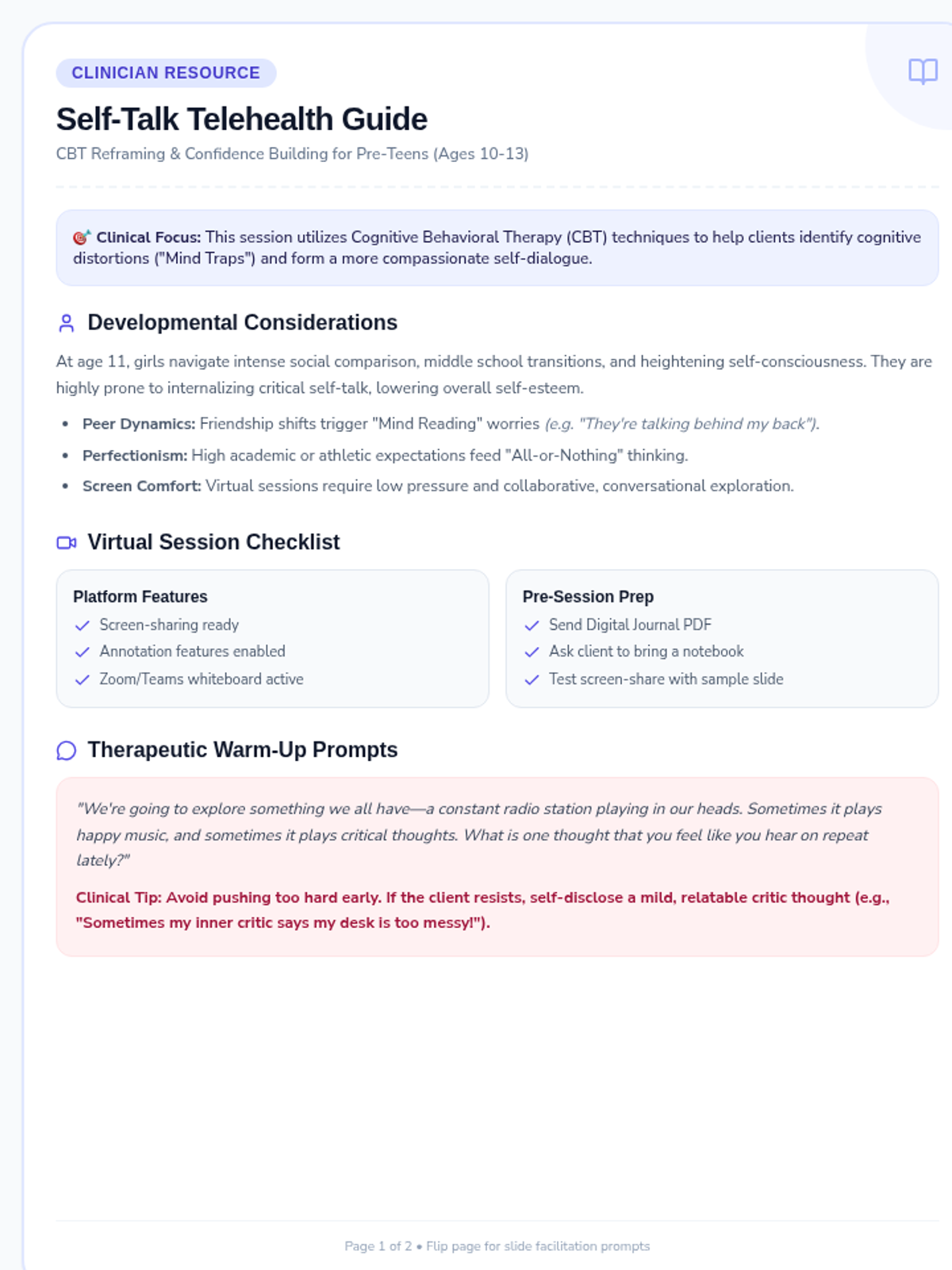
A teletherapy-optimized lesson designed for pre-teens (specifically 11-year-old girls) to recognize, challenge, and reframe negative self-talk into realistic, empowering self-belief. This CBT-based session uses engaging, developmental metaphors suitable for virtual screen-sharing.
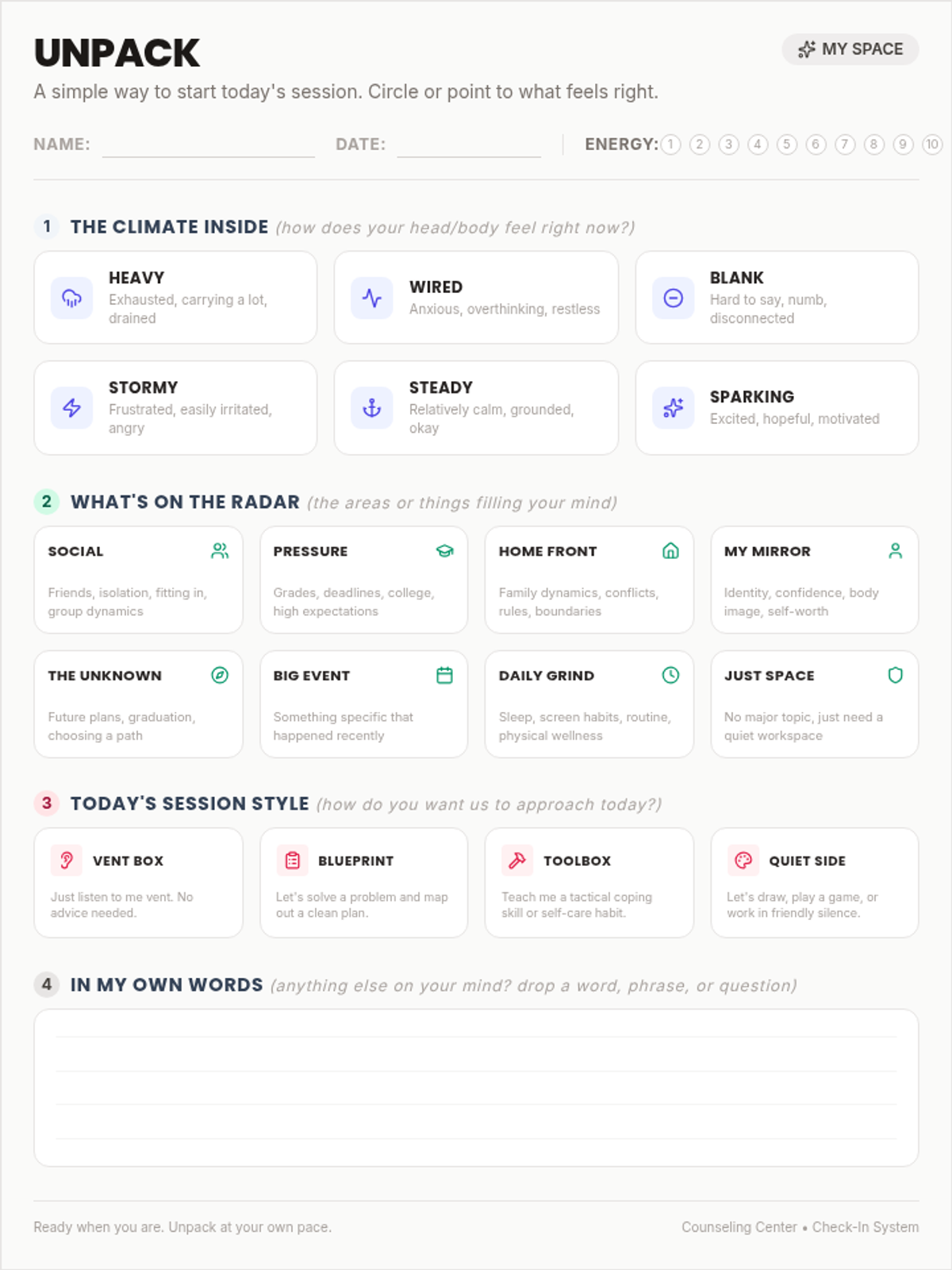
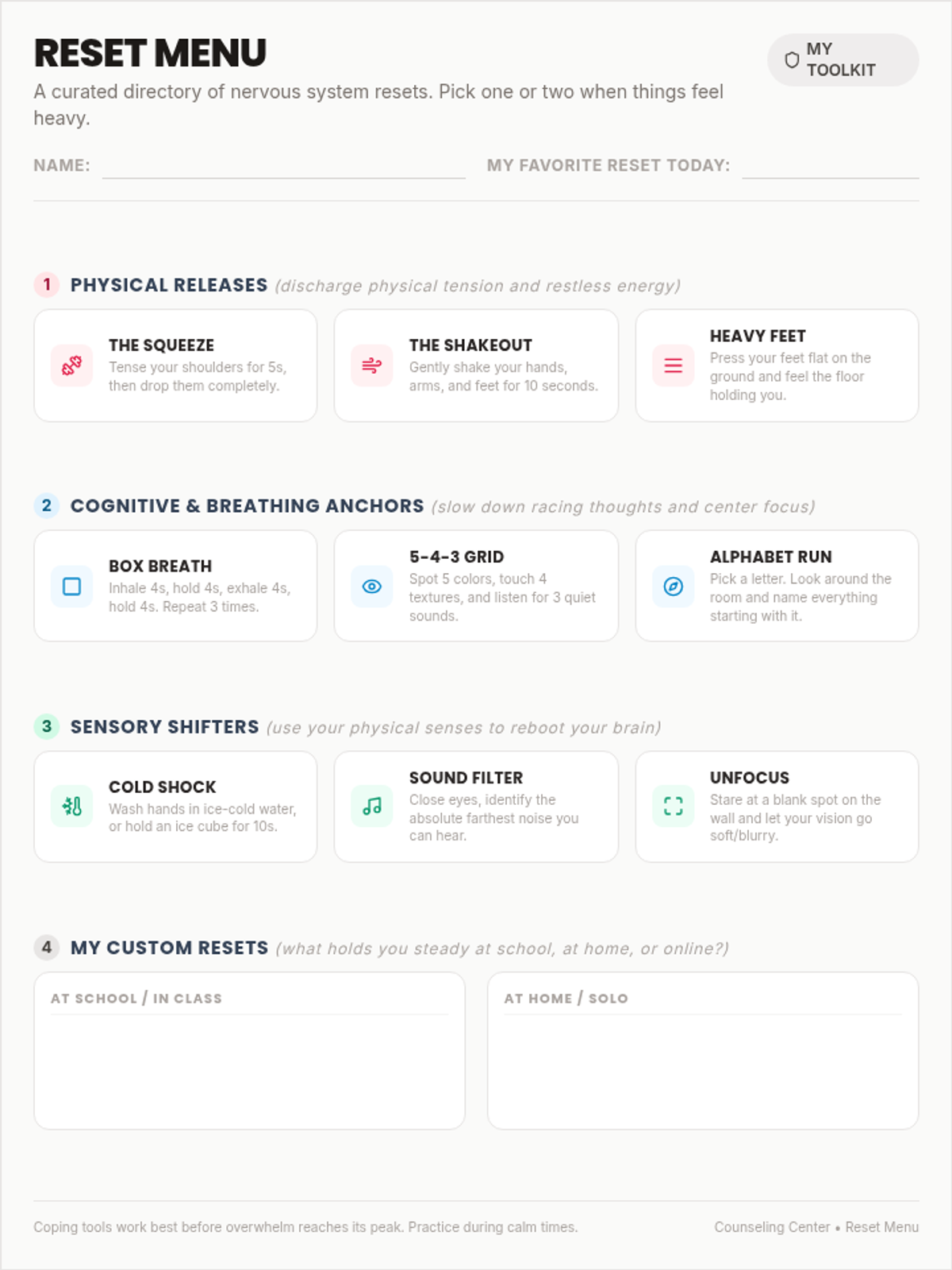
A curated suite of modern visual and communication-focused counseling resources tailored specifically for middle and high school students to lower conversational barriers and facilitate student-led sessions.
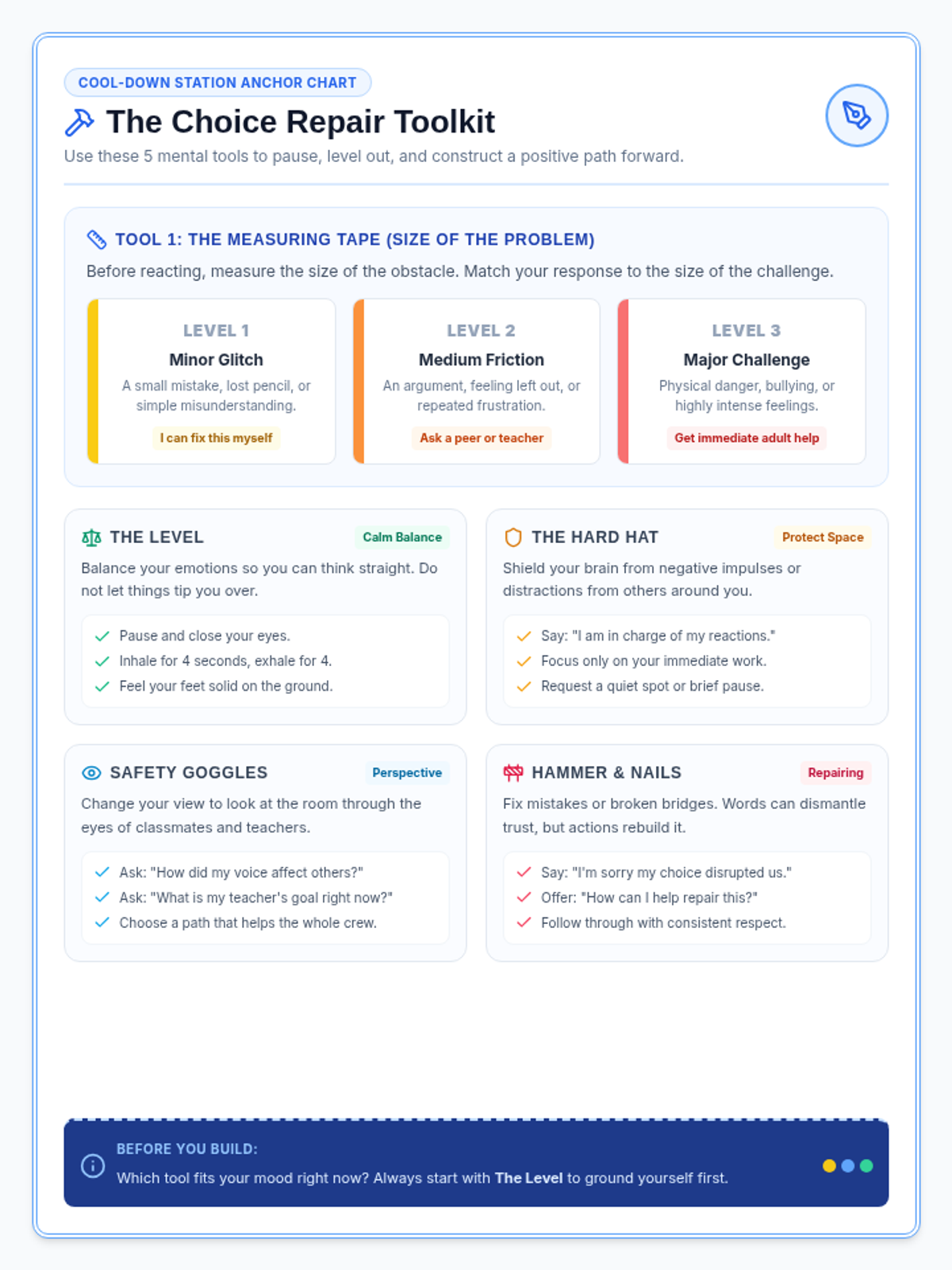
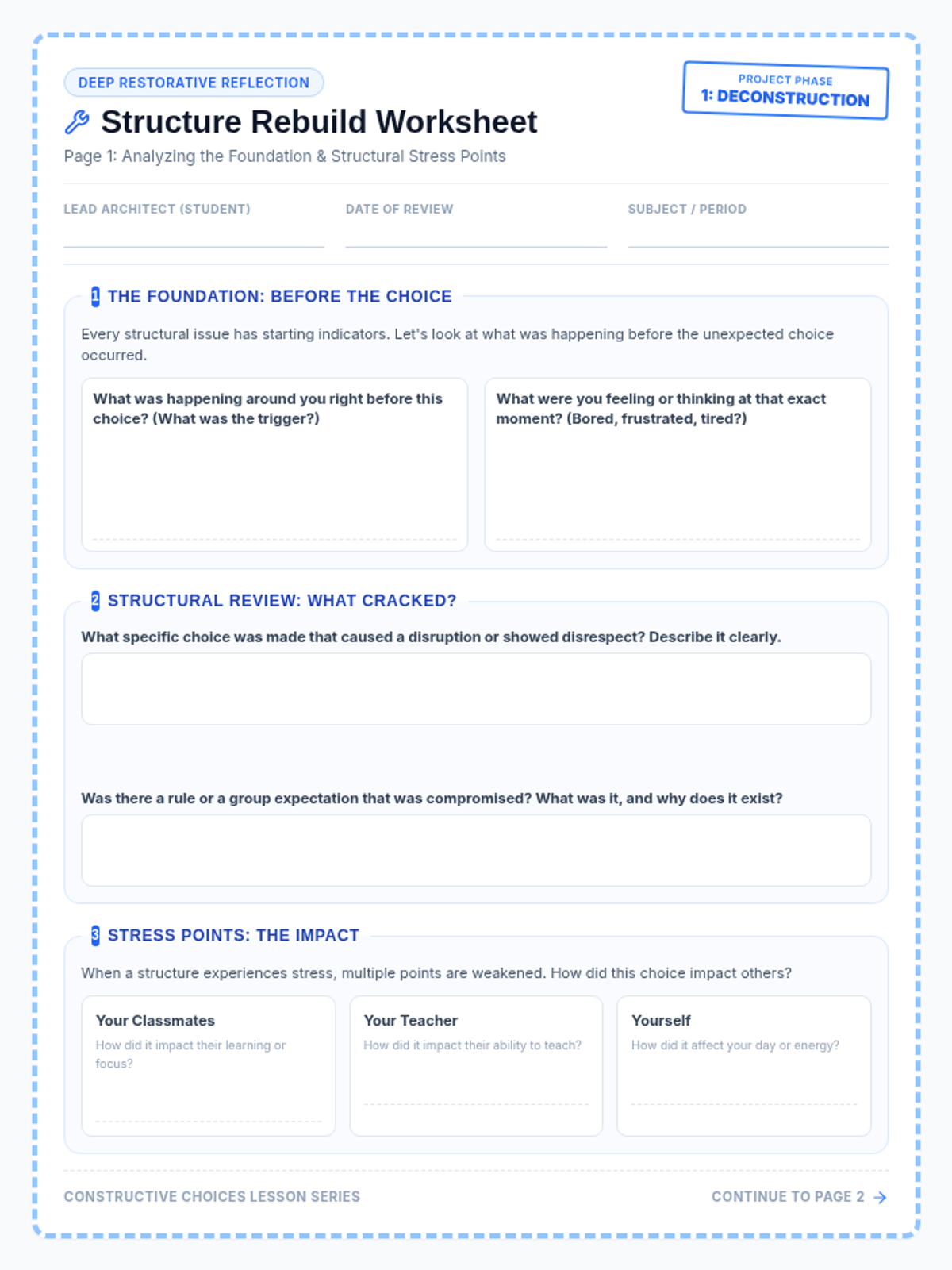
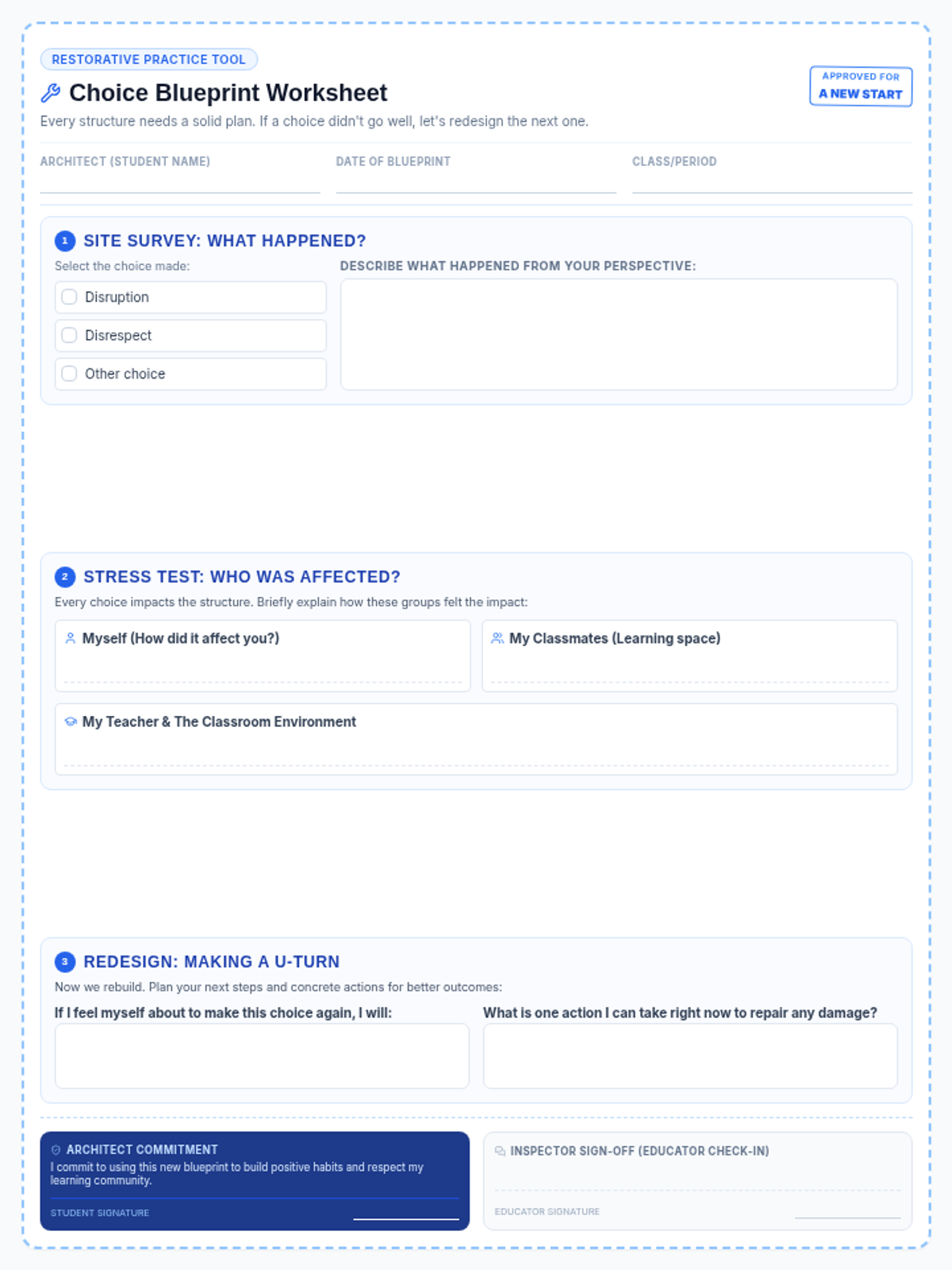
A restorative instruction set focusing on helping students pause, evaluate behavior impacts, and build a positive plan for respectful classroom engagement.
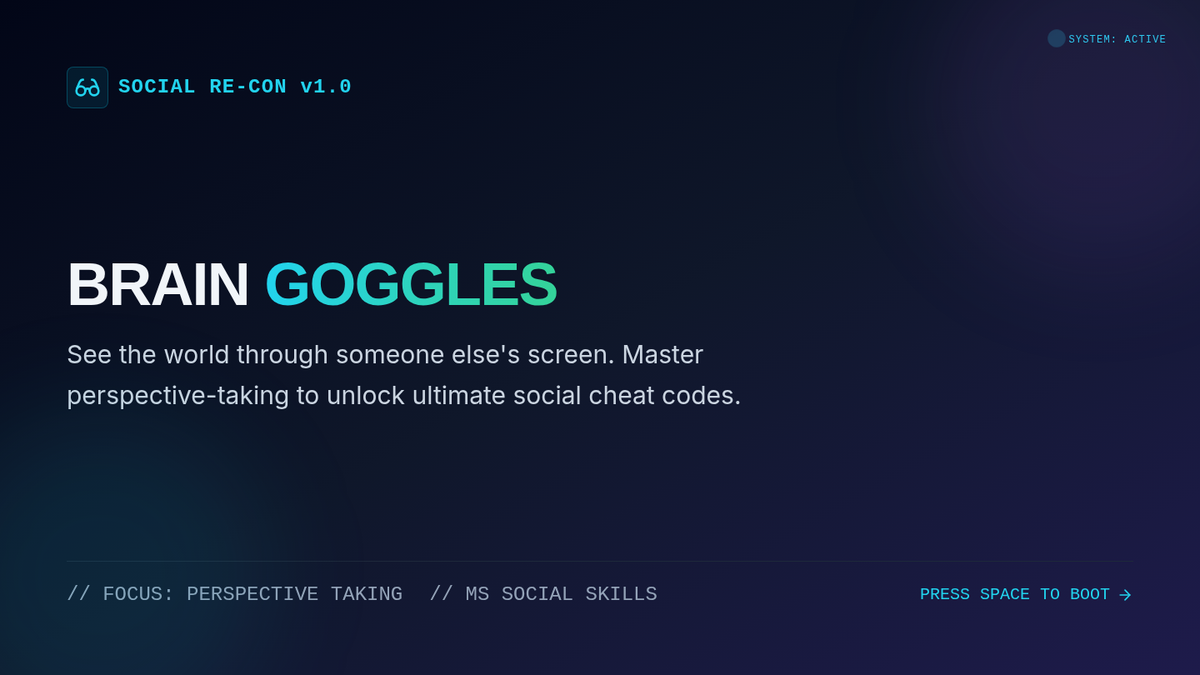
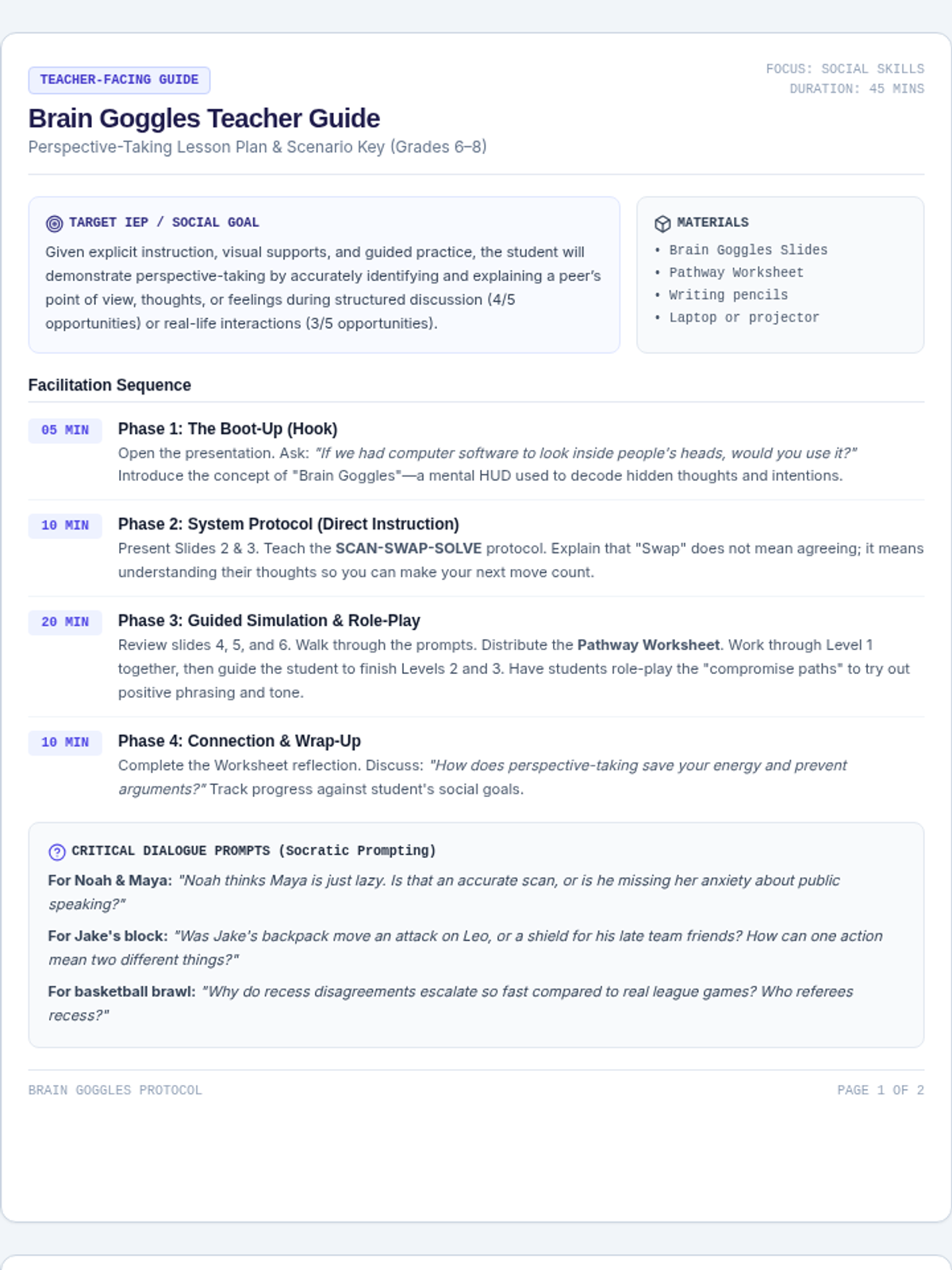
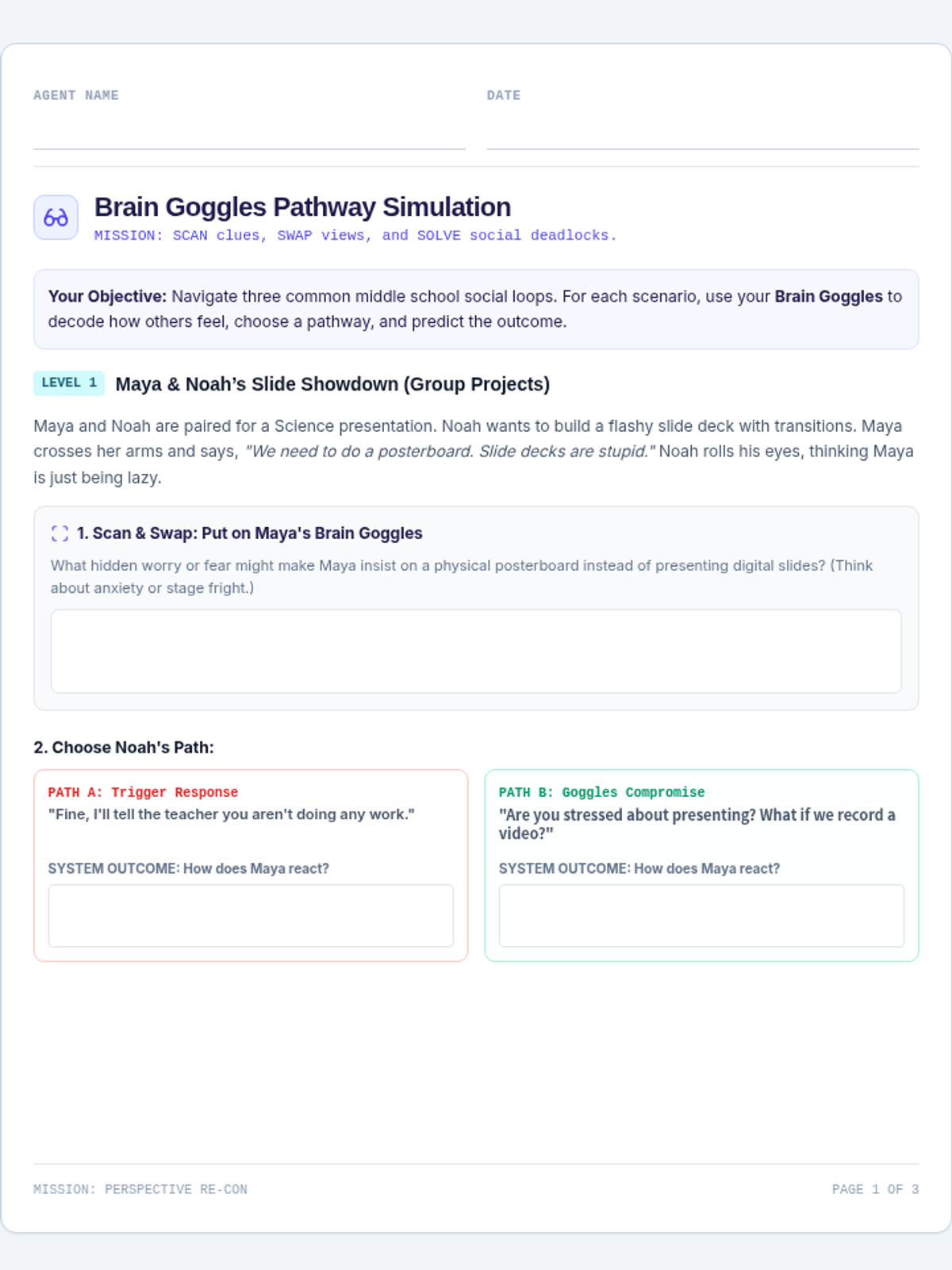
A high-engagement social skills lesson designed to help middle school students build perspective-taking skills using interactive "Brain Goggles" scenario cards, role-play activities, and a choose-your-own-path adventure worksheet.
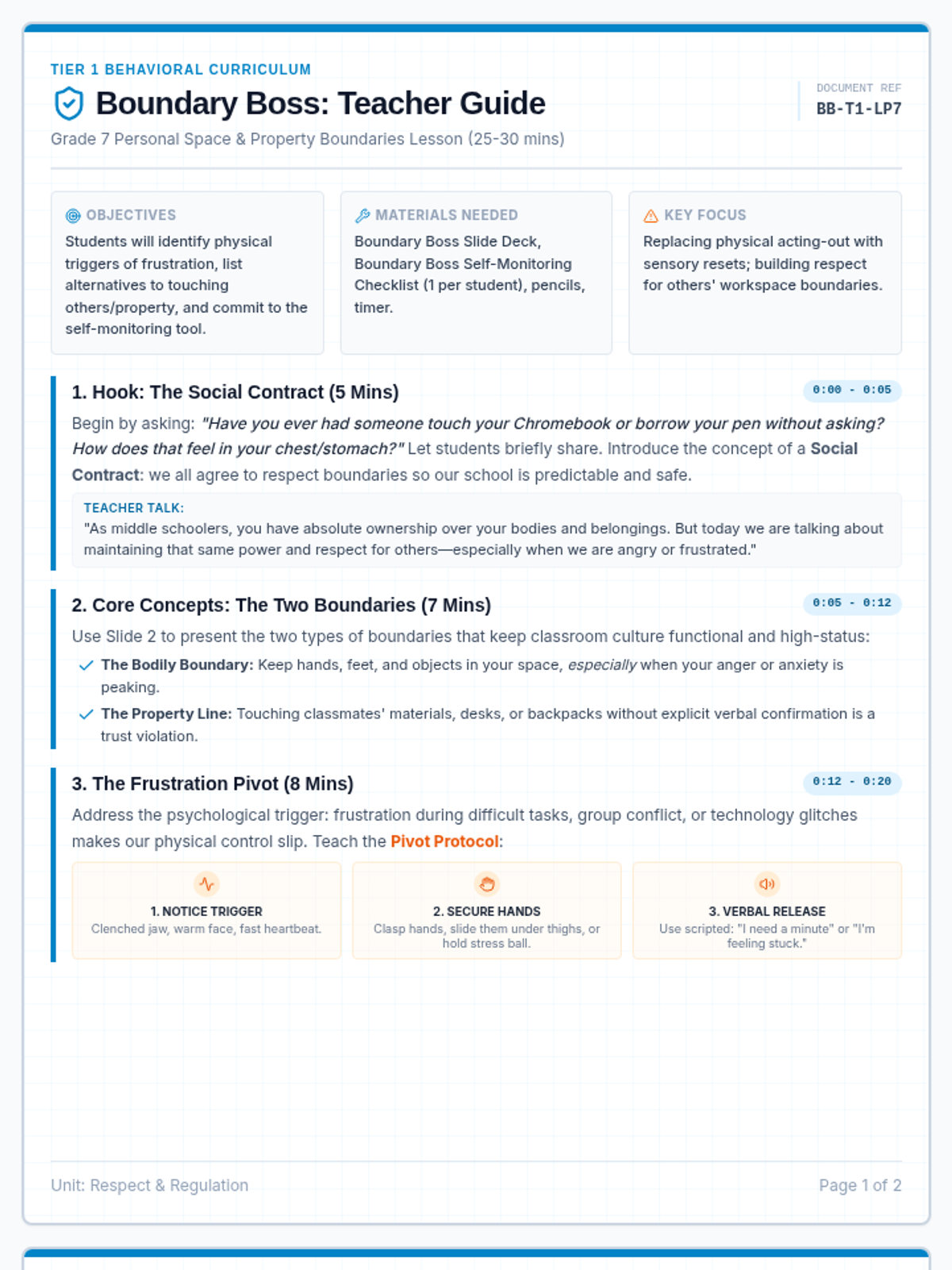
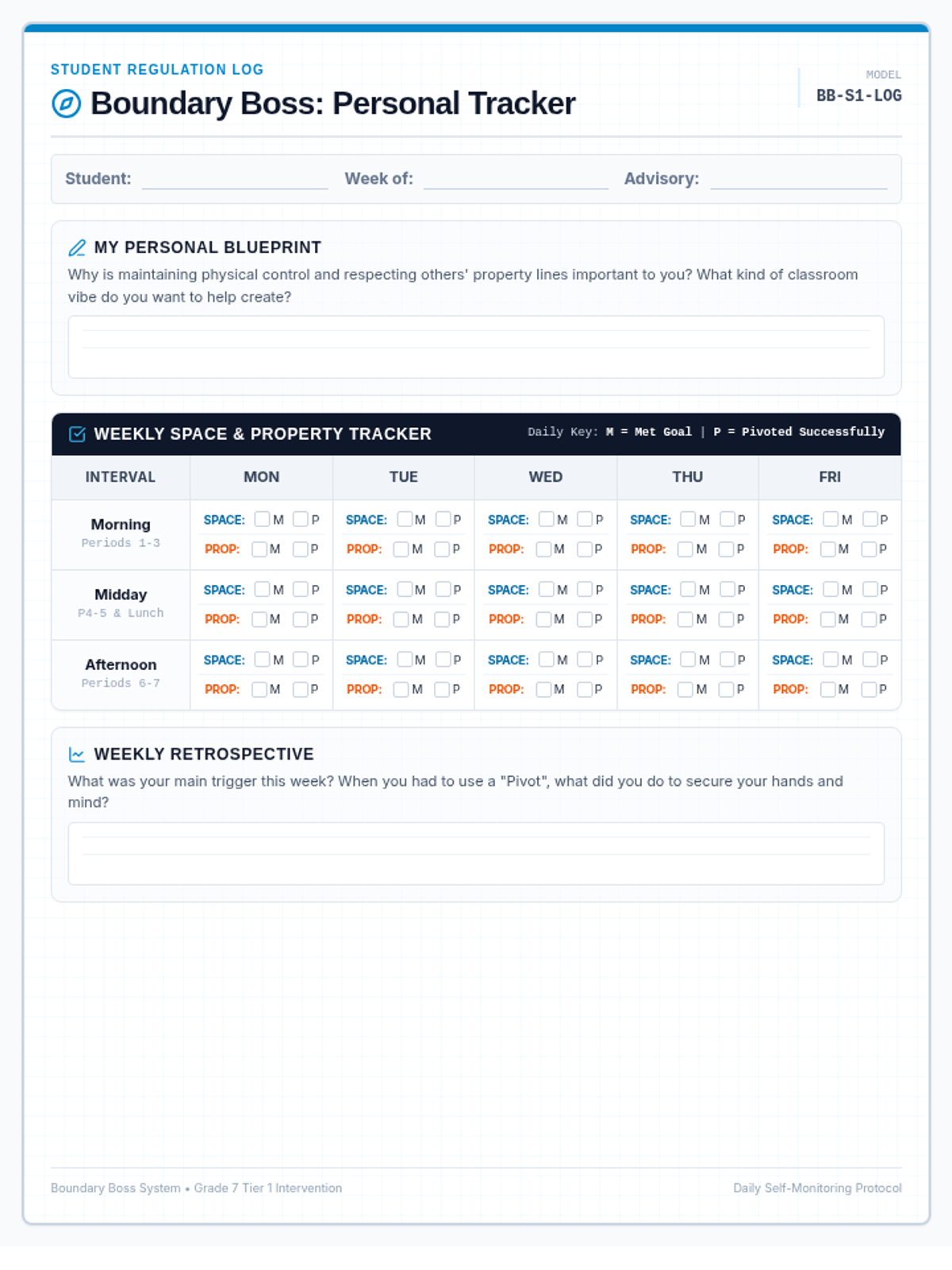
A Tier 1 behavioral intervention lesson and self-monitoring tool for 7th graders. It focuses on maintaining personal space boundaries during moments of frustration and respecting classmates' personal property.
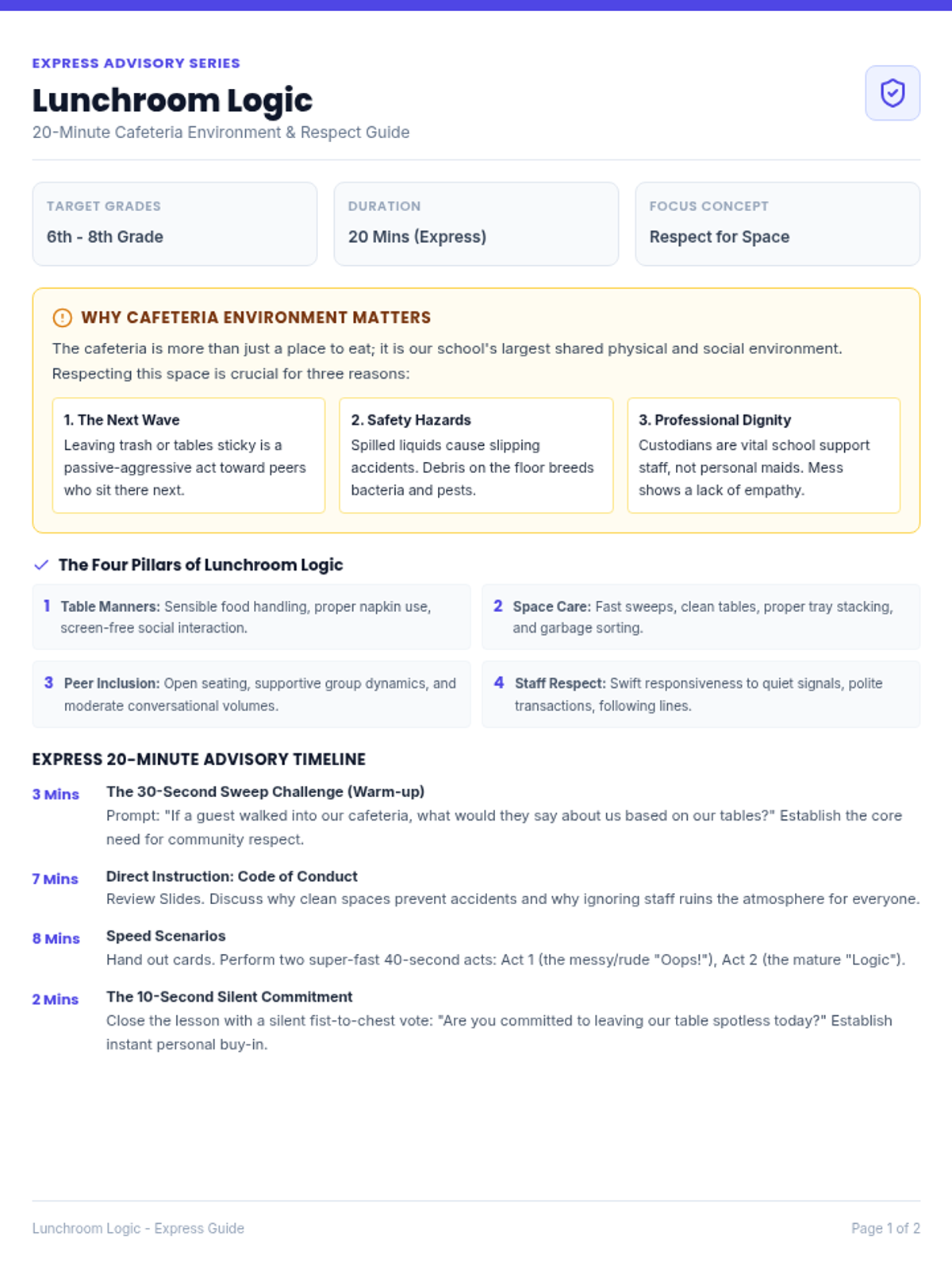
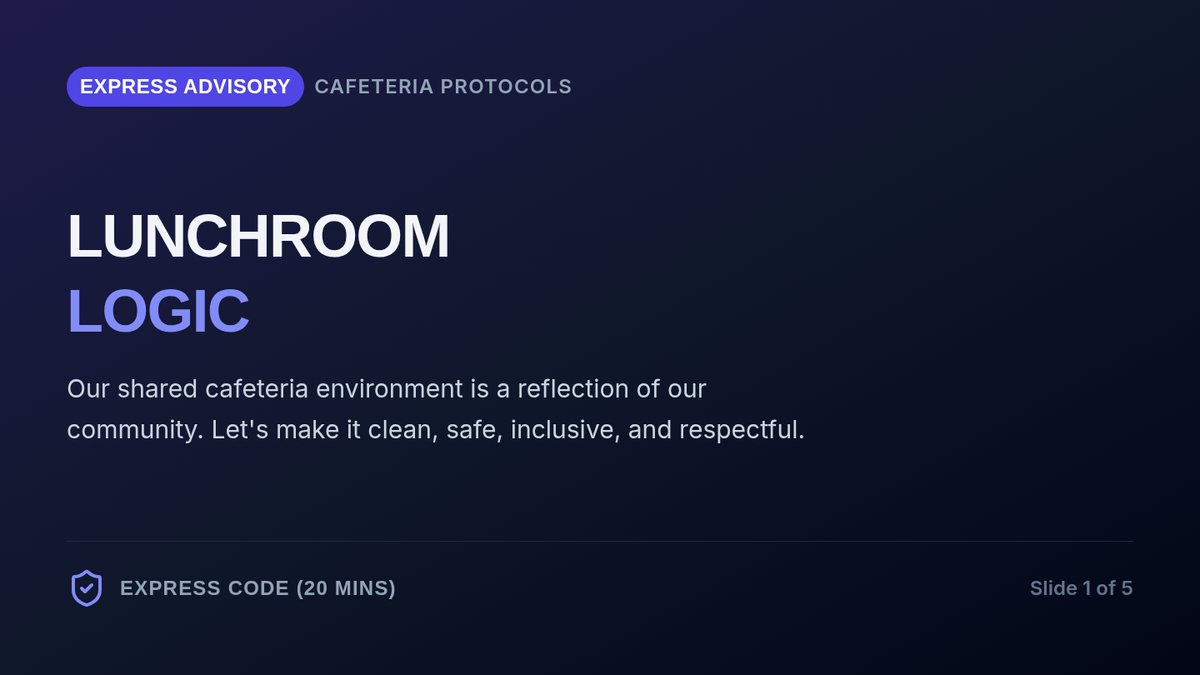
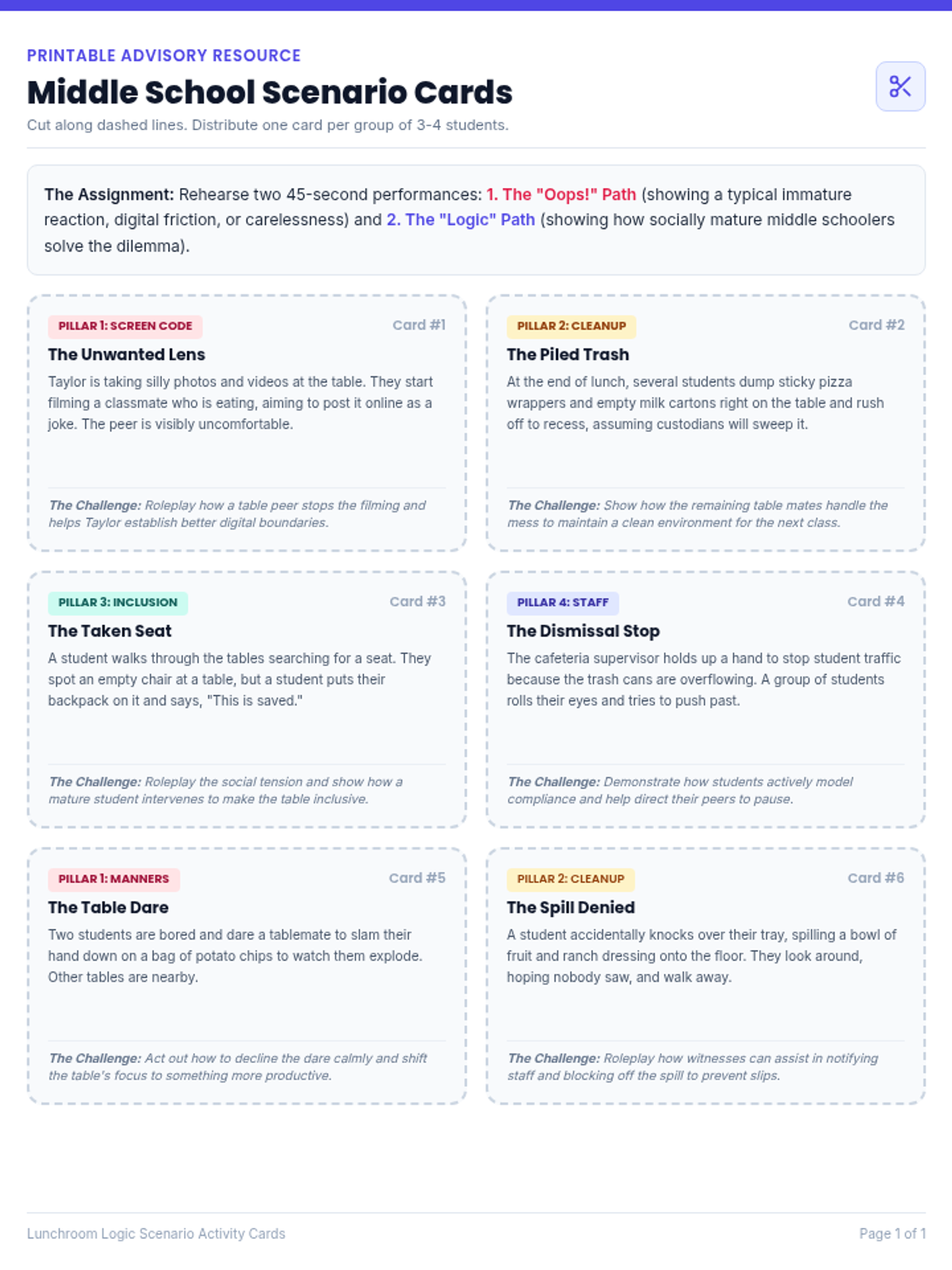
A rapid 20-minute express advisory lesson tailored for middle schoolers. It emphasizes the deep importance of respecting the physical and social cafeteria environment through fast-paced peer-led scenario roleplays and a collaborative classroom pledge.
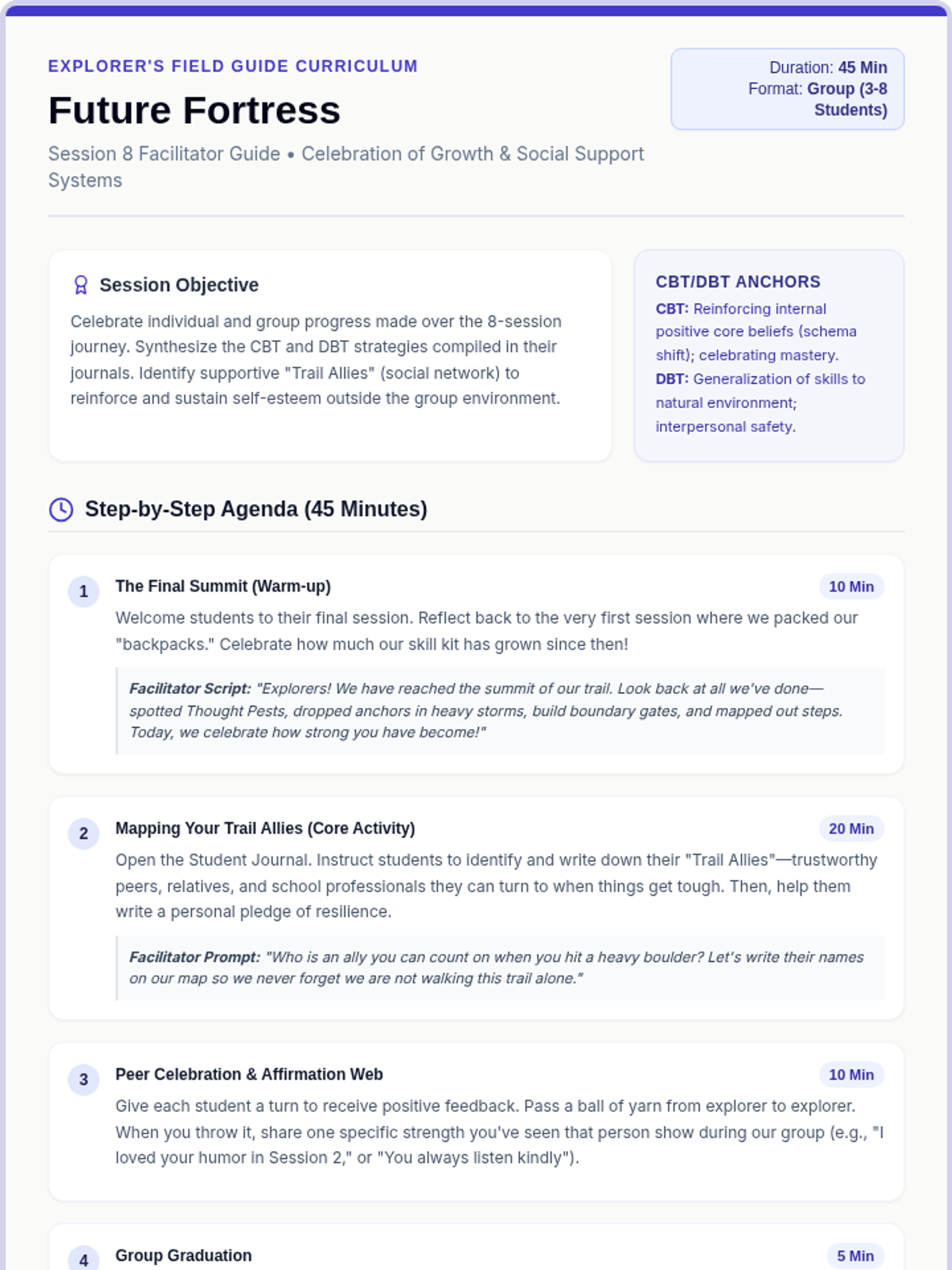
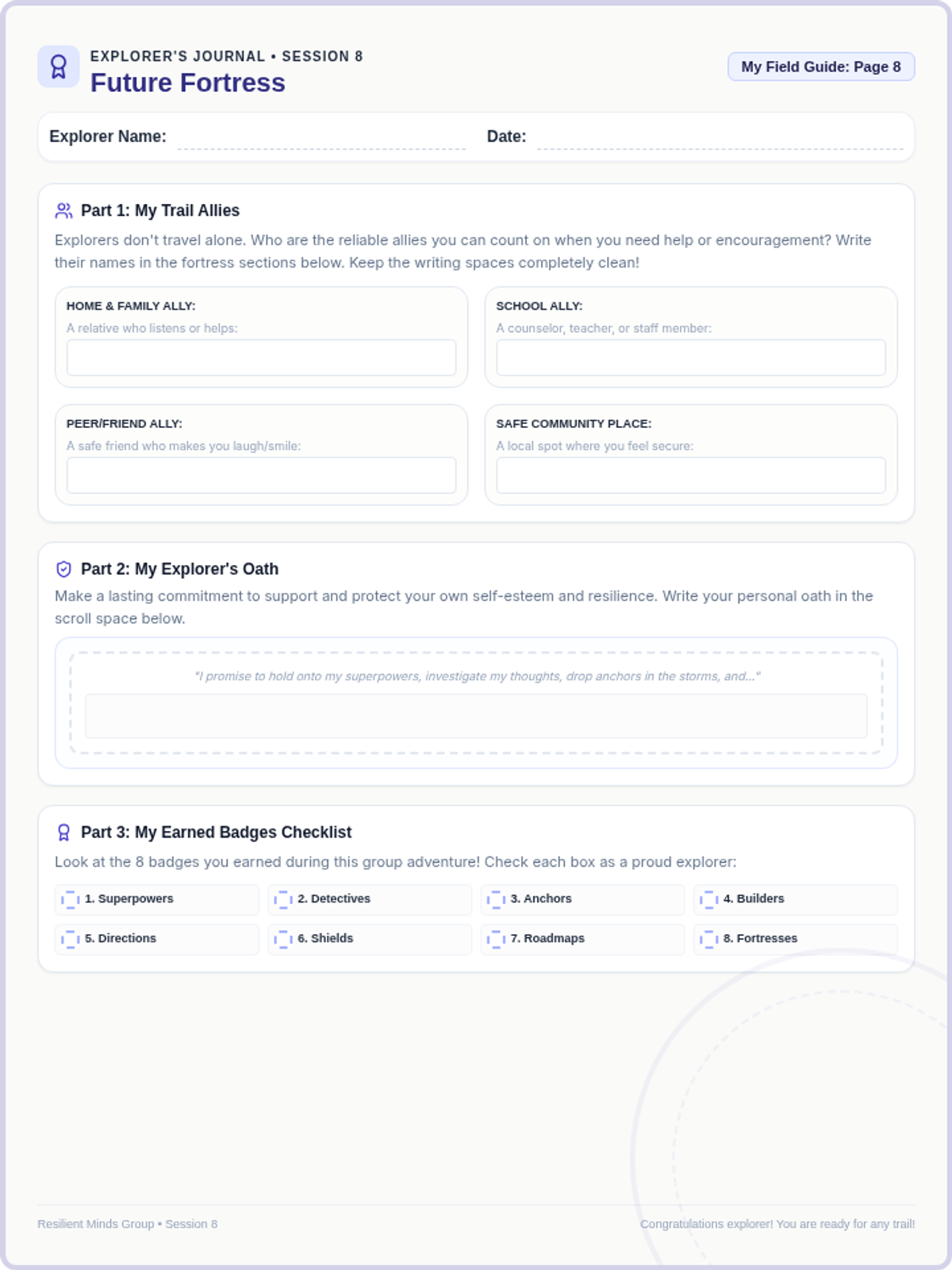
Students review their 8-session Explorer's Field Guide, celebrate growth, identify supportive 'trail allies' (social support), and pledge a personal self-esteem commitment.
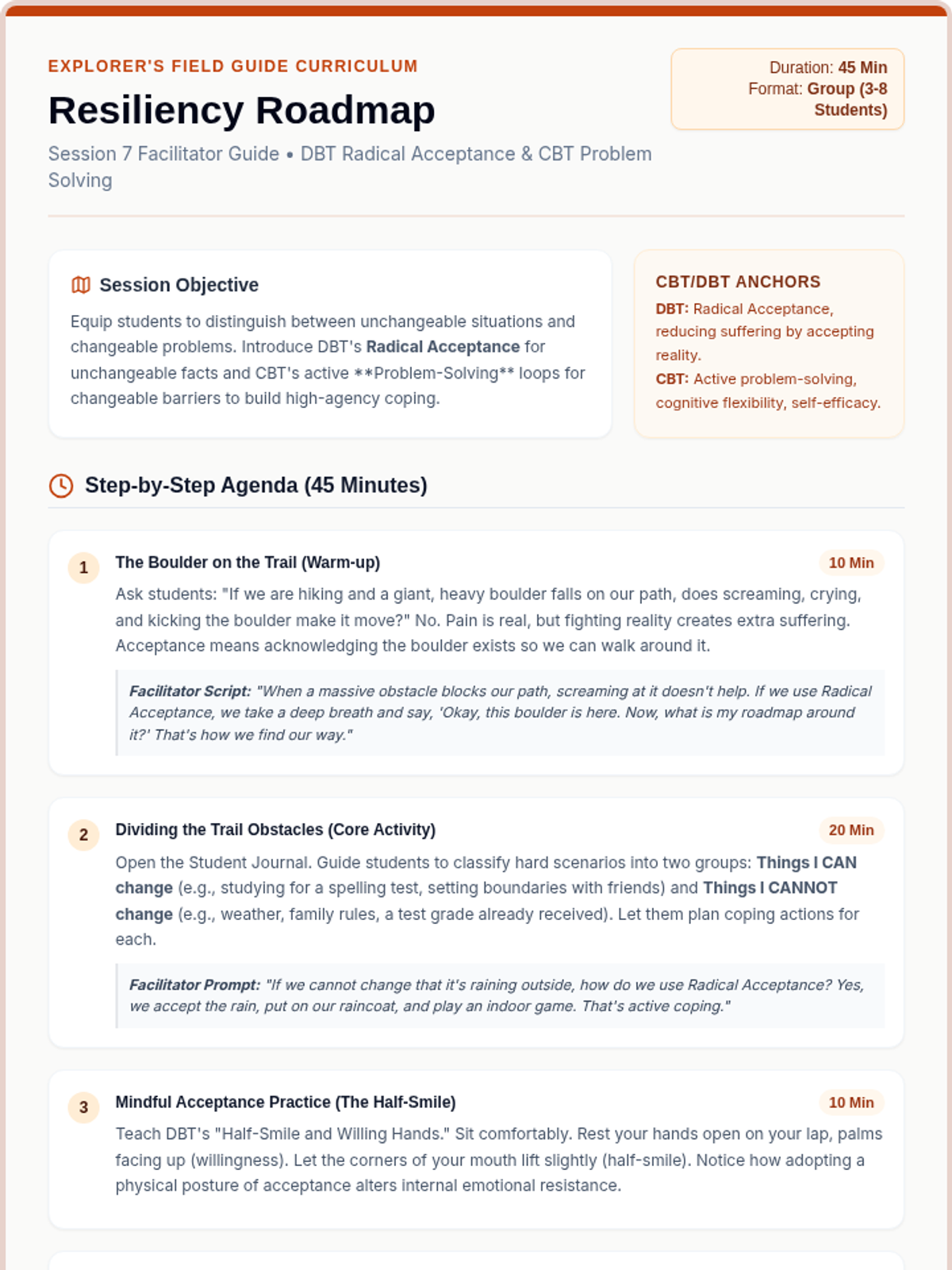
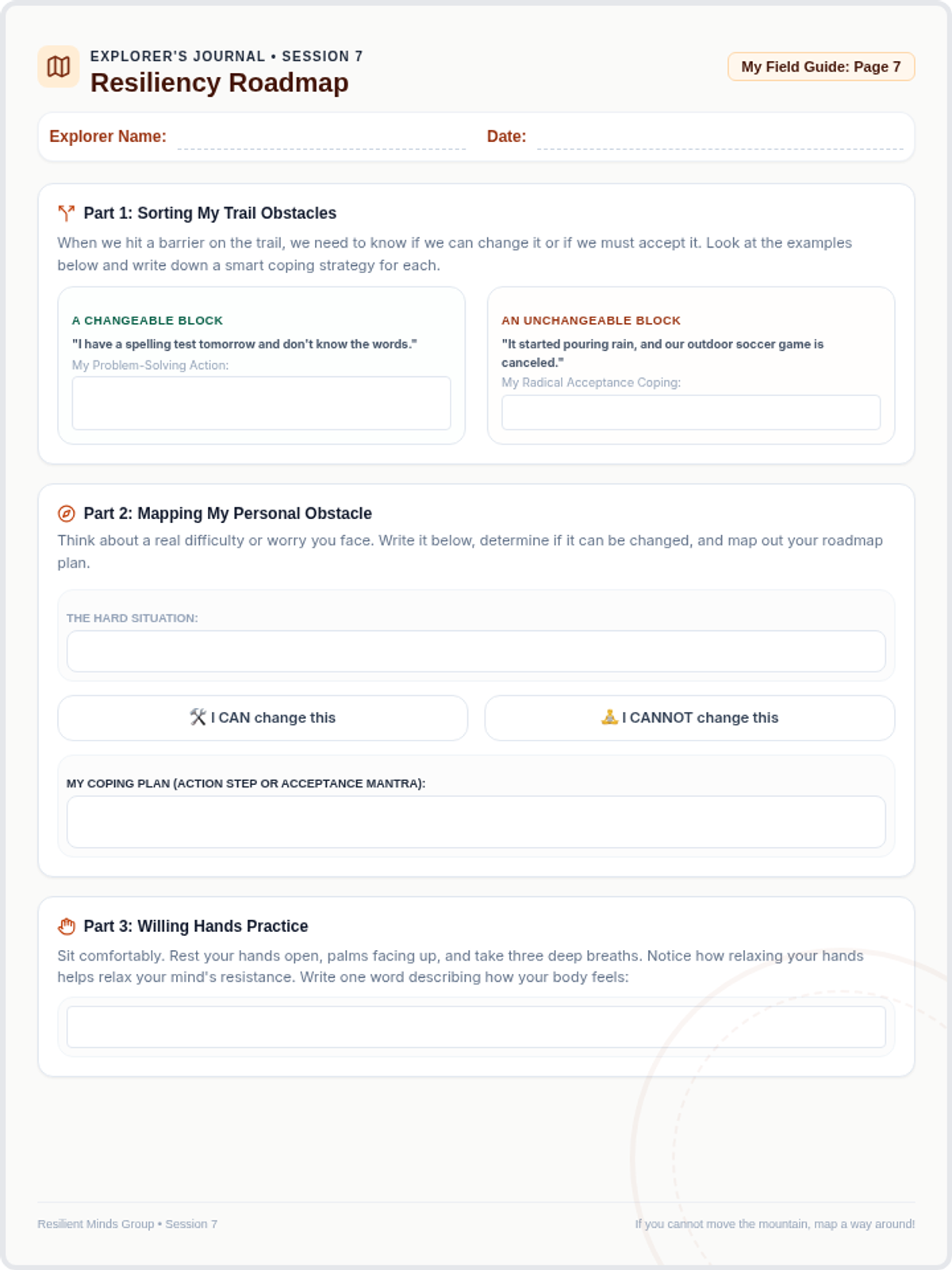
Students construct personalized coping strategies, blending CBT active problem-solving steps with DBT Radical Acceptance to navigate unchangeable difficulties.
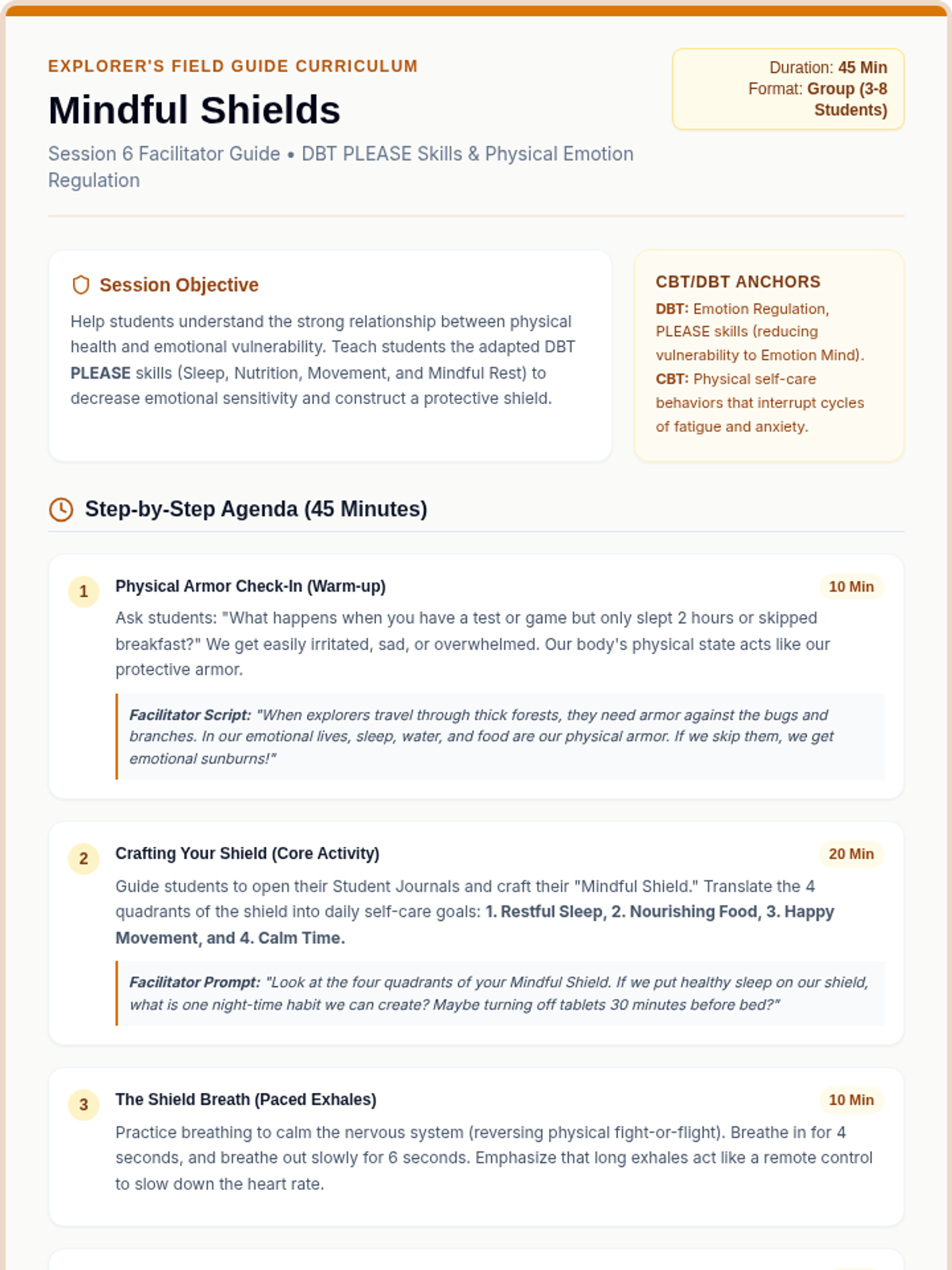
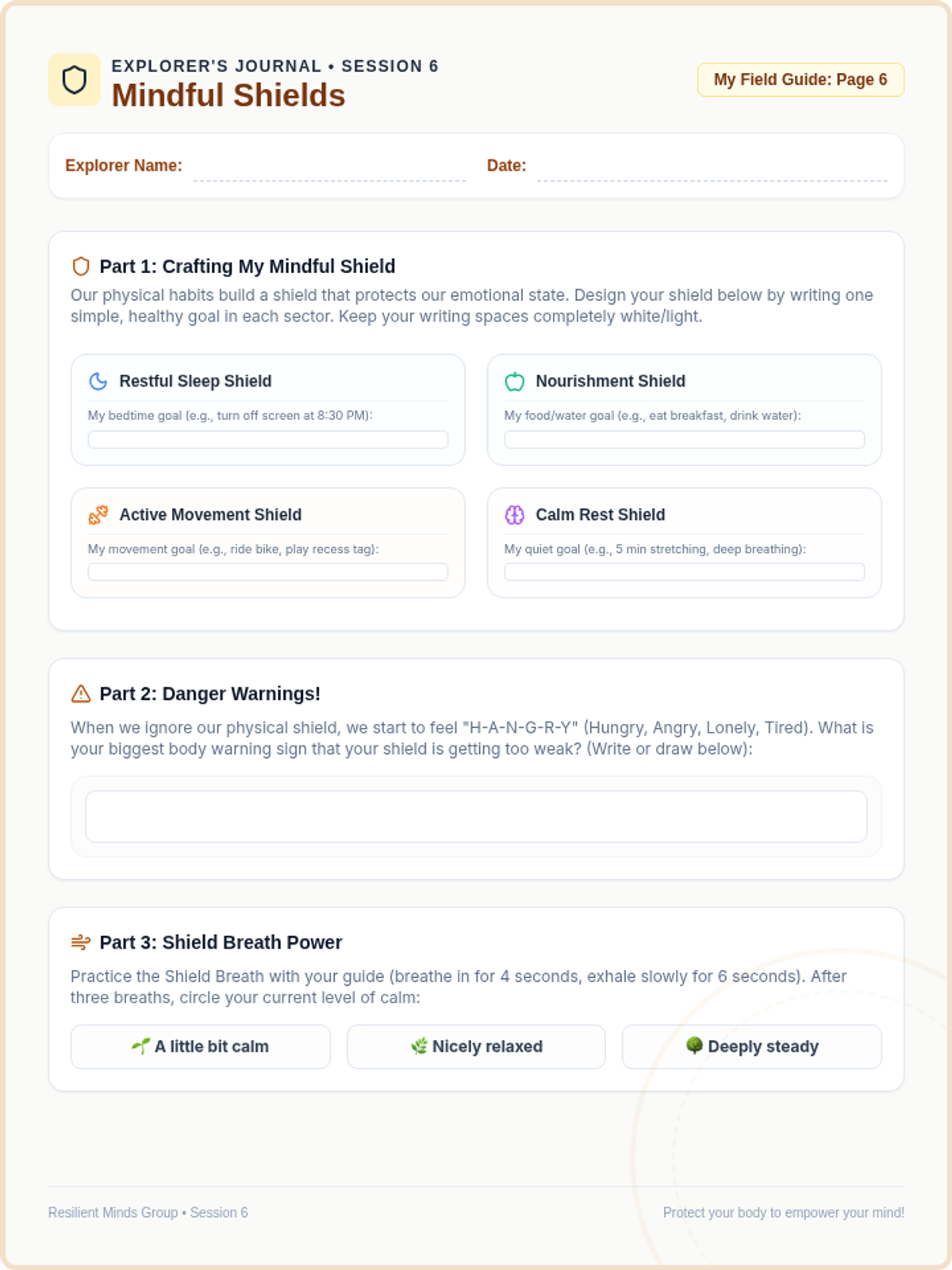
Students examine the physical body-mind connection, identifying stress triggers and learning DBT physical self-care (PLEASE) and emotional regulation strategies.
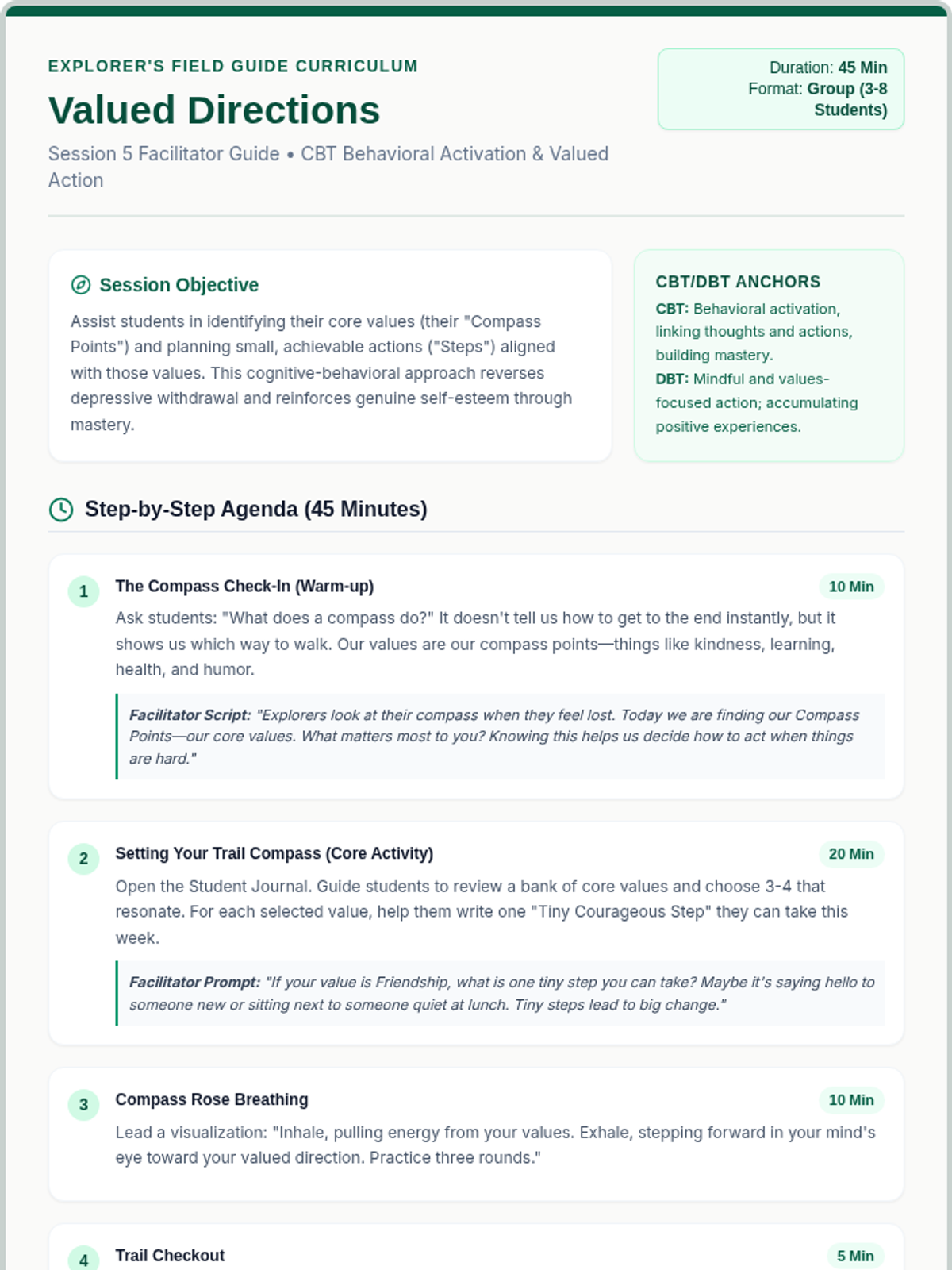
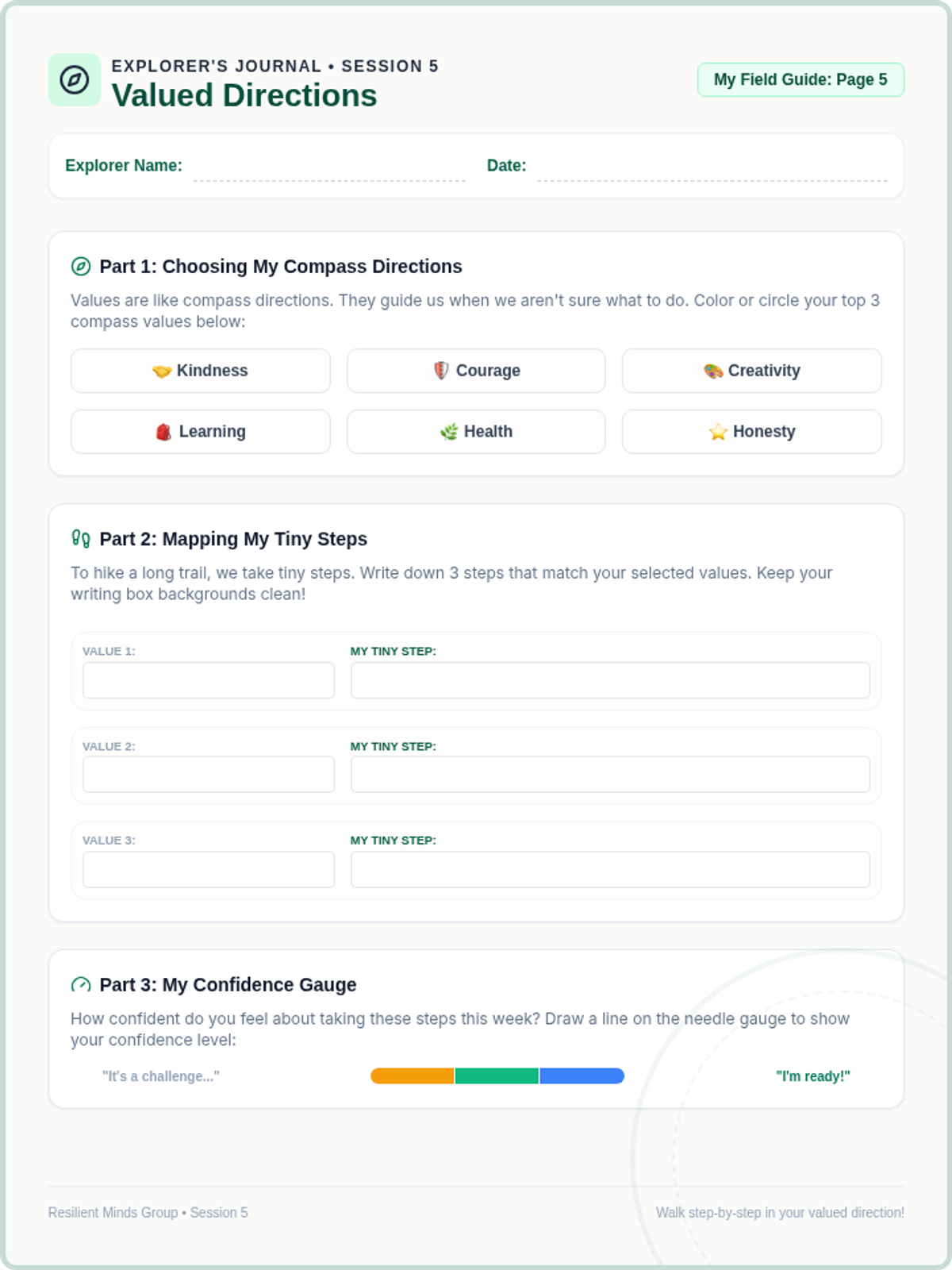
Students connect CBT behavioral activation with DBT 'mindful action' by exploring core values and mapping out tiny, courageous actions that align with their authentic strengths.
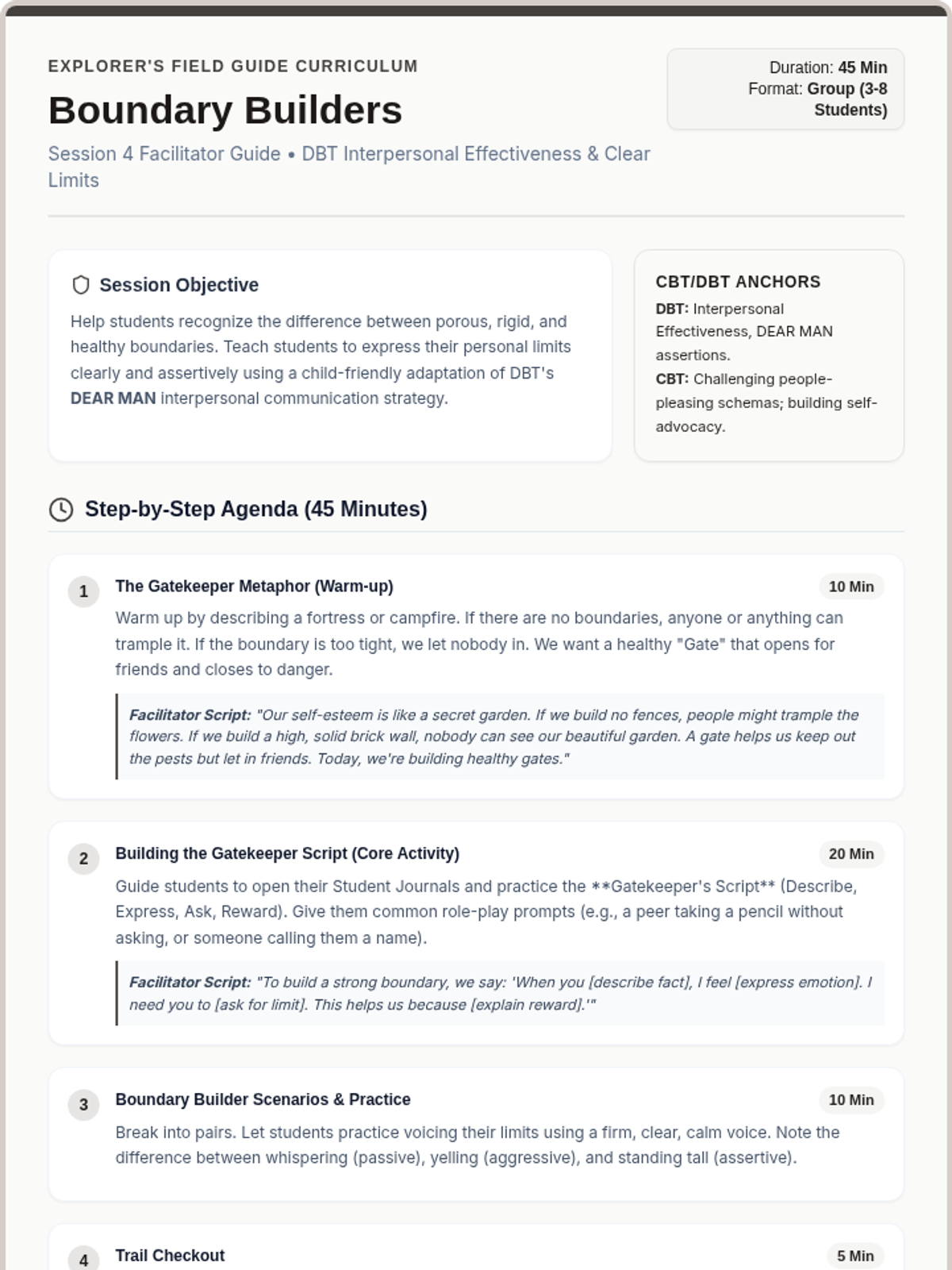
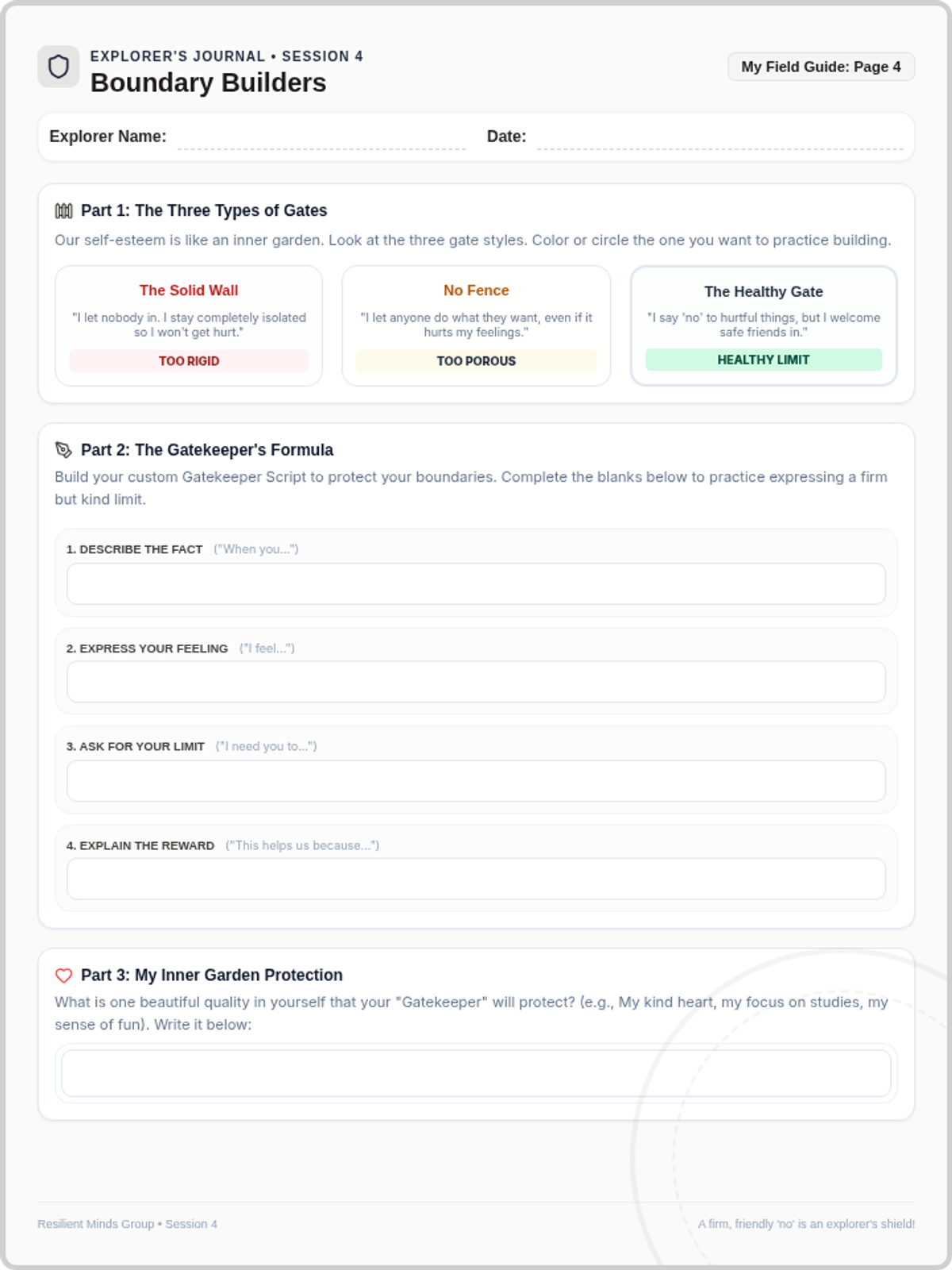
Students learn assertive communication, personal limit-setting, and DBT Interpersonal Effectiveness skills (DEAR MAN style) to navigate social situations and foster healthy self-esteem.
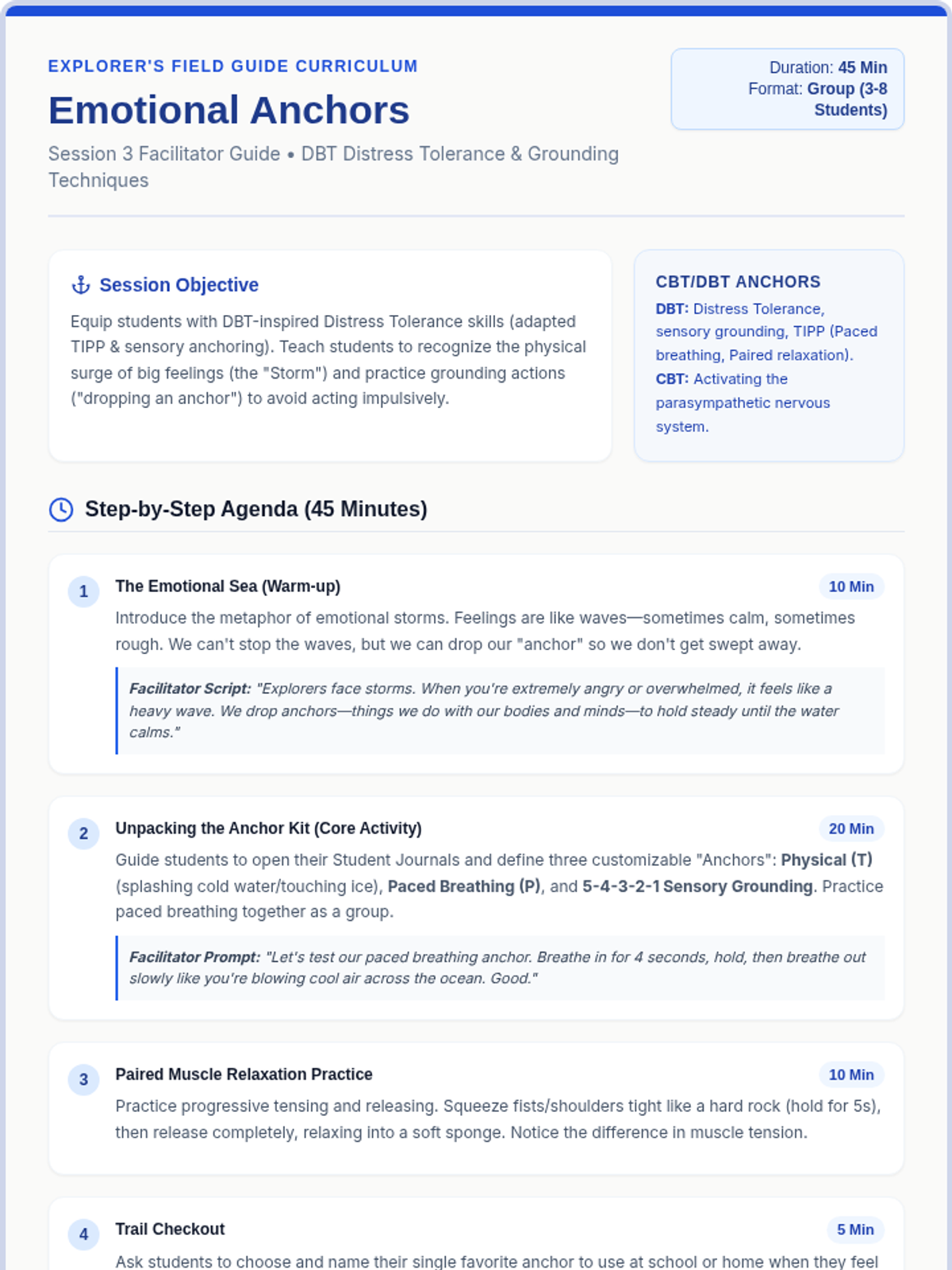
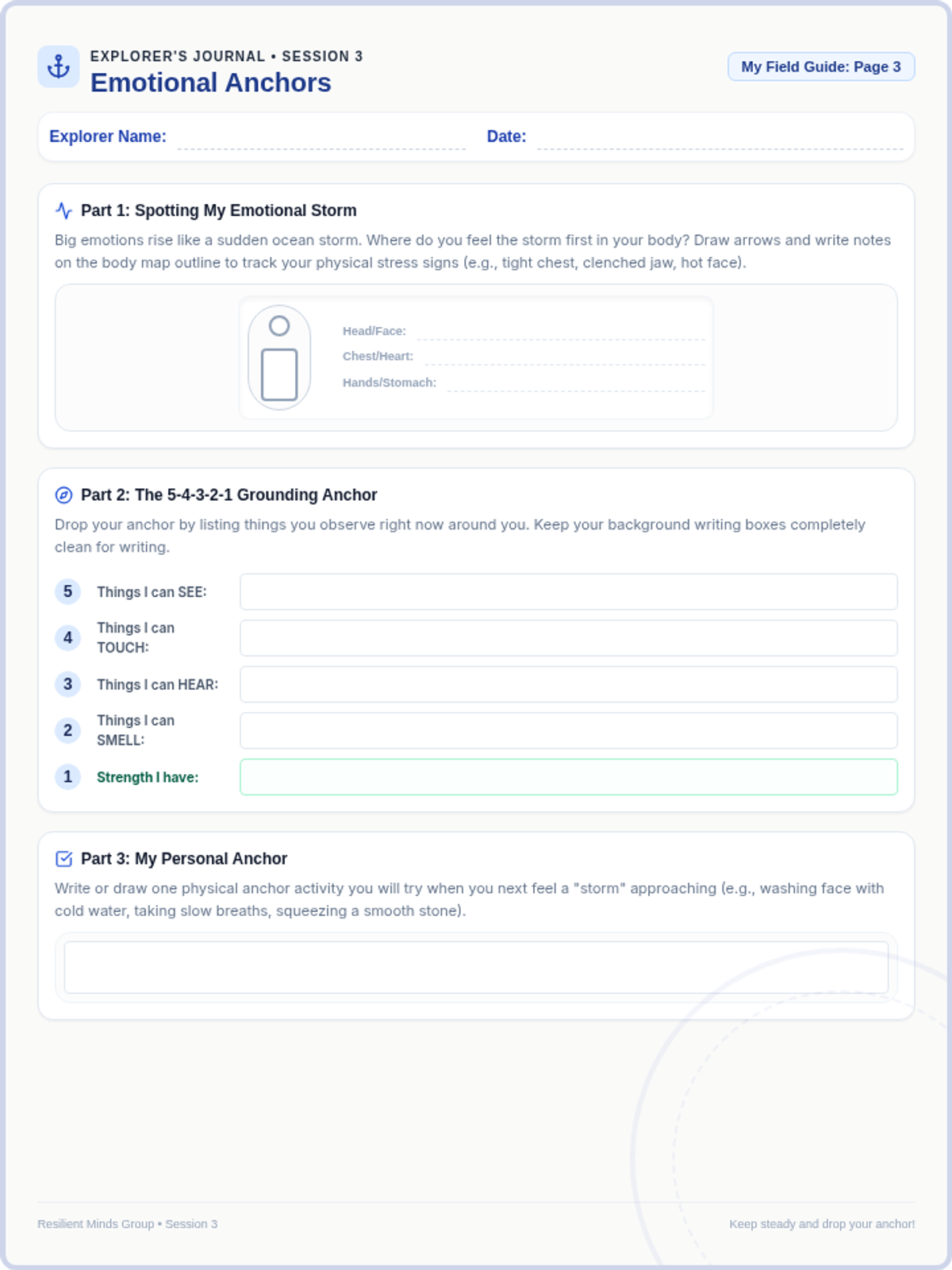
Students learn mindfulness, self-soothing, and distress tolerance techniques (DBT TIPP skills) to manage intense emotions and ground themselves.
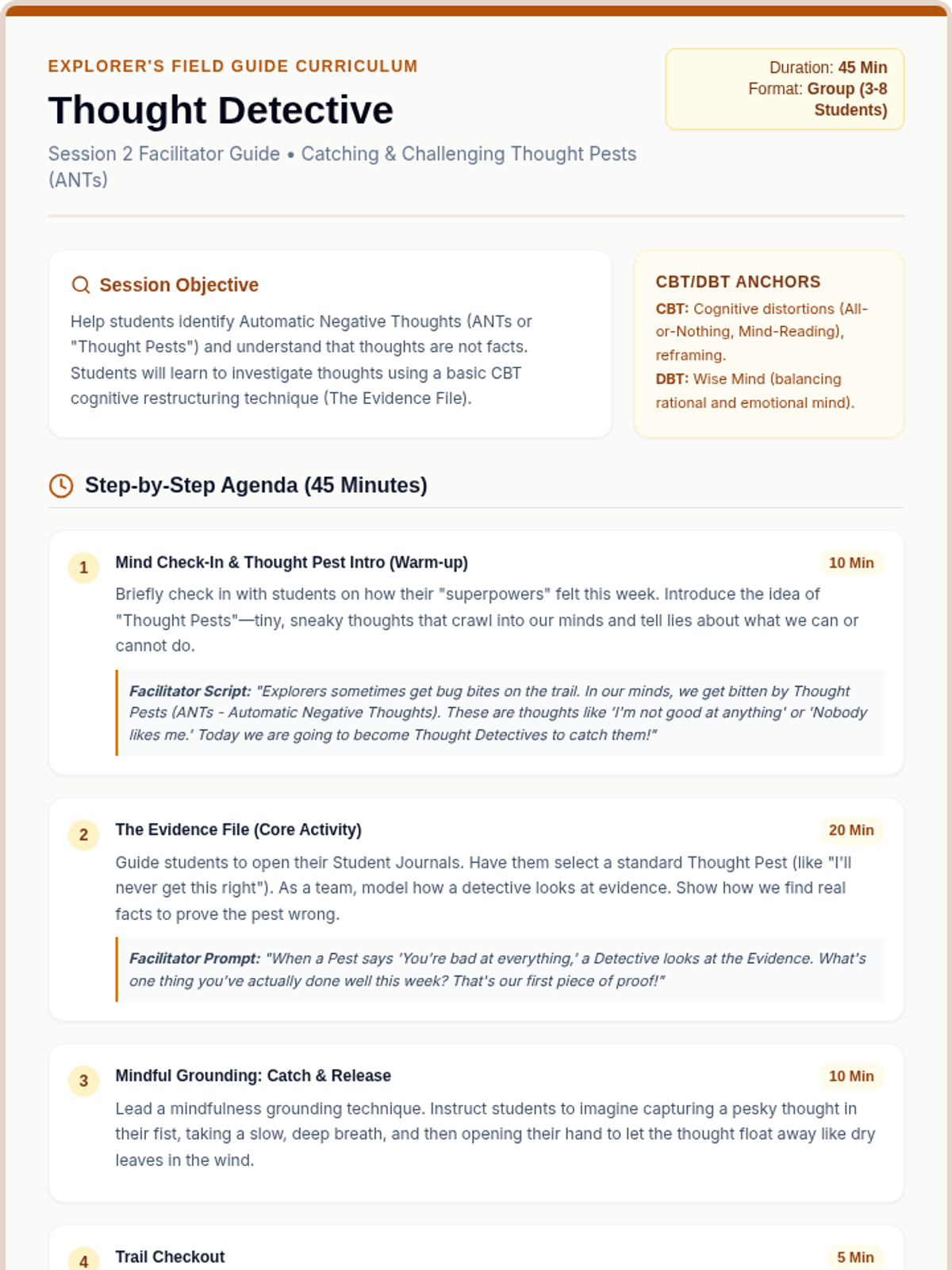
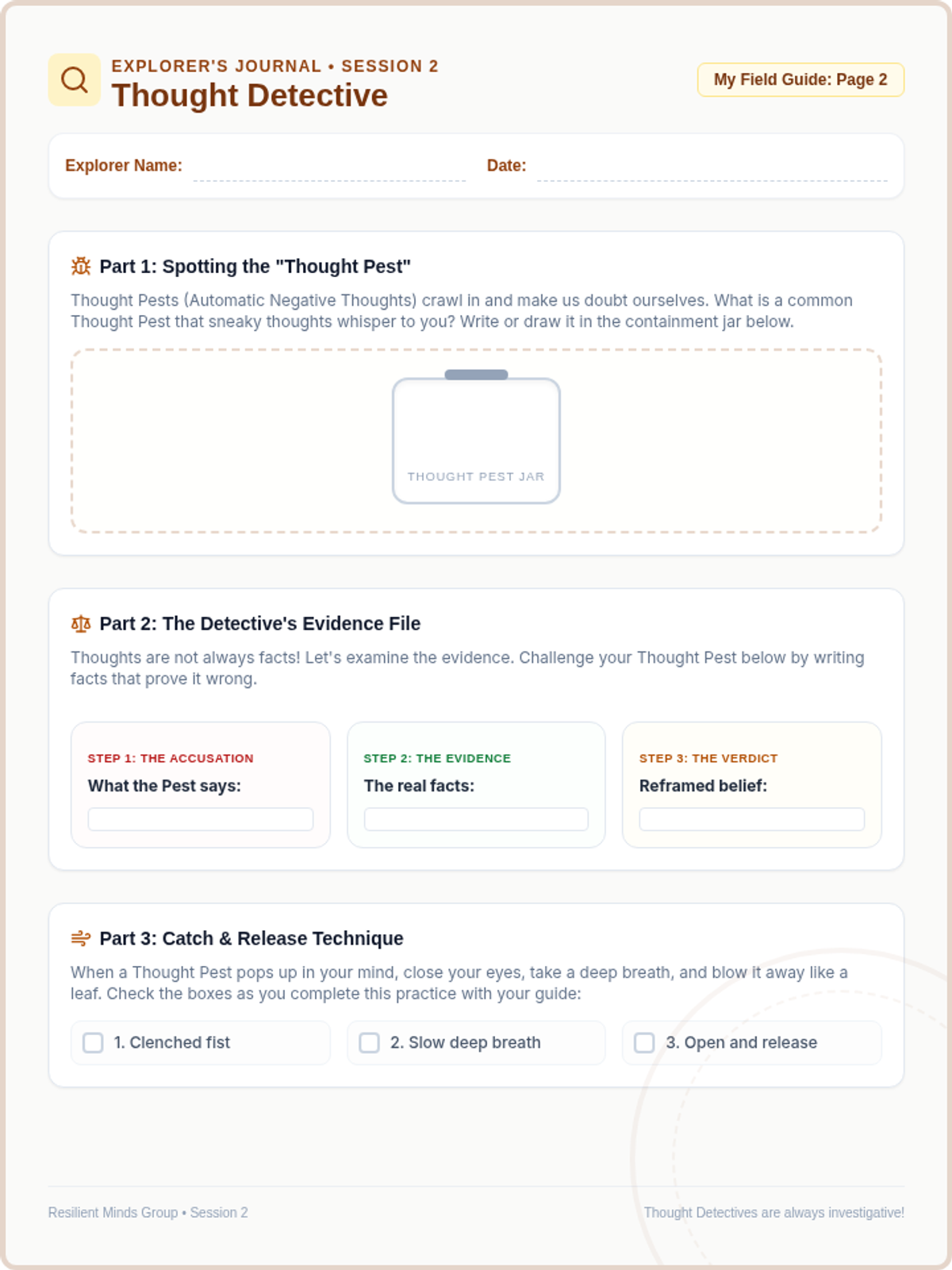
Students learn to identify and challenge automatic negative thoughts (ANTs) and cognitive distortions using CBT reframing techniques.
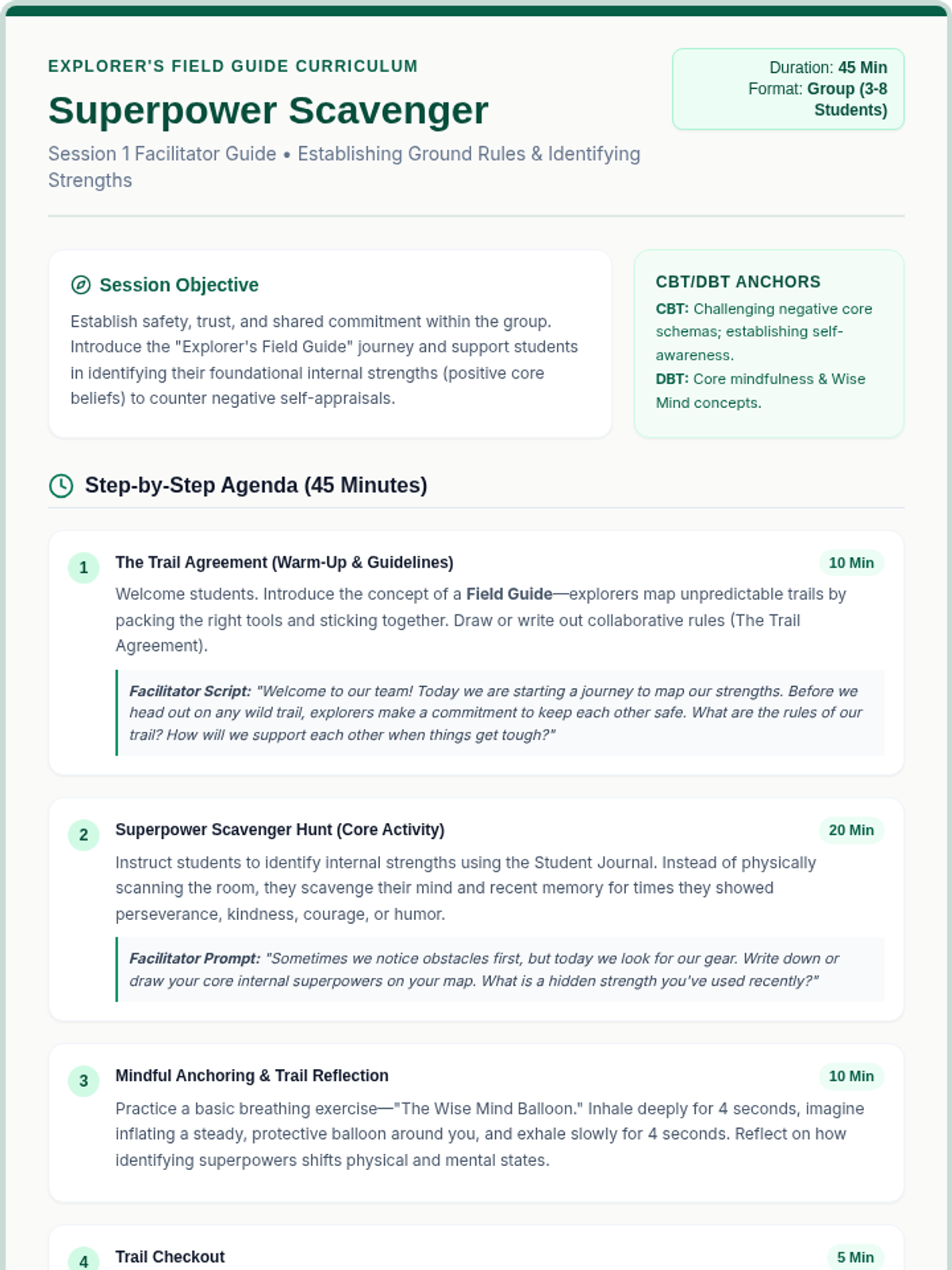
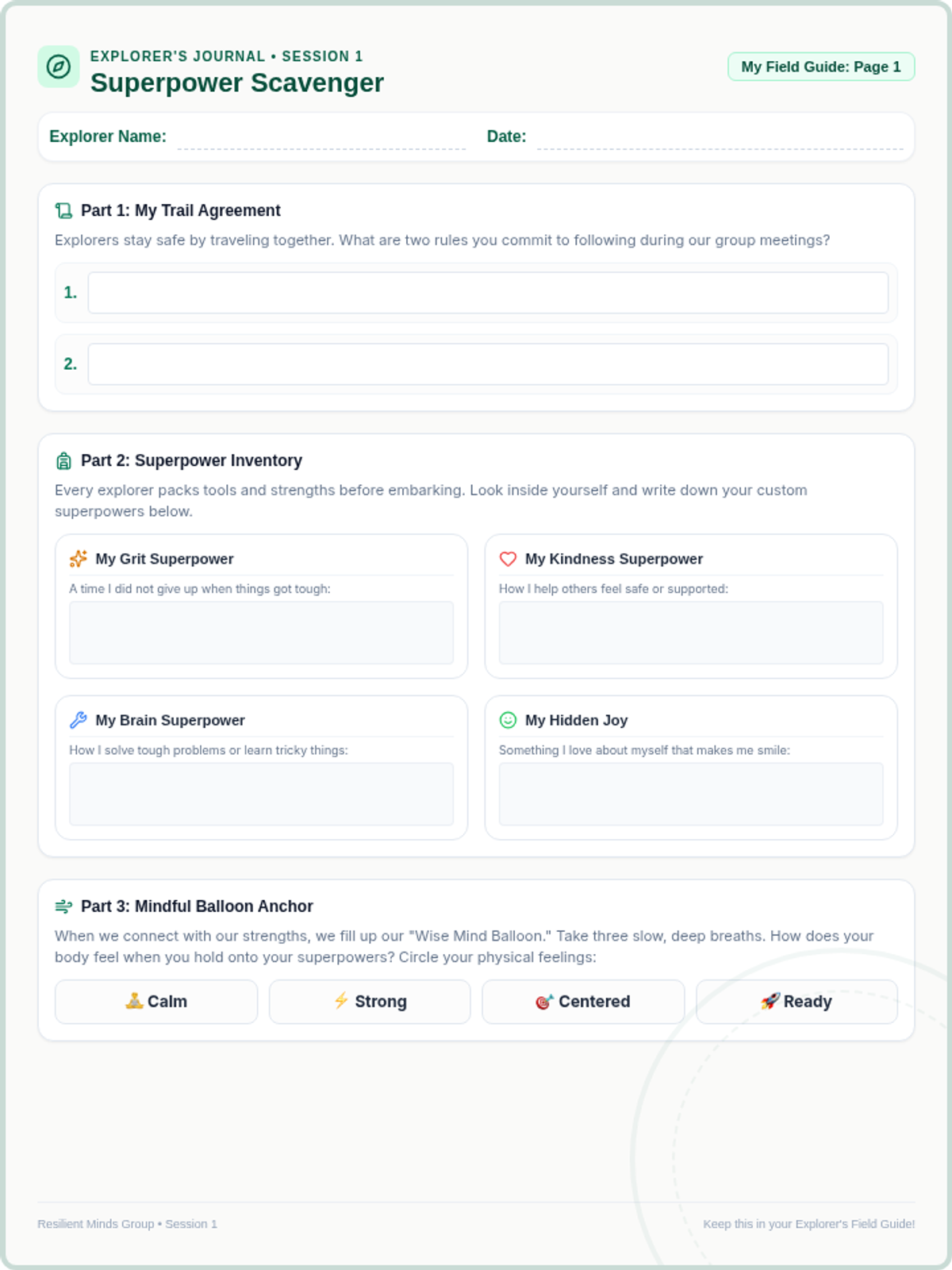
Students establish group guidelines, explore the 'Explorer's Field Guide' theme, and identify their unique internal strengths and positive core beliefs (CBT core beliefs & mindfulness).
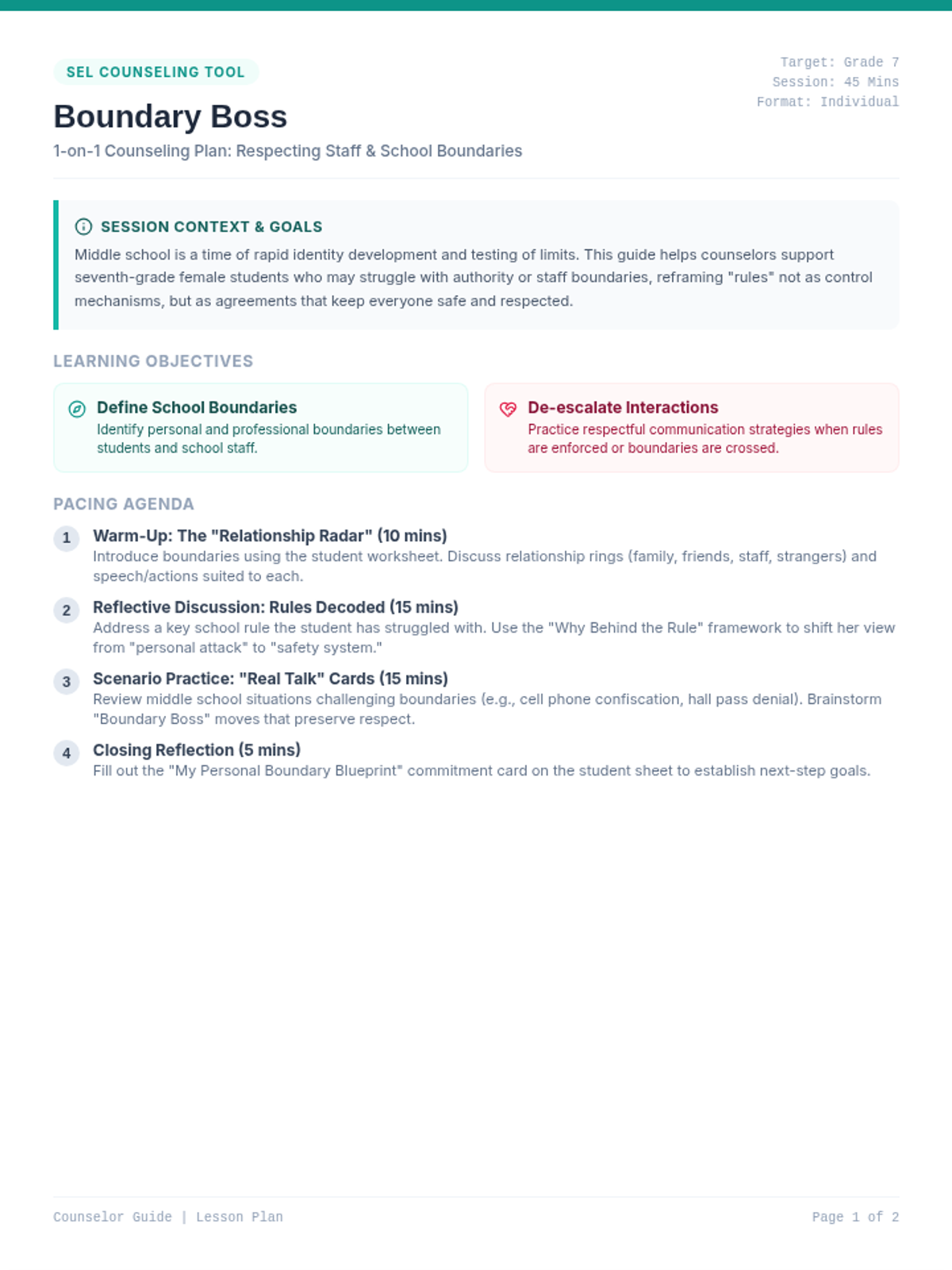
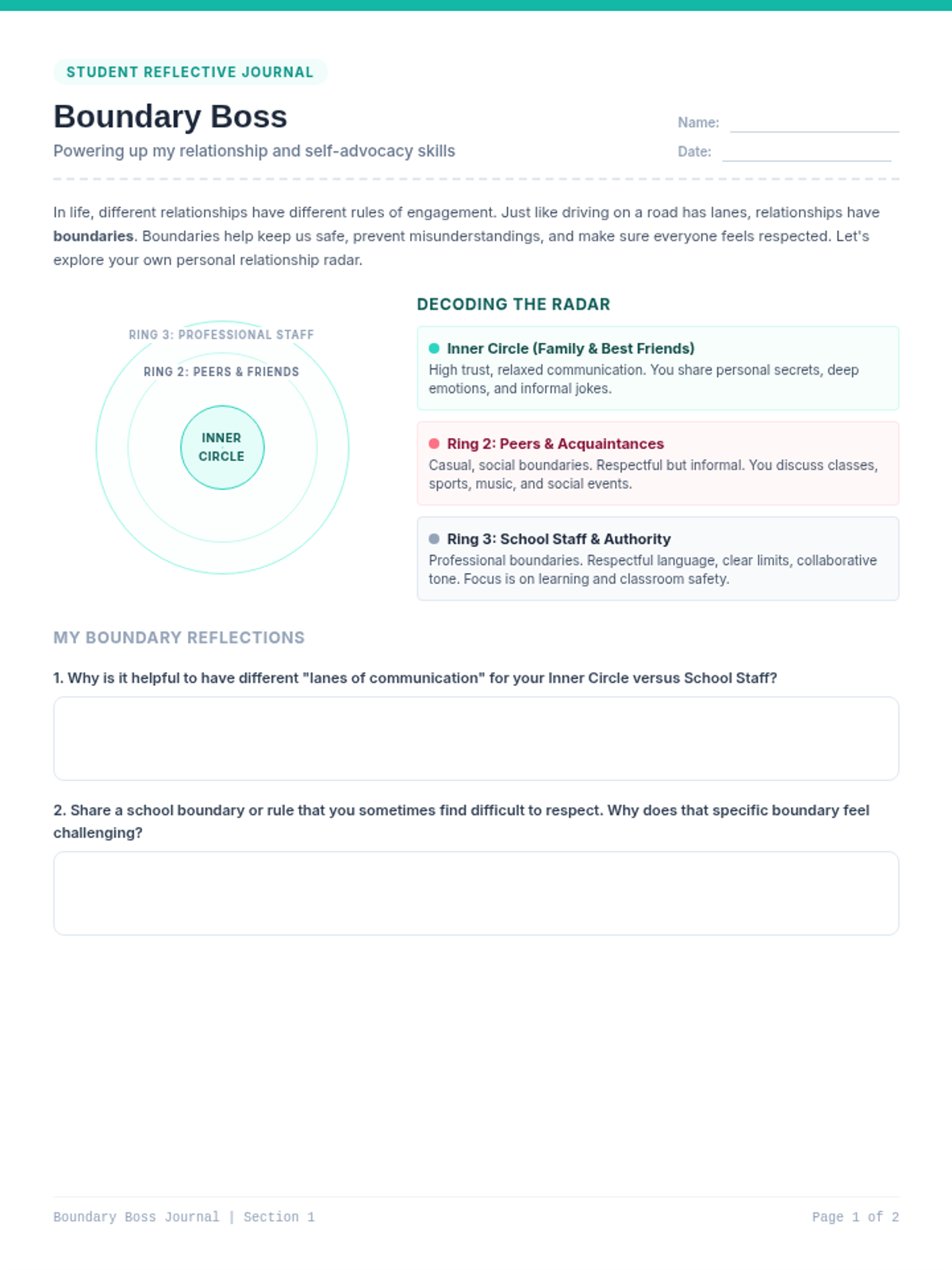
A 1-on-1 social-emotional learning lesson designed for seventh-grade students. It focuses on understanding personal and school boundaries, decoding school rules, and building respectful, healthy relationships with school staff through reflective discussion and practical scenario analysis.
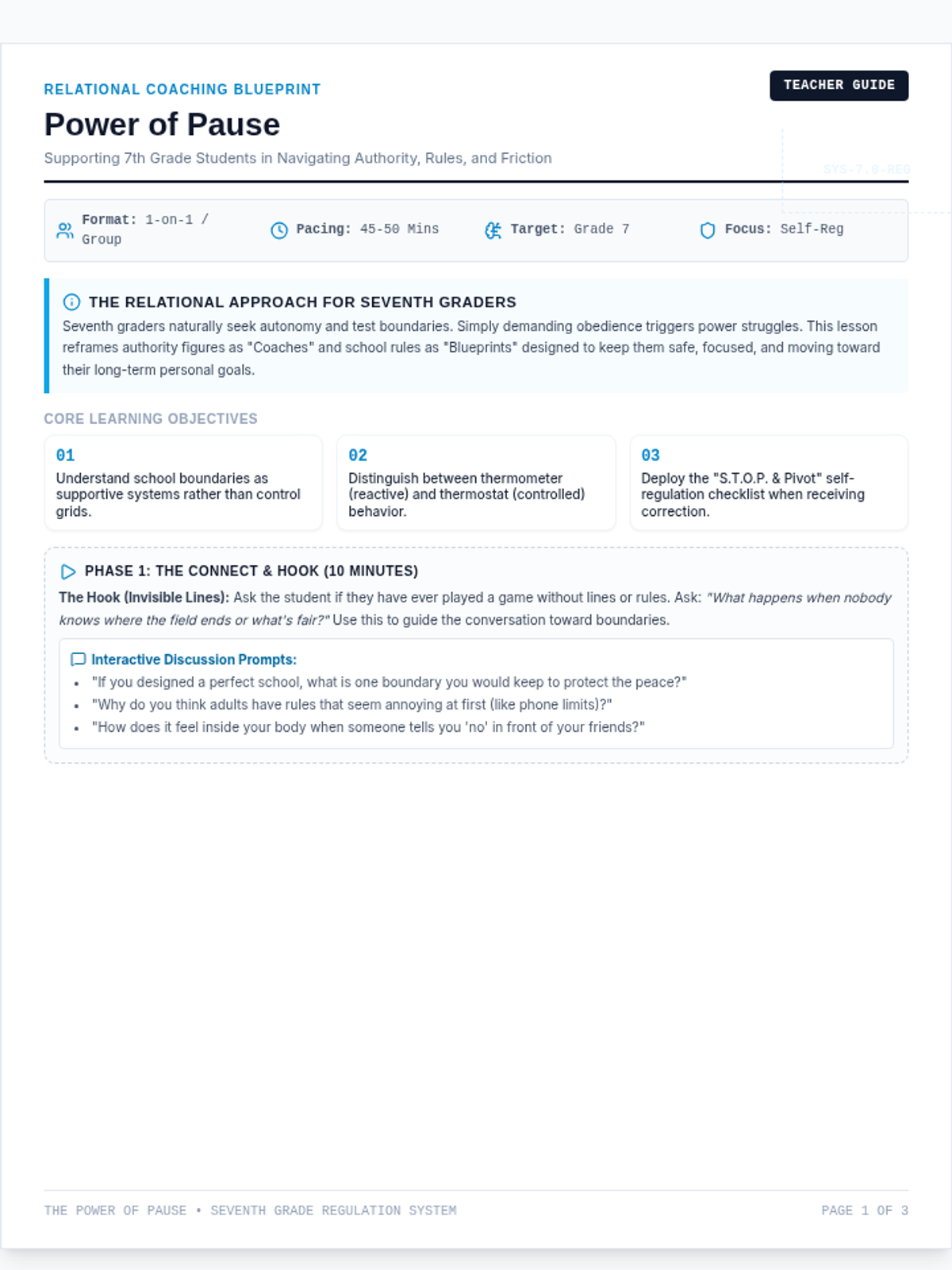
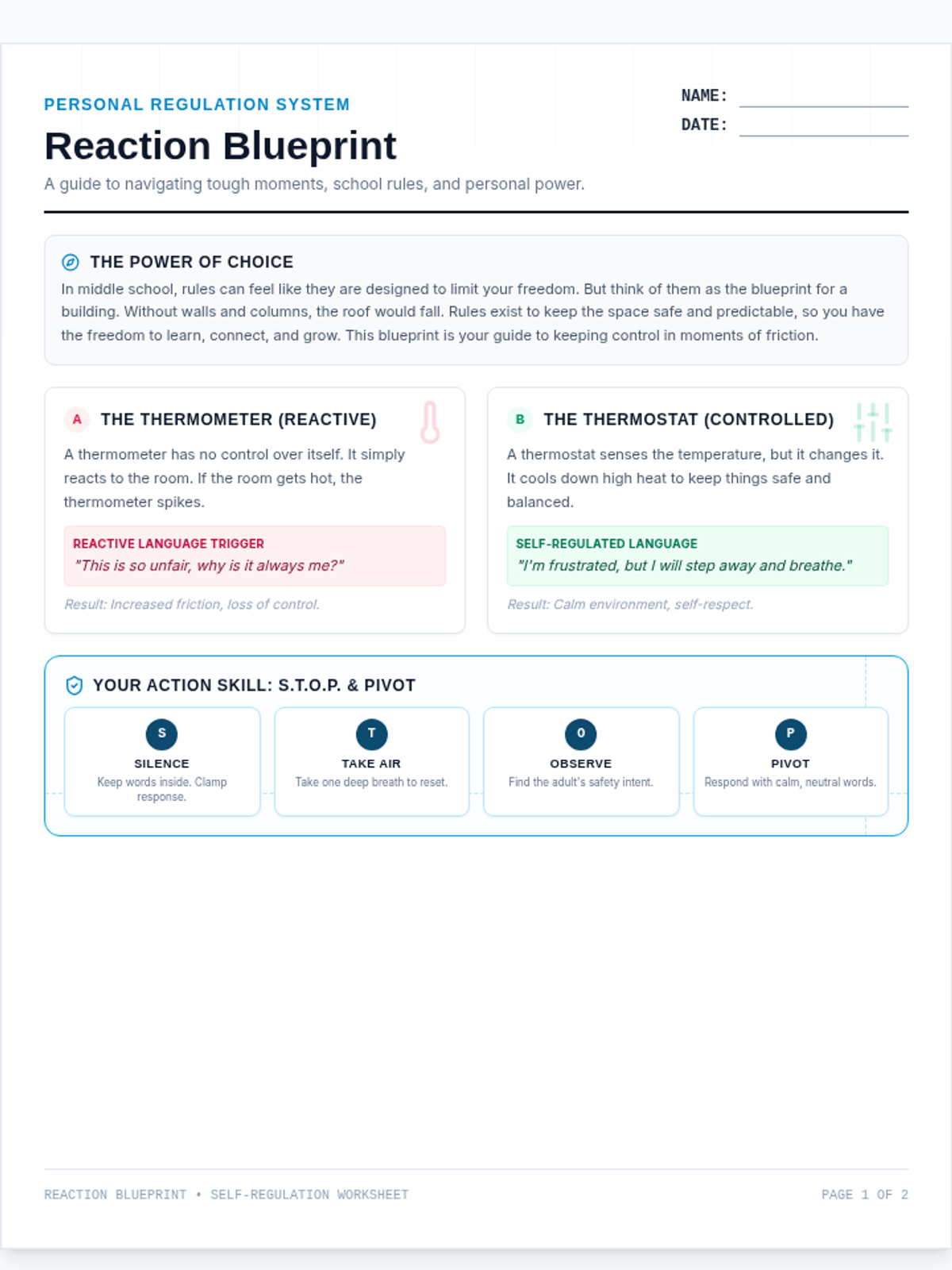
A specialized relational lesson designed to help seventh-grade students understand the purpose of authority and school boundaries, manage reactive language, and build tangible coping skills to handle frustration when told "no". Includes an interactive lesson plan for educators and a self-regulation guide with a visual anchor chart.
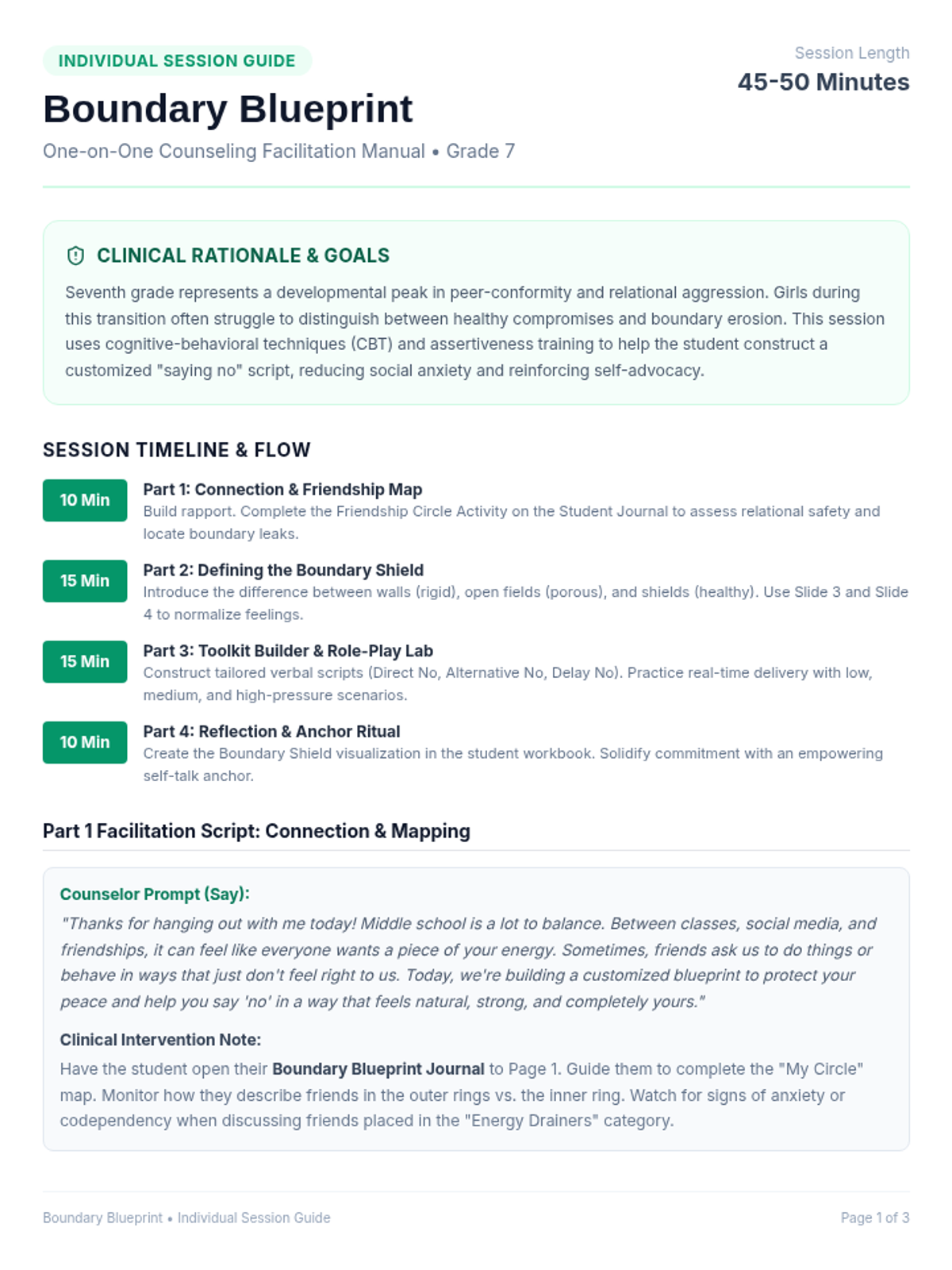
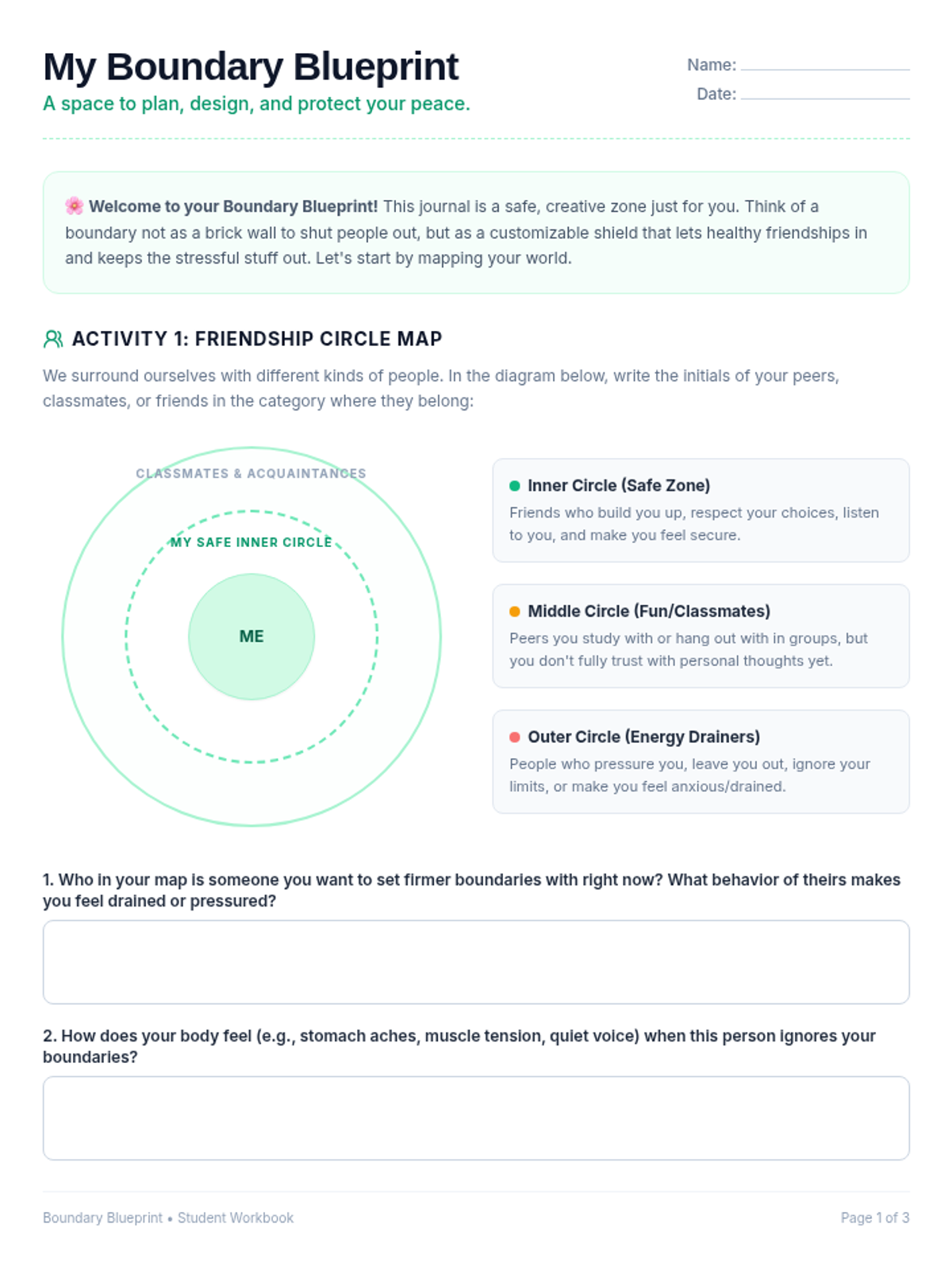
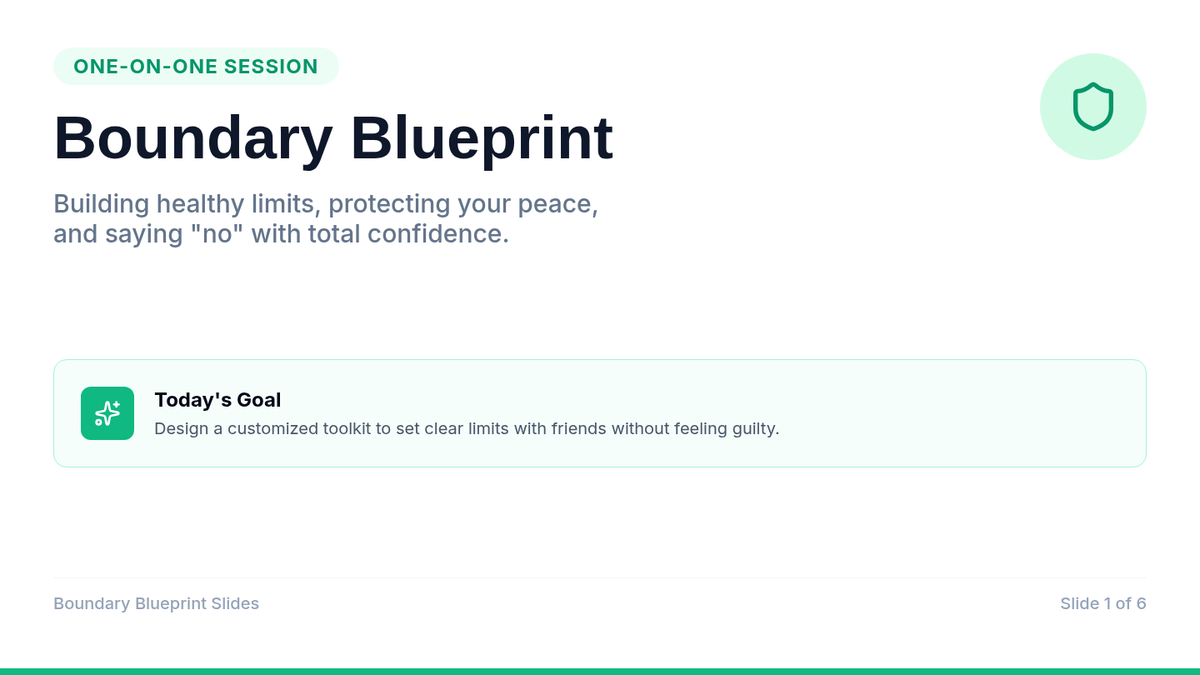
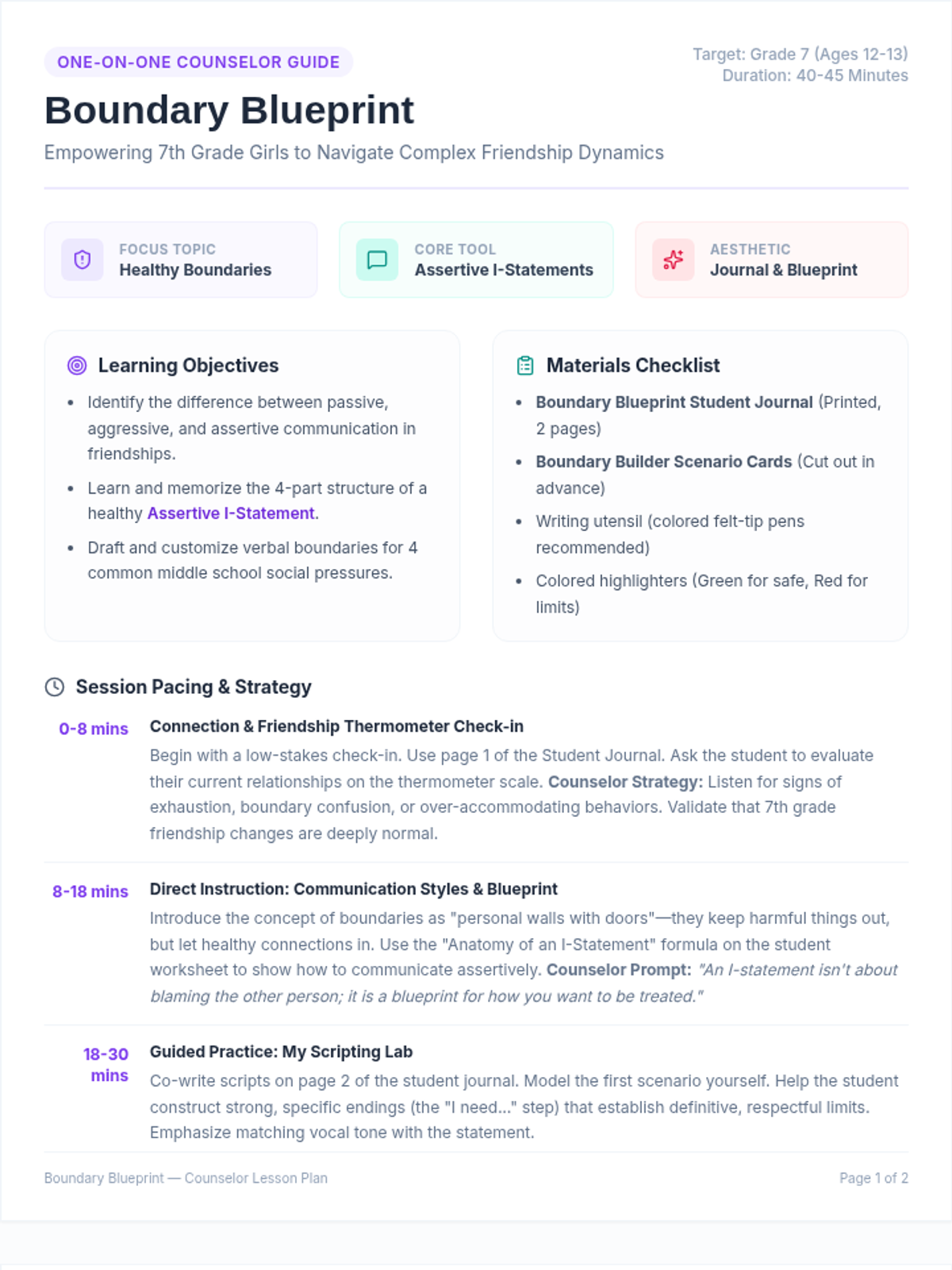
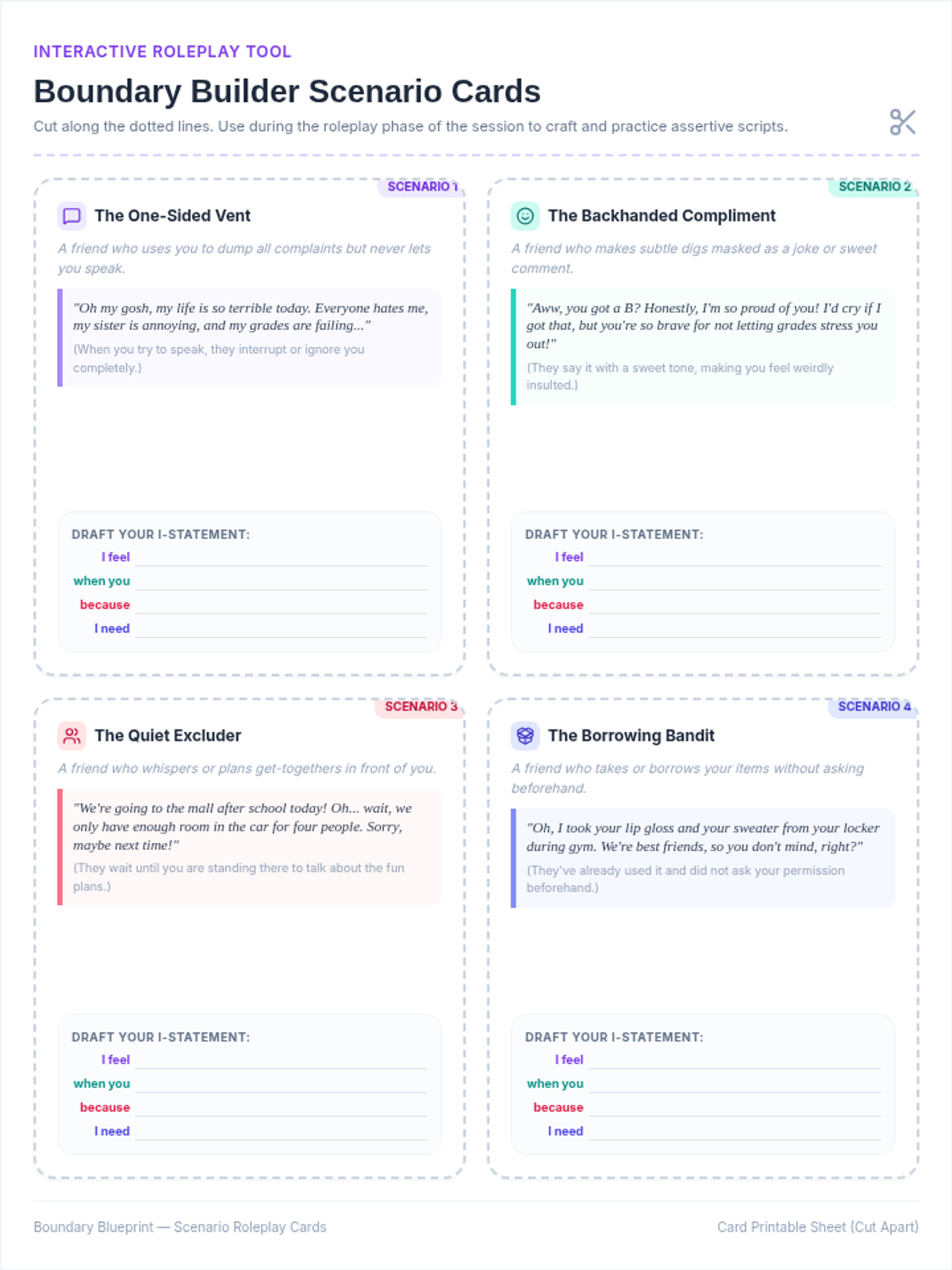
A one-on-one counseling session designed for a 7th-grade girl focusing on establishing healthy boundaries, identifying peer pressure tactics, and building a customized toolkit for saying "no" confidently to negative friends.
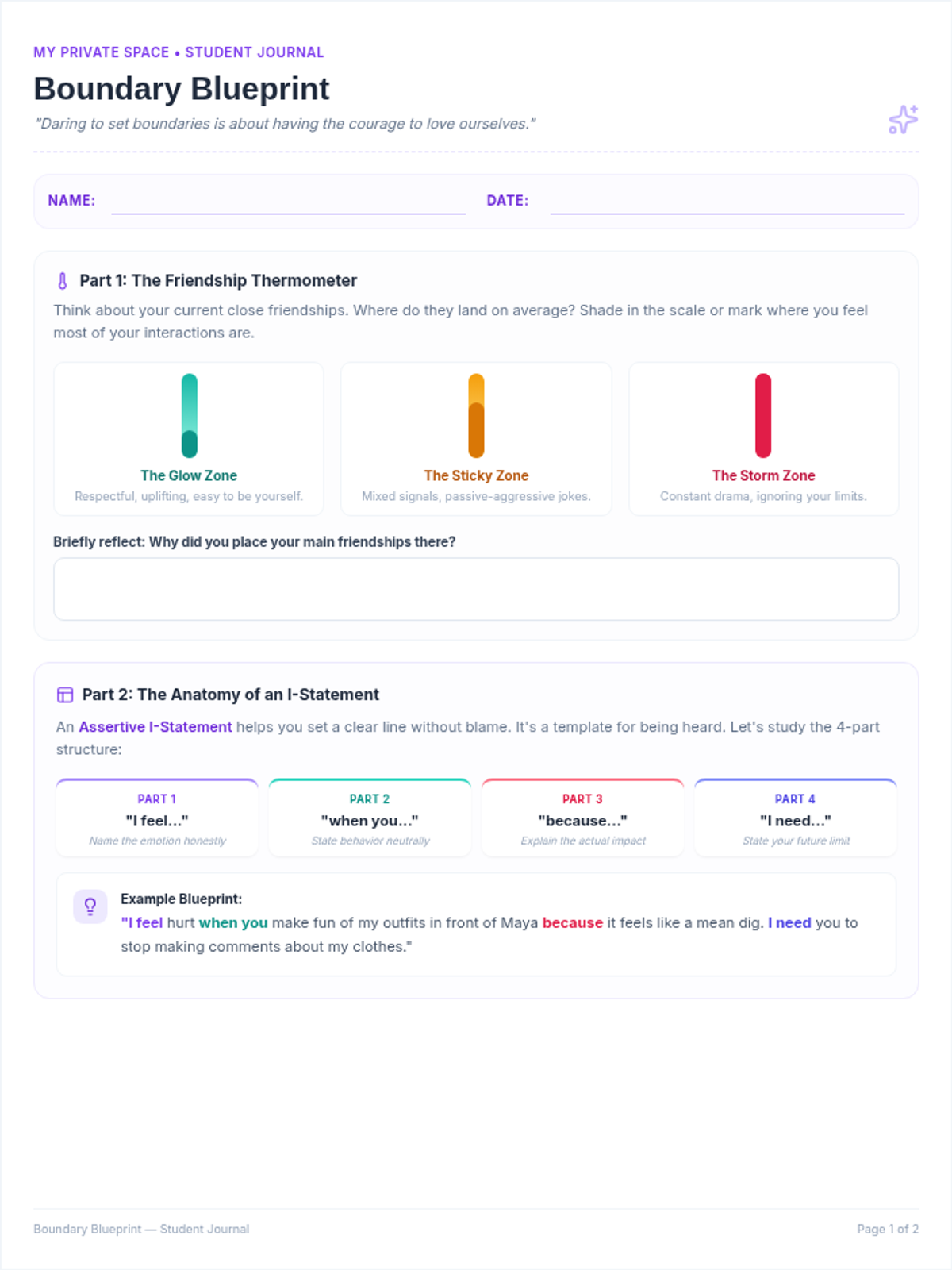
A one-on-one counseling lesson designed for a seventh-grade girl to learn healthy boundaries and assertive communication. The lesson uses a supportive, journal-style aesthetic to teach the anatomy of an I-statement and apply it through realistic social scenarios.
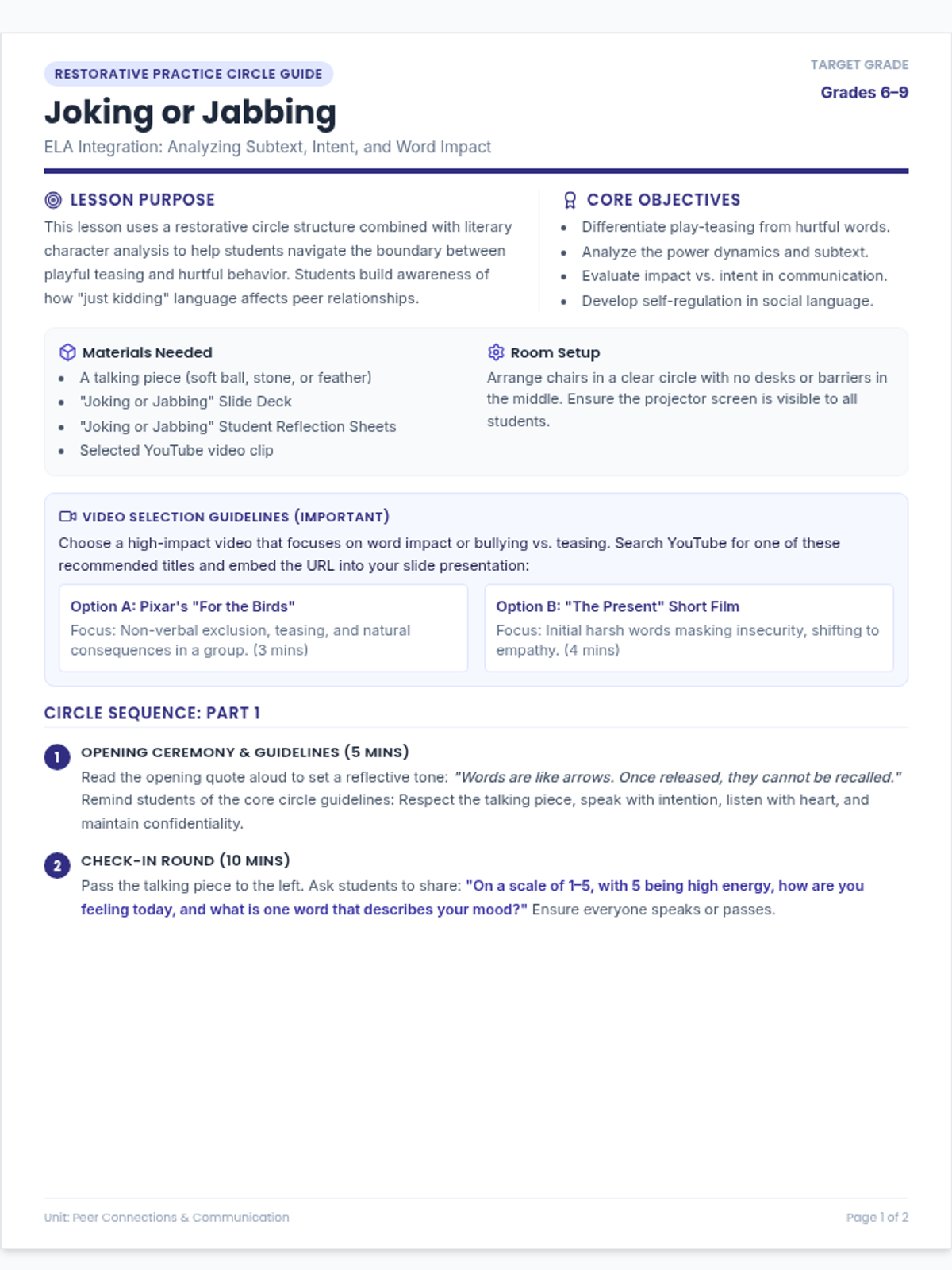
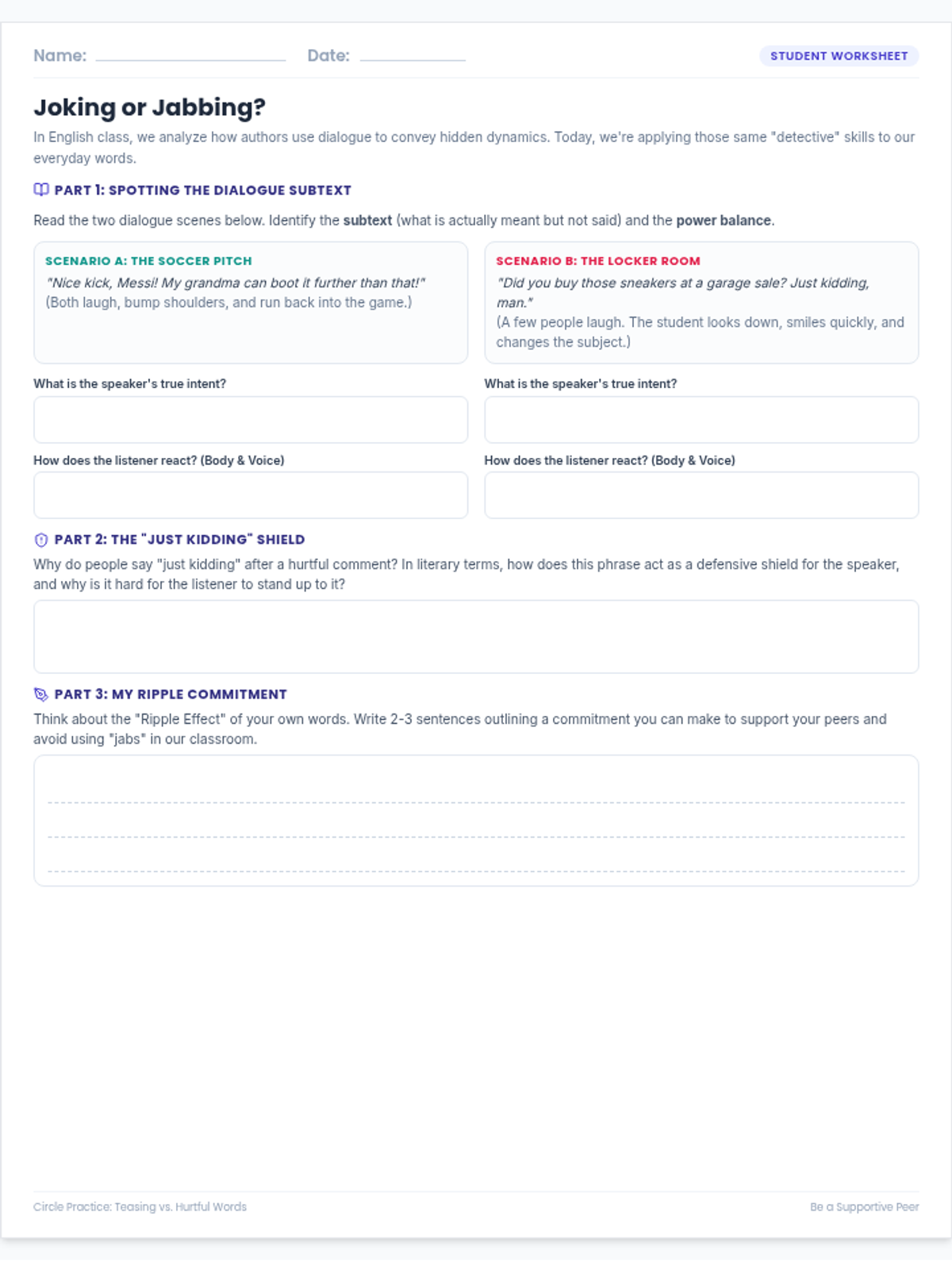
A restorative circle and ELA-integrated lesson focusing on the boundaries between friendly teasing and hurtful words. Students analyze scenarios, discuss video prompts, and reflect on their language impact.
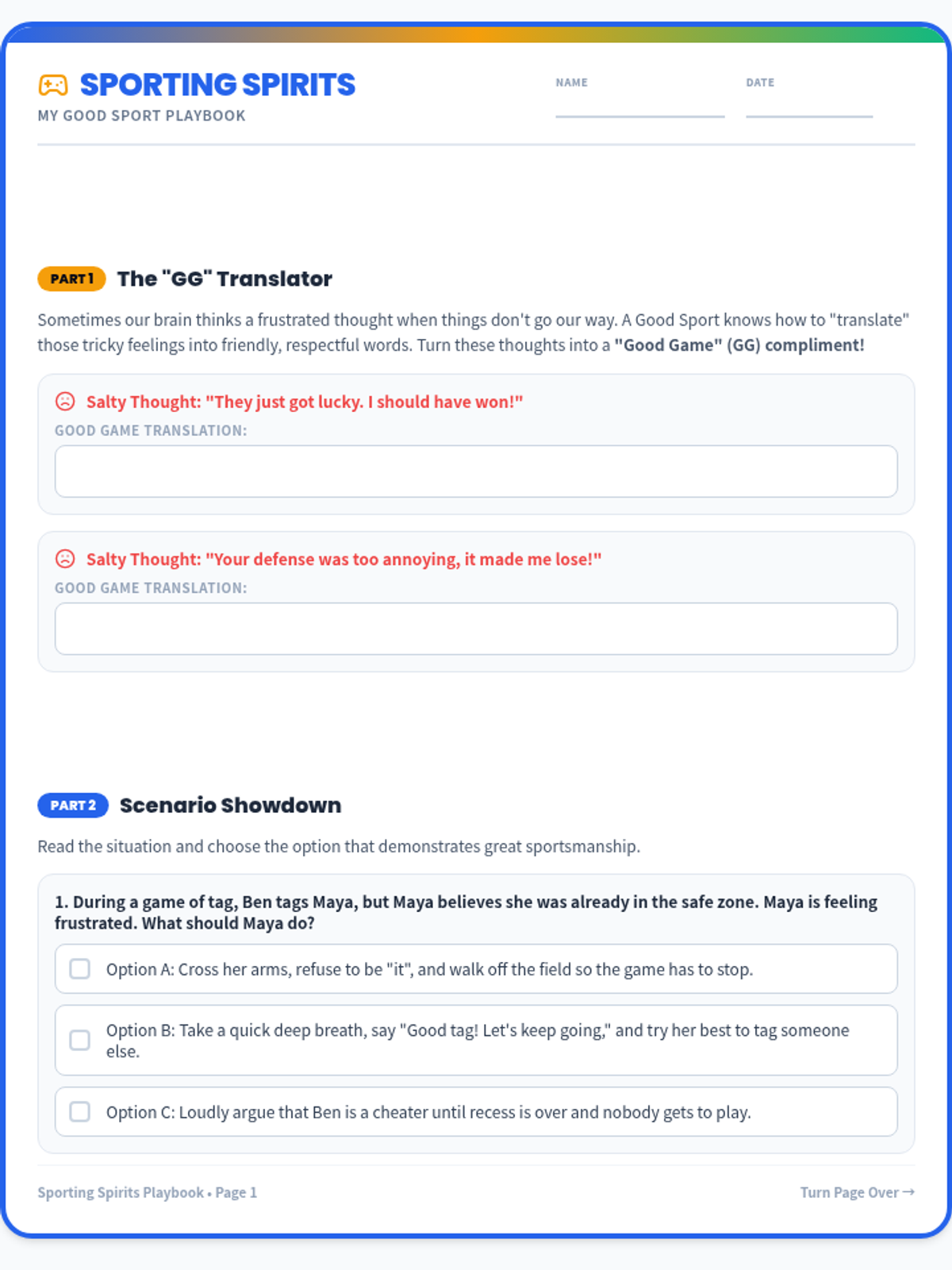
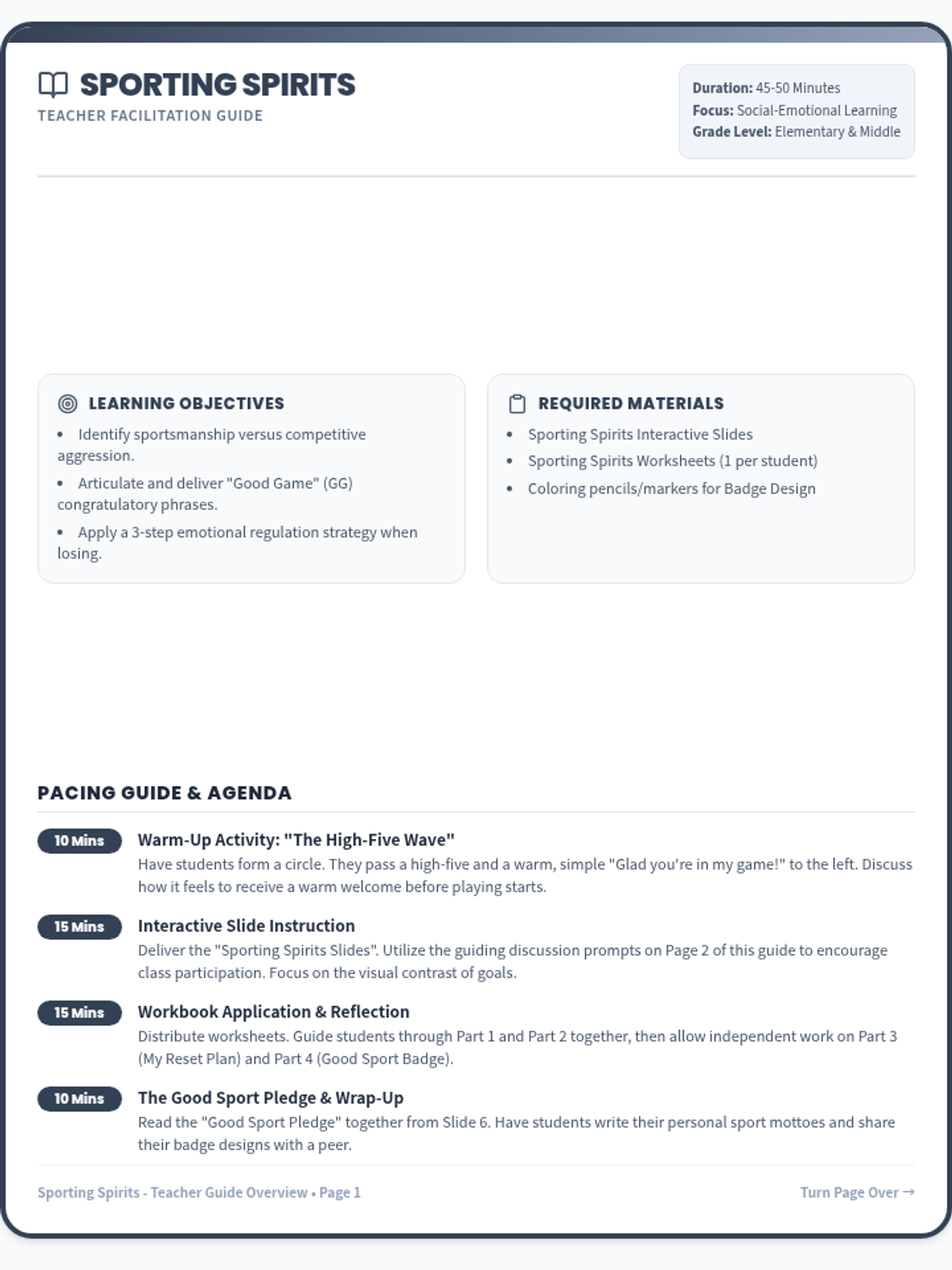
A dynamic, classroom-ready lesson designed to teach elementary and middle-school students how to be good sports. The lesson focuses on the core skills of congratulating others, saying 'Good Game' (GG), and managing the complex emotions of losing. It includes a vibrant, high-impact slide presentation, a scenario-driven student worksheet, and a structured teacher guide.
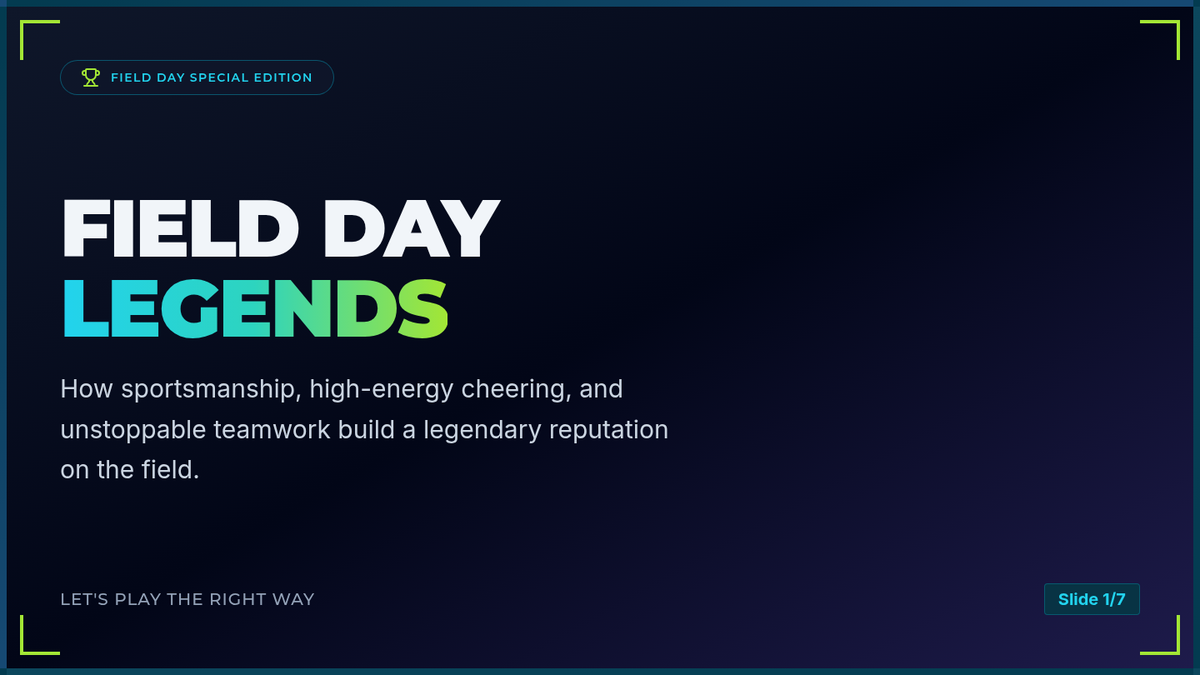
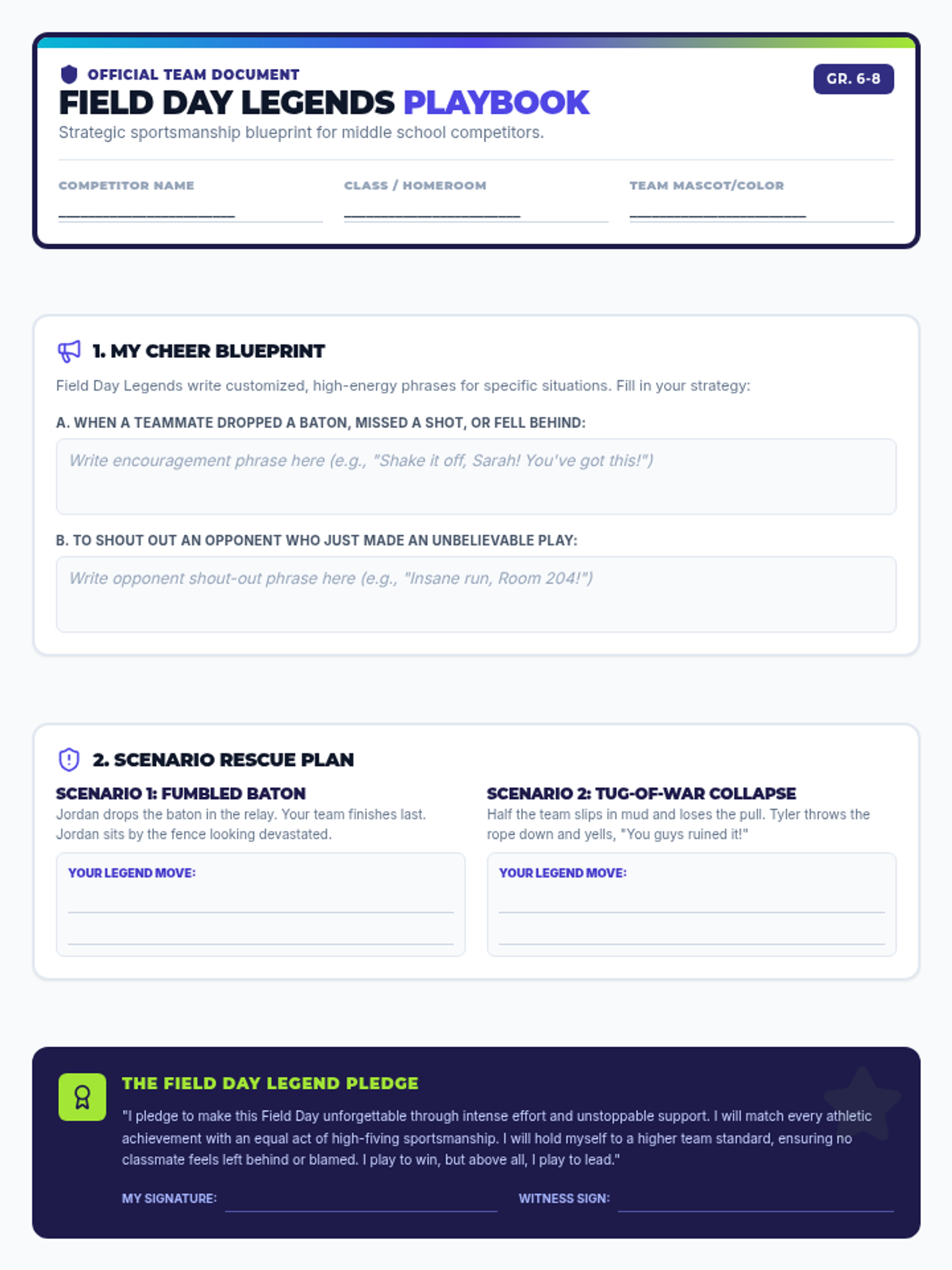
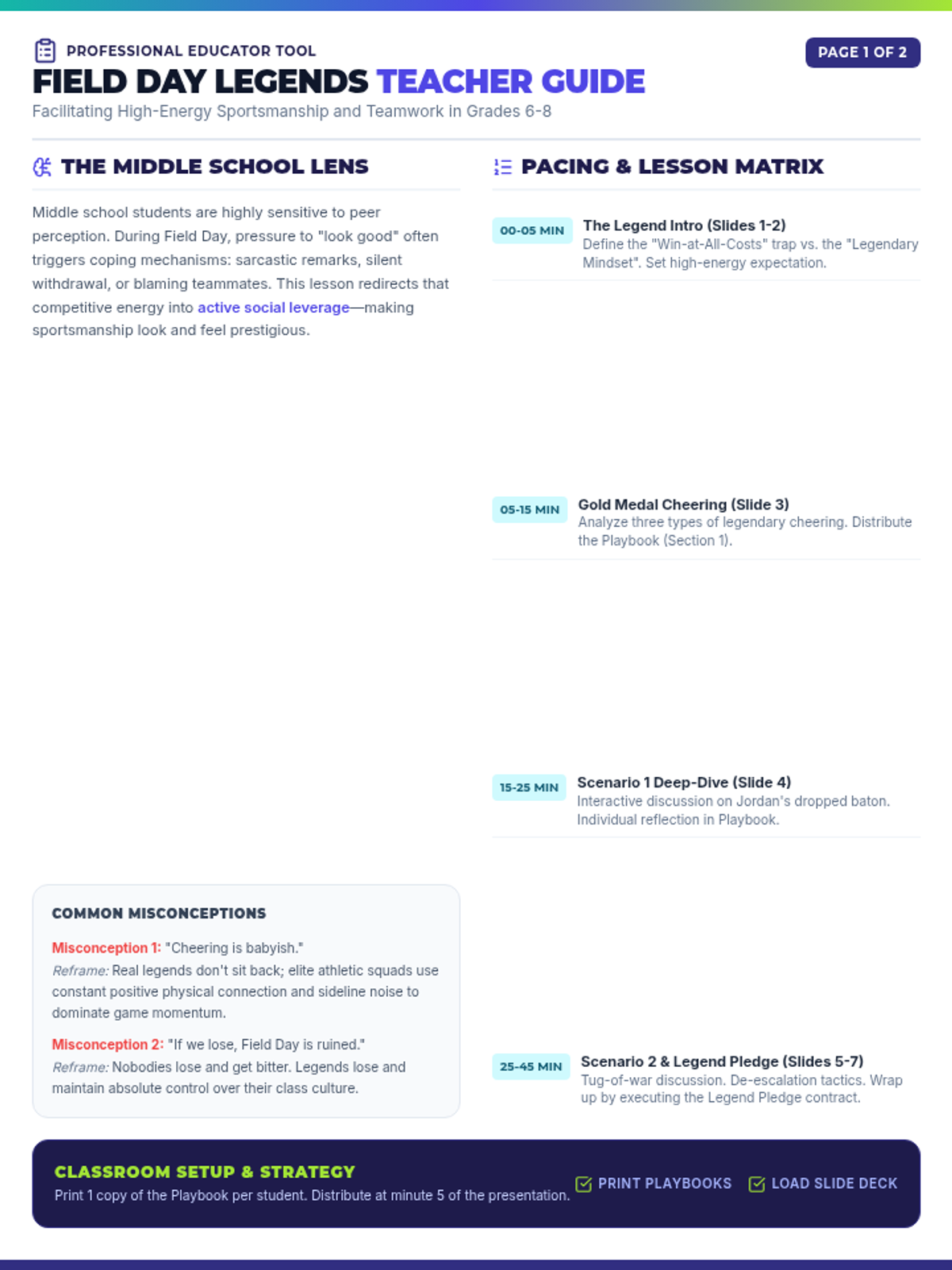
A high-energy sportsmanship lesson designed for middle schoolers preparing for Field Day. Focuses on peer encouragement, constructive teamwork, and handling setbacks through interactive scenario discussions.
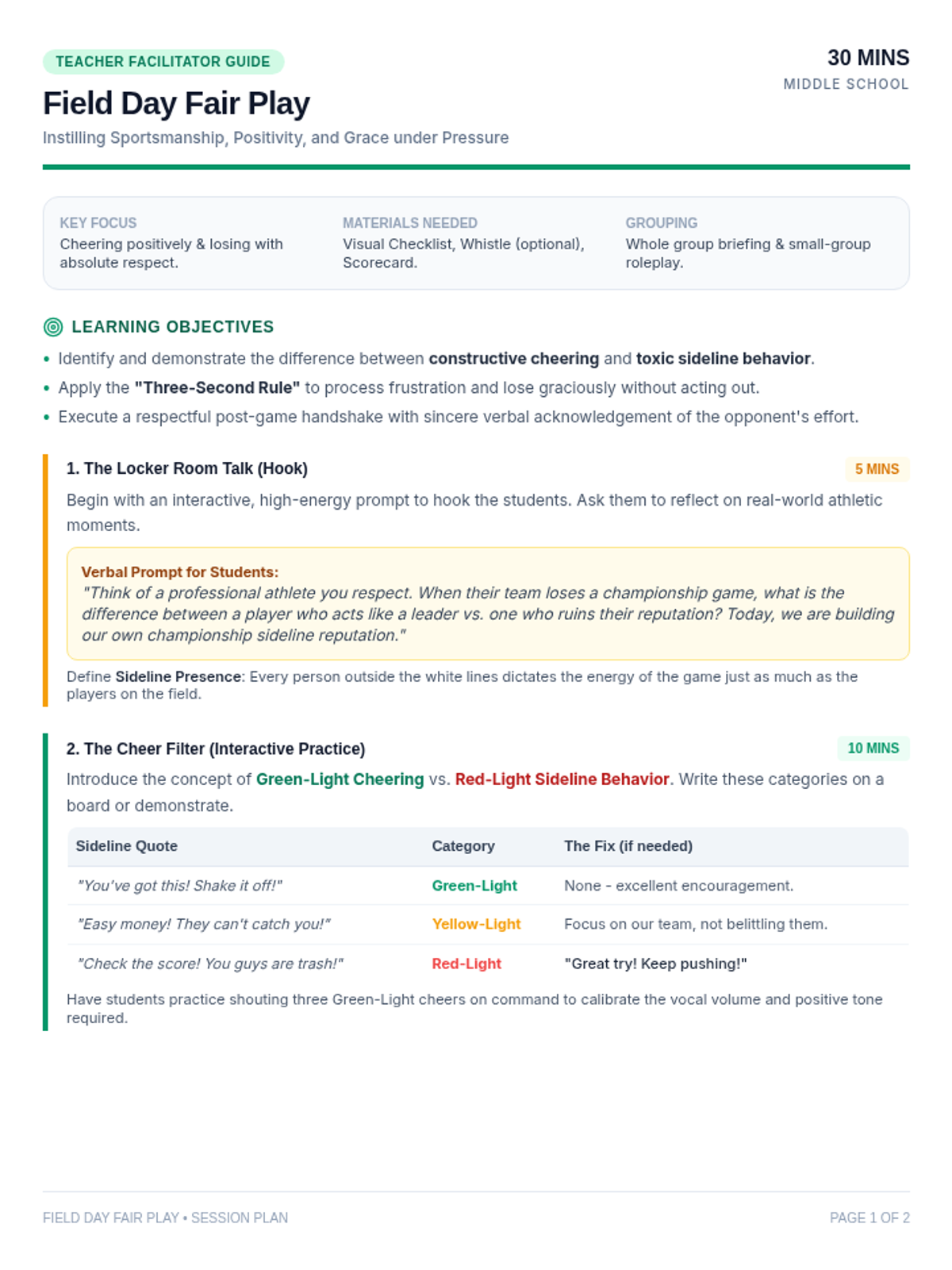
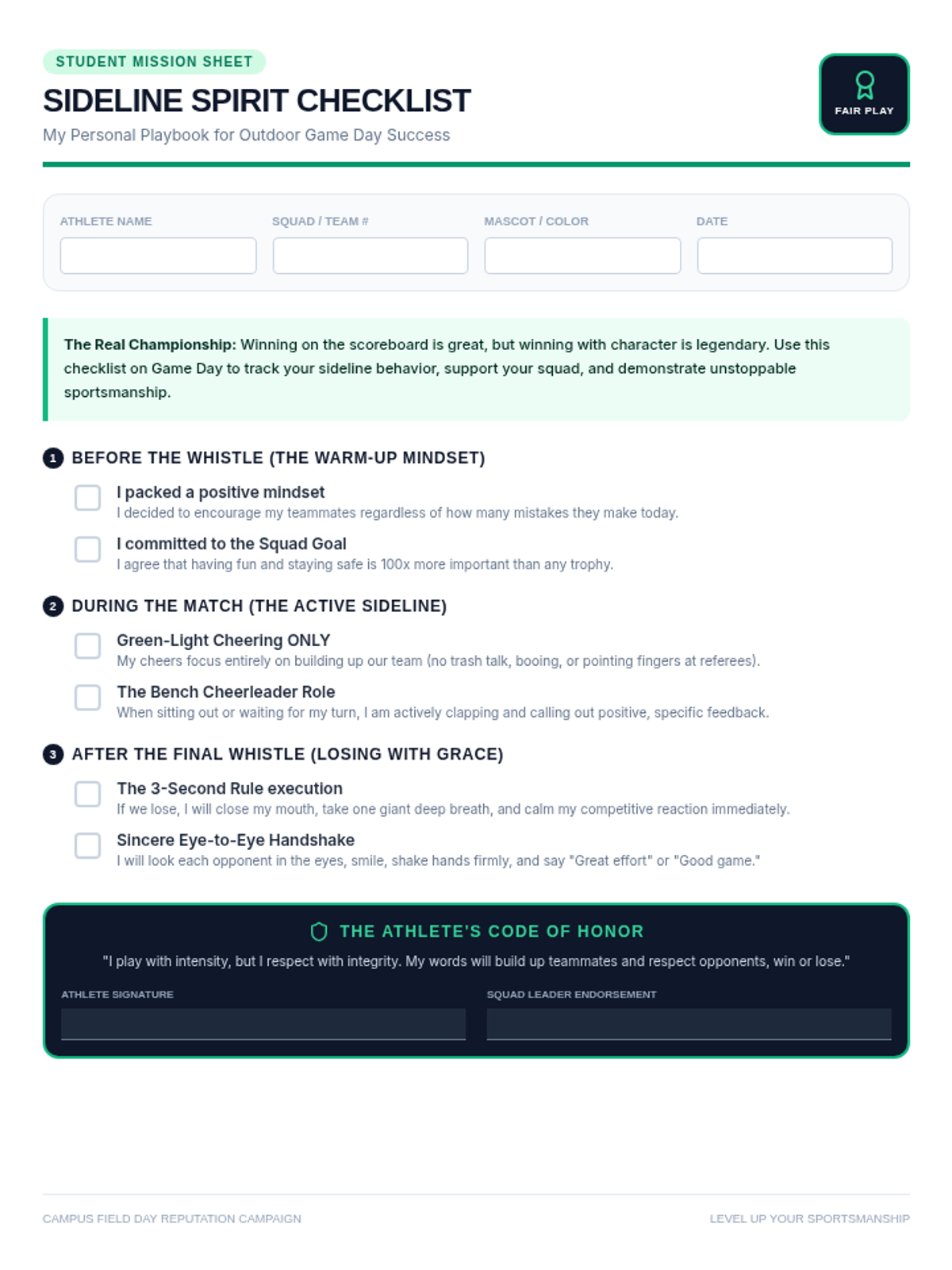
A 30-minute lesson designed to prepare middle school students for outdoor game day, focusing on sportsmanship, cheering, and losing graciously. Includes structured roleplays, clear sideline expectations, and a student-facing visual checklist.
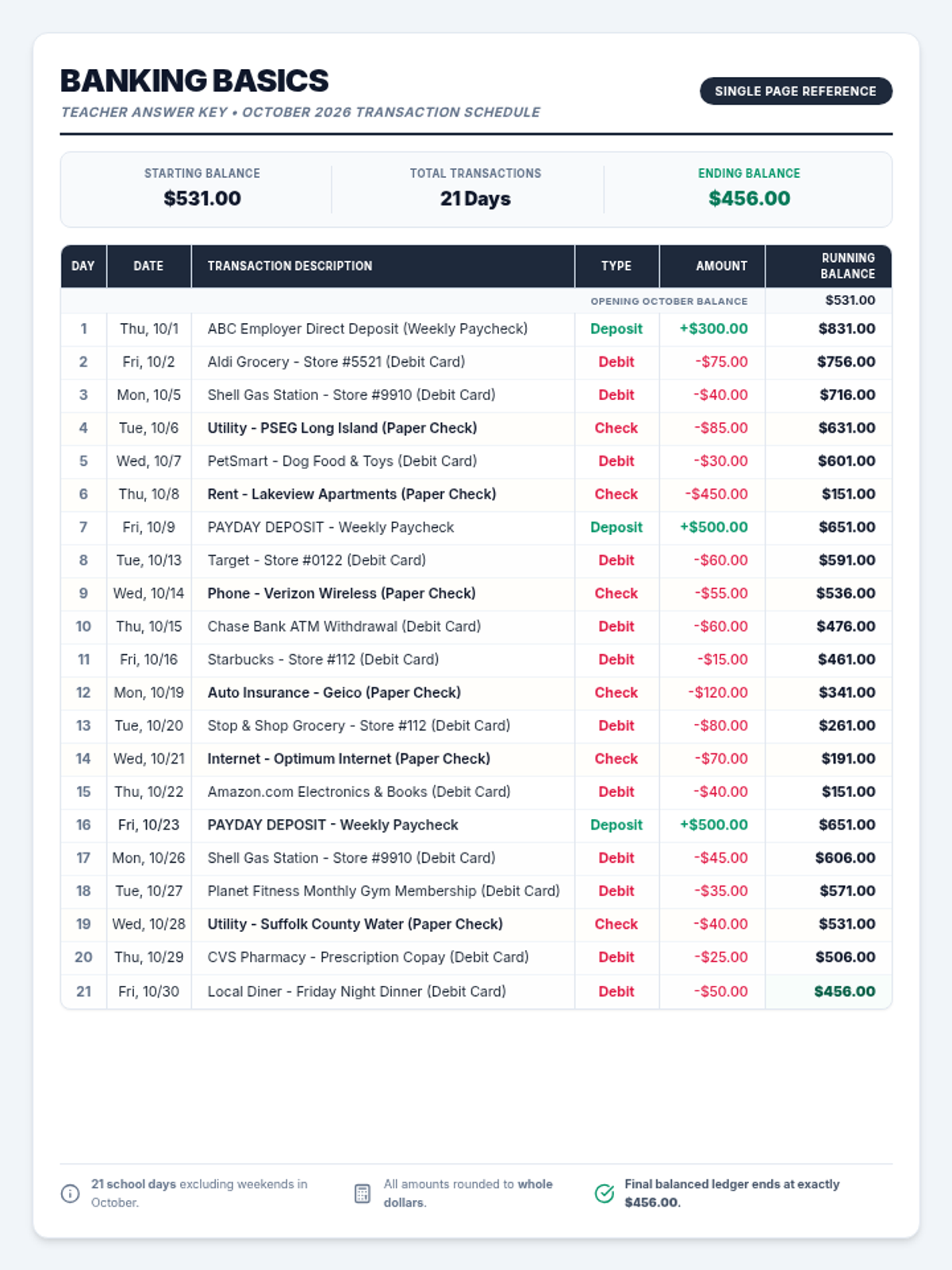
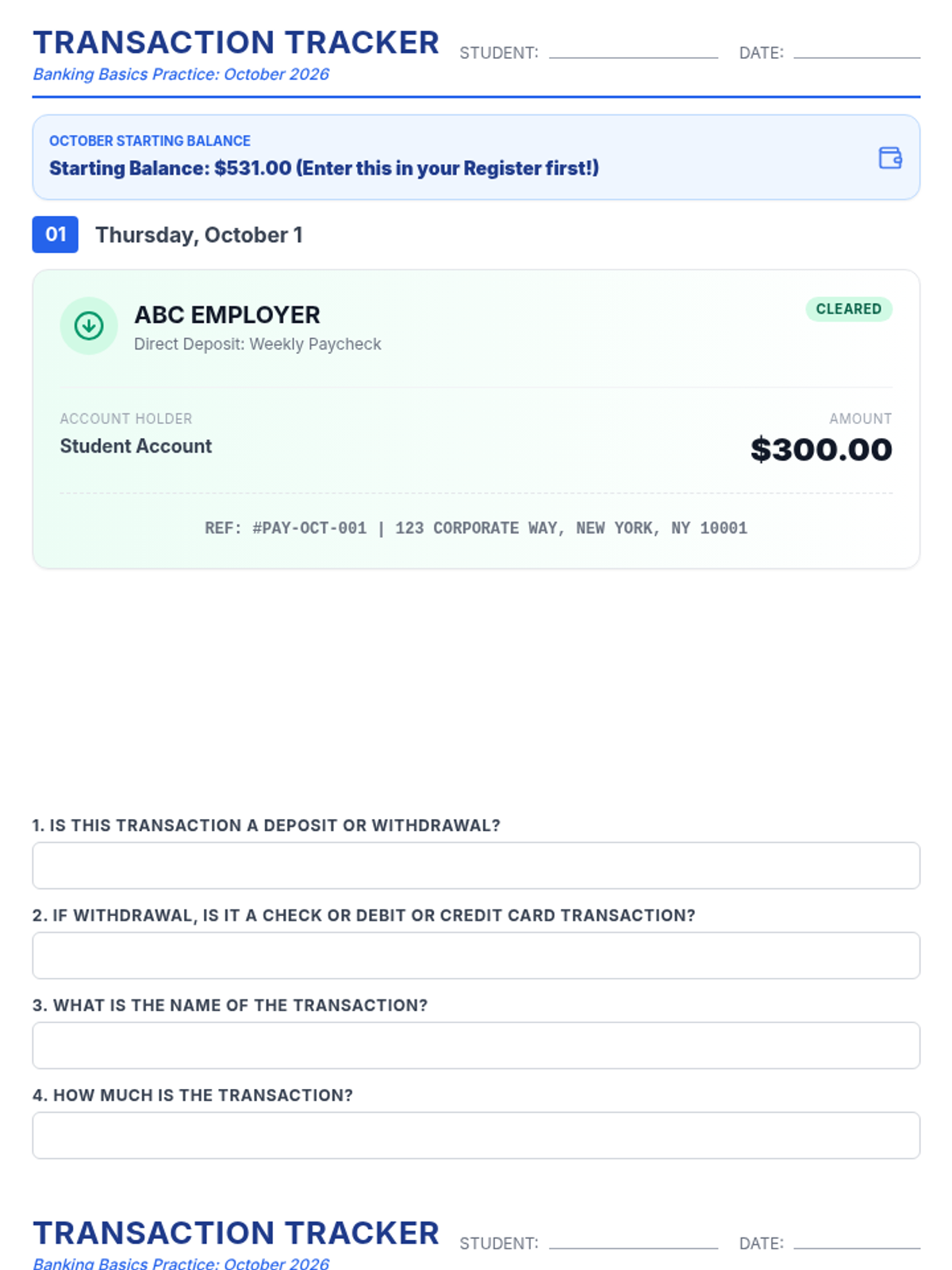
A practical financial literacy lesson where students track daily banking transactions, calculate running balances, and reconcile account registers for October 2026. Includes a 21-day transaction tracker worksheet with larger check addresses and a teacher answer key schedule.
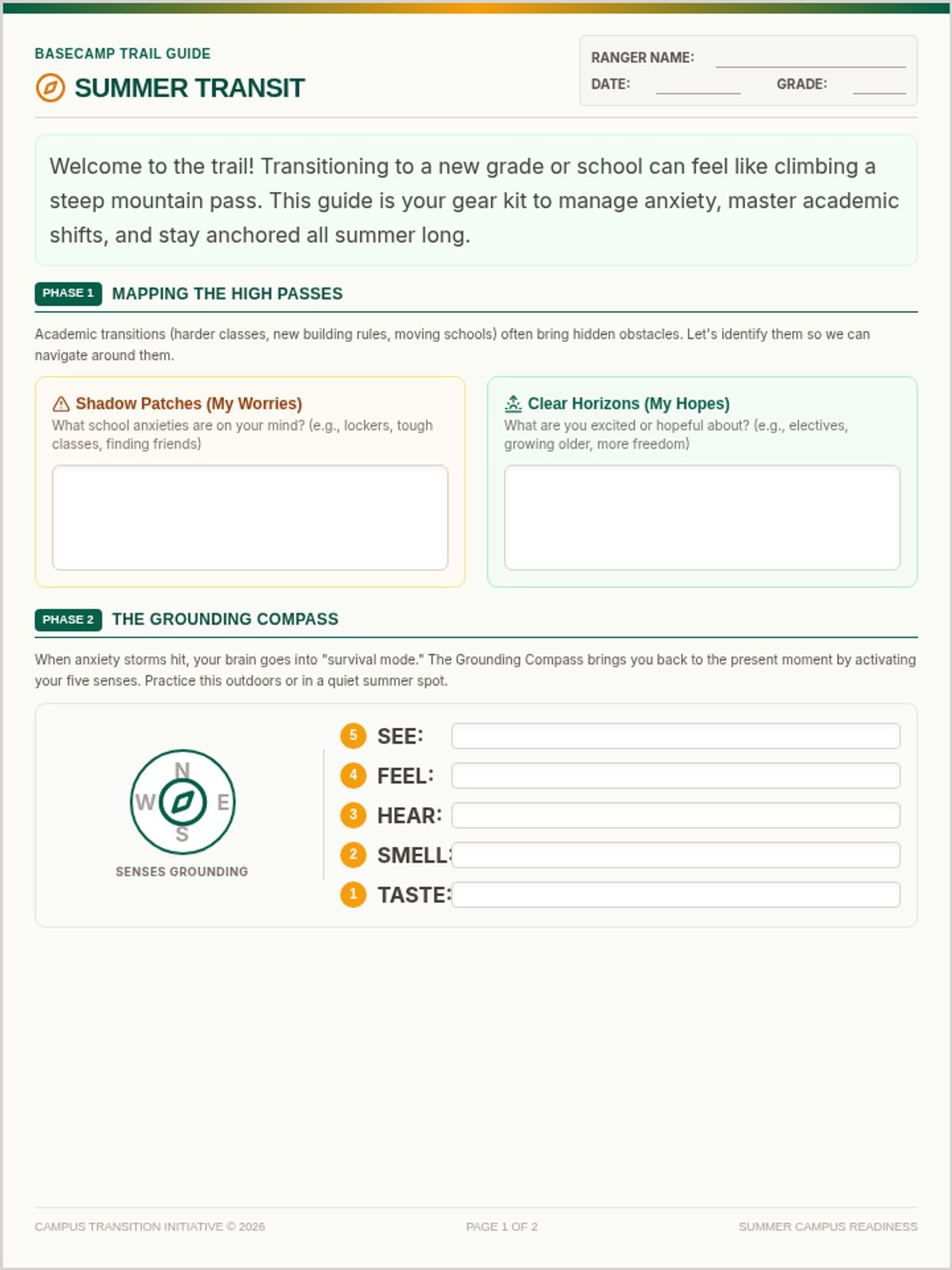
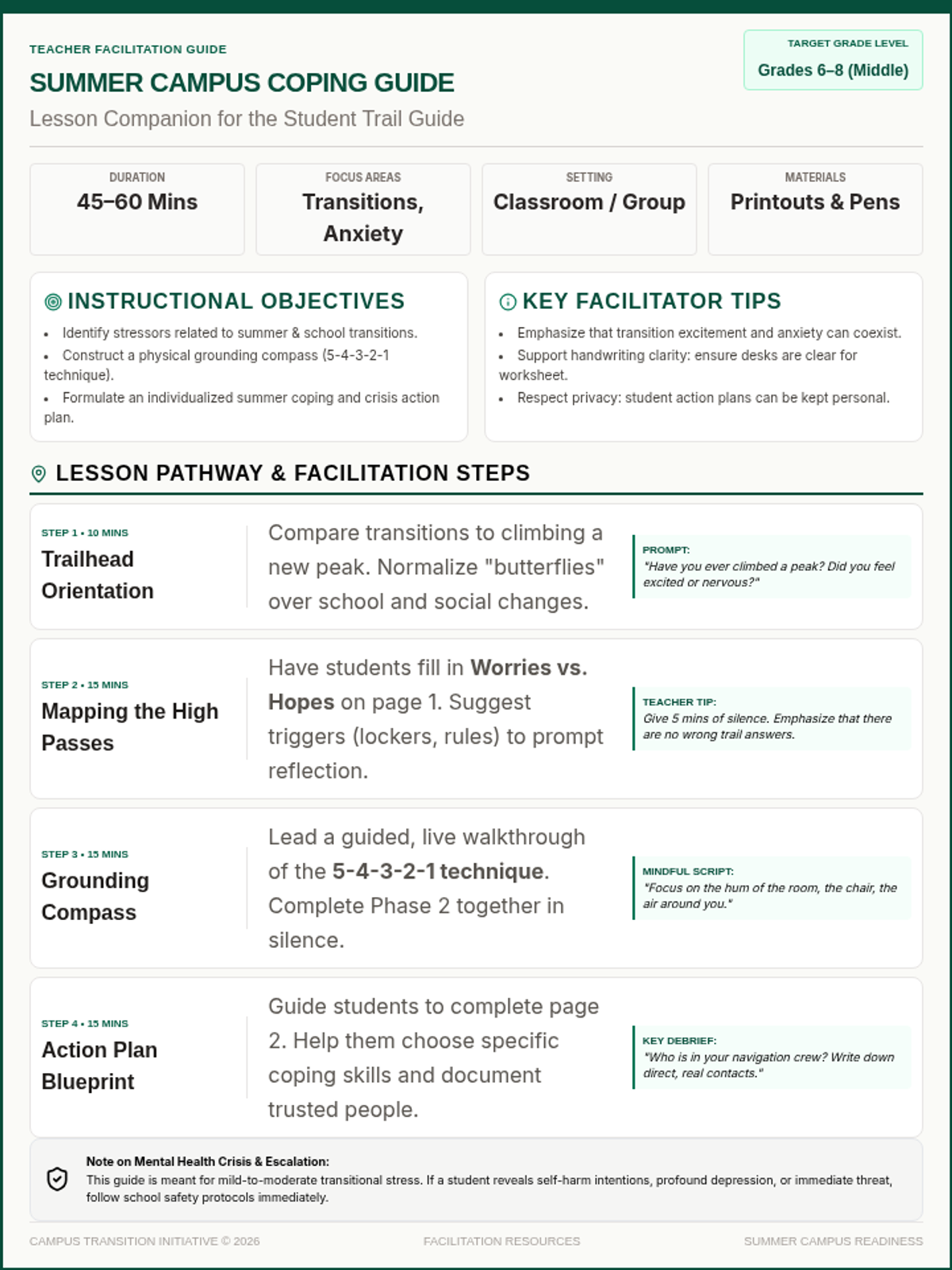
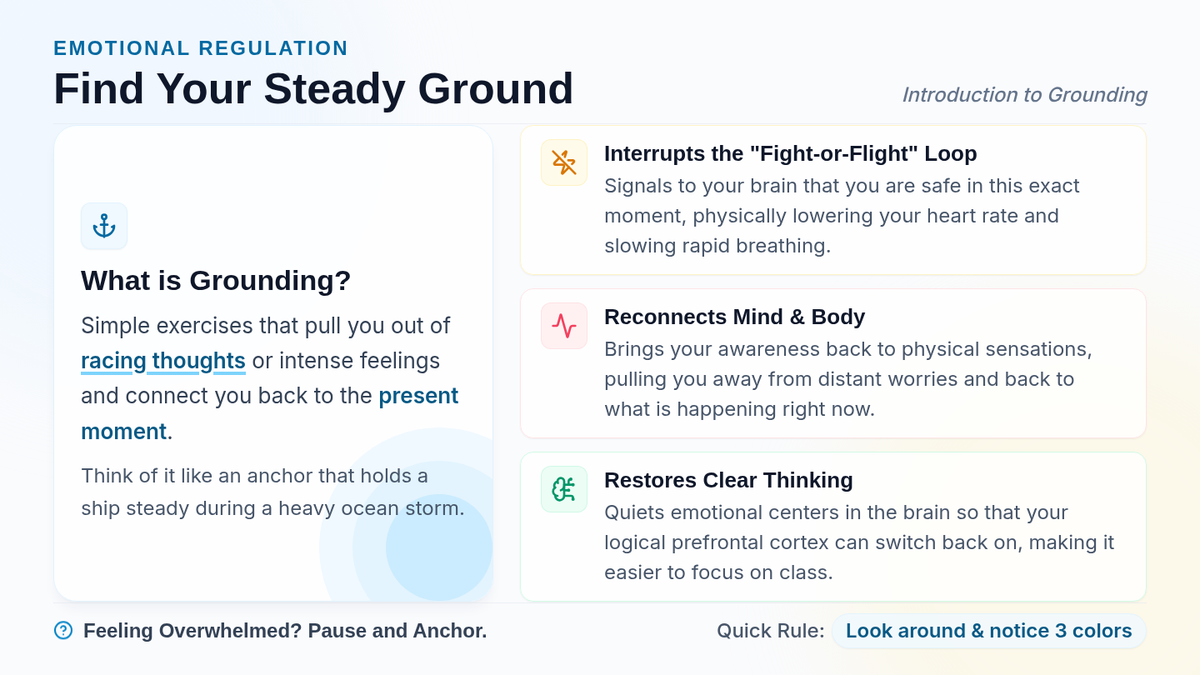
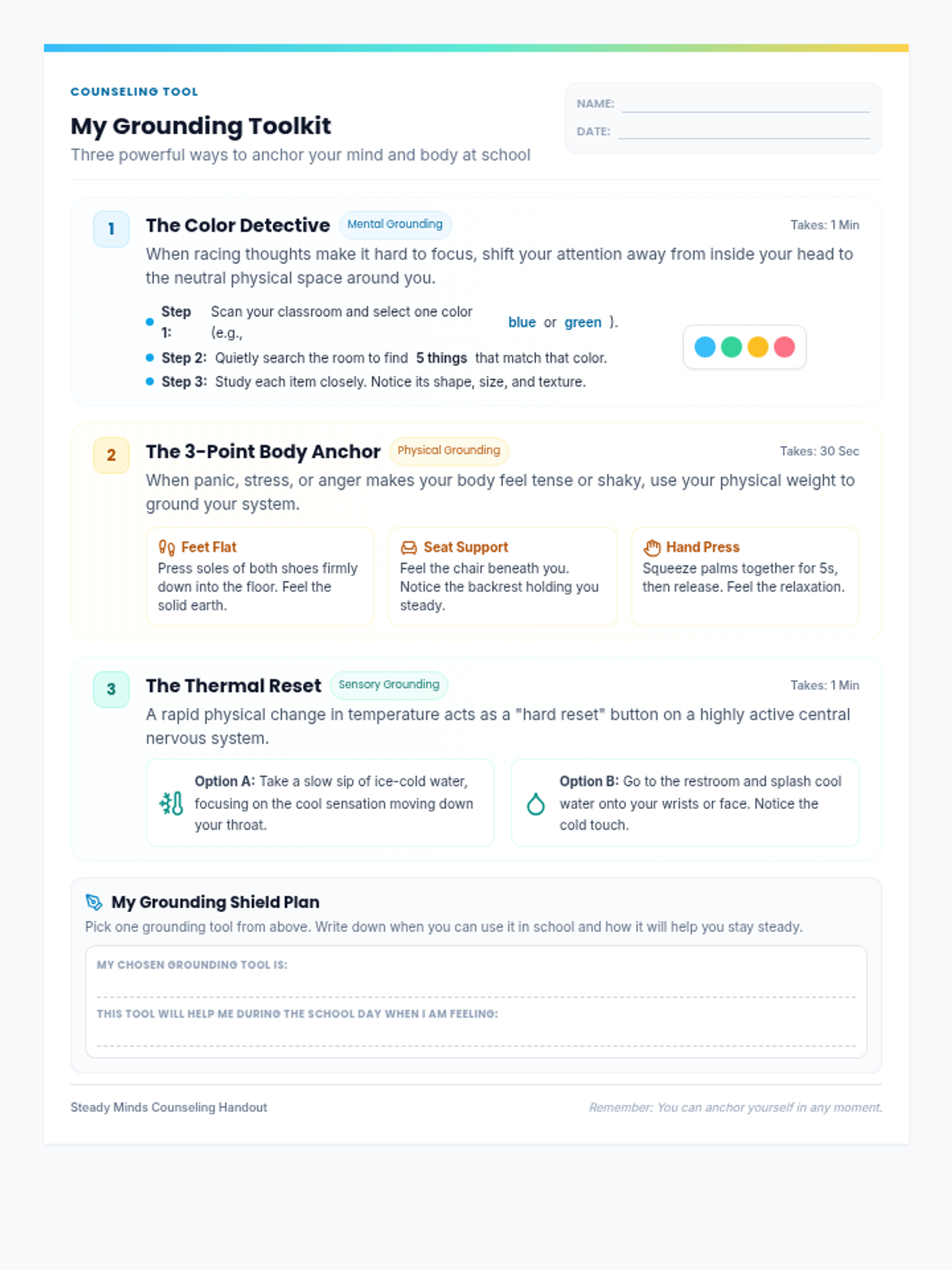
A transition-focused emotional regulation lesson designed to equip middle school students with mindfulness tools and coping mechanisms to handle academic anxiety and school transitions over the summer.
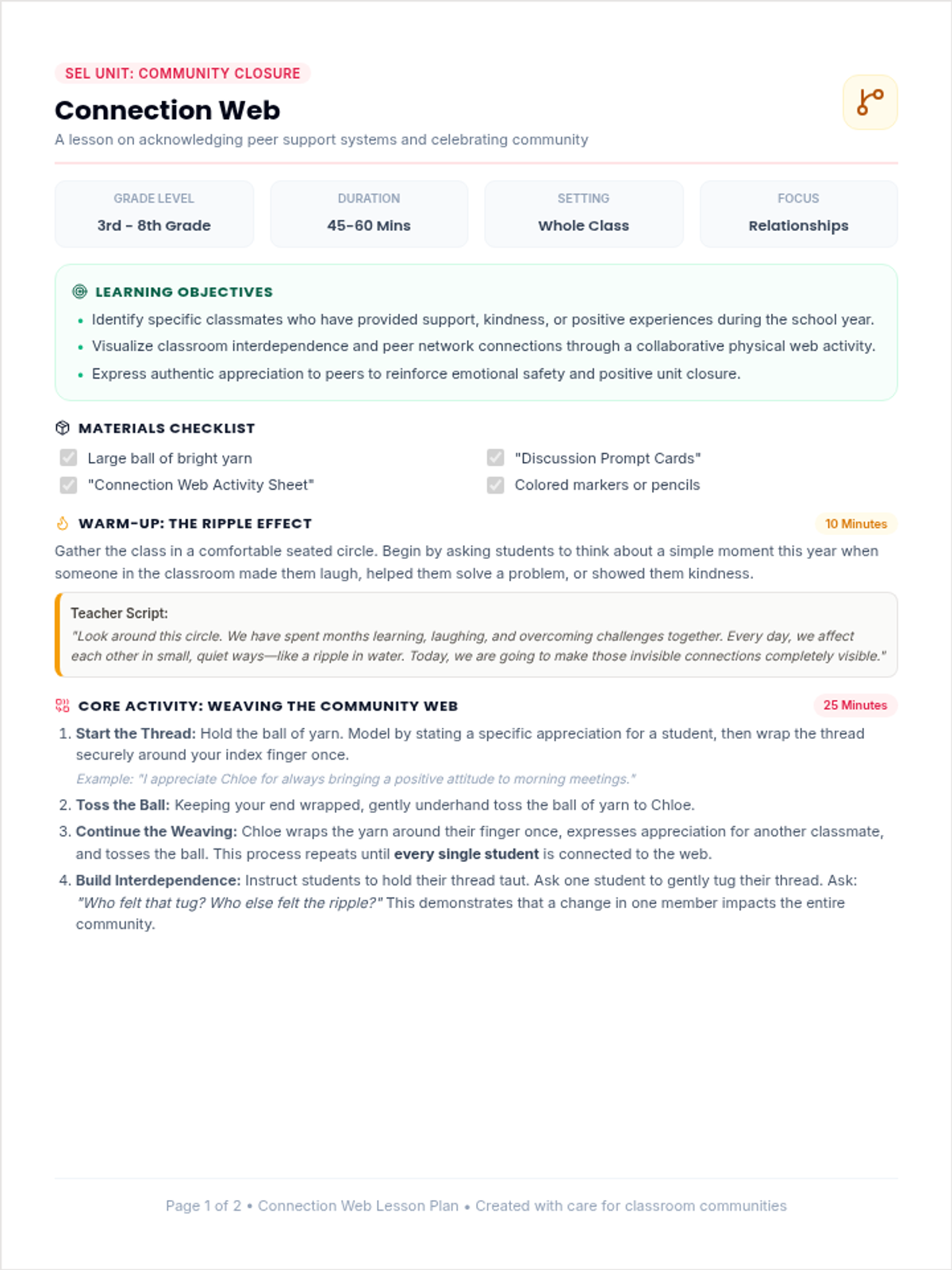
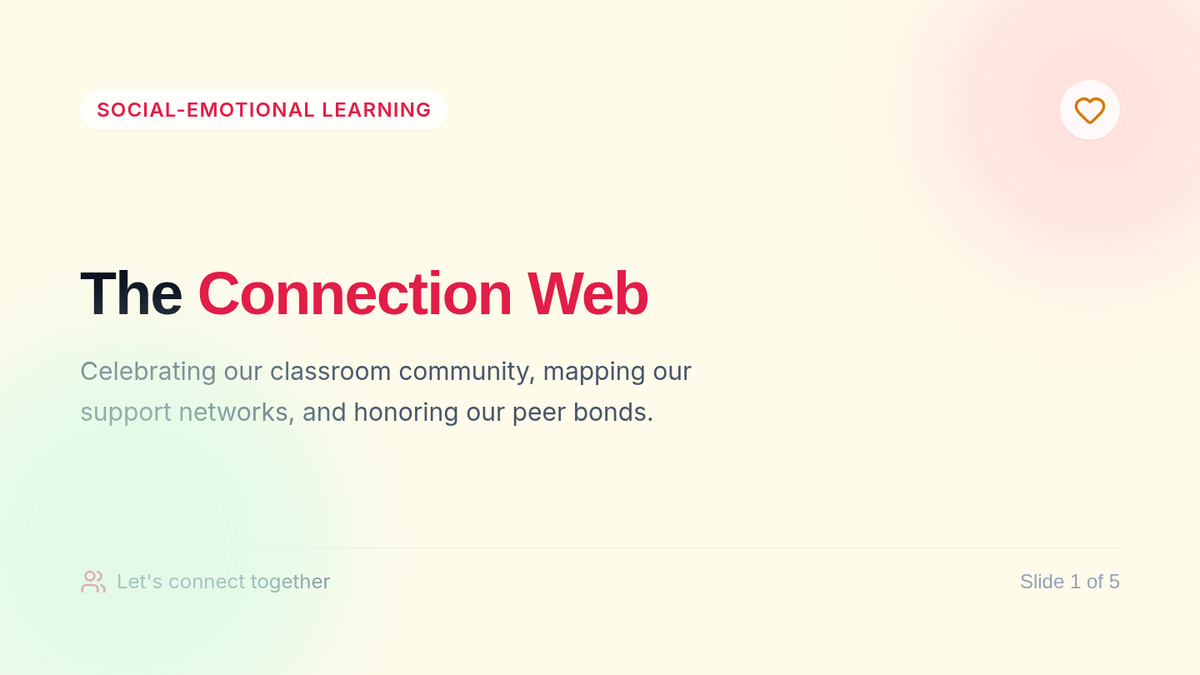
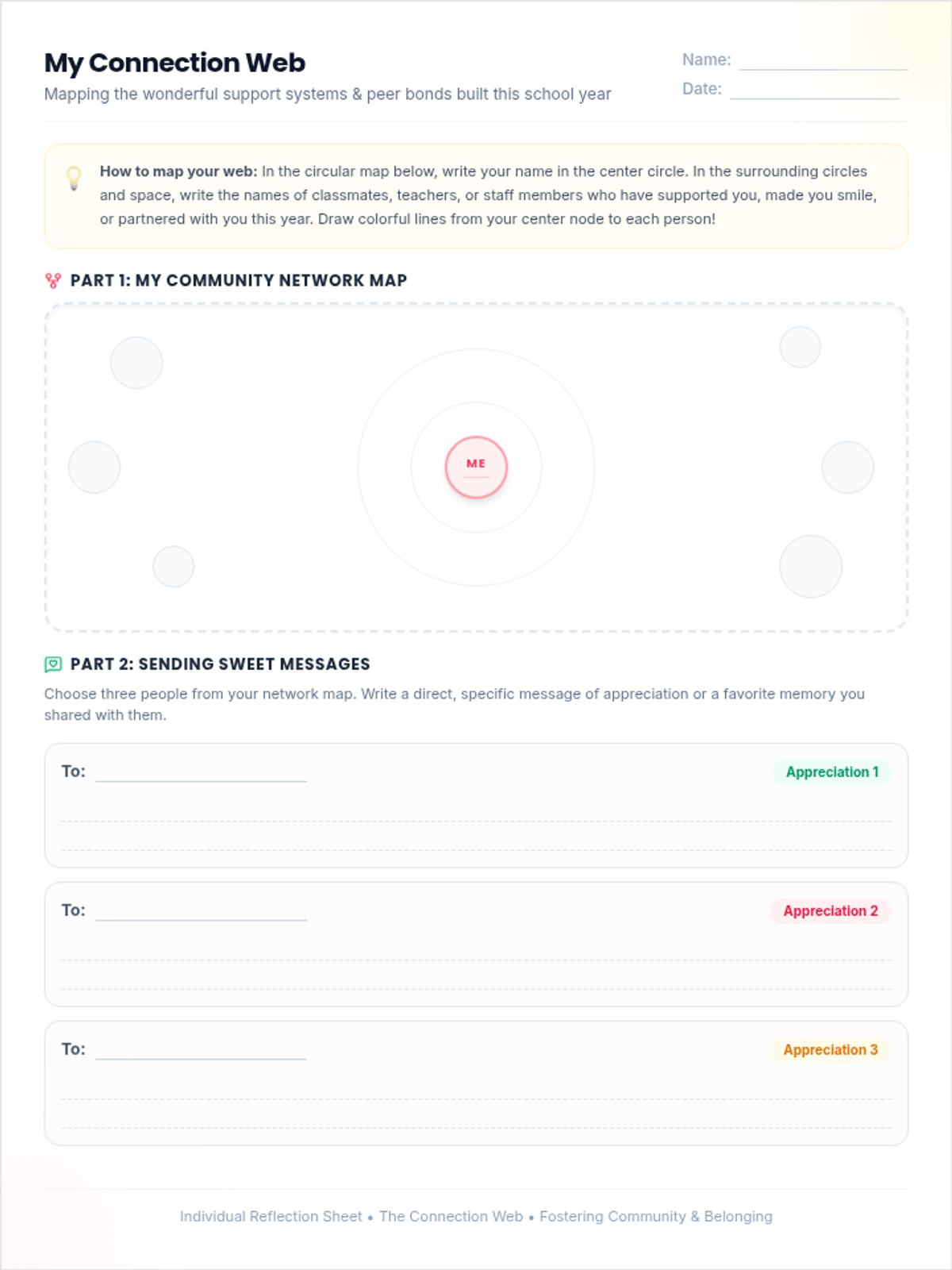
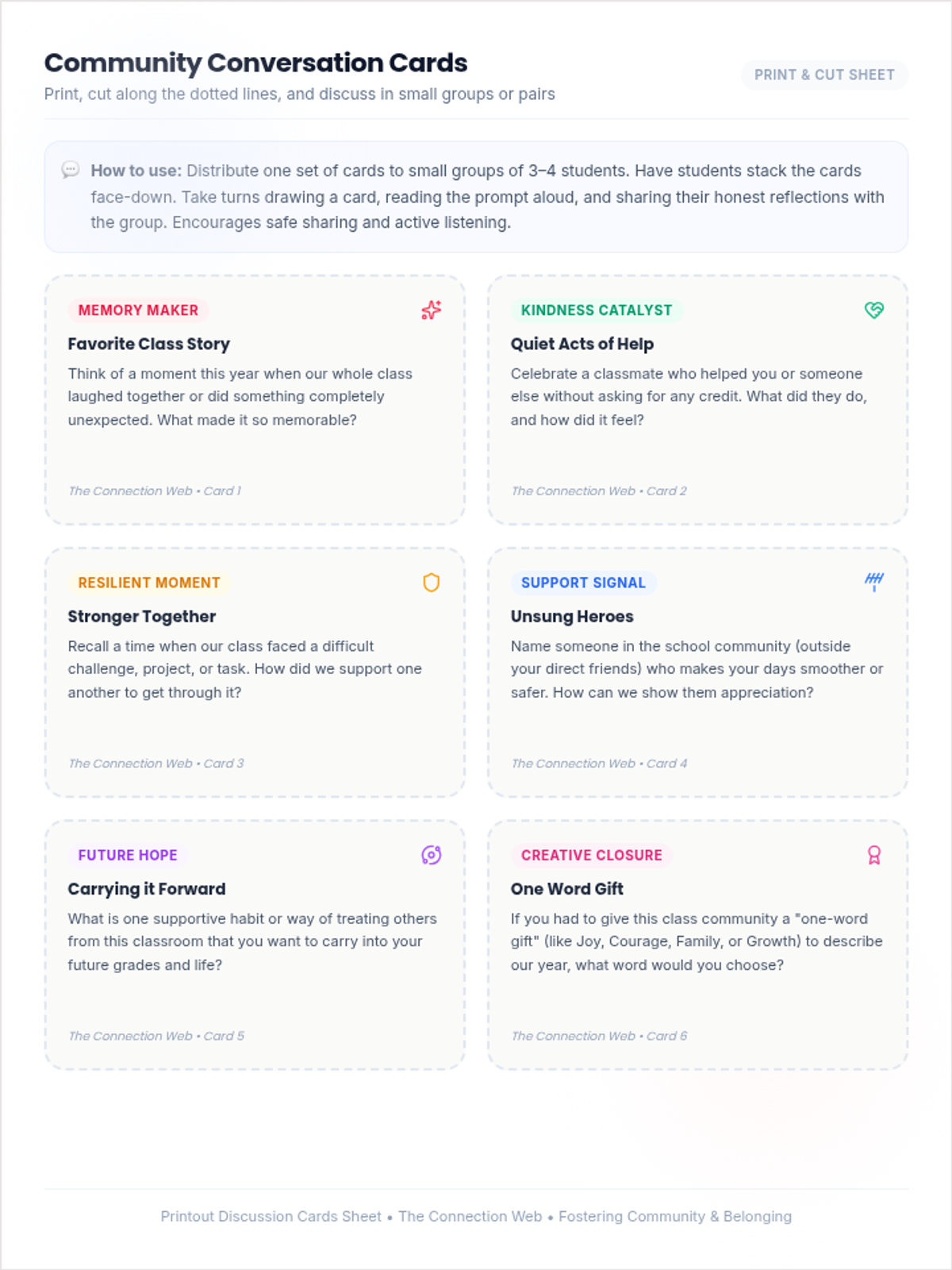
A warm, reflective social-emotional learning lesson designed to help students celebrate their classroom community, map their peer support networks, and experience positive closure as the school year ends.
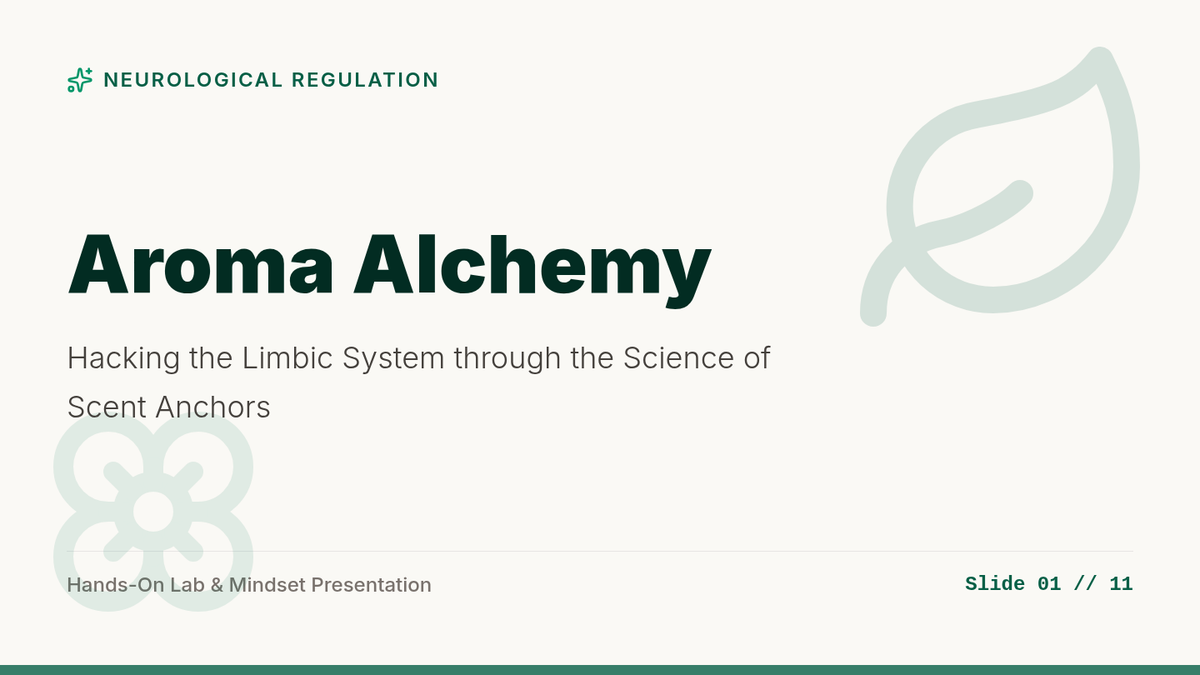
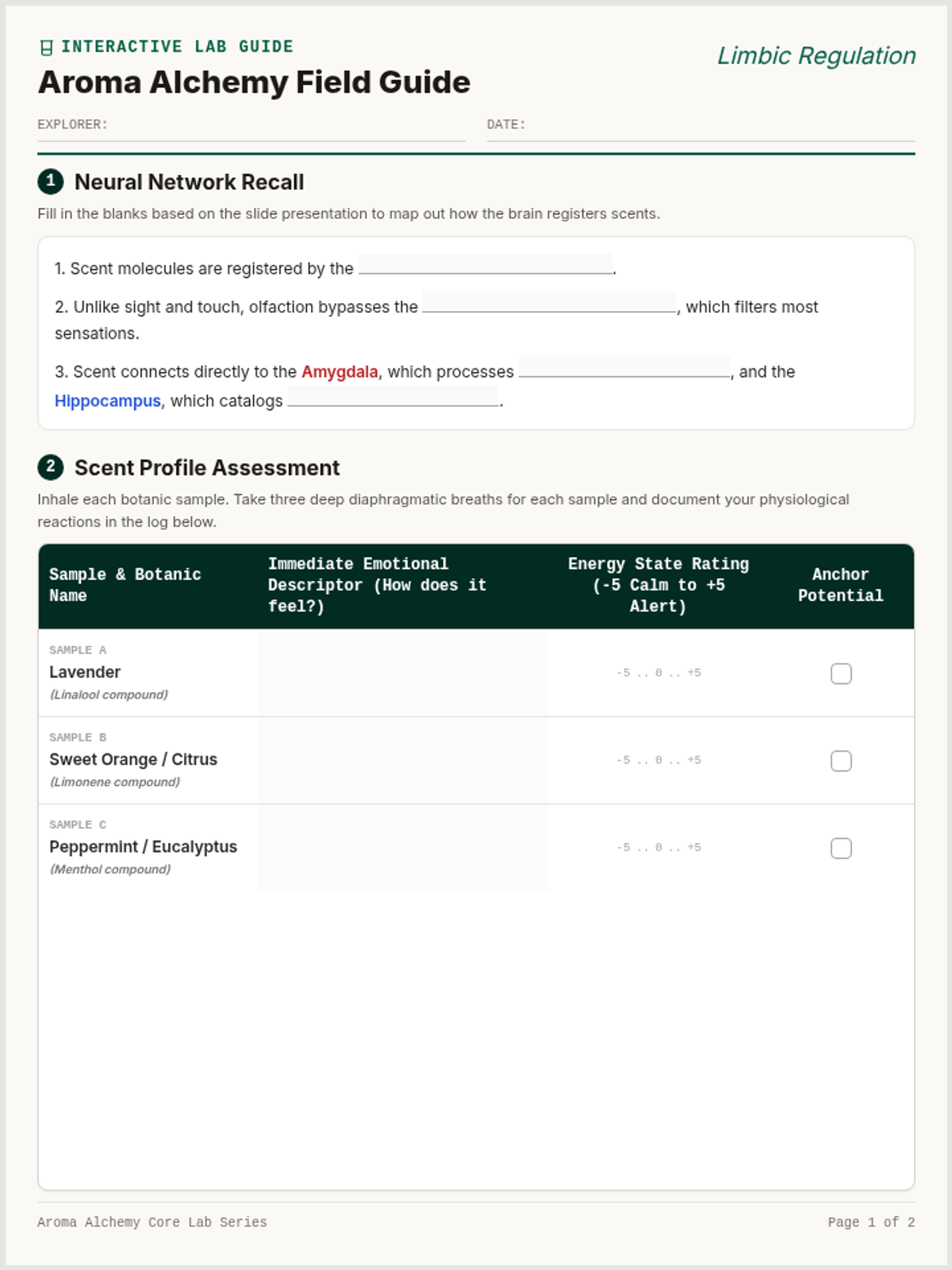
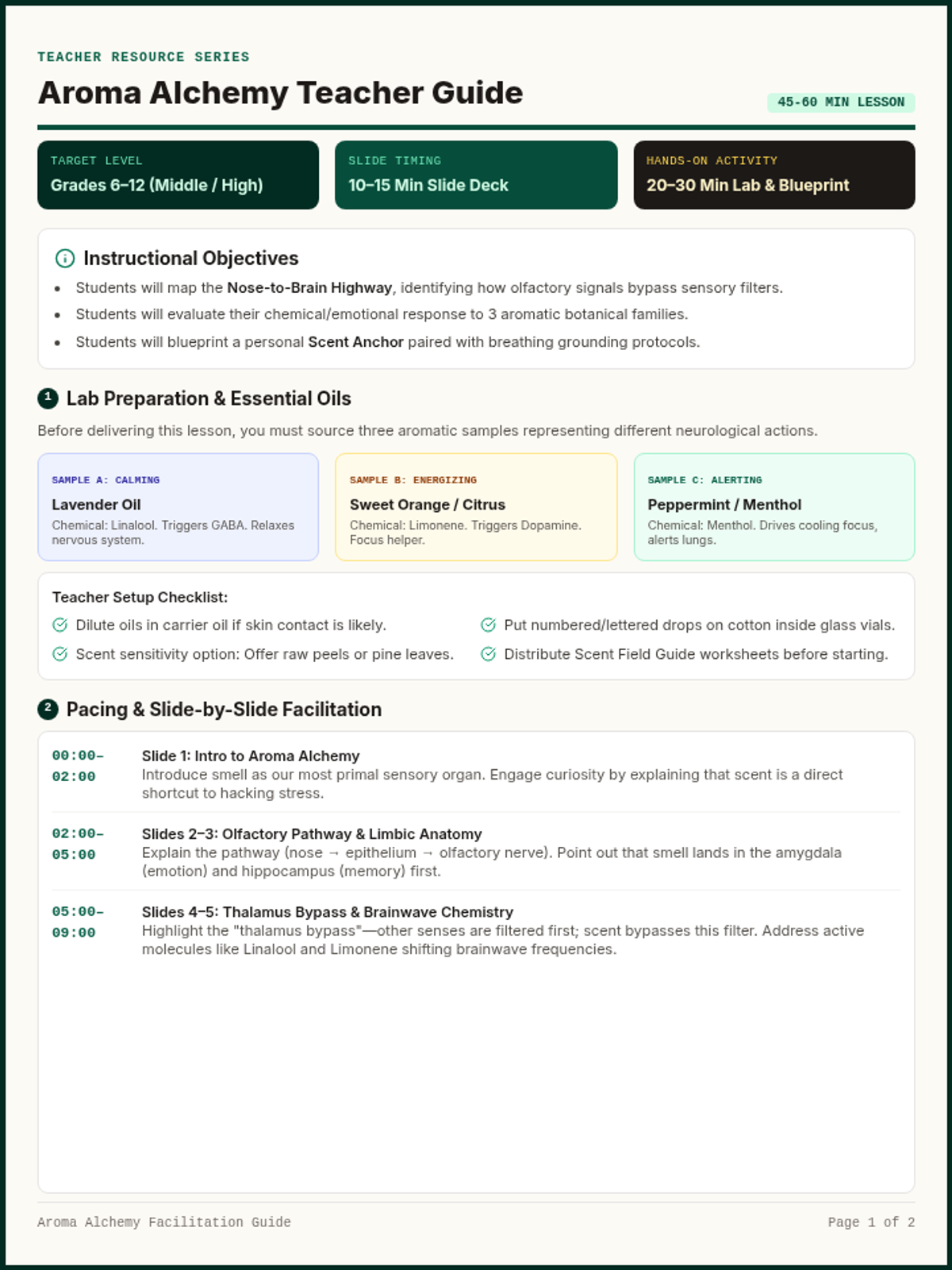
A lesson exploring the neurological science of olfactory regulation, the anatomy of the limbic system, and the practical application of scent anchoring for emotional grounding. Includes a 11-slide presentation, a student-facing field guide for hands-on activities, and a teacher facilitation guide.
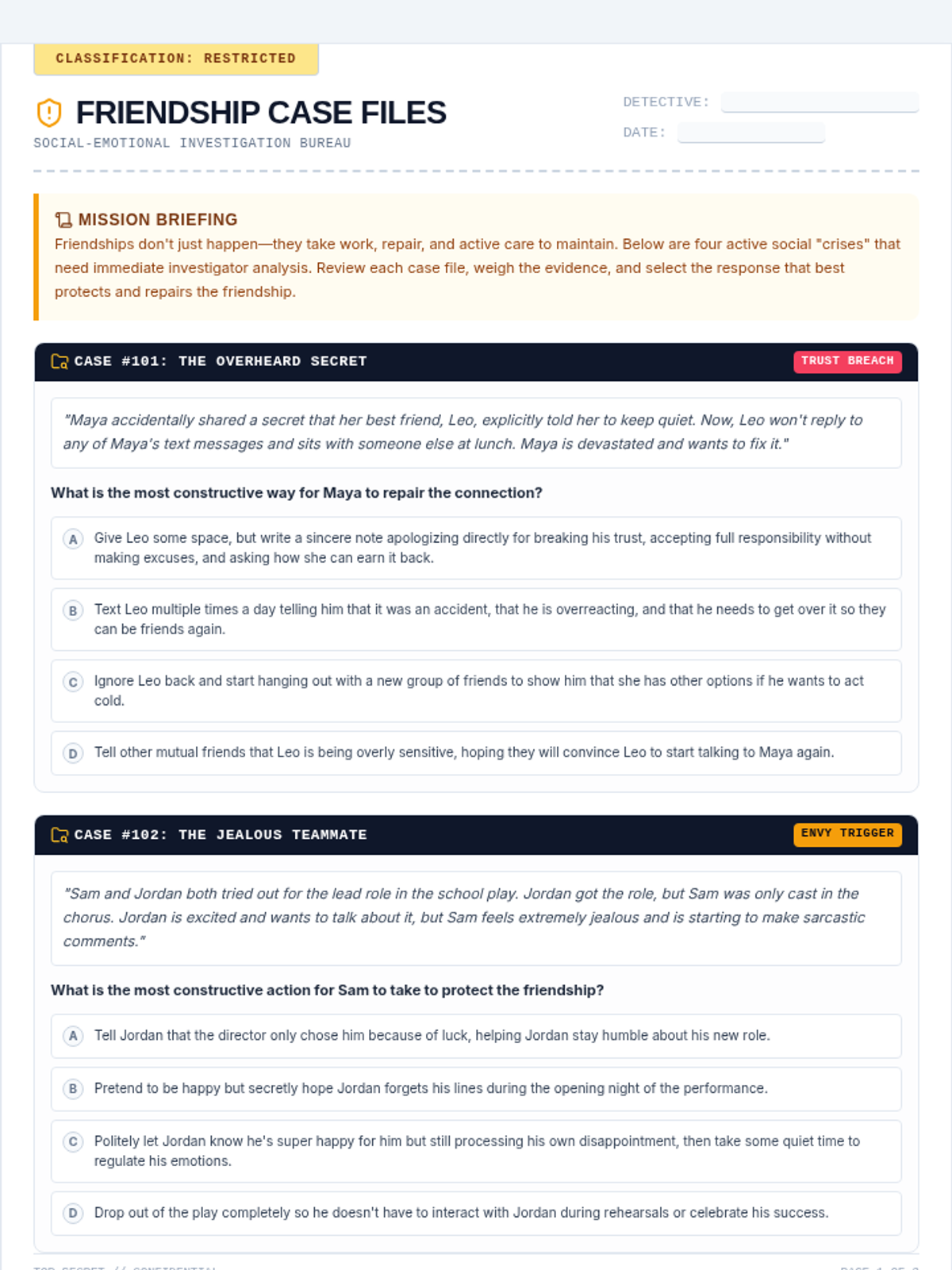
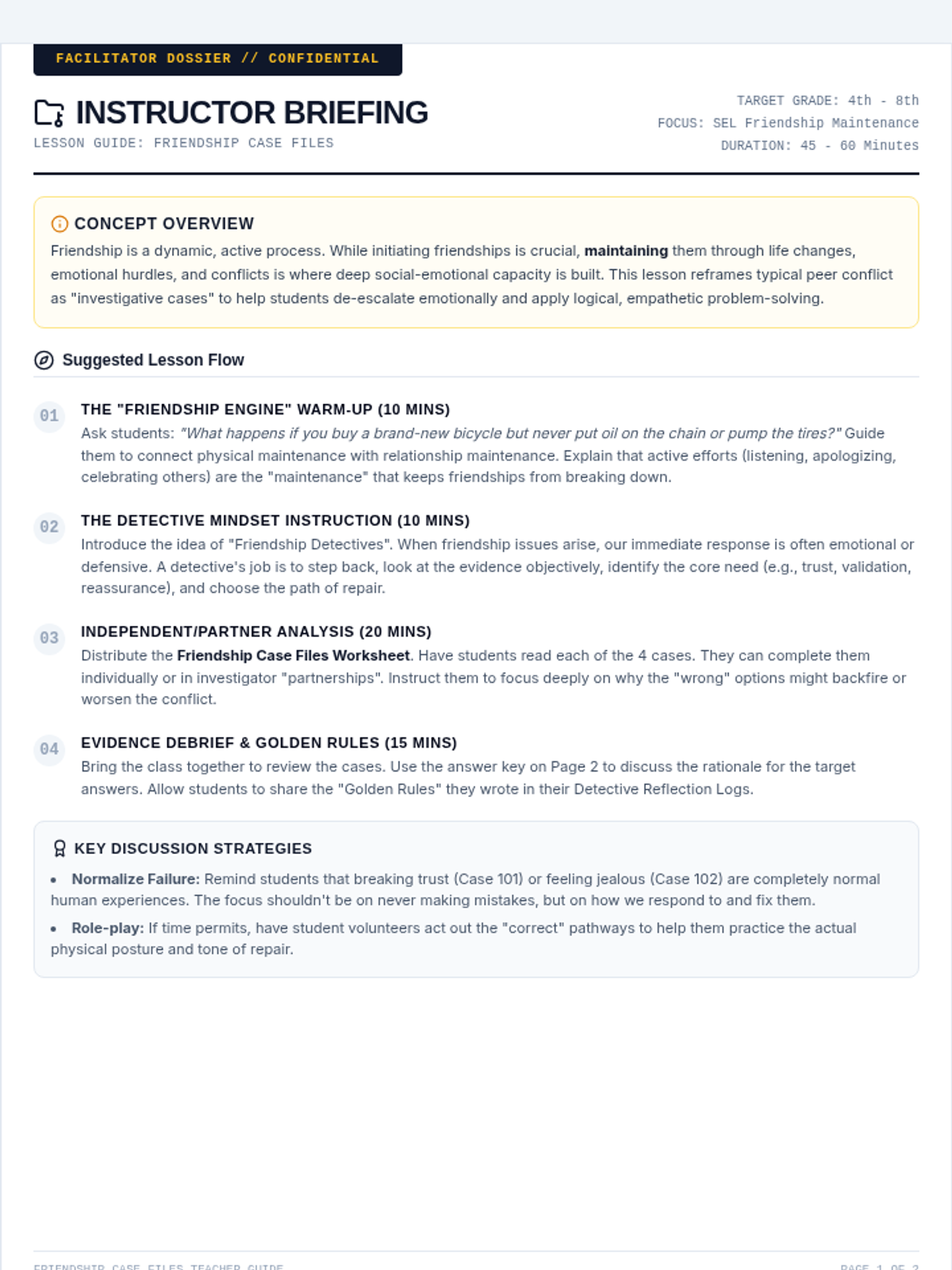
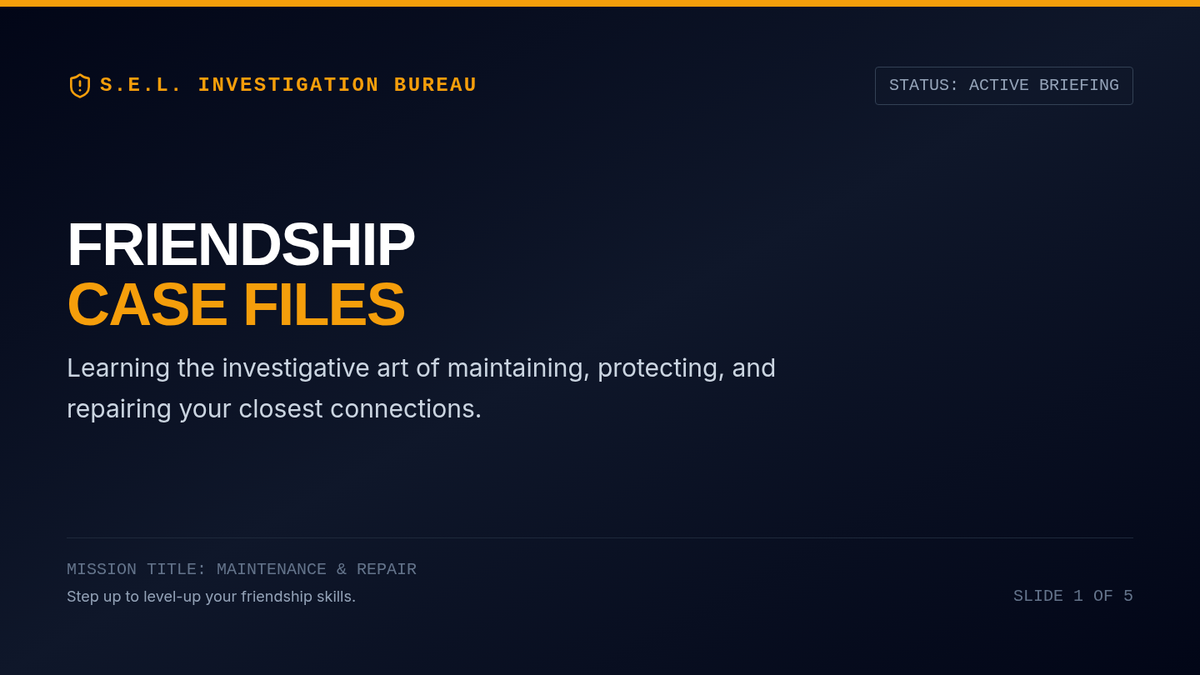
A social-emotional learning lesson focusing on critical skills for maintaining friendships, such as active listening, resolving conflicts, showing empathy, and repairing mistakes. Students act as "Friendship Detectives" to analyze realistic social scenarios styled as detective case files.
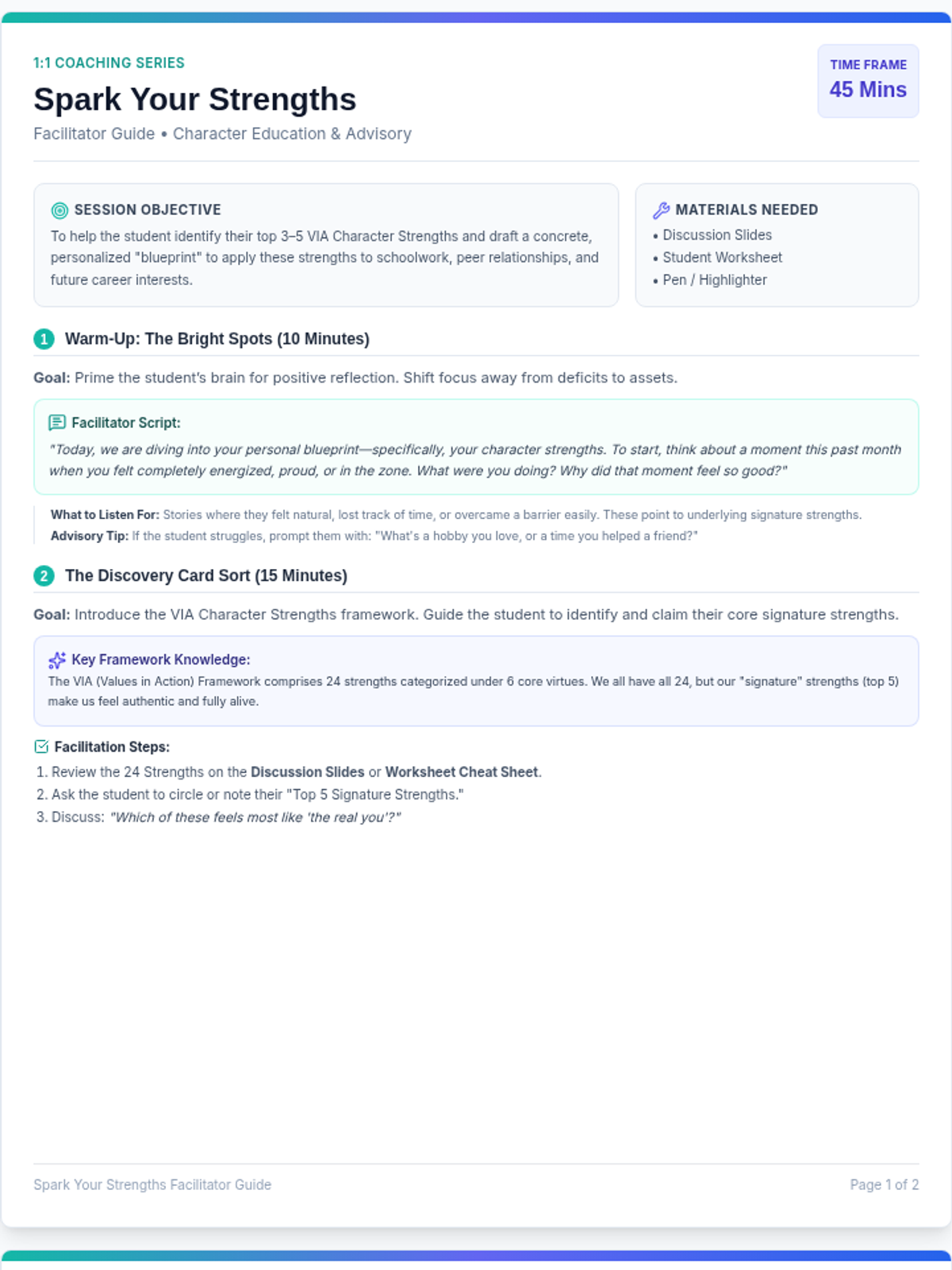
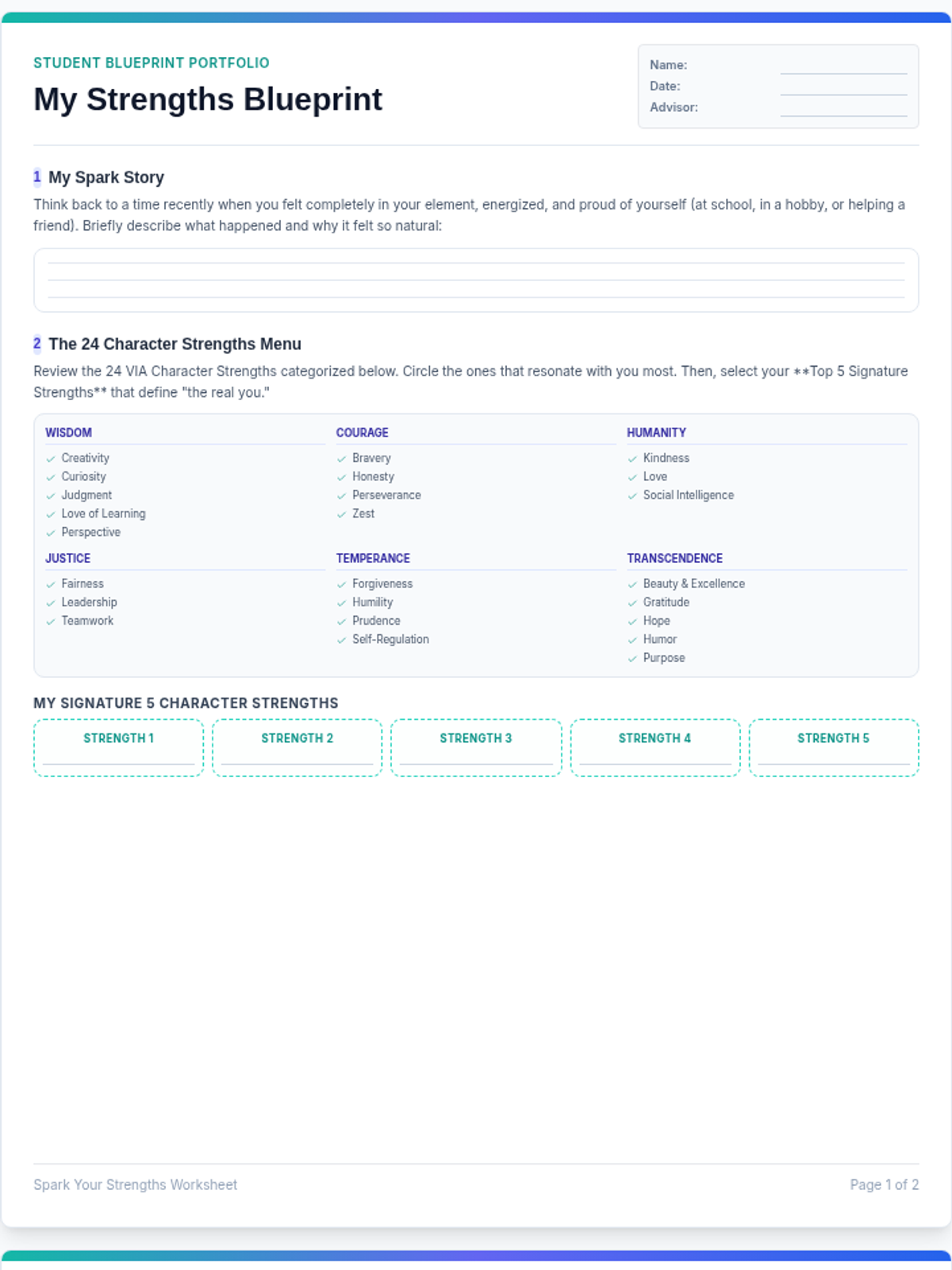
A highly personalized 1:1 advisory or counseling lesson designed to help middle or high school students discover their VIA Character Strengths, map them to current school challenges, and project them into future life and career opportunities.
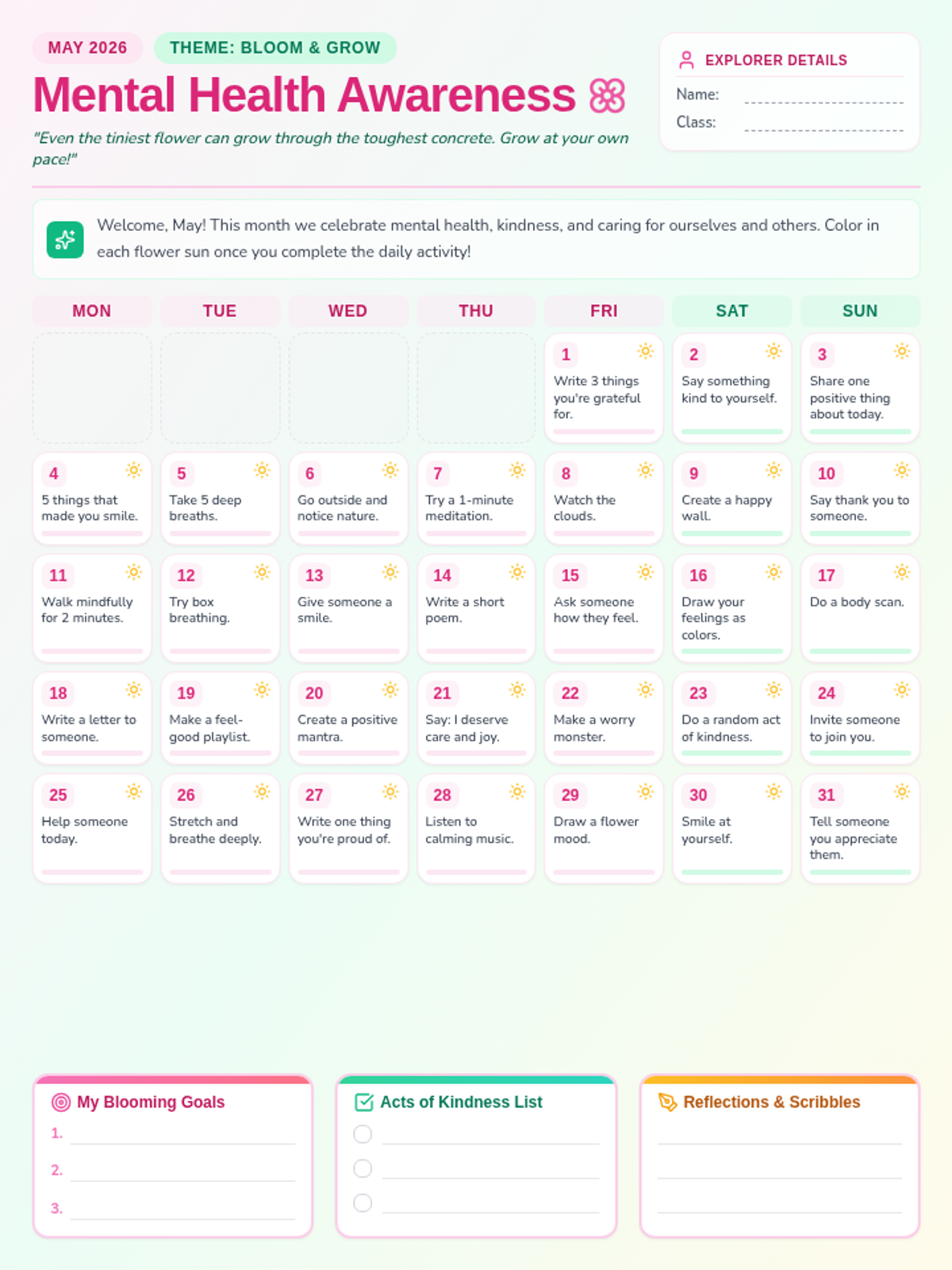
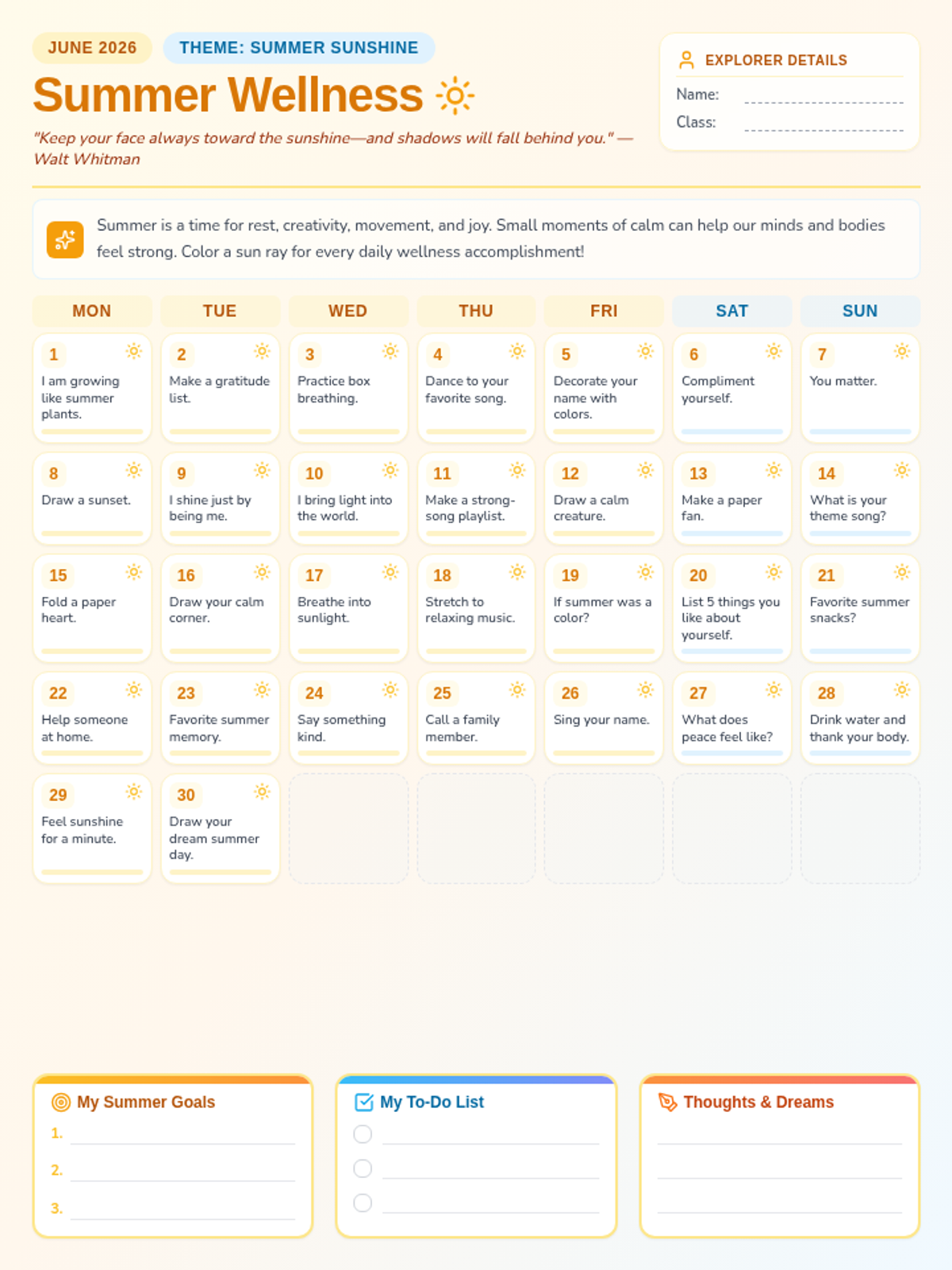
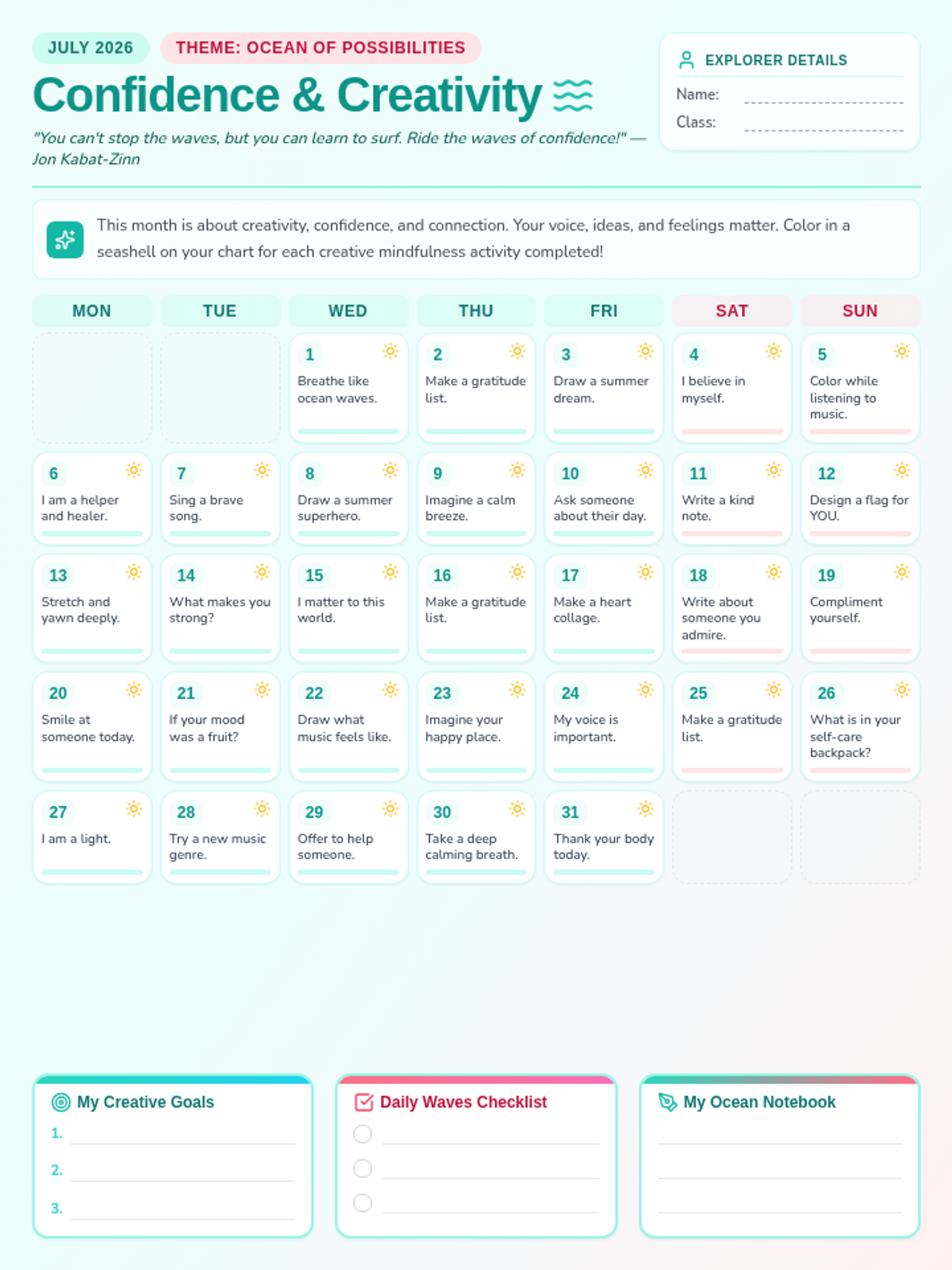
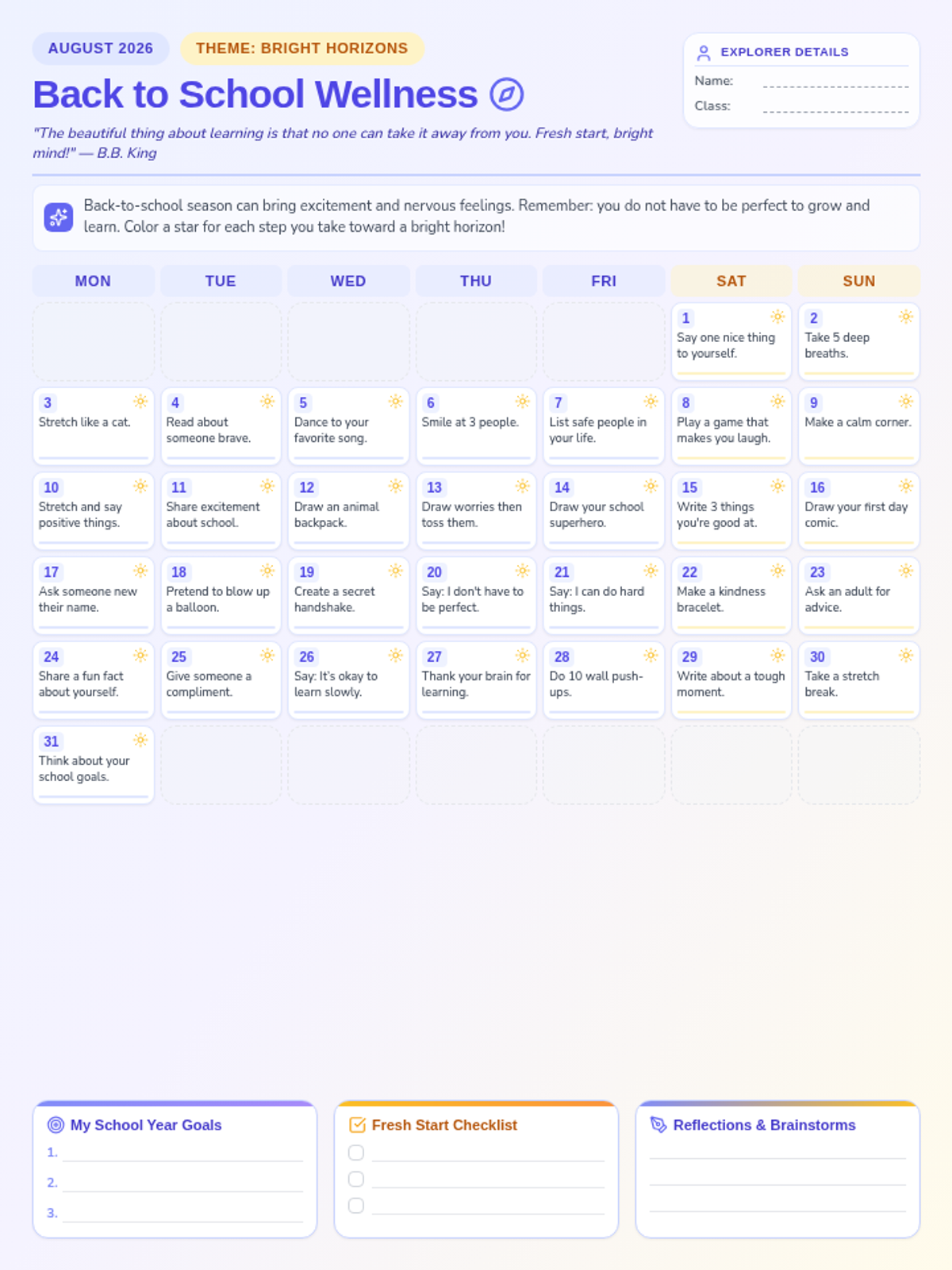
A vibrant series of four monthly mental health and wellness calendars for May through August 2026. Designed with playful bright colors, a distinct growth mindset theme for each month, and inspirational quotes, these calendars offer daily mindfulness activities suitable for K-12 students and their families.
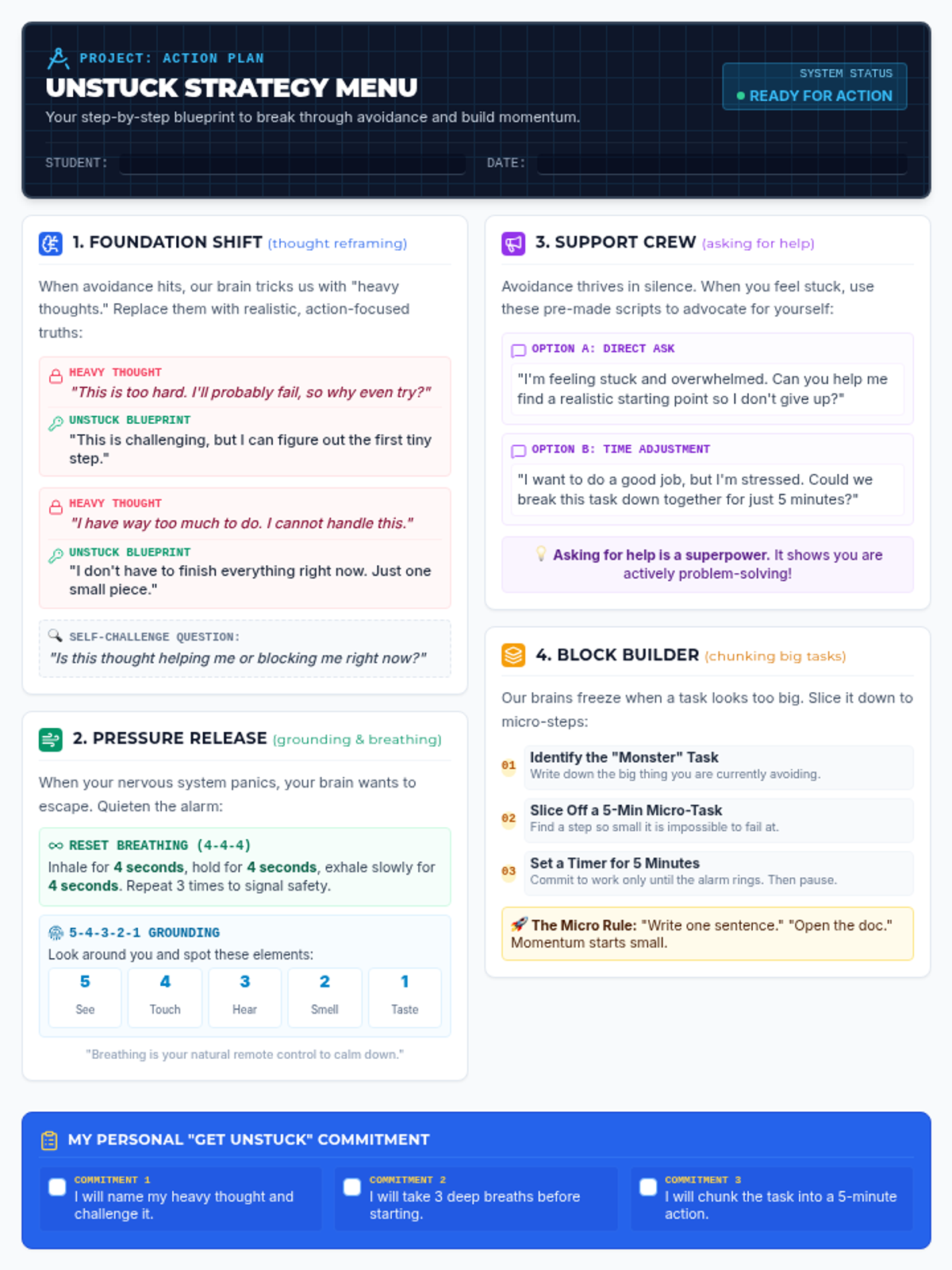
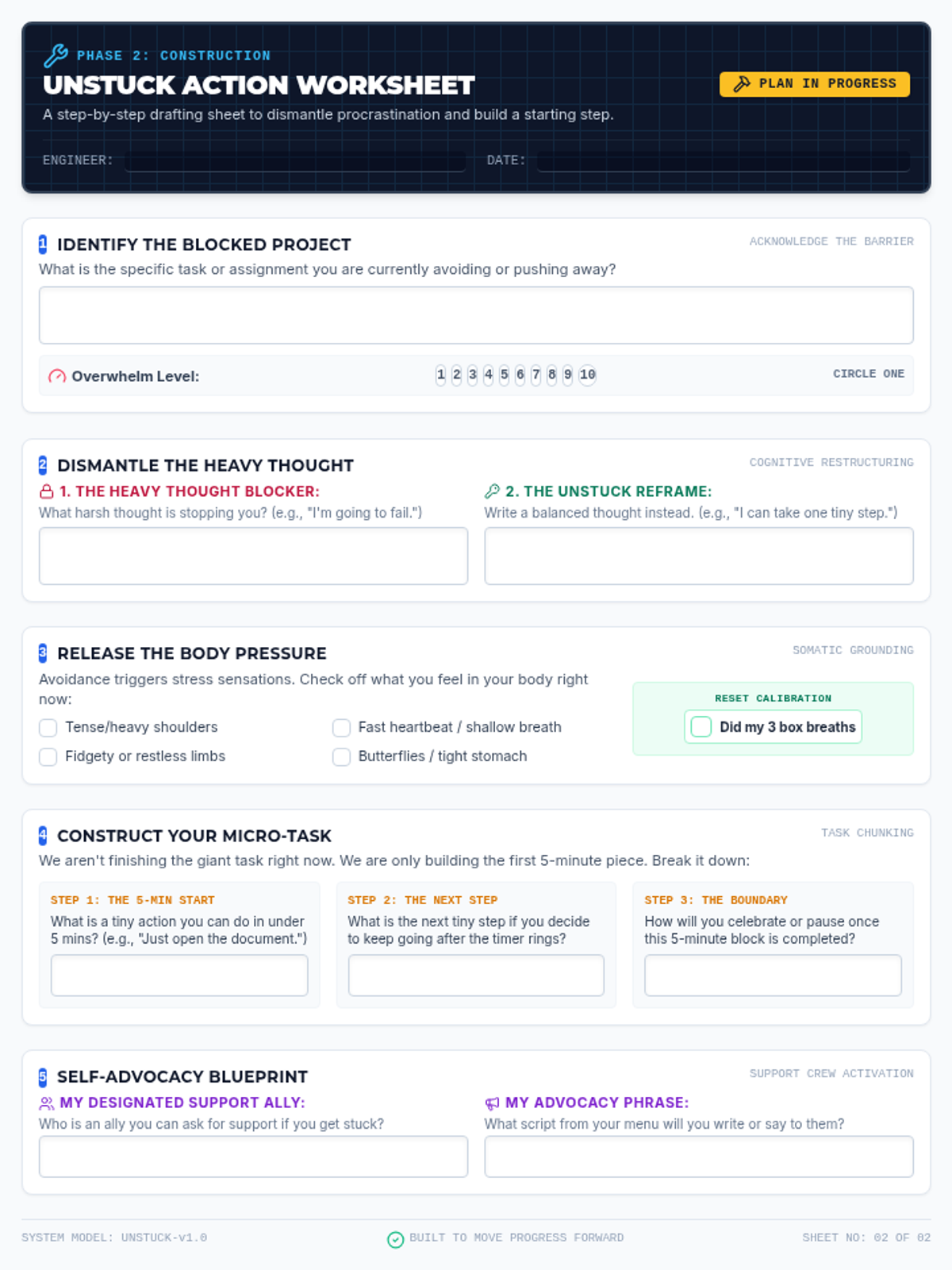
A structured problem-solving framework designed for students who use avoidance as a coping mechanism. This lesson provides practical tools for cognitive reframing, sensory grounding, self-advocacy, and task-chunking to help students move from avoidance to action.
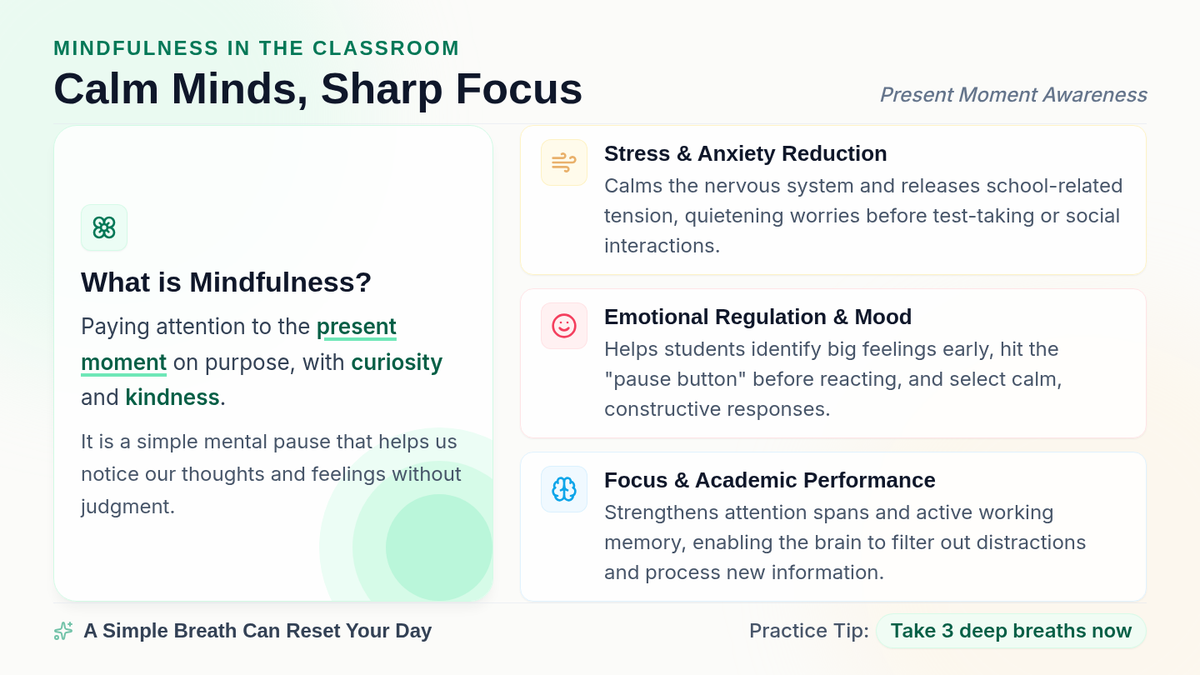
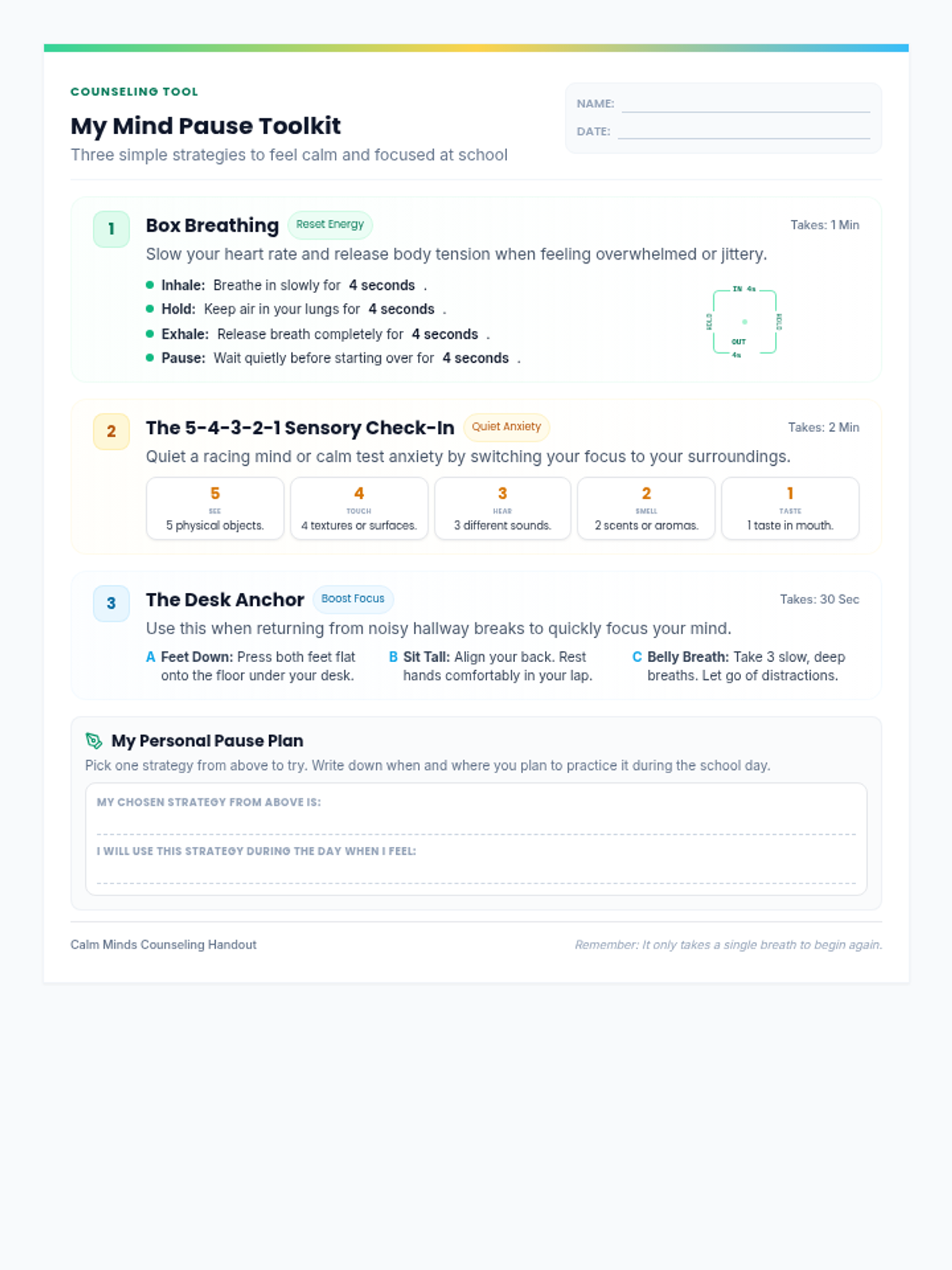
An introductory lesson on mindfulness for students, exploring what mindfulness is, its scientific benefits in a classroom setting, and practical applications for focus and emotional regulation.
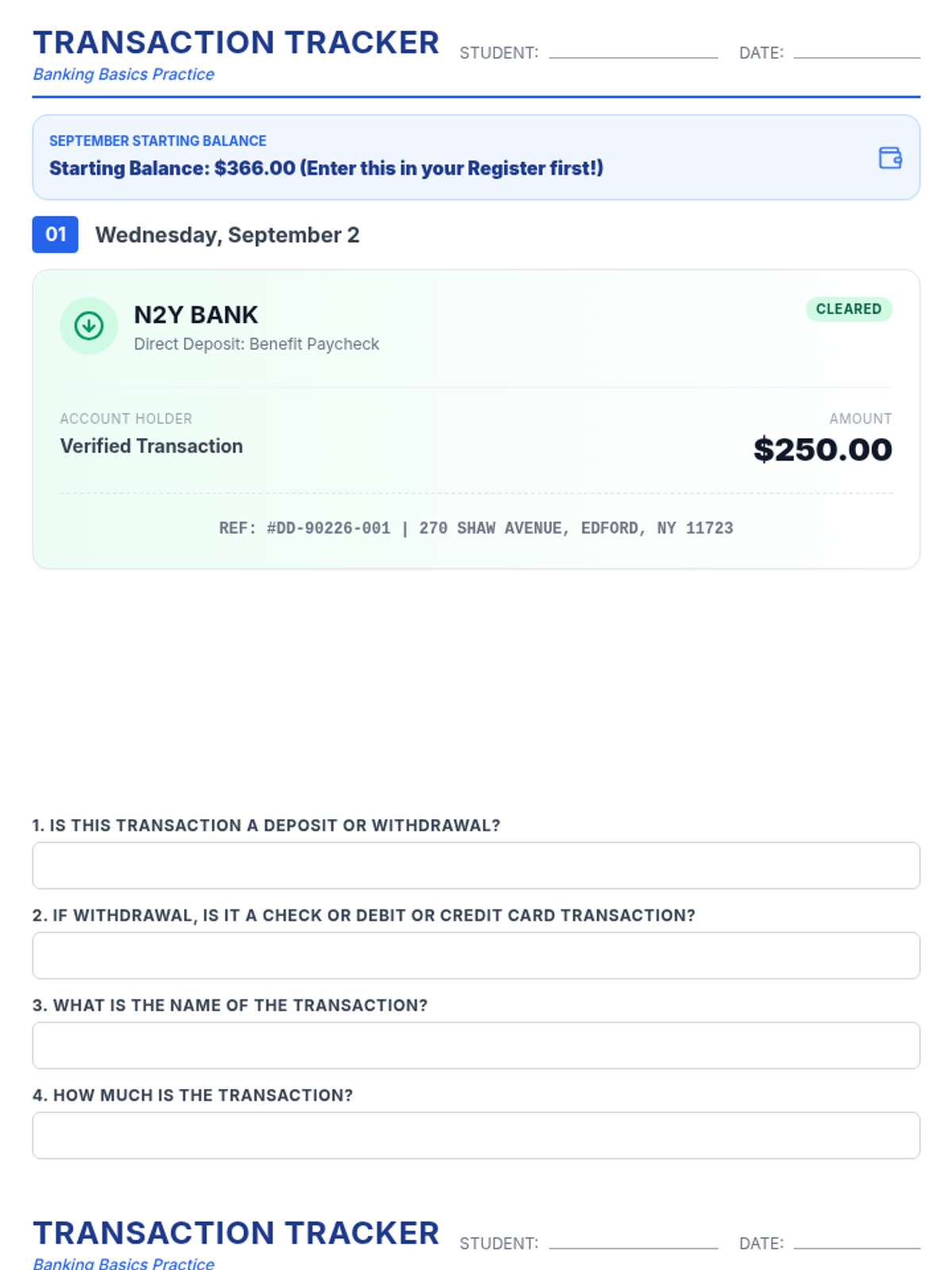
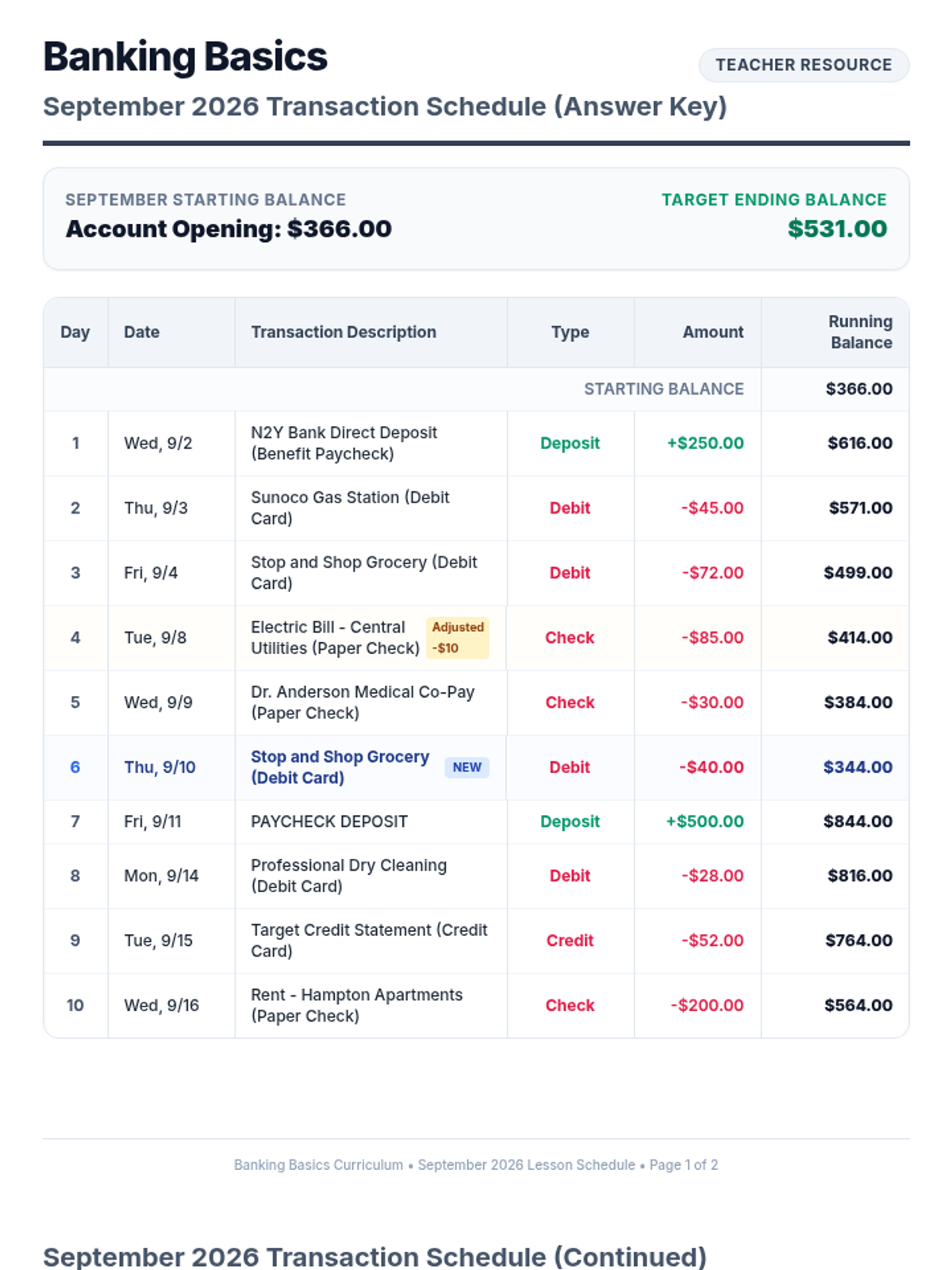
A practical financial literacy lesson where students track daily banking transactions, calculate running balances, and reconcile account registers for September 2026. Includes a 19-day transaction tracker worksheet and a complete teacher answer key schedule.
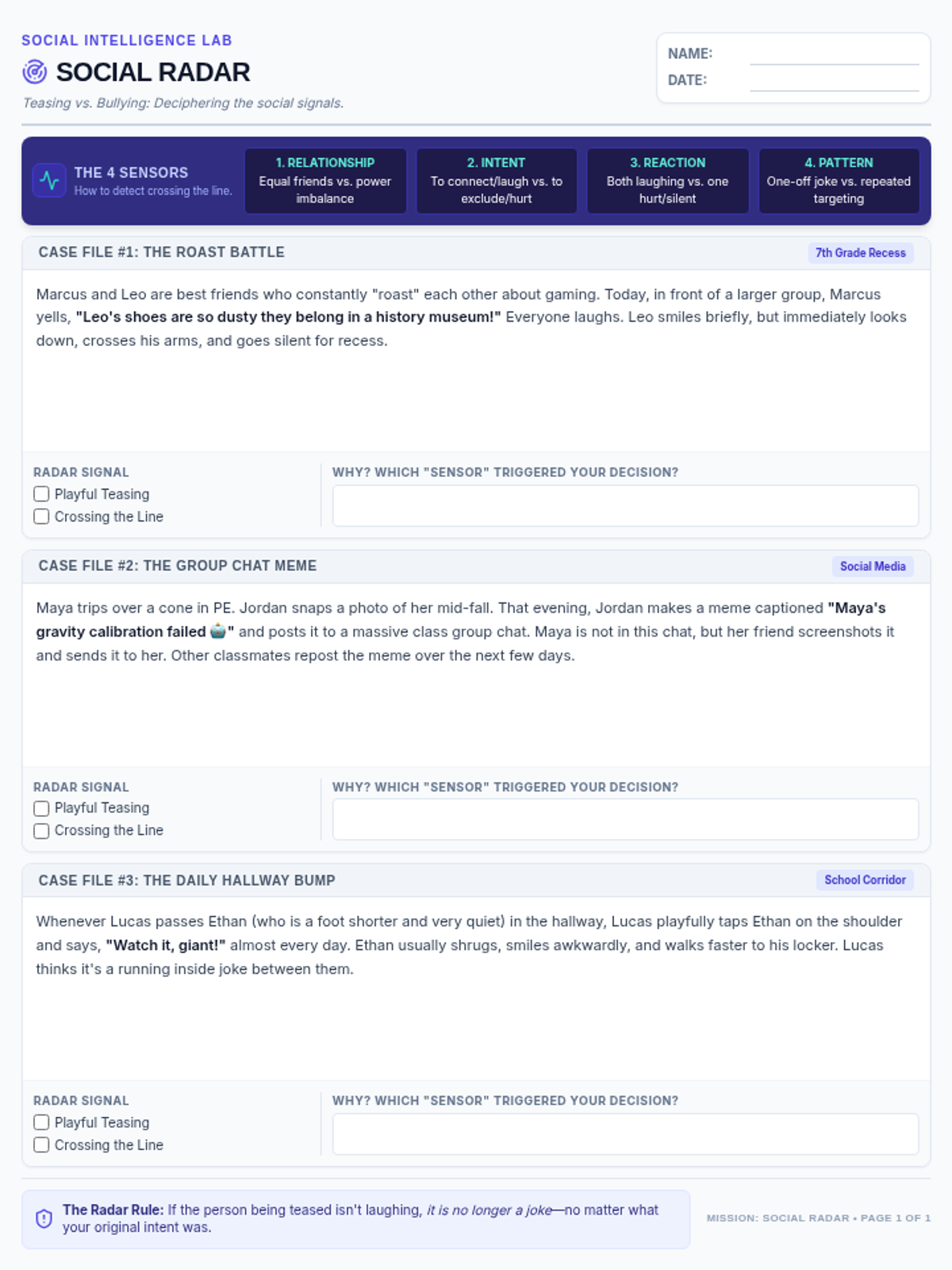
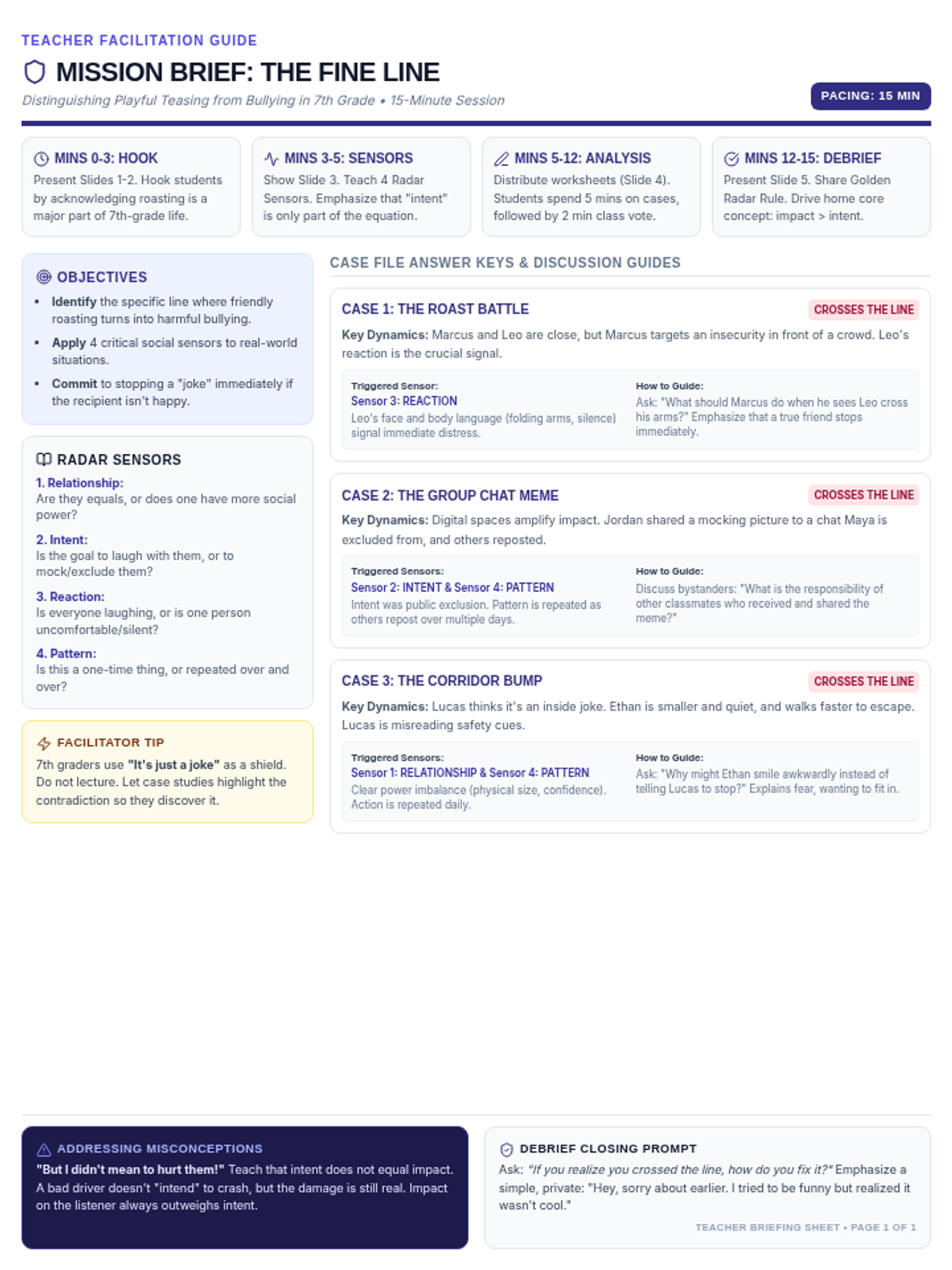
A high-impact 15-minute lesson for 7th graders on distinguishing playful teasing from bullying. Students analyze real-world social dynamics and learn to identify when joking crosses the line into harm.
A lesson designed for middle schoolers to explore and decode their emotions using Cognitive Behavioral Therapy (CBT) frameworks. It covers the adaptive and normative nature of emotions, includes daily journal prompts, creative sketching exercises, and scenario-based reflections.
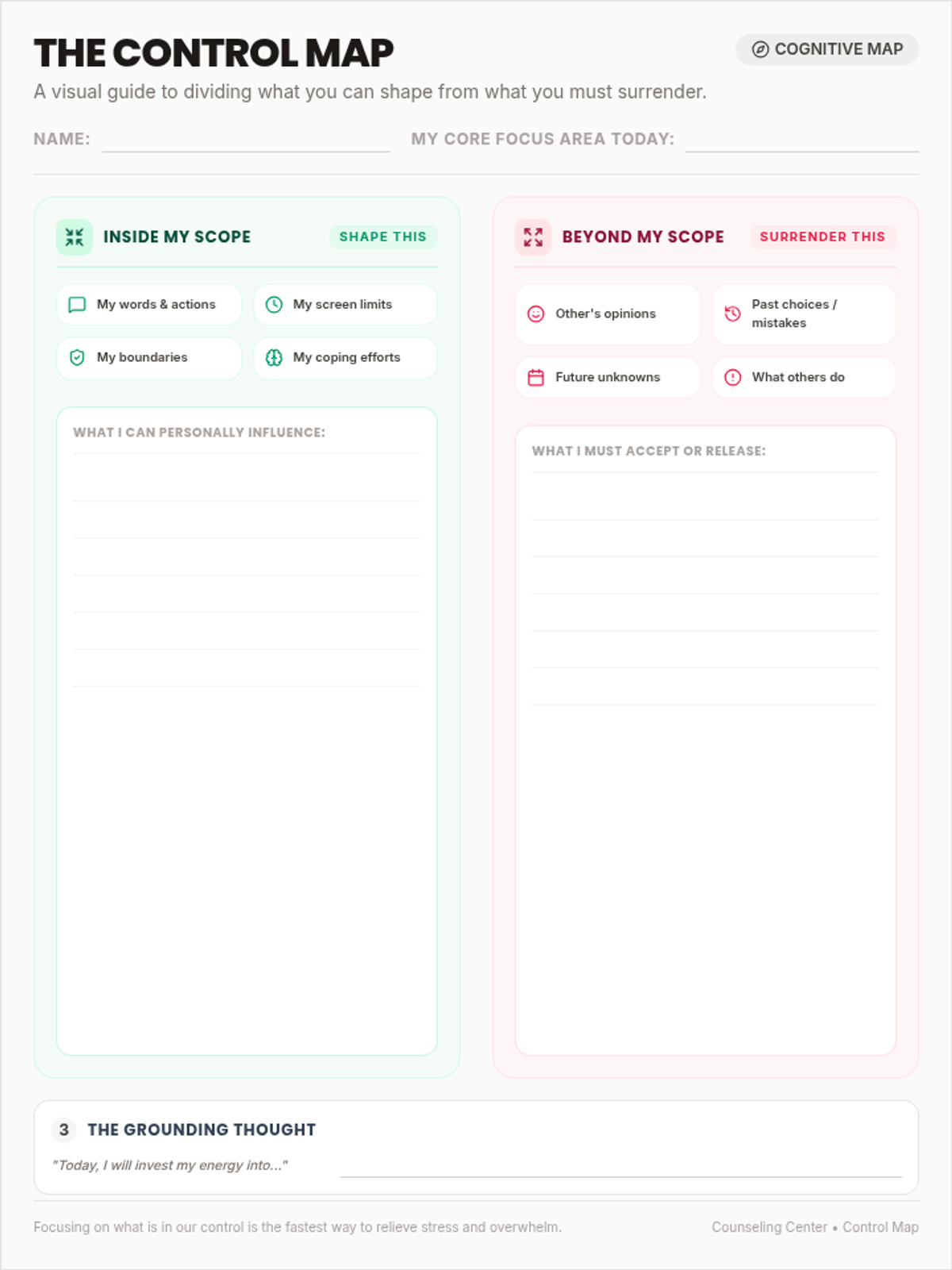
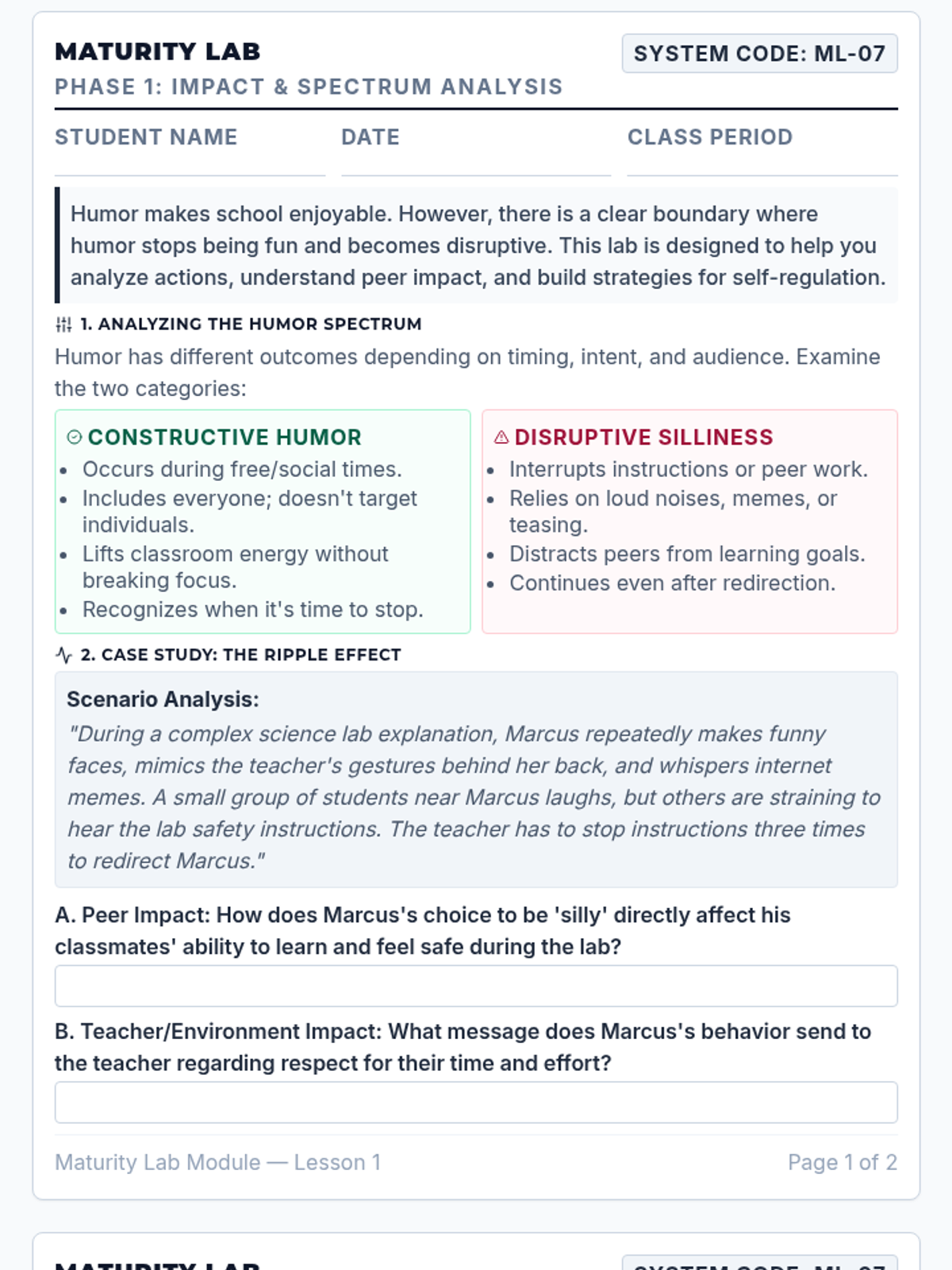
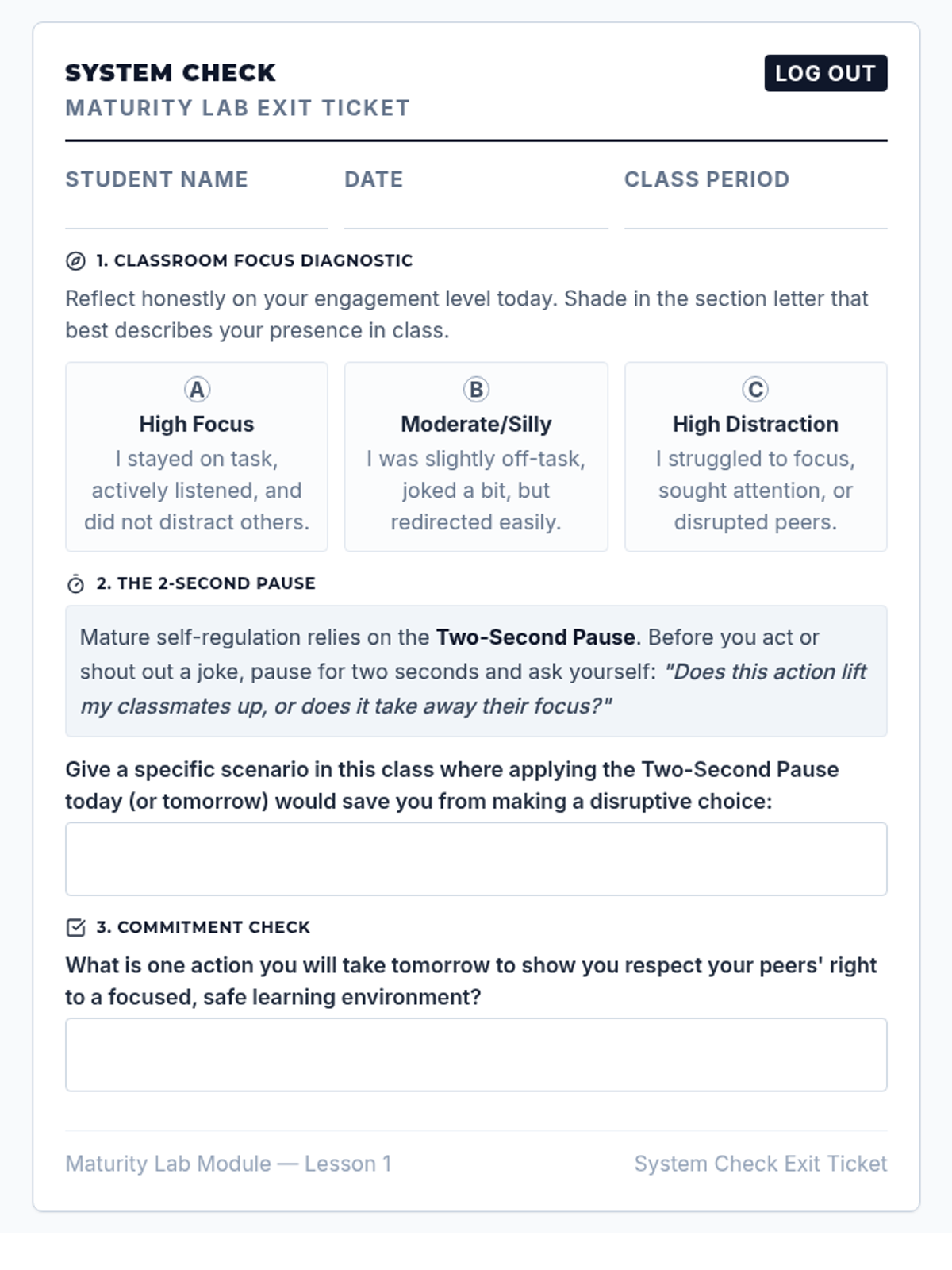
A reflective lesson exploring the boundary between harmless humor and disruptive silliness, helping 7th graders analyze peer impact and build self-regulation strategies.
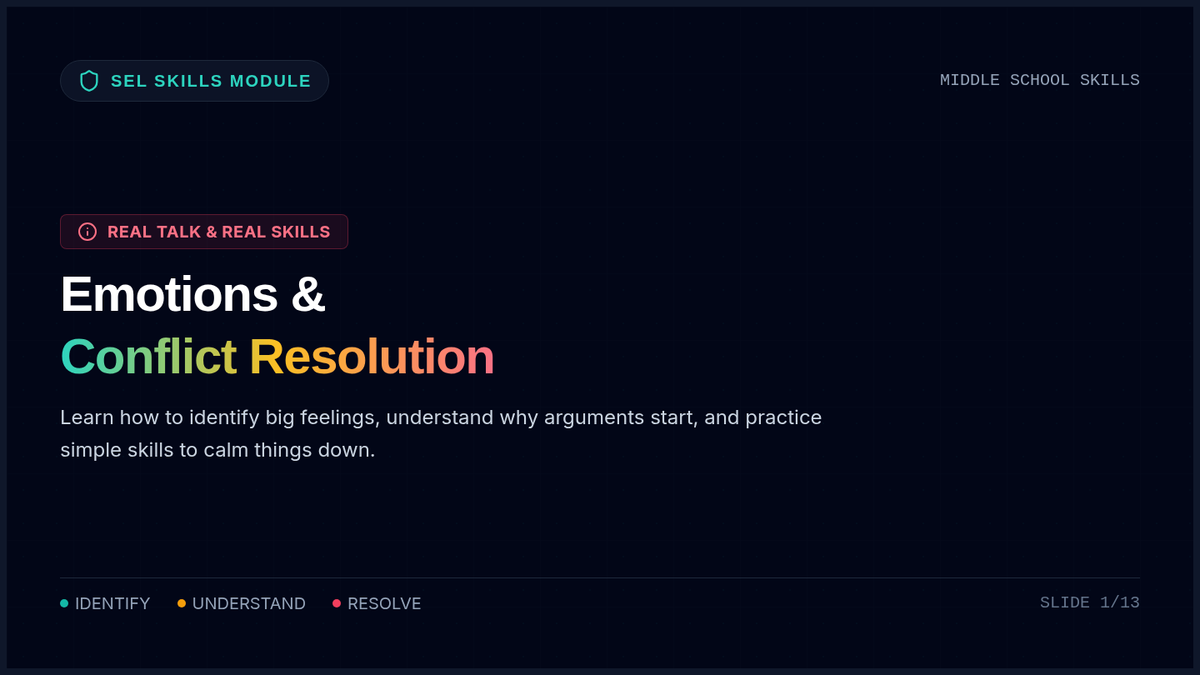
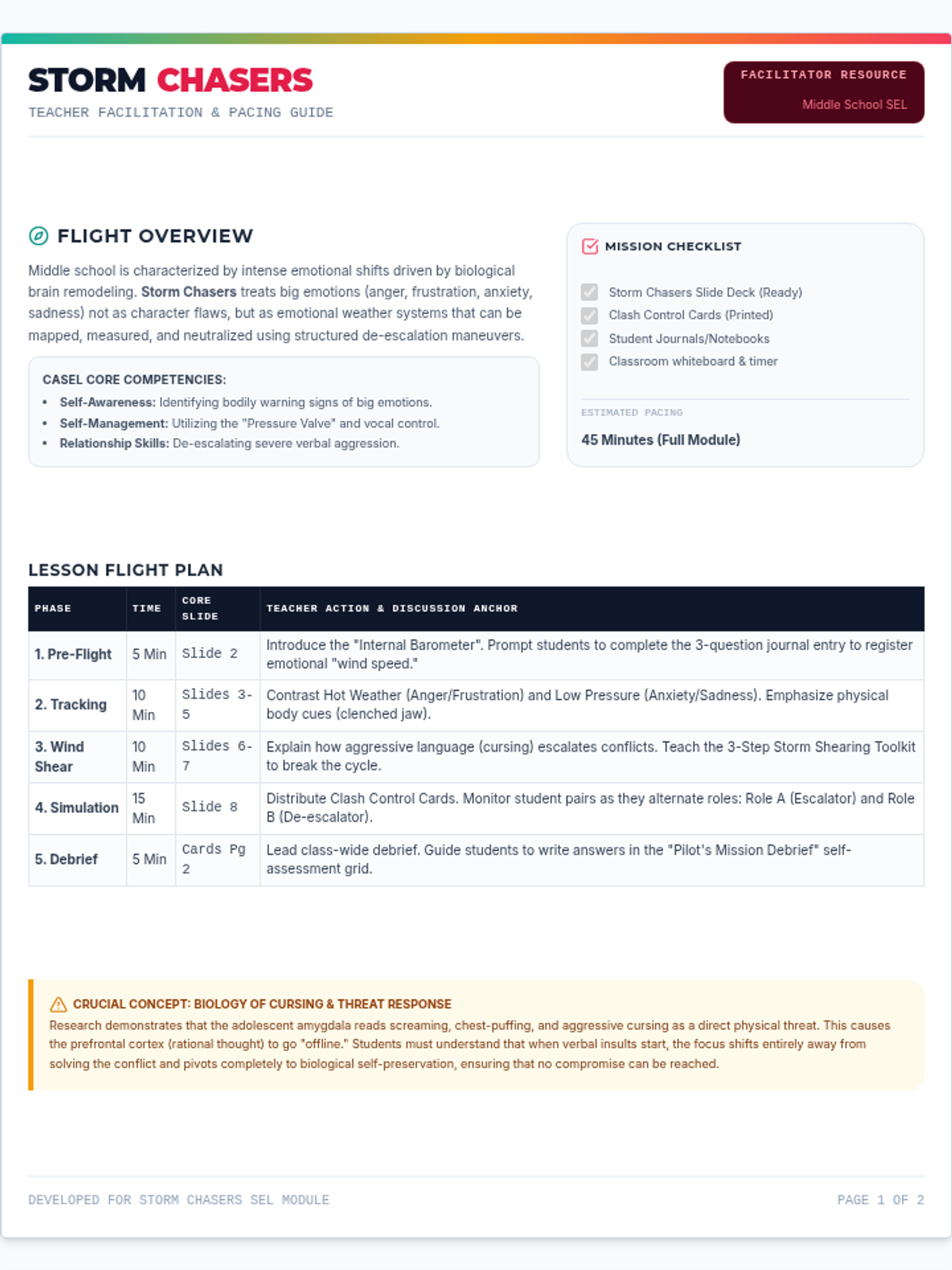
A middle school SEL lesson focused on identifying emotions and de-escalating conflicts. Students practice daily journal check-ins, learn about anger, frustration, anxiety, and sadness, and roleplay de-escalating real-world sibling, peer, and parent conflicts.
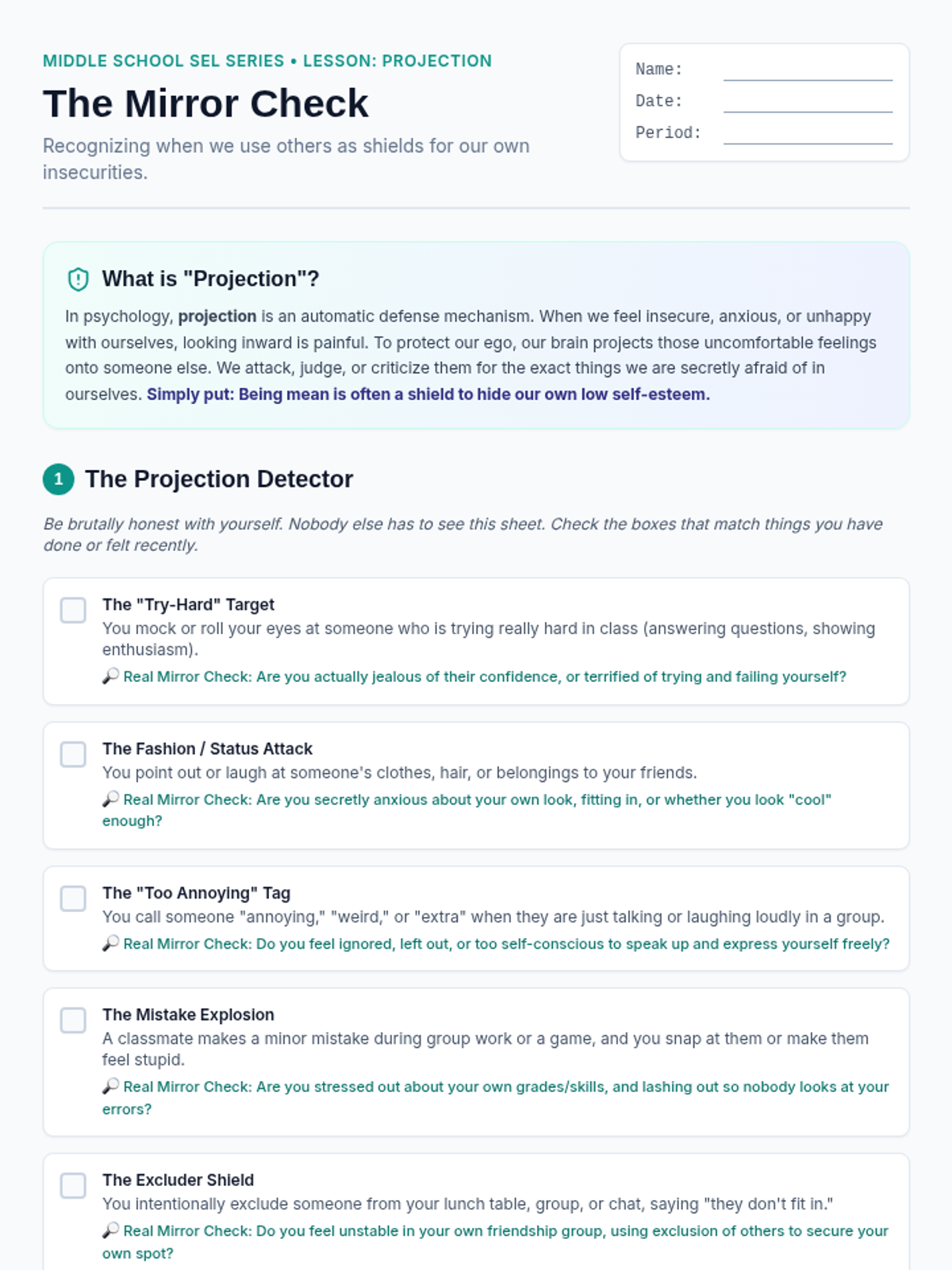
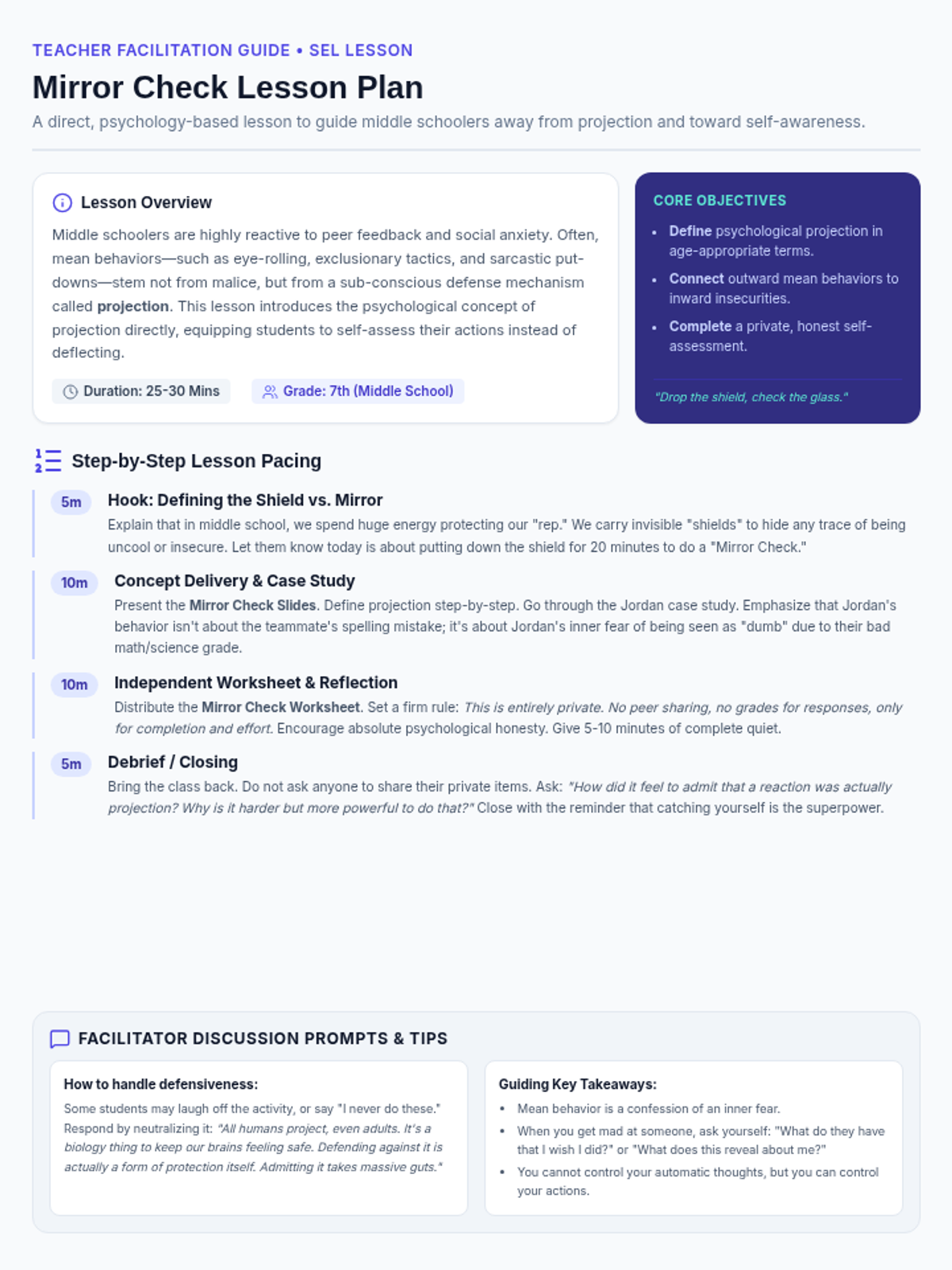
A direct, psychologically-grounded social-emotional learning lesson for 7th graders focusing on the mechanics of projection—how we lash out at others to shield our own insecurities—featuring a self-reflection checklist and discussion prompts.
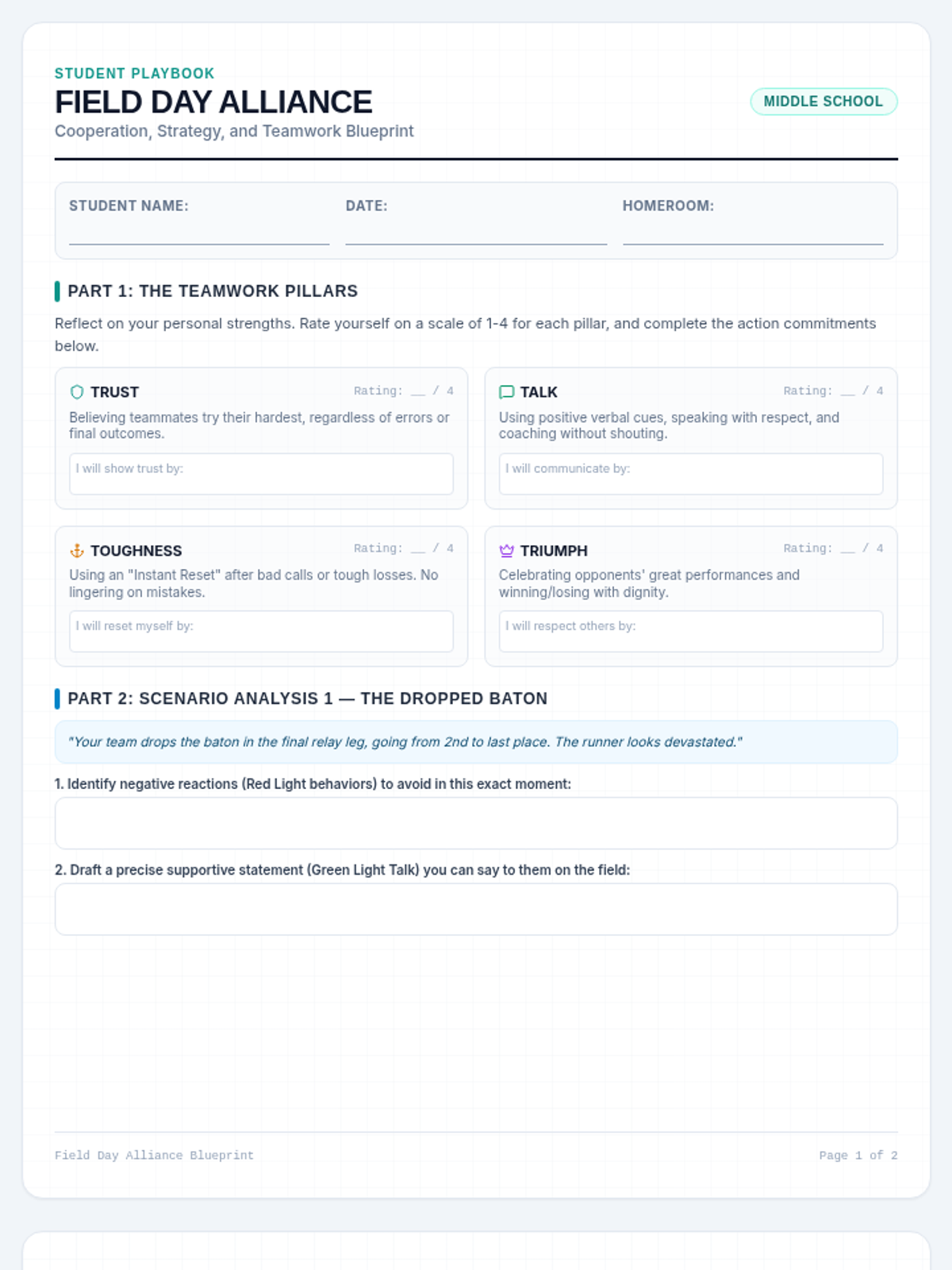
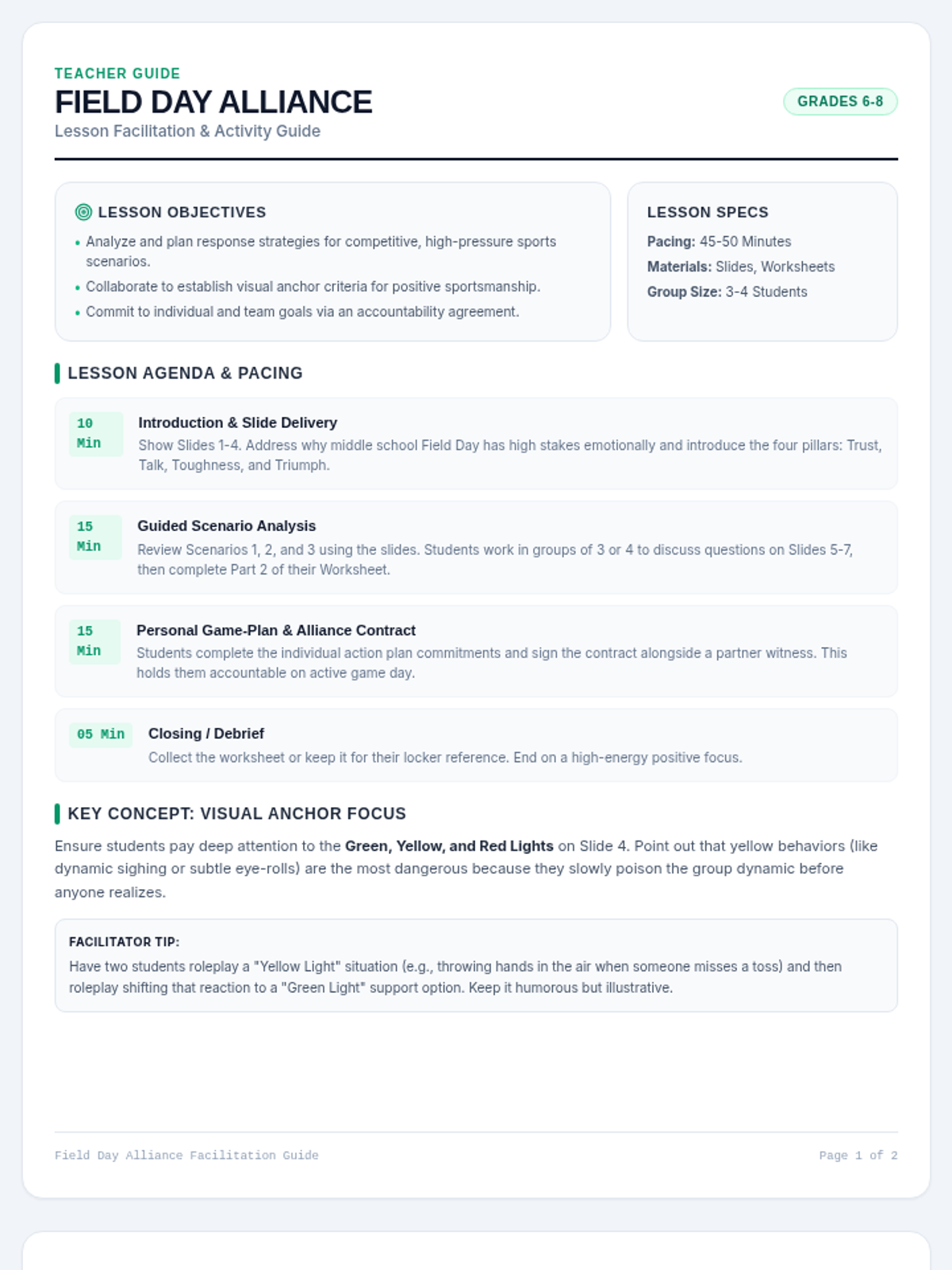
A middle school lesson focusing on teamwork, sportsmanship, and positive behaviors during Field Day, utilizing visual anchor charts, scenario-based worksheets, and collaborative discussions.
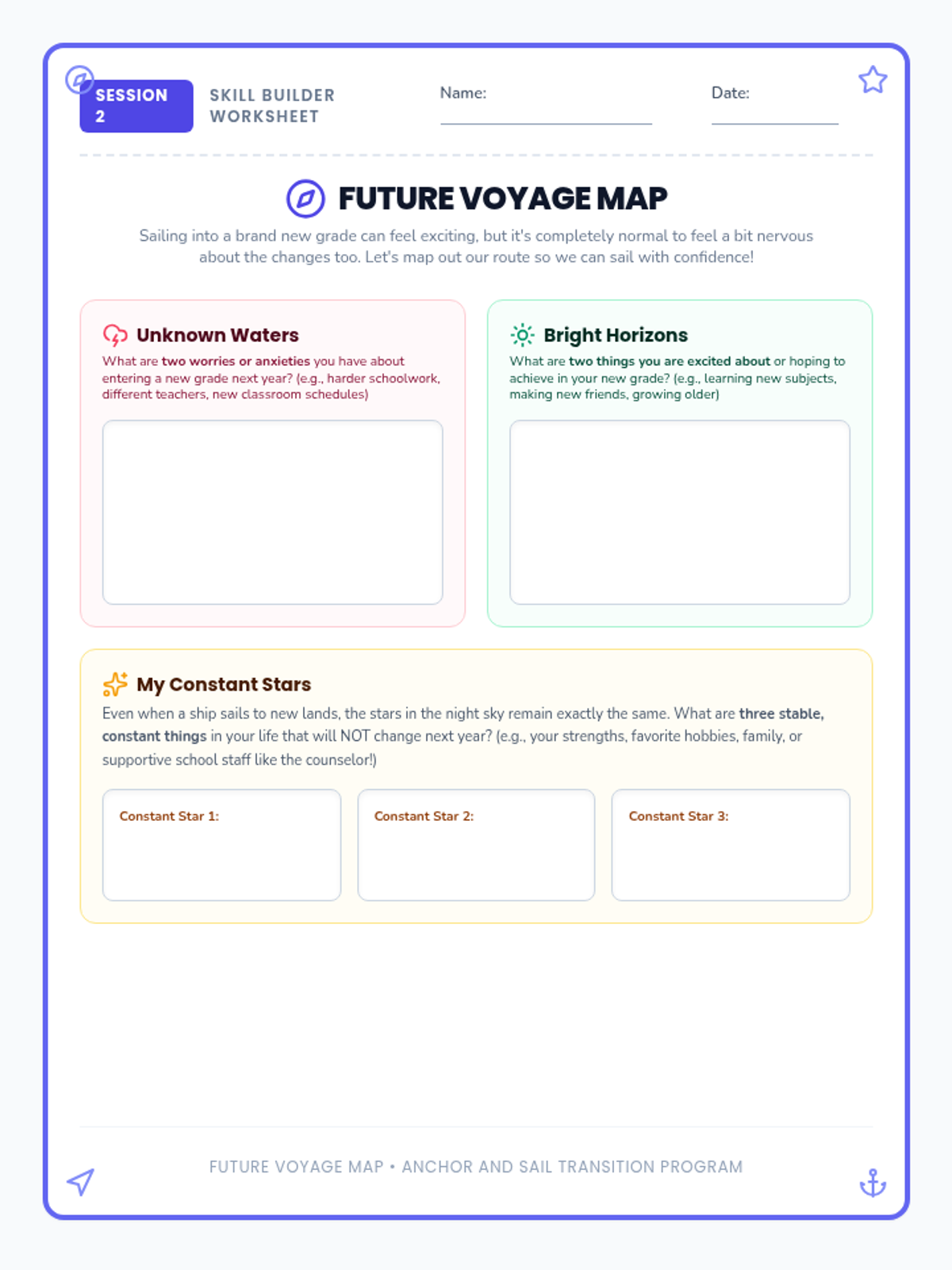
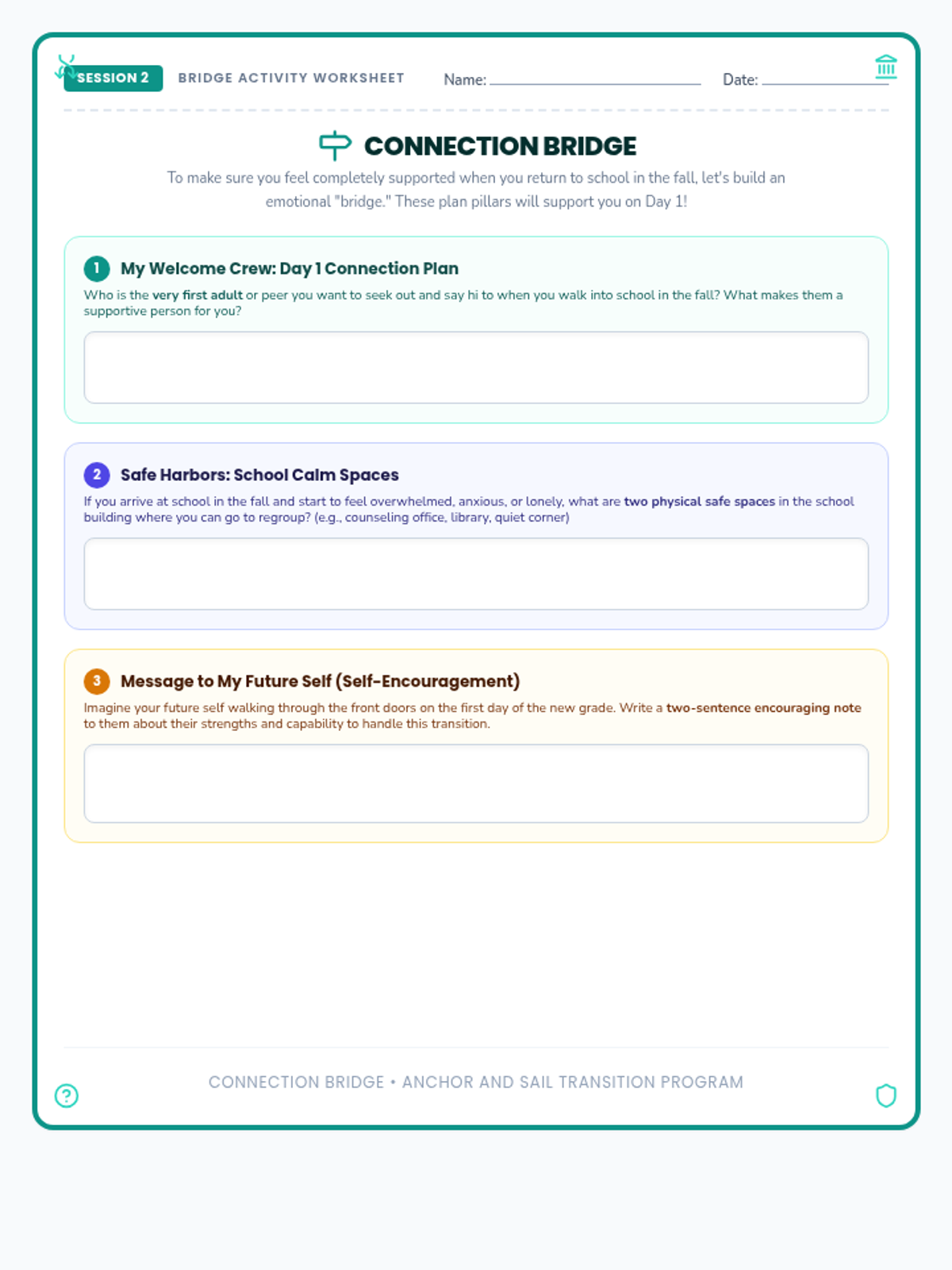
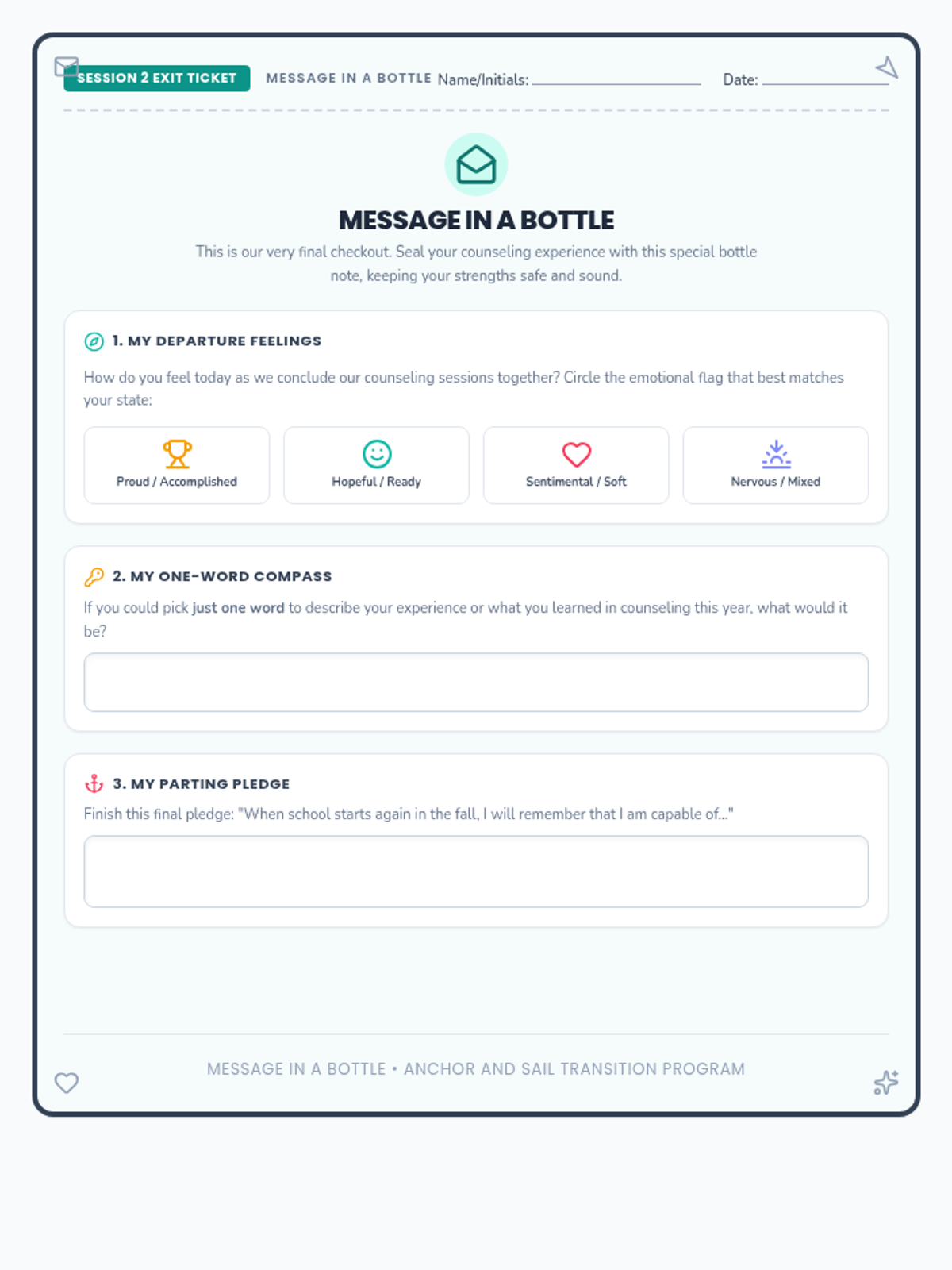
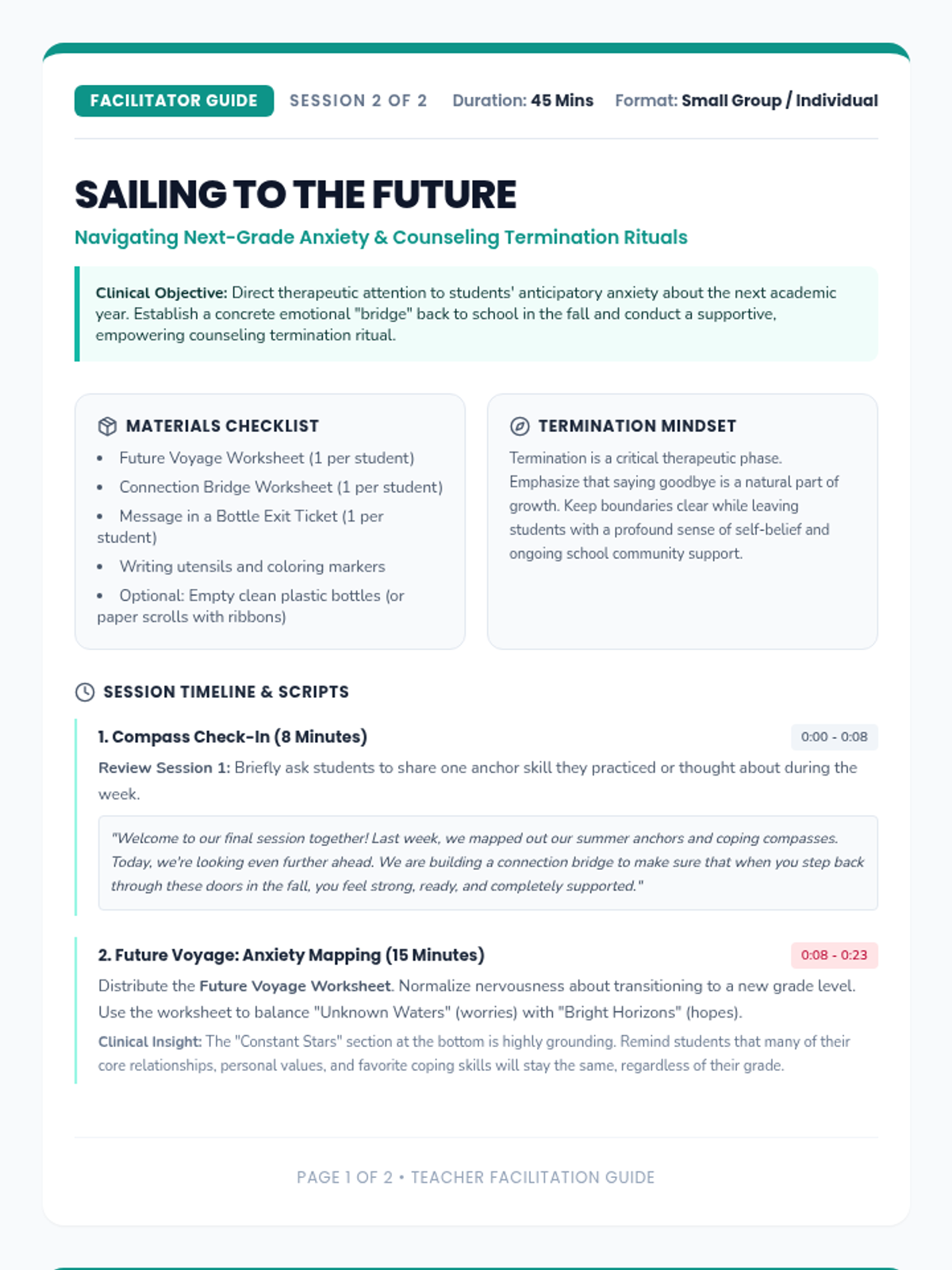
Session 2 focuses on addressing anxiety about entering a new grade, identifying what remains stable, building a concrete emotional "bridge" back to school in the fall, and conducting a meaningful counseling termination ritual.
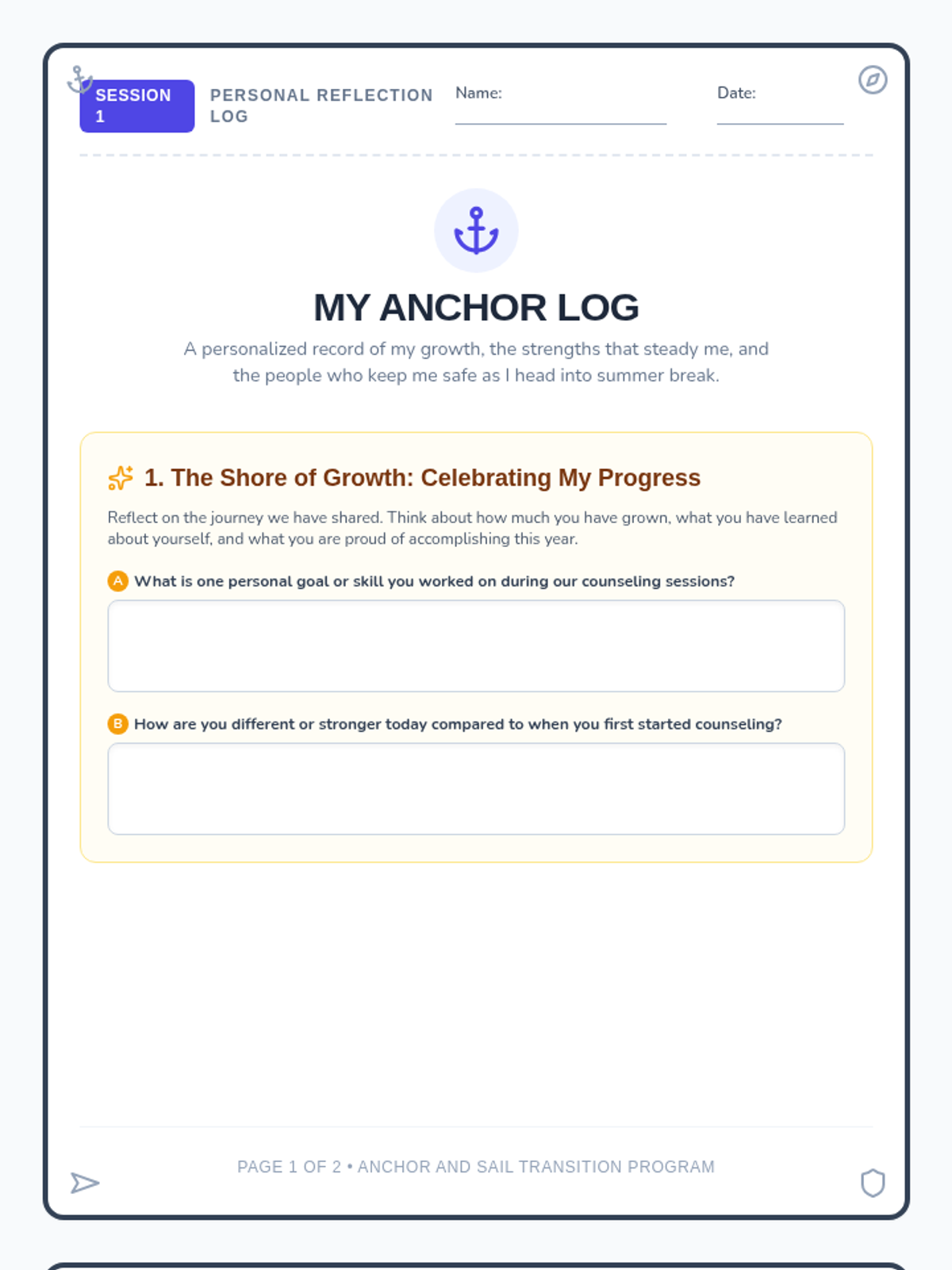
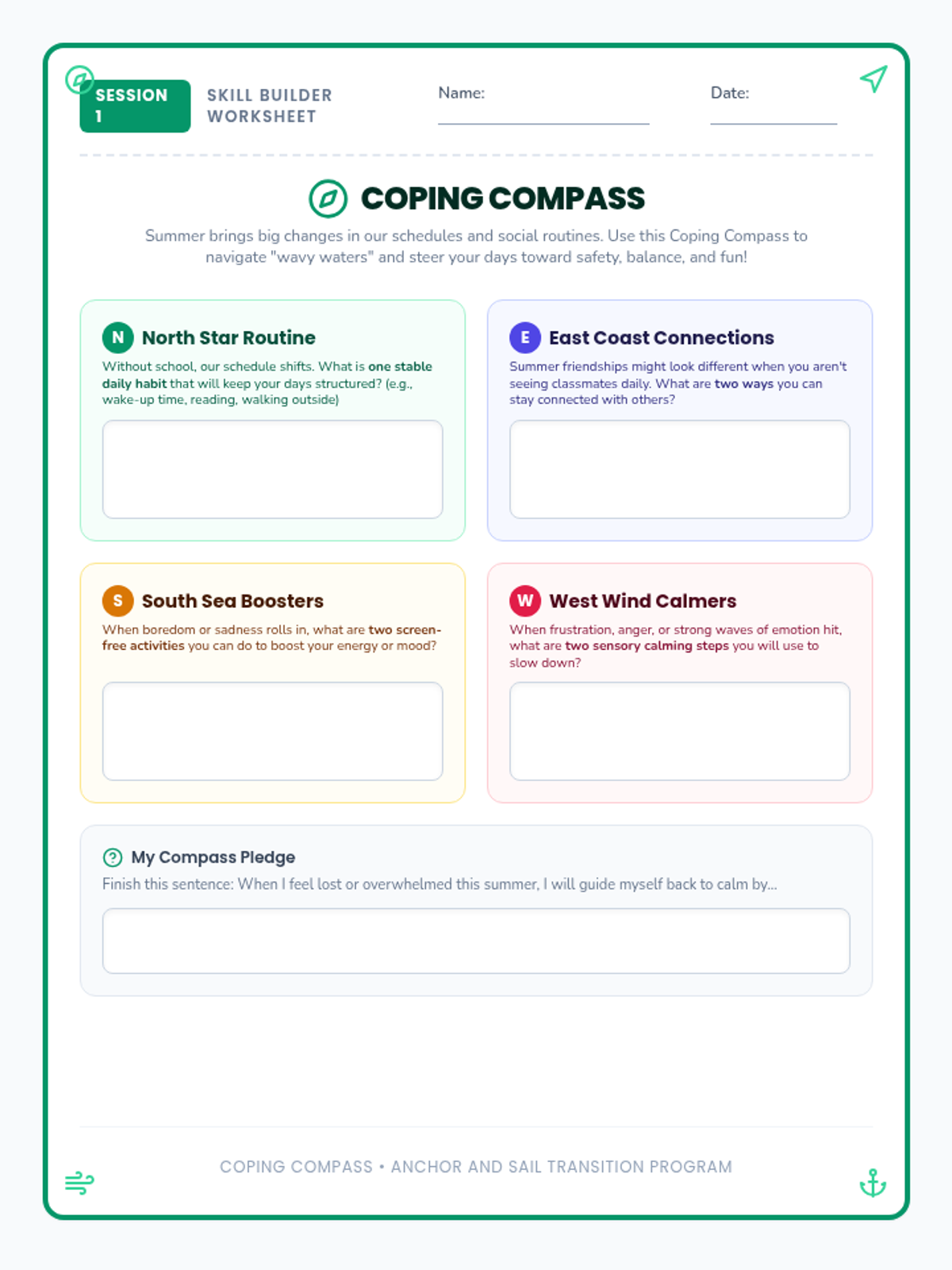
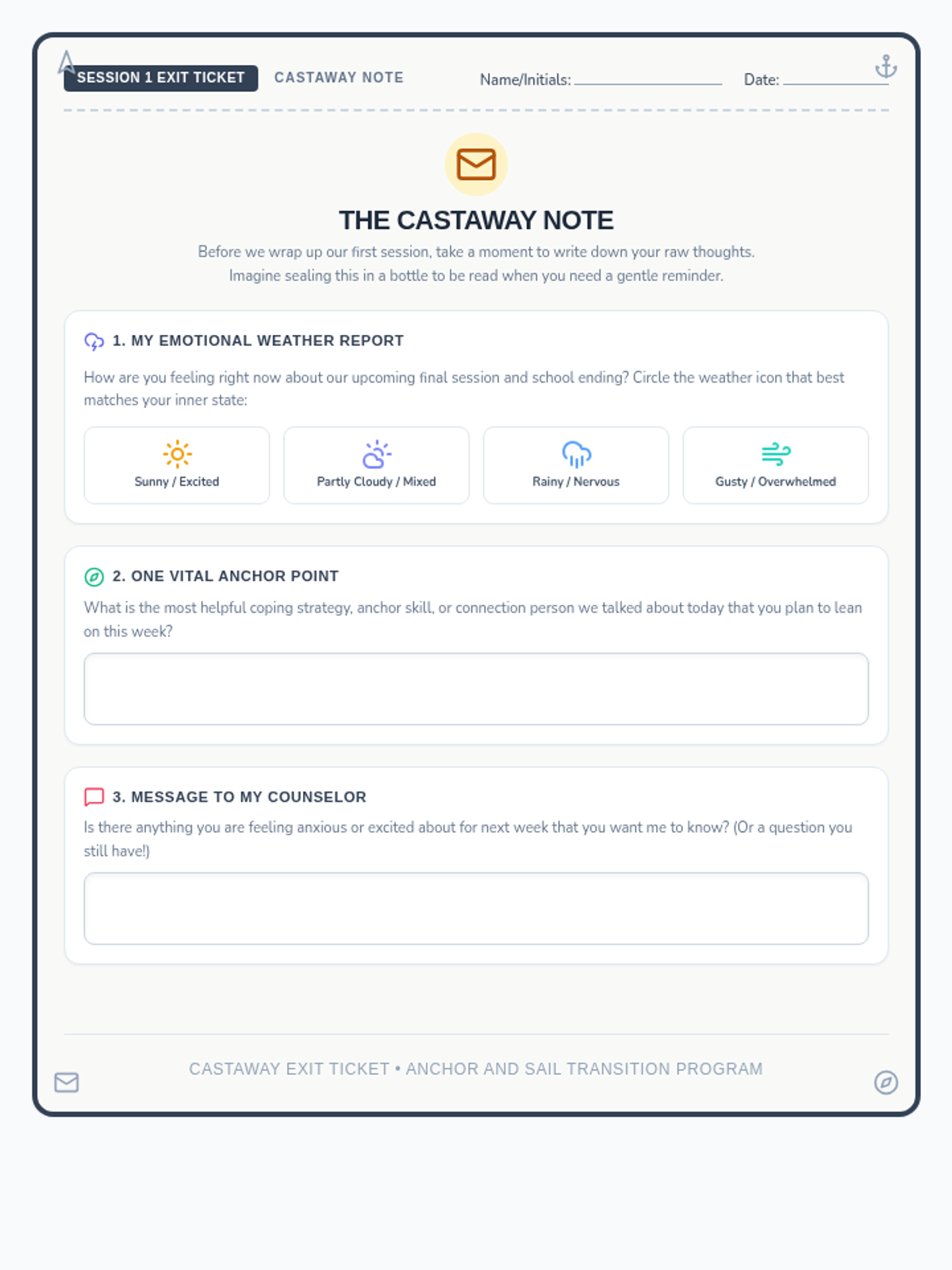
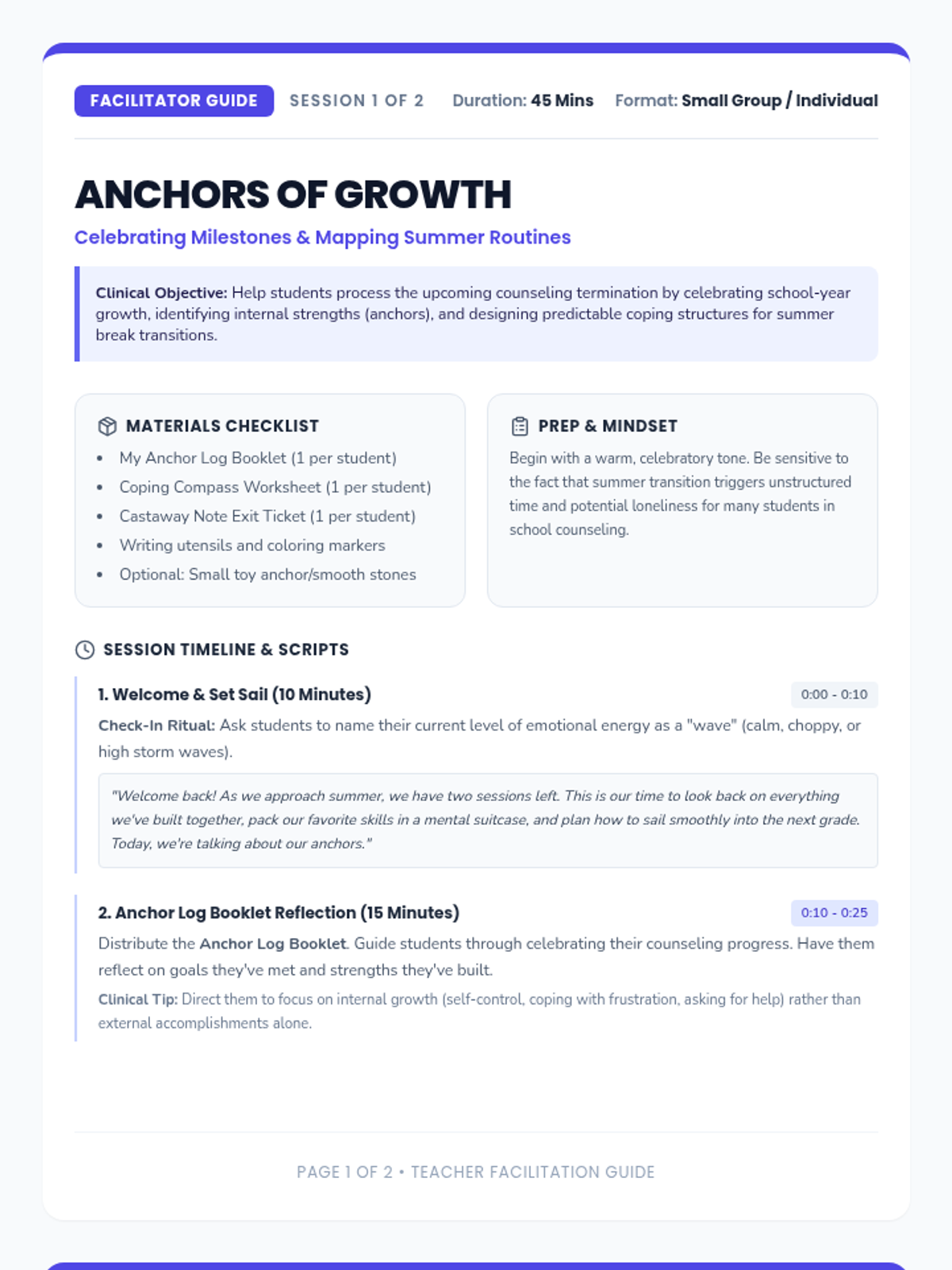
Session 1 focuses on reflecting on counseling progress, celebrating personal growth over the past year, identifying personal "anchors" (coping skills, support systems), and preparing for the changes in daily routines during summer break.