A transition-focused emotional regulation lesson designed to equip middle school students with mindfulness tools and coping mechanisms to handle academic anxiety and school transitions over the summer.
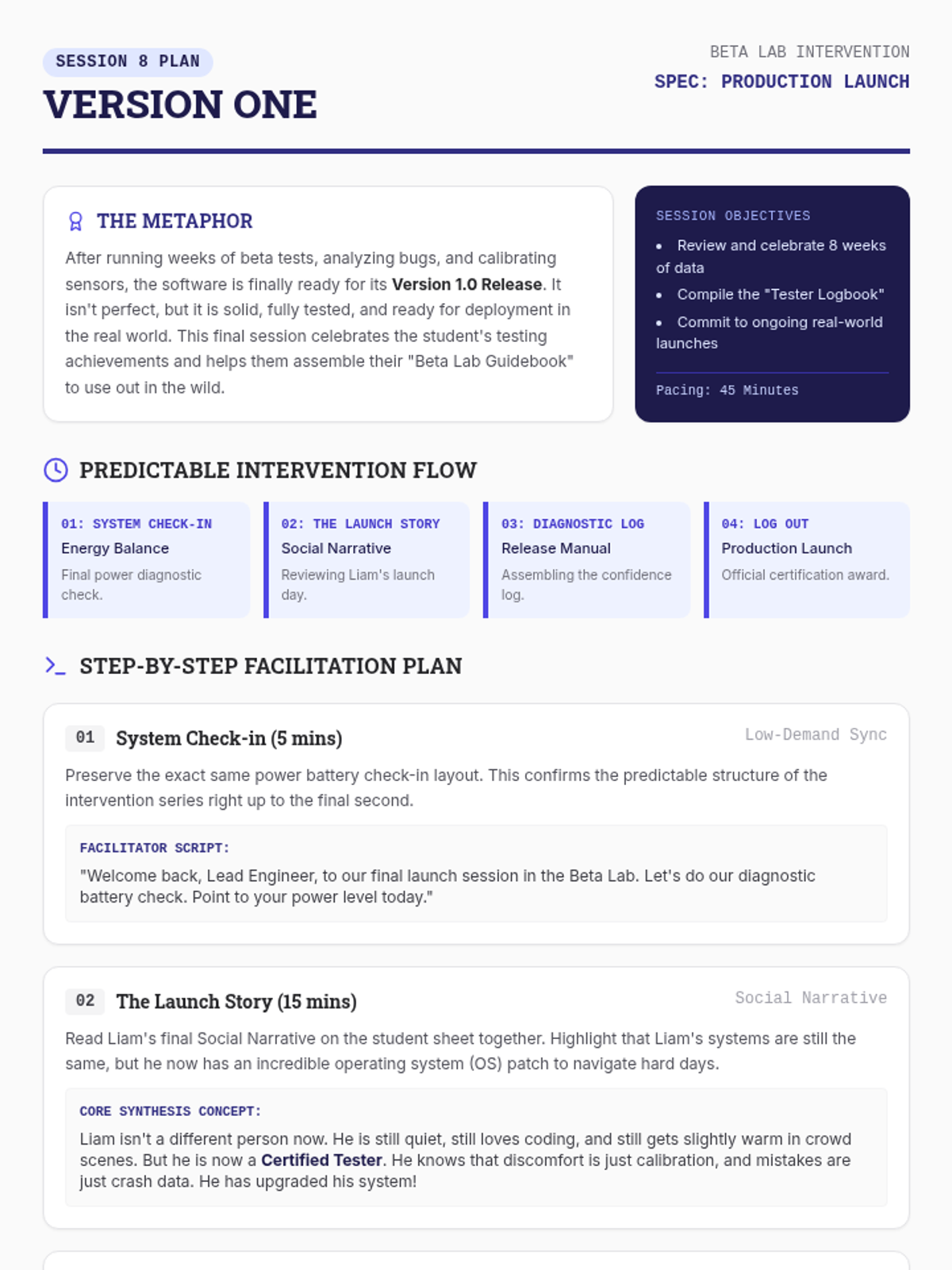
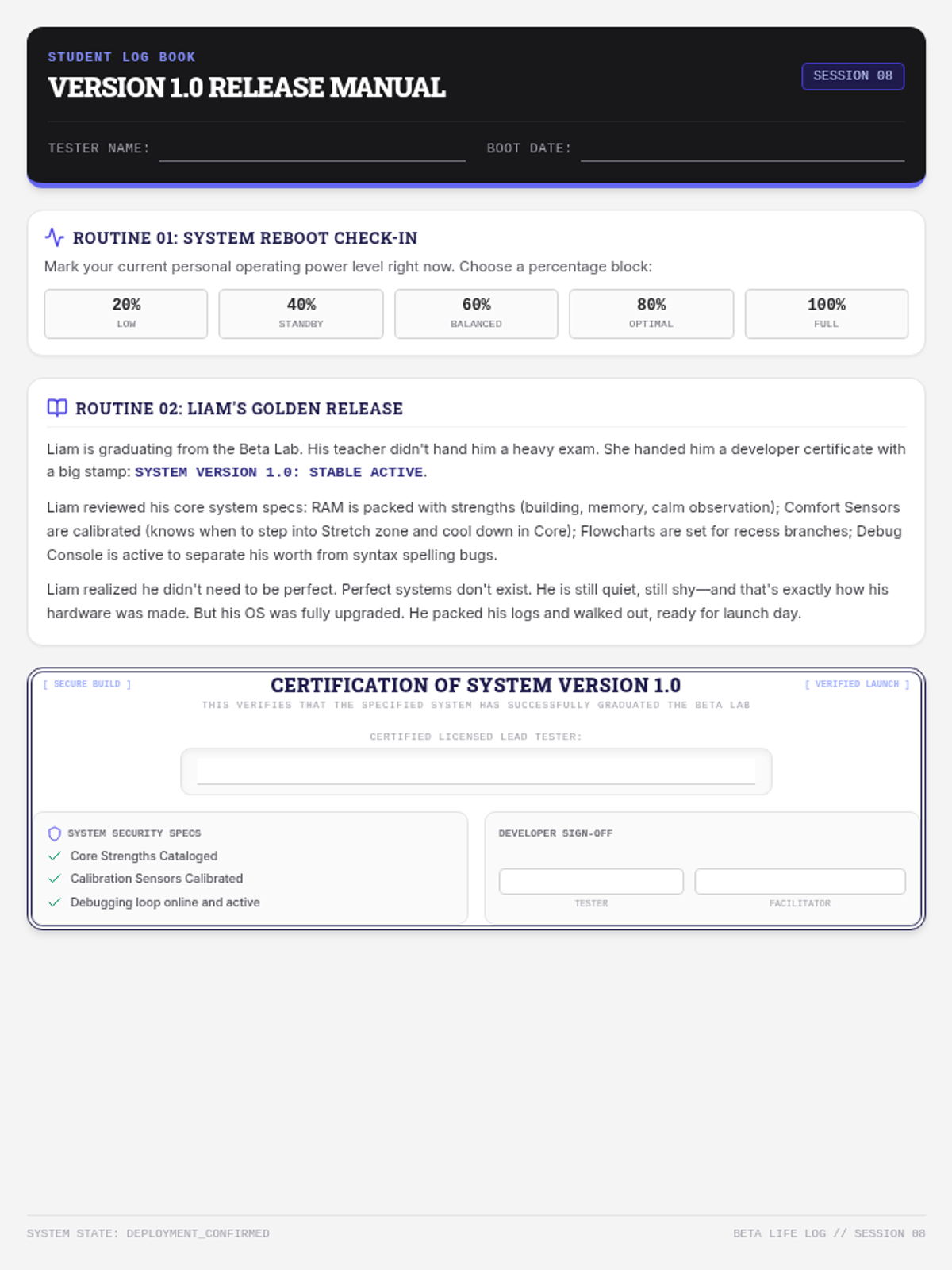
Session 8 synthesizes the 8-week journey. The student compiles their logs into a personalized confidence guide and celebrates their testing achievements.
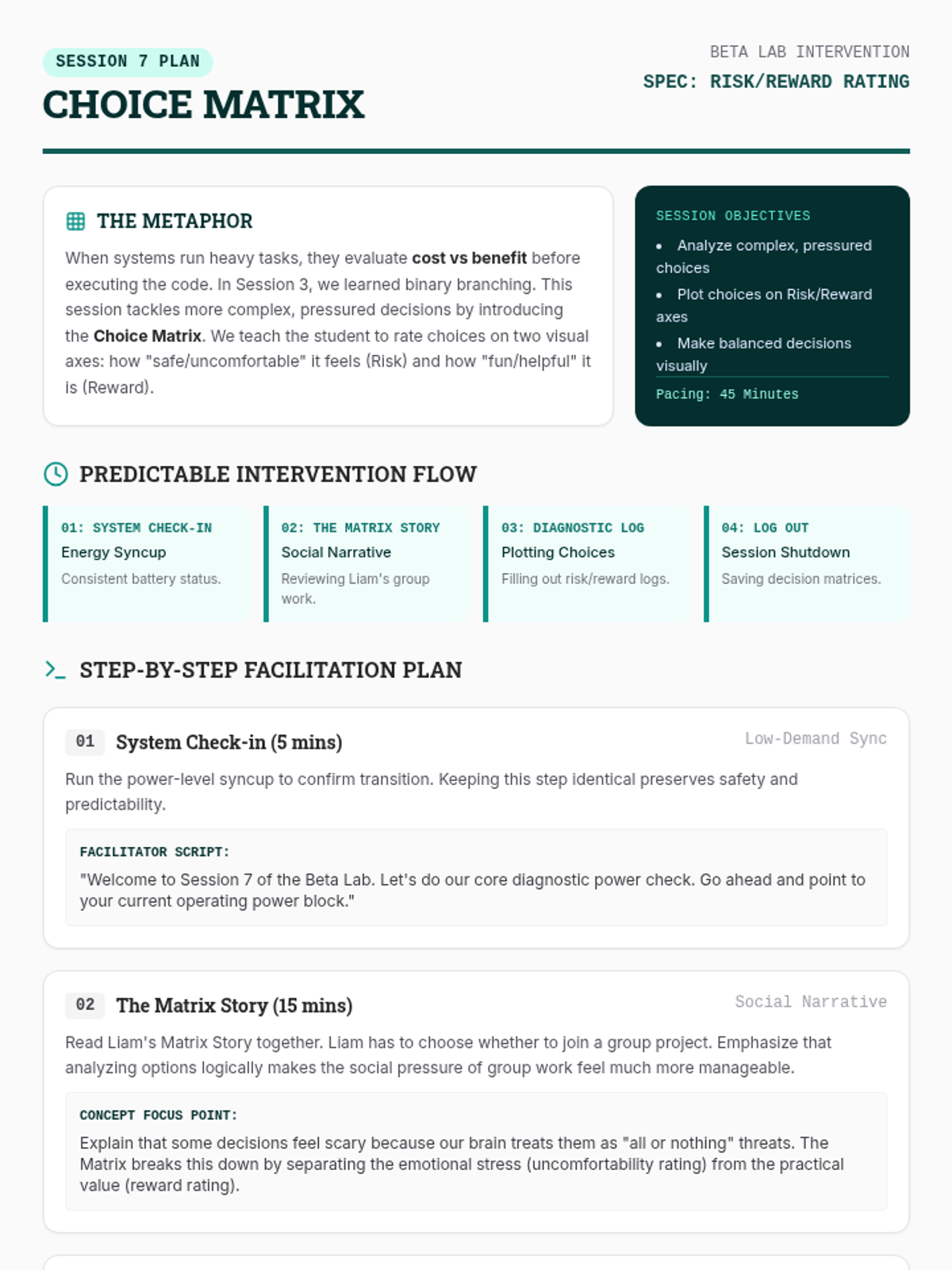
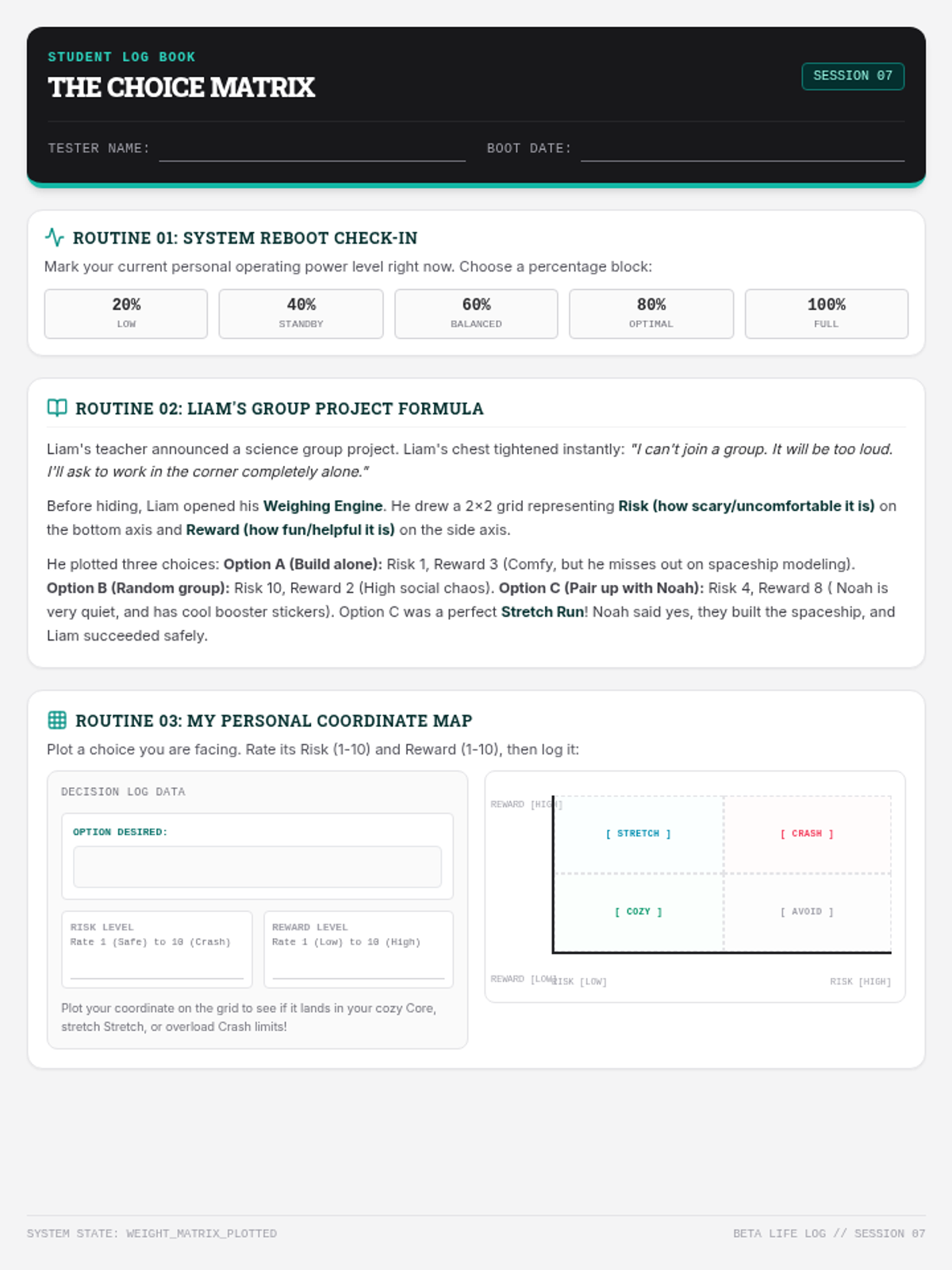
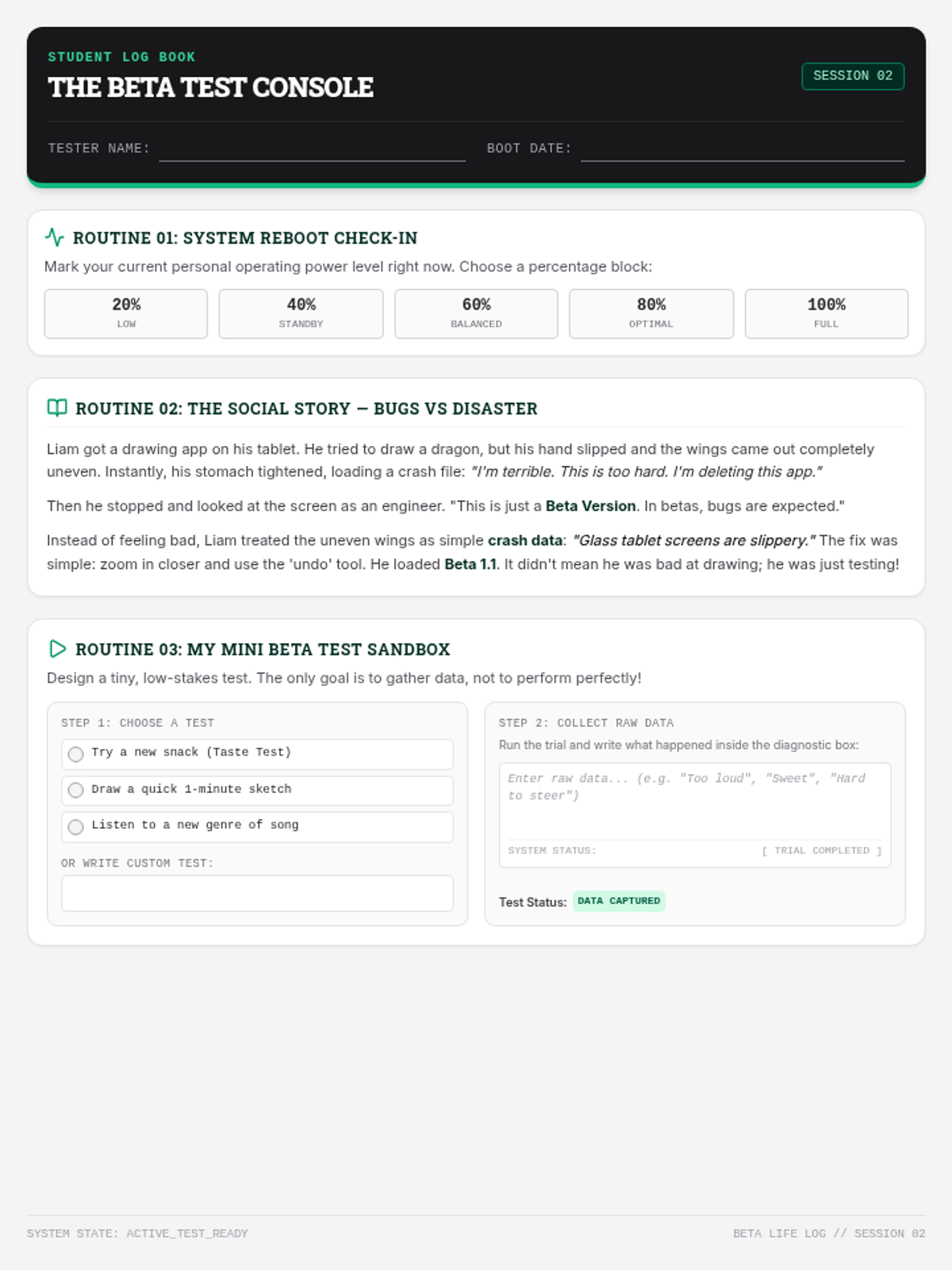
Session 7 explores more complex decisions under pressure, teaching the student how to weigh risks and rewards using a simple visual rating tool.
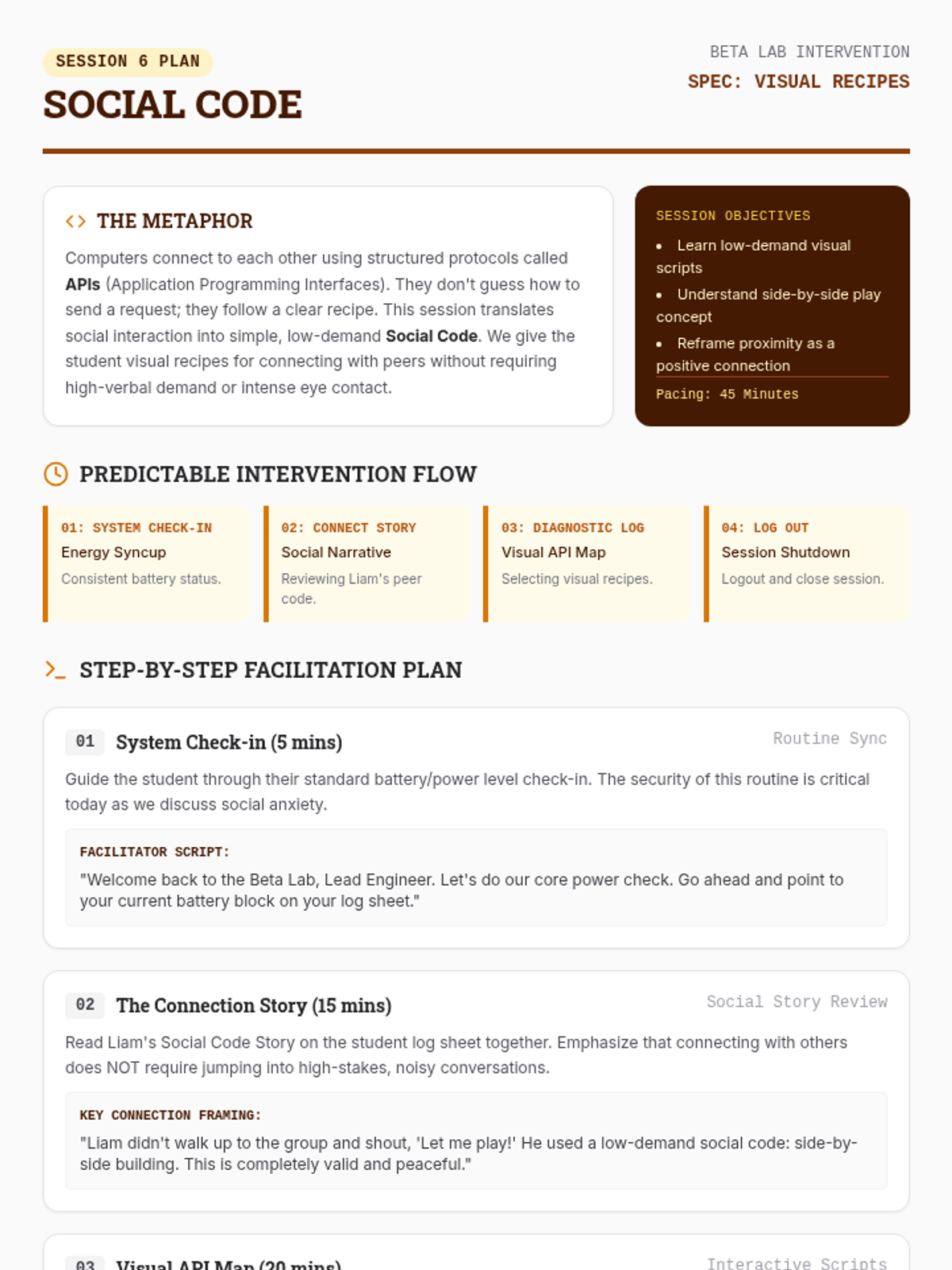
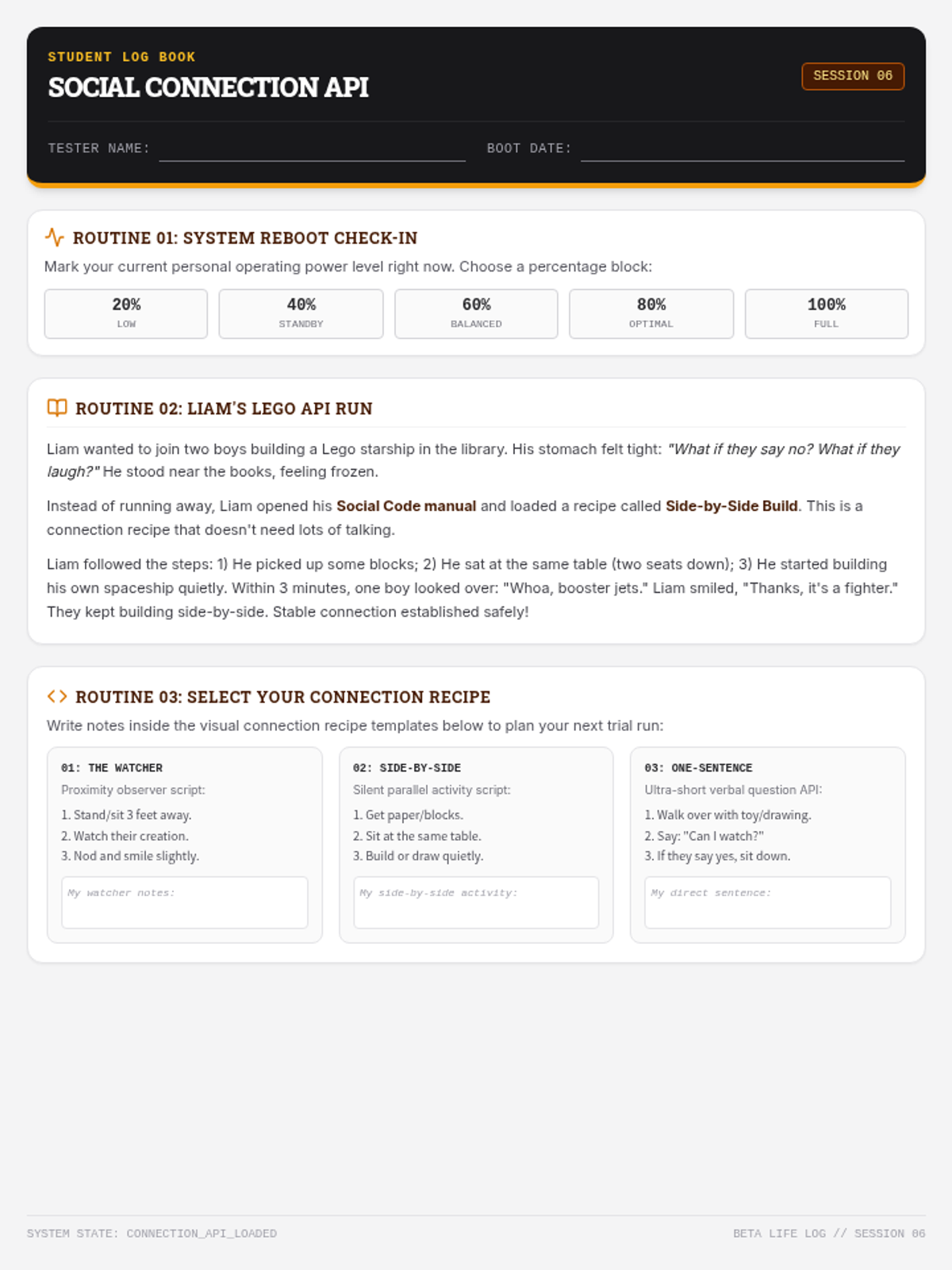
Session 6 addresses social interactions. The student learns low-demand social scripts and structured visual recipes for peer connection.
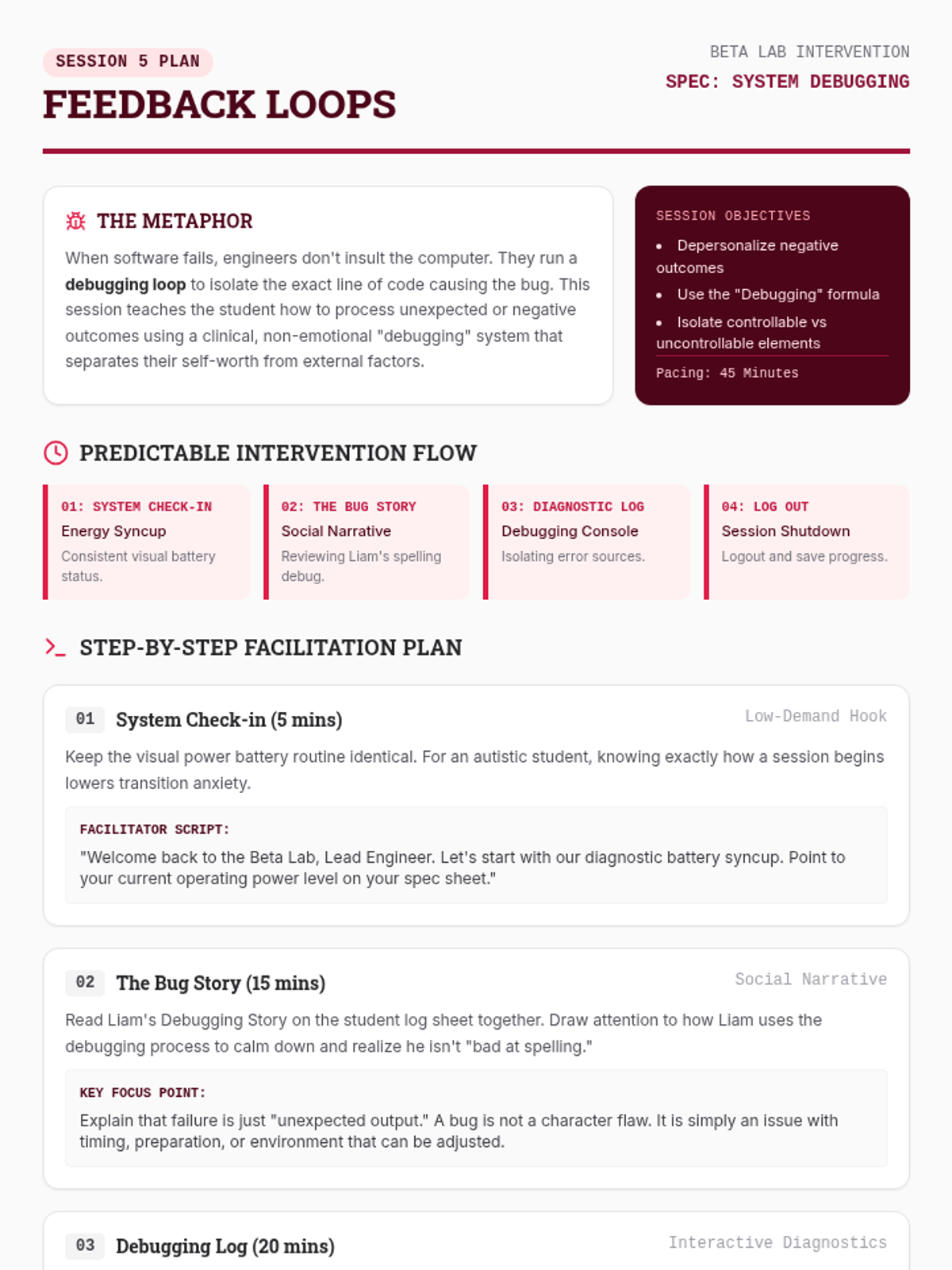
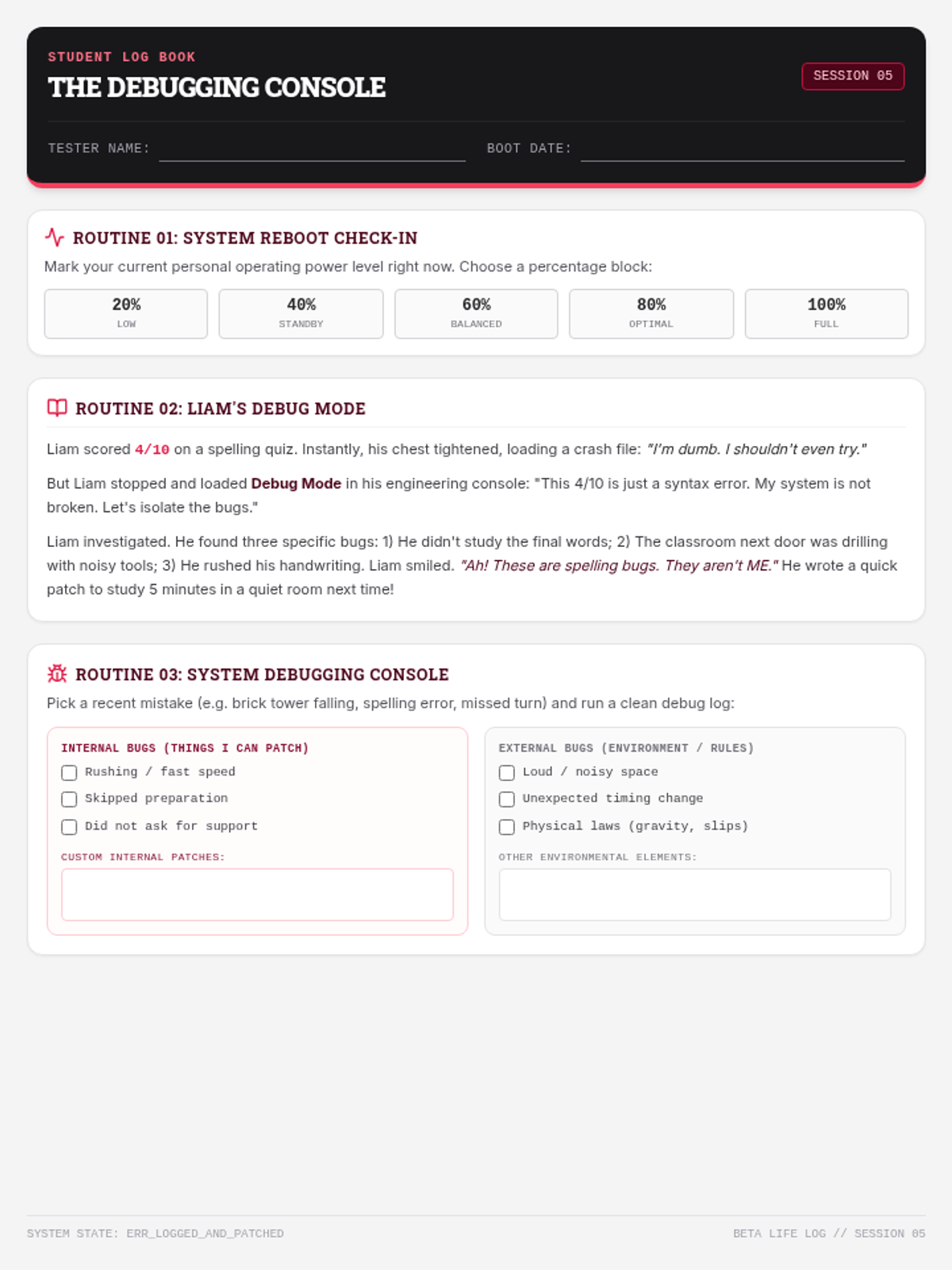
Session 5 covers processing unexpected outcomes. The student learns to analyze results without self-blame, using a structured "trail debugging" framework.
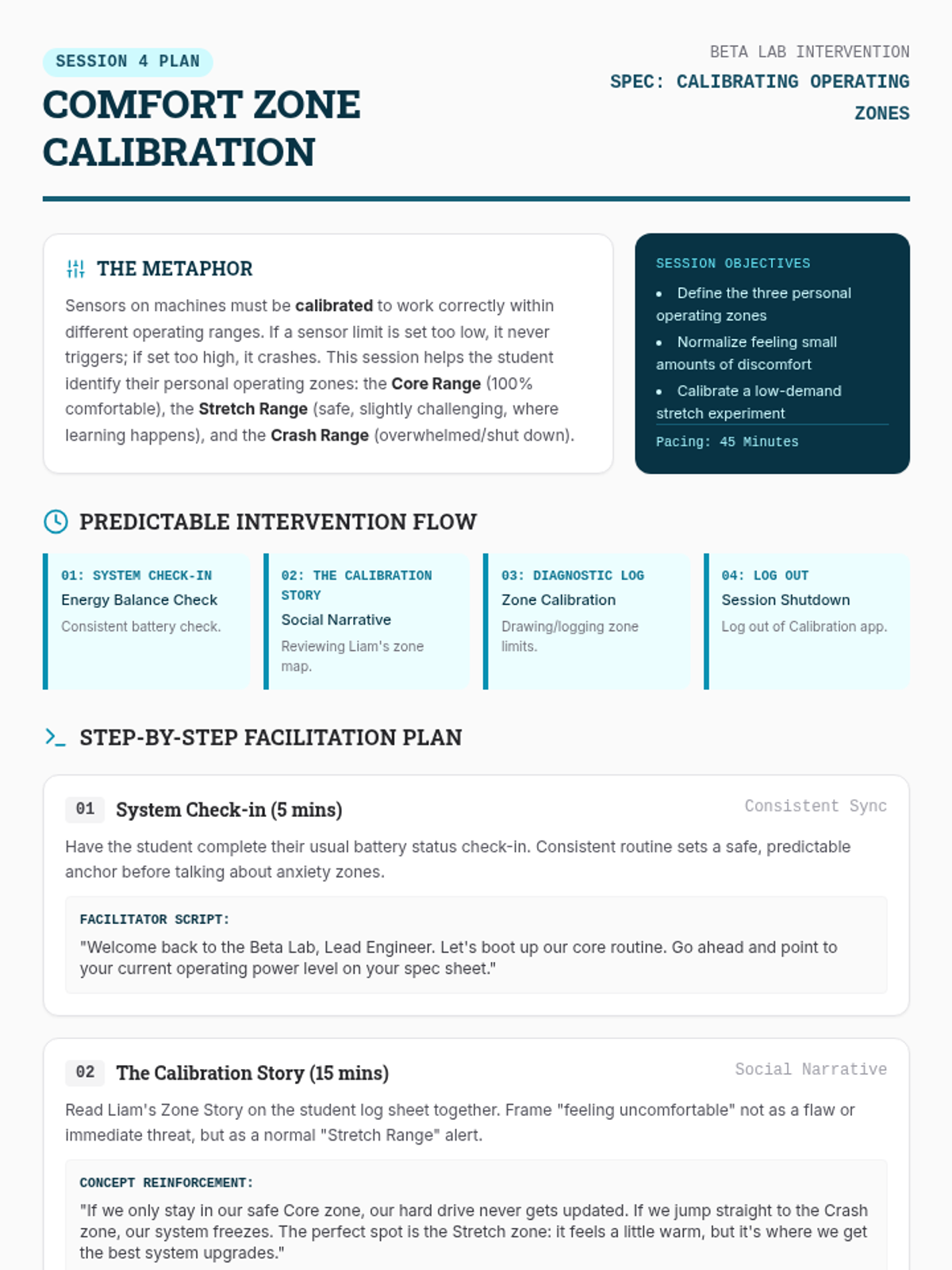
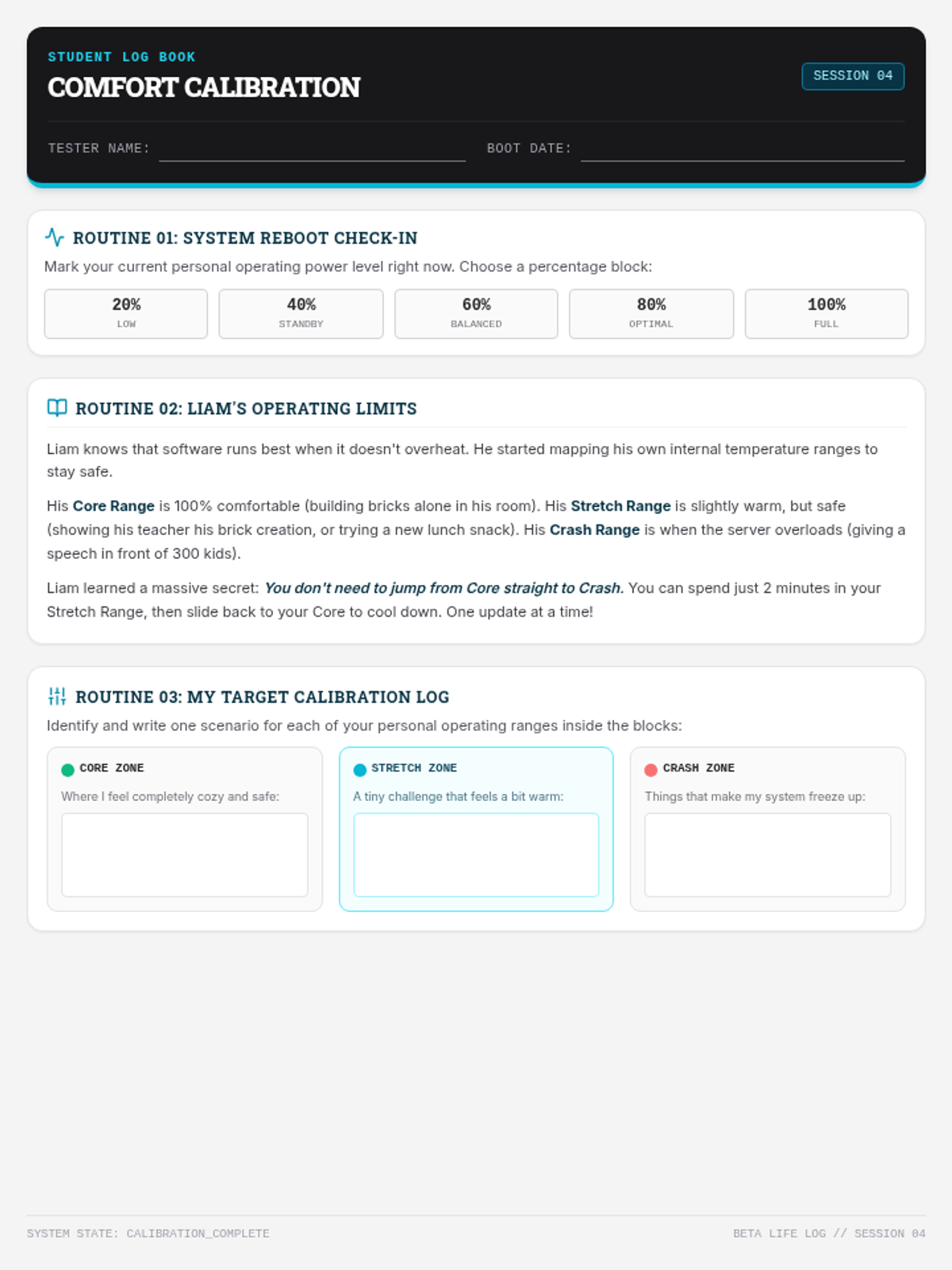
Session 4 focuses on gradually expanding the comfortable operating zone by setting up and running tiny, controlled trials in a safe environment, mapping Core, Stretch, and Storm zones.
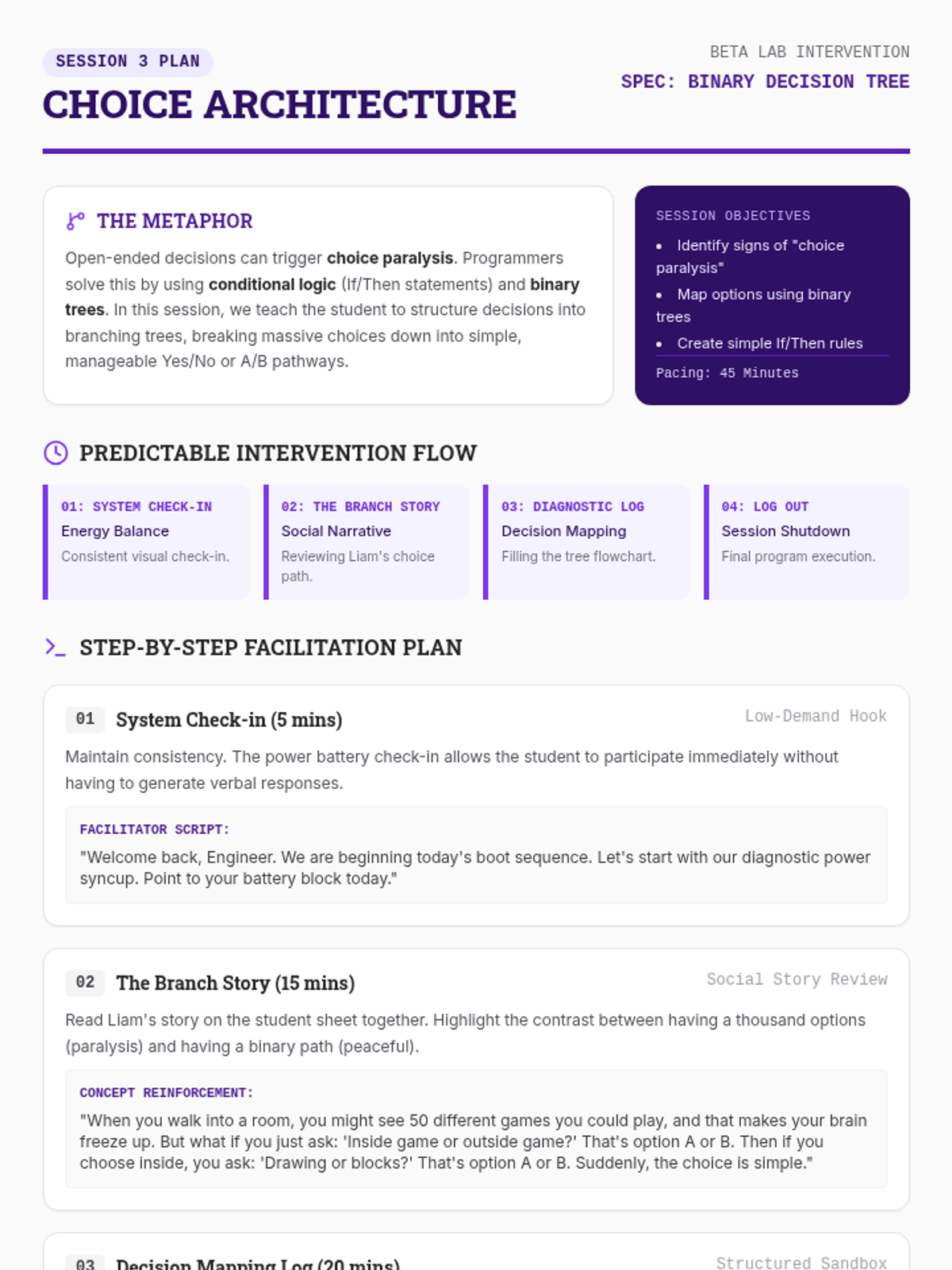
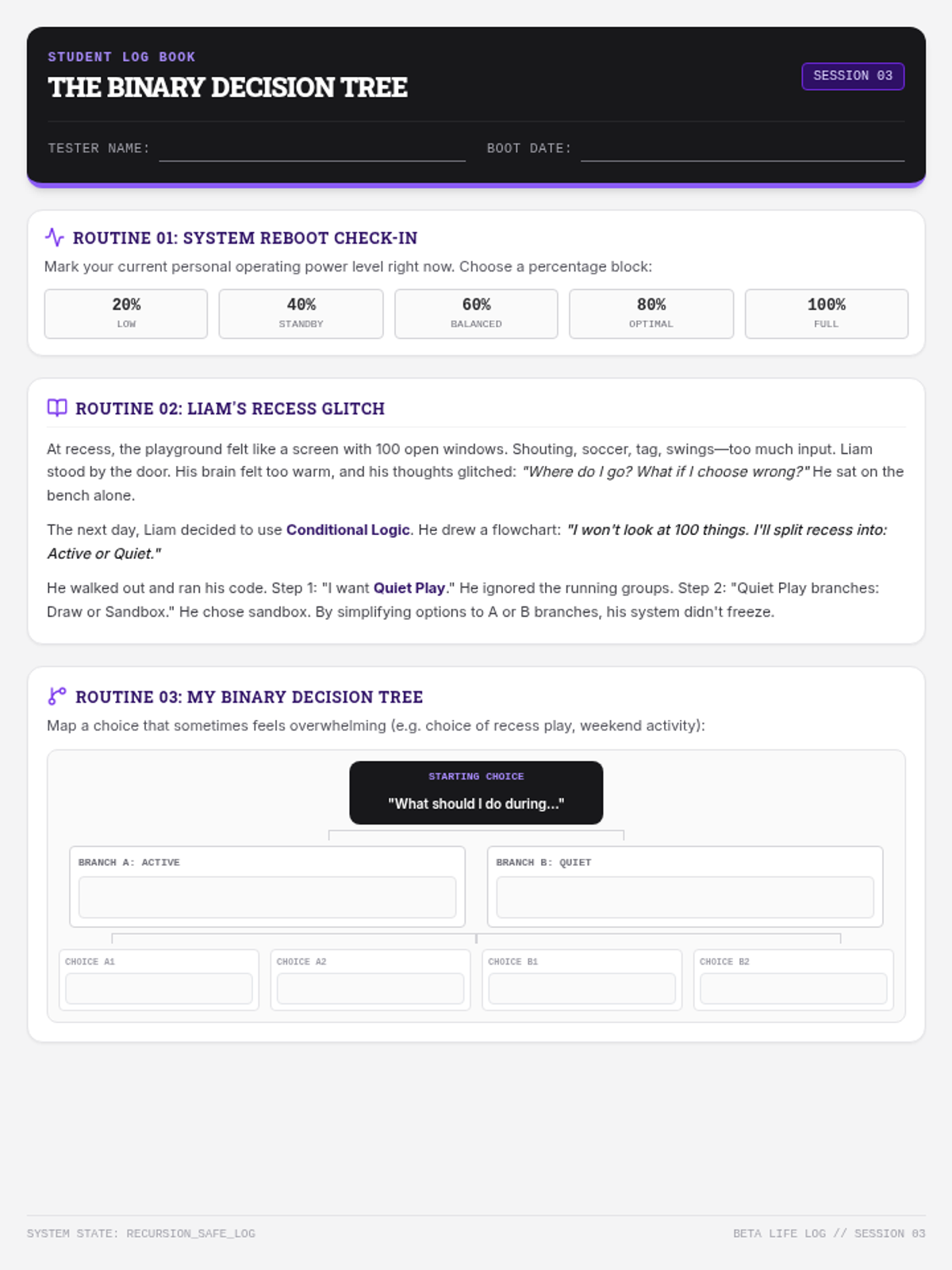
Session 3 introduces structured decision-making. The student learns to map decisions into binary "trail forks," reducing cognitive overload and paralysis.
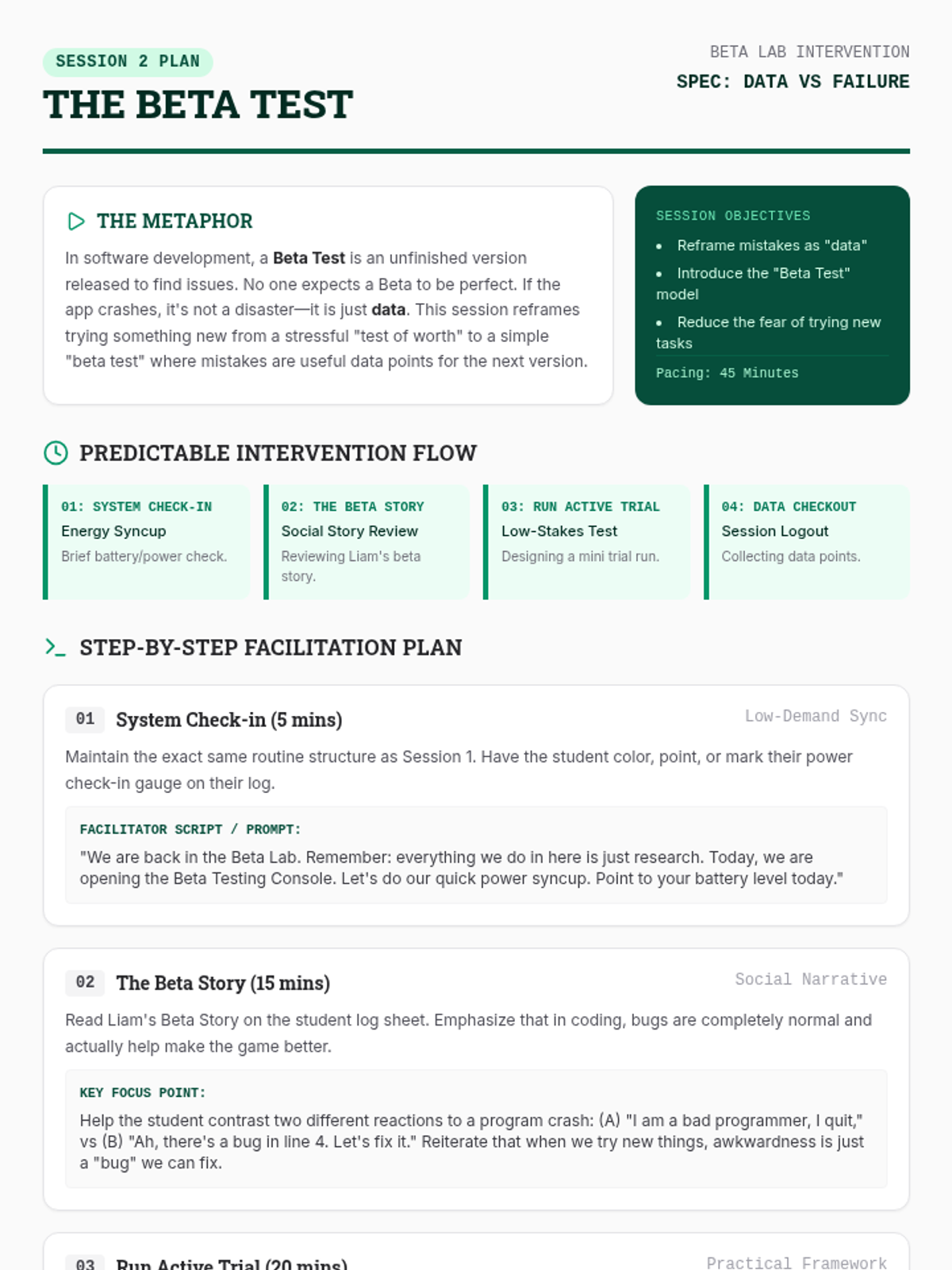
Session 2 re-frames the fear of trying new things. The student learns to treat new activities as low-stakes "scouting runs" where mistakes are just "terrain map data."
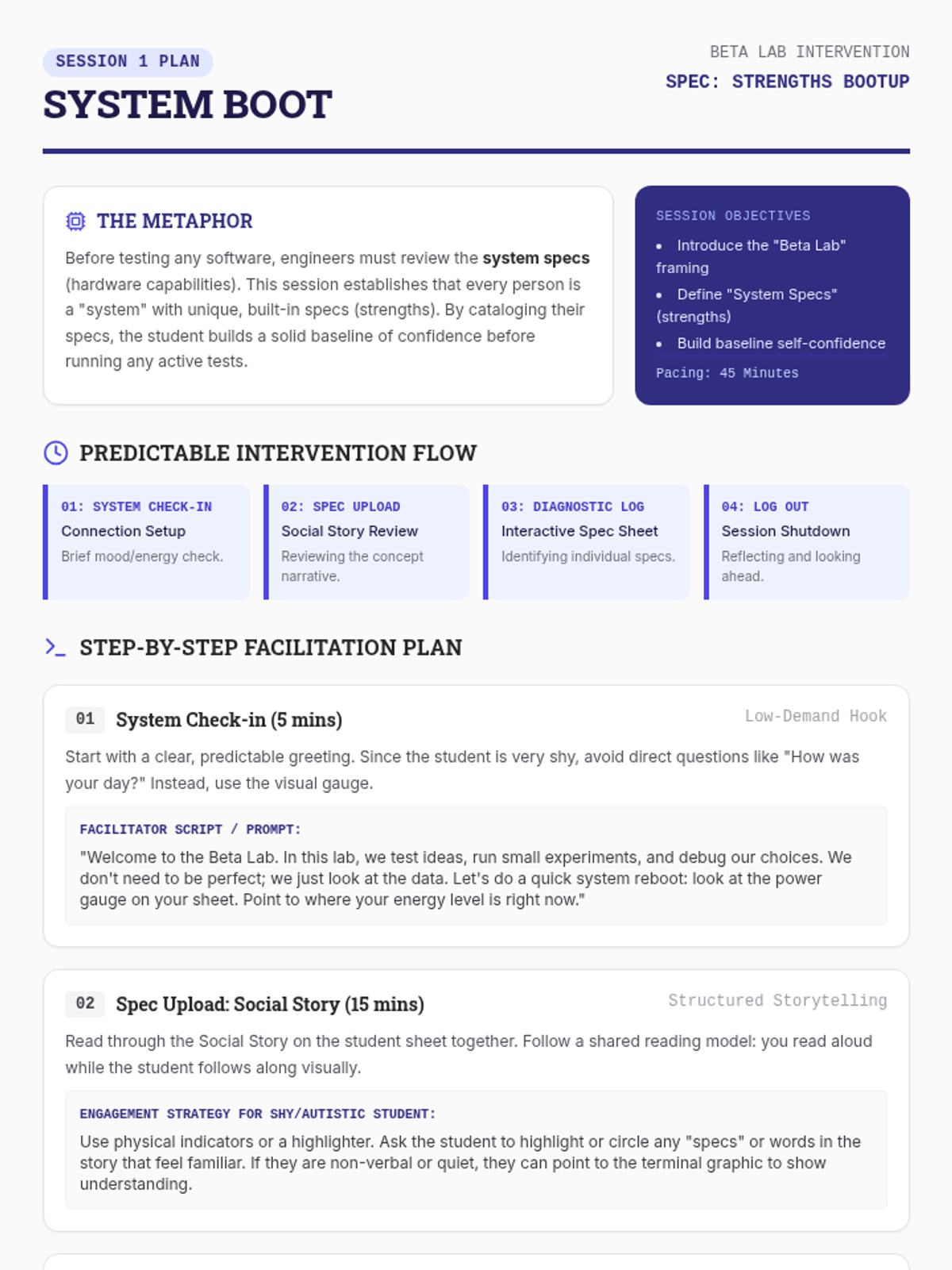
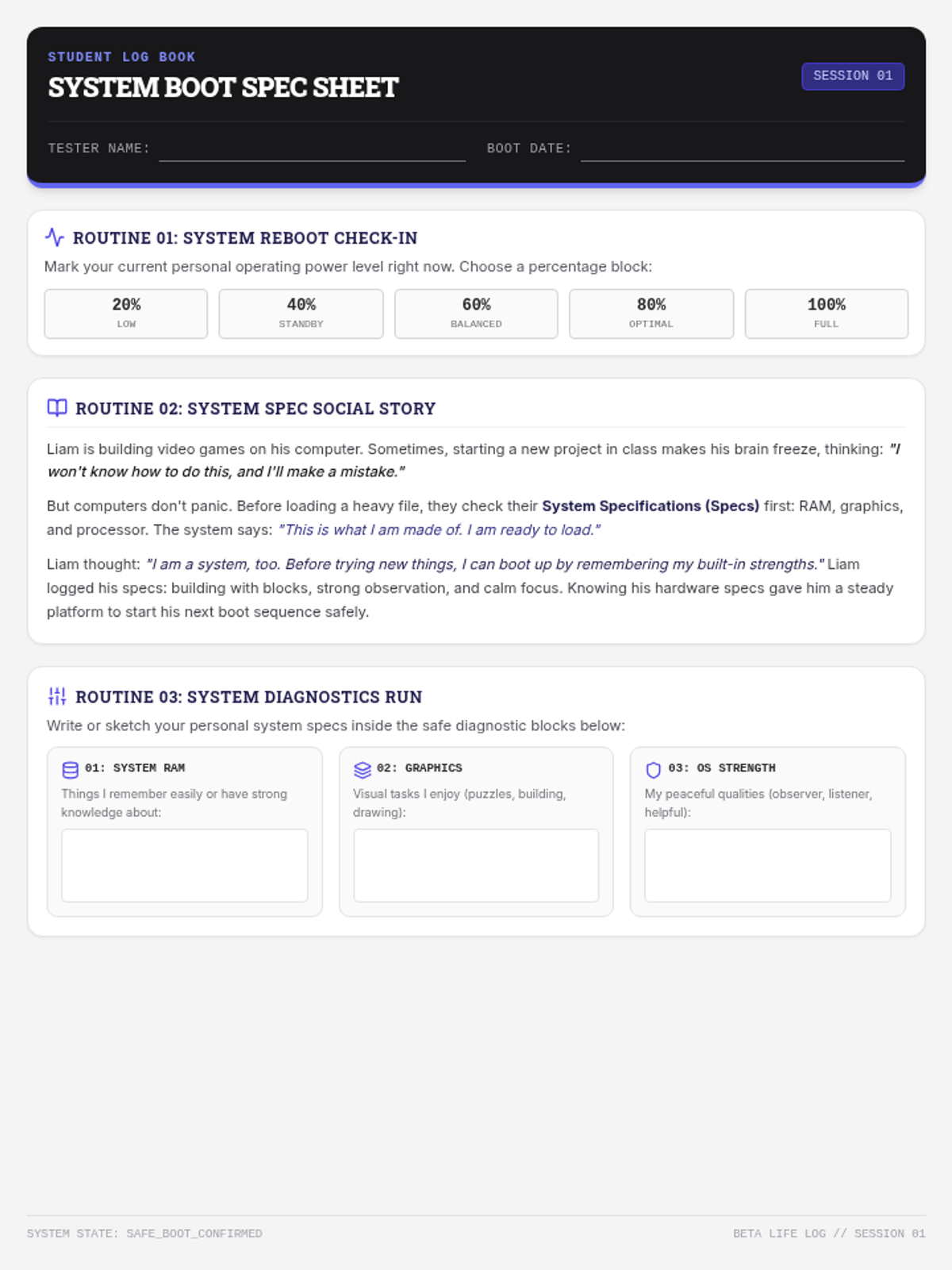
Session 1 establishes the "Field Guide" and "Wildwood Scouting" metaphor, helping the student identify their individual strengths as "field gear specs" to build baseline confidence.
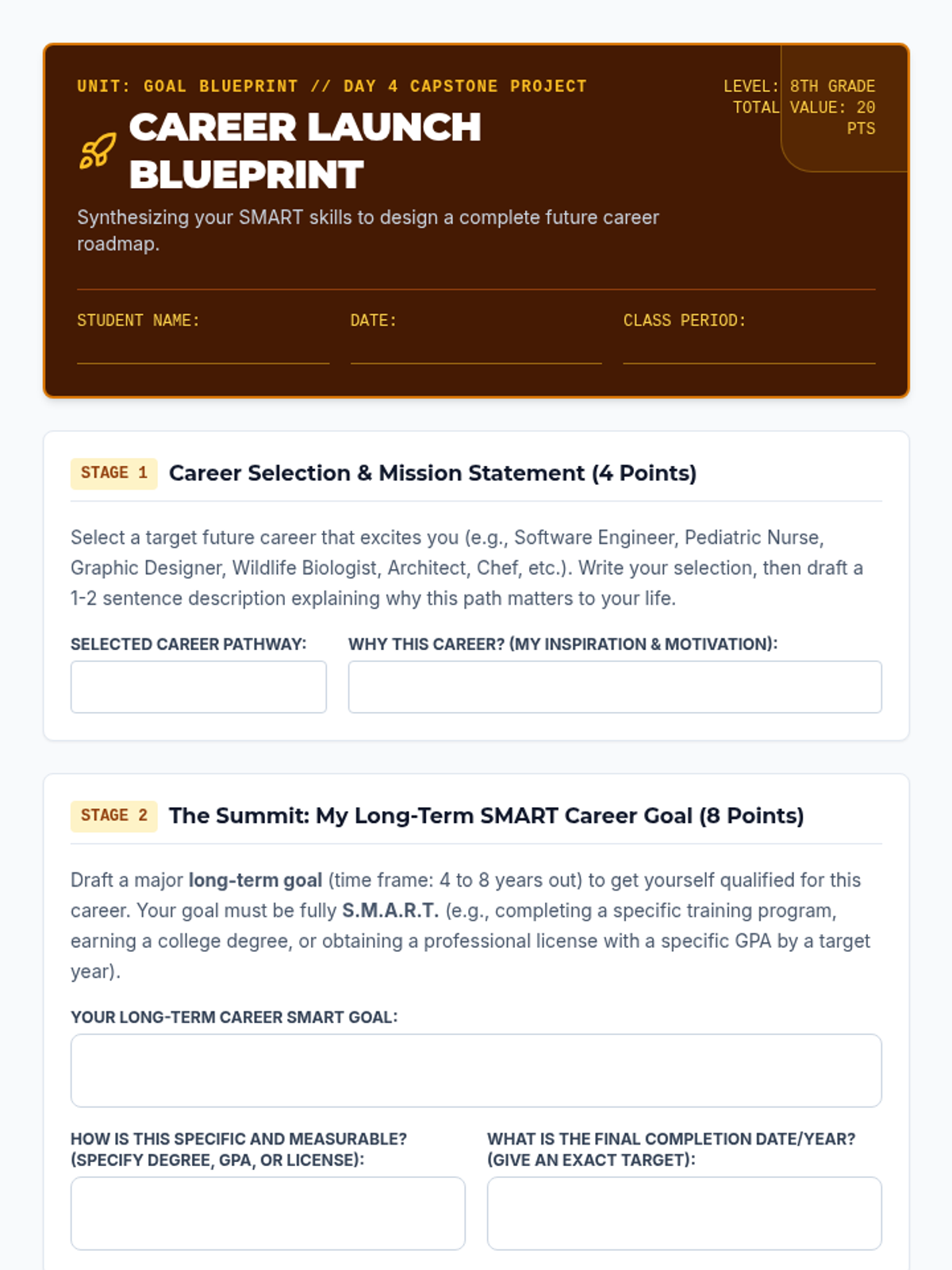
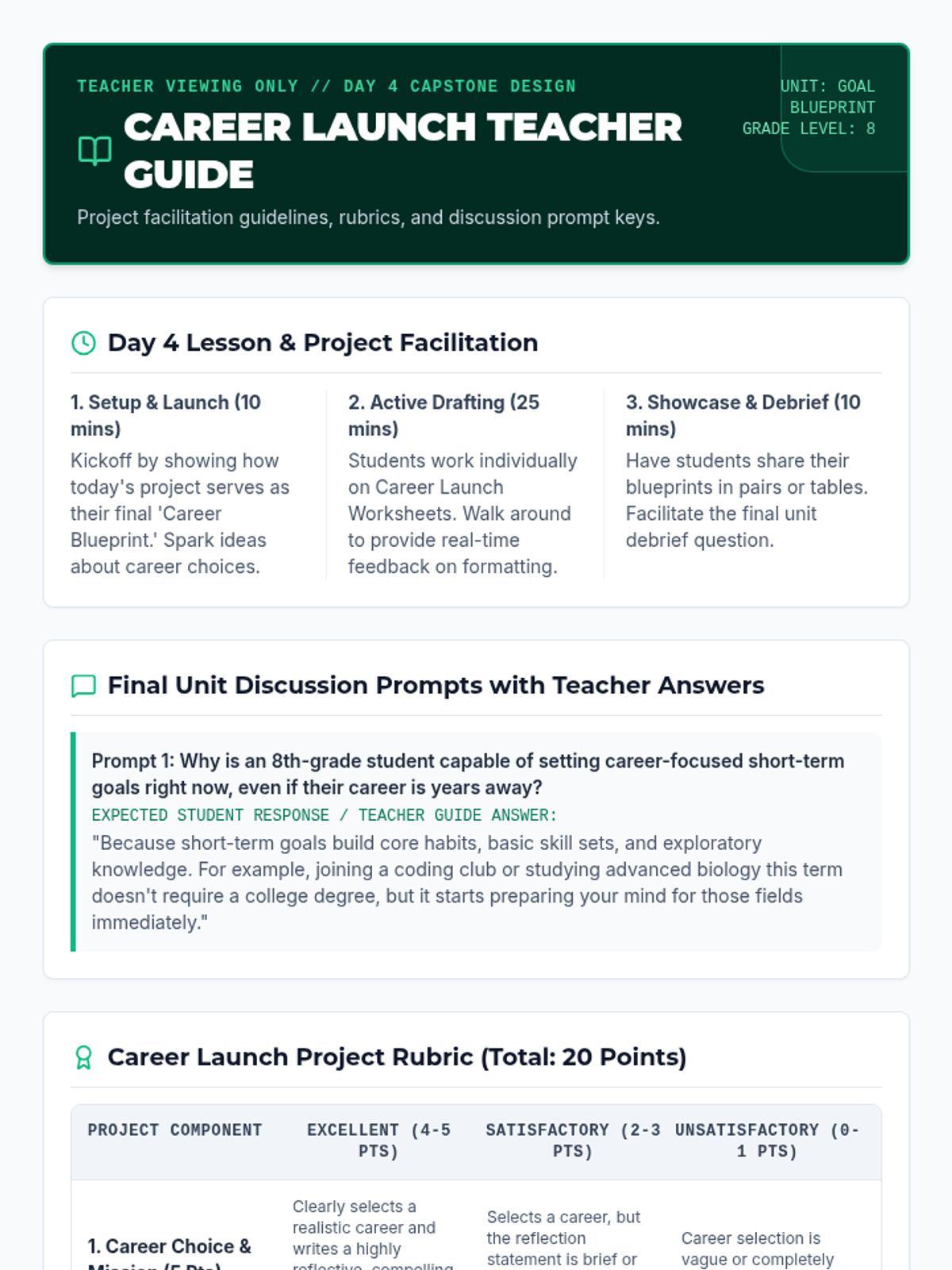
Day 4 of the Goal Blueprint unit. Students synthesize their goal-setting knowledge to design a comprehensive career roadmap, incorporating short-term and long-term SMART milestones.
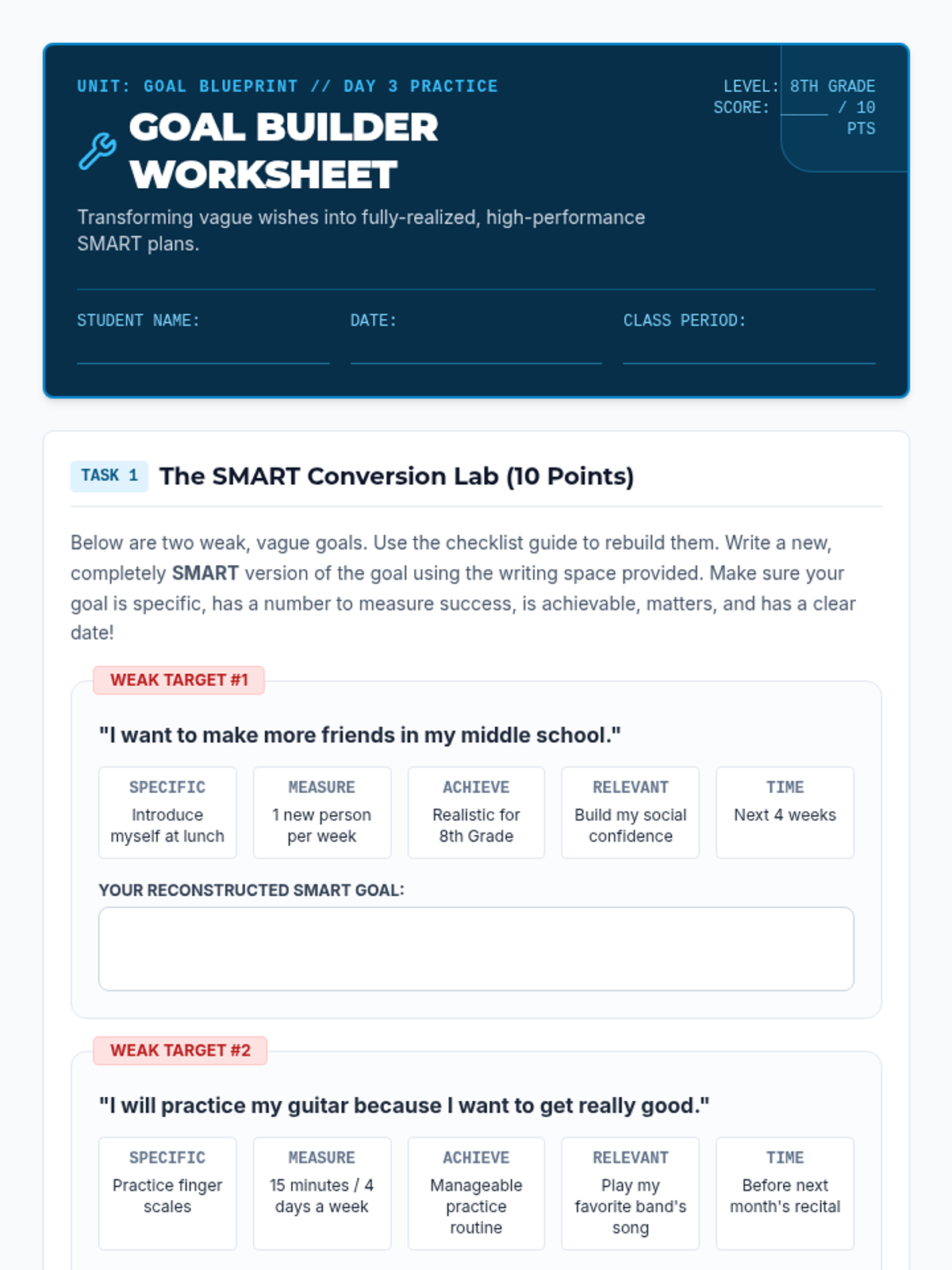
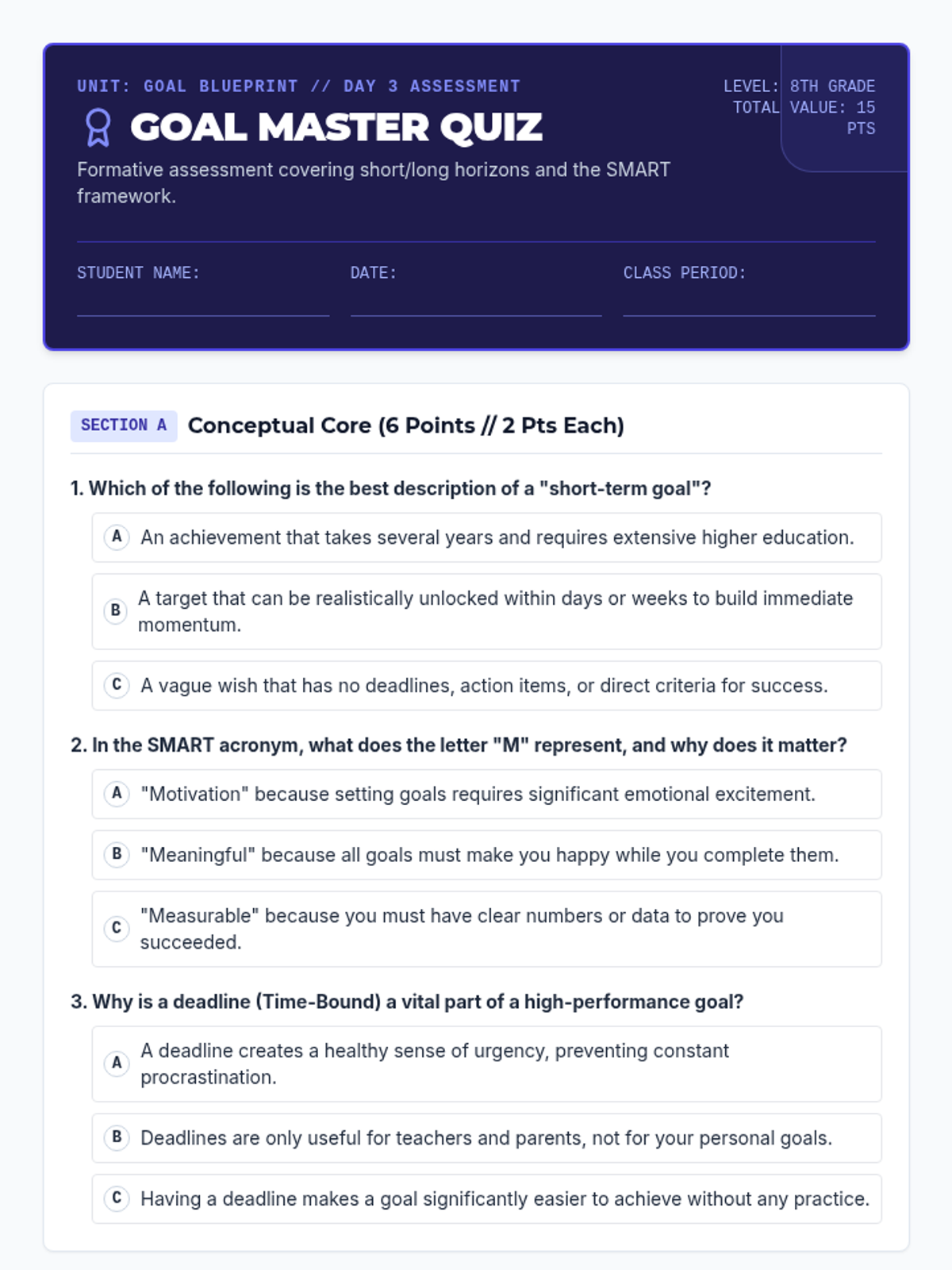
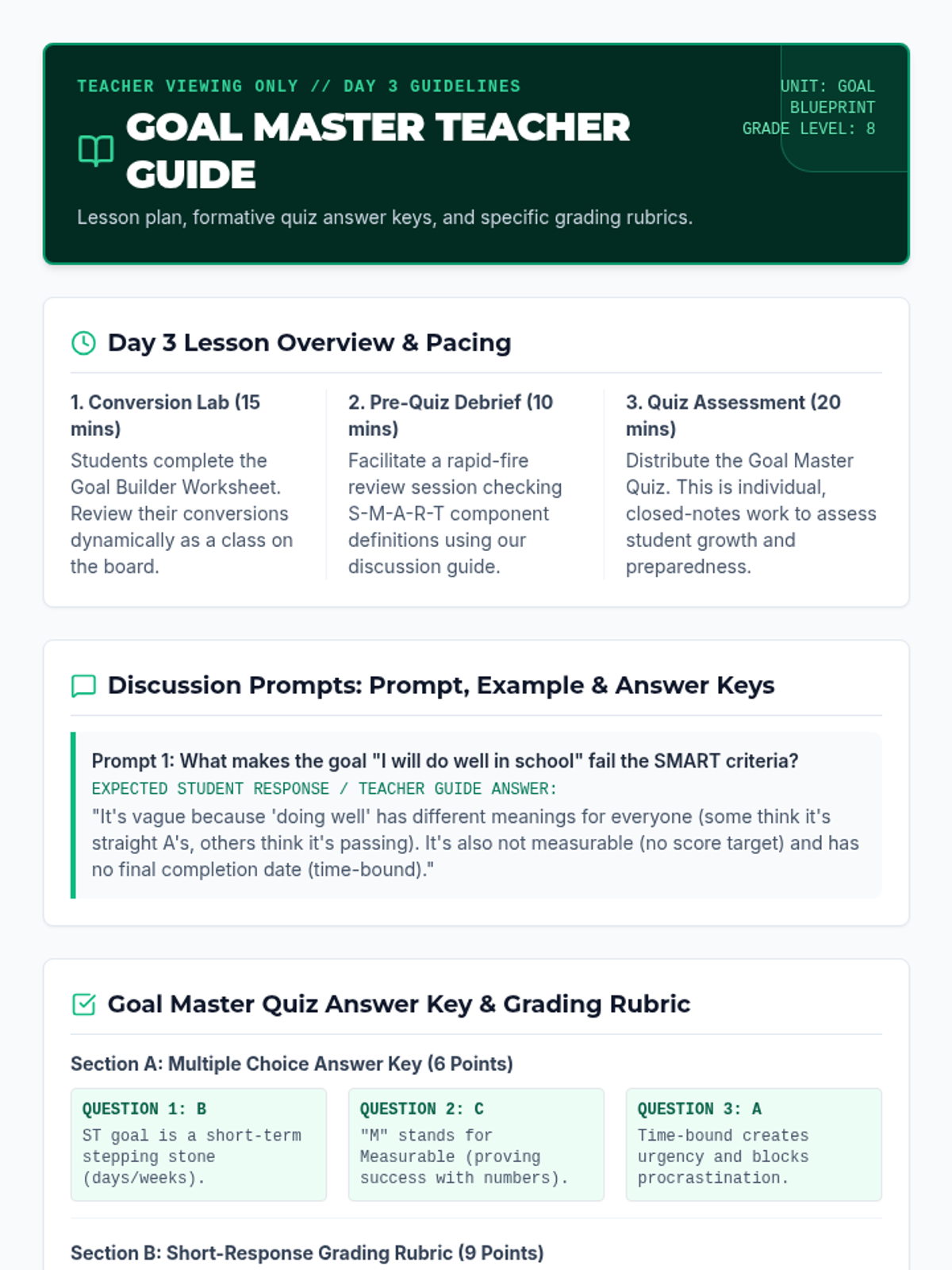
Day 3 of the Goal Blueprint unit. Students practice transforming weak goals into SMART goals through dynamic practice exercises and demonstrate mastery with a formative assessment.
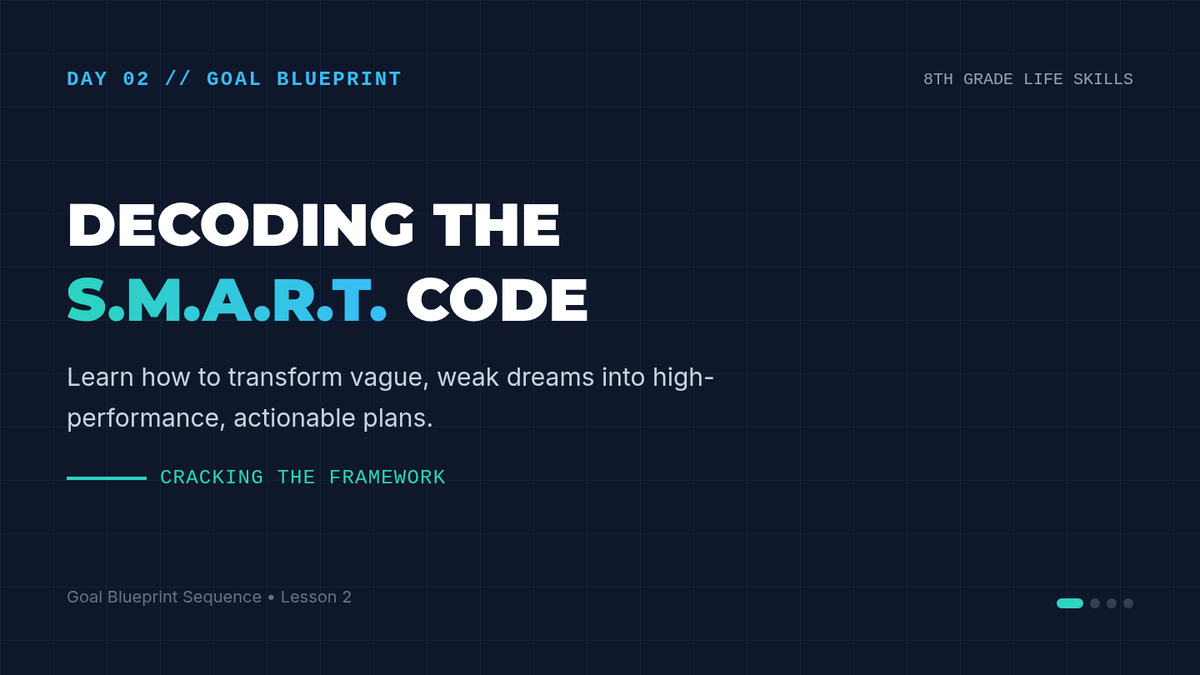
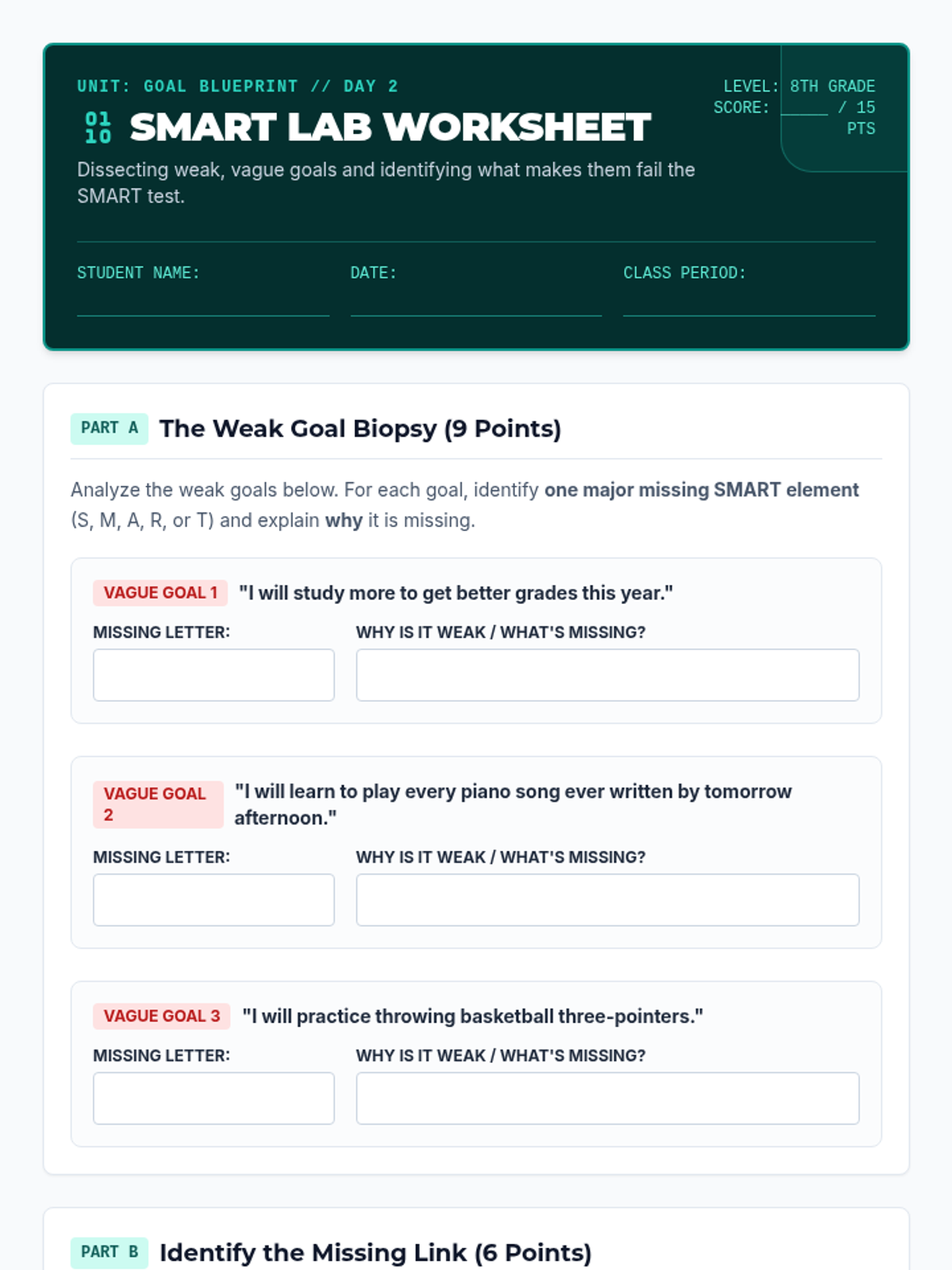
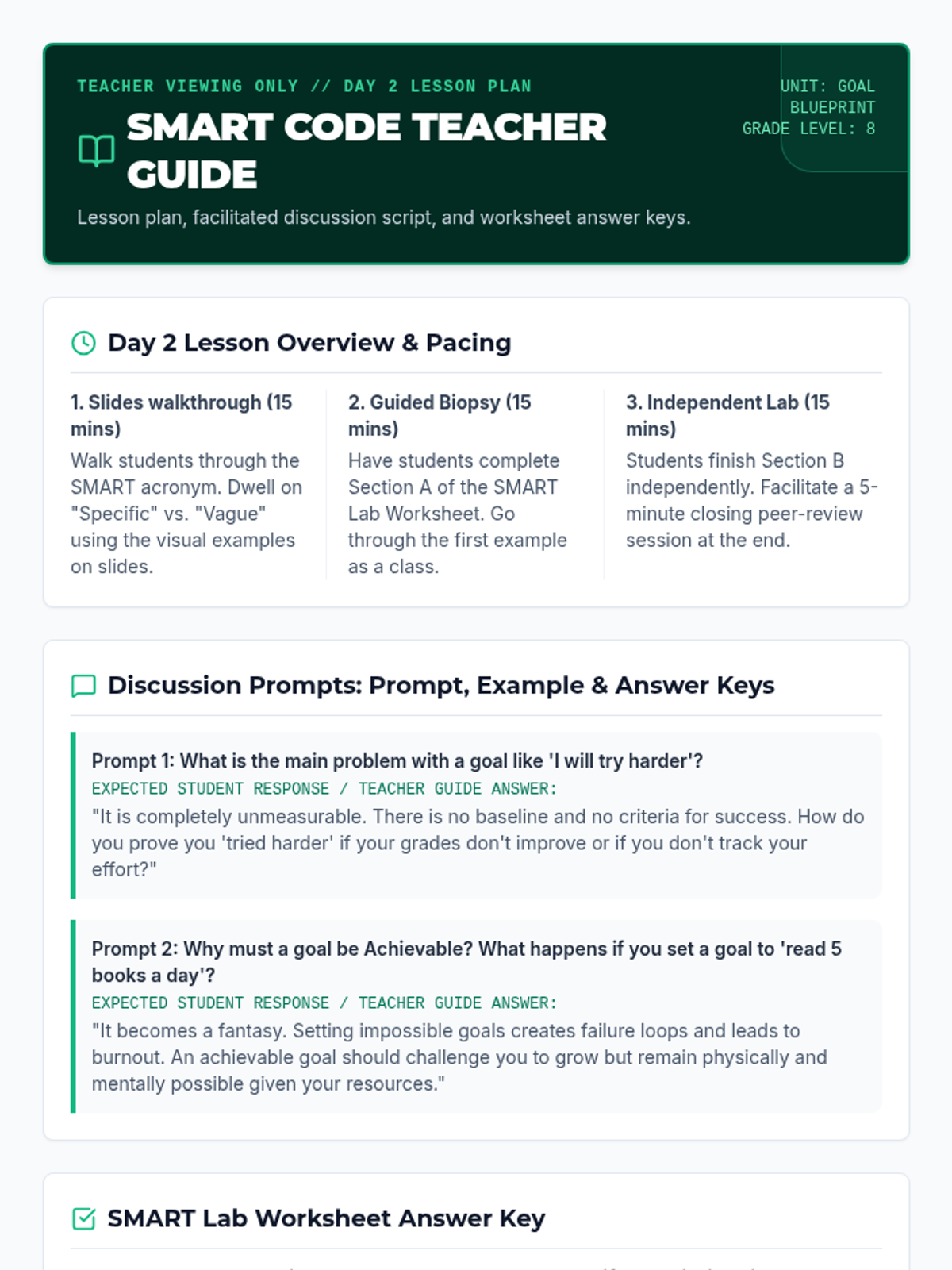
Day 2 of the Goal Blueprint unit. Students are introduced to the SMART goal criteria, dissecting each element and learning how to transform vague wishes into highly actionable plans.
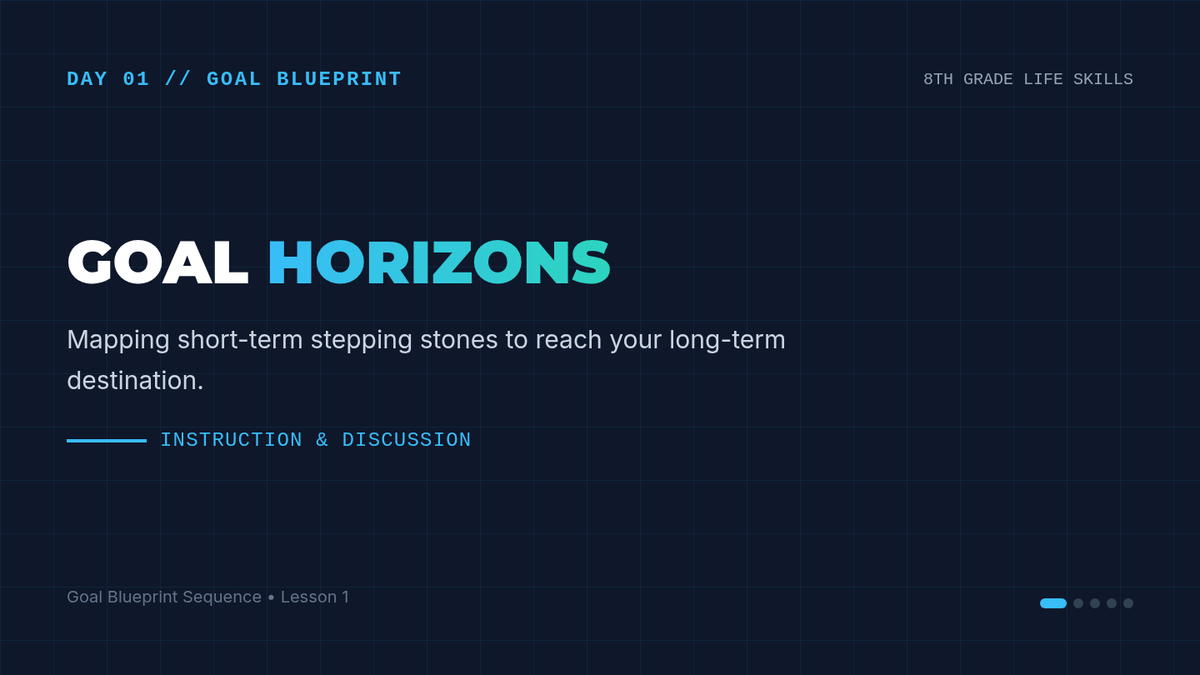
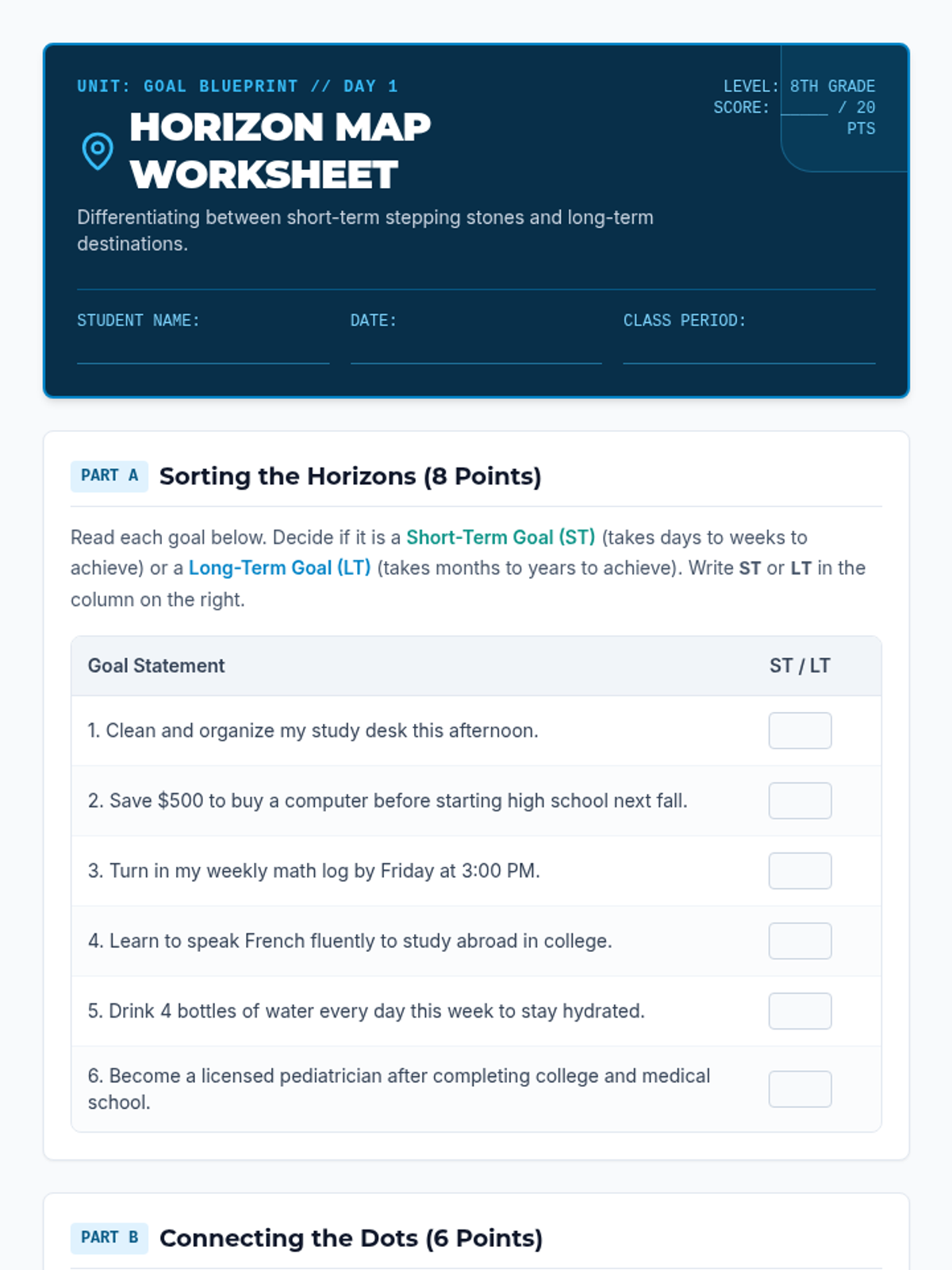
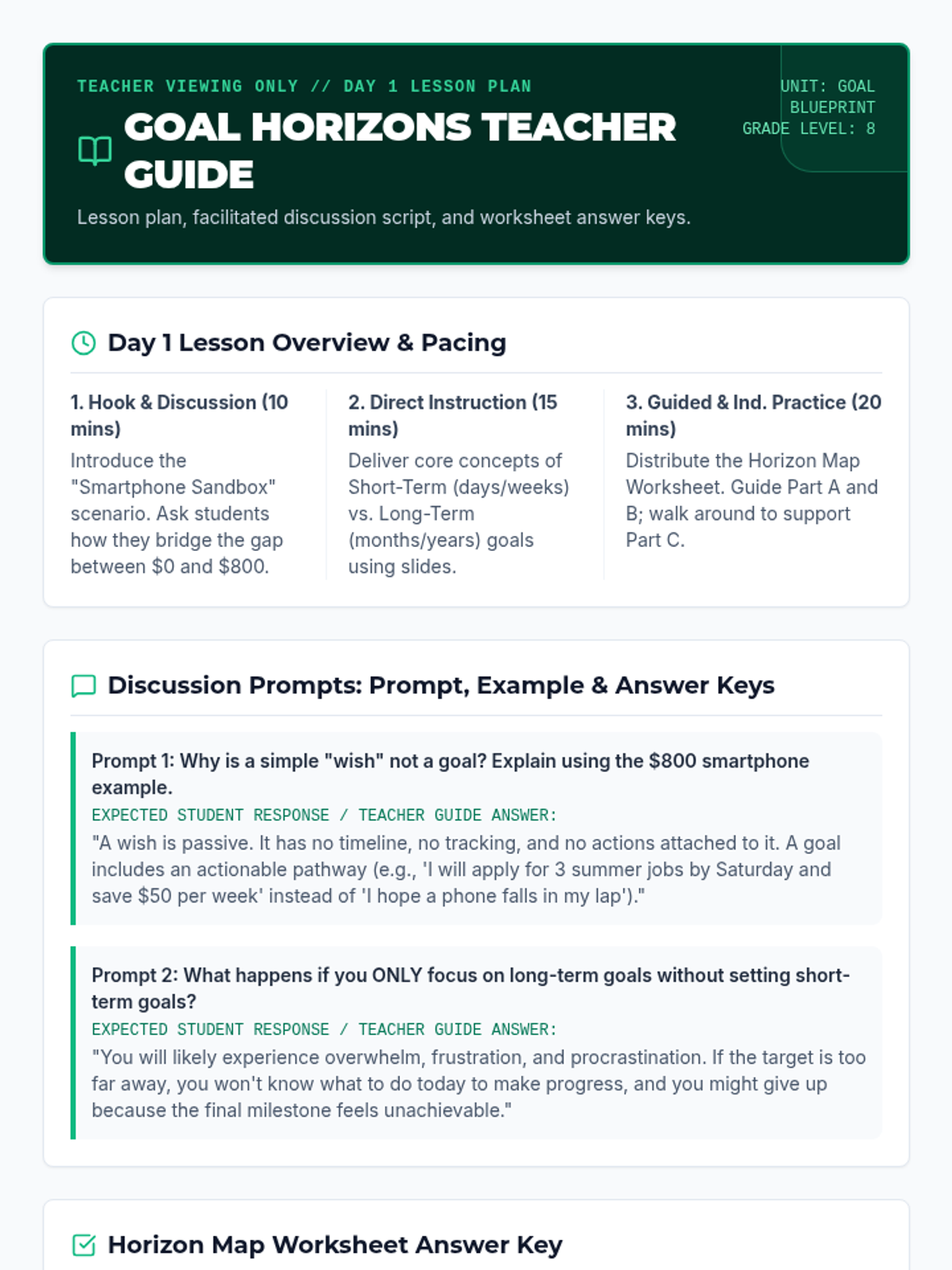
Day 1 of the Goal Blueprint unit. Students learn to differentiate between short-term and long-term goals, exploring how immediate actions build toward future milestones through engaging activities.
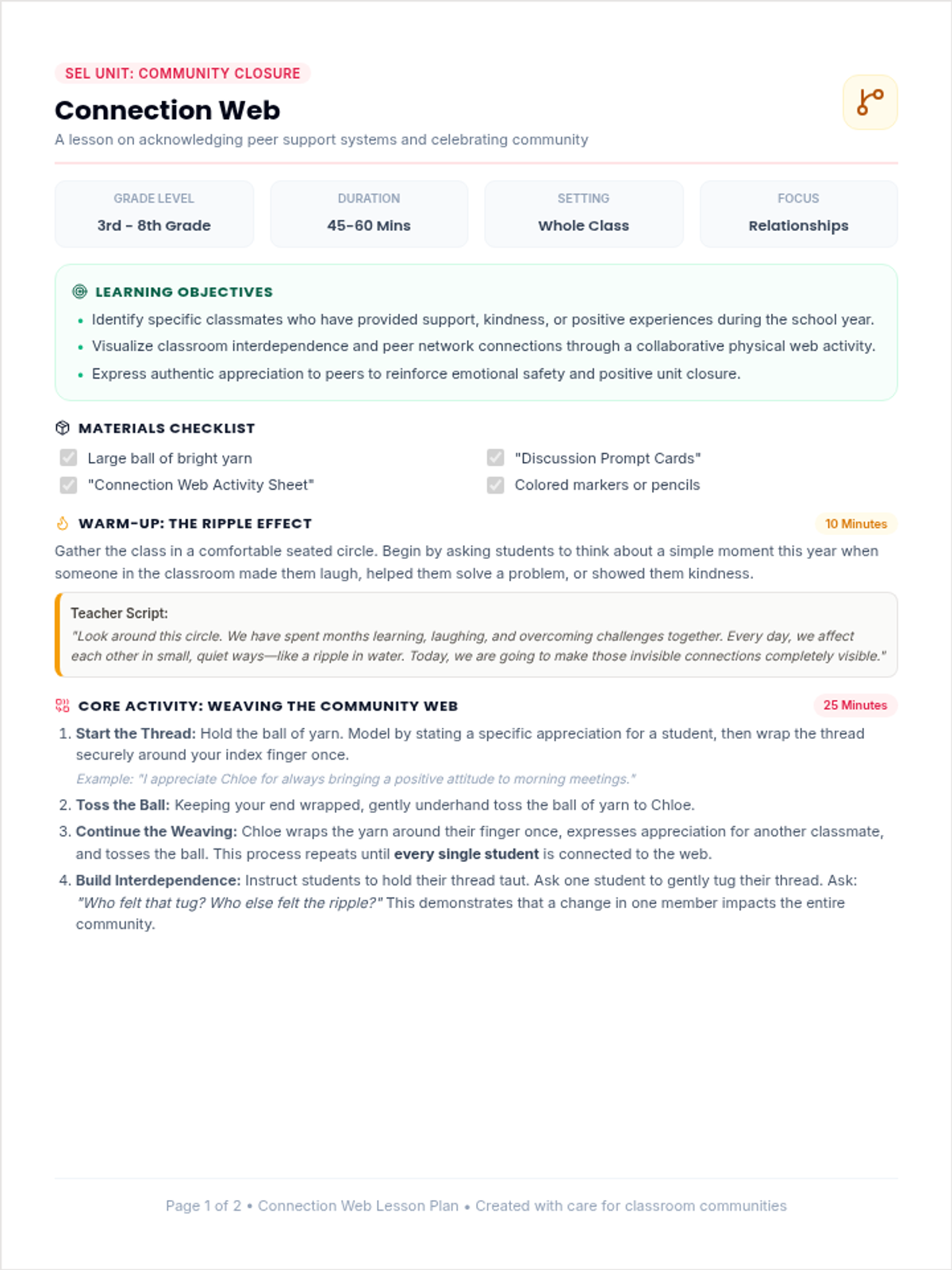
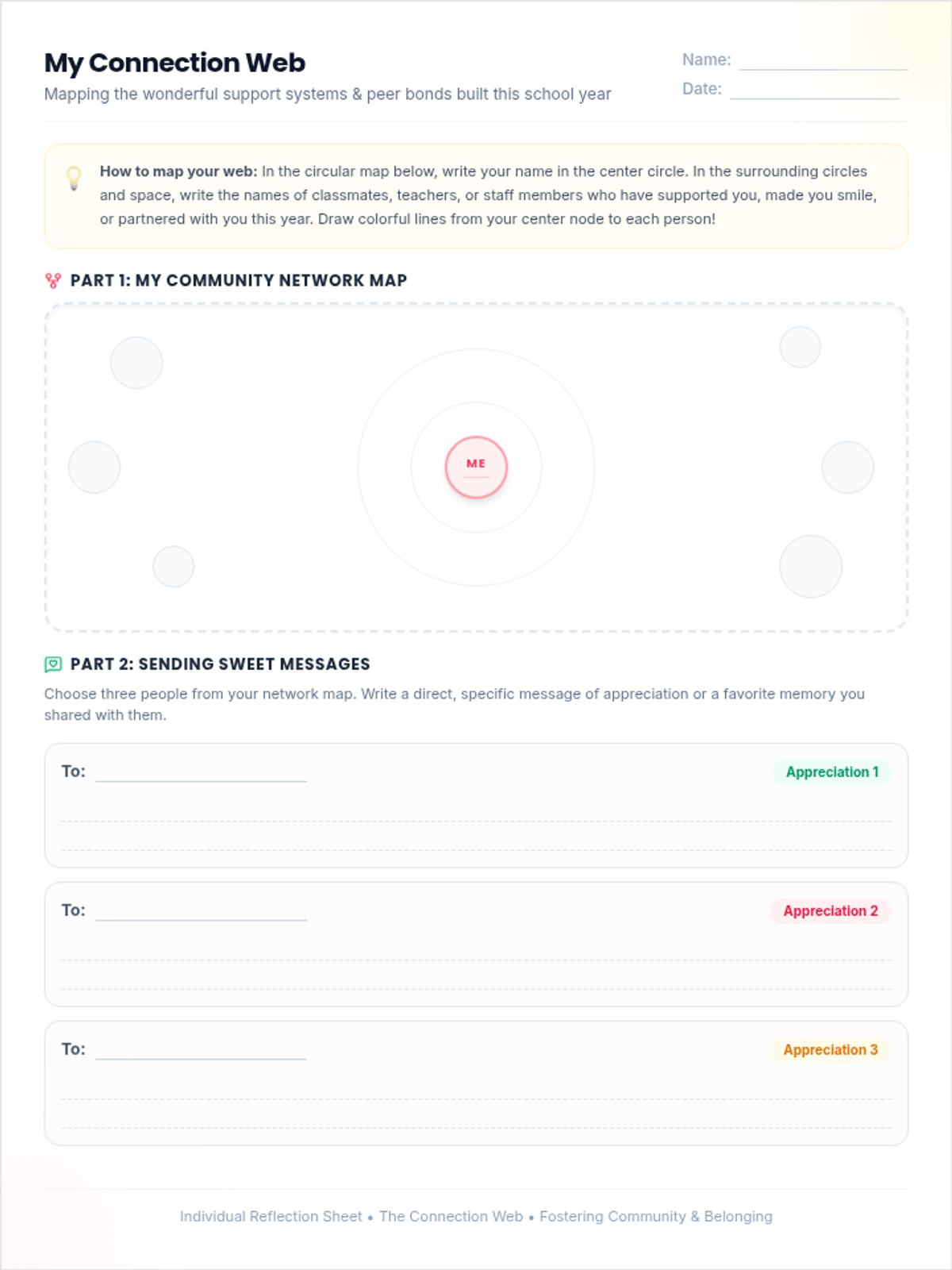
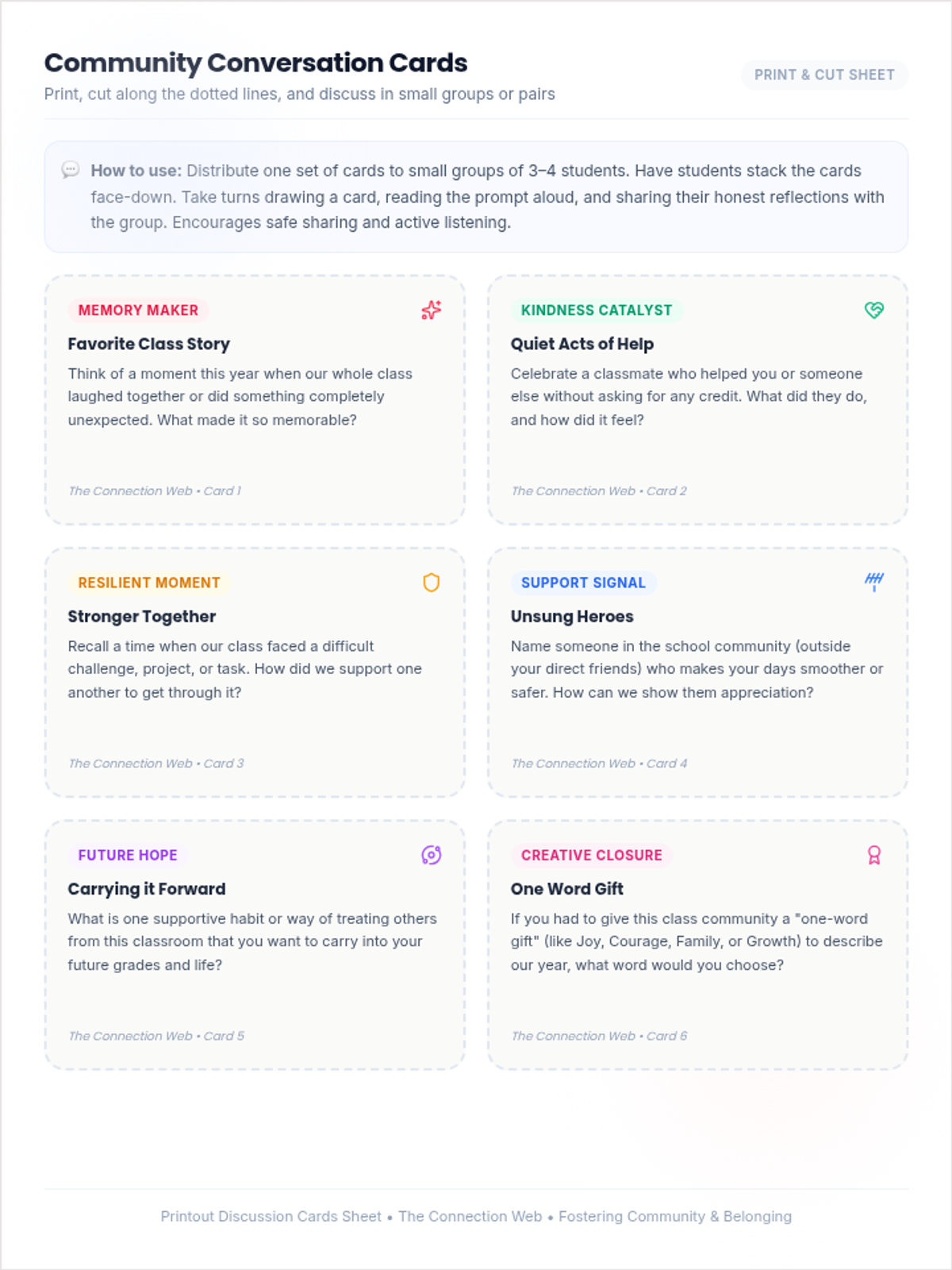
A warm, reflective social-emotional learning lesson designed to help students celebrate their classroom community, map their peer support networks, and experience positive closure as the school year ends.
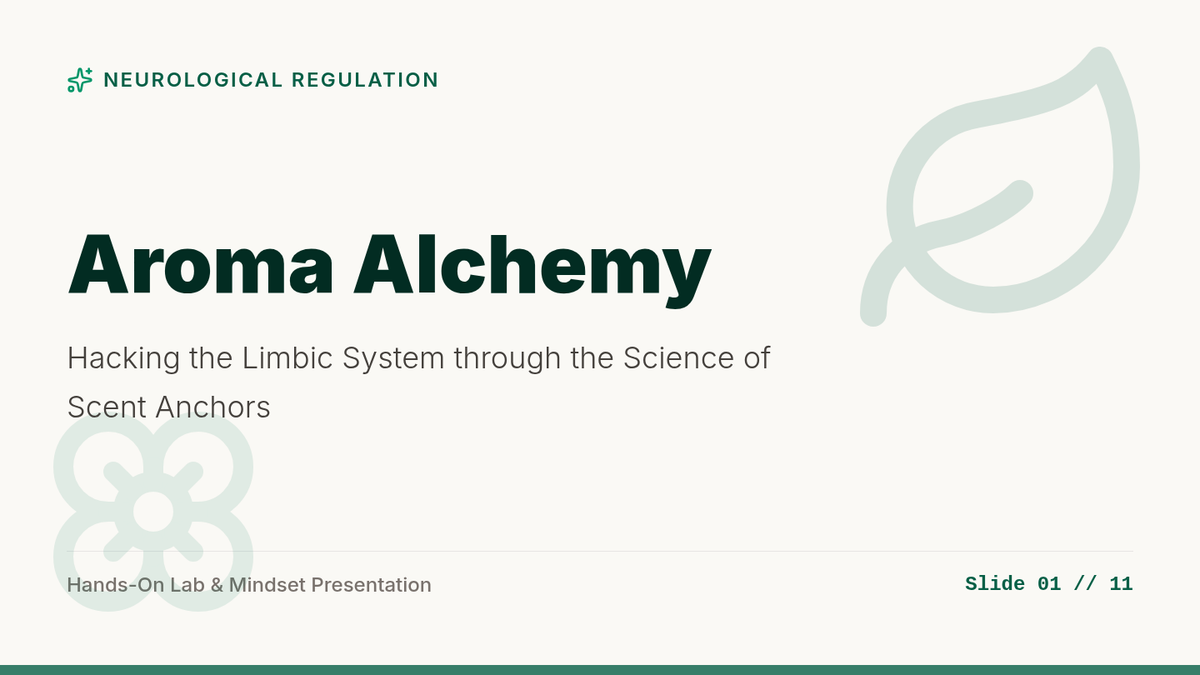
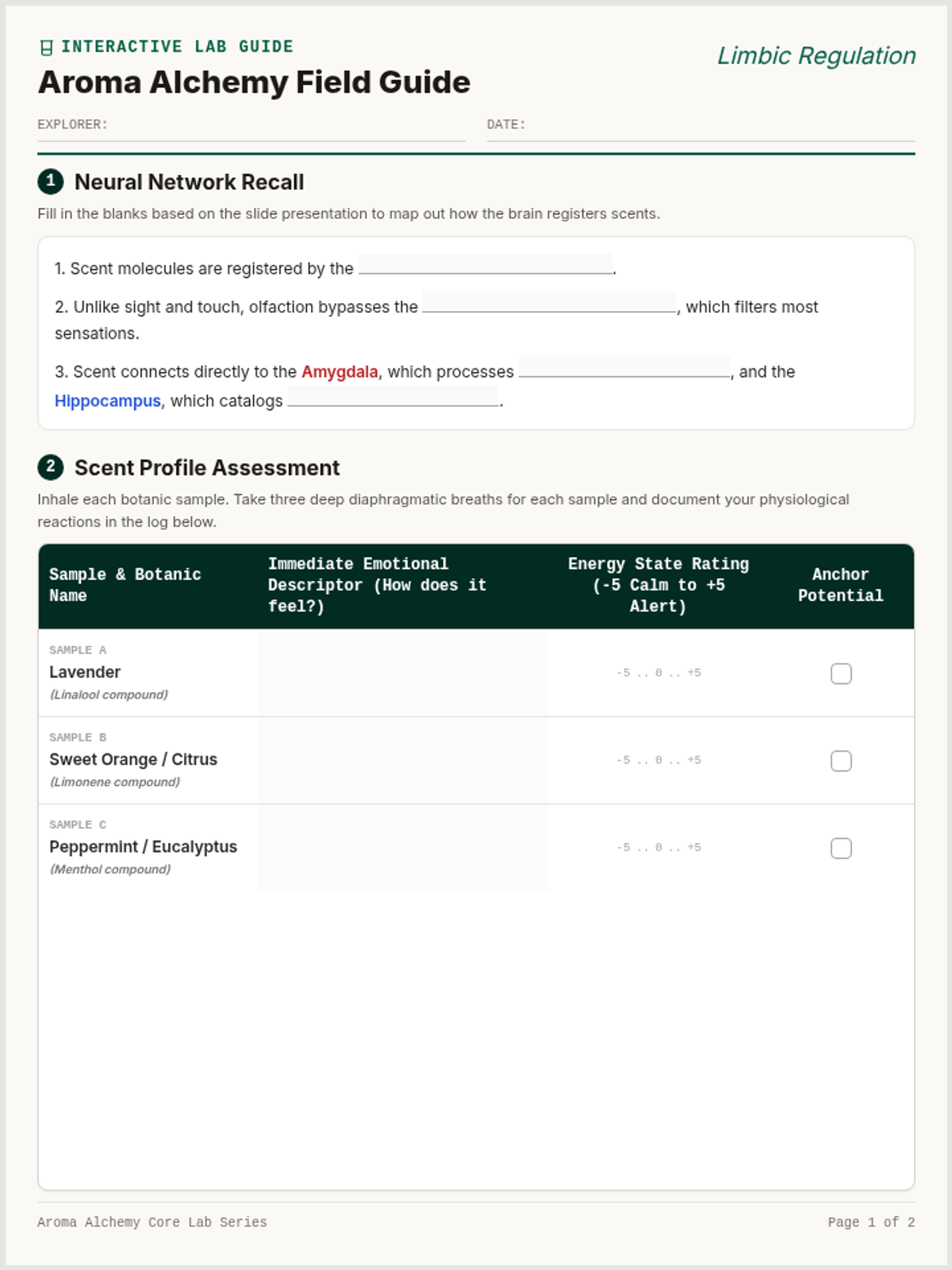
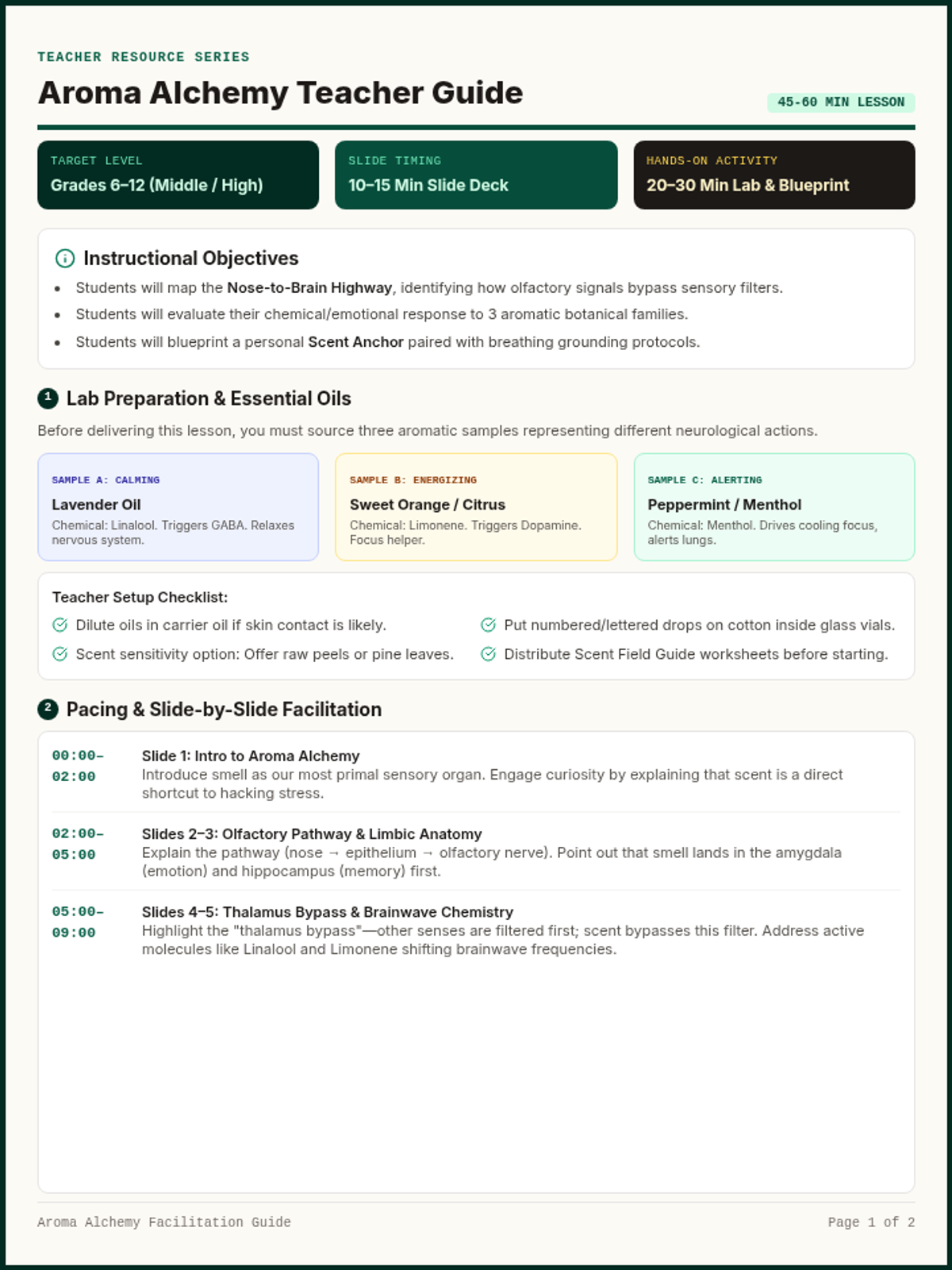
A lesson exploring the neurological science of olfactory regulation, the anatomy of the limbic system, and the practical application of scent anchoring for emotional grounding. Includes a 11-slide presentation, a student-facing field guide for hands-on activities, and a teacher facilitation guide.
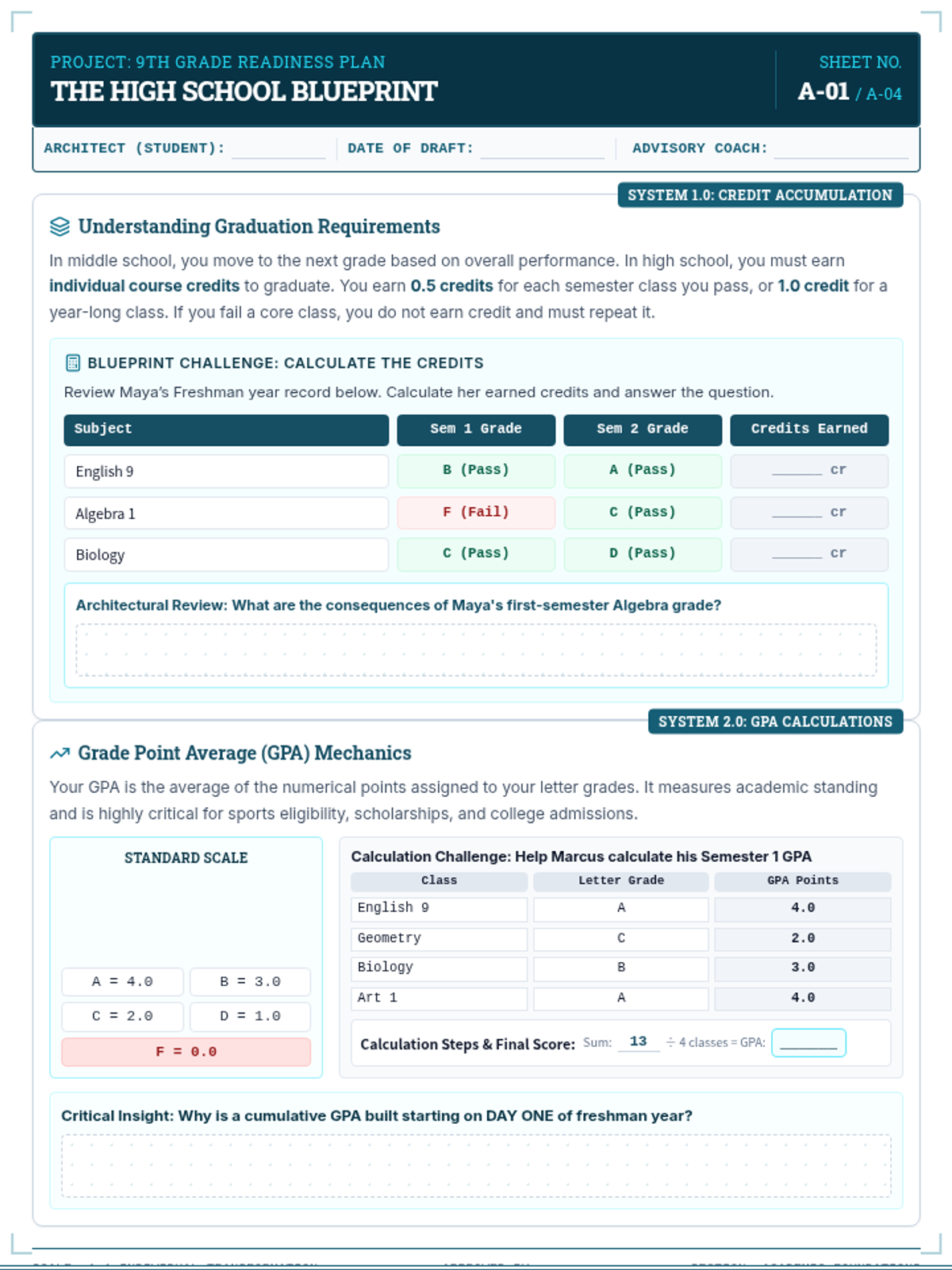
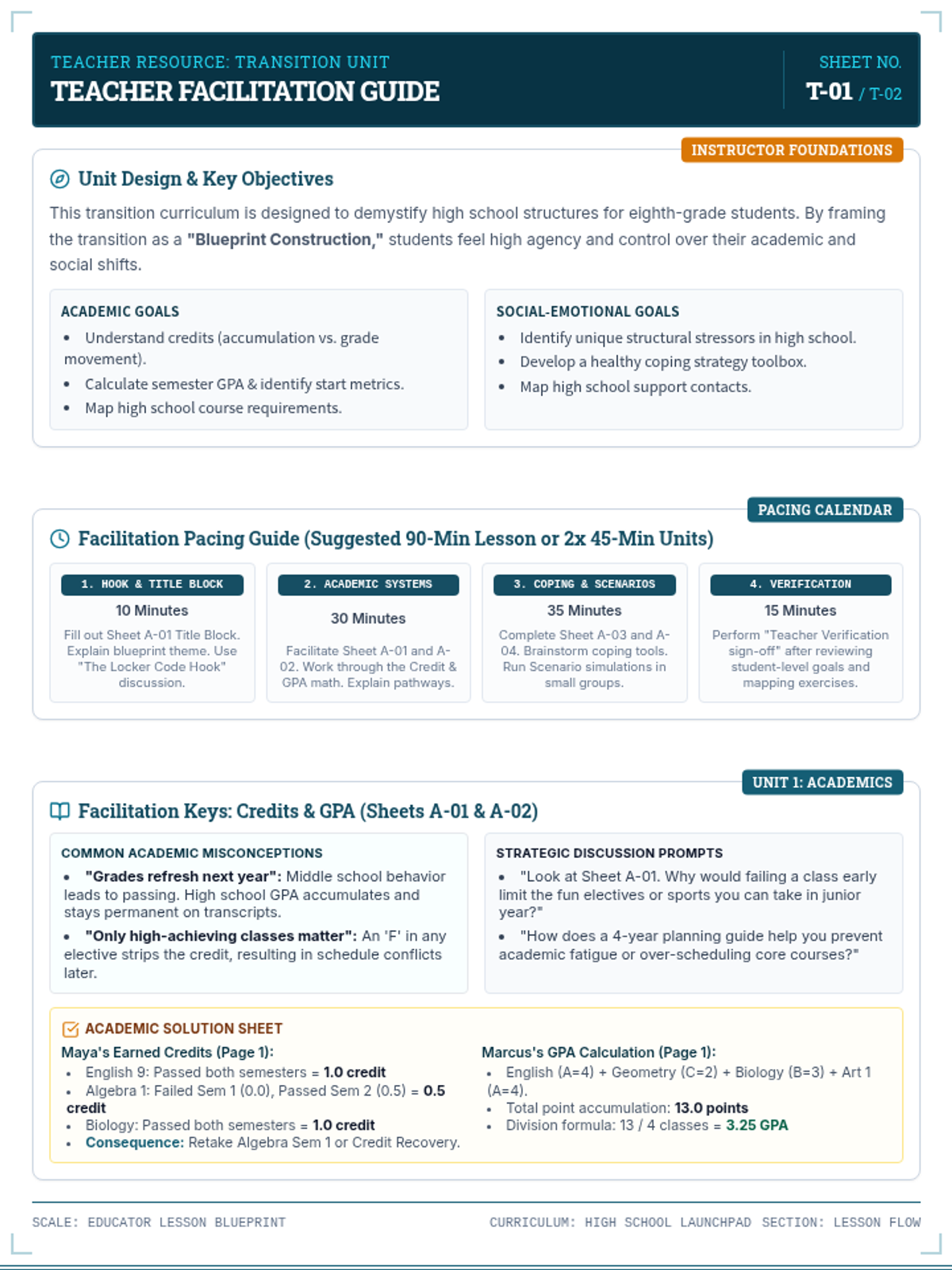
An interactive transition unit designed to help eighth graders navigate the academic and social-emotional shifts of high school. Students explore credit tracking, GPA calculations, stress-management techniques, and high school support systems.
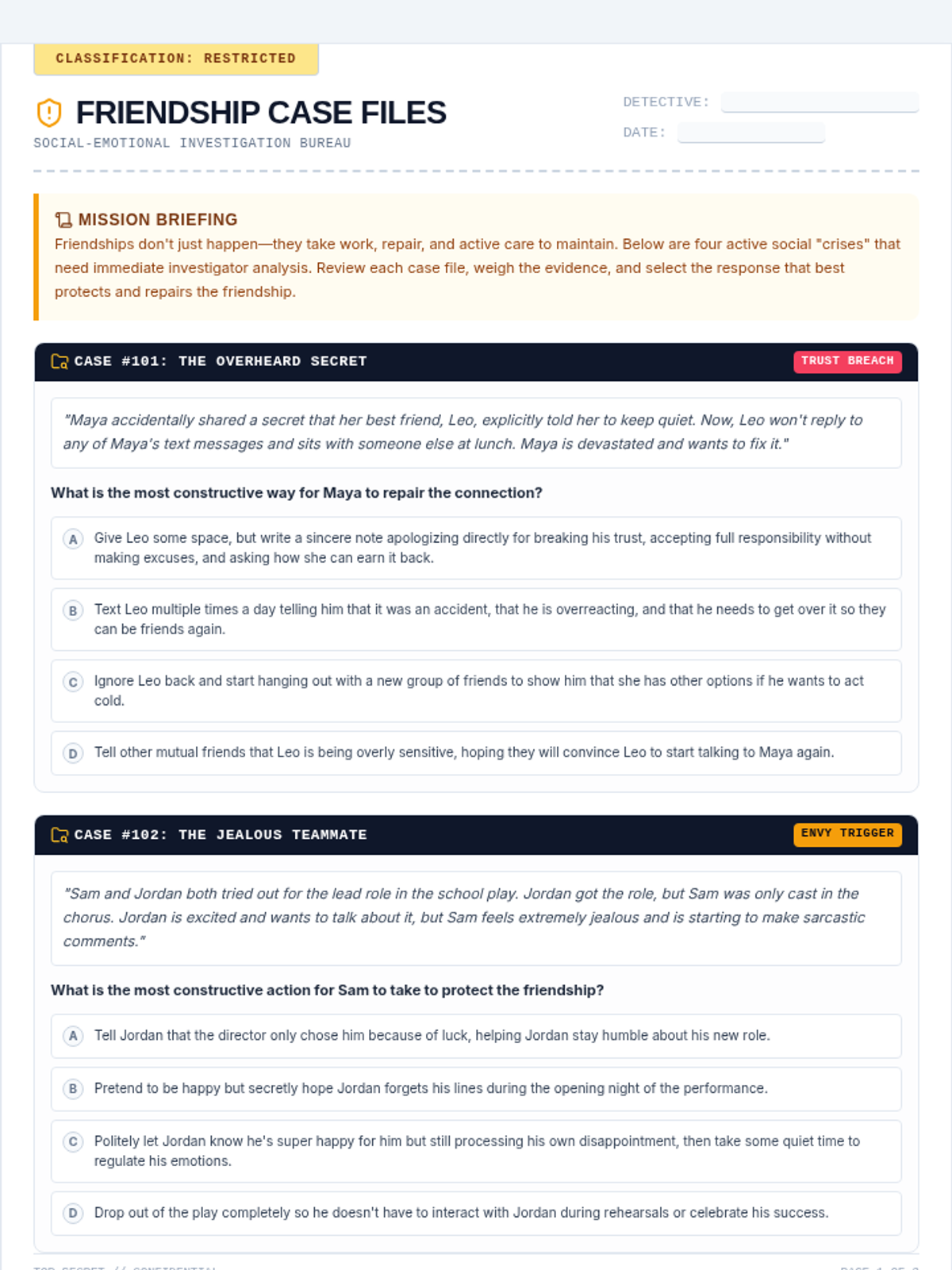
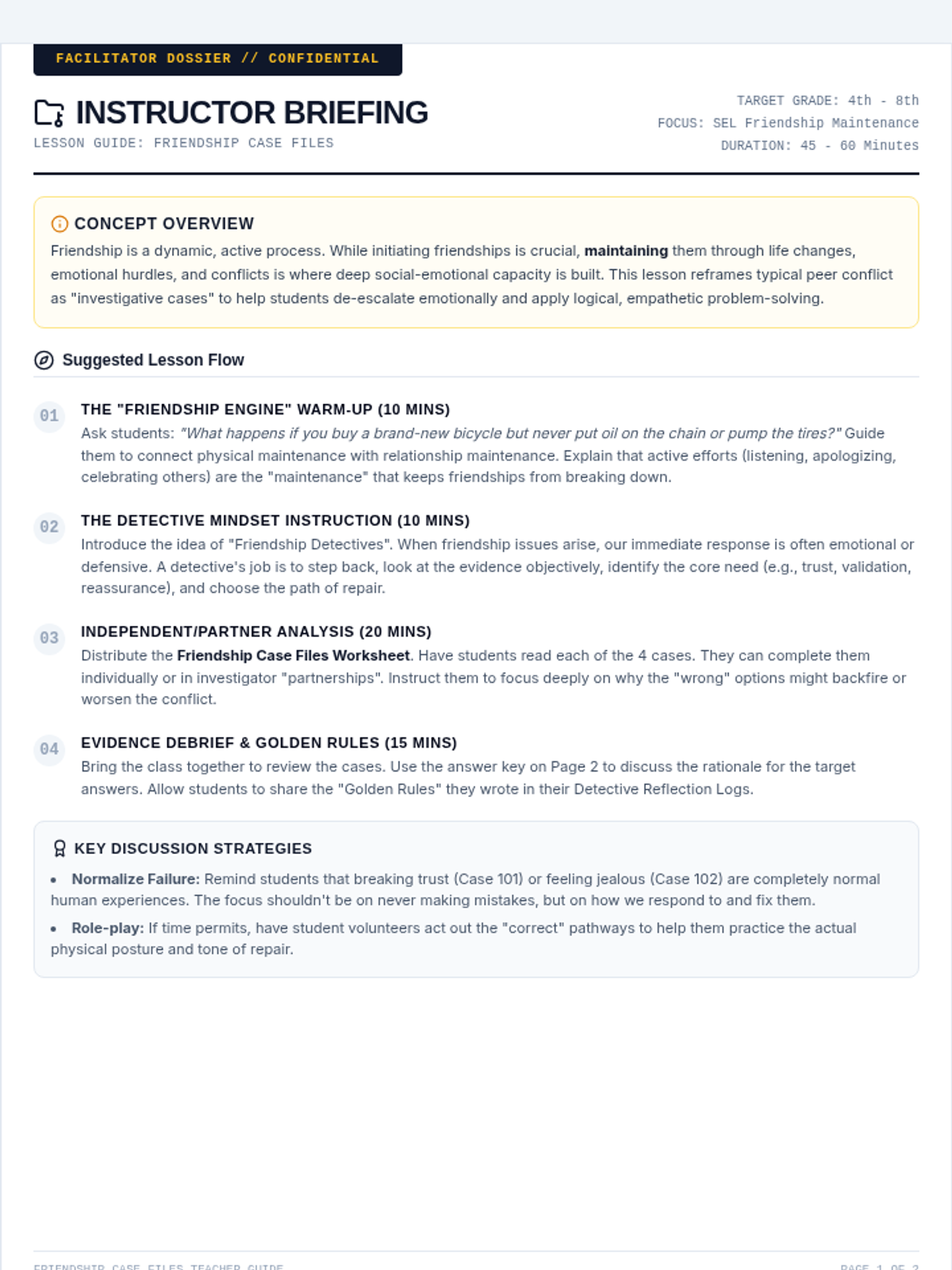
A social-emotional learning lesson focusing on critical skills for maintaining friendships, such as active listening, resolving conflicts, showing empathy, and repairing mistakes. Students act as "Friendship Detectives" to analyze realistic social scenarios styled as detective case files.
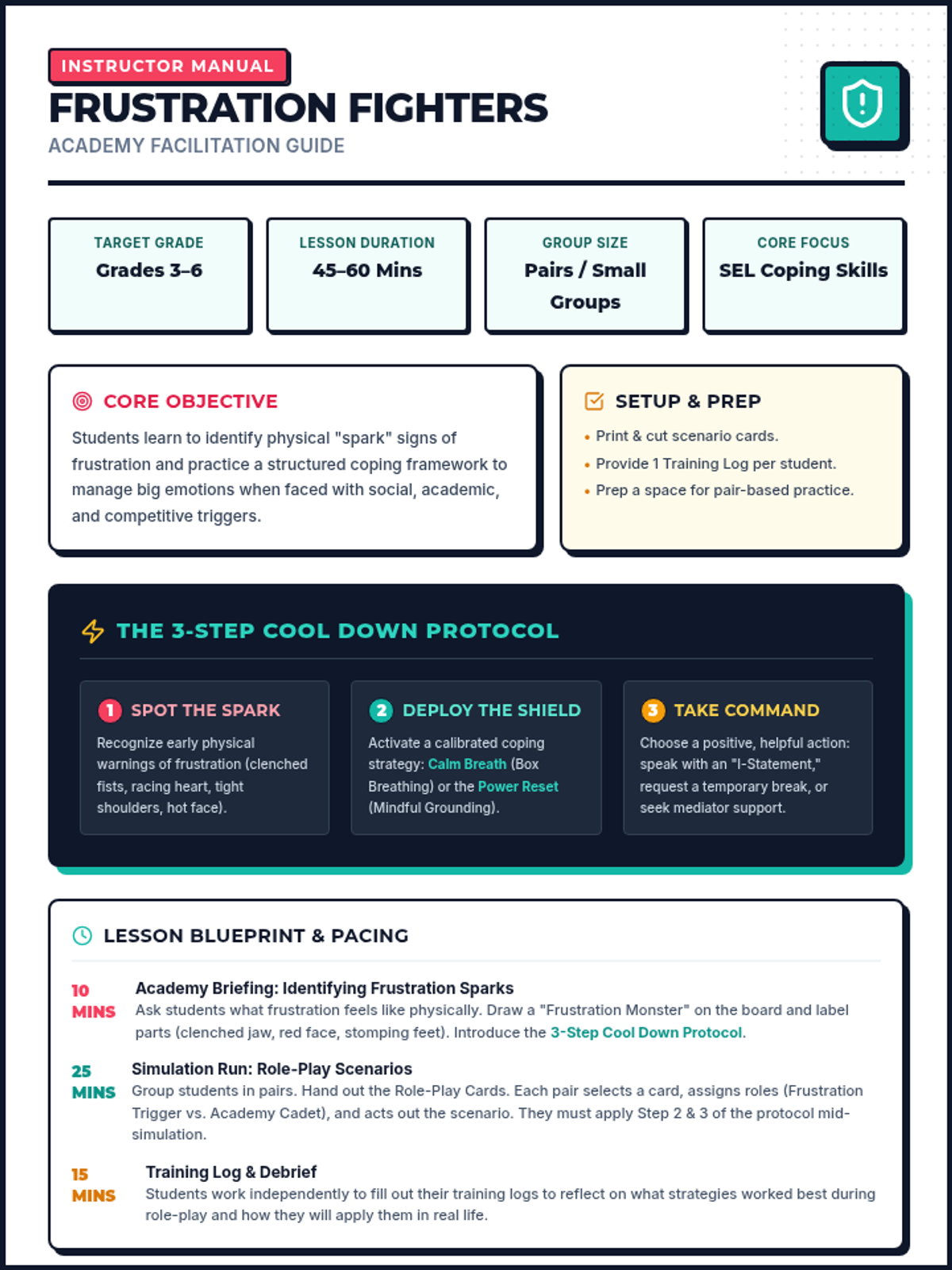
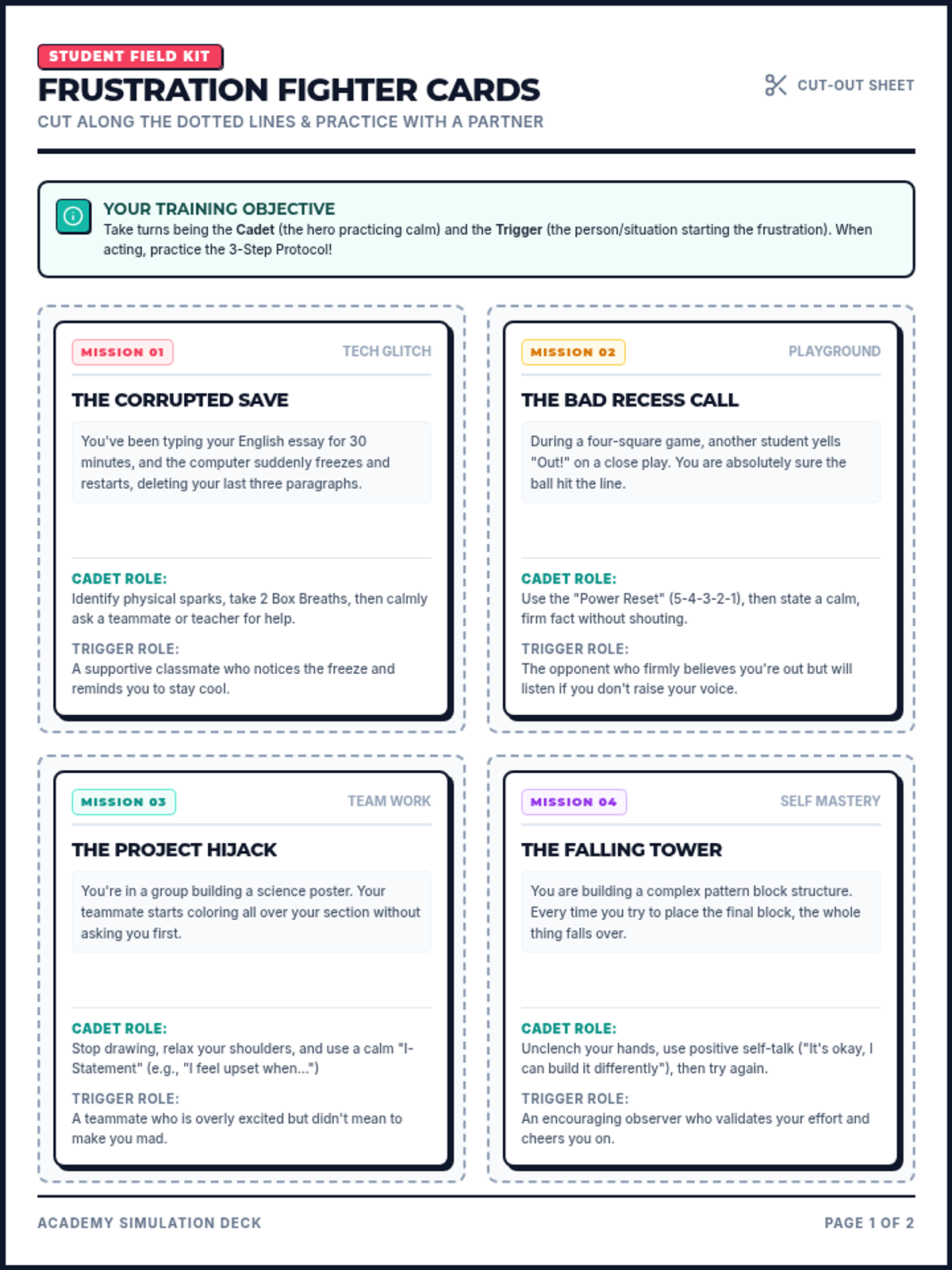
An interactive, superhero-themed lesson designed to help elementary and middle school students recognize frustration triggers and practice evidence-based coping skills. Through structured role-play and a reflective training log, students practice calming strategies in relatable social scenarios.
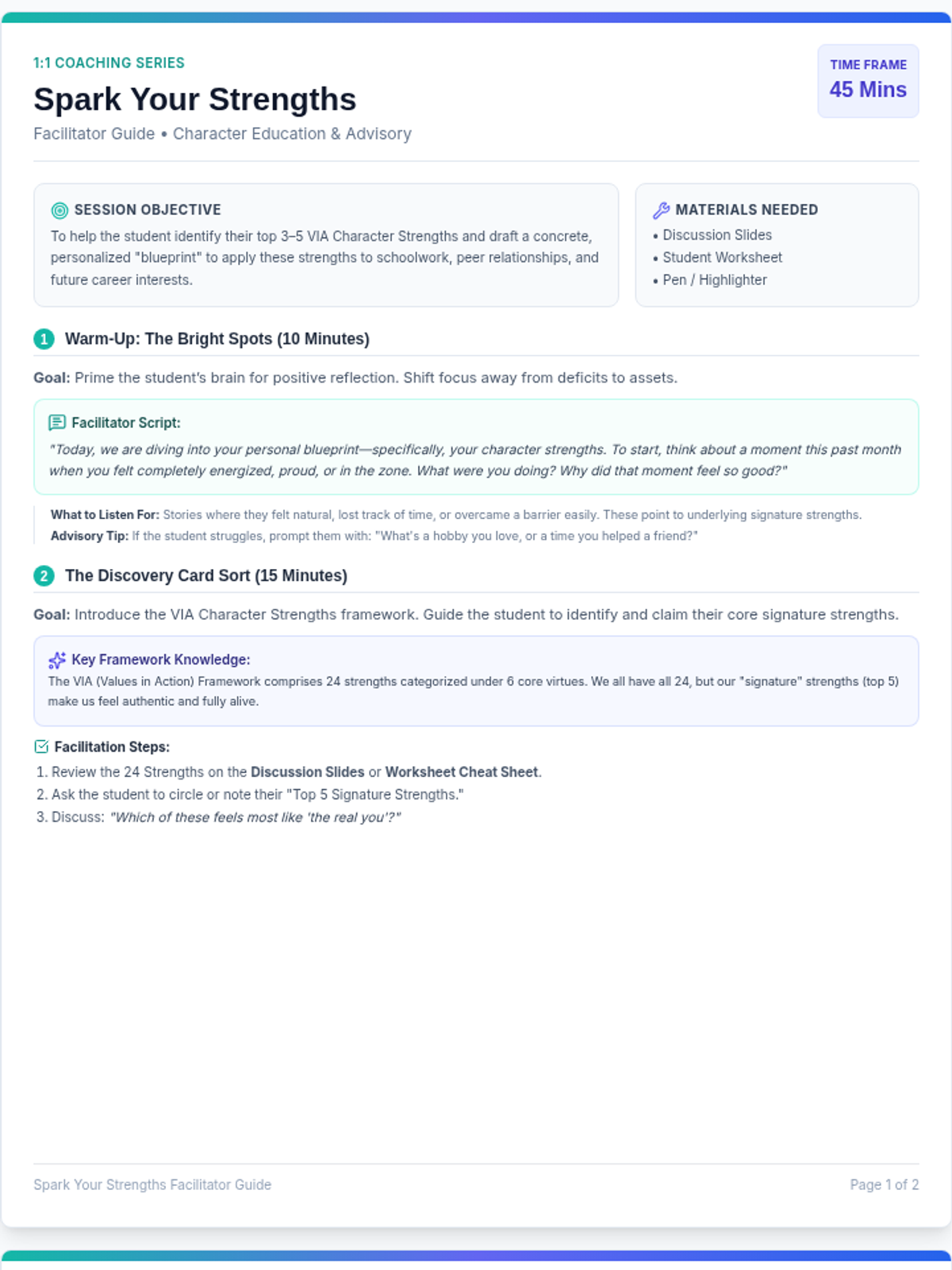
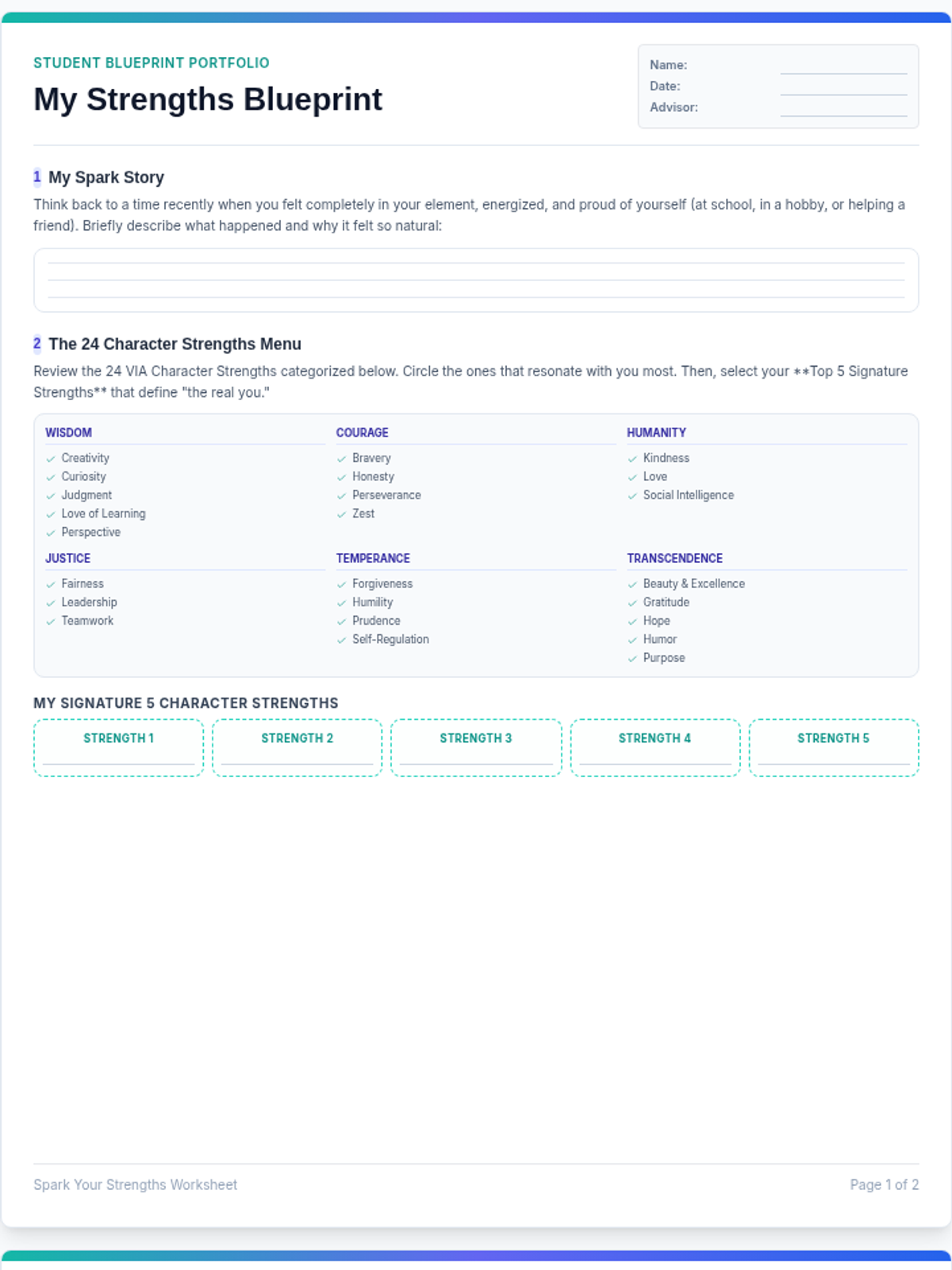
A highly personalized 1:1 advisory or counseling lesson designed to help middle or high school students discover their VIA Character Strengths, map them to current school challenges, and project them into future life and career opportunities.