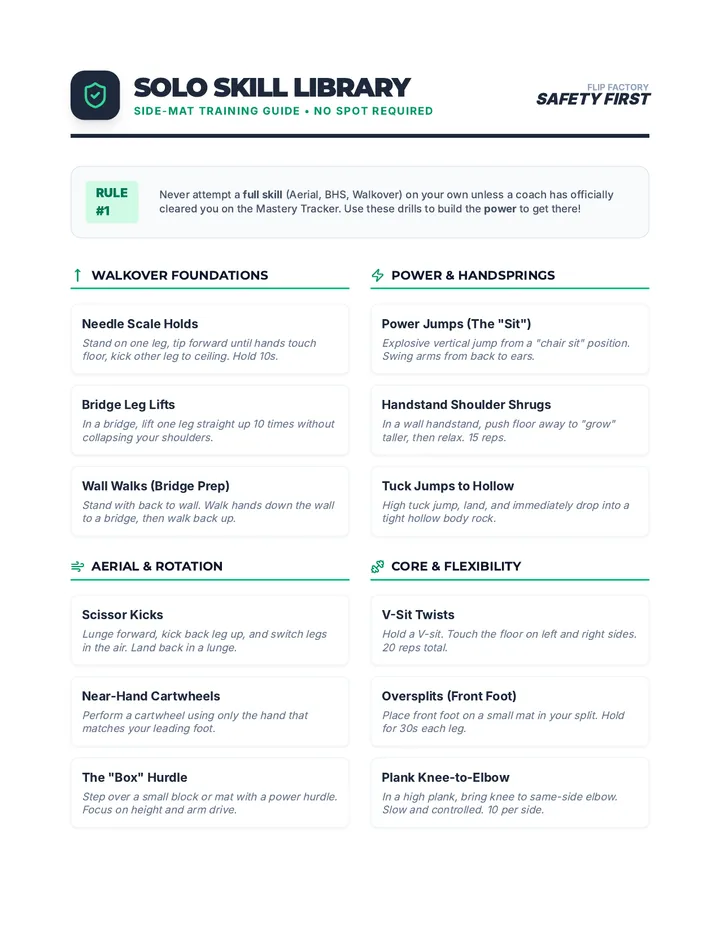
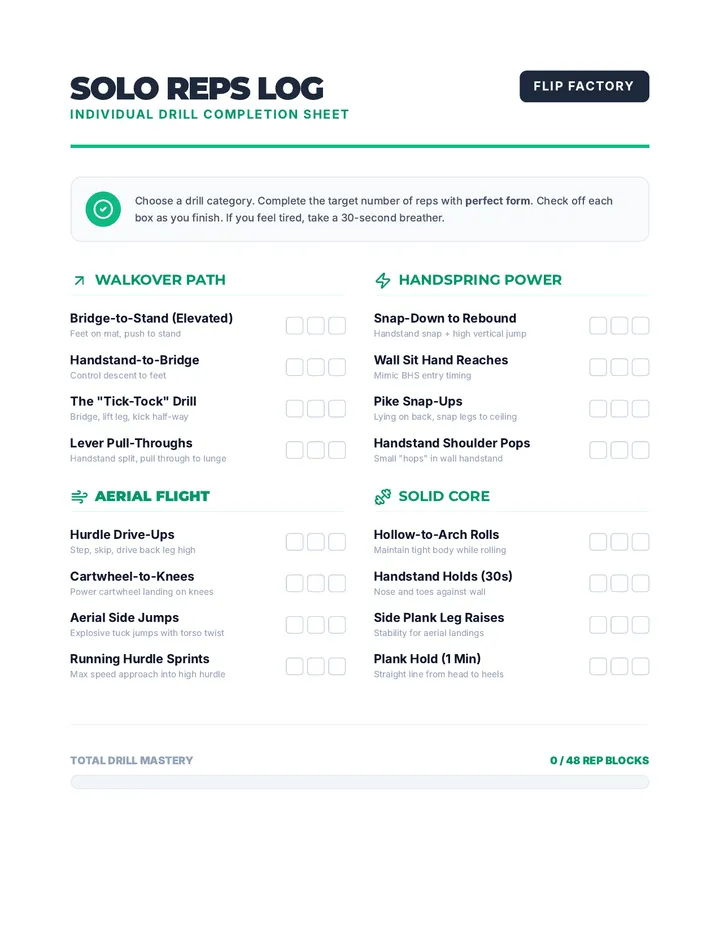
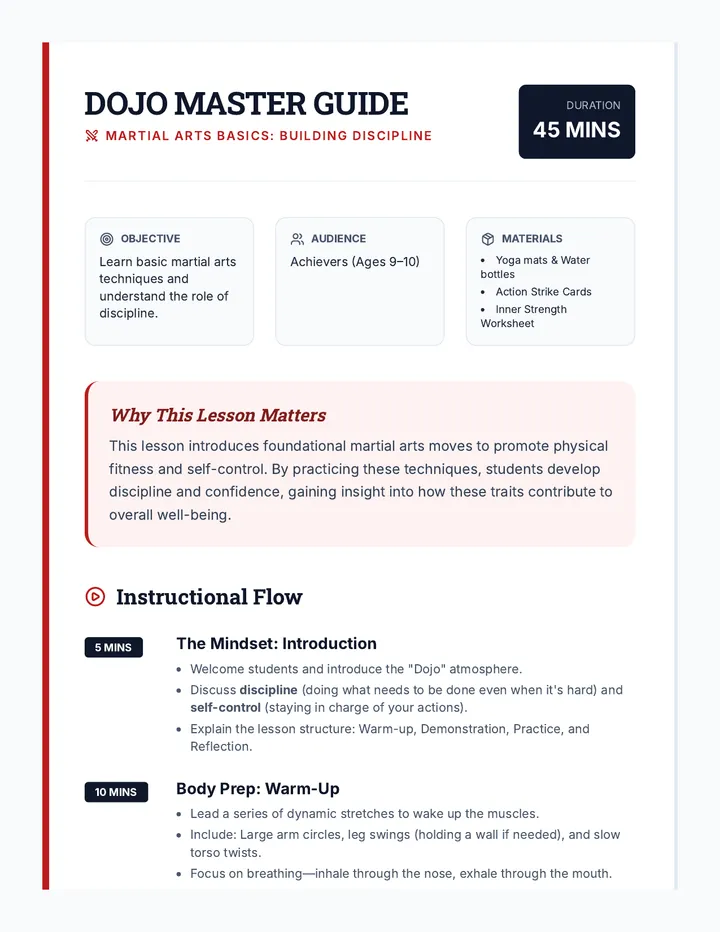
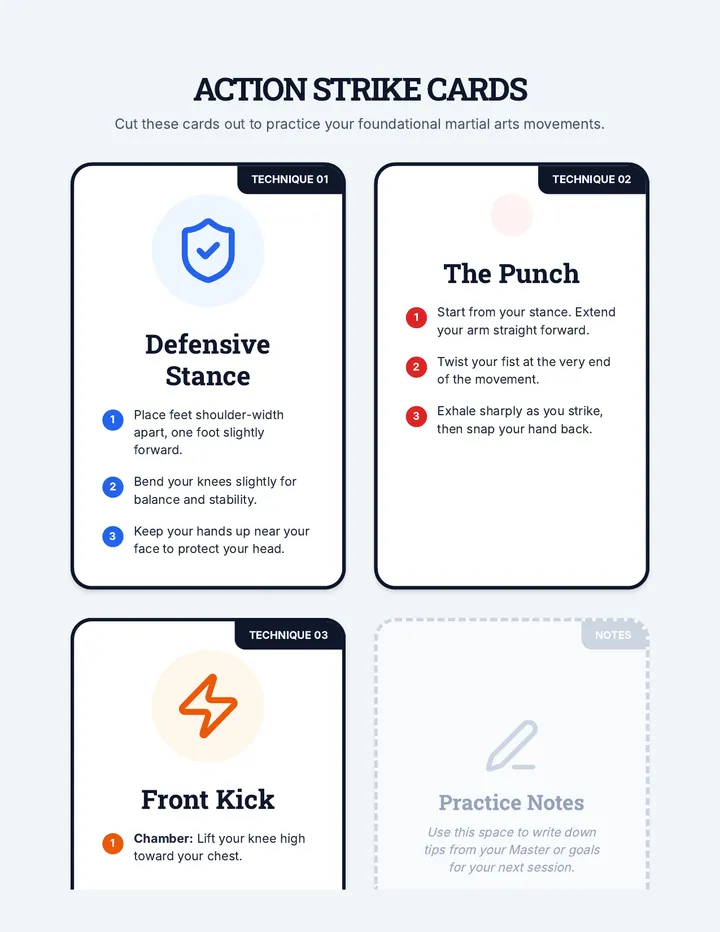
Fundamental techniques for racket sports, track and field, and gymnastics maneuvers. Develops physical literacy through martial arts disciplines and self-defense strategies.
A comprehensive 8th-grade physical education sequence focusing on the biomechanics of martial arts striking and blocking. Students explore kinetic linking, balance, and precision through five progressive lessons.
A comprehensive introduction to grappling for 8th graders, focusing on leverage, balance, and positional control. Students learn to use their center of gravity and mechanical advantage to manage physical encounters safely and effectively.
This physical education sequence guides 7th-grade students through the art of martial arts forms (Kata). Students progress from learning traditional patterns to designing, refining, and performing their own choreographed defensive sequences, emphasizing discipline, rhythm, and mental focus.
A 5-lesson unit for 7th grade students focusing on the biomechanics of self-defense, specifically blocking, deflecting, and leverage-based wrist releases. Students explore how to use their body efficiently to protect themselves and escape physical confrontation.
A foundational unit for 7th-grade students focusing on the physical prerequisites of martial arts and self-defense: balance, stability, safe movement, and injury prevention through breakfalls. Students explore how controlling their center of gravity and core can enhance their physical safety and stability.
A comprehensive 6th-grade Physical Education unit exploring the history, ethics, and movement patterns of global martial arts, including Judo, Karate, Taekwondo, Tai Chi, and Capoeira. Students investigate how these disciplines balance physical skill with mental discipline and respect.
A comprehensive 6th-grade PE sequence focusing on non-aggressive self-defense, situational awareness, and escape maneuvers. Students progress from mental preparedness and verbal boundaries to physical blocks, grab escapes, and safe falling techniques.
This sequence introduces 6th grade students to the foundations of martial arts, focusing on balance through stances, power through upper and lower body strikes, and the importance of physical conditioning and flexibility for effective technique.
This sequence introduces 9th-grade students to personal safety, covering situational awareness, verbal de-escalation, defensive stances, striking mechanics, and escape techniques. It culminates in stress-based simulations to test decision-making and physical skills in a controlled environment.
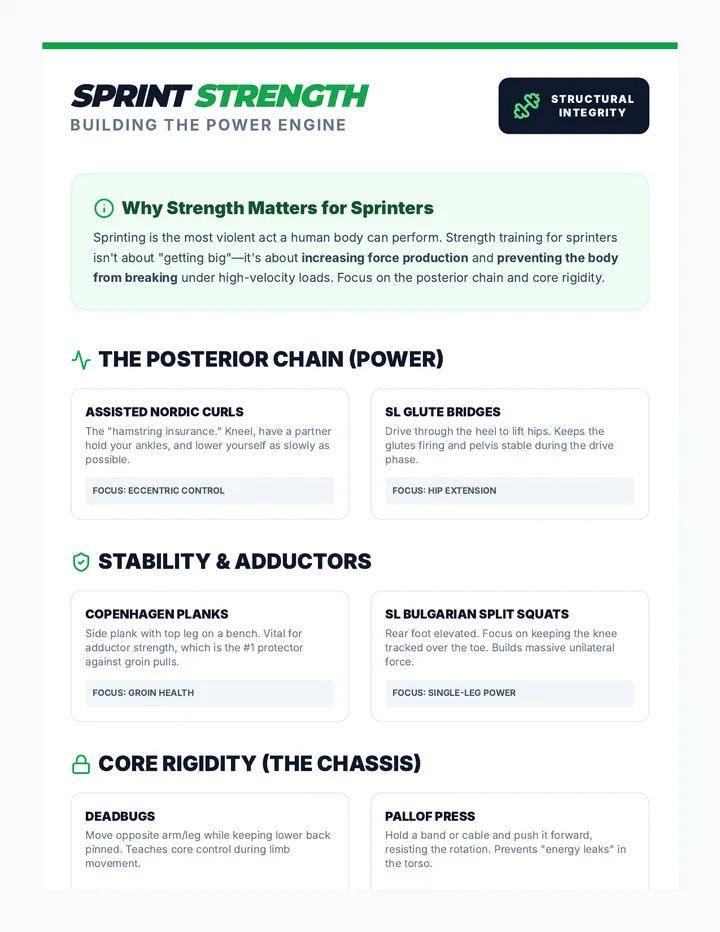
A comprehensive physical conditioning unit for martial arts, applying kinesiology principles to improve performance, power, and longevity in combat sports.
An advanced self-defense sequence for undergraduate students focusing on the physiological and psychological aspects of high-stress combat. Students explore how adrenaline affects decision-making and motor skills through simulations, low-light training, and multiple-attacker scenarios.
A comprehensive unit on Brazilian Jiu-Jitsu and wrestling-based ground survival. Students learn how to fall safely, manage positions of disadvantage, and use leverage to escape pins and return to their feet.
A comprehensive undergraduate course focusing on the biomechanical principles of Muay Thai and Boxing. Students explore the kinetic chain, rotational force, and impact mechanics to develop efficient, safe, and powerful striking techniques for self-defense and athletic performance.
This introductory sequence focuses on the psychological and preventative aspects of self-defense for undergraduate students, prioritizing awareness, verbal de-escalation, and boundary setting. Students will progress from theoretical concepts like the Cooper Color Code to practical simulations involving physical distance management and wrist releases.
A comprehensive 12th-grade physical education sequence focused on grappling mechanics, leverage-based escapes, and defensive positioning. Students learn to apply physics principles to self-defense, progressing from foundational safety (breakfalls) to advanced ground escapes and technical stand-ups.
A comprehensive 12th-grade physical education unit focused on the biomechanics, physics, and practical application of striking and defensive techniques in martial arts and self-defense. Students progress from foundational balance to complex offensive and defensive combinations.
A comprehensive 11th-grade physical education unit focused on self-defense through grappling, leverage, and mechanical advantage. Students learn injury prevention through safe falling, escapes from common holds, and ground survival strategies inspired by Judo and Brazilian Jiu-Jitsu.
A biomechanics-focused martial arts sequence for 11th graders, exploring the kinetic chain, striking mechanics, and cardiovascular conditioning. Students progress from foundational straight punches to complex combinations and defensive maneuvers, culminating in a technical performance showcase.
A comprehensive self-defense sequence for high school students focusing on situational awareness, verbal de-escalation, and fundamental stand-up defensive tactics centered on the 'Stun and Run' philosophy.
A 10th-grade physical education unit focusing on grappling defense, leverage-based escapes, and safe falling techniques. Students apply physics principles to self-defense scenarios, moving from standing releases to ground-based recovery.
A mastery-based physical education sequence for 2nd grade focusing on fine motor object control. Students progress from tracking slow-moving scarves to mastering small object catching and implement striking, emphasizing the connection between visual tracking and hand positioning.
This sequence introduces 6th grade students to the foundational mechanics of badminton, focusing on grip, movement, and striking techniques. The learning arc progresses from static racket handling to dynamic movement patterns and competitive rallying.
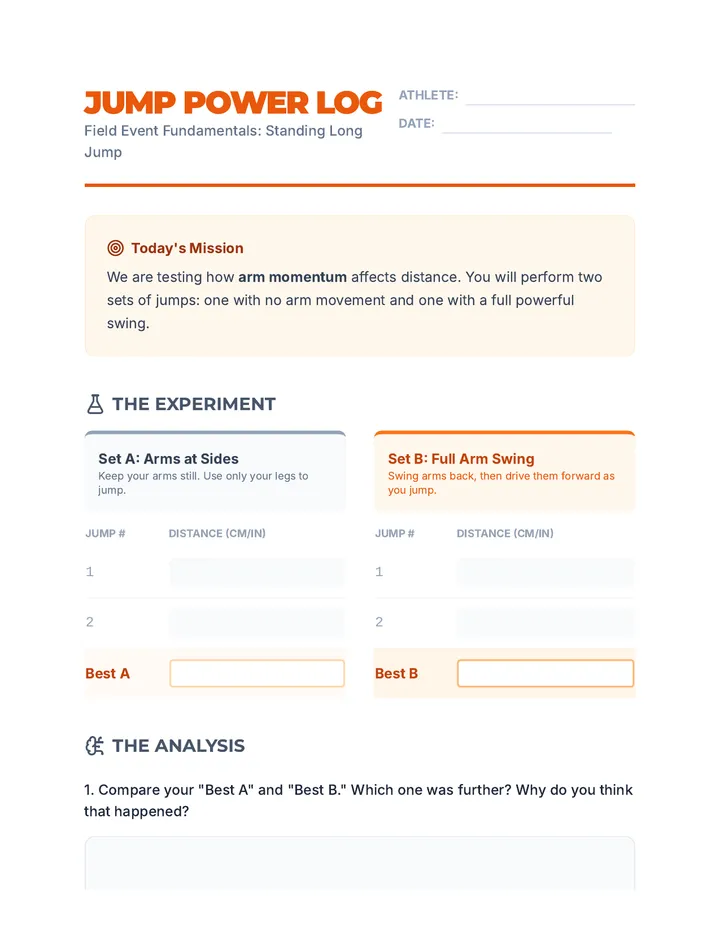
An inquiry-based exploration of striking mechanics for 2nd Grade. Students investigate how grip, stance, and swing plane affect the flight of objects using hands, paddles, and bats.
A comprehensive 4th-grade PE unit focused on the tactical and physical foundations of racket sports, including court positioning, cooperative rallying, finding open space, and defensive recovery. Students transition from basic athletic stances to complex strategic play.
This sequence introduces 4th grade students to the essential physical foundations of racket sports, focusing on grip, wrist control, and arm mechanics. It progresses from basic handling with balloons to dynamic forehand and backhand strikes, culminating in serving and rallying.
A comprehensive 5-lesson sequence for 5th graders focusing on the technical rules, scoring systems, and sportsmanship required for competitive racket sports like tennis, badminton, and pickleball. Students progress from learning service mechanics to managing their own class-wide tournament.
This sequence moves students from static skill practice to dynamic game situations, emphasizing court movement and tactical decision-making in racket sports. Students explore concepts of open space, defensive recovery, and offensive placement within a modified court boundary.
A comprehensive 5-lesson sequence for 5th-grade students to master the biomechanics of racket sports, focusing on grips, forehand/backhand strokes, and cooperative rallying using pickleball or badminton equipment.
A comprehensive 3rd-grade PE unit focusing on the underhand serve, receiving skills, and cooperative rallying. Students progress from individual mechanics to sustained dual play with an emphasis on sportsmanship and consistency.
A comprehensive 3rd-grade unit on racket sports footwork, focusing on the athletic ready position, lateral shuffle steps, tactical court recovery, and judging ball trajectory. Students progress from basic reactivity to complex court coverage patterns through game-based learning and movement simulations.
This physical education sequence for 3rd graders focuses on the foundational motor skills of racket sports, including grip, balance, tracking, and stroke mechanics. Students progress from balloon play to controlled hitting, culminating in a directional accuracy challenge.
A comprehensive 8th-grade physical education unit focused on the tactical nuances of Pickleball. Students progress from fundamental kitchen control to complex match strategy and tournament play.
A comprehensive 5-lesson sequence for 8th-grade students focusing on badminton mechanics, from basic grips and serves to advanced offensive/defensive tactics and doubles strategy. Students develop technical precision, spatial awareness, and officiating skills through a workshop-style approach.
A high-level undergraduate course focused on the tactical, geometric, and psychological dimensions of racket sports. Students move from skill execution to strategic mastery through court analysis, doubles synchronization, transition mechanics, and professional officiating.
A technical analysis and practical application of biomechanics in racket sports, focusing on tennis and pickleball. Students analyze grip physics, the kinetic chain, net mechanics, service motions, and recovery patterns to optimize performance and prevent injury.
This sequence explores the tactical, geometric, and administrative aspects of racket sports. Students will transition from basic mechanics to high-level strategic decision-making, officiating protocols, and tournament management, preparing them for competitive play and sports leadership.
This sequence targets fast-twitch reflexes and movement patterns for badminton and pickleball, focusing on spatial demands, tactical reaction times, and the transition from skill-building to complex doubles play.
A comprehensive undergraduate-level exploration of tennis biomechanics, focusing on the kinetic chain, grip physics, and technical efficiency to optimize performance and prevent injury.
A 12th Grade Physical Education unit focusing on the mental and strategic components of racket sports. Students move beyond basic mechanics to master court geometry, doubles coordination, opponent analysis, and tournament officiating.
A project-based unit where 11th-grade students design and perform an artistic floor routine, focusing on flow, transitions, and spatial choreography in gymnastics.
A comprehensive 11th-grade gymnastics sequence focusing on balance beam precision and vaulting power. Students develop technical skills, psychological resilience, and critical safety spotting techniques across five intensive lessons.
This sequence integrates physics concepts with fundamental floor skills to help students understand the mechanics of tumbling. Students explore center of mass, rotational mechanics, leverage, and force absorption through hands-on practice and video analysis.
A 5-lesson gymnastics sequence for 2nd graders focusing on weight transfer, shoulder strength, and initial inversion skills through animal movements and progression drills.
This culminating sequence focuses on linking individual skills into coherent routines. Students explore transitions, rhythm, and the aesthetic components of gymnastics. They will collaborate to sequence movements logically and perform a short routine, emphasizing the connection between physical skill and artistic expression.
A 2nd-grade gymnastics sequence focused on developing stability, core strength, and confidence on elevated surfaces or narrow lines. Students explore static balances, dynamic travel, level changes, and safe dismounts through inquiry-based and skill-building activities.
A foundational gymnastics sequence for 2nd graders focusing on safety protocols, body shapes, and progressive rolling techniques. Students learn the 'motorcycle landing' for impact absorption, master static shapes (tuck, pike, straddle), and develop safe forward rotation skills.
A 9th-grade gymnastics unit focusing on safety, spotting, and foundational skills on the balance beam and vault. Students learn to manage risk and build trust while developing technical proficiency in apparatus work.
A comprehensive sequence for 9th Grade PE focused on the artistic and athletic composition of gymnastics floor routines, moving from individual skills to a cohesive performance.
This sequence focuses on the biomechanics and safety of gymnastics apparatus work, specifically the balance beam and vault. Students progress from foundational balance skills to complex vaulting mechanics, emphasizing center of gravity, explosive power, and peer spotting.
A 10th-grade gymnastics unit focusing on the biomechanical principles of floor skills. Students explore stability, rotation, and momentum through rolls, inversions, cartwheels, and round-offs.
This 10th-grade gymnastics sequence guides students from performing isolated skills to composing fluid, artistic floor routines. It focuses on the choreography of transitions, spatial utilization, musicality, and peer feedback to enhance the aesthetic and athletic quality of gymnastics performances.
This sequence integrates gymnastics execution with biomechanical principles. Students explore center of mass, stability, leverage, and angular momentum through various tumbling skills, concluding with a video analysis project to critique their own form.
This 1st Grade Gymnastics sequence guides students from basic balance skills on lines and beams to creating and performing their first linked movement routine. Students explore dynamic balance, level changes, and rhythmic mirroring before synthesizing their learning into a creative performance.
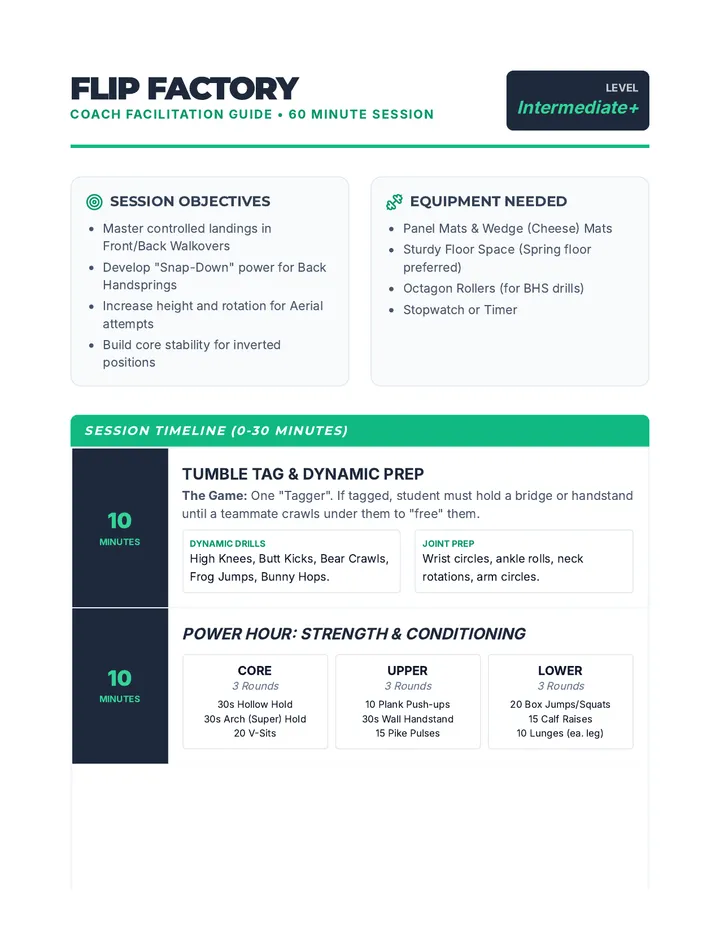
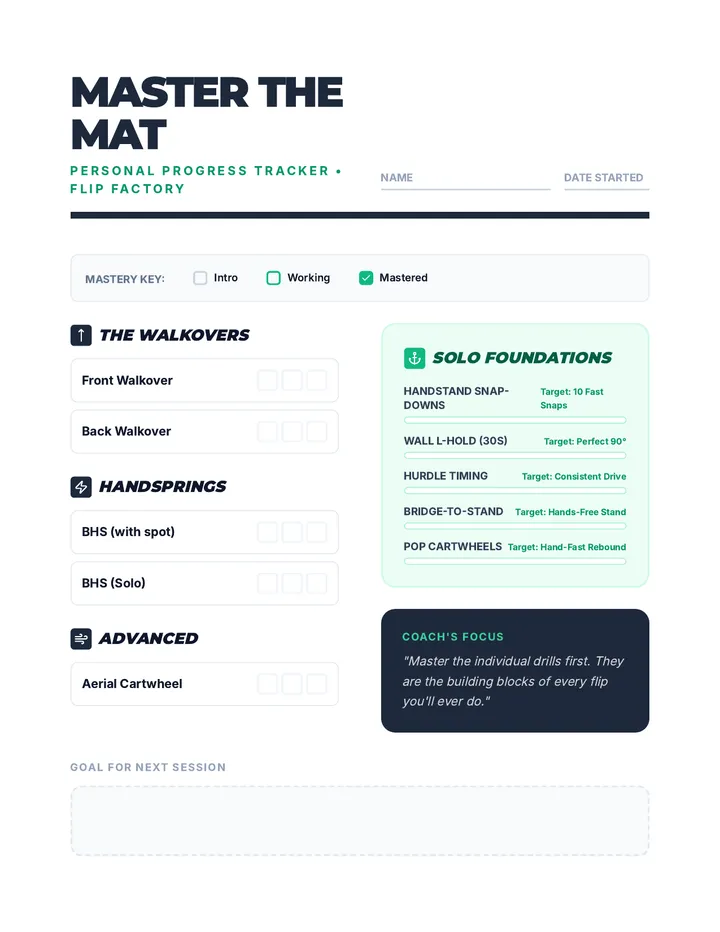
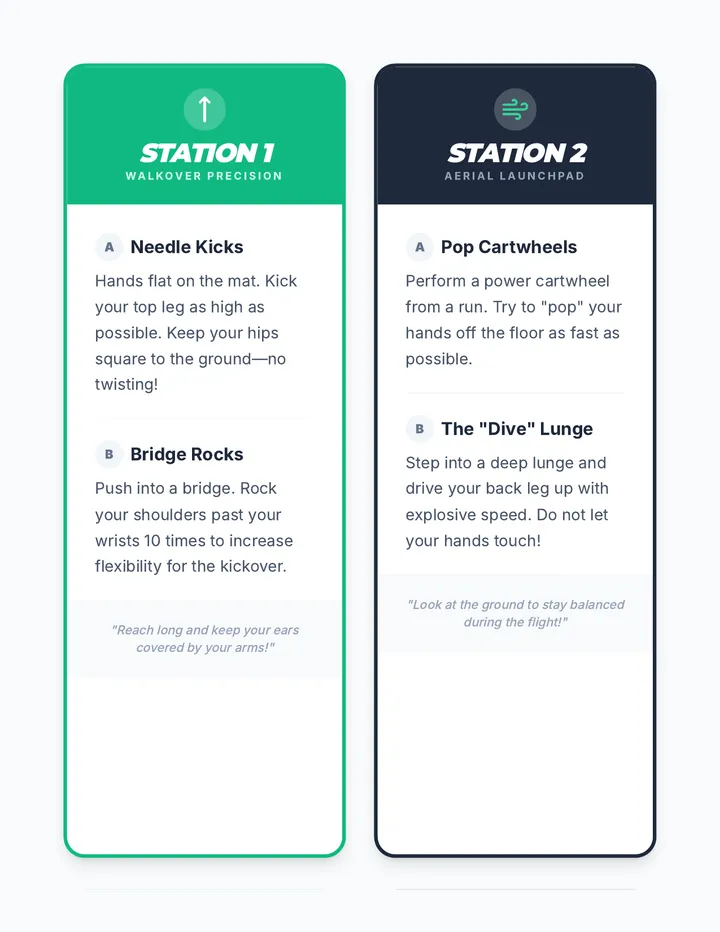
A 1st Grade gymnastics sequence focused on weight transfer, inversions, and introductory vaulting. Students build strength and confidence through animal-themed movements and stations.
A foundational gymnastics sequence for 1st graders focusing on body tension, rolling mechanics, and static balances. Students progress from simple log rolls to forward rolls and learn to transition into stable balance poses.
An introductory gymnastics sequence for 1st Grade focusing on body management, spatial awareness, and safe landing techniques. Students progress from establishing personal space to performing fundamental shapes and navigating obstacle courses.
This sequence explores the physics of gymnastics, focusing on biomechanical principles like center of gravity, rotational inertia, and momentum transfer to improve tumbling performance. Students transition from static balance to dynamic rotation, culminating in a frame-by-frame video analysis of their own movement.
An advanced gymnastics sequence for 12th graders focusing on beam, vault, and the critical skill of spotting. Students transition from performers to 'safety coaches,' emphasizing risk management and technical proficiency.
This sequence explores cardiovascular endurance and track meet operations for 5th-grade students. It covers pacing strategies, interval training through games, the mathematical geometry of track lanes, and culminates in a student-led class track meet where they apply both athletic and officiating skills.
A comprehensive 5th Grade physical education unit focused on the mechanics, safety, and competition of horizontal jumping events. Students progress from safe landing techniques to the complex coordination of the long jump and triple jump, concluding with a student-led competition.
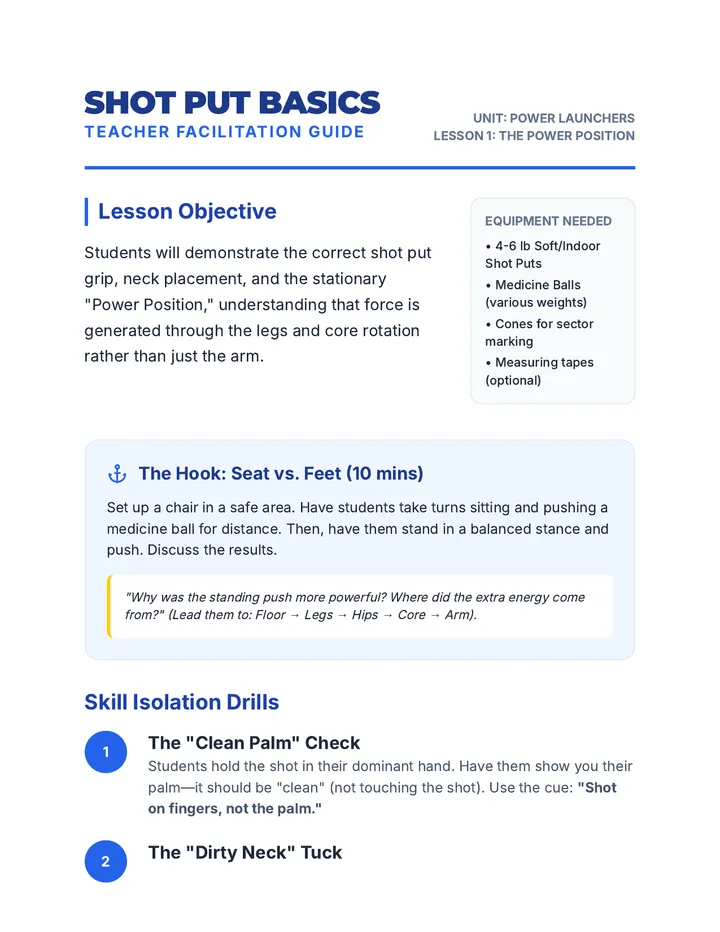
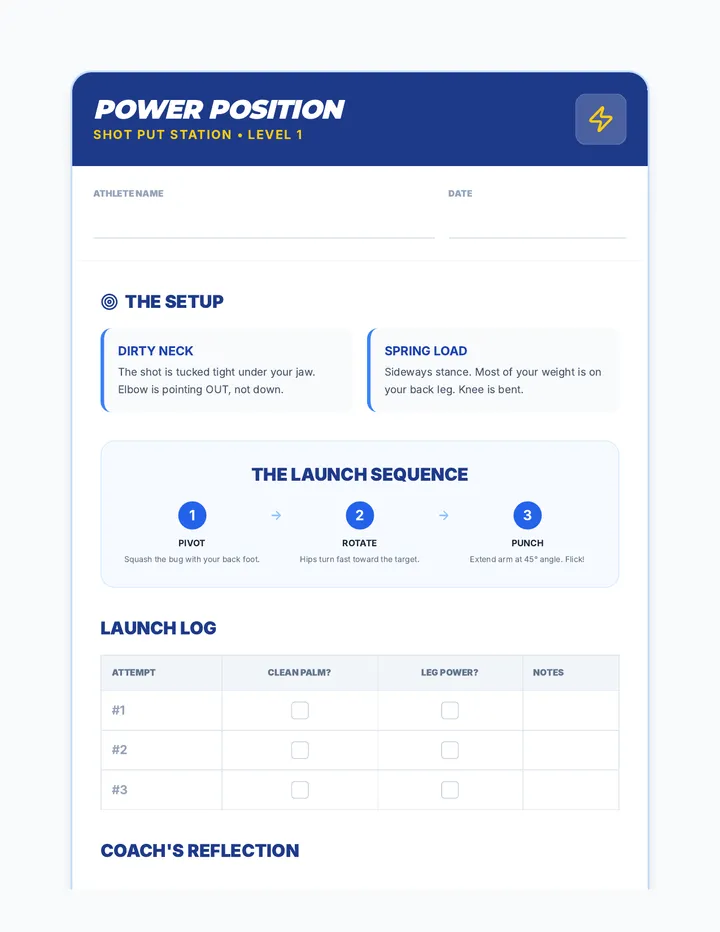
This sequence introduces 5th-grade students to the mechanics of shot put, discus, and javelin throwing. Students explore the physics of power generation through leg drive, rotation, and momentum while prioritizing safety in the throwing sector.
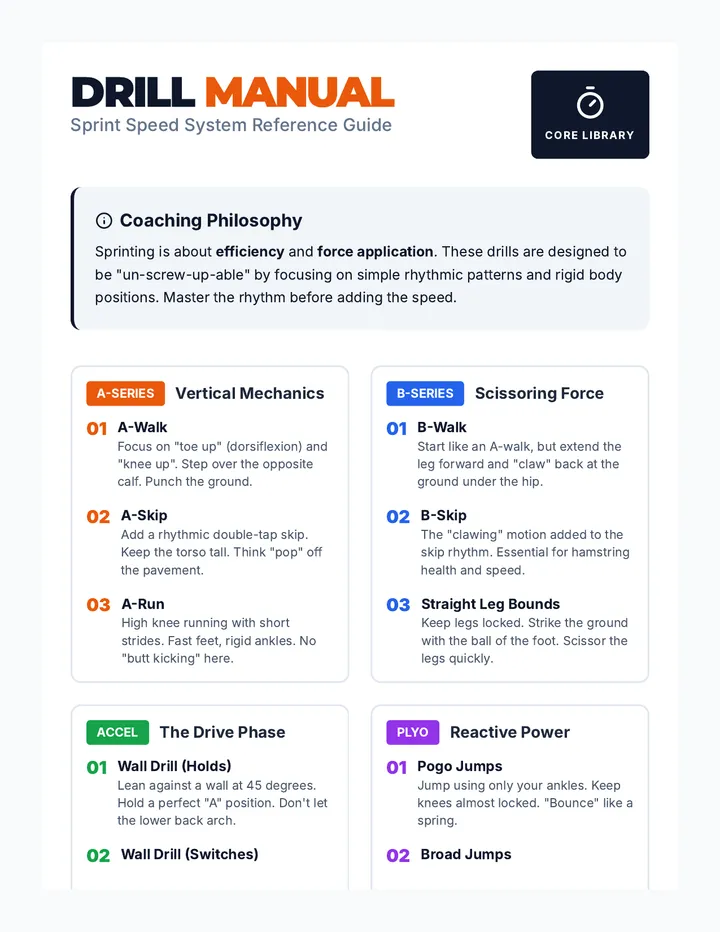
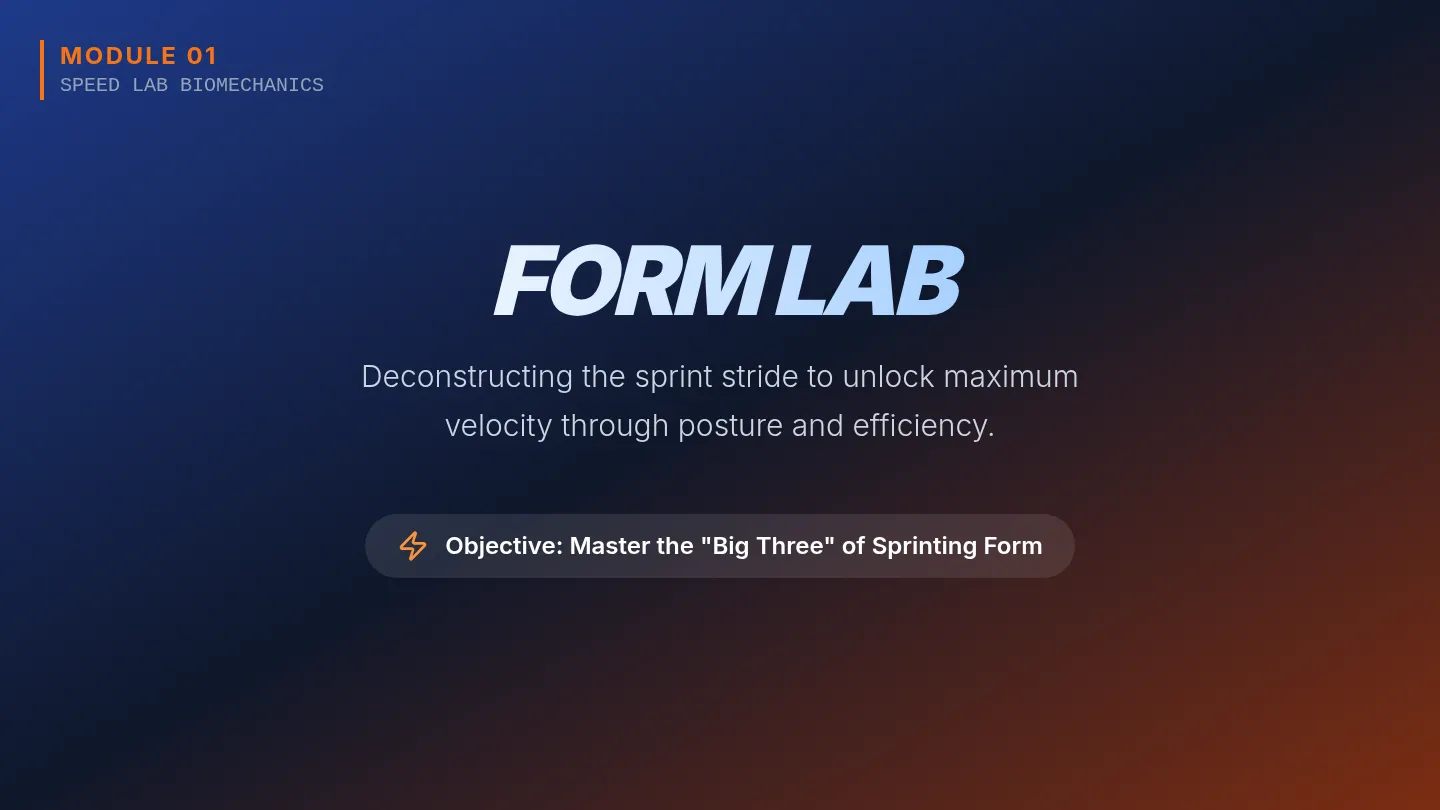
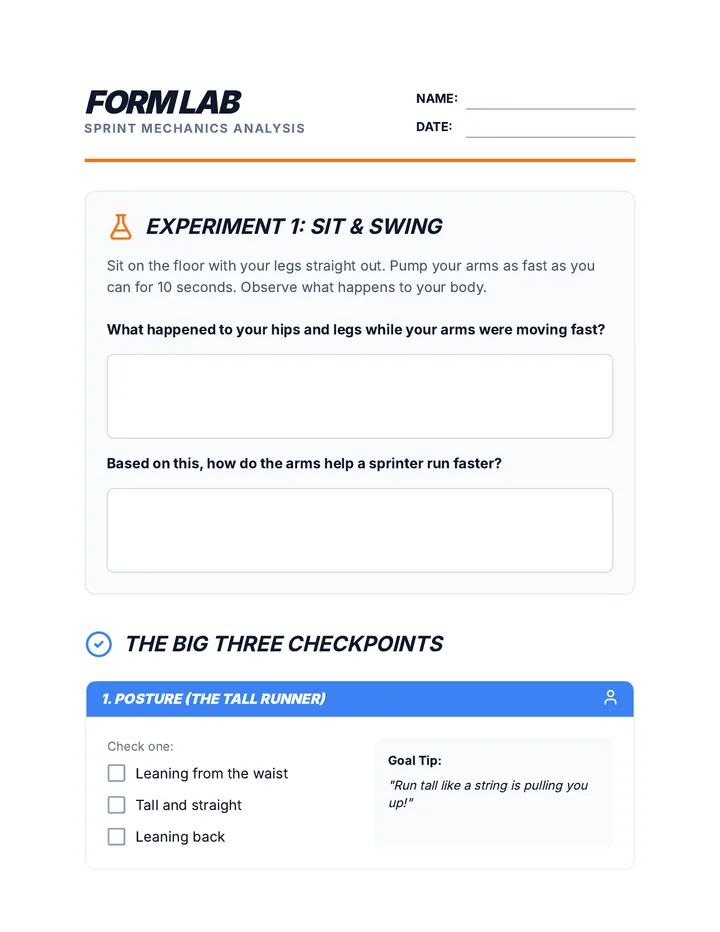
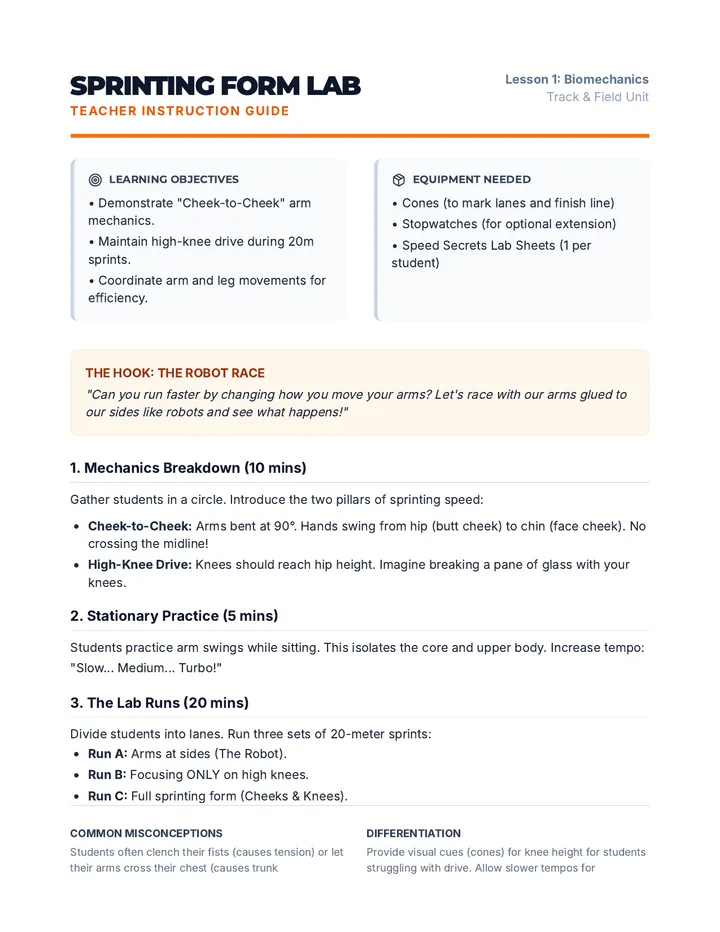
A comprehensive 5-lesson sequence for 5th-grade students focused on the biomechanics of sprinting and the technical coordination of relay racing. Students progress from individual form analysis to complex team-based baton exchanges in a simulated competitive environment.
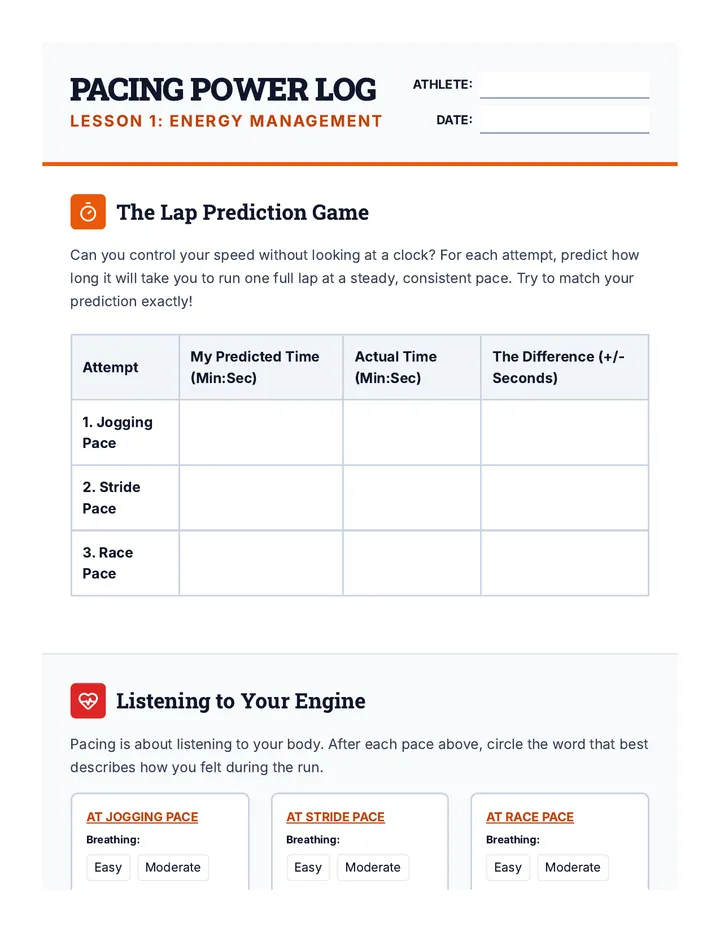
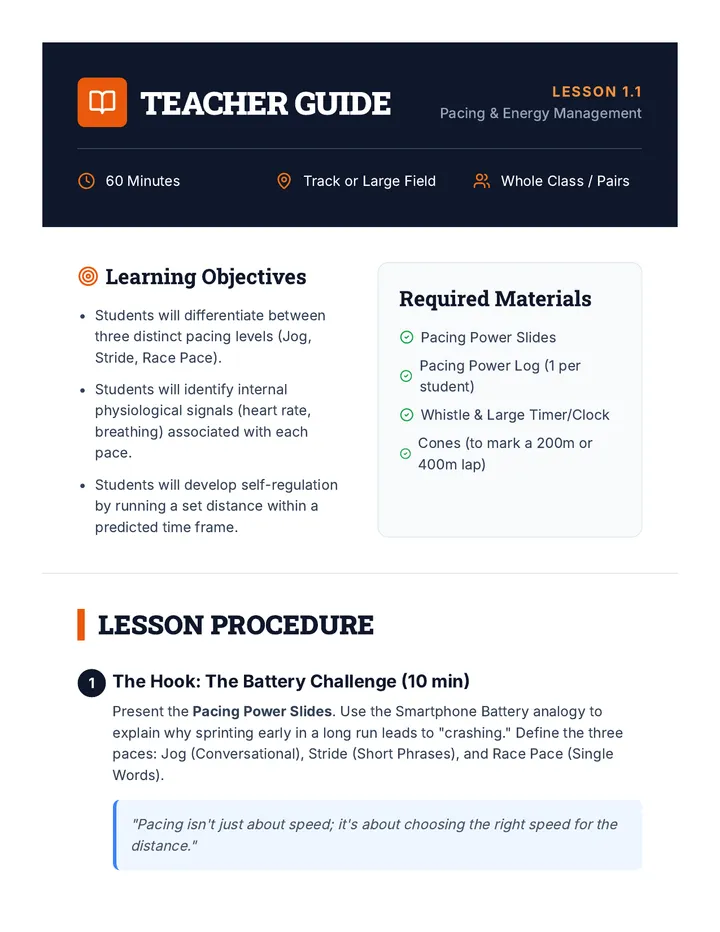
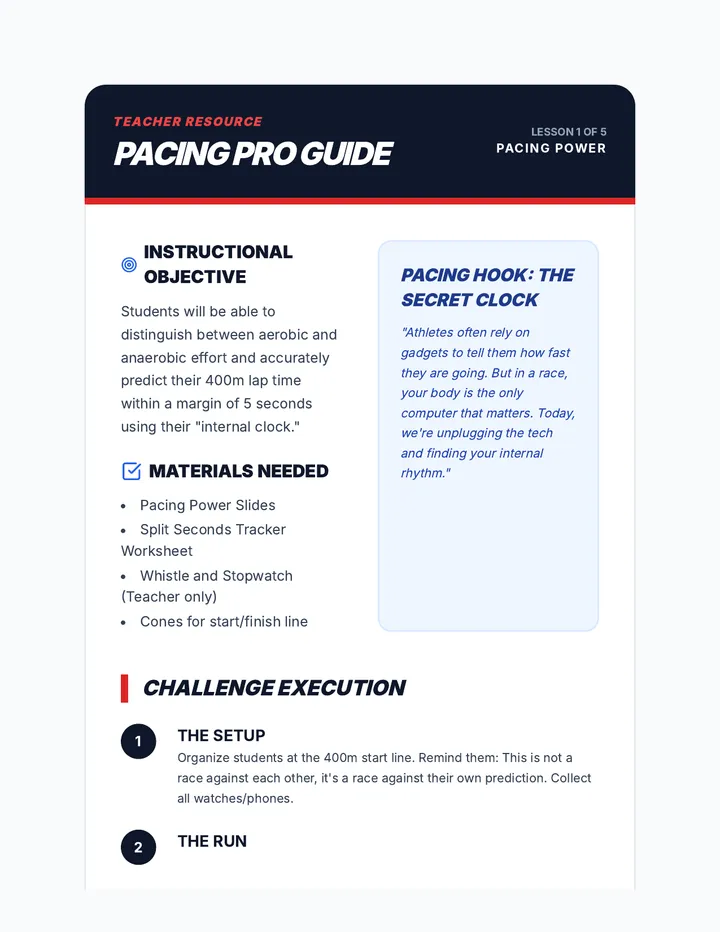
A 5-lesson unit for 4th graders focusing on the difference between anaerobic sprinting and aerobic endurance. Students learn to regulate energy through pacing, rhythm, and interval training, culminating in a goal-setting endurance run.
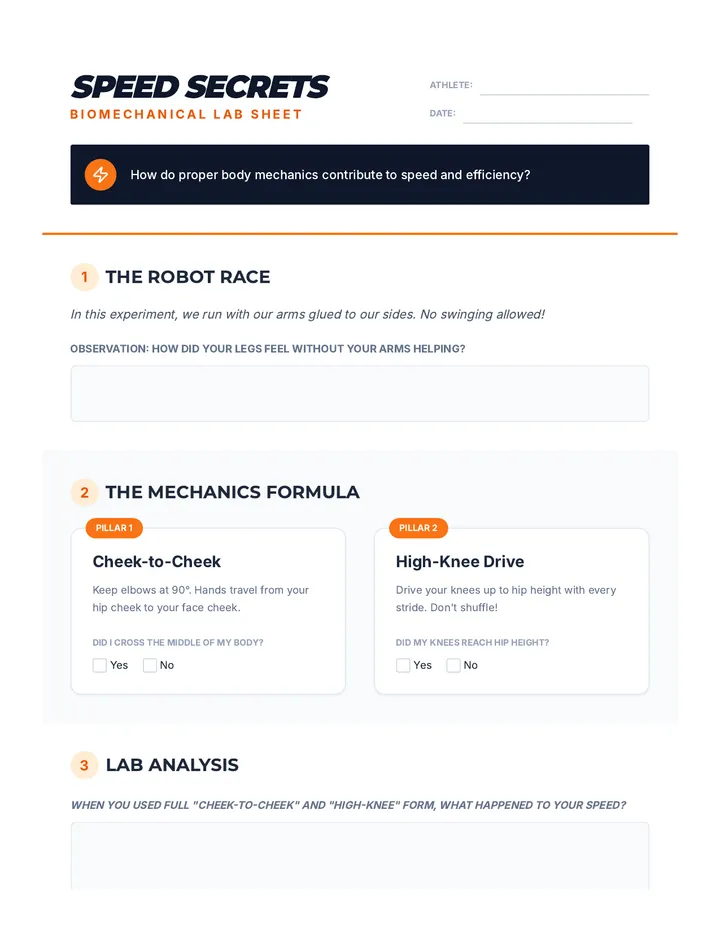
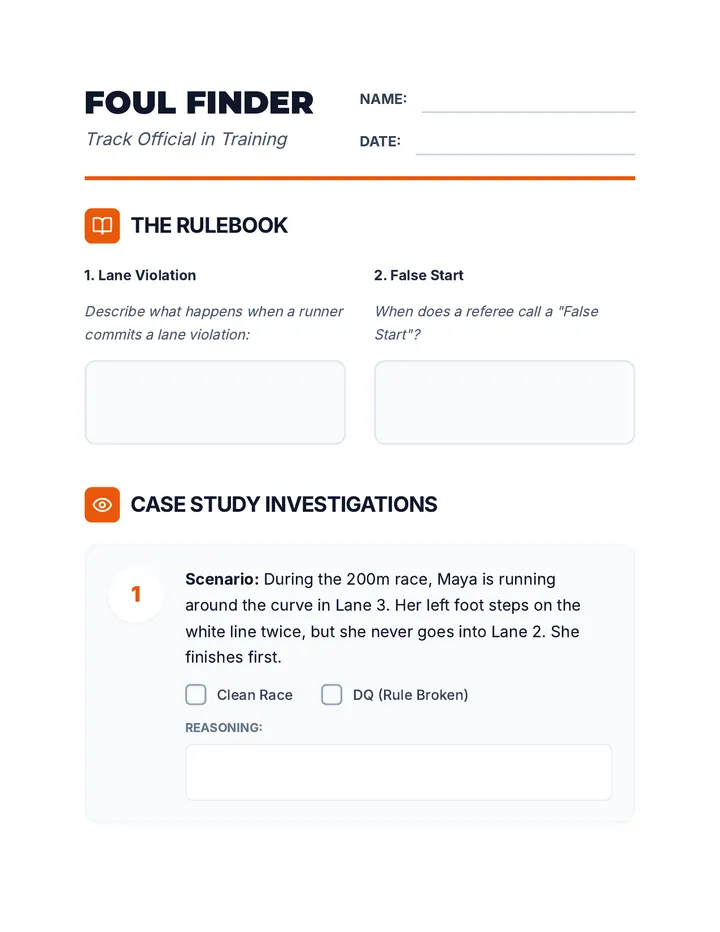
This sequence shifts focus from pure mechanics to the organizational structure, rules, and etiquette of a track meet. Students take on roles as both athletes and officials, learning how events are measured, judged, and scored. The unit emphasizes fair play, understanding disqualifications, and accurate measurement, culminating in a class-organized mini-meet.
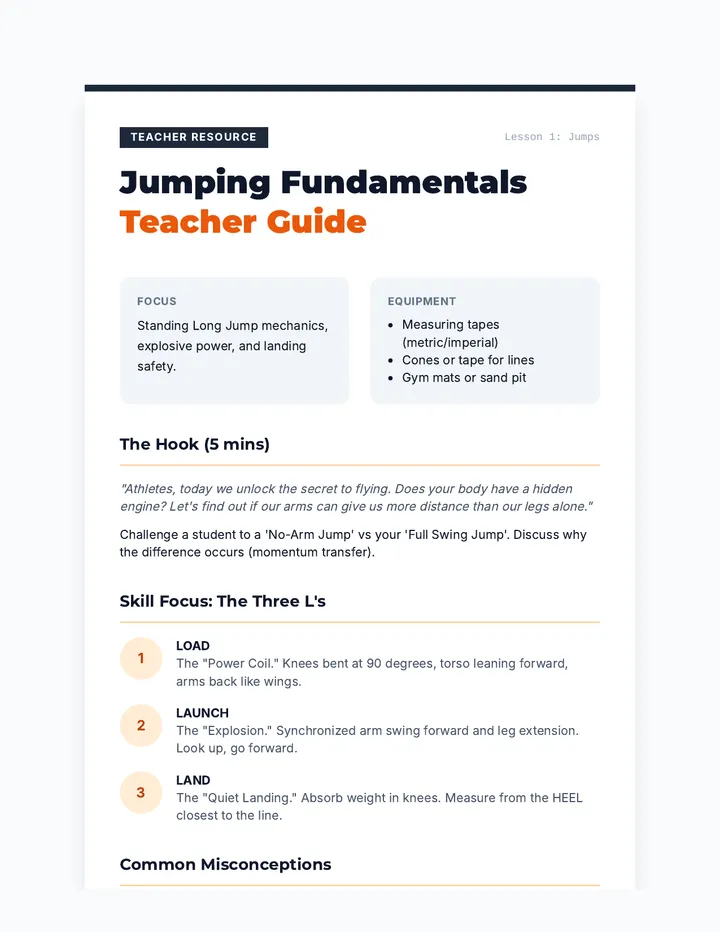
Students explore the physics and techniques behind track and field events, focusing on long jump and throws. This 5-lesson sequence covers mechanics of force, angle, and body positioning through inquiry and skill-building activities.
A comprehensive 4th-grade physical education unit focused on the biomechanics of sprinting and the technical skills of relay racing. Students progress from individual running form to collaborative baton exchanges and team strategy.
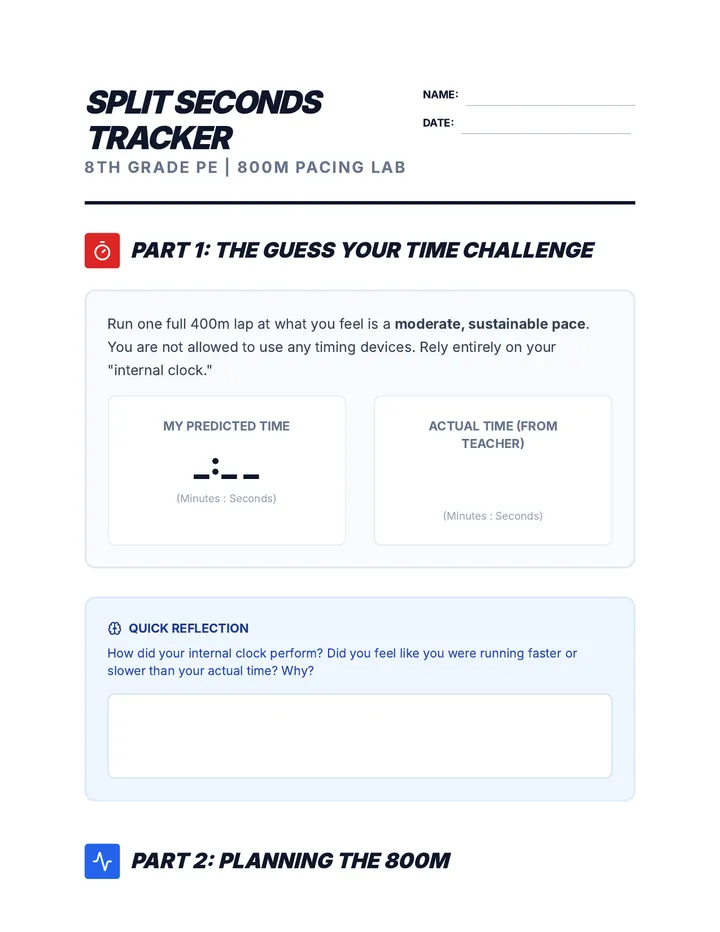
This 8th-grade Physical Education sequence blends middle-distance endurance training with the logistics of track meet administration. Students develop pacing strategies and physiological awareness while taking on the roles of officials and managers, culminating in a student-led mini-meet.
An 8th-grade physical education sequence focusing on the biomechanics of jumping and throwing events. Students explore the physics of momentum, projectile motion, and torque through inquiry-based field labs and technical skill-building.
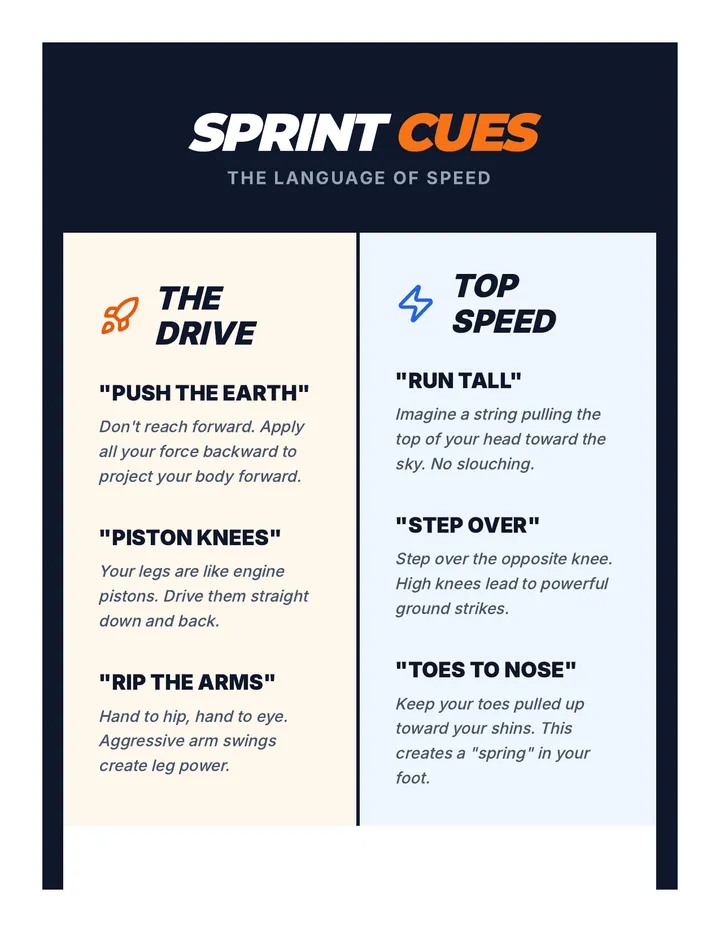
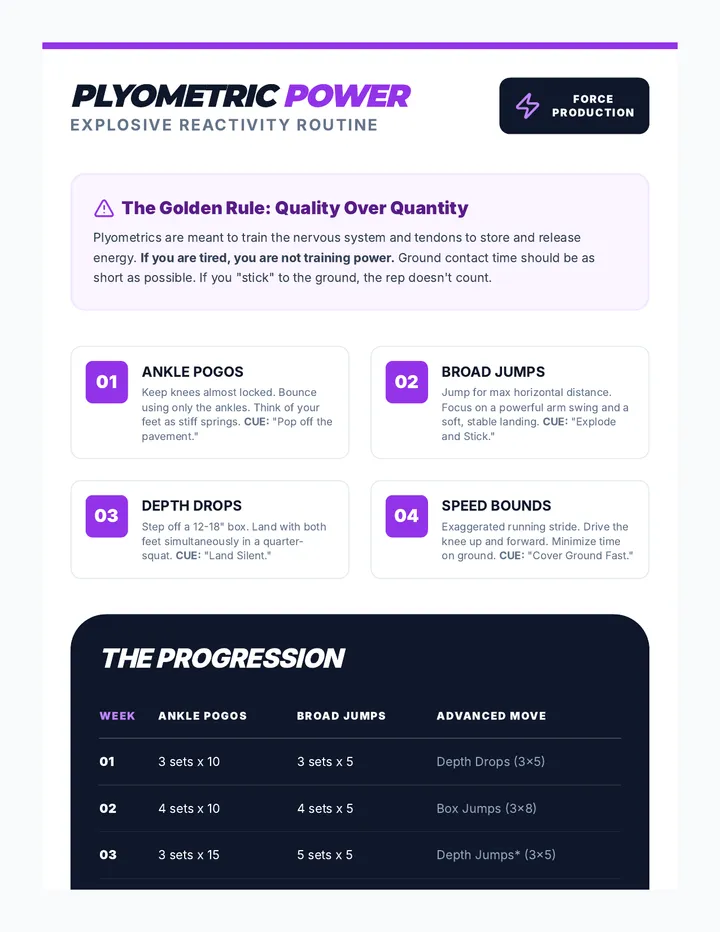
A comprehensive 8th-grade physical education unit focusing on the biomechanics of sprinting, hurdling, and relay coordination, emphasizing technical efficiency and explosive power.
A comprehensive unit for 6th-grade PE focusing on the rules, officiating, and strategy of Track and Field. Students transition from athletes to officials, concluding with a student-led mini-meet.
A comprehensive 5-lesson unit for 6th-grade students focusing on the mechanics, physics, and execution of track and field jumping and throwing events. Students explore force, trajectory, and momentum through hands-on practice and technical analysis.
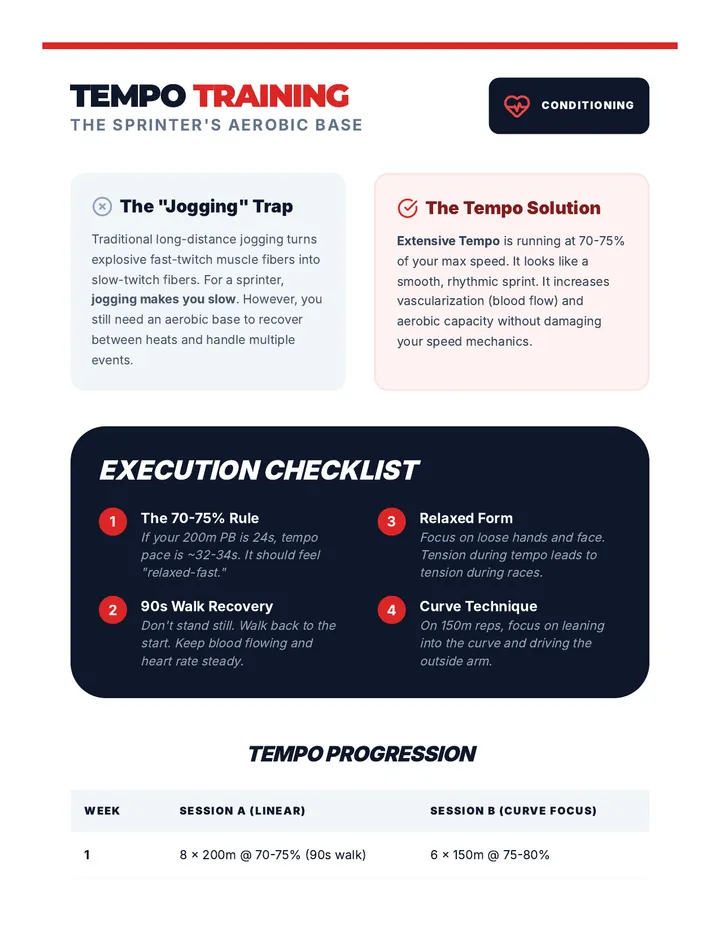
This 5-lesson sequence for 6th grade PE focuses on the biomechanics of sprinting, pacing strategies for middle distance, relay coordination, and hurdle rhythm. Students progress from individual form to collaborative teamwork, culminating in performance analysis and goal setting.
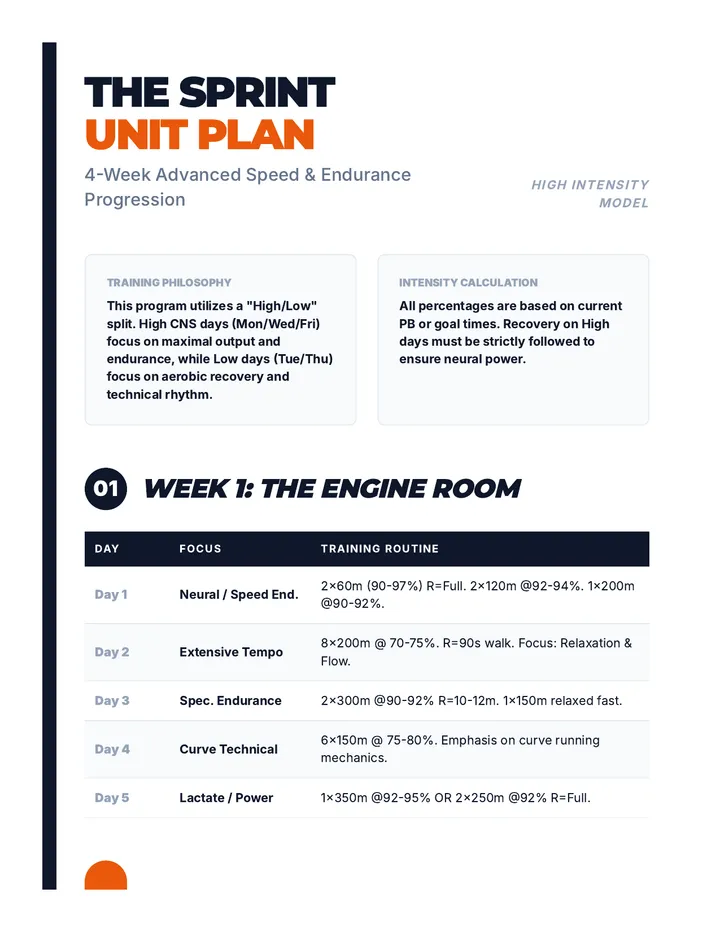
This 9th-grade physical education sequence deconstructs the biomechanics of track and field, covering explosive sprint starts, maximum velocity mechanics, relay coordination, and pacing strategies for endurance. Students transition from raw power to strategic efficiency, culminating in a performance analysis and time trial assessment.
A comprehensive 9th-grade sequence on track and field events, focusing on the mechanics of horizontal jumps and throwing disciplines. Students explore the physics of force, momentum, and release angles through technical practice and a final simulated competition.
This 12th-grade sequence explores the technical mechanics of field events and the logistical complexities of track meet administration, preparing students for roles as athletes, coaches, and officials.
A high-performance track and field unit for 12th-grade students that integrates biomechanics and physiology. Students analyze acceleration physics, stride efficiency, energy systems, and relay coordination to optimize their athletic performance through data-driven training.
A 10th-grade physical education unit focusing on the biomechanics of field events. Students explore physics principles like trajectory, torque, and center of mass through jumps and throws, culminating in a technical pentathlon.
A comprehensive 10th-grade track and field unit focusing on the biomechanics of sprinting, technical relay exchanges, and strategic pacing for middle-distance events. Students analyze acceleration angles, stride efficiency, and energy system usage through video review and data collection.