Fundamental techniques for racket sports, track and field, and gymnastics maneuvers. Develops physical literacy through martial arts disciplines and self-defense strategies.
This lesson introduces 9th-grade health students to the holistic benefits of yoga, focusing on physical fitness, stress management, and emotional regulation. Students will explore how yoga acts as a tool for overall wellness and mental clarity during the high school years.
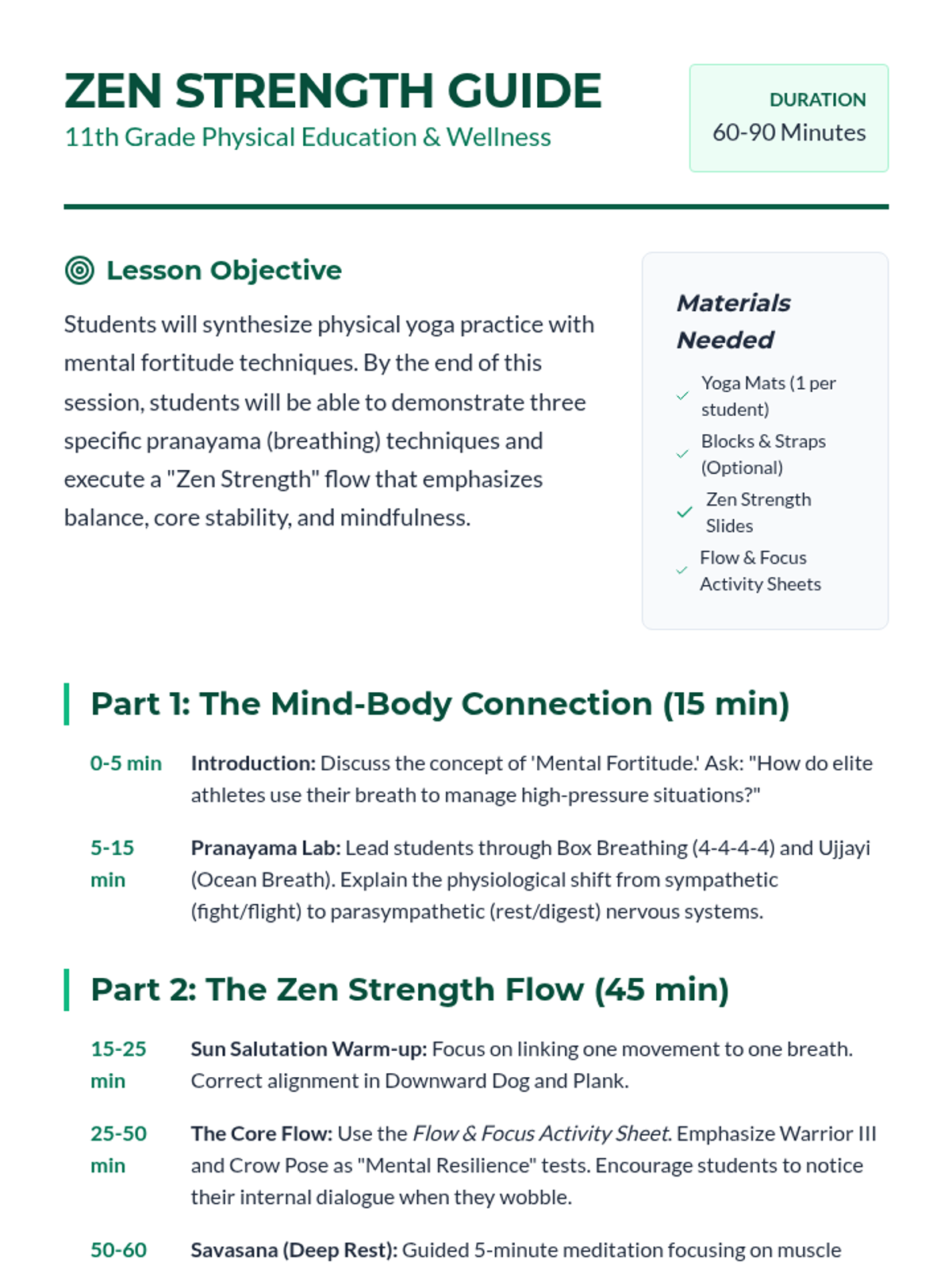
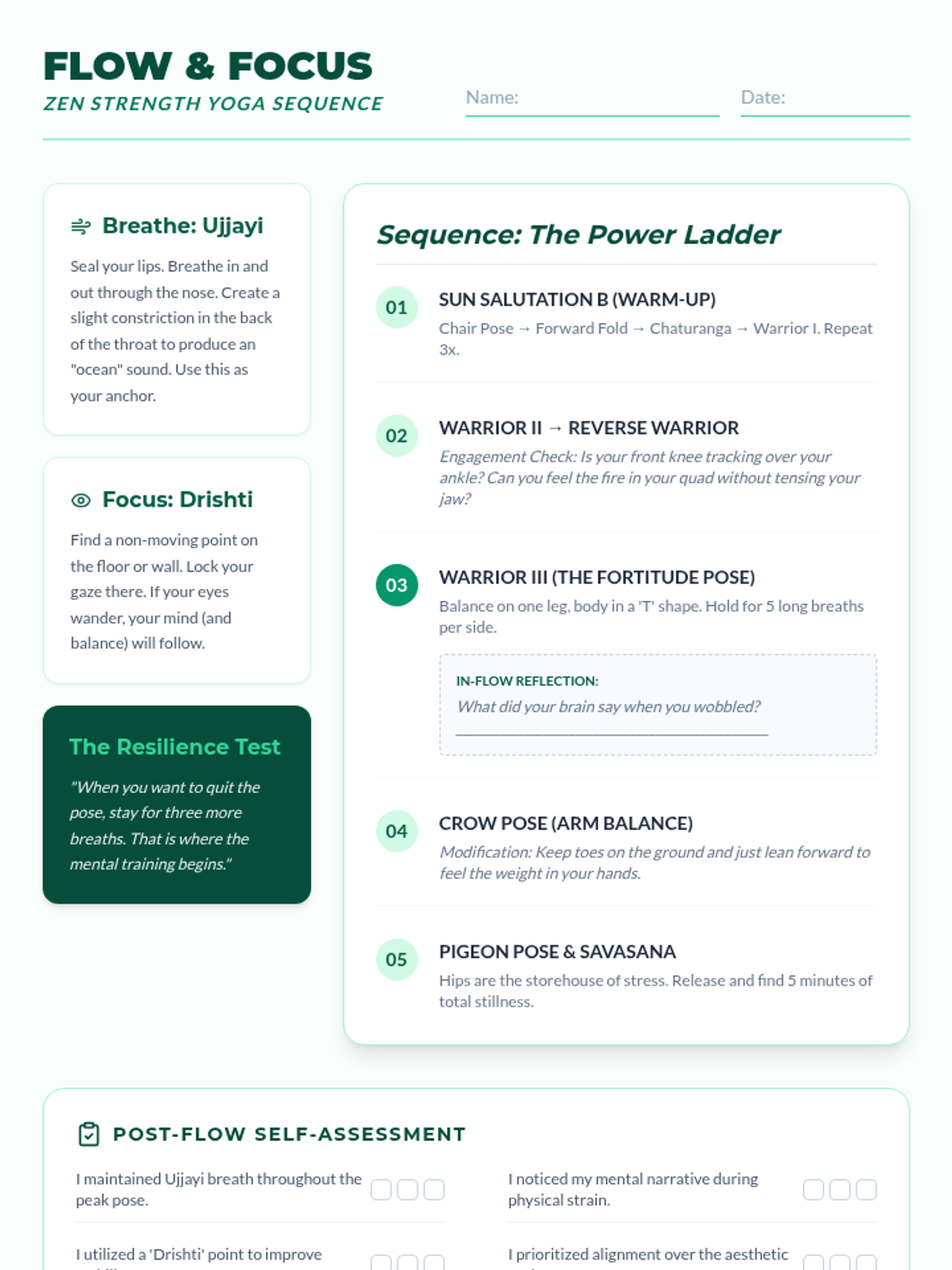
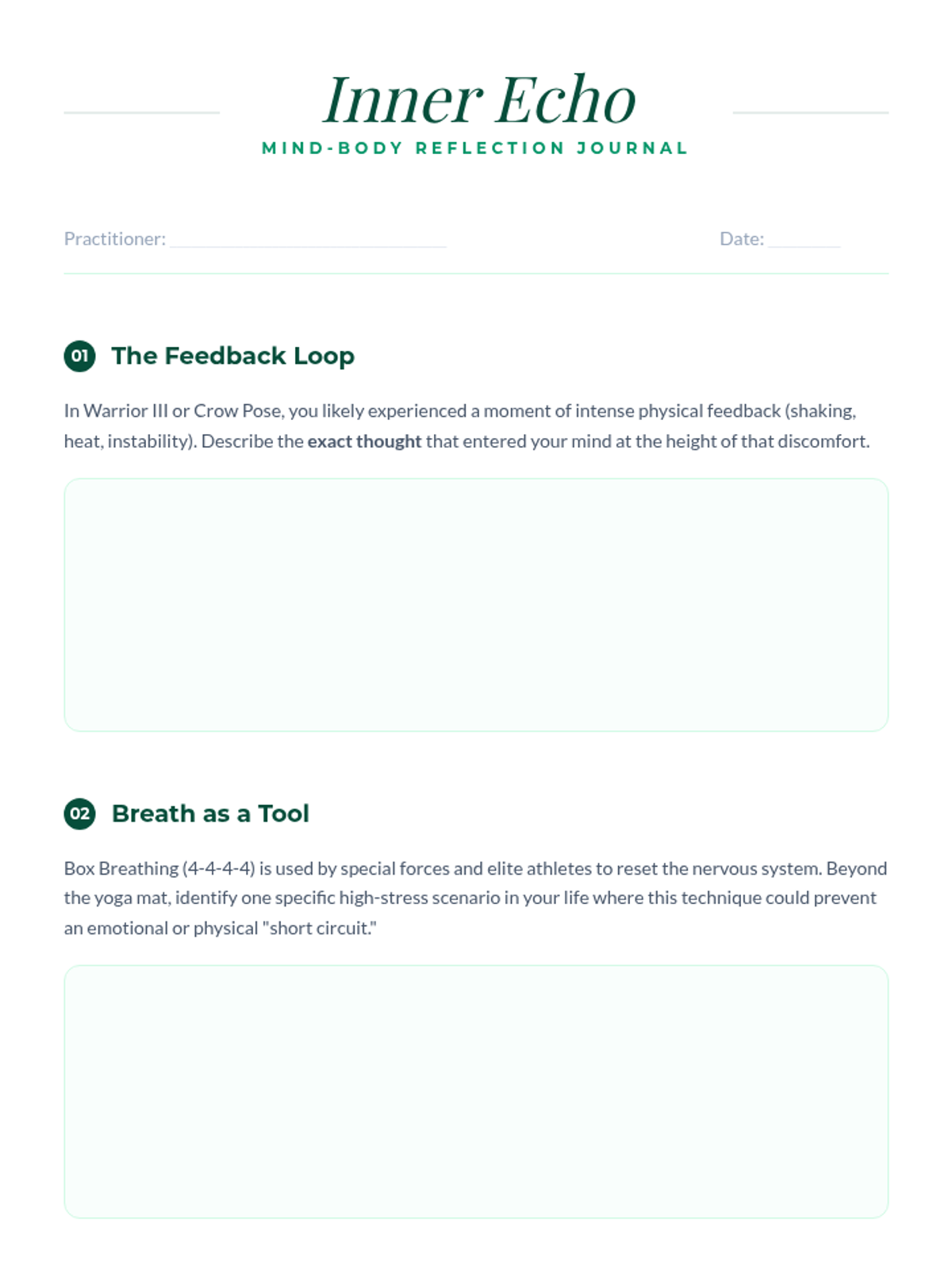
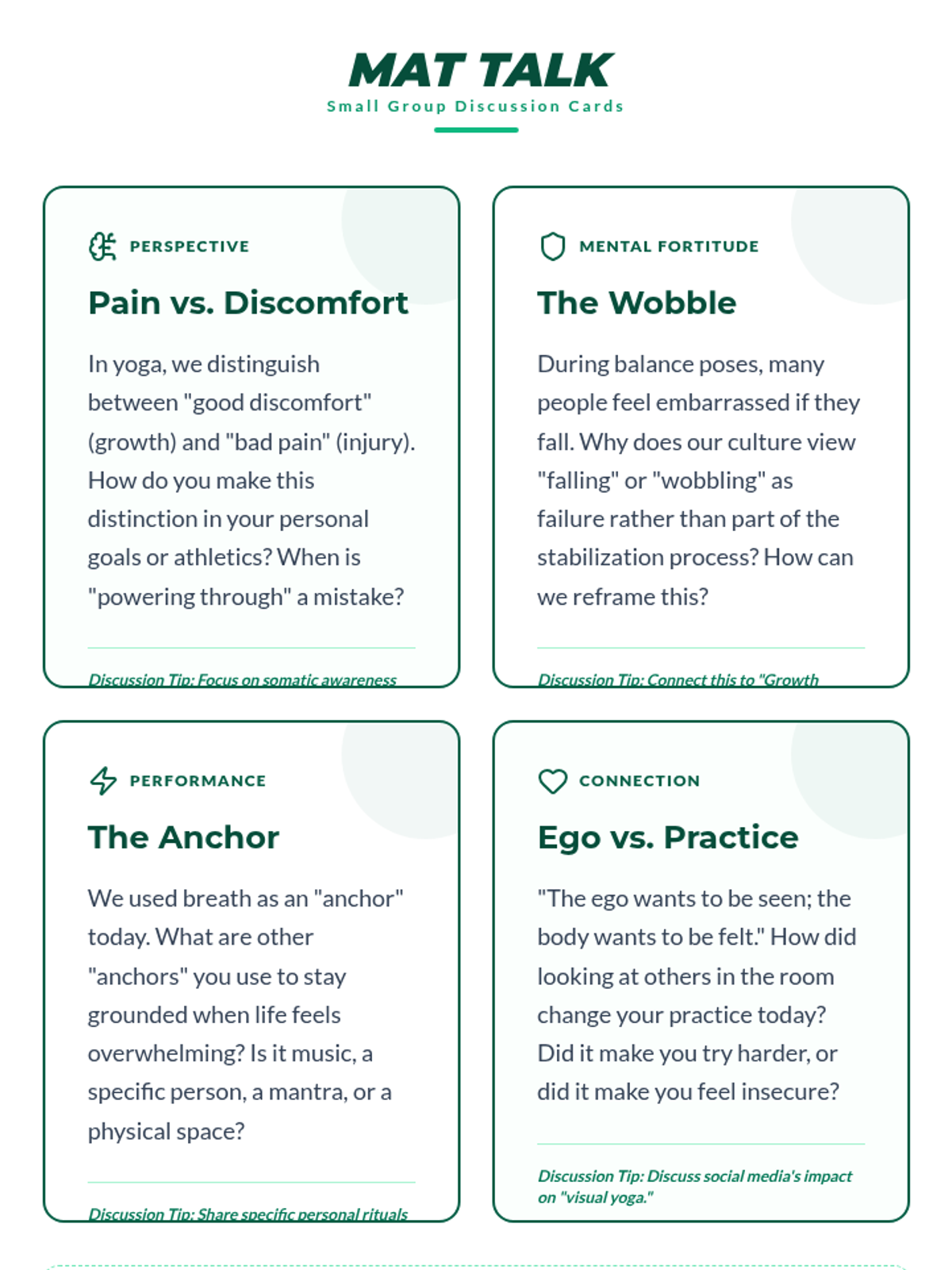
An advanced yoga lesson for 11th graders focusing on the intersection of physical posture and mental resilience. Students explore breathing techniques and a 'Zen Strength' flow designed to enhance athletic performance and stress management.
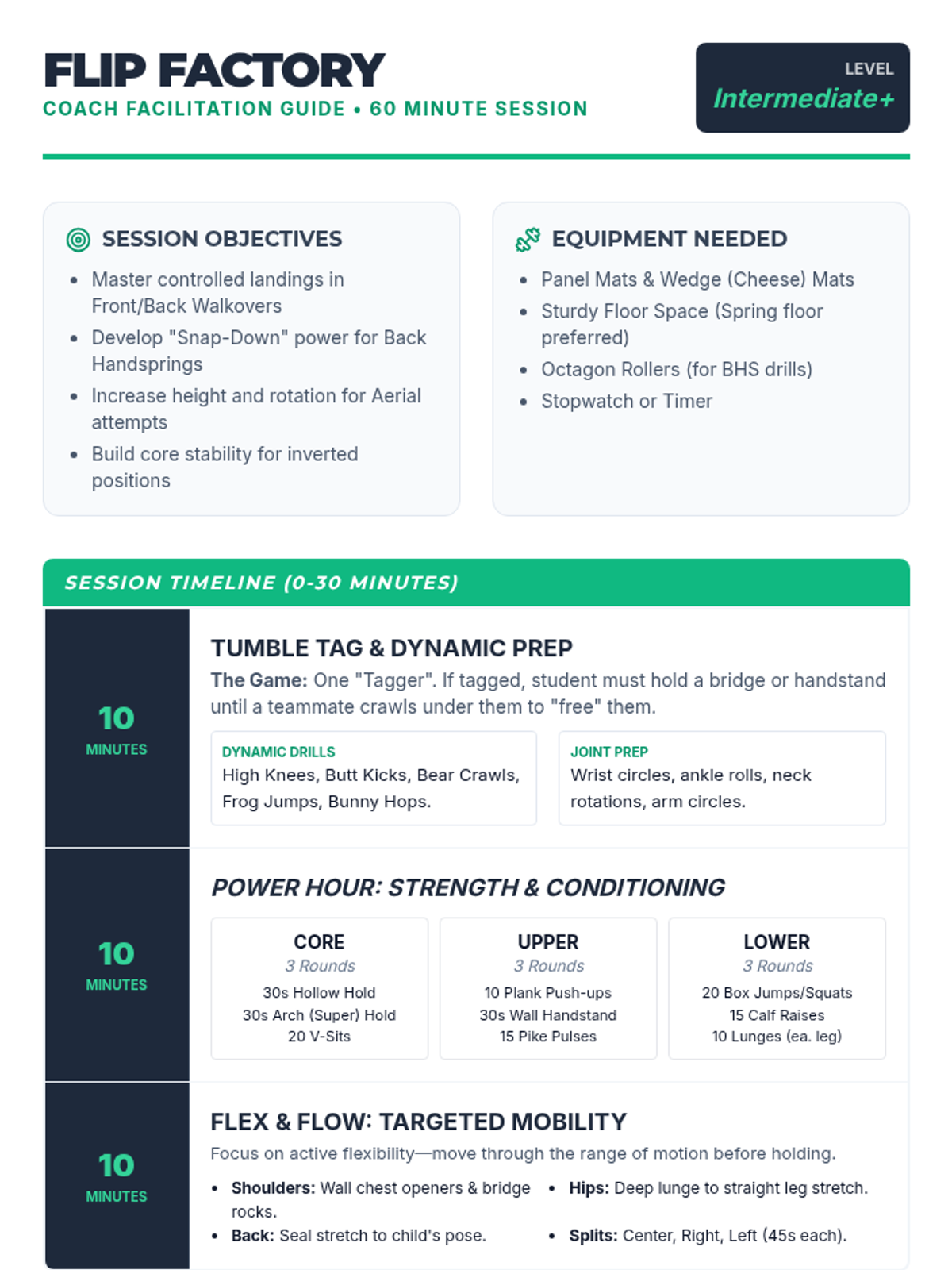
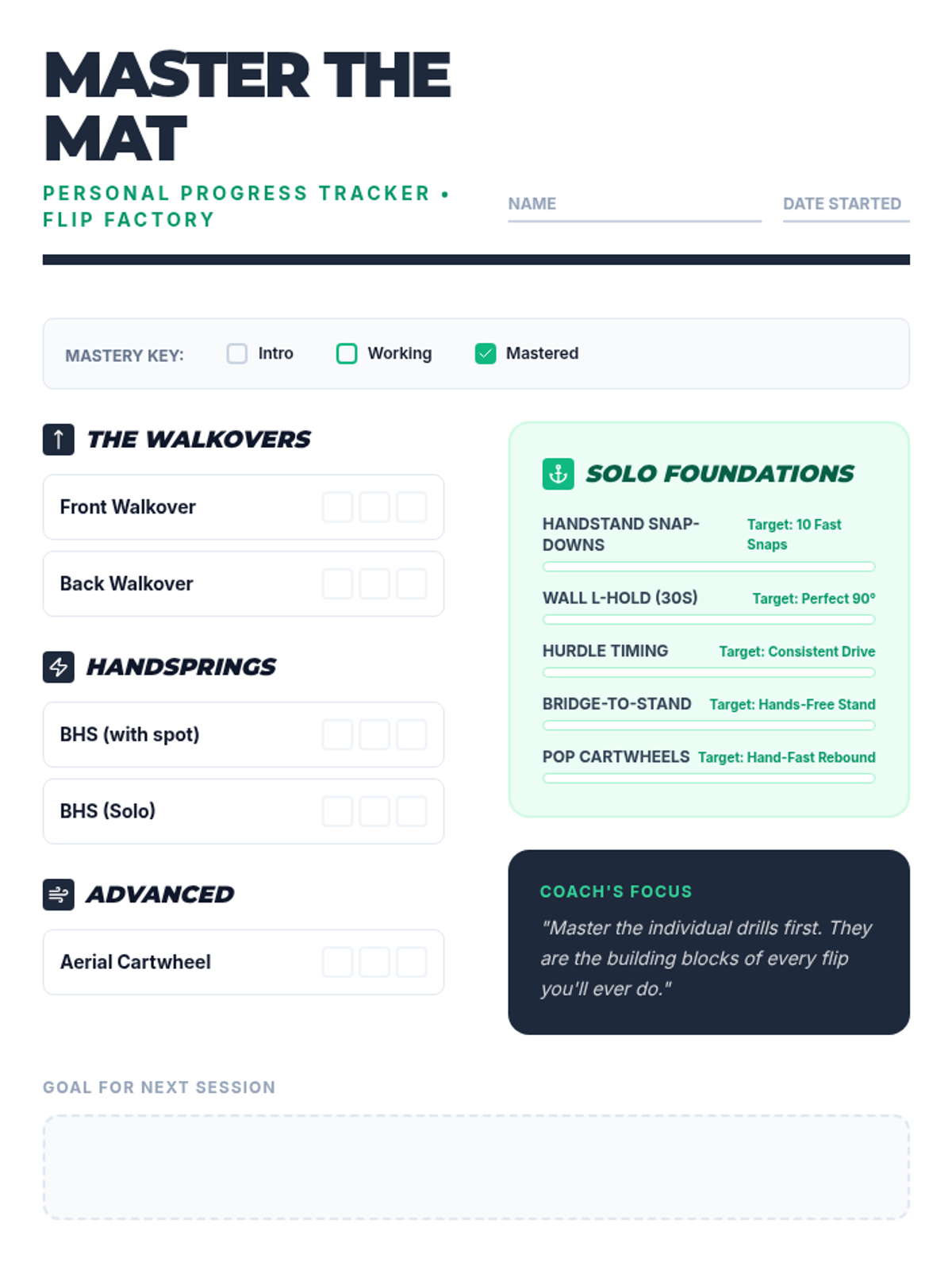
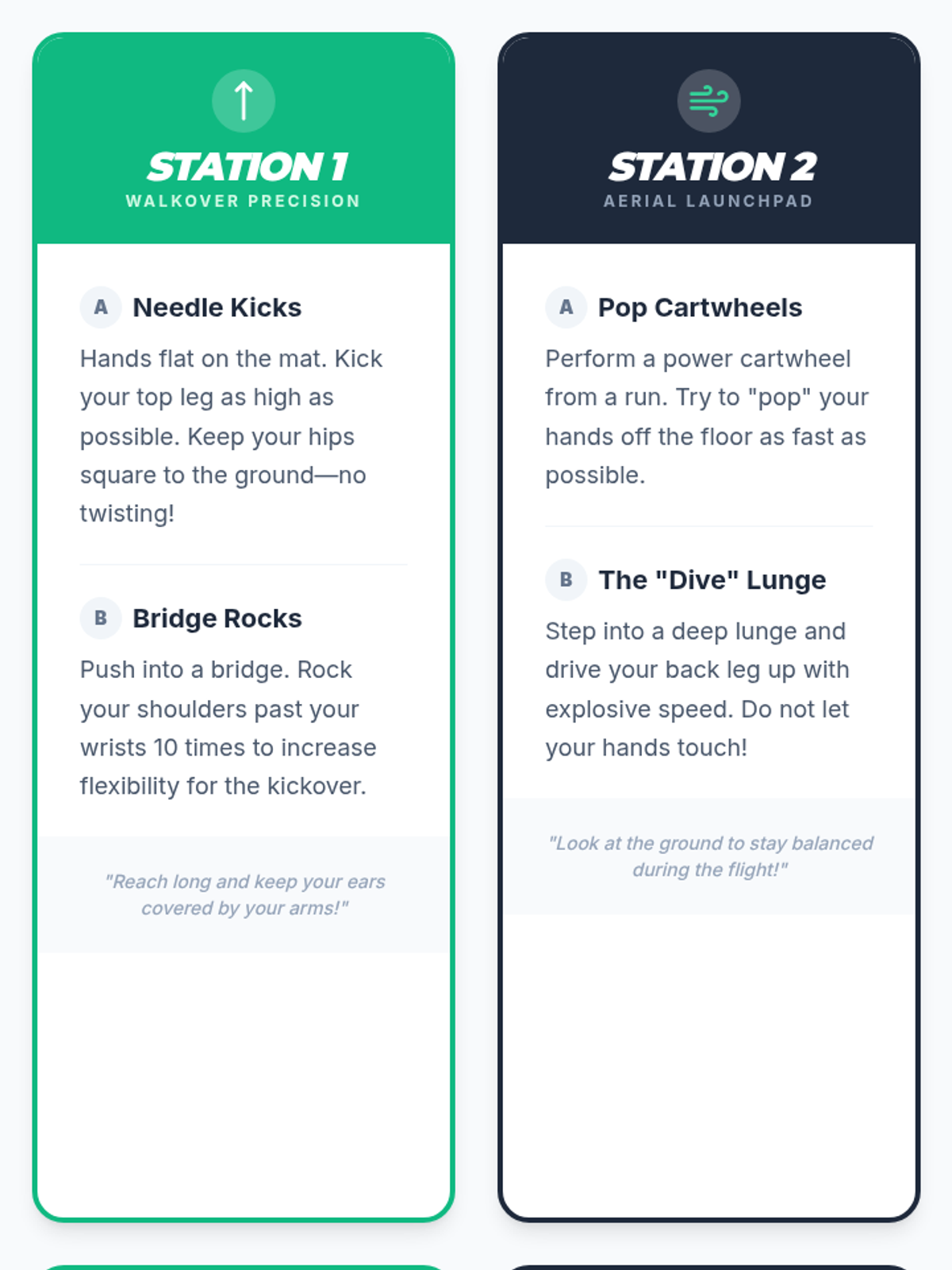
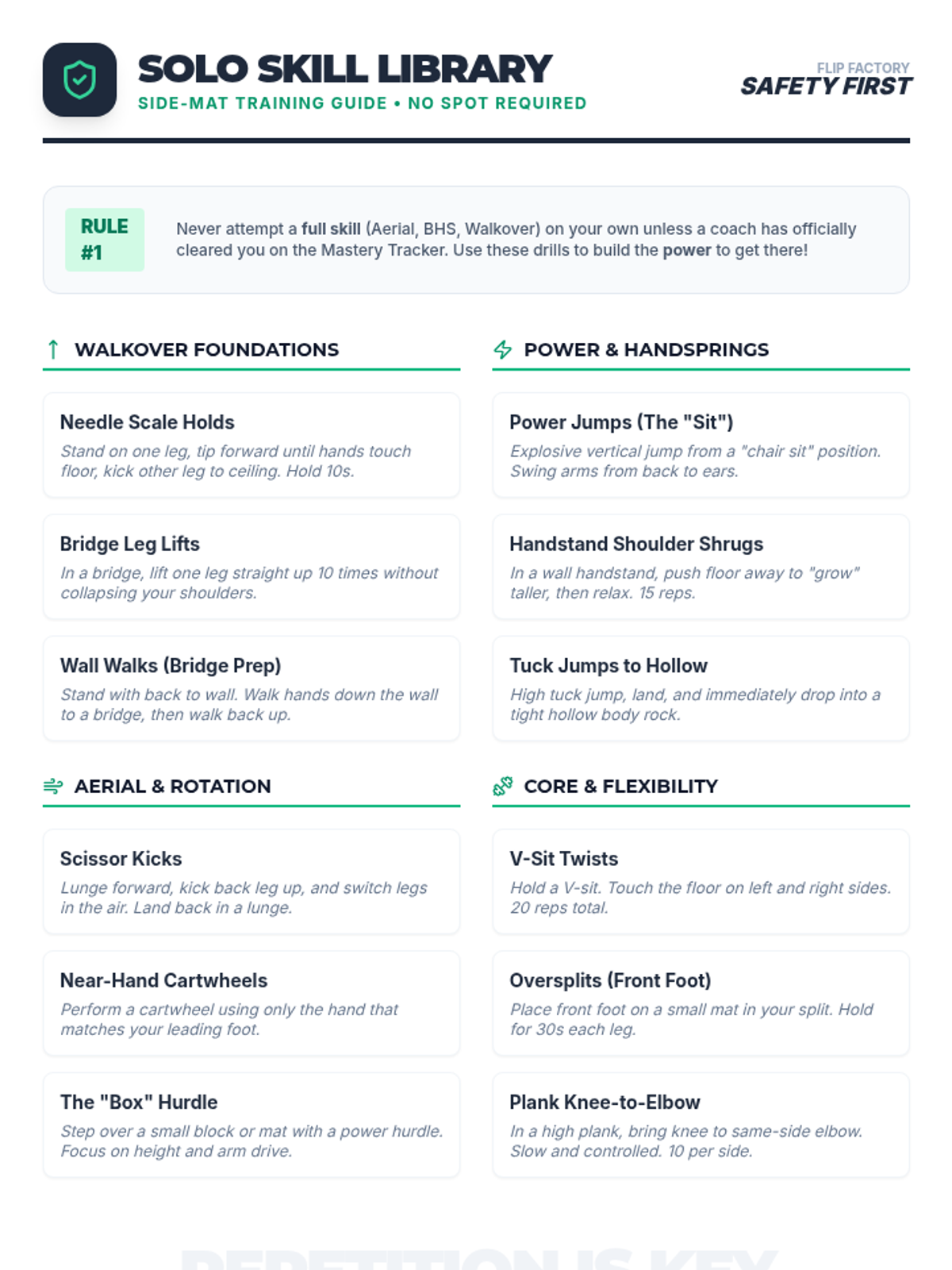
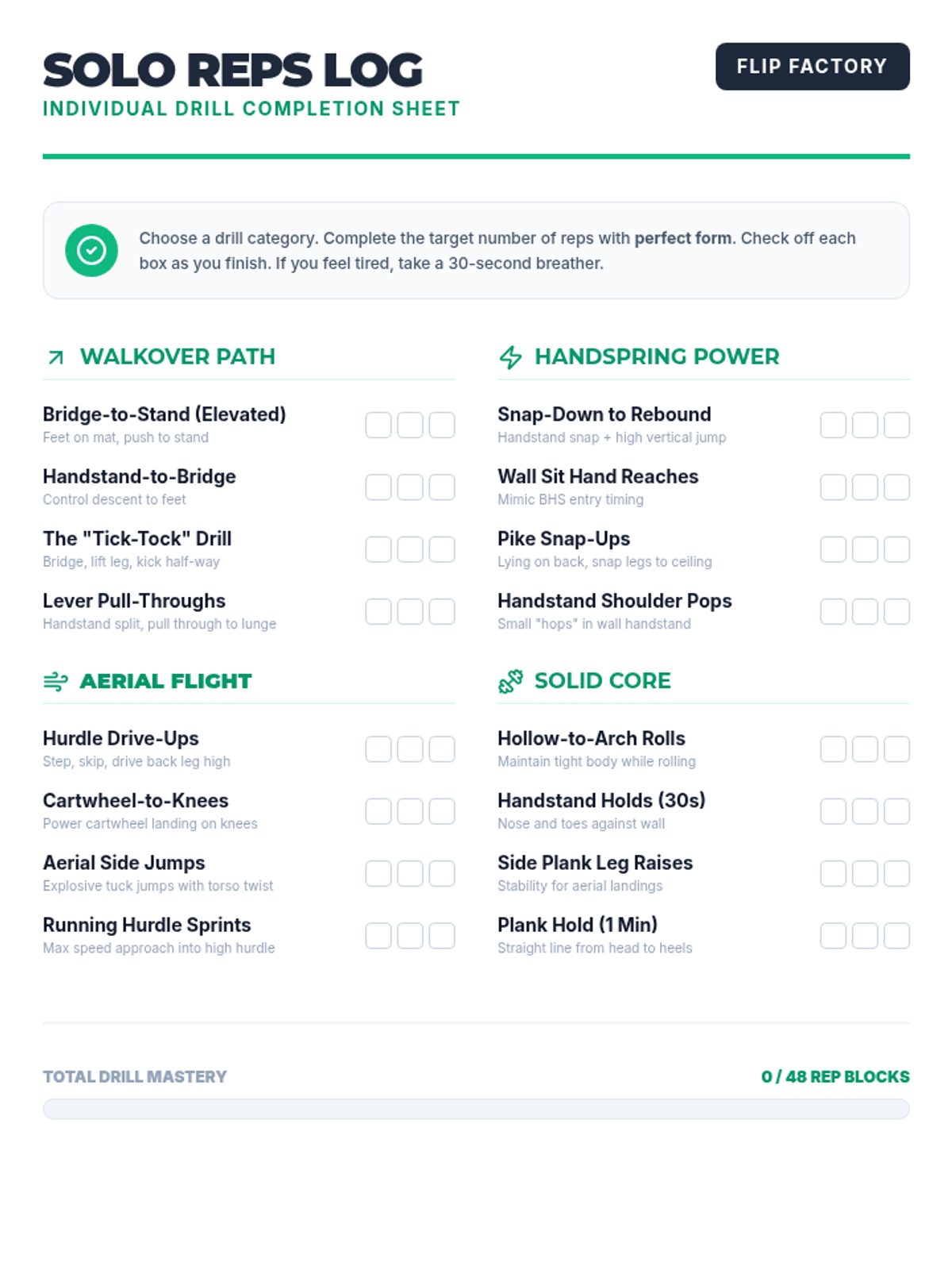
A high-energy 60-minute tumbling lesson focused on intermediate to advanced floor skills including walkovers, handsprings, and aerials. Includes a comprehensive coach guide, visual drills, and a student progress tracker.
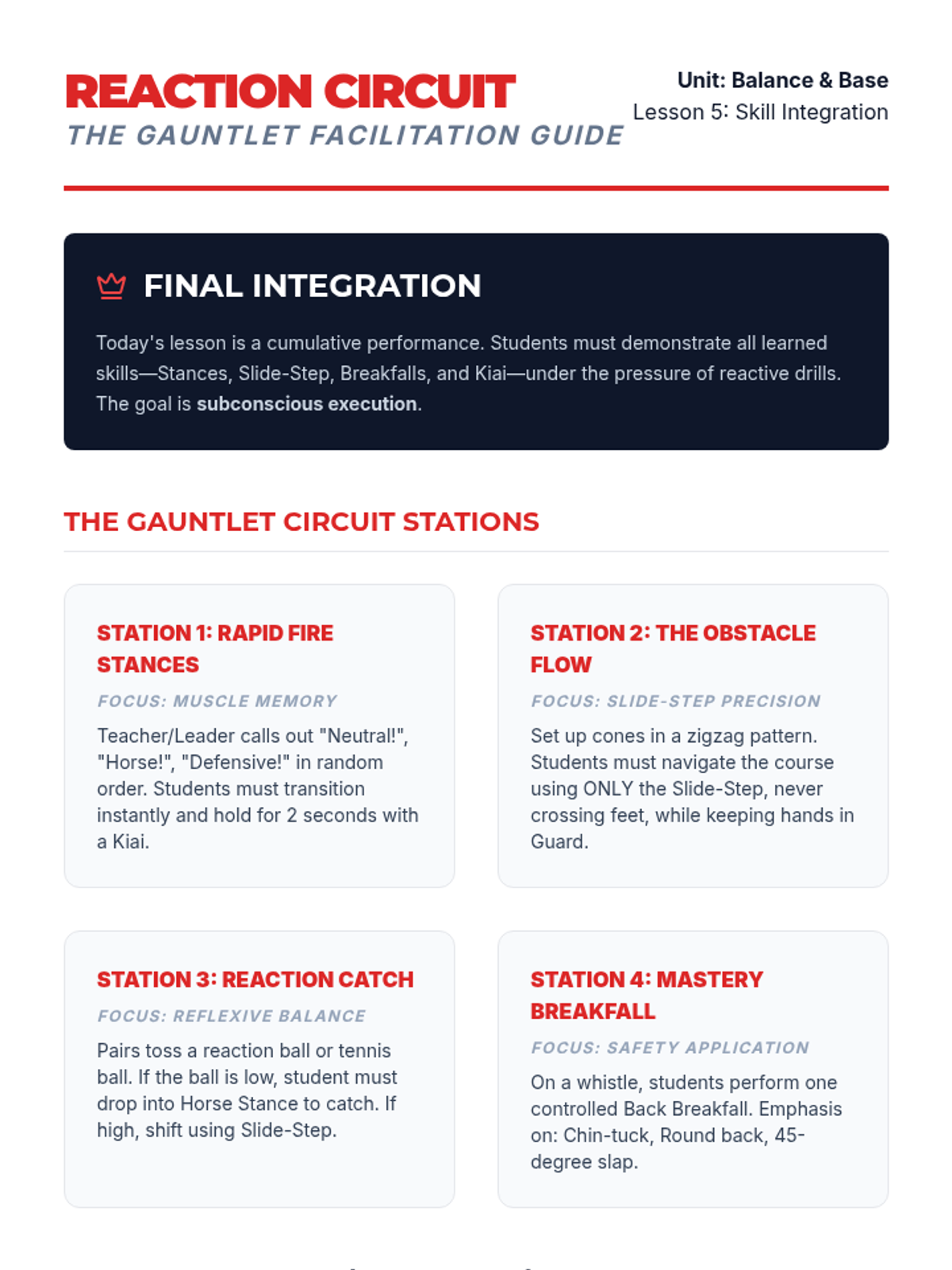
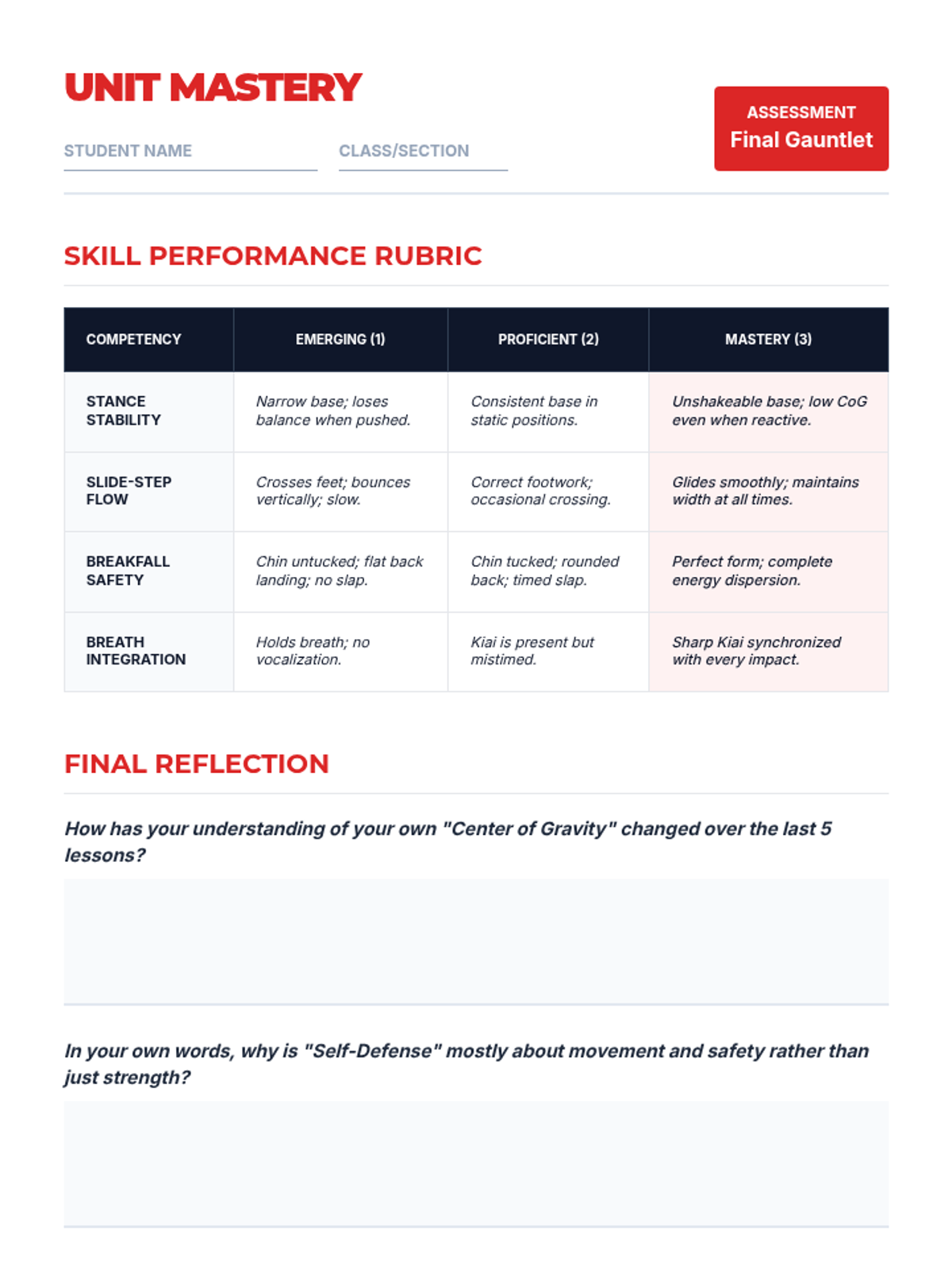
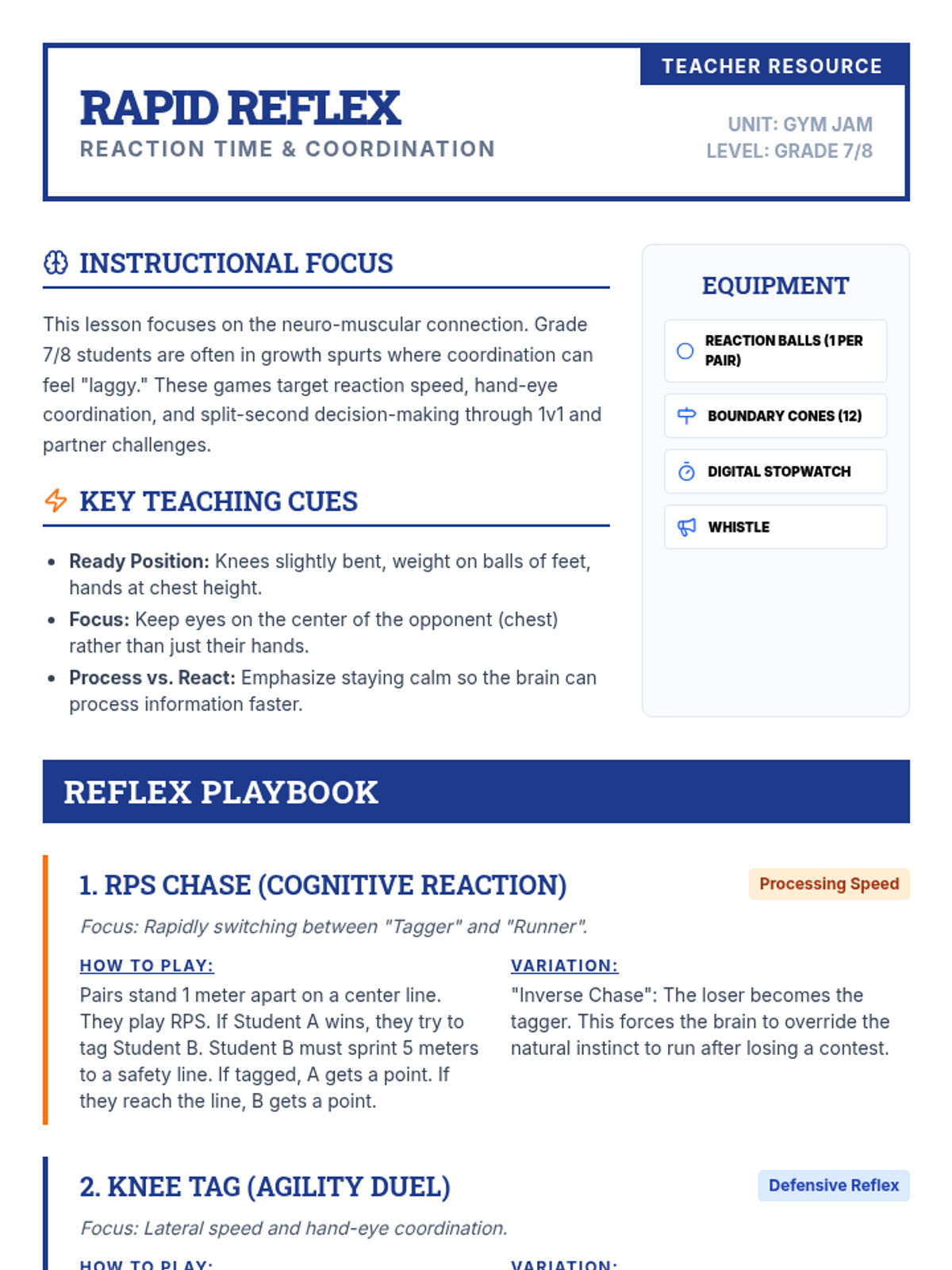
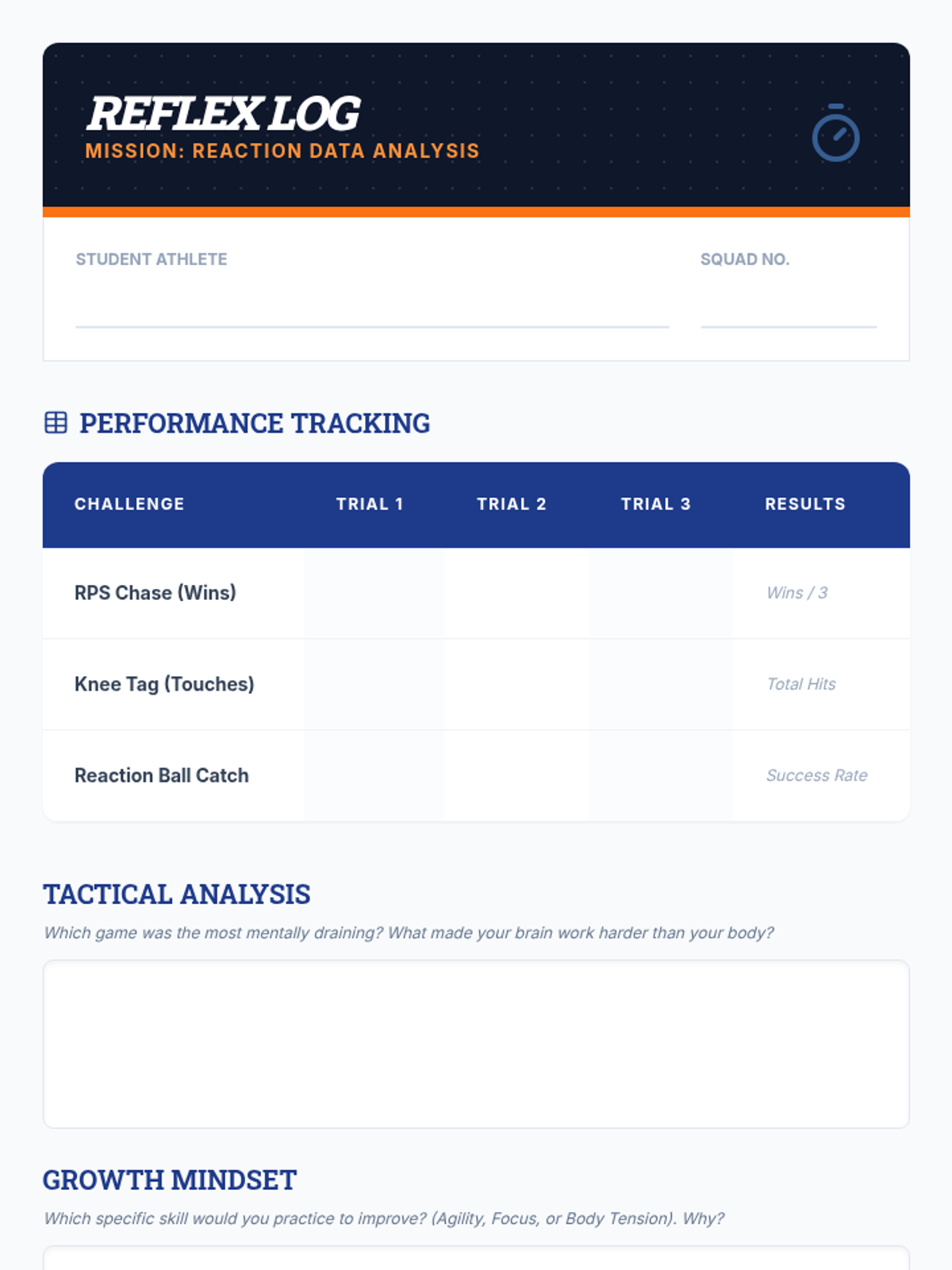
A high-energy culmination of the unit where students combine stances, footwork, and breath in reaction-based drills and agility circuits to improve motor recall.
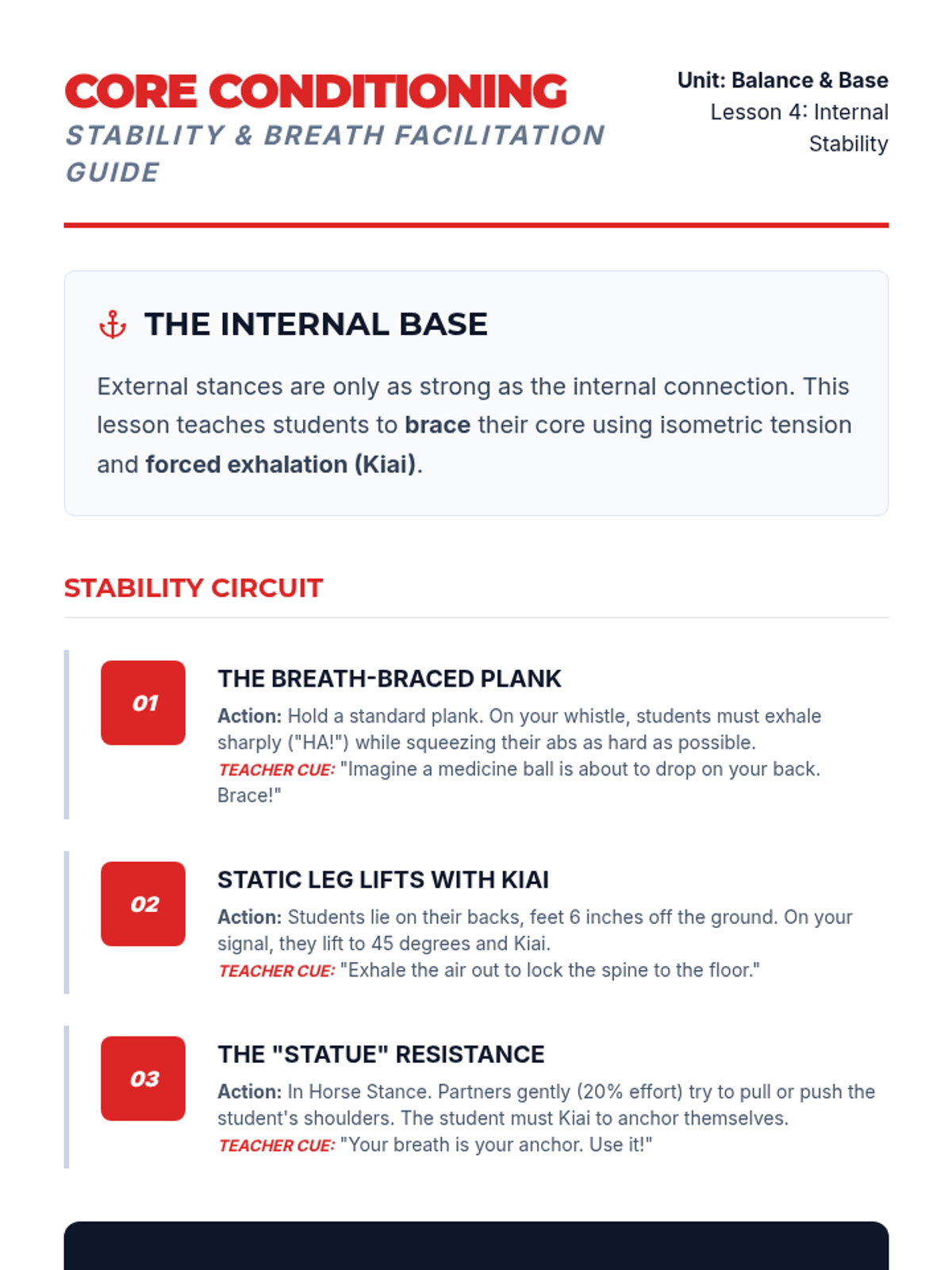
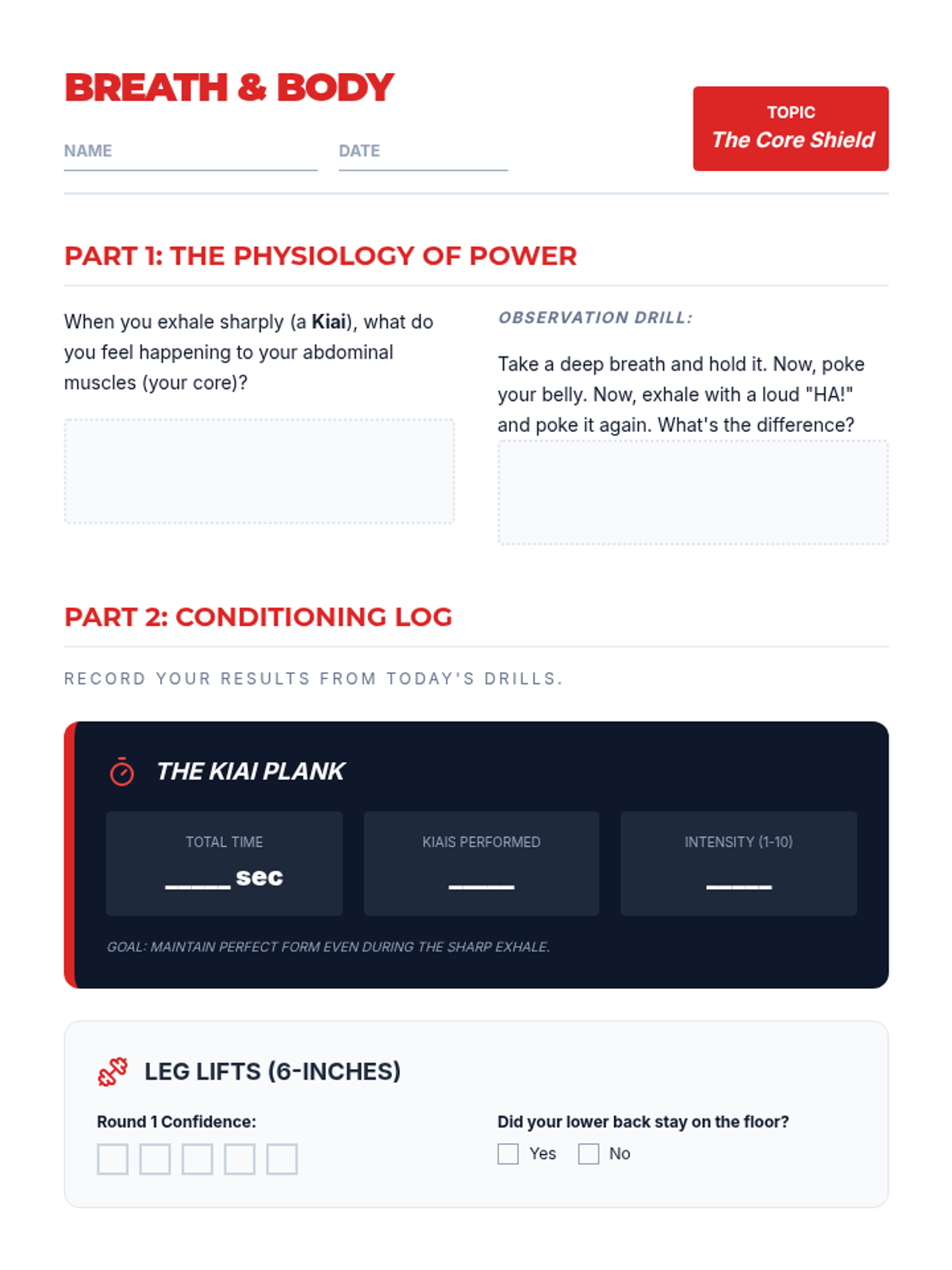
This lesson integrates isometric exercises and kiai breathing techniques to tighten the core during exertion, synchronizing breath with muscular contraction for stability.
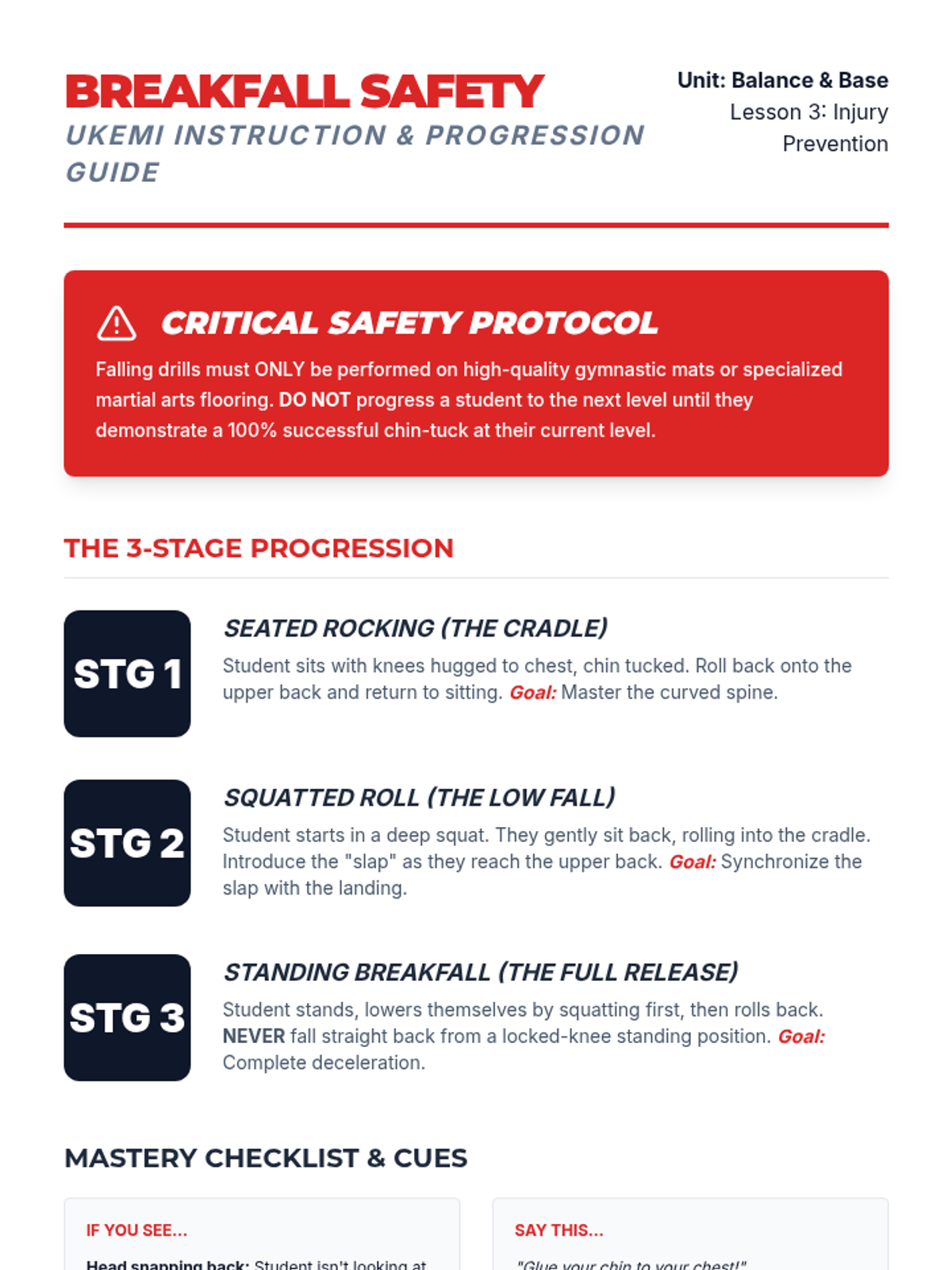
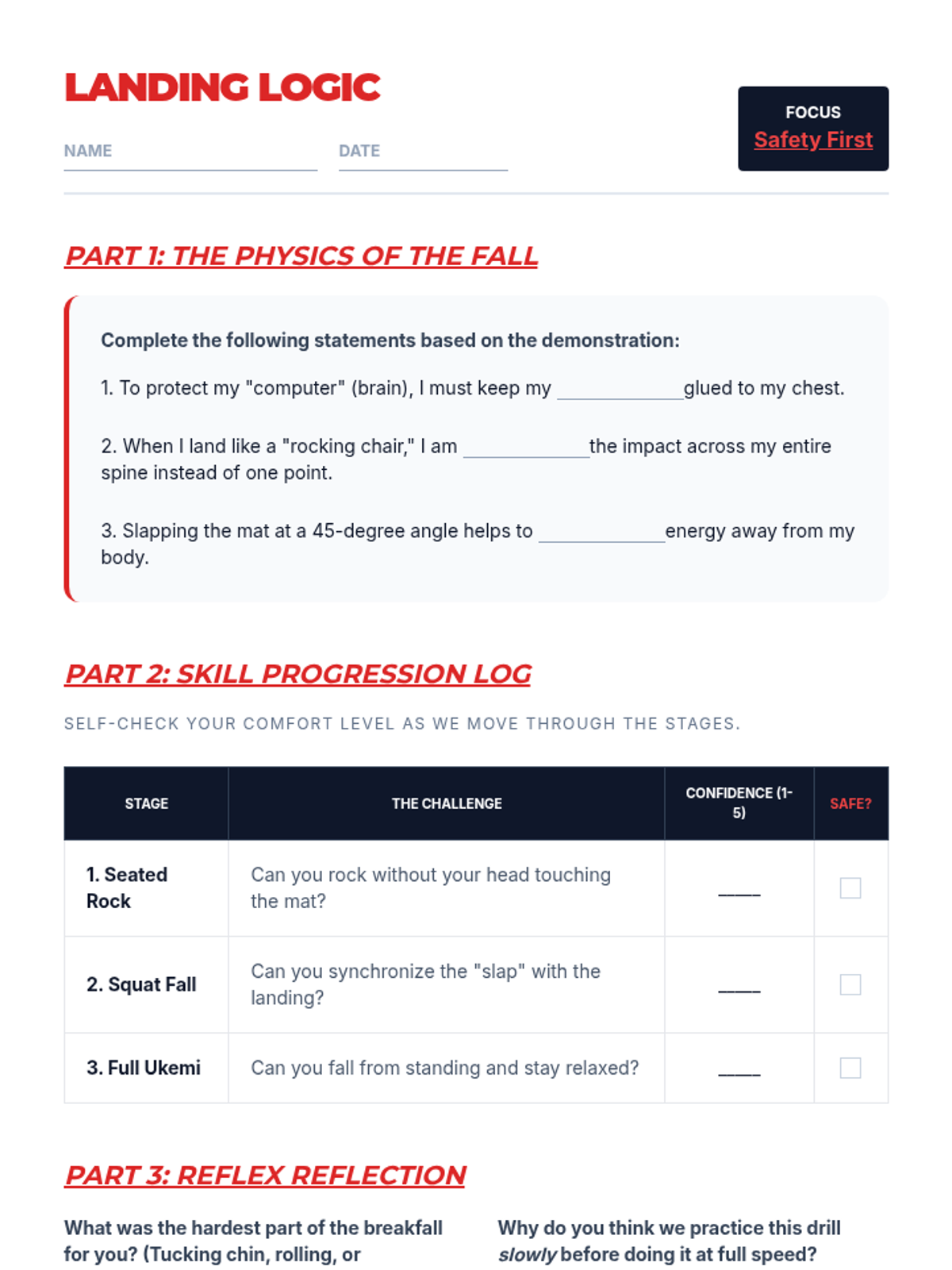
Students learn the mechanics of dispersing impact when falling (Ukemi), focusing on tucking the chin, rounding the back, and using 'slaps' to absorb shock safely.
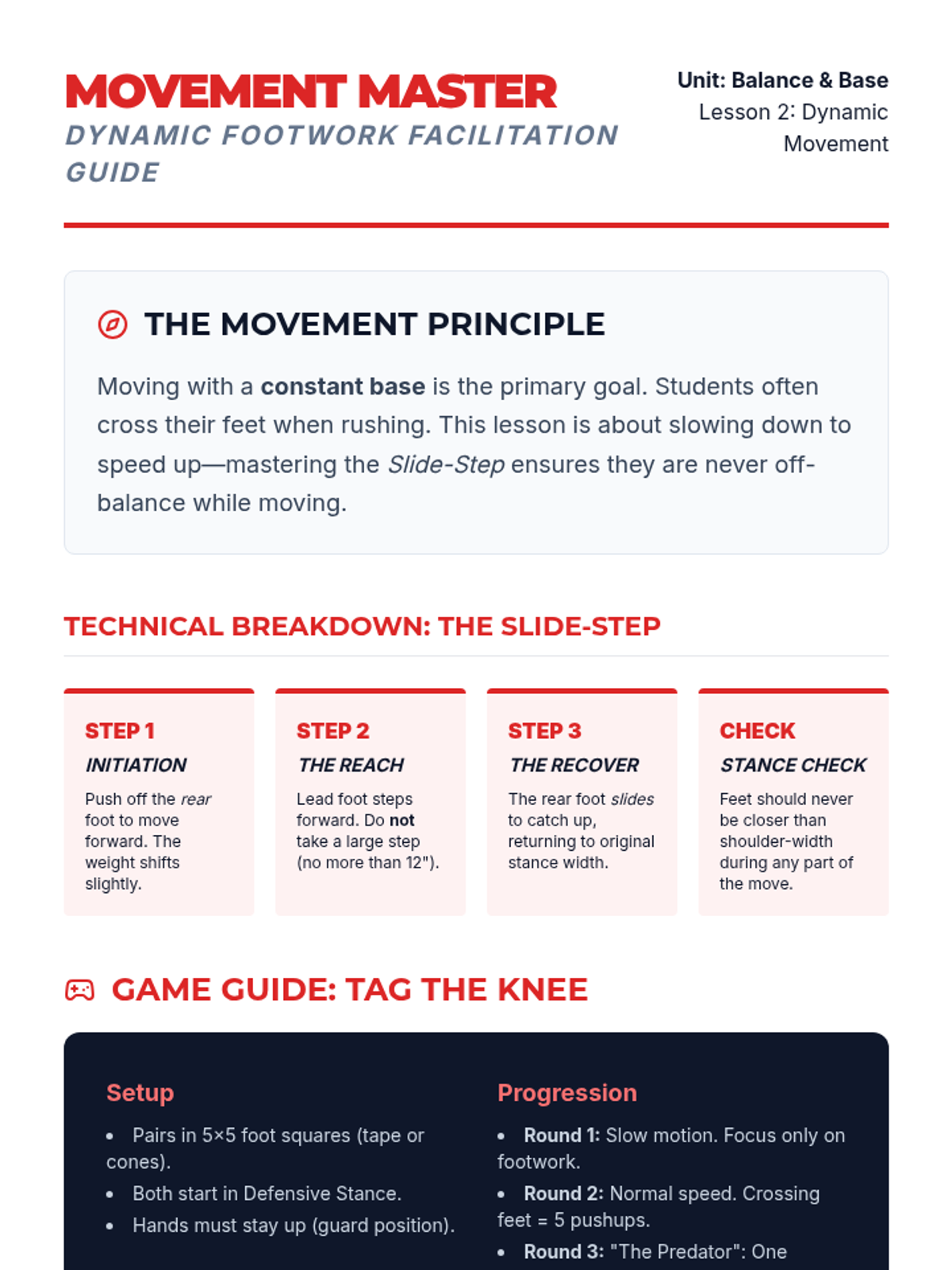
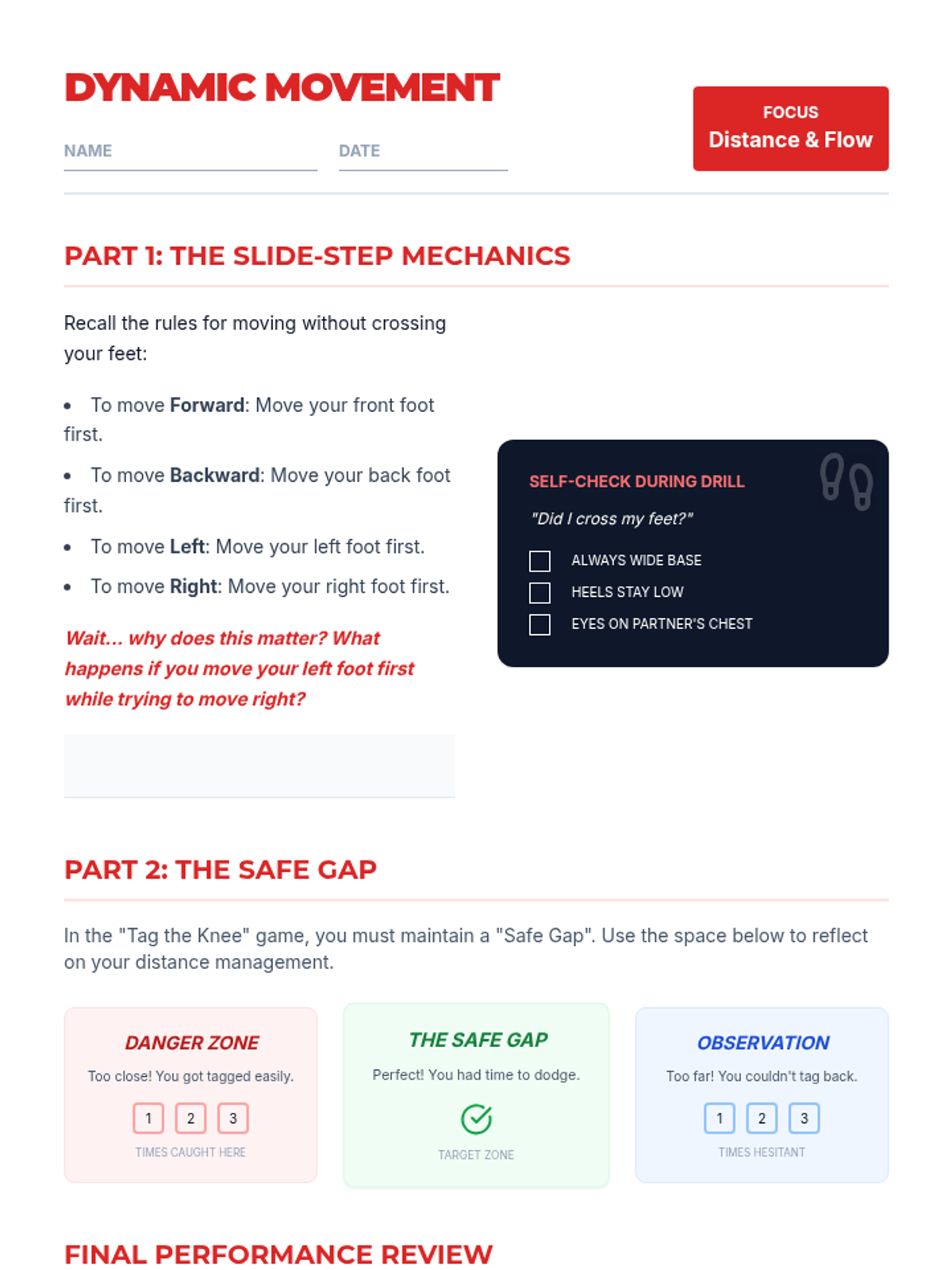
Focusing on the 'slide-step' and pivot, students practice moving without crossing their feet to maintain readiness and manage distance from potential threats.
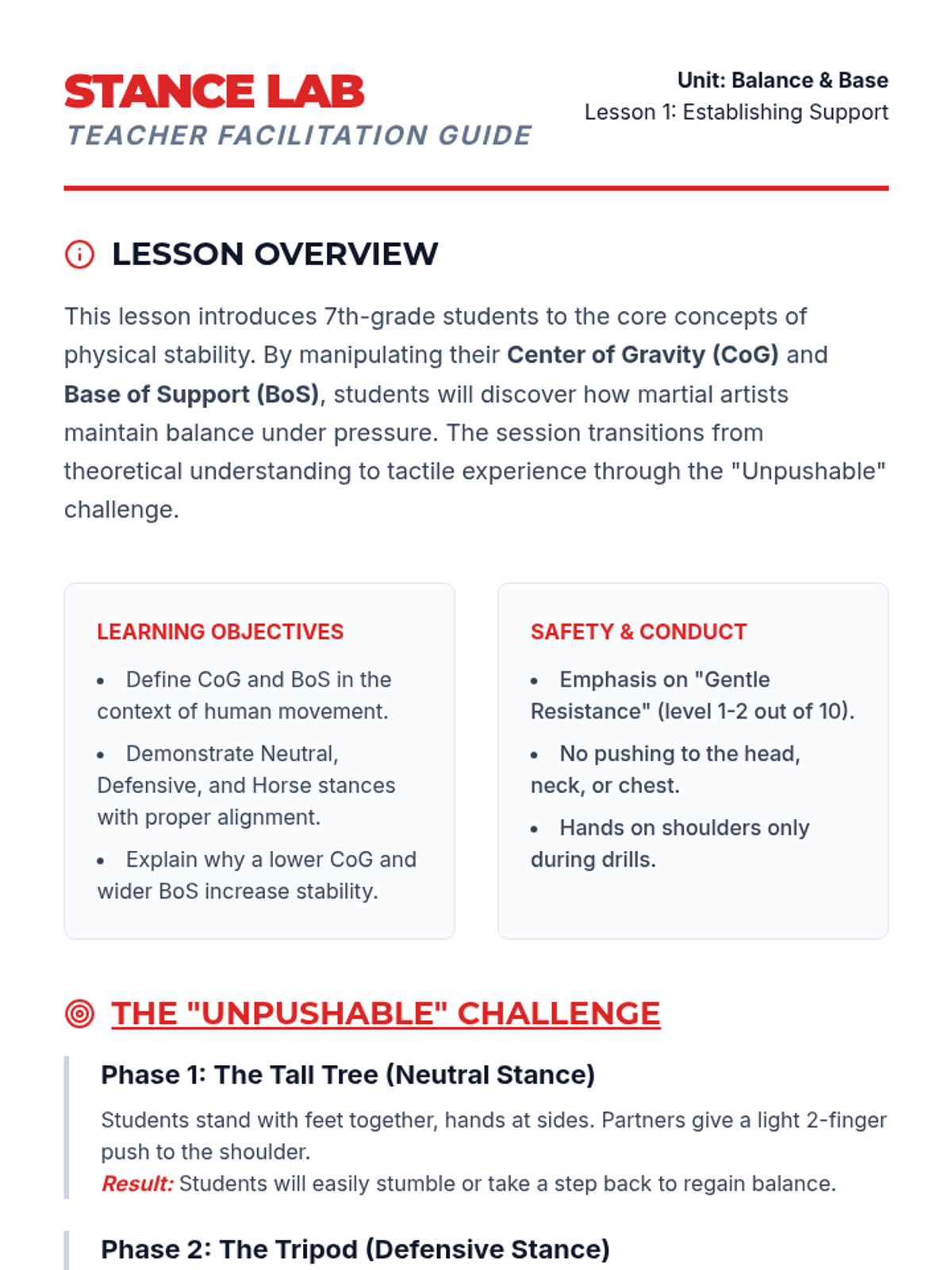
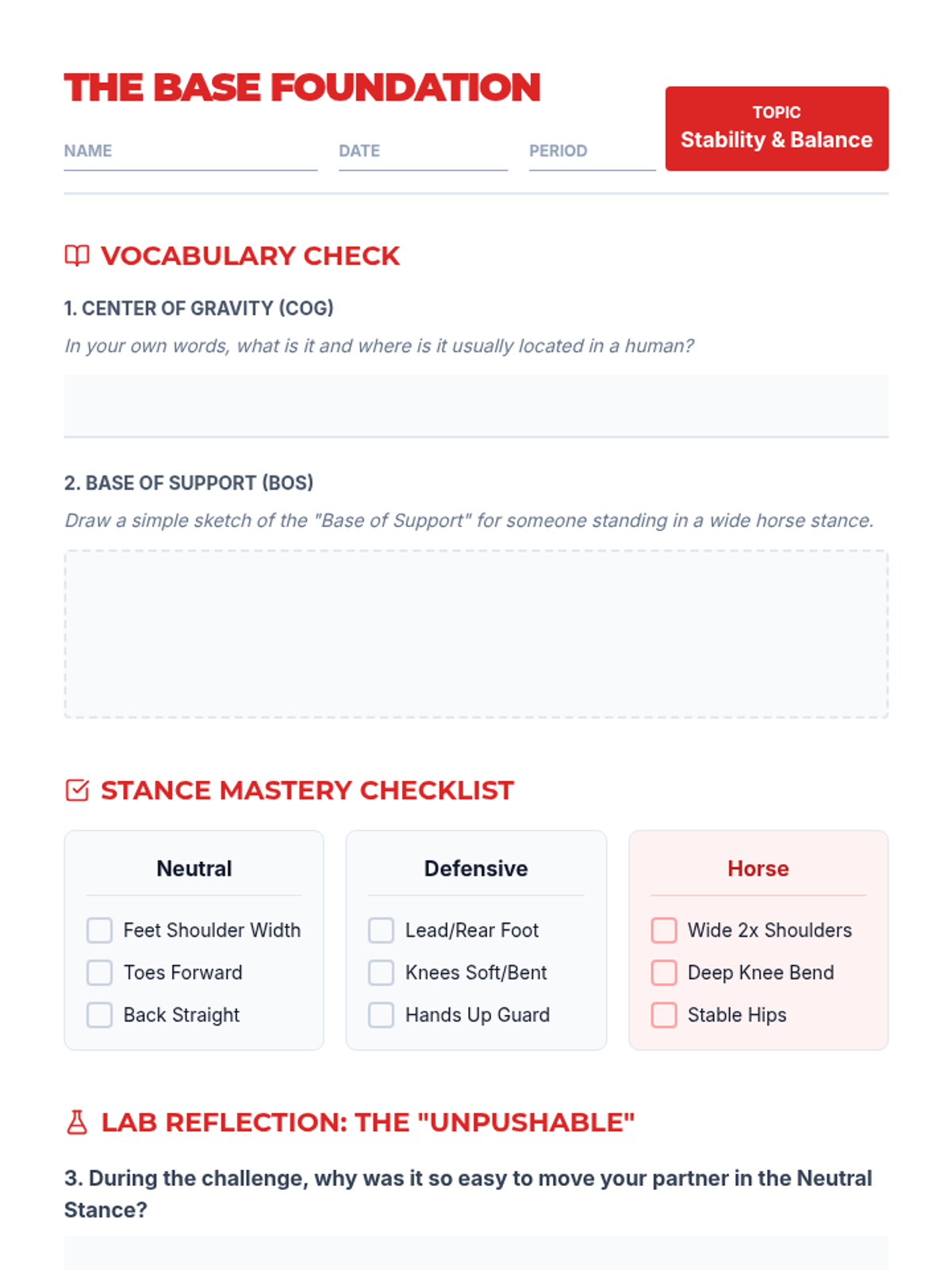
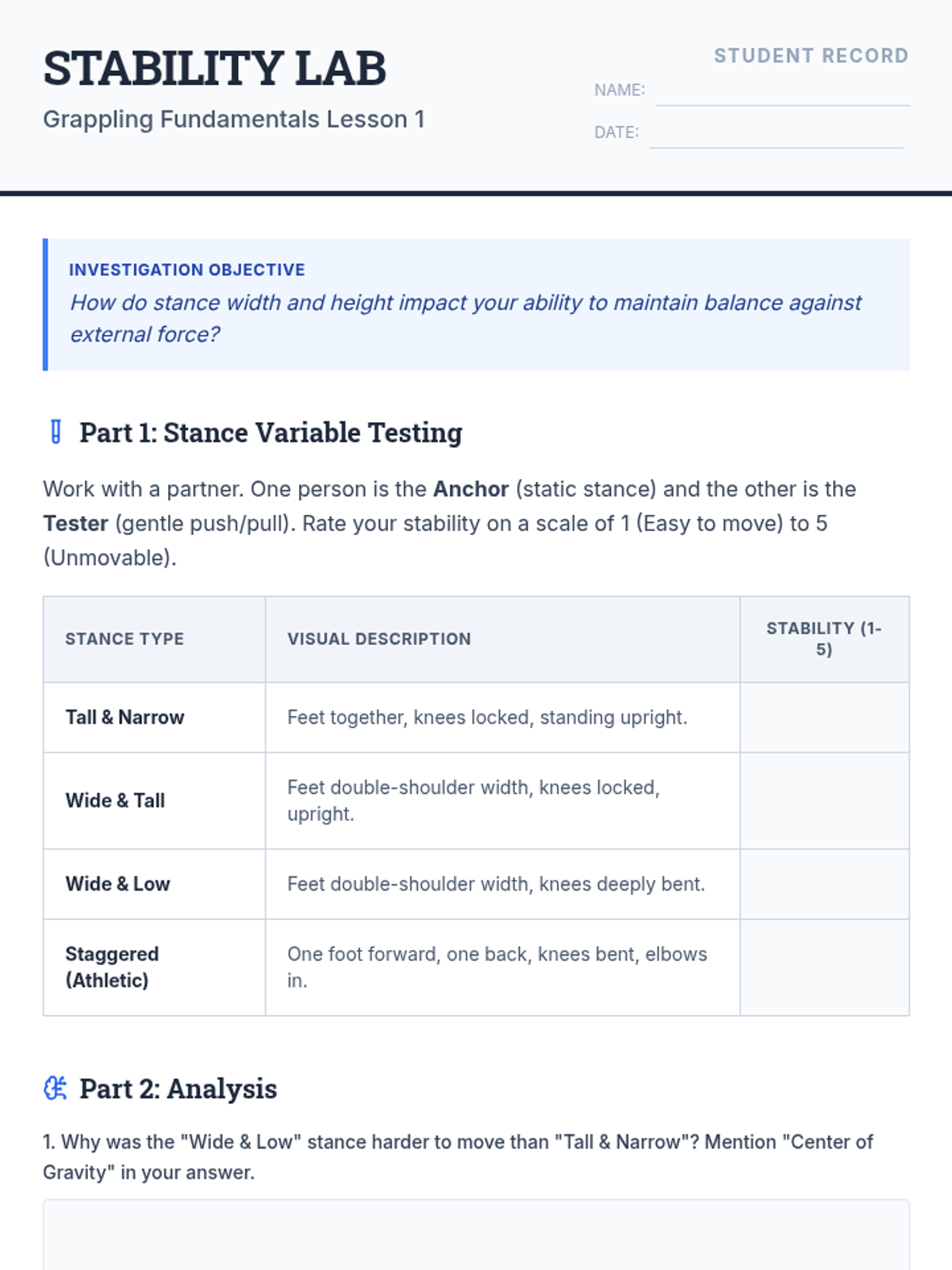
Students explore stability and center of gravity by mastering three fundamental stances: neutral, defensive, and horse stance, learning how a wide base and low center prevent being knocked off balance.
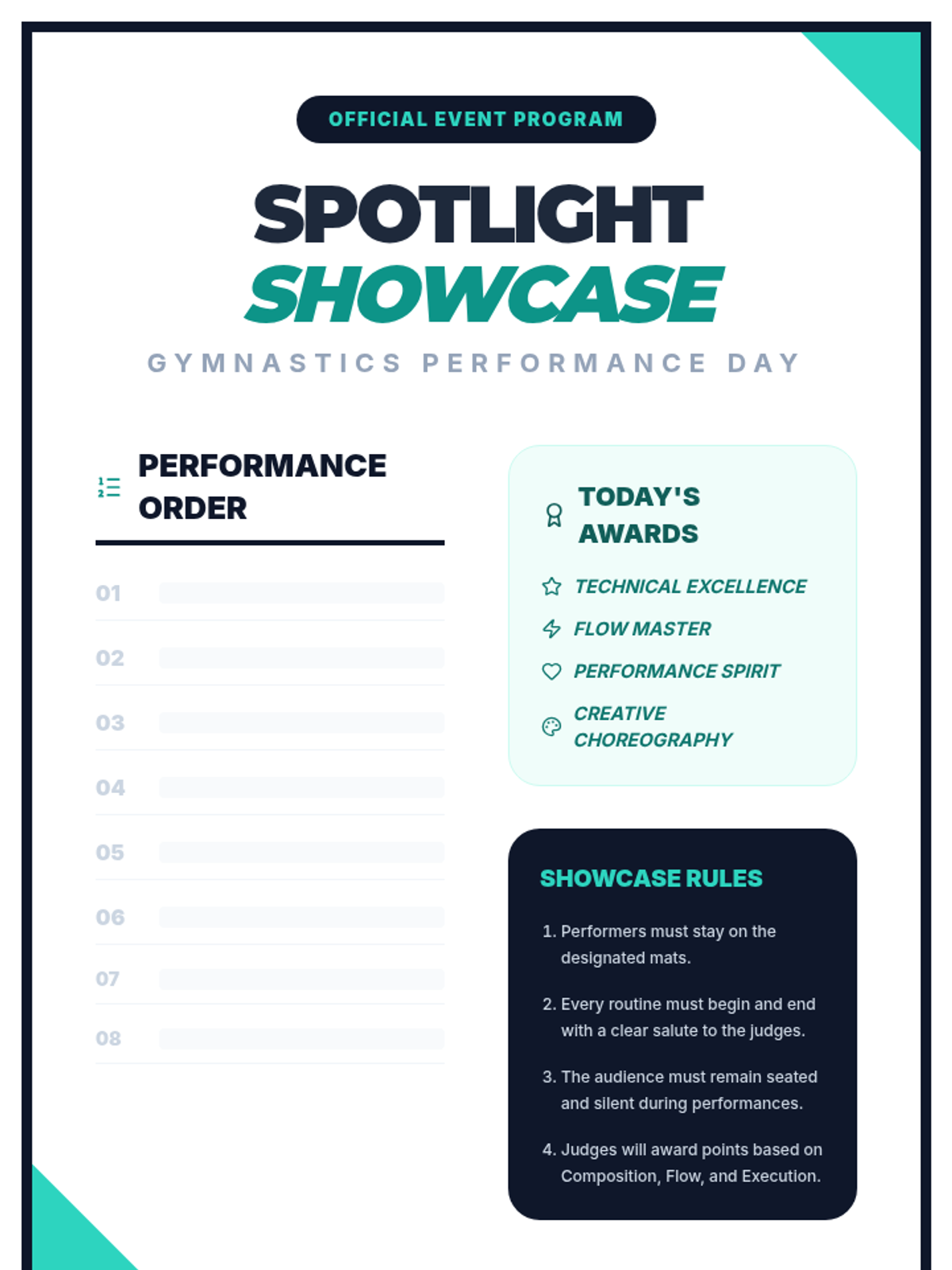
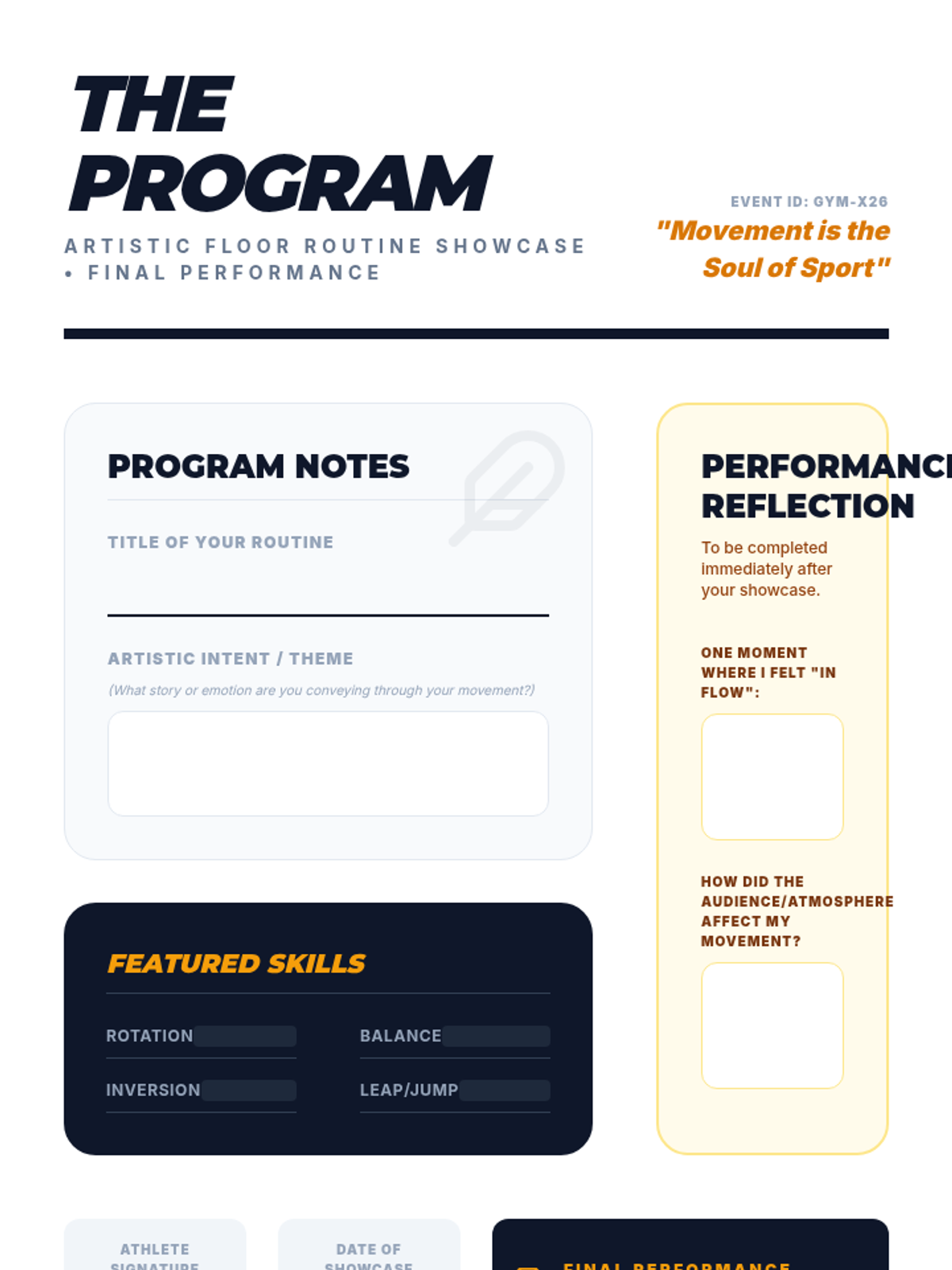
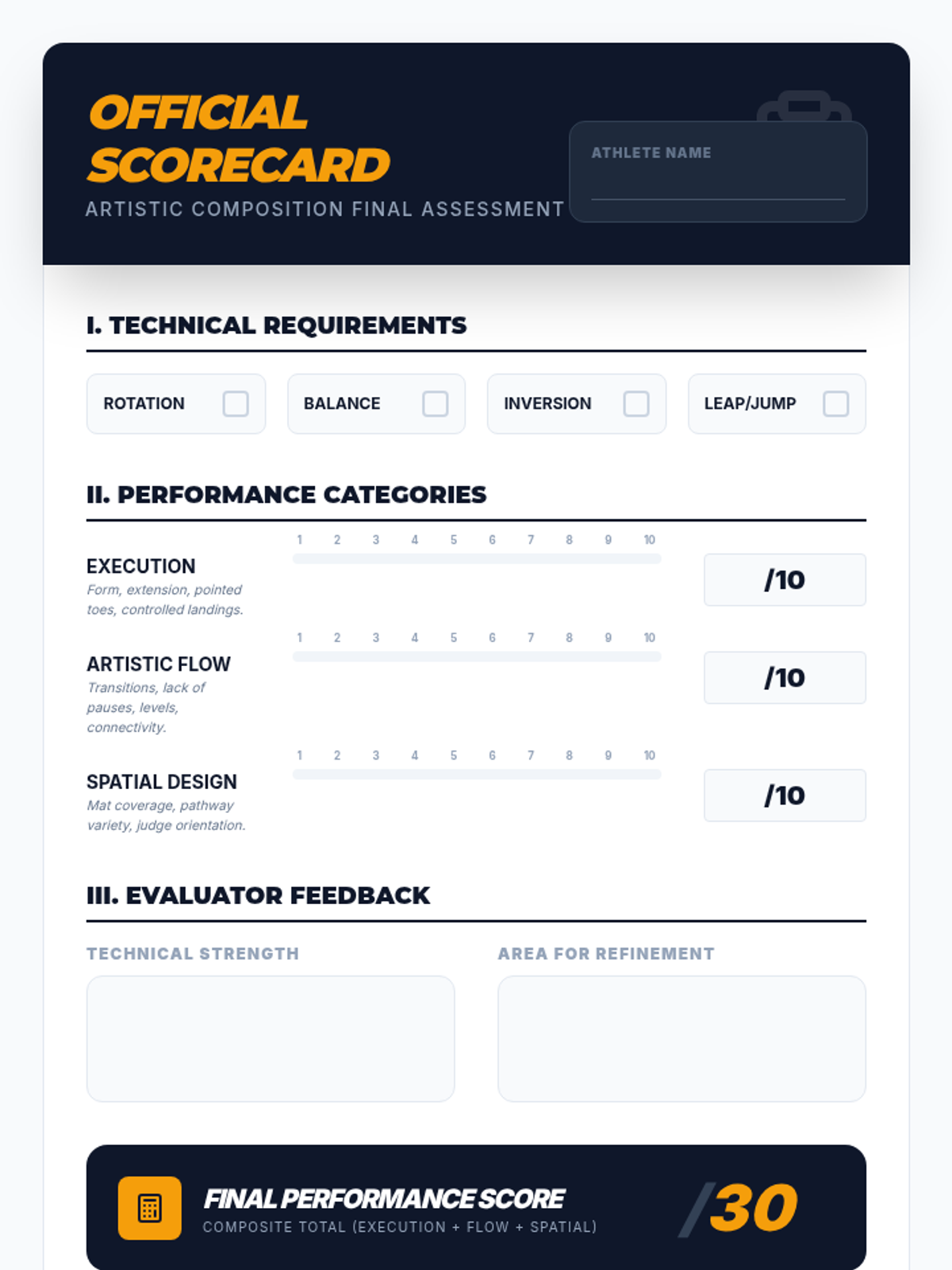
Students perform their final floor routines for small groups. Assessments are based on the inclusion of required elements, the fluidity of connections, and overall control, rather than high-level difficulty.
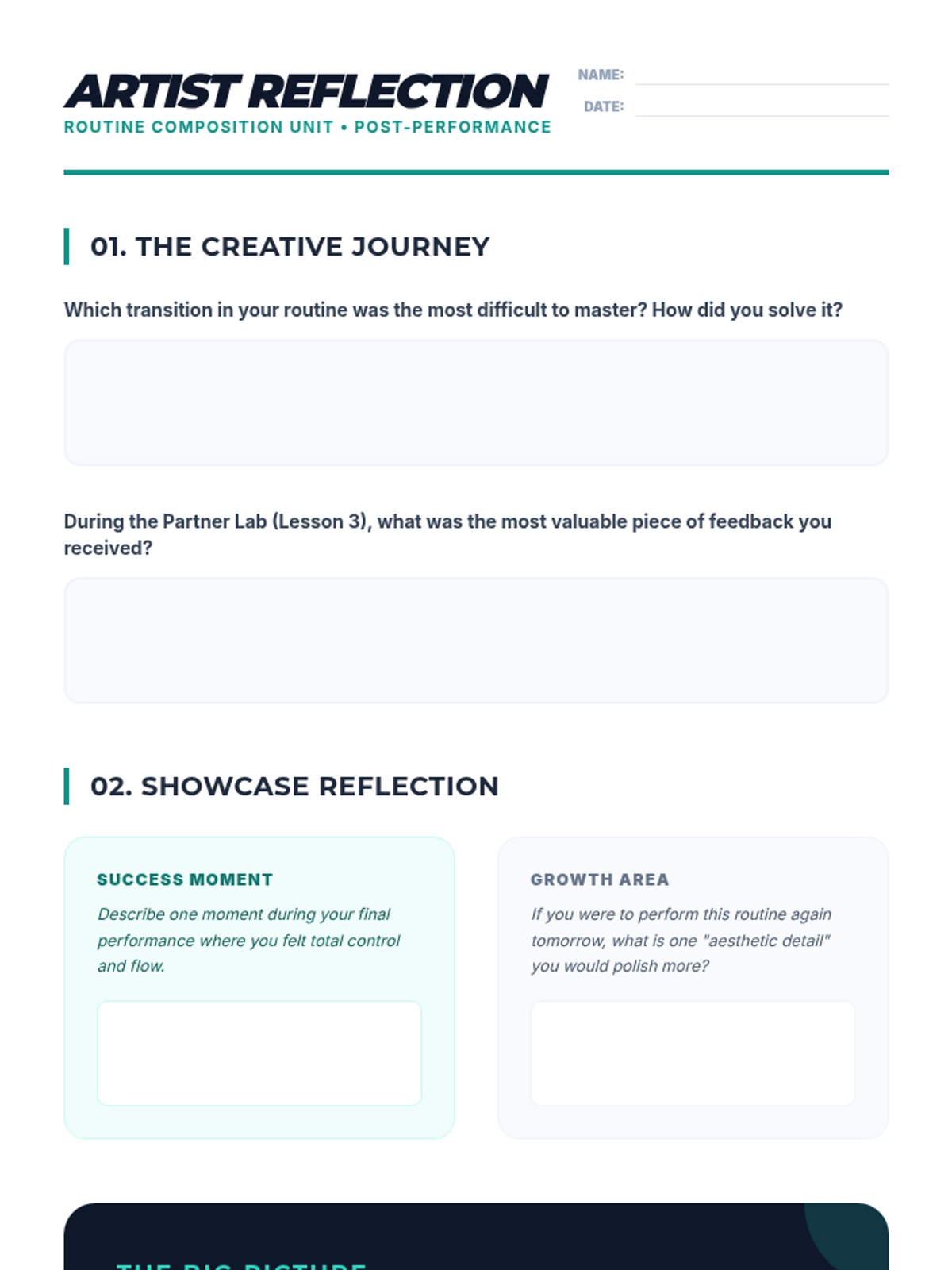
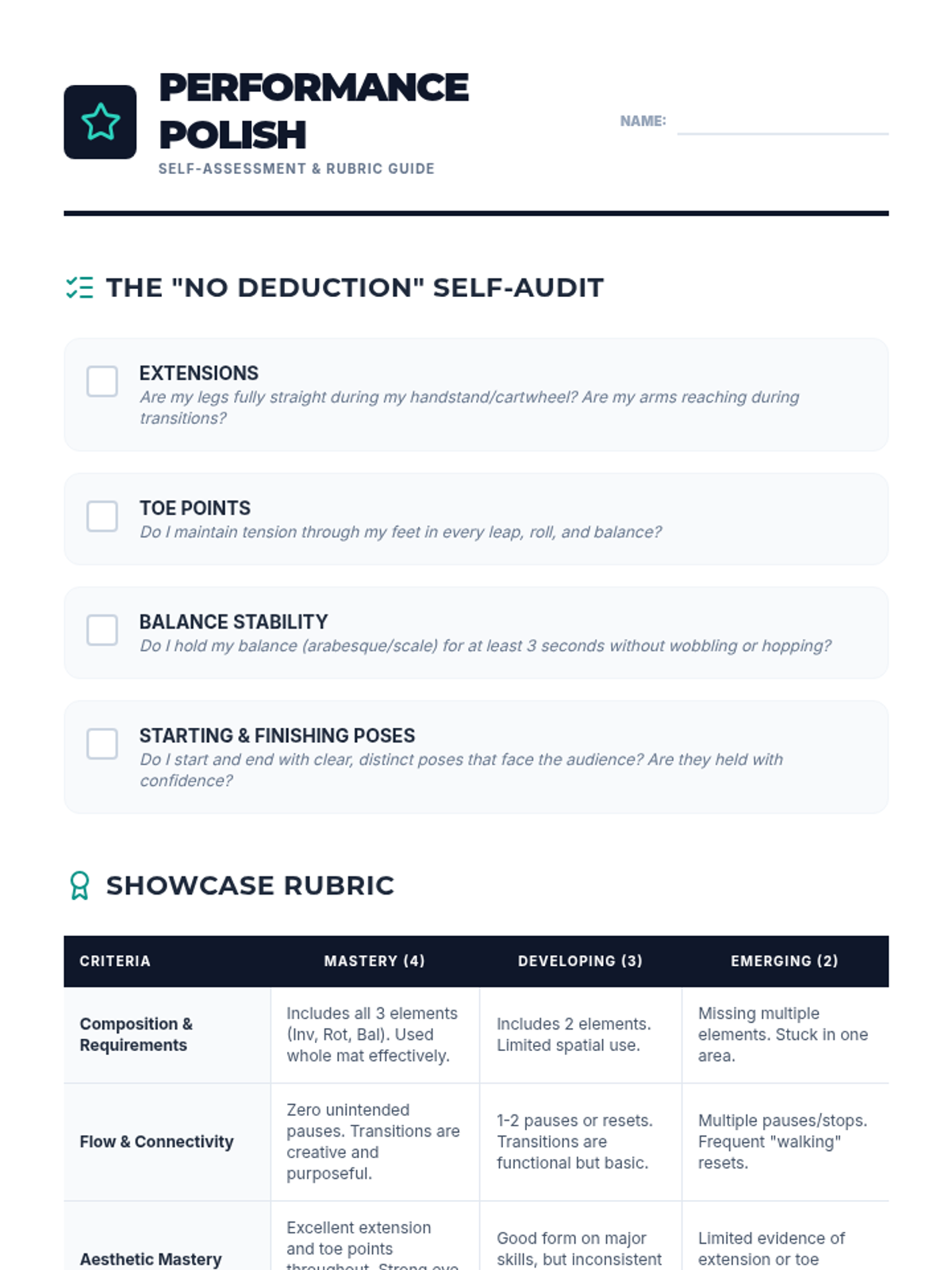
This lesson focuses on extension, toe point, and posture. Students practice their routines with a focus on aesthetic presentation and body control, preparing for the final showcase.
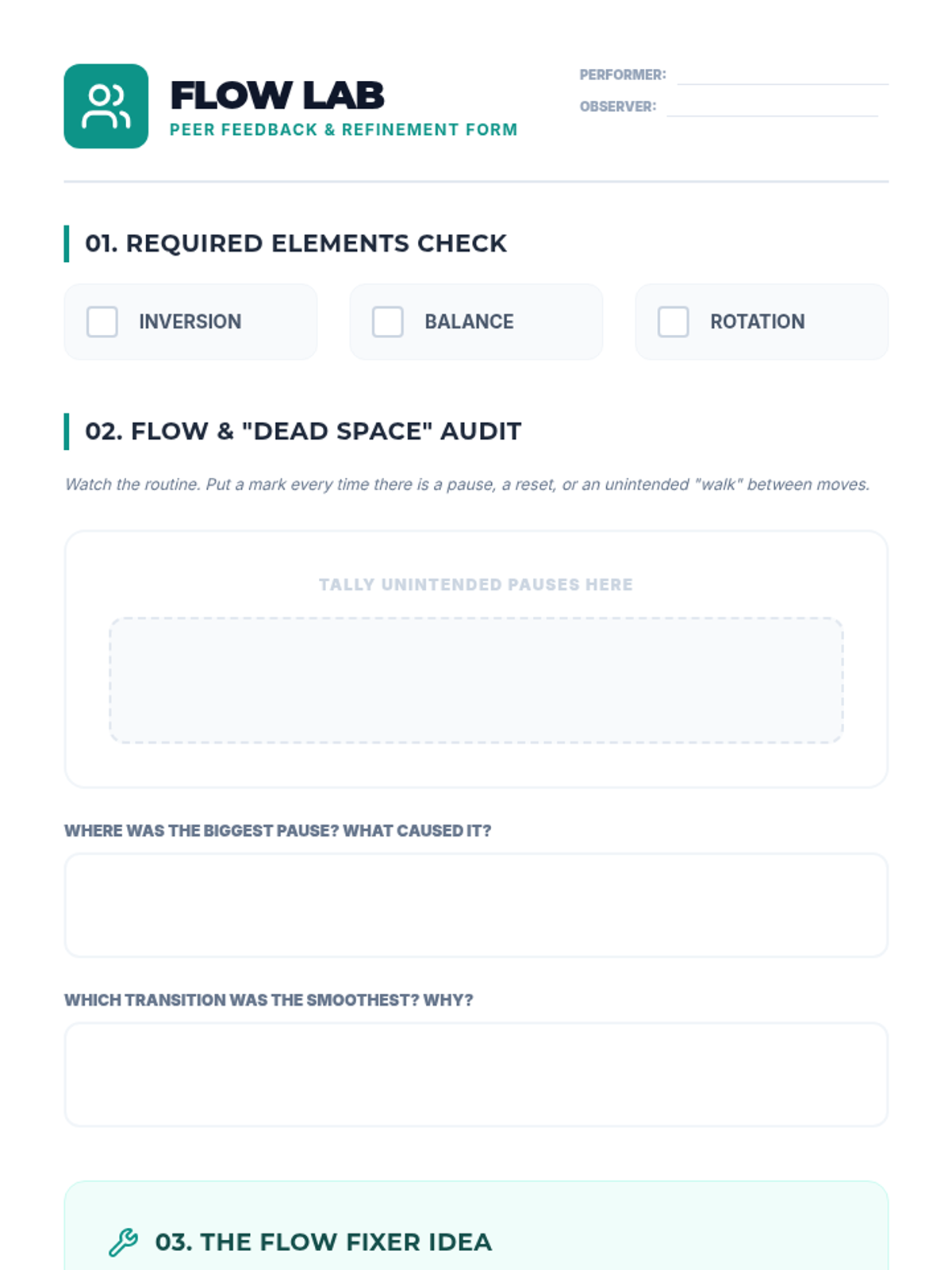
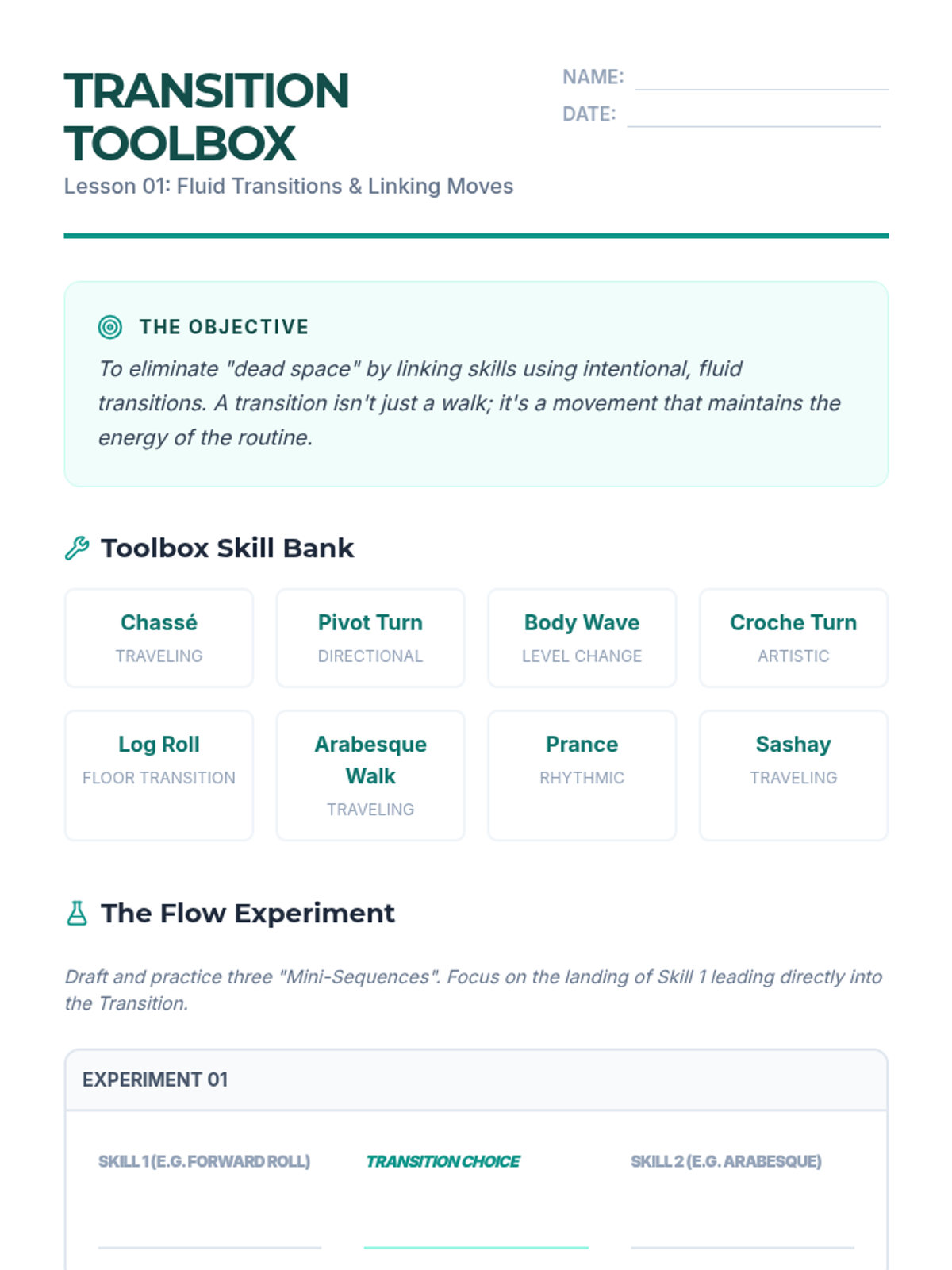
Working in pairs, students teach their draft sequences to a partner to test for feasibility and flow. Partners provide feedback on 'dead space' in the routine and suggest creative modifications for transitions.
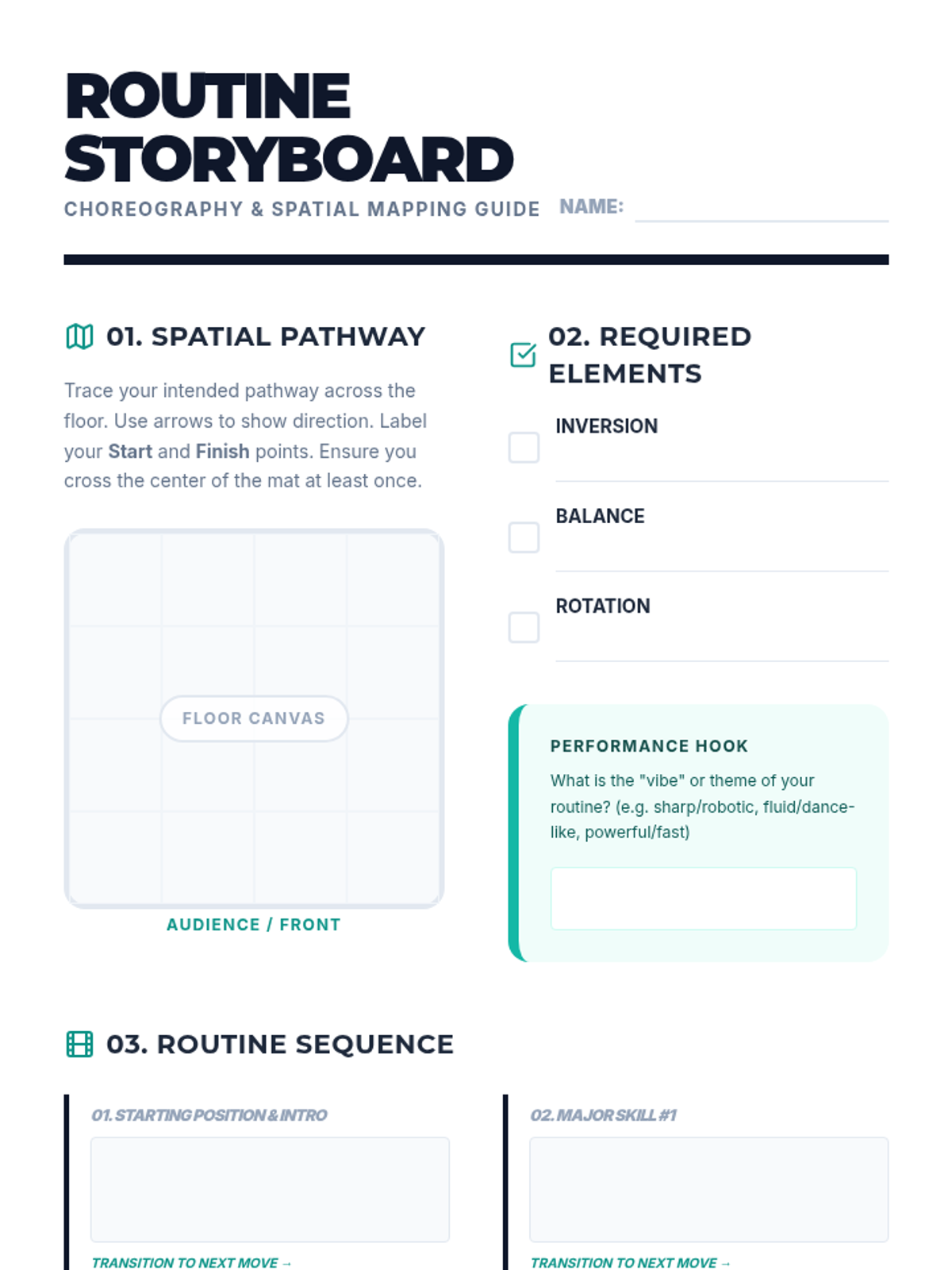
Students receive the parameters for their final project, including required elements (inversion, balance, rotation). They begin storyboarding their routine, mapping out floor coverage and selecting music or rhythmic cadence to guide their pacing.
Students learn how to connect static skills (like balances) with dynamic skills (like rolls) using transitional movements such as chasse, pivot turns, and leaps. The focus is on eliminating pauses to create a continuous stream of movement.
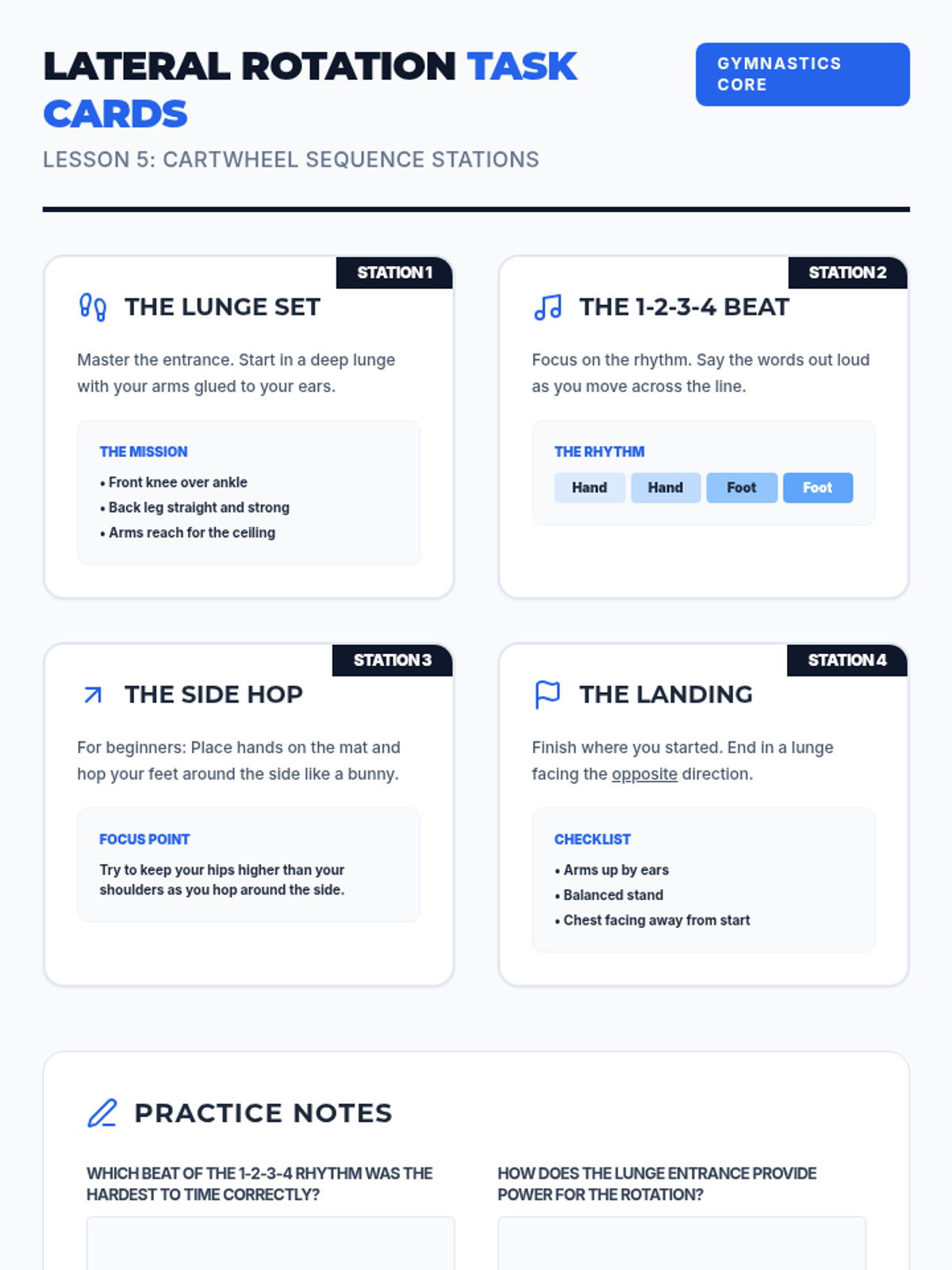
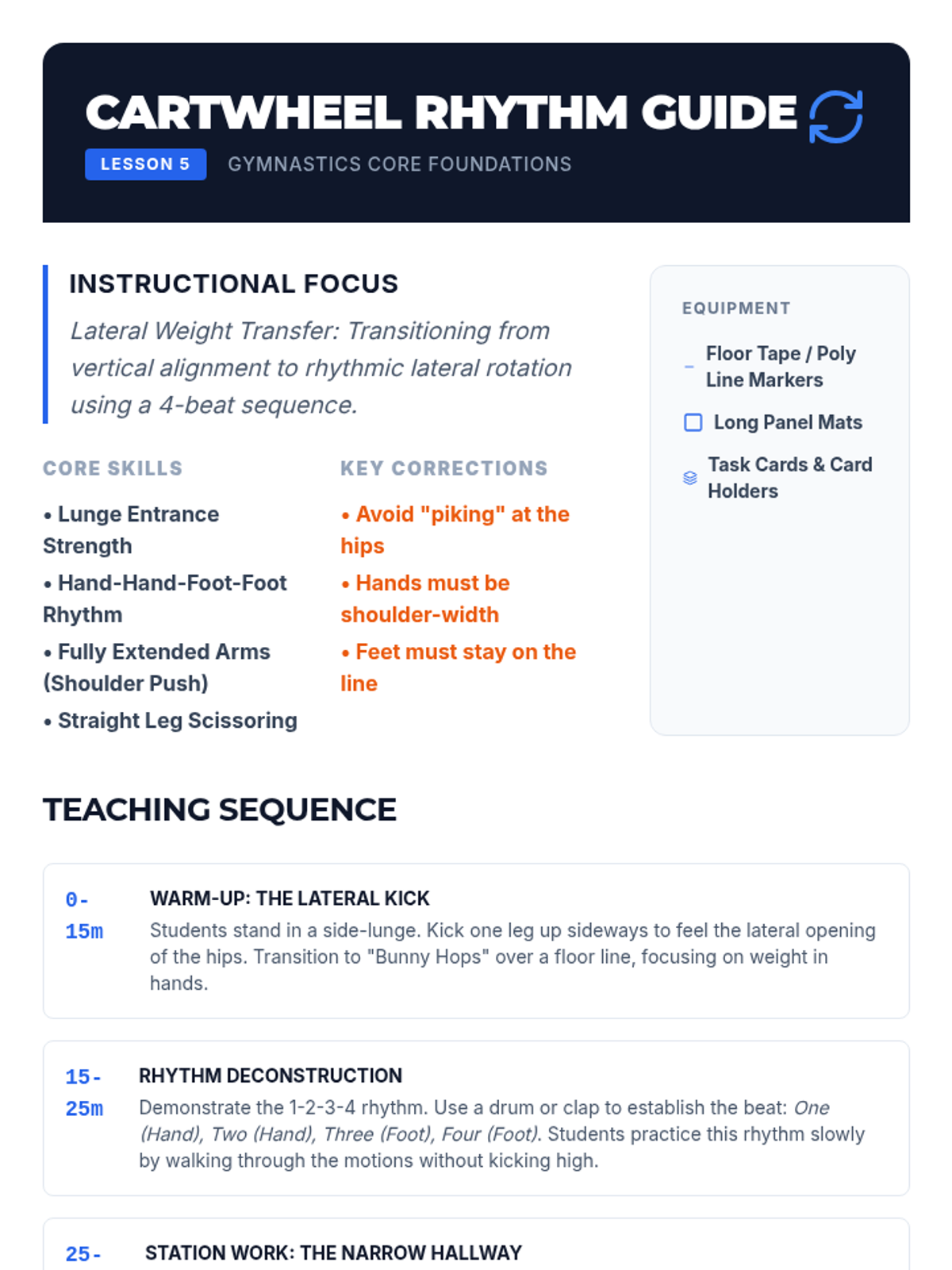
Students deconstruct the cartwheel into a hand-hand-foot-foot rhythm using floor markers. The lesson emphasizes the lunge entrance and the lateral transfer of weight through fully extended arms.
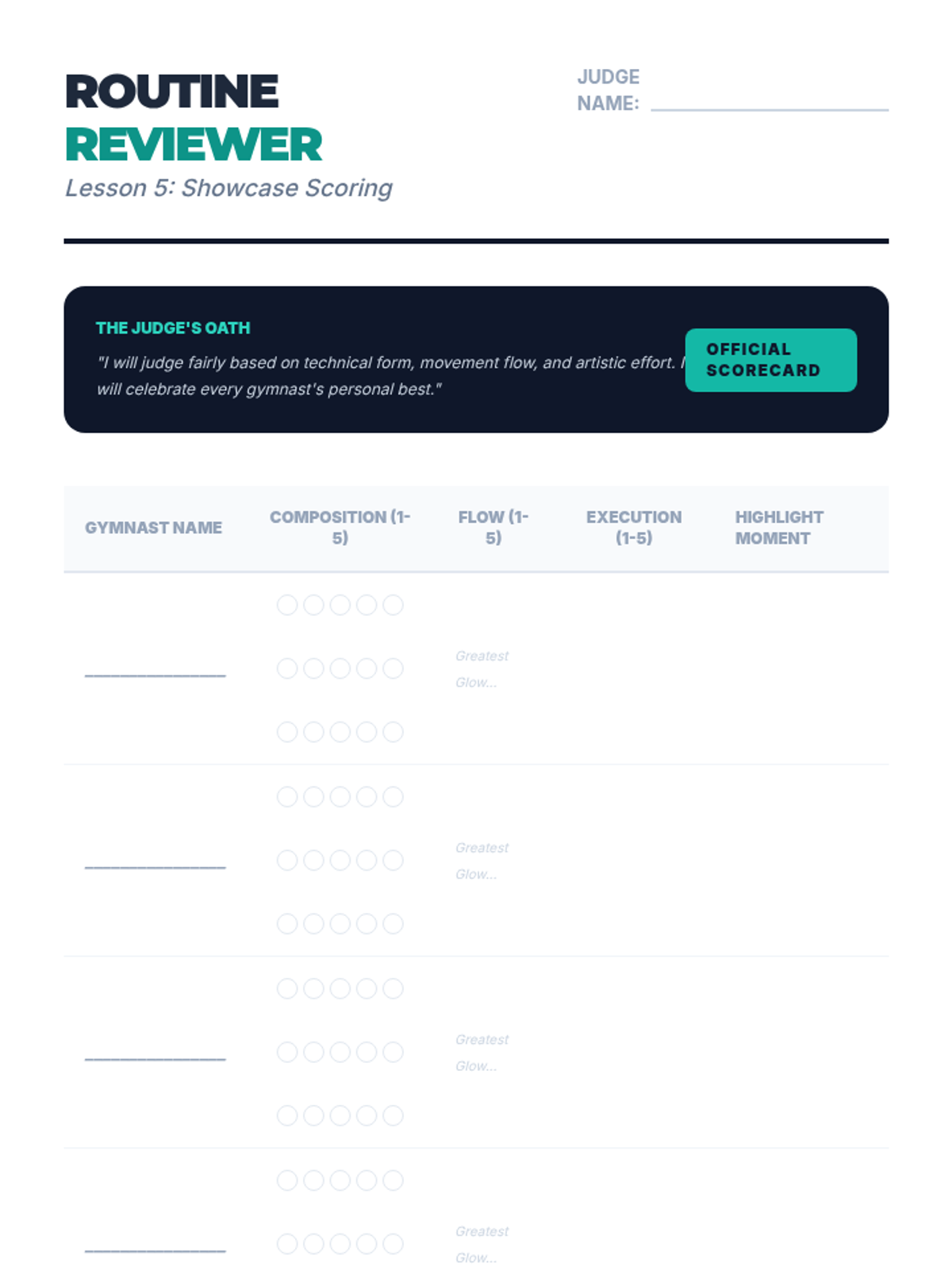
The final performance lesson where students present their routines. The class acts as judges focusing on creativity, flow, and technical execution, celebrating personal bests.
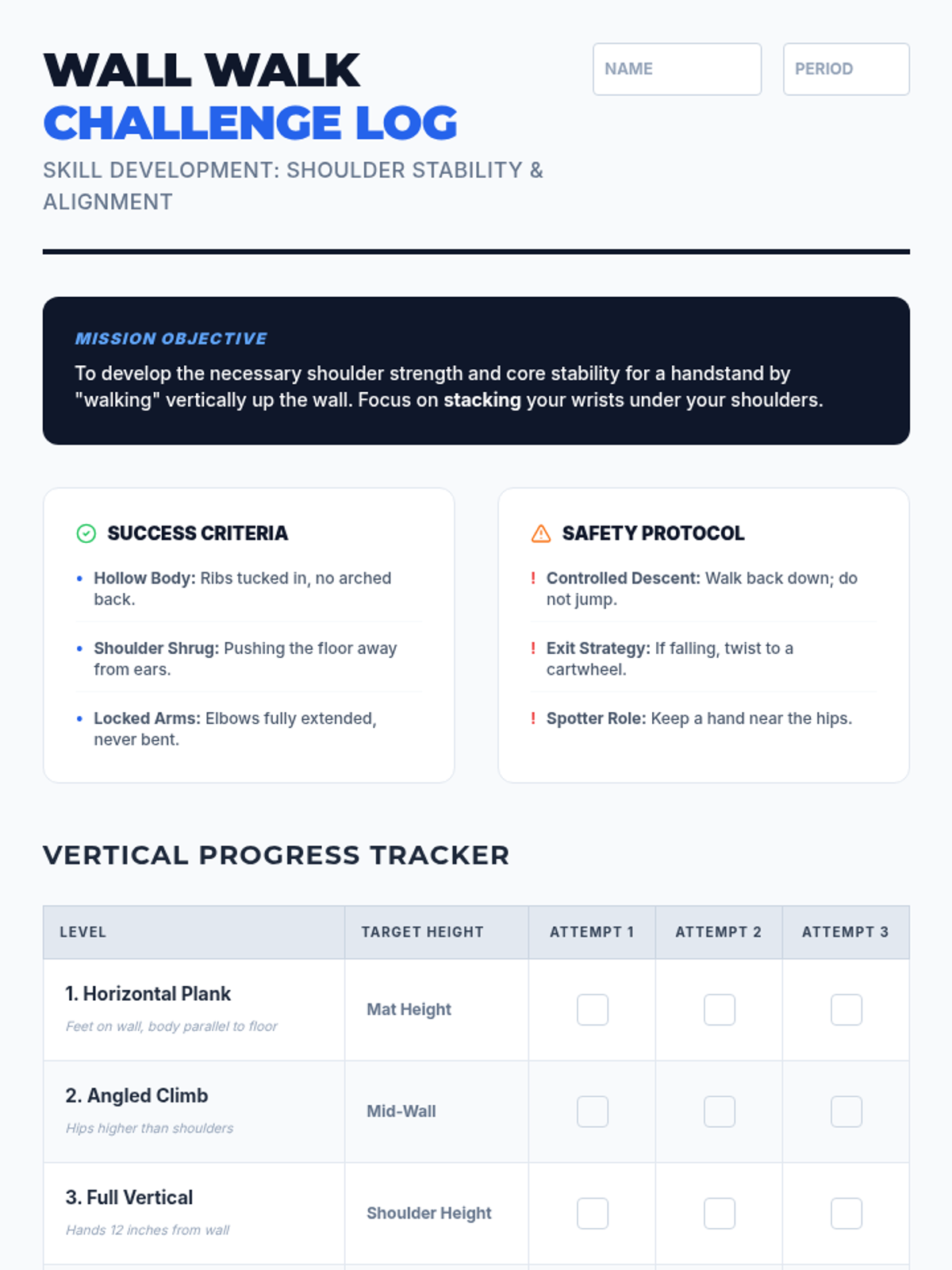
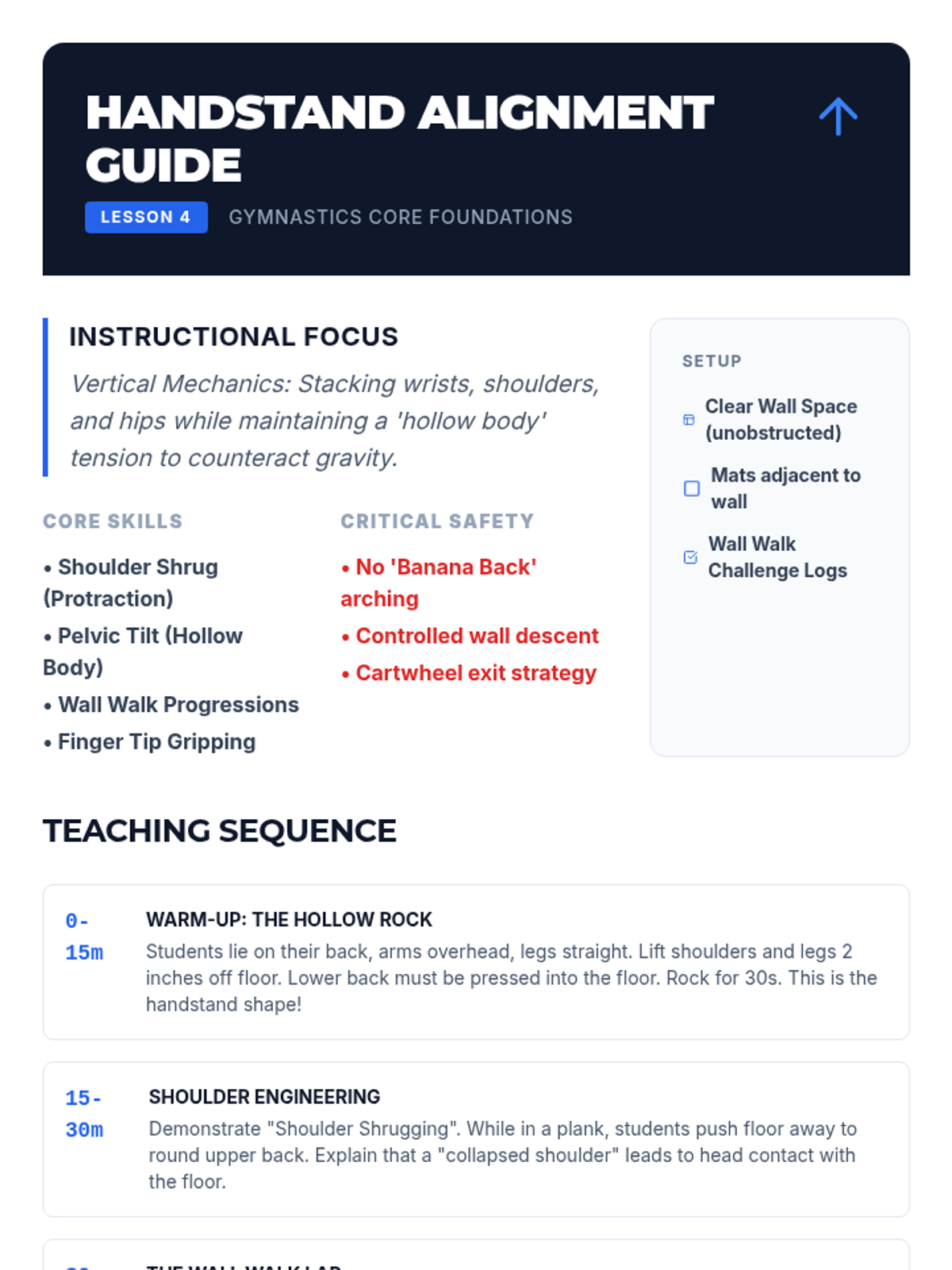
Students practice wall walks and lunge-to-handstand drills to develop shoulder strength and vertical alignment. The focus is on the 'hollow body' position and stacking joints rather than holding a freestanding handstand immediately.
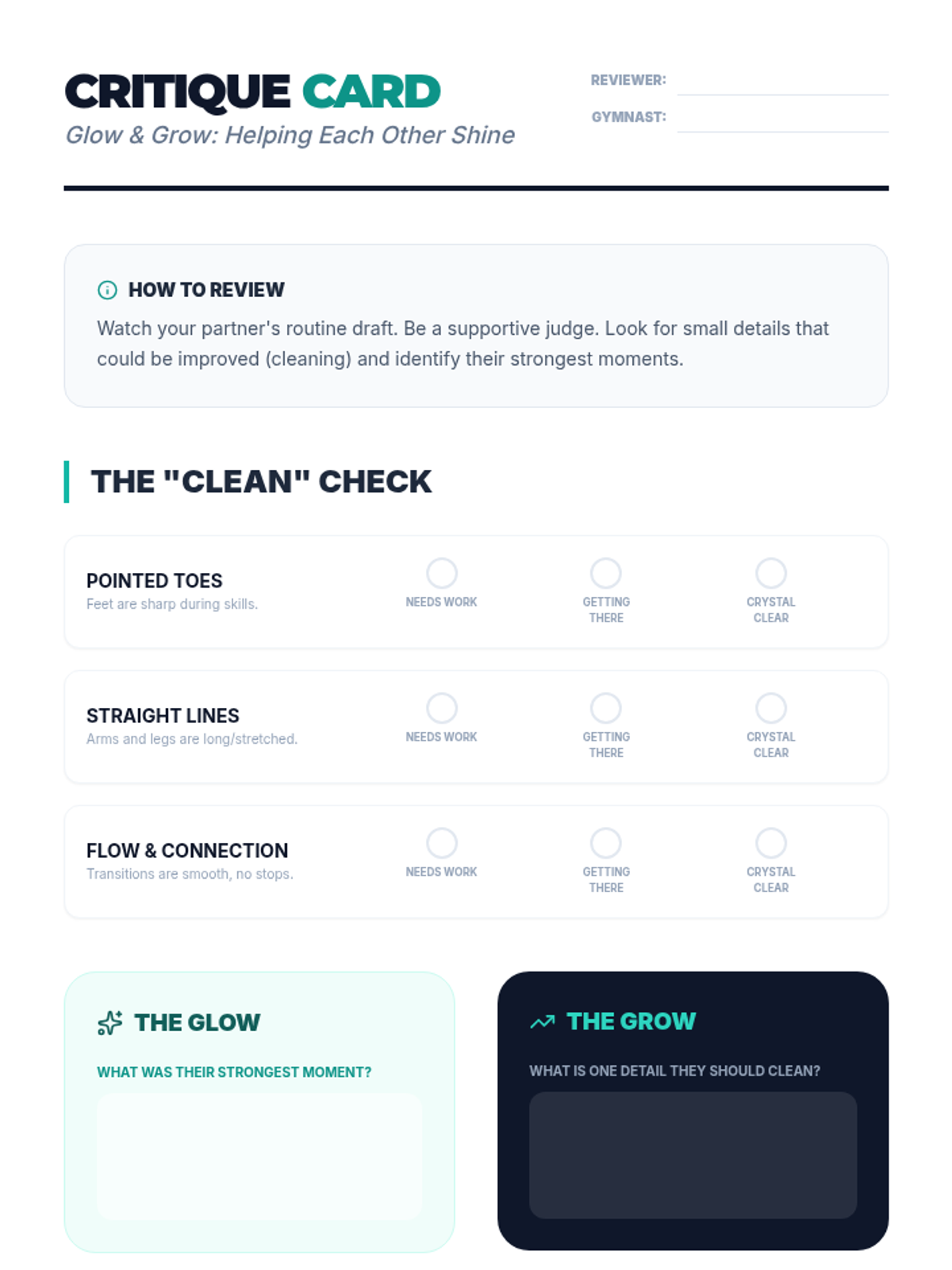
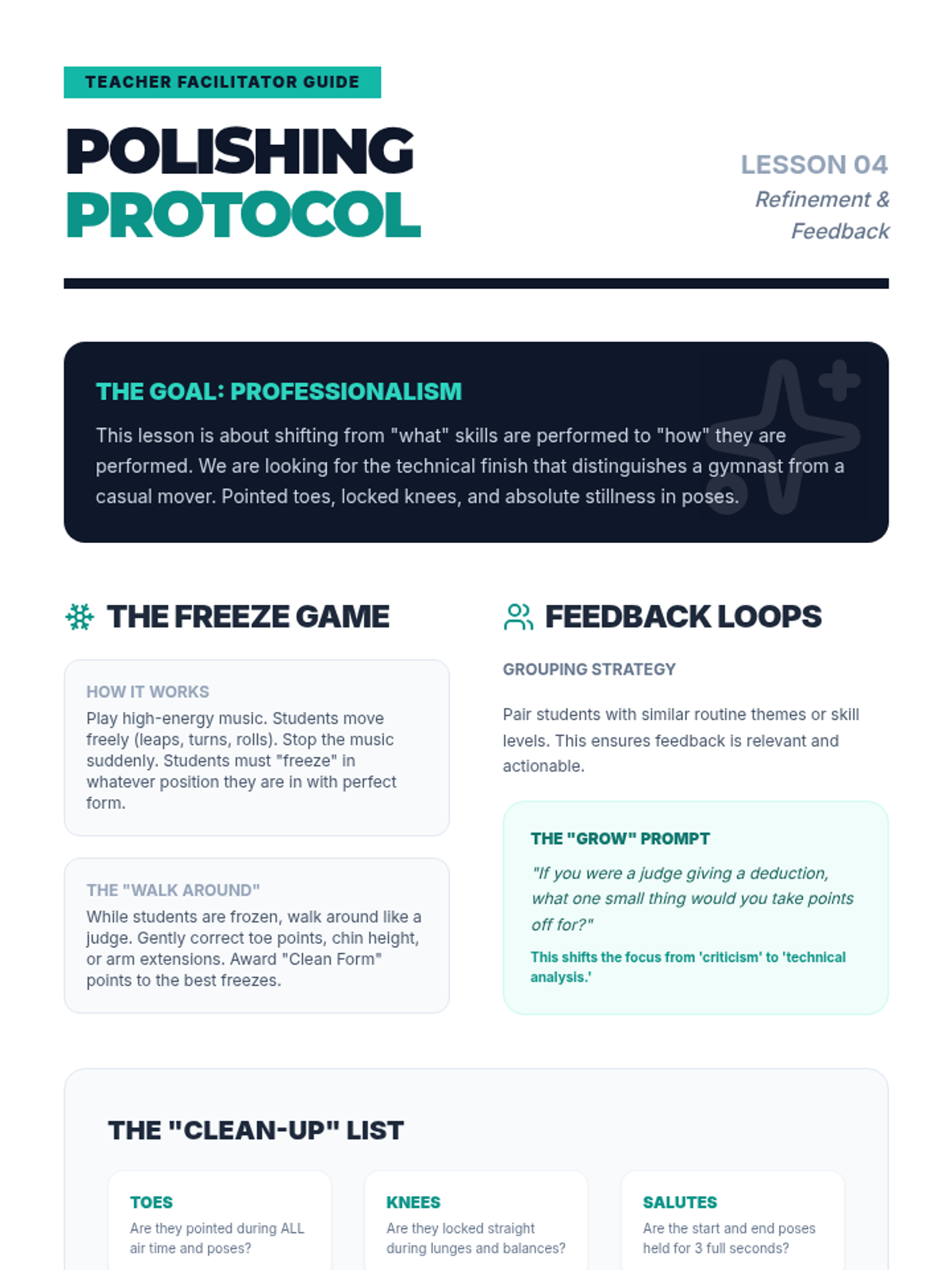
Students perform 'drafts' of their routines for peer feedback groups. The focus is on 'cleaning' the routine—straightening legs, pointing toes, and holding finishing poses.
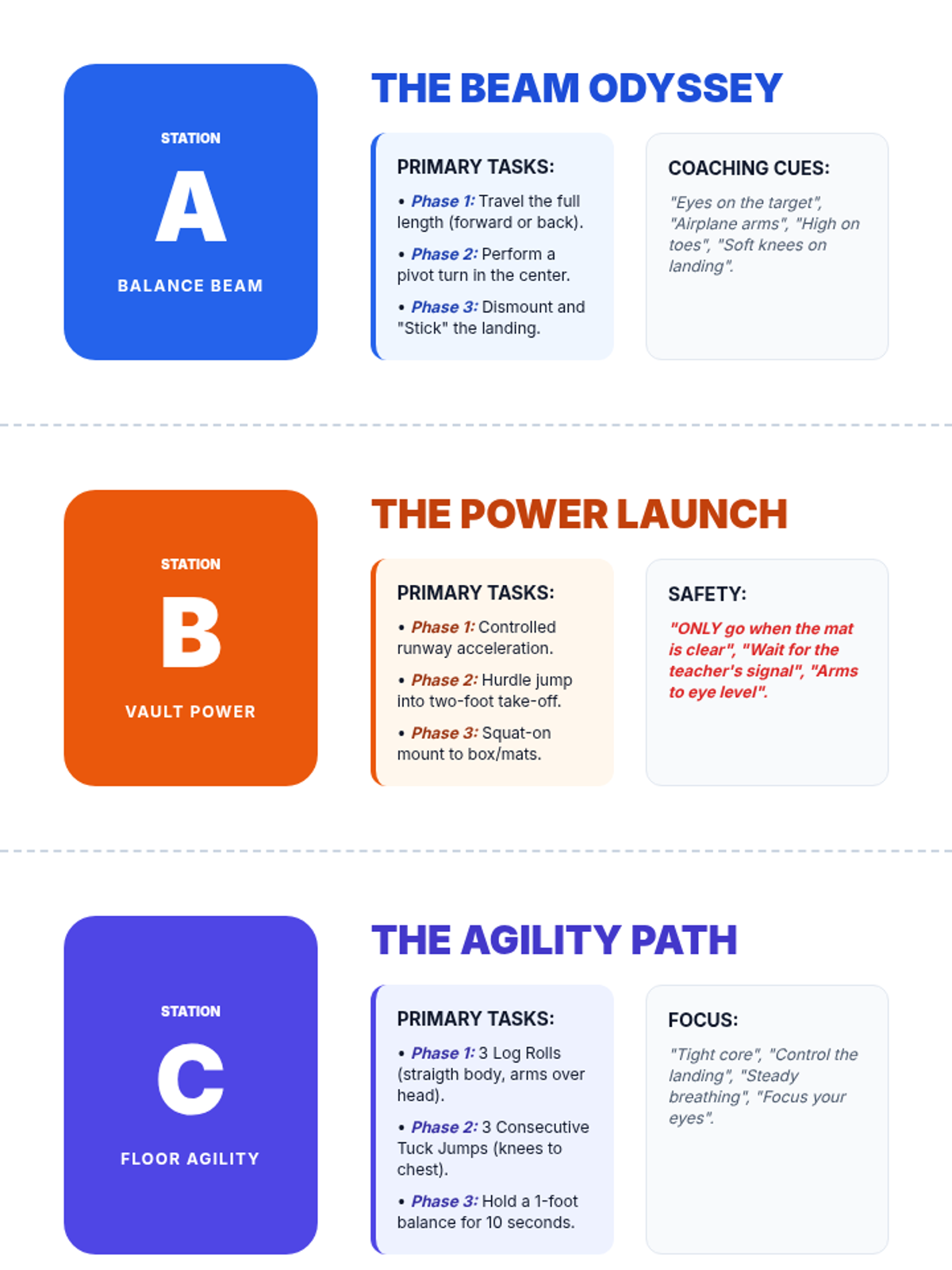
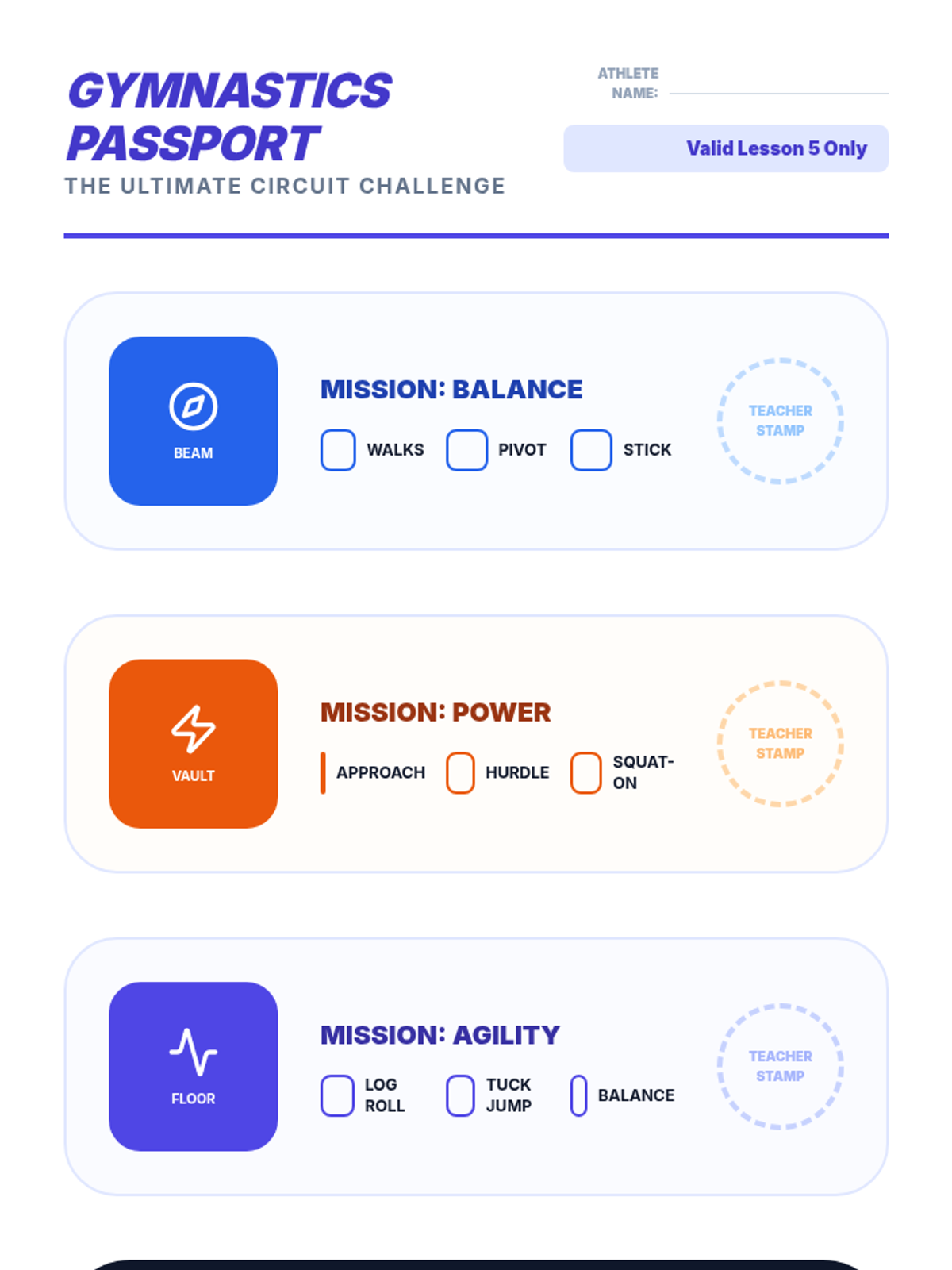
A culminating station-based lesson where students rotate through beam, vault, and floor stations. They complete specific challenges at each station to demonstrate competency across all apparatuses.
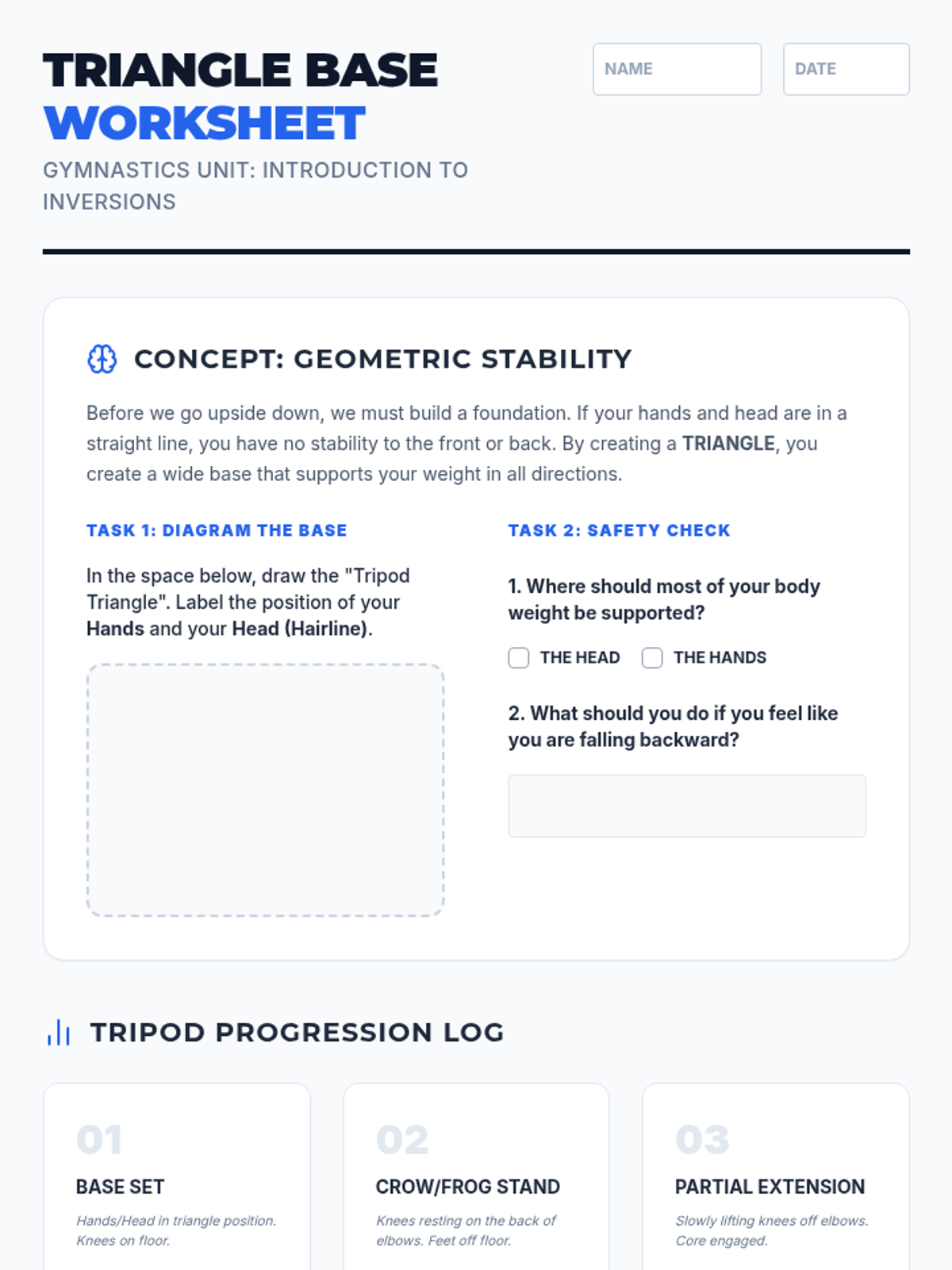
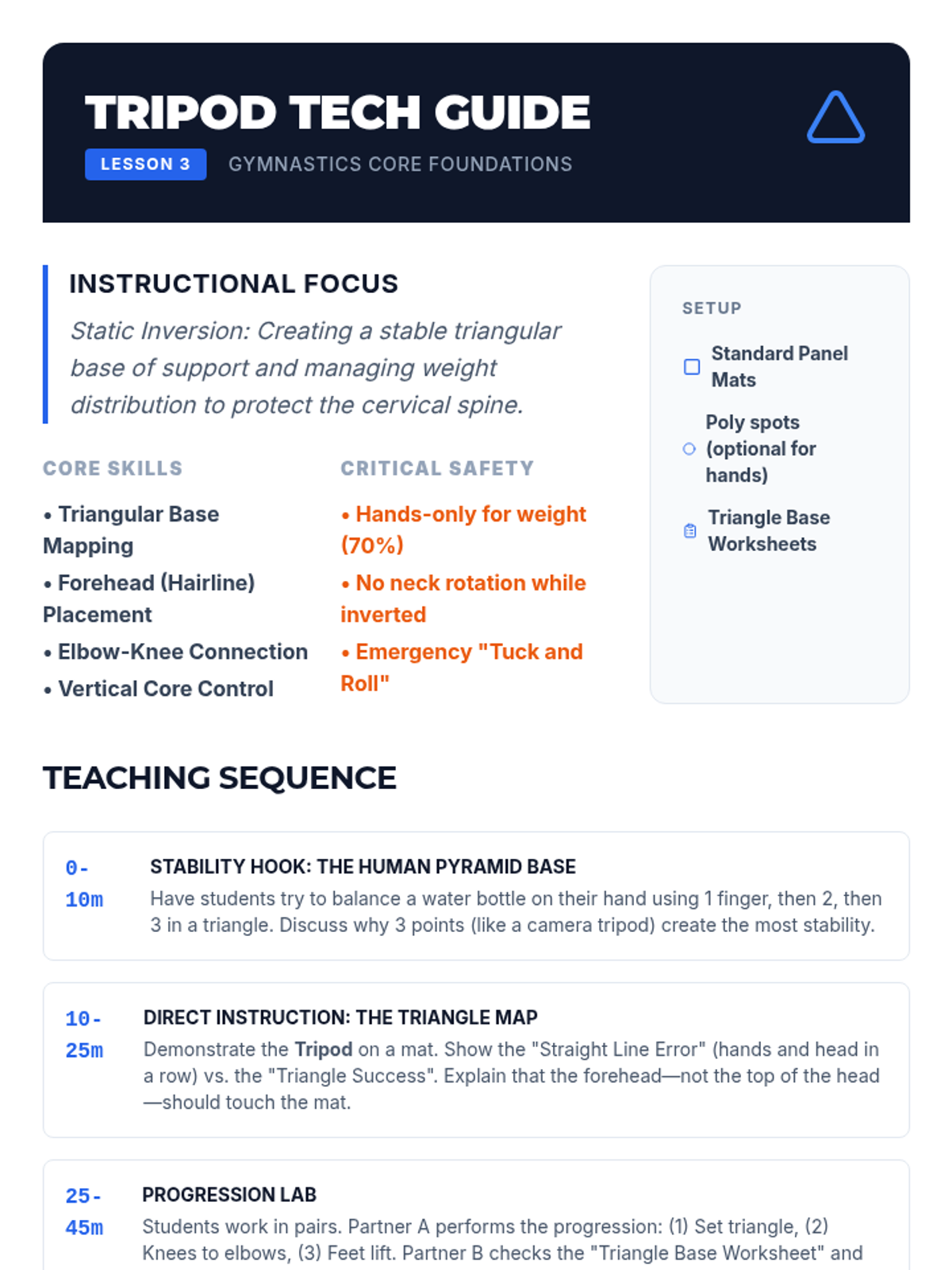
This lesson introduces static balance and inversion through the tripod position. Students learn to create a stable base of support using their head and hands, focusing on neck safety and slow, controlled leg extension.
The culminating performance where students showcase their final floor routines for assessment and peer celebration.
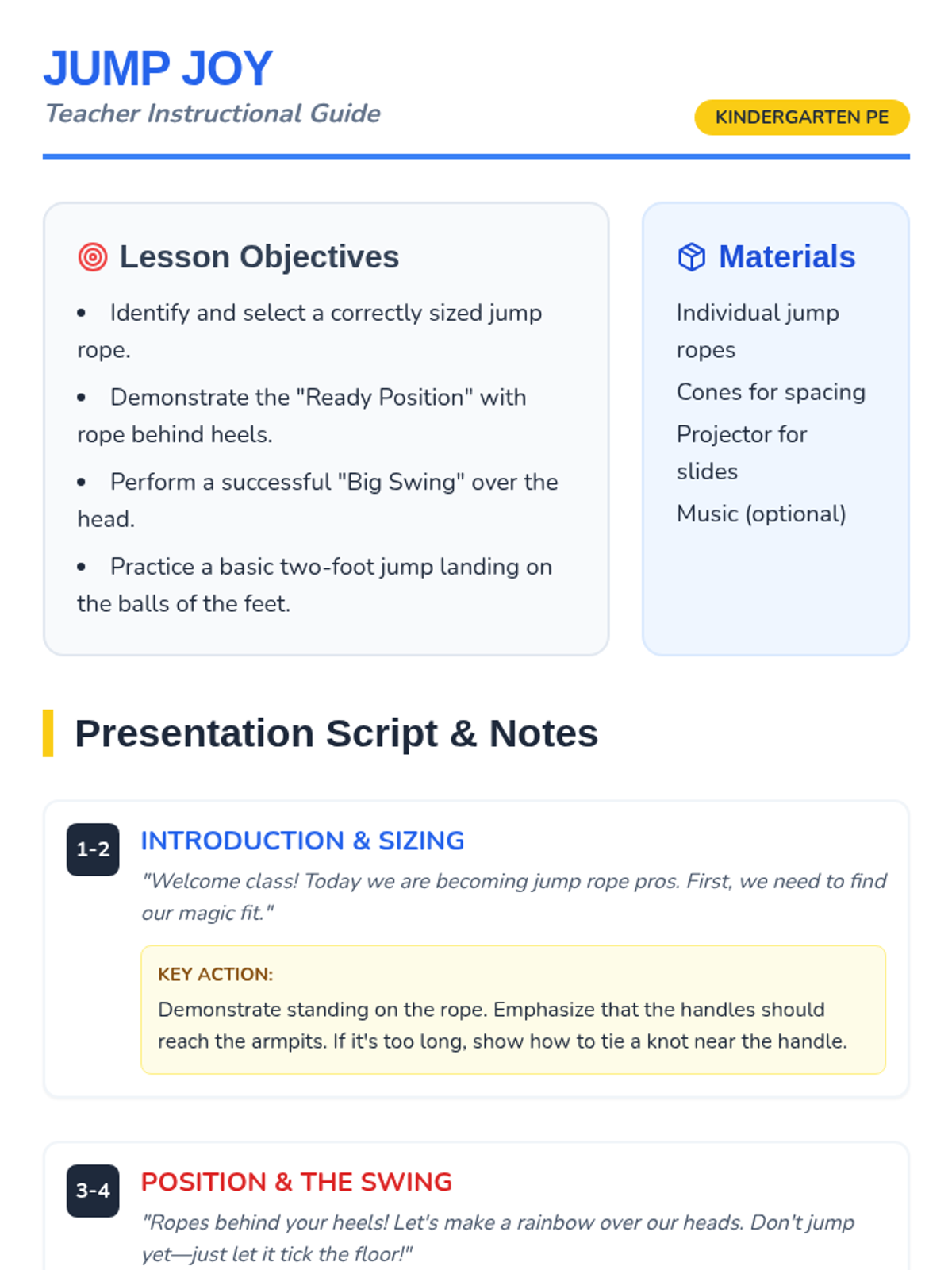
A vibrant introduction to jump rope basics for kindergarteners, focusing on rope sizing, the basic jump, and building confidence through fun progressions.
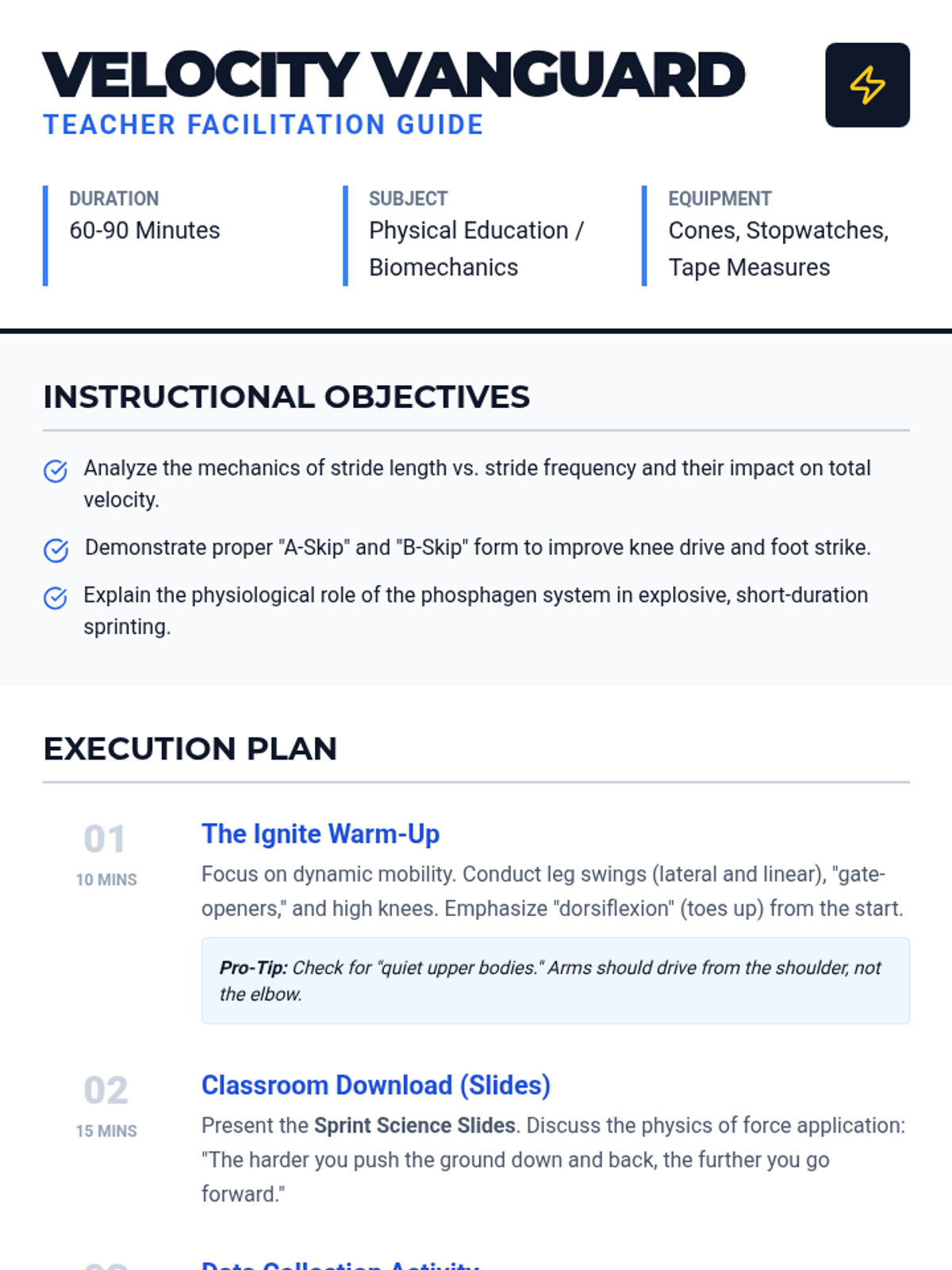
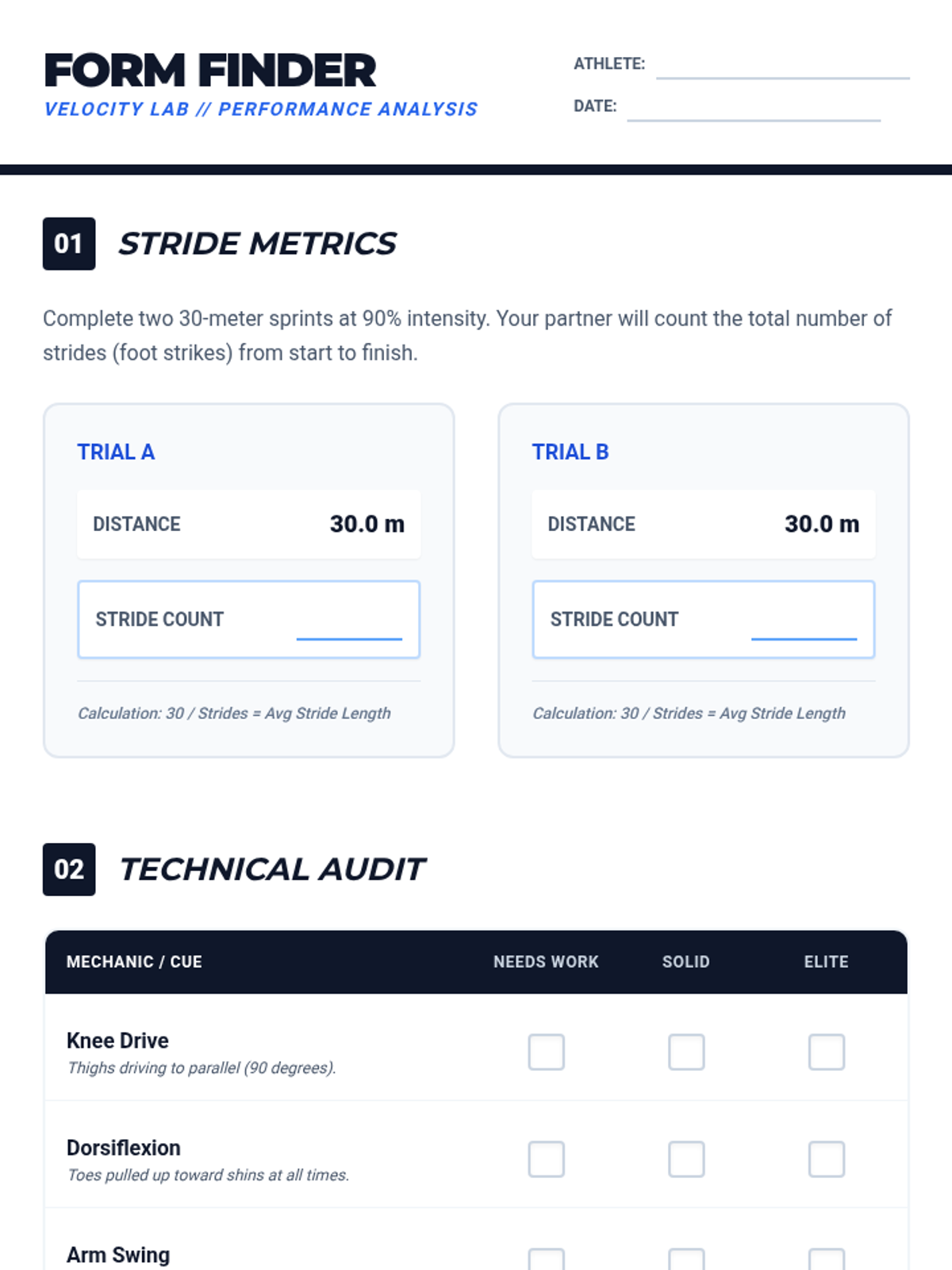
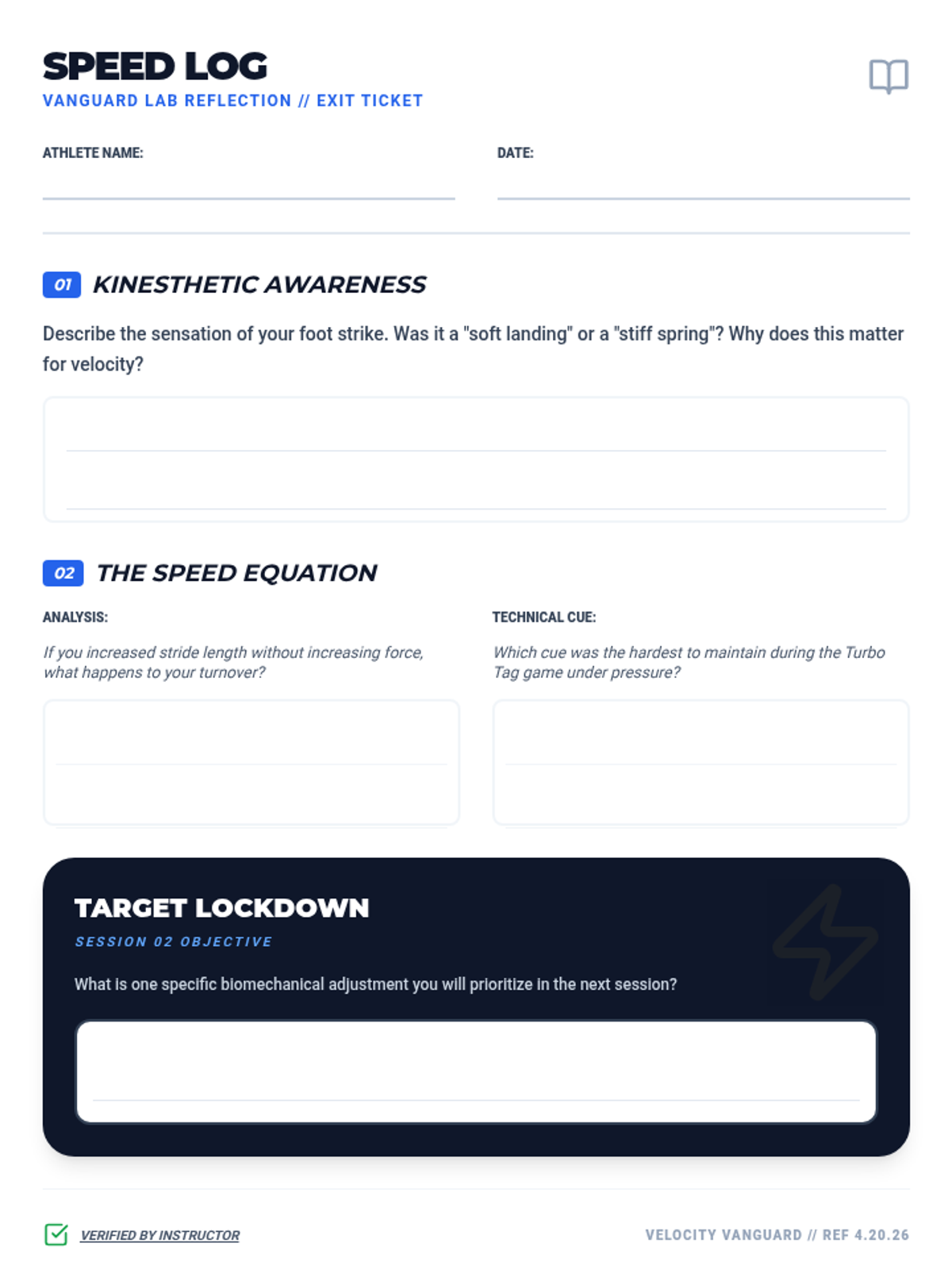
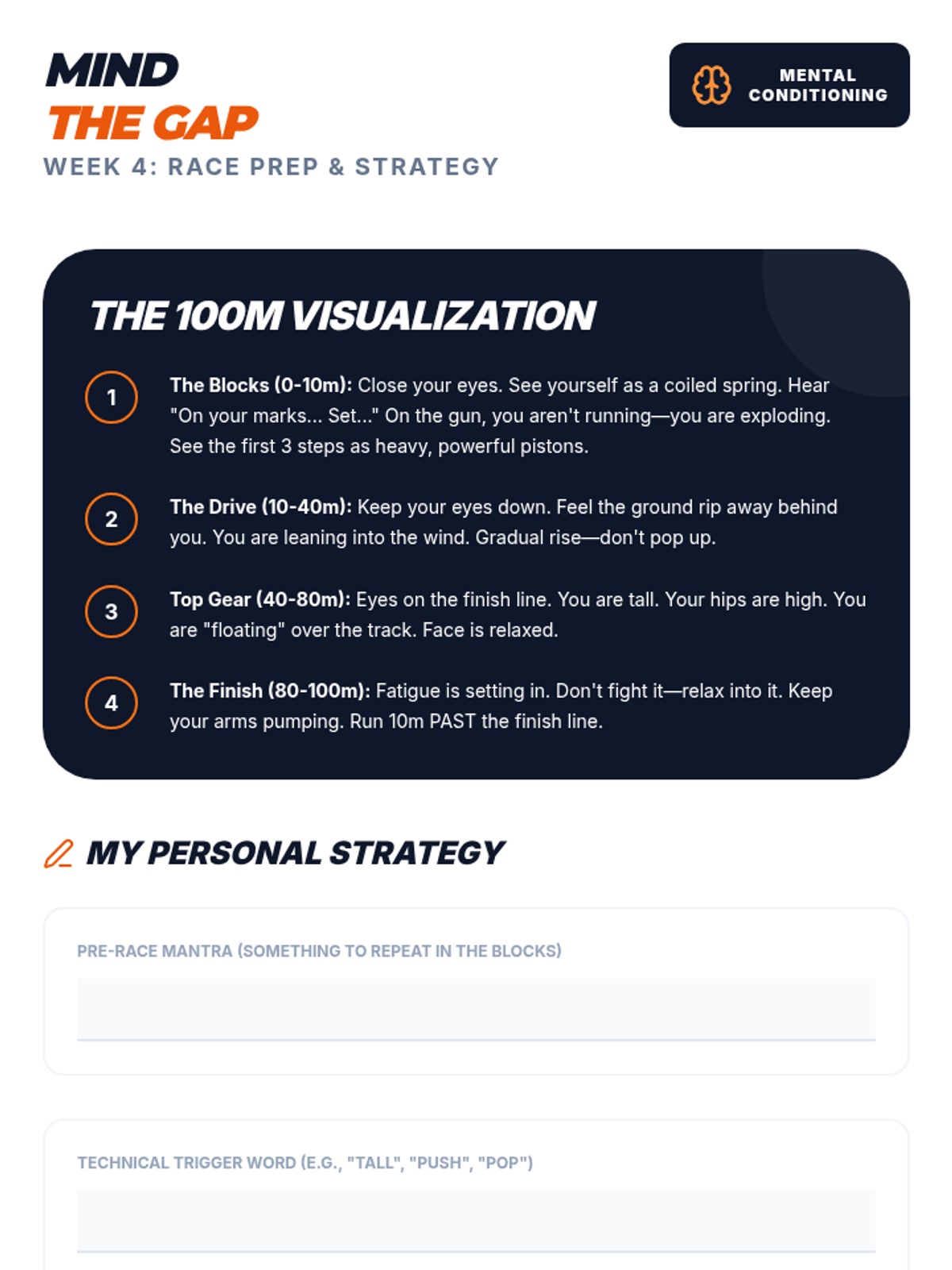
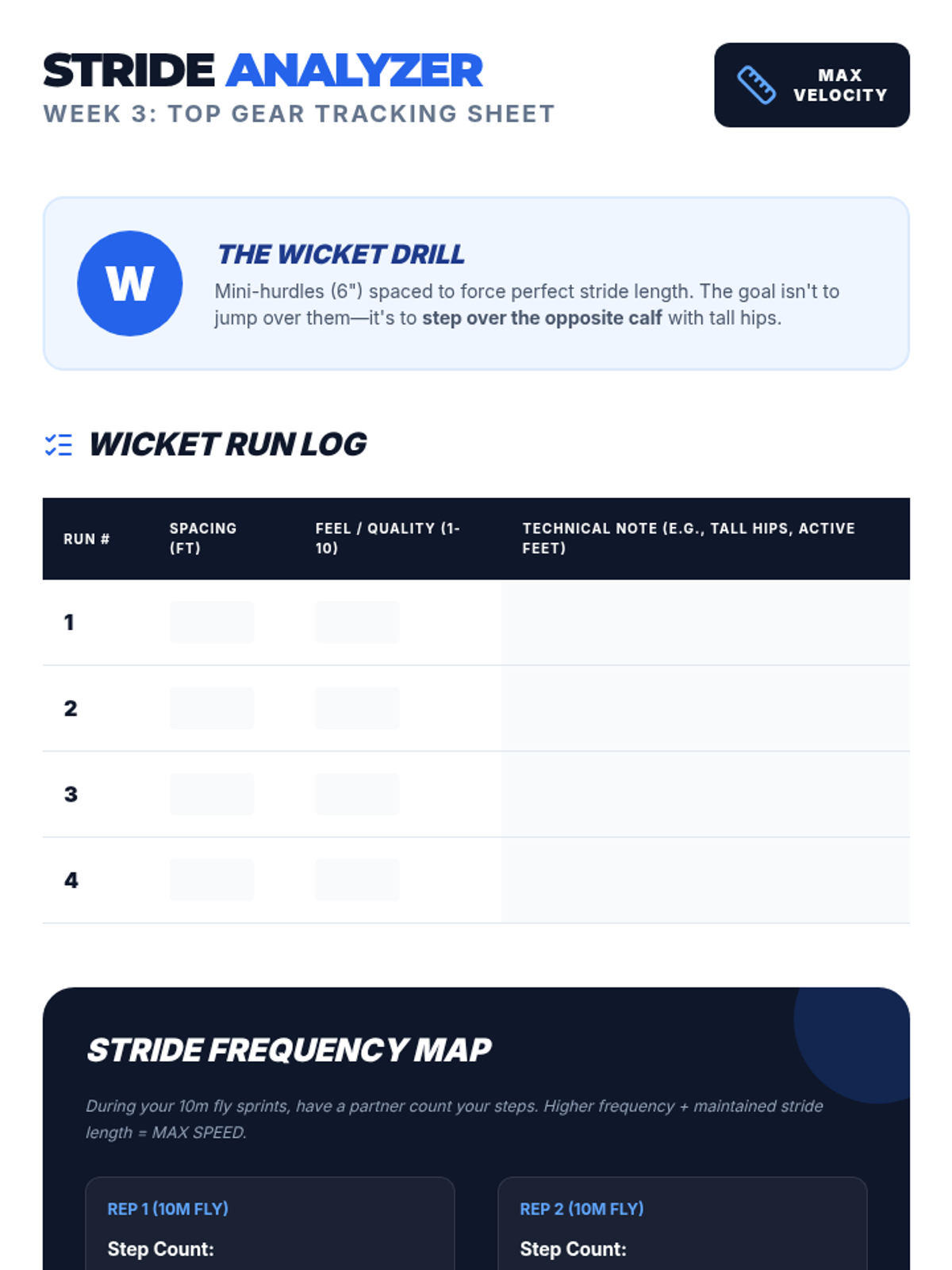
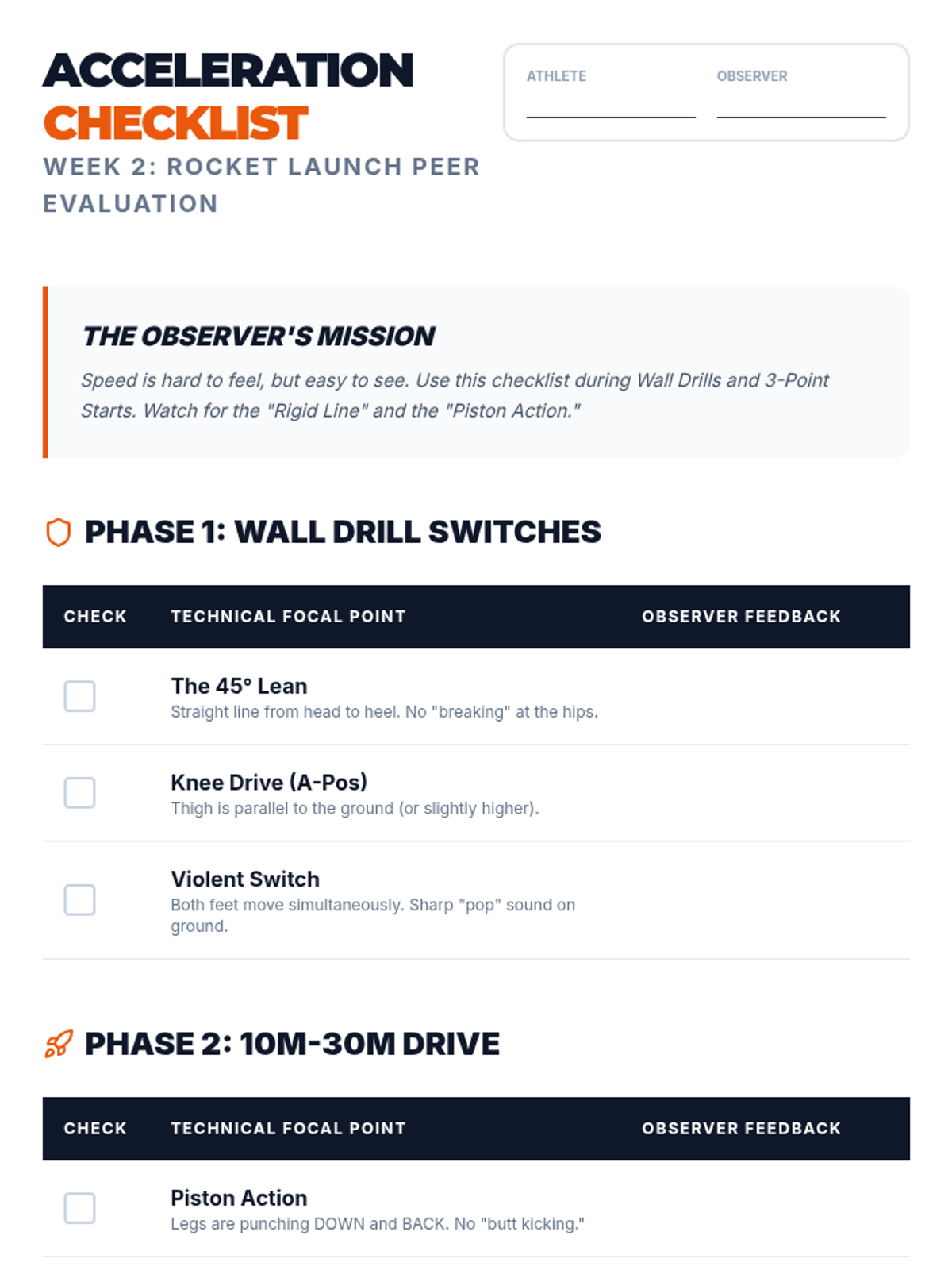
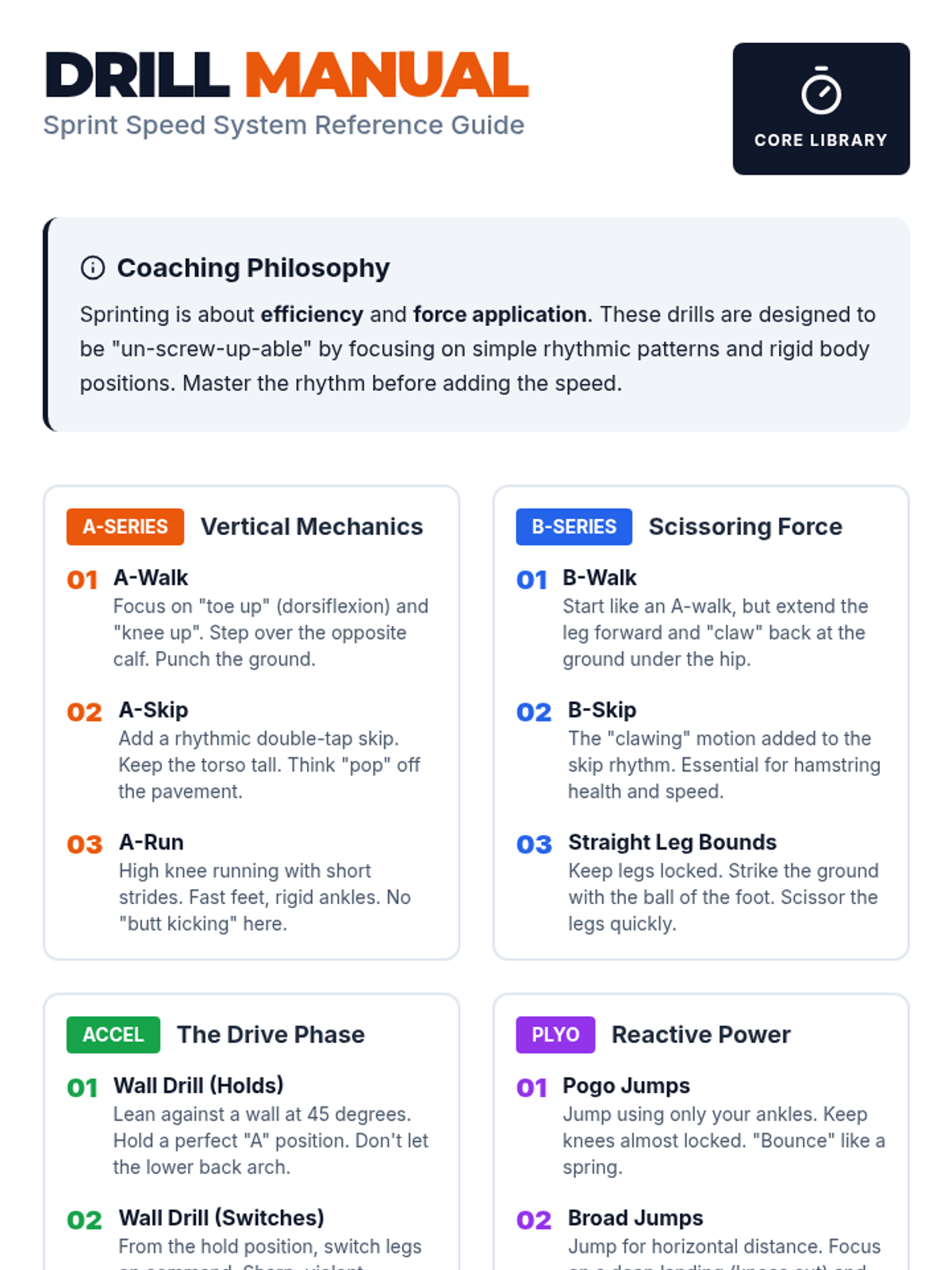
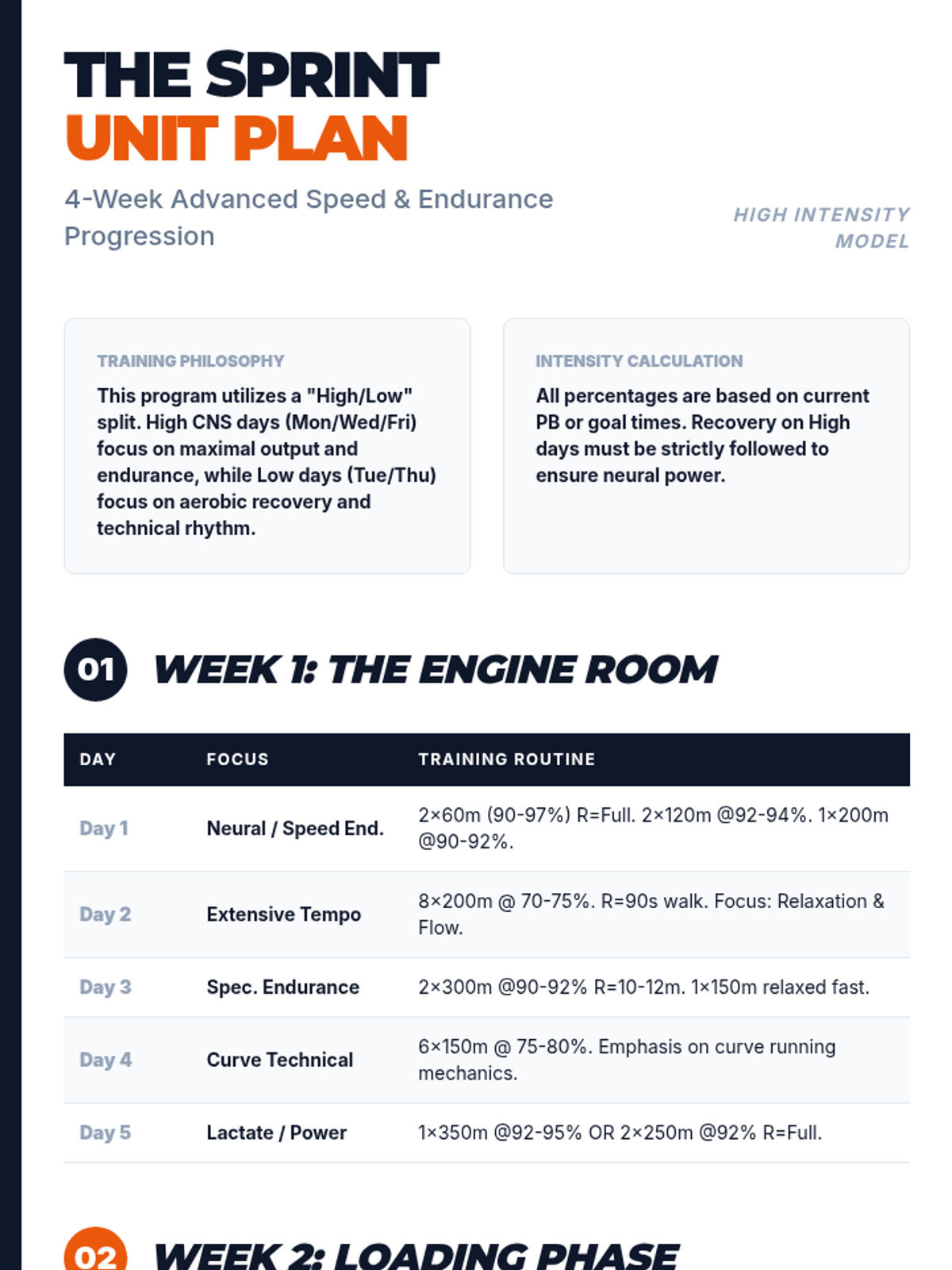
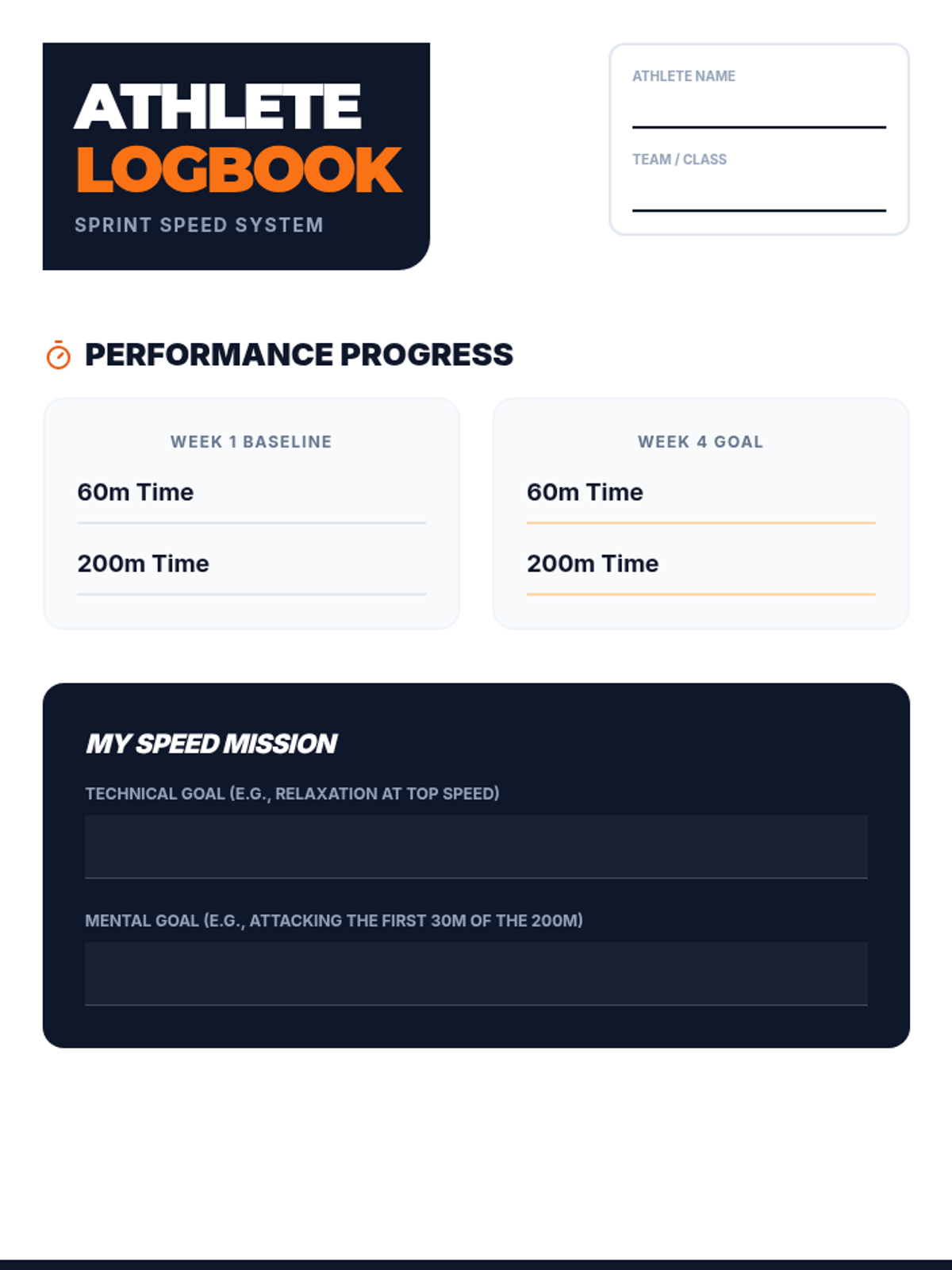
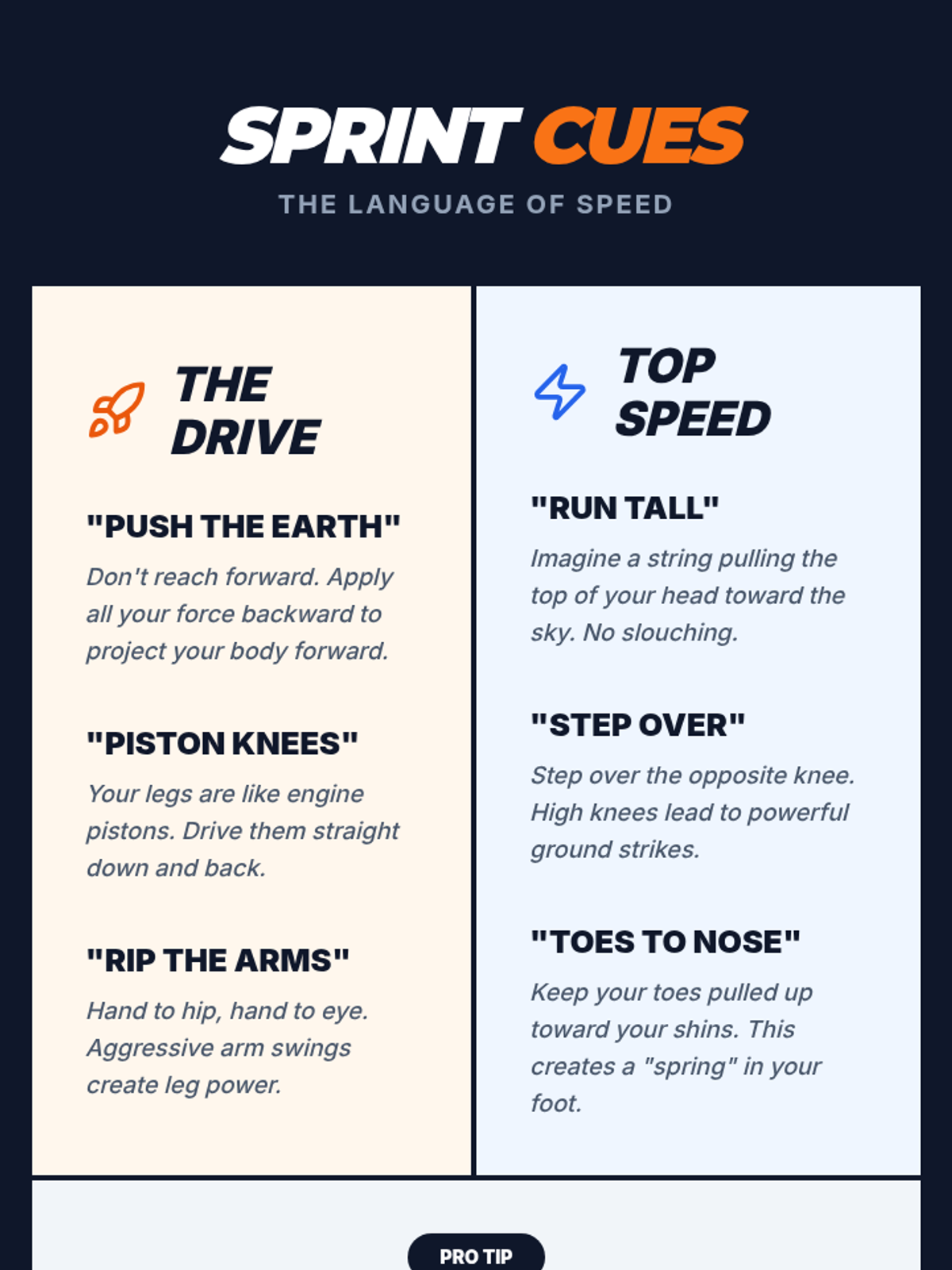
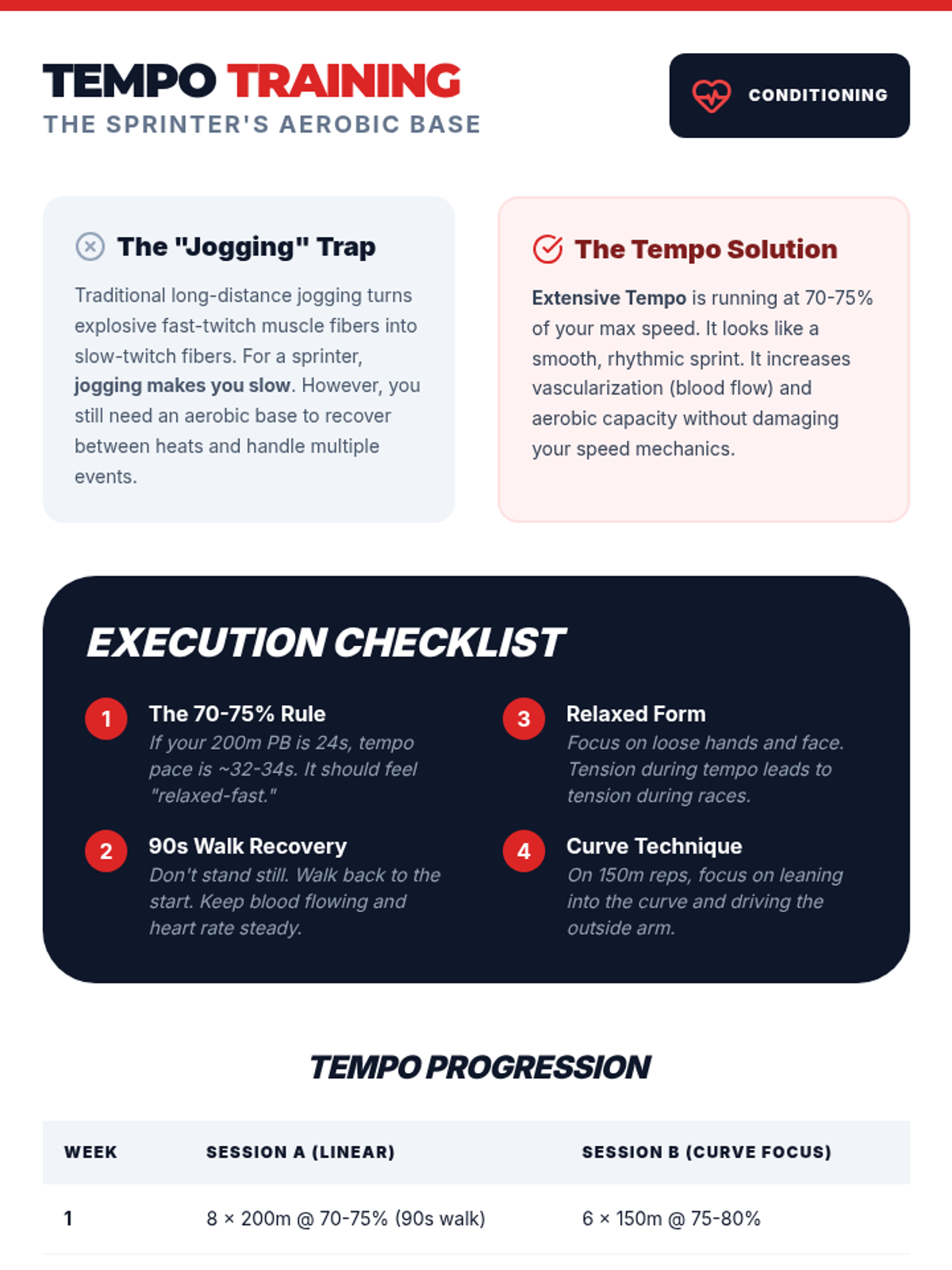
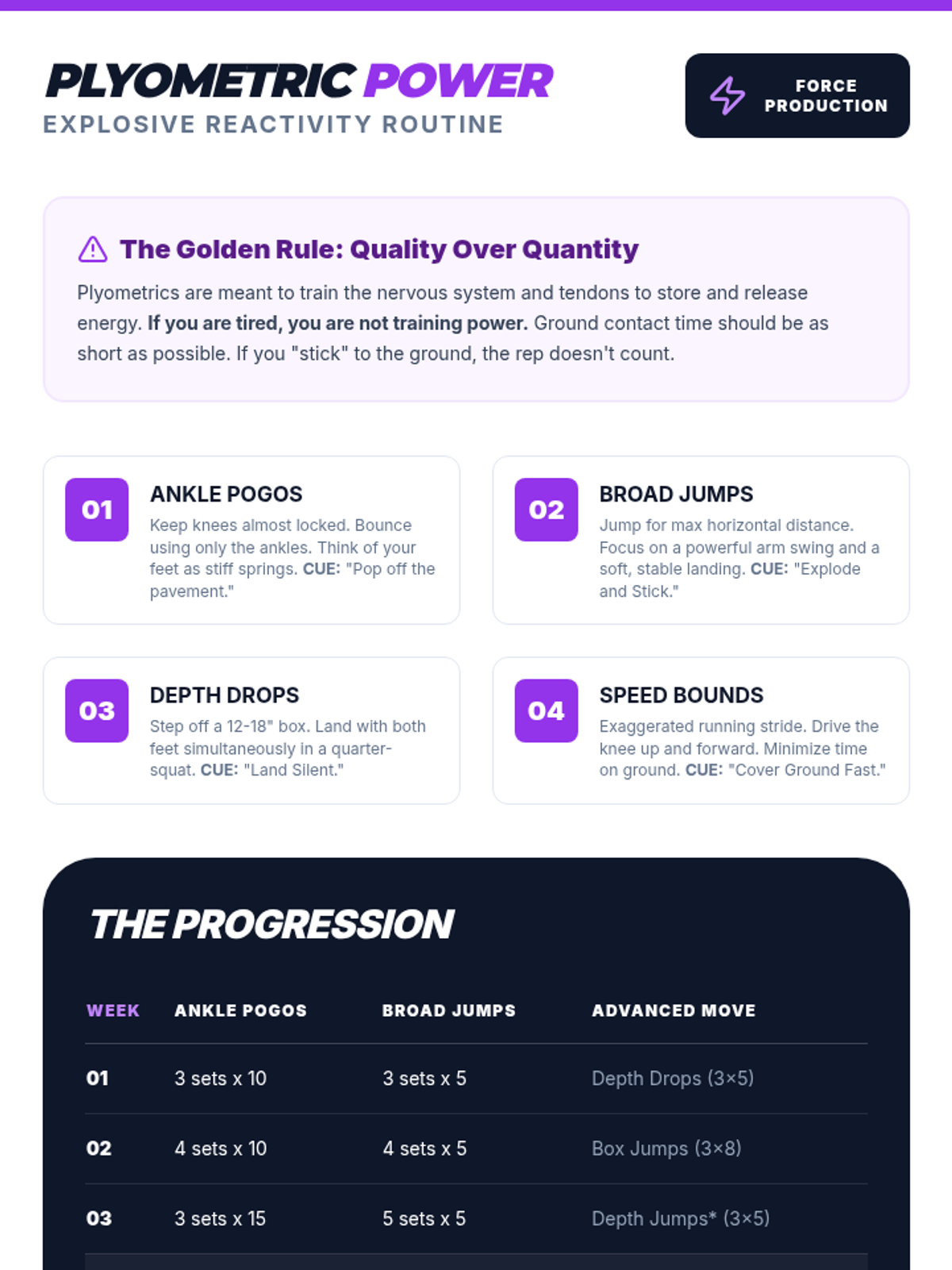
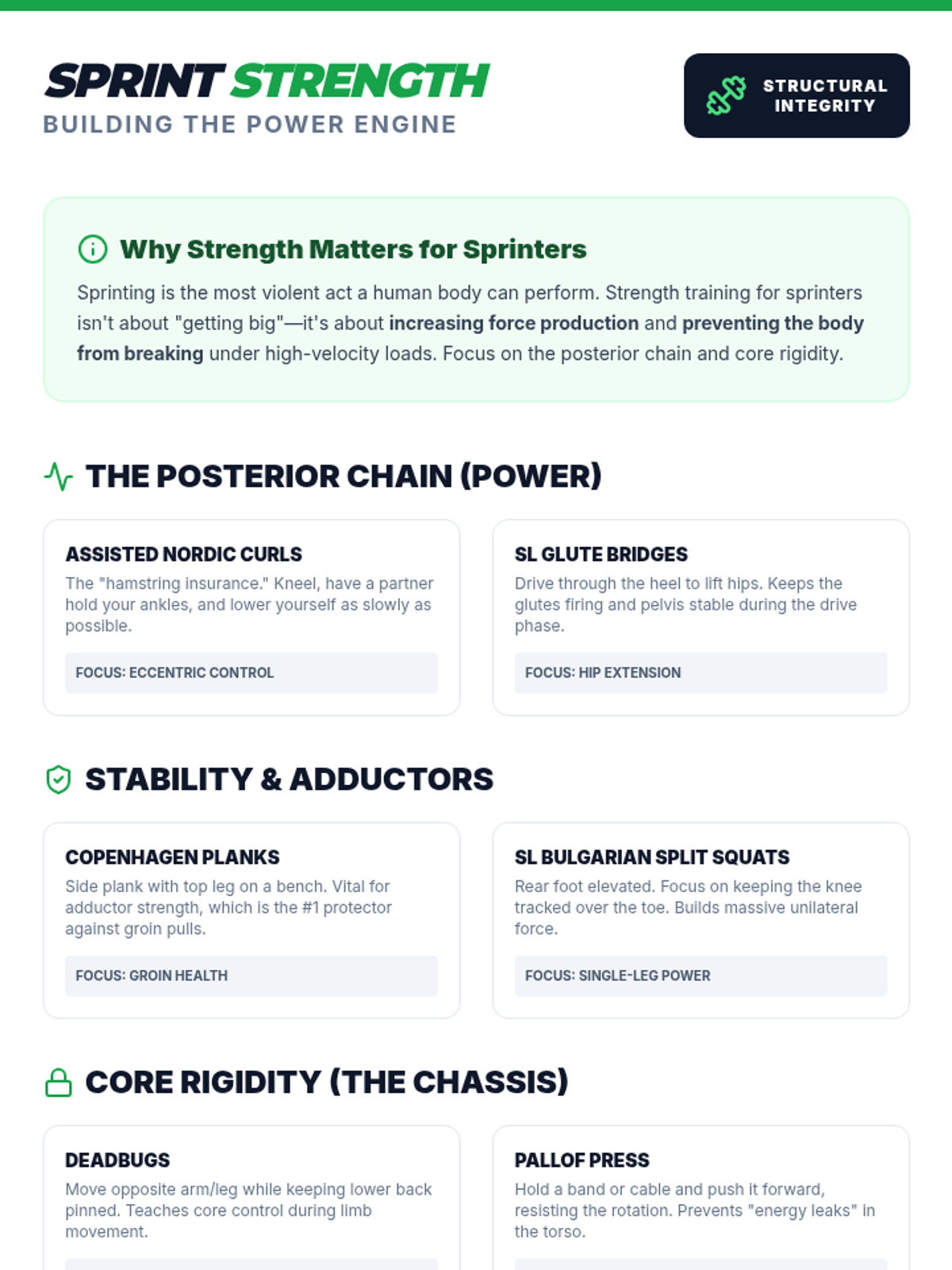
A high-energy lesson focused on sprinting biomechanics, explosive power, and form analysis for track and field. Students learn the science of speed and apply it through drills, data collection, and competitive games.
Fine-tuning starts, speed endurance intervals, and preparing for competition-style sprinting.
Training upright sprinting mechanics, stride frequency through wicket drills, and maximum velocity maintenance.
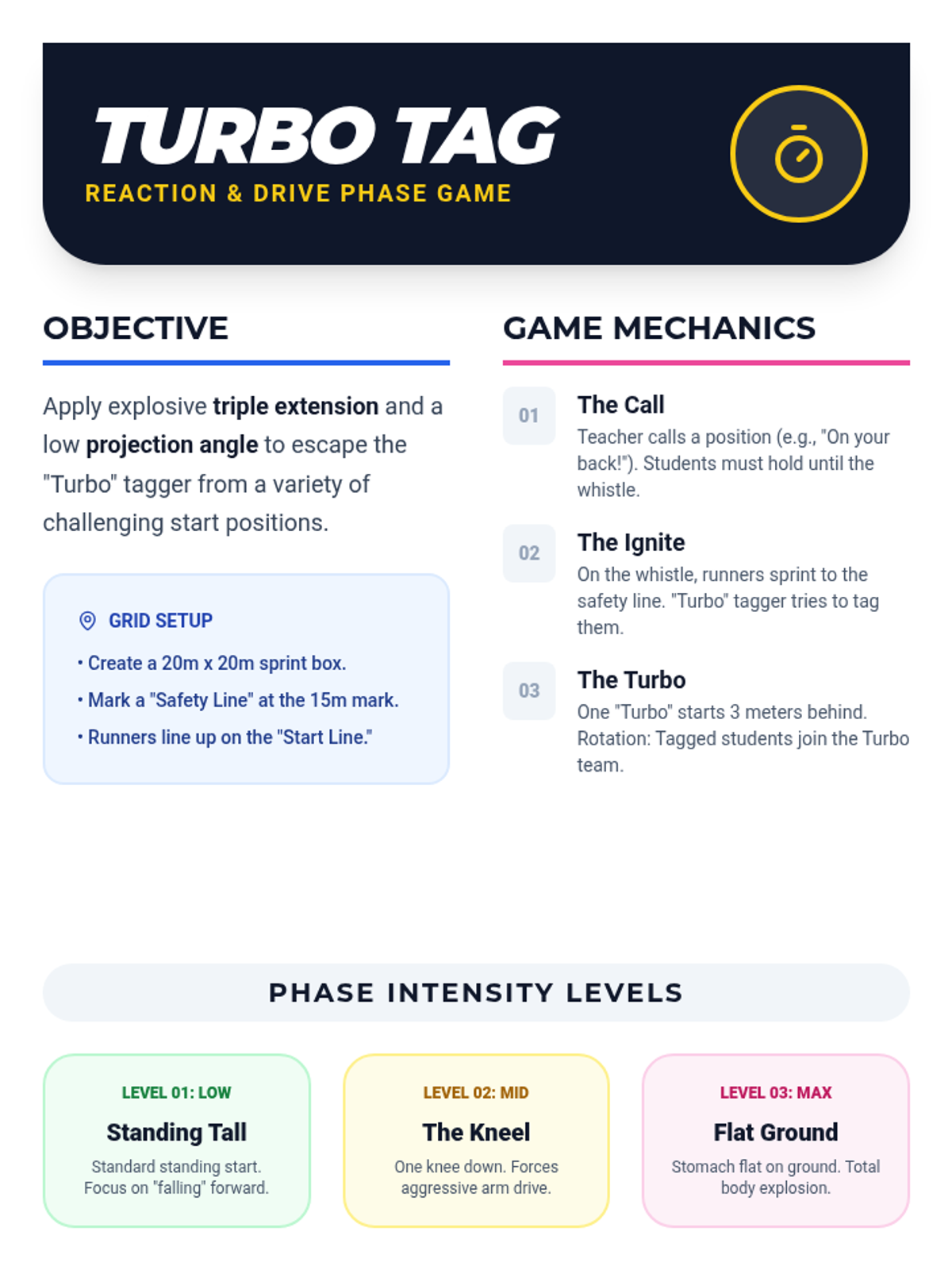
Introducing the drive phase, explosive wall drills, and higher-intensity plyometrics to build raw power.
Focus on establishing proper sprint posture, rhythmic drills (A-skips), and basic core strength to prevent injury.
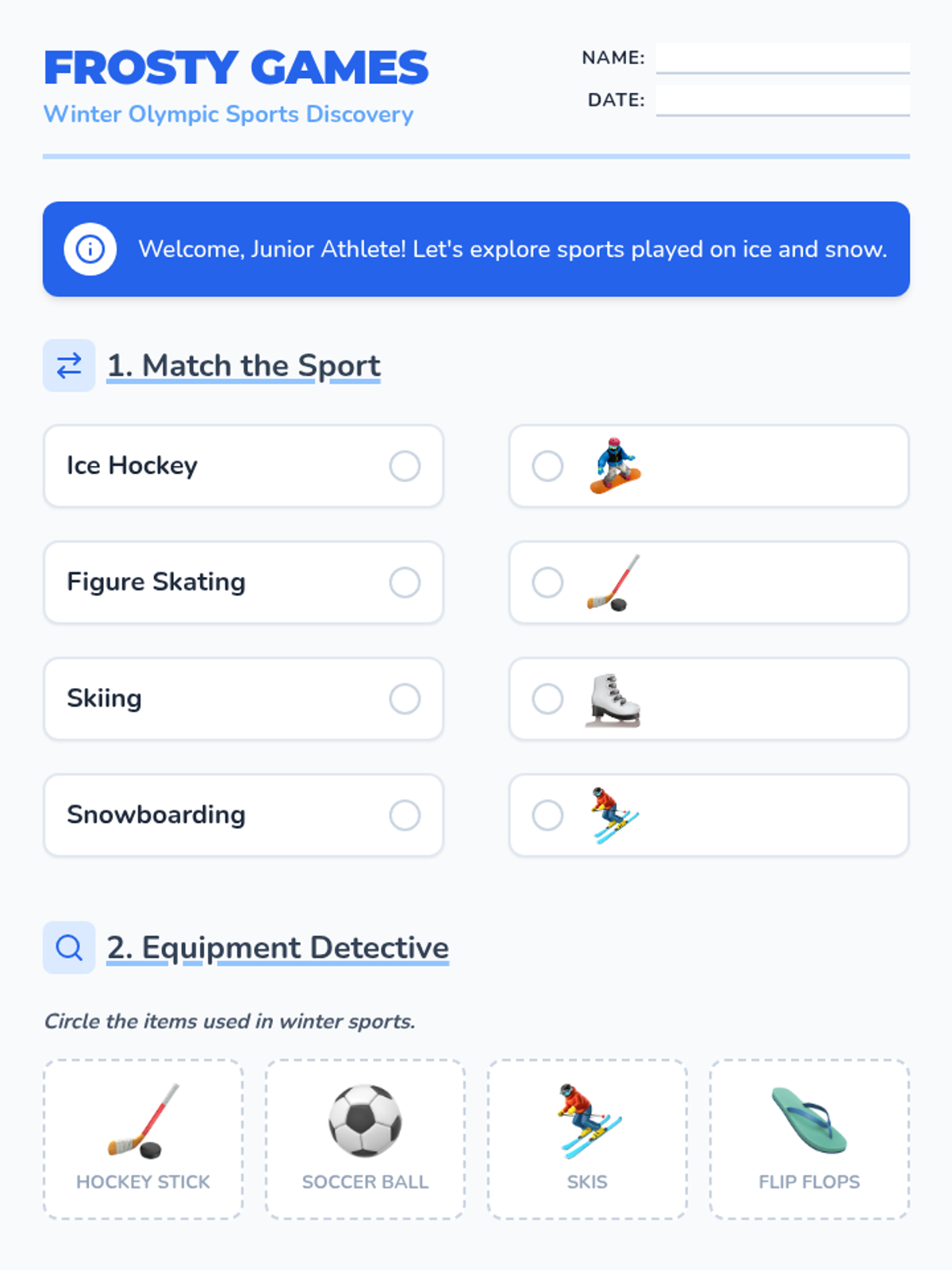
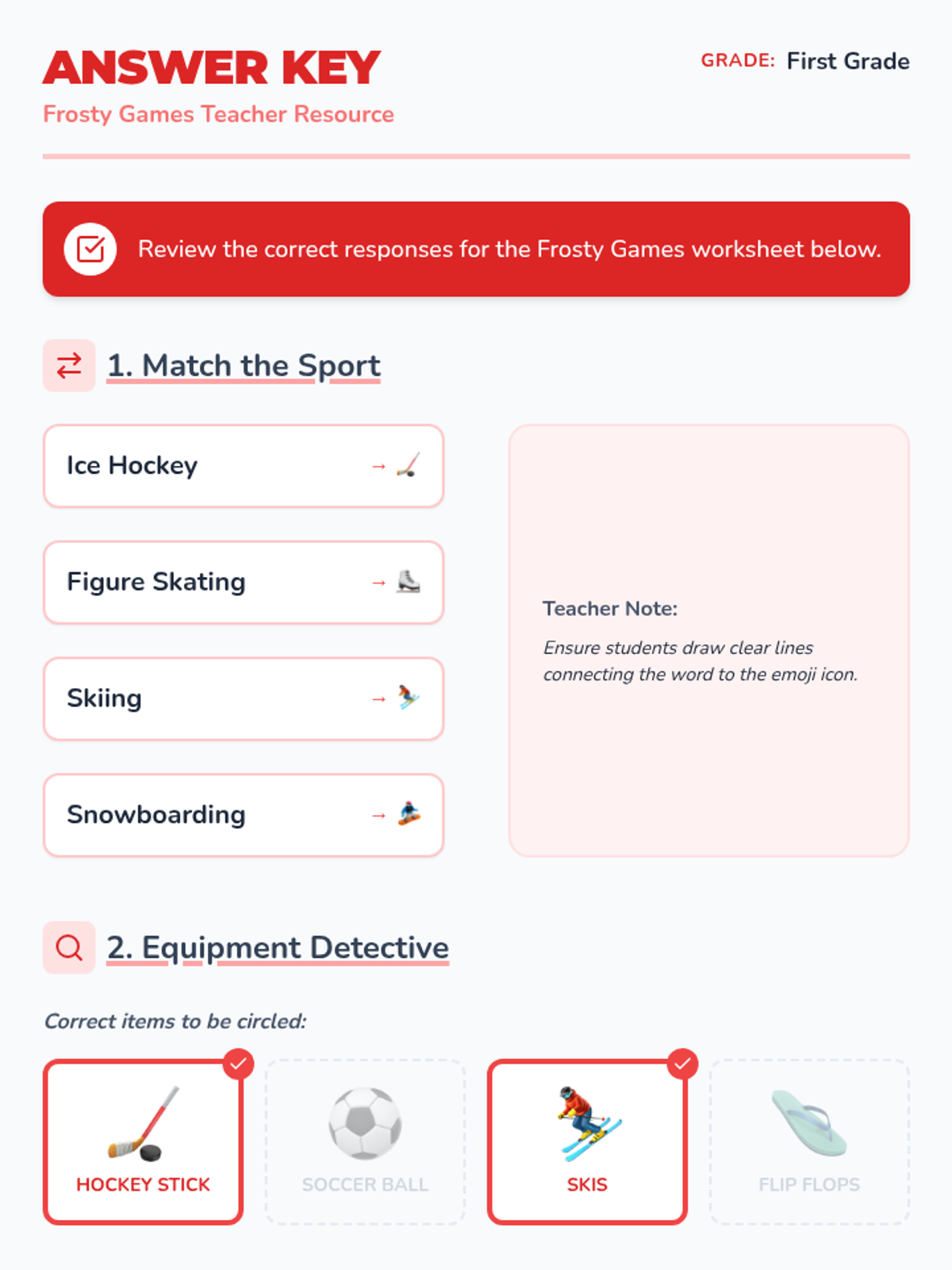
A lesson introducing 1st graders to Winter Olympic sports through identification, equipment matching, and creative expression.
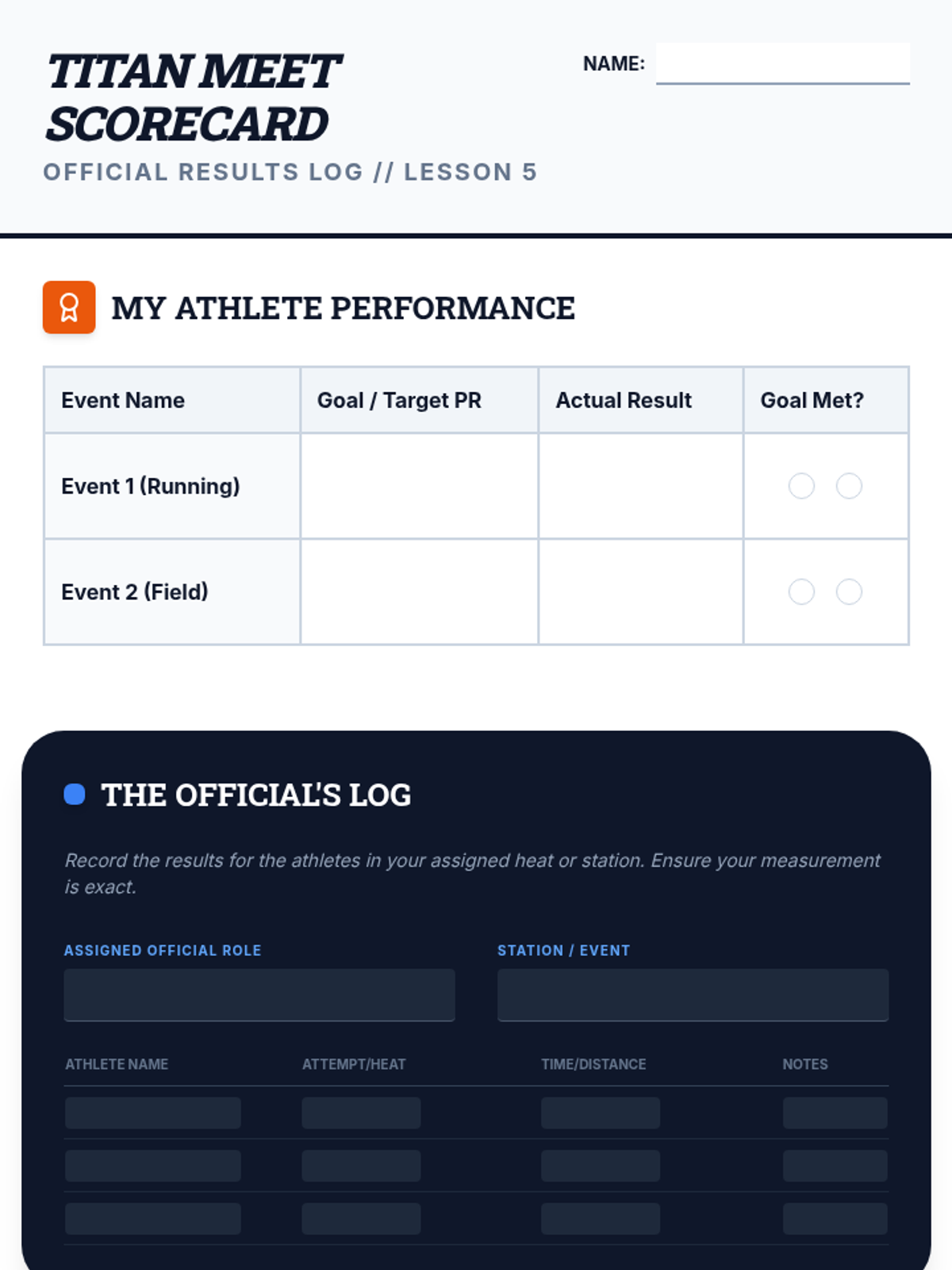
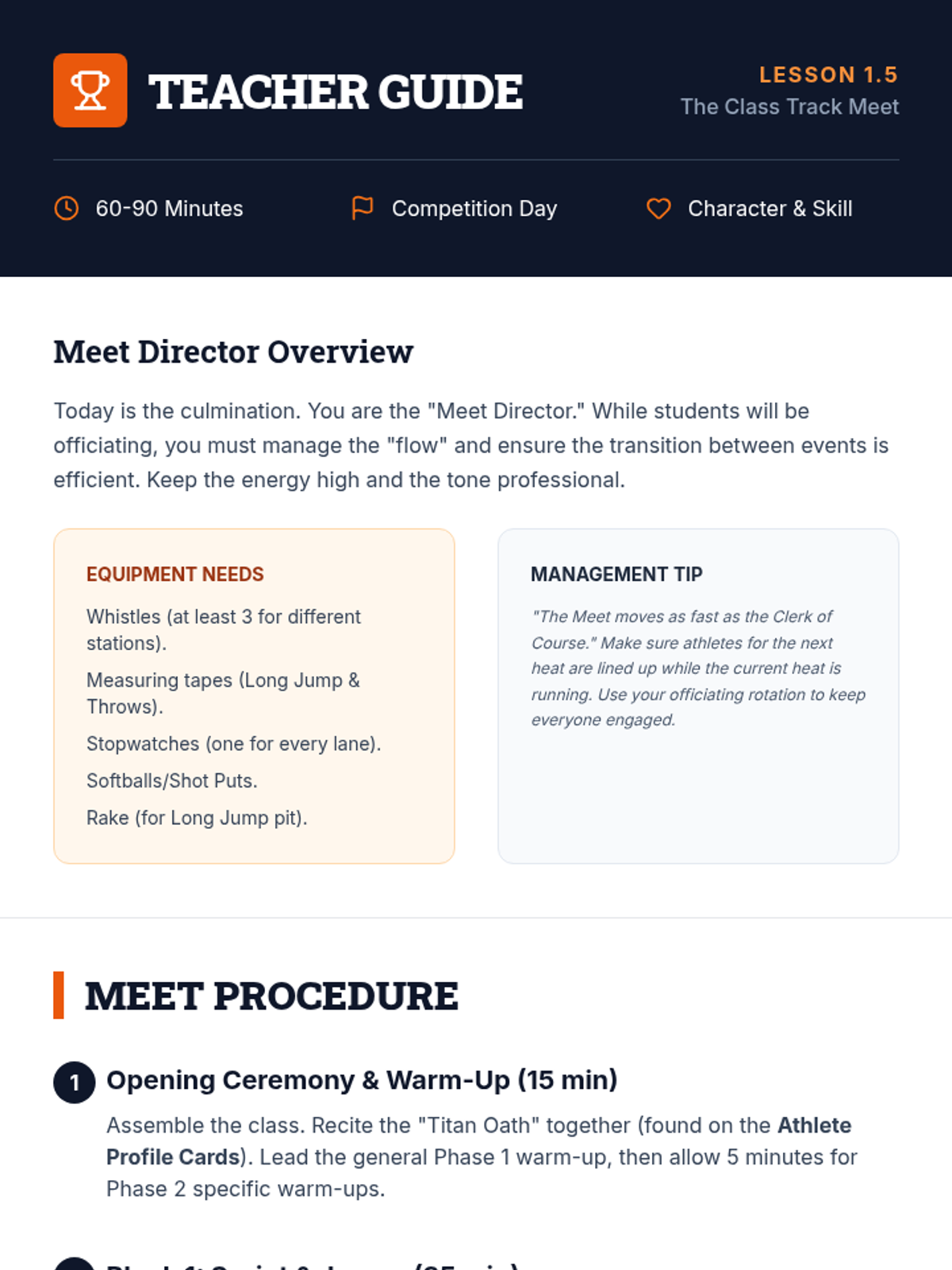
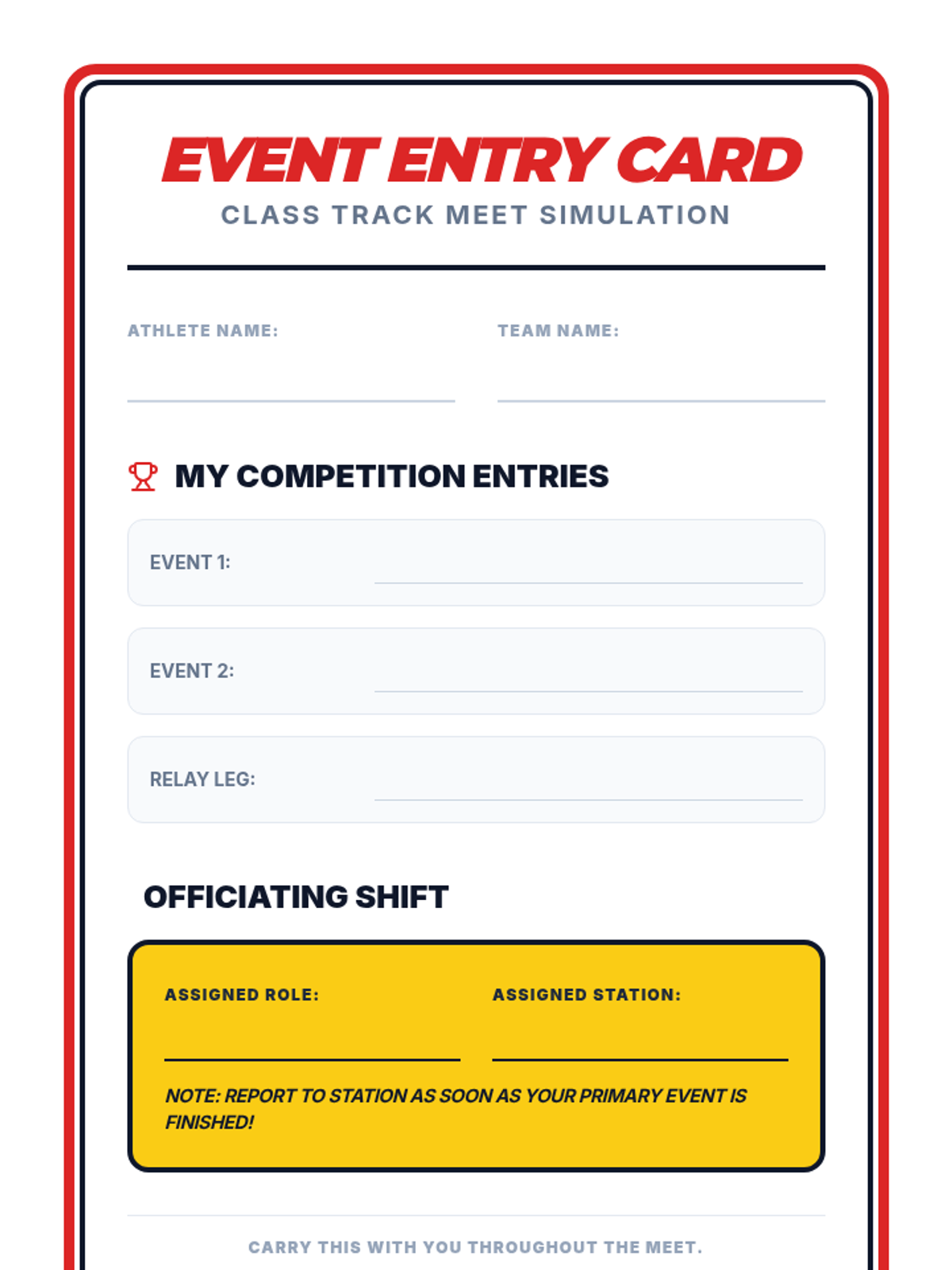
A culminating event where students rotate between competing and officiating. Students apply all learned skills—running, jumping, throwing, and measuring—in a structured, rule-bound environment.
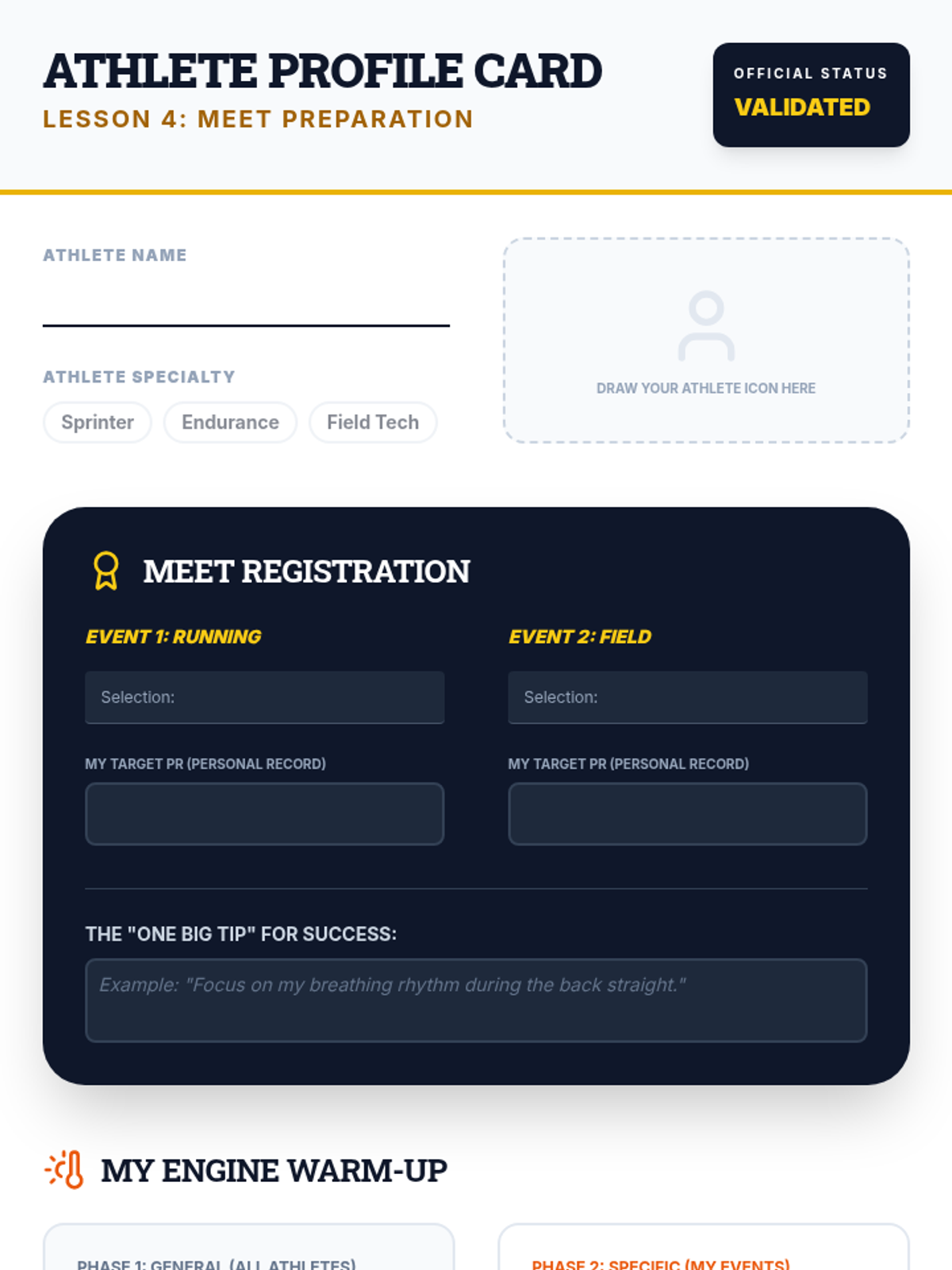
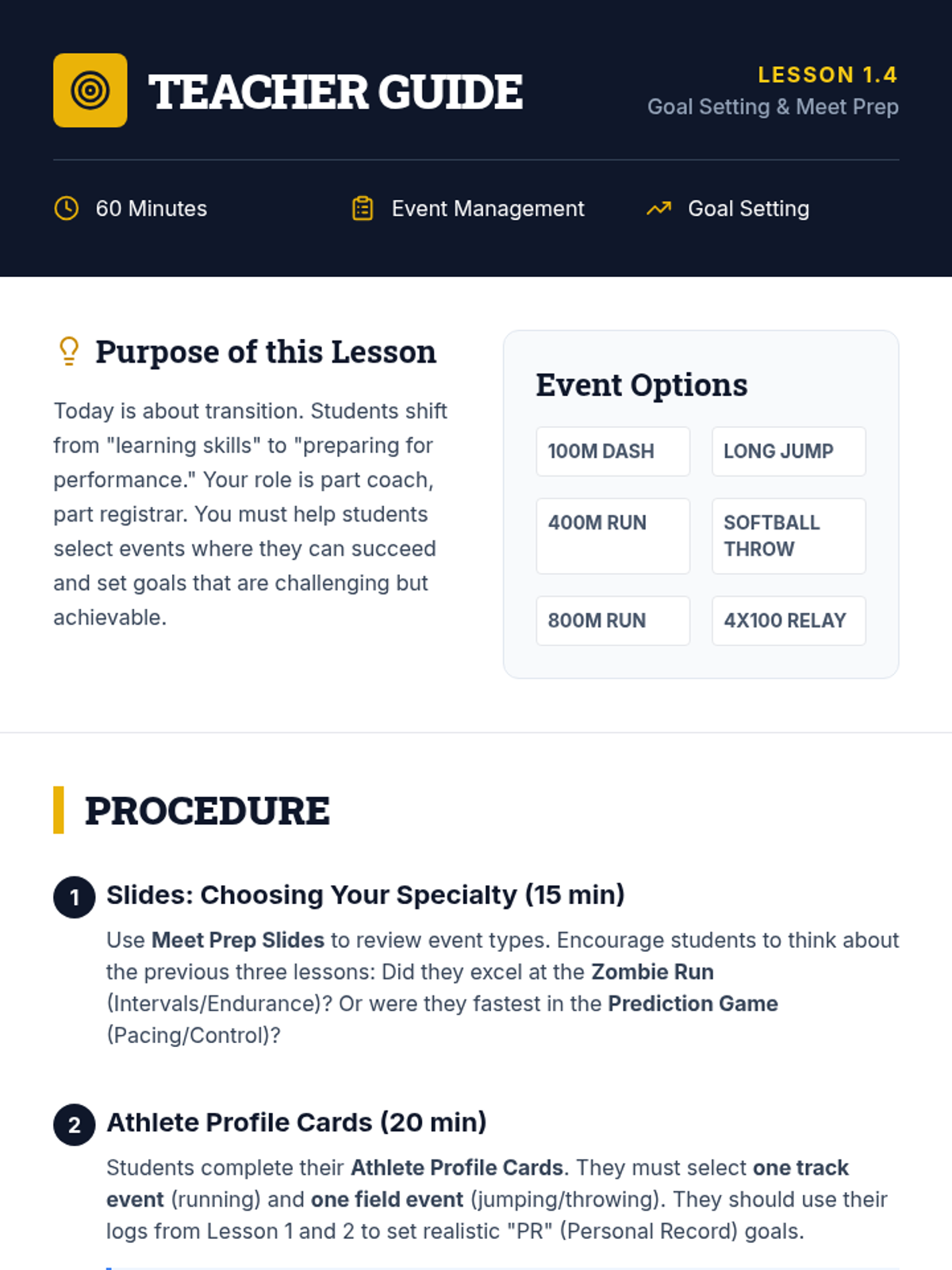
Students select events for a final class meet based on their strengths discovered in previous sequences. They set specific performance goals (time or distance) and practice warm-up routines specific to their events.
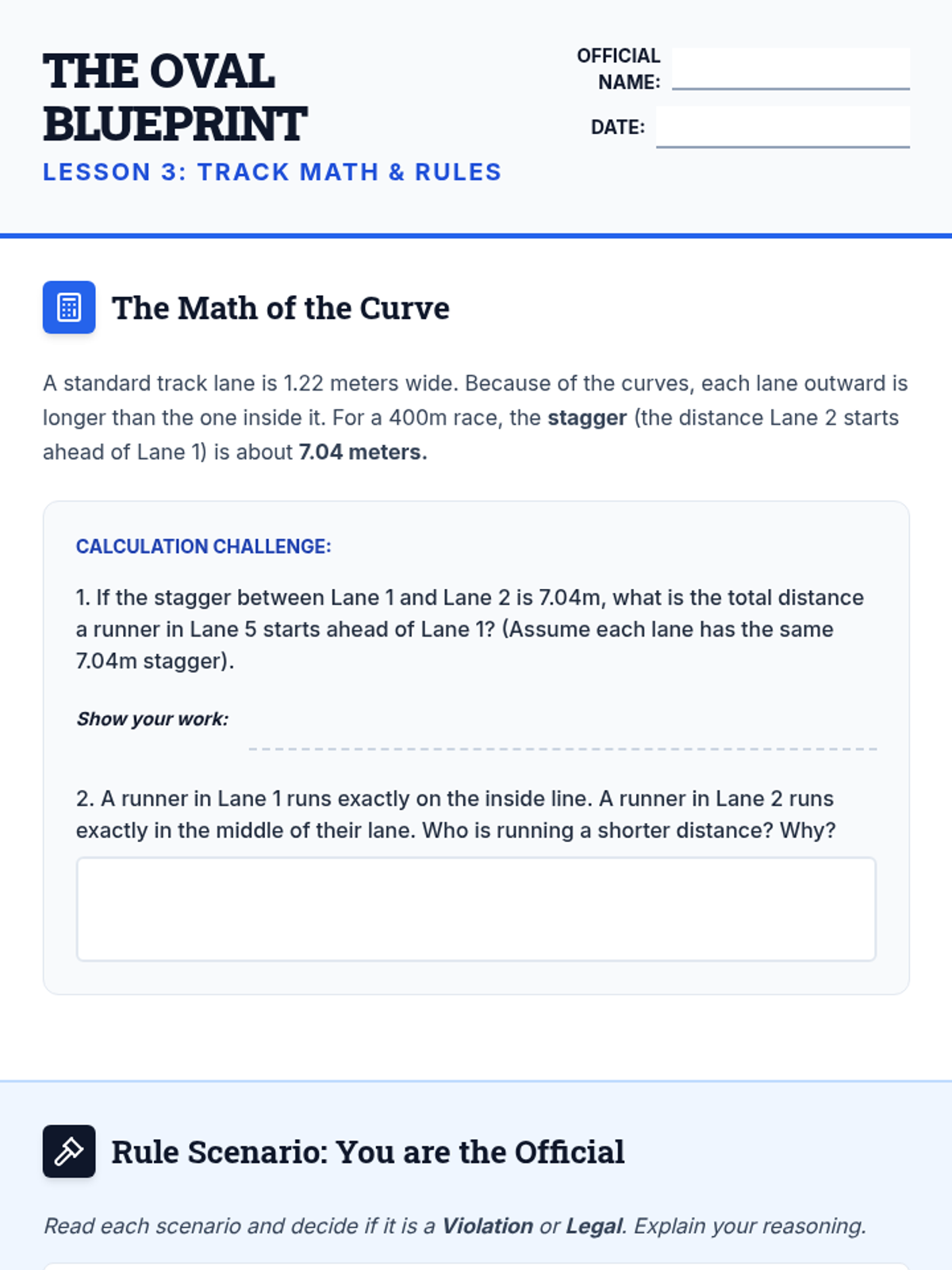
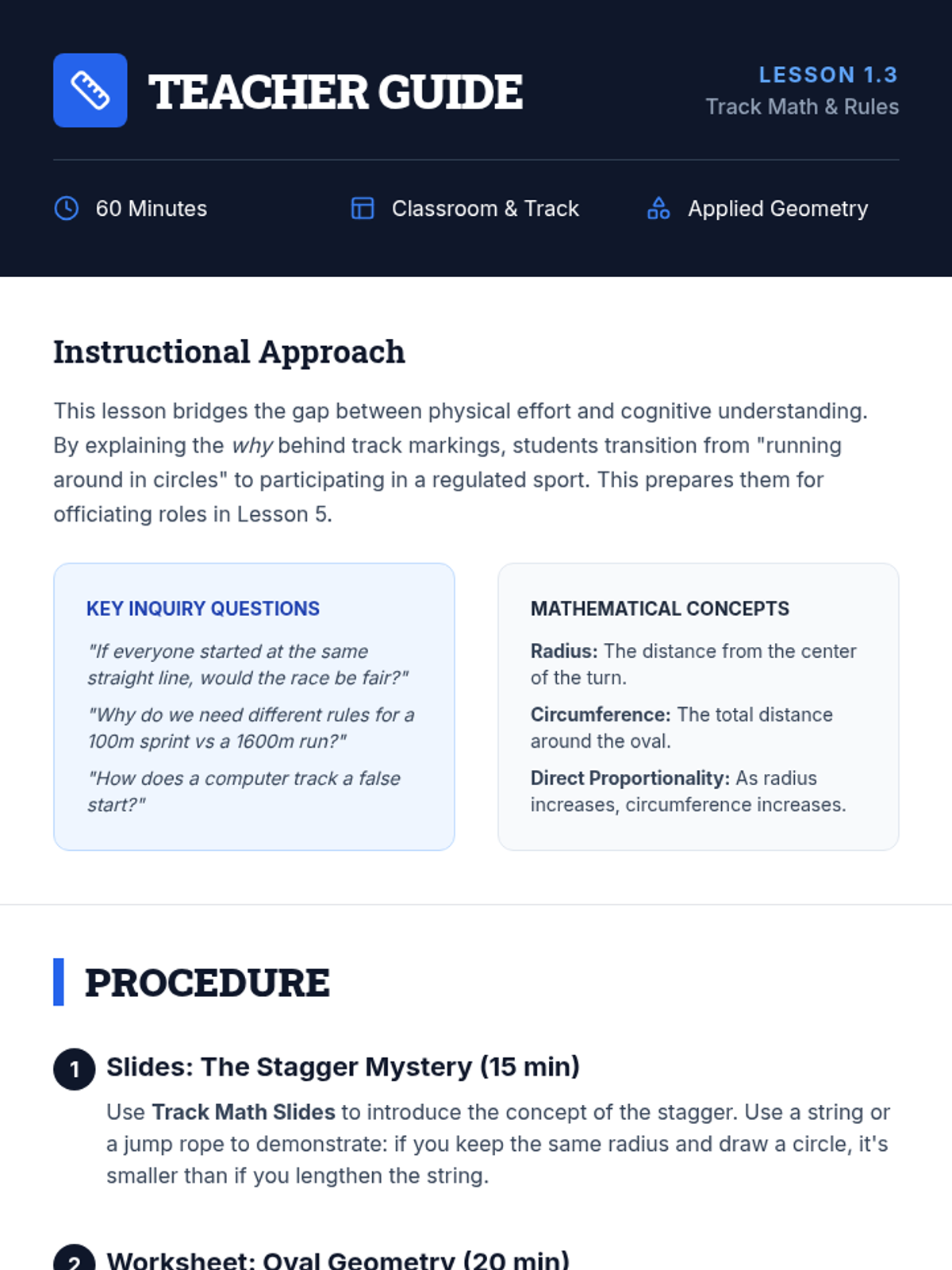
This classroom and track-side lesson teaches the 'why' behind track markings. Students learn about staggered starts, lane violations, false starts, and how distances are measured and timed.
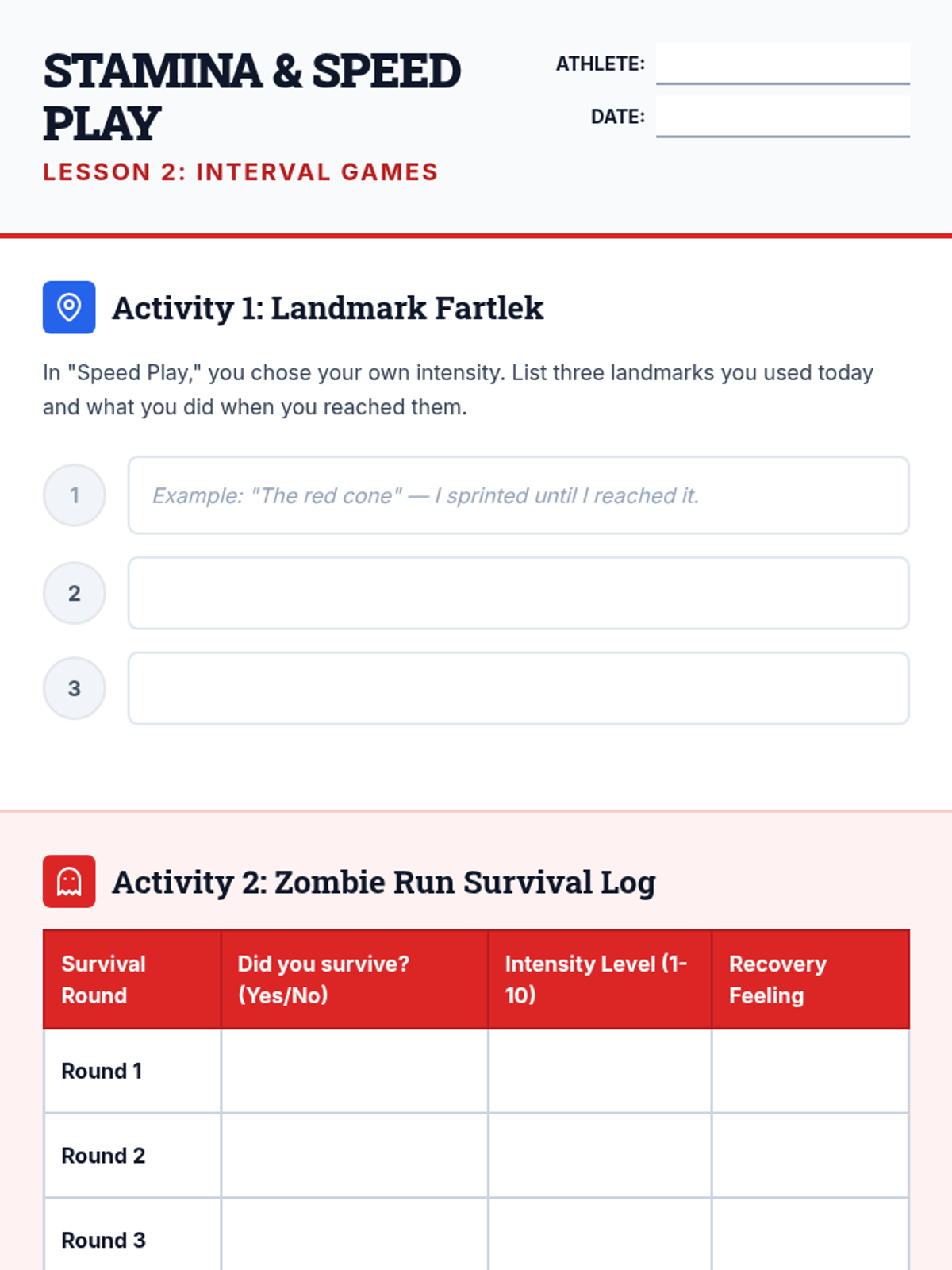
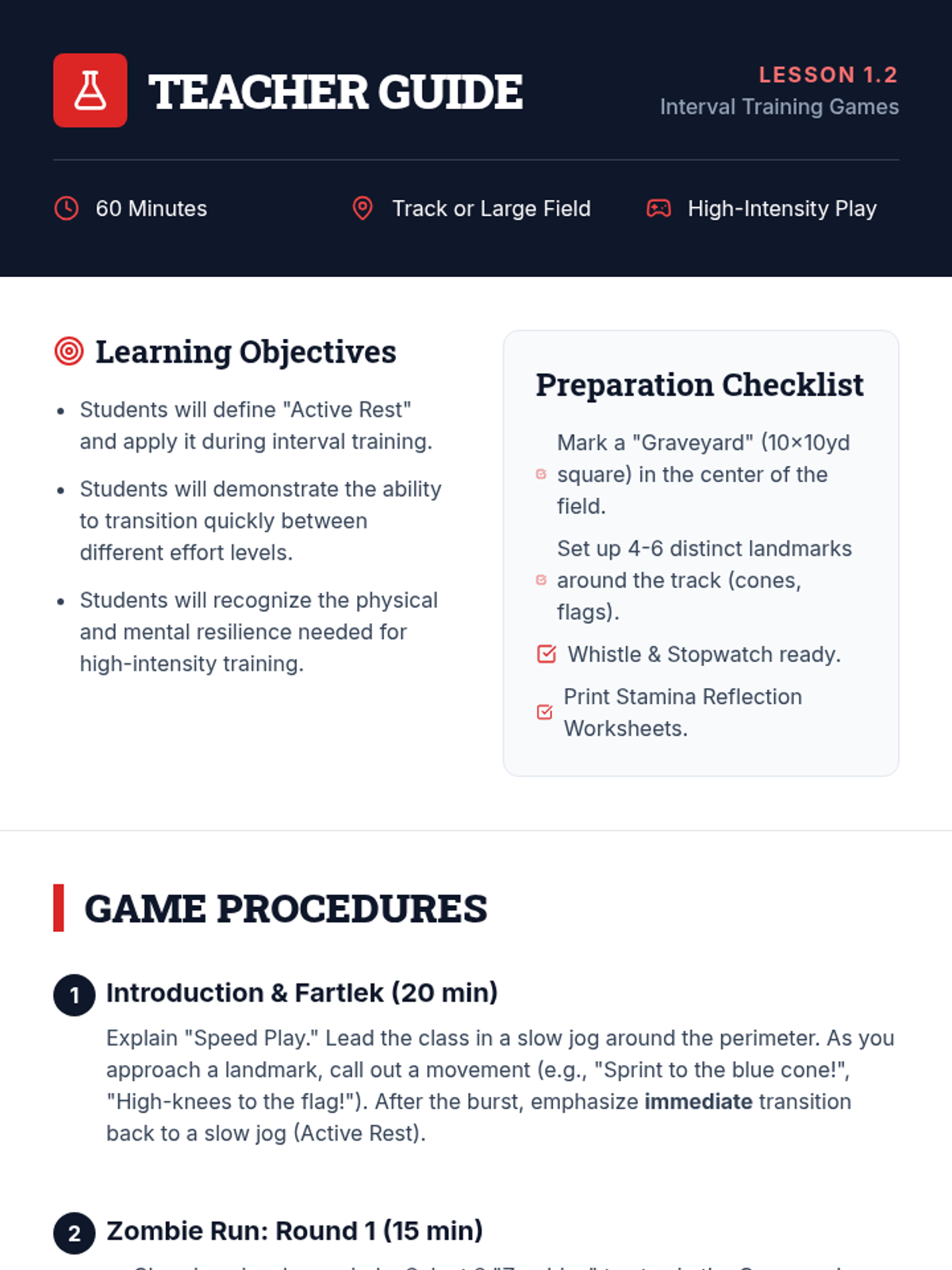
Students participate in Fartlek (speed play) activities and interval training to build stamina. The lesson turns endurance training into a game using whistle signals and changing terrain or obstacles.
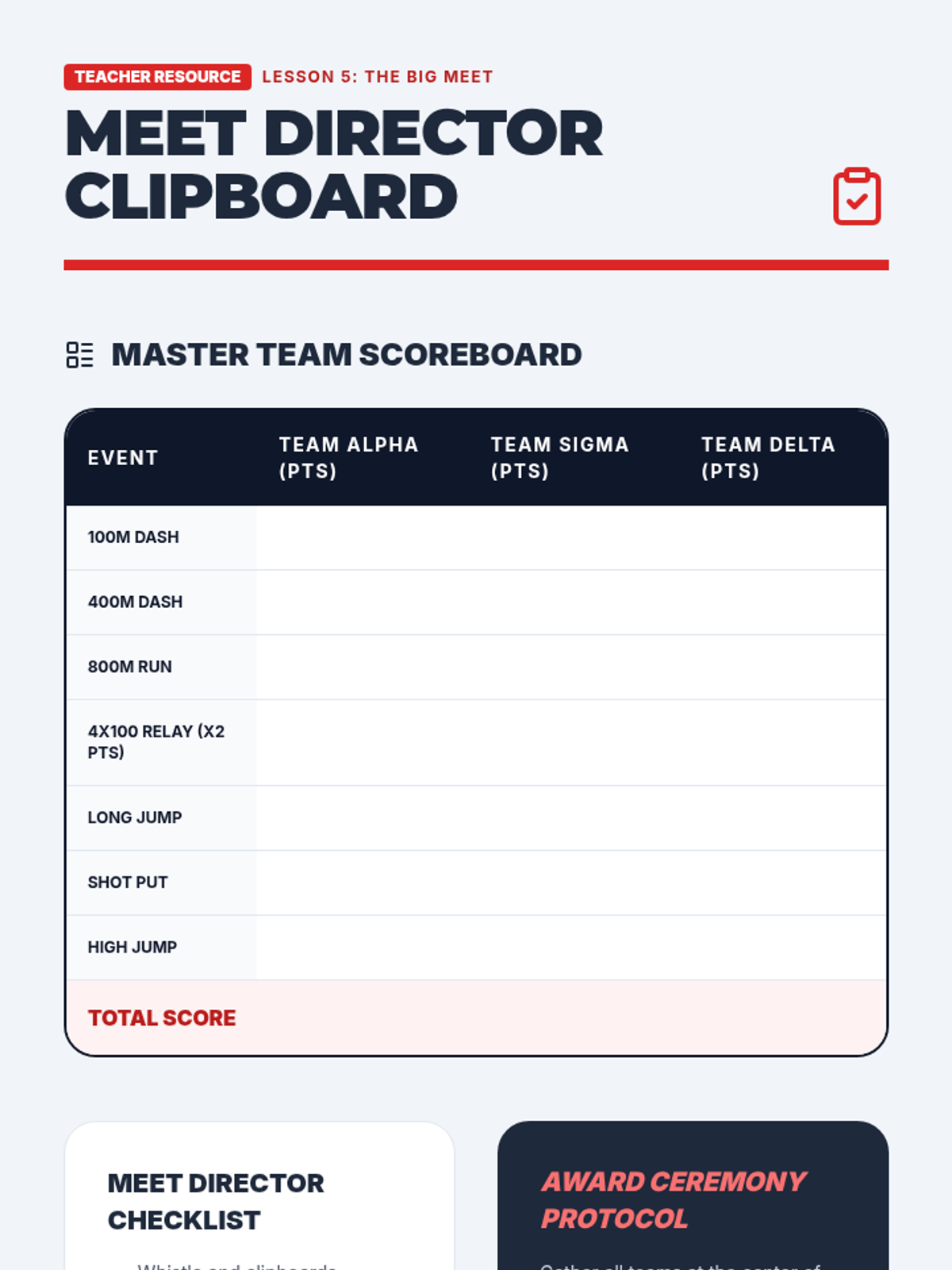
Students organize and participate in a modified track meet. They take turns competing and officiating, keeping track of team scores and ensuring all events run according to the rules.
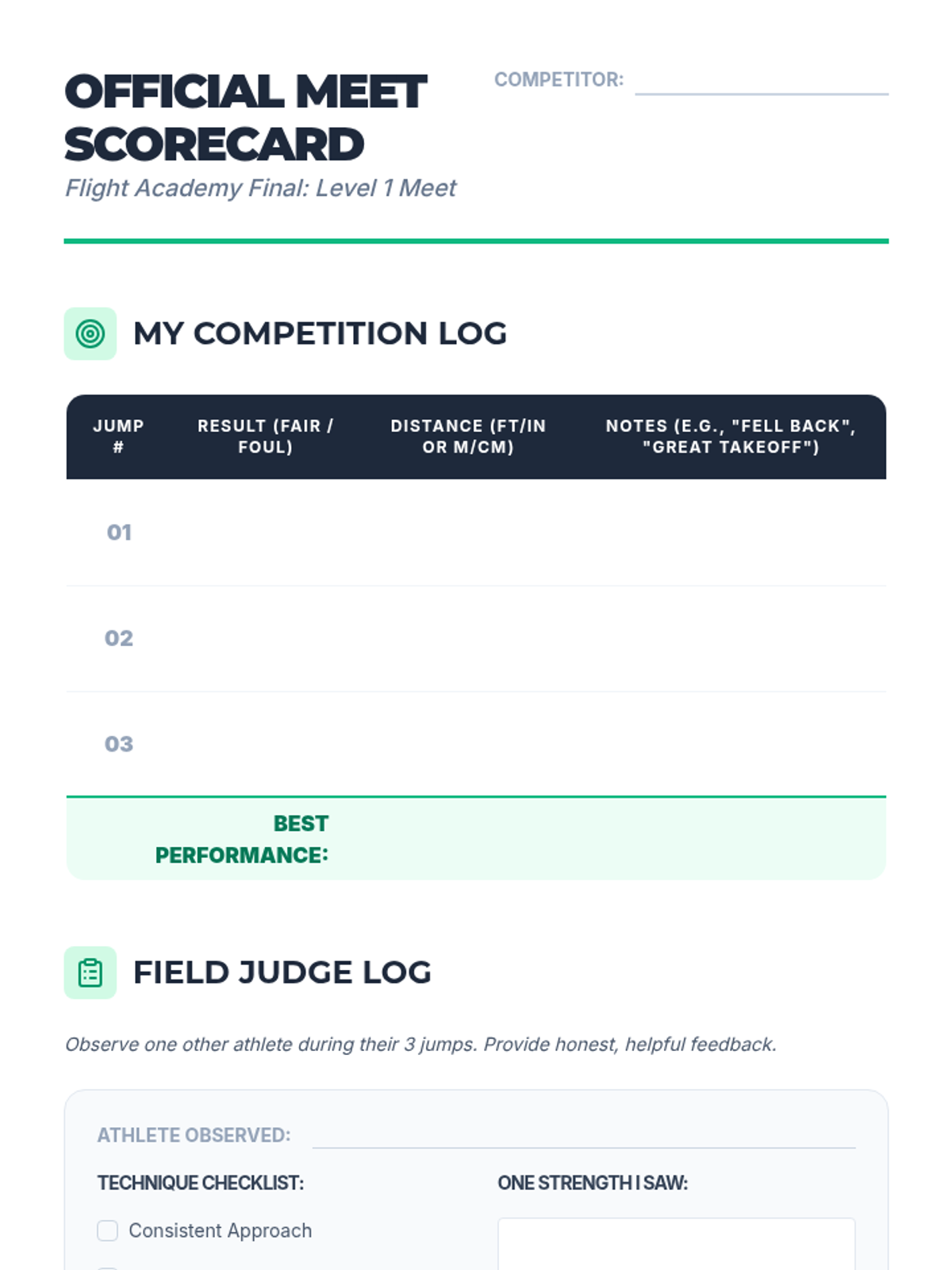
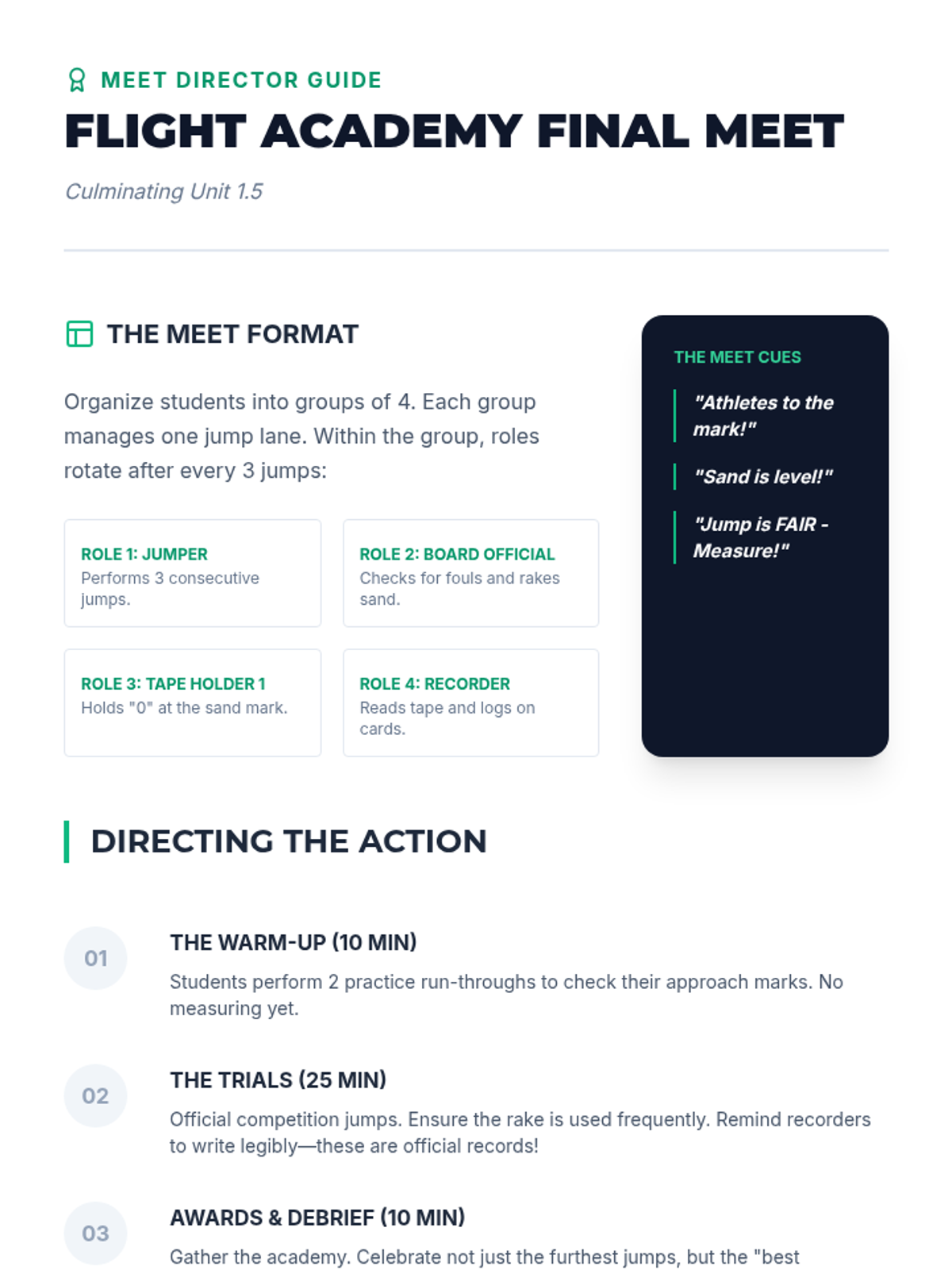
A culminating event where students compete in a long jump meet, applying rules as both athletes and officials.
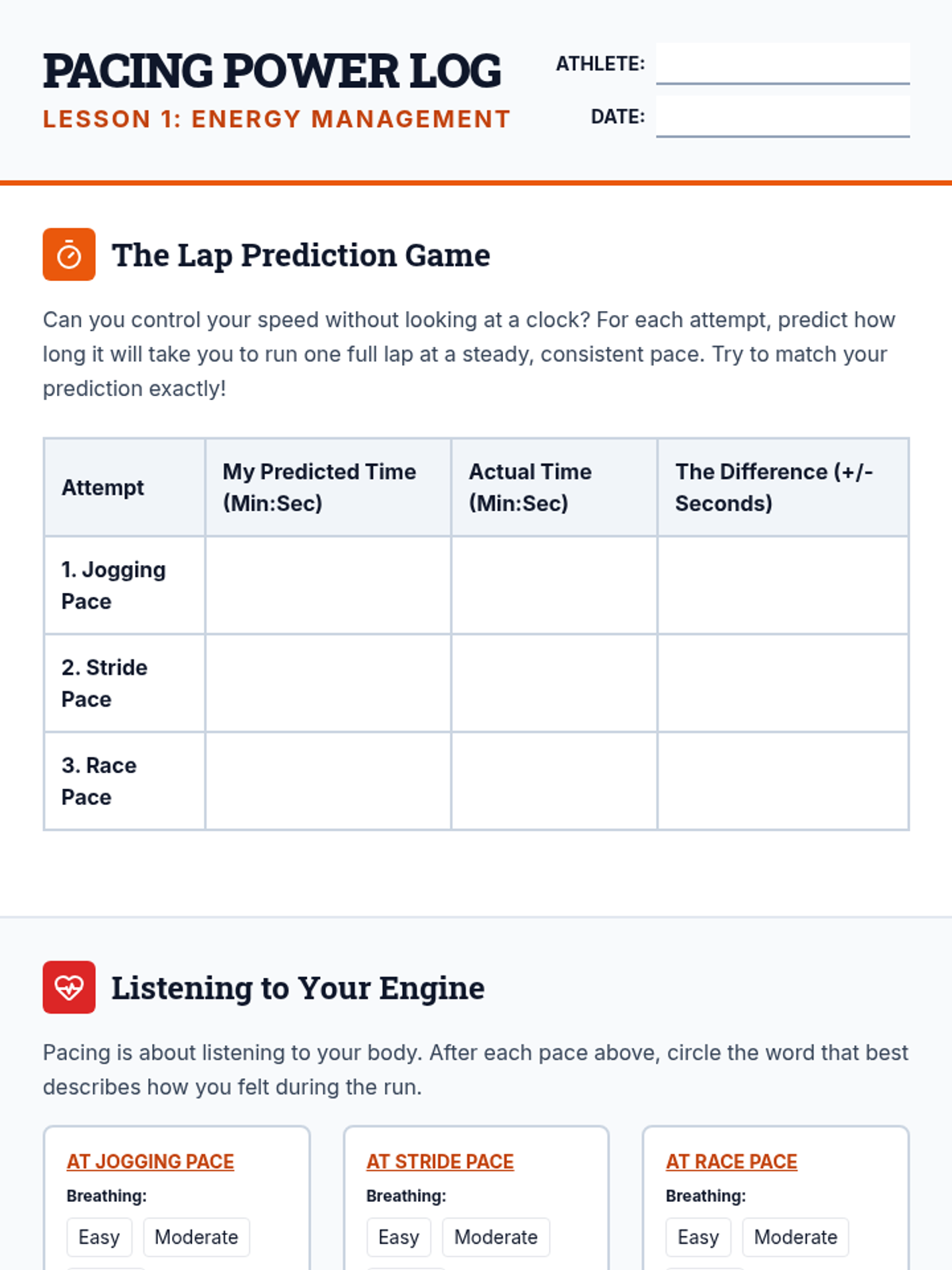
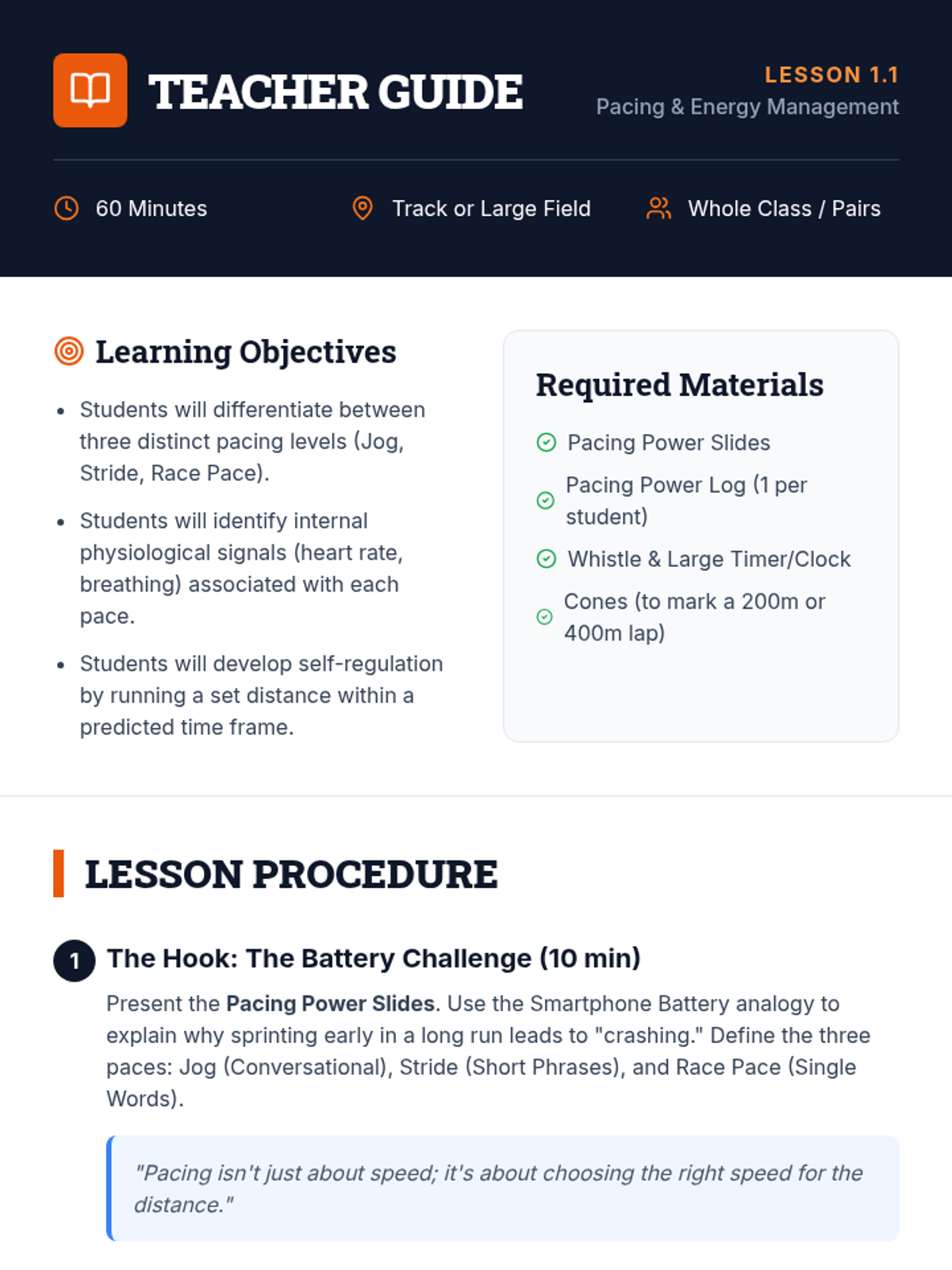
Students explore the concept of pacing by running laps at different commanded speeds and learning to listen to their body's signals (breathing, heart rate) to maintain a steady rhythm.
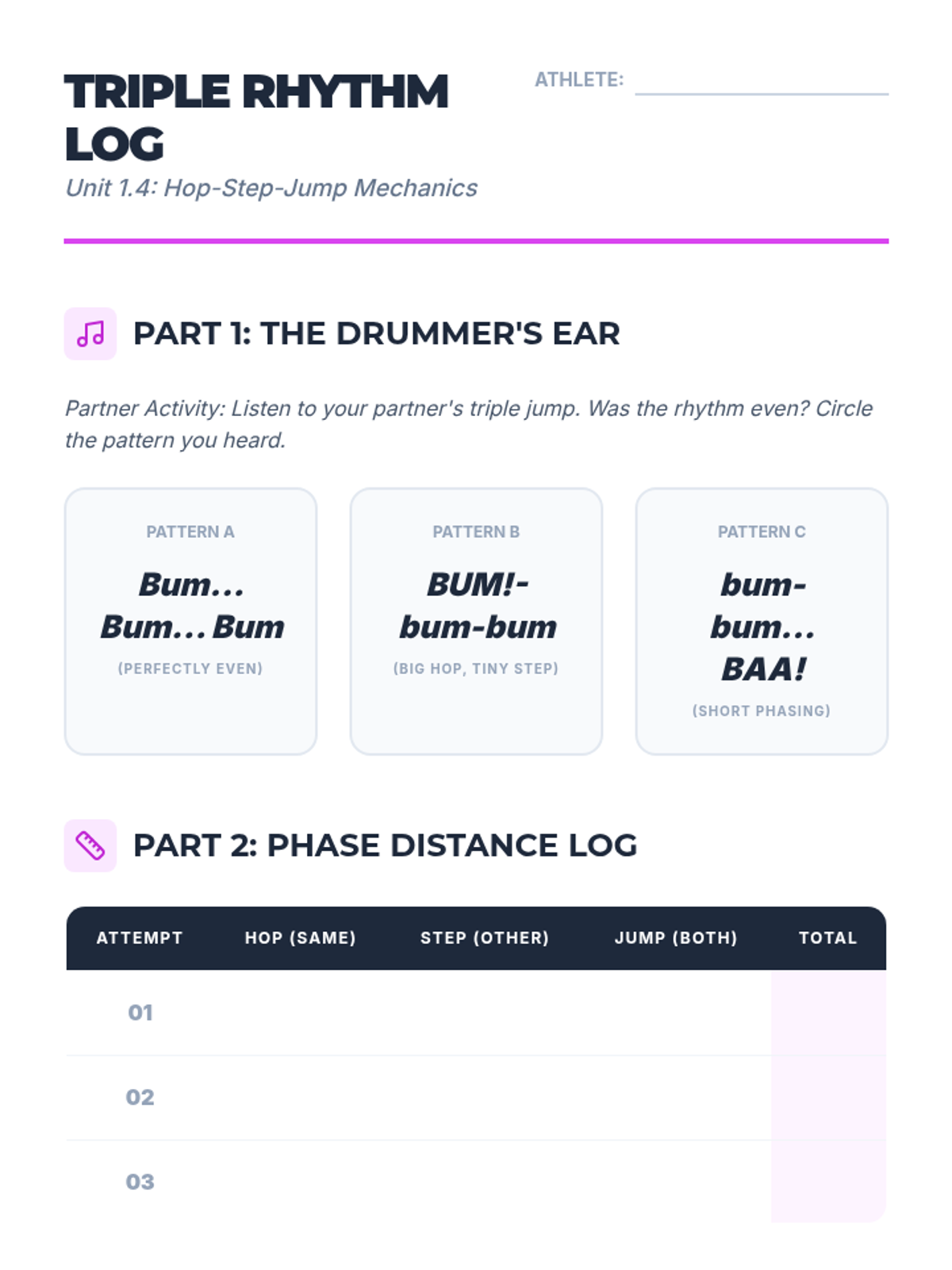
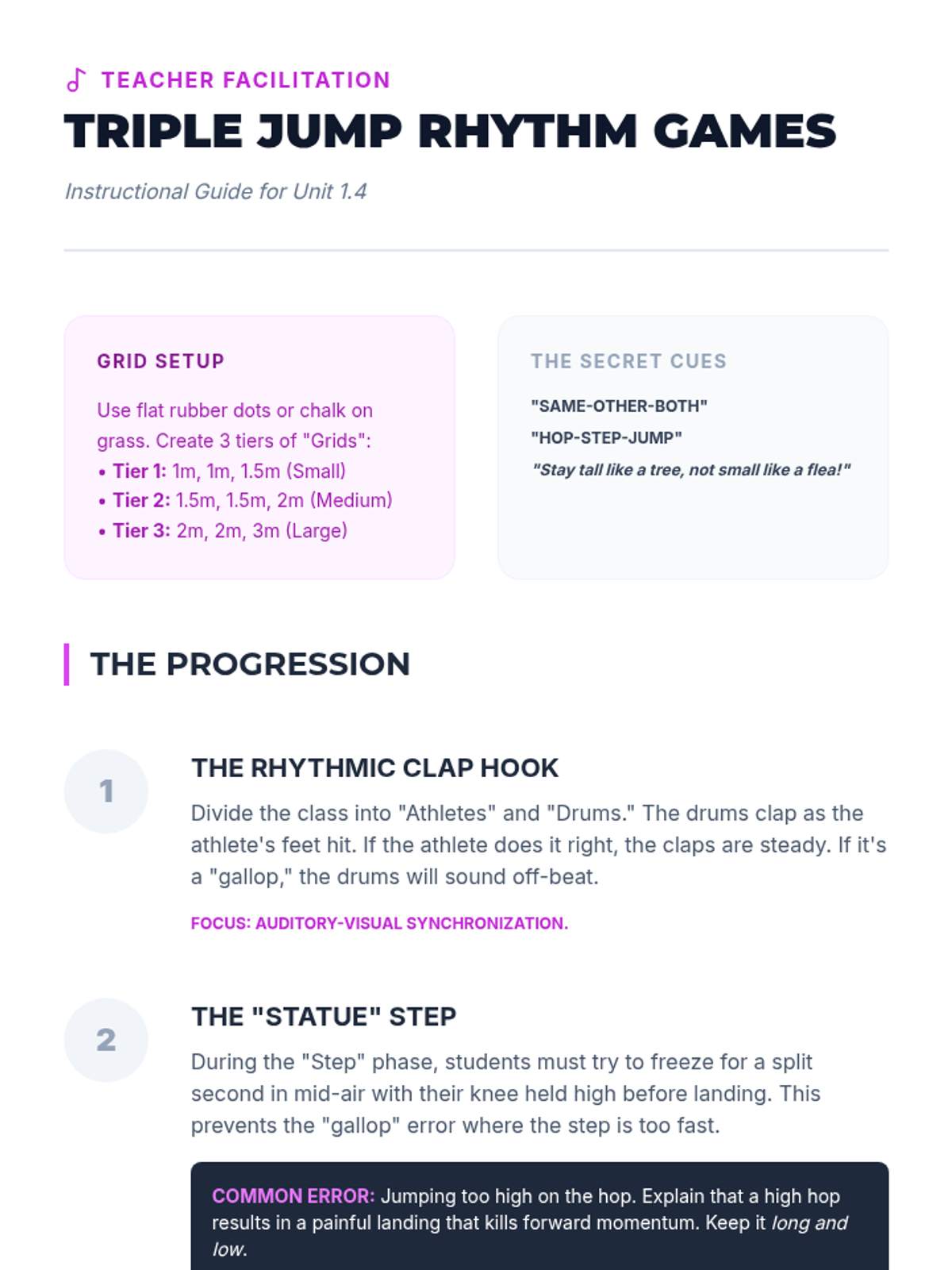
Introduces the rhythmic coordination of the hop, step, and jump phases through tiered drills and games.
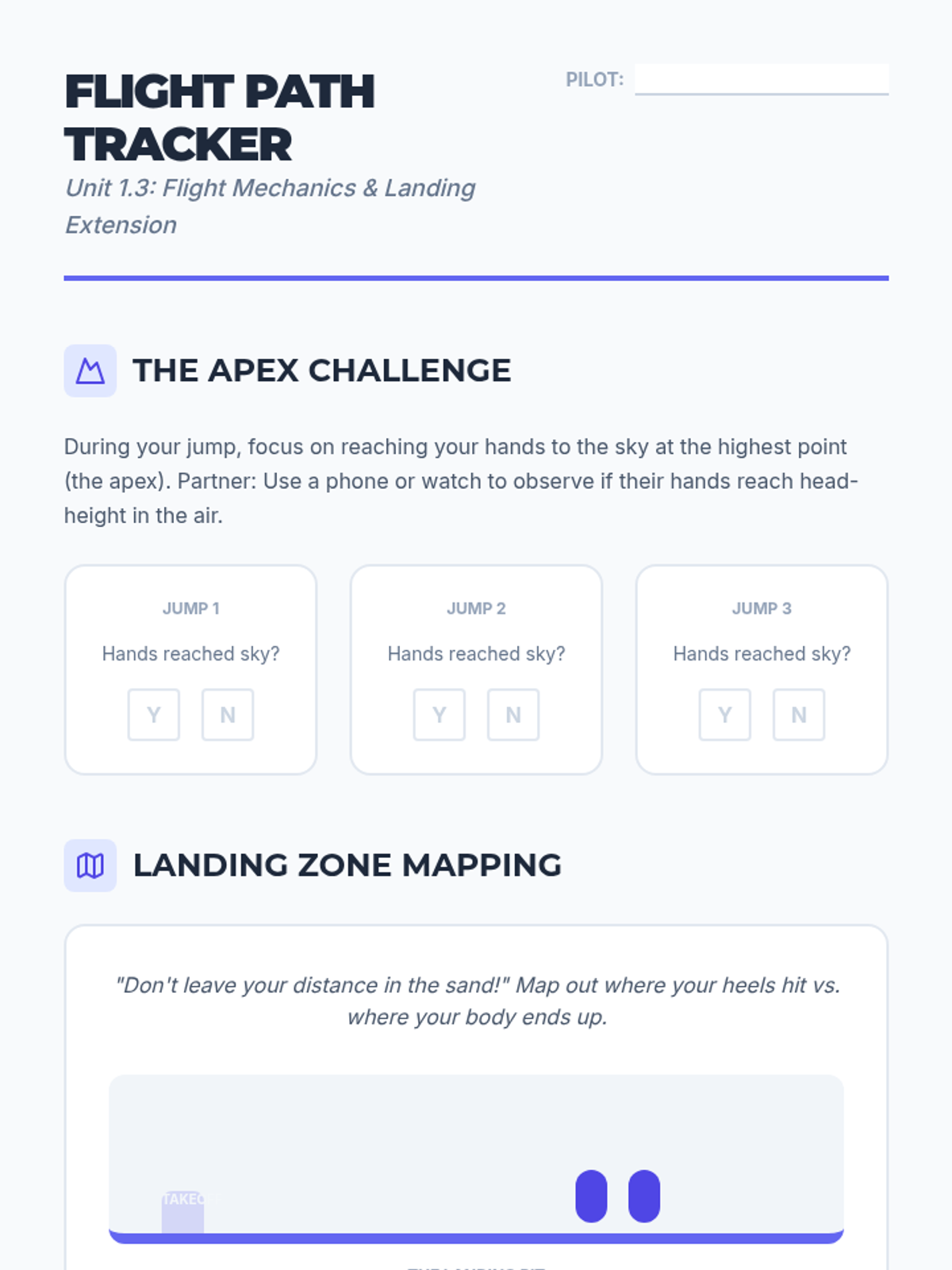
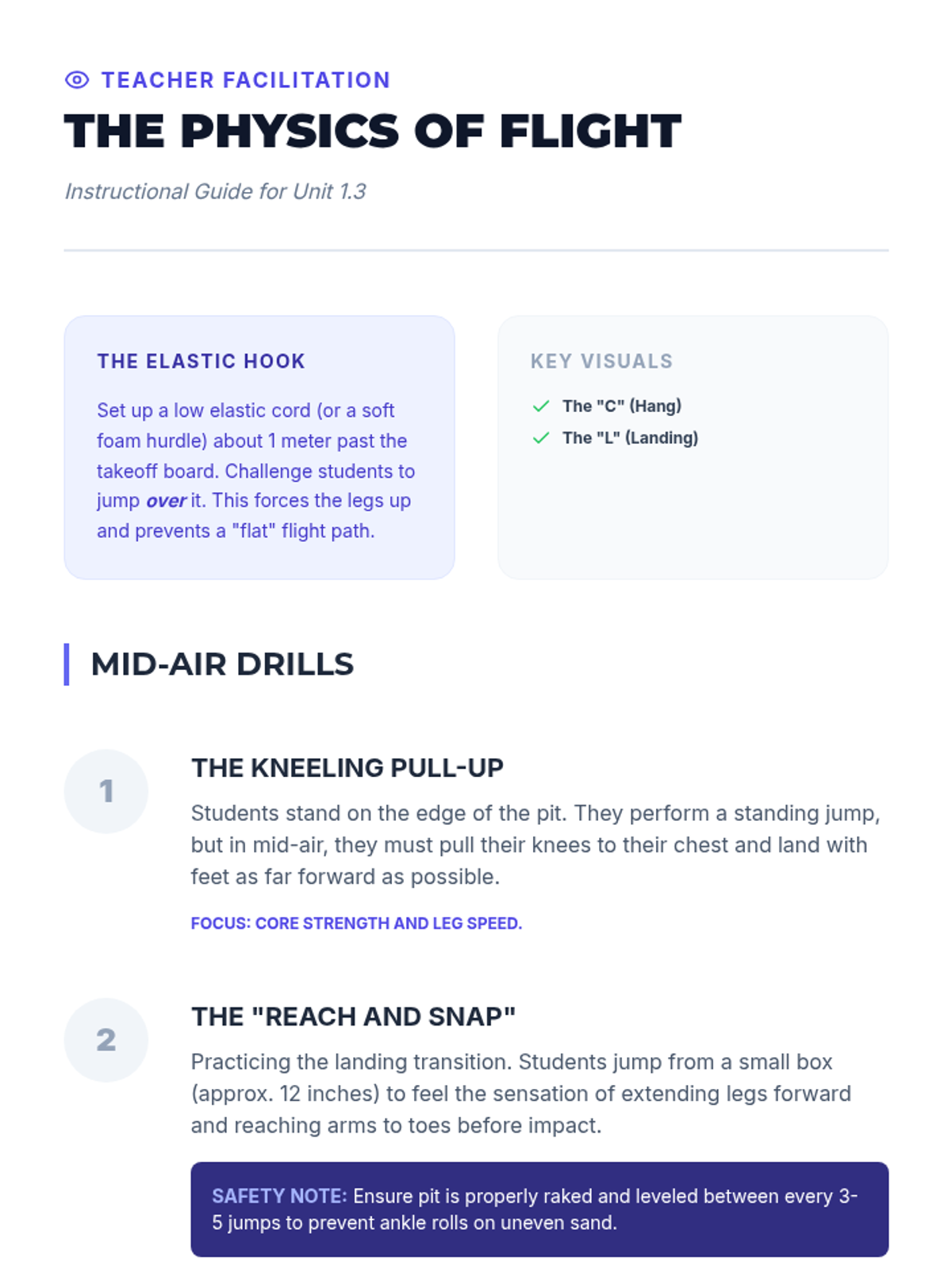
Explores mid-air body control and techniques to maximize distance by extending legs during the landing phase.
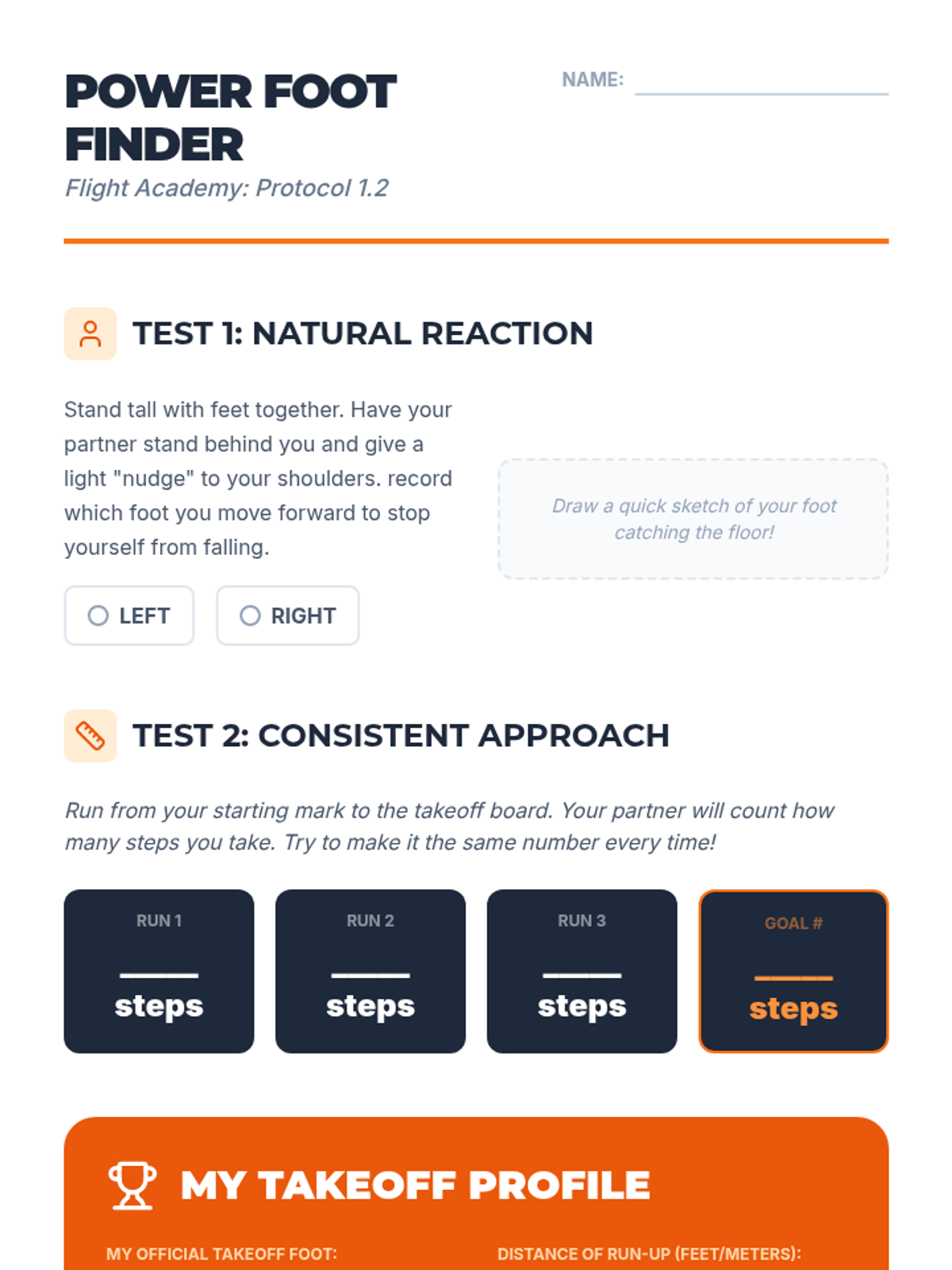
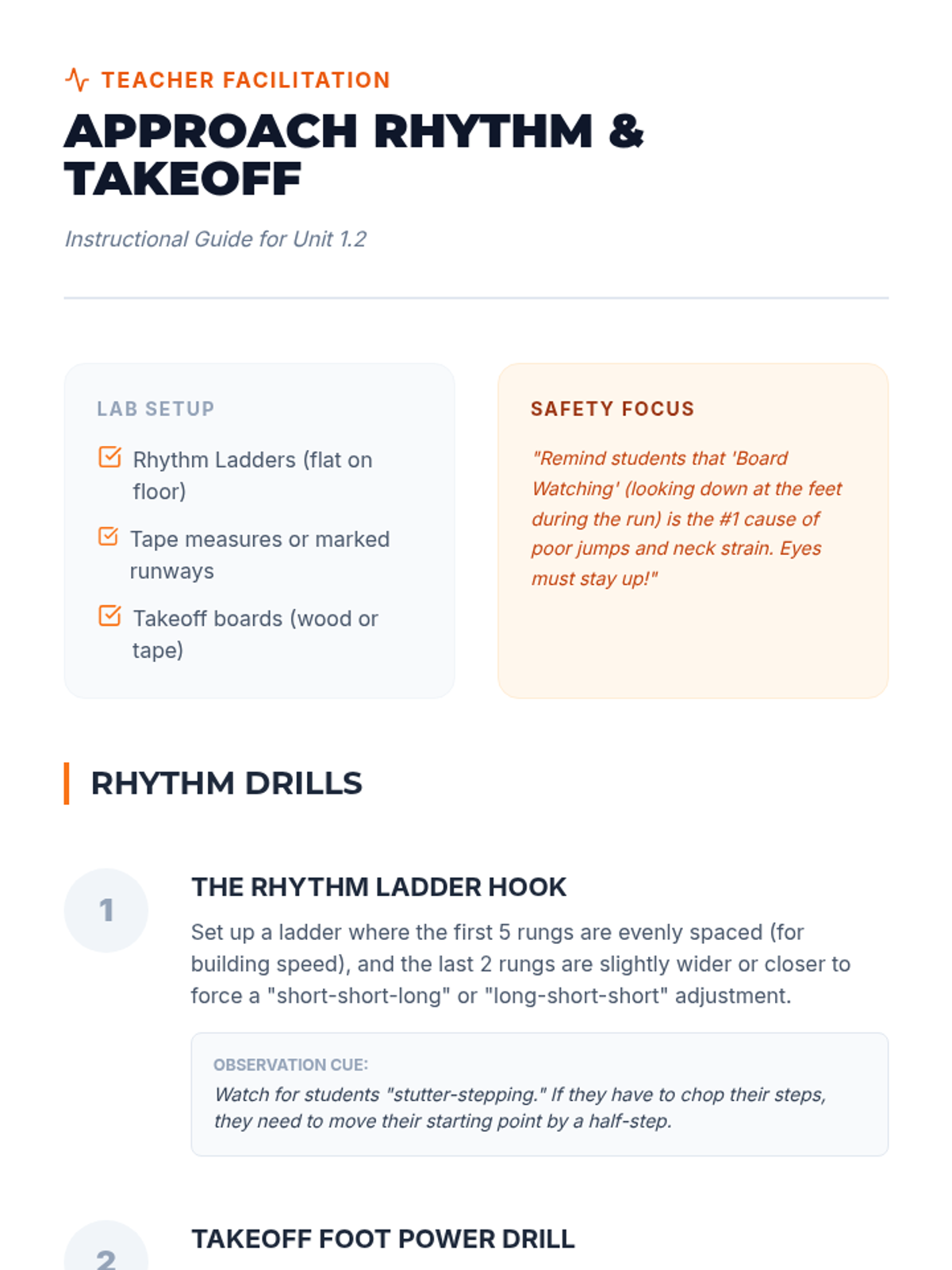
Focuses on determining the dominant takeoff foot and developing a consistent, rhythmic approach run to the board.
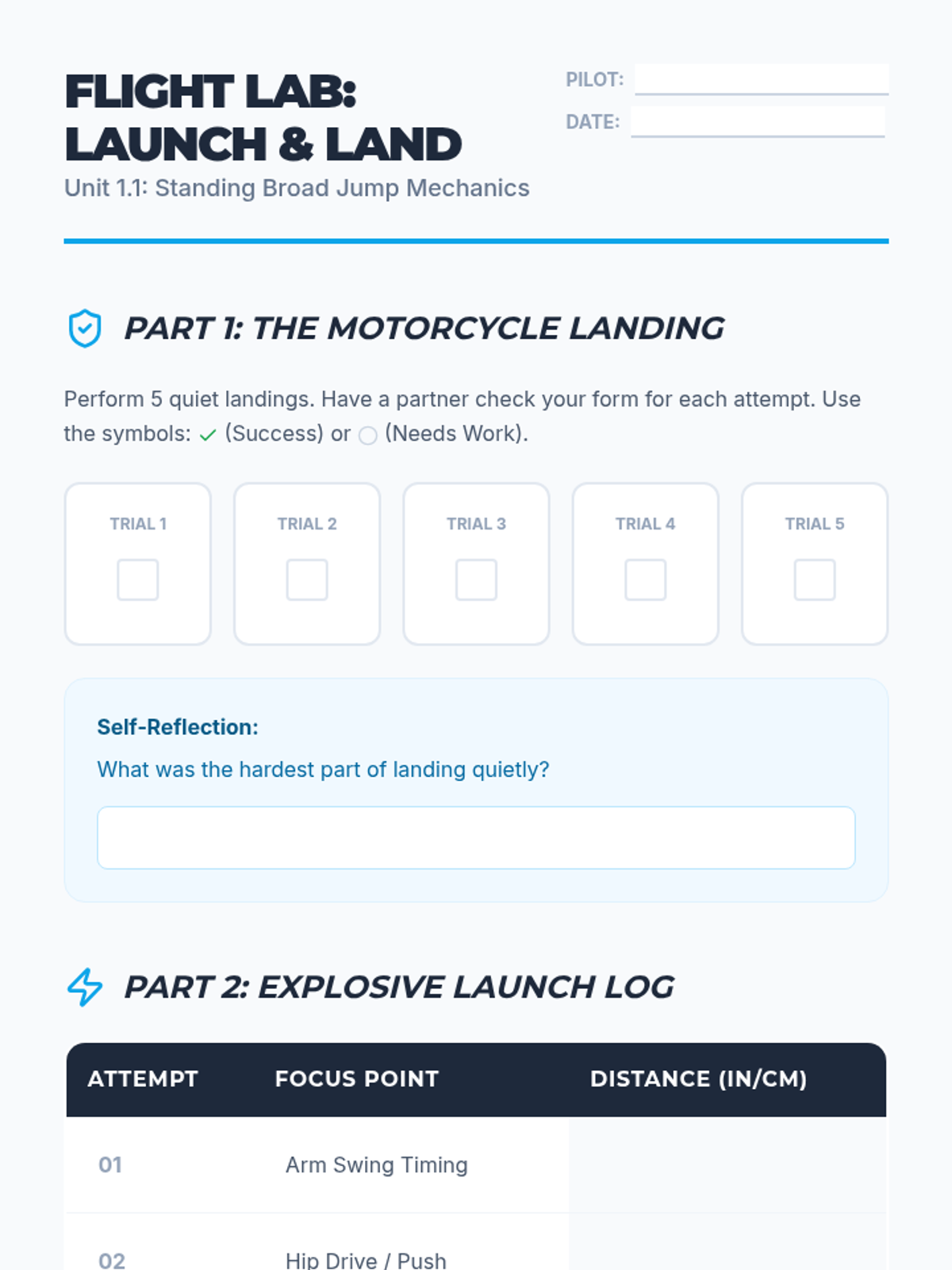
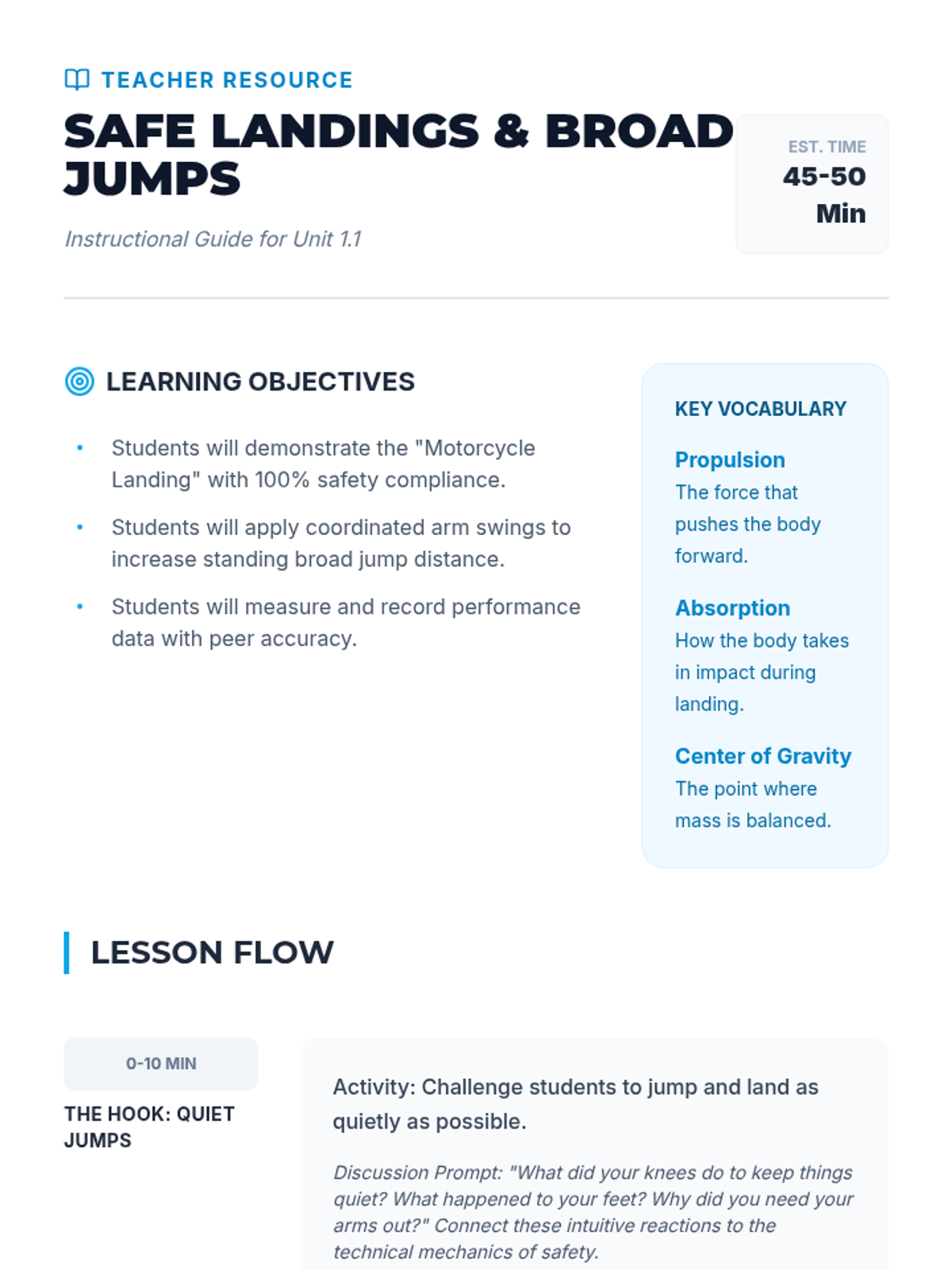
Students master the 'Motorcycle Landing' for safety and apply explosive power to the standing broad jump.
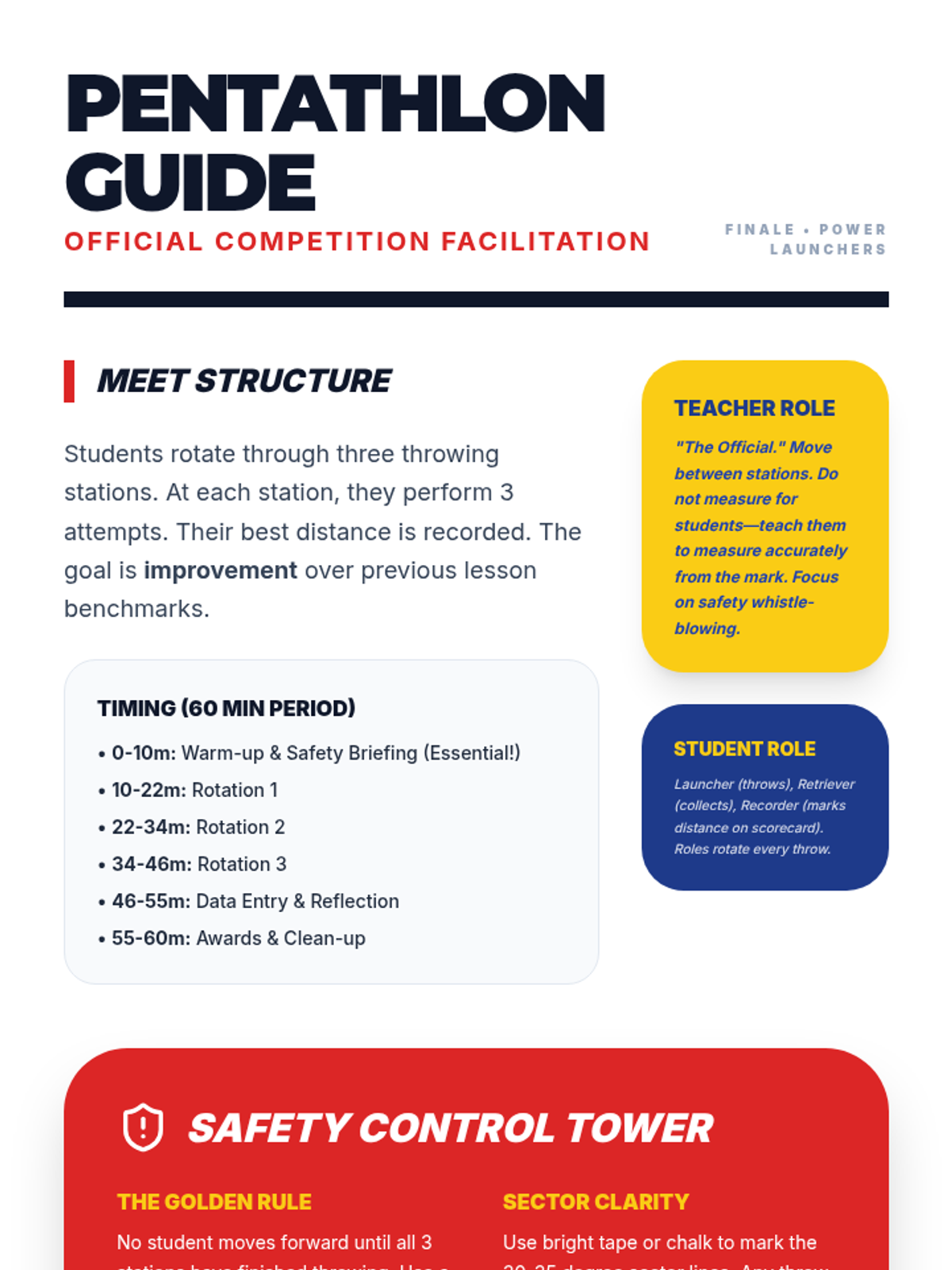
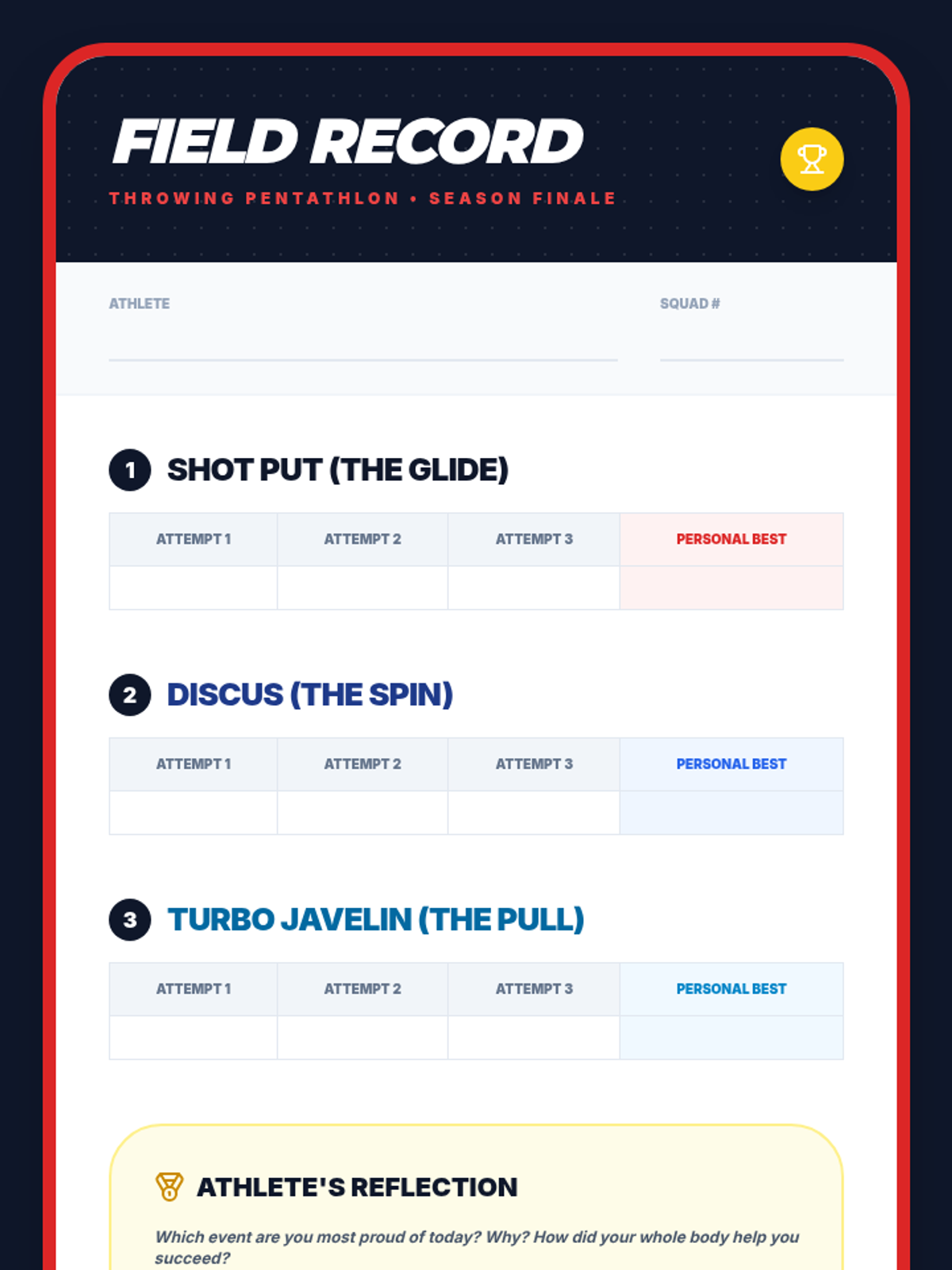
The sequence culminates in a multi-event competition where students apply their skills across all throwing disciplines while managing the throwing sector safely.
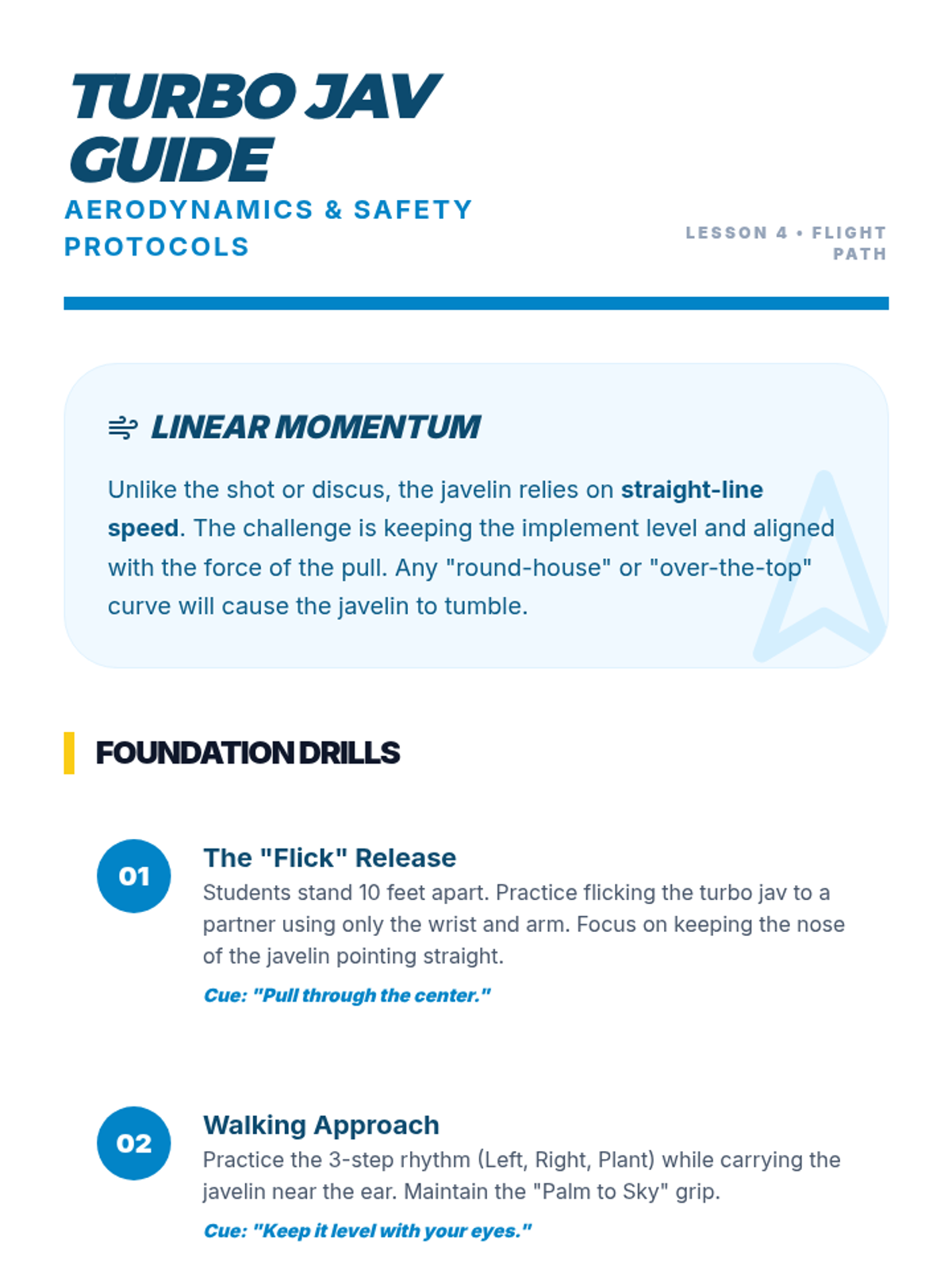
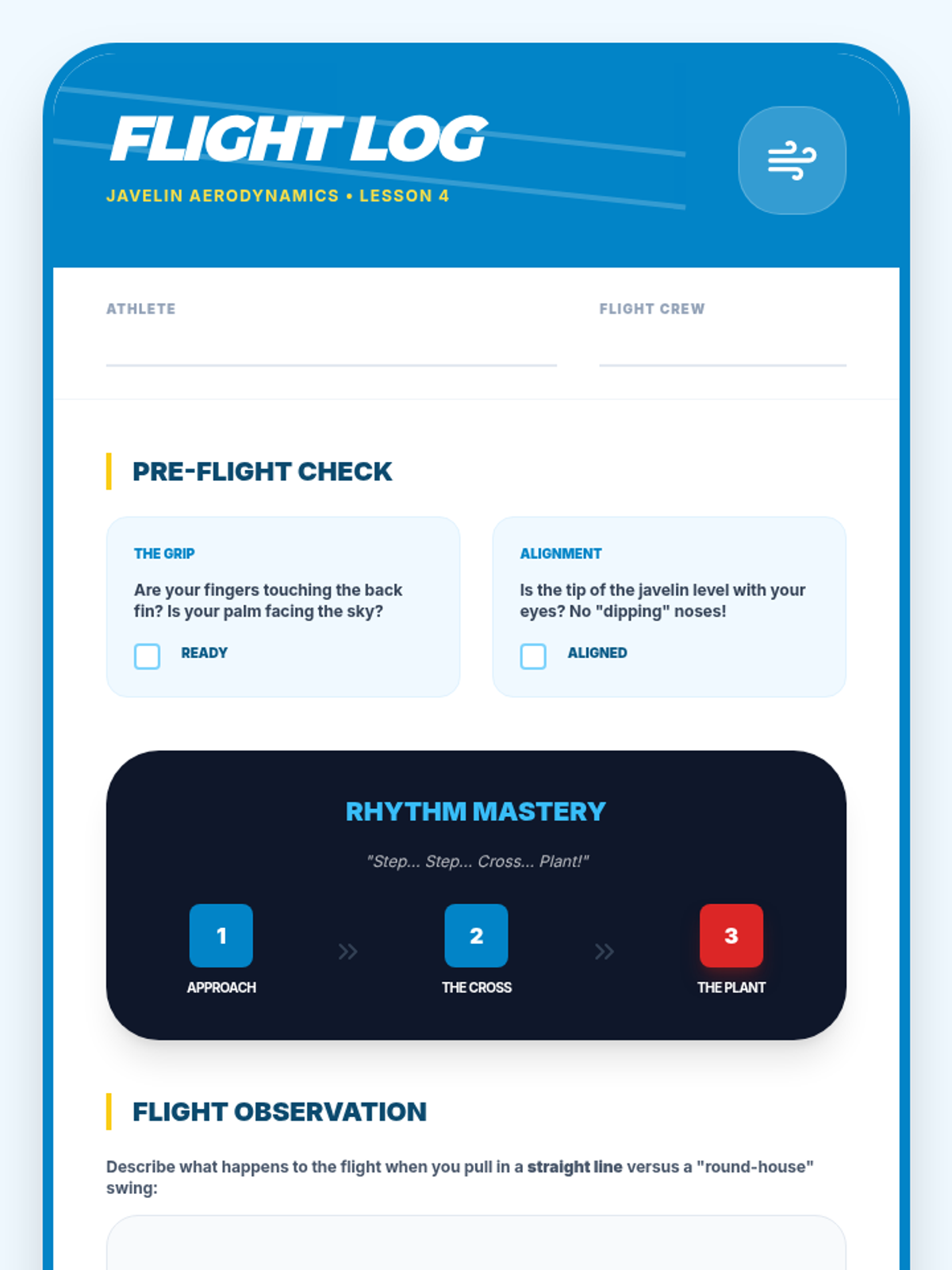
Students learn the aerodynamics and safety protocols of the turbo javelin, focusing on the grip, over-the-shoulder motion, and linear momentum.
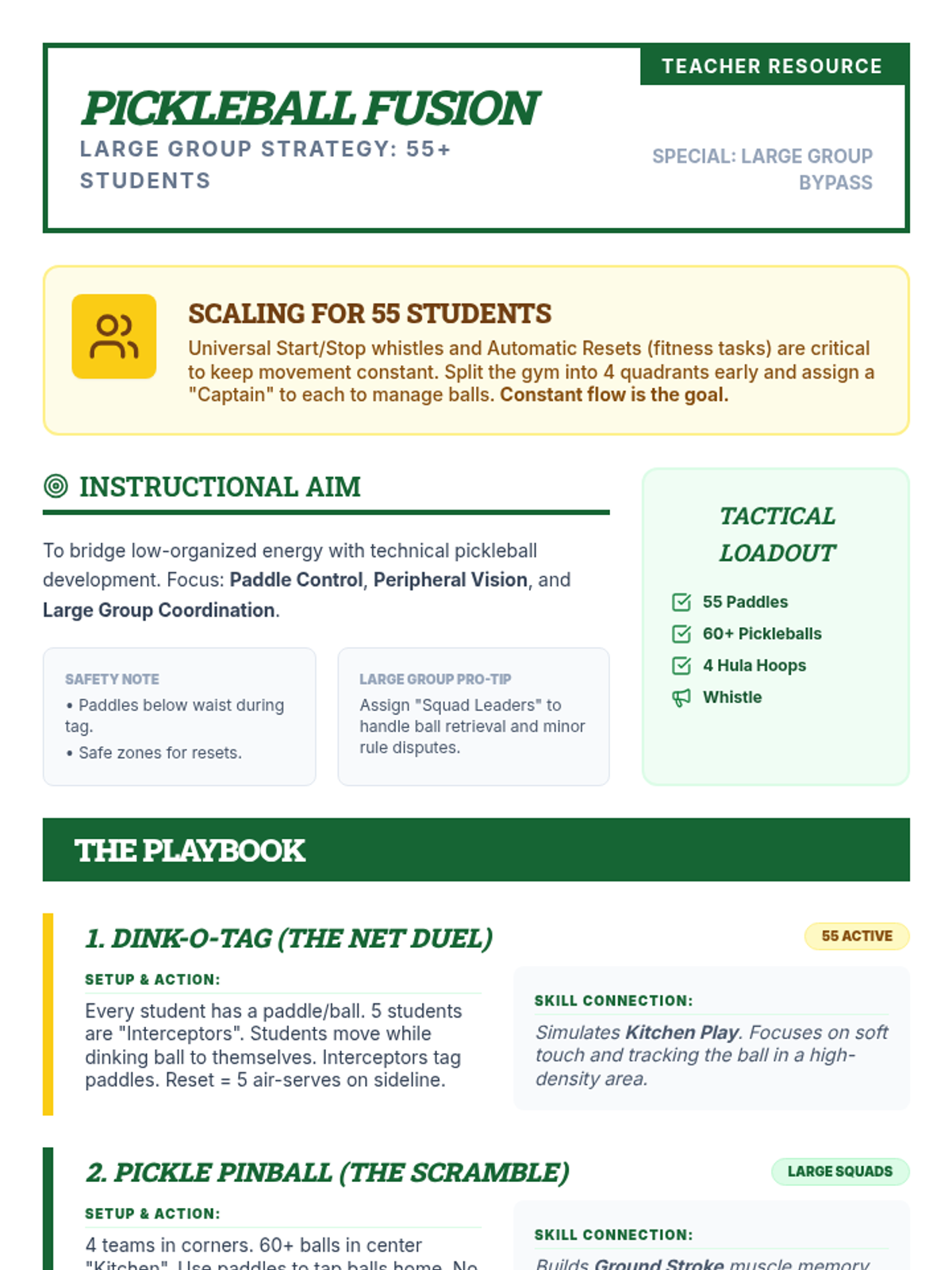
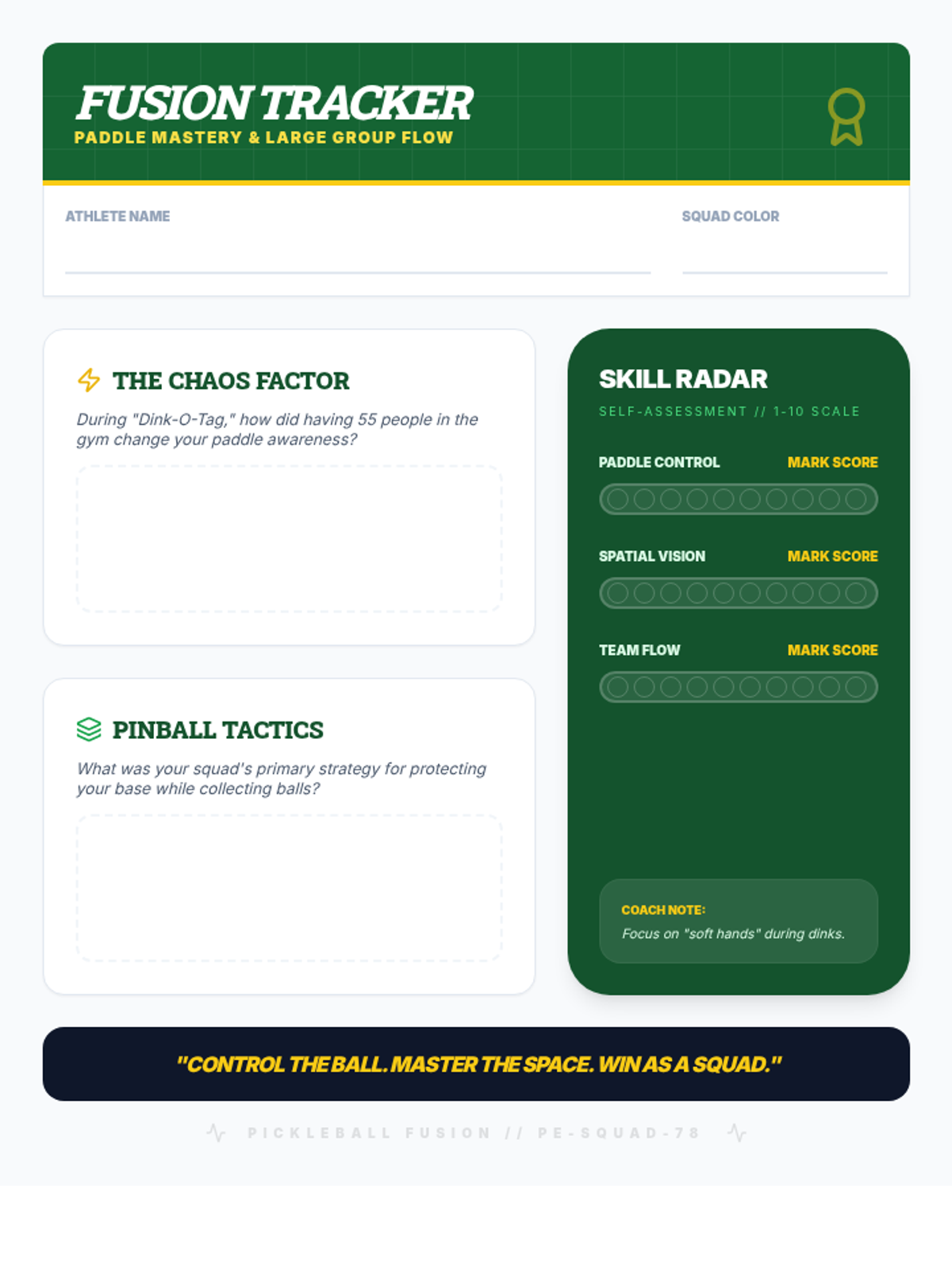
Combines the high energy of low-organized games with the fundamental skills of pickleball, designed specifically for large groups to maximize movement and paddle control.
Focuses on games that improve reaction time, hand-eye coordination, and mental focus through quick-decision challenges.
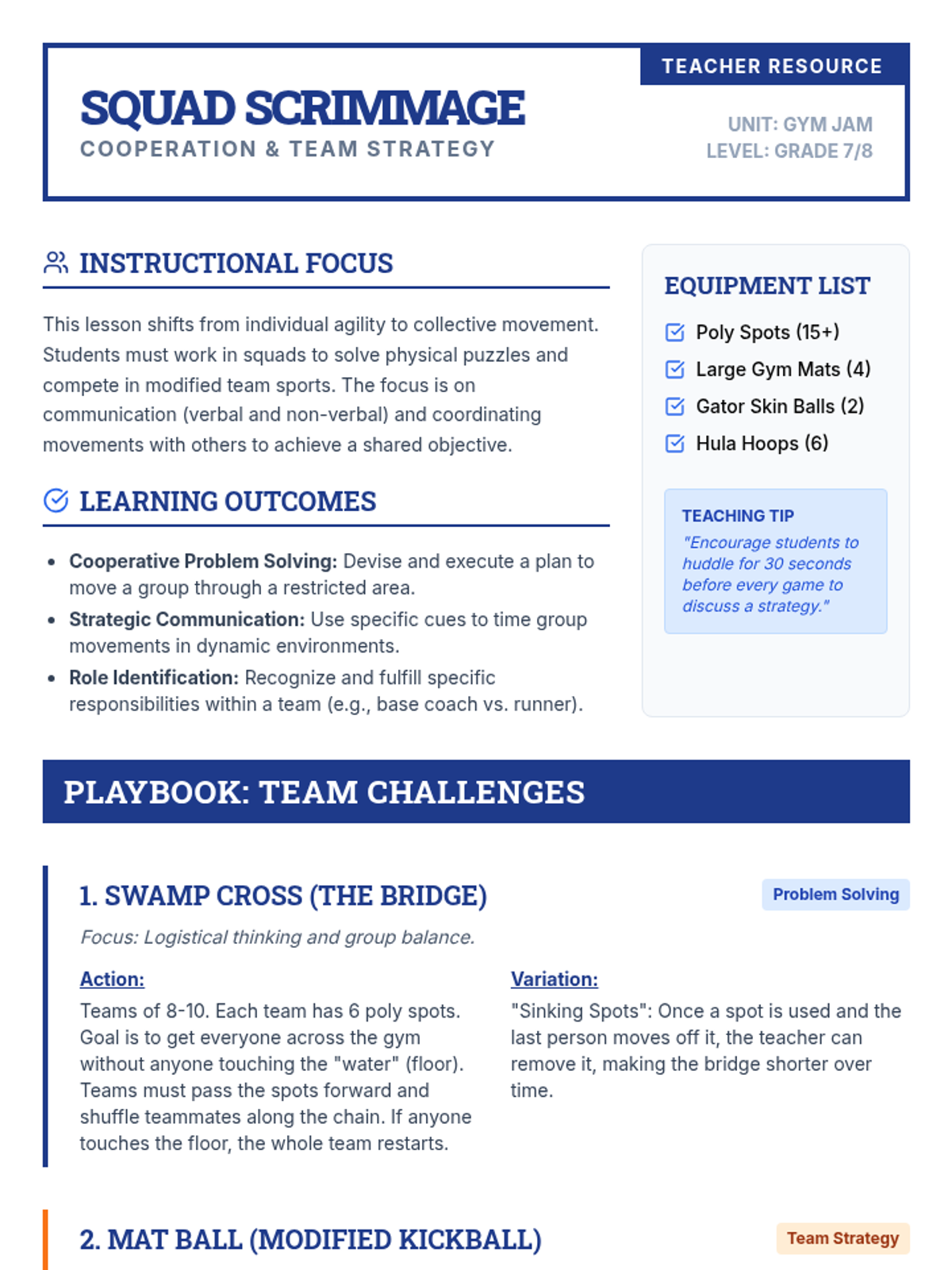
Introduces team-based low-organized games that require cooperation, communication, and basic offensive/defensive strategies to achieve common goals.
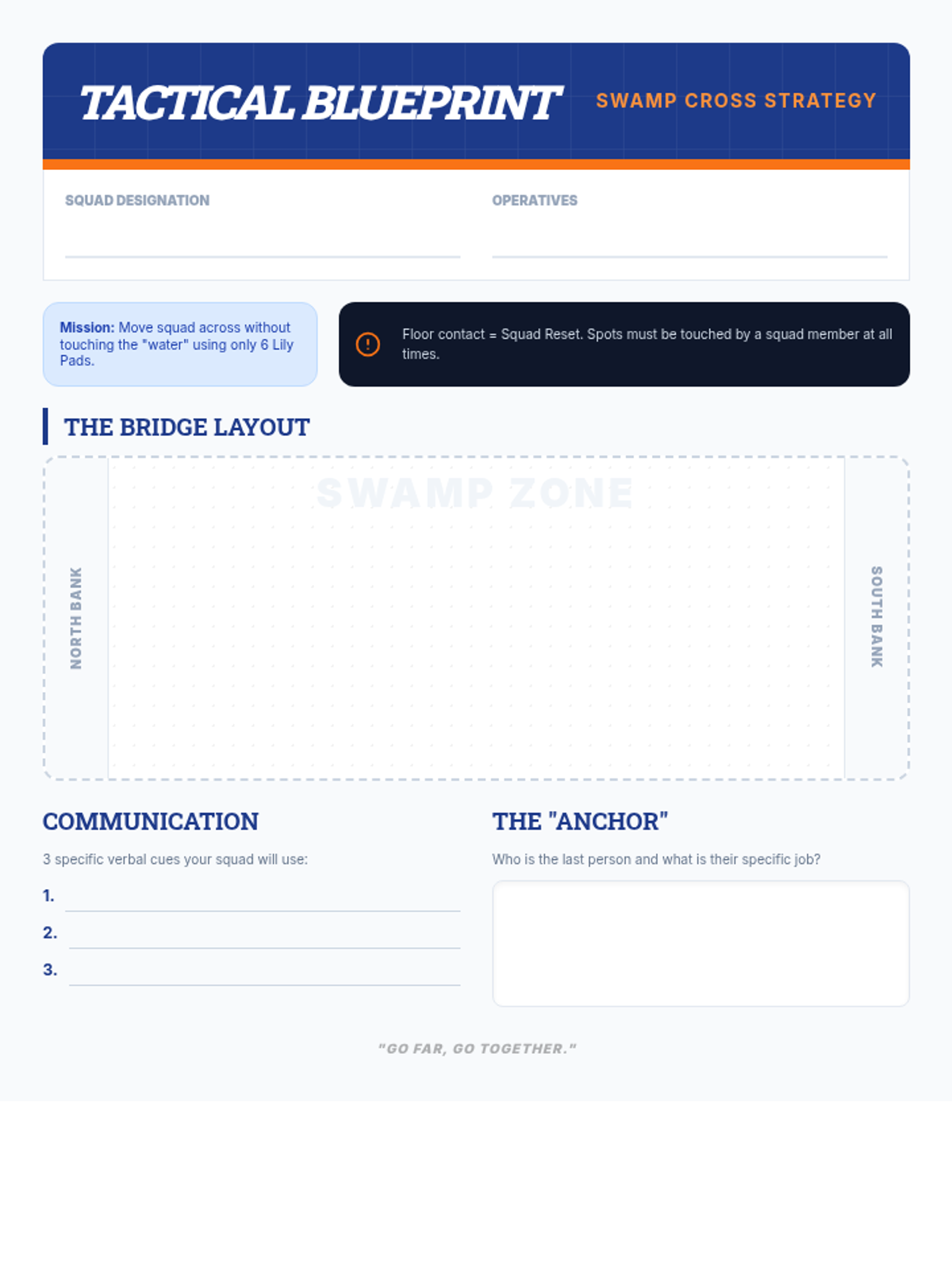
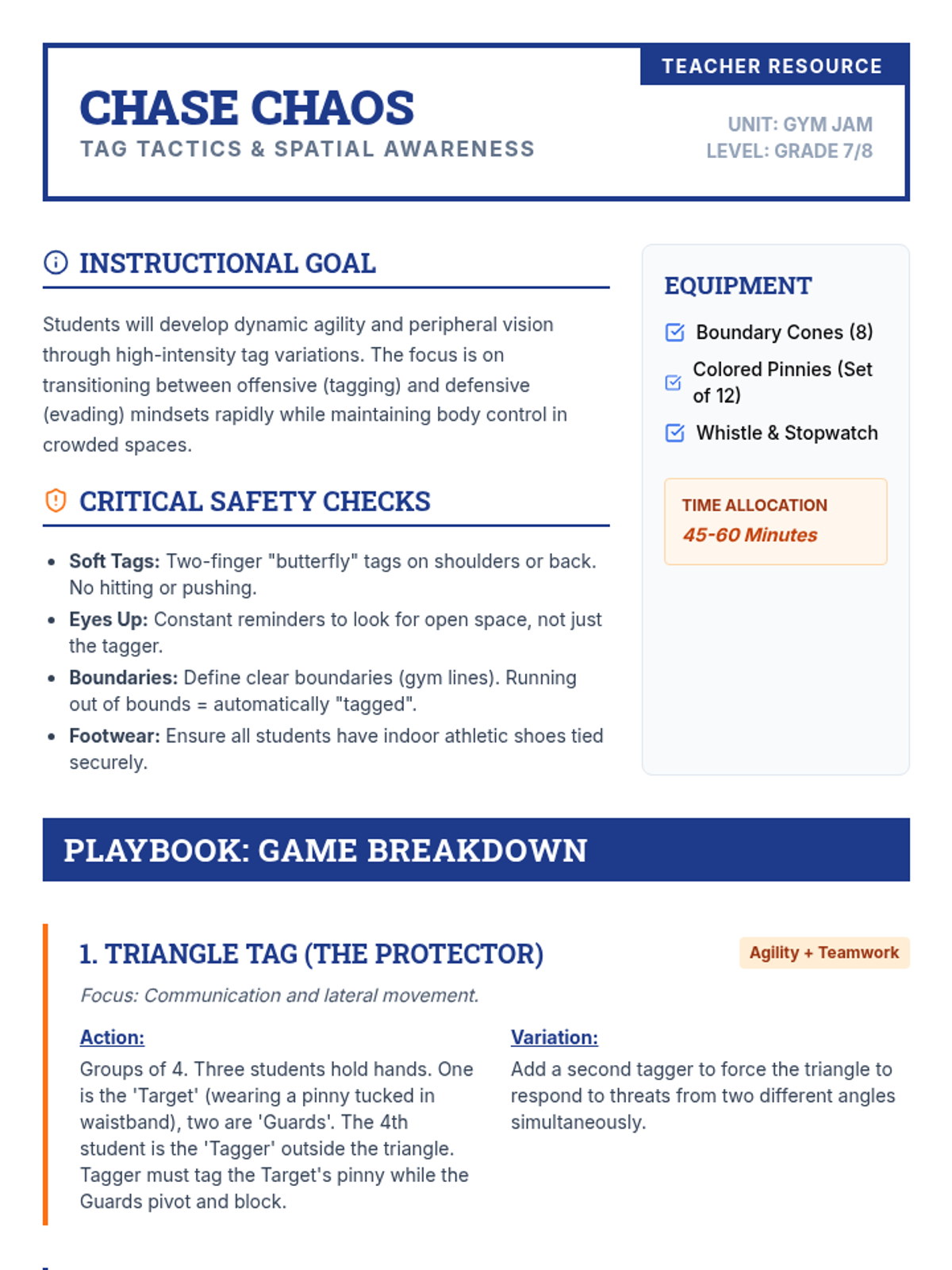
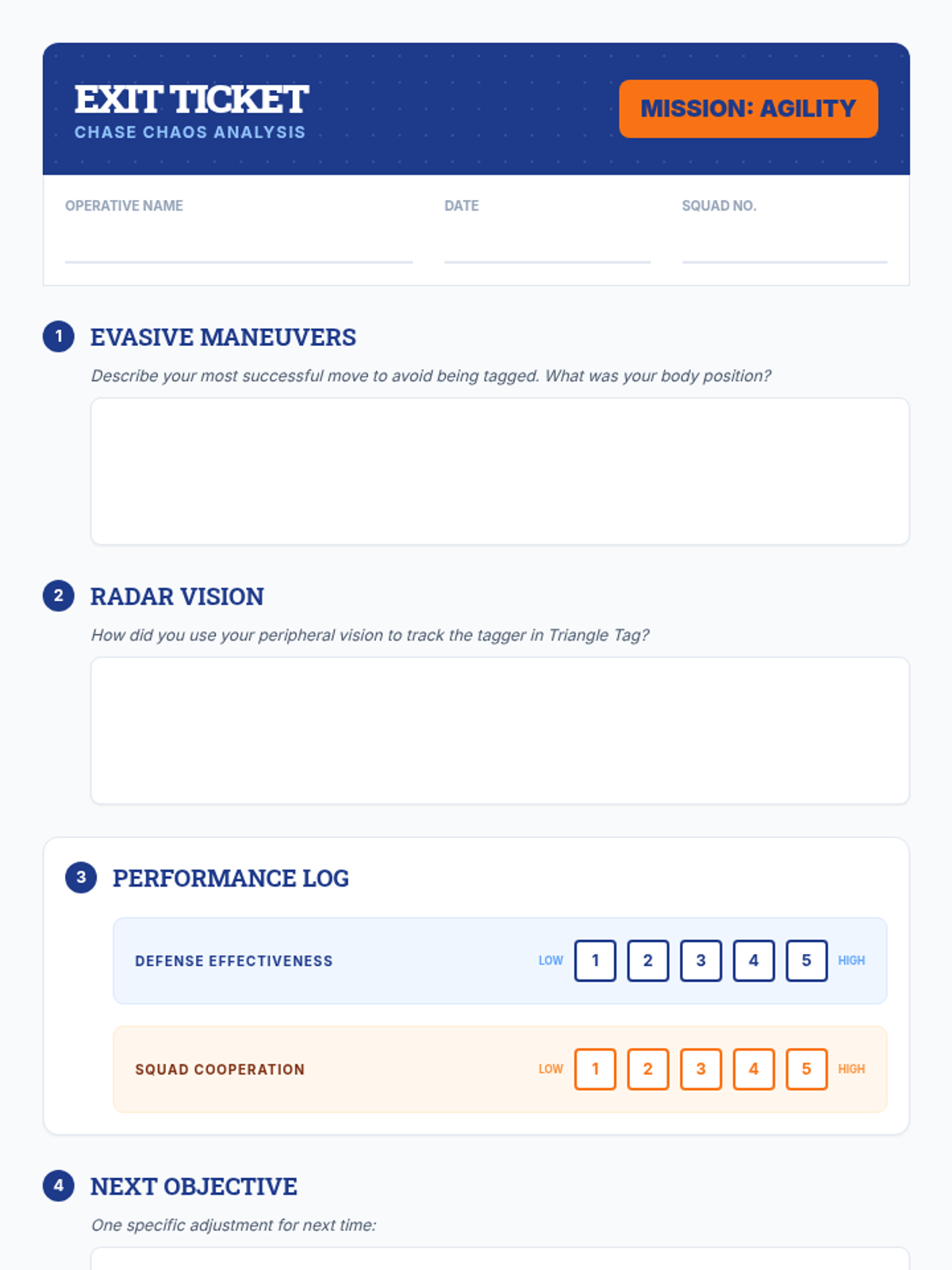
Focuses on high-intensity tag variations that challenge students' agility, spatial awareness, and strategic movement in a fast-paced environment.
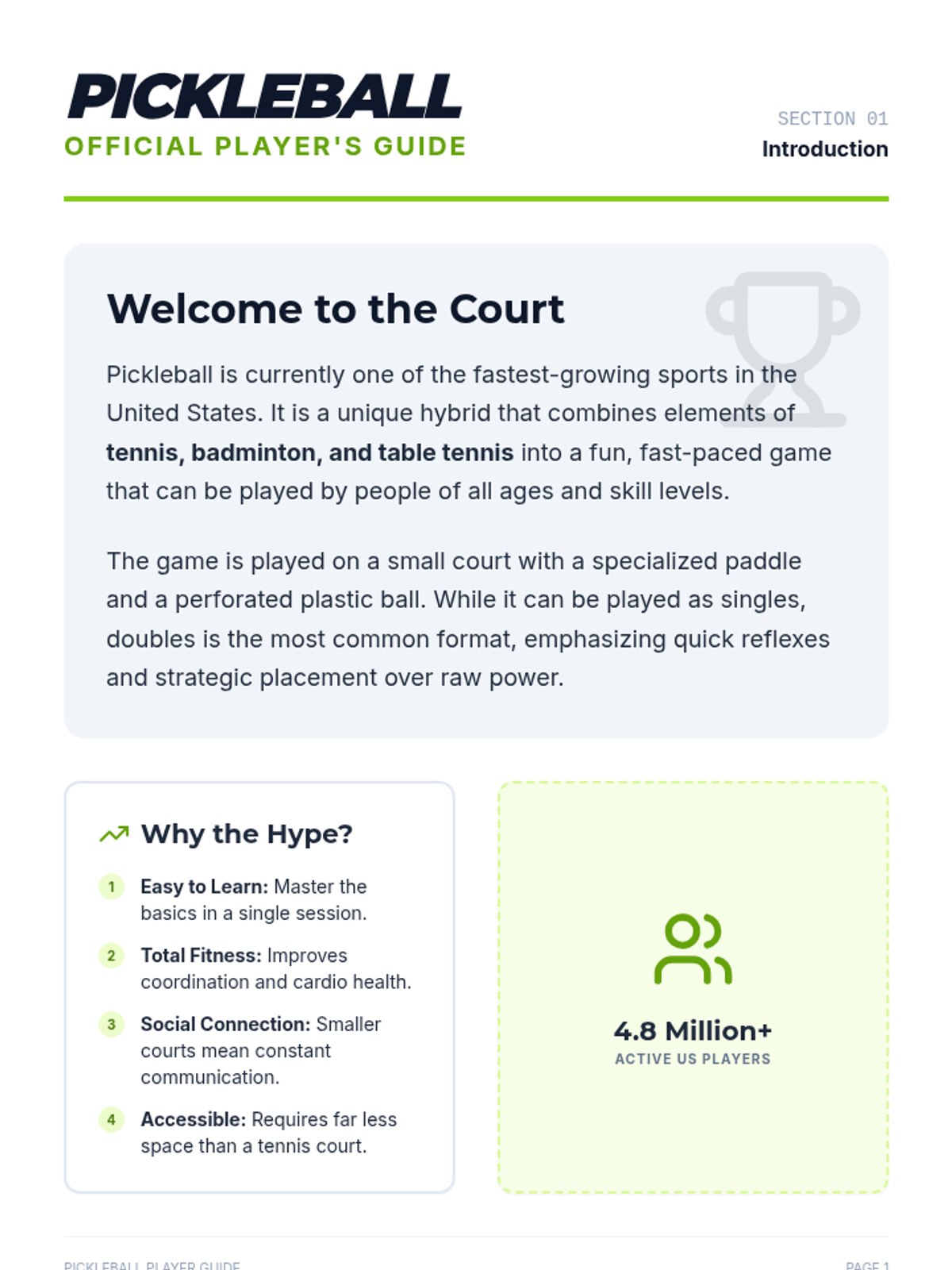
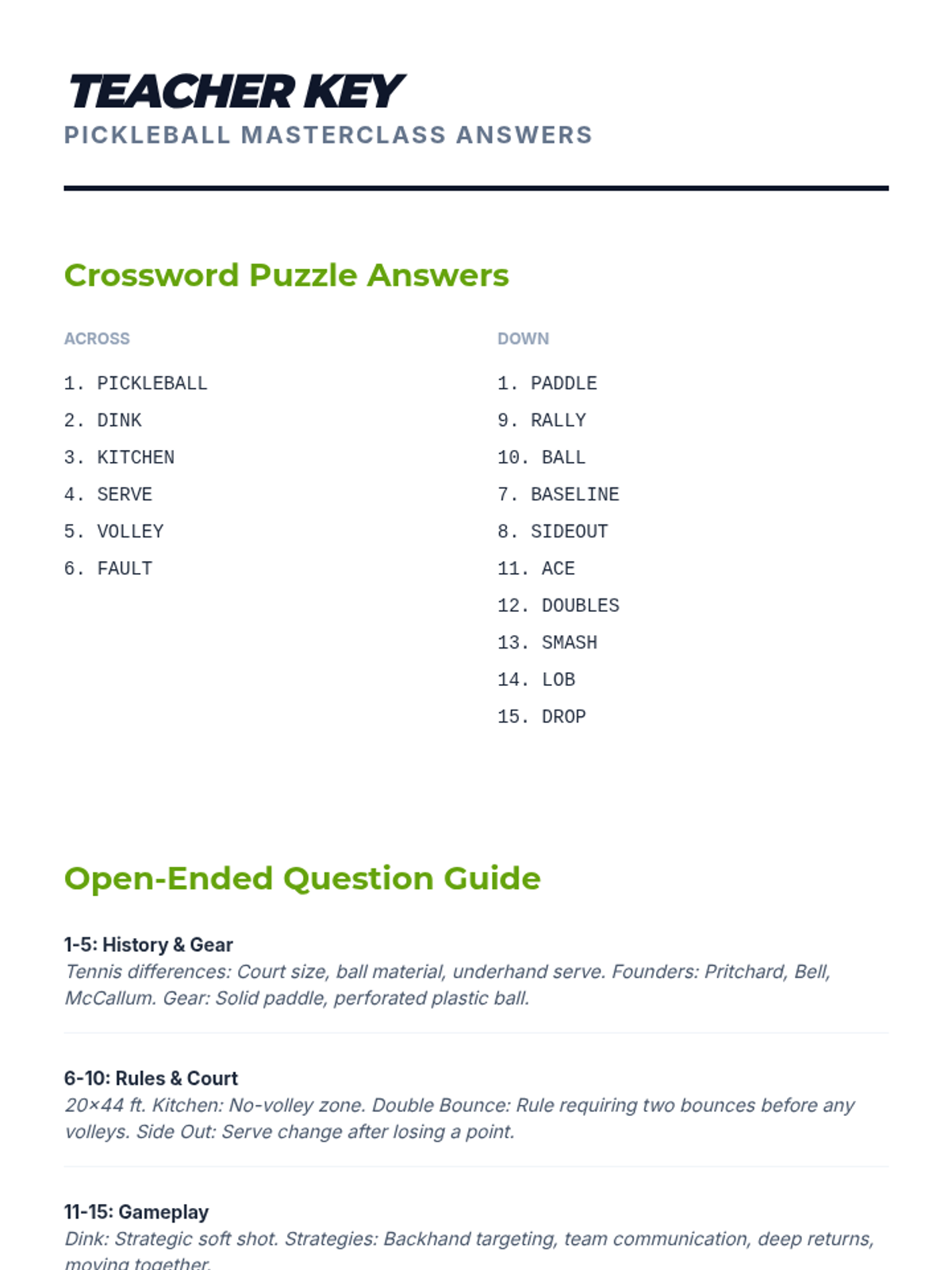
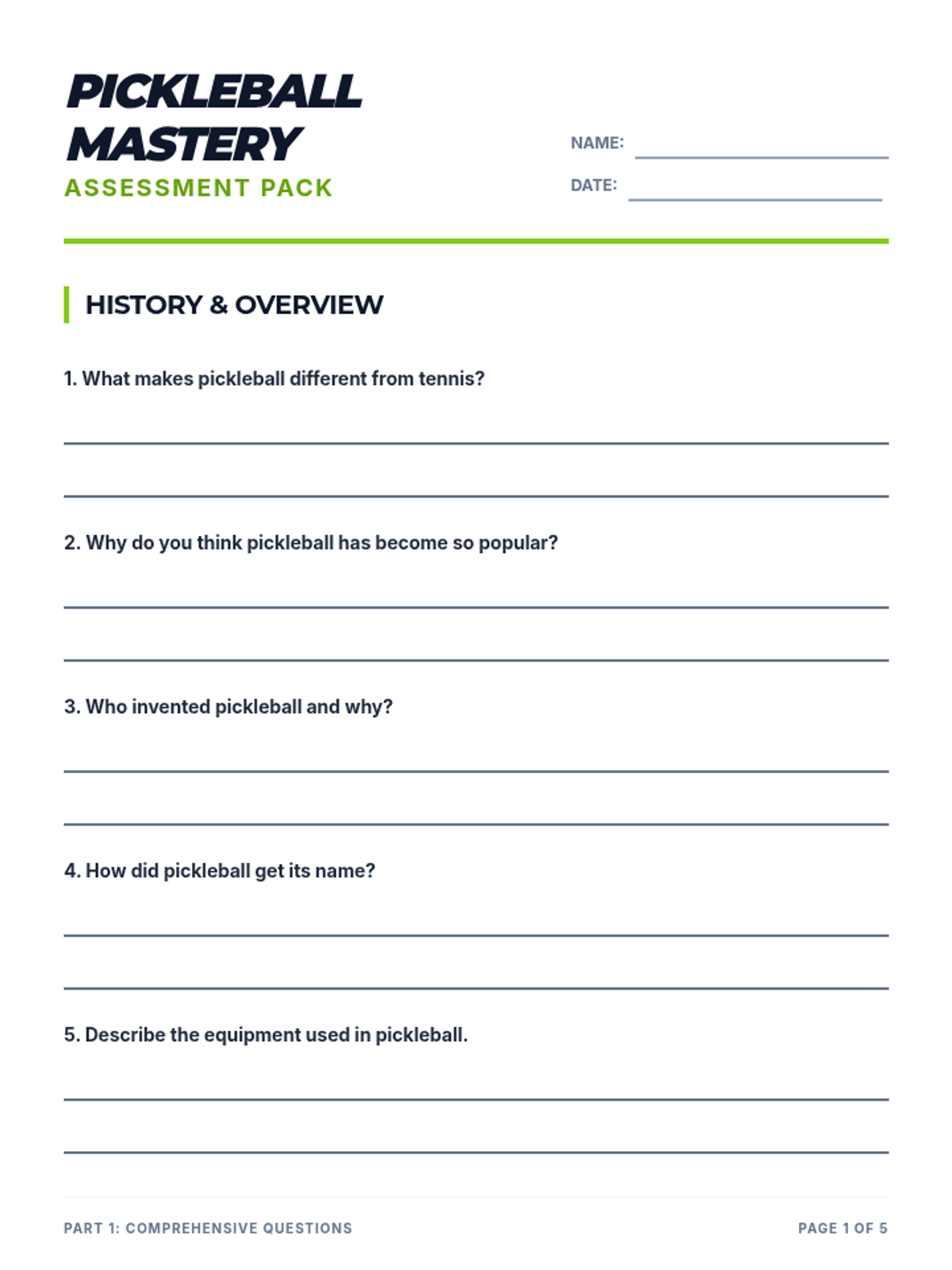
A comprehensive guide to the sport of pickleball, covering its history, rules, equipment, and strategies through an informational packet and interactive assessments.
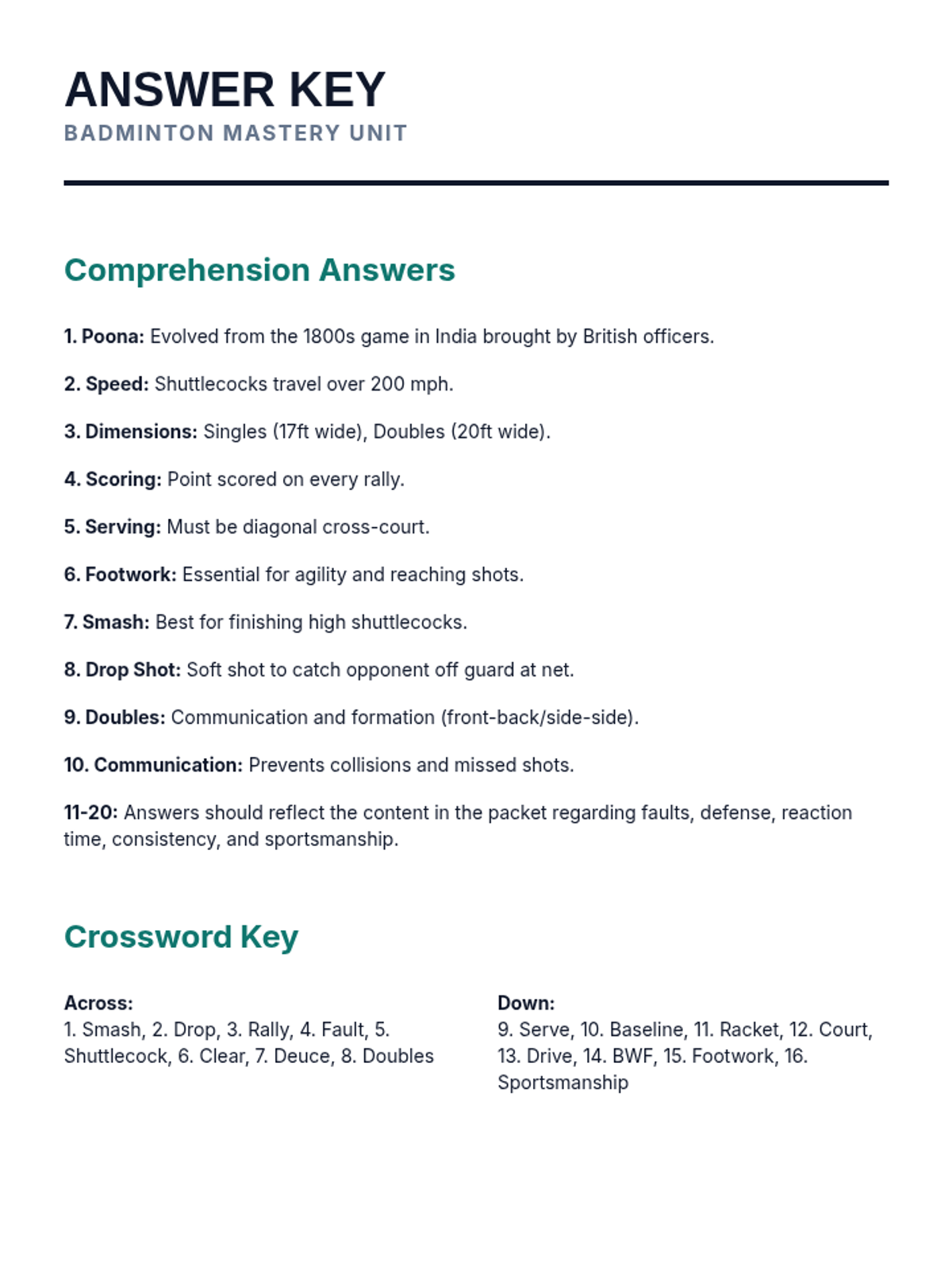
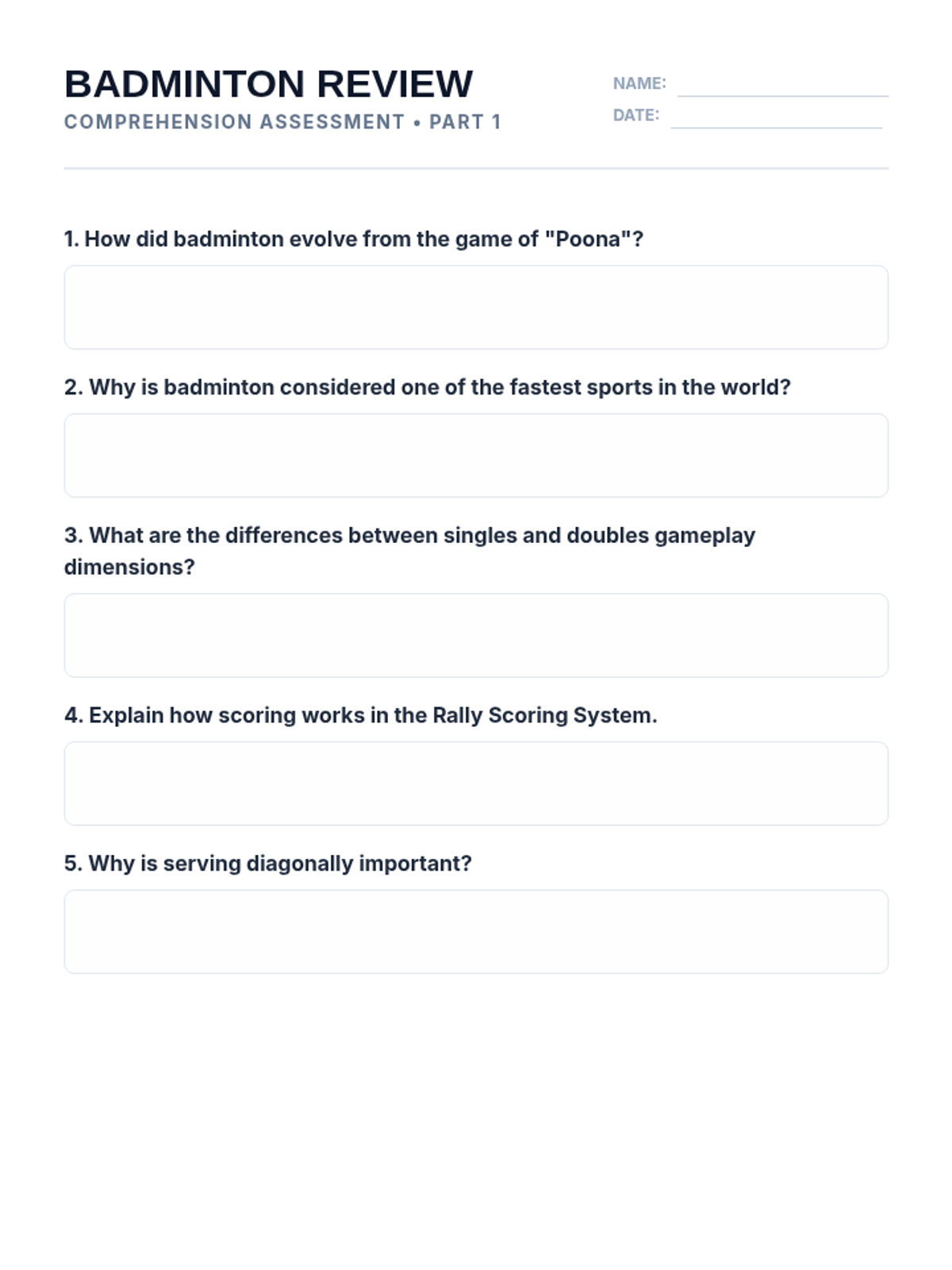
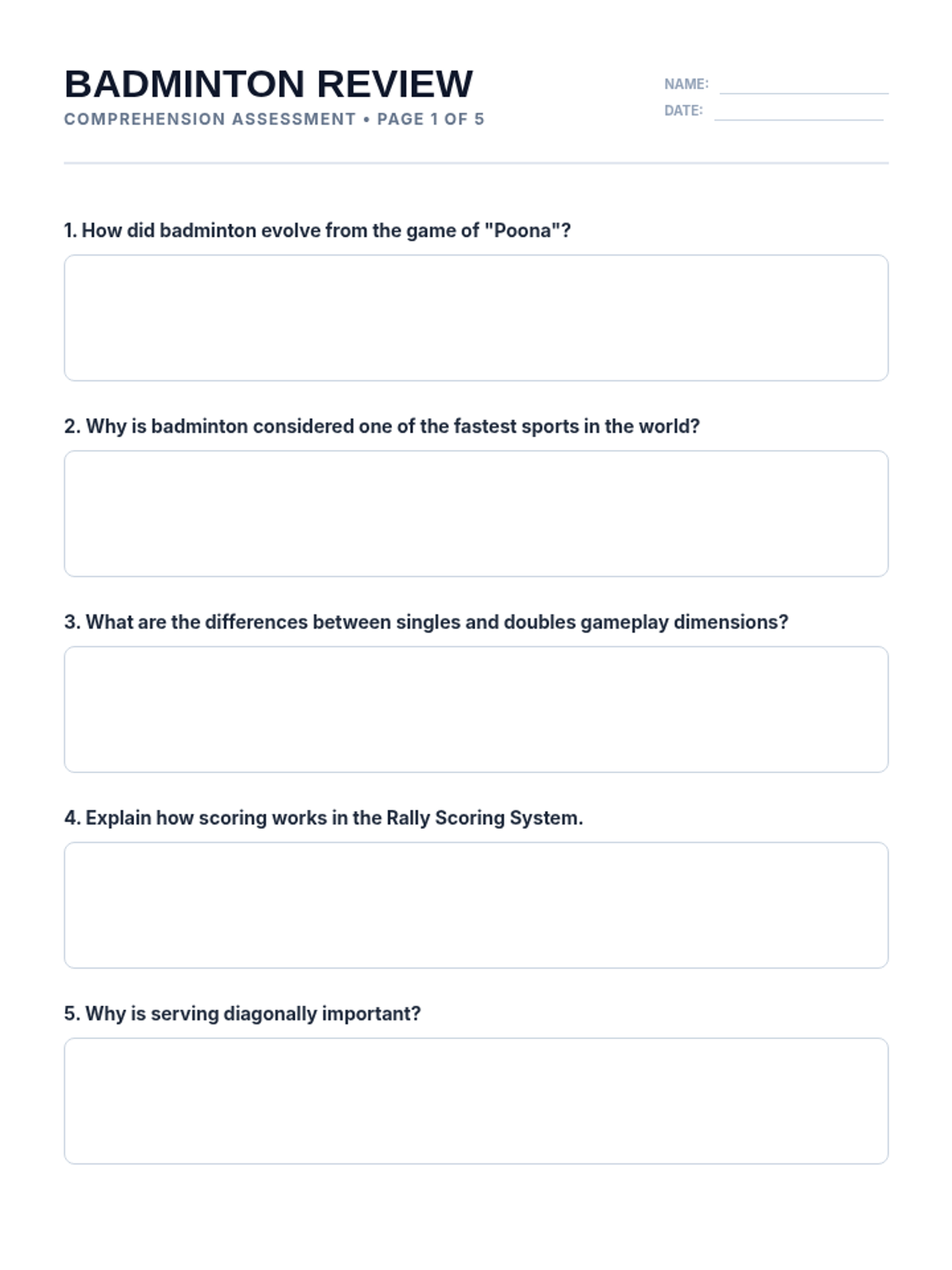
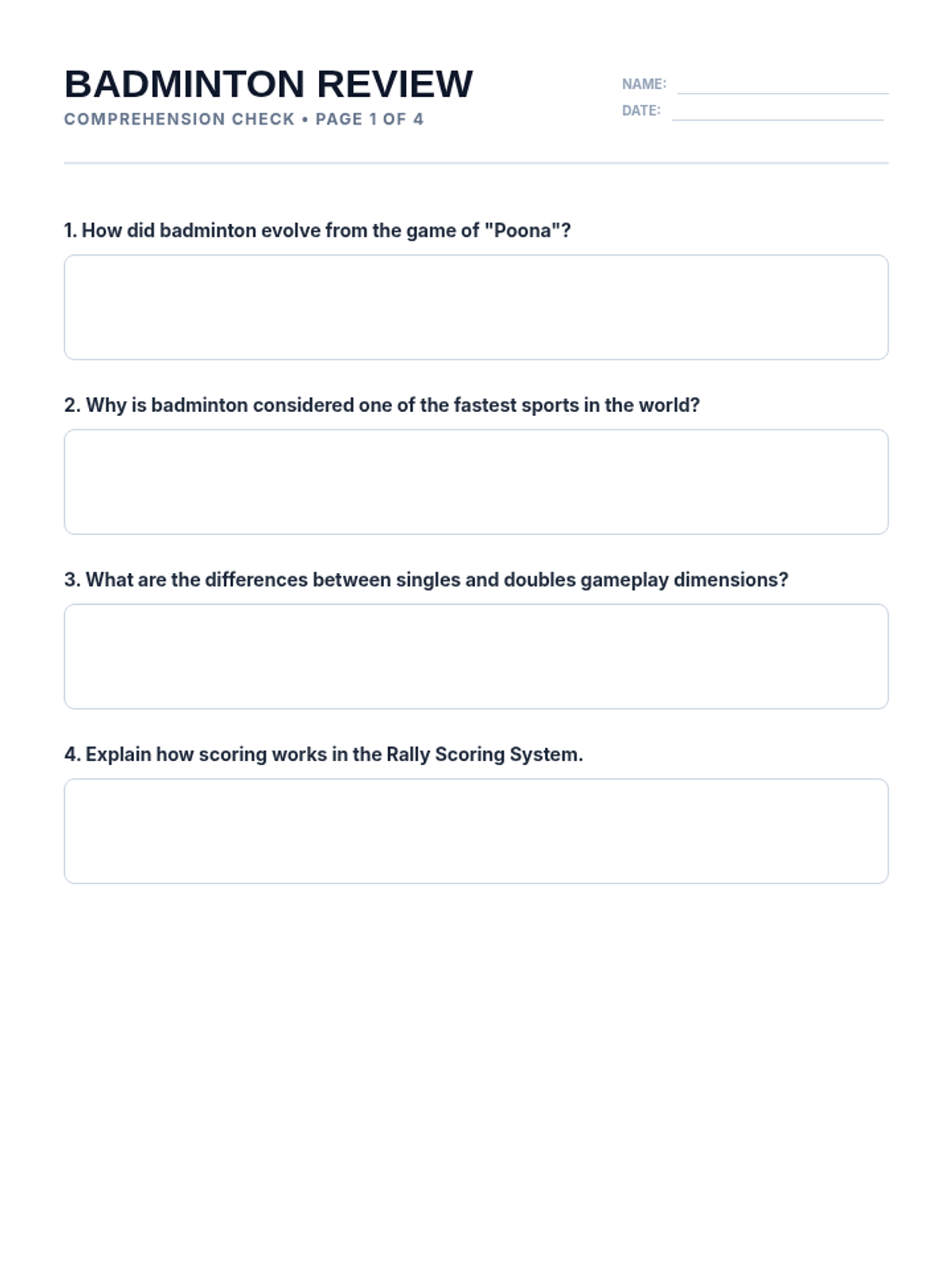
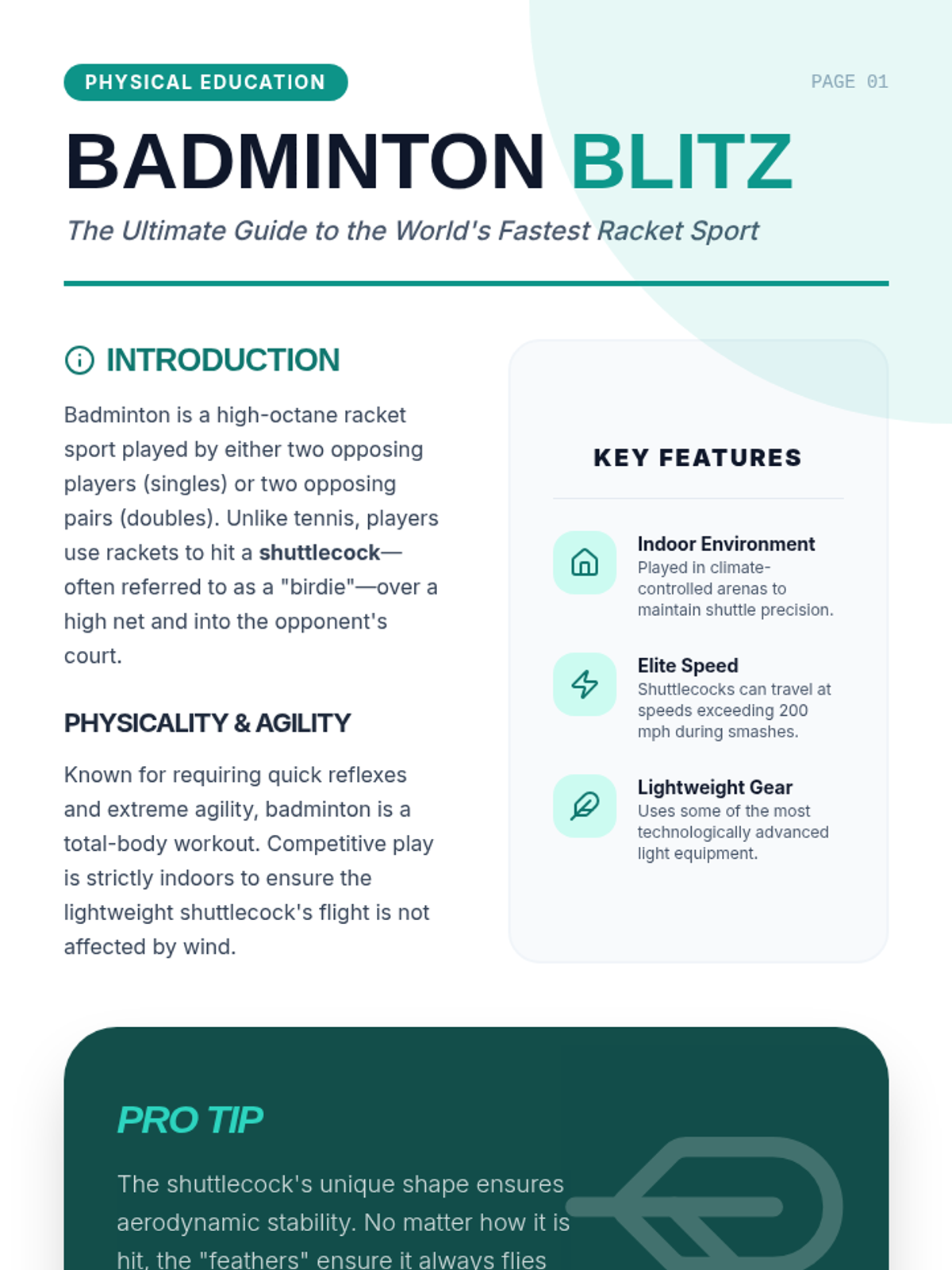
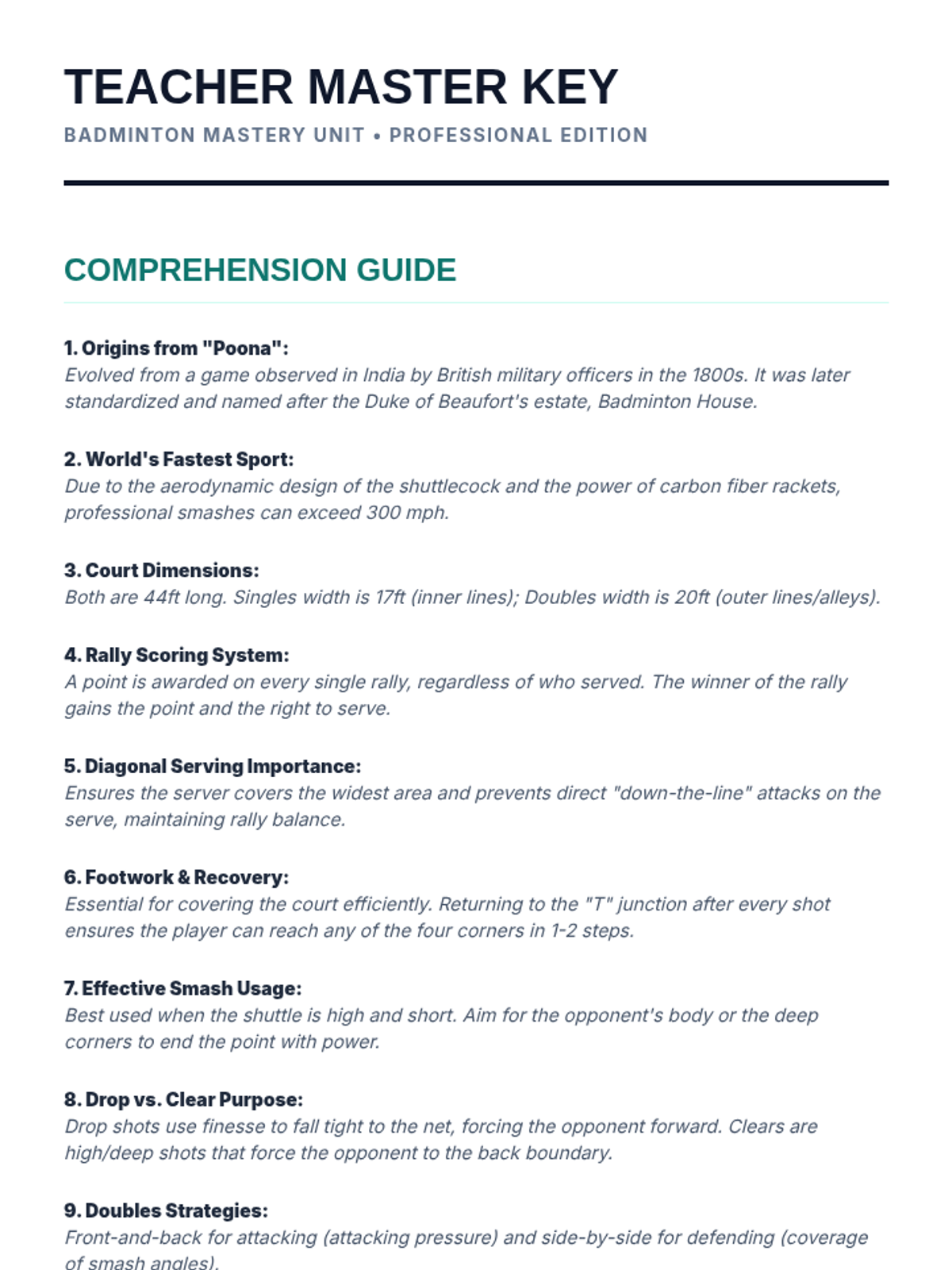
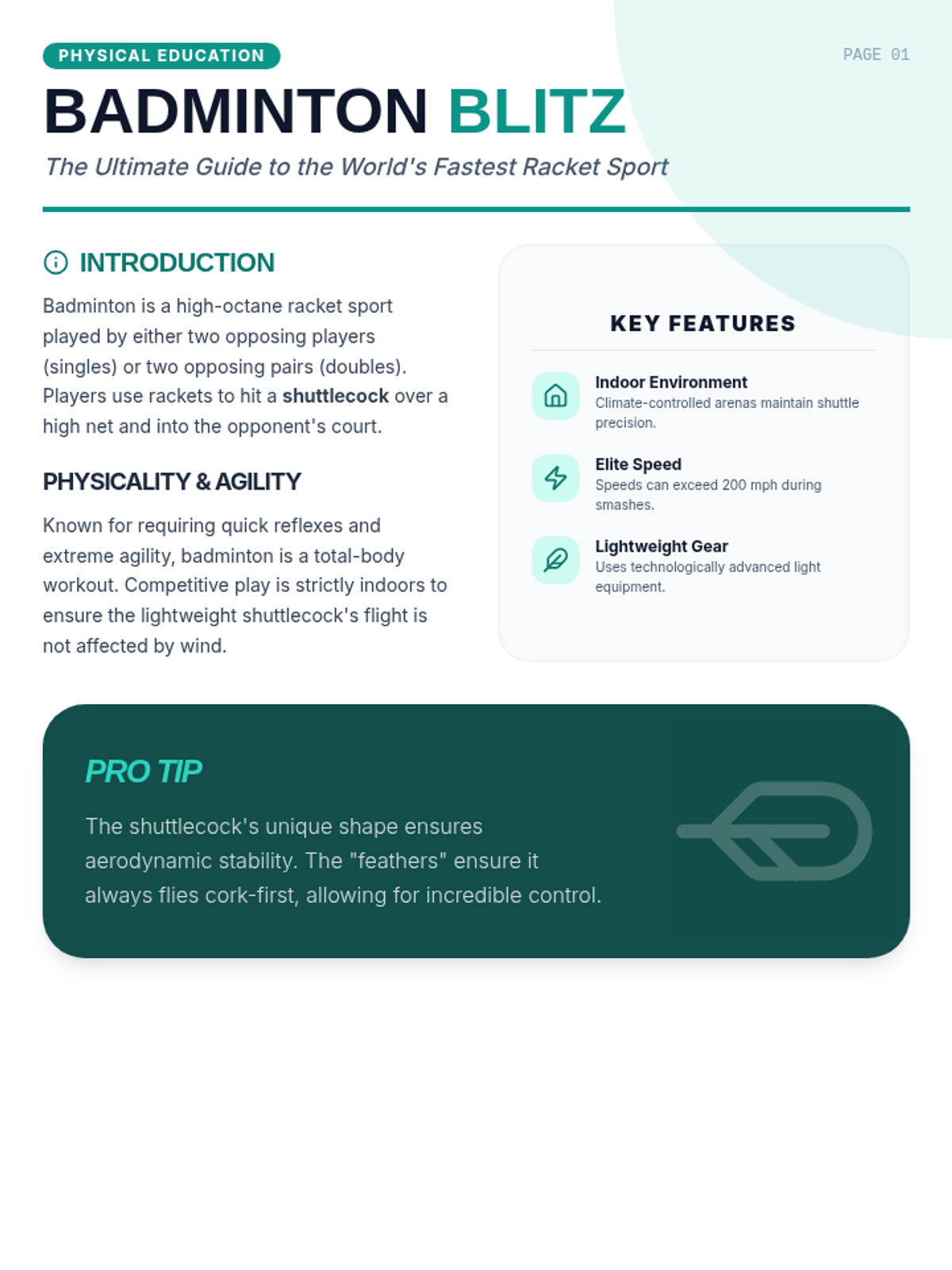
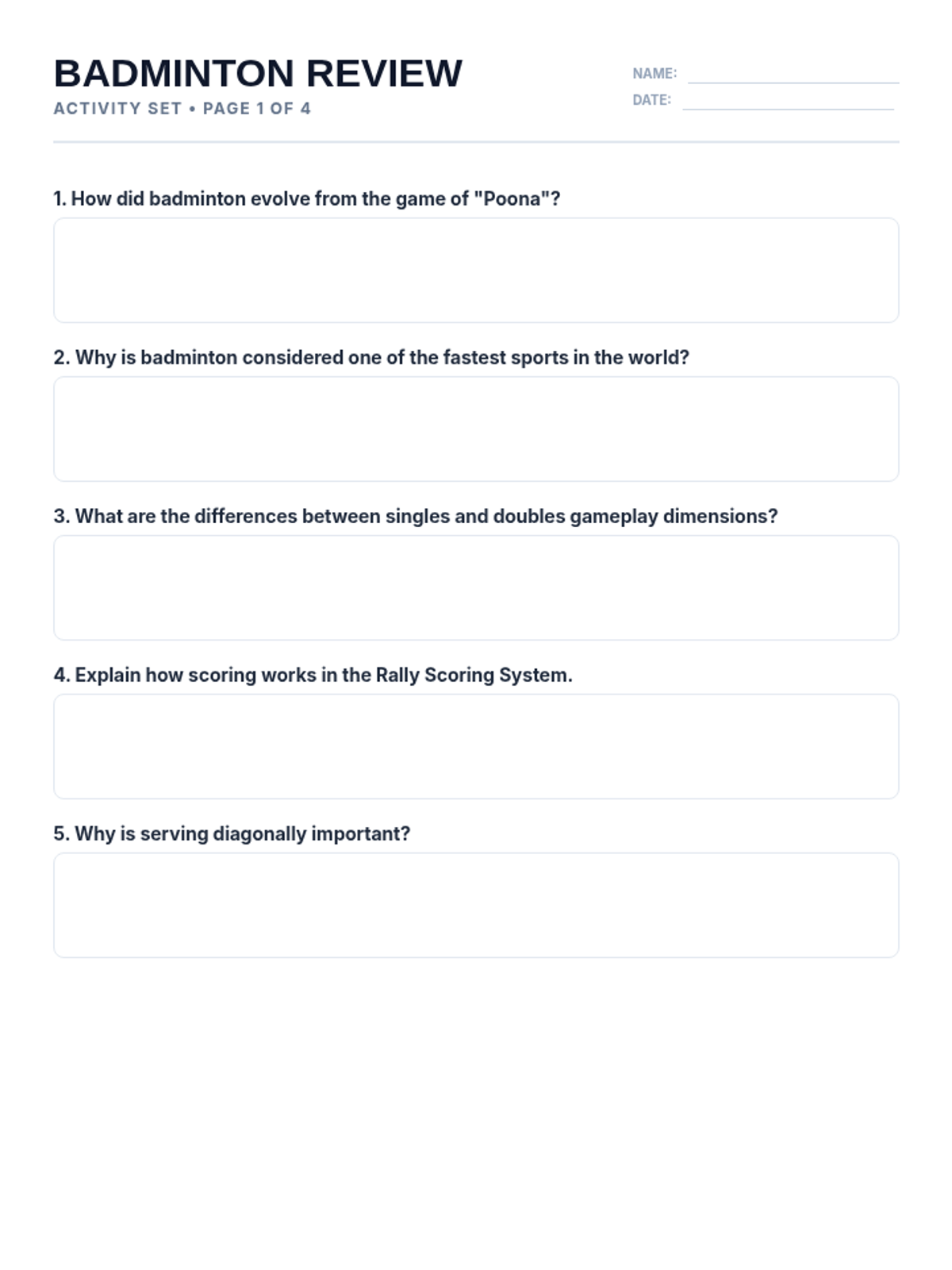
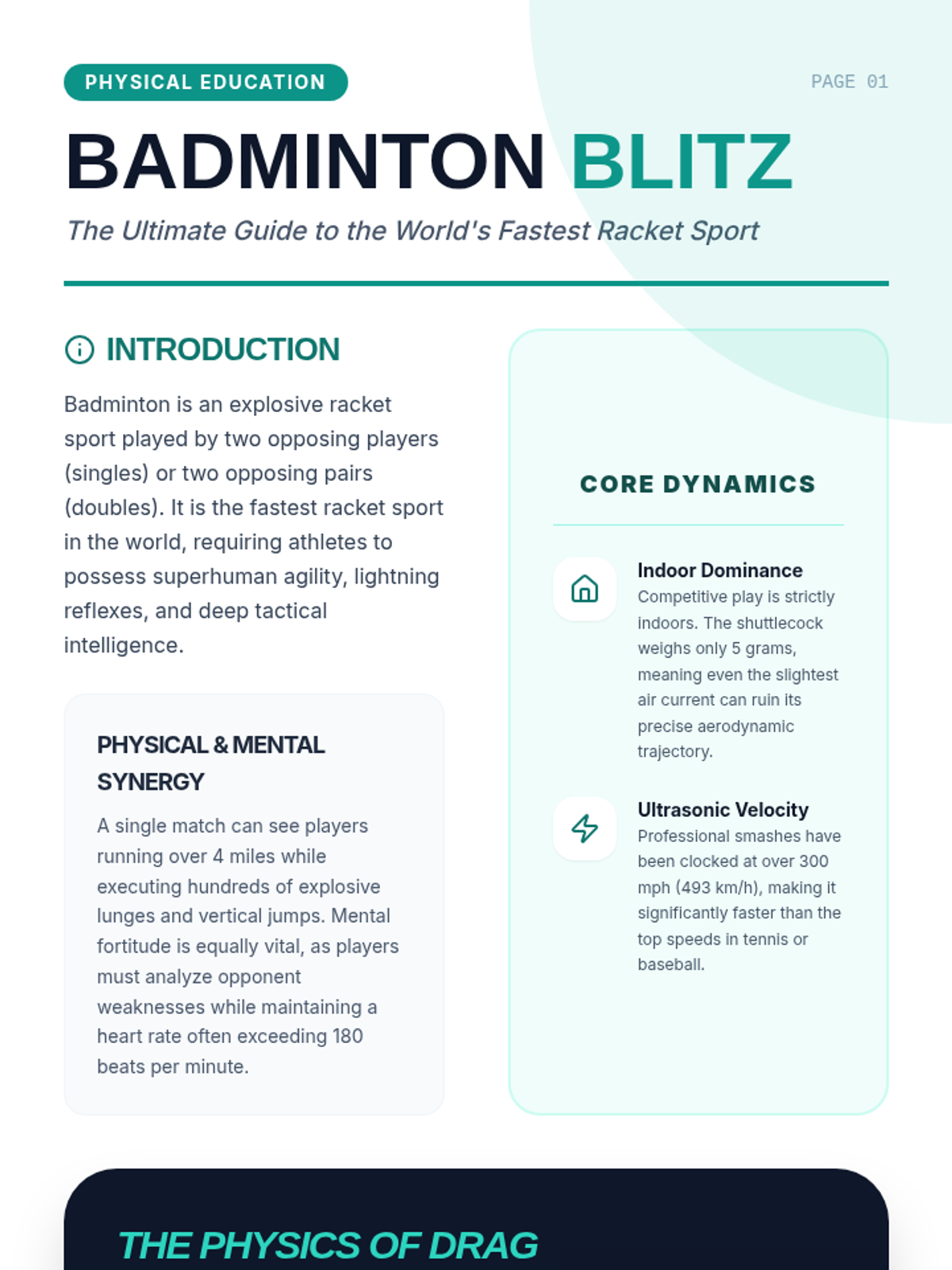
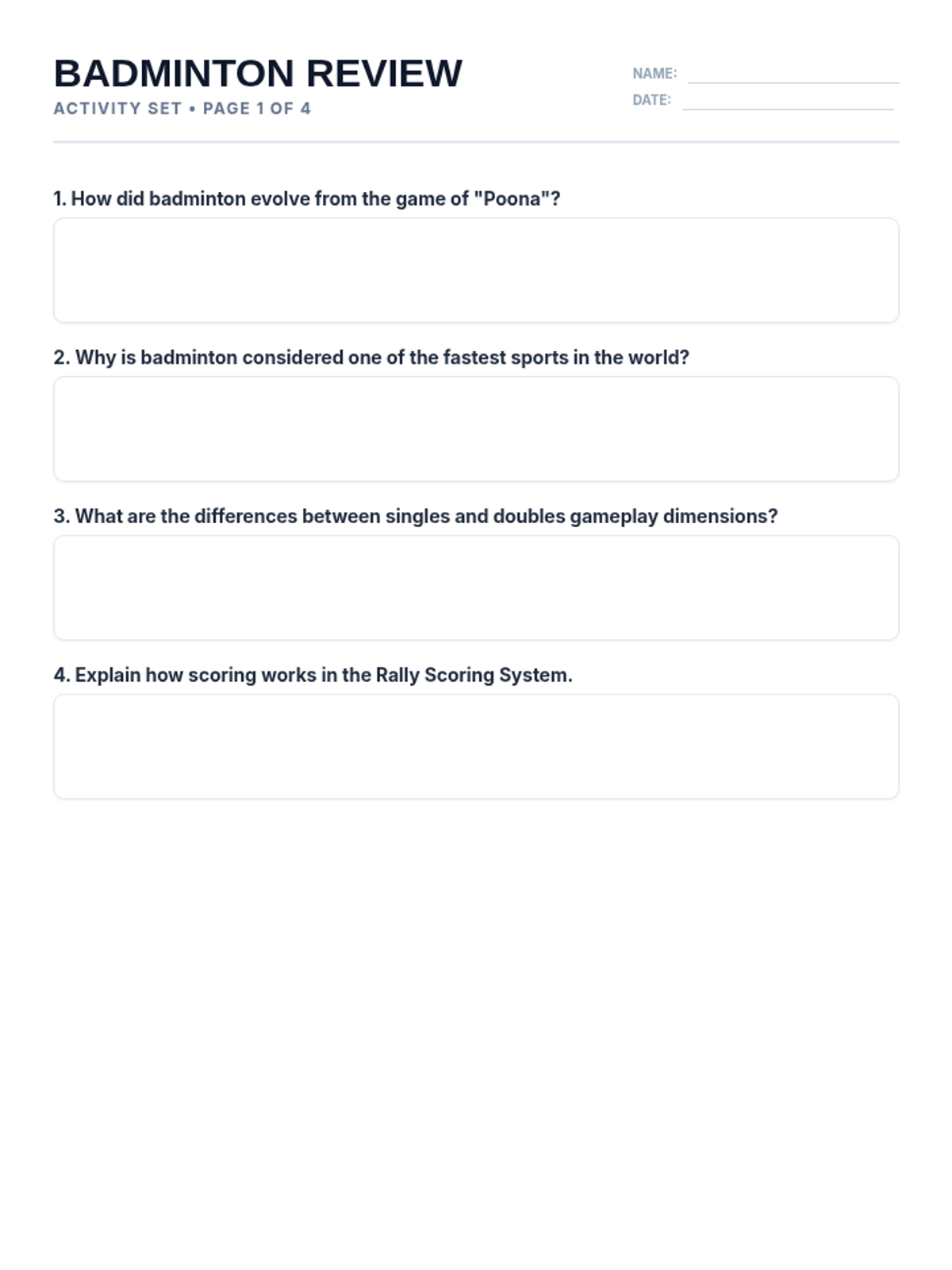
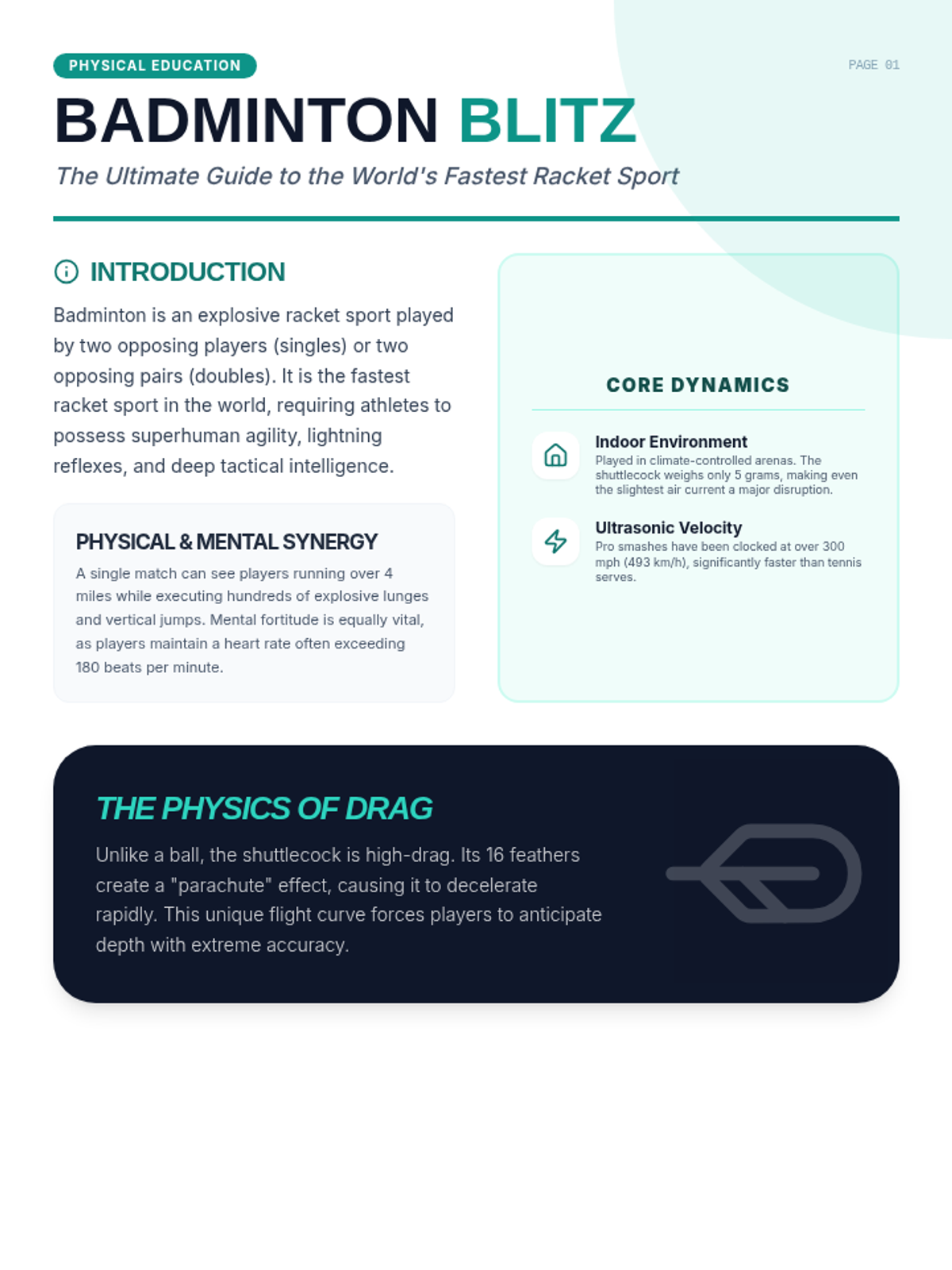
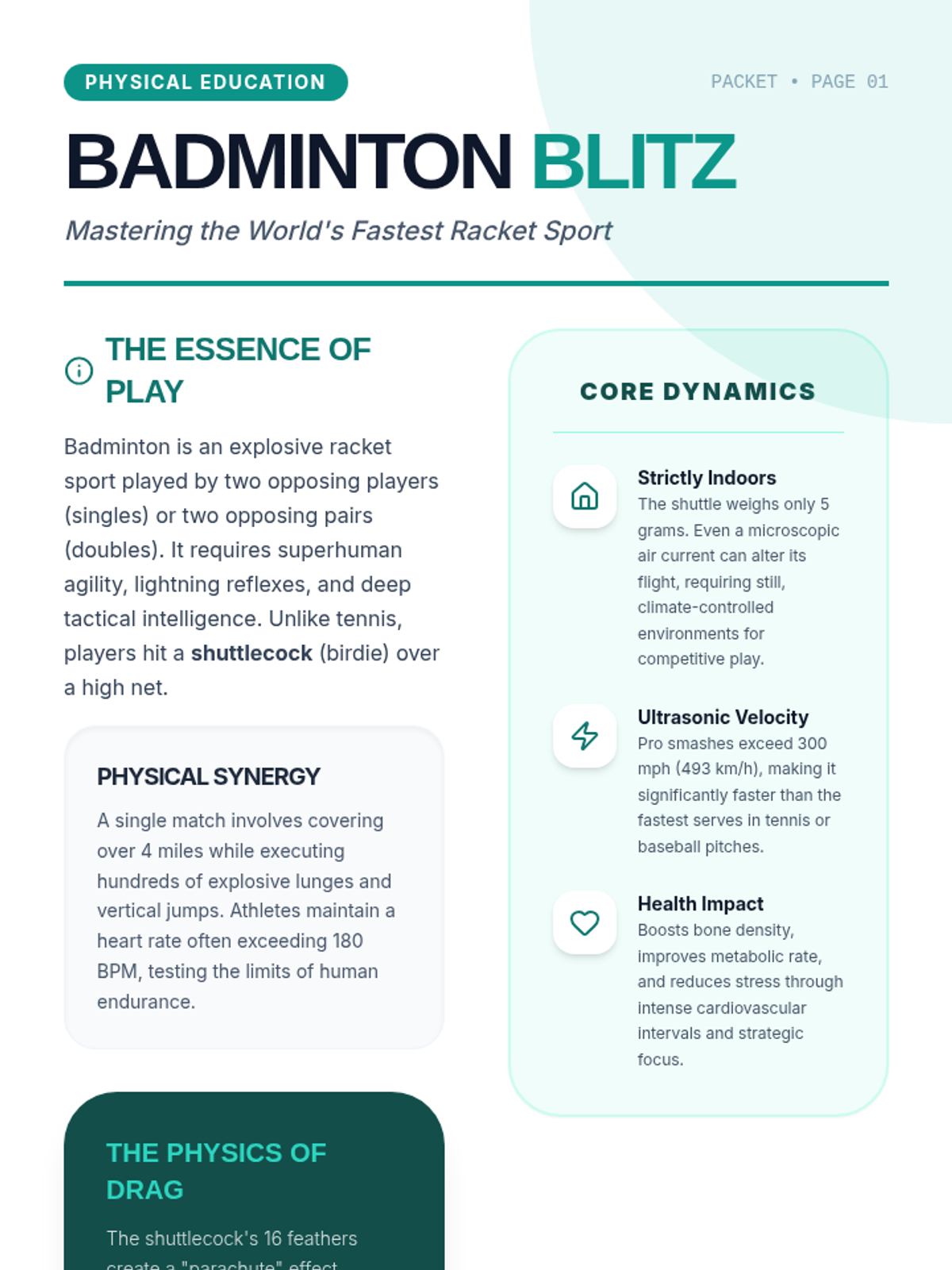
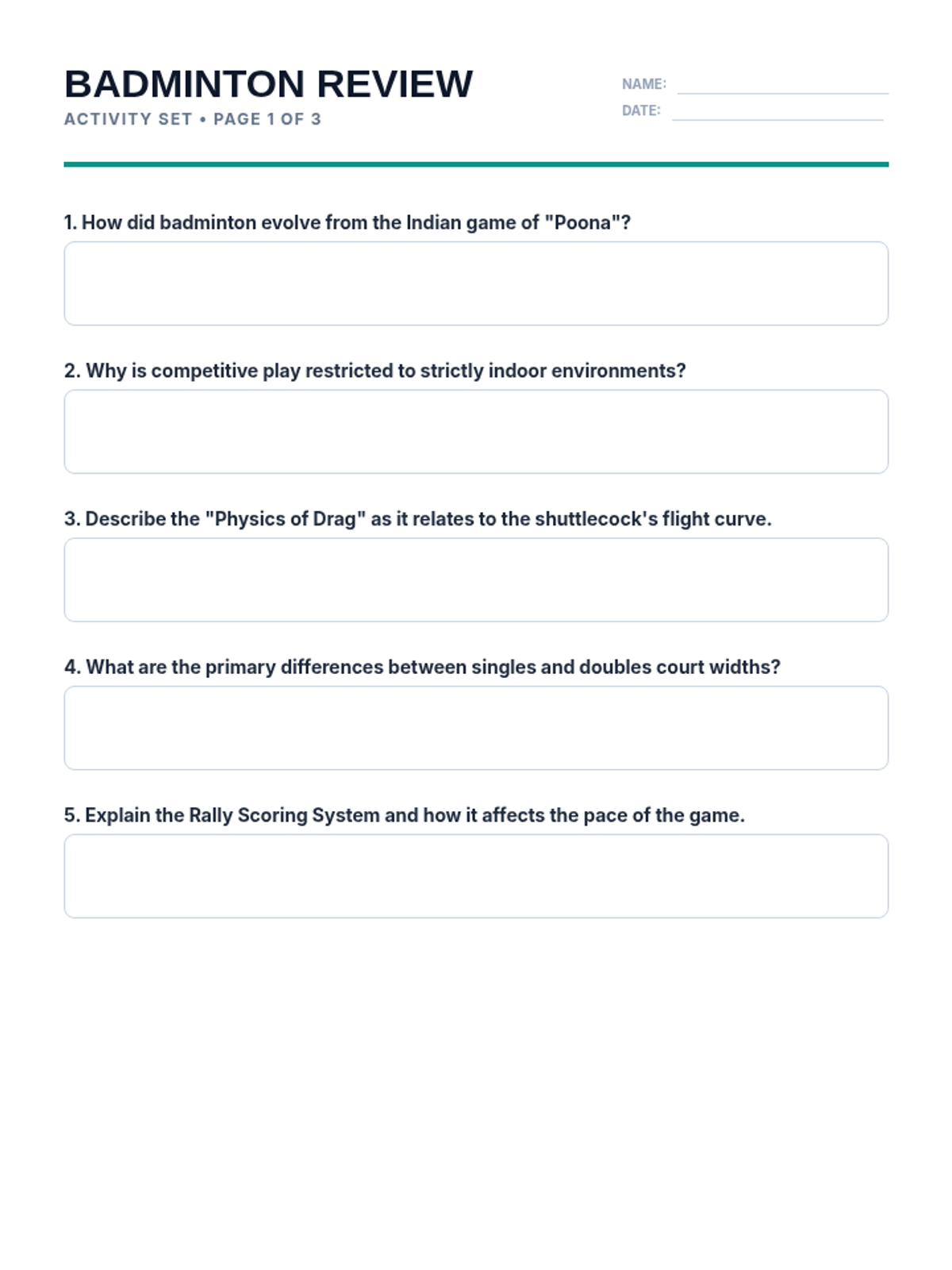
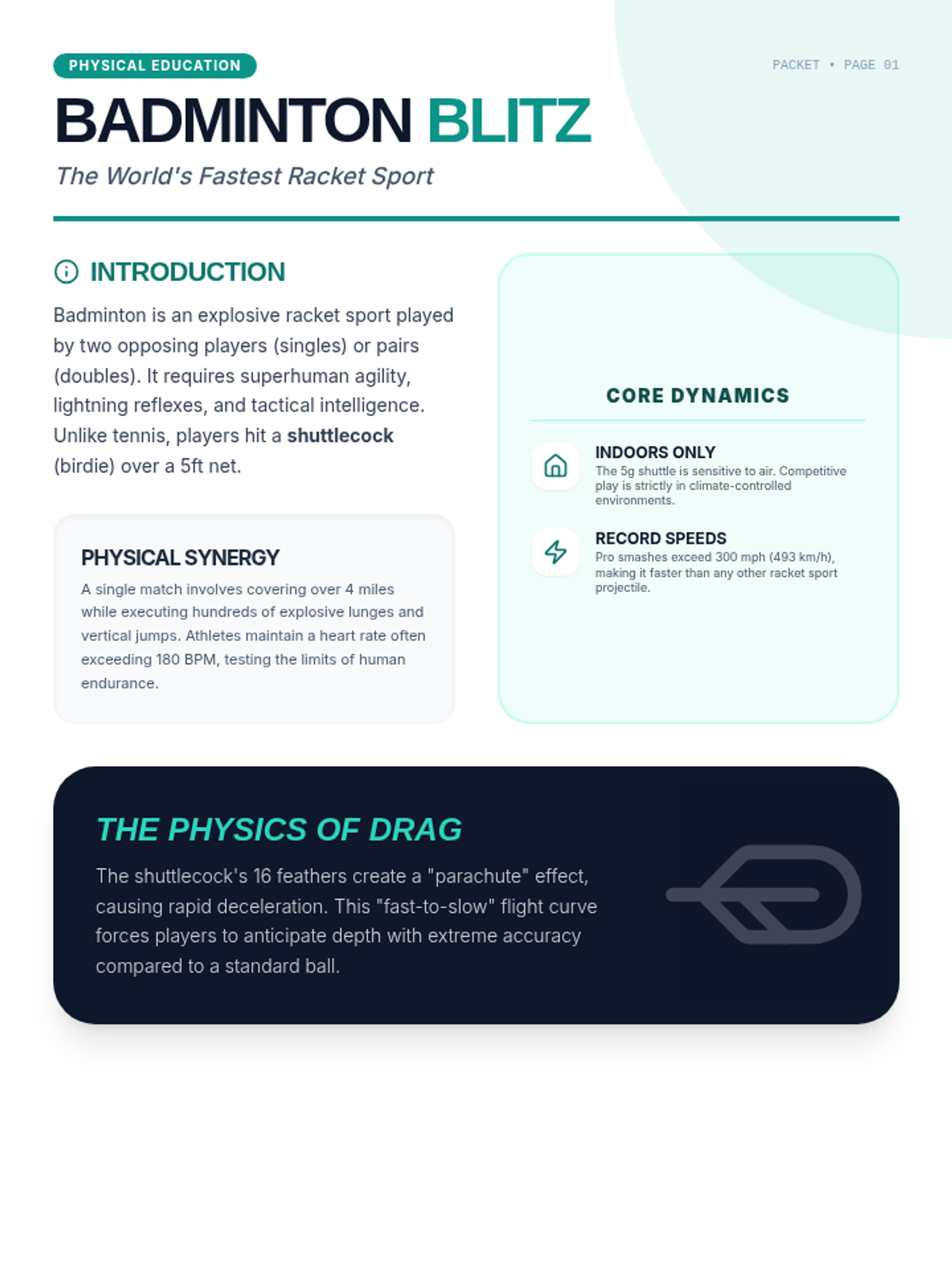
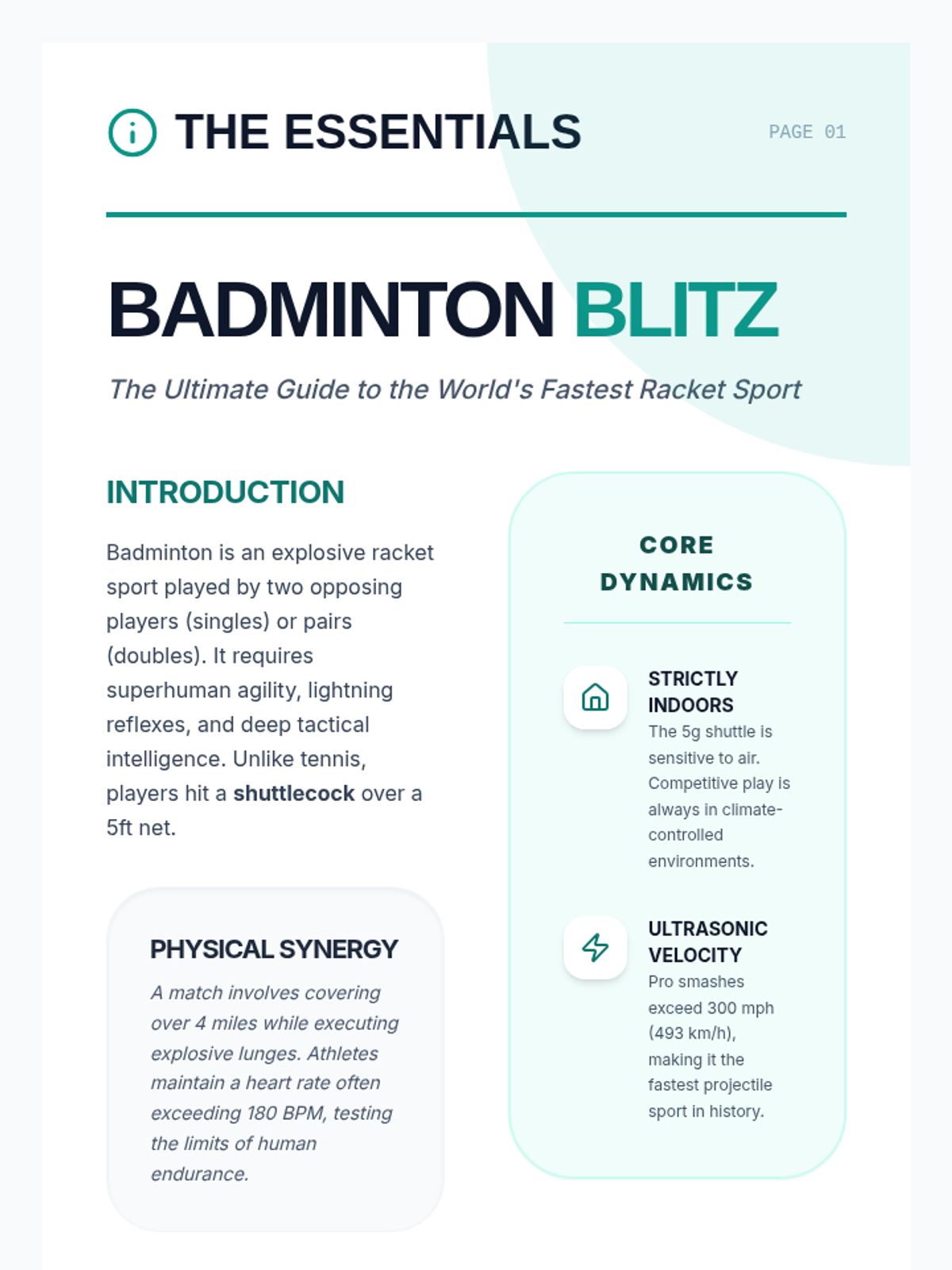
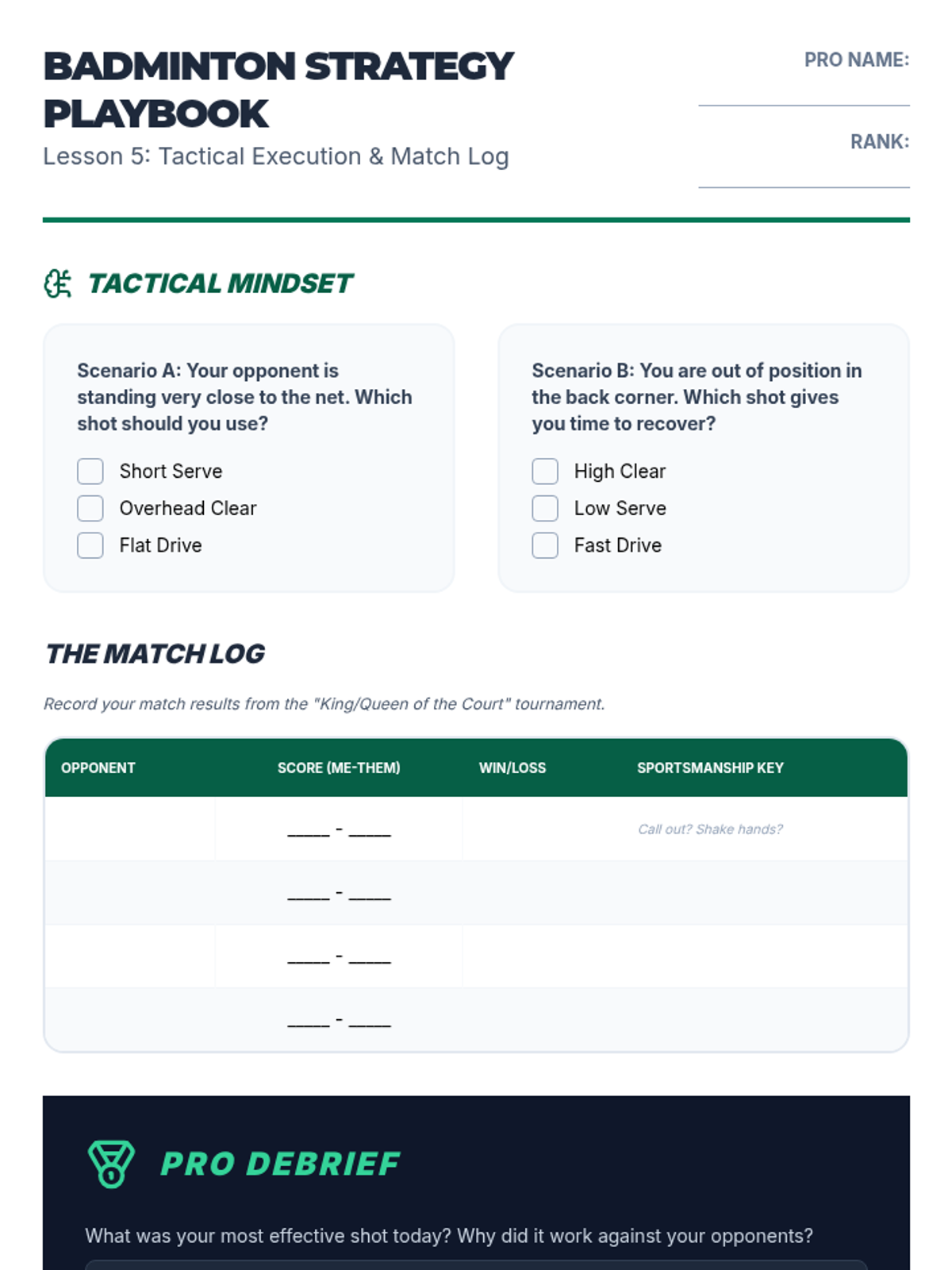
A comprehensive unit on badminton covering its history, official rules, terminology, and advanced strategies through an informational packet, comprehension exercises, and interactive puzzles.
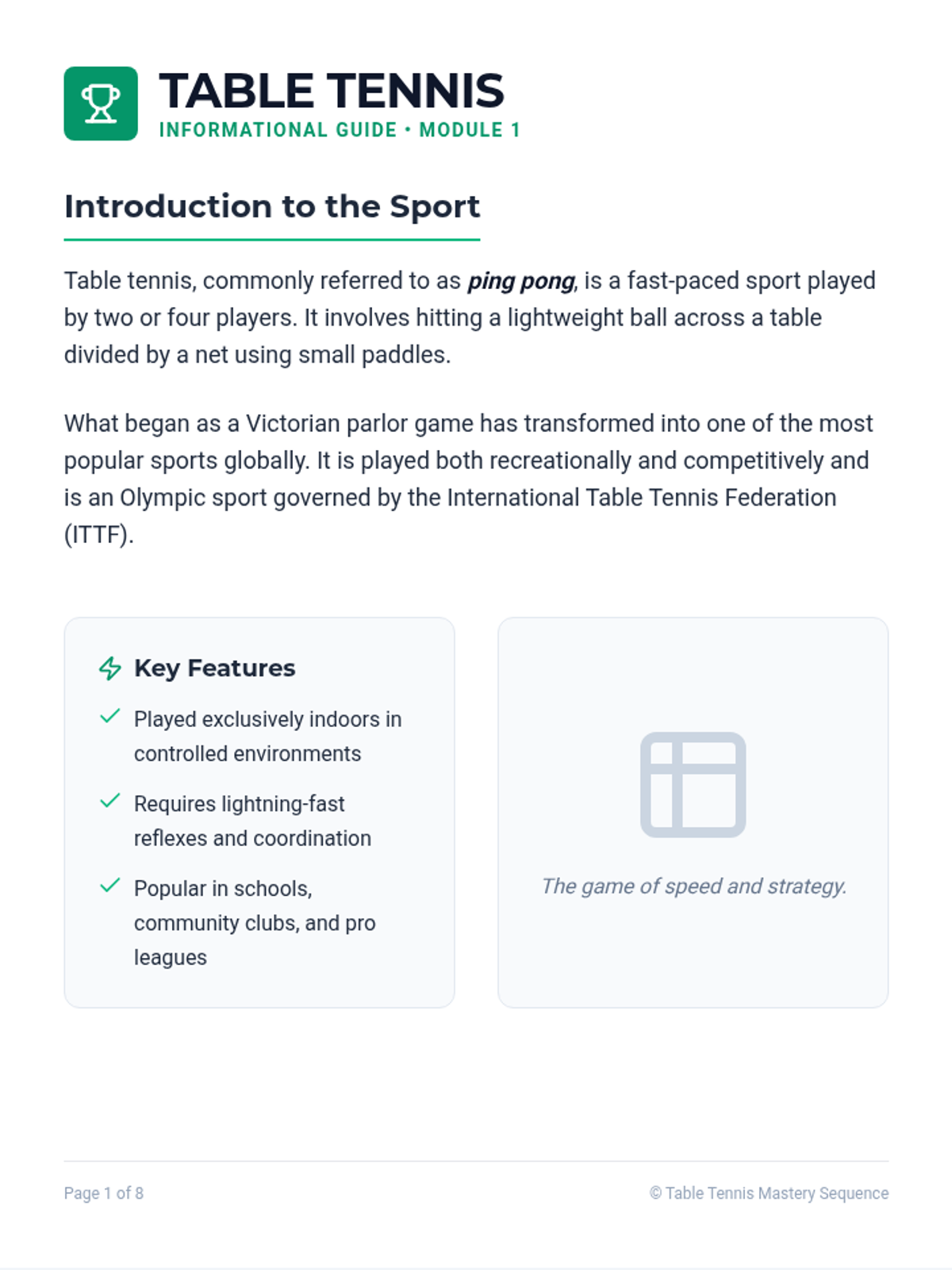
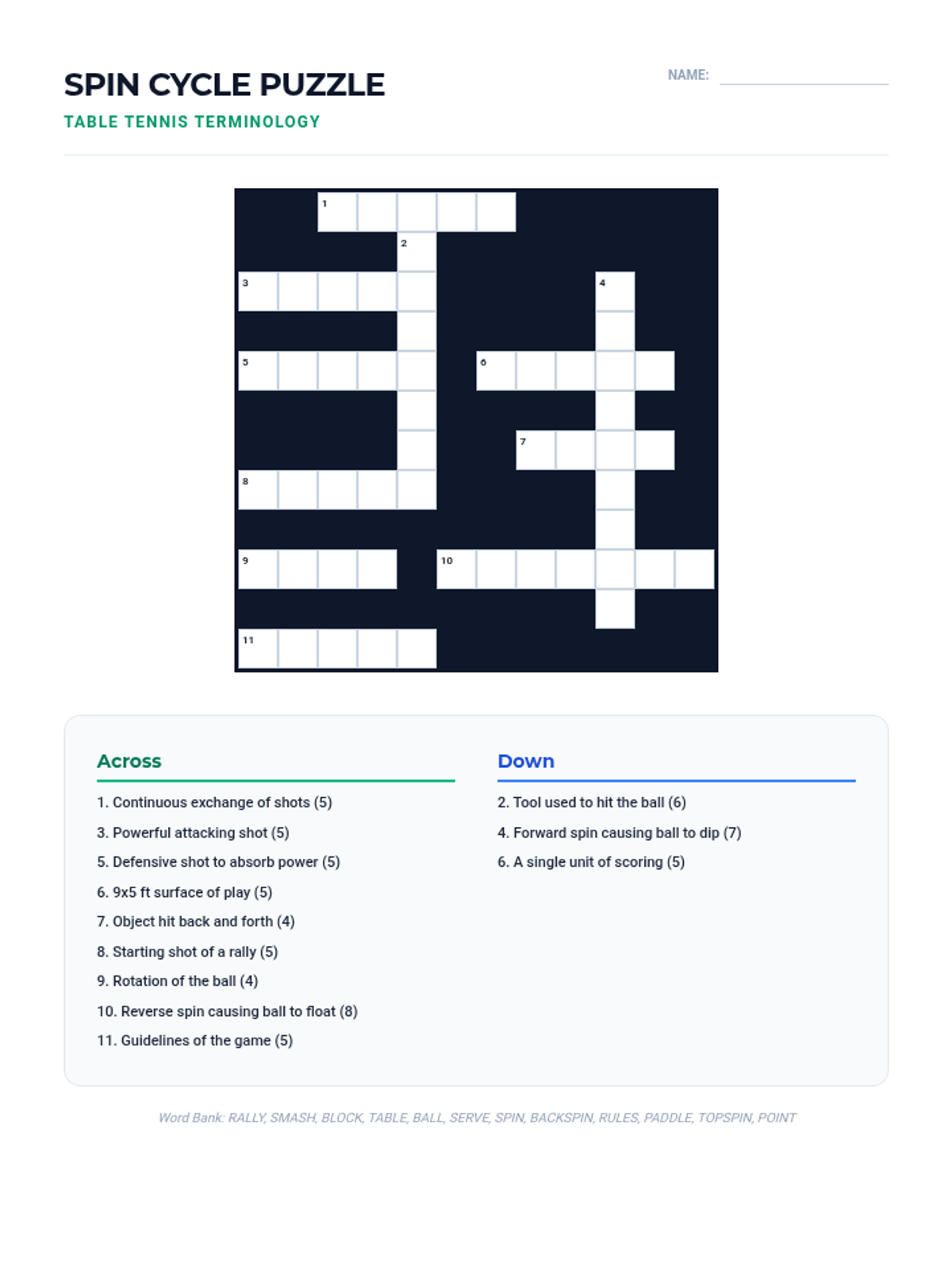
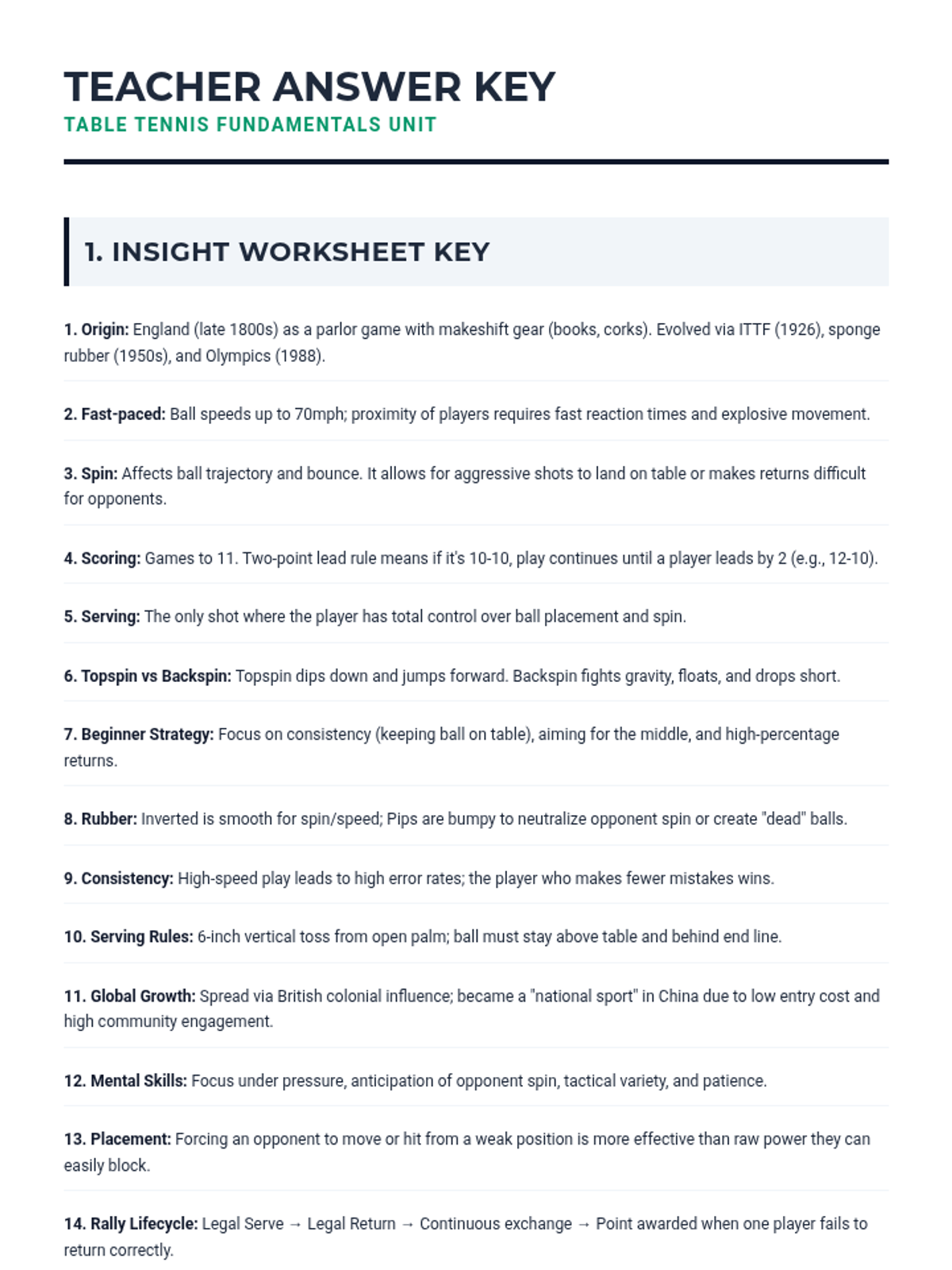
A deep dive into the sport of table tennis, covering its origins, technical equipment, competitive rules, and advanced strategies through a detailed packet and assessments.
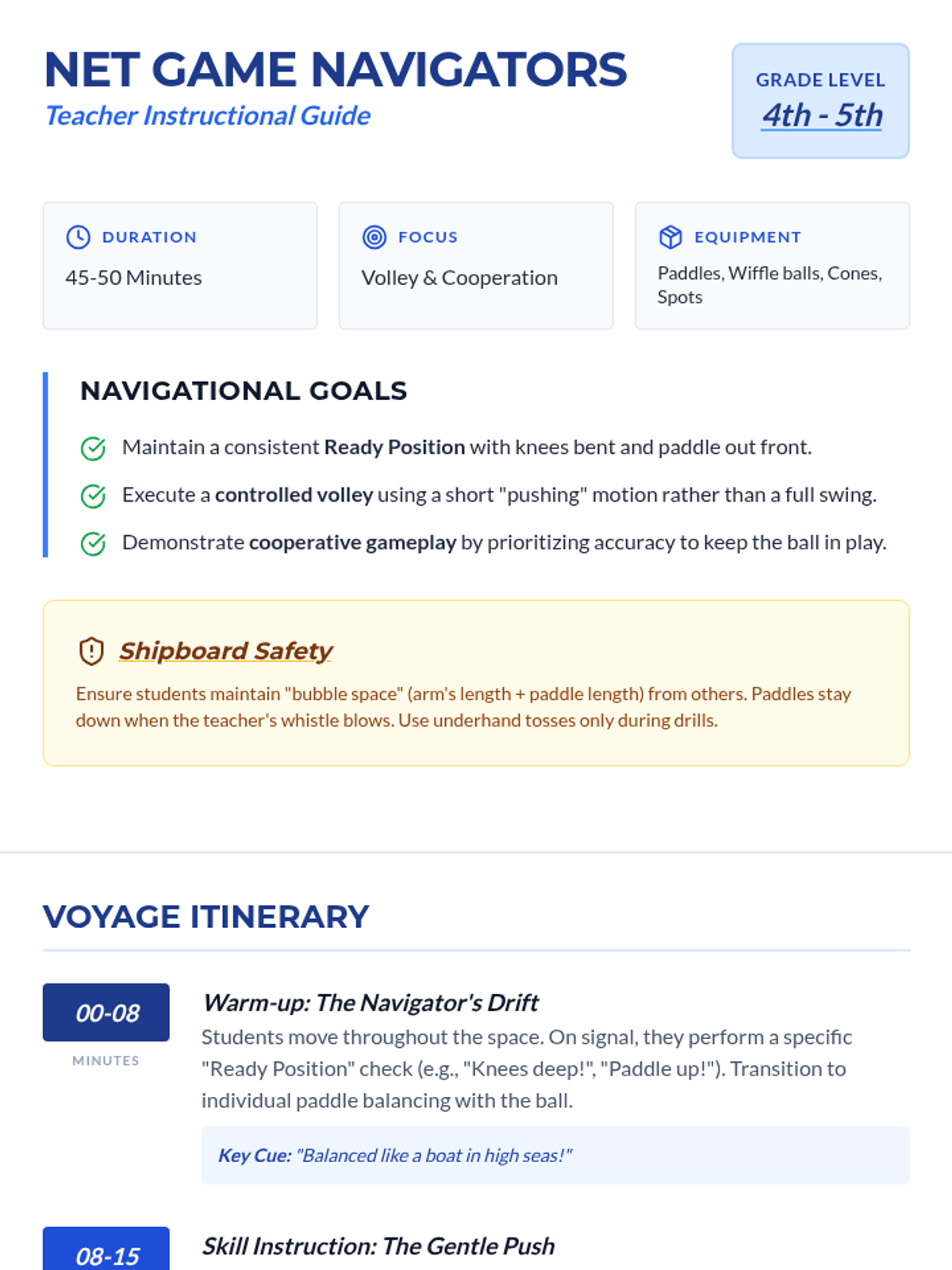
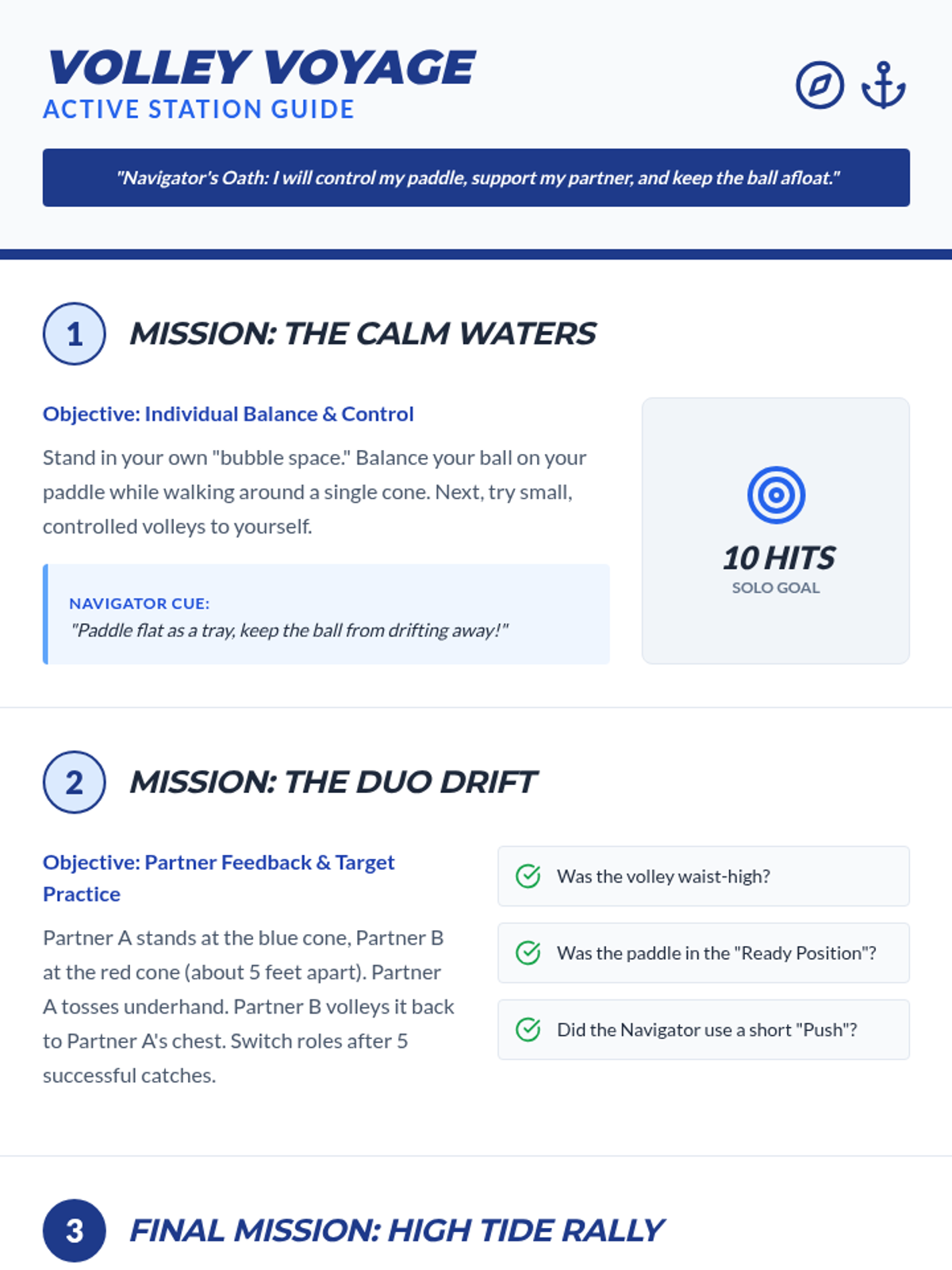
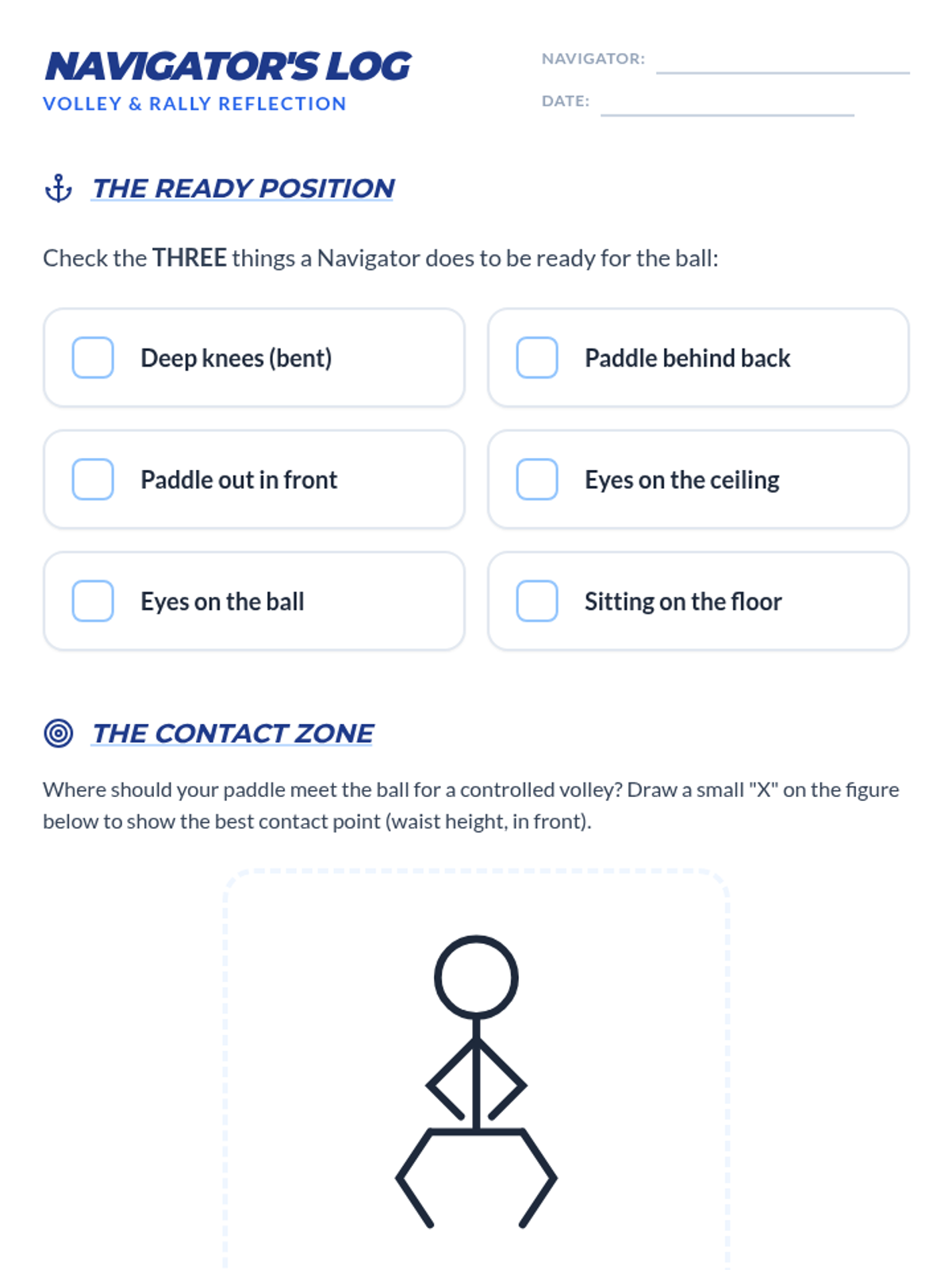
A physical education lesson for 4th and 5th graders focused on mastering the volley. Students learn the 'ready position' and work cooperatively to maintain long rallies using paddles, prioritizing control and spatial awareness.
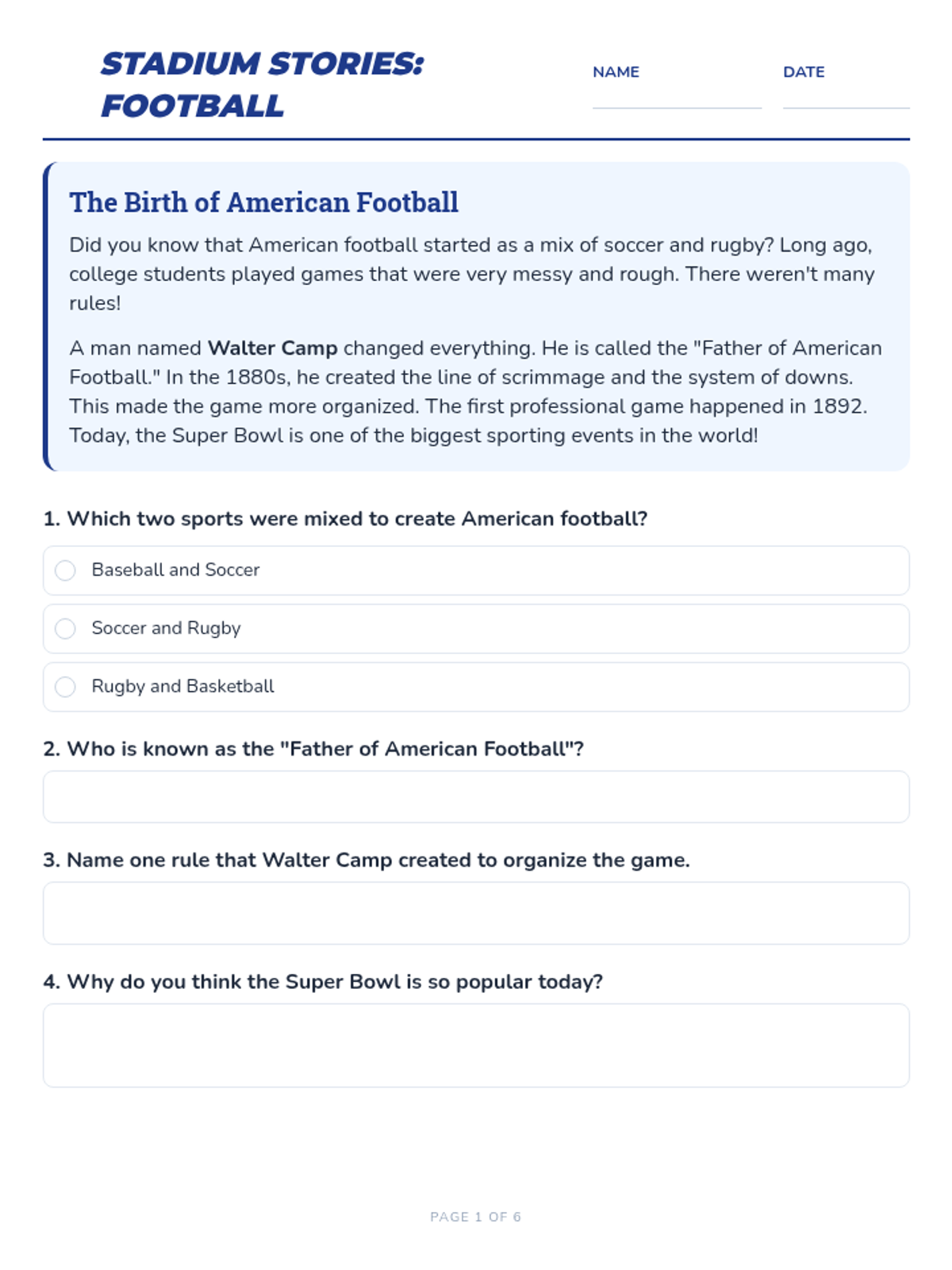
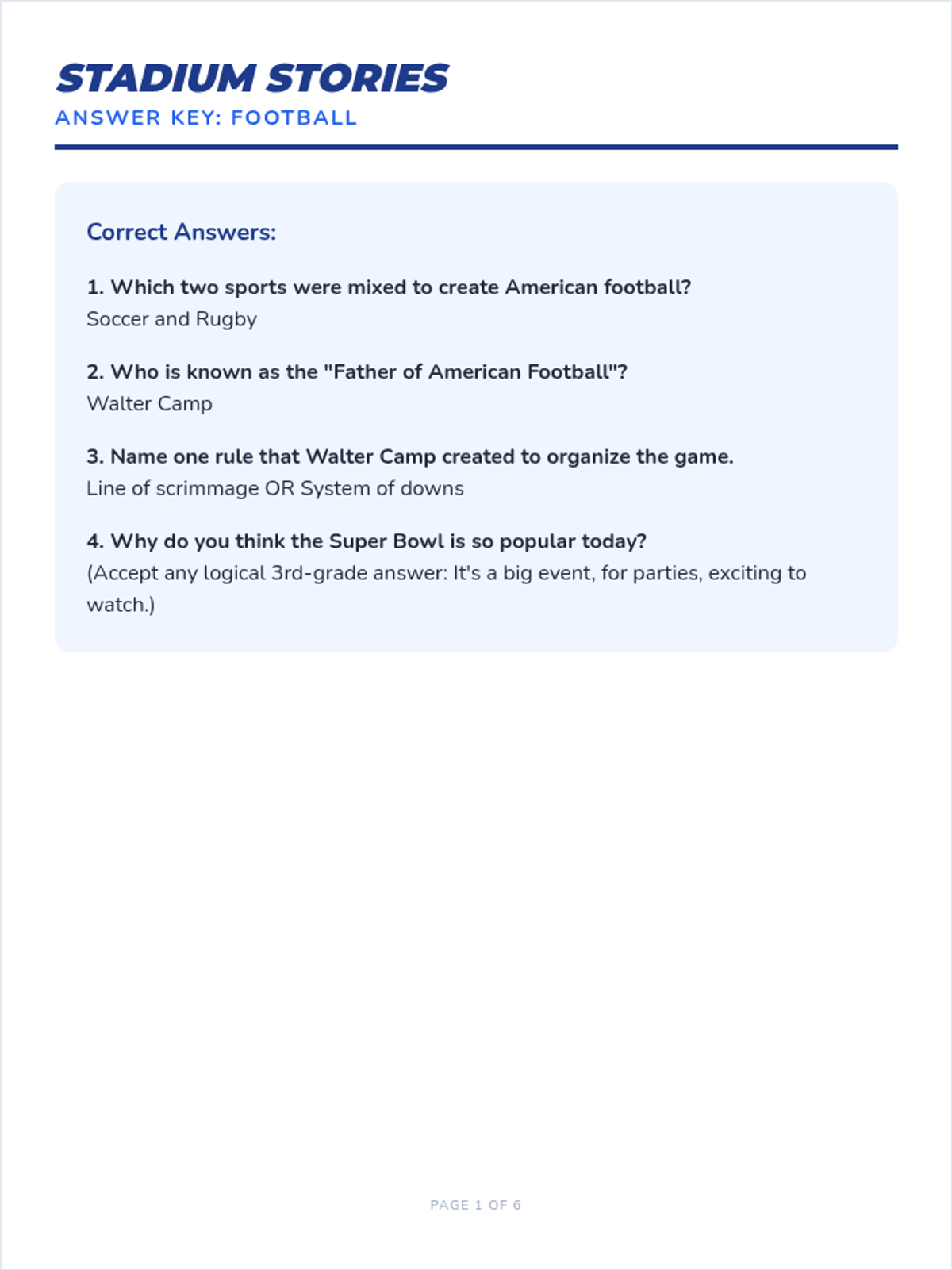
A comprehensive exploration of sports history designed for 3rd-grade students, focusing on six major sports: football, soccer, basketball, tennis, volleyball, and swimming.
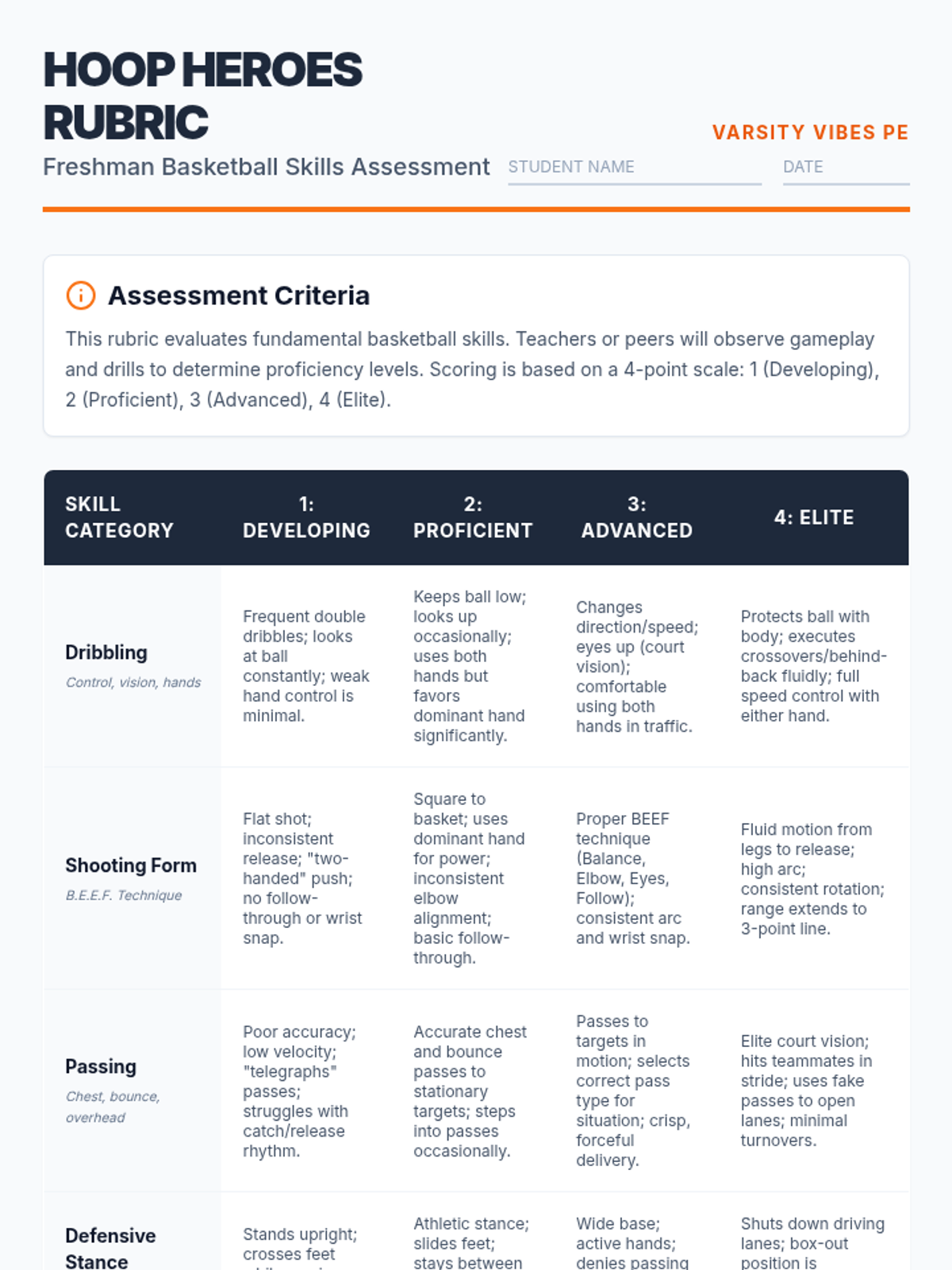
Assessment tools for mastering basketball fundamentals including shooting, dribbling, and defensive positioning.
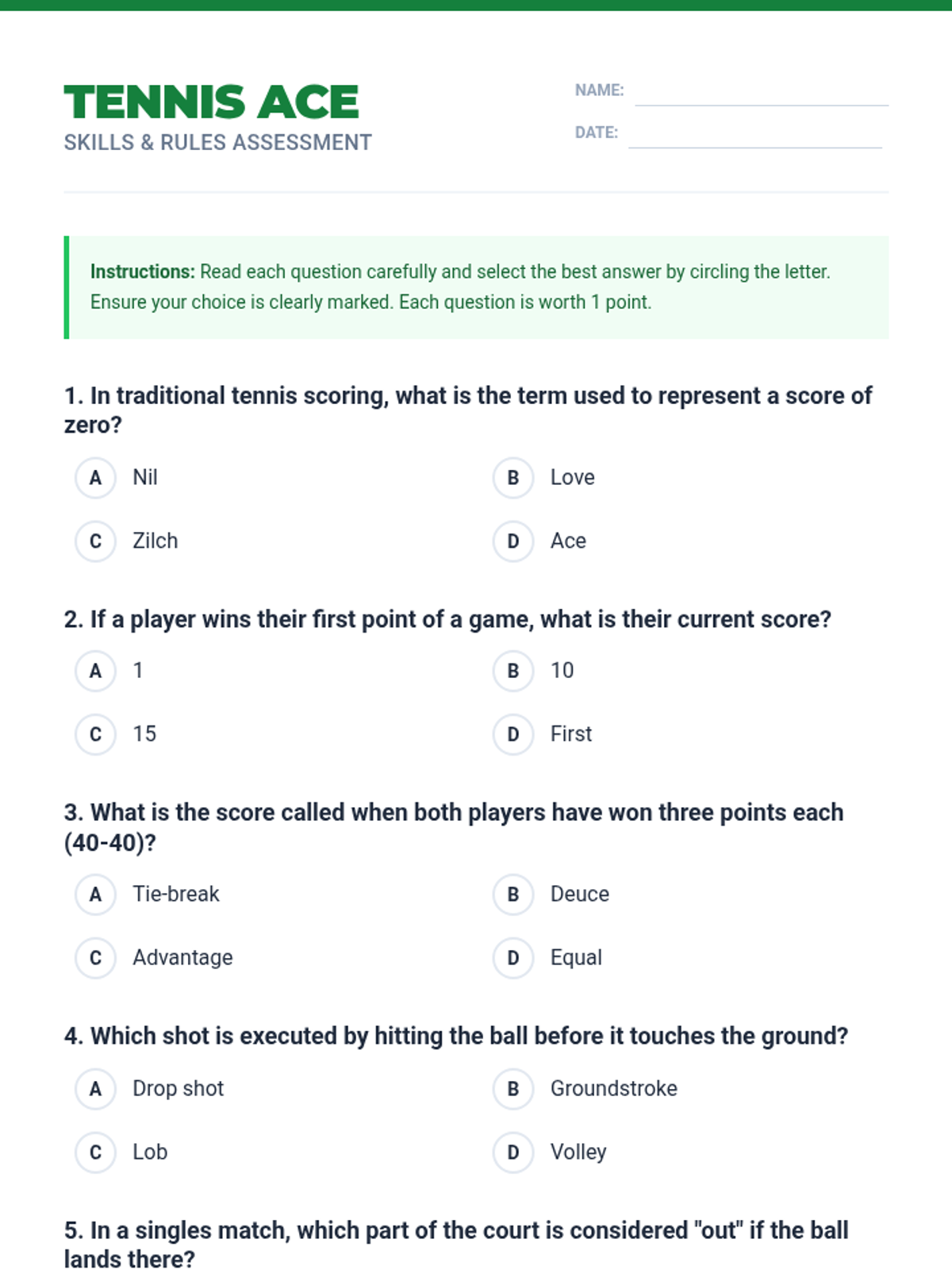
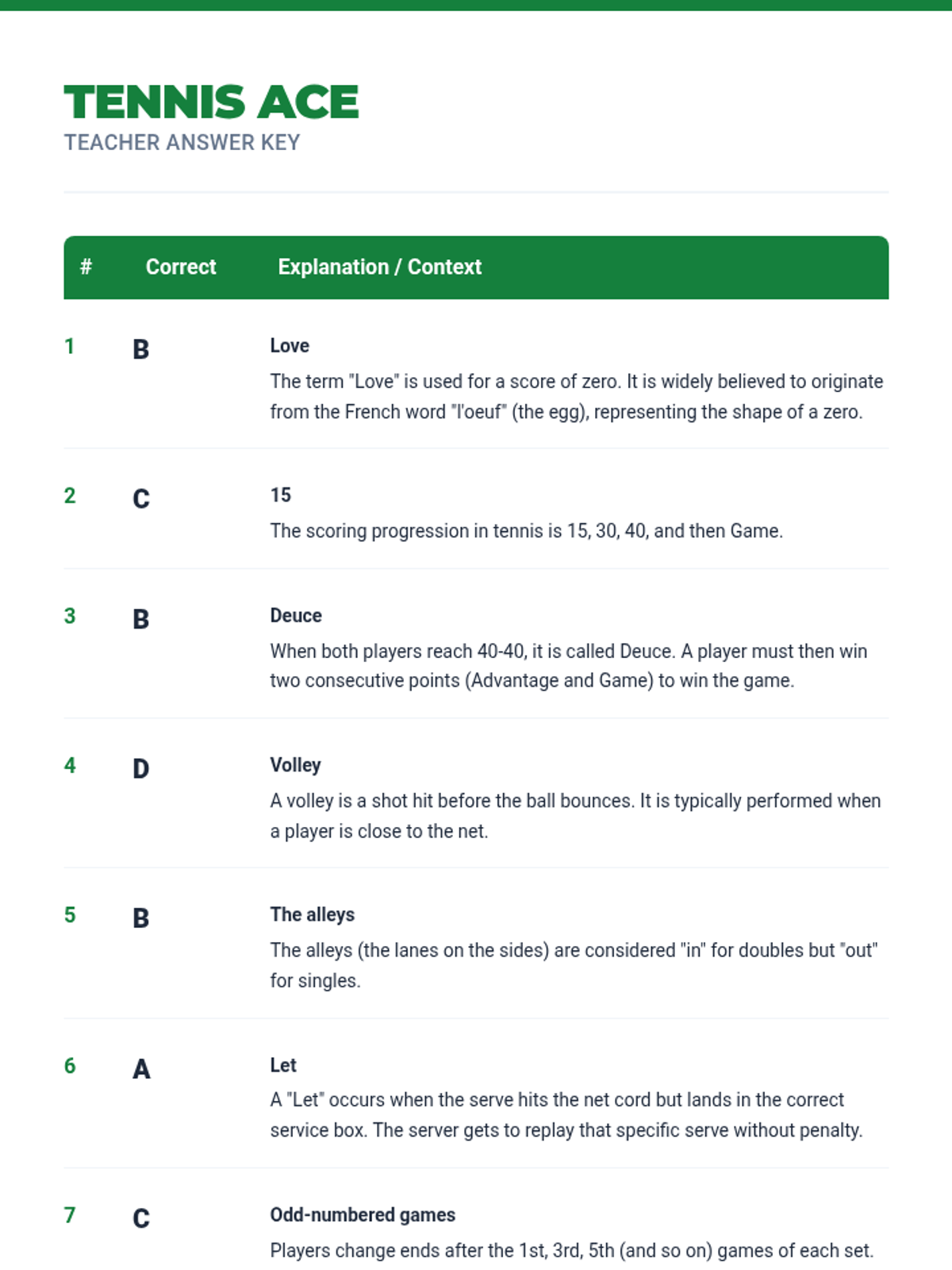
A foundational lesson covering tennis rules, scoring, strokes, and court positioning, designed to prepare students for gameplay and officiating.
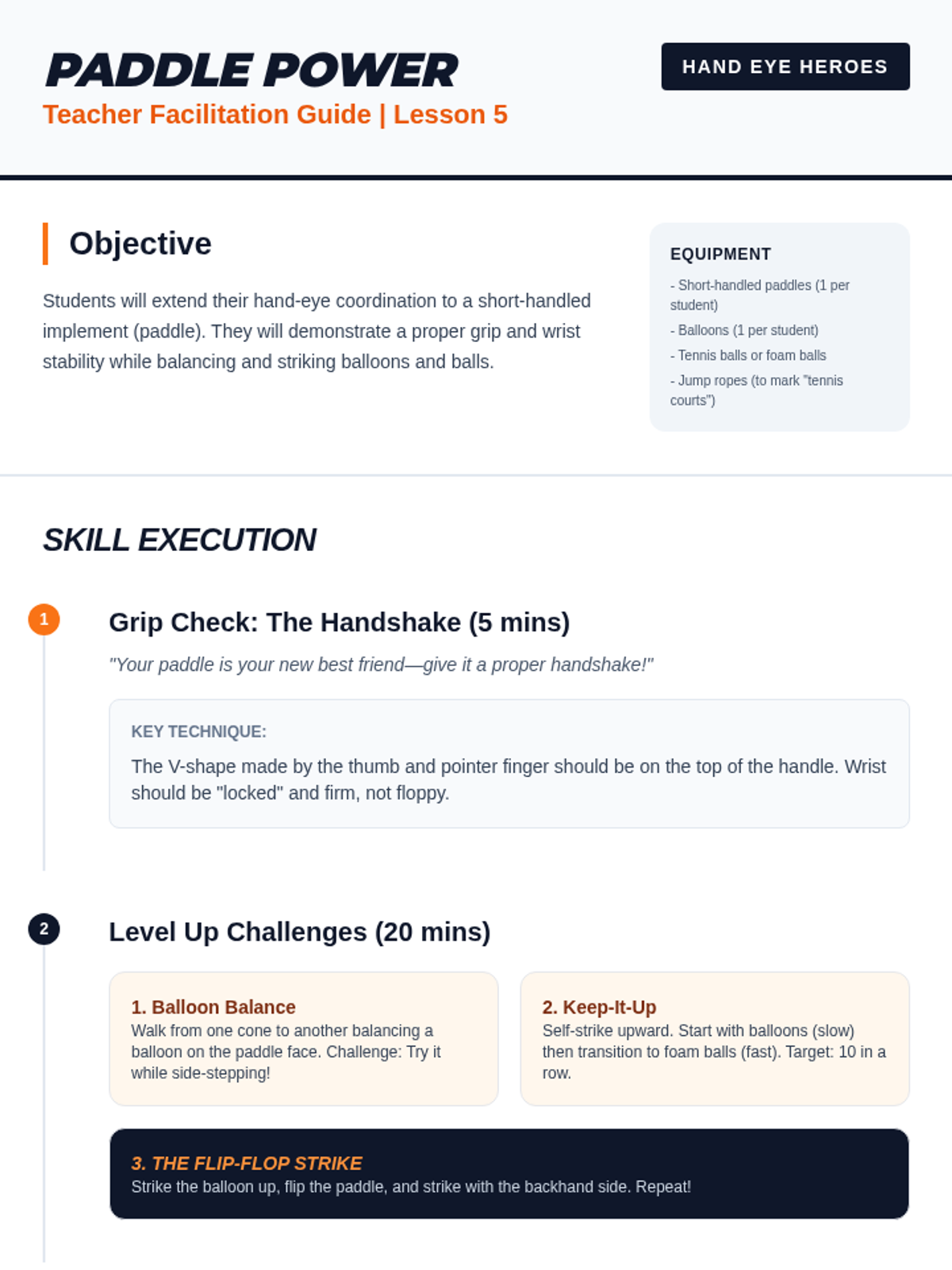
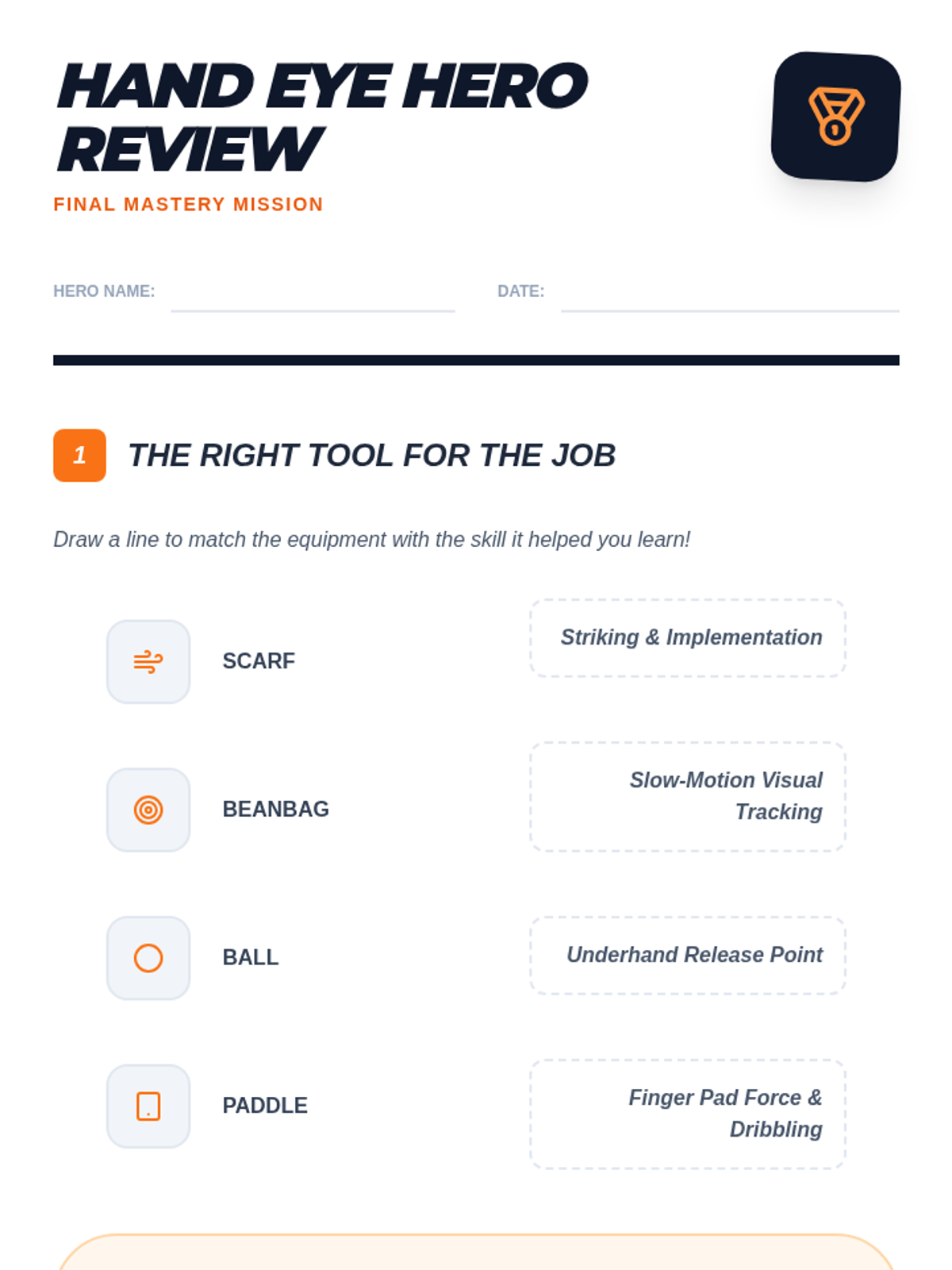
Students extend their fine motor control through short-handled implements, learning to balance and strike balloons or balls with precision.
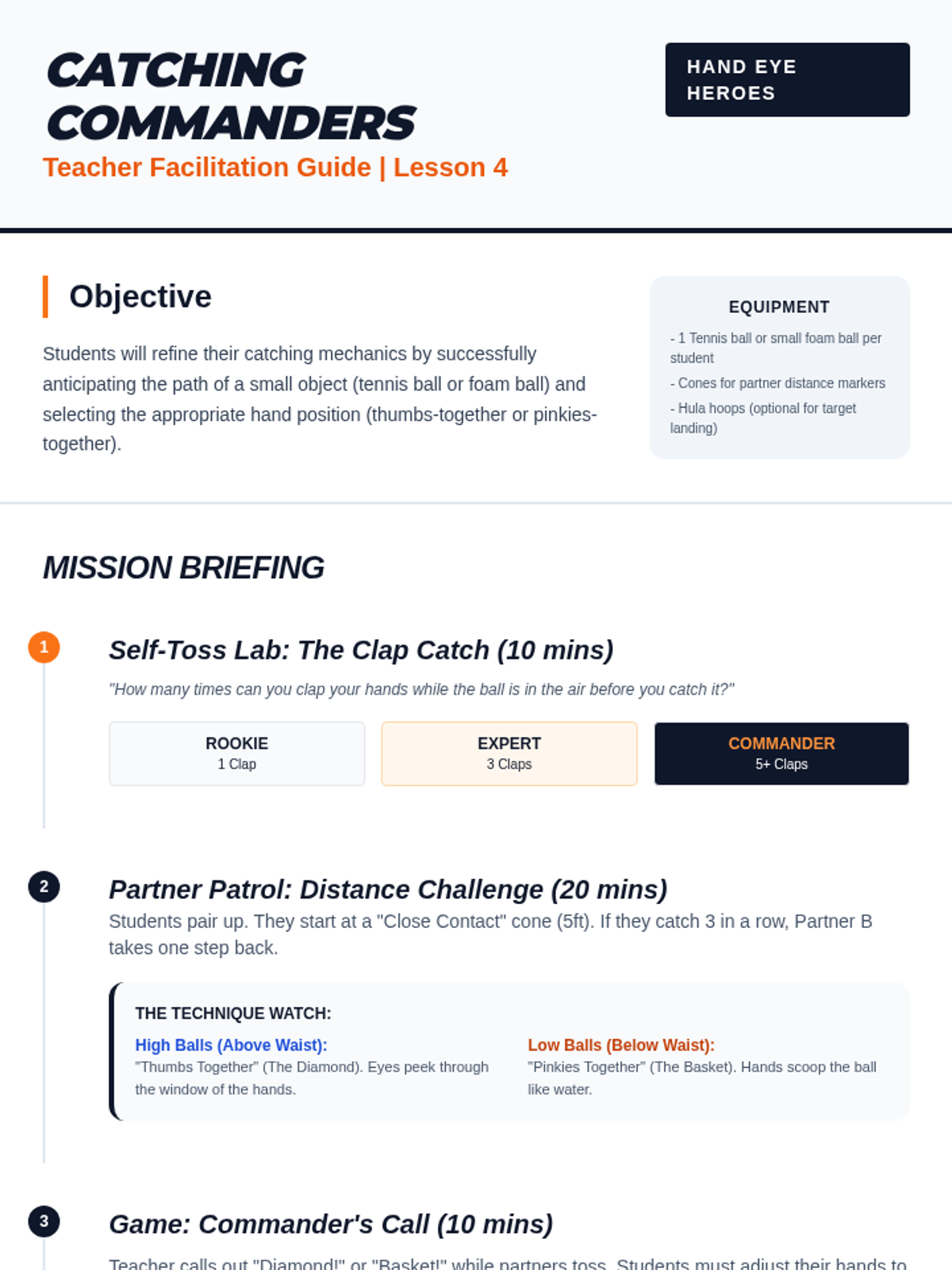
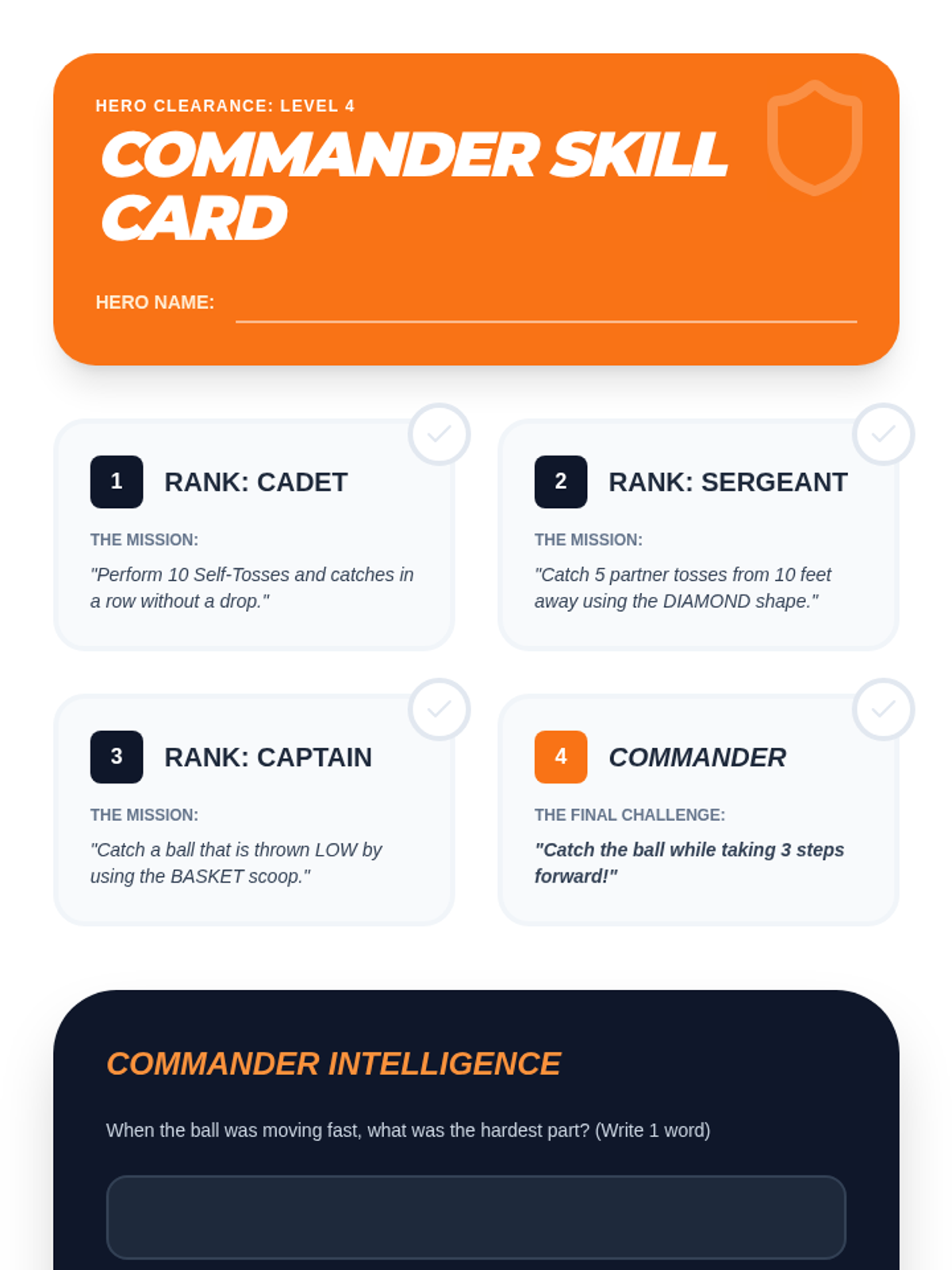
Students transition to smaller objects, refining their grasp reflex and anticipation skills through self-toss and partner catching challenges.
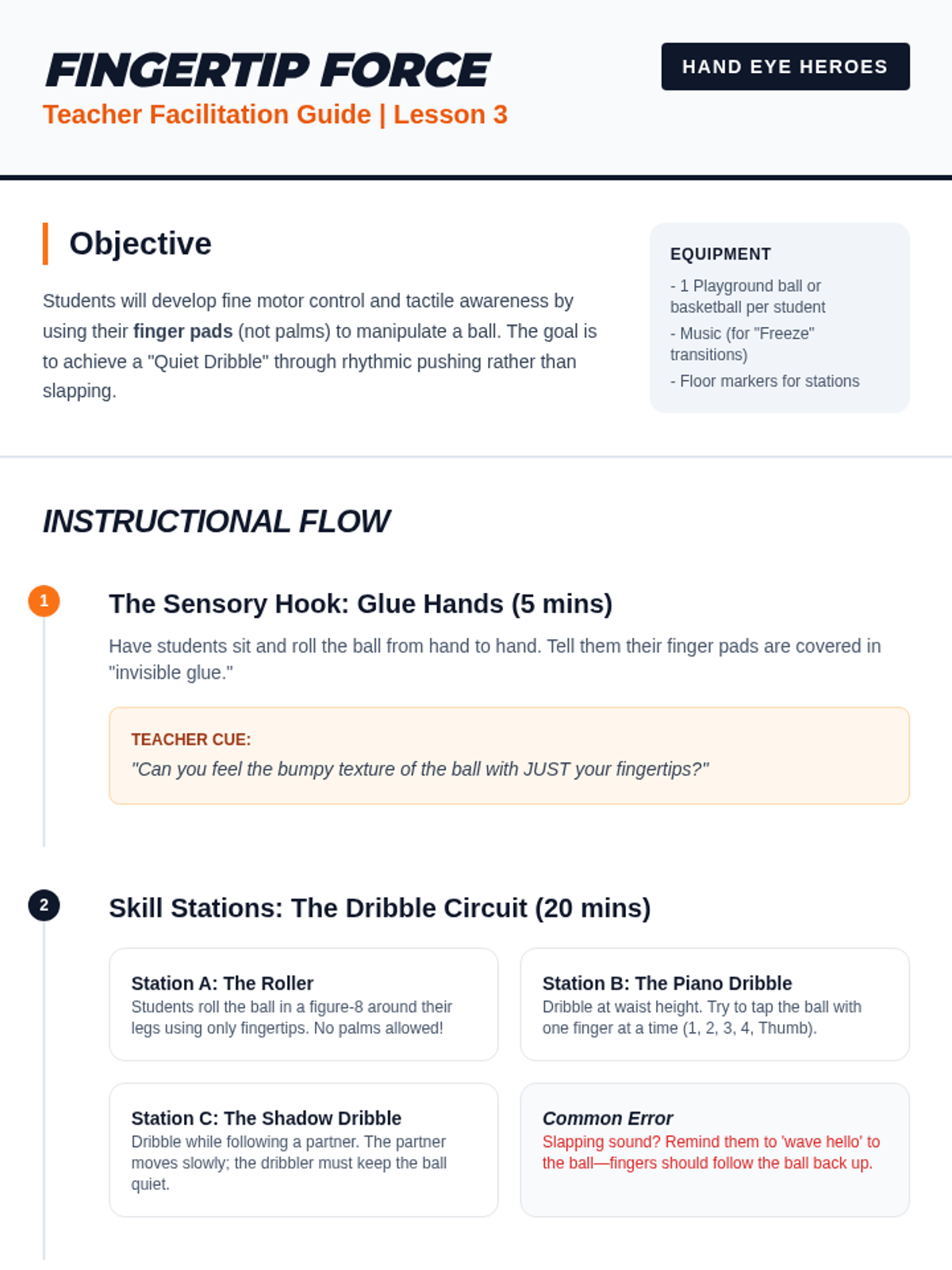
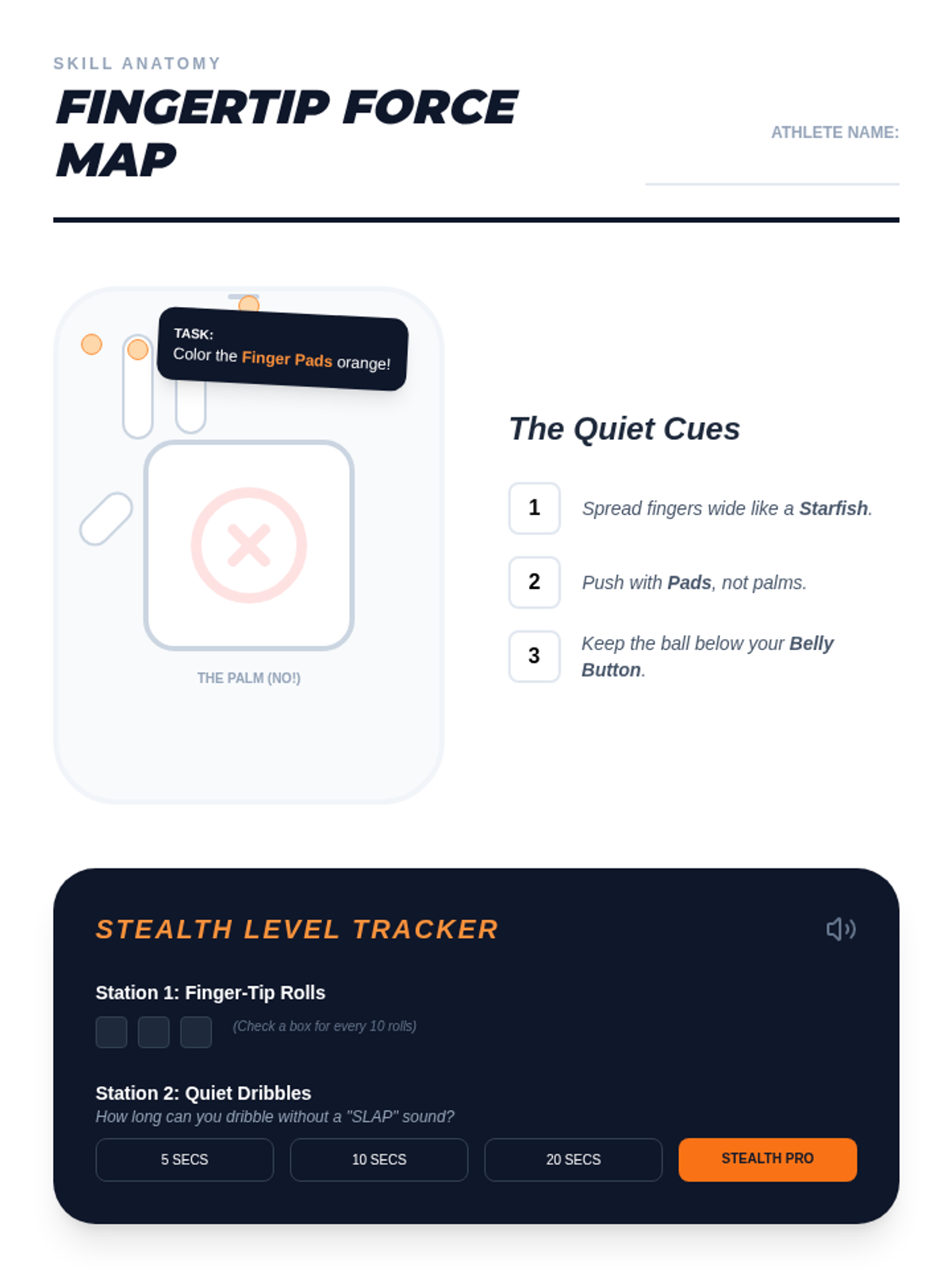
Students develop fingertip sensitivity and rhythm by manipulating balls using their finger pads for controlled rolling and quiet dribbling.
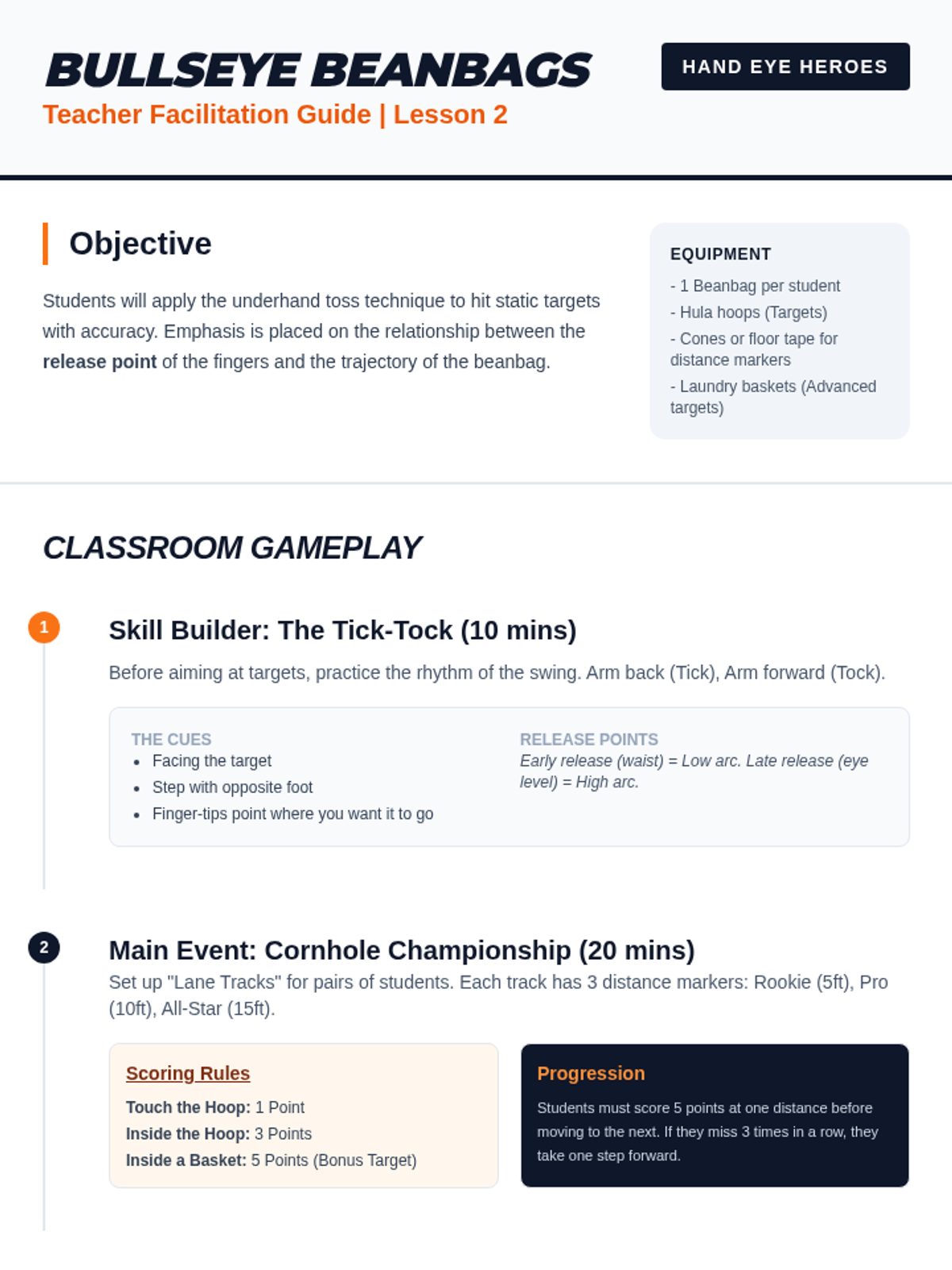
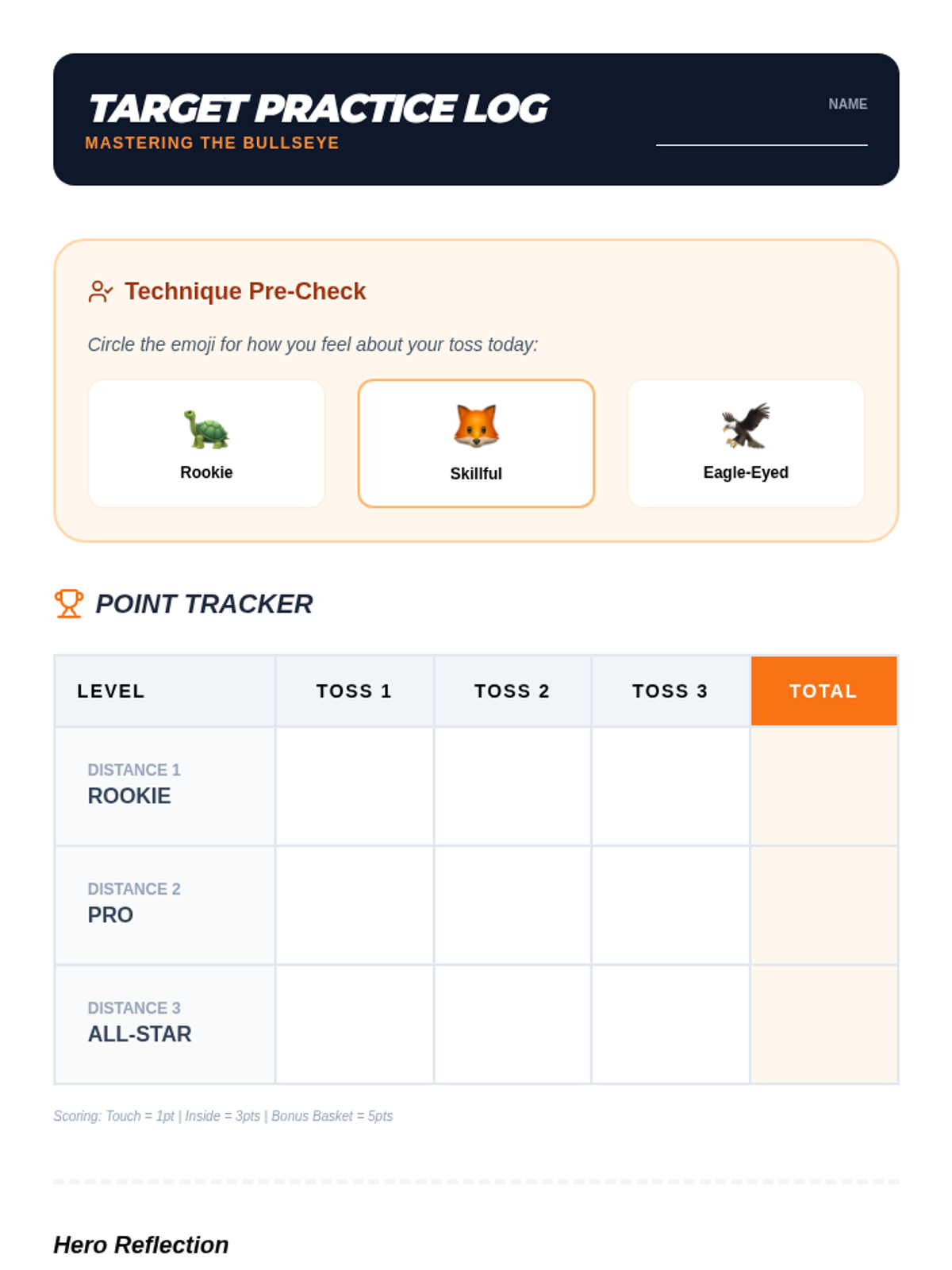
Students focus on release point control and force estimation by tossing beanbags into targets, improving underhand accuracy.
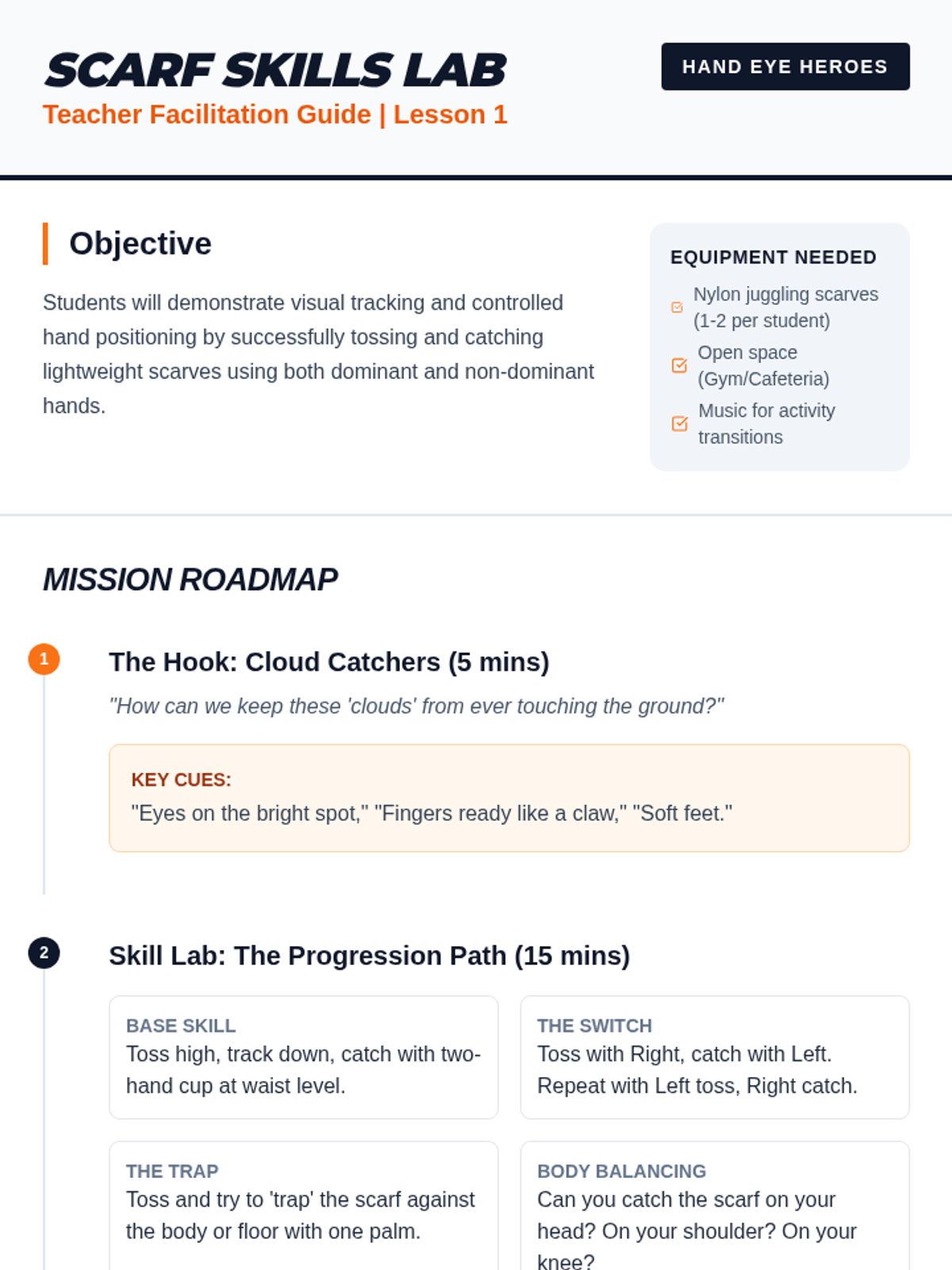
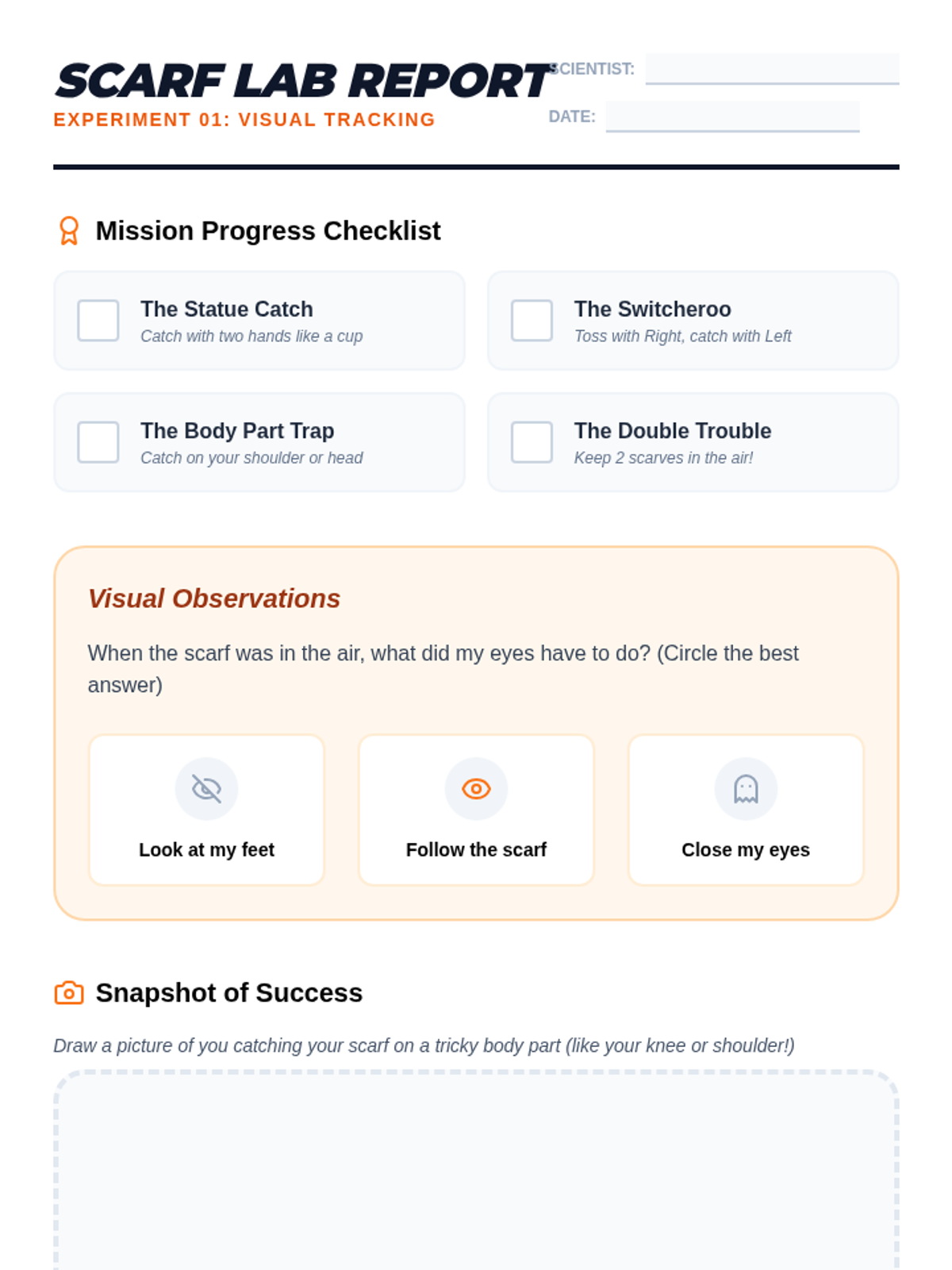
Students practice visual tracking and hand positioning by tossing and catching lightweight scarves, allowing for slow-motion mastery of movement concepts.
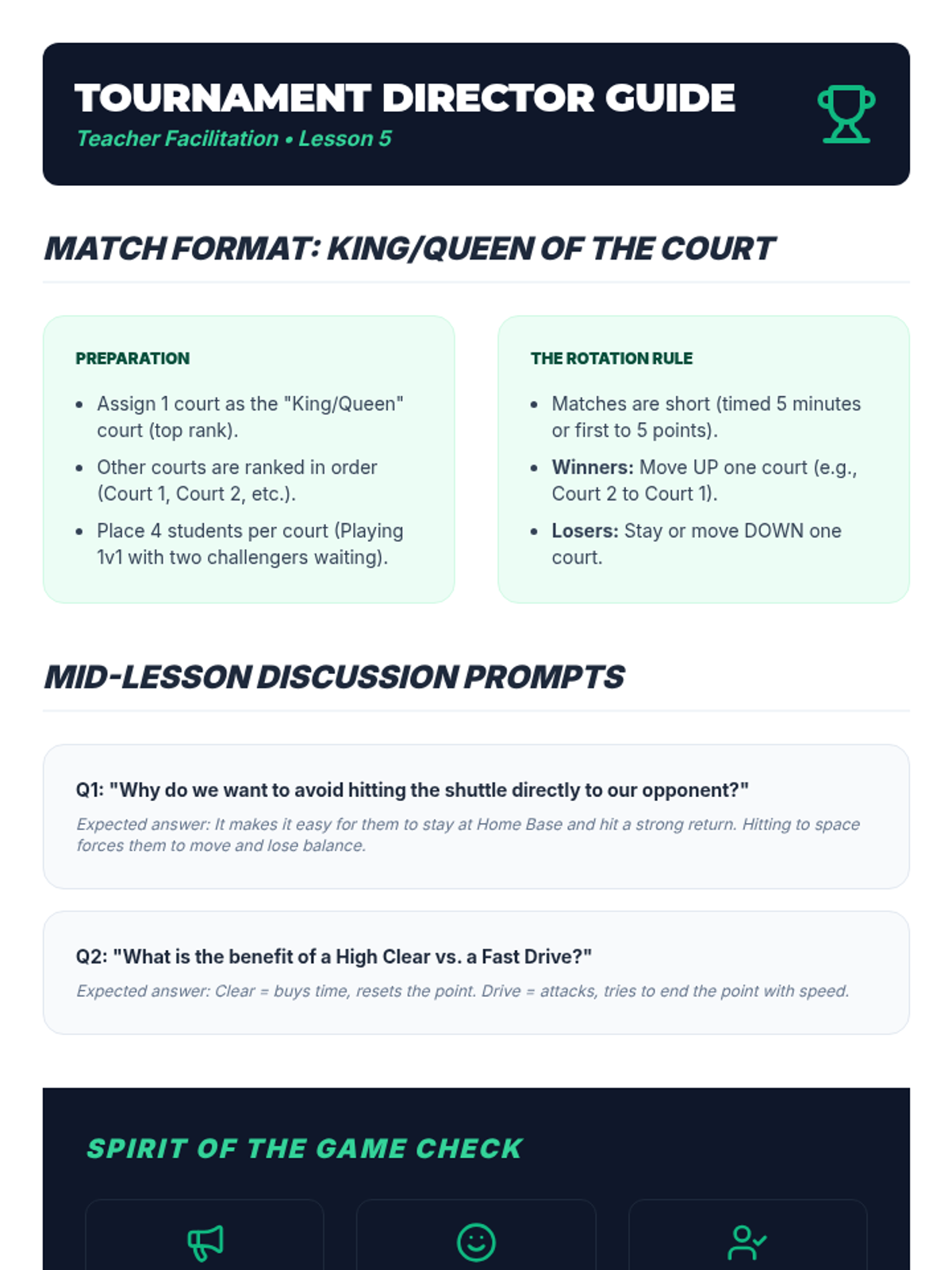
Students apply learned strokes in competitive formats, emphasizing court coverage and shot selection. The lesson introduces the concept of hitting to open space and managing scores.
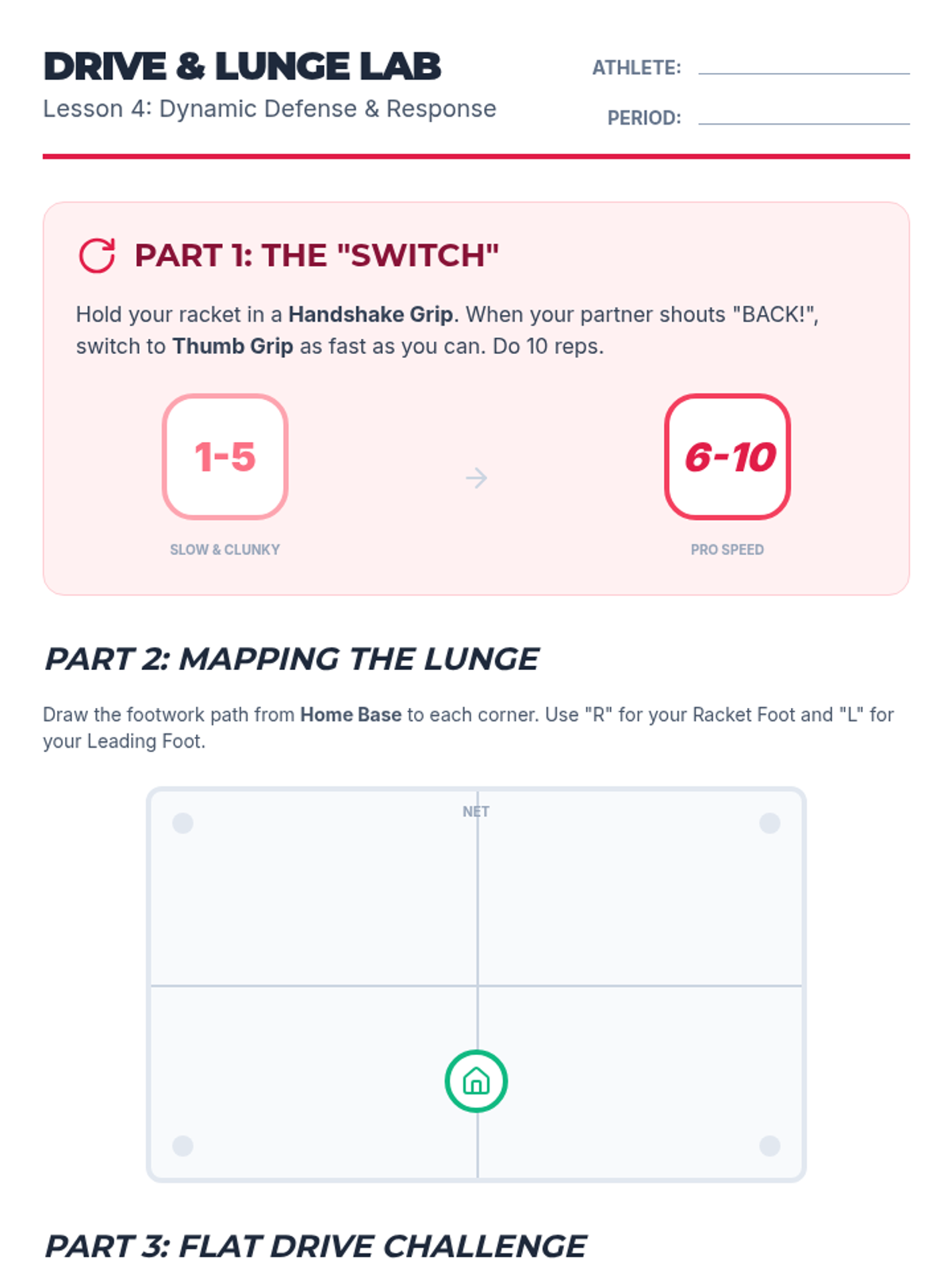
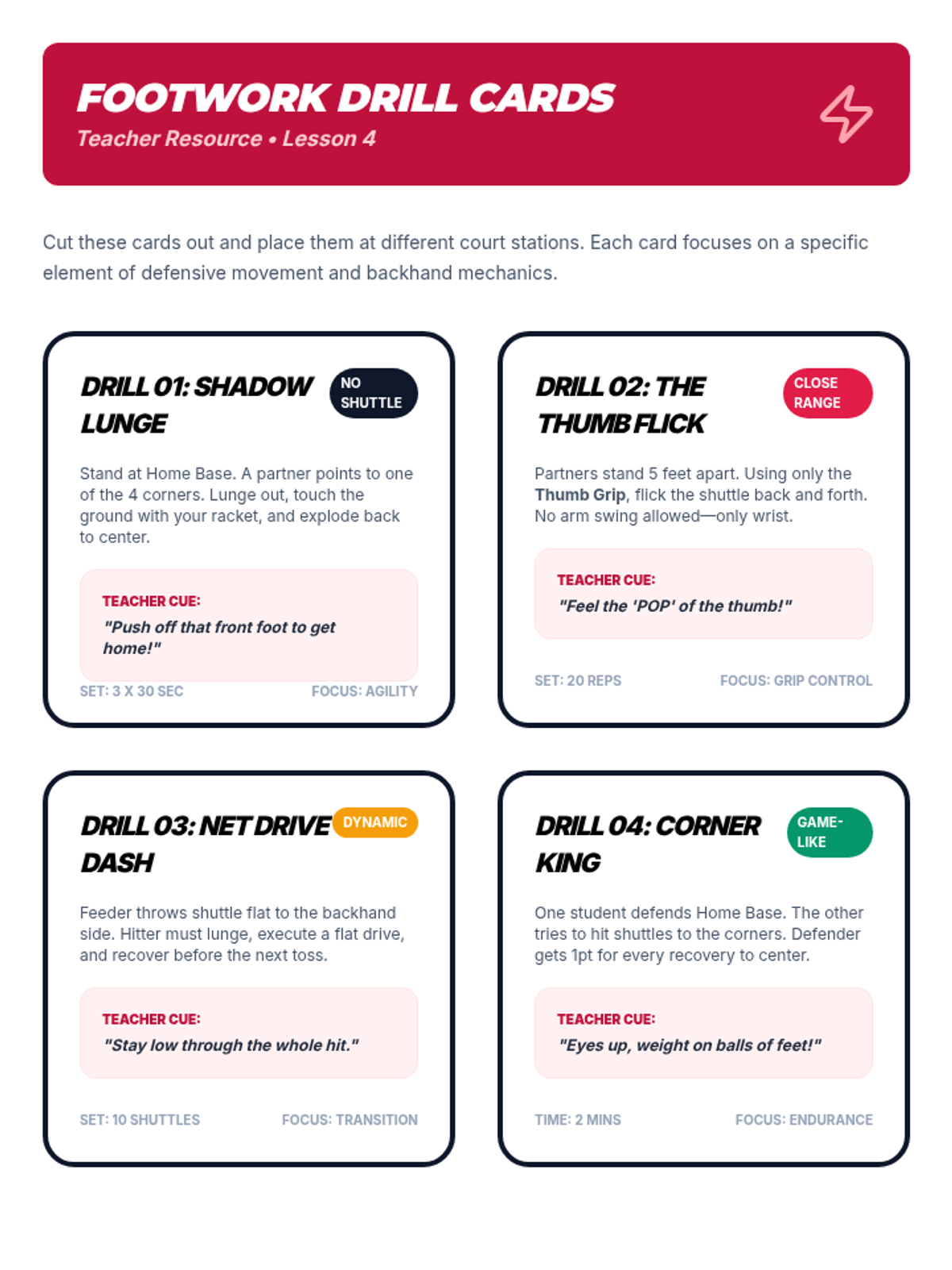
Introduces the thumb grip modification for backhand shots paired with defensive lunge steps. Students practice the transition between forehand and backhand grips and flat drive shots.
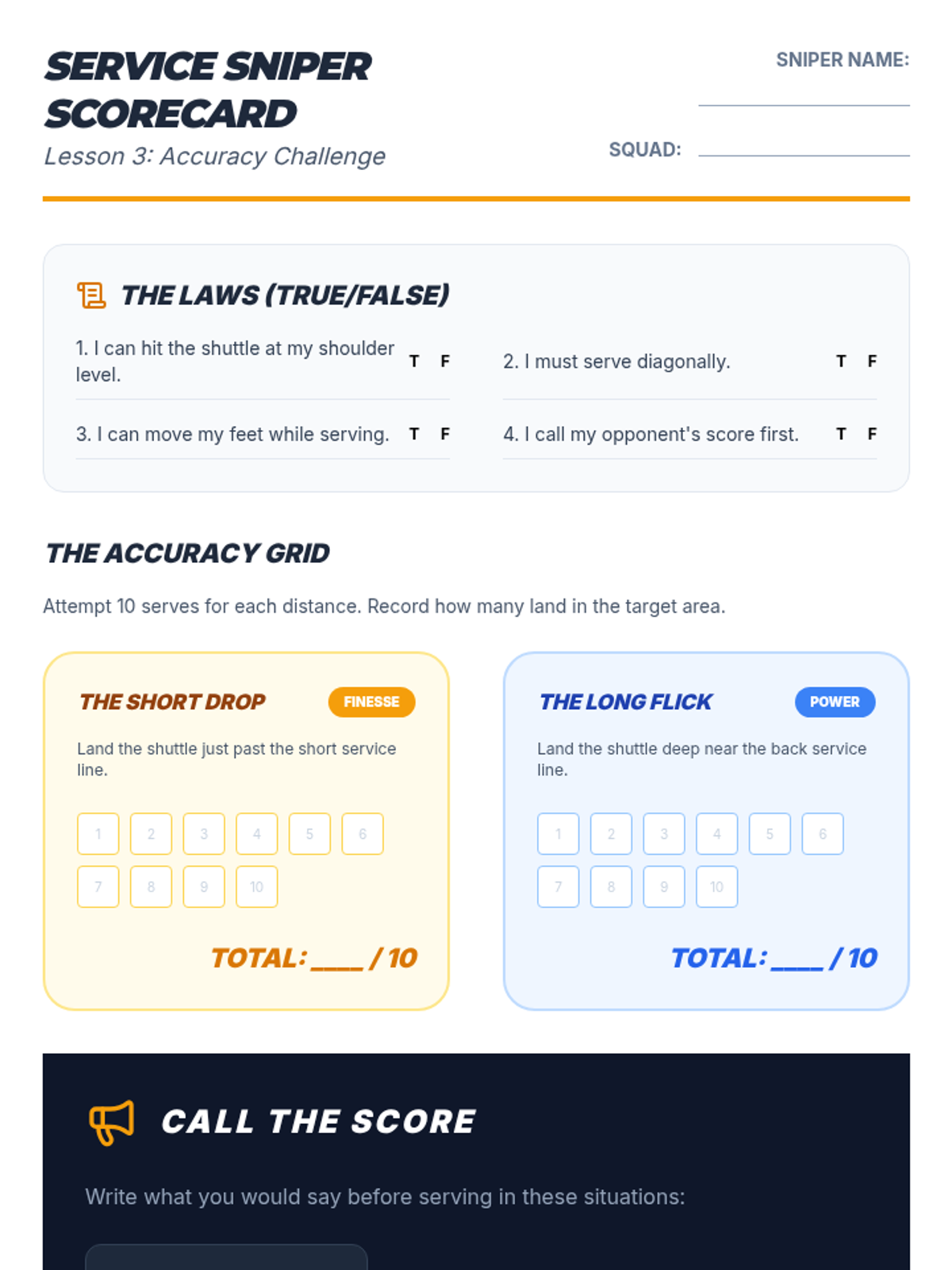
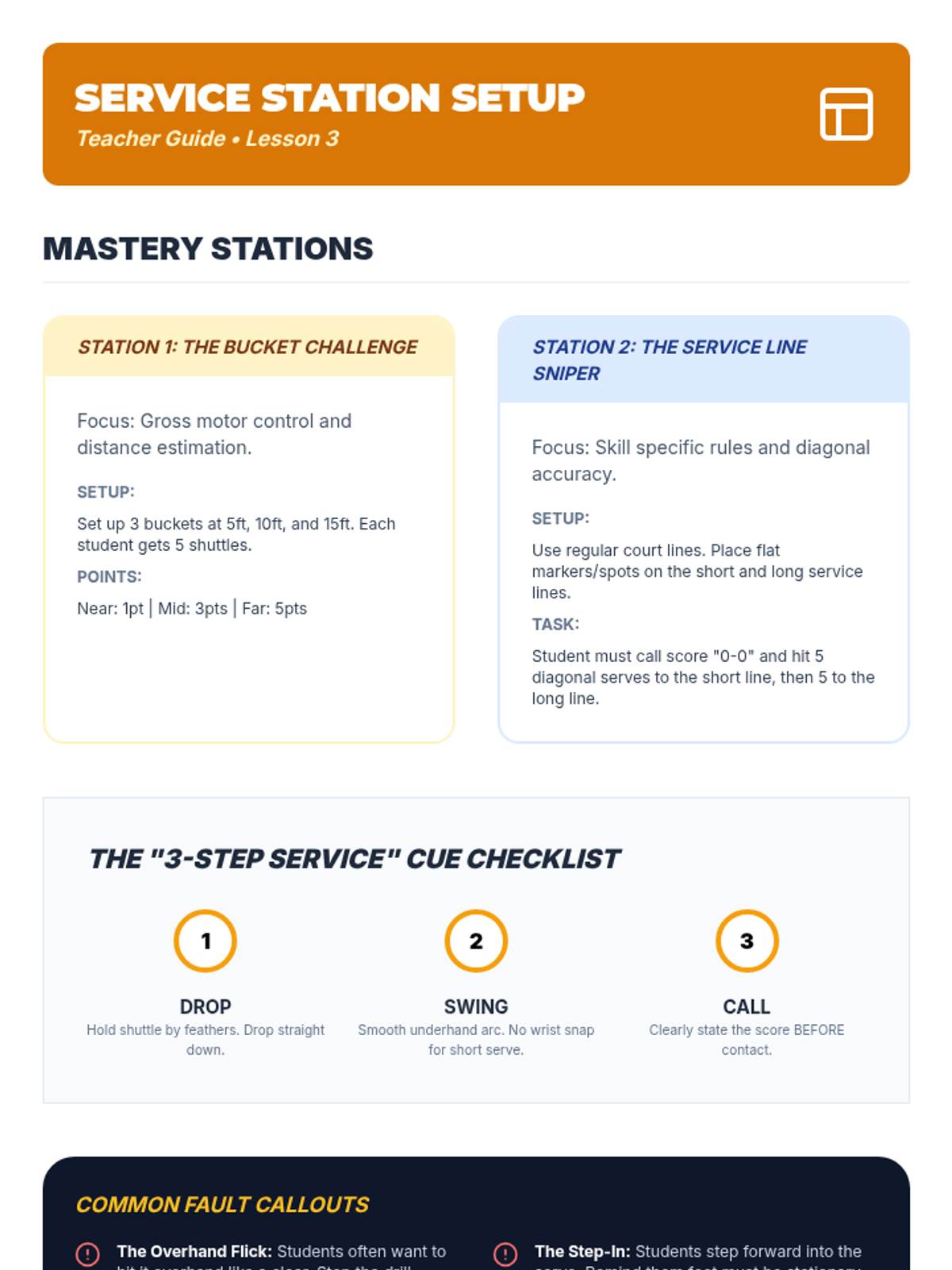
Students learn the rules and mechanics of the underhand serve, focusing on contact below the waist and diagonal placement into target zones.
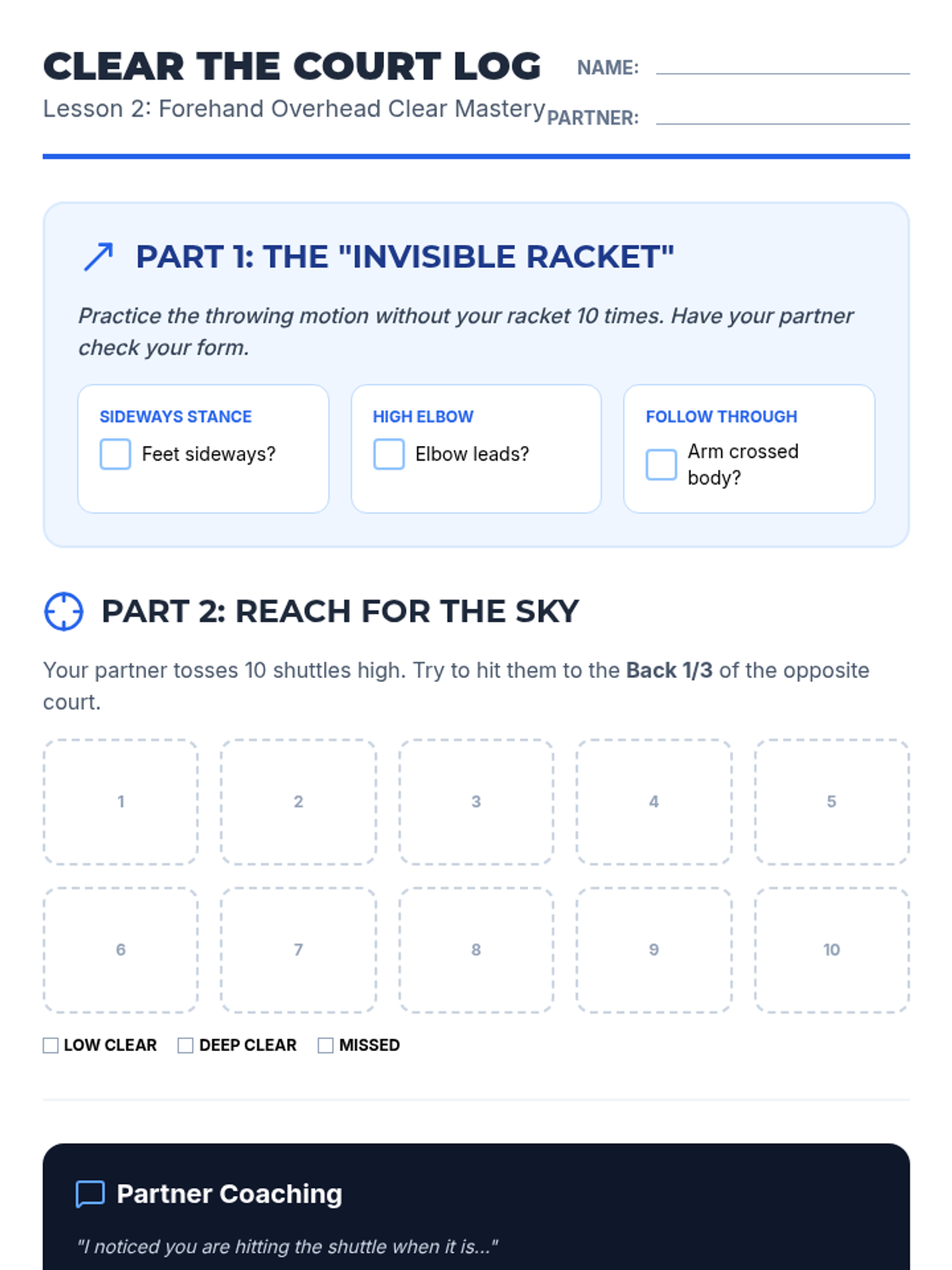
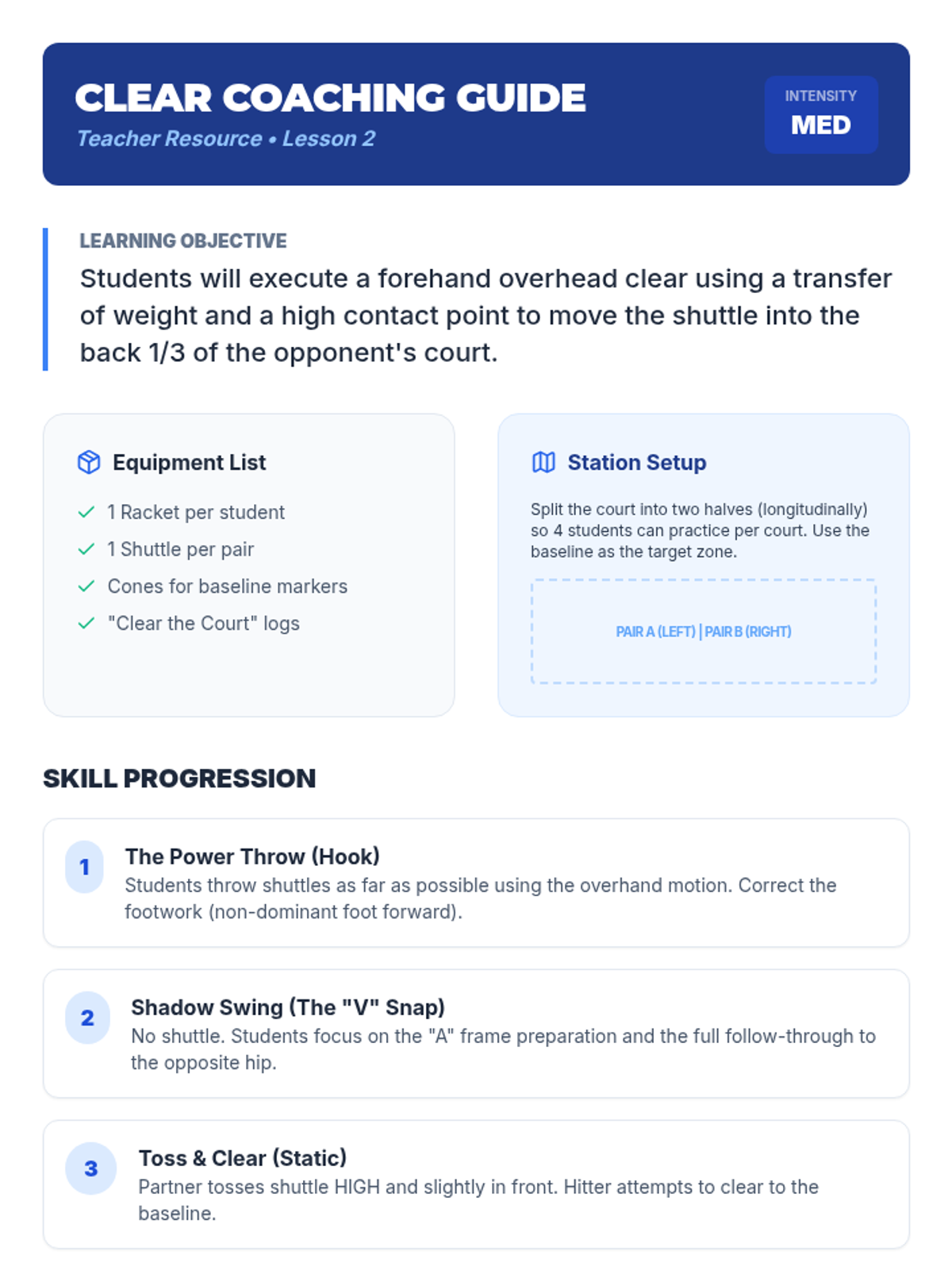
Focuses on the mechanics of the overhead clear, the most fundamental shot used to push opponents back. Students practice the throwing motion and contact shuttles at the highest reach point.
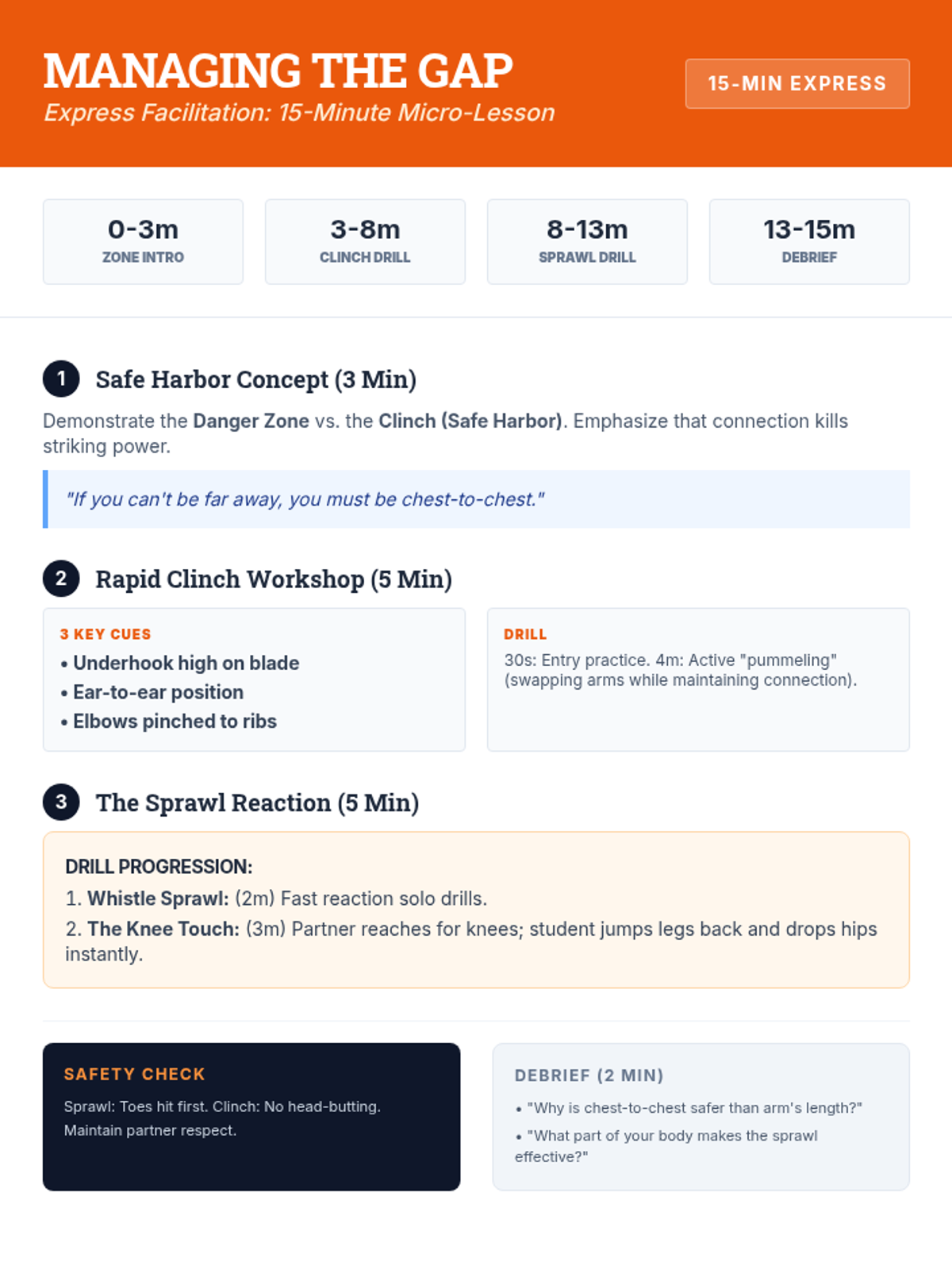
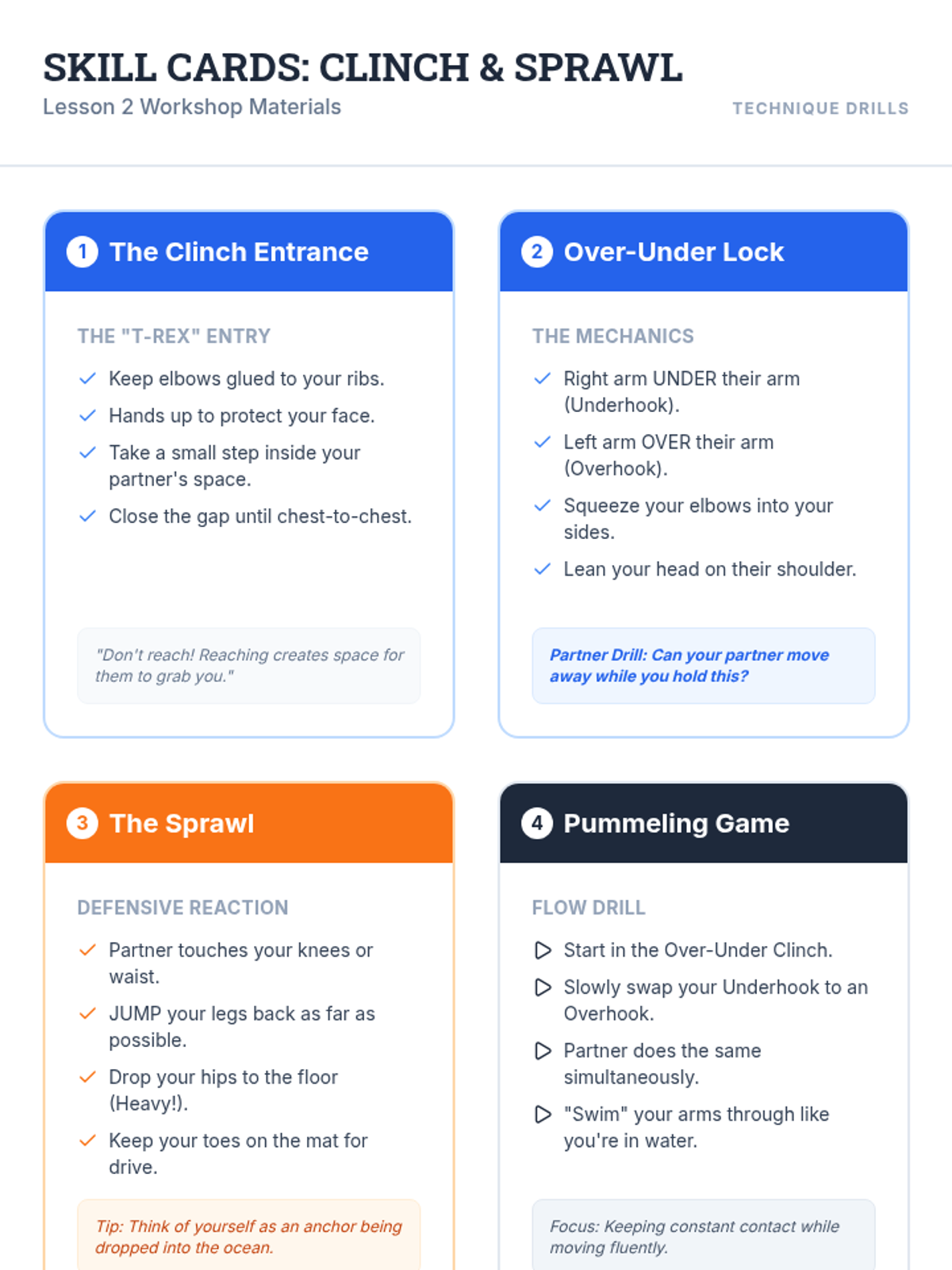
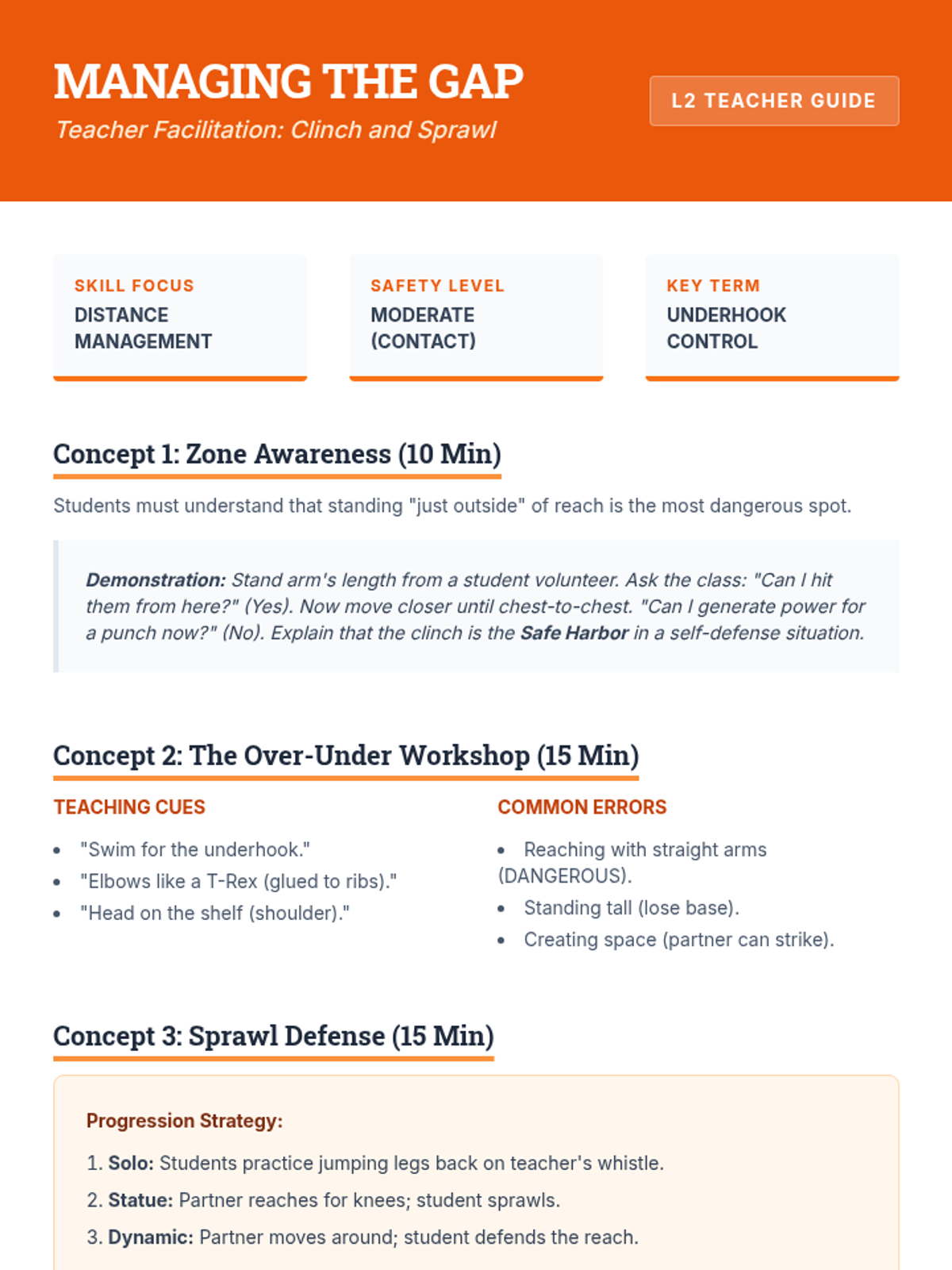
An intensive 15-minute 'Express' session focused on the core mechanics of the clinch and sprawl. Students learn to close the distance safely and defend against leg tackles with maximum efficiency.
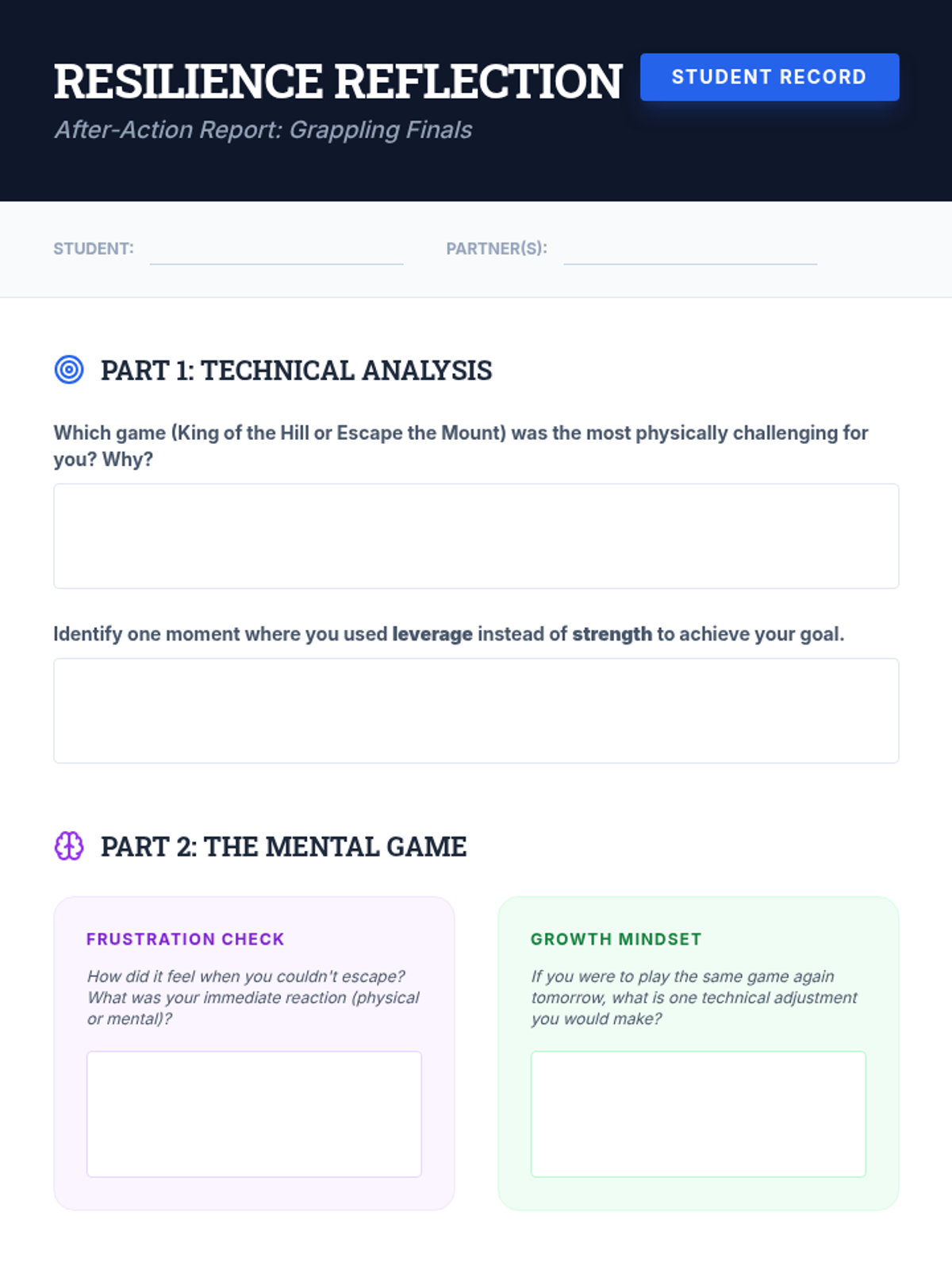
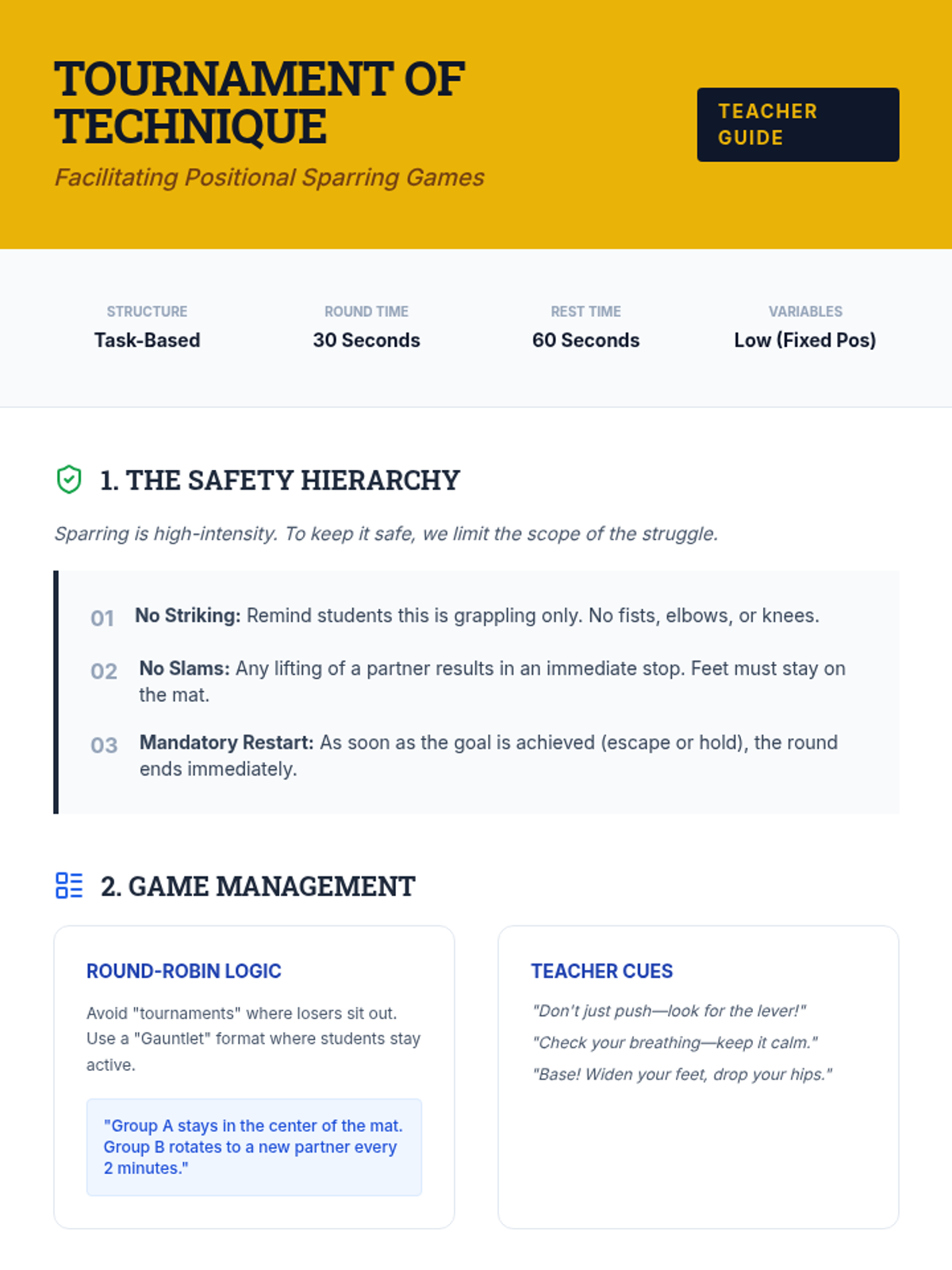
Students engage in specific task-based grappling games, such as 'King of the Hill' or 'Escape the Mount.' They start in a specific position with a clear goal (e.g., hold the position for 10 seconds or escape). This allows for full-effort practice with limited variables for safety.
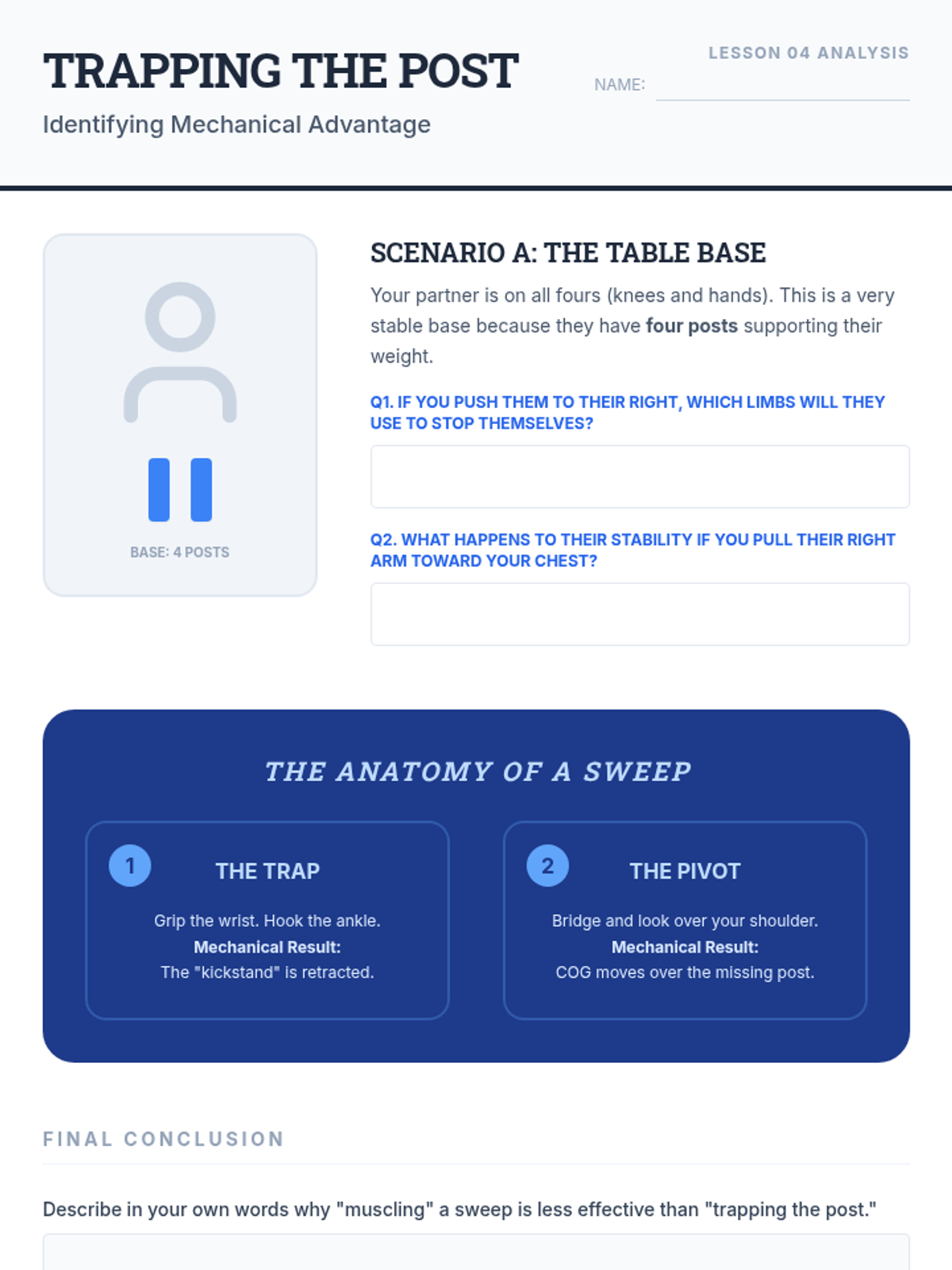
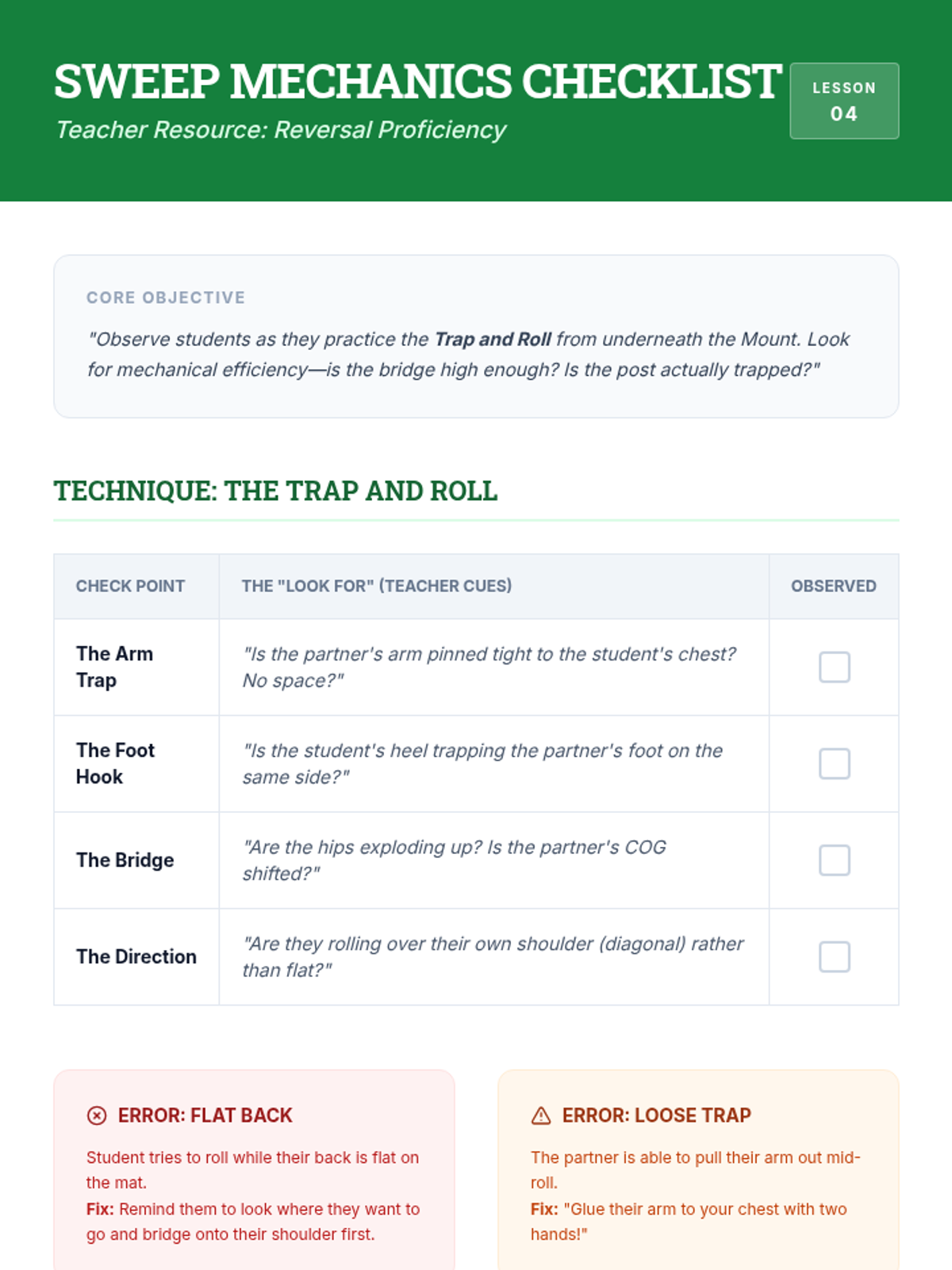
Students explore how to reverse a position from the bottom using bridges and rolls. They apply the concept of 'trapping' a post (arm or leg) to flip a partner over. This lesson highlights the use of leverage over strength.
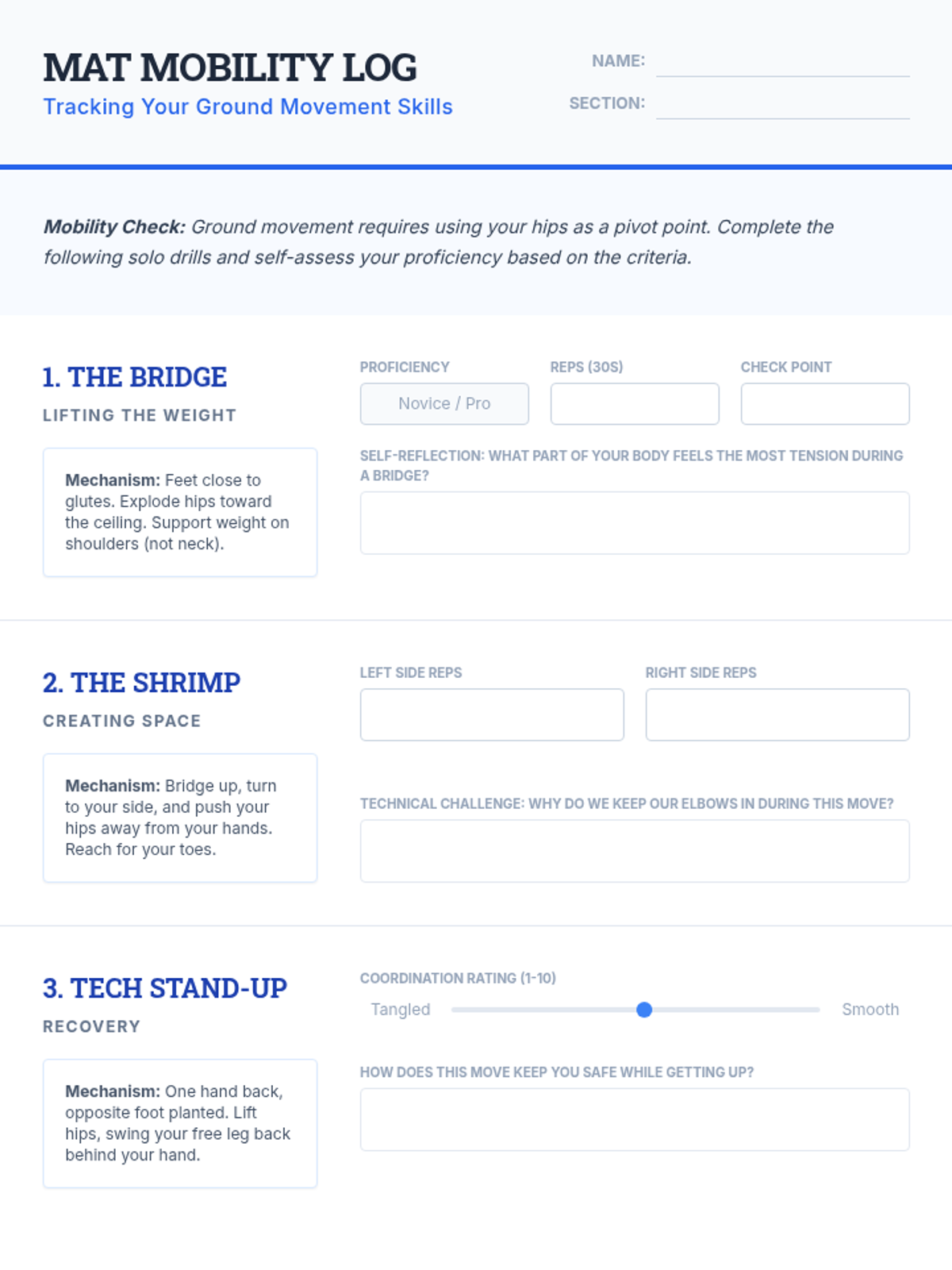
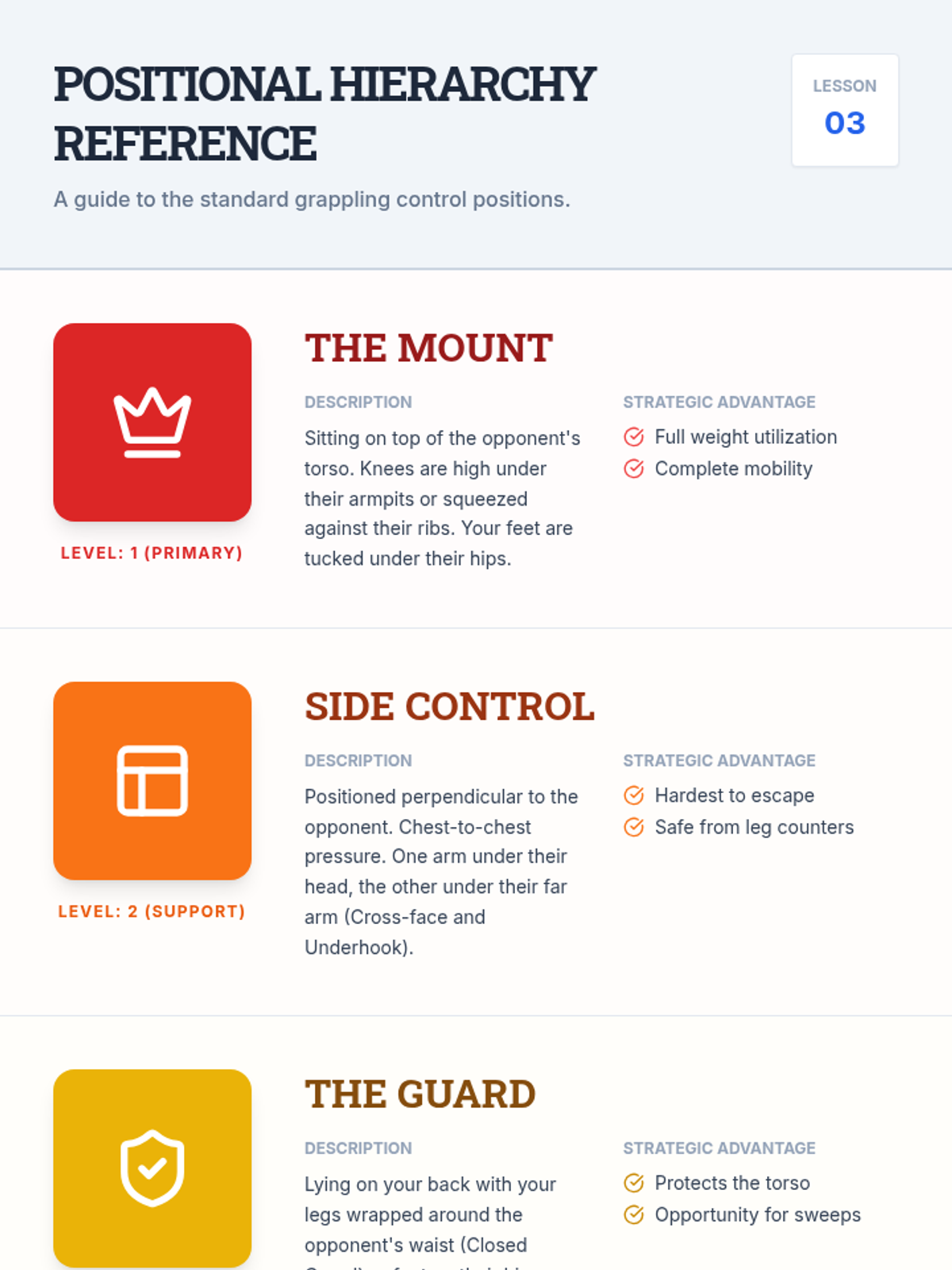
This lesson introduces standard grappling positions: Mount, Side Control, and Guard. Students learn the hierarchy of these positions based on mobility and safety. Solo drills on the mats help students understand hip movement (shrimping/bridging) required for ground movement.
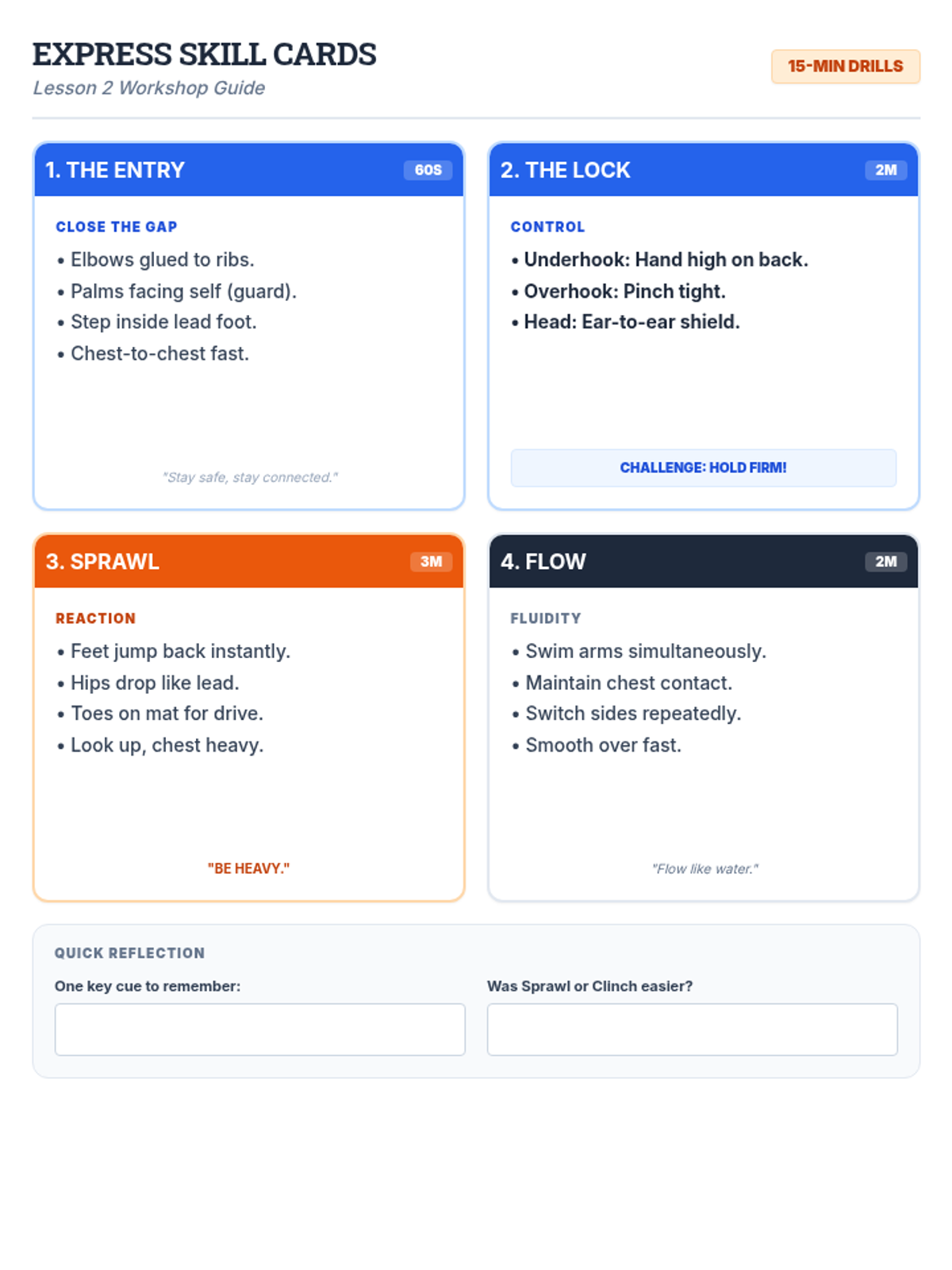
Students learn how to safely close the distance and establish a clinch position to control an opponent's upper body. They practice 'sprawling' to defend against leg tackles, focusing on driving hips down and legs back. The lesson emphasizes control over aggression.
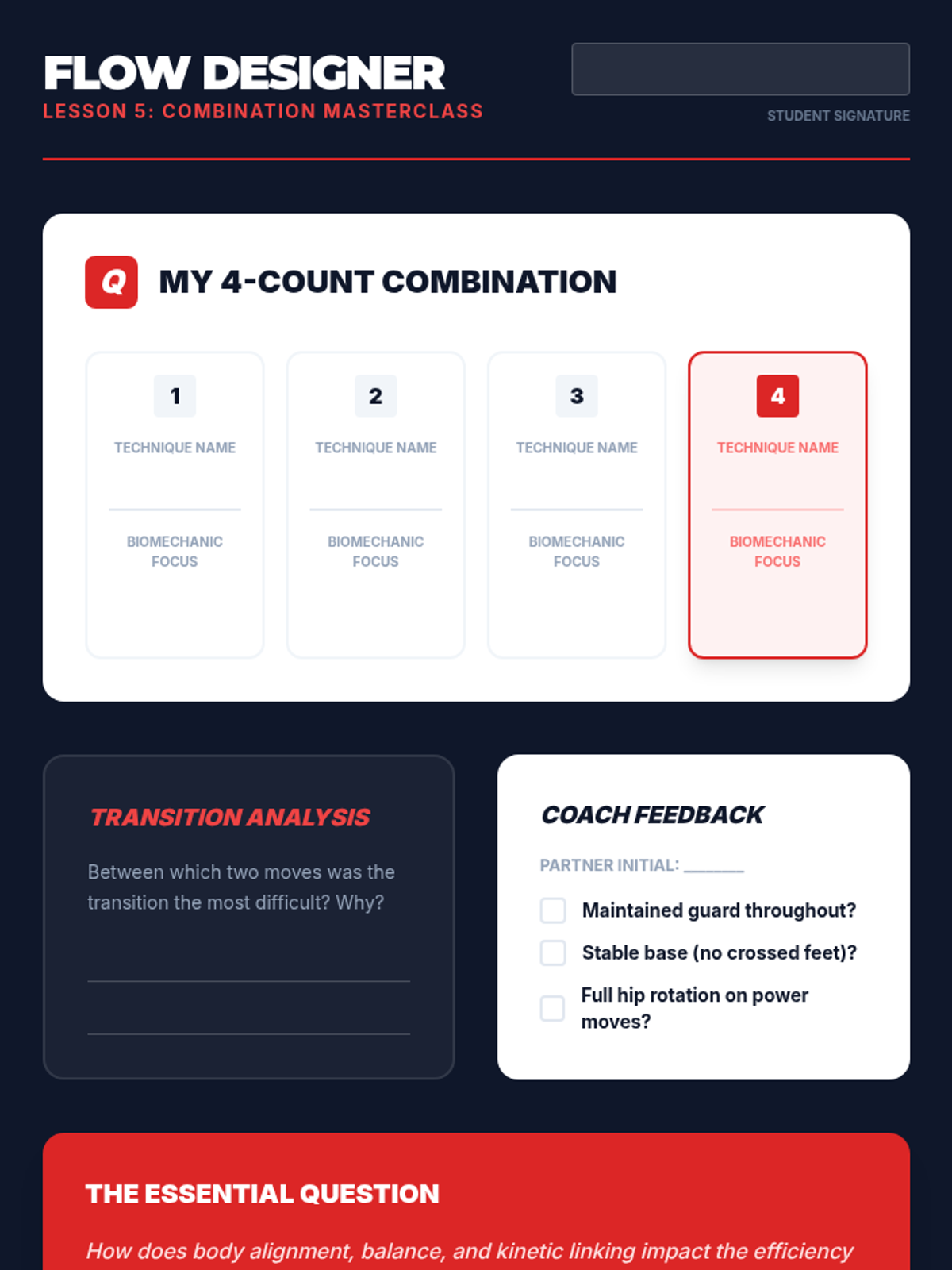
Synthesizes all previous skills into fluid combinations, focusing on rhythm, recovery, and transition between offense and defense.
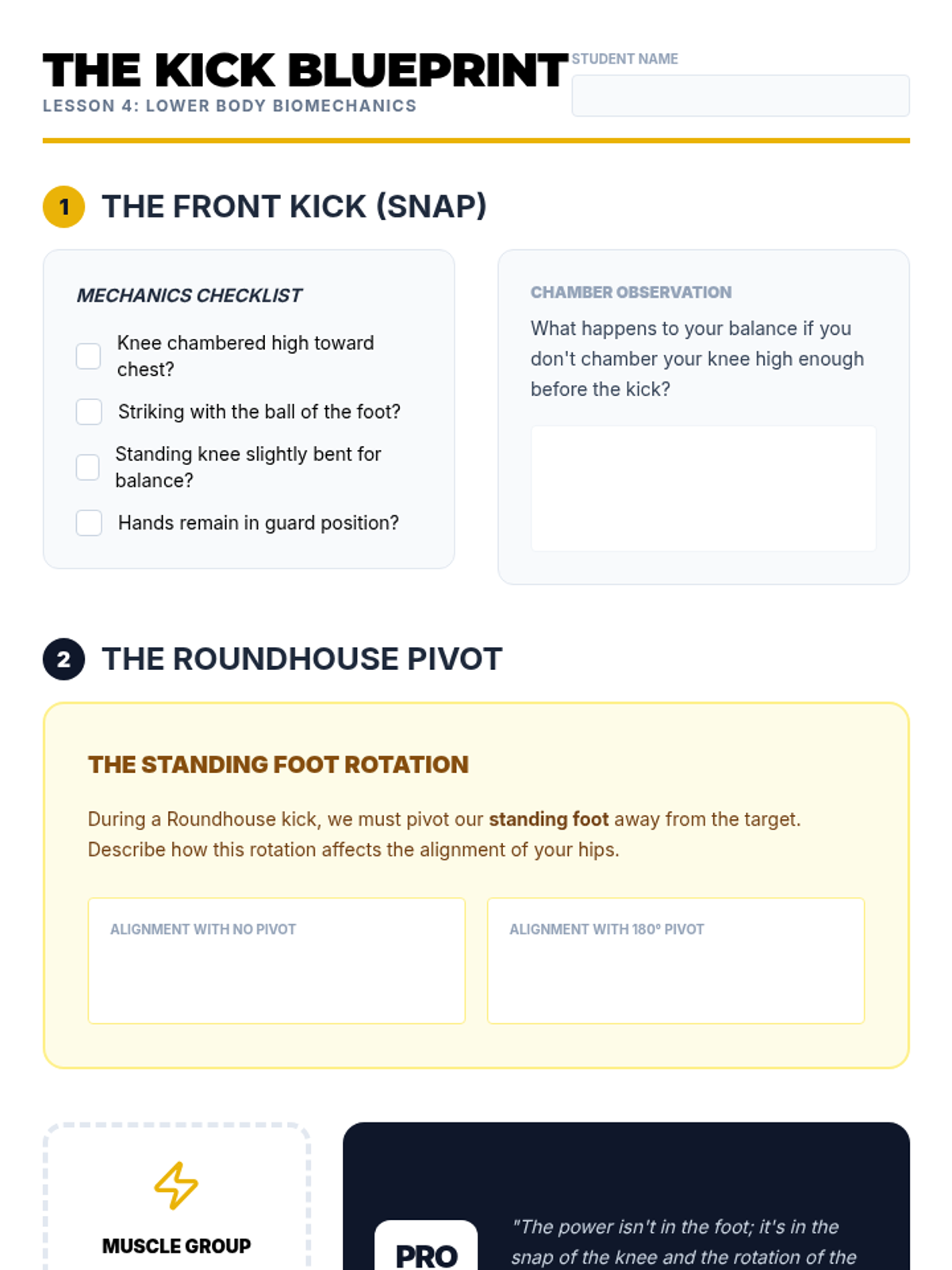
Breaks down the mechanics of front and roundhouse kicks, emphasizing the importance of chambering and pivoting.
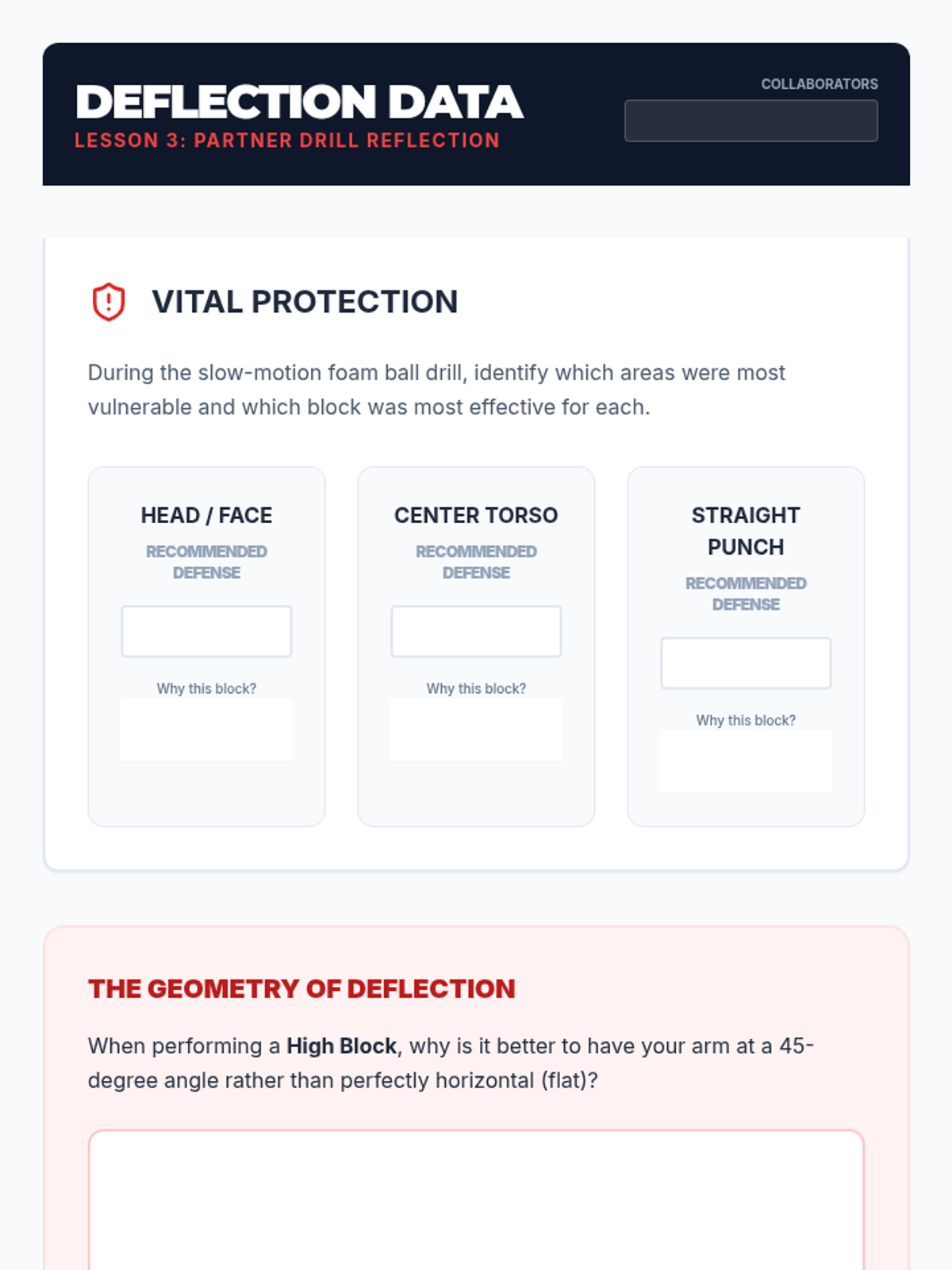
Teaches students how to deflect energy through high blocks and parries, focusing on reaction time and protecting vital zones.
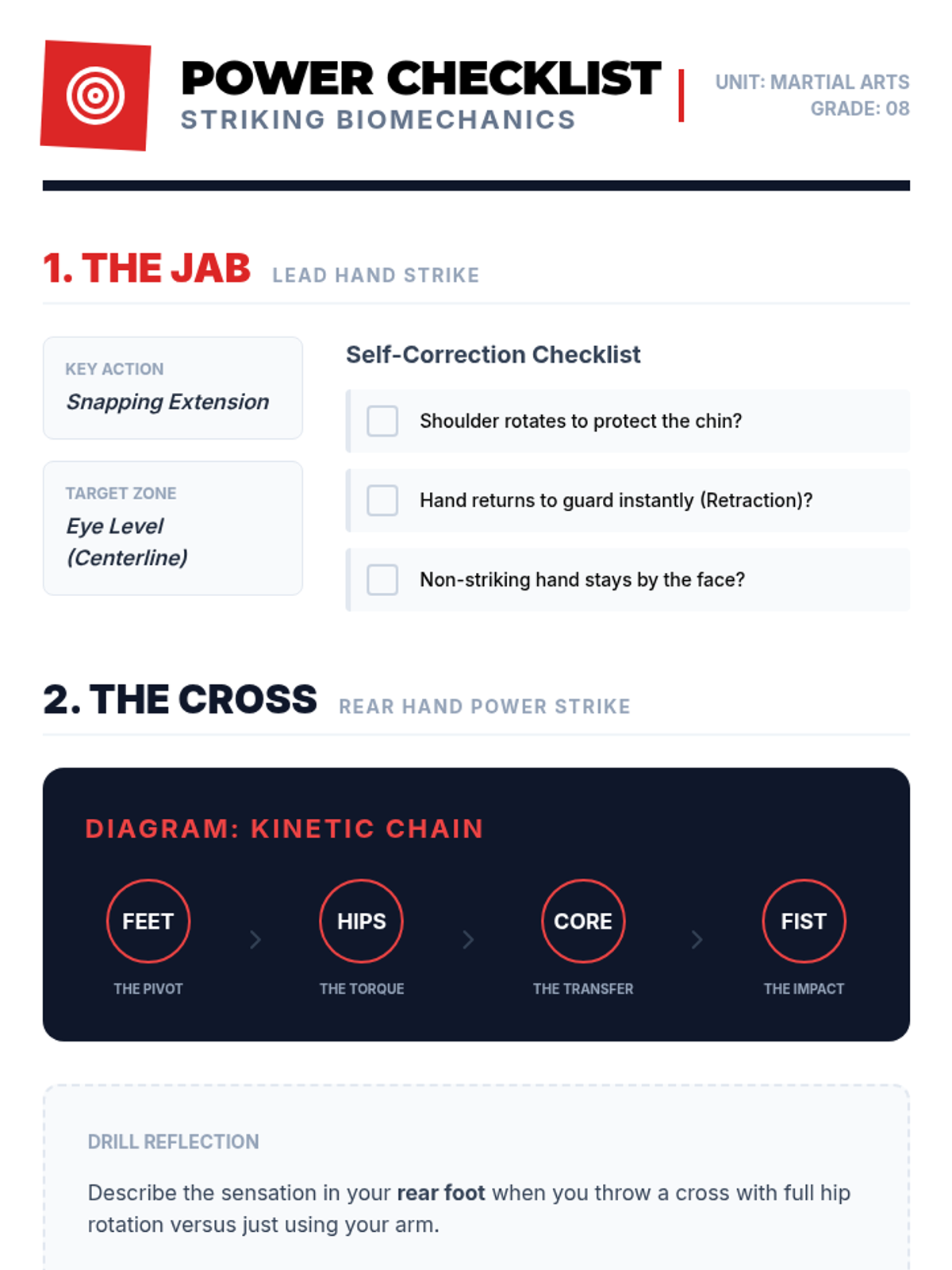
Introduces the jab and cross, emphasizing hip rotation and kinetic linking to generate force safely and efficiently.
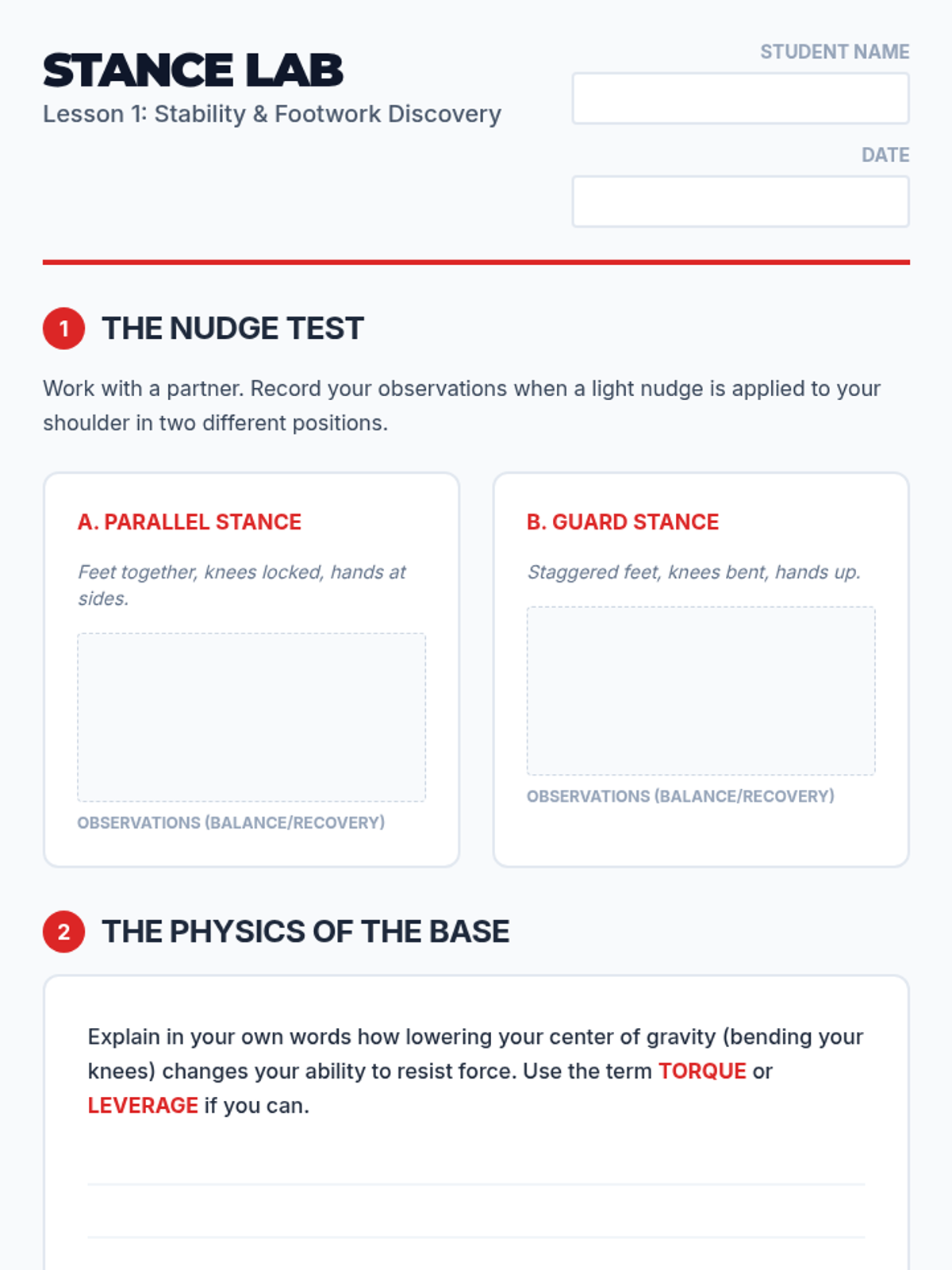
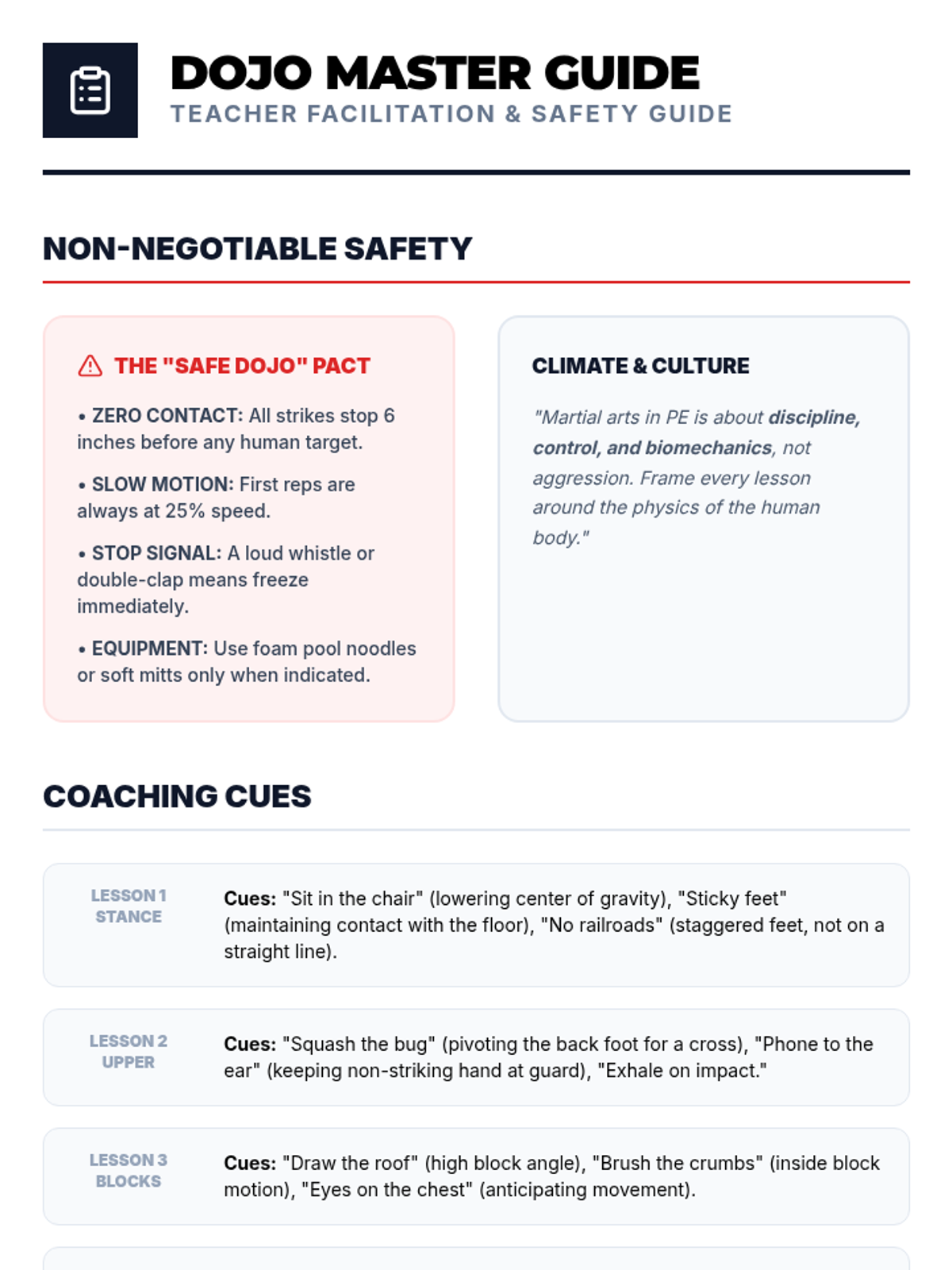
Focuses on establishing a stable base and moving efficiently. Students explore the physics of stability and practice non-crossing footwork.
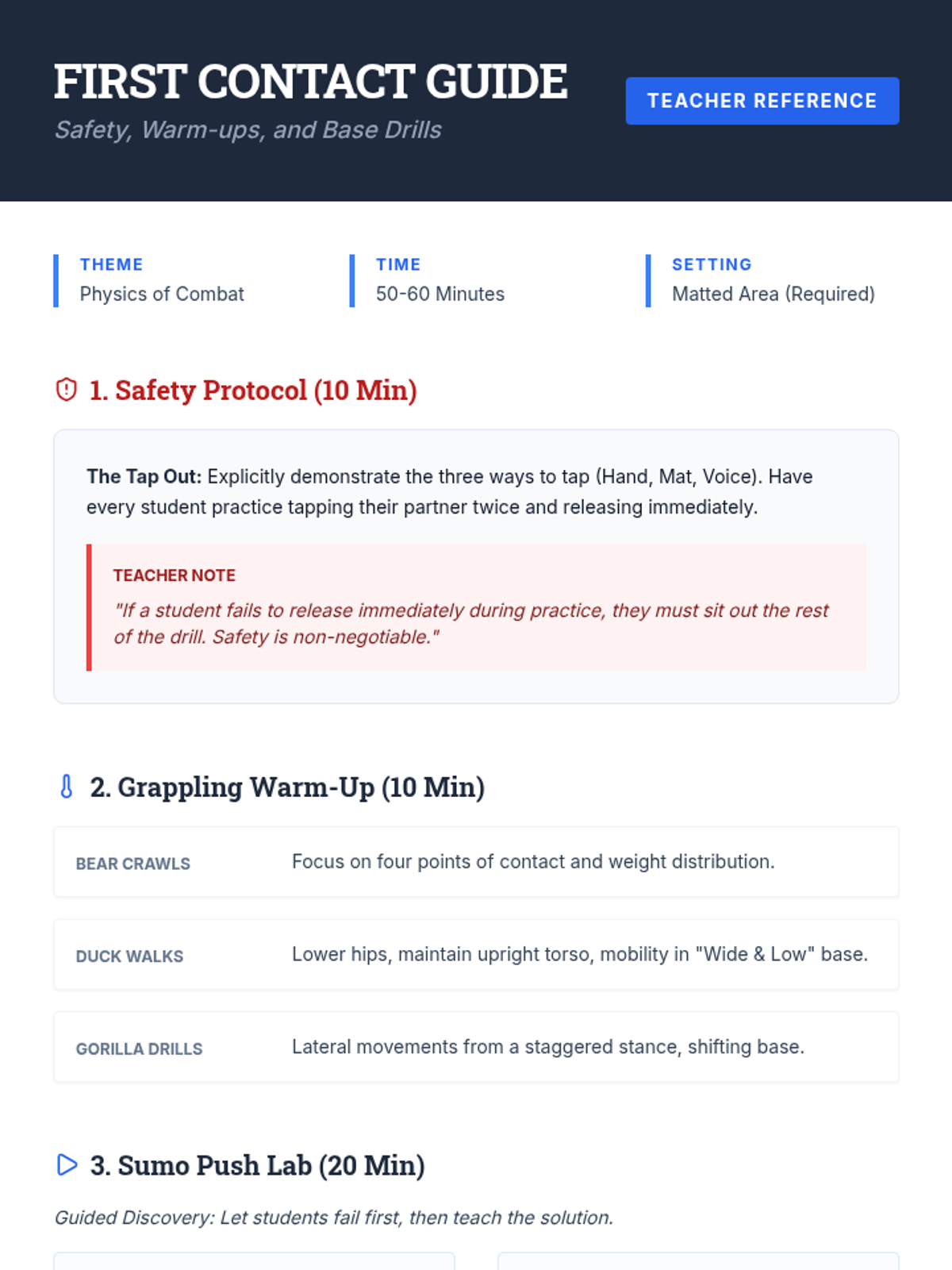
Students investigate the concept of 'base' through push-pull games, learning how stance width and knee bend affect stability. They practice recovering their balance when disrupted by a partner. The lesson establishes the rules of safe contact and tapping out.
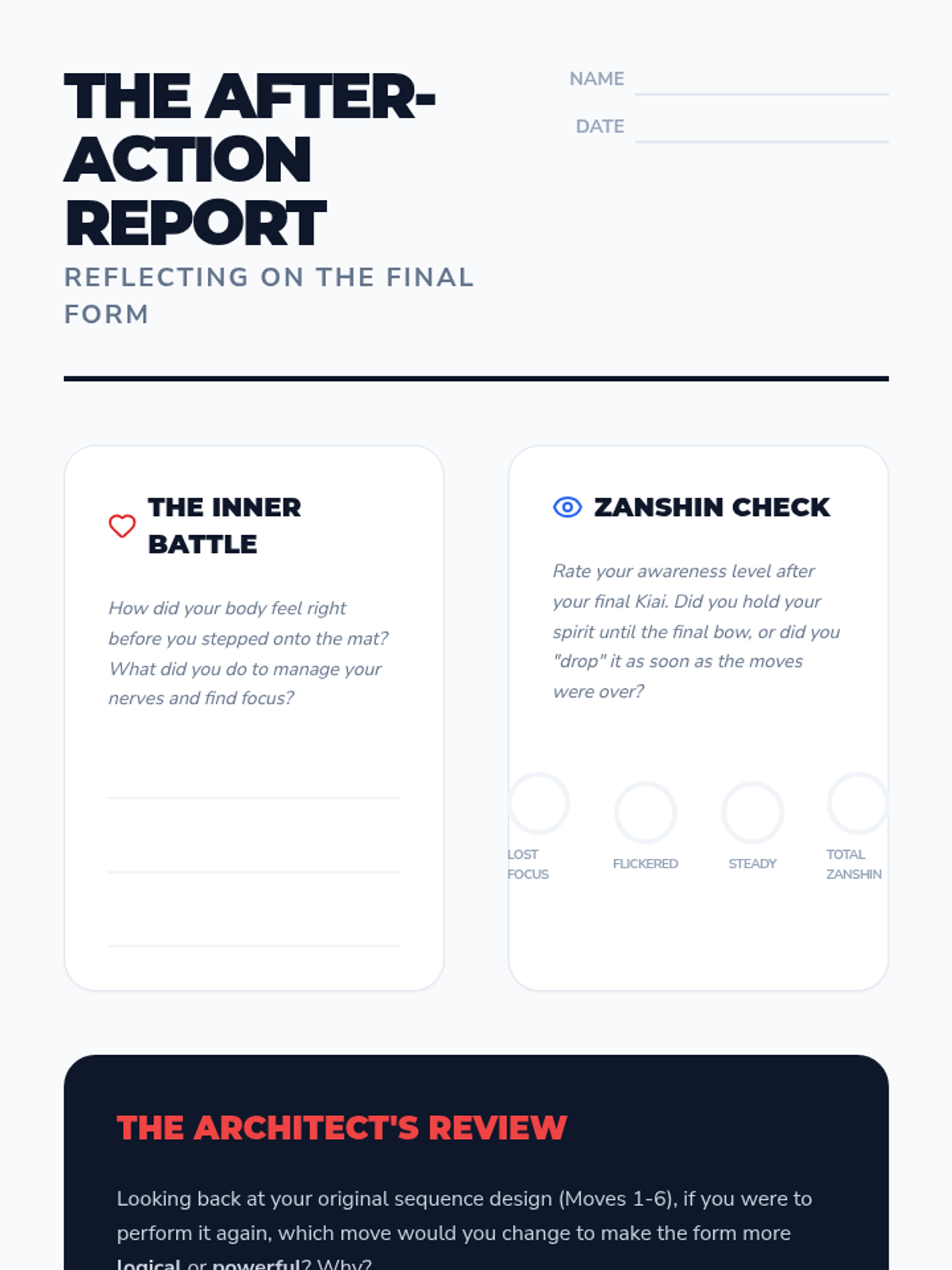
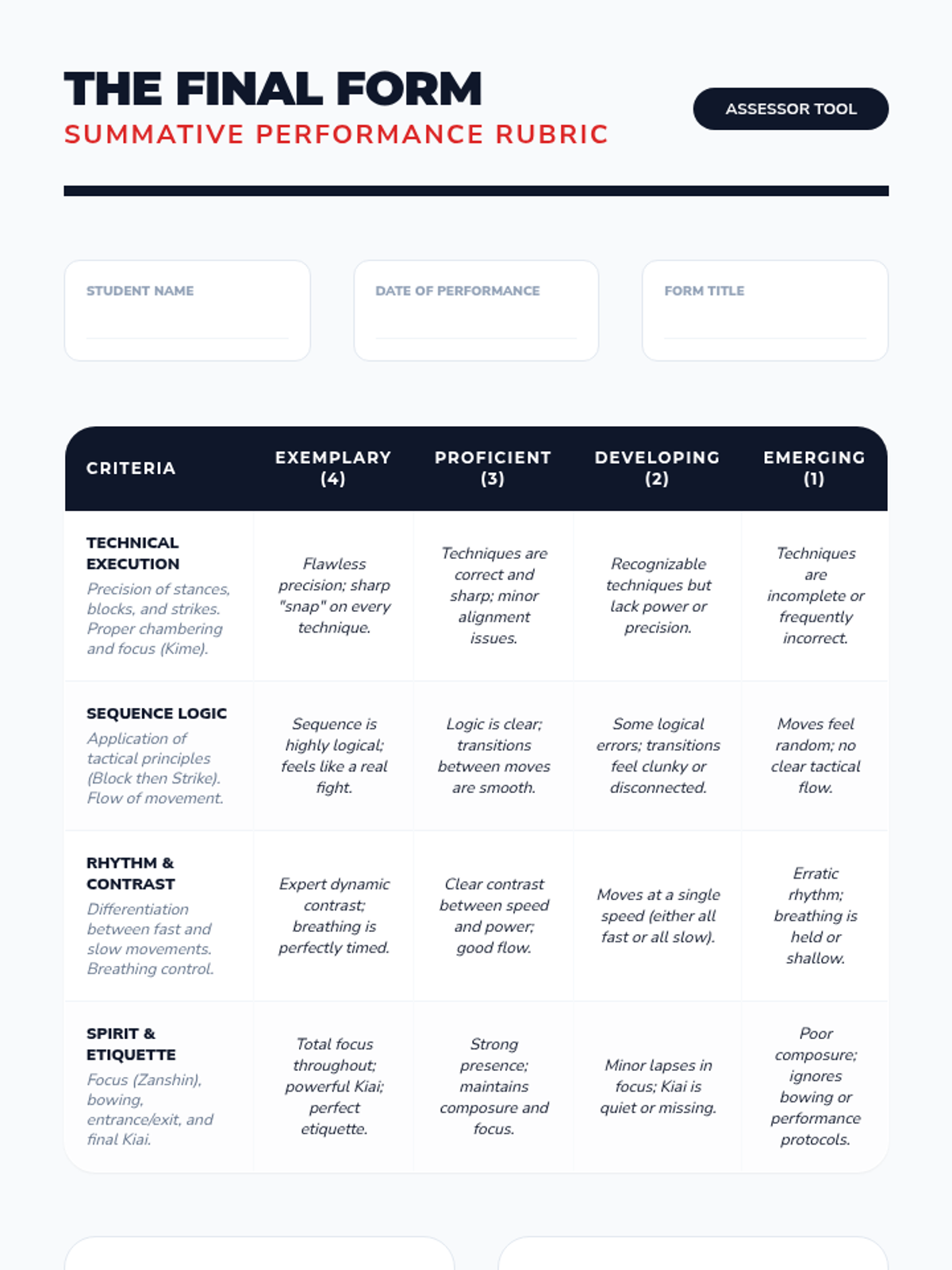
The sequence culminates in a formal performance. Students demonstrate their original forms with an emphasis on zanshin (awareness), respect, and technical proficiency.
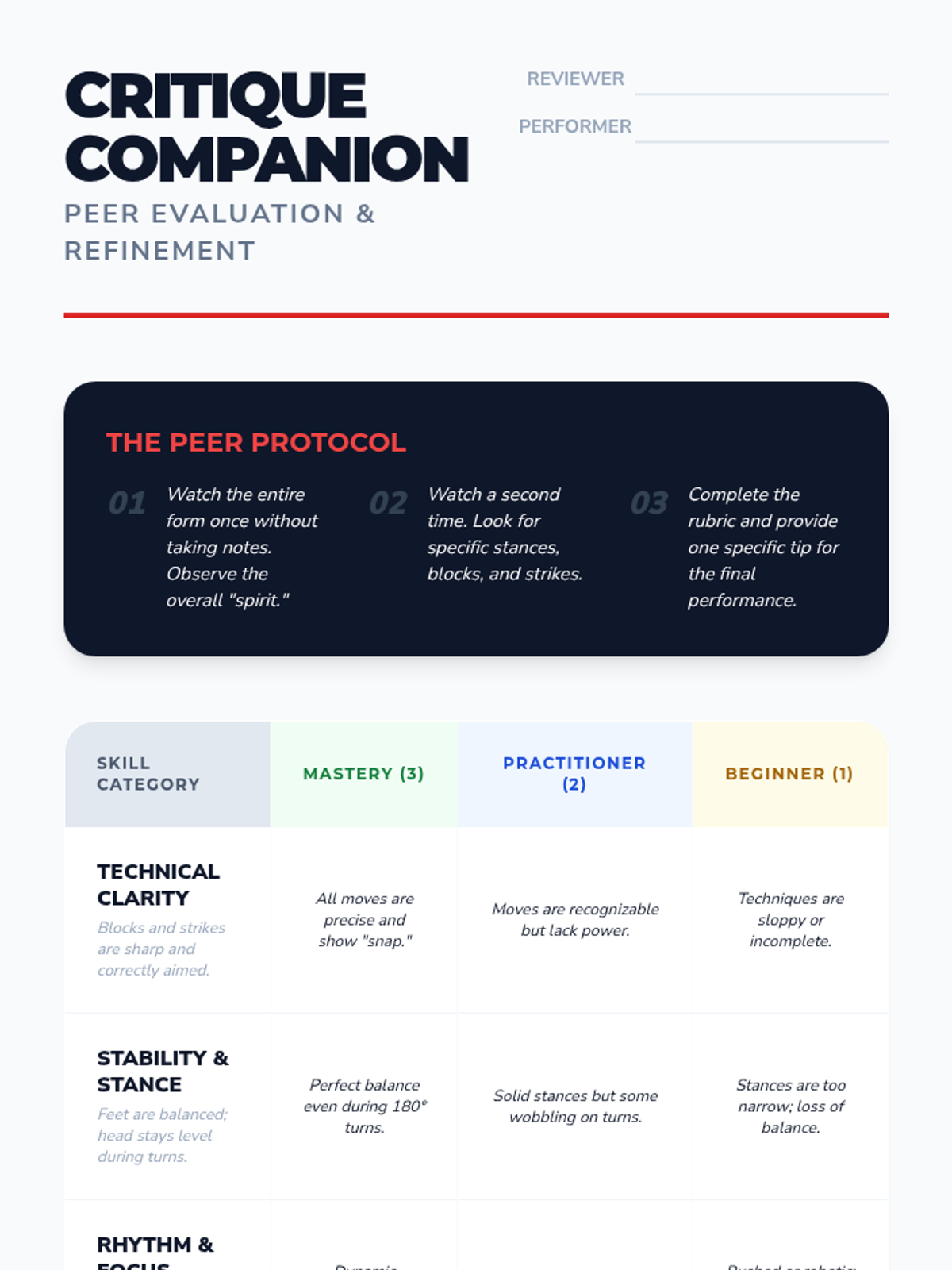
Students refine their original forms through a peer-review process. They use structured feedback to improve technical clarity, stability, and focus before the final performance.
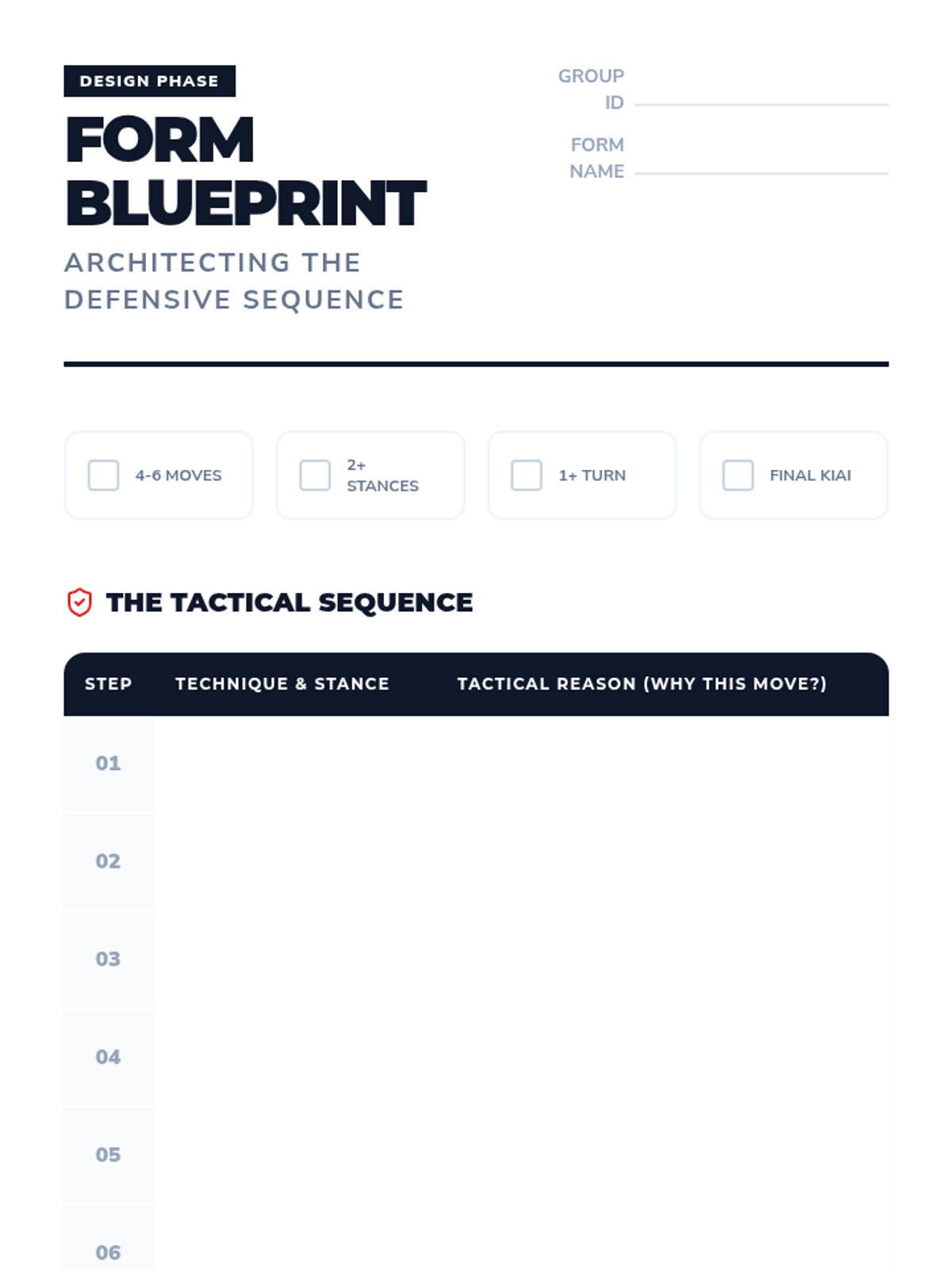
Applying their knowledge of stances, blocks, and strikes, students work in groups to design a logical and effective defensive sequence of 4-6 moves, justifying their tactical choices.
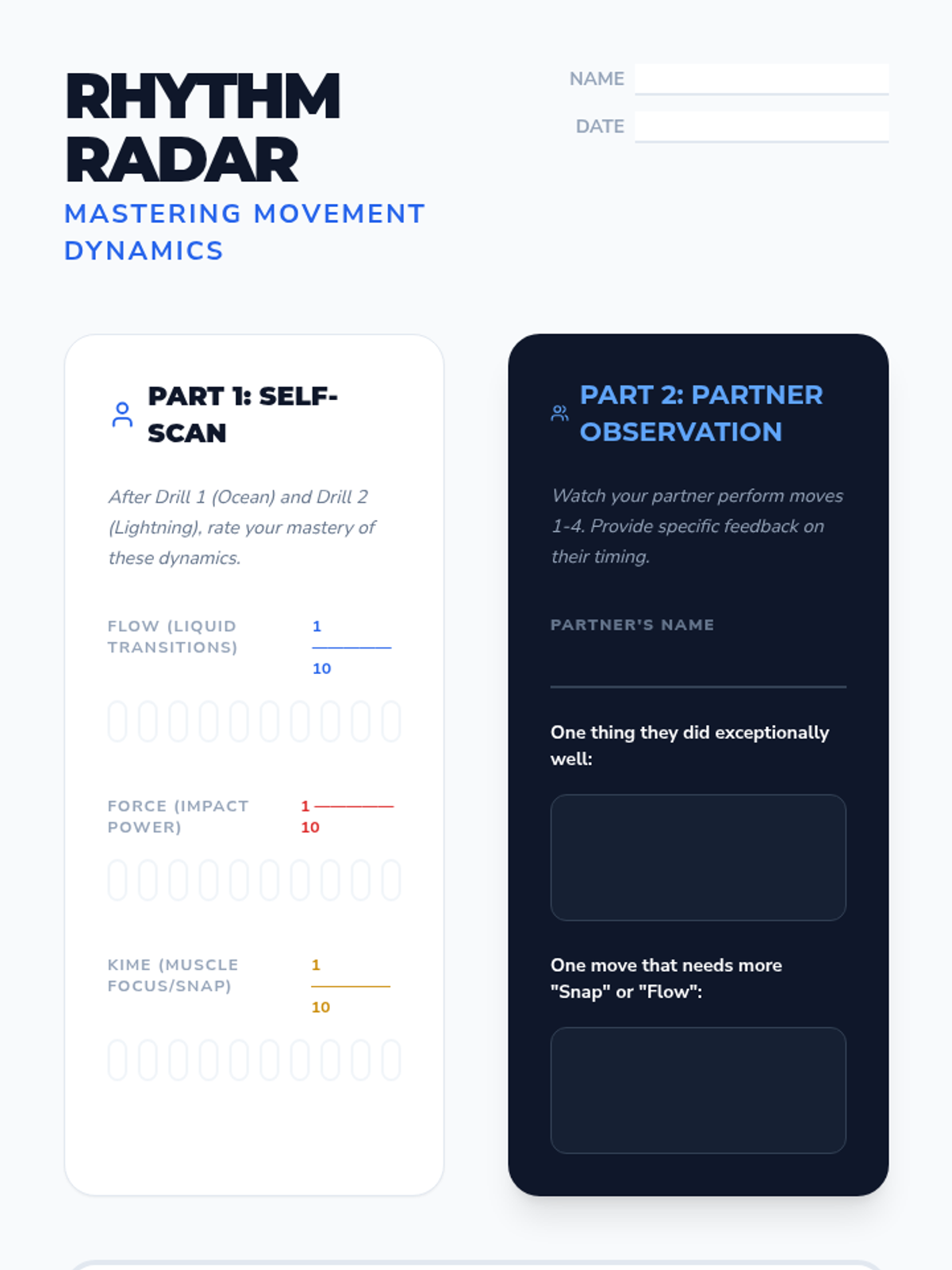
This lesson focuses on the aesthetics and physics of movement. Students learn to contrast fast, powerful strikes with slow, controlled transitions, developing kinesthetic awareness and 'kime' (focus).
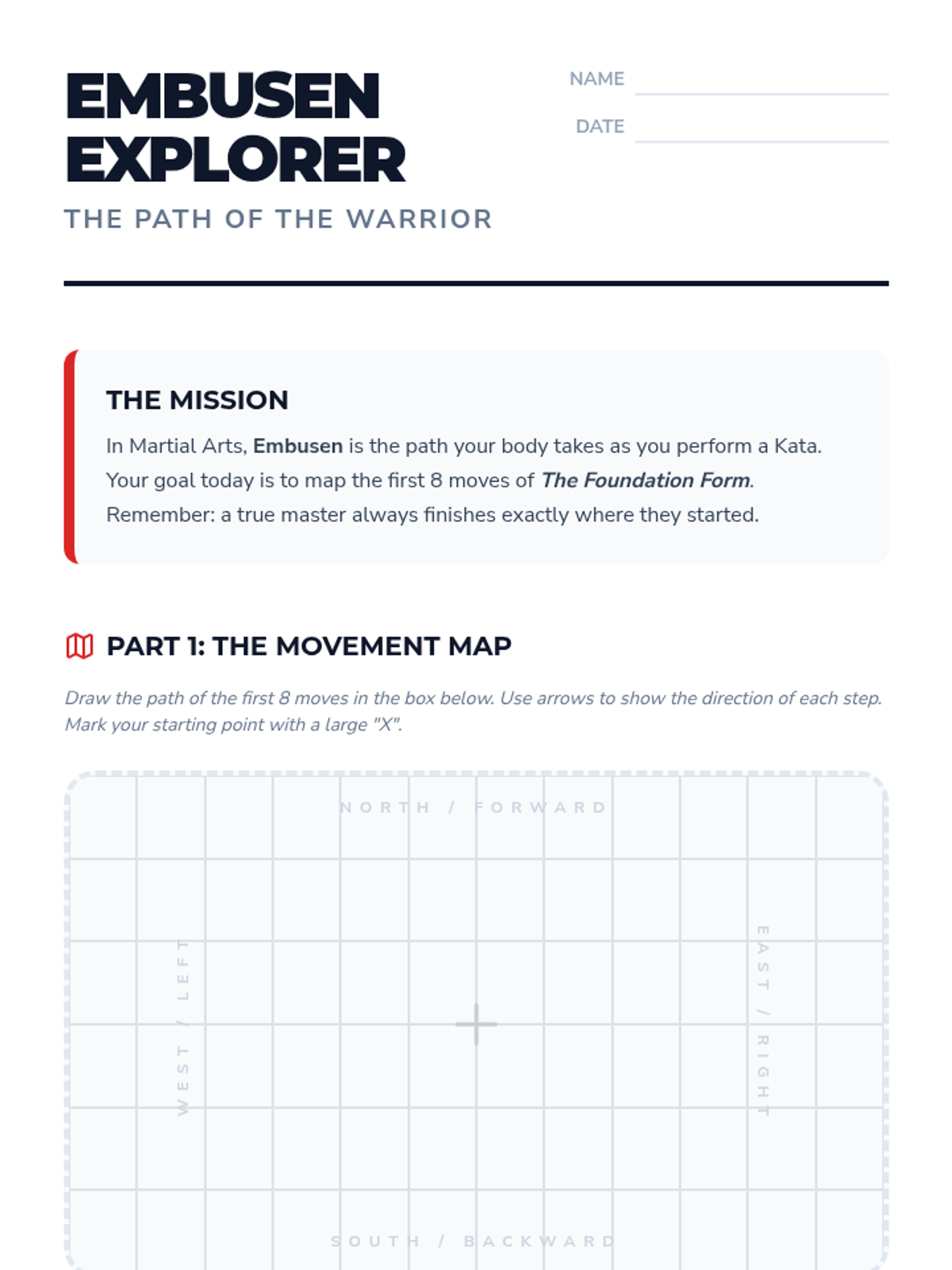
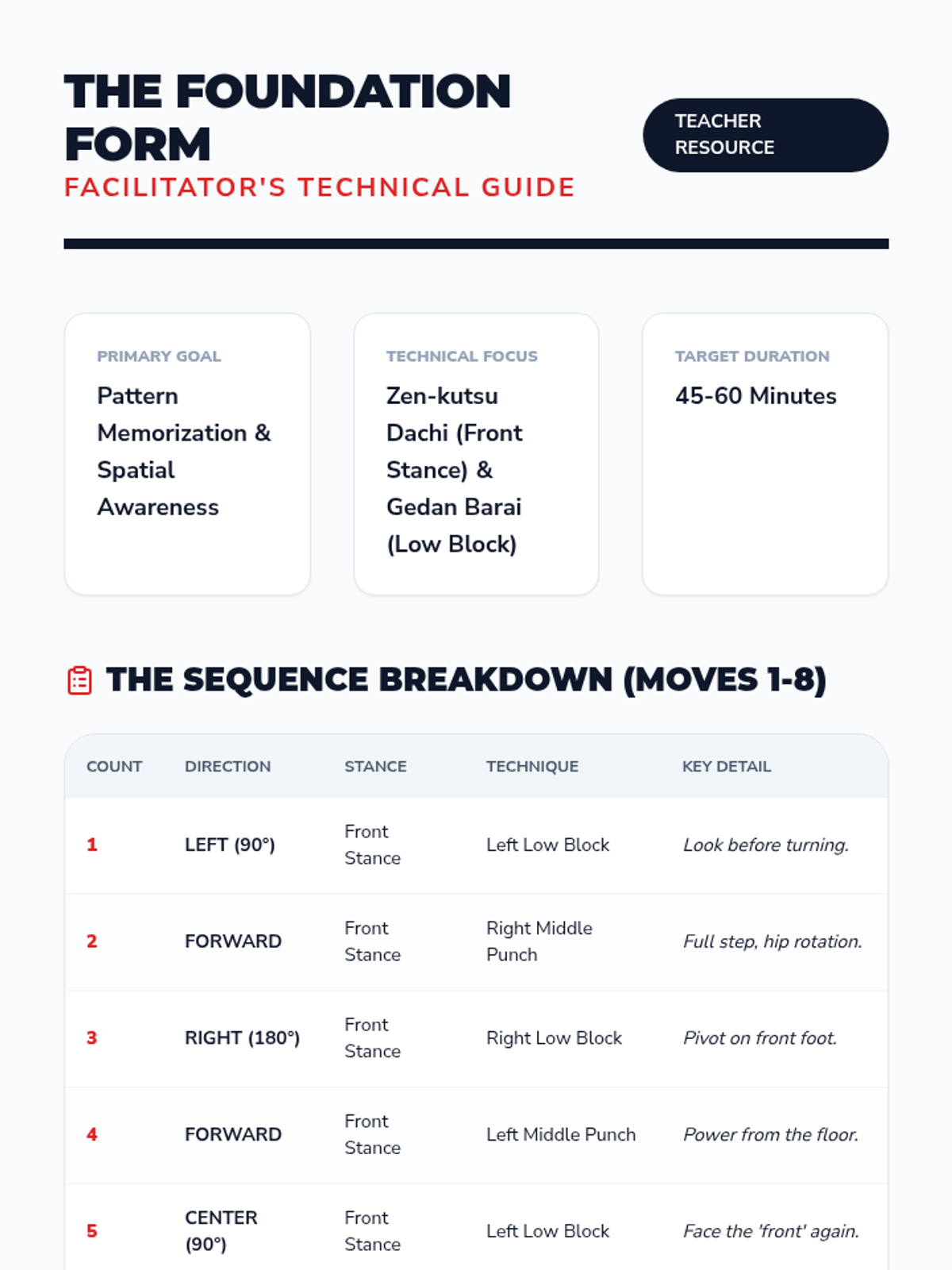
Students explore the fundamentals of martial arts forms, focusing on directional movement (embusen) and the concept of 'fighting' imaginary opponents. They begin learning a basic beginner form to understand pattern memorization.
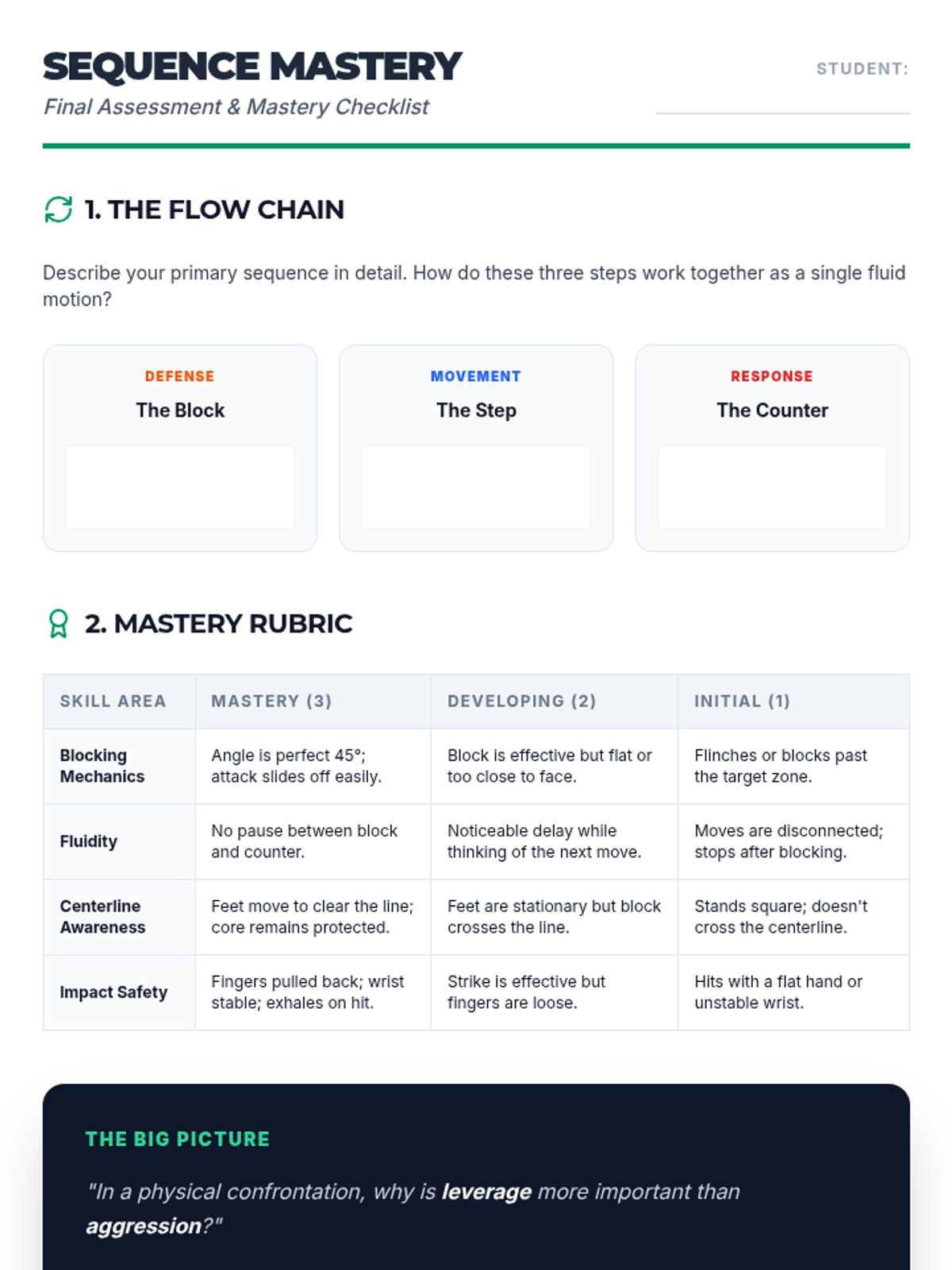
Integration of blocks and strikes into fluid sequences. Students practice 'Block-Step-Counter' combinations with partners.
Introduction to the Palm Heel Strike as a safe and effective counter-measure. Focuses on target areas and force transfer.
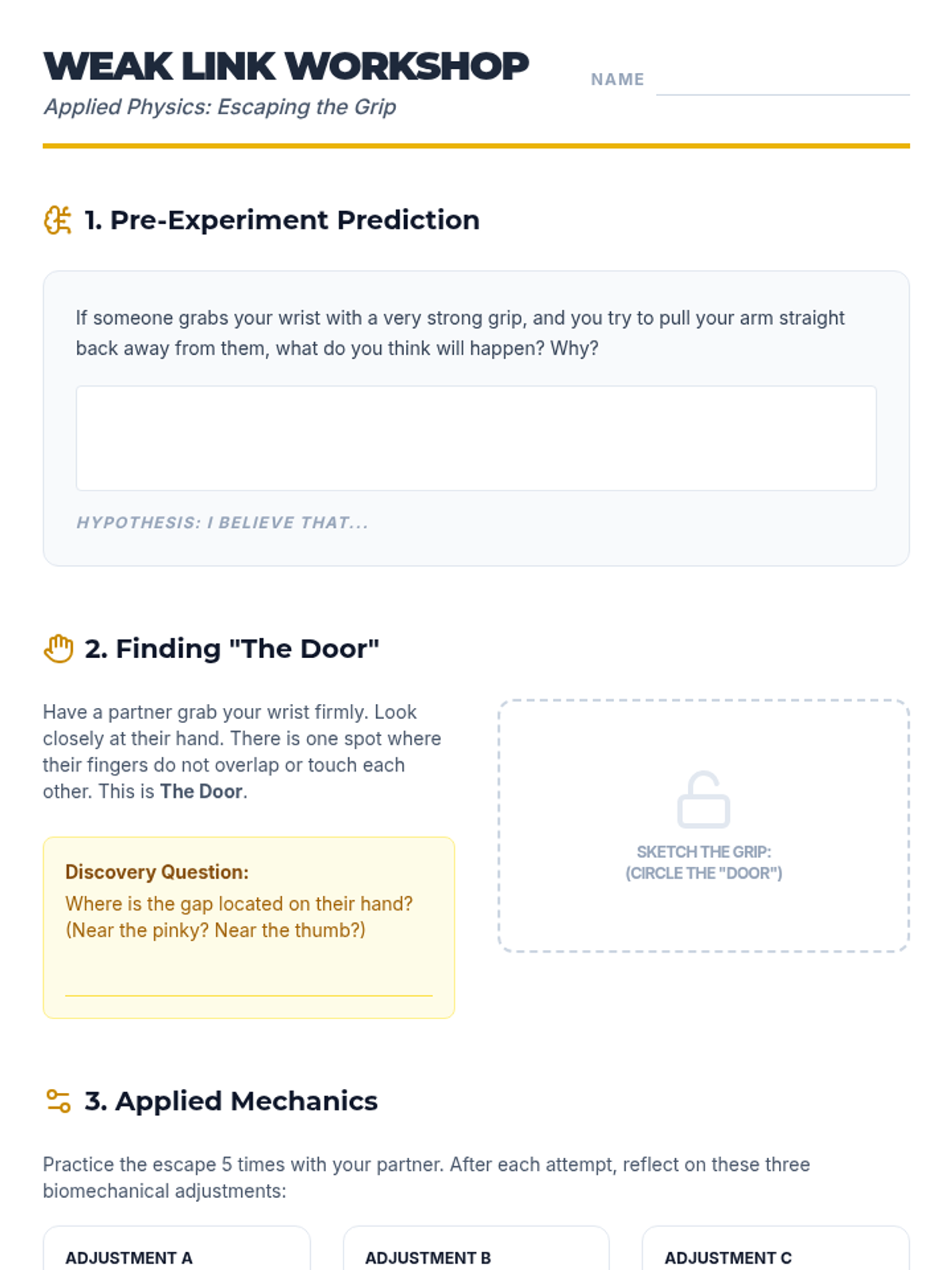
Exploration of joint mechanics and leverage to escape wrist grabs. Focuses on the thumb as the 'weak link' in a grip.
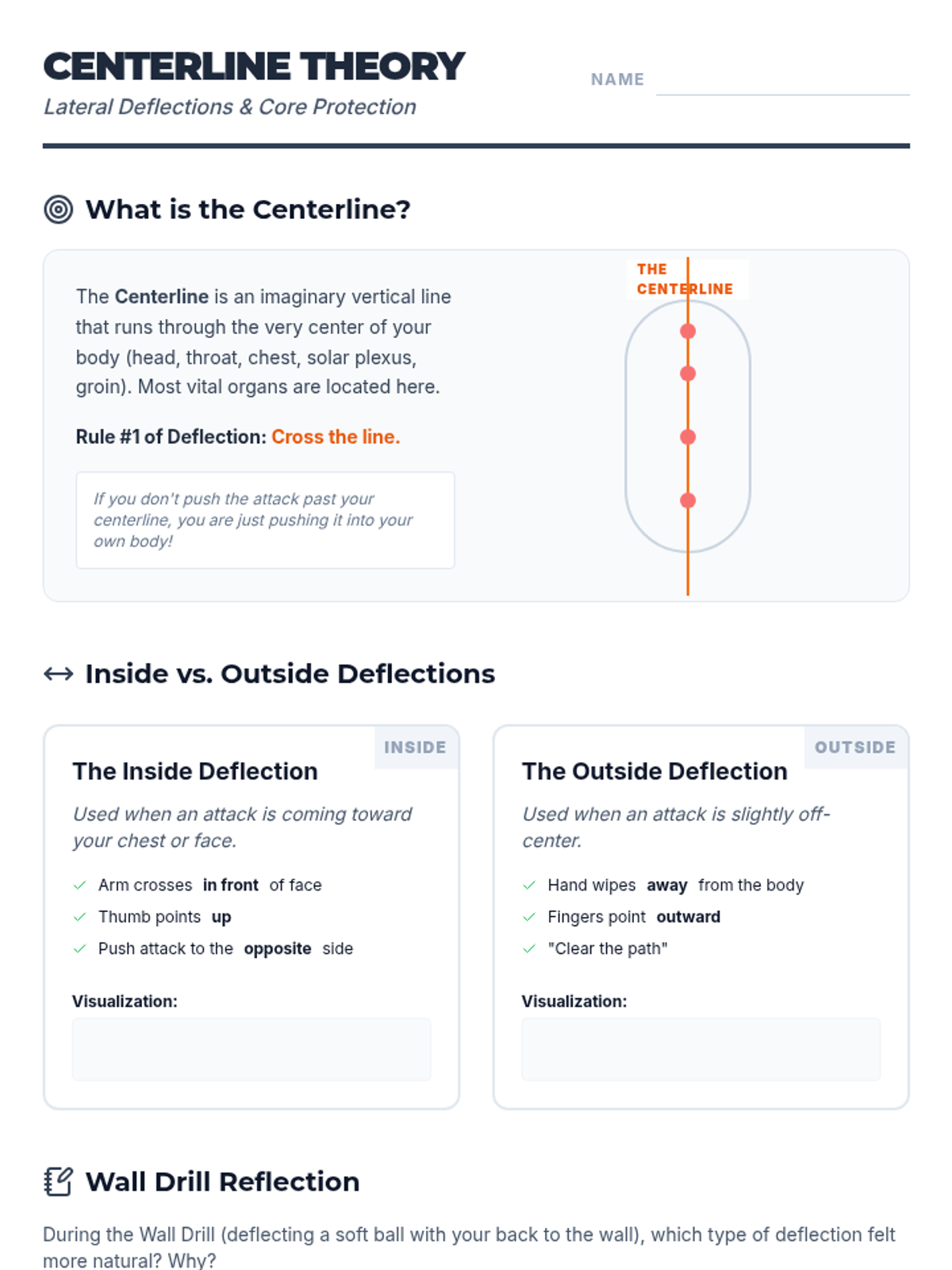
Instruction on lateral deflections and parrying. Focuses on 'crossing the centerline' and sweeping attacks away from the body's core.