Fundamental techniques for soccer, volleyball, football, and basketball alongside strategic gameplay and communication skills. Emphasizes sportsmanship and collaborative tactics within a competitive team environment.
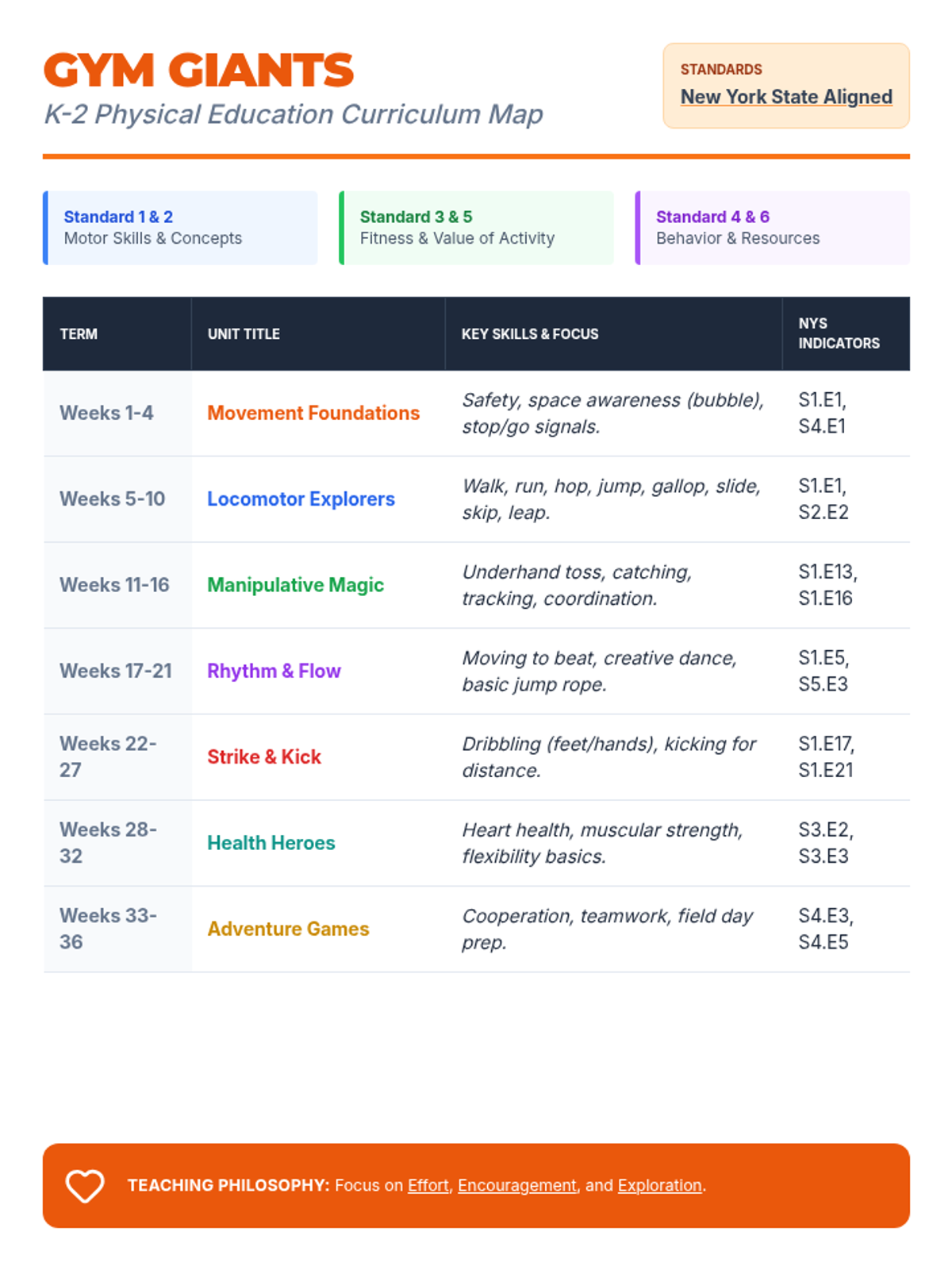
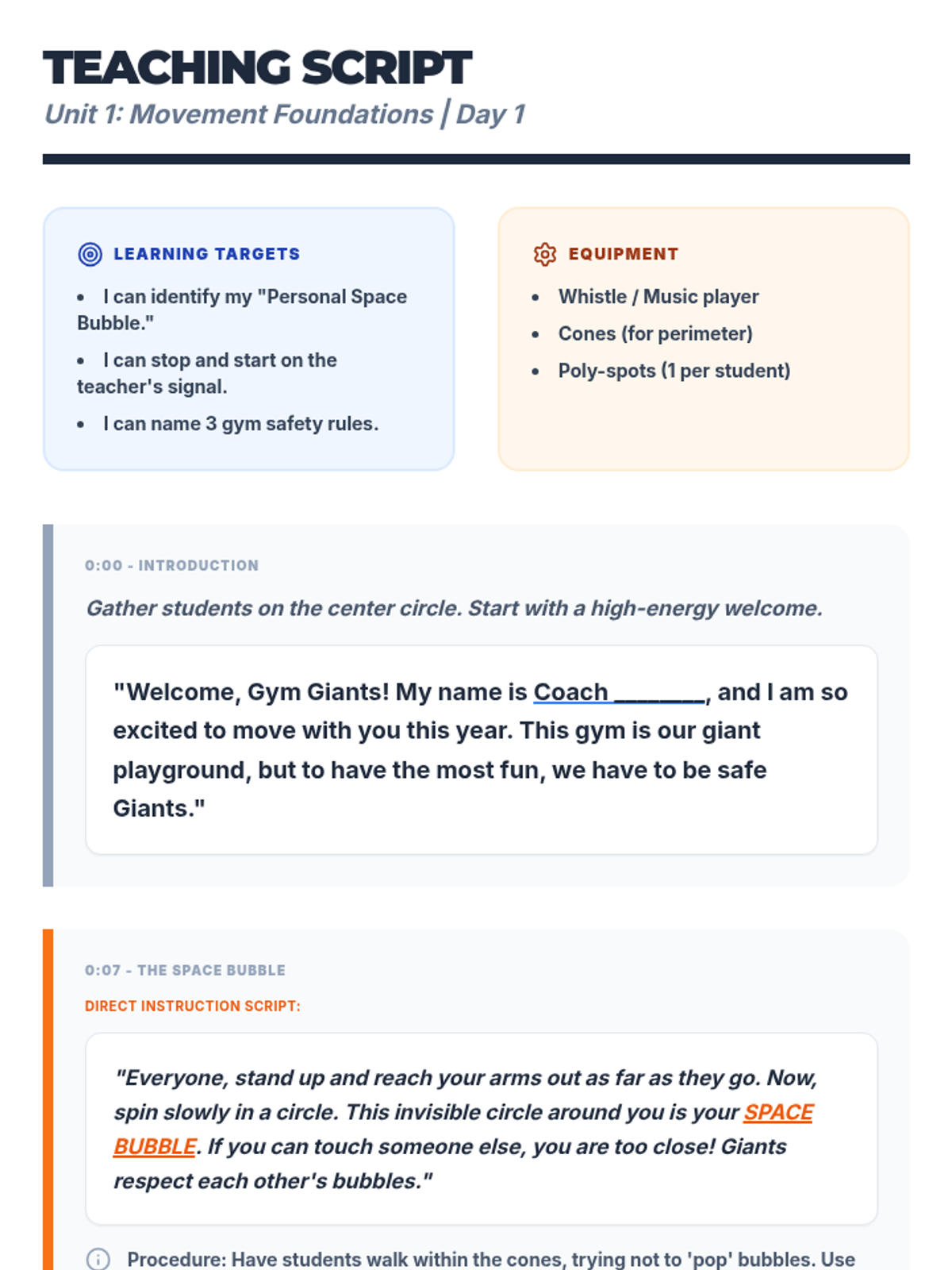
Focuses on establishing gym rules, safety procedures, personal vs. general space, and initial movement concepts to create a positive learning environment.
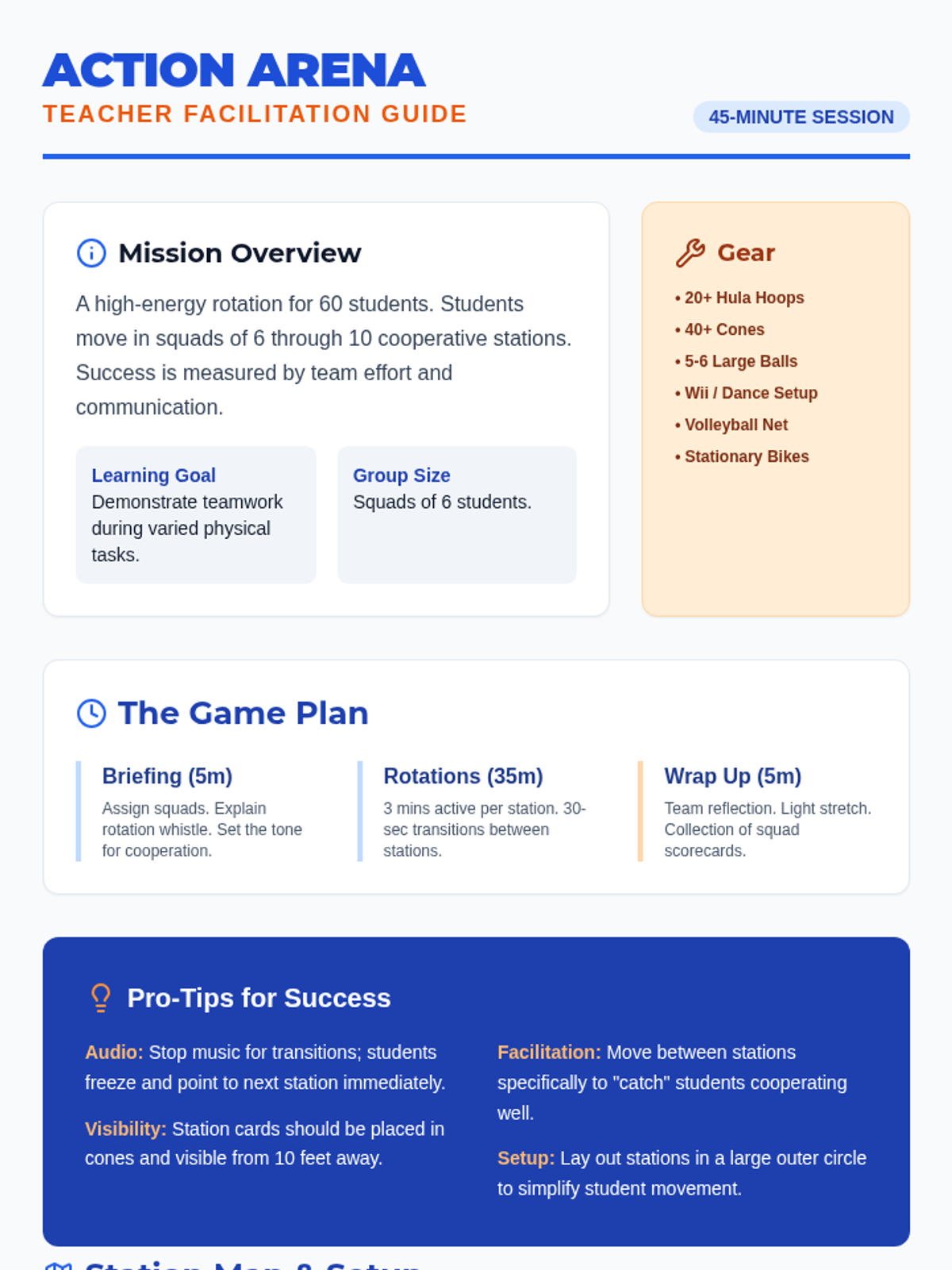
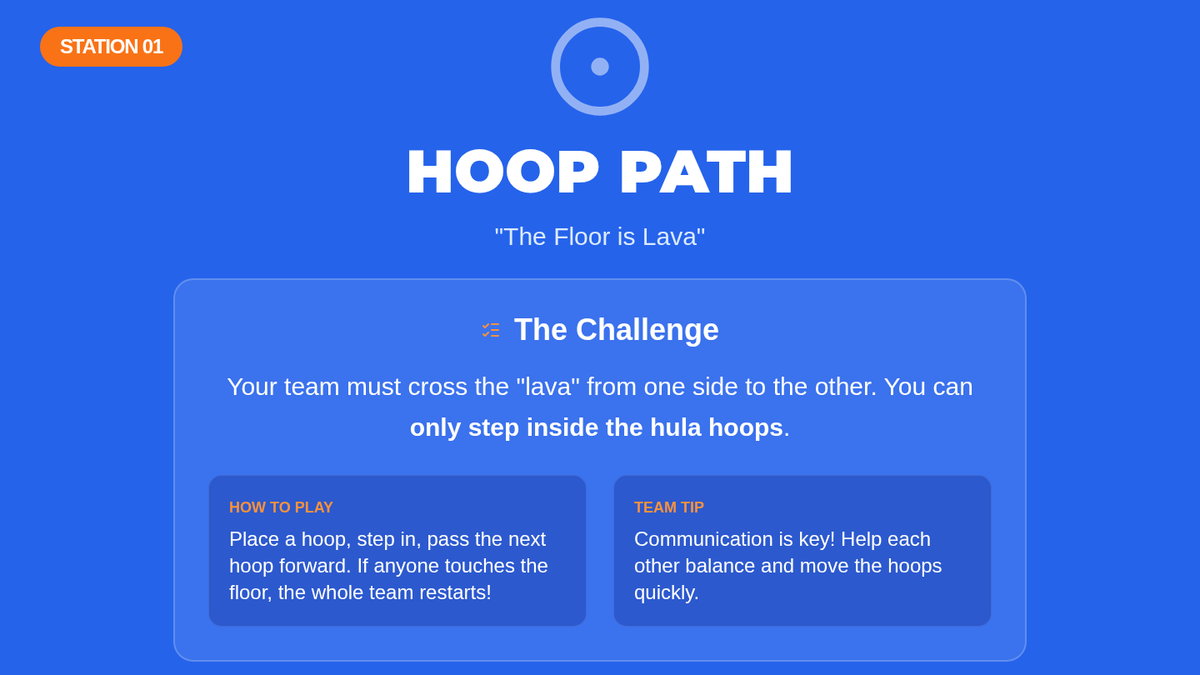
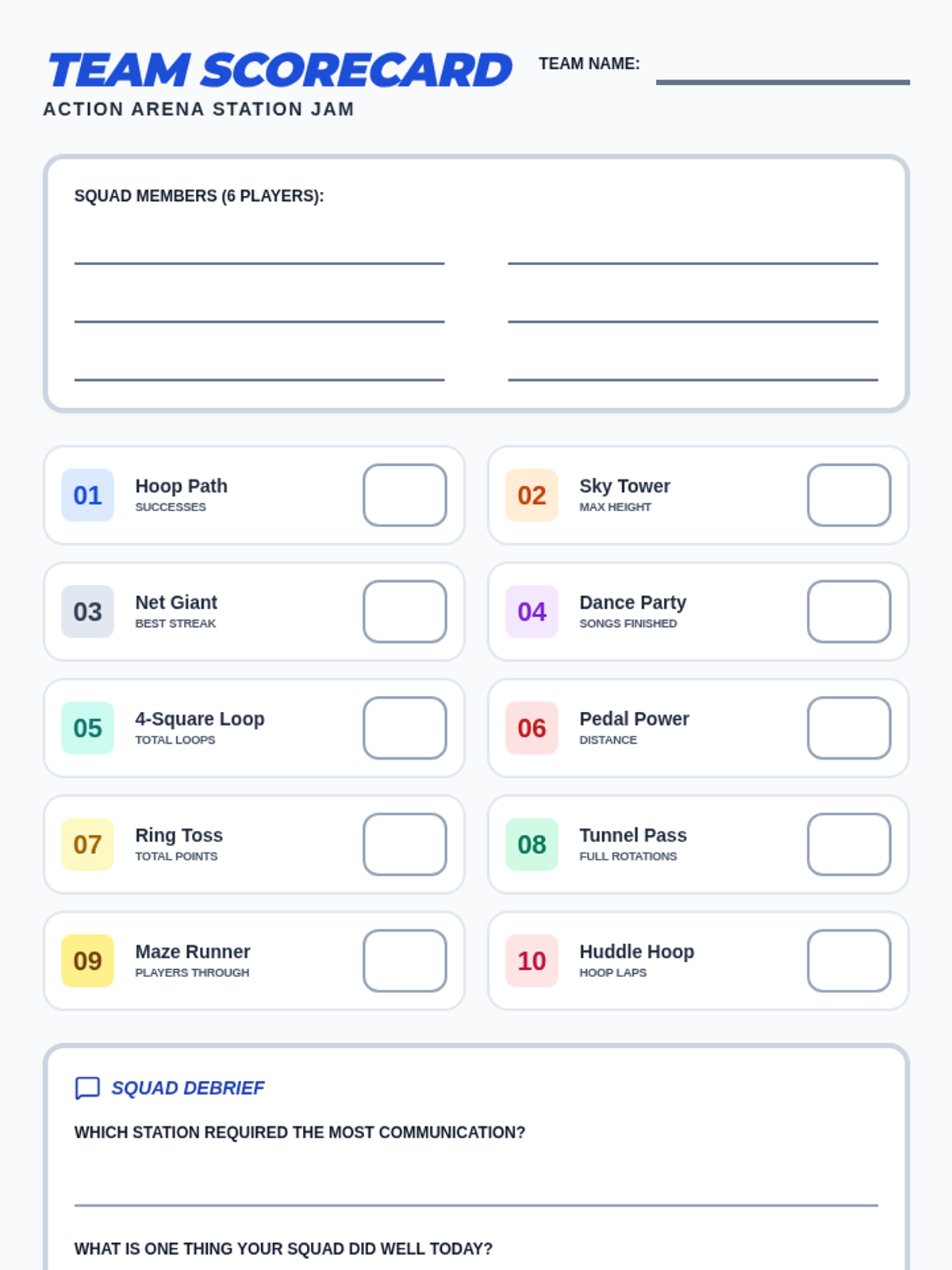
A high-energy, 45-minute PE lesson featuring 10 active stations designed for large groups. Students rotate through teamwork-based challenges using hoops, balls, cones, and technology to build cooperation and fitness.
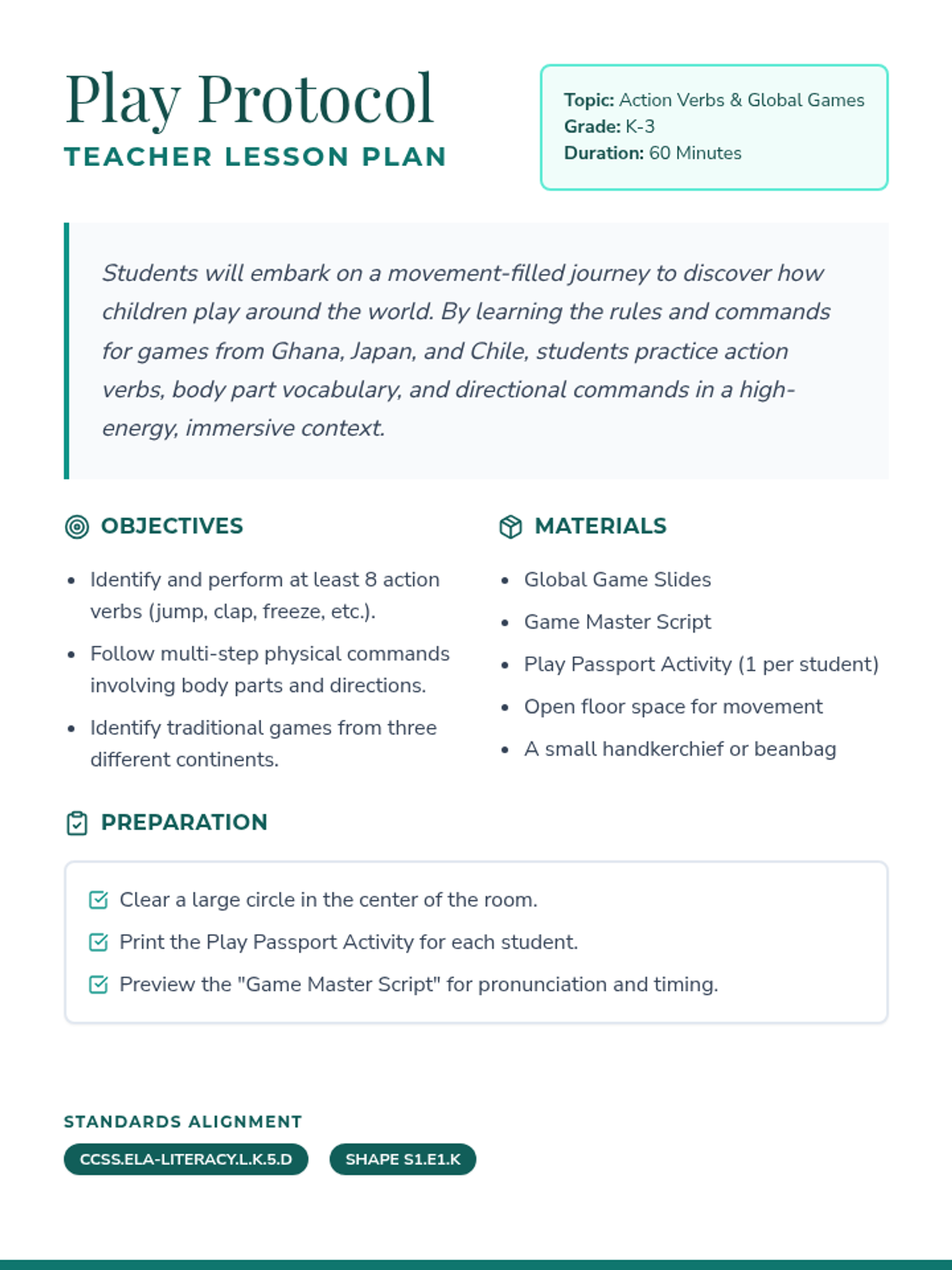
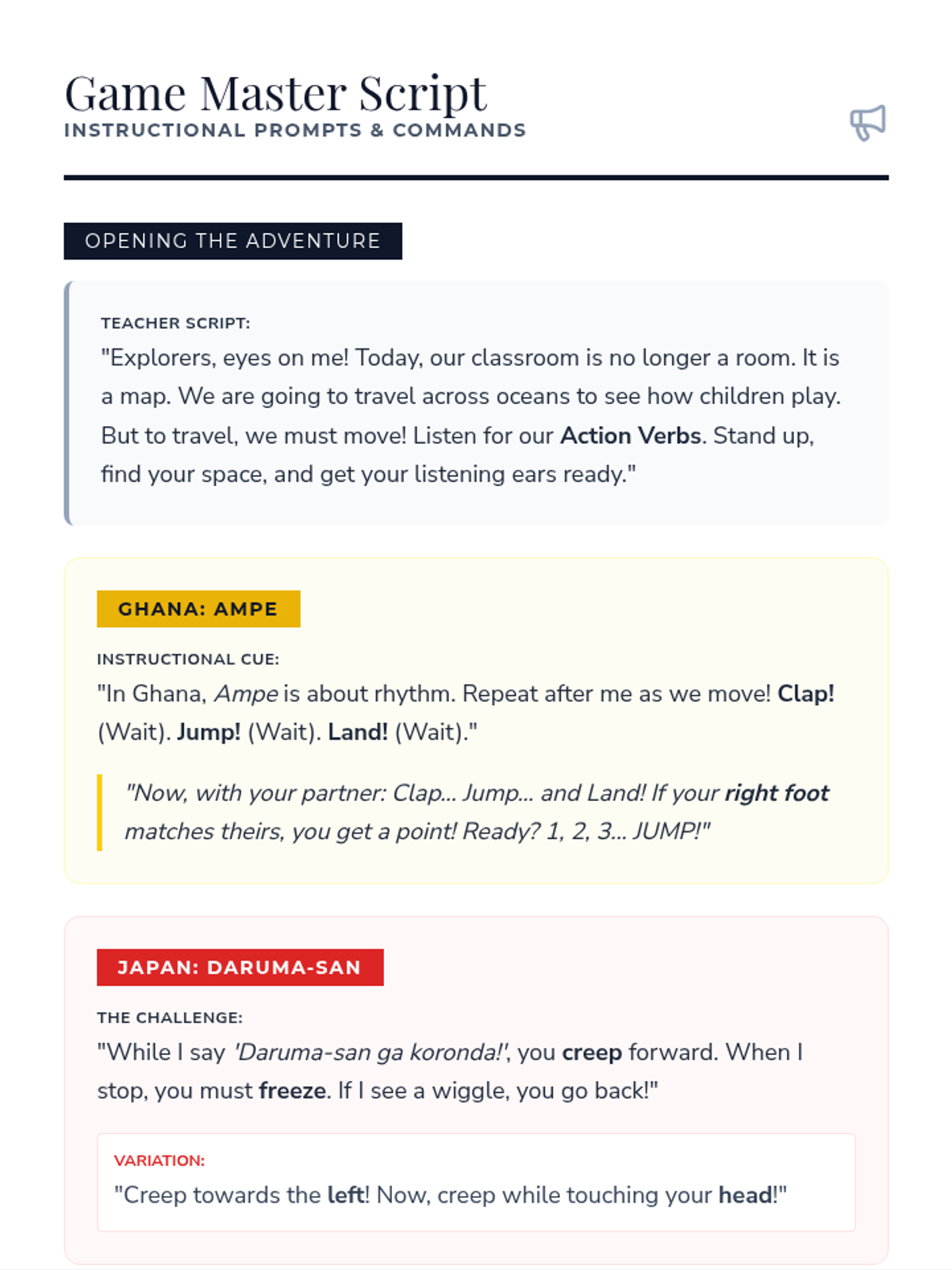
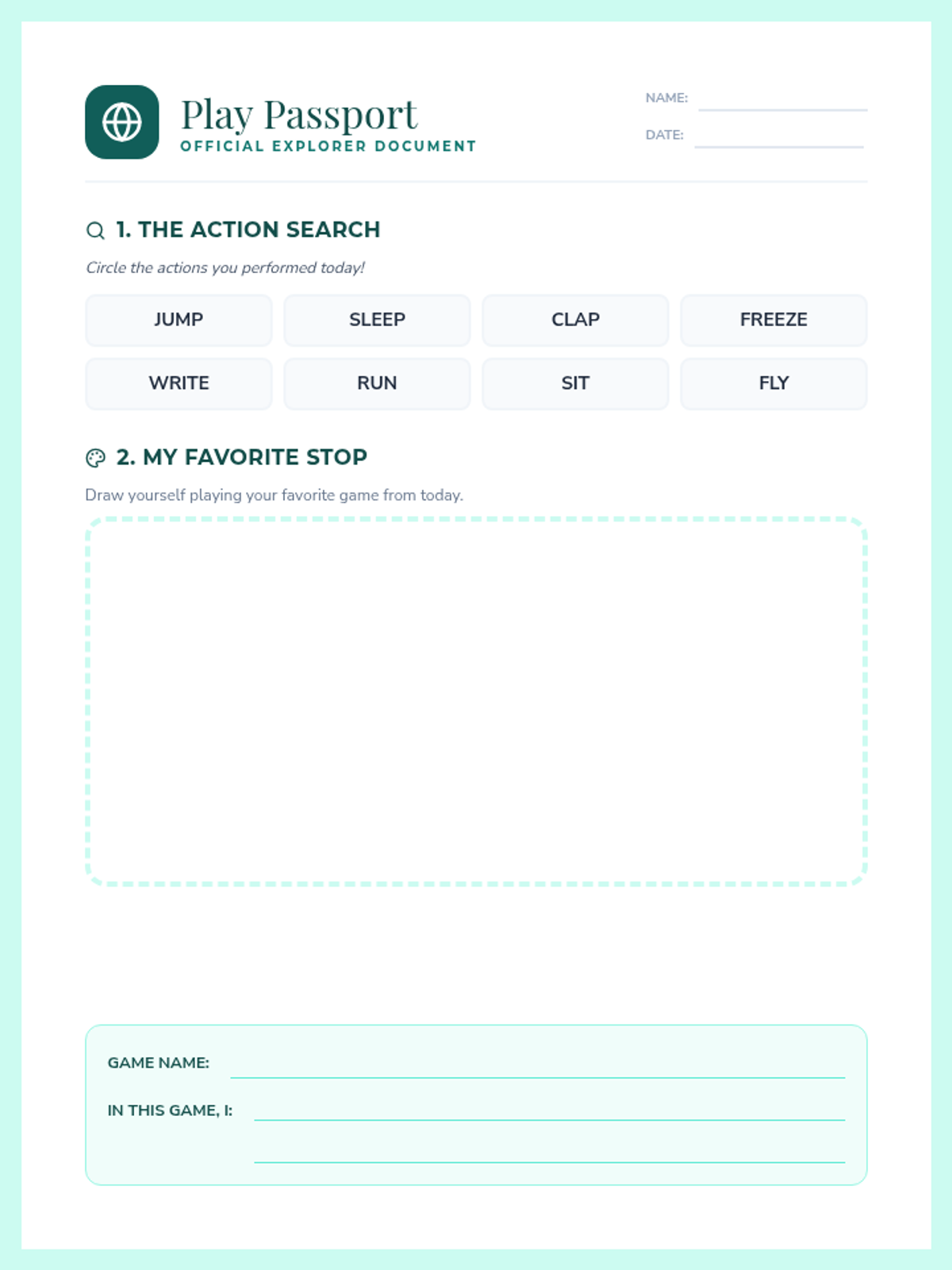
A movement-based language lesson where students learn action verbs and physical commands through traditional games from Ghana, Japan, and Chile. Learners develop vocabulary for body parts and directions while celebrating global cultural traditions.
A Star Wars themed Physical Education lesson deck featuring training protocols, expectations, and galactic activities for May the 4th.
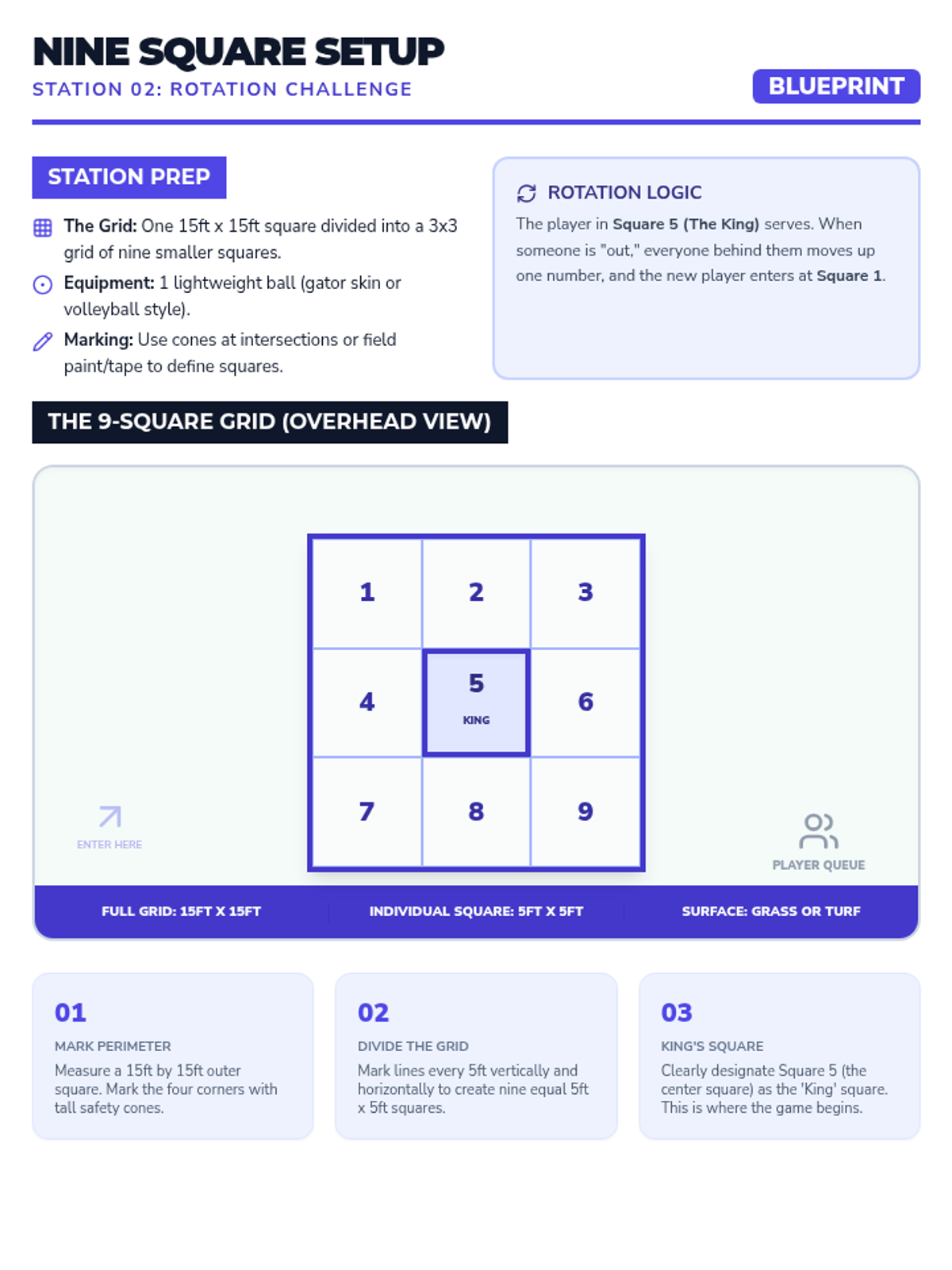
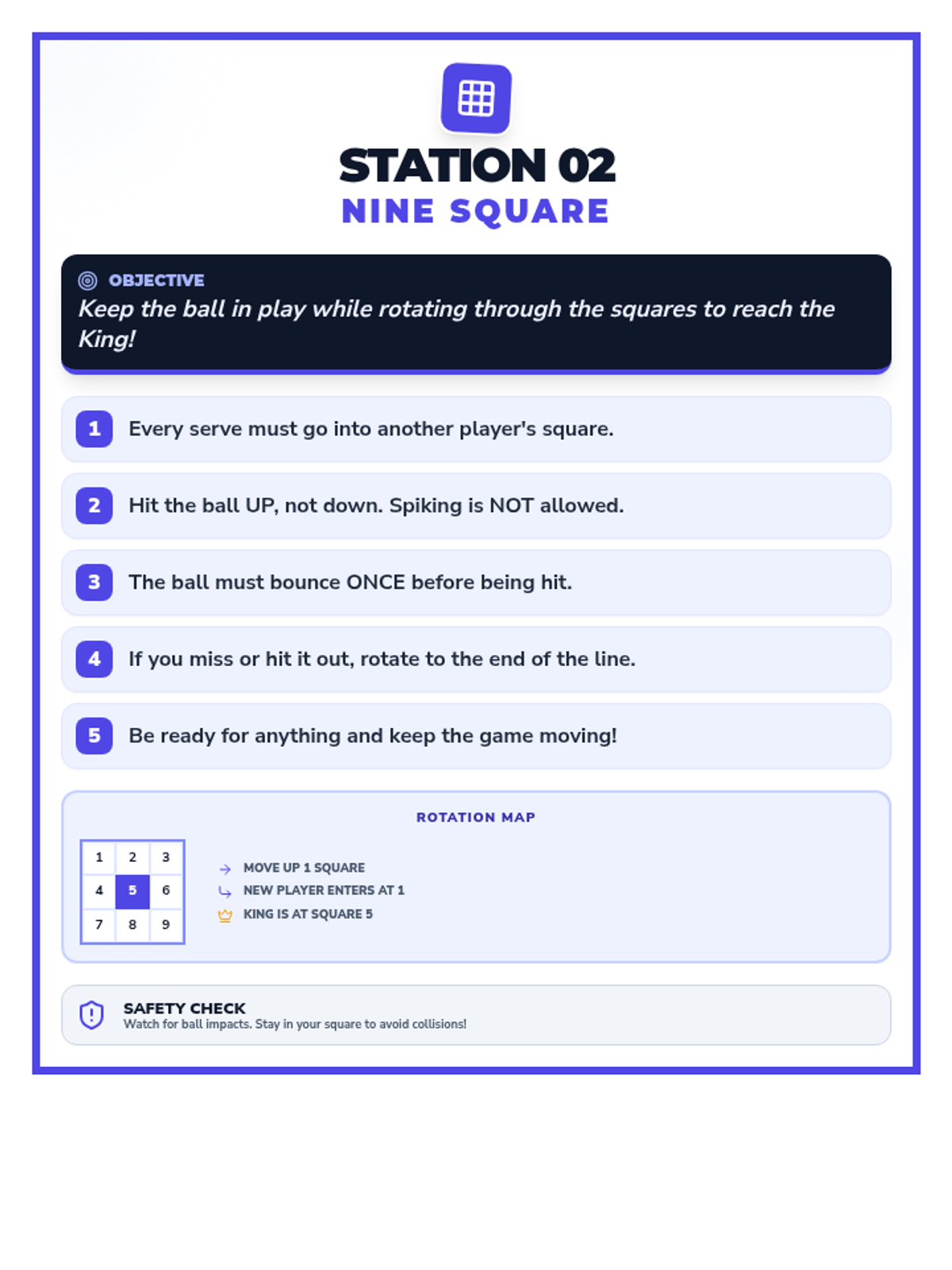
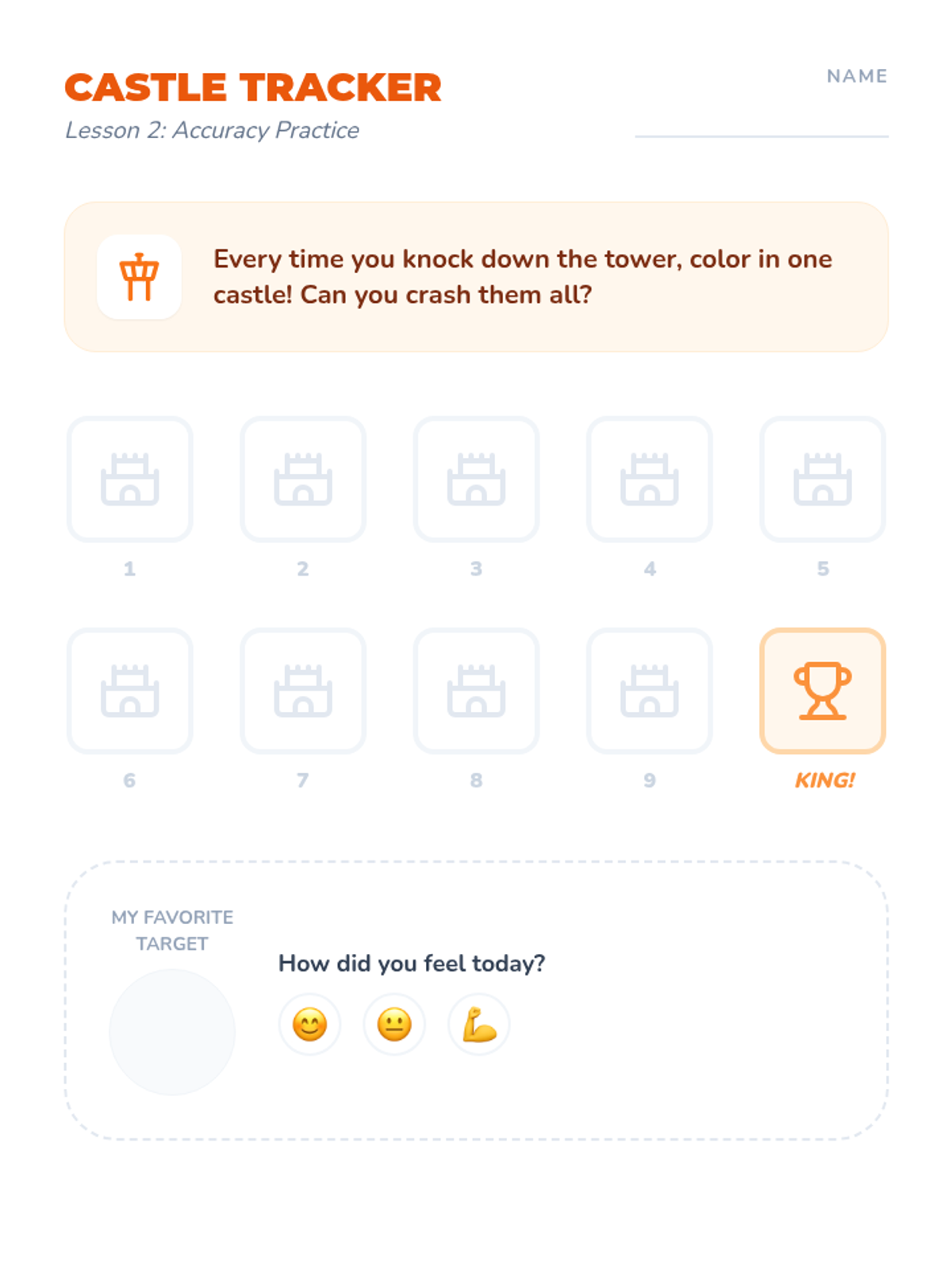
A fast-paced rotation game involving a 3x3 grid, focusing on hand-eye coordination and reaction time as players compete to reach the King square.
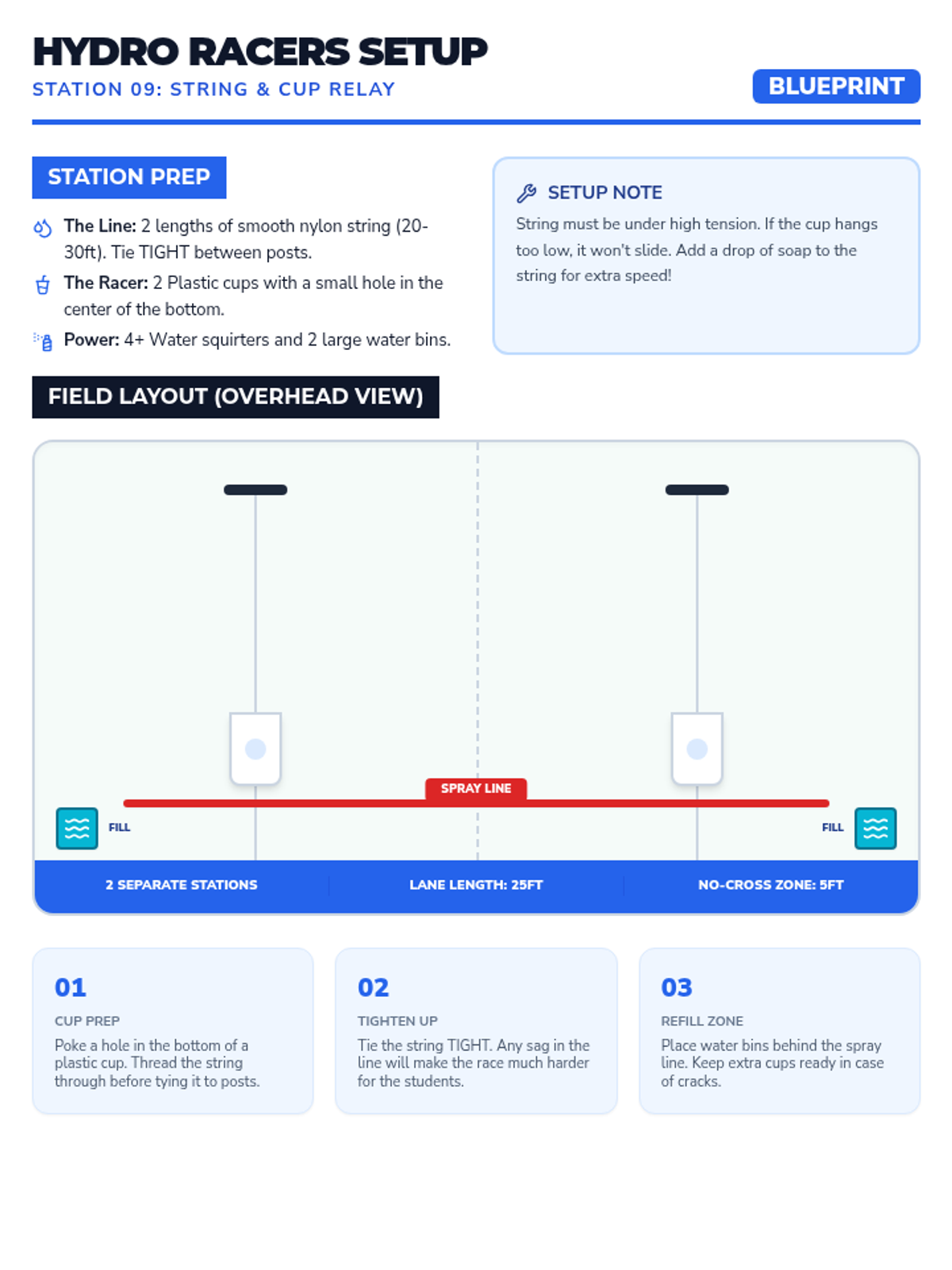
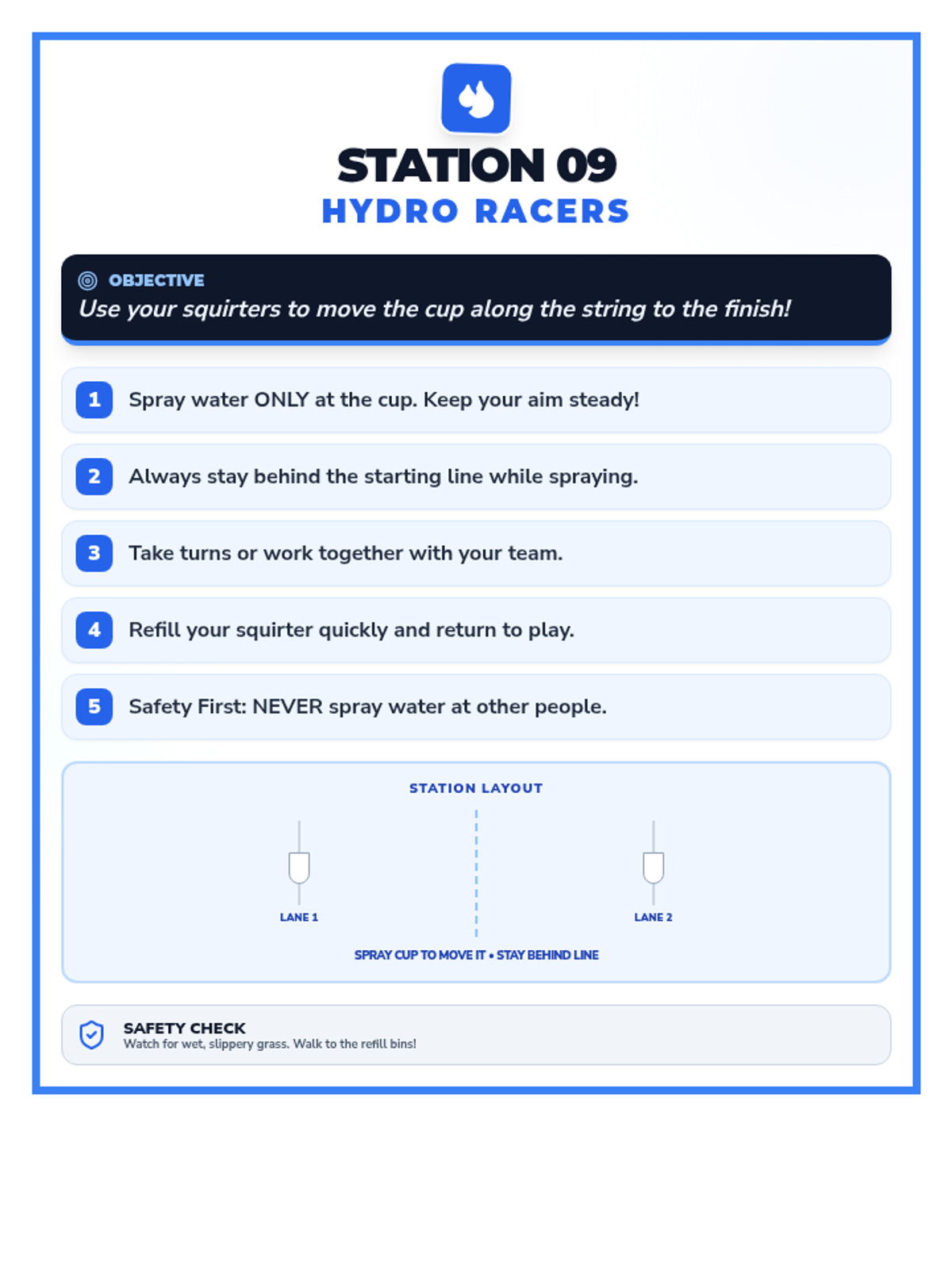
A high-energy water station guide for Hydro Racers, featuring string-and-cup relay setup, water gun mechanics, and safety protocols for aquatic racing.
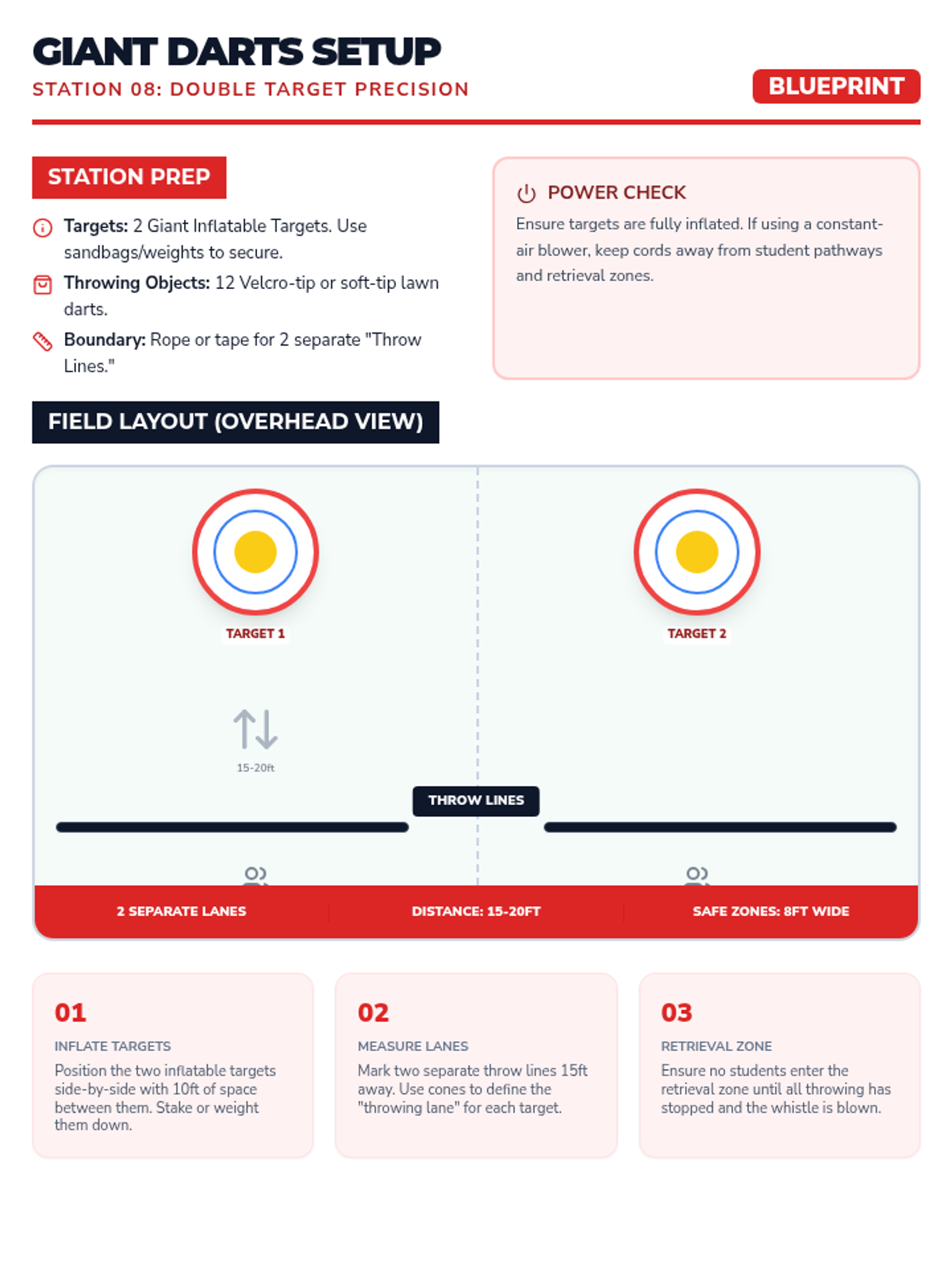
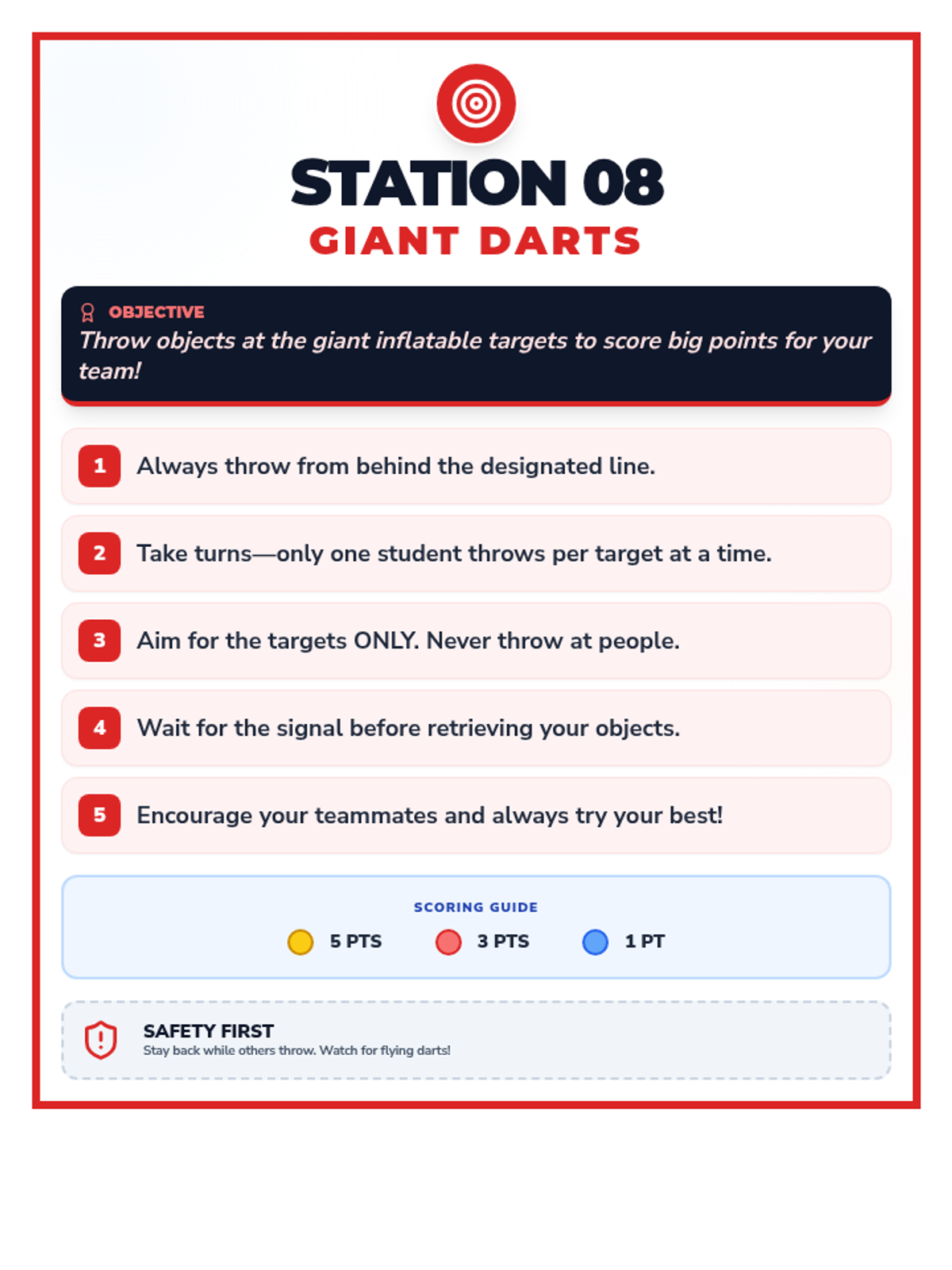
A target-based game guide for Giant Darts, featuring field setup for hula hoop targets, scoring systems, and safety protocols for throwing accuracy.
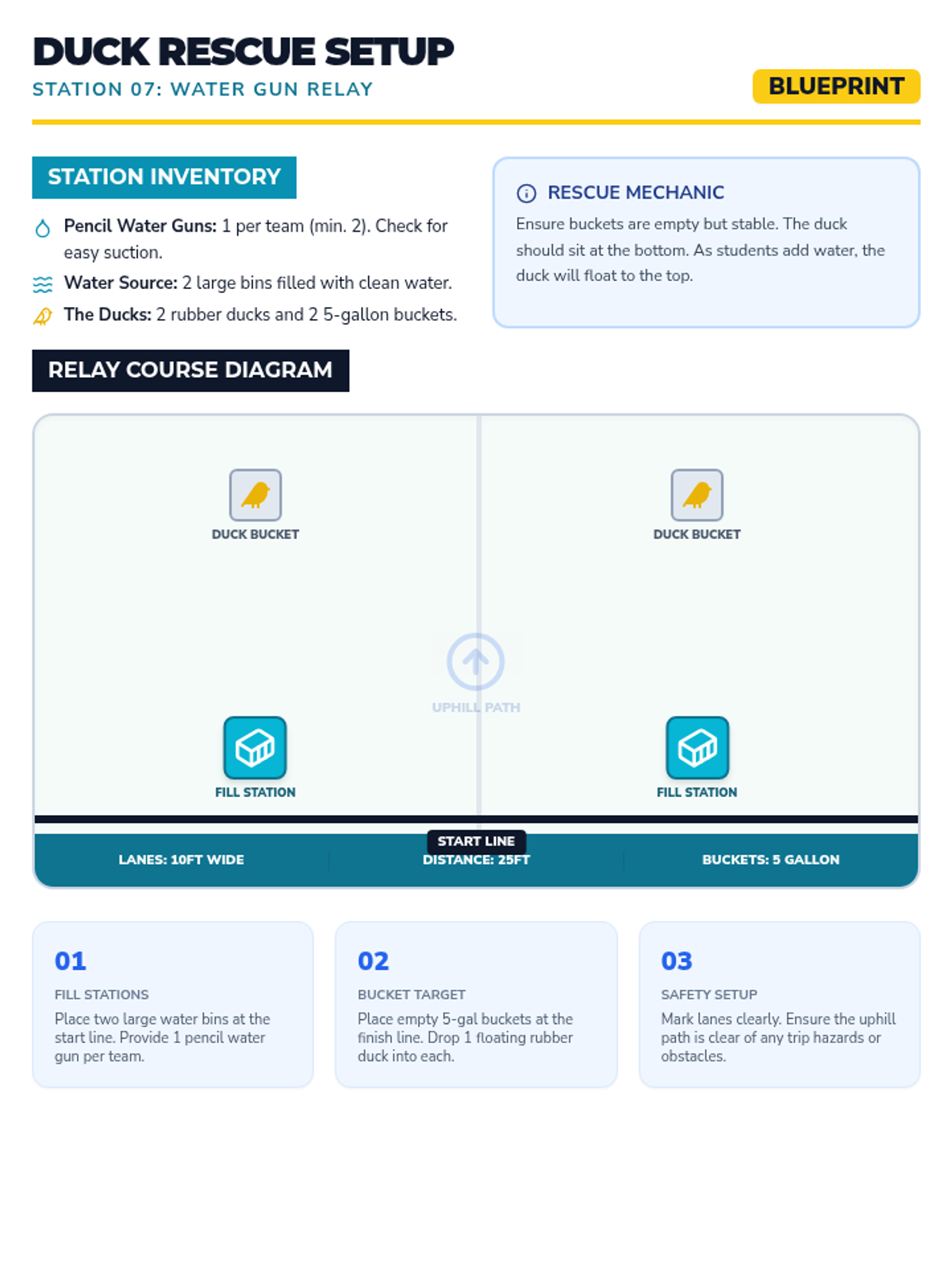
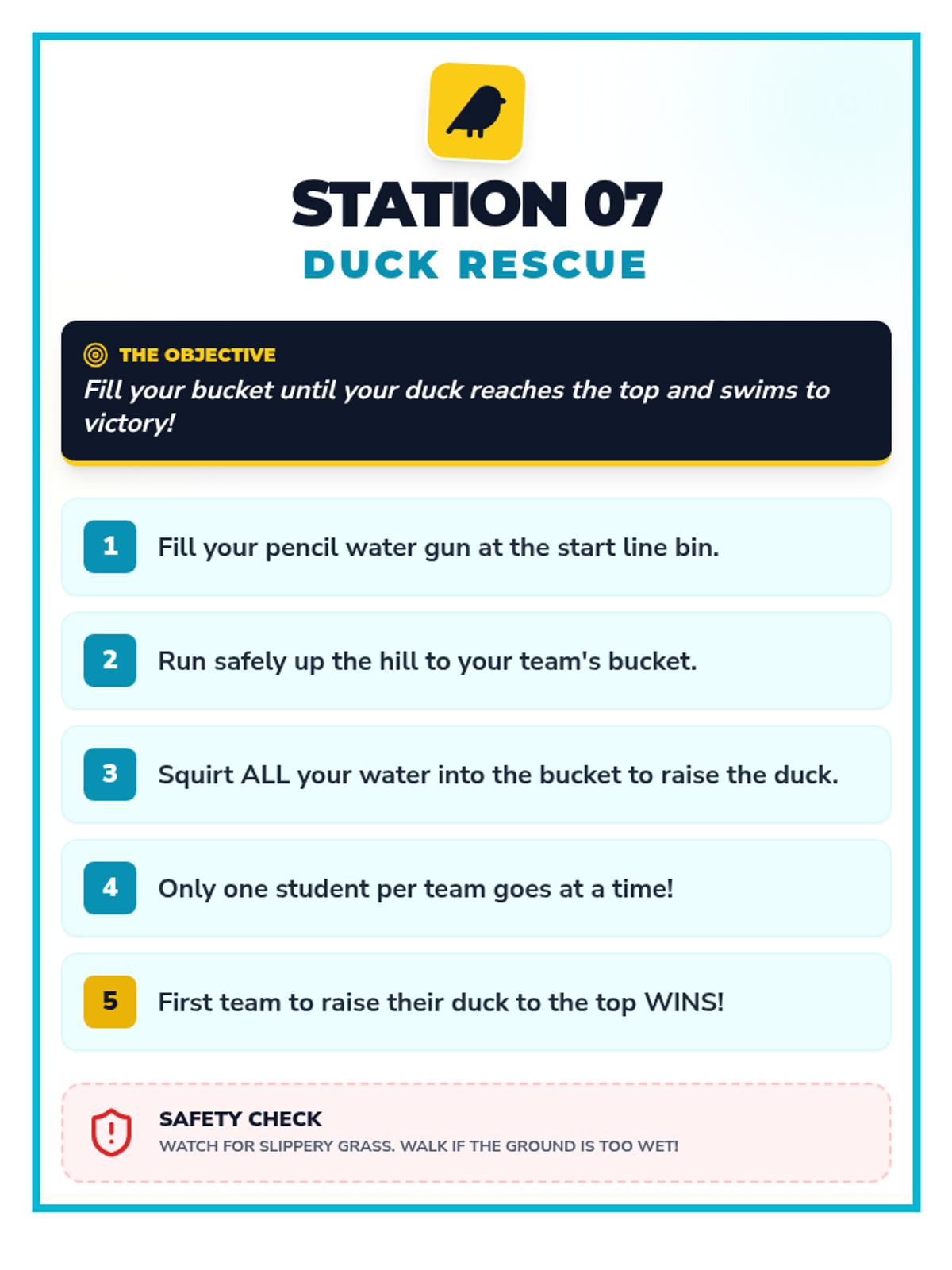
A high-energy water station guide for Duck Rescue, featuring field setup for water gun relays, duck-raising mechanics, and safety protocols for slippery fun.
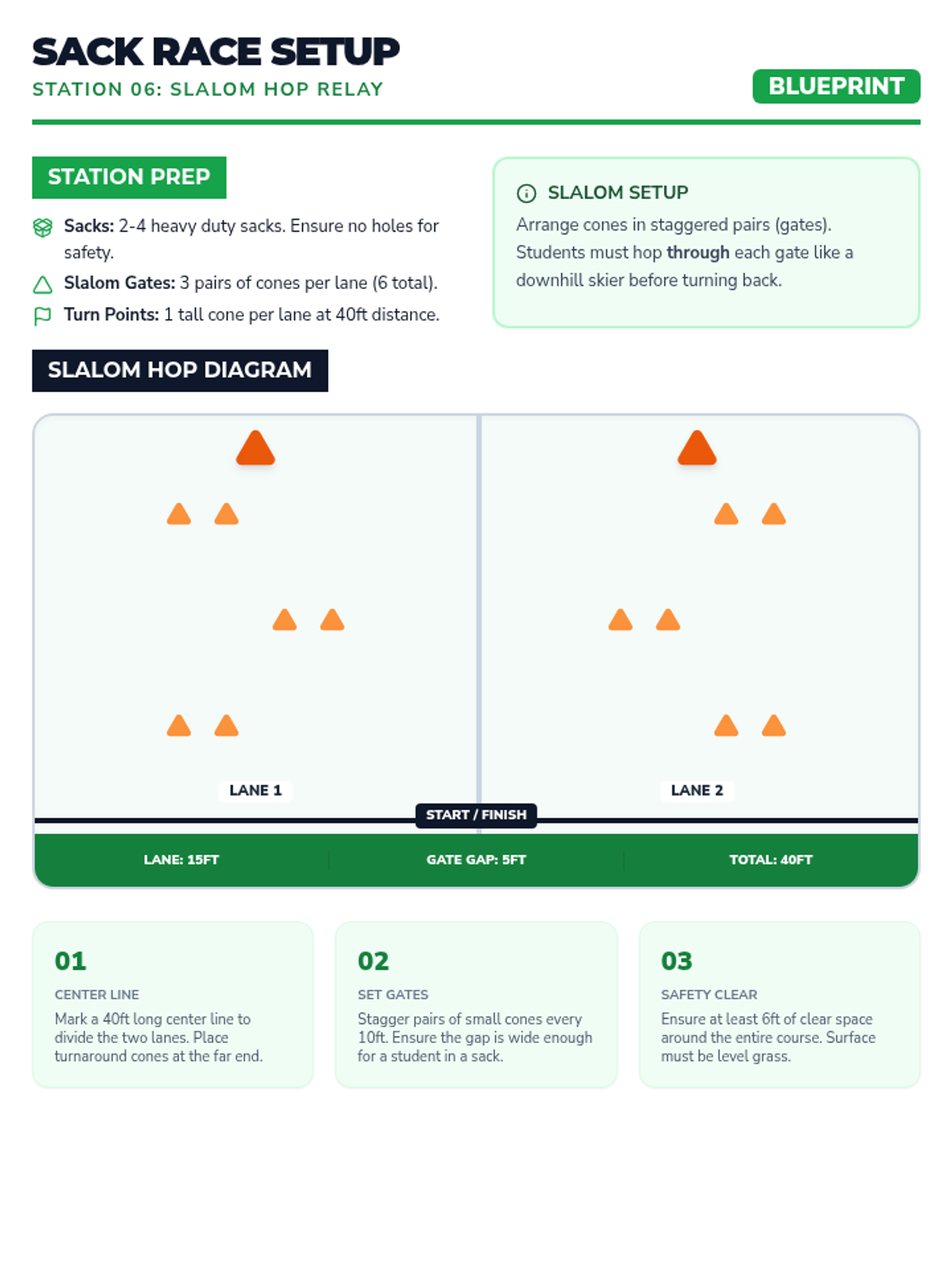
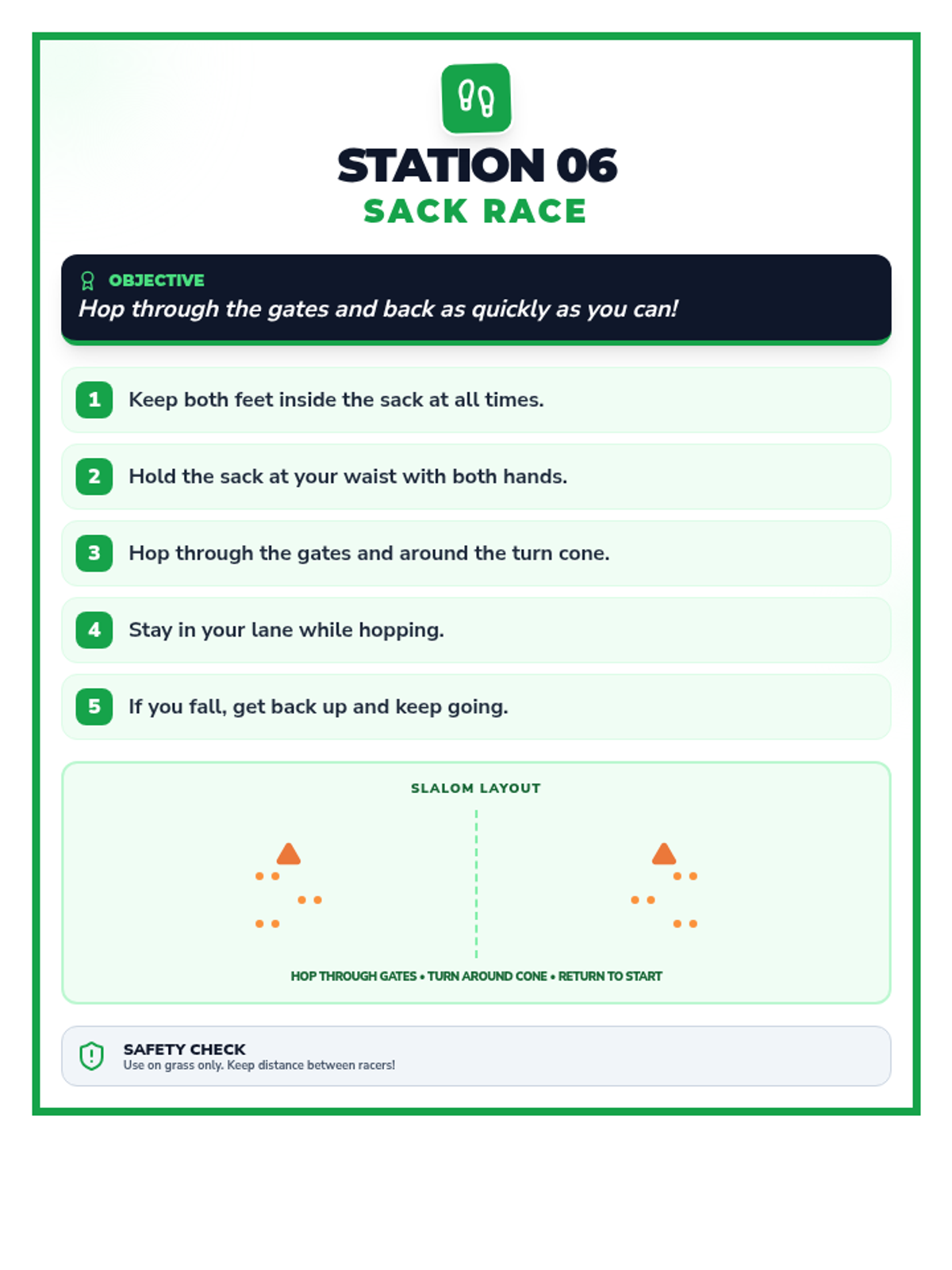
A high-energy station guide for the classic Sack Race, including lane setup diagrams, jumping technique tips, and safety protocols for a fun-filled race.
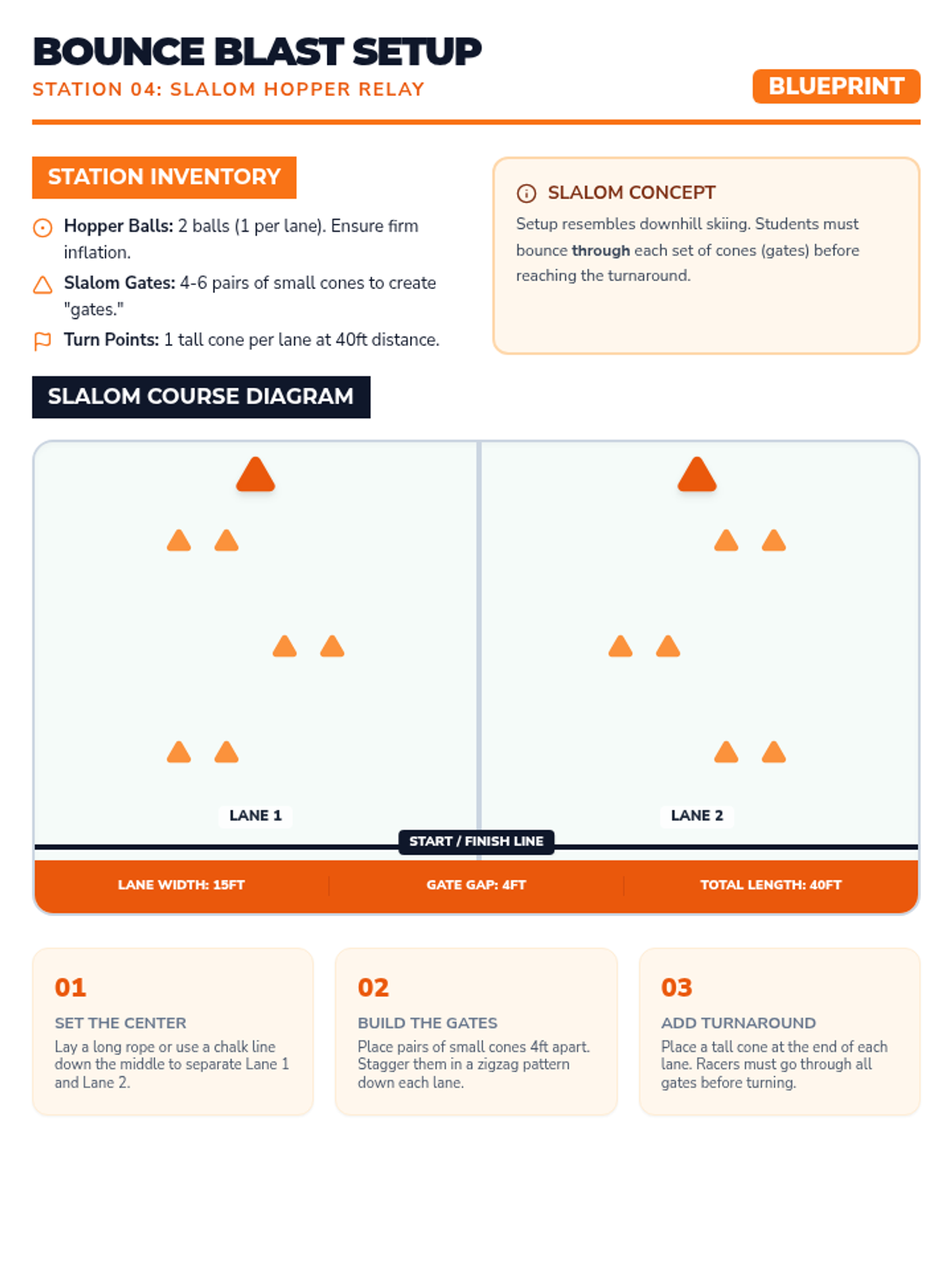
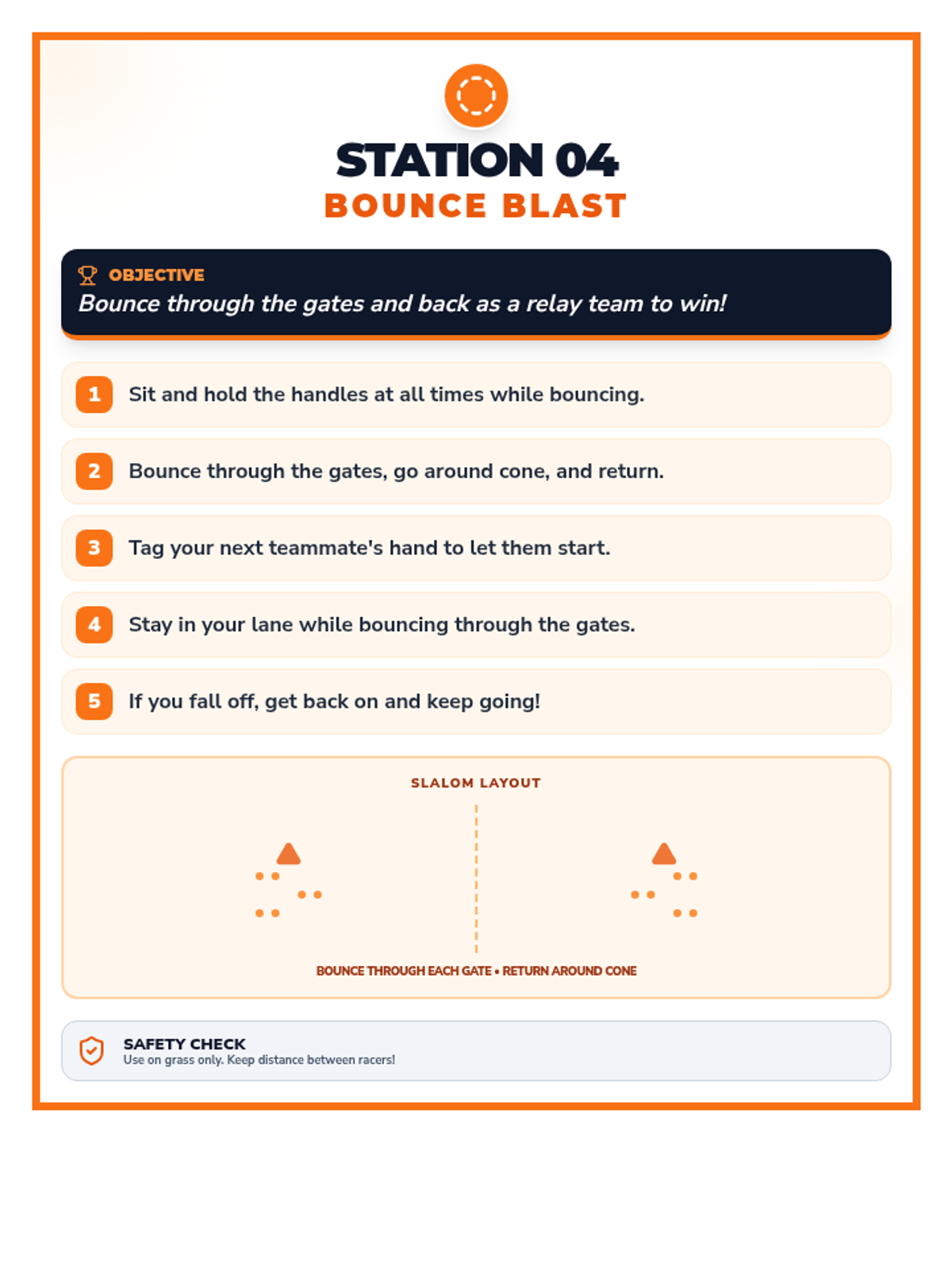
A high-energy relay station guide for the Bounce Blast hopper ball race, including lane setup diagrams, safety protocols, and relay hand-off instructions.
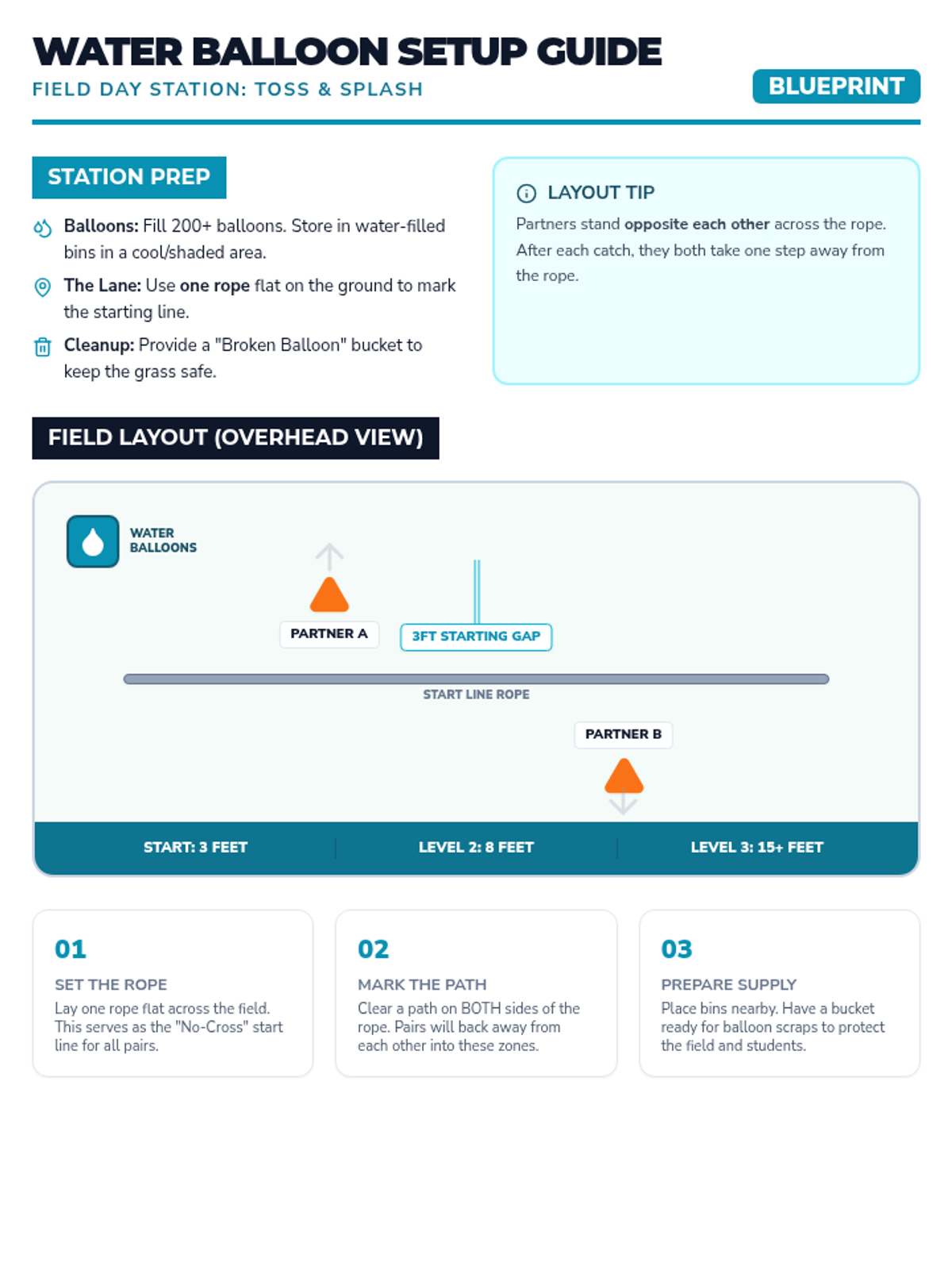
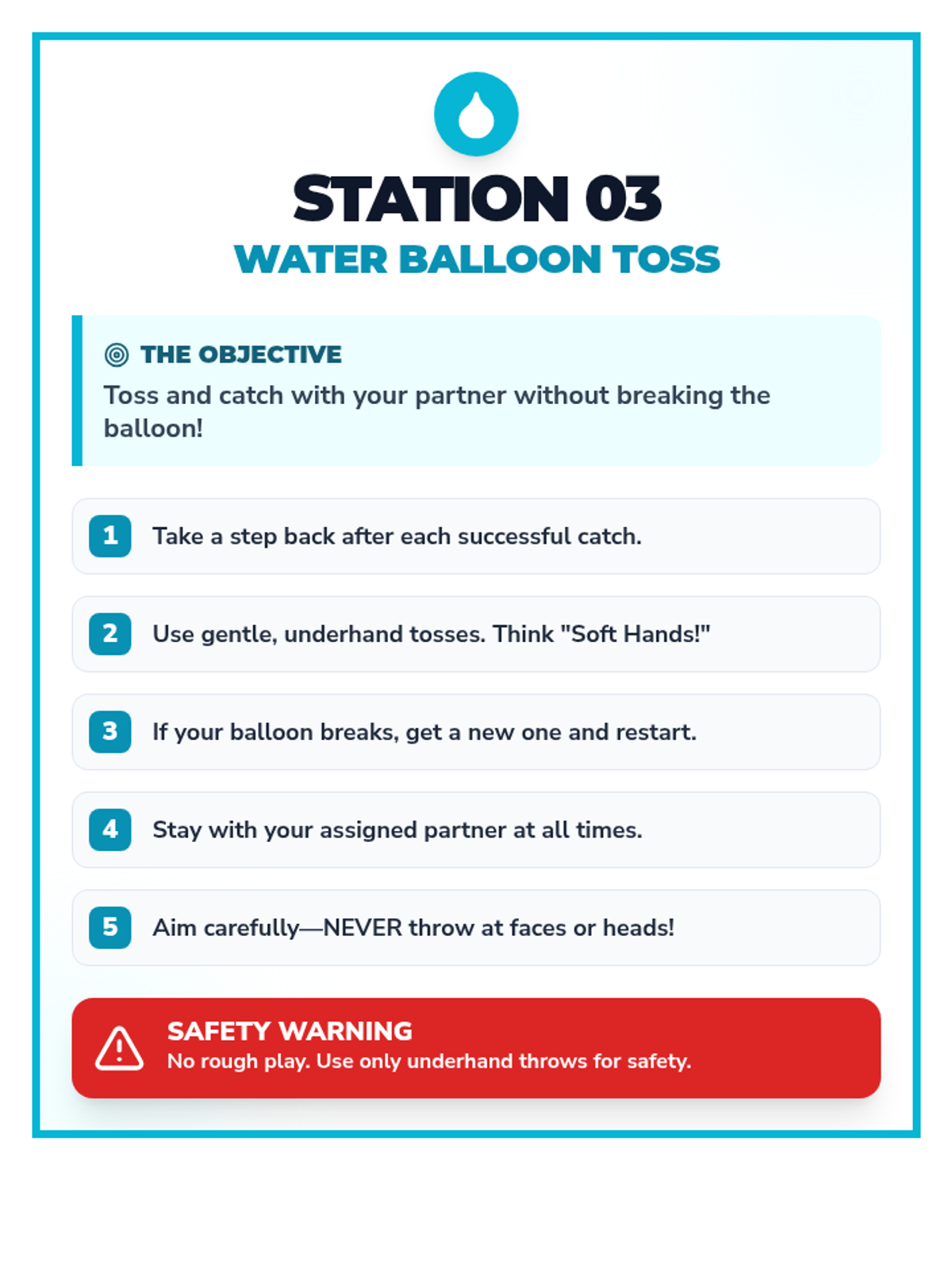
A comprehensive station guide for the Water Balloon Toss, including field setup diagrams, technique tips for catching, and safety protocols for aquatic fun.
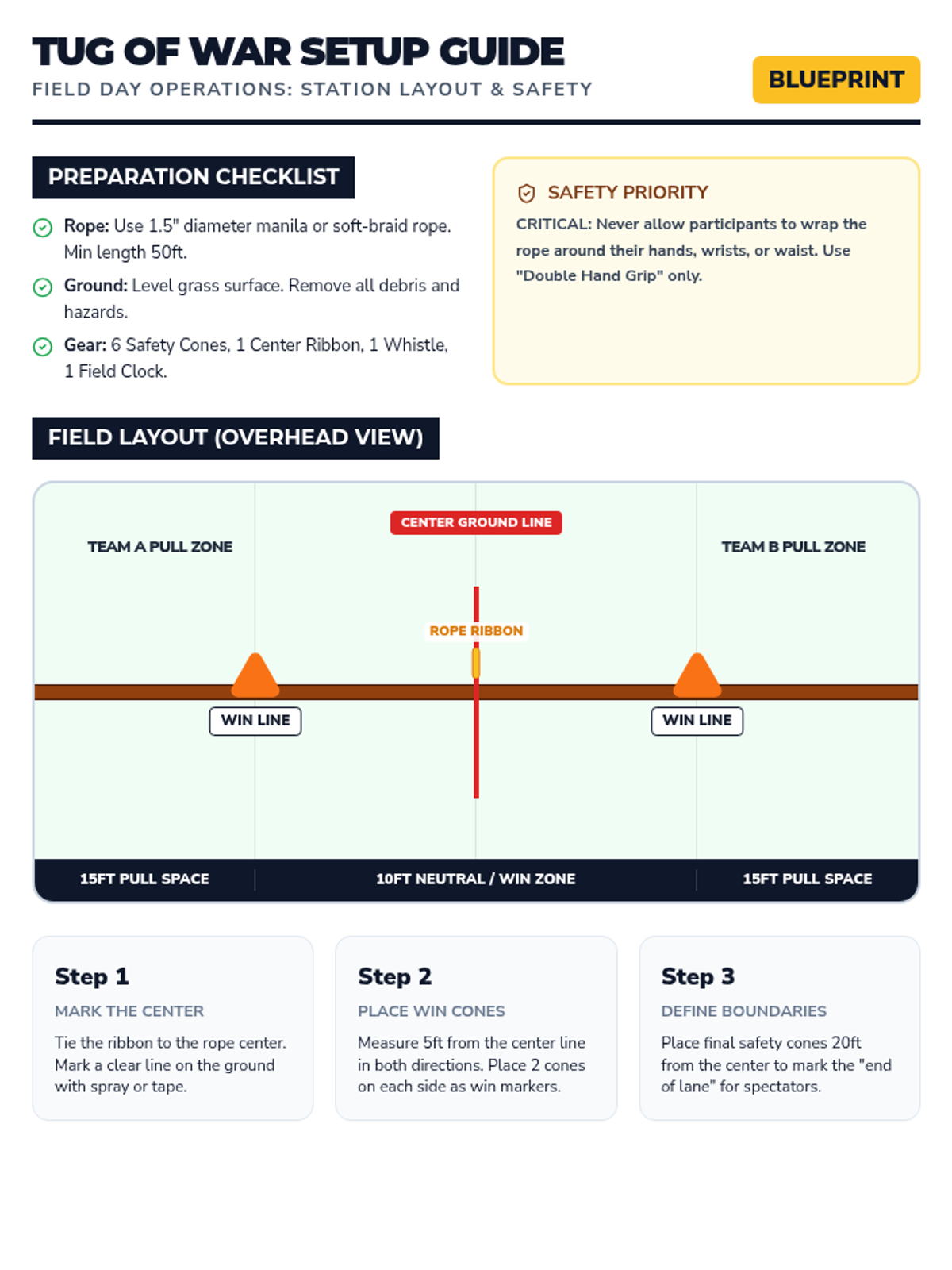
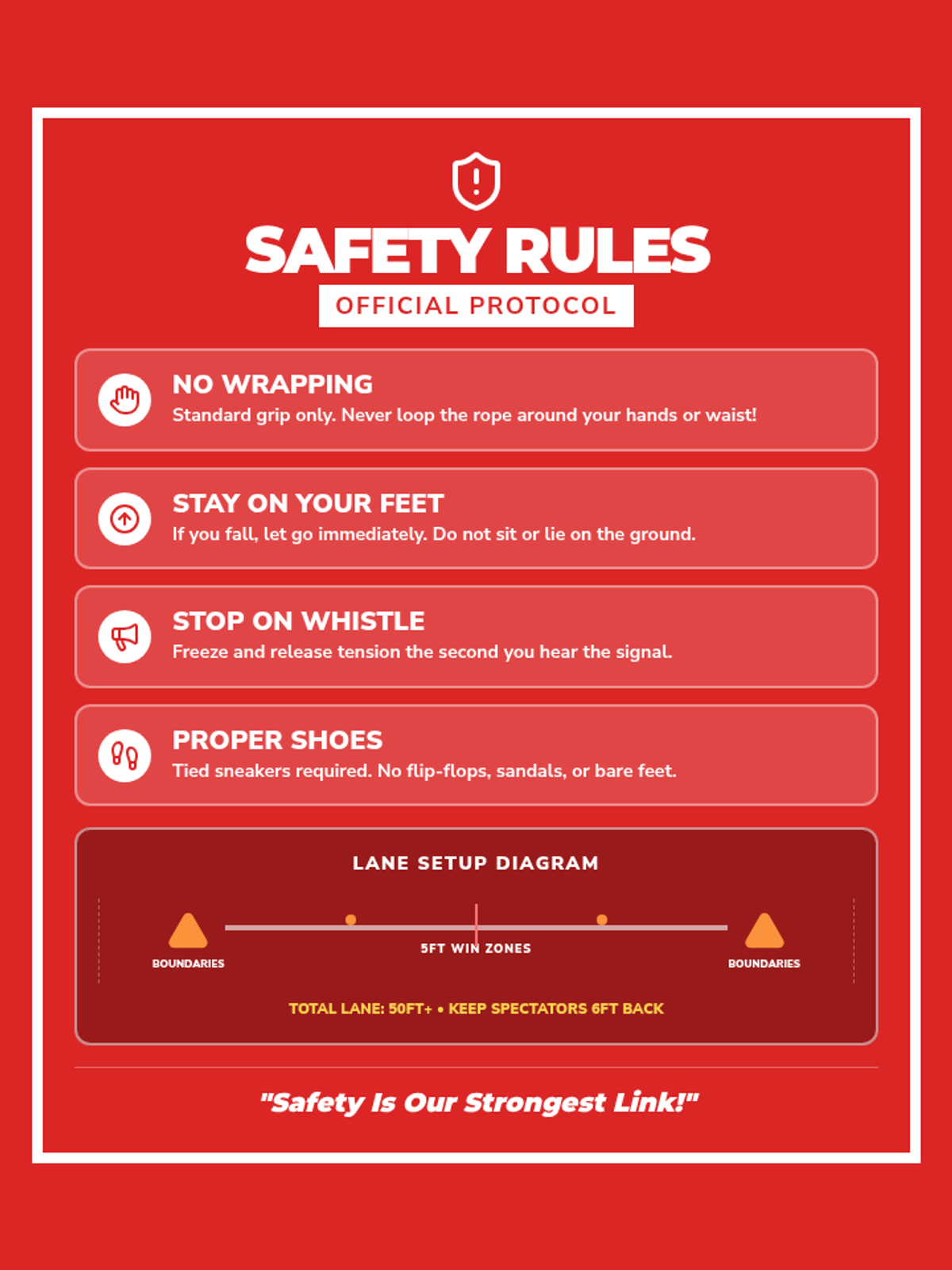
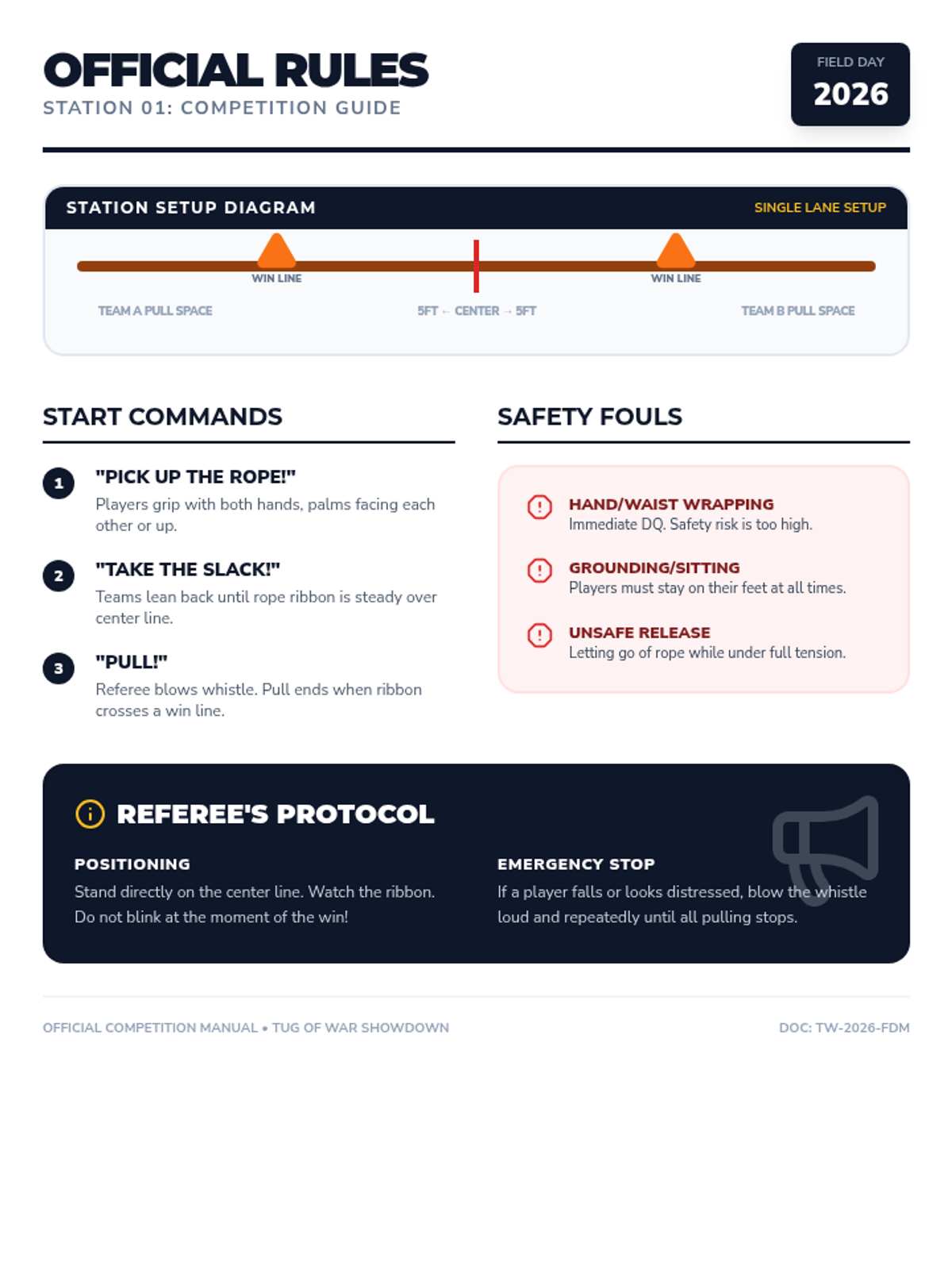
A complete guide for organizing a safe and fun tug of war event, including visual setup diagrams, safety protocols, and official competition rules.
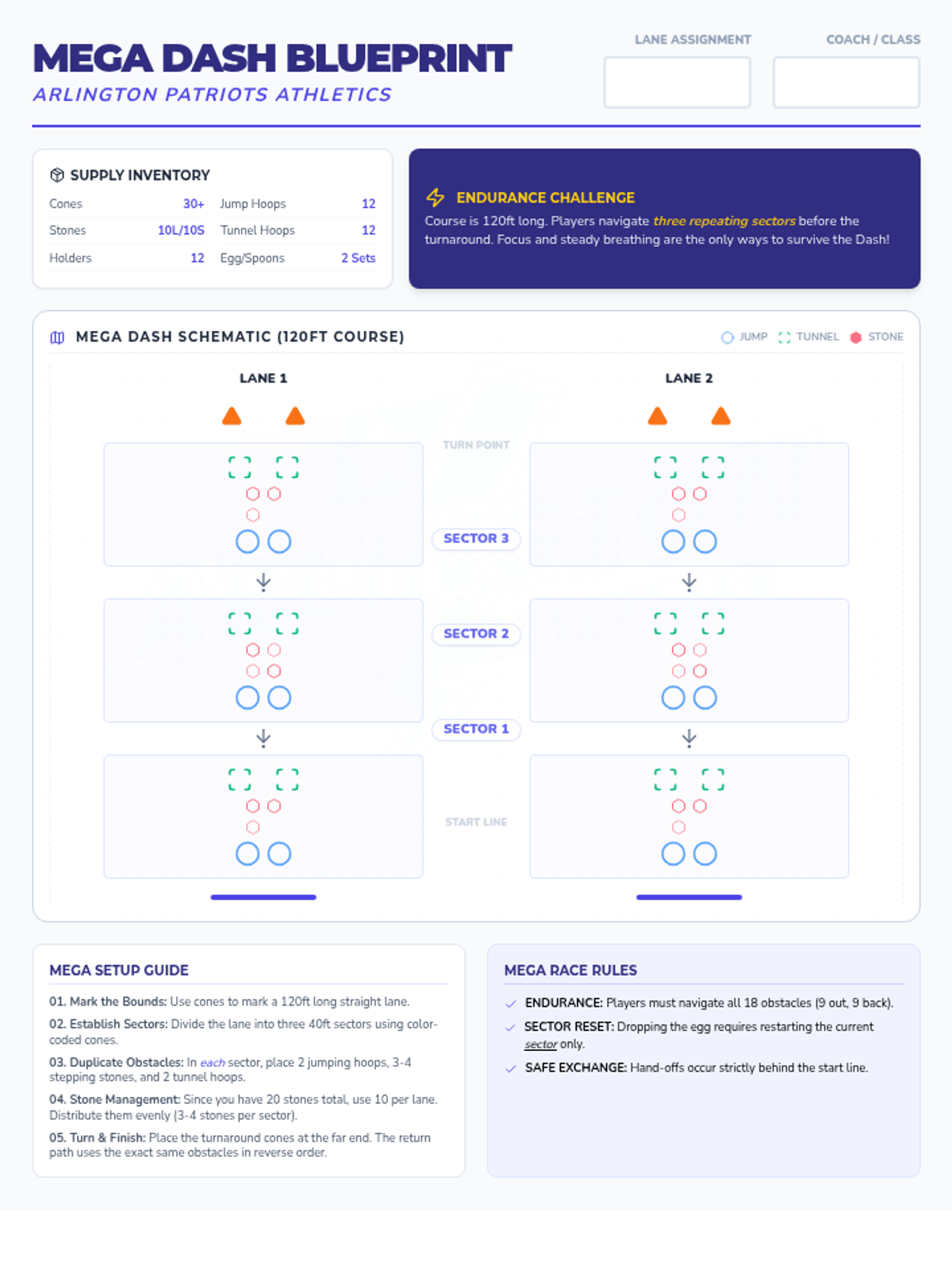
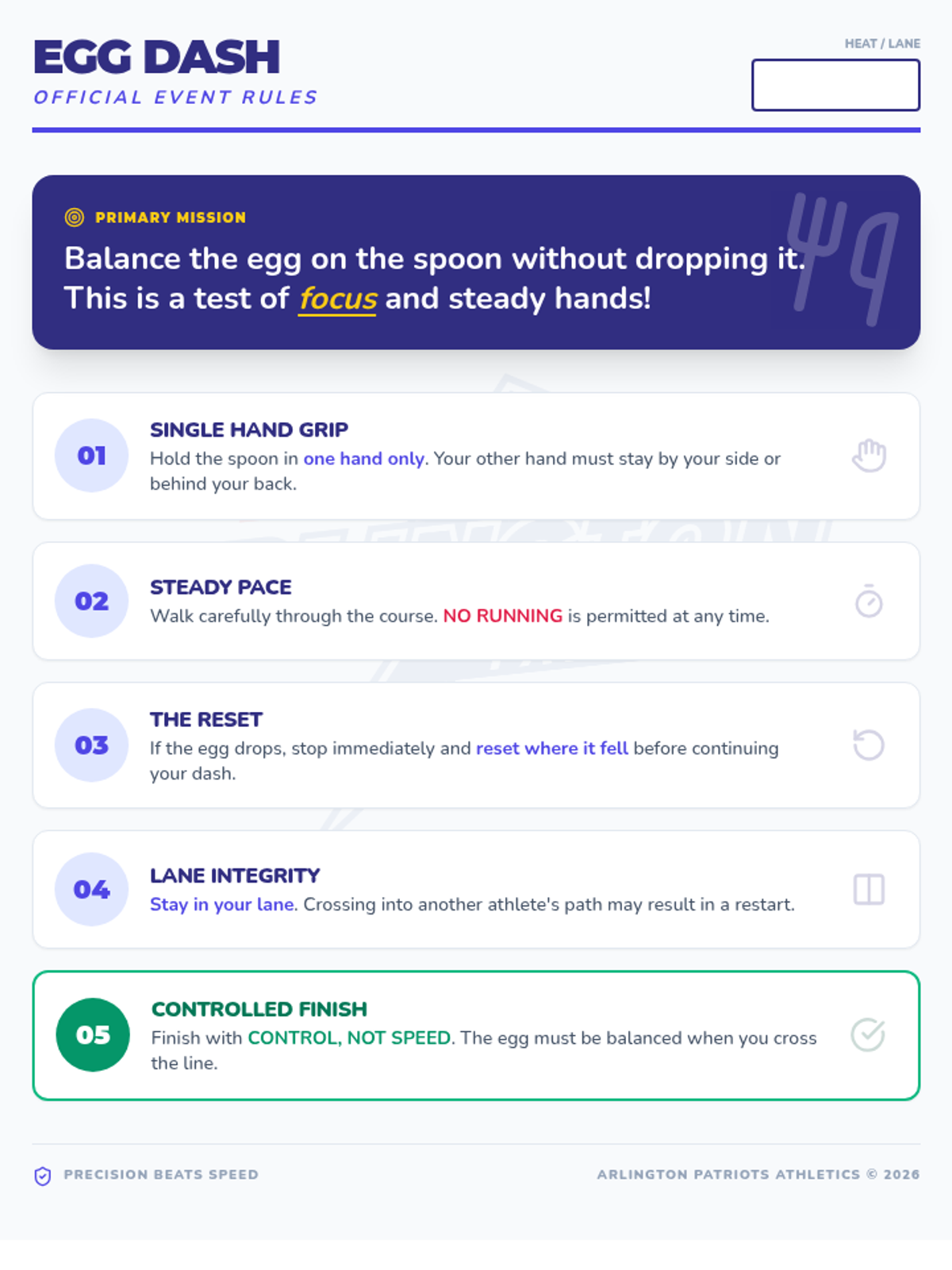
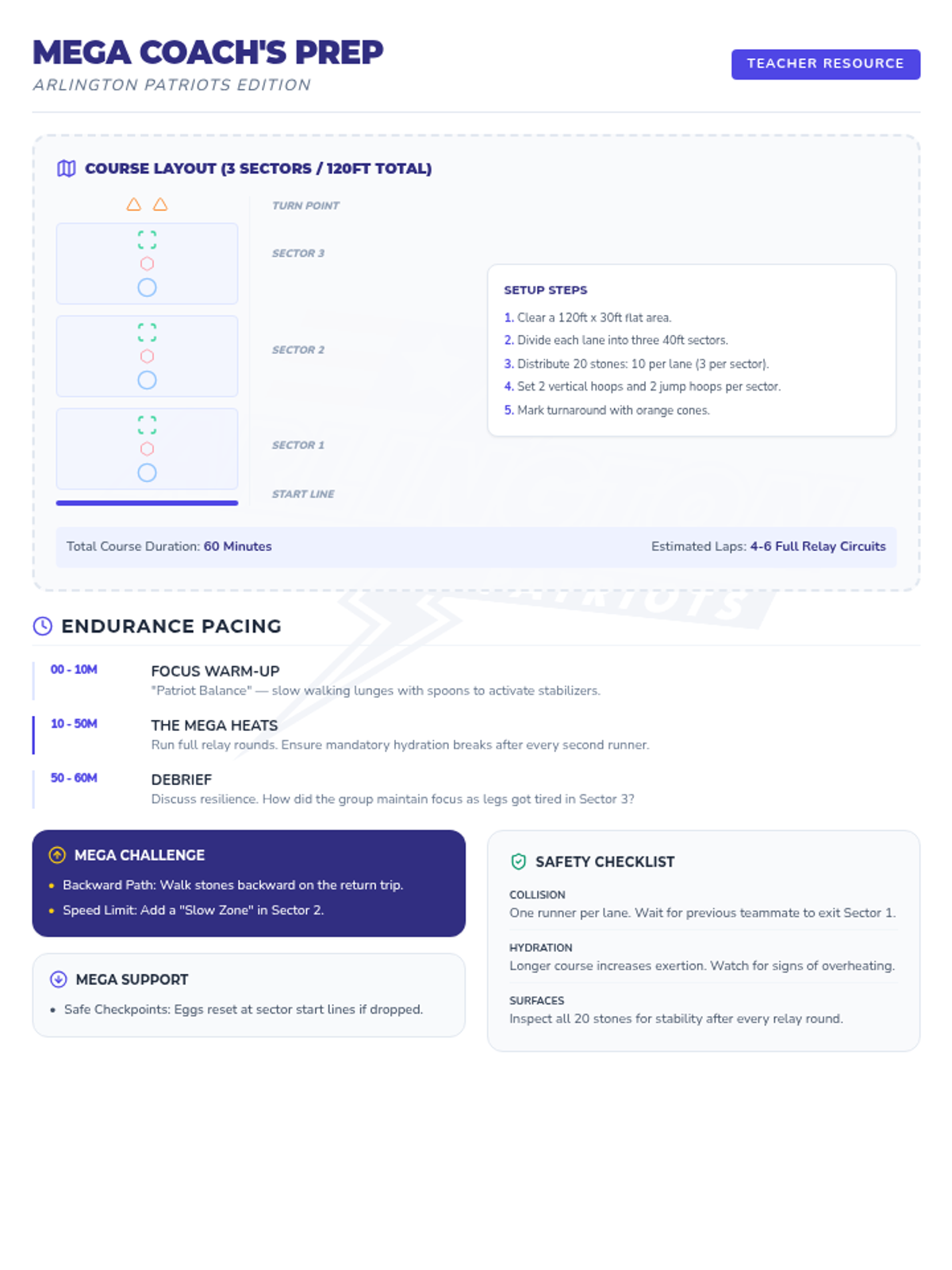
A high-energy relay race lesson where students navigate an expanded 120ft obstacle course while balancing a giant egg. Focuses on motor skills, endurance, and coordination for the Arlington Patriots.
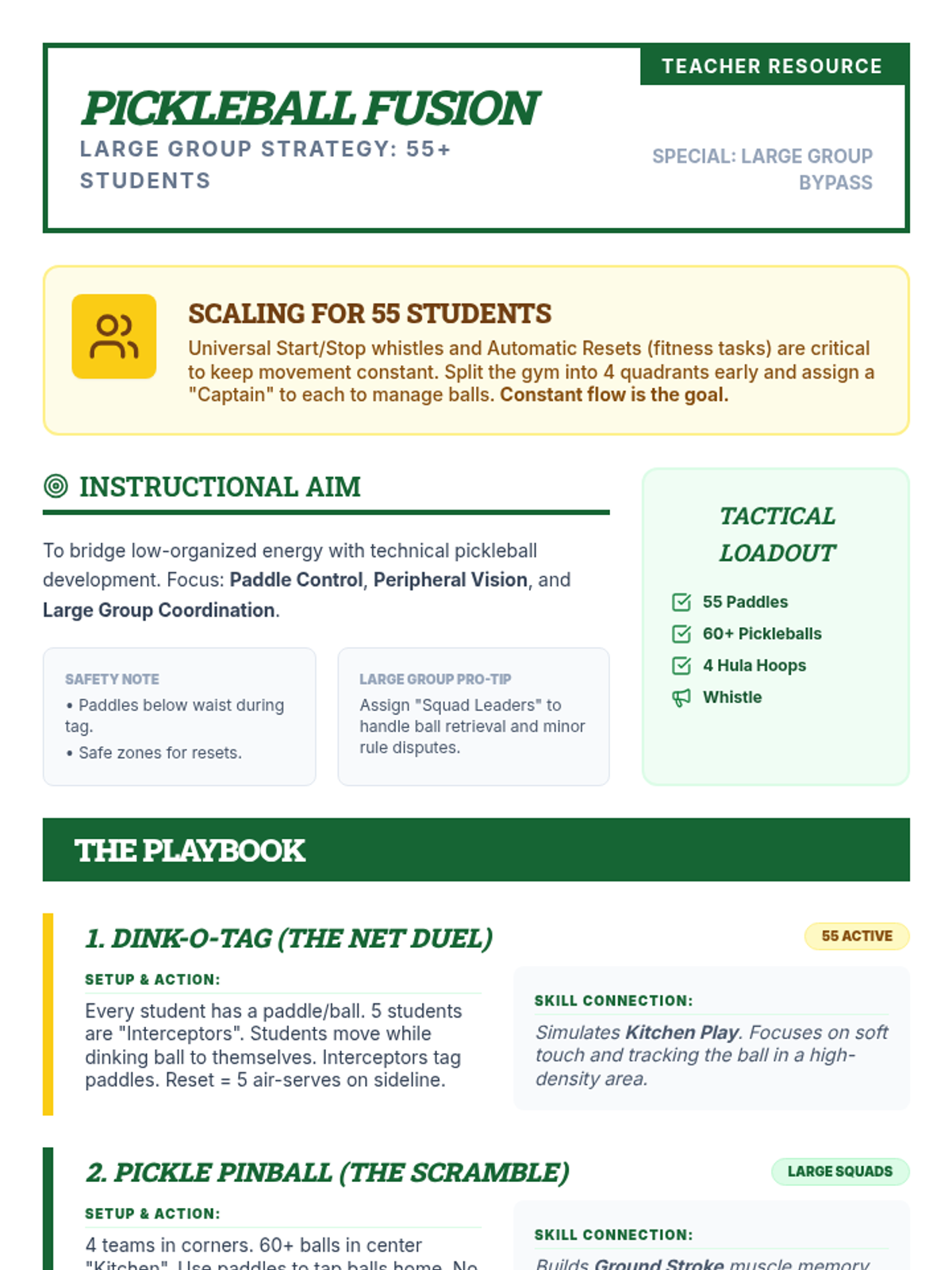
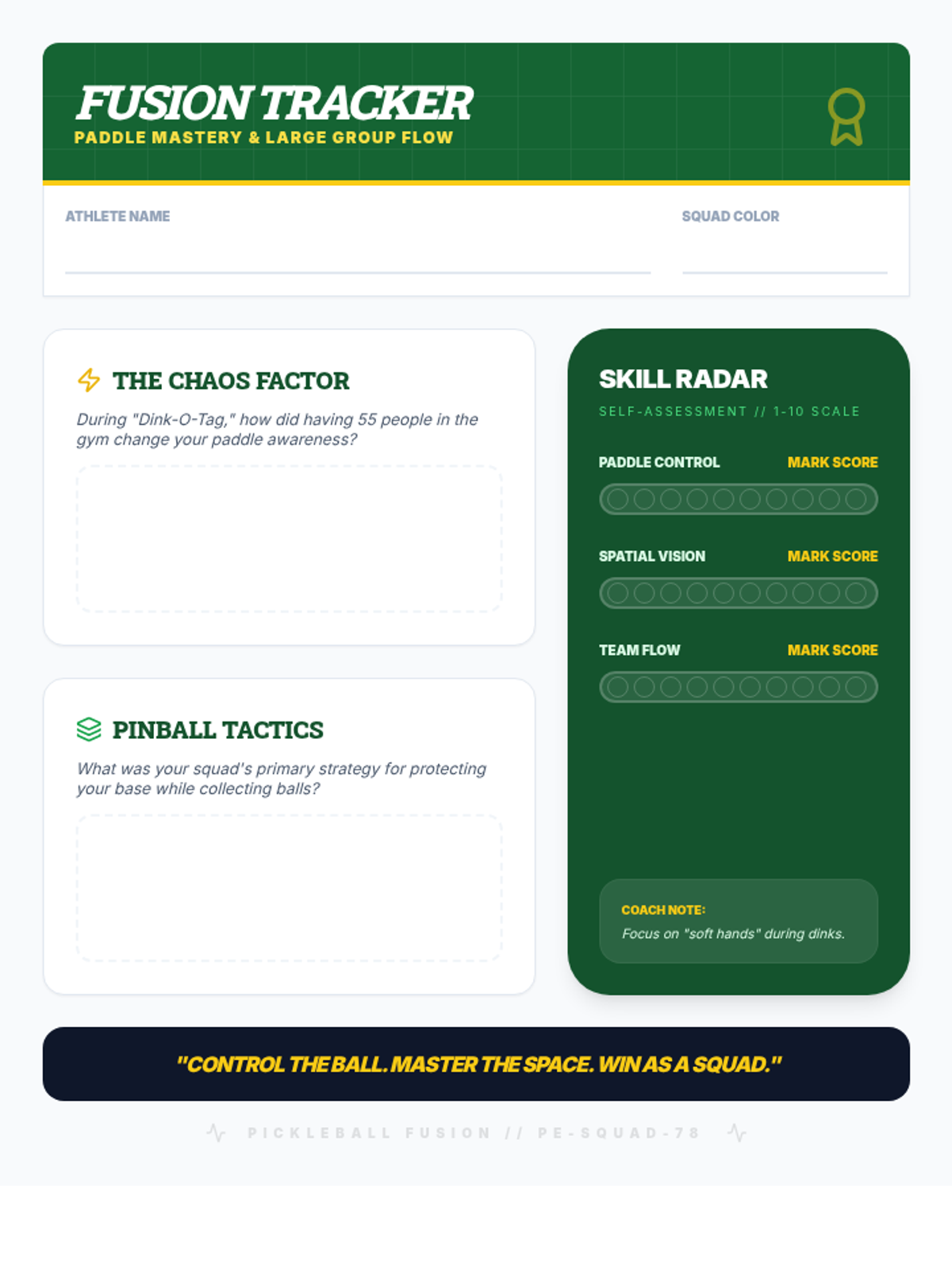
Combines the high energy of low-organized games with the fundamental skills of pickleball, designed specifically for large groups to maximize movement and paddle control.
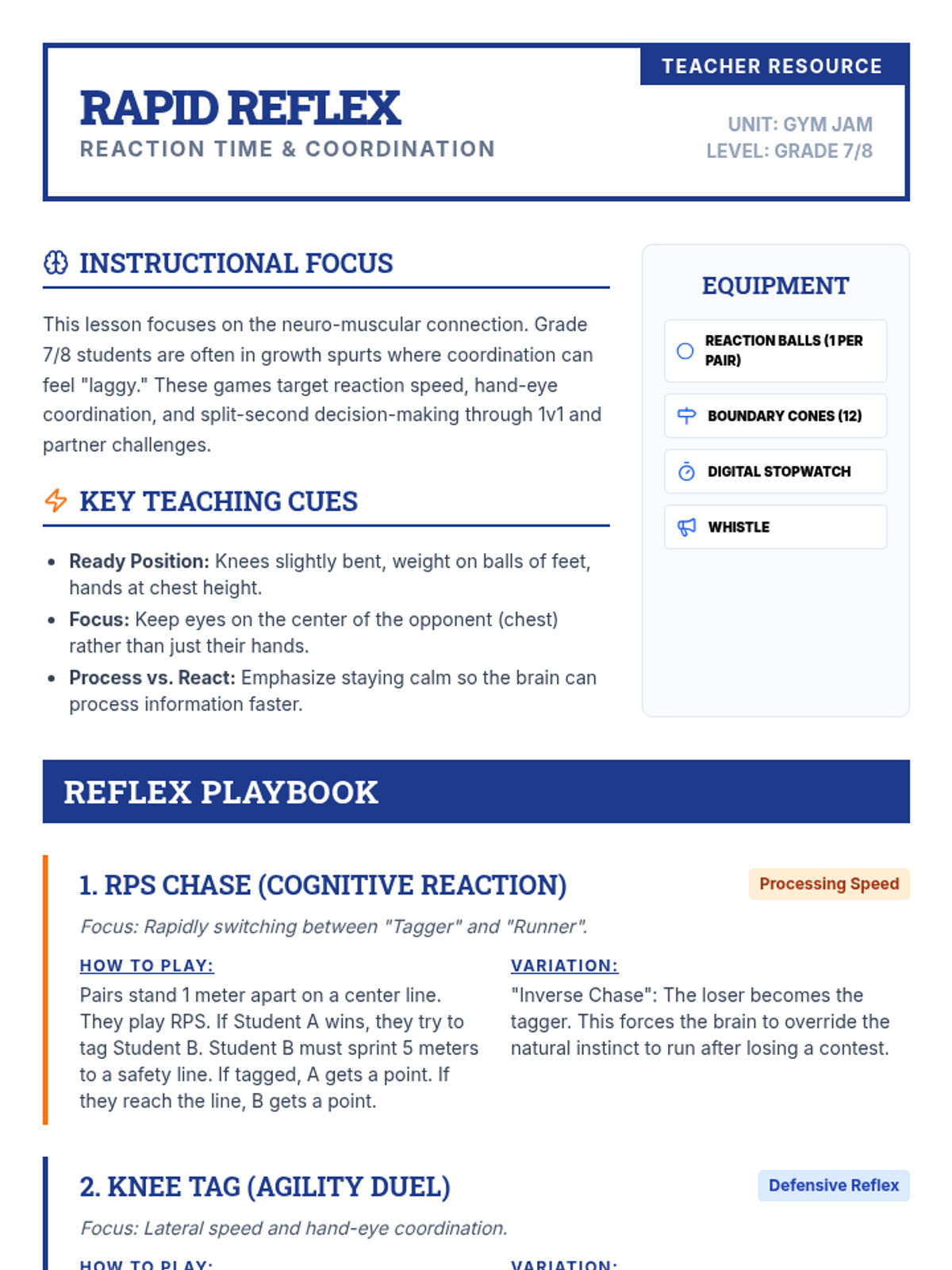
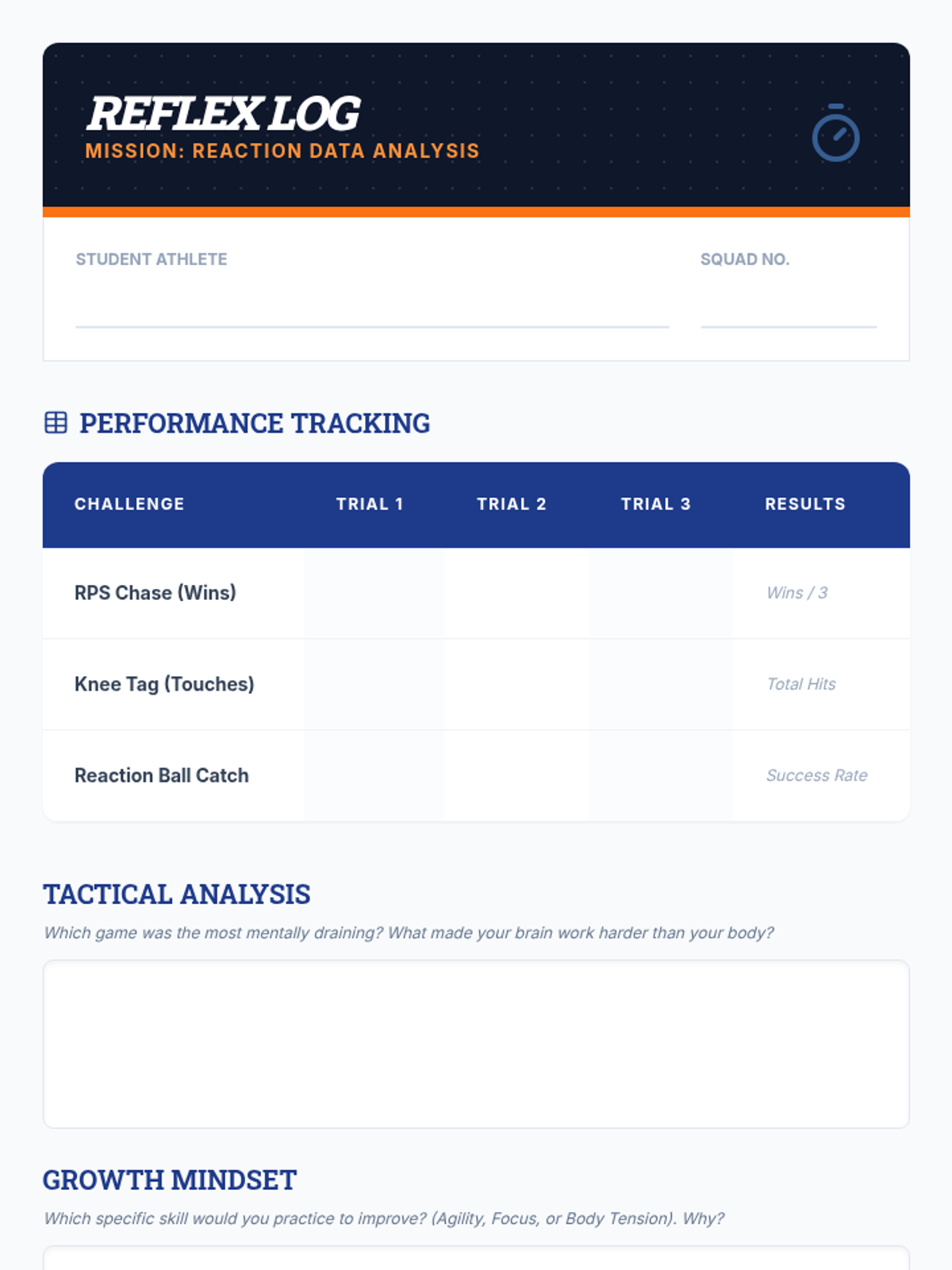
Focuses on games that improve reaction time, hand-eye coordination, and mental focus through quick-decision challenges.
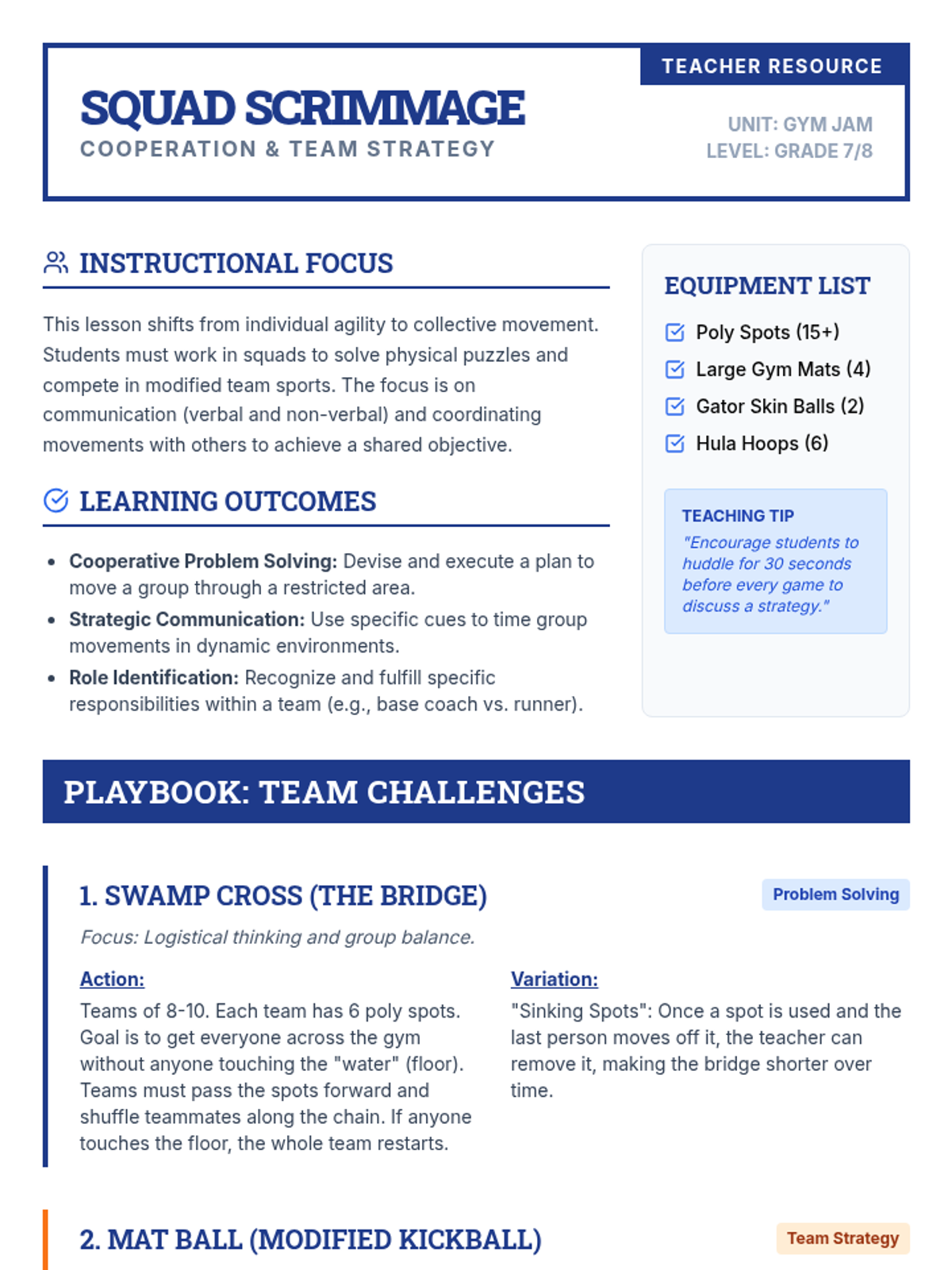
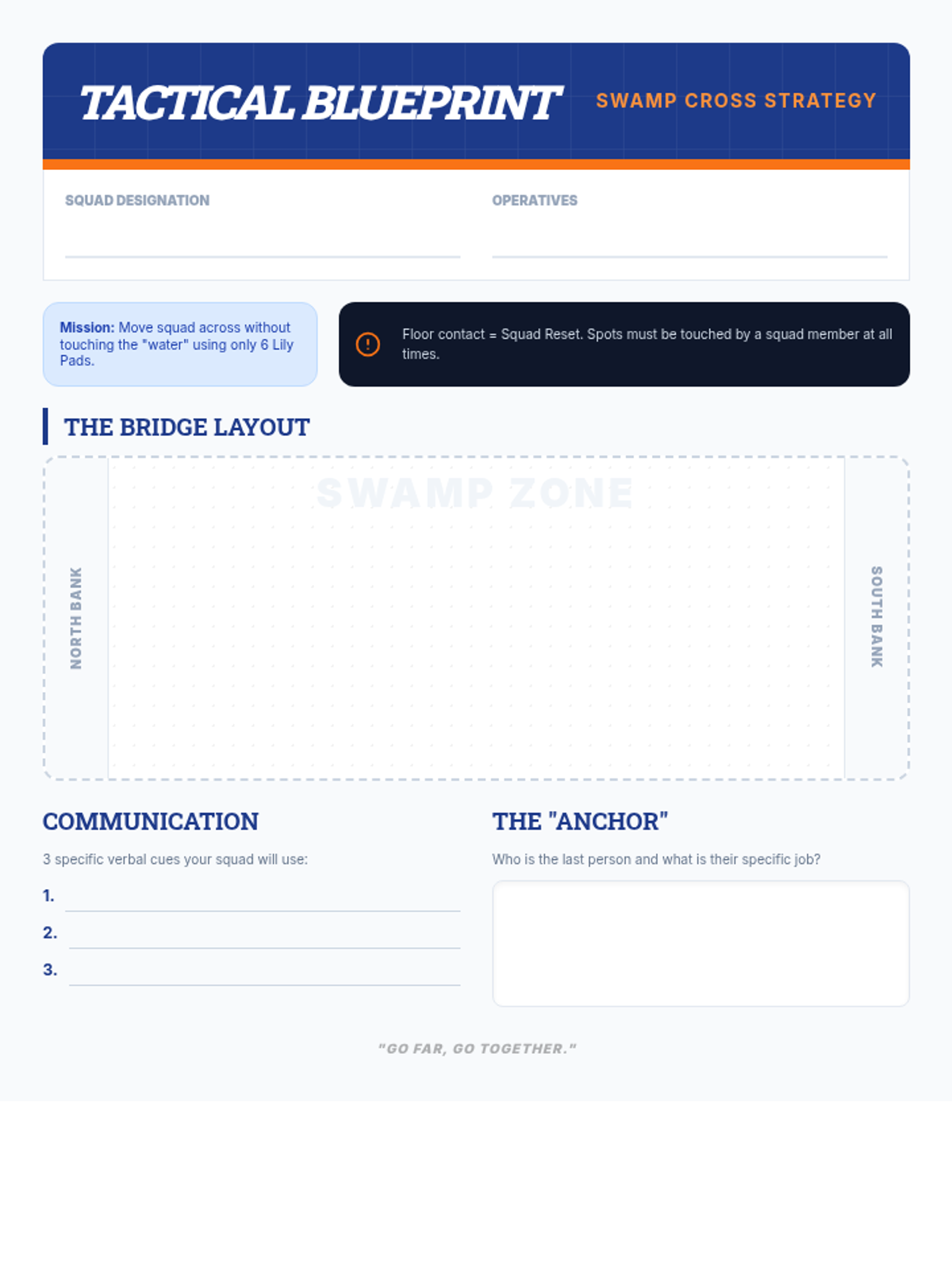
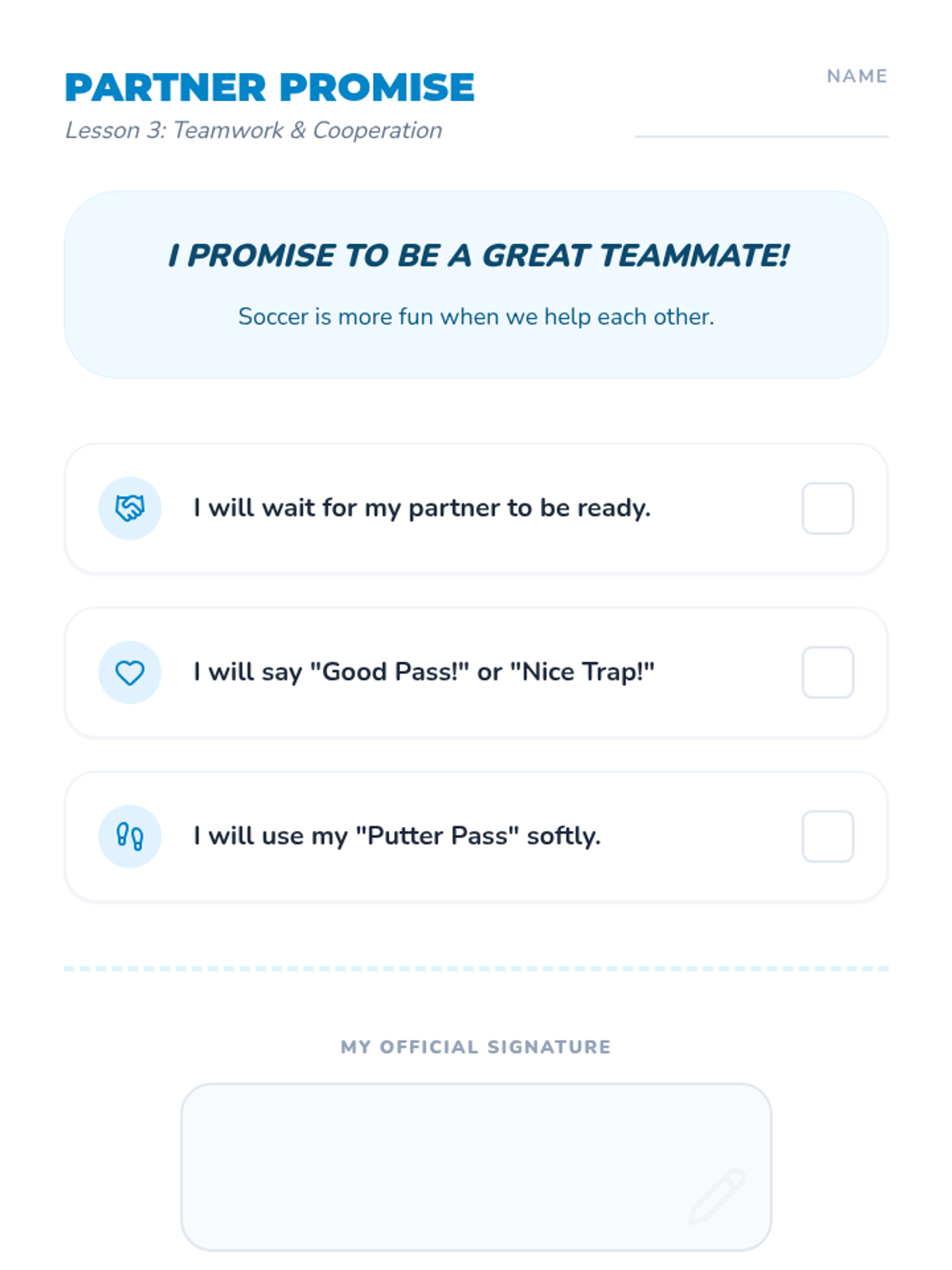
Introduces team-based low-organized games that require cooperation, communication, and basic offensive/defensive strategies to achieve common goals.
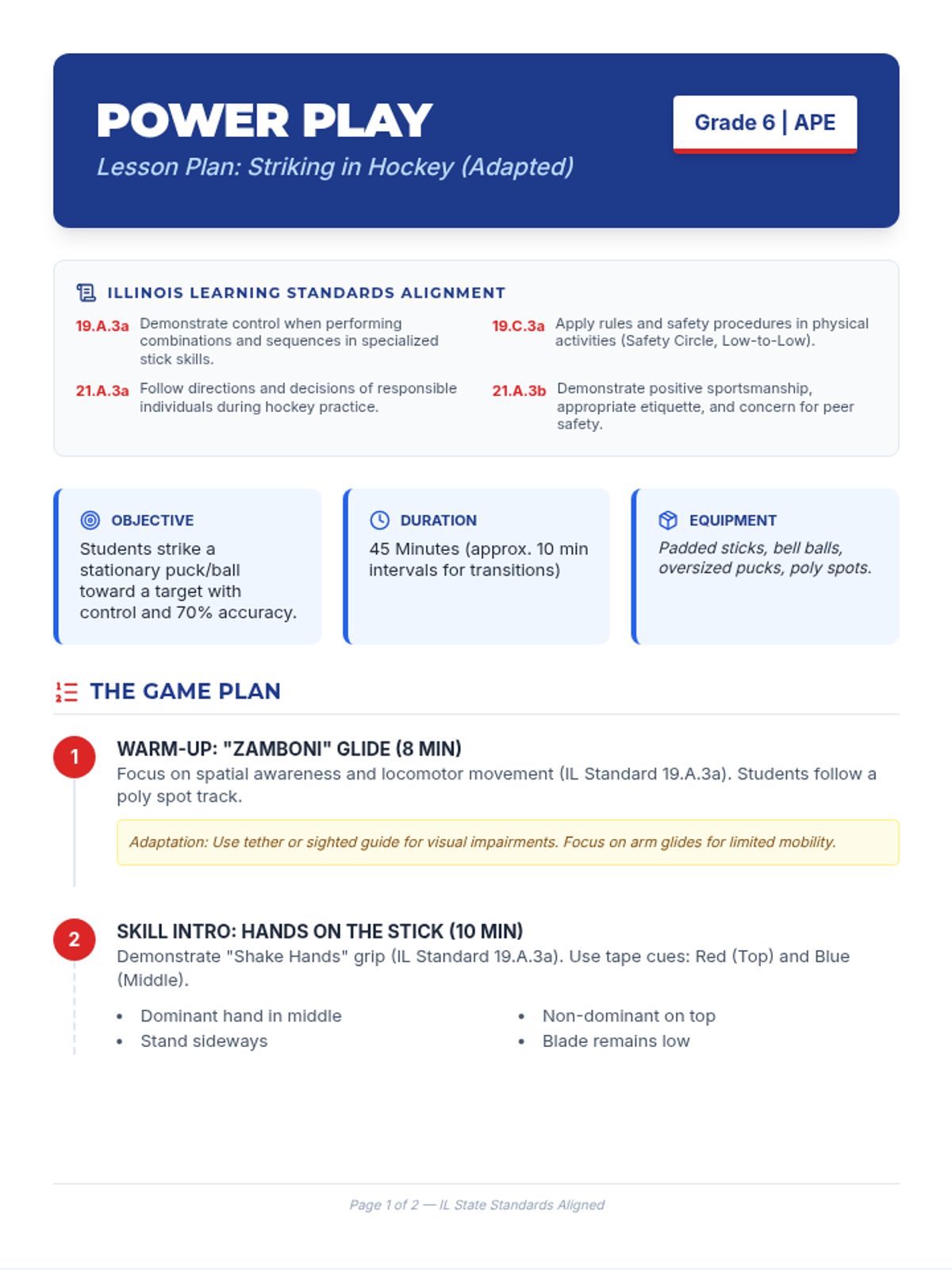
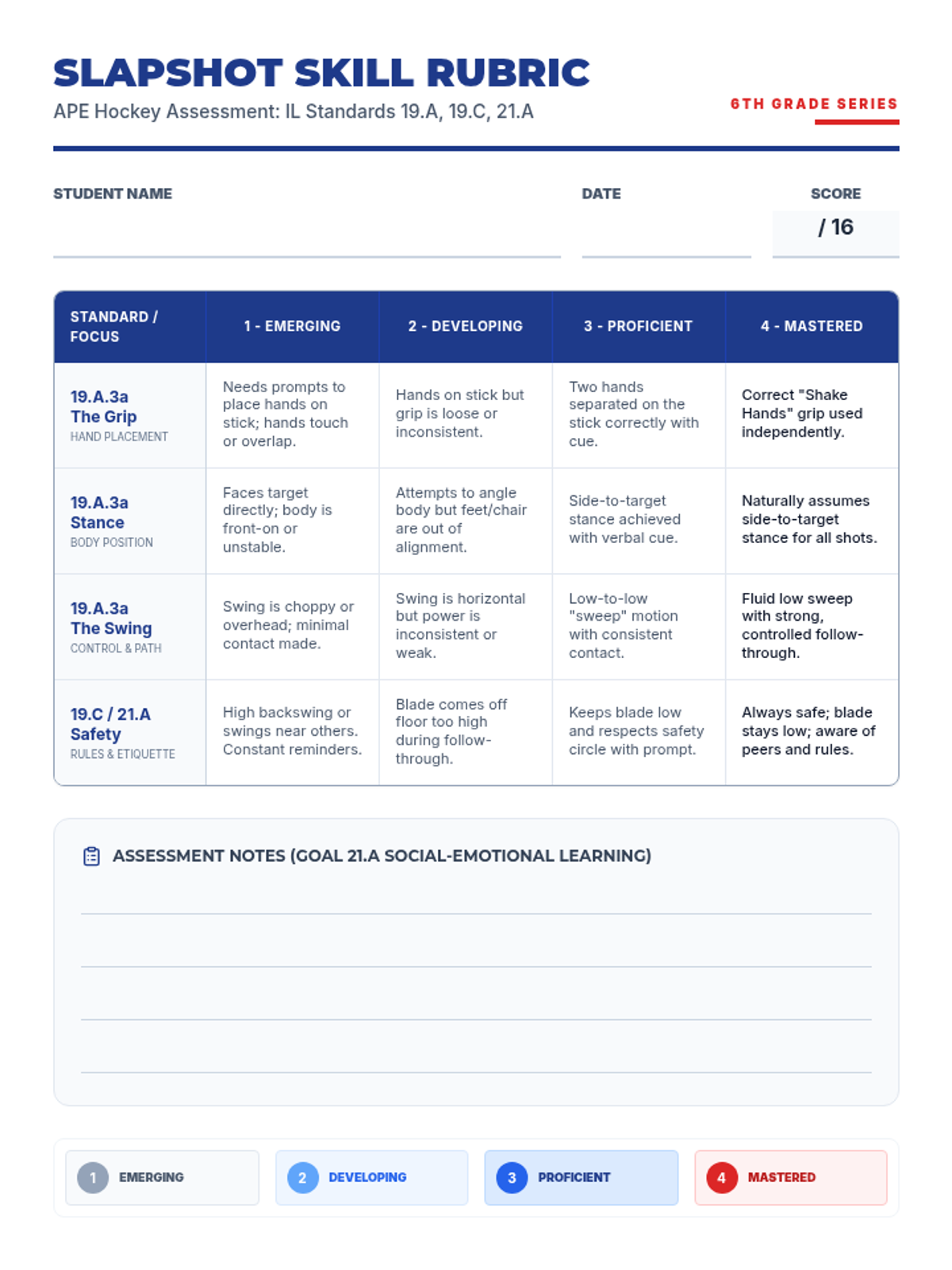
An adapted physical education lesson focused on the mechanics of striking a hockey puck or ball, featuring modifications for various mobility and sensory needs.
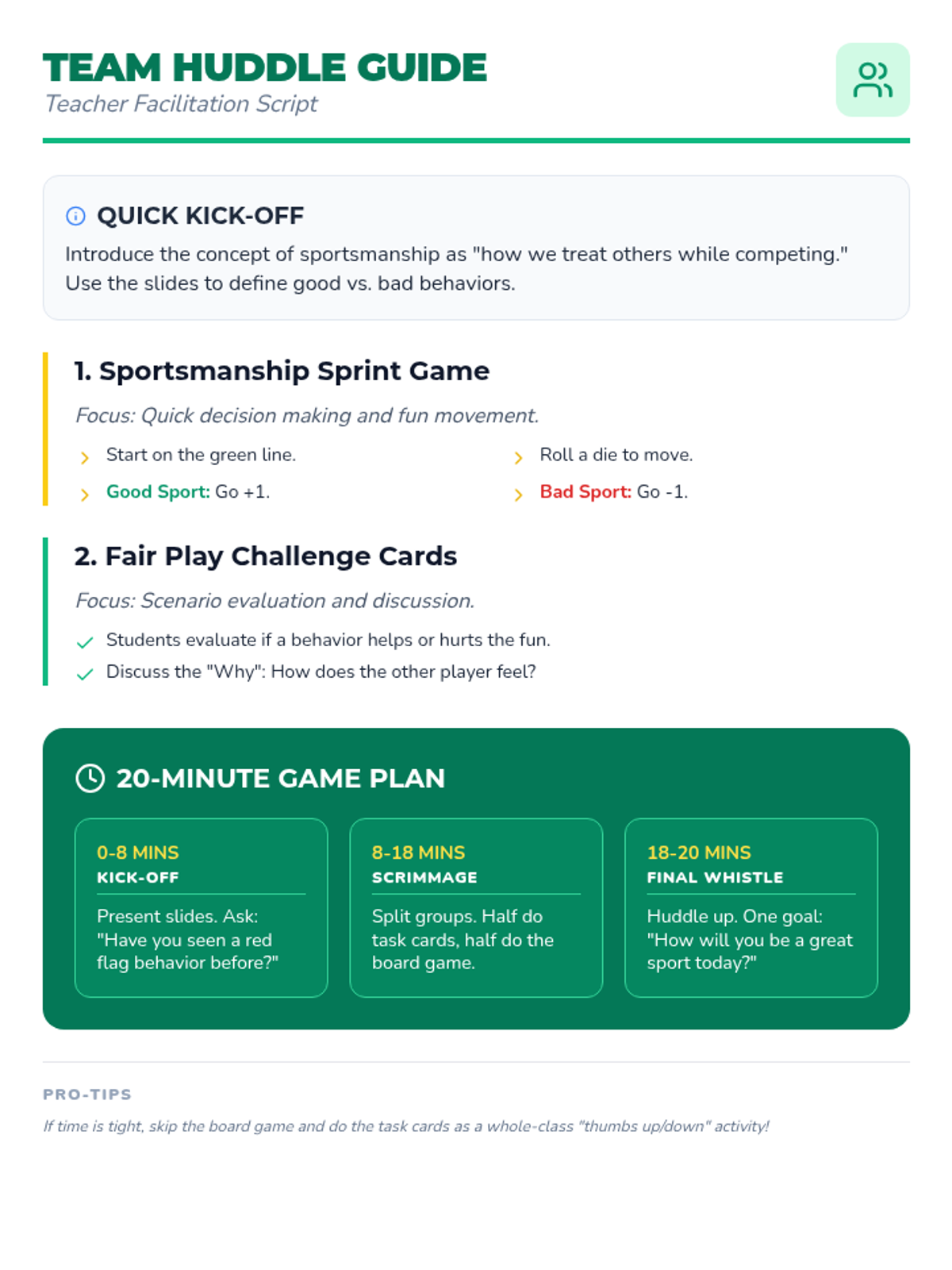
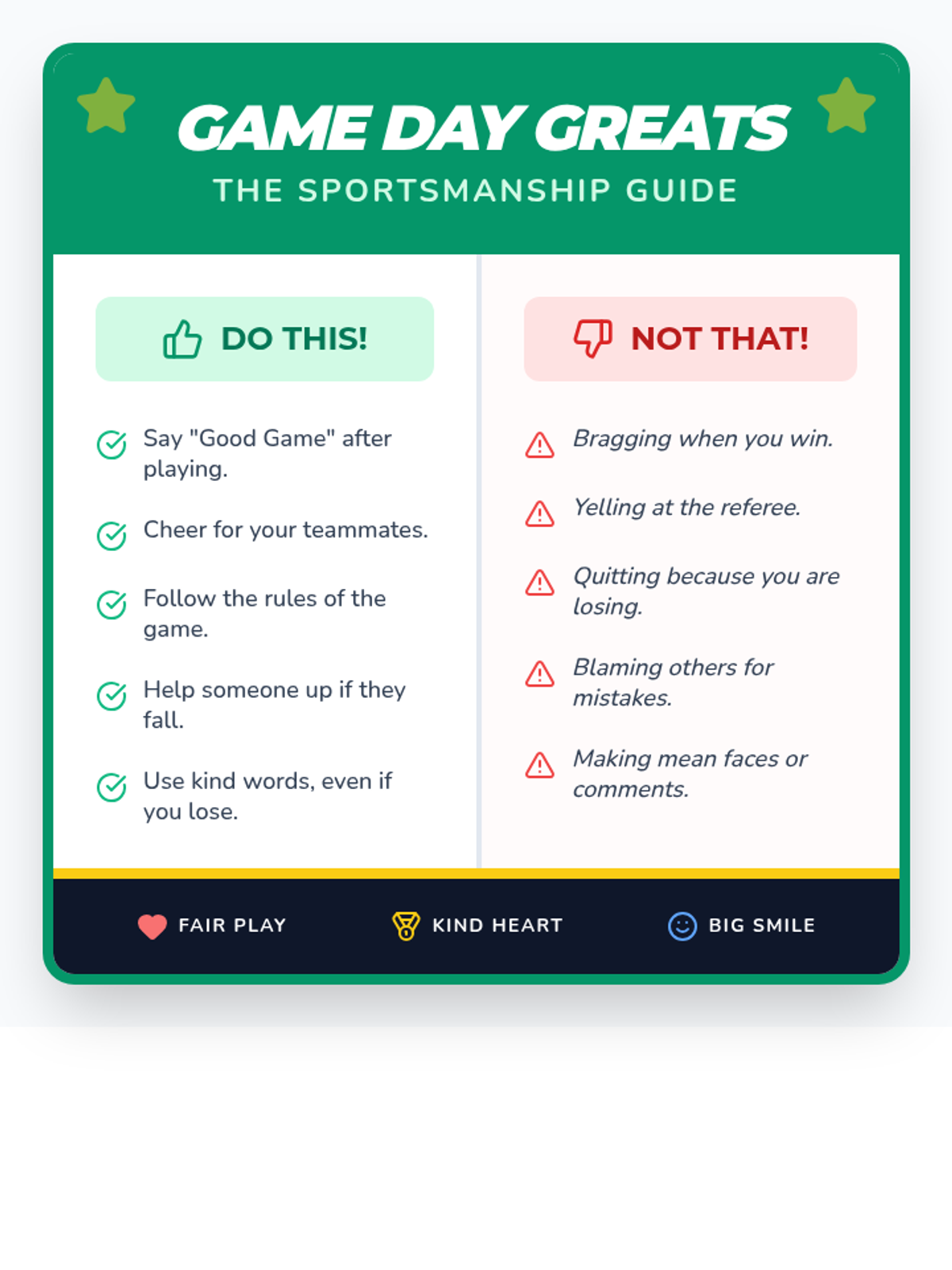
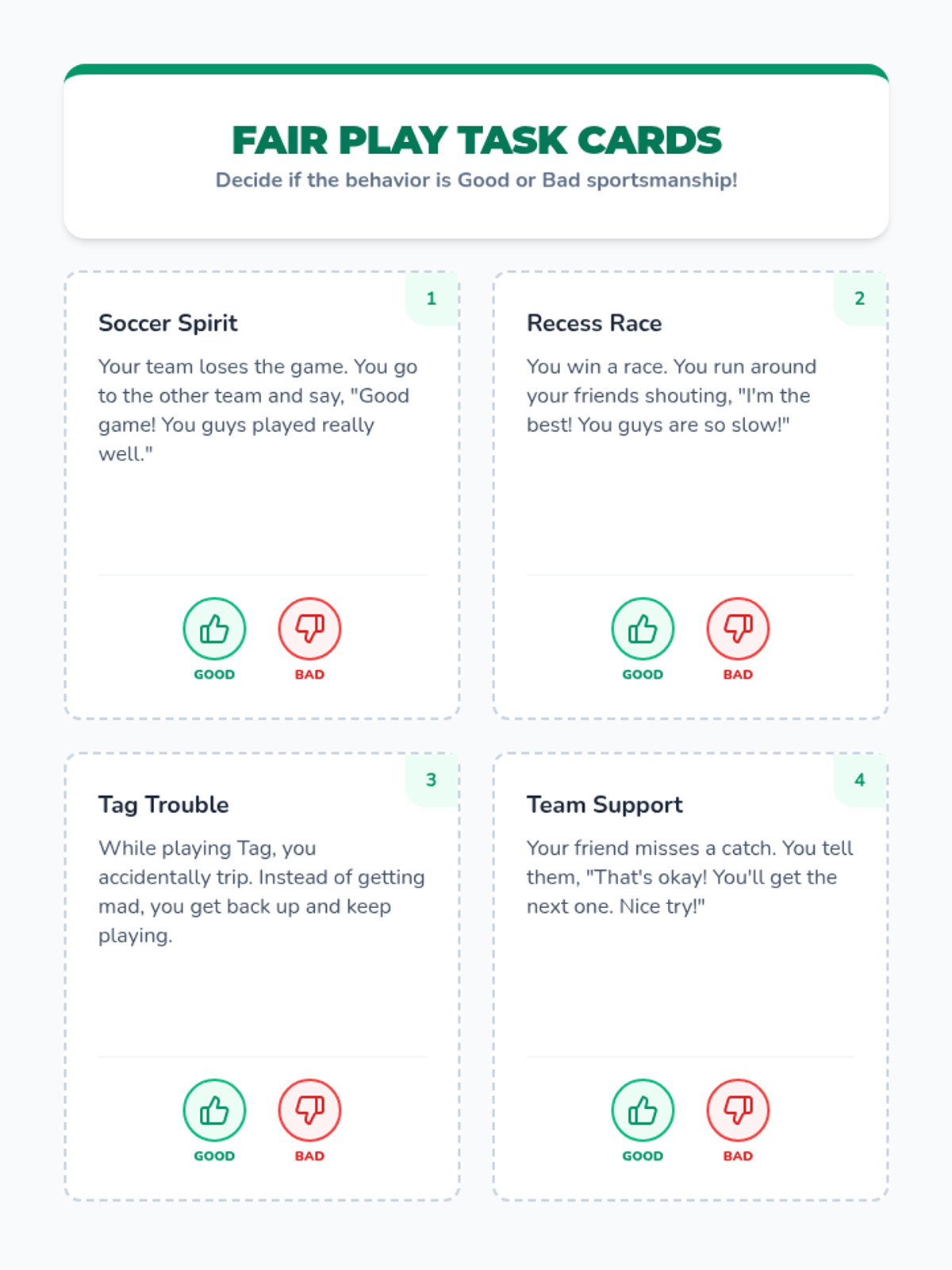
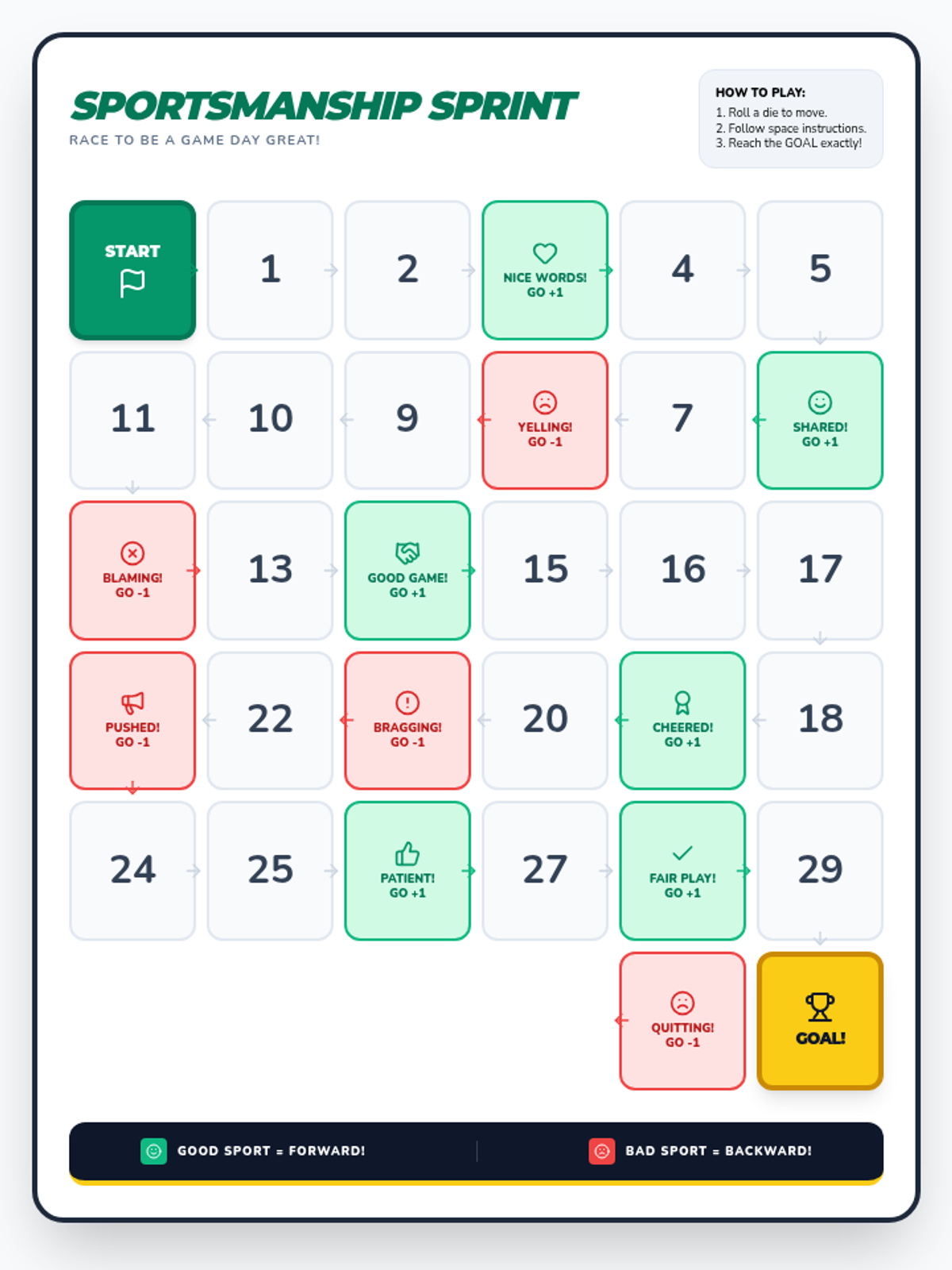
A high-energy, 20-minute lesson on sportsmanship, focusing on how to be a 'Game Day Great' by handling wins and losses with grace. Includes slides, a small group guide, an anchor chart, task cards, and a board game.
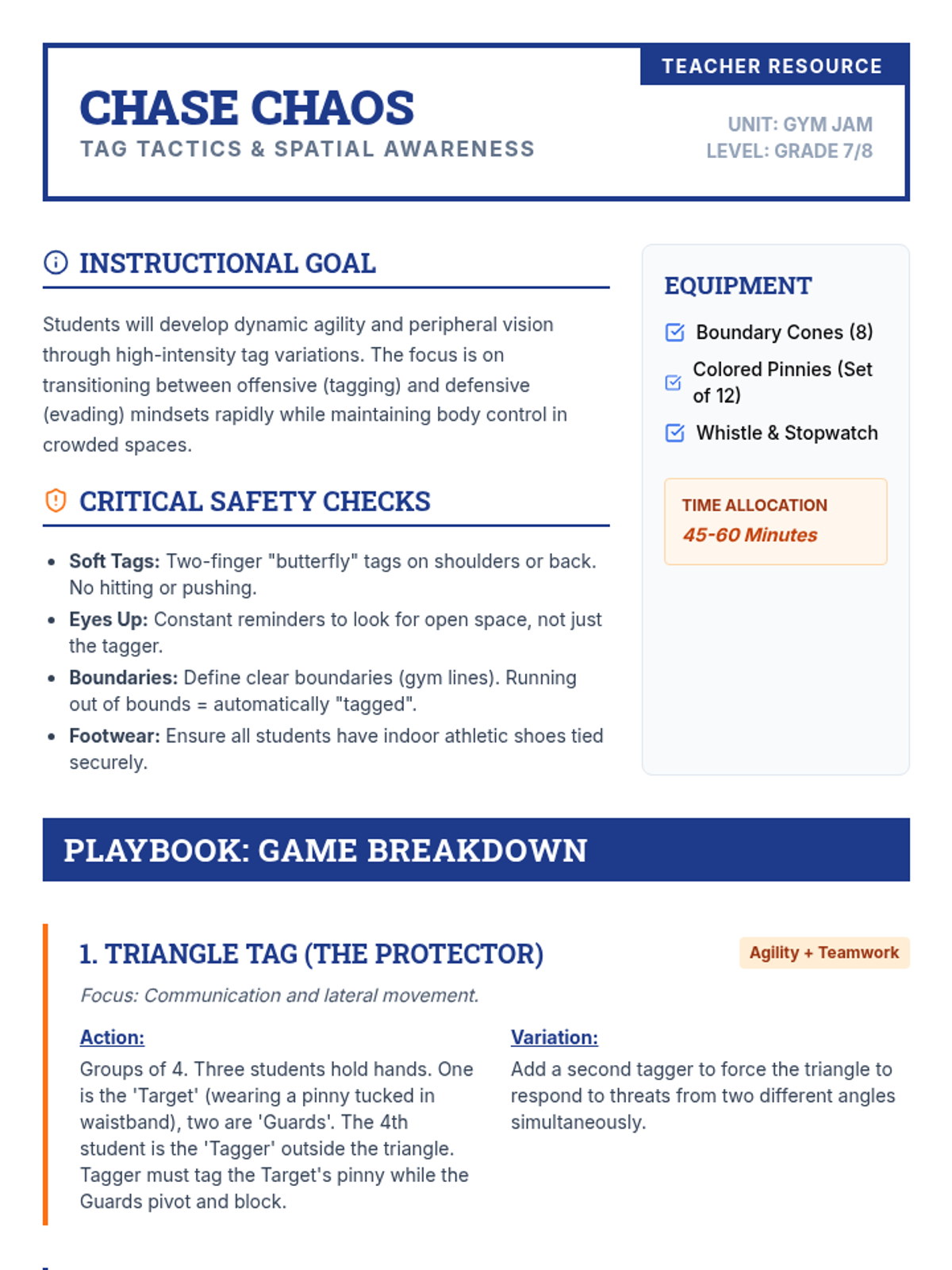
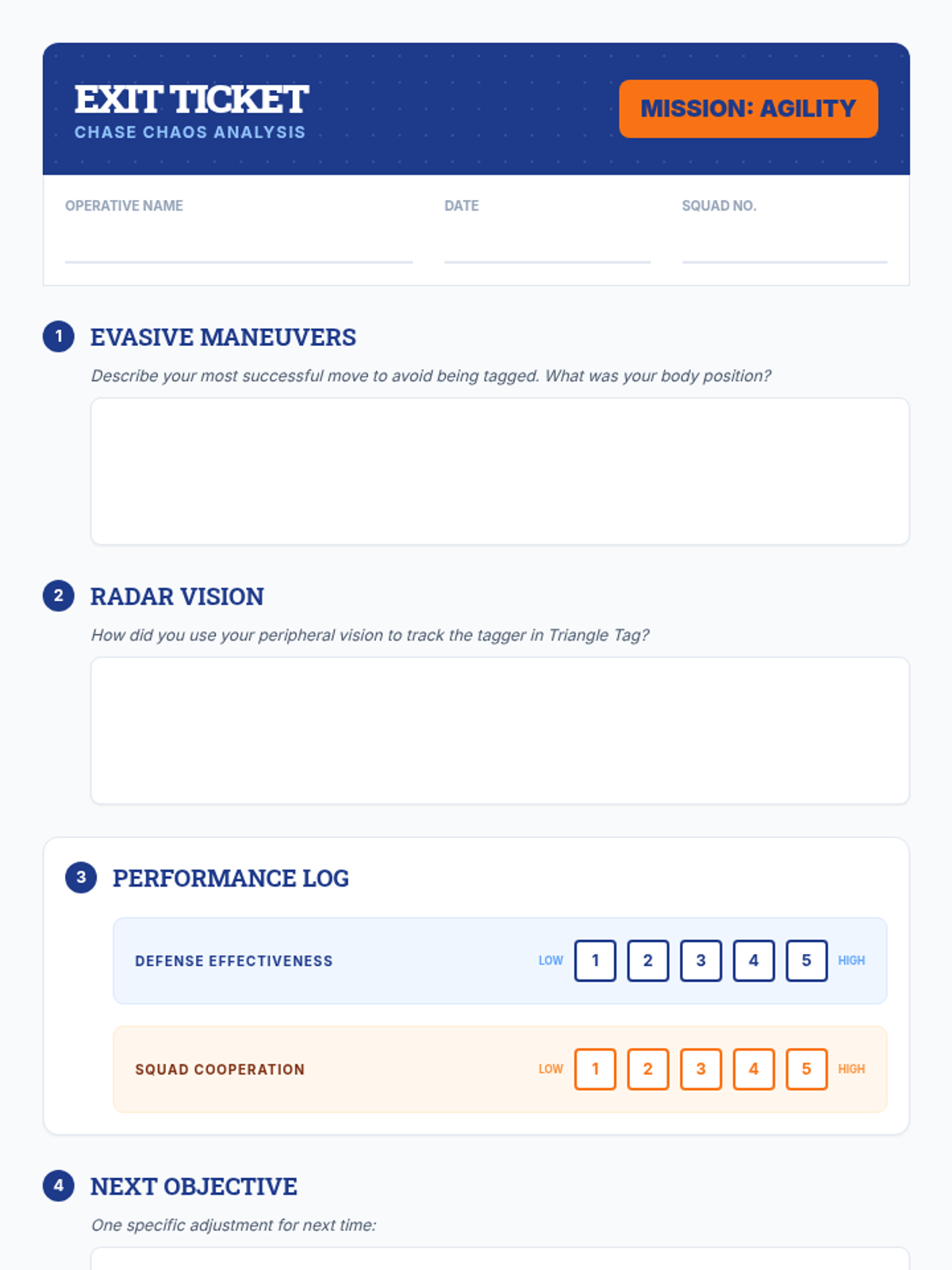
Focuses on high-intensity tag variations that challenge students' agility, spatial awareness, and strategic movement in a fast-paced environment.
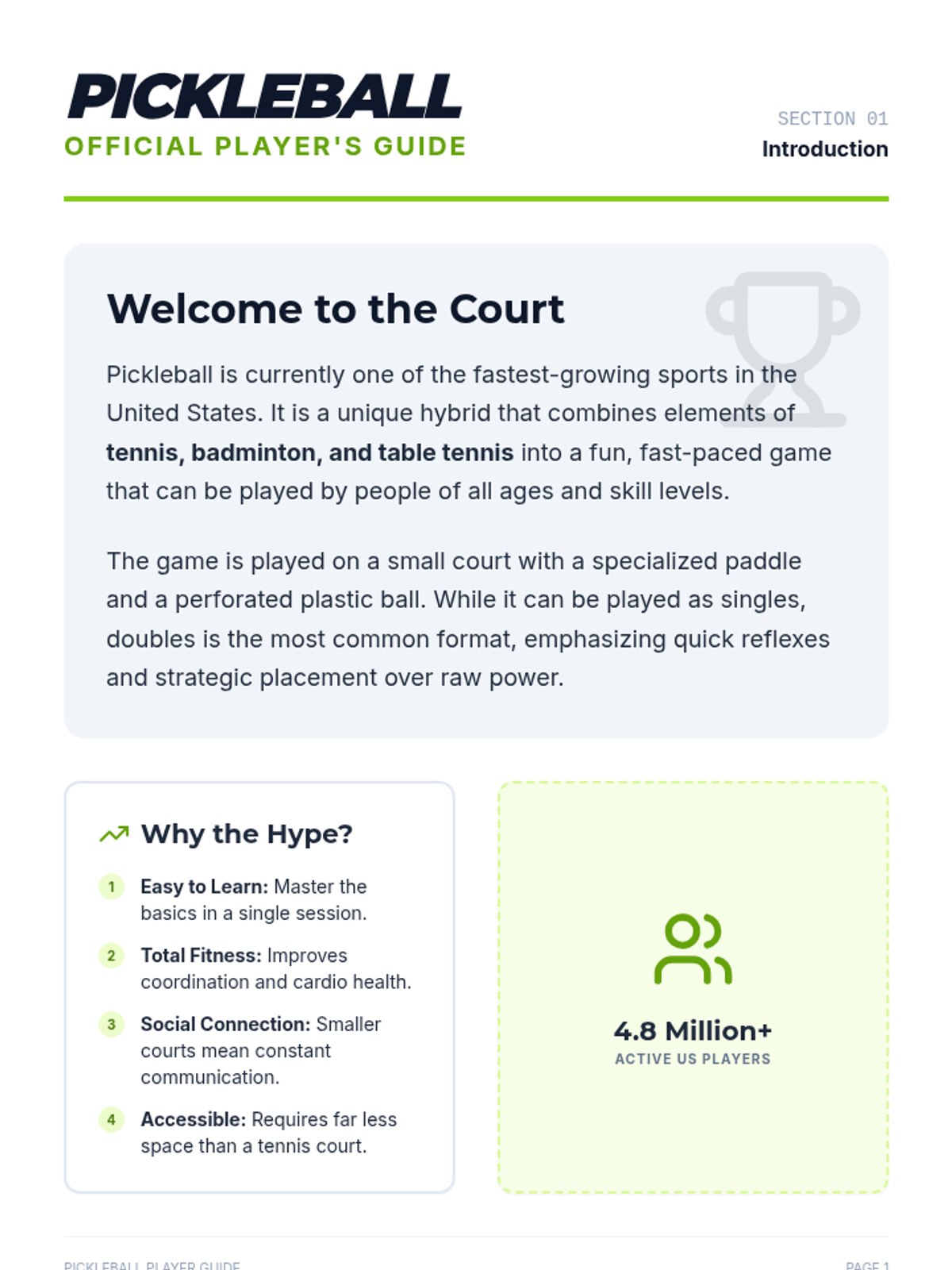
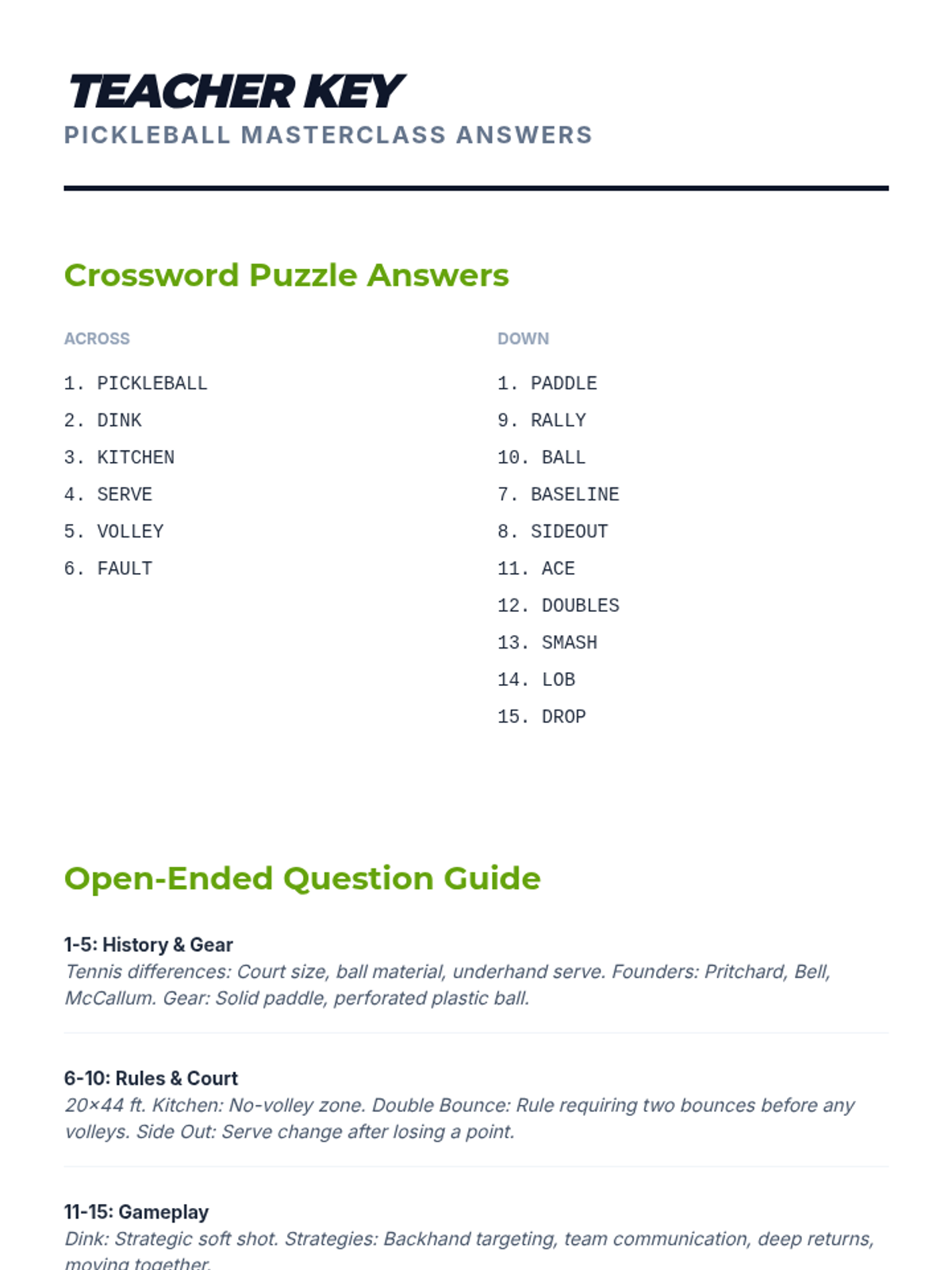
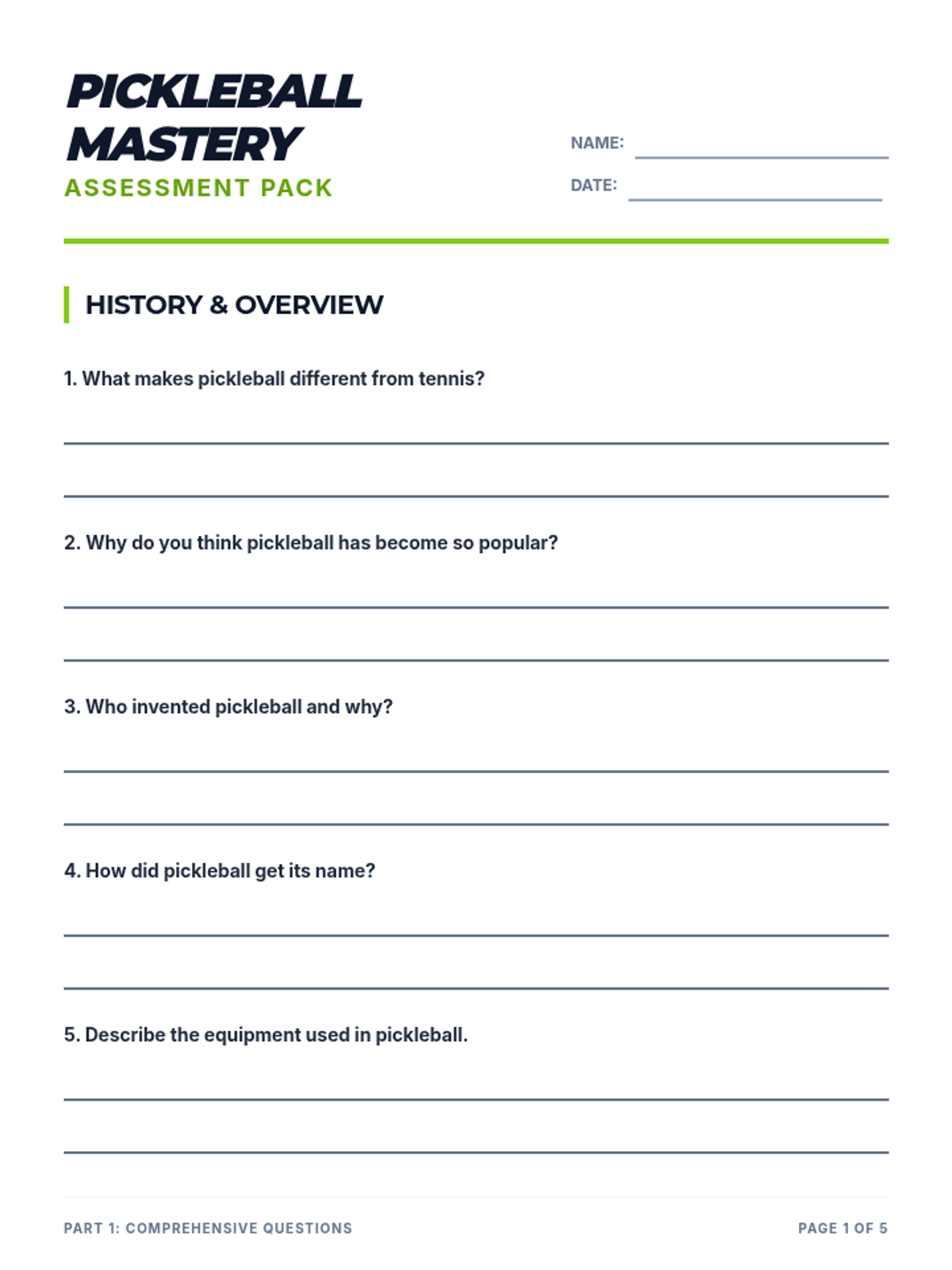
A comprehensive guide to the sport of pickleball, covering its history, rules, equipment, and strategies through an informational packet and interactive assessments.
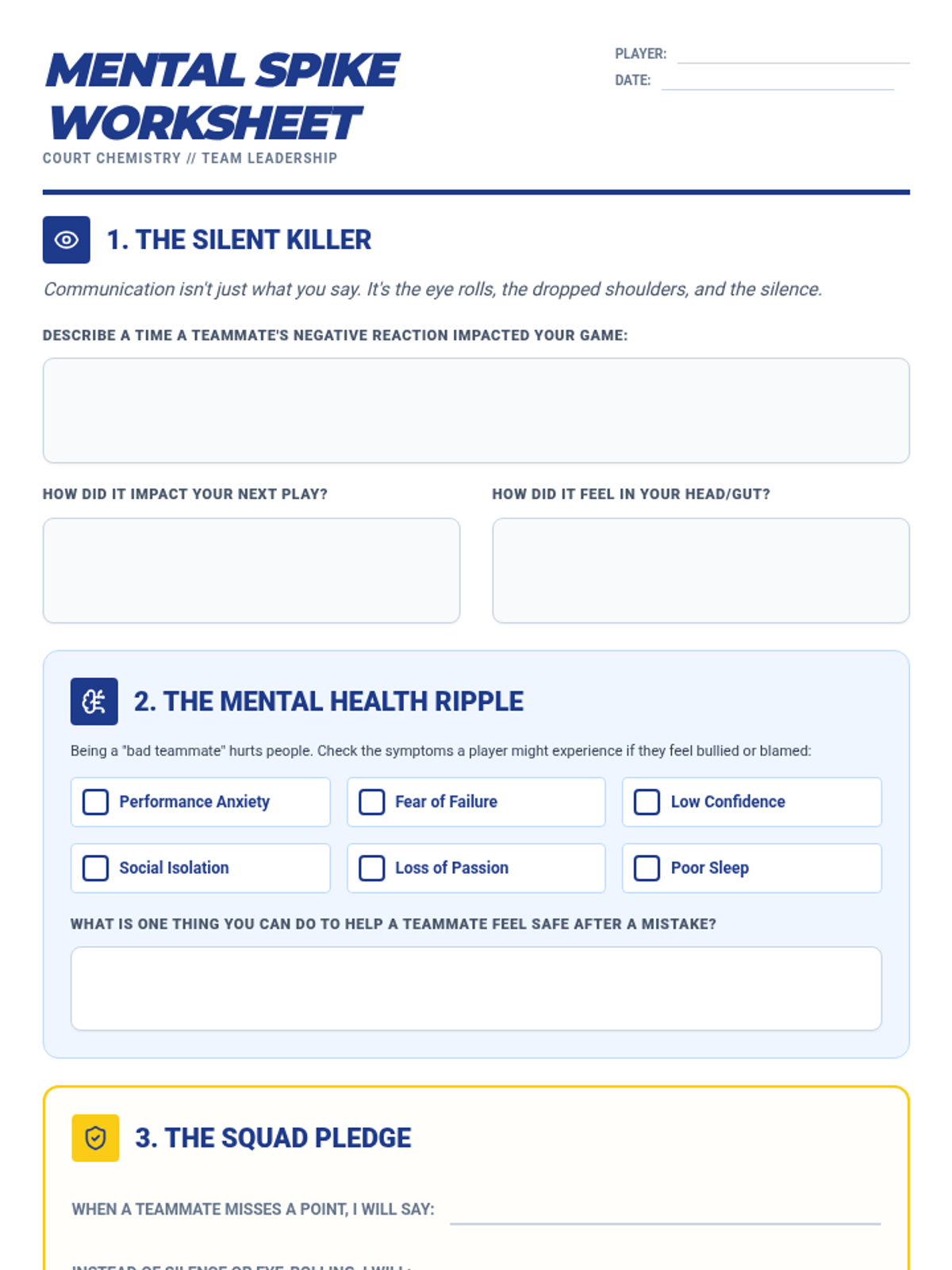
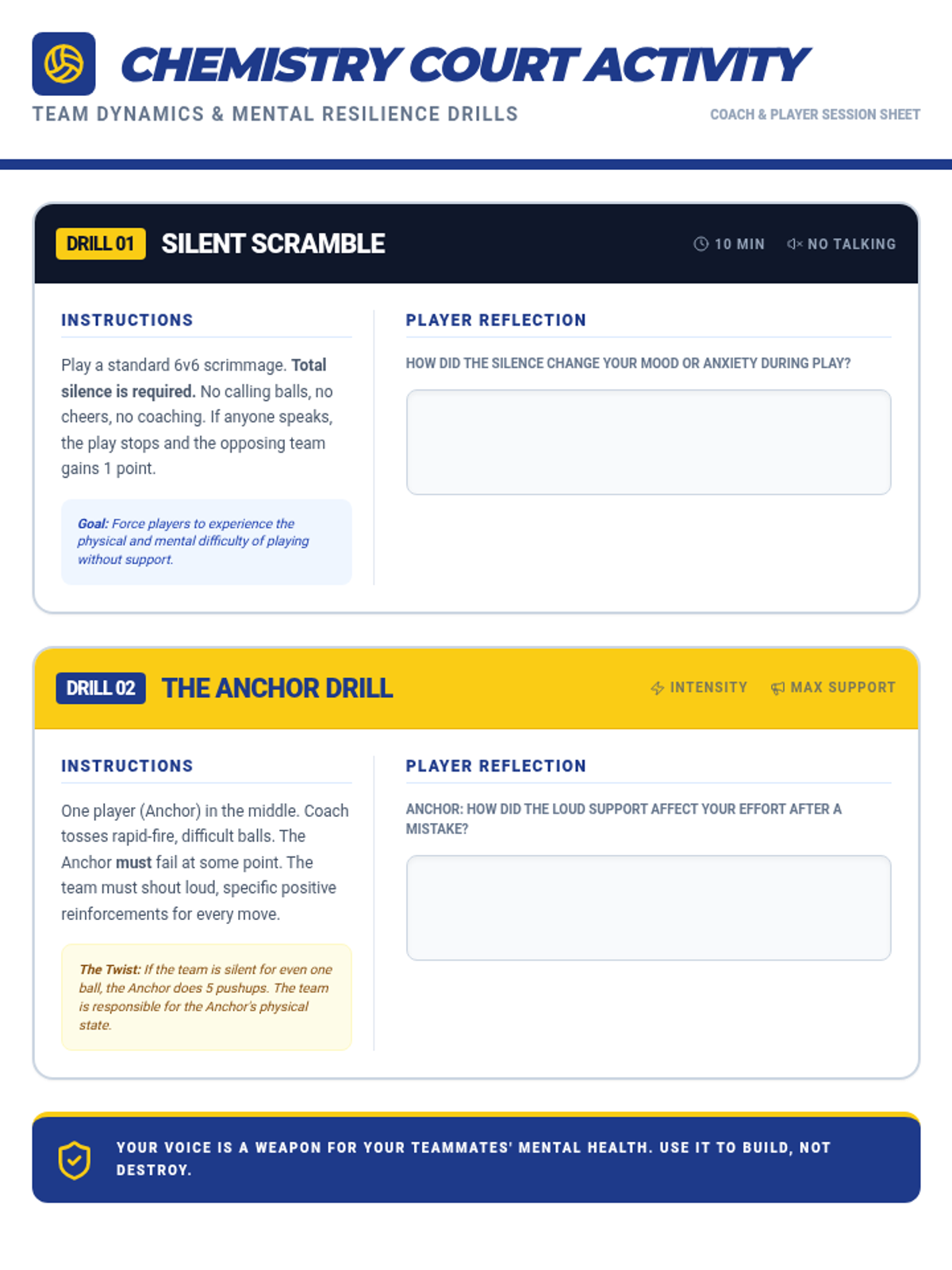
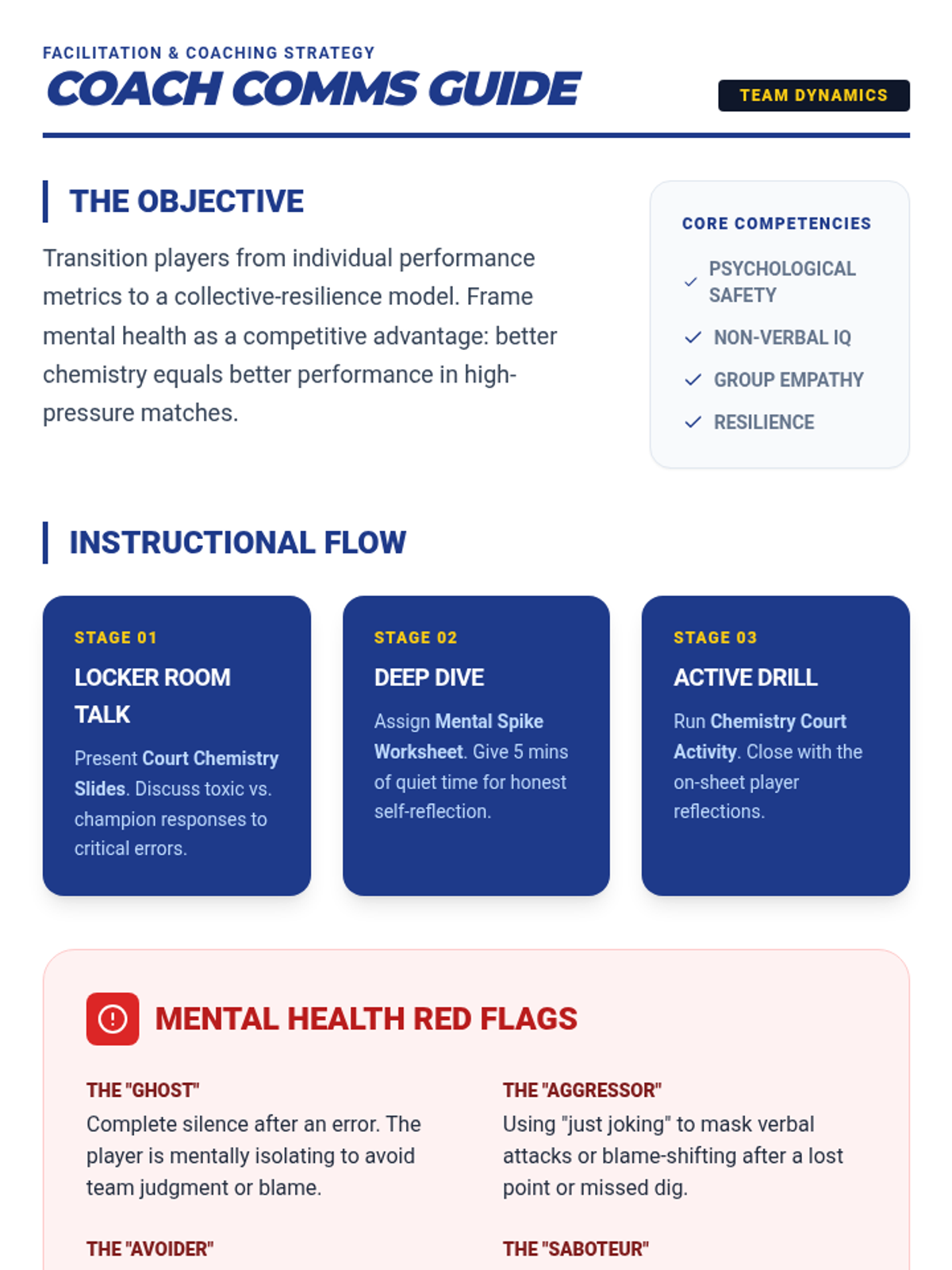
A lesson for boys' volleyball teams focused on building positive team dynamics, understanding the mental health impact of sportsmanship, and practicing supportive communication on the court.
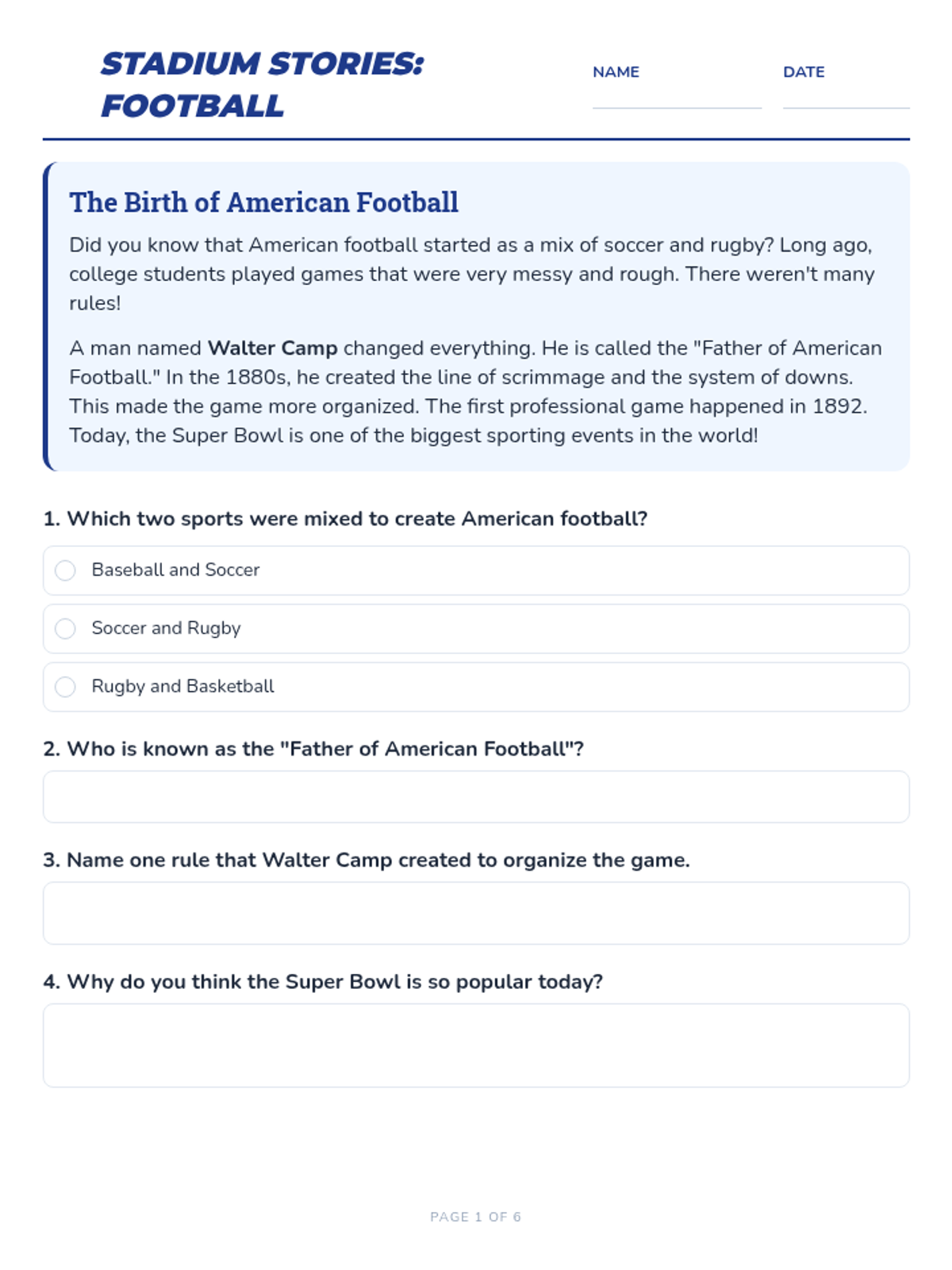
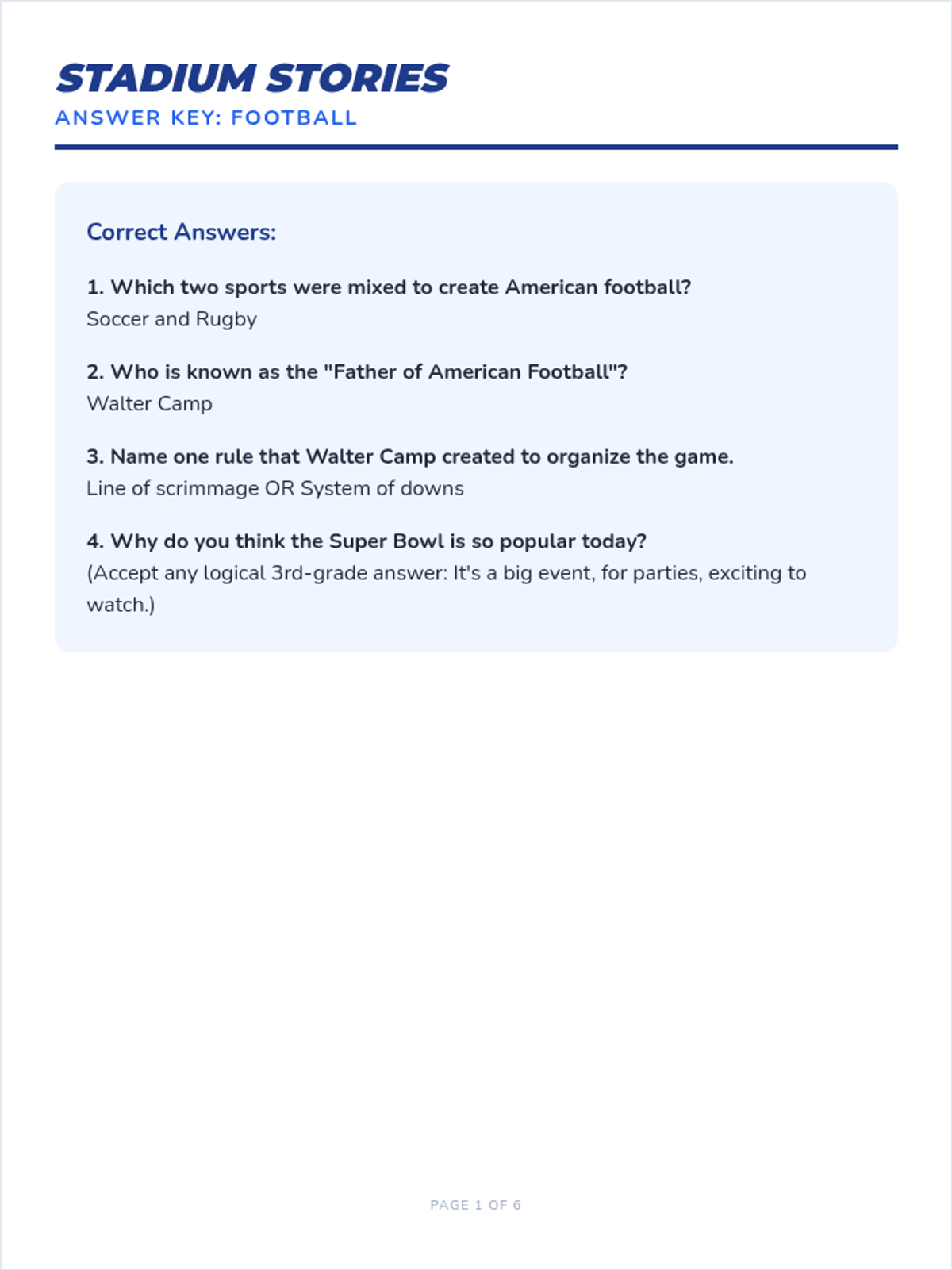
A comprehensive exploration of sports history designed for 3rd-grade students, focusing on six major sports: football, soccer, basketball, tennis, volleyball, and swimming.
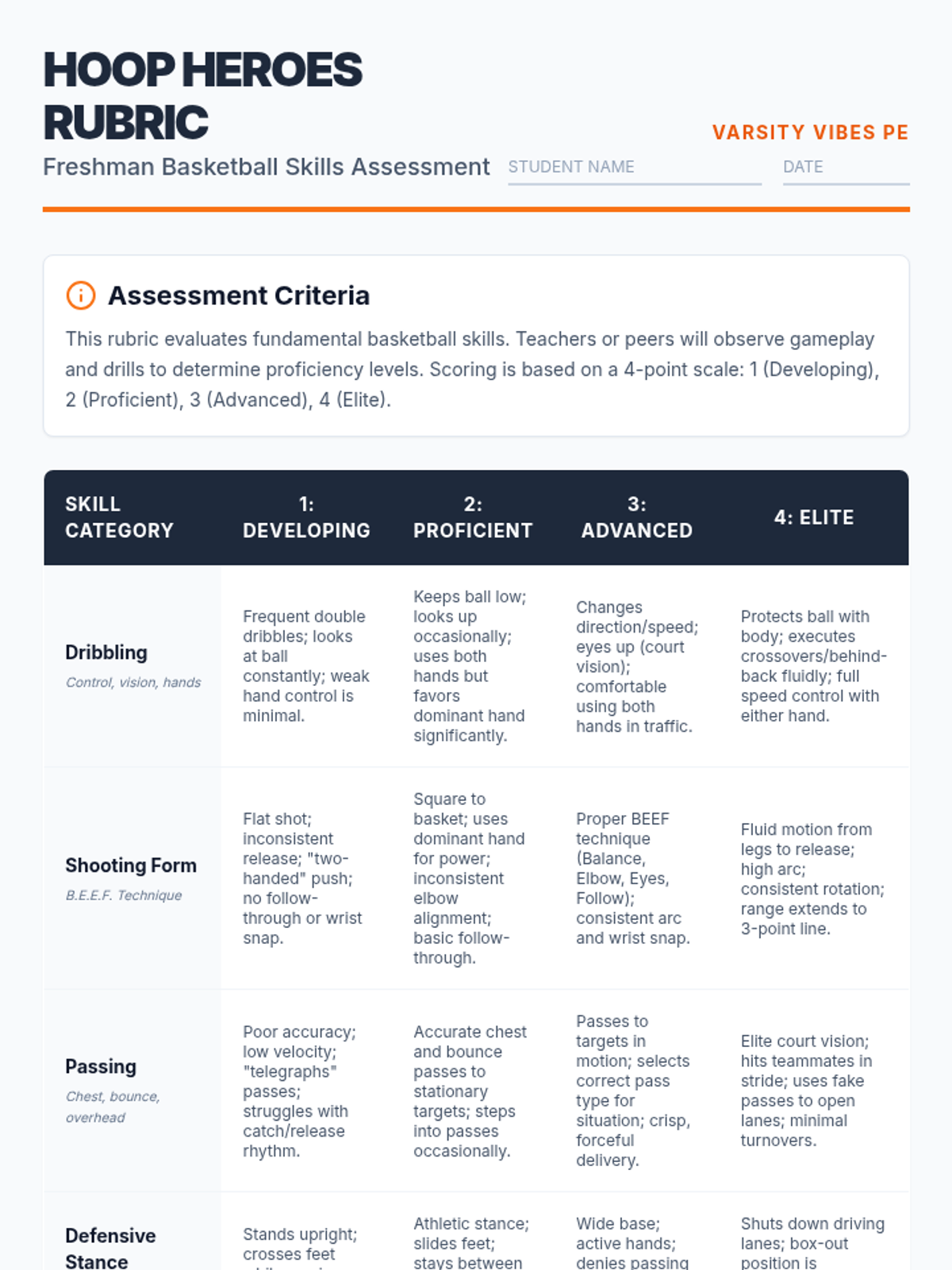
Assessment tools for mastering basketball fundamentals including shooting, dribbling, and defensive positioning.
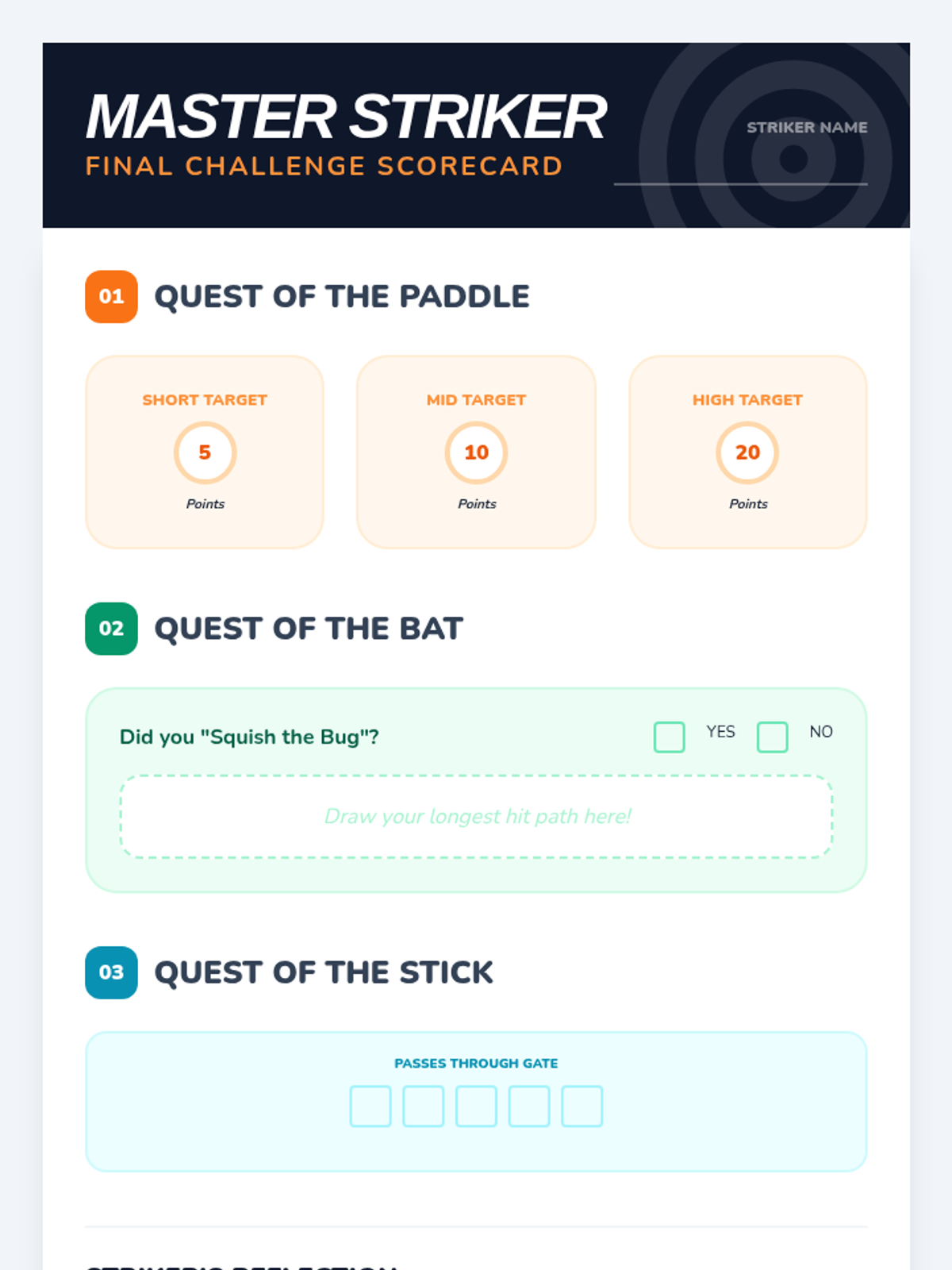
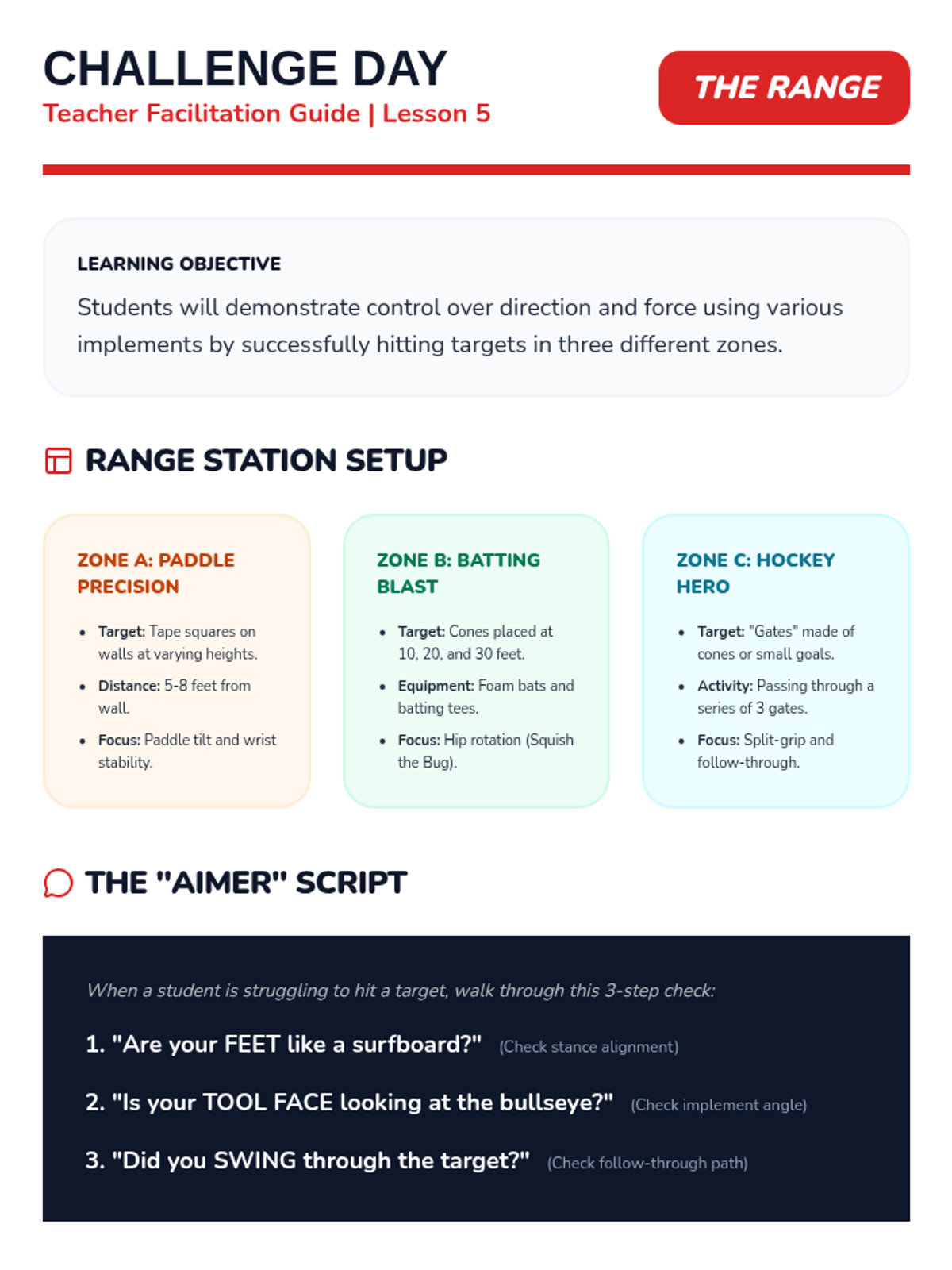
Students choose their preferred implement (bat or stick) to strike objects toward varied targets for points. This lesson reinforces the connection between stance alignment and target direction.
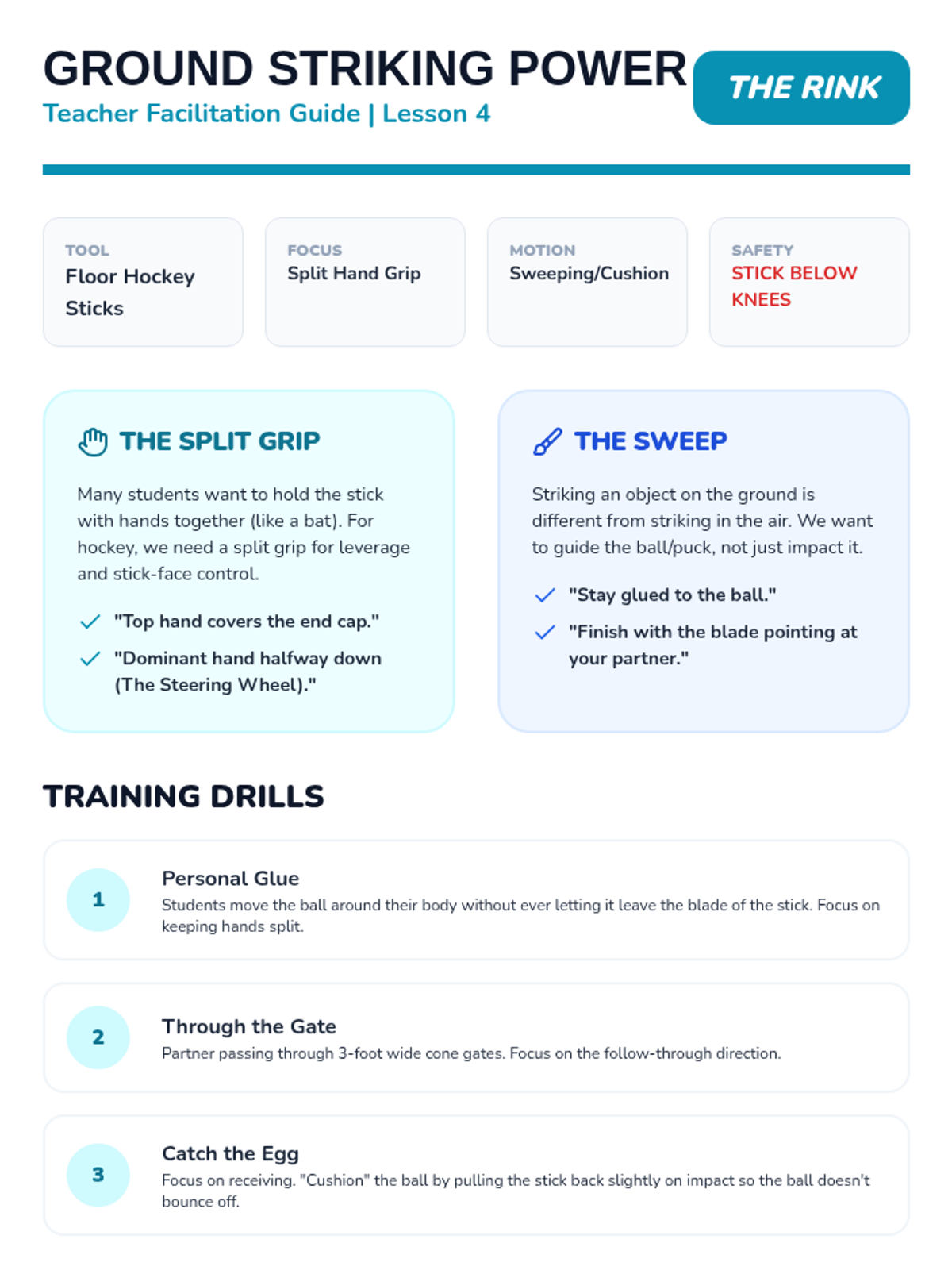
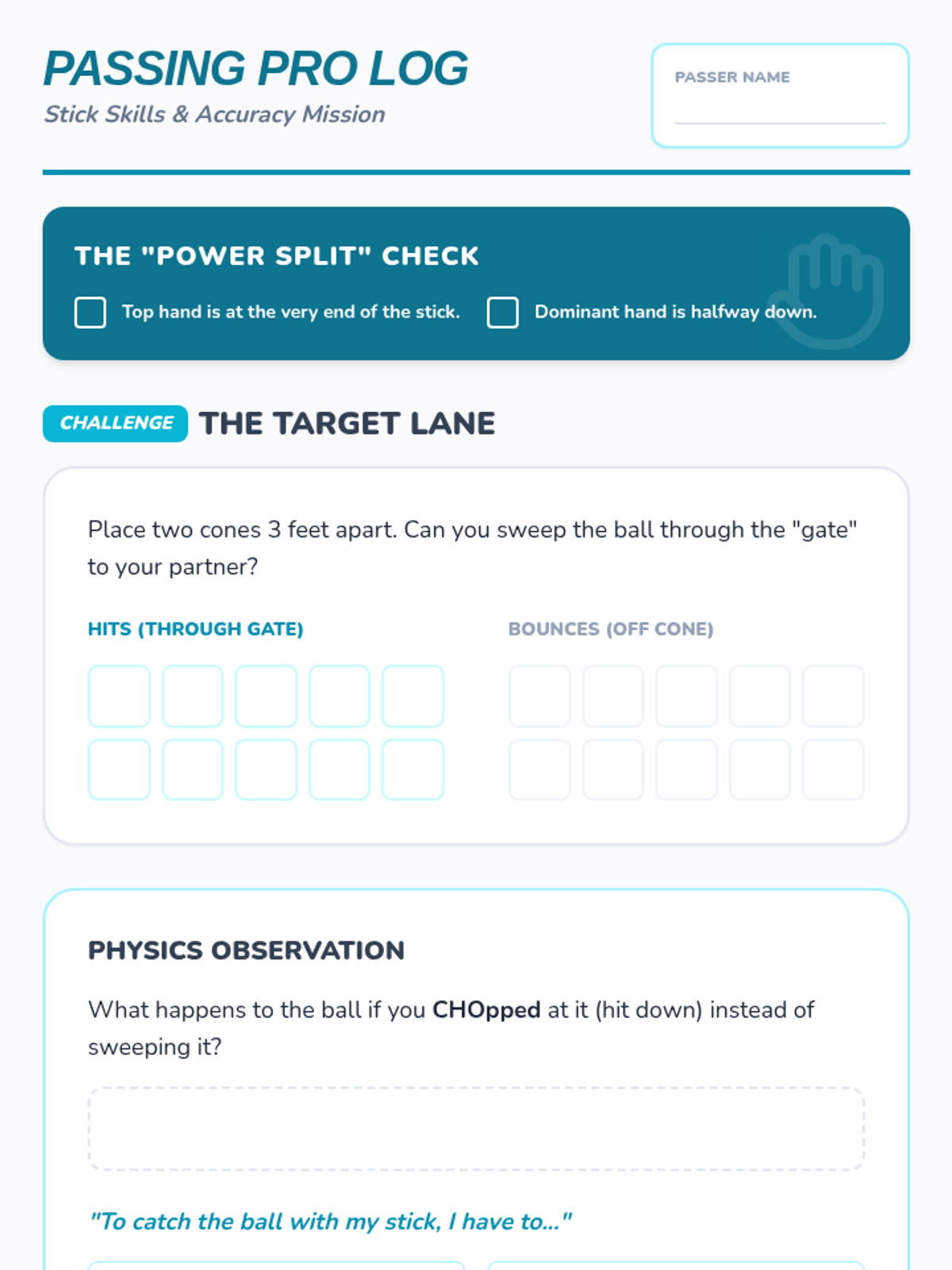
Students switch to floor hockey sticks to practice striking a puck/ball on the ground. Focus is on hand spacing (dominant hand low) and 'sweeping' the object rather than chopping at it.
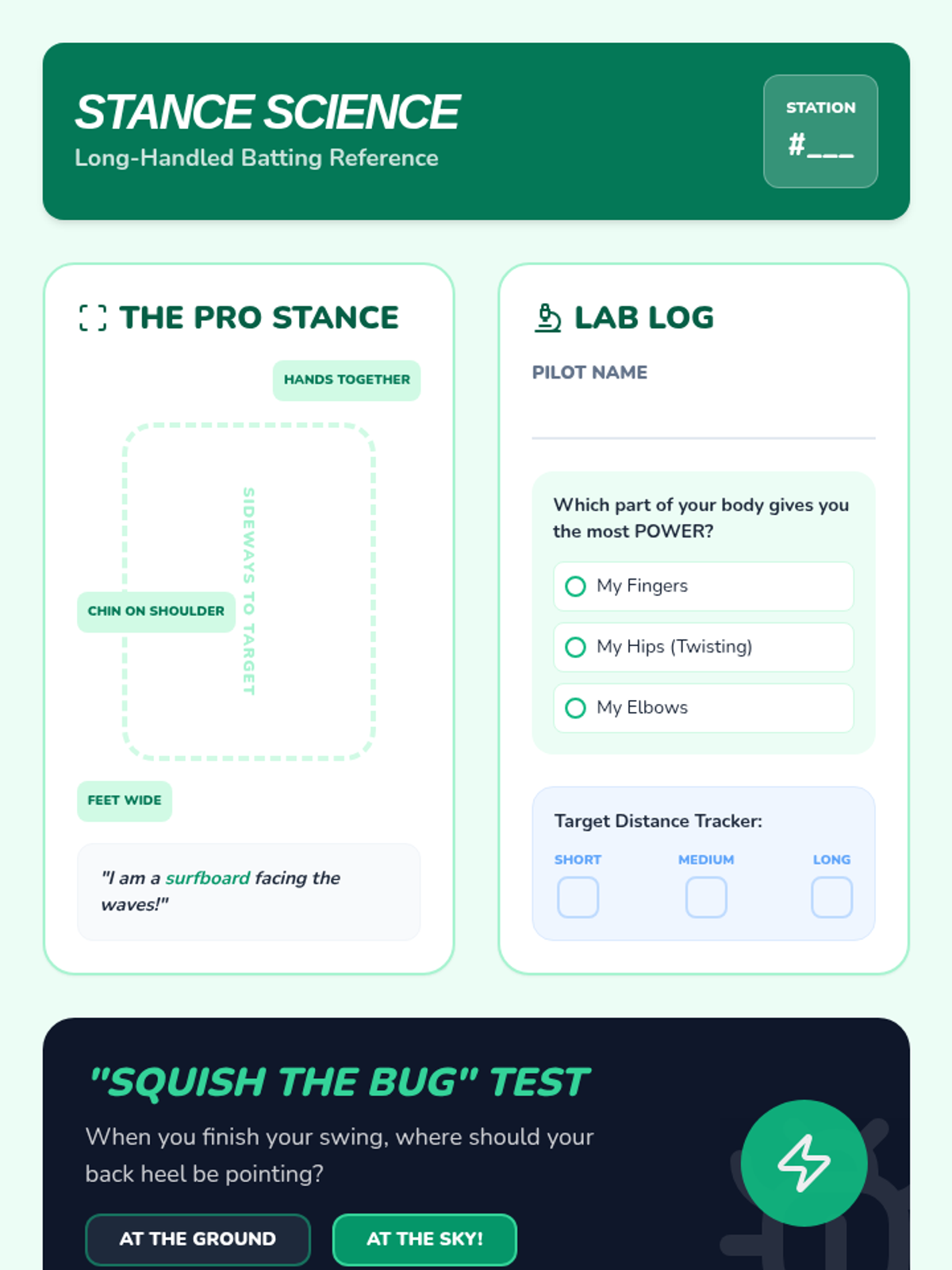
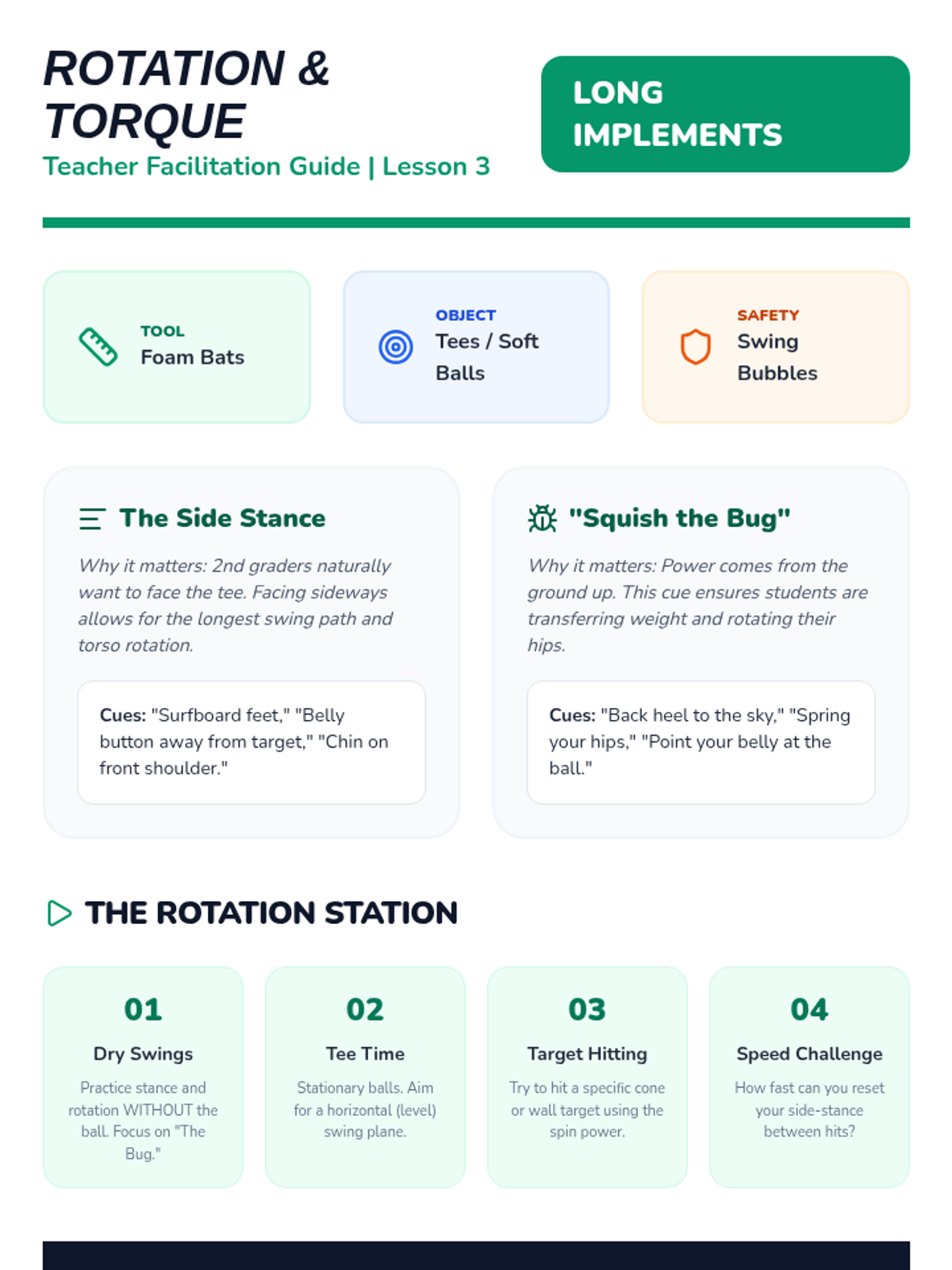
Using foam bats and tees, students learn the side-stance and horizontal swing. The lesson emphasizes rotation of the hips and keeping the eye on the ball until contact.
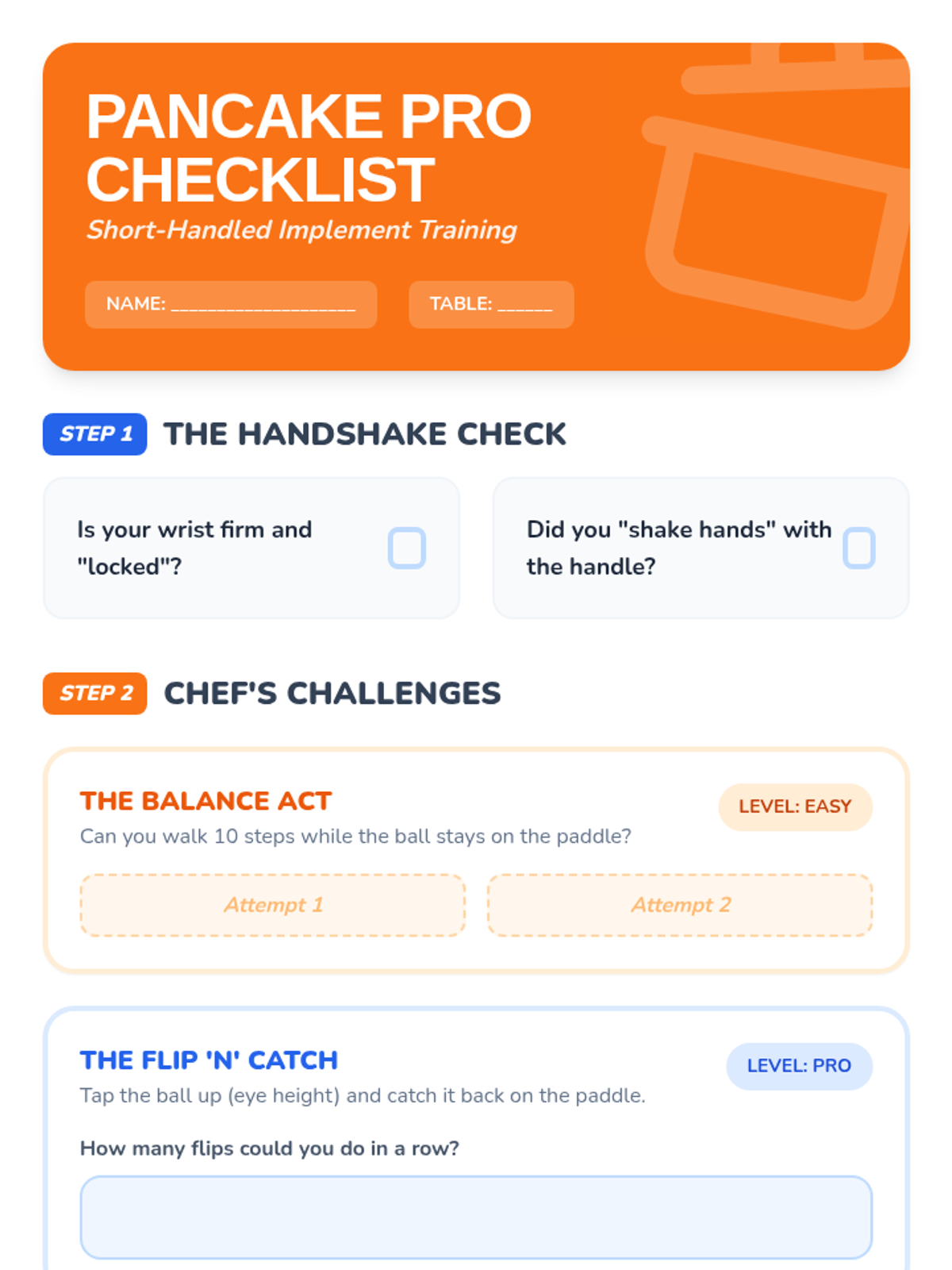
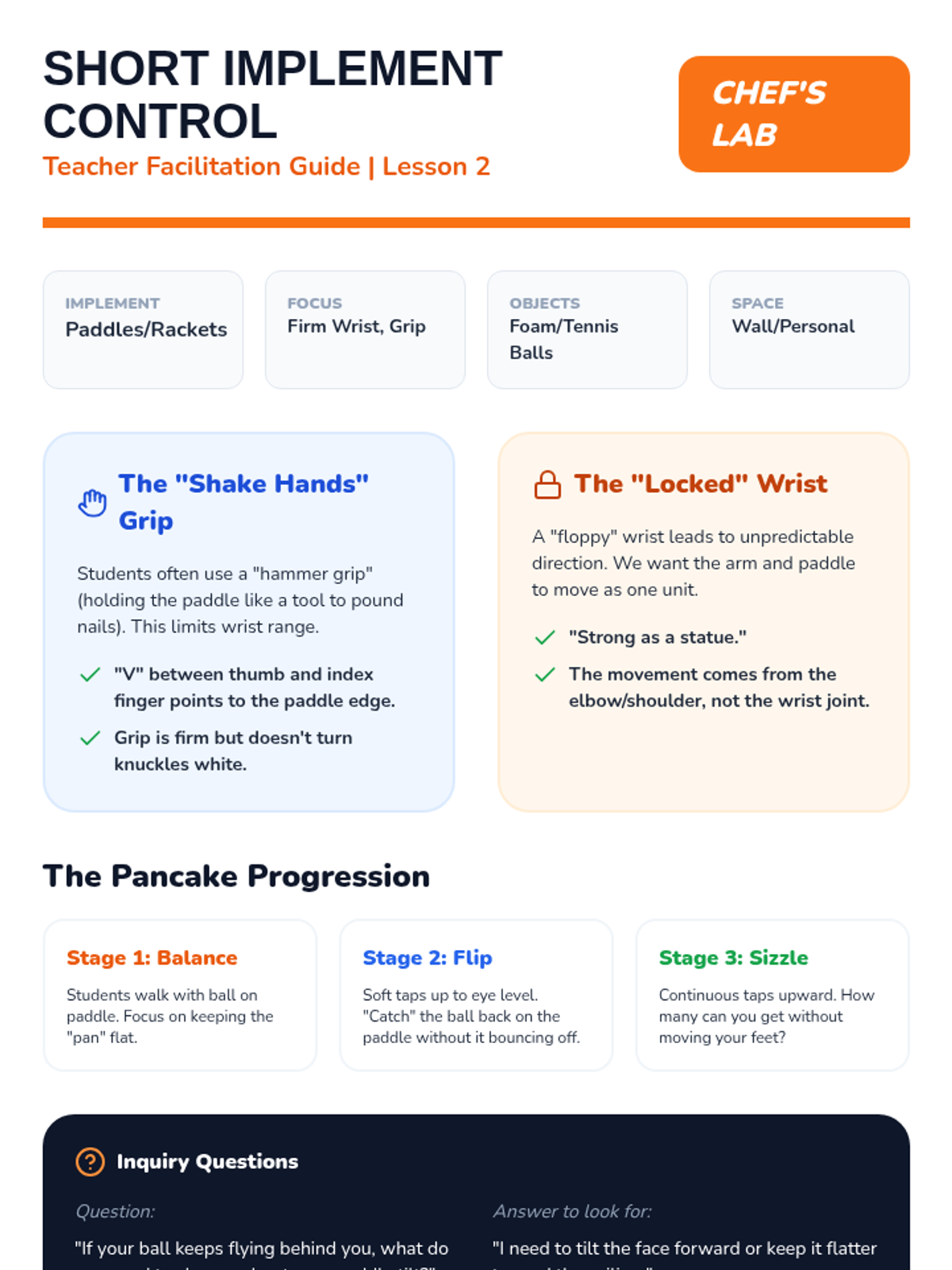
Students are introduced to short-handled implements (paddles/rackets). They practice balancing a ball on the paddle and then striking it upward and toward a wall, focusing on wrist firmness and grip.
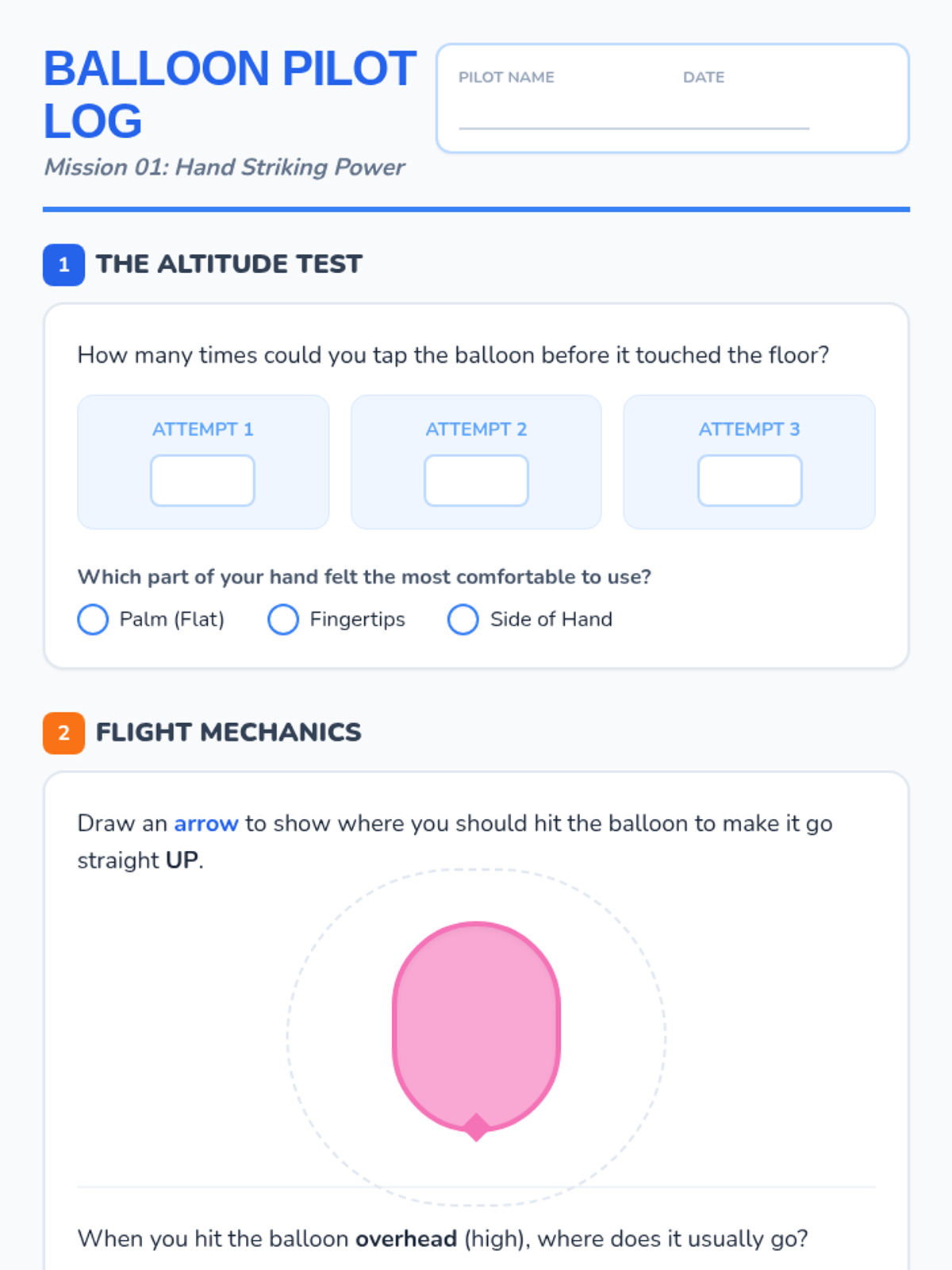
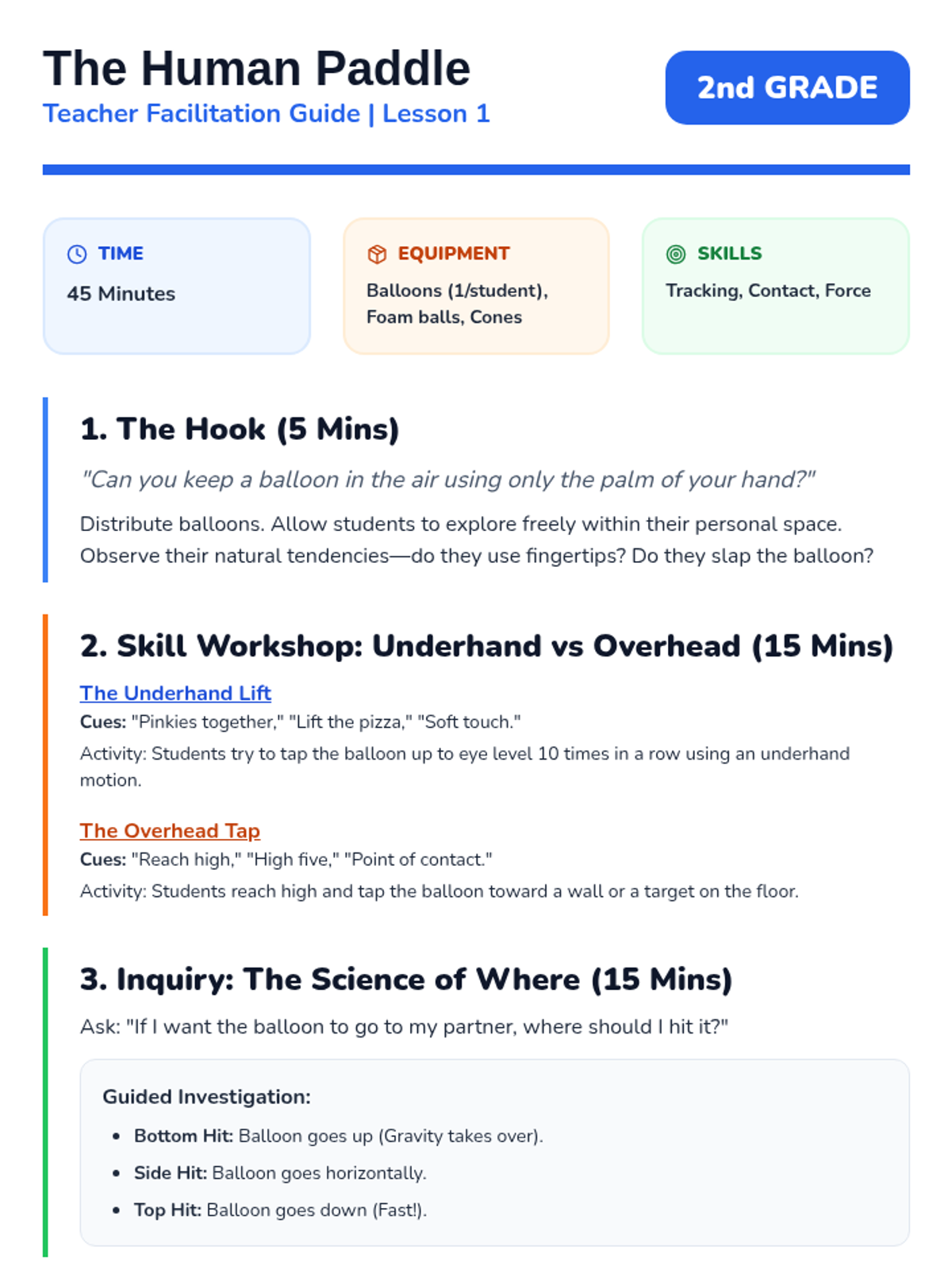
Students practice striking balloons and lightweight balls with their hands, exploring the difference between underhand and overhead contact points.
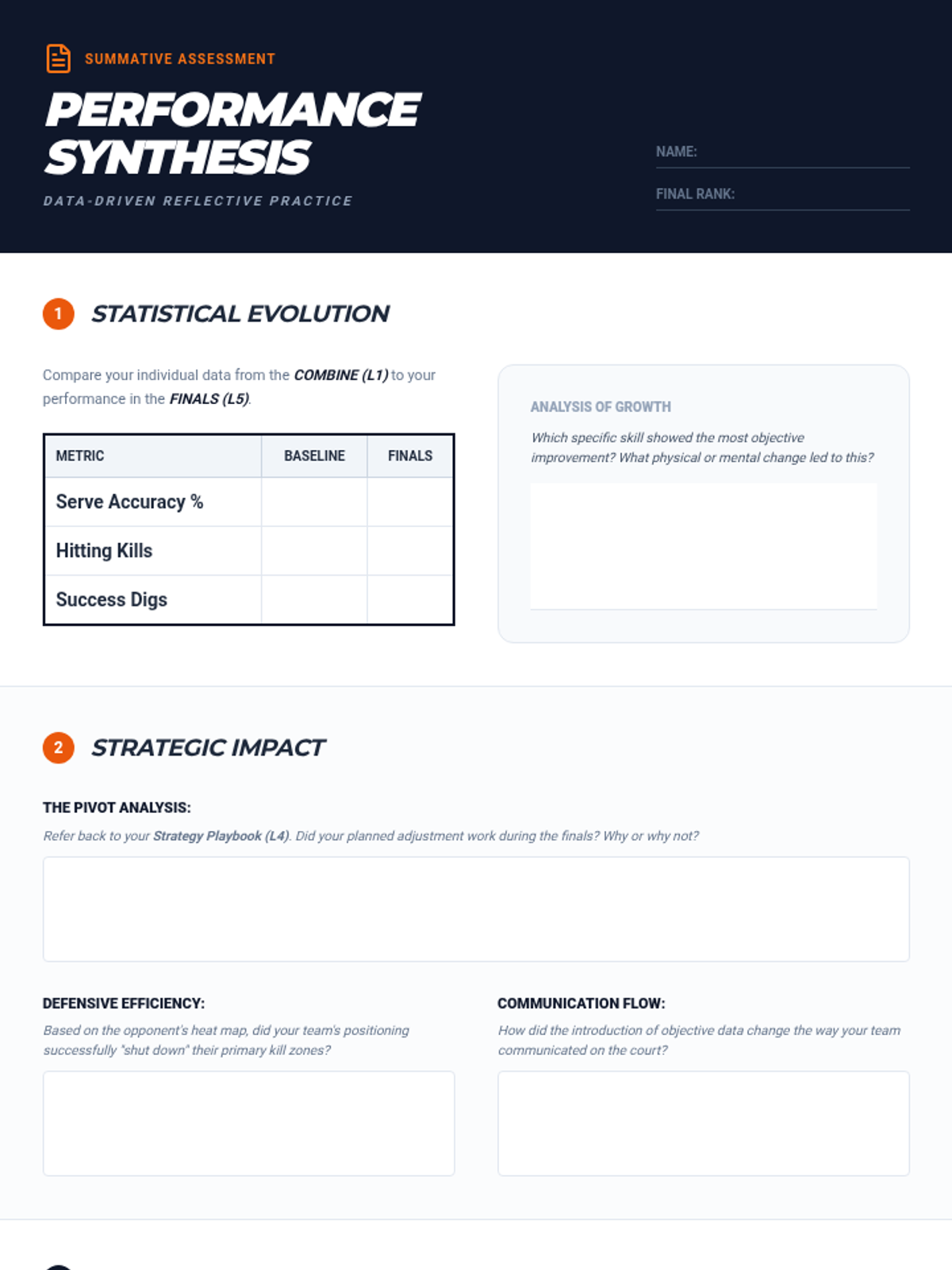
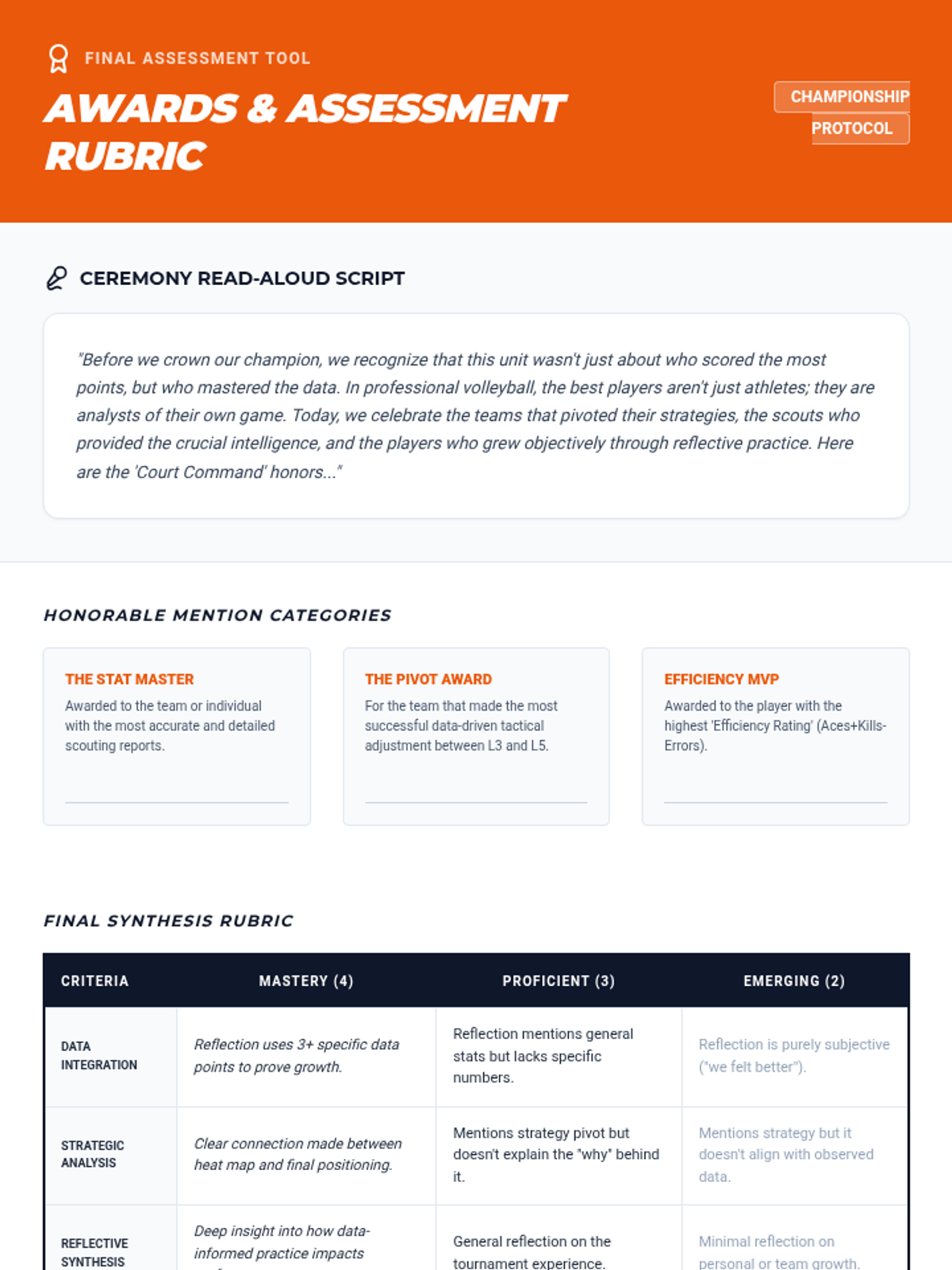
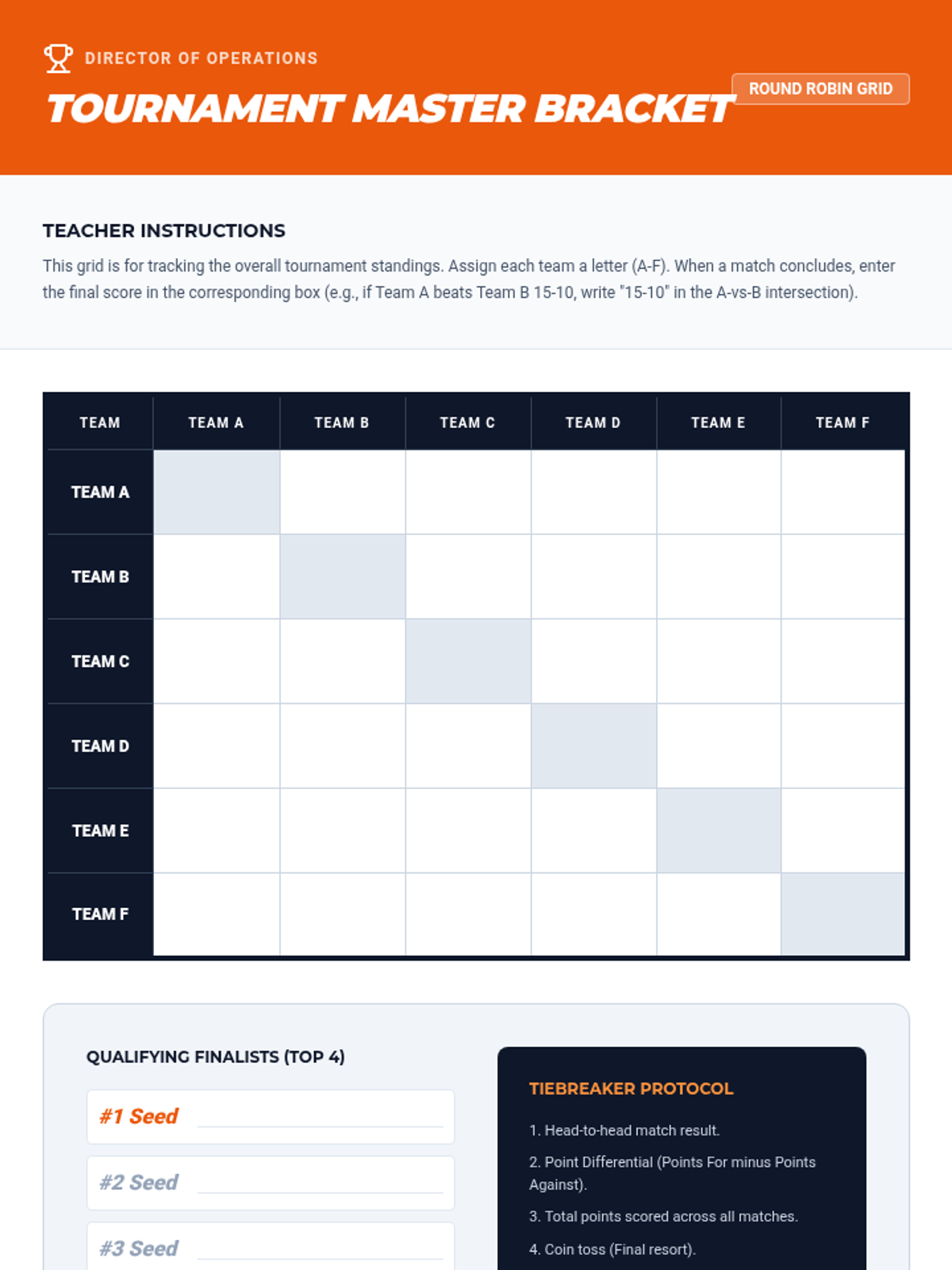
The sequence culminates in a high-stakes championship tournament featuring player introductions and adjusted strategies. Following the matches, students engage in a reflective synthesis to evaluate how data-informed decisions influenced their performance and personal growth.
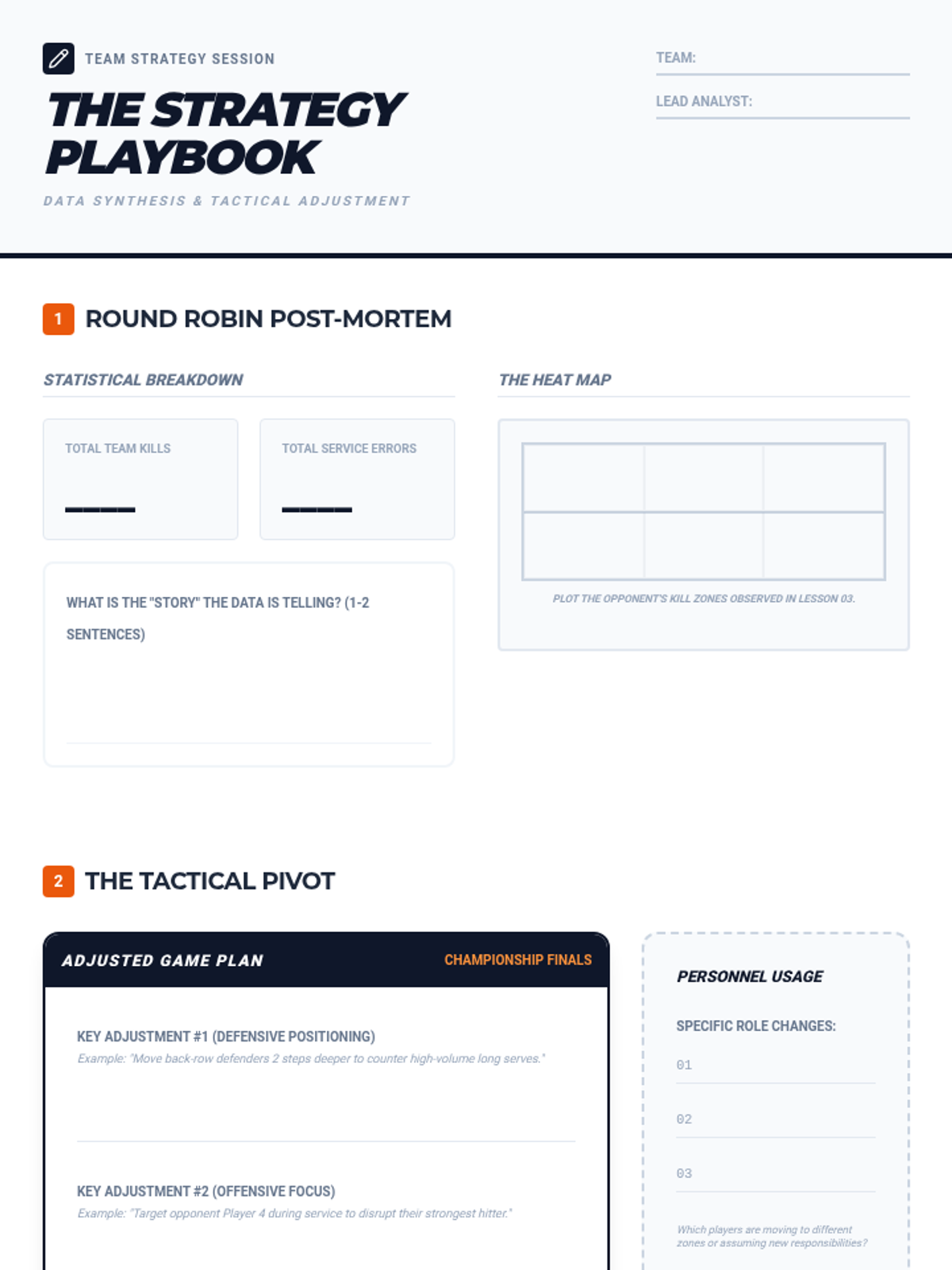
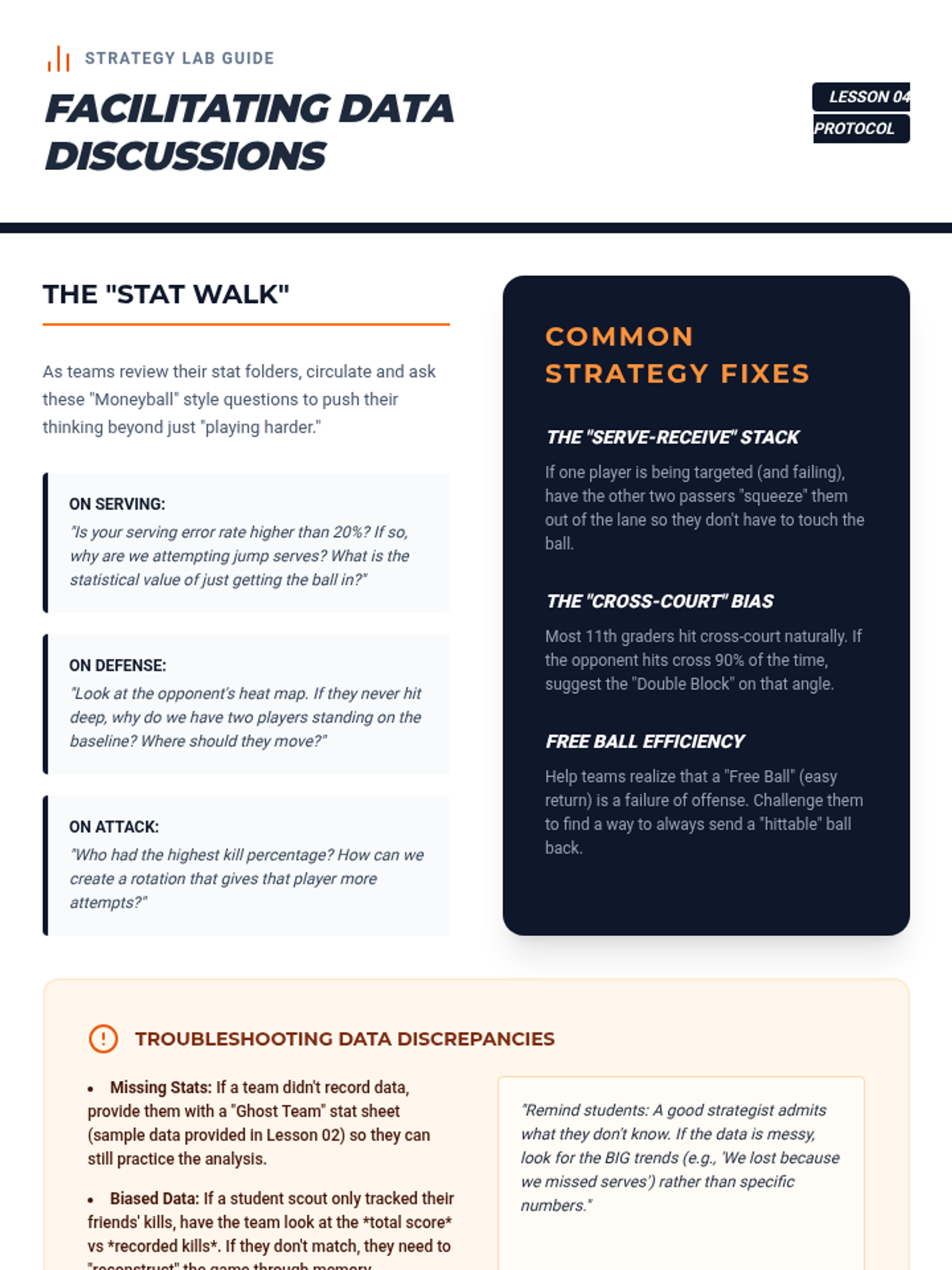
Teams dive into the raw data collected during the round-robin tournament to identify performance trends. Using heat maps and stat sheets, they diagnose specific weaknesses and design a 'Strategy Adjustment' plan for the upcoming championship matches.
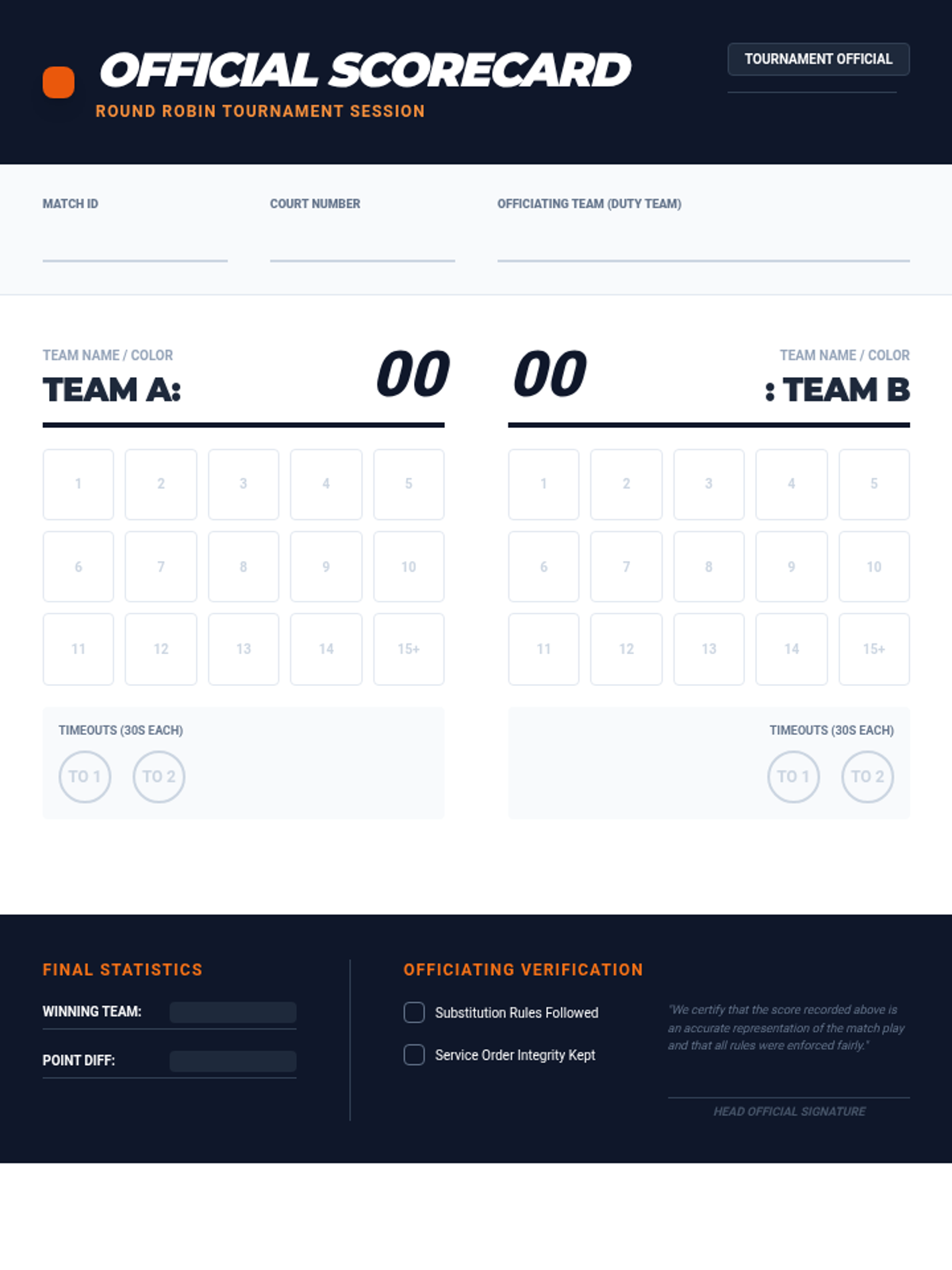
The tournament officially begins with a round-robin format. Teams rotate through active play, officiating, and statistical tracking roles, ensuring all students engage with both the physical and analytical aspects of the game.
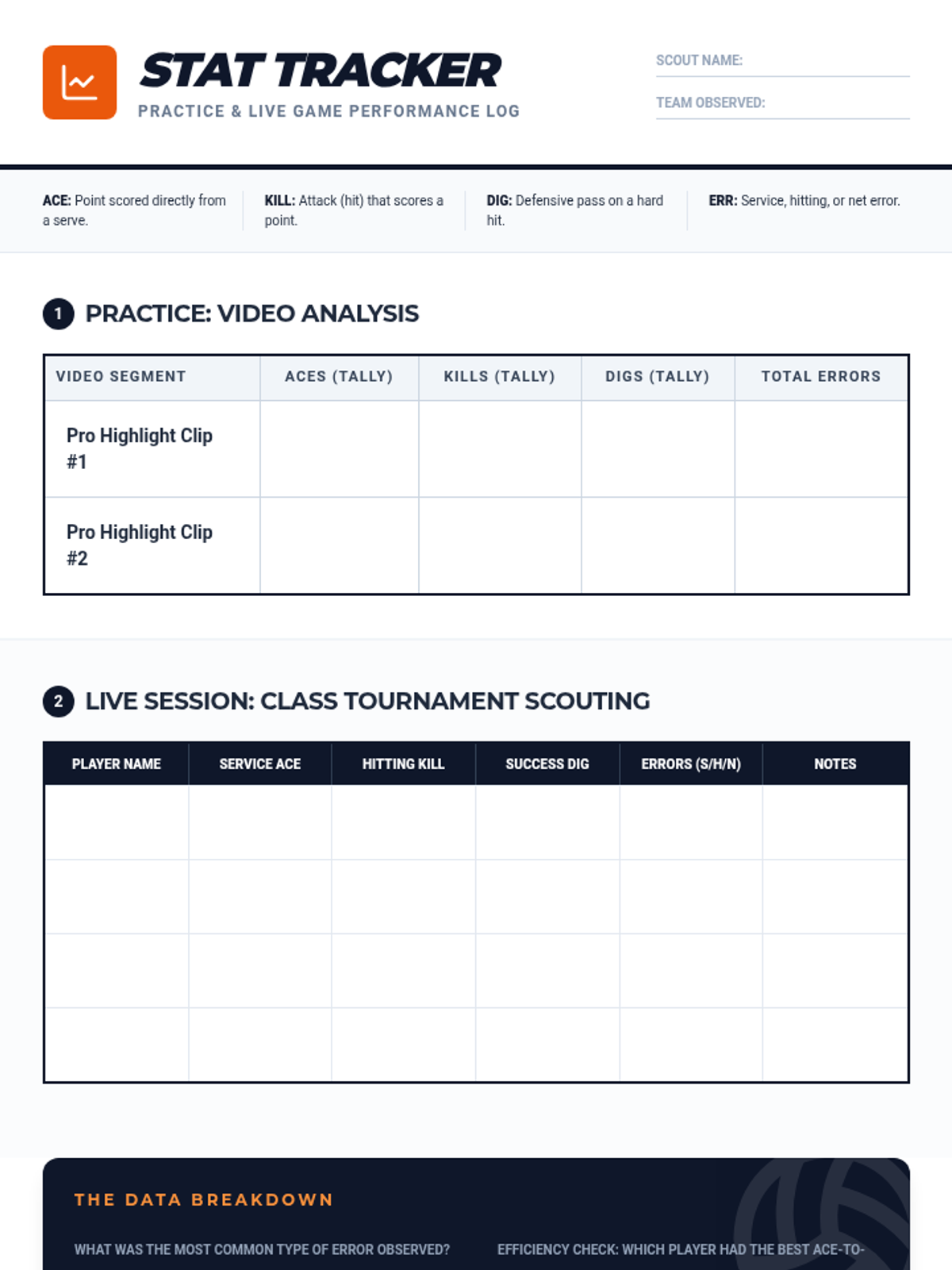
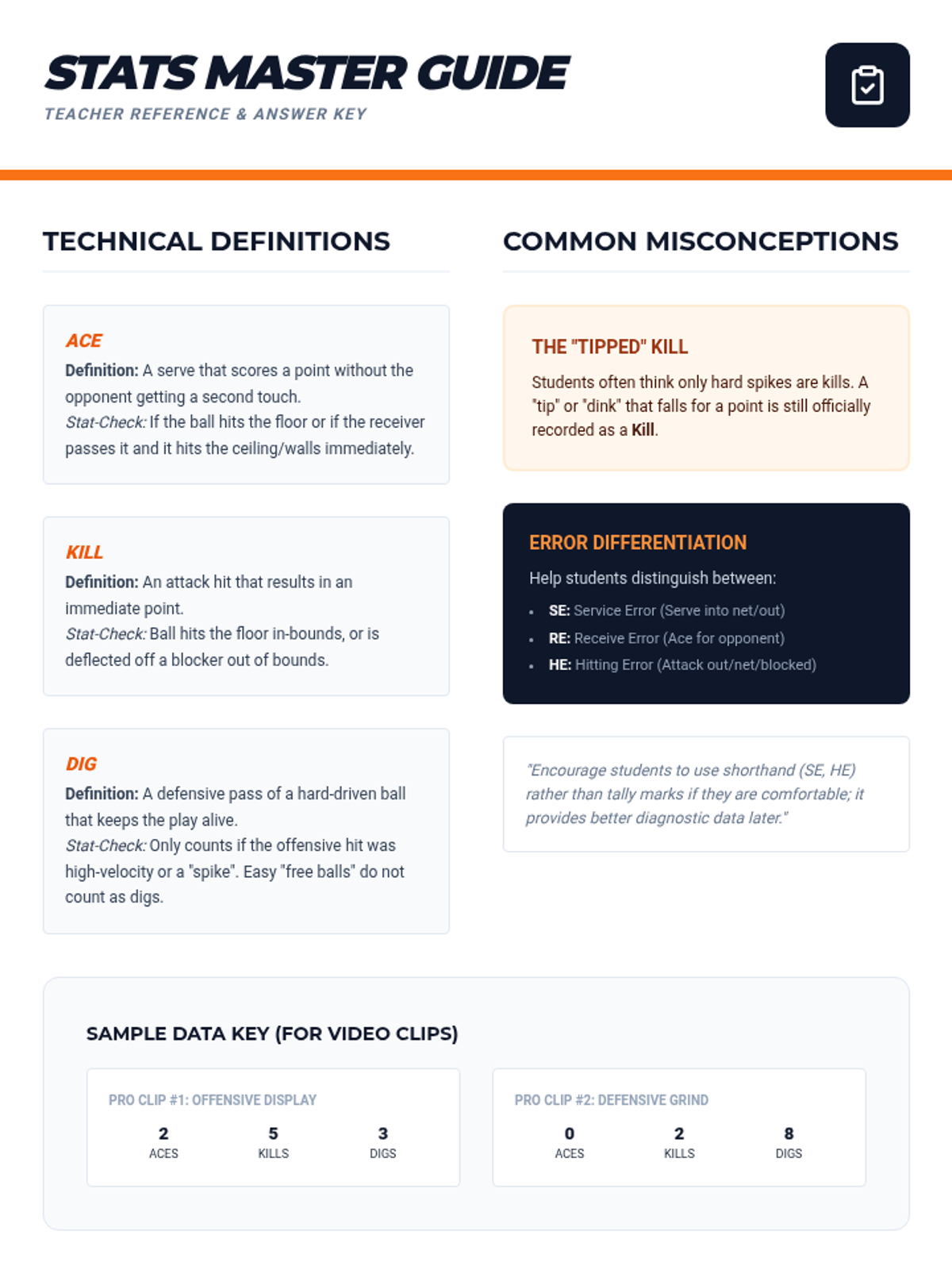
Students transition from playing to analyzing by learning to track official volleyball statistics. They practice identifying 'Aces', 'Kills', and 'Digs' using professional game footage before applying these skills to track their classmates in real-time.
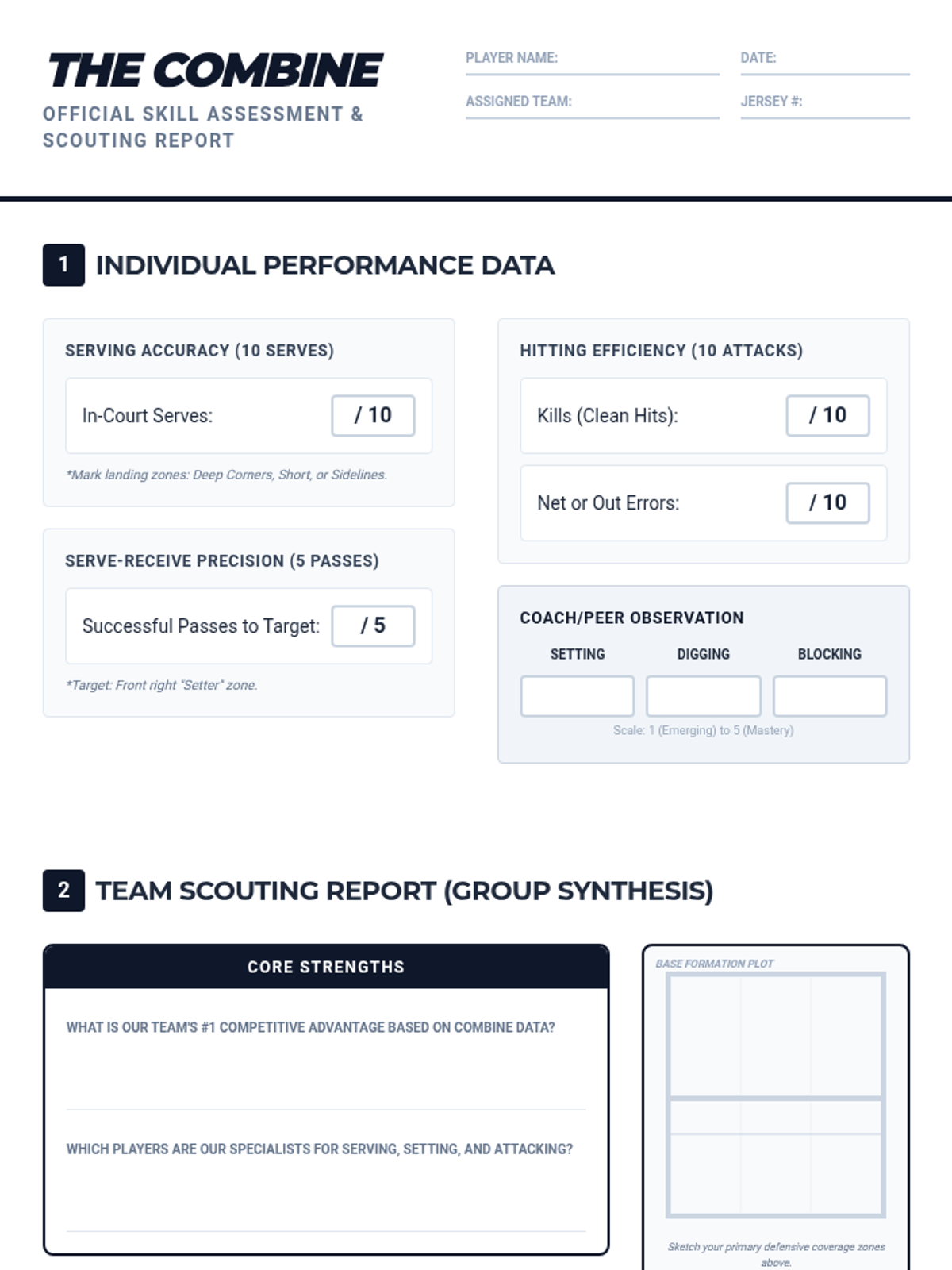
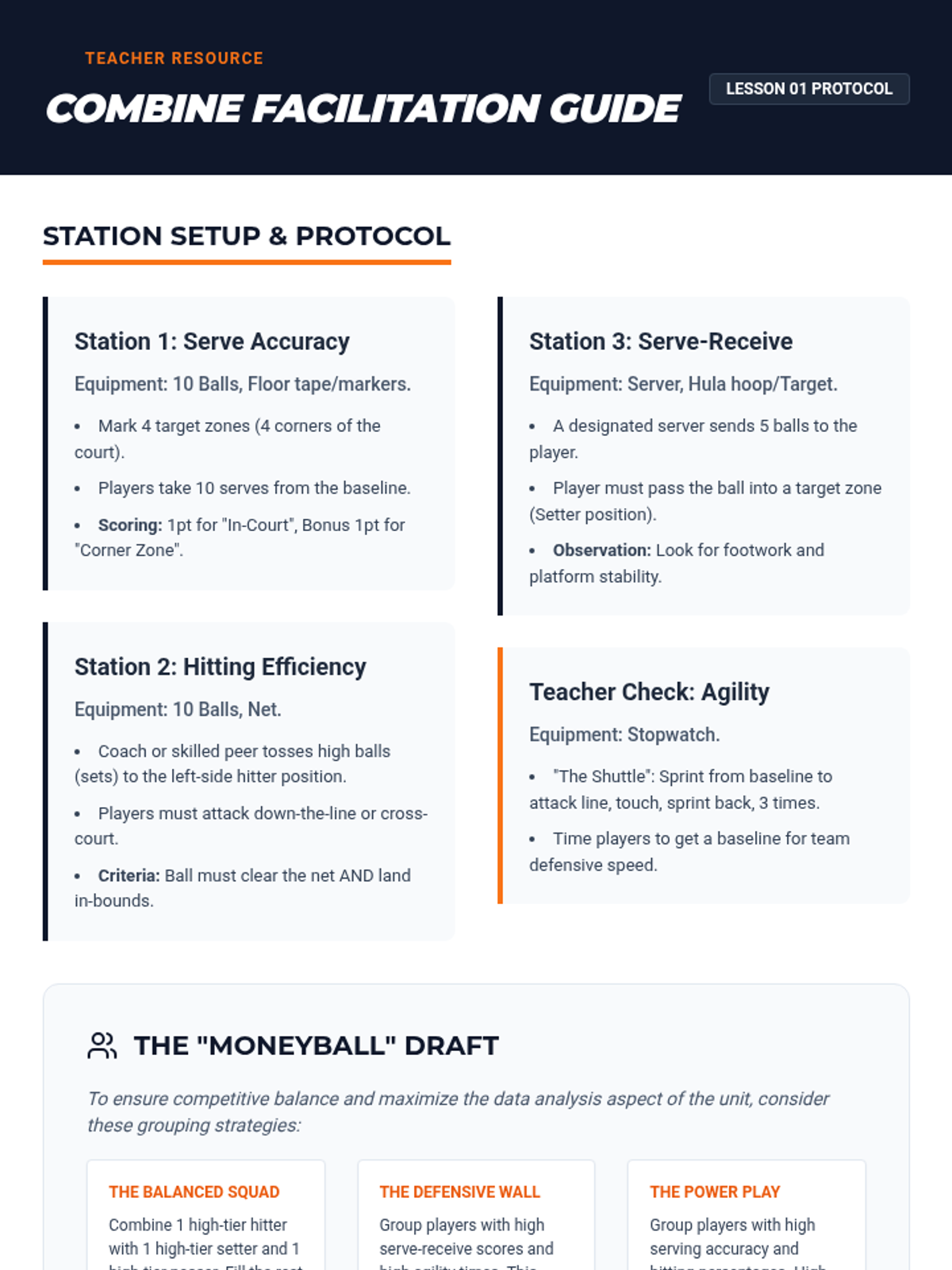
Students participate in a high-energy 'combine' to assess their technical skills before forming permanent tournament teams. They conclude by creating a 'Scouting Report' that identifies their team's baseline strengths and developmental areas.
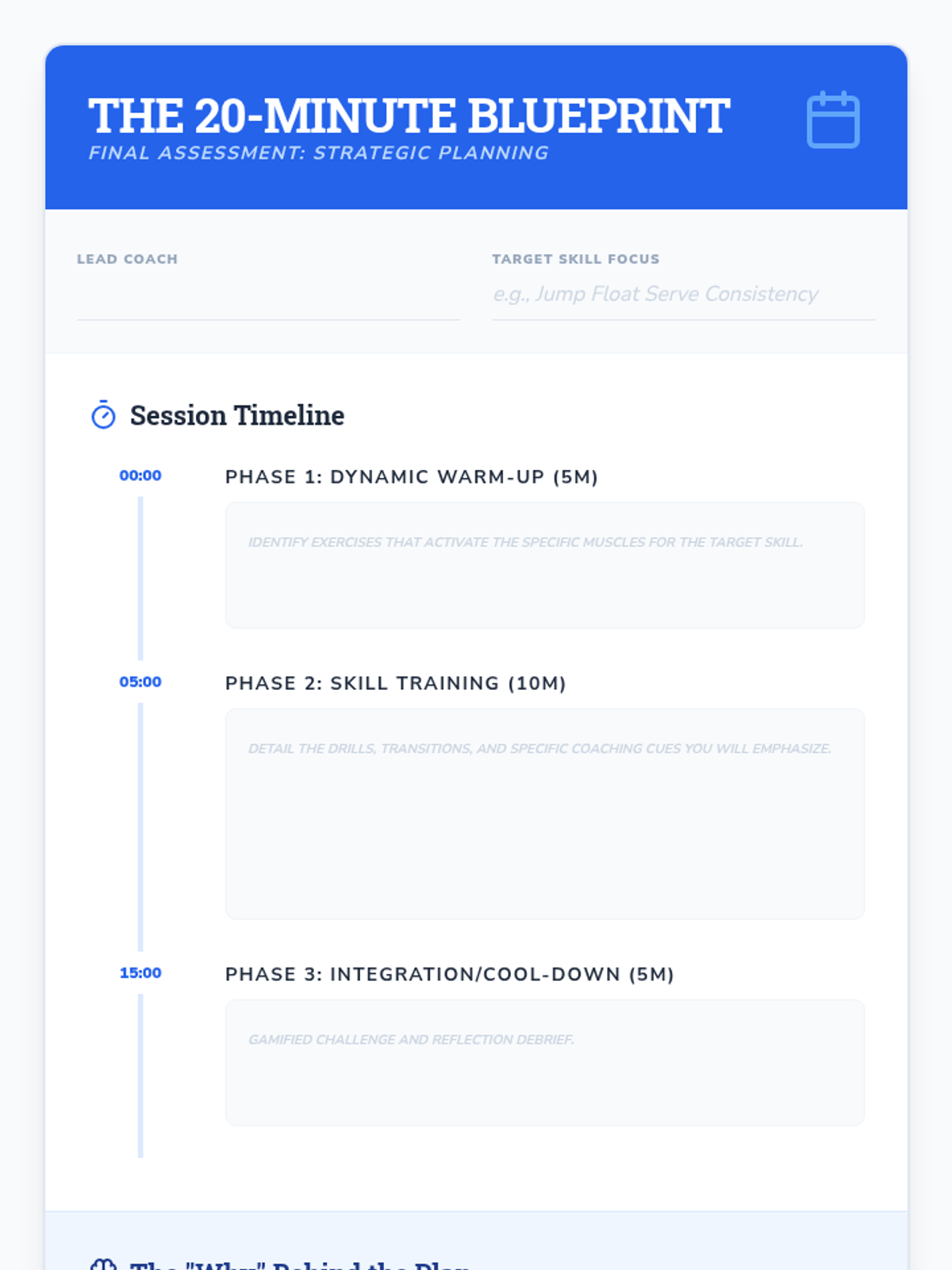
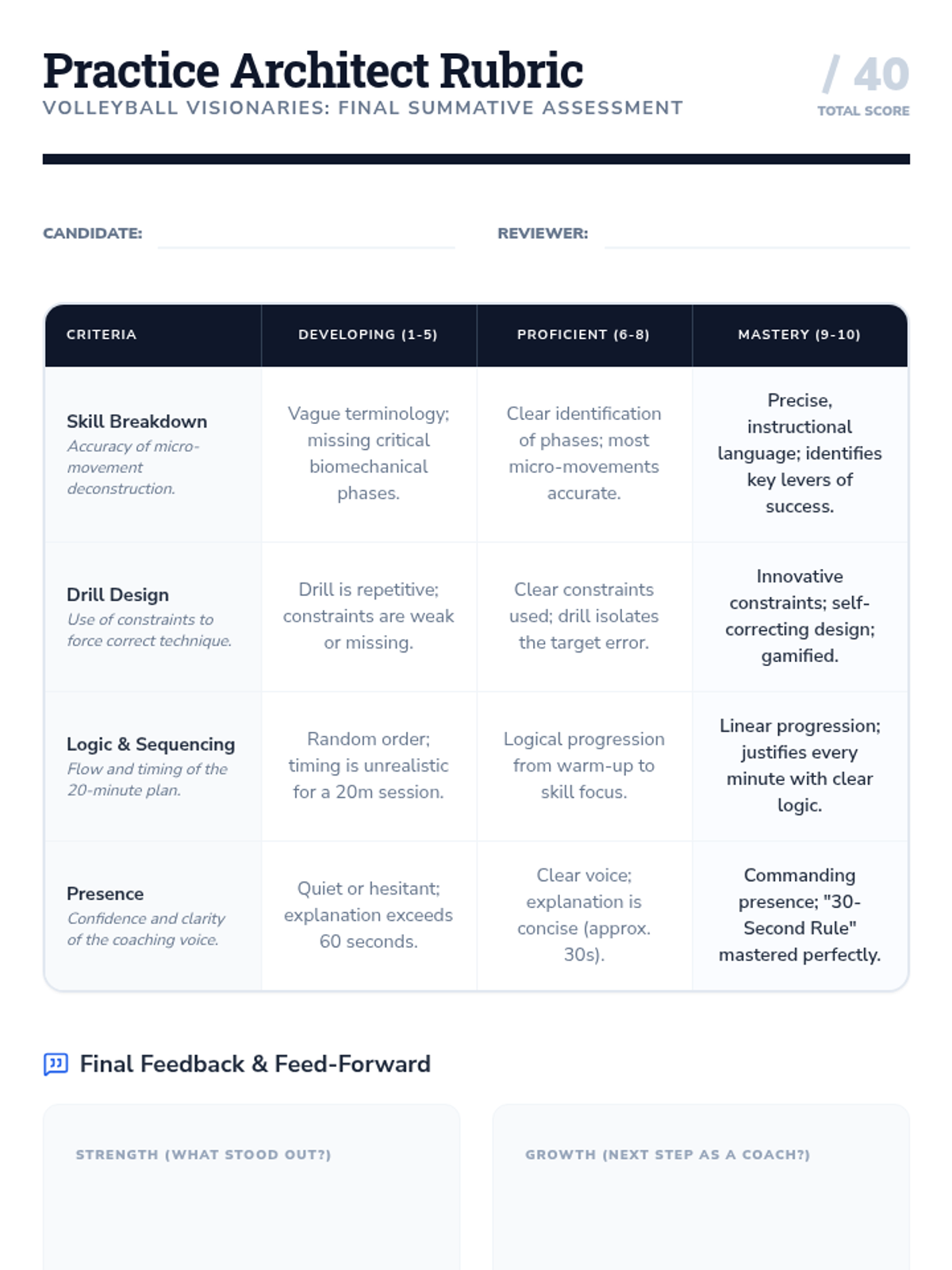
The sequence ends with students creating a cohesive 20-minute practice plan that warms up, trains, and cools down a specific skill set. They present the logic behind their sequencing.
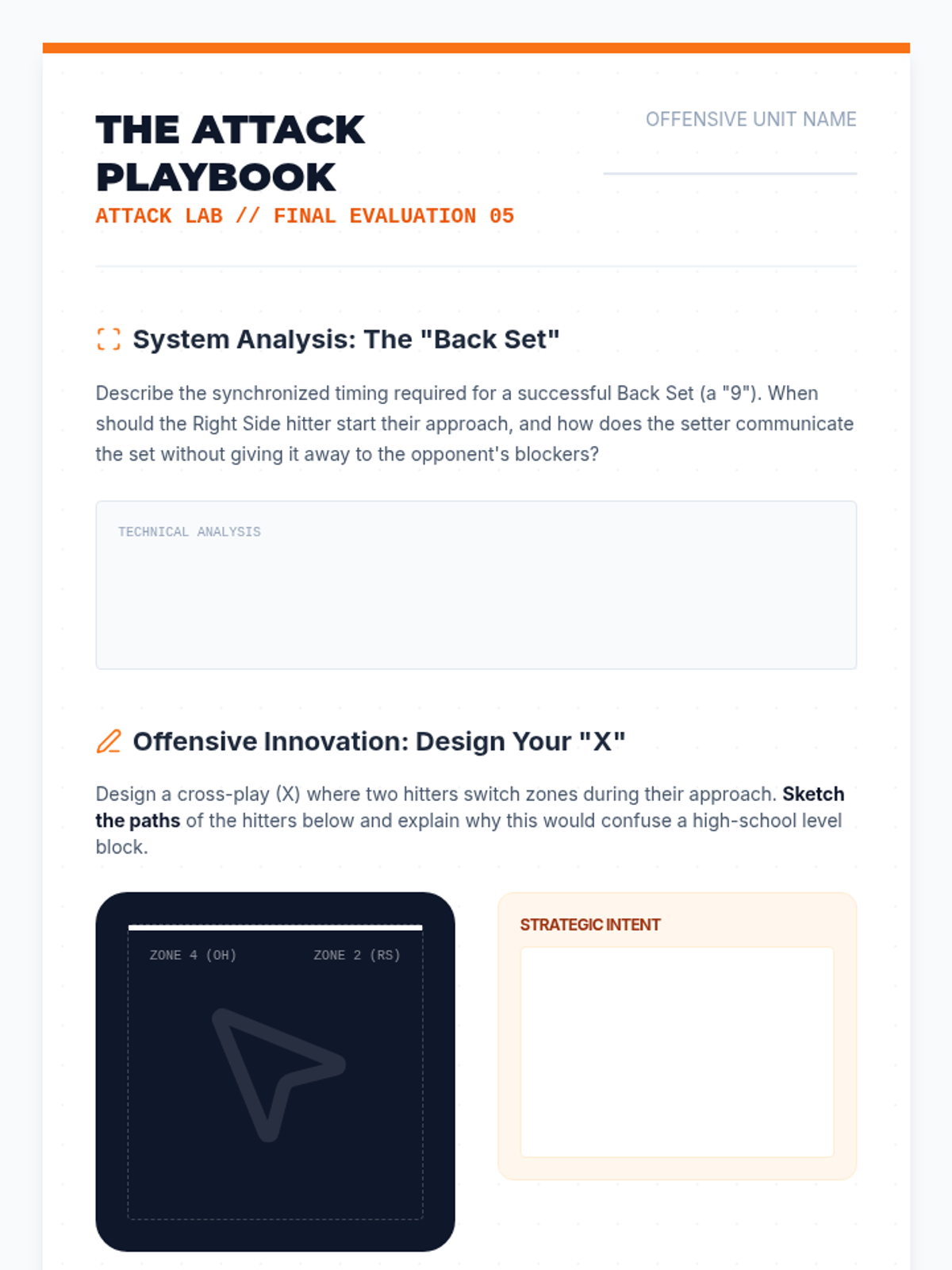
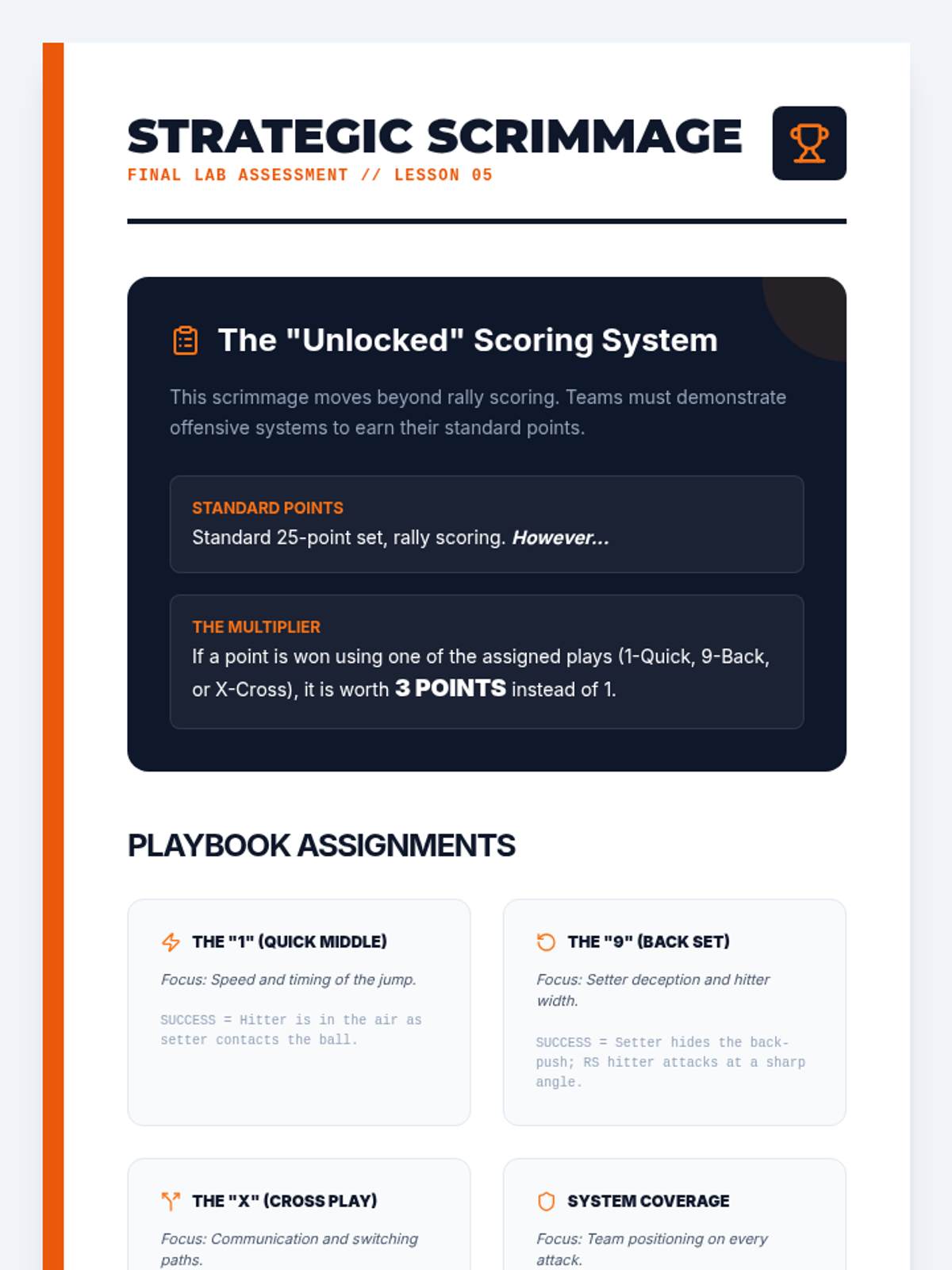
Students apply skills in a controlled scrimmage, attempting to run basic offensive plays like a 'quick set' or a 'back set.' The focus is on the fluidity of the set-hit connection in a live game context.
Students practice the critical moment of transition—converting a successful dig immediately into an offensive approach. The lesson connects defense back to offense in continuous rally drills.
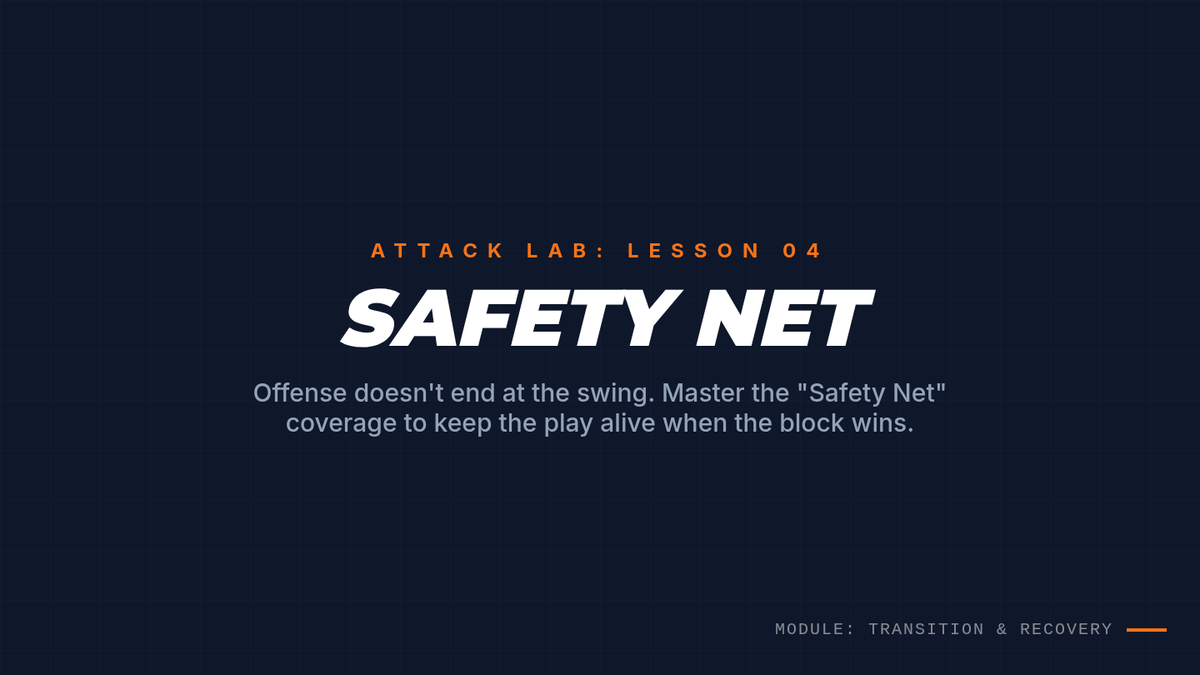
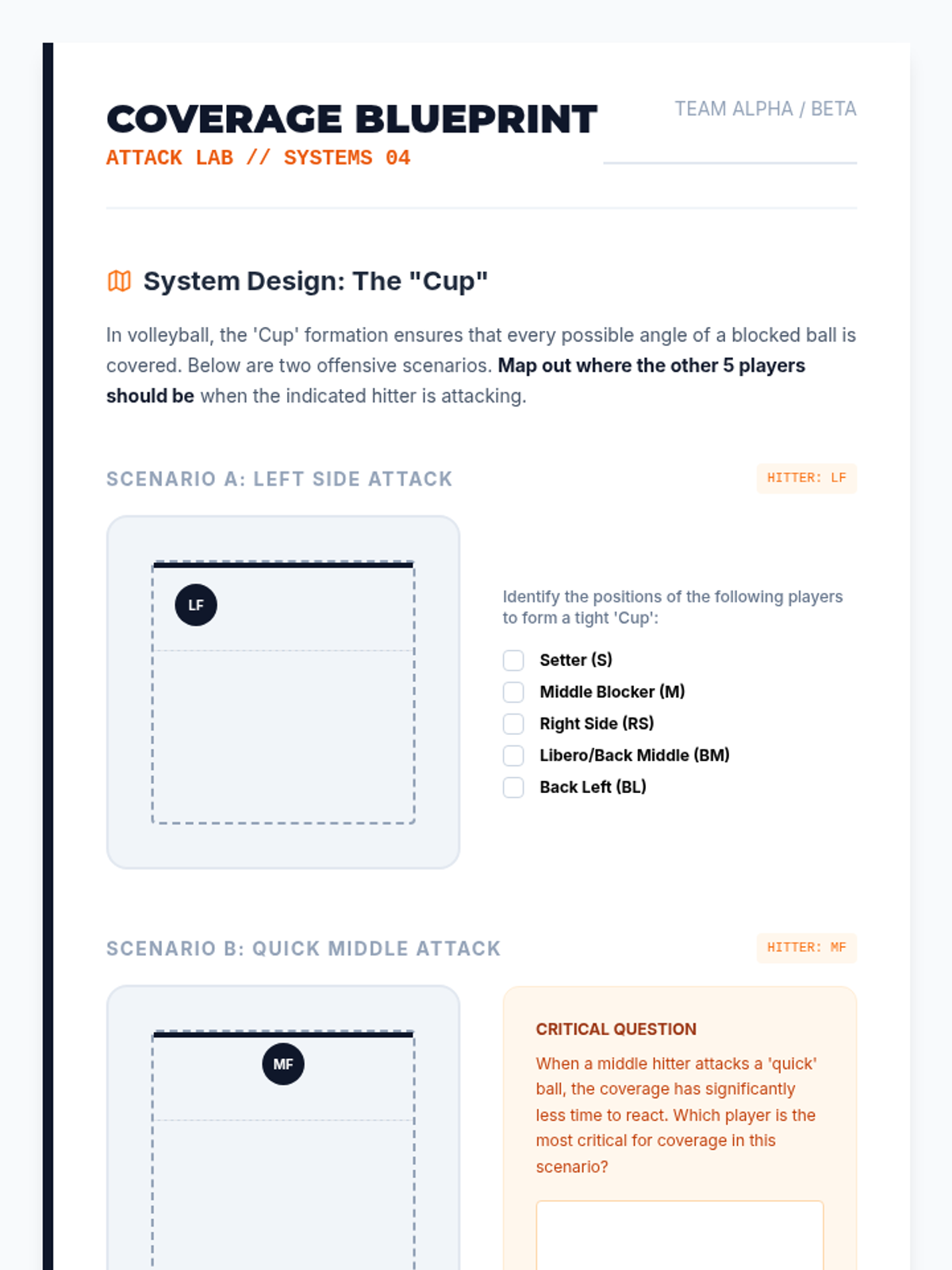
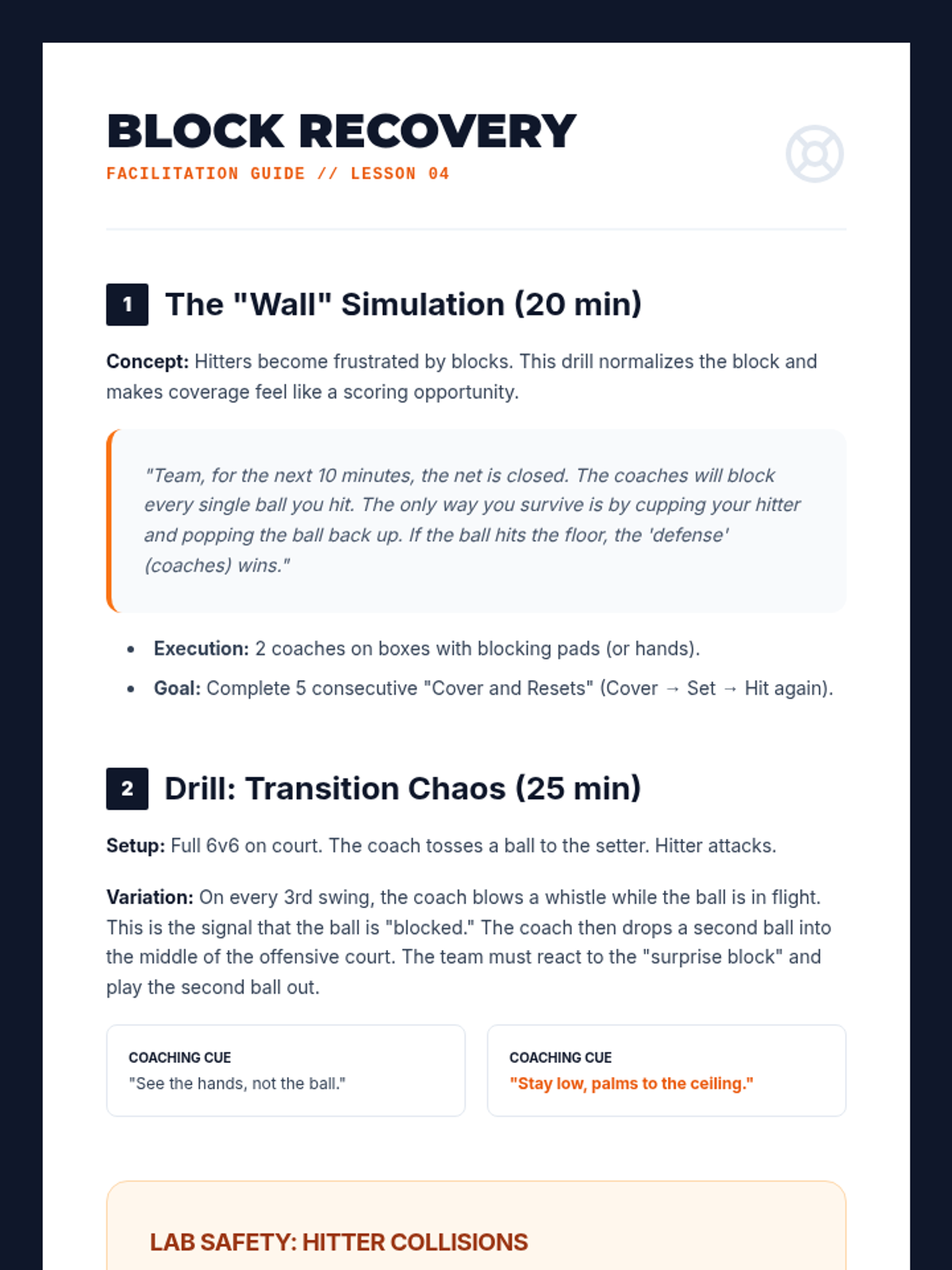
The lesson addresses what happens after the hit, teaching teammates to cover the hitter in case of a block. Students practice 'covering' positions and reacting to blocked balls to keep the play alive.
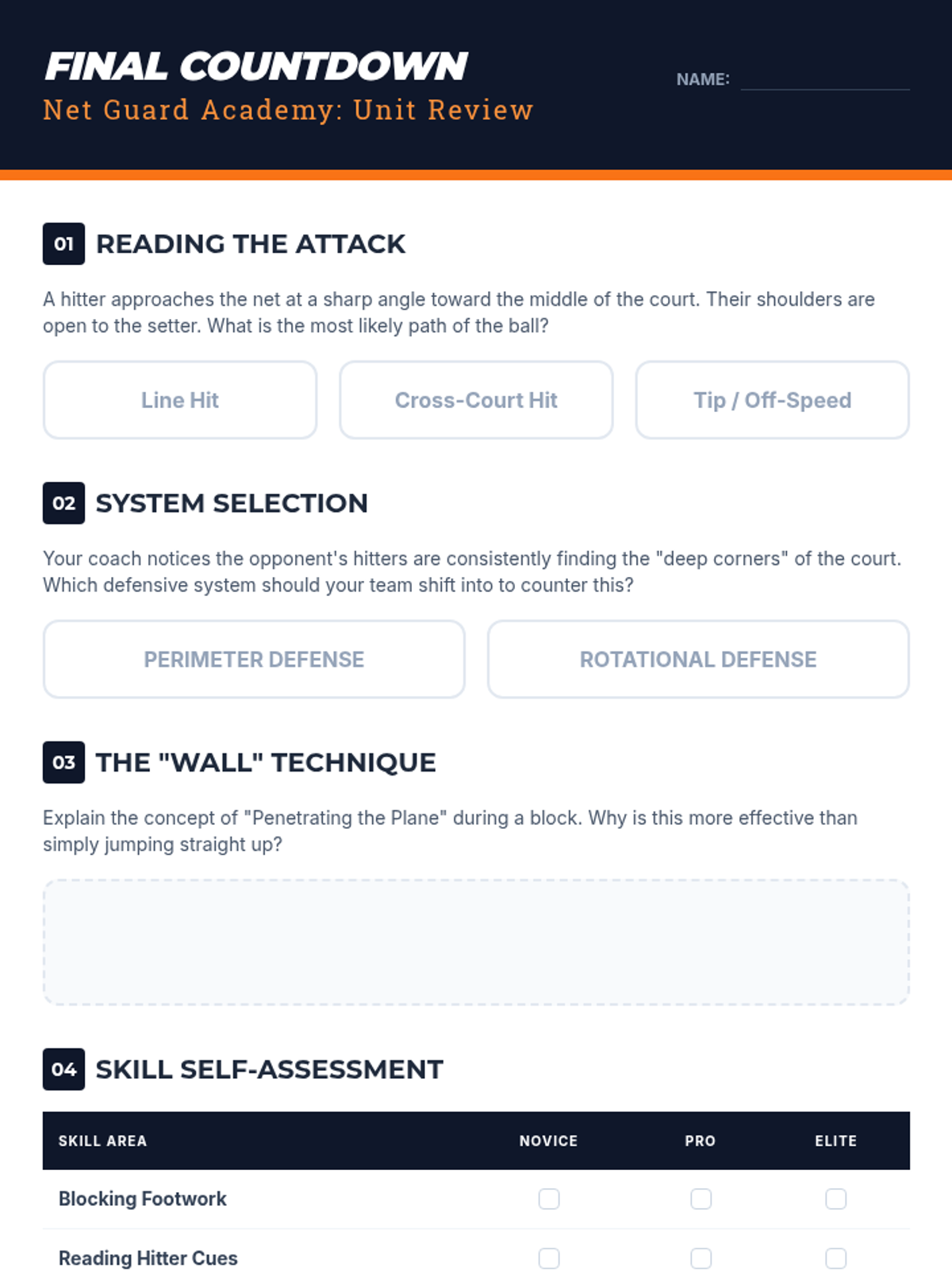
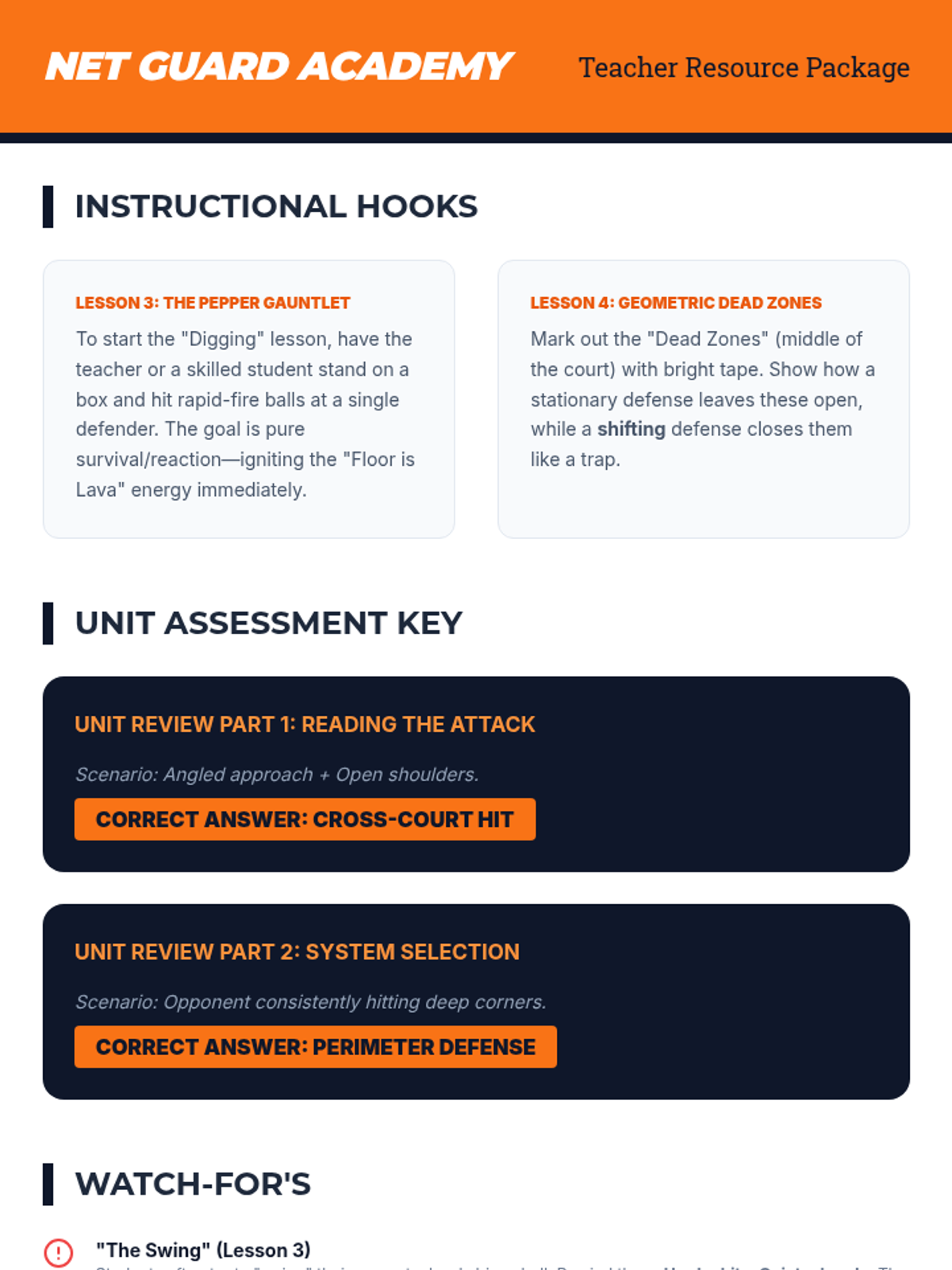
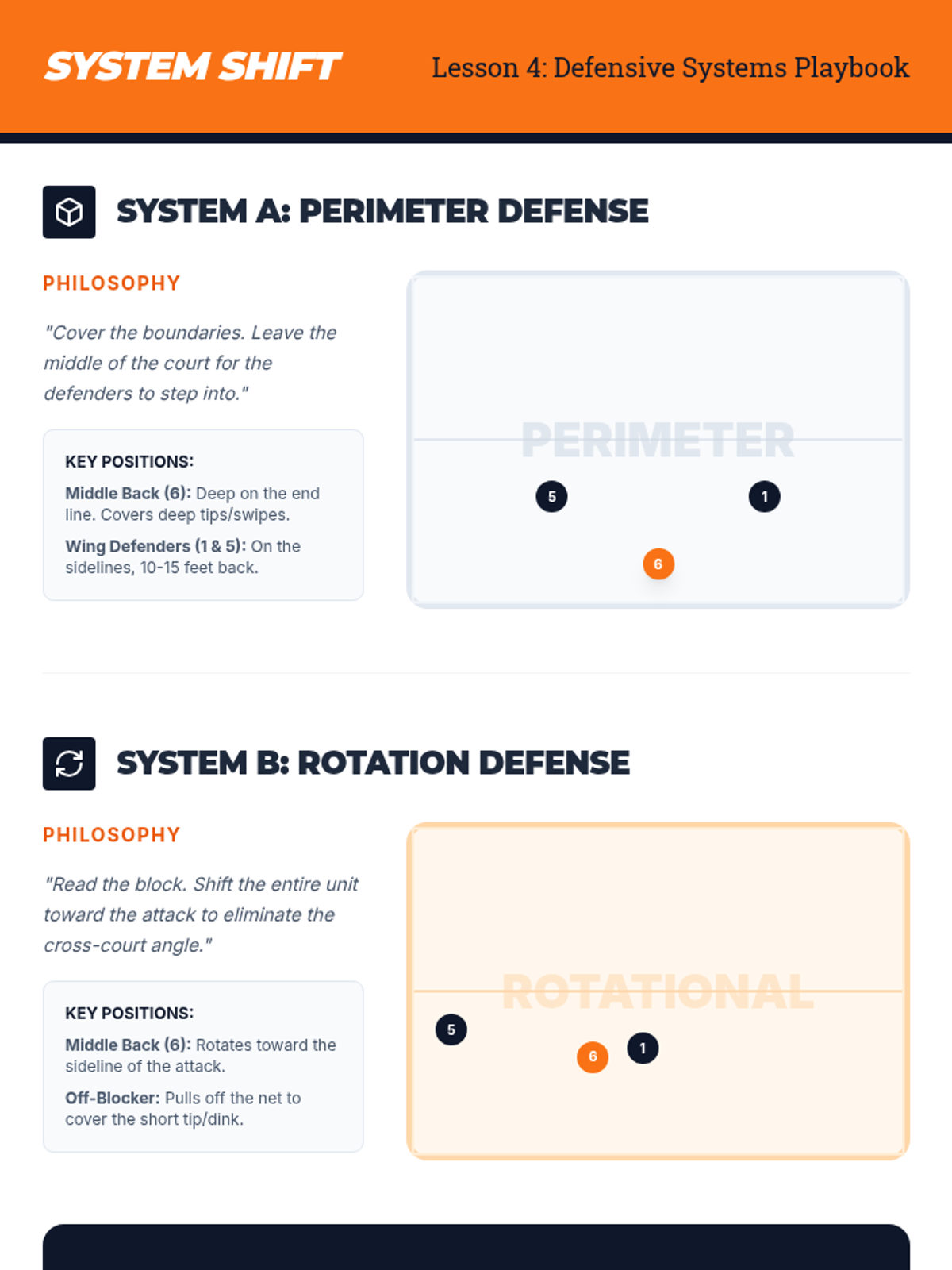
The class workshops two main defensive systems: Perimeter (middle back deep) and Rotation (reading the block). Teams practice shifting positions as a unit based on where the set goes.
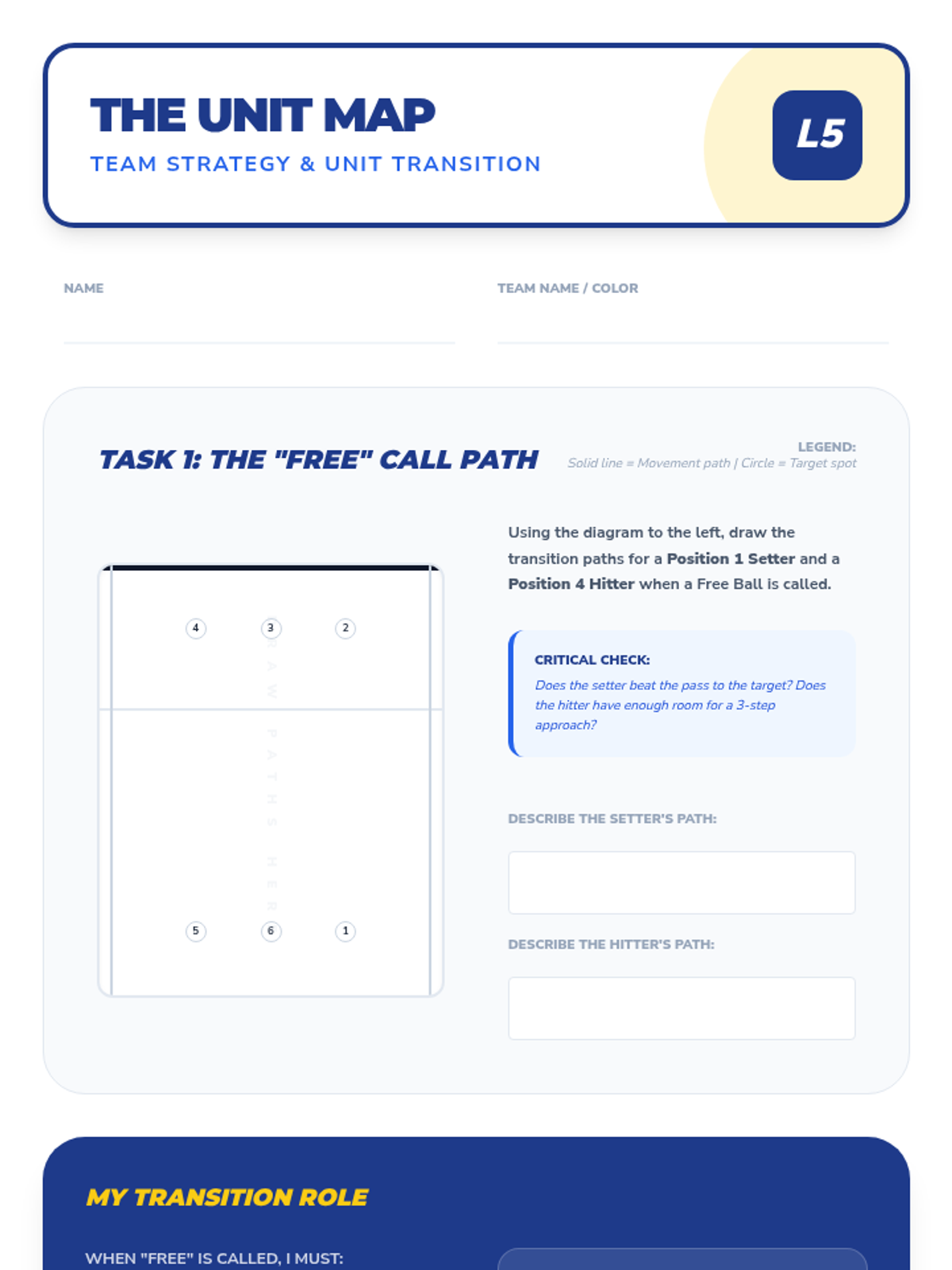
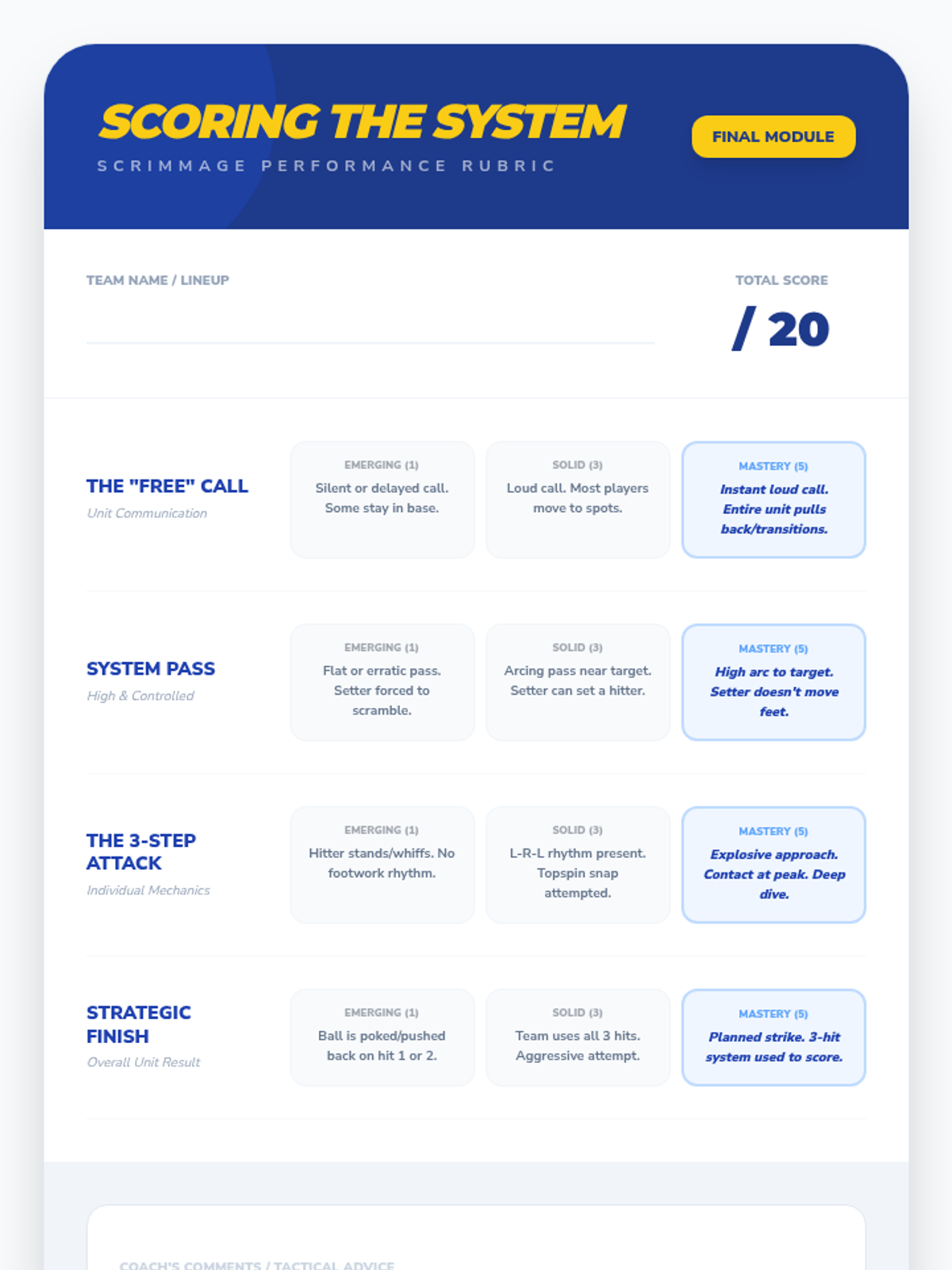
Students learn the concept of a 'free ball' offense, where the team pulls back to pass an easy ball, then transitions immediately to attack. The lesson simulates the full cycle: pass, set, and attack in a 6 vs. 6 setting. Emphasis is on moving as a unit.
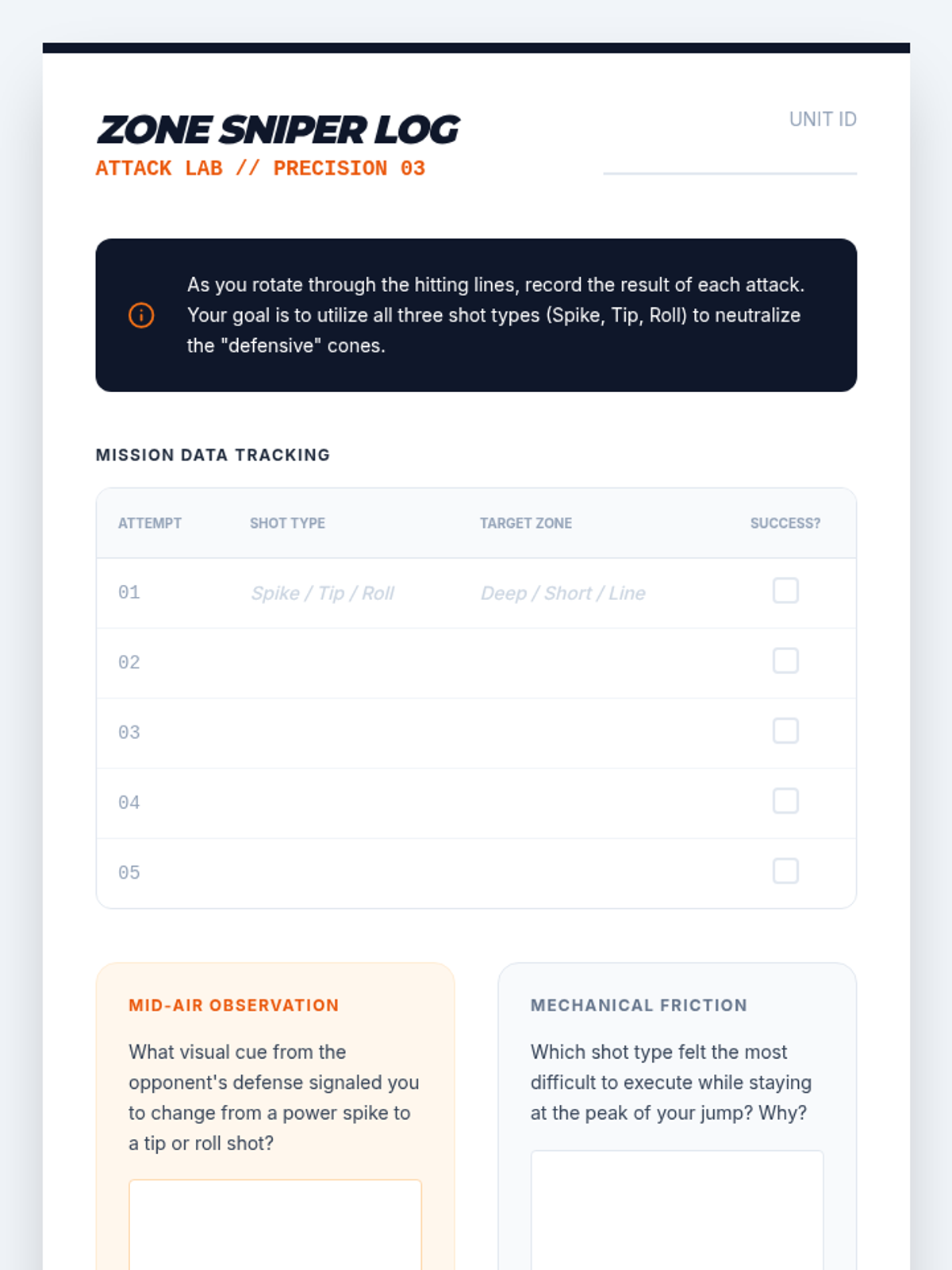
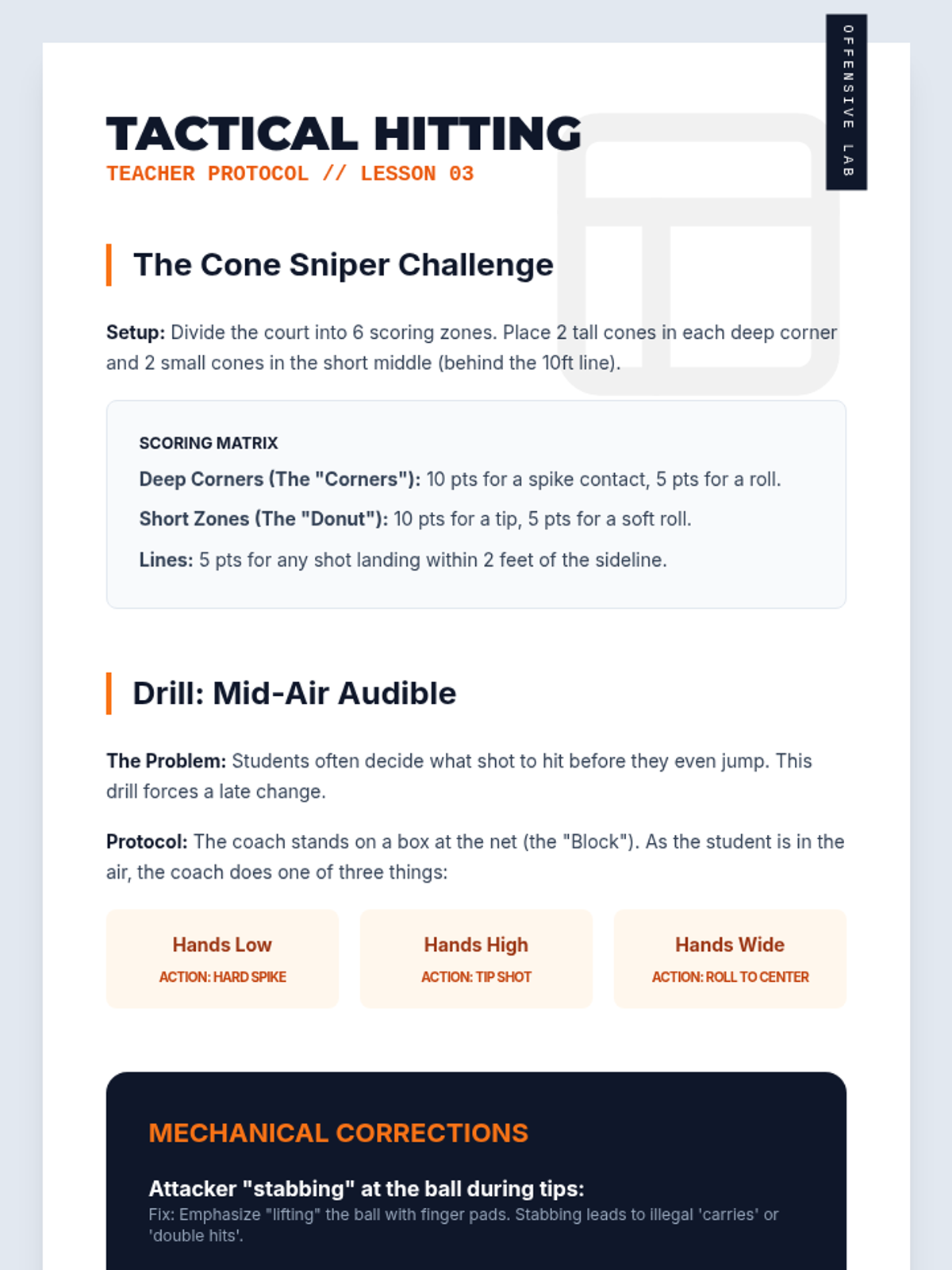
Students learn the difference between driving the ball for power and tipping or rolling shots for placement. Drills force hitters to read the defense mid-air and decide whether to swing hard or find an open spot.
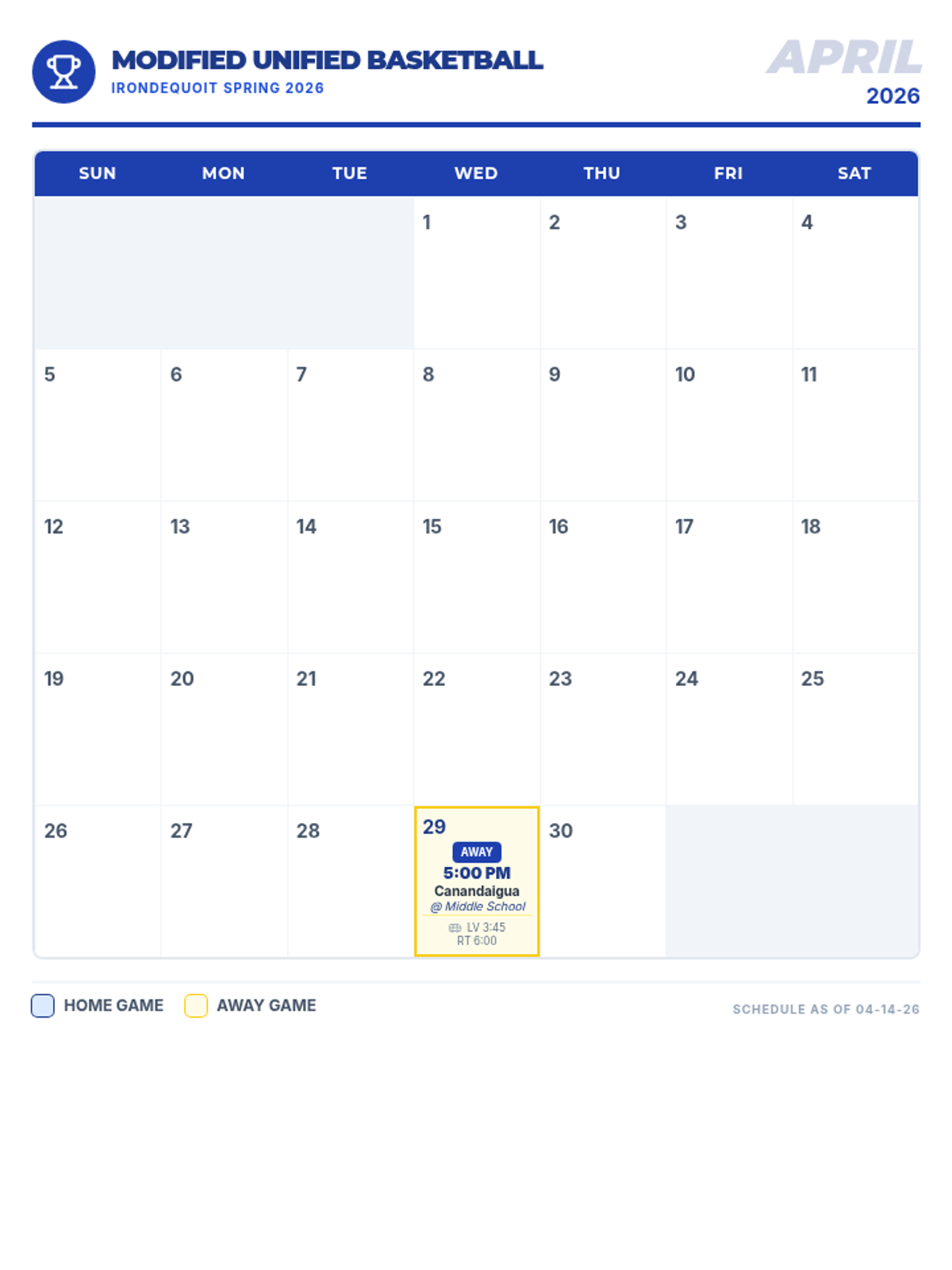
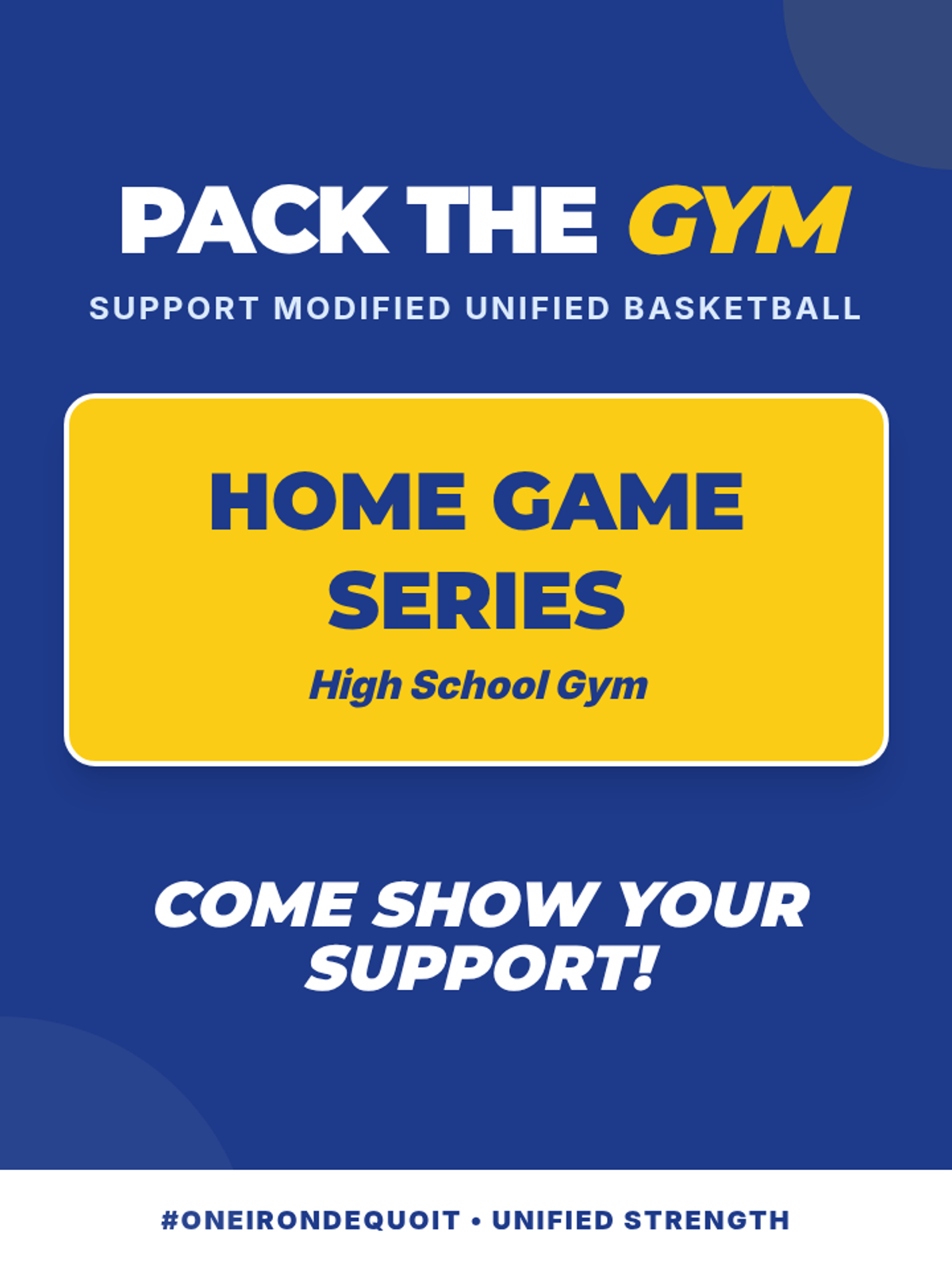
A collection of materials for the Irondequoit Modified Unified Basketball Spring 2026 season, including schedules and promotional resources.
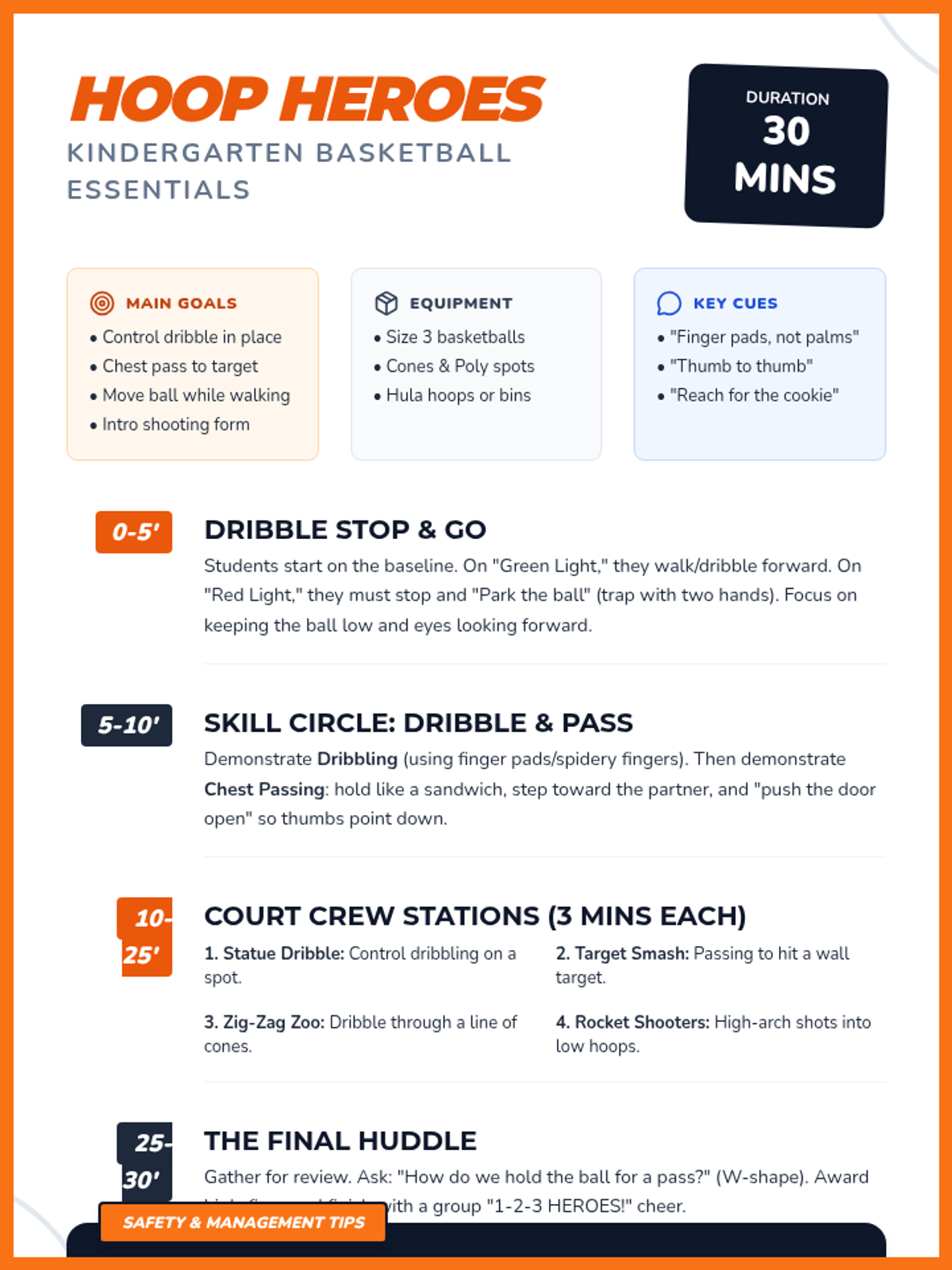
A high-energy kindergarten physical education lesson focusing on the fundamentals of basketball: dribbling, passing, moving, and shooting through play-based activities.
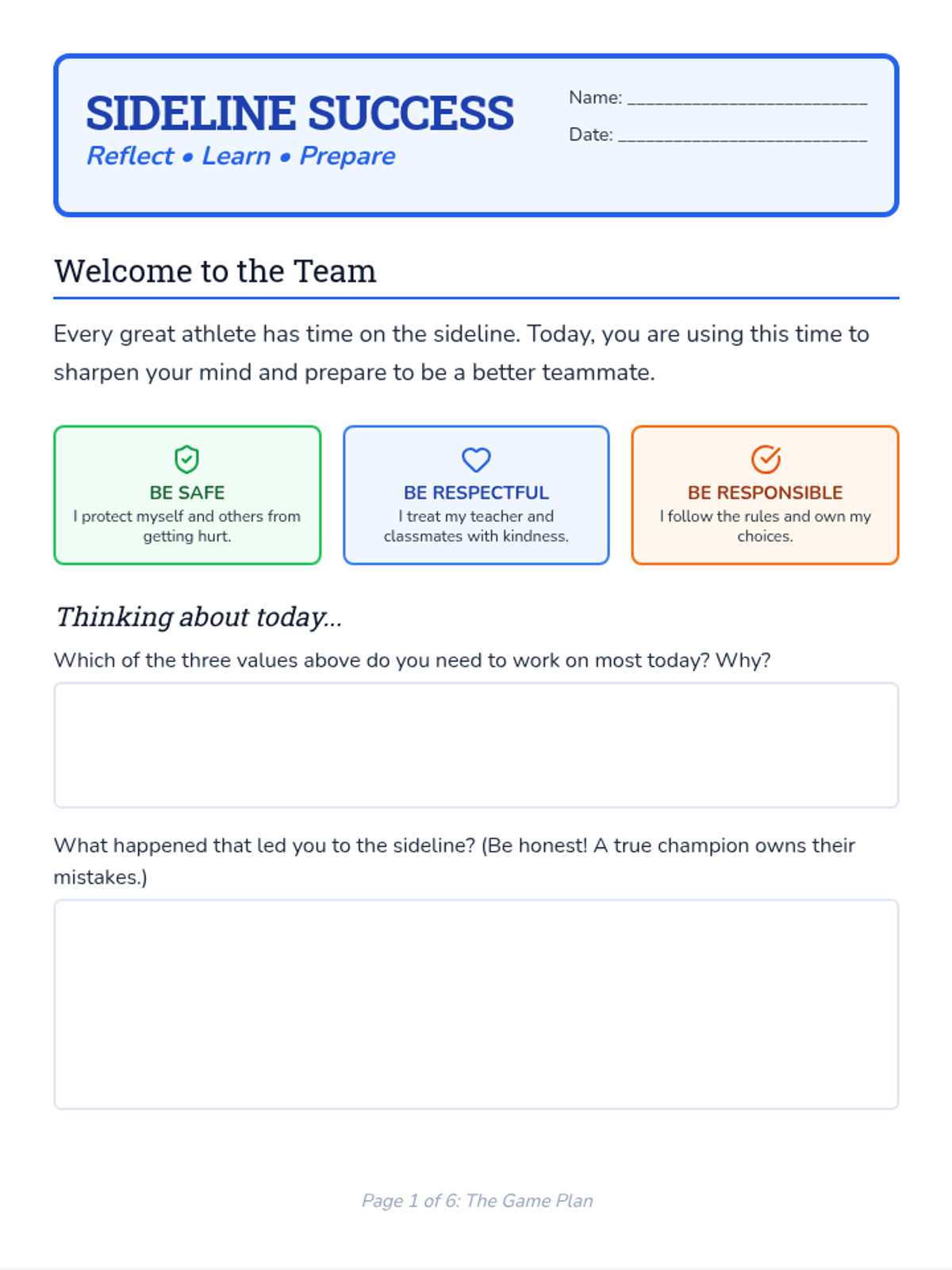
A six-page reflection and educational packet for 3rd graders sitting out of PE. It combines sports history and terminology with character-building exercises focused on safety, respect, and responsibility.
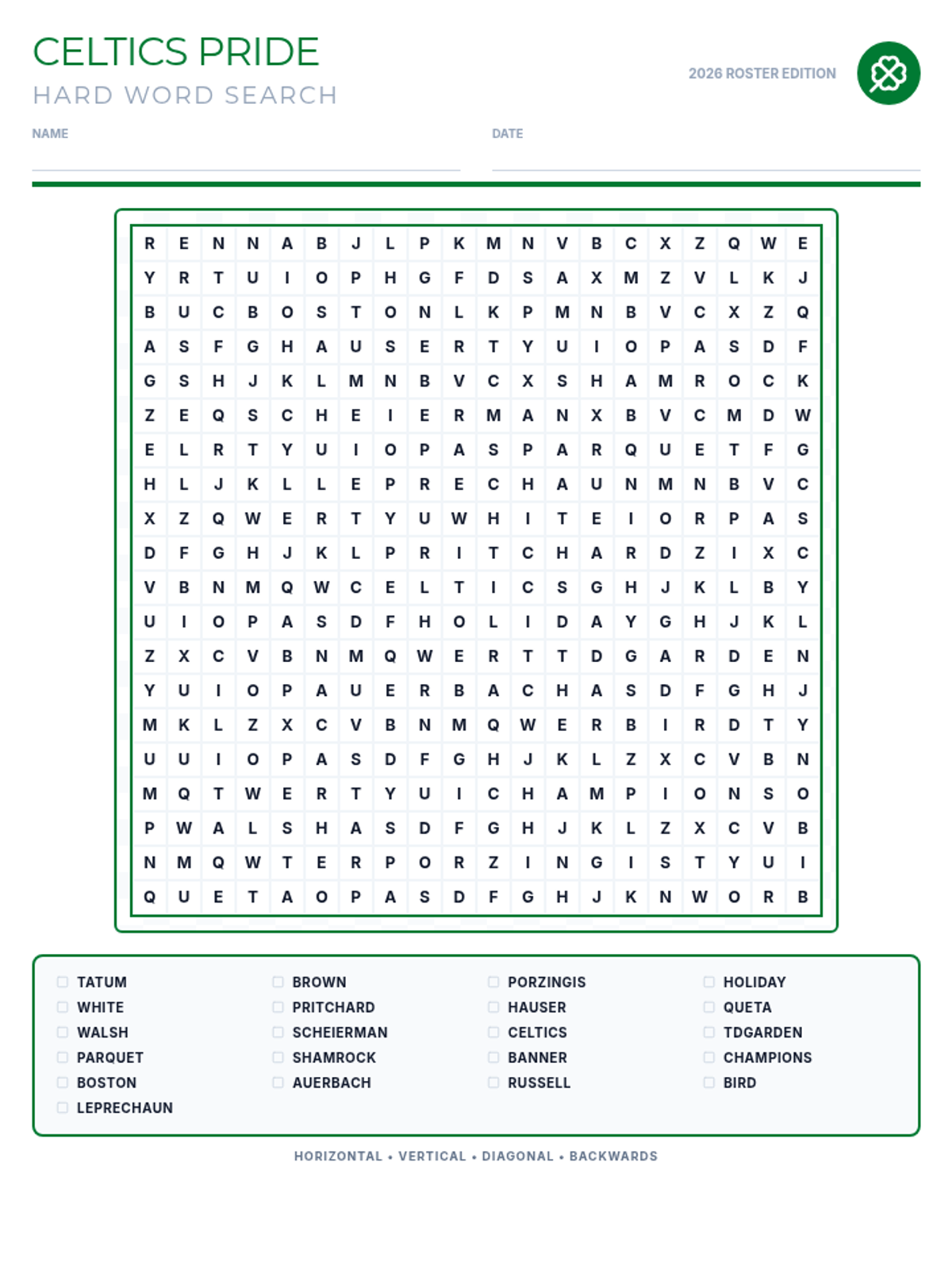
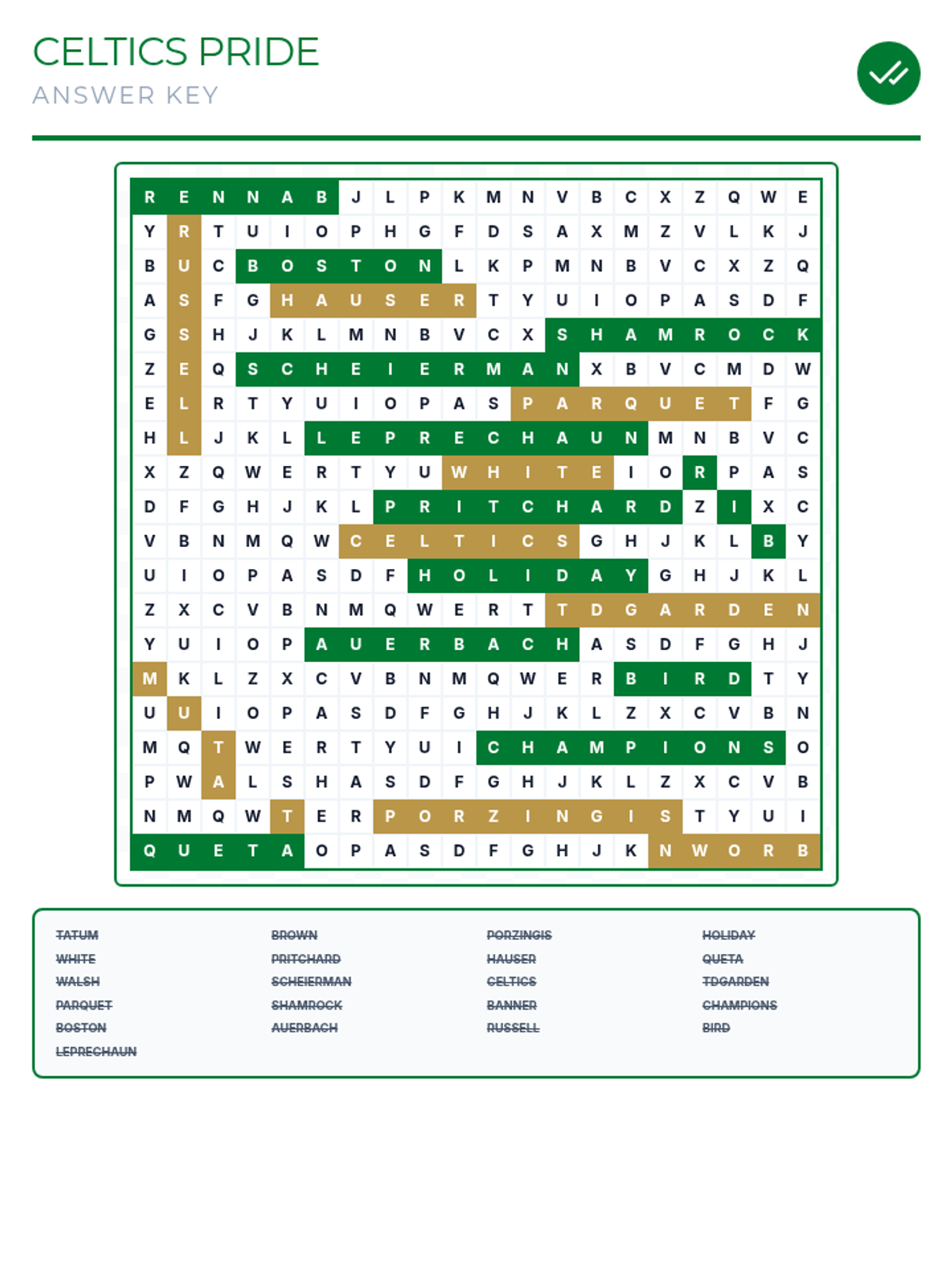
A challenging word search activity focused on the Boston Celtics, featuring 2026 roster players and franchise terminology.
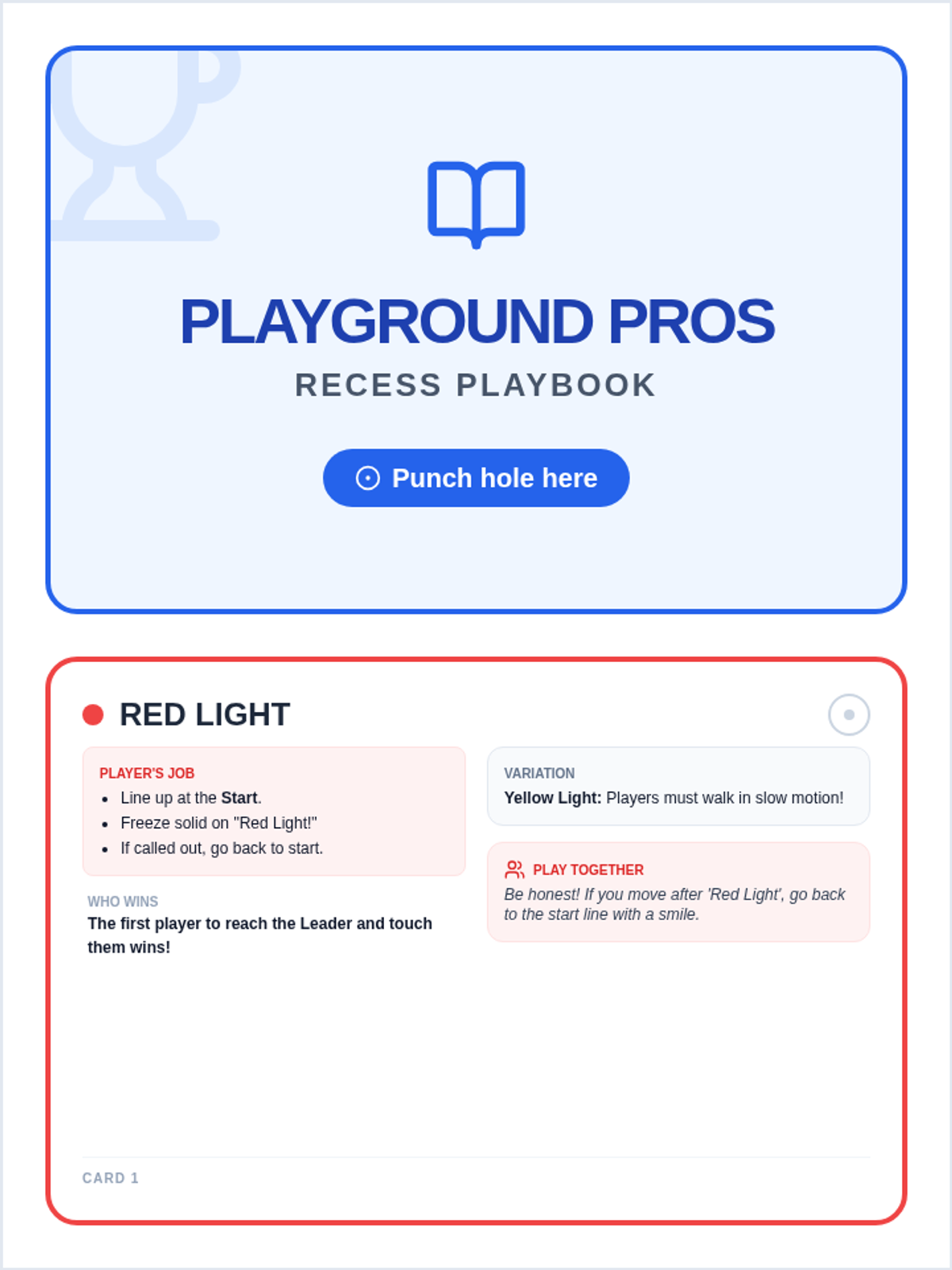
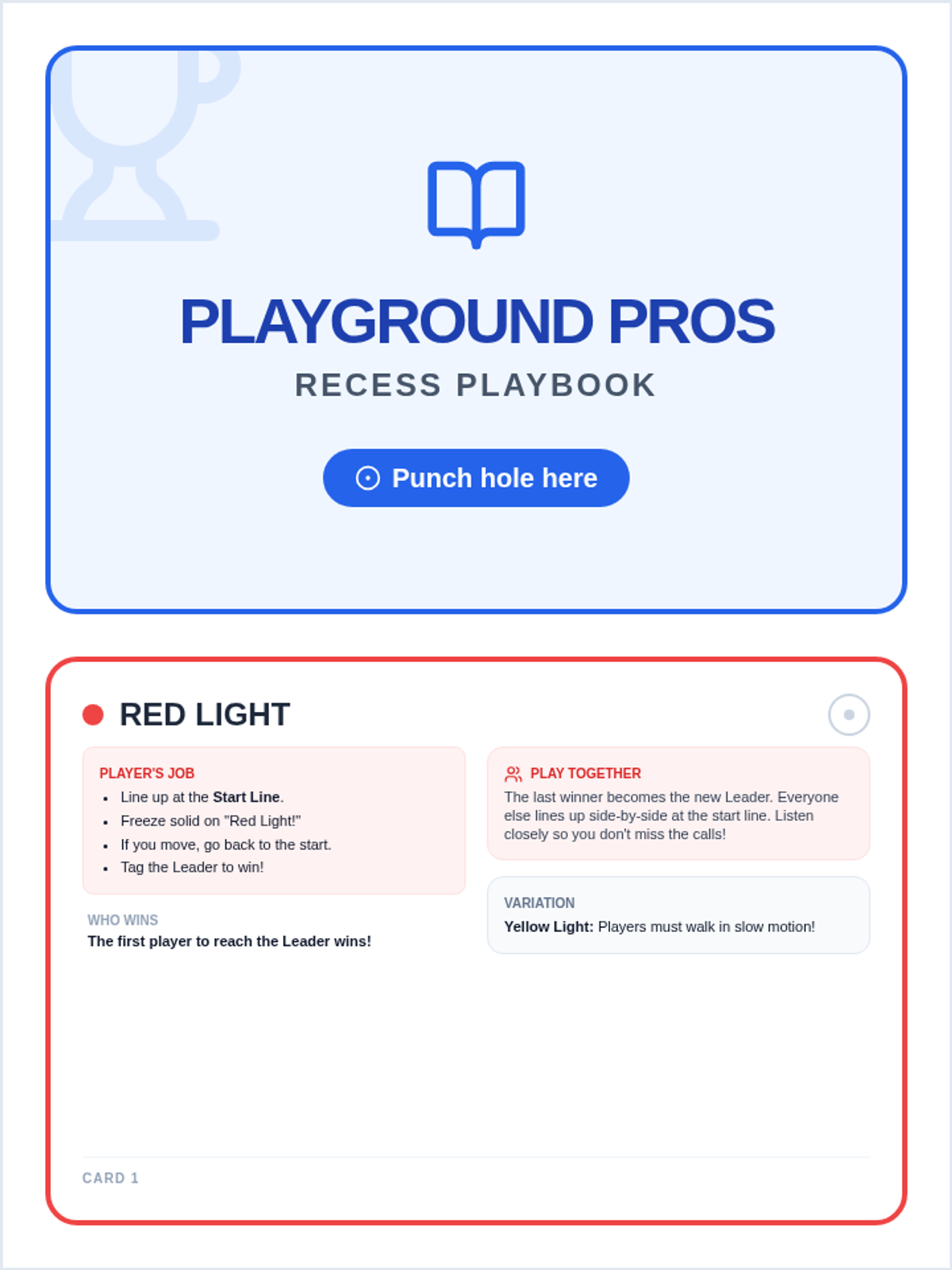
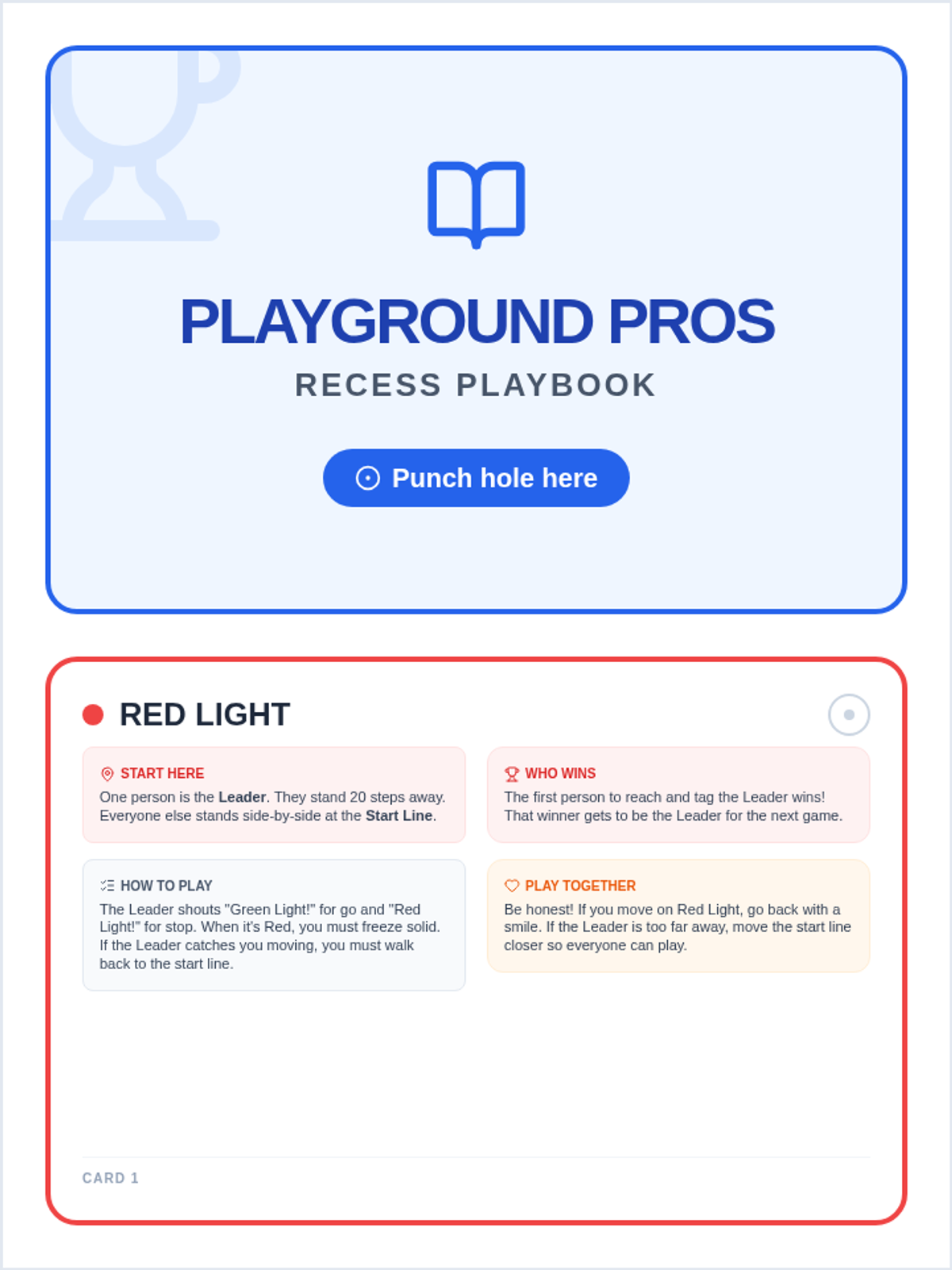
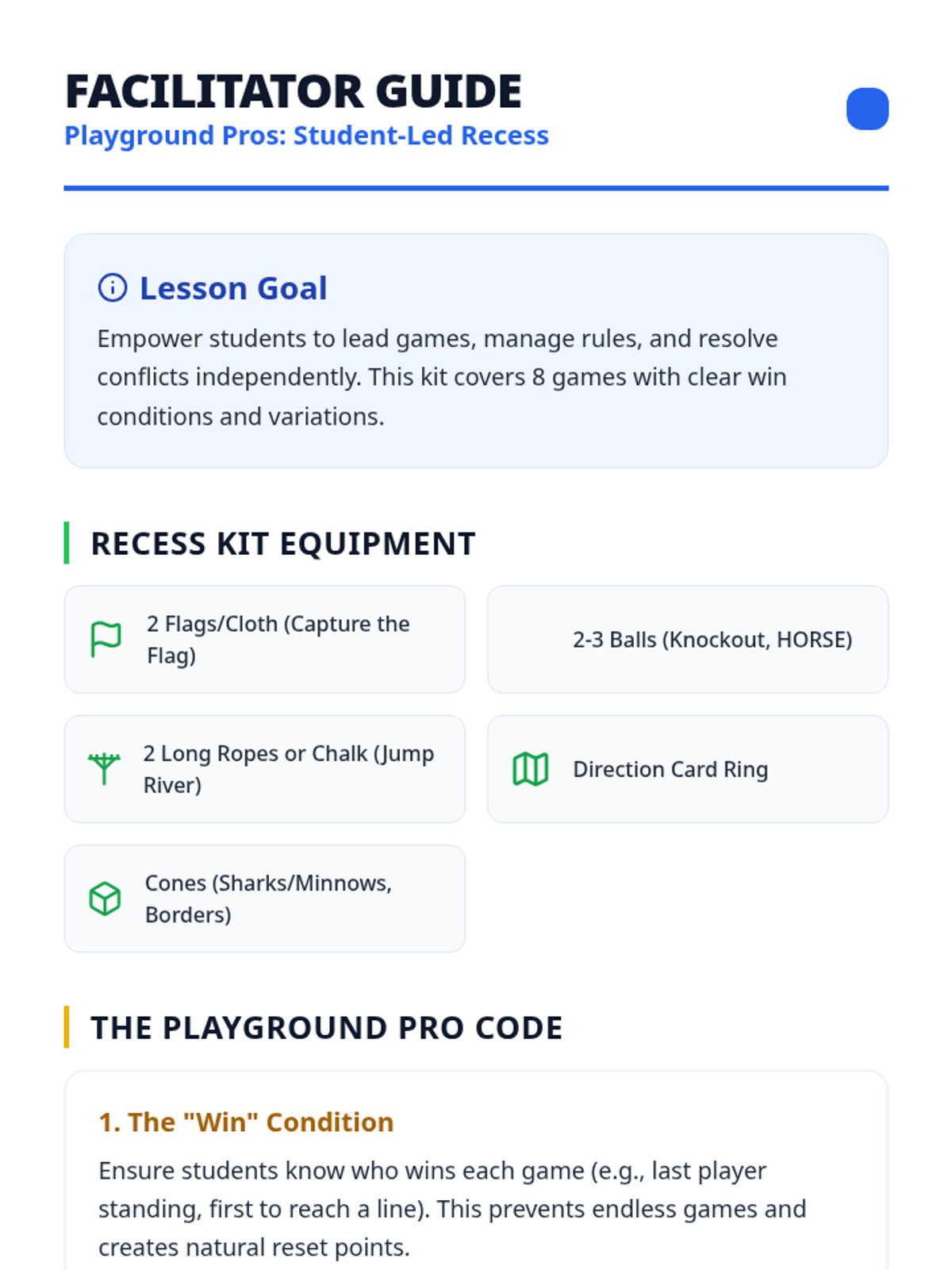
A collection of clear, easy-to-read instructions for popular outdoor recess games, designed to help 4th graders lead their own play. Includes variations for different skill levels and group sizes while maintaining gender-neutral language.
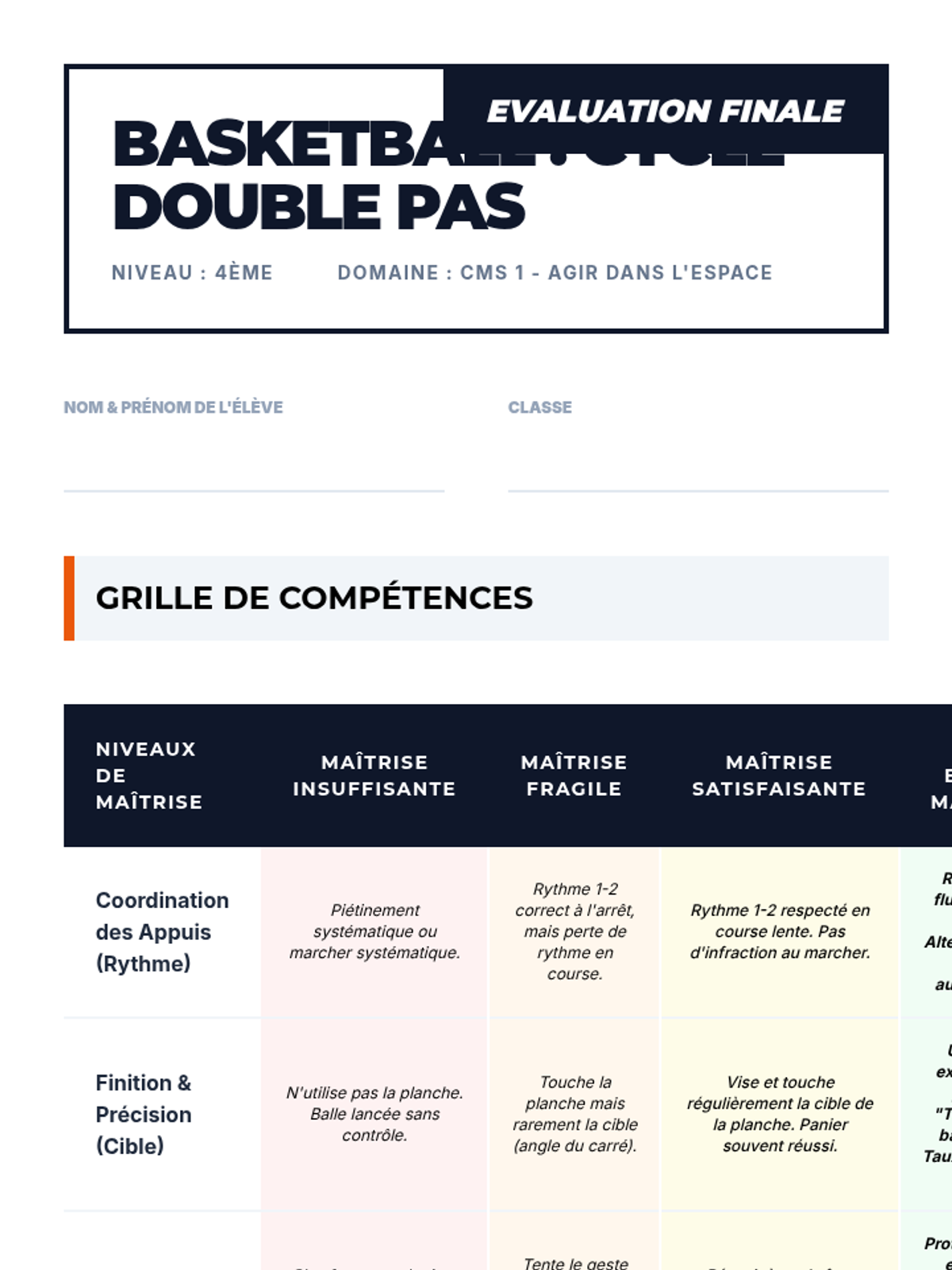
Intégrer le double pas dans une course de vitesse et face à une opposition légère. Évaluation finale des acquis de la séquence.
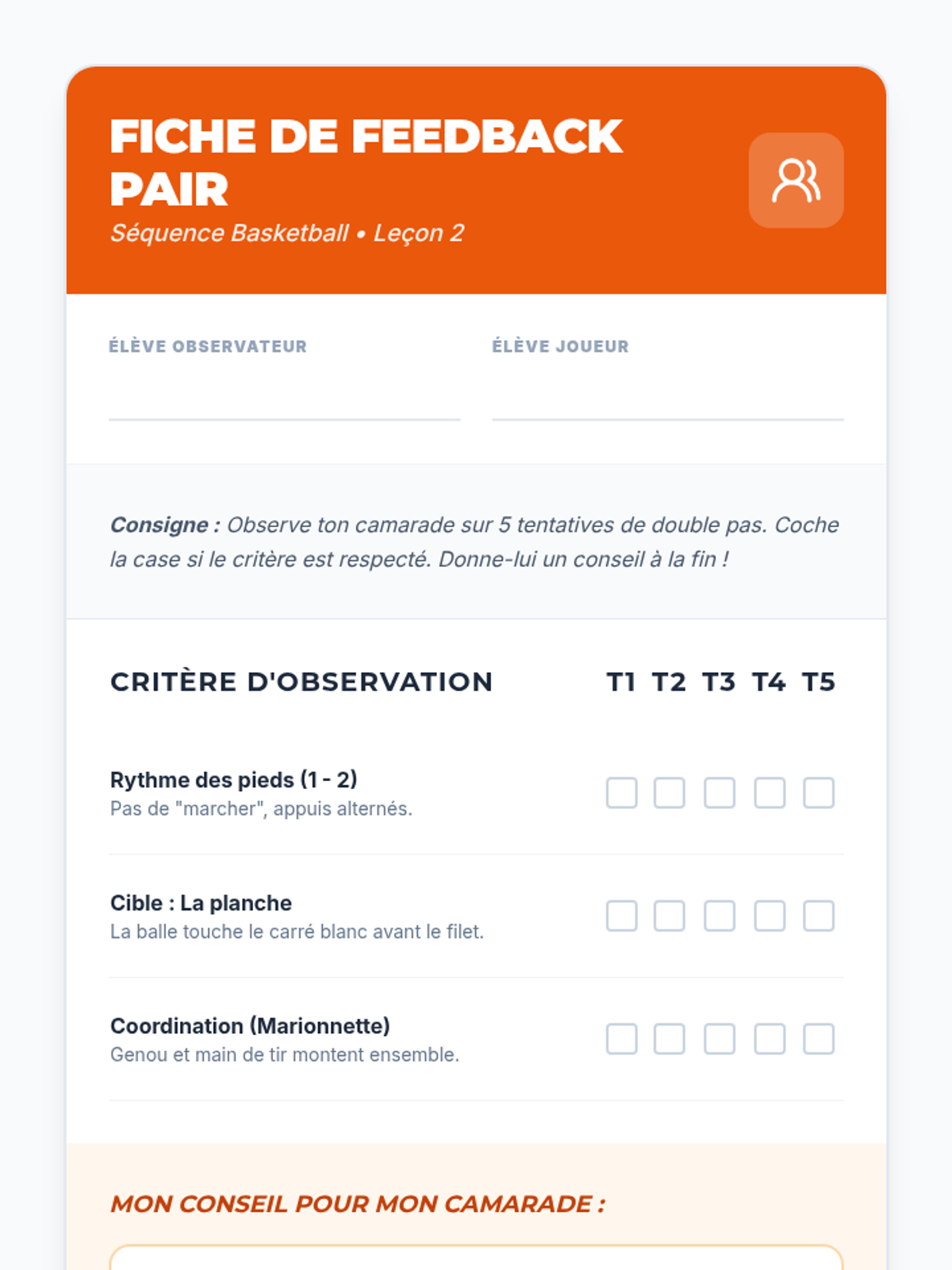
Travailler la précision du tir en utilisant la planche. Découvrir le lâcher de balle et la coordination bras-jambe du même côté.
Apprendre et automatiser le rythme des deux appuis (Droit-Gauche pour les droitiers) sans dribble puis avec un seul dribble. Focus sur la dissociation segmentaire.
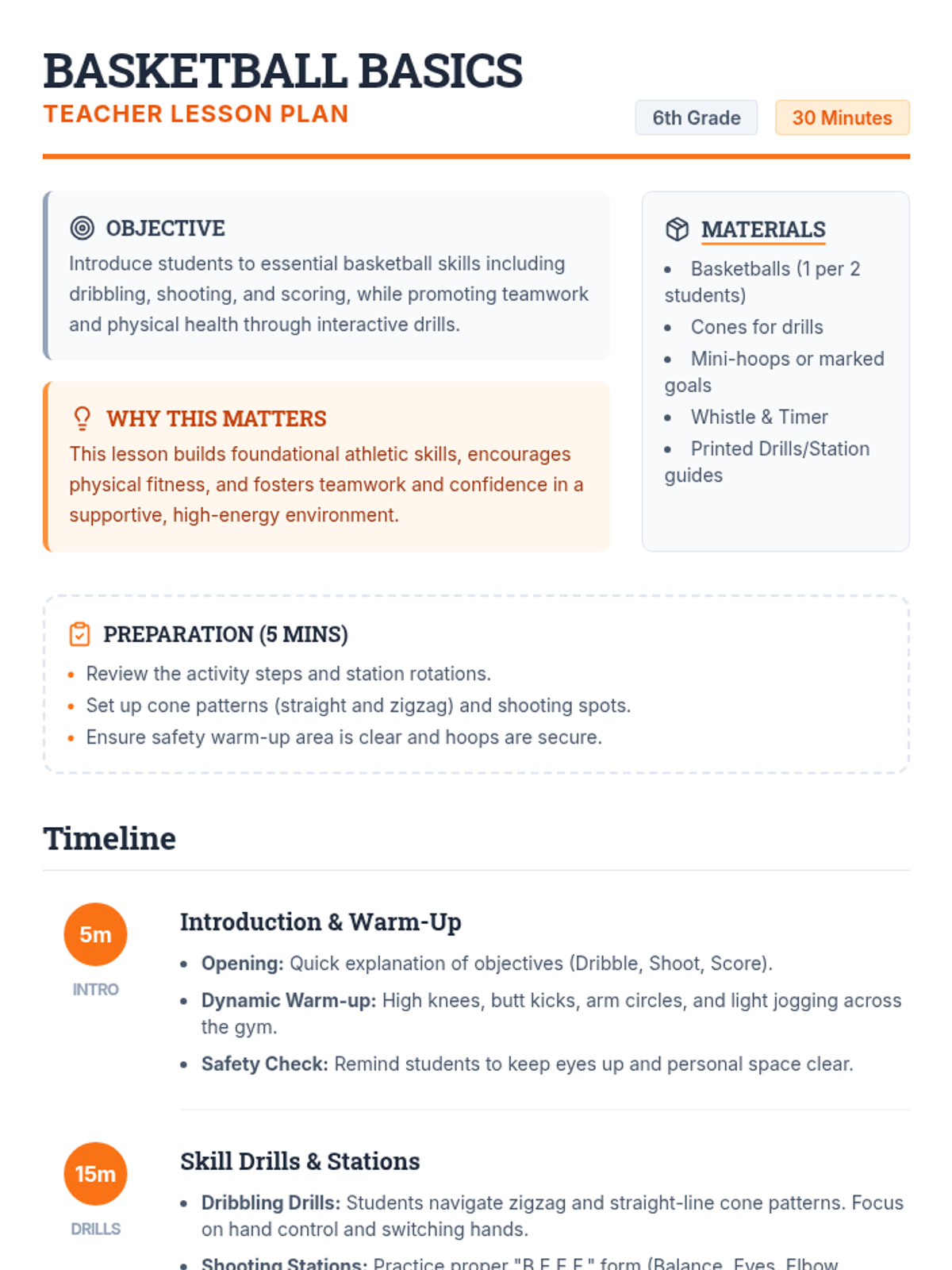
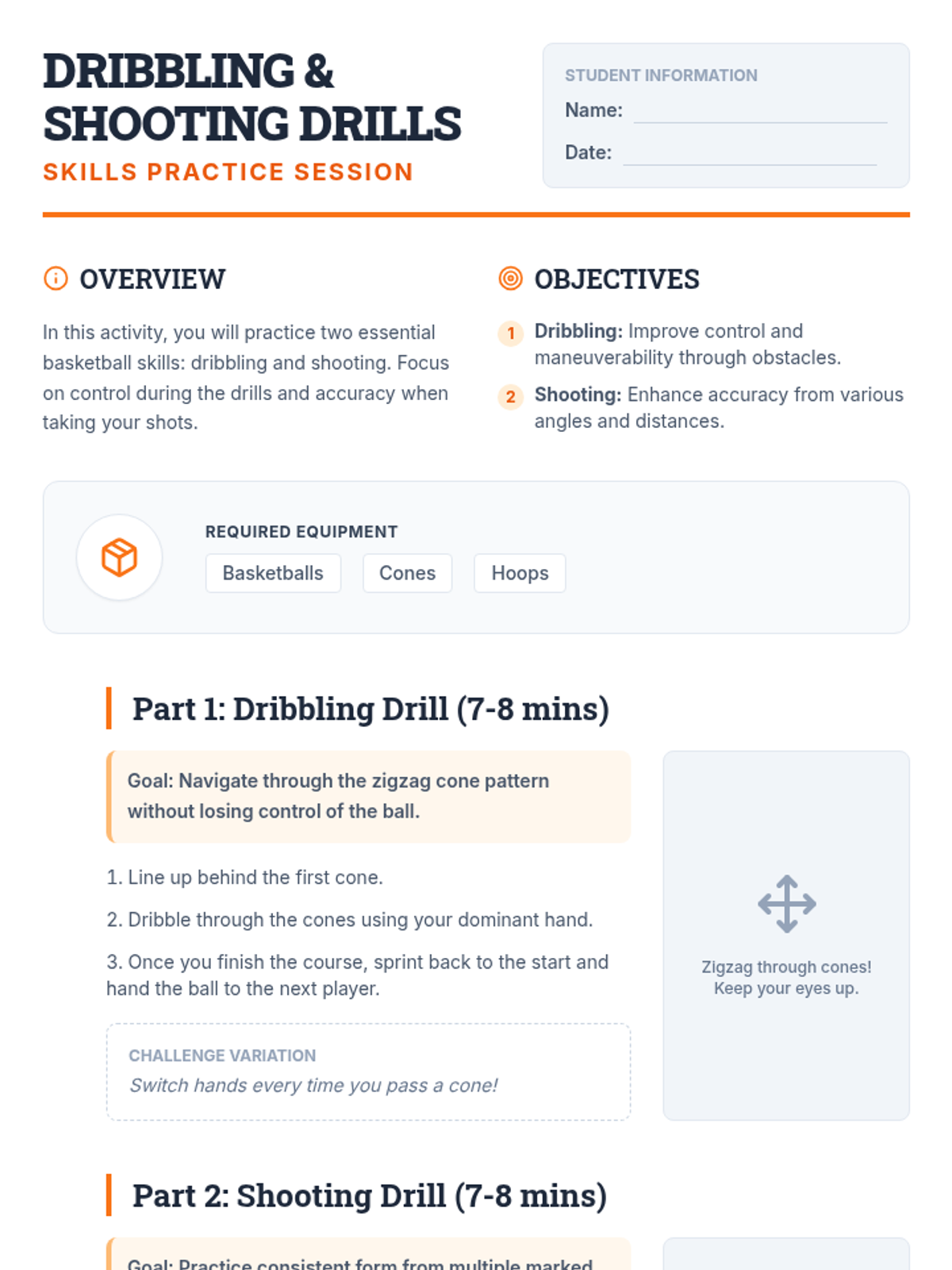
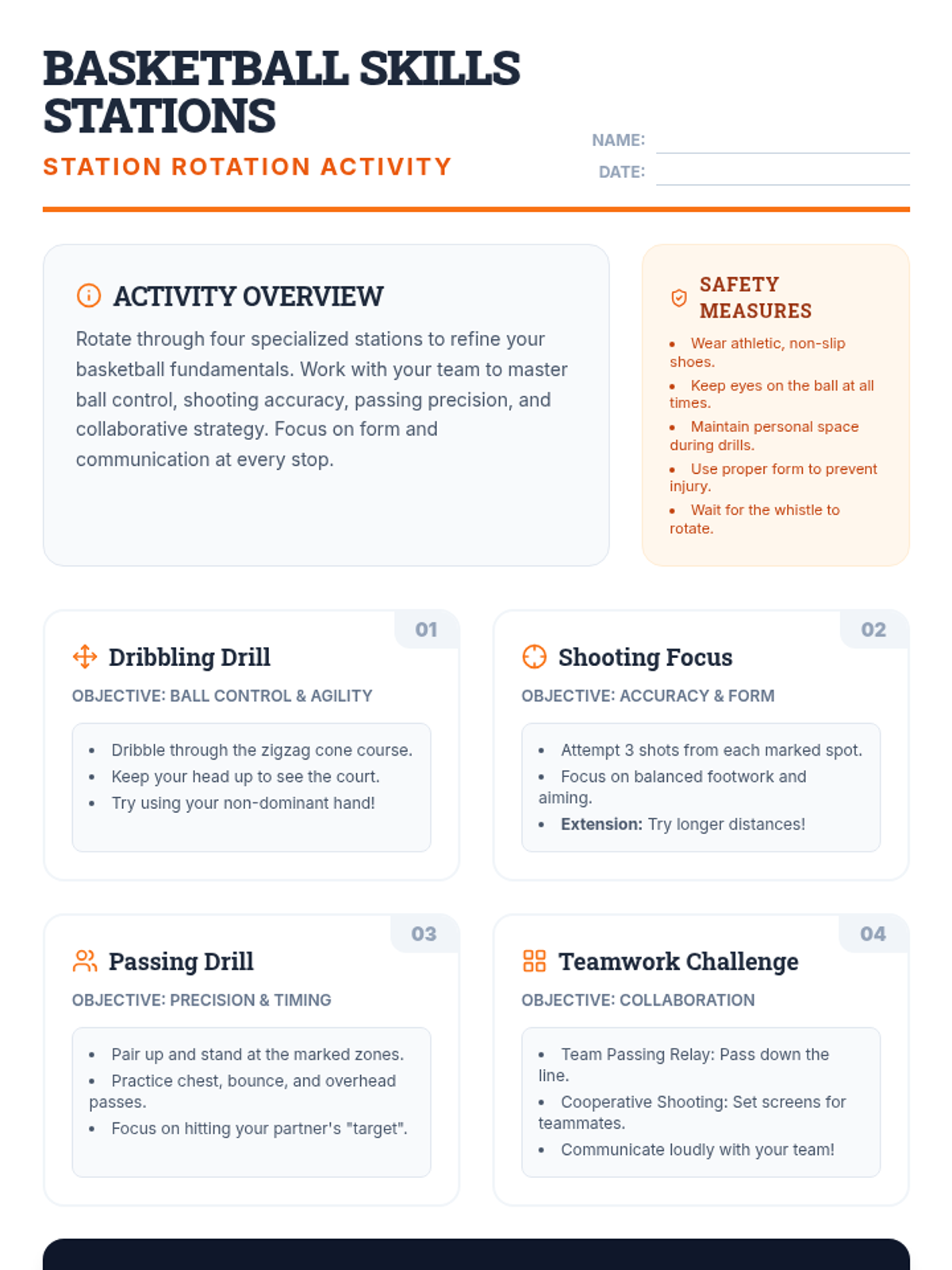
A high-energy, hands-on introduction to basketball fundamentals for 6th graders, focusing on dribbling, shooting, and team-based drills.
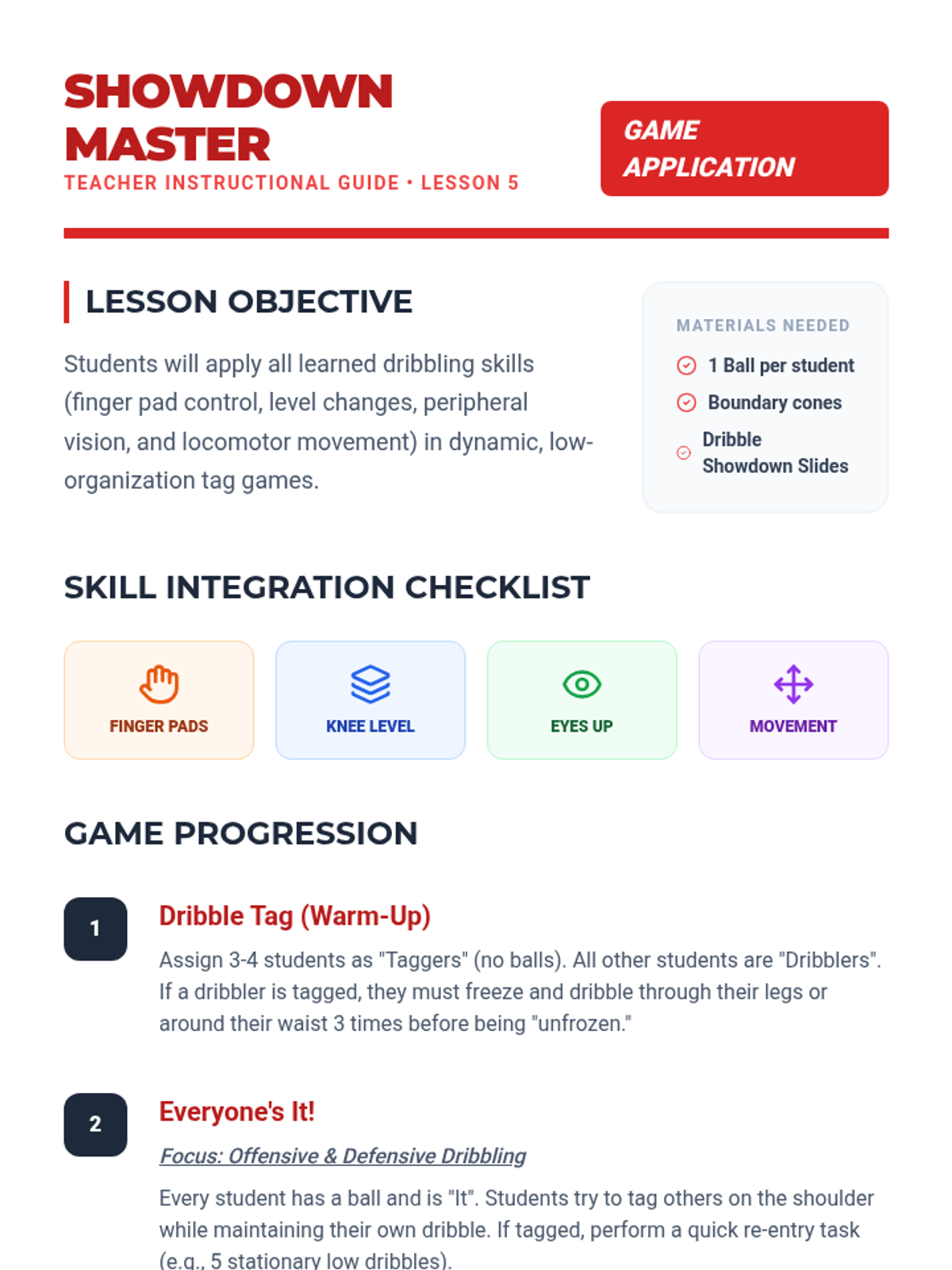
Applies all learned skills in a dynamic game environment through low-organization dribble tag.
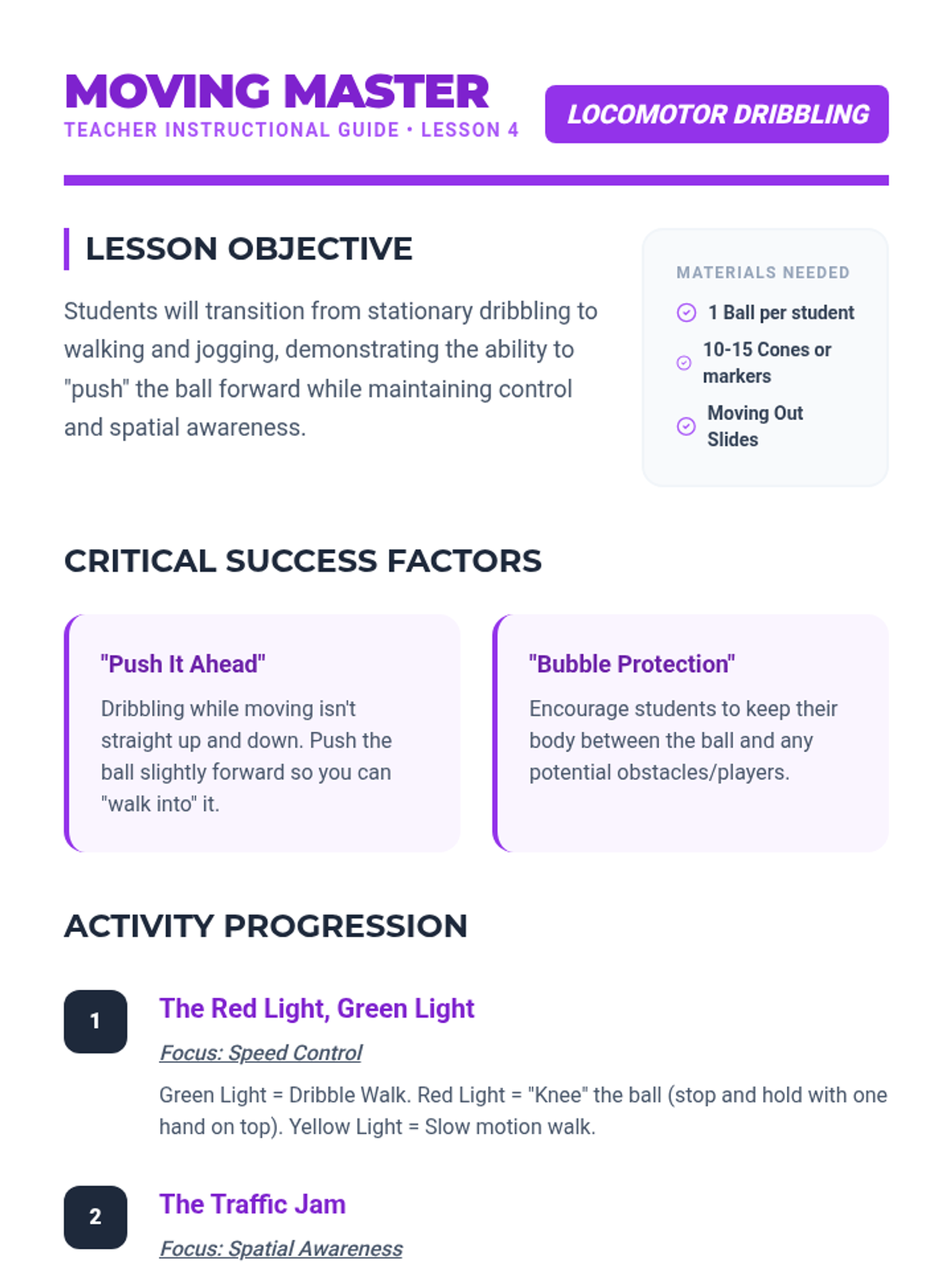
Transitions students from stationary dribbling to walking and jogging while protecting the ball.
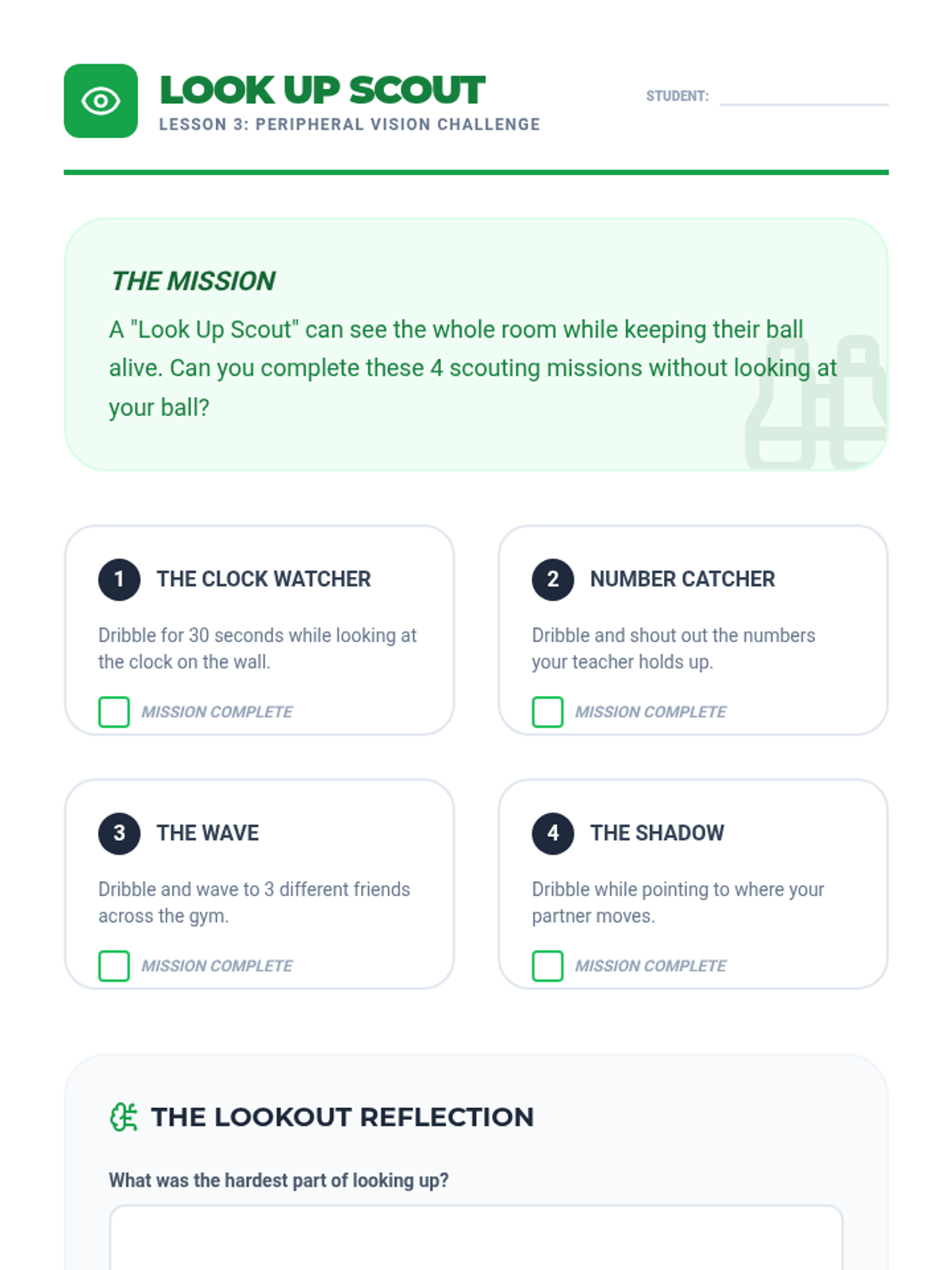
Challenges students to dribble without looking at the ball, developing peripheral vision and spatial awareness.
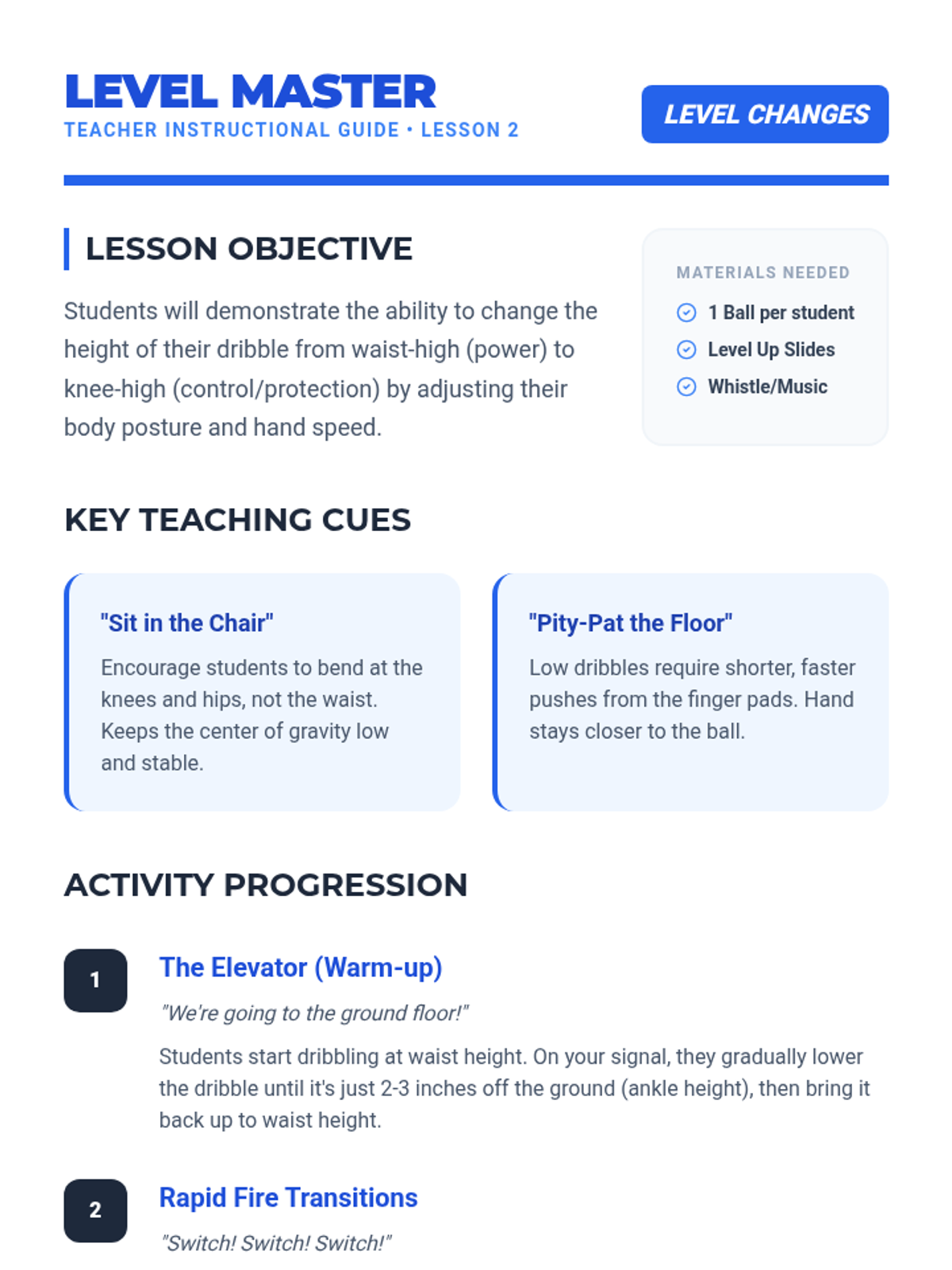
Explores changing dribble heights from knee to waist level while maintaining body posture and control.
A set of high-energy station signs for a soccer skills circuit, focusing on dribbling, passing, accuracy, distance, and ball control.
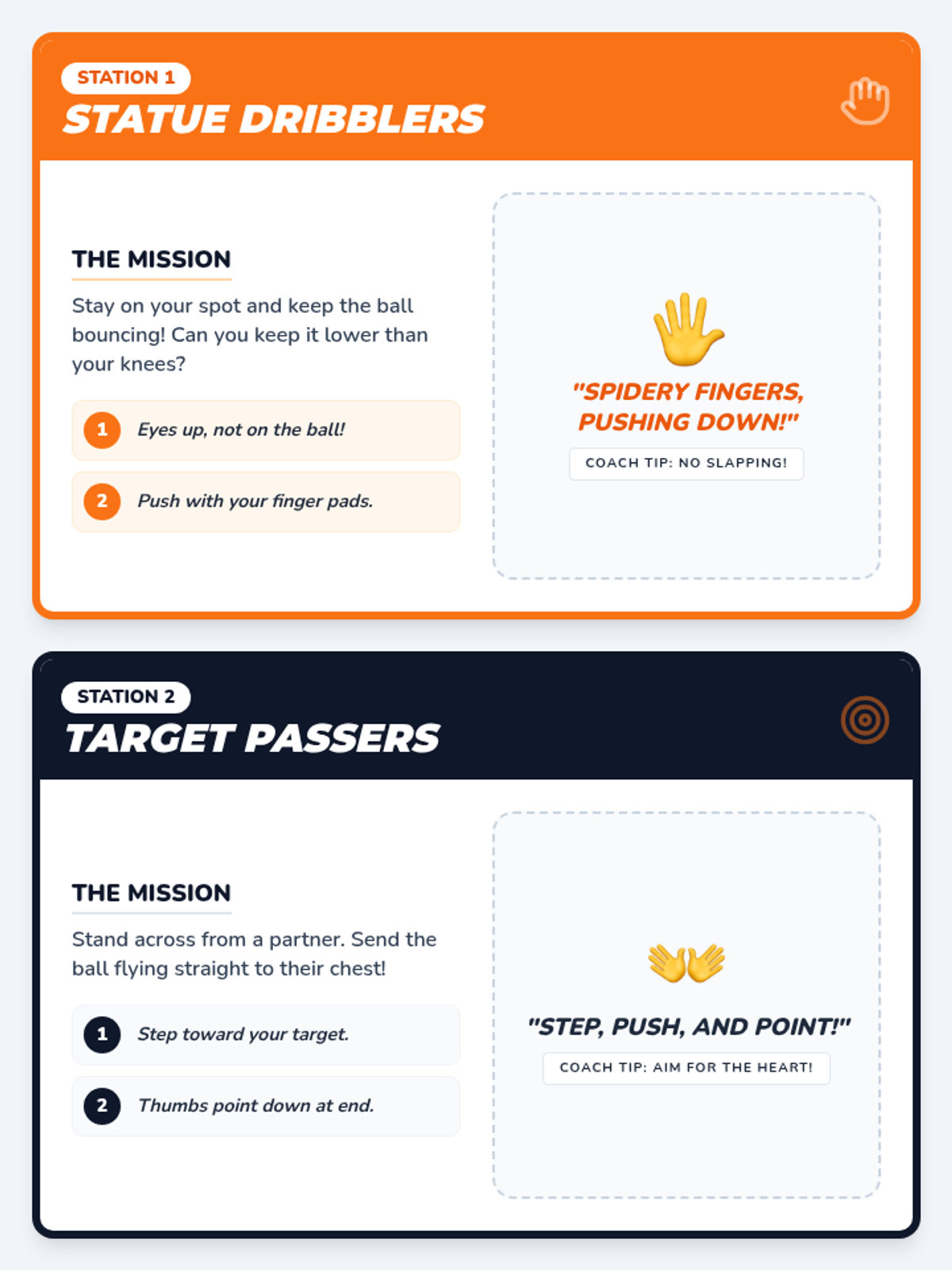
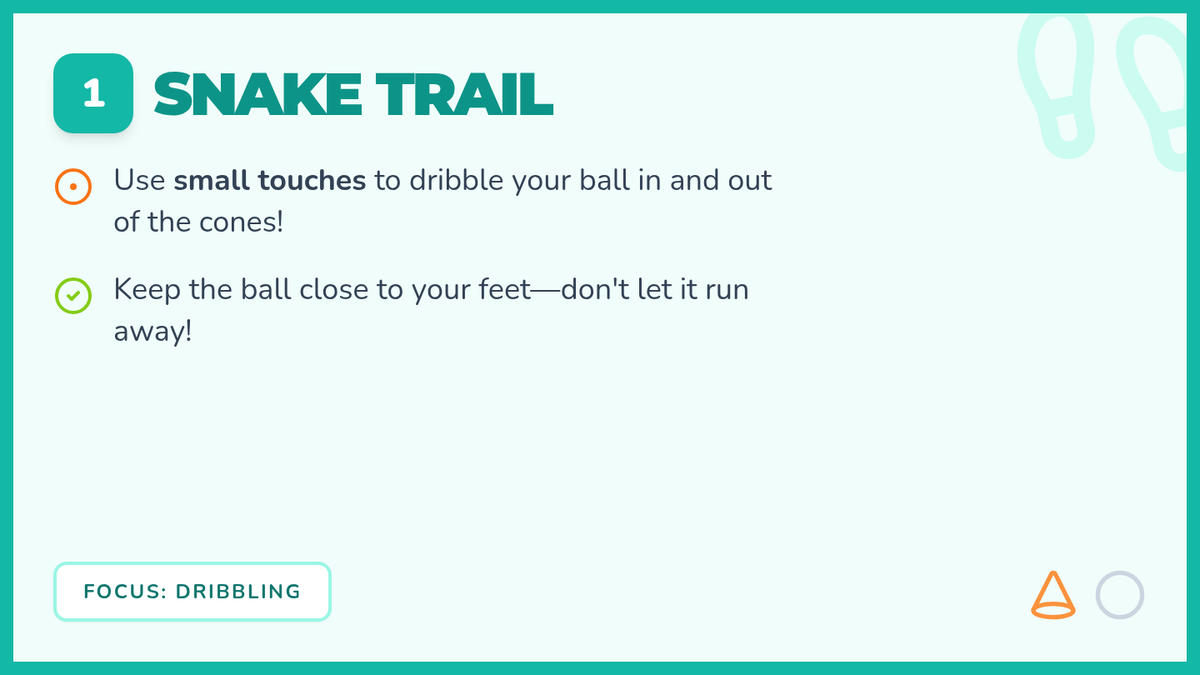
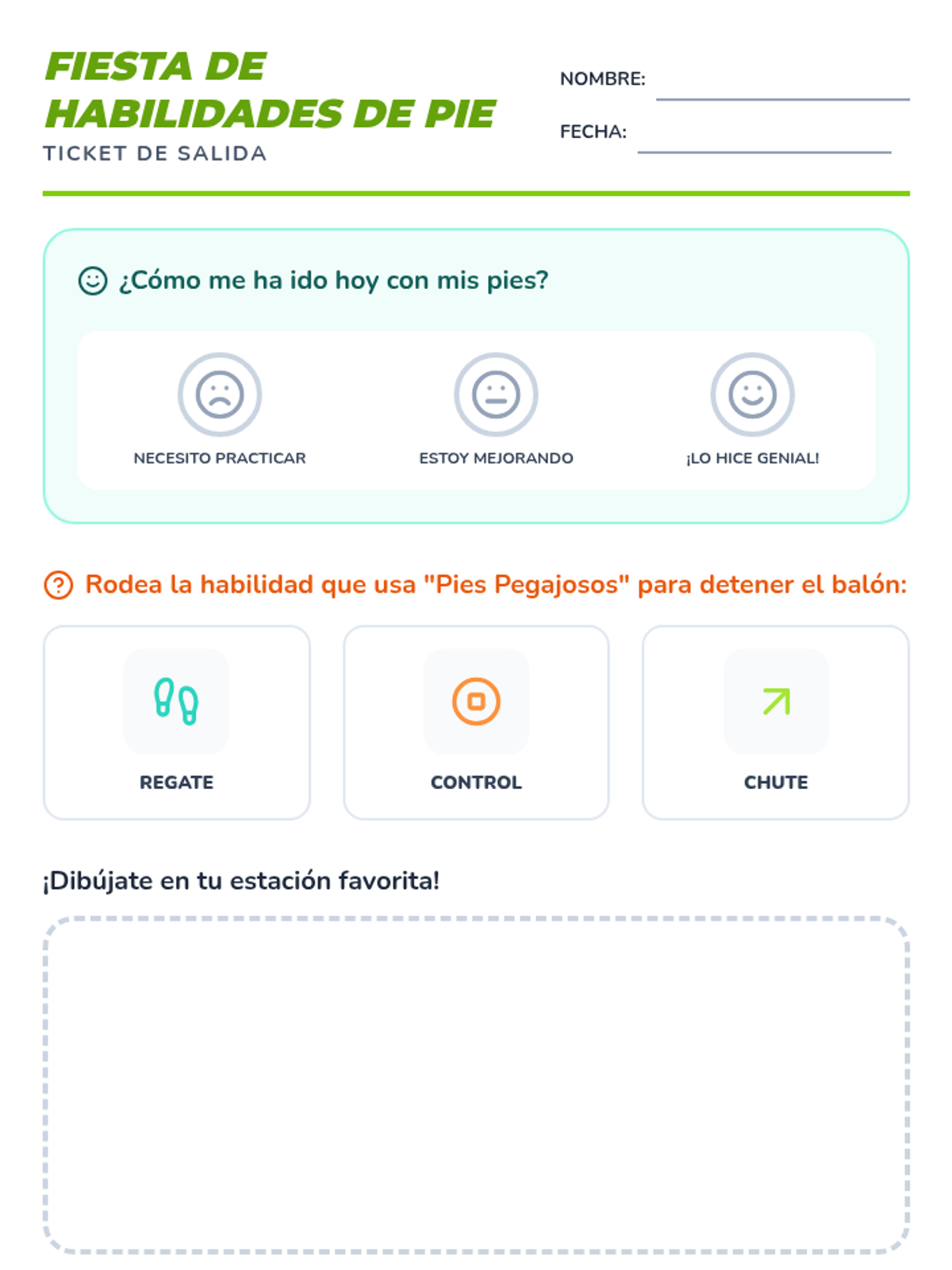
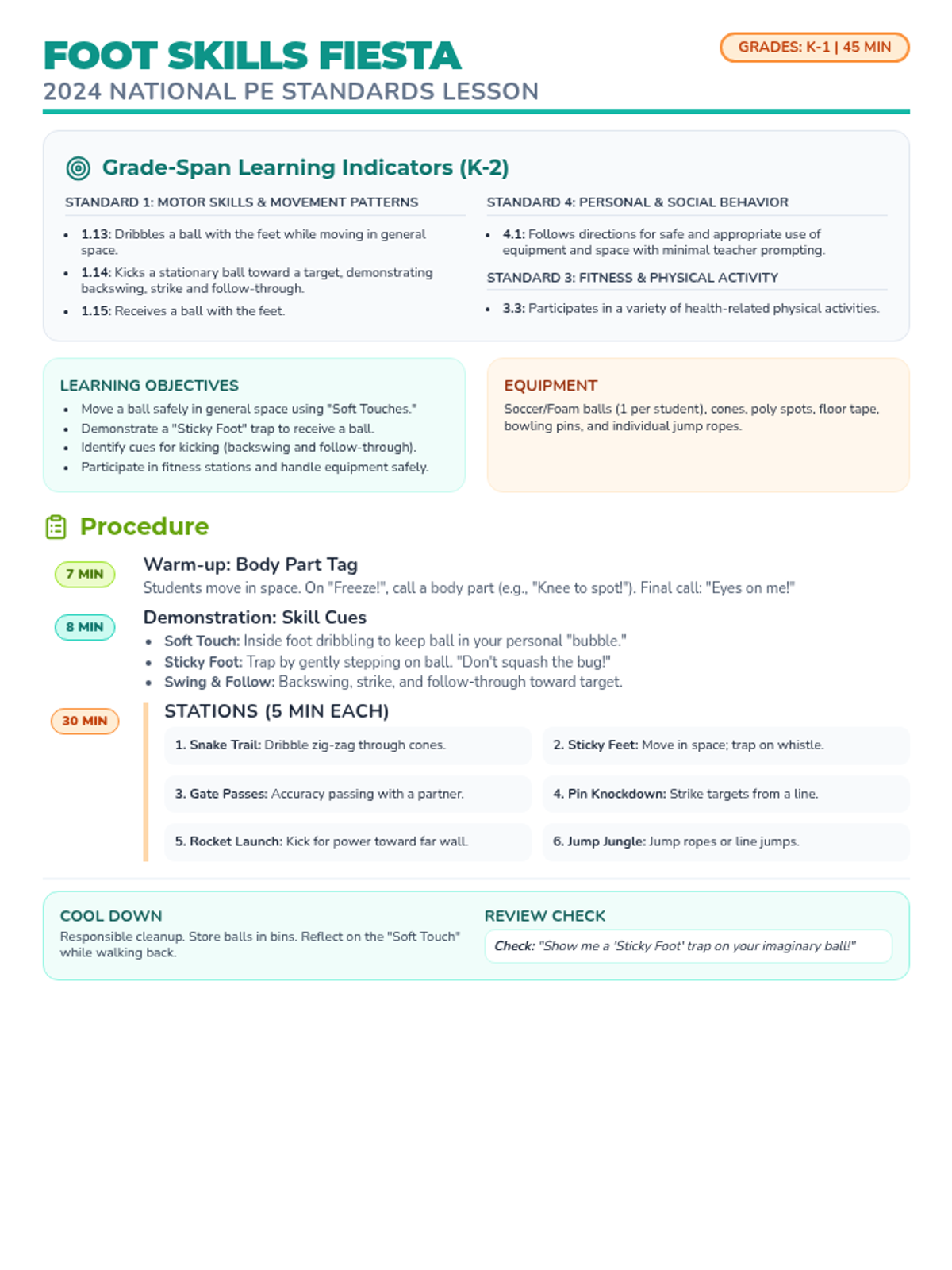
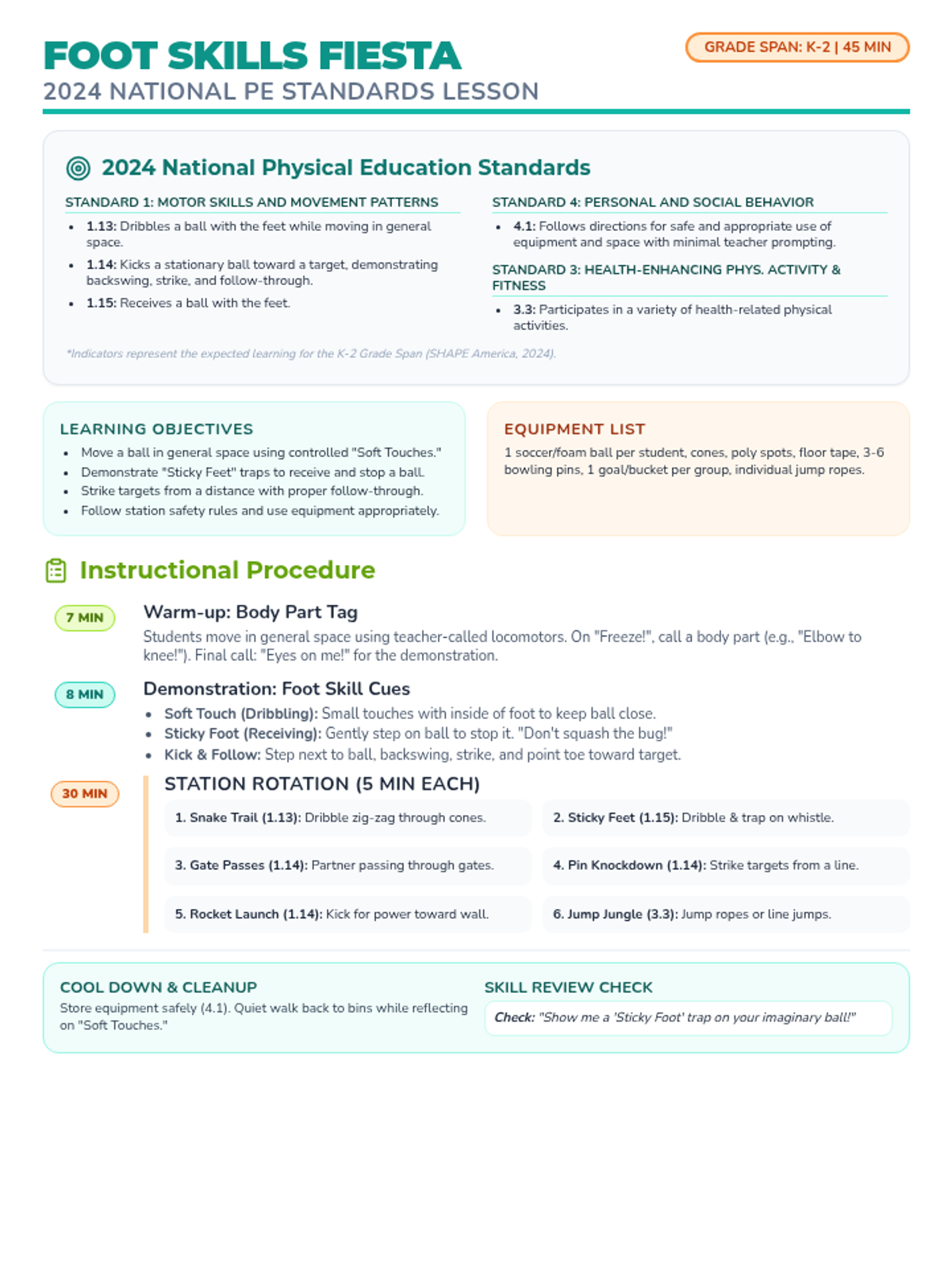
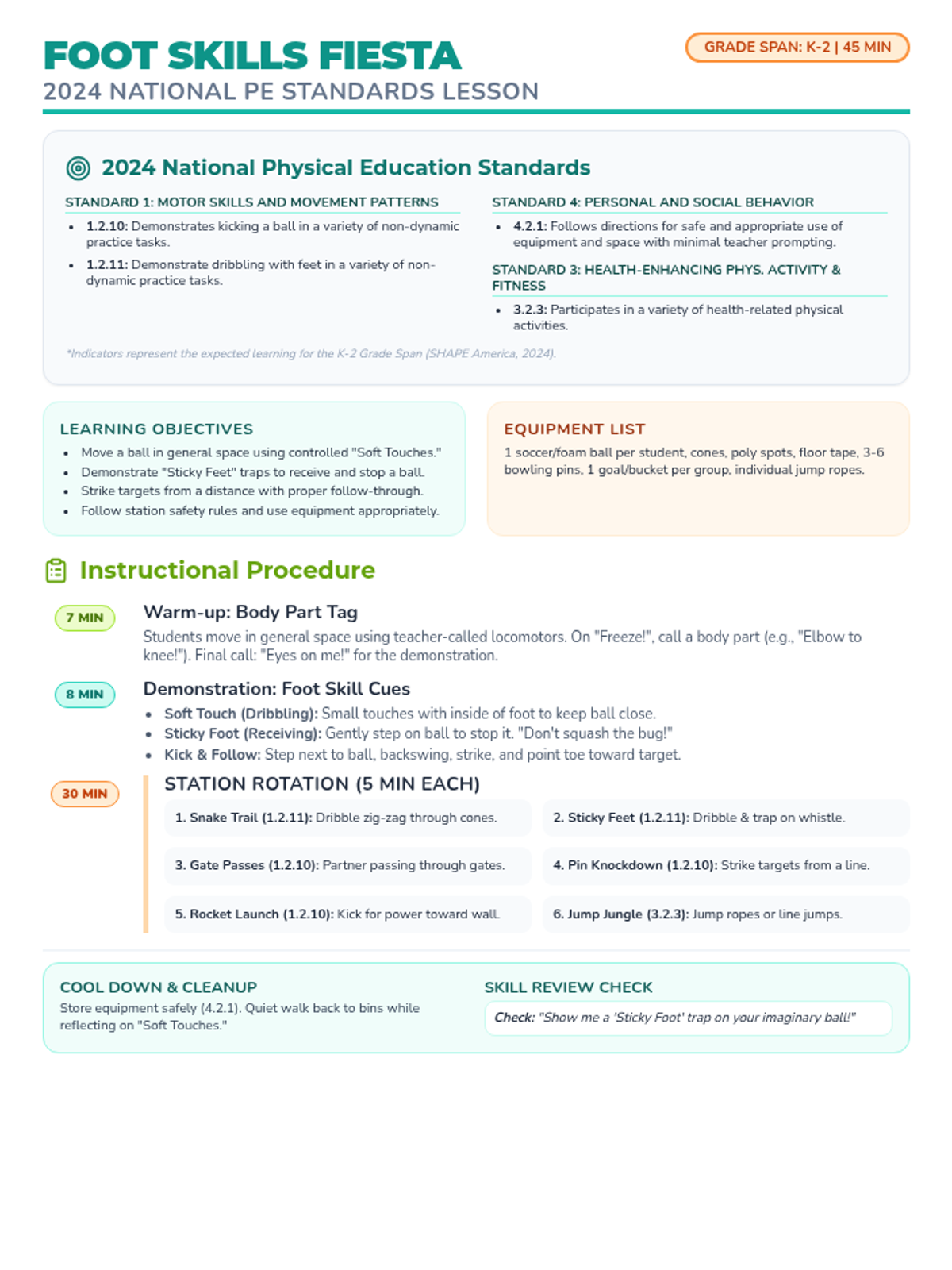
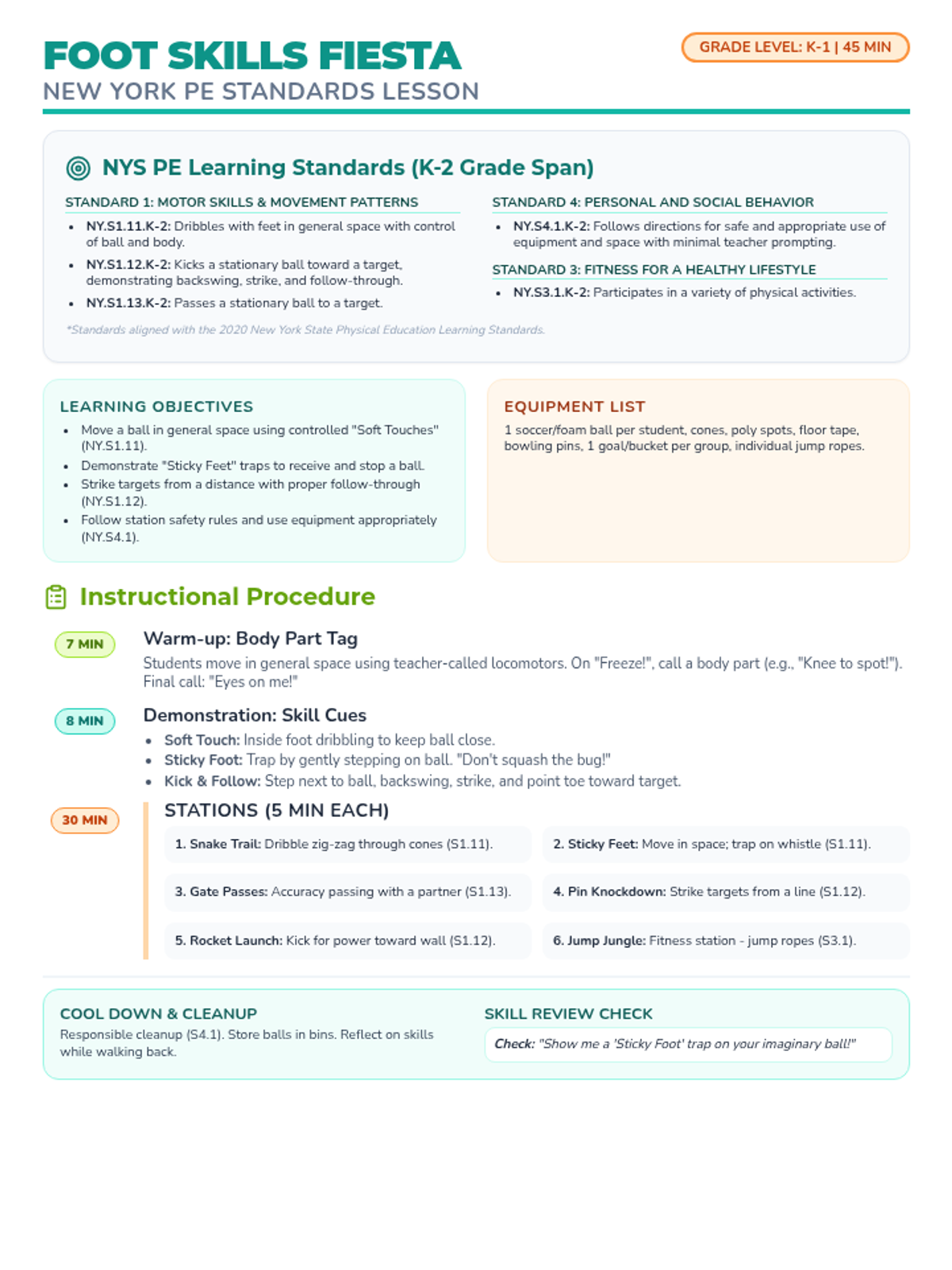
A comprehensive PE lesson focused on foundational foot skills for K-1 students, featuring six engaging stations including dribbling, kicking, and fitness.
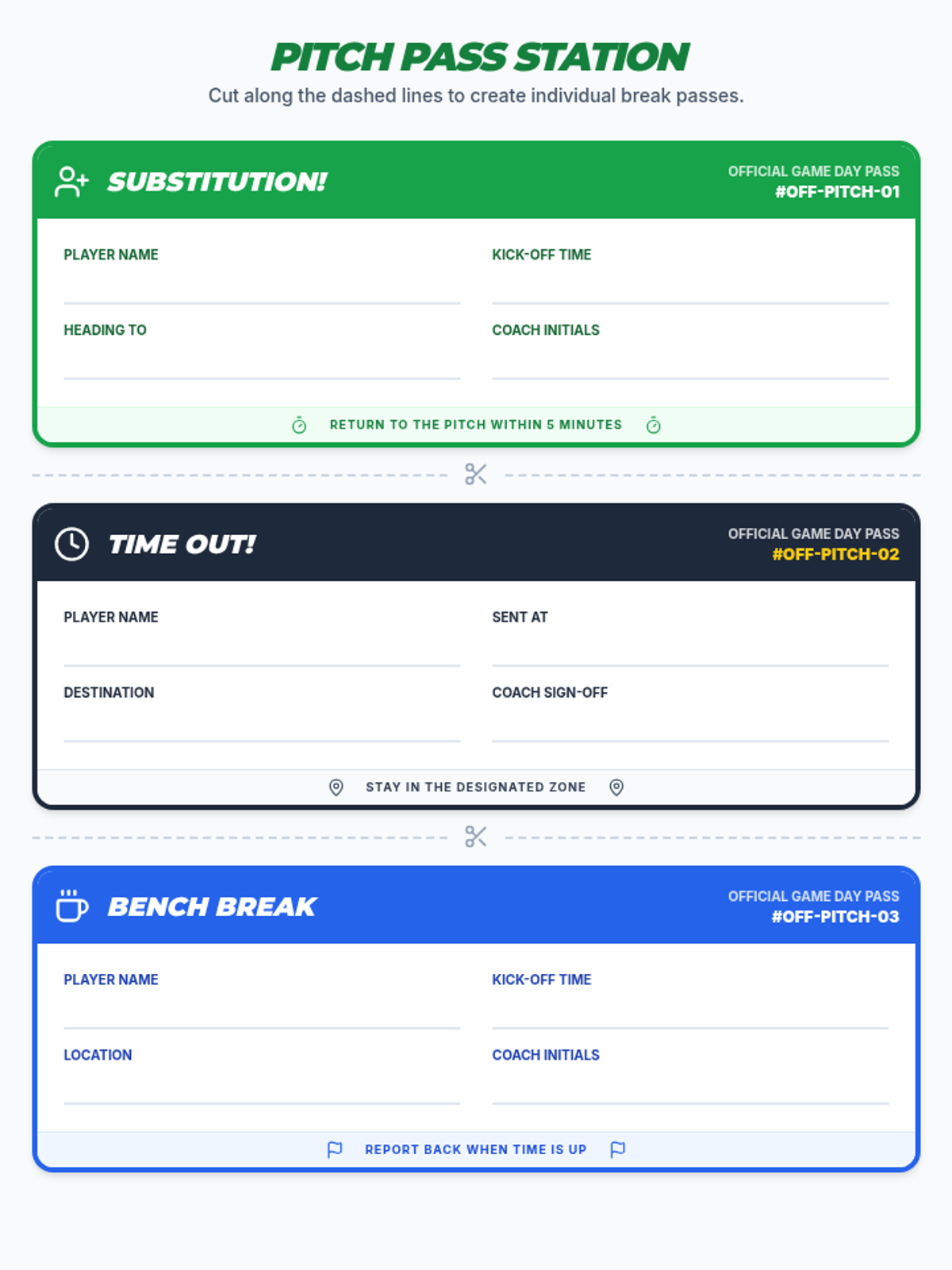
A collection of soccer-themed classroom management tools to keep students on the ball.
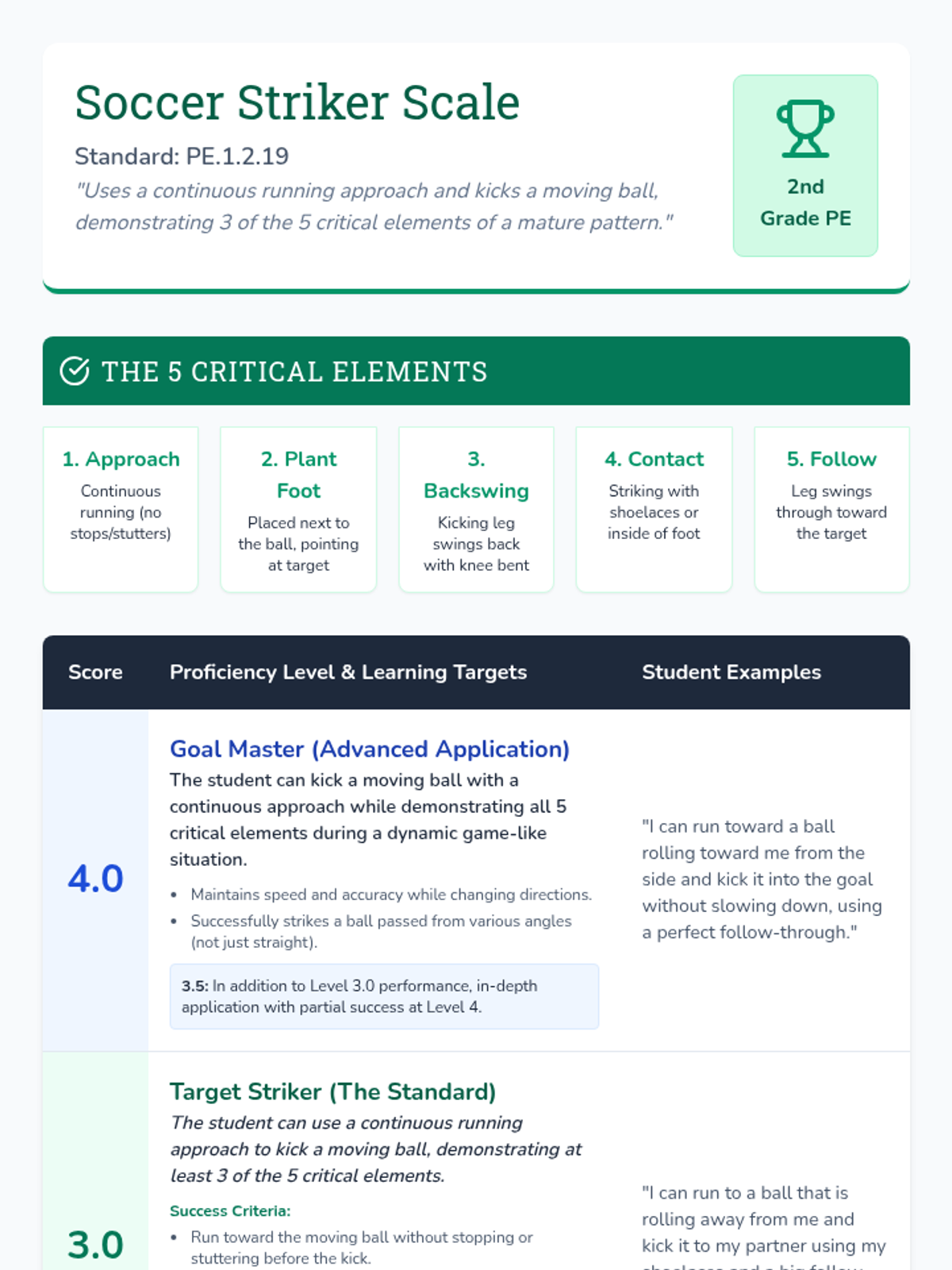
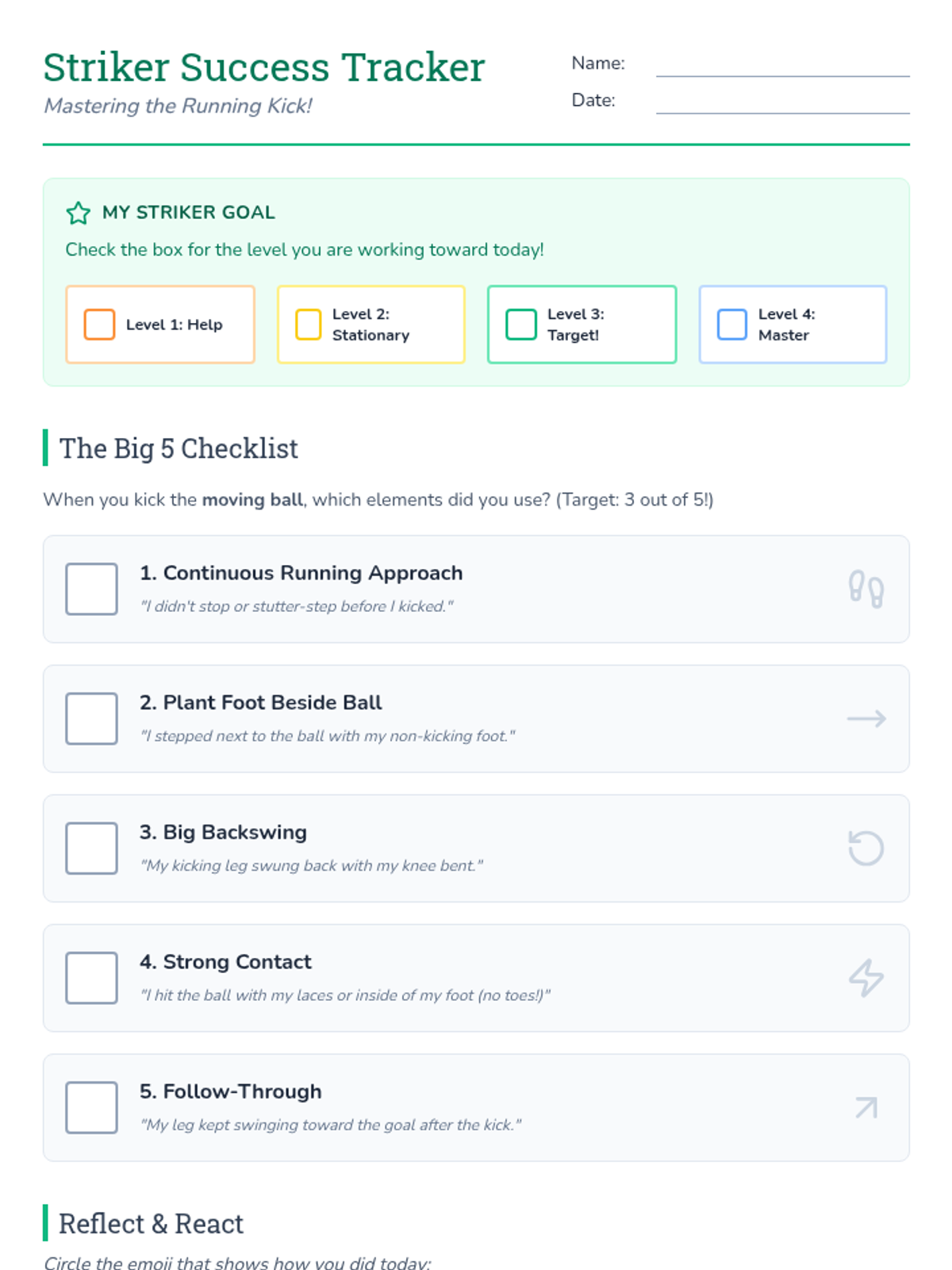
This lesson focuses on mastering the skill of kicking a moving ball while running, specifically targeting the 2nd Grade PE standard PE.1.2.19 through clear proficiency scales and student tracking.
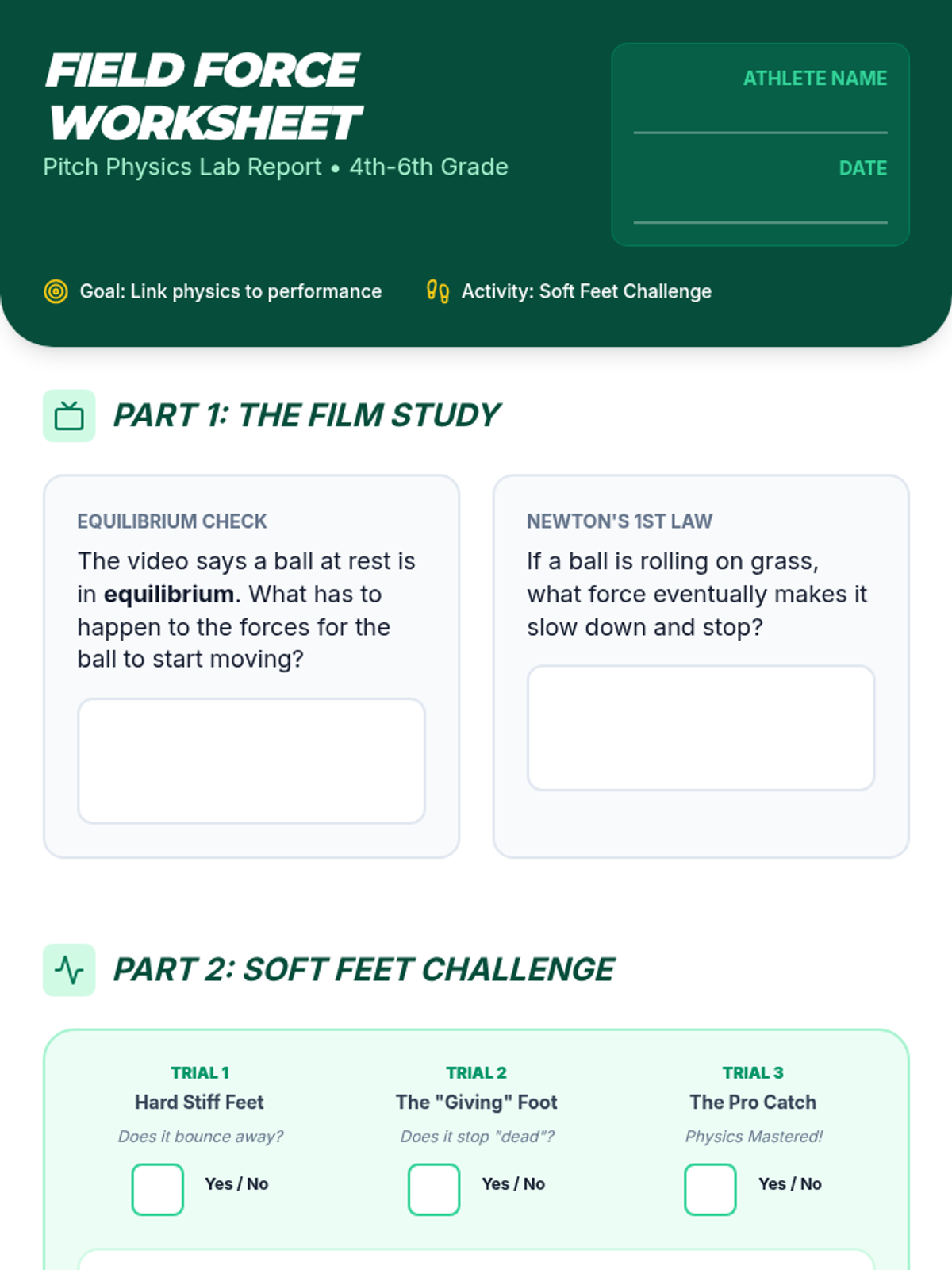
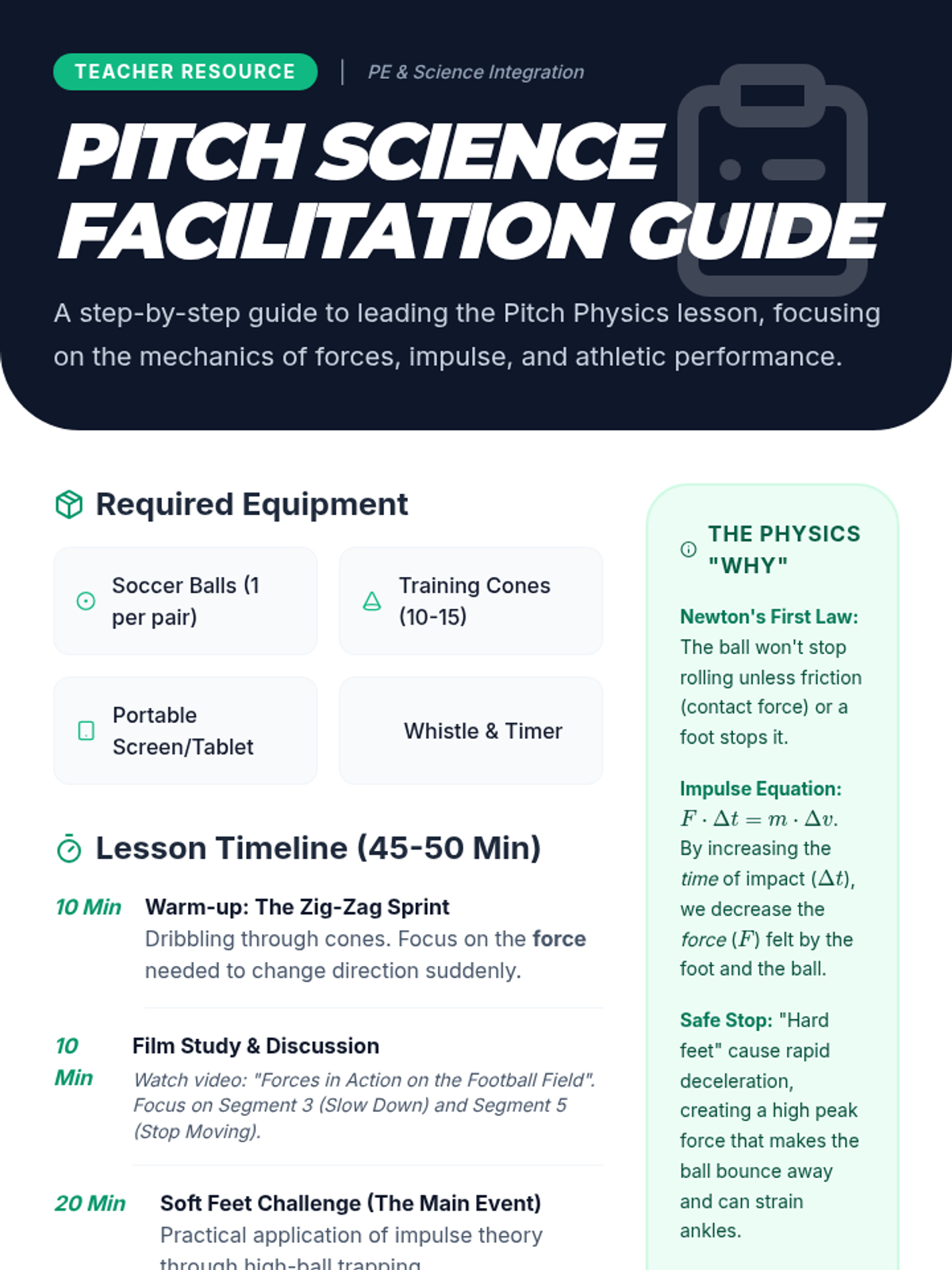
A PE and Science integration lesson where students explore the physics of soccer, focusing on forces like impulse, friction, and Newton's First Law through a 'Soft Feet Challenge'.
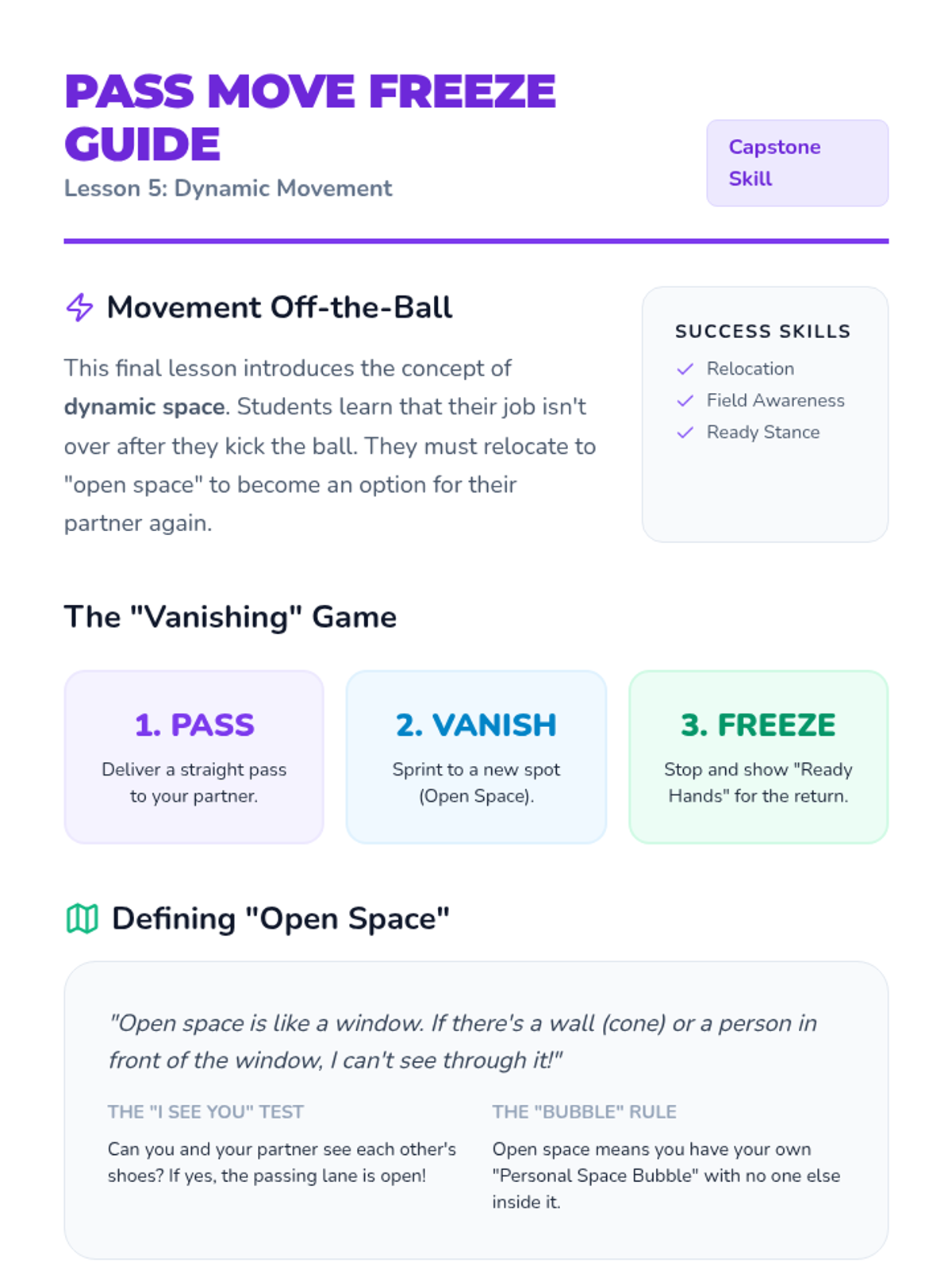
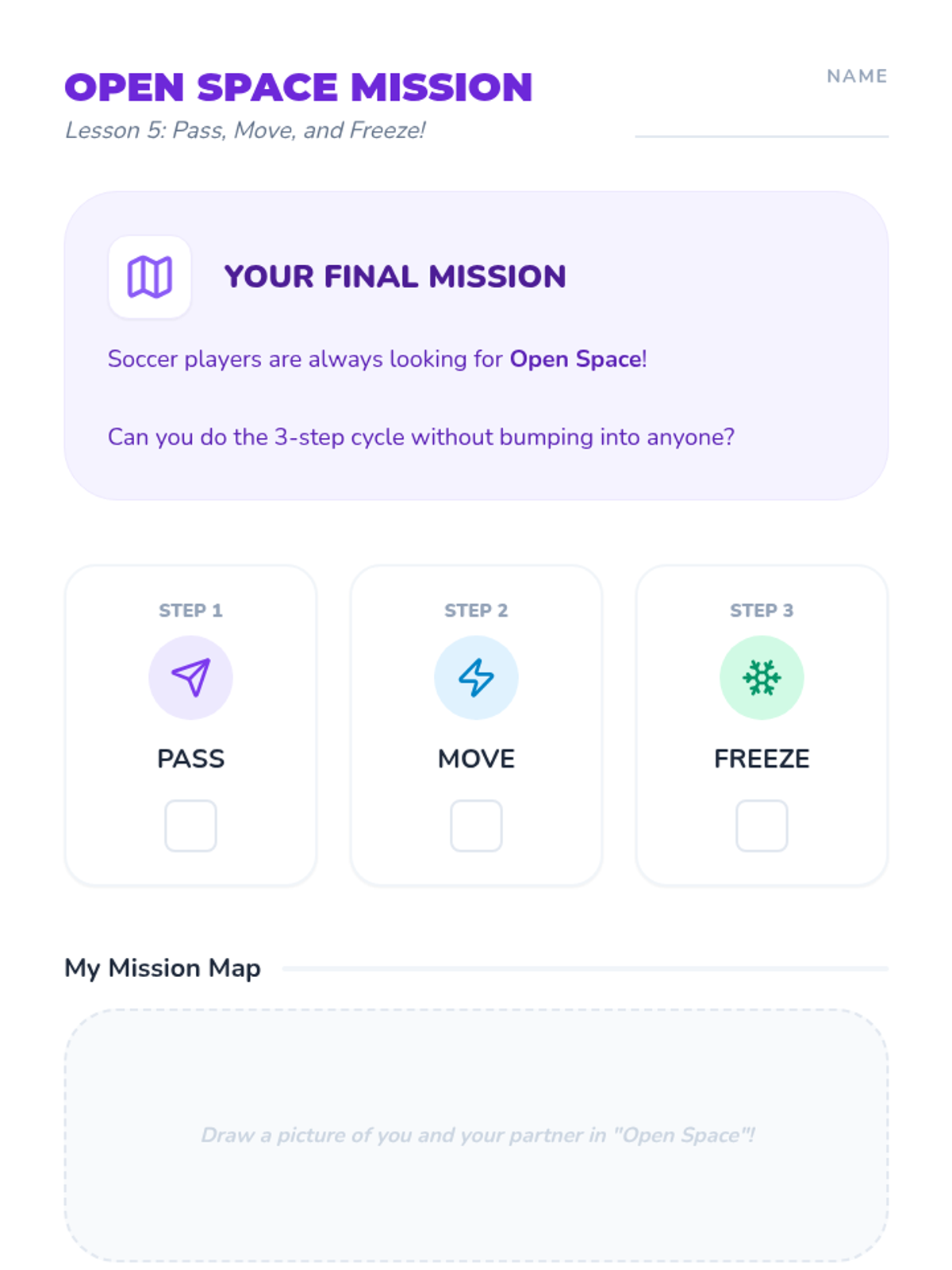
Students pass to a partner, run to a new spot, and freeze to receive the return pass. This introduces the dynamic nature of soccer where players do not stand still after kicking.
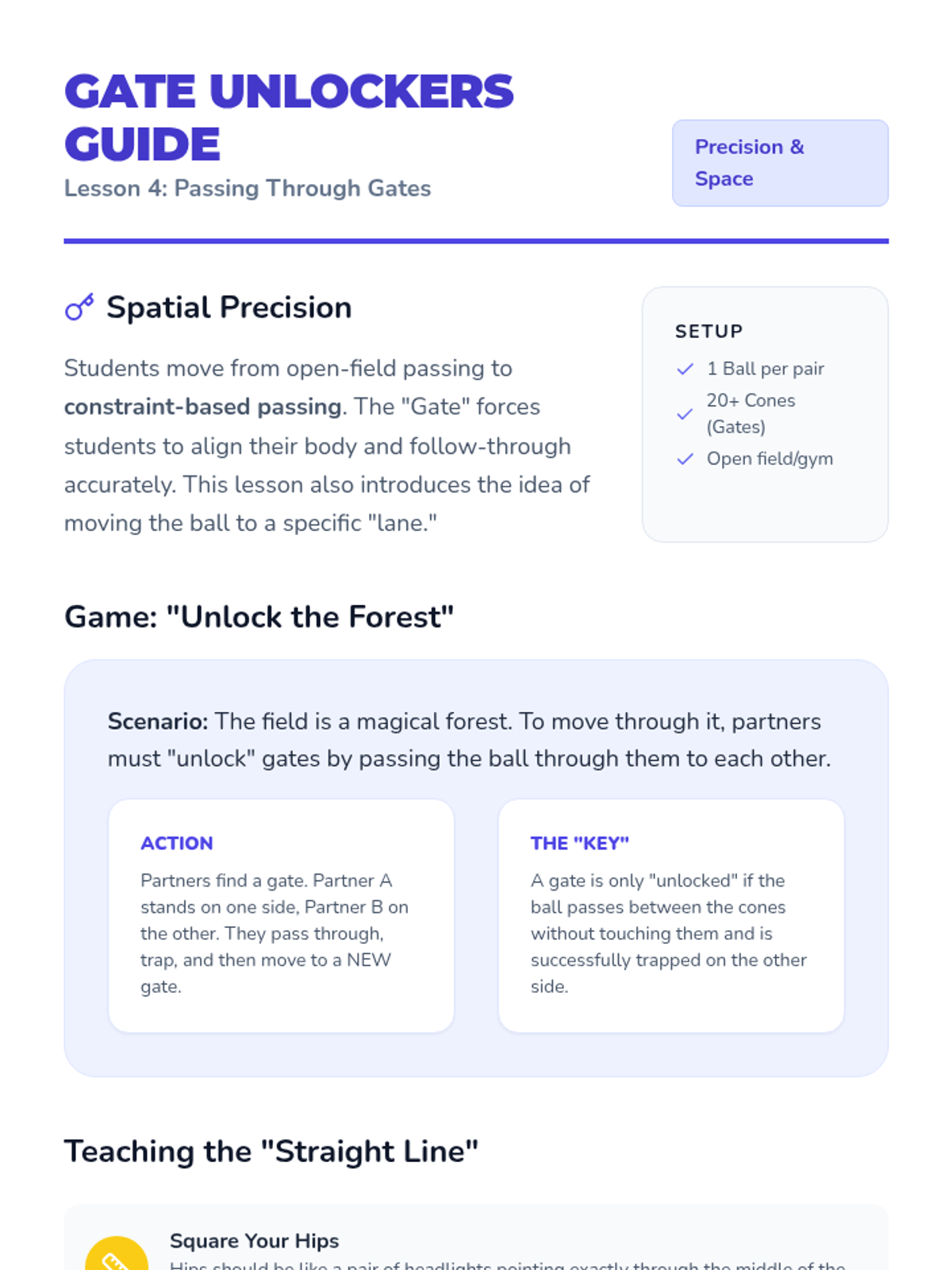
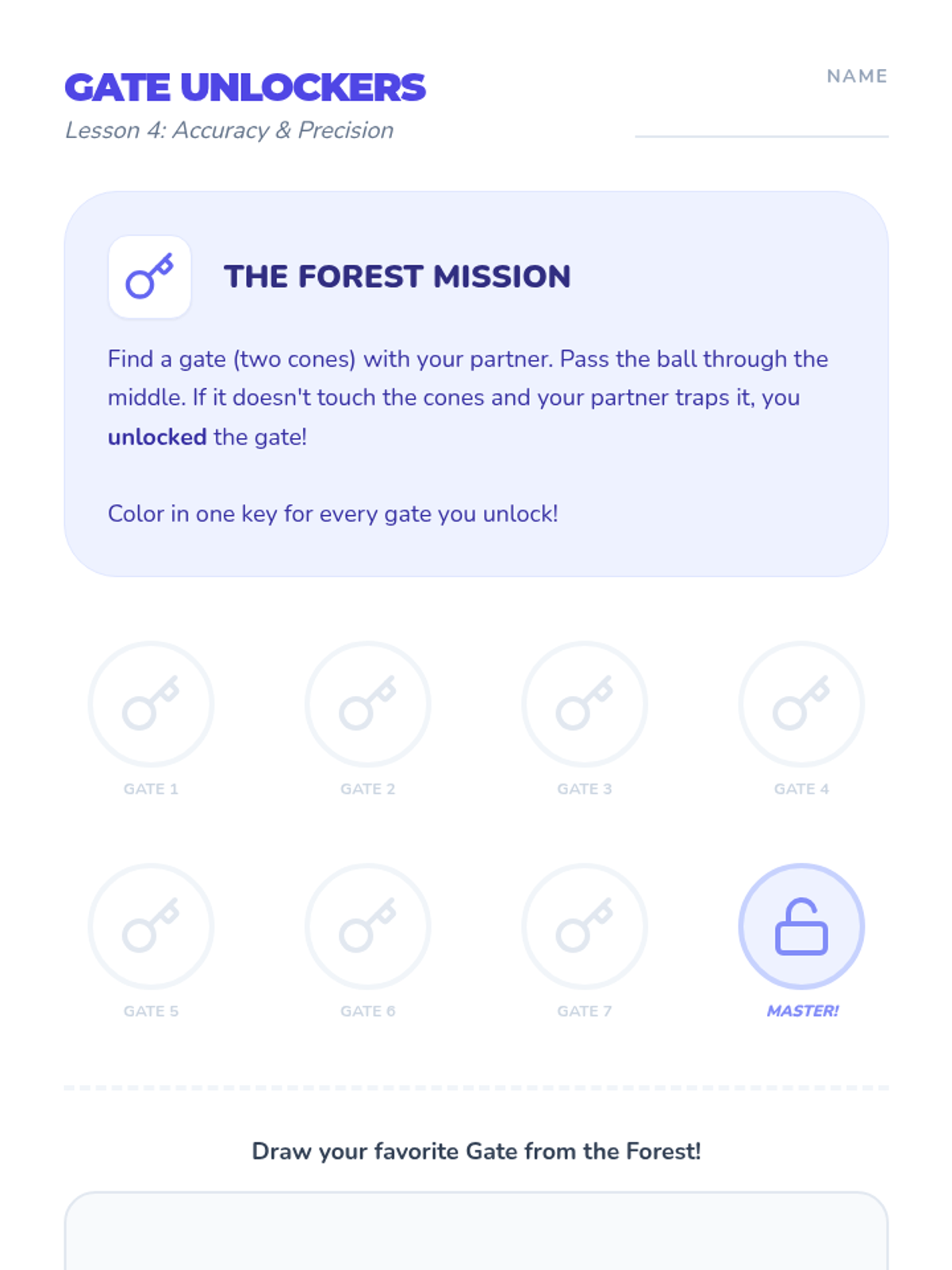
Partners work together to pass the ball through a set of cones (gates) to one another. This adds a spatial constraint to the passing lane, requiring students to position themselves correctly relative to the gate. It reinforces straight-line kicking.
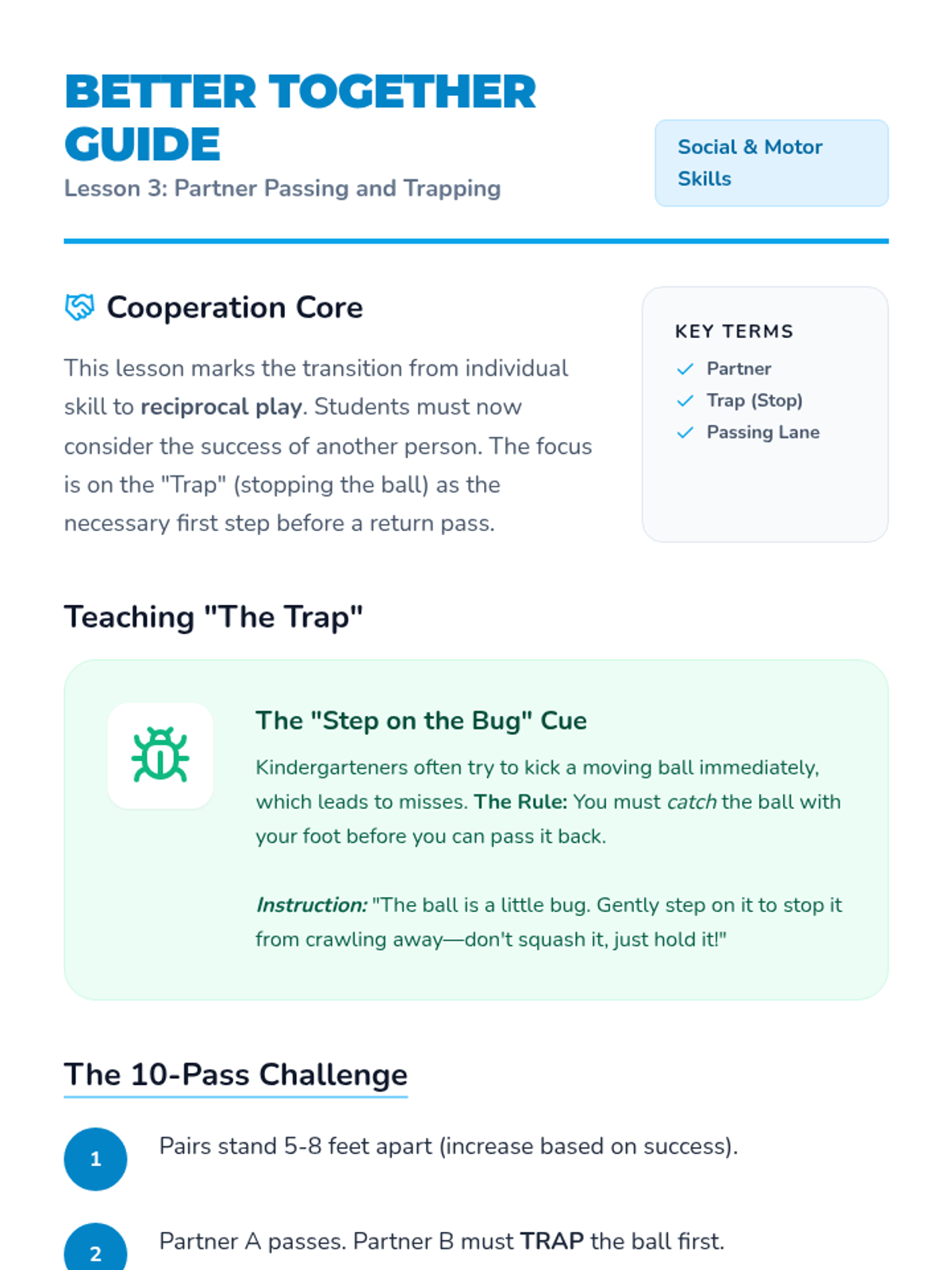
Students are paired up to practice passing back and forth across a short distance. The lesson introduces the concept of 'trapping'—stopping the ball before kicking it back. This builds early cooperation and reciprocity skills essential for team sports.
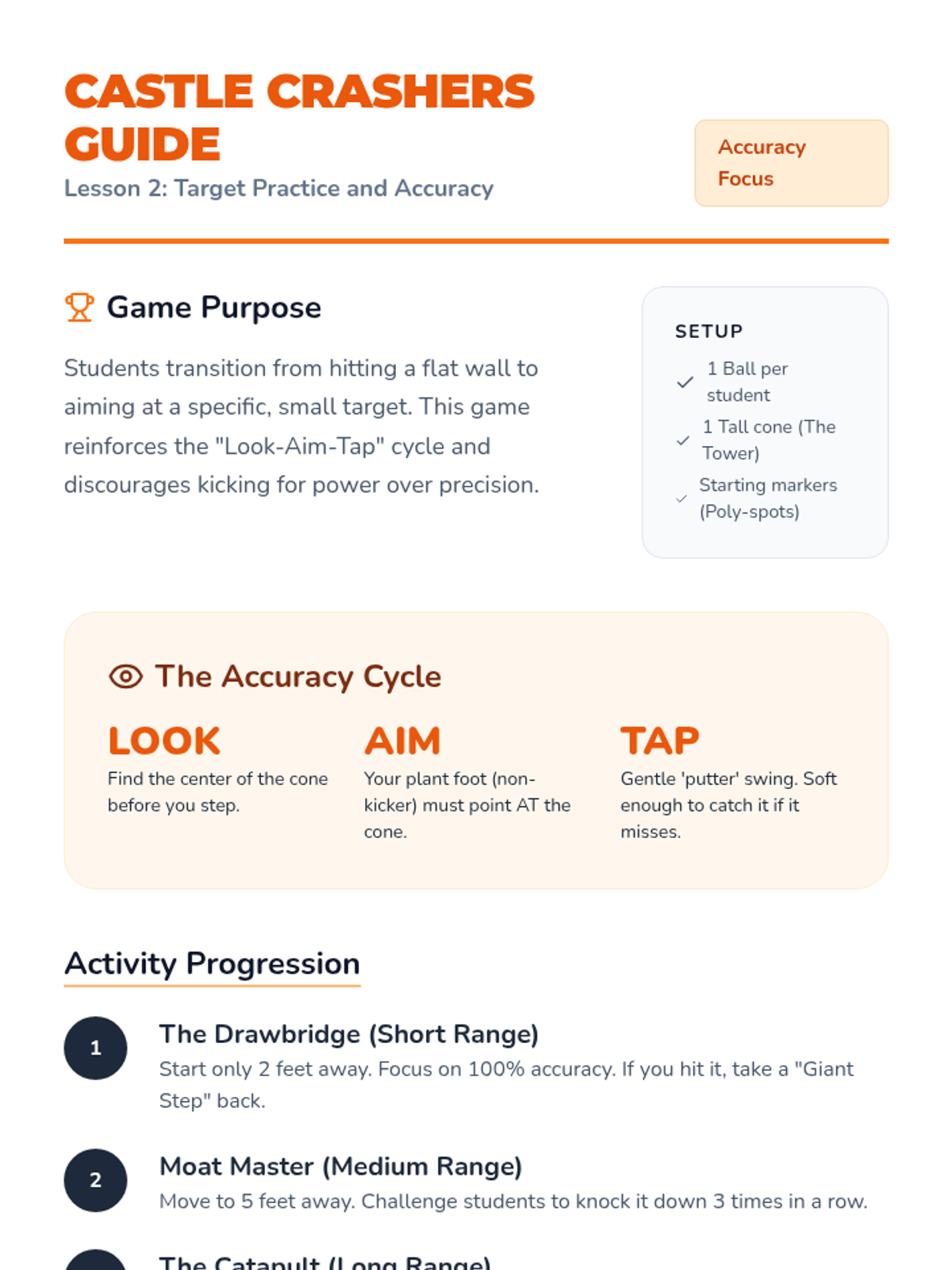
Students apply the passing motion to aim at large cones or gates from a short distance. This activity emphasizes accuracy over power, encouraging students to look at their target before striking the ball. Success is measured by hitting the target, not how hard the ball is kicked.
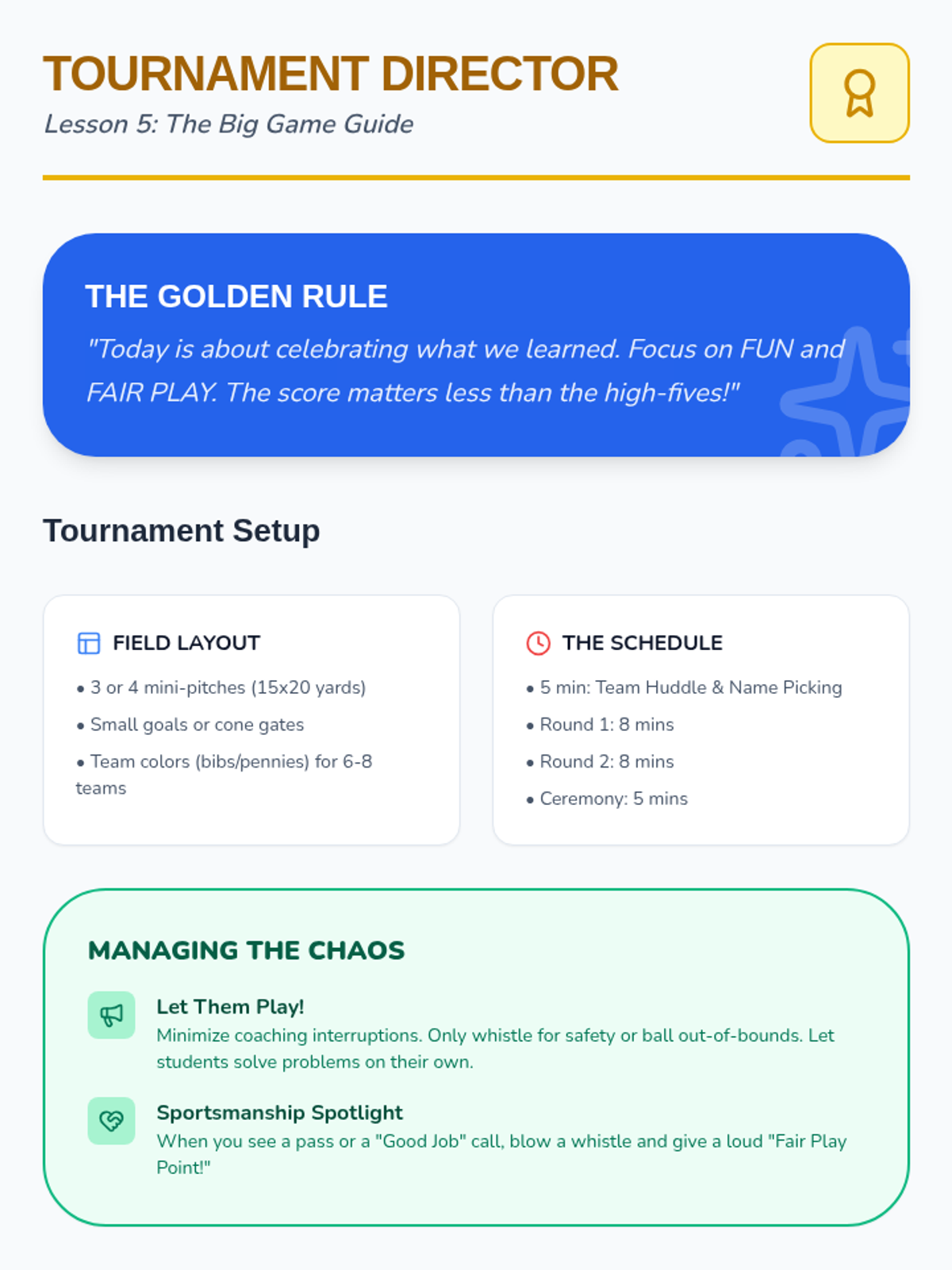
A celebratory final scrimmage applying all learned skills in a small-sided tournament format focused on fair play and fun.
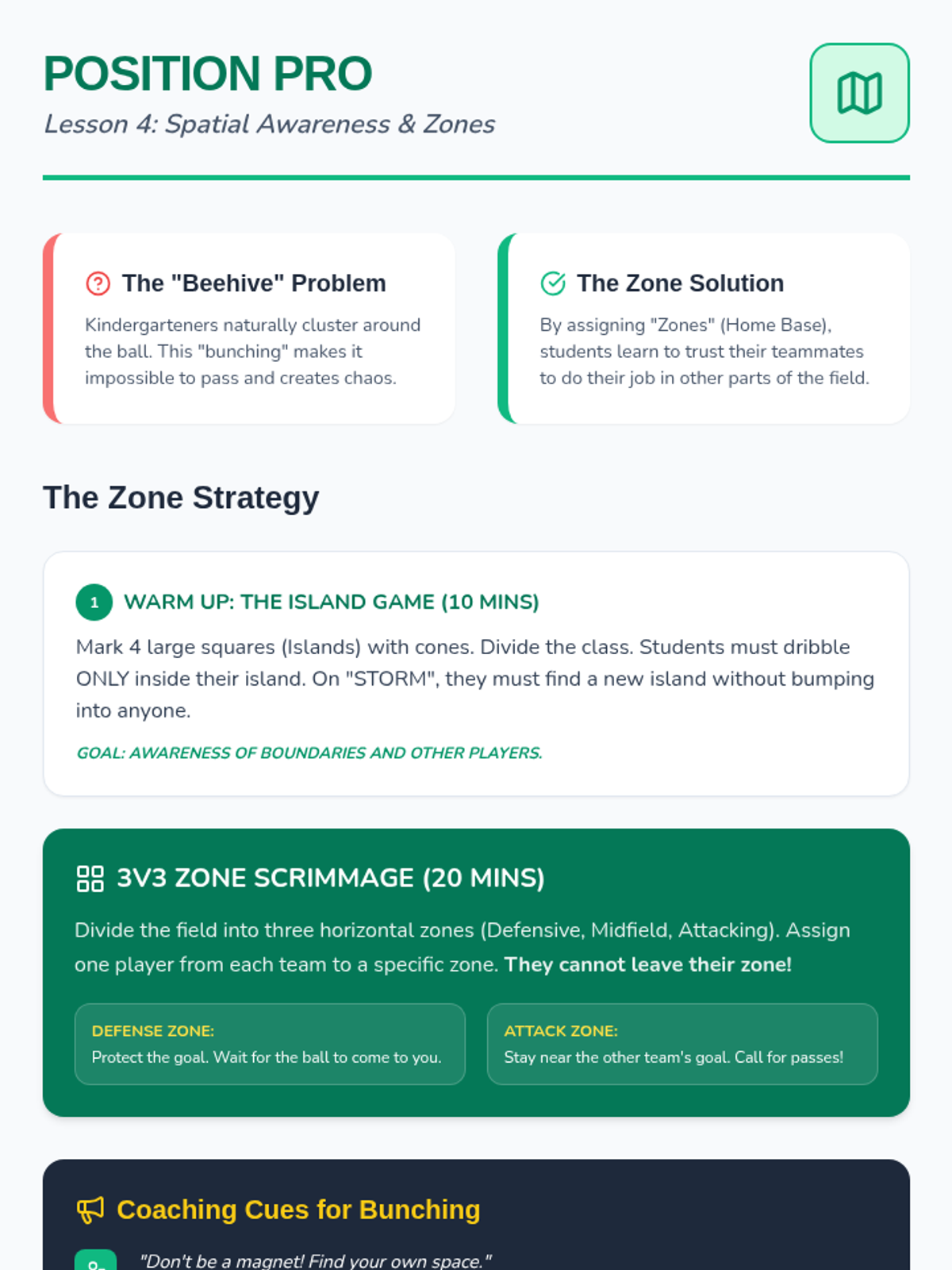
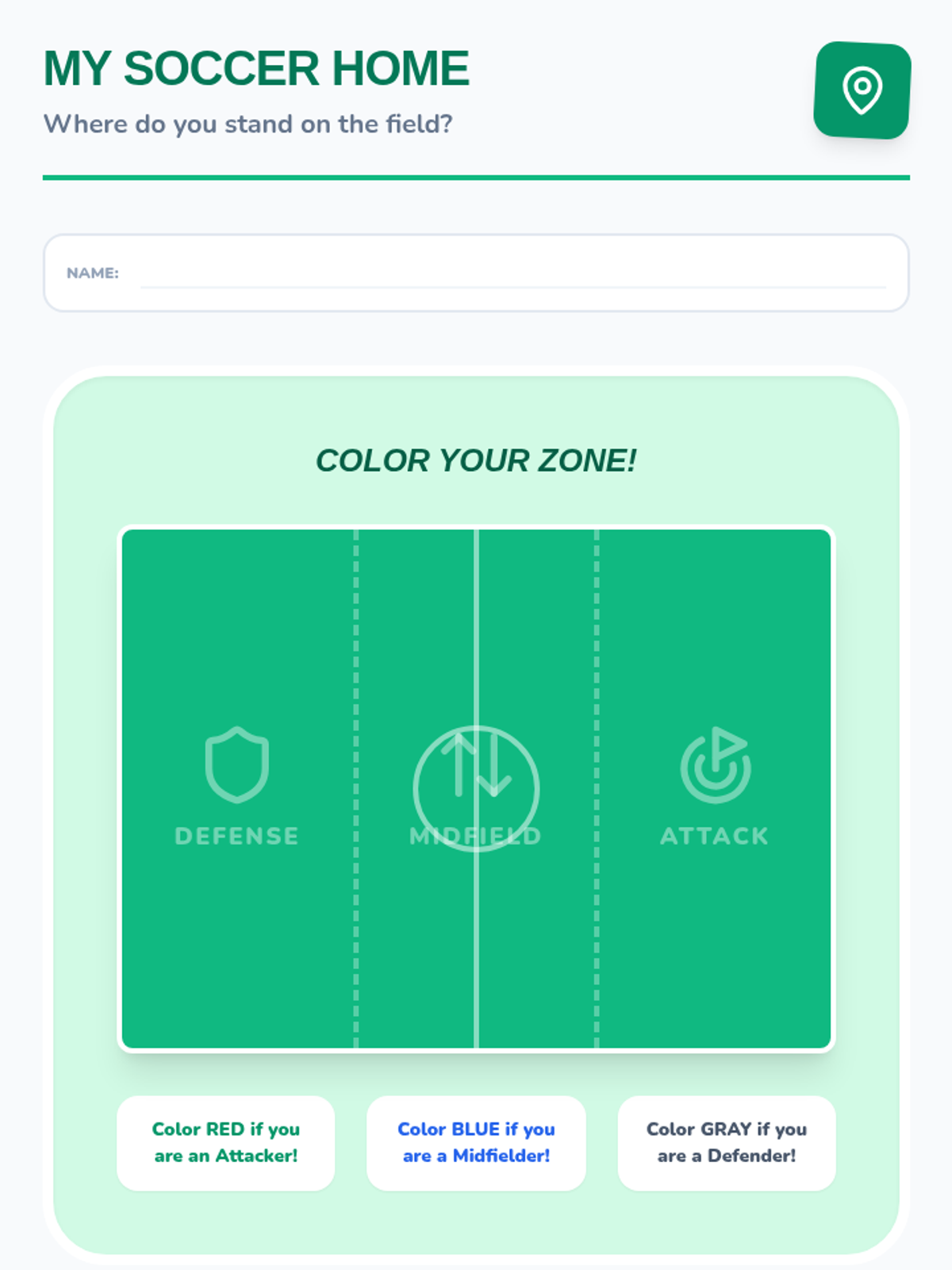
Teaching spatial awareness and basic positional play by assigning students to specific 'zones' on the field to prevent bunching.
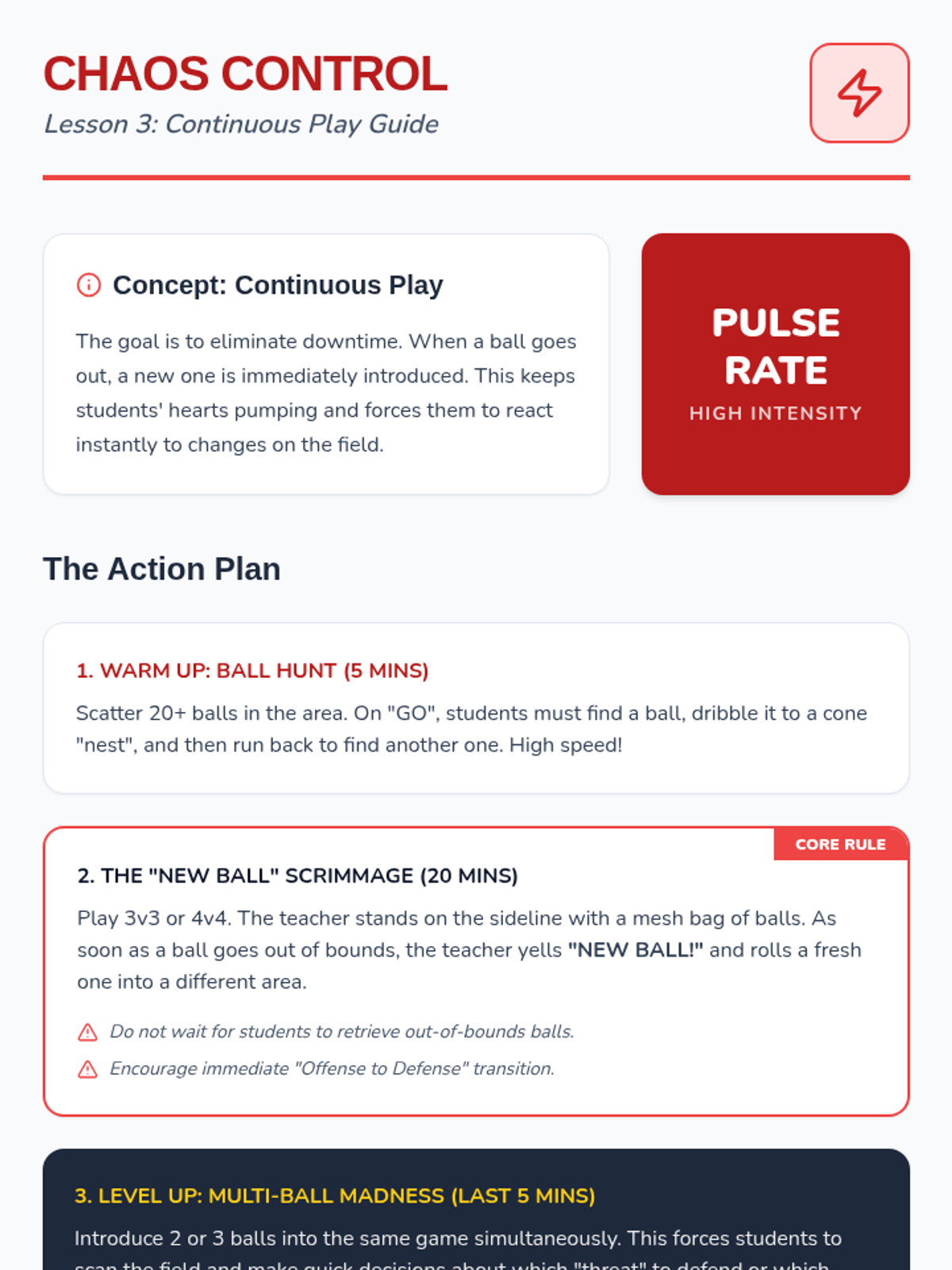
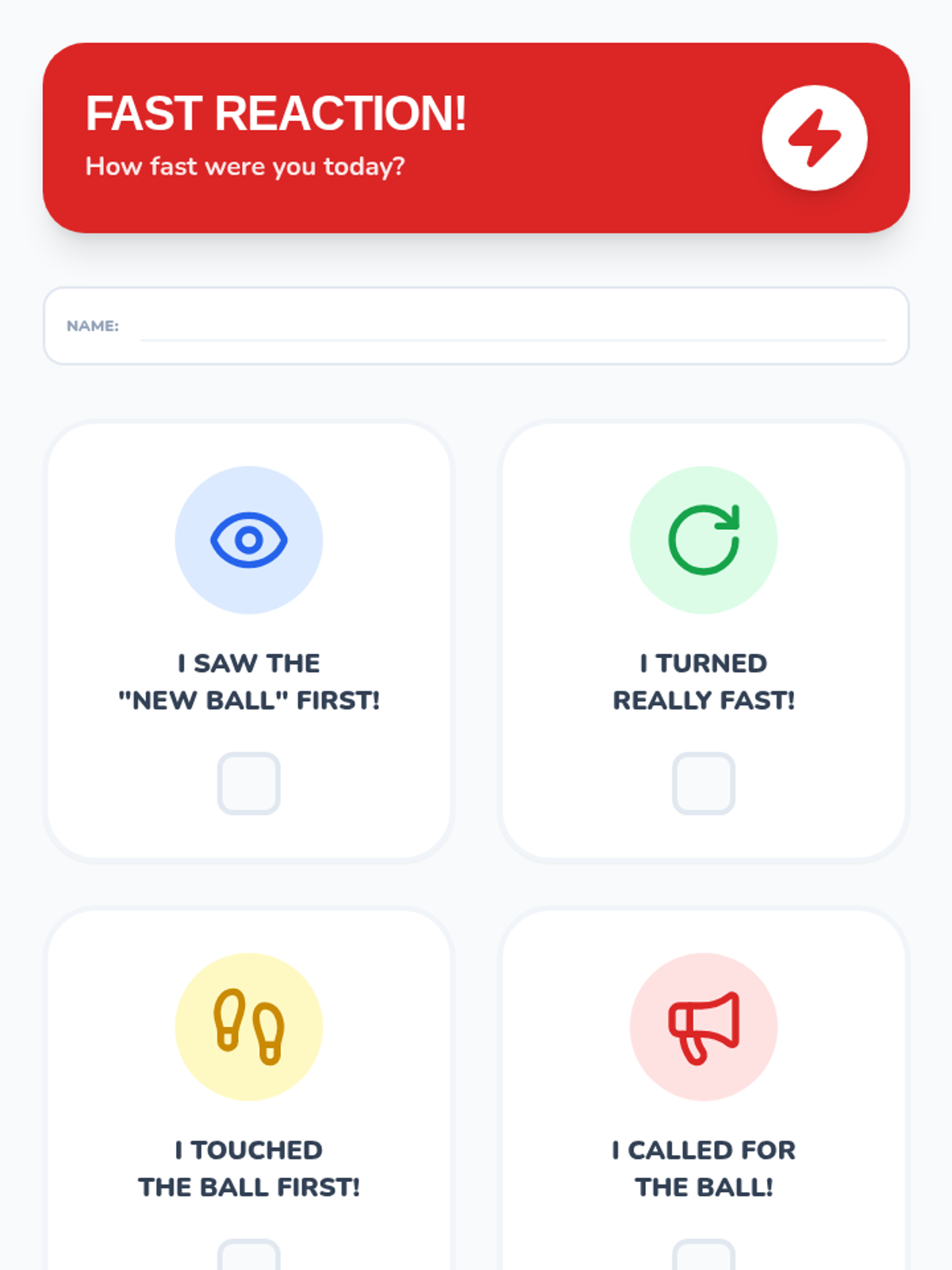
High-paced games with multiple balls and continuous play to improve reaction time and help students understand the flow of a soccer match.
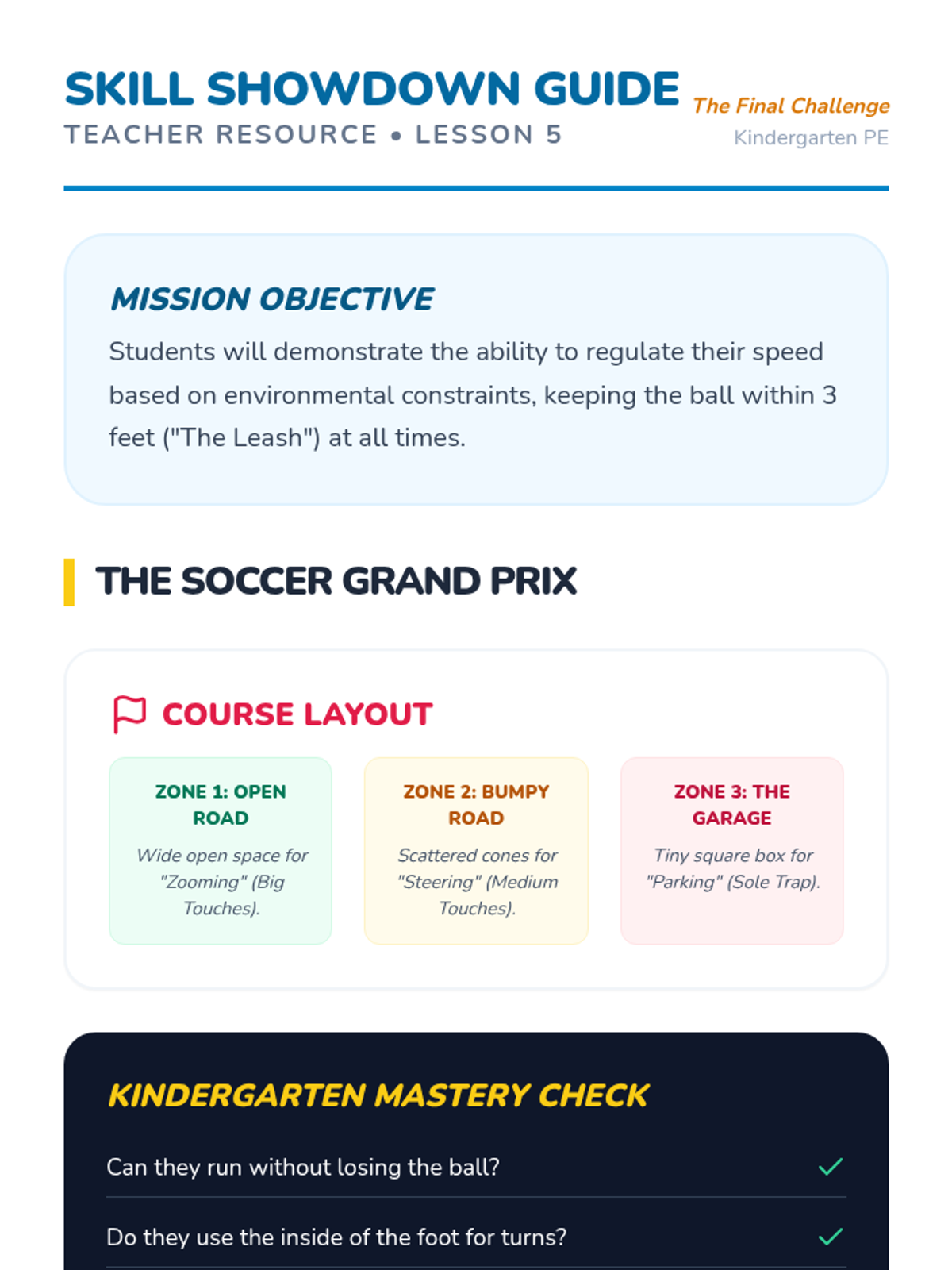
Combines speed and control, challenging students to adjust their dribbling pace based on the space available, like a dog on an 'invisible leash.'
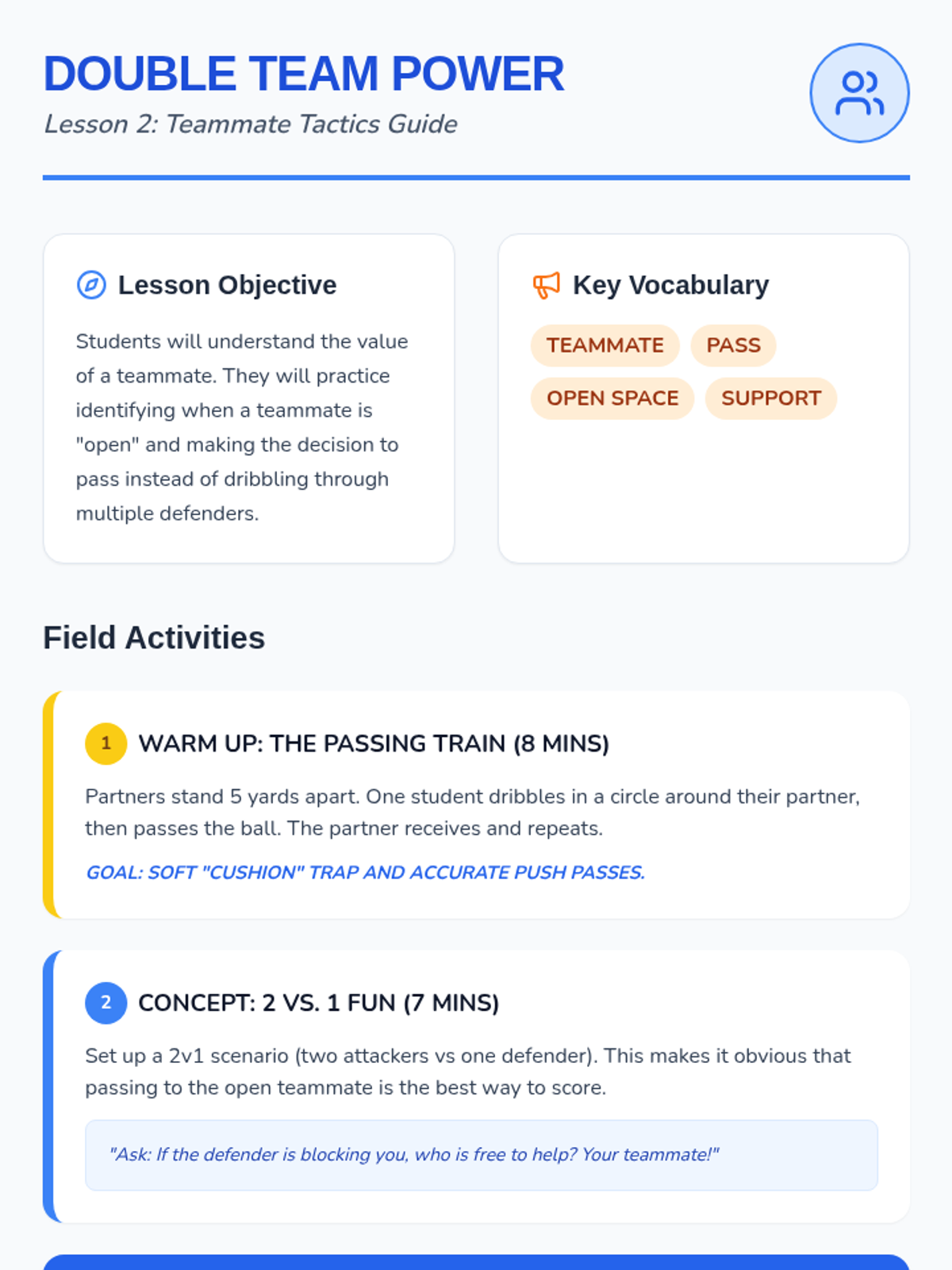
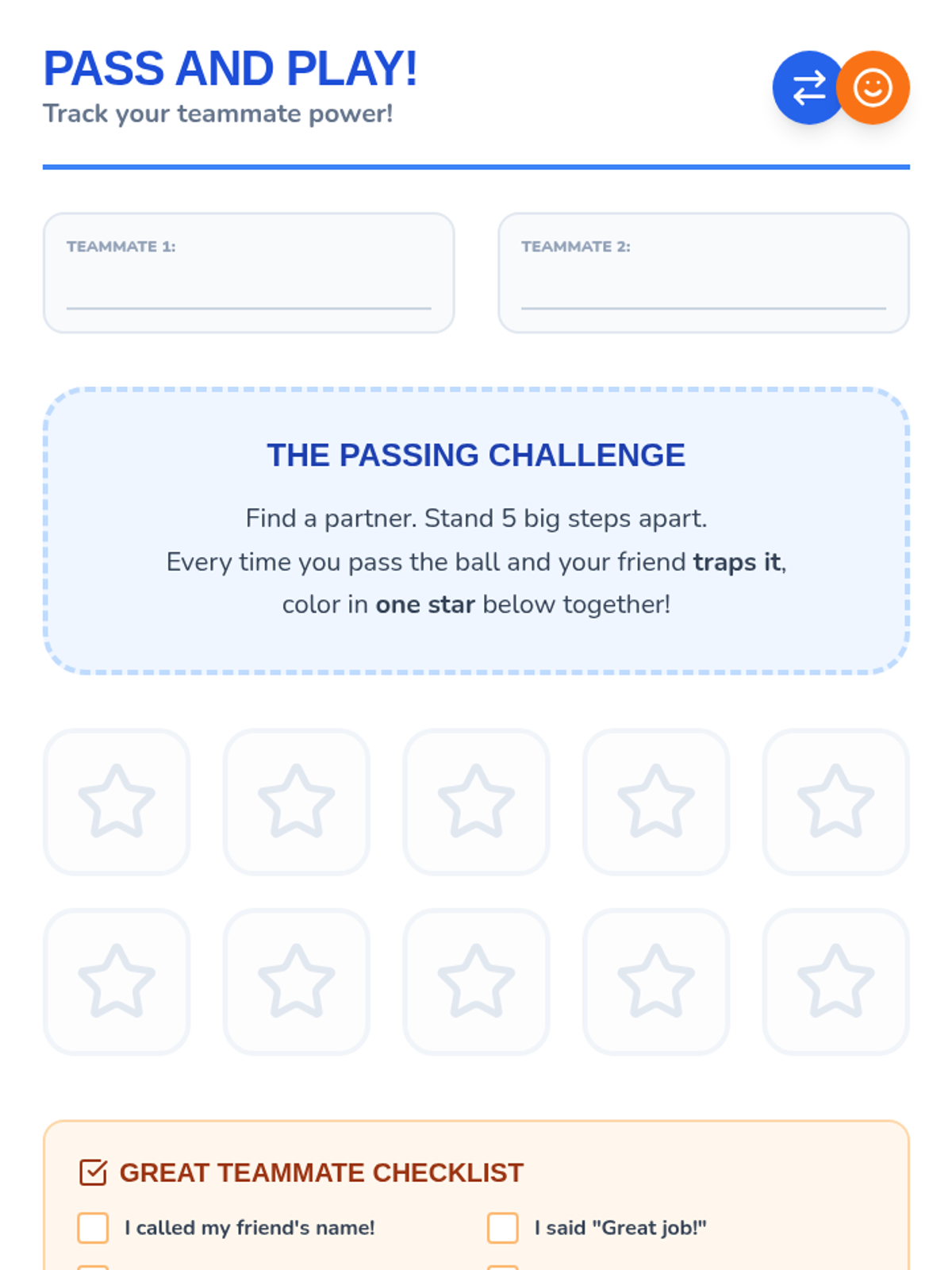
Introduction to teamwork and passing as students play in pairs, learning to decide between keeping the ball or sharing it with a partner.
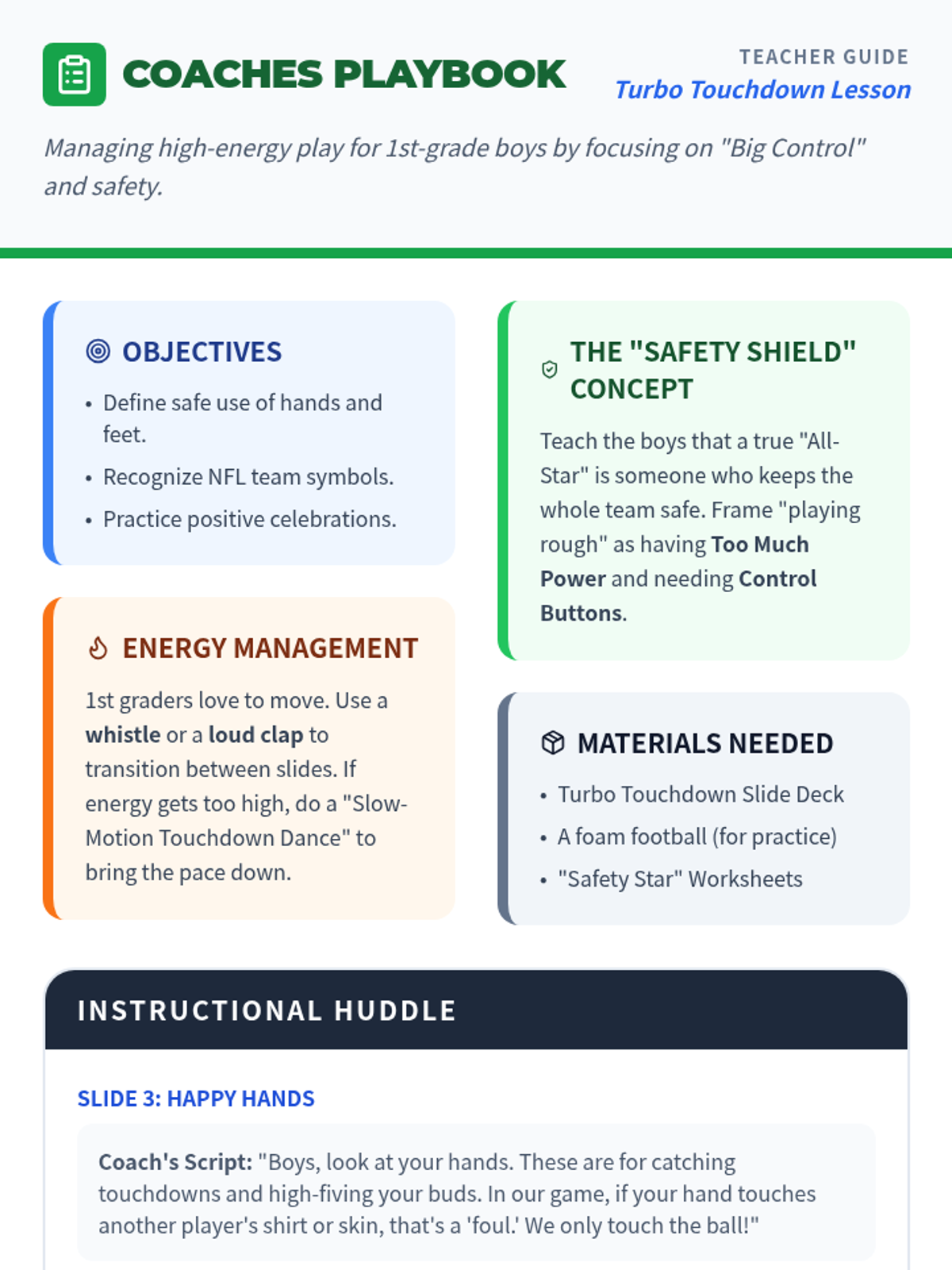
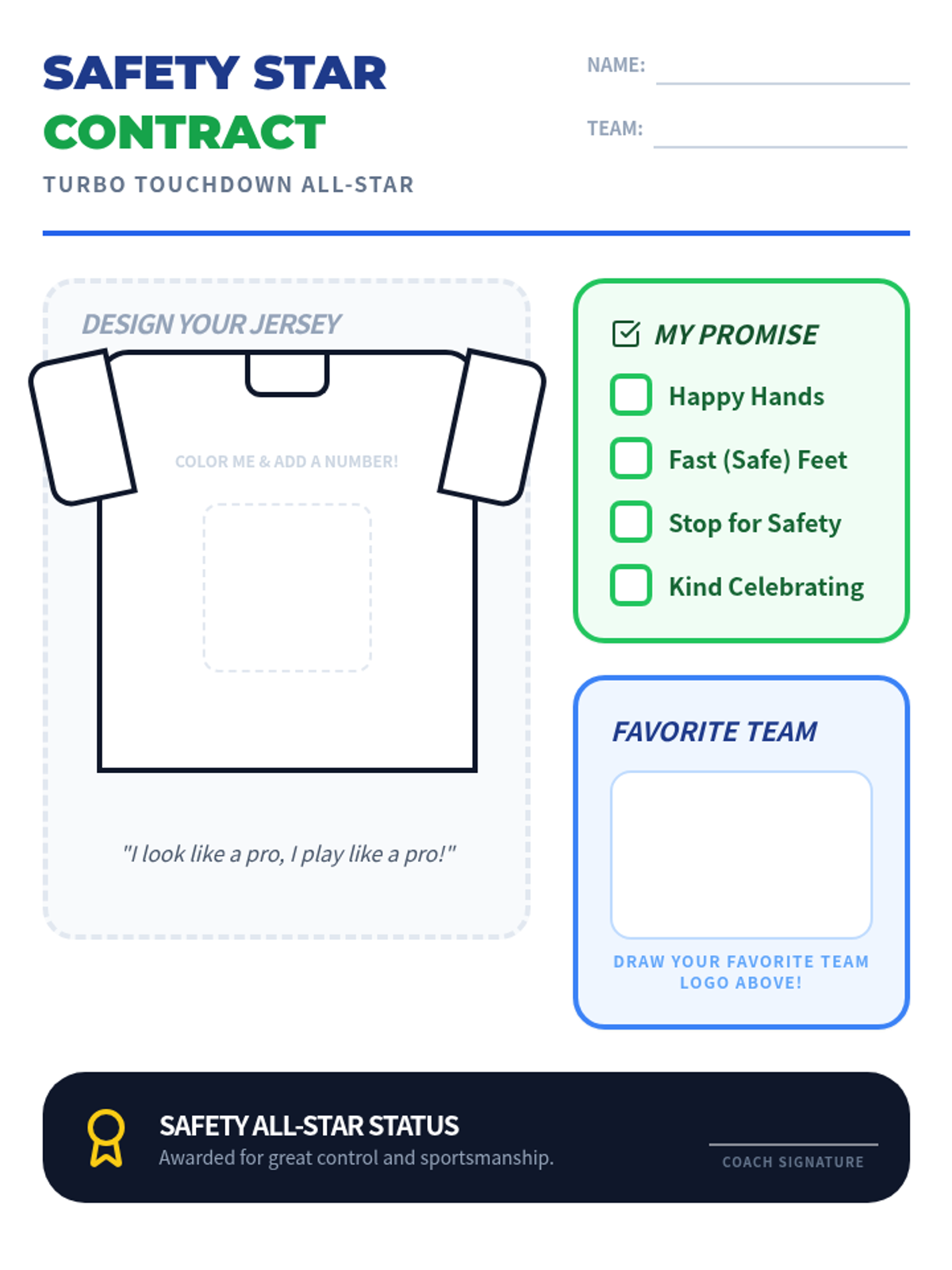
A high-energy lesson for 1st-grade boys focused on American football basics, safety, and sportsmanship. Includes an interactive logo guessing game and a 'Safety Pro' pledge to encourage positive play.
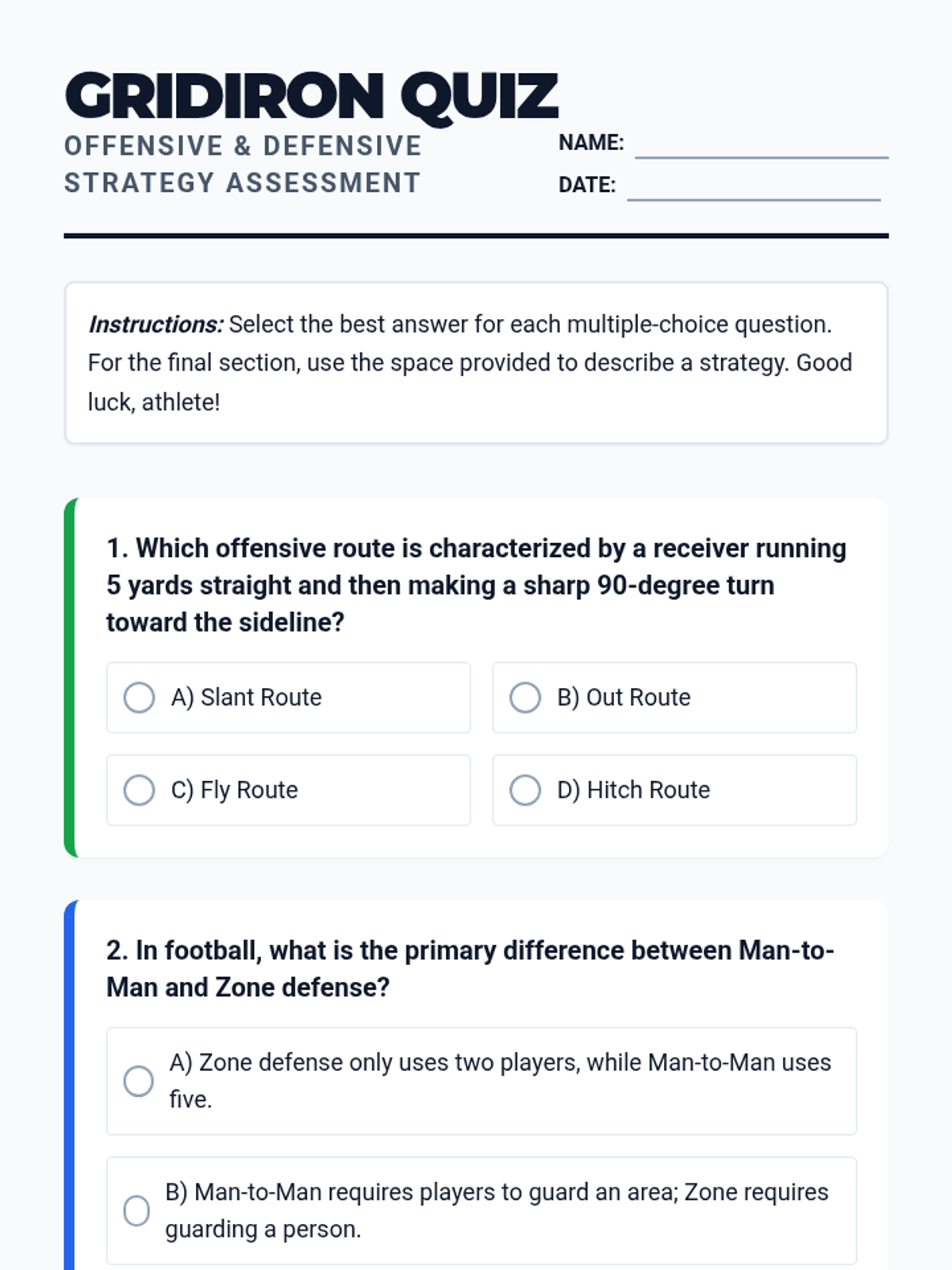
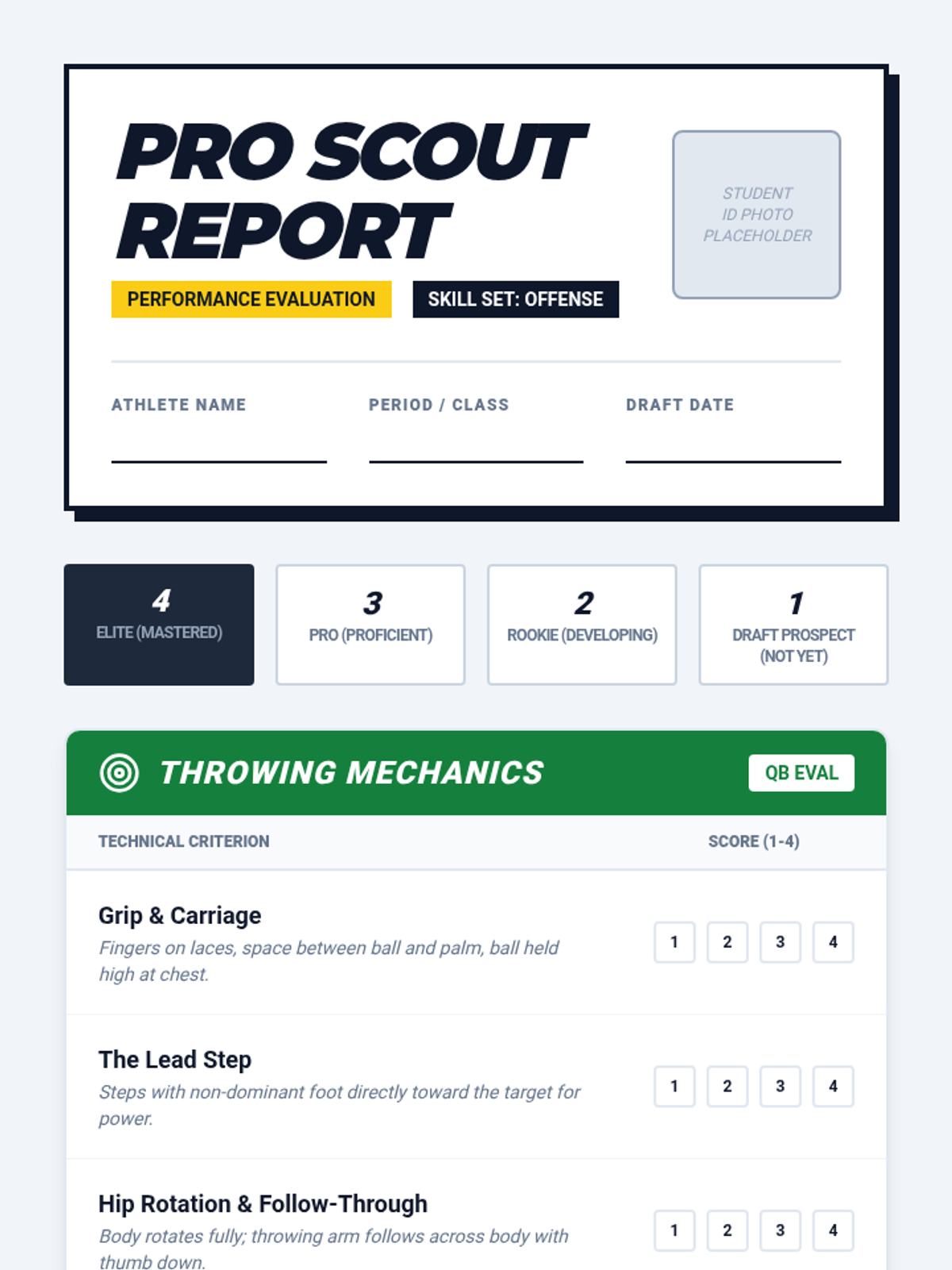
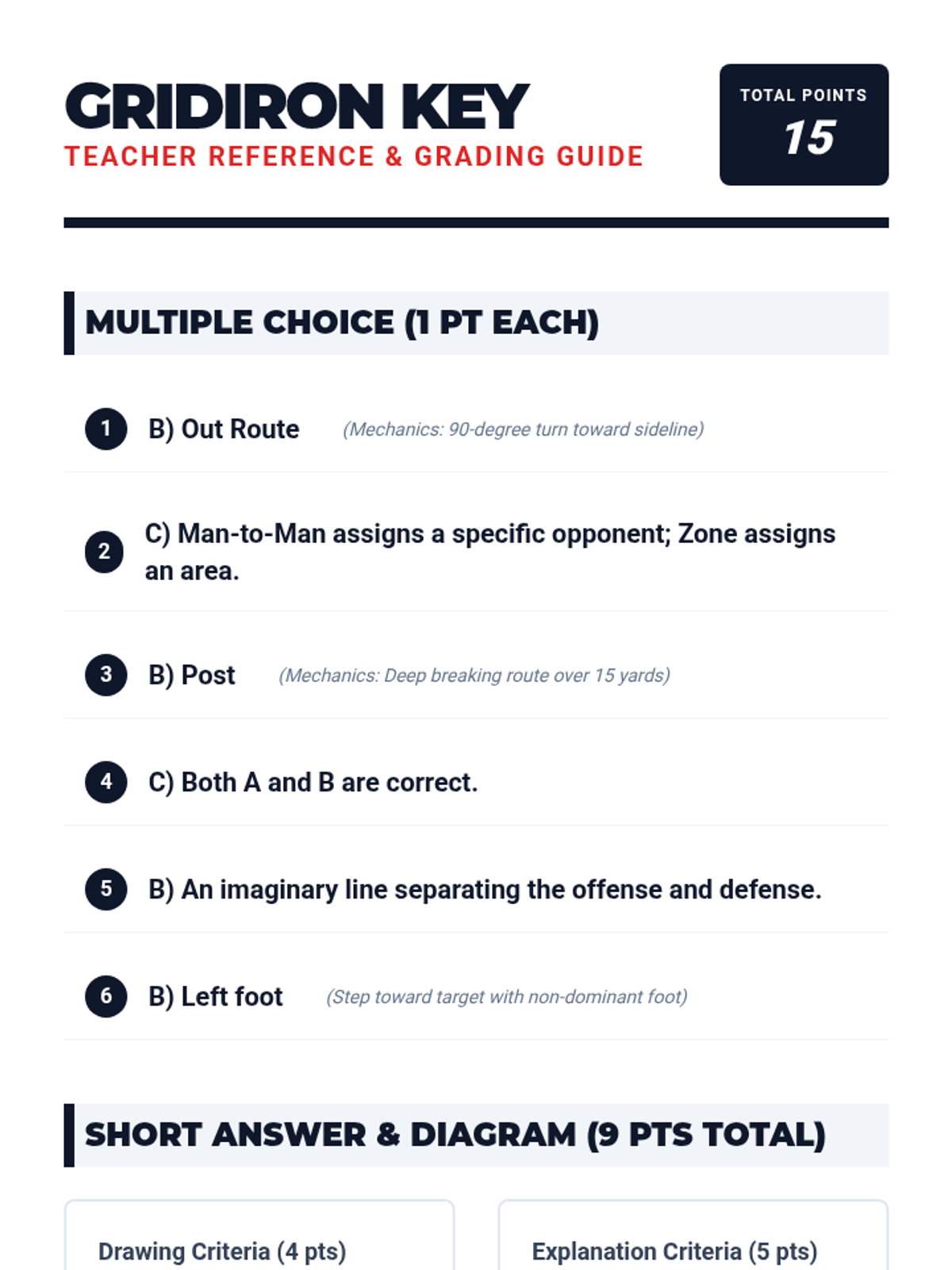
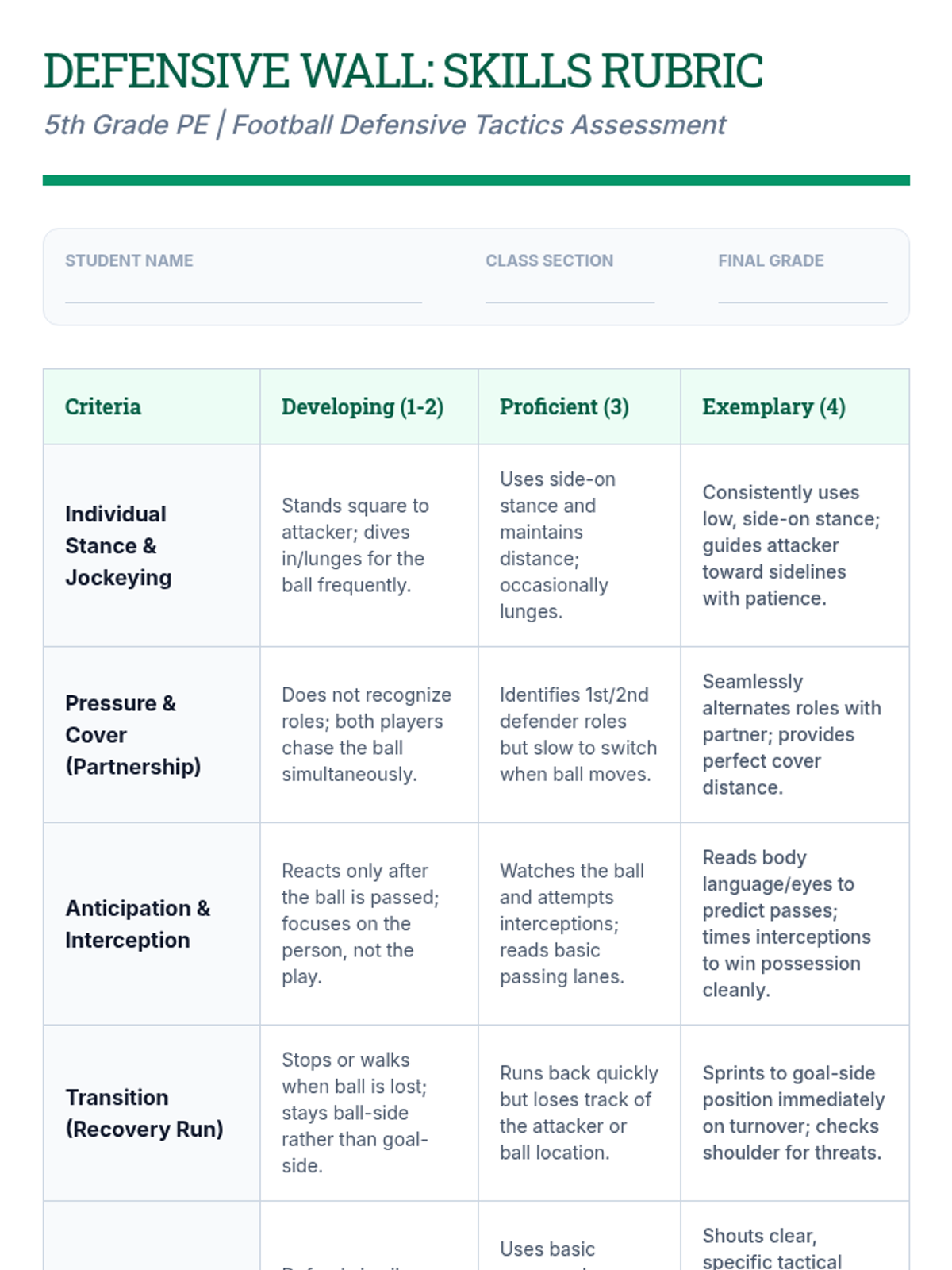
A comprehensive assessment package for middle school football, covering offensive/defensive strategies and technical throwing/catching skills.
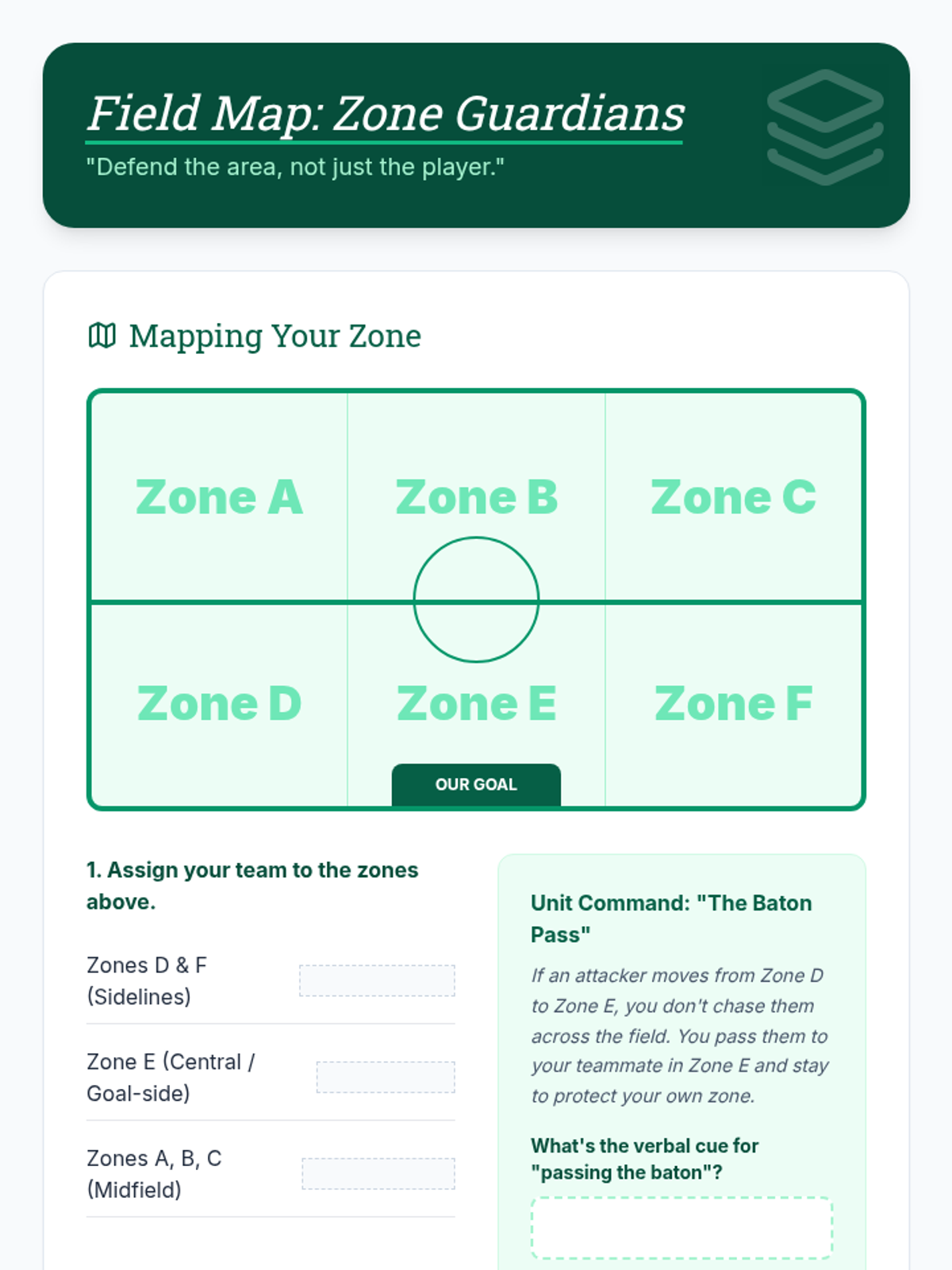
Synthesizes defensive concepts into a zonal system. Students work as a whole unit to guard specific areas of the field, communicating to pass on marking duties as the ball moves.
Teaches the mental and physical shift required when possession is lost. Students focus on rapid recovery runs and re-organizing the defensive shape immediately after a turnover.
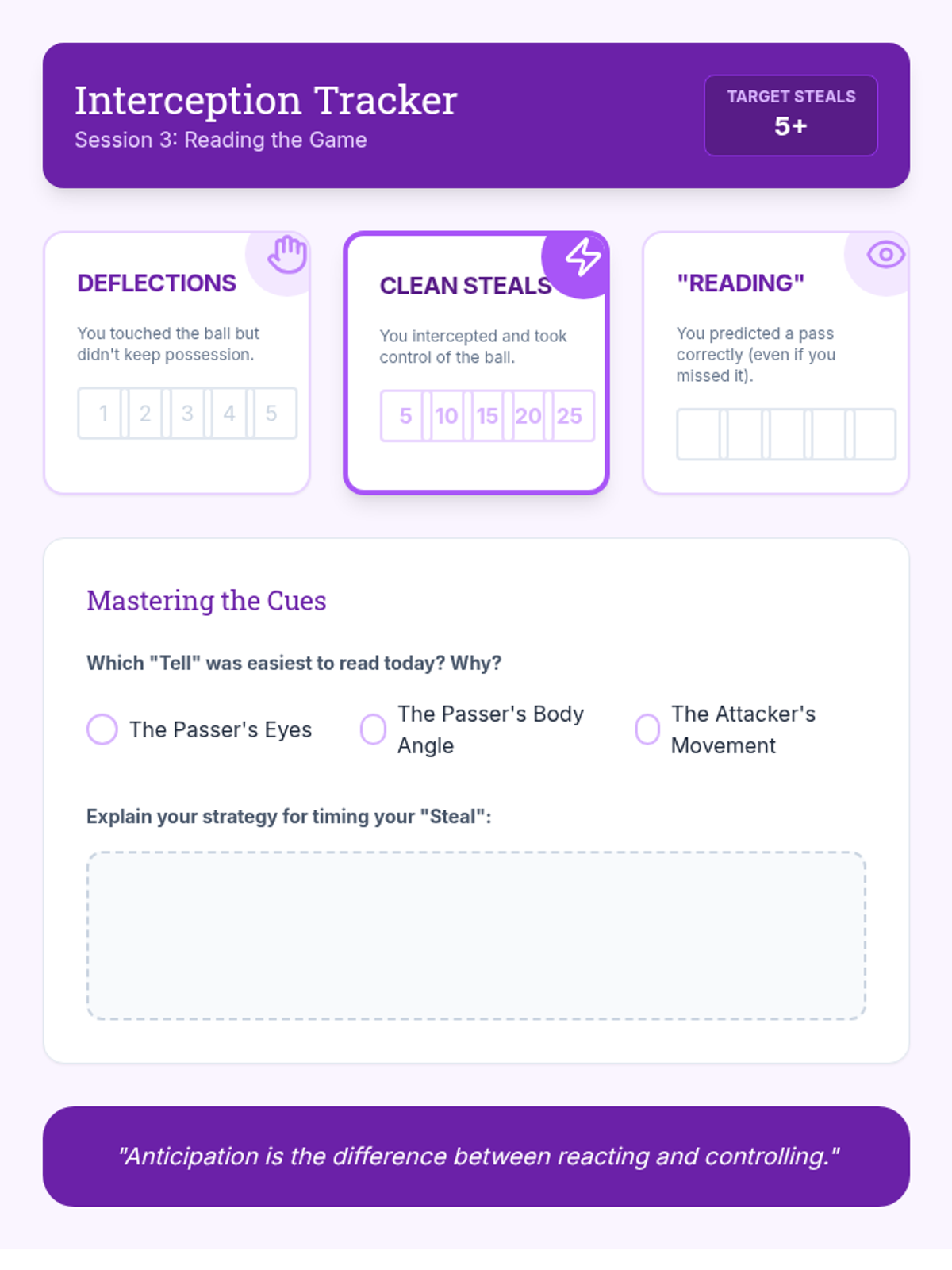
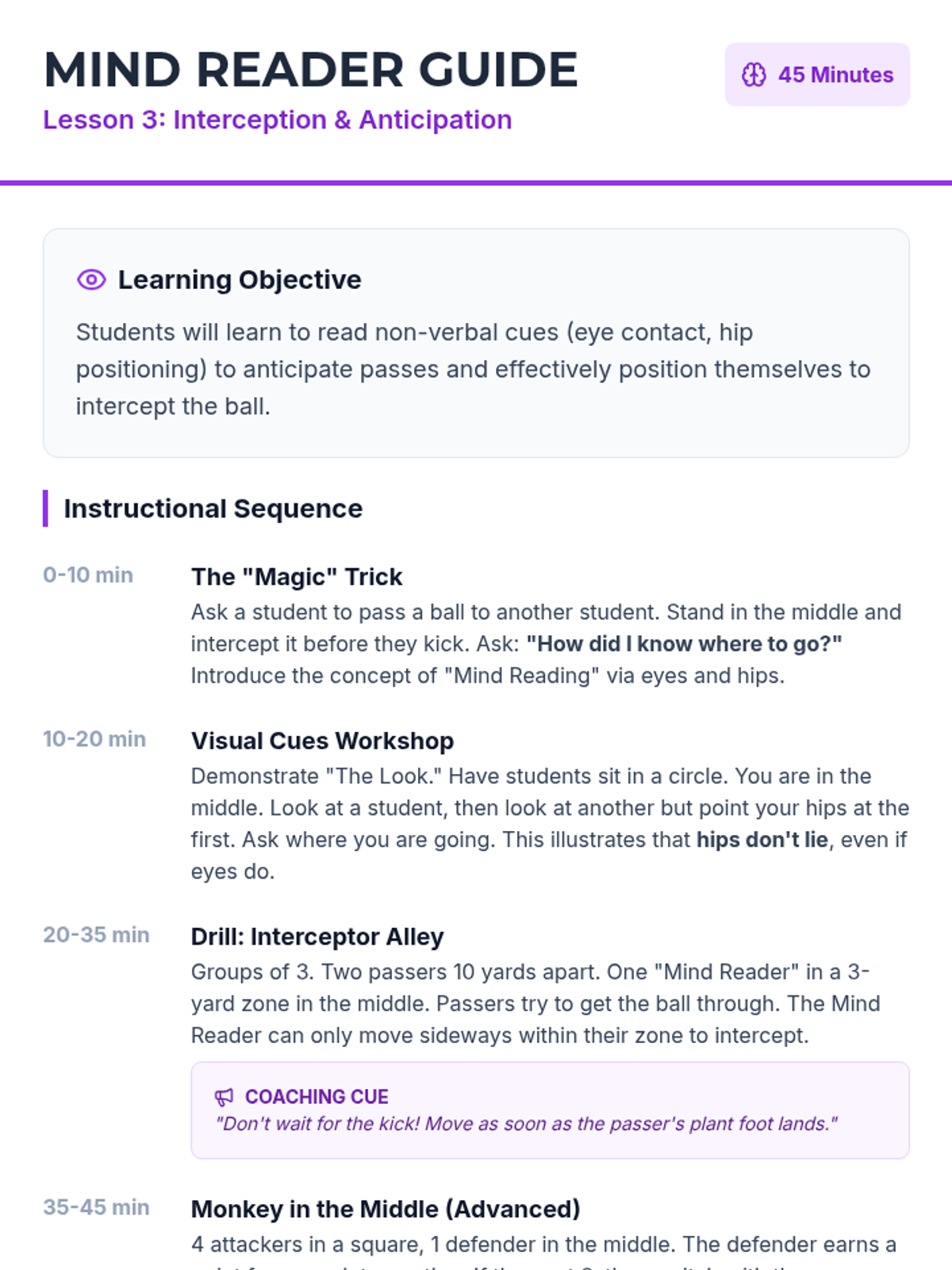
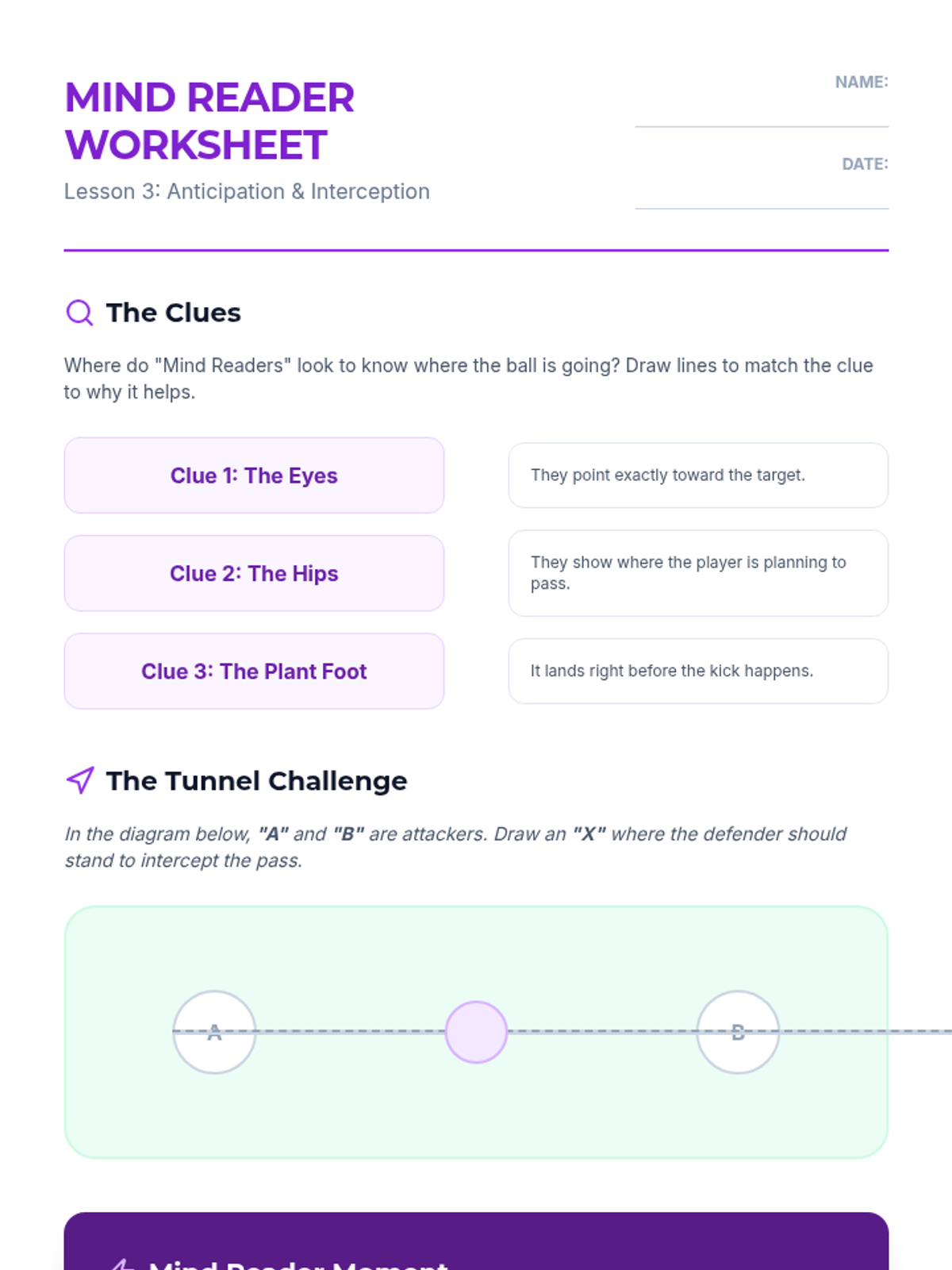
Develops anticipation and game-reading skills. Students practice predicting passing lanes and timing their movements to intercept the ball before it reaches the intended target.
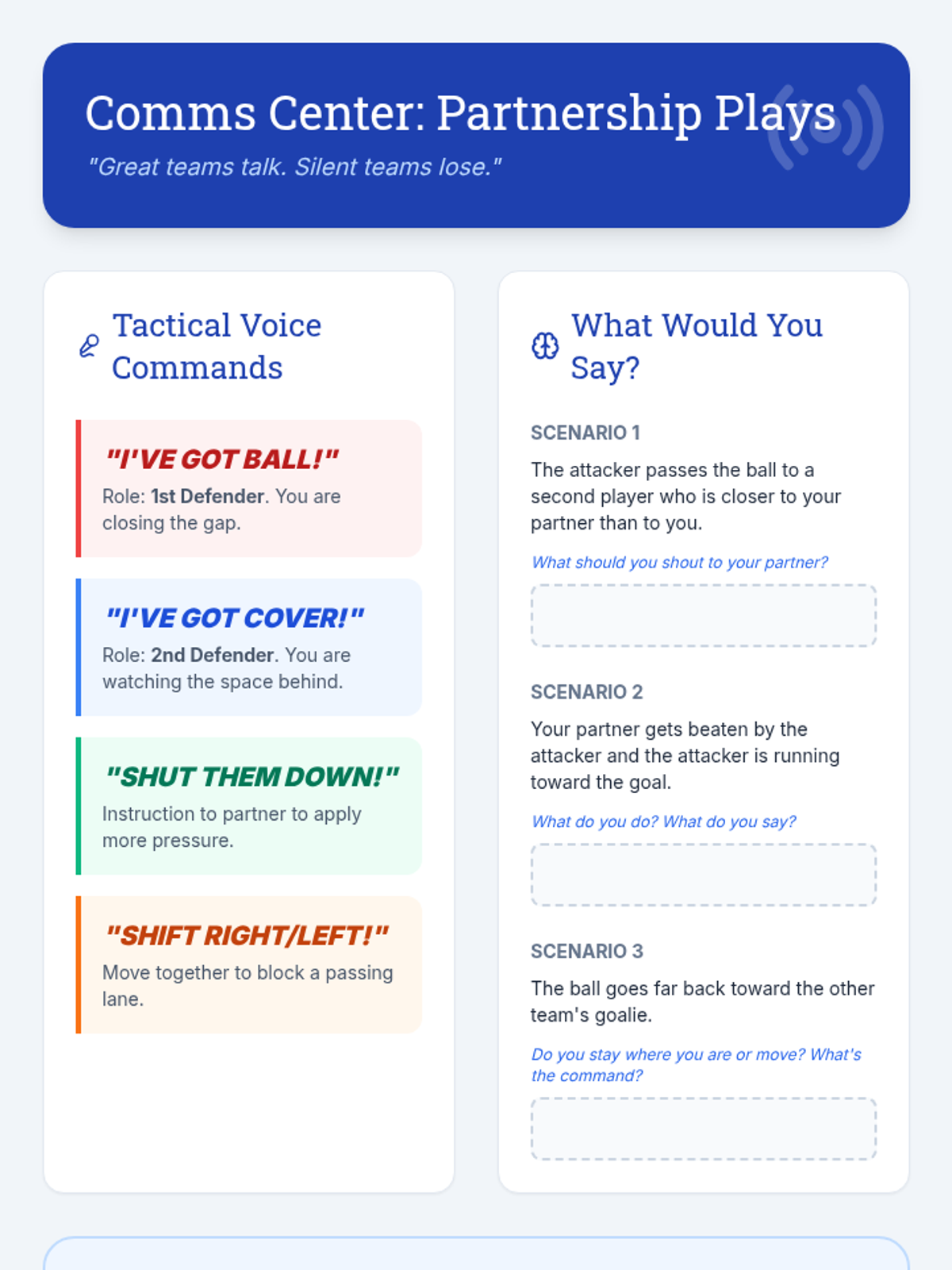
Introduces the 1st and 2nd defender roles. Students learn how to work in pairs to provide pressure on the ball while covering the space behind to prevent breakthroughs.
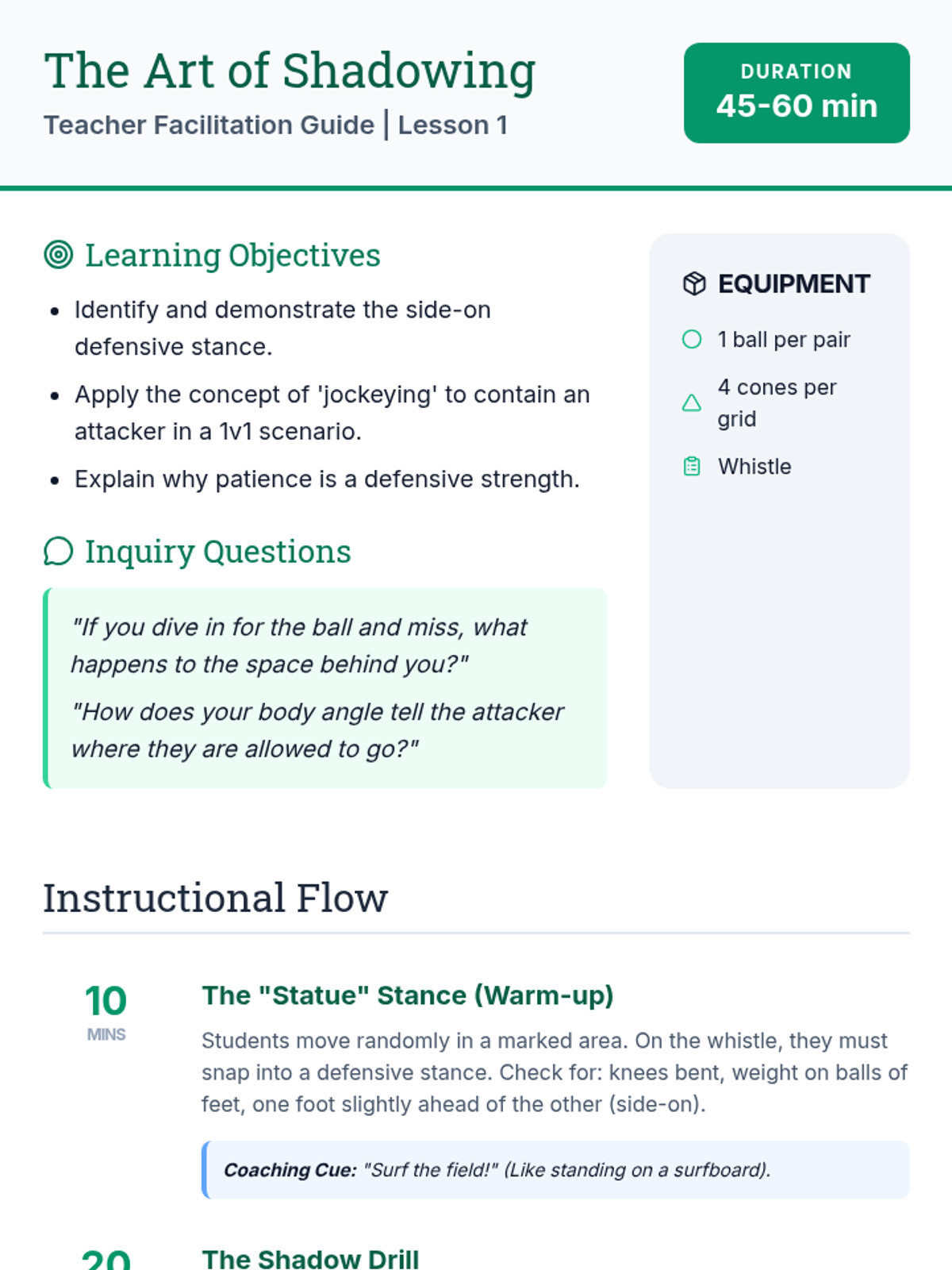
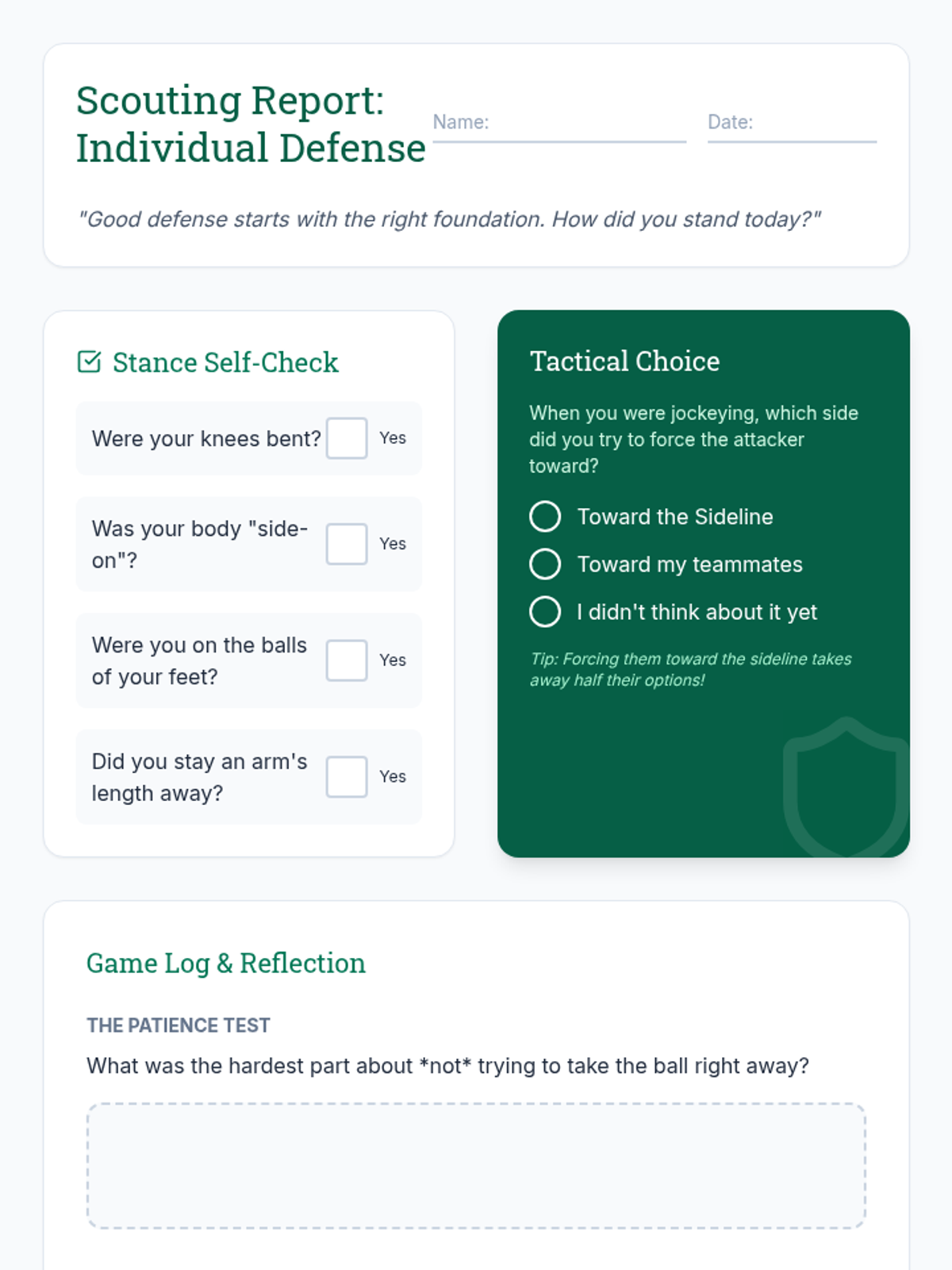
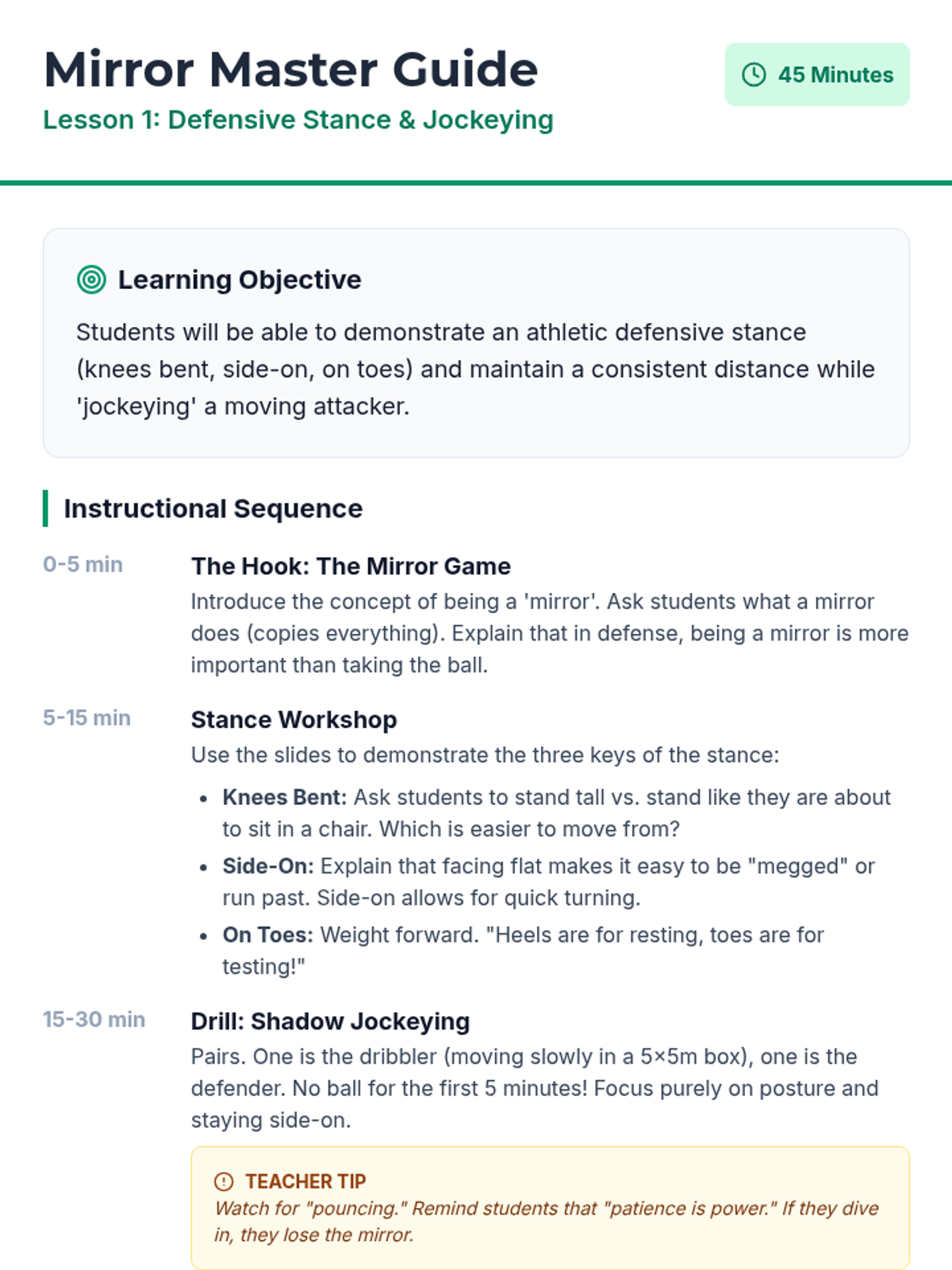
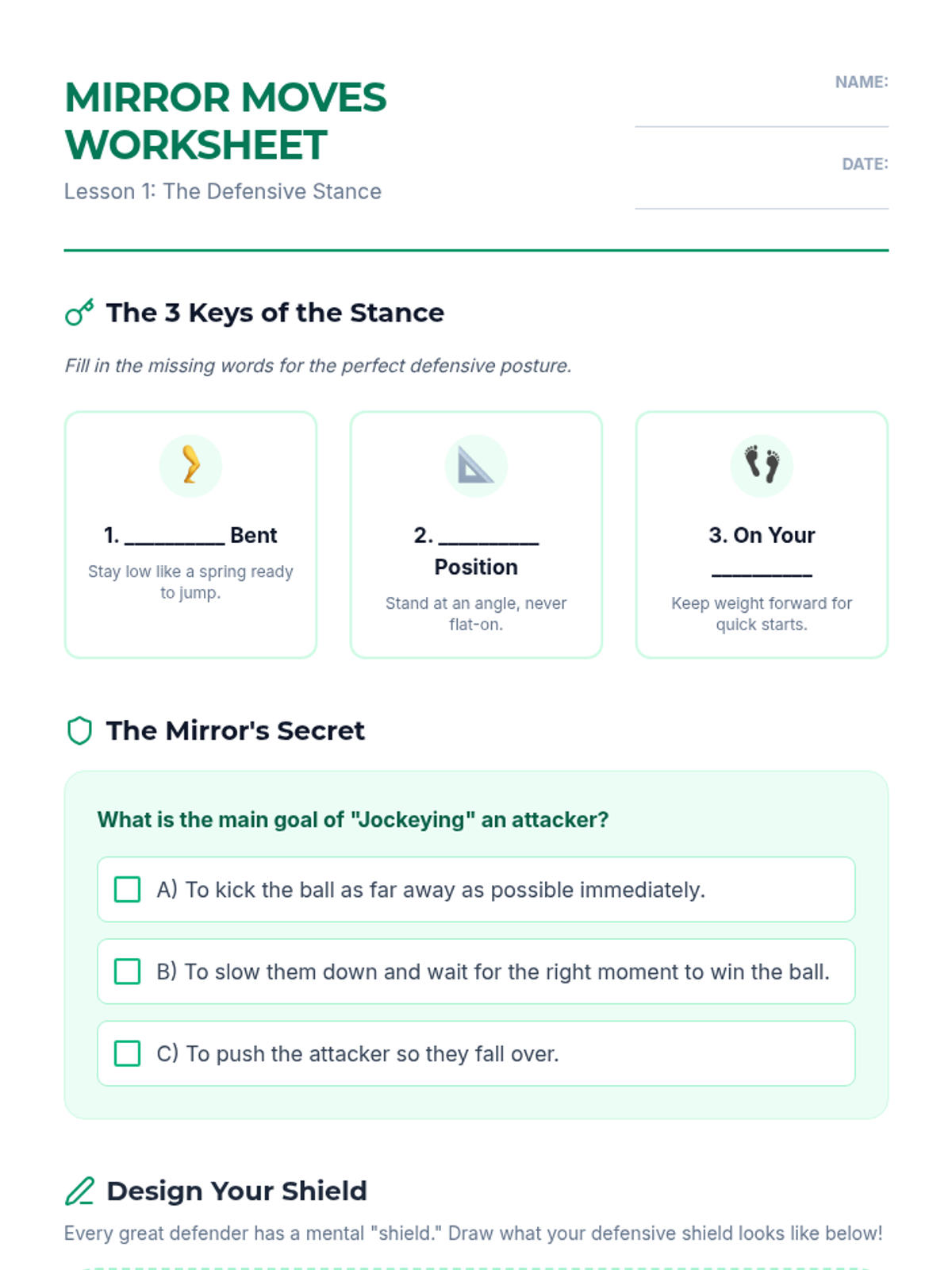
Focuses on the individual defensive stance and 'jockeying' technique to contain attackers. Students learn to use patience and body positioning to direct play rather than lunging for the ball.
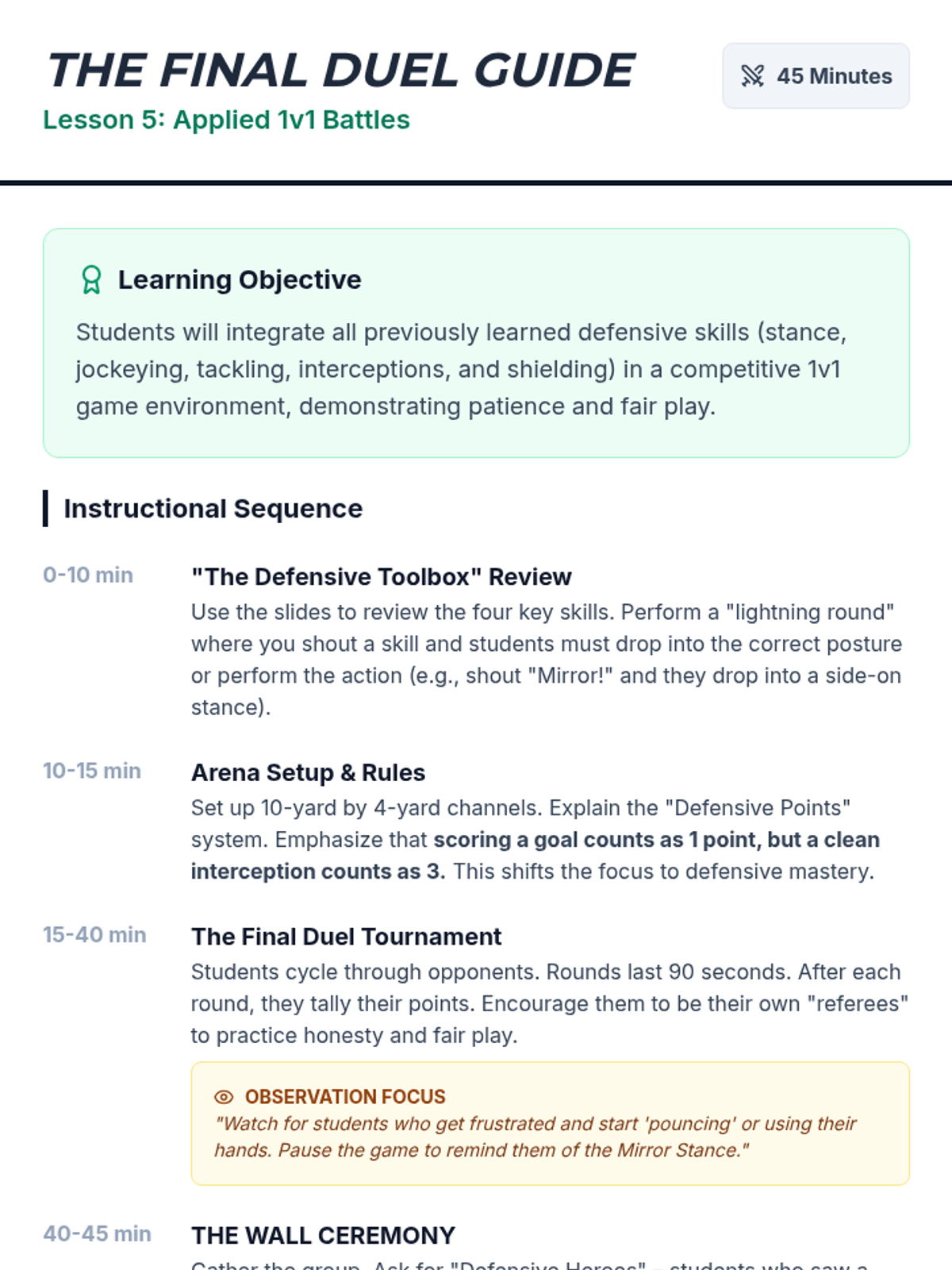
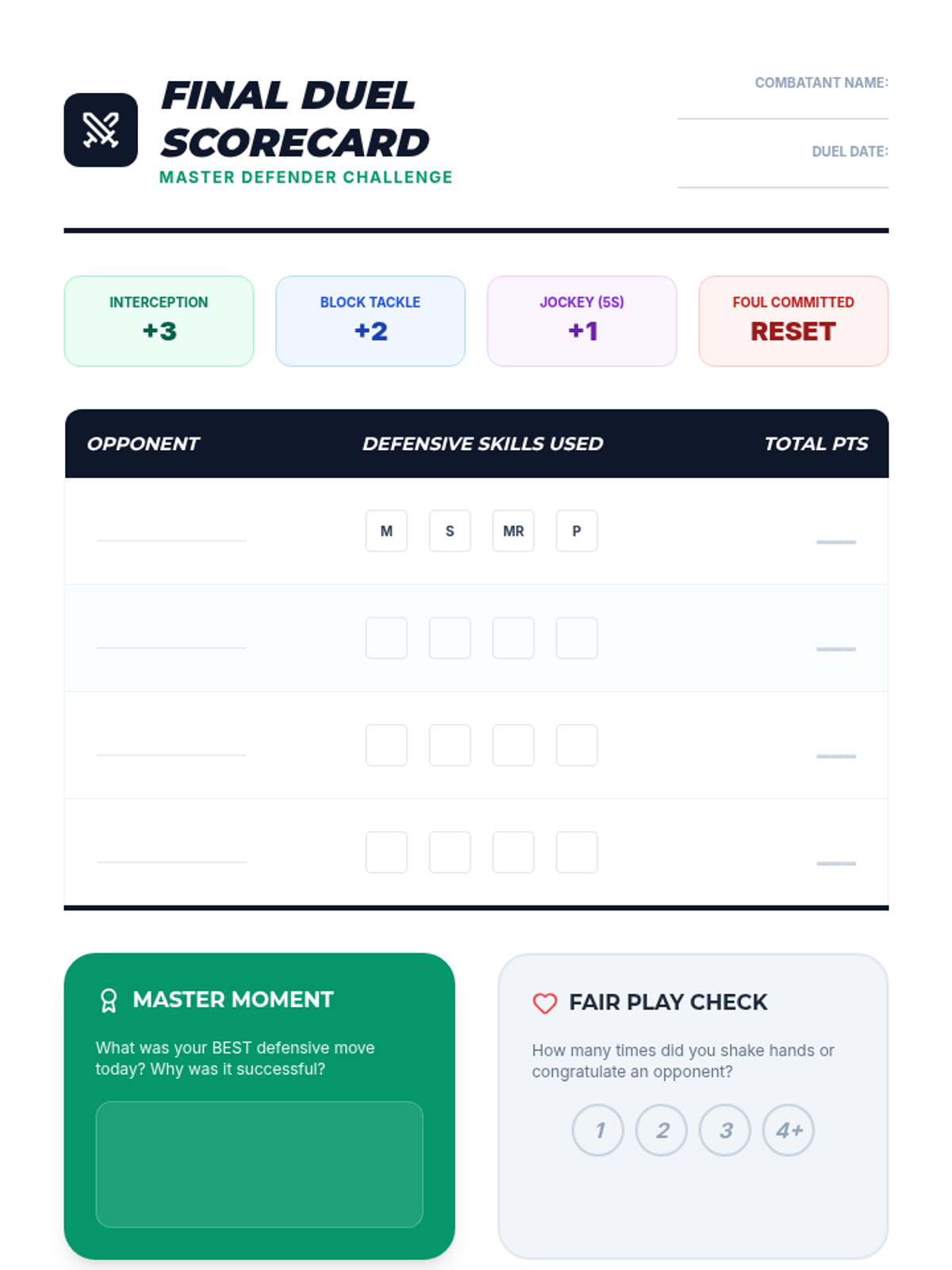
The sequence concludes with 1v1 mini-games where students apply all defensive skills in a competitive environment.
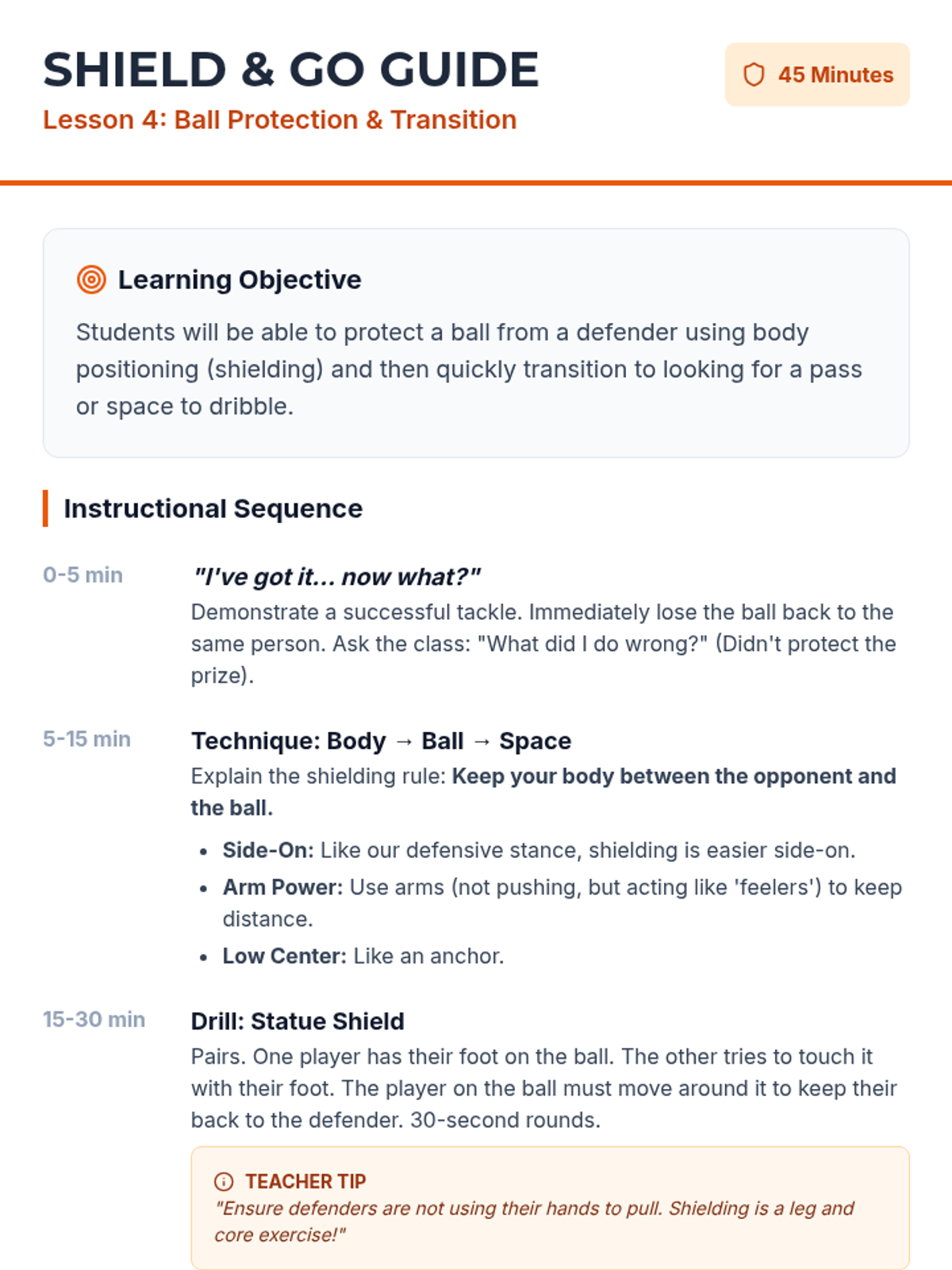
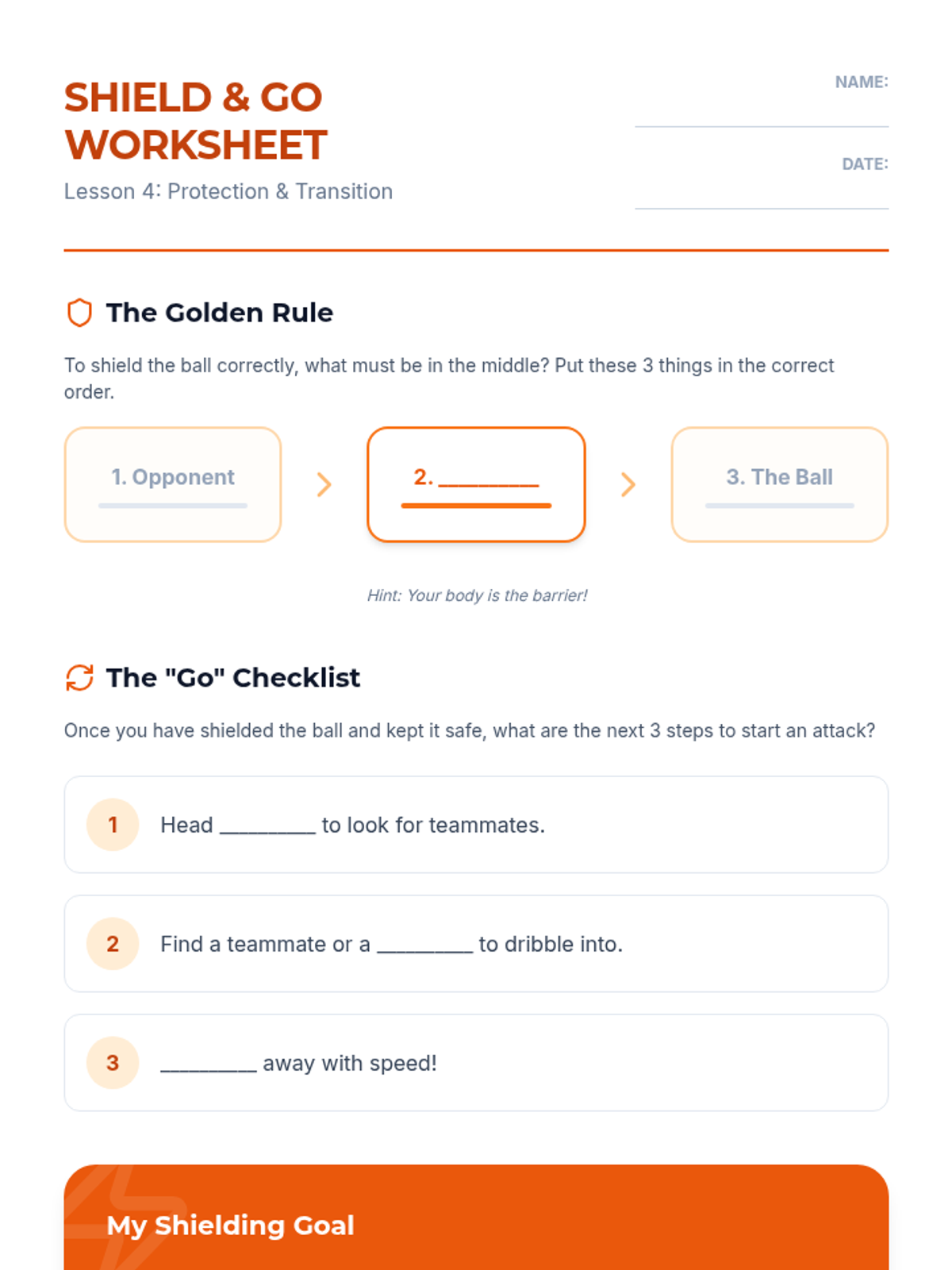
Students learn to shield the ball after recovery, using their body as a barrier, and transitioning from defense to offense.
Moving away from 1v1 duels, students learn to read the game to intercept passes using spatial awareness and anticipation.
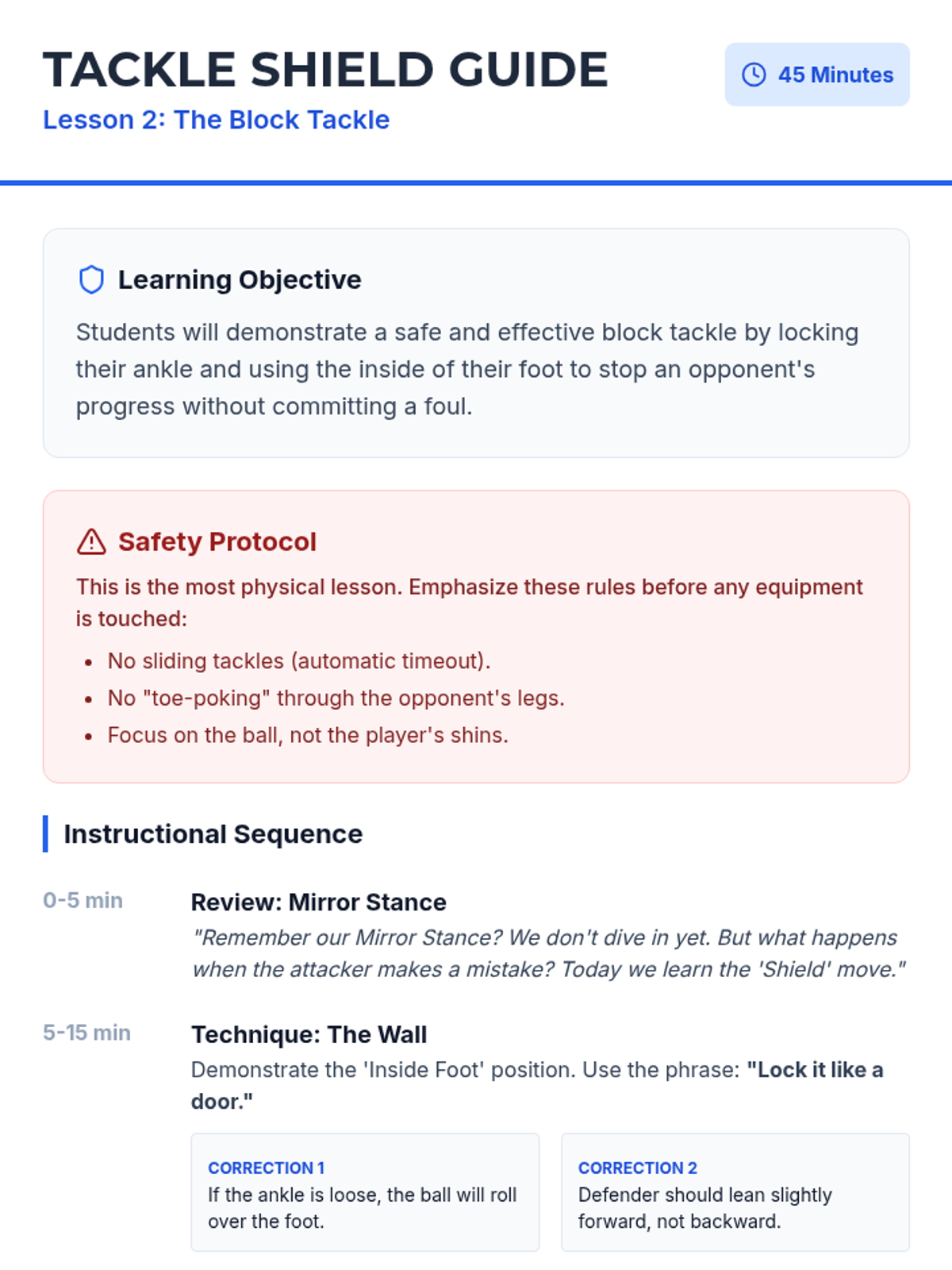
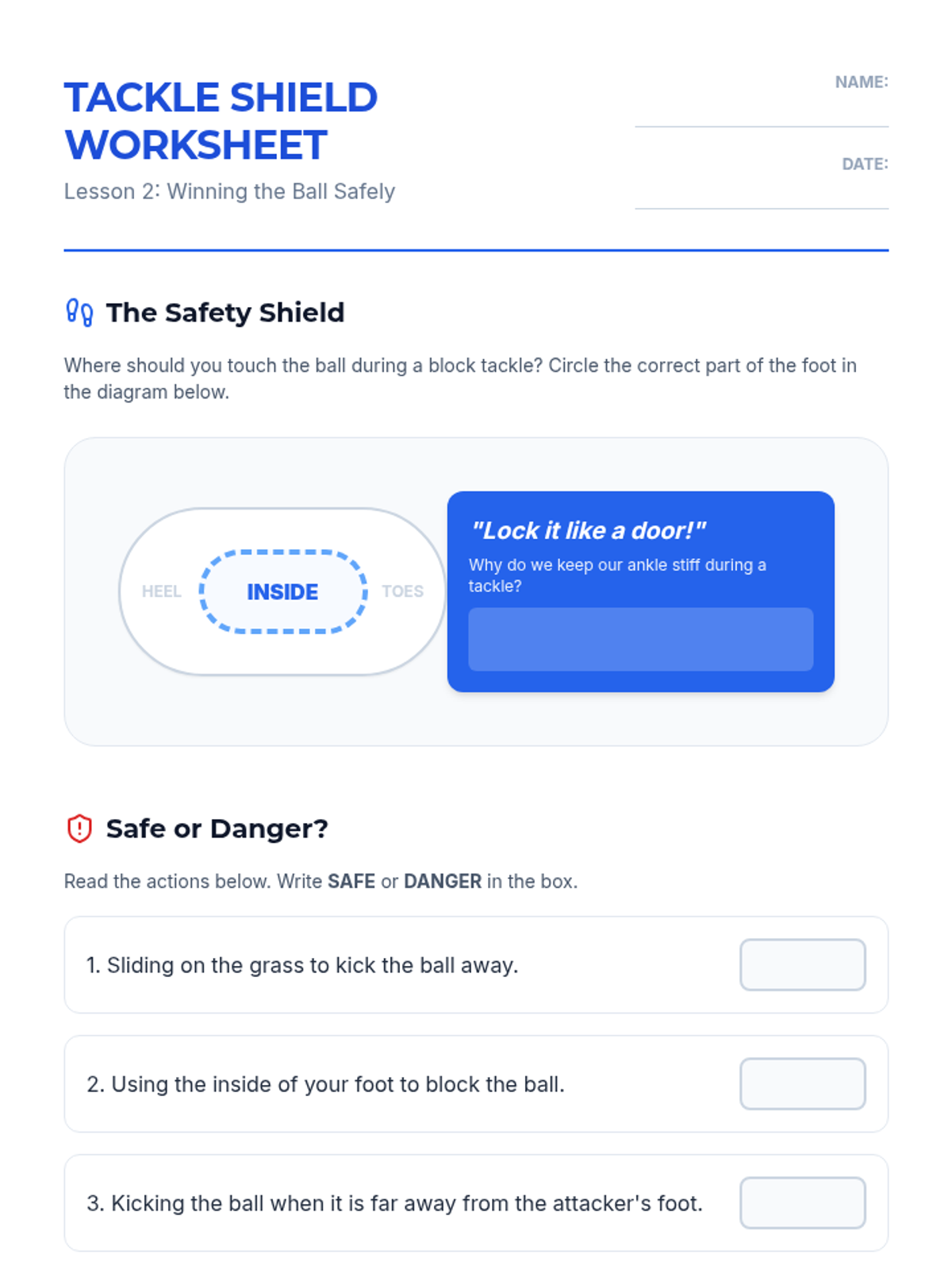
Introduction to the block tackle: a safe way to regain possession using the inside of the foot. Emphasis is on timing and safety.
Students learn the athletic defensive stance: knees bent, side-on body position, and low center of gravity. They practice 'jockeying' (shadowing) an attacker without trying to steal the ball immediately.
Students learn the importance of following their shot and anticipating rebounds. Drills simulate game scenarios where the initial shot is blocked, requiring a quick second reaction.
Learners combine dribbling and shooting to attack a goal defended by a goalkeeper or defender. The lesson focuses on closing the distance and shooting before the defender can tackle.
Students practice timing their approach to strike a ball that is rolling towards or across them. This lesson addresses the complexity of adjusting stride and body position for a moving target.
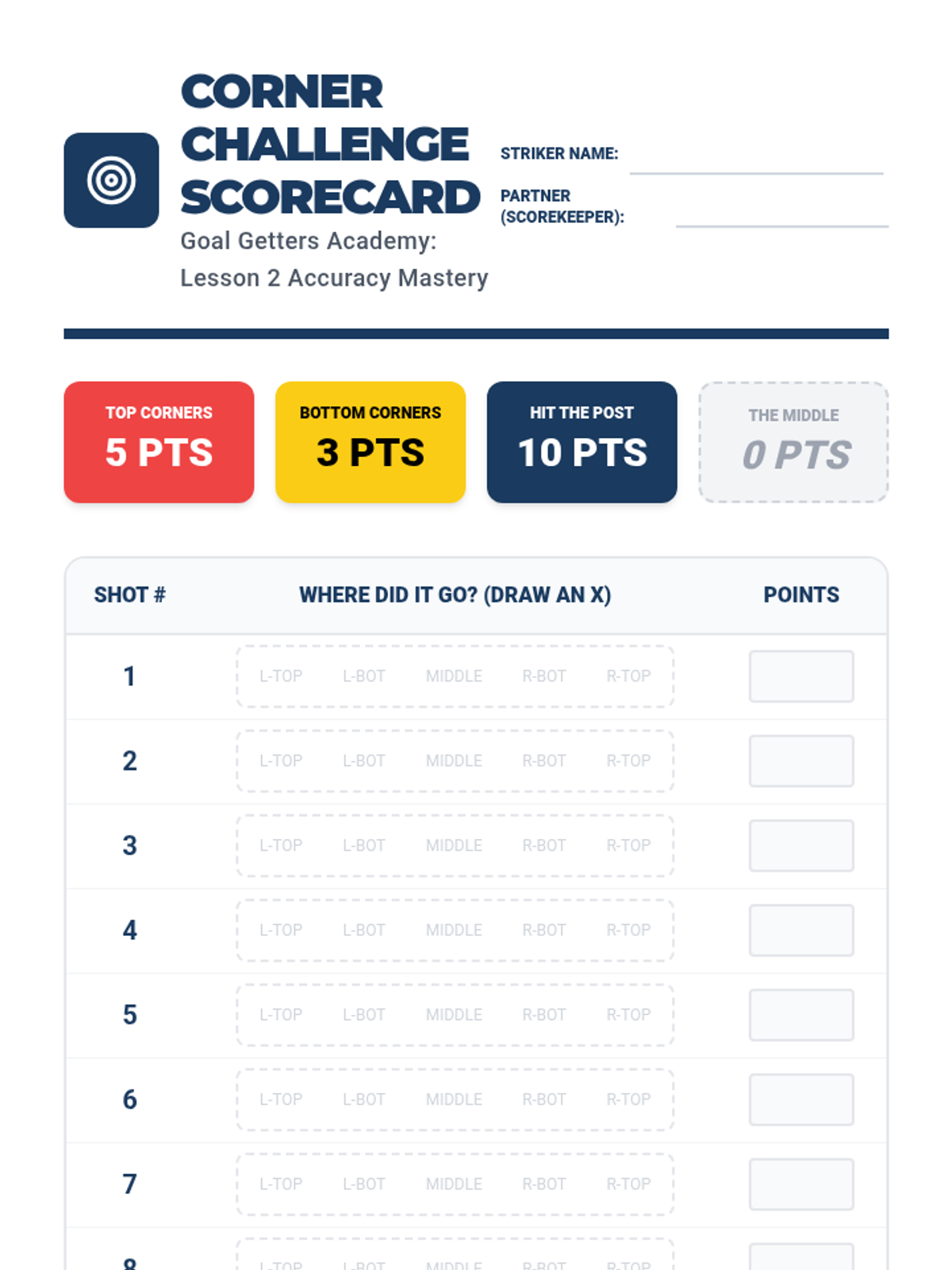
The focus shifts to placing the ball in the corners of the goal using the inside of the foot. Students practice shooting at specific zones in the goal rather than just kicking hard at the center.
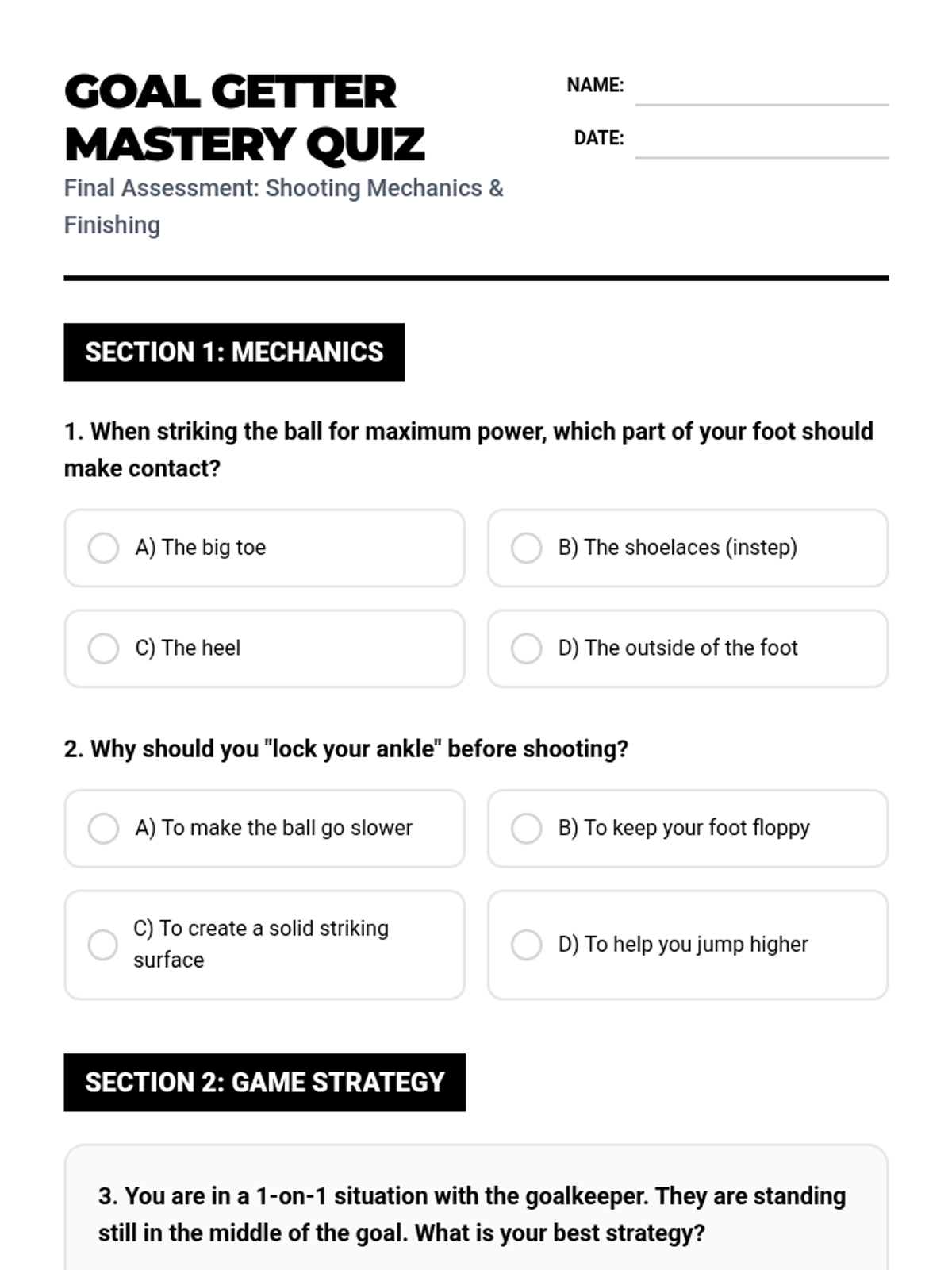
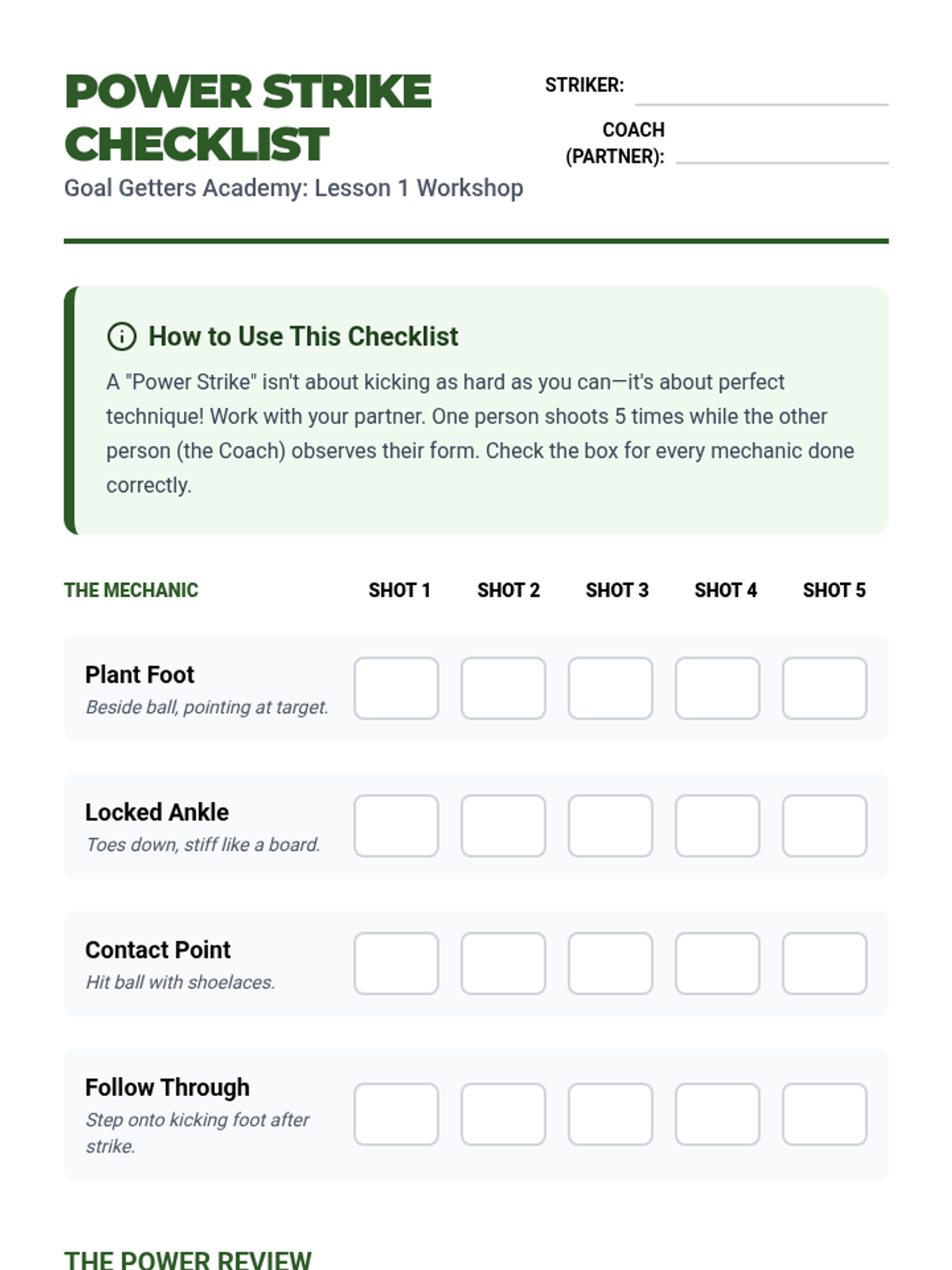
Students learn the mechanics of the instep drive (laces strike) for power and safety, focusing on ankle locking, head positioning, and non-kicking foot placement.
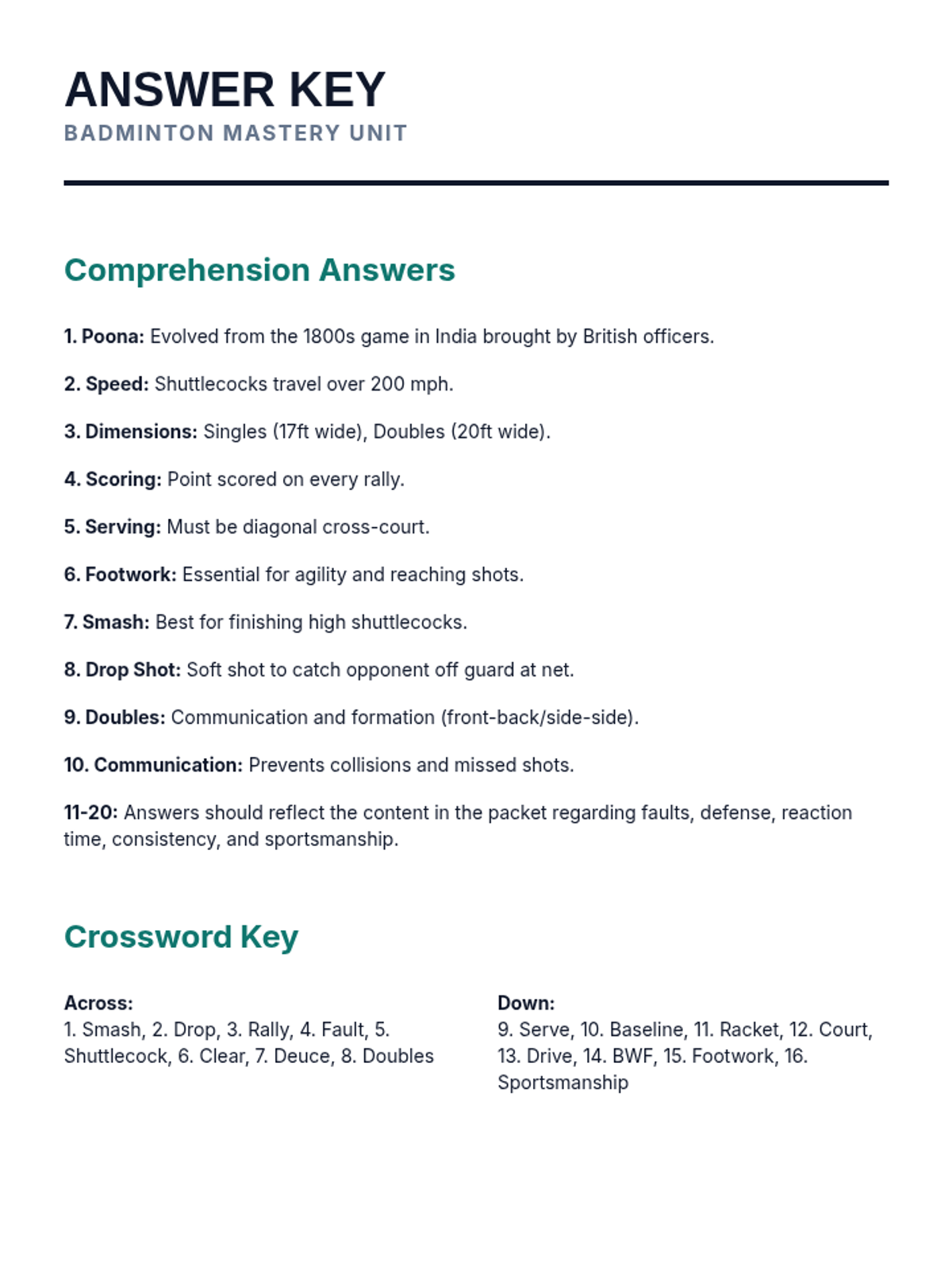
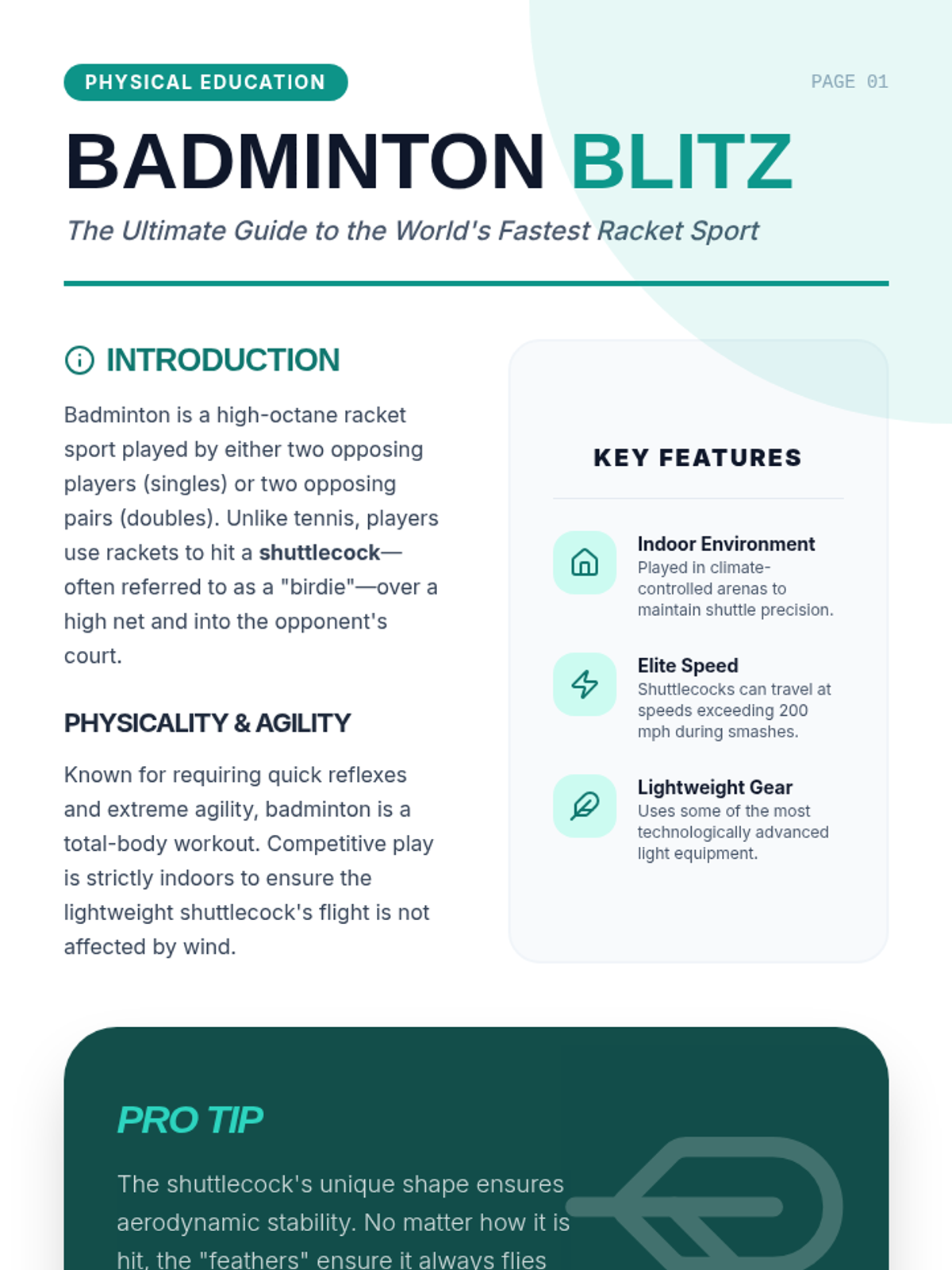
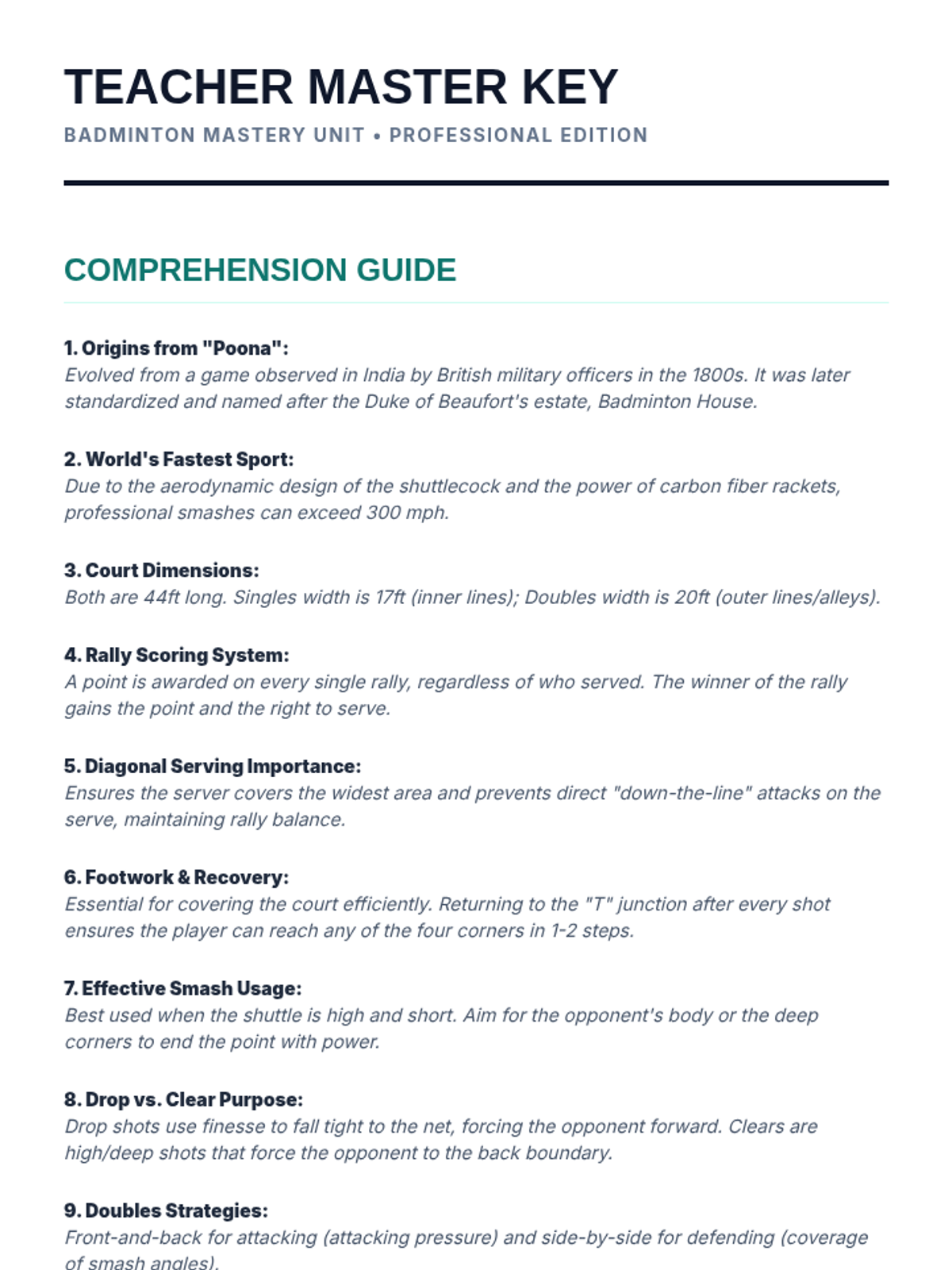
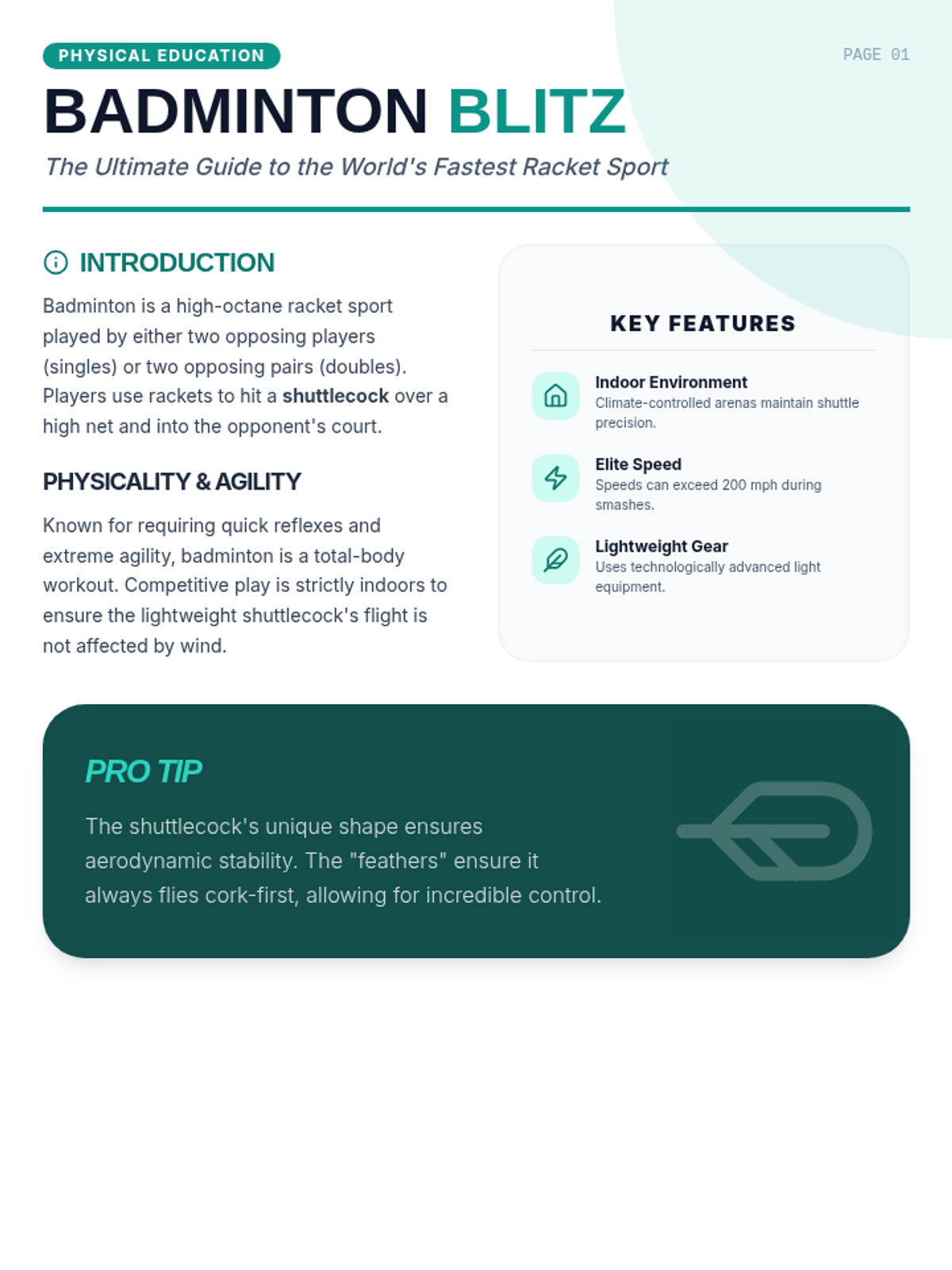
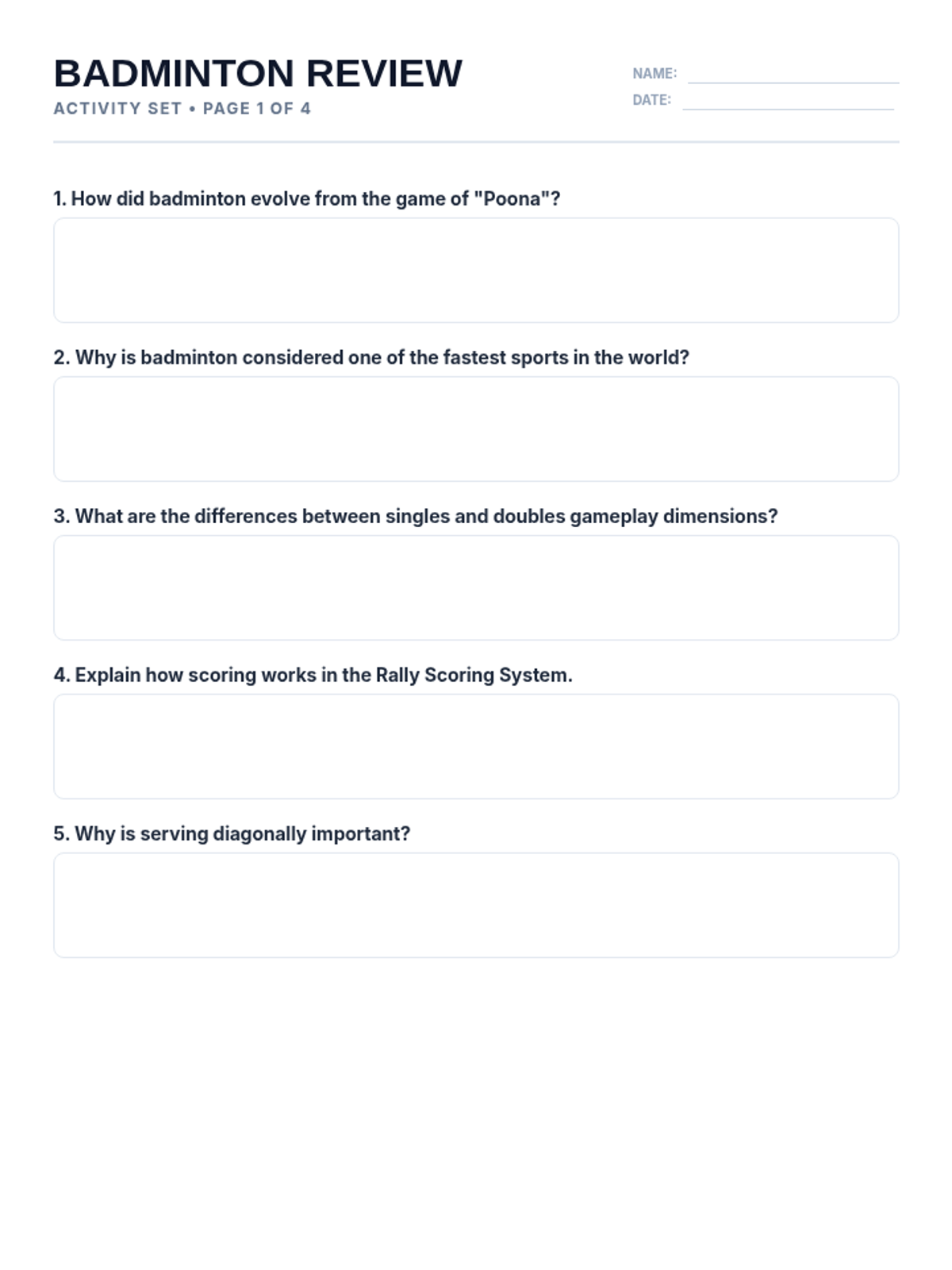
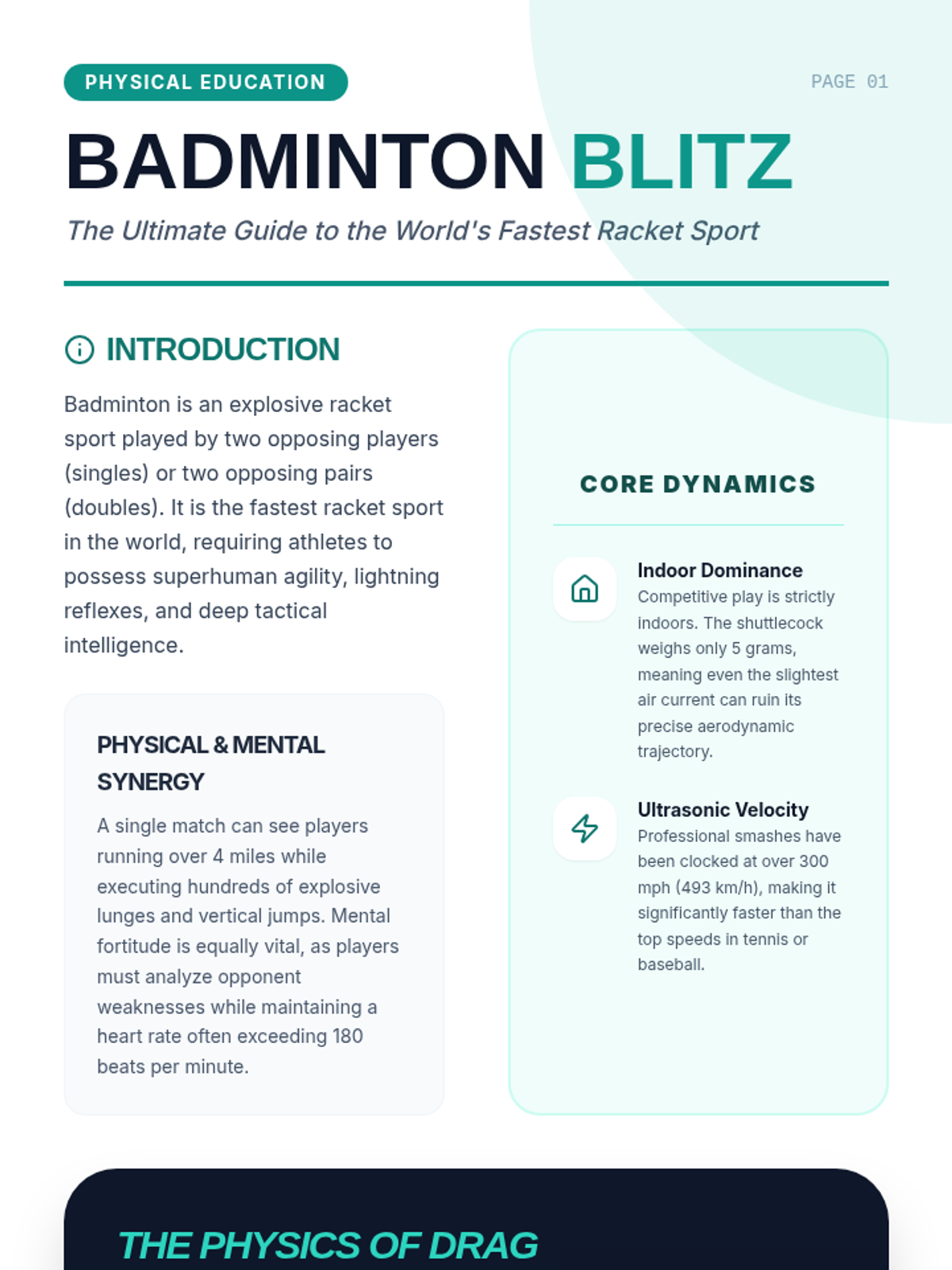
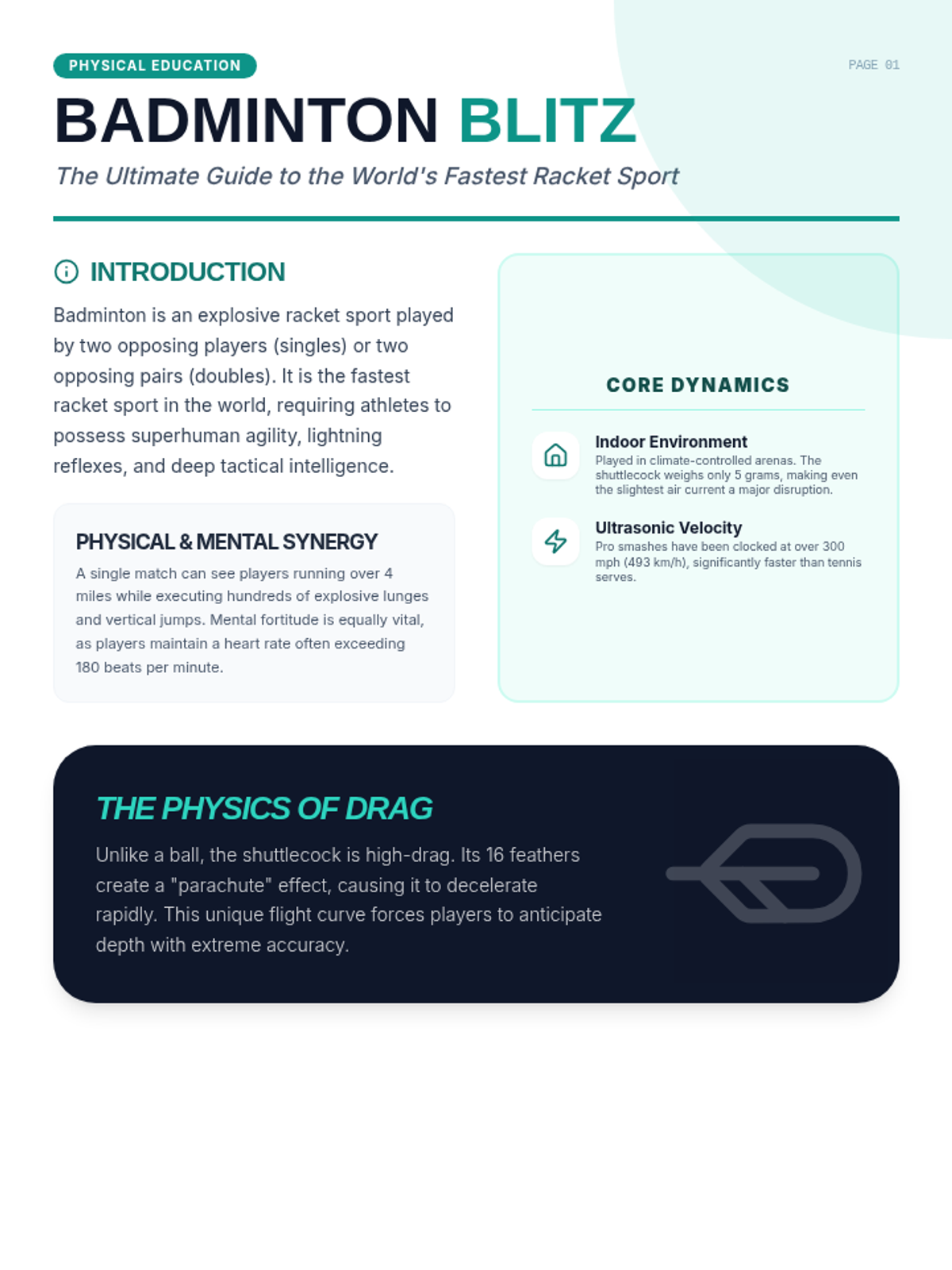
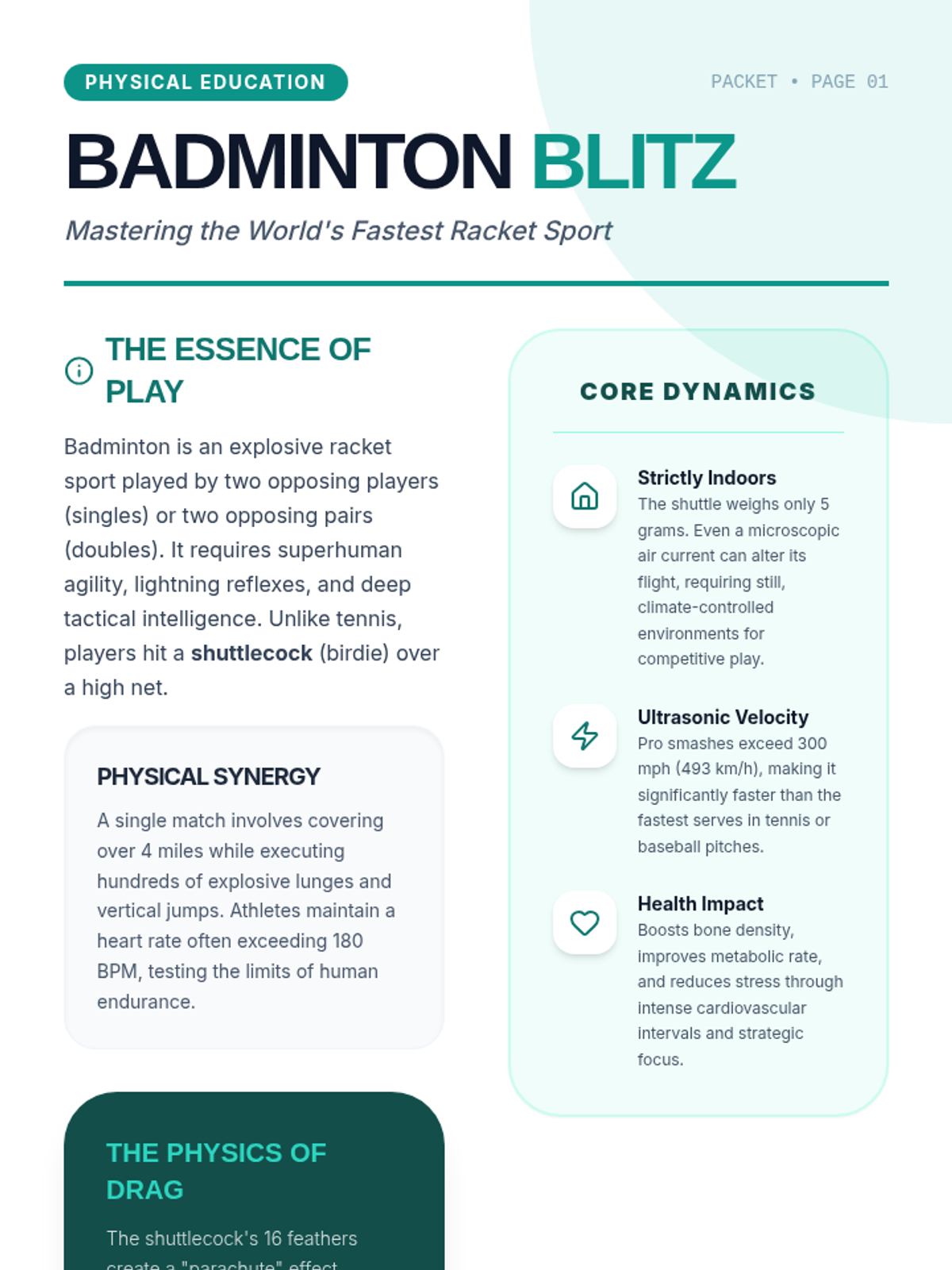
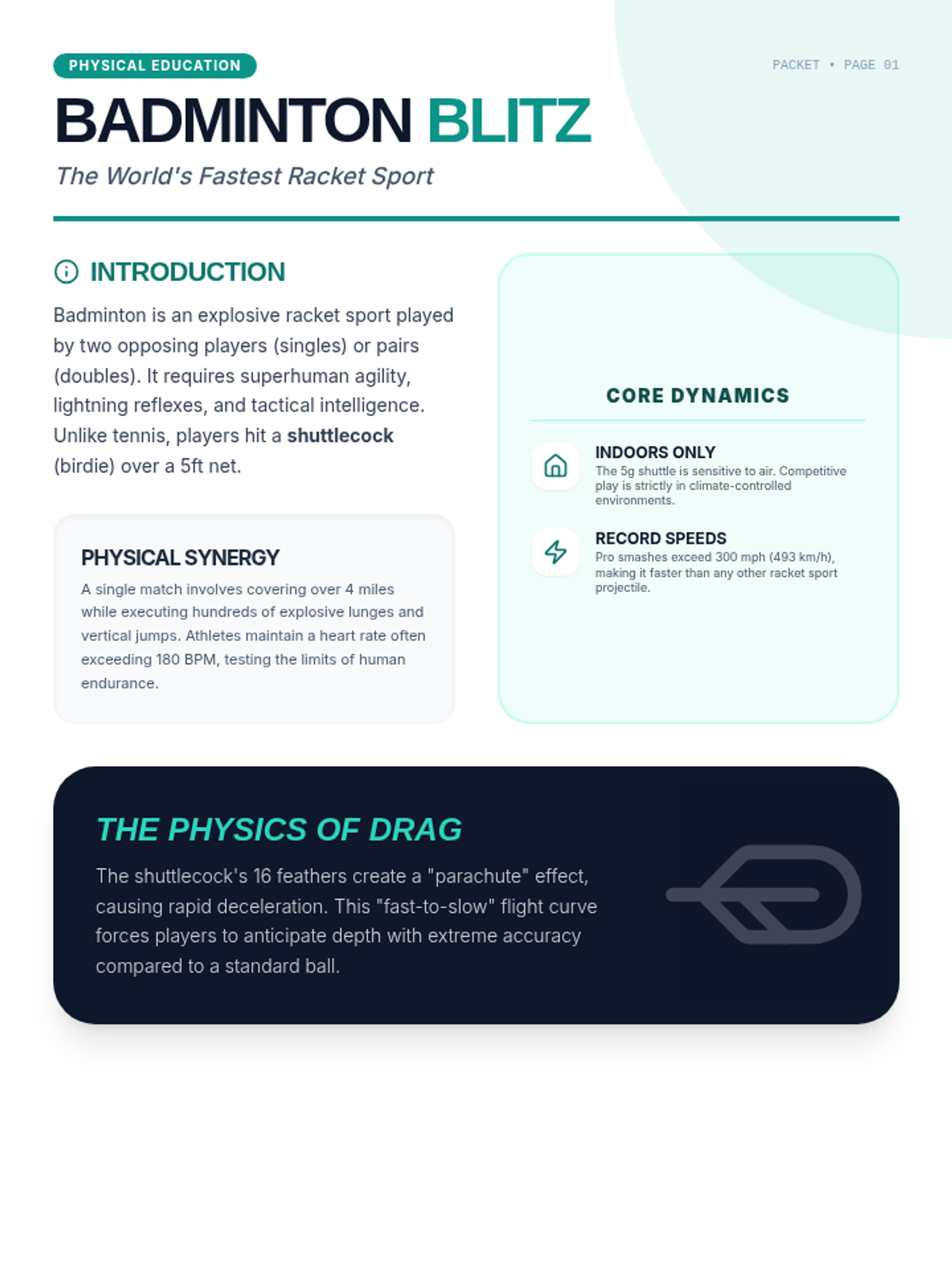
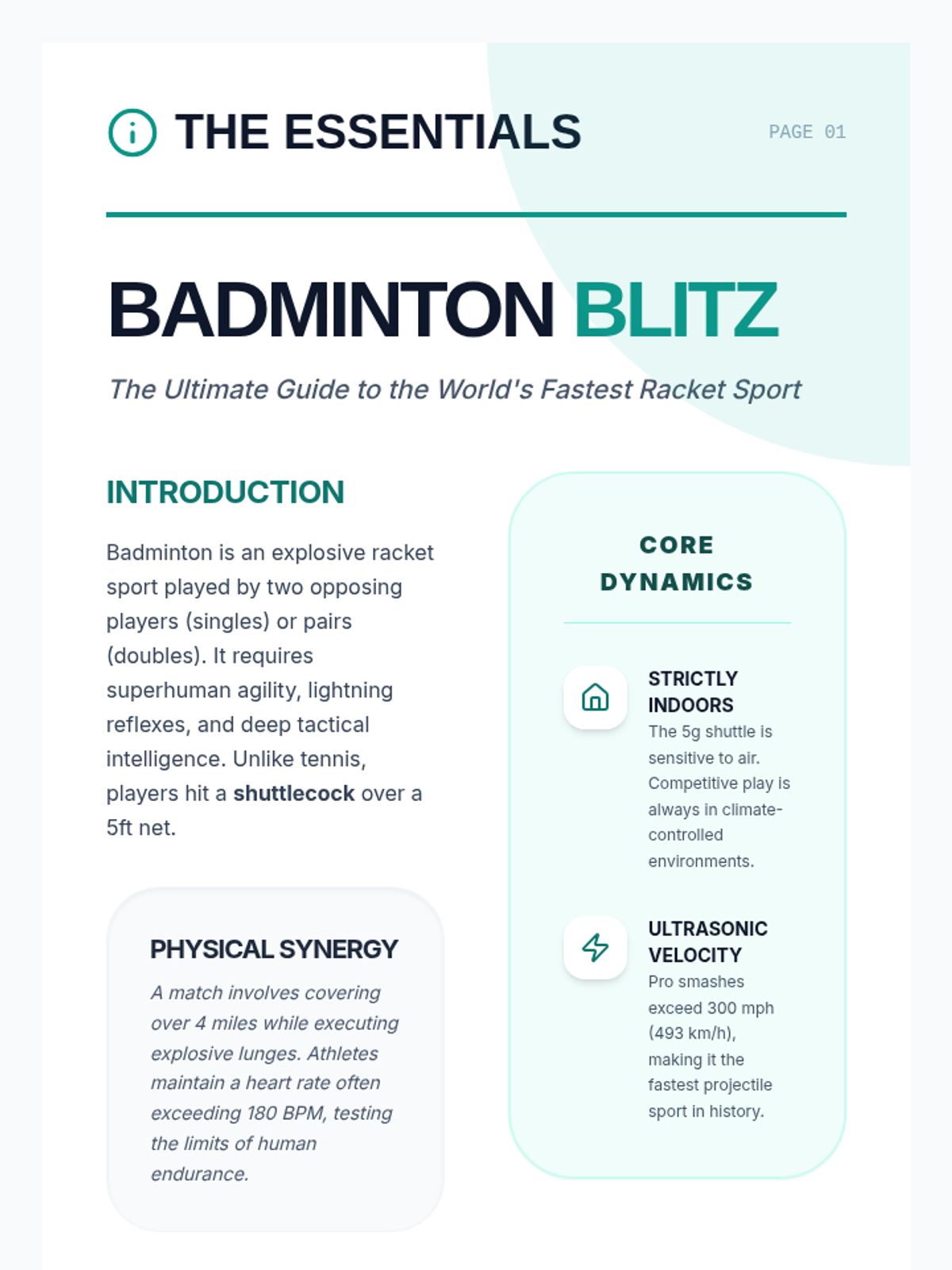
A comprehensive unit on badminton covering its history, official rules, terminology, and advanced strategies through an informational packet, comprehension exercises, and interactive puzzles.
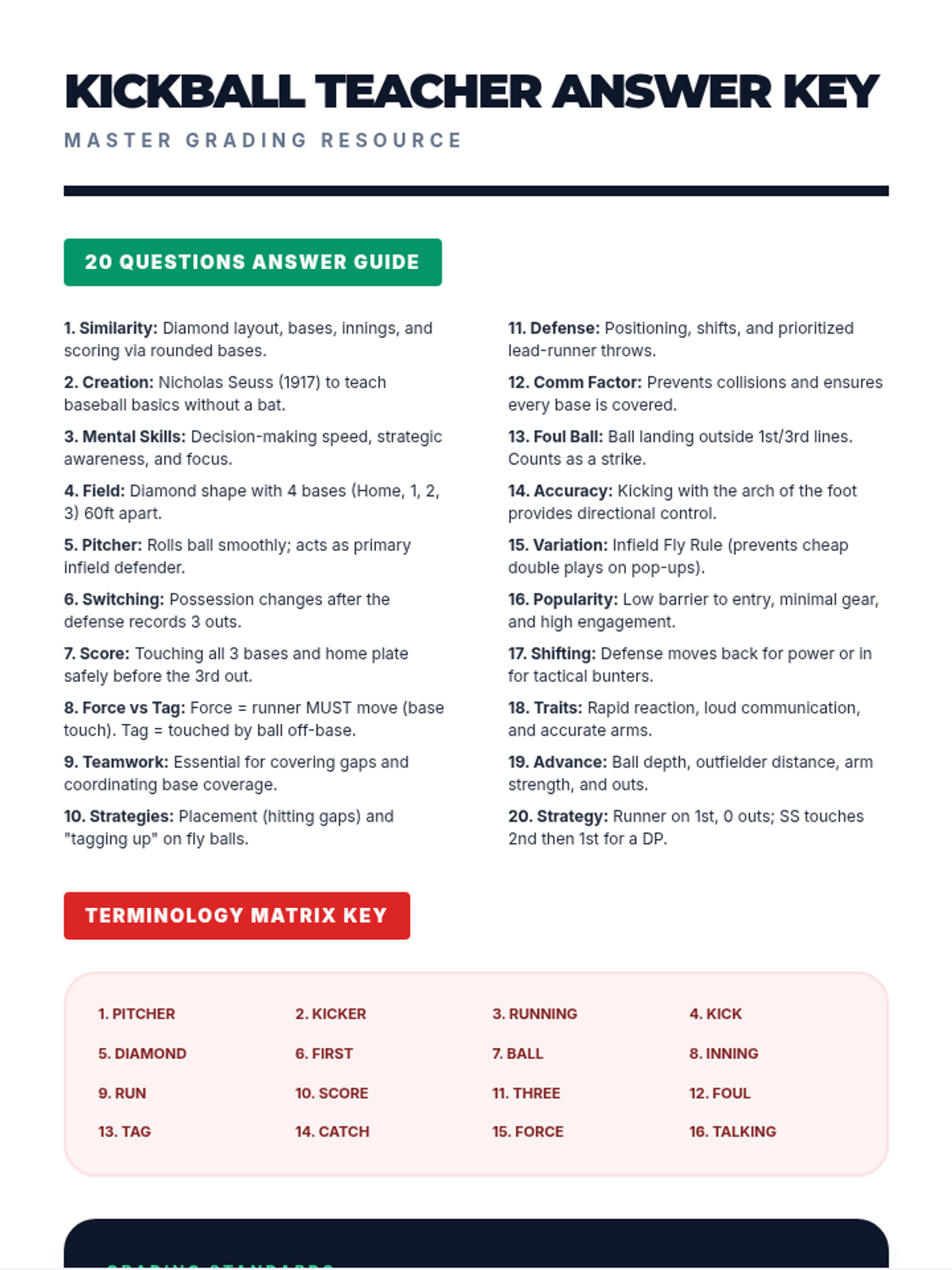
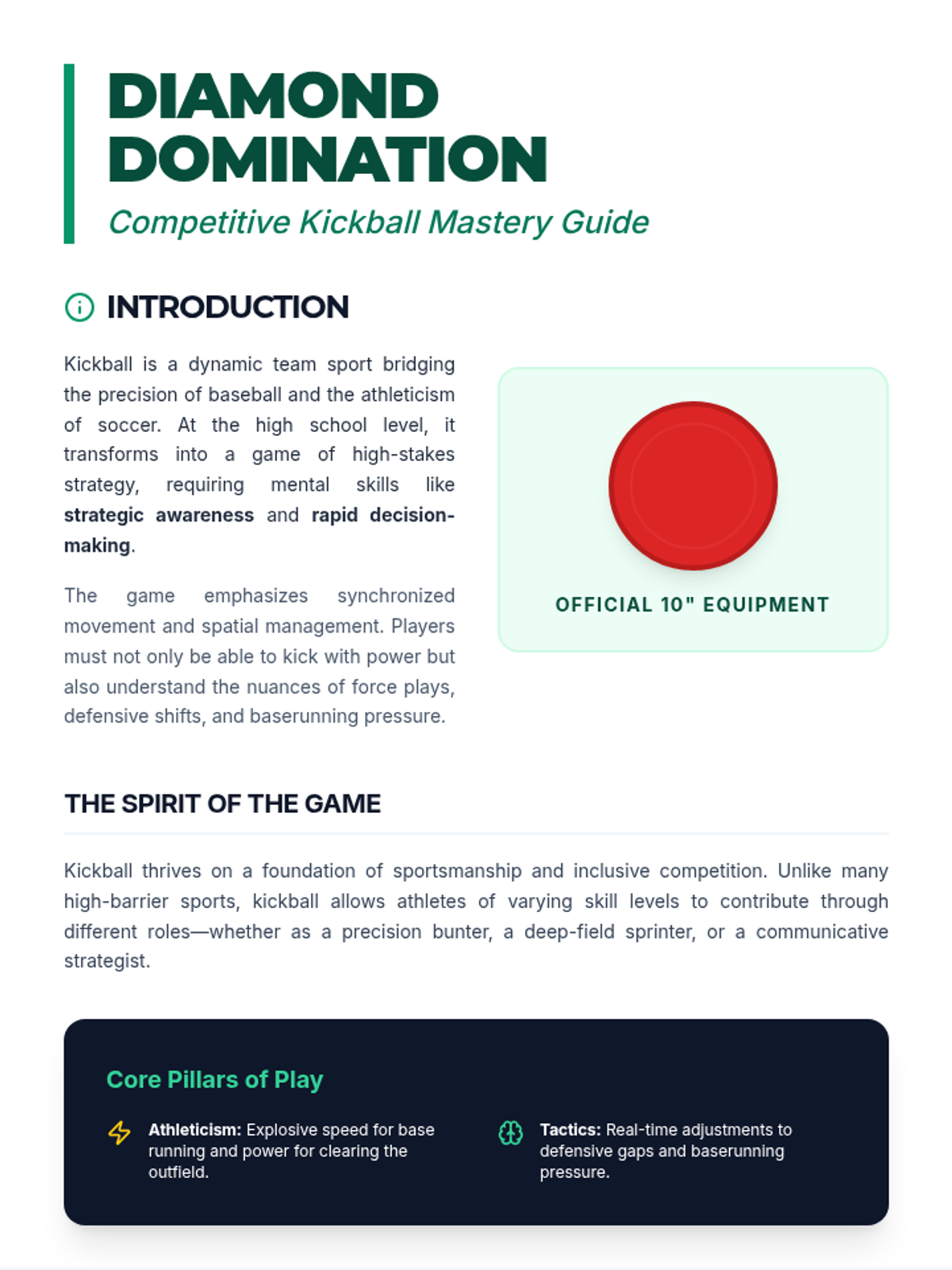
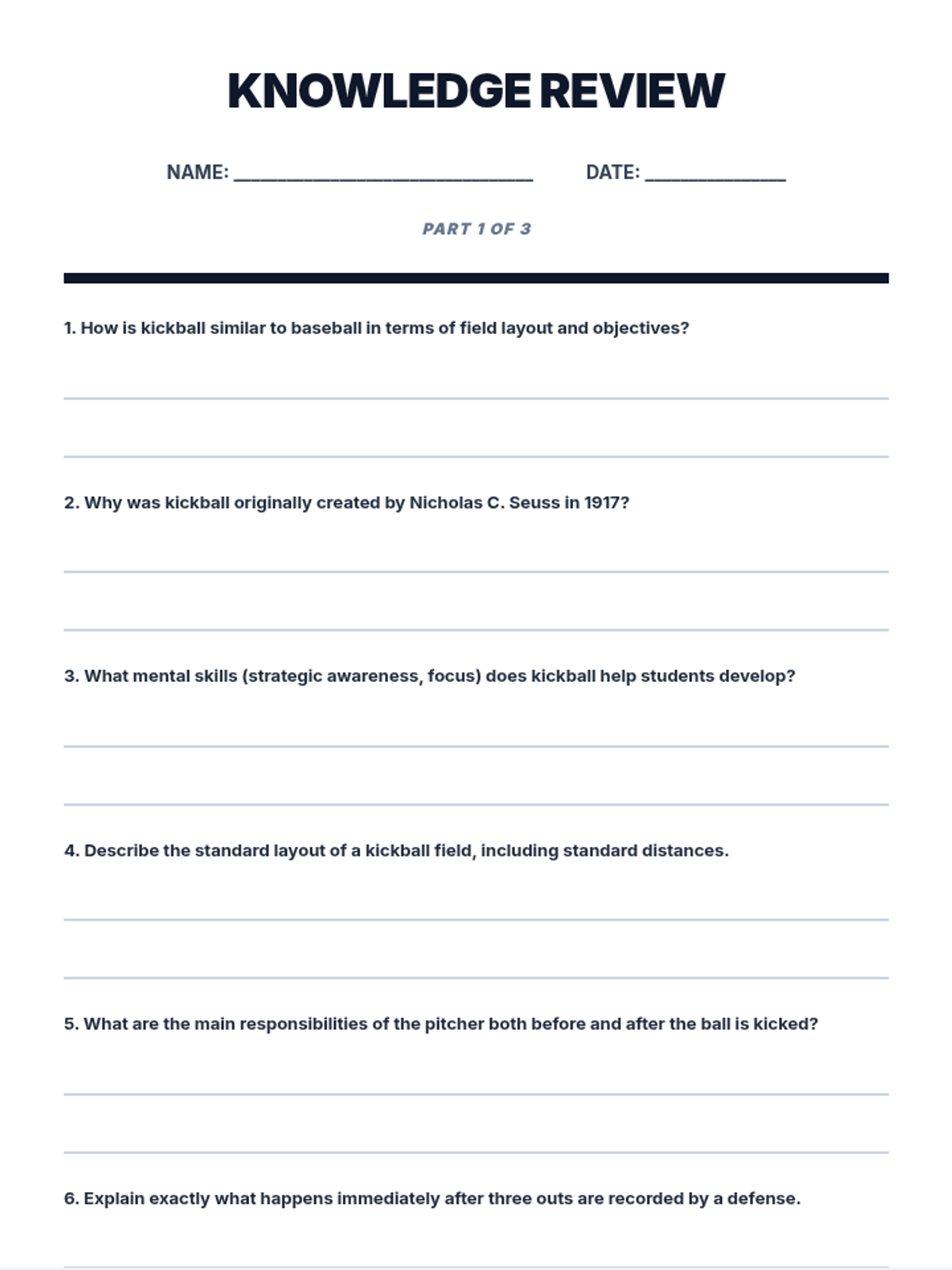
A comprehensive 10-page guide and activity set for high school students covering kickball history, rules, strategies, and vocabulary. Includes a 20-question review and a themed crossword puzzle.
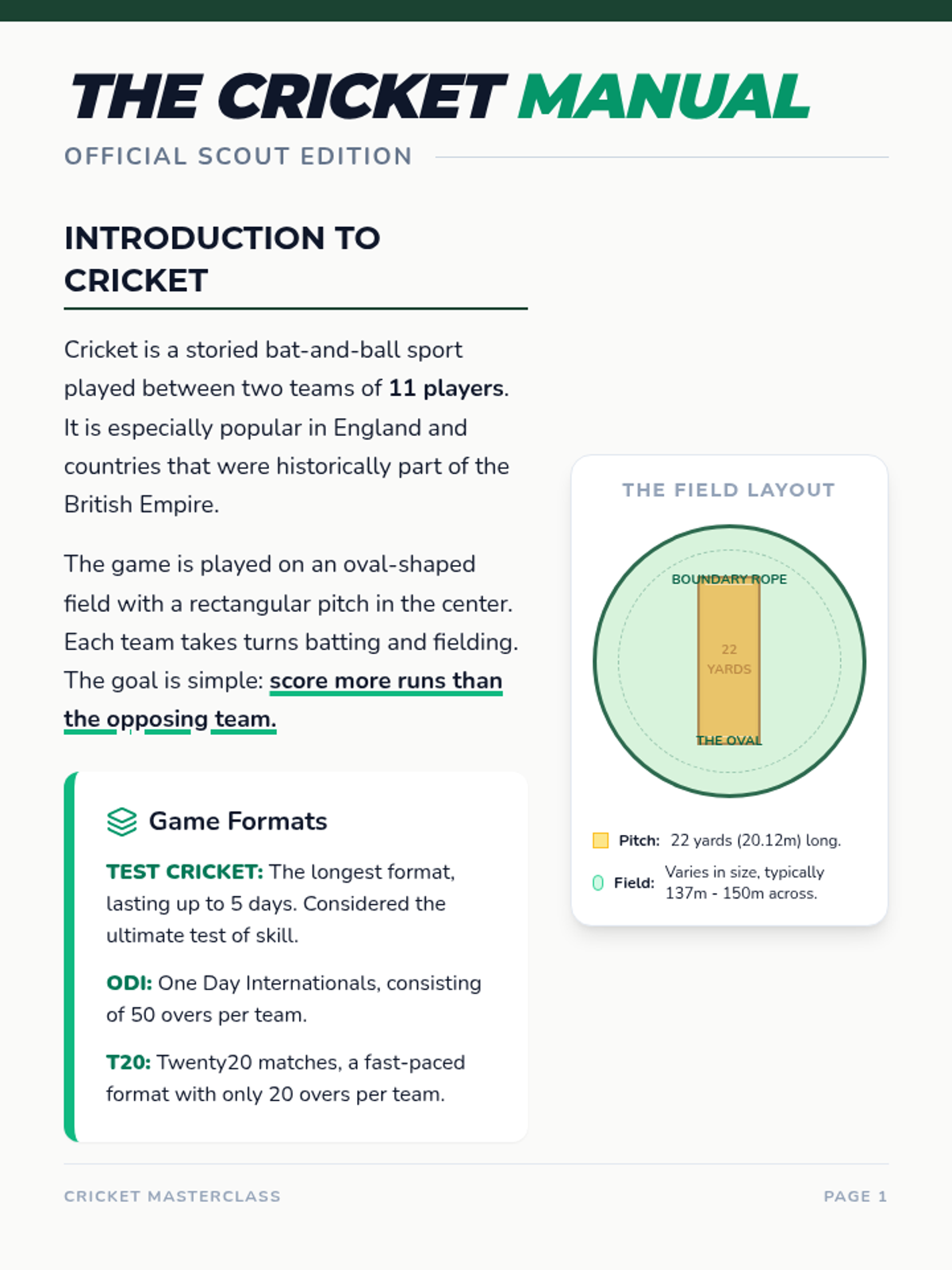
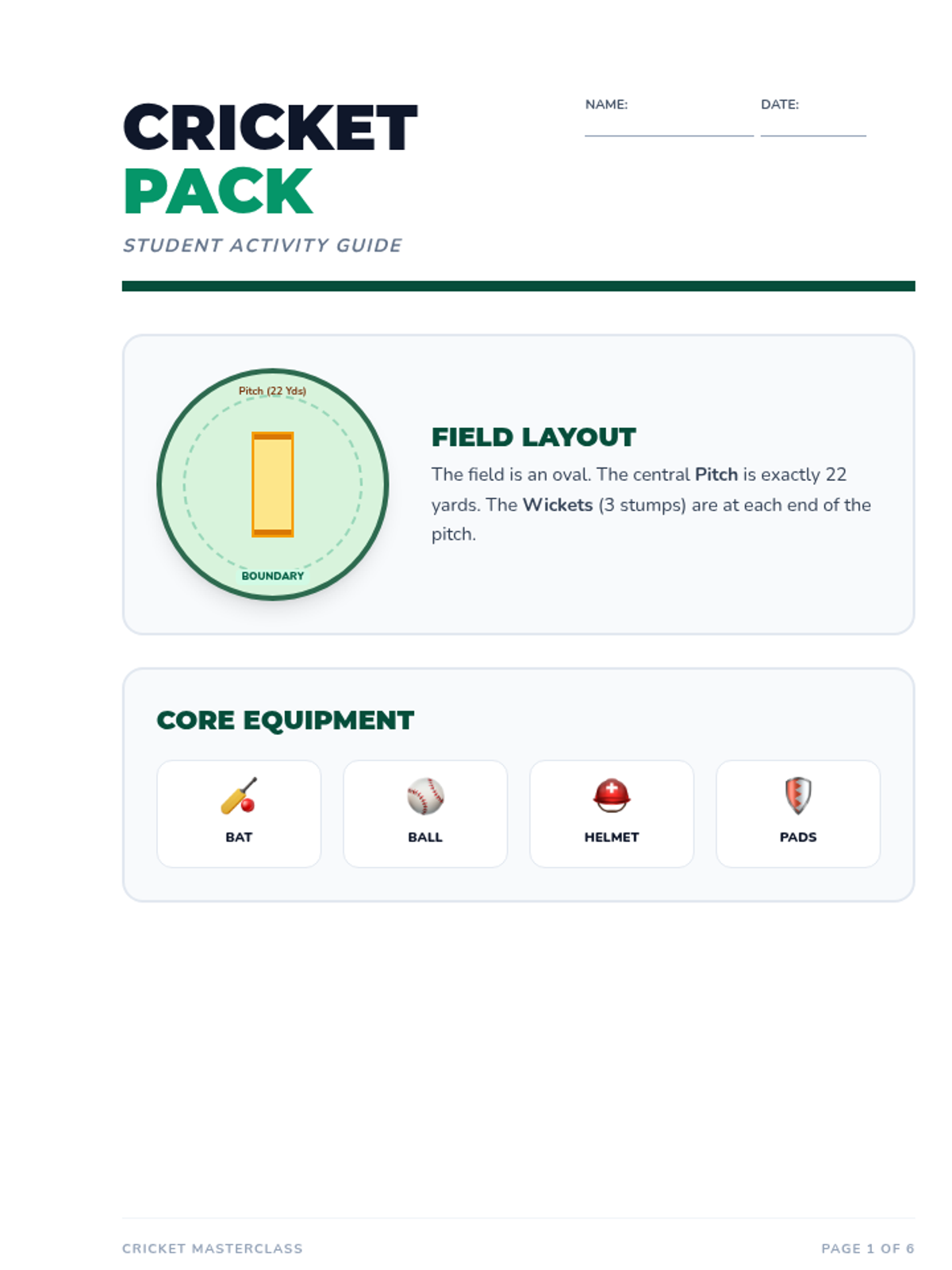
An introductory lesson on the fundamentals of cricket, including its historical origins, essential equipment, basic rules, and the layout of the field.
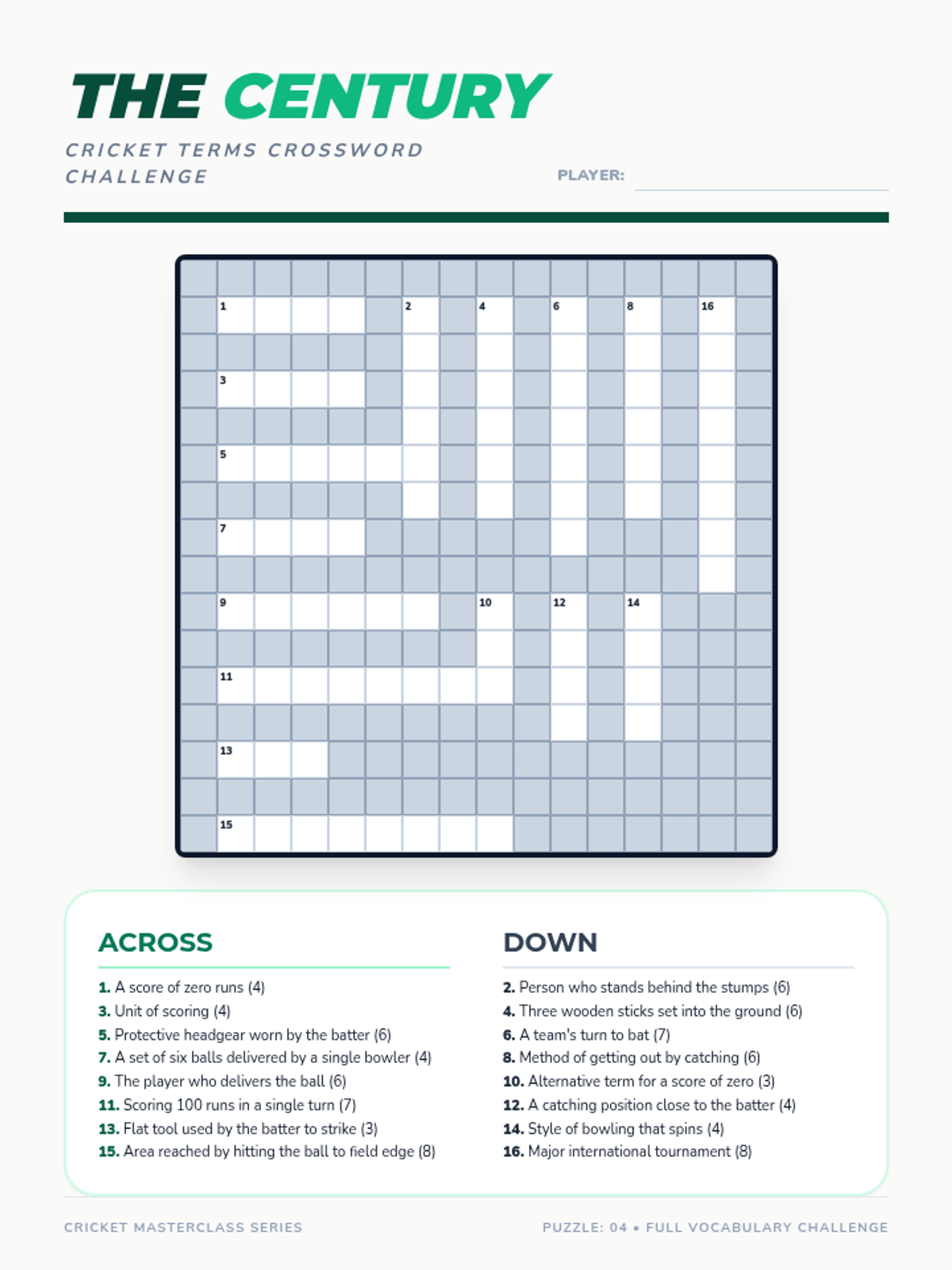
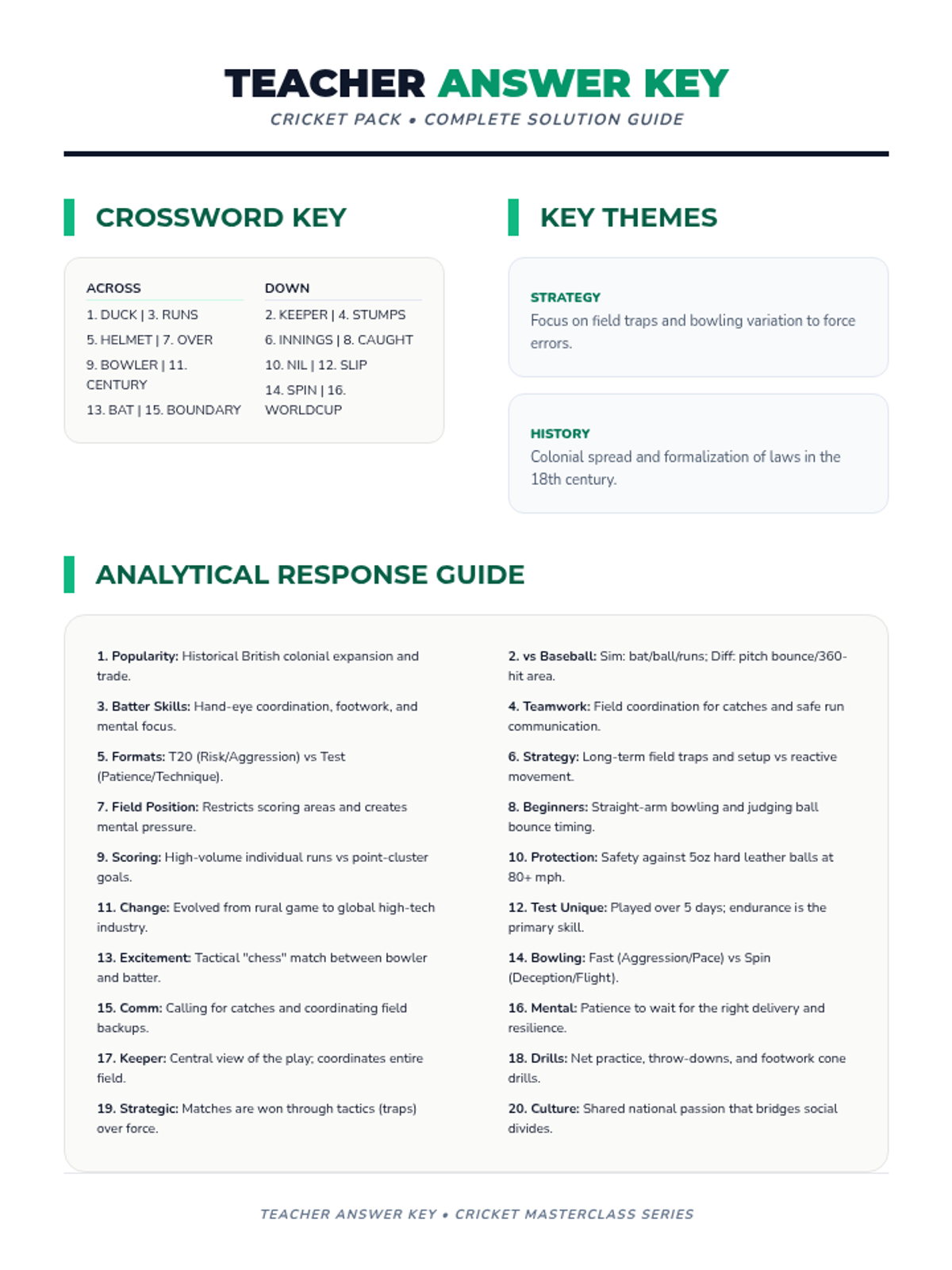
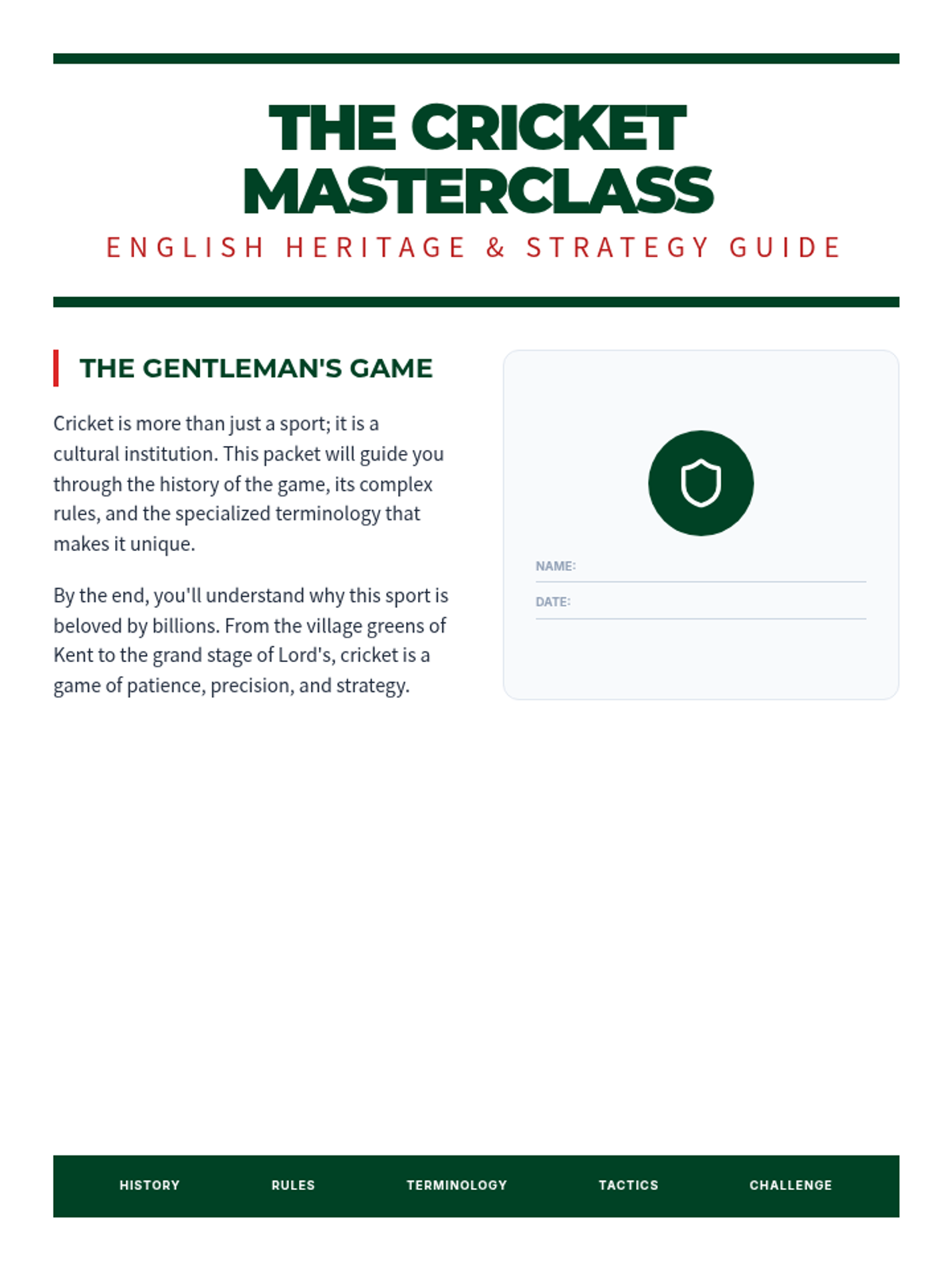
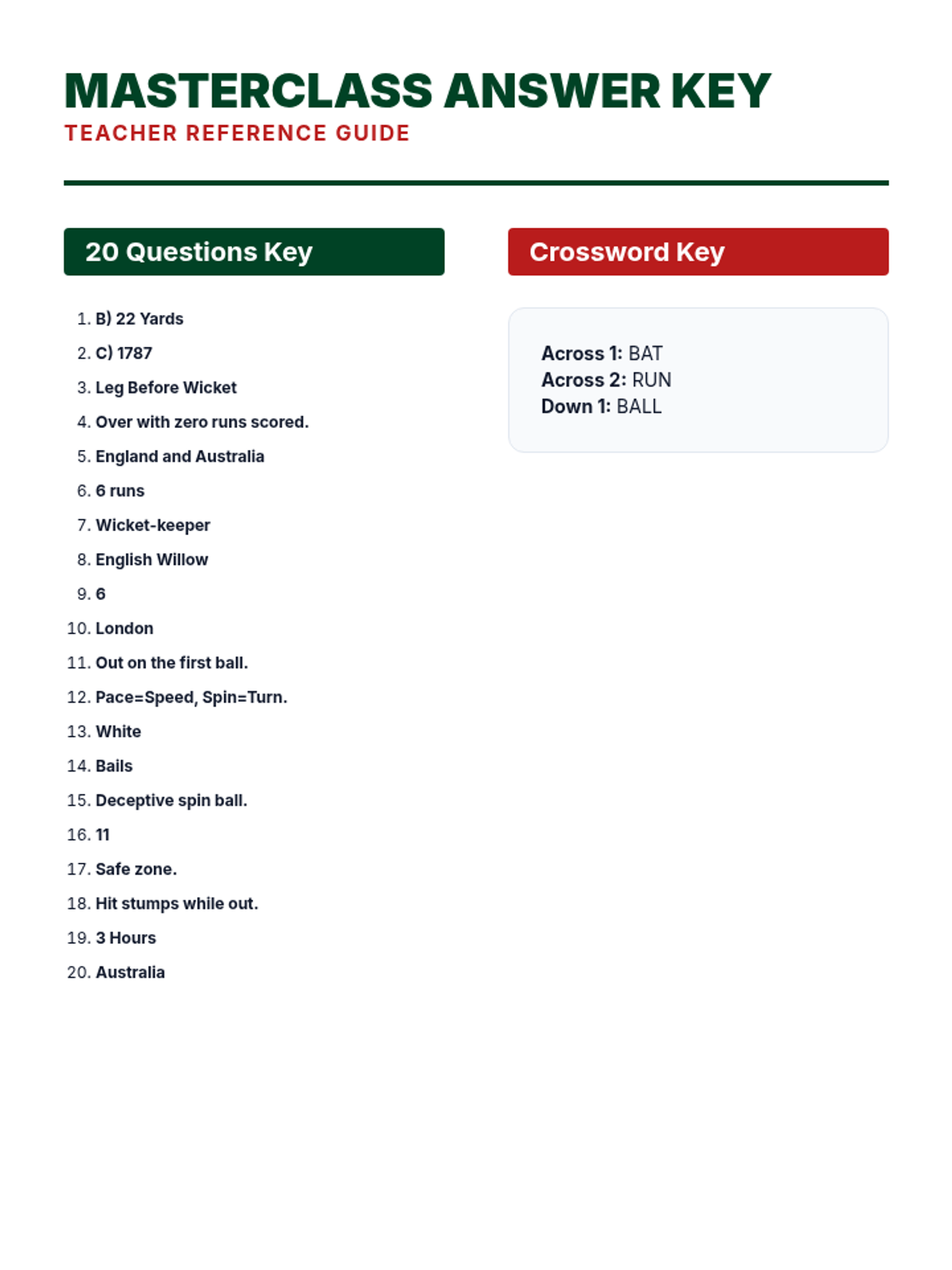
An in-depth exploration of cricket's origins, complex rules, and strategic depth, focusing on the English tradition of the sport. Students will master terminology and analyze gameplay through a comprehensive informational packet.