Essential safety protocols, map reading, and compass navigation for wilderness environments. Strengthens group dynamics and problem-solving through structured outdoor team-building challenges.
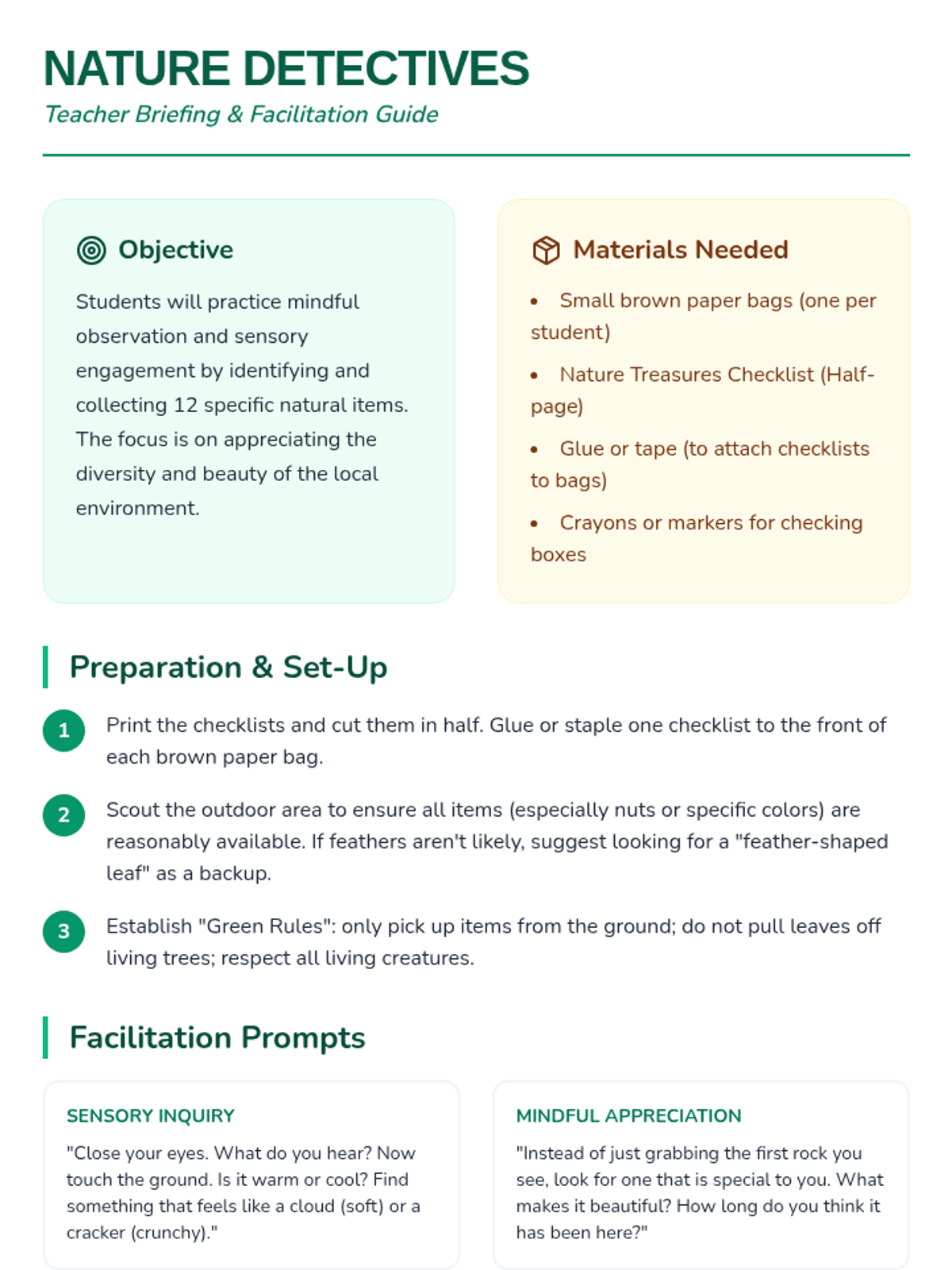
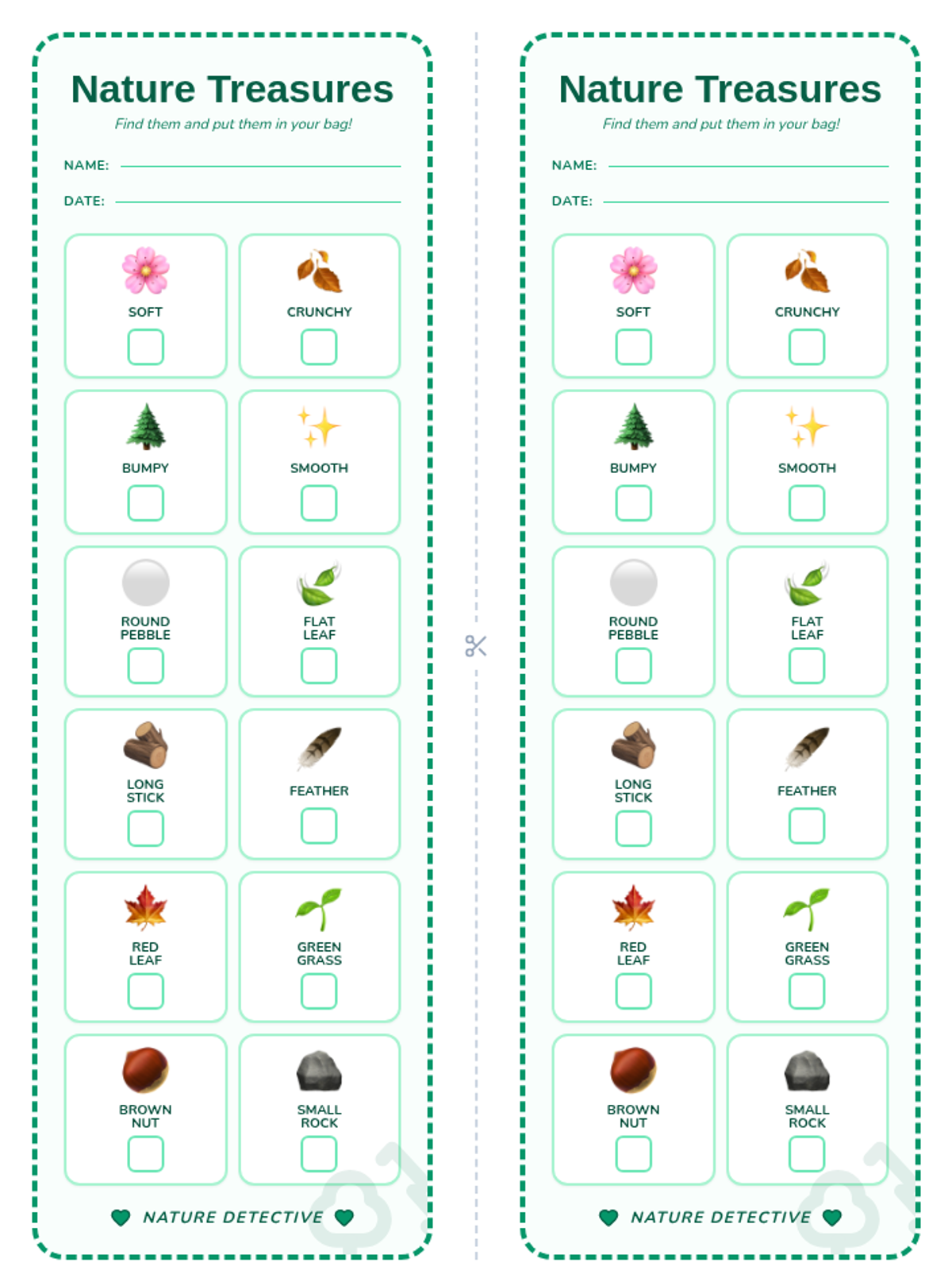
A sensory-focused outdoor activity where K-2 students practice mindfulness and observation by collecting natural treasures. Students explore textures, shapes, and colors while developing an appreciation for the environment.
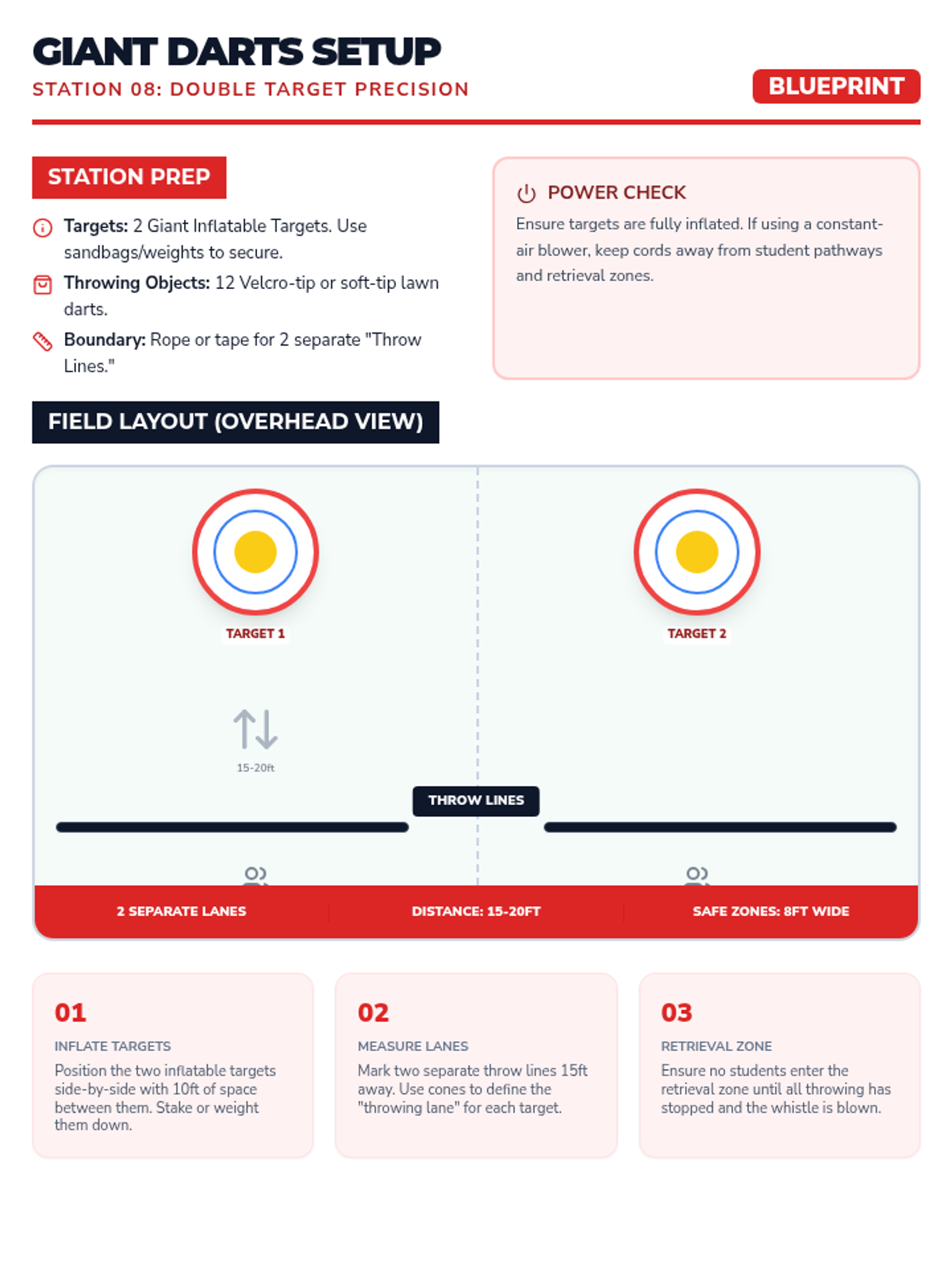
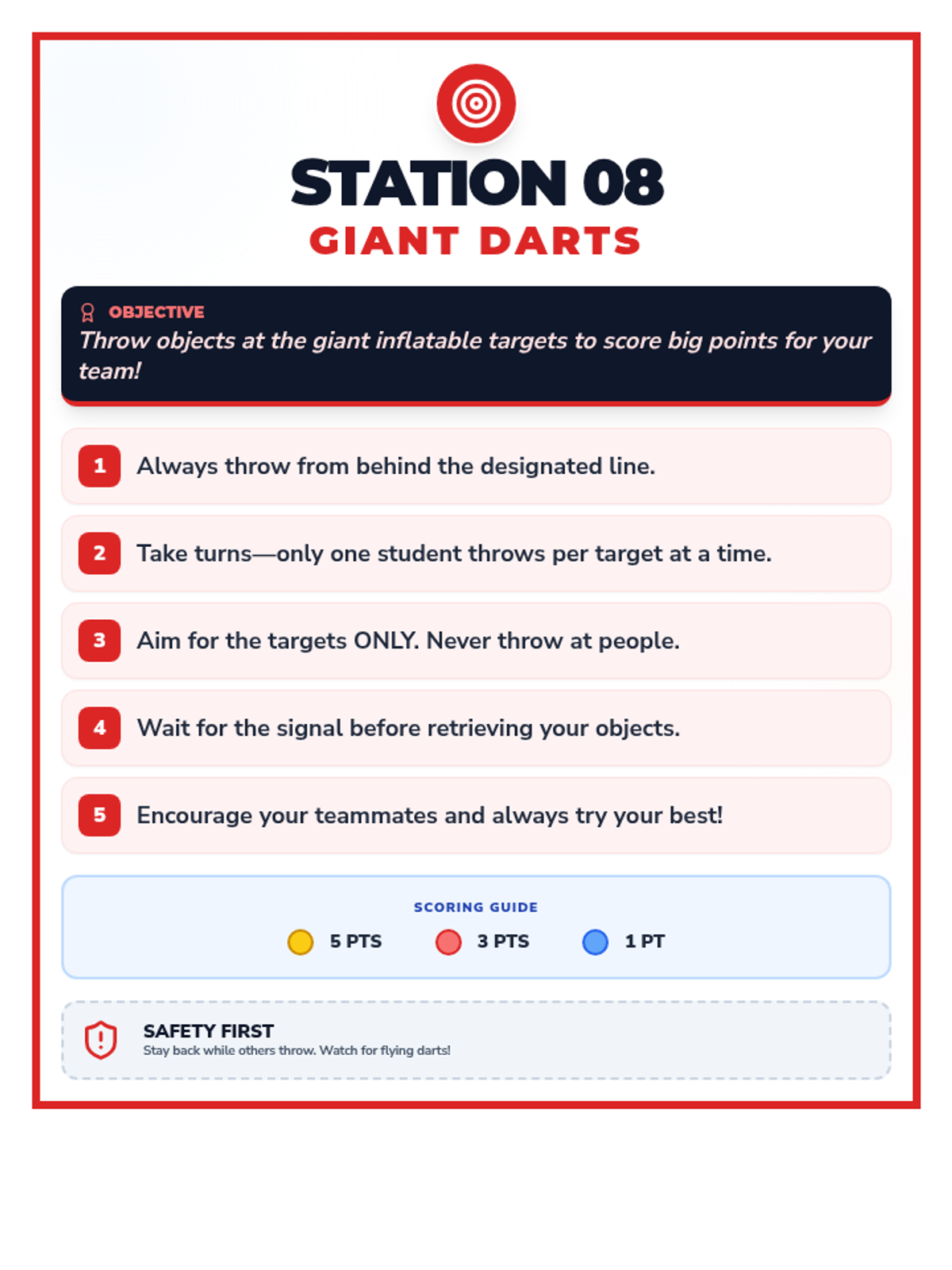
A target-based game guide for Giant Darts, featuring field setup for hula hoop targets, scoring systems, and safety protocols for throwing accuracy.
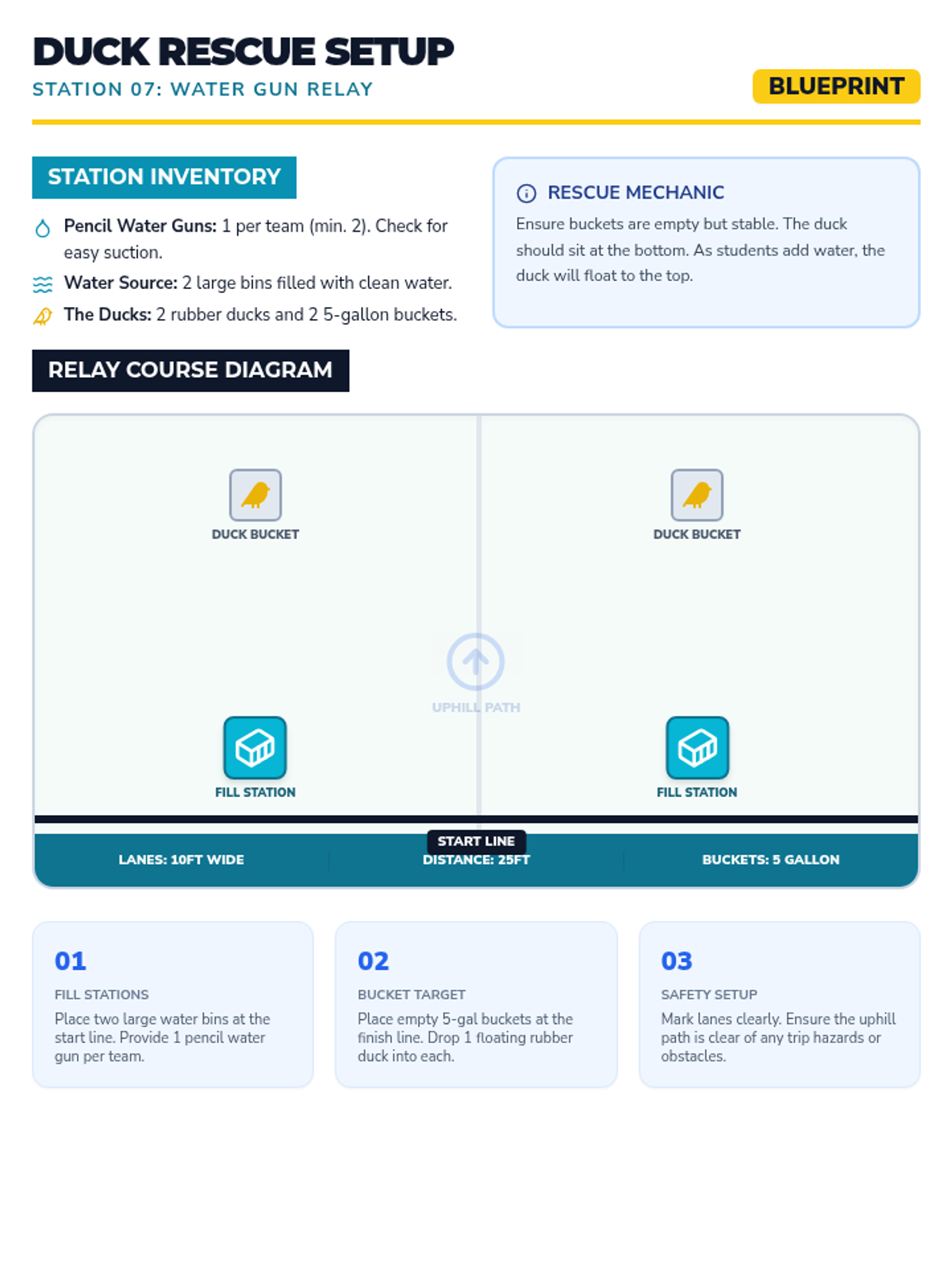
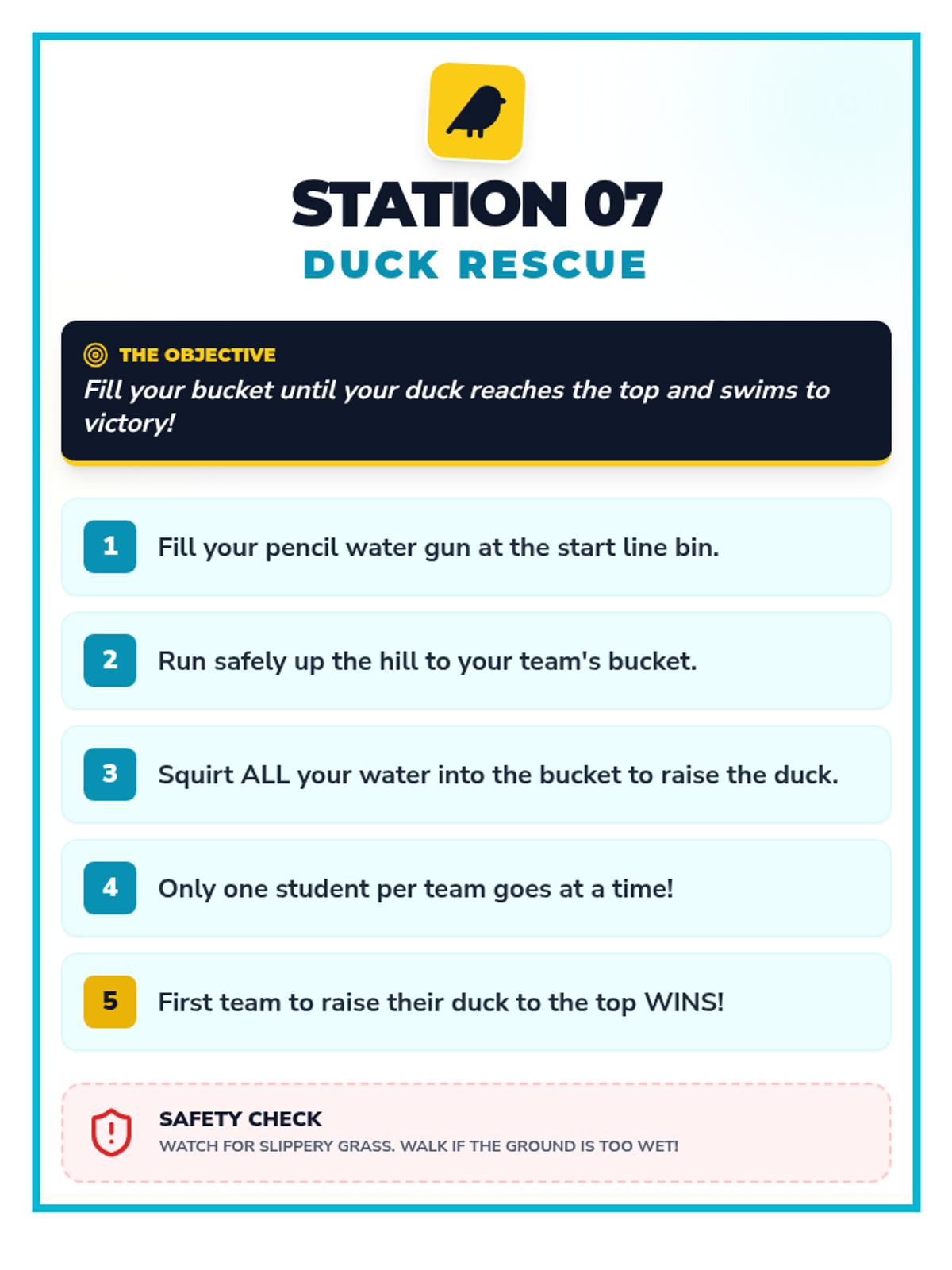
A high-energy water station guide for Duck Rescue, featuring field setup for water gun relays, duck-raising mechanics, and safety protocols for slippery fun.
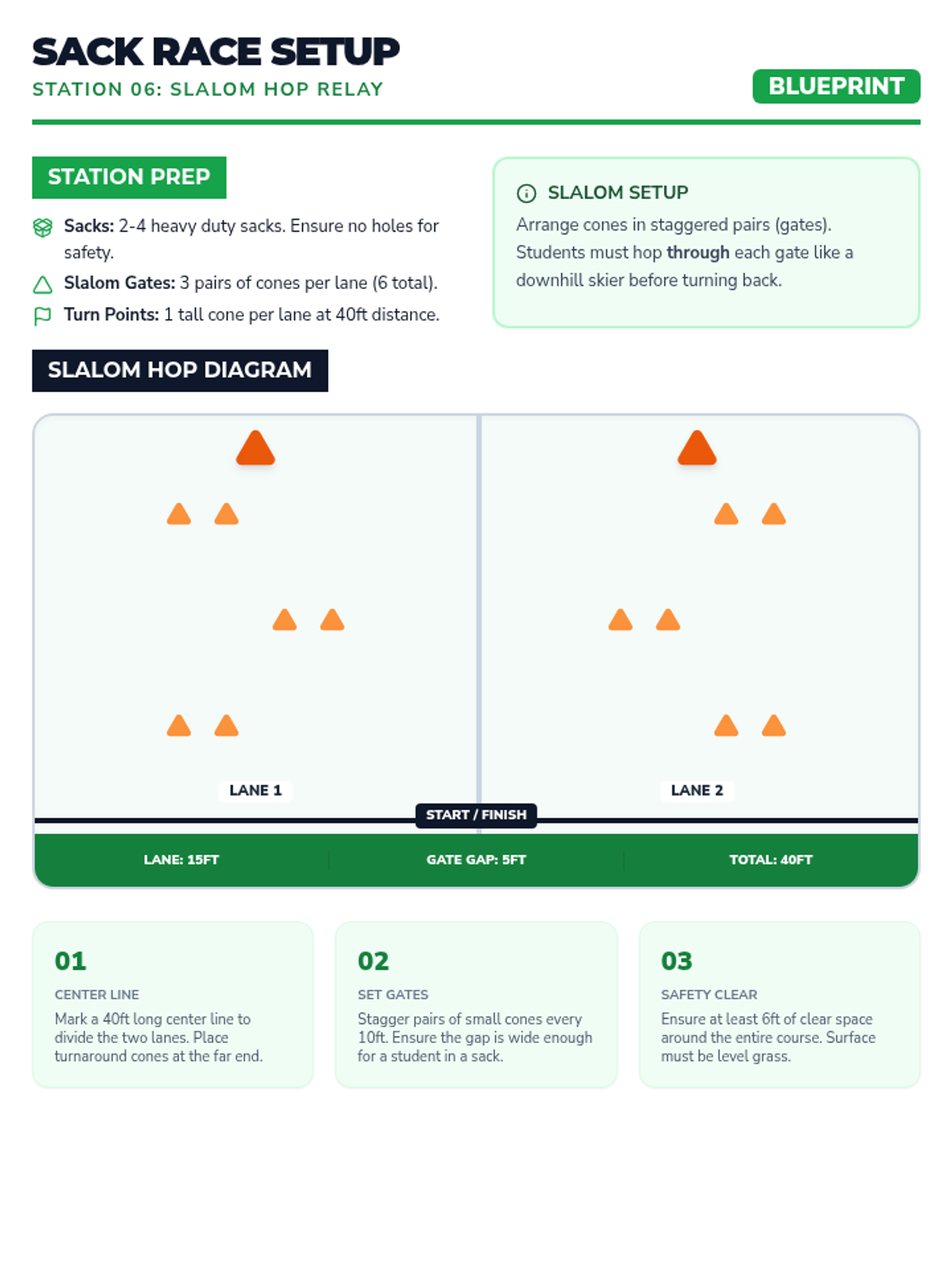
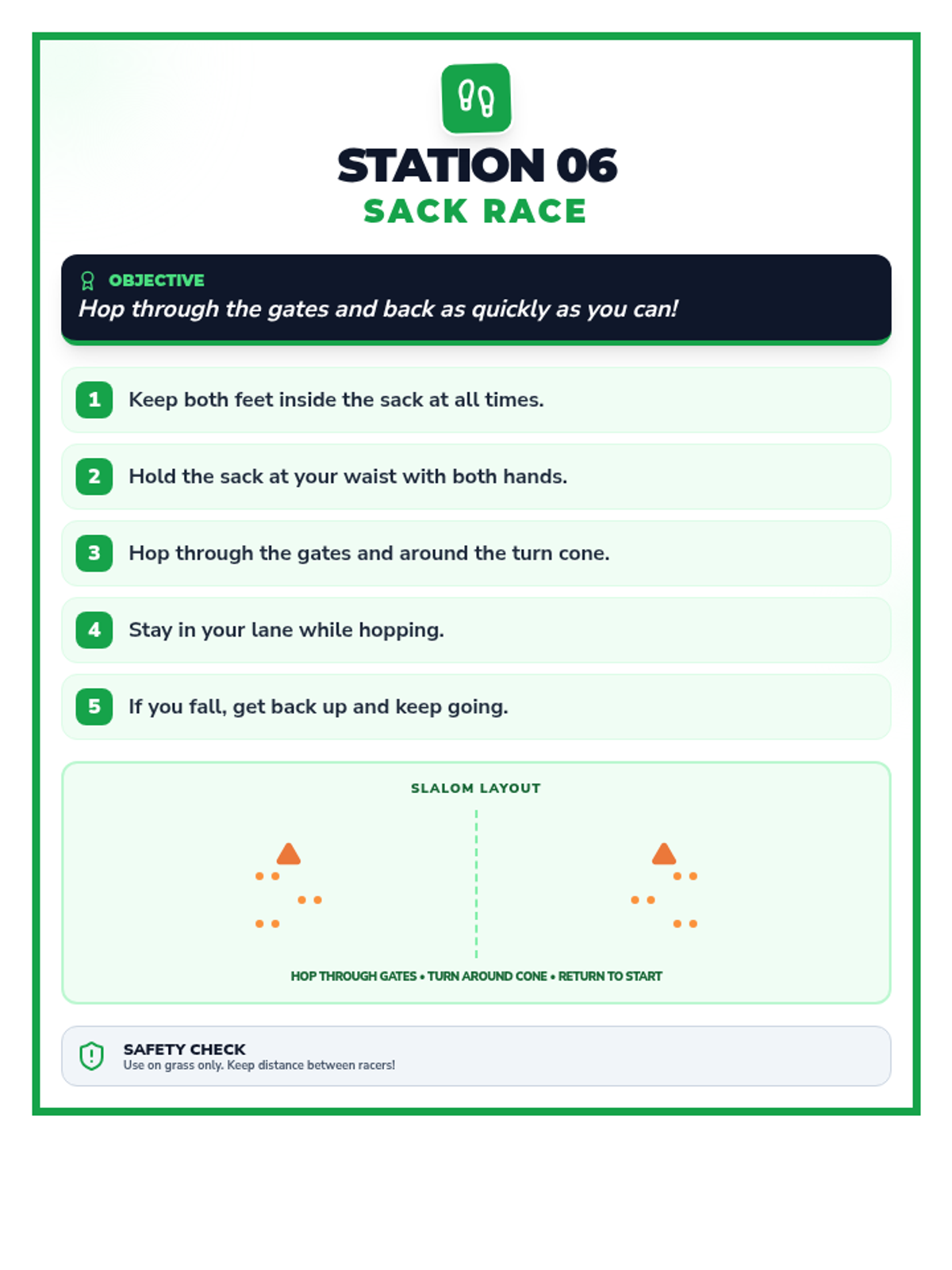
A high-energy station guide for the classic Sack Race, including lane setup diagrams, jumping technique tips, and safety protocols for a fun-filled race.
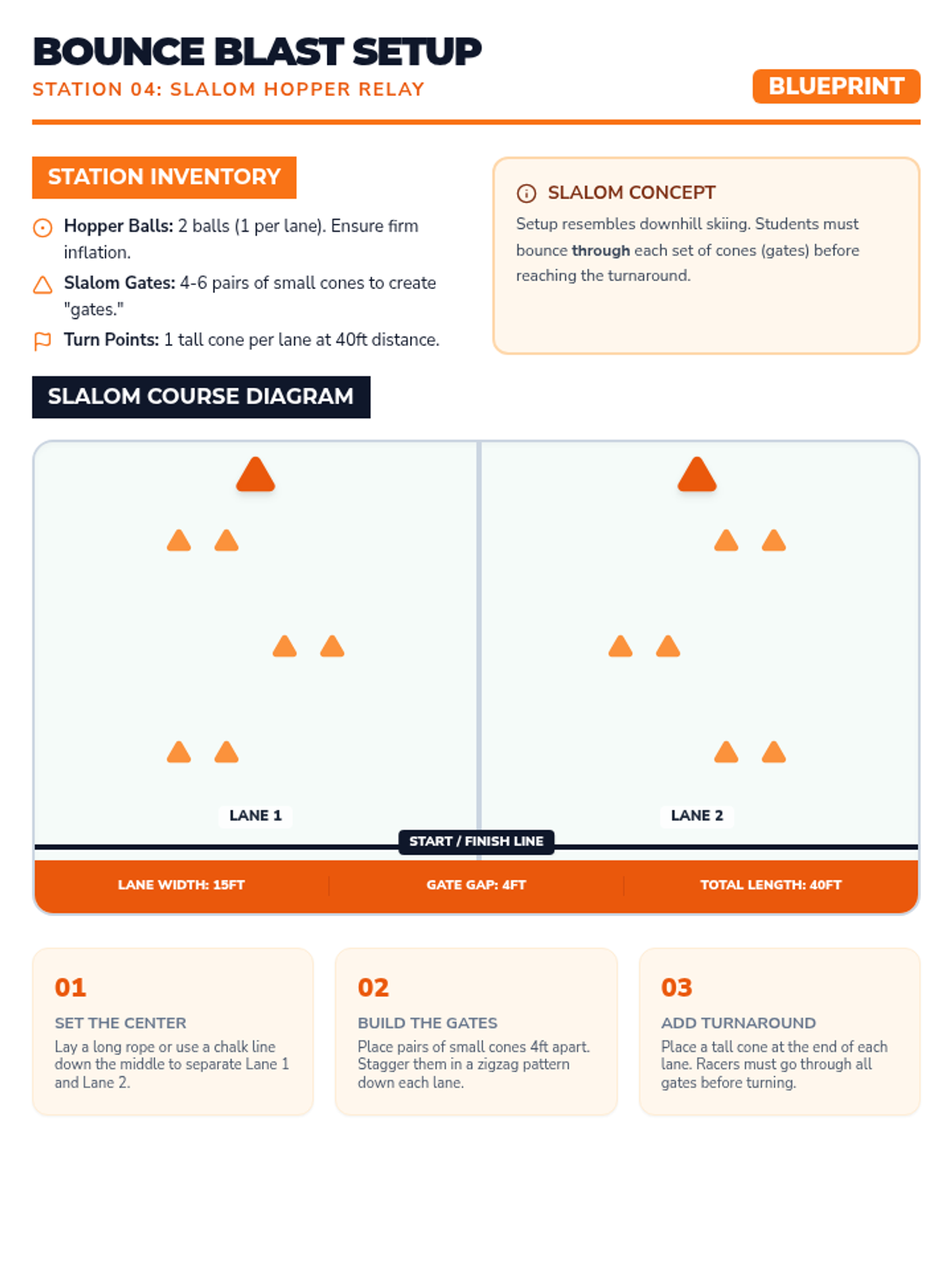
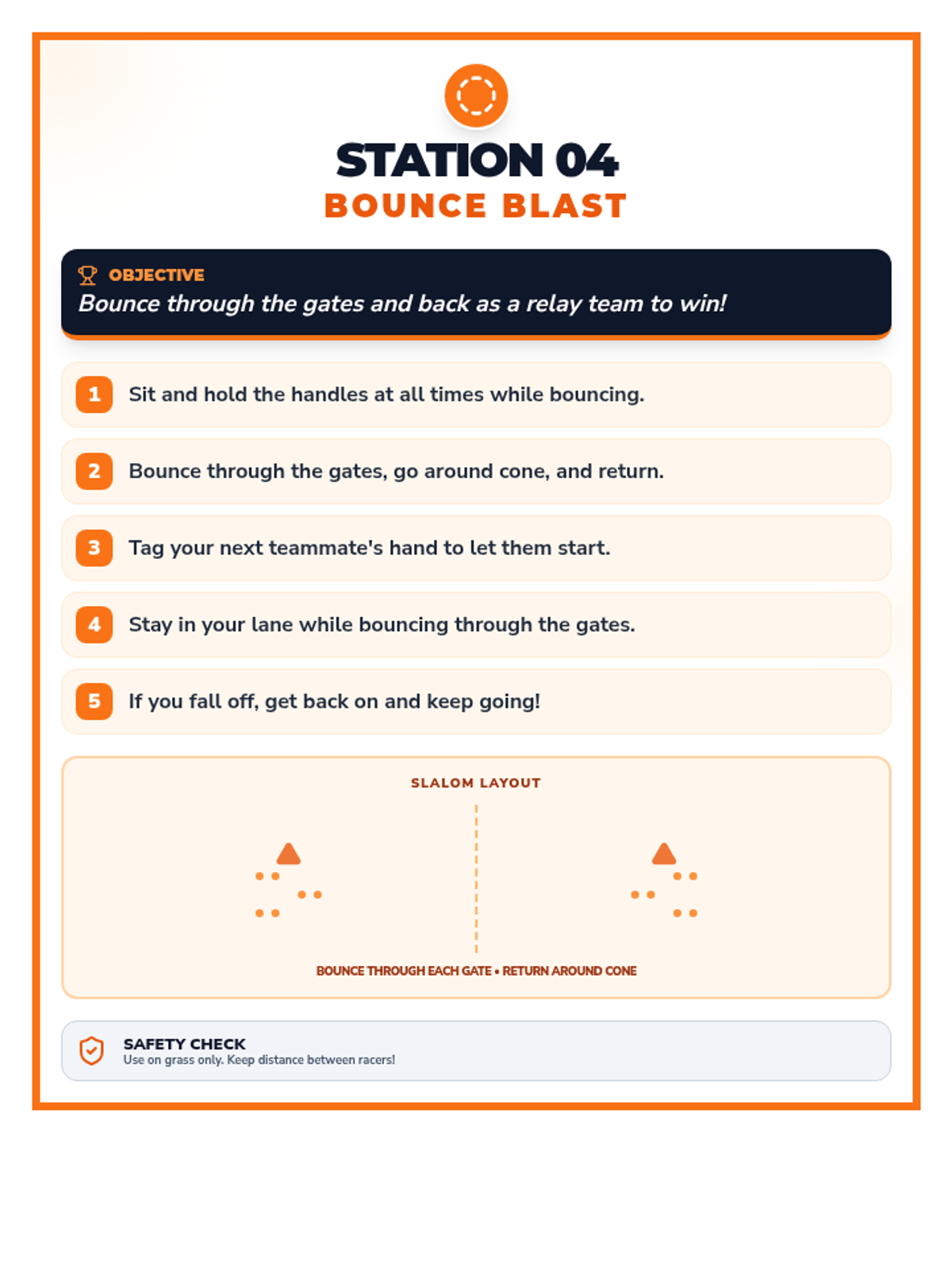
A high-energy relay station guide for the Bounce Blast hopper ball race, including lane setup diagrams, safety protocols, and relay hand-off instructions.
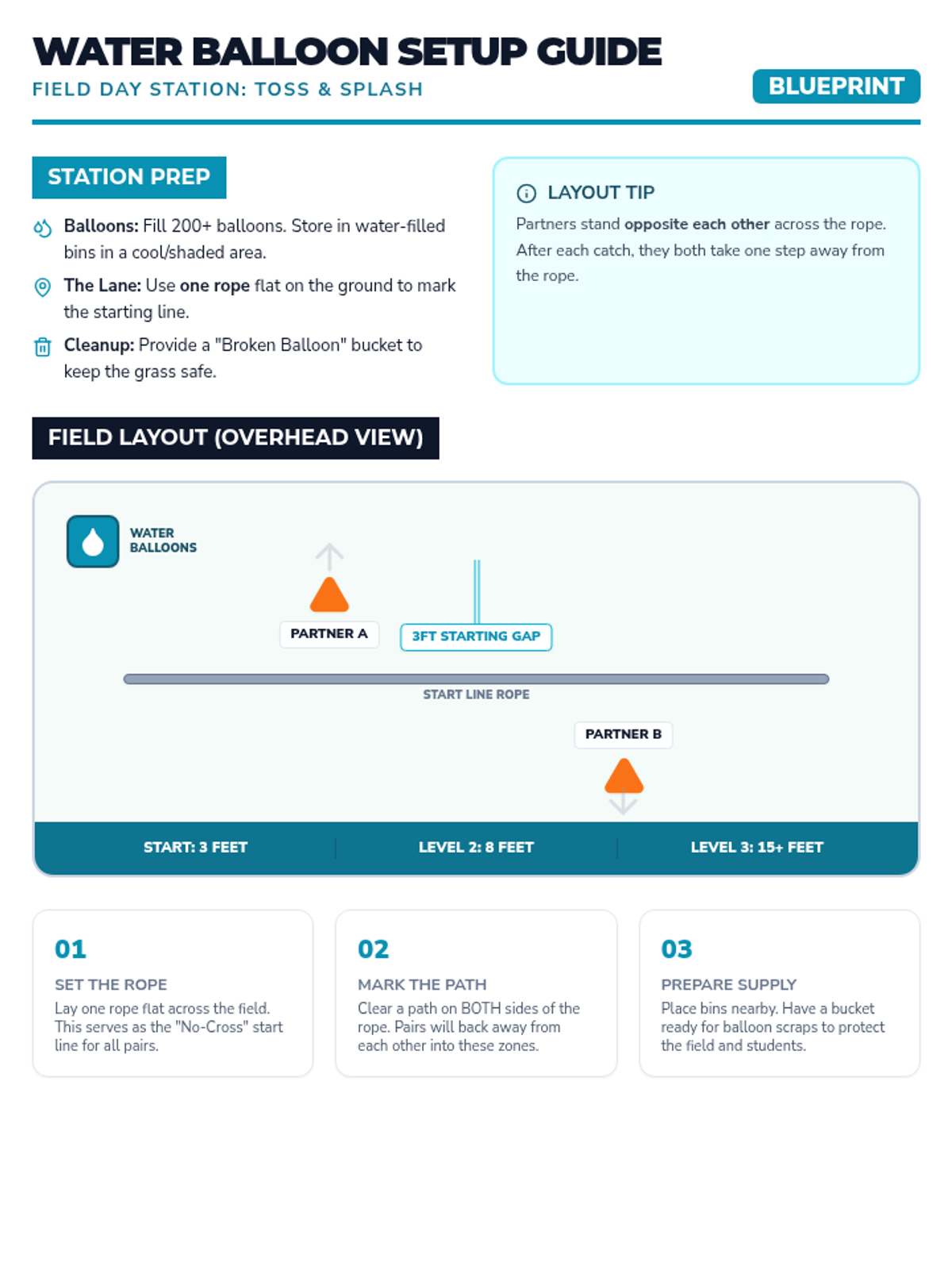
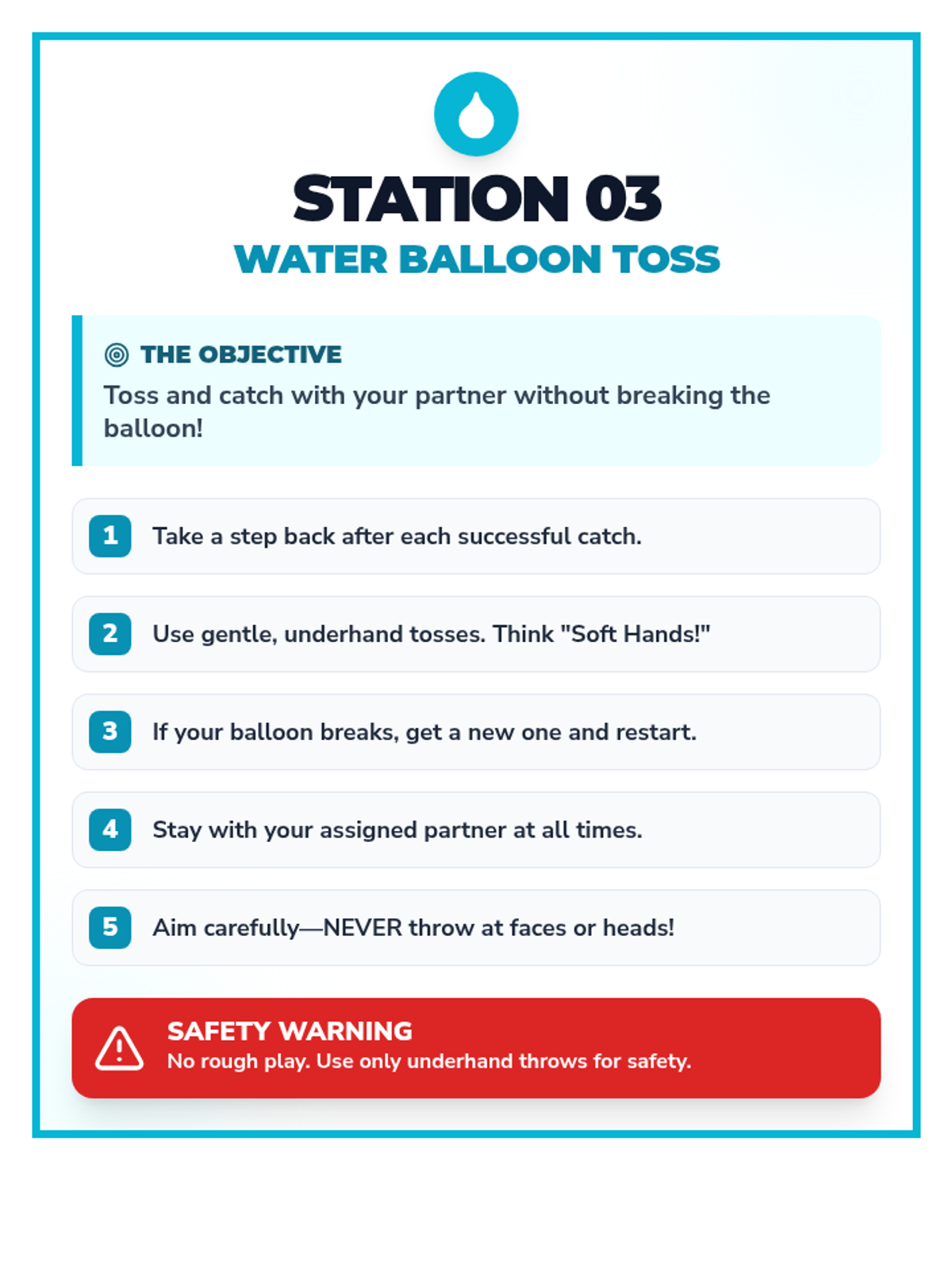
A comprehensive station guide for the Water Balloon Toss, including field setup diagrams, technique tips for catching, and safety protocols for aquatic fun.
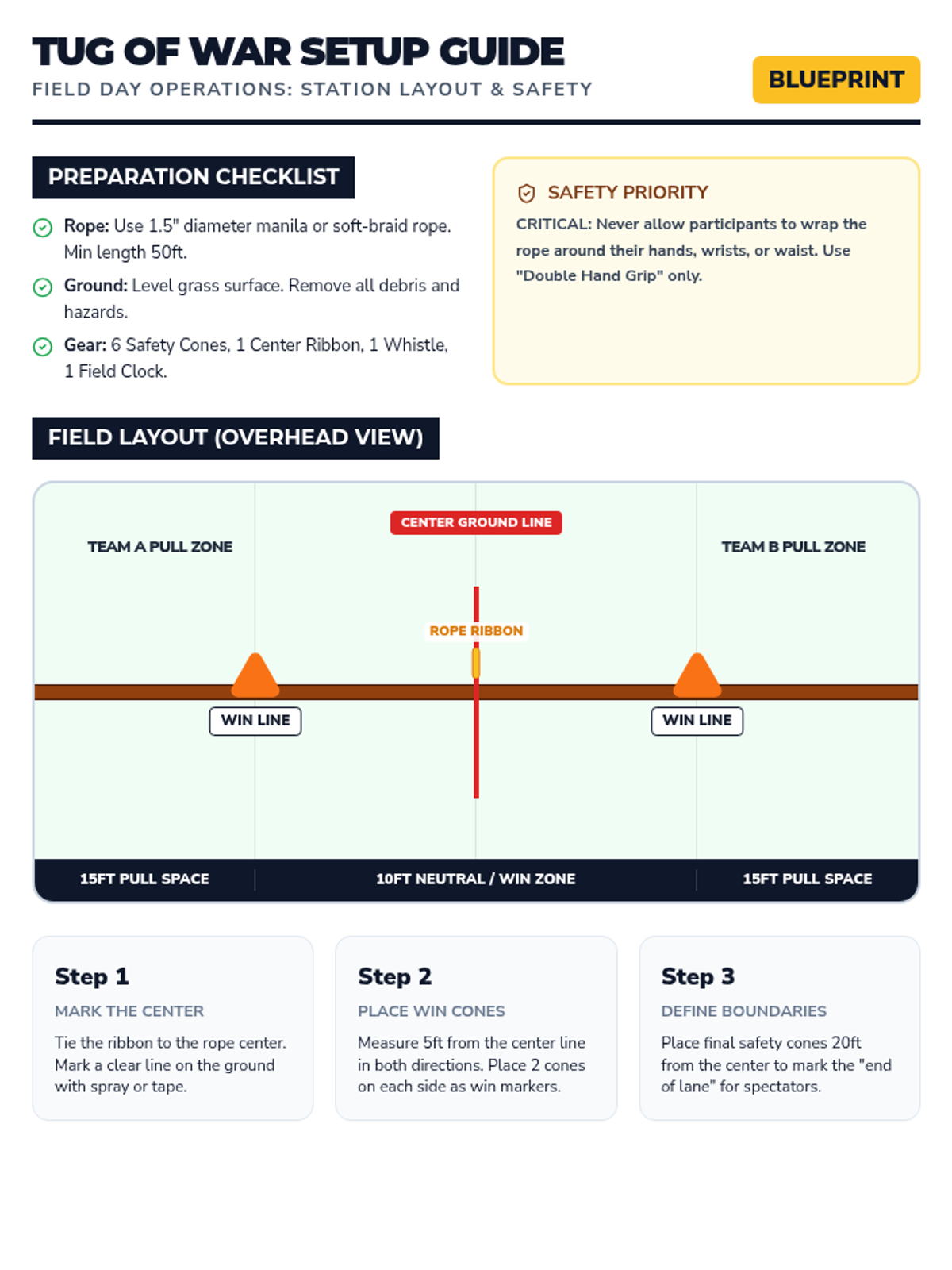
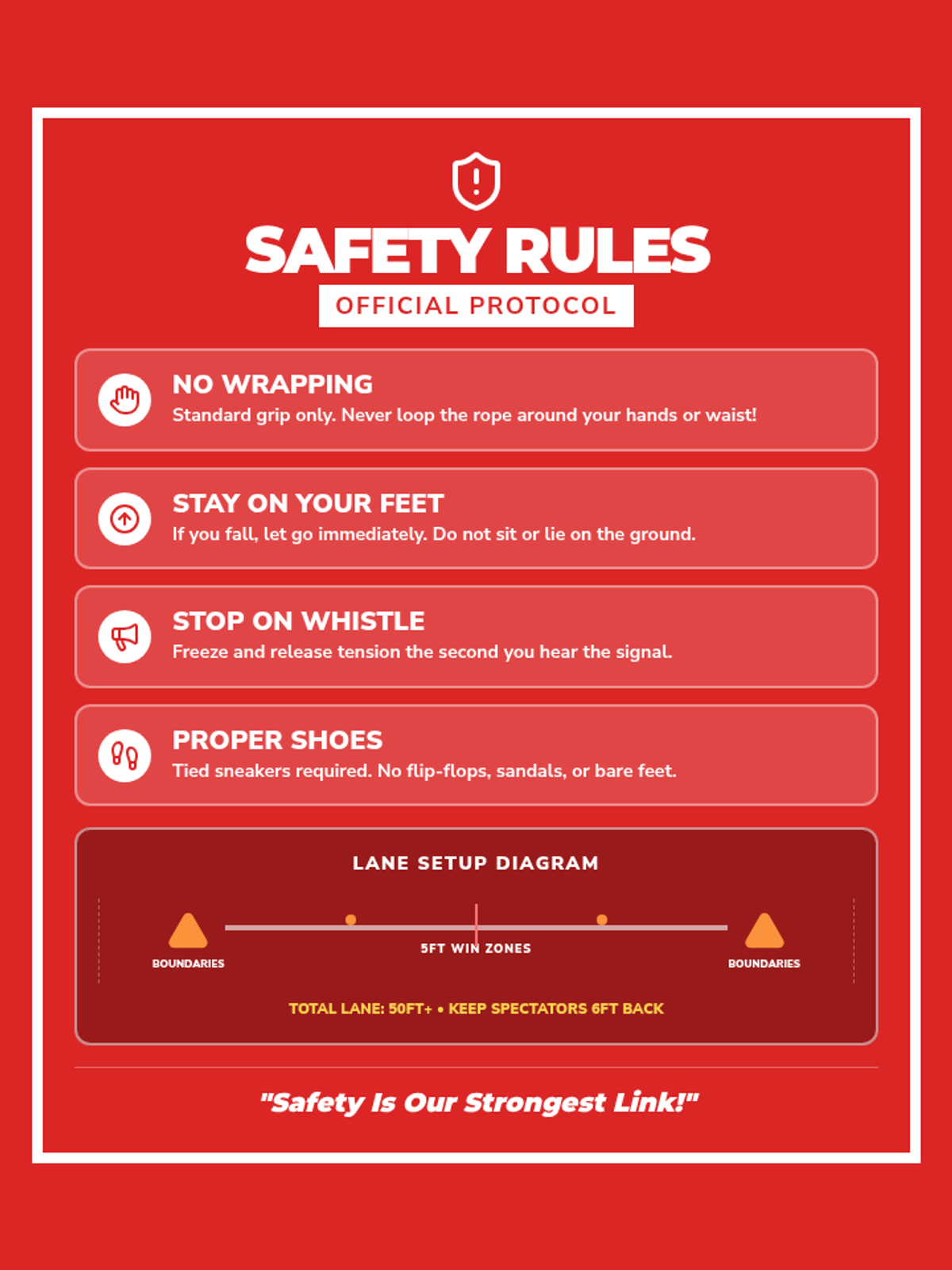
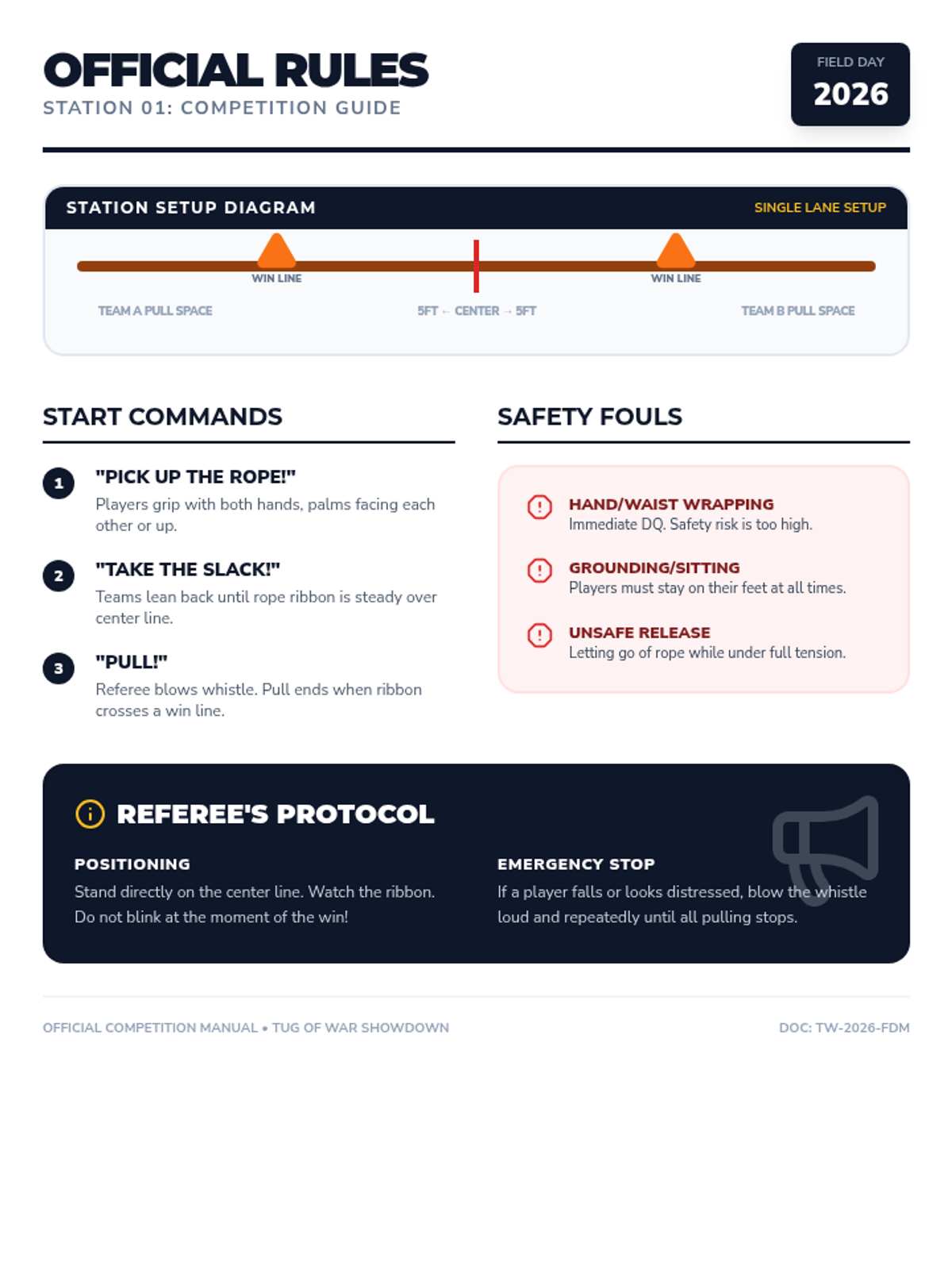
A complete guide for organizing a safe and fun tug of war event, including visual setup diagrams, safety protocols, and official competition rules.
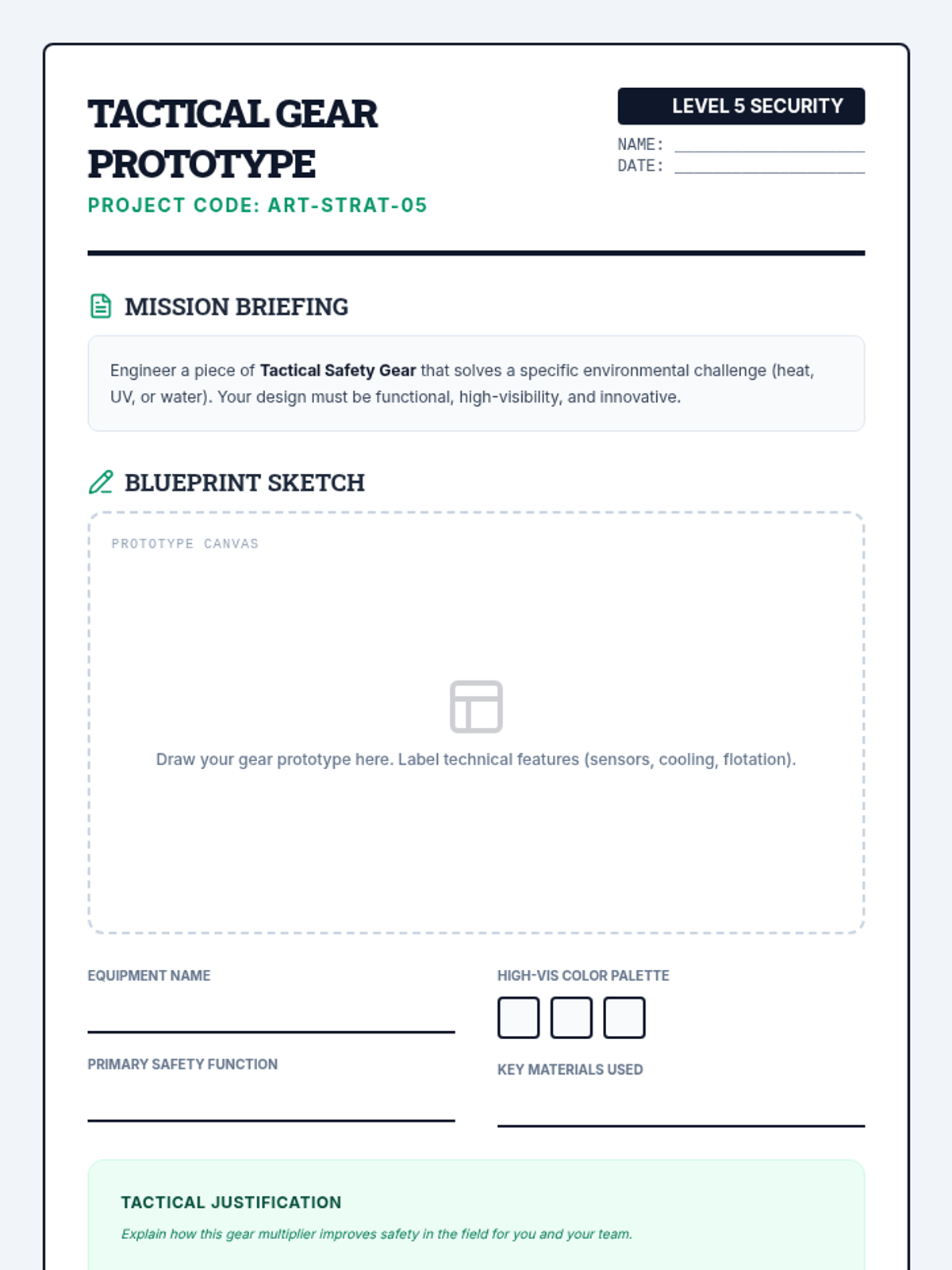
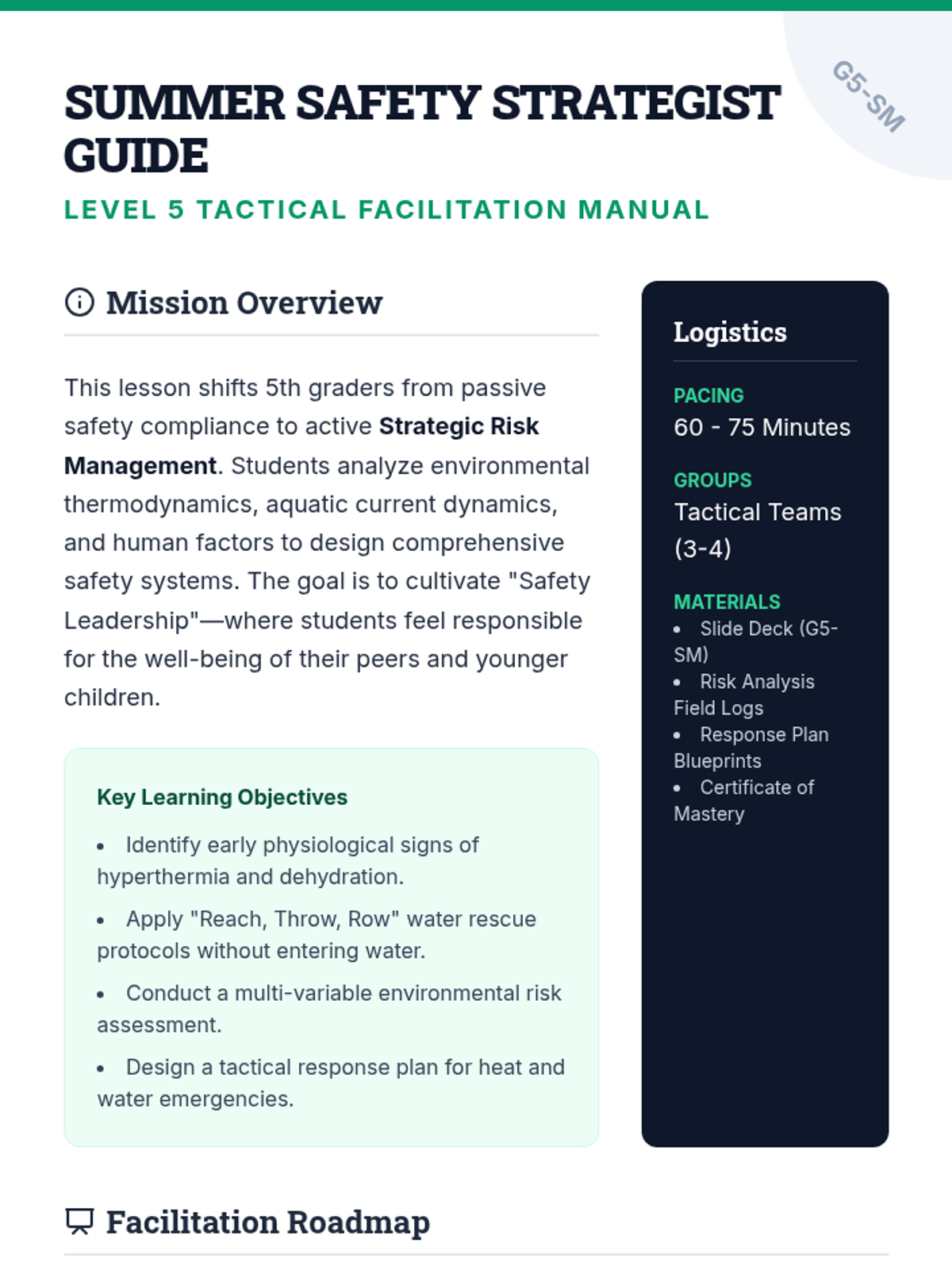
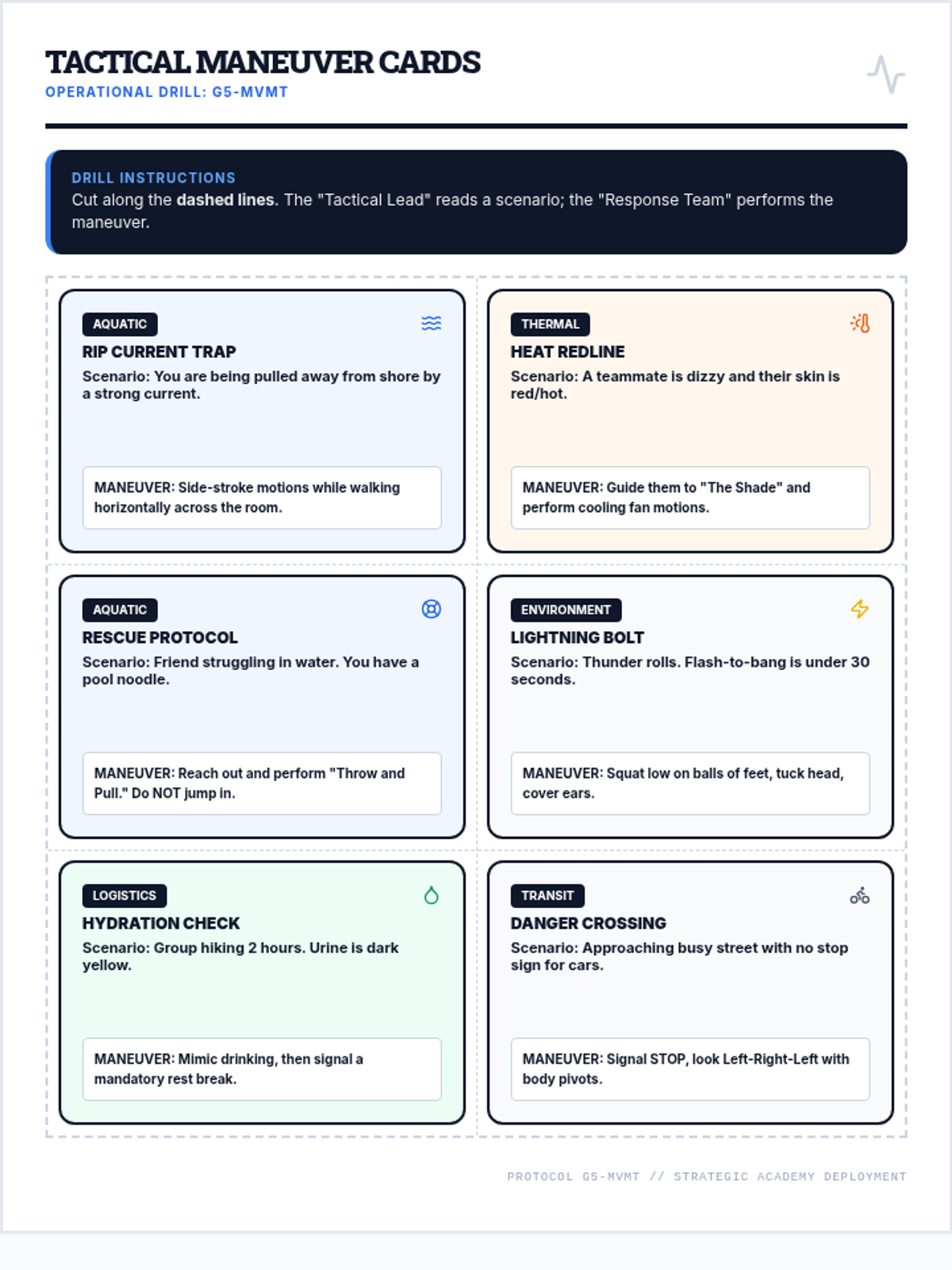
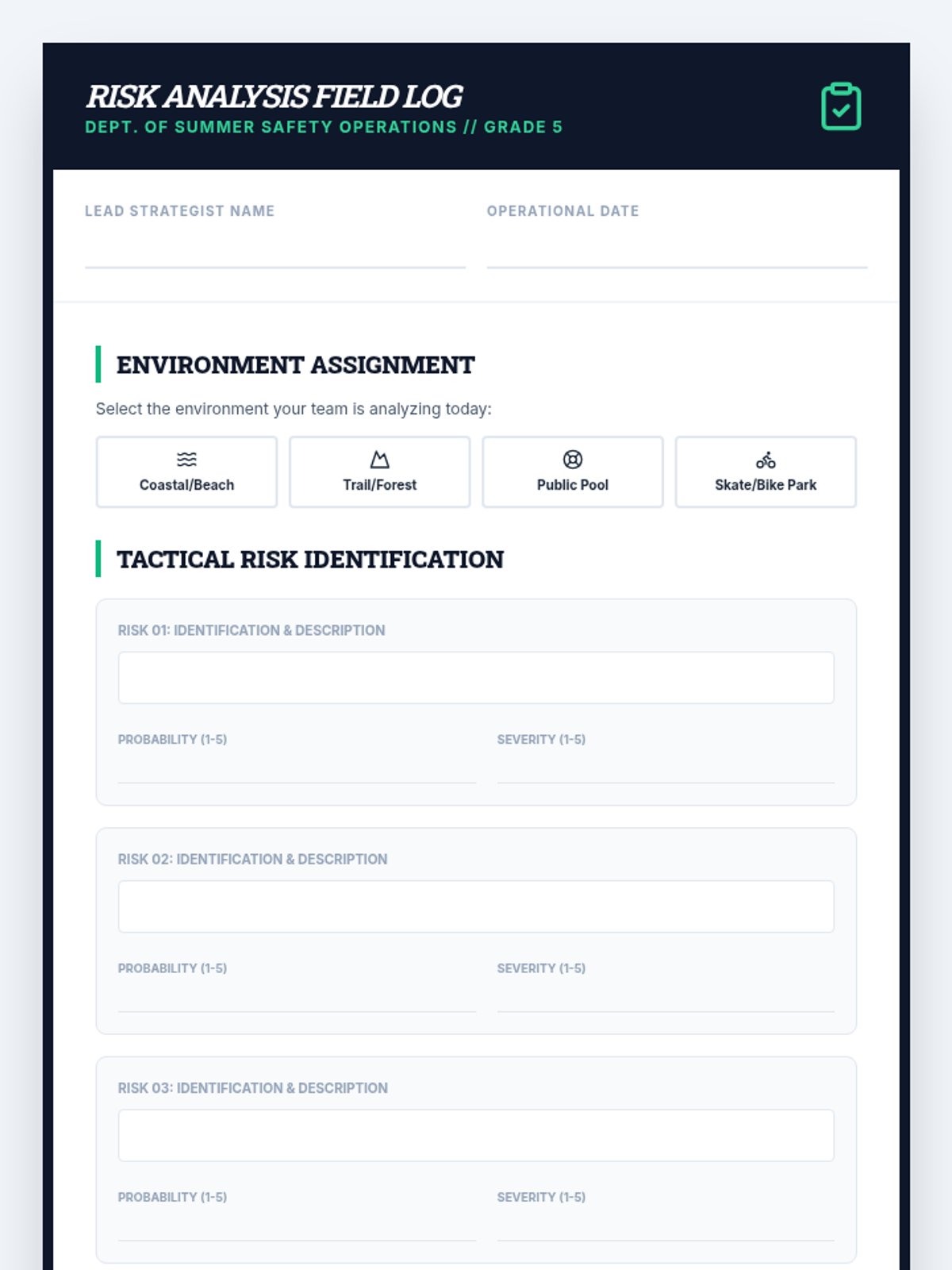
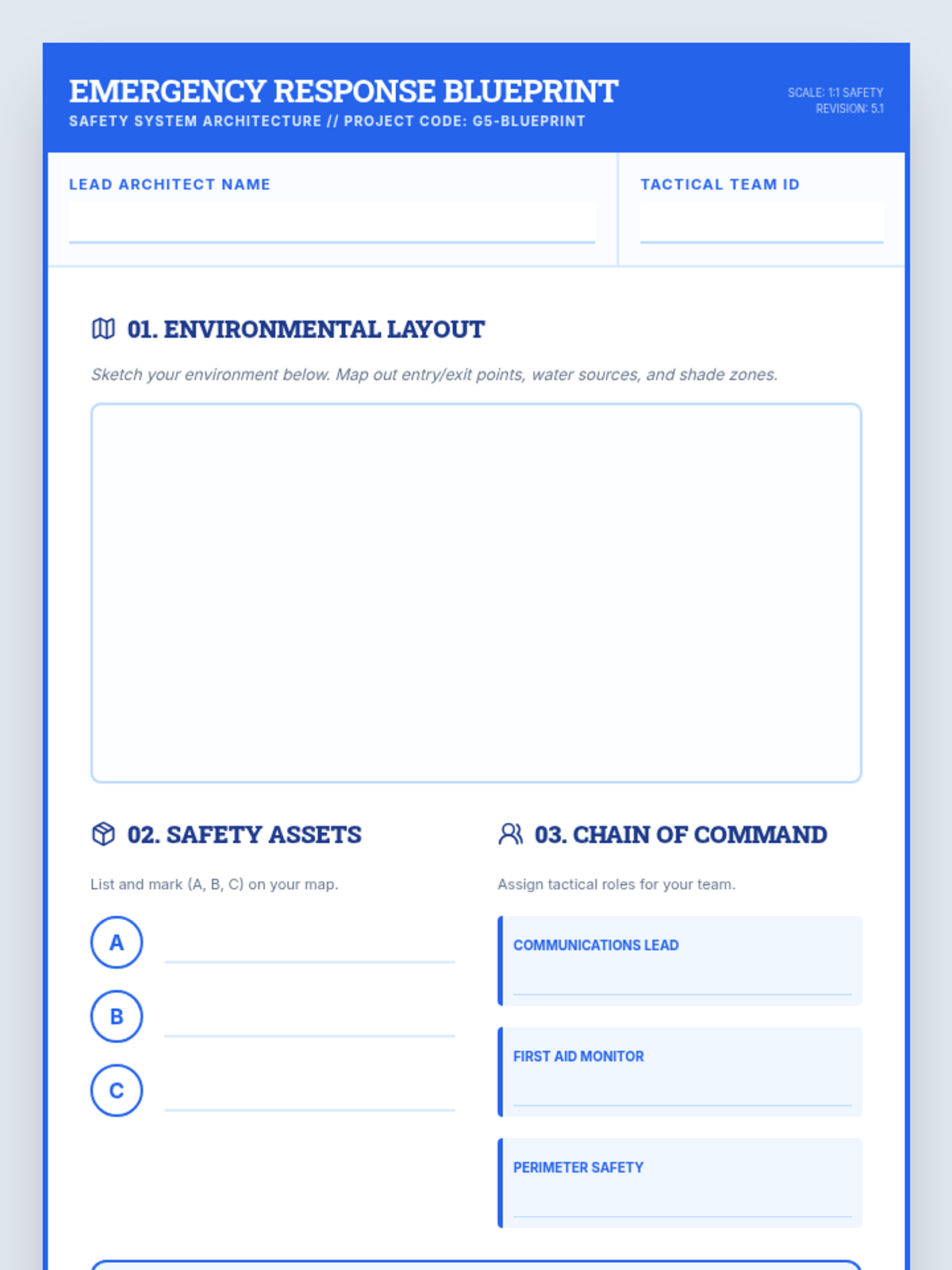
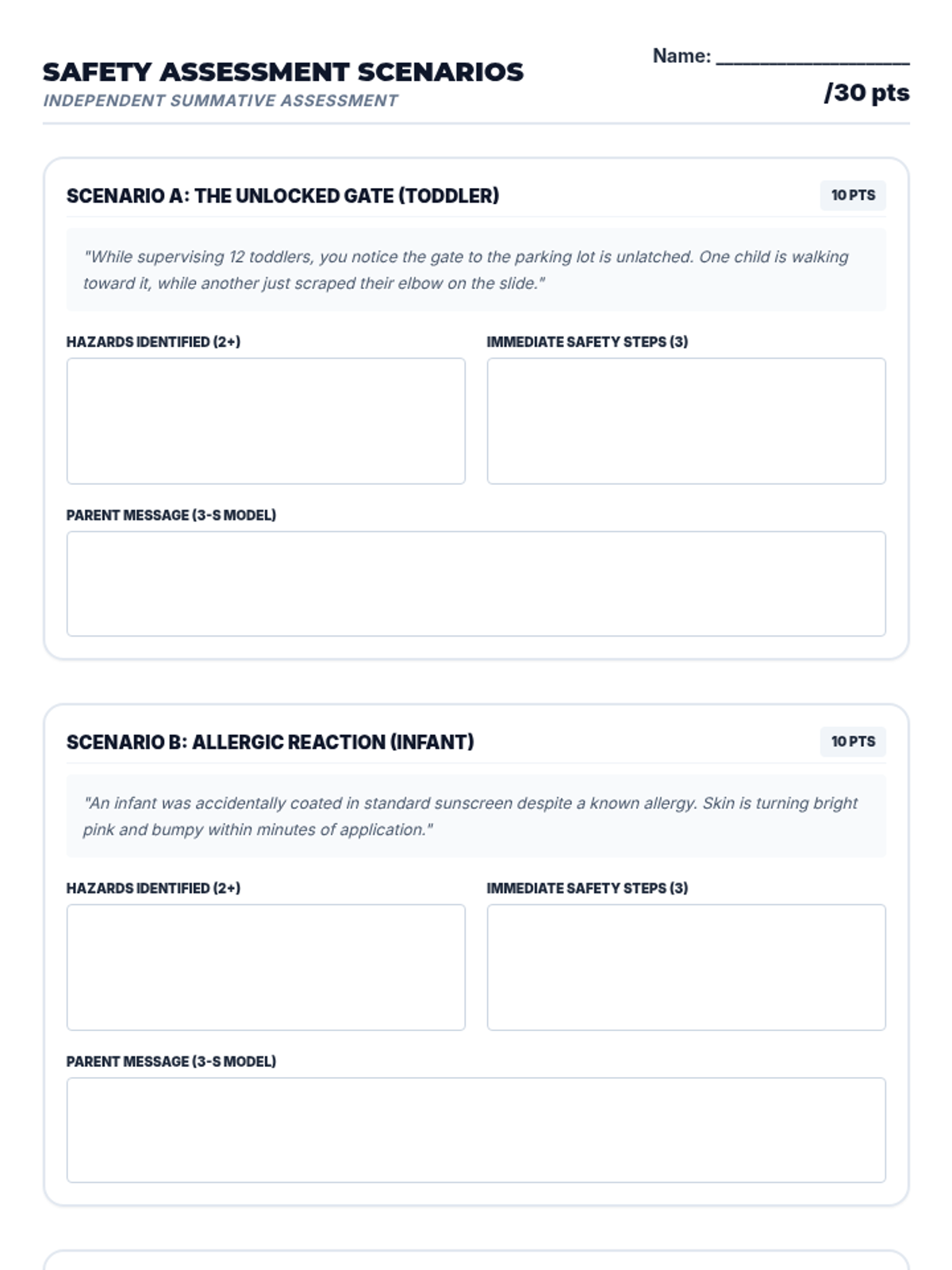
An advanced summer safety lesson for 5th graders focused on leadership, environmental health, and complex risk management strategies. Students analyze scenarios and design comprehensive safety systems.
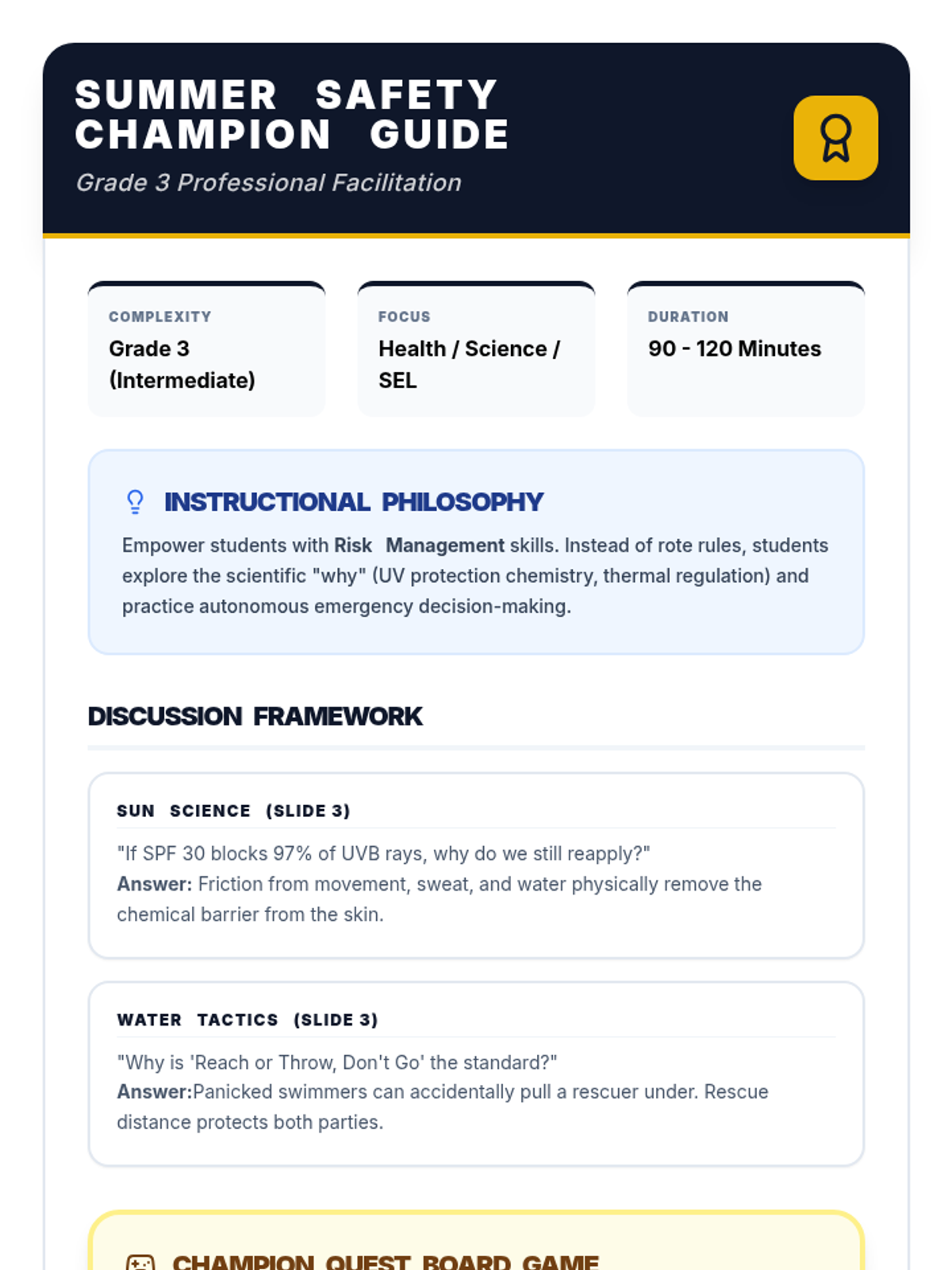
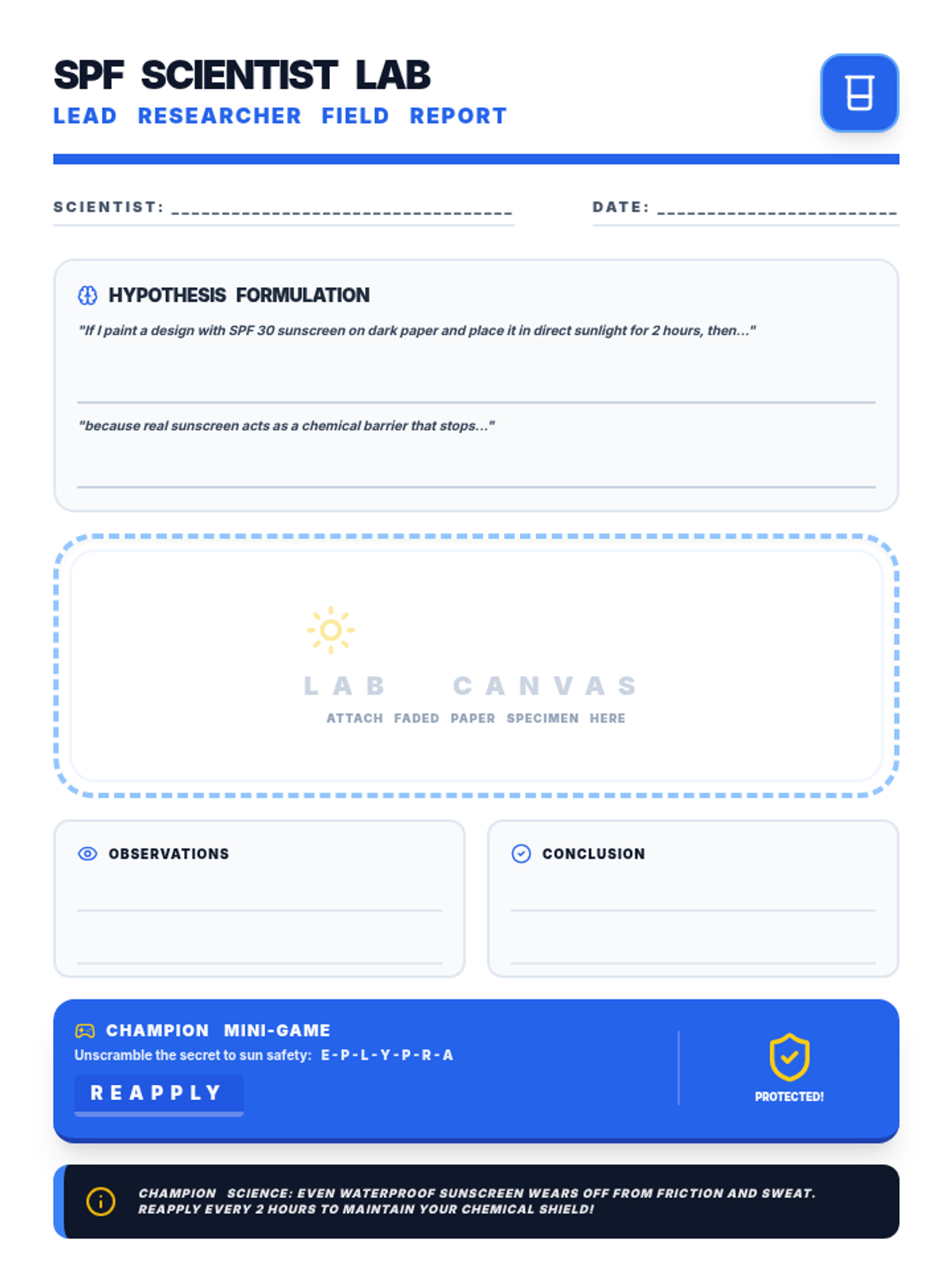
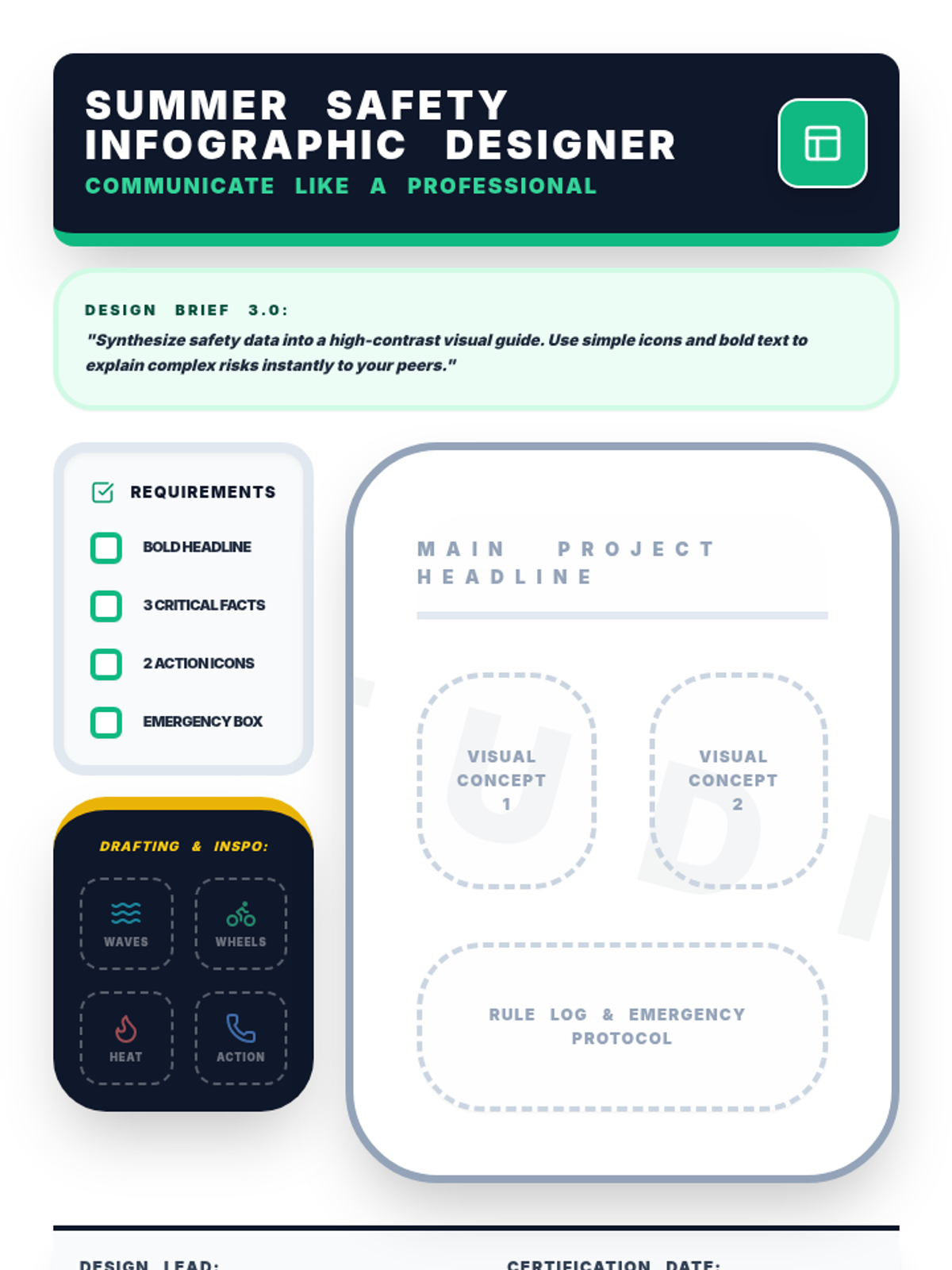
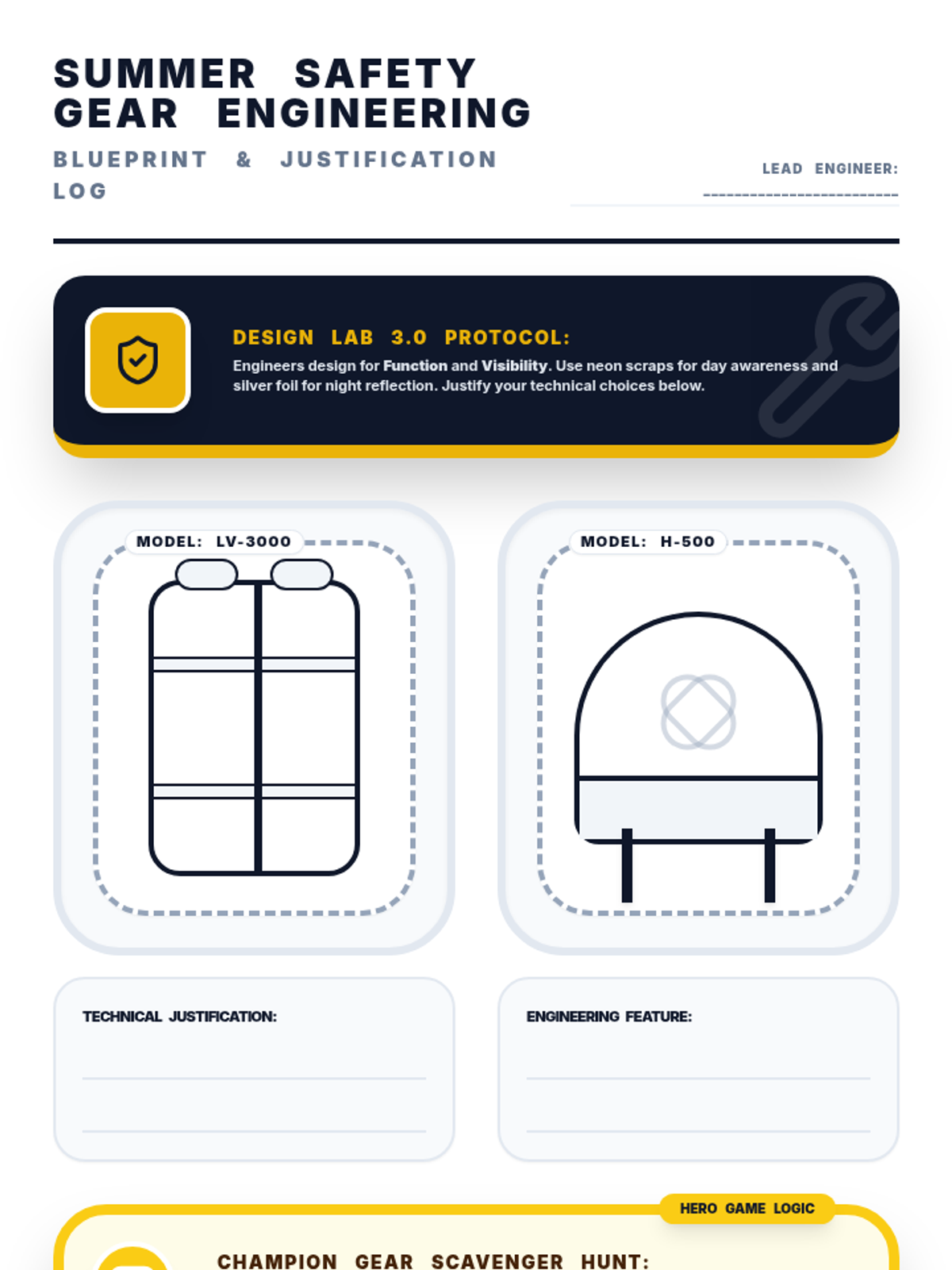
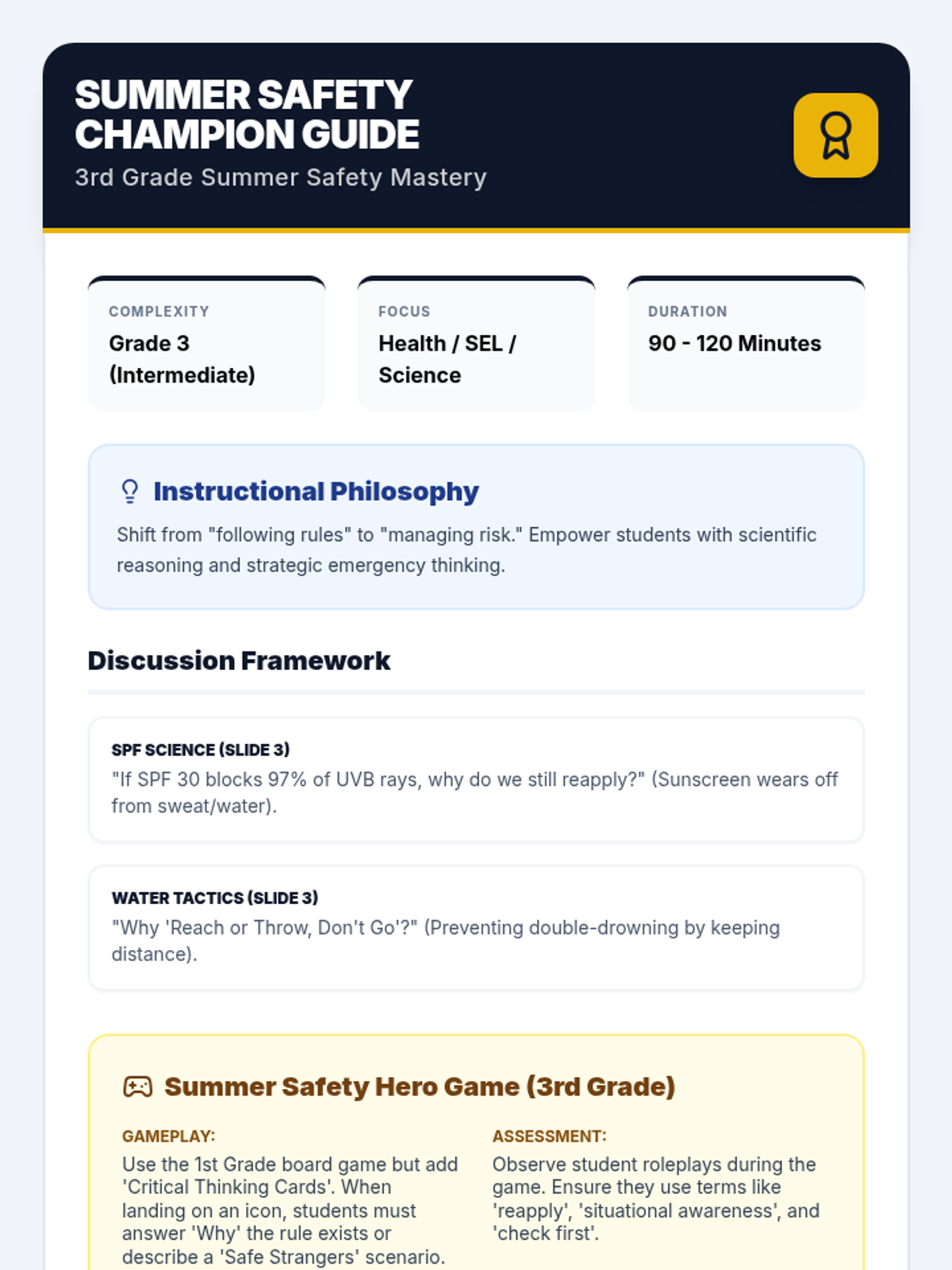
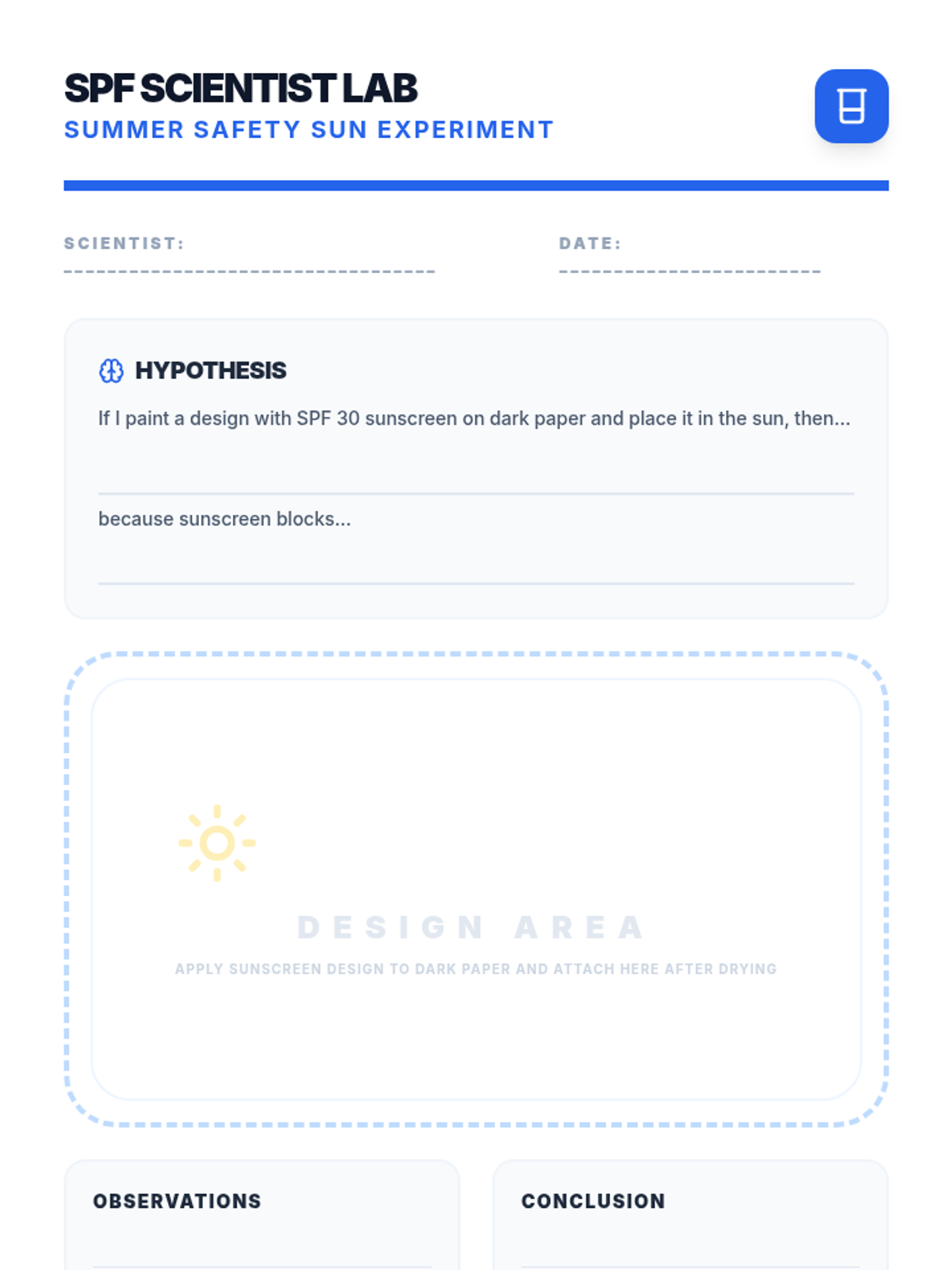
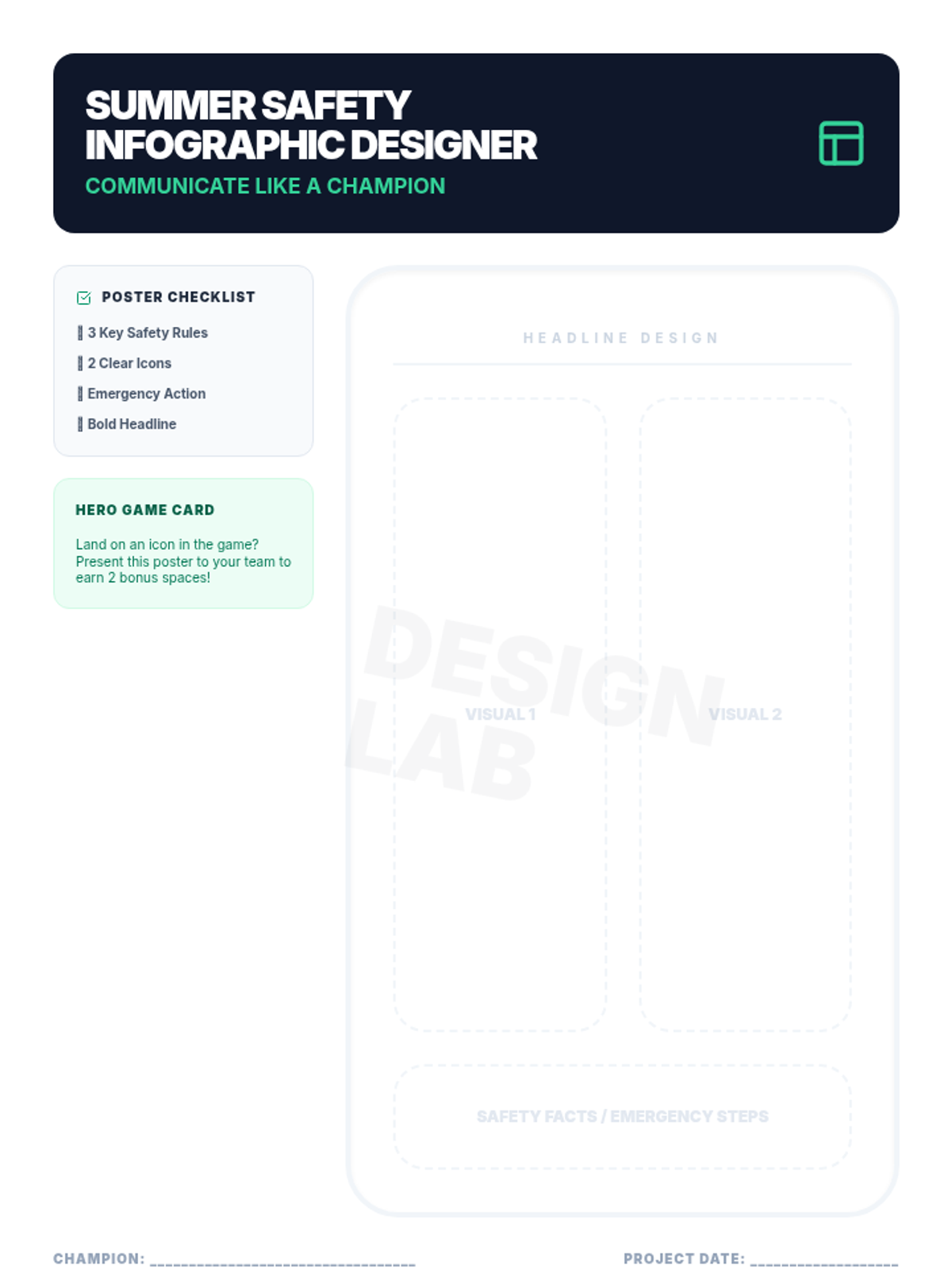
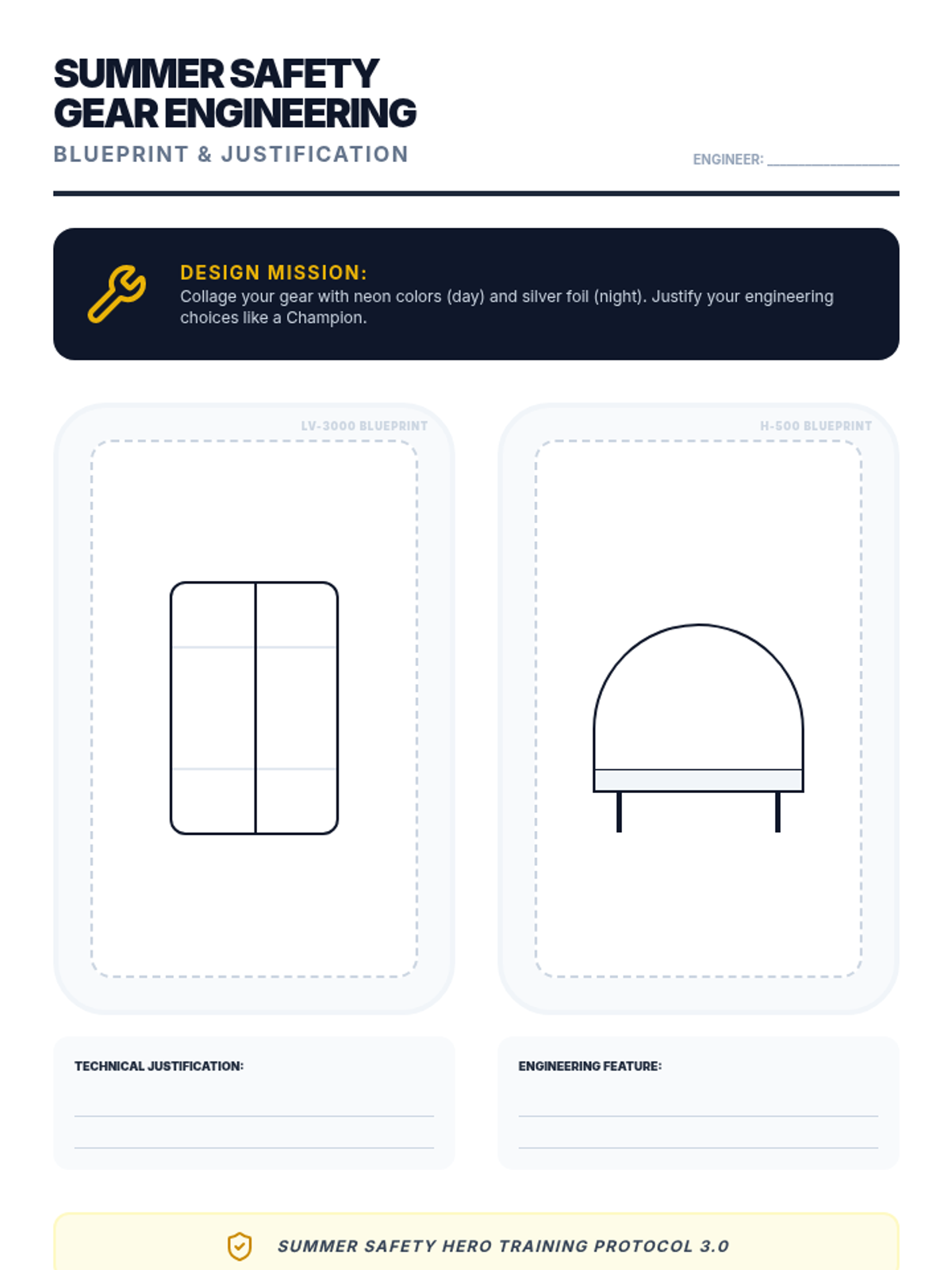
An advanced summer safety lesson for 3rd graders focused on scientific principles of protection, risk management strategies, and professional safety design.
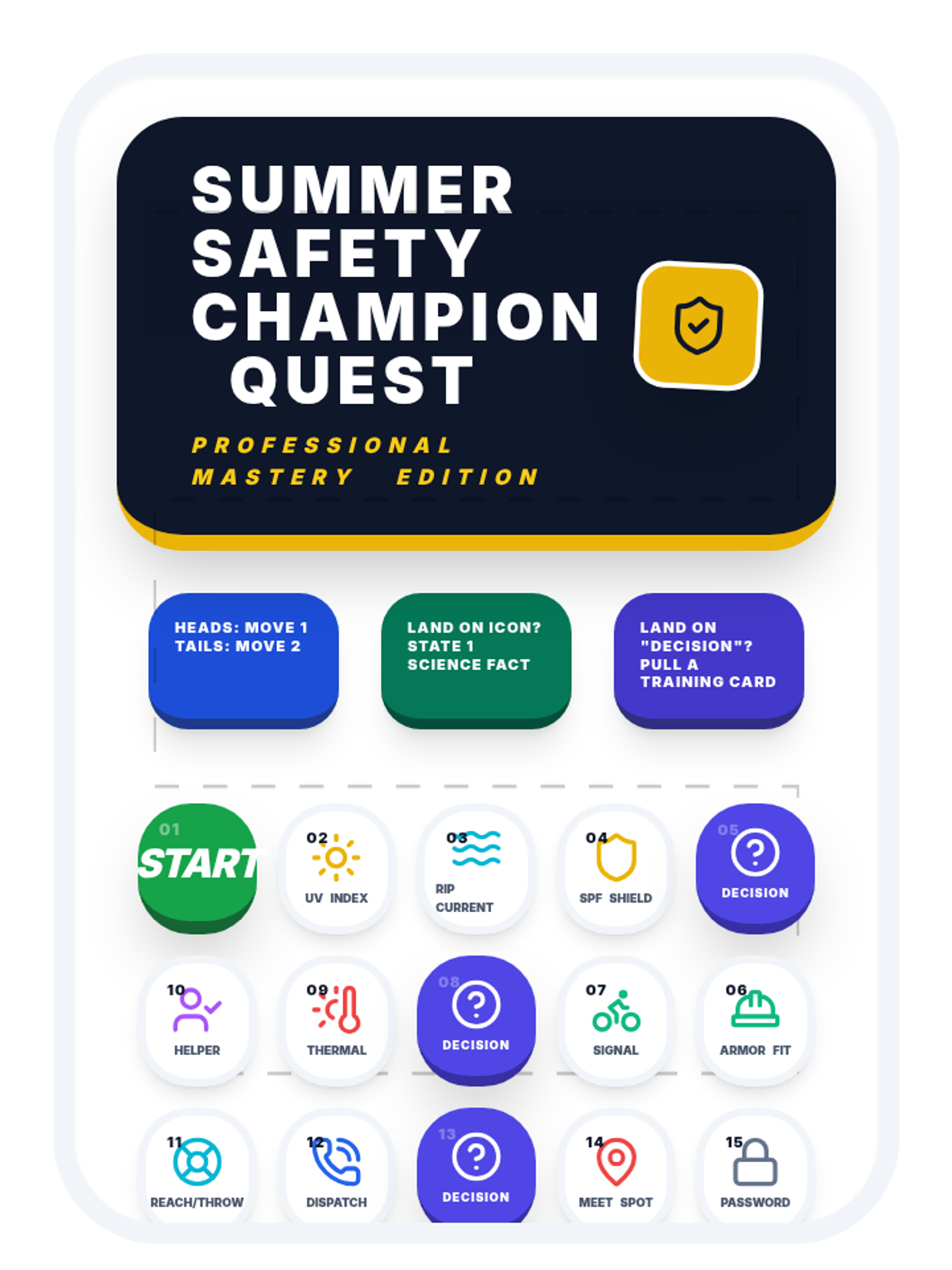
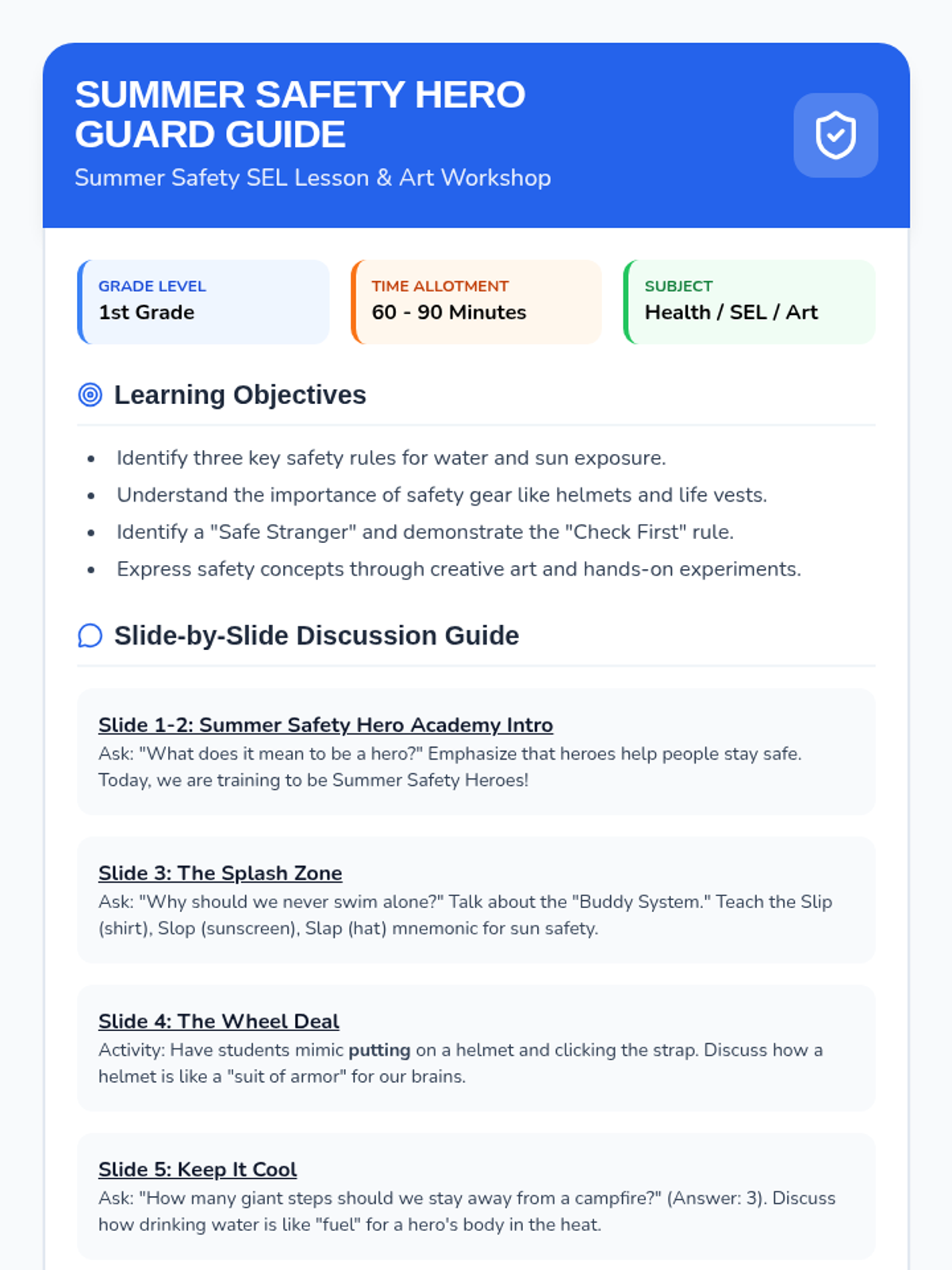
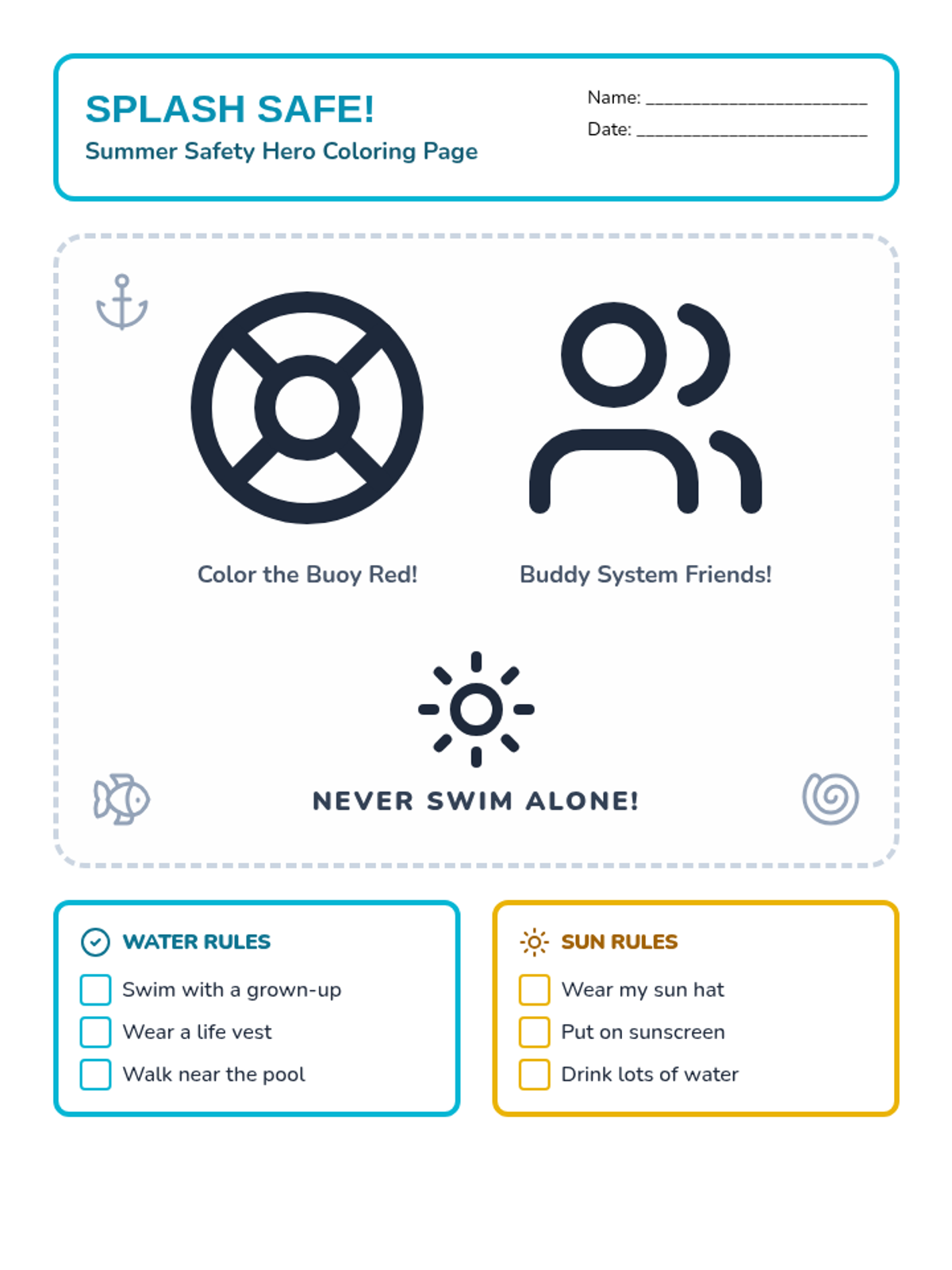
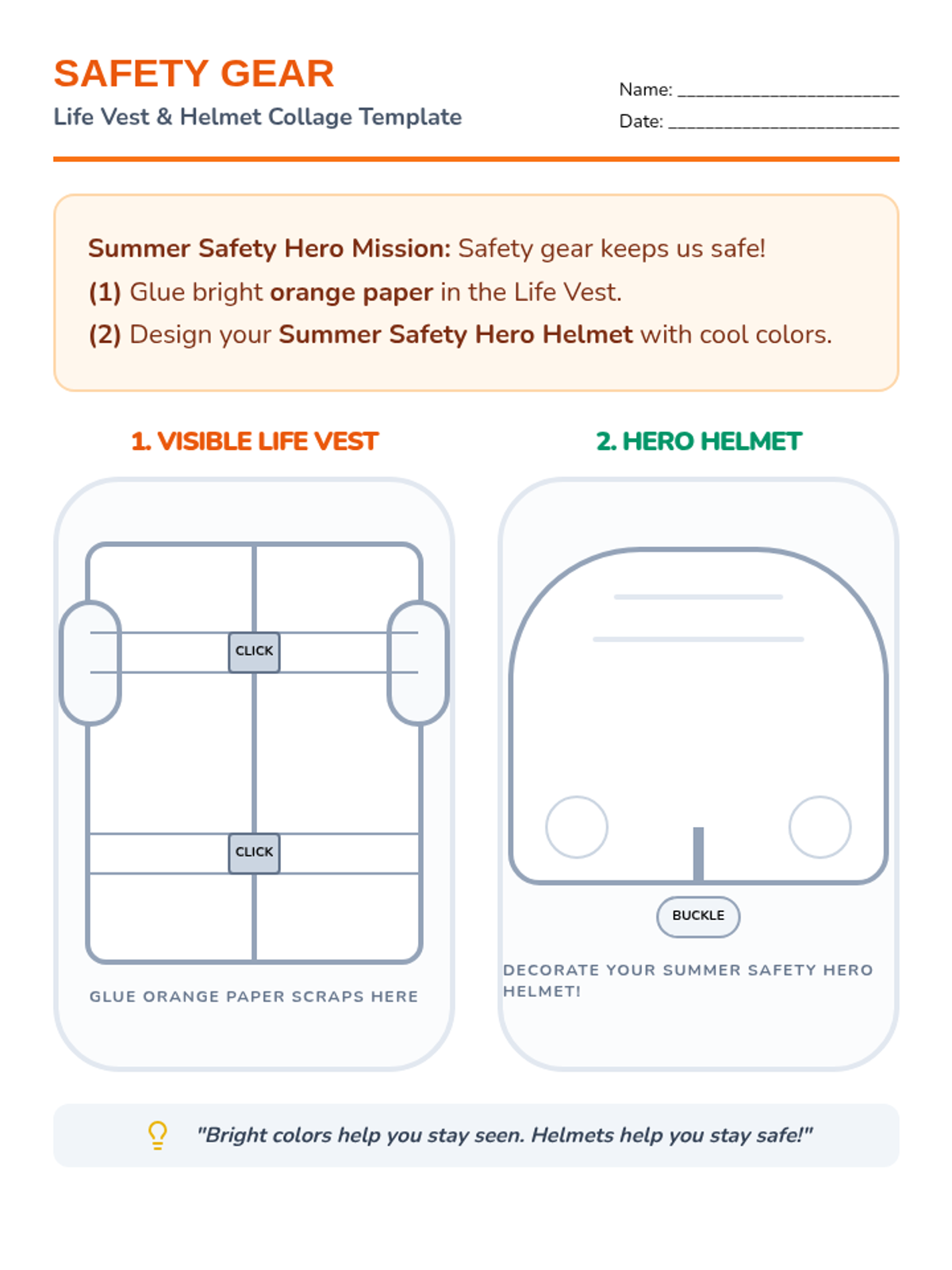
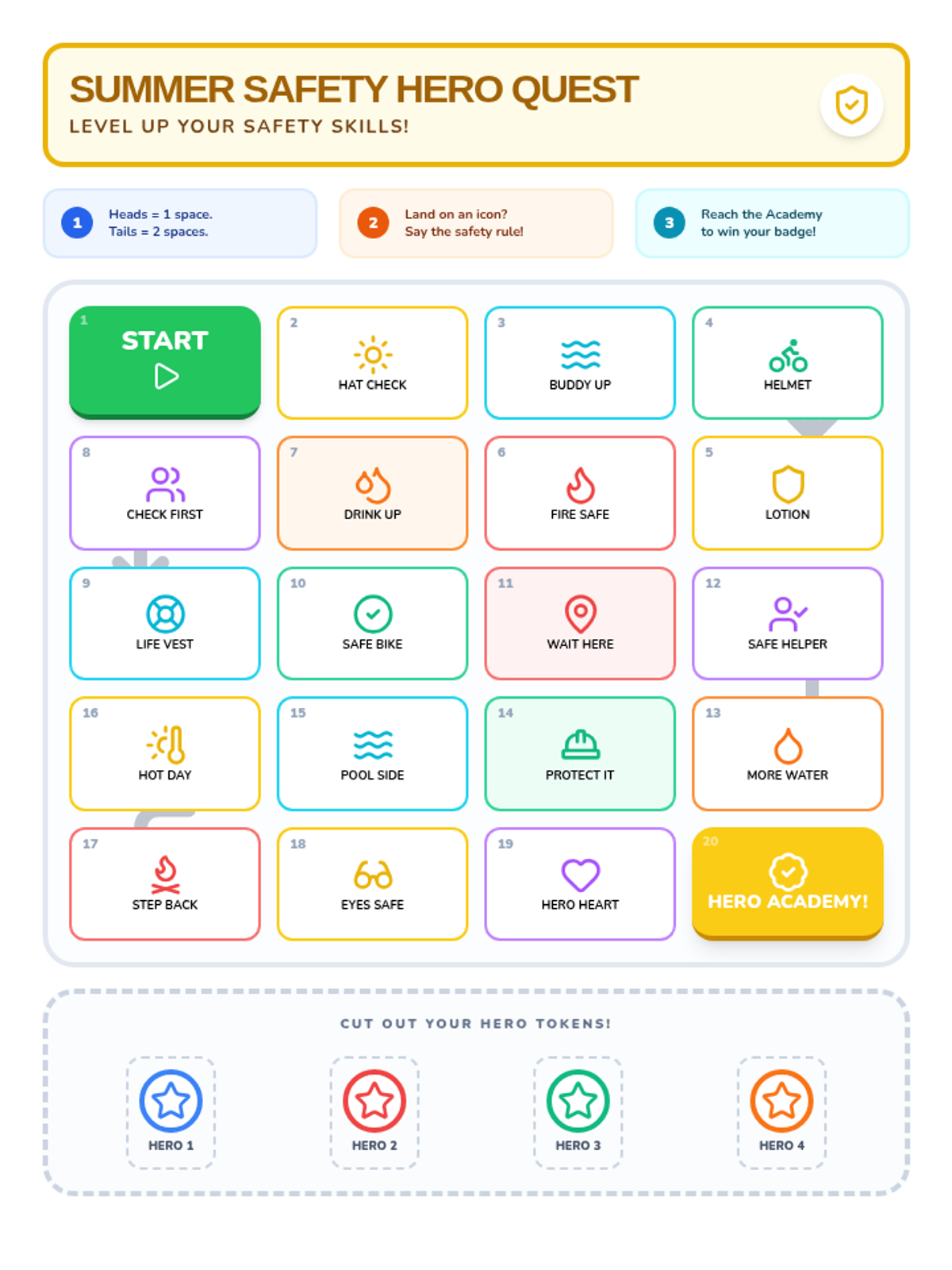
A comprehensive social-emotional learning lesson for 1st graders focused on staying safe during summer activities. Students will learn about sun, water, bike, fire safety, and personal safety through interactive slides and creative art projects.
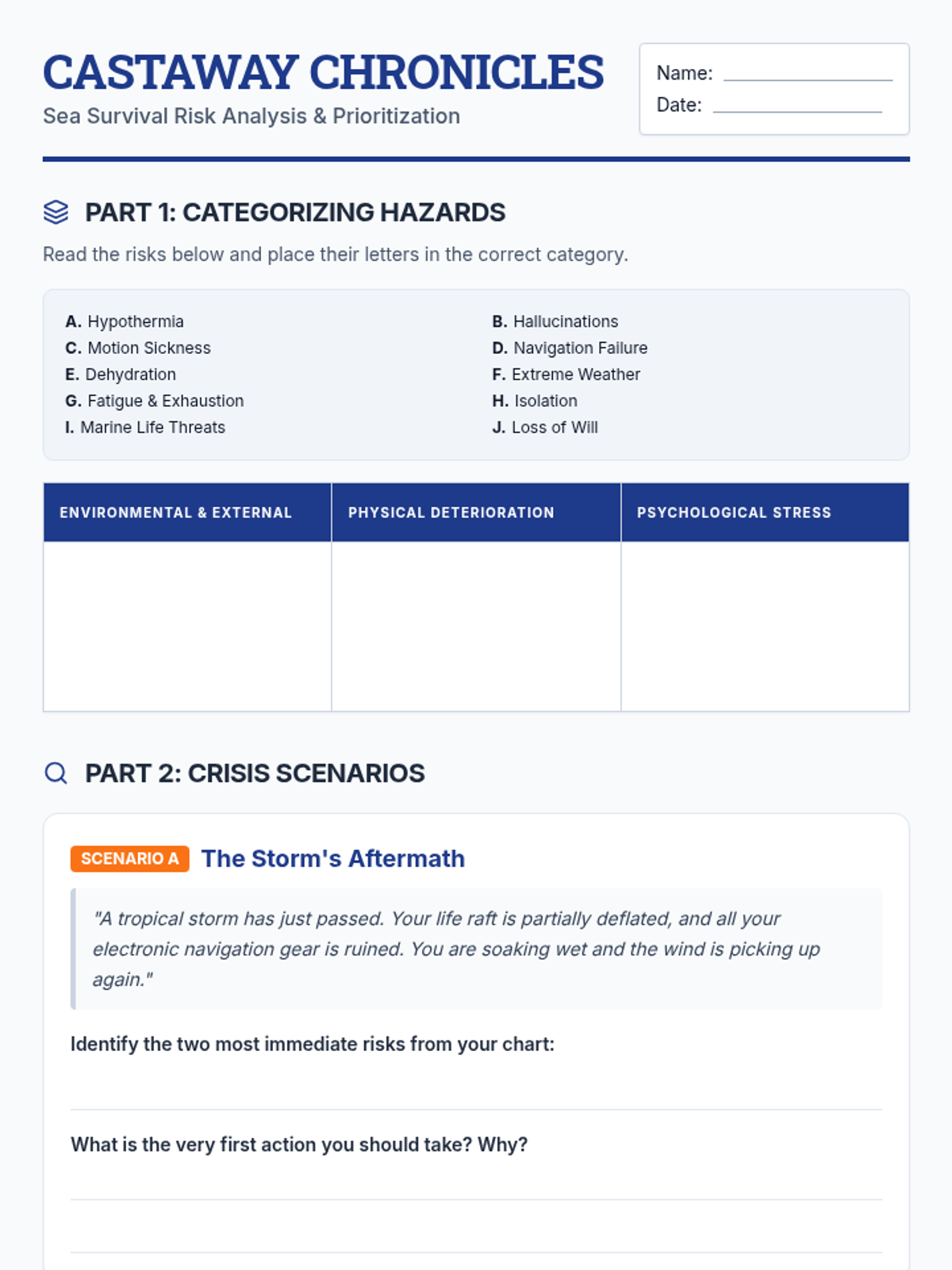
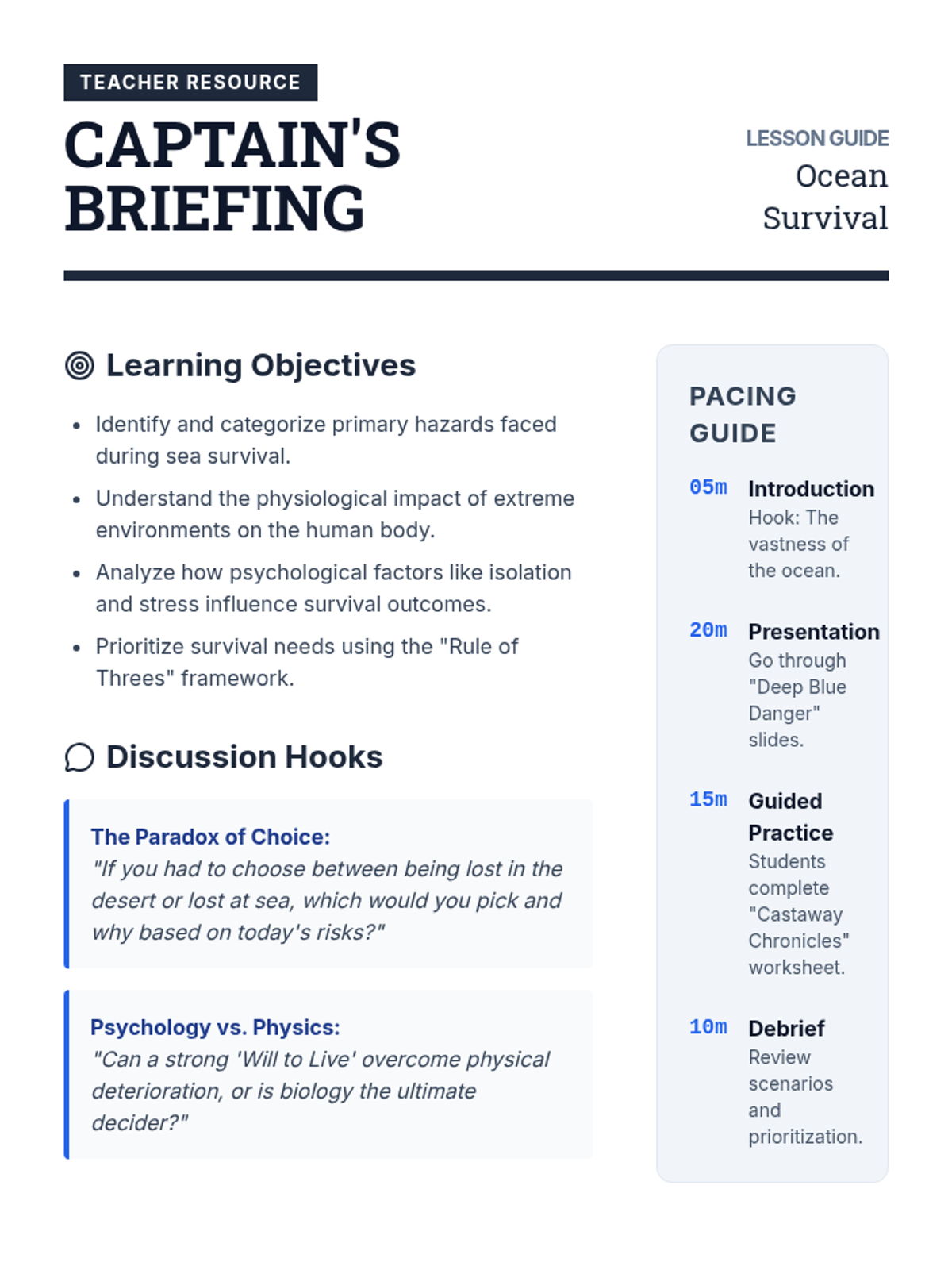
A comprehensive look at the physical, environmental, and psychological risks of being lost at sea, focusing on survival strategies and the human body's limits.
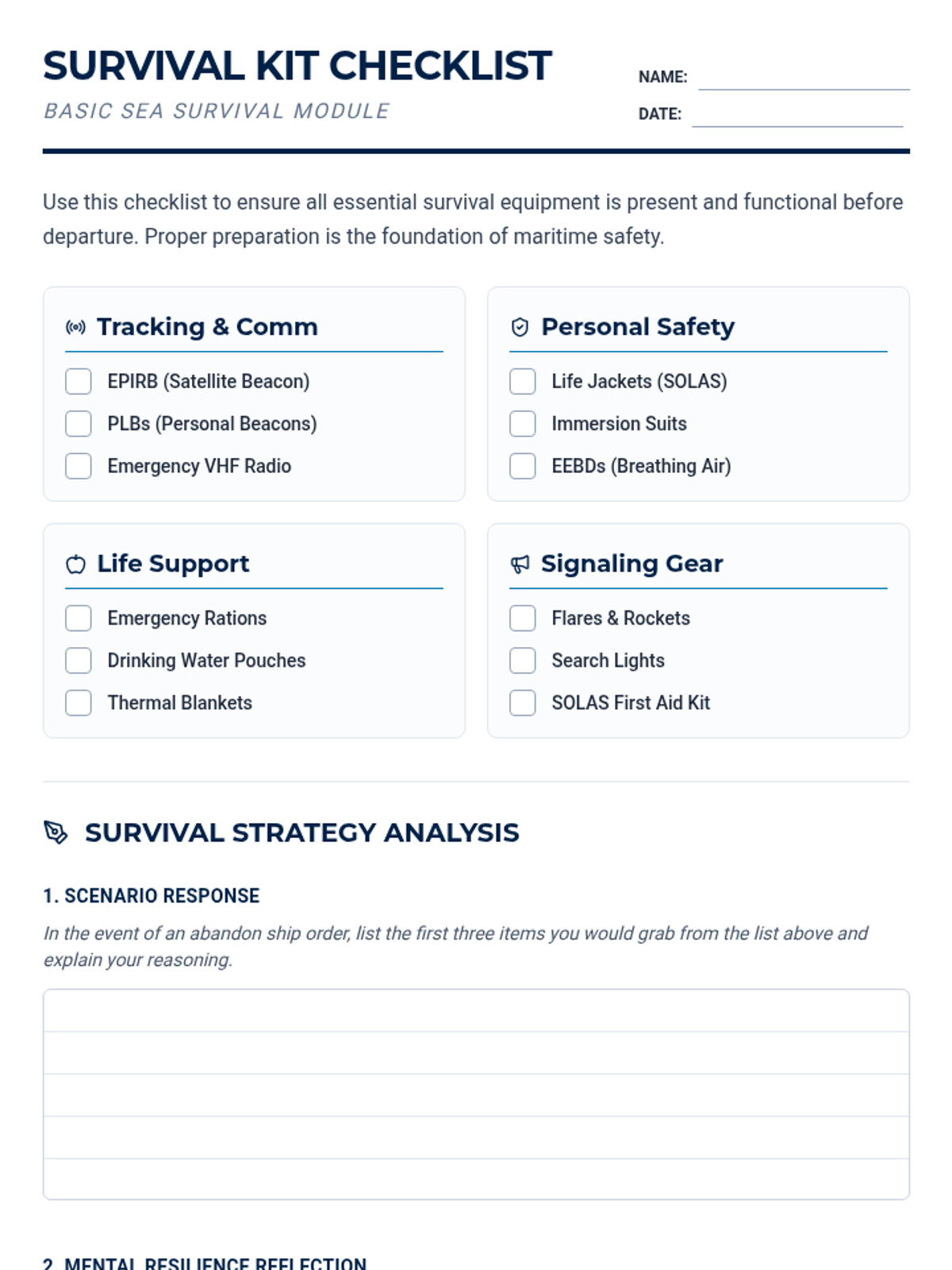
Students will learn the essential pillars of maritime survival, including risk management, technical equipment use, and survival protocols for extreme sea conditions.
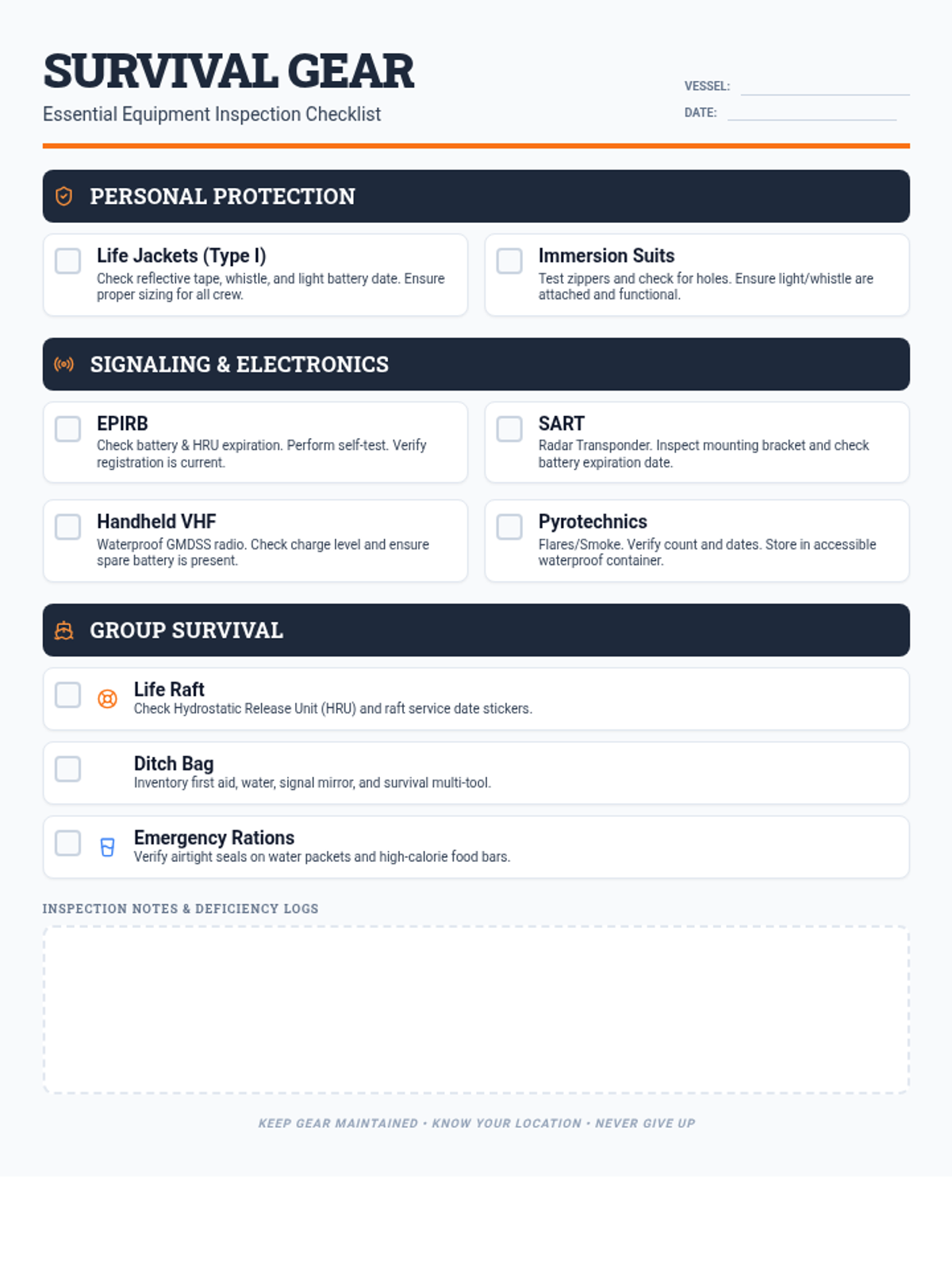
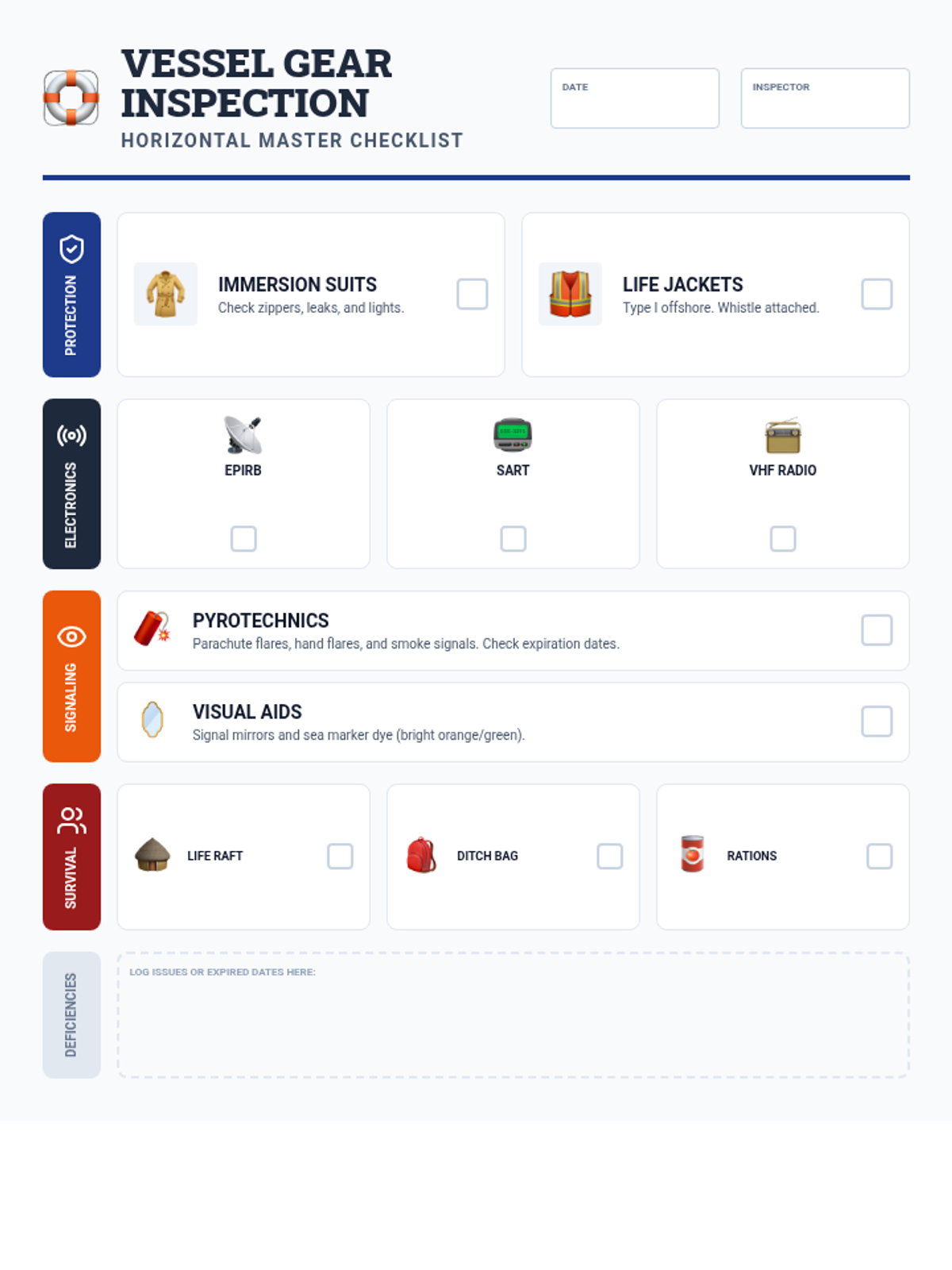
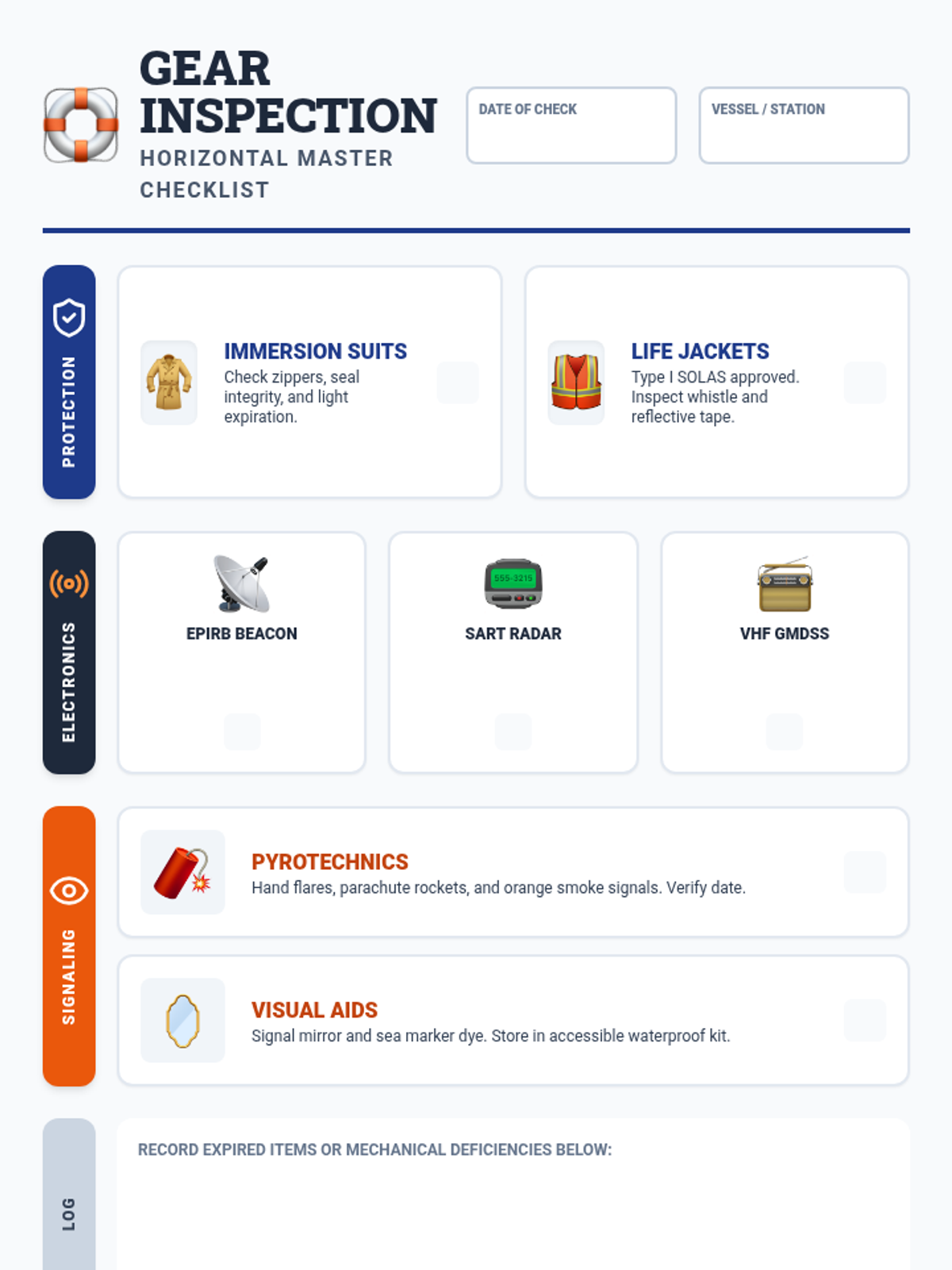
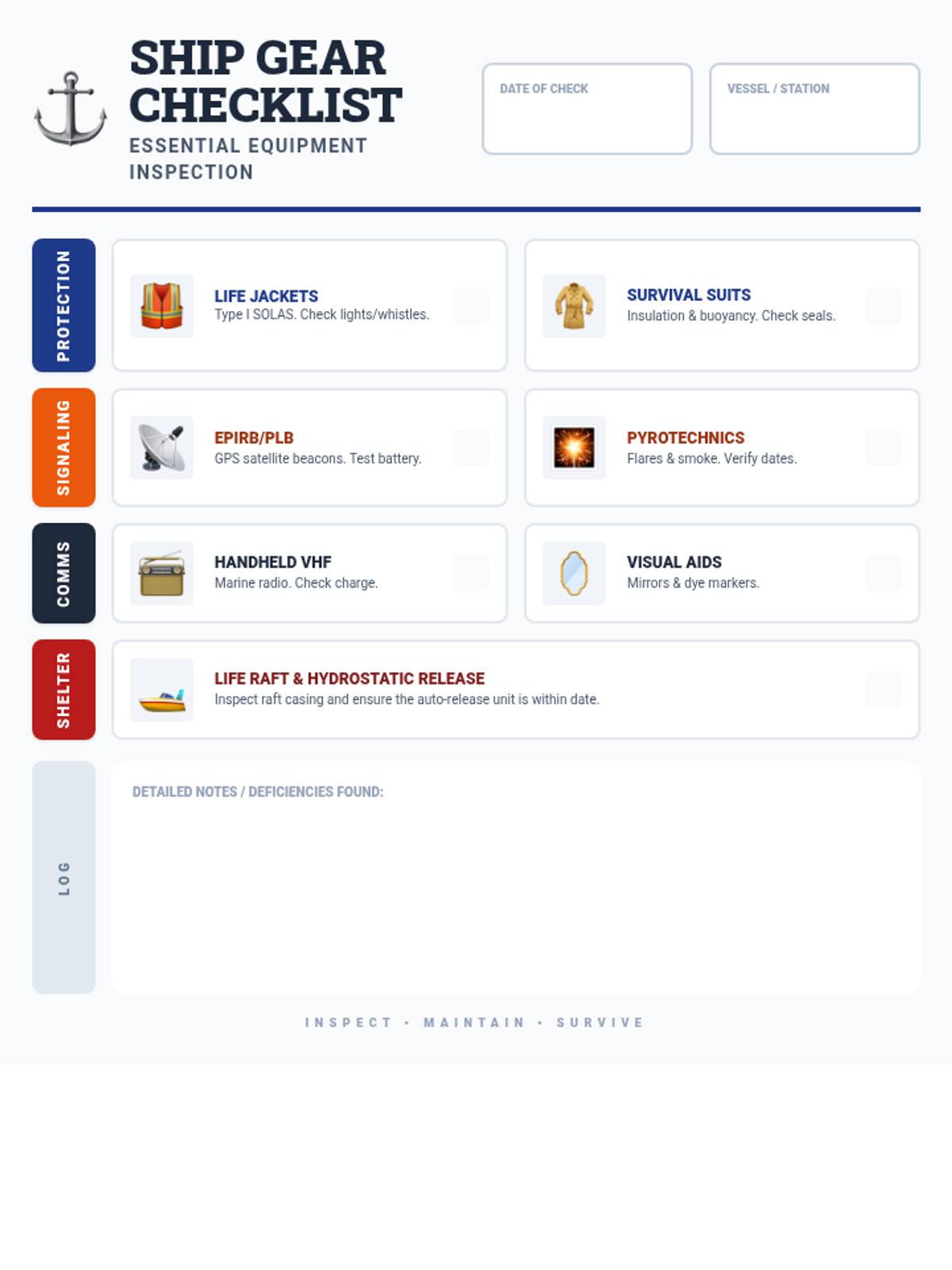
A beginner's guide to maritime survival, covering immediate actions, hypothermia prevention, and signaling for rescue in a shipwreck scenario.
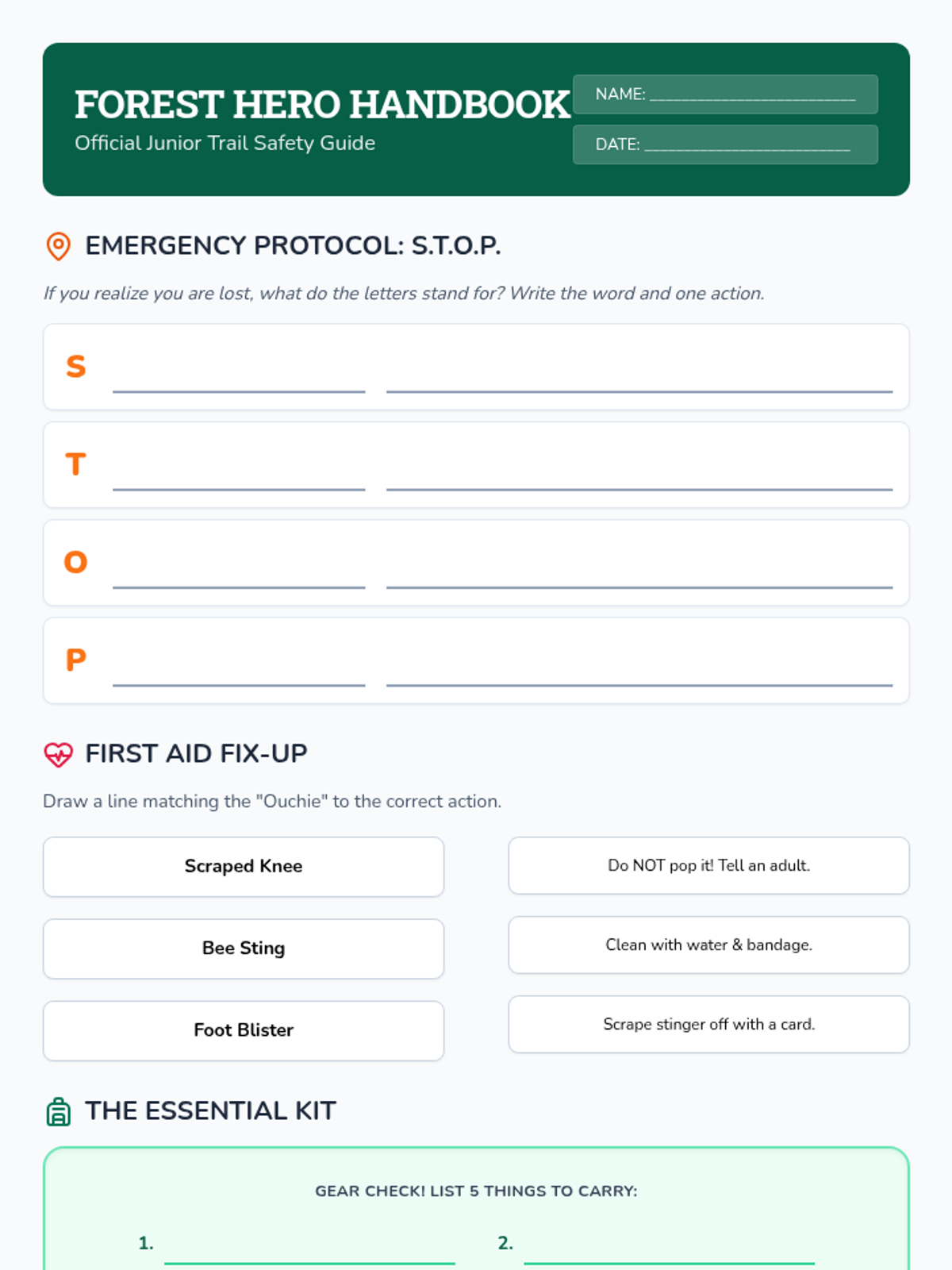
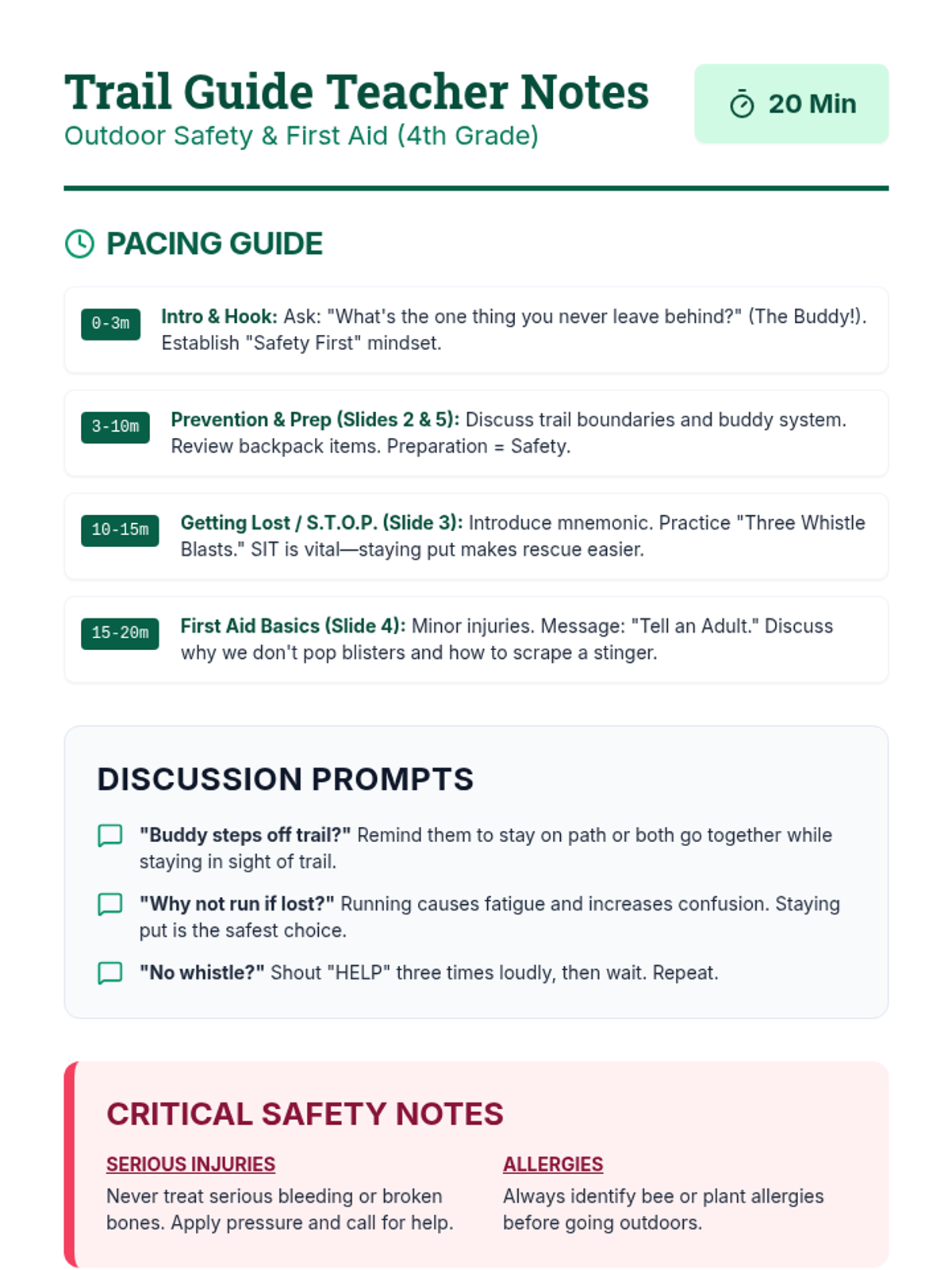
A fast-paced, high-energy lesson for 4th graders focused on essential forest safety, the S.T.O.P. rule for getting lost, and basic trail first aid.
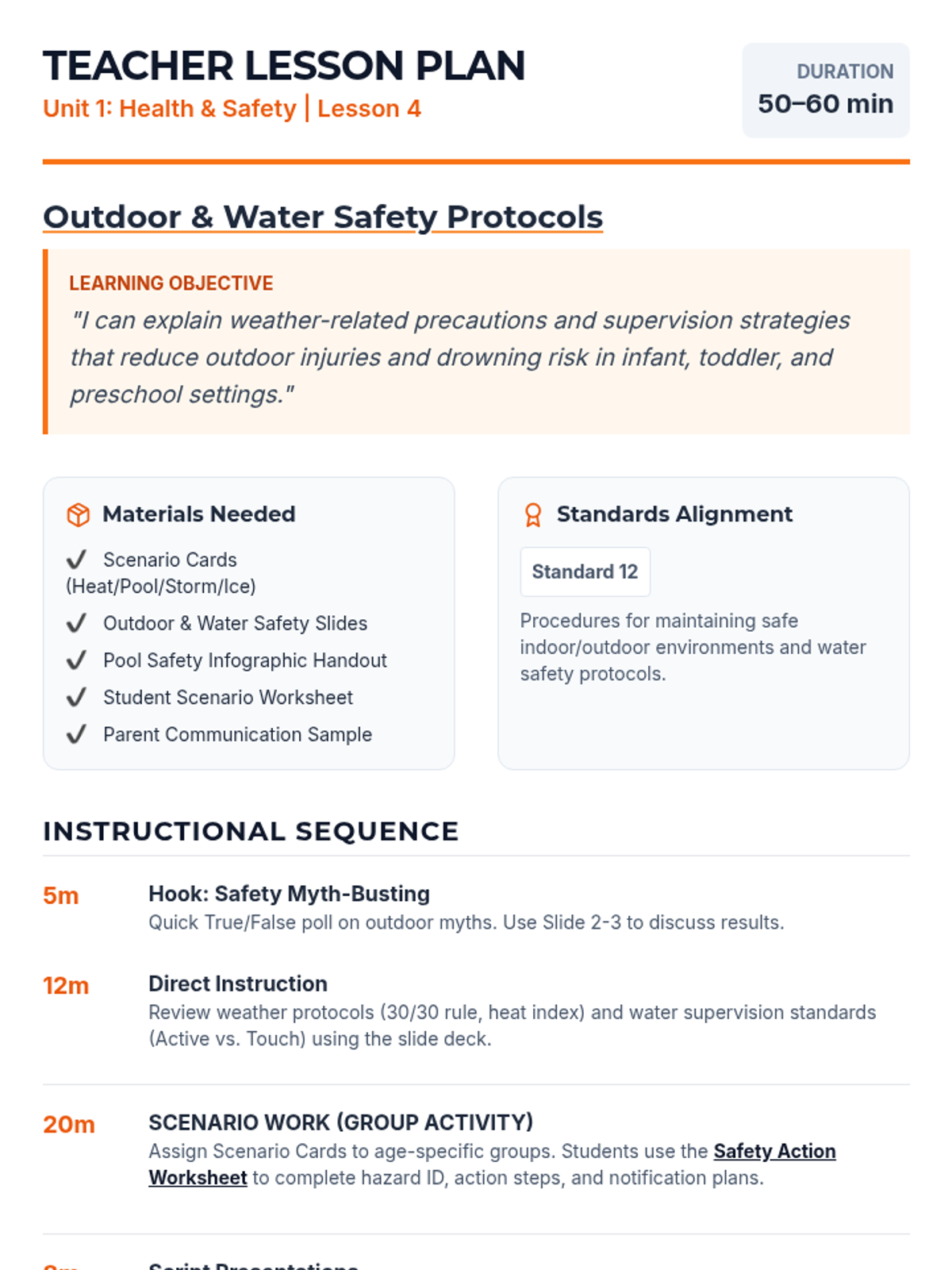
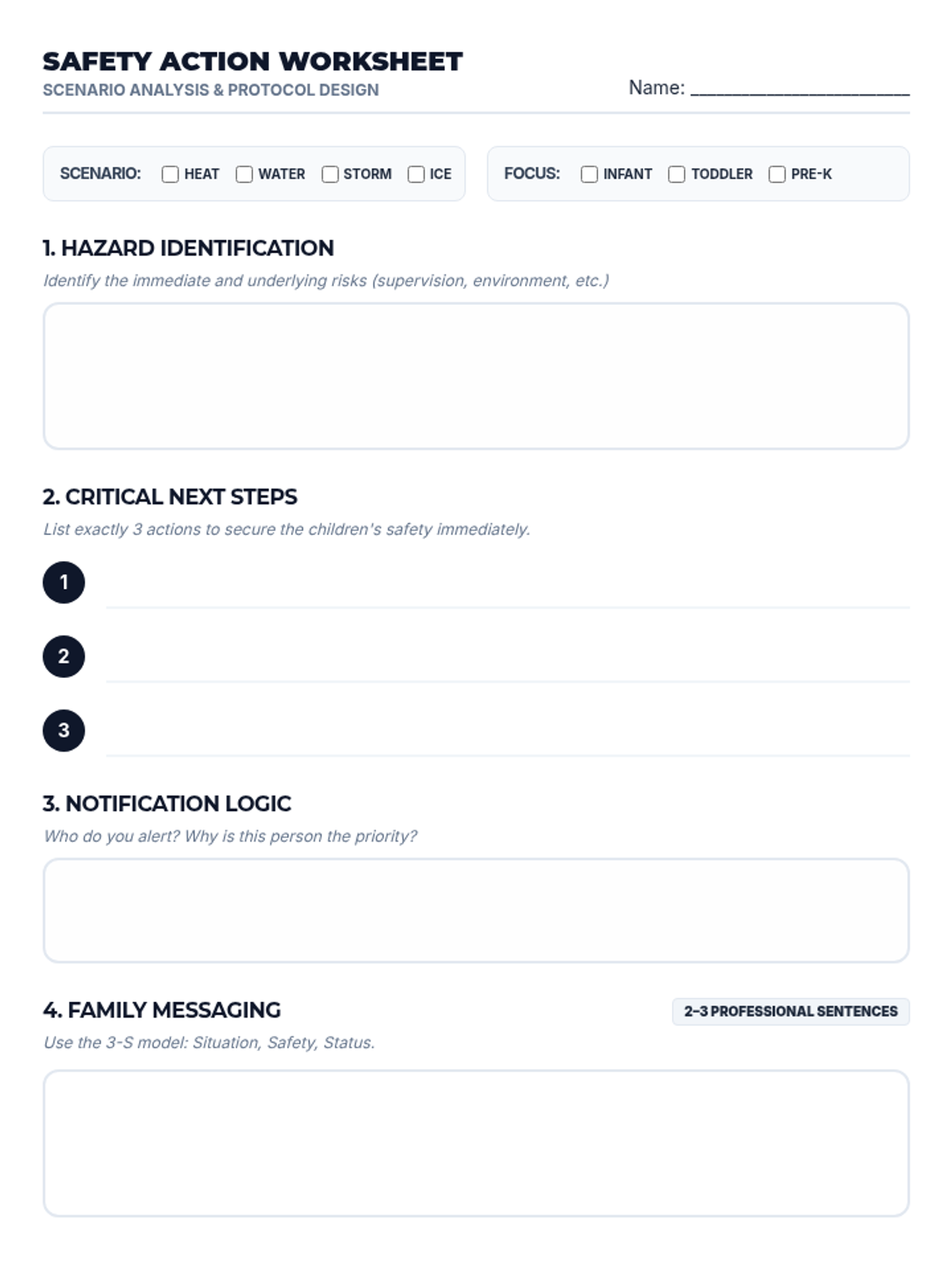
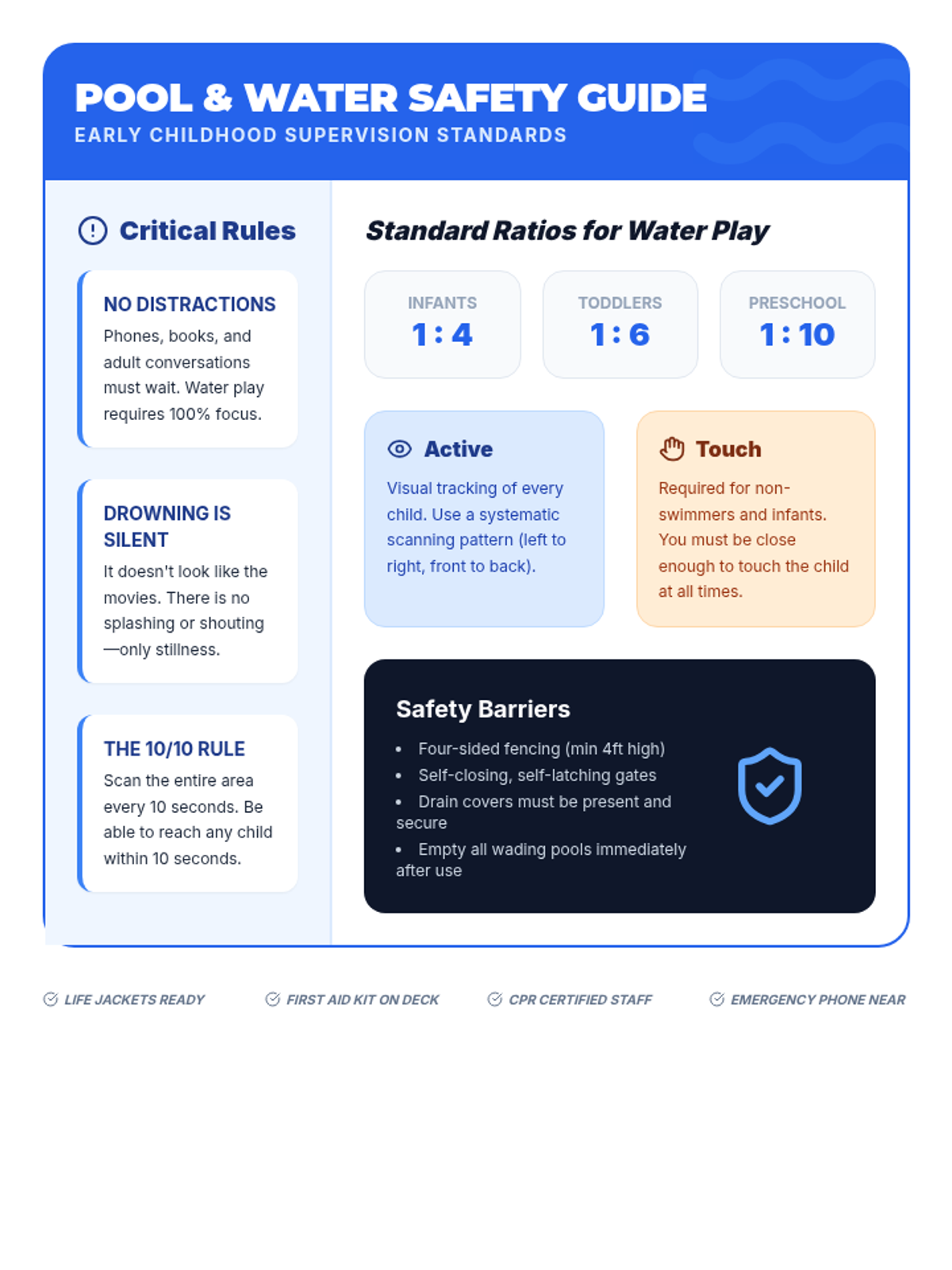
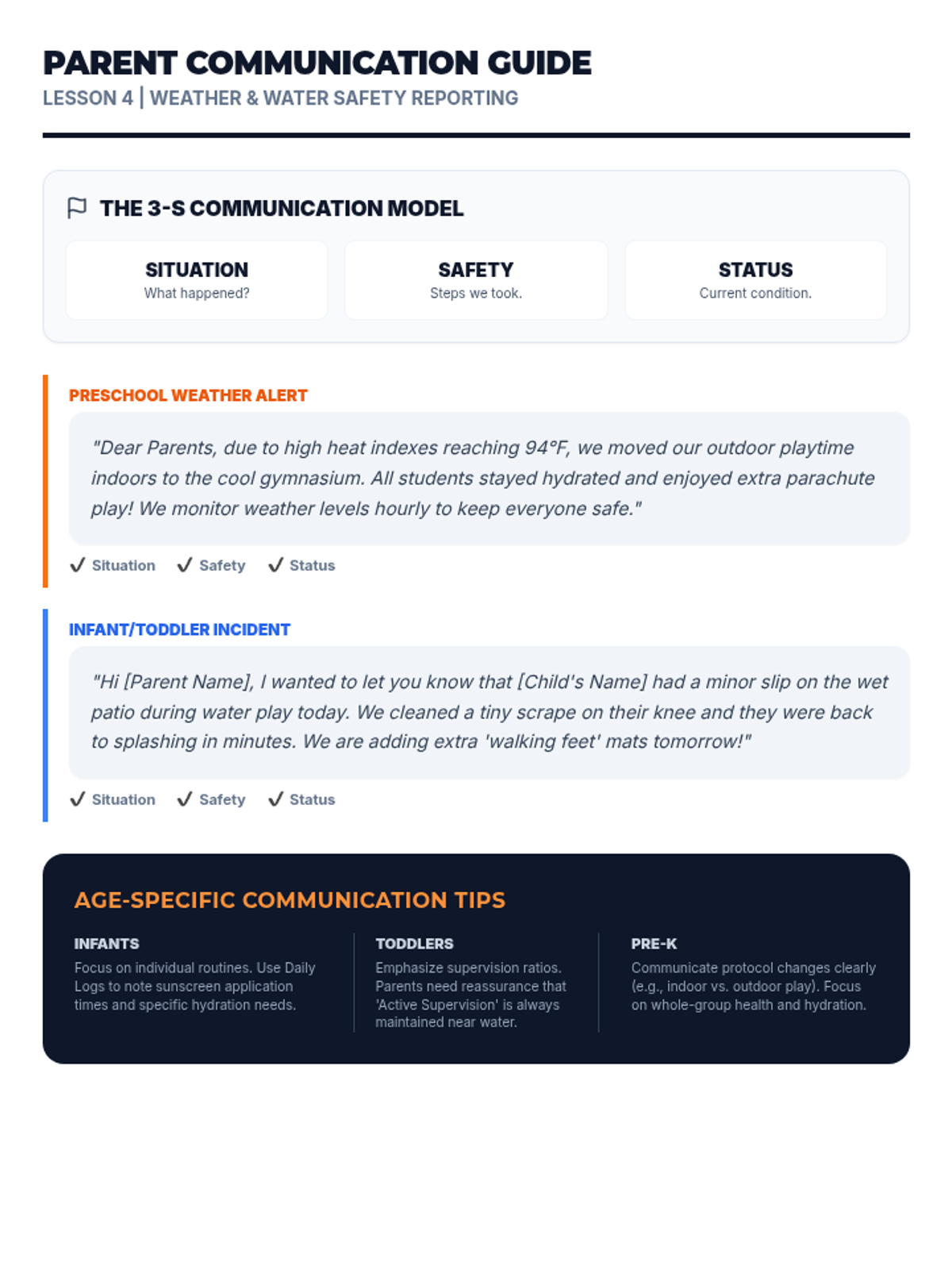
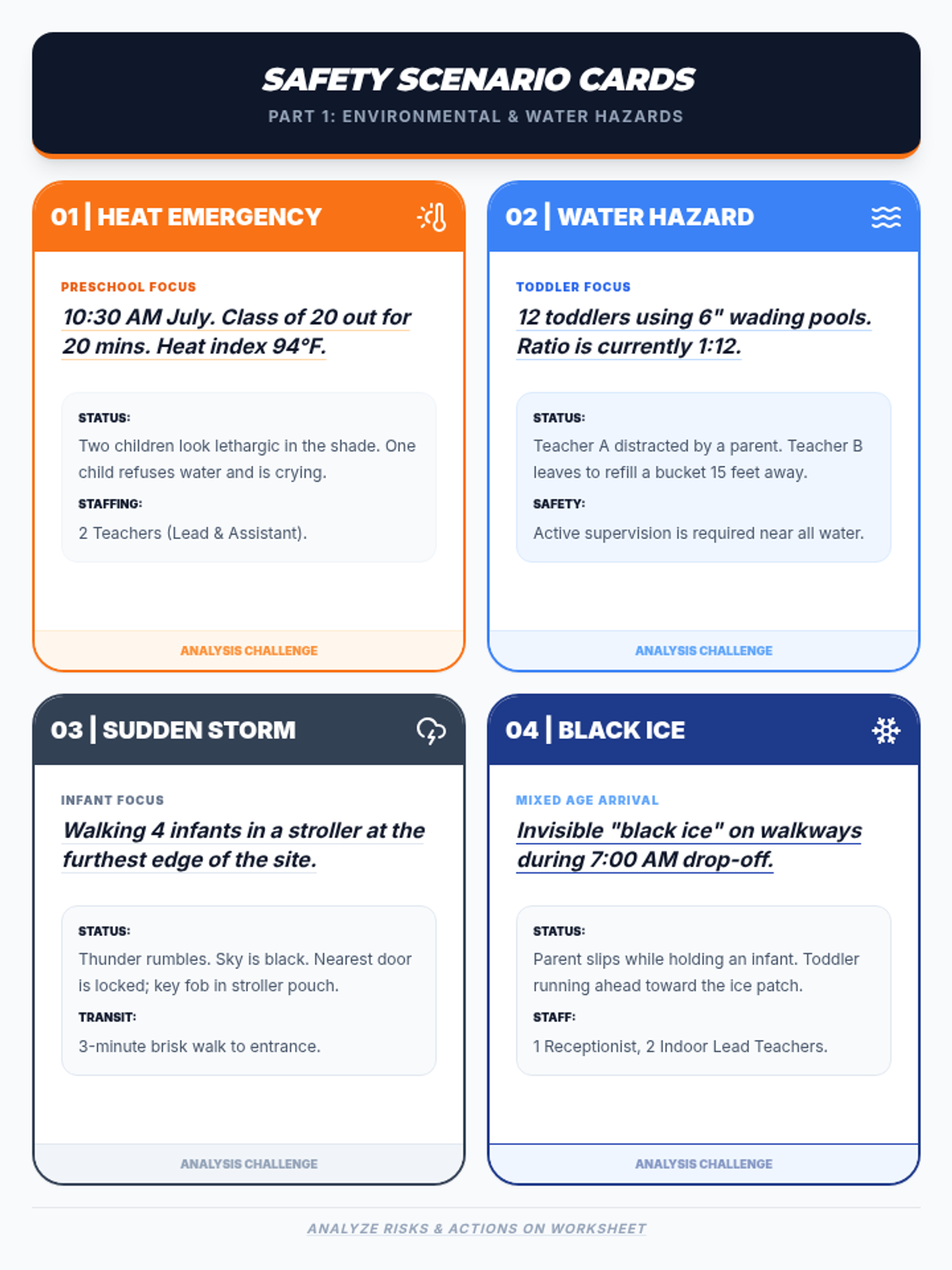
This lesson focuses on weather-related precautions and water safety strategies specifically for infant, toddler, and preschool environments, covering active supervision and emergency protocols.
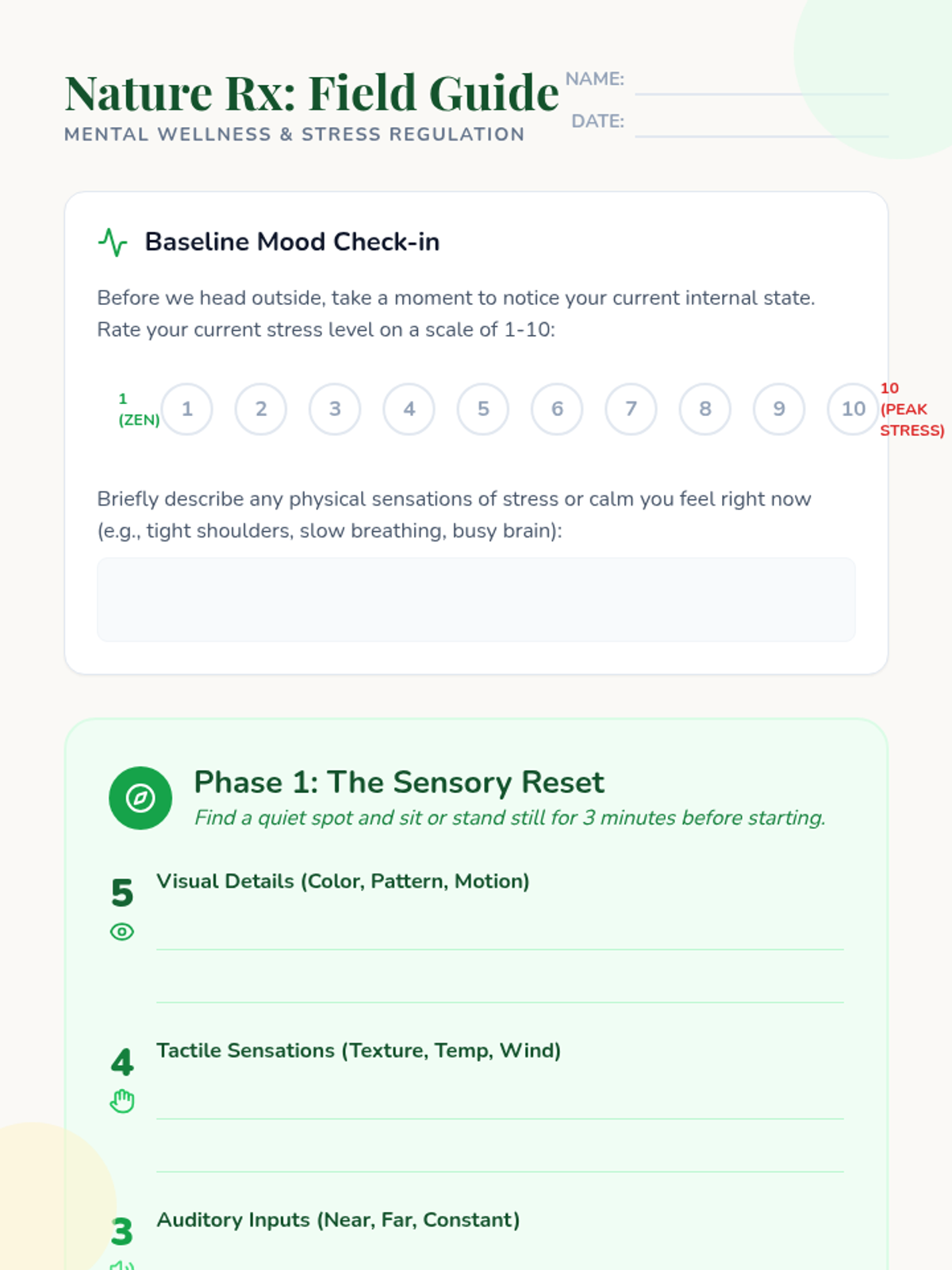
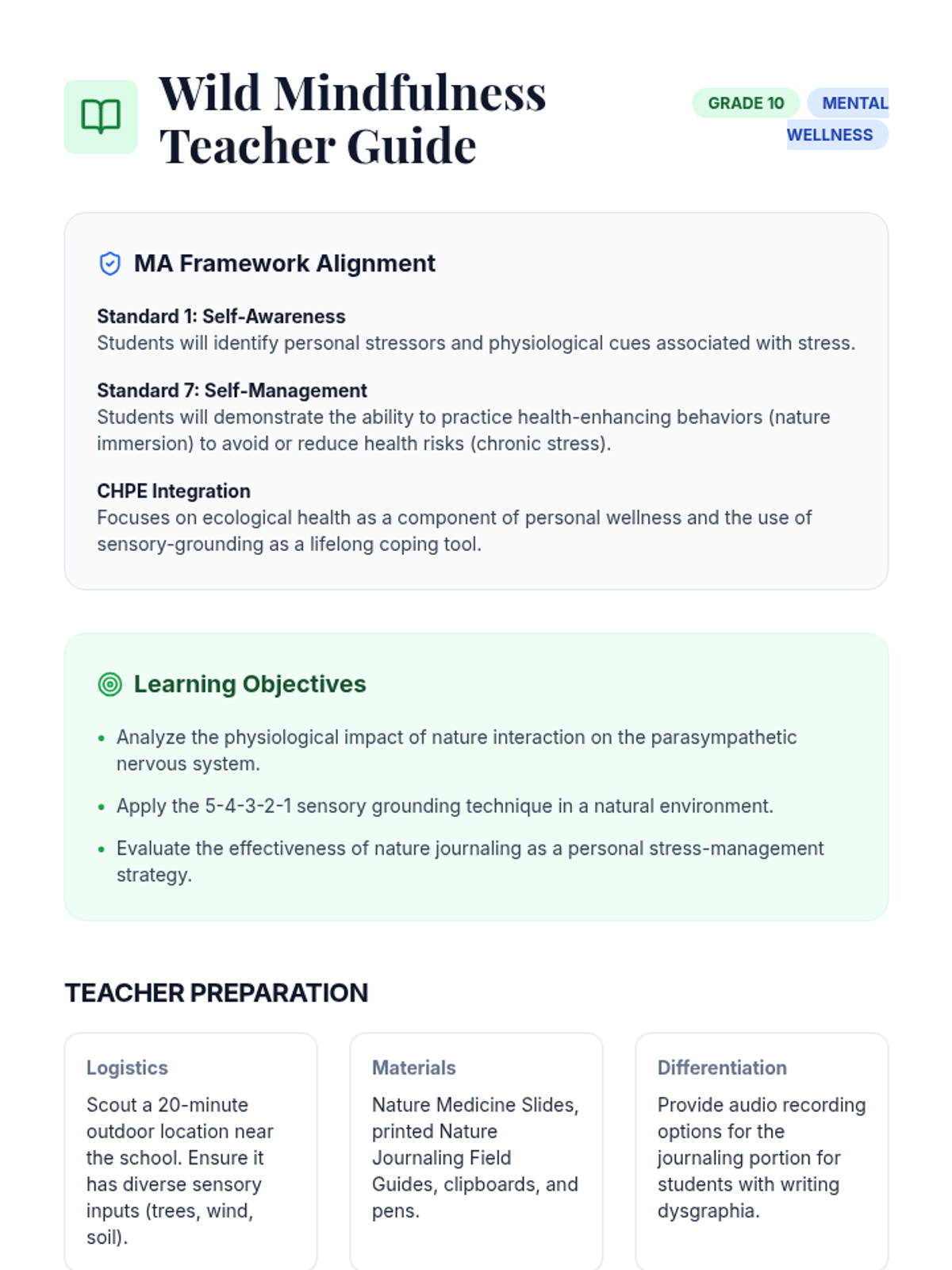
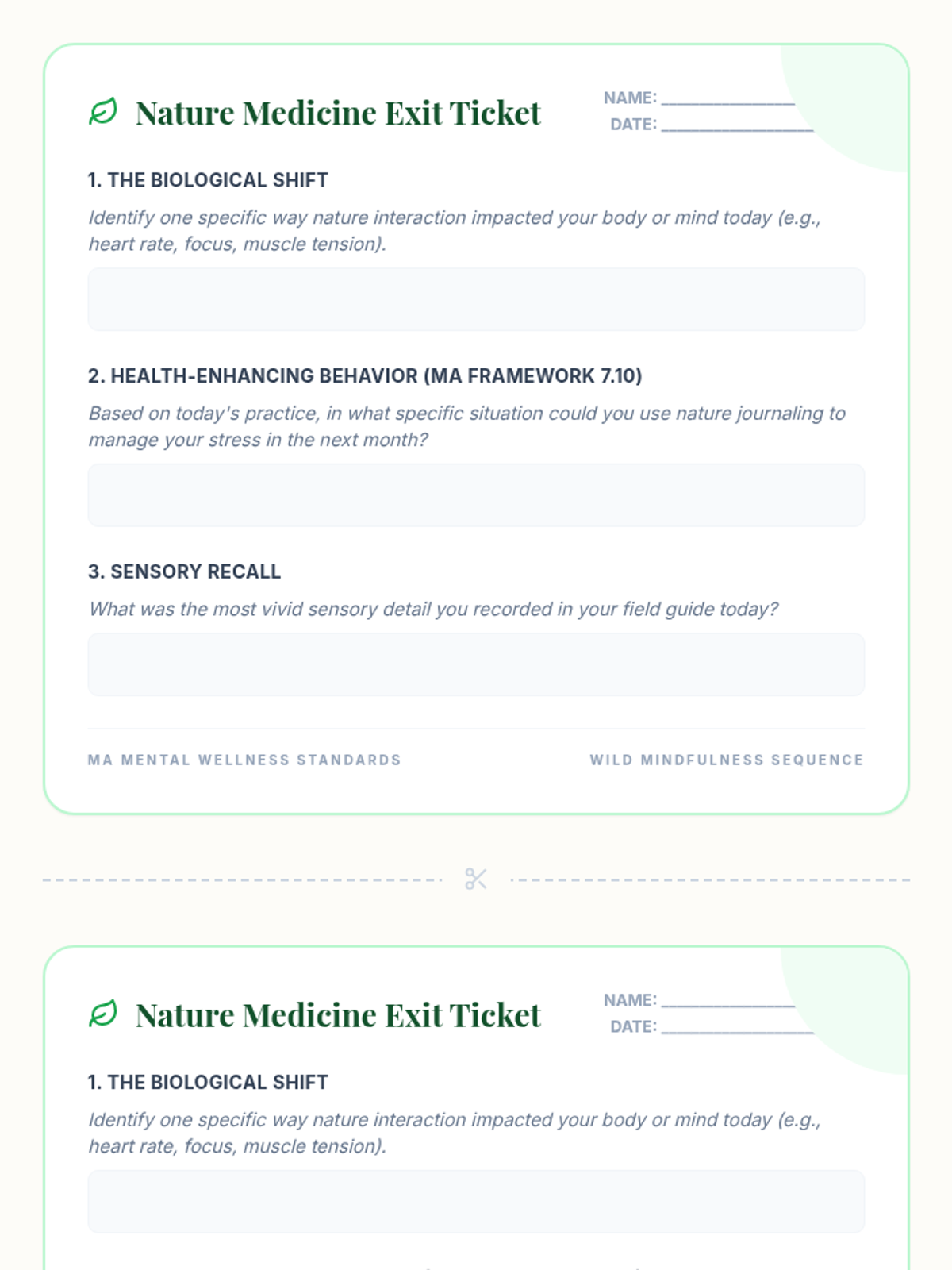
A lesson exploring the mental health benefits of nature journaling, focusing on stress reduction and self-awareness as part of the Massachusetts Grade 10 Mental Wellness standards. Students will practice sensory-based journaling and analyze its physiological and psychological effects.
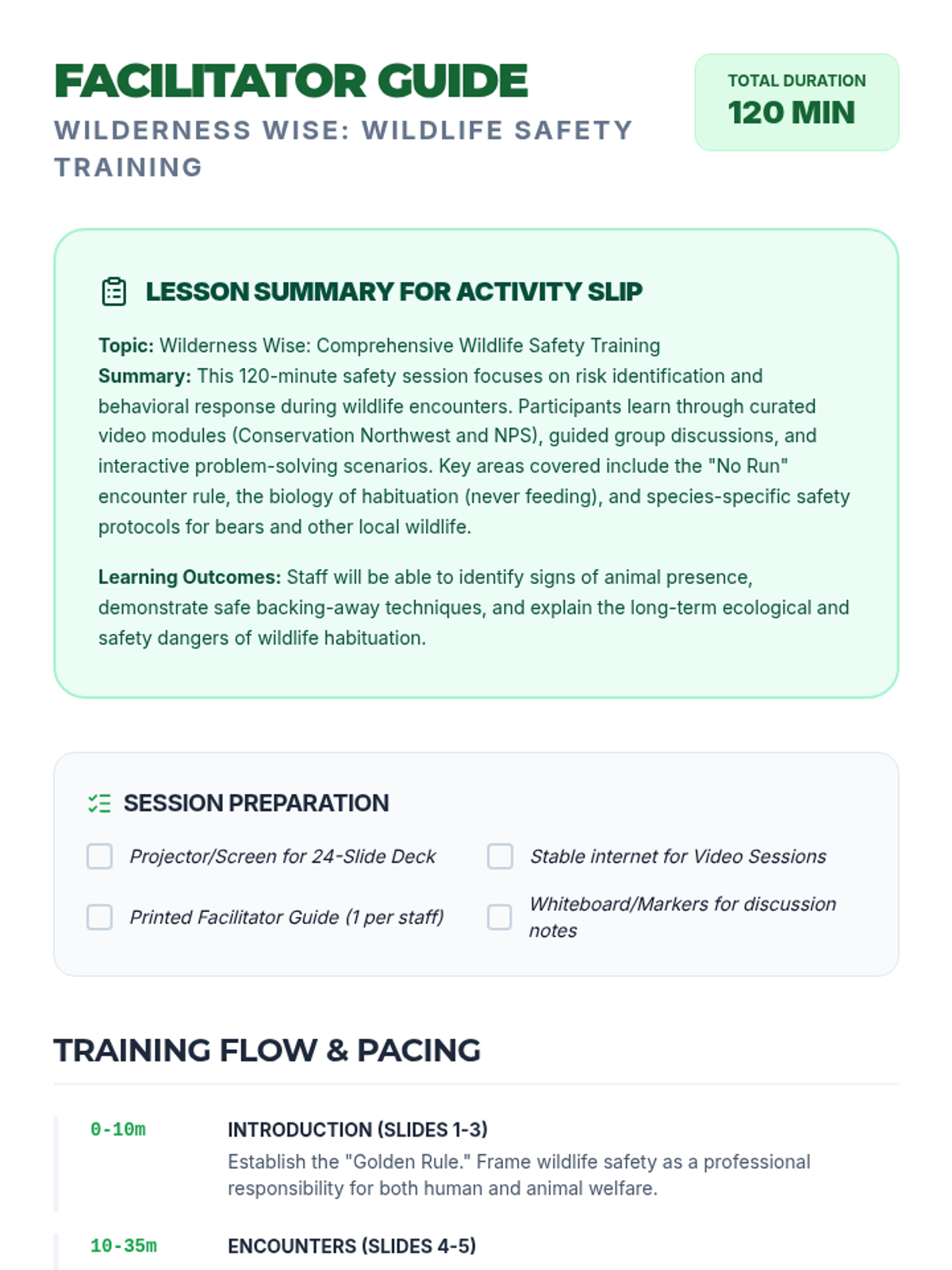
A comprehensive 120-minute safety training session focused on identifying wildlife risks, recognizing safe behaviors, and responding correctly to animal encounters. This lesson equips participants with practical skills to protect both themselves and local wildlife.
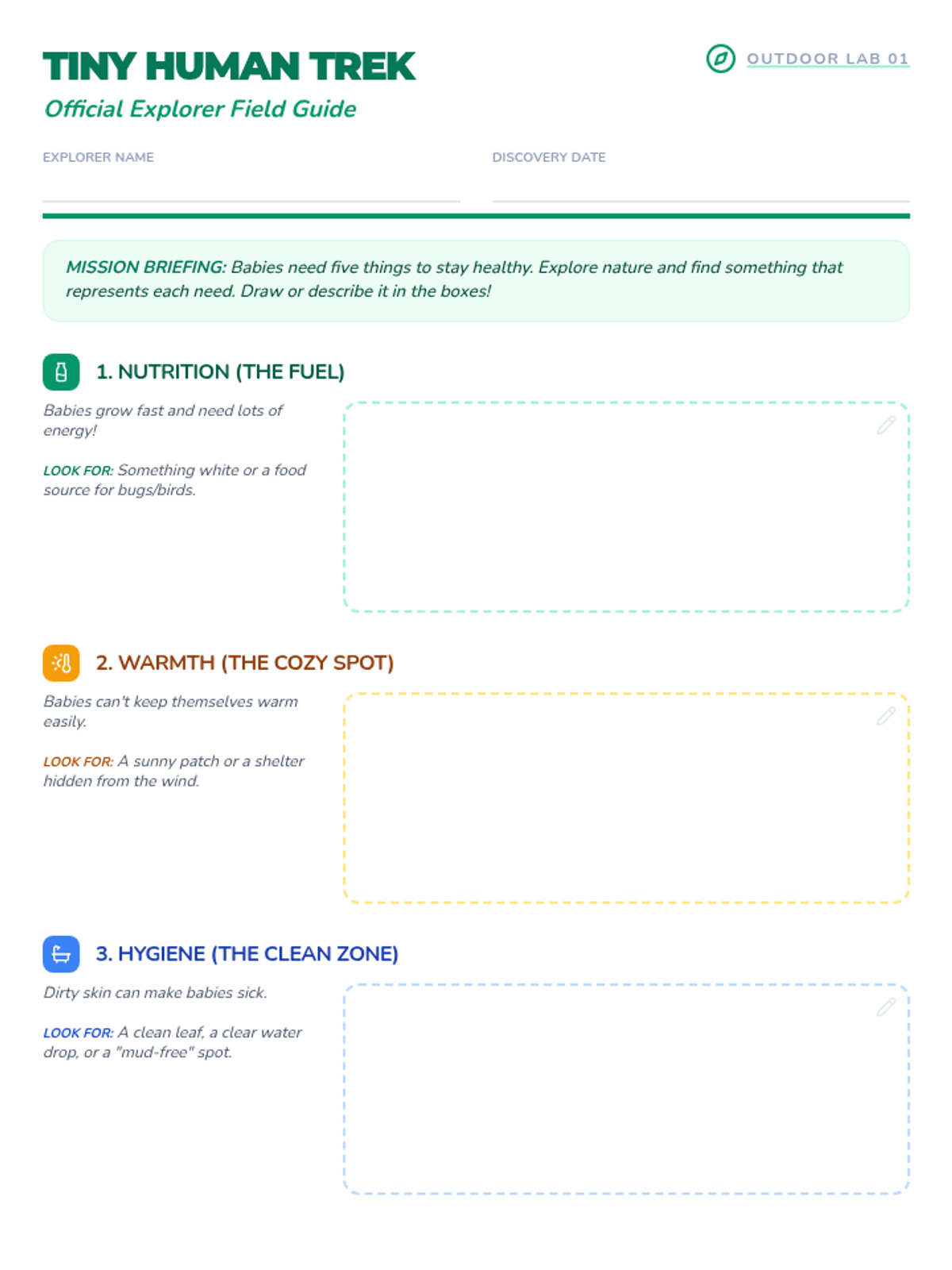
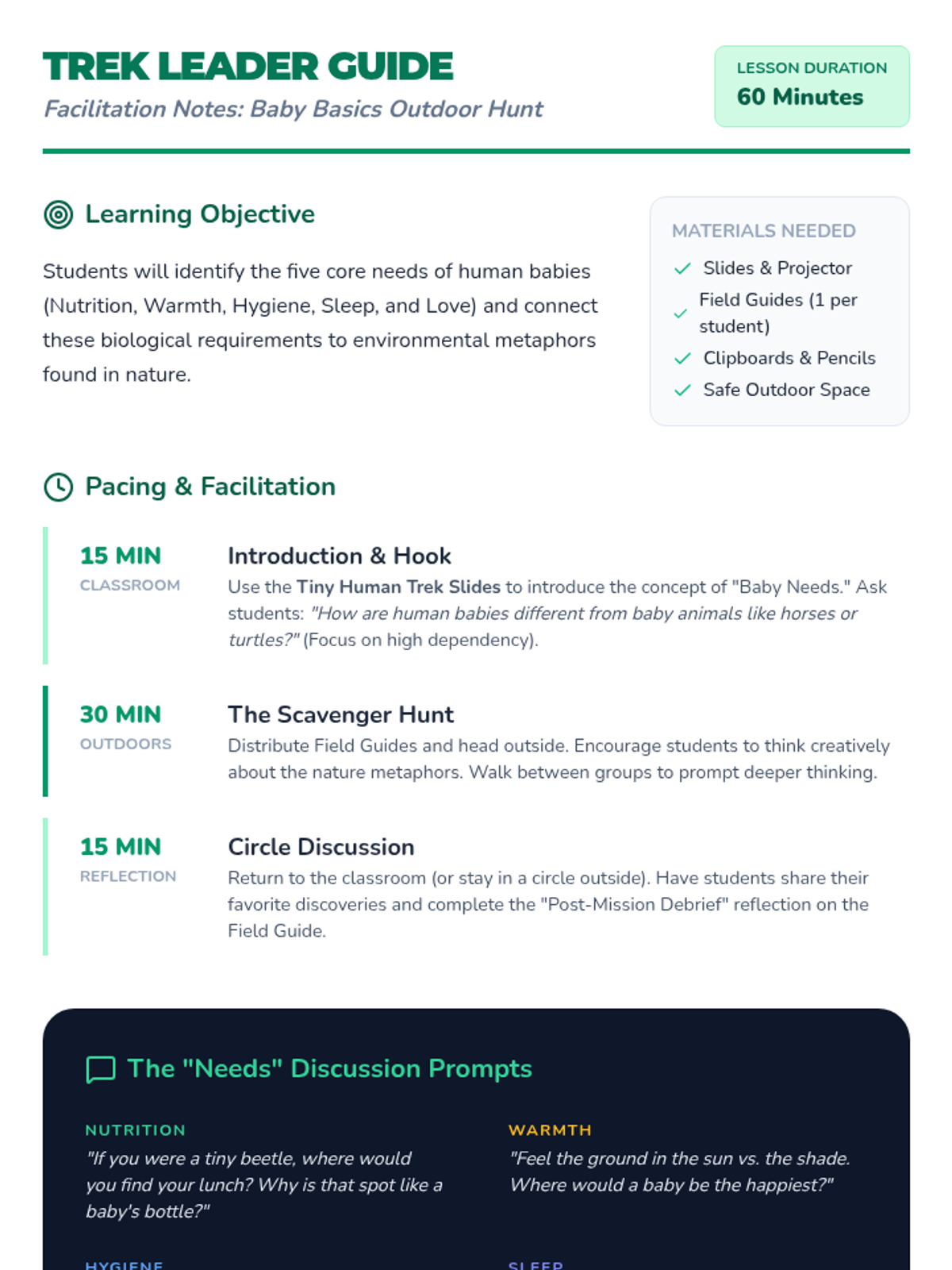
An outdoor exploration where students discover the essential needs of human babies through a nature-themed scavenger hunt, connecting biological needs to environmental metaphors.
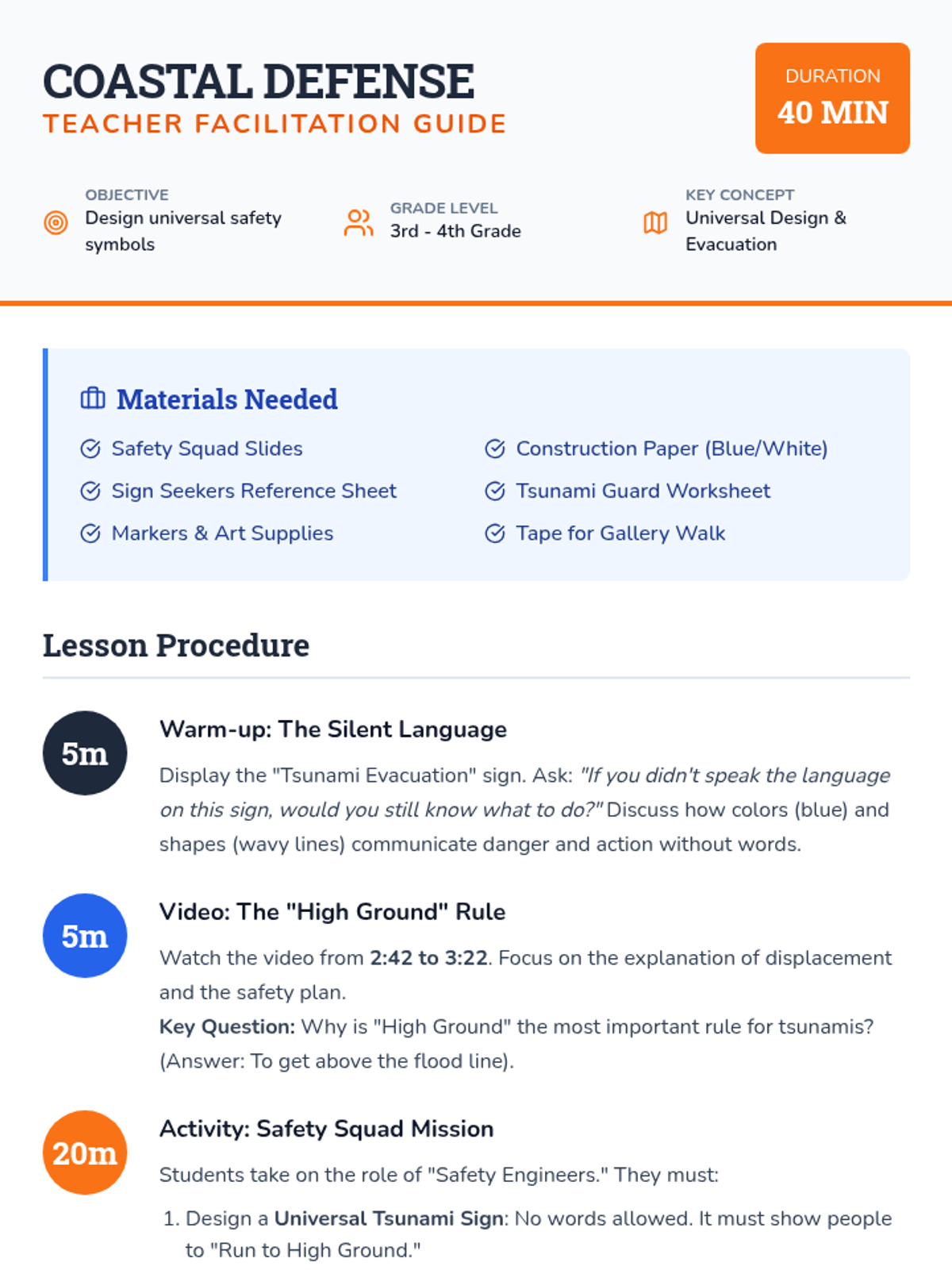
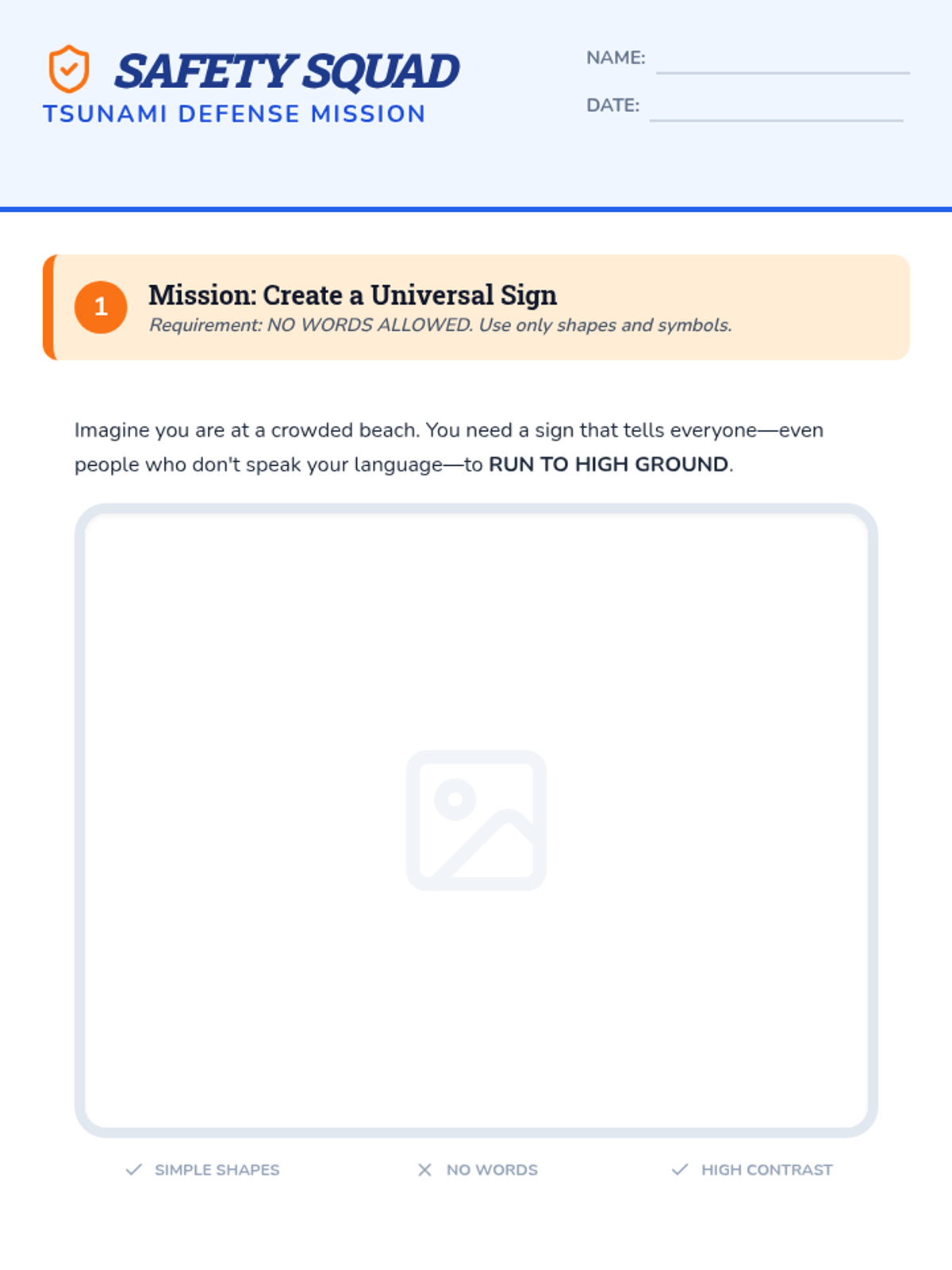
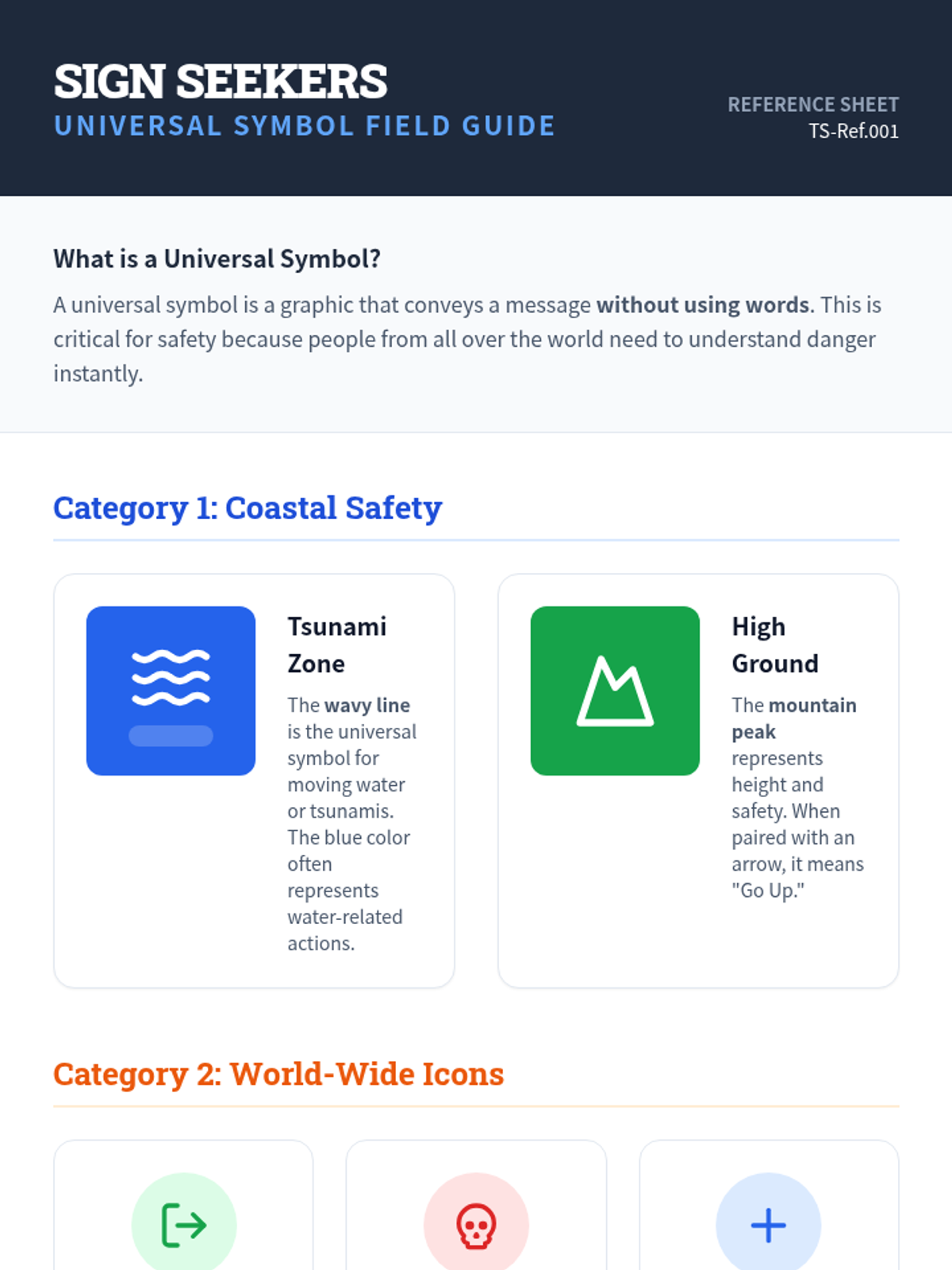
A lesson where students explore universal safety symbols and design their own tsunami evacuation signs and maps using visual communication strategies.
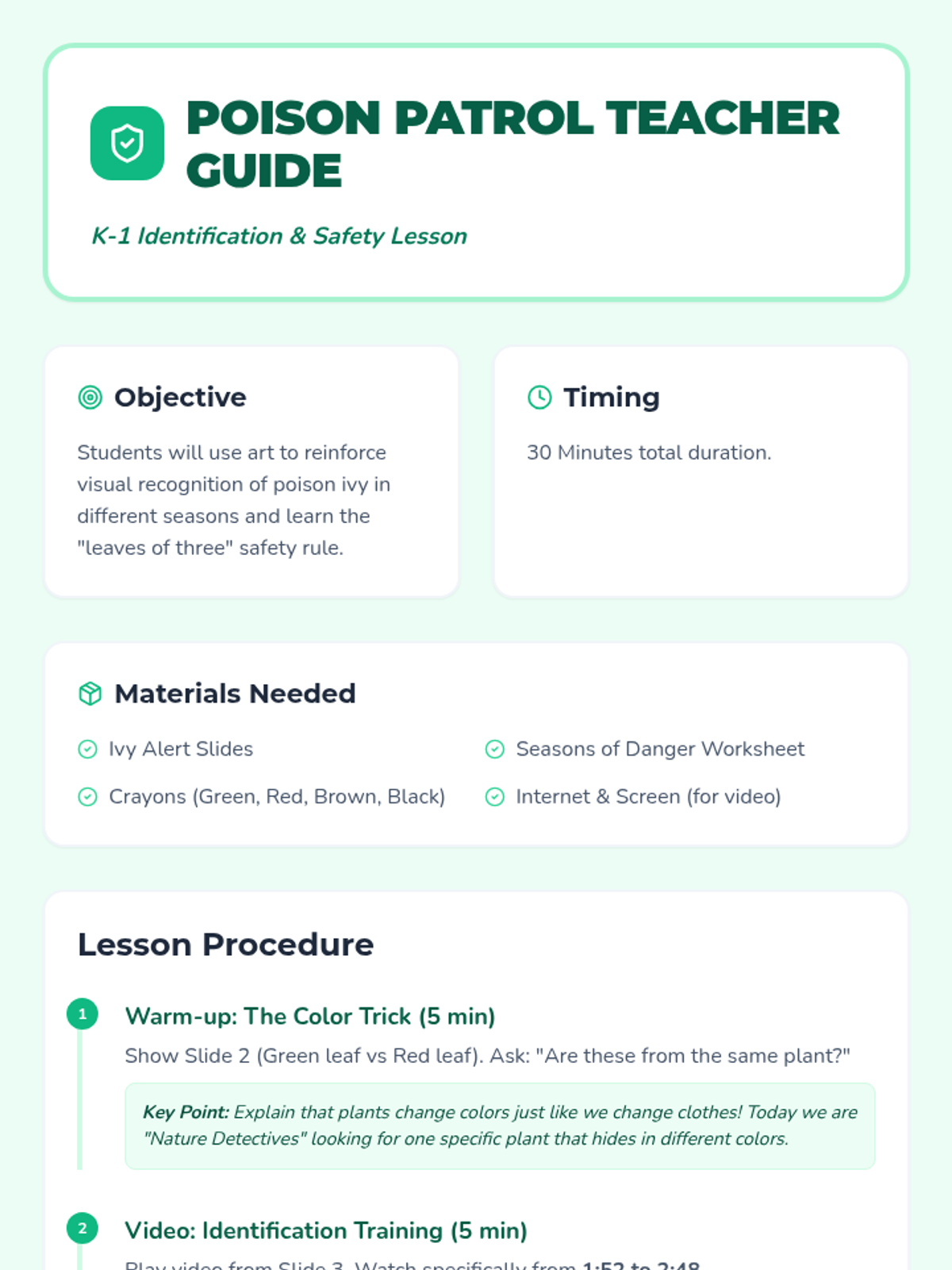
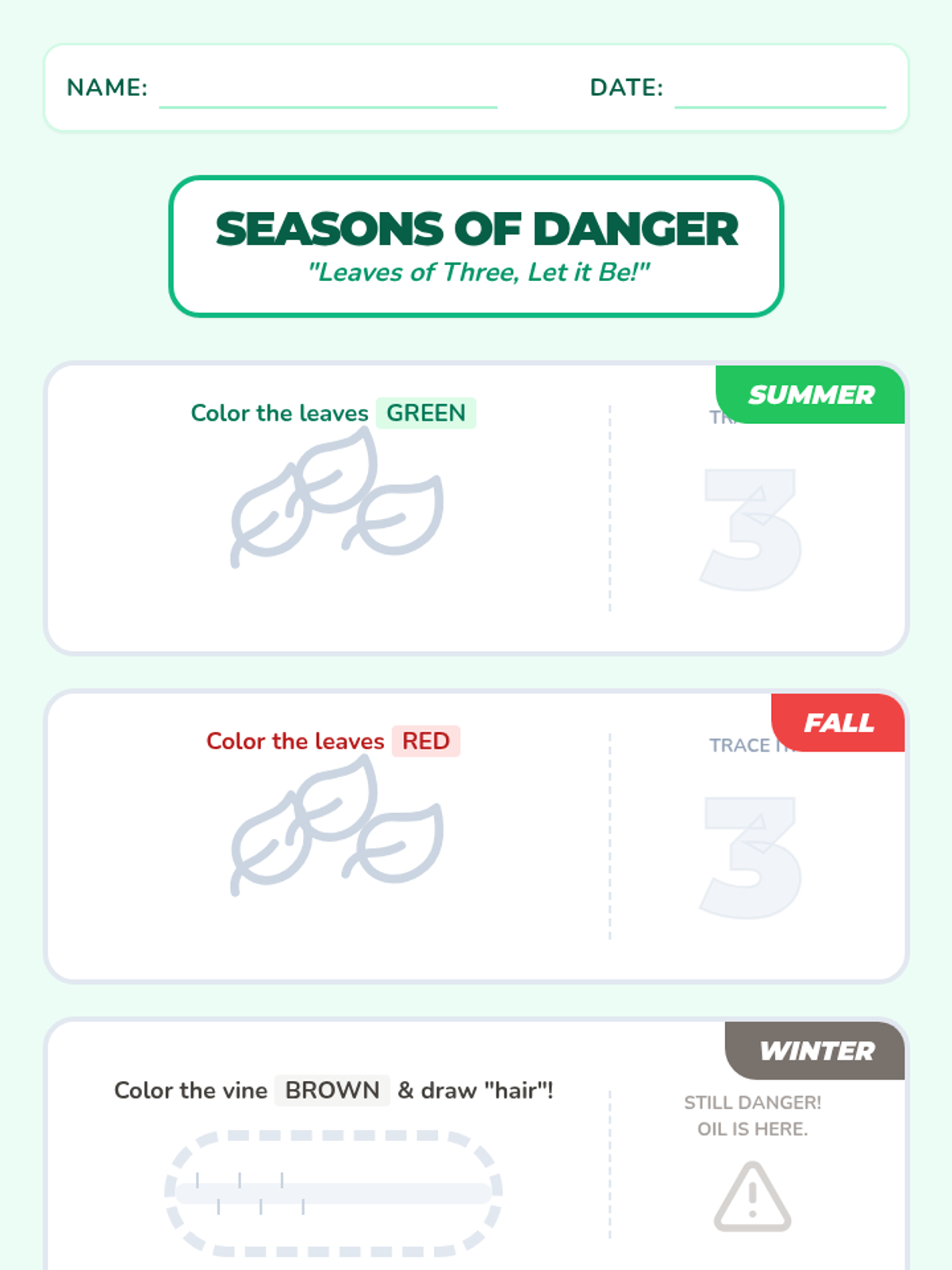
Students will learn to identify poison ivy in summer, fall, and winter through visual analysis, a science video, and an art-based coloring activity focused on the 'leaves of three' rule.
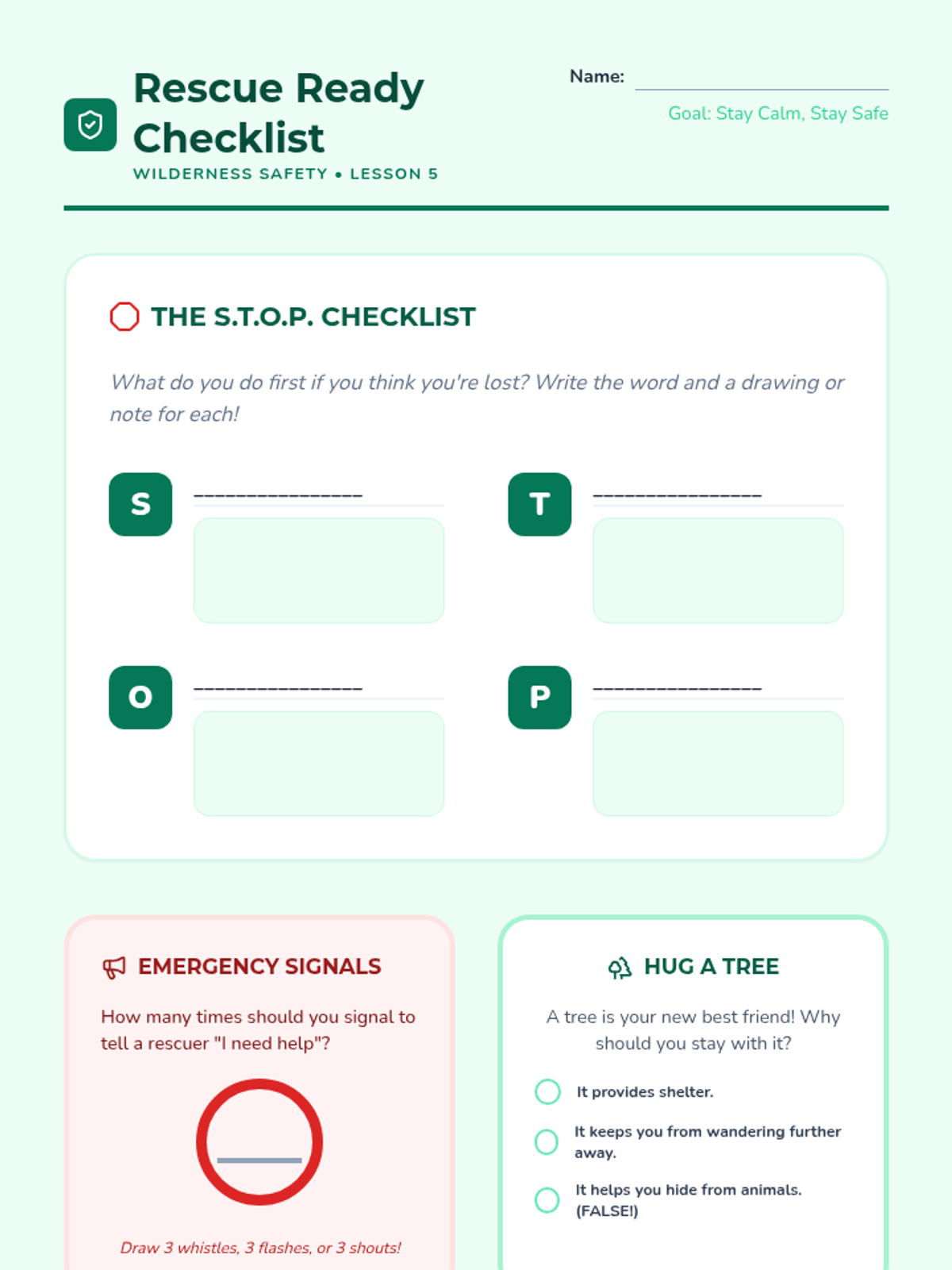
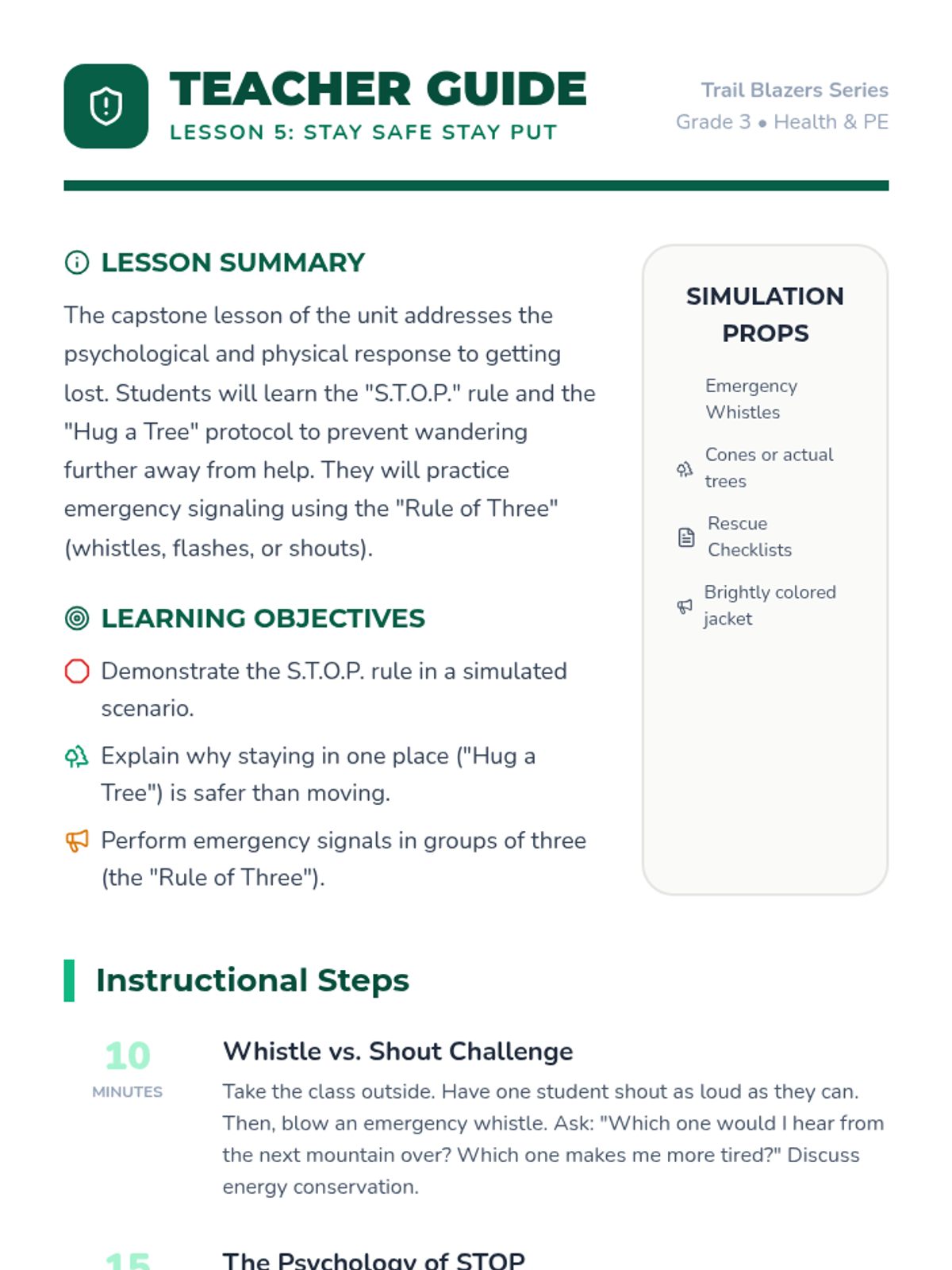
A focus on the S.T.O.P. rule and 'Hug a Tree' protocol, teaching students how to signal for help and stay calm if separated from their group.
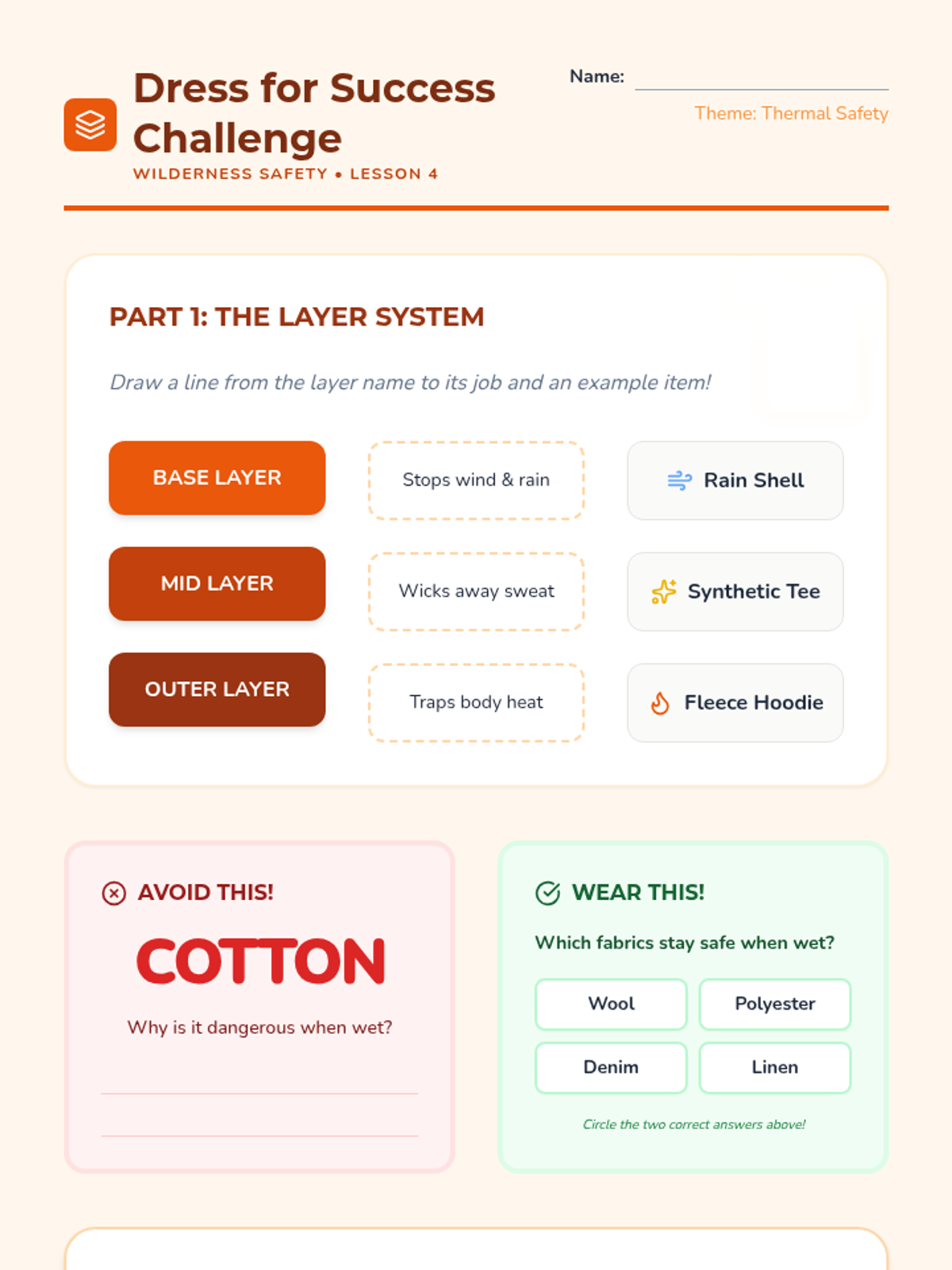
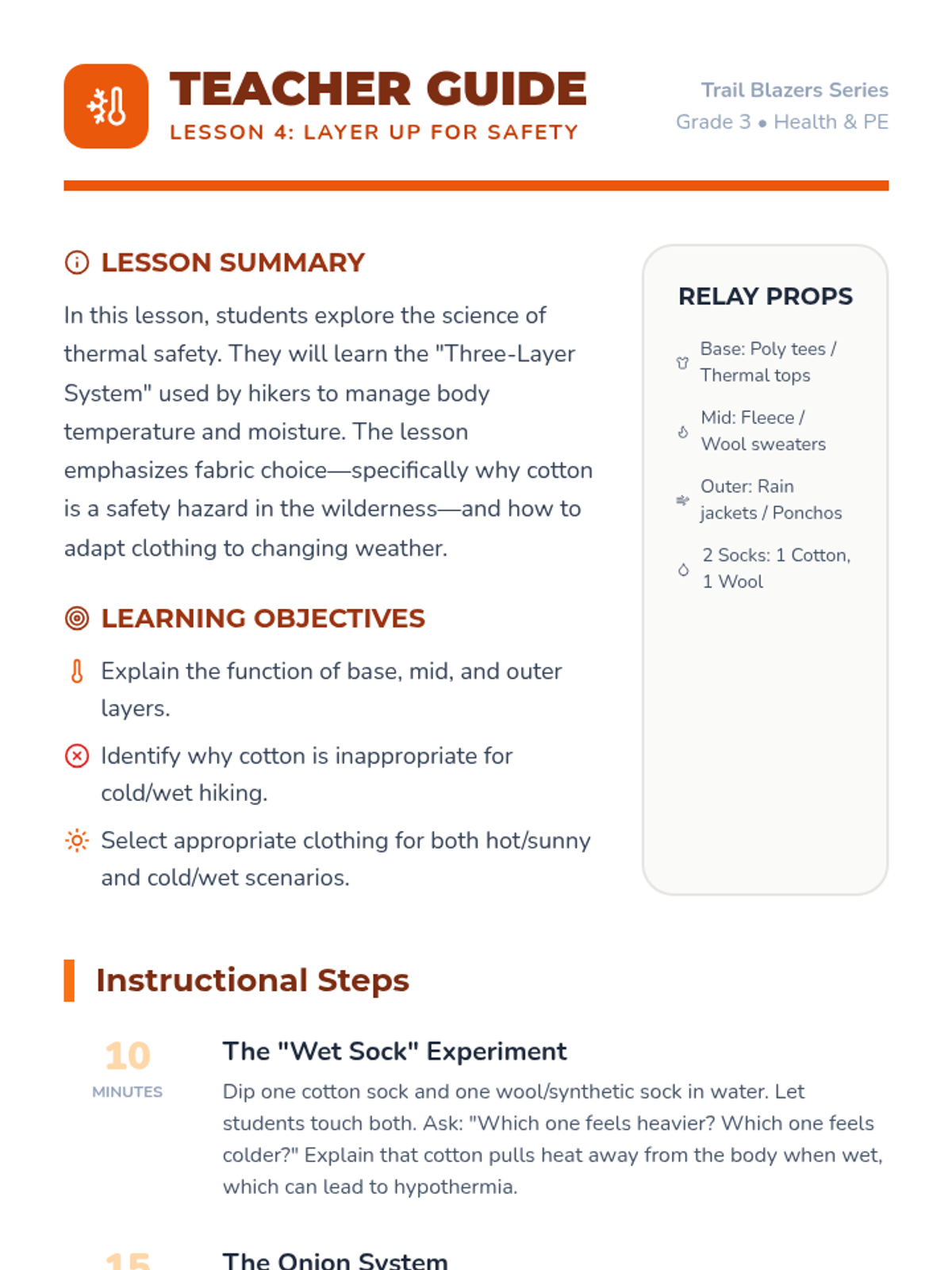
Students explore the importance of layering and fabric choice (avoiding cotton) to maintain body temperature in different environments.
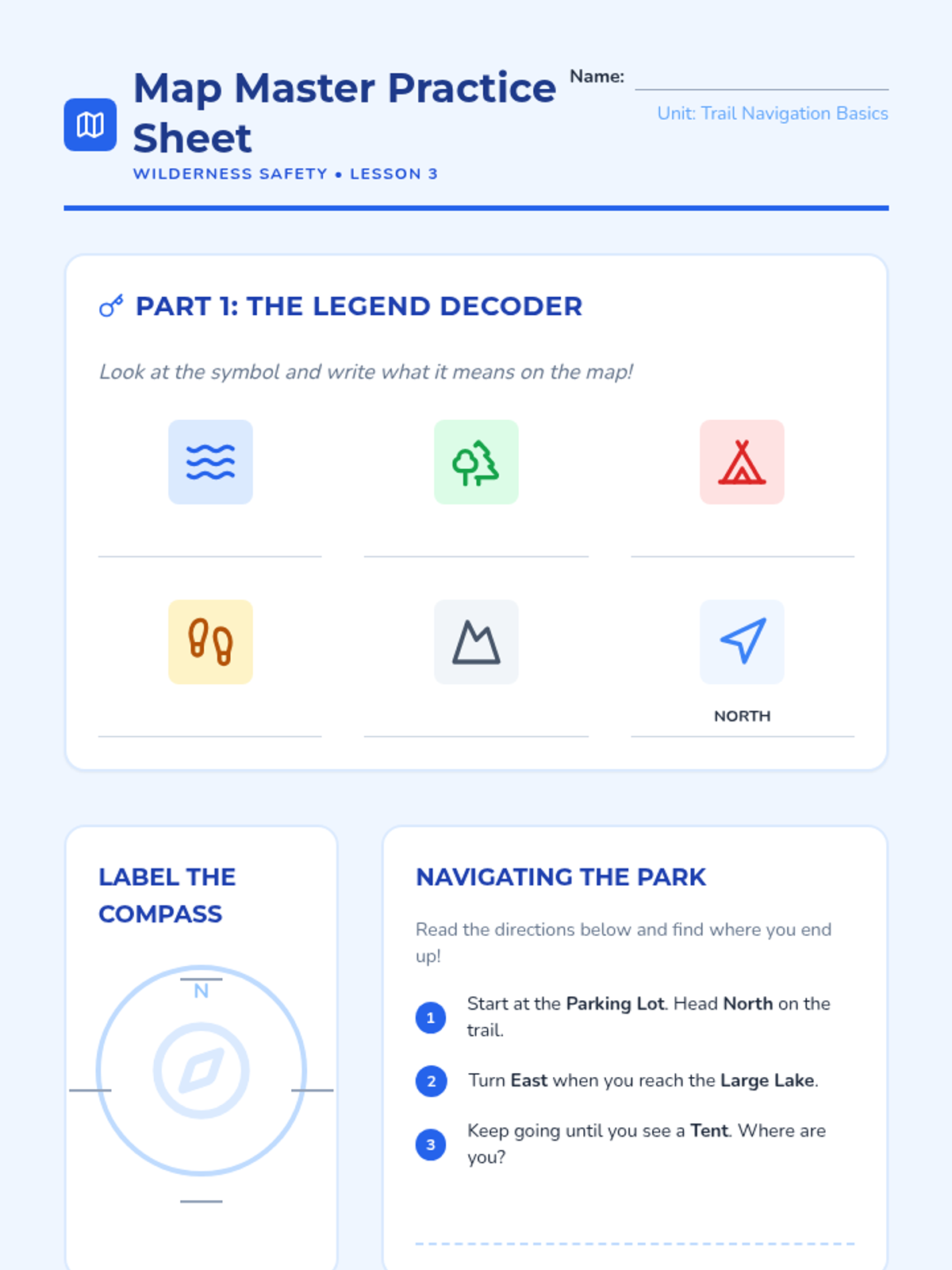
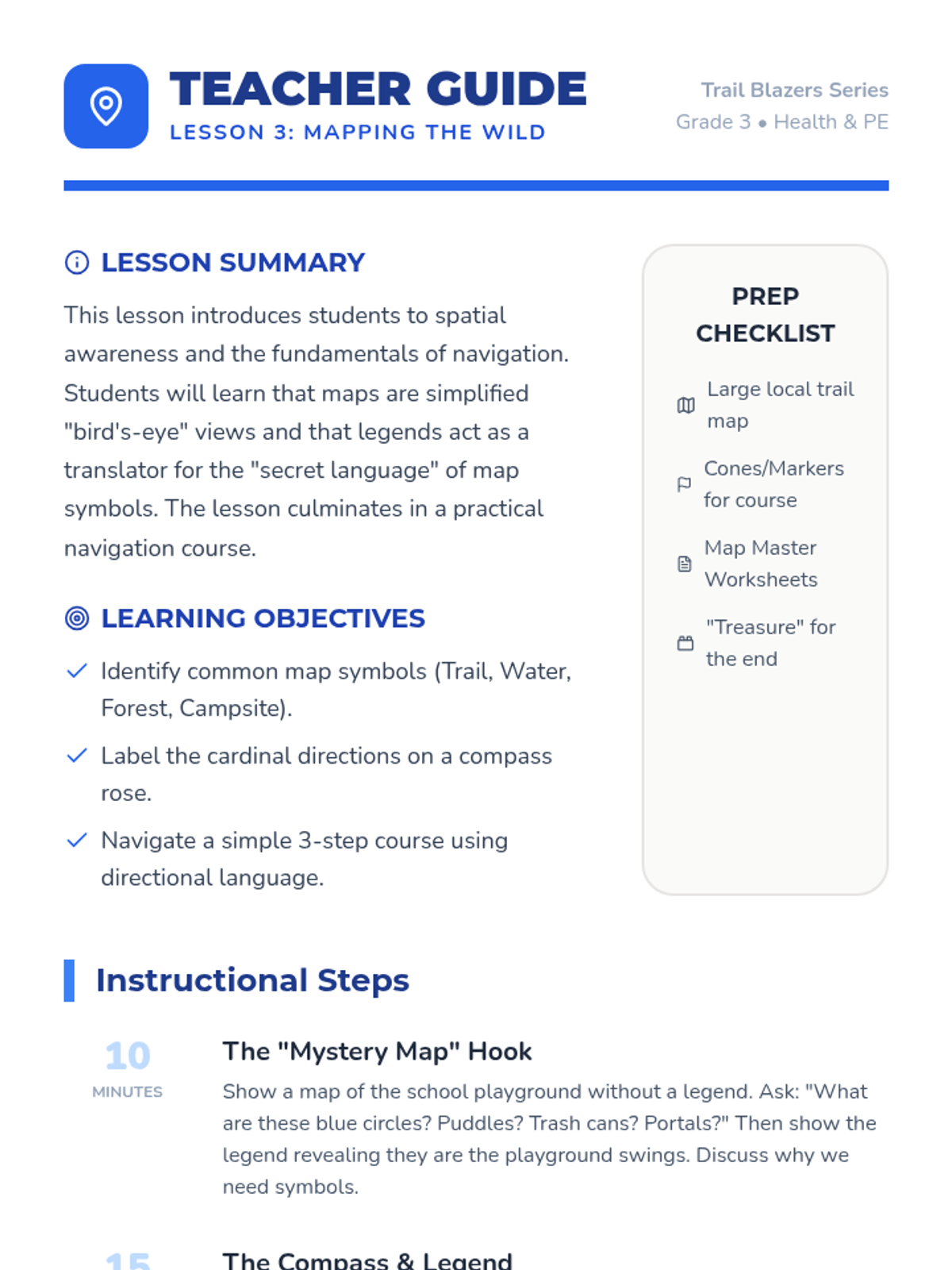
An introduction to map symbols, legends, and basic navigation using a compass rose to build spatial awareness.
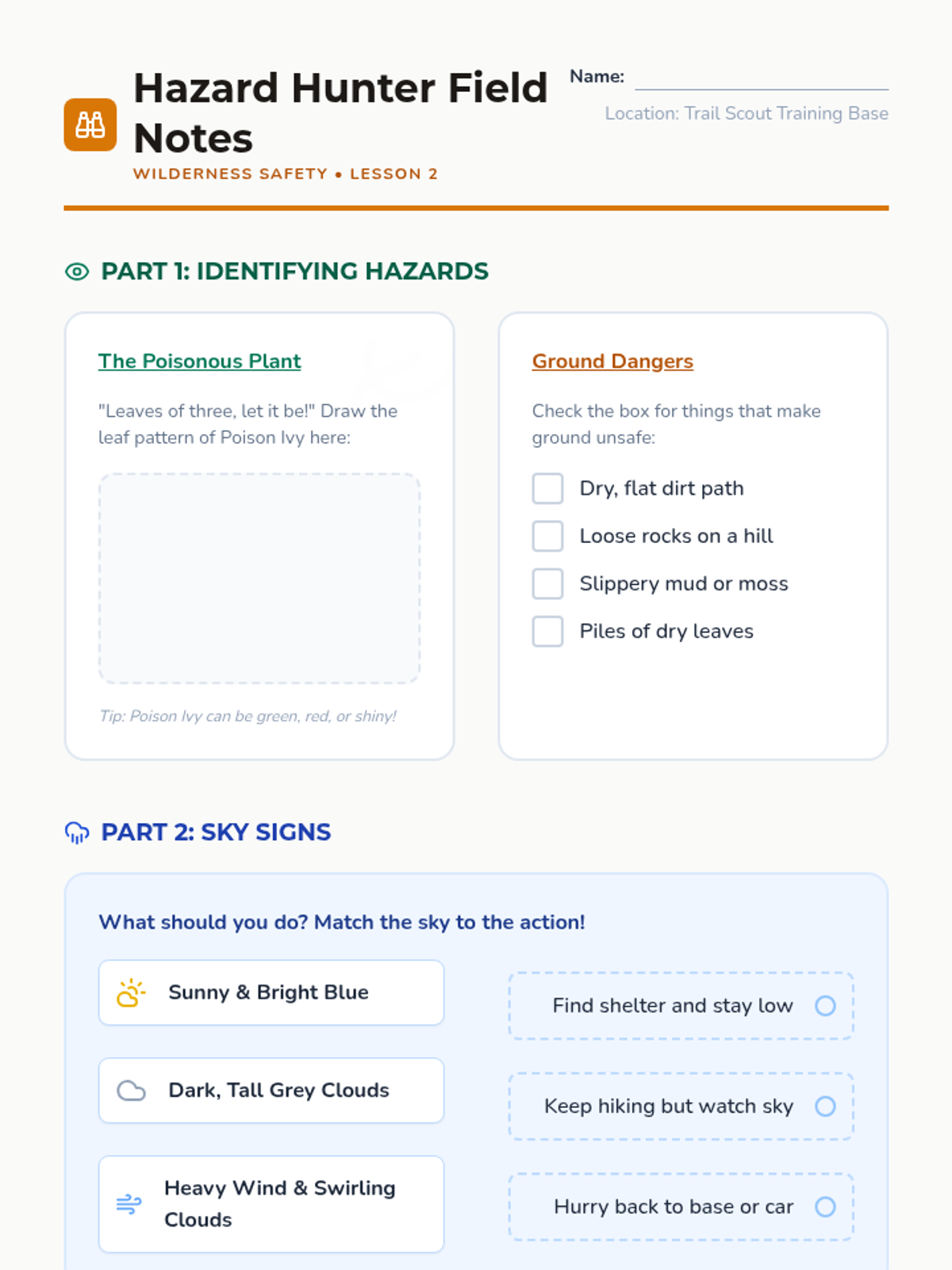
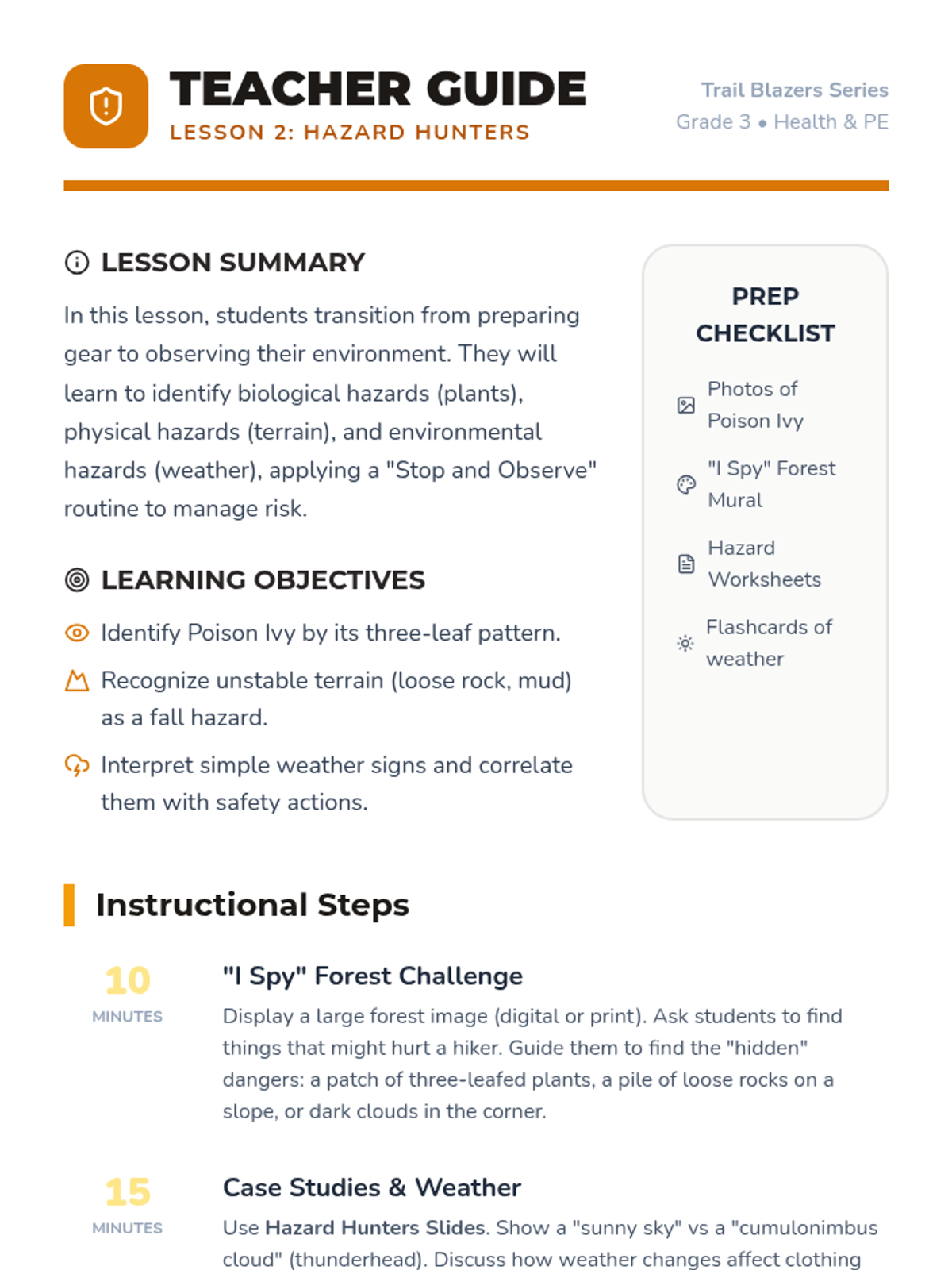
Learners identify outdoor risks like poisonous plants and weather changes, developing a 'Stop and Observe' routine to stay safe.
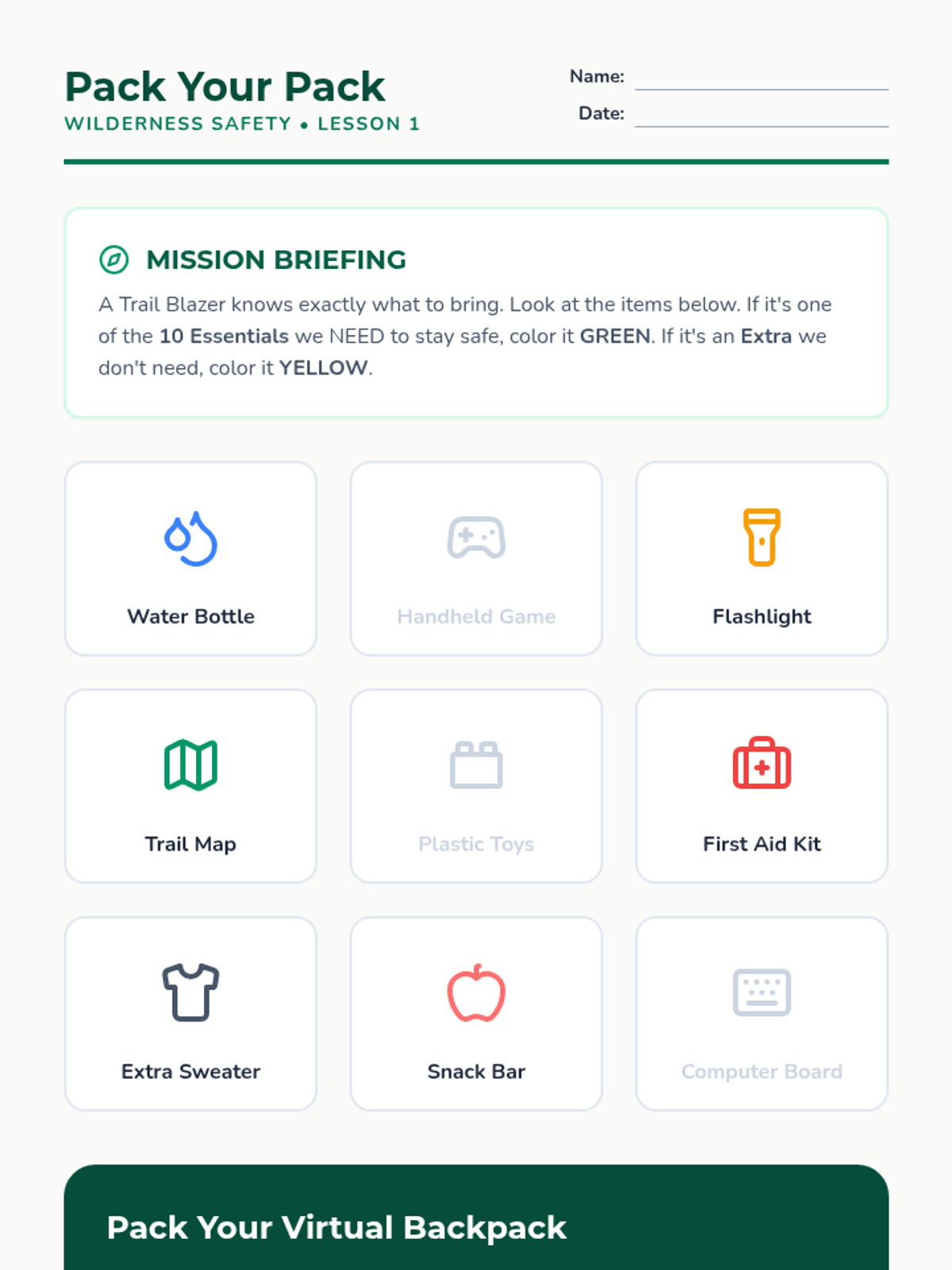
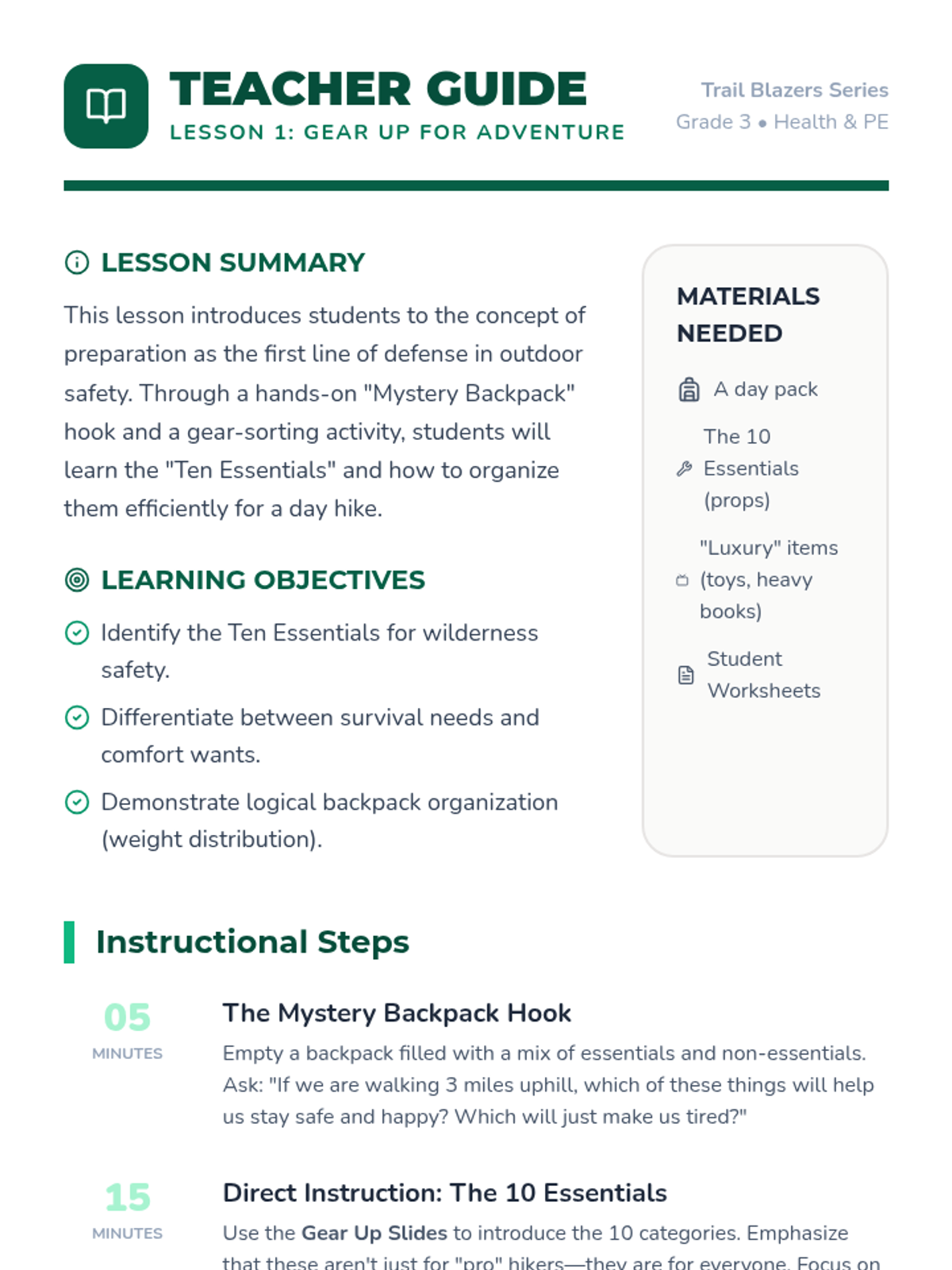
Students learn to identify the 'Ten Essentials' for a day hike, distinguishing between survival needs and luxury wants while practicing efficient packing.
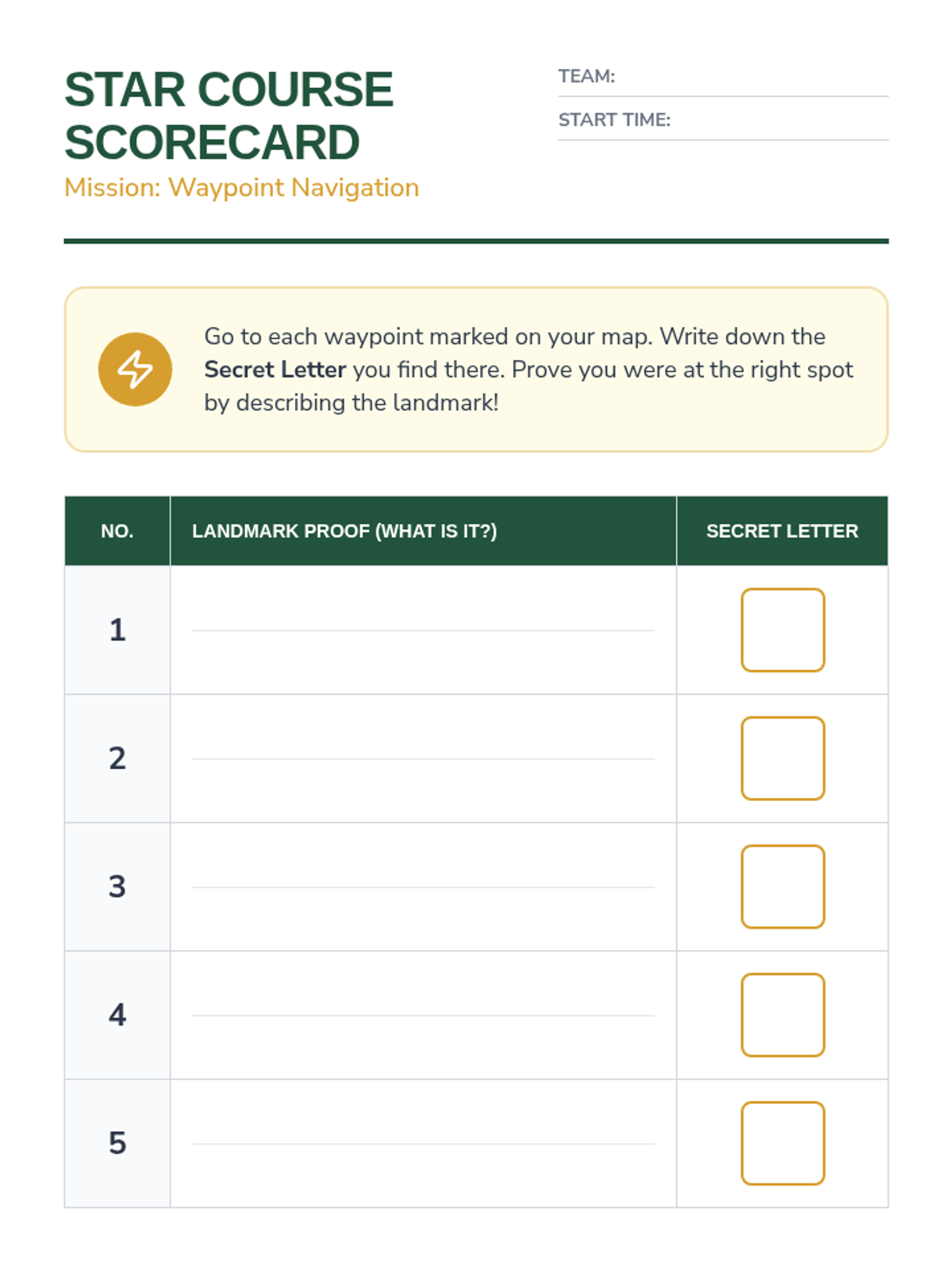
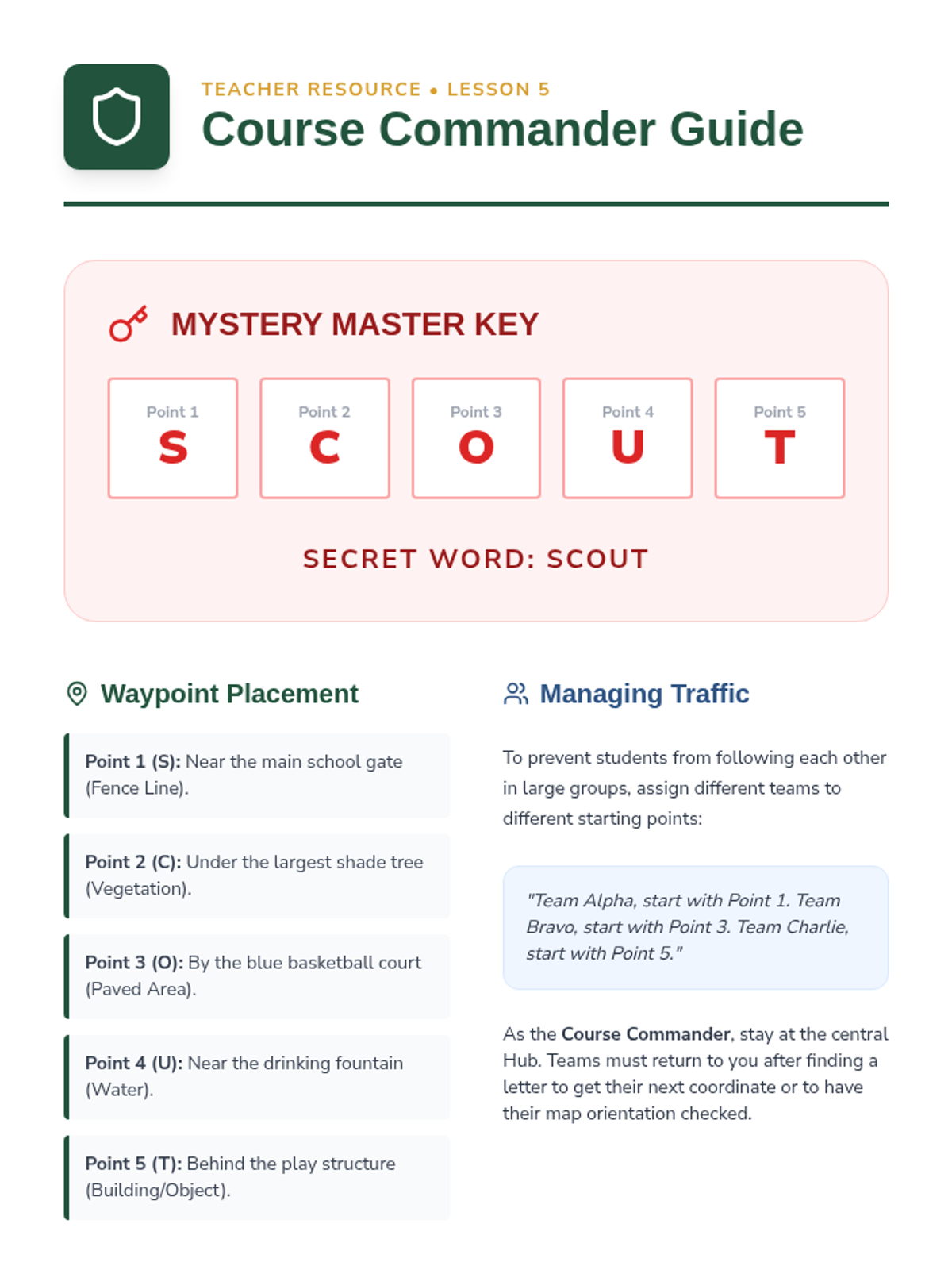
A culminating navigation challenge where students apply all learned skills to find waypoints and solve a schoolyard mystery.
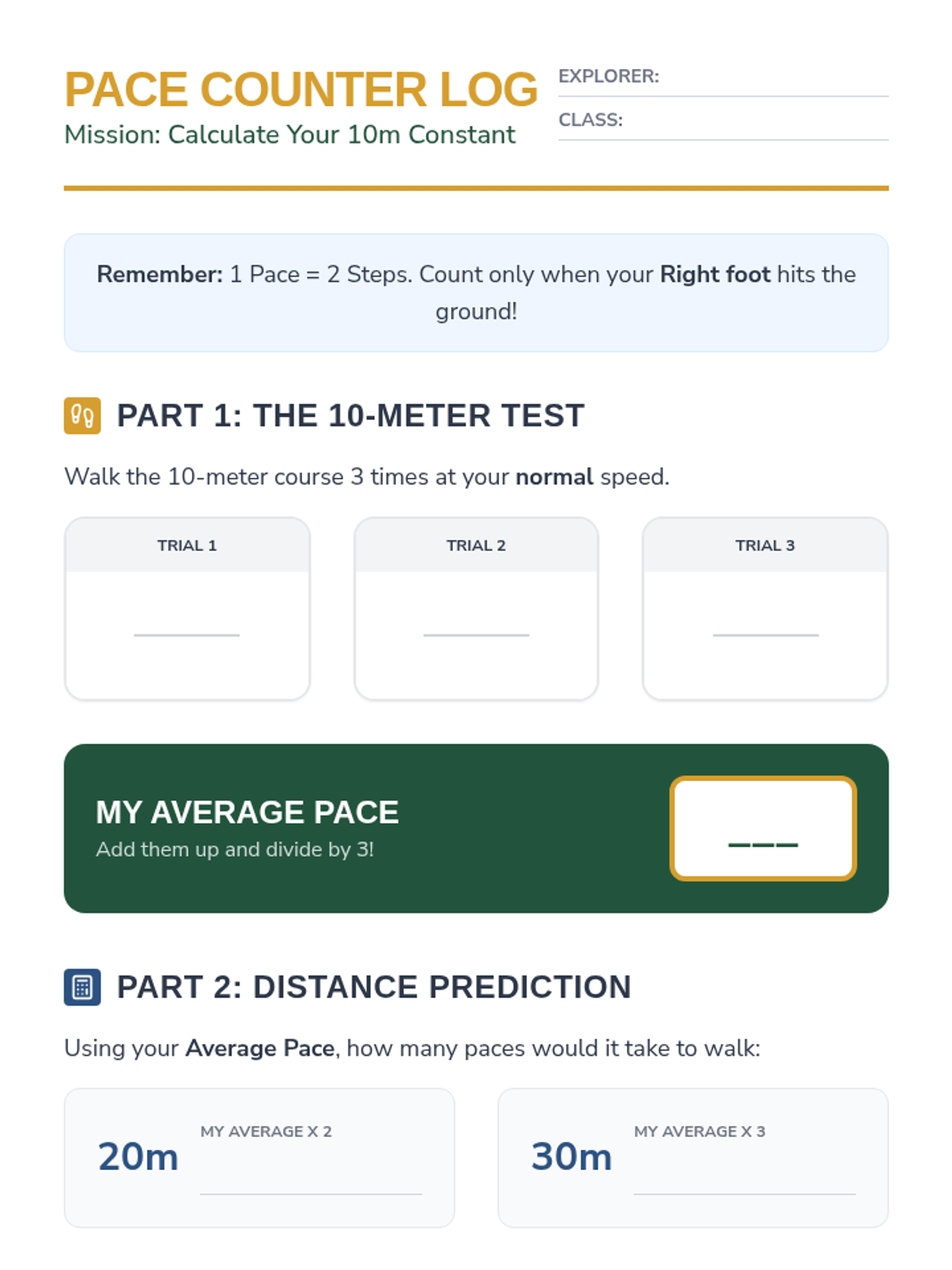
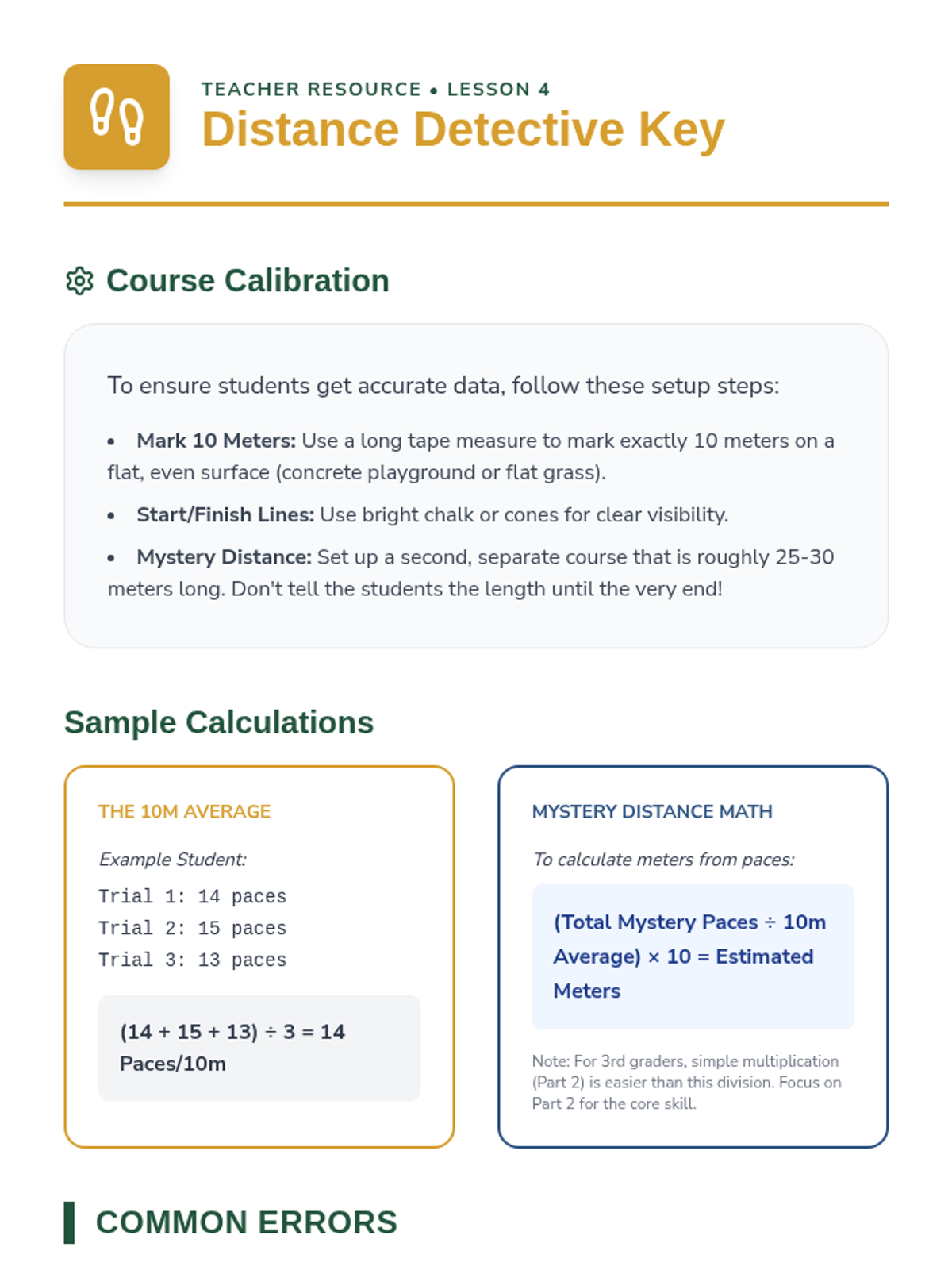
Students learn to measure distance without tools by calculating their personal pace count, bridging the gap between map scale and physical movement.
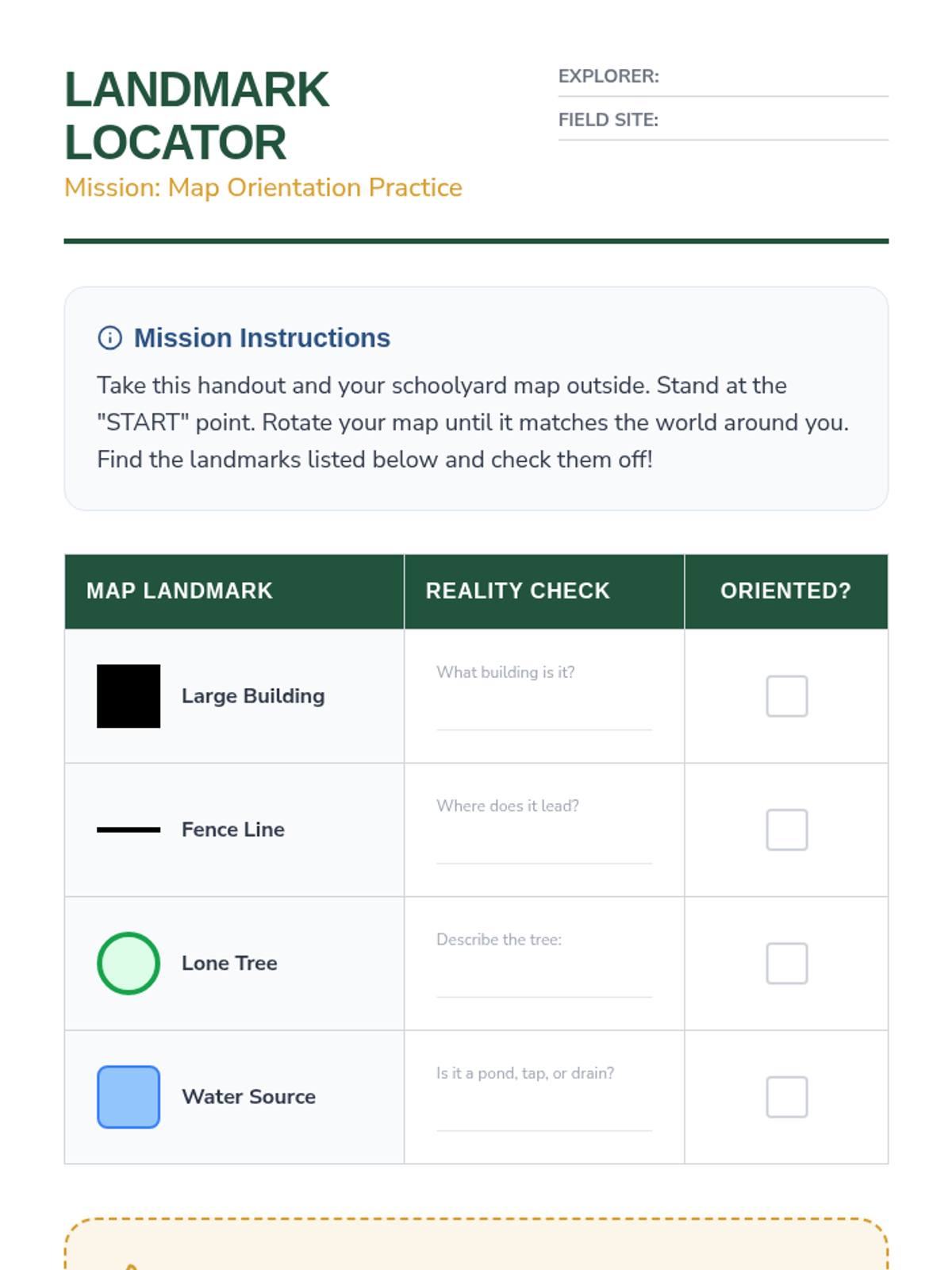
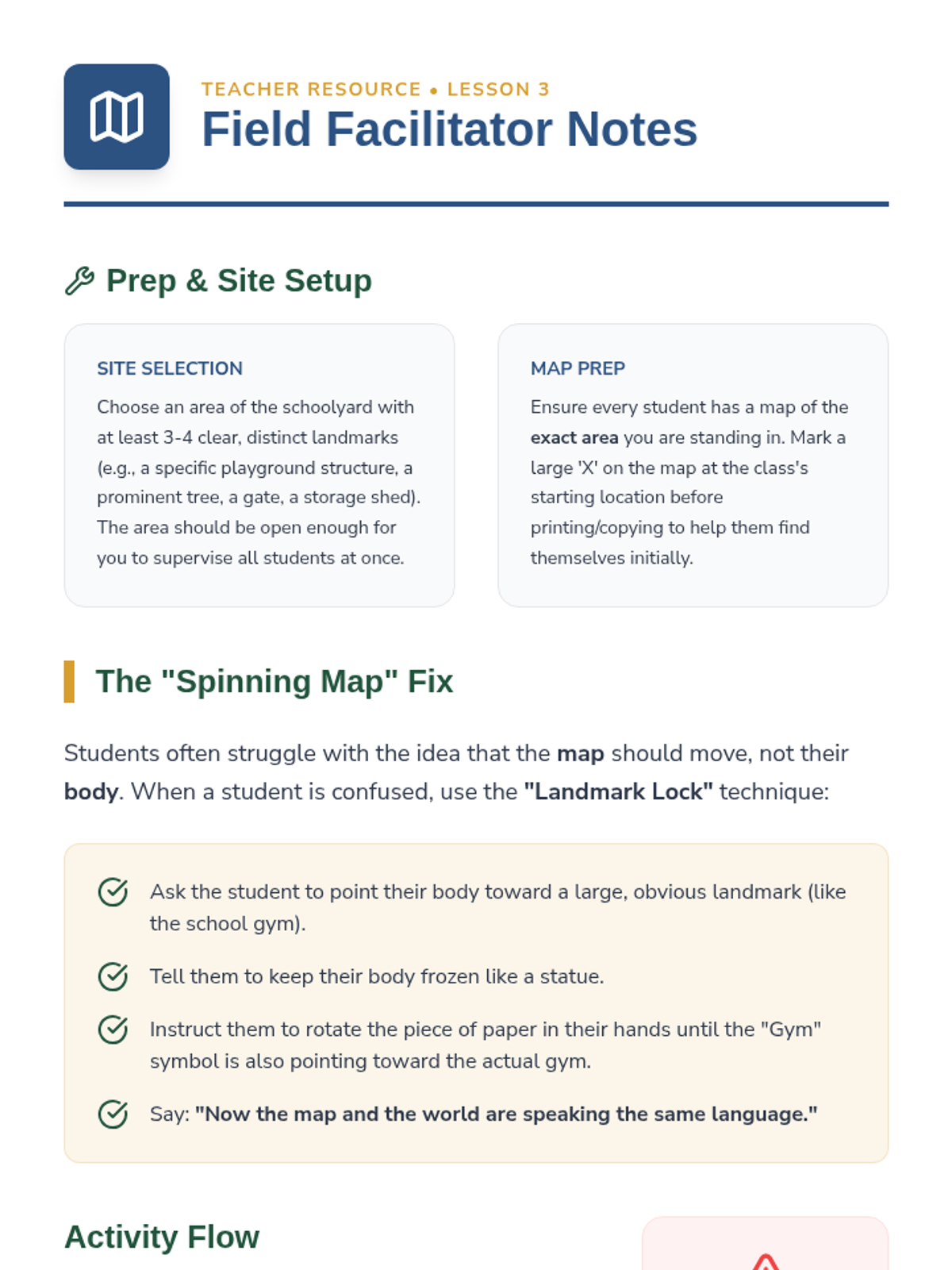
Focuses on the practical skill of orienting a map to match the real world using physical landmarks and 'thumbing' techniques.
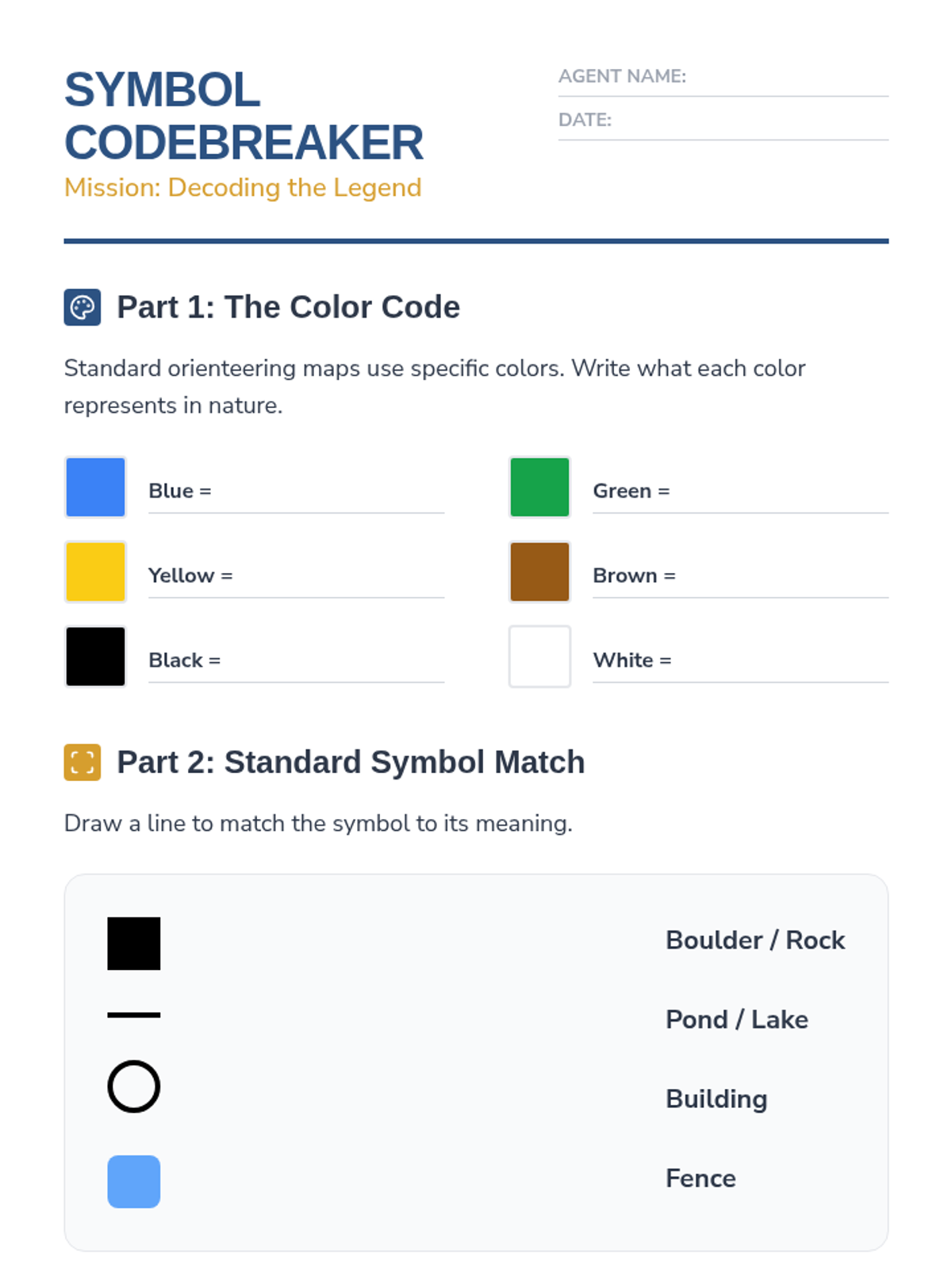
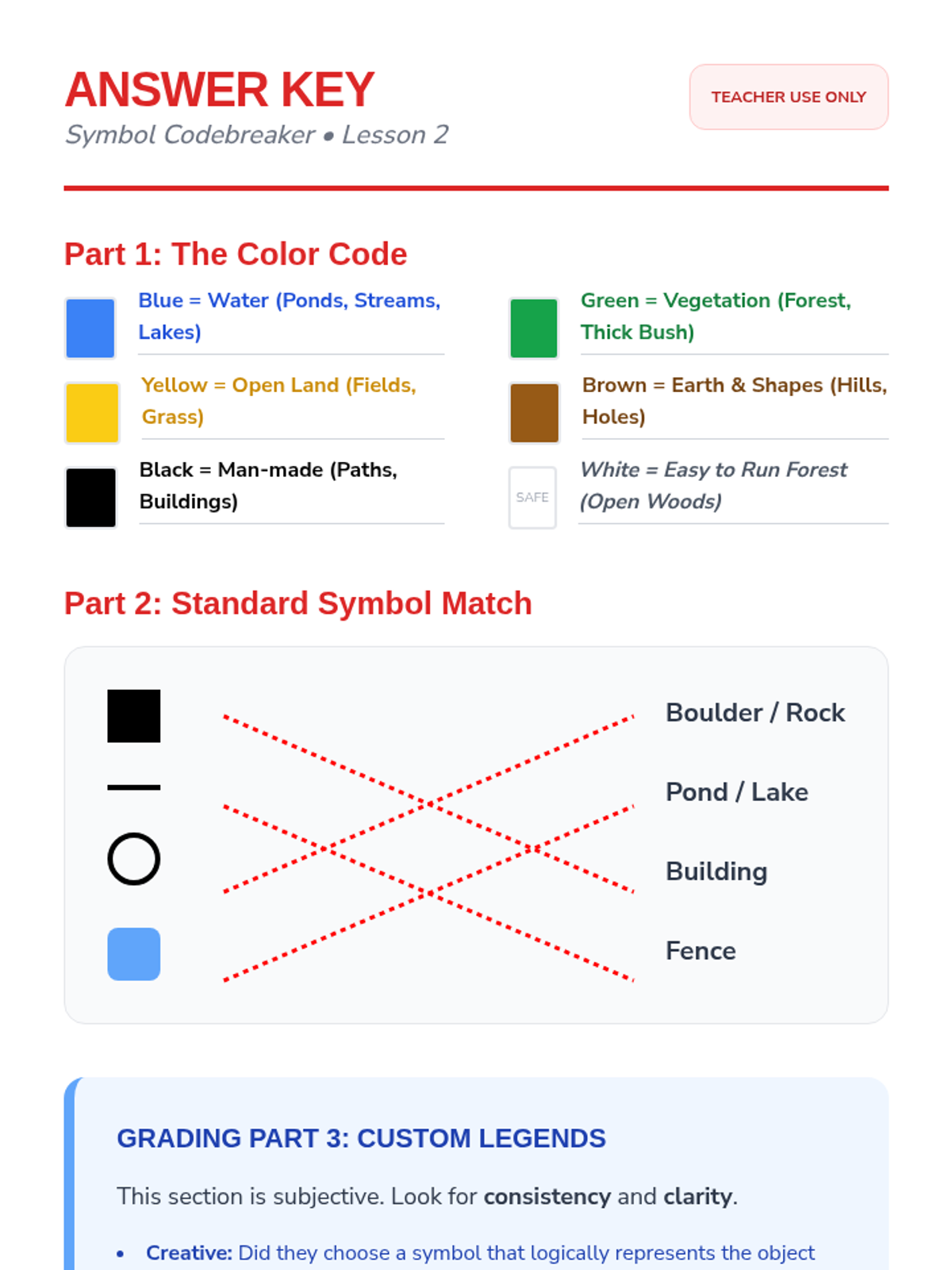
Students decode the language of maps by learning standard orienteering symbols and creating their own map legends to represent physical objects.
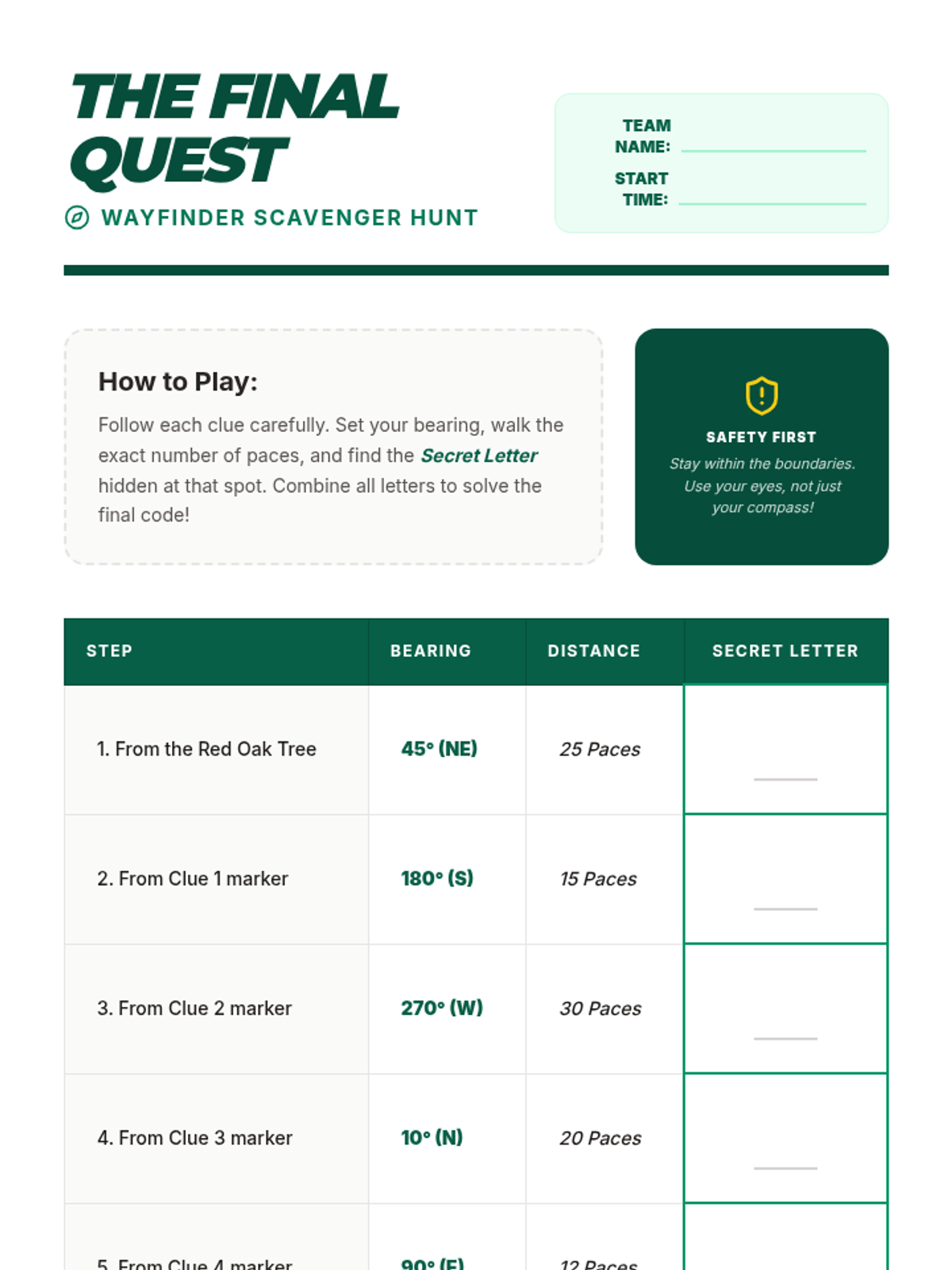
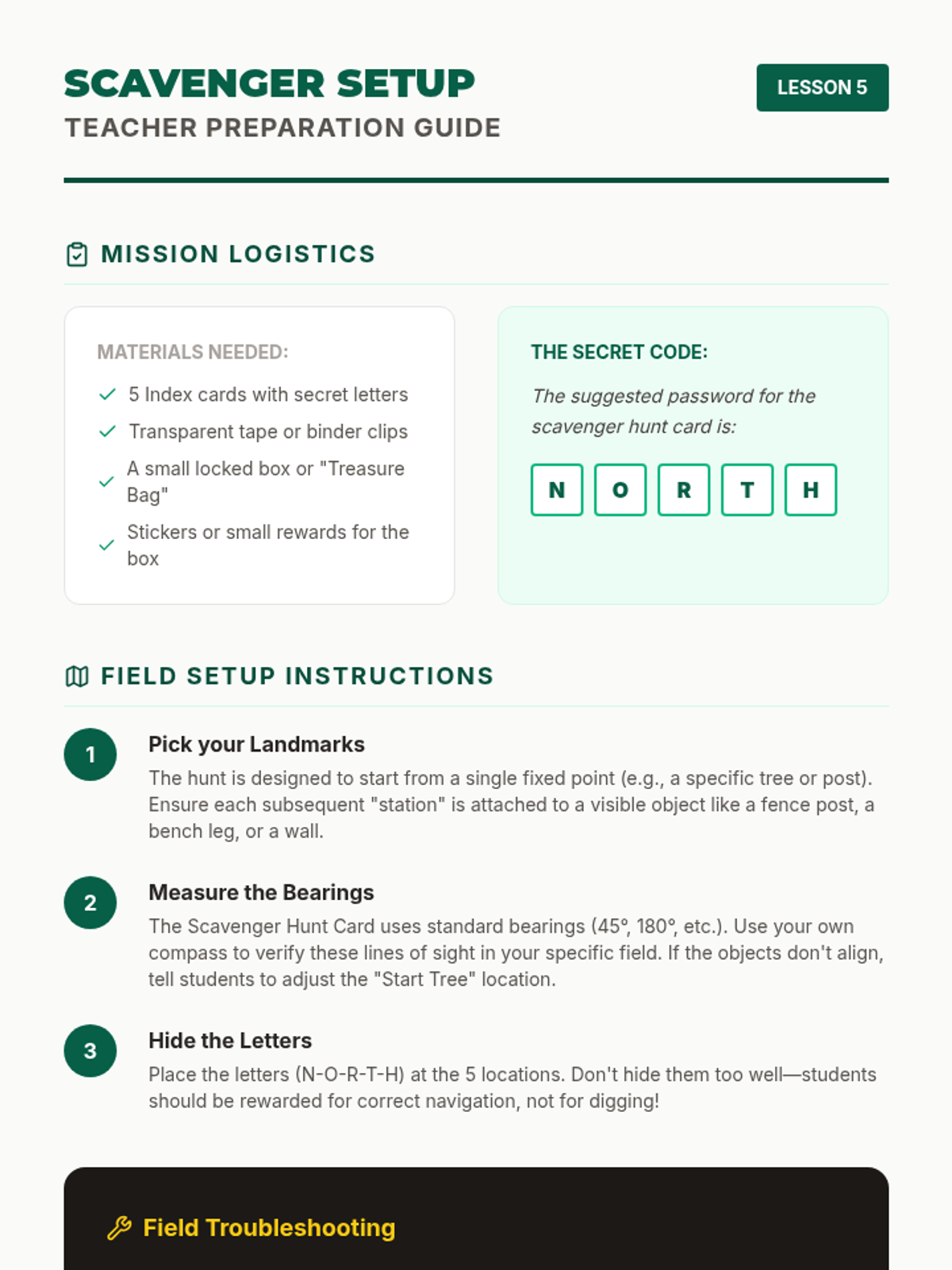
A culminating inquiry-based activity where students use compass instructions to find hidden objects and solve a final puzzle.
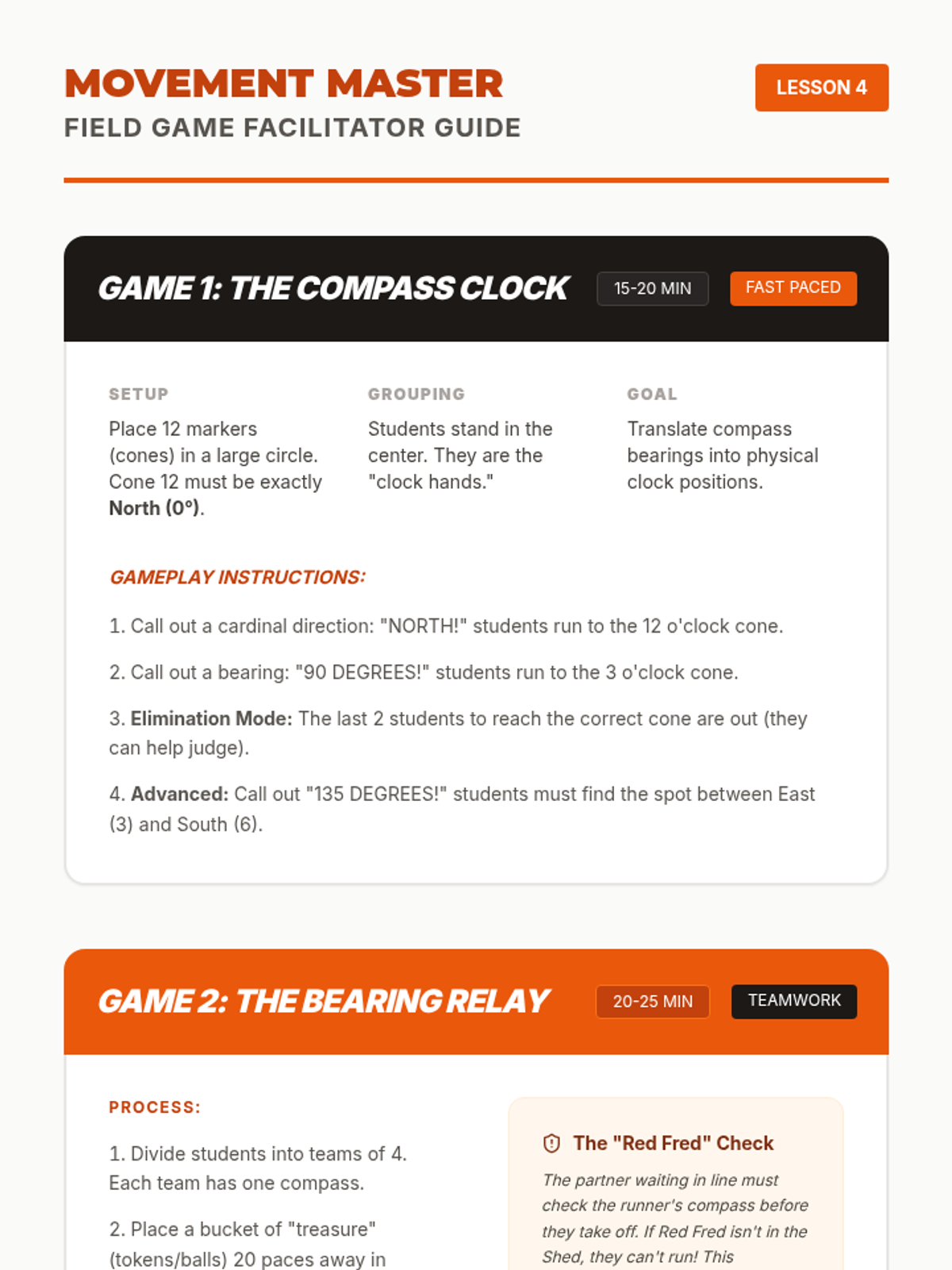
Active relay races and challenges that reinforce rapid directional decision-making using compass skills.
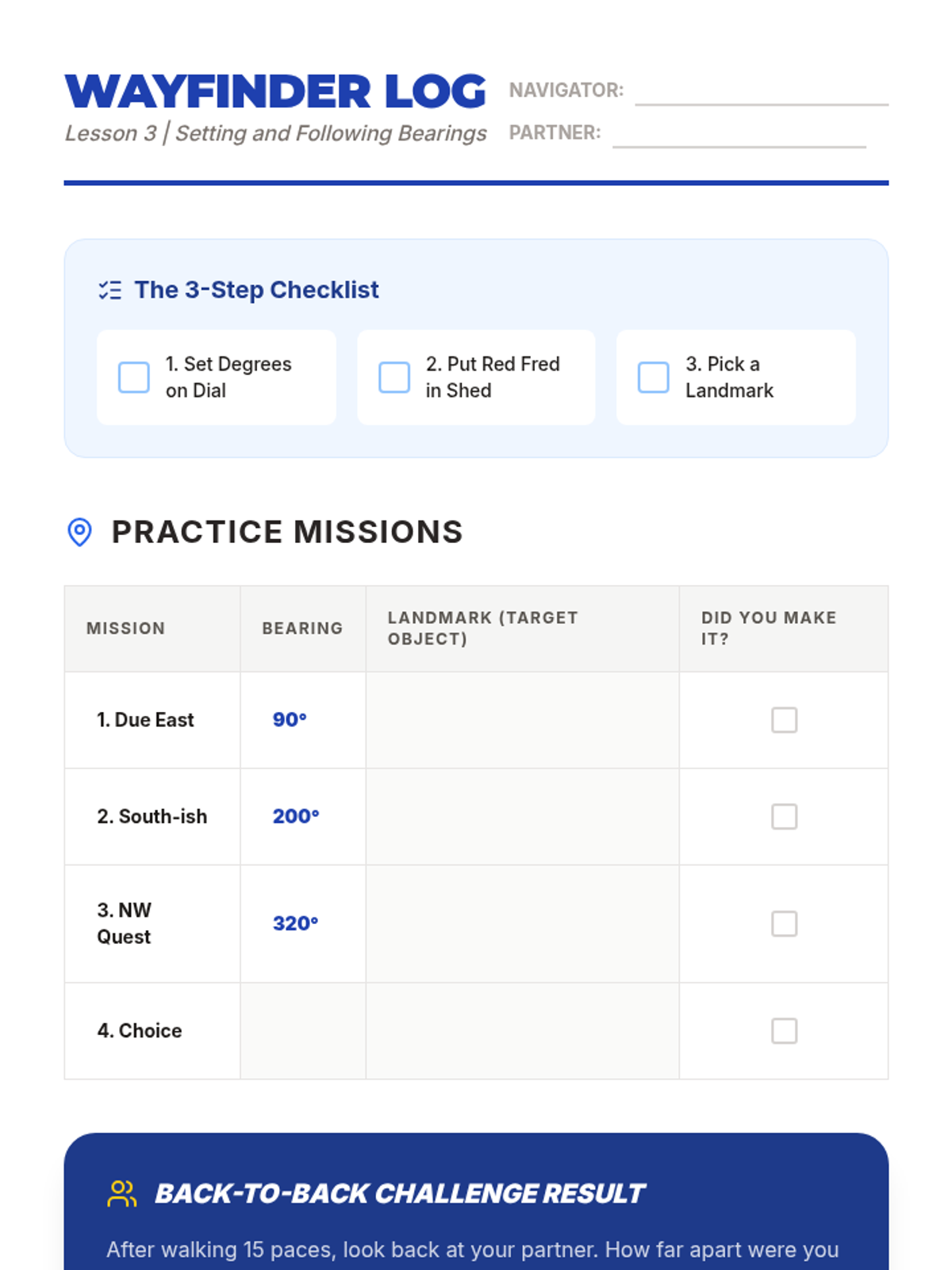
Students practice setting simple bearings and using visual landmarks to maintain a straight line while walking.
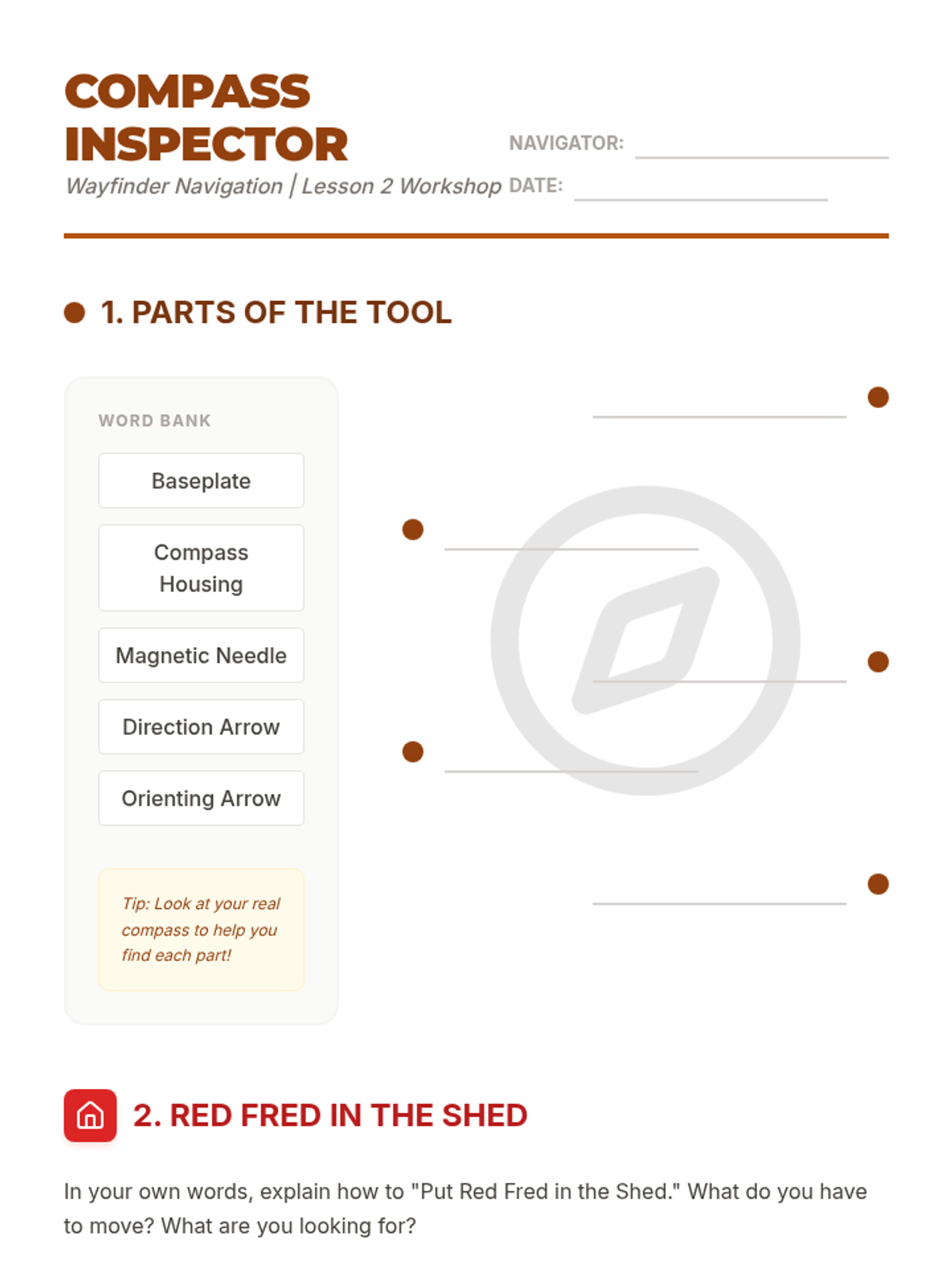
Students inspect compasses, identify key parts, and learn the 'Red Fred in the Shed' technique for orienting to North.
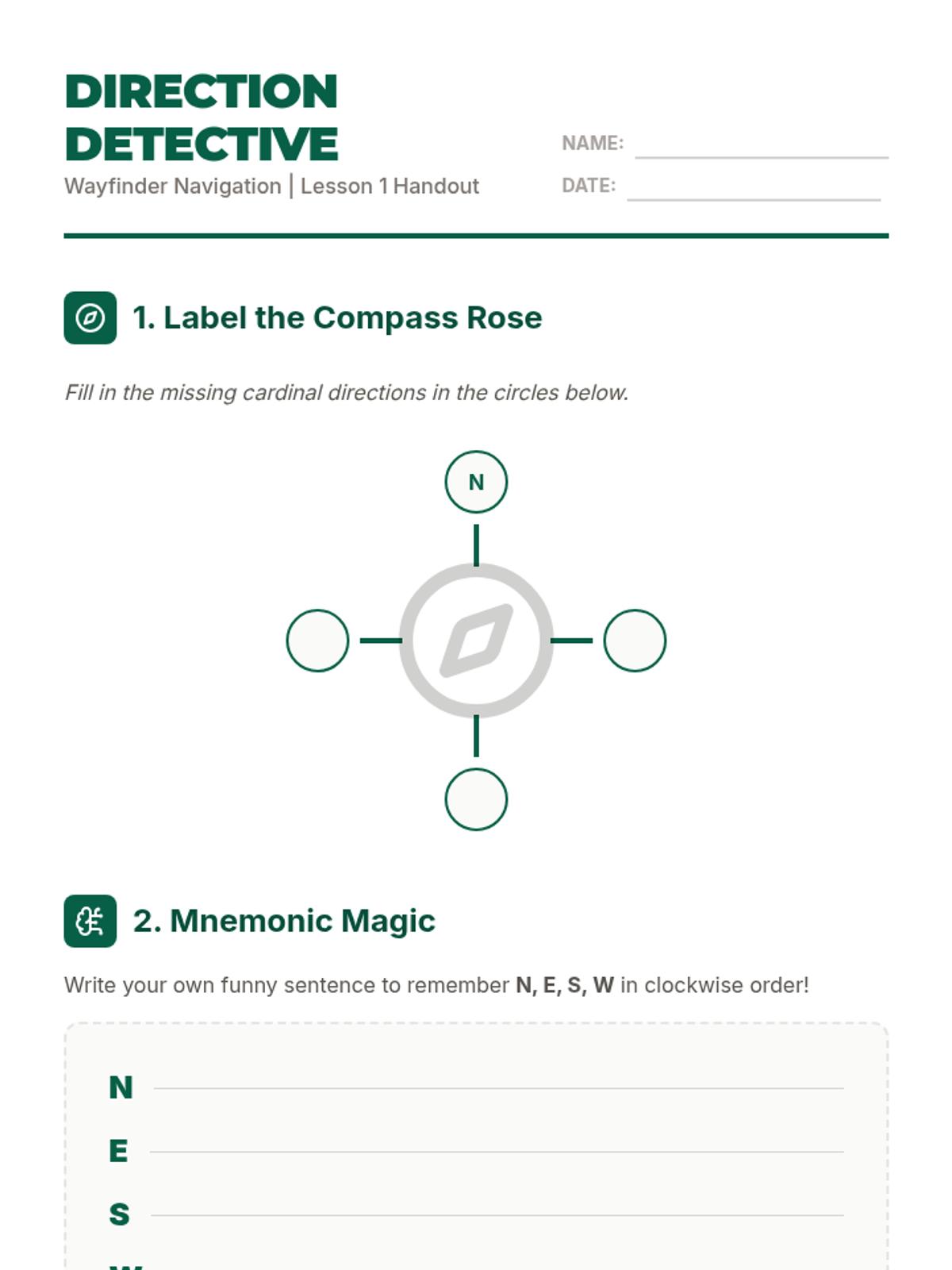
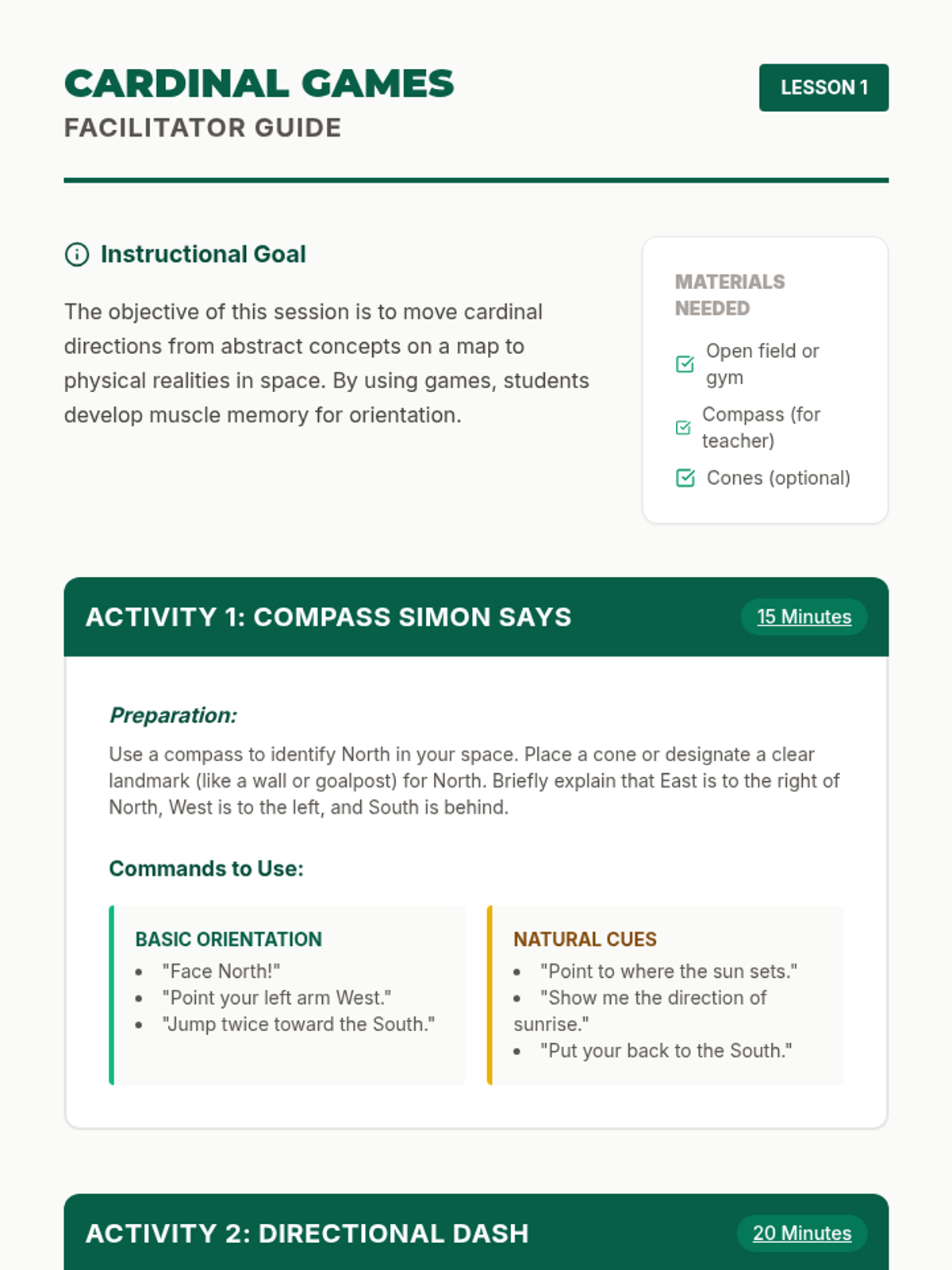
Students learn the four cardinal points (N, S, E, W) using mnemonics and movement games, anchoring their understanding with natural cues like the sun.
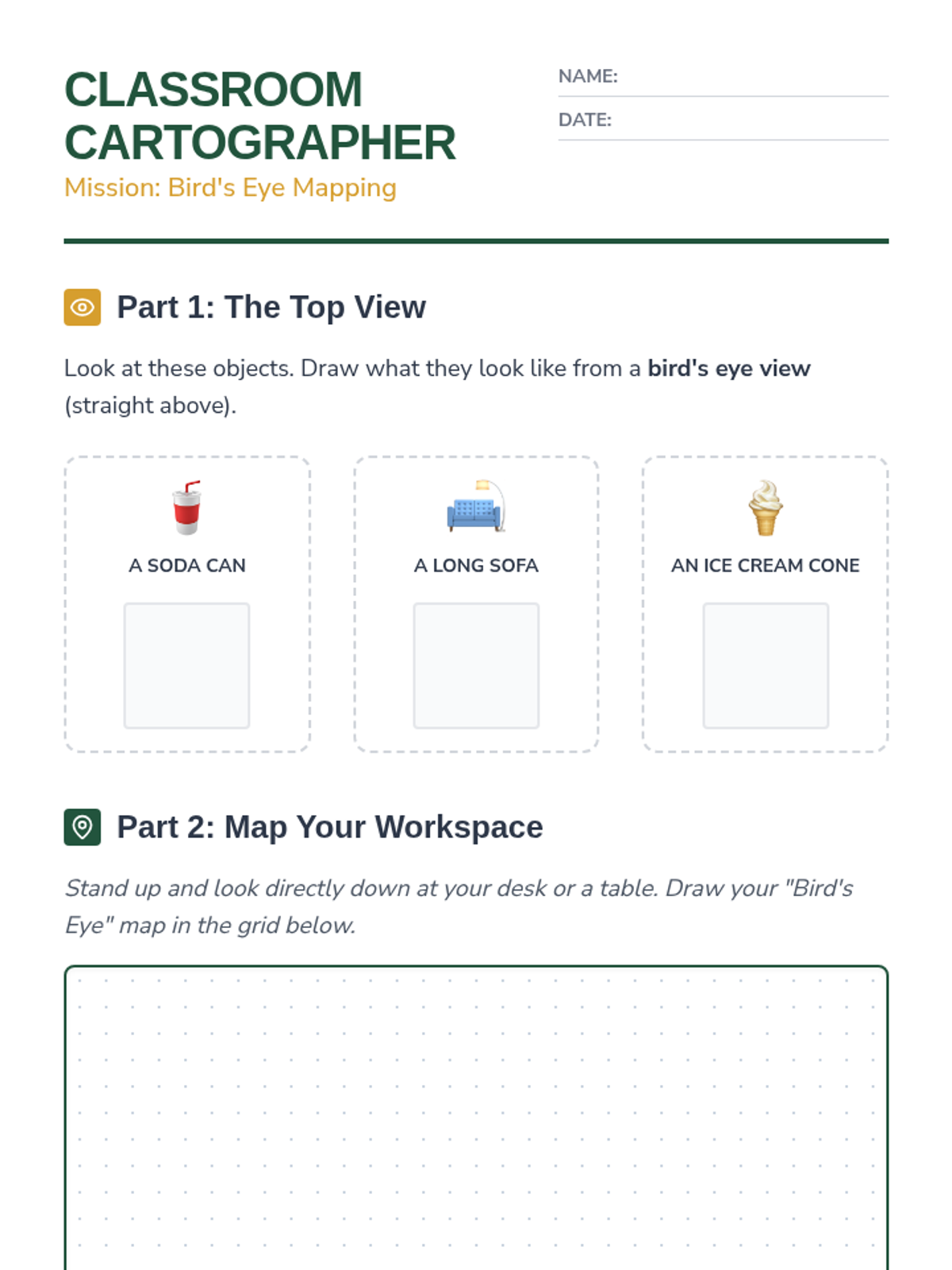
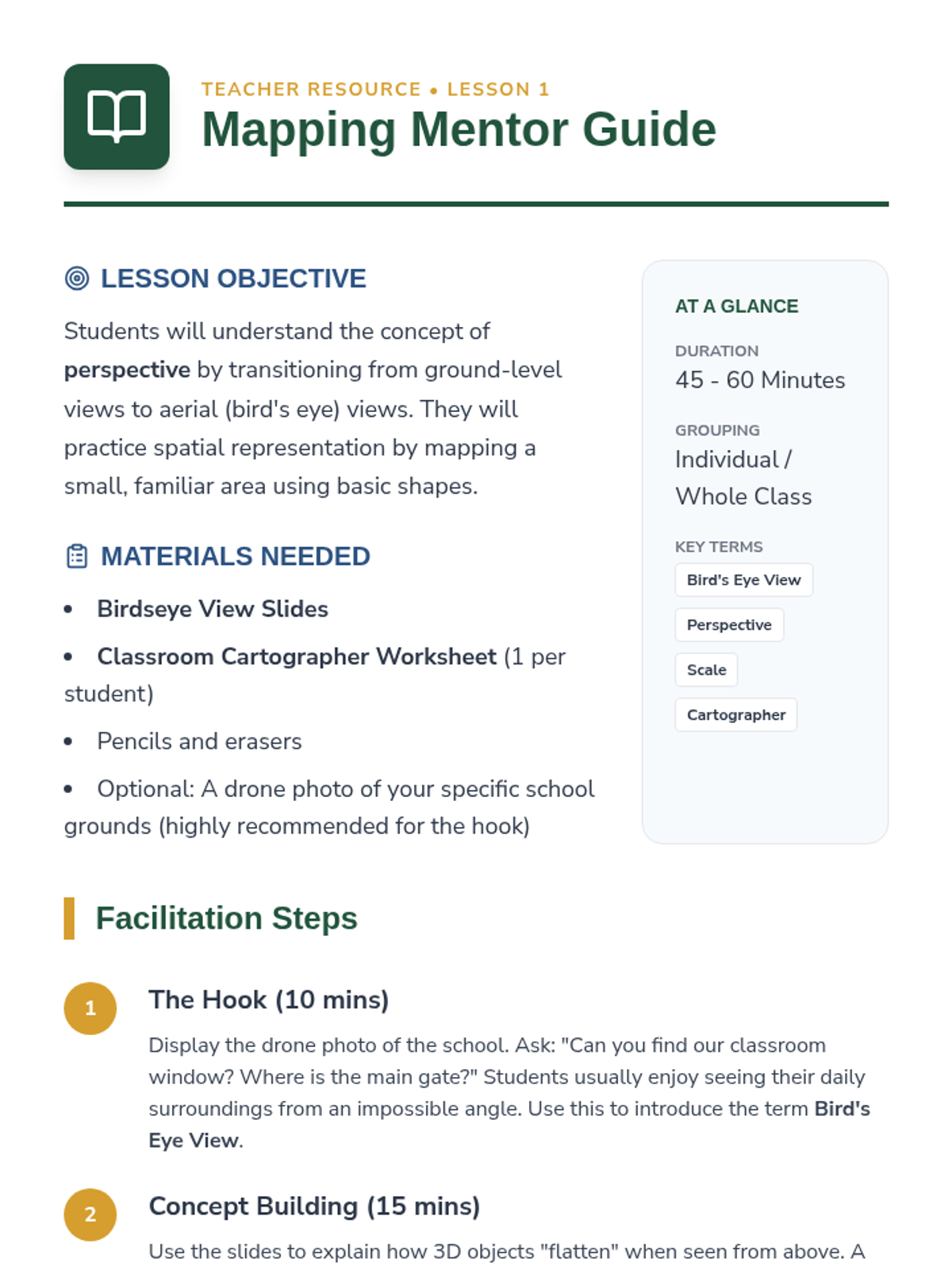
Students explore the concept of a 'bird's eye view' by examining aerial photographs and creating simple maps of their immediate environment to understand scale and perspective.
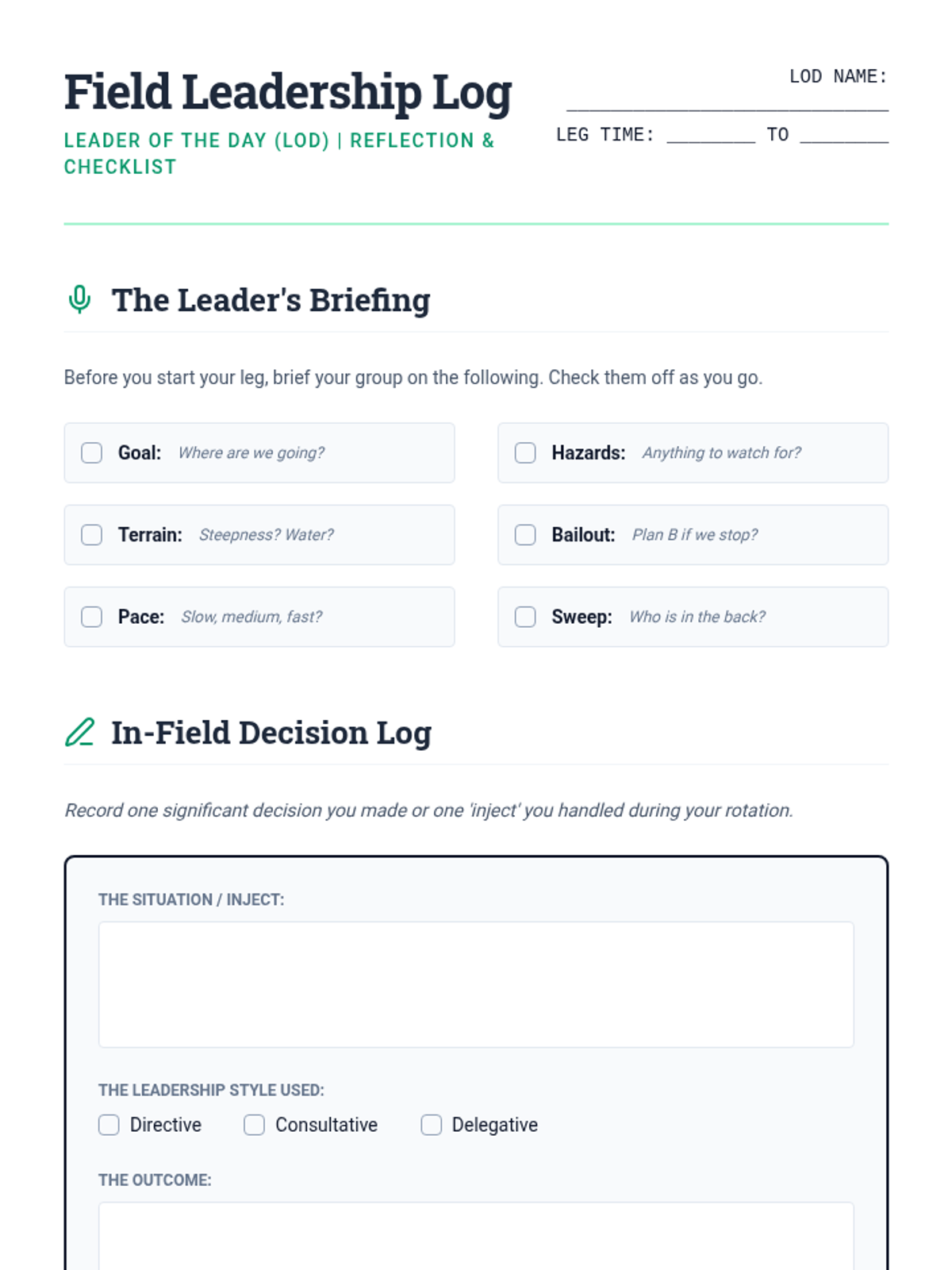
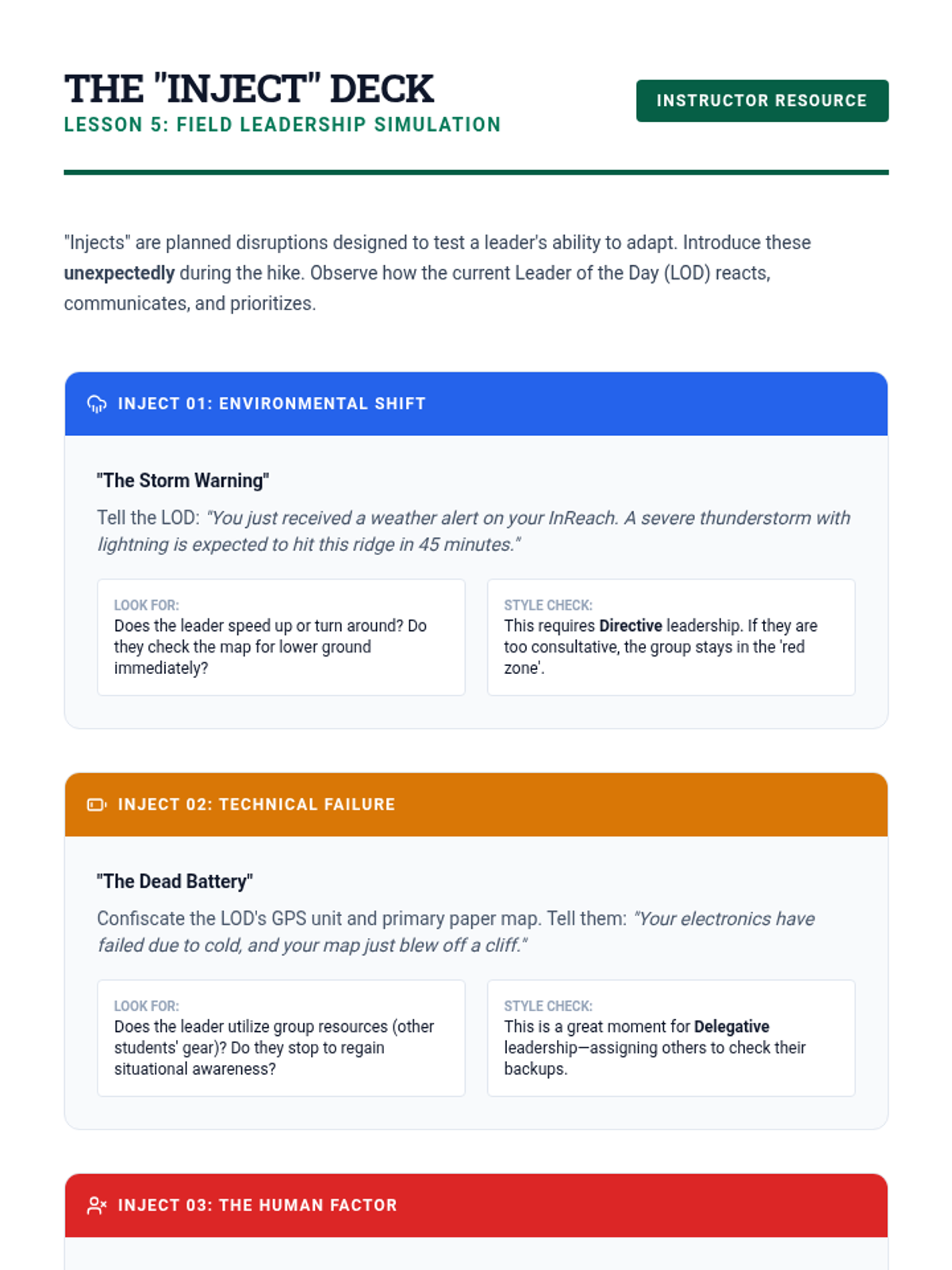
A hands-on field simulation where students apply leadership theories, real-time navigation, and adaptive decision-making while managing group dynamics and 'inject' scenarios.
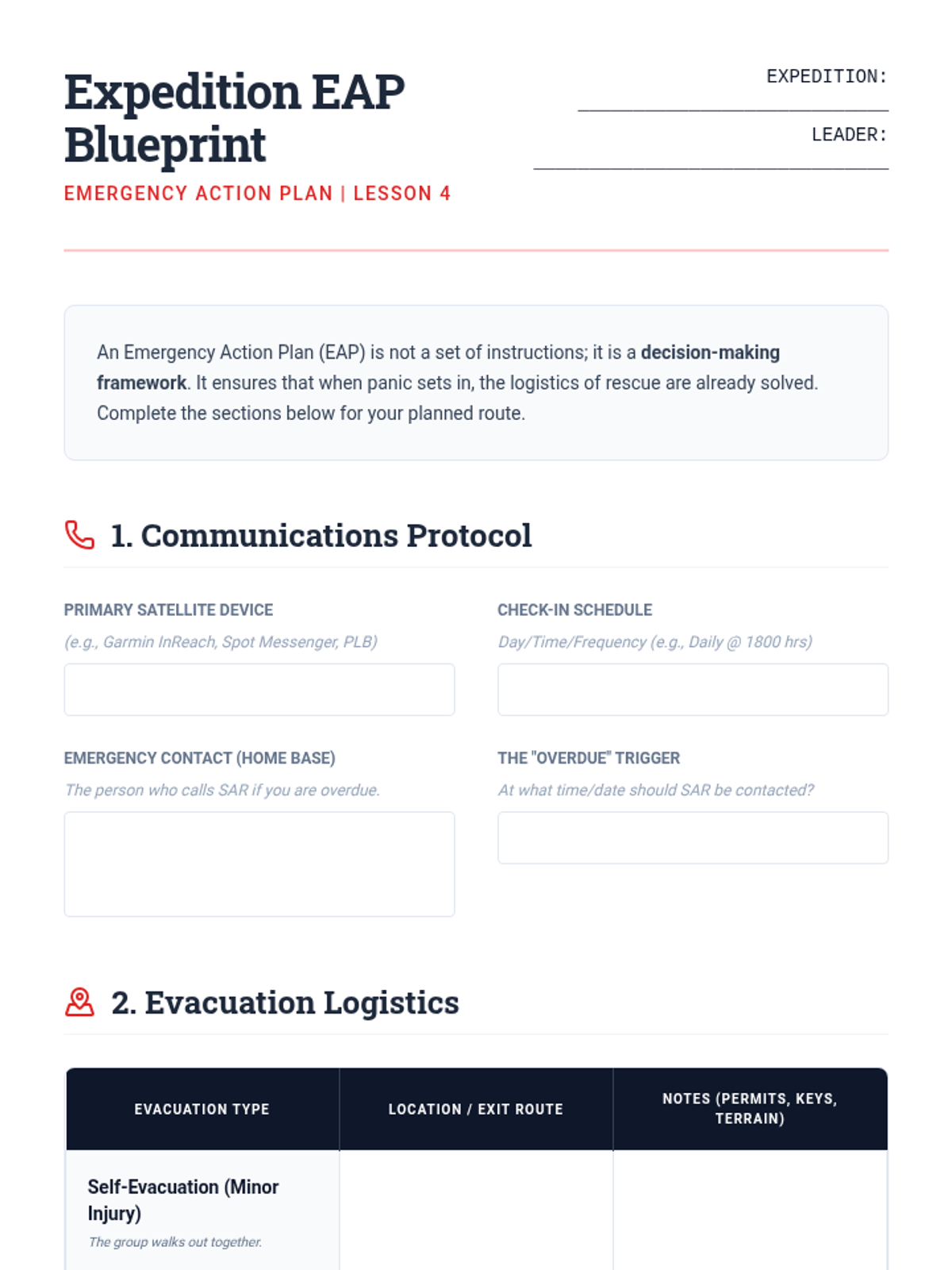
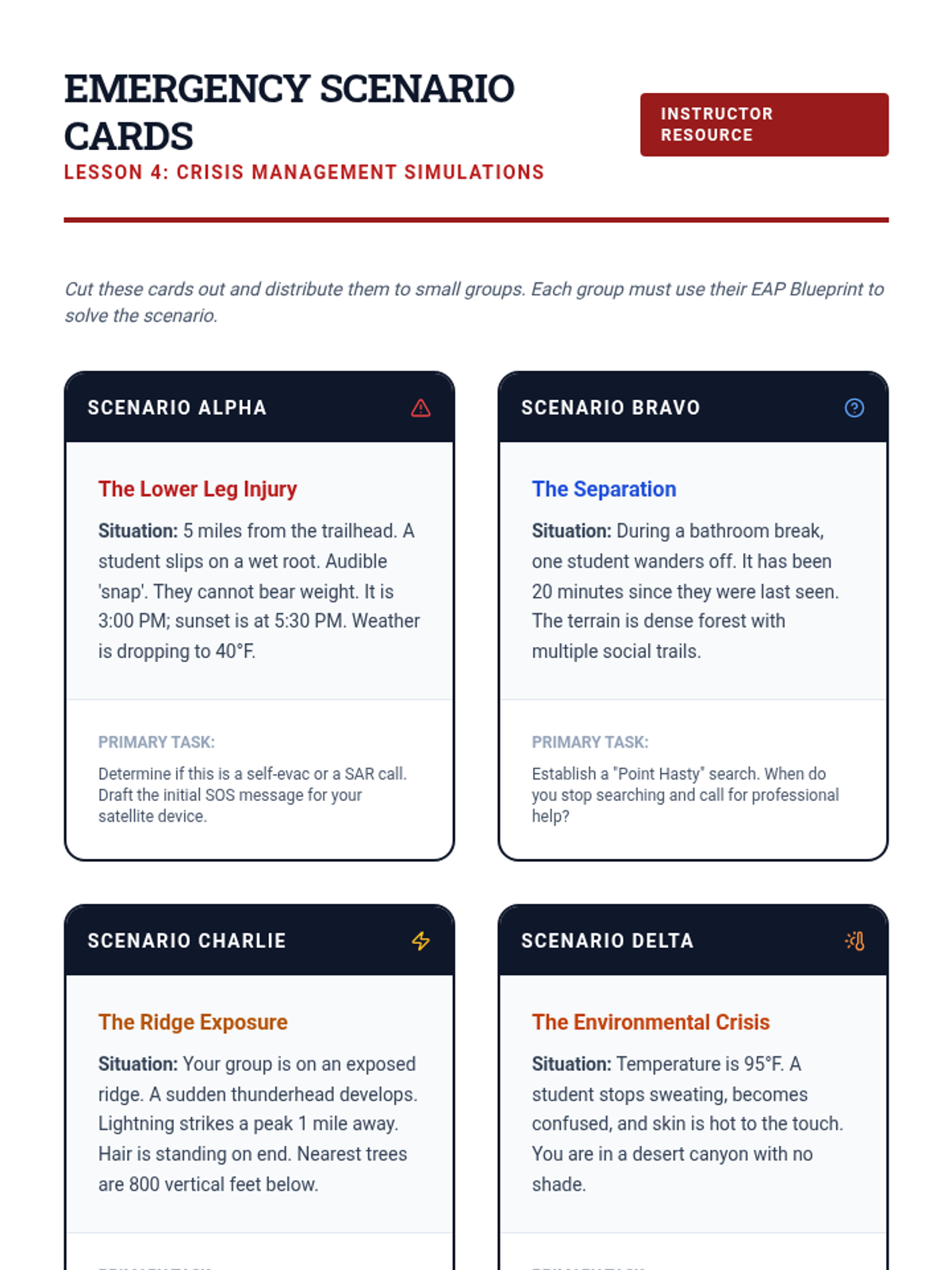
Developing robust Emergency Action Plans (EAPs) and understanding the ethical implications of Leave No Trace principles during crisis management.
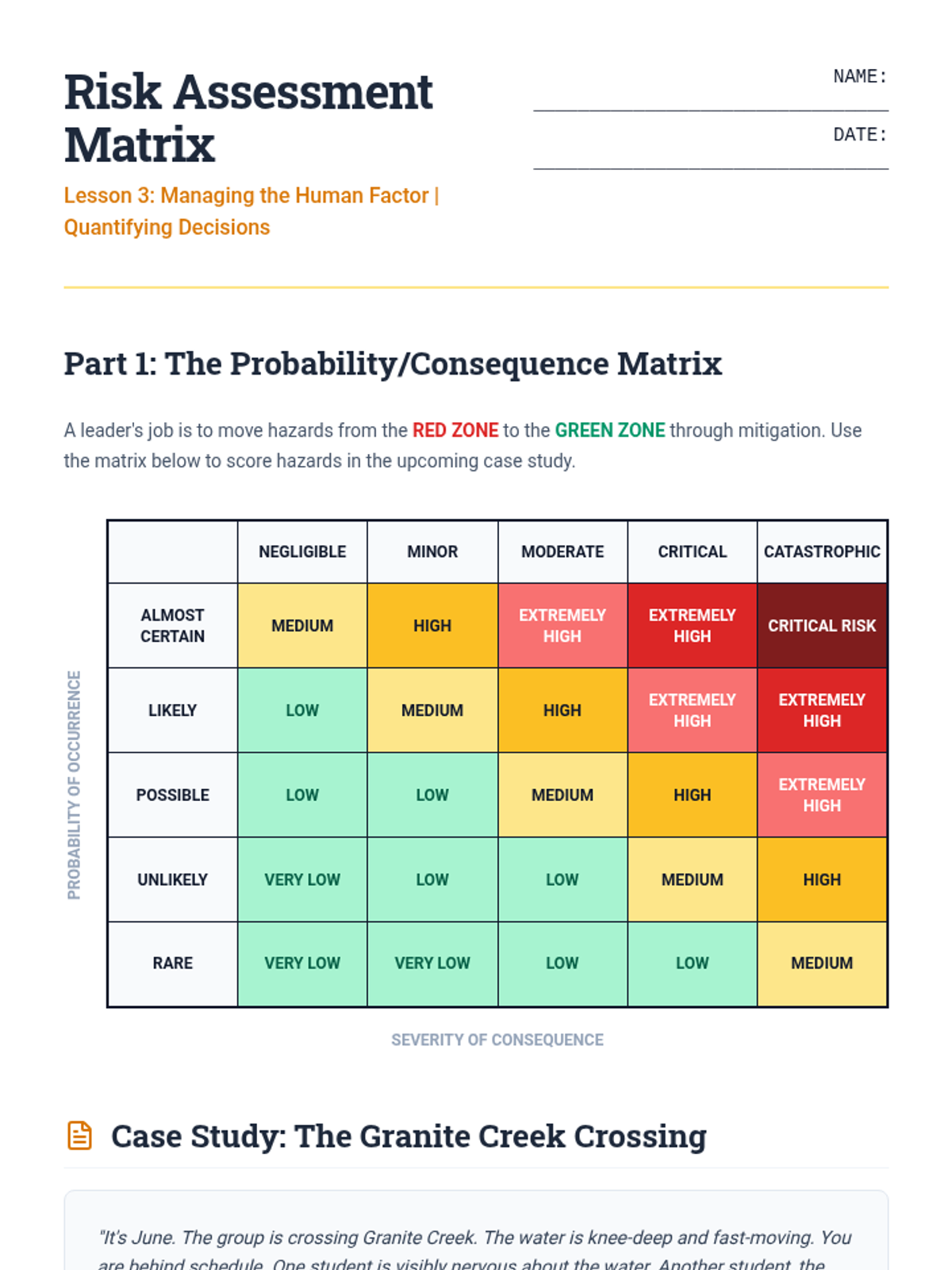
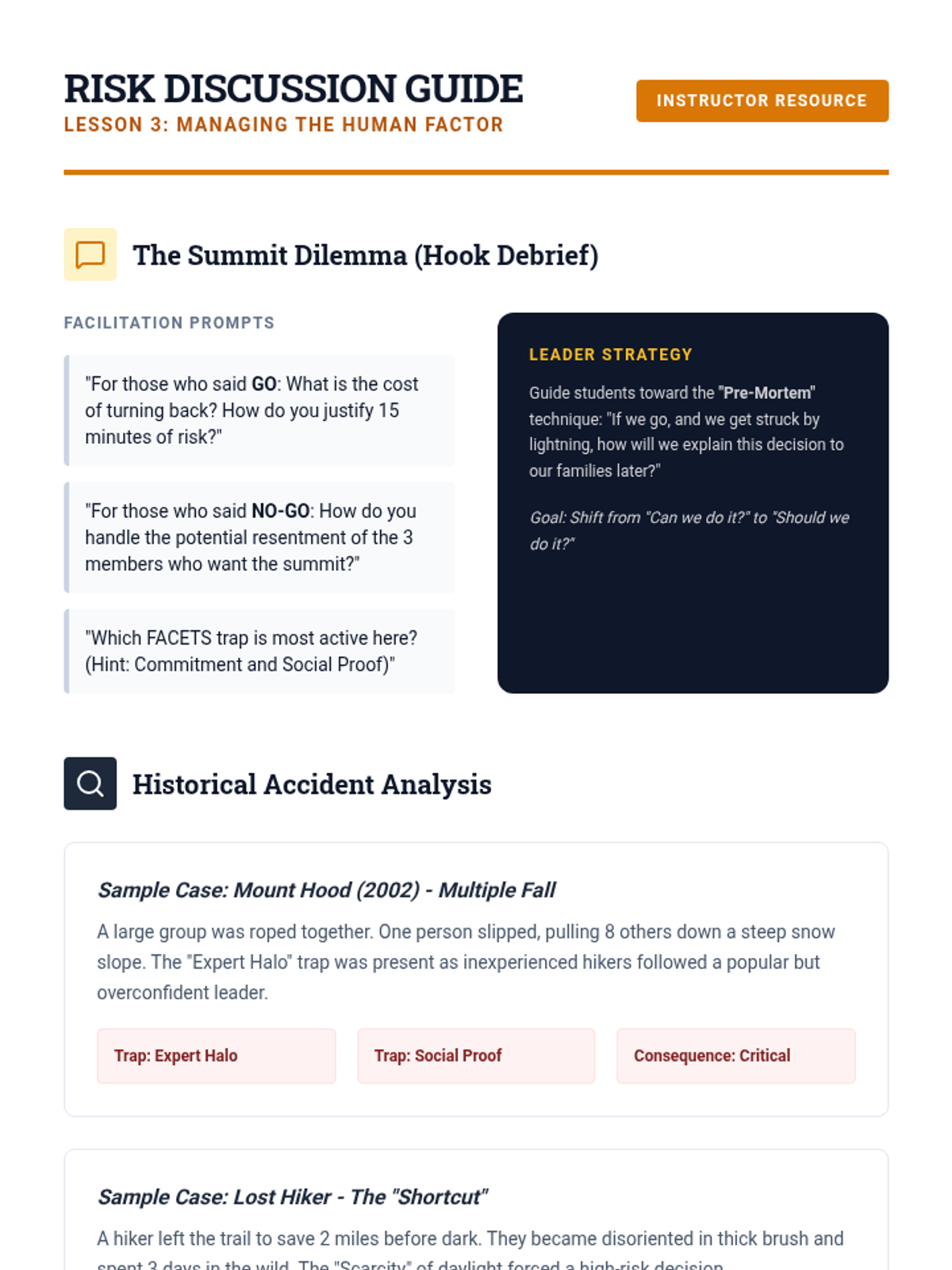
A deep dive into objective and subjective hazards, focusing on the 'human factor' and heuristic traps that influence decision-making in high-risk environments.
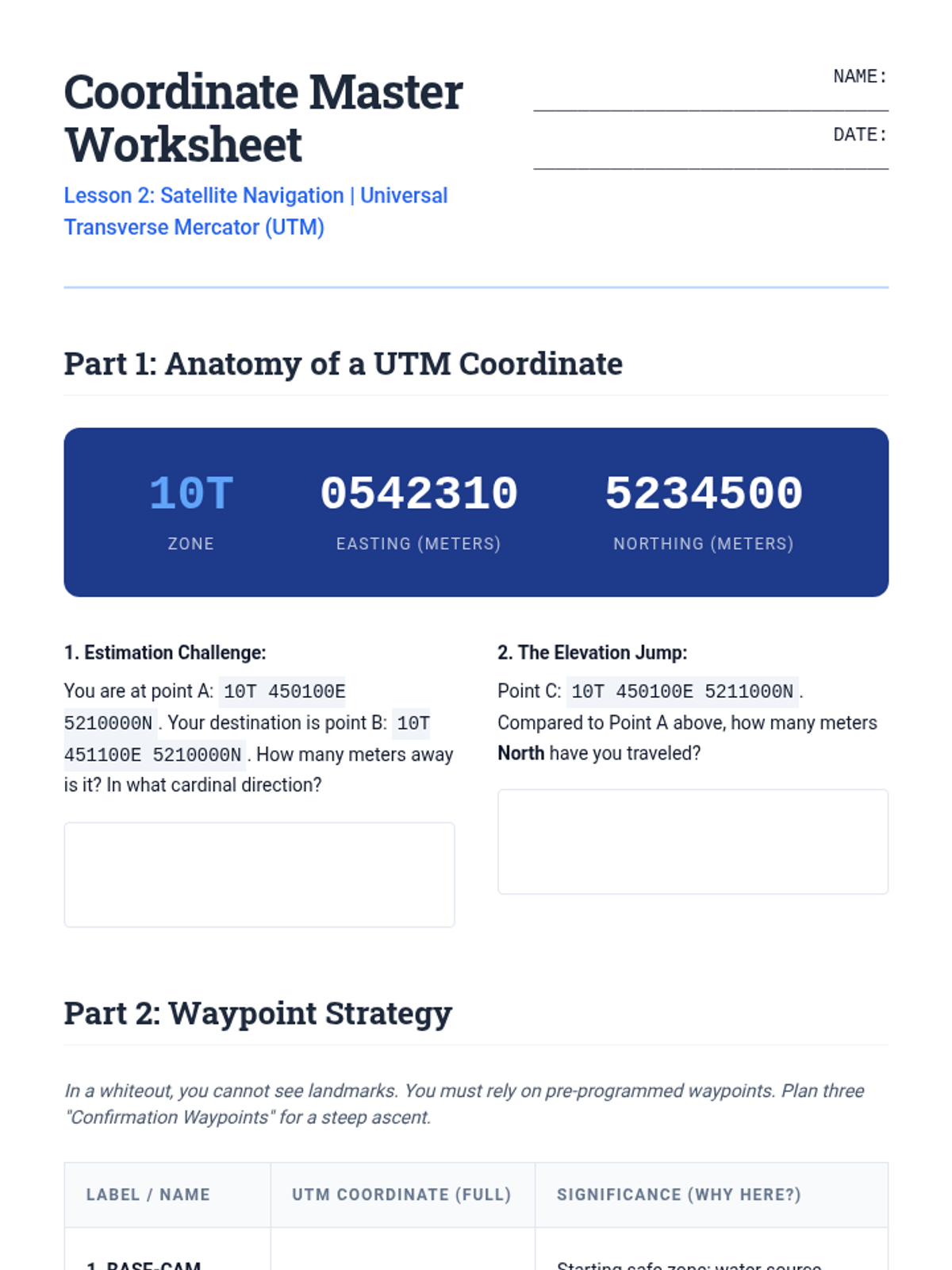
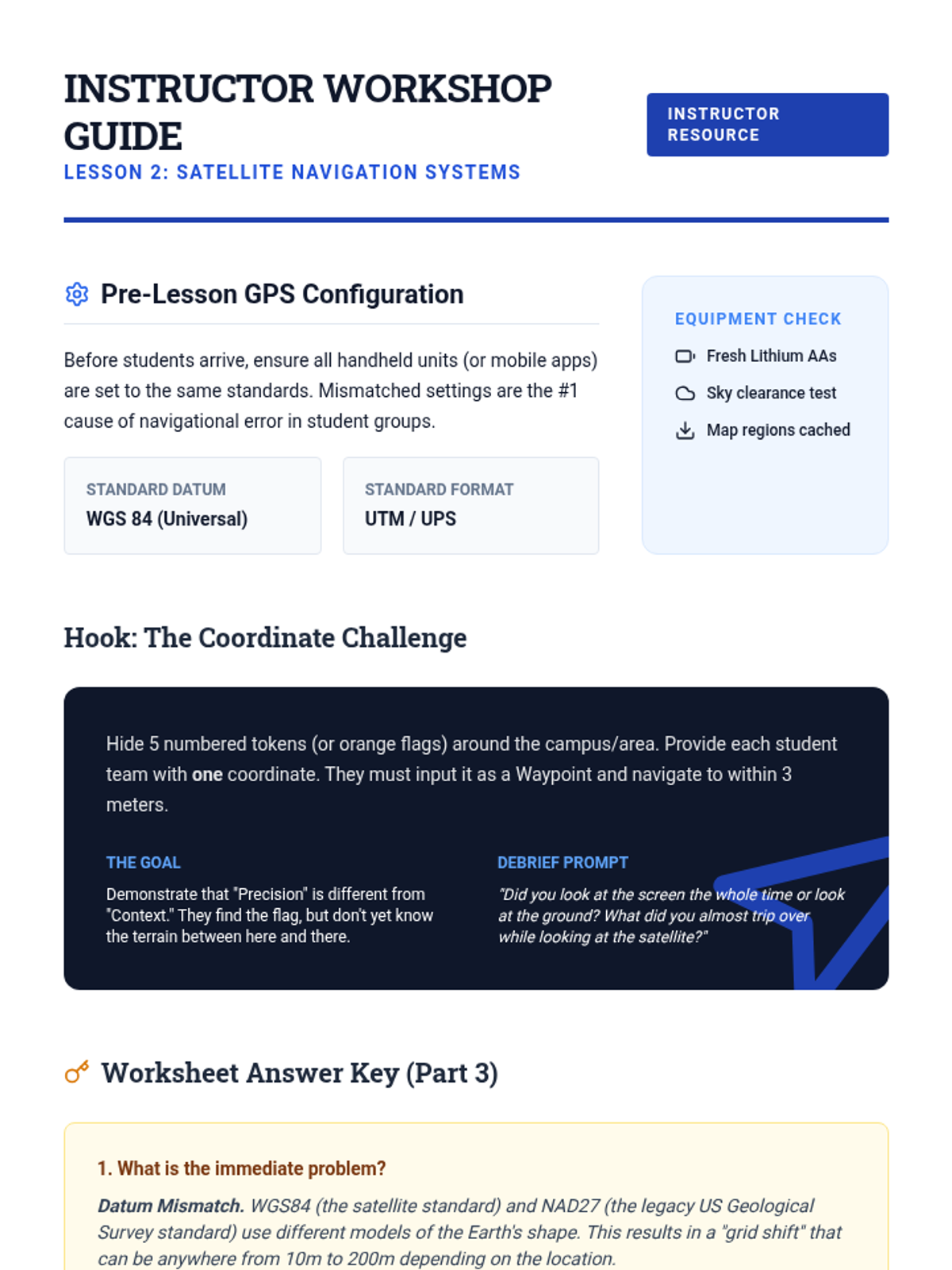
A technical exploration of satellite navigation, coordinate systems (UTM vs. Lat/Long), and the strategic use of GPS units as a secondary tool to traditional map and compass.
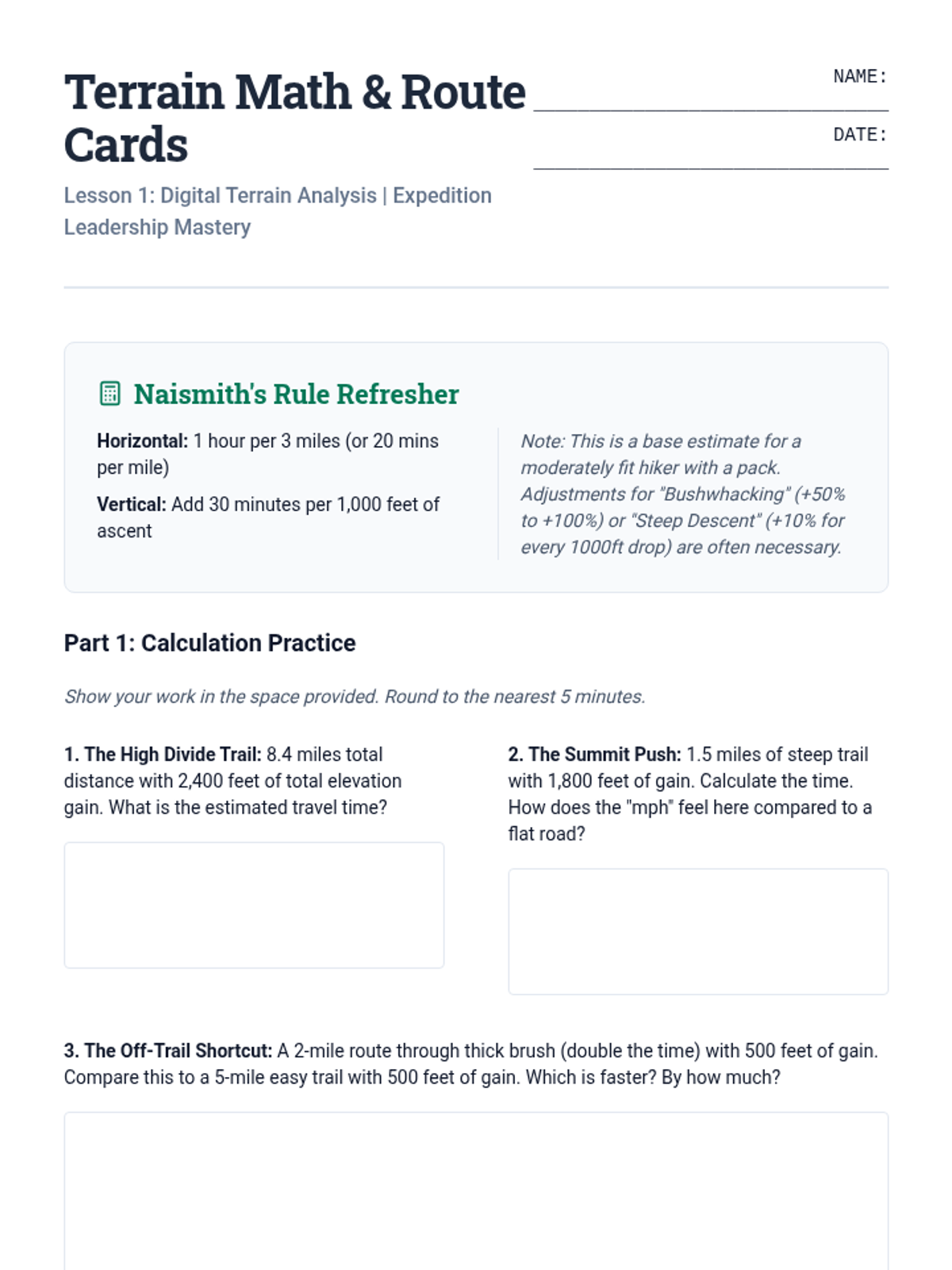
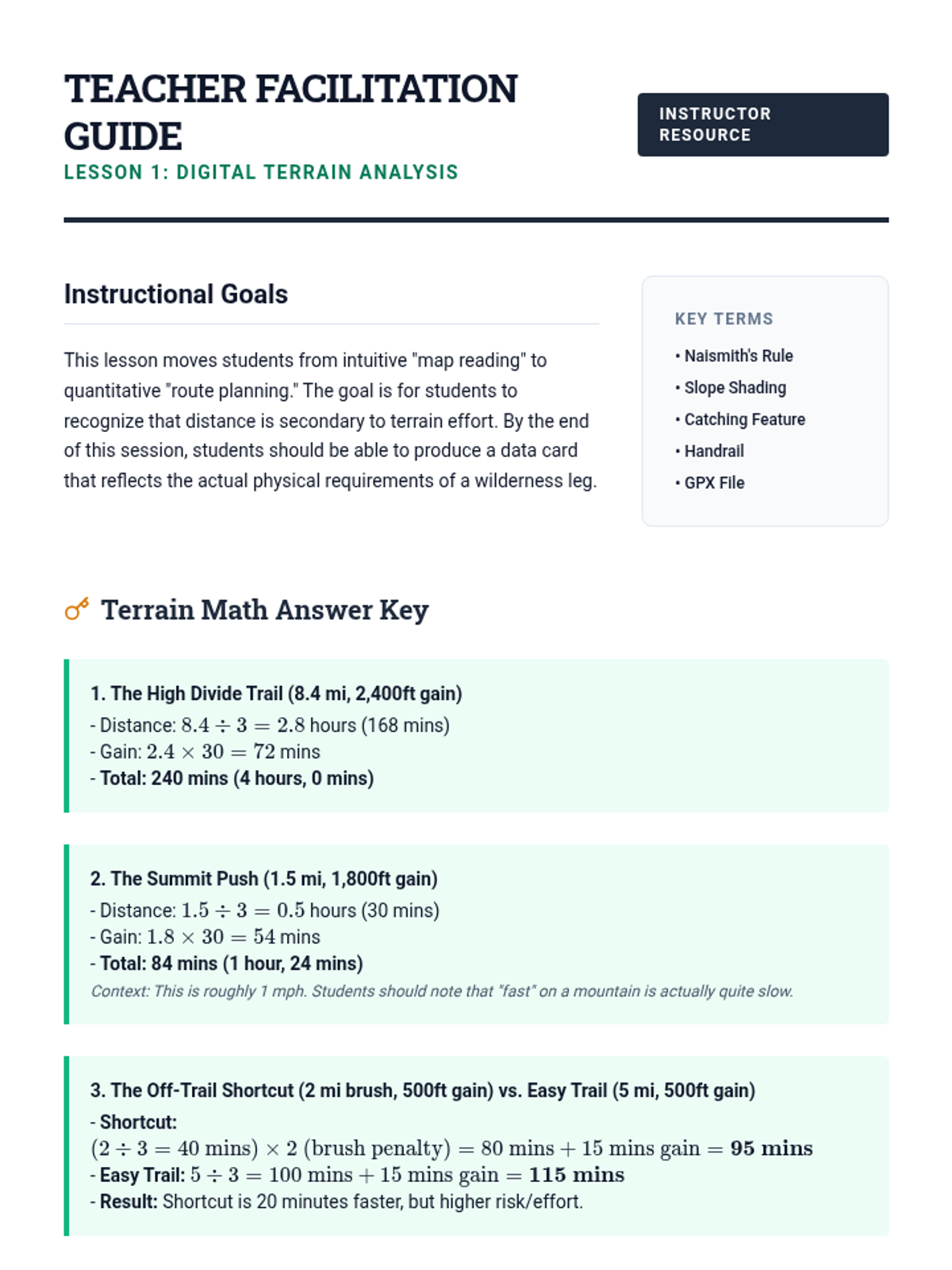
Students master digital mapping tools to build detailed route plans, applying Naismith's Rule for travel time estimation and analyzing terrain features through elevation profiles.
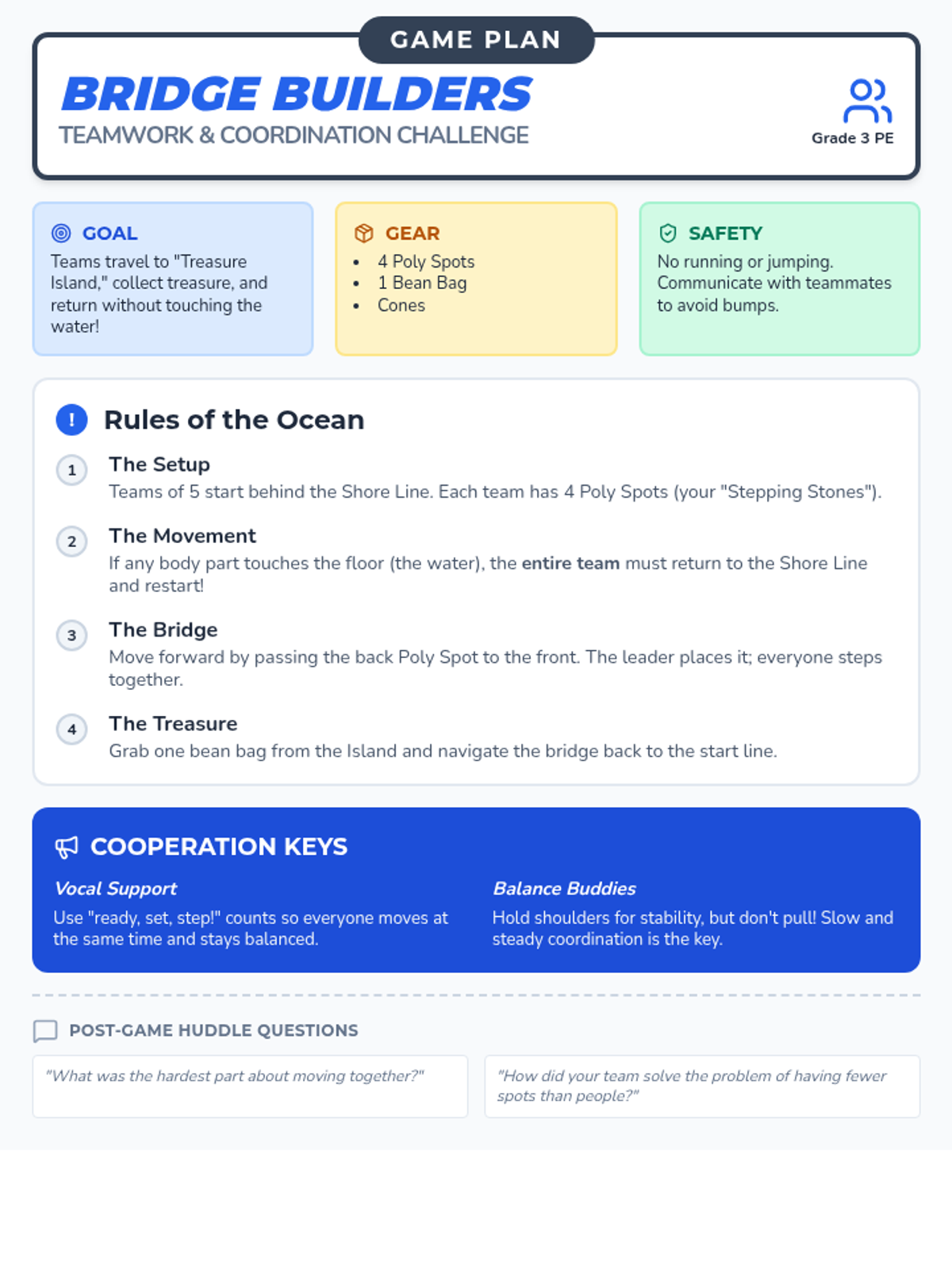
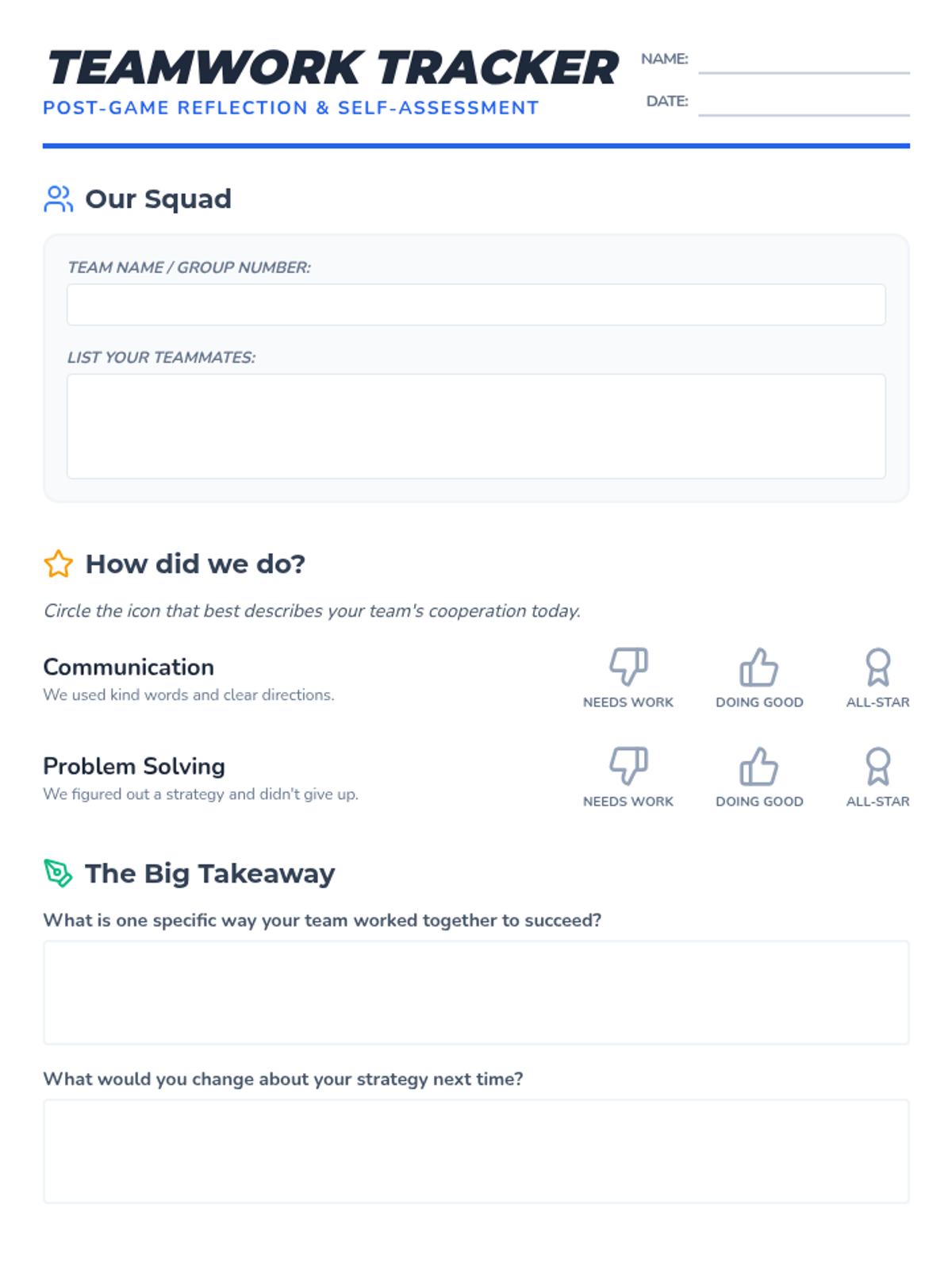
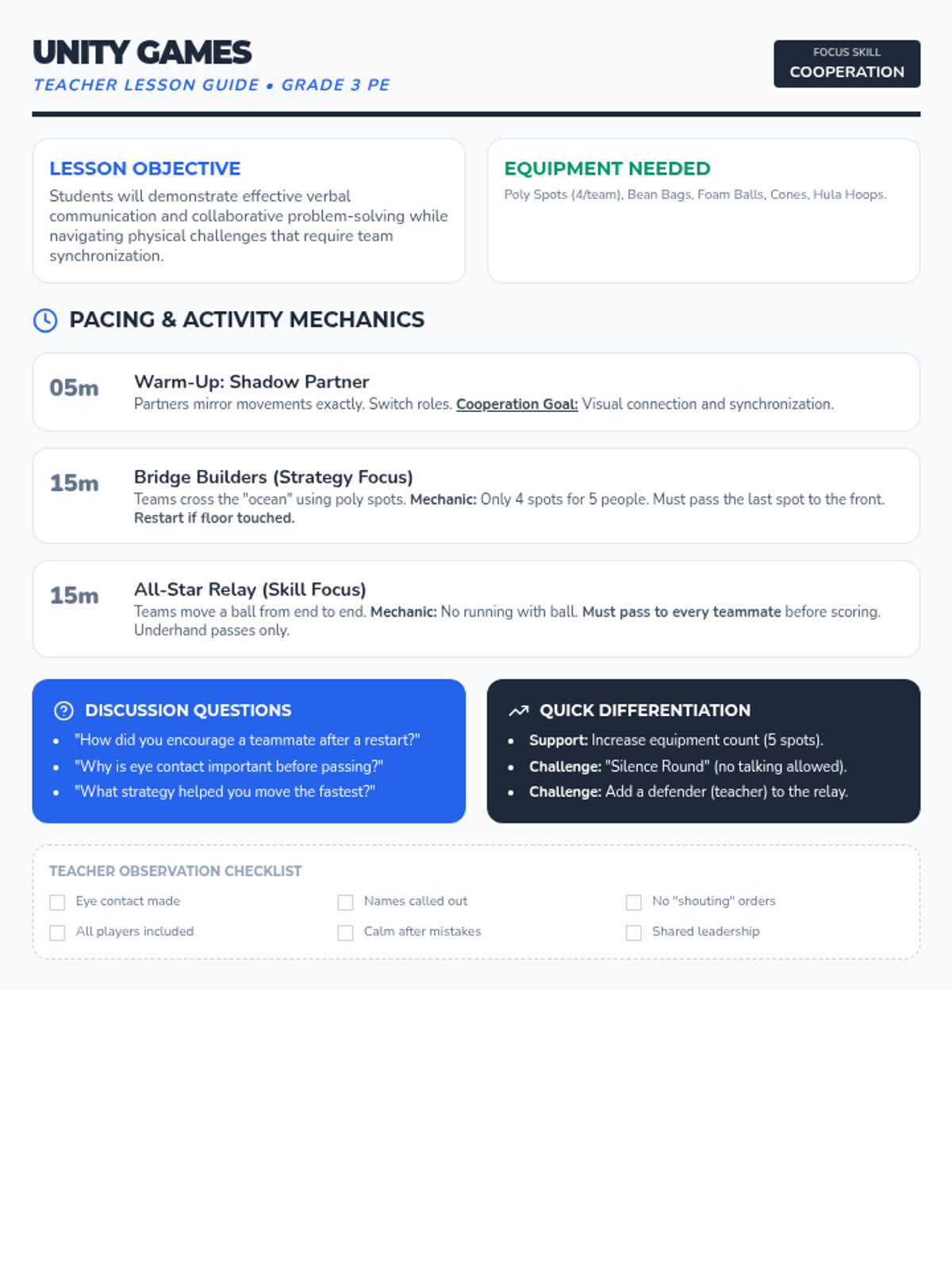
A PE lesson focused on developing teamwork and cooperative movement through a strategic 'bridge-building' challenge. Students must work together to navigate an 'ocean' using limited resources.
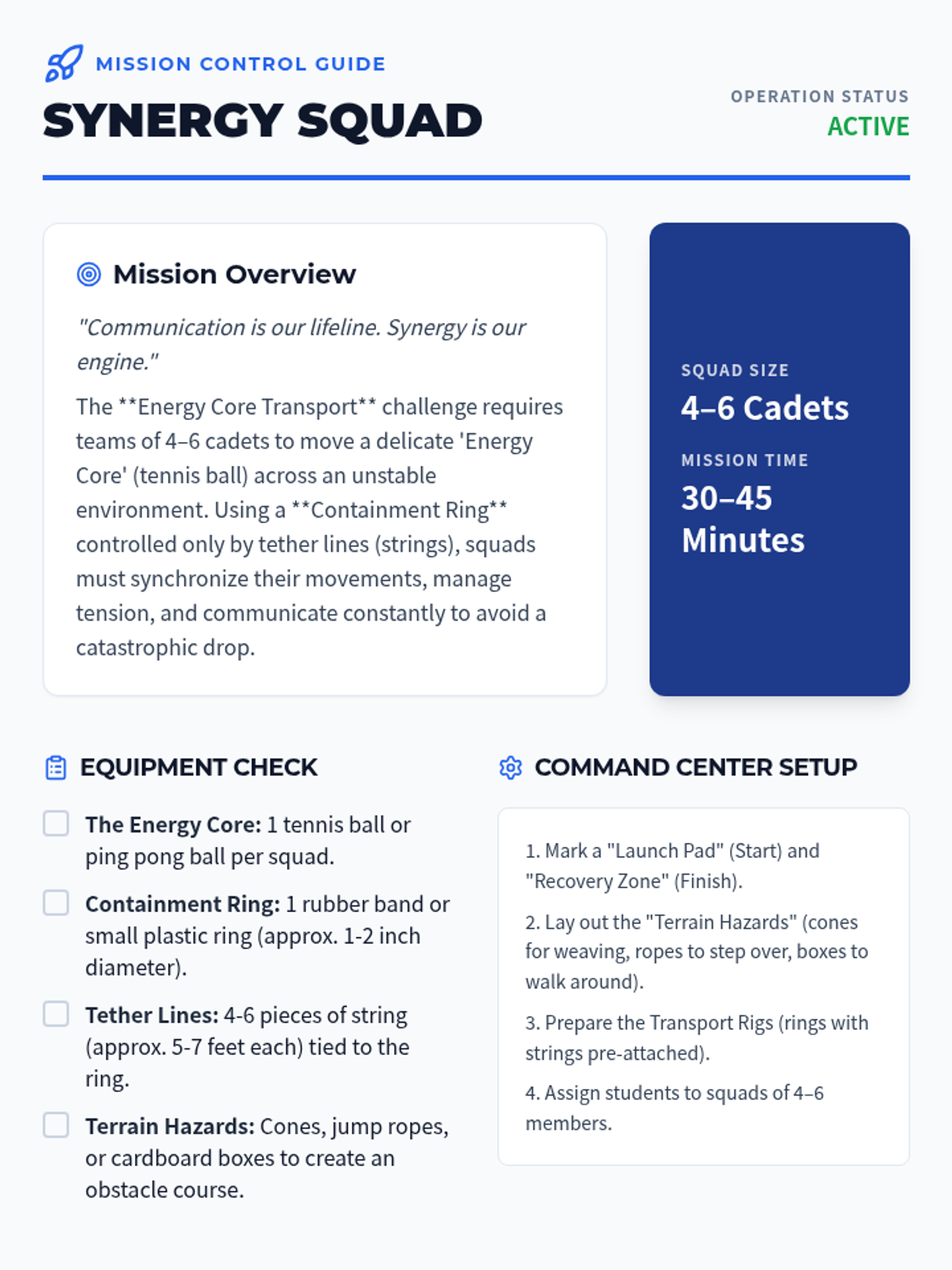
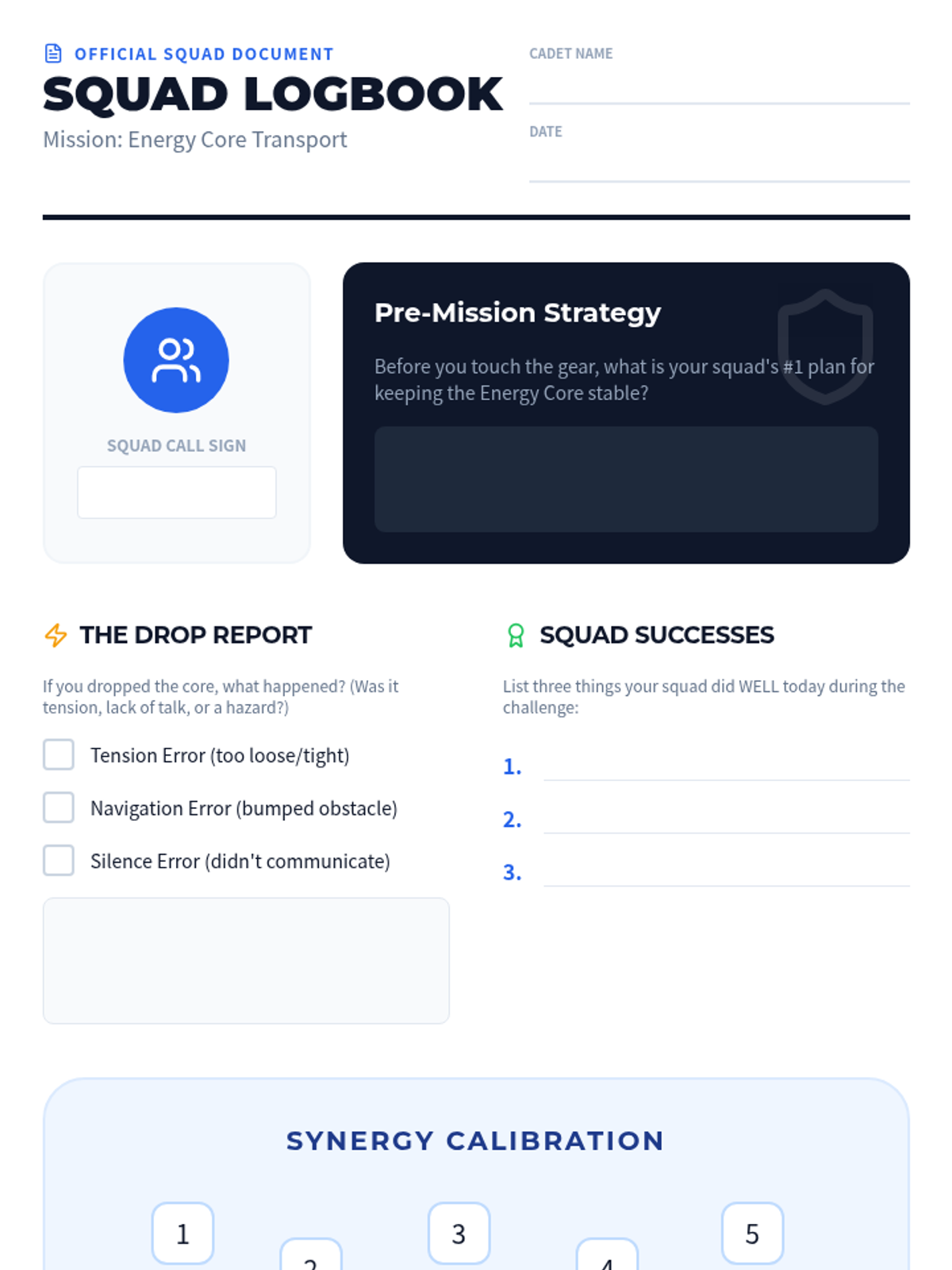
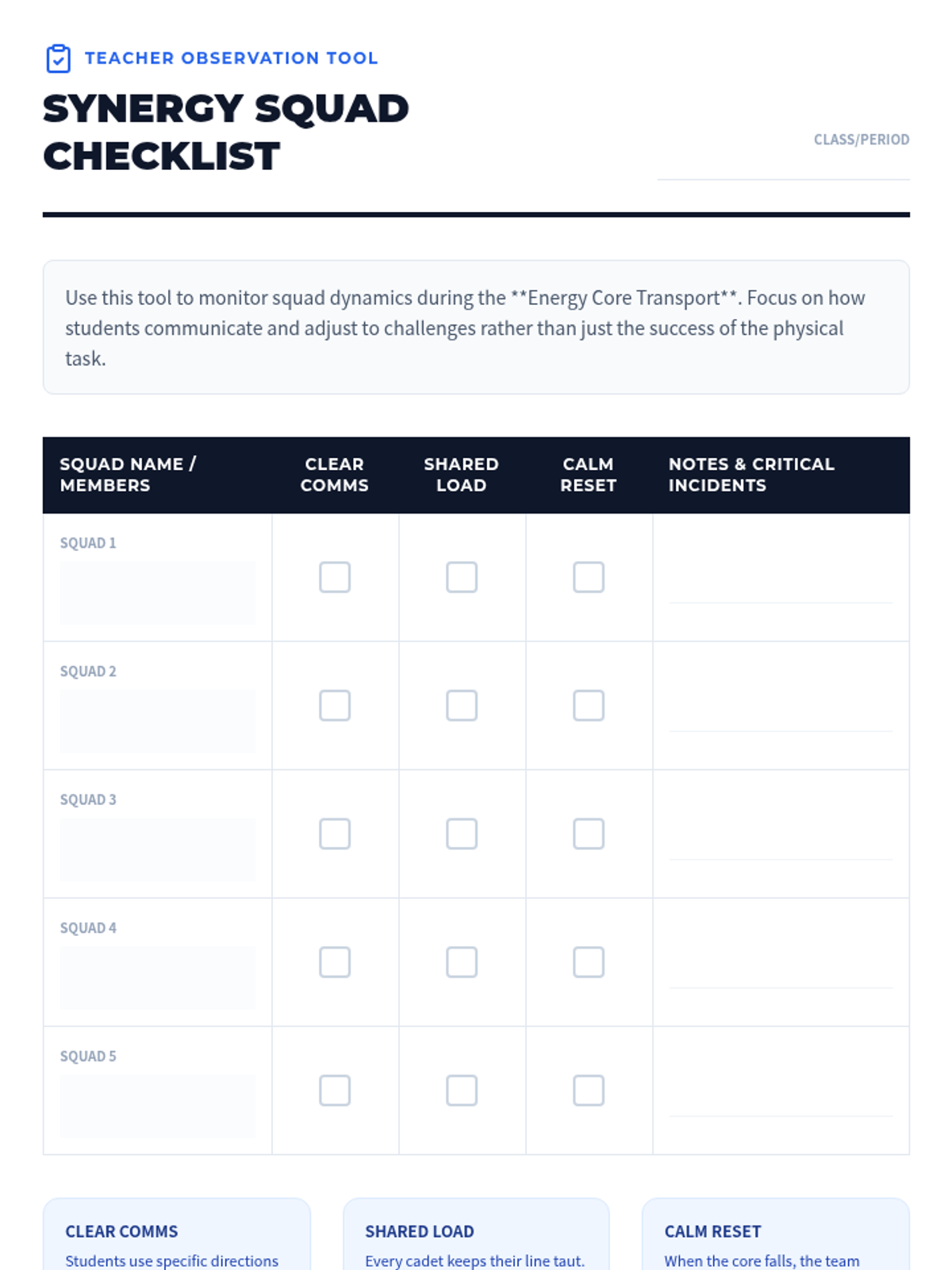
Students develop essential teamwork skills through a high-stakes physical challenge. By transporting a delicate 'energy core' using only a multi-stringed ring, teams must synchronize their movements and communicate clearly to succeed.
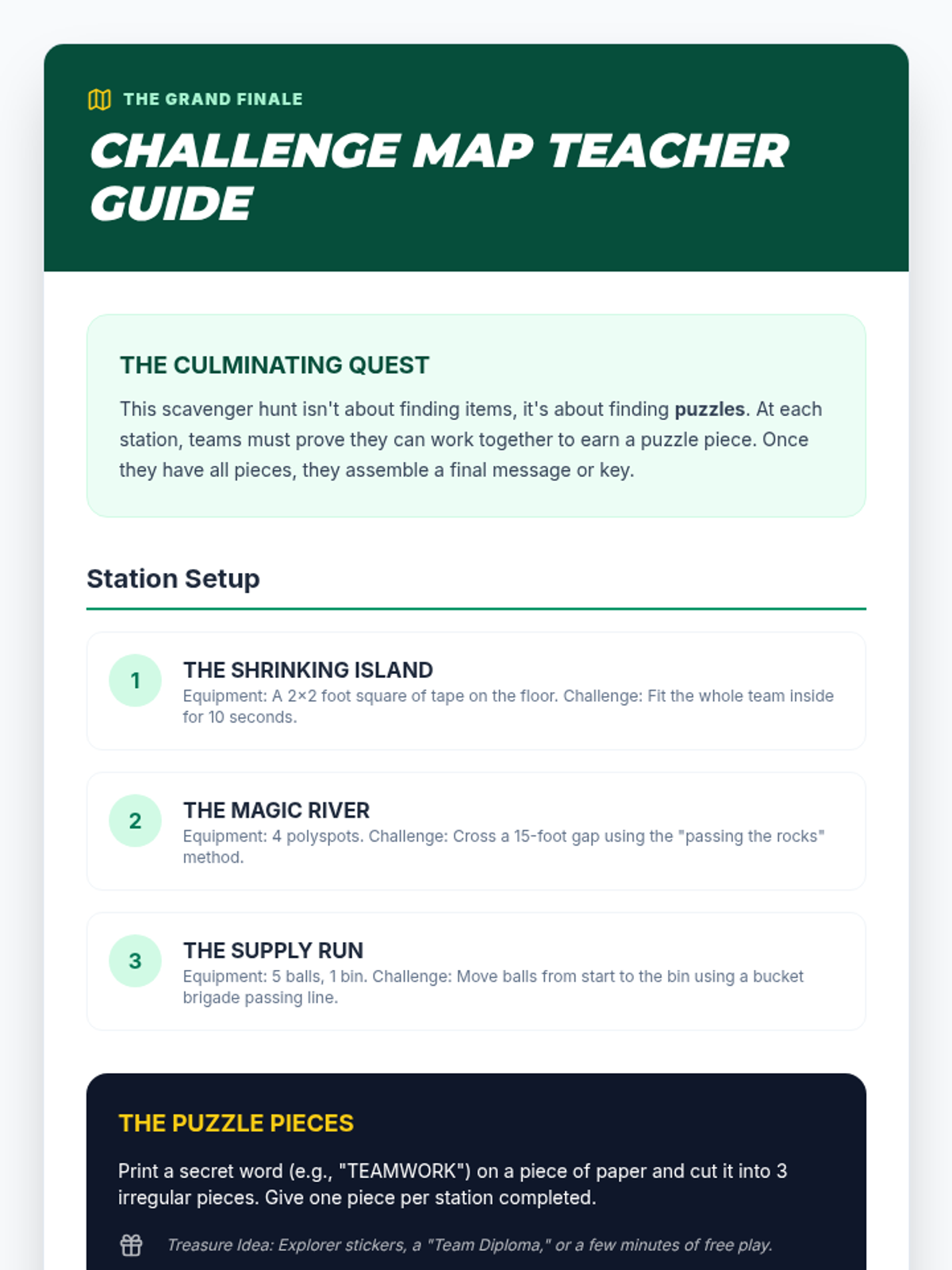
A culminating scavenger hunt where teams use all their learned skills to find map pieces and unlock a final treasure.
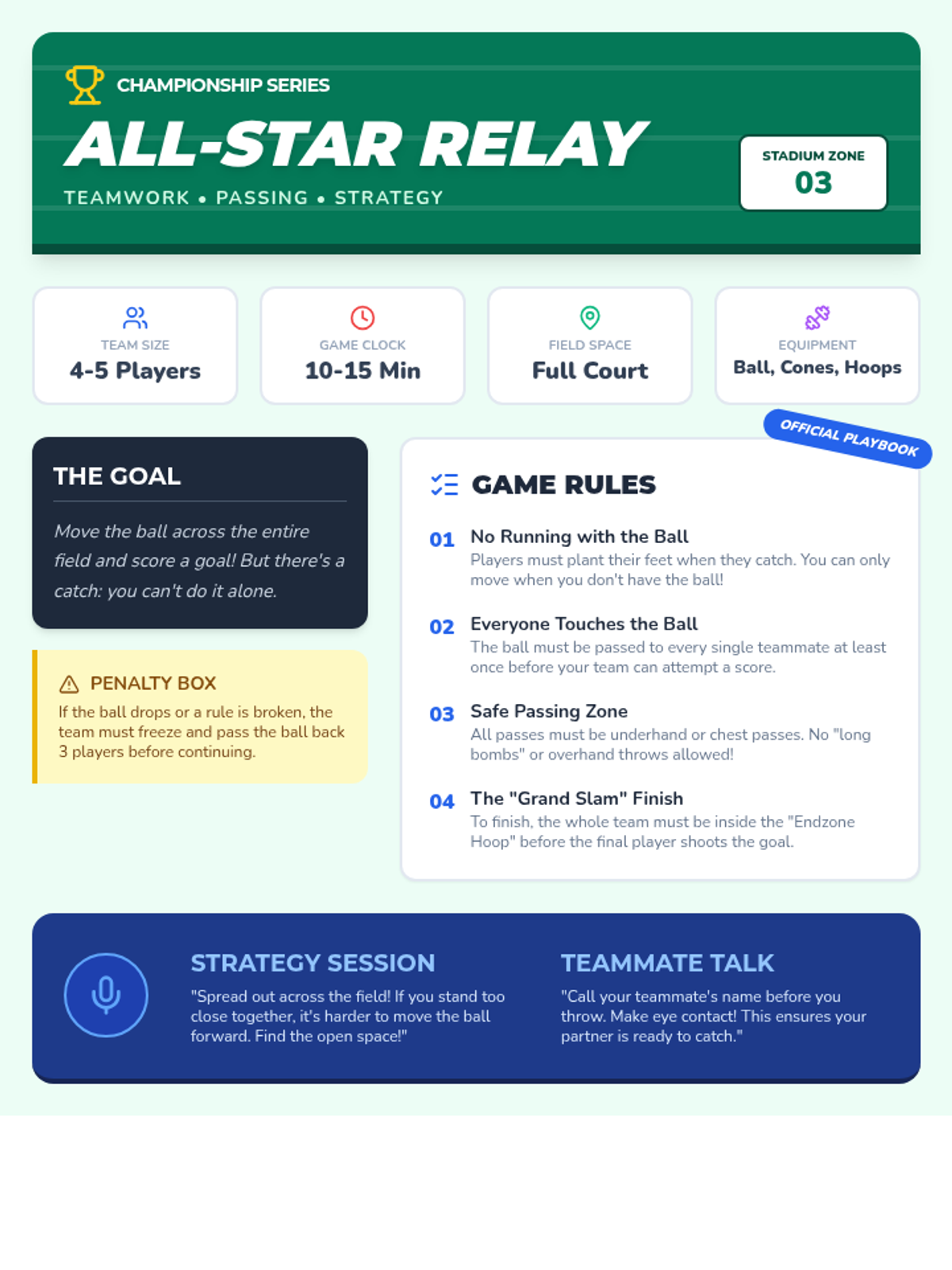
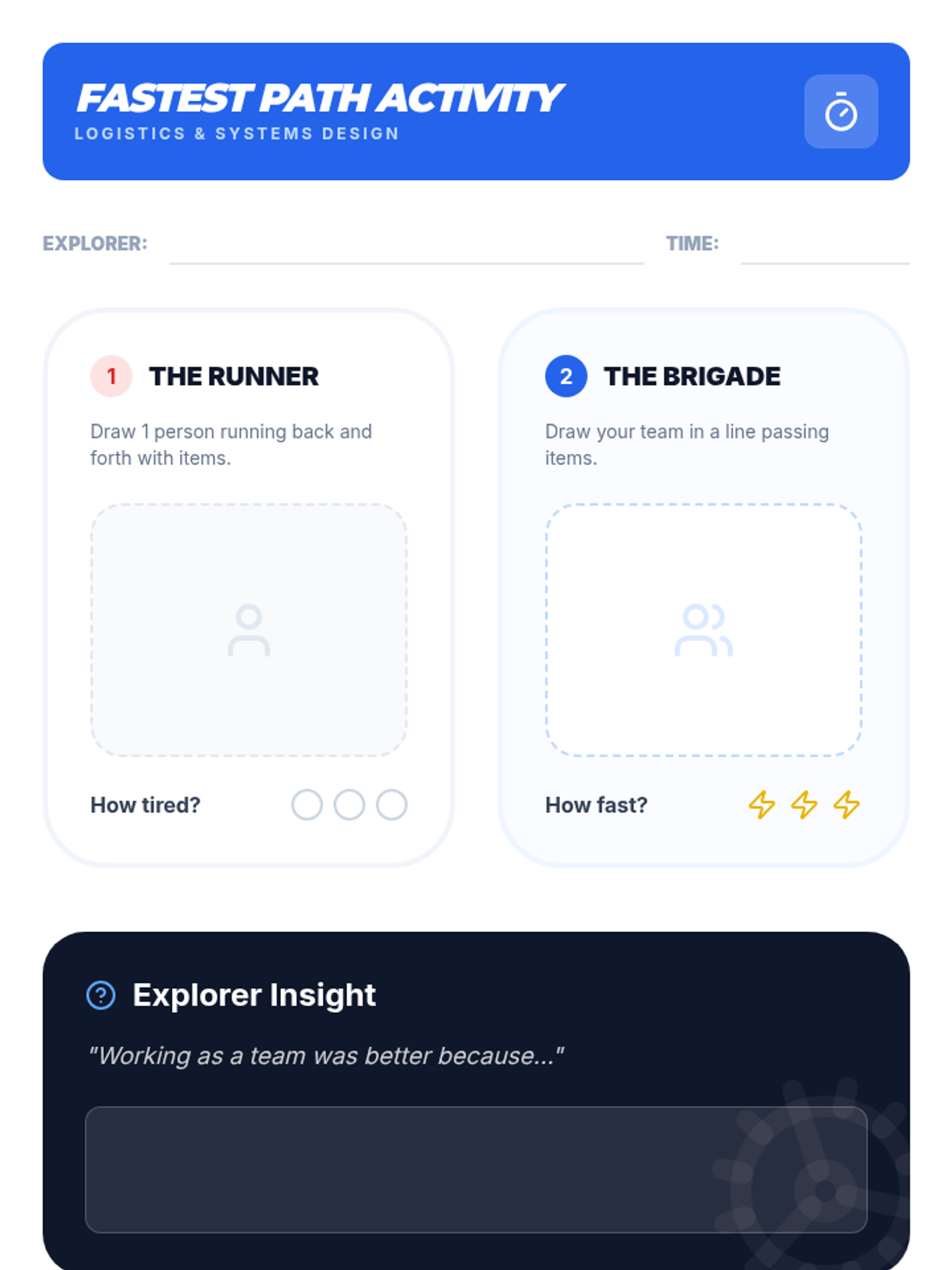
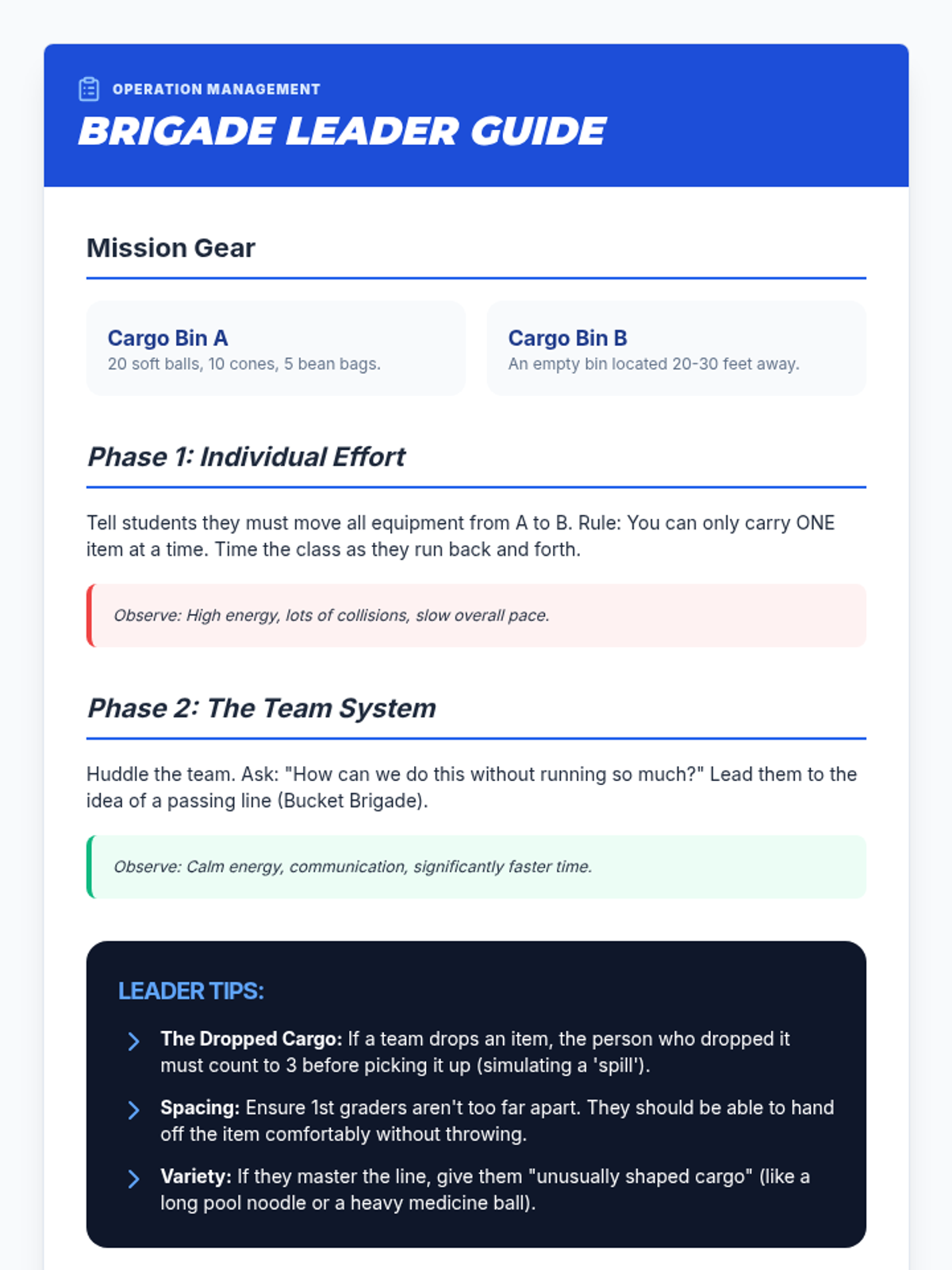
Students invent efficient ways to move equipment across a distance using a relay or passing system.
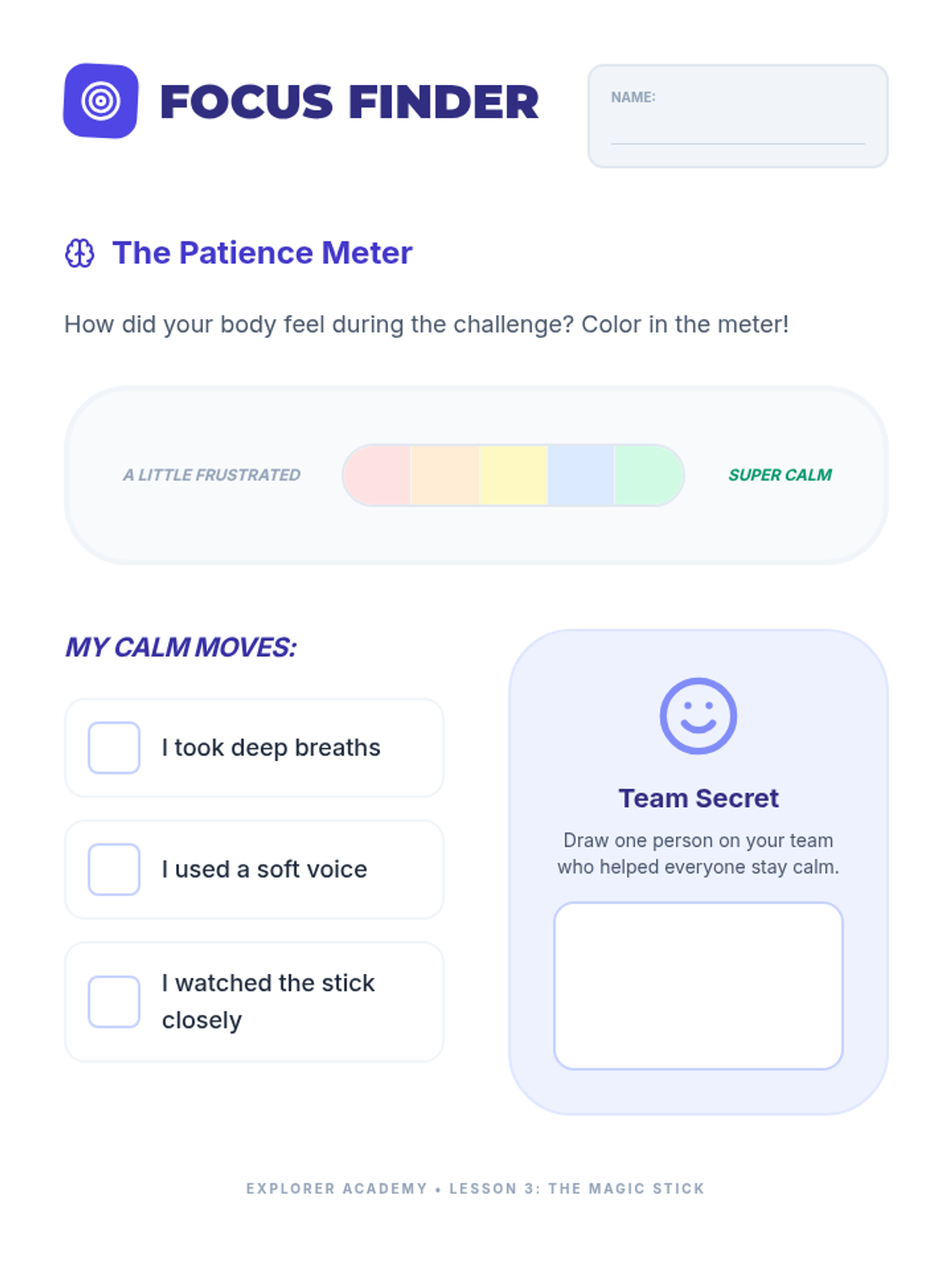
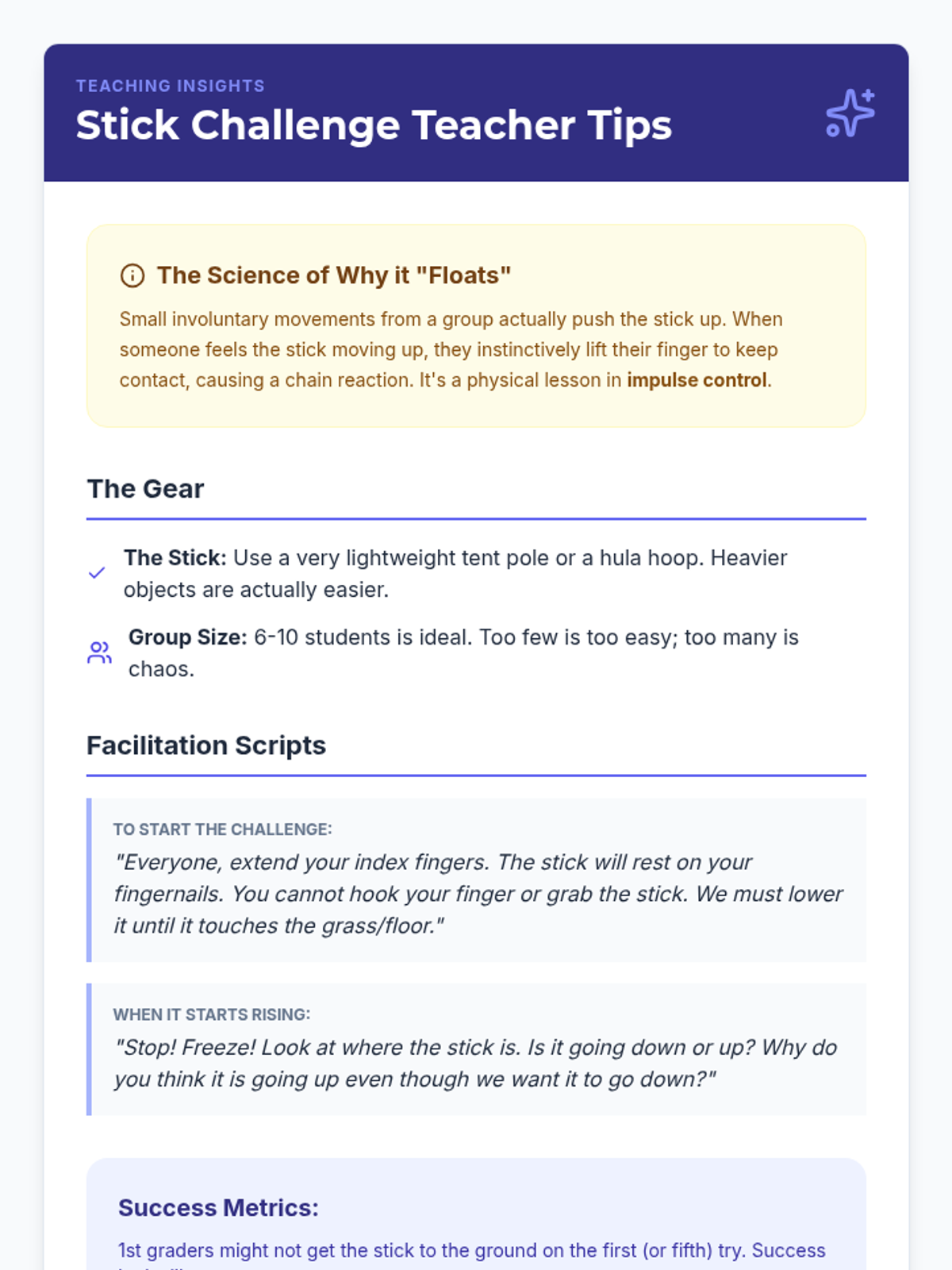
A challenge of patience and coordination where teams must lower a lightweight stick to the ground together.
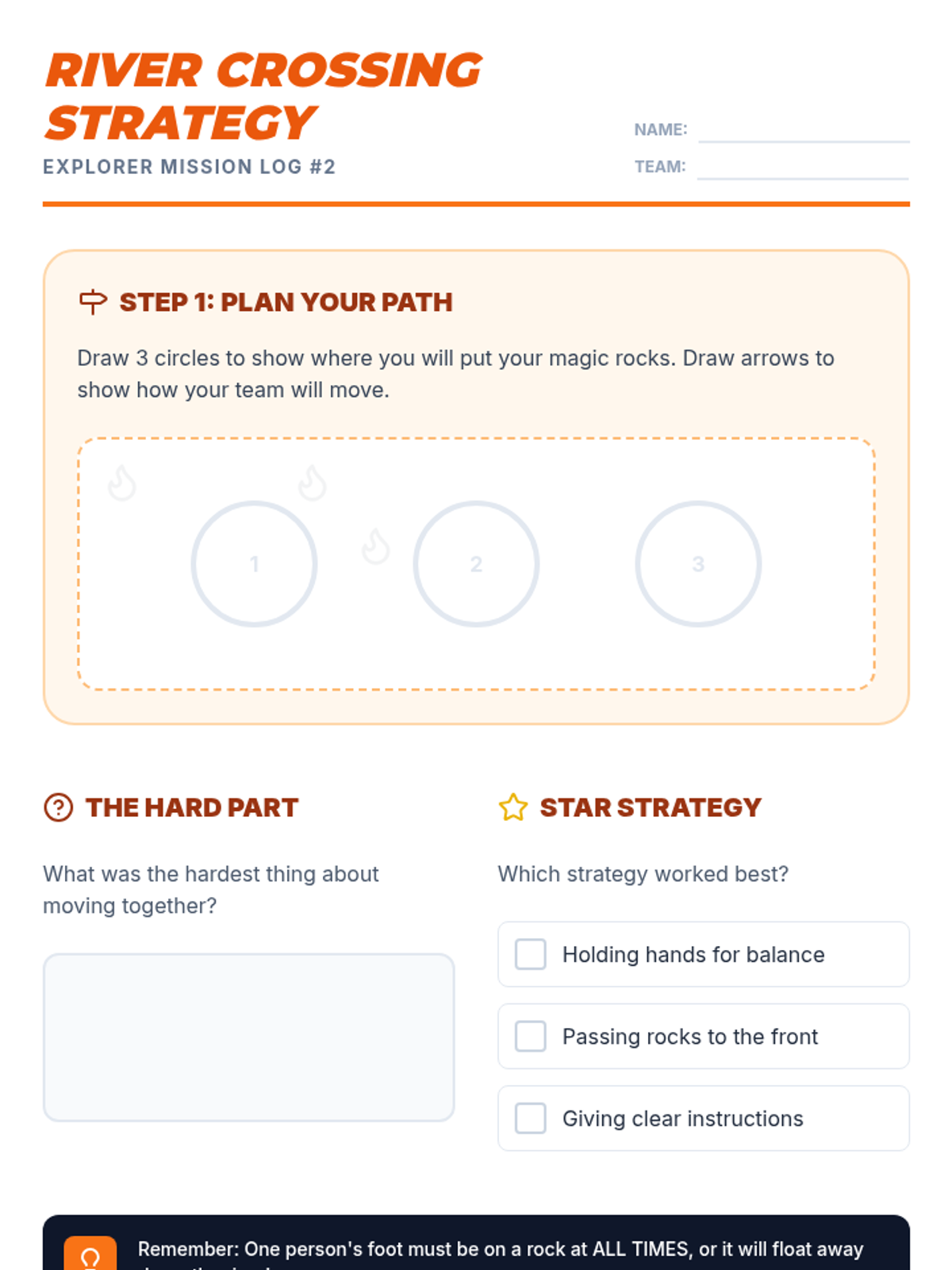
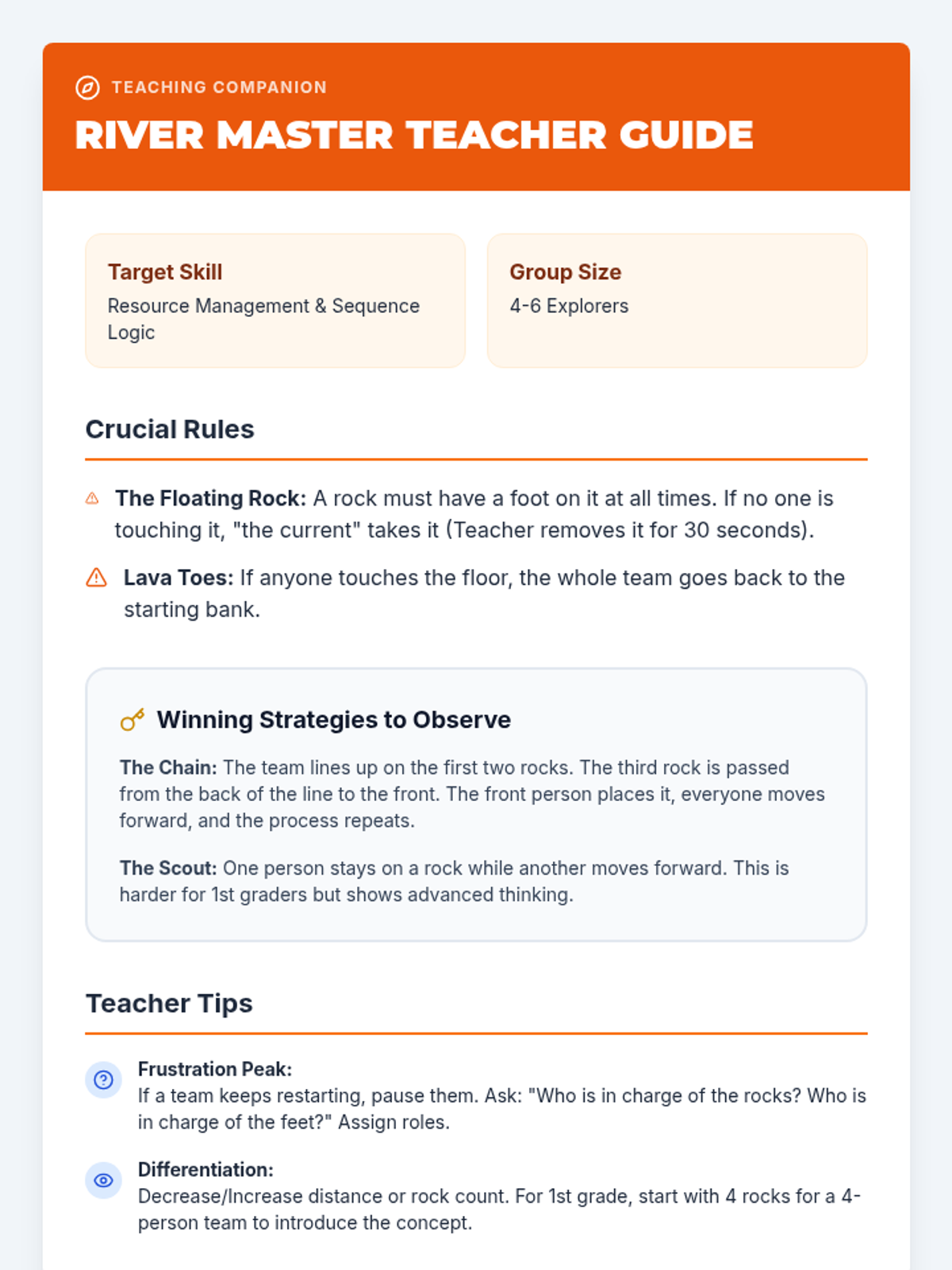
Teams use limited 'magic rocks' to cross a lava river, requiring resource management and sequencing.
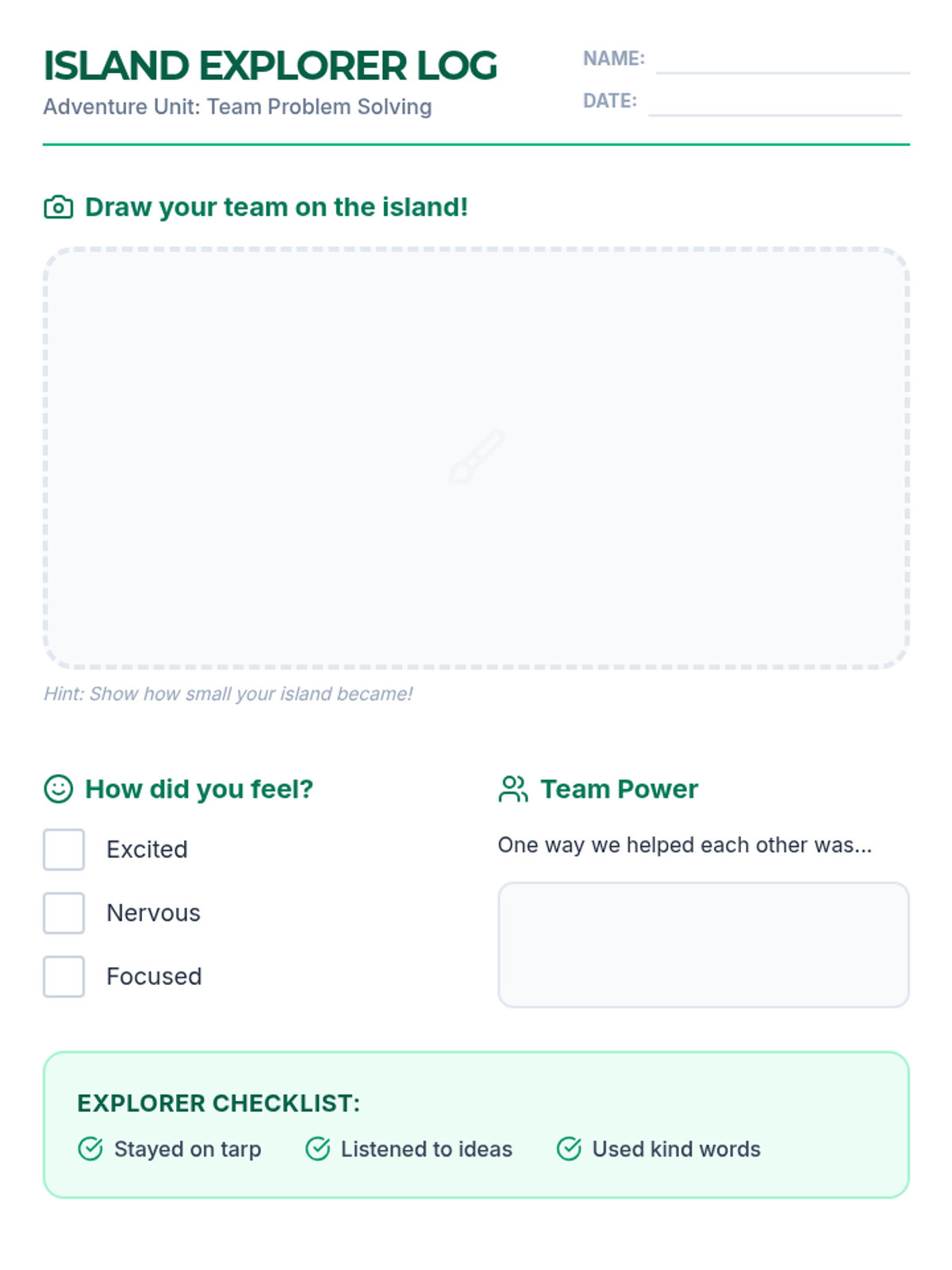
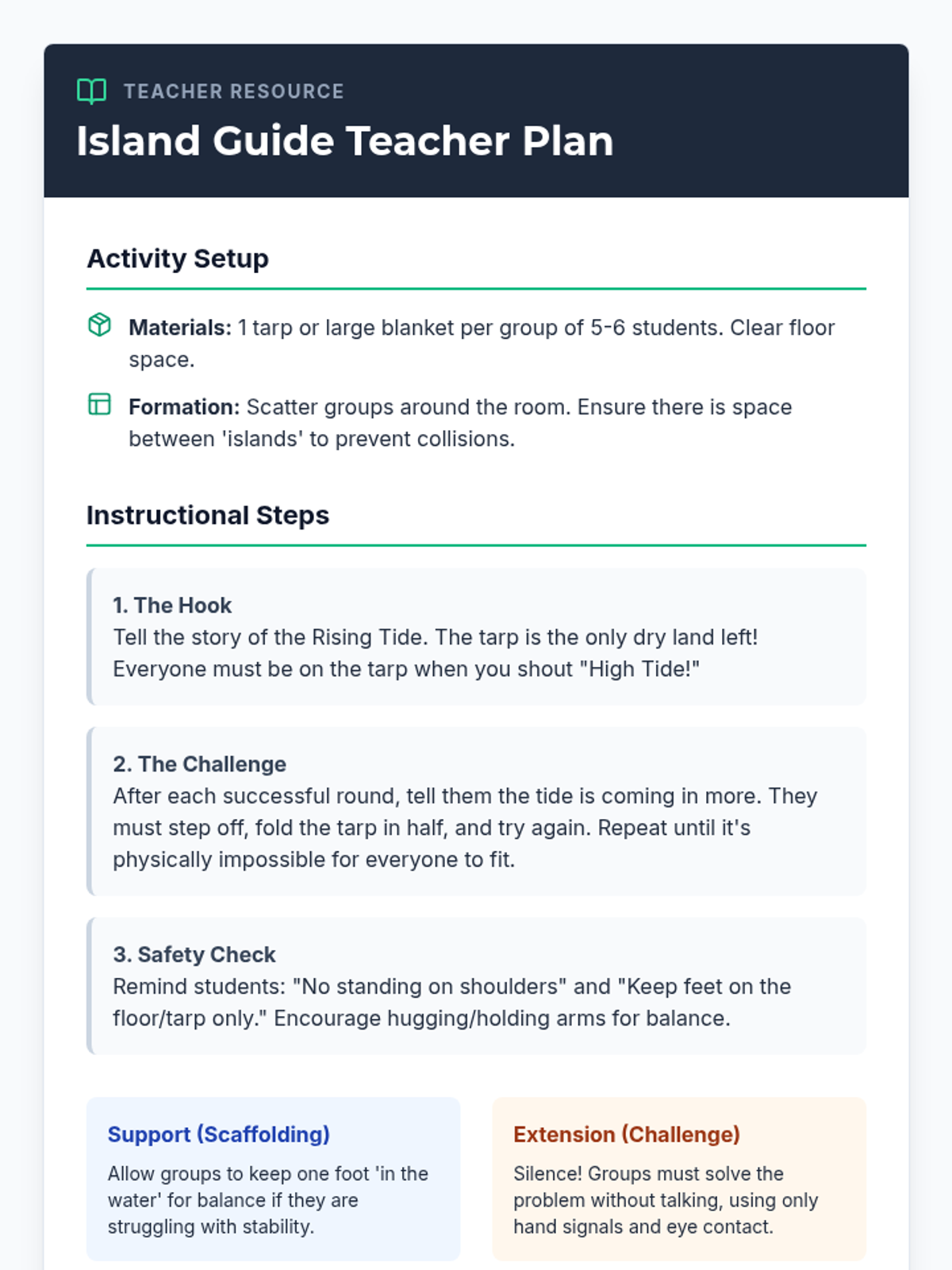
Students must work together to stay on a shrinking 'island' (tarp) as the tide comes in, practicing physical coordination and spatial awareness.
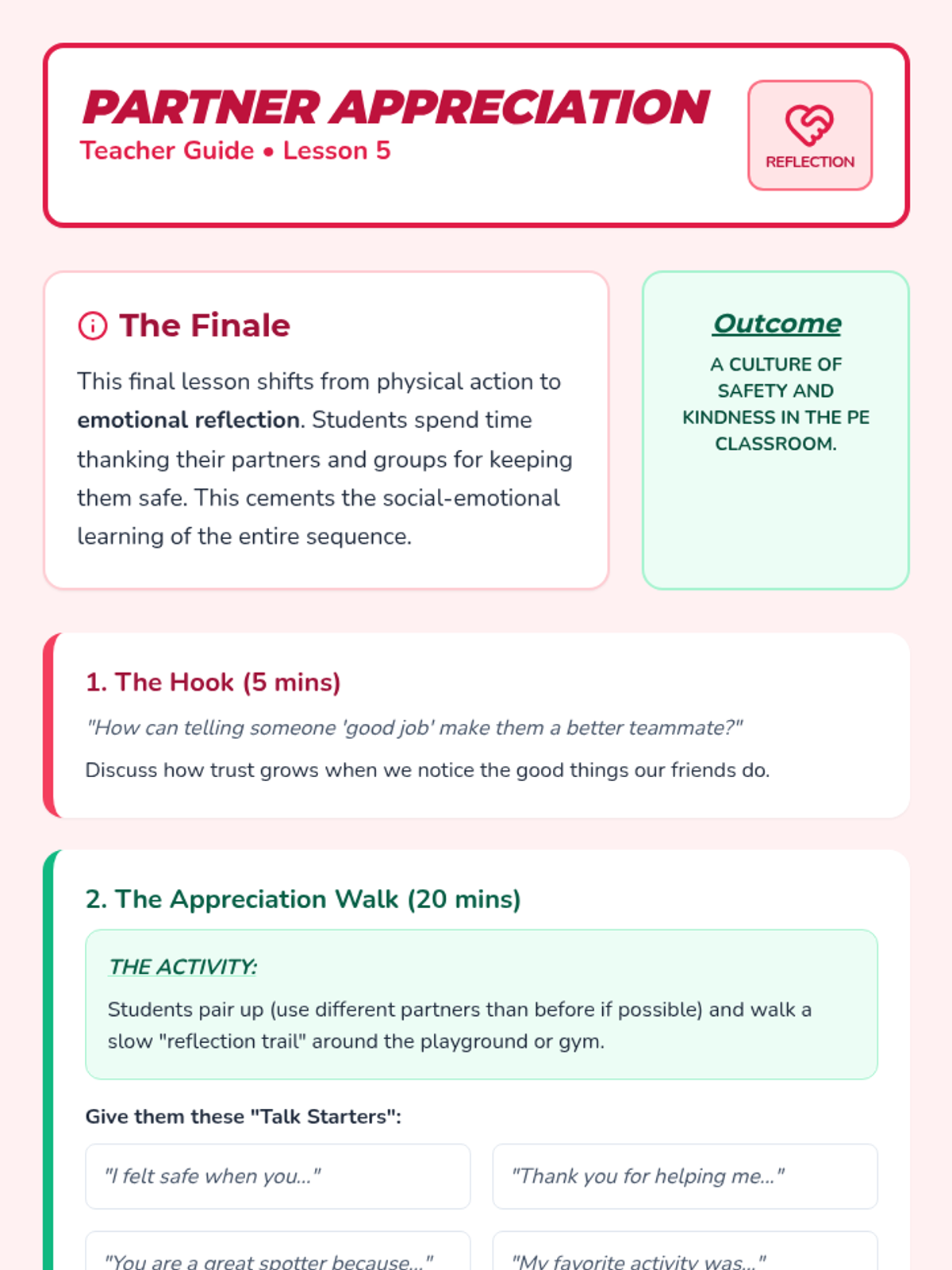
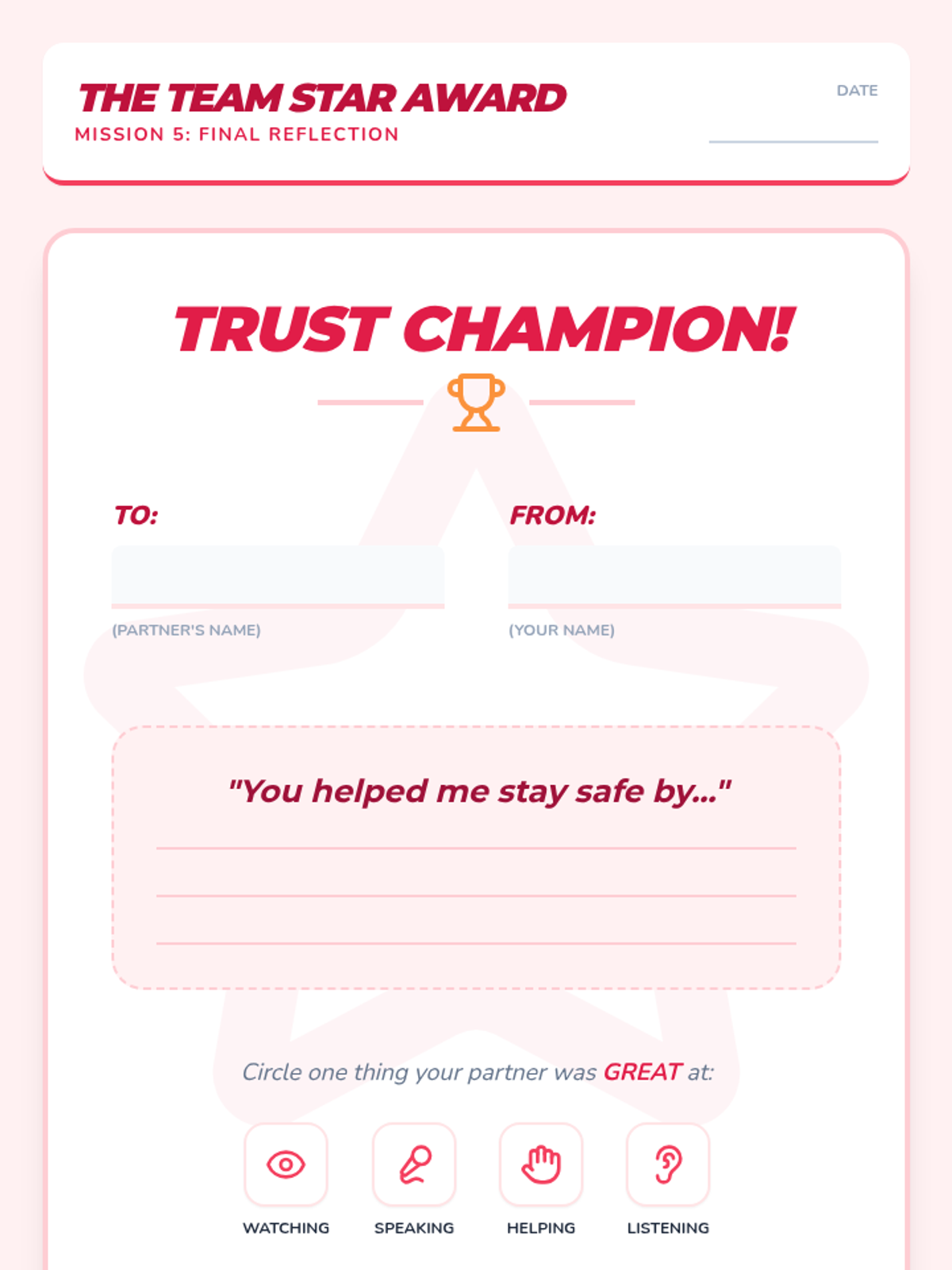
A final reflective walk where partners share positive feedback and appreciate the ways they helped each other stay safe throughout the sequence.
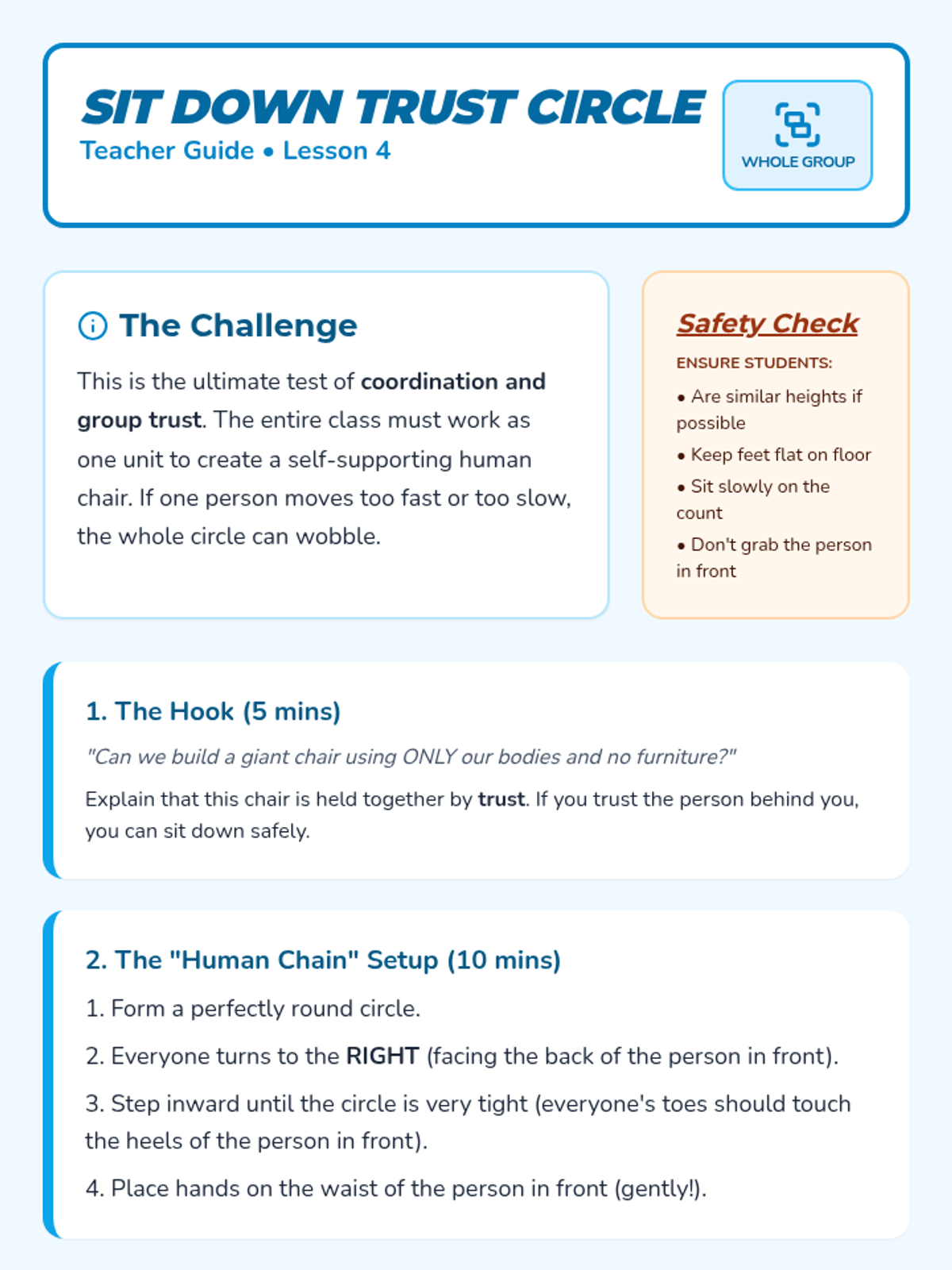
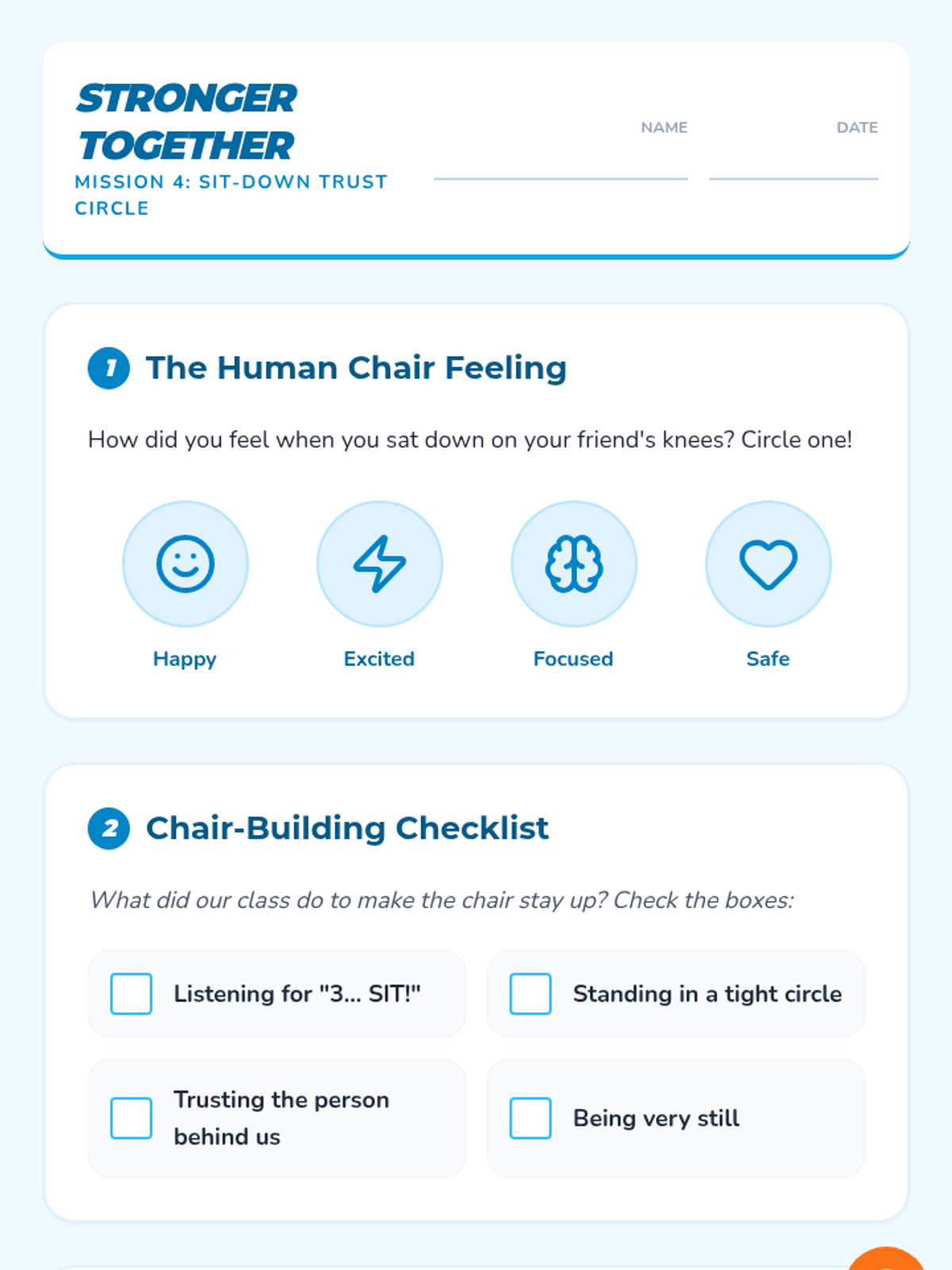
The whole class attempts to sit down simultaneously on the knees of the person behind them, creating a self-supporting human chair.
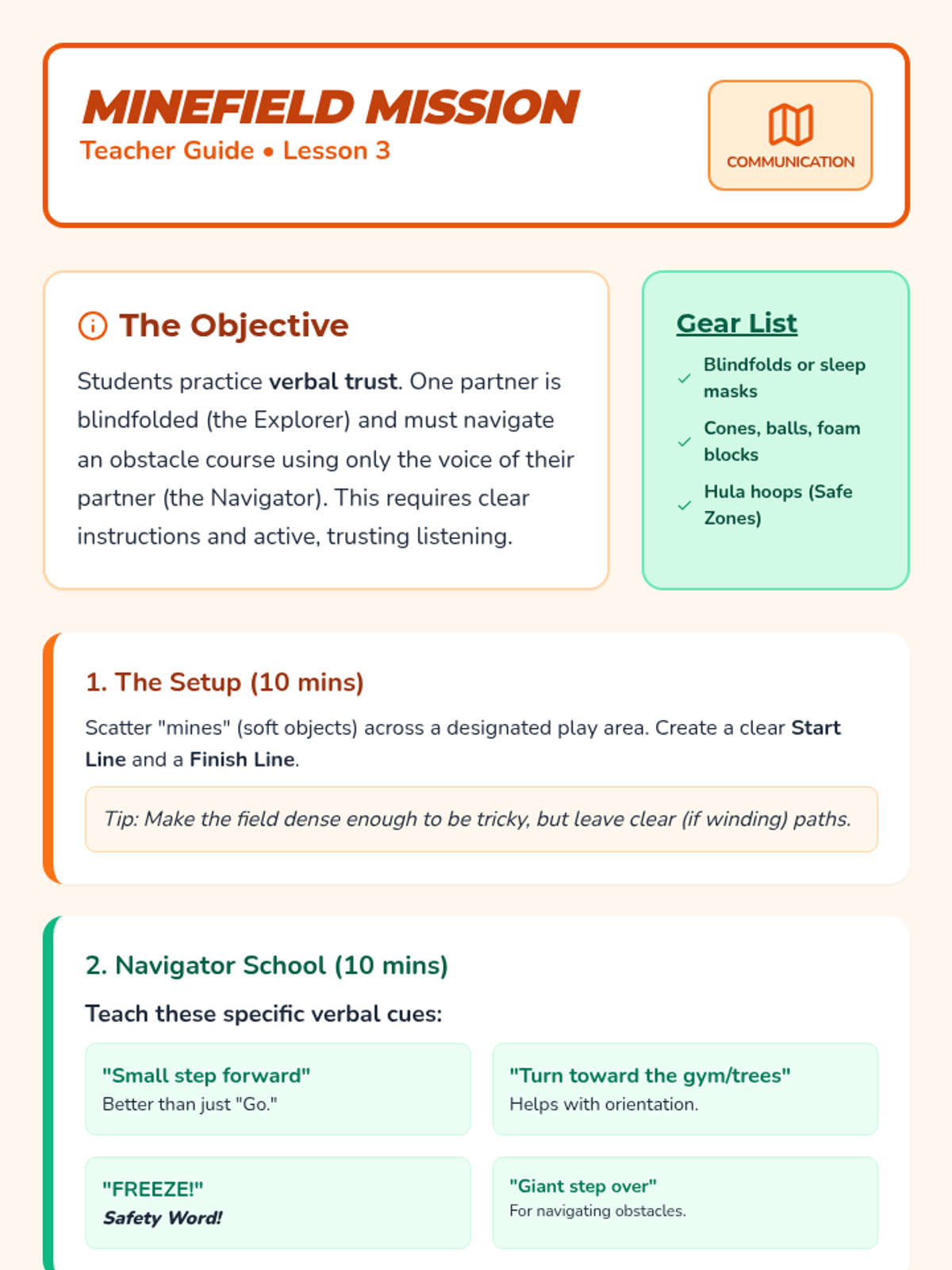
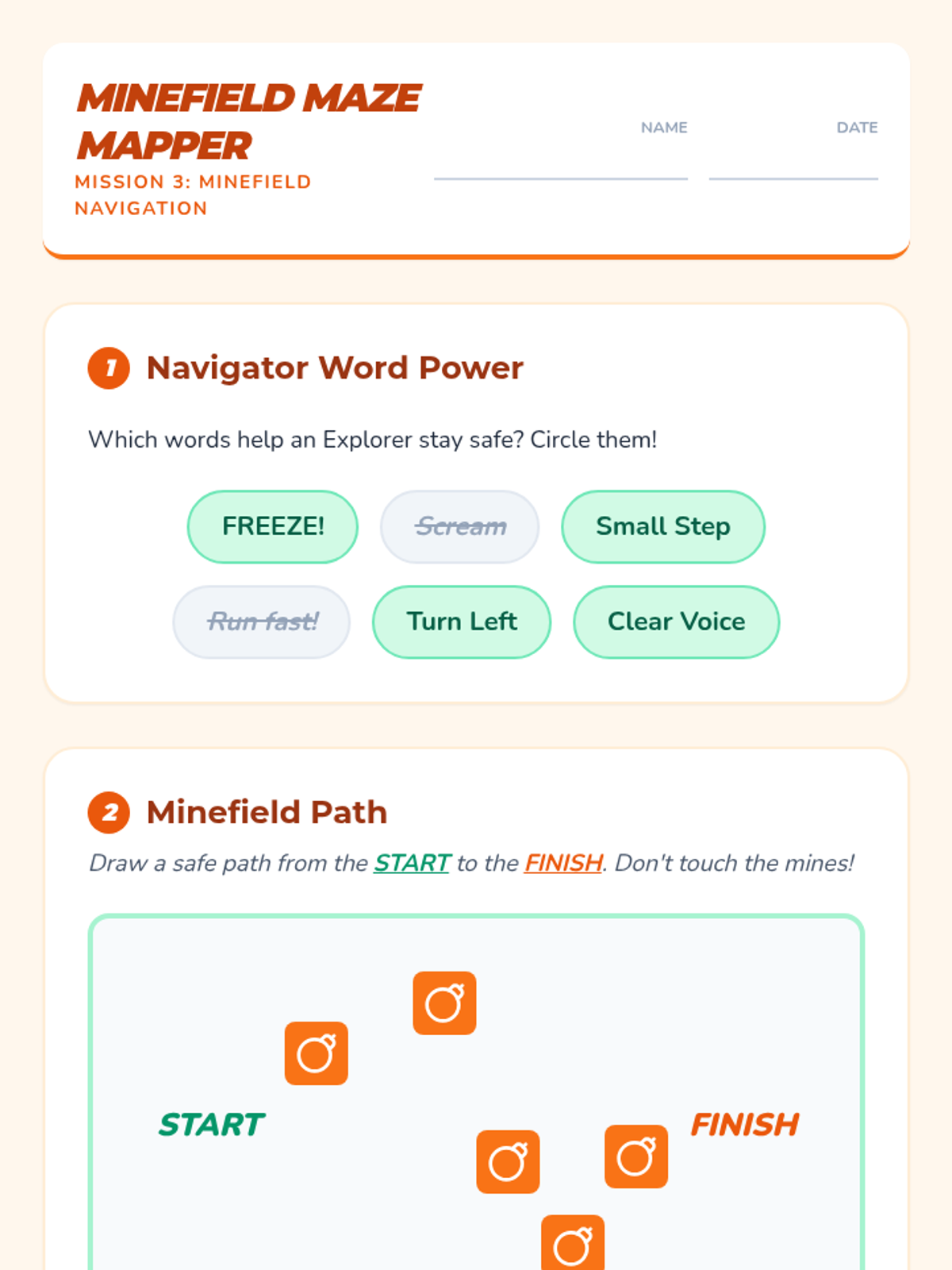
A communication-focused game where blindfolded students rely entirely on their partner's verbal cues to navigate an obstacle-filled field.