Essential safety protocols, map reading, and compass navigation for wilderness environments. Strengthens group dynamics and problem-solving through structured outdoor team-building challenges.
A visual slide presentation to introduce the Nature Detectives activity. Includes the mission overview, the "Green Rules", sensory exploration tips, a new "Mindful Appreciation" slide, and a debrief section for sharing findings. Improved text contrast and visual consistency.
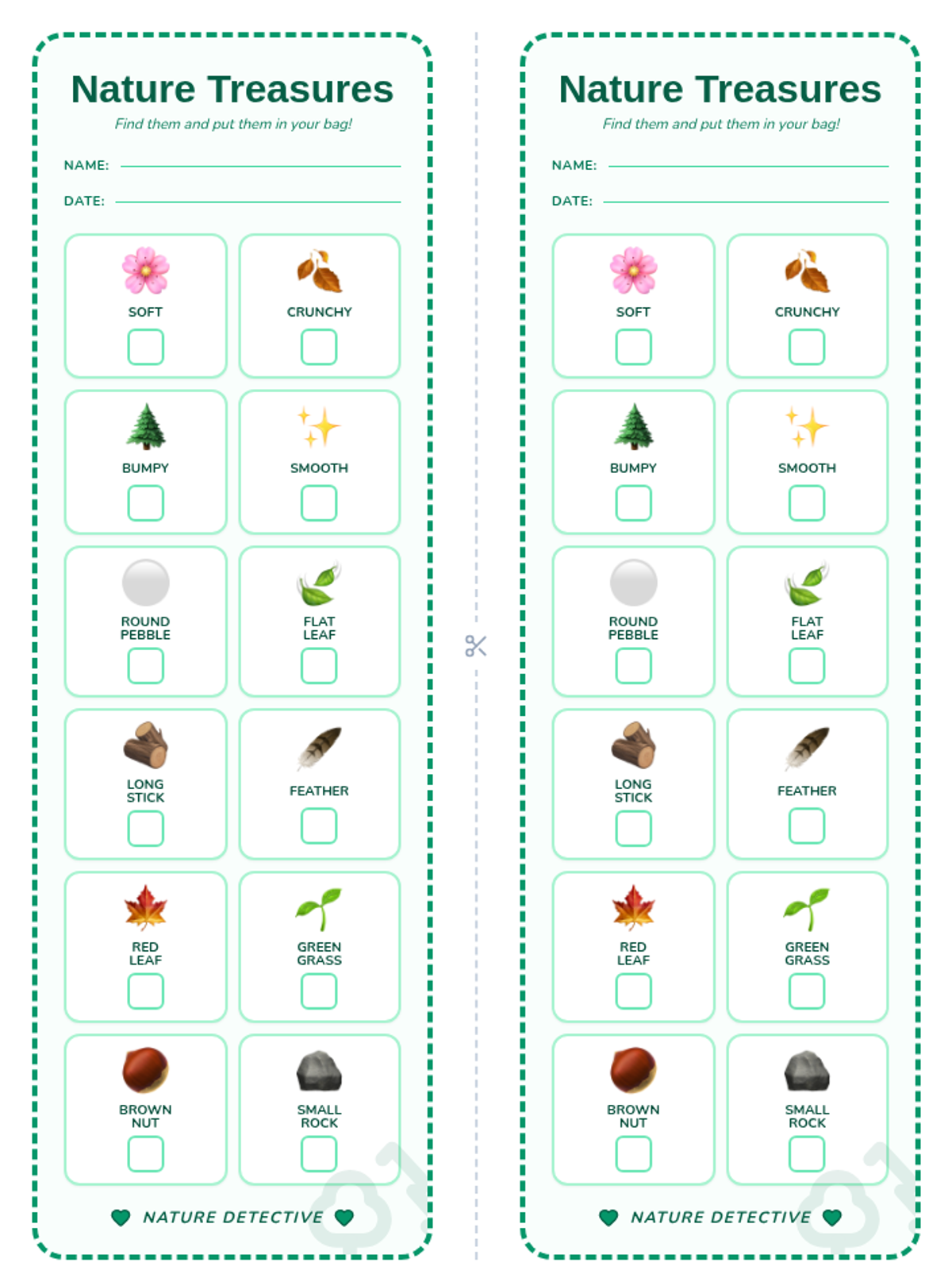
A visual scavenger hunt checklist featuring 12 items for students to collect in a brown paper bag. Includes sensory, shape, color, and standard nature items with emojis and clear labels, designed to print 2-up in a tall portrait layout to fit standard brown paper bags. Updated with larger checkboxes and improved layout for young students.
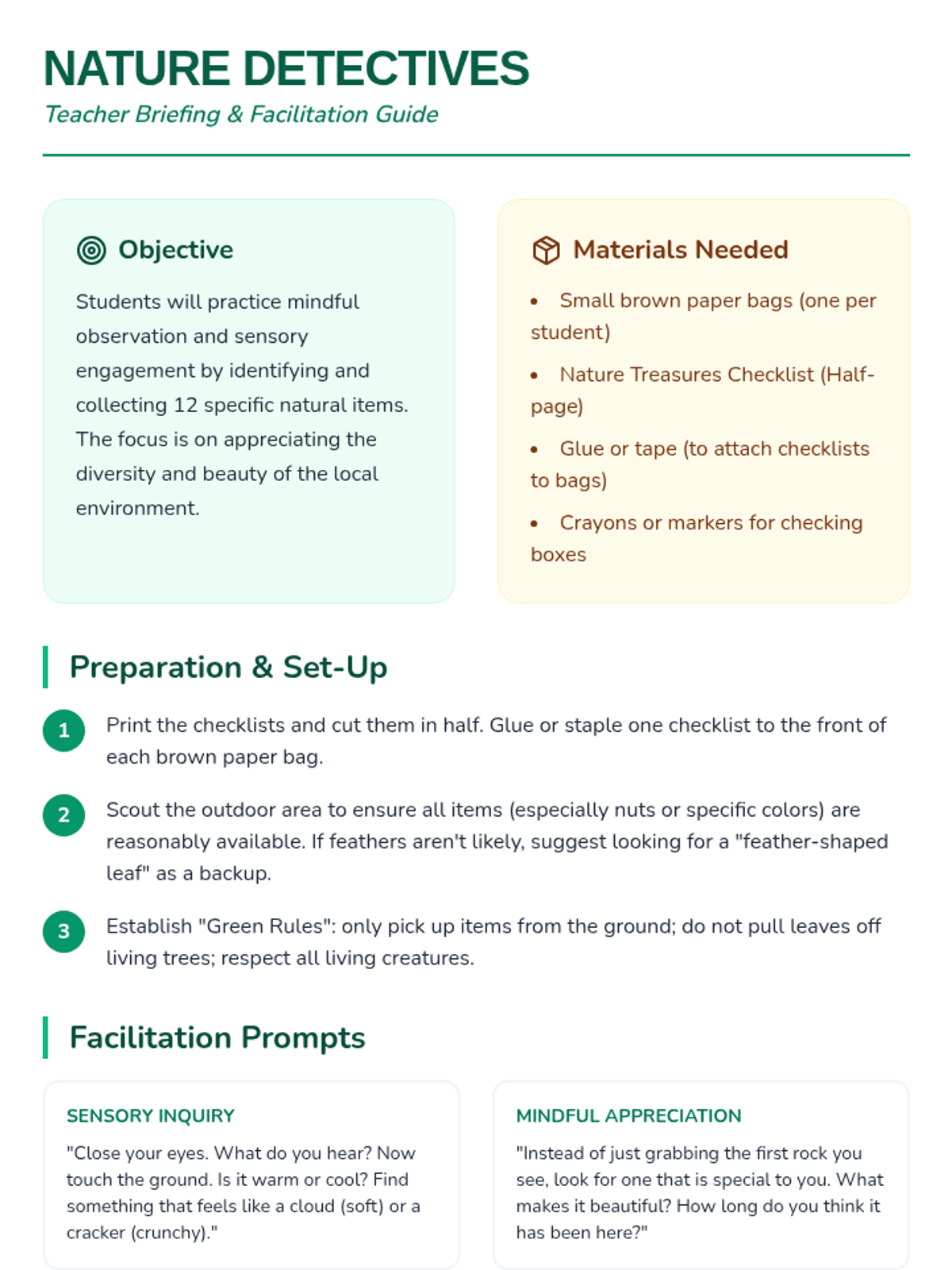
A comprehensive teacher's guide for the Nature Detectives lesson. Includes learning objectives, material lists, prep instructions, sensory inquiry prompts, and debrief questions to help facilitate a successful outdoor scavenger hunt.
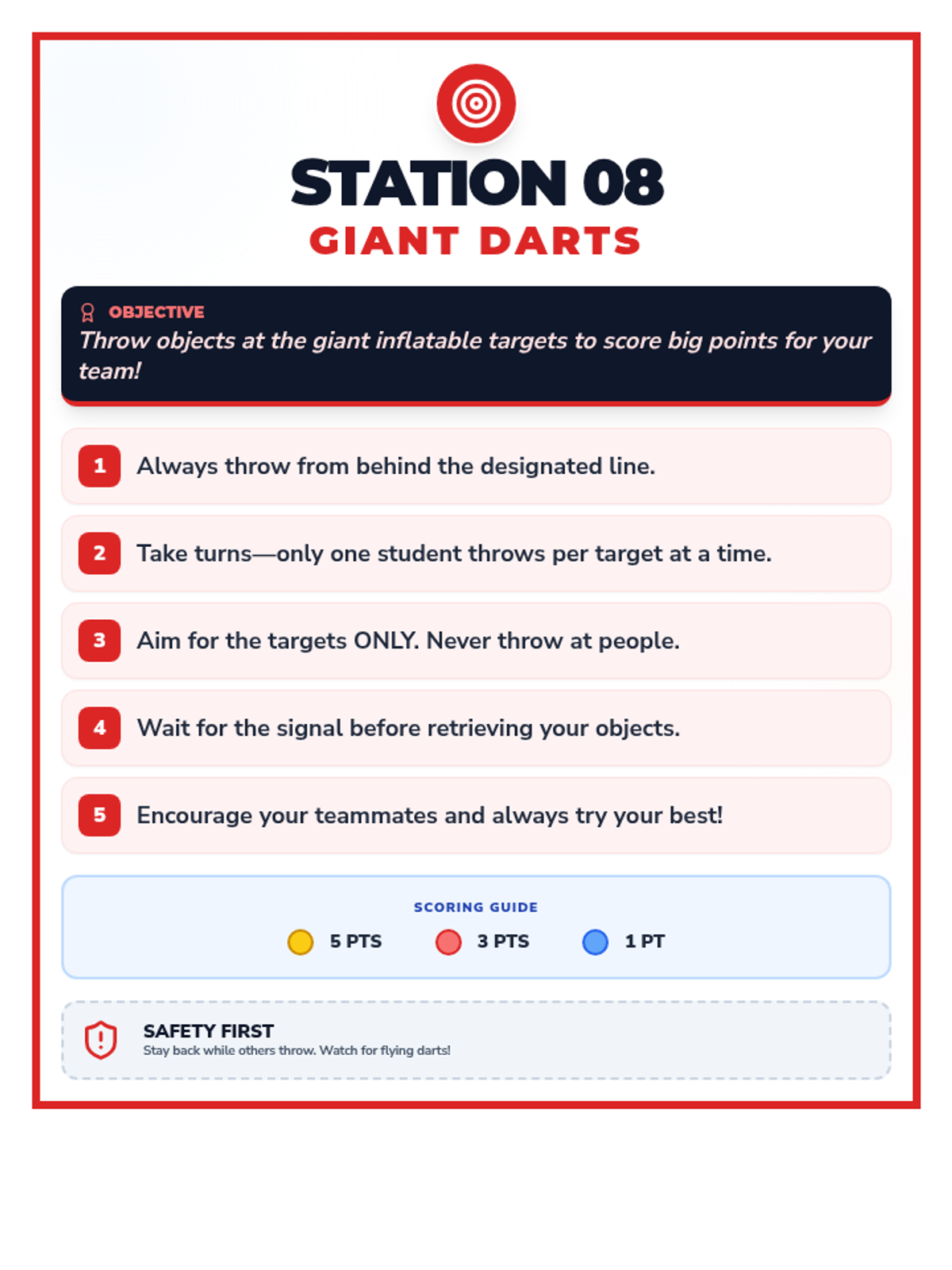
A high-visibility station poster for Giant Darts, featuring the objective, rules, and scoring guide for accurate throwing at two inflatable targets.
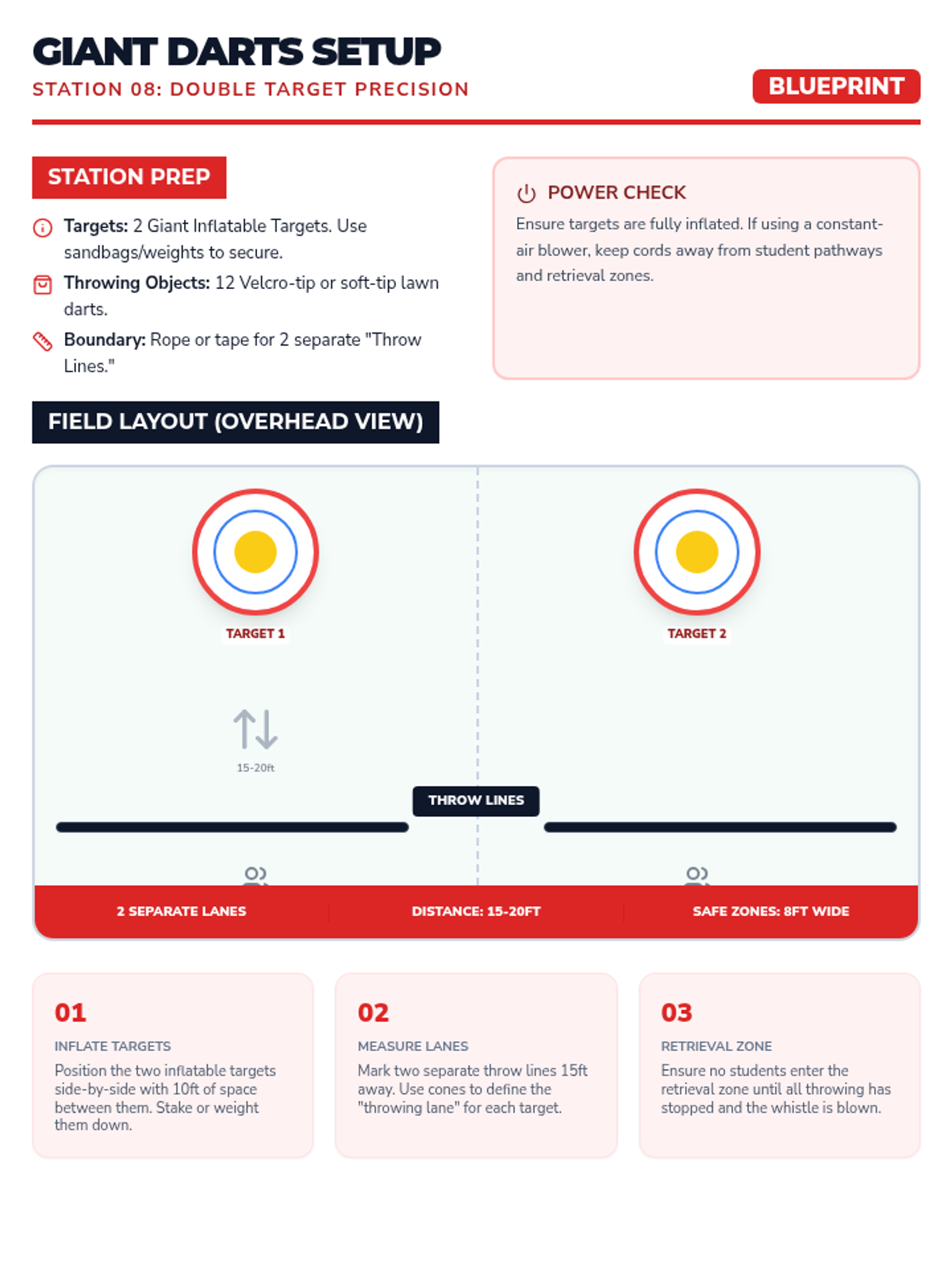
A detailed visual setup guide for Giant Darts, featuring field layout diagrams for two inflatable targets, measurement specifications, and scoring systems.
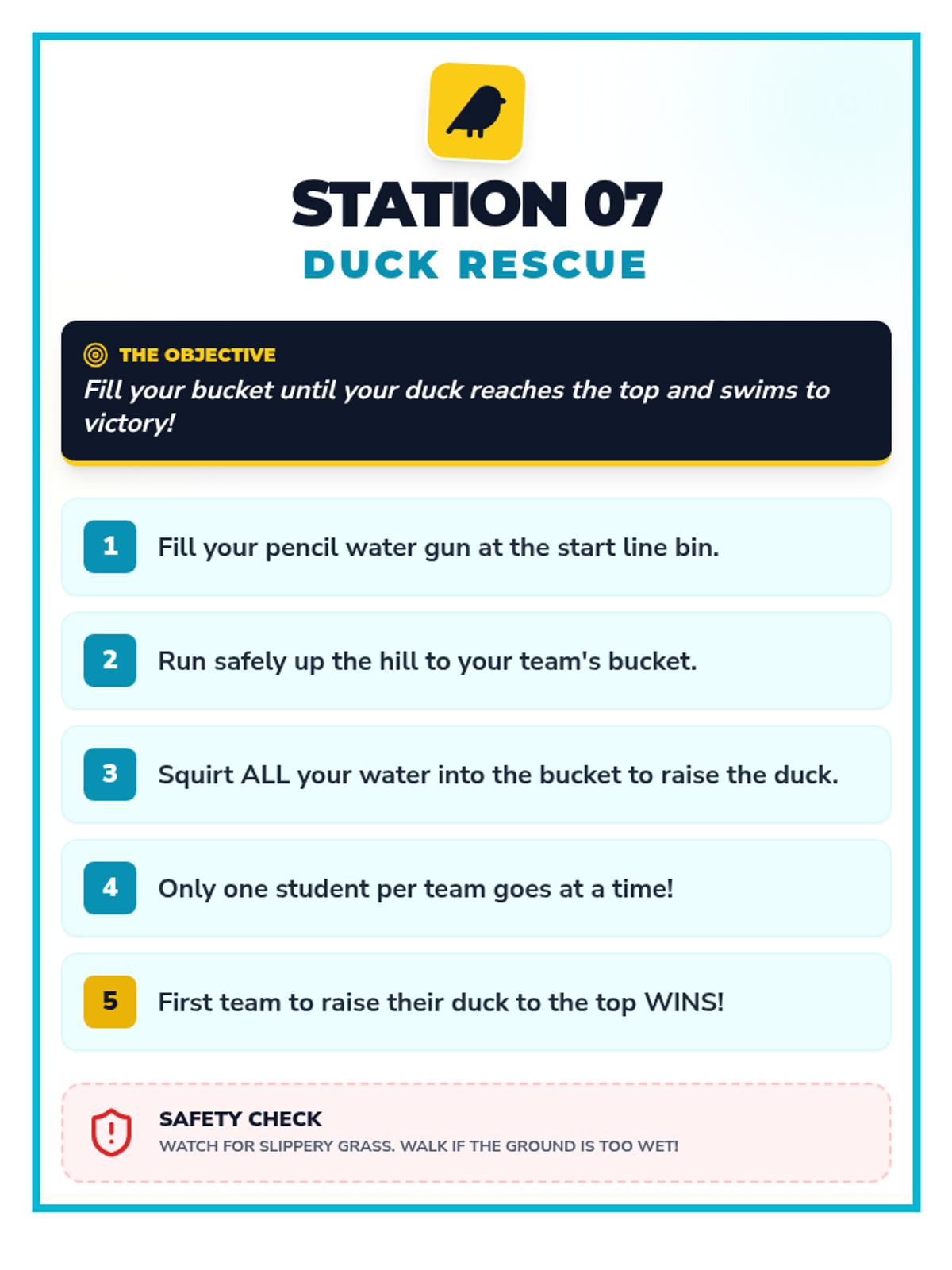
A high-visibility station poster for Duck Rescue, outlining the objective, step-by-step rules, and safety protocols for raising the duck.
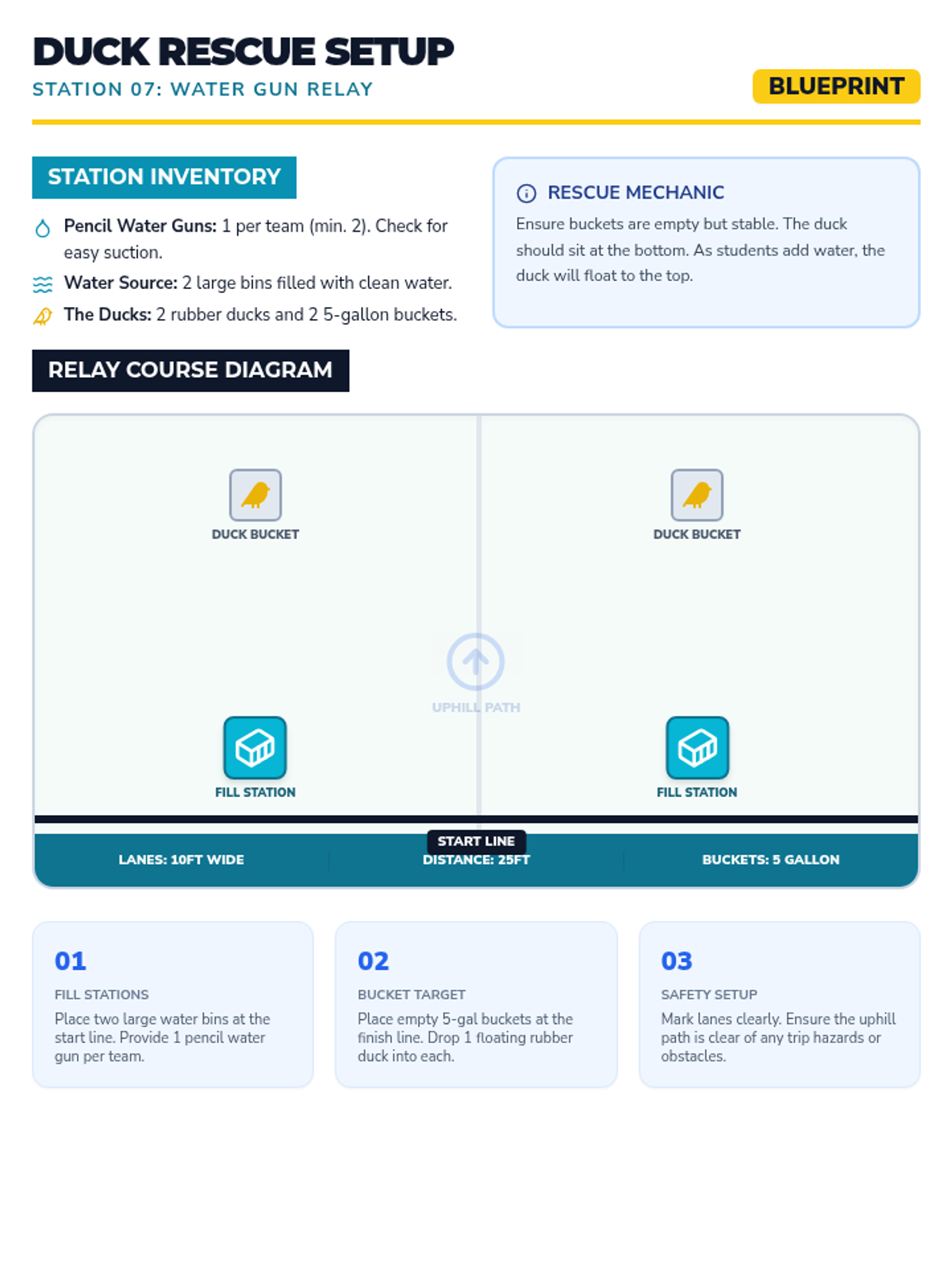
A detailed visual setup guide for the Duck Rescue relay, including lane measurements, equipment checklists, and course diagrams.
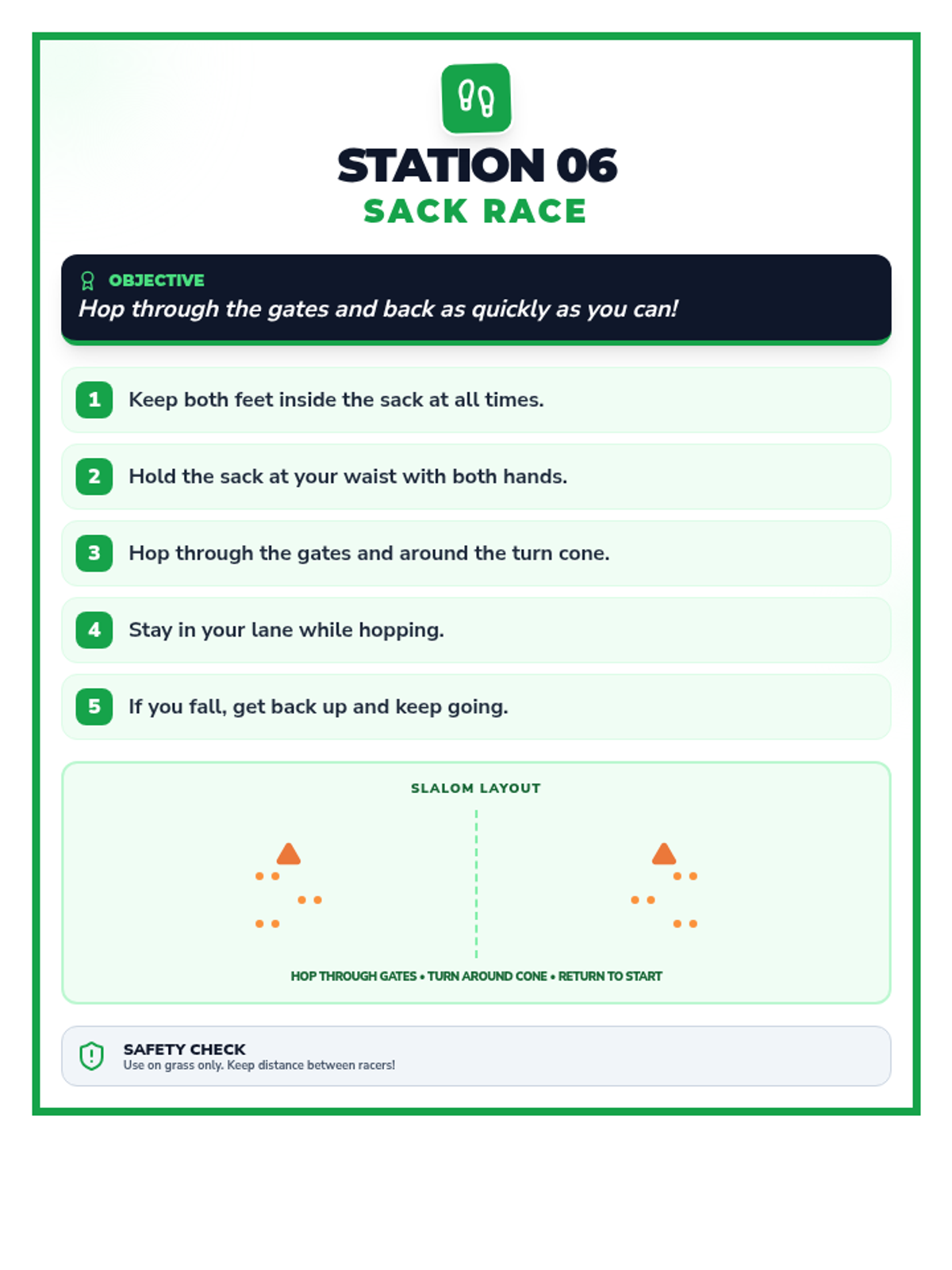
A high-visibility station poster for the classic Sack Race, featuring the objective, rules, and safety tips for a fun-filled race.
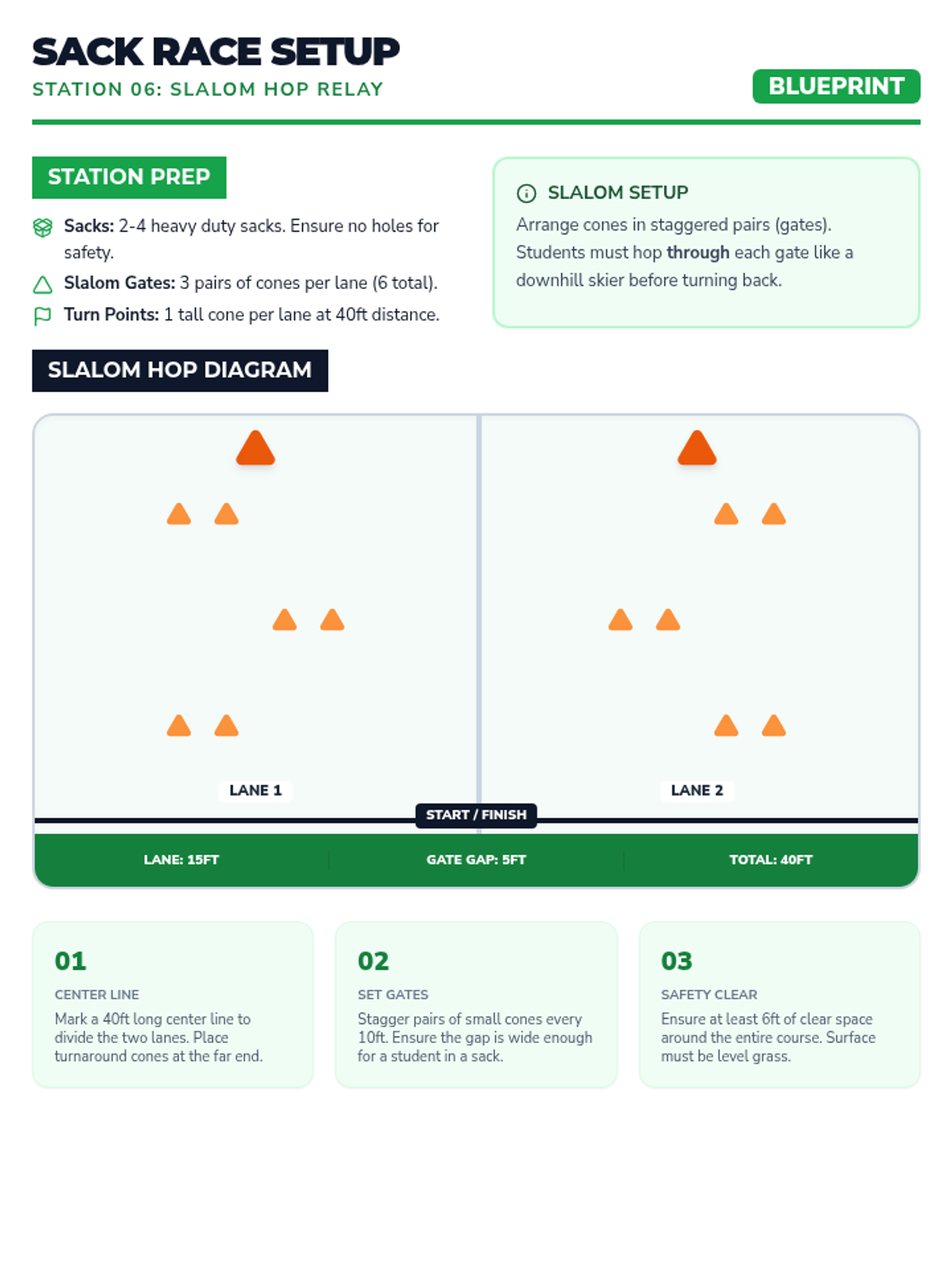
A detailed setup guide for the classic Sack Race station, featuring lane measurements, equipment checklists, and course diagrams.
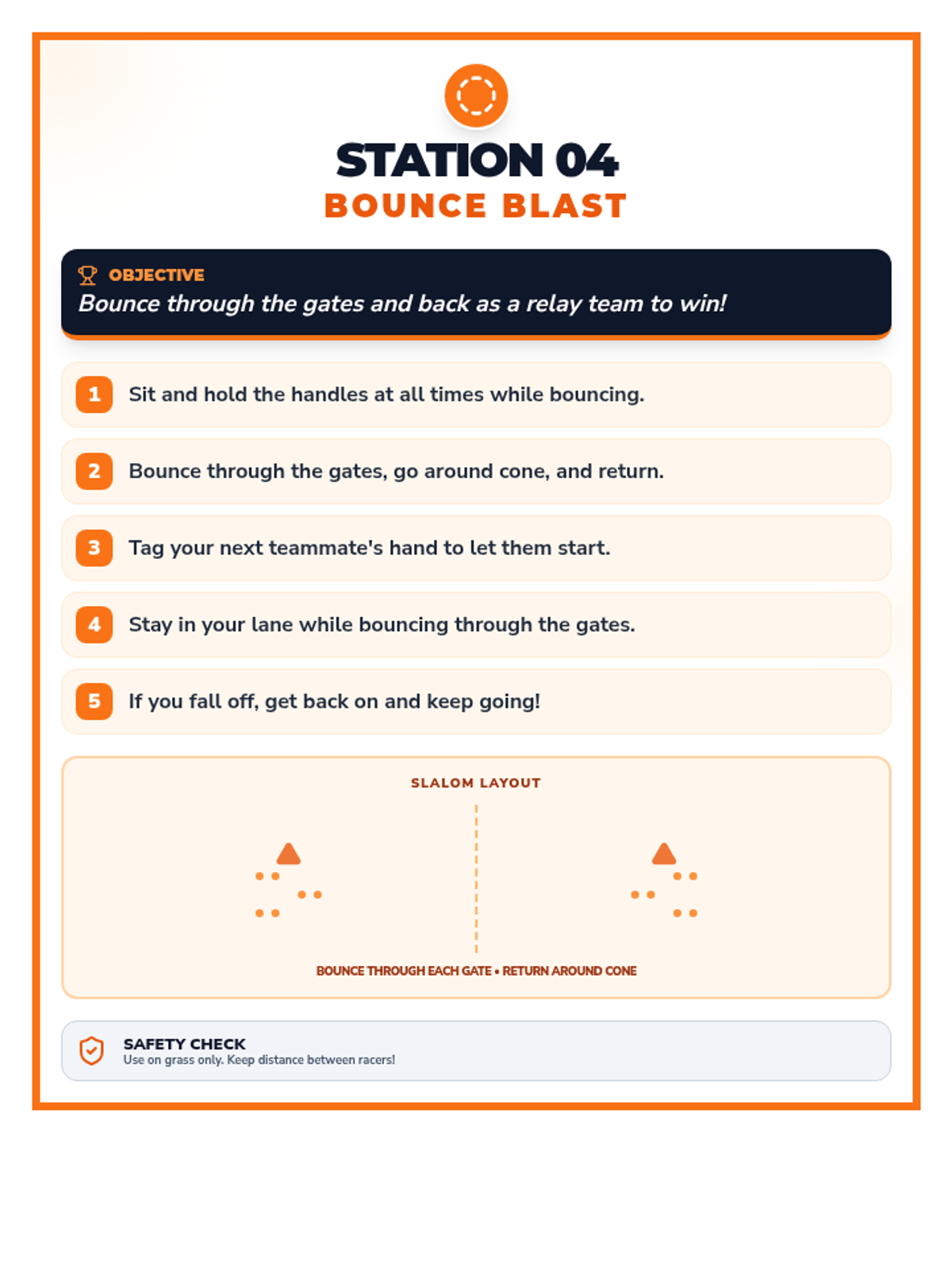
A high-visibility station poster for the Bounce Blast relay, featuring the objective, rules, and safety tips for the hopper ball race.
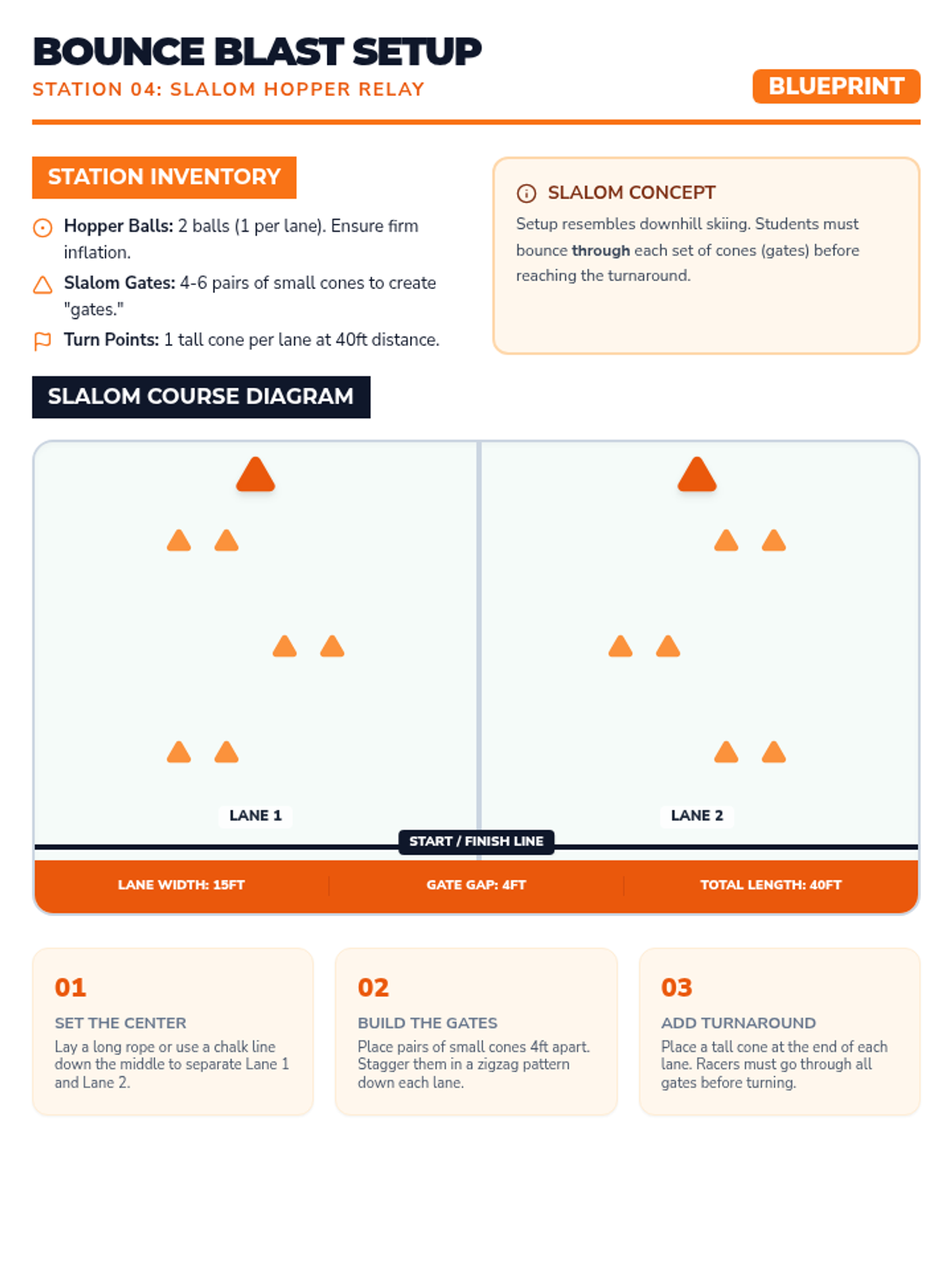
A detailed setup guide for the Bounce Blast relay station, including lane measurements, equipment checklists, and course diagrams.
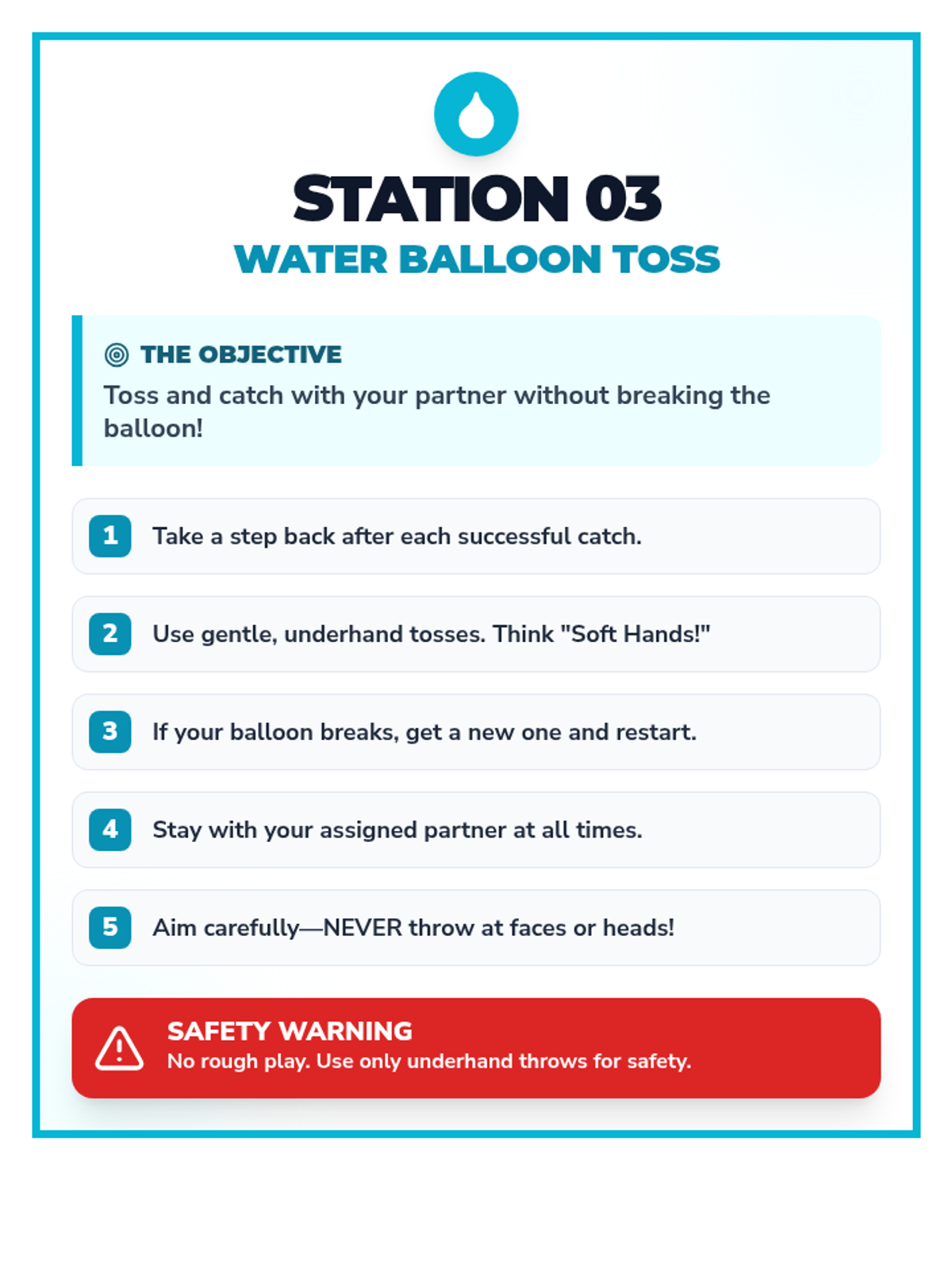
A high-visibility station poster for the Water Balloon Toss, outlining the objective, step-by-step rules, and safety protocols.
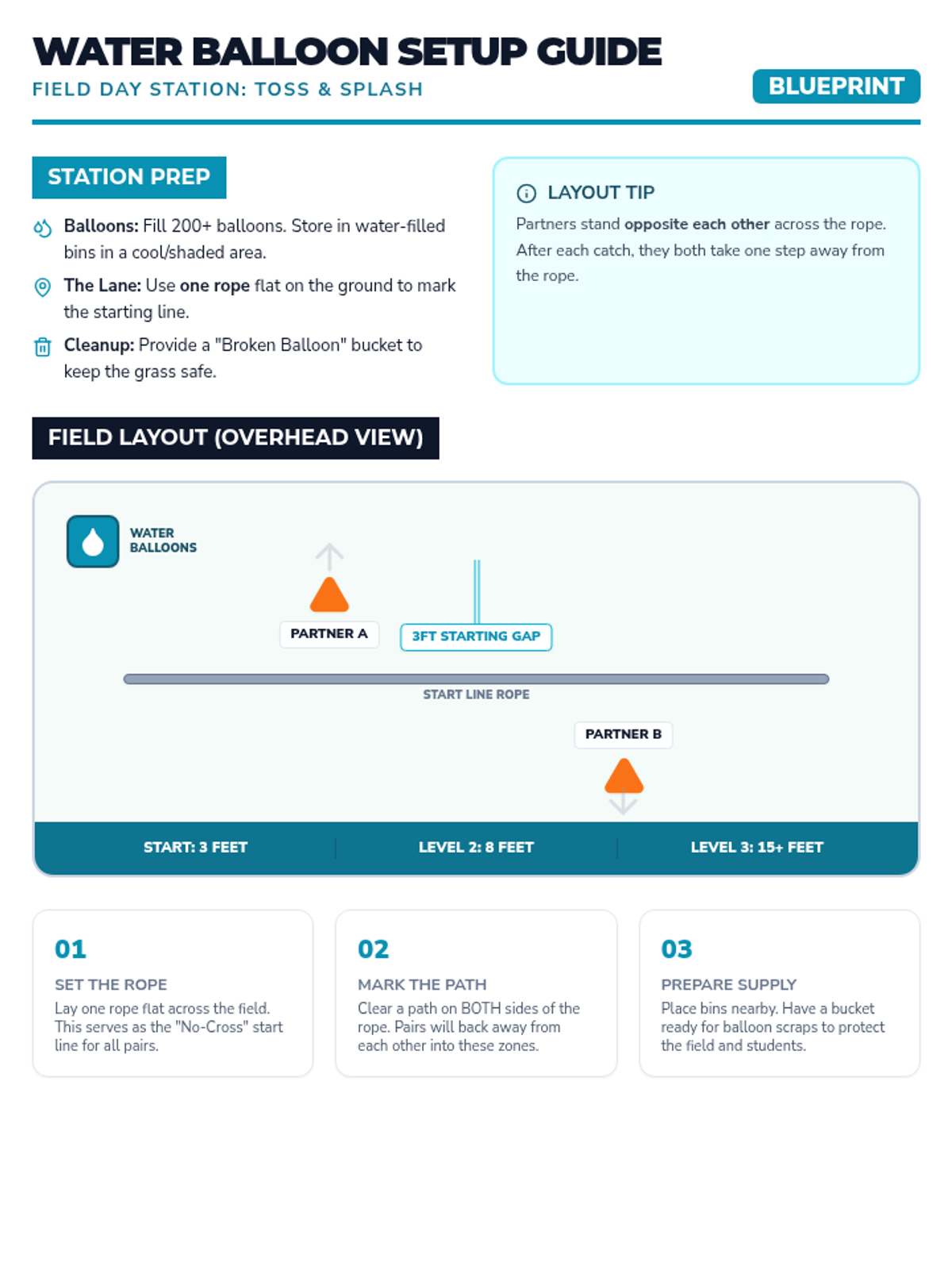
A detailed setup guide for the Water Balloon Toss station, featuring lane measurements, equipment checklists, and a visual progression diagram.
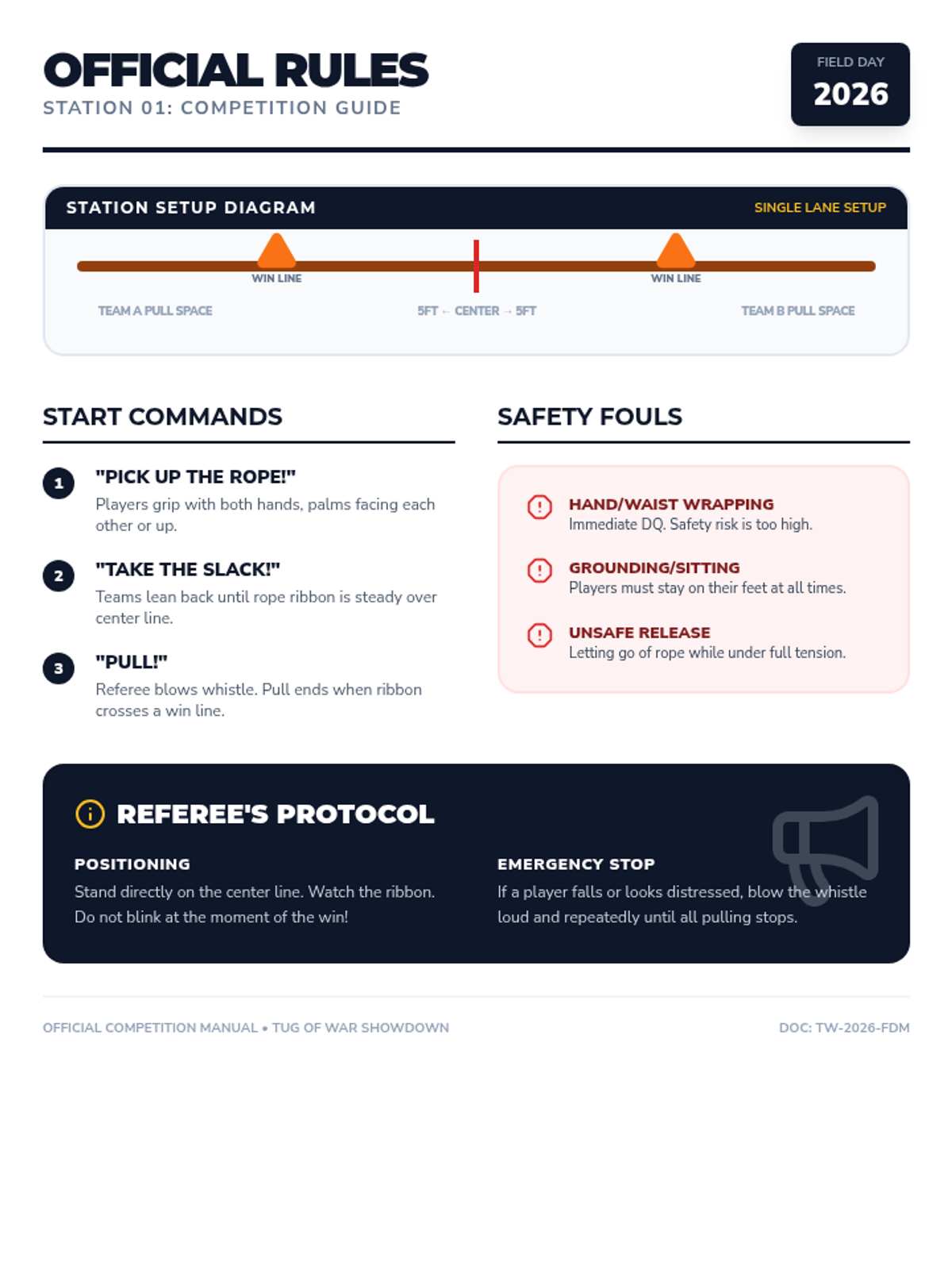
Official competition rules for Tug of War, detailing the match objective, start sequence, common fouls, and referee guidance for a fair and safe competition.
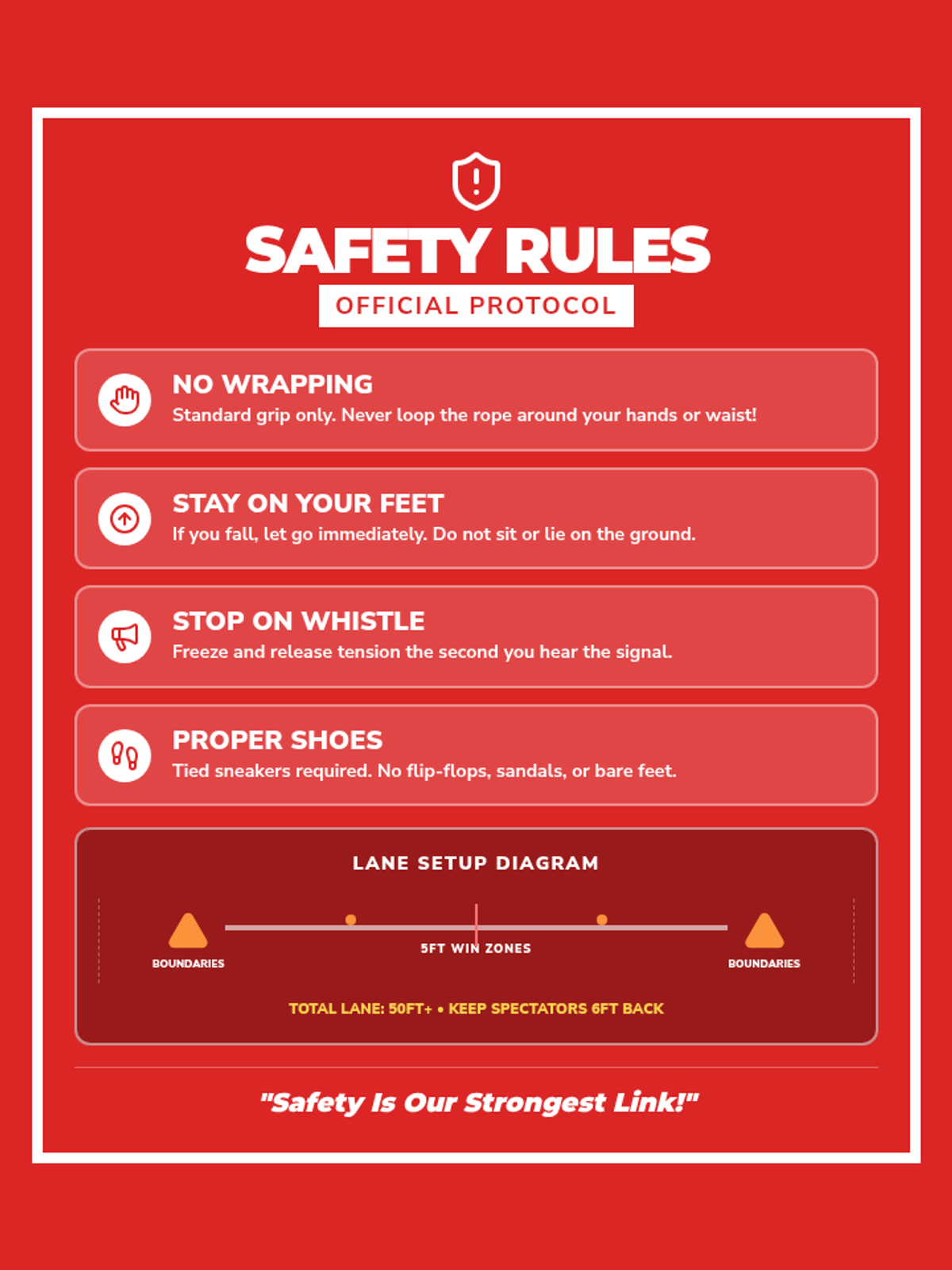
A high-visibility safety poster for Tug of War stations, highlighting critical rules like 'No Wrapping' and 'Stop on Whistle' to ensure participant safety.
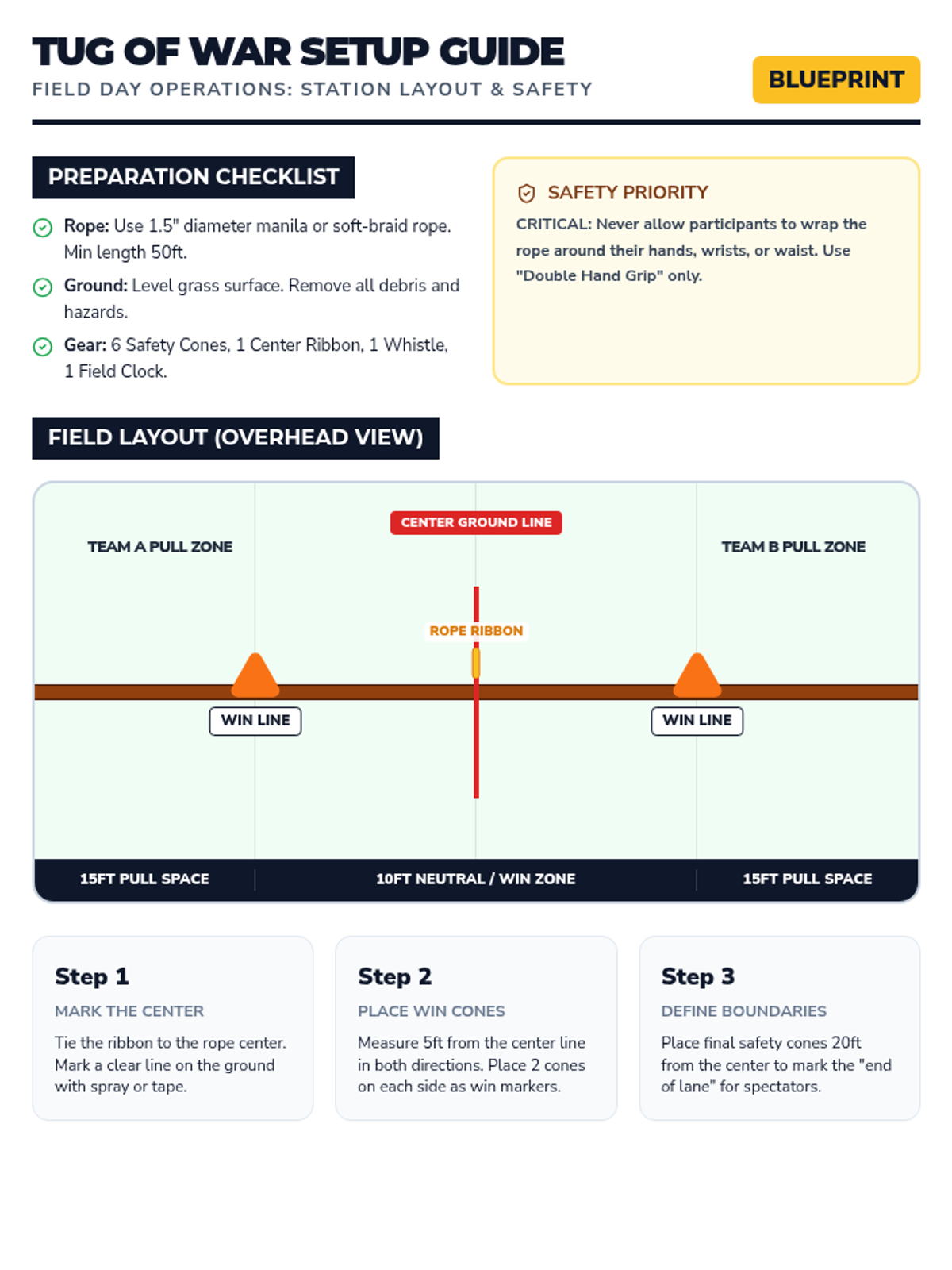
A detailed visual setup guide for a tug of war station, featuring a field layout diagram, measurement specifications, and safety preparation checklists.
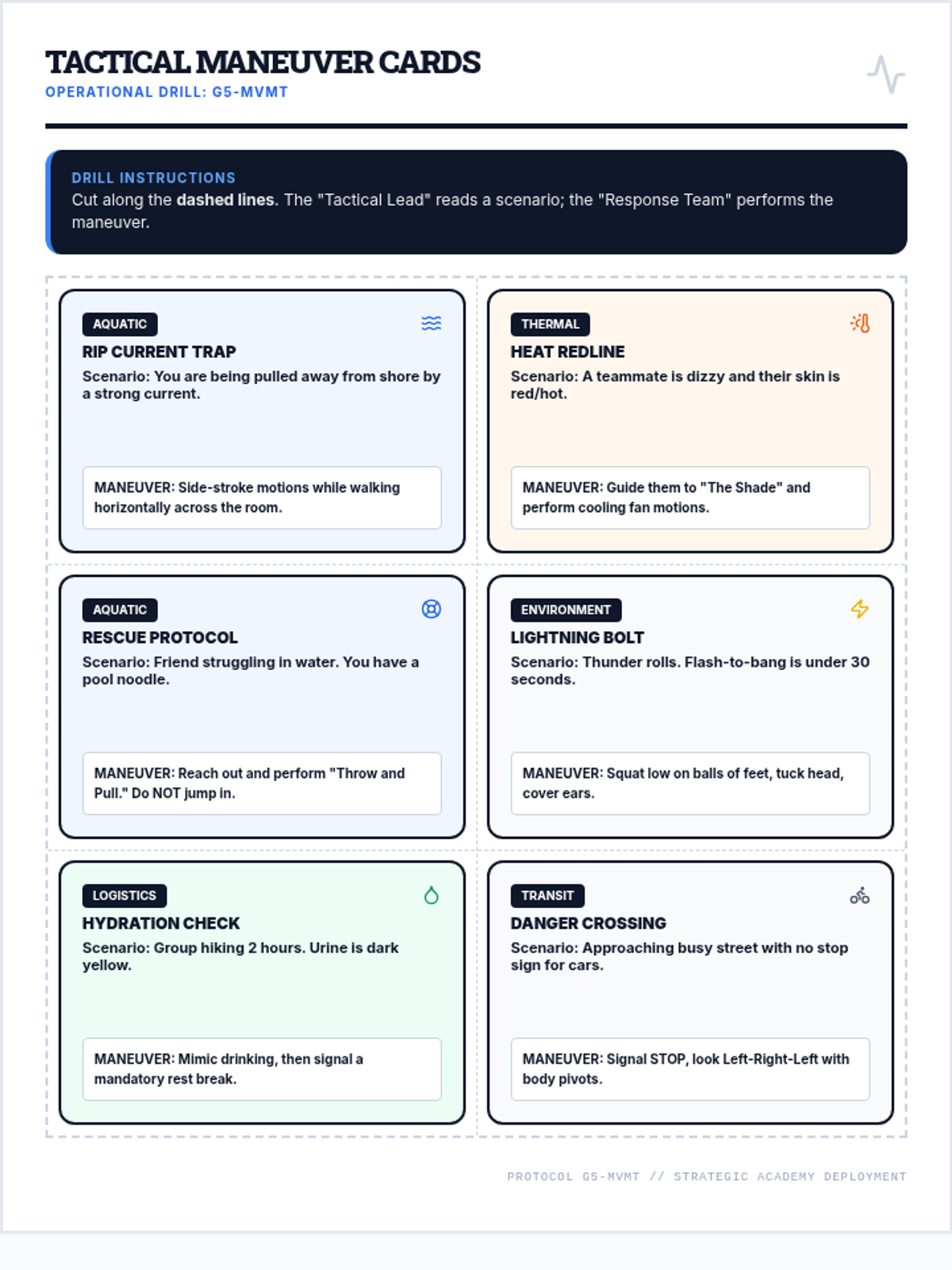
A set of 6 tactical movement cards for 5th graders. Students respond to safety scenarios (rip currents, heat stroke, water rescue) with specific physical maneuvers to reinforce strategic response skills.
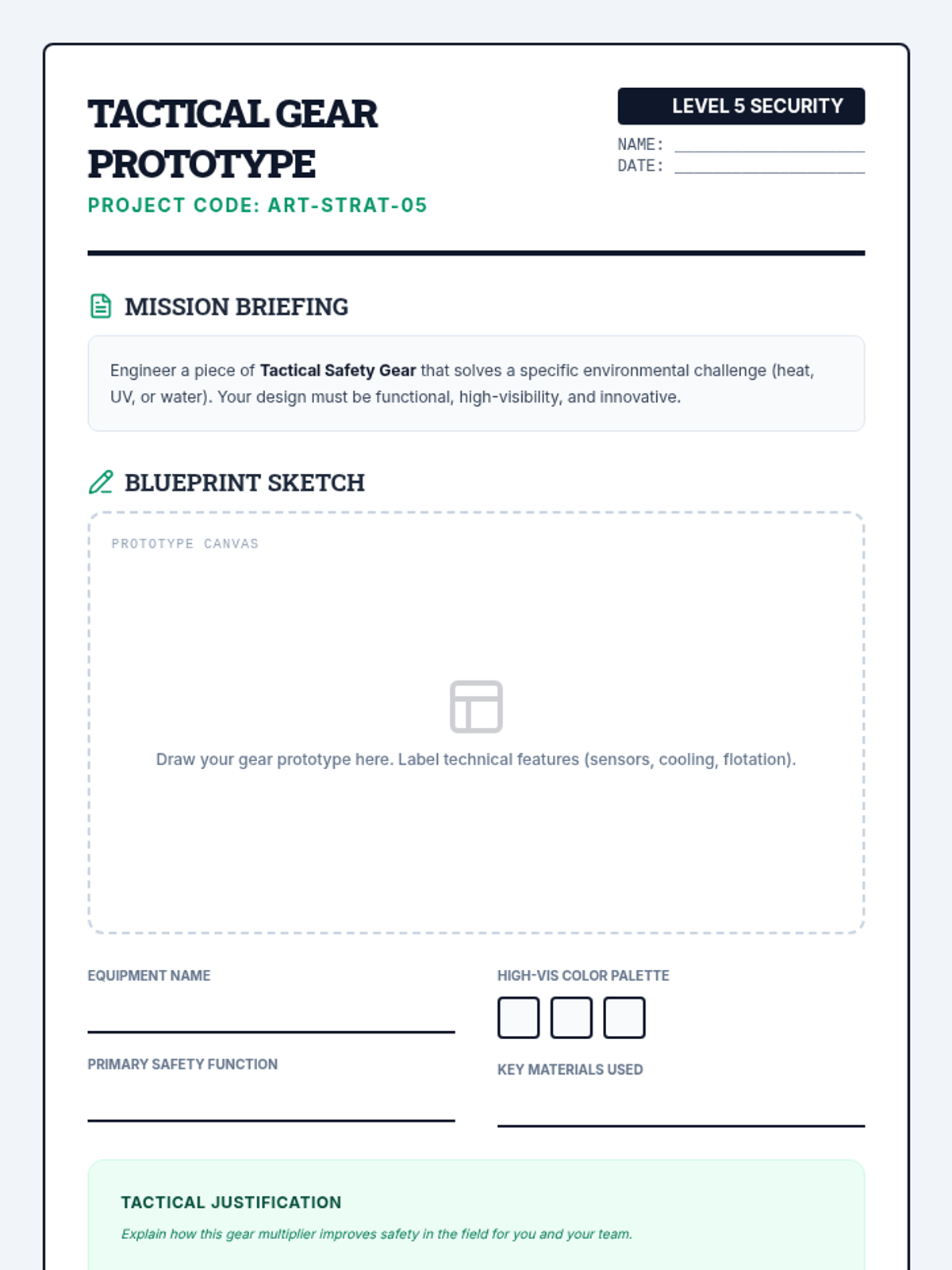
A creative art and engineering project for 5th graders to design a piece of 'Tactical Safety Gear'. Students sketch a prototype and document its technical features and strategic benefits.
A professional-style completion certificate for 5th grade Summer Safety Strategists, featuring a tactical design and official mastery wording.
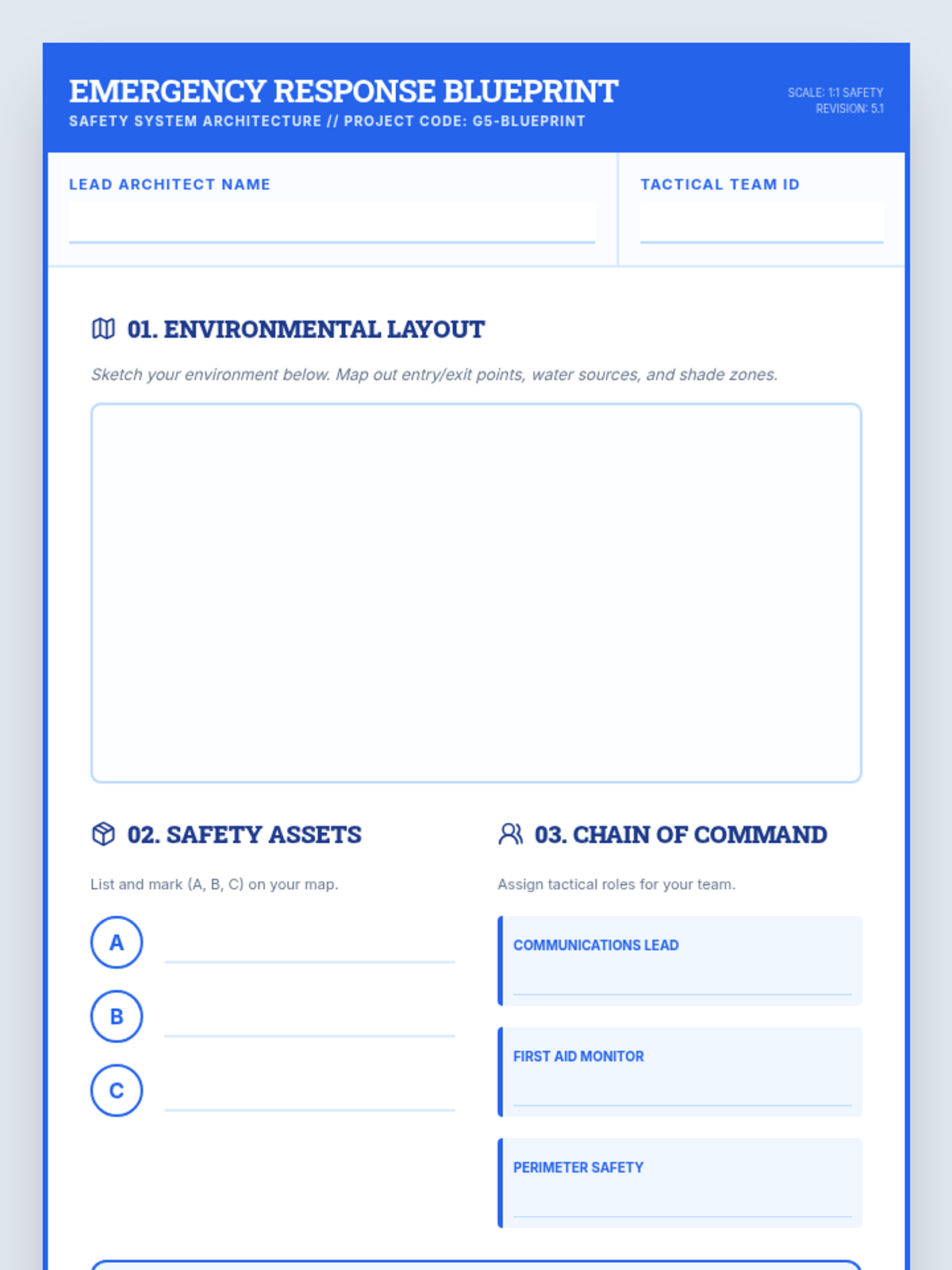
An engineering-focused blueprint worksheet for 5th graders to design and map out safety systems and emergency response plans for summer environments. Now optimized for single-page use with improved legibility.
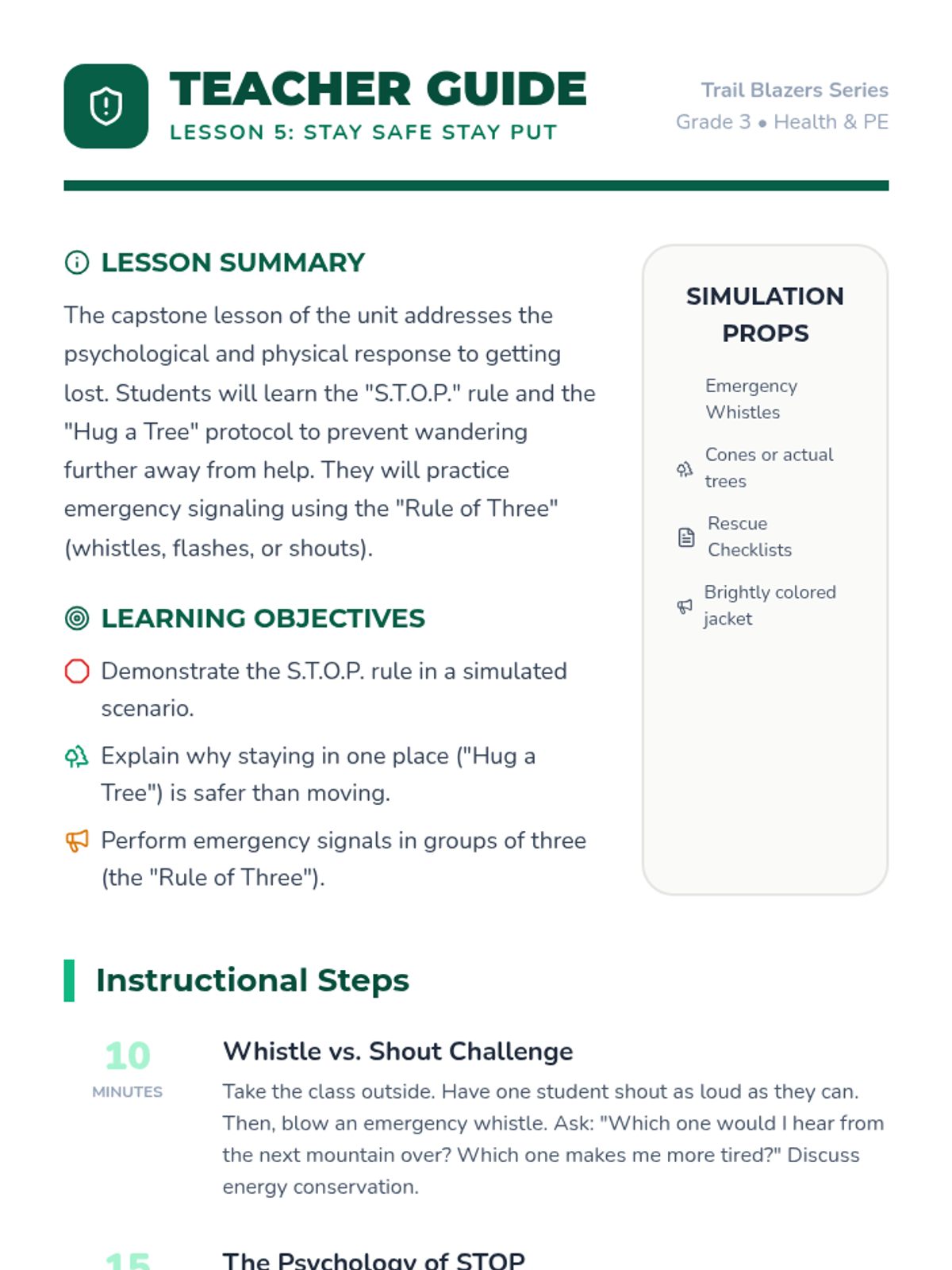
Teacher guide for Lesson 5, outlining the whistle vs. shout demonstration and the outdoor "Lost" simulation.
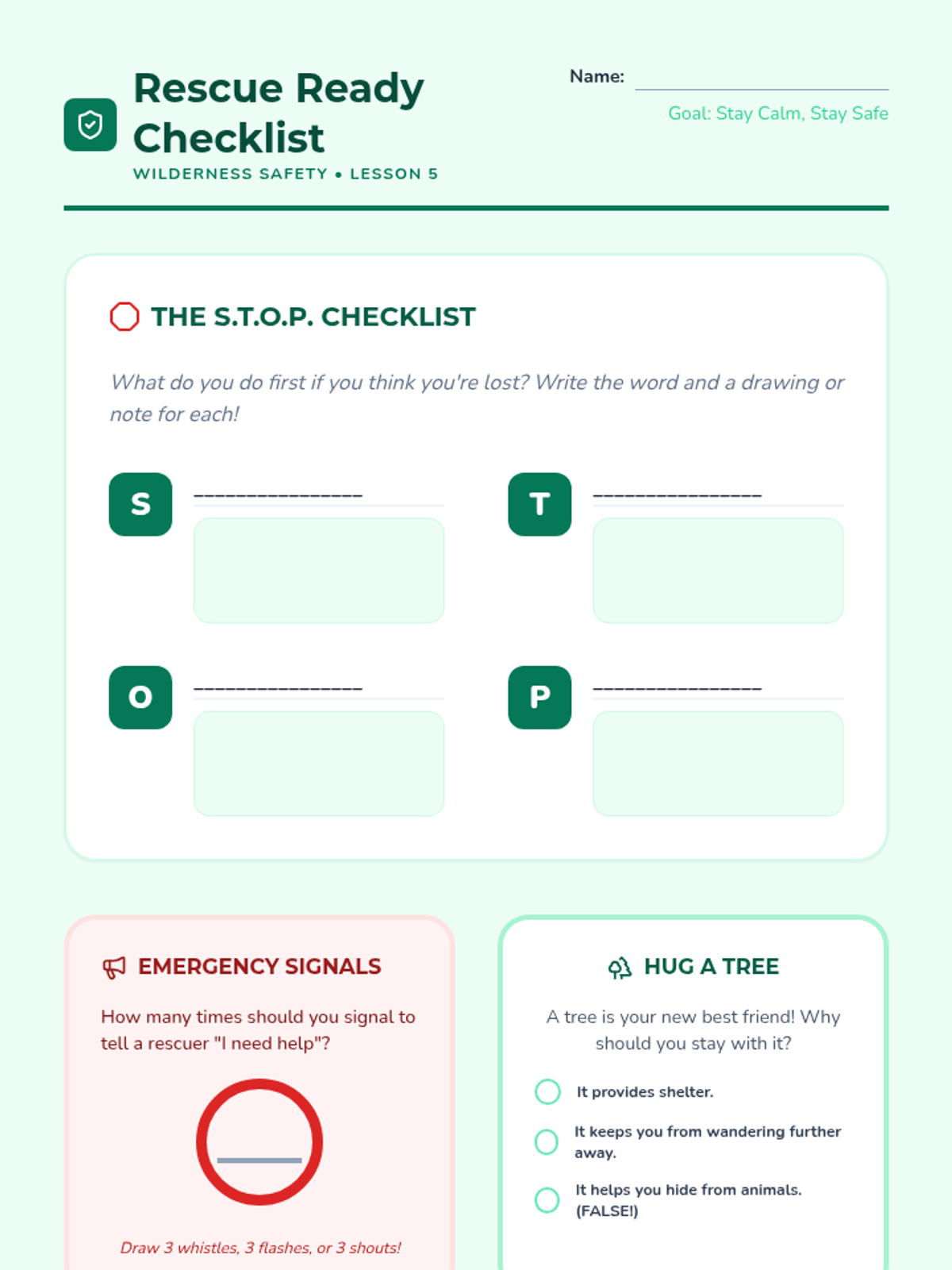
Student worksheet for Lesson 5, focusing on the STOP rule, emergency signaling, and emotional self-regulation when lost.
Slide deck for Lesson 5, covering the STOP rule, the Hug a Tree concept, and emergency signaling using the "Rule of Three."
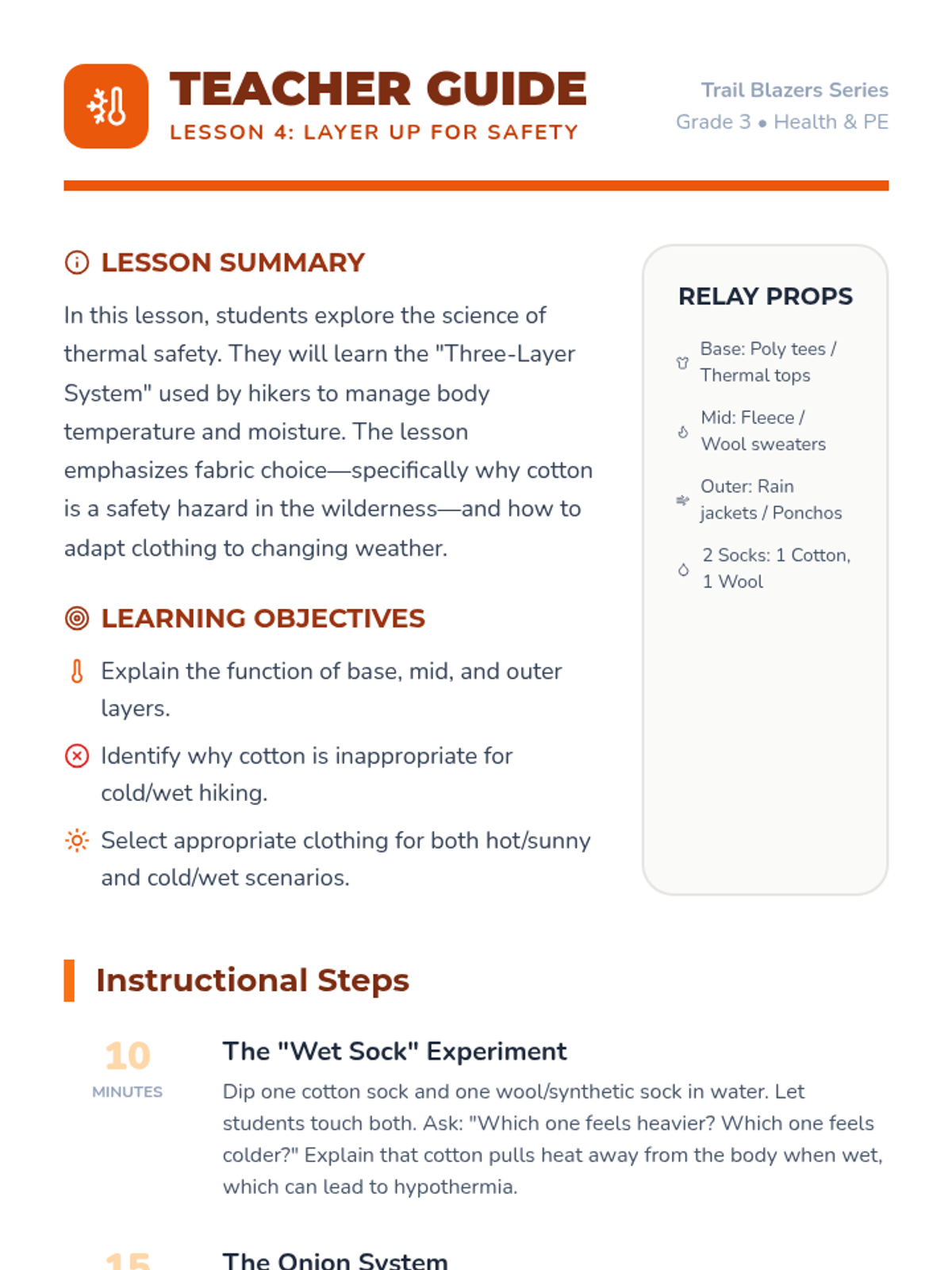
Teacher guide for Lesson 4, including instructions for the "Wet Sock" experiment and the Layering Relay Race.
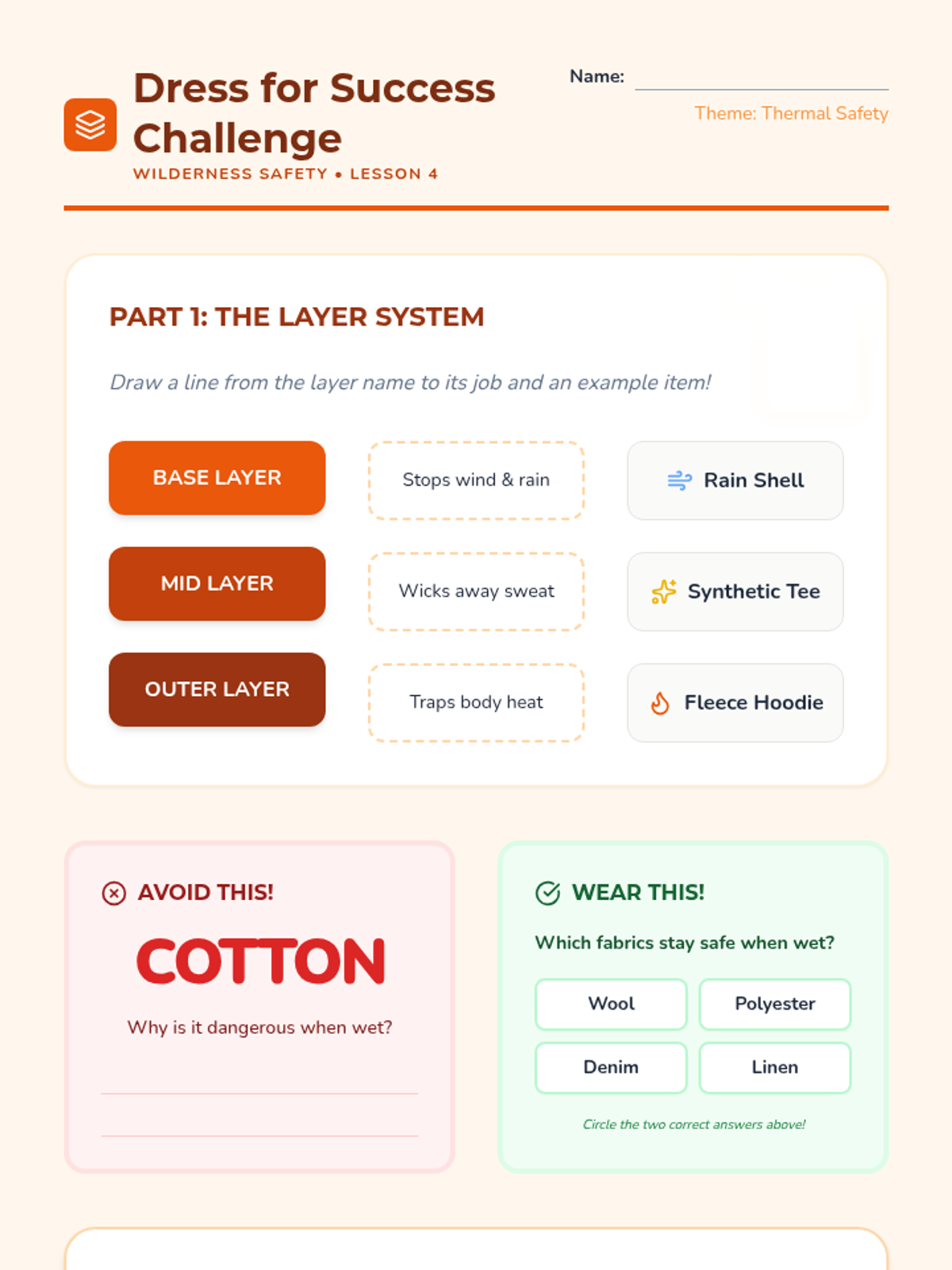
Worksheet for Lesson 4, featuring layer matching, fabric selection, and weather-based clothing scenarios.
Slide deck for Lesson 4, explaining the three-layer system (Base, Mid, Shell) and the dangers of cotton in wet conditions.
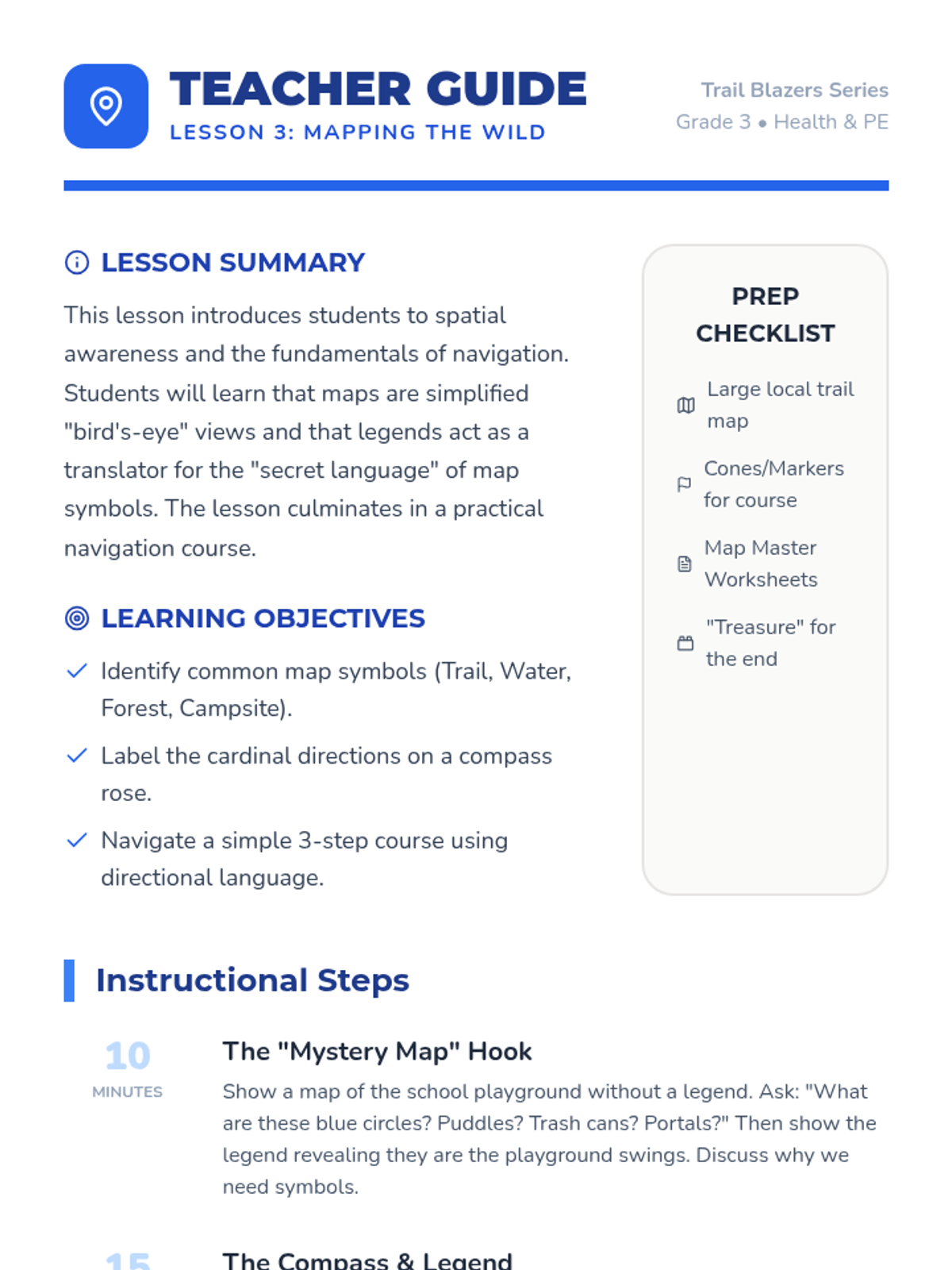
Teacher guide for Lesson 3, including tips for teaching spatial perspective and setting up a classroom navigation course.
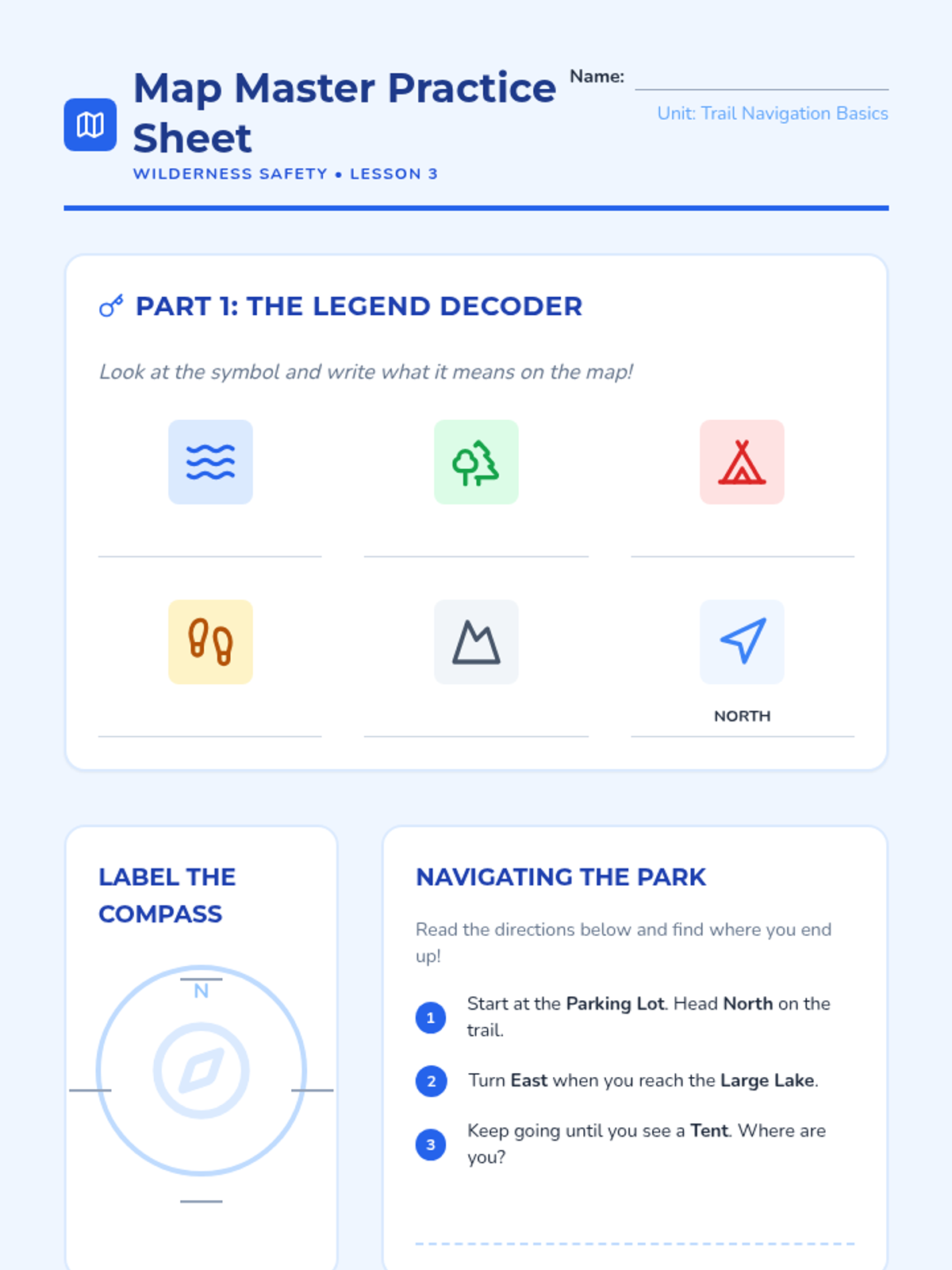
Worksheet for Lesson 3, including symbol decoding, labeling a compass rose, and a navigation word problem.
Slide deck for Lesson 3, introducing students to map symbols, legends, and the cardinal directions of a compass rose.
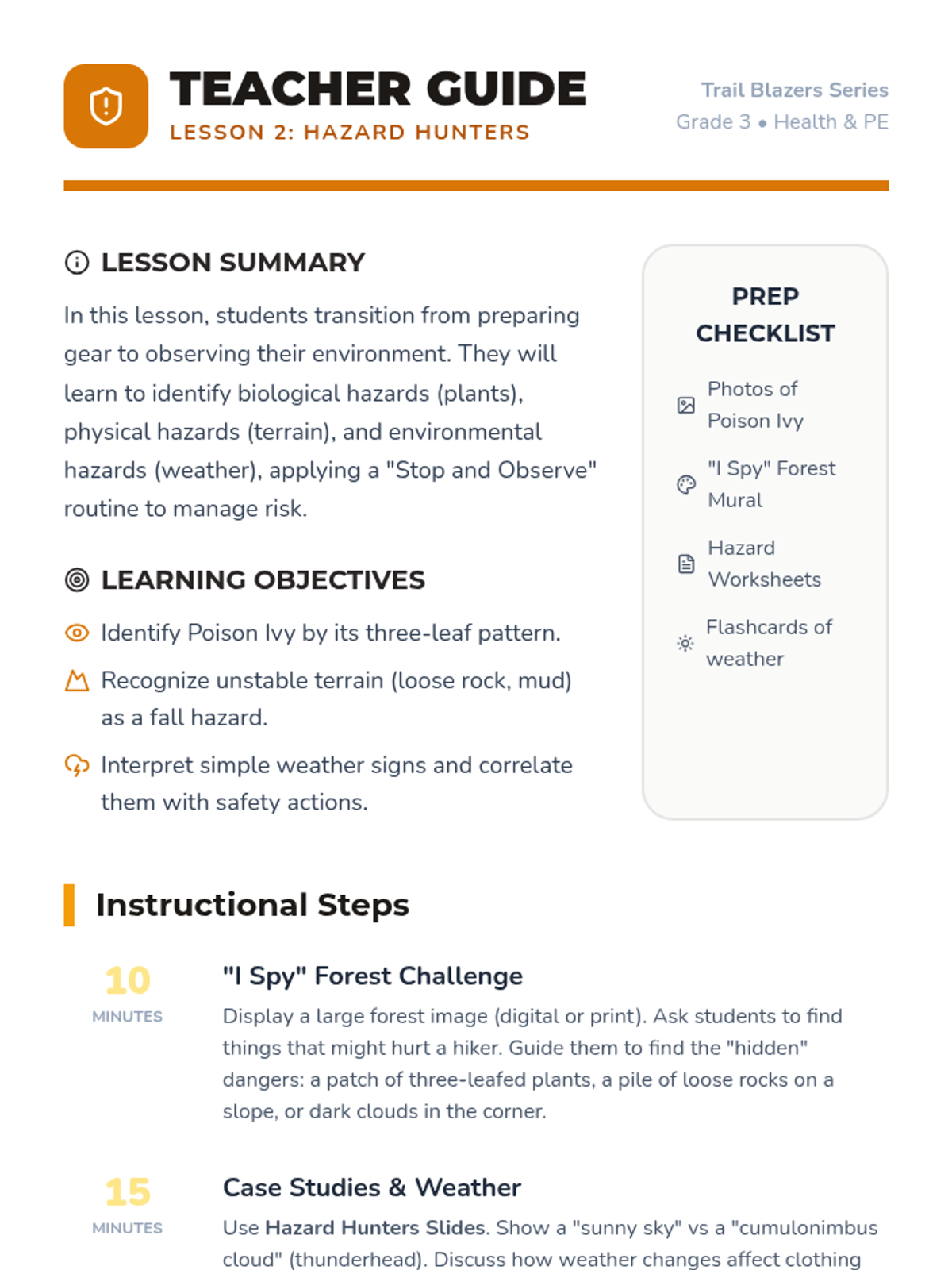
Teacher guide for Lesson 2, outlining how to lead the "I Spy" activity and teach the SOS routine.
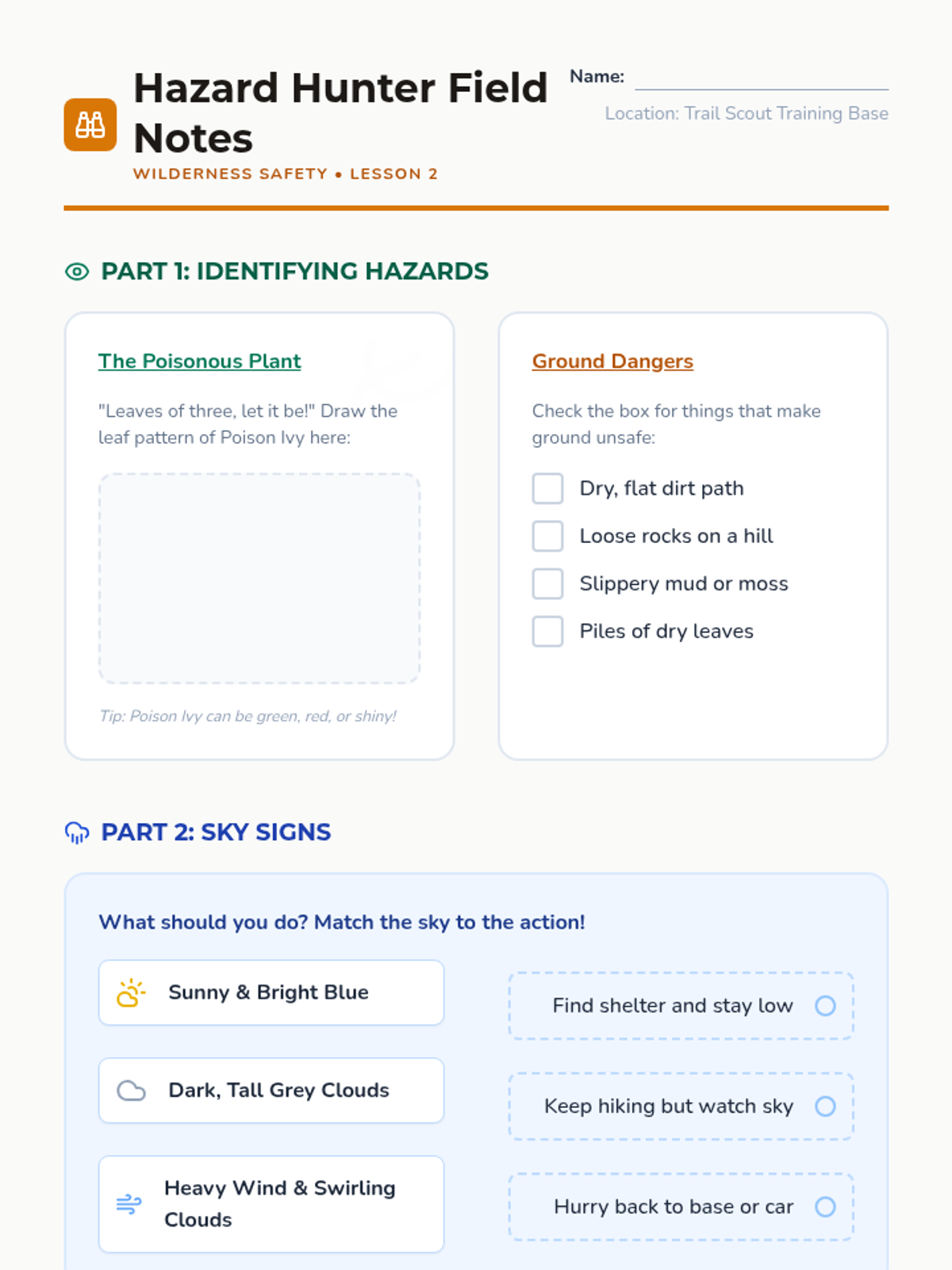
Student worksheet for Lesson 2, including hazard identification drawing areas, weather matching, and a fill-in-the-blank for the SOS rule.
Slide deck for Lesson 2, teaching students to identify trail hazards (poisonous plants, loose terrain) and interpret weather signs.
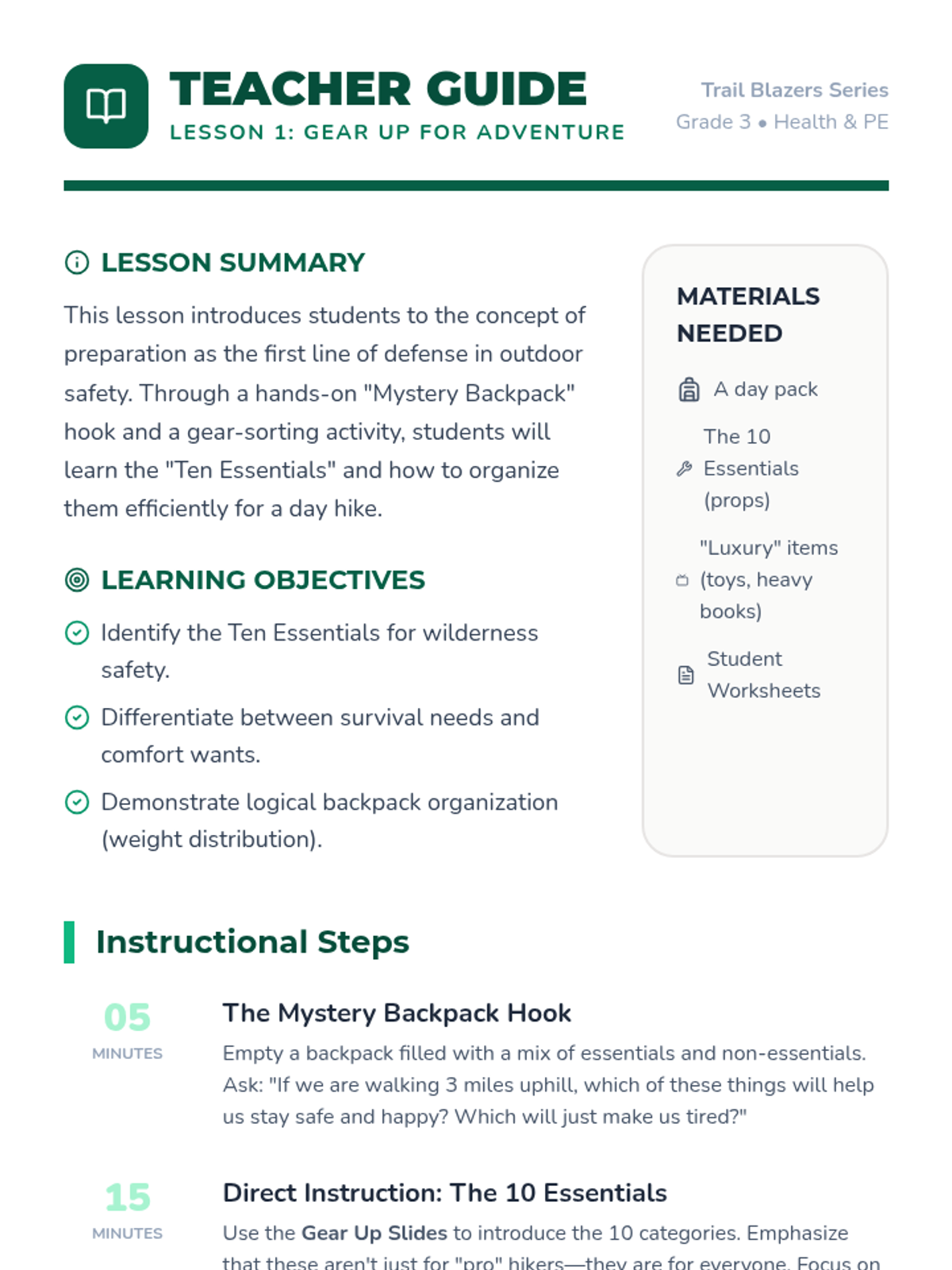
Teacher facilitation guide for Lesson 1, including instructional steps, discussion prompts, and differentiation strategies.
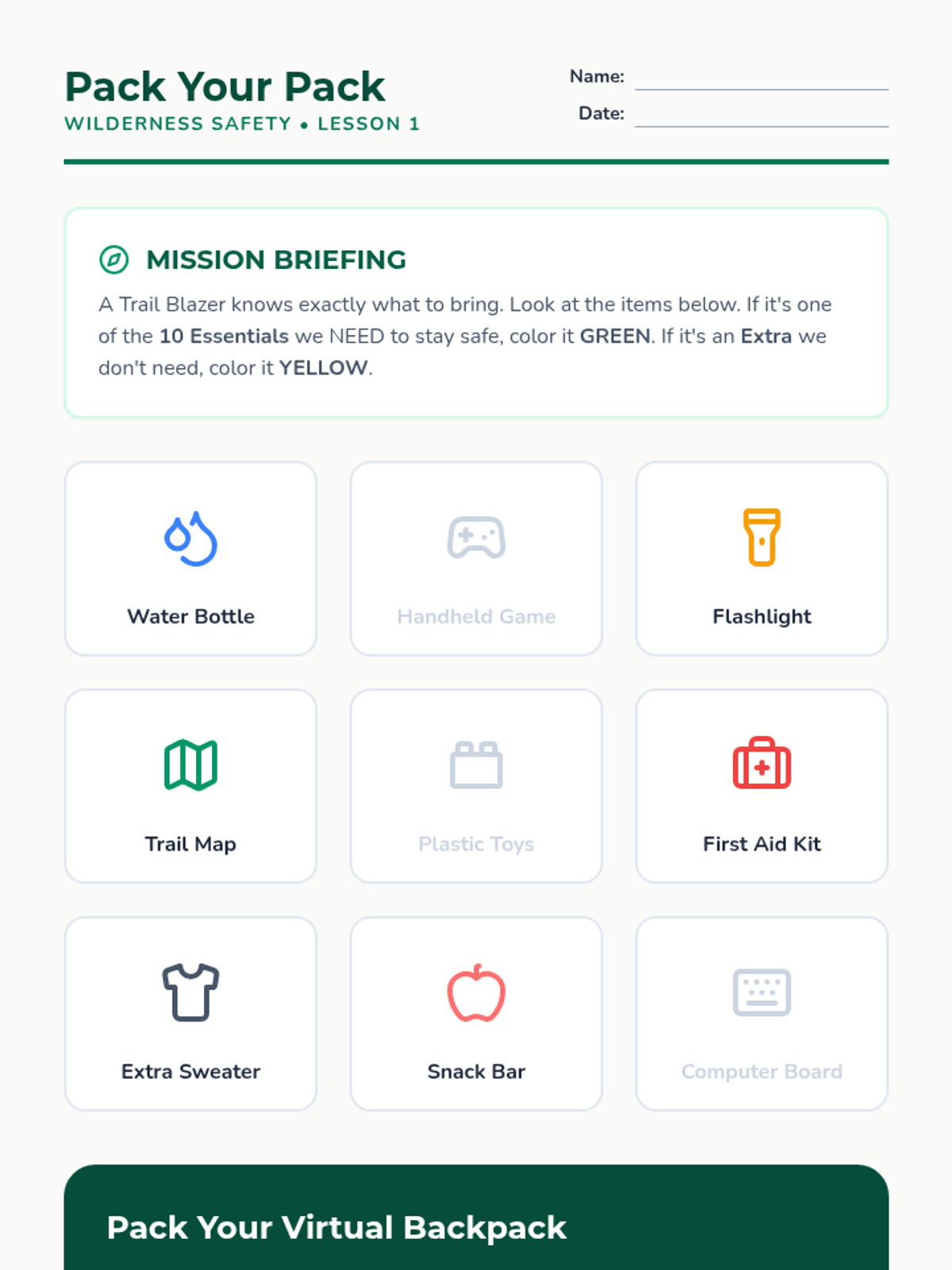
Worksheet for Lesson 1 where students categorize essential gear and practice logical backpack organization.
Introductory slide deck for Lesson 1, covering the Ten Essentials and proper backpack organization.
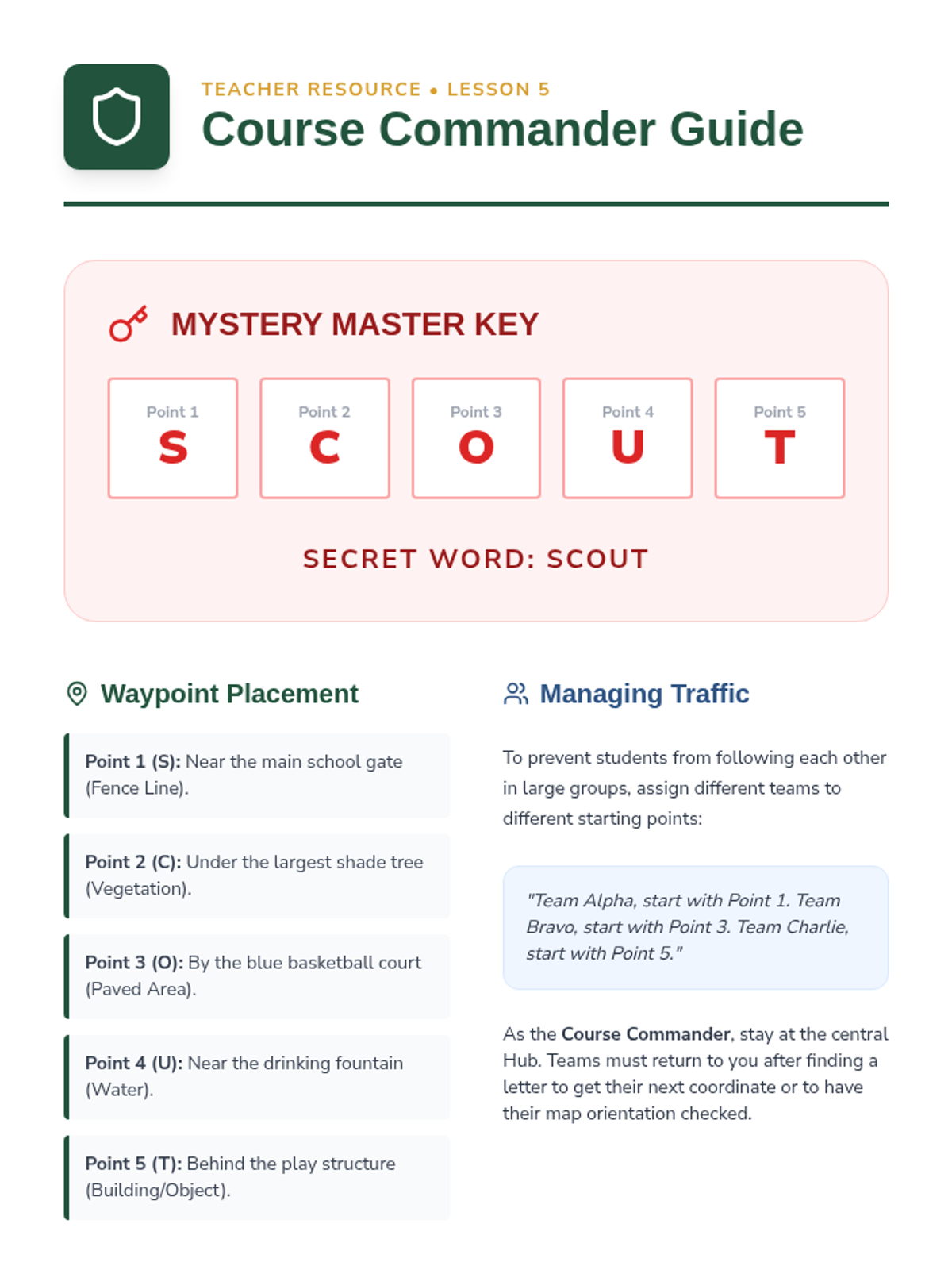
Teacher guide for the culminating Lesson 5 activity, including the secret code key, waypoint descriptions, and an assessment rubric.
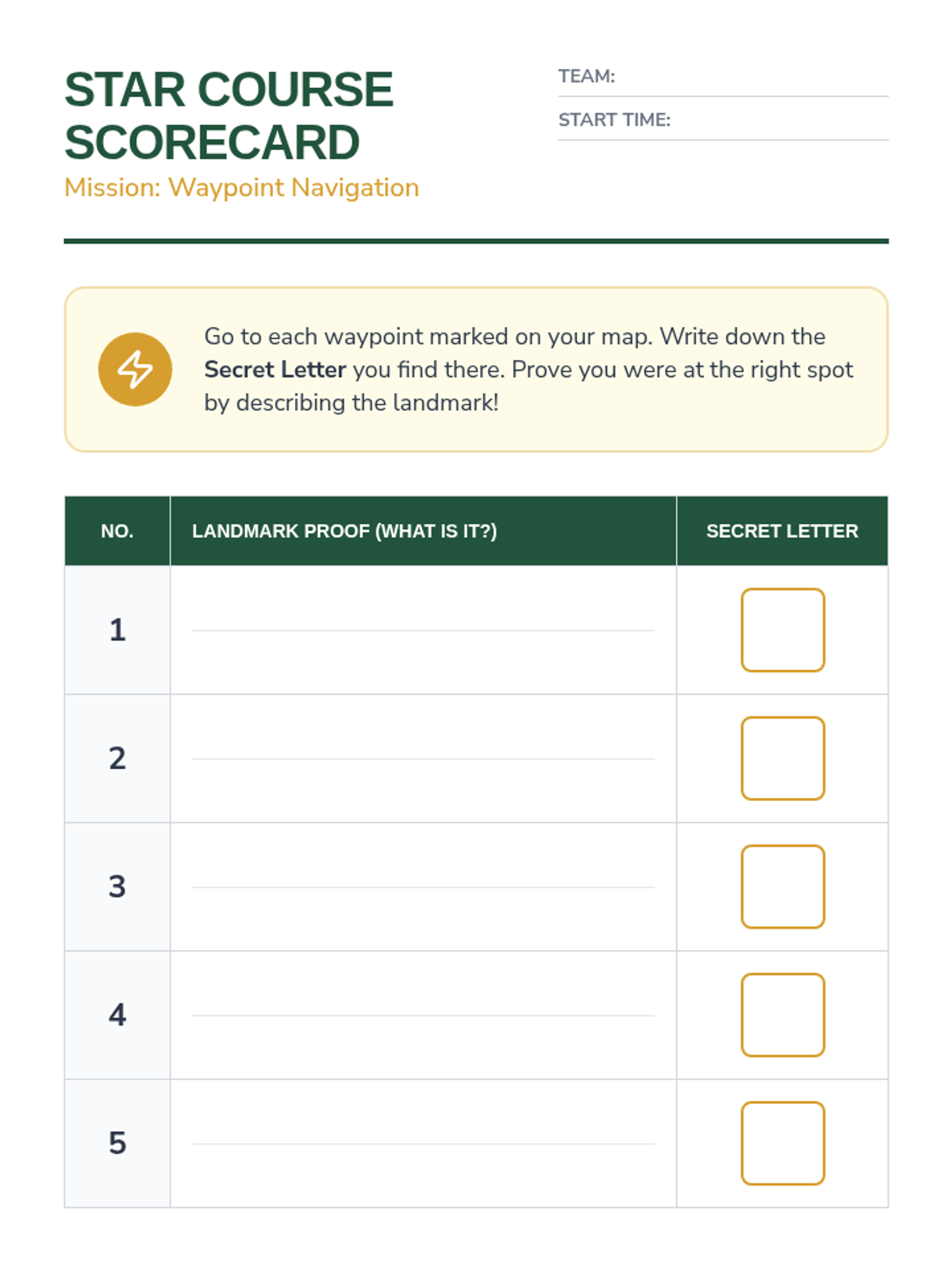
Student scorecard for the culminating orienteering activity to record codes found at waypoints and solve a mystery word.
Visual presentation for the final orienteering challenge, explaining the "Star Course" and rules for the waypoint navigation game.
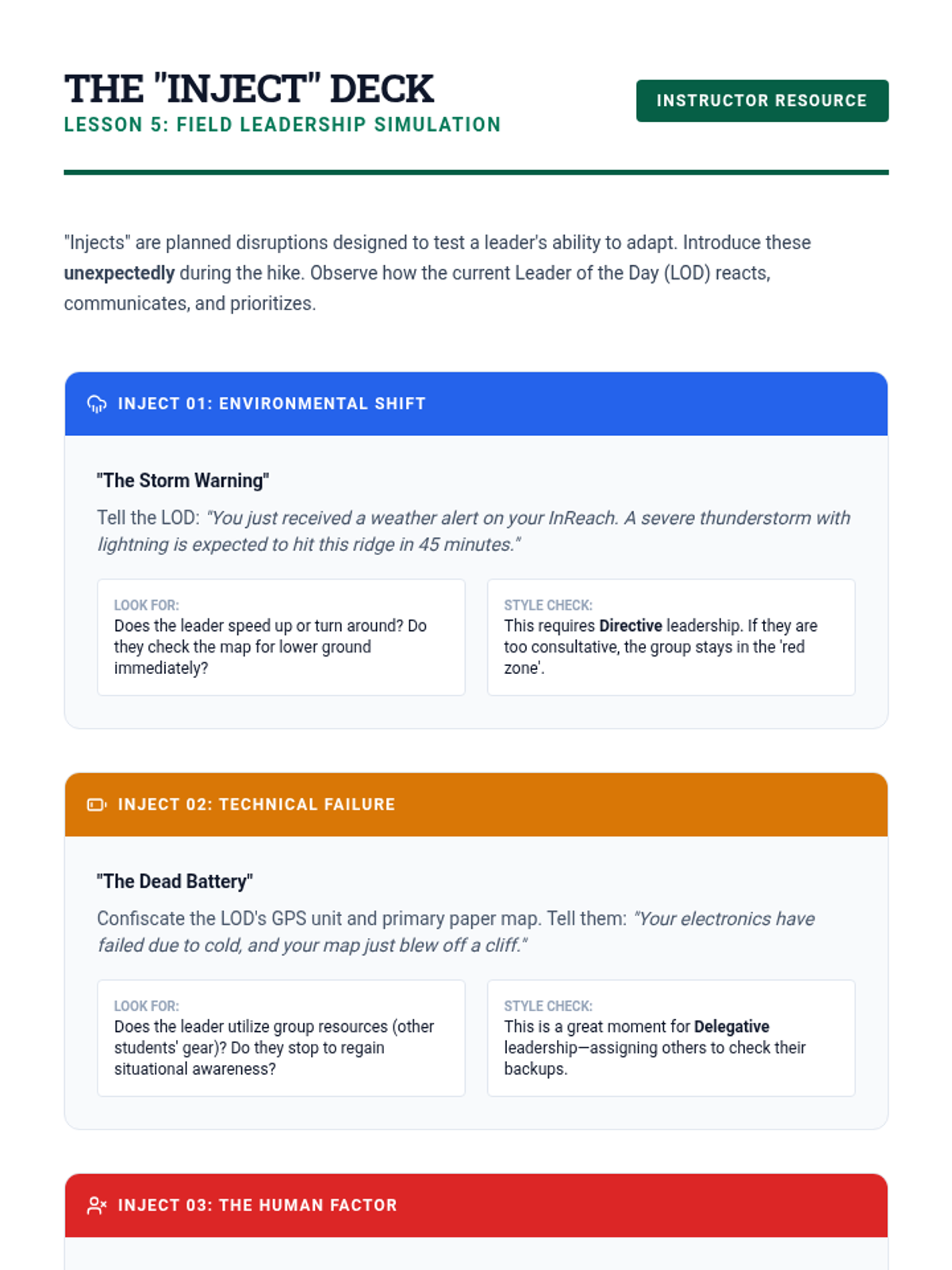
A guide for instructors featuring 'inject' scenarios to test adaptive decision-making and leadership styles during the field simulation.
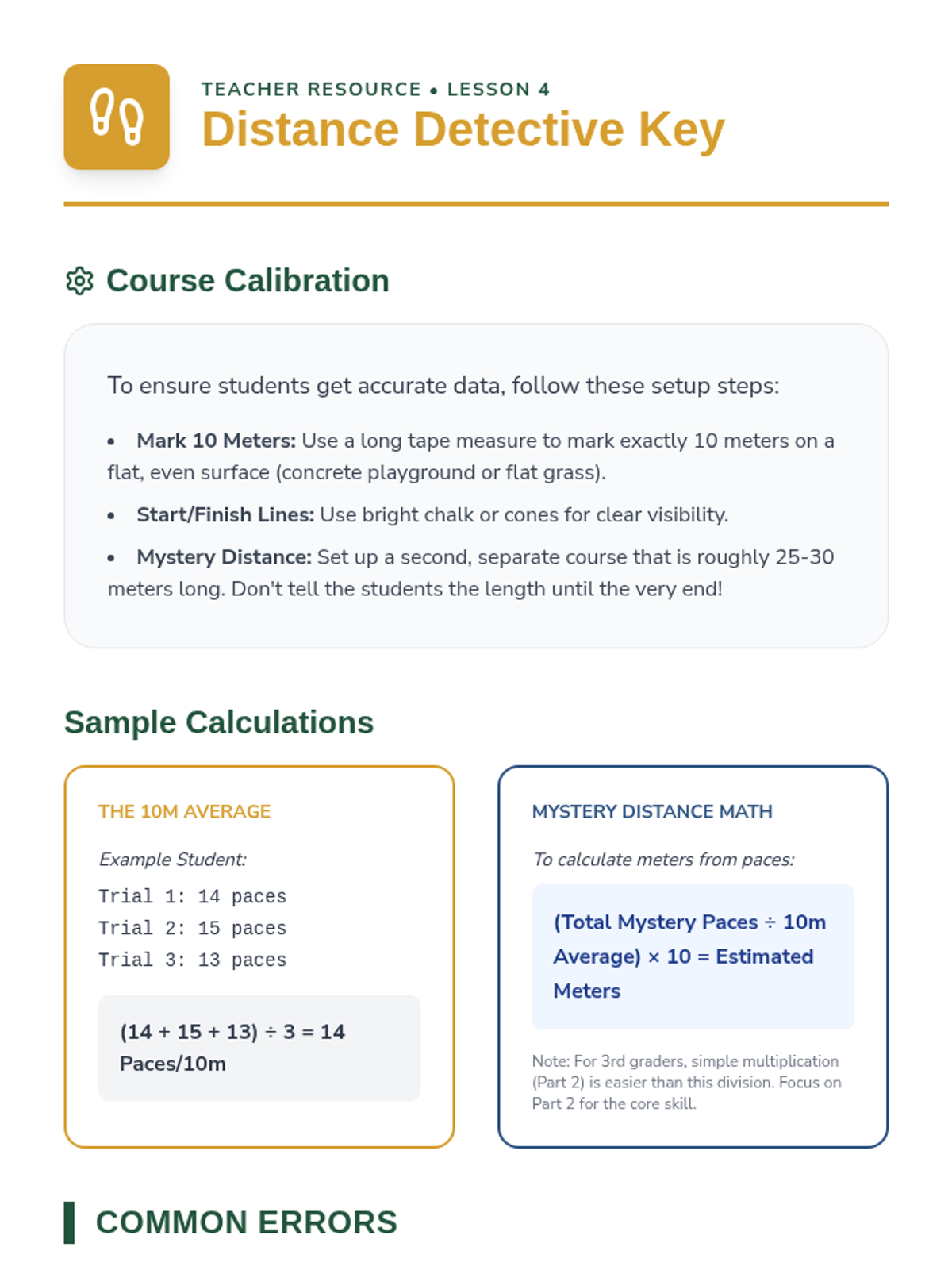
Answer key for the Lesson 4 calculations and teacher guide on calibrating the pacing course.
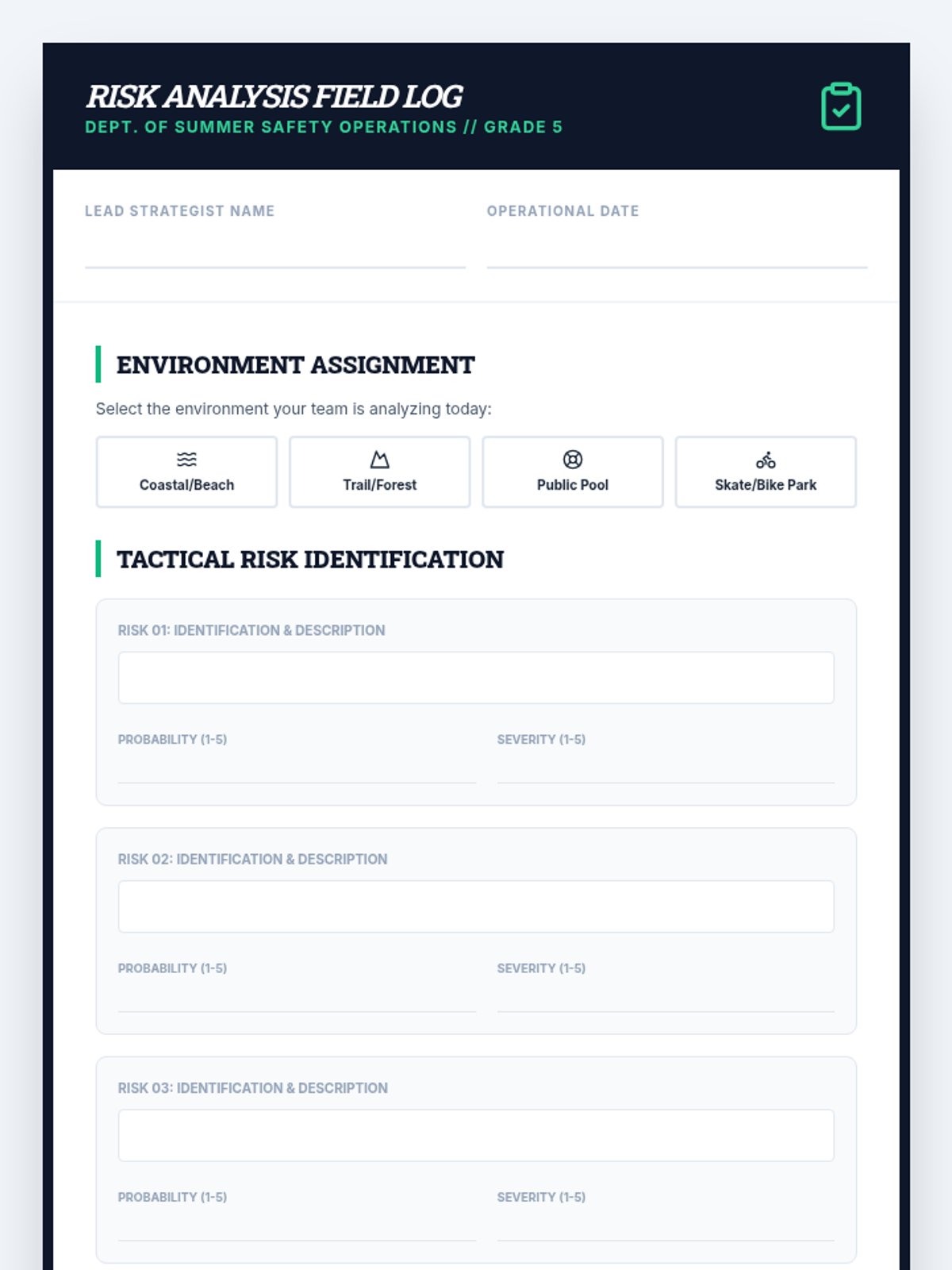
A strategic environmental risk assessment worksheet for 5th graders, designed as a professional field log for identifying and ranking summer safety hazards. Now optimized for single-page printing with improved work areas.
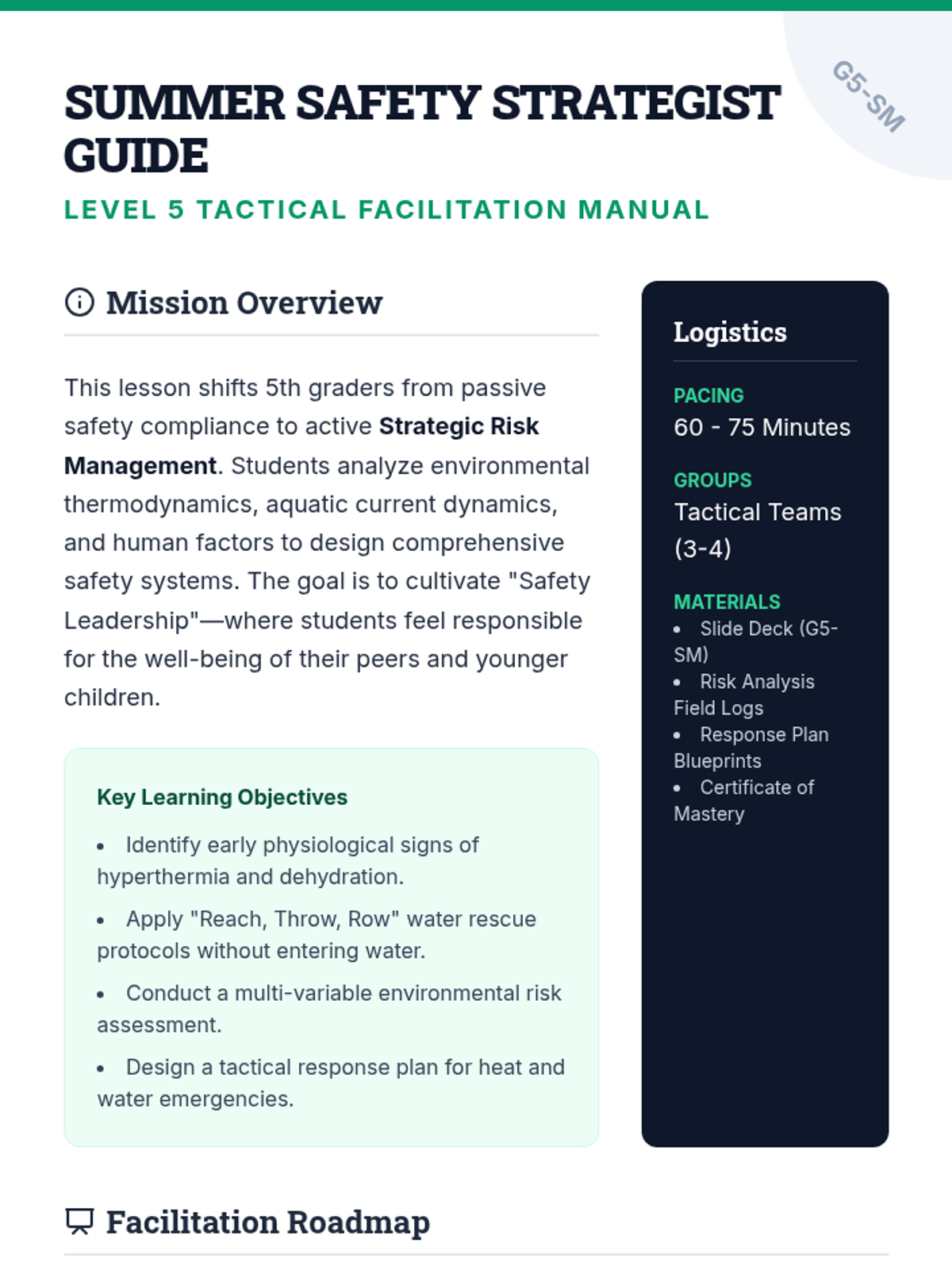
A comprehensive teacher facilitation guide for 5th grade summer safety, focused on strategic risk management, leadership, and technical safety analysis. Now includes instructions for the Phase 3: Tactical Gear Prototype art project and the Movement Drill: Tactical Maneuvers.
A sophisticated 7-slide presentation for 5th graders focused on tactical risk management, aquatic intelligence, and safety leadership for summer environments. Now with improved contrast and icon consistency.
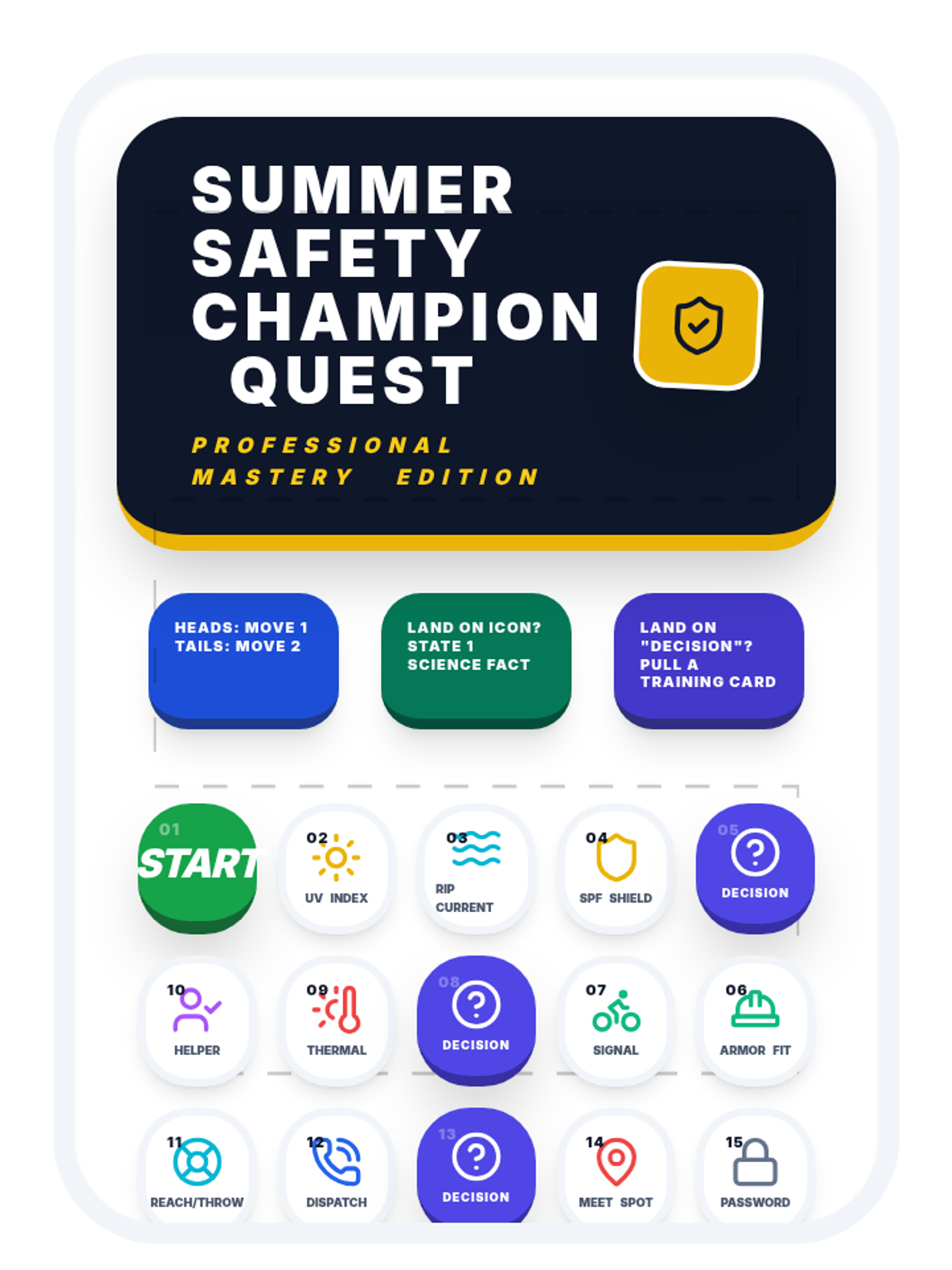
A professional-style board game for 3rd graders focused on advanced summer safety concepts, including scientific facts and situational decision-making. Includes Decision Cards on Page 2.
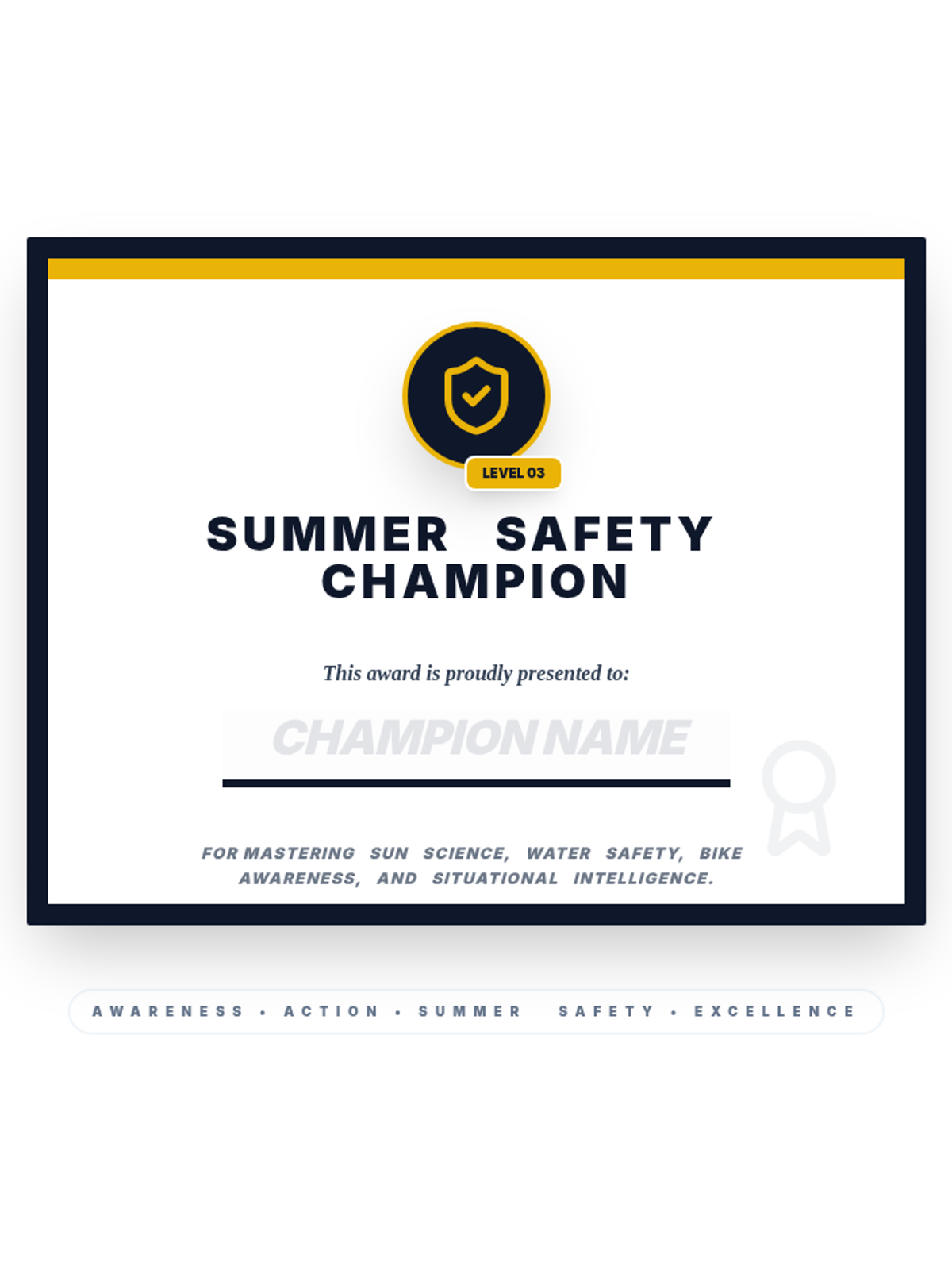
A sophisticated 'Summer Safety Champion' certificate for 3rd graders, now optimized for printing and featuring 'Summer Safety' branding.