Daily hygiene, hydration, and sleep routines paired with strategies for disease and injury prevention. Builds skills in health decision-making, body awareness, and self-advocacy to support lifelong well-being.
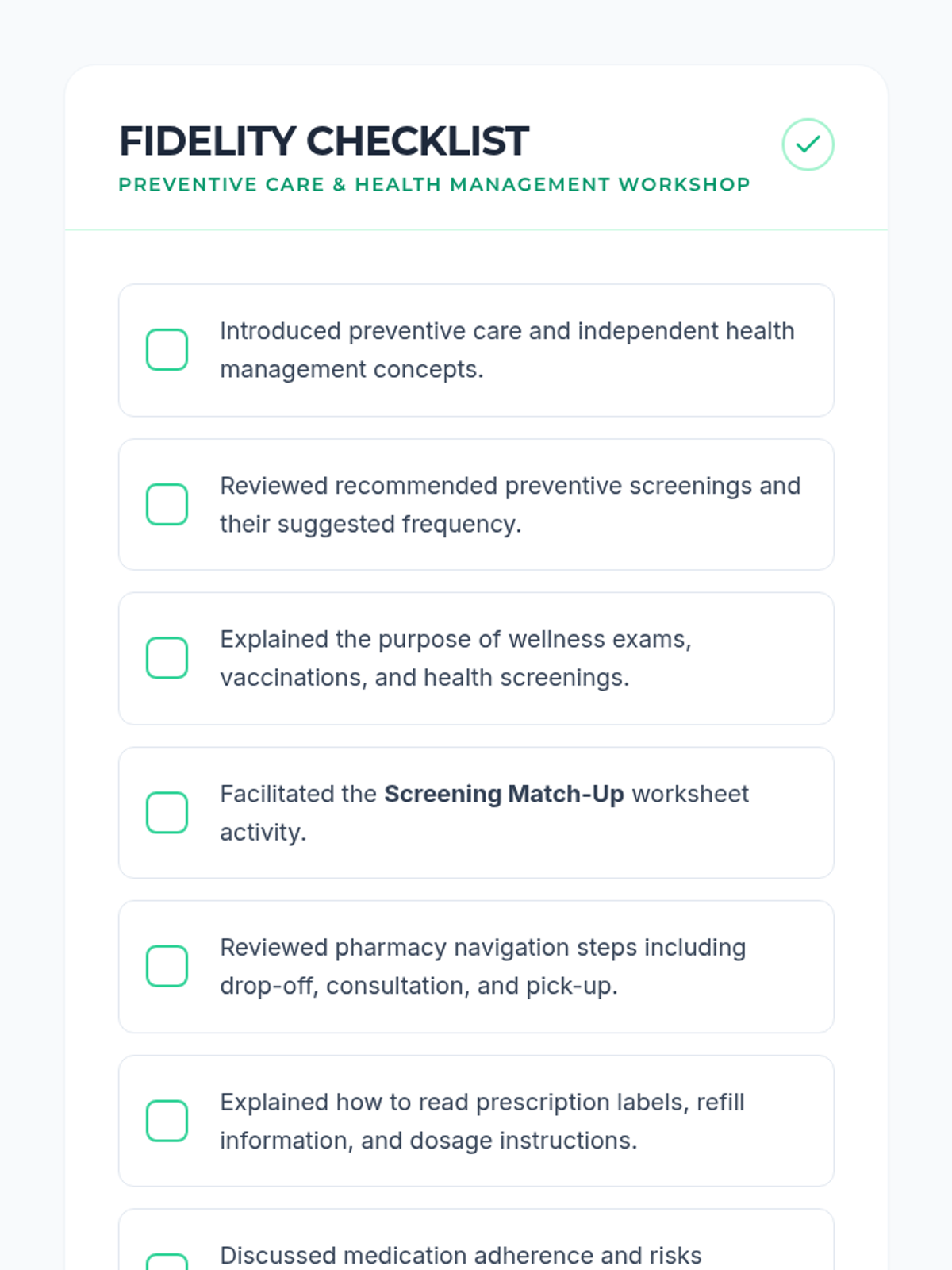
A professional fidelity checklist for a preventive care and health management workshop, featuring a clean layout with checkboxes for tracking instructional milestones.
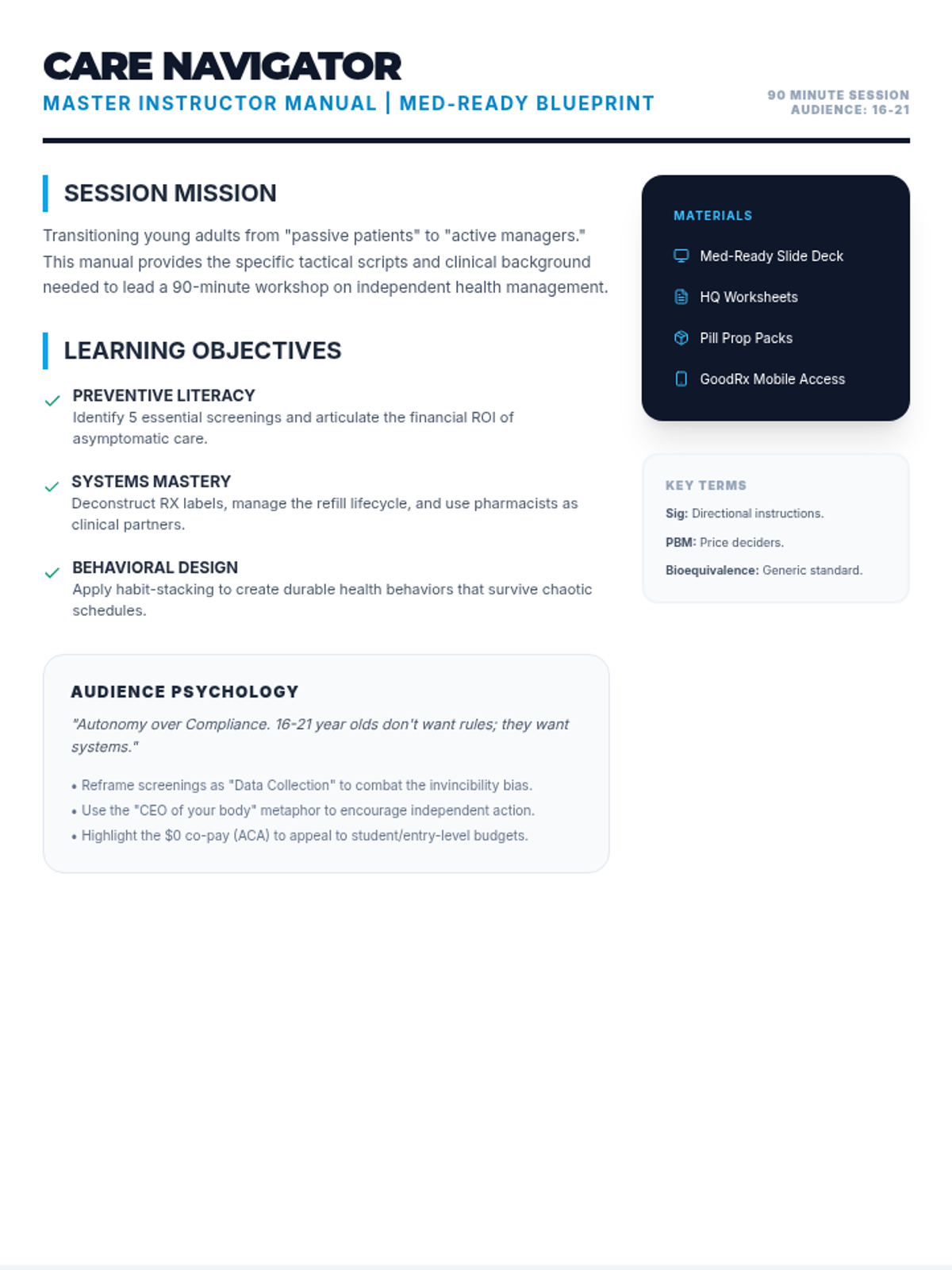
A comprehensive 8-page instructor guide for a 90-minute session on preventive care and medications, including pacing, scripts, and answer keys.
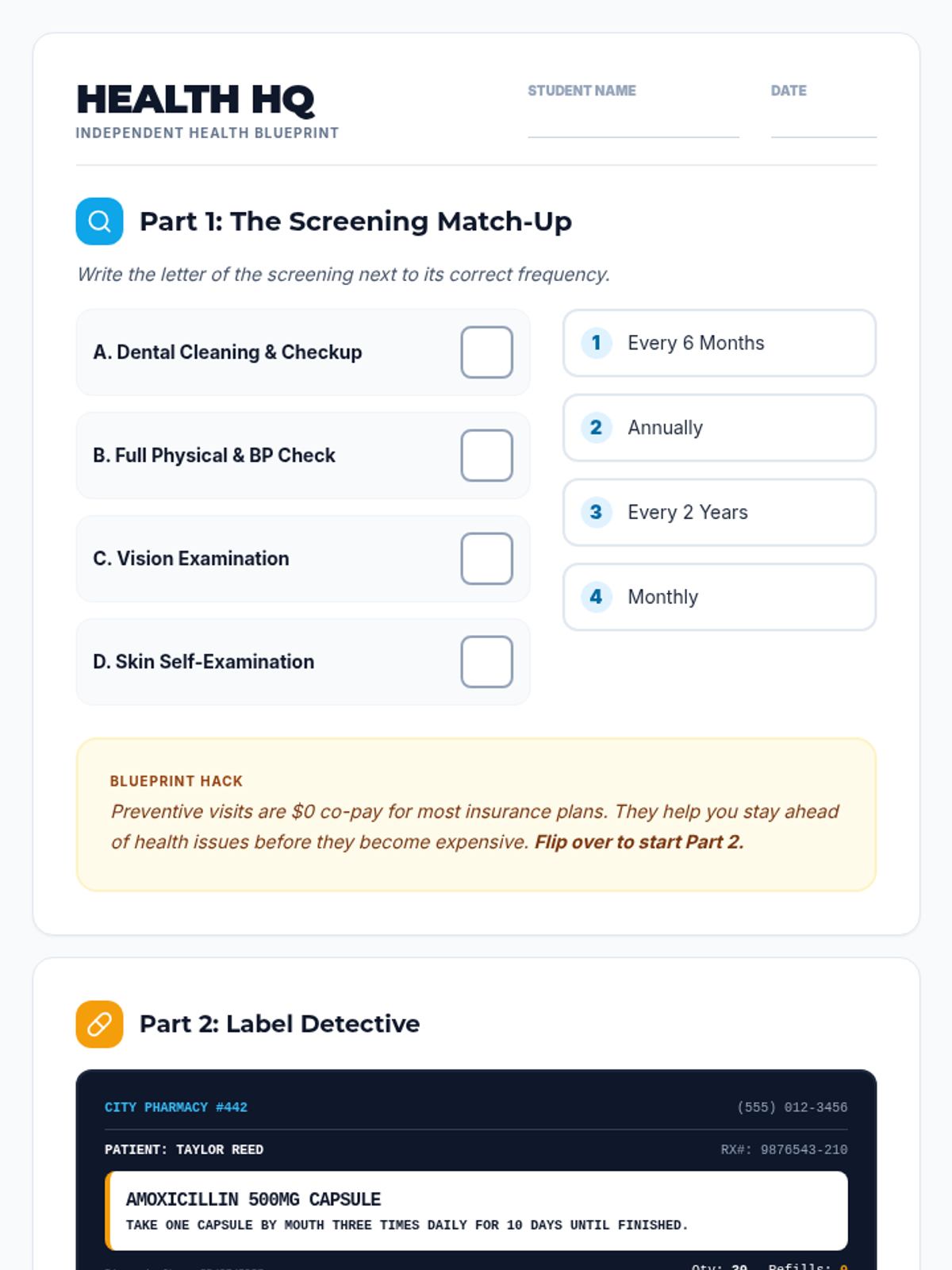
A two-page interactive worksheet for students to practice screening schedules, analyze pharmacy labels, and develop personal medication adherence strategies.
A 16:9 slide deck for young adults covering preventive care essentials, screening timelines, pharmacy basics, and medication adherence strategies.
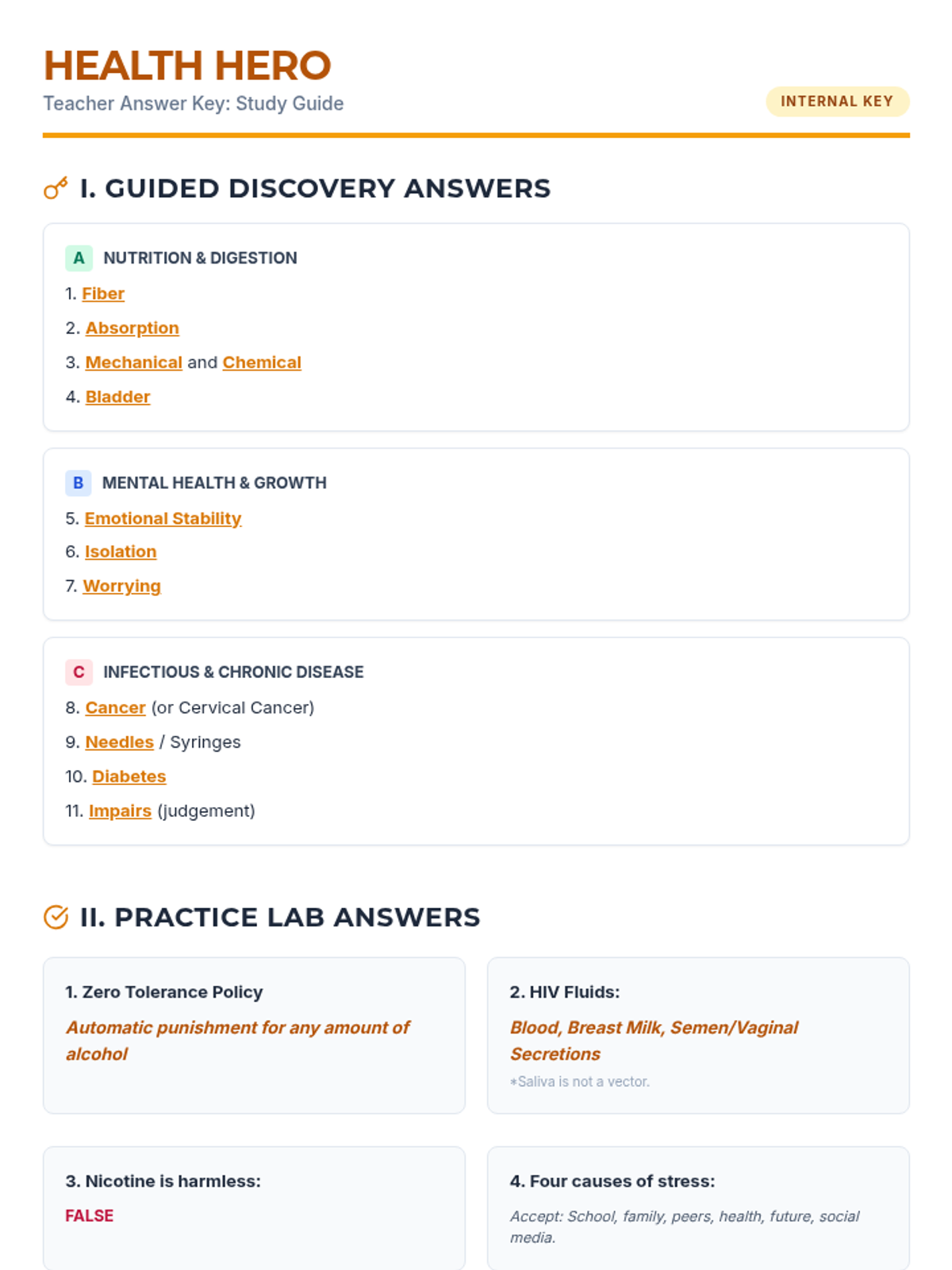
A teacher answer key for the Health Hero Study Guide, providing correct responses for the guided notes, practice lab questions, and short answer explanations. Condensed for efficiency.
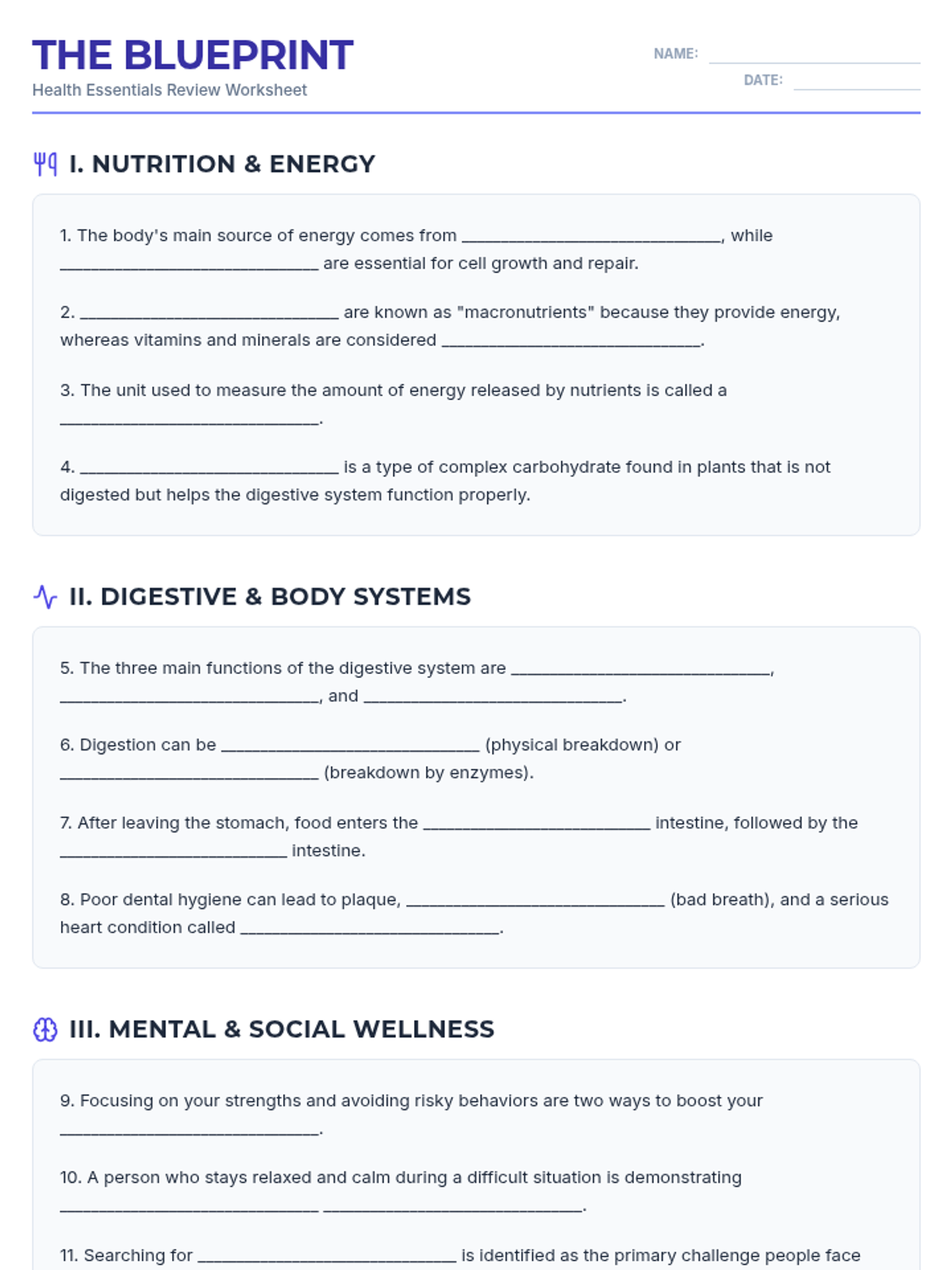
A fill-in-the-blanks worksheet based on the Health Essentials Summary Handout, covering nutrition, digestion, mental health, and disease prevention. Revised for strict page flow and header grouping.
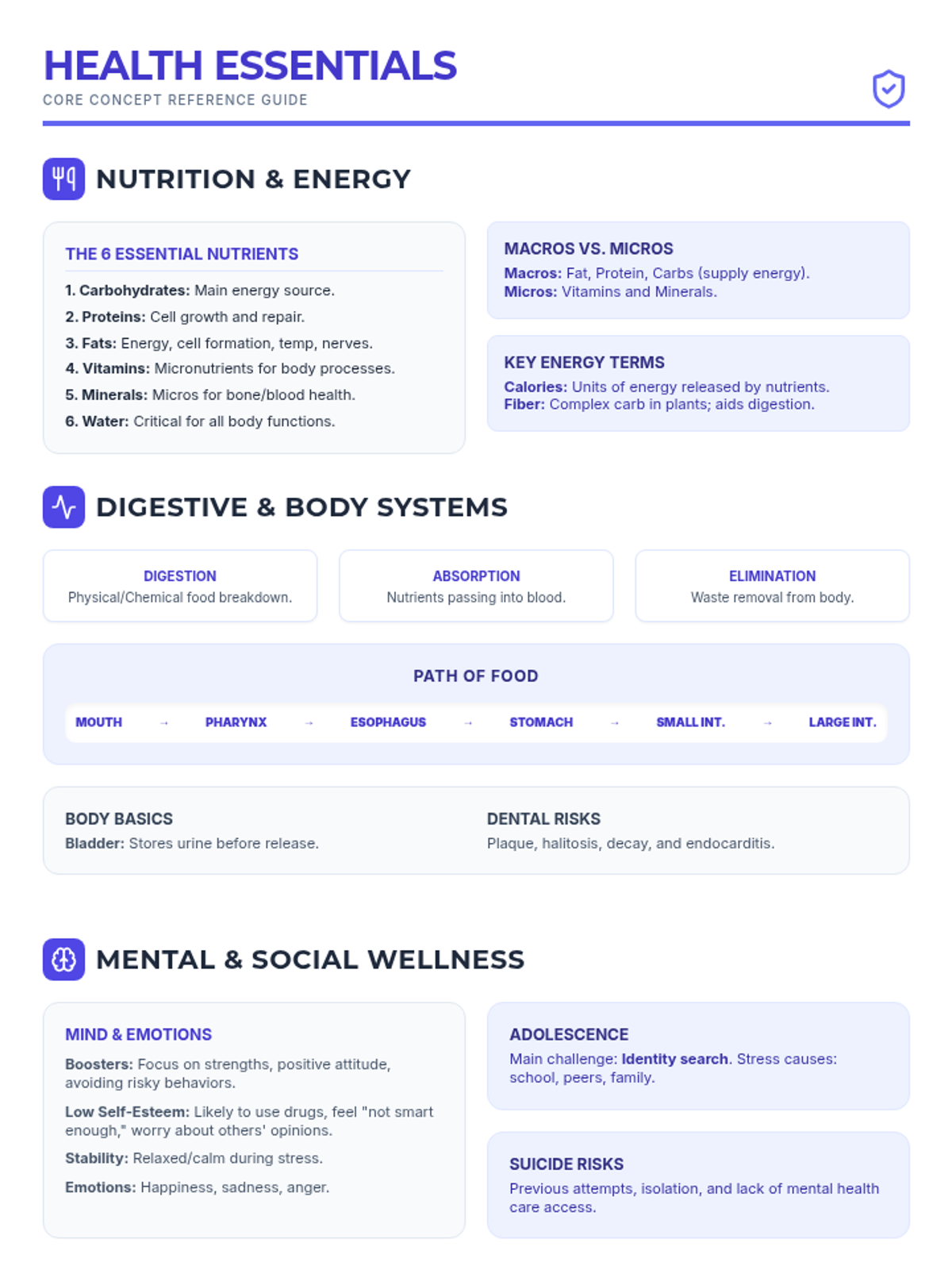
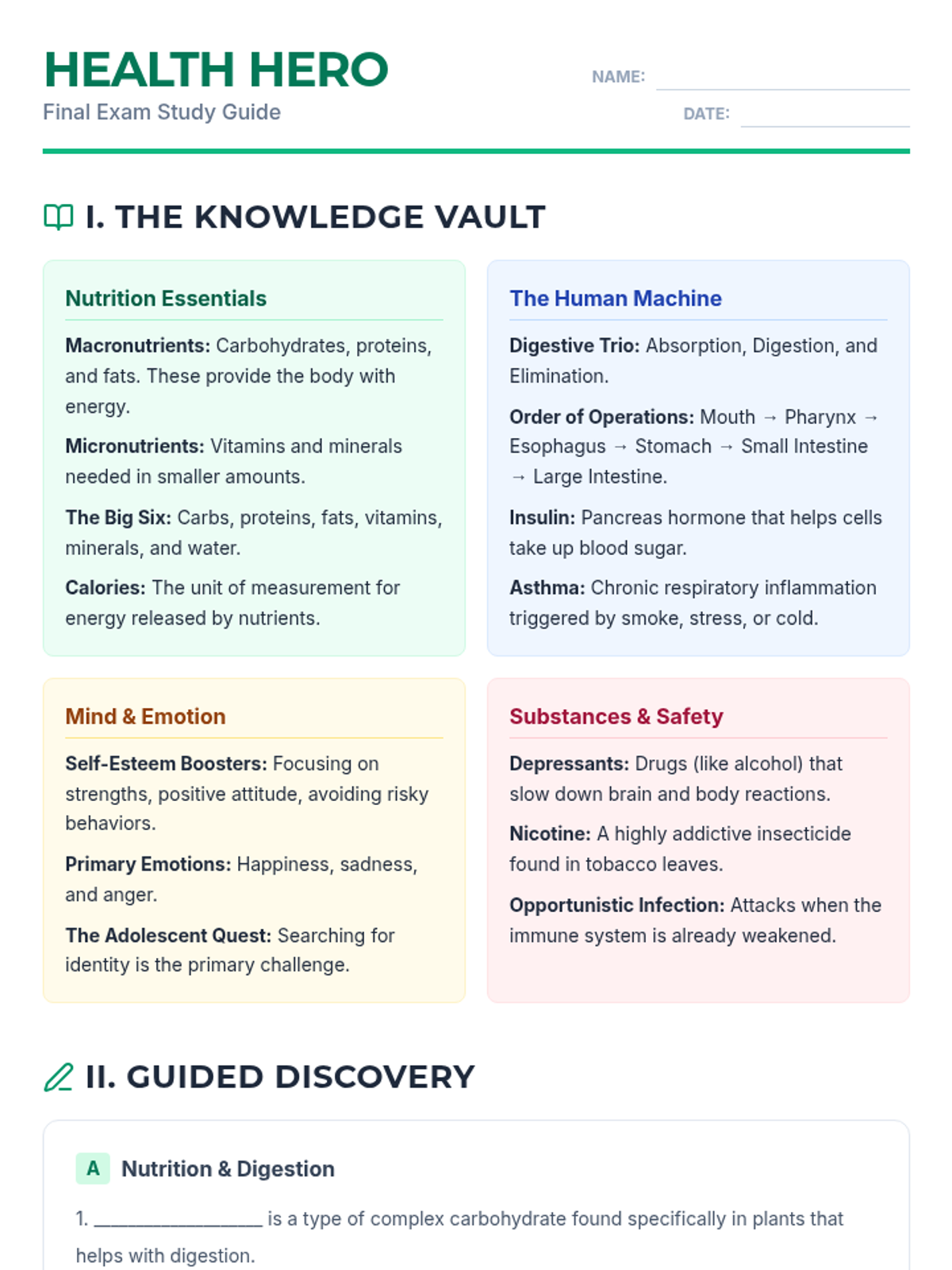
A concise 2-page summary guide condensing all information from the Health Final Exam into a high-density reference sheet for nutrition, body systems, mental health, and disease. Revised for strict 2-page length and improved formatting.
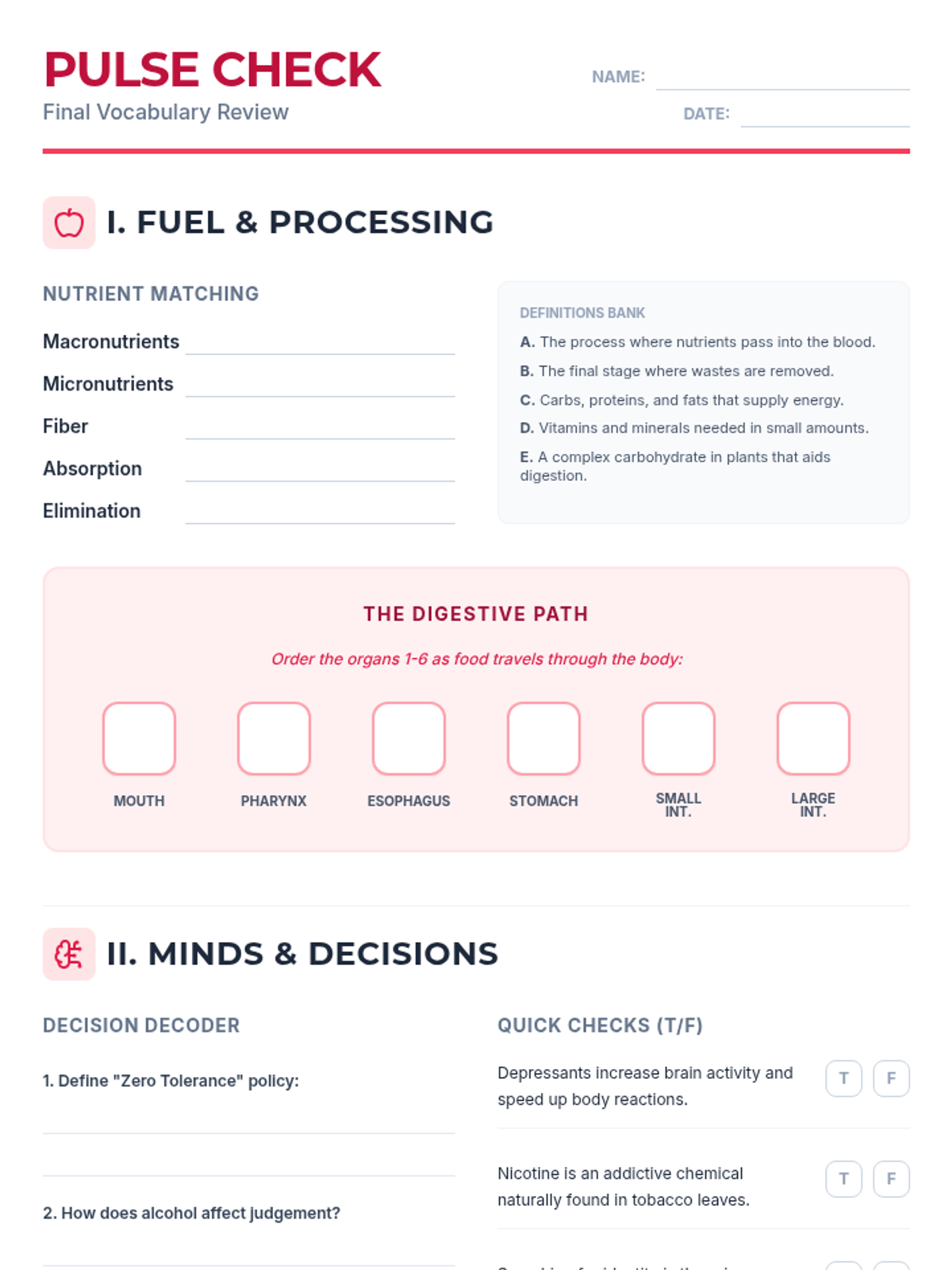
A comprehensive vocabulary review worksheet covering all key terms from the Health Final Exam. Revised to optimize page space, eliminate orphaned headers, and provide larger student work areas. Final polish pass for layout and student work space.
A comprehensive Health Final Exam study guide featuring key terms, guided notes with fill-in-the-blanks, and exam-style practice questions. Revised for better page flow and layout.
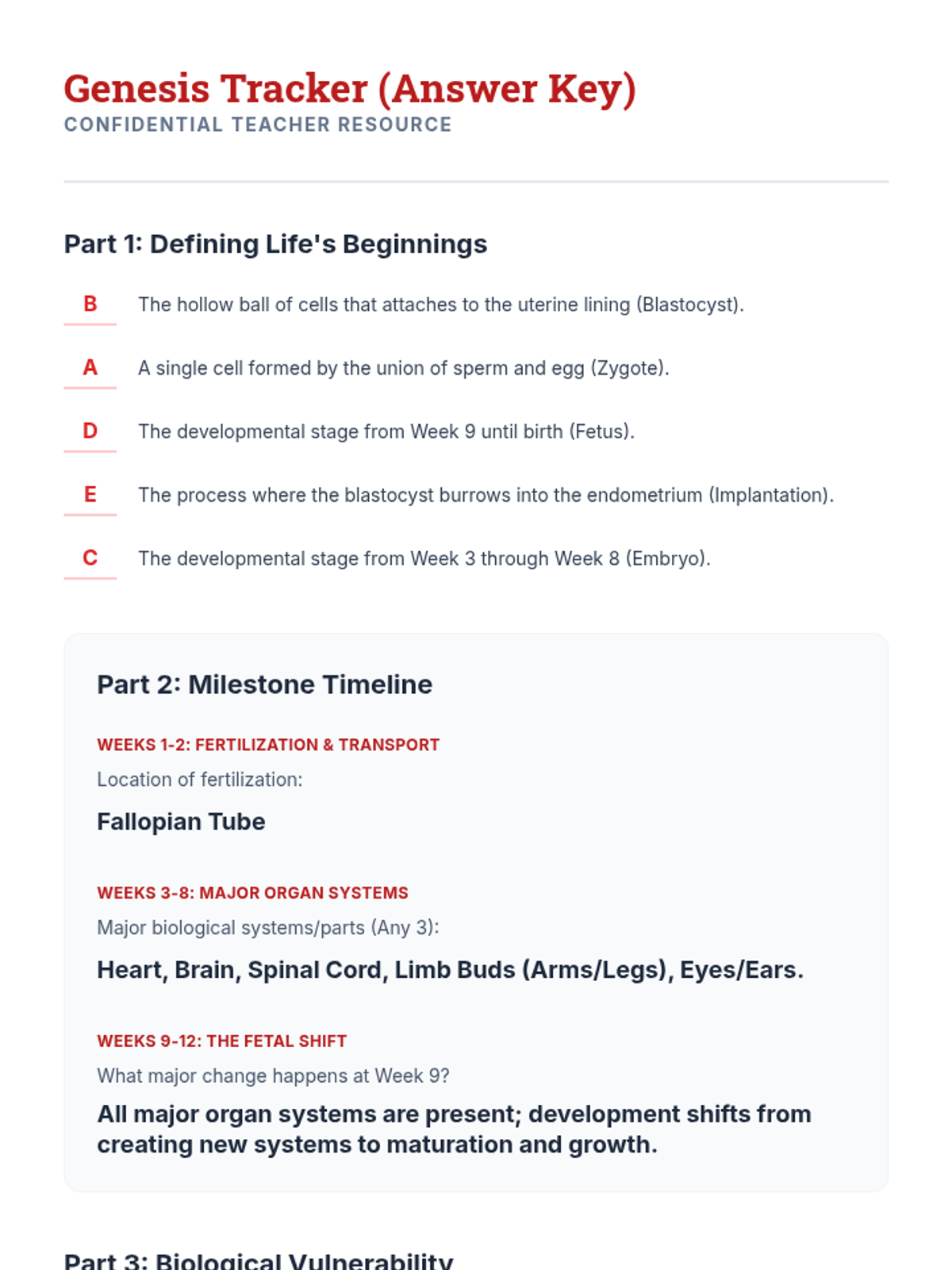
An answer key for the Genesis Tracker worksheet, providing correct responses for vocabulary, milestones, and critical thinking questions.
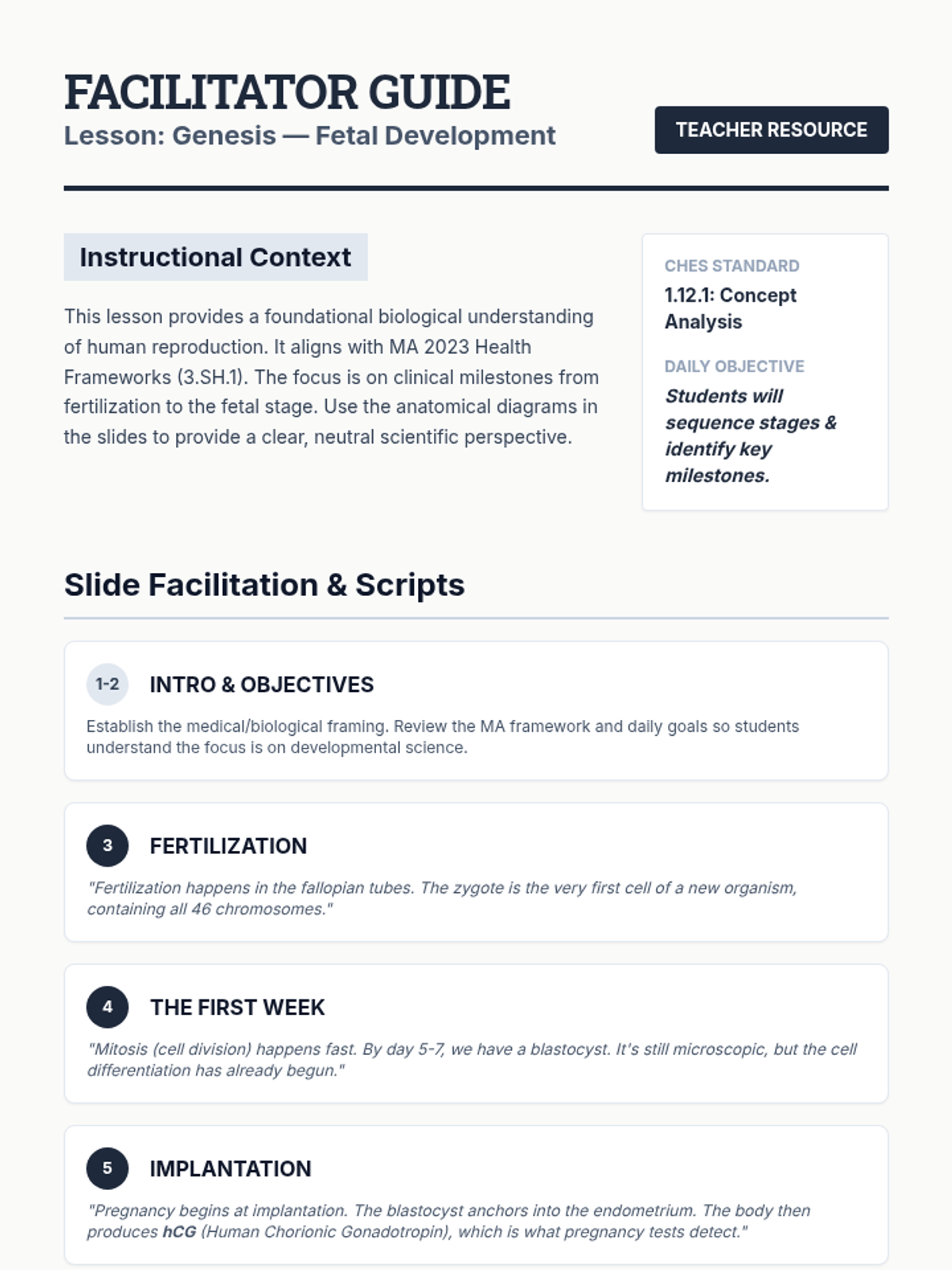
A teacher's facilitation guide for the fetal development lesson, including scripts, key points, common misconceptions, and a pacing guide.
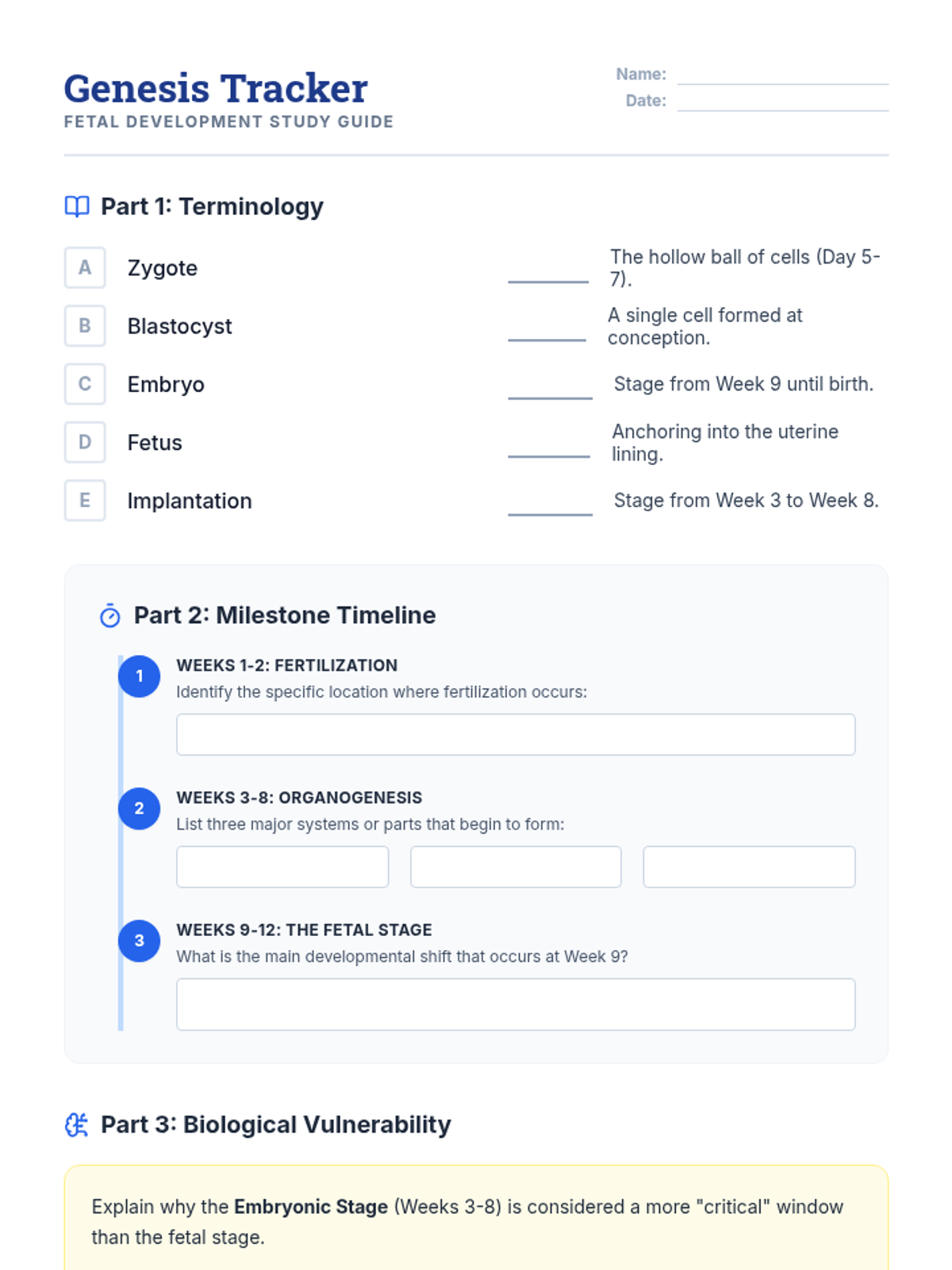
A student worksheet for tracking and documenting key milestones of prenatal development, including vocabulary matching and timeline activities.
A 9-slide presentation covering the biological progression from fertilization to the fetal stage, featuring MA 2023 Health Frameworks and anatomical milestones.
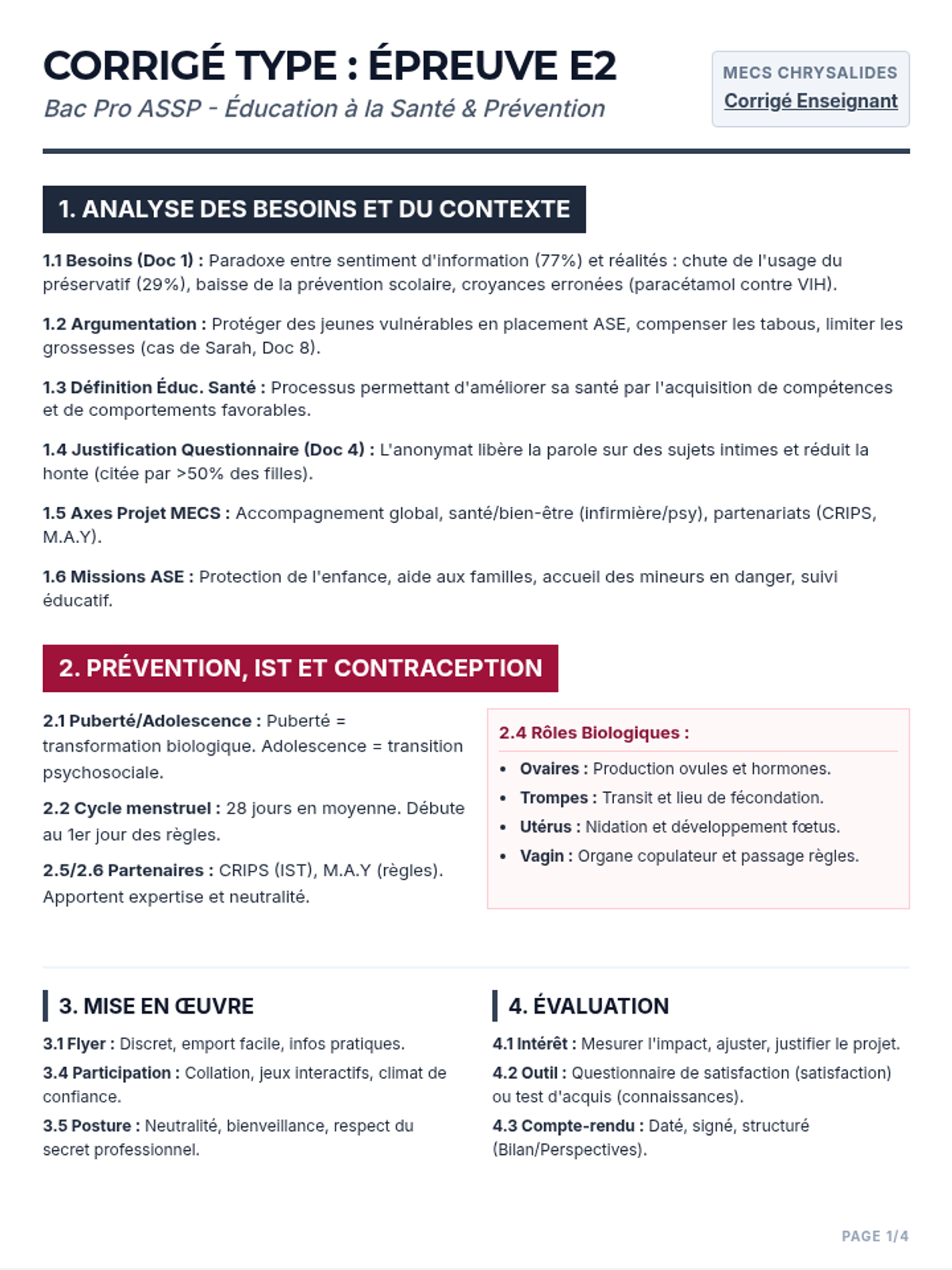
A complete teacher-facing answer key for a Bac Pro ASSP exam (E2 type) covering health education, prevention, and anatomy. Includes a detailed correction guide, a labeled anatomical diagram, a health education action sheet, and a visual poster mock-up for STI prevention.
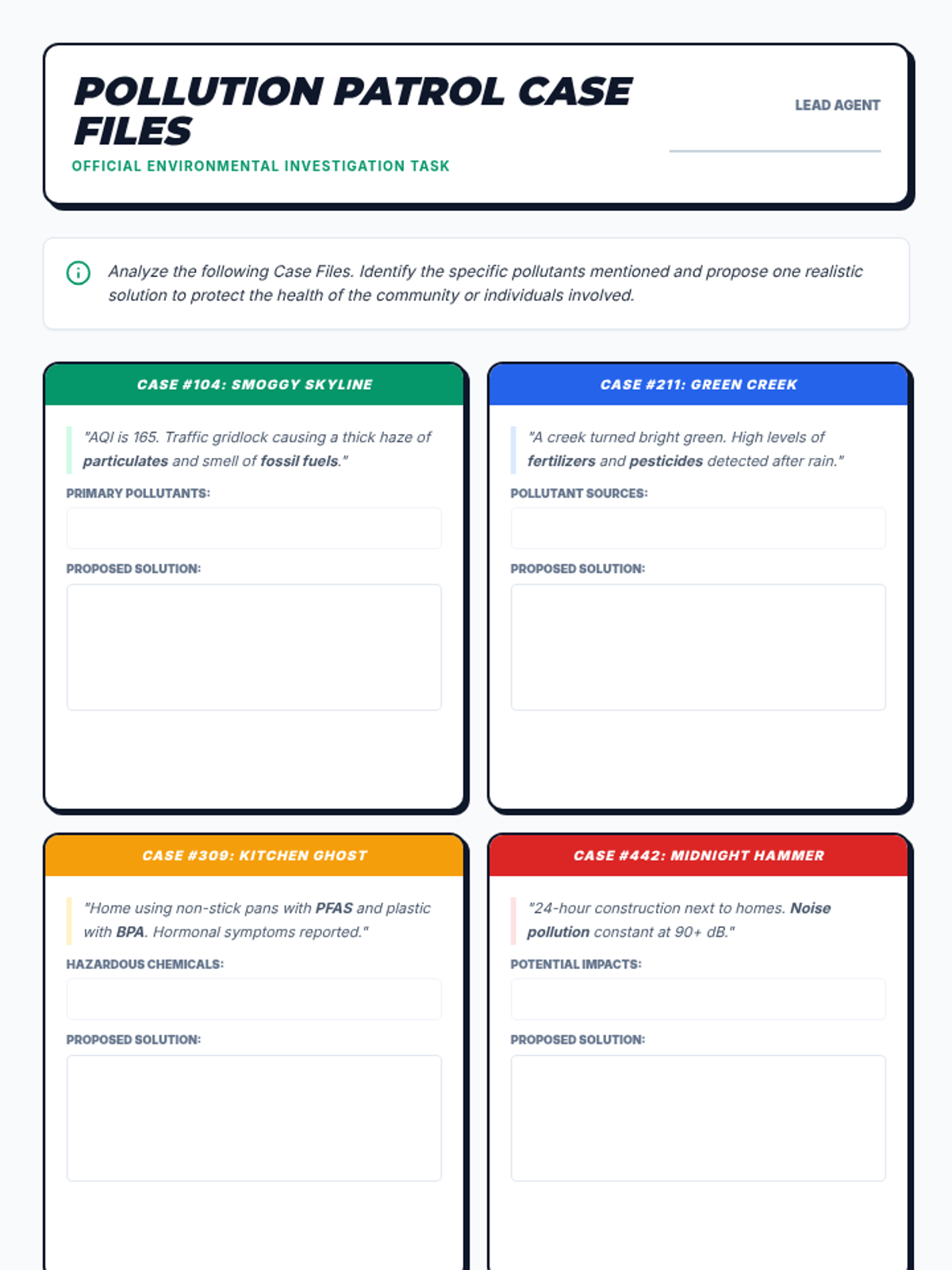
An investigative worksheet titled 'Pollution Patrol Case Files' where students analyze four real-world scenarios involving air, water, chemical, and noise pollution. Includes a matching vocabulary challenge.
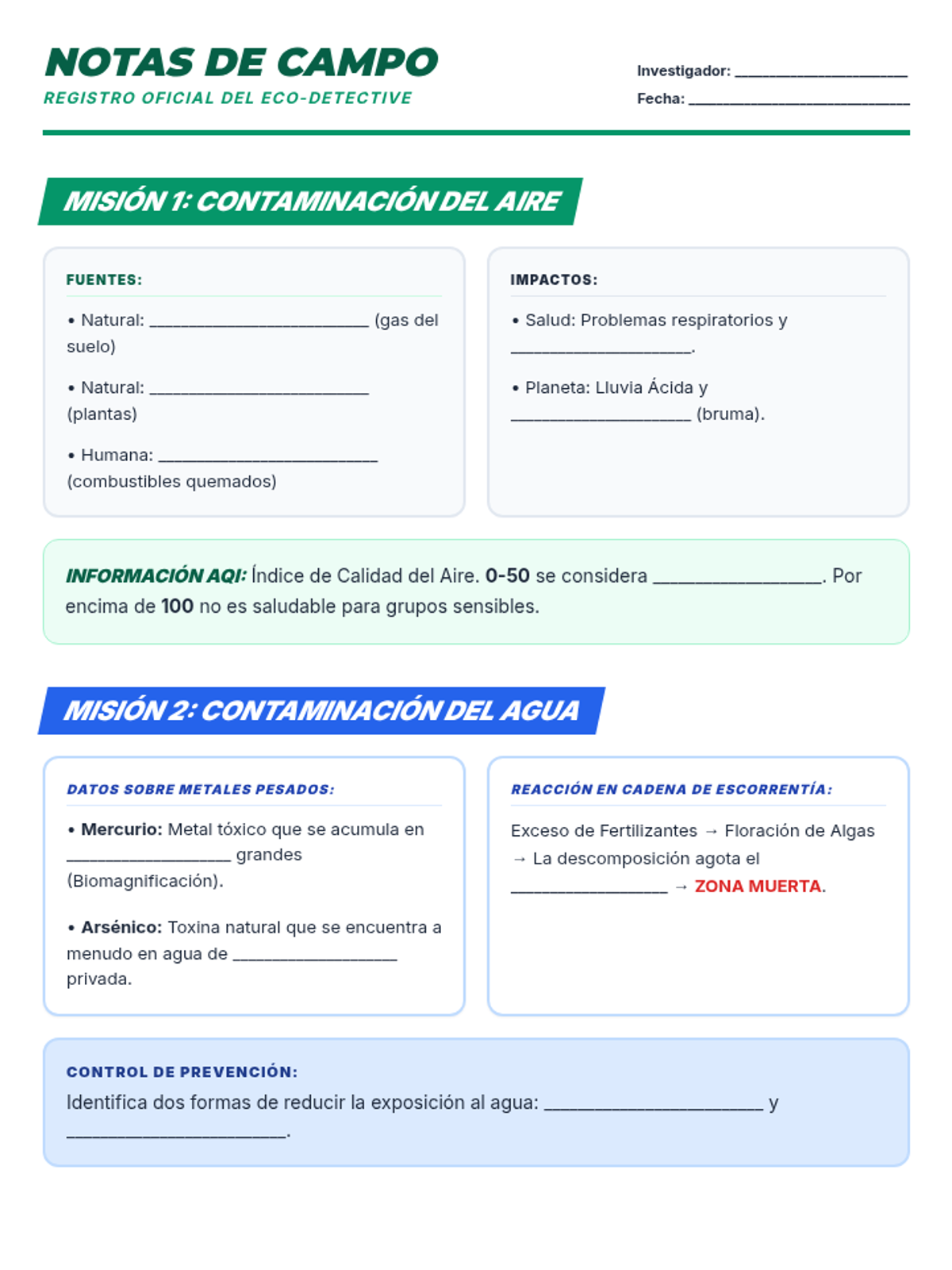
Student field notes for the Eco-Detective lesson, designed to be filled out during the presentation. Features structured fill-in-the-blanks and a final reflection section with a clean, investigative layout.
Expanded investigative slides for the Eco-Detective lesson, now featuring detailed sections on the impacts of air pollution, heavy metal threats (Mercury and Arsenic), environmental dead zones, a decibel danger zone scale, and community advocacy strategies.
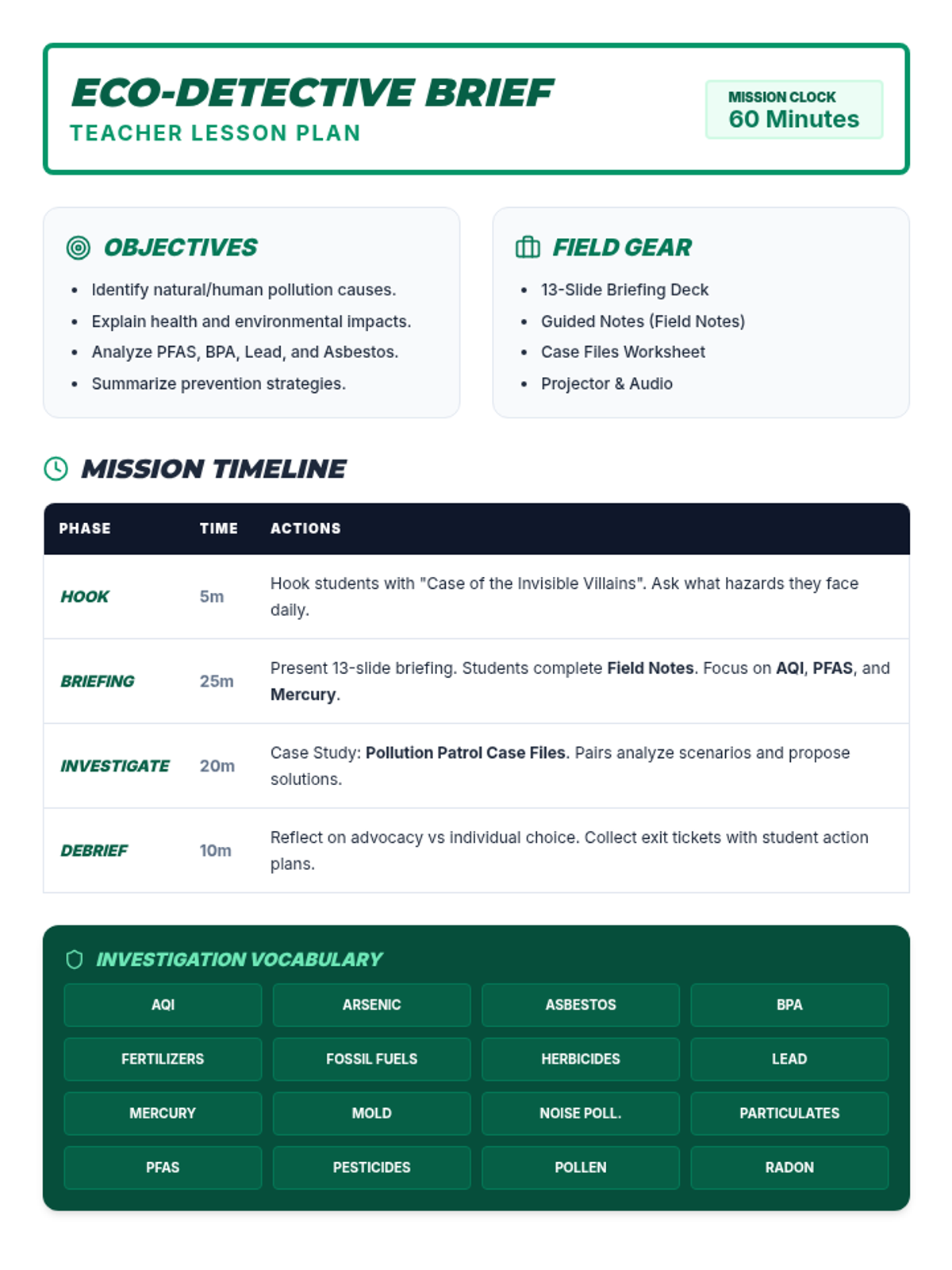
A comprehensive teacher guide for the Eco-Detective lesson, including mission objectives, a minute-by-minute timeline, and instructional insights for air, water, chemical, and noise pollution.
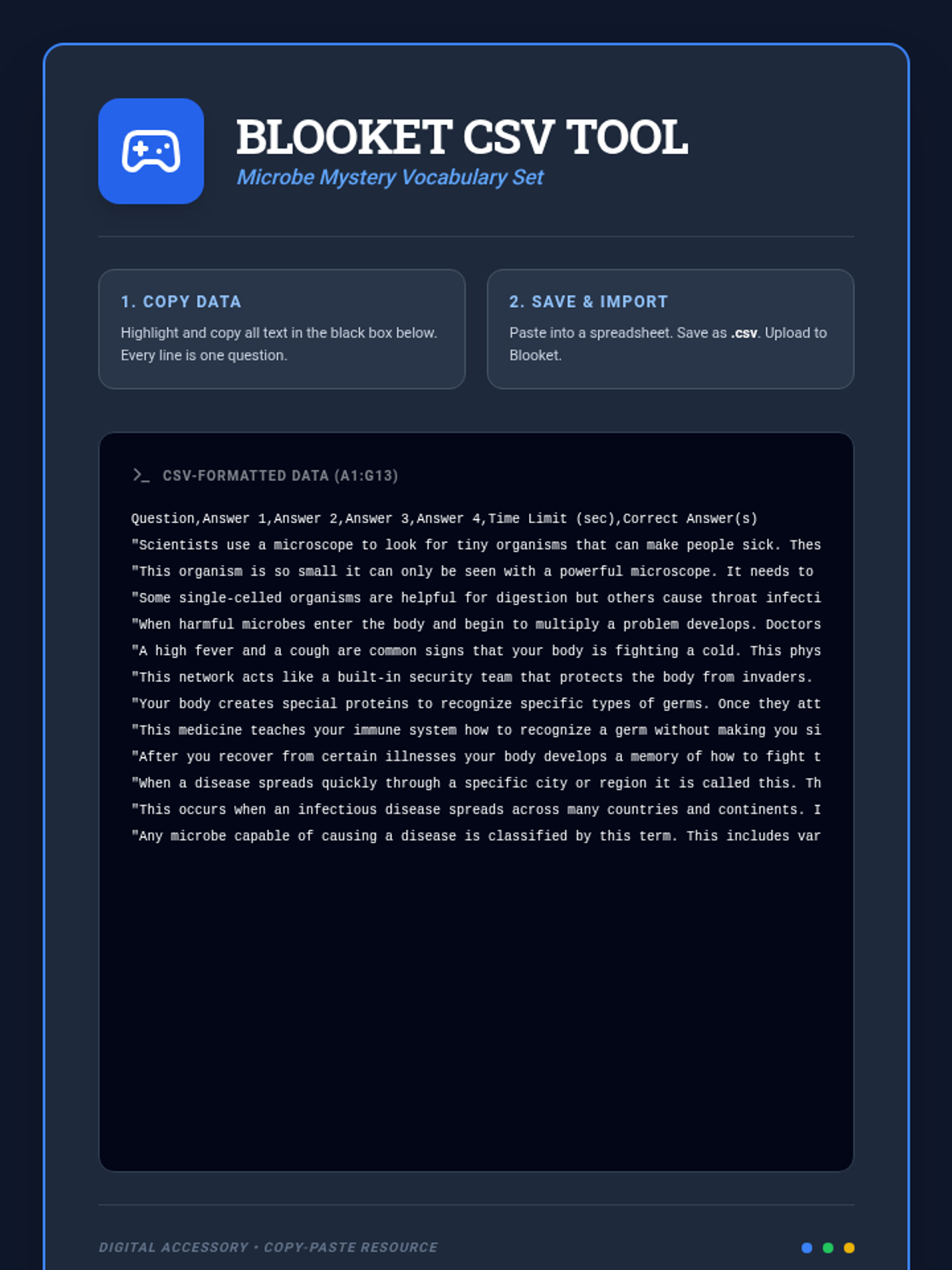
A digital reference sheet providing a ready-to-copy CSV format for importing the Microbe Mystery vocabulary set directly into Blooket or other gamified quiz platforms. Question text includes two context sentences for WIDA level 4 comprehension. Layout is optimized for digital copy-pasting.
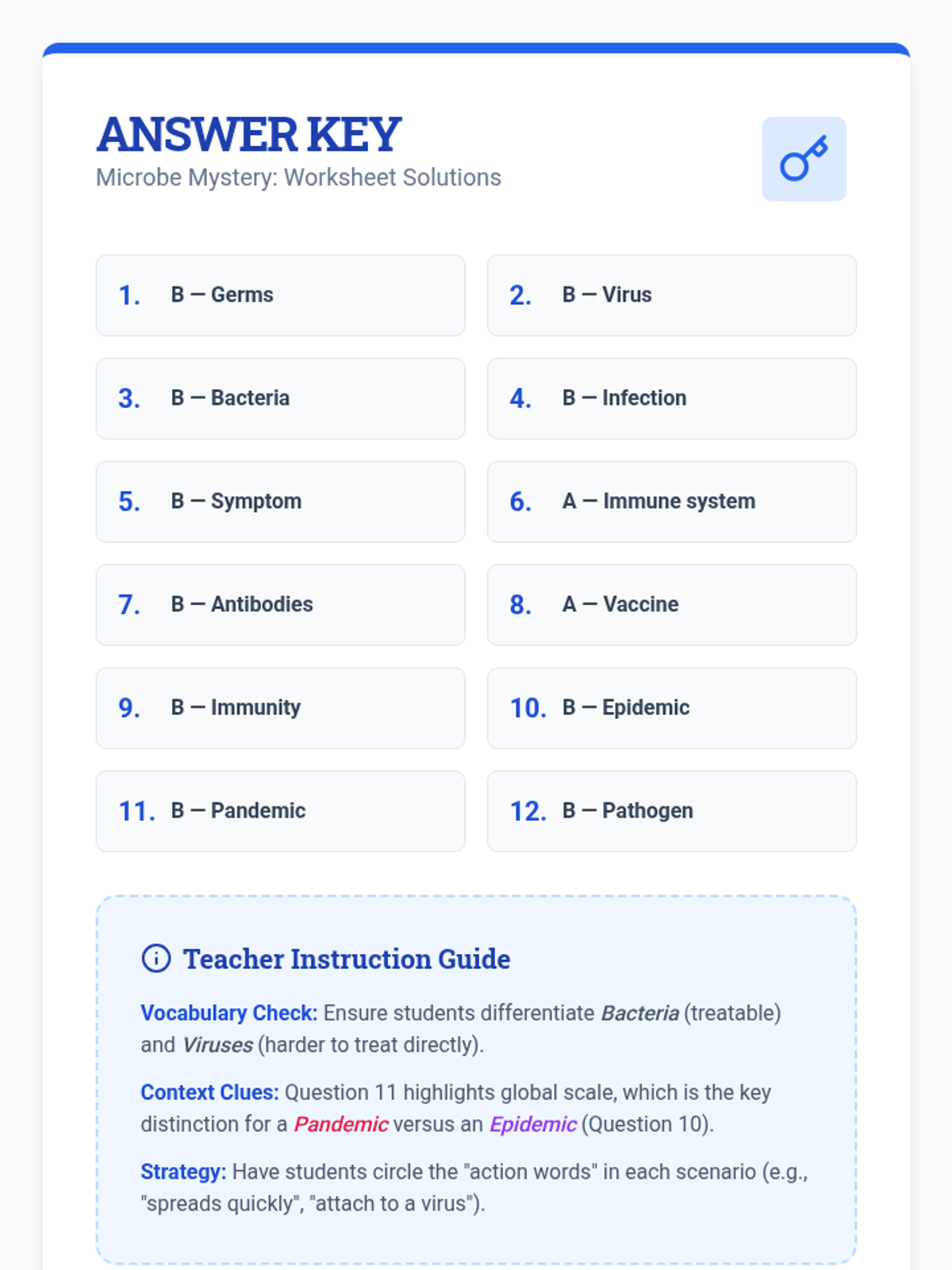
Teacher answer key for the Microbe Mystery Worksheet. Includes letter and word answers for all 12 MCQs and a consolidated instructional guide for teachers. Layout is optimized for a single page.
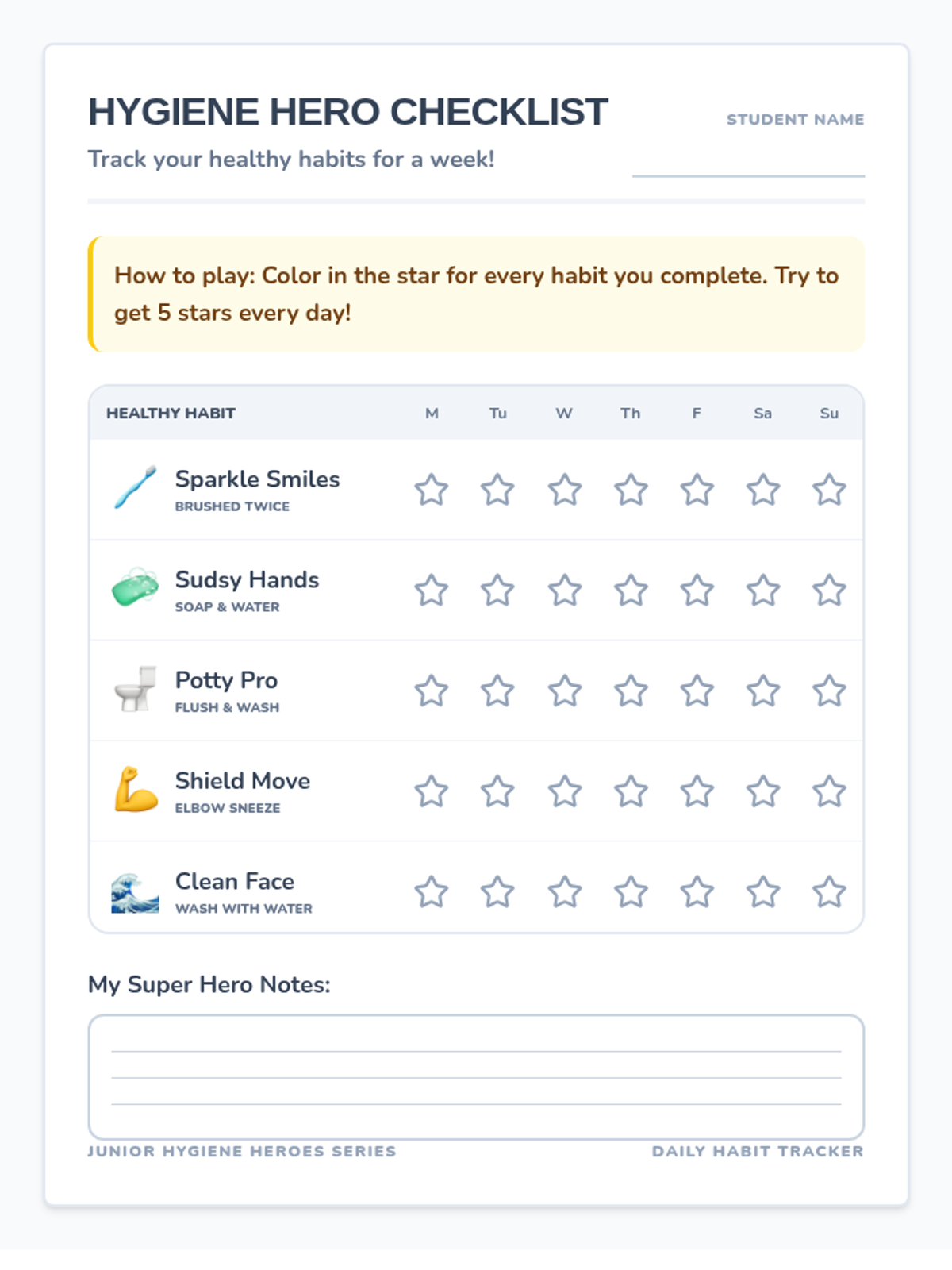
A weekly habit tracking worksheet for students to record their hygiene successes and practice consistent healthy behaviors.
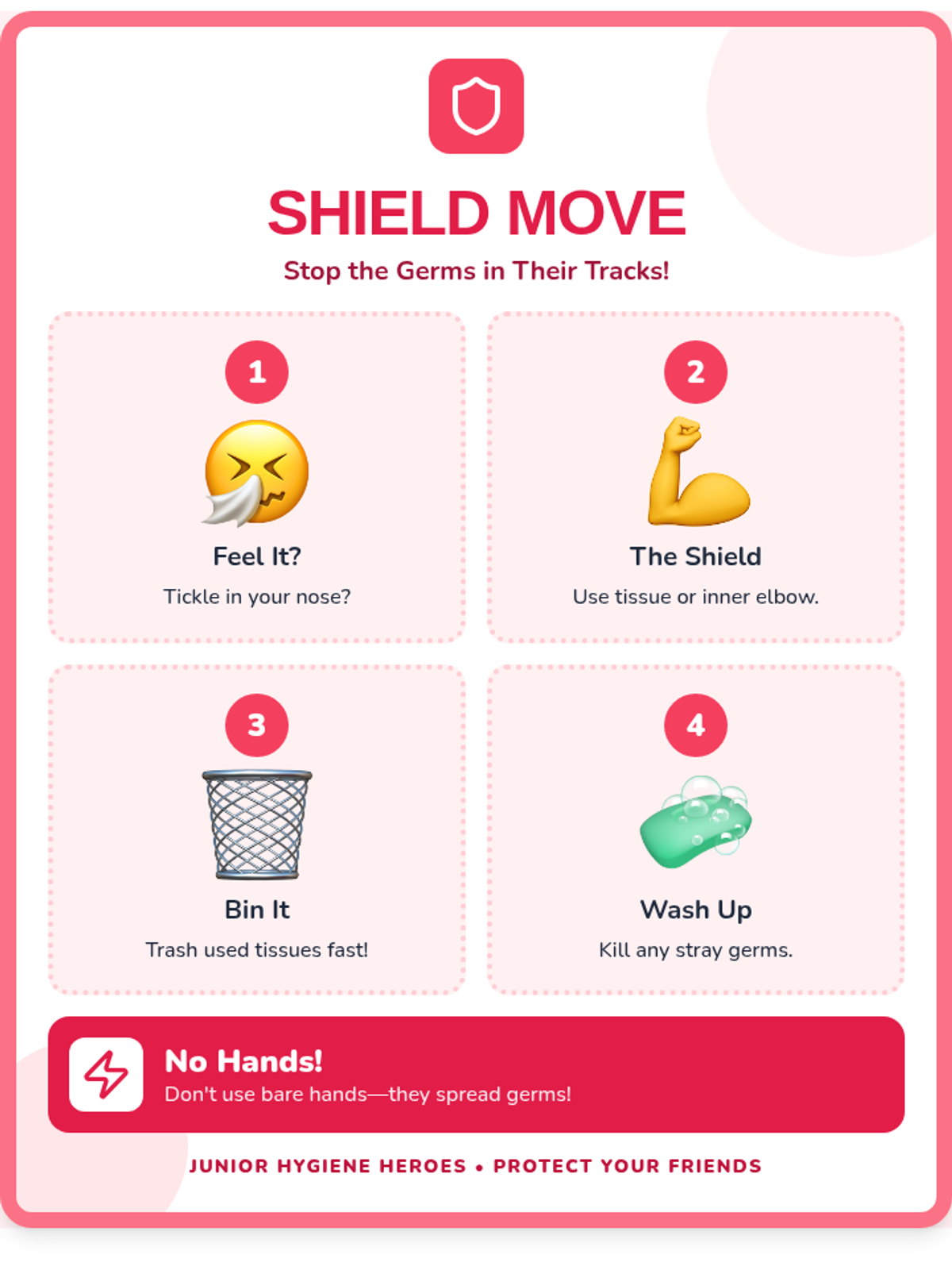
A colorful visual poster for children explaining how to properly cover coughs and sneezes using tissues or the elbow "shield" move.
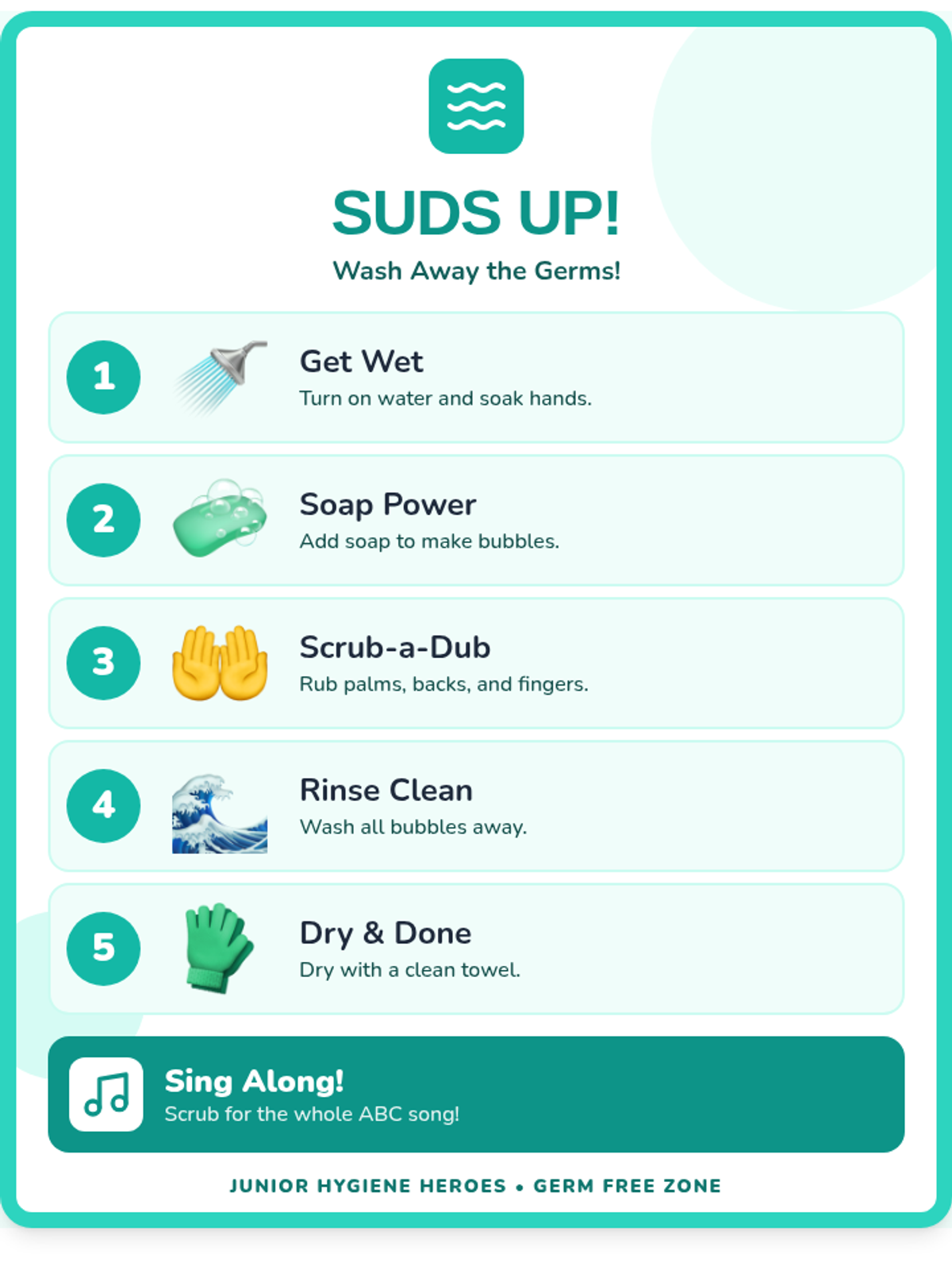
An engaging visual poster teaching children the 5-step hand washing process with a fun musical timer tip.
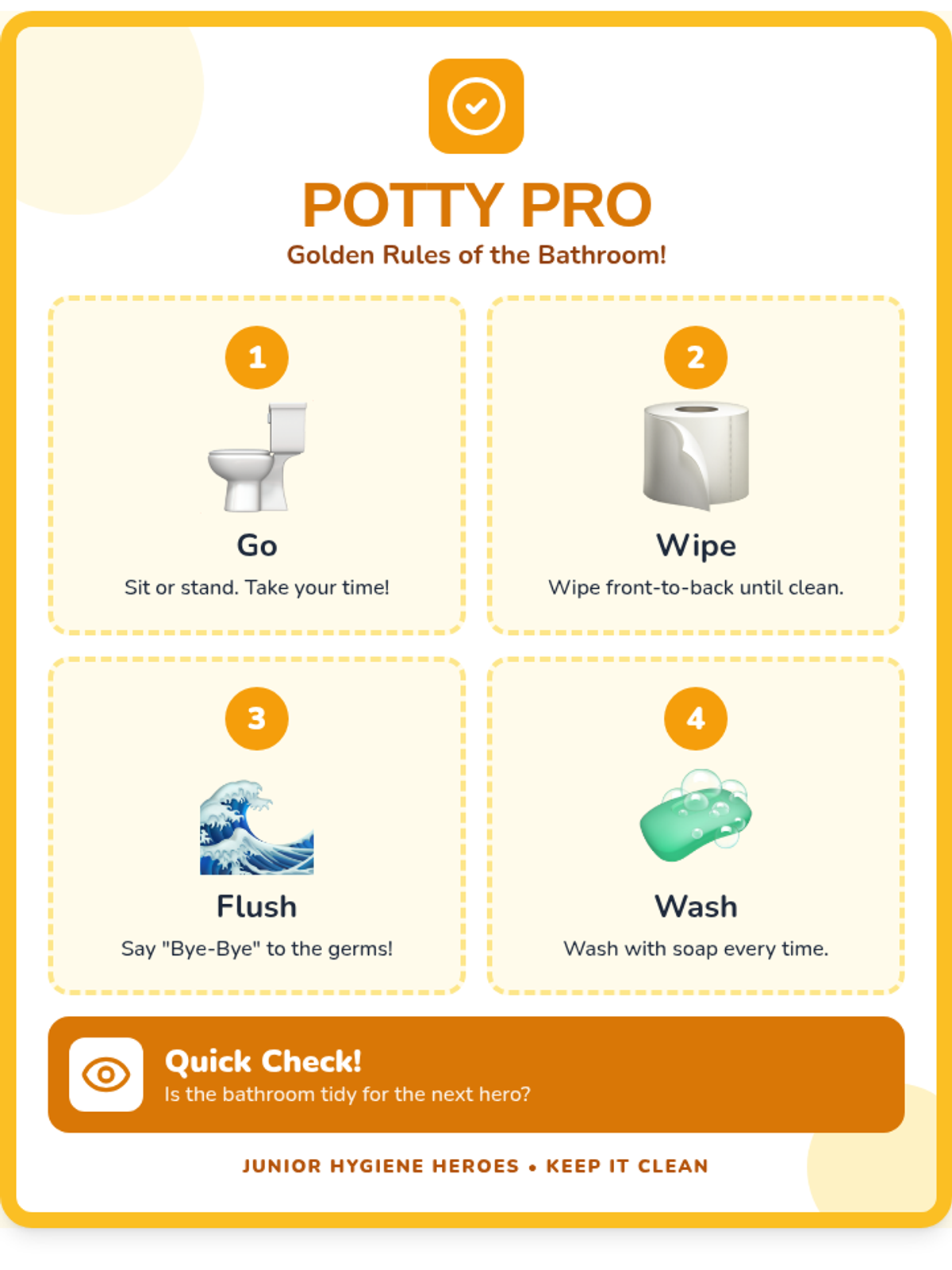
A clear and friendly visual poster for kids explaining the proper steps for bathroom usage, including wiping, flushing, and cleaning up.
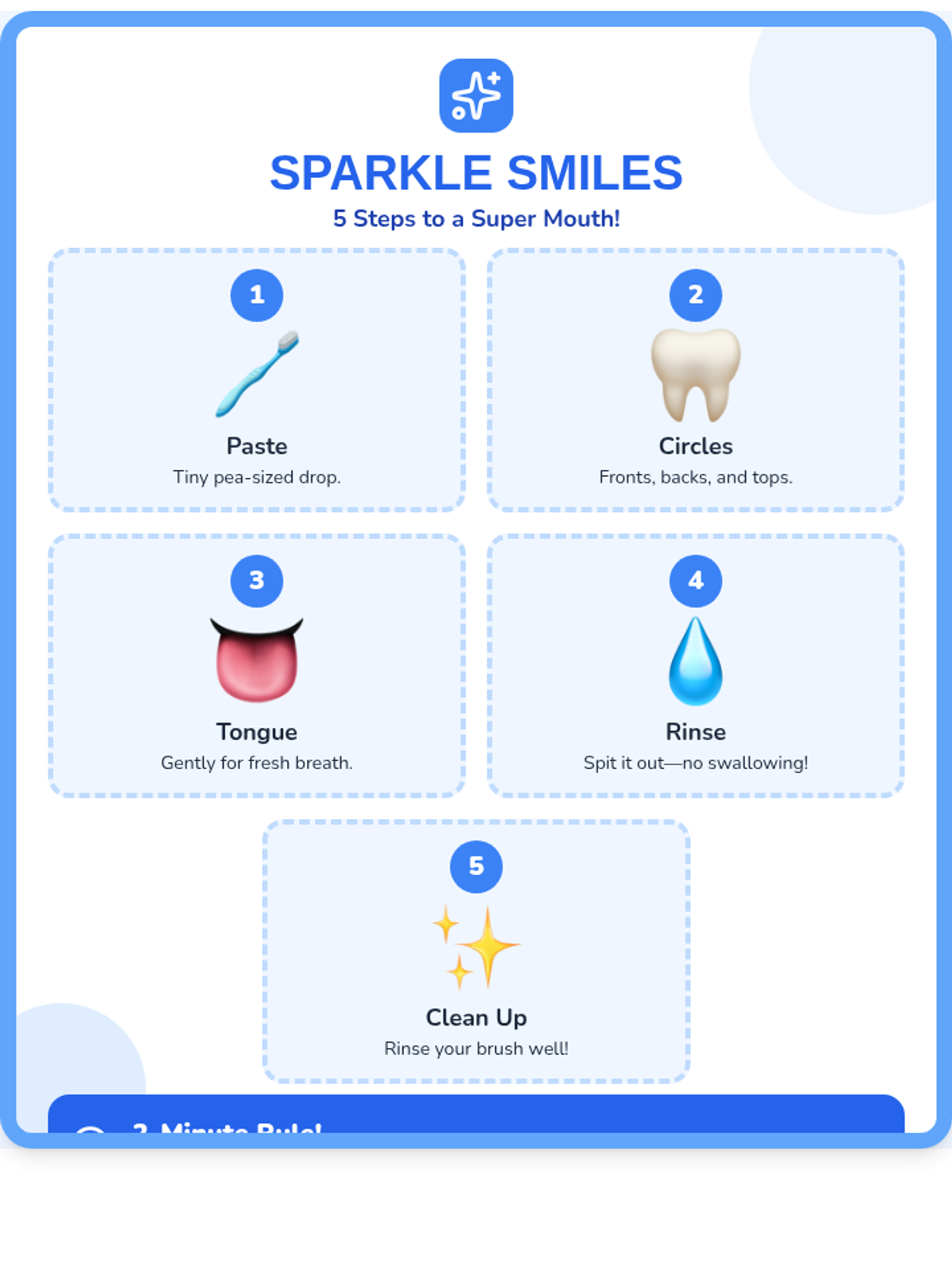
A vibrant, step-by-step visual poster for young children teaching proper teeth brushing techniques with a 2-minute timer reminder.
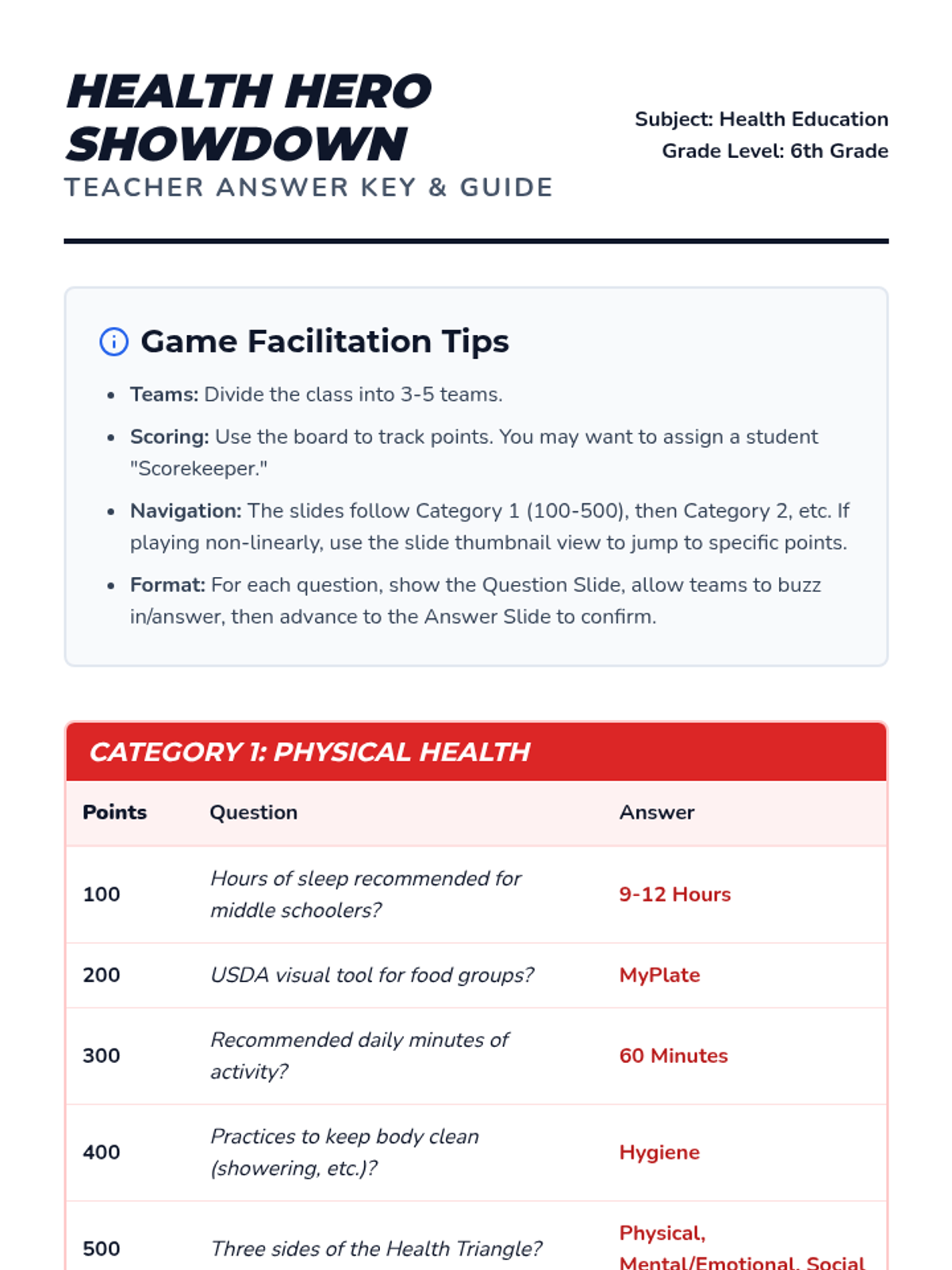
A comprehensive teacher guide and answer key for the Health Hero Showdown Jeopardy game. It includes facilitation tips and a clearly organized table of all 25 questions and answers for quick reference.
A vibrant, arcade-themed Jeopardy slide deck for 6th-grade health review. It features 25 questions across five categories, including clear answer slides and a dramatic final showdown.
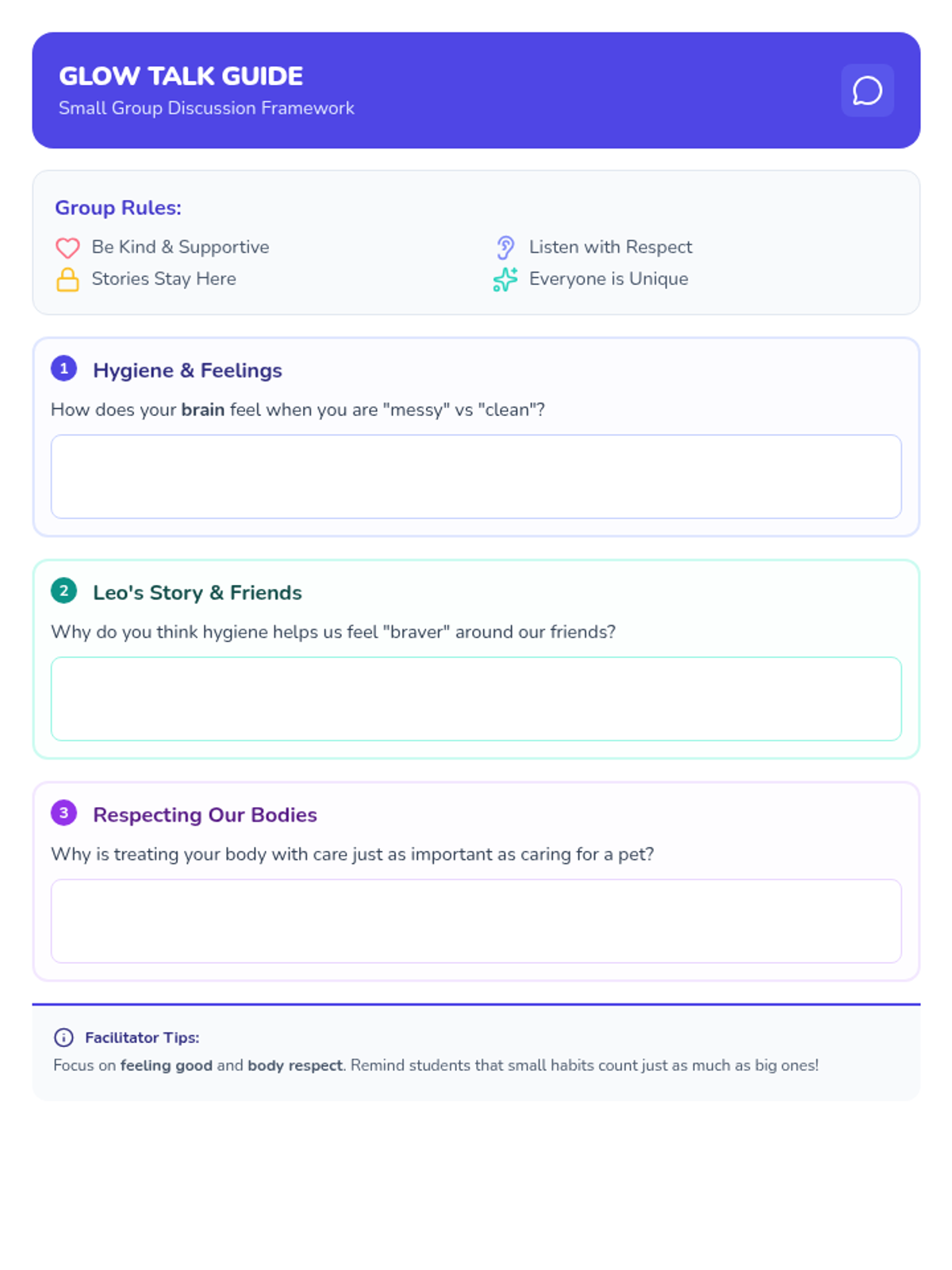
A structured discussion guide for small groups, providing prompts and rules for students to explore the emotional and social benefits of hygiene.
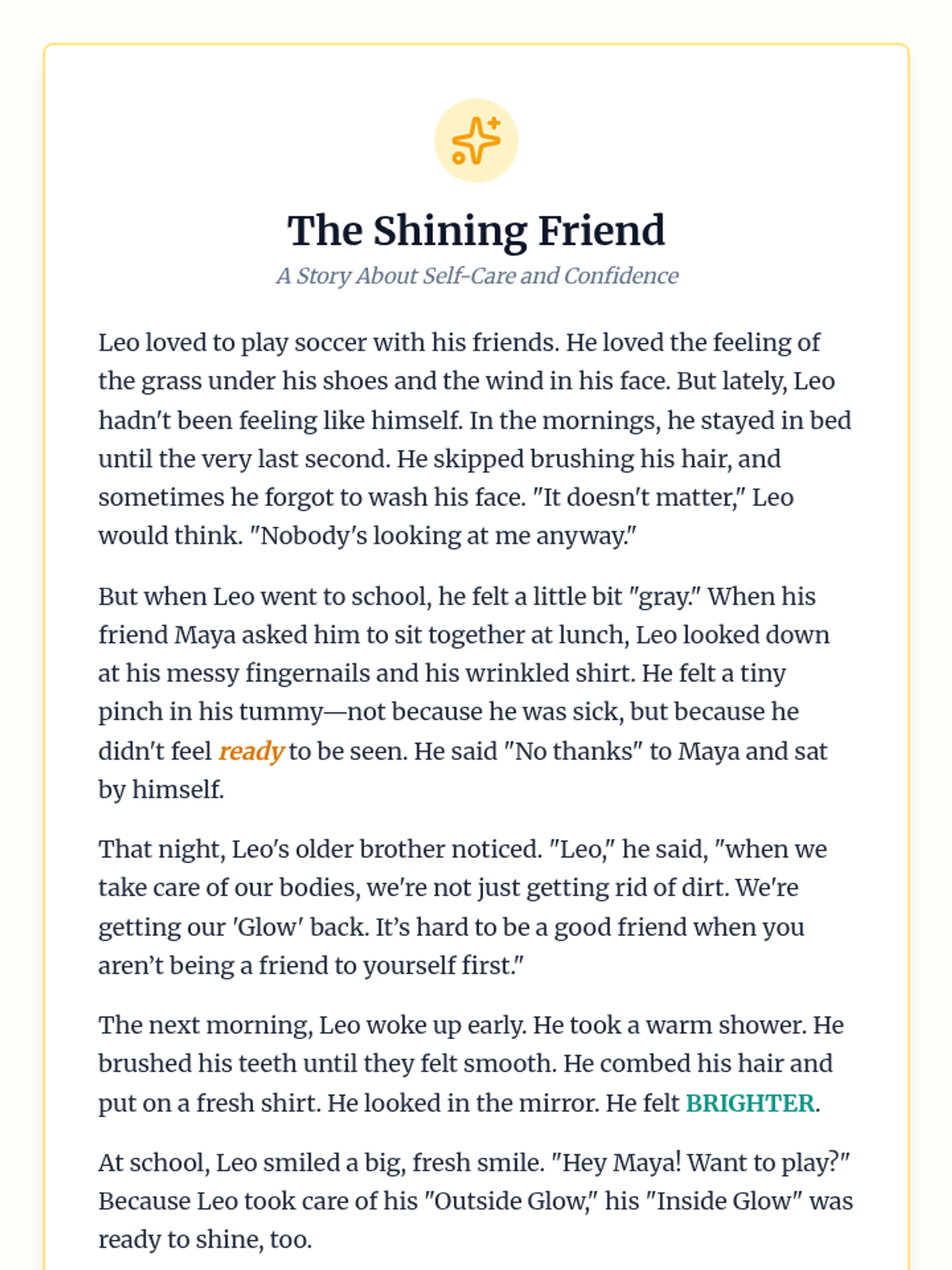
A heart-warming social story about a character named Leo who discovers how personal hygiene habits directly impact his self-confidence and his willingness to engage socially with friends.
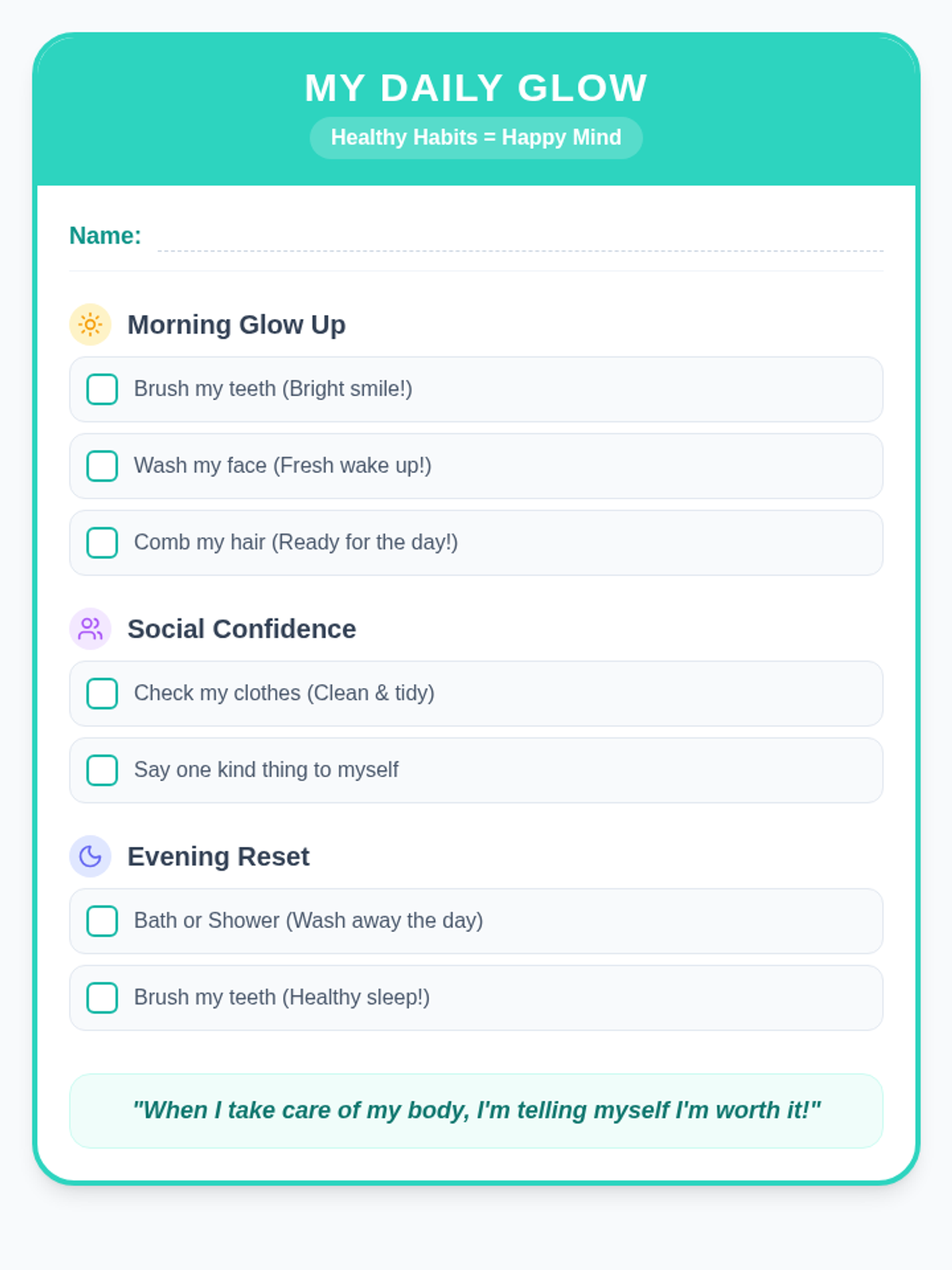
A visually appealing daily checklist for students to track their hygiene routines, categorized into morning, social, and evening habits to reinforce self-care and confidence.
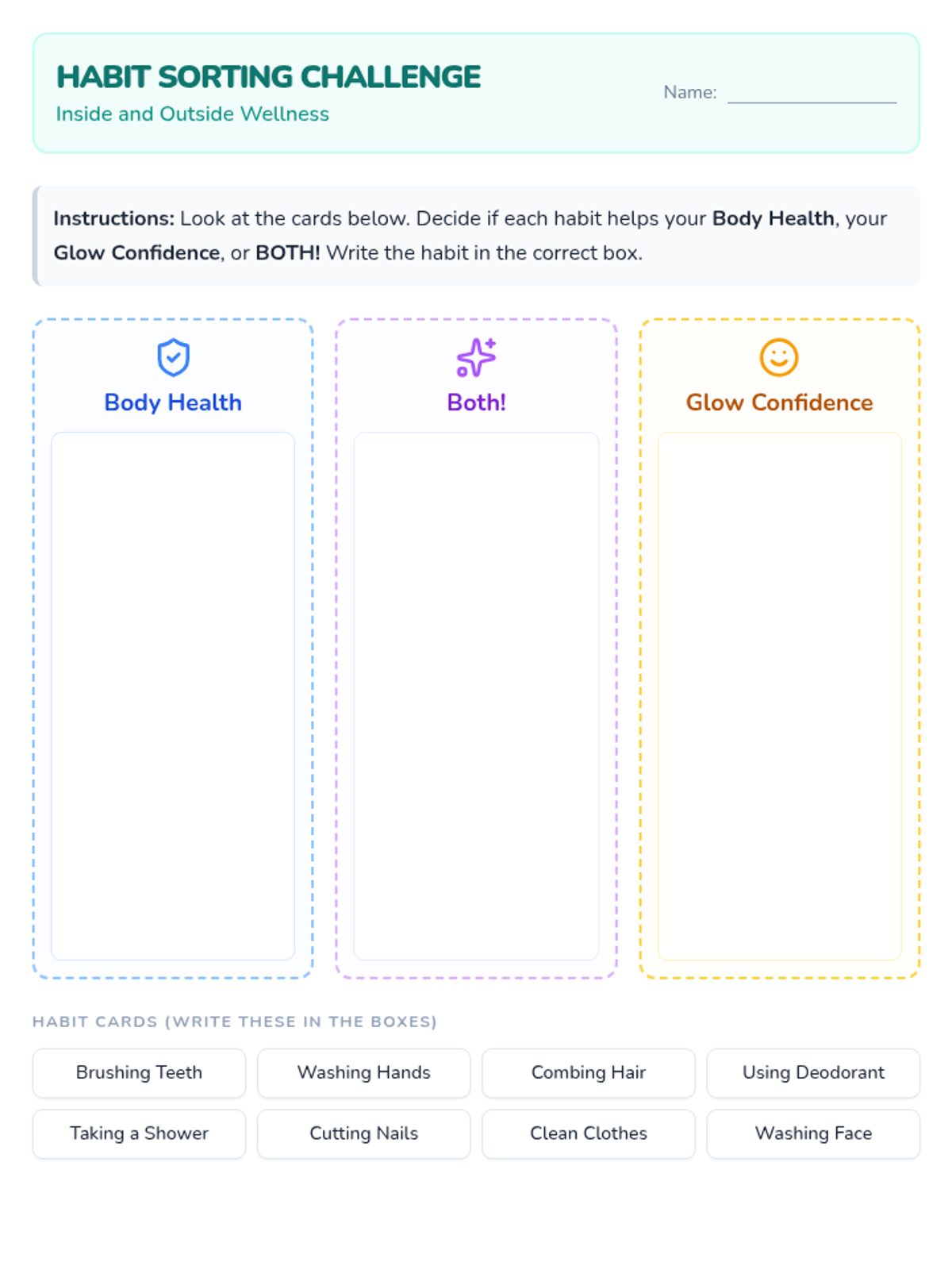
A categorization activity where students sort various hygiene habits into categories based on whether they primarily benefit physical health, confidence/mental health, or both.
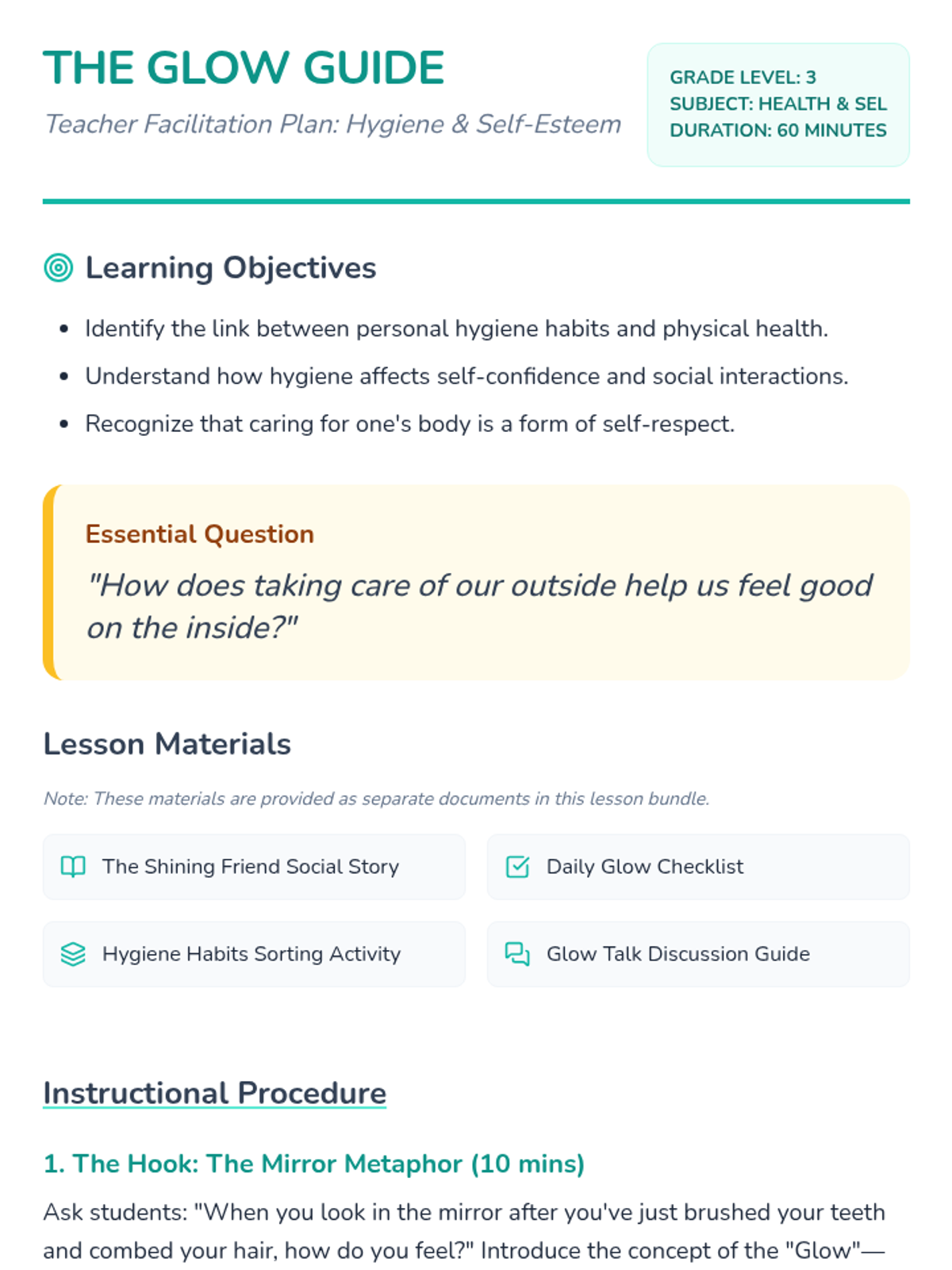
A comprehensive lesson plan for teachers, outlining objectives, materials, and a step-by-step instructional procedure for teaching the link between hygiene and mental health.
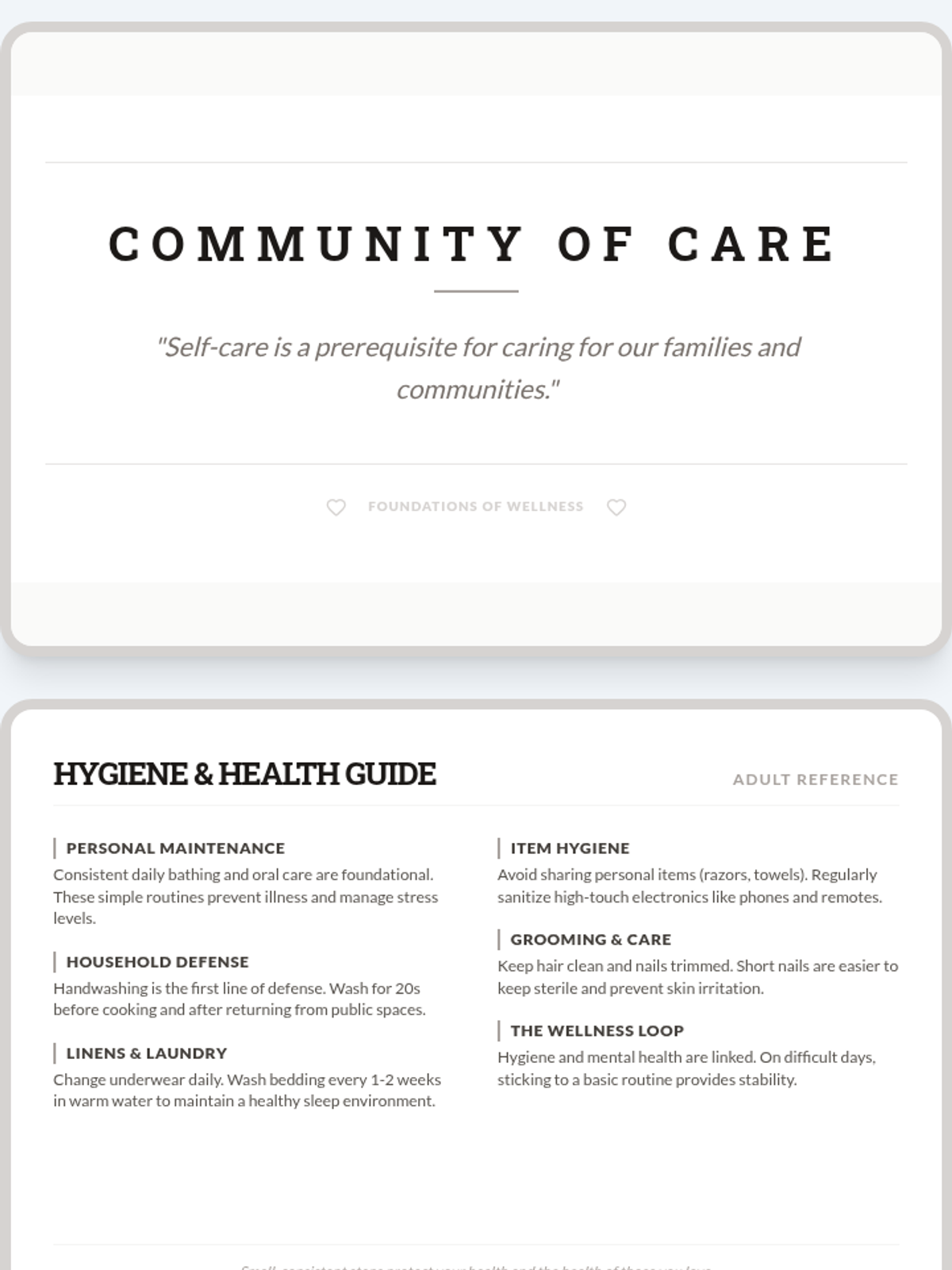
A respectful and practical hygiene postcard for adults, focusing on family health, prevention, and the psychological benefits of routine.
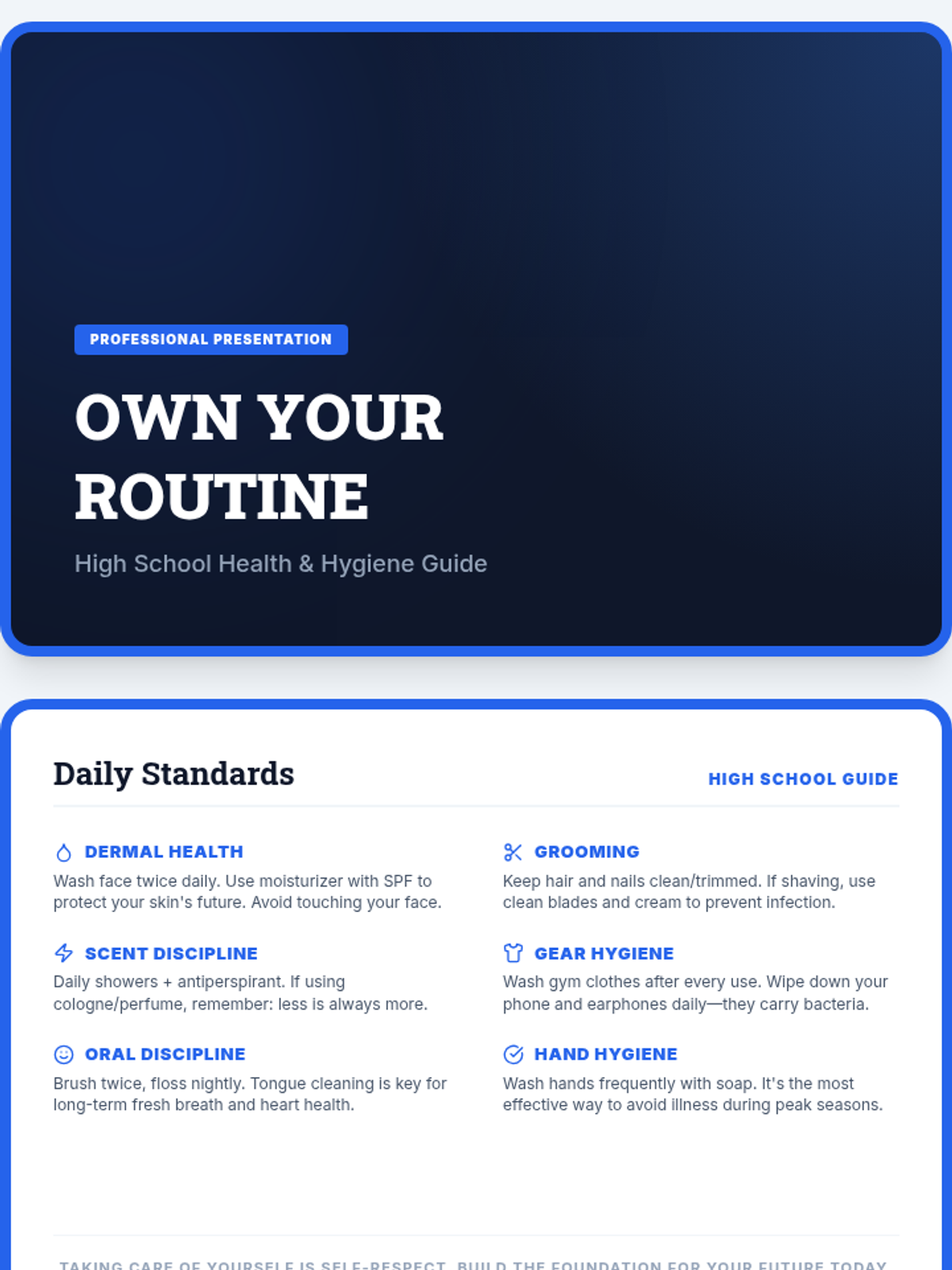
A sophisticated hygiene postcard for high schoolers, emphasizing self-respect, professional grooming, and gear maintenance.
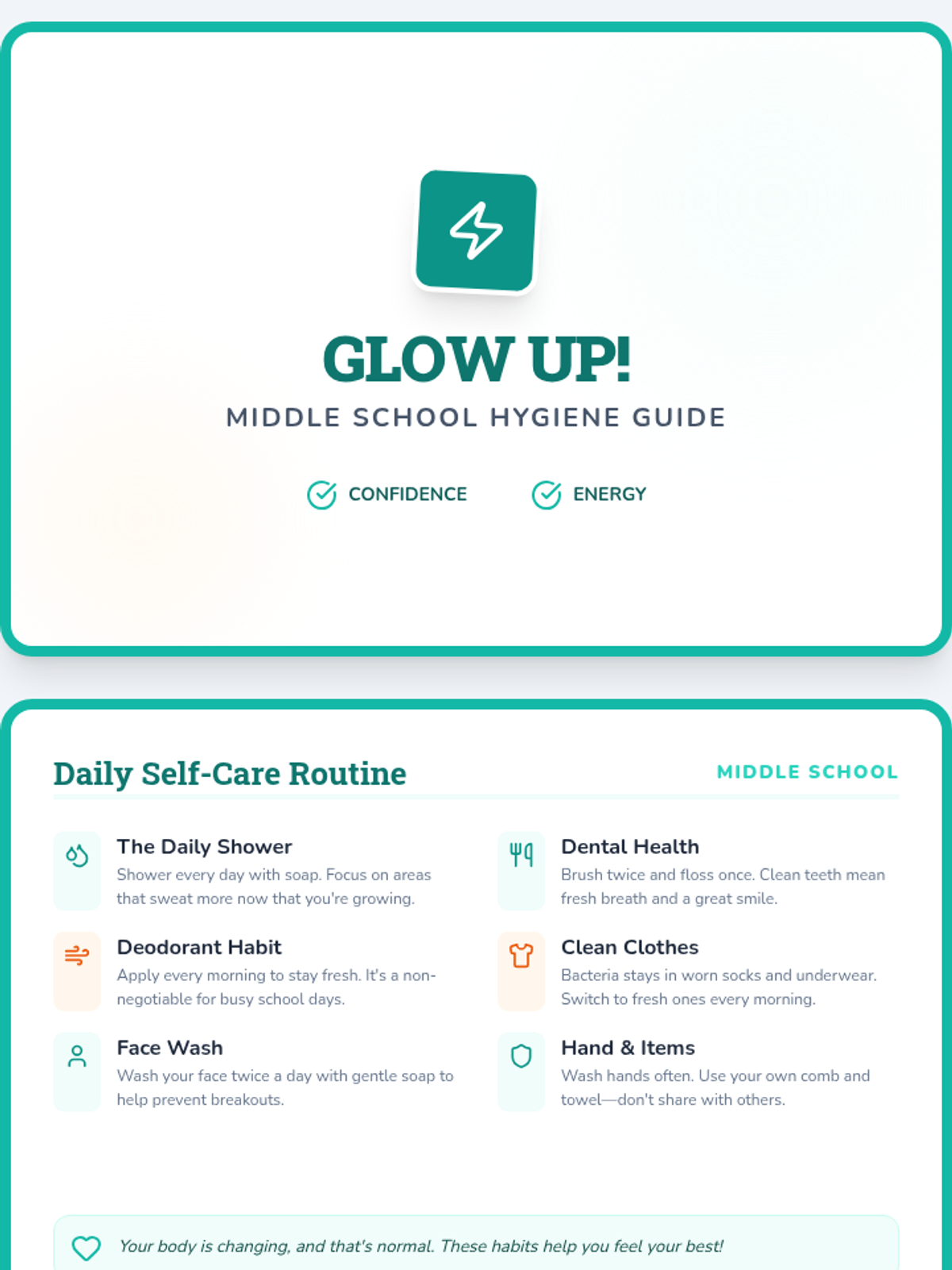
A fresh, informative hygiene postcard for middle schoolers, introducing deodorant and skincare as bodies begin to change.
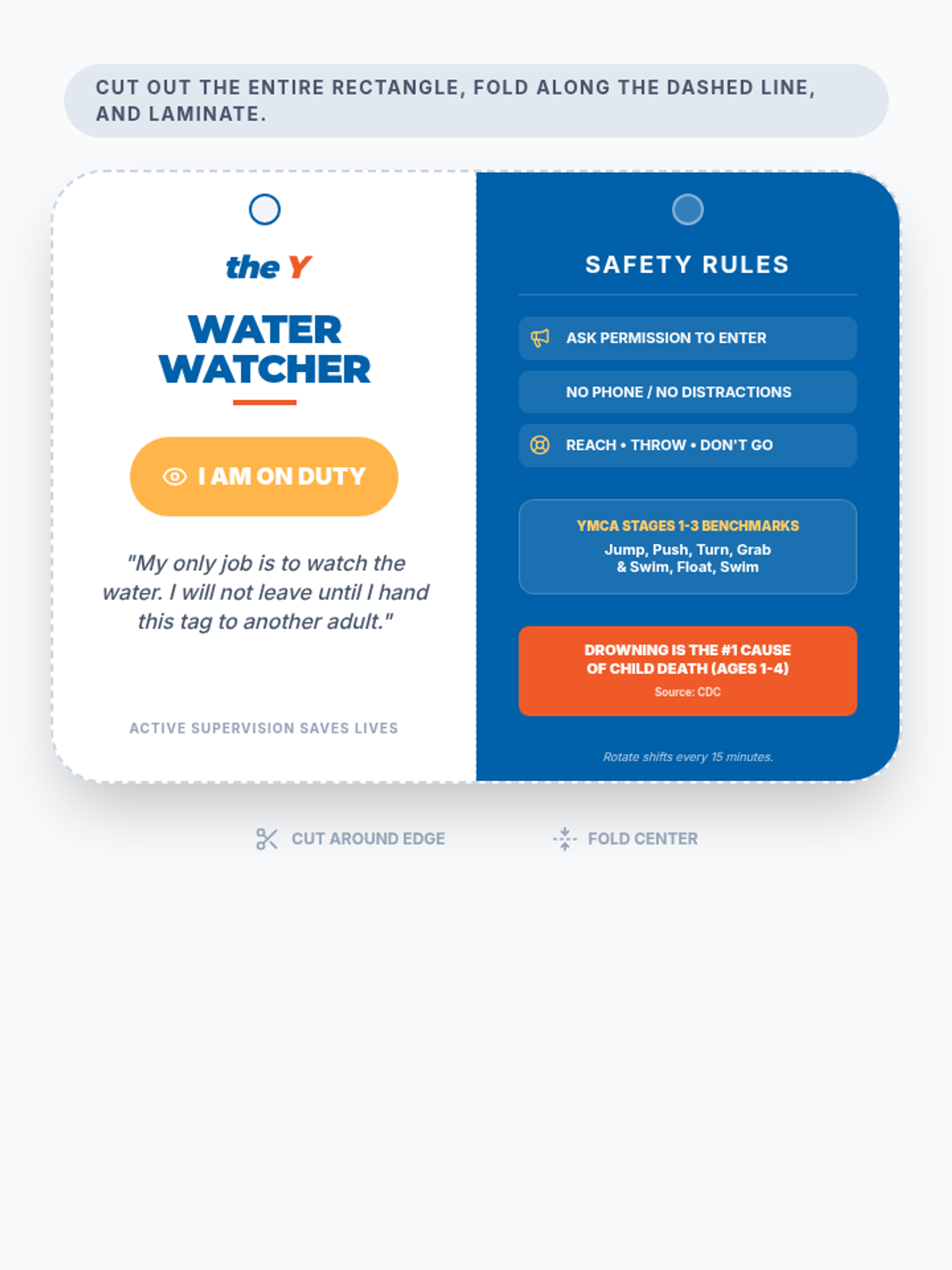
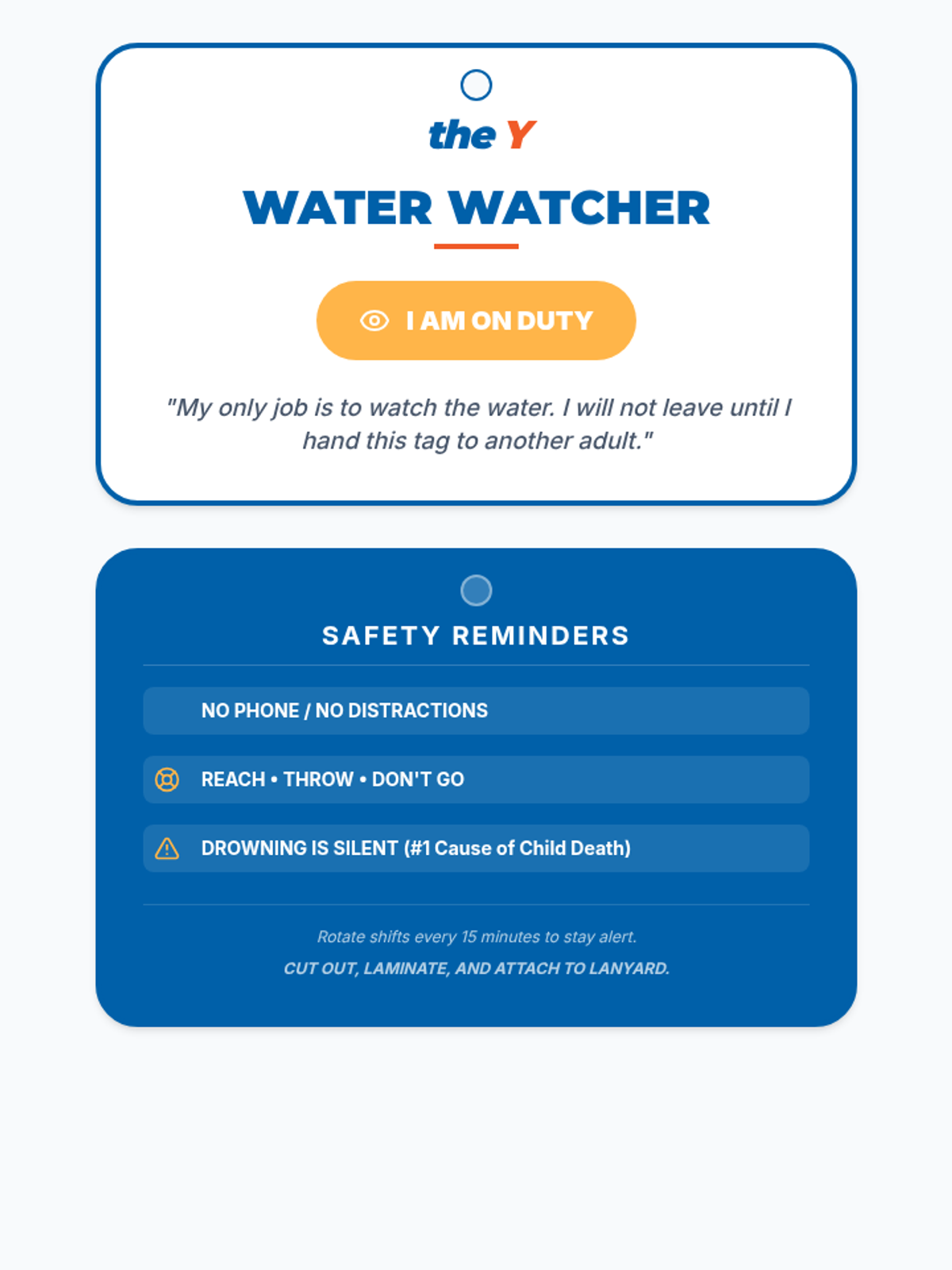
A printable, double-sided "Water Watcher" tag designed to be laminated and worn on a lanyard. Updated with the "Permission Rule," YMCA Swim Lesson benchmarks, and drowning statistics. Formatted for perfect back-to-back folding with aligned punch-hole indicators.
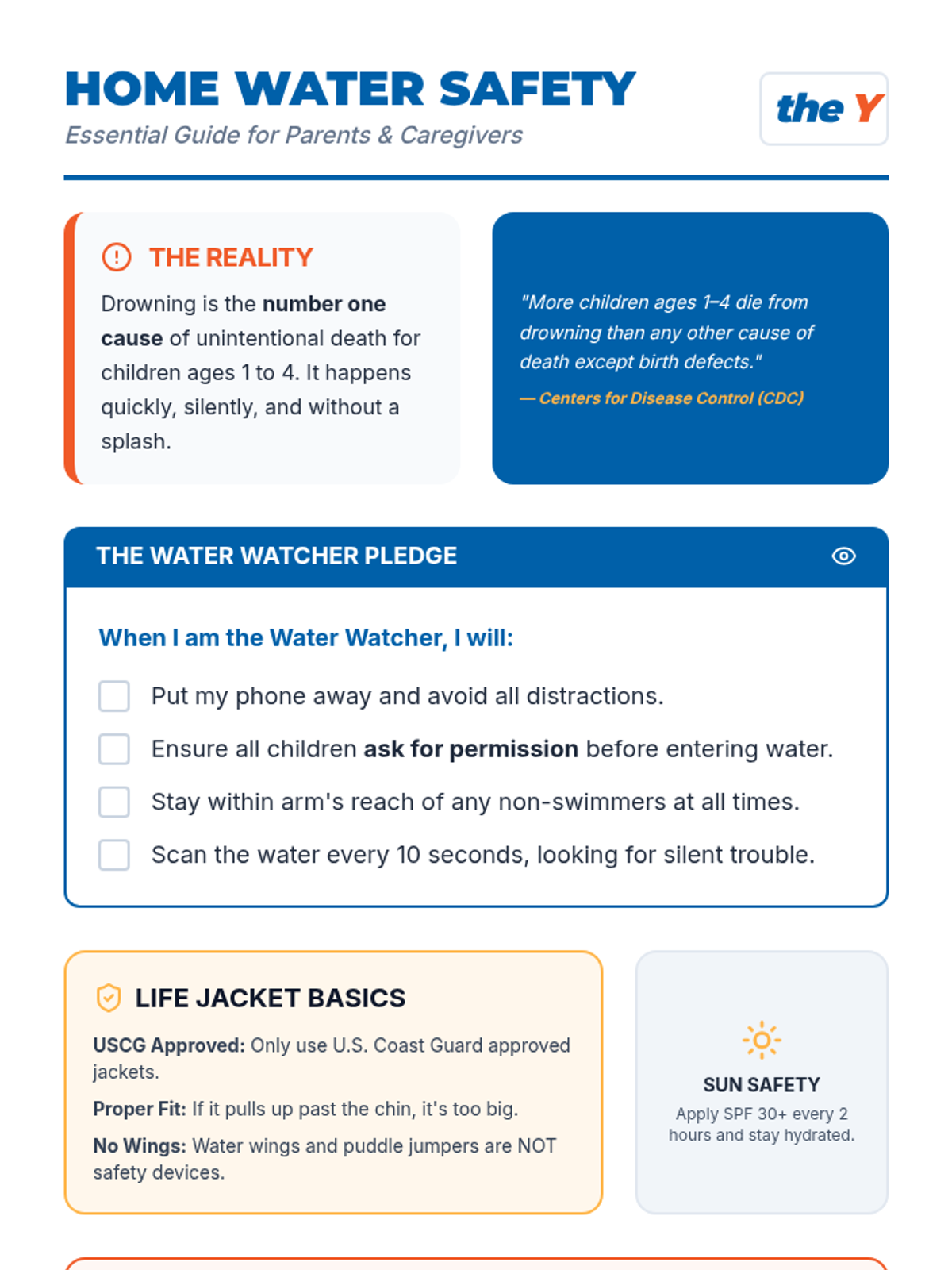
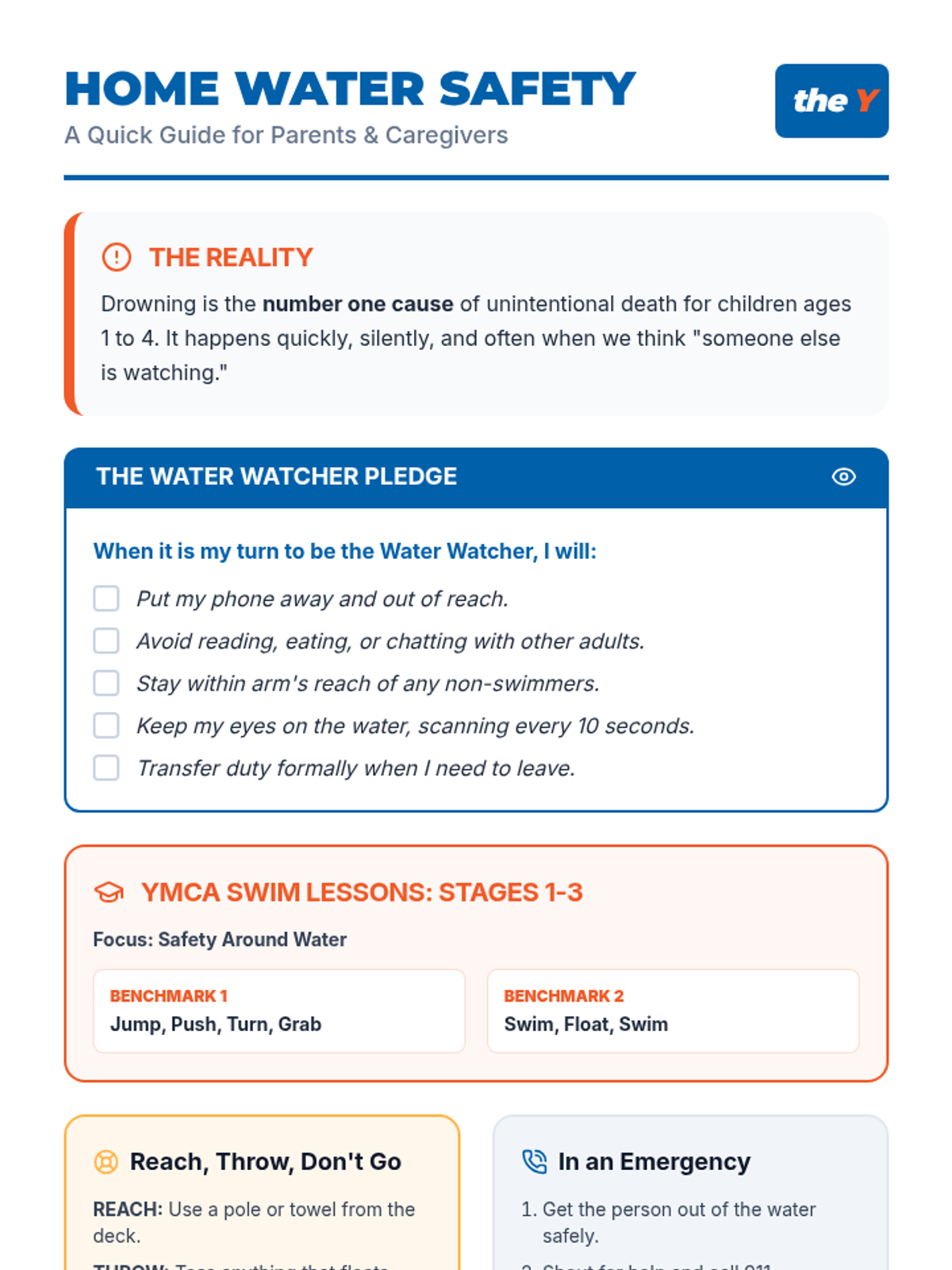
A printable home safety guide for parents including a Water Watcher pledge, emergency response instructions, and a home safety audit worksheet. Updated with YMCA Swim Lesson benchmarks, the "Permission Rule," and authoritative quotes. Includes improved handwriting areas with high-contrast lines.
A visually engaging 12-slide presentation for parents, featuring YMCA branding, drowning statistics, the "Water Watcher" strategy, rescue methods, and YMCA swim lesson benchmarks. Includes authoritative quotes from the CDC, AAP, USCG, and NDPA with proper citations. Updated with the "Permission Rule." Polished for better contrast and clarity.
A visually engaging 11-slide presentation for parents, featuring YMCA branding, drowning statistics, the "Water Watcher" strategy, rescue methods, and YMCA swim lesson benchmarks. Includes authoritative quotes from the CDC, AAP, USCG, and NDPA with proper citations.
A printable, double-sided "Water Watcher" tag designed to be laminated and worn on a lanyard to clearly identify the adult responsible for active supervision.
A printable home safety guide for parents including a Water Watcher pledge, emergency response instructions, and a home safety audit worksheet. Updated with YMCA Swim Lesson benchmarks.
A visually engaging 7-slide presentation designed for parents, focusing on drowning statistics, the "Water Watcher" strategy, and the "Reach, Throw, Don't Go" rescue method, all with YMCA branding. Updated with YMCA Swim Lesson safety benchmarks.
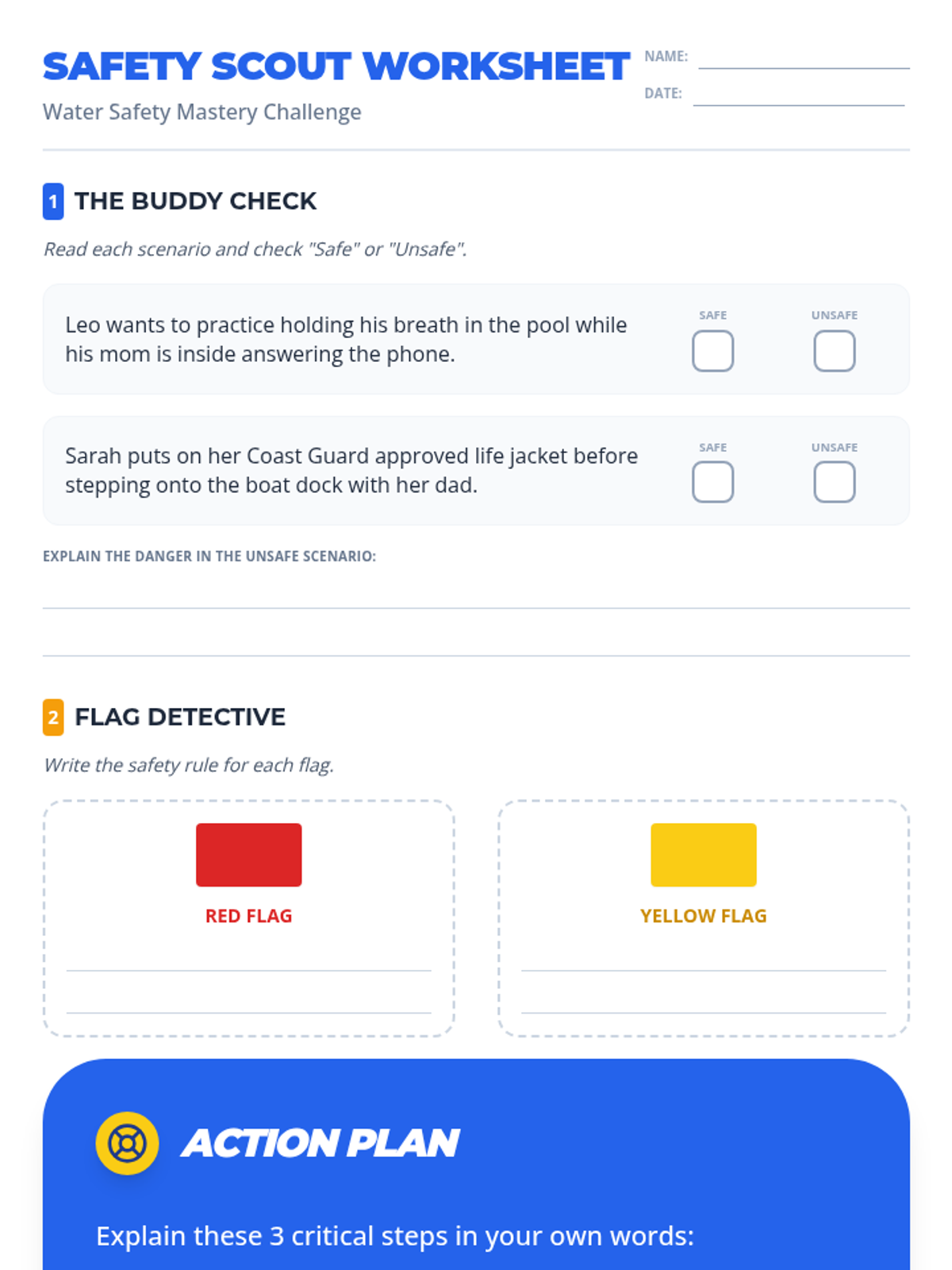
A student worksheet reinforcing water safety concepts. Revised Section 3 with significantly more writing space (taller white boxes) and condensed first page to keep Sections 1 and 2 together.
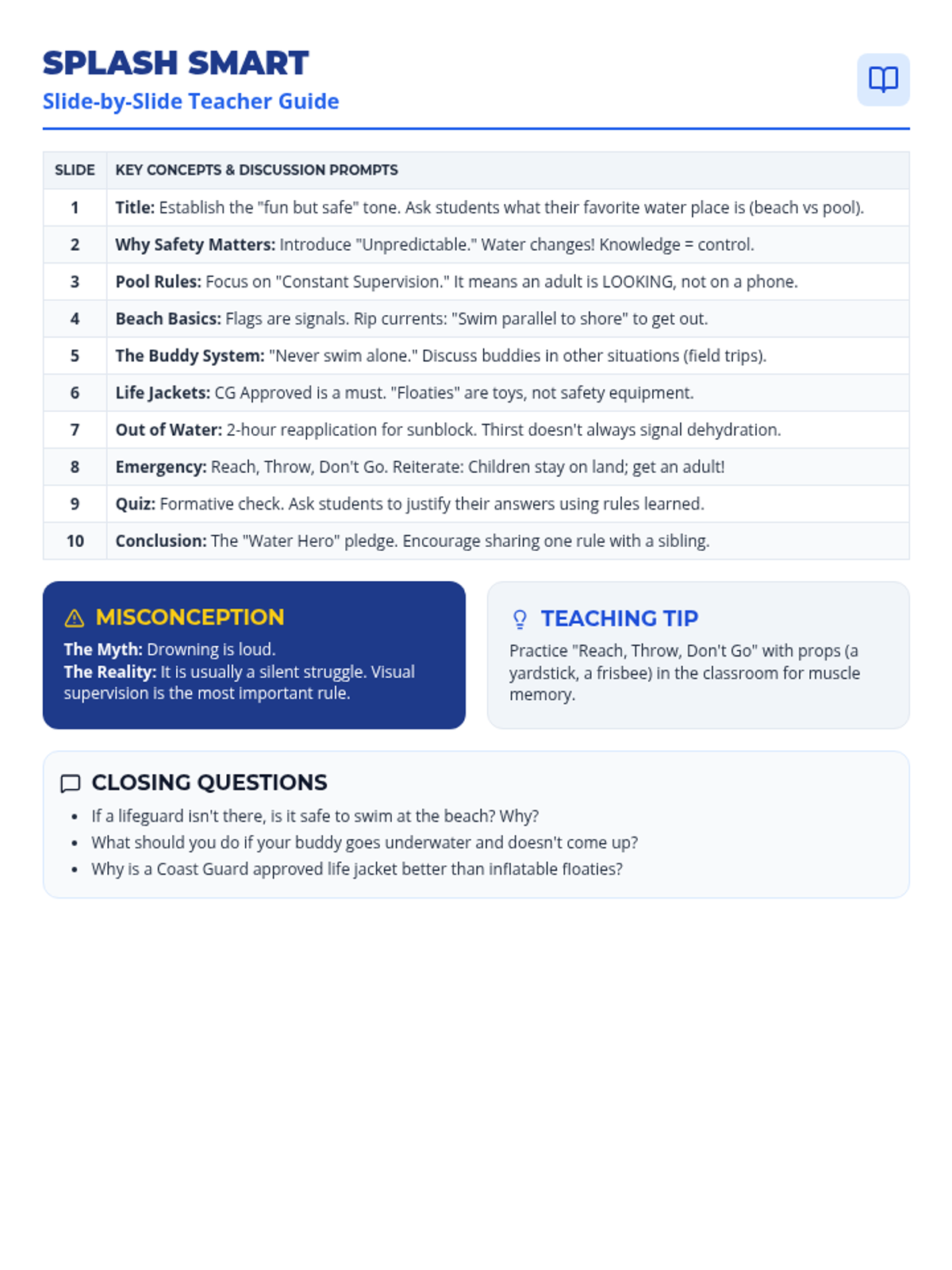
A comprehensive teacher guide for the Splash Smart lesson, including notes for all 10 slides, common misconceptions, and practical teaching tips on a single page. Optimized for single-page layout.
A 10-slide educational presentation covering essential water safety rules for pools, beaches, and open water, featuring clear visuals and a pop quiz. Corrected quiz styling and visual balance.
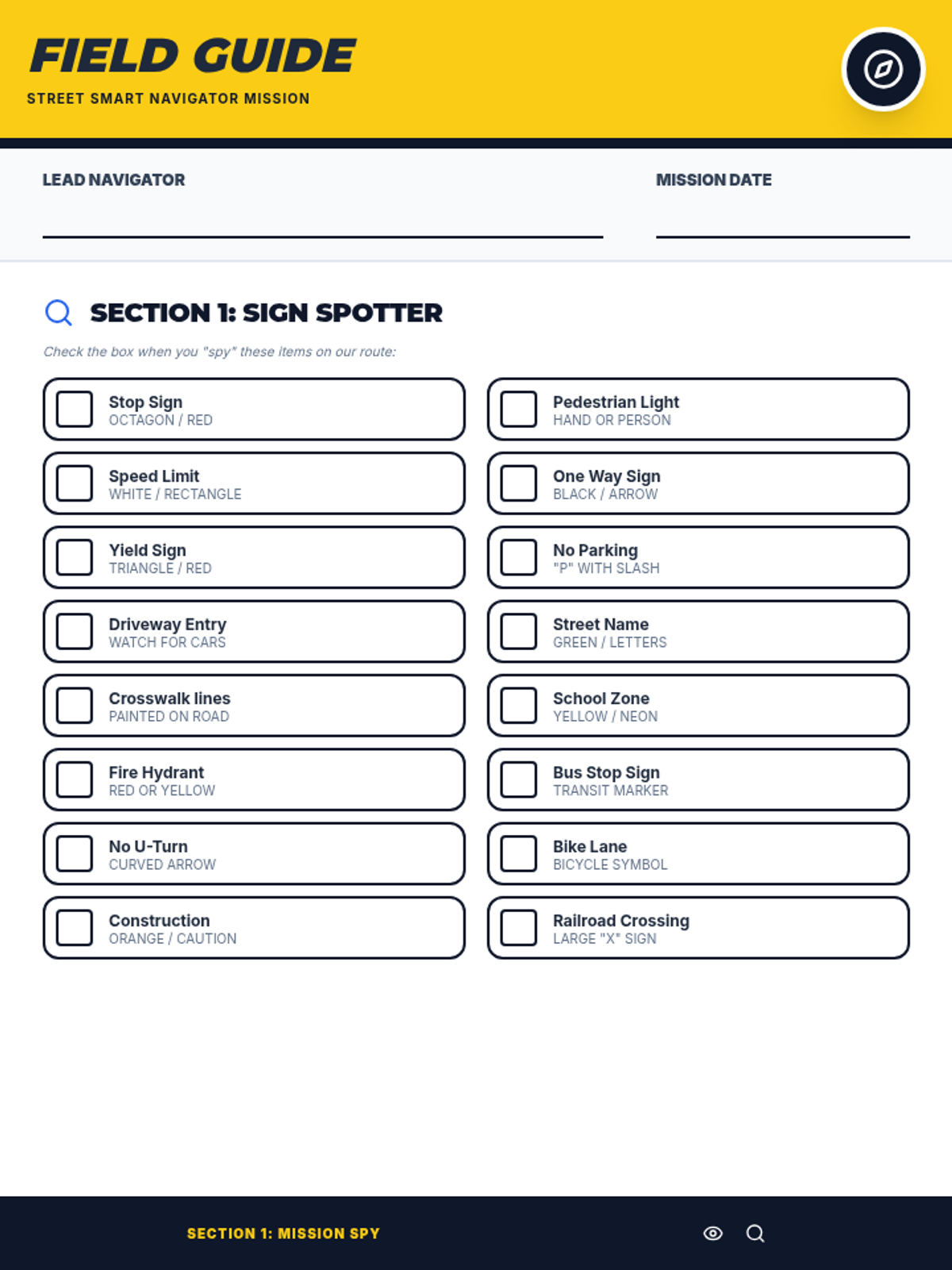
A two-page student field guide for a pedestrian safety walk. Simplified for lower reading levels with large text, simple vocabulary, and clear visual cues. Updated for Orange Park, FL. Section 1 and 2 feature 16-item scavenger hunt grids. Section 3 includes space for safety reflection.
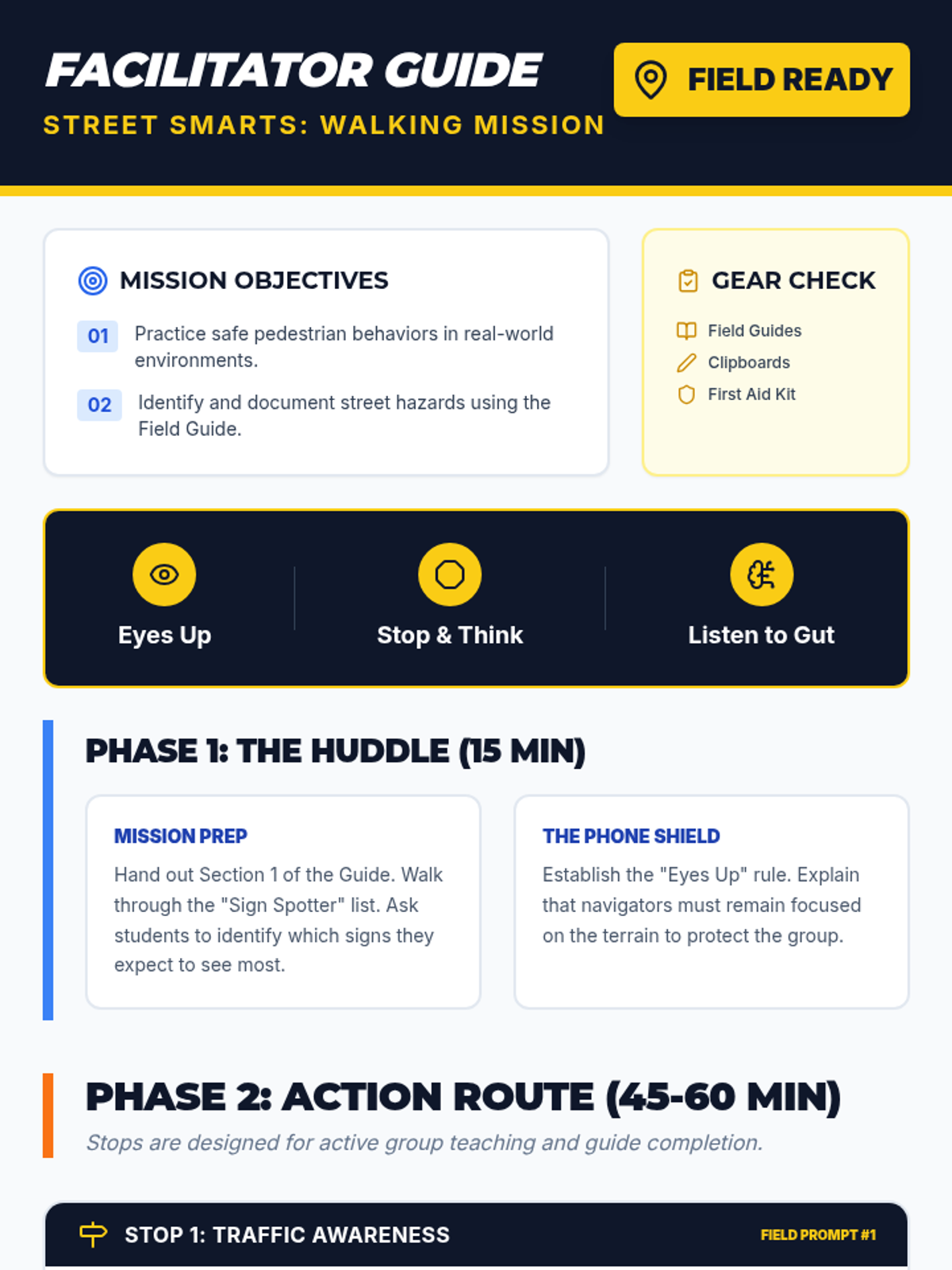
A comprehensive facilitator guide for staff, including objectives, huddle instructions, scavenger hunt stop guides, and a participant observation log. Revisions: Updated stop instructions to match the new scavenger hunt format in the student field guide. Fixed table header alignment and added a score scale. Updated for Orange Park, FL.
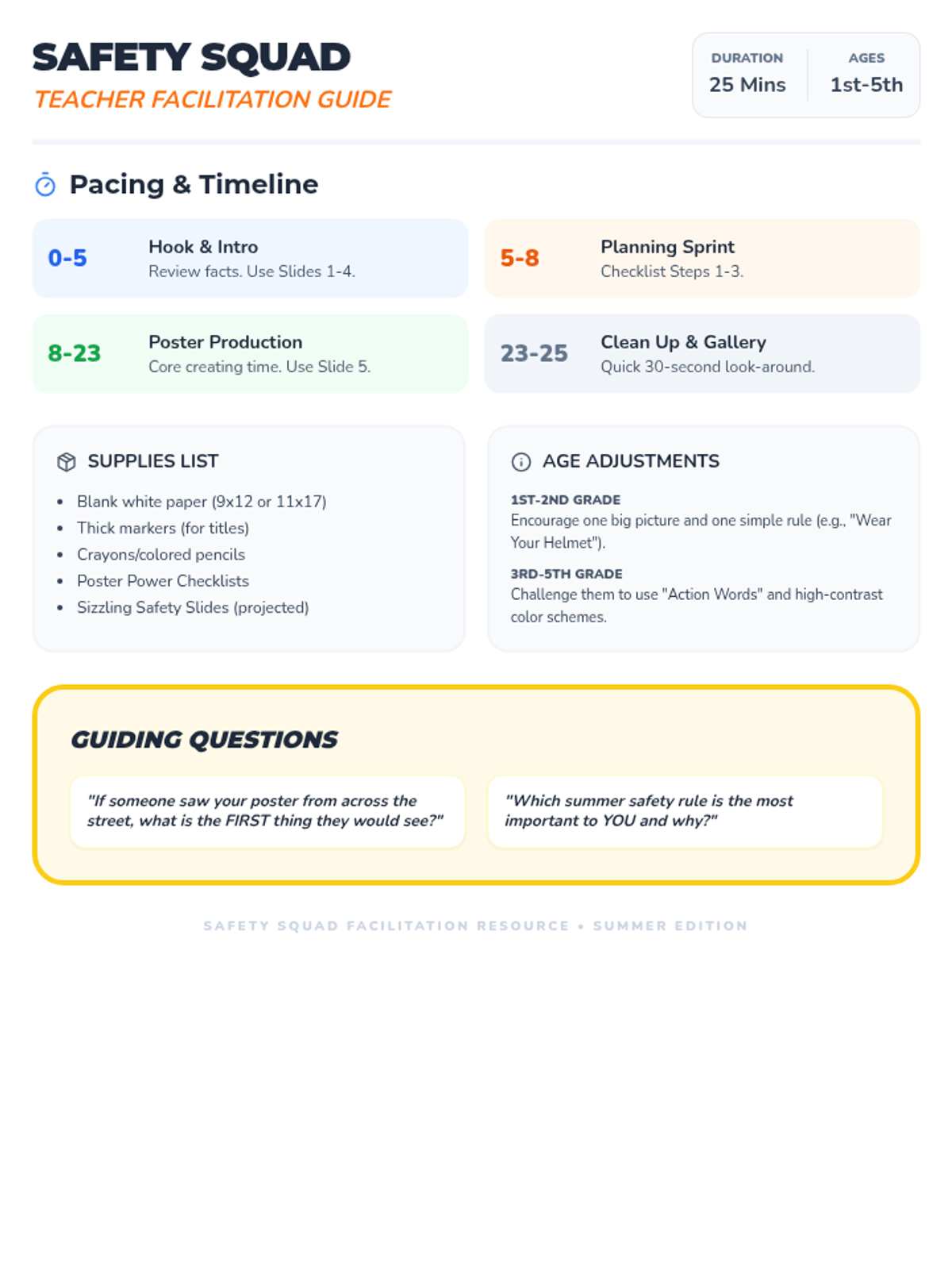
A comprehensive facilitation guide for teachers to manage a high-energy, 25-minute summer safety poster project, including pacing, supplies, and age-appropriate differentiation.
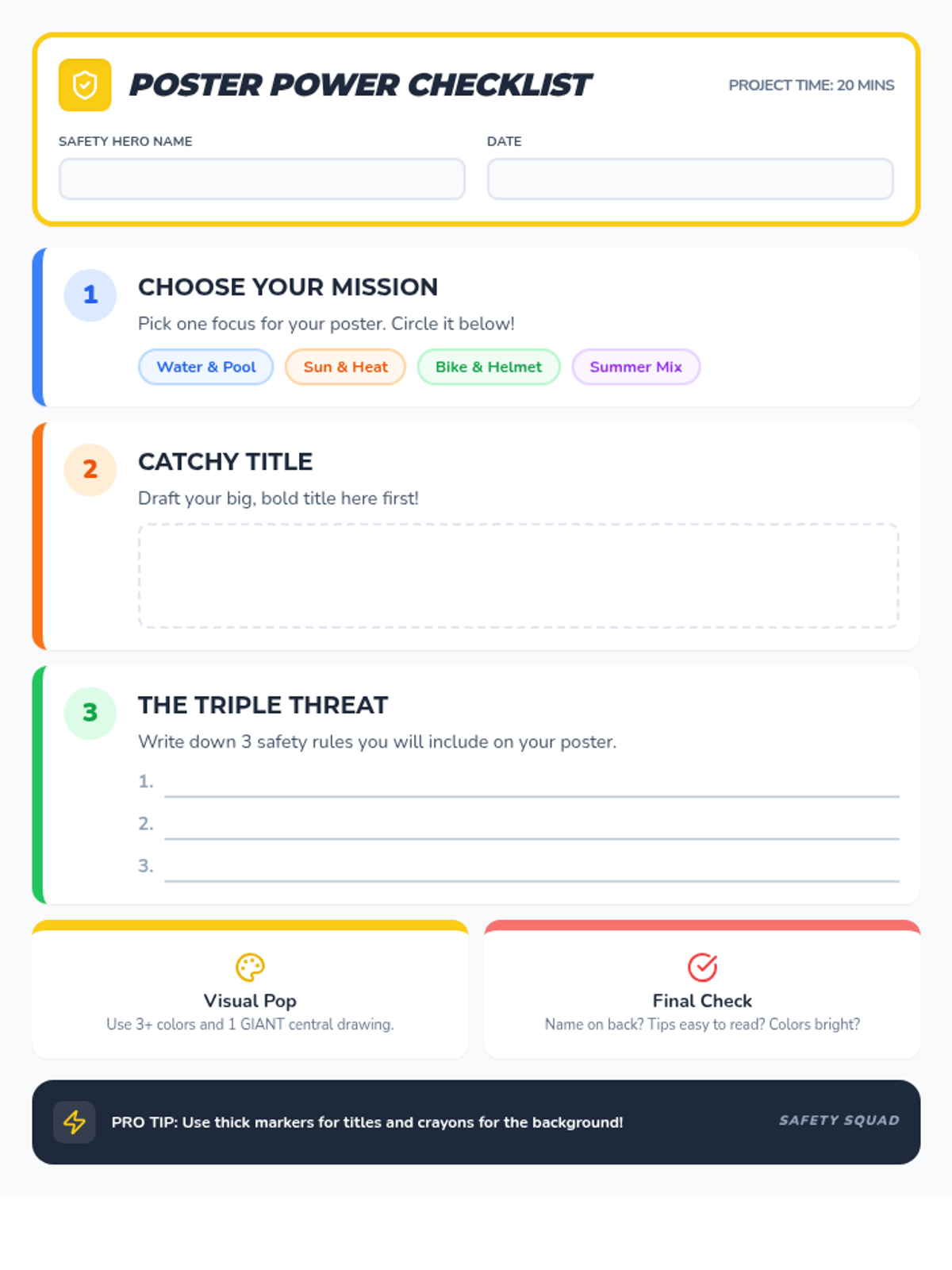
A step-by-step student checklist for designing a safety poster, including planning spaces for titles and rules to ensure a high-quality project in a short timeframe.
A vibrant presentation introducing water, sun, and bike safety tips with a clear project mission for a quick poster design activity.
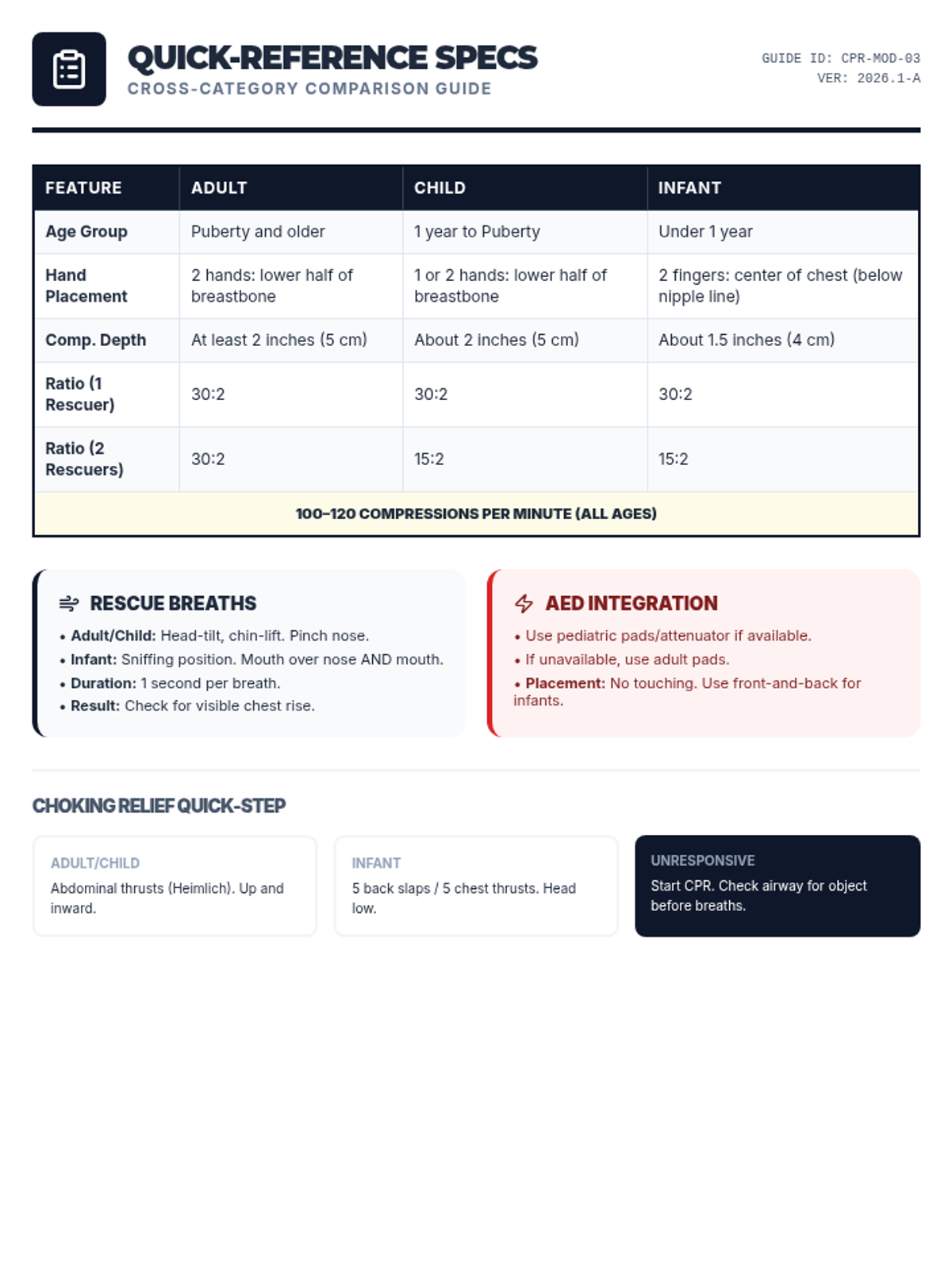
A comprehensive quick-reference sheet that compares rescue techniques across adult, child, and infant age groups.
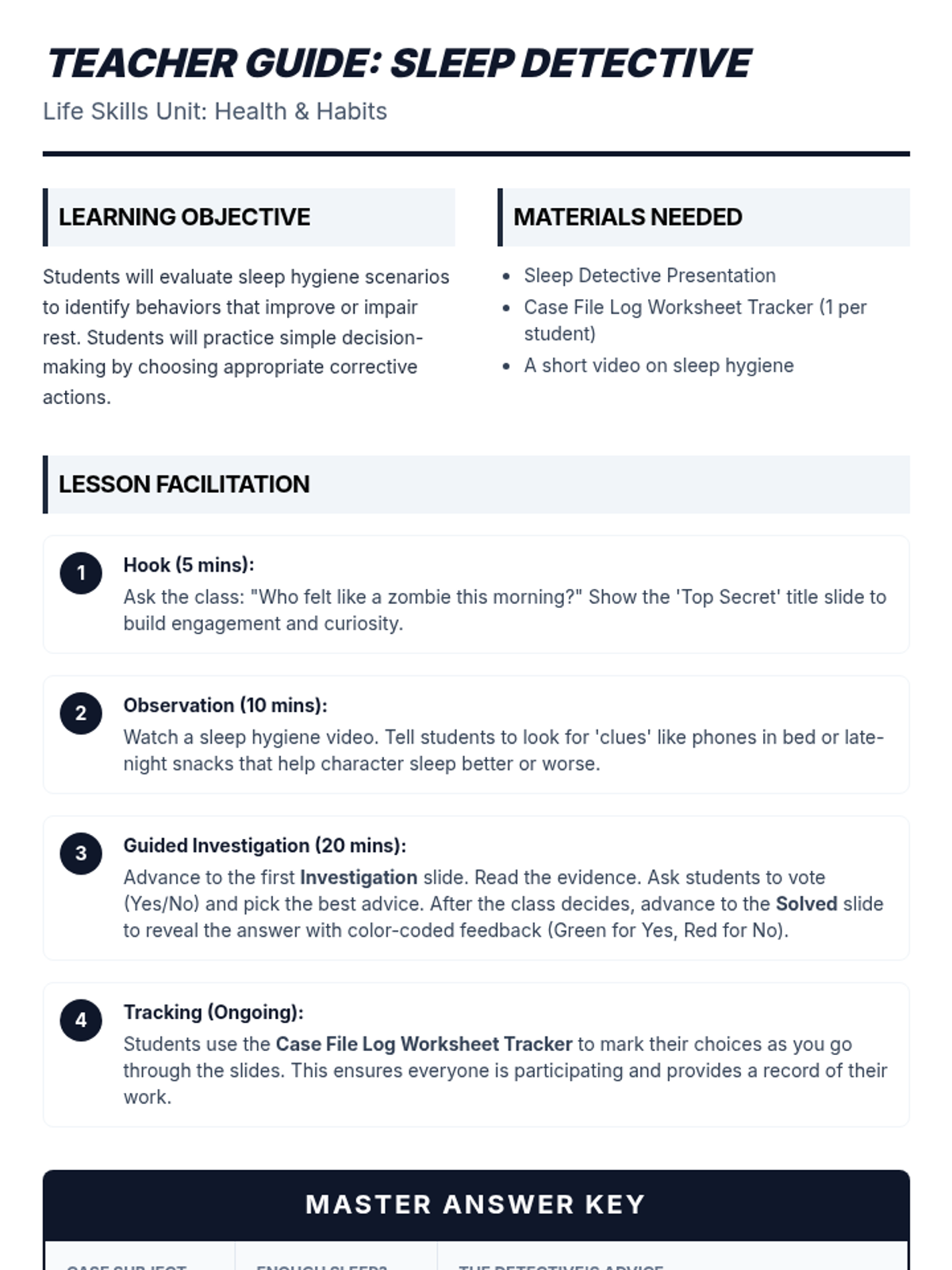
A comprehensive teacher guide for the Sleep Detective lesson. Includes lesson pacing, objective-based facilitation steps, and a consolidated master answer key for all 5 cases. Updated to reflect the interactive slide reveal structure.
A highly visual, interactive-style slide deck designed for use on a whiteboard. Each of the 5 cases features an 'Investigation' slide with selectable choices followed by a 'Solved' slide that reveals the correct answers with high-contrast color coding (Green for Yes, Red for No). Minimal text and large font sizes ensure accessibility for life skills students. Layout is strictly contained to prevent overflow.
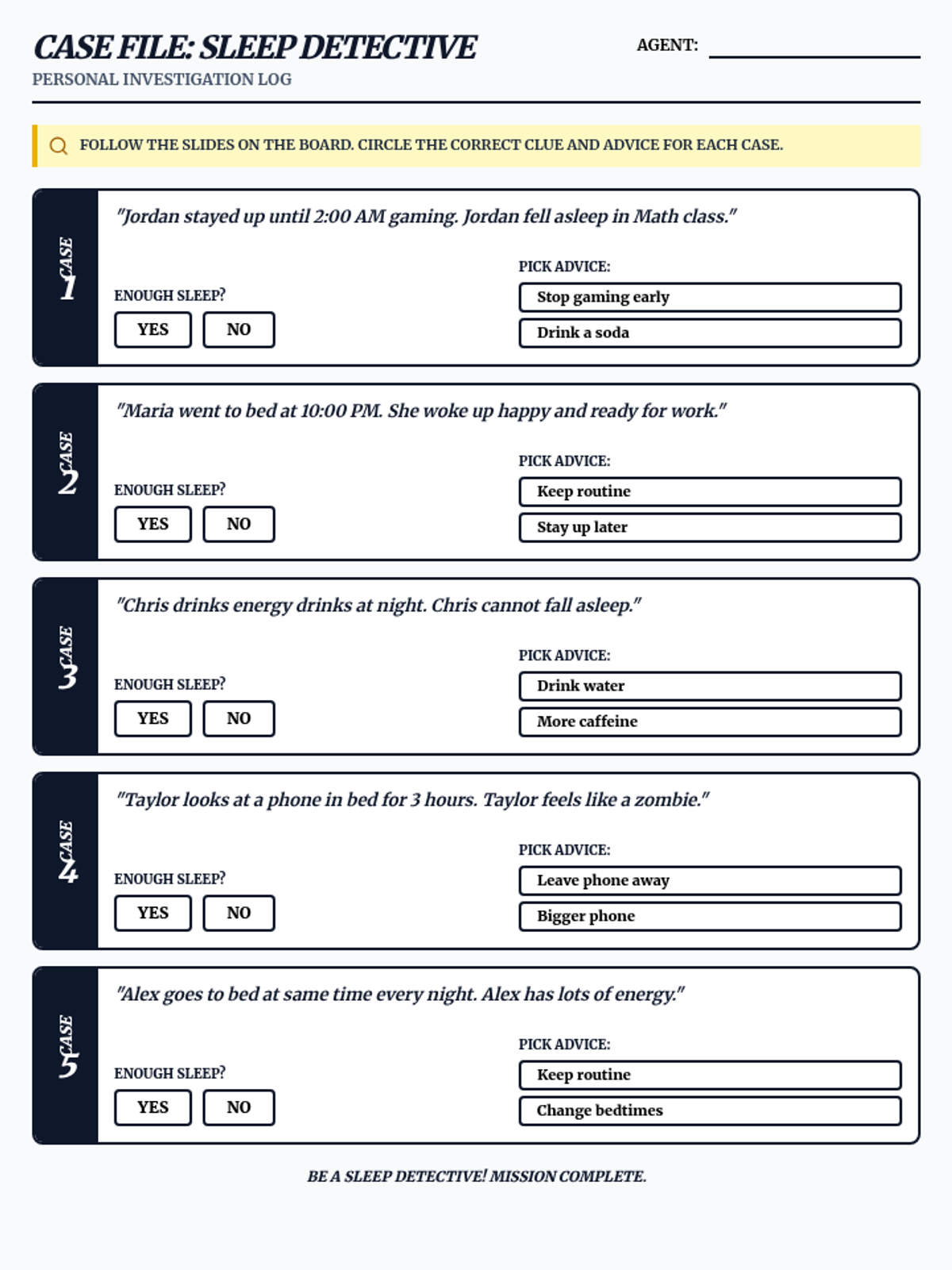
A simplified 1-page tracking sheet for students to use while following the Sleep Detective slideshow. Each case corresponds to the slides, providing a space to mark Yes/No and select advice. Designed for minimal writing and high visual clarity. Layout is optimized to fit all 5 cases on a single page with high-contrast text.
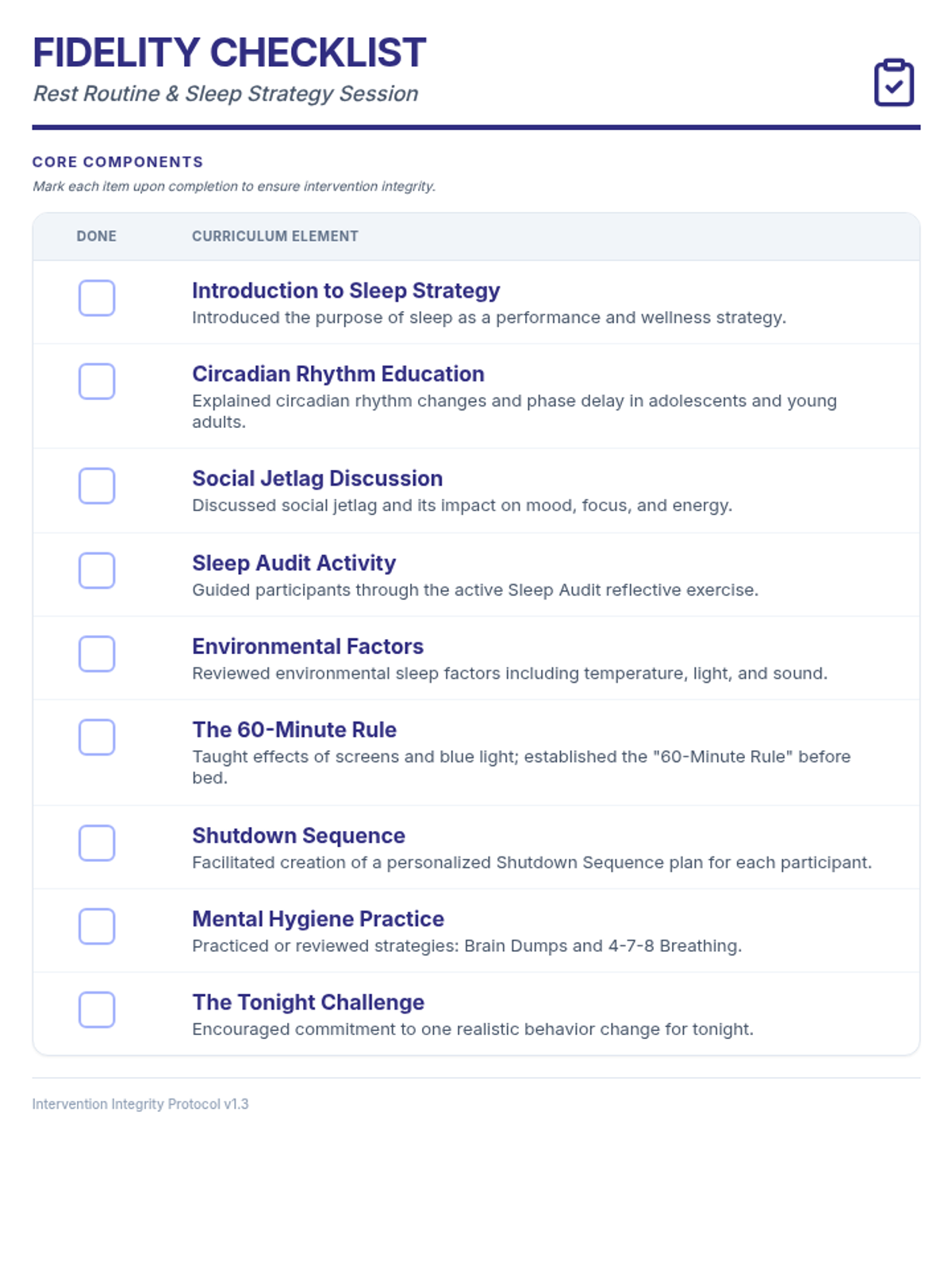
A final streamlined version of the fidelity checklist focusing solely on core components. Removed session metadata, observation sections, and the signature line for a clean, simple verification tool.
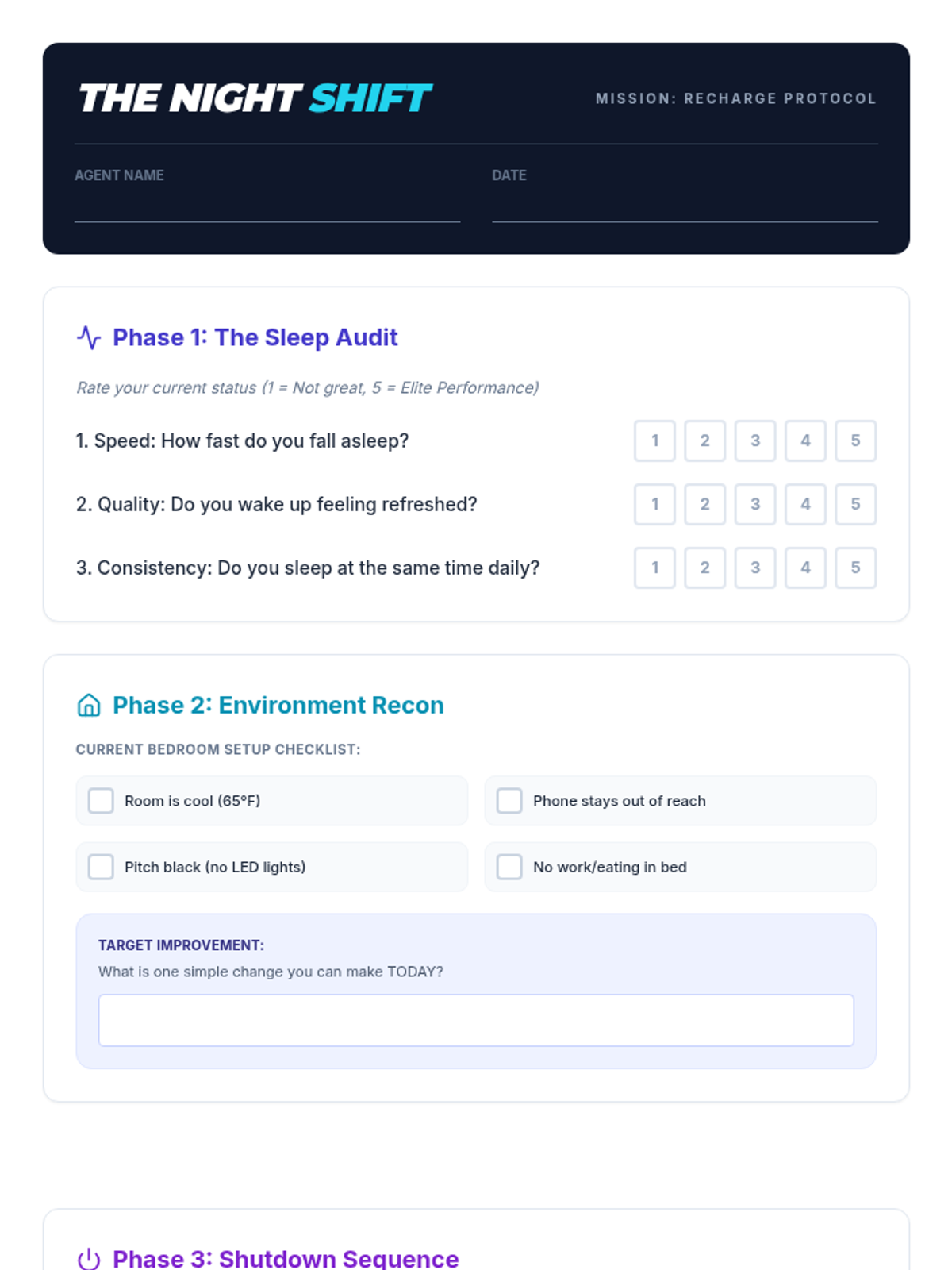
A 2-page participant worksheet for "The Night Shift" workshop, featuring a Sleep Audit, Environment Checklist, Shutdown Sequence planner, and Brain Dump area. Designed for clarity and student engagement.
A high-impact, visual slide presentation for "The Night Shift" workshop, designed with a modern "dark mode" aesthetic for 16-21 year olds. Focuses on the "Recharge Protocol" and practical sleep hacks.
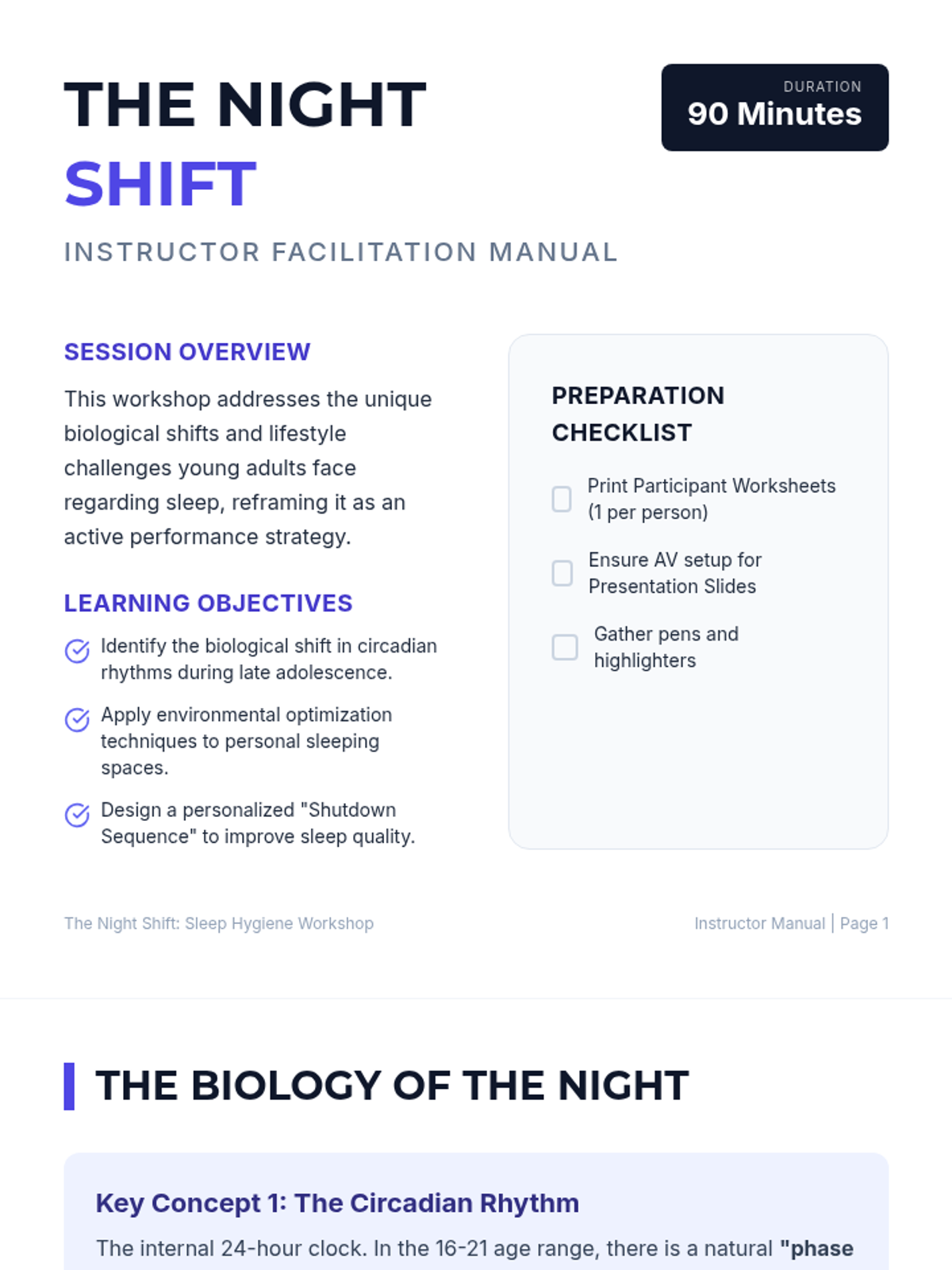
A detailed 8-page instructor facilitation guide for "The Night Shift" workshop, covering sleep biology, environmental optimization, behavioral routines, and mental hygiene strategies tailored for 16-21 year olds.
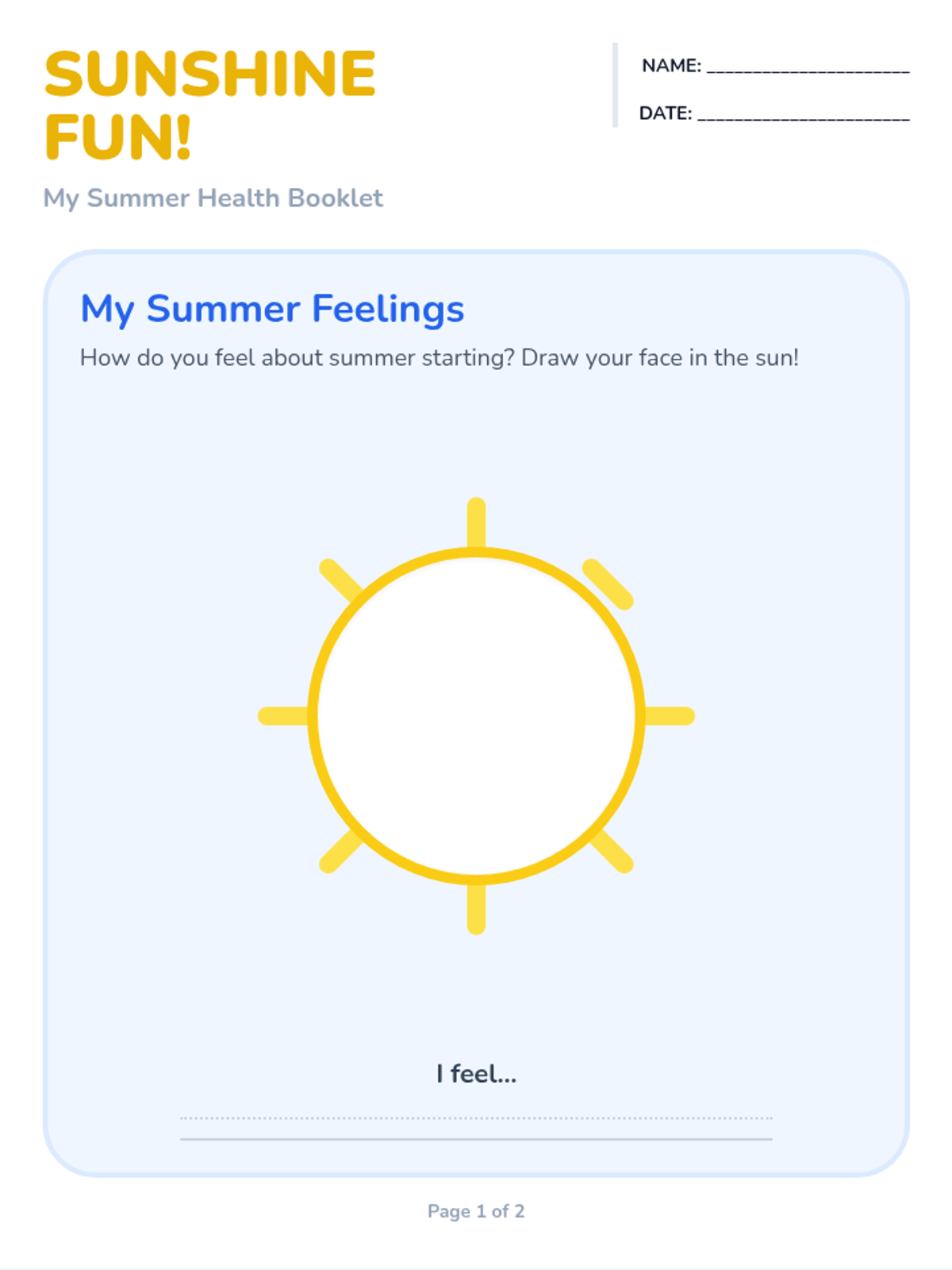
A 2-page student activity booklet featuring a feelings drawing prompt, a healthy habits checklist with star icons, and a visual breathing exercise tool.
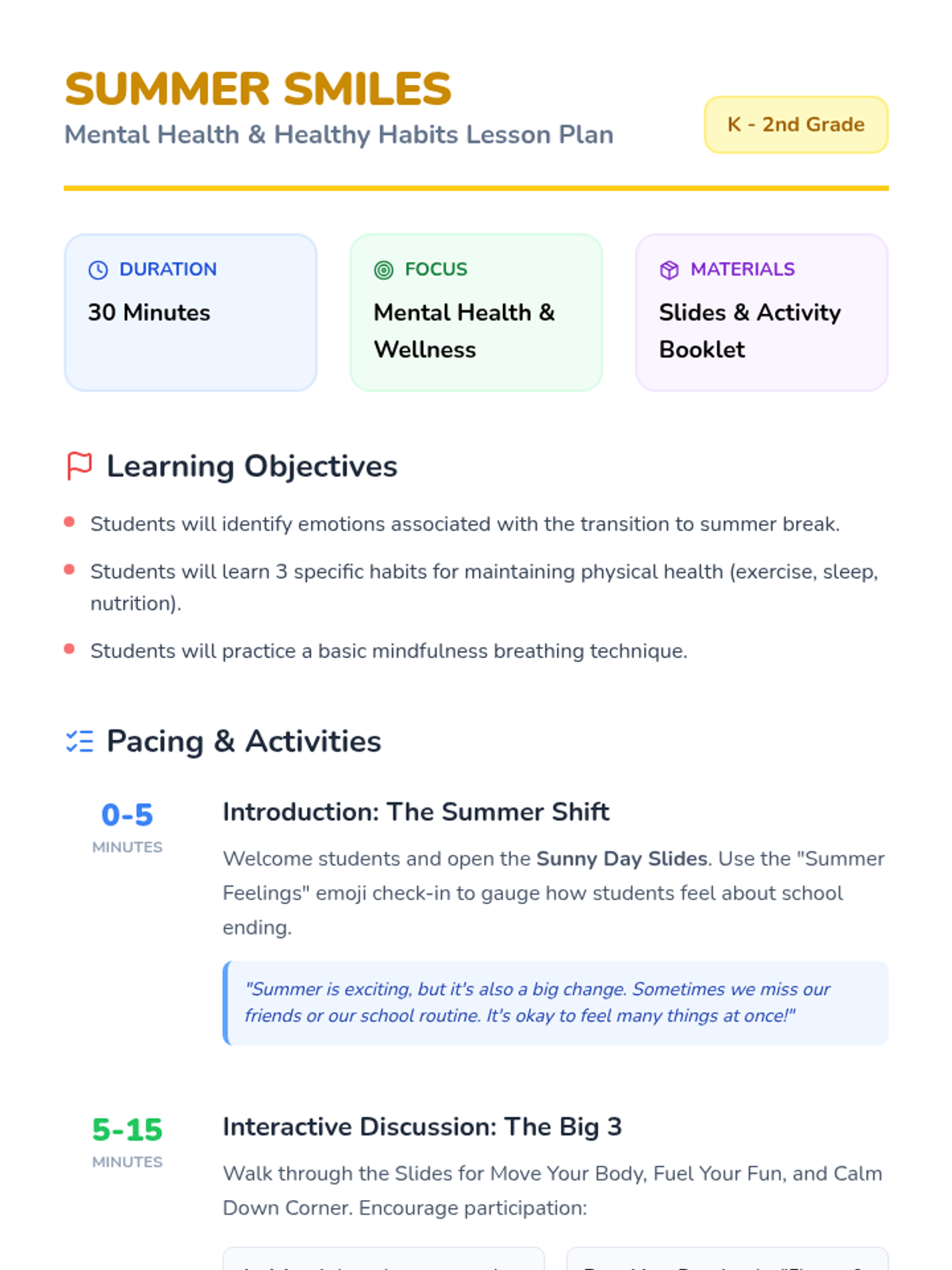
A comprehensive teacher guide for a 30-minute K-2 mental health lesson, including pacing, objectives, and teaching tips.
A vibrant and engaging interactive slide deck for K-2 students focused on summer mental health, physical activity, nutrition, and mindfulness.
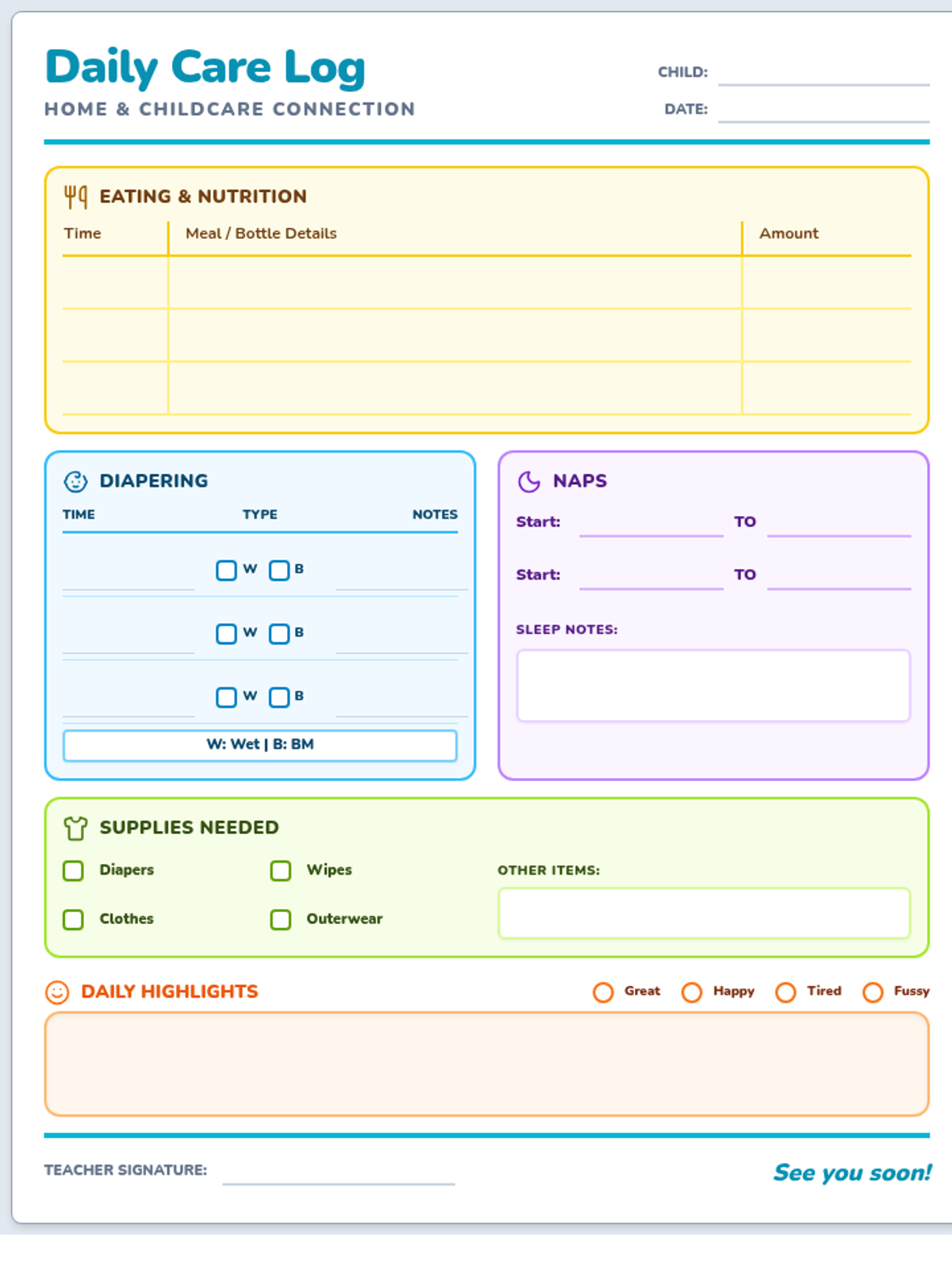
A comprehensive daily communication log for childcare providers to track eating, sleeping, diapering, and clothing needs for a single child throughout the day. Tightened layout to fit on a single page with bright, vibrant colors.
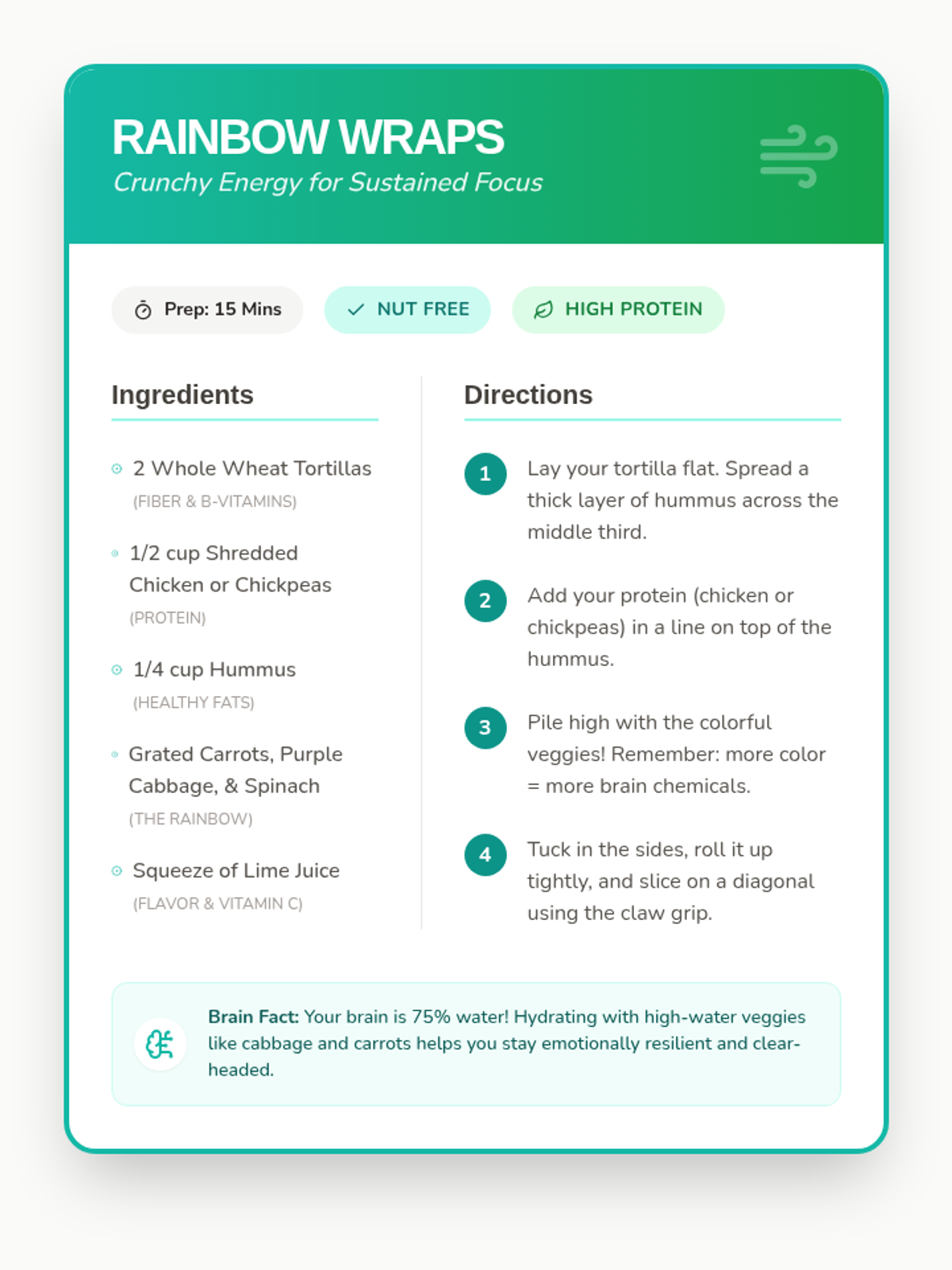
A visually striking recipe card for nut-free "Rainbow Wraps," including prep times, ingredient-to-brain mapping, and safe cooking techniques.
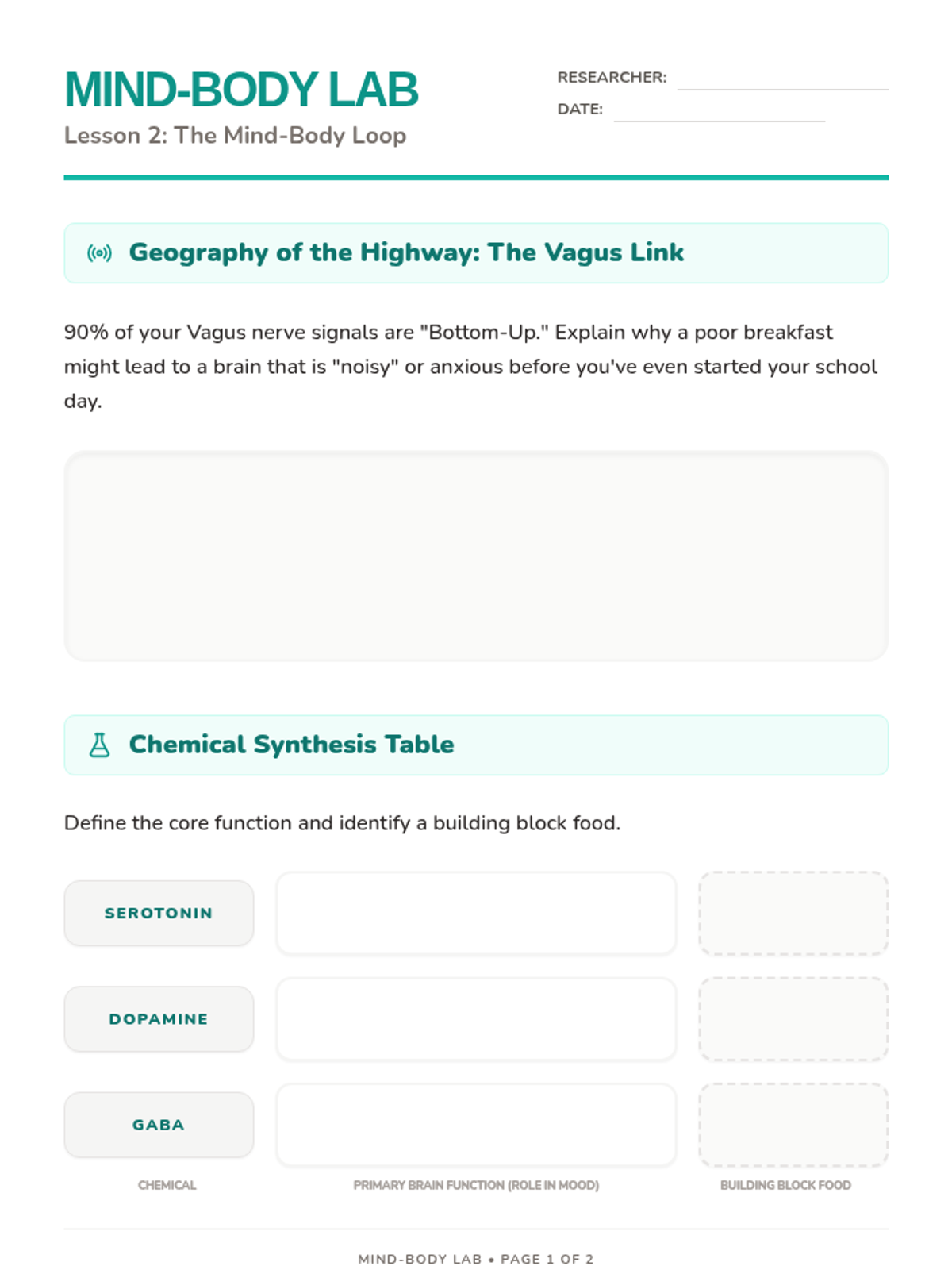
An in-depth 2-page student worksheet for Day 2 focusing on the Vagus highway, neurotransmitter synthesis, gut-produced serotonin, and nervous system recovery.
An intensive 5-slide presentation for Day 2 updated to include a Movement Lab slide introducing the 30-minute Vagus Relay game.
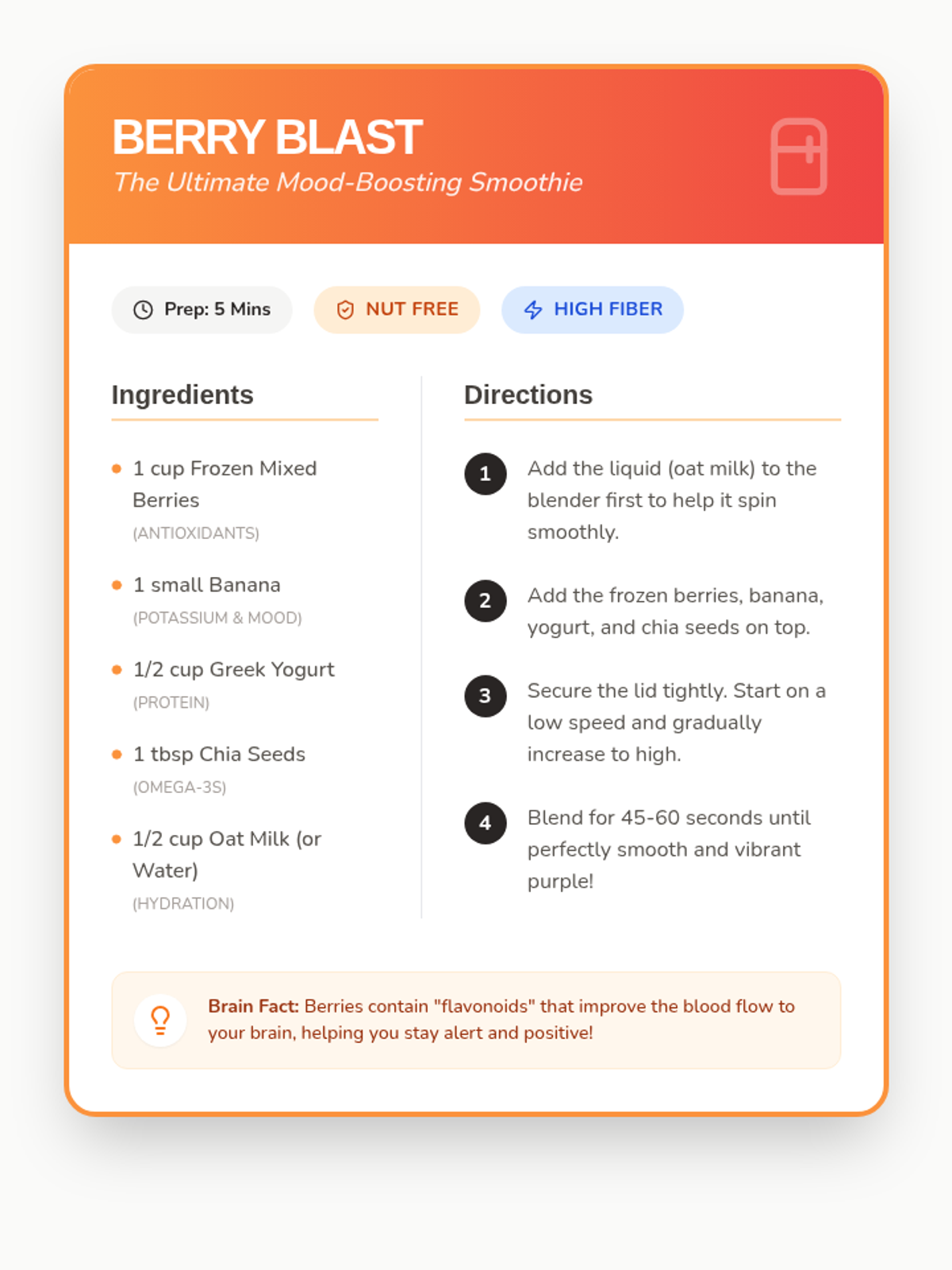
A visually appealing, nut-free recipe card for the "Berry Blast" smoothie, including ingredient biological roles and clear instructions.
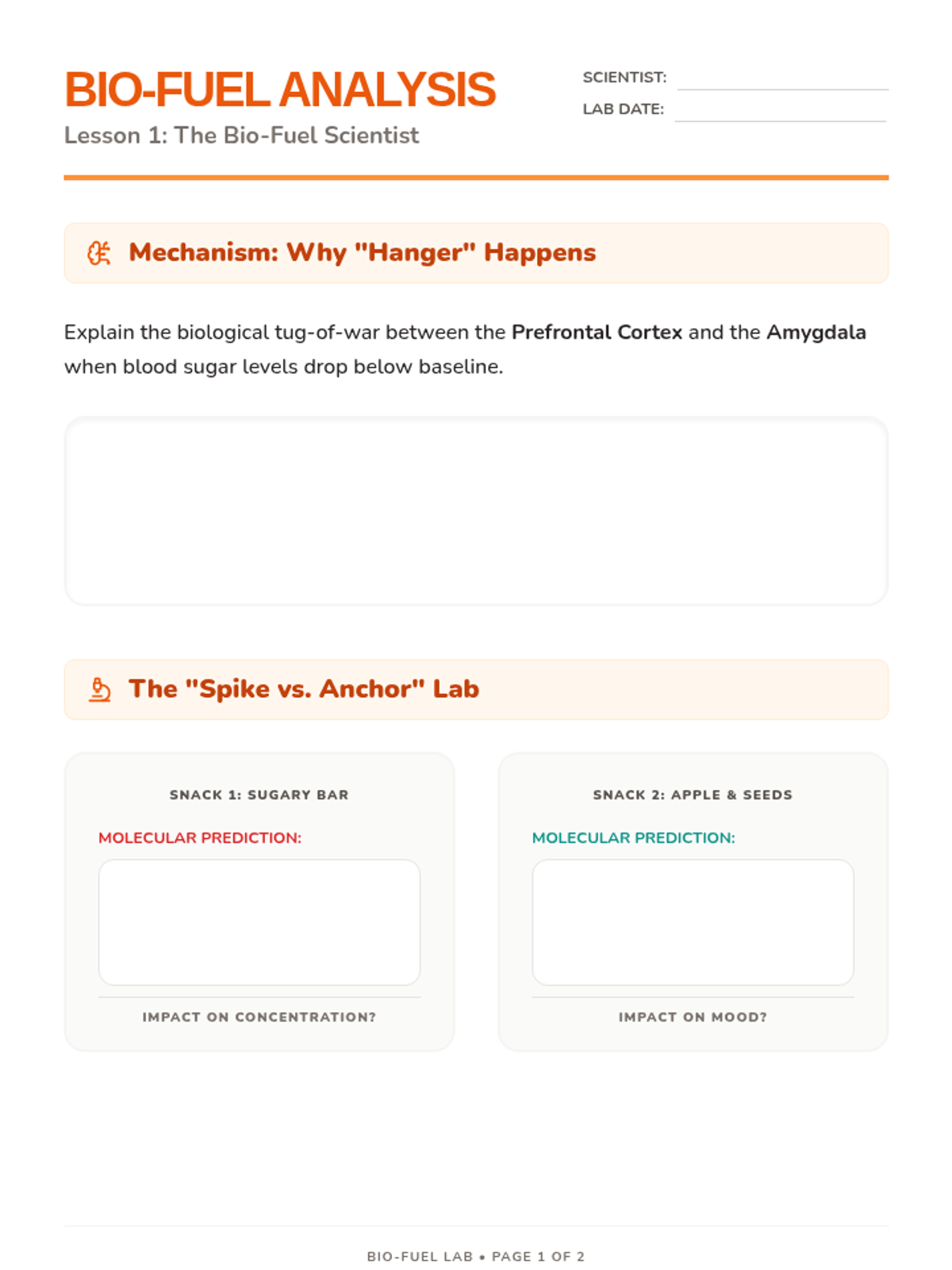
An in-depth 2-page student worksheet for Day 1 focusing on the prefrontal-amygdala tug-of-war, label-reading, and the structural function of Omega-3s.
An intensive 5-slide presentation for Day 1 covering the energy hierarchy of the brain, the glucose rollercoaster, and the structural role of Omega-3s.
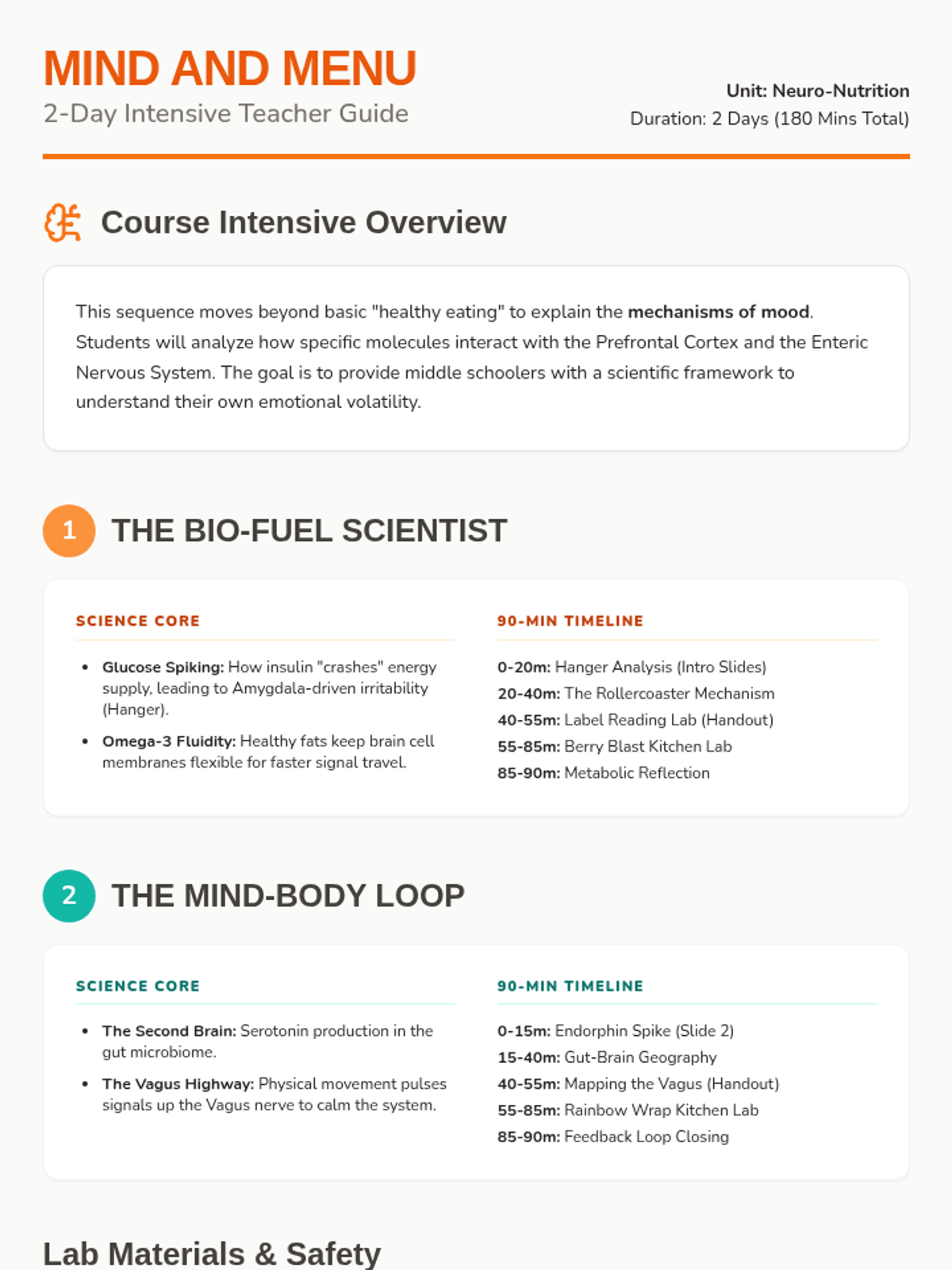
An updated 2-day intensive teacher guide including a revised pacing schedule that incorporates 30-minute physical activity games on both days.
A collection of coloring sheets for Kindergarten students to reinforce concepts of body ownership, private places, and keeping hands busy in class.
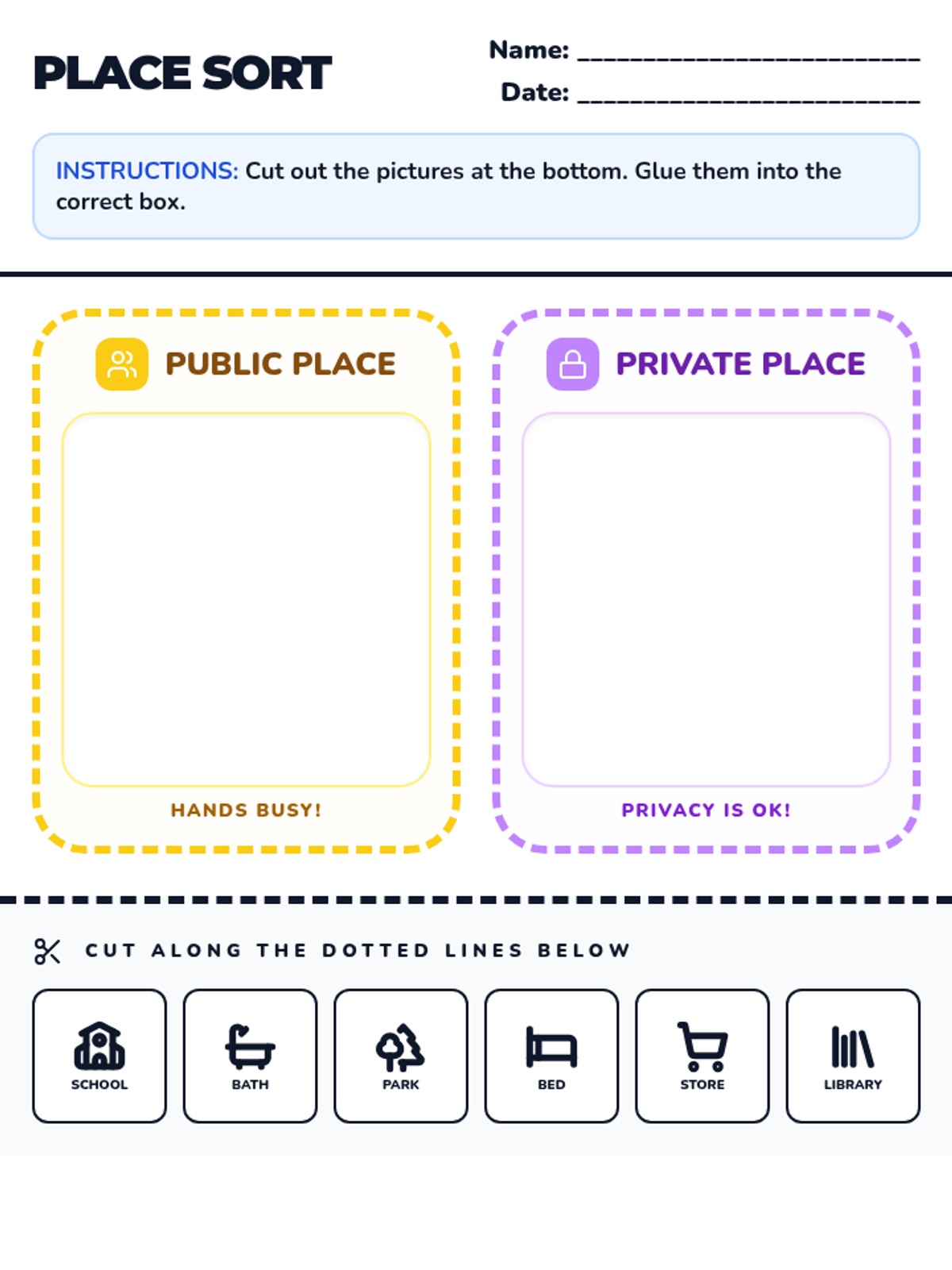
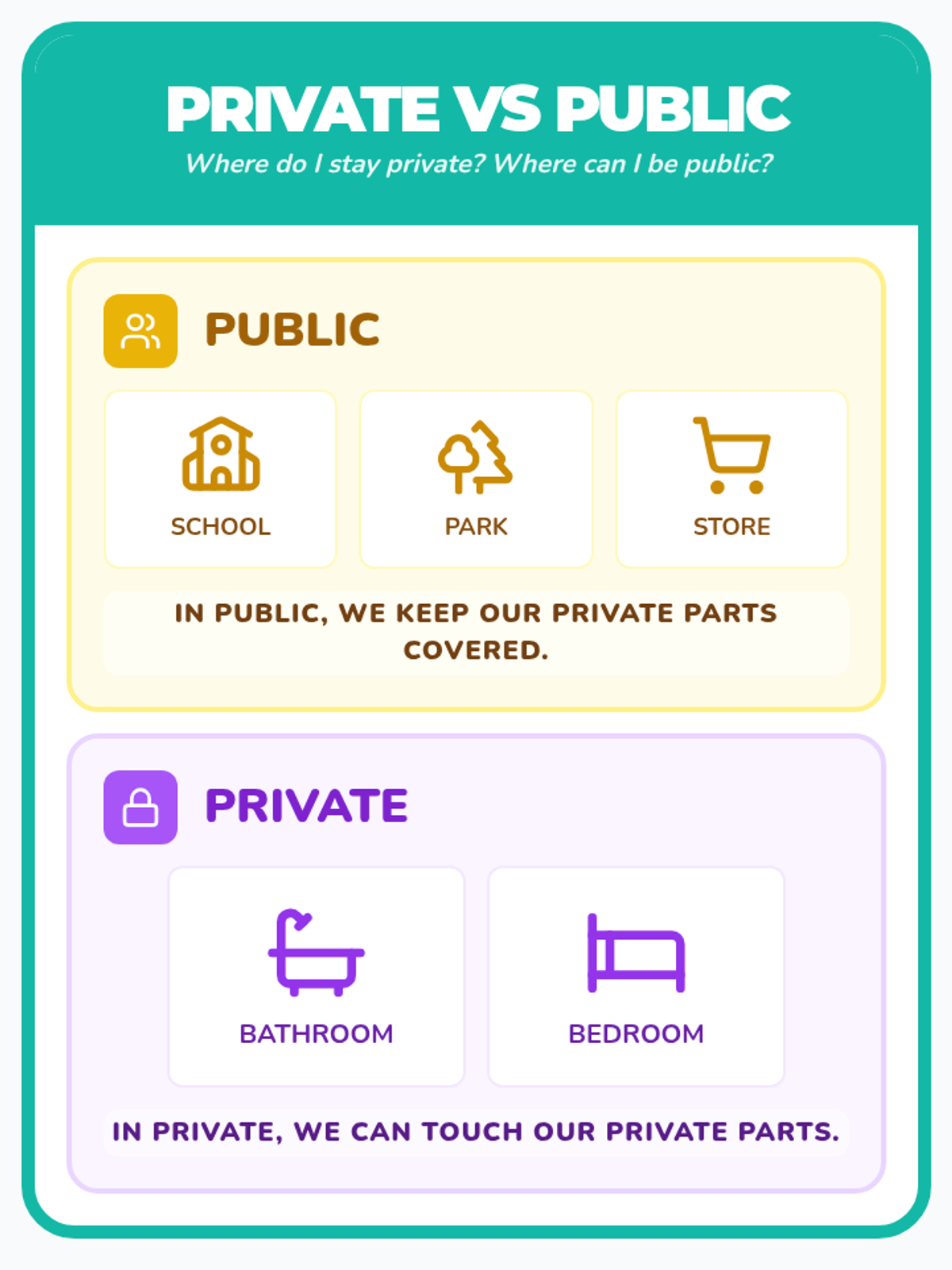
An activity worksheet where students identify private vs. public places to reinforce the lesson on body boundaries.
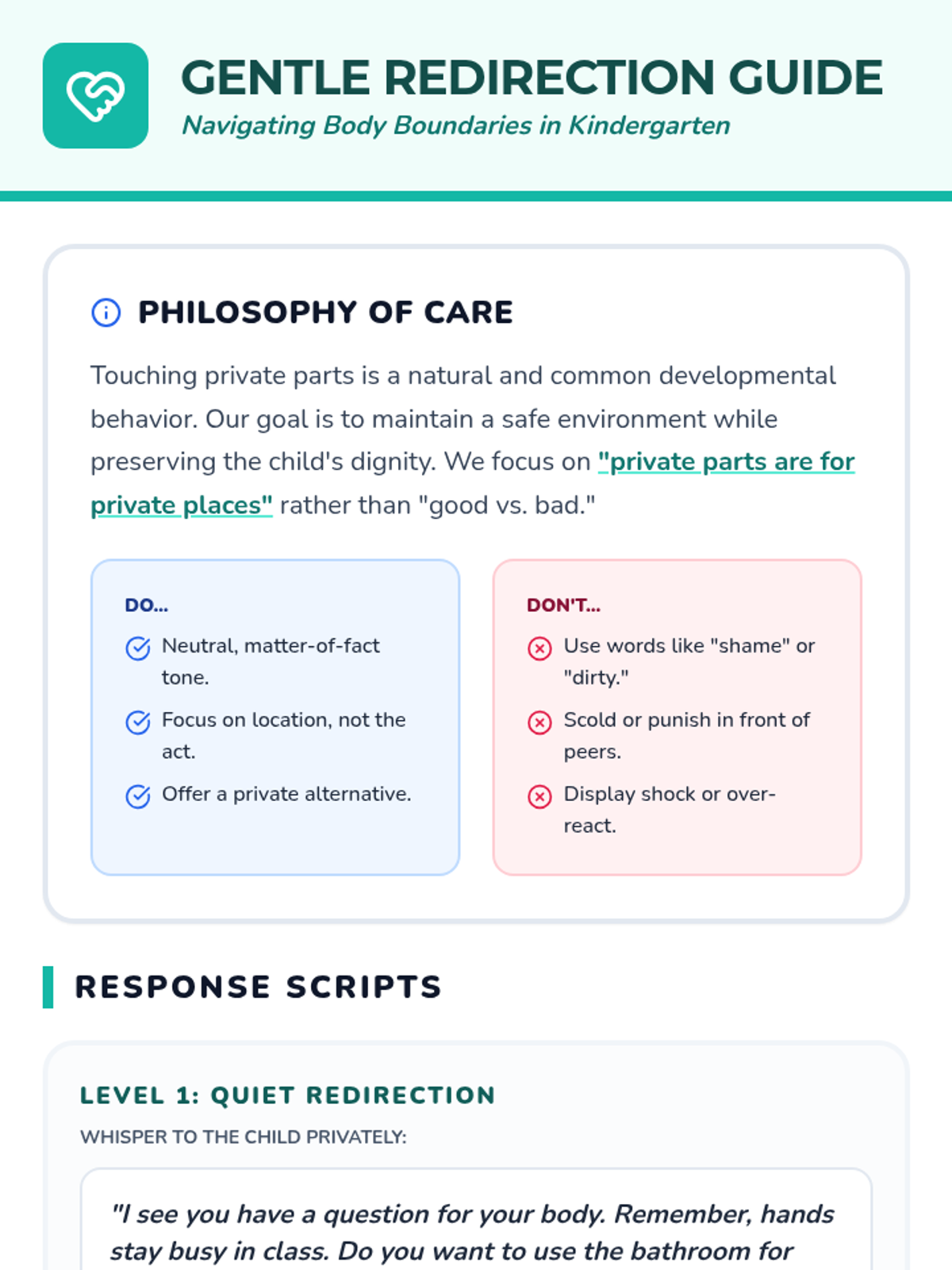
A guide for teachers on how to gently redirect students who engage in private behaviors in public spaces, focusing on non-shaming language and boundary setting.
A colorful classroom poster illustrating the difference between private and public places to help students remember body boundaries.
A visual social story for Kindergarten students about body boundaries, private parts, and the difference between private and public spaces.
A high-impact 5-slide presentation for a 90-minute workshop on nutrition and movement. Revised for better contrast and icon clarity.
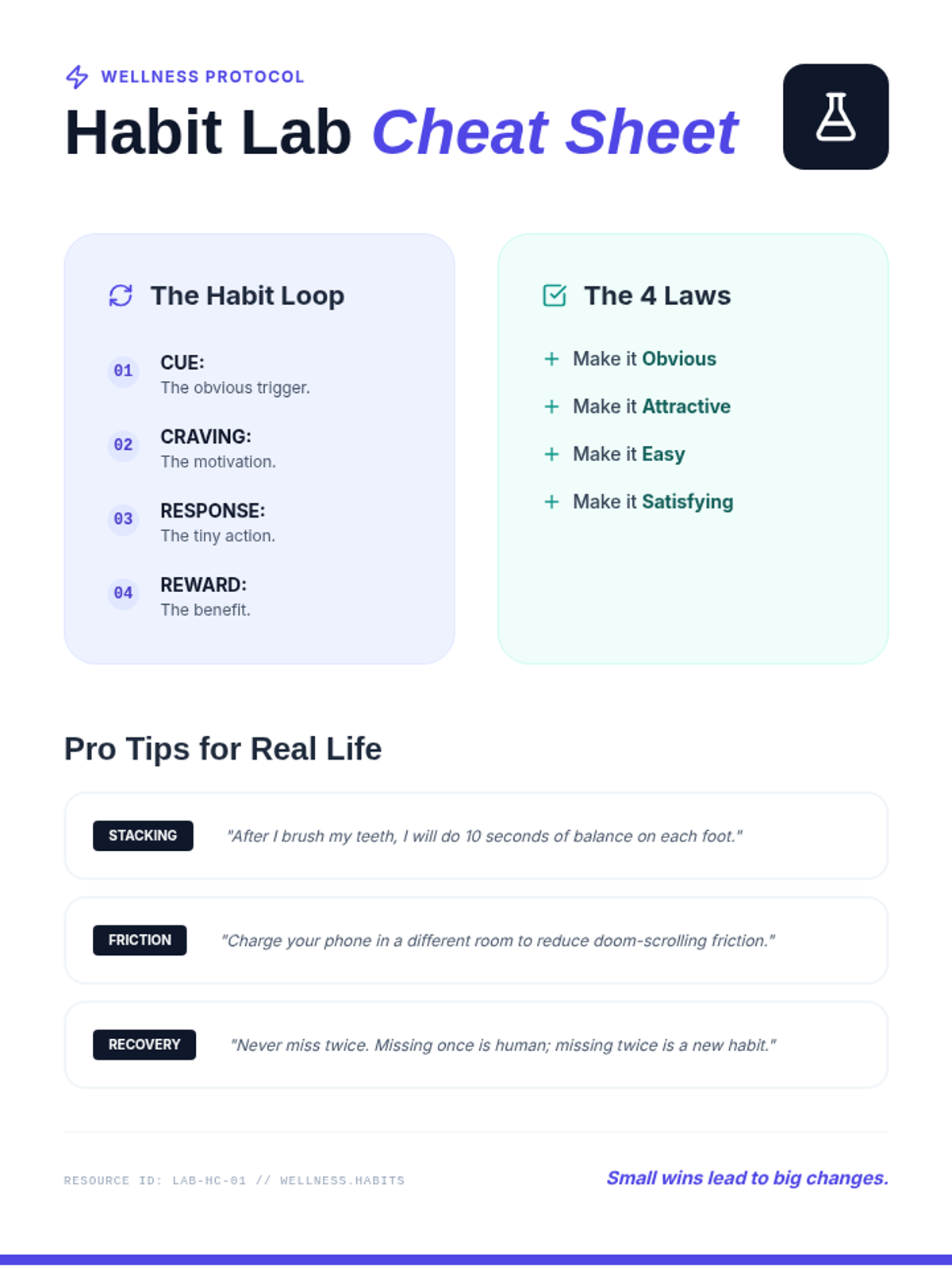
A concise one-page reference handout for participants, summarizing the habit loop, the four laws of behavior change, and practical strategies like habit stacking and environment design.
A high-impact visual presentation covering the core concepts of habit formation: the habit loop, identity-based habits, the 2-minute rule, temptation bundling, and habit stacking. Designed for 16-21 year olds.
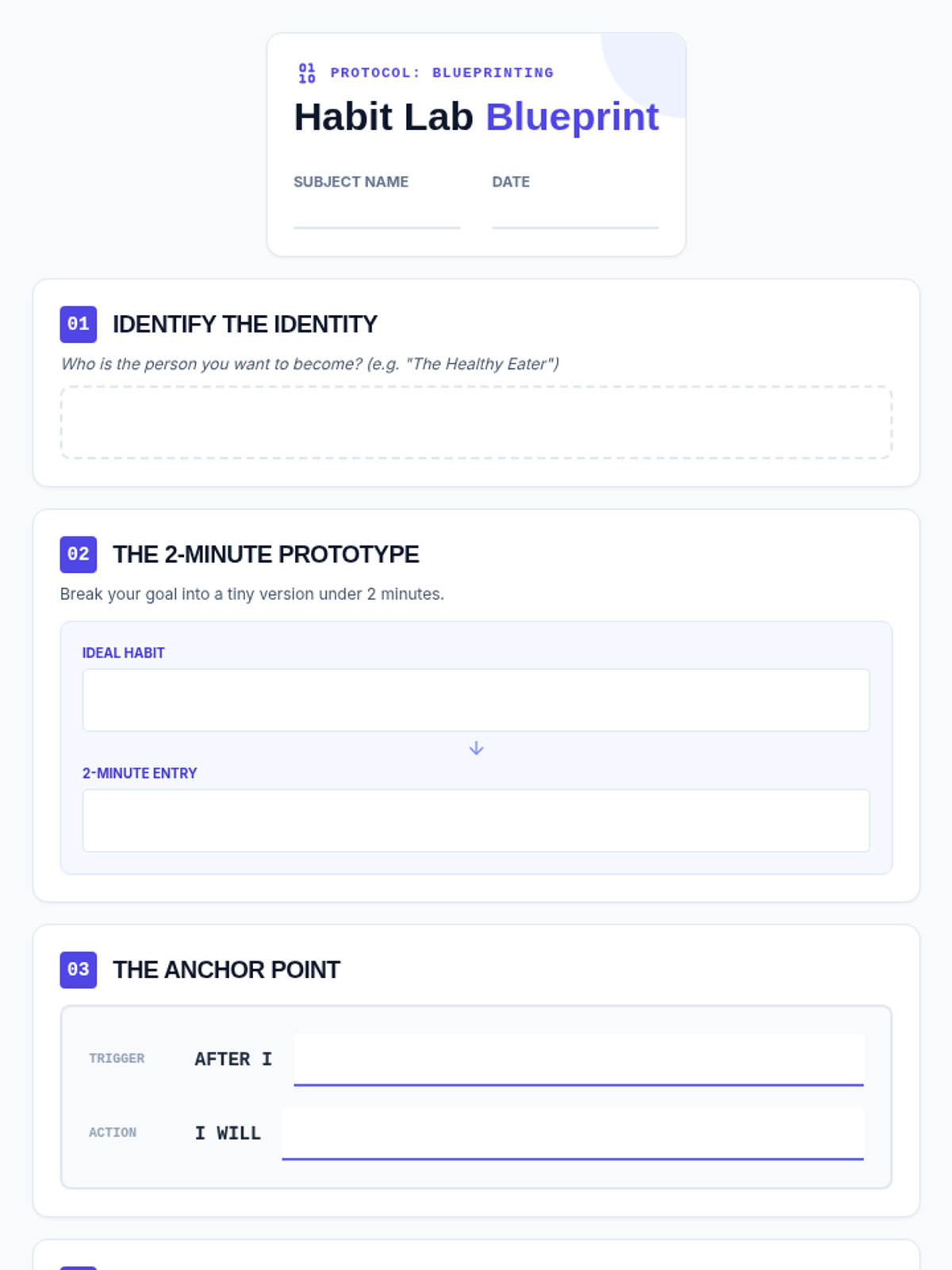
An expanded 5-page workshop workbook for habit formation. Includes identity mapping, habit loop analysis, 2-minute prototyping, habit stacking practice, environment audits, backup planning, reward menus, habit trackers, and long-term vision contracts. Designed for a 90-minute high-engagement session.
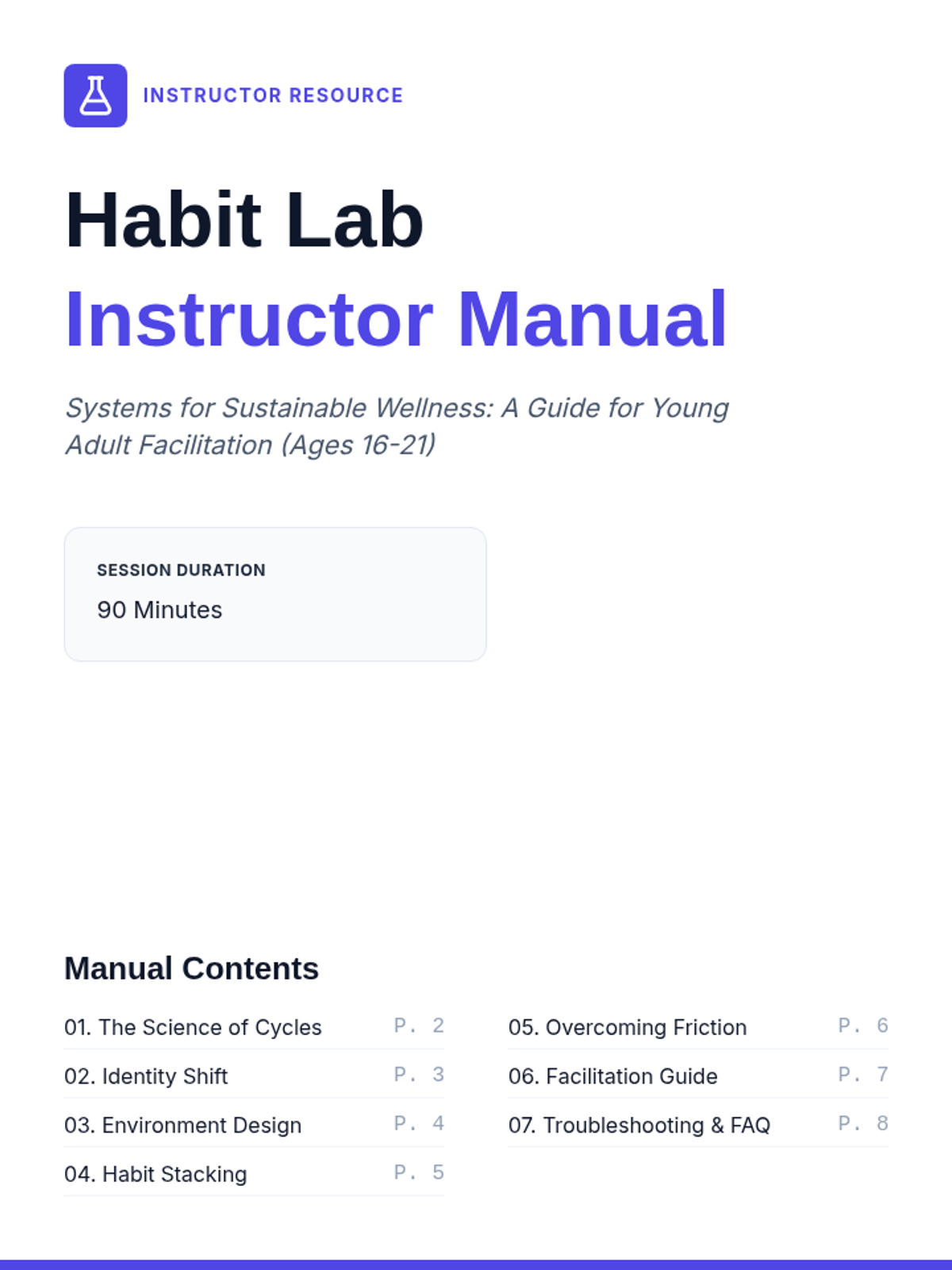
A comprehensive 8-page instructor manual updated with specific facilitation times for a 90-minute session. Includes guidance for new workbook activities such as Loop Mapping, Reward Menus, and the 2-Minute Prototype brainstorm.
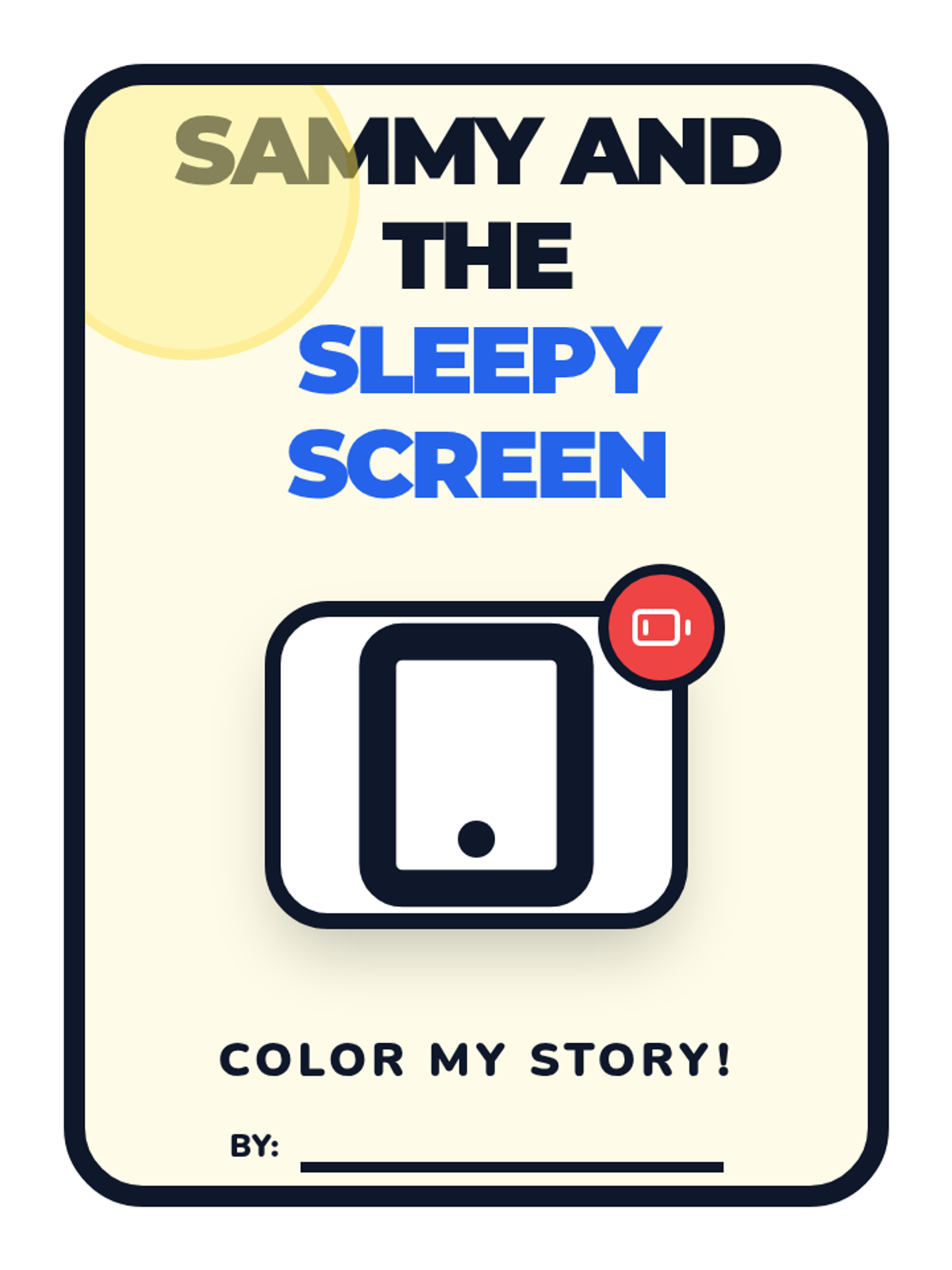
A narrative coloring book for K-1 students telling the story of Sammy, who learns to balance his screen time with outdoor play to go from feeling like a 'statue' to a 'superhero'.
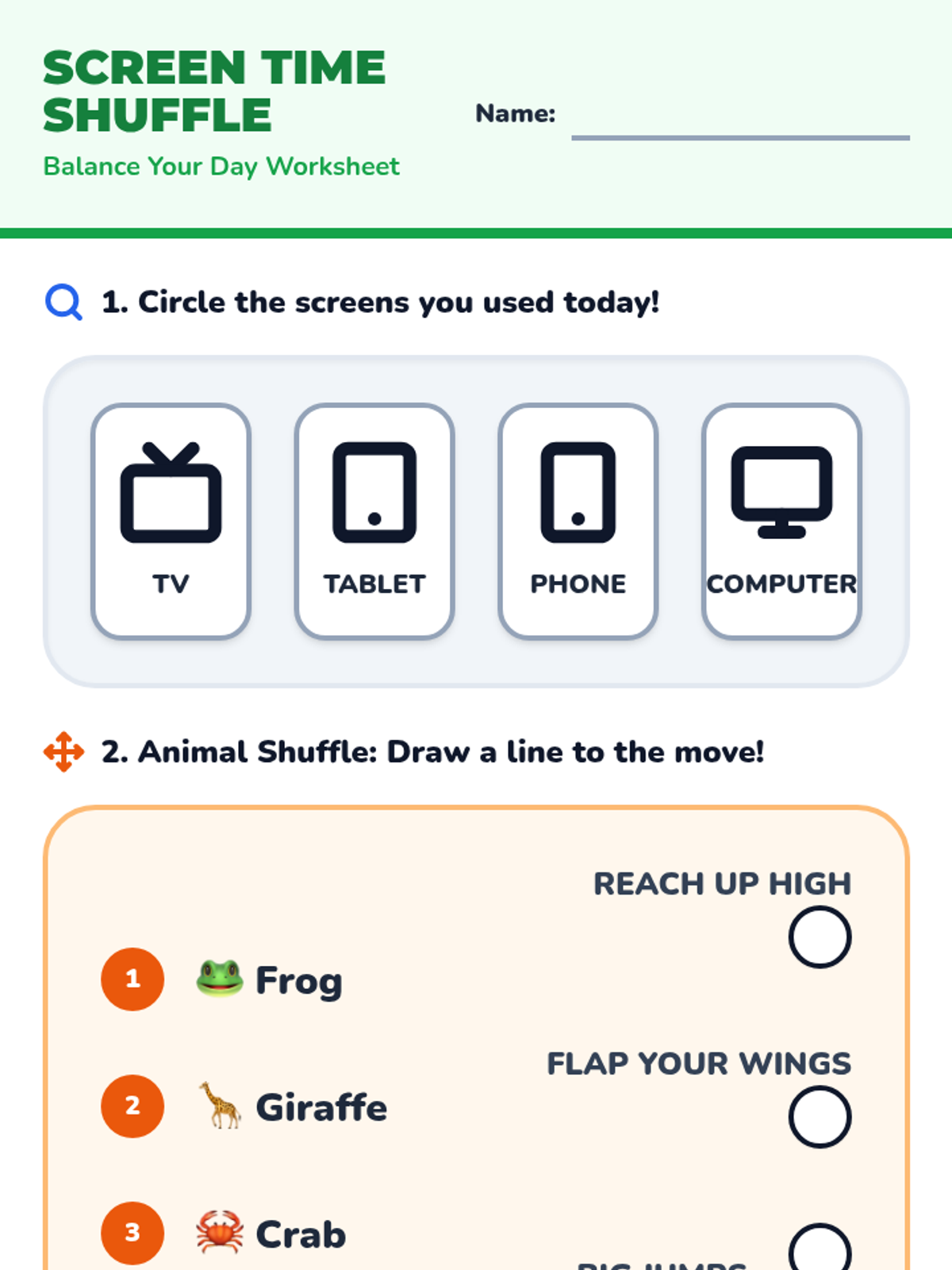
A student worksheet for K-1 featuring a screen identification task, a movement-matching animal activity, a drawing area for physical play, and a take-home scavenger hunt.
An engaging slide deck for K-1 students that uses vibrant visuals and movement prompts to explain the difference between screen time and physical activity, emphasizing the concept of balance.
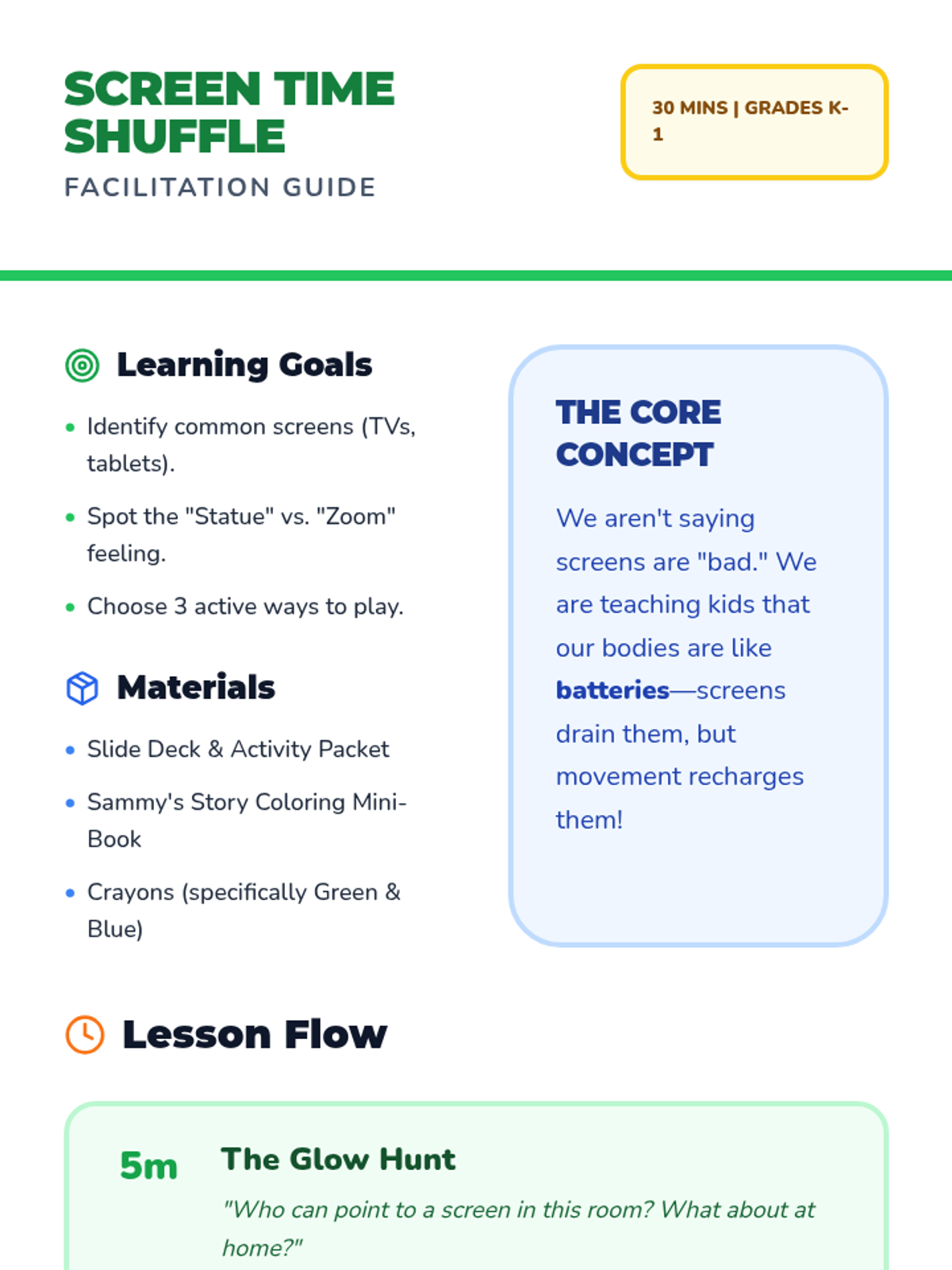
A comprehensive facilitation guide for teachers to lead a 30-minute lesson on balancing screen time with physical activity, including pacing, discussion prompts, and key learning goals.
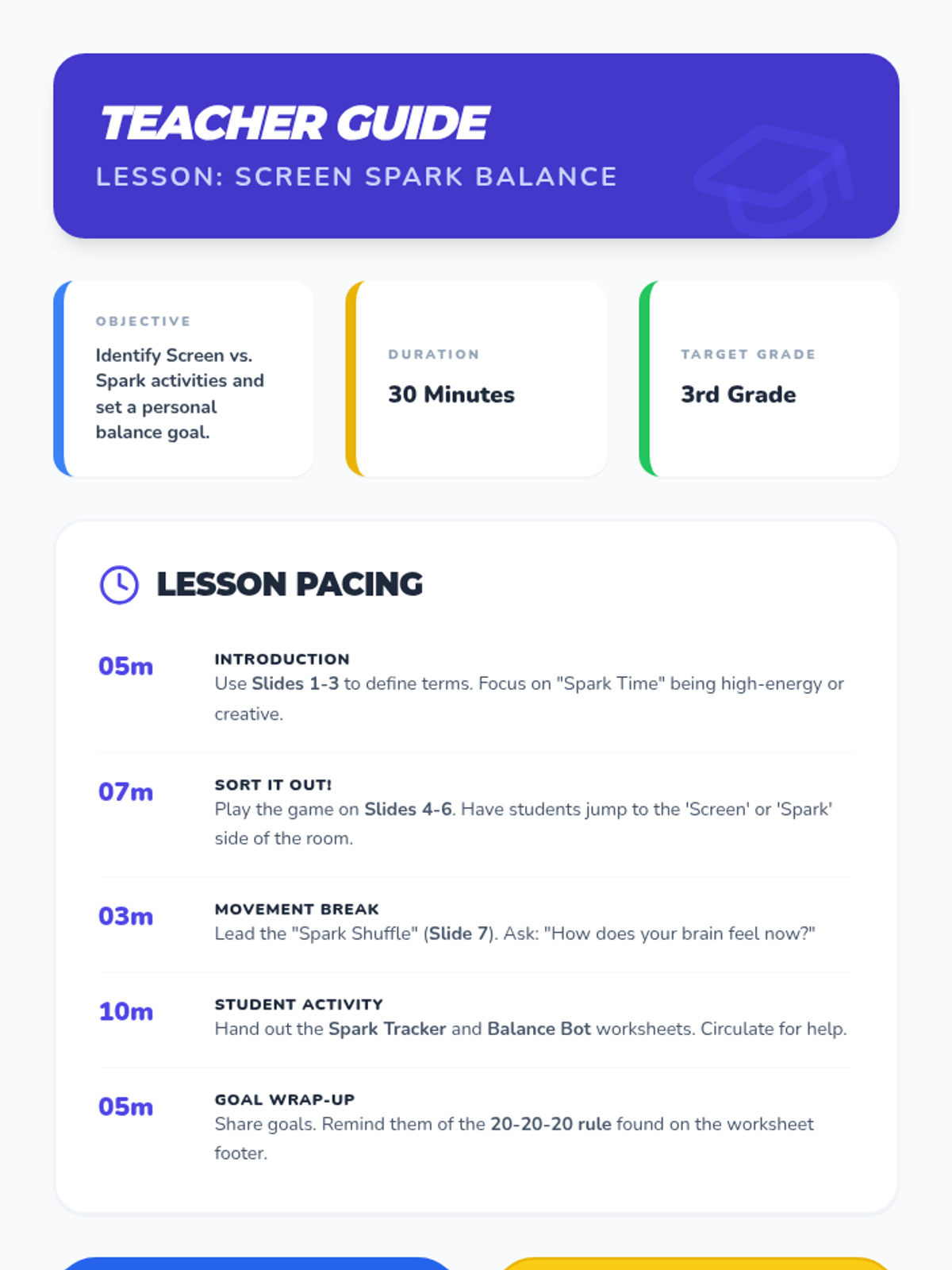
A comprehensive guide for teachers including lesson pacing, discussion prompts, and activity instructions for the 'Screen Spark' lesson. Re-designed for better contrast and readability.
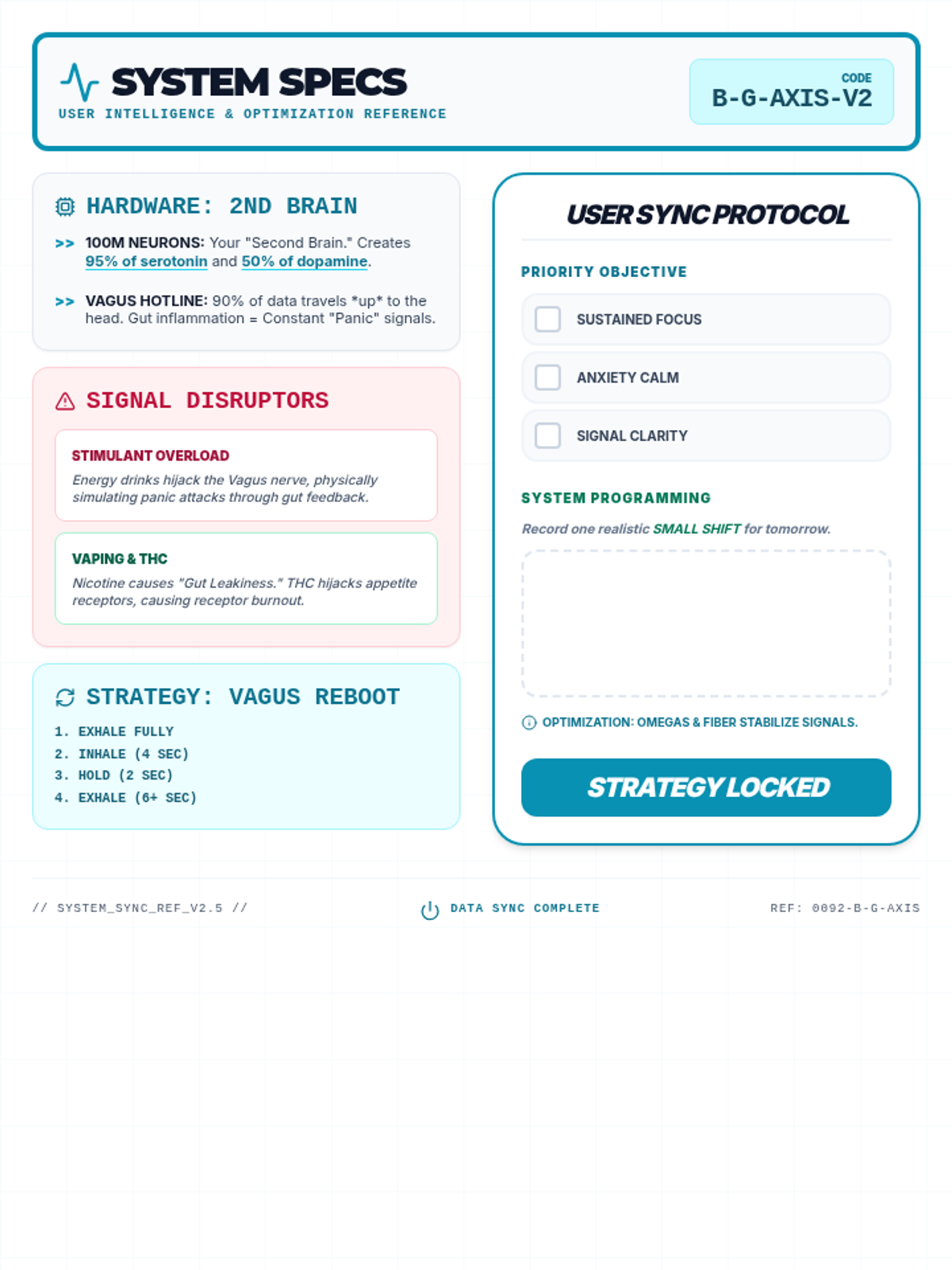
A 'System Specs' reference sheet for students that complements the 12-slide deck. Revised to be print-friendly with high contrast, white backgrounds for student work areas, and improved layout to fit on a single page. Includes the Vagus Reboot strategy and a personal 'User Sync Protocol' work area. Revised for 1-page fit and clarity.
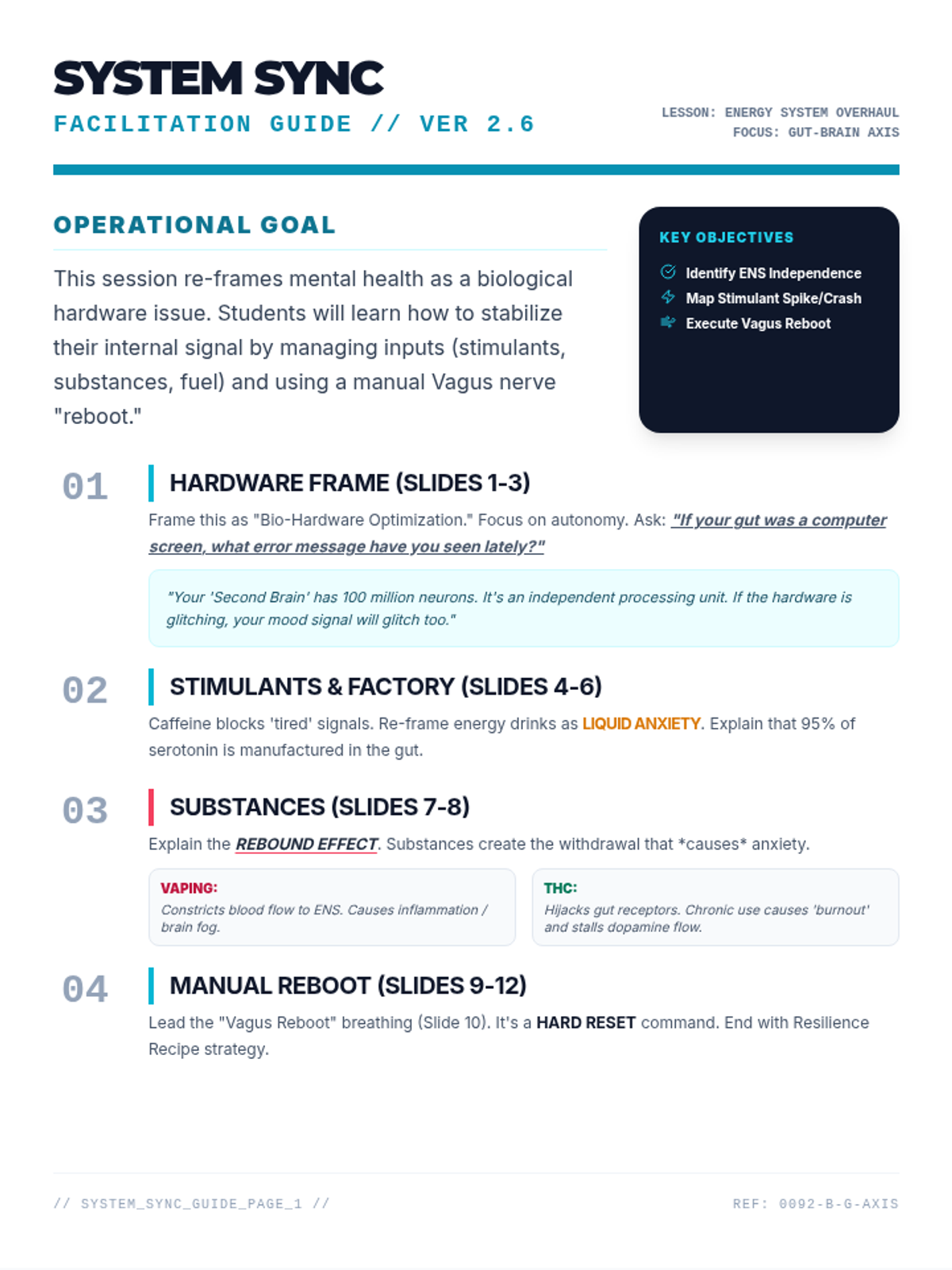
A facilitation guide for the 12-slide 'Energy System' lesson. Provides technical scripts for explaining the ENS, stimulant cycles, and the rebound effects of vaping and THC. Consolidated into a professional 2-page layout with expanded facilitation notes and clinical integration strategies. Revised for page-break efficiency and content density.
A high-energy, 12-slide presentation themed as a technical 'Energy System' overhaul. Covers the 2nd brain (ENS), chemical factory (serotonin/dopamine), stimulant impacts (energy drinks), and detailed biological effects of vaping/THC. Includes multiple interactive digital check-ins and a Vagus Nerve strategy slide. Revised for layout consistency and contrast.