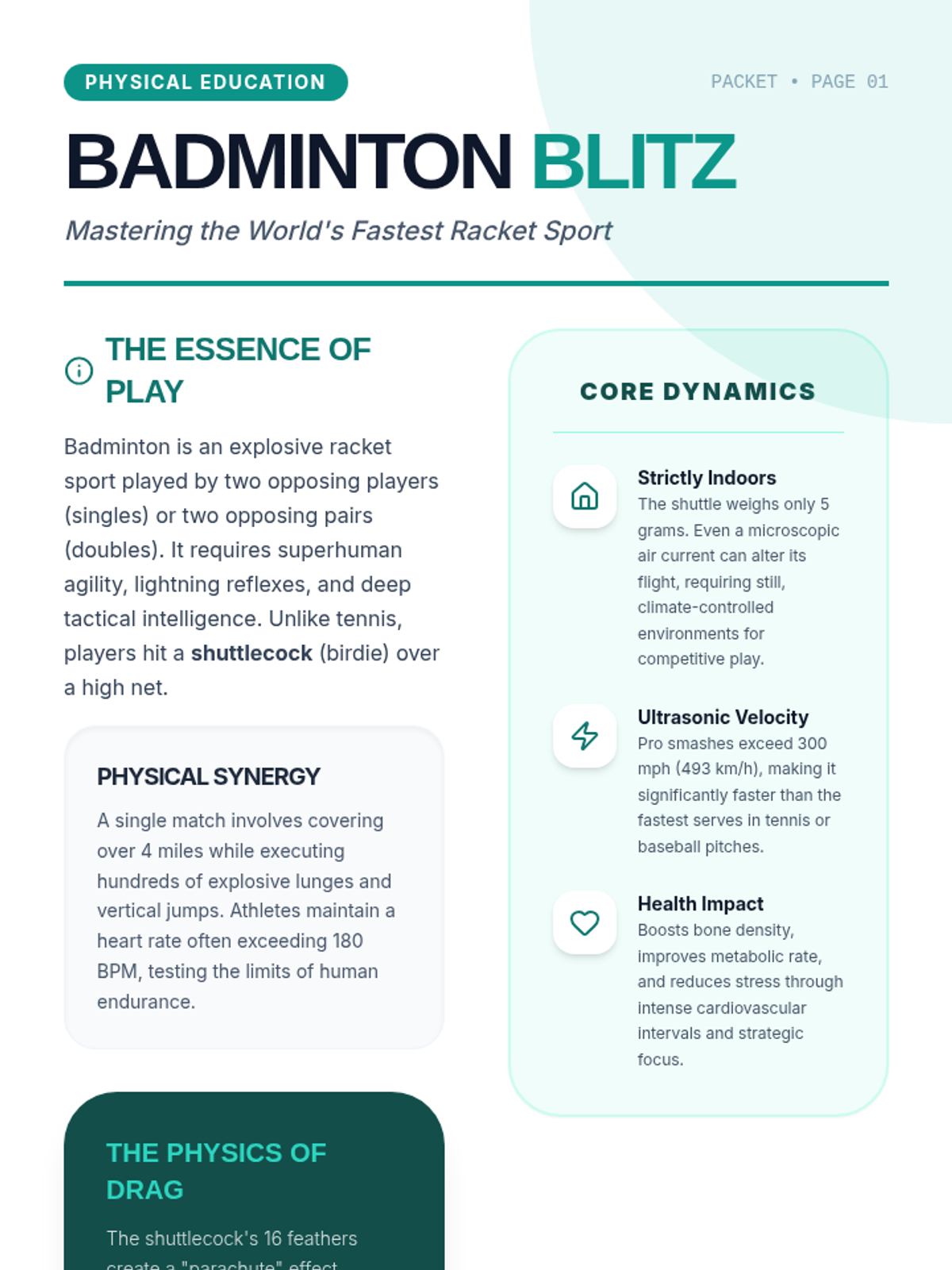
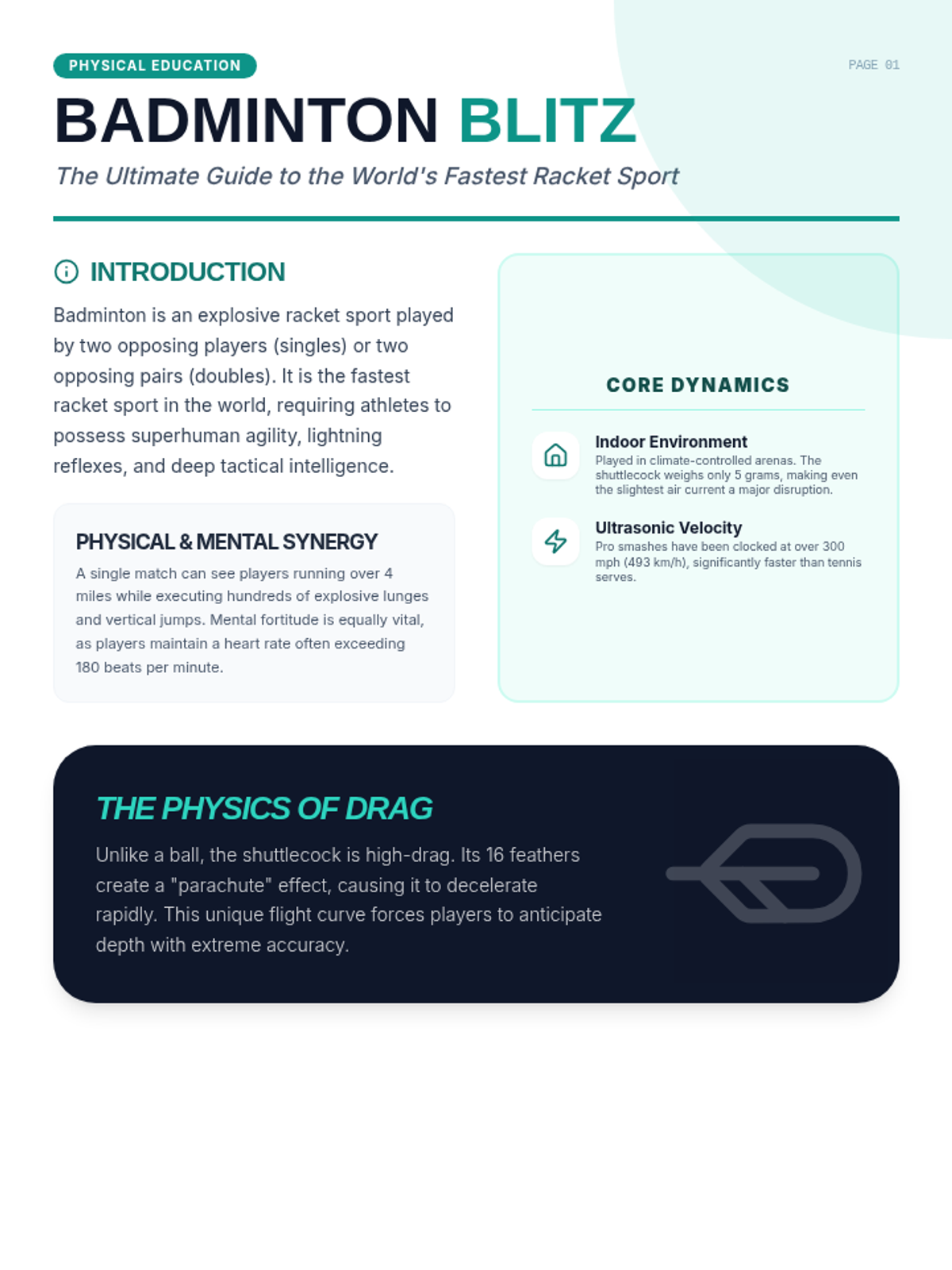
Fundamental techniques for racket sports, track and field, and gymnastics maneuvers. Develops physical literacy through martial arts disciplines and self-defense strategies.
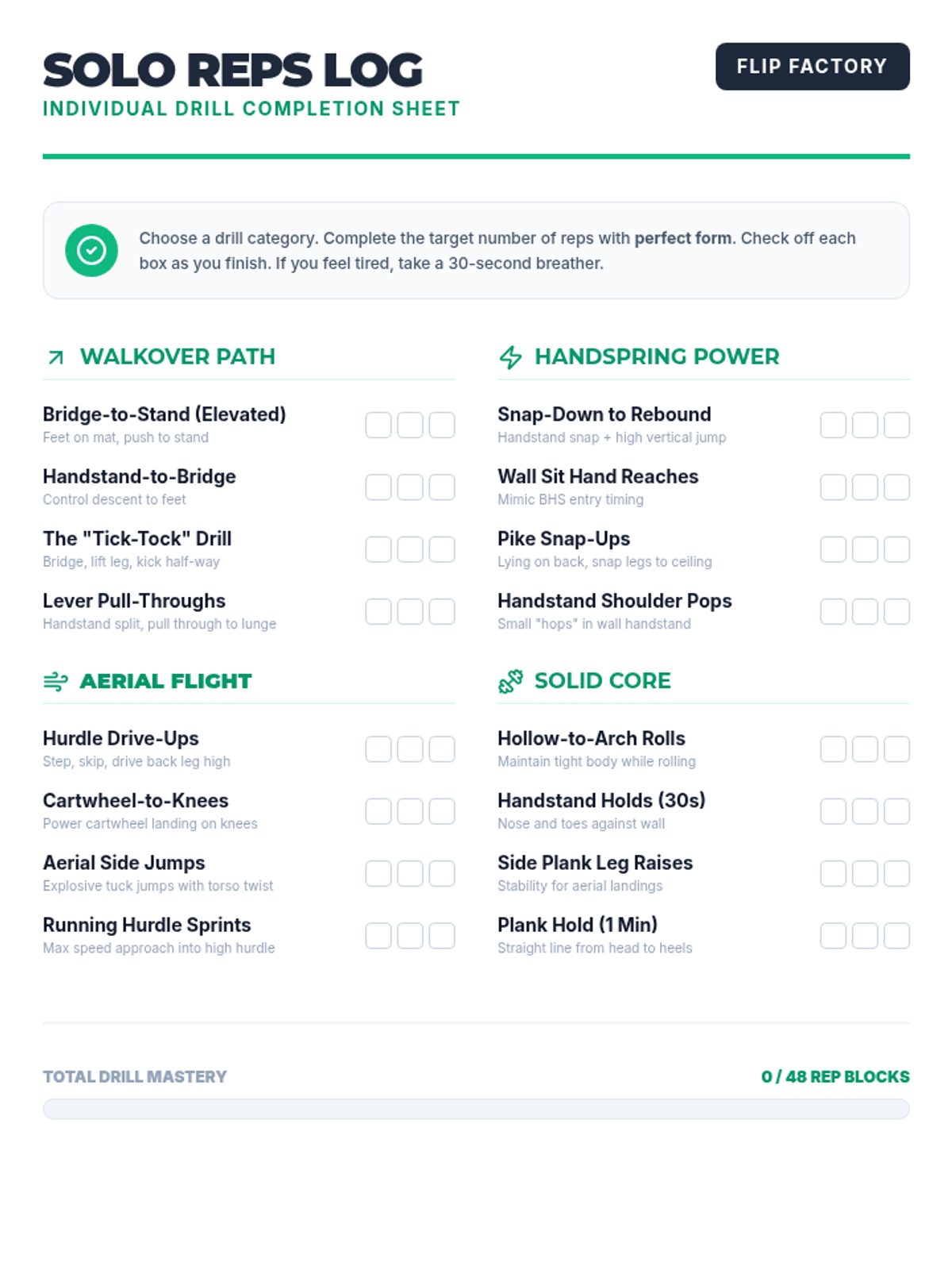
A student-facing "Solo Reps Log" worksheet designed for tracking completion of 16 different individual drills. Includes categories for walkovers, handsprings, aerials, and core strength with checkbox tracking for multiple sets.
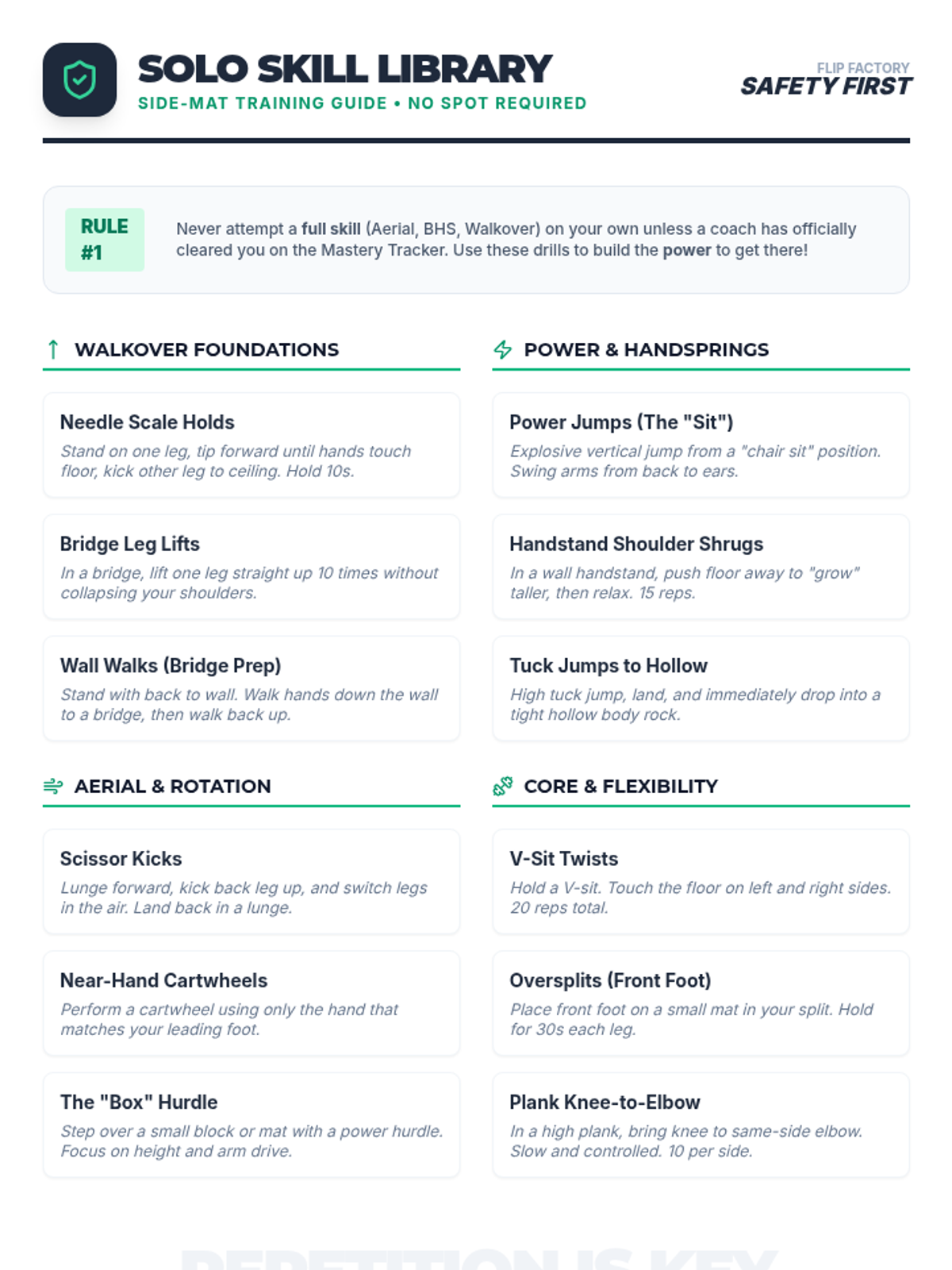
A comprehensive 1-page reference guide for students containing 12 individual drills they can perform on side-mats without a spotter. Drills are categorized by skill focus: Walkovers, Power/Handsprings, Aerials, and Core.
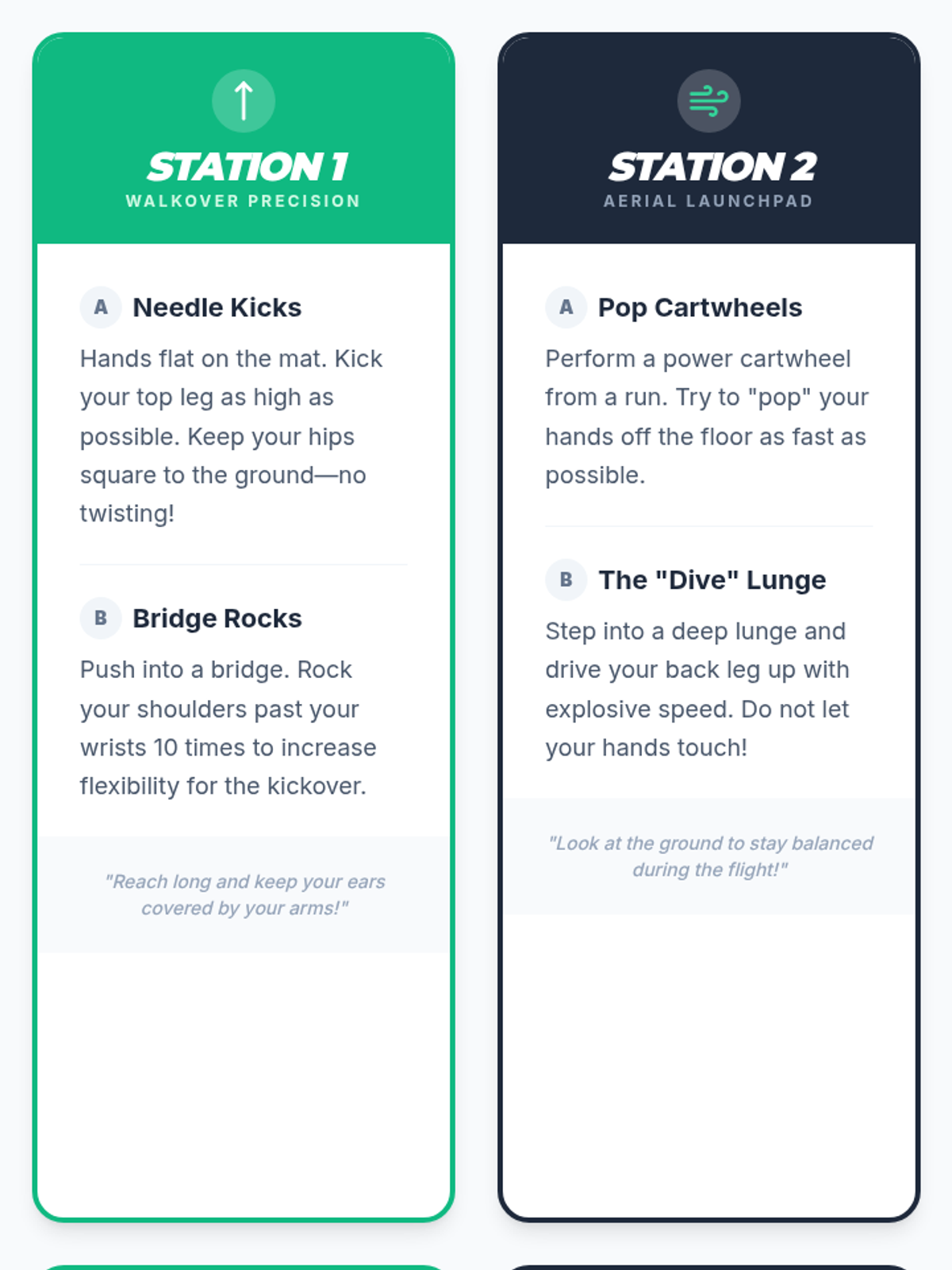
An expanded set of 6 visual station cards designed to be printed and placed at different areas of the gym. Includes dedicated stations for individual solo drills like handstand snap-downs and hurdle skips that don't require spotting.
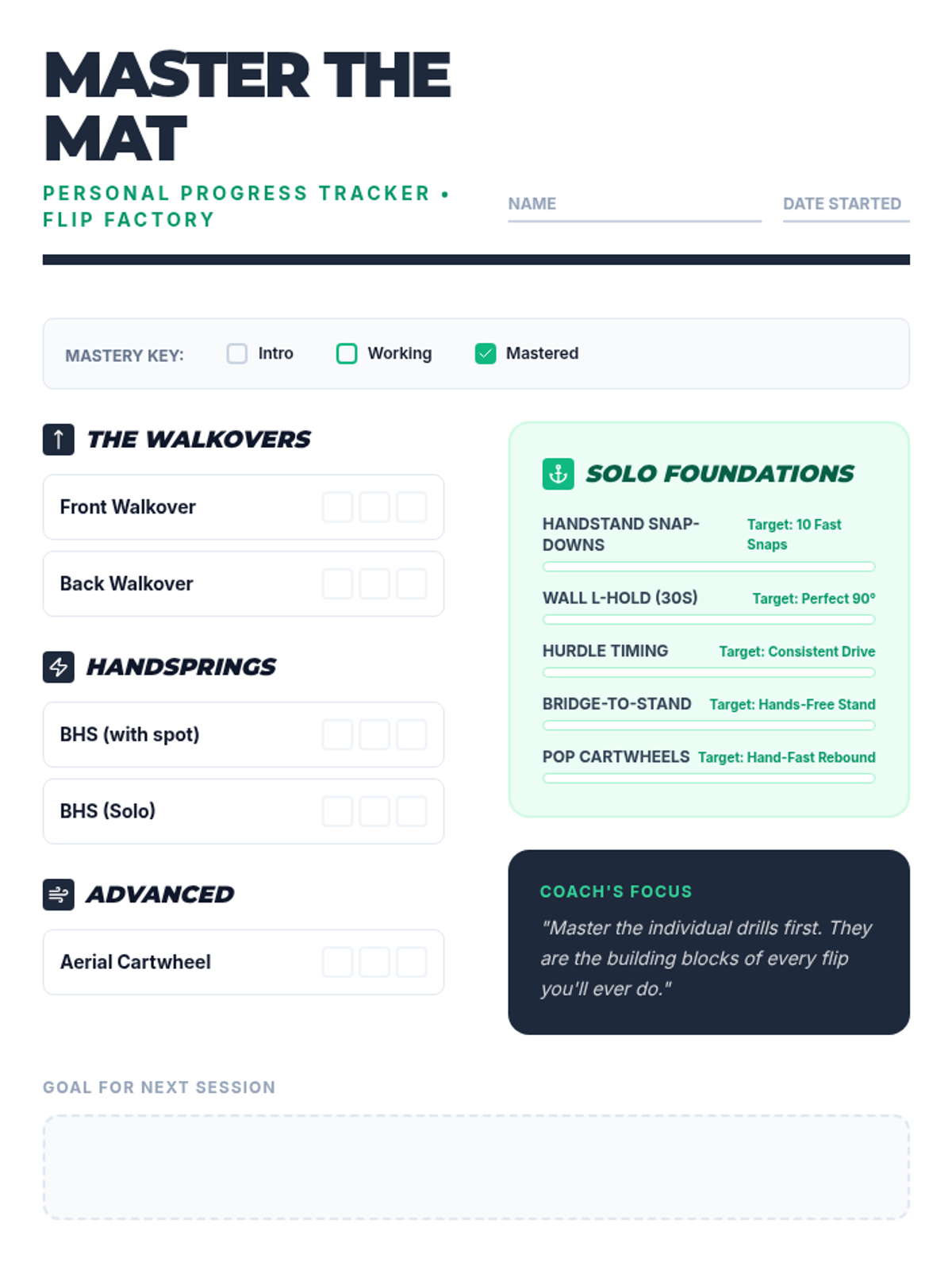
An updated student-facing skills tracker for tumbling, now including a dedicated "Solo Foundations" section for tracking progress on individual drills like snap-downs, wall holds, and hurdle timing.
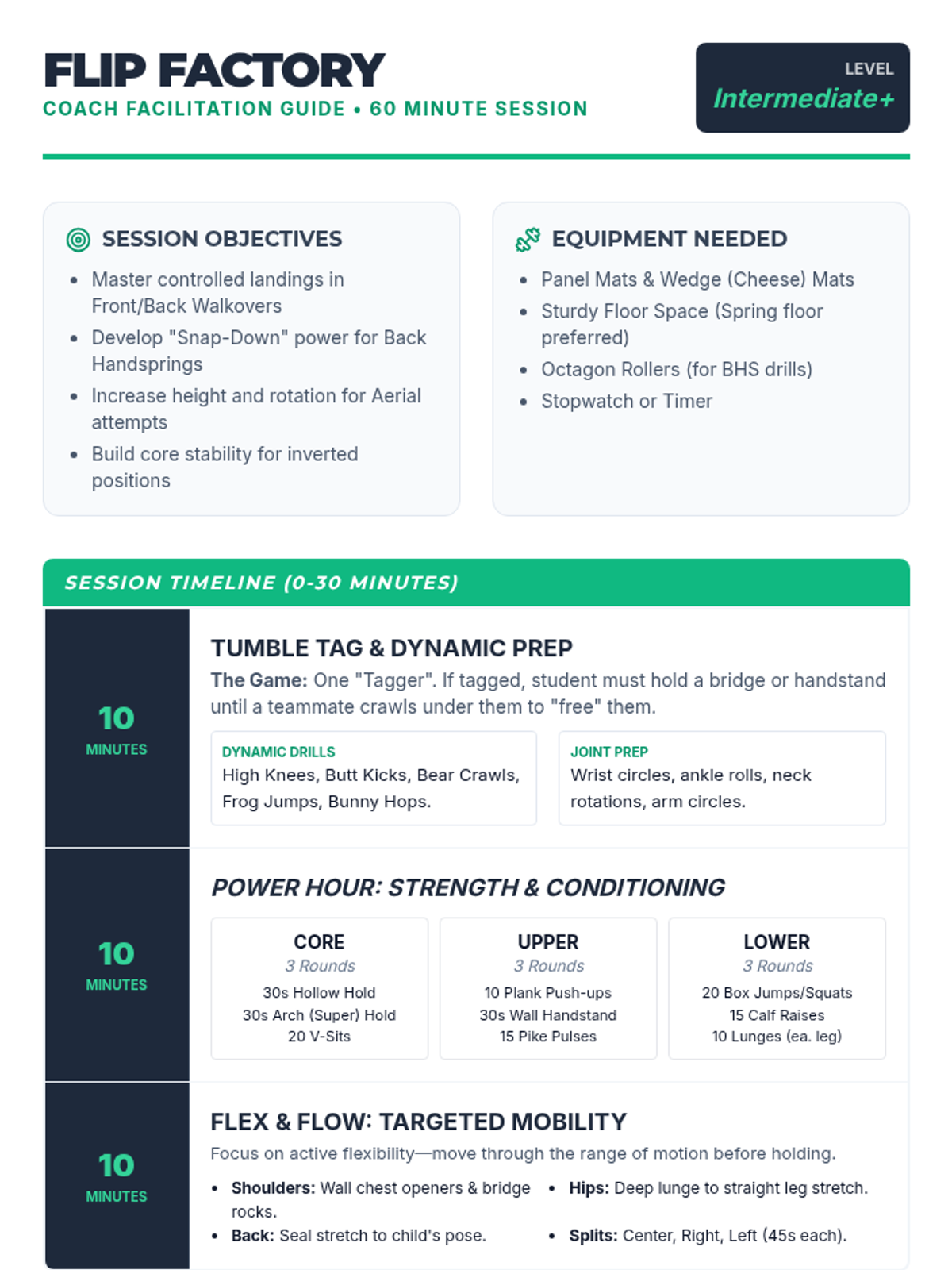
A revised 2-page coaching guide for the tumbling session, now featuring a management strategy for balancing spotted skills with new solo/individual drill stations. Includes updated timeline and coaching tips for solo skill acquisition.
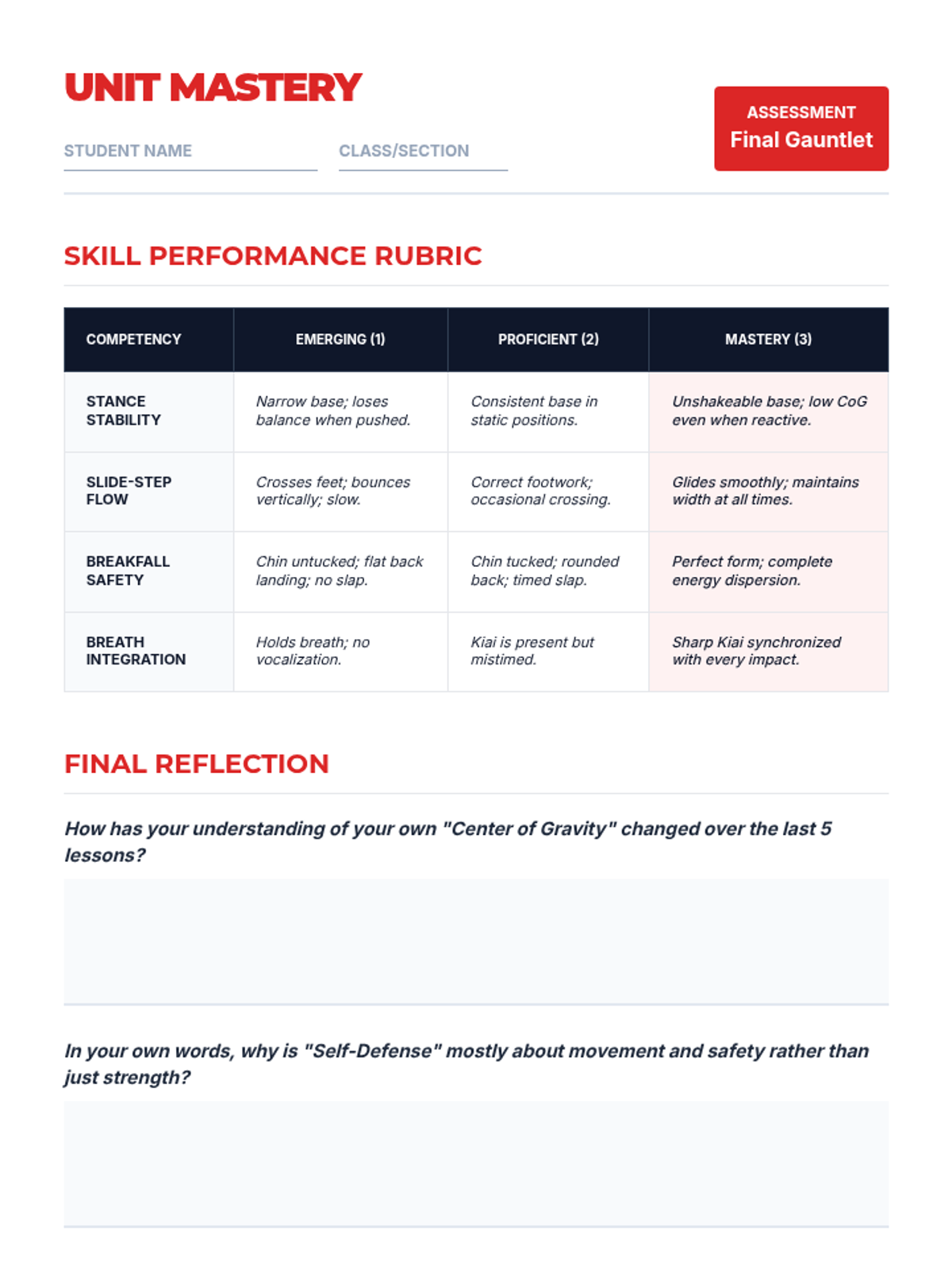
A student performance assessment and rubric for Lesson 5. It allows for peer or teacher evaluation of stances, footwork, breakfalls, and breath integration, while providing space for a final unit reflection.
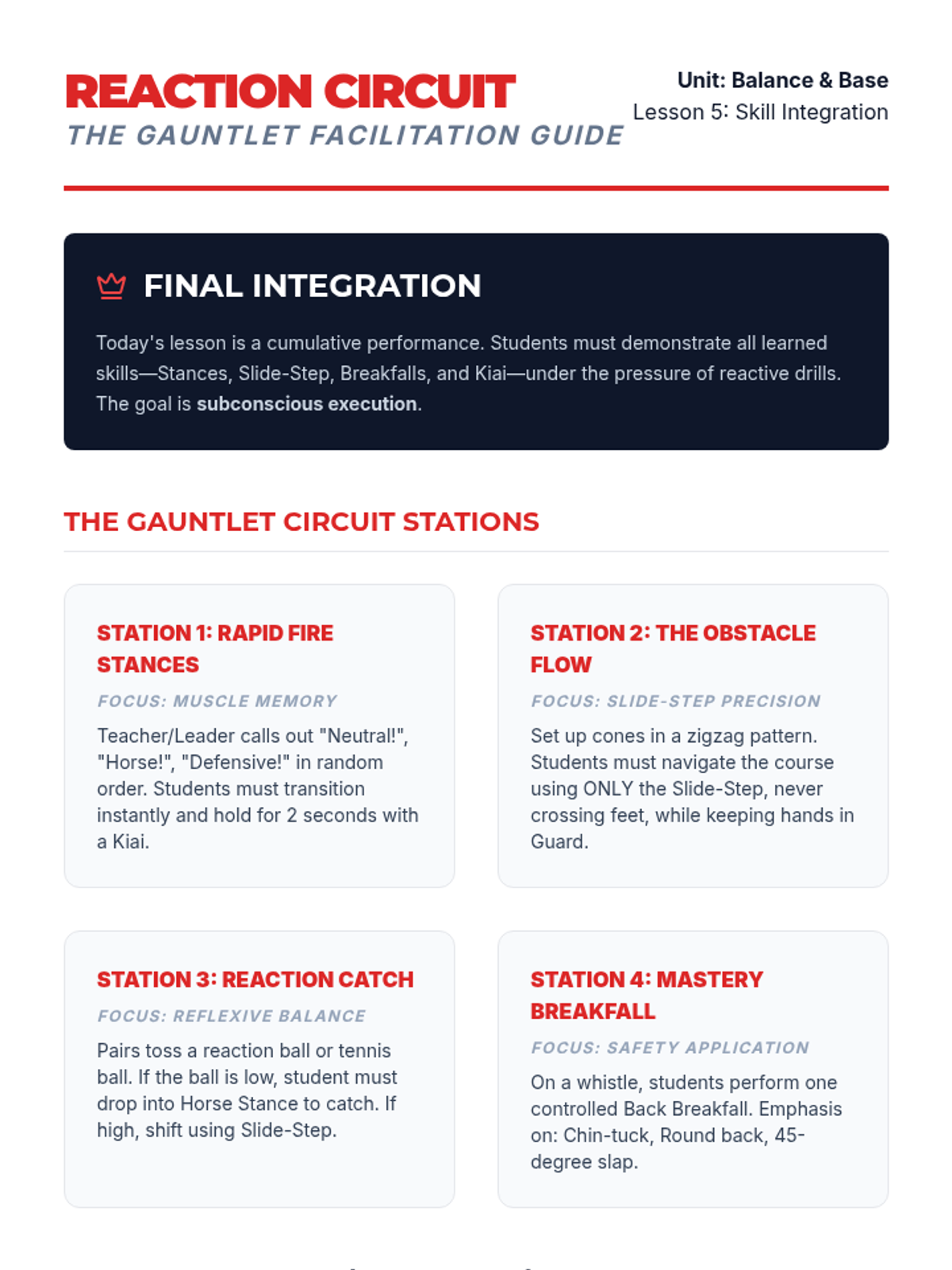
A teacher's facilitation guide for Lesson 5, providing instructions for the final agility circuit and reaction drills. Includes a mastery observation checklist to help teachers assess student progress across all unit skills.
A visual presentation for Lesson 5, culminating the unit by explaining how stances, footwork, and breath integration lead to improved reaction time. Includes instructions for the Mirror Drill, Reaction Ball Toss, and the Final Gauntlet circuit.
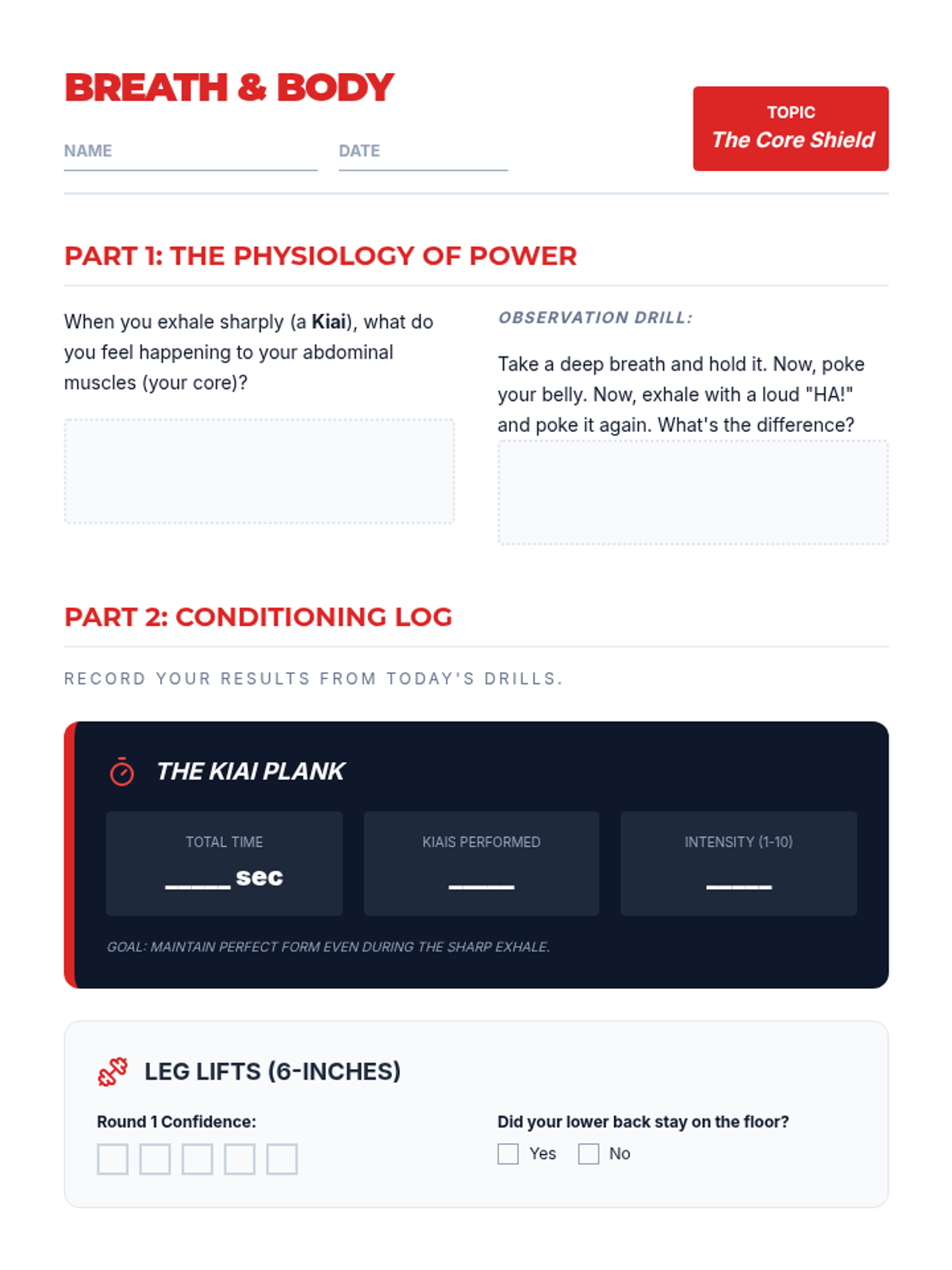
A student worksheet for Lesson 4 that provides space for recording core exercise performance (planks, leg lifts) and includes reflection questions on the physiological and psychological impact of breathing techniques (Kiai).
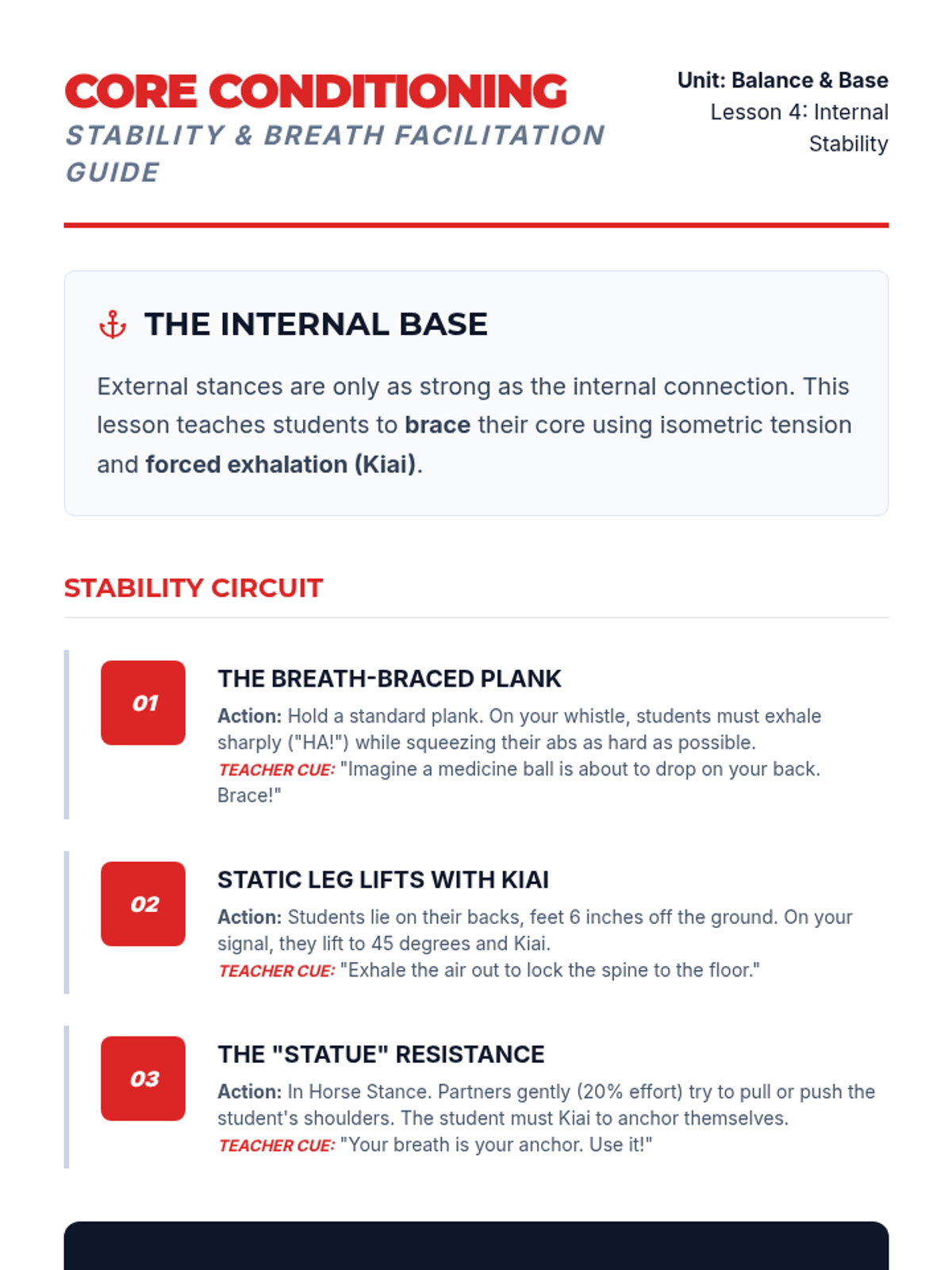
A teacher's facilitation guide for Lesson 4, providing instructions for core exercises, breath-synchronization drills, and the physiological explanation of the 'Kiai'. Includes safety tips for preventing overexertion.
A visual presentation for Lesson 4 focusing on the integration of core stability and breathing techniques (Kiai). It explains the physiological benefits of sharp exhalations for core bracing and provides instructions for synchronization drills.
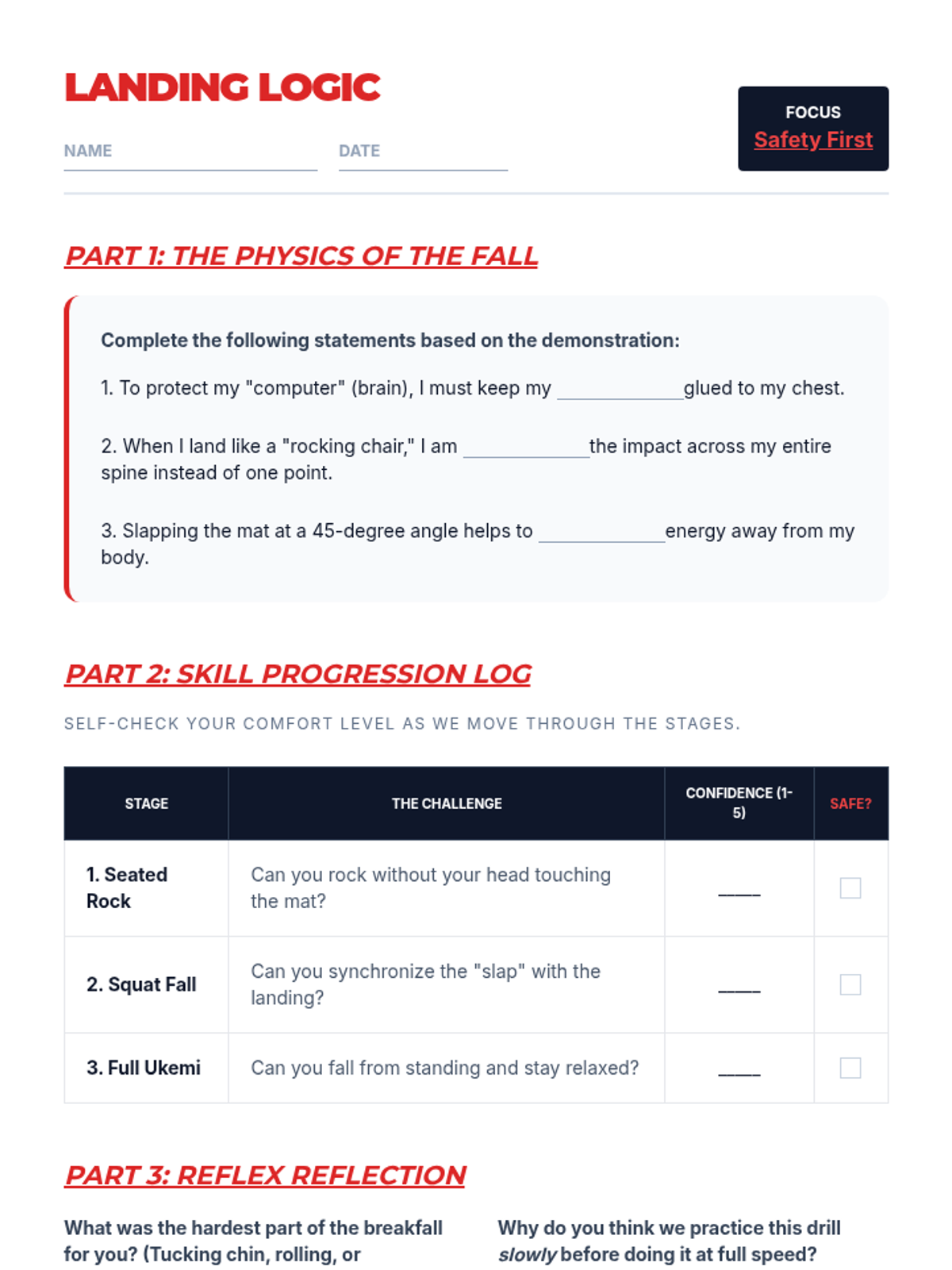
A student worksheet for Lesson 3 that helps students track their progression through breakfall techniques, reinforces the physics of impact through fill-in-the-blank questions, and provides a self-assessment tool for confidence and safety.
A teacher's facilitation guide for Lesson 3, providing a detailed 3-stage progression for teaching back breakfalls (Ukemi), safety protocols, and feedback cues to correct common student errors.
A visual presentation for Lesson 3 focusing on the physics of impact, the importance of chin-tucking for head protection, and the step-by-step breakdown of the back breakfall (Ushiro Ukemi) technique.
A simplified peer review form for 3rd graders to use during Lesson 4. It includes a basic checklist for held poses, flow, and expression, with space for constructive feedback.
A student-facing handout for Lesson 2 that guides students through the mechanics of the slide-step, provides a self-assessment tool for distance management during the 'Tag the Knee' game, and includes reflection questions on movement control.
A teacher's facilitation guide for Lesson 2, providing detailed instructions on the slide-step technique, game rules for 'Tag the Knee', and a troubleshooting table for common student movement errors.
A visual presentation for Lesson 2 focusing on dynamic footwork, the slide-step technique, and distance management. It includes diagrams of the slide-step and rules for the 'Tag the Knee' game.
A student worksheet for Lesson 1 that includes vocabulary checks, a self-assessment checklist for the three stances, and reflection questions about the 'Unpushable' challenge. Designed for students to document their learning and observations.
A teacher's facilitation guide for Lesson 1, providing instructional strategies, safety protocols, and step-by-step instructions for the 'Unpushable' challenge. Includes guided discussion prompts to help students connect the physics of balance to martial arts stances.
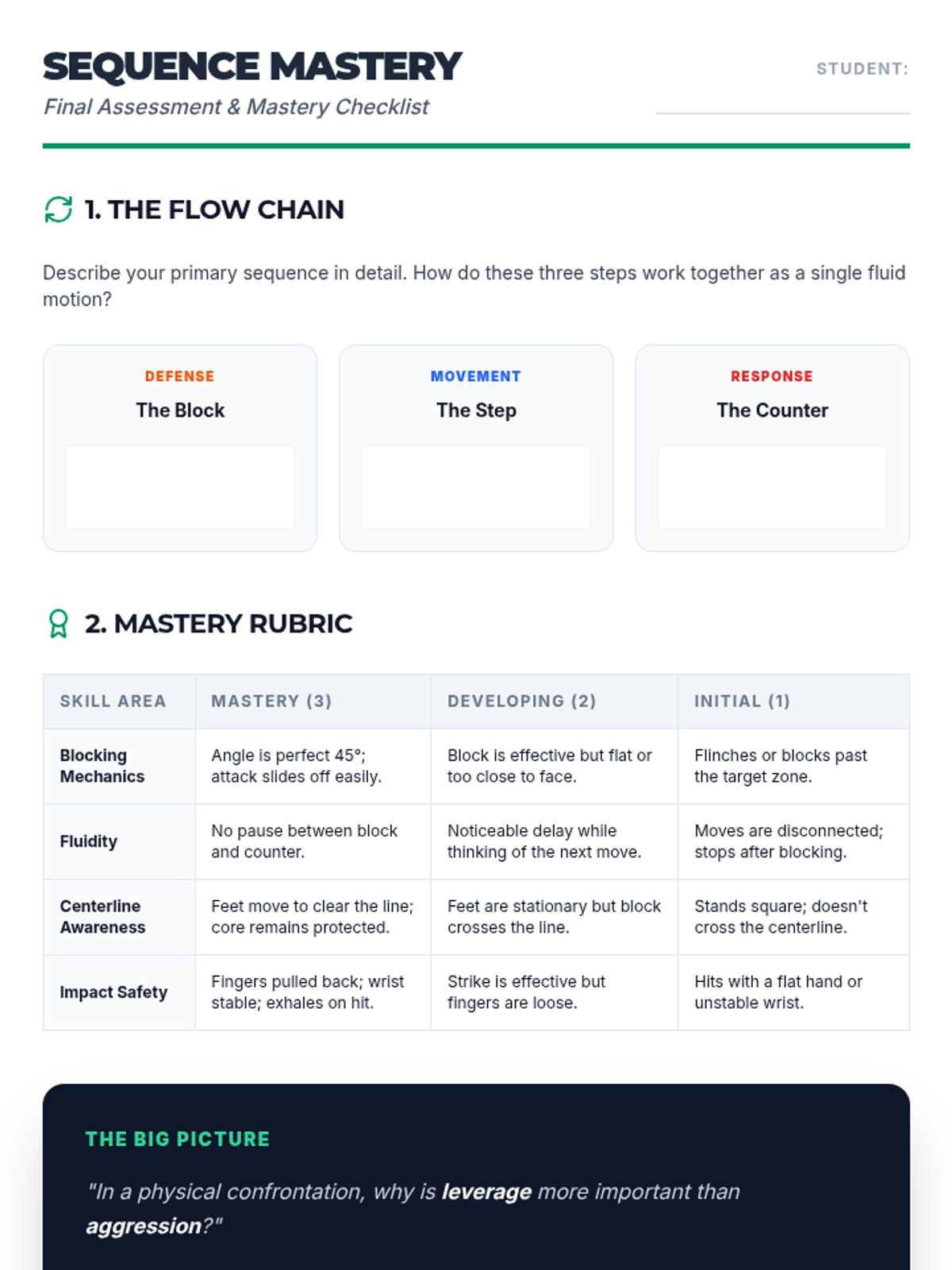
A student mastery assessment and rubric for the final lesson, focusing on the integration of defensive blocks and counter-strikes.
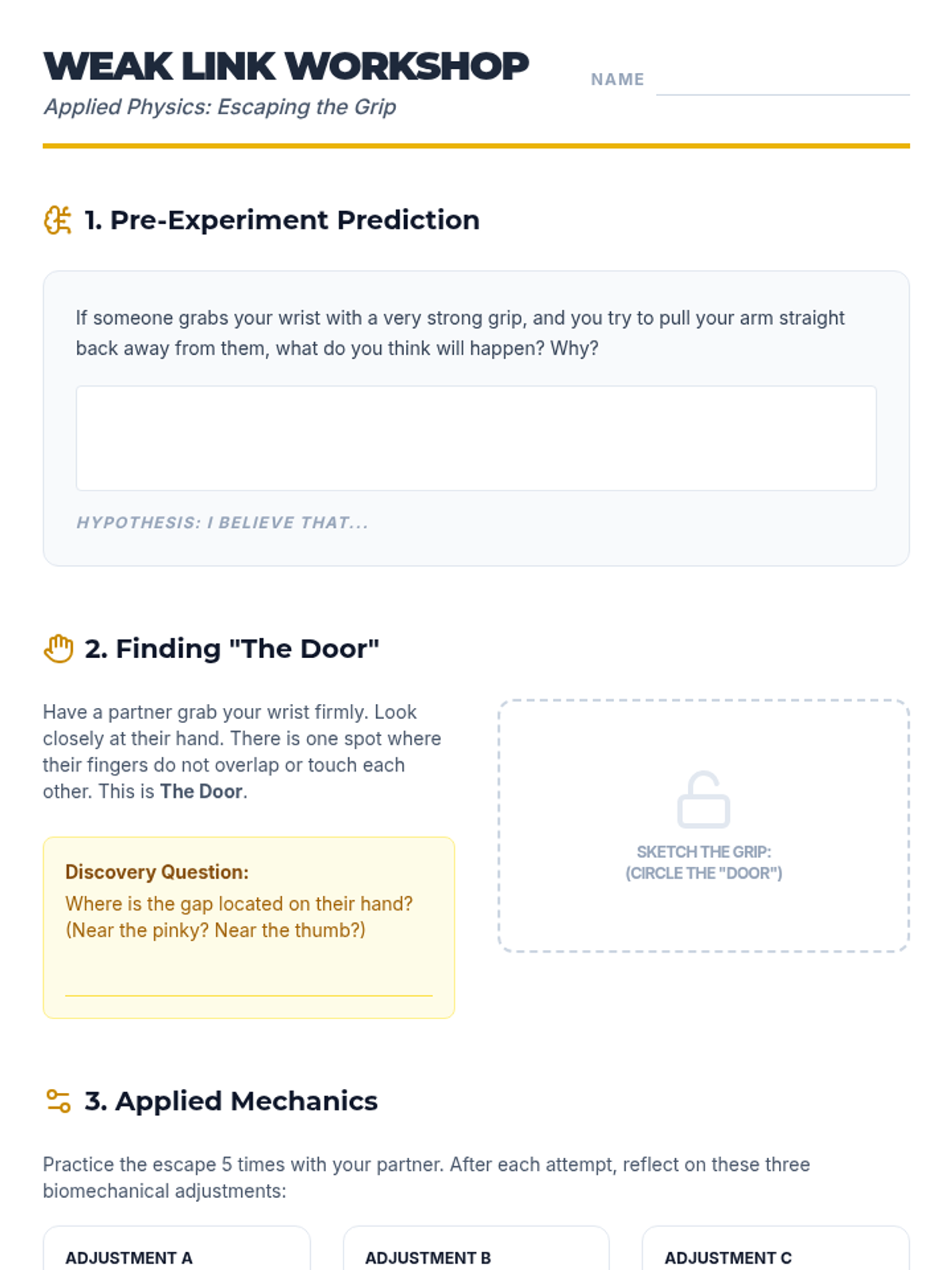
A student exploration sheet for Lesson 3, focusing on joint mechanics and leverage to escape wrist grabs.
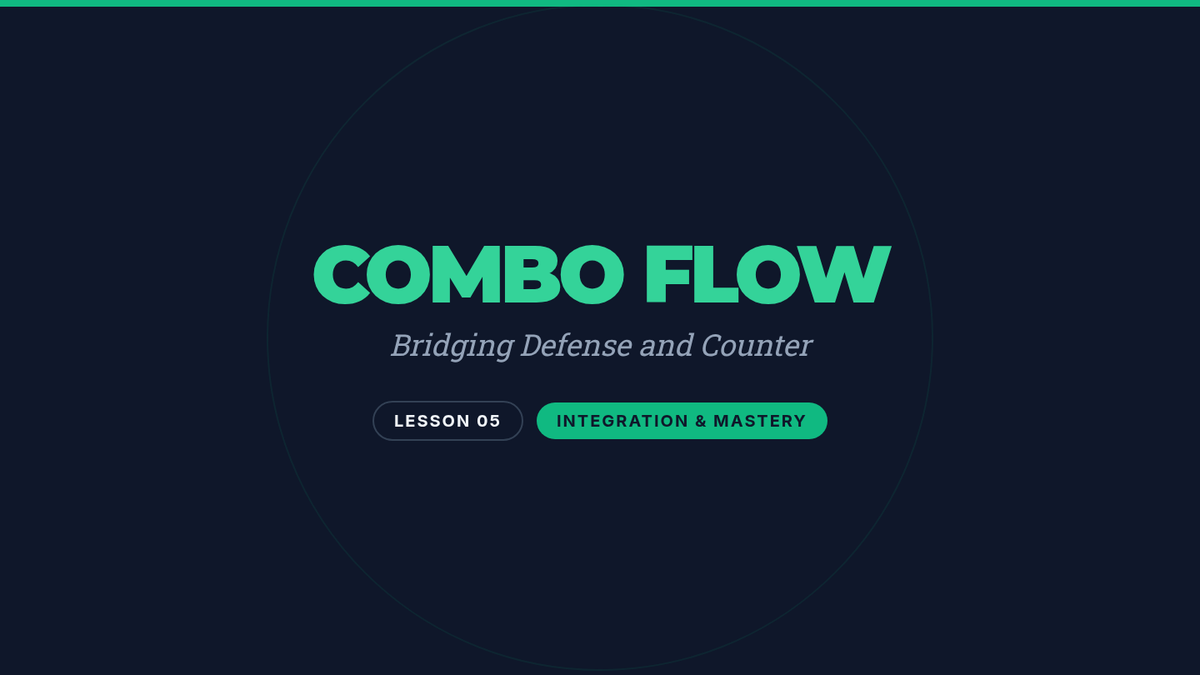
An instructional slide deck for Lesson 5, focusing on integrating blocks, footwork, and counter-strikes into fluid sequences for mastery.
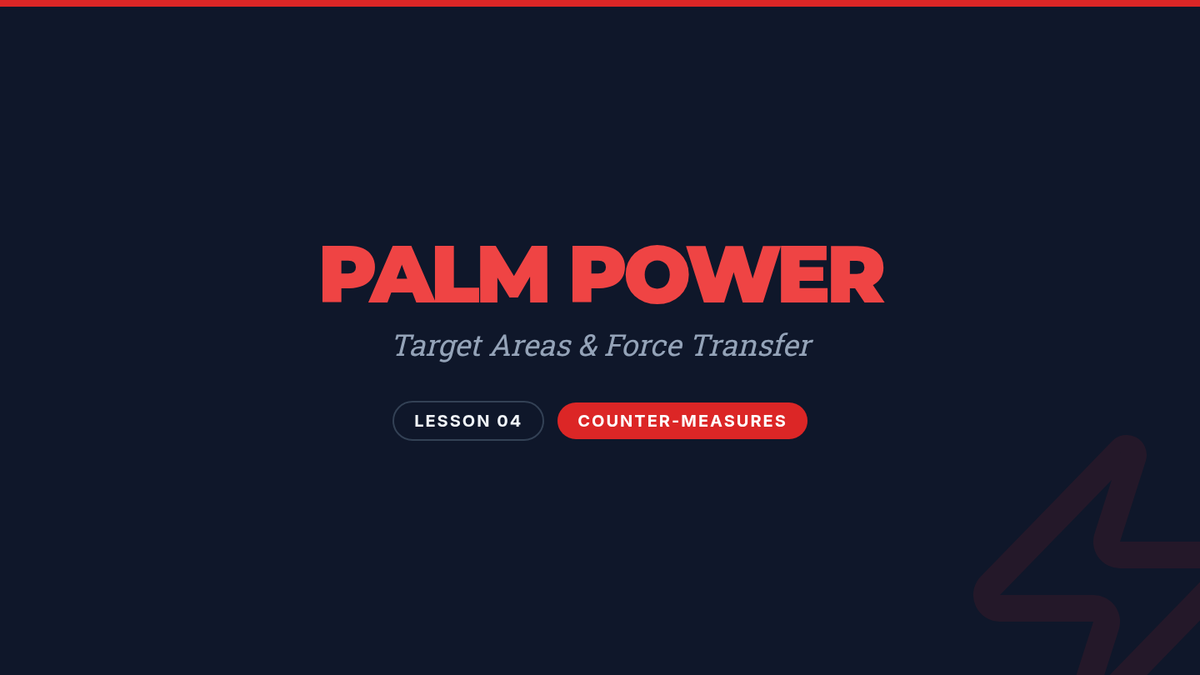
An instructional slide deck for Lesson 4, focusing on the Palm Heel Strike as a safe and effective counter-measure. Focuses on target areas and force transfer.
An instructional slide deck for Lesson 3, focusing on escape mechanics for wrist grabs by rotating against the attacker's thumb.
An instructional slide deck for Lesson 2, focusing on lateral deflections, parrying techniques, and the importance of crossing the centerline to protect vital organs.
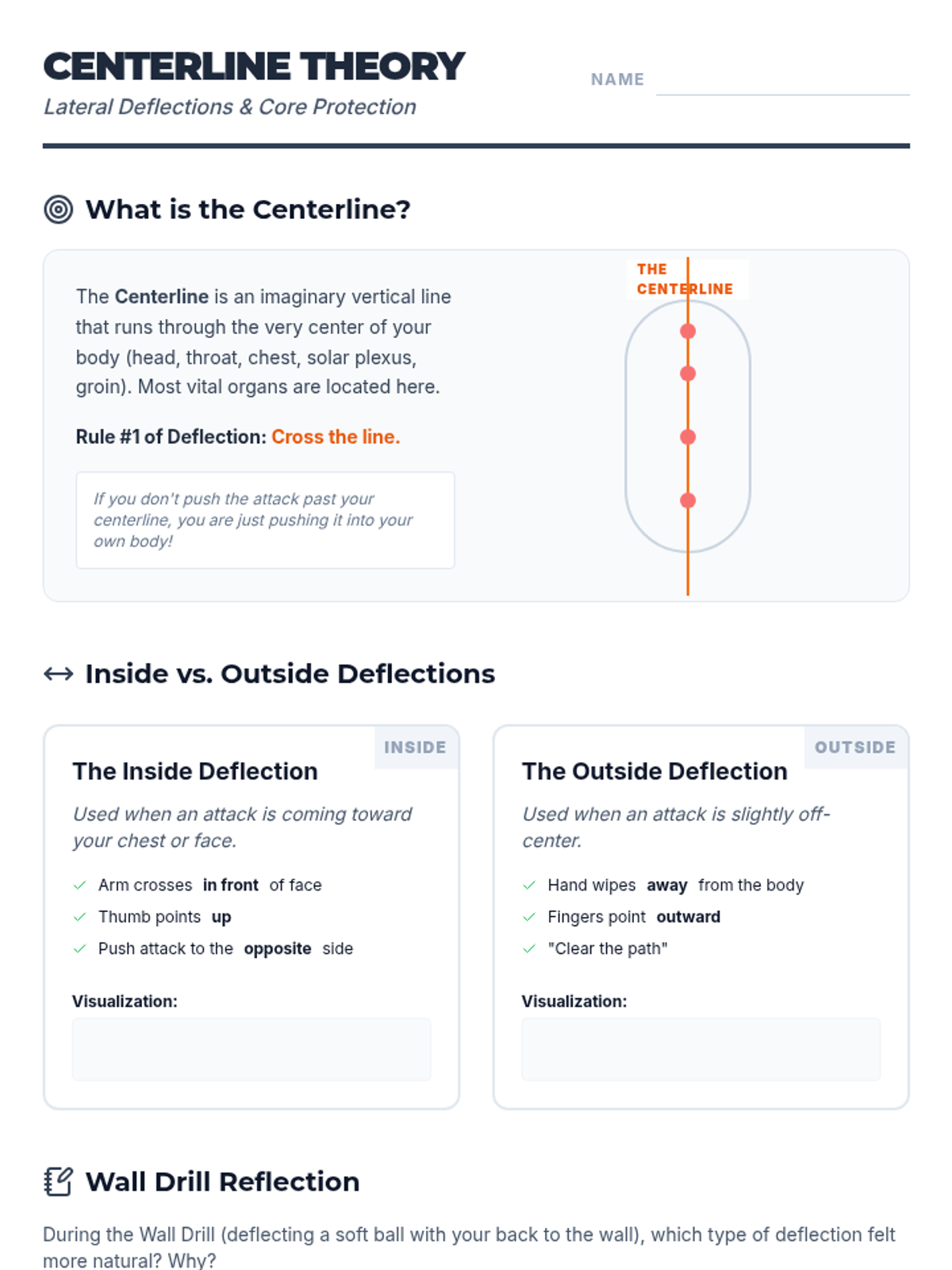
A student graphic organizer and reflection sheet for Lesson 2, focusing on the concept of the body's centerline and the mechanics of inside and outside deflections.
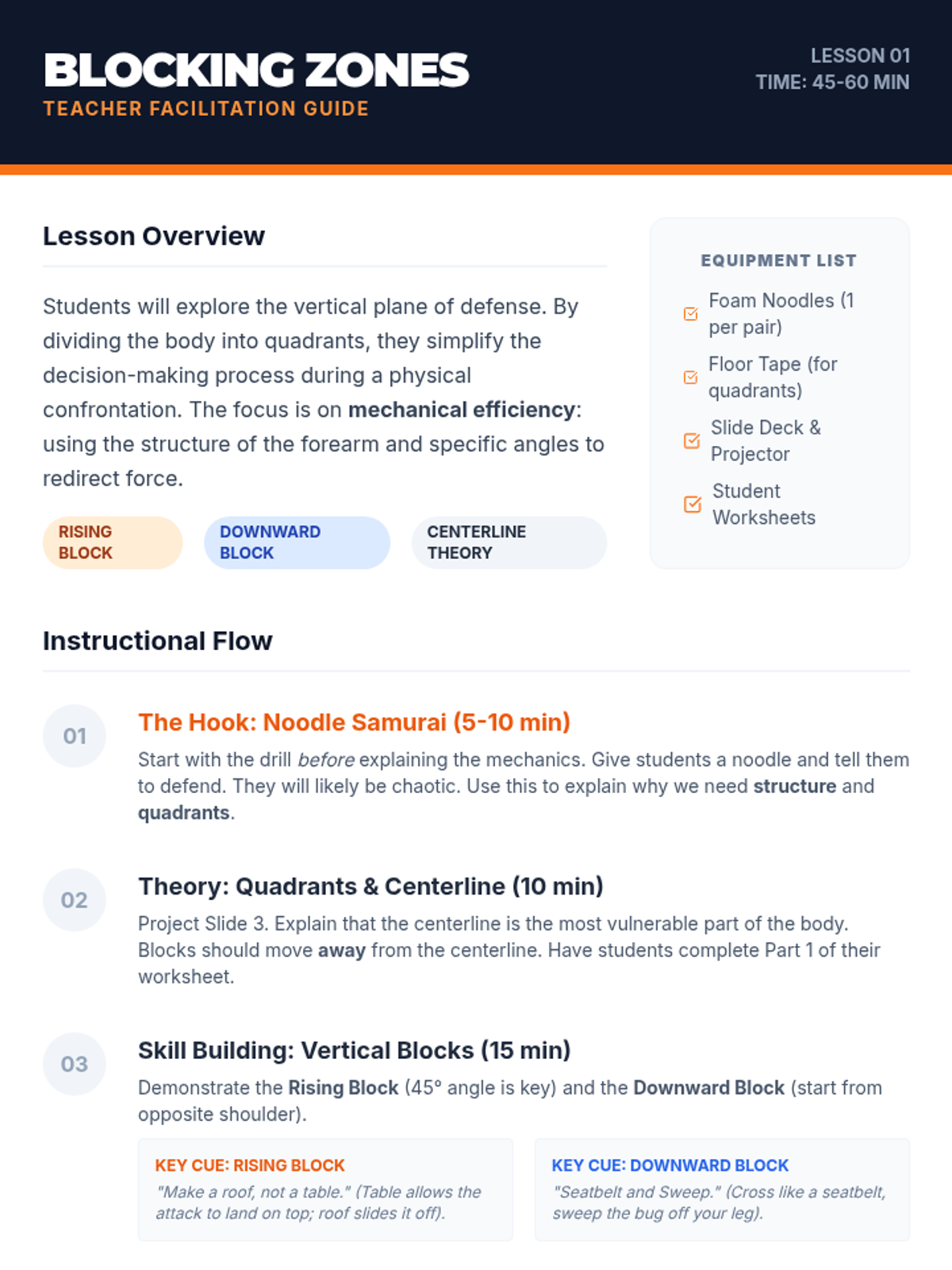
A teacher facilitation guide for Lesson 1, including instructional flow, equipment lists, safety protocols, and common student misconceptions for vertical blocking.
An instructional slide deck for Lesson 1, introducing the four quadrants of the body and detailing the mechanics of Rising and Downward blocks.
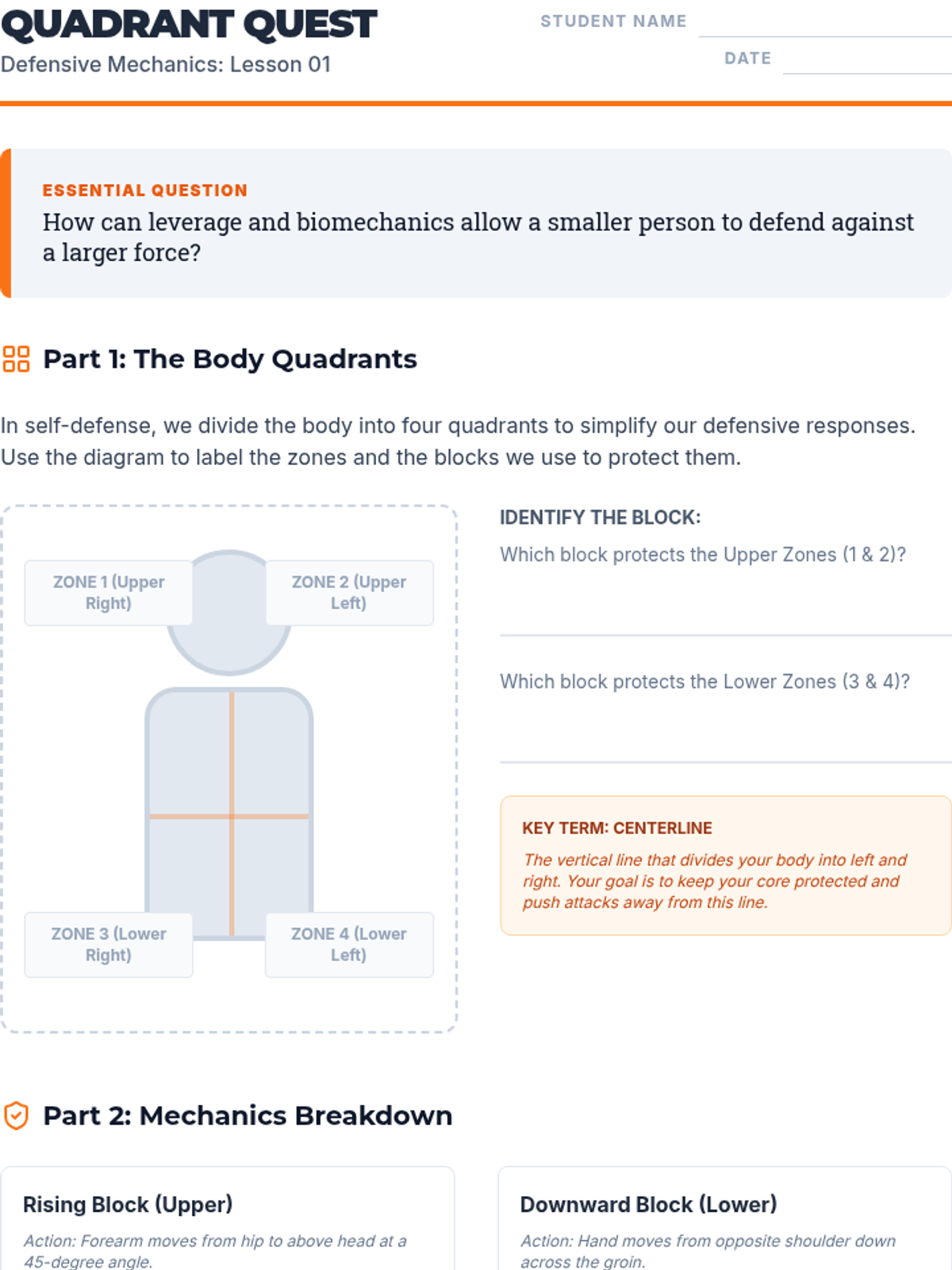
A student worksheet for identifying body quadrants and reflecting on the mechanics of Rising and Downward blocks. Includes a diagram for labeling and observation notes for drills.
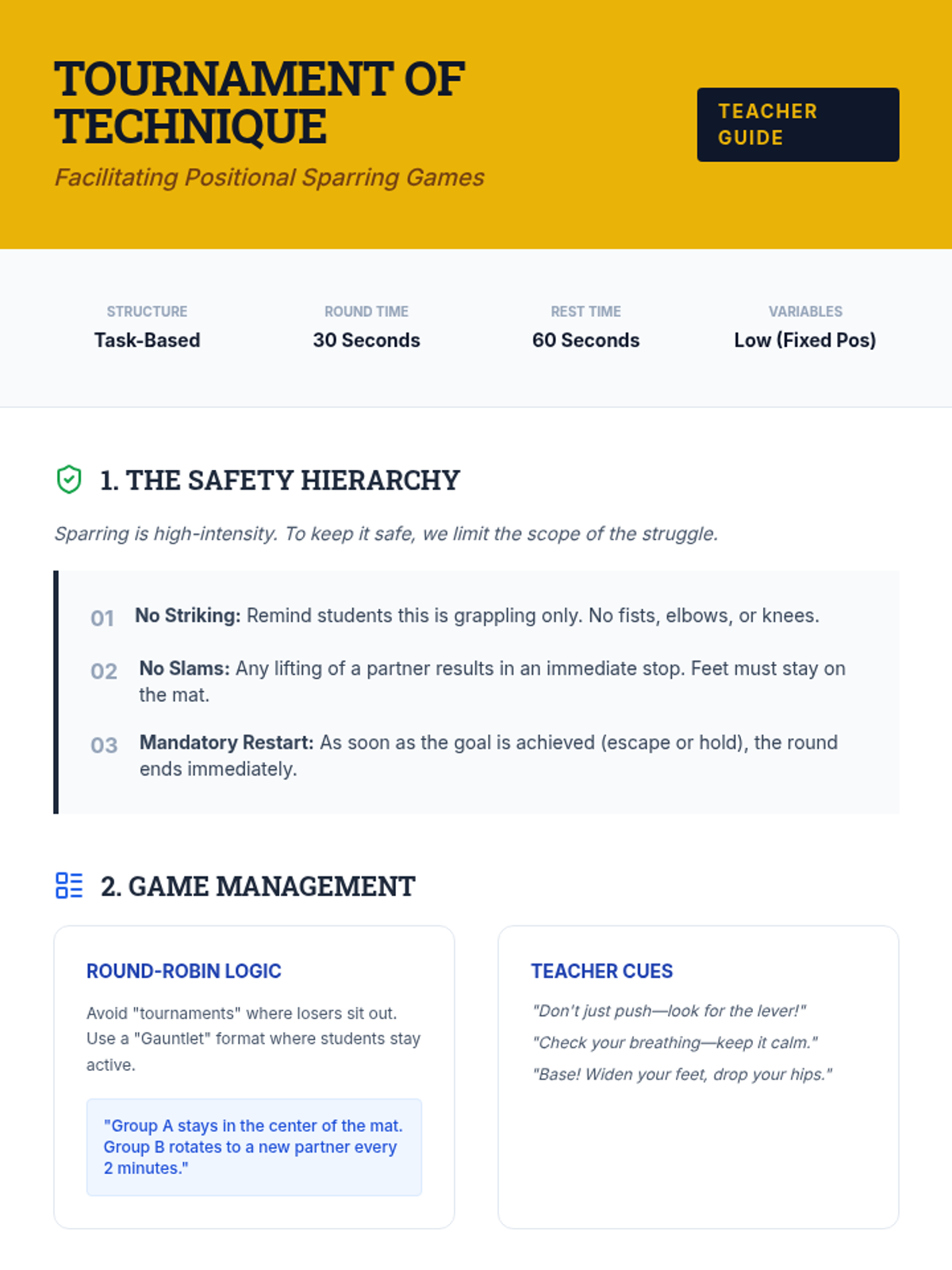
A teacher guide for organizing and facilitating positional sparring games, including safety rules and intensity management.
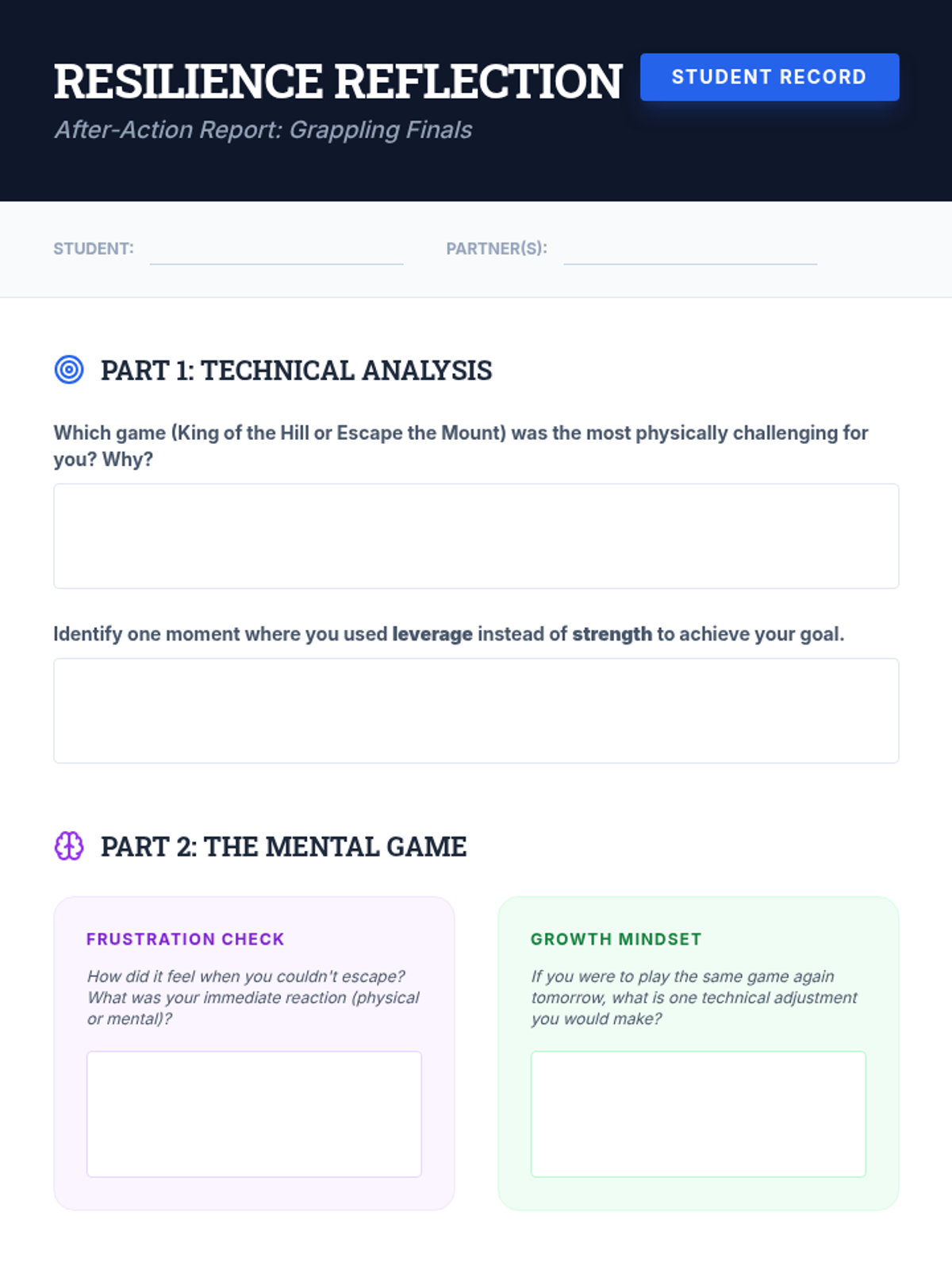
A student reflection sheet for post-sparring analysis, focusing on technical application and emotional regulation/resilience.
Slides outlining the rules and win conditions for task-based grappling games like King of the Hill and Escape the Mount.
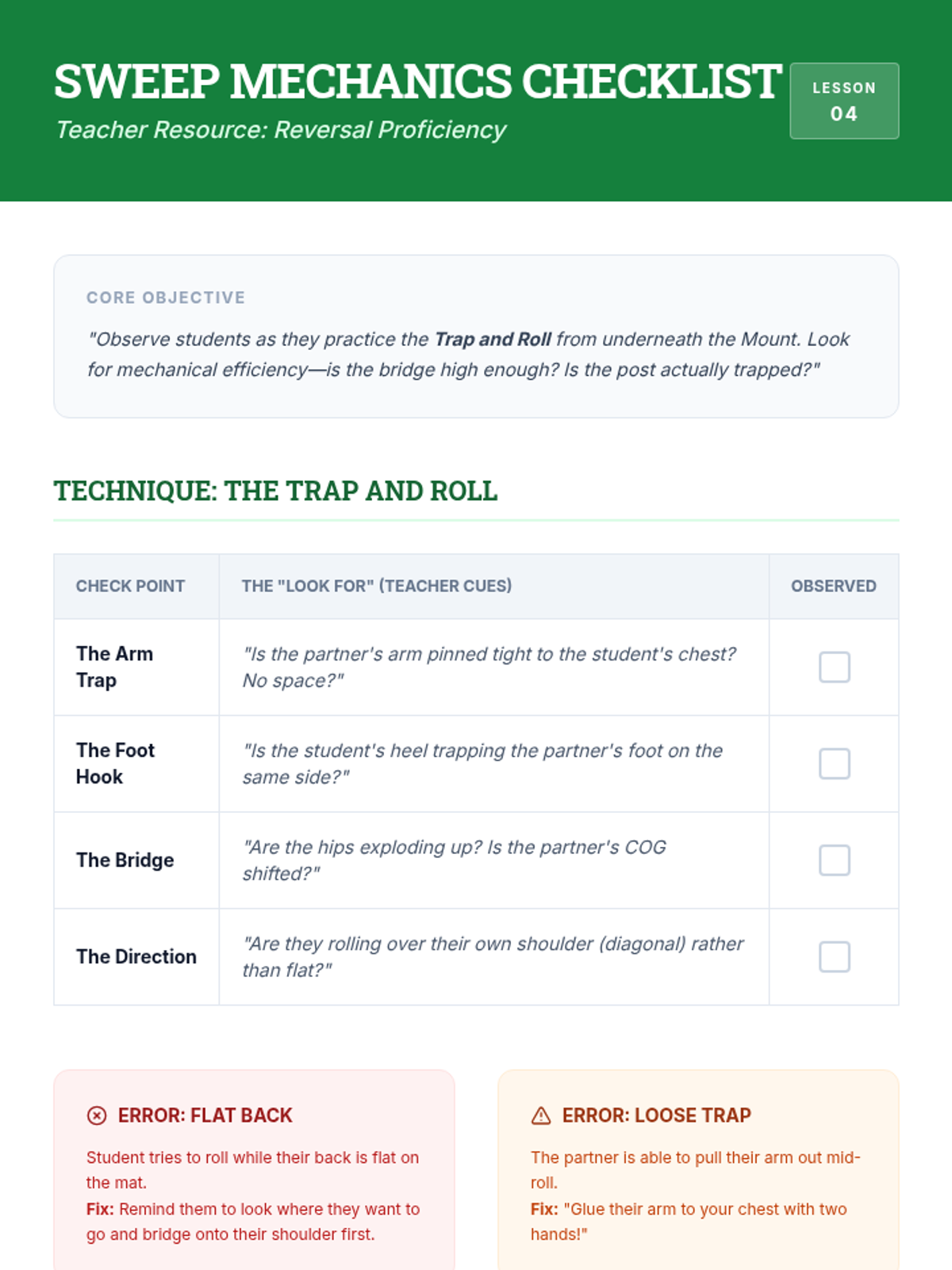
A teacher guide and checklist for observing and correcting student technique during sweep and reversal drills.
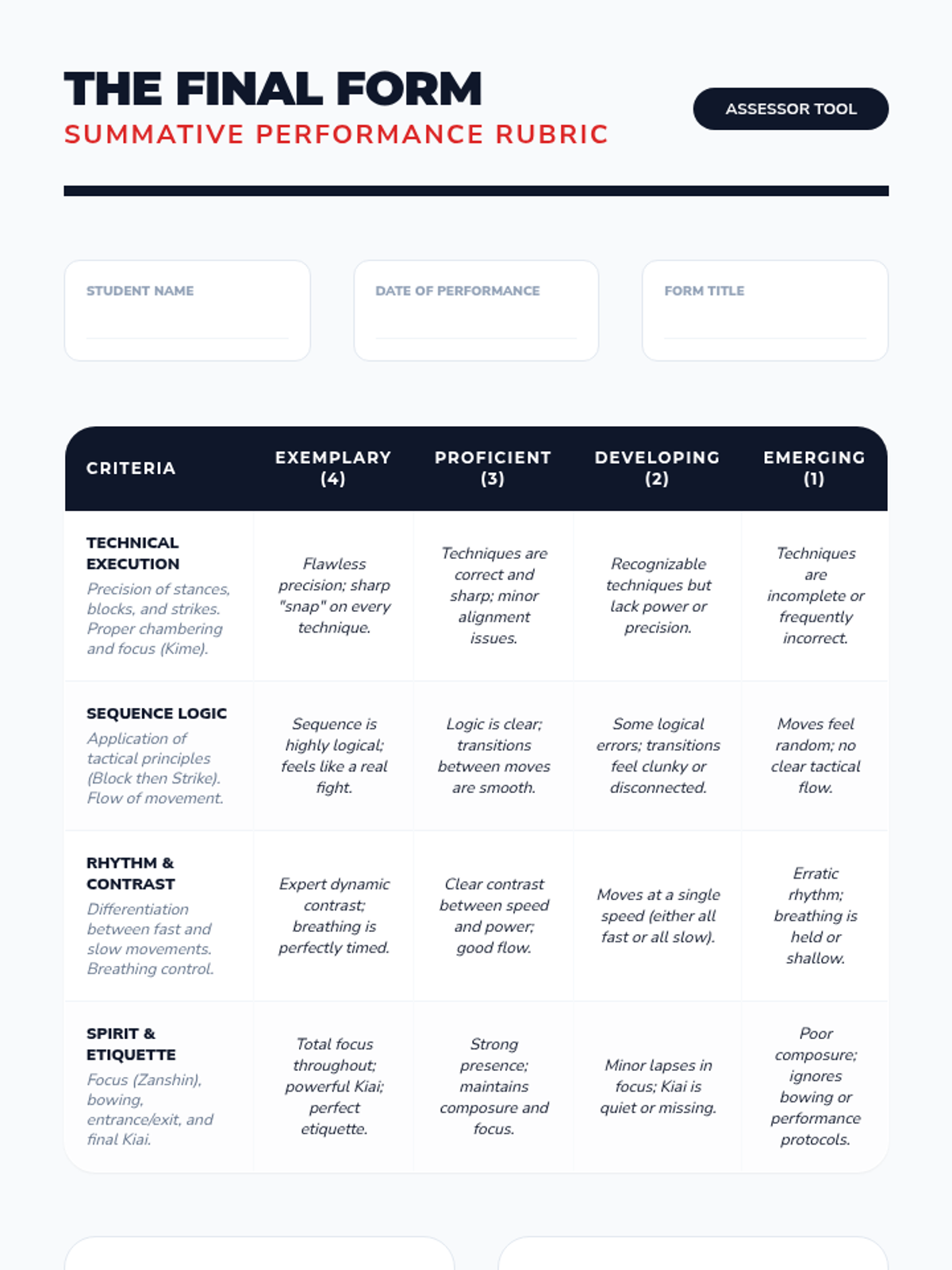
Teacher-facing assessment rubric for the final martial arts form performance, covering technique, logic, rhythm, and etiquette.
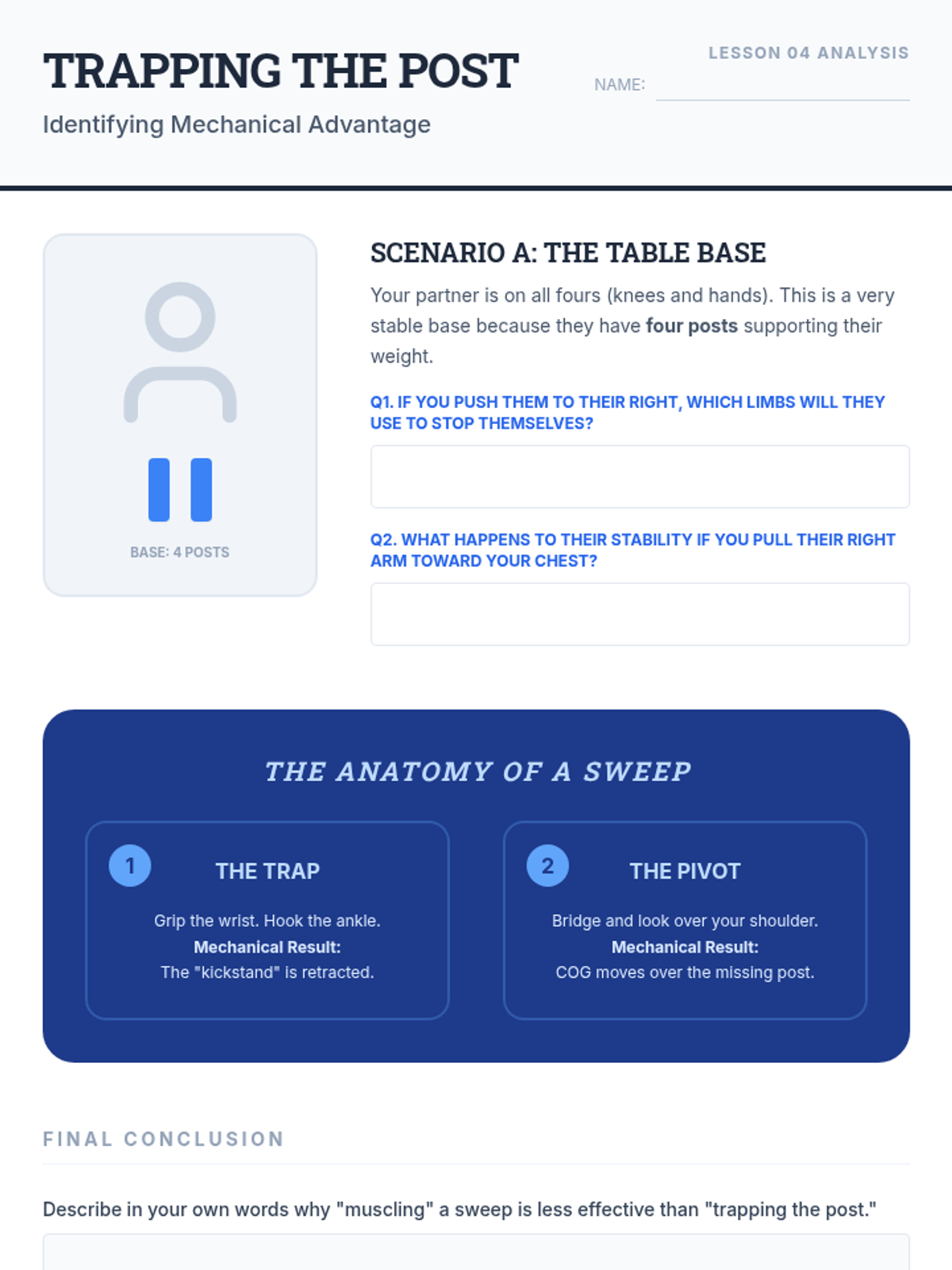
A worksheet for students to identify posts and analyze the mechanics of leverage used in grappling sweeps.
Student reflection sheet for evaluating personal performance, mental state, and the application of martial arts concepts to daily life.
Slides explaining the physics of sweeps, the concept of "trapping a post," and the use of leverage to reverse positions.
A cumulative review worksheet for the Hand Eye Heroes sequence, matching equipment to skills and answering the essential question.
Teacher facilitation guide for striking implements lesson, focusing on paddle grip, wrist stability, and striking challenges.
Slide deck for striking implements lesson, focusing on paddle grip, wrist stability, and striking challenges.
Student skill checklist and reflection card for catching challenges, ranking students from Cadet to Commander.
Teacher facilitation guide for catching small objects lesson, focusing on hand positioning (diamond vs. basket) and anticipation.
Slide deck for catching small objects lesson, focusing on hand positioning (diamond vs. basket) and anticipation.
Student anatomy and dribbling log for fingertip force, helping students identify finger pads and track their stealth dribbling progress.
Teacher facilitation guide for fingertip force lesson, emphasizing the use of finger pads for quiet and controlled ball manipulation.
Slide deck for fingertip force lesson, emphasizing the use of finger pads for quiet and controlled ball manipulation.
Student scorecard for target toss accuracy, tracking performance at three different distances.
Teacher facilitation guide for Bullseye Beanbags lesson, focusing on underhand technique and release point control.
Slide deck for target toss accuracy lesson, focusing on underhand technique and release point control with beanbags.
Student reflection worksheet for the Scarf Skills Lab, featuring a checklist of levels and a drawing area for visual tracking observations.
Teacher facilitation guide for Scarf Skills Lab, including cues, progressions, and troubleshooting tips.
Visual tracking and hand positioning slide deck for 2nd grade PE, focusing on scarf activities and slow-motion coordination.
Teacher guide for Lesson 5, outlining the 'King/Queen of the Court' tournament structure, discussion prompts for strategy, and a sportsmanship rubric for student evaluation.
Student strategy playbook and match log for Lesson 5, including tactical scenario questions, a tournament match tracker, and a self-reflection section.
Slide deck for Lesson 5 covering rally strategies (cooperative vs. competitive), hitting to open space, scoring rules, and 'King/Queen of the Court' tournament rotation.
Printable teacher resource featuring four instructional drill cards for Lesson 4, covering shadow lunging, thumb flicking, net drives, and corner recovery.
Student lab sheet for Lesson 4 including a grip-switch drill tracker, a court map for footwork visualization, a drive rally log, and a critical thinking question on lunge mechanics.
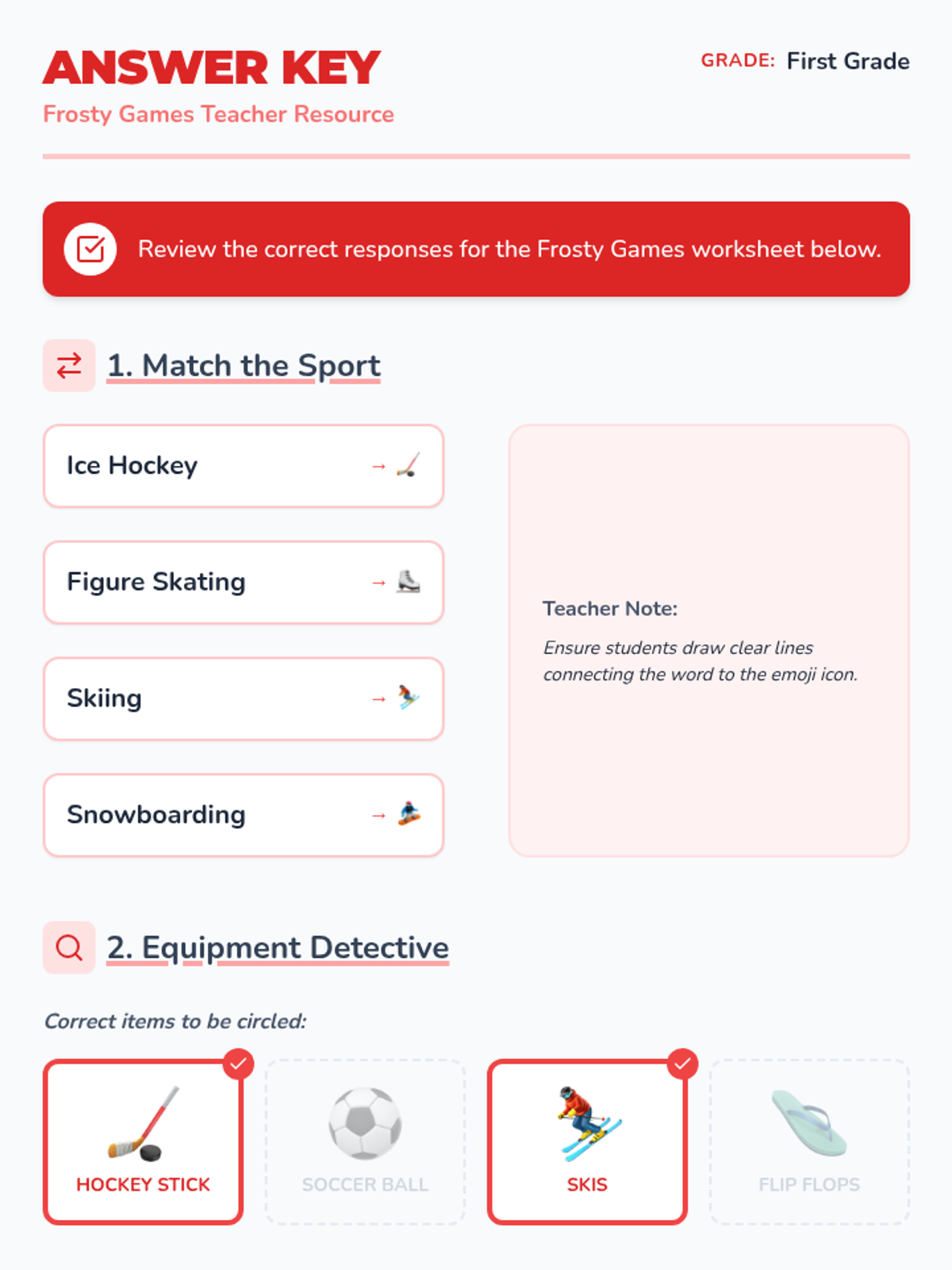
A teacher's answer key for the Frosty Games Worksheet, providing correct matching, identification, and fact check answers along with facilitation tips for first-grade instruction.
A 2-page, 1st-grade-level worksheet for identifying Winter Olympic sports through matching, equipment identification, true/false facts, and a drawing activity. It includes clear visuals, simple reading levels, and engaging themes.
Student scorecard for Lesson 5, allowing students to record multiple attempts and identify their personal best for each throwing discipline.
A teacher guide for Lesson 5, outlining meet management, officiating station setup, and the final awards ceremony.
Teacher guide for Lesson 5, providing the competition structure, safety "Control Tower" protocols, and awards categories for the final pentathlon.
A scorecard for students to record their personal event results and a log for their officiating duties during the class track meet.
Visual presentation for Lesson 5, introducing the final multi-event competition where students apply their skills across all throwing disciplines while managing the throwing sector safely.
Visual slides for Lesson 5 covering meet schedule, officiating duties, and sportsmanship.
Teacher guide for Lesson 5, managing lane rotations, official duties, and conducting a student-led long jump competition.
Student worksheet for Lesson 4, focusing on javelin aerodynamics, the crossover step rhythm, and flight observations.
A teacher guide for Lesson 4, outlining event selection, coaching strategies for PR goal-setting, and warm-up modeling.
Student competition scorecard for recording personal jump results and acting as a peer judge for other athletes.
A student worksheet for recording pair drills, focusing on hand placement, verbal cues, and connection quality during stationary and walking baton exchanges.
A final team strategy and reflection document where students plan their relay race order and assess their own technical growth during the unit.
Teacher guide for Lesson 4, providing specific drills for the turbo javelin, focusing on the 3-step rhythm, the crossover step, and essential safety carrying protocols.
An athlete profile card for students to select their meet events, set PR goals, and outline their specific warm-up routines.
Slide deck for Lesson 5 covering meet rules, officiating duties, and measurement techniques for the culminating long jump competition.
Visual presentation for Lesson 5, the final relay competition. Focuses on team strategy, sportsmanship, and the "victory formula" combining speed and timing.
Visual presentation for Lesson 4, introducing the aerodynamics and safety protocols of the turbo javelin, focusing on the grip, over-the-shoulder motion, and linear momentum.
A team strategizing worksheet for the final relay simulation, allowing teams to assign roles, predict times, and reflect on their performance.