Principles of muscular strength, endurance, and cardiovascular conditioning. Develops skills for setting personal fitness goals while incorporating flexibility and stretching techniques for injury prevention.
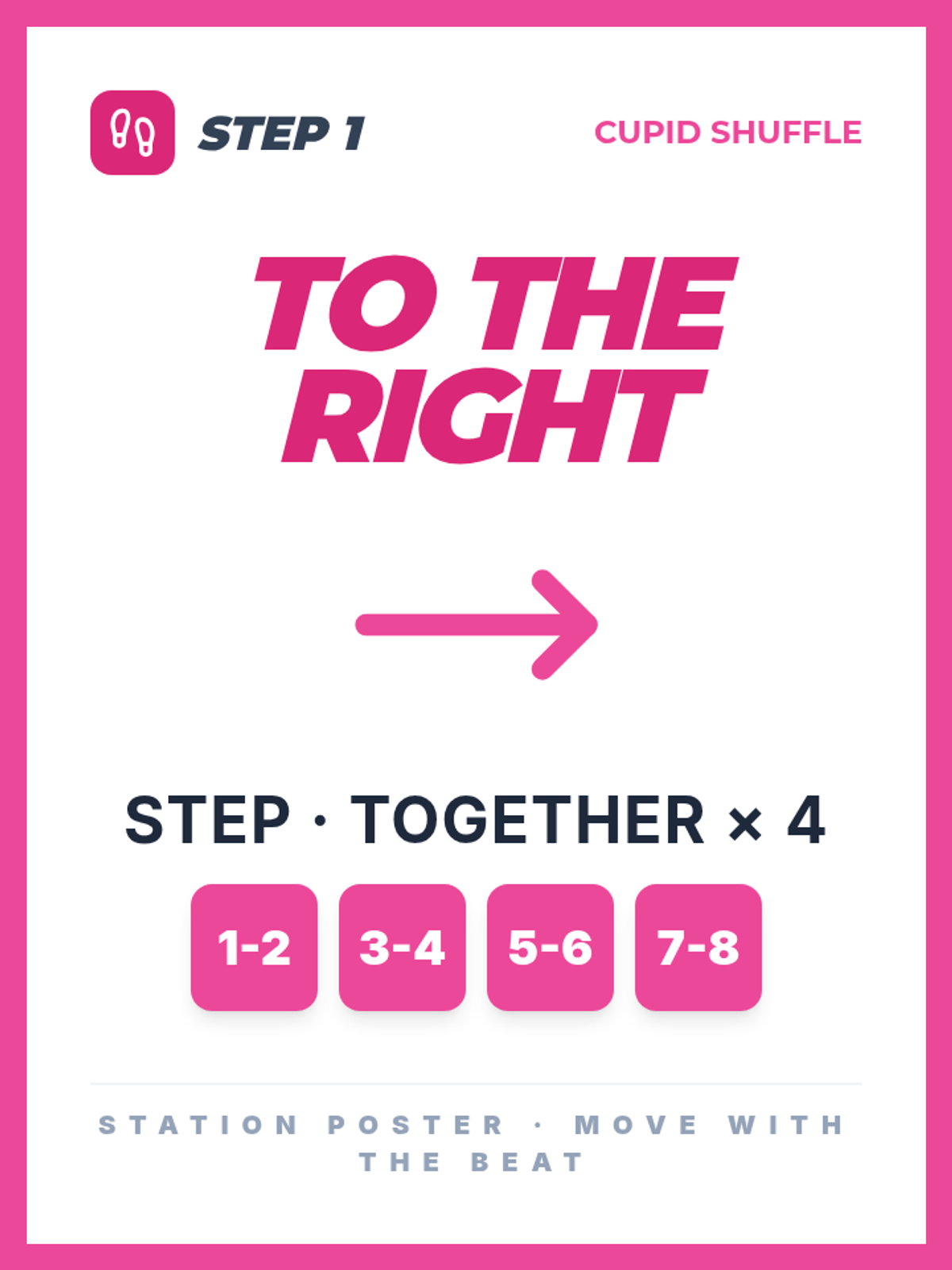
A set of four high-visibility, full-page posters designed to be placed around a dance floor or classroom. Each poster breaks down one movement of the Cupid Shuffle with large icons, bold text, and clear 8-count timing.
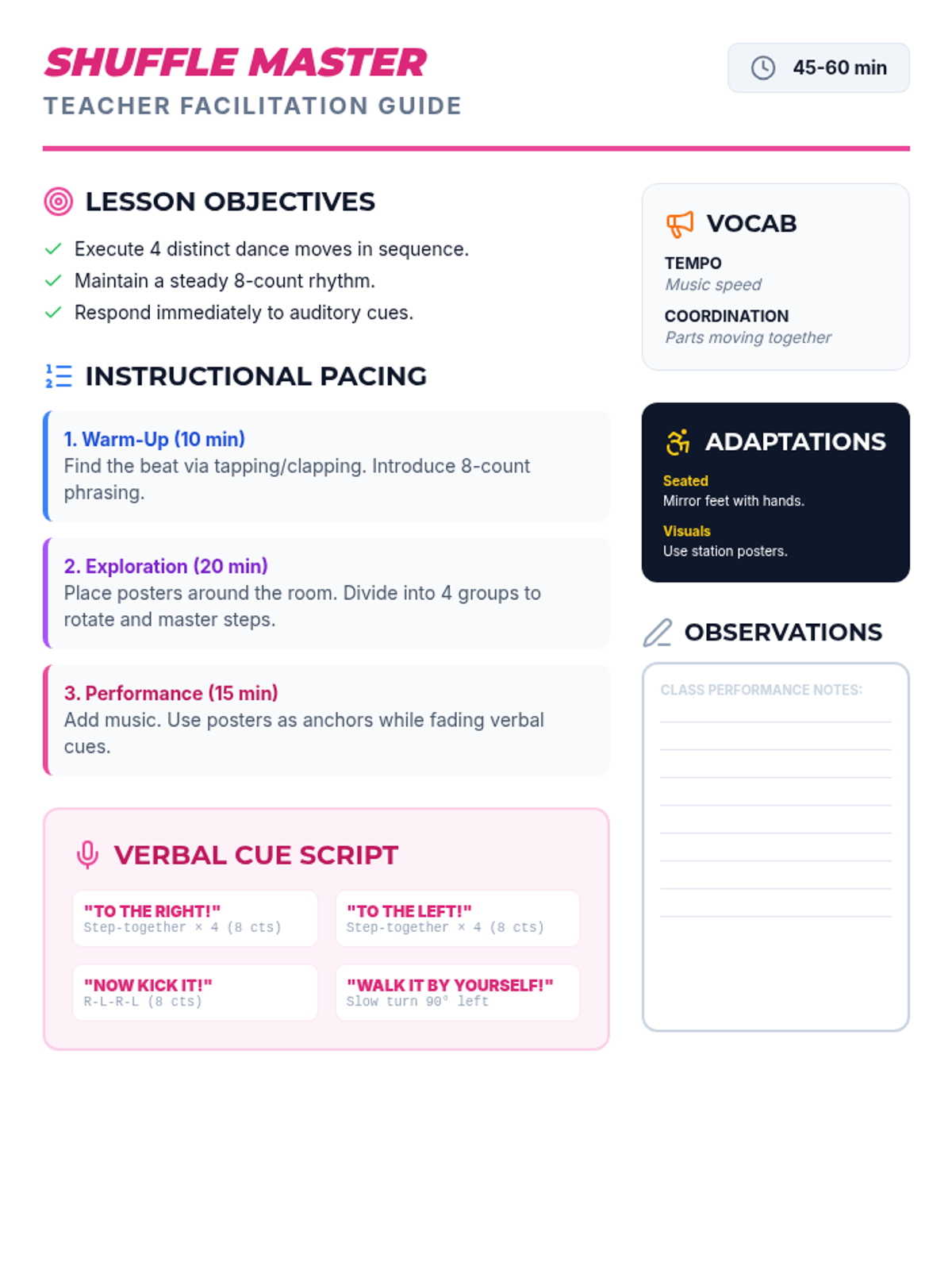
A comprehensive teacher's guide for the Cupid Shuffle lesson, including instructional pacing, verbal cue scripts, differentiation strategies for various learners, and assessment criteria.
A high-energy, visually engaging slide deck designed to teach the Cupid Shuffle. It breaks down the 4 main moves into 8-count sequences, introduces basic rhythm concepts, and includes a video embed for practice.
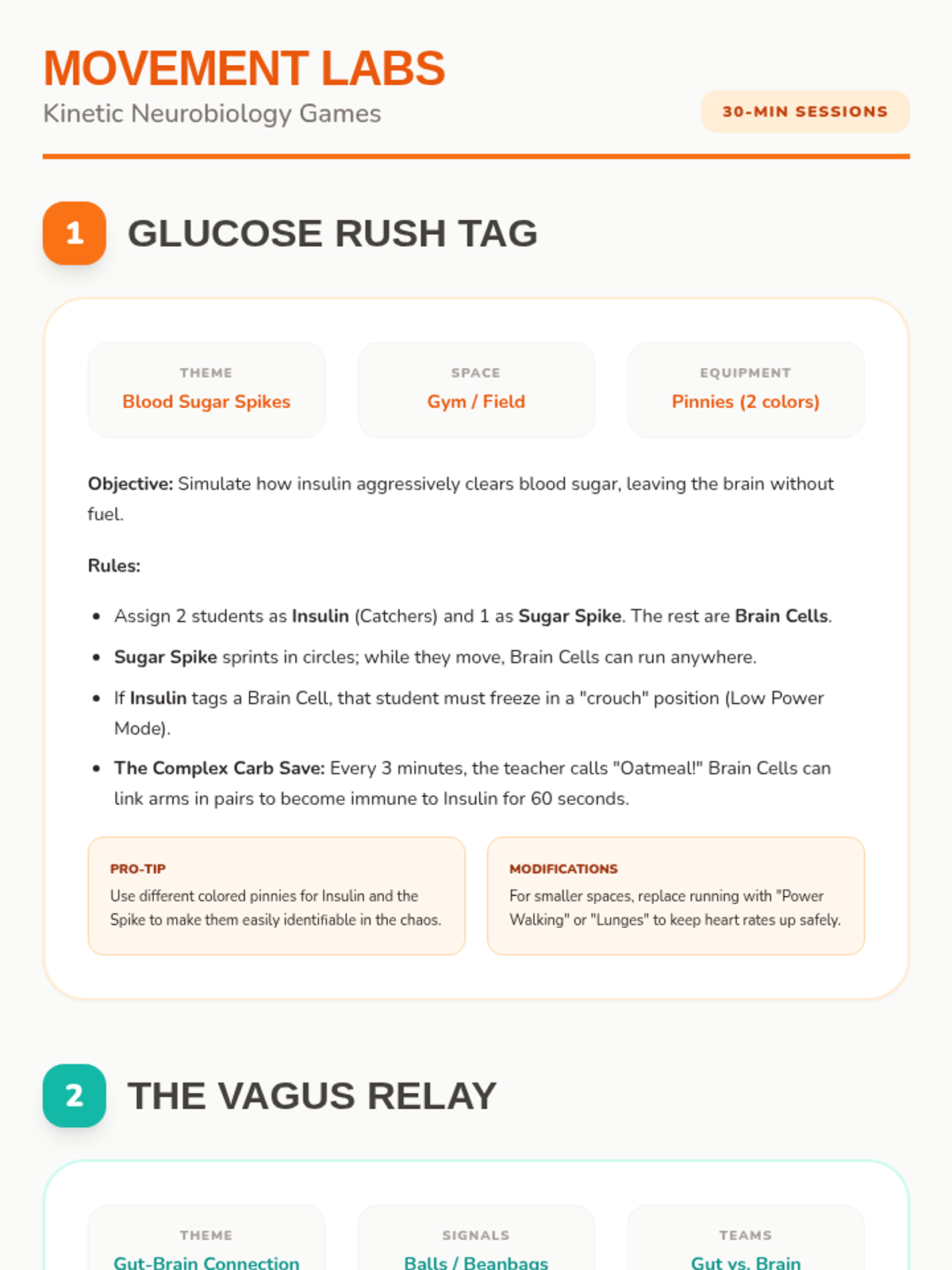
Detailed instructions for two 30-minute movement games (Glucose Rush Tag and The Vagus Relay) that reinforce the physiological concepts of the unit.
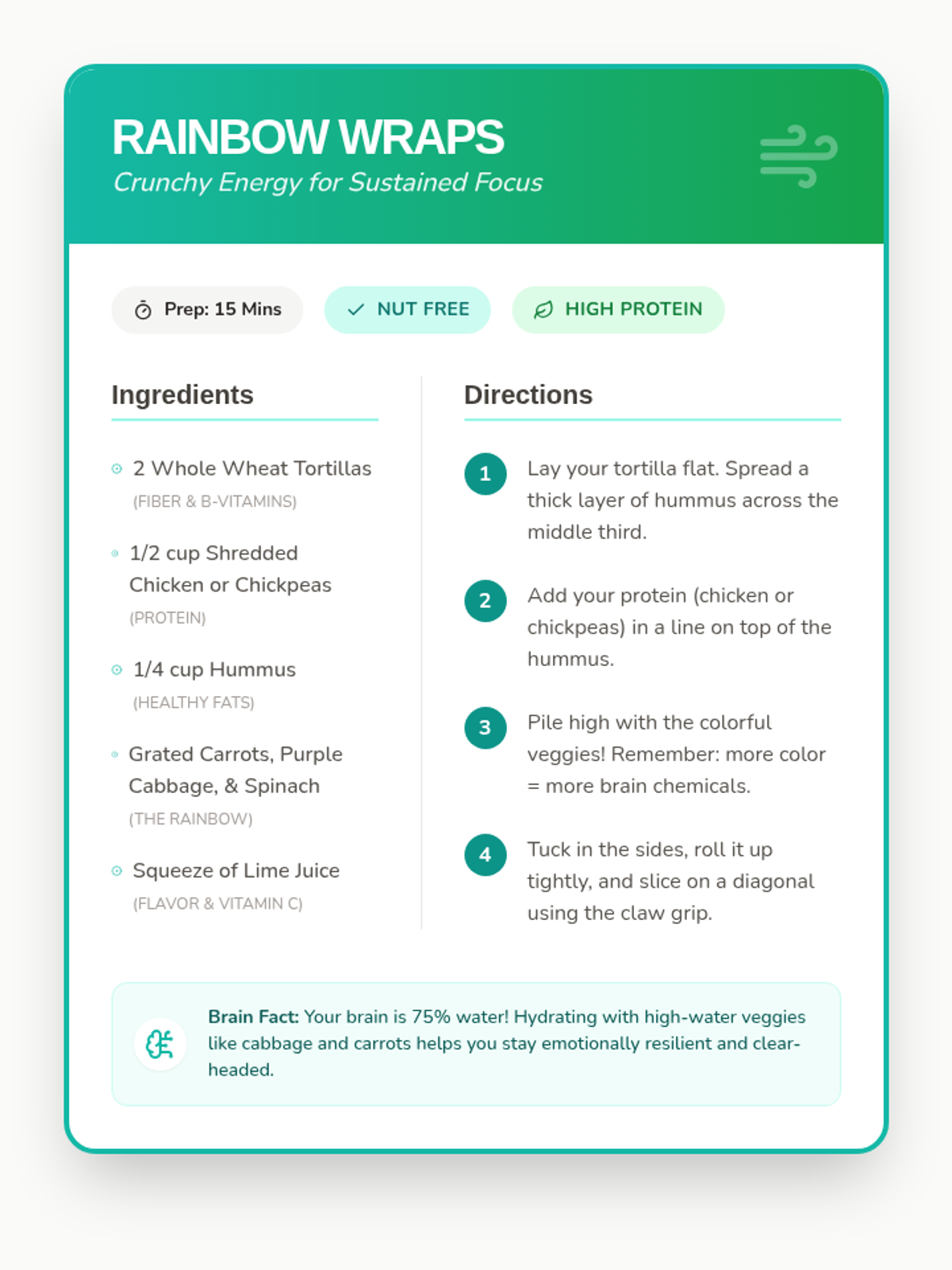
A visually striking recipe card for nut-free "Rainbow Wraps," including prep times, ingredient-to-brain mapping, and safe cooking techniques.
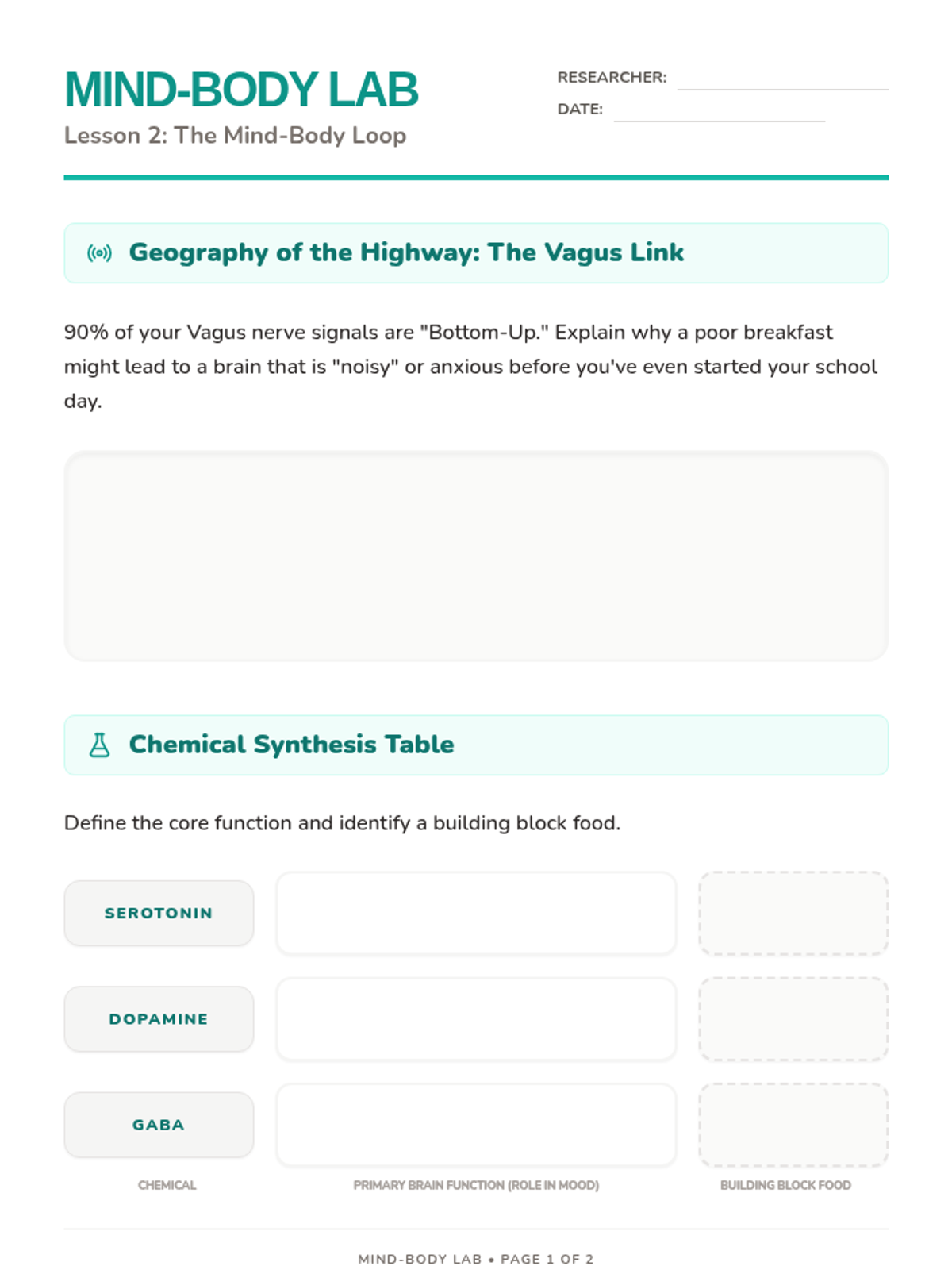
An in-depth 2-page student worksheet for Day 2 focusing on the Vagus highway, neurotransmitter synthesis, gut-produced serotonin, and nervous system recovery.
An intensive 5-slide presentation for Day 2 updated to include a Movement Lab slide introducing the 30-minute Vagus Relay game.
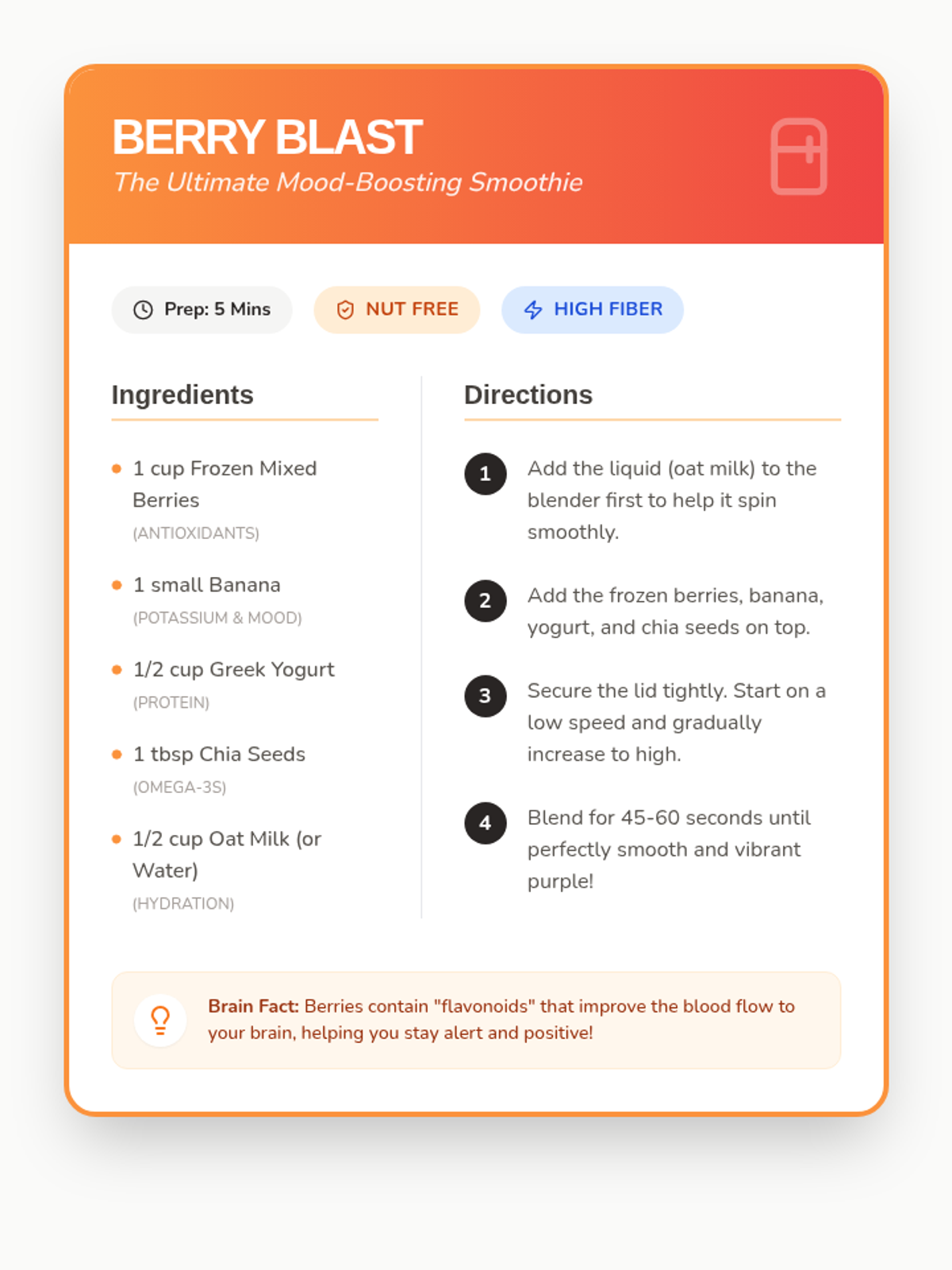
A visually appealing, nut-free recipe card for the "Berry Blast" smoothie, including ingredient biological roles and clear instructions.
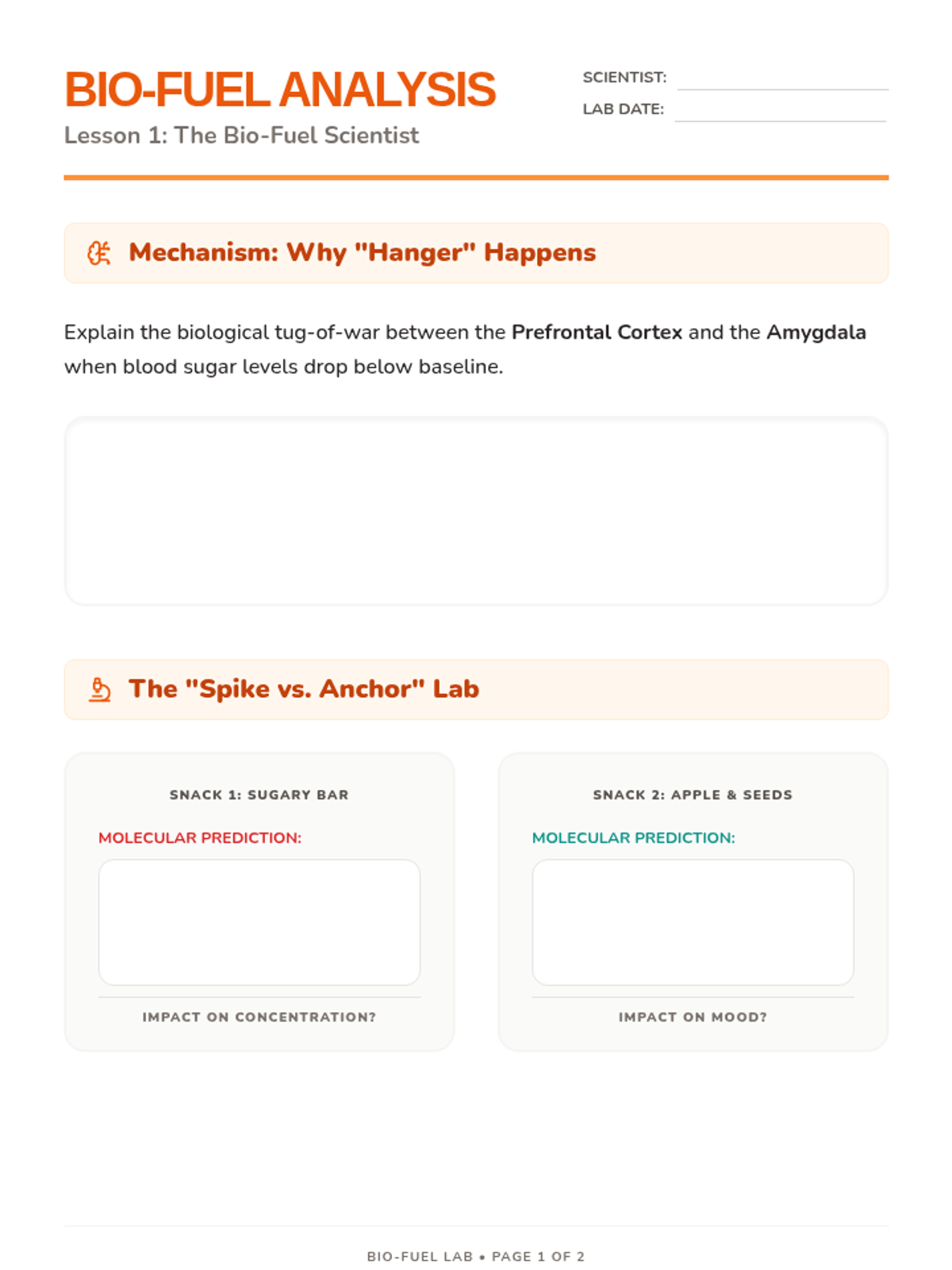
An in-depth 2-page student worksheet for Day 1 focusing on the prefrontal-amygdala tug-of-war, label-reading, and the structural function of Omega-3s.
An intensive 5-slide presentation for Day 1 covering the energy hierarchy of the brain, the glucose rollercoaster, and the structural role of Omega-3s.
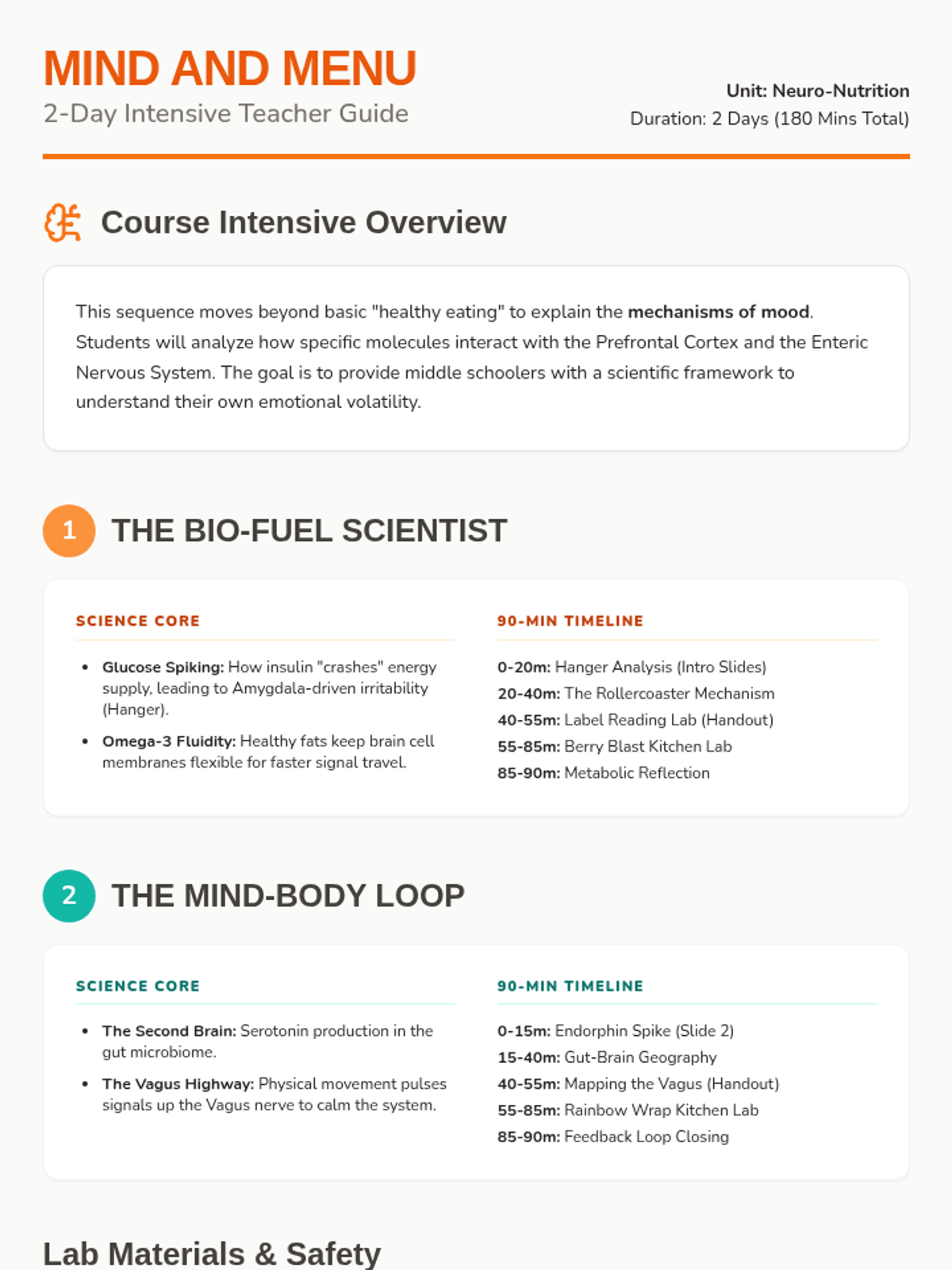
An updated 2-day intensive teacher guide including a revised pacing schedule that incorporates 30-minute physical activity games on both days.
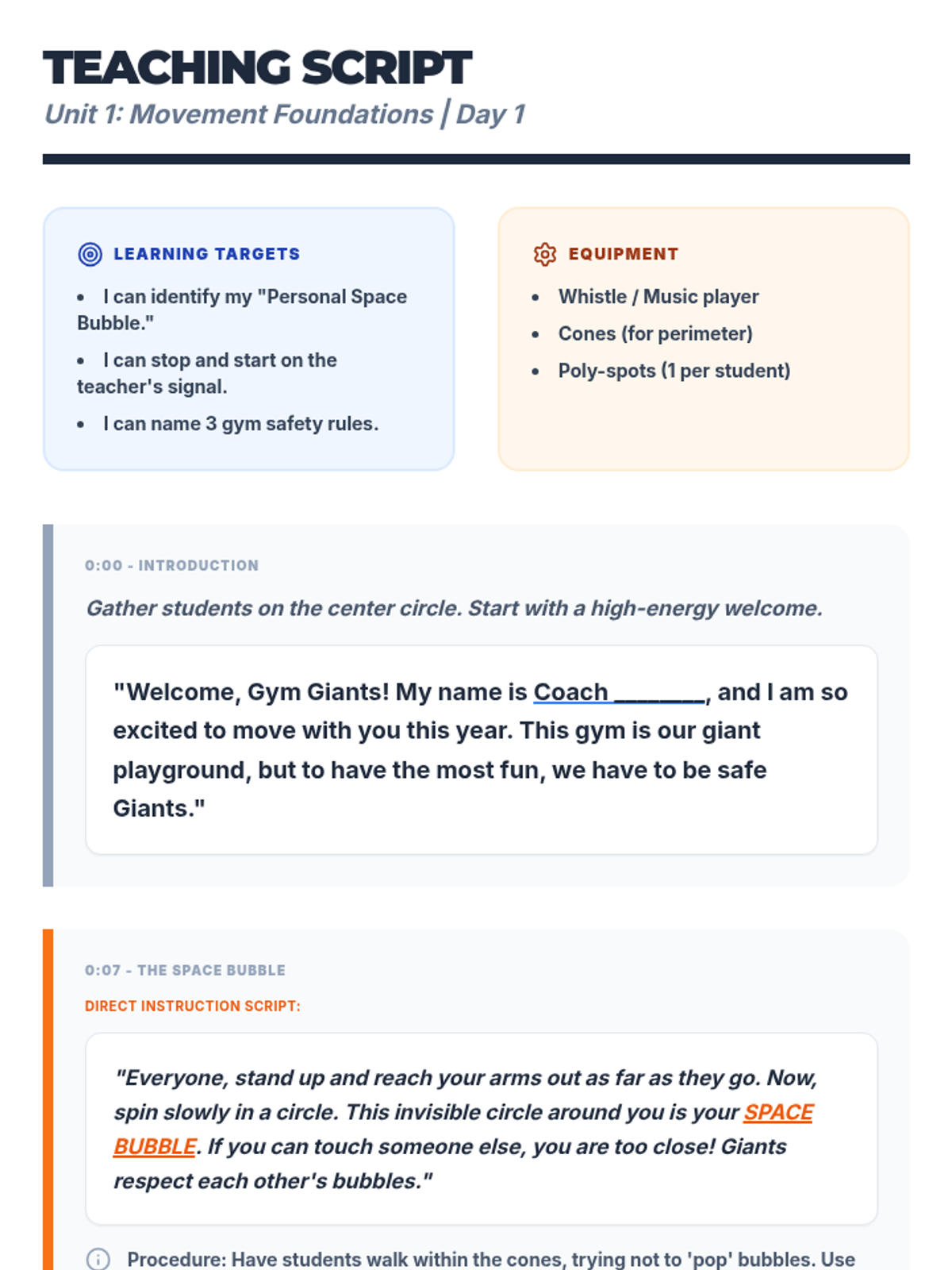
A detailed lesson plan and teaching script for Day 1 of the PE school year, focusing on safety, space bubbles, and stop/go signals.
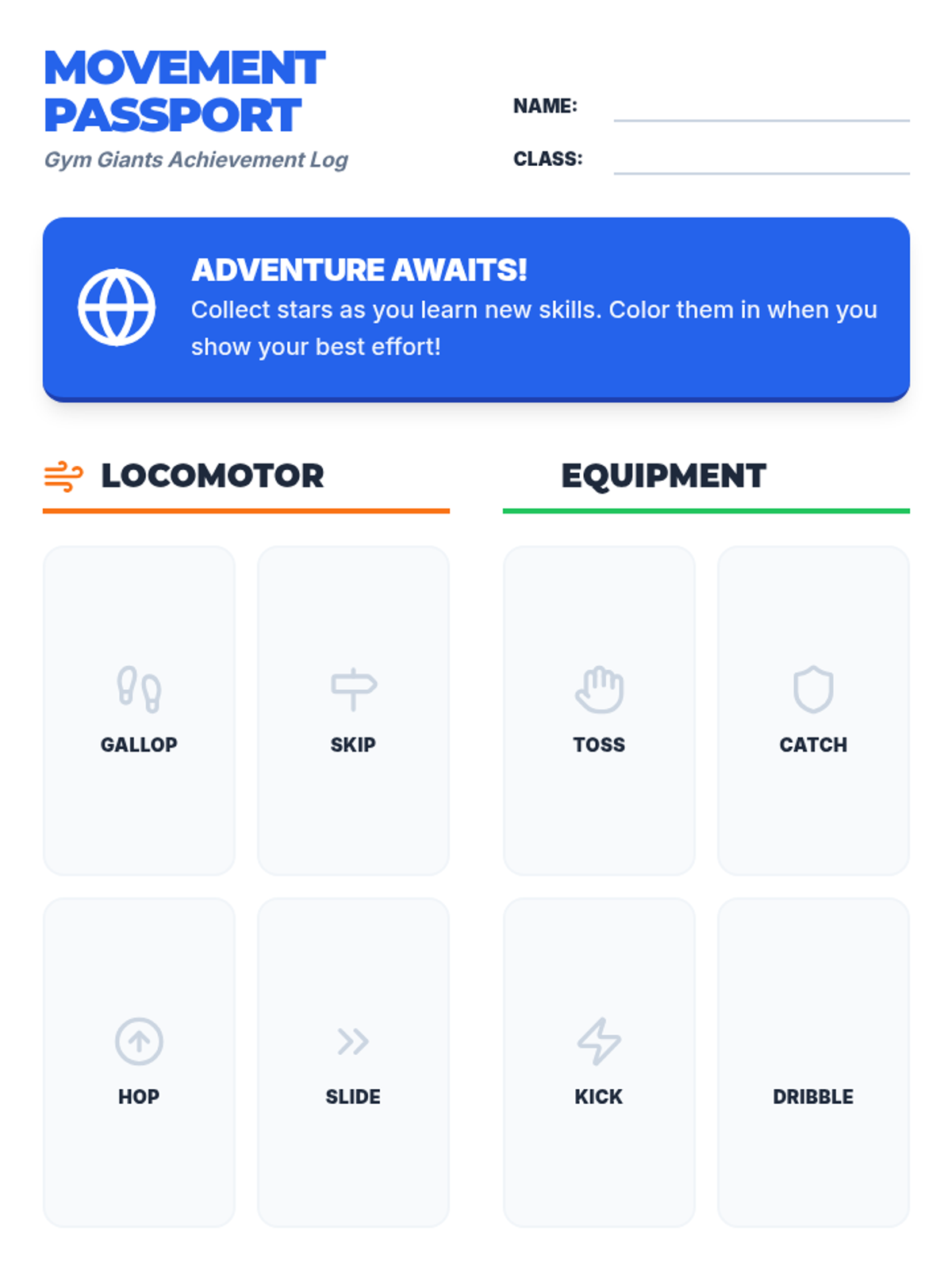
A fun student-facing skill tracker where K-2 students can record their mastery of locomotor and manipulative skills throughout the school year.
An engaging presentation for the first week of PE, introducing K-2 students to gym safety, signals, and personal space concepts.
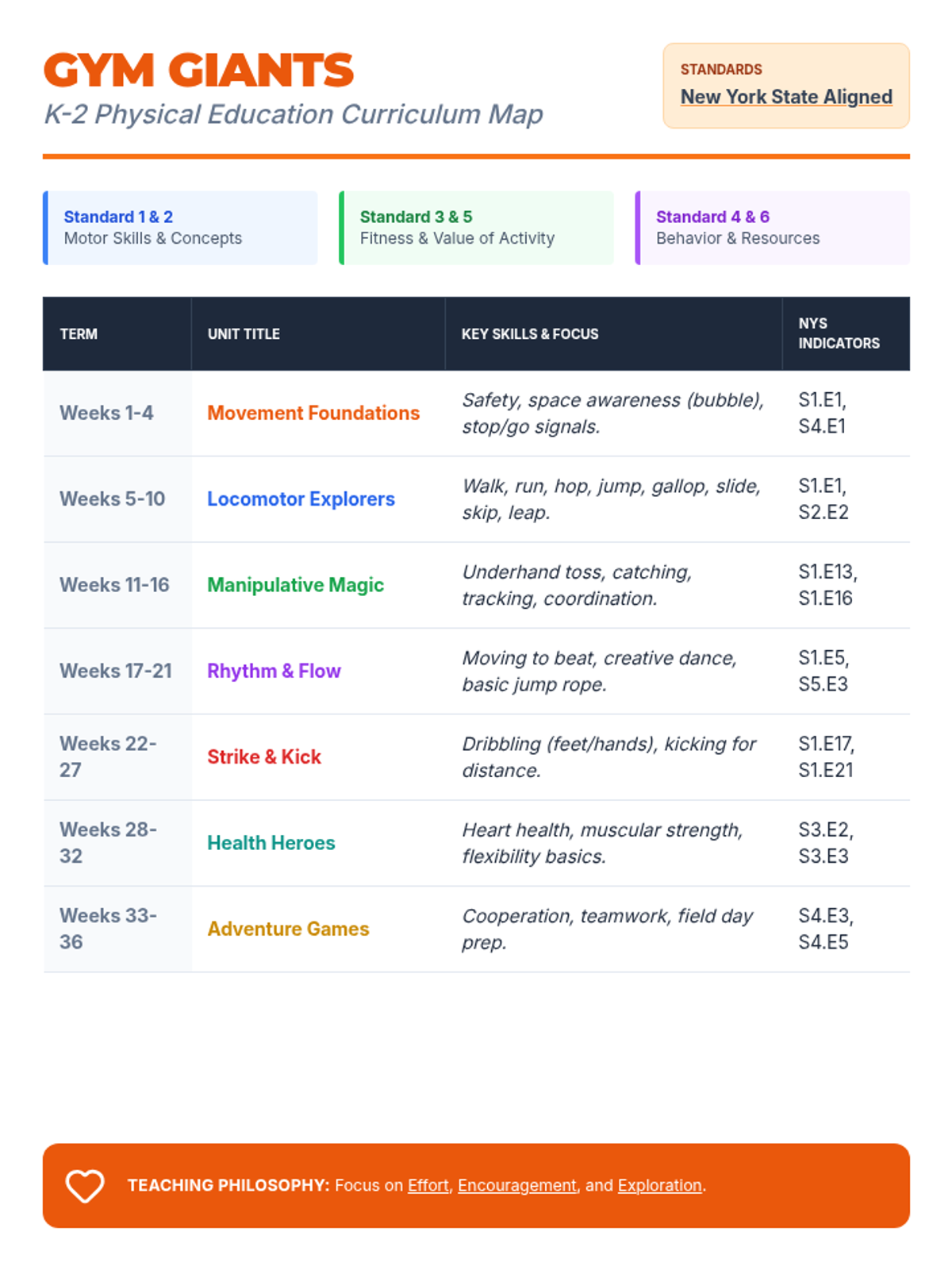
A master curriculum map for K-2 PE teachers, detailing the school year's units, NYS standards alignment, and grade-level focus areas.
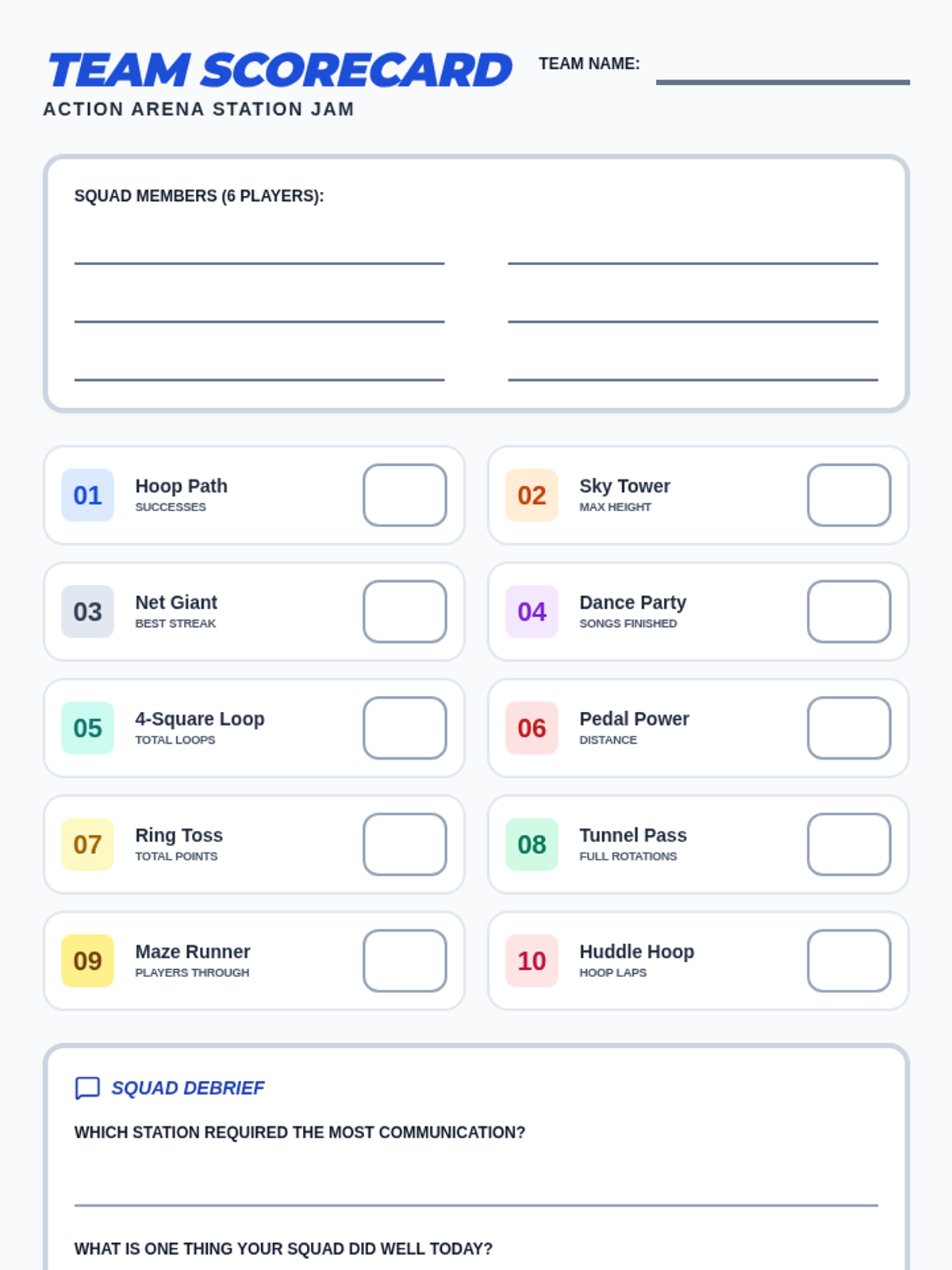
A student-facing tracking sheet for teams to record their achievements across 10 active stations. Updated for better contrast, single-page fit, and expanded student names area.
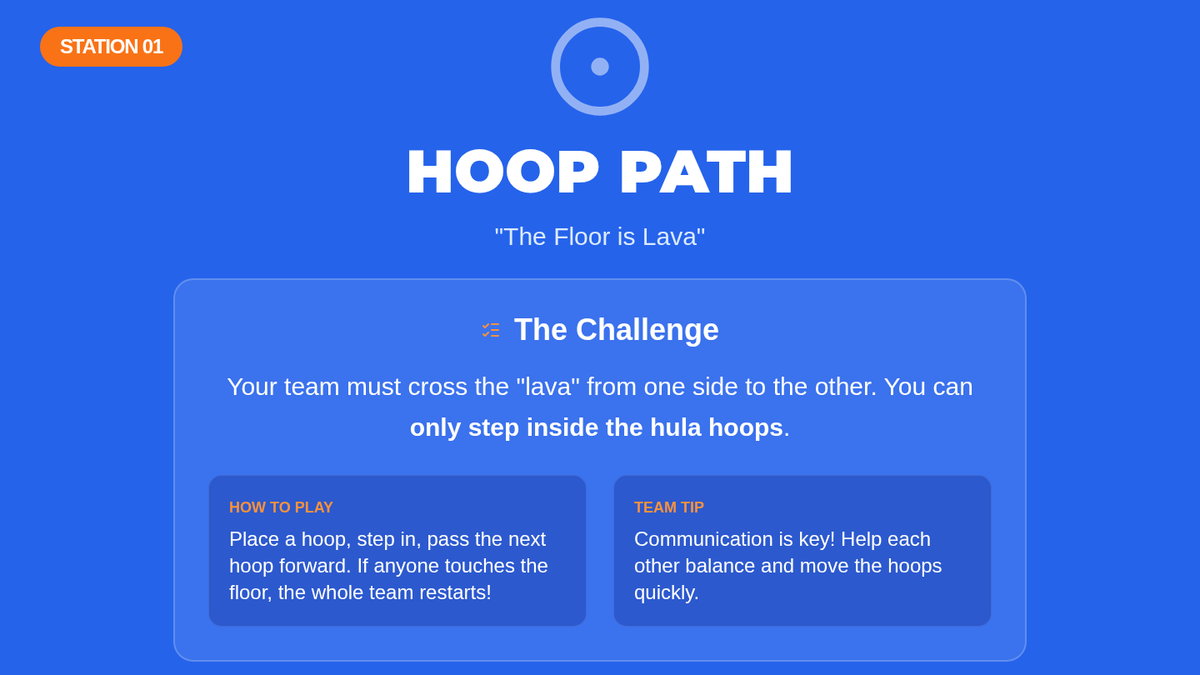
A set of 10 vibrant, high-visibility station cards for a PE circuit, each detailing a unique teamwork-based physical challenge with equipment-specific rules.
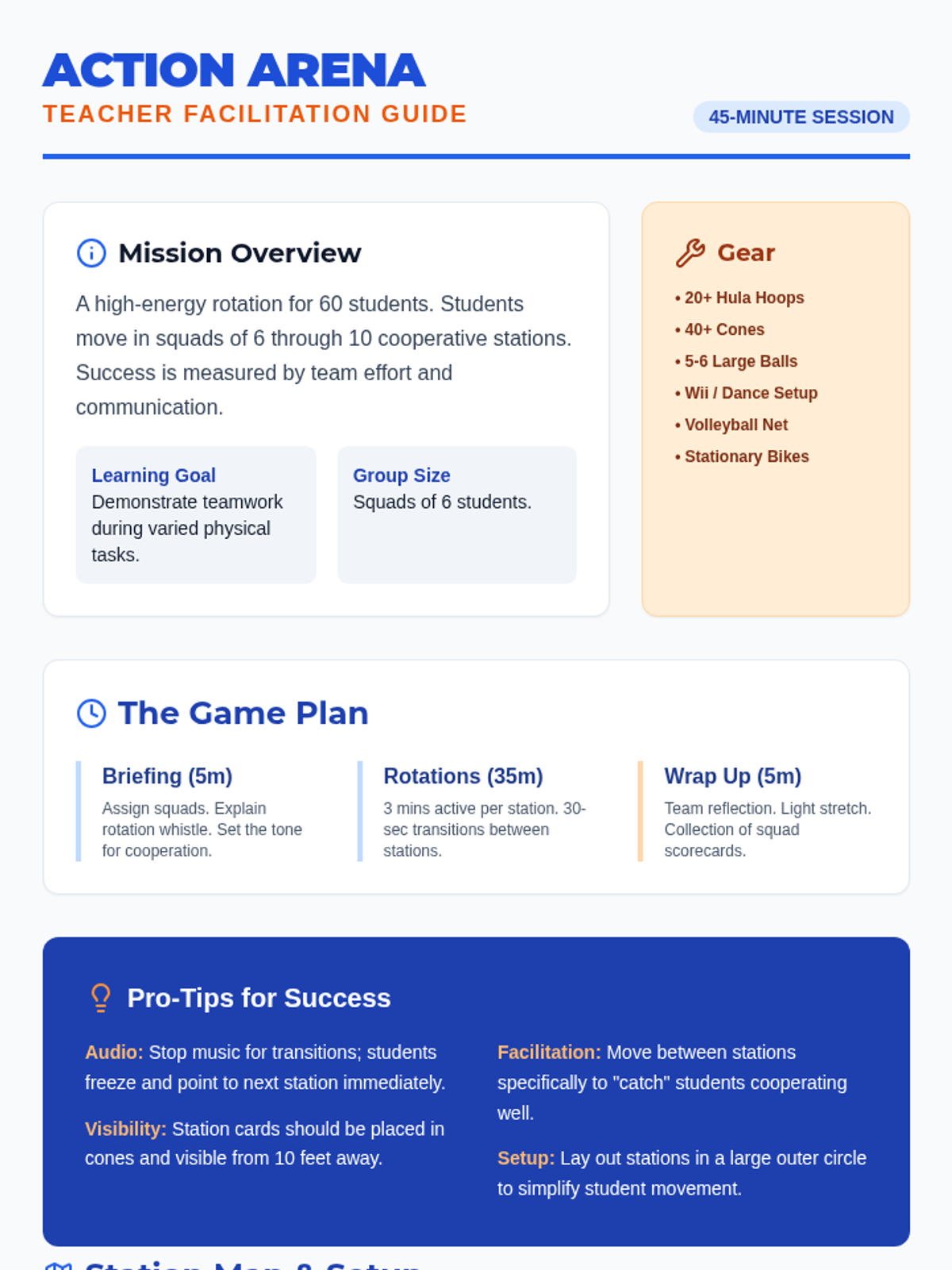
A comprehensive teacher's guide for managing a 10-station PE lesson, including timing, equipment lists, and setup instructions for 60 students. Updated to fix contrast, page breaks, and consolidate into 2 pages.
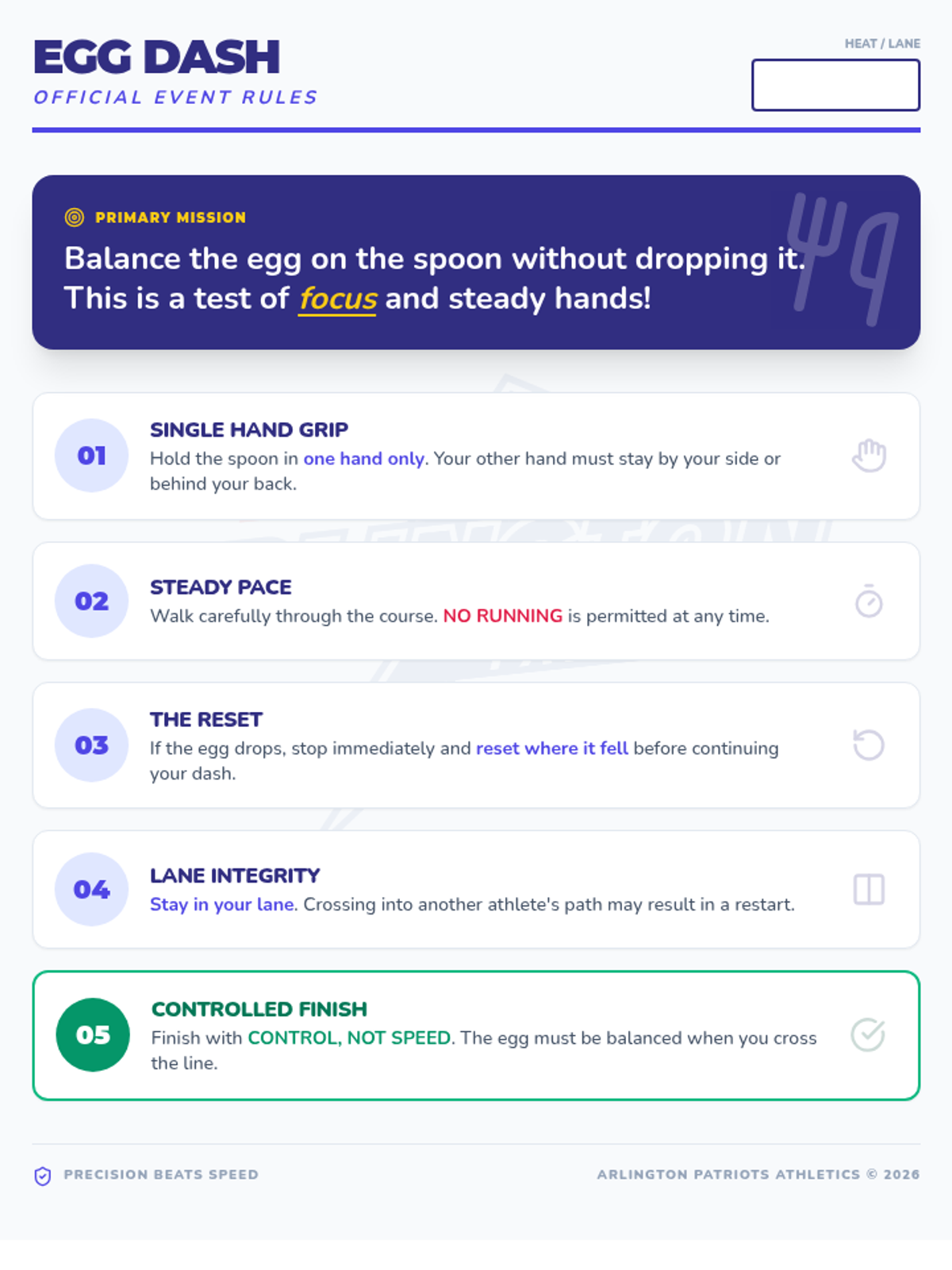
An athletic-themed rule sheet for the Egg Dash competition, detailing five core rules focused on balance, control, and sportsmanlike conduct.
A narrative coloring book for K-1 students telling the story of Sammy, who learns to balance his screen time with outdoor play to go from feeling like a 'statue' to a 'superhero'.
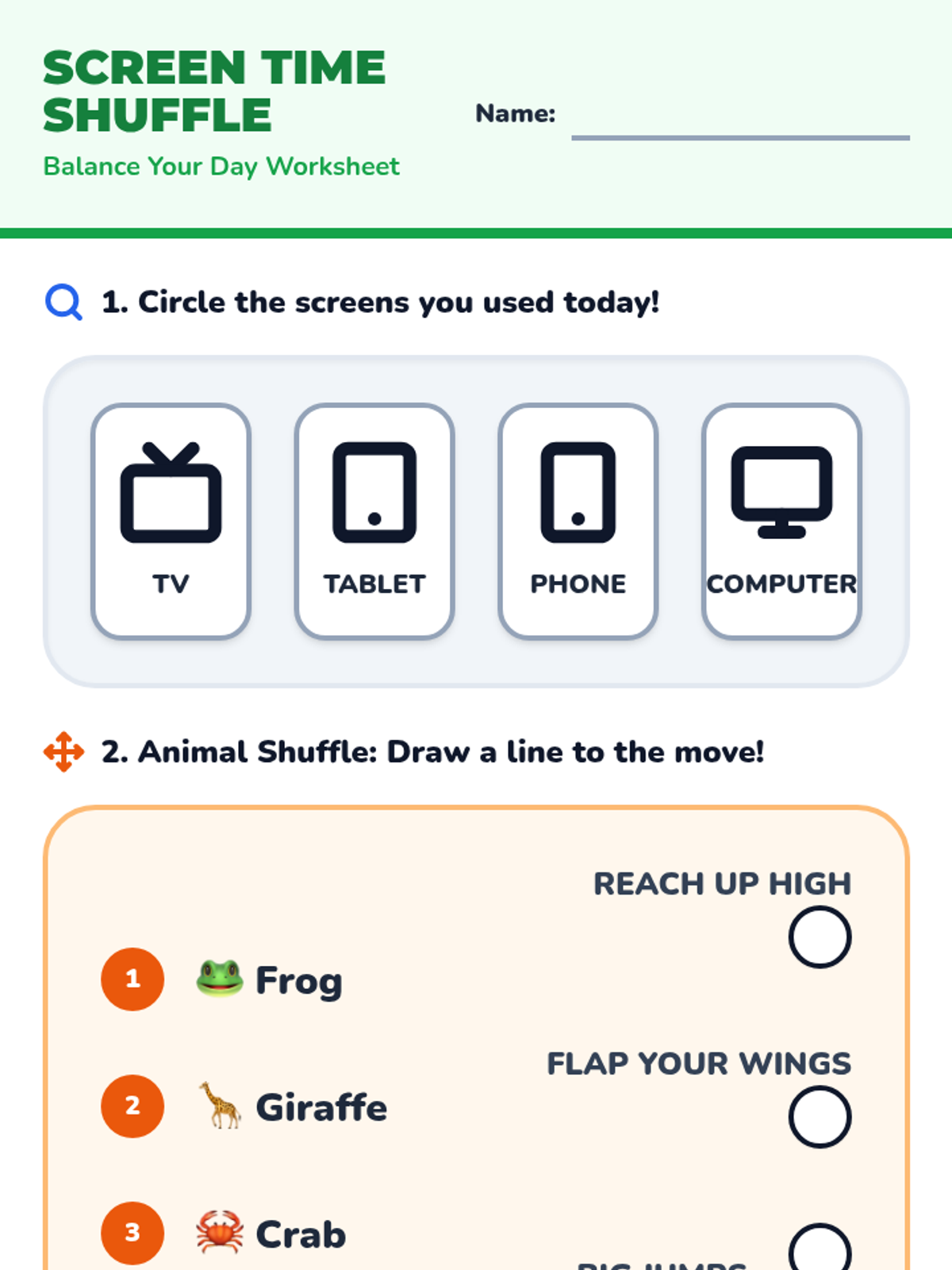
A student worksheet for K-1 featuring a screen identification task, a movement-matching animal activity, a drawing area for physical play, and a take-home scavenger hunt.
An engaging slide deck for K-1 students that uses vibrant visuals and movement prompts to explain the difference between screen time and physical activity, emphasizing the concept of balance.
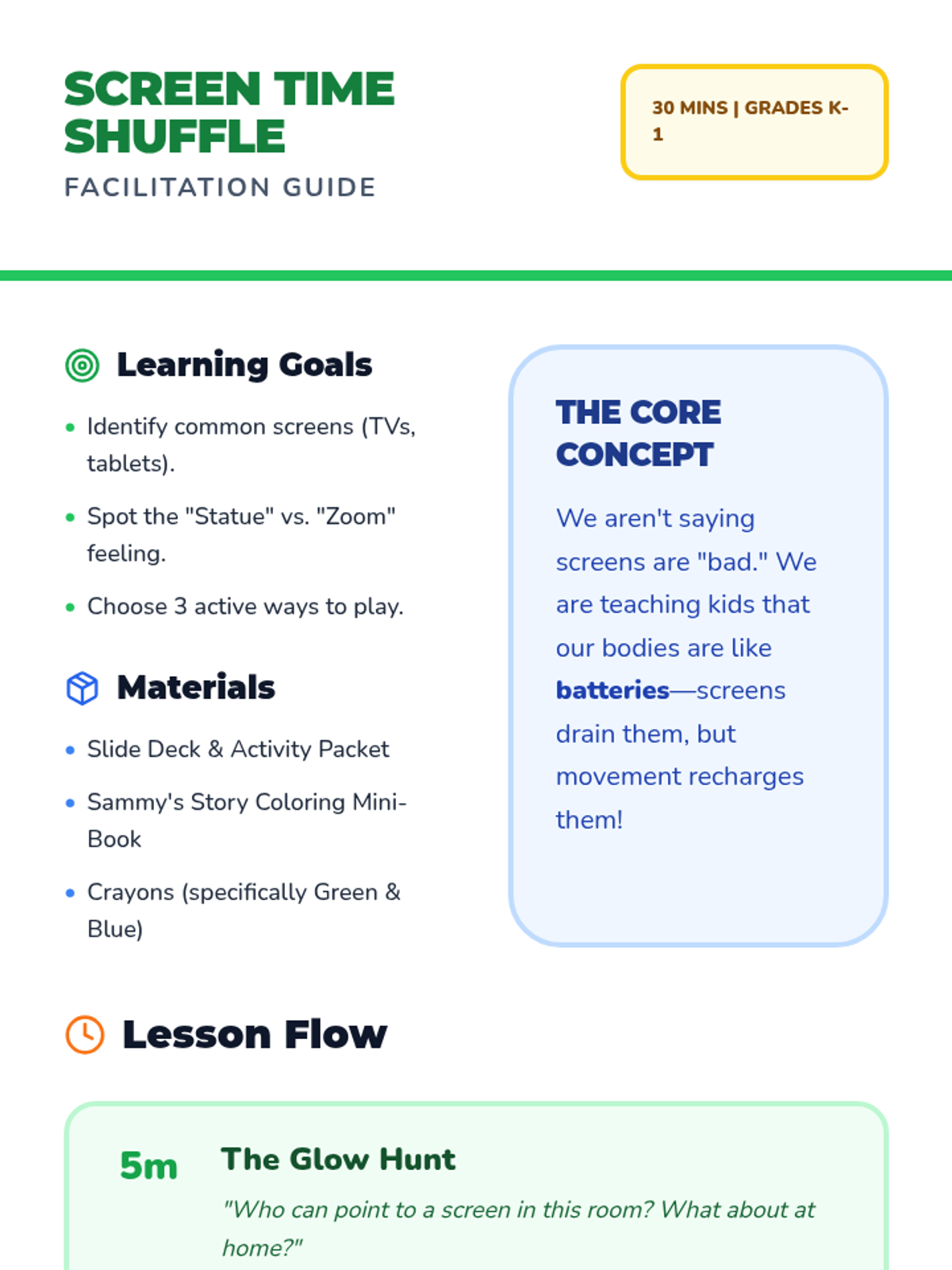
A comprehensive facilitation guide for teachers to lead a 30-minute lesson on balancing screen time with physical activity, including pacing, discussion prompts, and key learning goals.
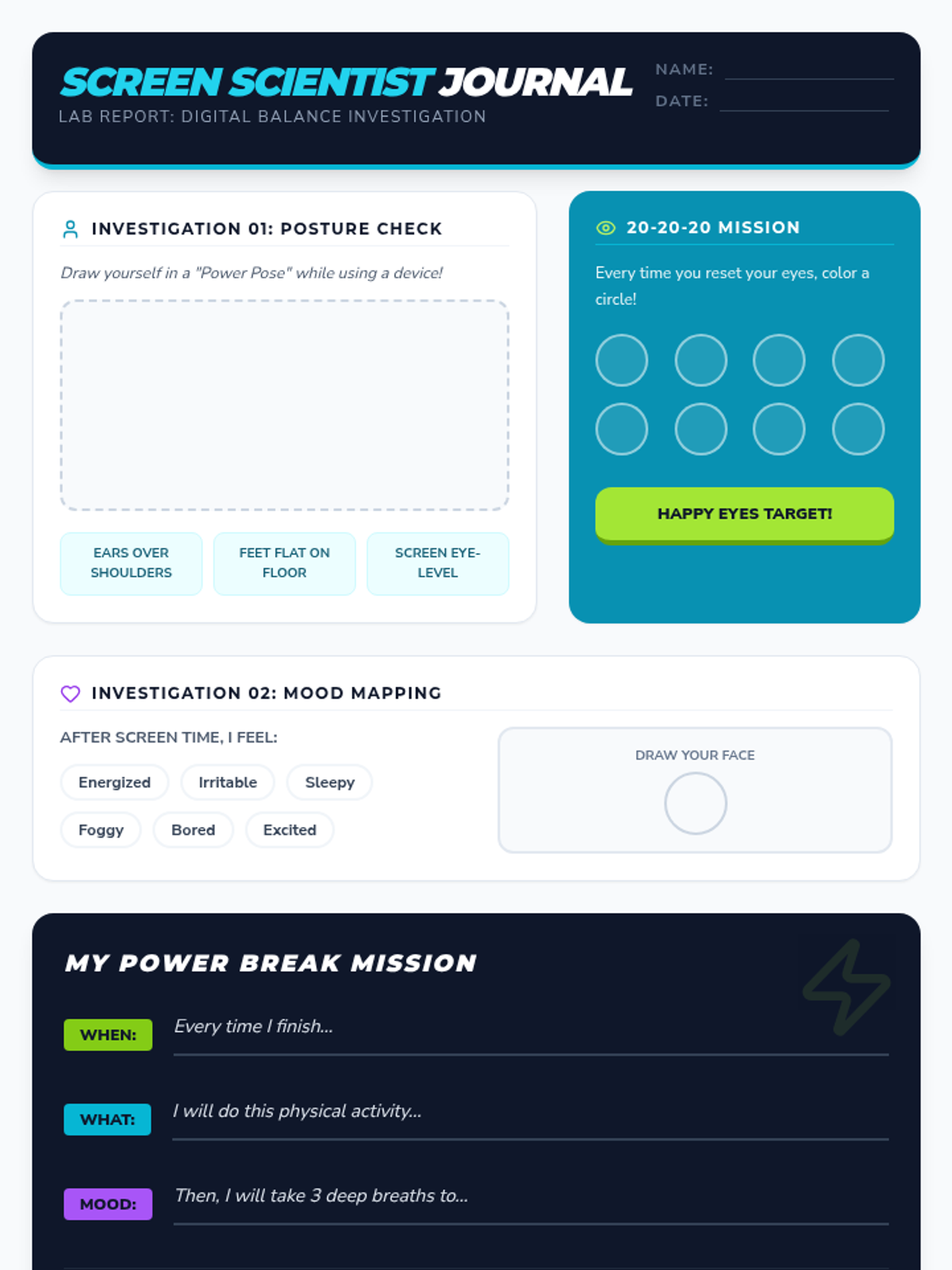
A student-facing worksheet for the Digital Balance Lab where students track their 20-20-20 rule compliance, map their moods, and plan their physical power breaks.
A dynamic 7-slide presentation for the Digital Balance Lab, covering tech neck, the 20-20-20 rule, emotional regulation, and physical power breaks.
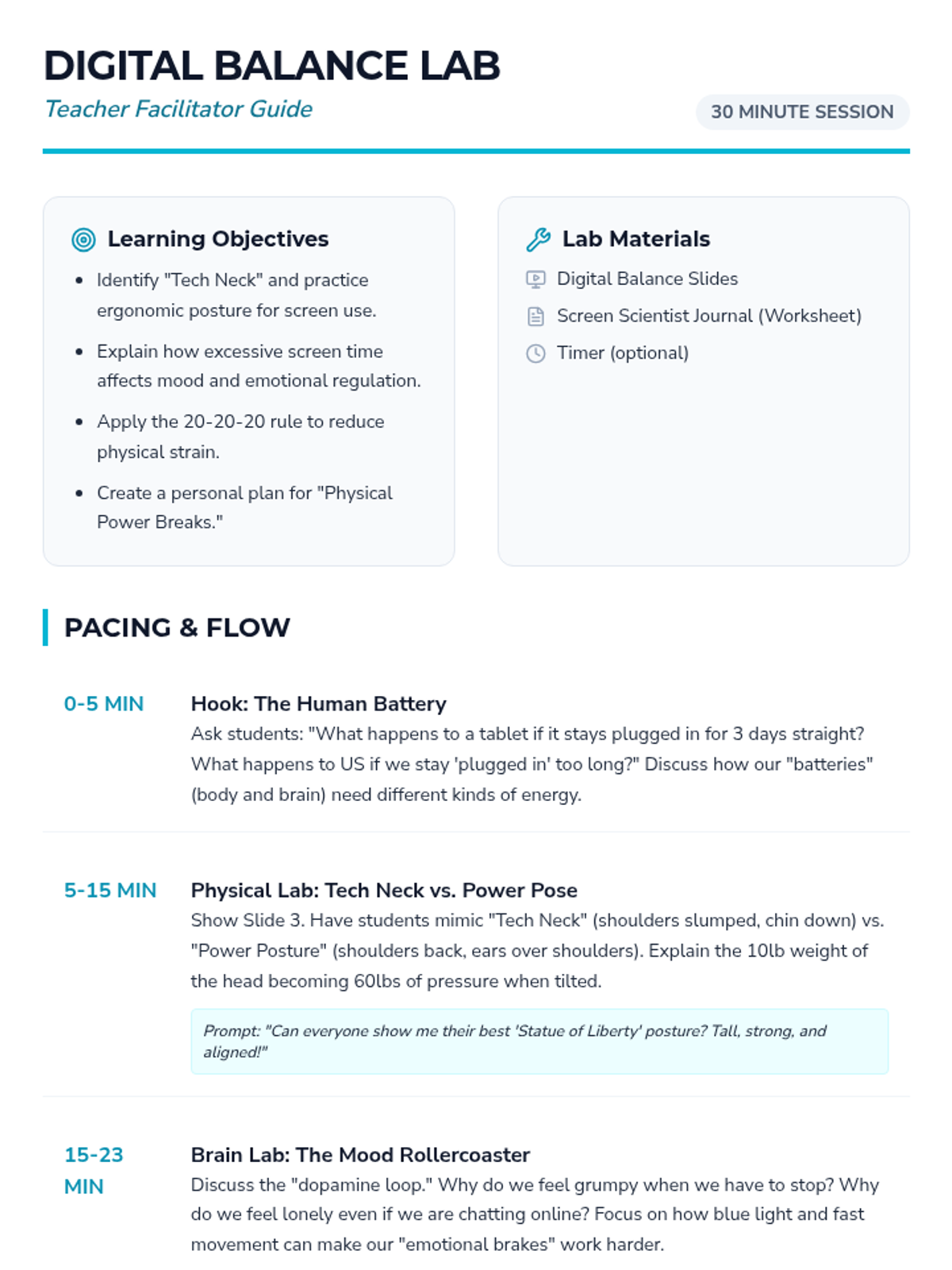
A comprehensive facilitator guide for a 30-minute lesson on digital balance, including pacing, vocabulary, and differentiation strategies for 3rd-5th grade teachers.
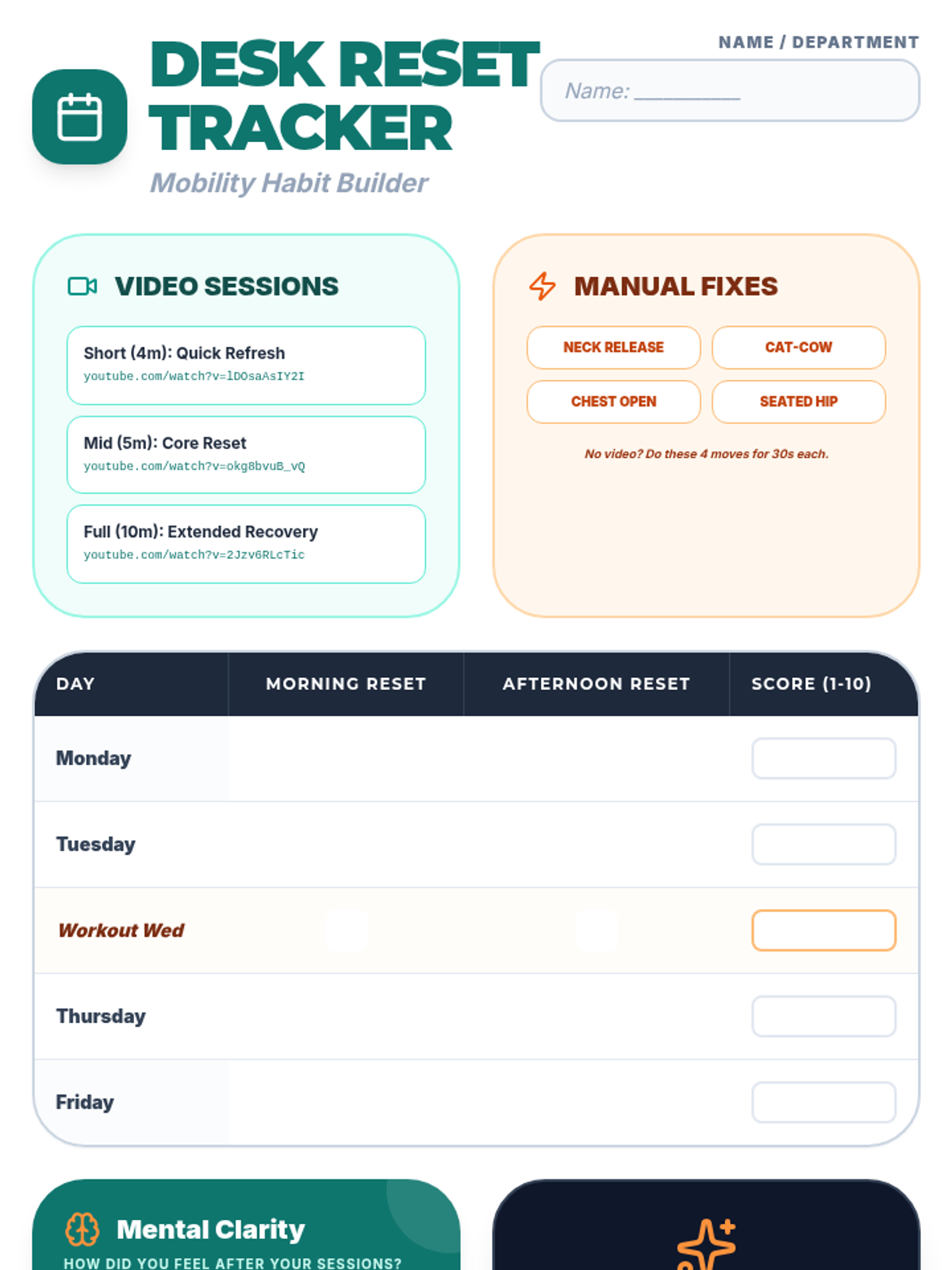
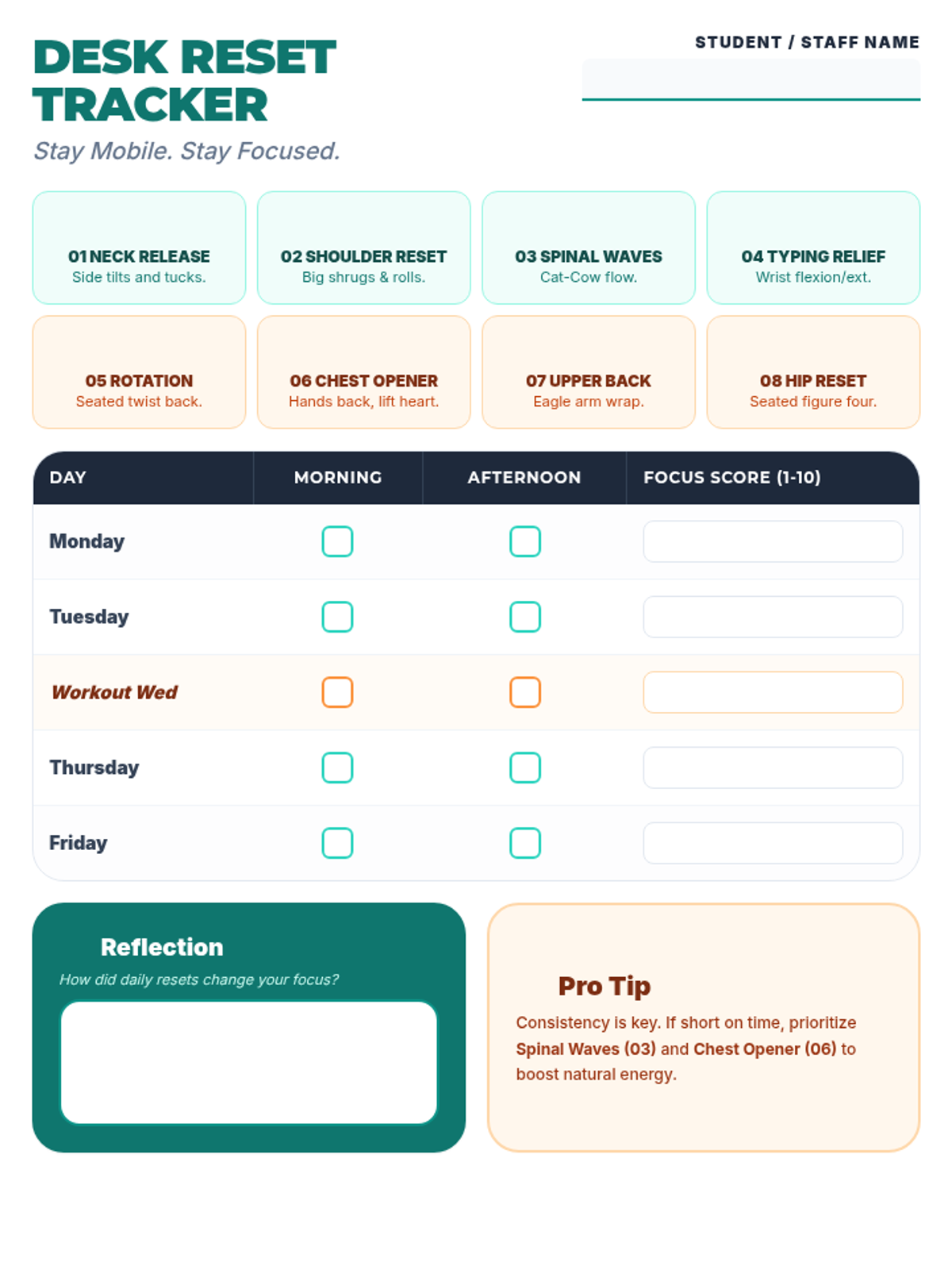
A student/staff facing tracking sheet to encourage daily mobility habits. Includes an expanded quick-reference guide to the 8 movements, a weekly log, and a reflection area.
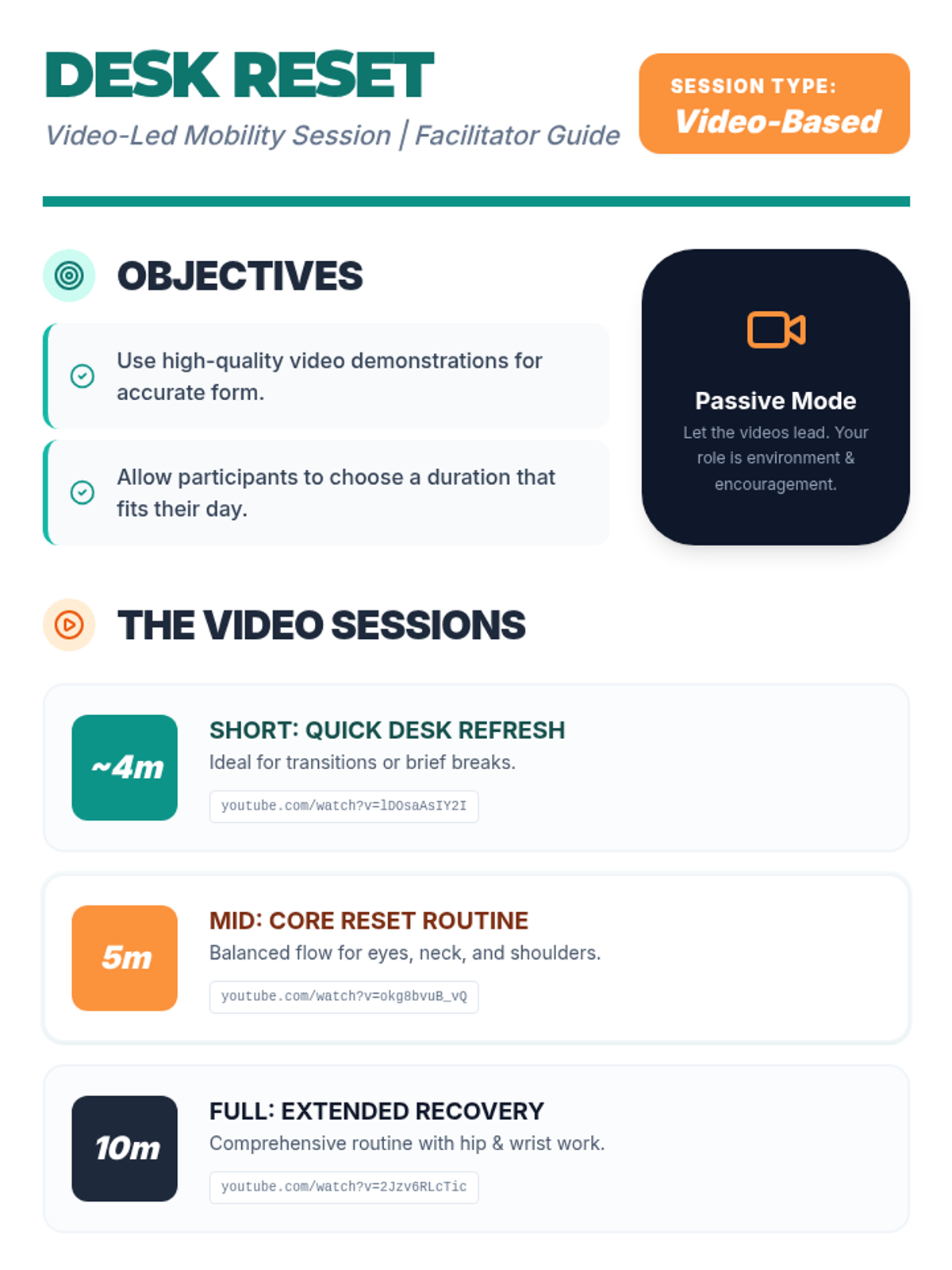
An updated facilitator guide for the video-led Desk Reset session. Includes guidance on integrating provided YouTube routines and best practices for session facilitation.
A video-led slideshow featuring three guided desk mobility routines. Includes embedded YouTube videos for a short, mid-length, and extended office stretching session, along with intro and closing slides.
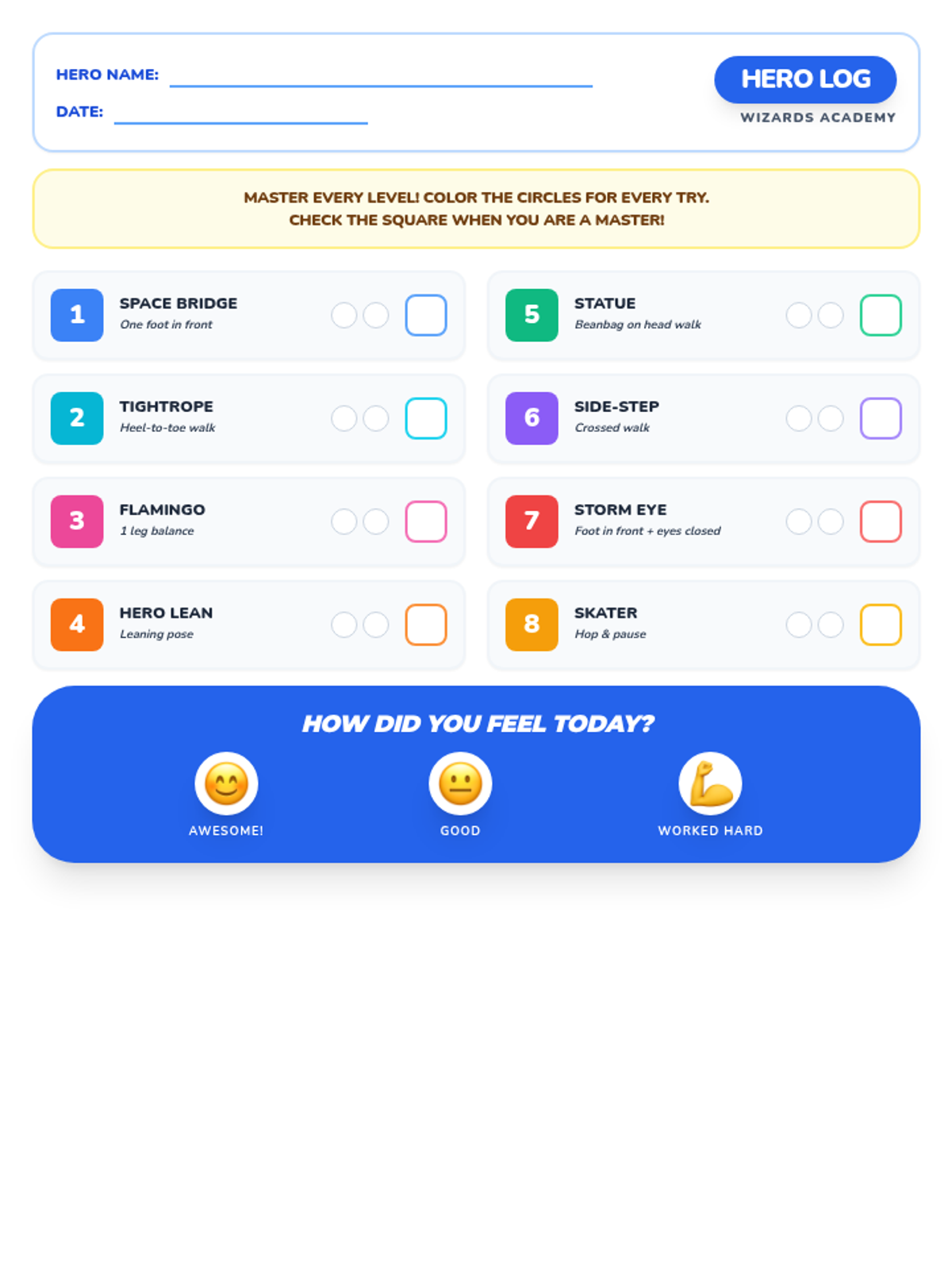
A student-facing log for tracking progress through 8 balance challenges. Updated Task 7 (Storm Eye) to specify the new tandem stance requirement and Task 5 (Statue) to revert to the beanbag walk wording without the 10-second stand. The layout is optimized for a single page with clear tracking areas.
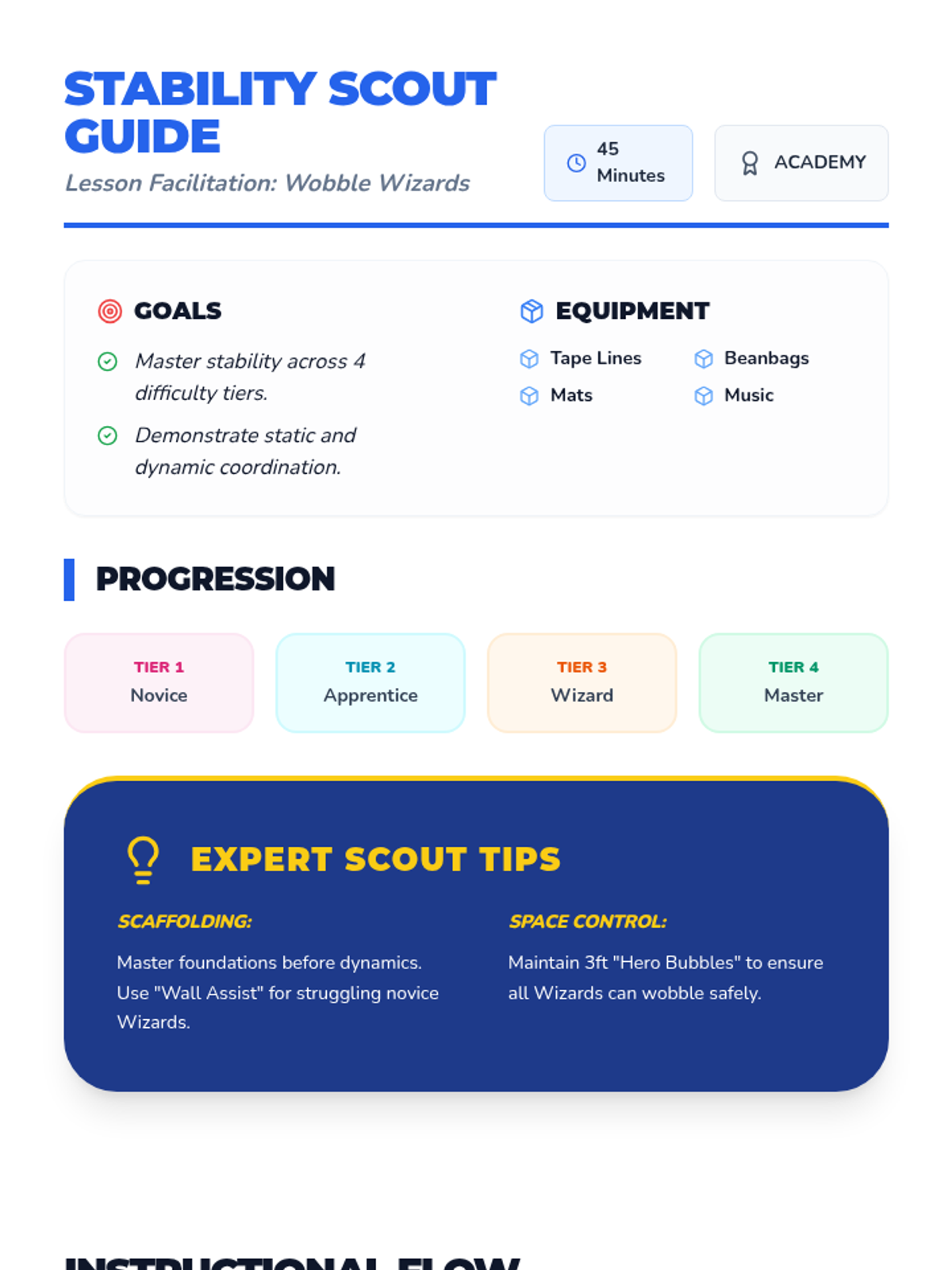
A comprehensive teacher's guide for the Wobble Wizards lesson. Station 3 updated to remove the 10-second stand requirement for the Frozen Statue challenge. Station 4 updated with specific tandem stance eyes-closed instructions. Layout optimized for two pages with higher contrast notes section. Grade-specific references have been removed.
A vibrant slide deck featuring interactive-style visual task cards for balance exercises. Removed the 10-second stand requirement from the Frozen Statue exercise as requested. Reference to grade level has been removed for broad accessibility.
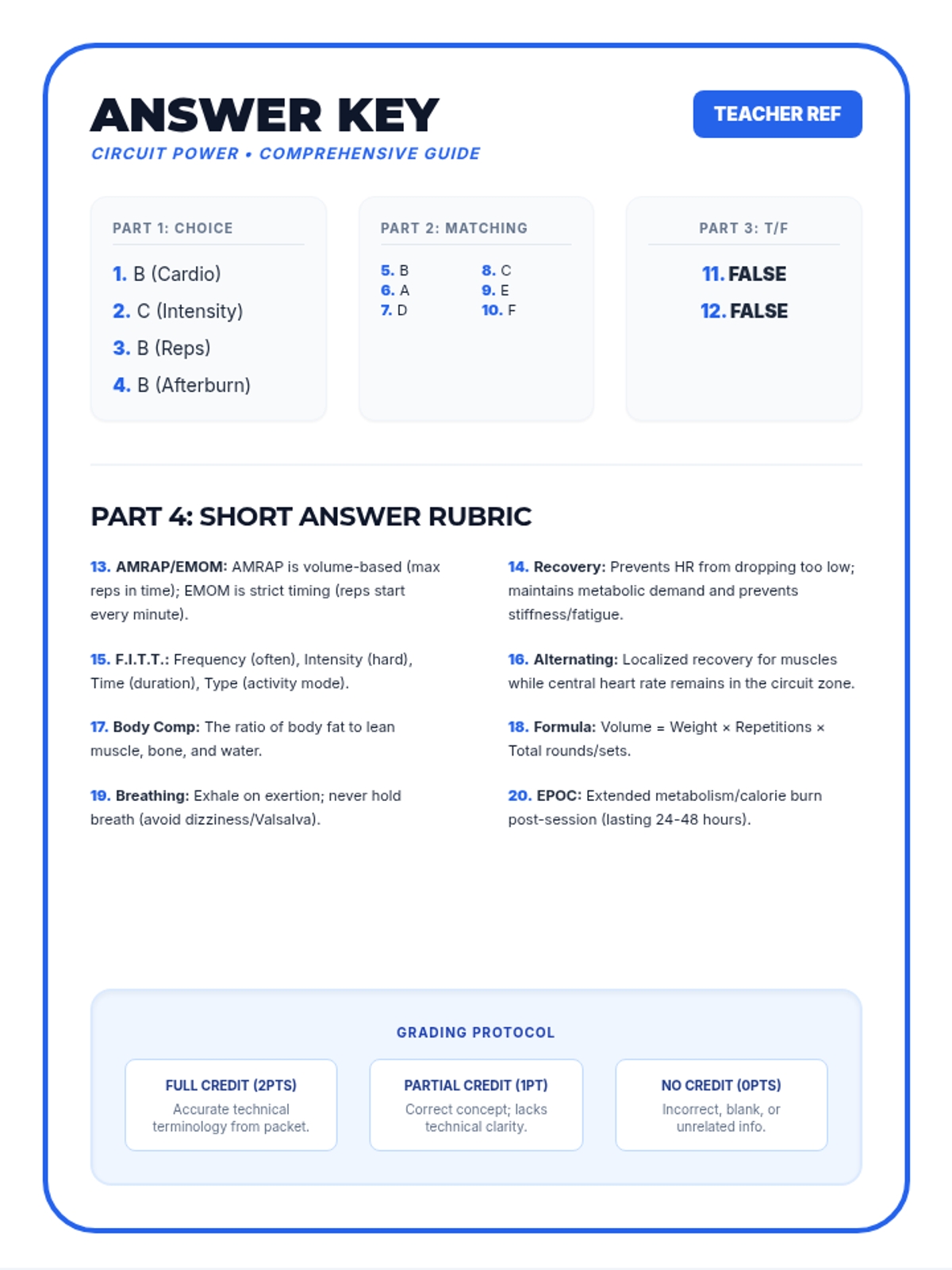
A professional teacher's answer key for the expanded 8-page Circuit Power Student Packet. Includes answers for the objective sections, matching terms, true/false, and a specific grading rubric. Now expanded to 2 pages to include a detailed Lesson Facilitation Guide for teachers.
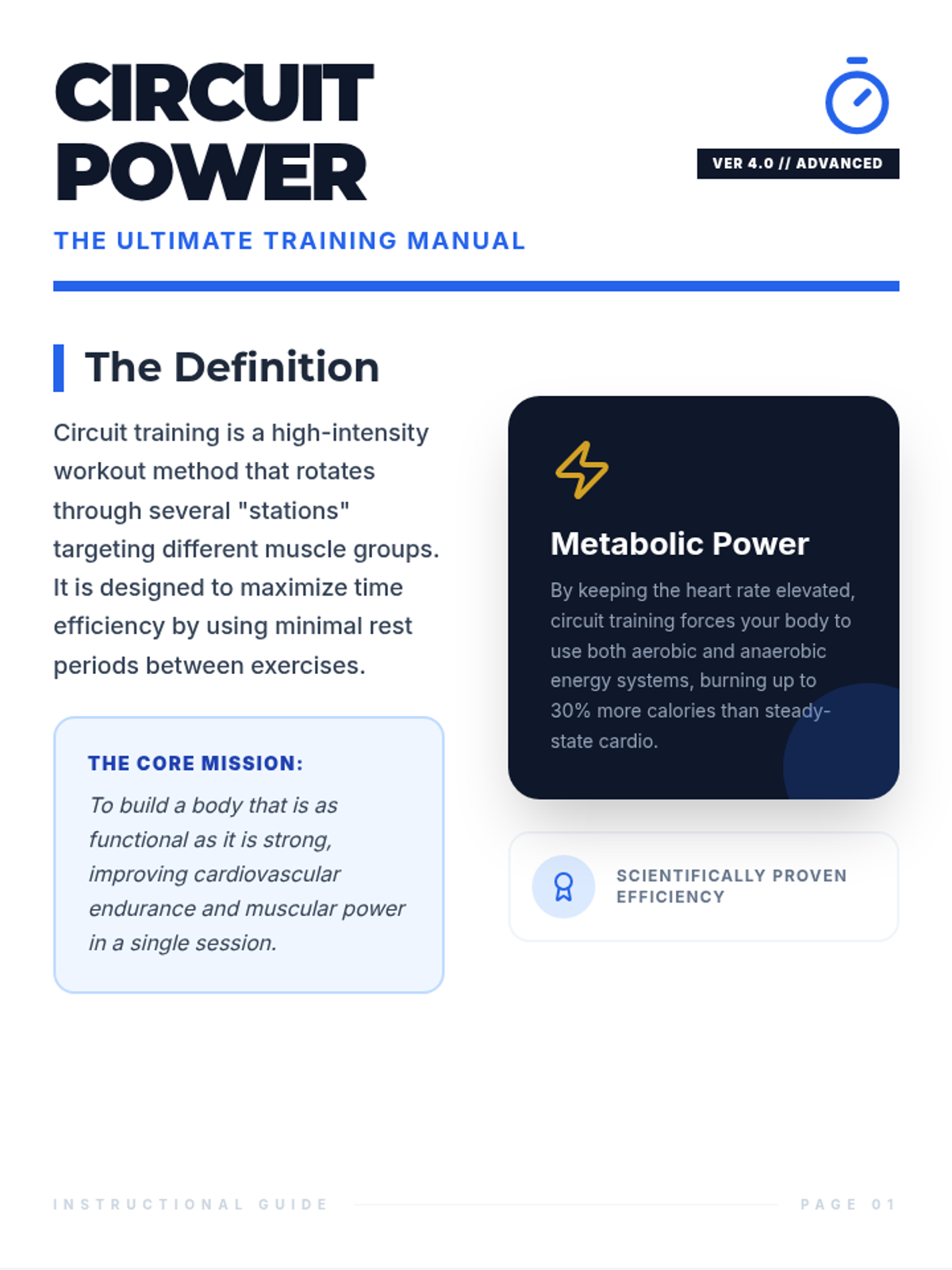
An 8-page advanced instructional packet on circuit training. Includes a deep dive into the 5 pillars of fitness, the science of EPOC and heart rate zones, the F.I.T.T. strategy, advanced variations like AMRAP and Tabata, and a dedicated safety section. Concludes with a 20-question comprehensive assessment.
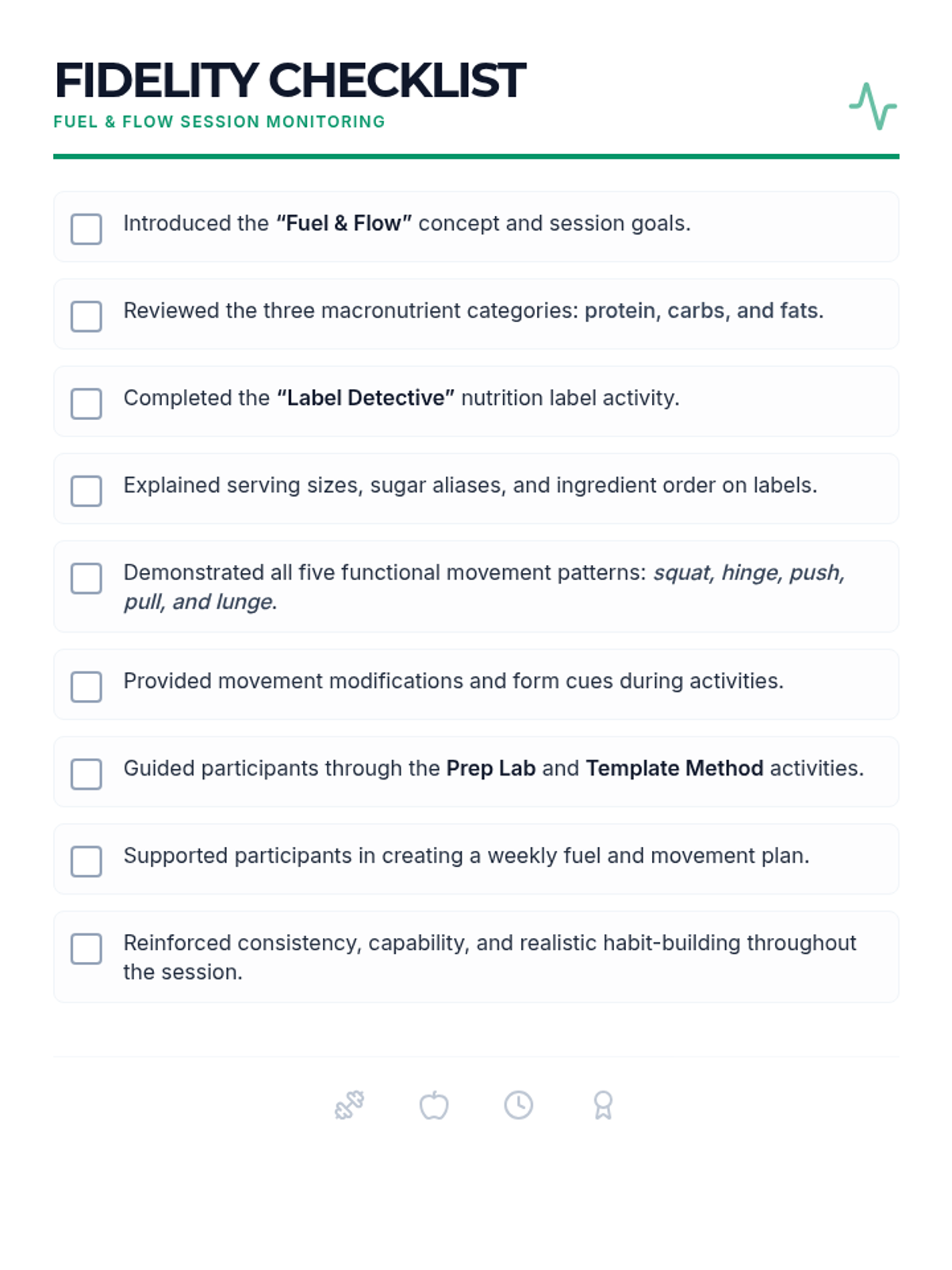
A clean, athletic-themed checklist for monitoring the fidelity of the Fuel & Flow session, optimized for a single-page layout with clear checkboxes and no observer info fields.
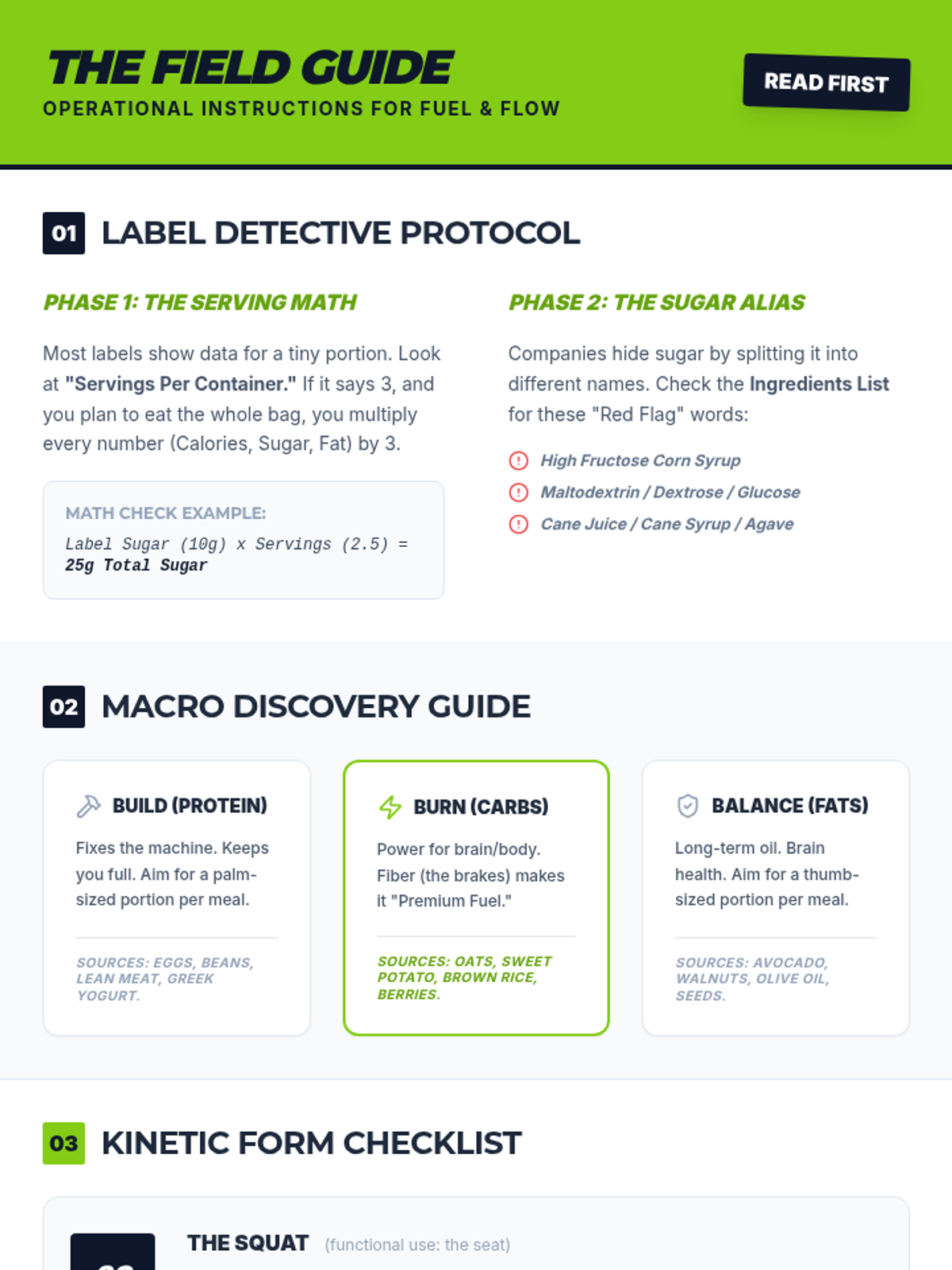
A student-facing handout that provides clear, actionable instructions and 'cheat sheet' data for the workshop's three core activities: label reading math, macronutrient identification, and functional movement form cues. Includes 3 sample nutrition labels (Sample A, B, and C) for hands-on analysis. Revised with calculation practice boxes and improved layout. Final polished version.
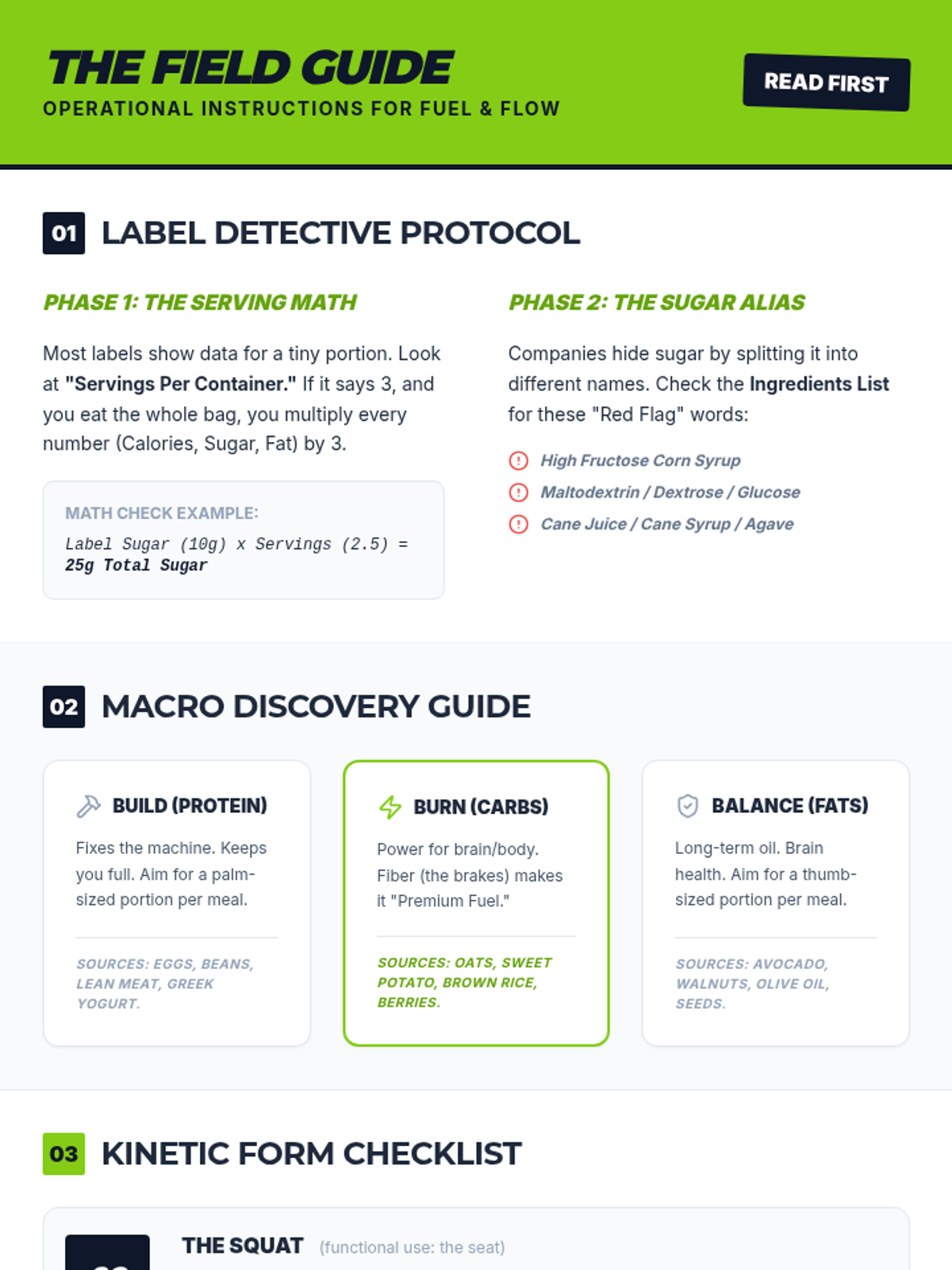
A student-facing handout that provides clear, actionable instructions and 'cheat sheet' data for the workshop's three core activities: label reading math, macronutrient identification, and functional movement form cues. Revised for improved font sizes and layout.
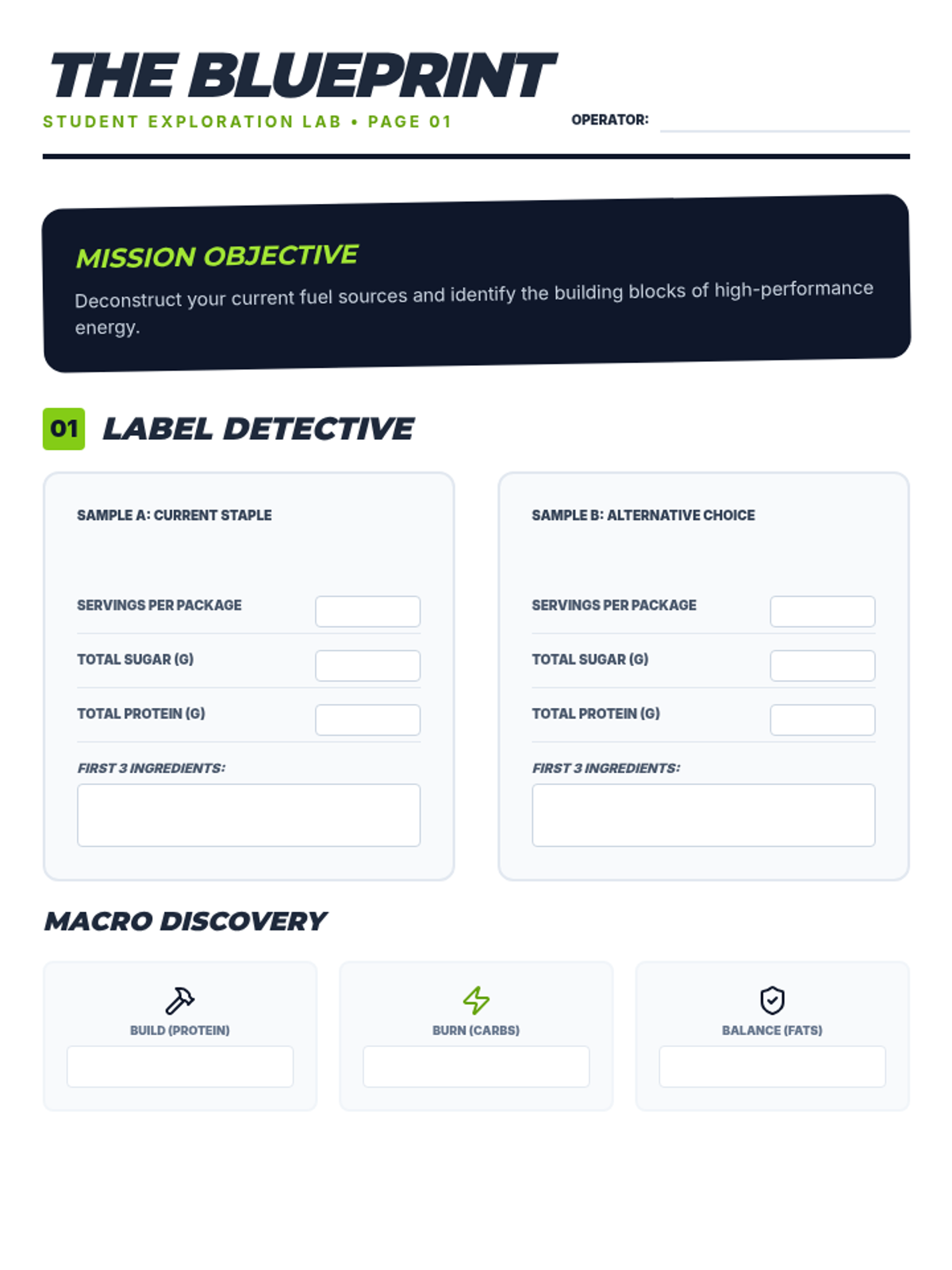
A comprehensive 4-page student workbook for the 'Fuel & Flow' workshop. Features sections on label analysis, functional movement mapping, meal planning theory (template method), and a complete 5-day meal and movement planner with a shopping list area. Final version.
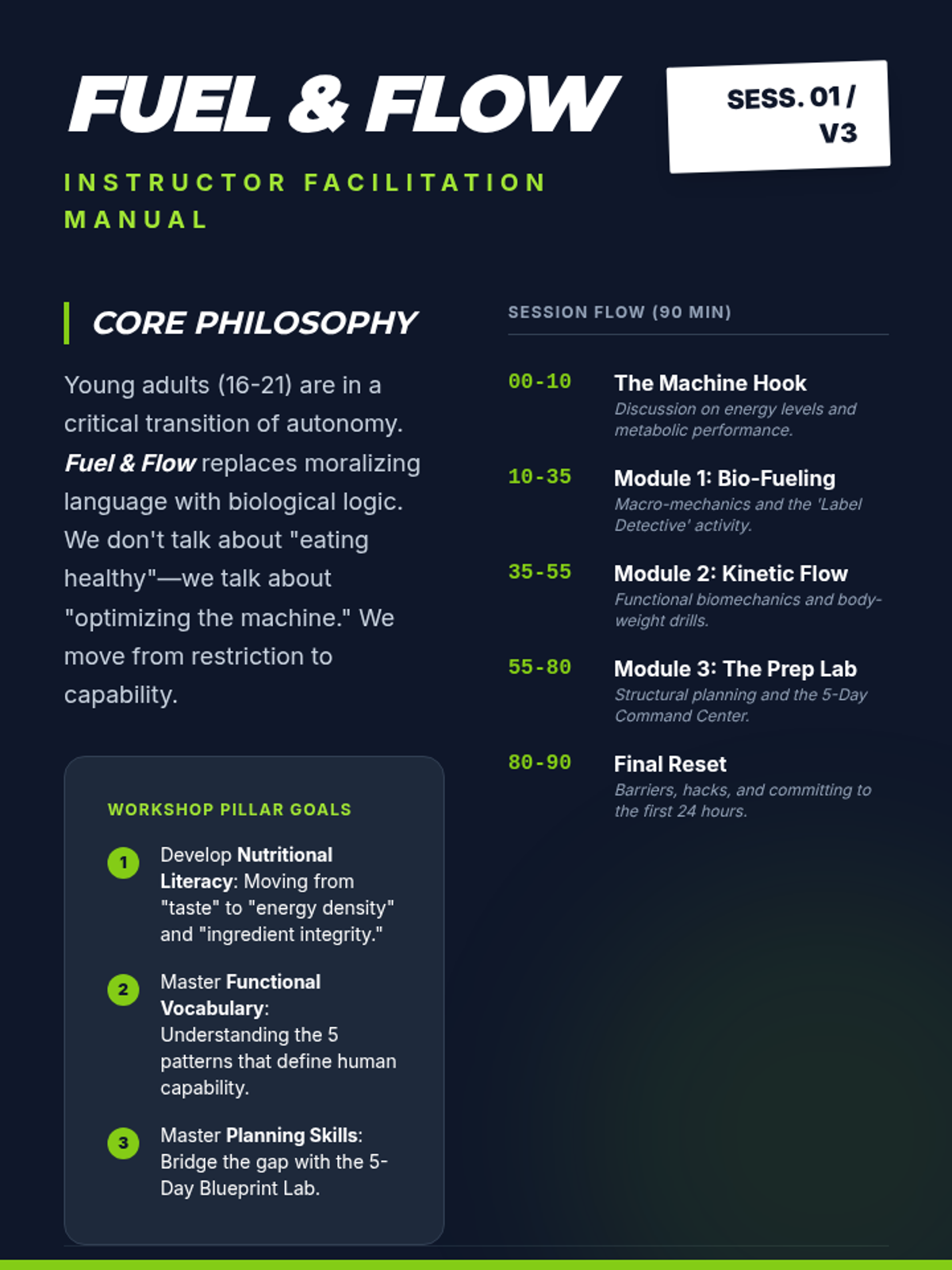
A comprehensive 8-page instructor guide for the 'Fuel & Flow' workshop. Includes deep-dive nutritional science, biomechanics for functional movement, detailed lesson plans for three modules, and facilitation strategies for handling student barriers. Final polished version.
A high-impact 5-slide presentation for a 90-minute workshop on nutrition and movement. Revised for better contrast and icon clarity.
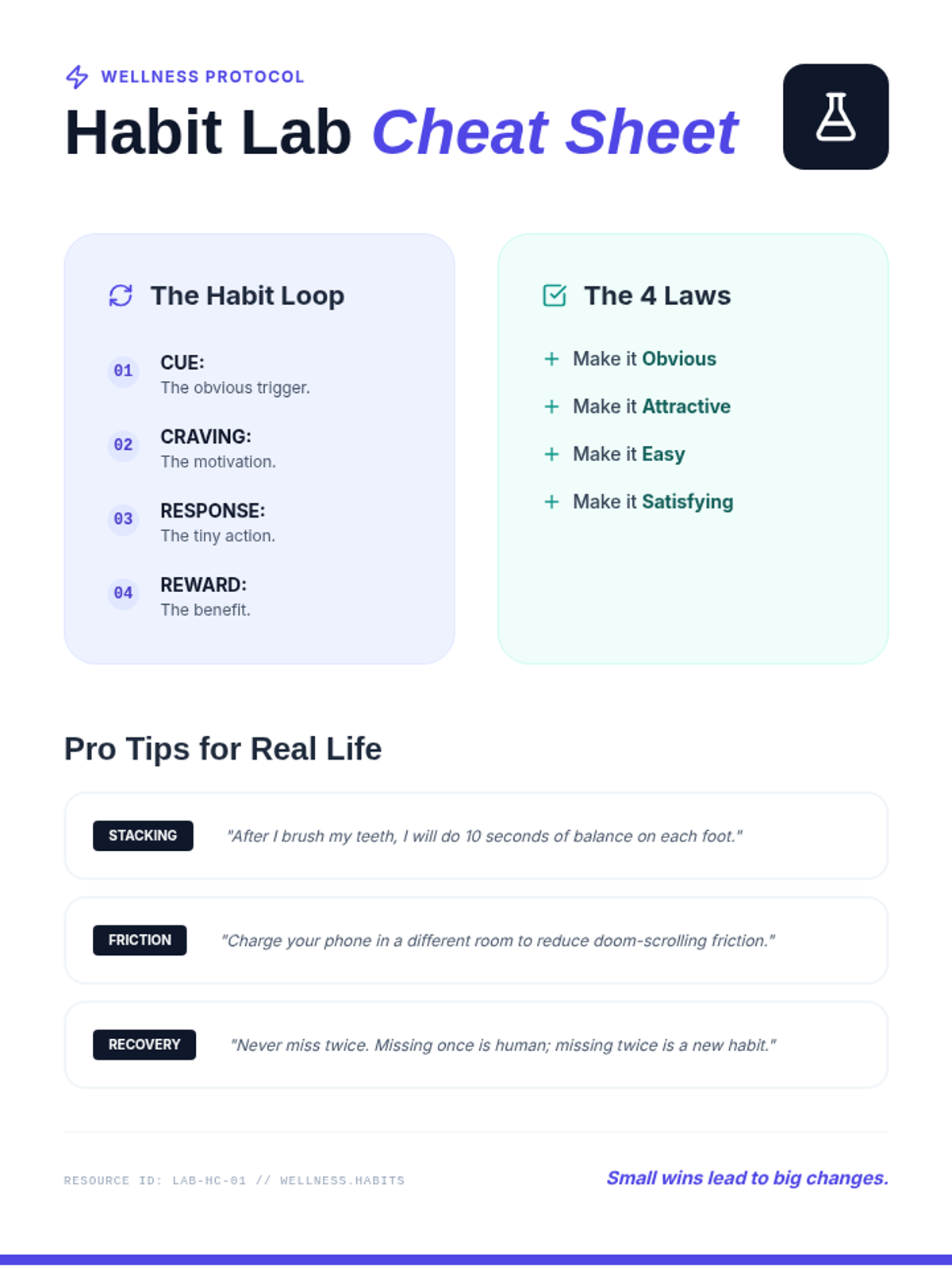
A concise one-page reference handout for participants, summarizing the habit loop, the four laws of behavior change, and practical strategies like habit stacking and environment design.
A high-impact visual presentation covering the core concepts of habit formation: the habit loop, identity-based habits, the 2-minute rule, temptation bundling, and habit stacking. Designed for 16-21 year olds.
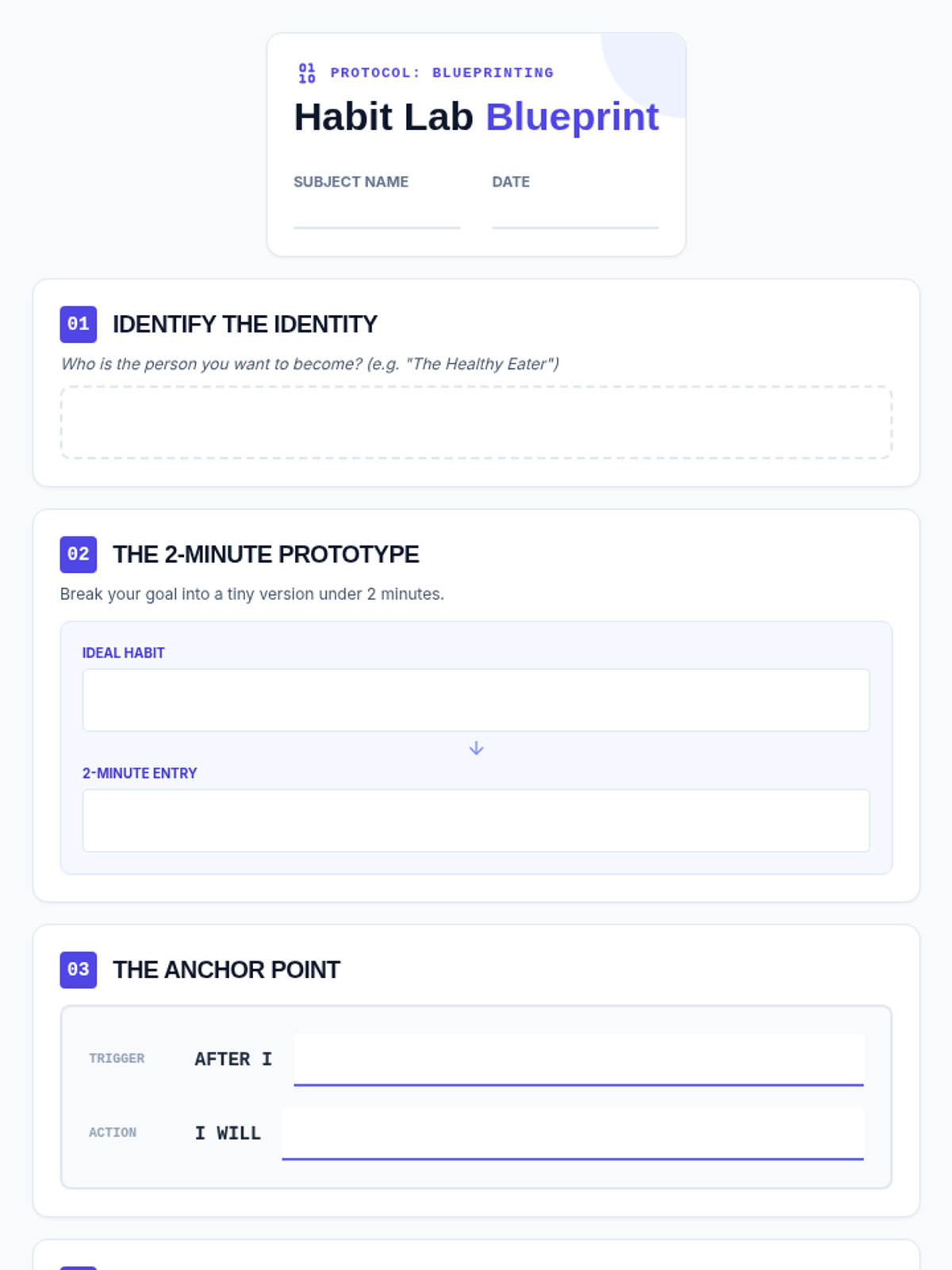
An expanded 5-page workshop workbook for habit formation. Includes identity mapping, habit loop analysis, 2-minute prototyping, habit stacking practice, environment audits, backup planning, reward menus, habit trackers, and long-term vision contracts. Designed for a 90-minute high-engagement session.
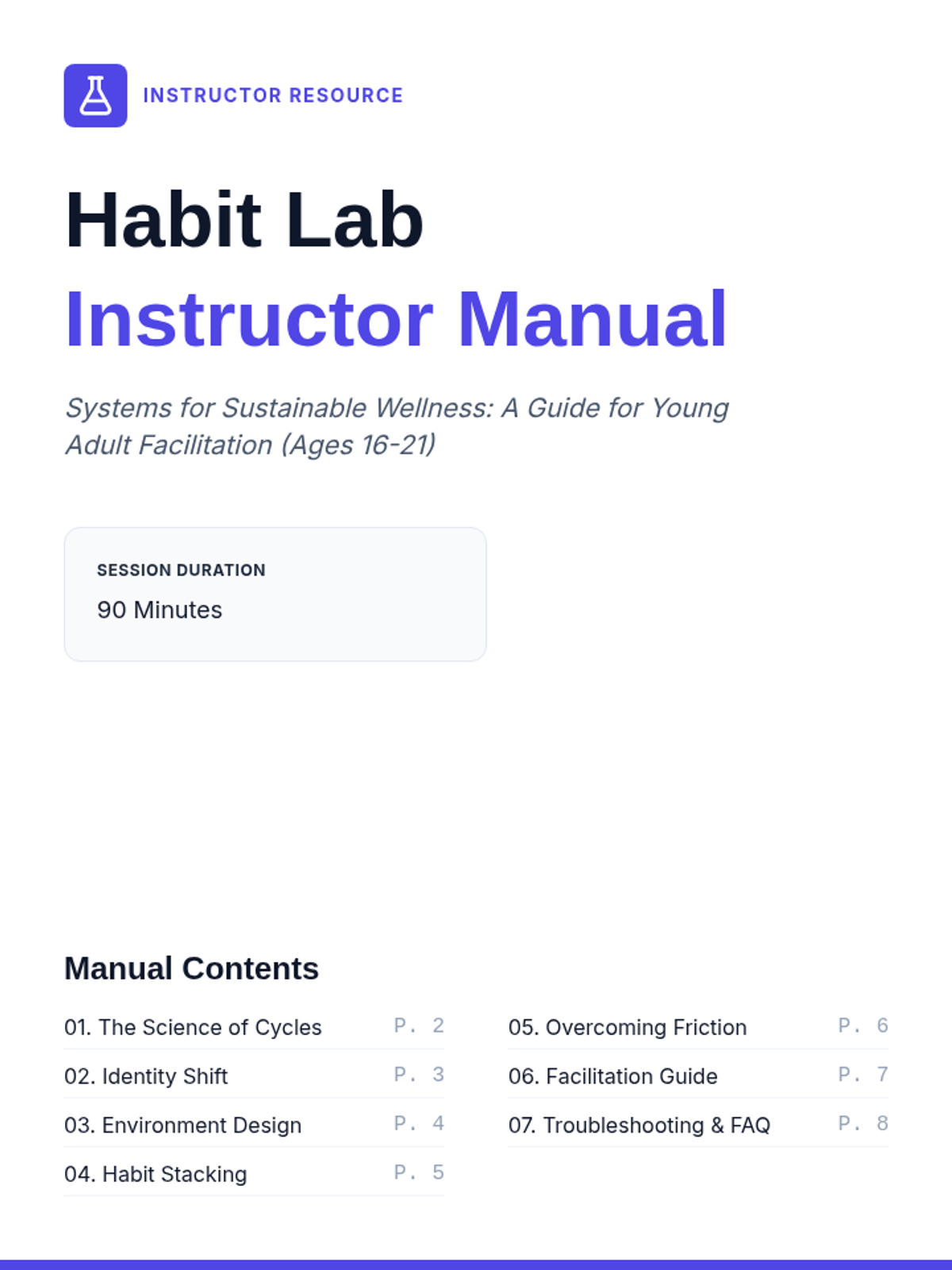
A comprehensive 8-page instructor manual updated with specific facilitation times for a 90-minute session. Includes guidance for new workbook activities such as Loop Mapping, Reward Menus, and the 2-Minute Prototype brainstorm.
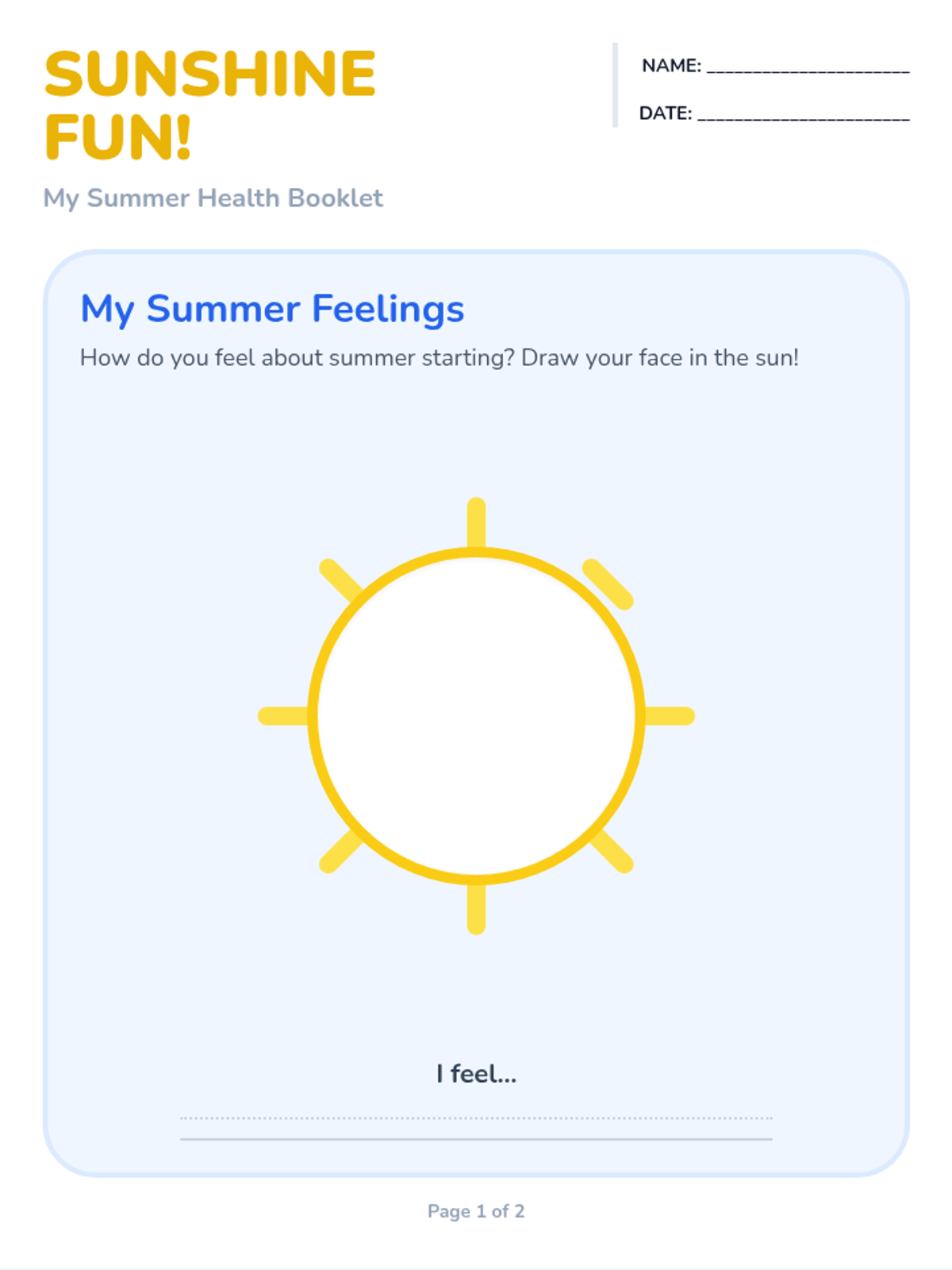
A 2-page student activity booklet featuring a feelings drawing prompt, a healthy habits checklist with star icons, and a visual breathing exercise tool.
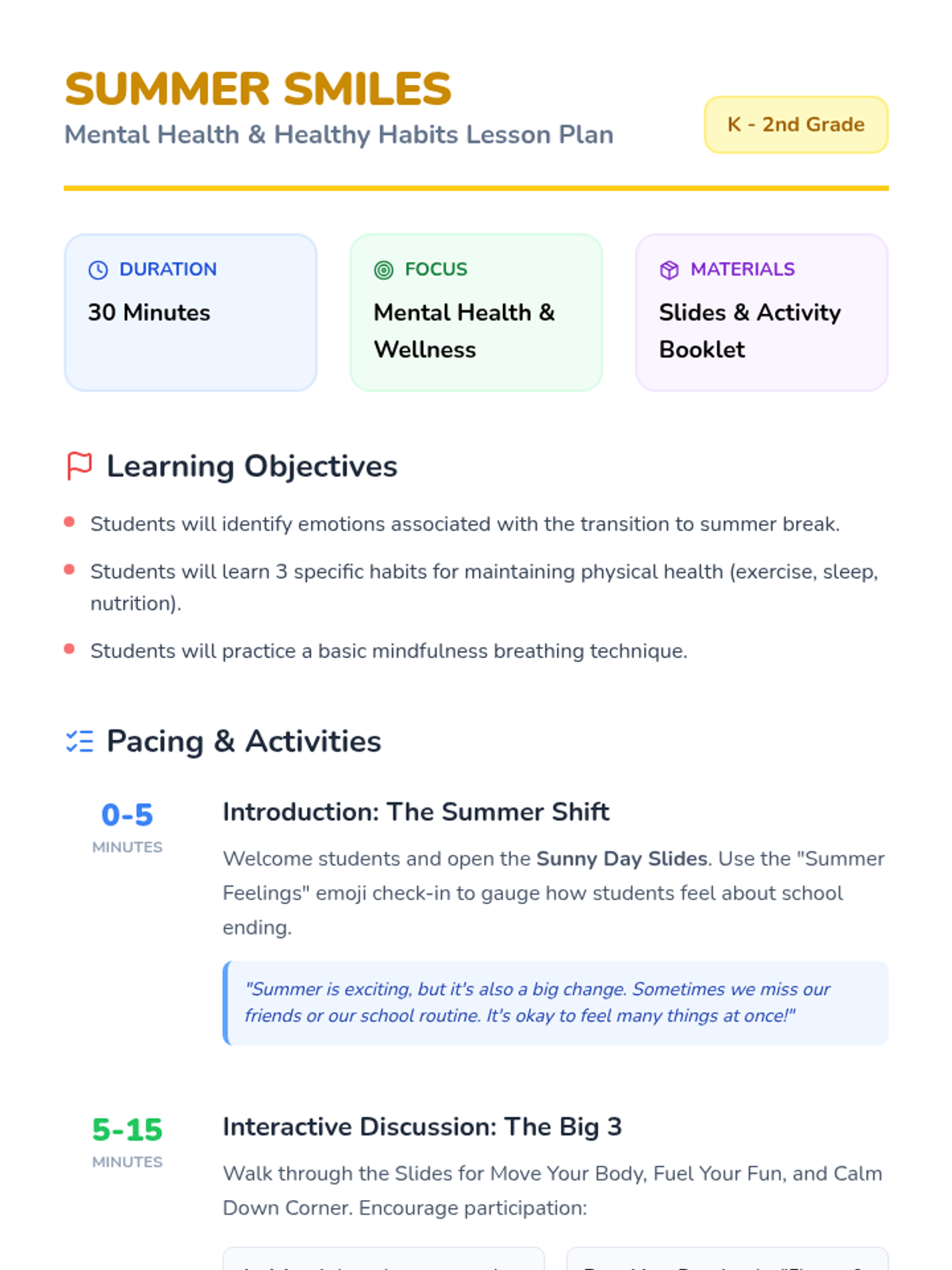
A comprehensive teacher guide for a 30-minute K-2 mental health lesson, including pacing, objectives, and teaching tips.
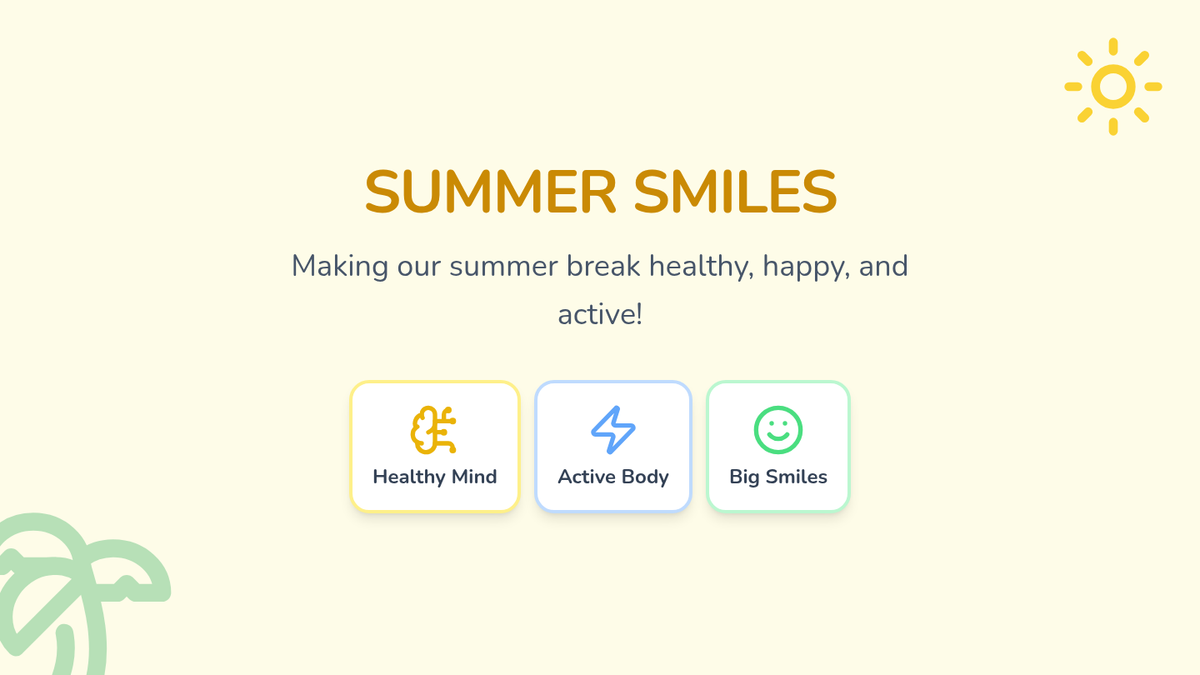
A vibrant and engaging interactive slide deck for K-2 students focused on summer mental health, physical activity, nutrition, and mindfulness.
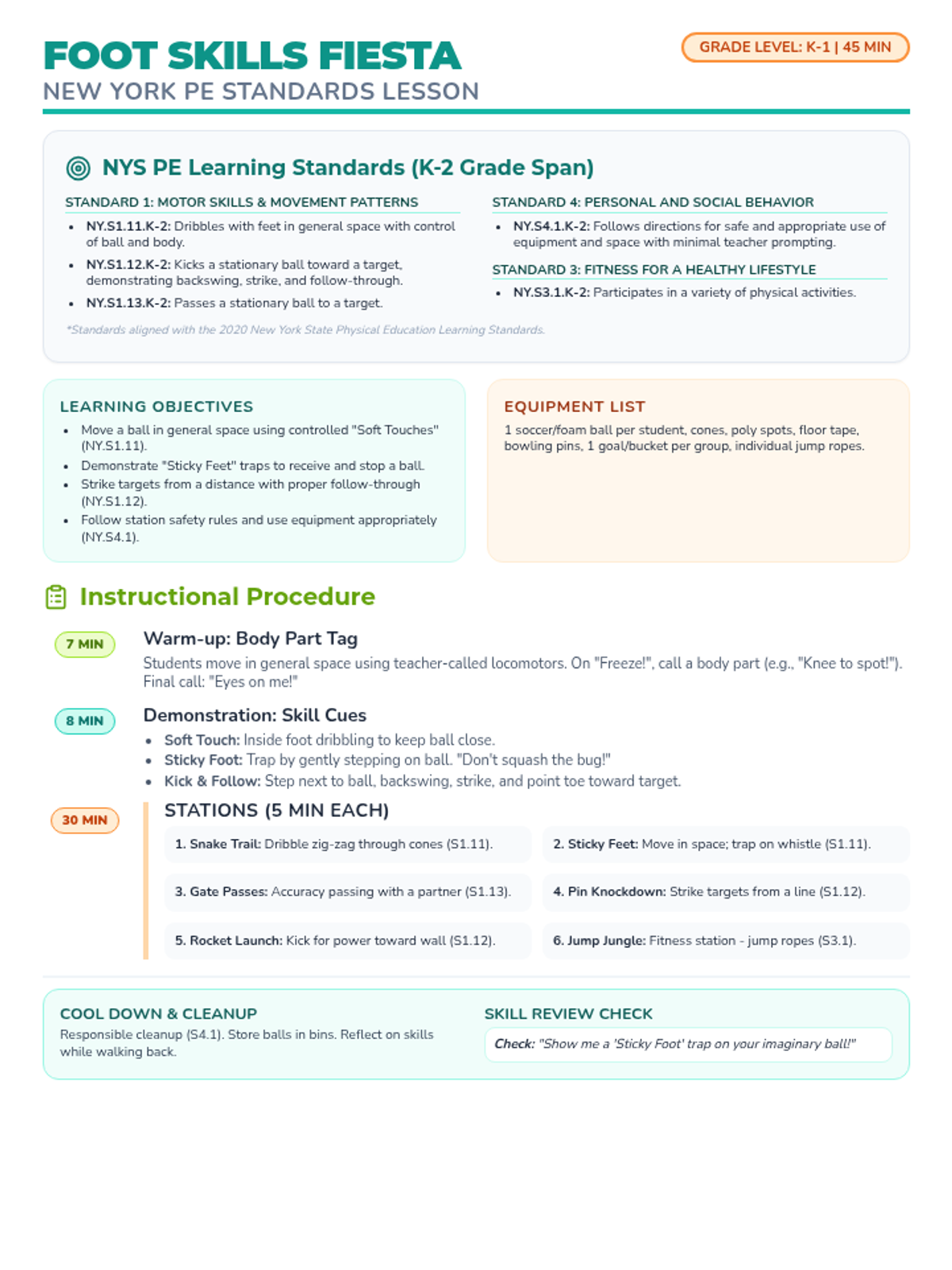
A detailed teacher's guide for the Foot Skills Fiesta lesson, updated with the 2020 New York State Physical Education Learning Standards (K-2 Grade Span).
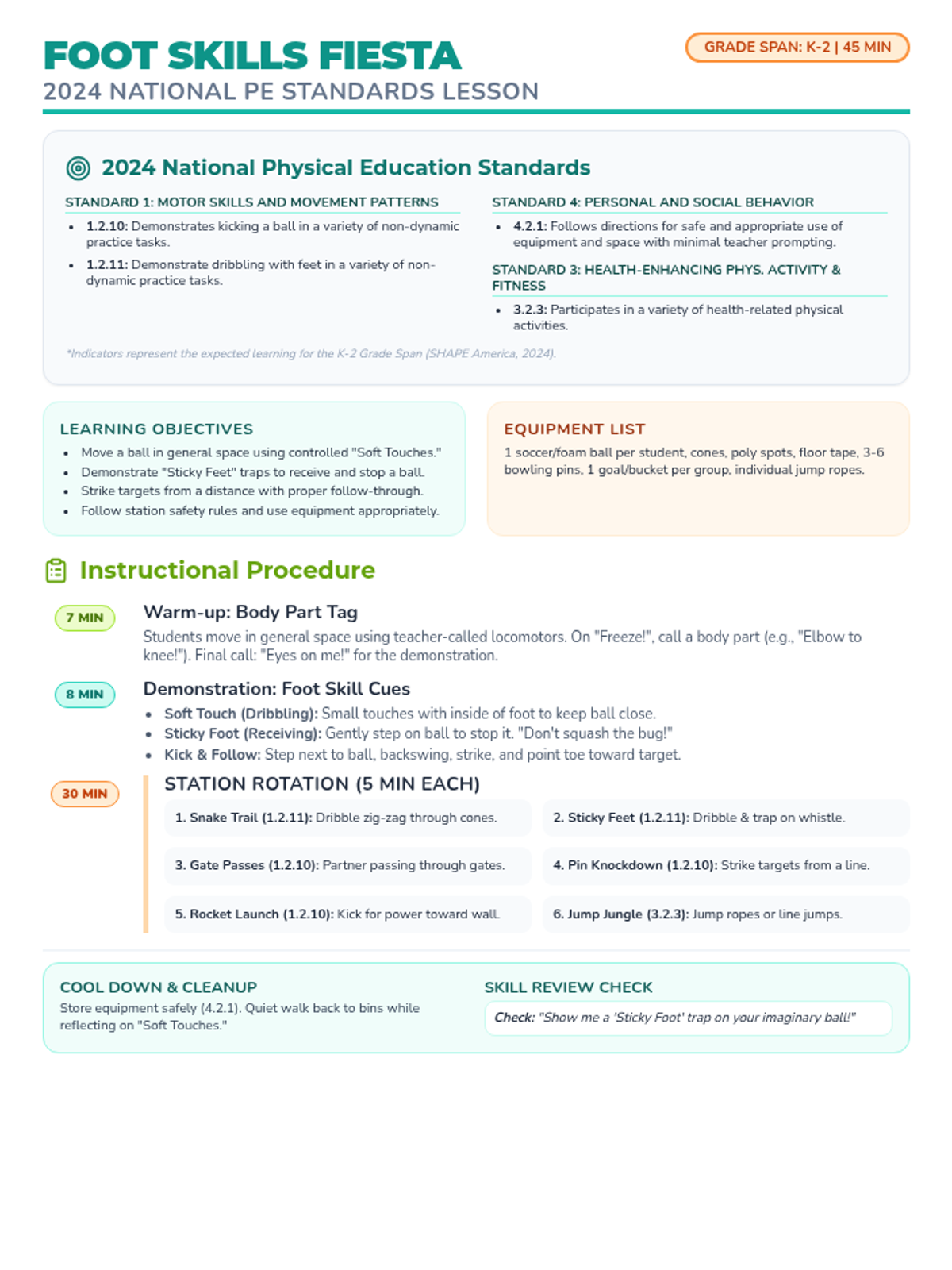
A detailed teacher's guide for the Foot Skills Fiesta lesson, fully updated with the 2024 SHAPE America National Physical Education Standards: Grade-Span Learning Indicators (K-2) 1.2.10 and 1.2.11.