A comprehensive teacher facilitation guide for 'The Clutch Mindset' lesson, including pacing, discussion prompts, and experiment setup instructions for high school sports psychology.
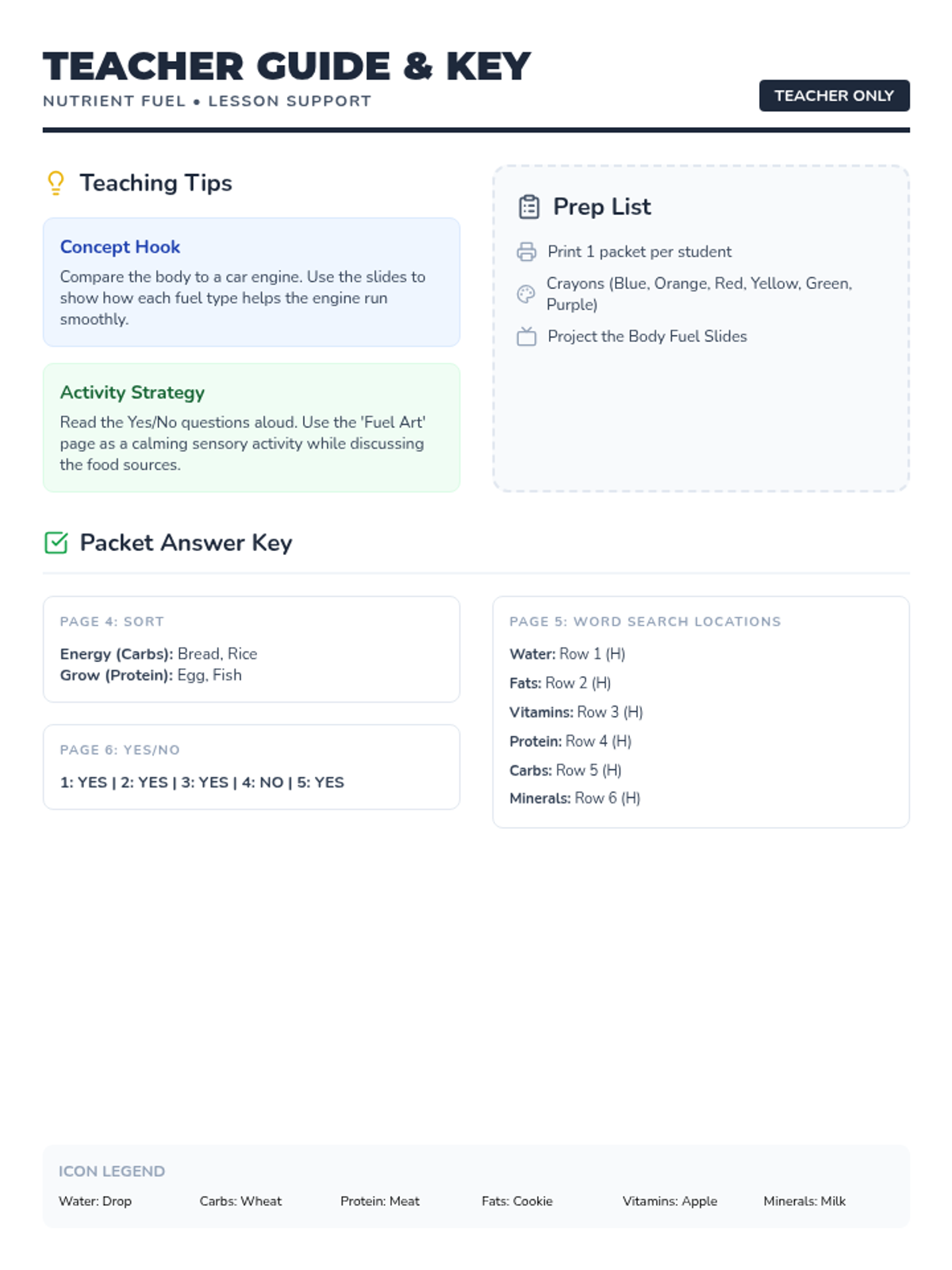
Teacher guide and answer key for the Nutrient Fuel lesson, providing instructional tips and solutions for the student packet.
Visual presentation to introduce the 6 essential nutrients with high-impact food-based visuals and simple text for SPED instruction.
A multi-page activity packet about the 6 essential nutrients, featuring line-drawing coloring pages, sorting, word searches, and yes/no questions for students at a 2nd-grade reading level.
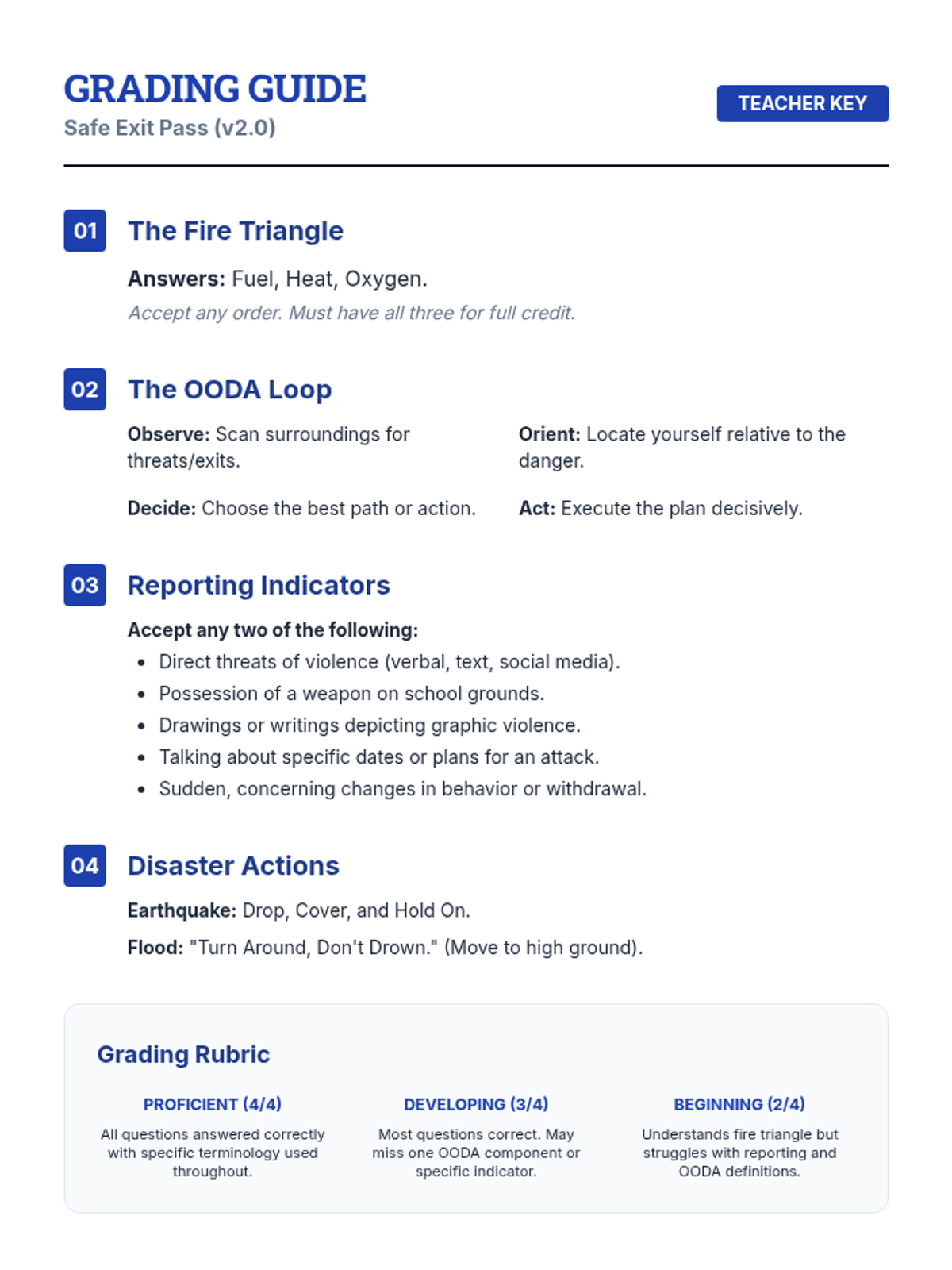
Teacher answer key and grading guide for the Safe Exit Pass exit ticket. Revised for single-page layout and improved contrast.
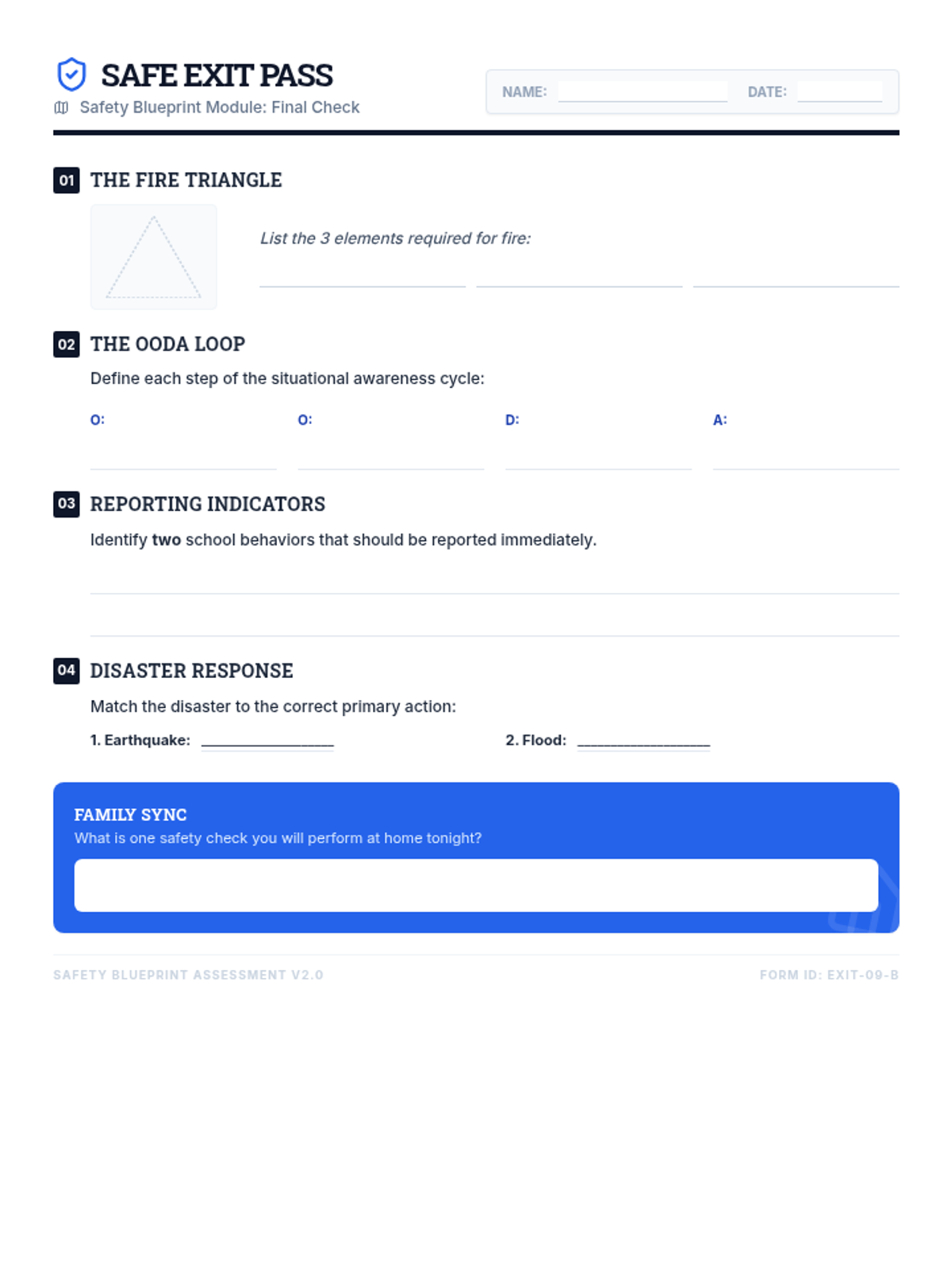
A one-page exit ticket assessment for students to demonstrate their understanding of the fire triangle, safety reporting, and emergency preparedness. Revised for single-page layout and better legibility.
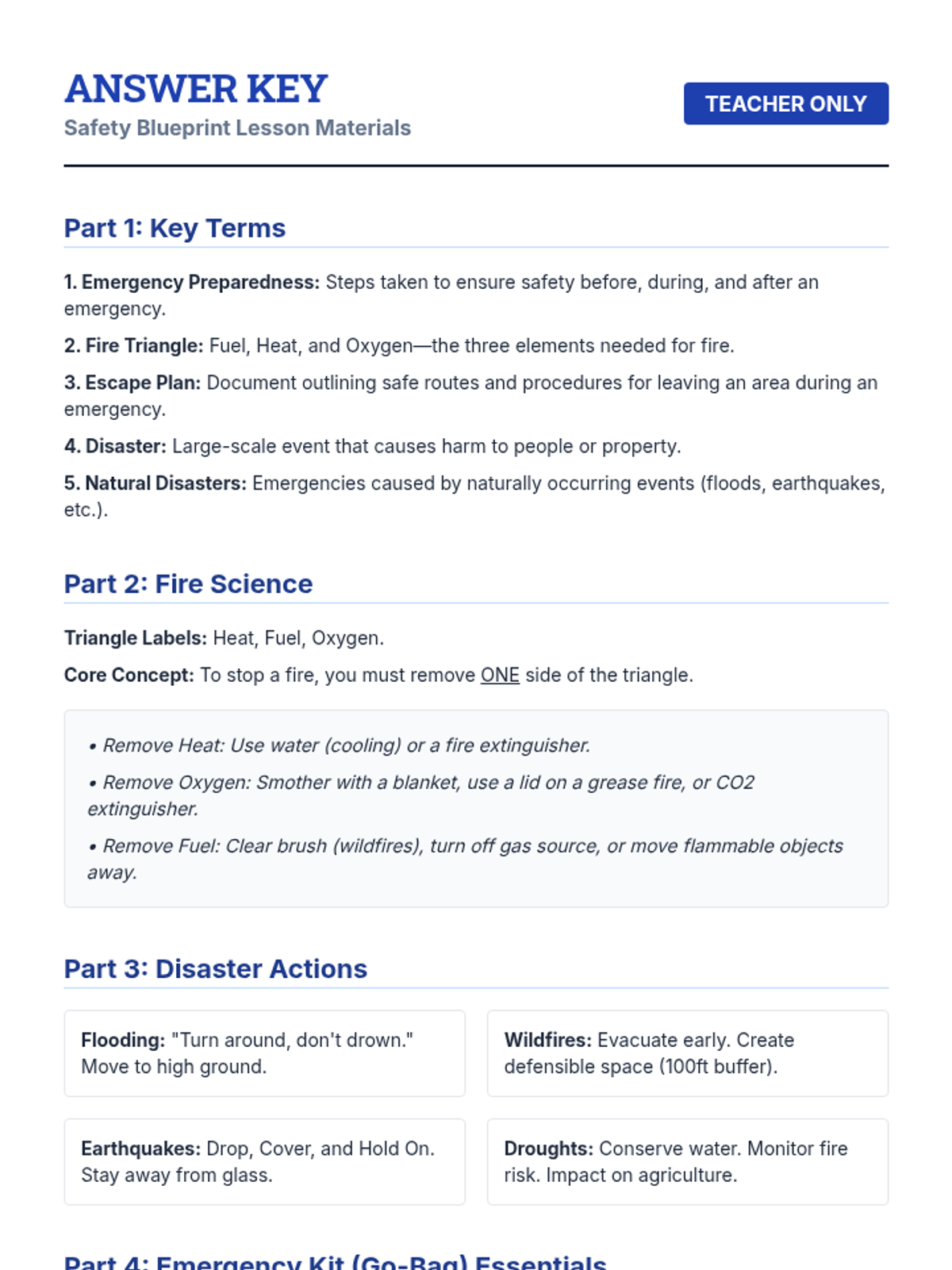
Answer key and teacher reference sheet for the Guided Notes and Emergency Kit activity.
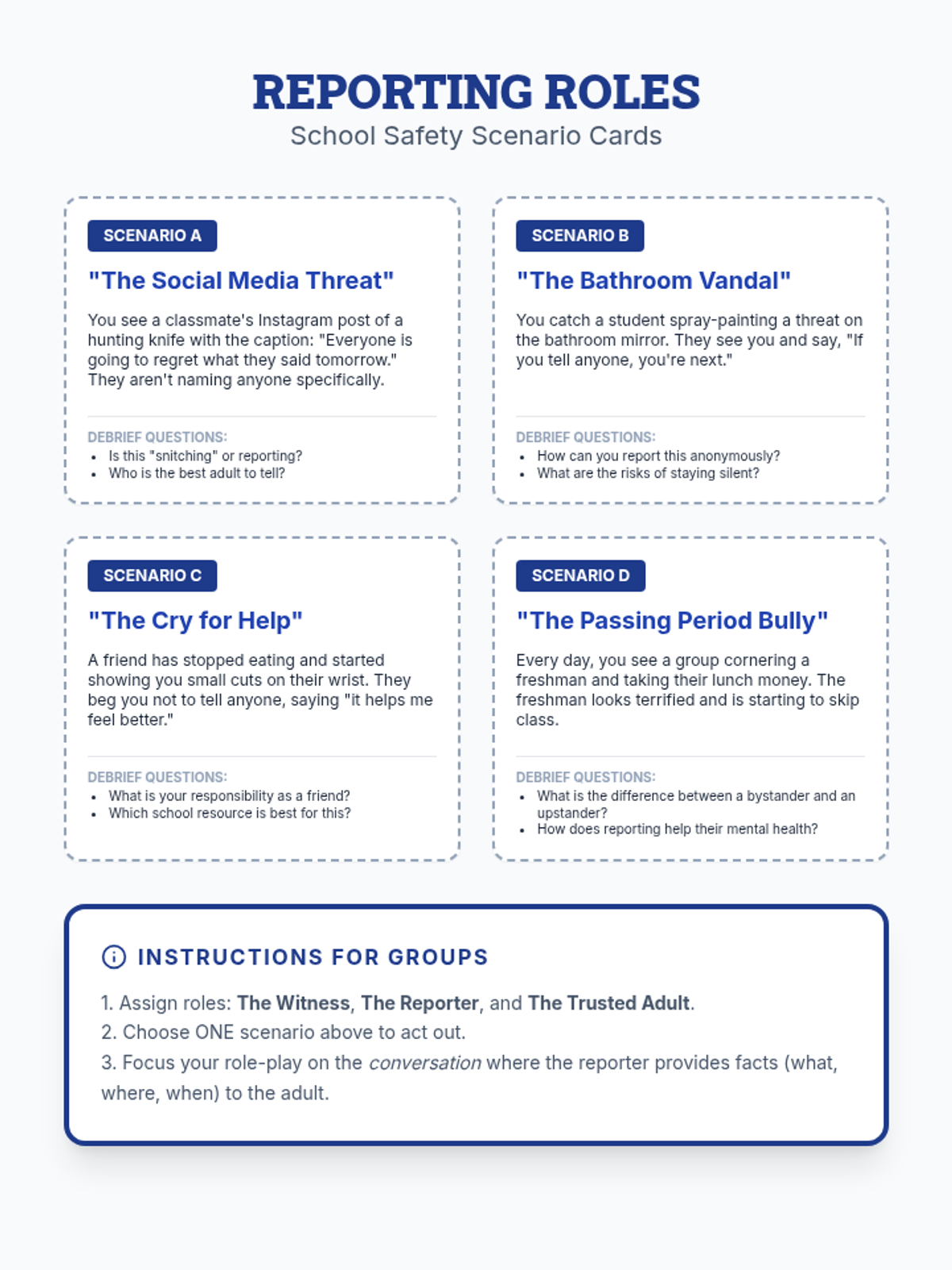
Role-play cards featuring realistic school-based safety scenarios to help students practice reporting dangerous or concerning behaviors. Revised with cut lines and improved page flow.
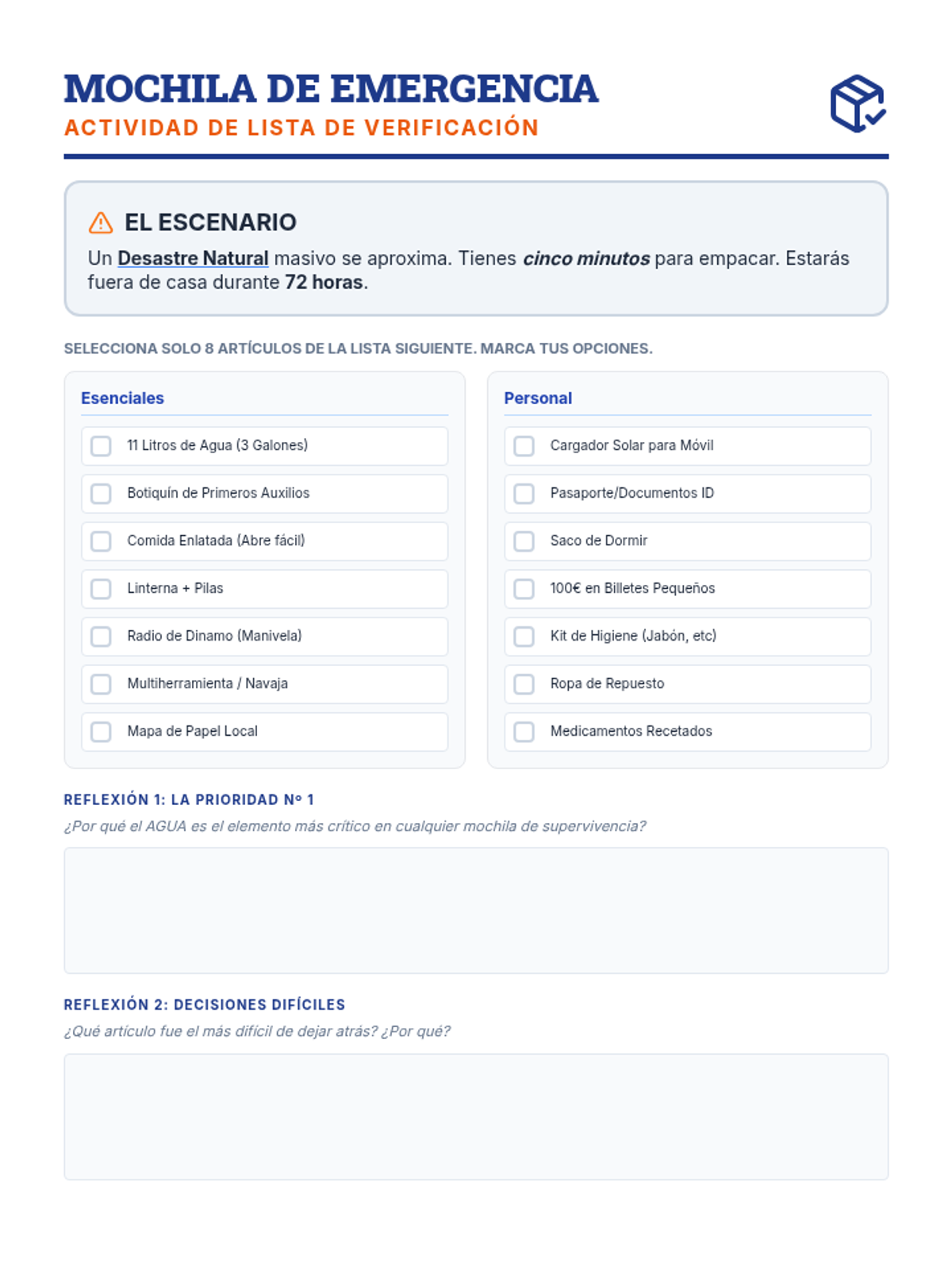
Small group activity worksheet where students select and prioritize items for an emergency survival kit. Revised with more options and better layout.
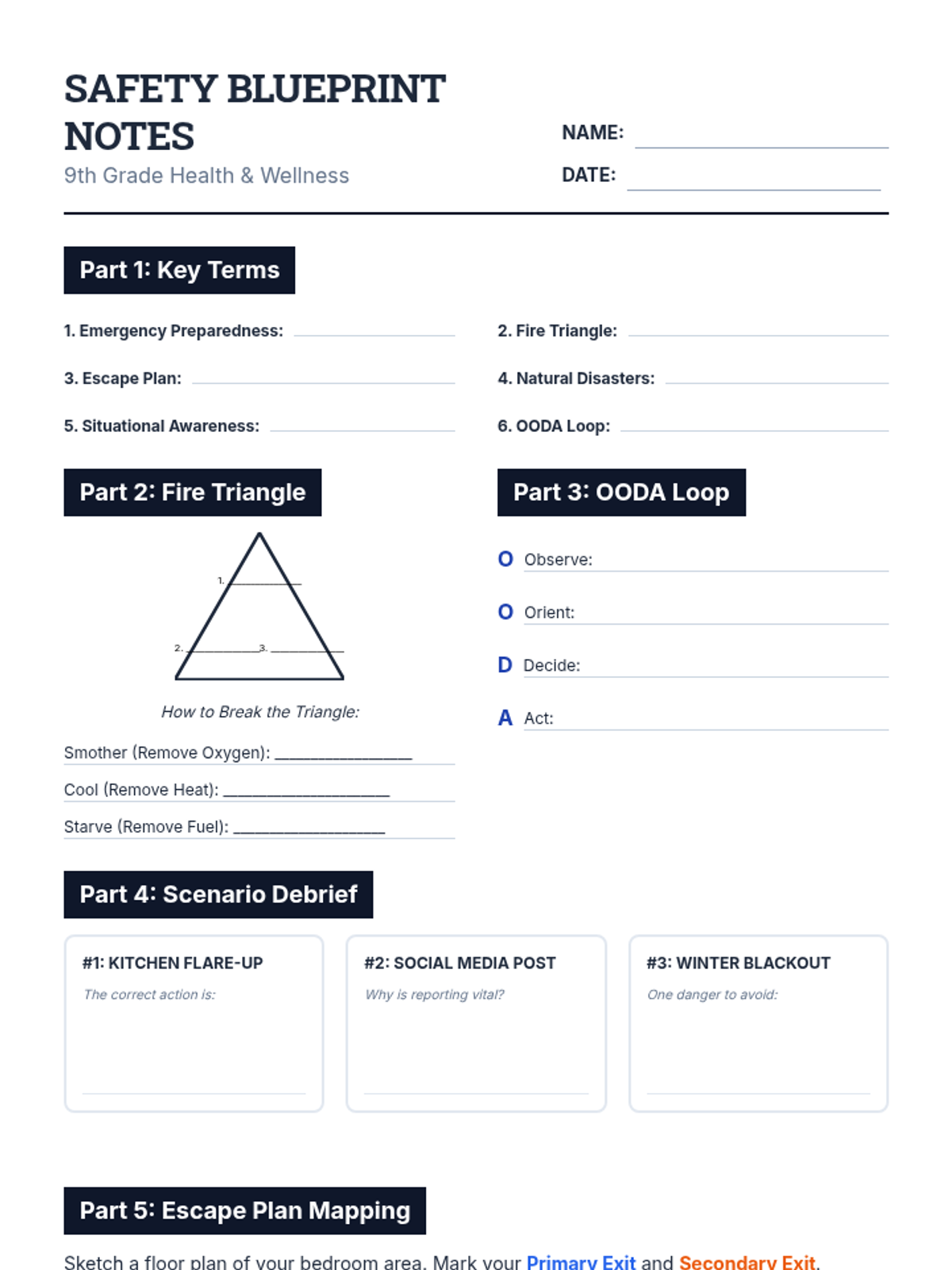
Guided notes worksheet for students to follow along with the lesson, including space for diagramming the fire triangle and mapping an escape plan. Revised with better spacing and school safety sections.
Expanded instructional slide deck covering fire safety, school reporting, natural disasters, and emergency preparedness. Now includes three interactive scenarios (kitchen fire, social media warning, and winter blackout) and a detailed OODA loop framework for situational awareness.
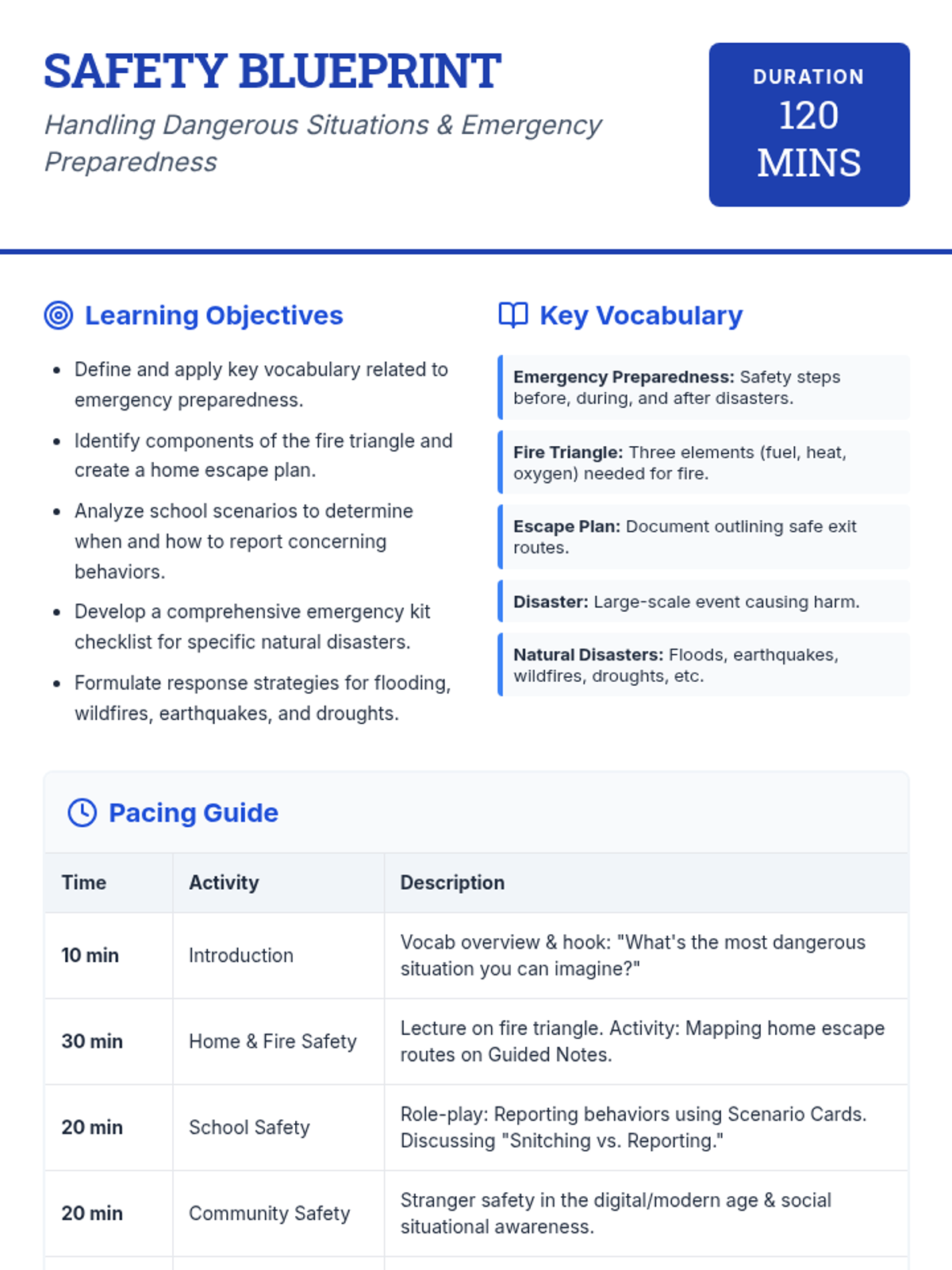
Teacher lesson plan for a 2-hour session on personal safety, including pacing, vocabulary, and instructional tips.
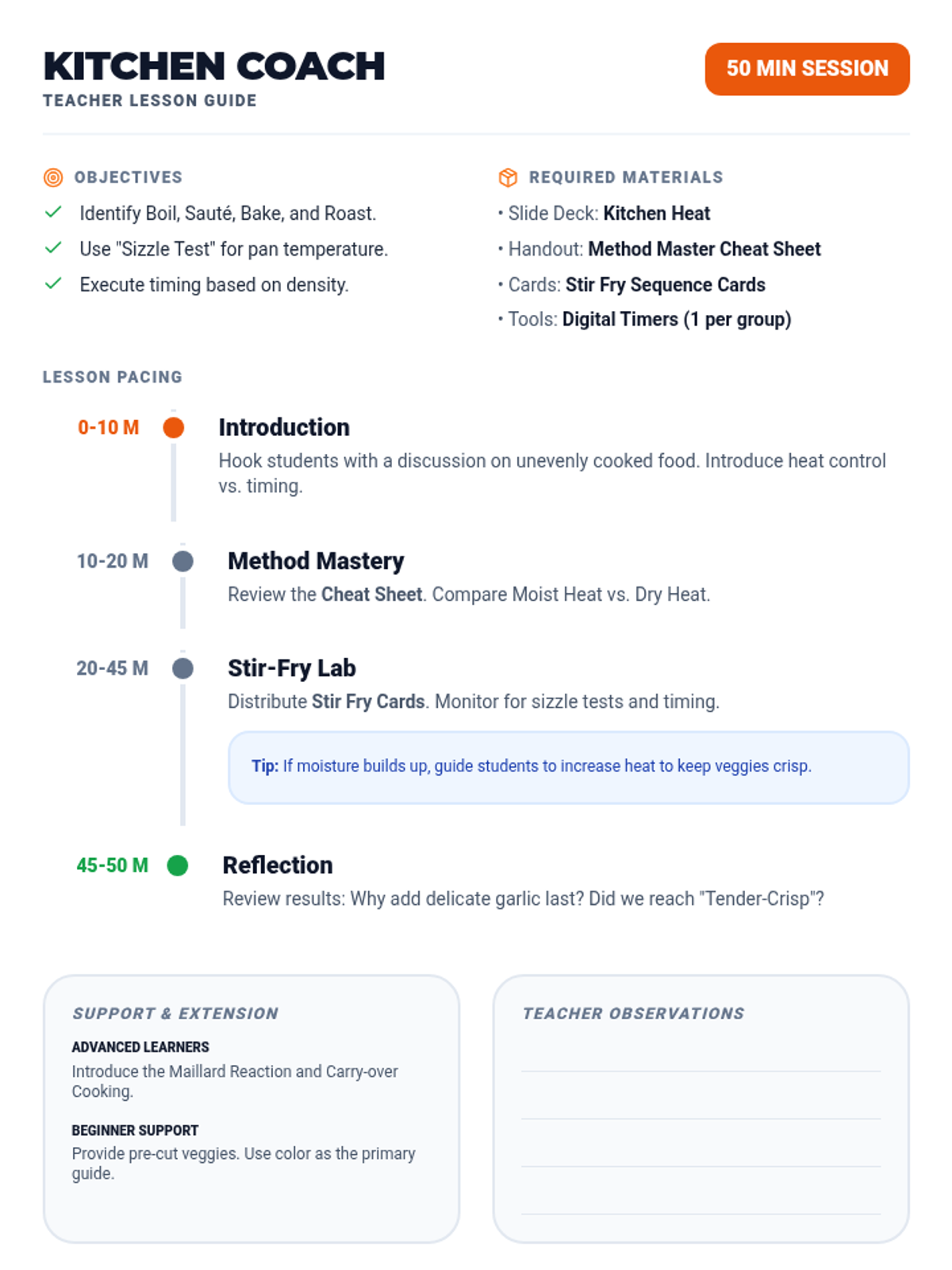
A comprehensive teacher facilitation guide providing a 50-minute lesson breakdown, instructional strategies, and differentiation tips for the Kitchen Heat lesson. Fills a single page and includes an observation section for teachers.
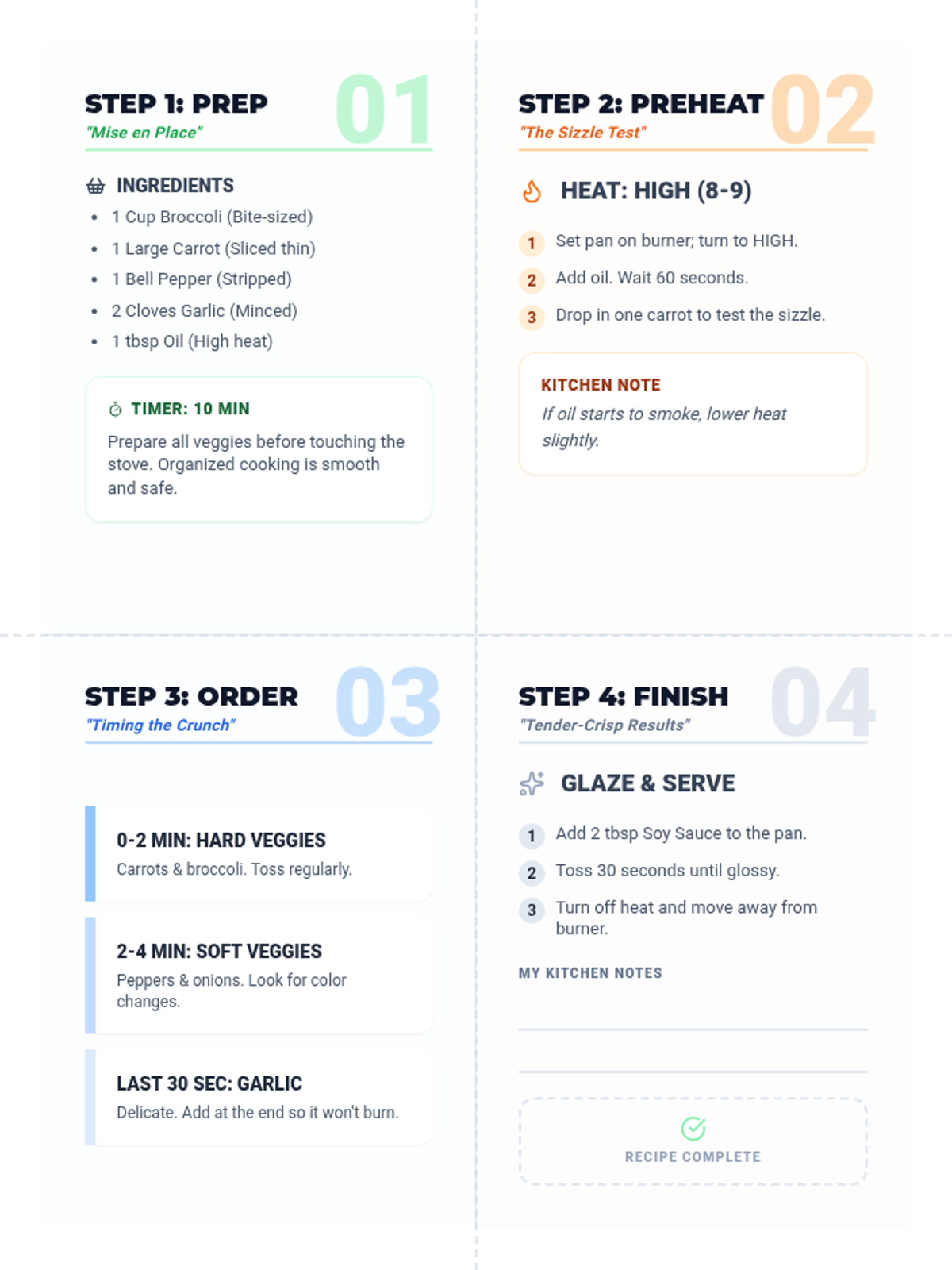
A set of four sequence-based recipe cards for a vegetable stir-fry, organized into quadrants for easy cutting. Features light, printer-friendly colors and clear instructional steps. Content is precisely balanced to fill the full page.
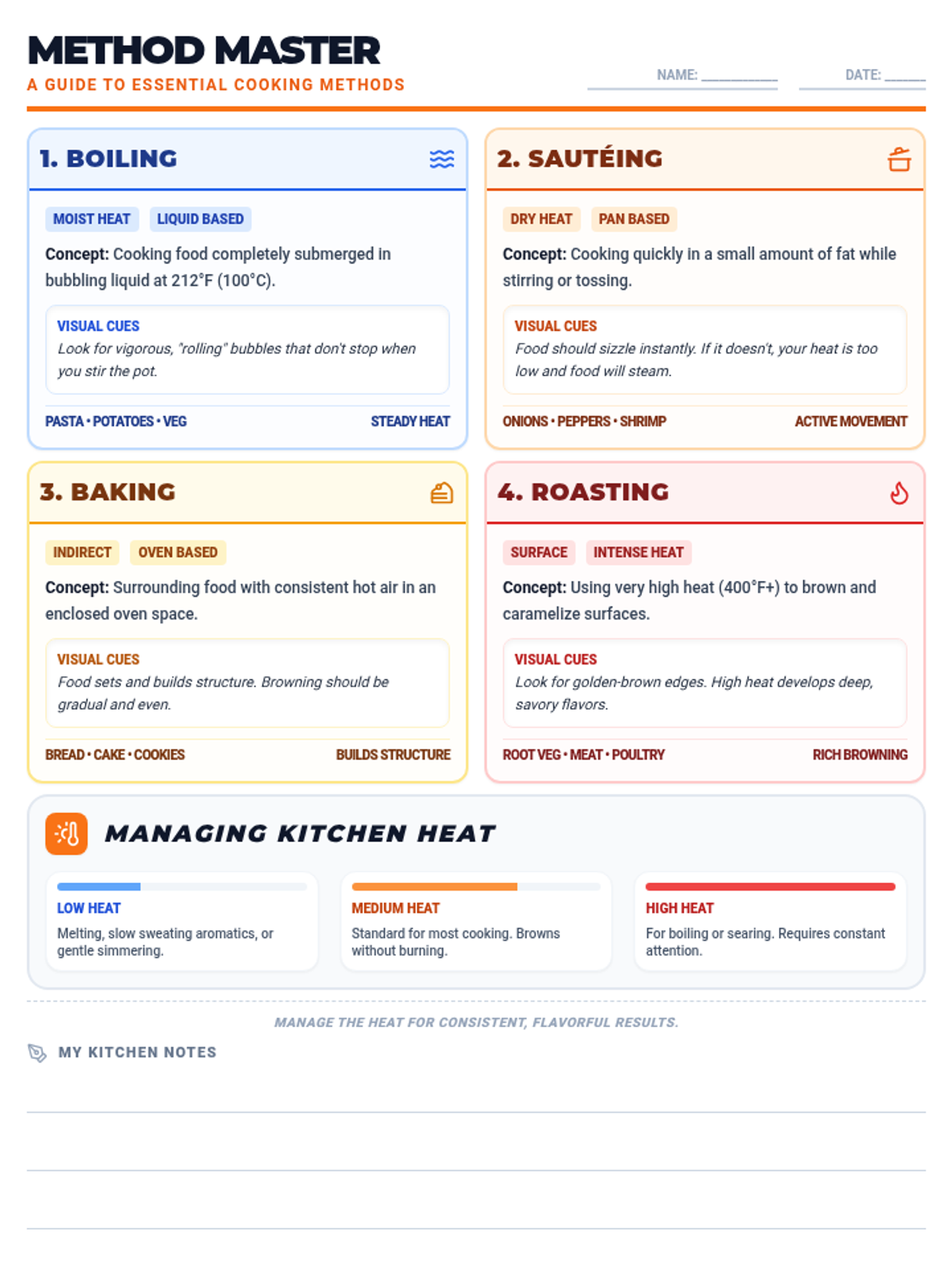
A revised one-page visual reference guide for cooking methods with enlarged sections, printer-friendly colors, and a new student notes section at the bottom. It emphasizes heat control and visual cues for each method. Layout has been compacted to fit on a single page.
A vibrant slide deck covering the four primary cooking methods, heat management principles, and the specific mechanics of a vegetable stir-fry. Includes a timing and timer overview. Language has been adjusted to be more guiding and less urgent. Layout has been polished to better fill the slide area.
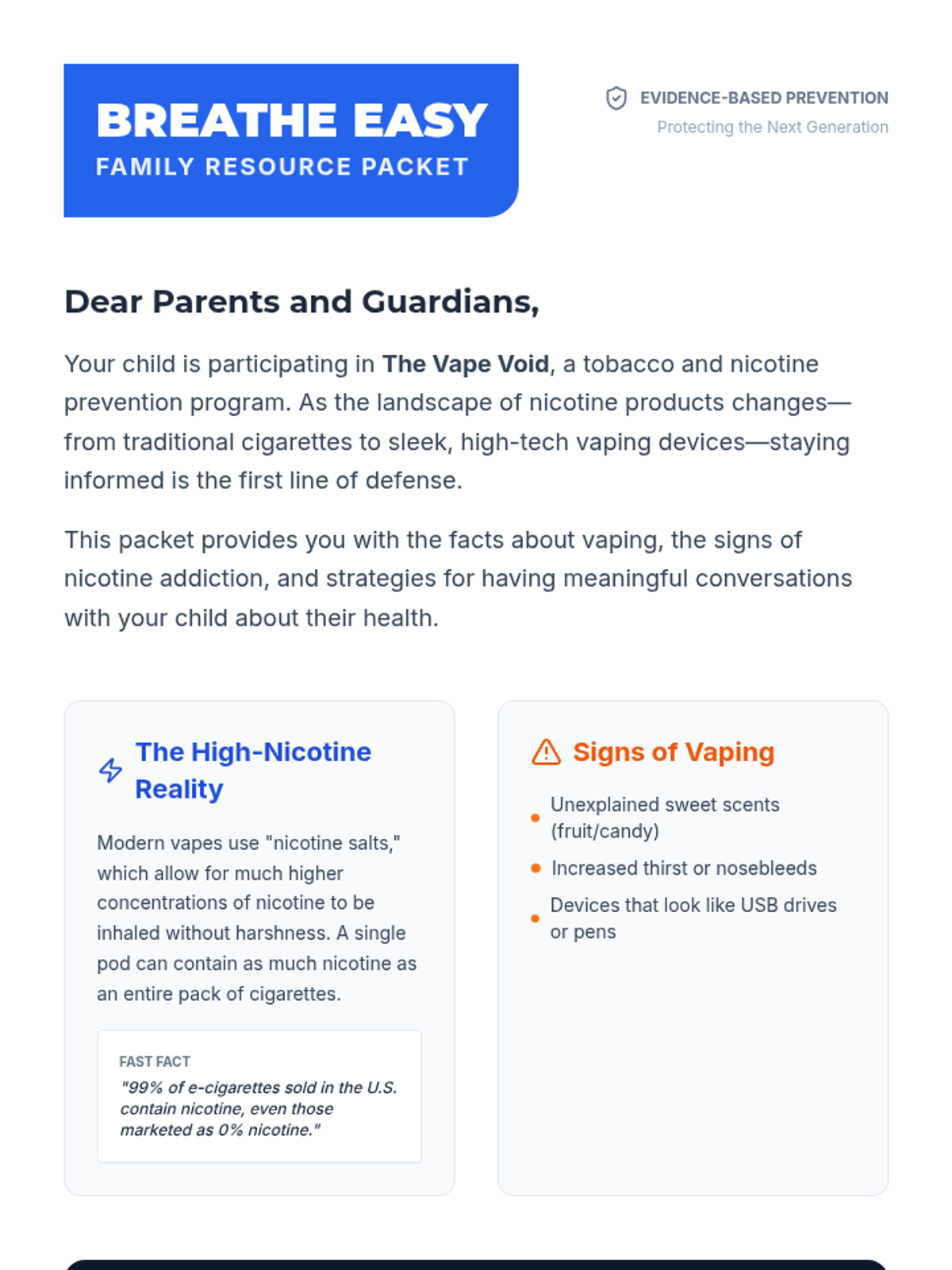
An informative guide for parents and guardians covering the science of vaping, warning signs of use, health consequences, and practical tips for starting conversations with their children.
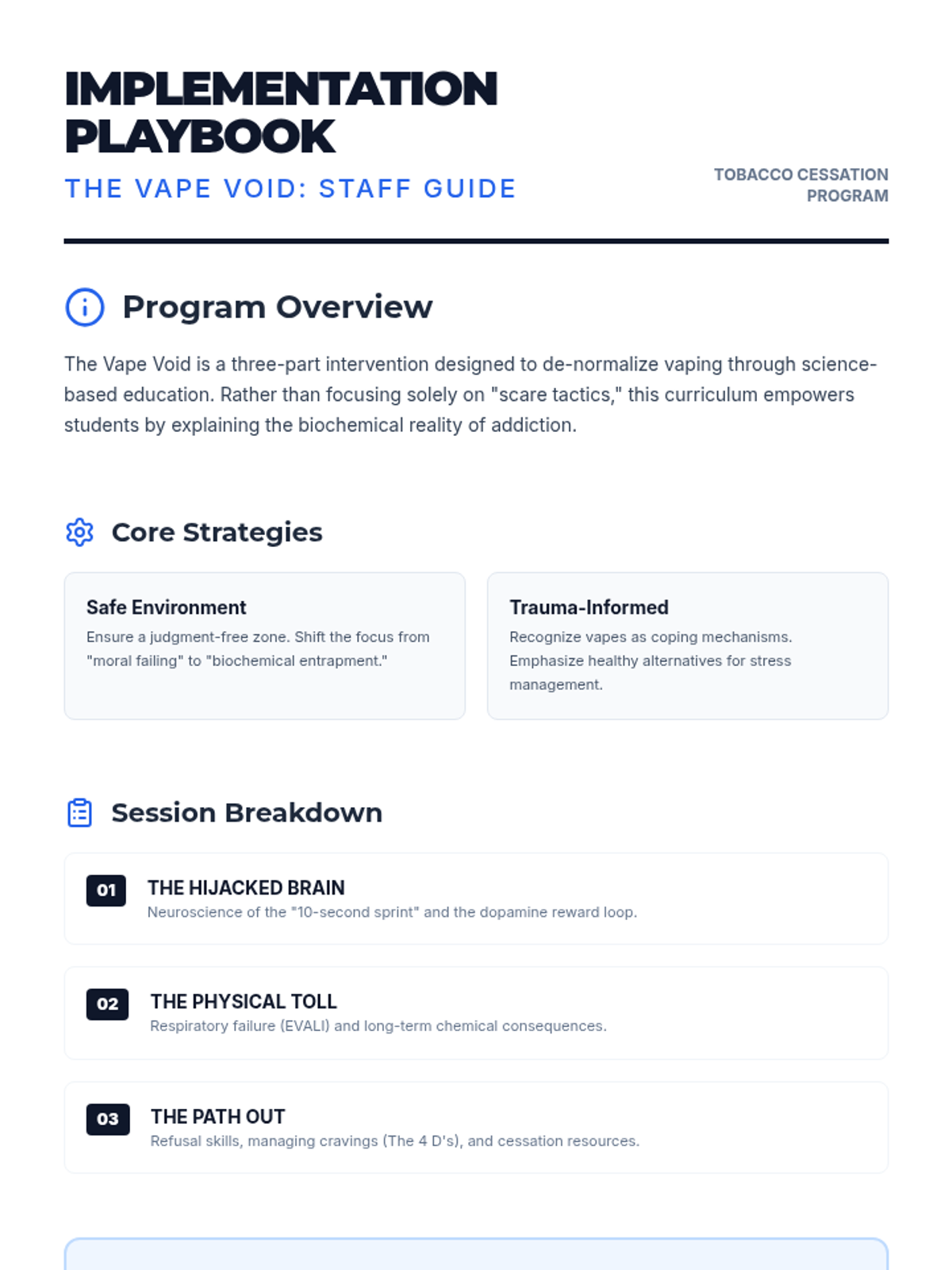
A comprehensive implementation guide for school staff, providing instructional strategies, session breakdowns, and trauma-informed approaches to delivering the tobacco cessation curriculum.
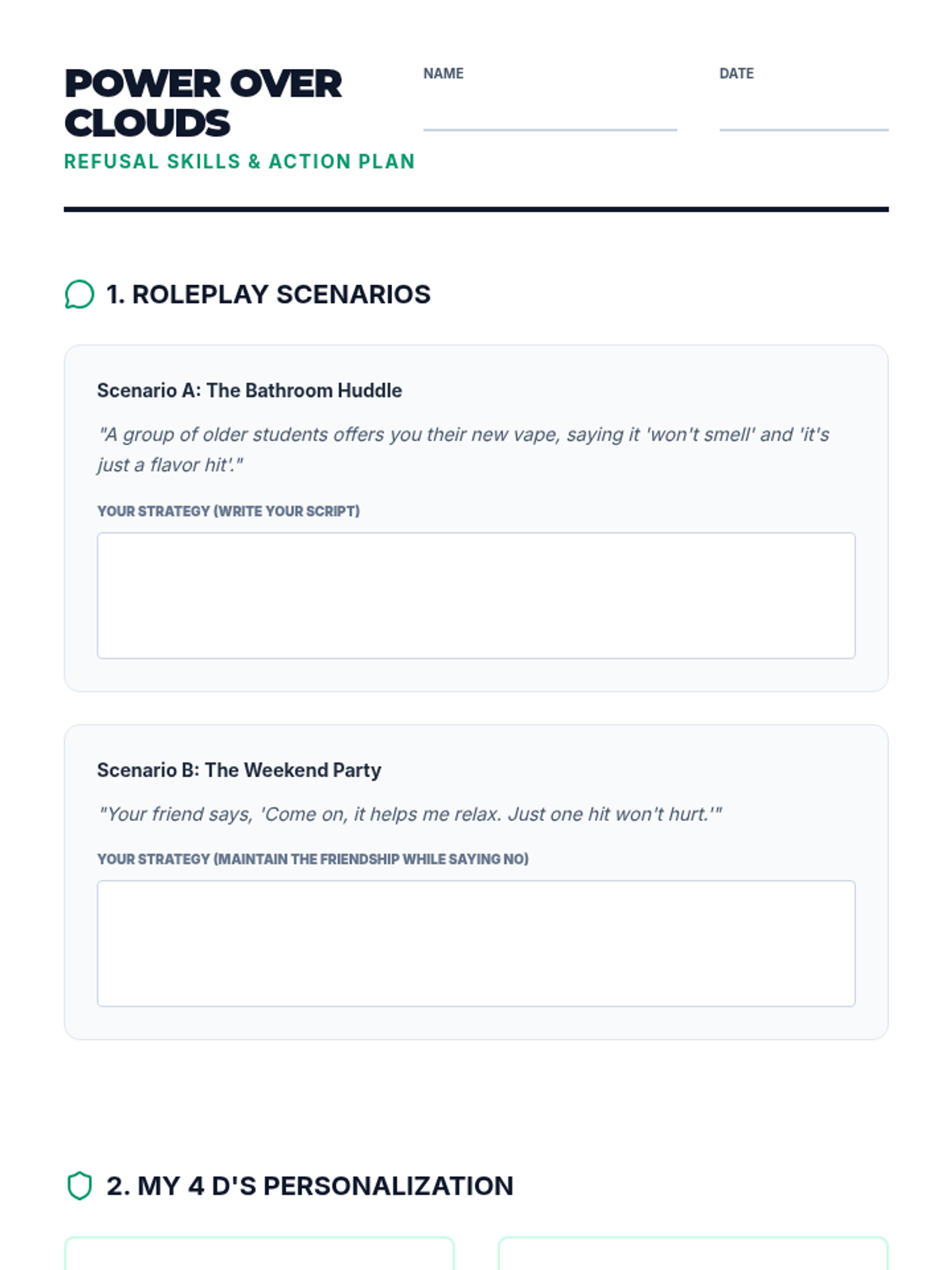
A student activity sheet focused on applying refusal skills to real-world scenarios and creating a personalized plan for managing cravings and peer pressure.
A practical presentation deck teaching student refusal skills, the '4 Ds' of craving management, and providing professional resources for cessation.
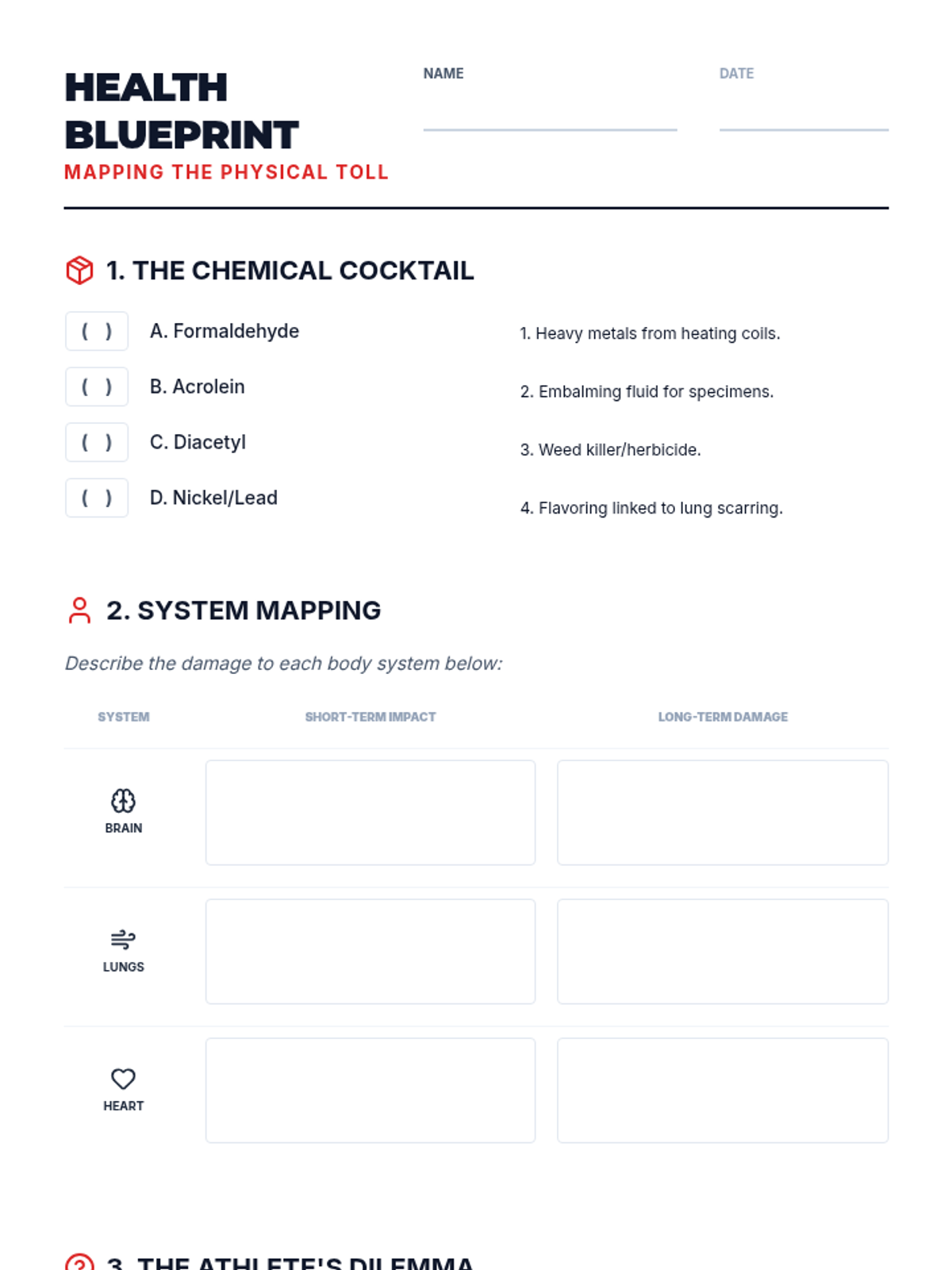
An activity sheet that guides students through identifying toxic chemicals in vapes and mapping out the specific physical consequences of nicotine use on various body systems.
A powerful presentation deck detailing the physical health consequences of vaping and tobacco use, focusing on chemical ingredients, lung damage (EVALI), and systemic body impacts.
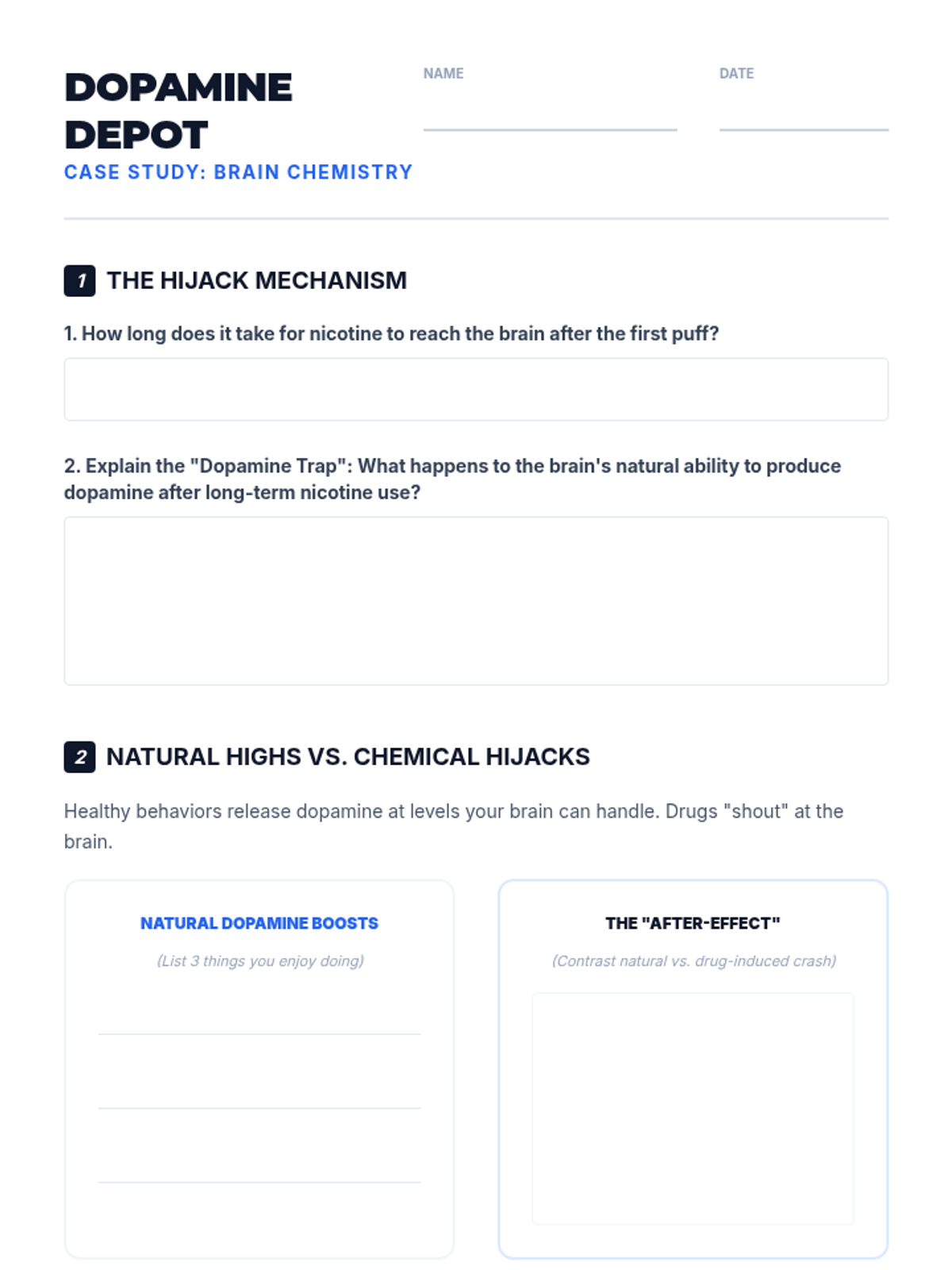
A student worksheet that reinforces the neuroscience of addiction by having students analyze the 'Dopamine Trap' and compare natural rewards to drug-induced dopamine spikes.