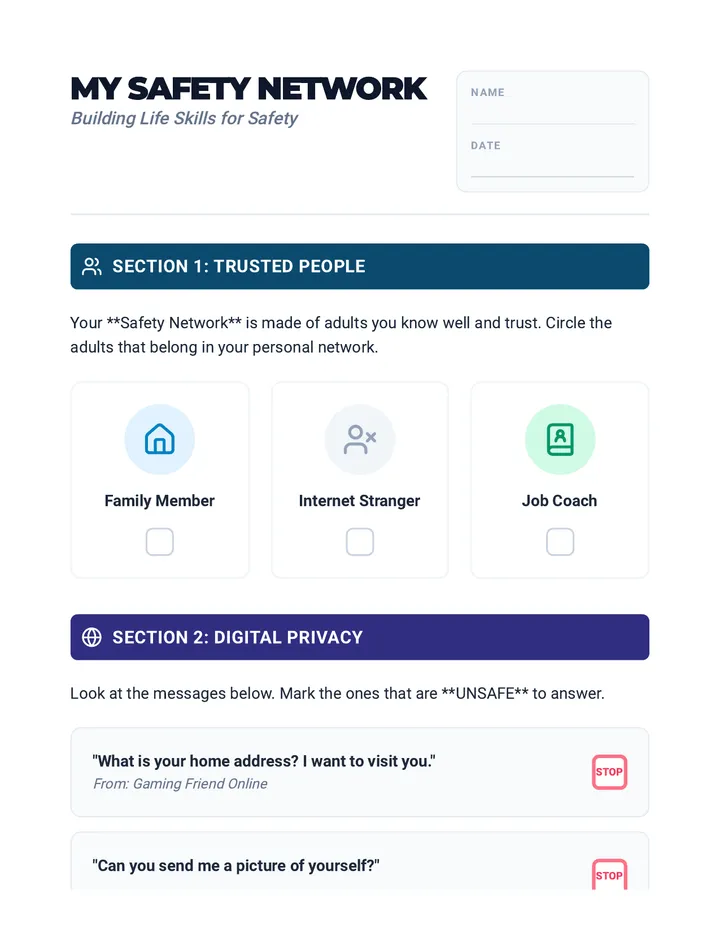
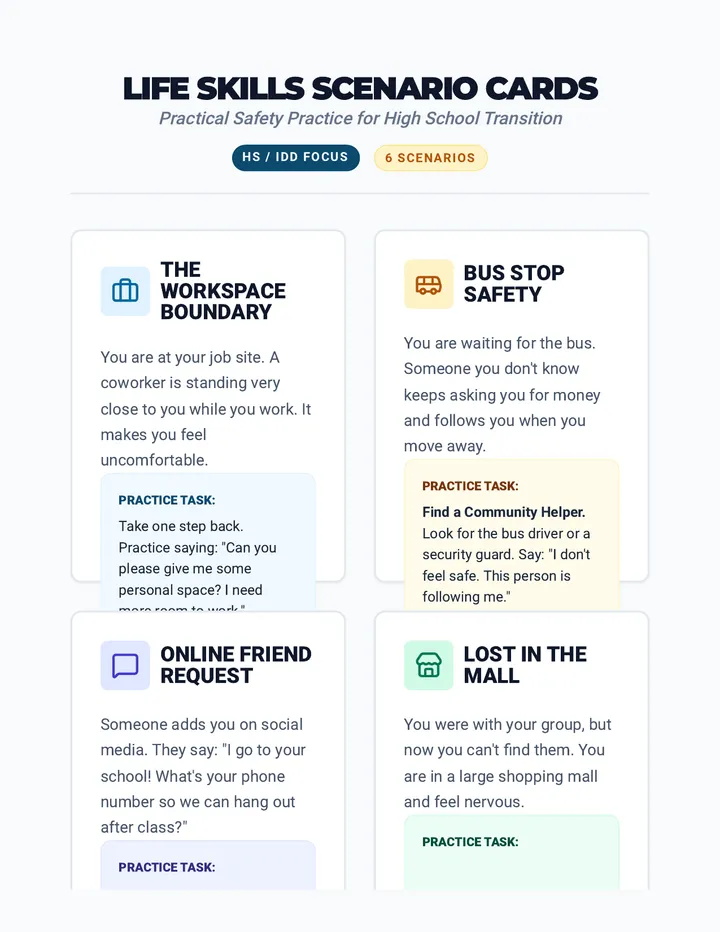
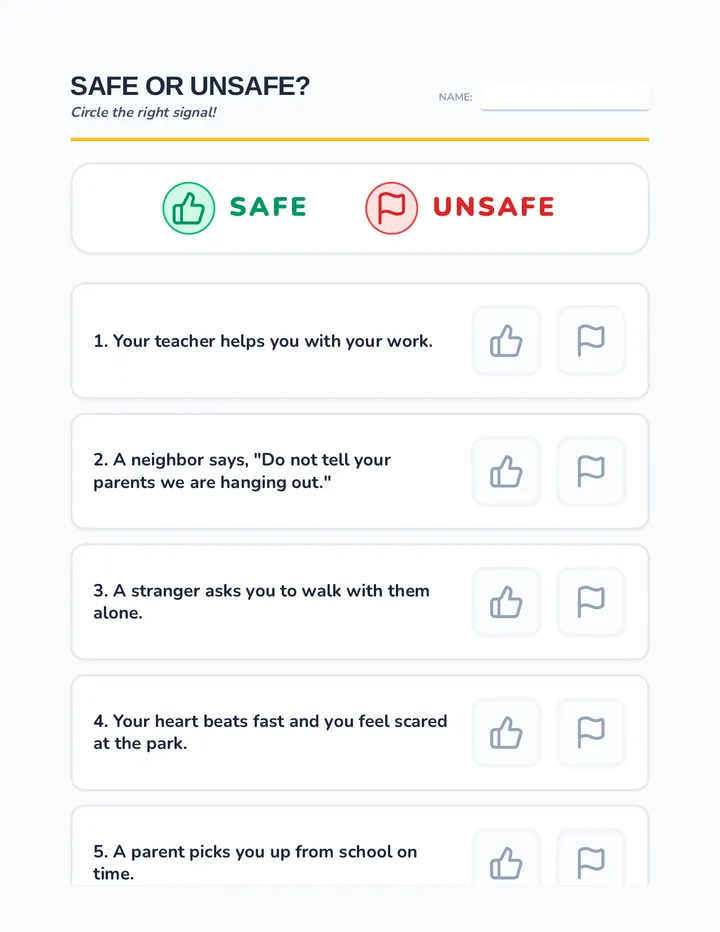
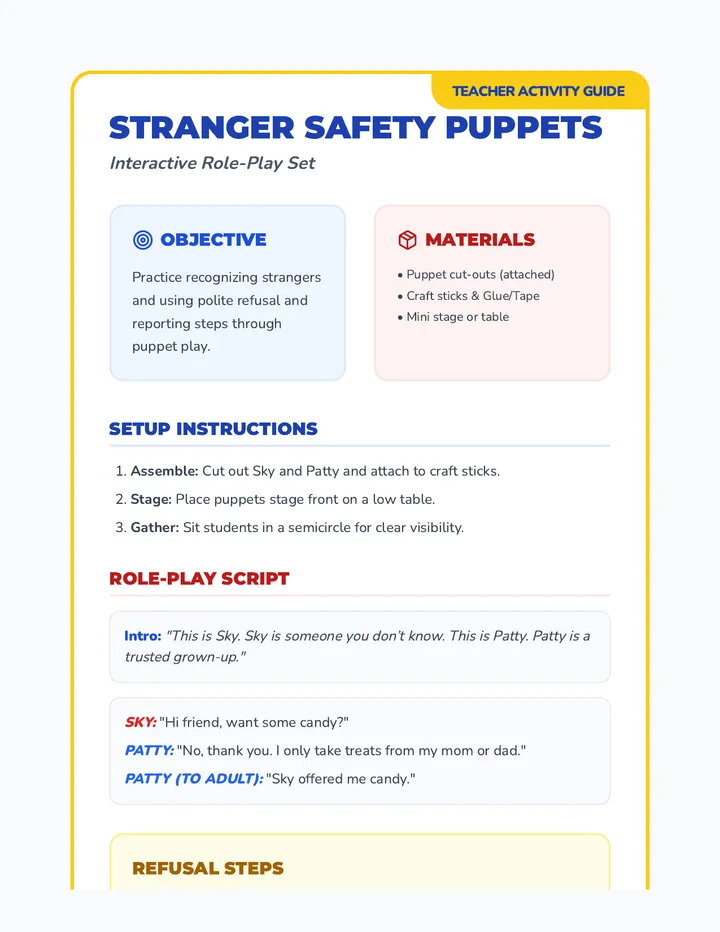
Distinguishes between safe adults and strangers through situational awareness and boundary setting. Equips students with communication protocols and emergency response actions for public spaces.
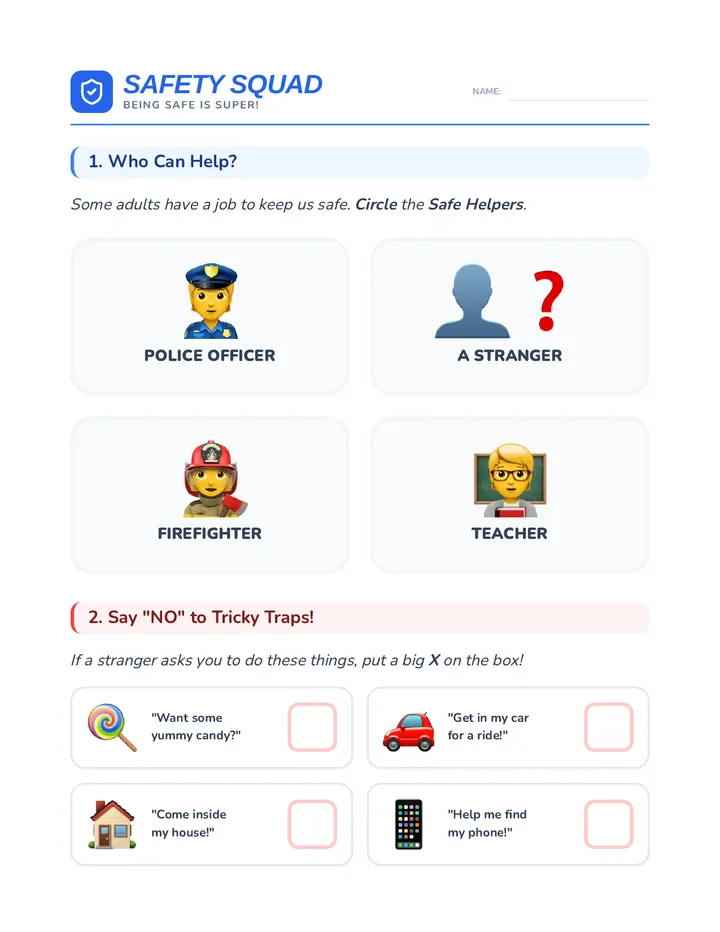
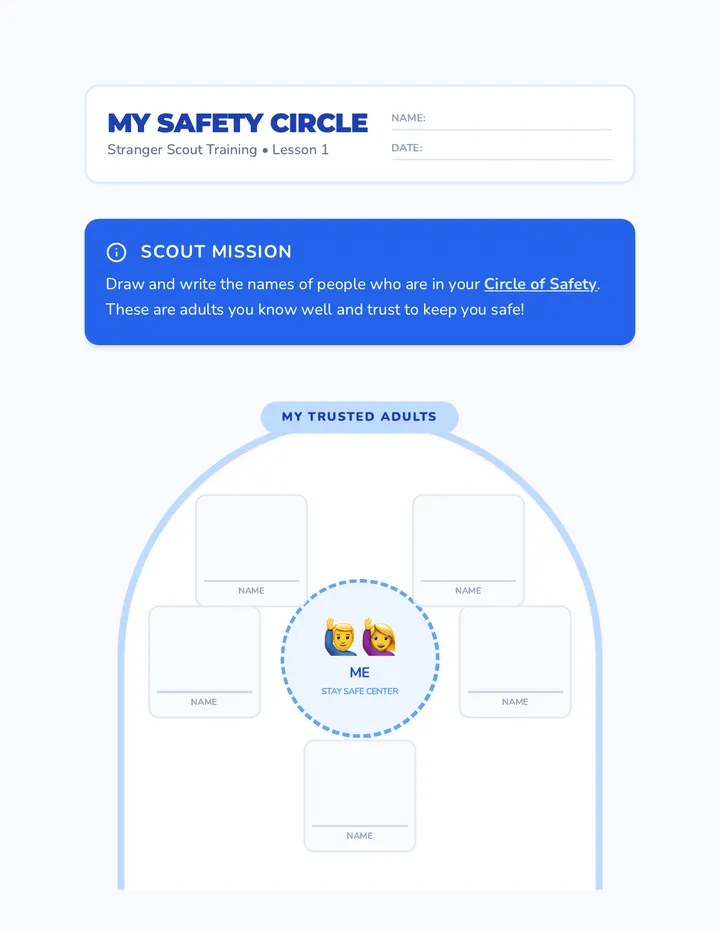
A two-page kindergarten activity worksheet for stranger safety. Page 1 focuses on identifying safe helpers and recognizing tricky traps. Page 2 provides a large 'Safe Circle' drawing area and reinforces the safety motto.
A multi-grade social-emotional learning unit focused on 'Summer Safety Heroes'. Lessons are tailored for different developmental levels, from 1st-grade foundations to 3rd-grade scientific mastery and risk management.
A comprehensive 7th-grade child development course focused on safety, basic caregiving, developmental milestones, and professional babysitting business skills. The curriculum is designed for 45-minute class periods and aligns with Urbandale CSD standards and proficiency scales.
A comprehensive sequence for 3rd grade students focusing on identifying emergencies, communicating with emergency services, and understanding community mental health resources. Students will develop situational awareness and learn the practical steps for seeking help in various crises.
A 5-lesson sequence for 5th-grade students focused on identifying manipulative behaviors and recruitment tactics. Students learn to look past appearances, recognize the grooming cycle, understand the difference between gifts and bribes, and practice setting boundaries and exiting unsafe situations.
A comprehensive 4th-grade health sequence focused on situational awareness, physical warning signs, social manipulation (tricky people), digital safety, and assertive exit strategies. Students learn to trust their instincts and use the 'No, Go, Tell' method to stay safe.
A comprehensive 5-lesson sequence for 2nd graders to recognize online risks, understand the difference between real-life and online friends, and identify a network of trusted adults for support. Students learn to trust their instincts and use their 'brave voice' to seek help.
A comprehensive 1st-grade sequence on personal safety, teaching students to identify safe adults, recognize physical warning signs, and follow the 'Check First' and 'No, Go, Yell, Tell' protocols.
This sequence shifts focus from physical combat to the mental and verbal aspects of self-defense, prioritizing conflict avoidance. Students learn threat assessment, assertive communication, and environmental scanning through Cooper's Color Code and role-playing scenarios.
A comprehensive 6th-grade PE sequence focusing on non-aggressive self-defense, situational awareness, and escape maneuvers. Students progress from mental preparedness and verbal boundaries to physical blocks, grab escapes, and safe falling techniques.
This sequence introduces 9th-grade students to personal safety, covering situational awareness, verbal de-escalation, defensive stances, striking mechanics, and escape techniques. It culminates in stress-based simulations to test decision-making and physical skills in a controlled environment.
A project-based safety sequence where 2nd-grade students become 'Safety Inspectors.' They learn to identify household fire hazards, understand the danger of matches and lighters, interpret safety signage, and advocate for prevention through creative posters and a final safety pledge.
A comprehensive 11th-grade health sequence focused on the intersection of personal safety and digital literacy. Students investigate how traffickers use digital footprints, social media scams, gaming platforms, and sextortion to exploit victims, culminating in the creation of personal digital defense plans.
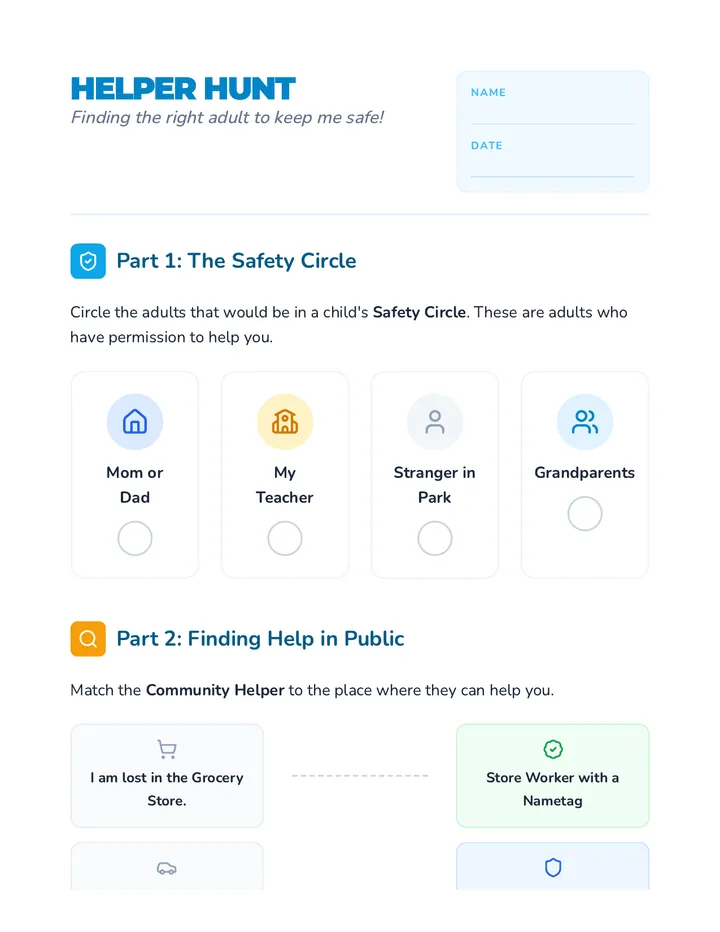
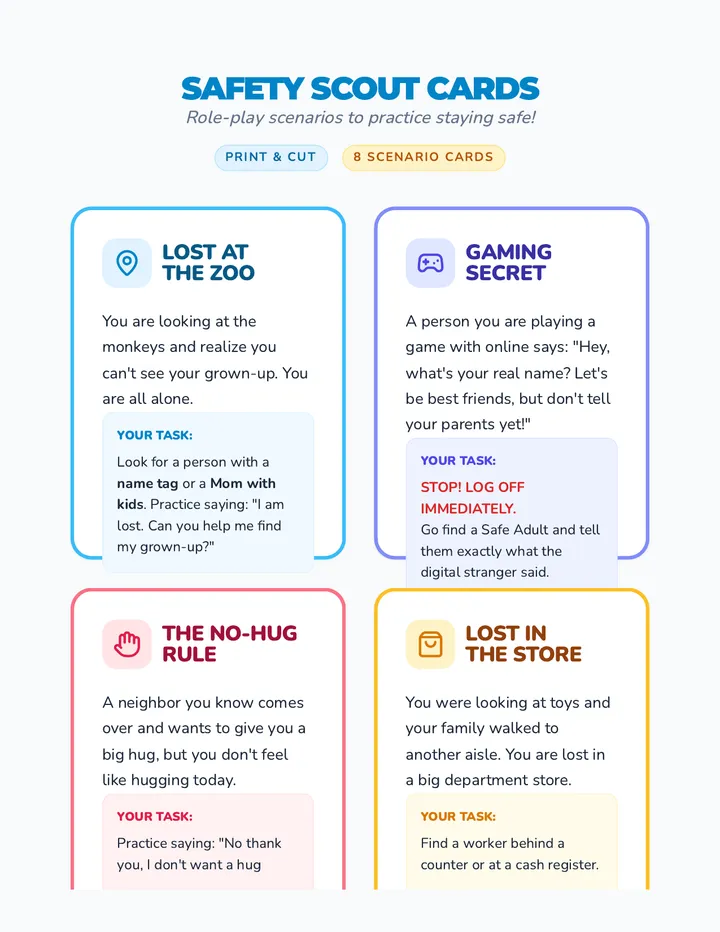
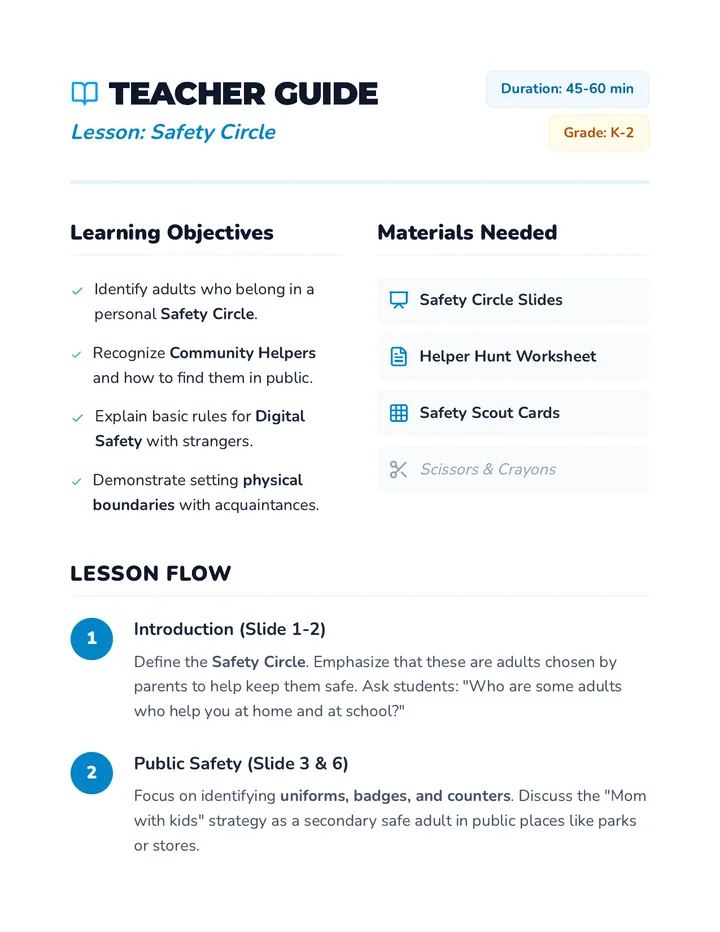
A comprehensive lesson teaching students how to identify safe adults, navigate digital interactions, ask for help in public, and maintain healthy boundaries with acquaintances.
This lesson focuses on identifying 'red flags' in social situations, understanding the importance of 'gut feelings', and practicing exit strategies to move to safety. Students will learn to recognize subtle warning signs and identify trusted adults they can turn to for help.
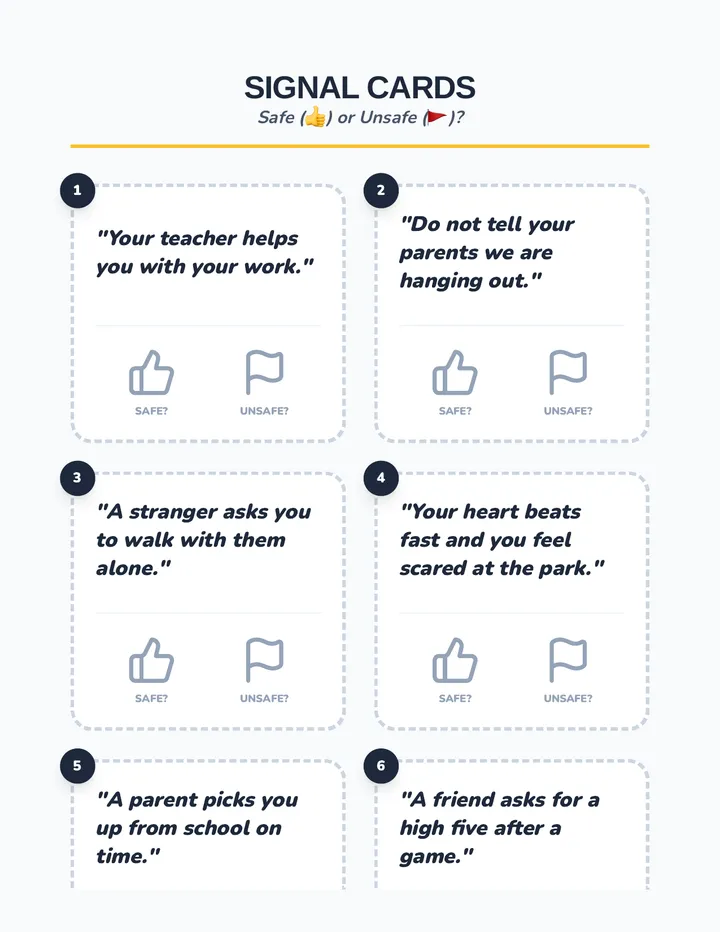
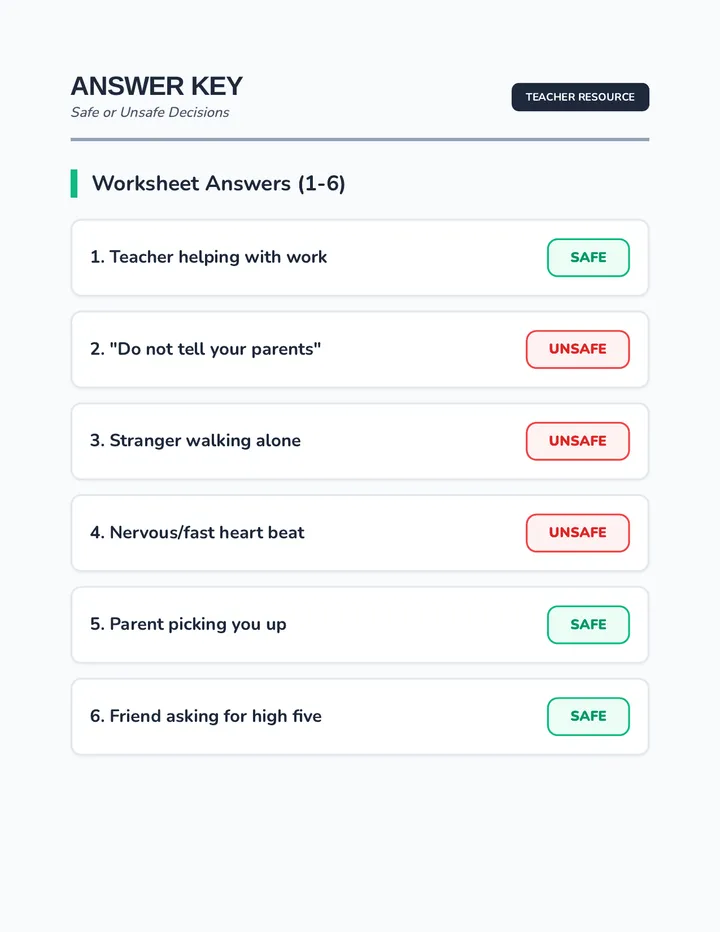
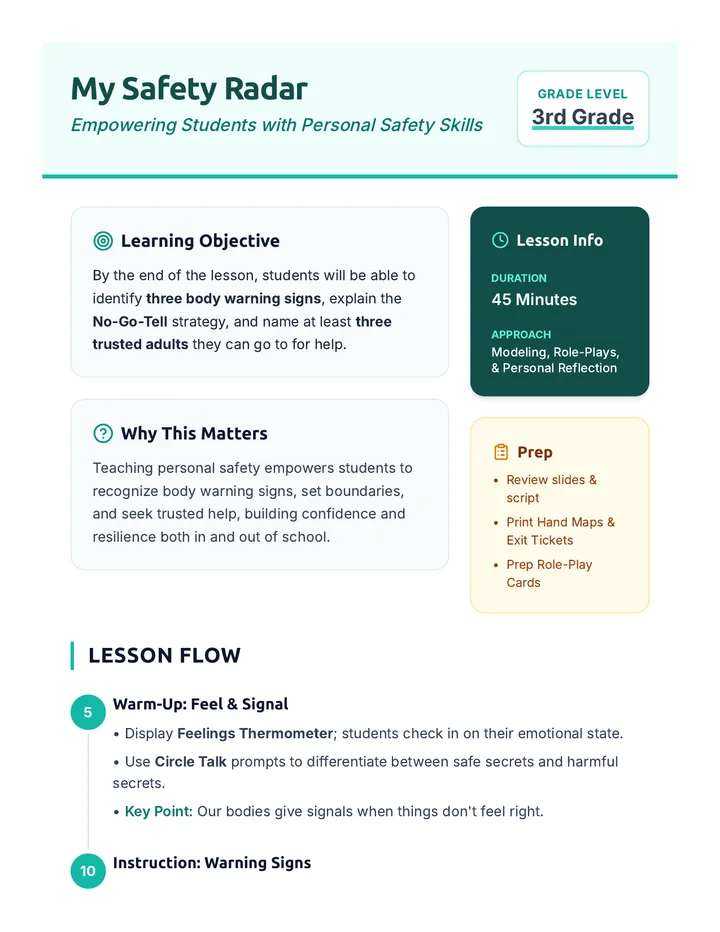
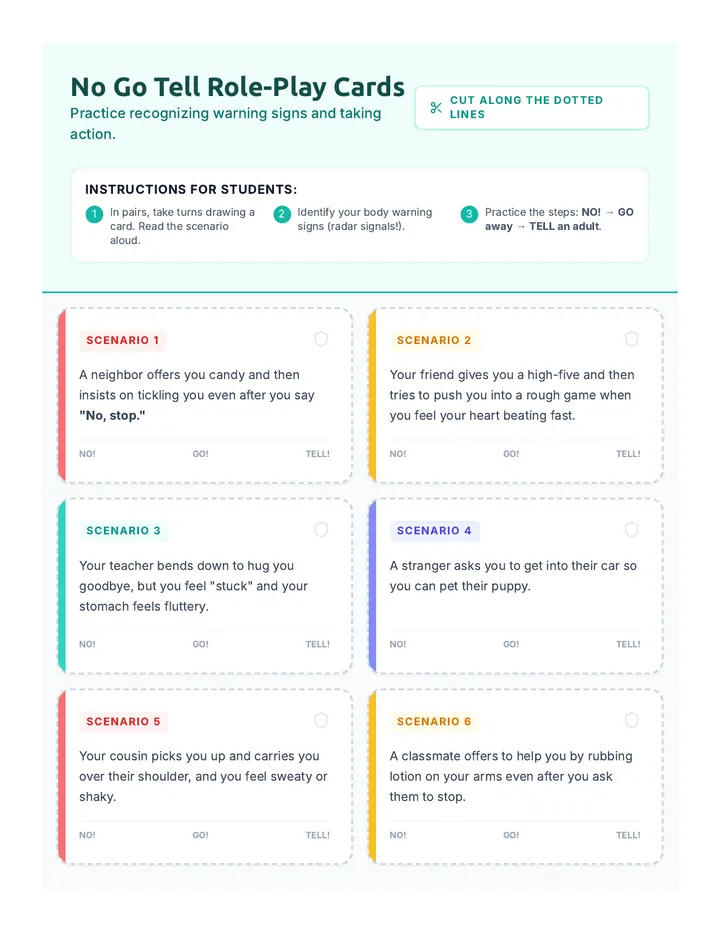
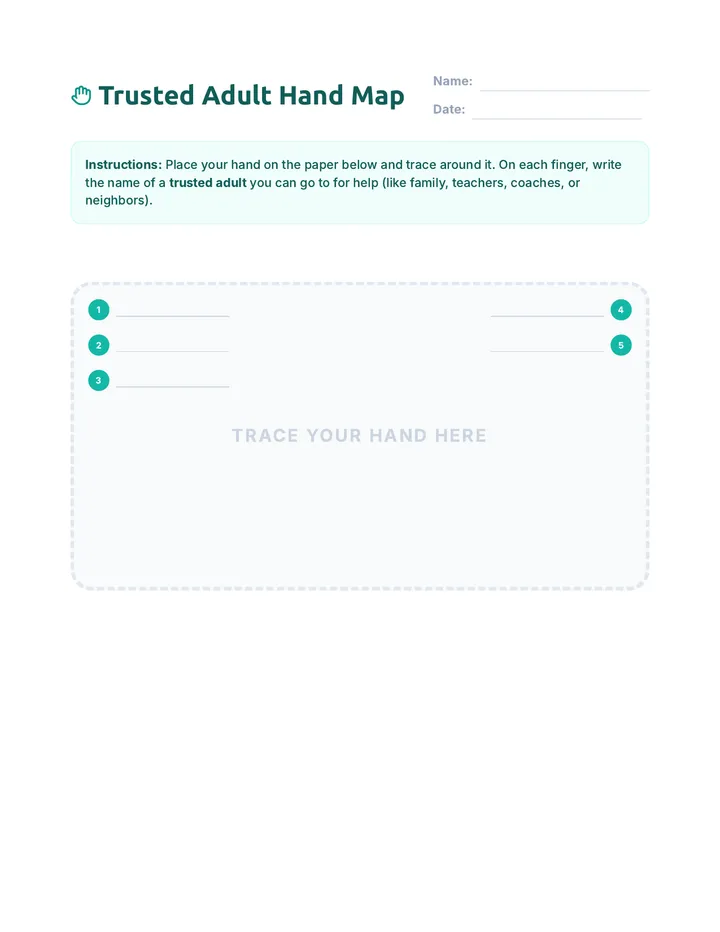
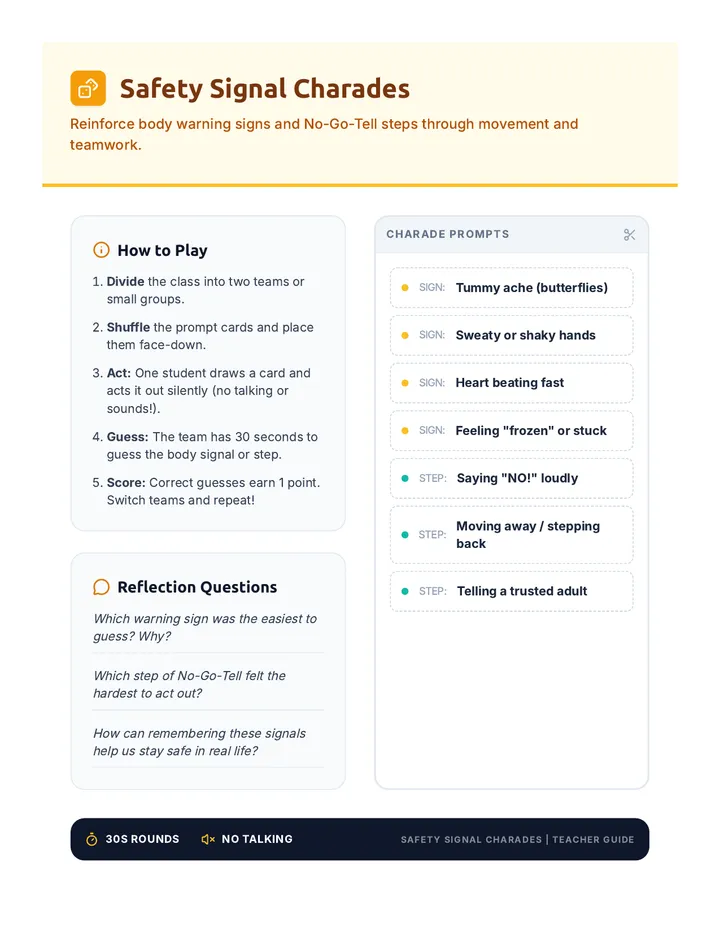
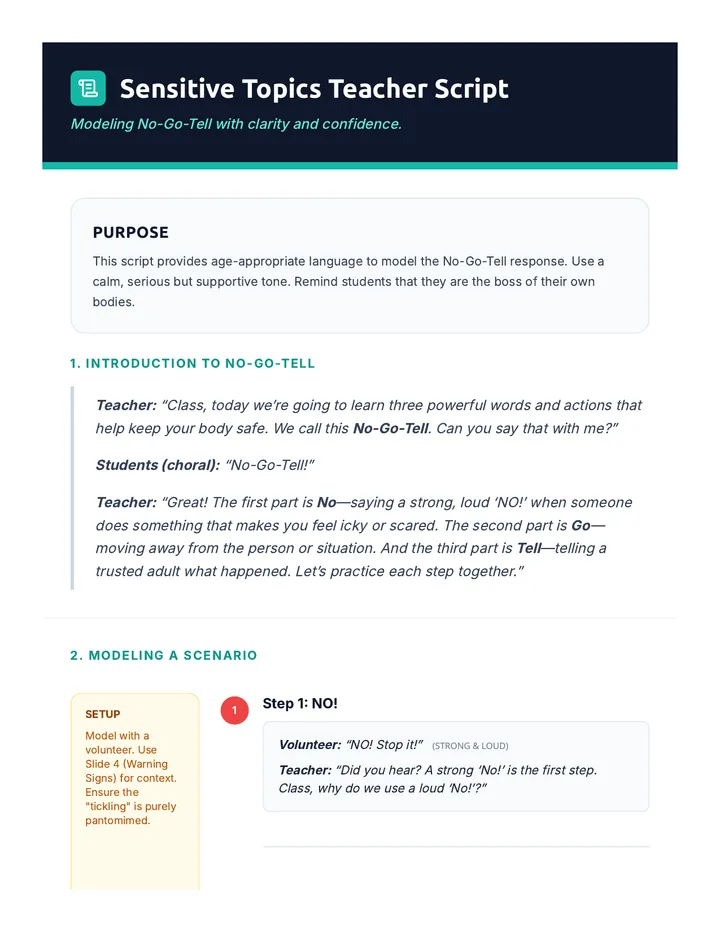
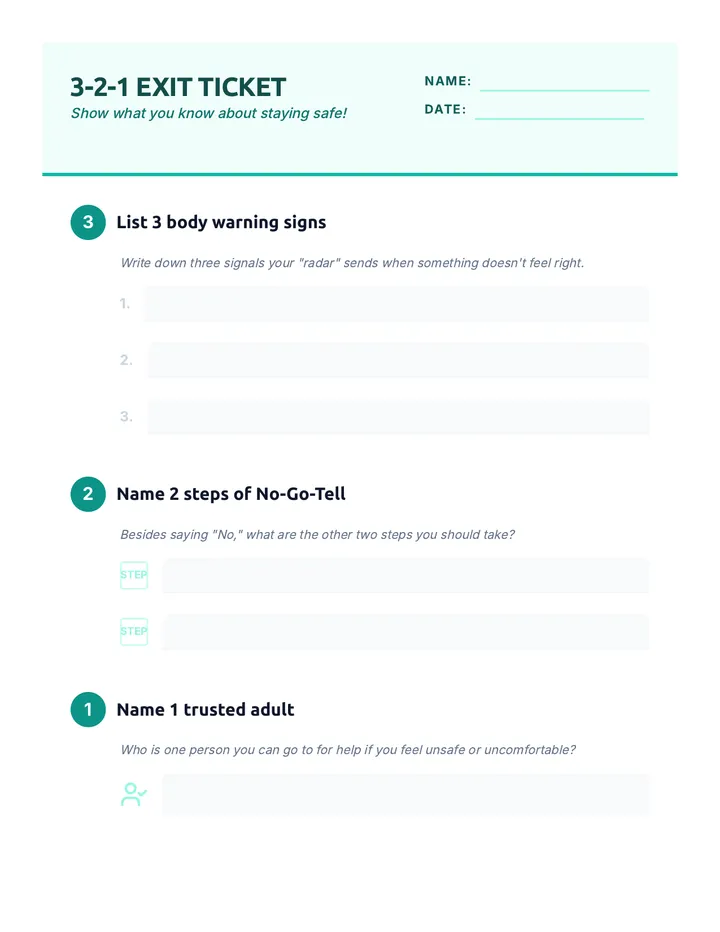
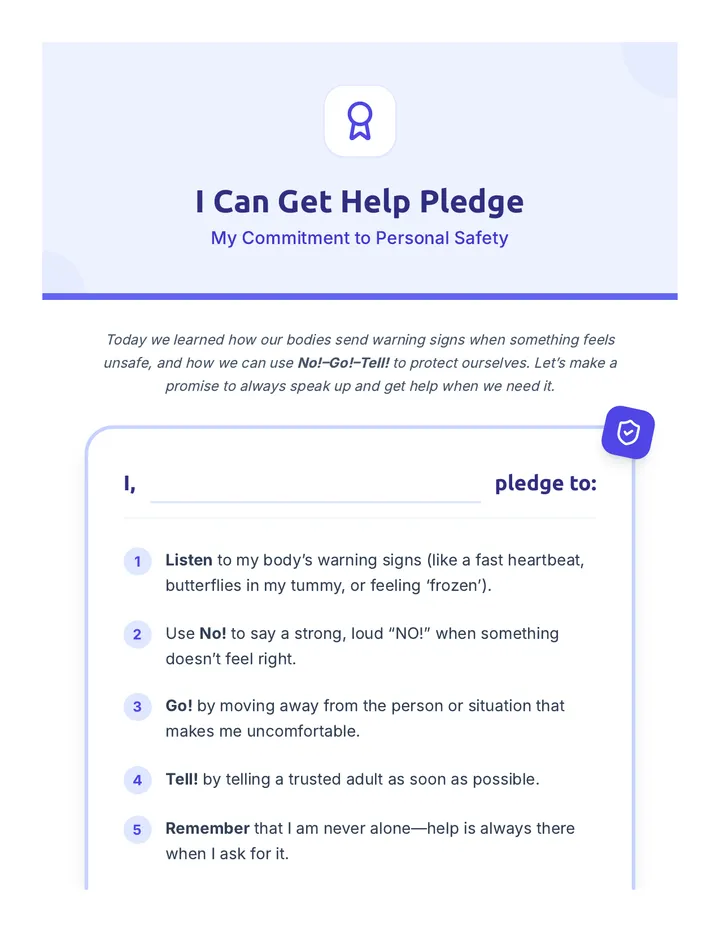
In this 45-minute 3rd grade lesson, students learn to recognize body warning signs, practice the No-Go-Tell response, and identify trusted adults for help. This vital lesson empowers children with personal safety skills and confidence to seek support when needed.
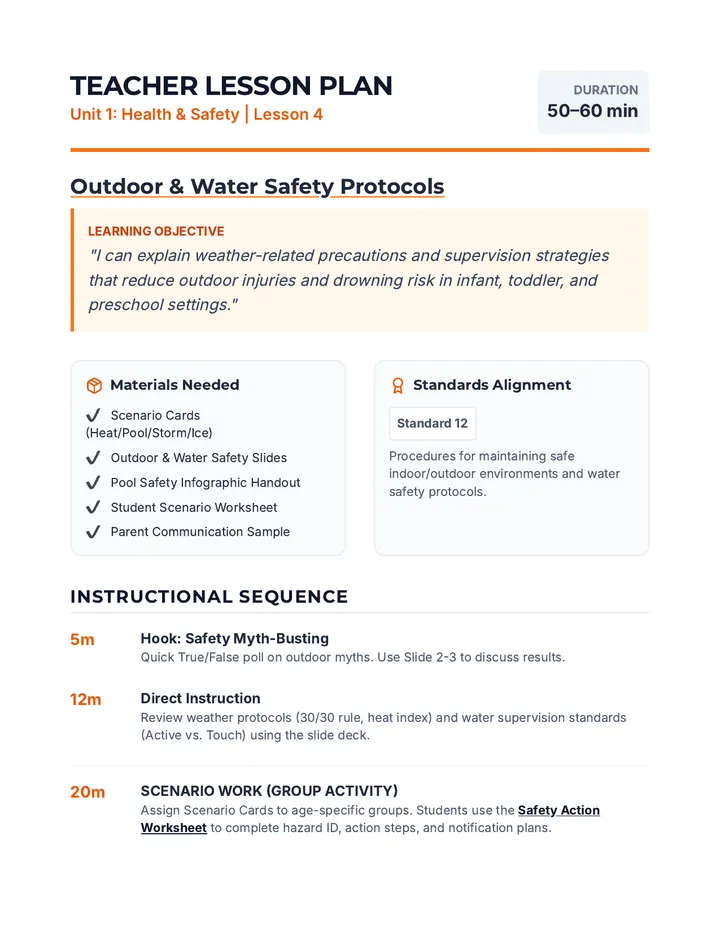
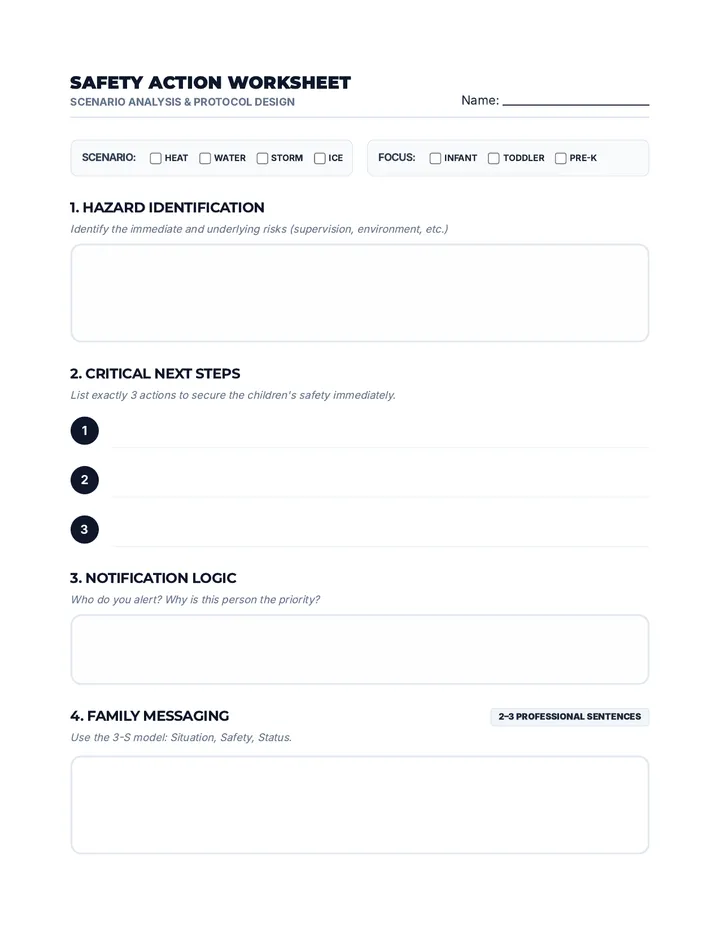
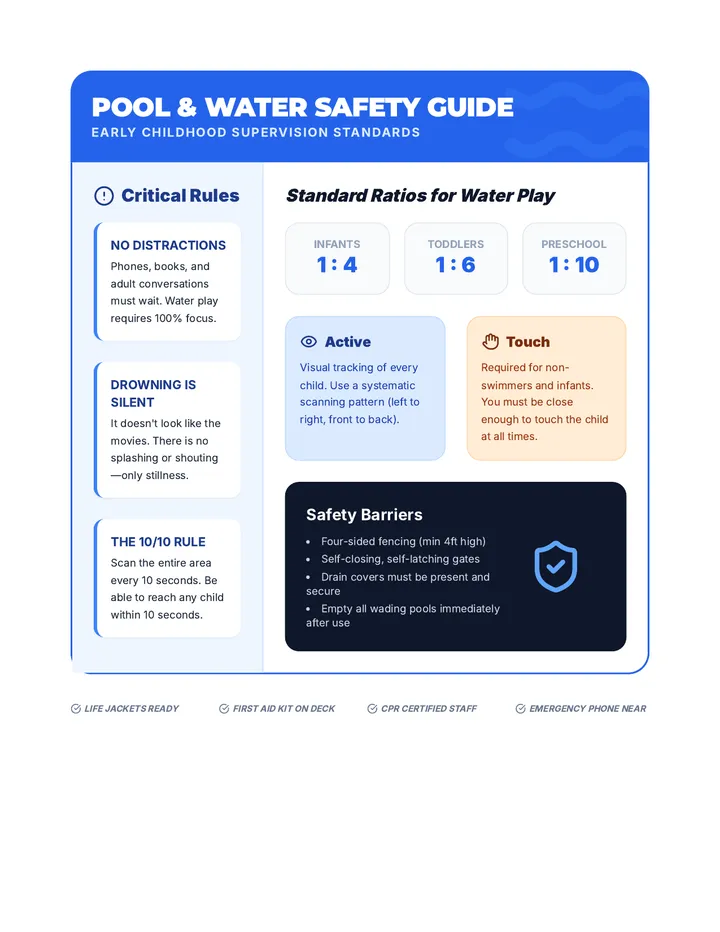
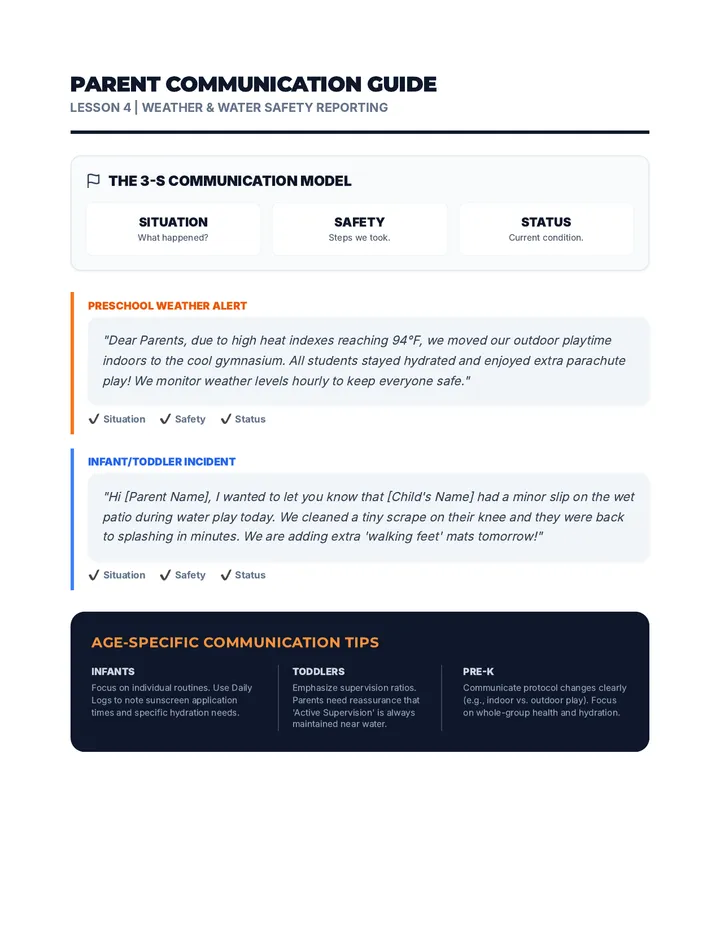
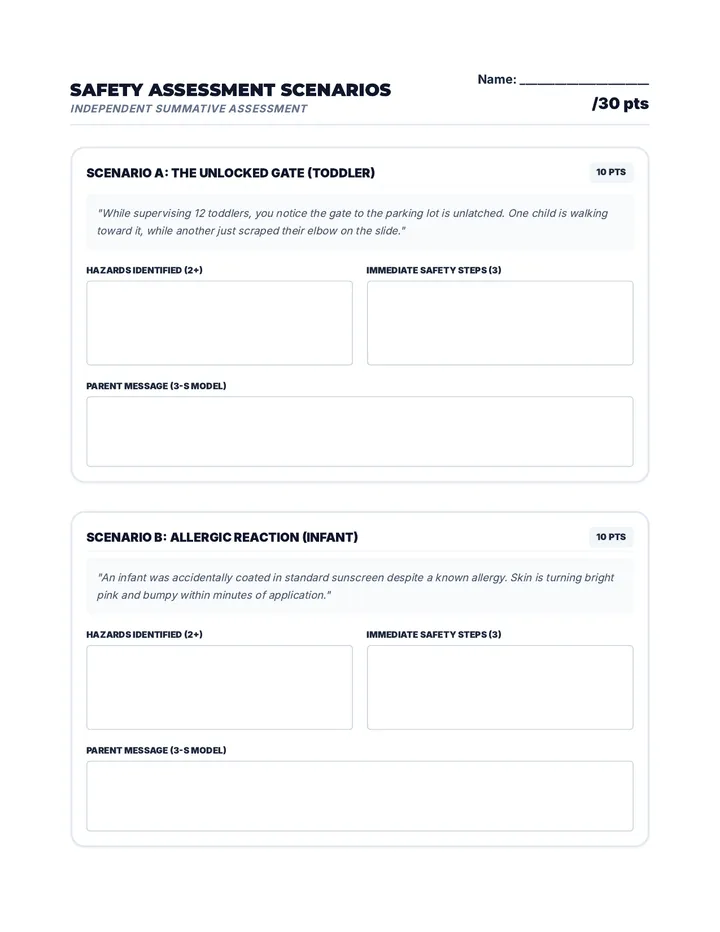
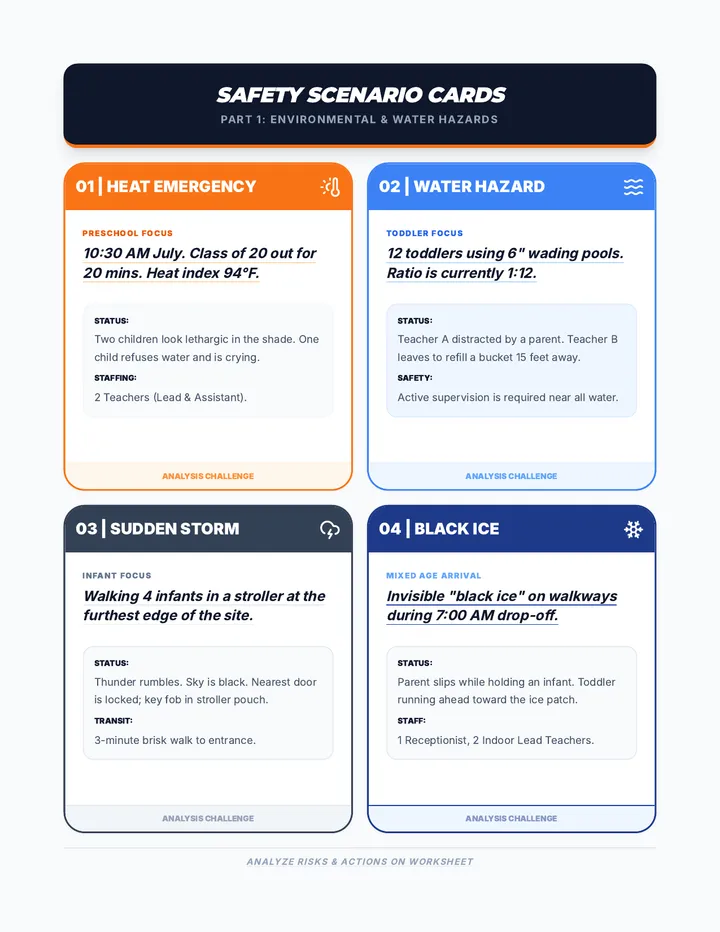
This lesson focuses on weather-related precautions and water safety strategies specifically for infant, toddler, and preschool environments, covering active supervision and emergency protocols.
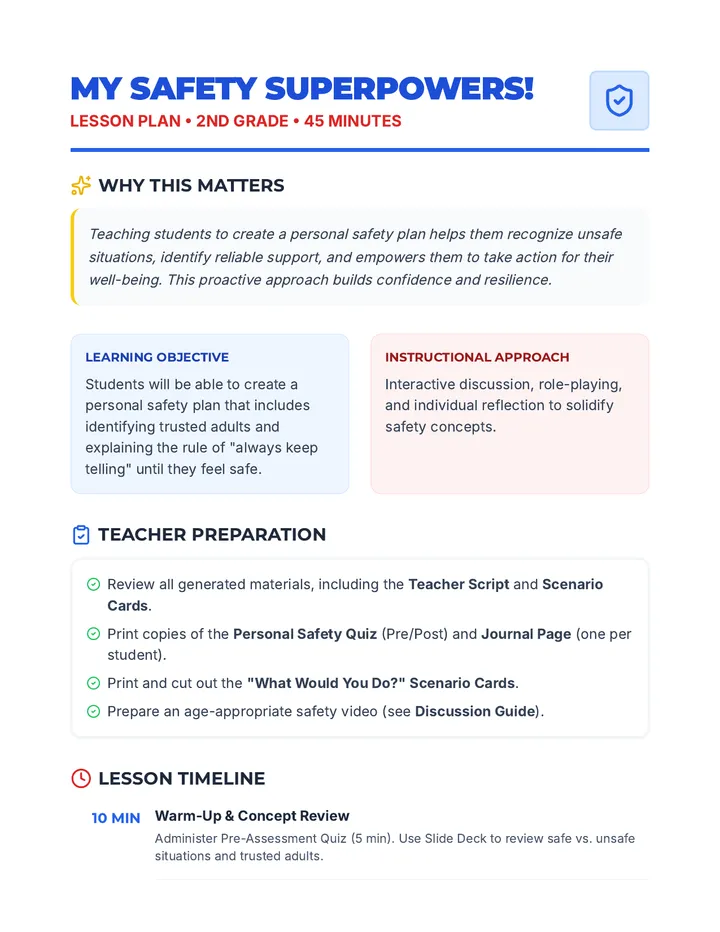
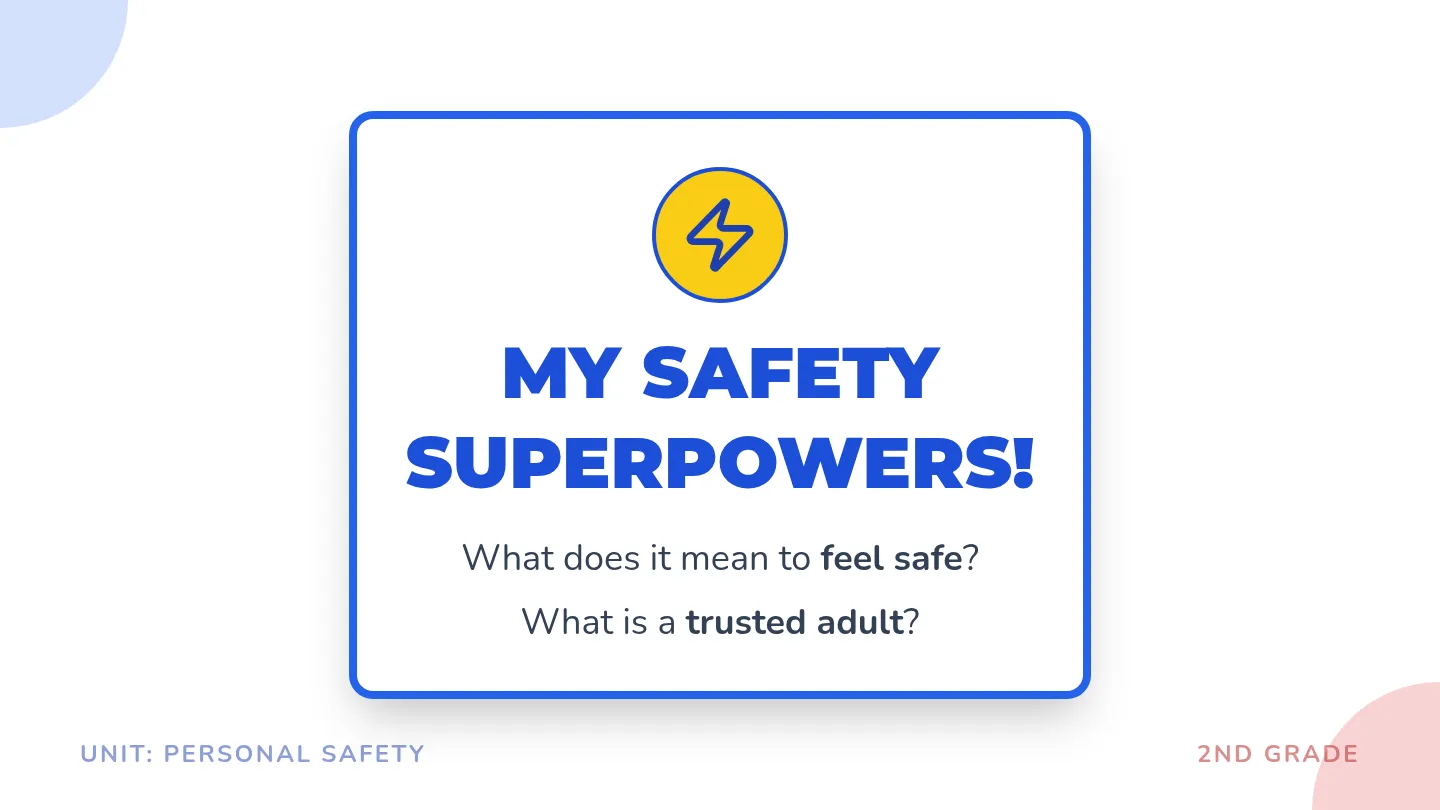
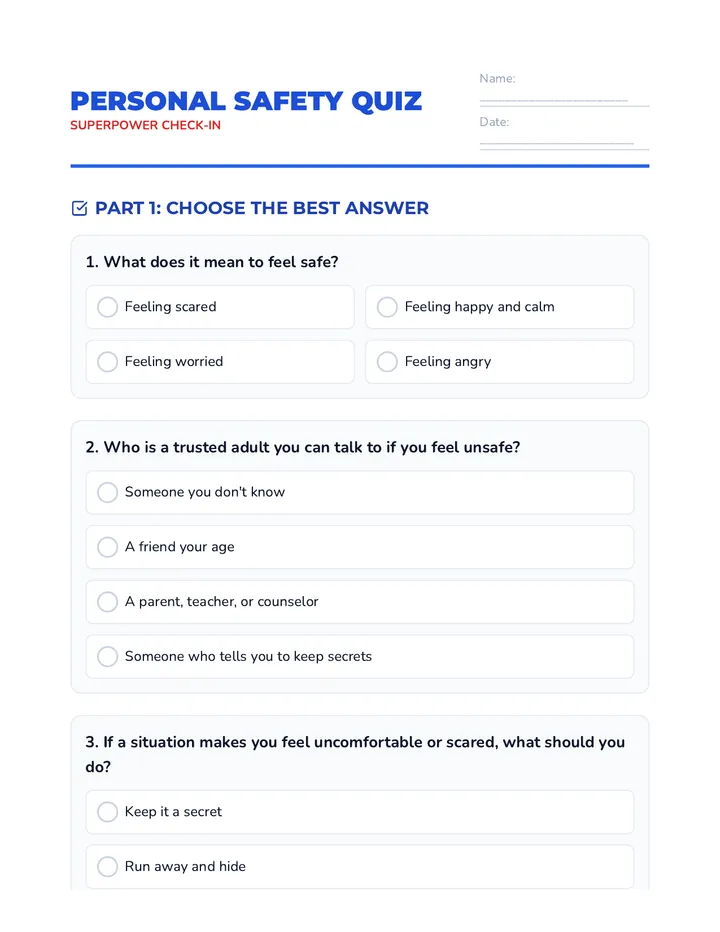
A 45-minute lesson for 2nd-grade students that empowers them with safety 'superpowers.' Students learn to identify trusted adults, recognize safe vs. unsafe situations, and practice the essential 'always keep telling' rule through role-play and personal safety planning.
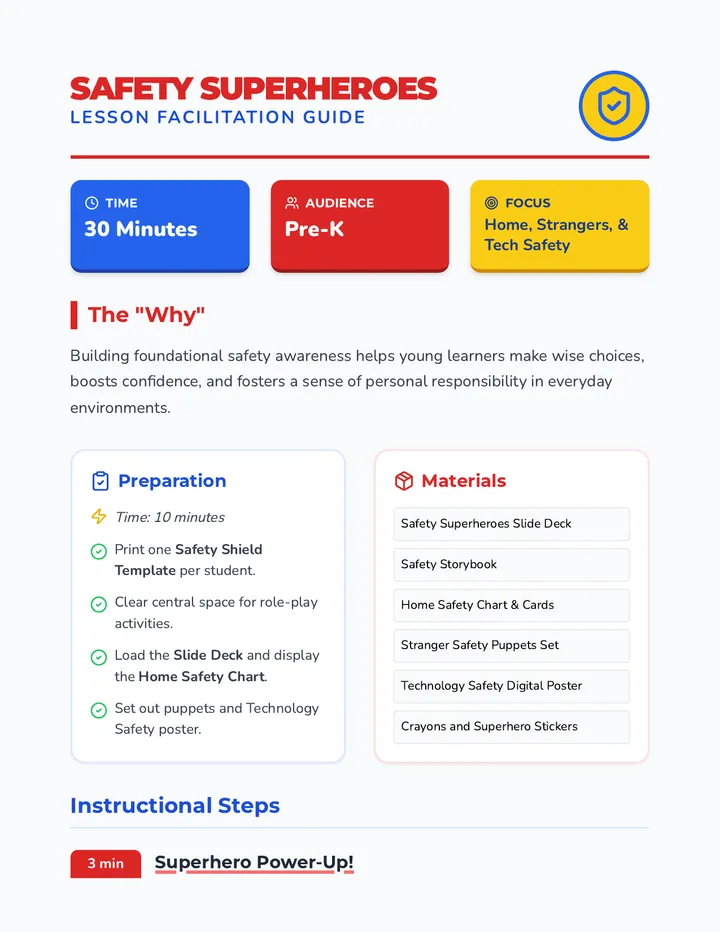
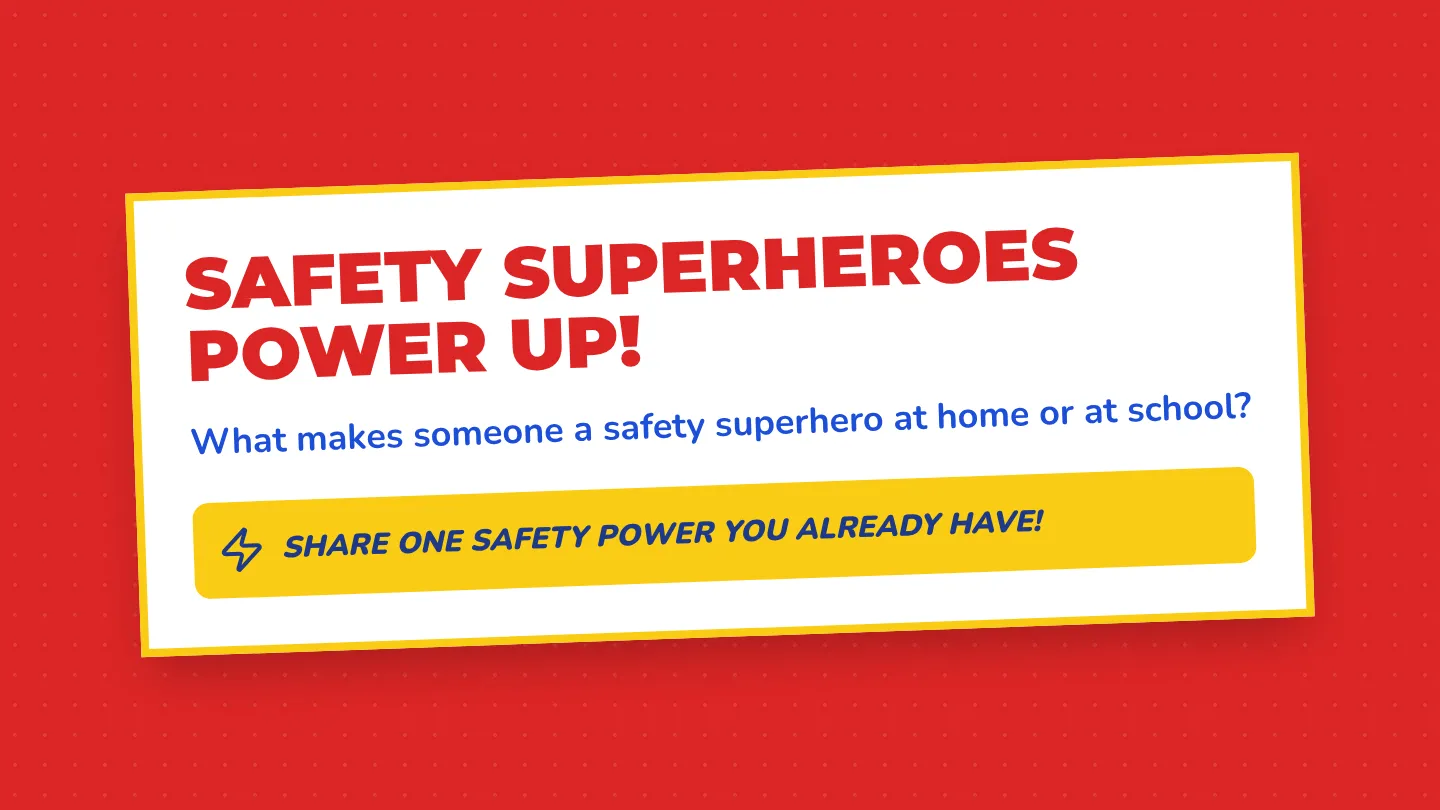
A 30-minute PreK lesson where students learn essential safety skills for home, strangers, and technology through interactive storytelling and role-play. Students become 'Safety Superheroes' as they learn to recognize safe behaviors and build confidence in their everyday environment.
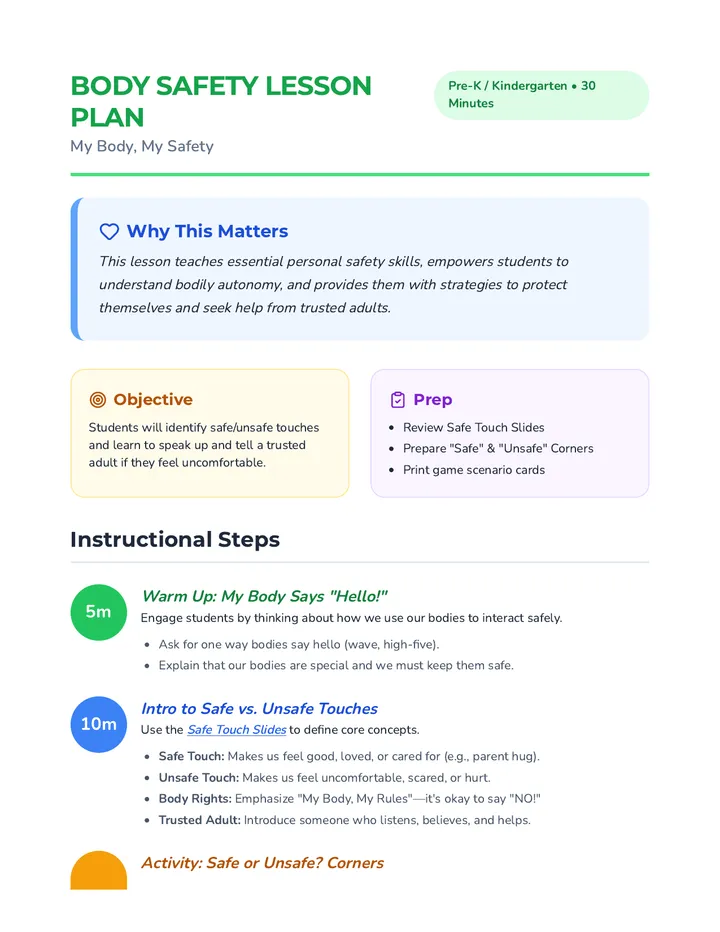
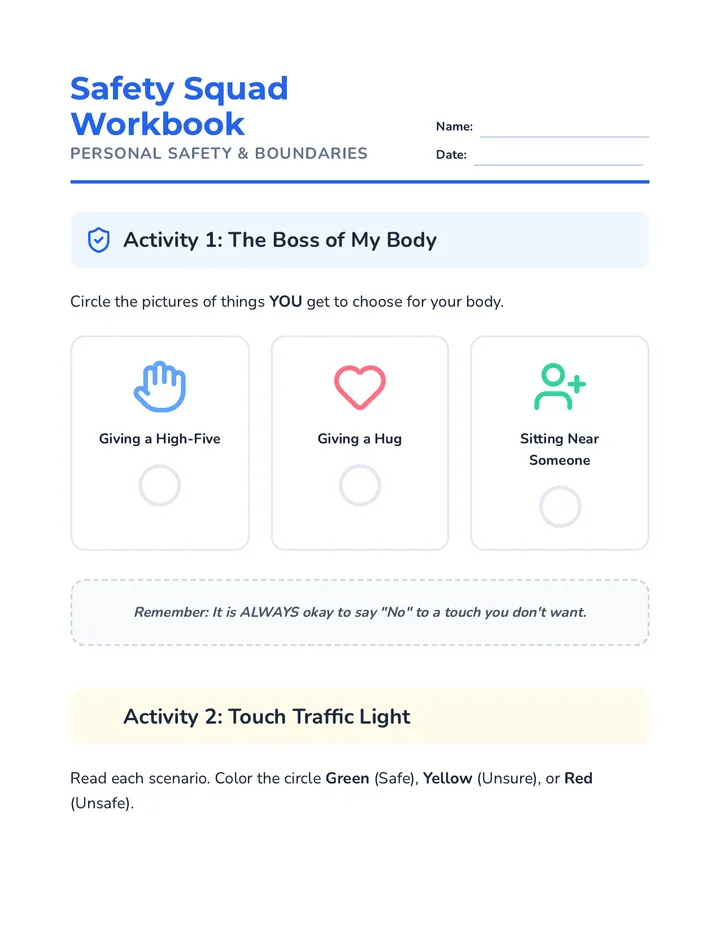
This lesson empowers Pre-K and Kindergarten students to recognize safe and unsafe touches, understand bodily autonomy, and identify trusted adults for help.
A comprehensive lesson on identifying unsafe social situations, setting physical and emotional boundaries with peers, and practicing assertive communication across school and community settings.
A comprehensive kindergarten lesson on personal safety, focusing on body autonomy, recognizing internal warning signals, and identifying trusted adults. Students learn to distinguish between safe and unsafe touches through interactive stories and activities.
A 30-minute lesson for 1st graders focused on defining strangers, identifying safe adults, and practicing responses to uncertain situations through role-play.
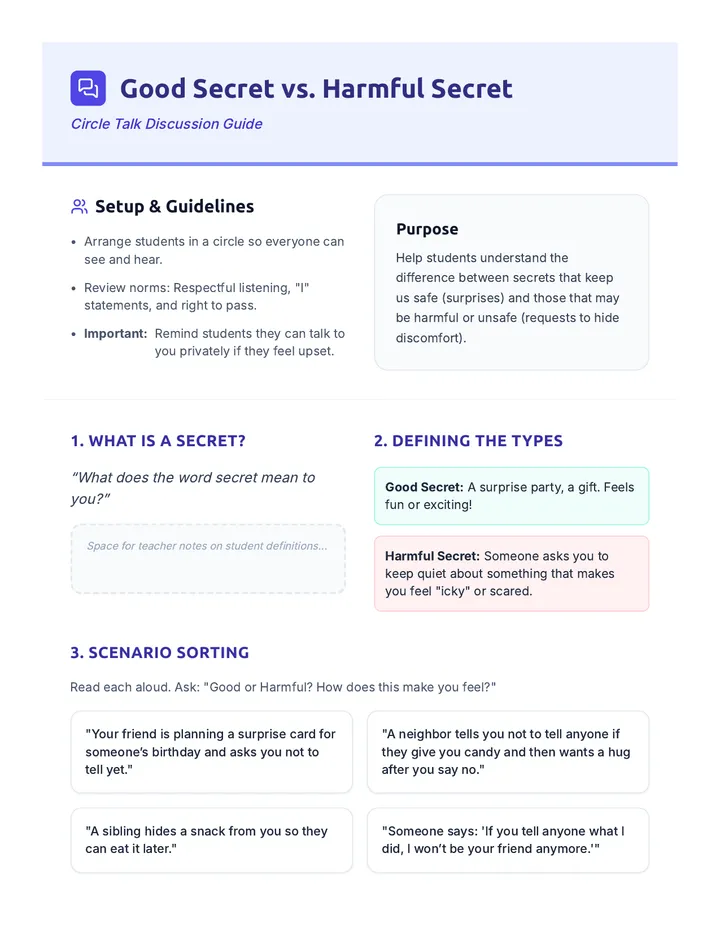
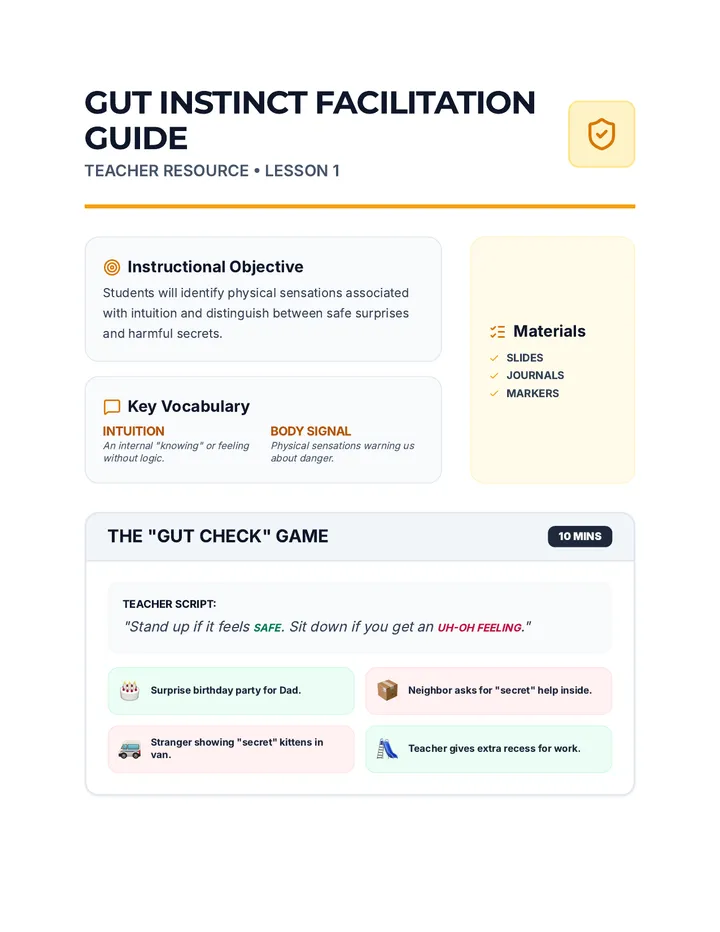
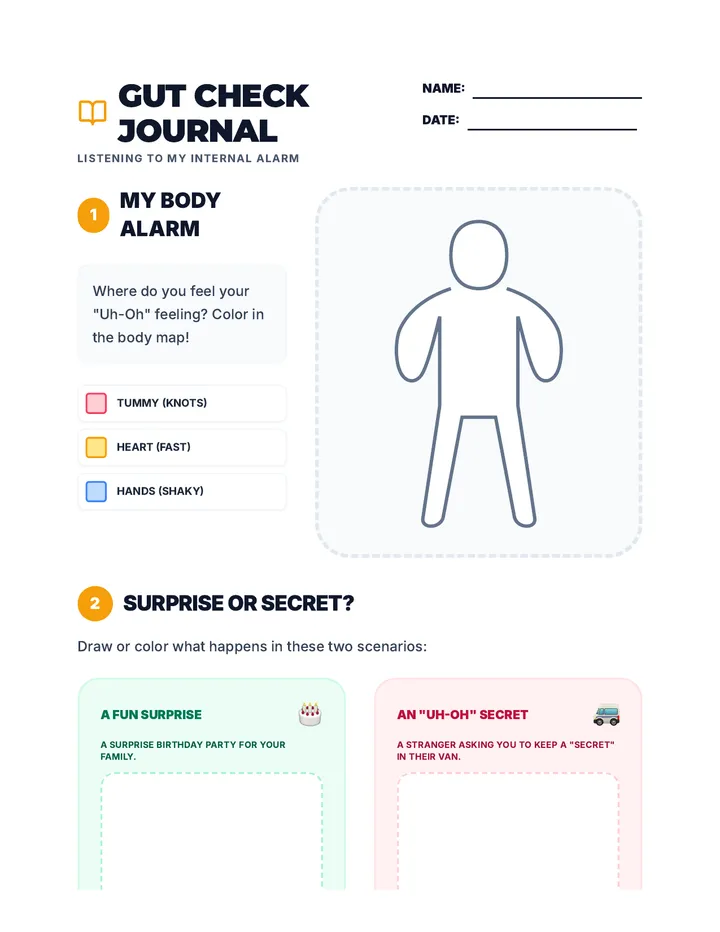
A comprehensive lesson on body safety and intuition, teaching students to recognize 'uh-oh' feelings and distinguish between safe surprises and harmful secrets.
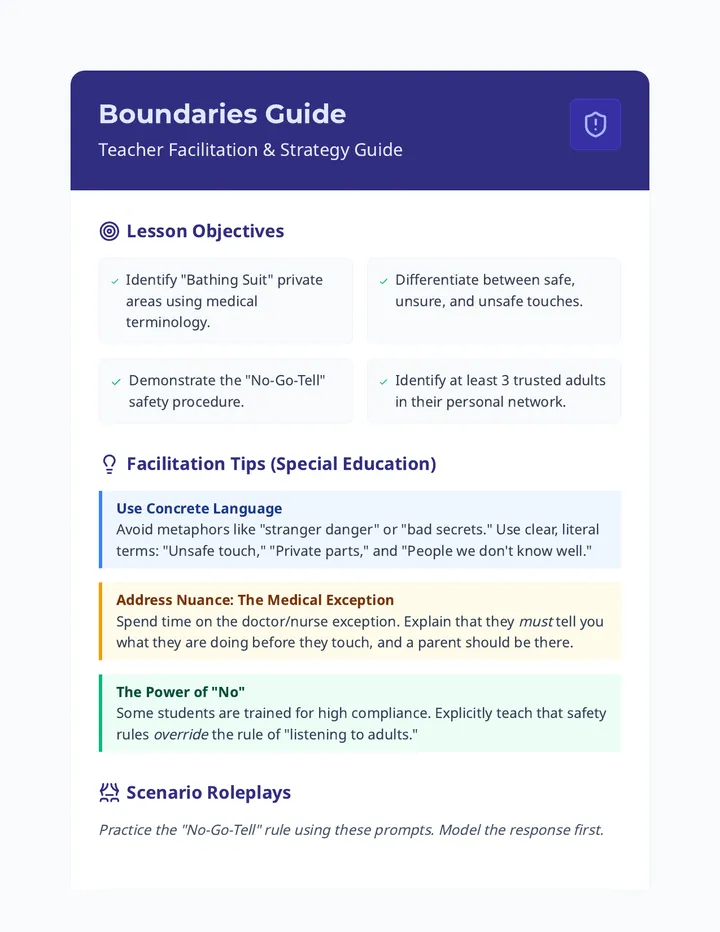
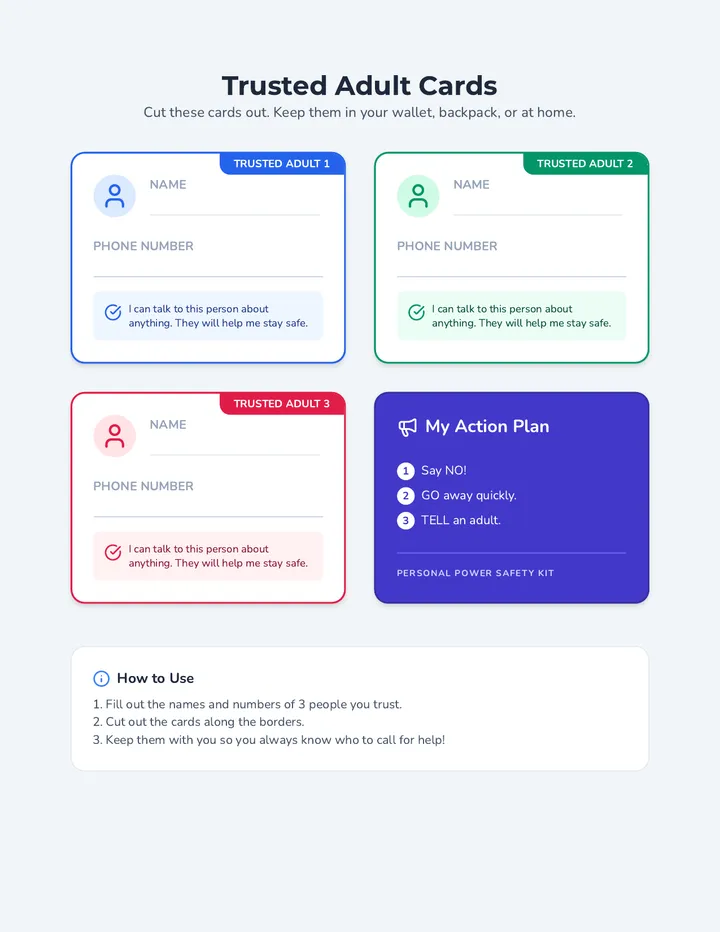
A comprehensive health education lesson focused on body boundaries, personal safety, and the 'No-Go-Tell' rule, specifically designed for students with developmental disabilities ages 10-16.