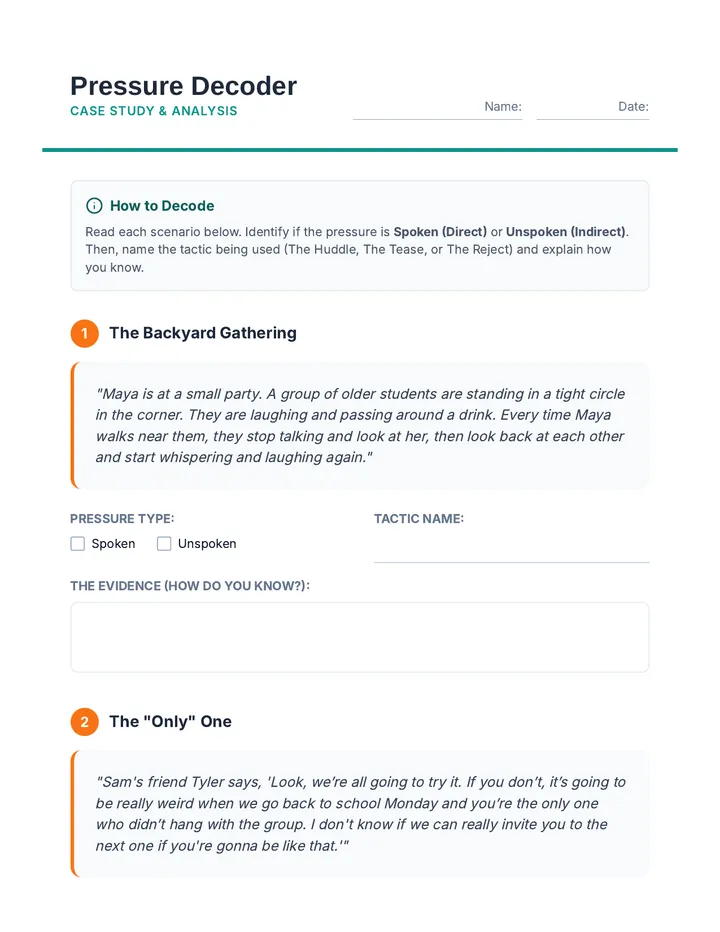
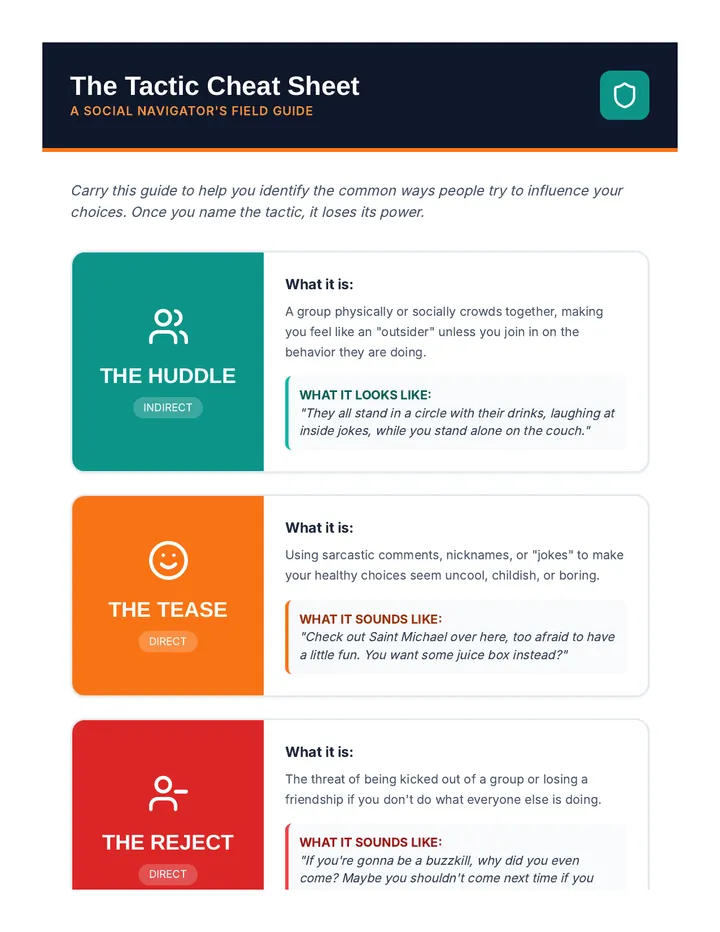
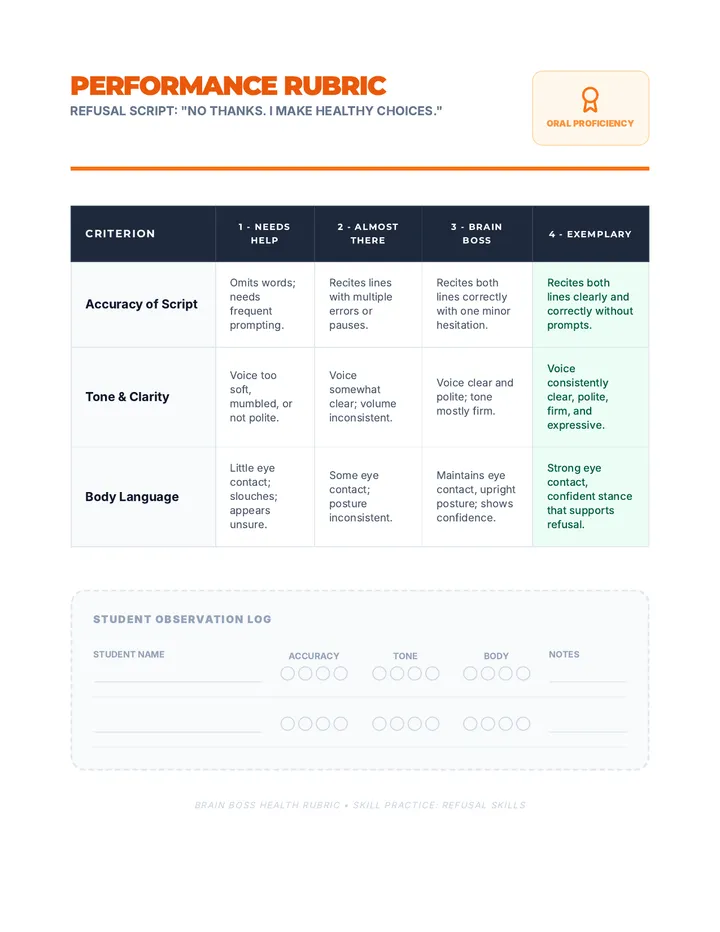
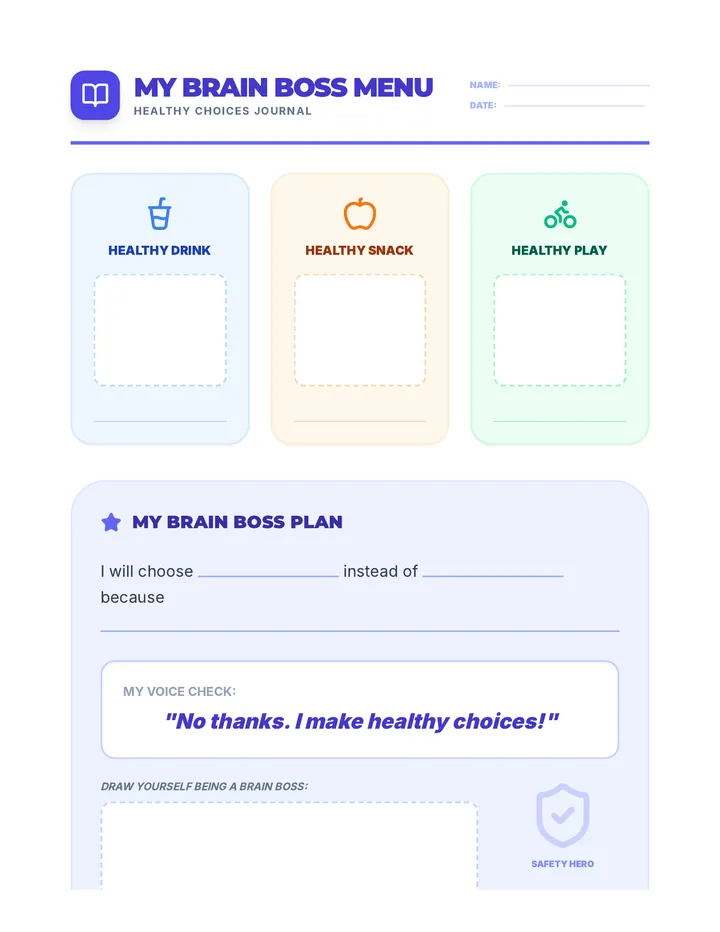
Identifies common peer pressure tactics and builds assertive communication skills to set healthy boundaries. Equips students with specific refusal strategies for social situations and high-risk scenarios.
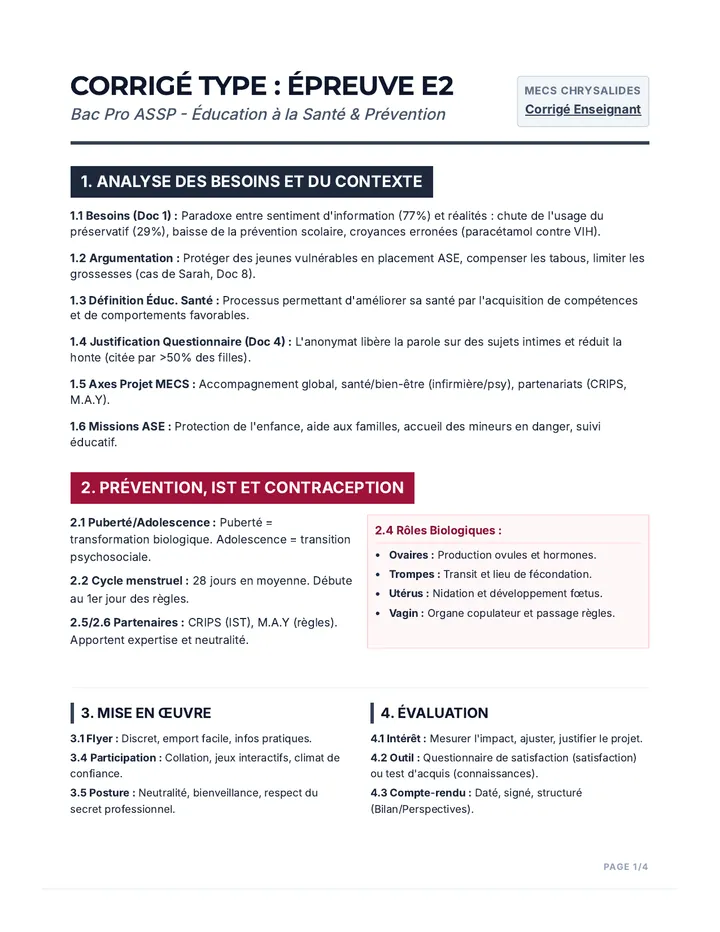
A complete teacher-facing answer key for a Bac Pro ASSP exam (E2 type) covering health education, prevention, and anatomy. Includes a detailed correction guide, a labeled anatomical diagram, a health education action sheet, and a visual poster mock-up for STI prevention.
A set of 12 flashcards designed for 7th and 8th graders to practice refusal skills regarding drugs, alcohol, and peer pressure. The material includes a refusal strategy reference guide and scenarios styled as vintage index cards for role-playing exercises.
A two-week wellness unit for middle schoolers focused on analyzing influences (media, tech, values) and mastering health-enhancing decision-making models. Students culminate their learning by creating a collaborative research poster on a chosen wellness topic.
A comprehensive tobacco and vaping cessation program focused on the science of addiction, long-term health impacts, and practical refusal and quitting strategies for students.
A comprehensive vaping prevention unit that covers health risks, the science of nicotine addiction, and social refusal strategies for middle and high school students.
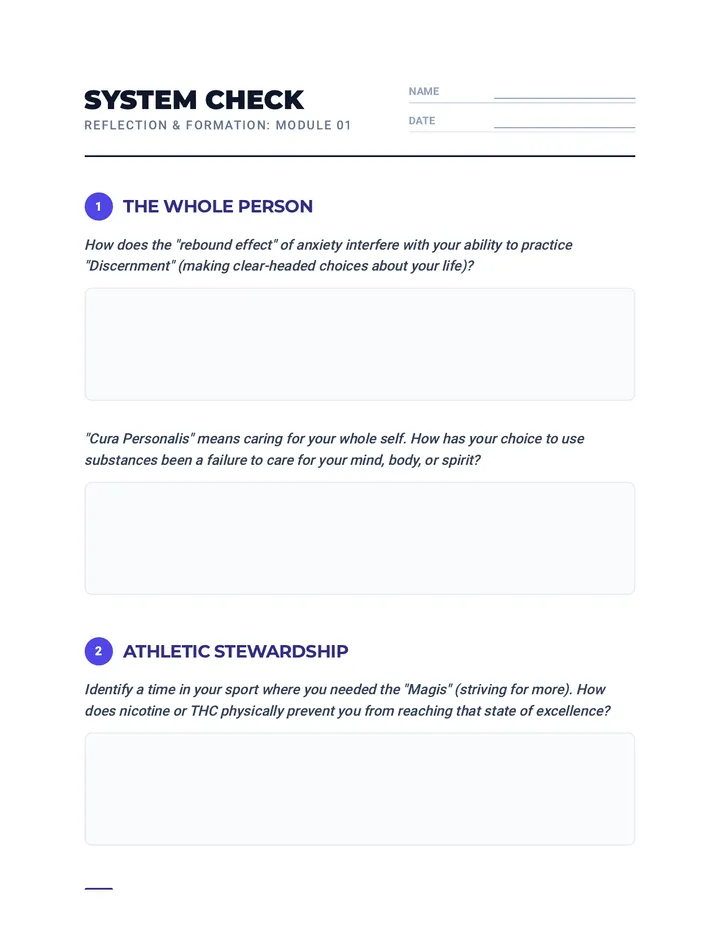
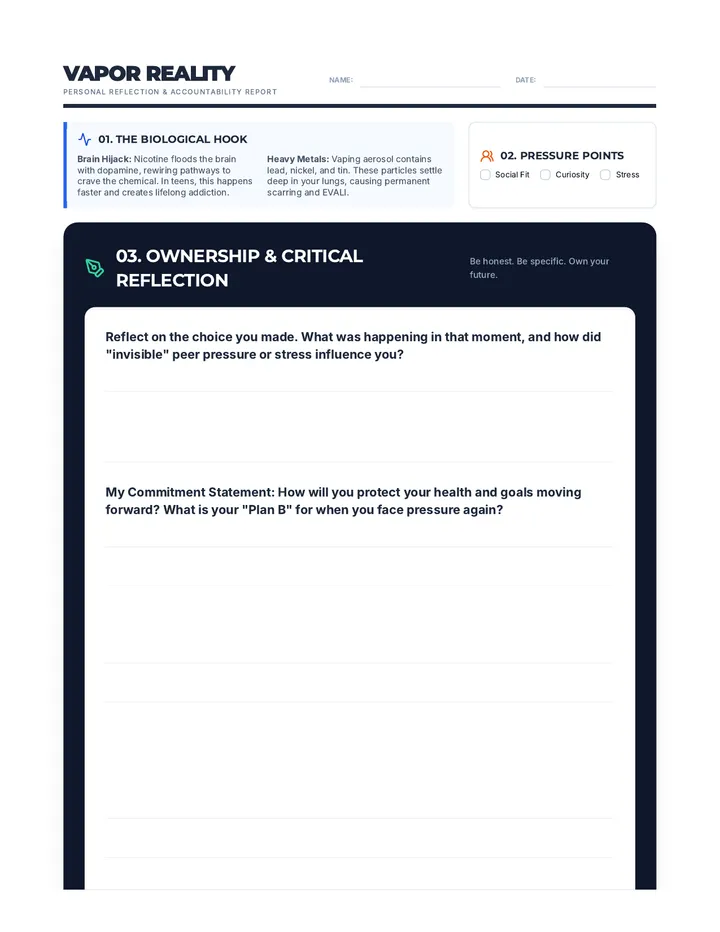
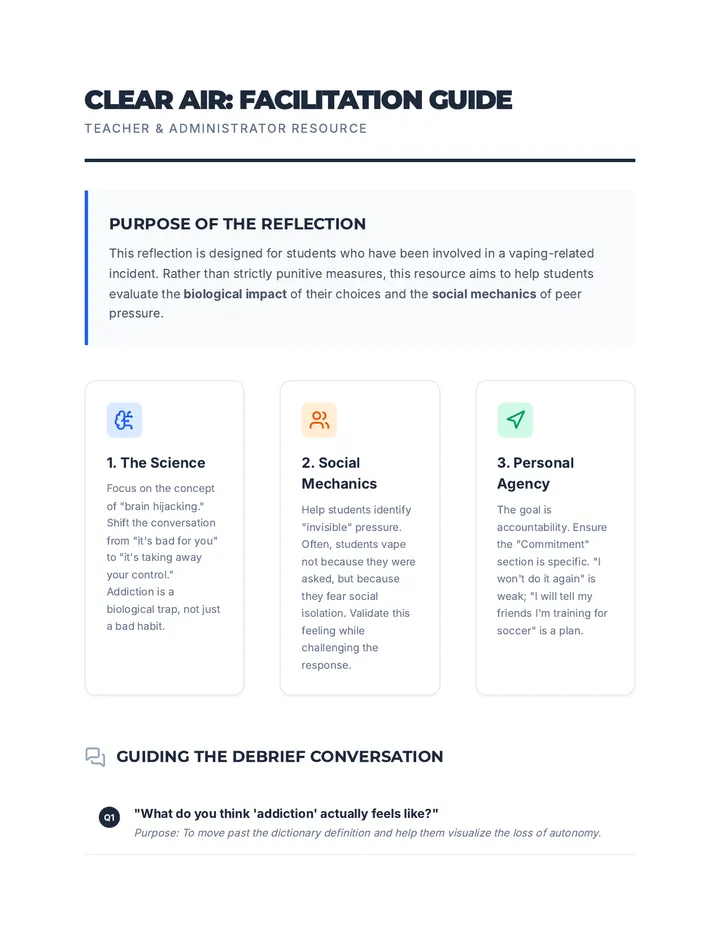
A restorative learning program designed for high school students to reflect on the impact of substance use and prepare for a positive return to their school community. The program balances scientific facts with deep personal reflection.
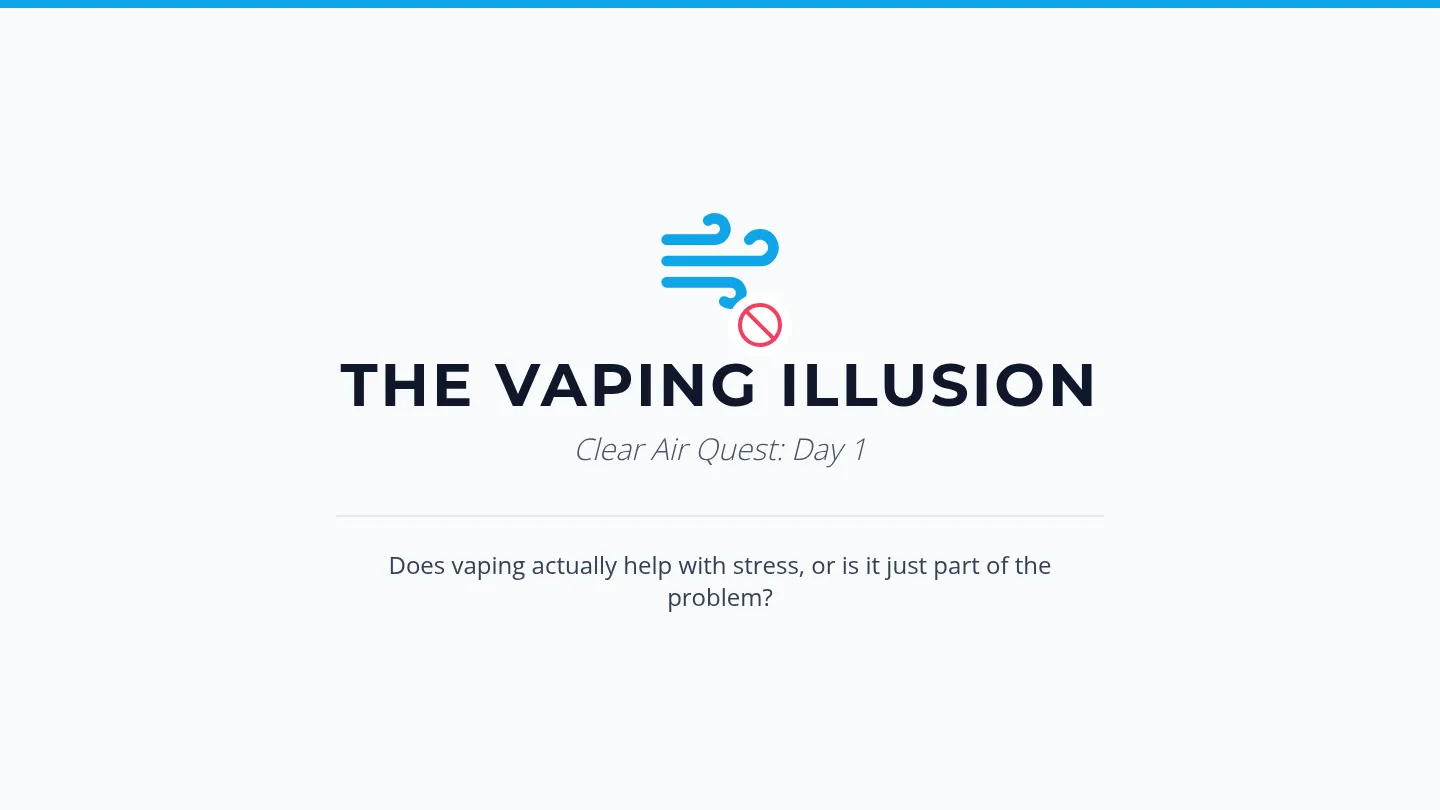
A comprehensive 5-day unit designed to educate students on the physiological effects of vaping and provide actionable, healthy coping mechanisms like deep breathing and mindfulness.
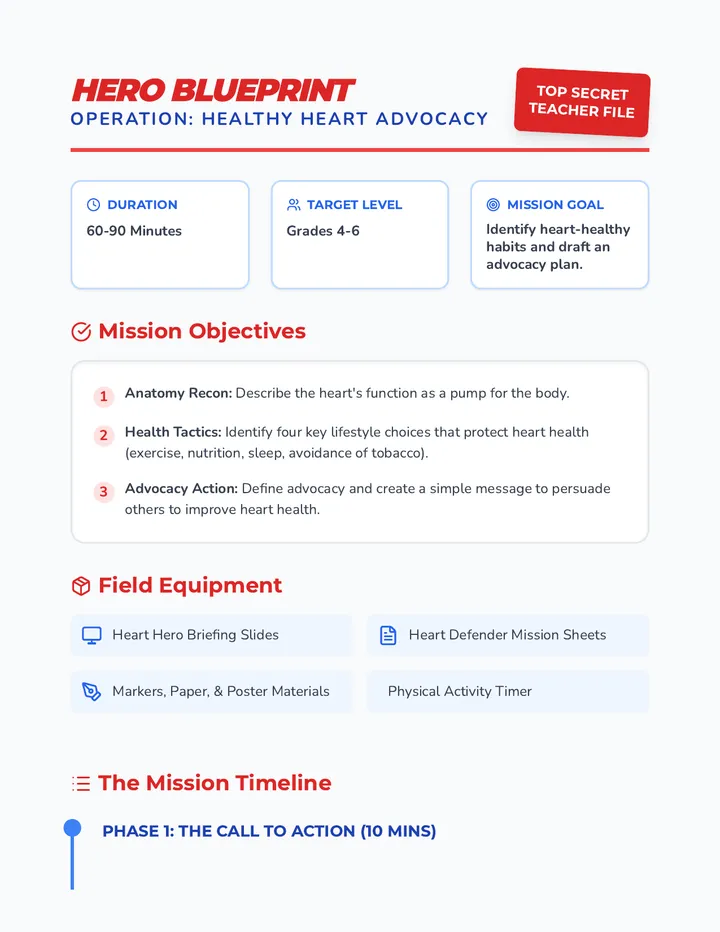
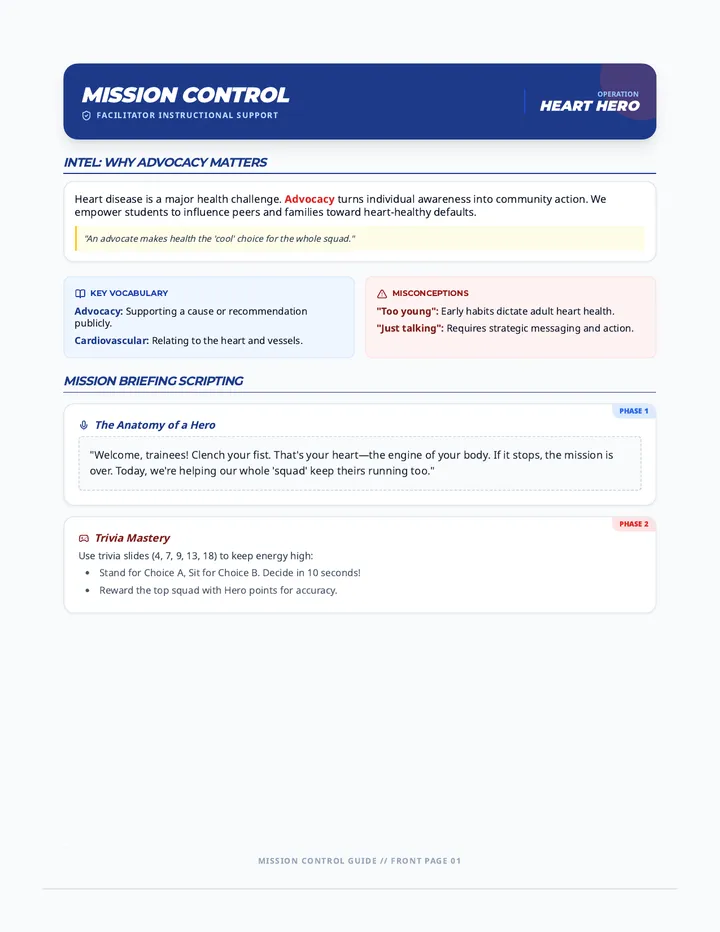
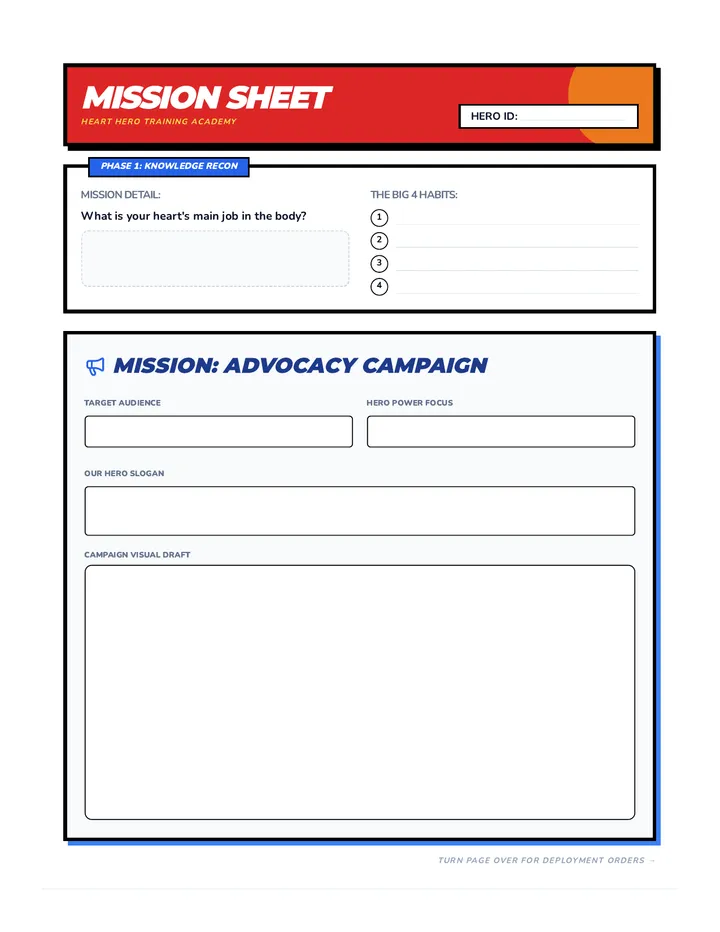
A comprehensive lesson sequence designed to empower students to become 'Heart Heroes' through education and advocacy for cardiovascular health.
This sequence equips 10th-grade students with the skills to identify and access specialized crisis resources. Students will learn to distinguish between emergency services (911), mental health lifelines (988), and specialized support for domestic violence and substance use, culminating in the creation of a personalized crisis resource plan.
A comprehensive 5-lesson sequence for 4th grade students focused on refusal skills and social decision-making regarding prescription drugs. Students learn to identify pressure tactics, communicate assertively, use non-verbal cues, and identify trusted adults for support.
This comprehensive health workshop equips 6th-grade students with the practical social skills needed to navigate peer pressure regarding alcohol. Students learn to identify direct and indirect pressure, practice verbal and non-verbal refusal strategies, and develop personal safety plans for difficult social situations.
A 4th-grade sequence focused on media literacy and debunking myths surrounding prescription drug safety, encouraging critical thinking and healthy coping mechanisms.
A 5th-grade health sequence that empowers students to deconstruct peer pressure tactics and media influence through a 'social analyst' lens. Students move from identifying the 'cool' factor to analyzing specific manipulation tactics and digital pressure, ultimately mastering effective refusal strategies.
A comprehensive 5-lesson sequence for 4th graders focused on identifying peer pressure and developing practical verbal and non-verbal refusal strategies related to alcohol awareness. Students build a 'social shield' of skills to navigate uncomfortable situations with confidence.
A comprehensive 2-hour training focused on identifying emerging trends in prevention science and integrating them into evidence-based strategies to maximize community impact.
A 30-minute lesson for 8th graders on identifying and resisting negative peer pressure through refusal strategies and personal 'out' plans.
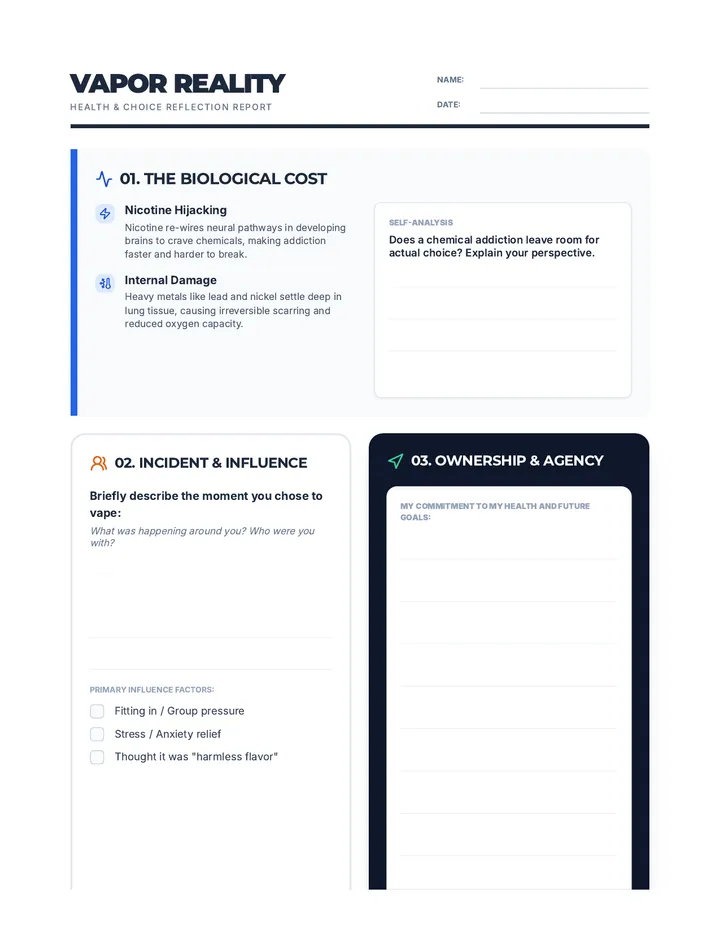
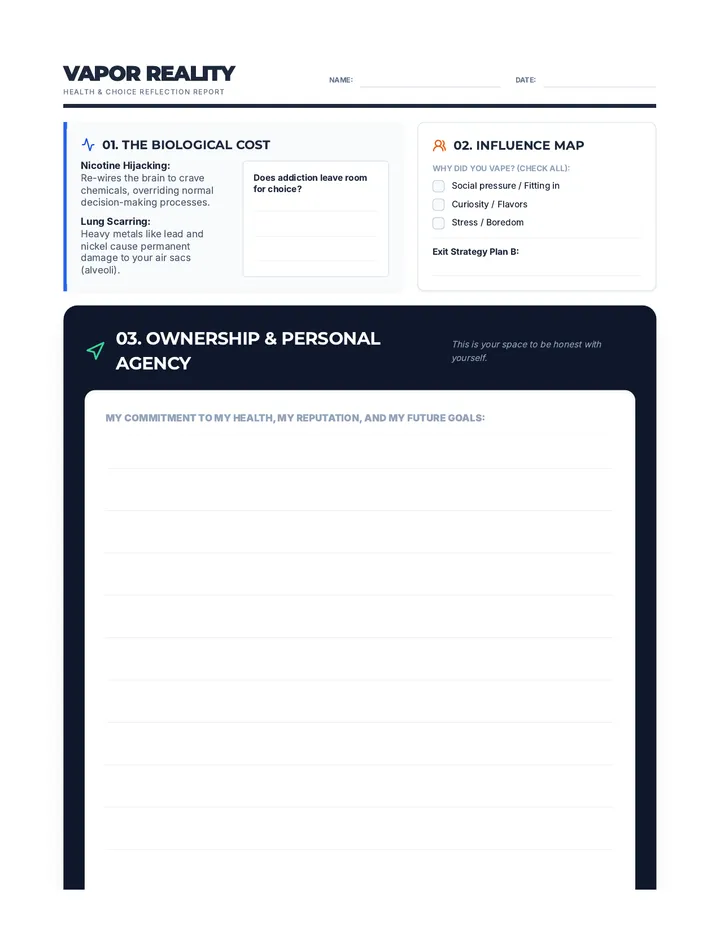
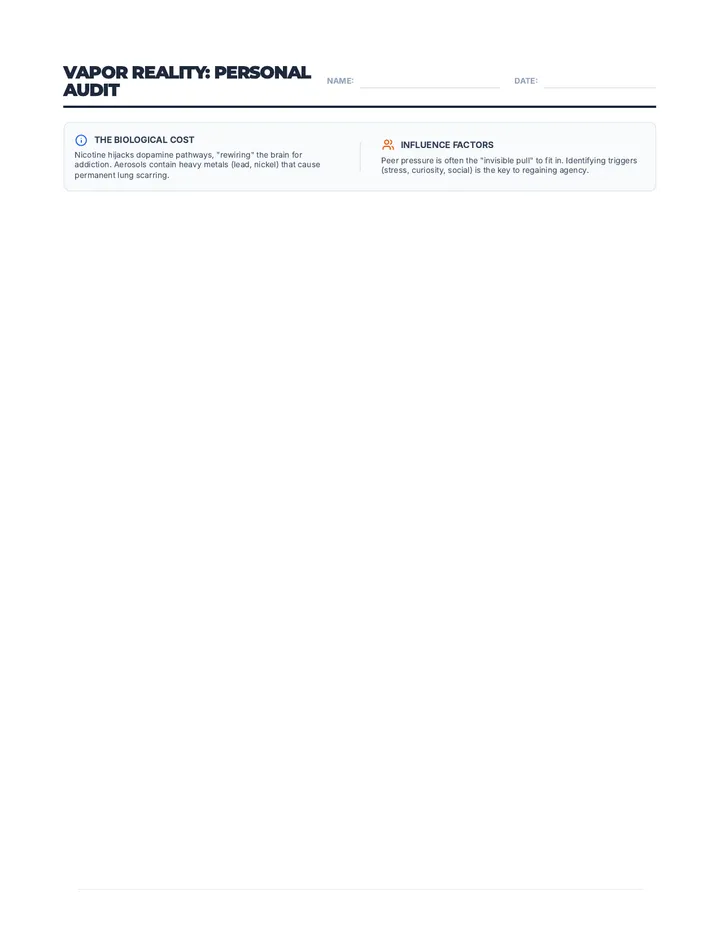
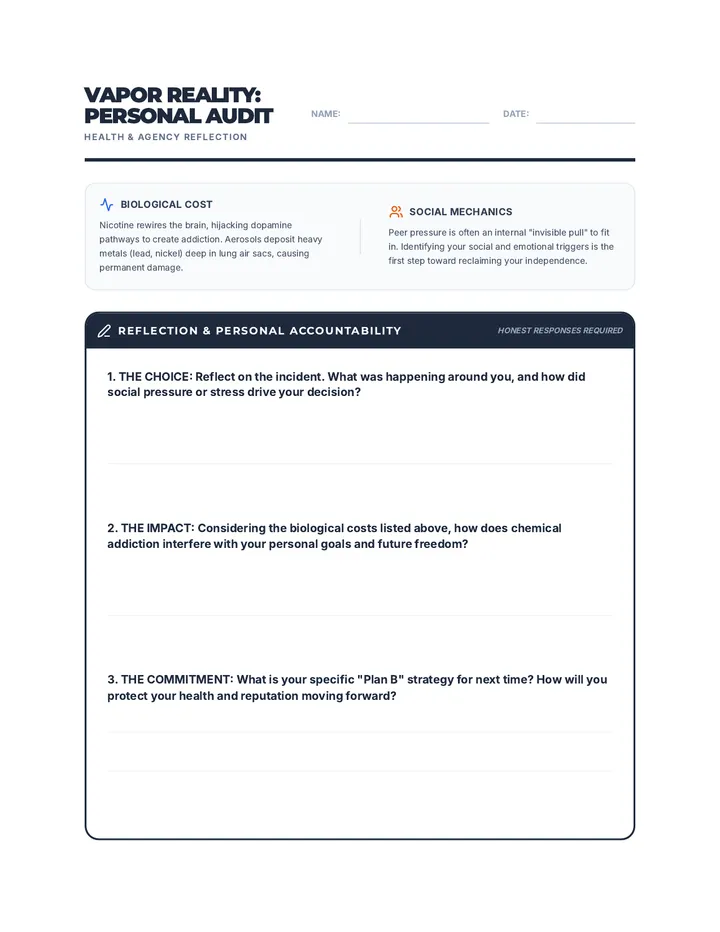
A reflective lesson designed for students to evaluate the health risks of vaping and the social pressures that lead to it, focusing on long-term consequences and personal agency.
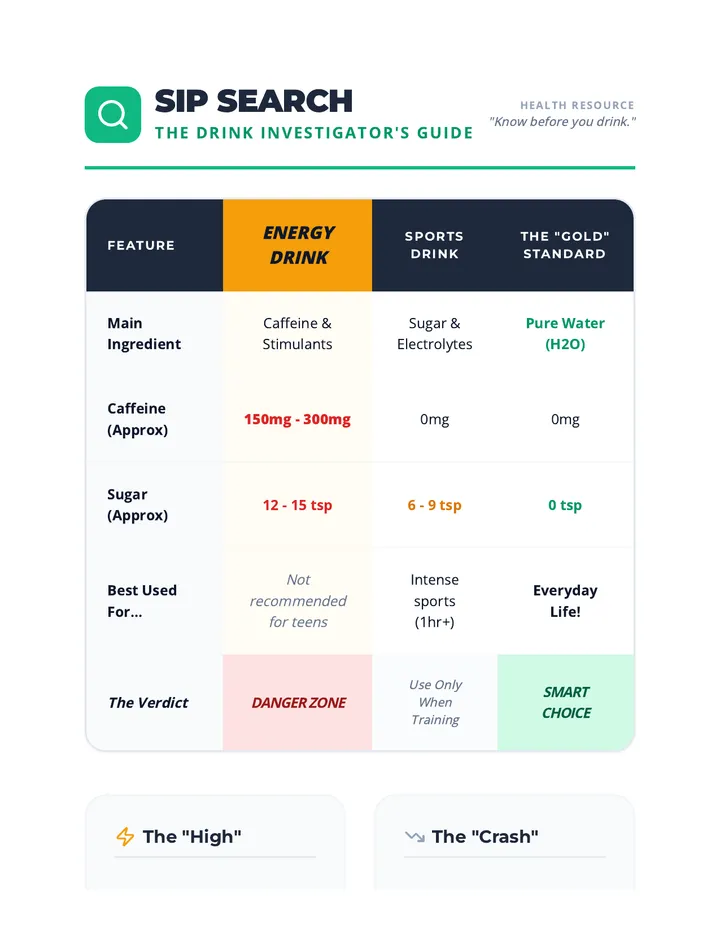
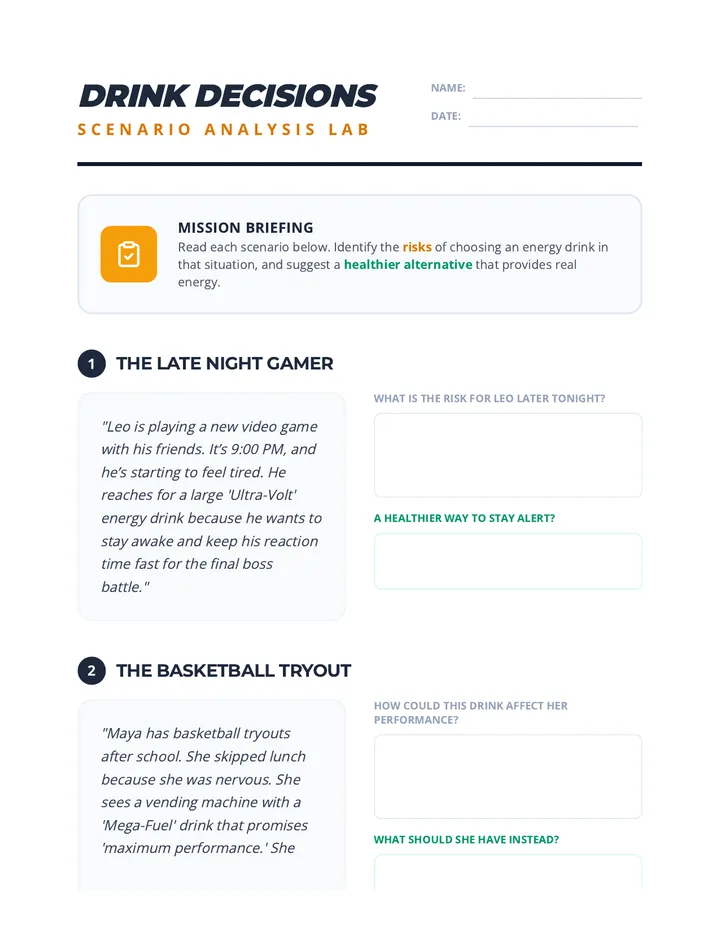
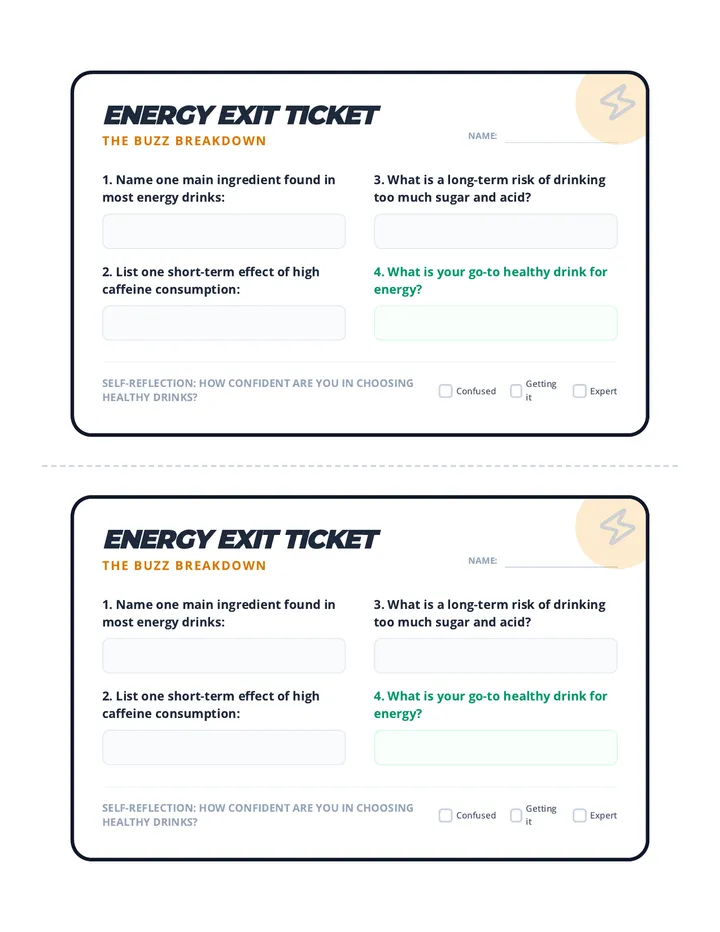
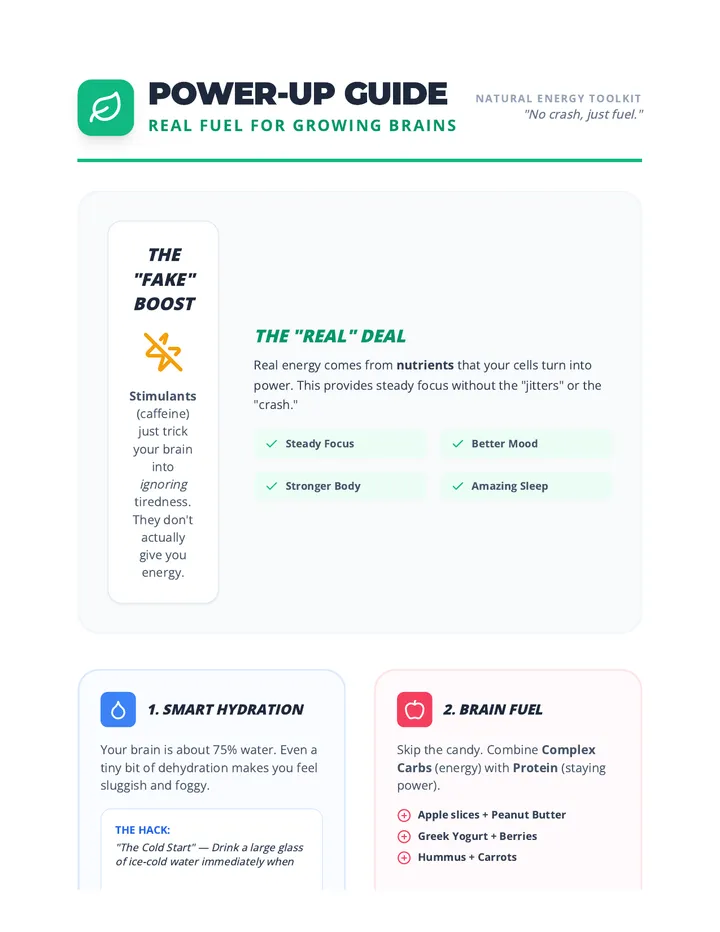
A comprehensive lesson exploring the science of energy drinks, their health impacts, and how to make better beverage choices through scenario analysis and data comparison.
A 45-minute interactive health lesson for 2nd graders that introduces the harms of vaping and nicotine through a hero-themed 'Mission: No Vape' concept. Students learn refusal skills, practice the Stop-Think-Choose routine, and commit to healthy habits.
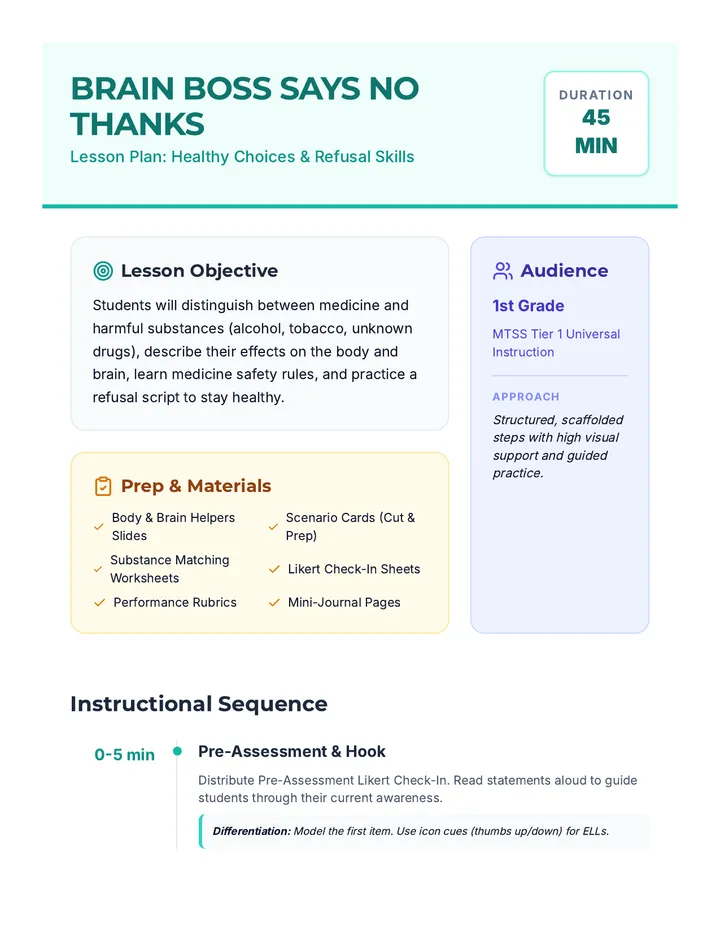
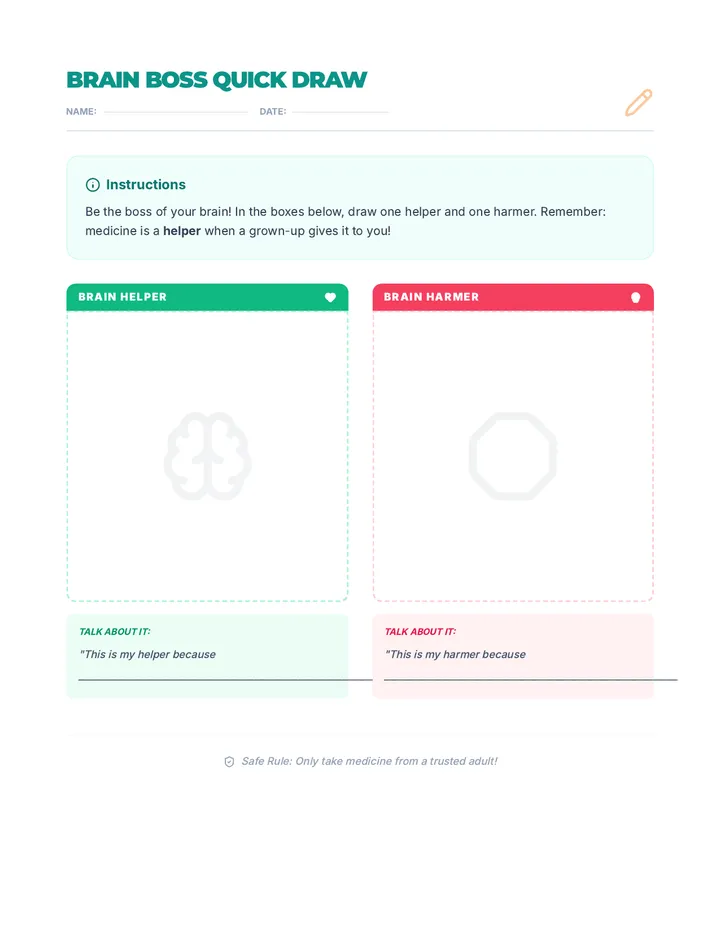
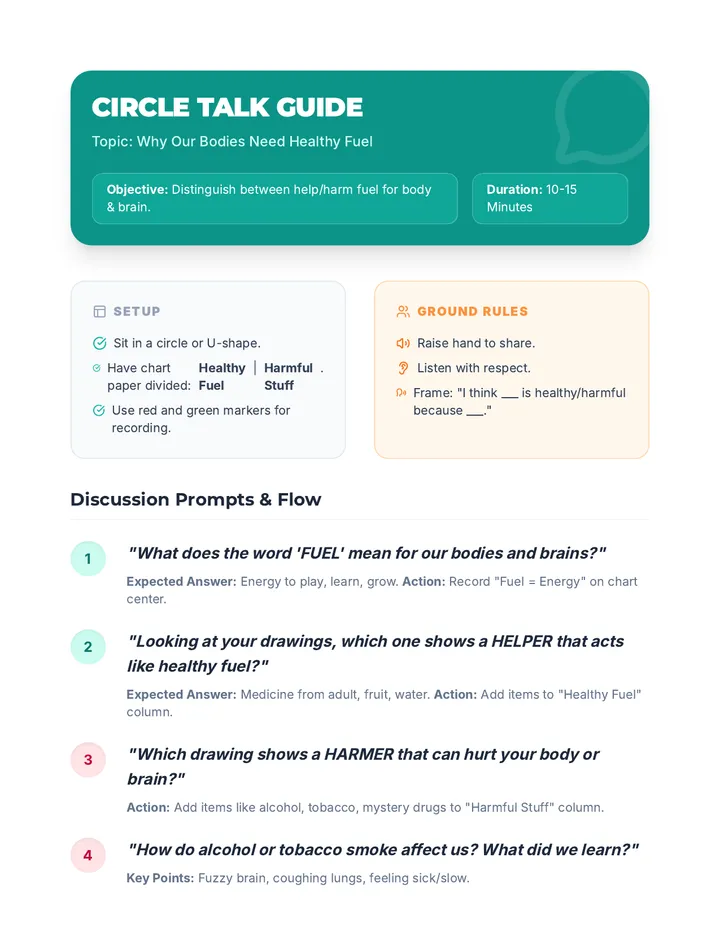
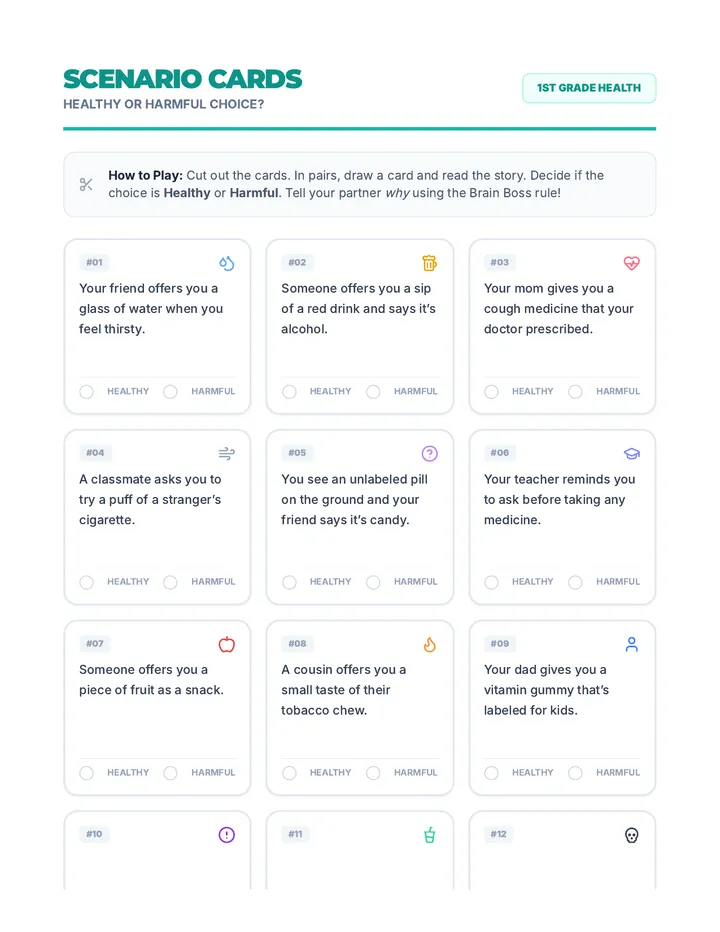
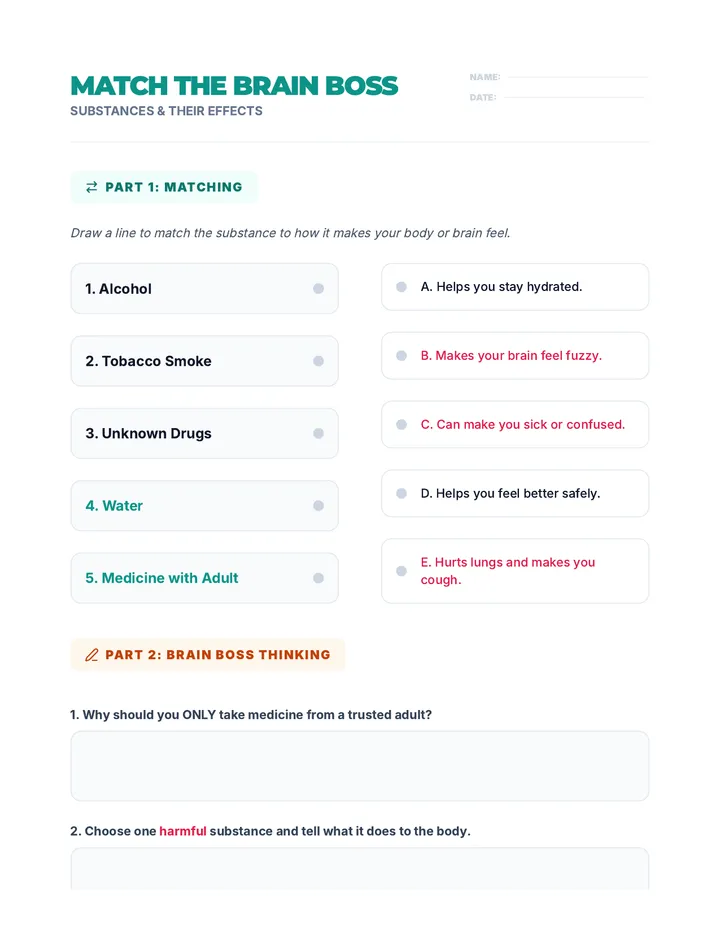
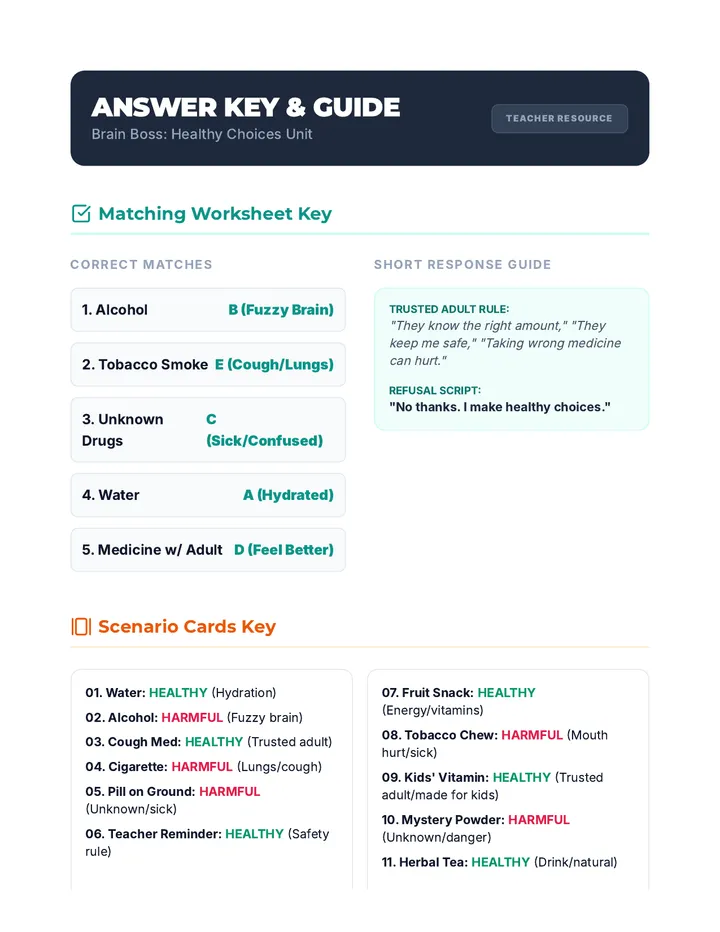
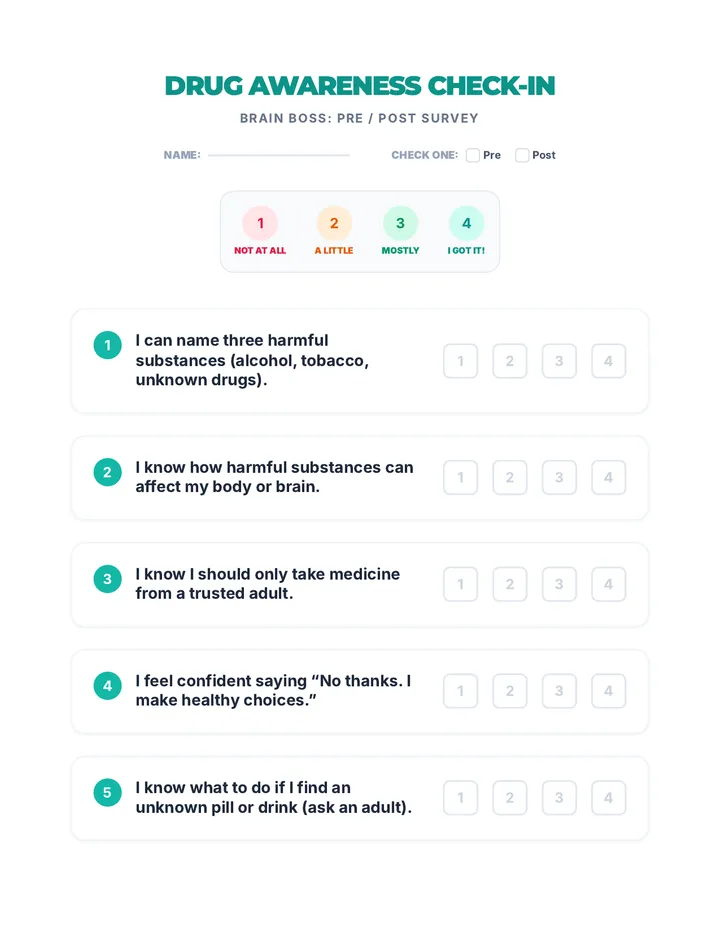
A 45-minute 1st Grade lesson teaching students to distinguish between medicine and harmful substances like alcohol, tobacco, and unknown drugs, while practicing healthy decision-making and refusal skills.
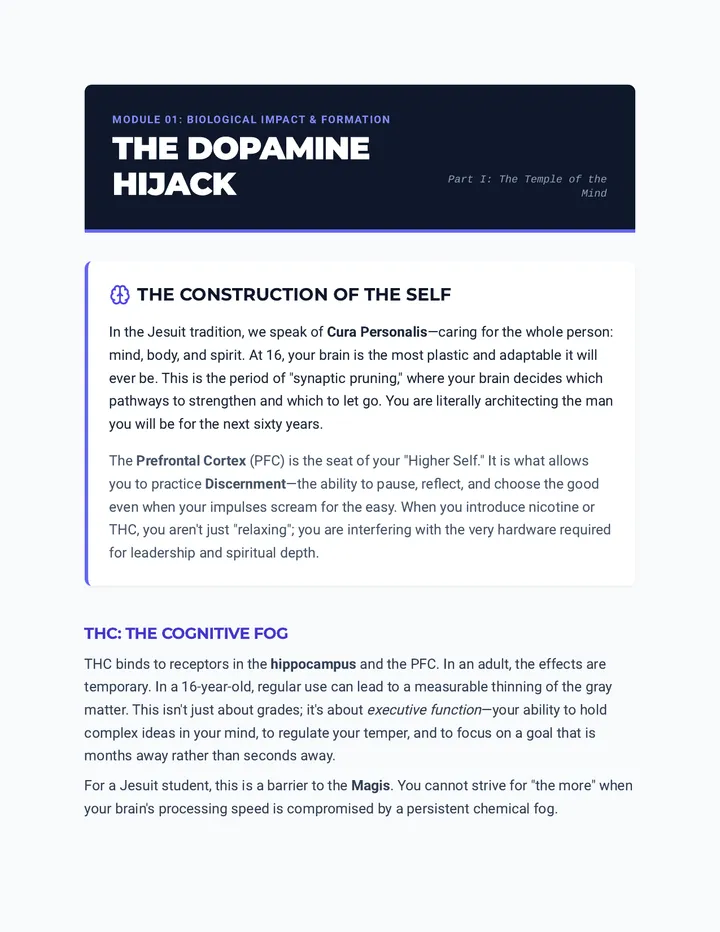
A 45-minute lesson for 11th graders exploring how substances impair the adolescent brain and performance, potential consequences, and refusal strategies. Includes a personalized 3-2-1 coping plan to protect future goals.
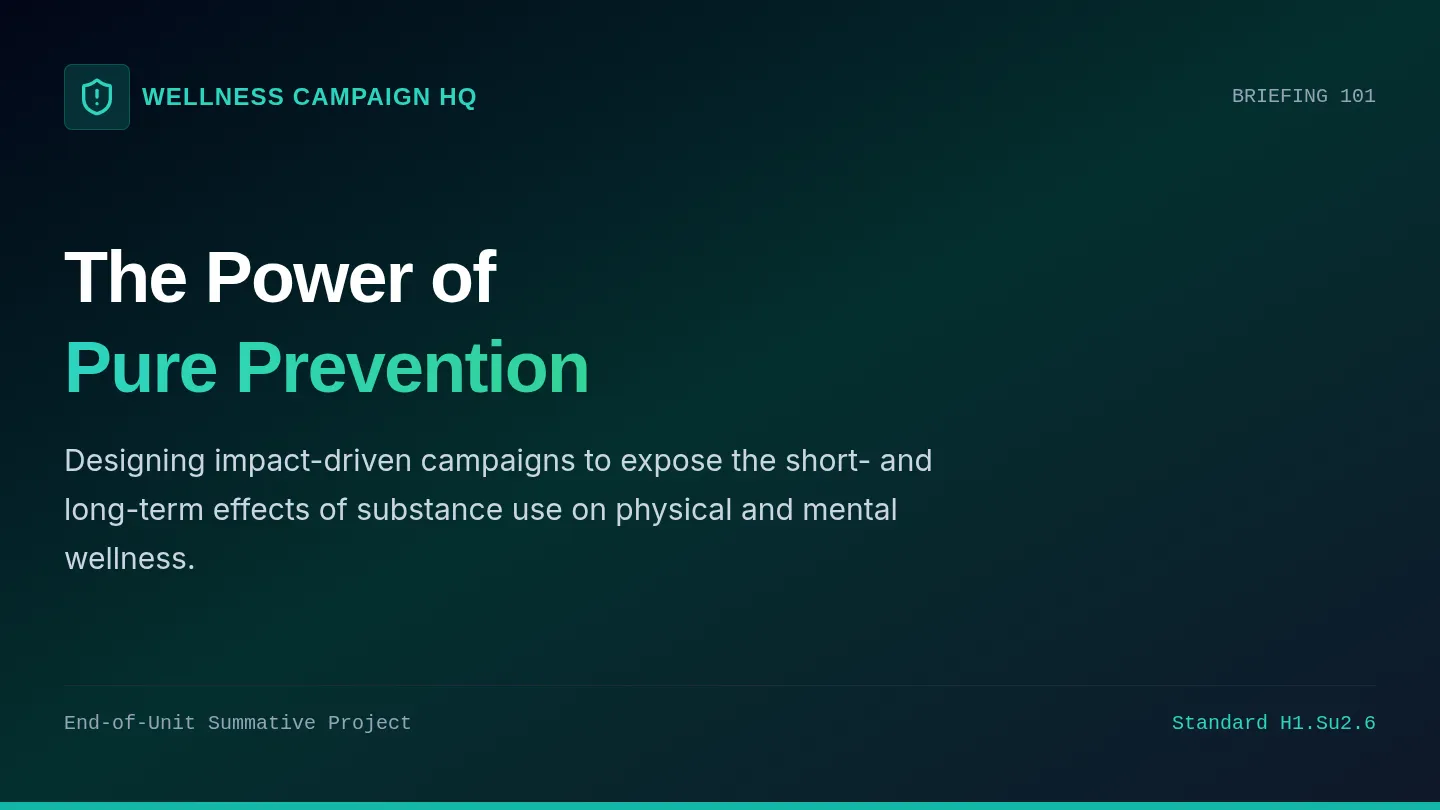
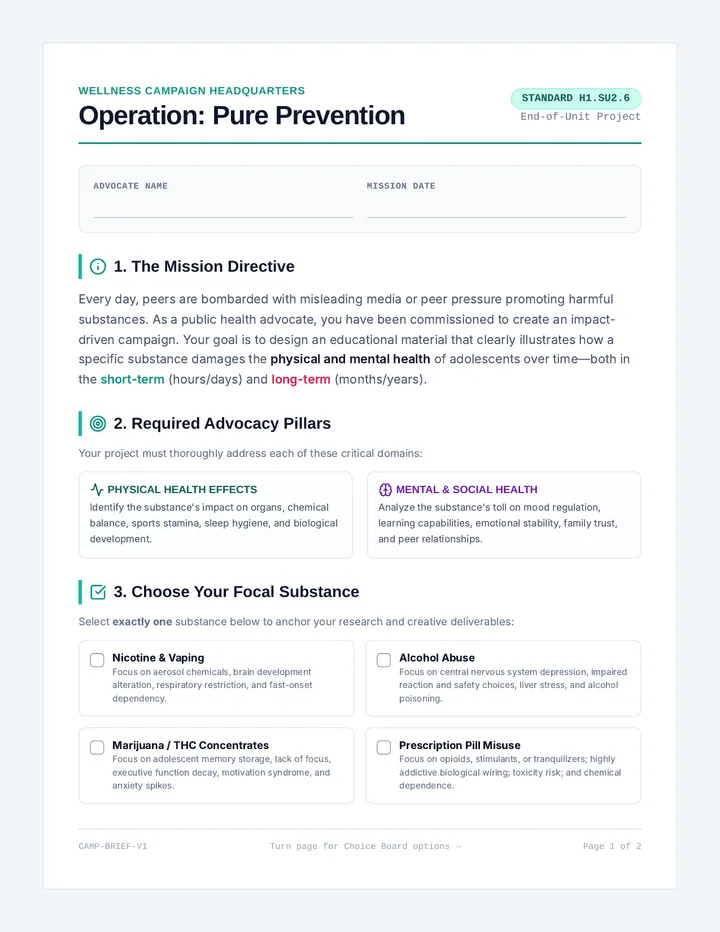
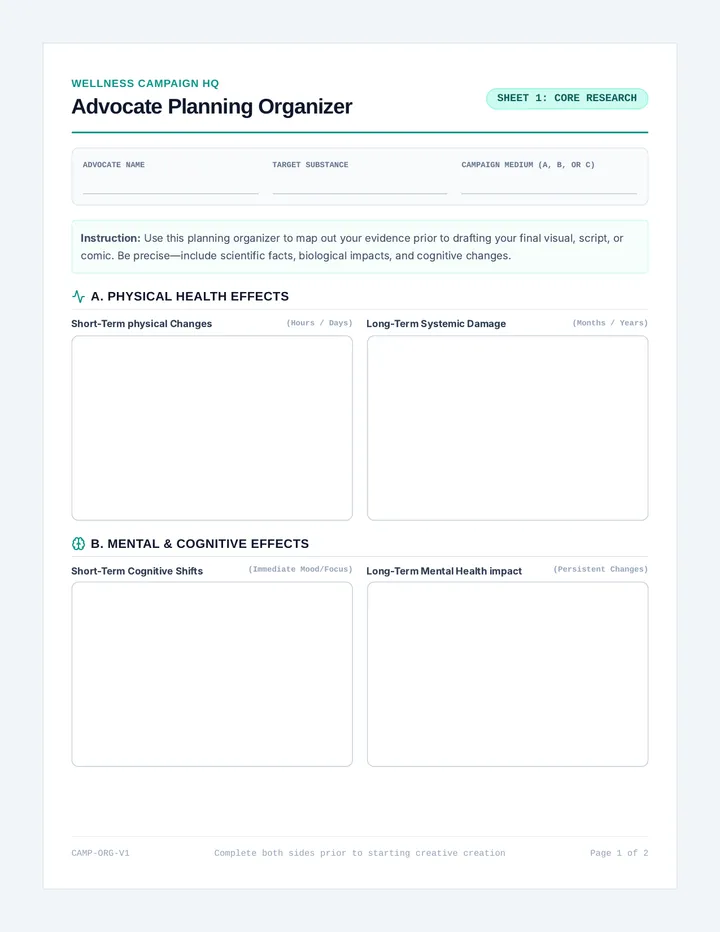
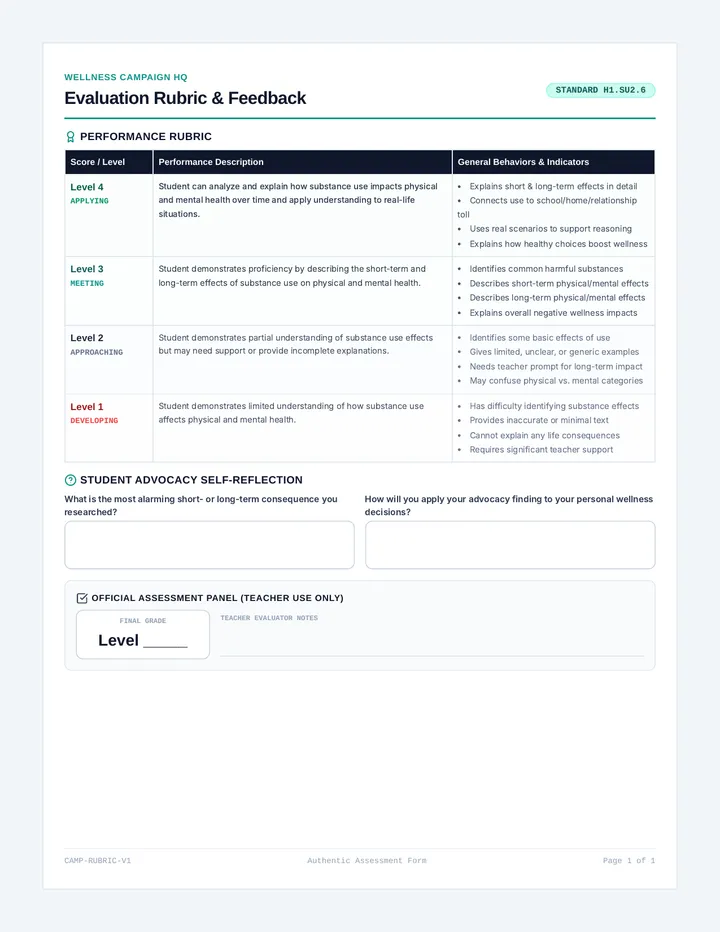
An end-of-unit project bundle where students act as public health advocates to design a PSA or select from a creative choice board, analyzing the short- and long-term physical and mental health effects of substance use.
A high-impact, 1-minute micro-lesson for 5th graders focused on identifying harmful substances, mastering a 3-part refusal plan, and committing to healthy alternatives.
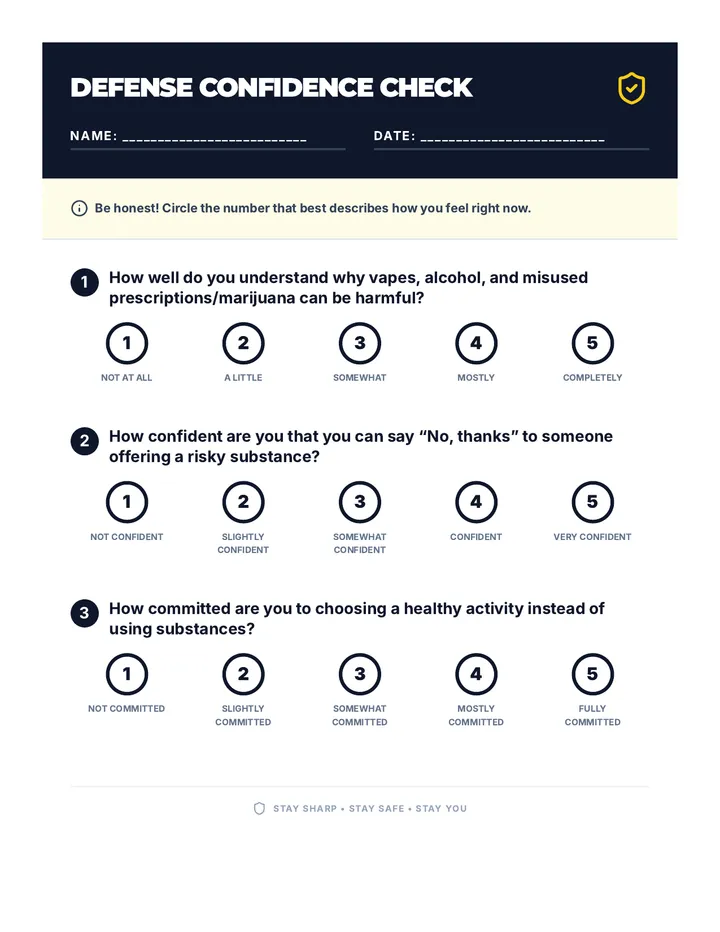
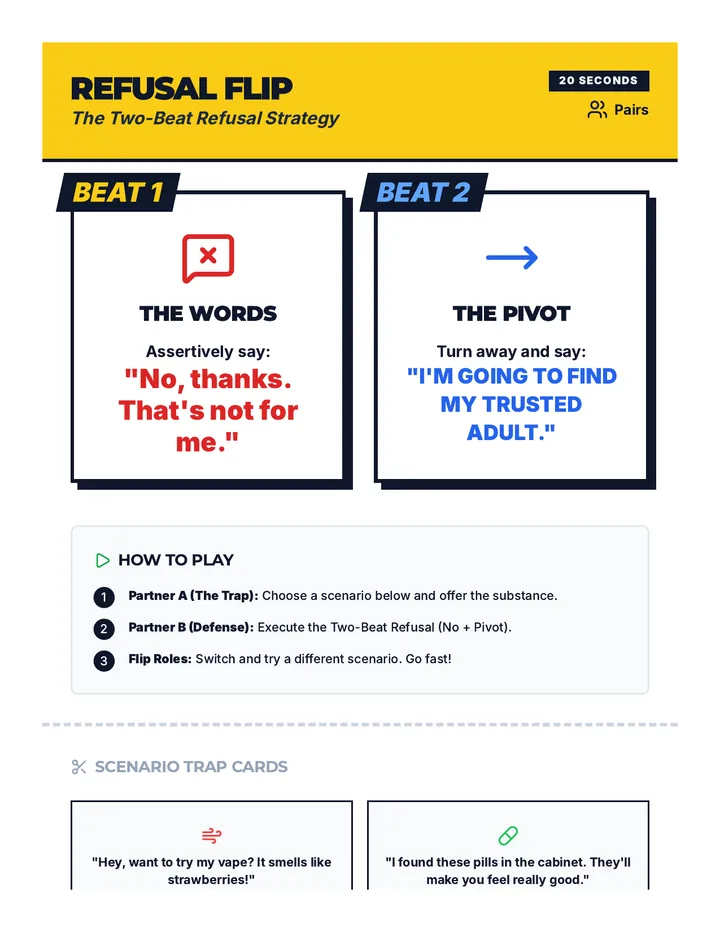
In this high-energy lesson, 4th graders identify risky substances, practice two-beat refusal strategies, and commit to healthy replacements to build long-term confidence.
A rapid-fire micro-lesson for 3rd graders on identifying harmful substances, their effects, and practicing refusal skills through choral drills and healthy choices.
A 45-minute 6th grade lesson focused on the harms of substances, building refusal skills through I-statements, and committing to healthy alternatives. Students use role-play, surveys, and sorting activities to uncover 'hidden hazards' to their developing brains.