Risk factors, recruitment tactics, and grooming signs associated with exploitation. Equips students with safety strategies, boundaries, and reporting protocols to navigate digital and physical threats.
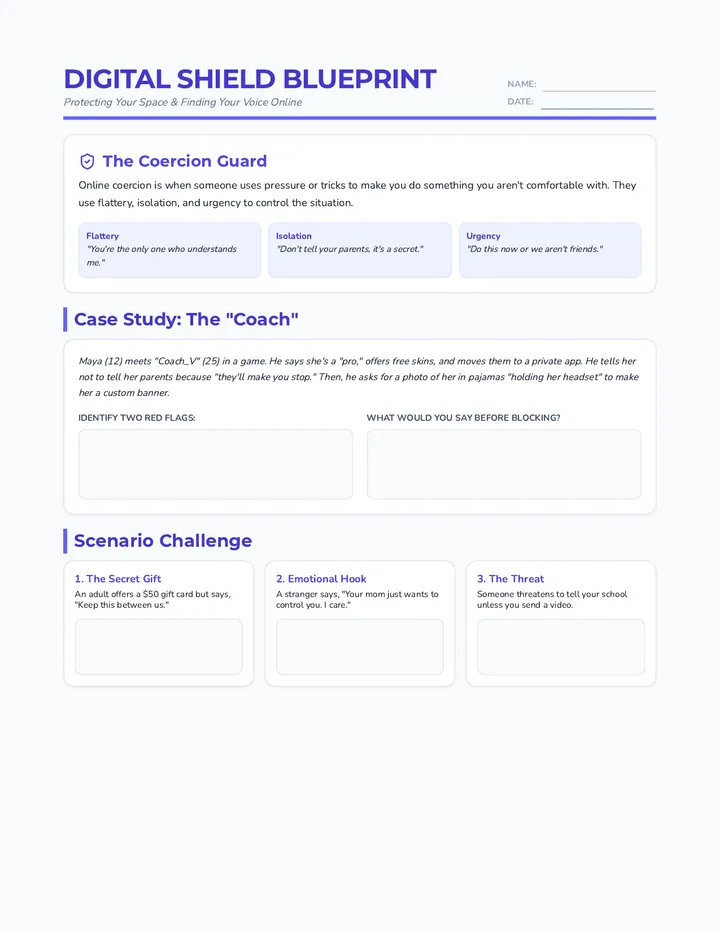
A comprehensive internet safety worksheet for 6th-grade students focusing on online coercion and personal boundaries. It includes a detailed case study, short scenarios, quick-check examples, and a personal safety plan template to empower students to recognize and respond to predatory adult behavior online. Revised for better page breaks and clarity.
A comprehensive advocacy campaign focused on empowering school leaders to identify, prevent, and respond to grooming behaviors in educational settings. This sequence provides high-impact visual calls to action, leadership training materials, and practical monitoring tools.
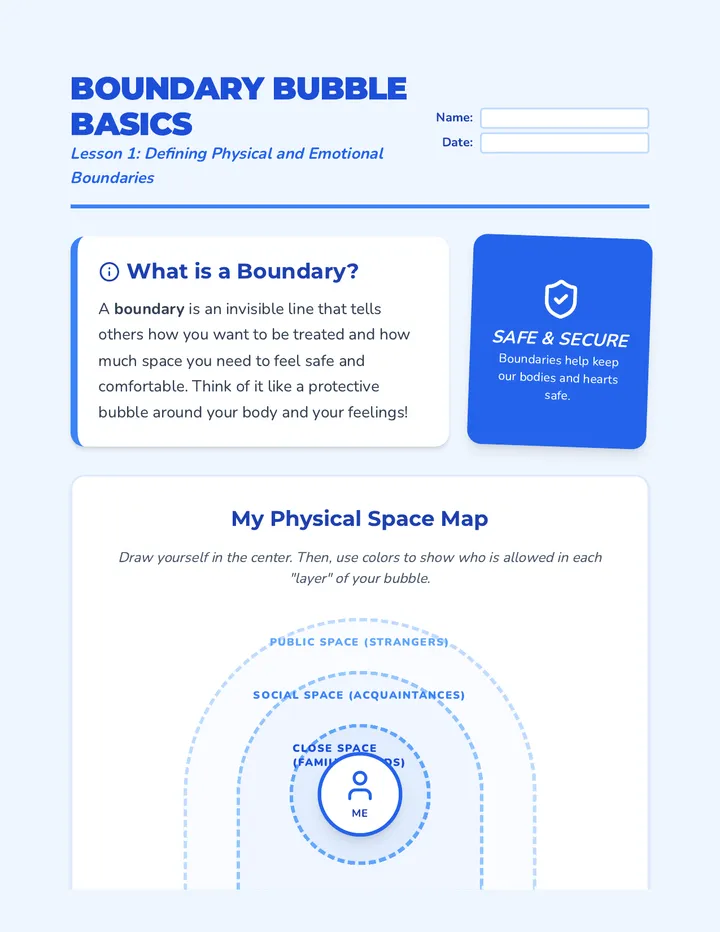
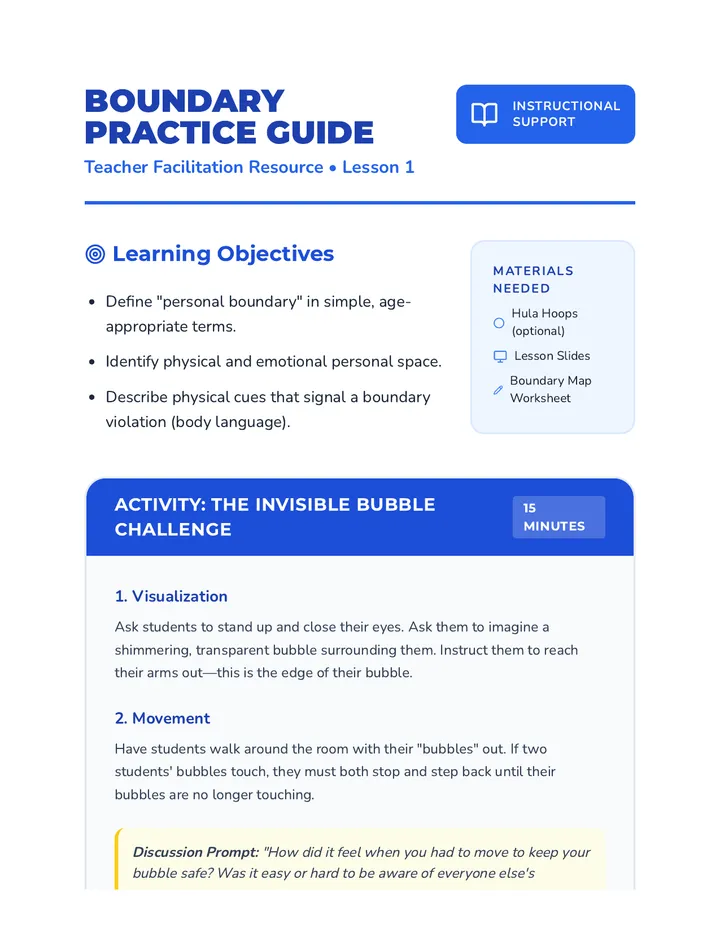
A 5-lesson sequence designed for 4th-grade students to understand personal boundaries, differentiate between healthy and unhealthy relationship traits, practice assertive communication, and build a trusted adult safety network. Students develop the self-awareness and practical skills needed to navigate social interactions safely and confidently.
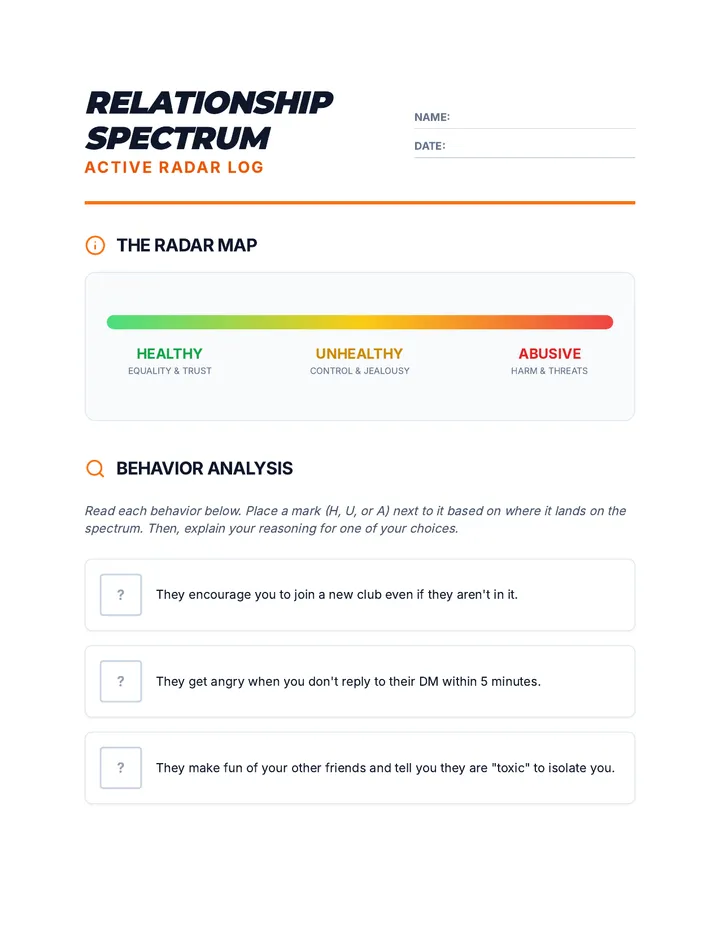
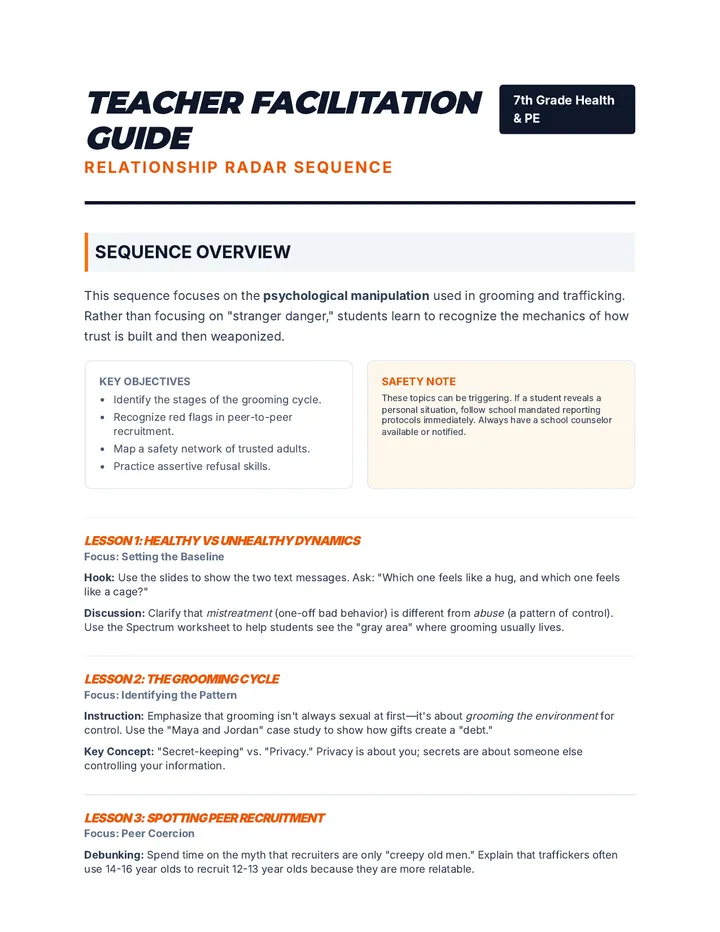
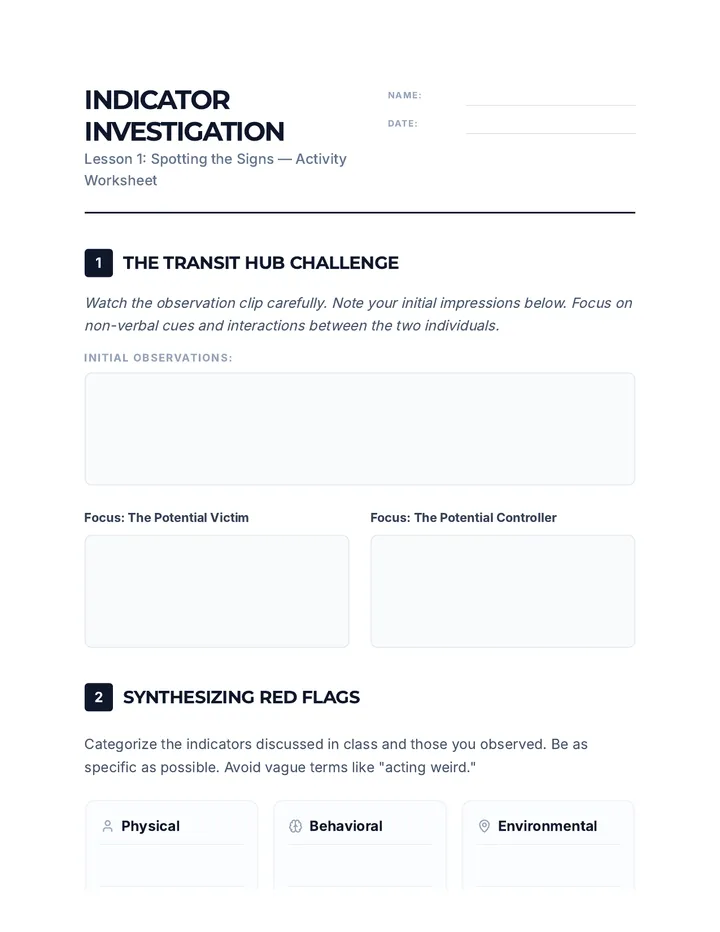
A 5-lesson sequence for 7th graders focusing on the psychological aspects of human trafficking, specifically grooming, peer recruitment, and boundary setting. Students learn to identify manipulative relationship dynamics and practice refusal skills to protect themselves and their peers.
A 5-lesson sequence for 5th-grade students focused on identifying manipulative behaviors and recruitment tactics. Students learn to look past appearances, recognize the grooming cycle, understand the difference between gifts and bribes, and practice setting boundaries and exiting unsafe situations.
This sequence equips 12th-grade students with actionable strategies for personal safety and bystander intervention regarding human trafficking. It covers recognizing indicators in peers, travel safety for independent living, the ethics of reporting, and mapping community resources.
This sequence equips 11th-grade students with practical skills to identify trafficking indicators, apply safety-first reporting protocols, and engage in ethical community advocacy. Students move from observation to action, learning the critical distinctions between 'saving' and 'supporting' while exploring the professional networks required for effective intervention.
A comprehensive 11th-grade health sequence focused on the intersection of personal safety and digital literacy. Students investigate how traffickers use digital footprints, social media scams, gaming platforms, and sextortion to exploit victims, culminating in the creation of personal digital defense plans.
A 5th-grade sequence focused on personal safety, focusing on proactive planning, recognizing grooming behaviors in peers, and developing clear reporting skills. Students create personal safety plans and community awareness materials to reinforce their understanding of human and child trafficking prevention.
This sequence equips 5th-grade students with foundational safety skills, including defining personal boundaries, recognizing physiological 'Uh-Oh' feelings, distinguishing between secrets and surprises, and developing assertive refusal techniques. By identifying a network of trusted adults, students build the confidence to advocate for their own physical and emotional well-being.
This 9th-grade Health sequence investigates the systemic and individual factors that increase susceptibility to trafficking. Students explore vulnerability, high-risk populations, labor trafficking, substance abuse as control, and resilience building.
A 9th-grade Health & Physical Education sequence focused on identifying and mitigating online risks related to human trafficking, specifically targeting digital footprints, catfishing, sextortion, and scam advertisements.
A comprehensive sequence for 6th-grade students focusing on debunking myths about human trafficking and identifying the psychological manipulation and vulnerabilities traffickers exploit. Students move from 'stranger danger' narratives to understanding emotional coercion and building personal resilience.
An elevated, modern presentation for school district substitutes covering essential health protocols, emergency procedures, and safety compliance.
A comprehensive 40-minute lesson designed for 12th graders to debunk human trafficking myths, identify vulnerability risk factors, and learn practical prevention strategies through scenarios.
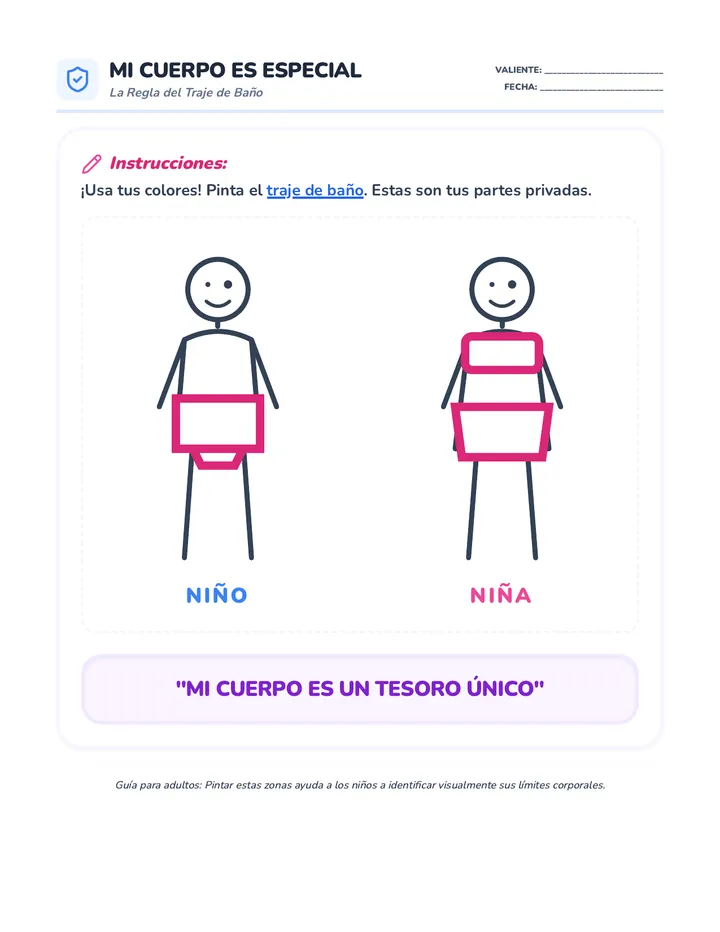
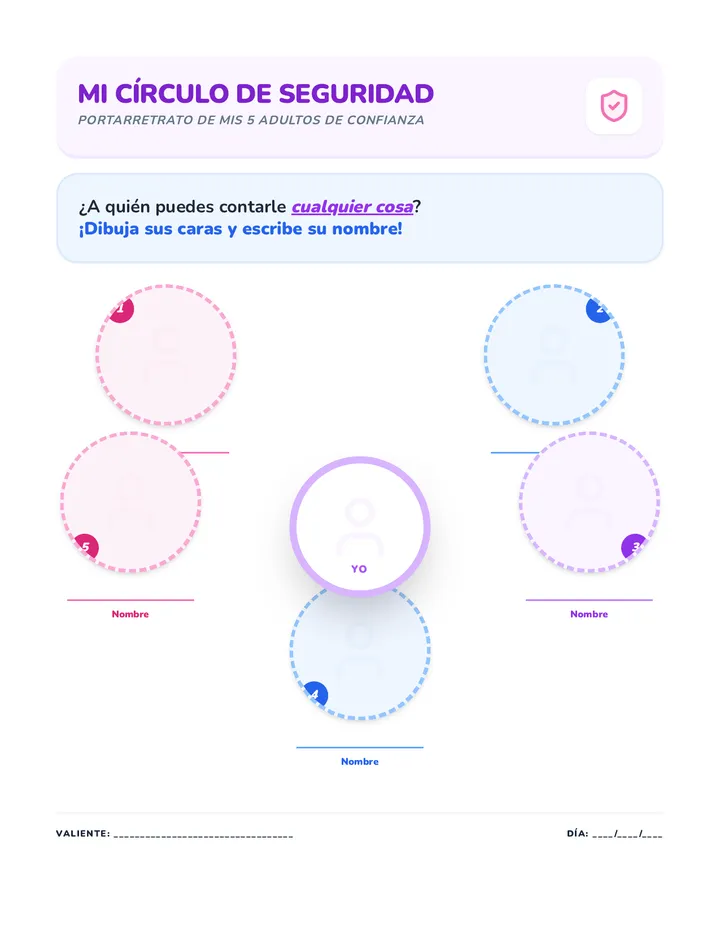
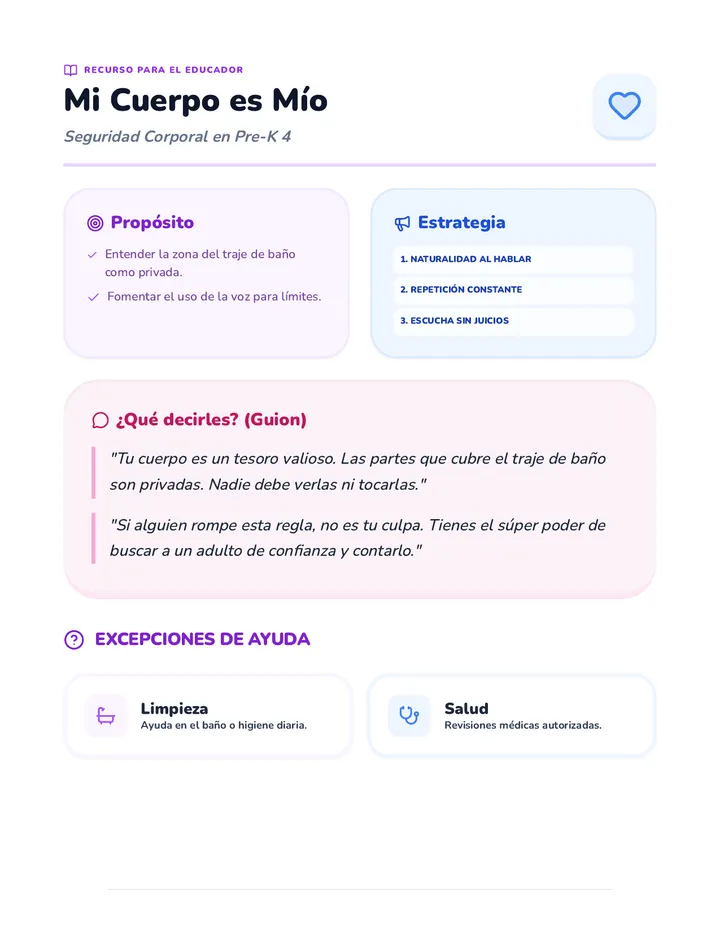
Una lección esencial sobre seguridad corporal y límites personales para niños de Pre-K, centrada en la regla del traje de baño.
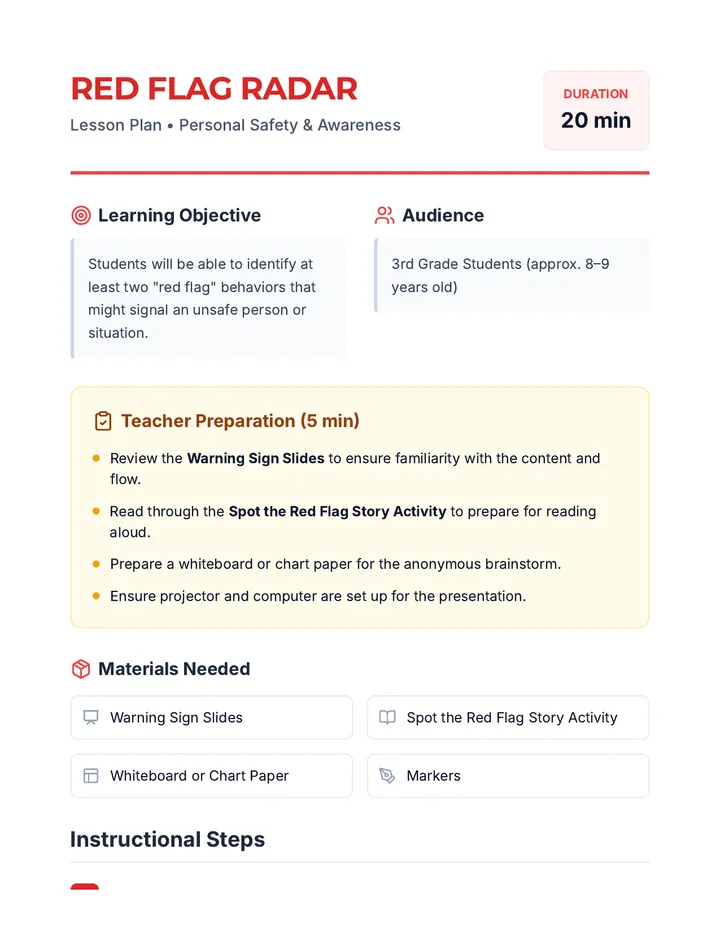
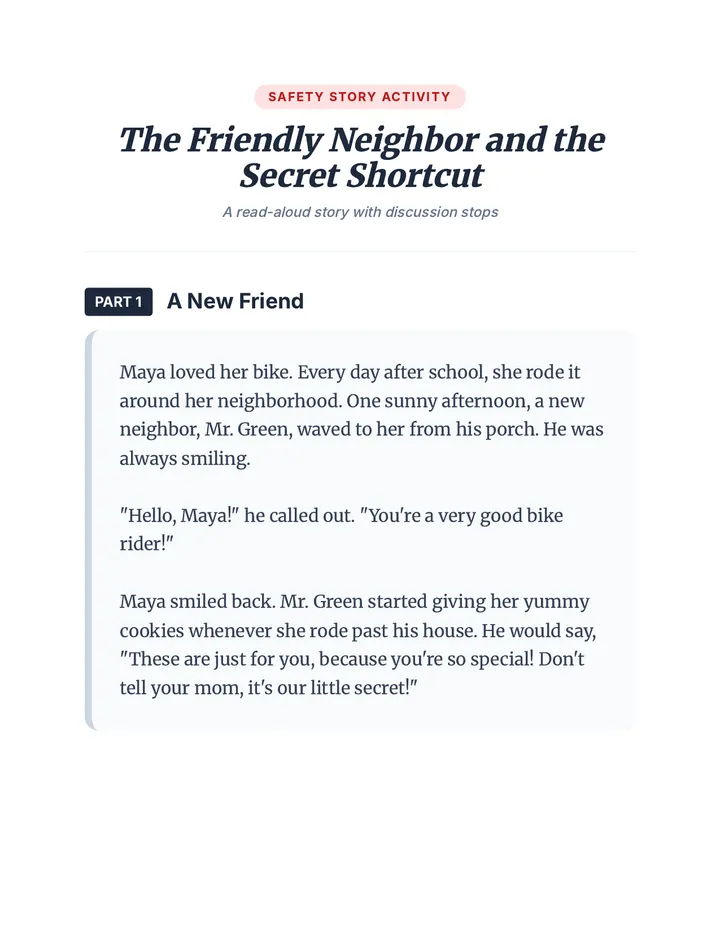
A 20-minute safety lesson for 3rd-grade students focused on identifying 'red flag' behaviors and empowering them to recognize and react to potentially unsafe situations with 'tricky people.'
This 30-minute lesson empowers 6th-grade students to recognize and report abusive situations by identifying different types of abuse, selecting trusted adults, and learning safe reporting strategies.
In this 30–45 minute lesson, 9th and 10th graders will explore the reality of human trafficking, understand how to recognize warning signs, and learn prevention strategies. This essential lesson empowers students to protect themselves and others by raising awareness of a critical social issue.
A 30-minute lesson for 9th-grade students focusing on recognizing the signs of child abuse, understanding its effects, and empowering students with prevention and reporting strategies.
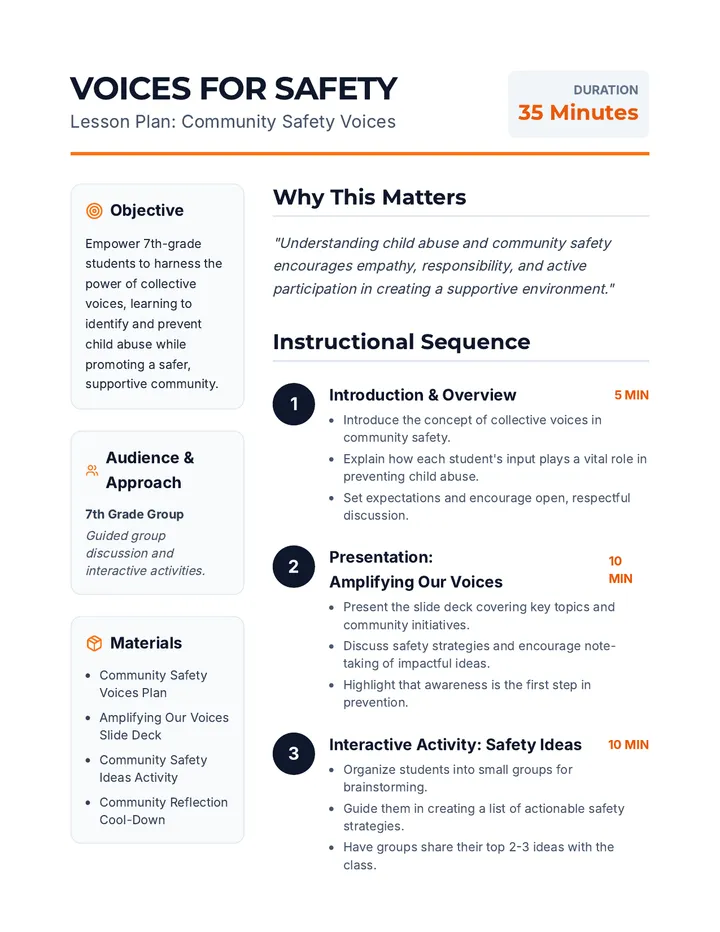
This lesson empowers 7th-grade students to use their collective voices to create a safer community and prevent child abuse. Through guided discussion and interactive brainstorming, students develop practical safety strategies and personal commitments to support their peers.
A 45-minute lesson for 7th-grade students on identifying online trafficking risks, managing digital footprints, and implementing safety protocols like privacy settings and reporting.
This lesson introduces 8th-grade students to the concept of human trafficking, its various forms, and its impact on individuals and communities. Students learn to recognize signs and understand prevention strategies to empower them to protect themselves and their communities.
This 45-minute lesson introduces 8th-grade students to the forms, signs, and impacts of human trafficking, empowering them with knowledge to recognize and prevent it in their communities.