Physiological effects of THC and CBD on the adolescent brain and the endocannabinoid system. Examines legal regulations, potential health risks, and evidence-based harm reduction strategies.
A set of 12 flashcards designed for 7th and 8th graders to practice refusal skills regarding drugs, alcohol, and peer pressure. The material includes a refusal strategy reference guide and scenarios styled as vintage index cards for role-playing exercises.
A two-week wellness unit for middle schoolers focused on analyzing influences (media, tech, values) and mastering health-enhancing decision-making models. Students culminate their learning by creating a collaborative research poster on a chosen wellness topic.
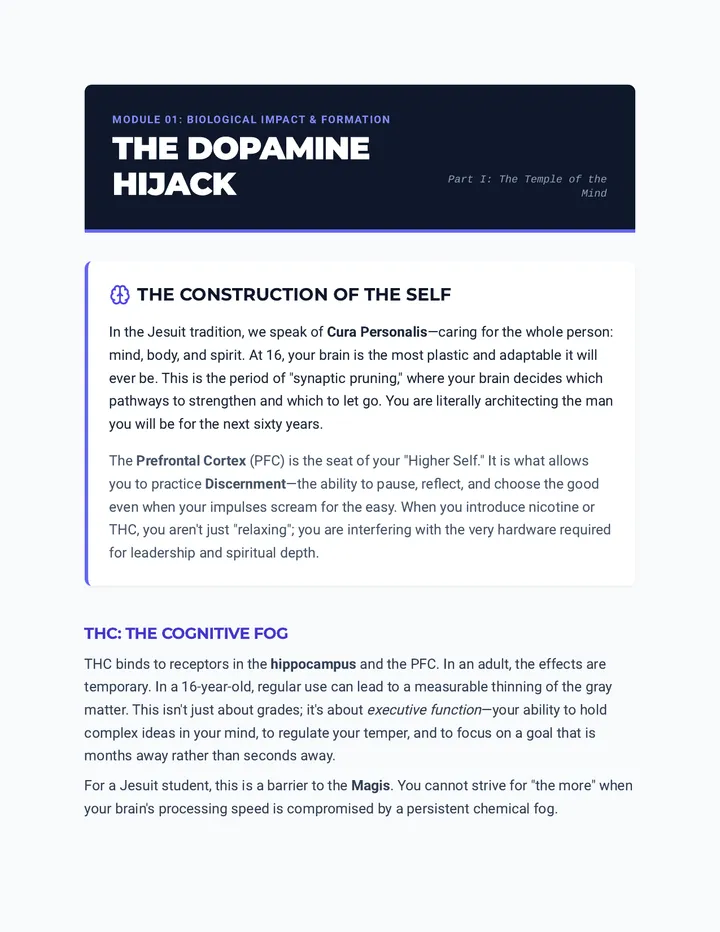
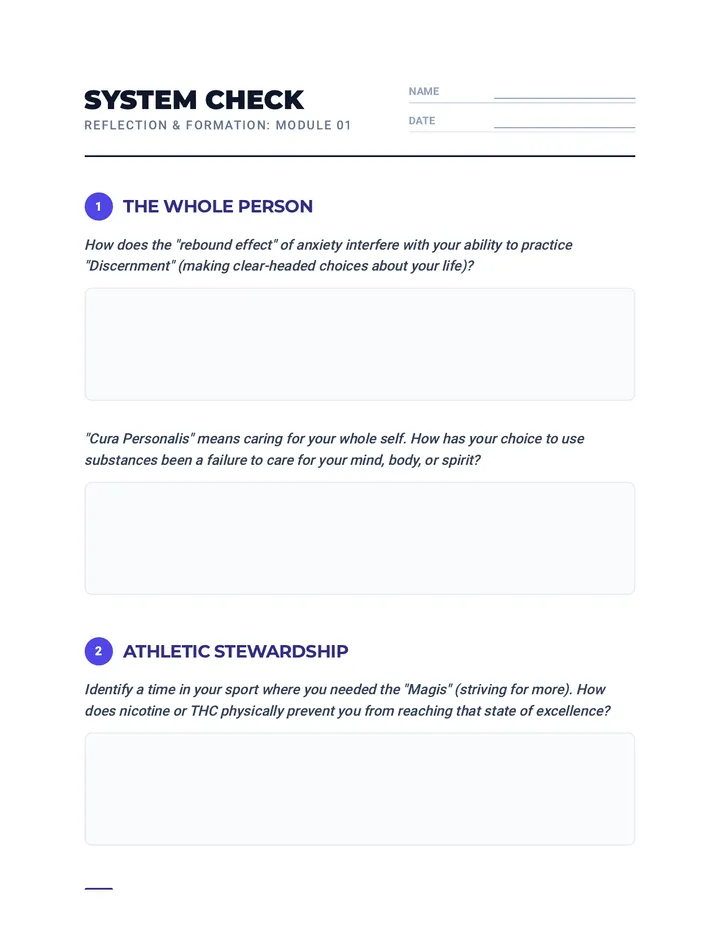
A restorative learning program designed for high school students to reflect on the impact of substance use and prepare for a positive return to their school community. The program balances scientific facts with deep personal reflection.
A multi-lesson unit designed to build mental health literacy, identify internal system alerts (Anxiety, Depression, Anger), and develop a sustainable toolkit of coping strategies. Students explore the 'Wellness Spectrum', 'Neuroplasticity', and the deceptive nature of 'System Bypasses' like substances.
A series of lessons designed to help students navigate high-pressure situations, understand the impact of substances on decision-making, and develop healthy conflict resolution skills.
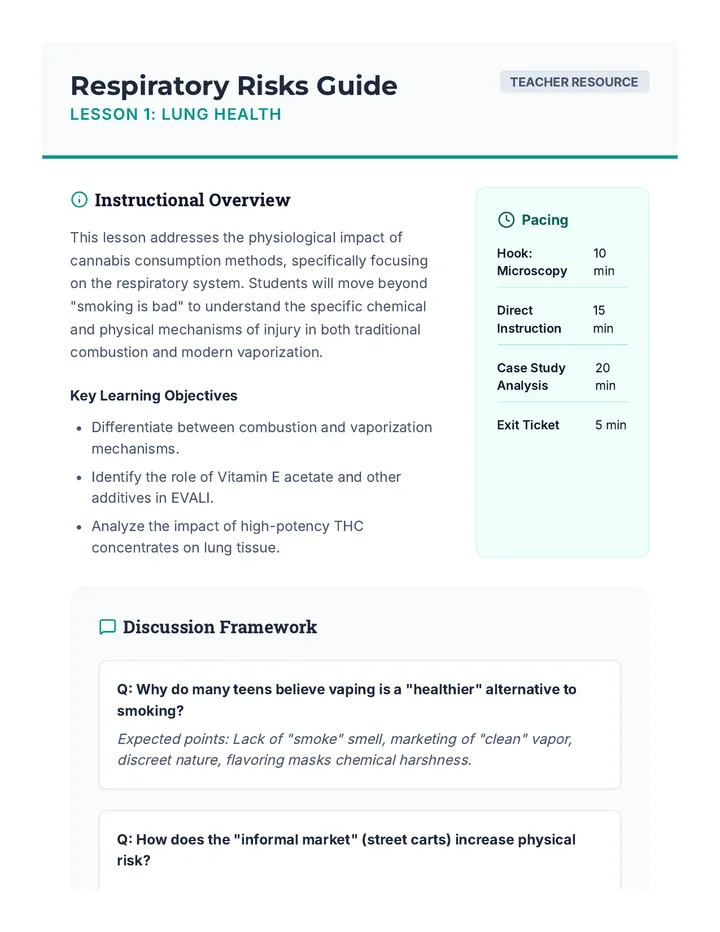
A comprehensive 10th-grade health sequence exploring the physical and mental health risks of cannabis use, focusing on respiratory health, mental health correlations, and dependency criteria (CUD).
A comprehensive 2-week unit on Substance Use & Abuse for 8th grade, focusing on vaping, alcohol, and marijuana. Students analyze influences, evaluate health impacts across dimensions, and investigate legal consequences in relation to personal goals through a creative group project.
A comprehensive 10th-grade health sequence exploring the physical and mental health risks of cannabis use, focusing on respiratory health, mental health correlations, dependency criteria, and medical syndromes like CHS.
A 5th-grade health sequence that reframes substance awareness through the lens of emotional wellness. Students learn to identify stress triggers, understand the brain's natural reward system, and build a personal 'toolkit' of healthy coping mechanisms as alternatives to substances like cannabis.
An inquiry-based exploration of the endocannabinoid system and the specific physiological impacts of cannabis on the developing adolescent brain. Students transition from understanding natural homeostasis to analyzing how external cannabinoids like THC disrupt memory, motivation, and executive function.
A middle school health and wellness unit focusing on substance safety, legal awareness, and decision-making regarding alcohol and marijuana.
A 5-lesson sequence for 7th-grade students exploring the transition from cannabis use to dependency, the neurobiology of addiction, barriers to seeking help, and local community health resources. Students build empathy and advocacy skills to support peers in need.
A comprehensive skill-building unit for 7th graders focused on navigating social pressure regarding cannabis use. Students develop situational awareness, verbal and non-verbal refusal techniques, and practical exit strategies through interactive workshops and role-play simulations.
A 45-minute lesson for 11th graders exploring how substances impair the adolescent brain and performance, potential consequences, and refusal strategies. Includes a personalized 3-2-1 coping plan to protect future goals.
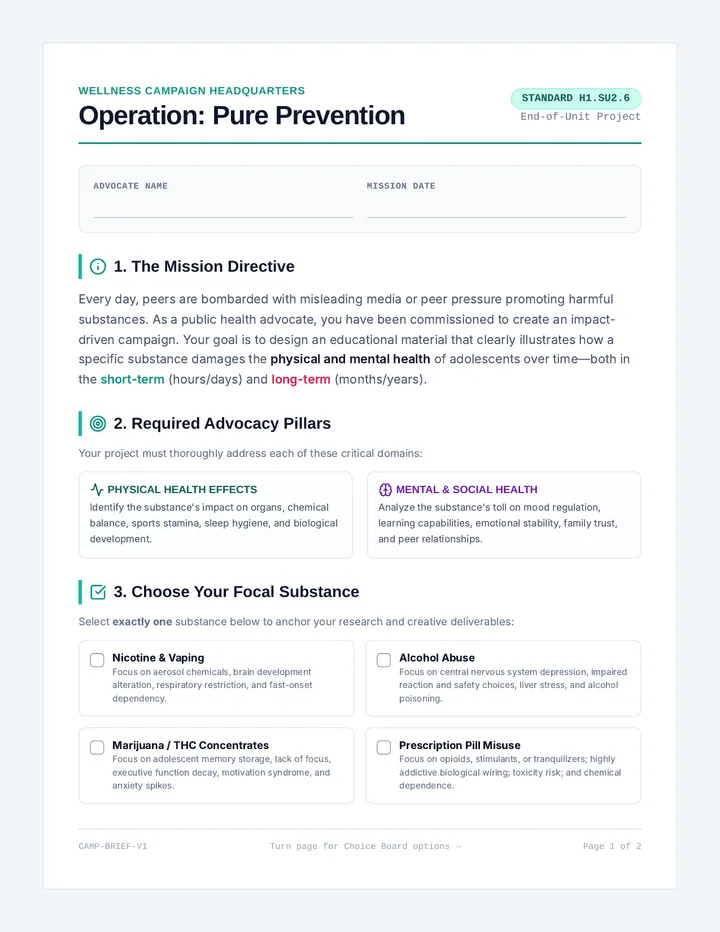
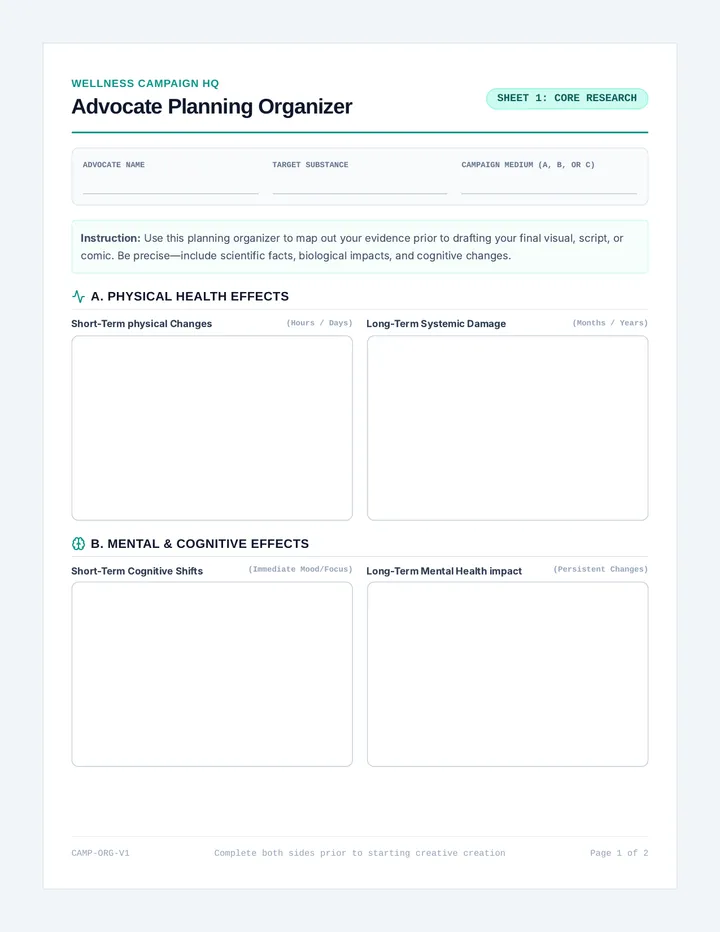
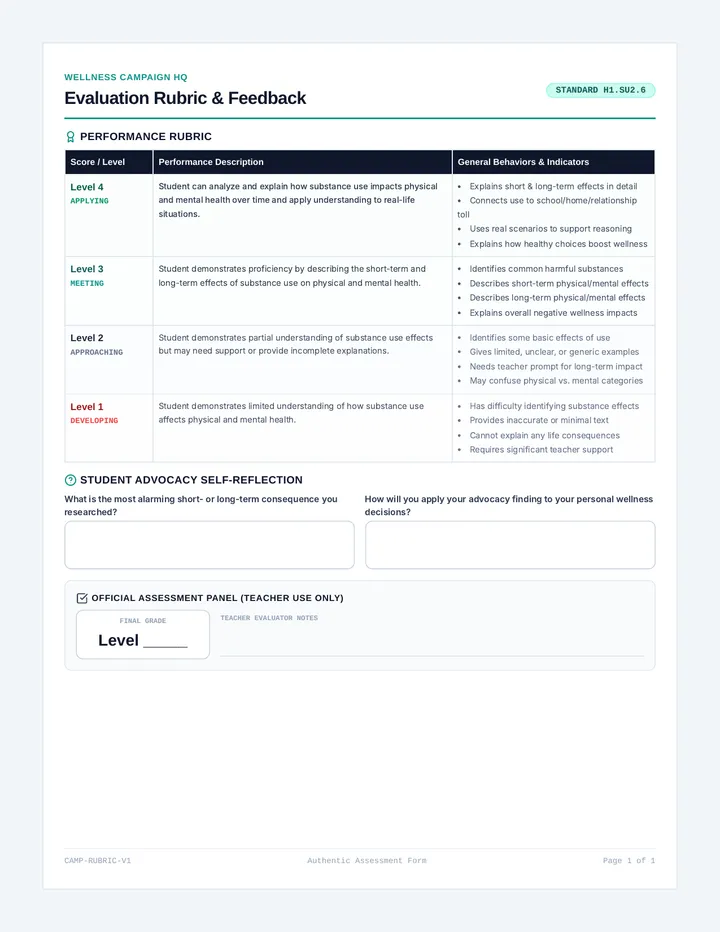
An end-of-unit project bundle where students act as public health advocates to design a PSA or select from a creative choice board, analyzing the short- and long-term physical and mental health effects of substance use.
A high-impact, 1-minute micro-lesson for 5th graders focused on identifying harmful substances, mastering a 3-part refusal plan, and committing to healthy alternatives.
A 45-minute 6th grade lesson focused on the harms of substances, building refusal skills through I-statements, and committing to healthy alternatives. Students use role-play, surveys, and sorting activities to uncover 'hidden hazards' to their developing brains.
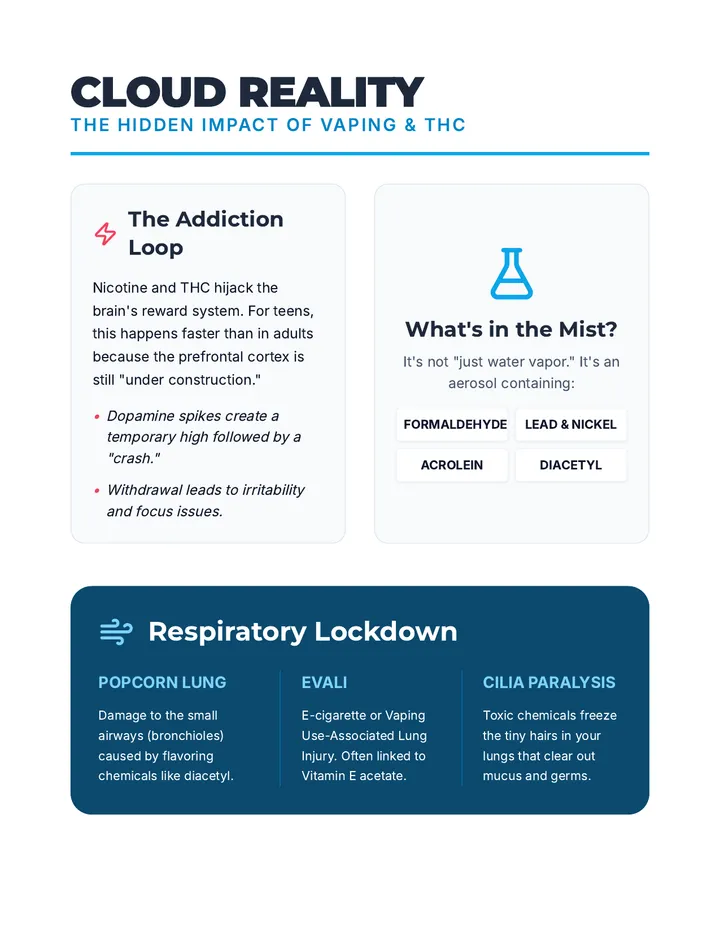
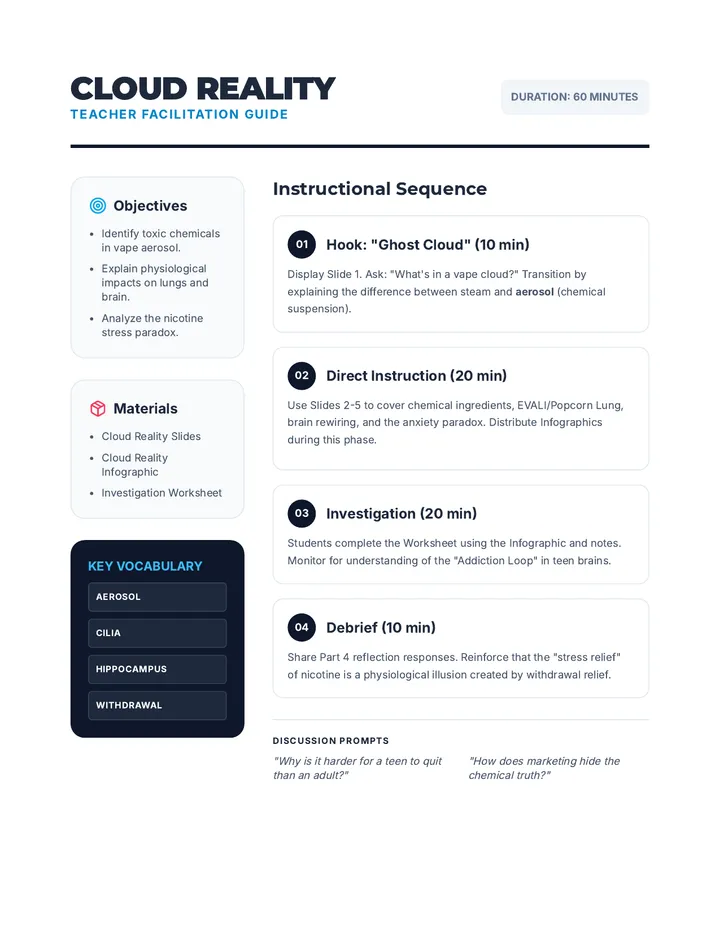
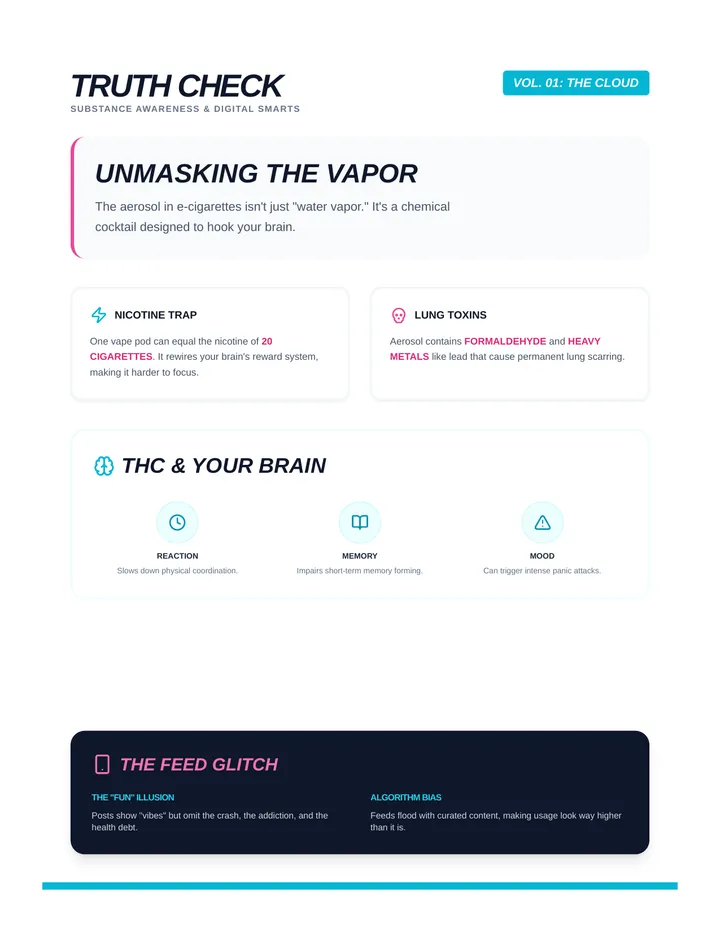
An exploration of the physical and mental health impacts of vaping and THC, focusing on respiratory health, brain development, and the cycle of addiction.
A comprehensive lesson exploring the bi-directional relationship between gut health and mental well-being, specifically tailored for high schoolers in therapeutic settings. The lesson covers the enteric nervous system, the impact of nutrition, hydration, and substances on mood, energy, and cognitive function.
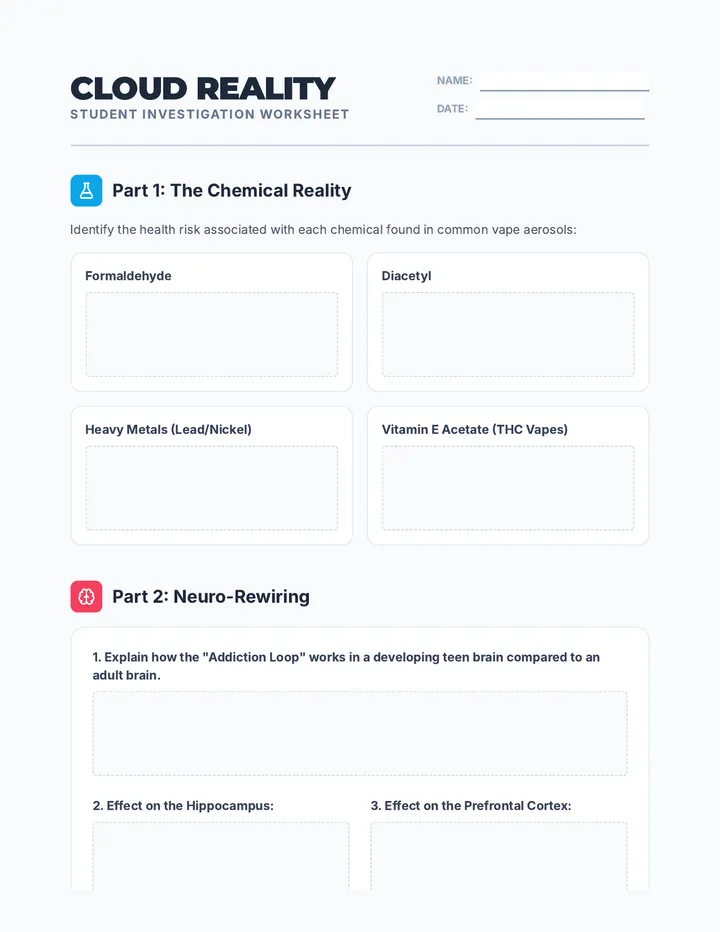
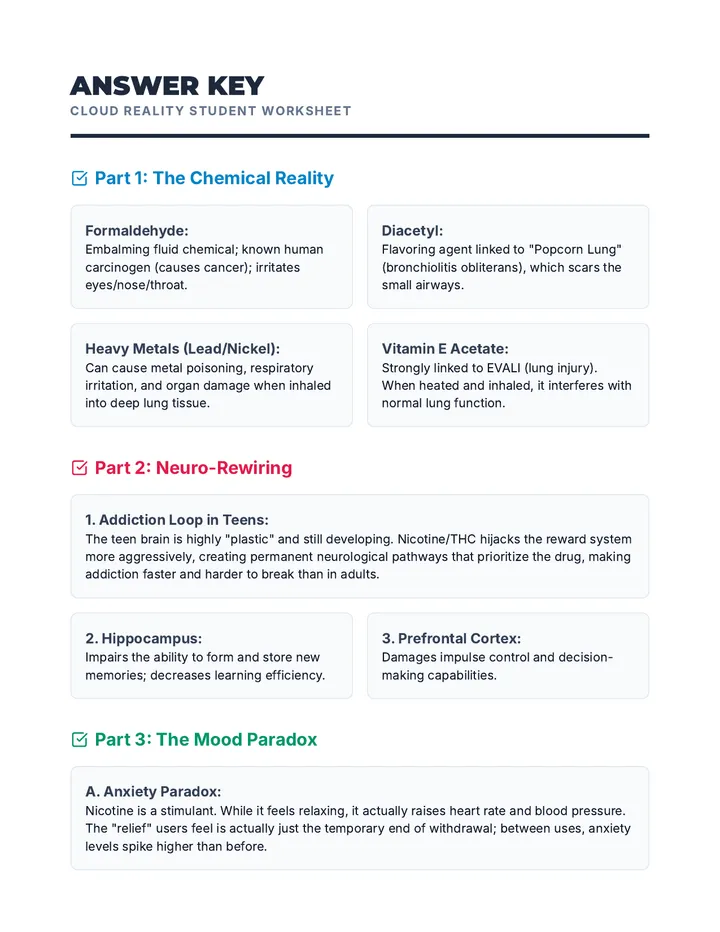
This lesson explores the immediate and long-term health risks associated with vaping THC, focusing on the physiological impact on the respiratory and nervous systems. Students will analyze the chemical components of vape aerosols and evaluate the potential consequences for their health and future.
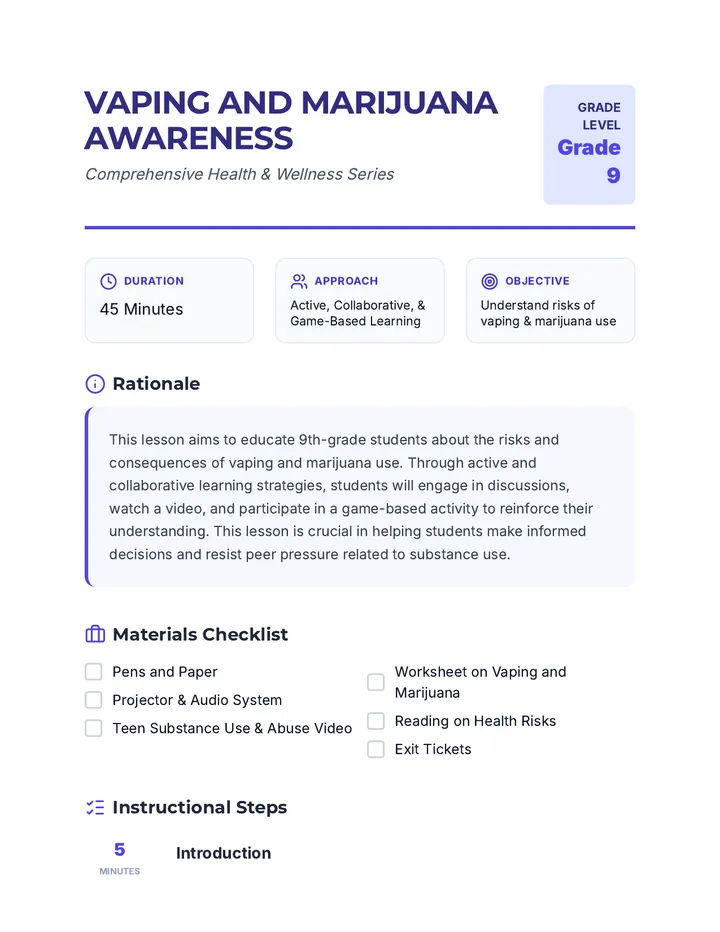
This lesson educates 9th-grade students on the physical, mental, and social risks of vaping and marijuana use through collaborative discussion, media analysis, and evidence-based reading.
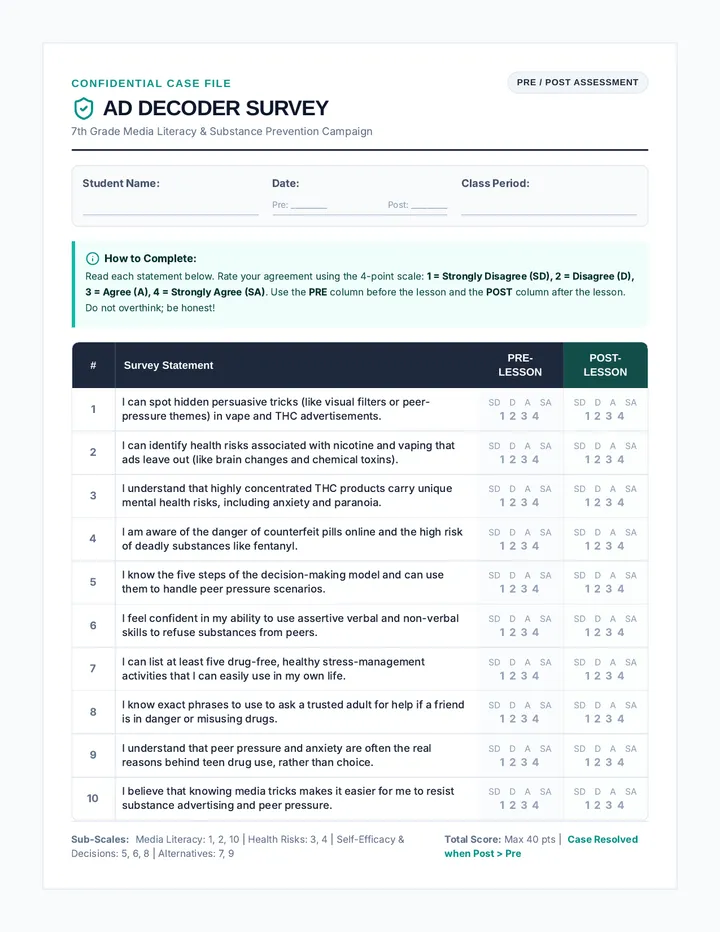
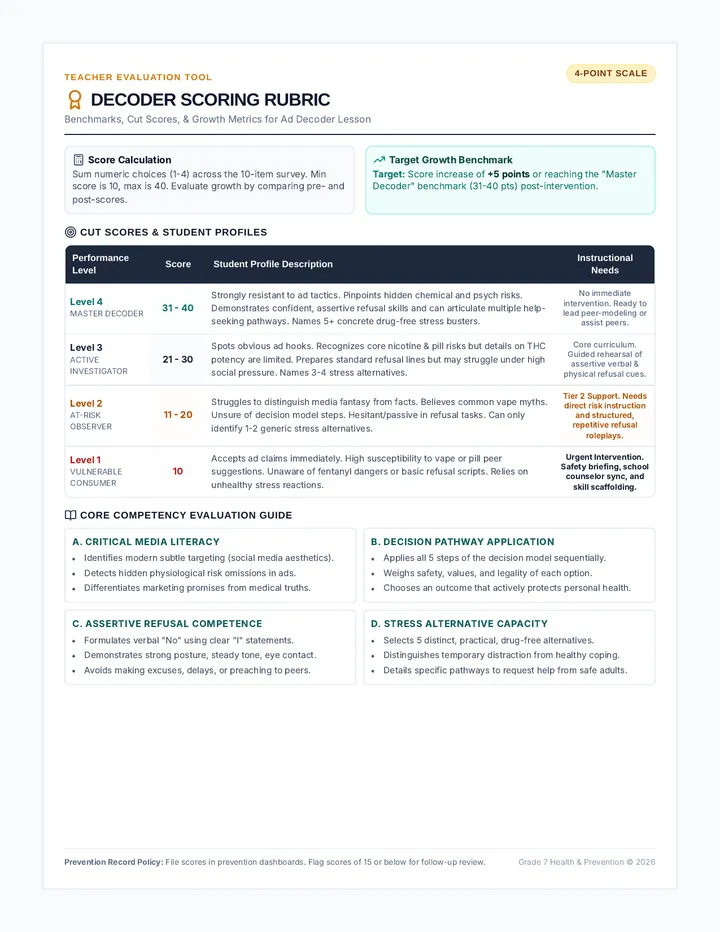
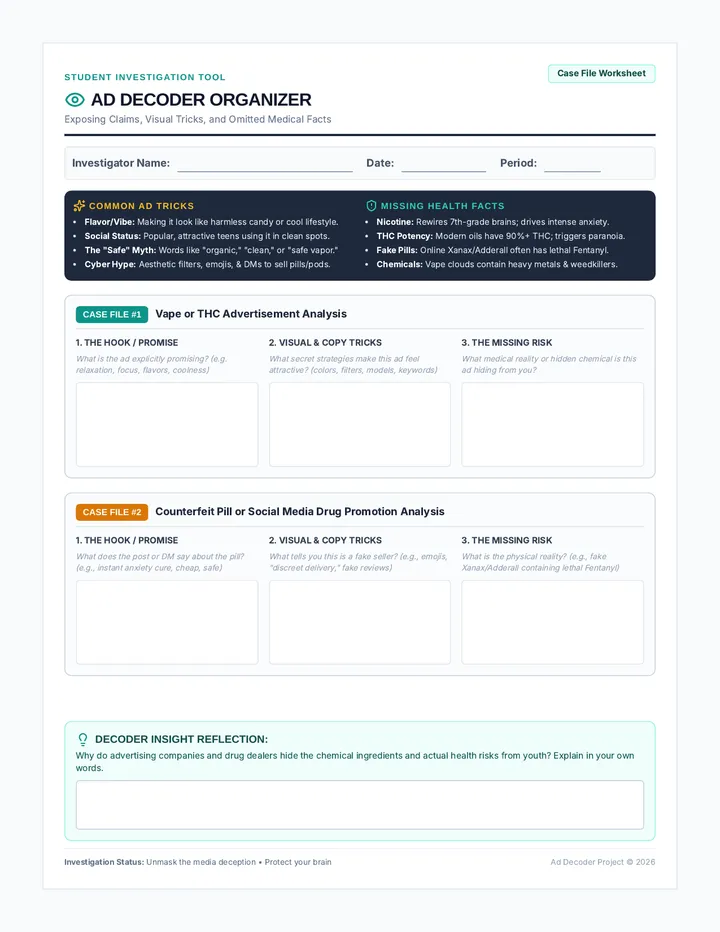
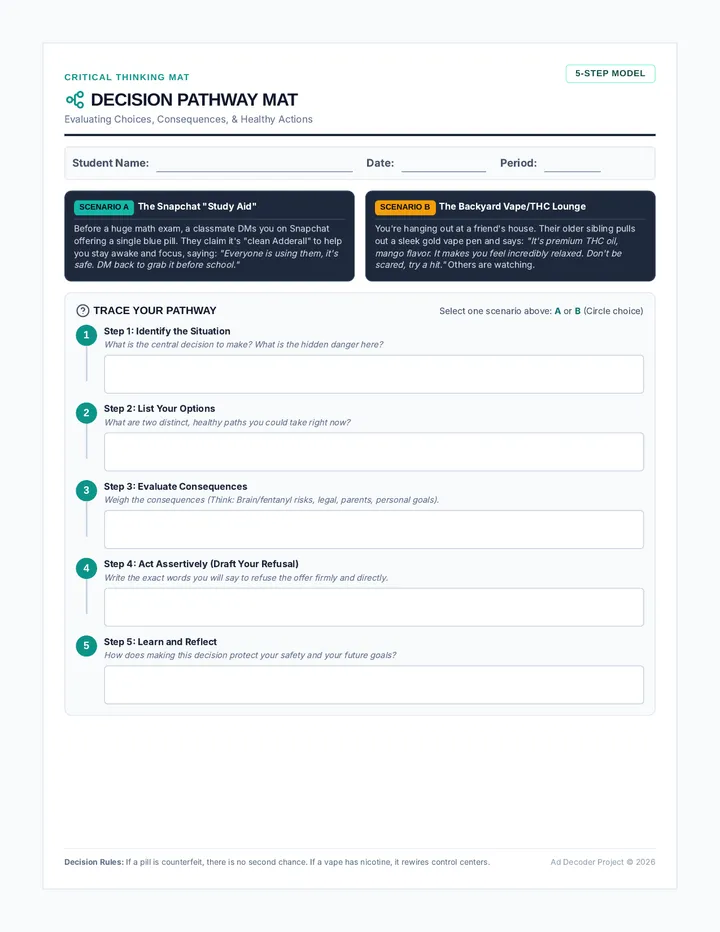
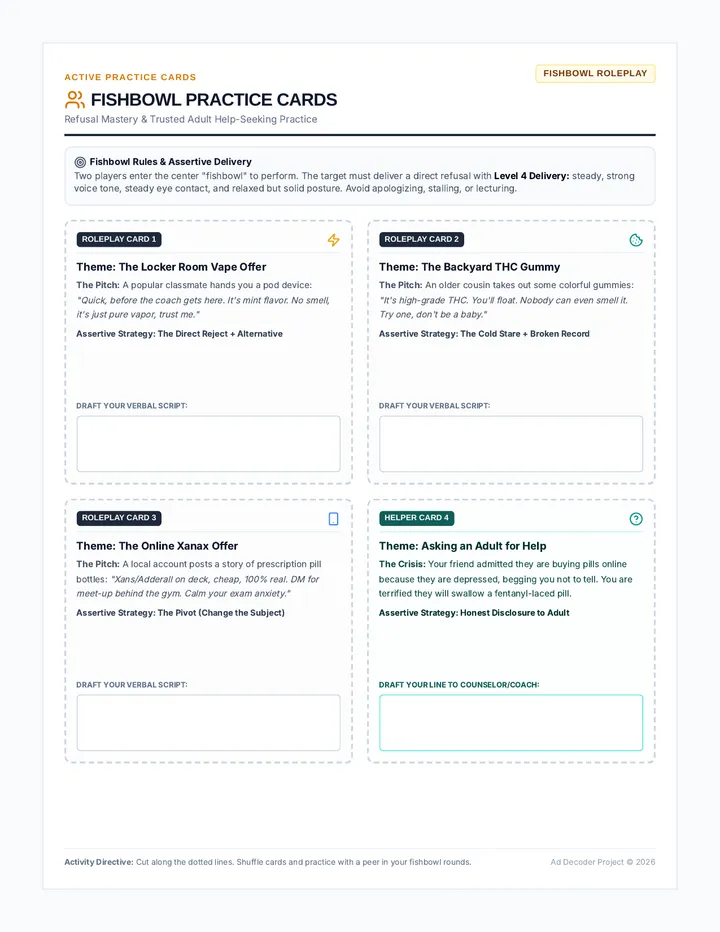
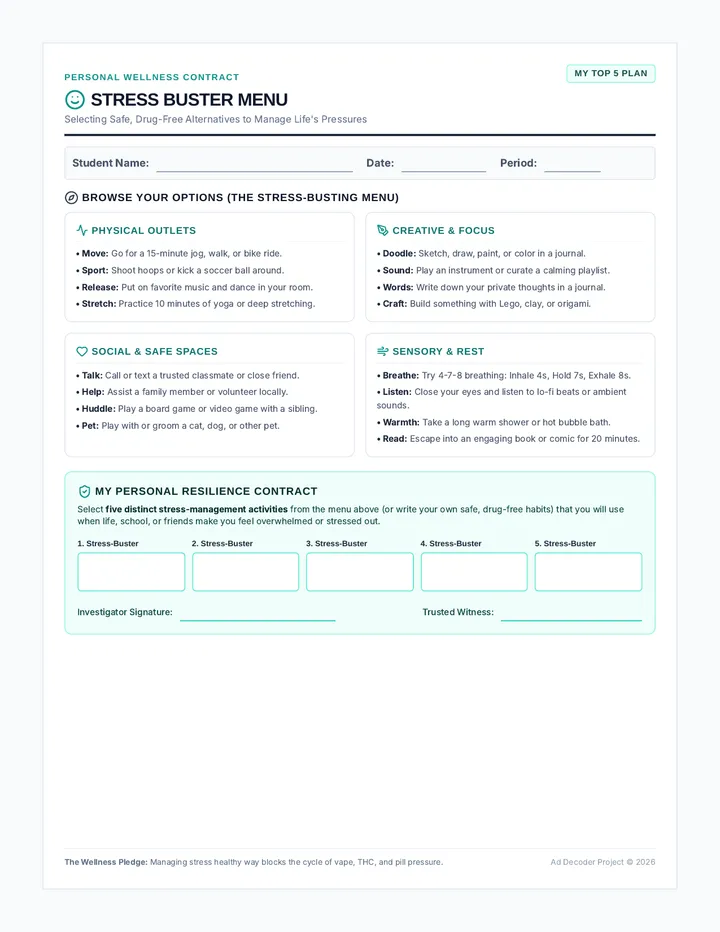
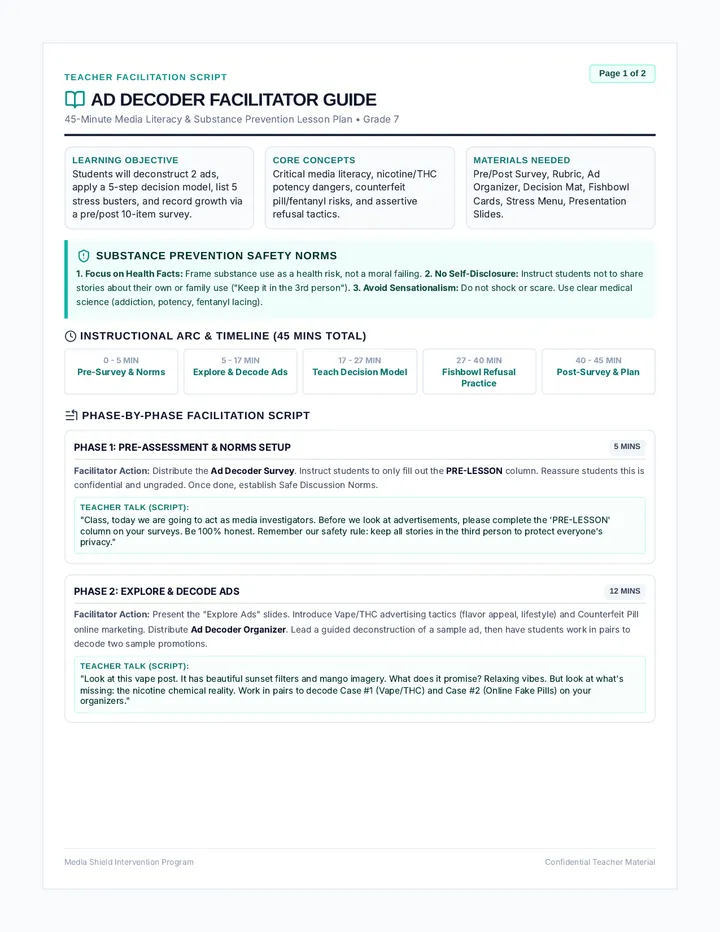
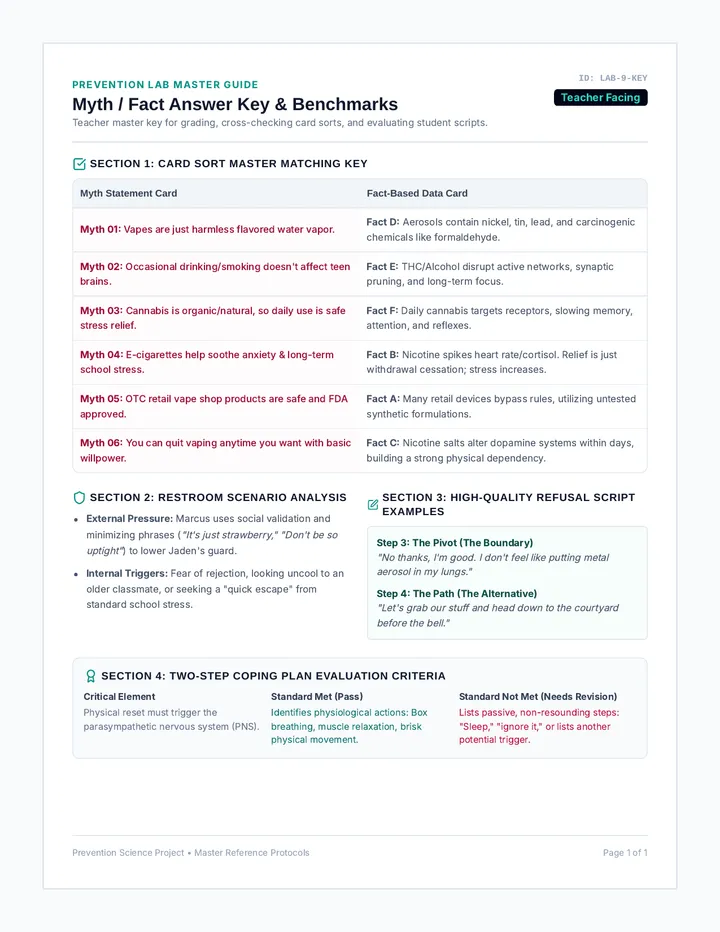
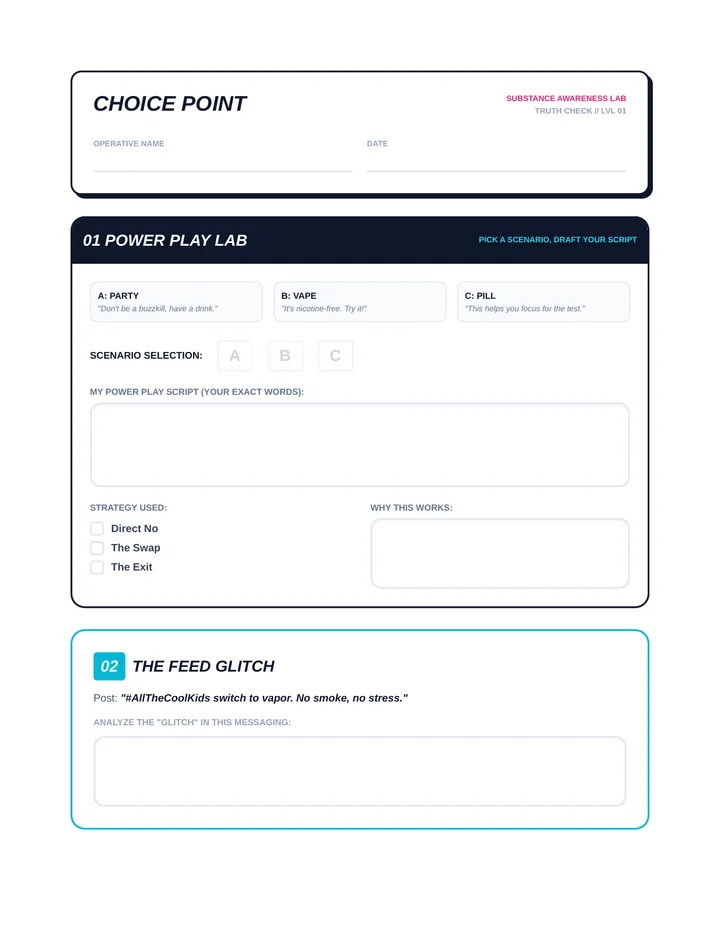
A 45-minute media literacy and substance prevention lesson for 7th grade. Students decode vape, THC, and pill advertisements, apply a 5-step decision-making model, and practice assertive refusal skills and healthy stress-management alternatives.
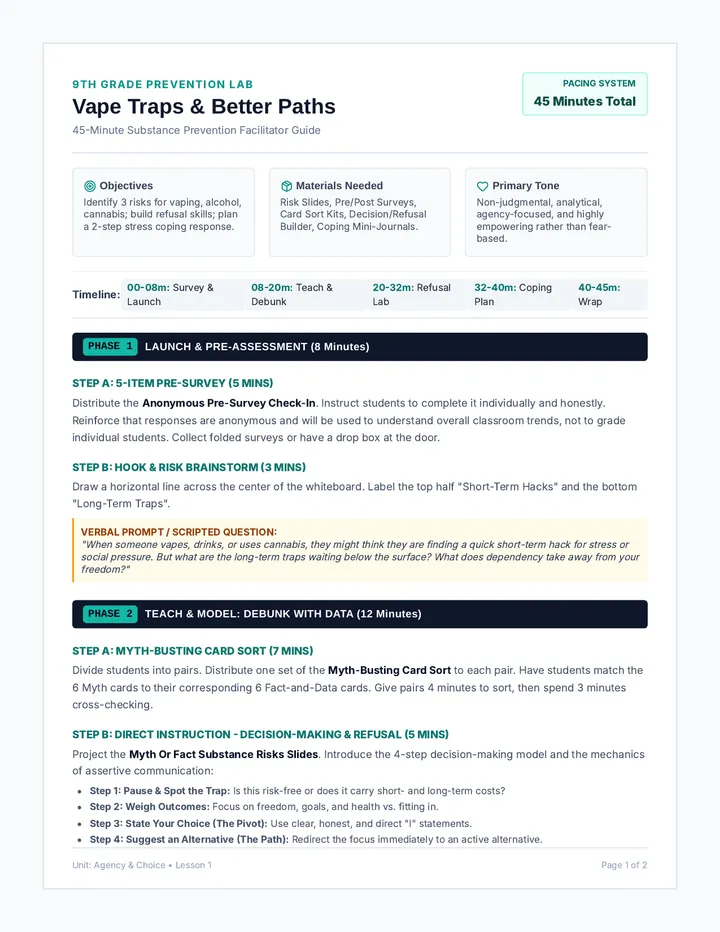
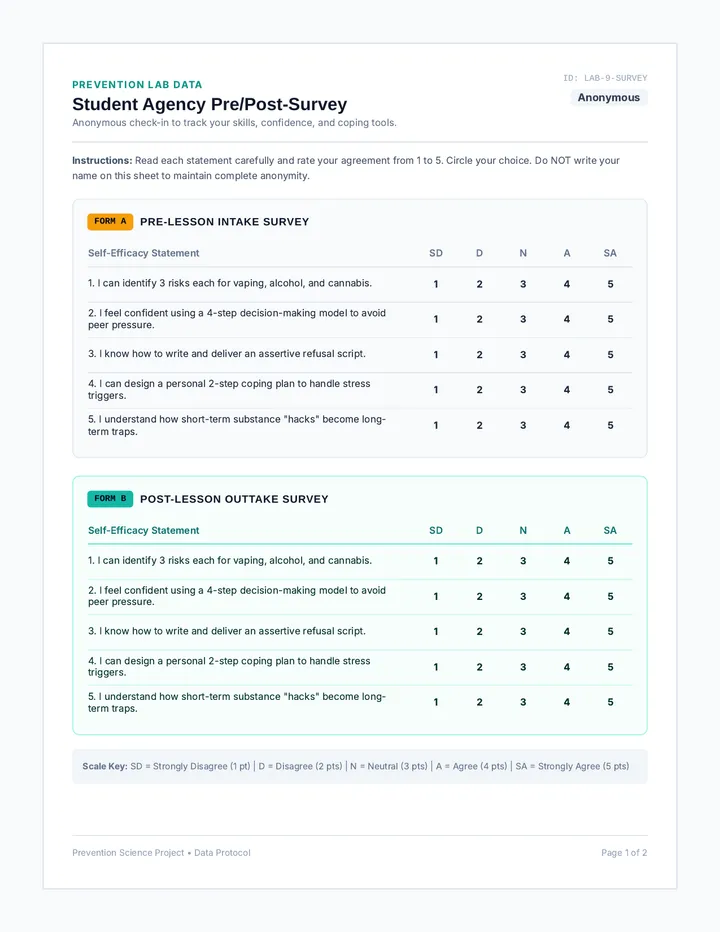
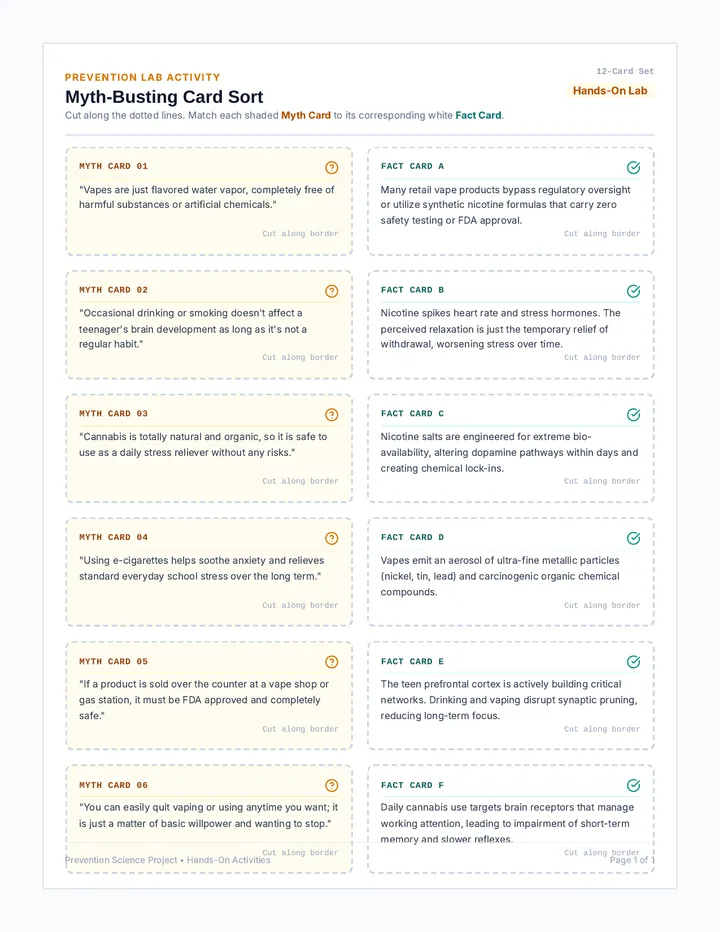
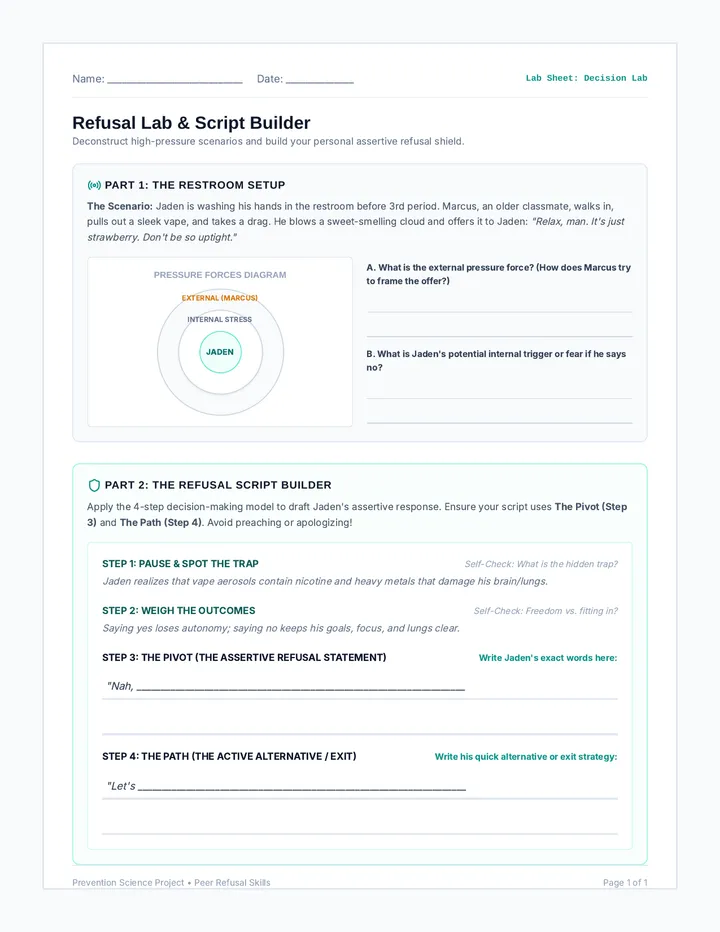
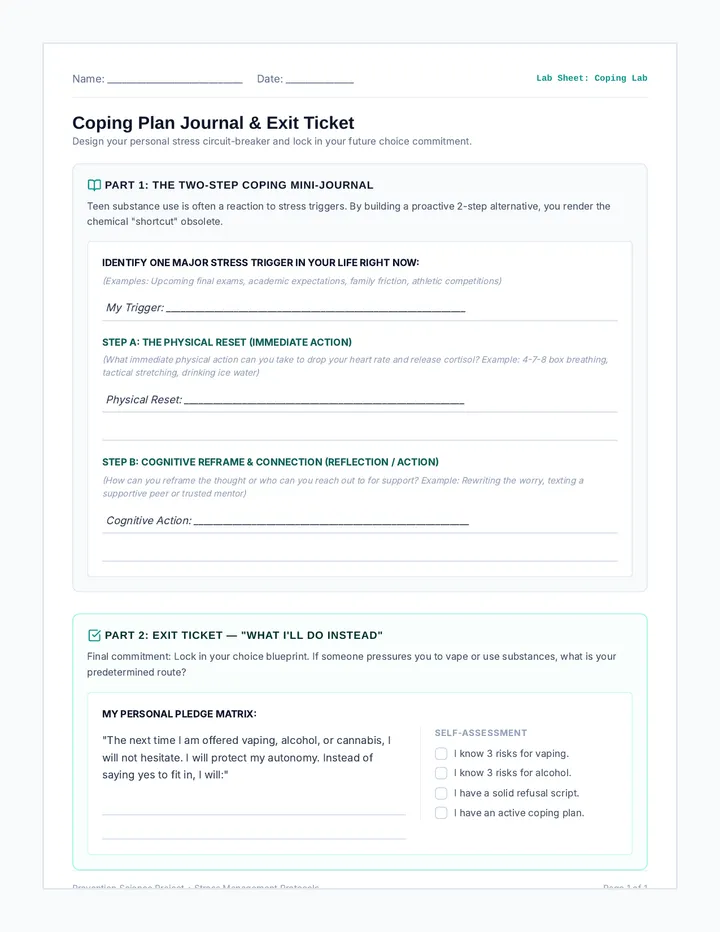
A comprehensive 45-minute substance prevention lesson for 9th-grade students. It builds critical awareness of vaping, alcohol, and cannabis risks while equipping students with a four-step decision-making model, assertive refusal scripts, and a personal stress-coping plan.
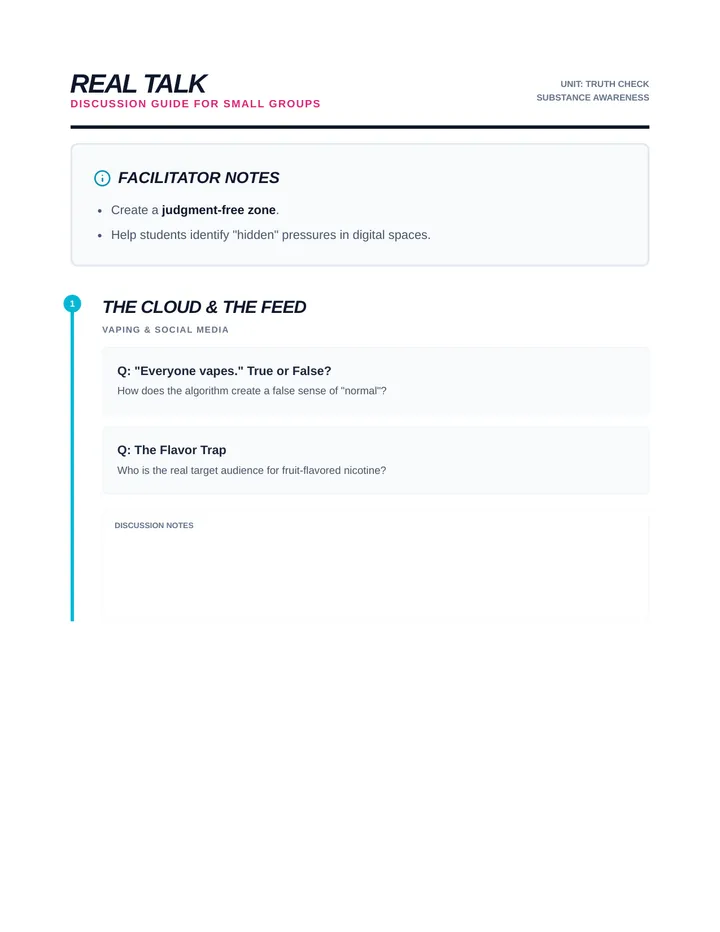
A comprehensive drug prevention lesson covering vaping, THC, alcohol, and the influence of social media, featuring refusal skills and scenario-based learning.
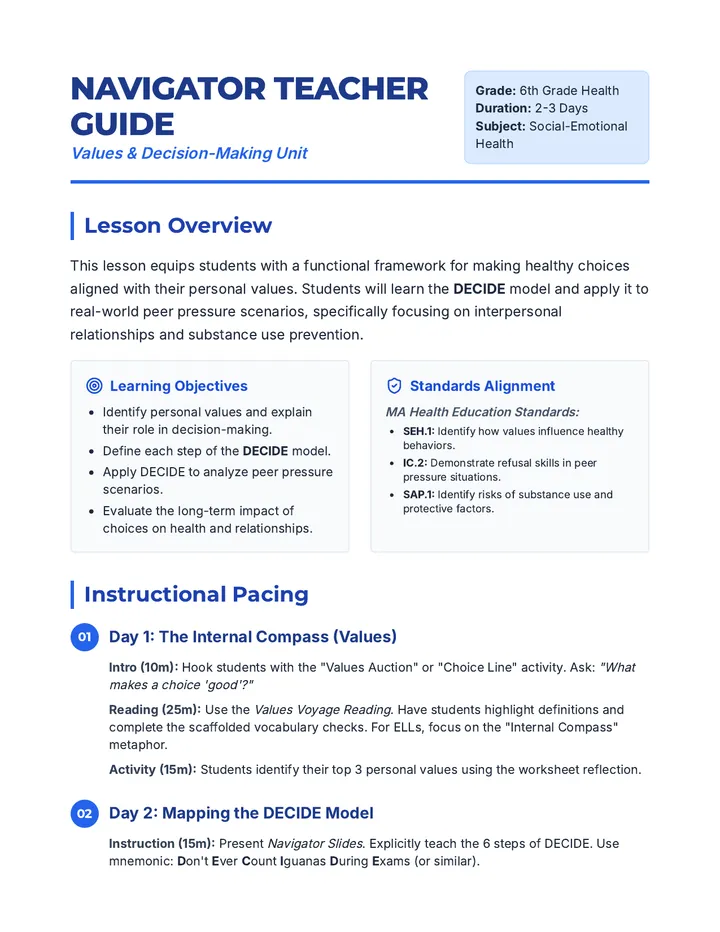
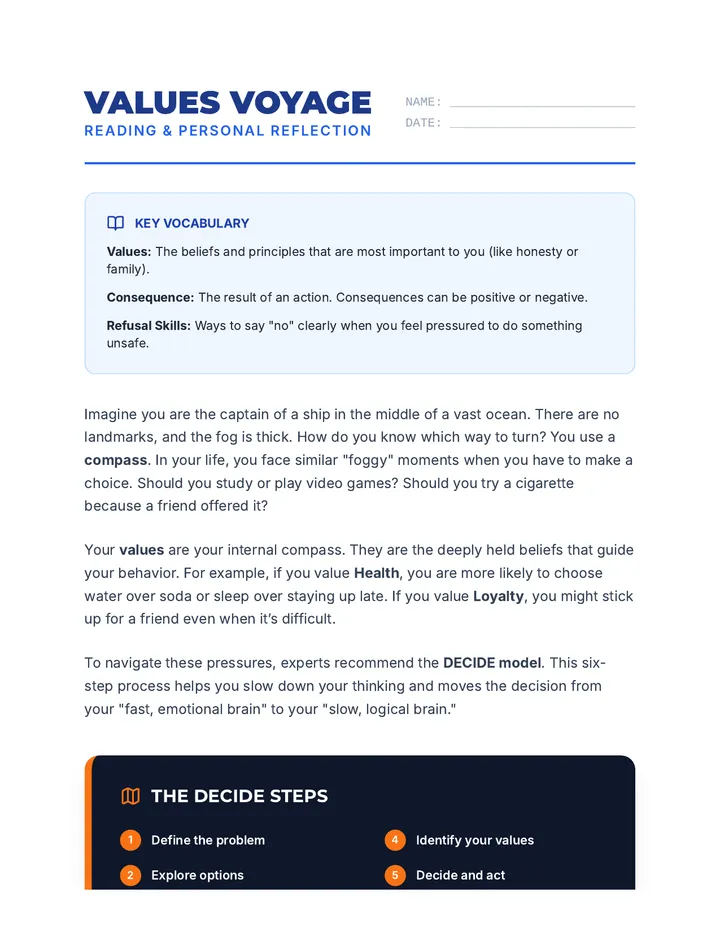
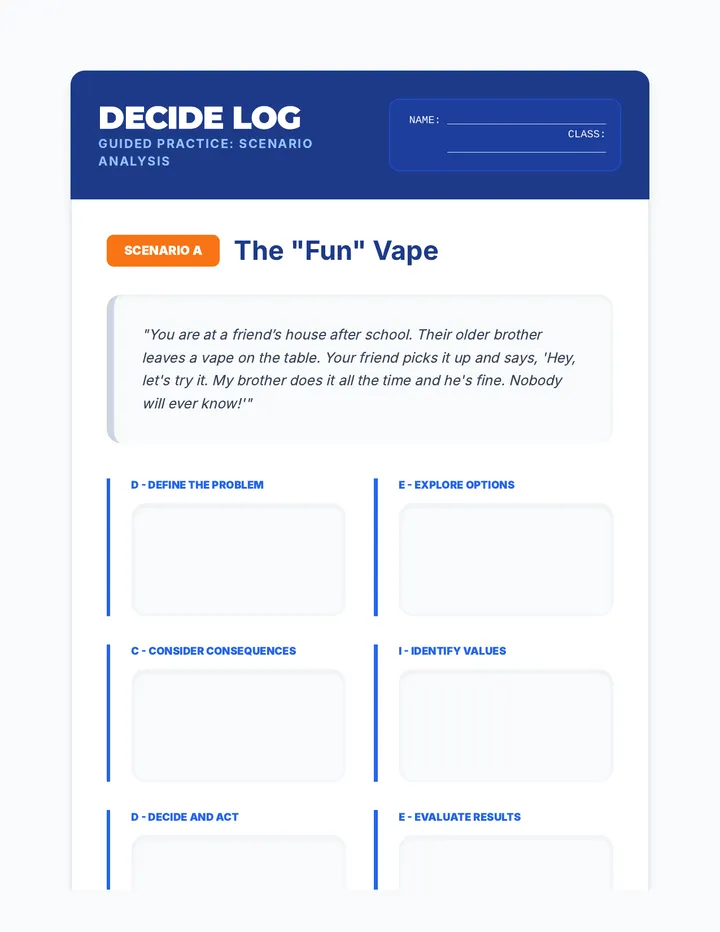
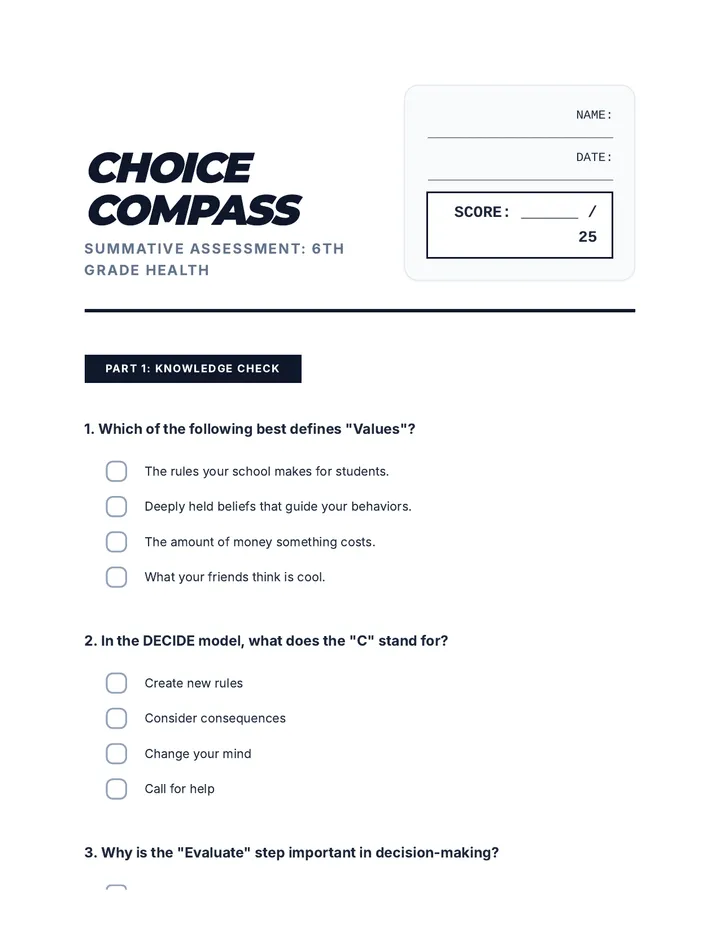
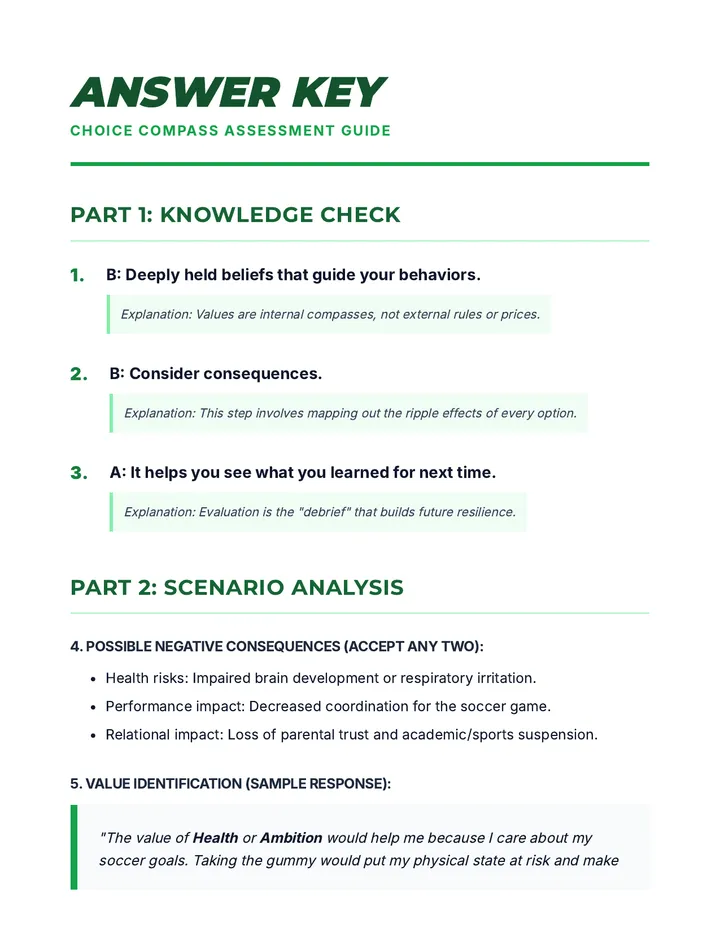
A comprehensive 2-3 day health lesson for 6th grade focused on identifying personal values and applying the DECIDE model to peer pressure and substance use scenarios.