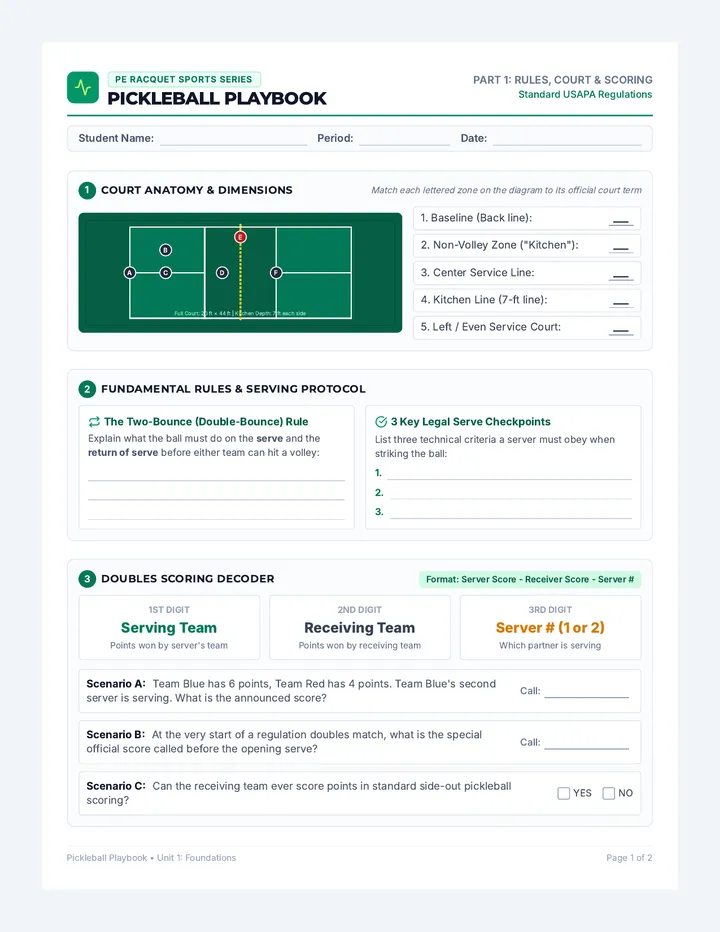
Kata Basics Slides The Path of Kata
Finding strength in choreographed movement
Discipline
Focus
Precision
Perfect Unity
[Insert YouTube URL of World Champion Synchronized Kata Performance]
Watch for: Timing, Breathing, and Collective Power
"How can multiple people move as a single shadow?"
What is Kata?
The Form
A detailed choreographed pattern of martial arts movements made to be practiced alone.
The Battle
Each move represents a defense or attack against an imaginary opponent.
Core Elements:
Correct Breathing
Precise Technique
Steady Rhythm
Fixed Pattern (Embusen)
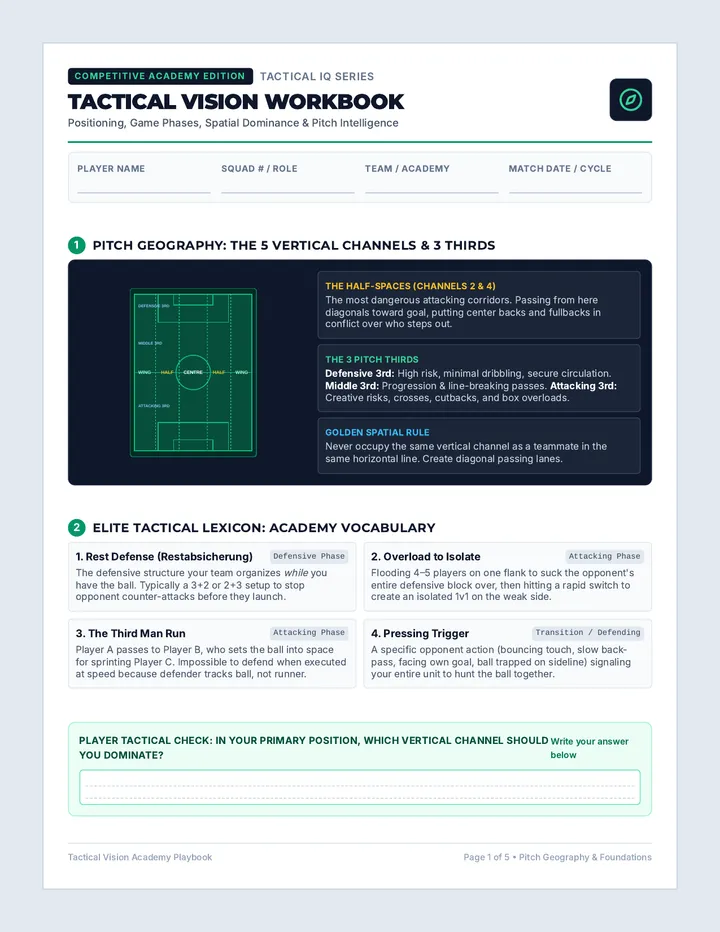
Embusen: The Map
North
South
West
East
START
"Follow the Lines"
Every Kata has a predetermined footprint. You must always return exactly to the spot where you started.
Your Mission
Master the first 8 moves of
01
Memorize the Path
02
Hold Your Stance
03
Snap Your Strike
Embusen Map Worksheet Embusen Explorer
The Path of the Warrior
Name
Date
The Mission
In Martial Arts, Embusen is the path your body takes as you perform a Kata. Your goal today is to map the first 8 moves of The Foundation Form. Remember: a true master always finishes exactly where they started.
Part 1: The Movement Map
Draw the path of the first 8 moves in the box below. Use arrows to show the direction of each step. Mark your starting point with a large "X".
NORTH / FORWARD SOUTH / BACKWARD WEST / LEFT EAST / RIGHT
Part 2: The Movement Log
Step Direction Technique (Block/Strike) Stance 01 02 03 04 05 06 07 08
The Warrior's Reflection
Why is it important to keep your head facing the "opponent" during a transition move (like turning 180 degrees)?
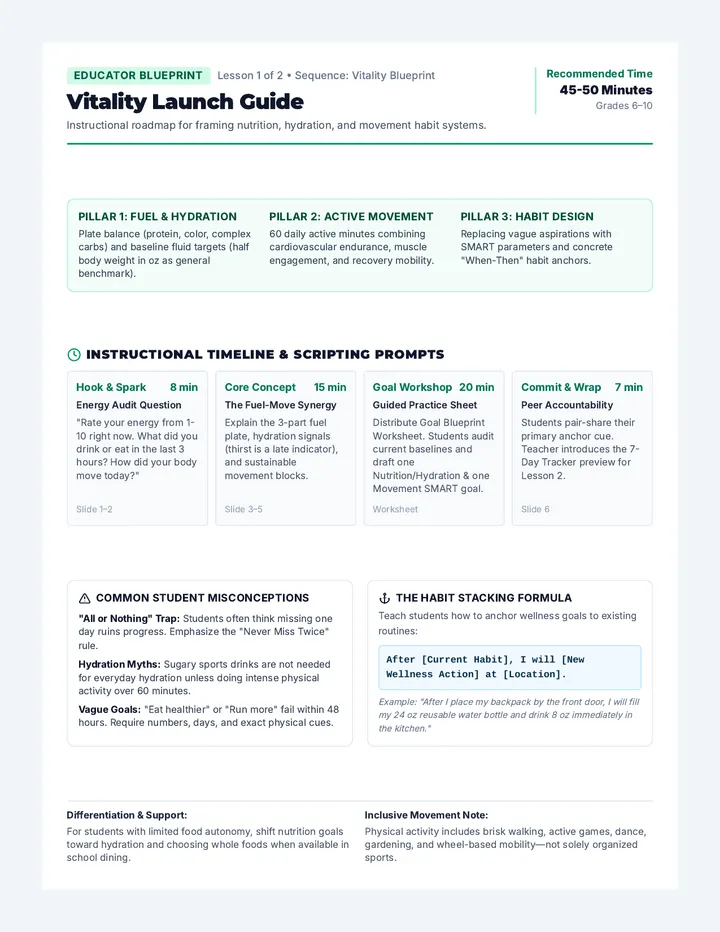
Beginner Kata Guide The Foundation Form
Facilitator's Technical Guide
Teacher Resource
Primary Goal
Pattern Memorization & Spatial Awareness
Technical Focus
Zen-kutsu Dachi (Front Stance) & Gedan Barai (Low Block)
Target Duration
45-60 Minutes
The Sequence Breakdown (Moves 1-8)
Count Direction Stance Technique Key Detail 1 Left (90°) Front Stance Left Low Block Look before turning. 2 Forward Front Stance Right Middle Punch Full step, hip rotation. 3 Right (180°) Front Stance Right Low Block Pivot on front foot. 4 Forward Front Stance Left Middle Punch Power from the floor. 5 Center (90°) Front Stance Left Low Block Face the 'front' again. 6 Forward Front Stance Right Middle Block Protect the solar plexus. 7 Forward Front Stance Left Middle Block Maintain height. 8 Forward Front Stance Right Middle Block Kiai! (Shout)
The "Count" Method
When teaching the pattern, use a clear vocal command for each move. This helps students synchronize their movements and breathing.
"Ichi!" (One) - Students move, then freeze.
Check stances and posture.
"Ni!" (Two) - Next move.
Observation Checklist
Eyes on Target
Are they looking at their imaginary opponent before they turn?
Stance Width
Feet should be shoulder-width apart to maintain balance during turns.
Chambering
The non-striking hand should return to the hip (hikite).
Common Misconceptions
The "Balance Beam" Error
Students often step with their feet in a straight line, causing them to wobble. Remind them to keep "two sets of tracks" for their feet.
Flow and Force Slides Rhythm & Power
The physics of focus
Flow
Snap
Kime
Dynamics
Robot
Stiff, jerky, and predictable. No transition between moves.
Static
Water
Fluid, continuous, and adaptable. Transitions flow together.
Dynamic
"Kata is the balance between the two."
Kime: The Point of Power
What is Kime?
The instant tensing of muscles at the exact moment of impact, followed by immediate relaxation.
The "Snap"
Like a whip, the technique is relaxed until the very end, where it "snaps" into place with maximum force.
Impact!
"Relaxation is the fuel for speed."
Contrast in Motion
Transitions
Slow & Controlled
Strikes
Fast & Explosive
Breathing
Deep & Synchronized
Today's Training
Drill 1: The Ocean
Perform the first 4 moves of the Kata in extreme slow motion (10 seconds per move). Focus on balance and muscle engagement.
Drill 2: The Lightning
Perform the same 4 moves at full speed. Emphasize the "snap" and a sharp exhale with every strike.
Rhythm Radar Worksheet Rhythm Radar
Mastering Movement Dynamics
Name
Date
Part 1: Self-Scan
After Drill 1 (Ocean) and Drill 2 (Lightning), rate your mastery of these dynamics.
Flow (Liquid Transitions) 1 ————— 10
Force (Impact Power) 1 ————— 10
Kime (Muscle Focus/Snap) 1 ————— 10
Part 2: Partner Observation
Watch your partner perform moves 1-4. Provide specific feedback on their timing.
Partner's Name
One thing they did exceptionally well:
One move that needs more "Snap" or "Flow":
The Mind-Body Connection
In your own words, explain how breathing helps you transition from being "fluid like water" to "explosive like lightning." What happens to your focus when you hold your breath versus when you exhale sharply?
Sequence Architect Slides Movement Architects
Designing your own defensive sequence
Logic
Defense
Flow
Logic or Luck?
Block
Punch
Kick
The Challenge
If you randomly shuffle your moves, does the form still make sense? Your job is to organize chaos into a logical defensive story.
Tactical Sequencing
Rule 1: Block First
You cannot strike if you are already hit. Every attack should follow a successful defense.
Rule 2: Logic Flow
If you block high, does it make sense to punch low? Think about the target areas of your imaginary opponent.
Rule 3: Stance Stability
Every move must transition smoothly into a solid stance. Don't leave your balance behind!
Example Sequence:
1
High Block (Rising)
2
Mid-Level Punch (Counter)
3
Step Back & Low Block
The Blueprint
Your Checklist:
4 to 6 Total Moves
At least 2 different stances
At least 1 turn (90° or 180°)
1 "Kiai" (Shout) on final move
Design Time
Work with your group to draw your Embusen and name your techniques.
Form Blueprint Organizer Design Phase
Form Blueprint
Architecting the Defensive Sequence
Group ID
Form Name
4-6 Moves
2+ Stances
1+ Turn
Final Kiai
The Tactical Sequence
Step Technique & Stance Tactical Reason (Why this move?) 01 02 03 04 05 06
The Embusen Map
North South
Design Note
Draw the path your feet take. Label each move number (1-6) on the map where you stop and strike.
Final Defense Logic
How does your final "Kiai" move demonstrate complete focus and a successful defense?
Refinement Round Slides The Refiner's Fire
Turning drafts into masterpieces
The "Glitch" Game
How to Play:
Common Glitches:
Lazy Stance
No Eyes
Soft Strike
Rushed Flow
The Critique Compass
Observe
Watch the feet, the hips, and the eyes. Detail matters.
Encourage
Identify one move that looked powerful or logical.
Refine
Suggest one specific fix to improve the "spirit" of the form.
The Final Polish
A
Awareness (Zanshin): Eyes always on the opponent.
S
Stability: Solid stances during every transition.
P
Power (Kime): Sharp snap at the end of strikes.
R
Respect: Bowing in and out with dignity.
Critique Companion Rubric Critique Companion
Peer Evaluation & Refinement
Reviewer
Performer
The Peer Protocol
01
Watch the entire form once without taking notes. Observe the overall "spirit."
02
Watch a second time. Look for specific stances, blocks, and strikes.
03
Complete the rubric and provide one specific tip for the final performance.
Skill Category Mastery (3) Practitioner (2) Beginner (1)
Technical Clarity
Blocks and strikes are sharp and correctly aimed.
| All moves are precise and show "snap." | Moves are recognizable but lack power. | Techniques are sloppy or incomplete. |
|
Stability & Stance
Feet are balanced; head stays level during turns.
| Perfect balance even during 180° turns. | Solid stances but some wobbling on turns. | Stances are too narrow; loss of balance. |
|
Rhythm & Focus
Contrast between fast and slow; eye contact (Zanshin).
| Dynamic contrast is clear; total focus. | Good flow but lacks dynamic contrast. | Rushed or robotic; looking at the floor. |
One Masterful Move
Which move was their strongest? Why?
One Growth Opportunity
Suggest one specific fix for the "Final Form."
Mastery Quote
"A black belt is a white belt who never quit."
Final Performance Slides The Final Form
Demonstrating discipline and spirit
Zanshin
Respect
Composure
The Warrior's Entrance
Your performance begins BEFORE the first move.
The Walk
Head high, eyes forward, shoulders back. Walk with purpose to the center of the mat.
The Bow
A respectful bow (Rei) shows gratitude to your teacher and fellow students.
The Wait
Wait in "ready stance" (Yoi) until the room is silent. You are the master of this moment.
Zanshin: Lingering Awareness
Don't Drop the Spirit
Zanshin is the state of total awareness that remains AFTER the final move is finished.
"Stay in the fight until you have bowed out. The opponent is still there until you dismiss them."
Performance Etiquette
For the Performer
- Maintain silence and focus
- No fixing hair or adjusting uniform
- Sharp, loud Kiai!
- Hold the final stance
For the Audience
- Absolute silence during the form
- No moving or whispering
- Respectful applause at the end
- Give your full energy to the performer
Your Moment
This is the culmination of your discipline, focus, and creativity. Step onto the mat with the heart of a warrior.
Performance Reflection Log The After-Action Report
Reflecting on the Final Form
Name
Date
The Inner Battle
How did your body feel right before you stepped onto the mat? What did you do to manage your nerves and find focus?
Zanshin Check
Rate your awareness level after your final Kiai. Did you hold your spirit until the final bow, or did you "drop" it as soon as the moves were over?
Lost Focus
Flickered
Steady
Total Zanshin
The Architect's Review
Looking back at your original sequence design (Moves 1-6), if you were to perform it again, which move would you change to make the form more logical or powerful ? Why?
Discipline Beyond the Dojo
Martial arts forms are about controlling the body and mind under pressure. In what other part of your life (school, other sports, hobbies) could you use the concept of "Kime" (instant focus) or "Zanshin" (lingering awareness) ?
Victory through discipline
Final Performance Rubric The Final Form
Summative Performance Rubric
Assessor Tool
Student Name
Date of Performance
Form Title
Criteria Exemplary (4) Proficient (3) Developing (2) Emerging (1)
Technical Execution
Precision of stances, blocks, and strikes. Proper chambering and focus (Kime).
| Flawless precision; sharp "snap" on every technique. | Techniques are correct and sharp; minor alignment issues. | Recognizable techniques but lack power or precision. | Techniques are incomplete or frequently incorrect. |
|
Sequence Logic
Application of tactical principles (Block then Strike). Flow of movement.
| Sequence is highly logical; feels like a real fight. | Logic is clear; transitions between moves are smooth. | Some logical errors; transitions feel clunky or disconnected. | Moves feel random; no clear tactical flow. |
|
Rhythm & Contrast
Differentiation between fast and slow movements. Breathing control.
| Expert dynamic contrast; breathing is perfectly timed. | Clear contrast between speed and power; good flow. | Moves at a single speed (either all fast or all slow). | Erratic rhythm; breathing is held or shallow. |
|
Spirit & Etiquette
Focus (Zanshin), bowing, entrance/exit, and final Kiai.
| Total focus throughout; powerful Kiai; perfect etiquette. | Strong presence; maintains composure and focus. | Minor lapses in focus; Kiai is quiet or missing. | Poor composure; ignores bowing or performance protocols. |
Mastery Observations
Refinement Needed
Technical (16)
/ 16
Form Requirements
4-6 Moves
2 Stances
Kiai
Total Mastery Score
______ %