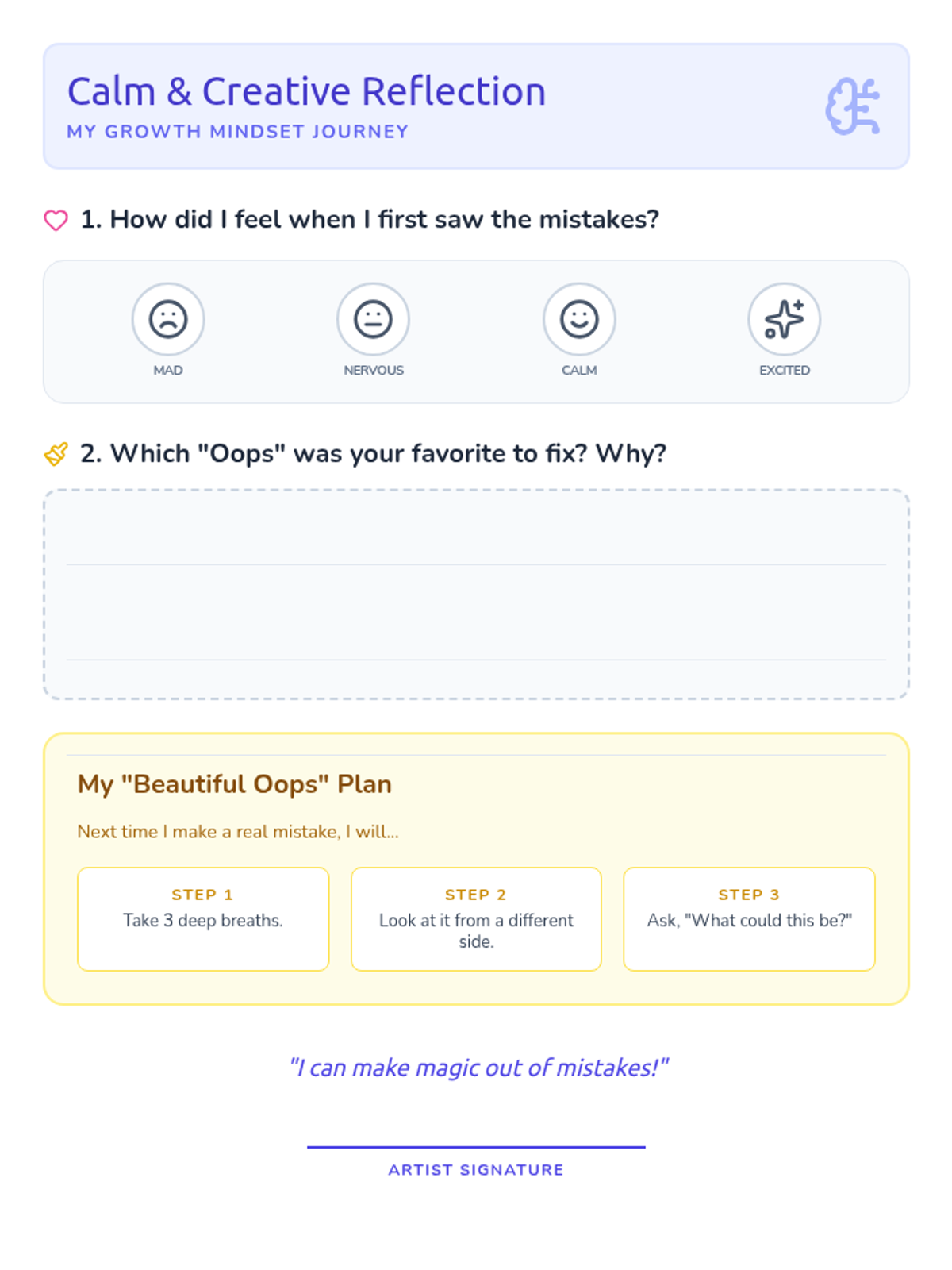
Students are introduced to transitions and animations to add movement to their slides, with a focus on audience awareness and avoiding distracting effects.
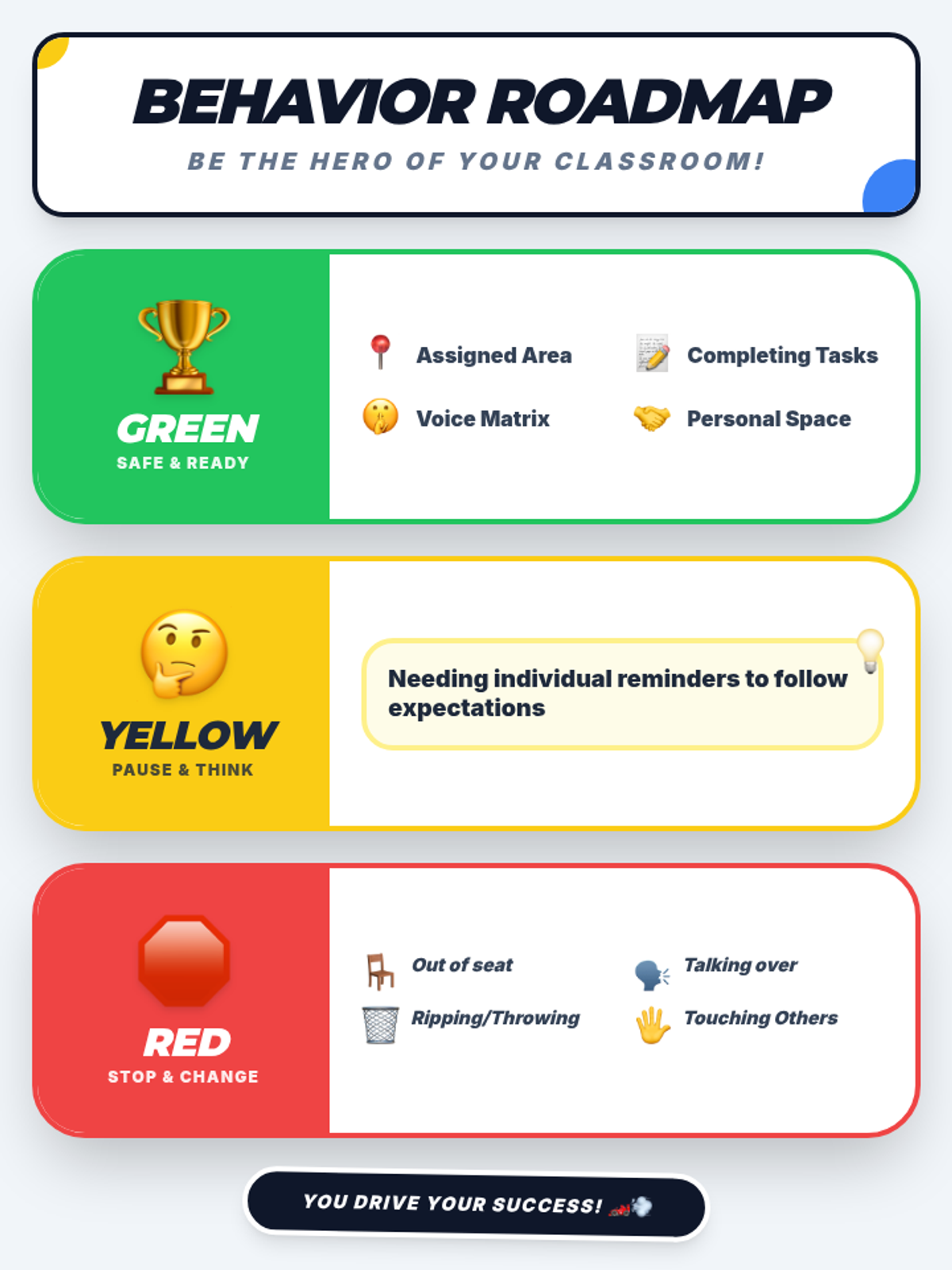
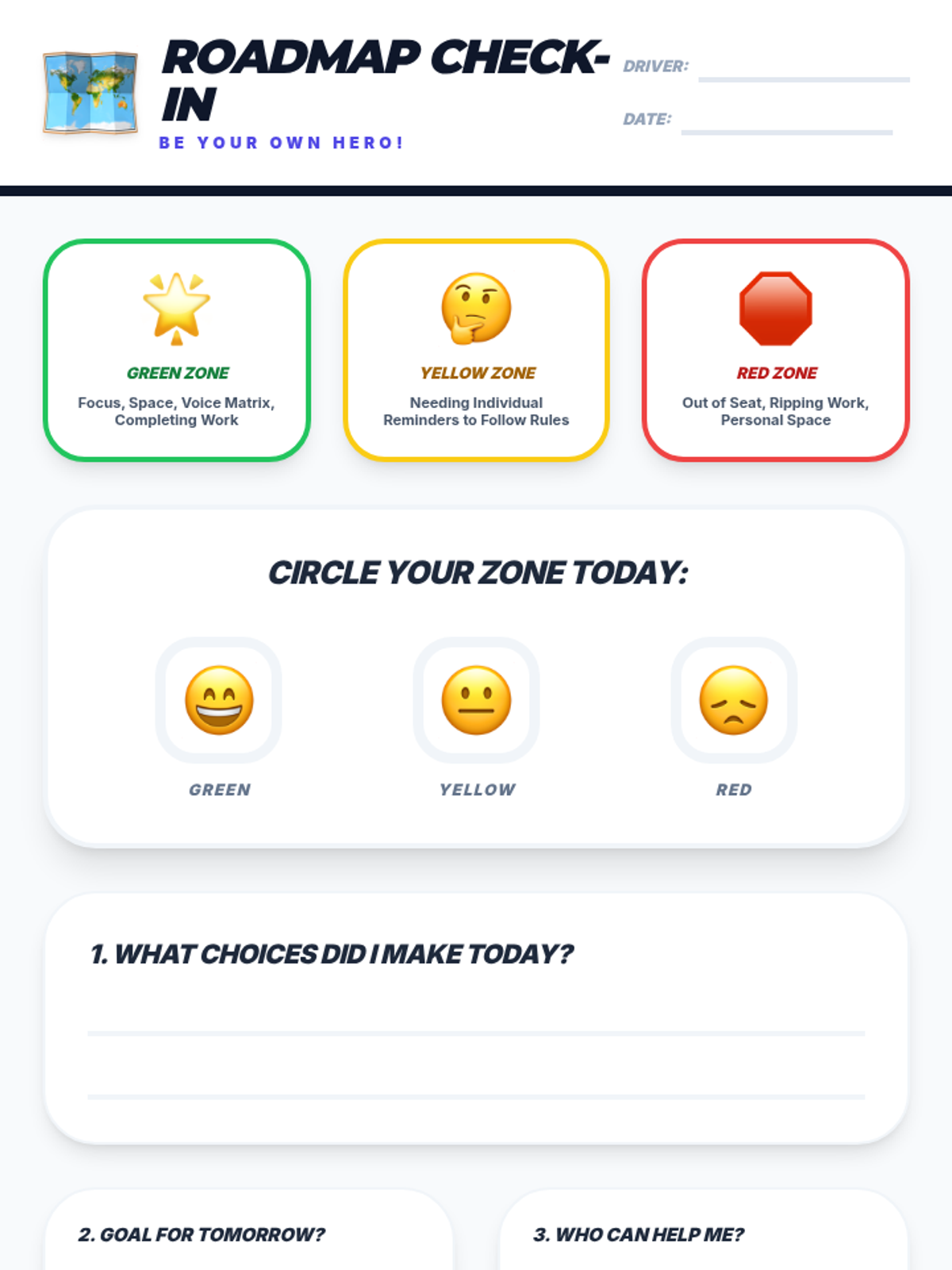
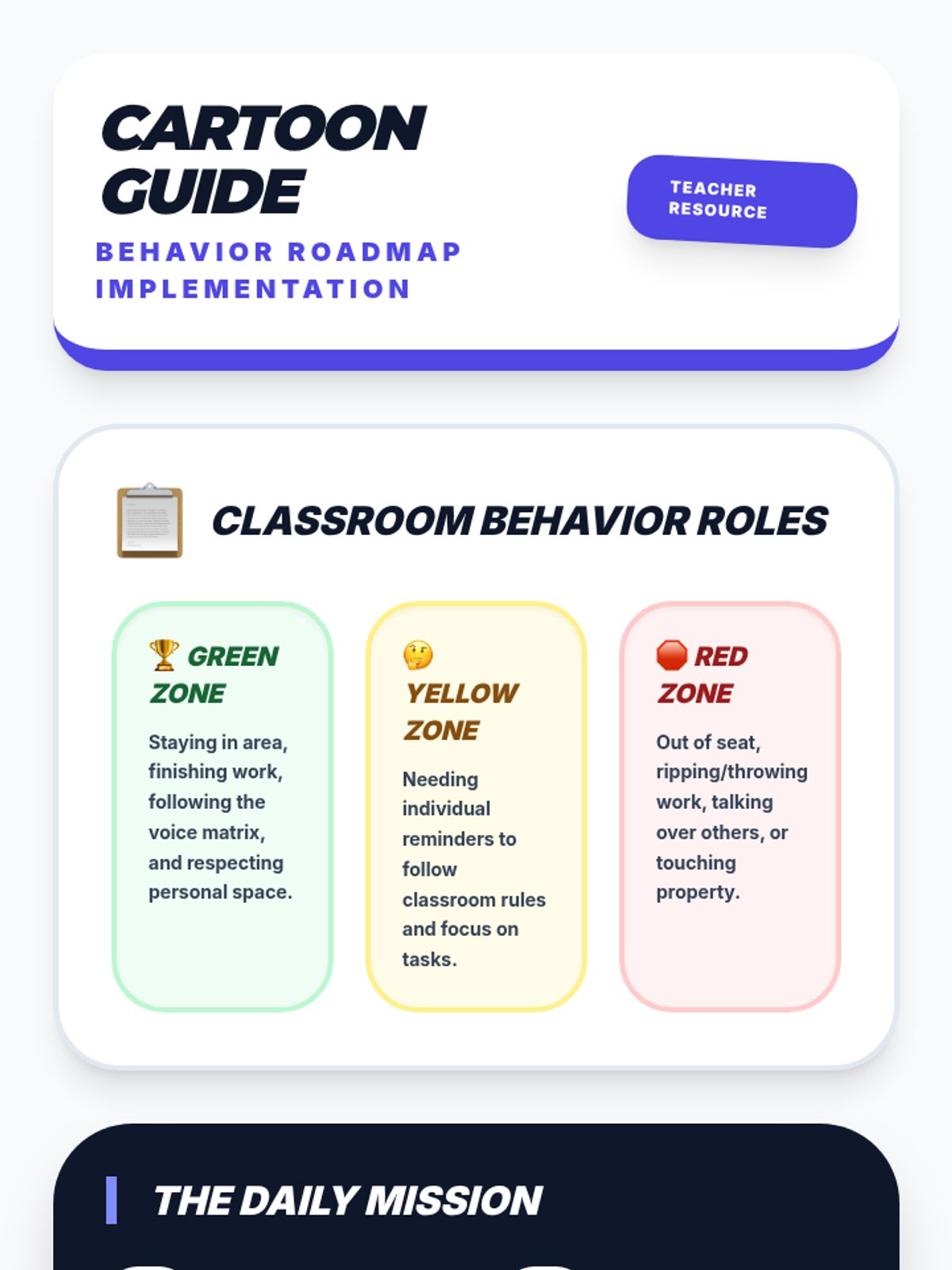
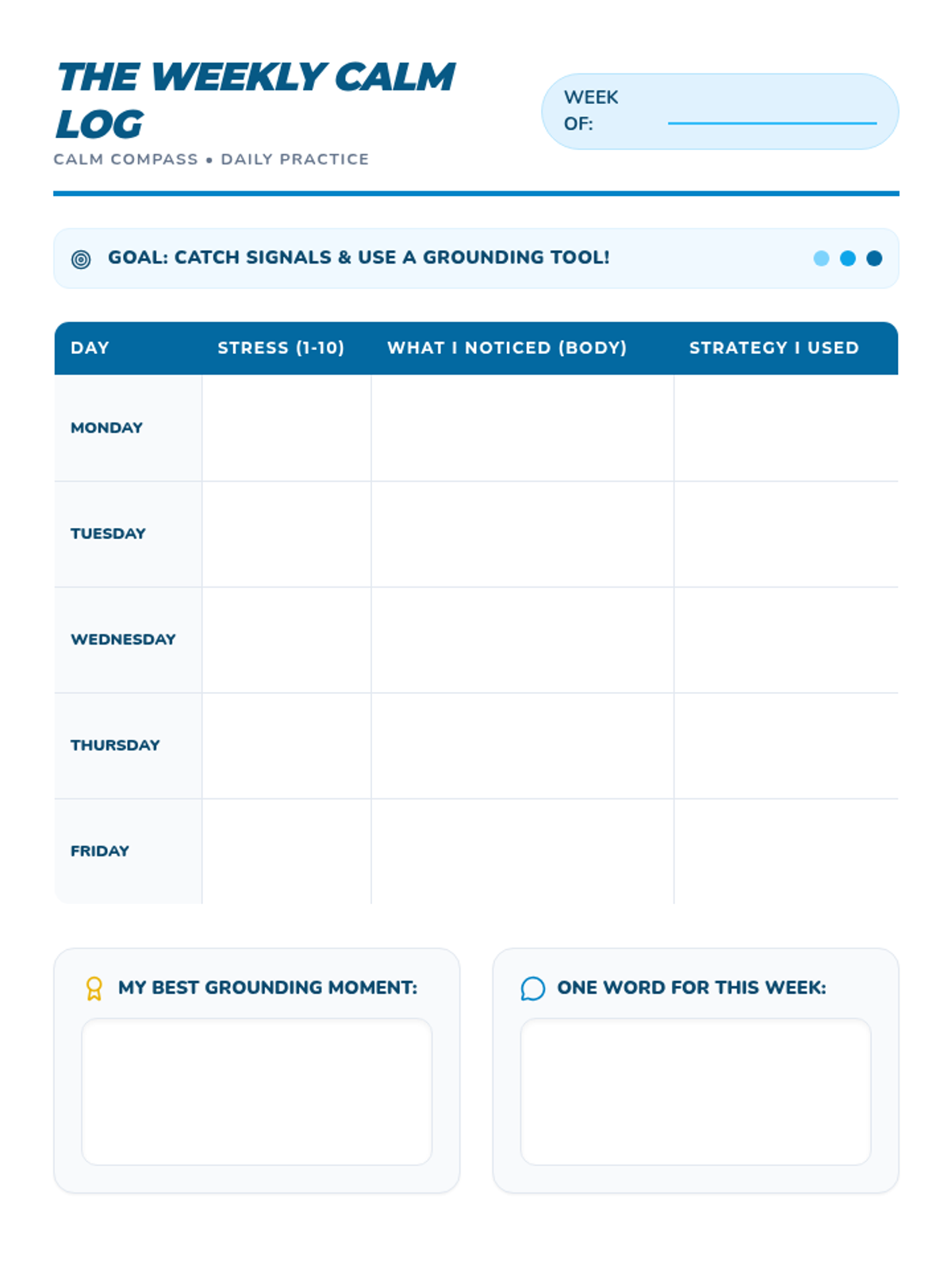
A daily check-in system designed to help students identify their energy levels, emotional states, and regulation needs. Includes a student log and a teacher implementation guide.
This lesson helps elementary students master the art of peer-to-peer discussion within an SEL context. Using visual scaffolds and structured sentence starters, students learn to listen actively, build on others' ideas, and participate confidently in group settings.
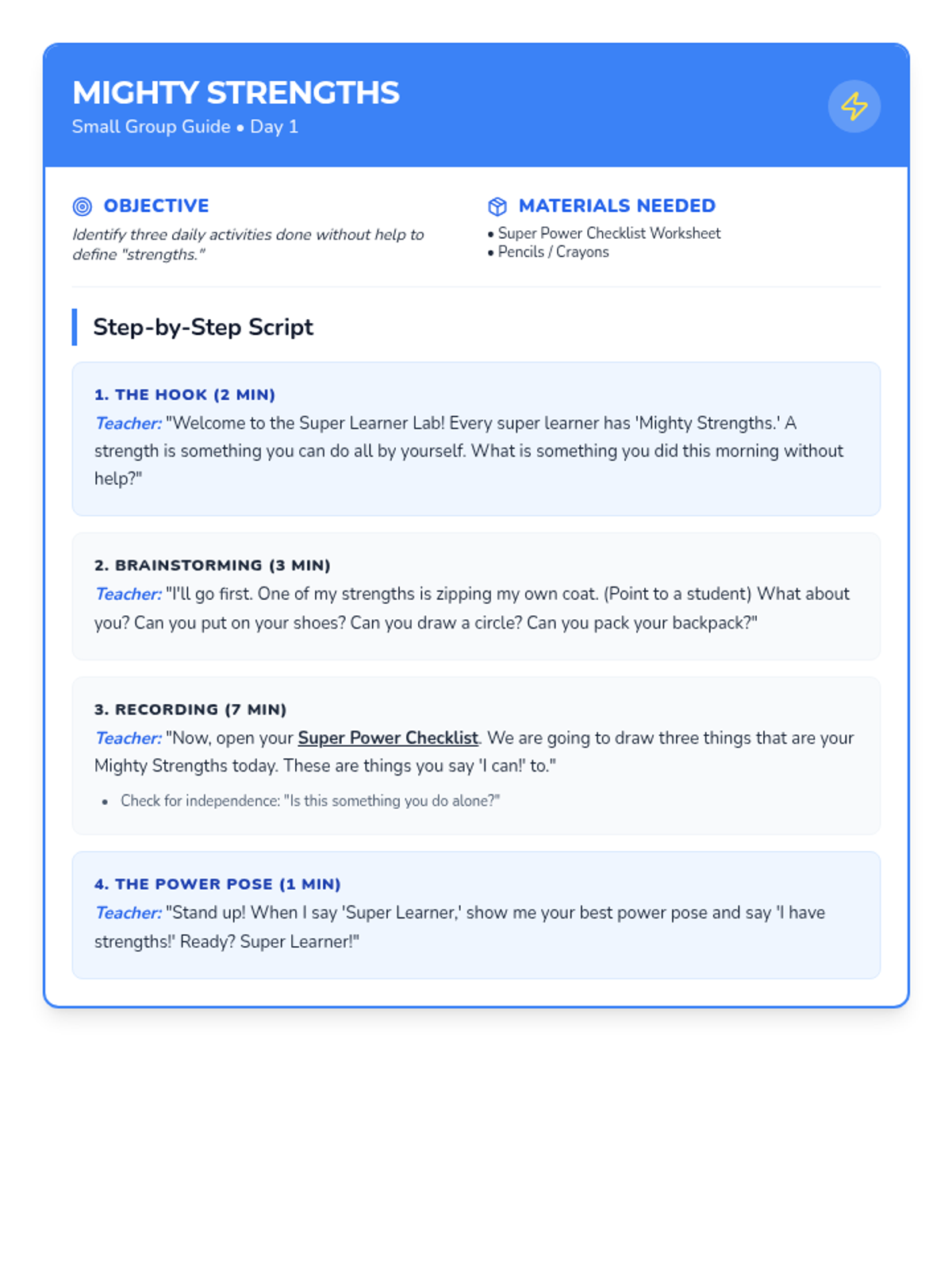
A 15-minute introductory lesson teaching students to focus on their own choices when peers are frustrated during school work.
A foundational Social-Emotional Learning lesson focused on teaching students the STEP problem-solving framework and developing empathy through reflection and kindness tracking.
A practical resource for students to securely record and organize their digital credentials in an alphabetical format.
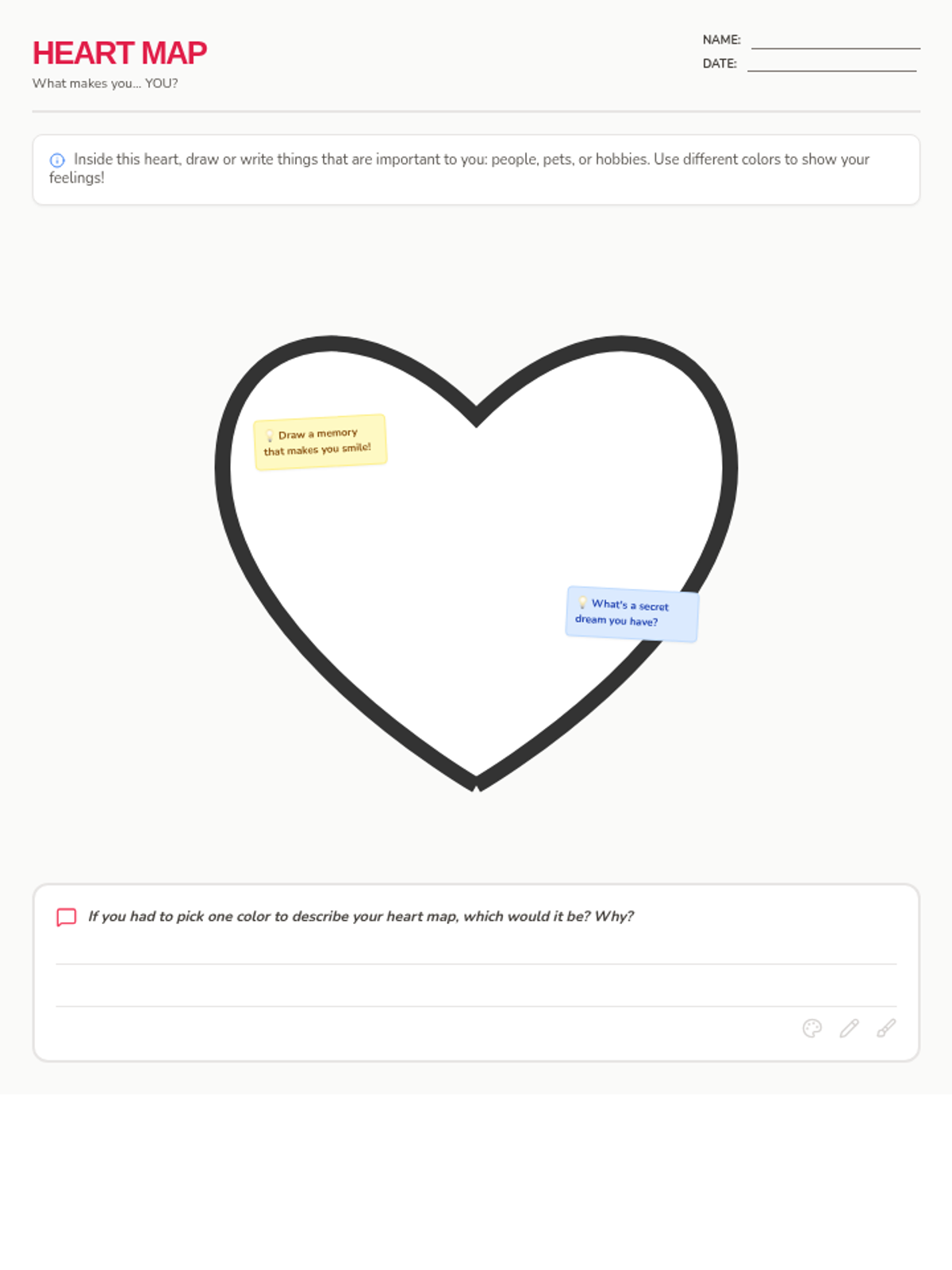
A 15-day emotional check-in series using drawing and reflection to help students identify and process their feelings.
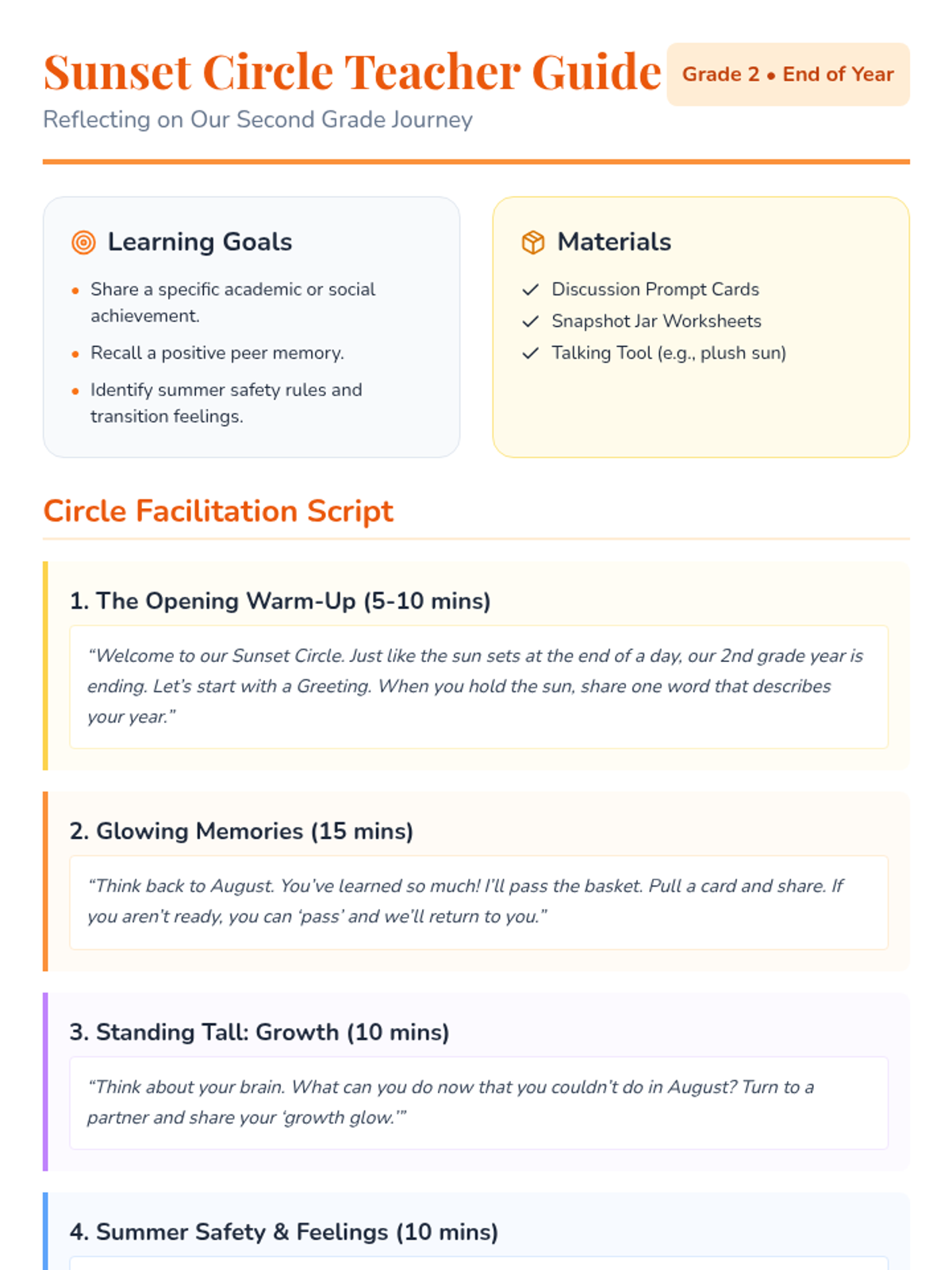
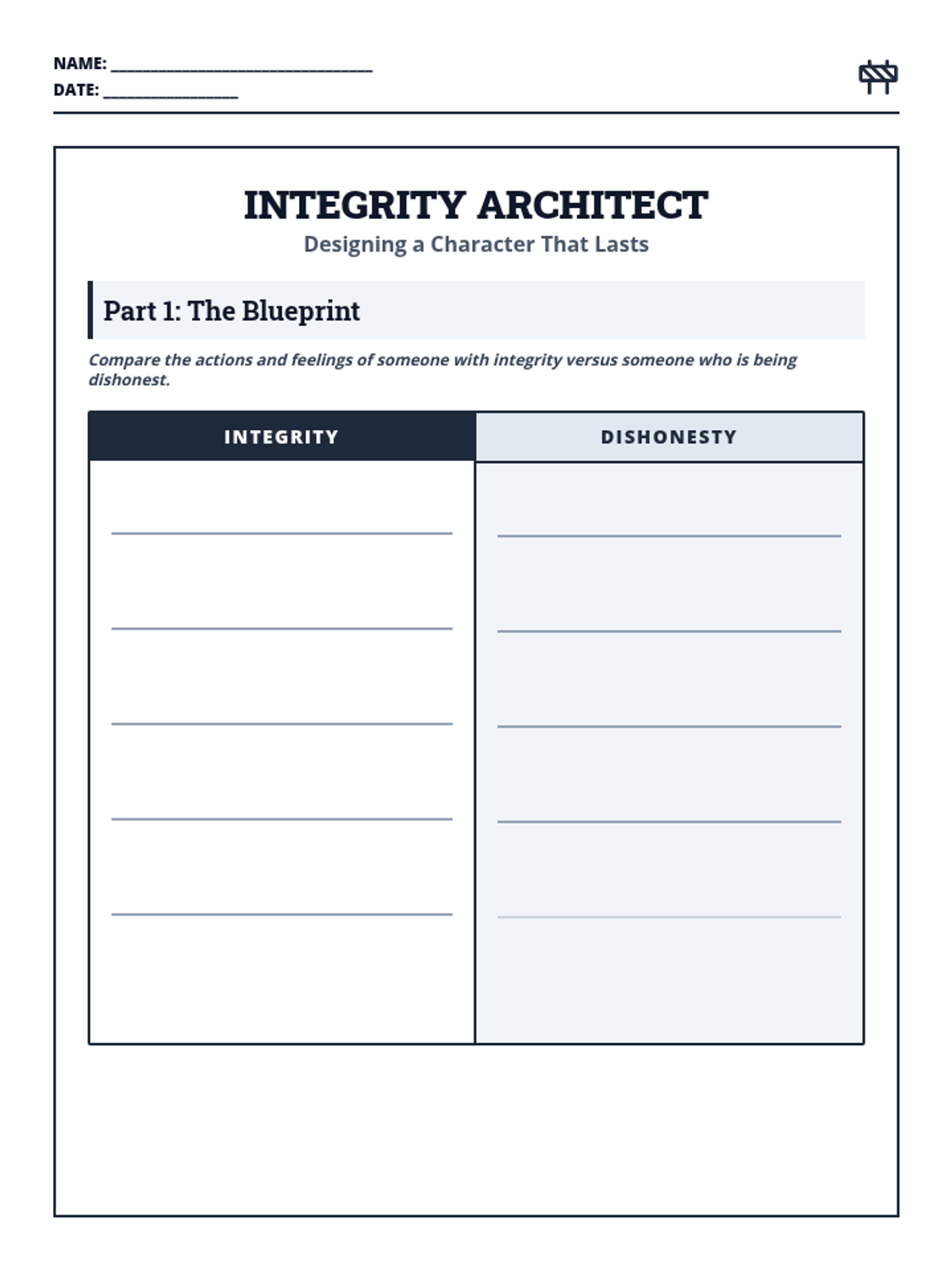
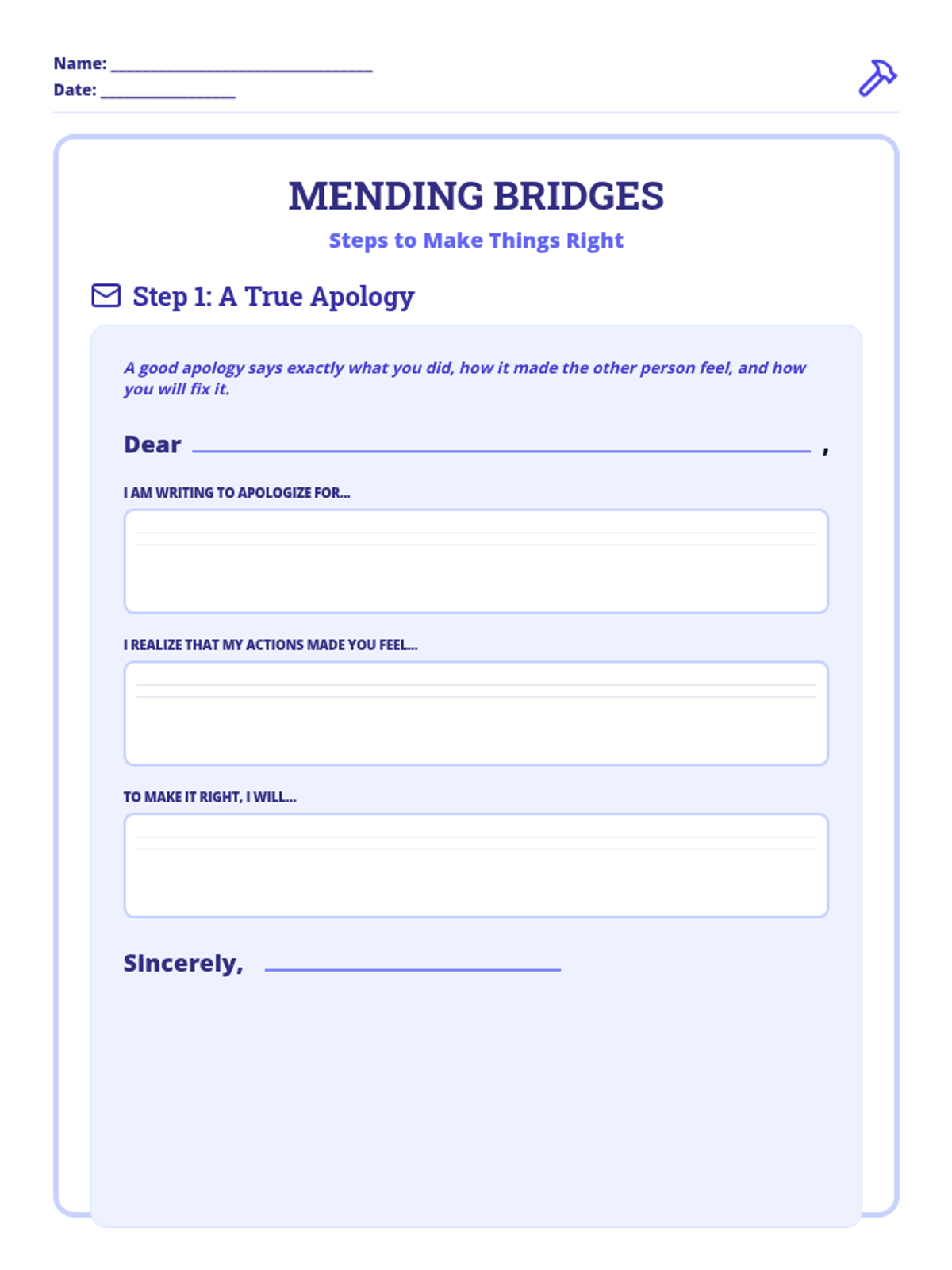
A restorative circle lesson designed to help students reflect on their personal choices, the impact of their behavior on others, and how to lead by example within their school community.
This lesson introduces the "Me" circle of the Circles Curriculum, focusing on self-identity and the development of boundary-setting skills. Students will explore their personal likes, family background, and values before practicing assertive refusal techniques through role-play.
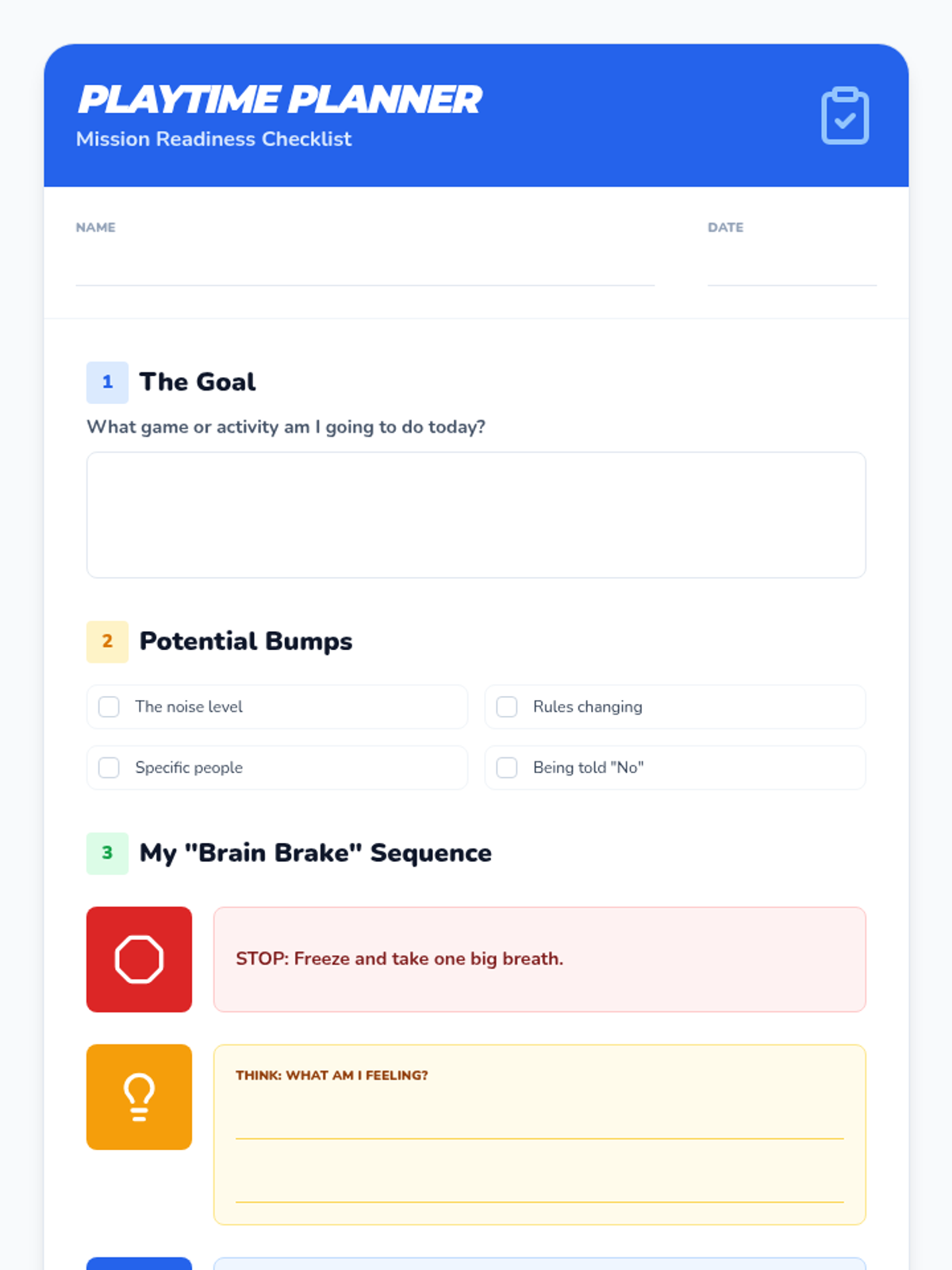
A set of tools for a second grader to track their emotional growth, practice truthfulness, respect personal space, and use effective calming strategies when upset.
A daily habit-building system for students to monitor their readiness, preparation, and work effort across all subjects. Includes student trackers and teacher implementation guides to foster accountability and self-regulation.
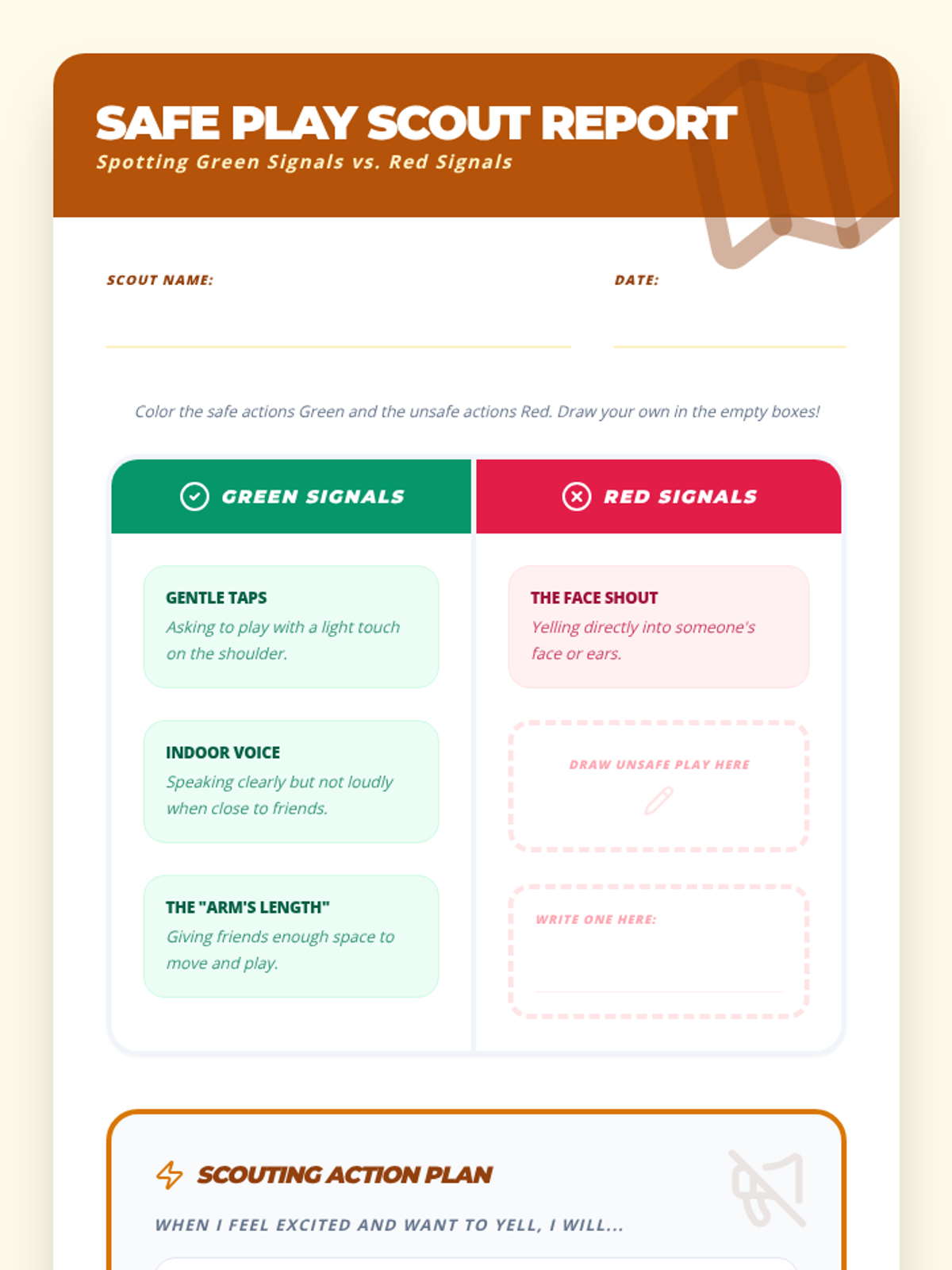
A 30-minute interactive lesson for 2nd graders on navigating conflicts using the 'Escalator' vs. 'Stairs' analogy. Students learn to identify escalating behaviors (blaming, yelling) and practice de-escalating tools (I-statements, active listening).
A 30-minute small group session for 2nd graders focused on cognitive flexibility. Students practice staying calm and curious when asked to solve math problems using unfamiliar methods.
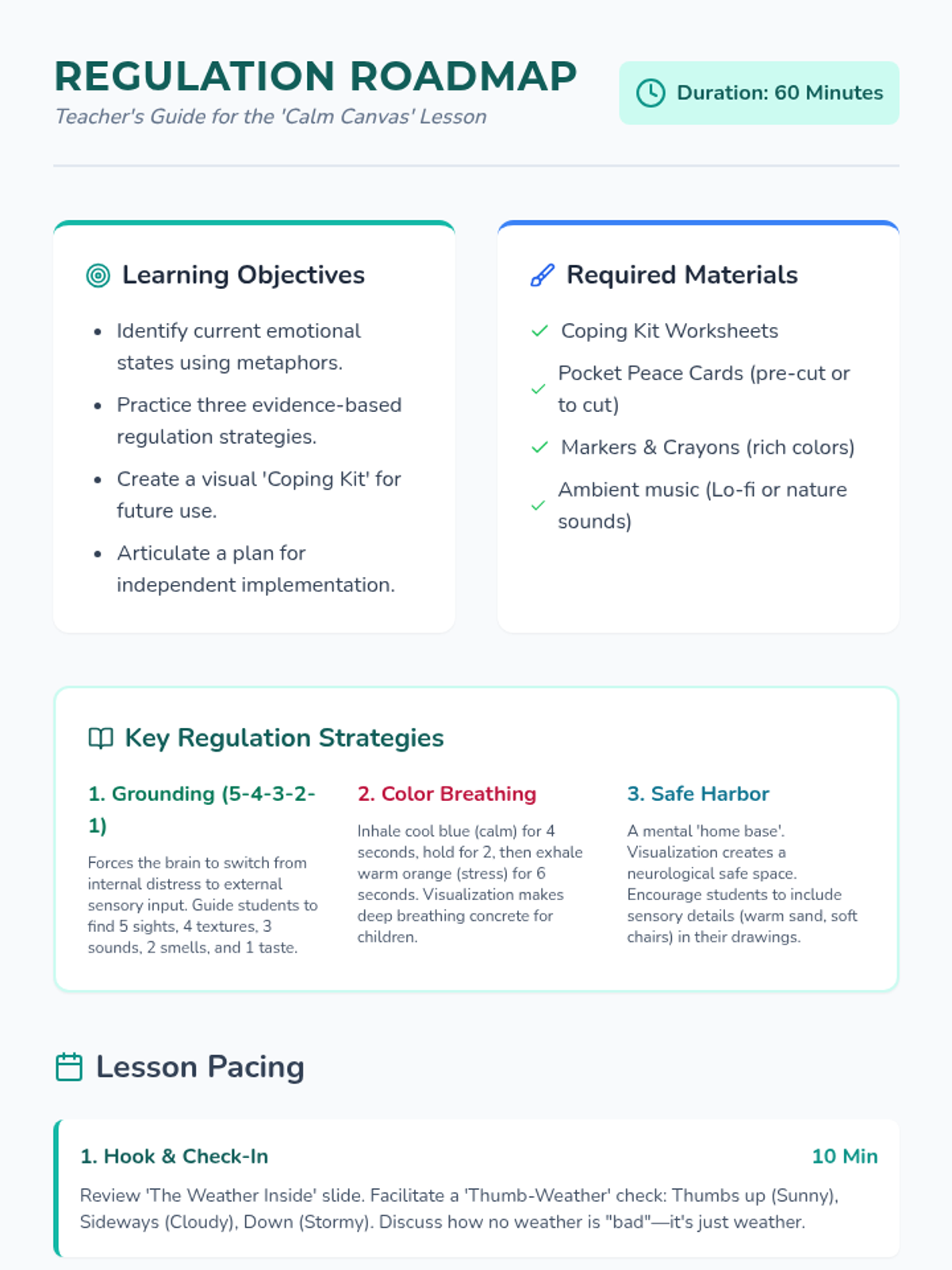
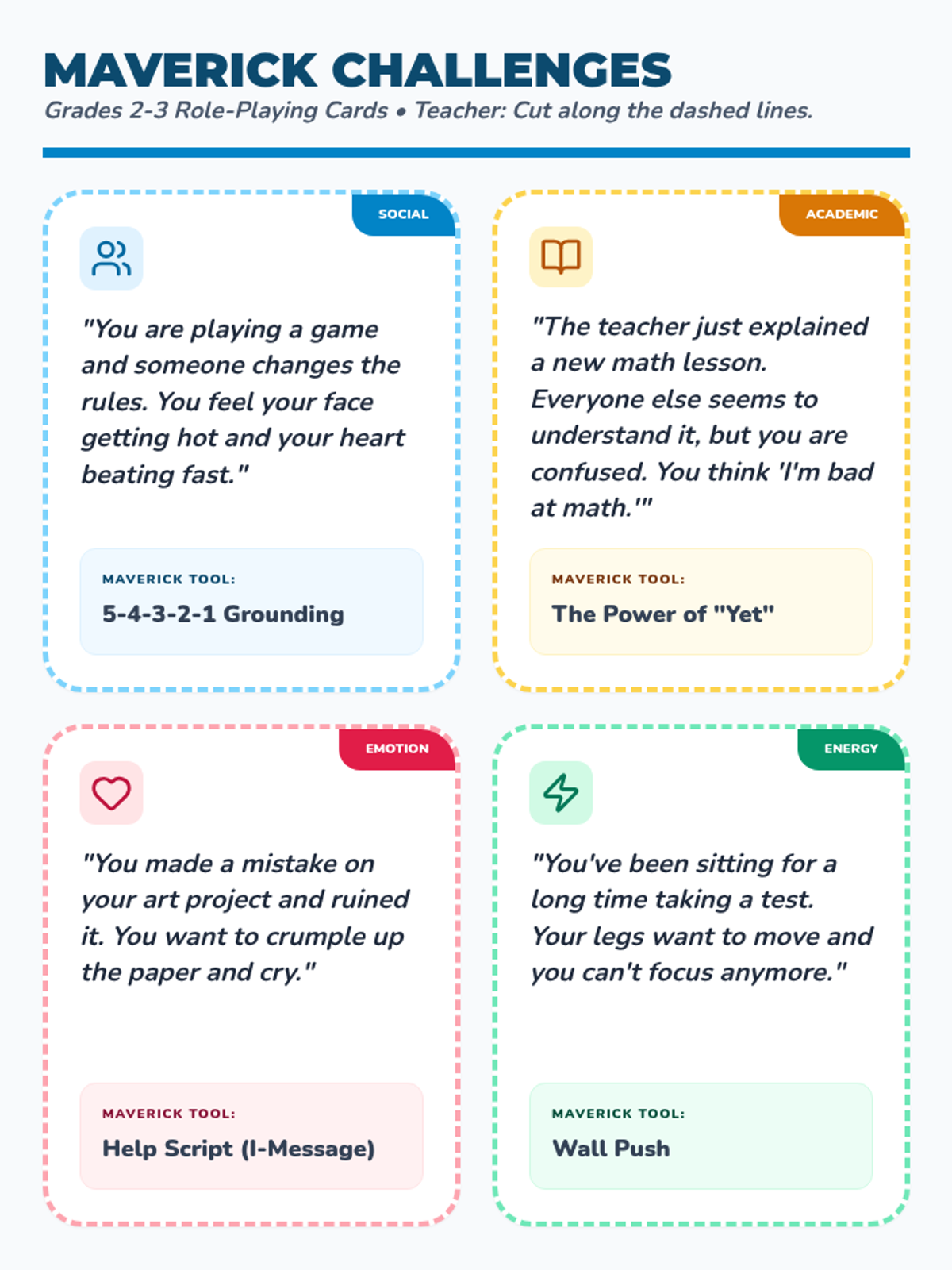
A 30-minute interactive lesson for 2nd graders to learn self-management skills using the metaphor of a 'personal remote control' to manage impulses, emotions, and focus.
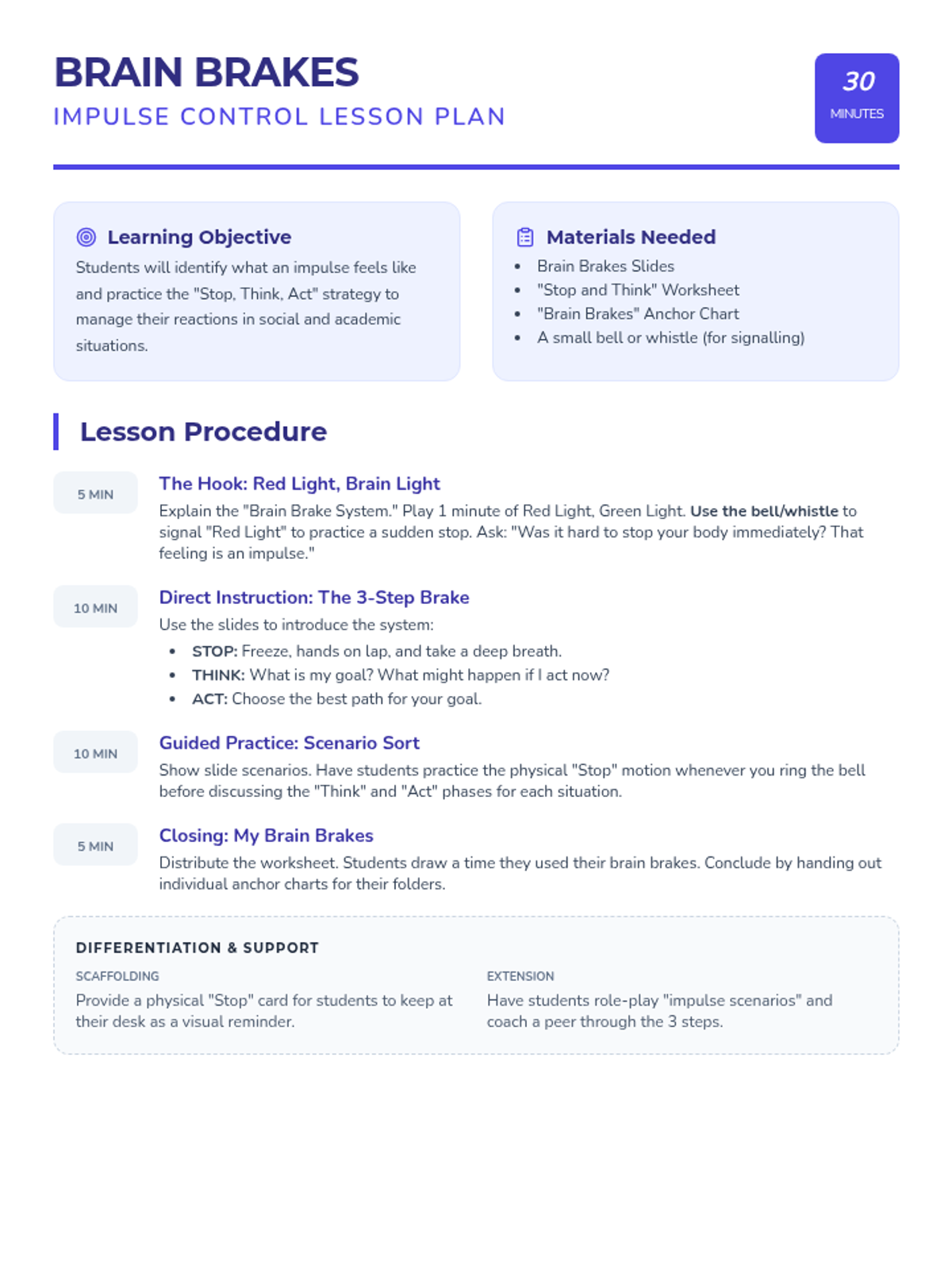
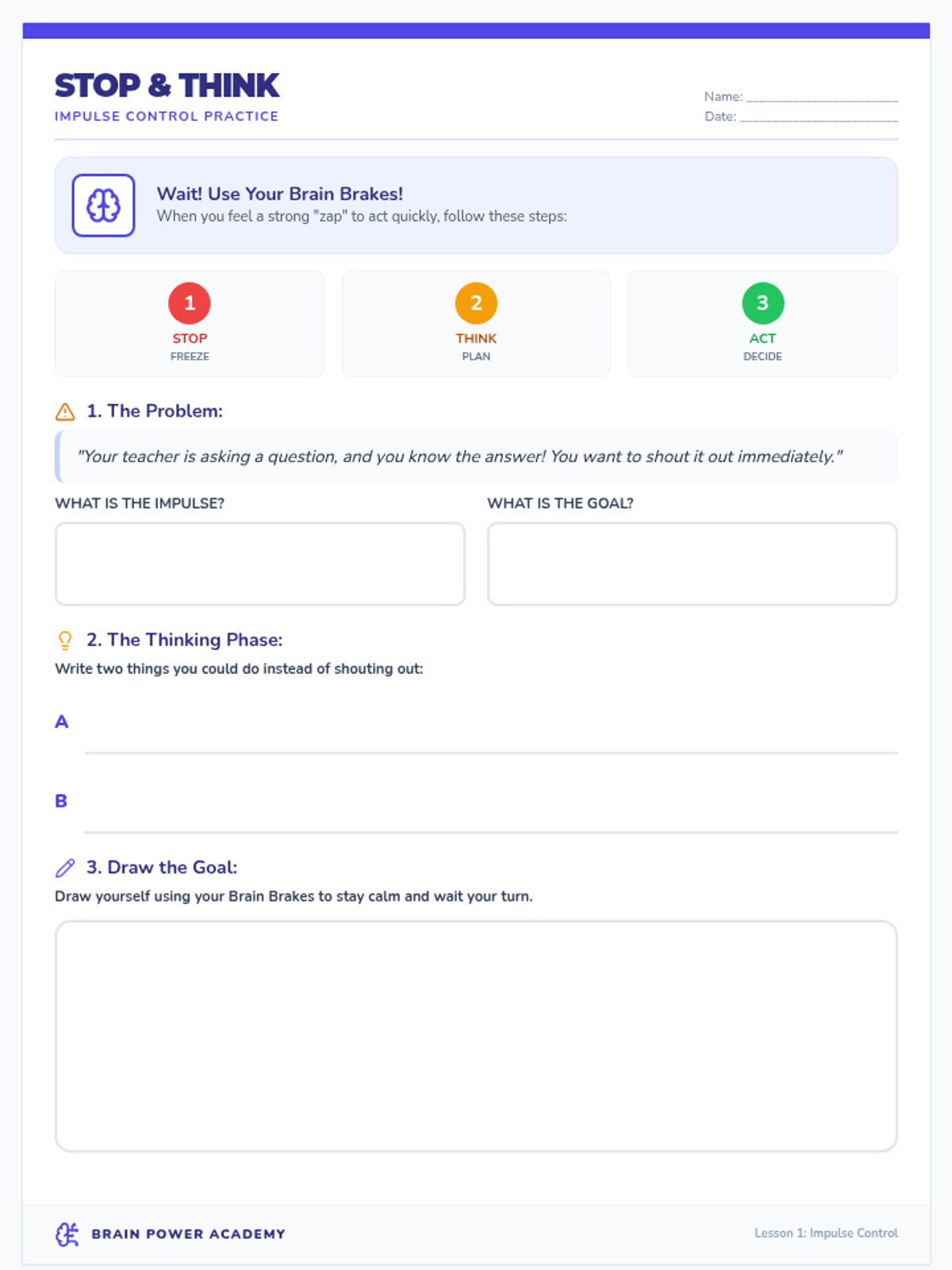
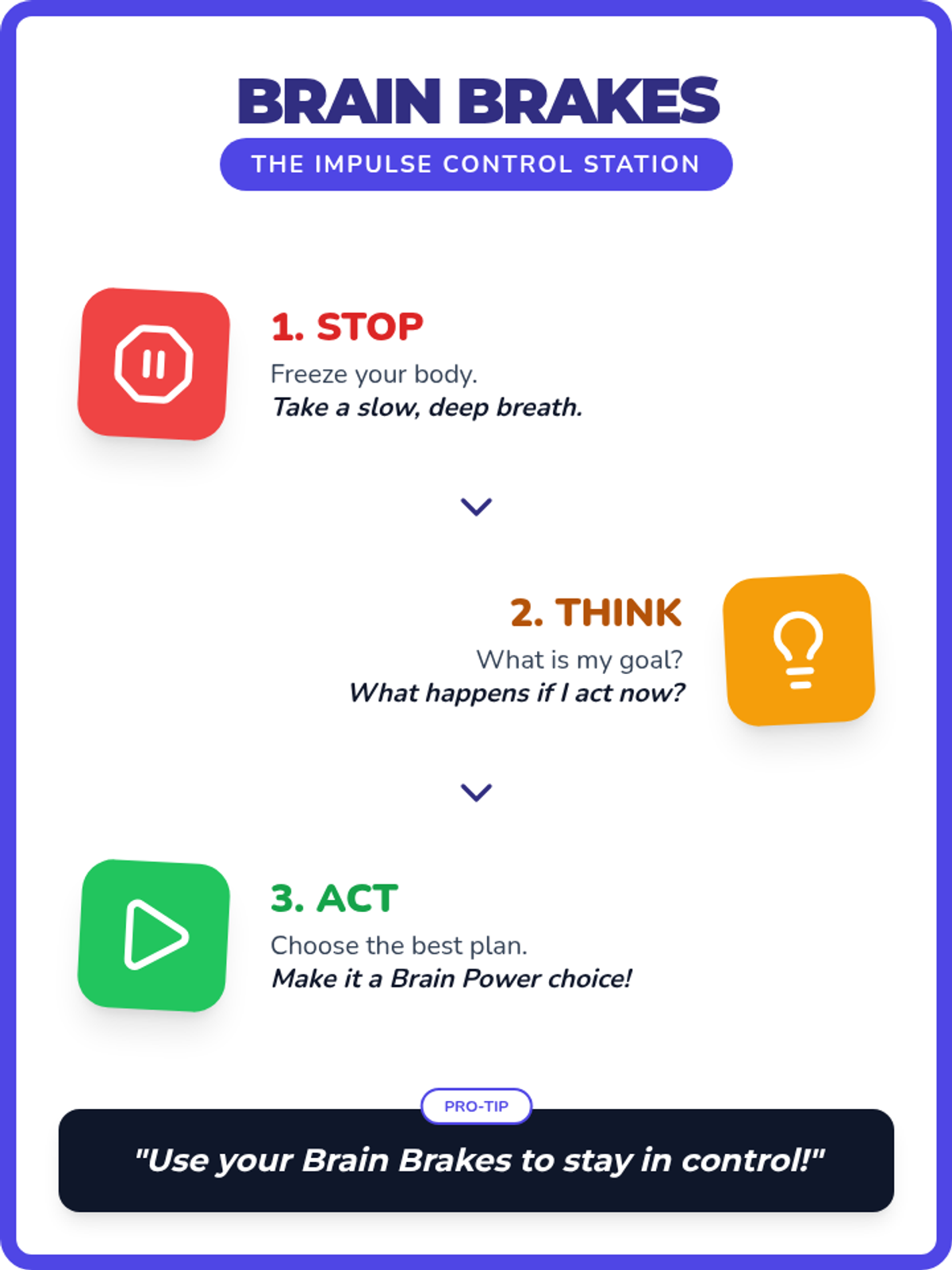
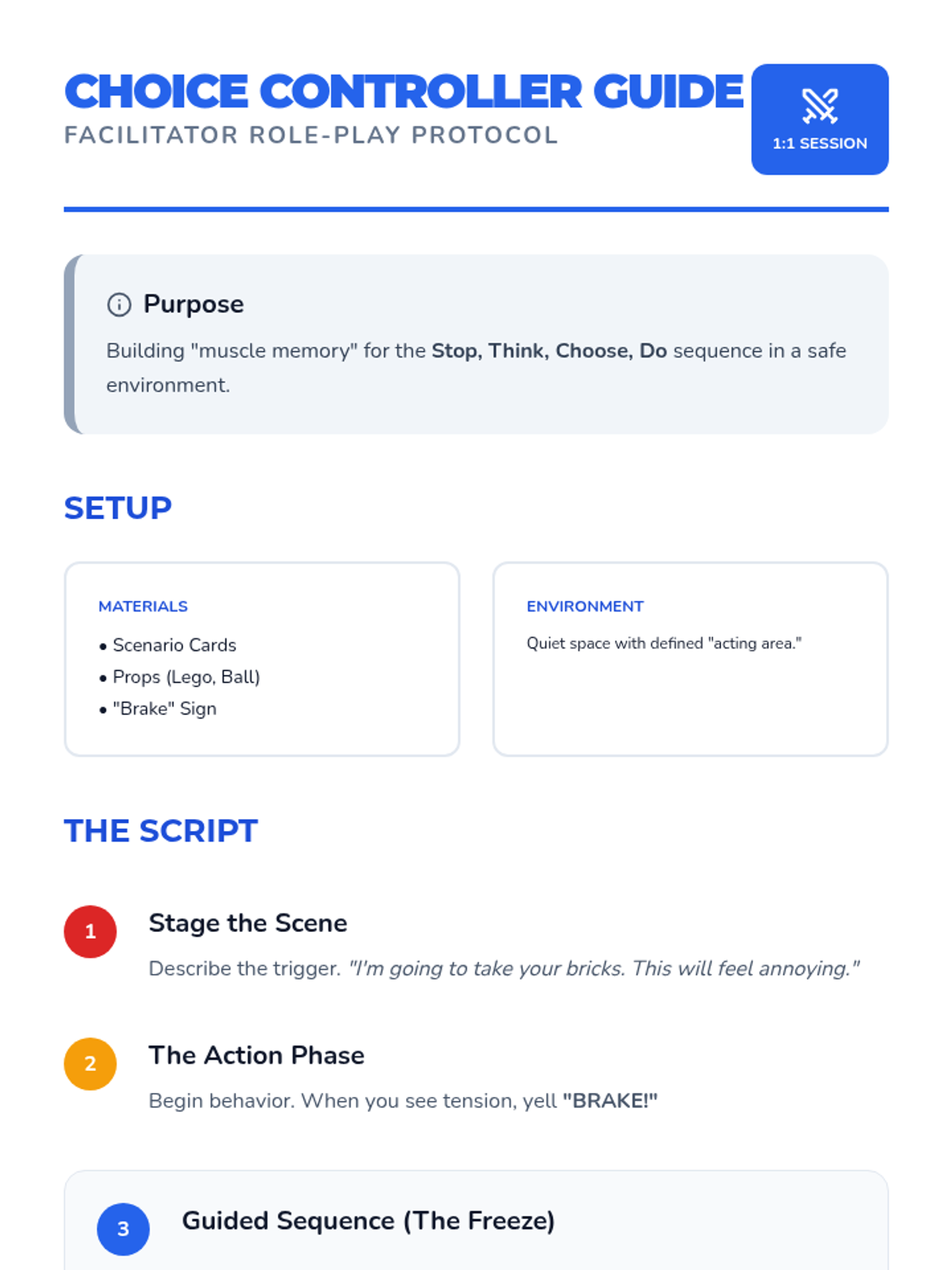
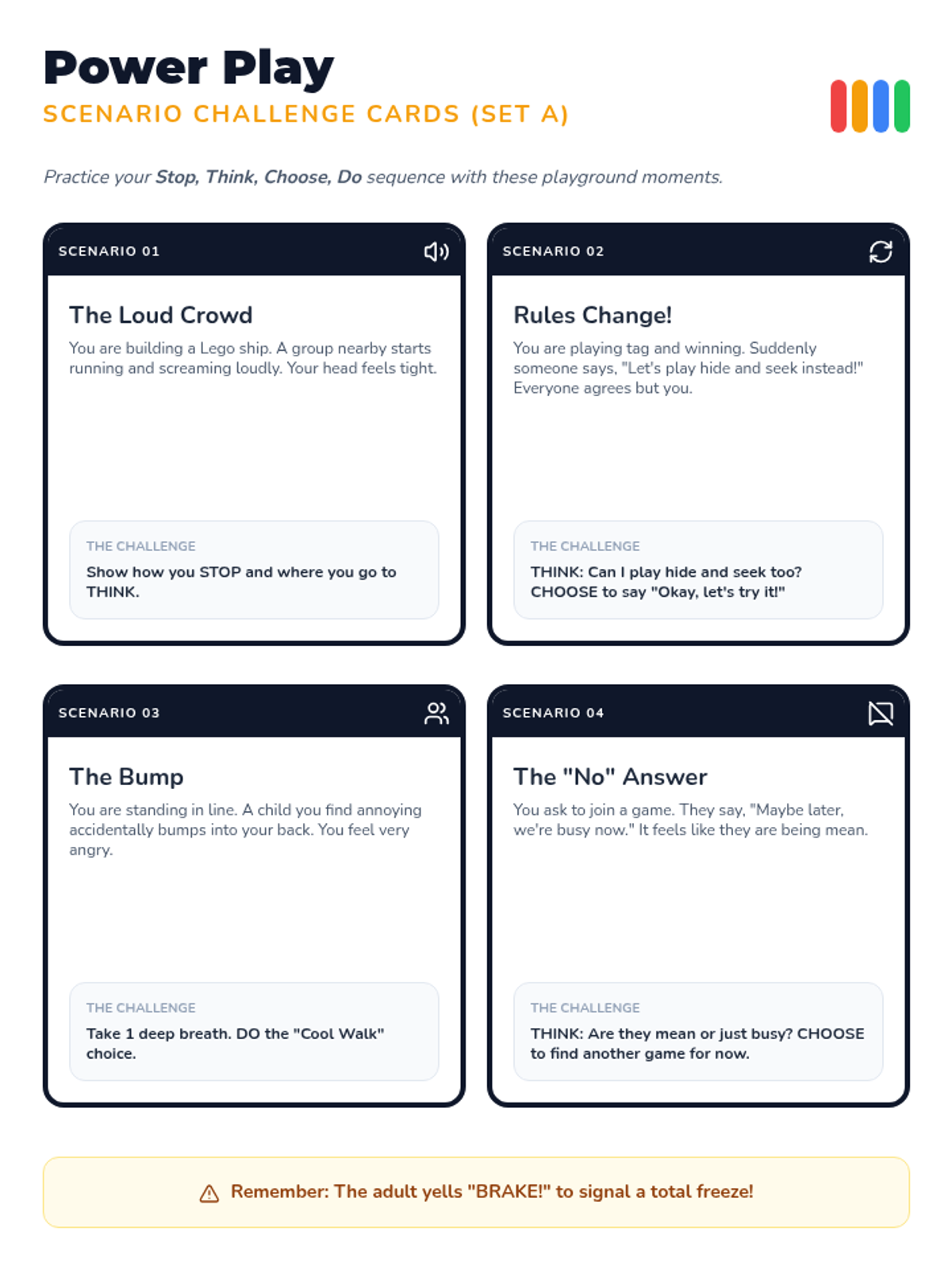
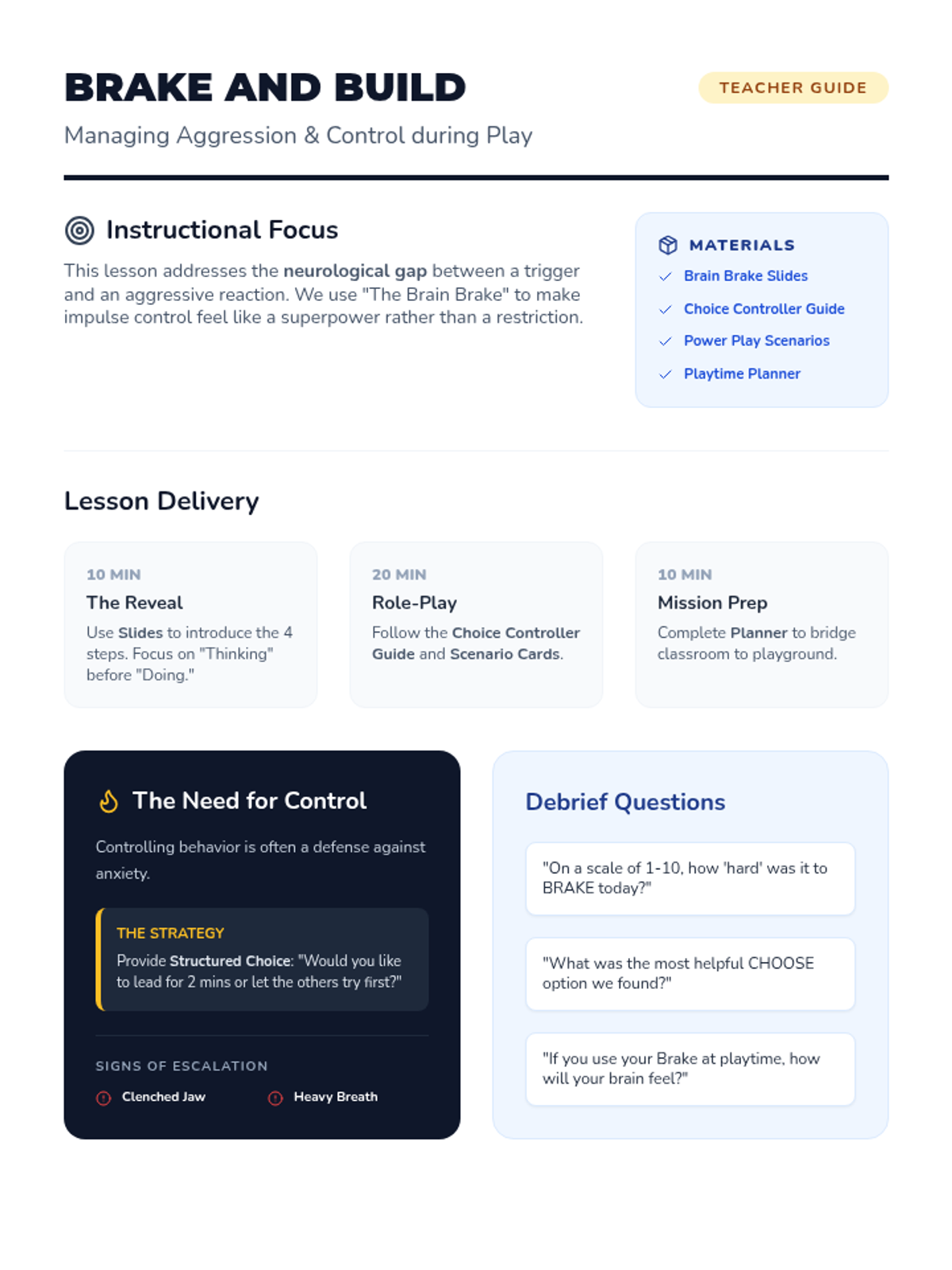
A 30-minute lesson for 2nd graders to master impulse control and self-regulation using the Stop and Think strategy. Includes tools for playground behavior, social conflicts, and classroom focus.
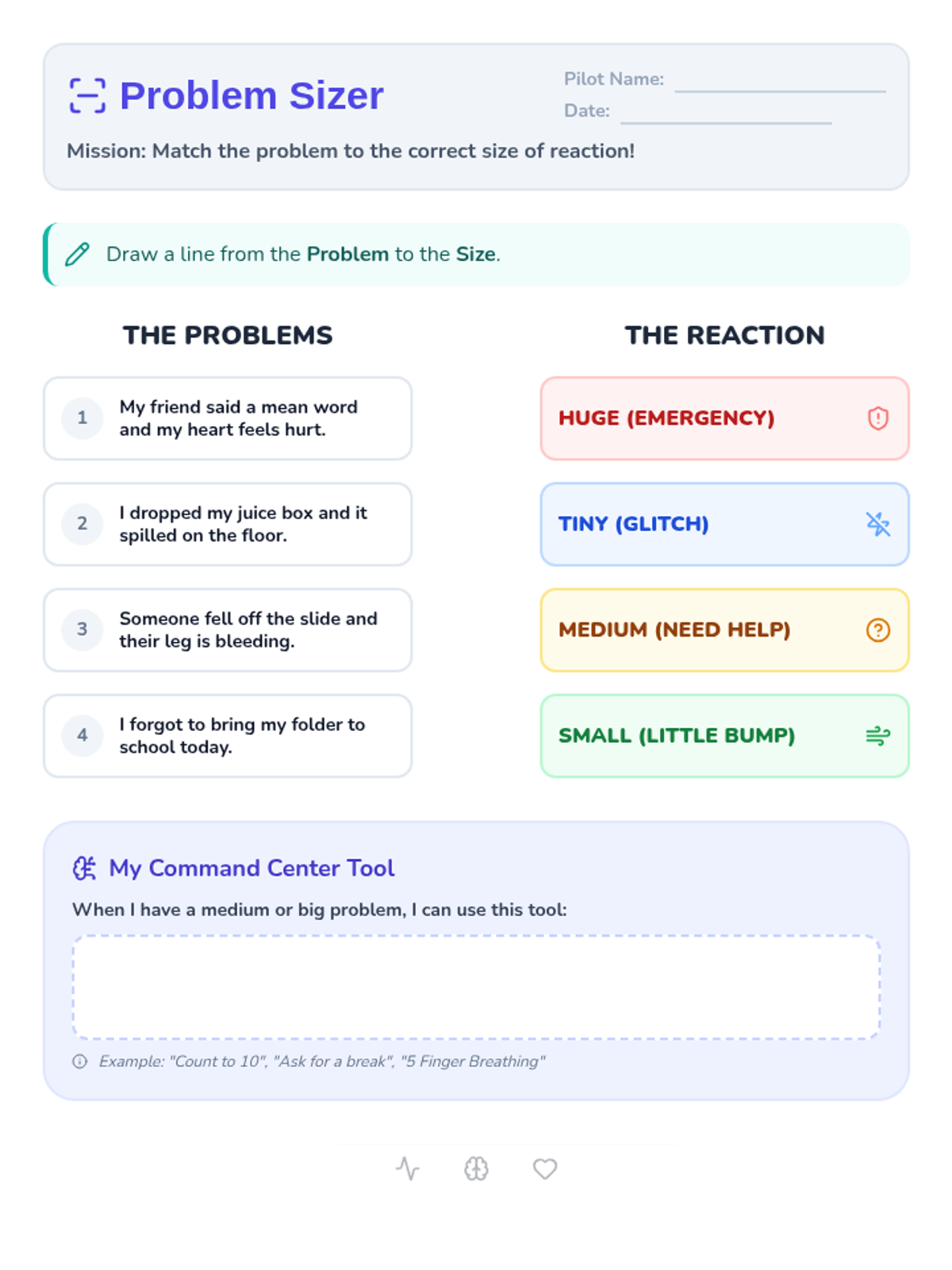
A high-energy, interactive 30-minute lesson teaching 2nd graders to distinguish between big and small problems and use the Talk-Walk-Tell method alongside Kelso's Choice and I-Messages.
A 30-minute small group session for 2nd graders focused on the social-emotional skill of including others in play and 'sharing' friends without feeling jealous or left out.
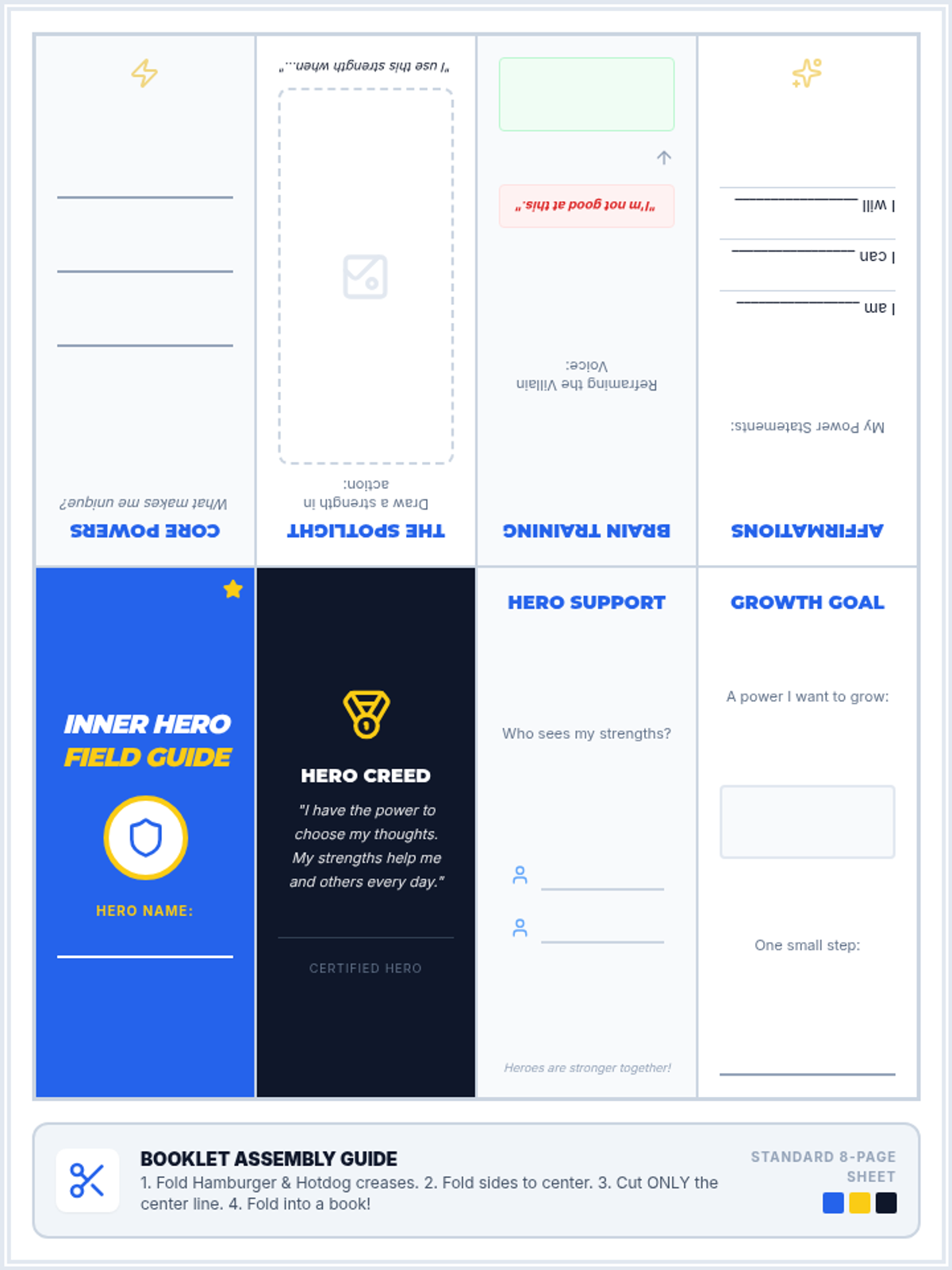
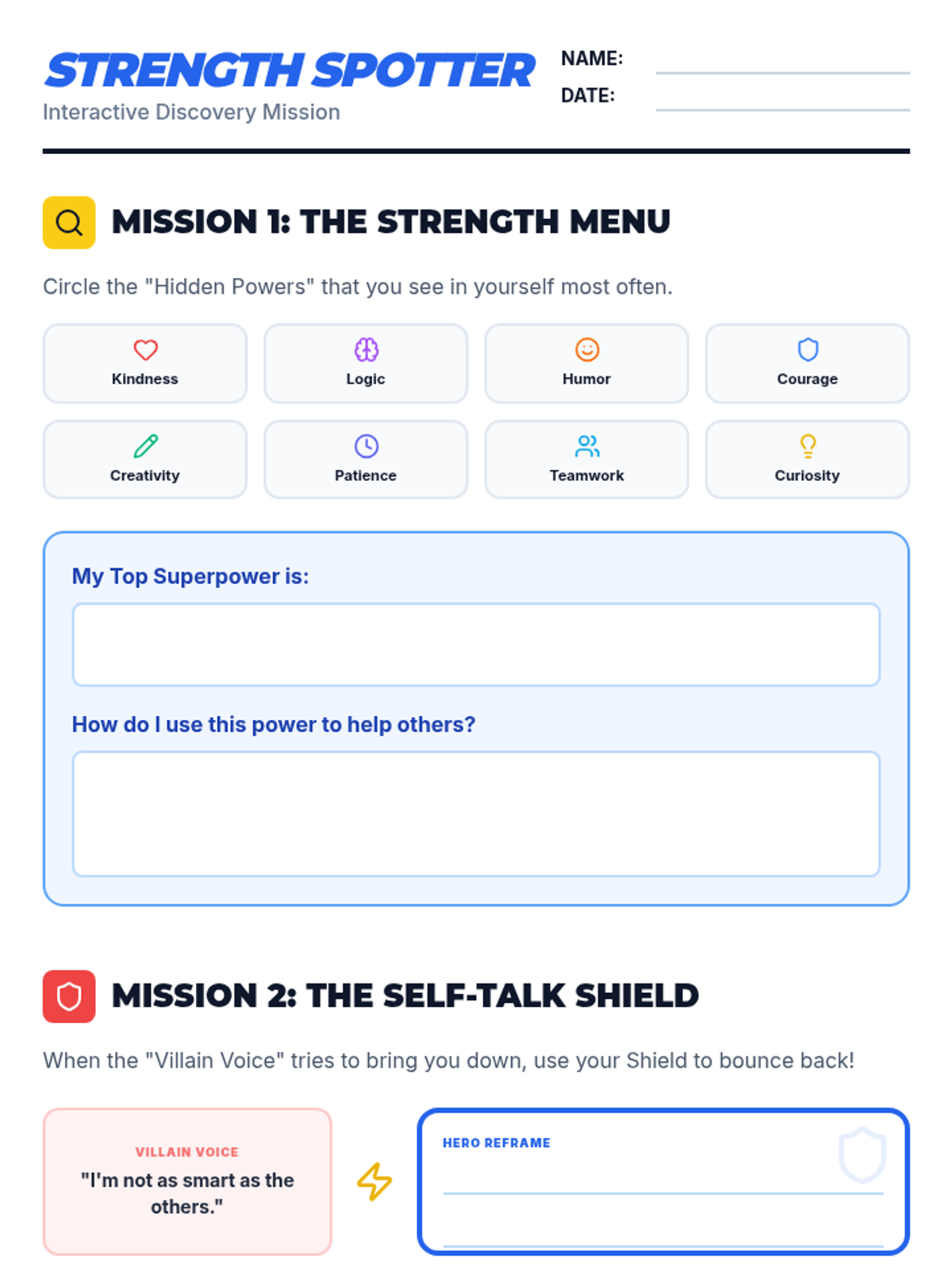
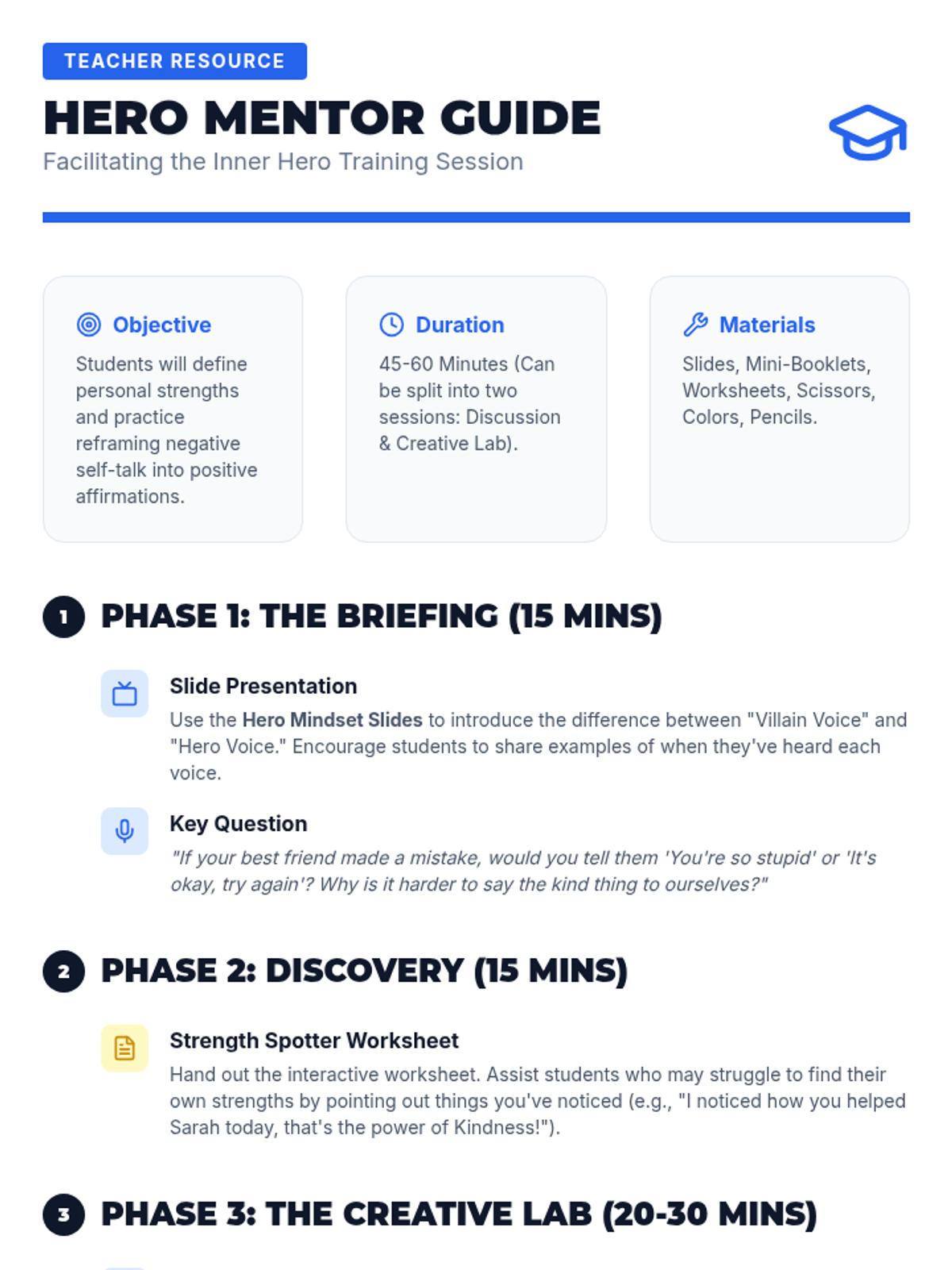
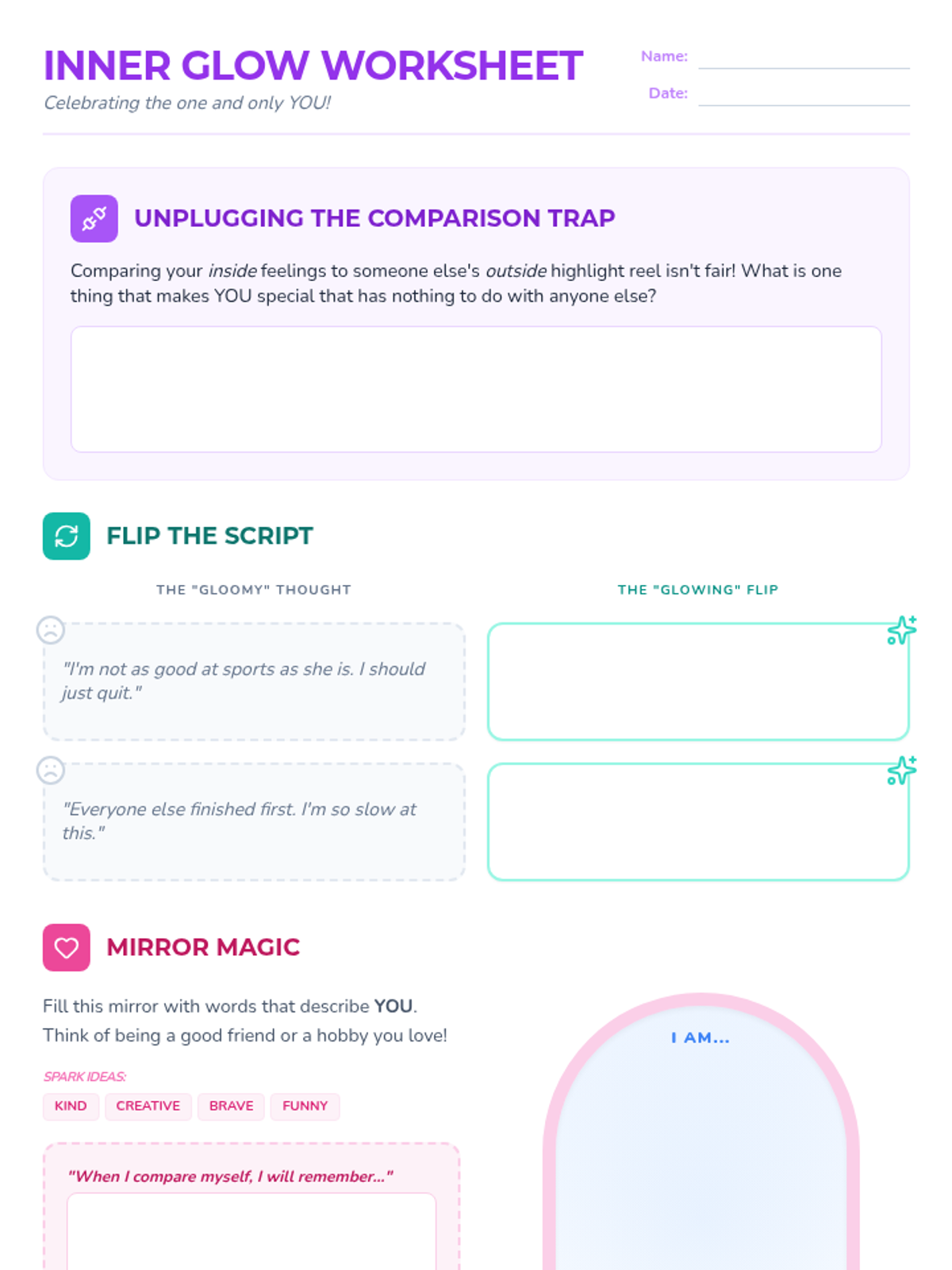
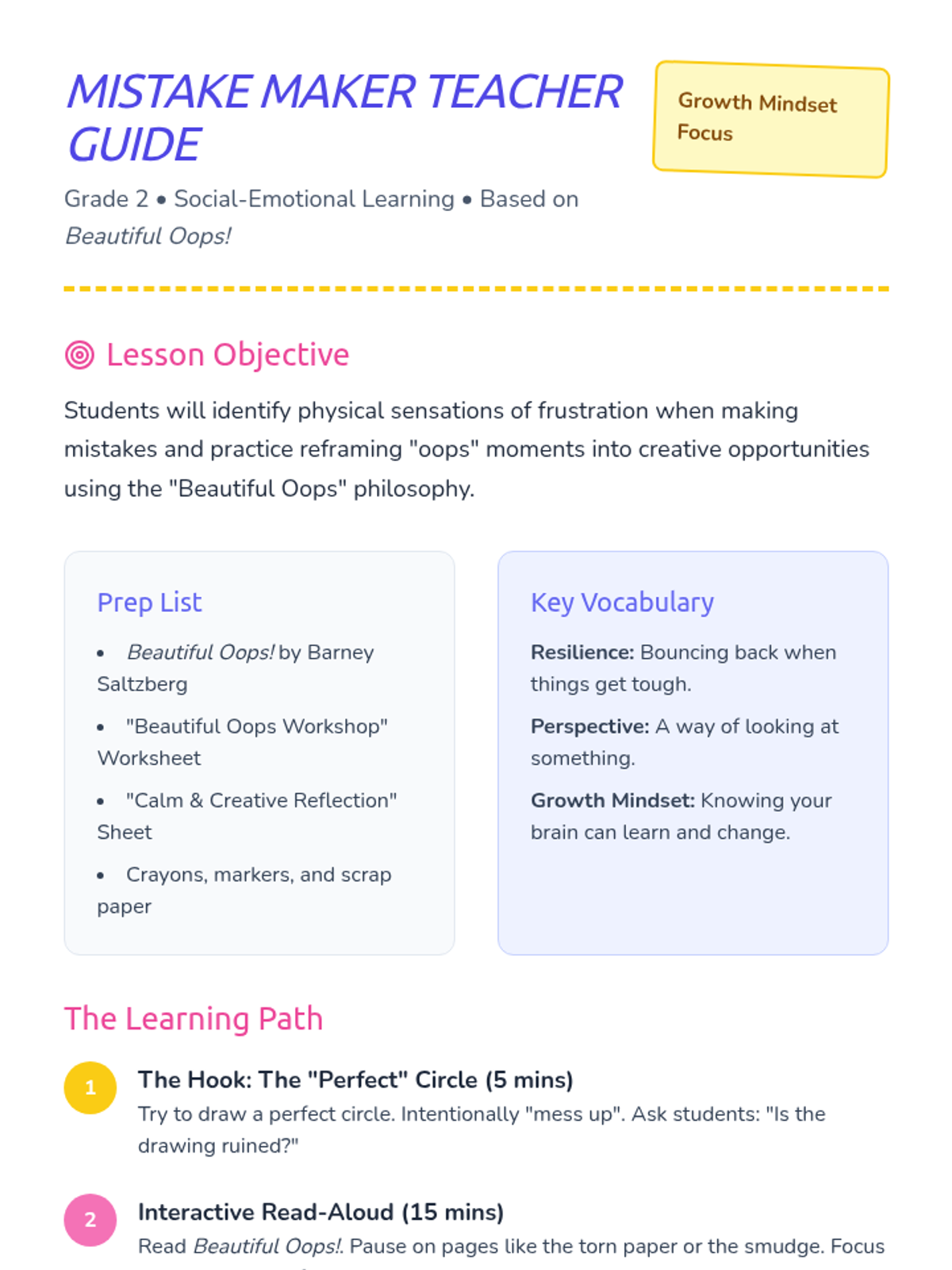
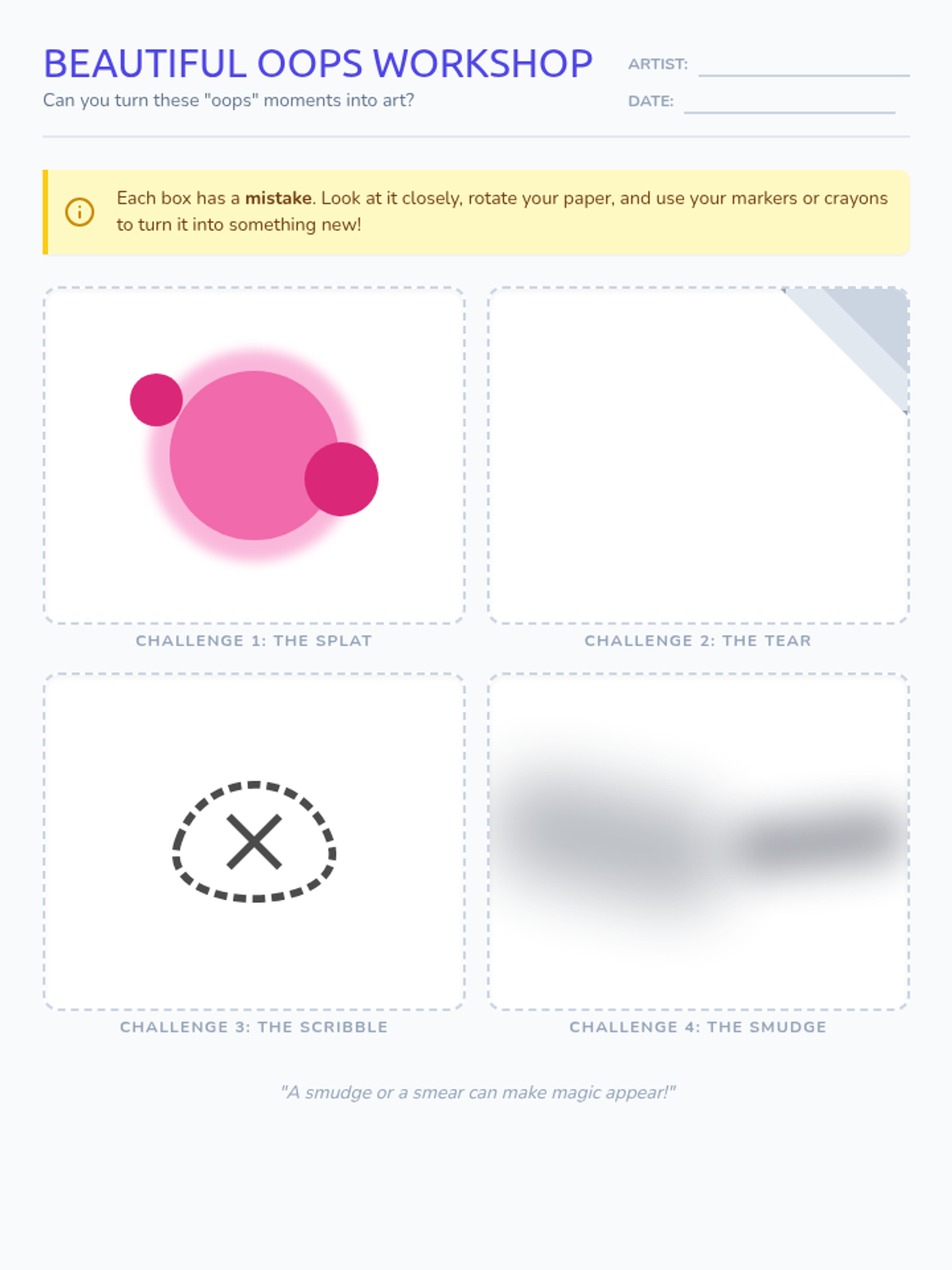
A 30-minute interactive lesson focused on identifying negative self-talk and reframing mistakes as learning opportunities. Students develop a personal 'Inner Hero' persona to combat self-doubt.
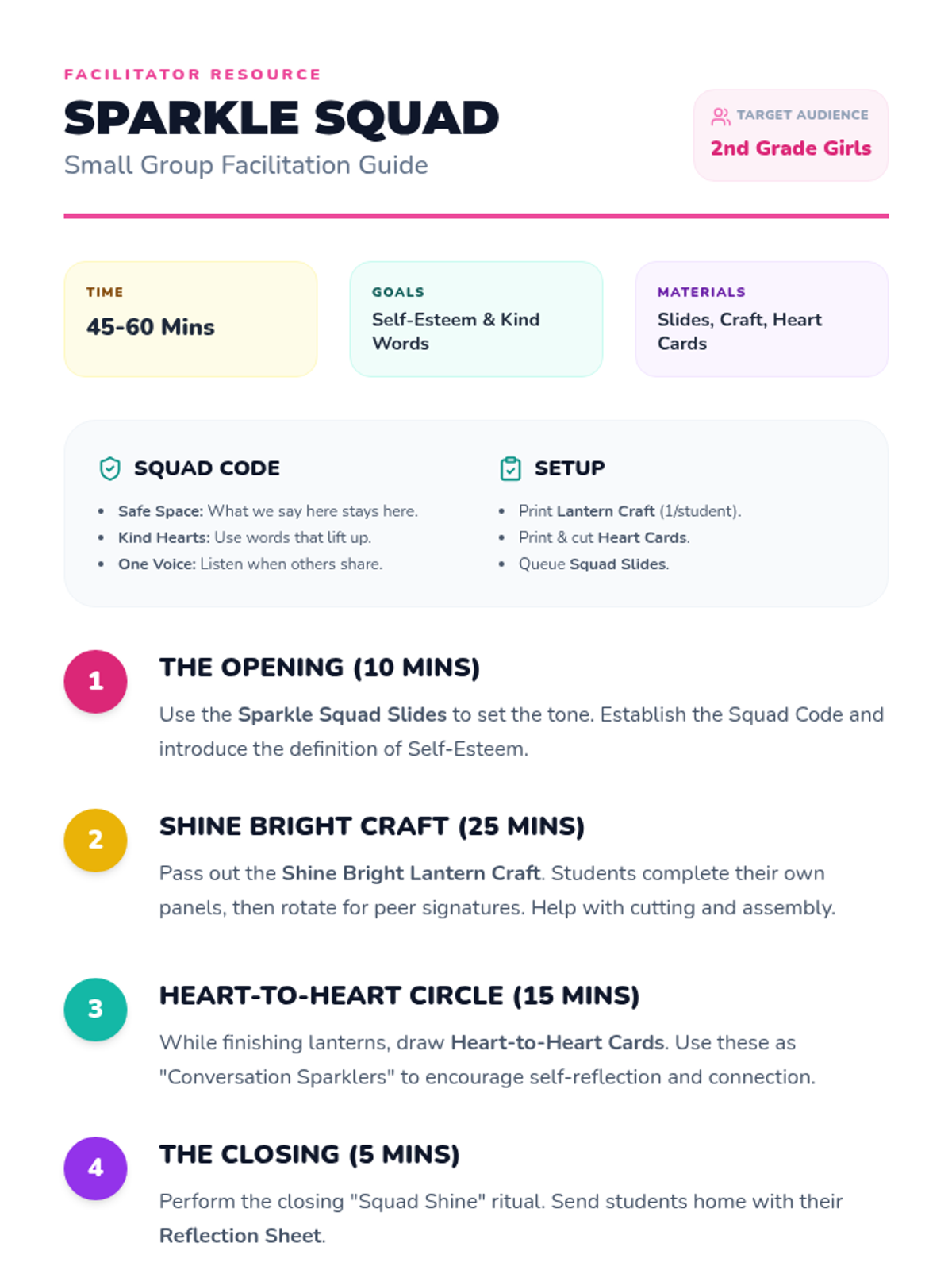
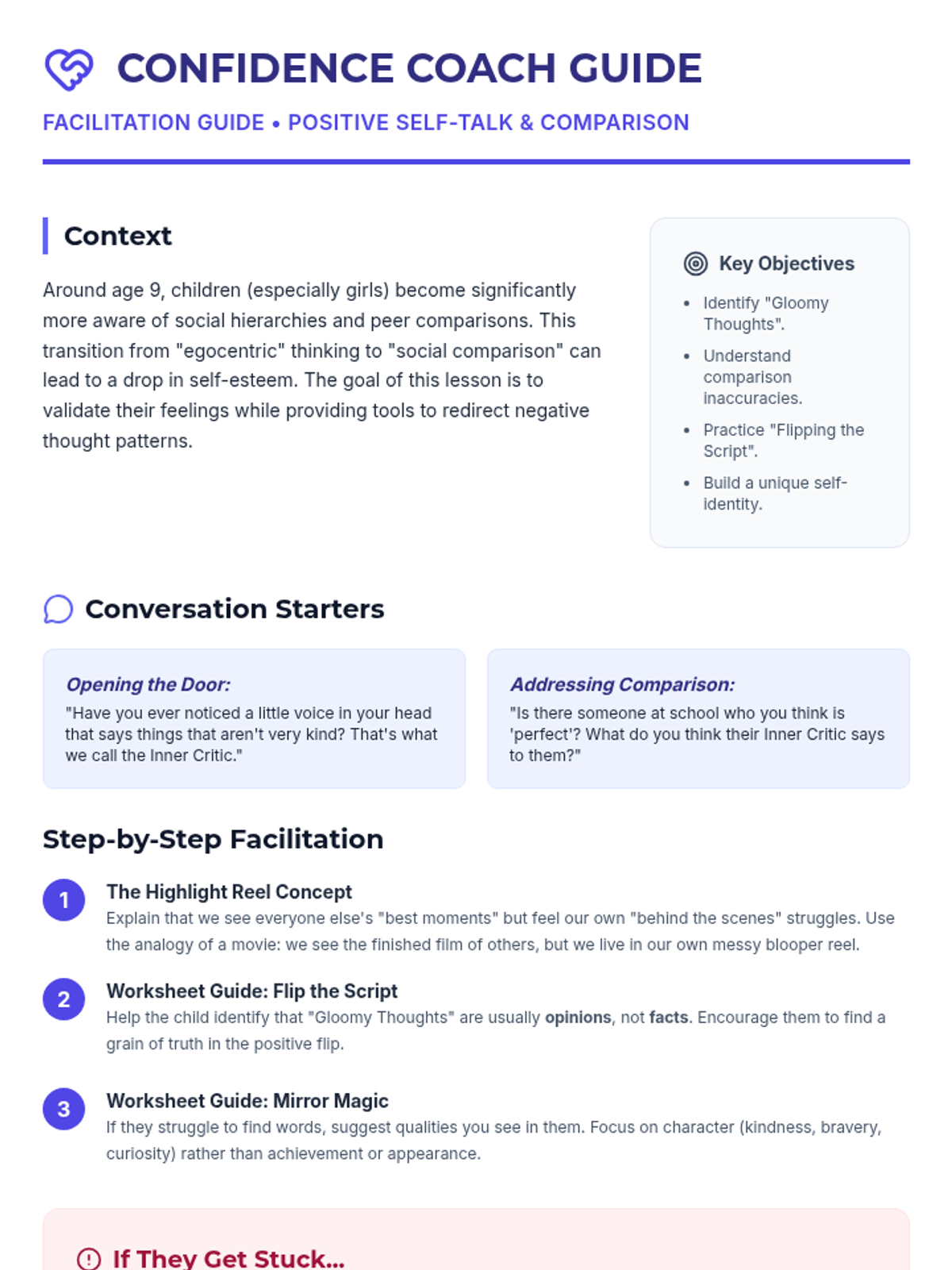
A mentor-facilitated program designed to build student confidence through positive self-talk, growth mindset exercises, and practical coping strategies. The materials provide a structured but flexible framework for meaningful 1-on-1 sessions.
A lesson focused on identifying internal body signals (fast heart, butterflies, etc.) through the book 'My Feelings Make Me Stronger' and tracing/matching activities.
A session dedicated to applying knowledge of body signals through role-play, scripted social stories, and hands-on scenario sorting.
A review of the 'Impulse Command' strategies and a graduation ceremony celebrating self-control mastery.
Focusing on delayed gratification and techniques for waiting patiently in high-energy situations.
Using the 'Consequence Camera' to visualize the results of choices before making them.
Teaching the 5-second pause technique and internal self-talk as a buffer for immediate reactions.
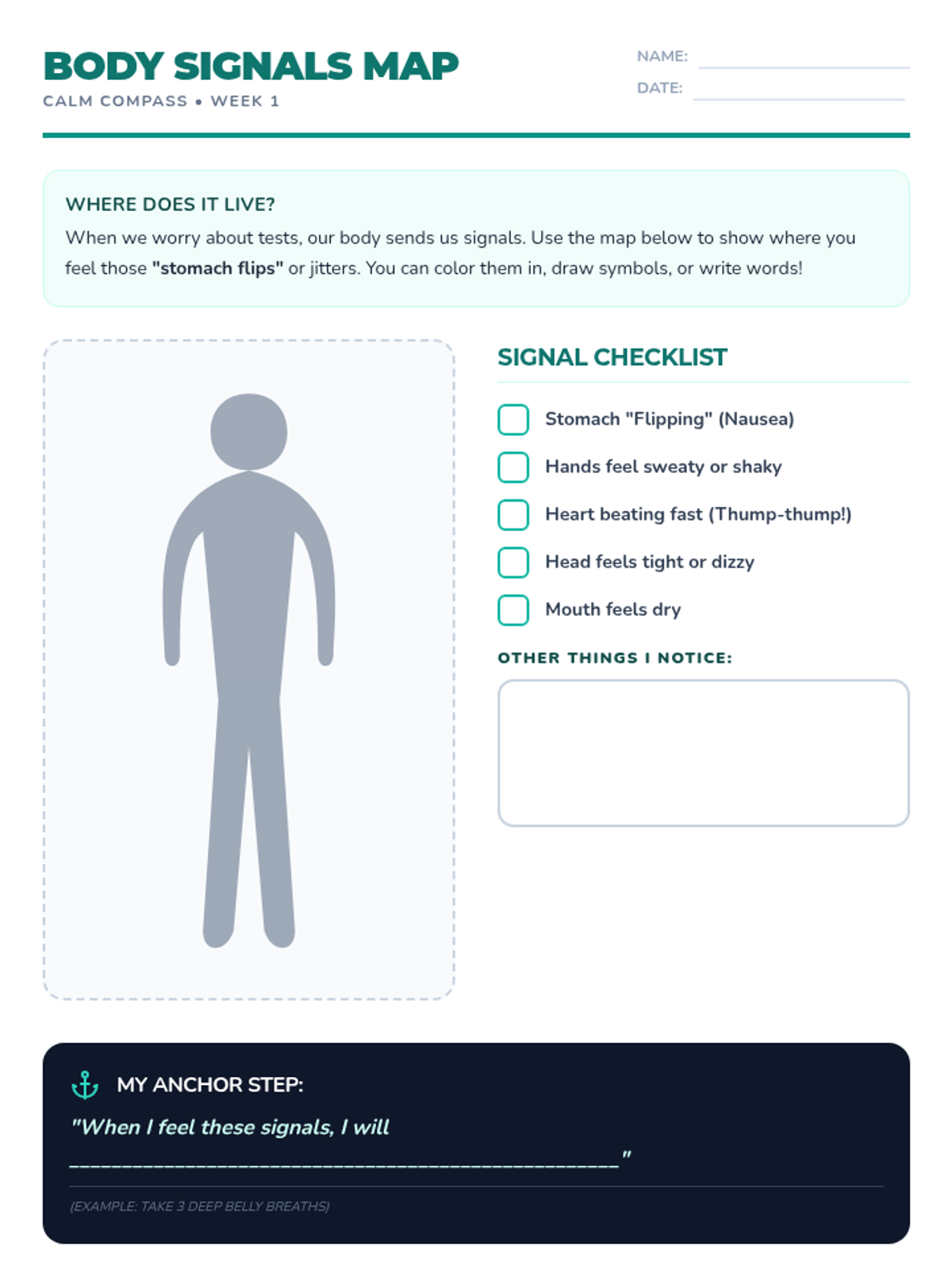
Helping students identify the physical warning signs in their bodies that occur right before an impulsive urge.
Introducing the 'Brain Remote Control' concept to help students understand they have the power to 'Pause' before reacting.
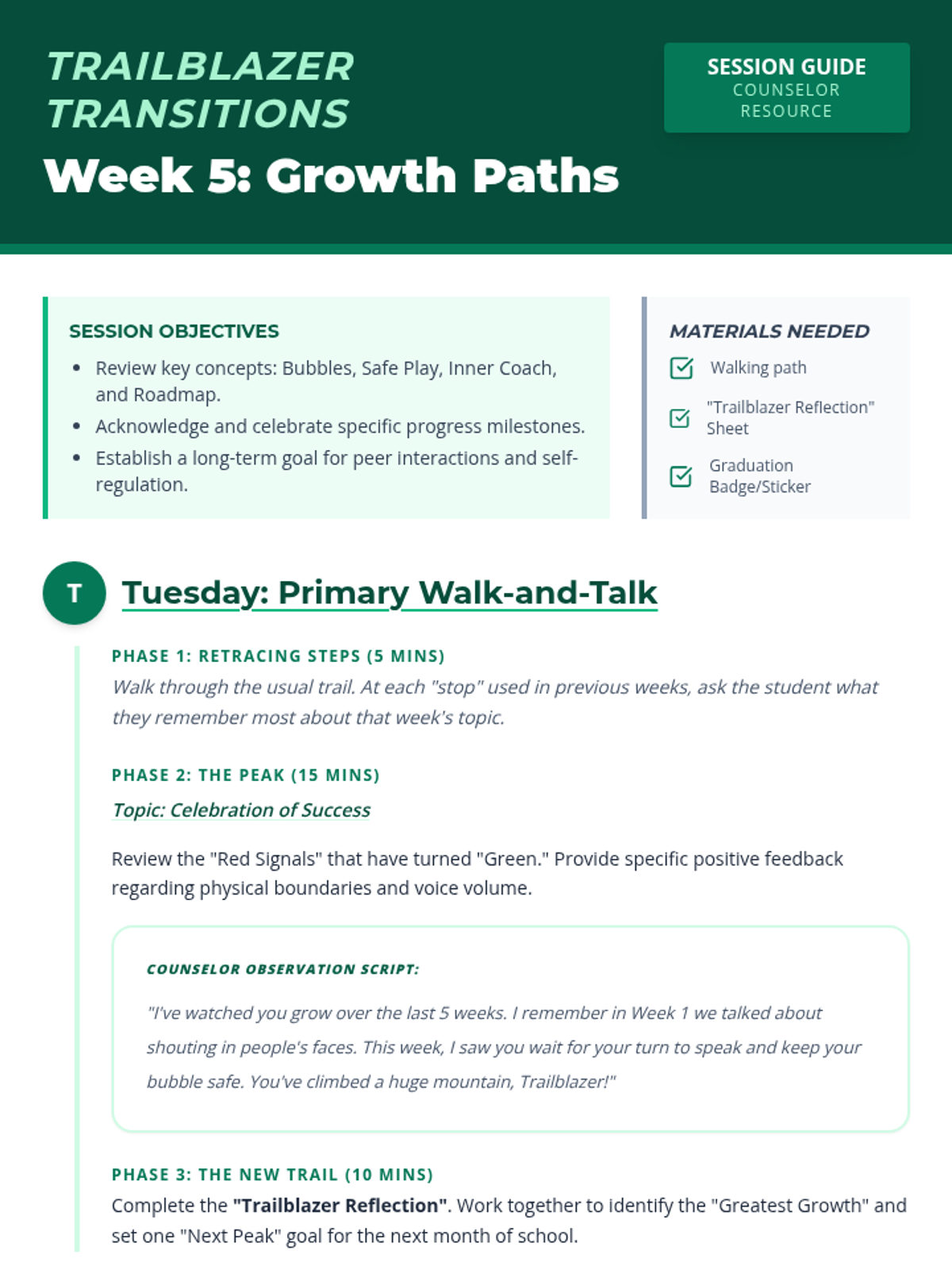
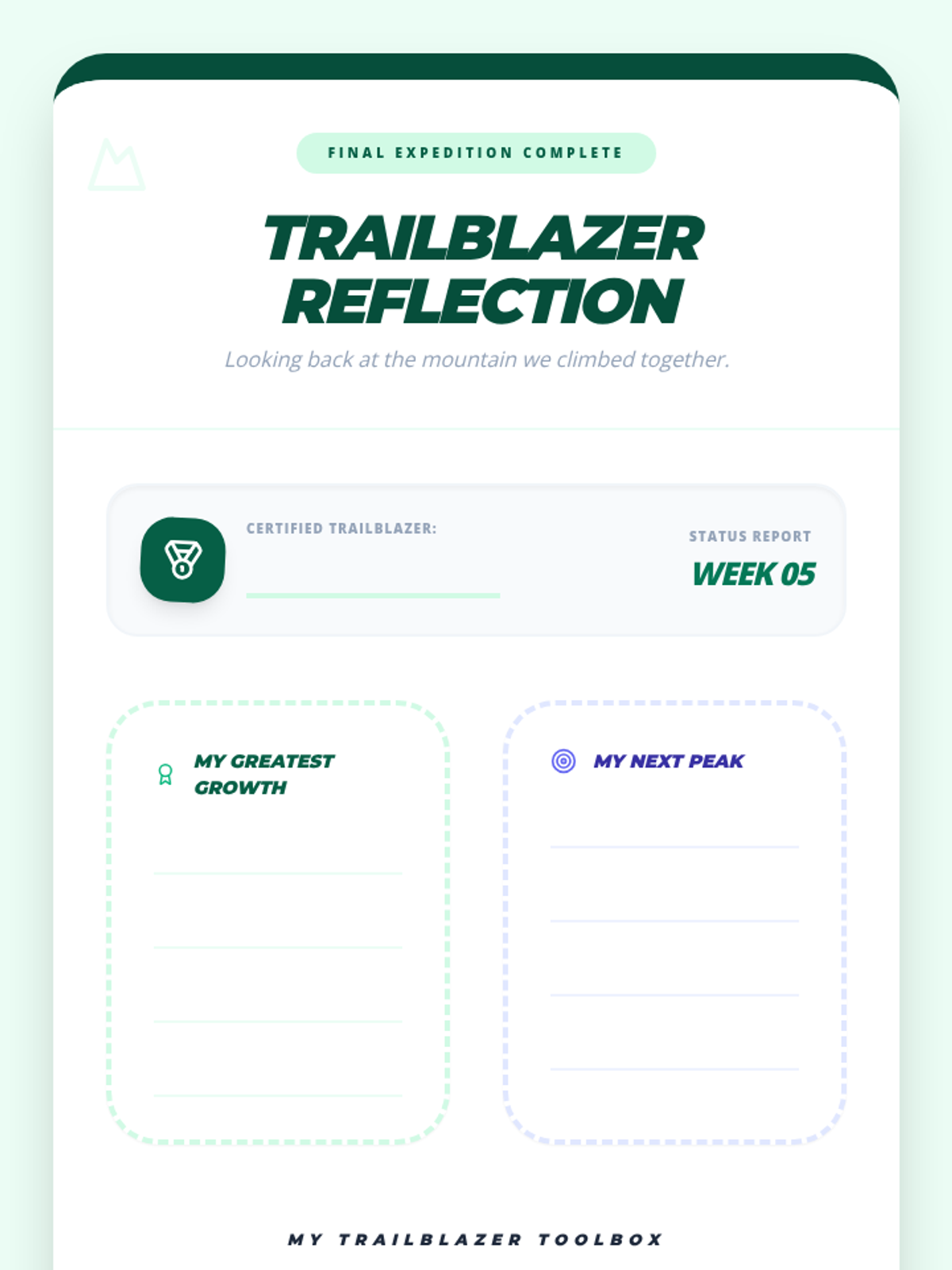
A review of the previous five weeks, celebrating student progress with a group graduation ceremony.
Empowers students to set verbal boundaries by using 'Stop' signals and expressing their feelings appropriately.
Explores what it means to be a good friend, focusing on sharing, listening, and being kind.
Teaches the importance of rules and following directions to keep everyone safe and happy in a group.
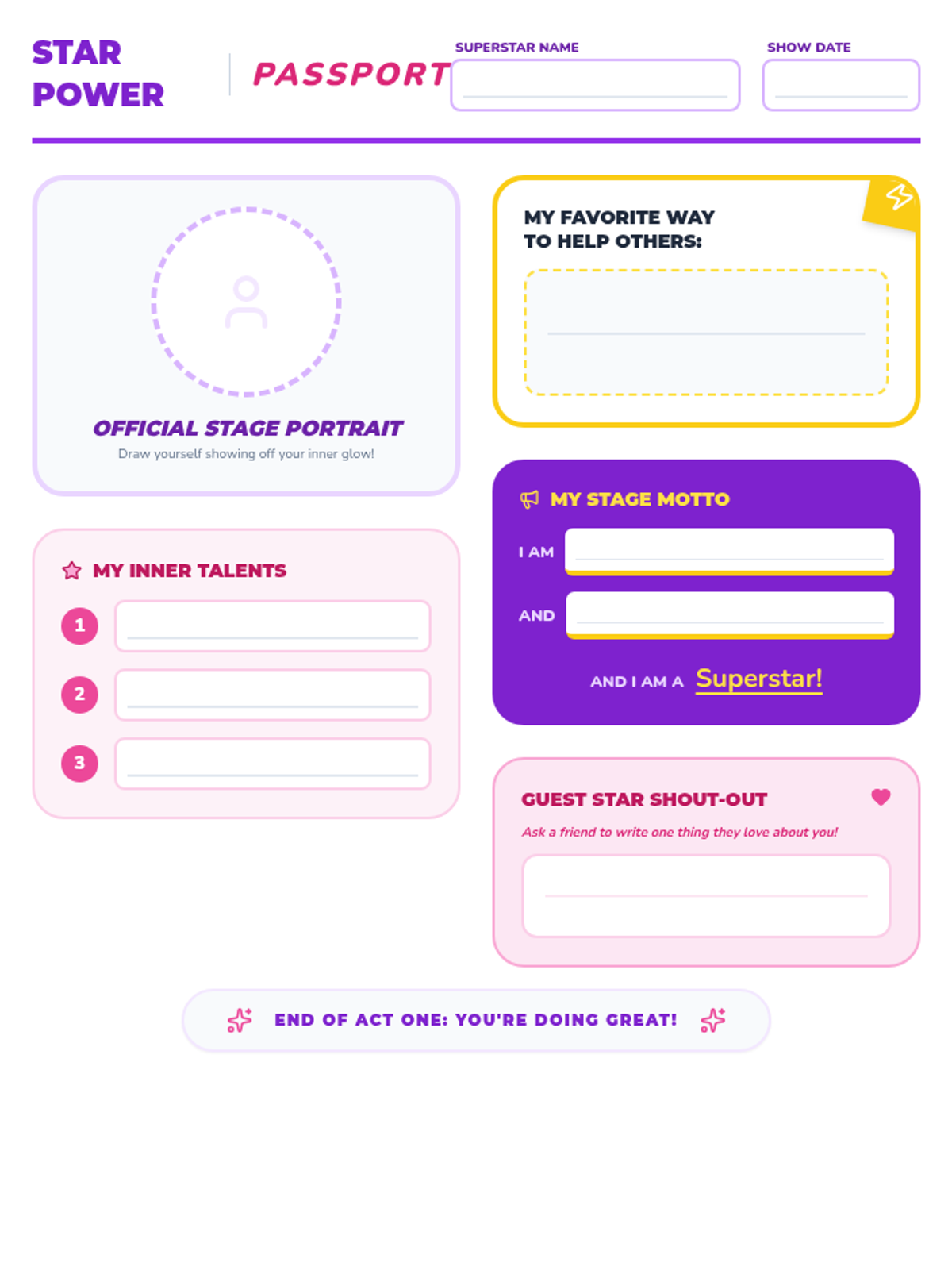
Focuses on managing impulsivity by teaching students to 'Stop, Think, and Choose' before acting.
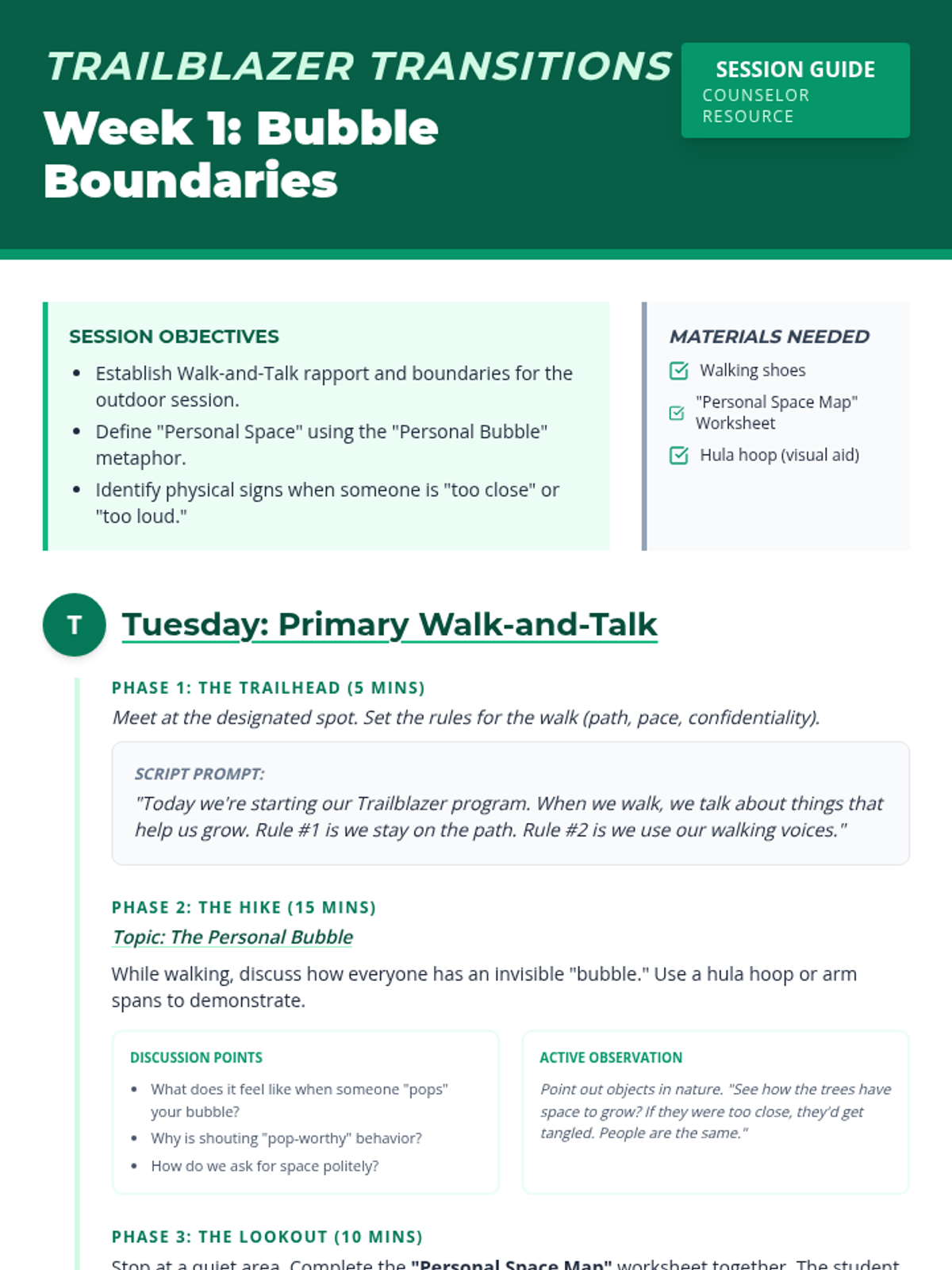
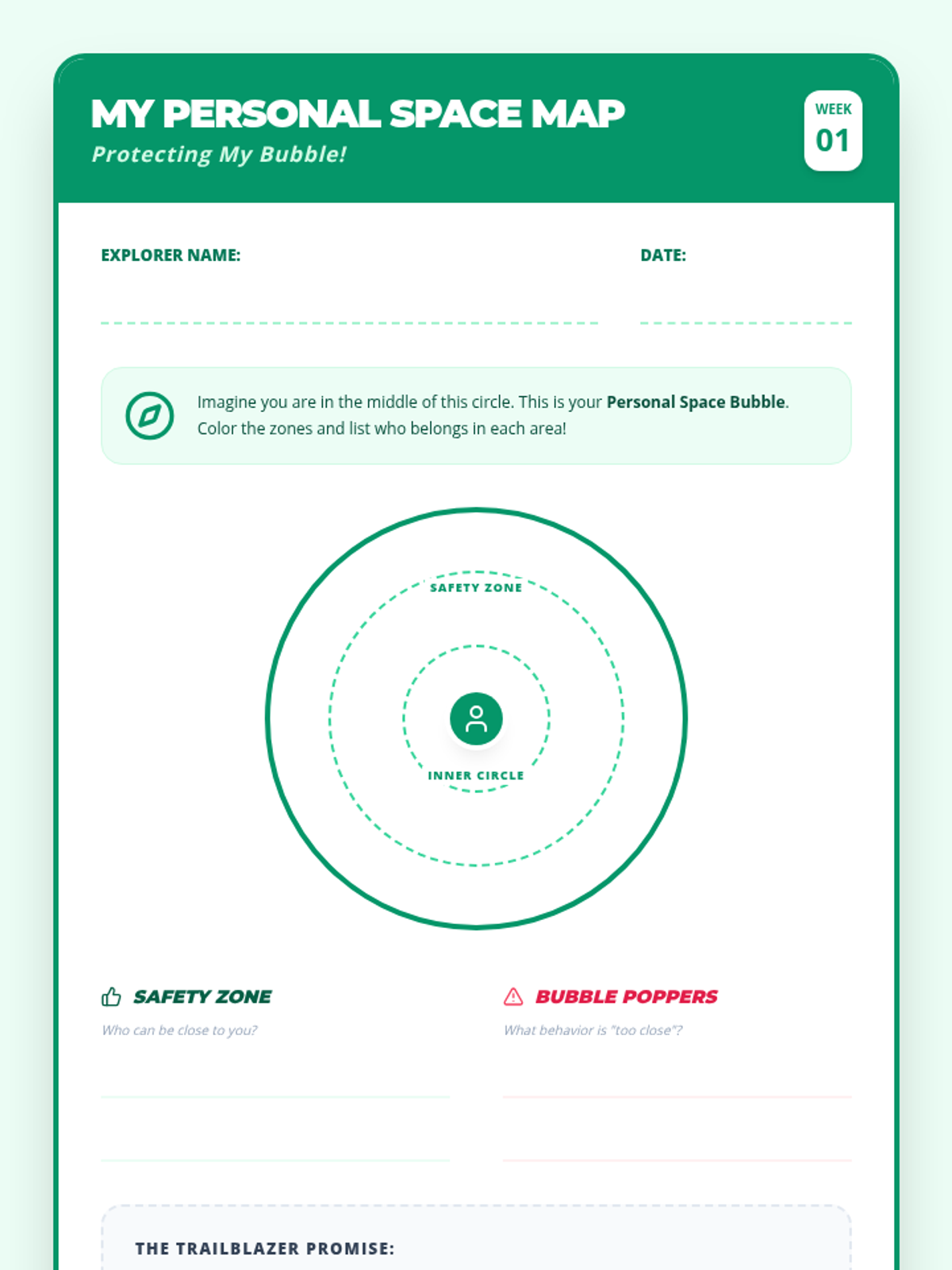
Introduction to personal space boundaries using the 'Space Bubble' concept to help students understand physical limits.
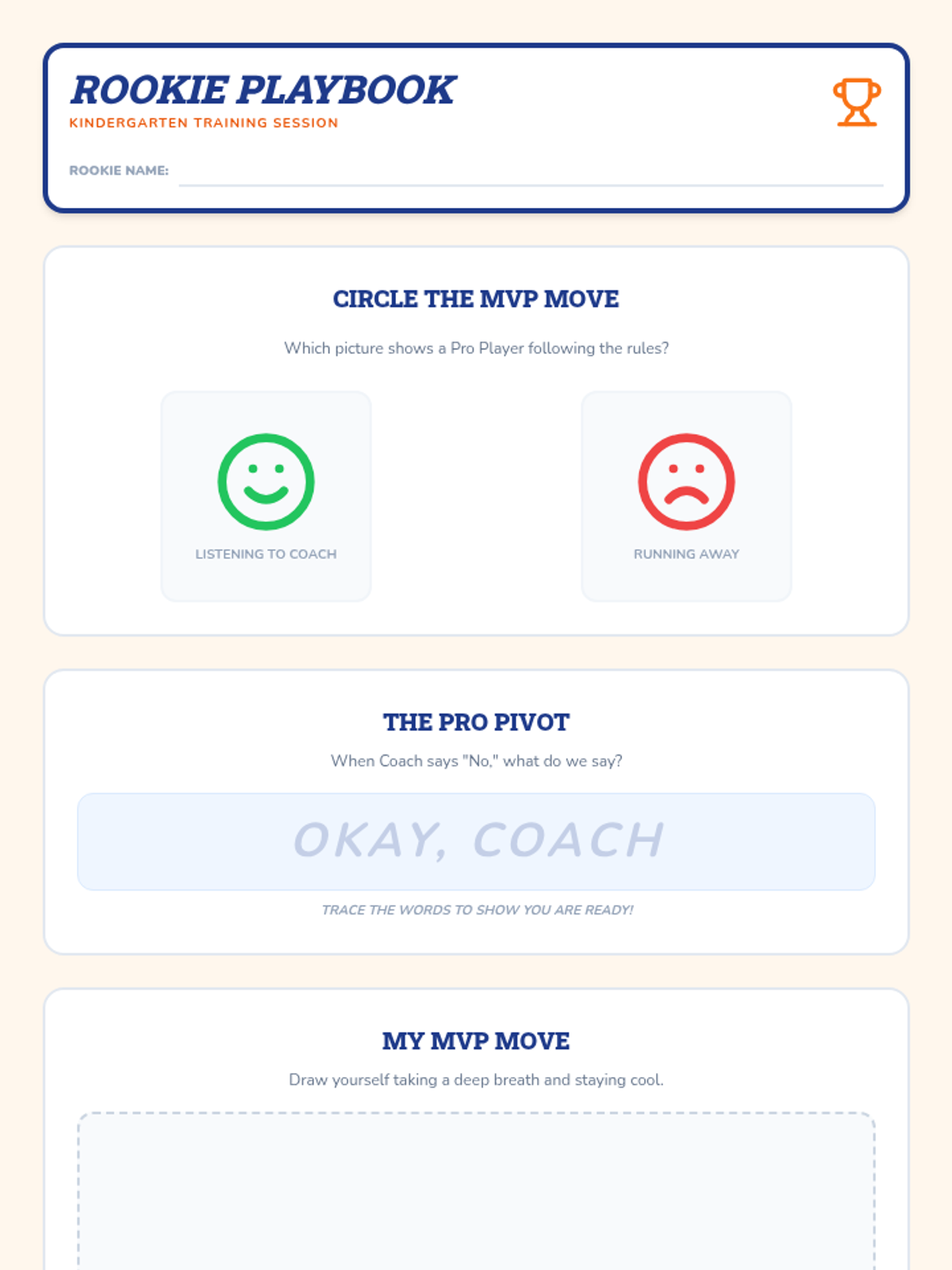
A collaborative group-building activity where students work in teams to complete puzzle-based relay challenges, focusing on social communication, turn-taking, and the concept of inclusion.
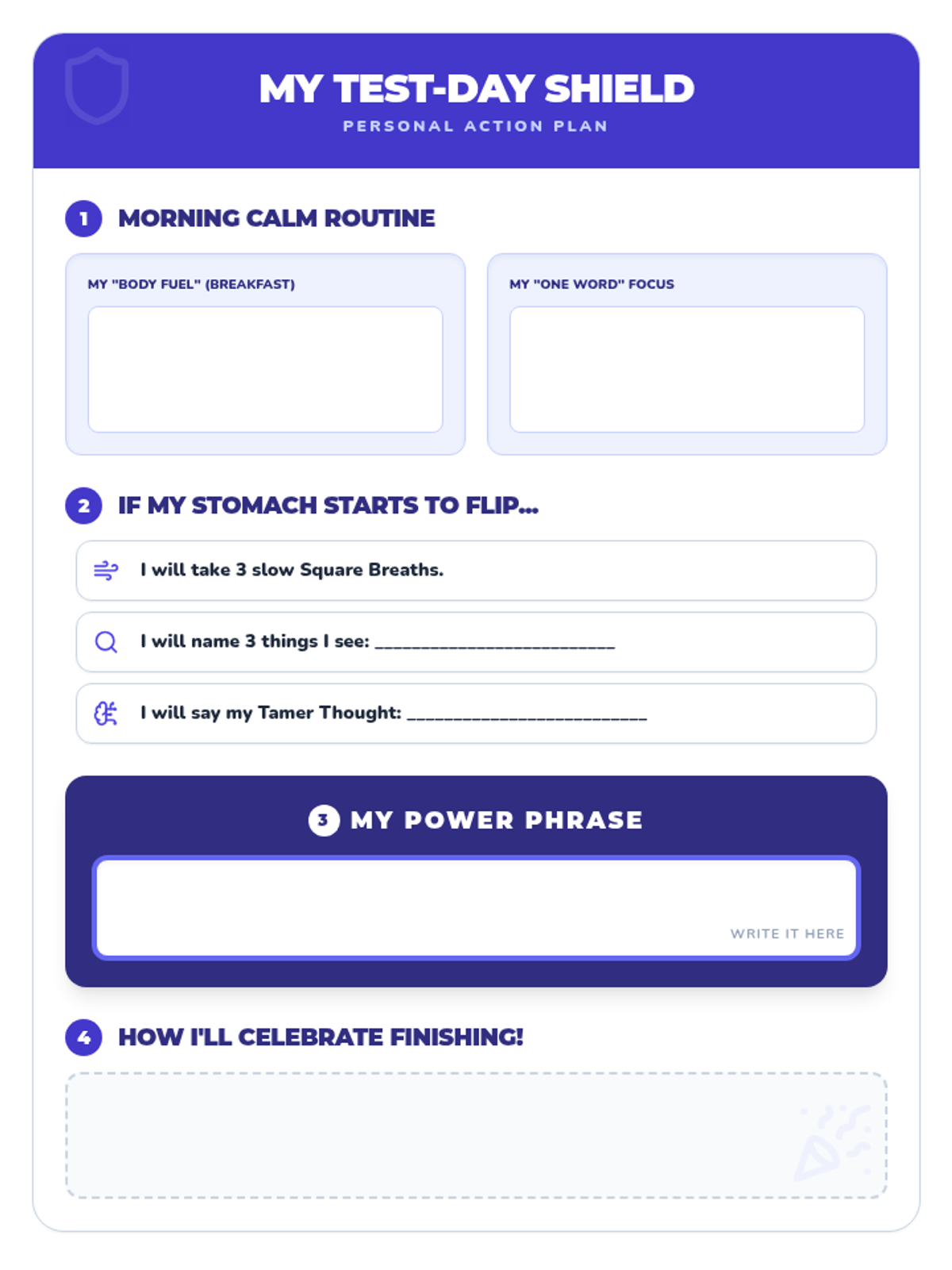
A collection of tools to help students in residential settings prepare for their school day through social-emotional reflection.
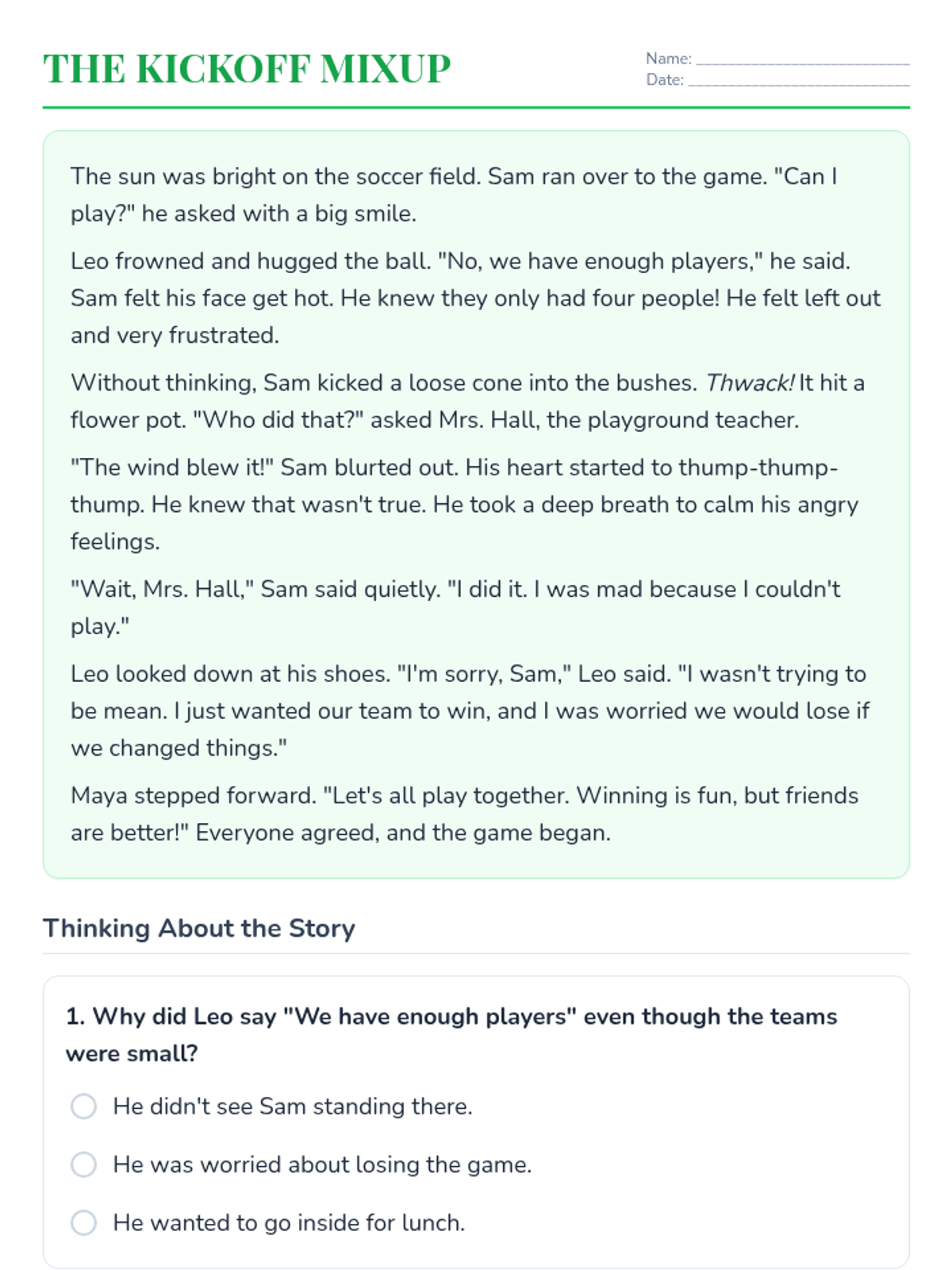
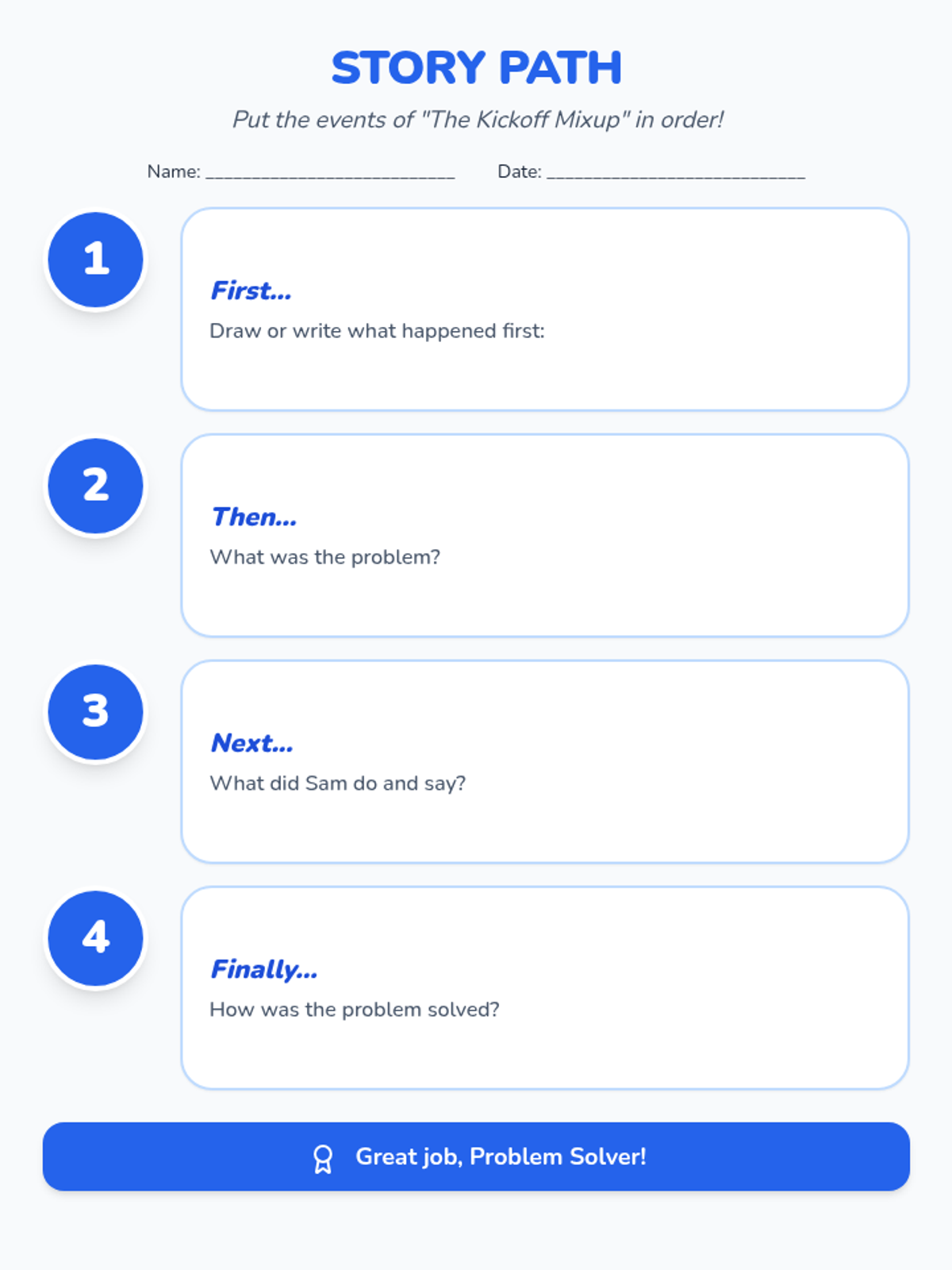
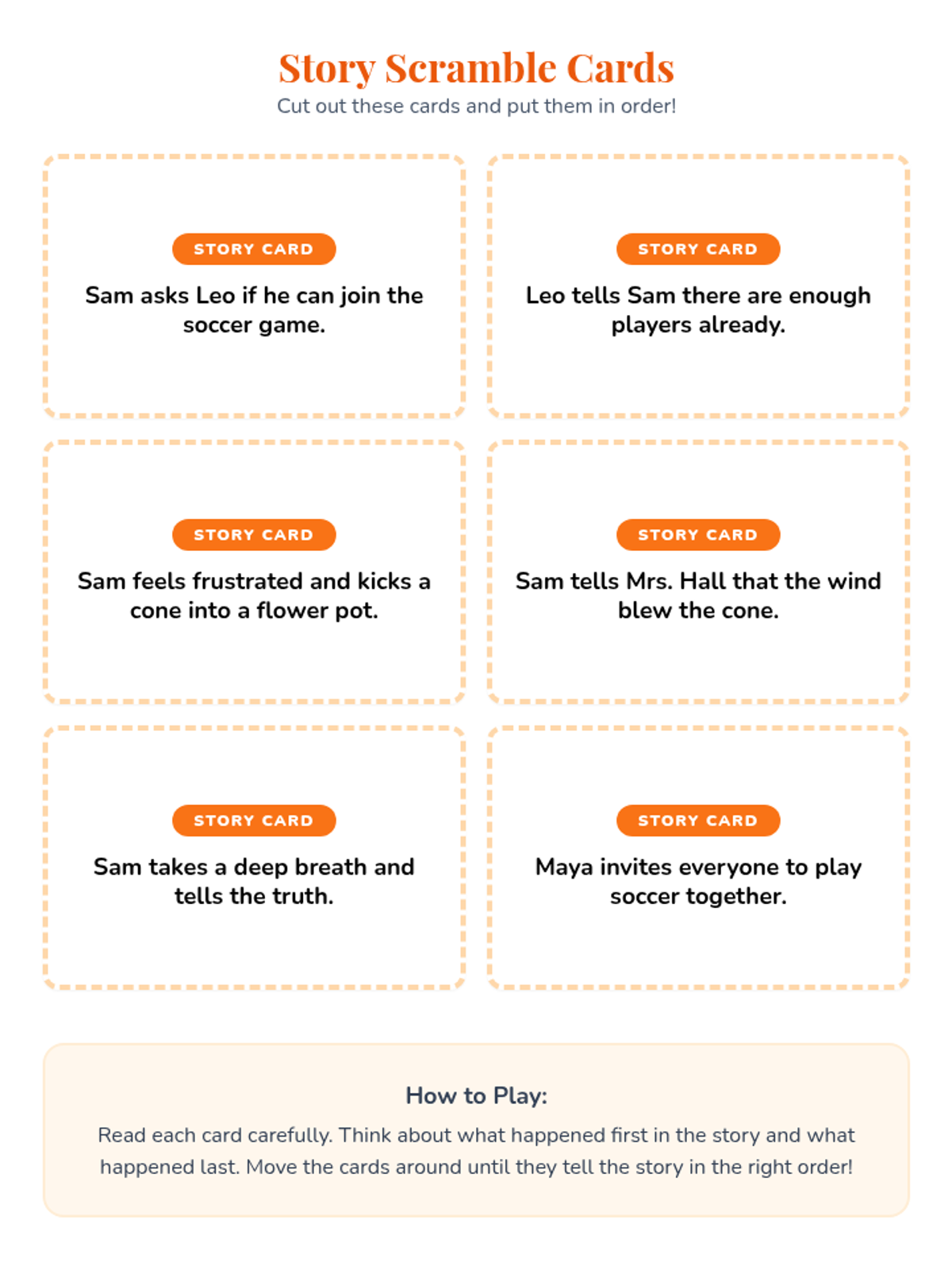
A high-energy, soccer-themed lesson designed to help disengaged students identify emotions and practice regulation strategies through interactive play and hands-on activities.
A comprehensive counseling module combining CBT and Person-Centered approaches to help children manage anger and improve focus in the classroom. includes practitioner guidance and student-facing activities.
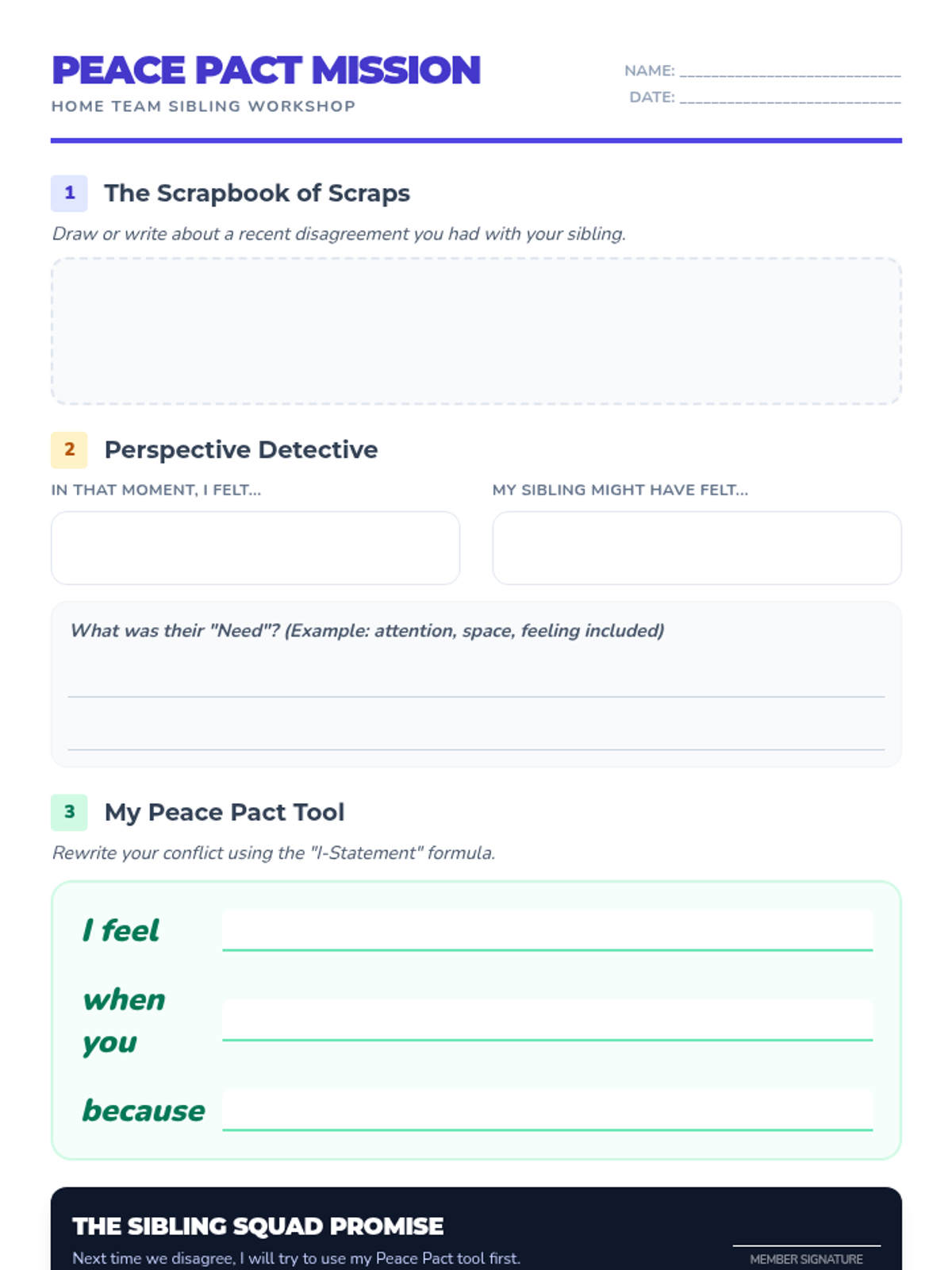
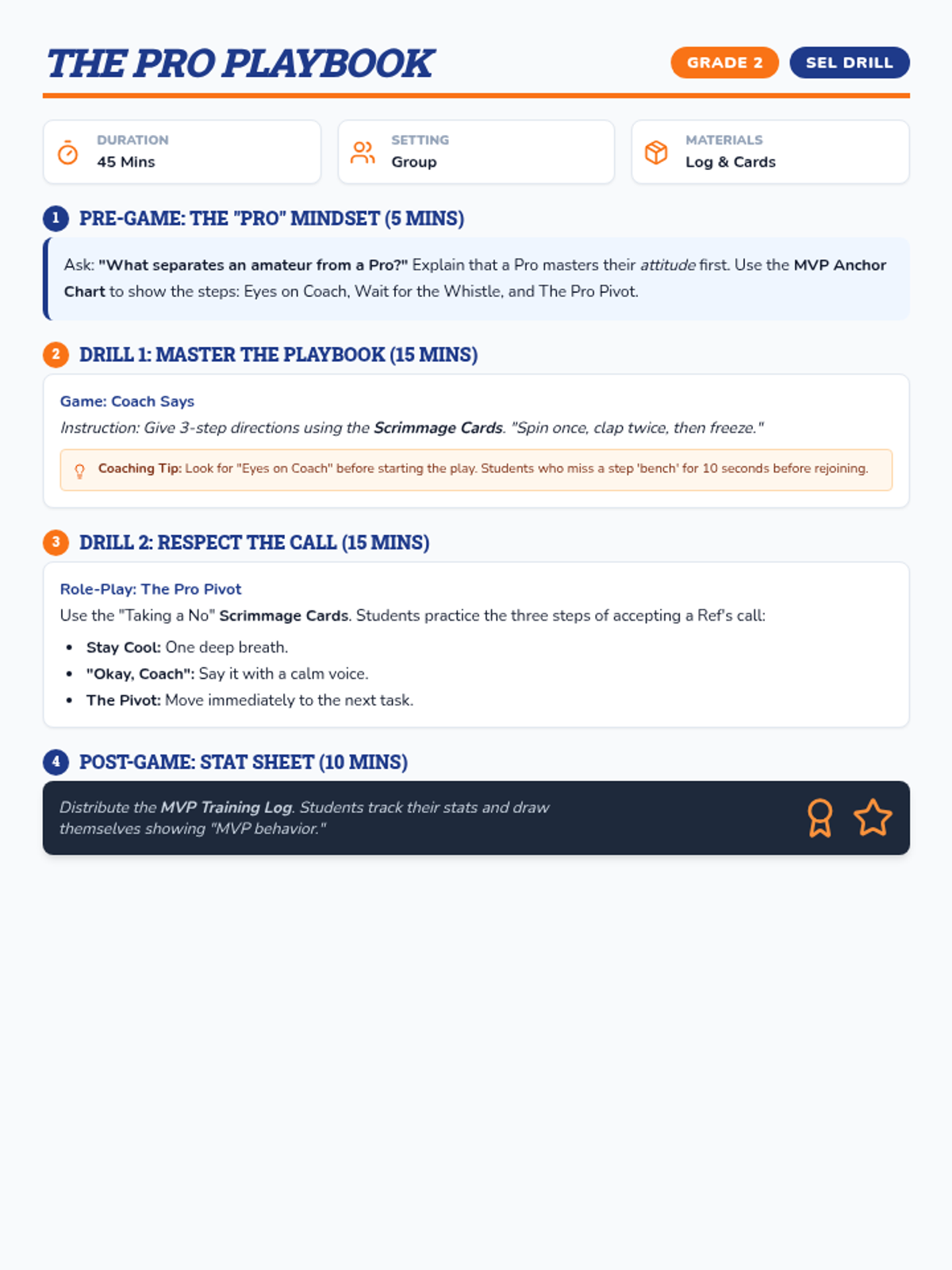
A social-emotional learning lesson for K-2 students that teaches a concrete, physical process for resolving conflicts using the 'Peace Path' method. Students learn to use I-statements, listen actively, and find win-win solutions.
A bilingual (English/Spanish) lesson for 2nd graders exploring human diversity and self-acceptance through the book 'All People Are Beautiful'. Students celebrate their unique traits by creating a 'I am a Rainbow' self-portrait.
A series of activities designed for 1:1 wellbeing sessions to help students navigate peer conflicts and regulate their emotions during high-stress periods like the end of term.
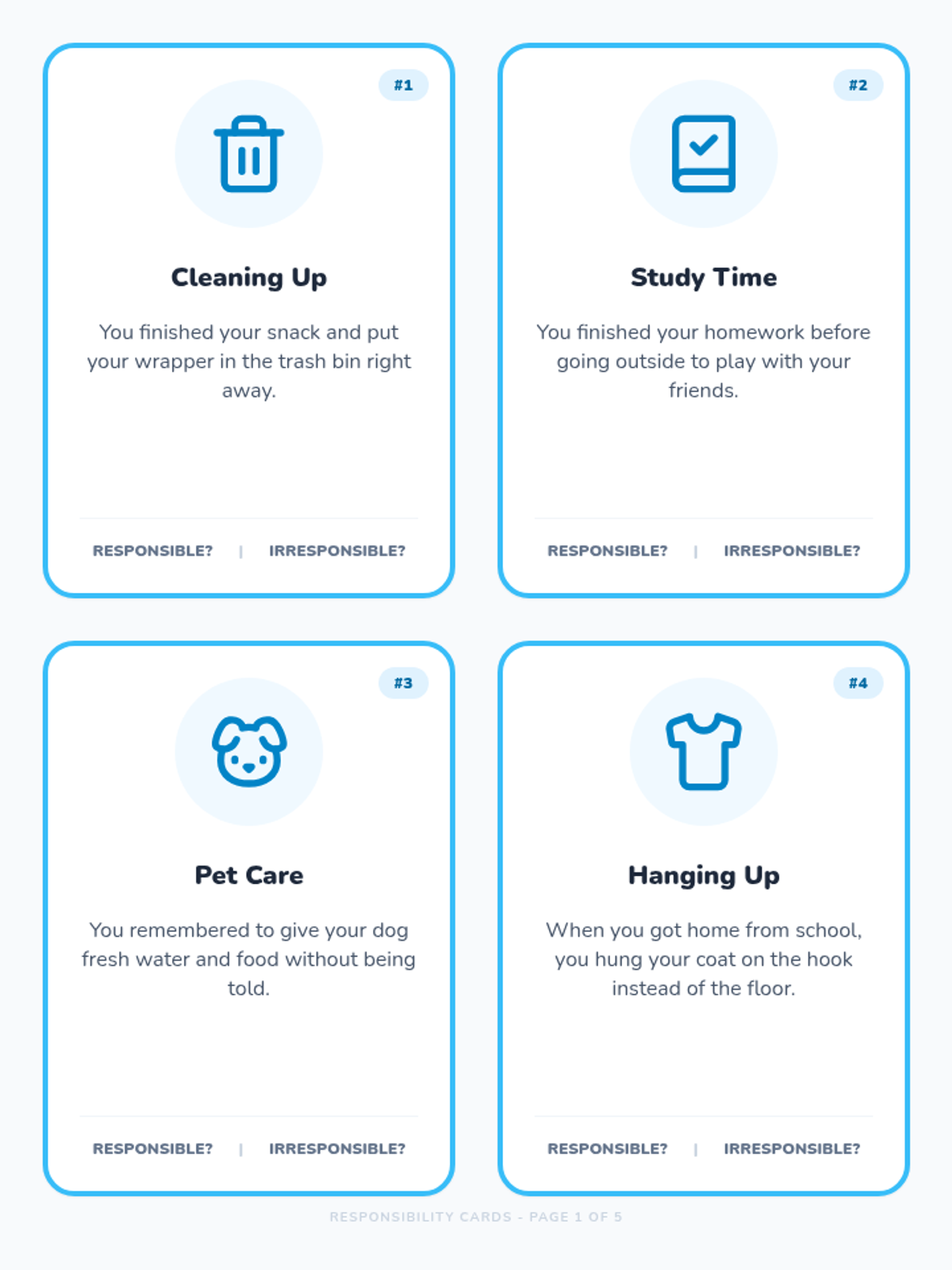
A review lesson focused on synthesizing responsible decision-making skills through games, role-play, and reflection. Students practice navigating school scenarios, fixing mistakes, and applying the Stop-Think-Choose method.
A social-emotional learning lesson focused on the 'Stop, Think, Choose' framework for decision-making. Students practice pausing before acting through movement activities, scenarios, and visual reinforcements.
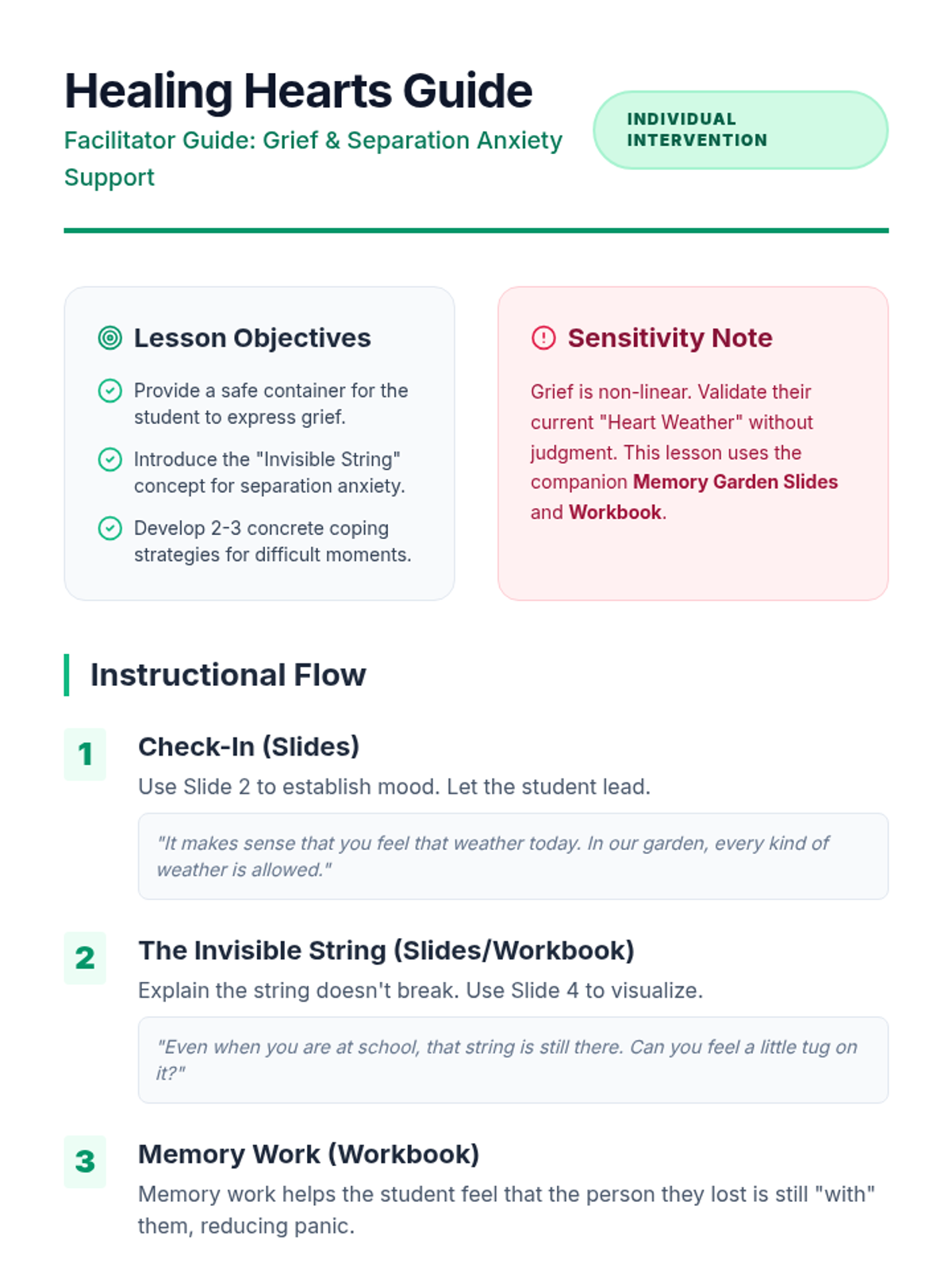
A therapeutic session designed to help a second-grade student develop social flexibility, manage attachment to a preferred peer, and build 'brave' self-talk skills through visual and repetitive activities.
The final week of morning activities centered on visualization, math challenges, compound word hunts, future-thinking, and celebratory wrap-ups.
The third week of morning activities exploring breathing exercises, logic puzzles, anagrams, "Would You Rather" questions, and personal growth reflections.
The second week of morning activities featuring gratitude practices, pattern recognition, riddle solving, hypothetical scenarios, and weekend reflections.
The first week of morning activities focusing on goal setting, creative preferences, word construction, invention design, and peer appreciation.