Students master the art of moving the cursor by character, word, and line using Arrow keys combined with Ctrl/Option, practicing navigation through a messy paragraph to fix errors without a mouse.
A foundational lesson for Transitional Kindergarten students focused on identifying basic emotions and the physical sensation of being 'wiggly' (stressed) vs. 'still' (calm). Introduces 'Turtle Breathing' as a primary regulation tool.
A fast-paced, engaging 15-minute lesson exploring the 'Ripple Effect' of kindness and why it matters for both the giver and the receiver.
Students will learn how to make meaningful apologies and use art to explore the concept of repairing damaged relationships.
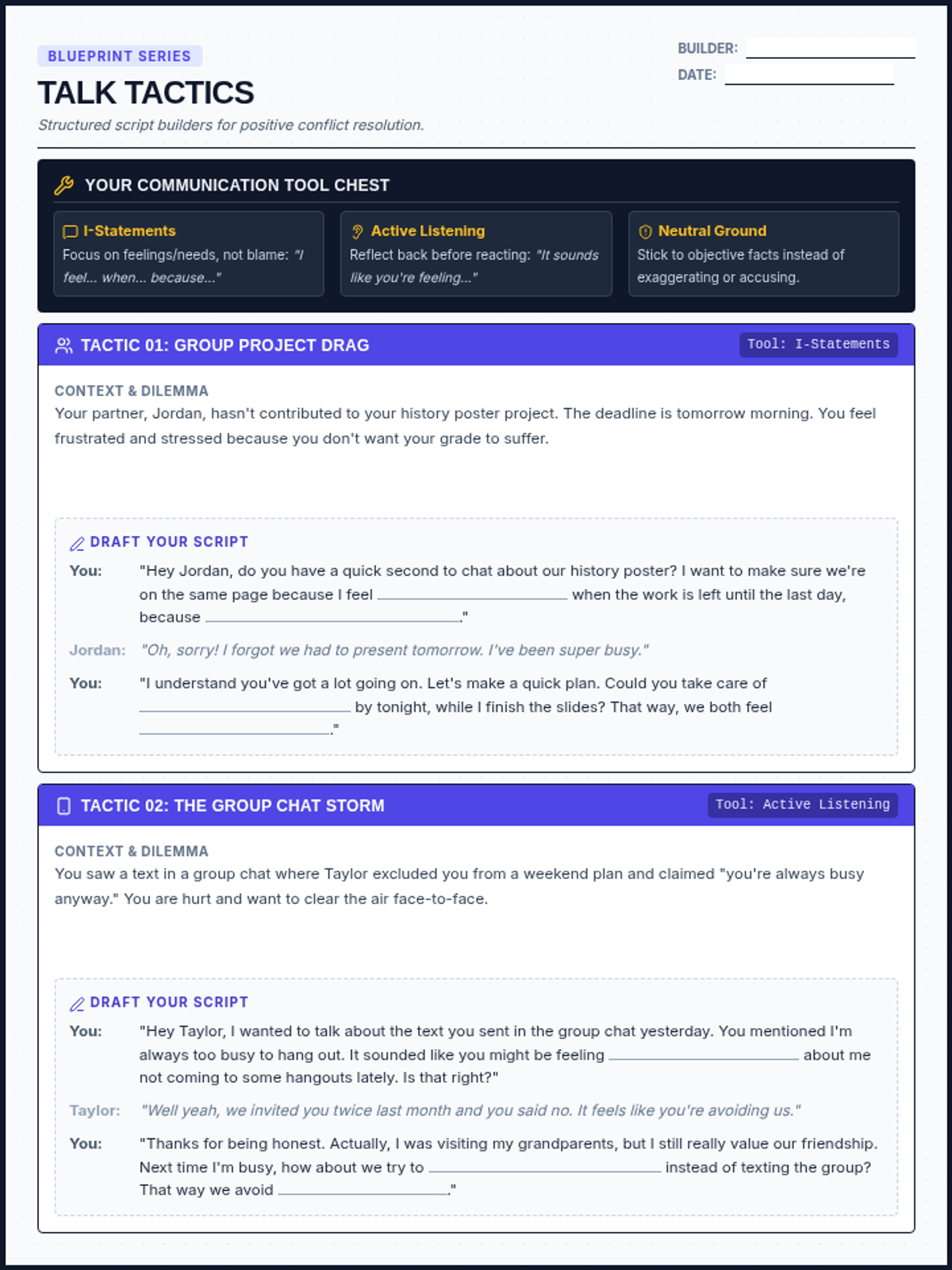
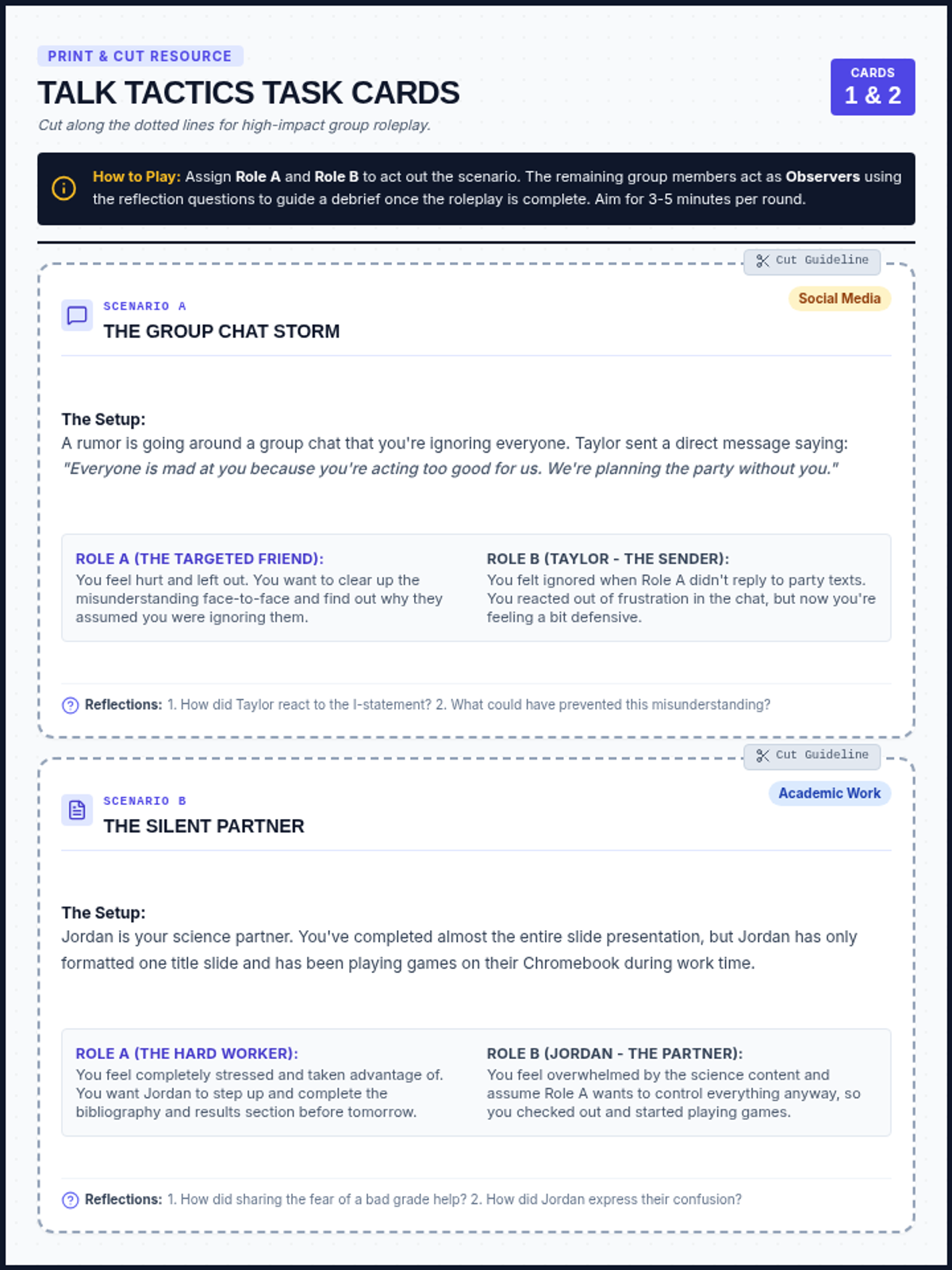
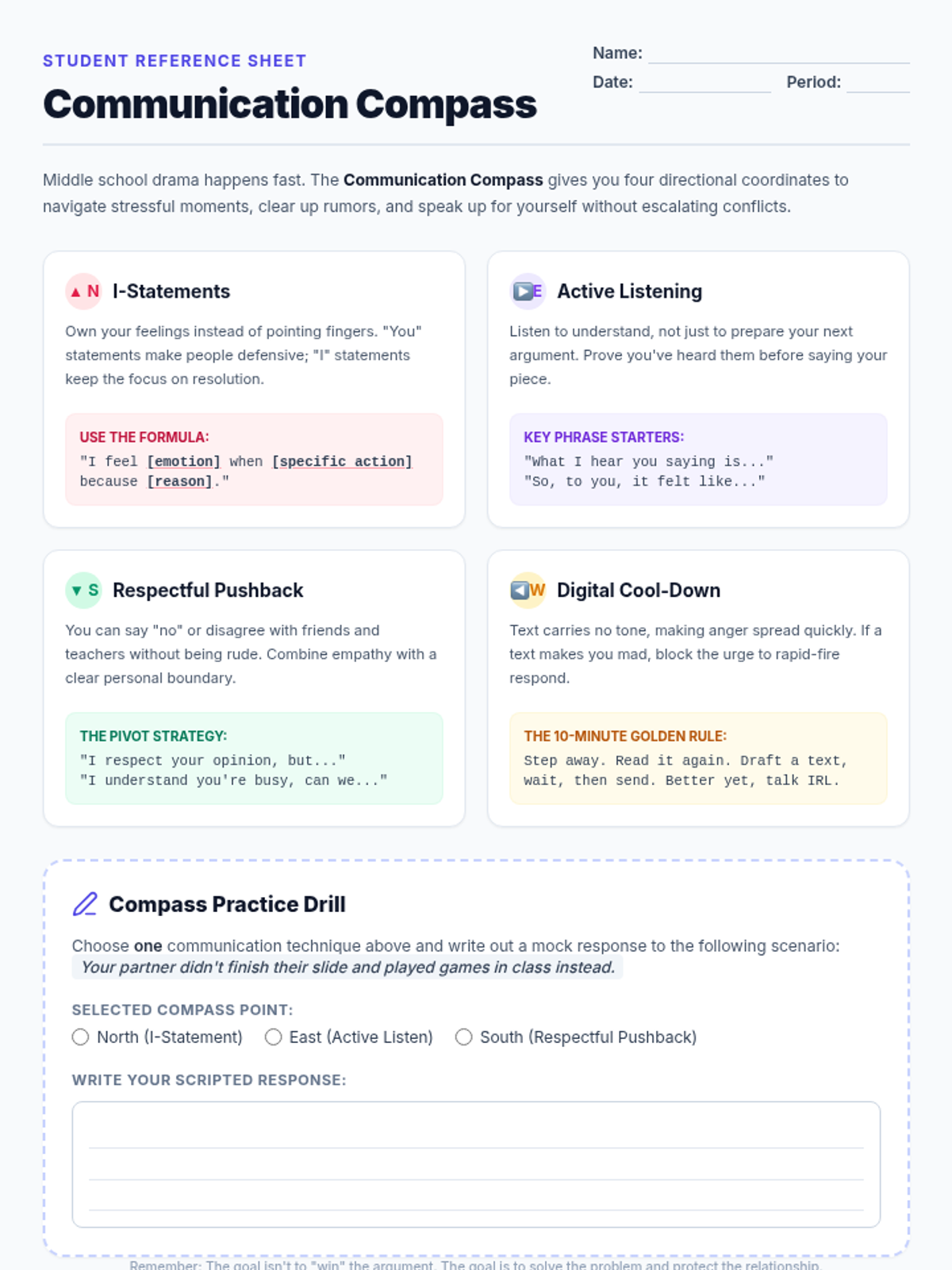
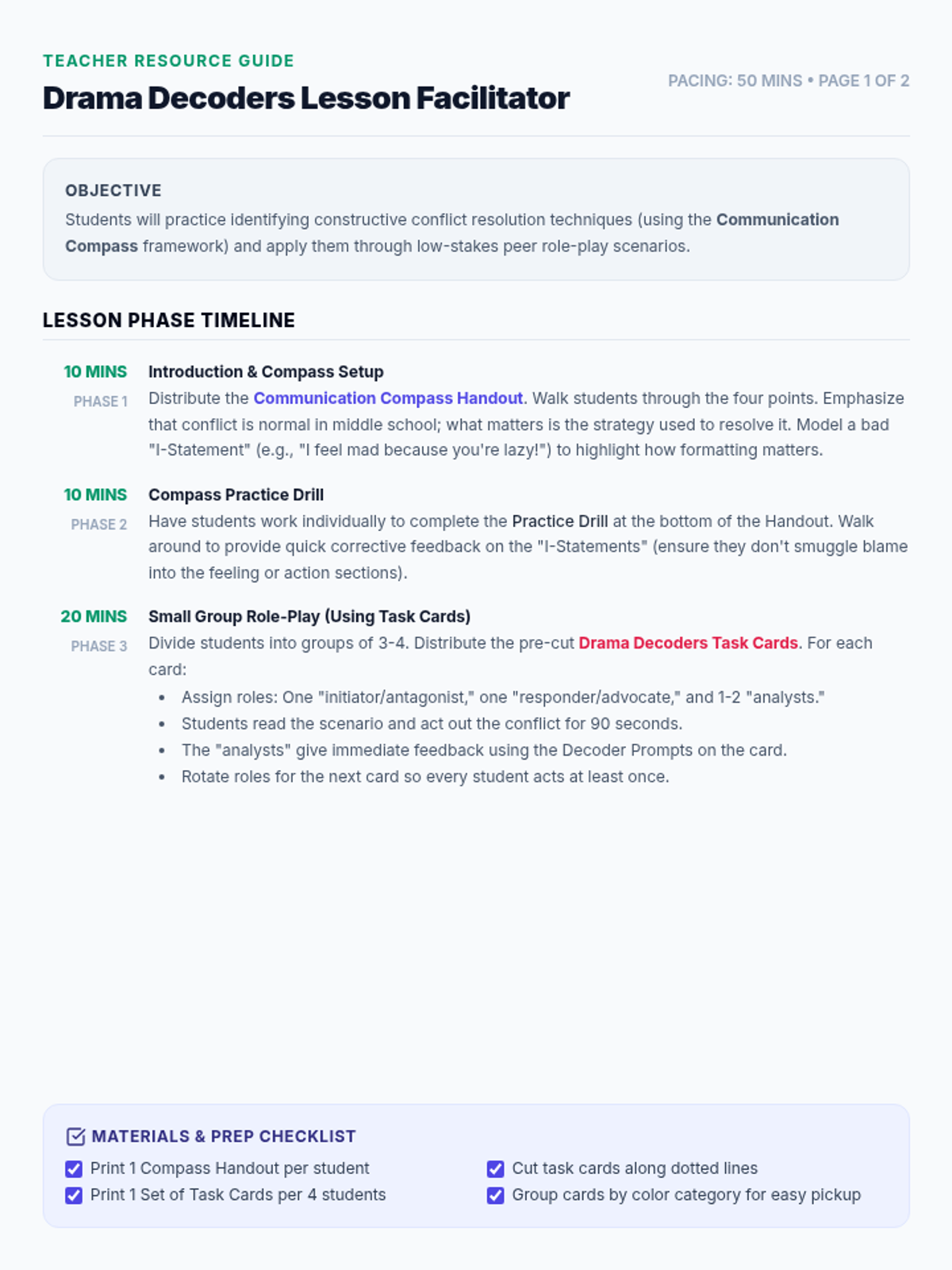
Students will practice effective communication techniques using role-play scenarios focused on active listening and "I" statements.
Students will explore different ways to navigate disagreements using a board game format to practice perspective-taking.
Students will identify the "ingredients" of a good friend and create a visual representation of their friendship standards.
Students synthesize their learning by creating a personal coping plan and reflecting on their growth throughout the group.
Introduces physical and environmental coping strategies, including deep breathing, grounding techniques, and healthy lifestyle habits.
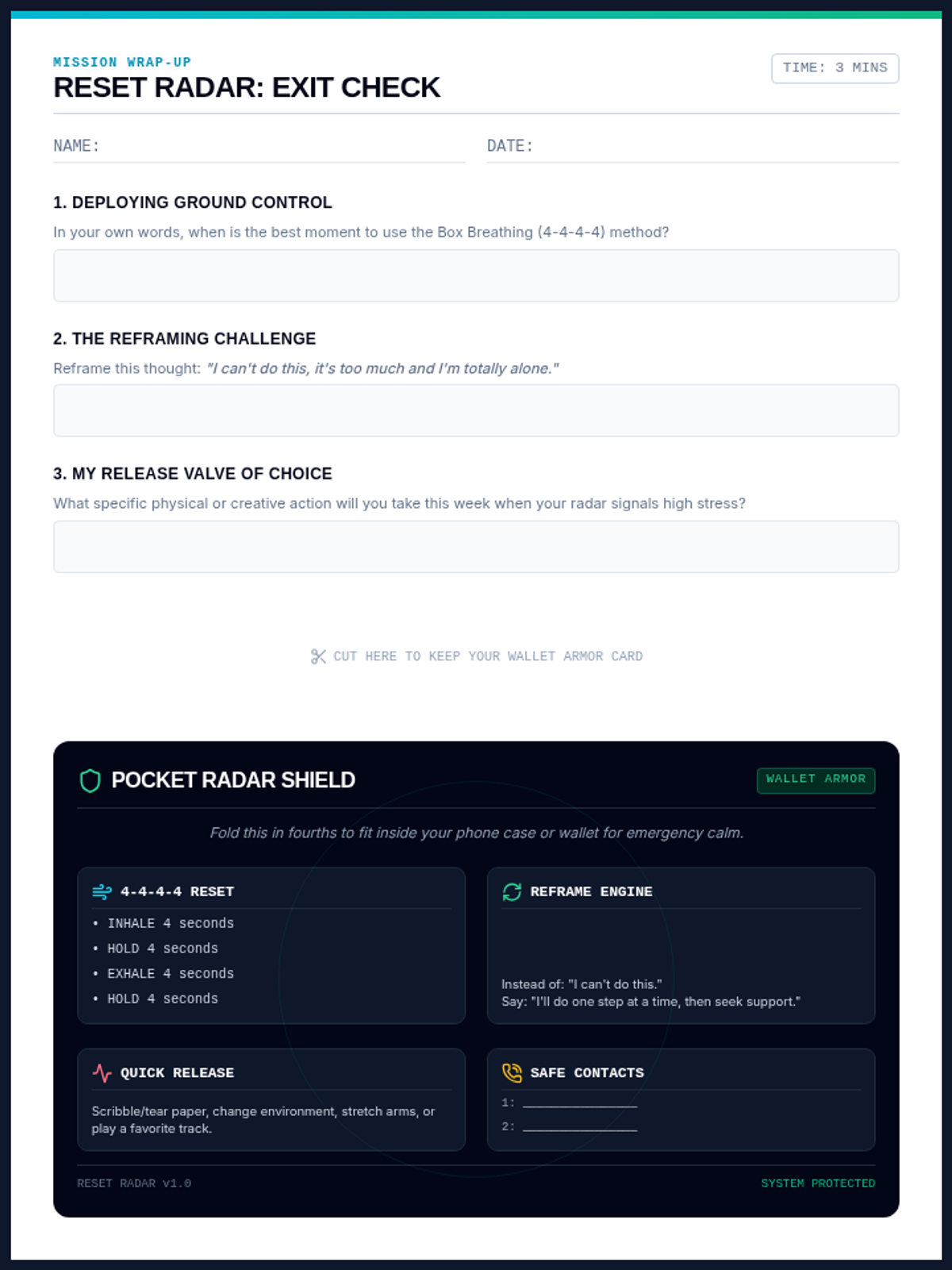
Focuses on the connection between thoughts and feelings, teaching students how to challenge negative self-talk and reframe stressful situations.
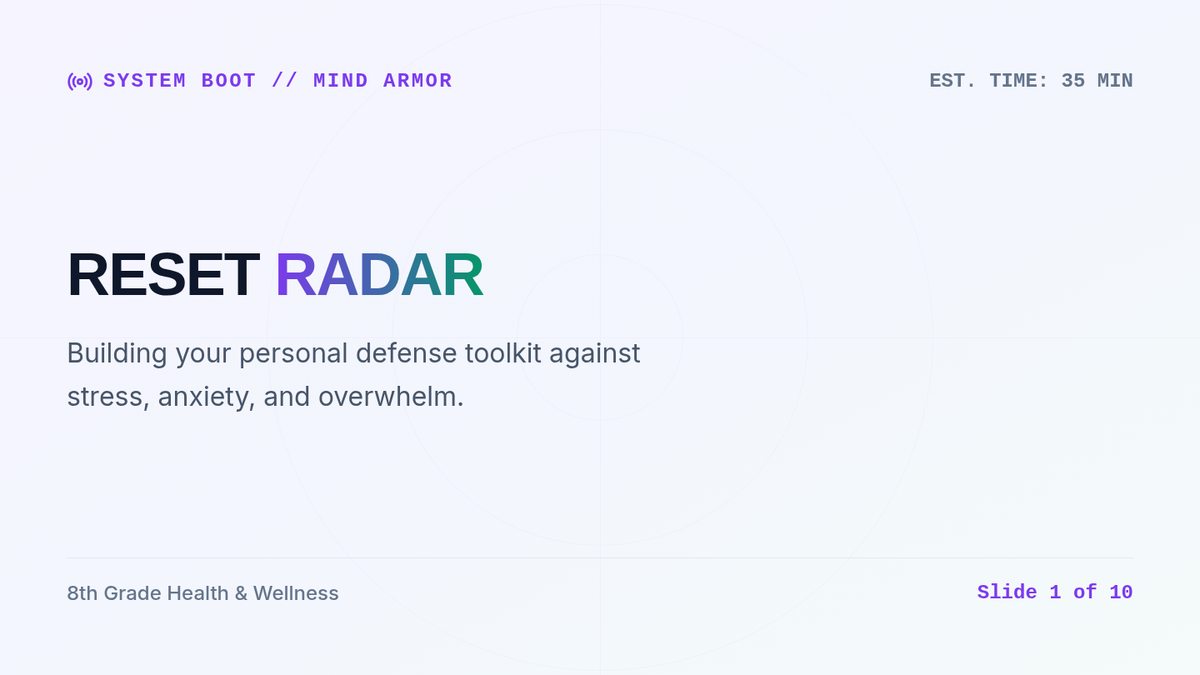
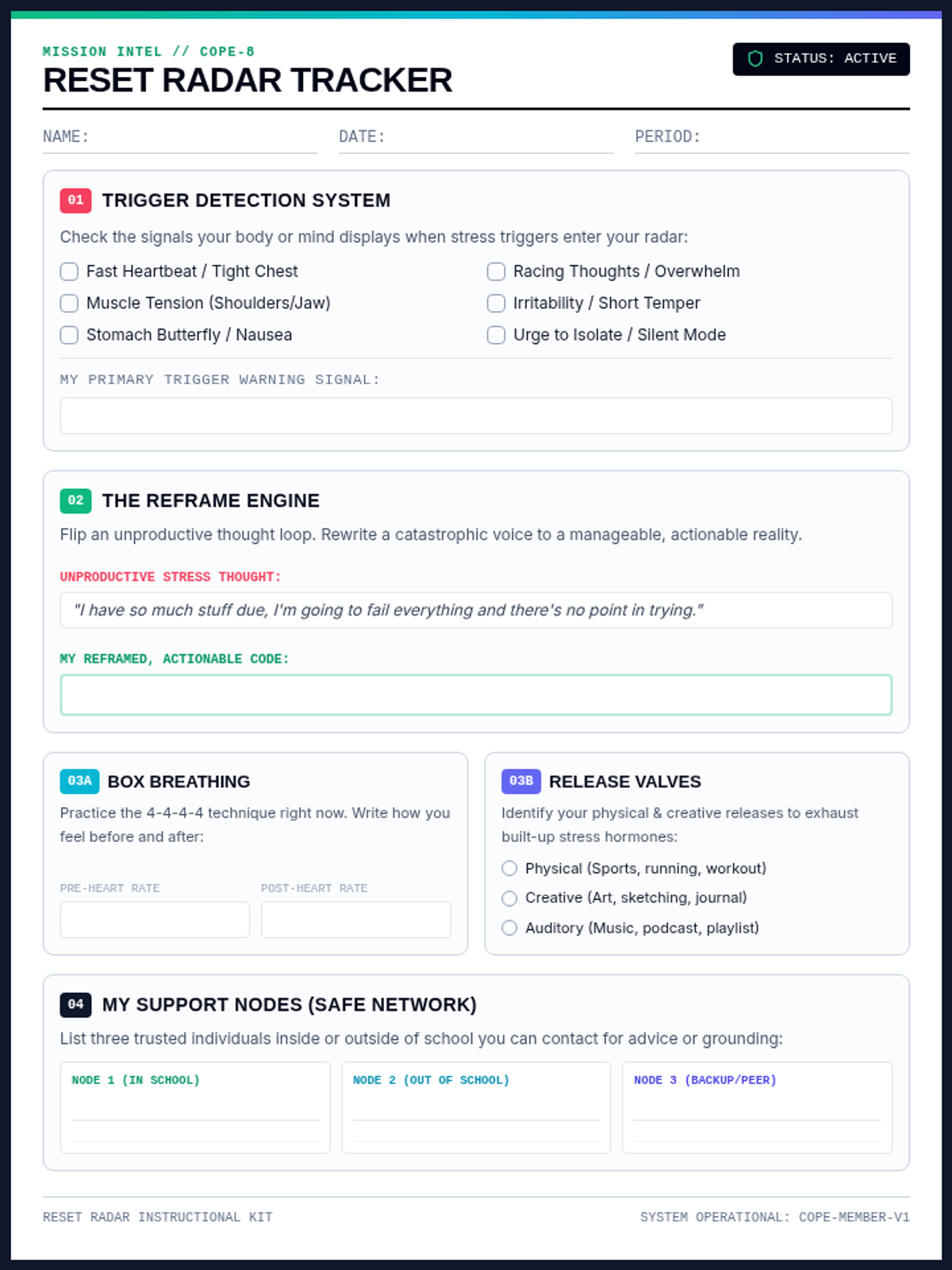
Students will define stress, identify their personal 'stress triggers', and learn how their bodies react to pressure.
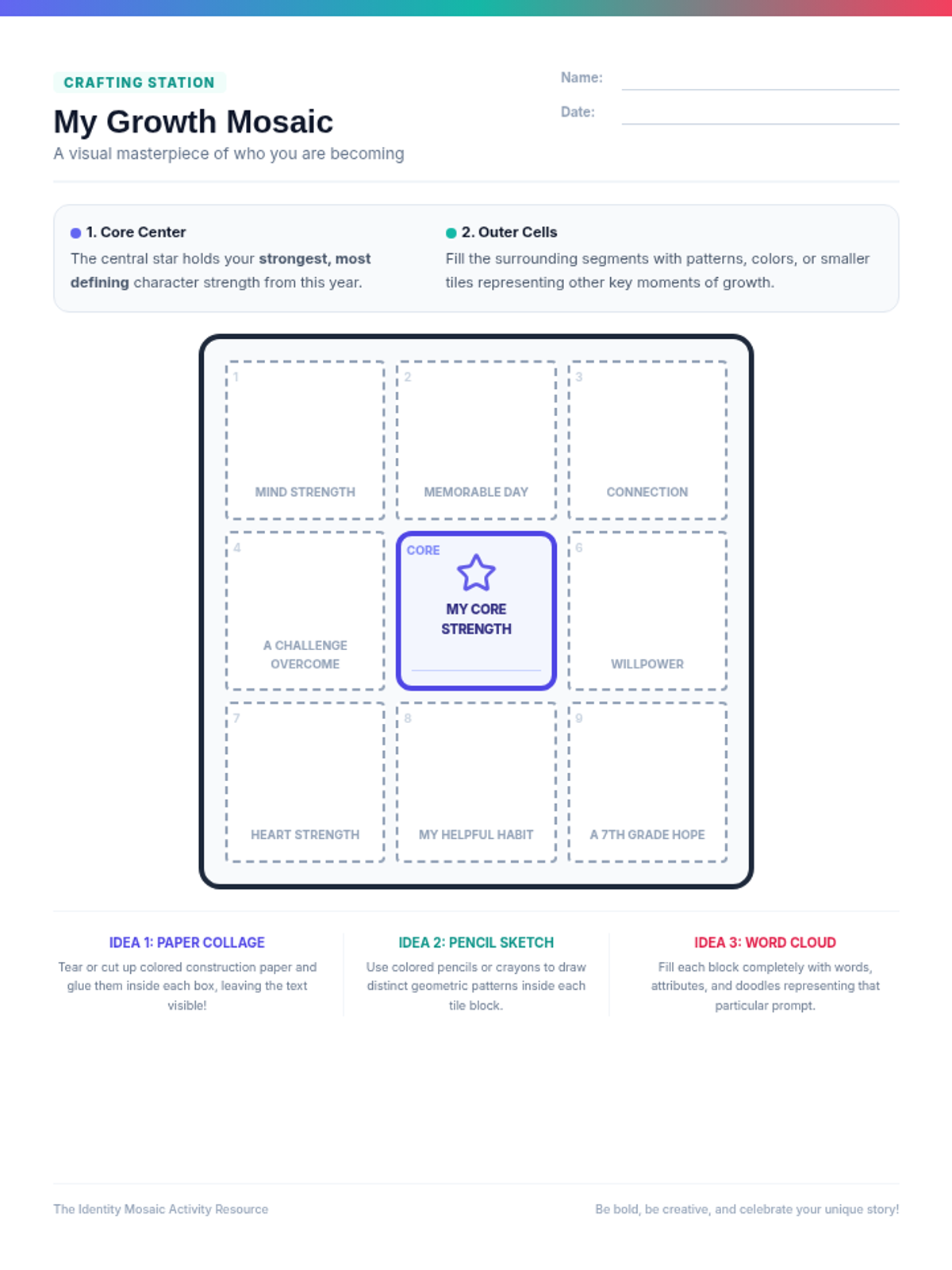
A reflective session designed for 8th-grade students to evaluate their communication choices and understand the impact of classroom disruptions, specifically focusing on respectful advocacy when work is completed.
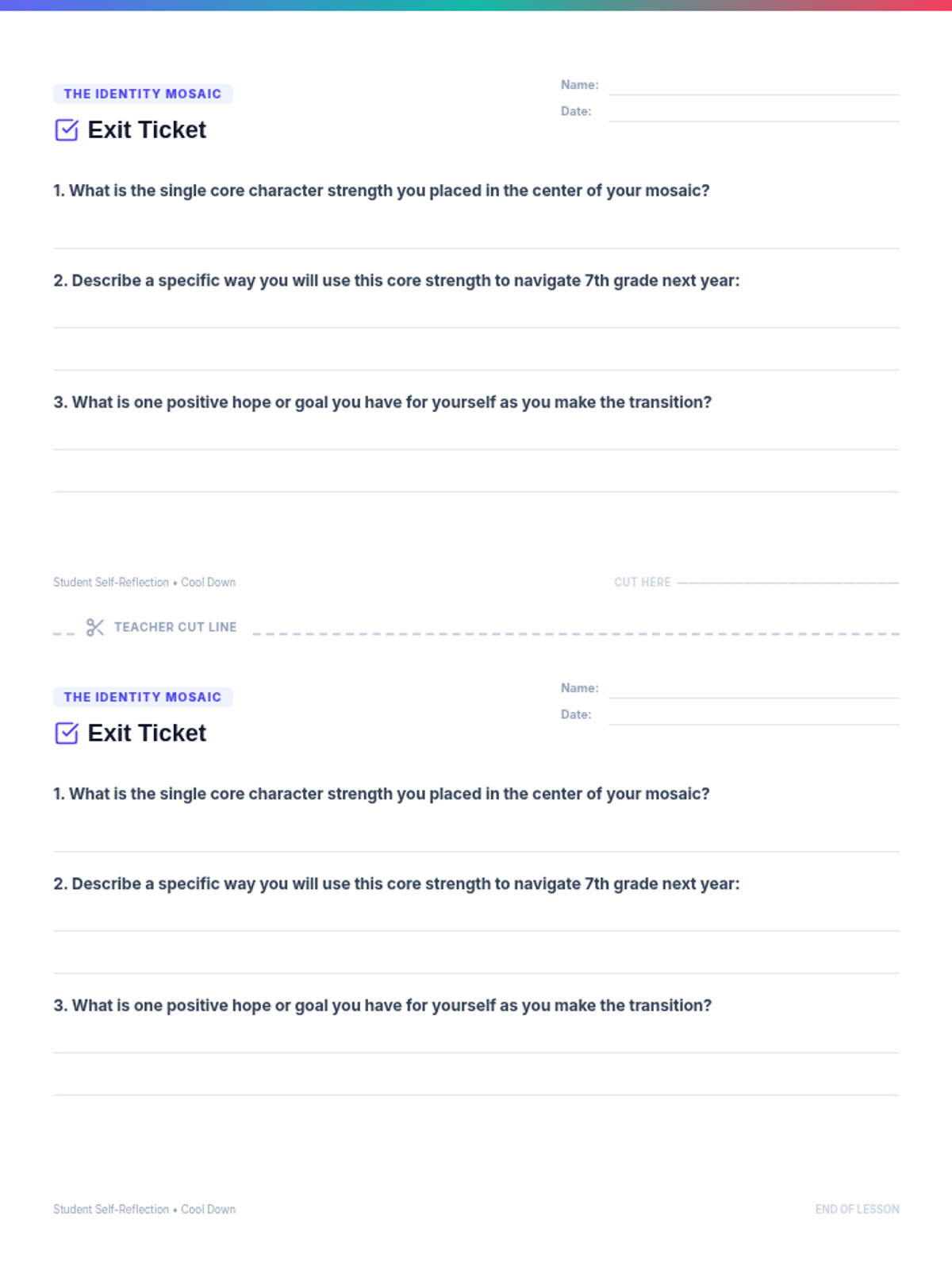
A reflective lesson designed for 8th-grade students to analyze their communication styles, specifically focusing on how to advocate for themselves respectfully when they have completed work, and understanding the collective impact of classroom disruptions.
A game-based social-emotional learning lesson using UNO cards to help students navigate the transition to high school, focusing on friendships, academic stress, peer pressure, and balance.
A comprehensive training module on the professional standards for calling out of work, covering etiquette, timing, and communication methods.
A lesson designed to help learners identify and navigate modern peer pressure across workplace, social, digital, and home environments using practical refusal strategies.
A comprehensive training module designed to help employees understand and practice professional boundaries, communication, and collaboration. Includes interactive scenarios and practical strategies for a respectful workplace.
This lesson focuses on self-advocacy in the service industry, specifically regarding tipping policies and procedures. Students will learn how to identify different tipping systems and practice asking for clarification when they have questions about their earnings.
A comprehensive lesson on restaurant etiquette covering menu reading, ordering, manners, volume control, tipping, and conflict resolution.
A lesson designed for two first-graders to learn how to replace screaming and eloping with verbal communication using a feelings chart. Through role-play and visual aids, students practice identifying their emotions and stating their needs.
A functional skills lesson focused on navigating a restaurant experience on a budget, covering menu reading, budget planning, social etiquette, and group check splitting.
A visual career exploration lesson designed for students with moderate to severe disabilities, using real photos to identify interests across various career clusters.
A social-emotional learning lesson for Tier 2 small groups focusing on identifying spheres of control and practicing assertive I-Statements in social scenarios.
A 45-minute therapeutic leisure session for teens focused on building social connections and team dynamics through collaborative activities and reflection.
Program review, celebration of growth, and completion of the EF Post-Test.
Instruction on effective note-taking and test-taking strategies tailored for middle school.
Practical strategies to defeat procrastination and streamline homework routines.
Building an awareness of time and learning how to estimate how long tasks actually take.
Developing cognitive flexibility to handle changes in schedules and different teaching styles.
Strategies for overcoming the 'freeze' and getting started on difficult tasks immediately.
Focuses on organization of physical and digital spaces and long-term project planning.
Introduction to the brain's "Command Center," establishing group norms, and completing the EF Pre-Test.
A Restorative Practices-based lesson for 6th graders focused on identifying impulsive emotional reactions, understanding their impact on others, and taking accountability through meaningful repair.
Preparing for independence. Students review progress reports and finalize a plan for seeking teacher support autonomously.
Establishing consistent habits and routines. Students refine their planning process to require less counselor prompting.
Developing teacher communication skills. Students practice scripts for asking for help, clarifying assignments, and negotiating deadlines.
Time estimation and scheduling. Students practice predicting how long tasks take and slotting them into their Jawsome flex time.
Focus on categorization and prioritization. Students learn to distinguish between urgent tasks and long-term projects using a priority matrix.
Introduction to the "Grade Audit" process. Students learn to navigate their online portals efficiently and identify missing assignments.
Reviewing skills learned, troubleshooting obstacles, and practicing self-advocacy for future success.
Organizing physical and digital spaces, establishing routines for material management.