Teaches student leaders to identify the fine line between teasing and bullying, and equips them with safe, practical upstander intervention and peer support frameworks.
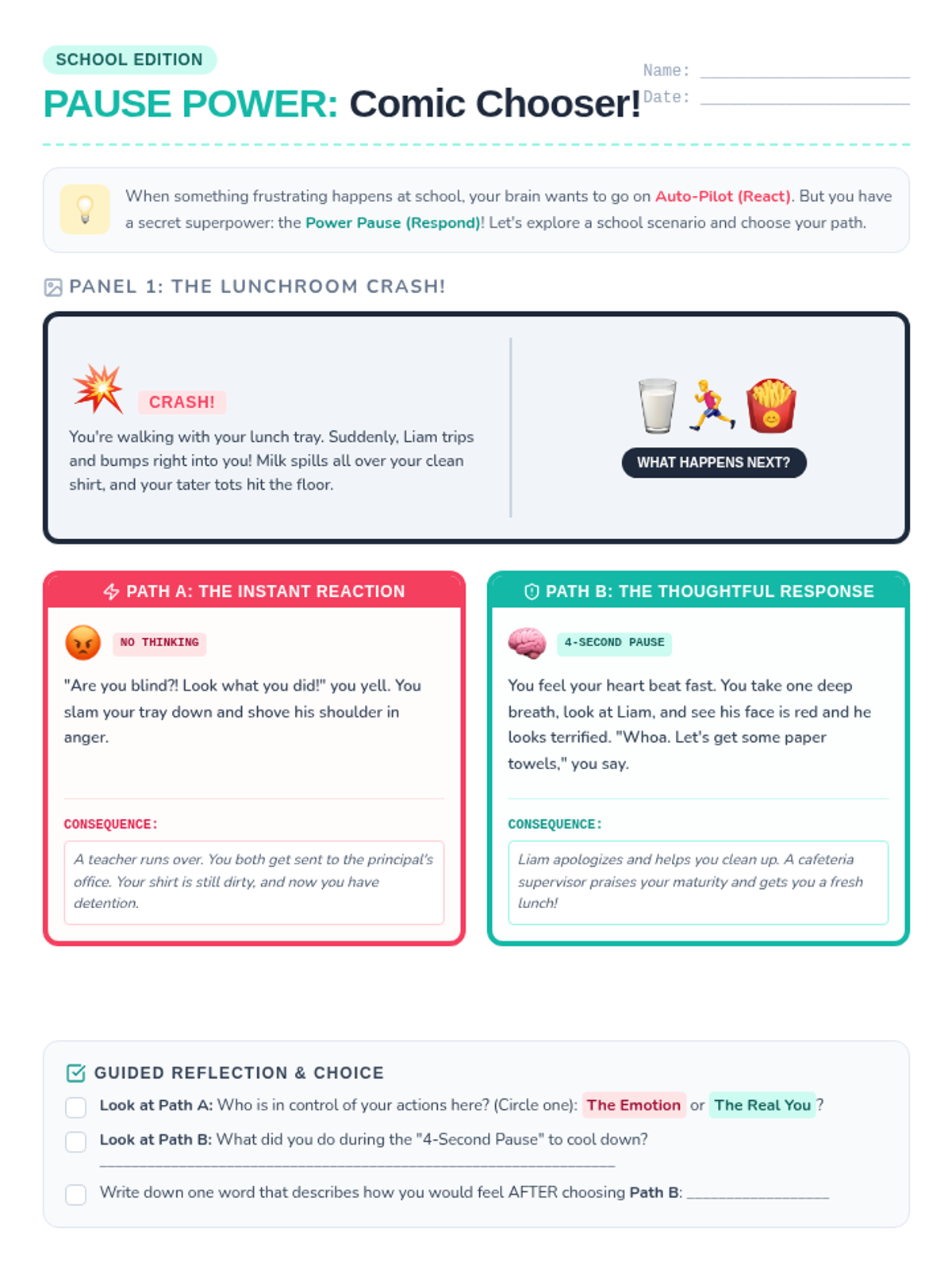
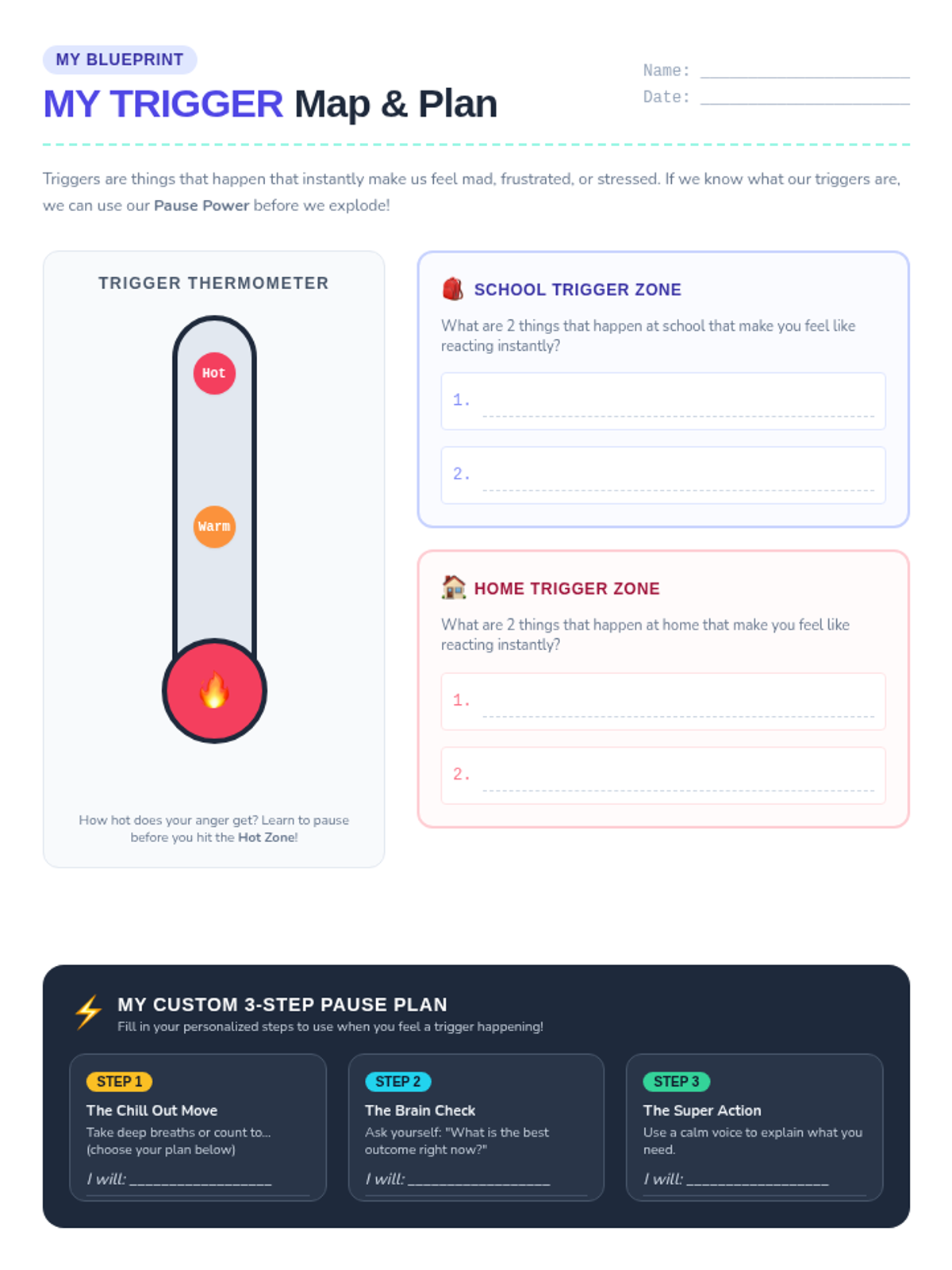
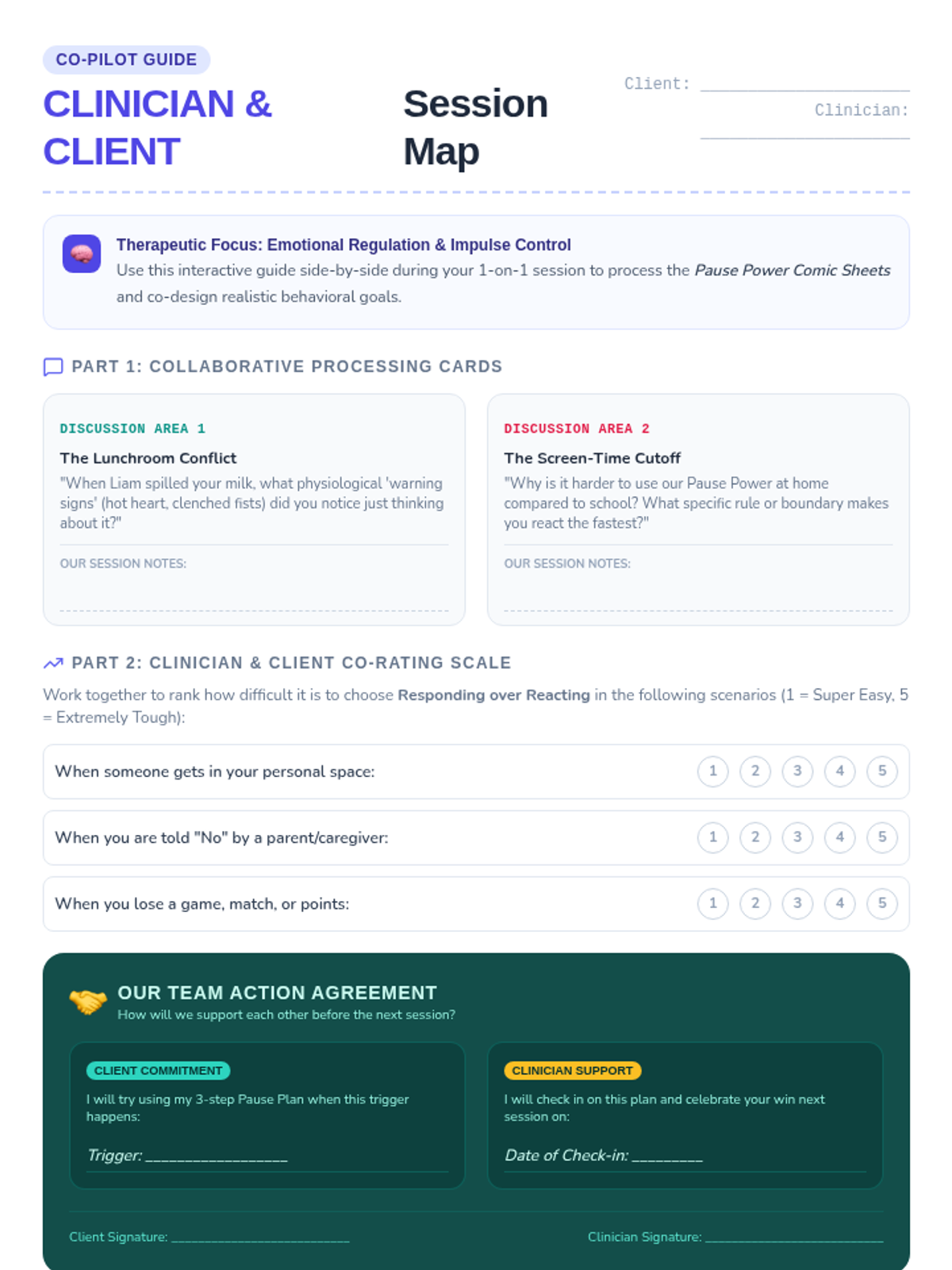
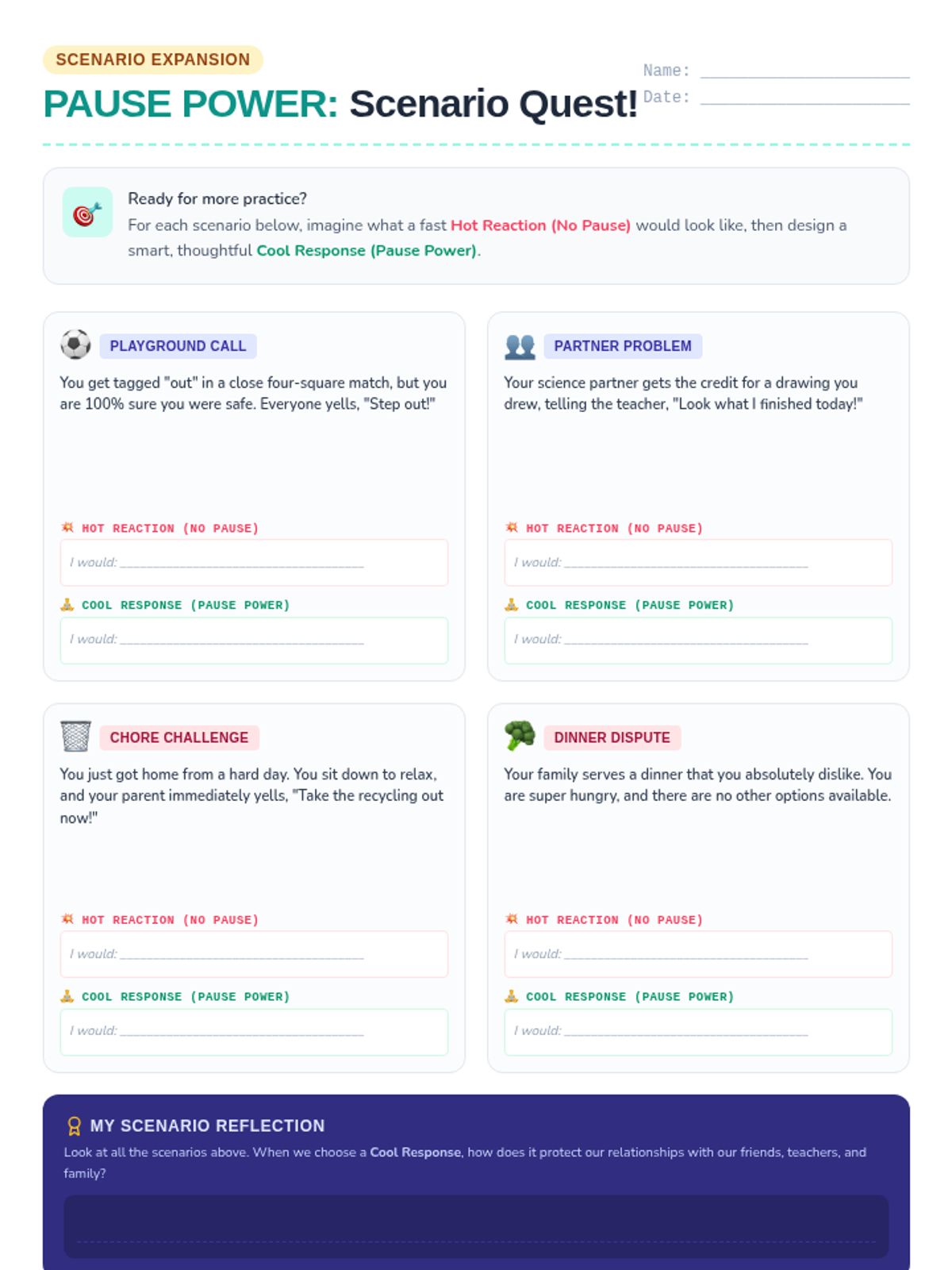
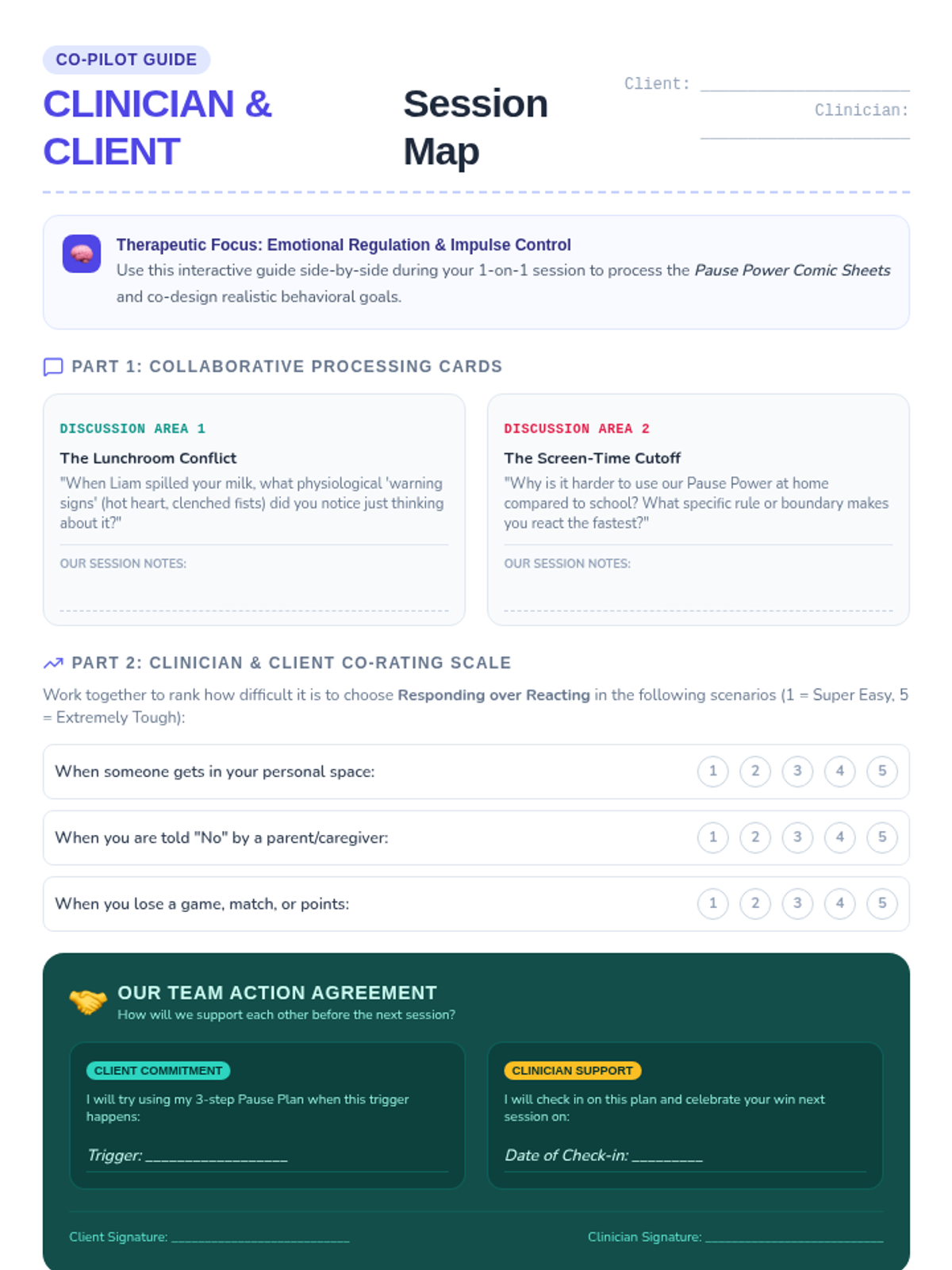
A visual, guided lesson for 5th graders to learn the difference between automatic reactions and thoughtful responses in school and home environments, using comic strips, scenario paths, and personal trigger maps.
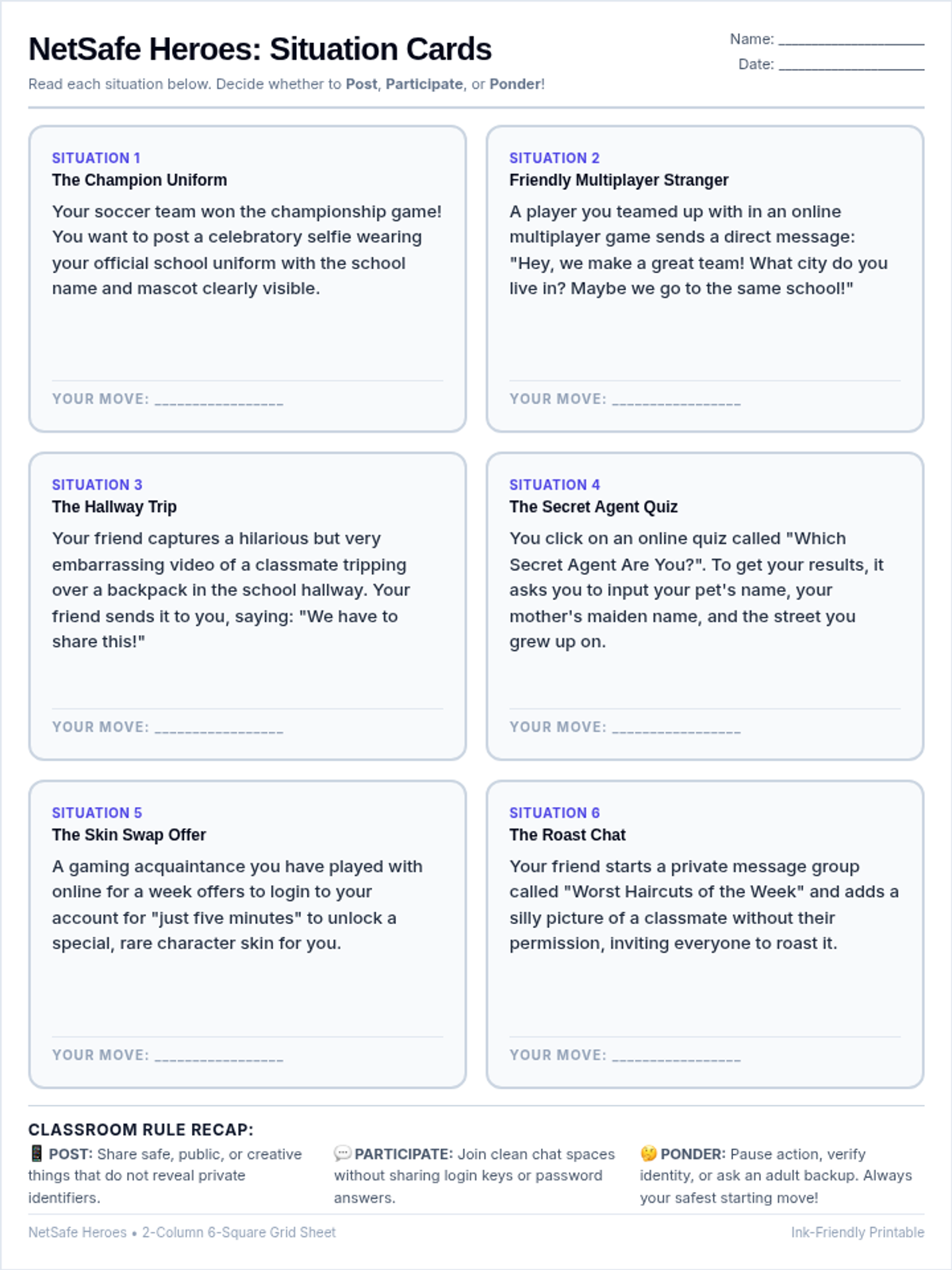
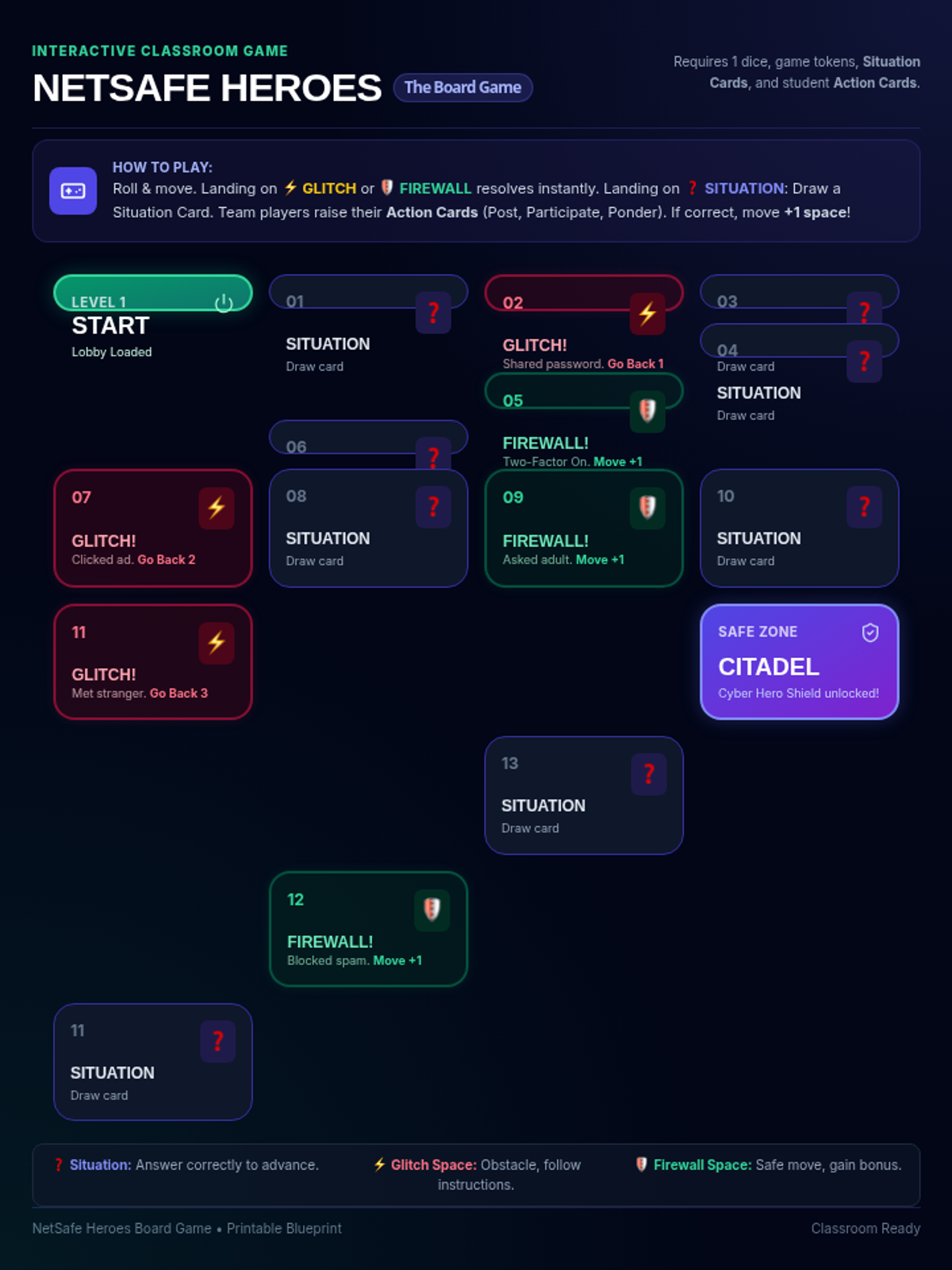
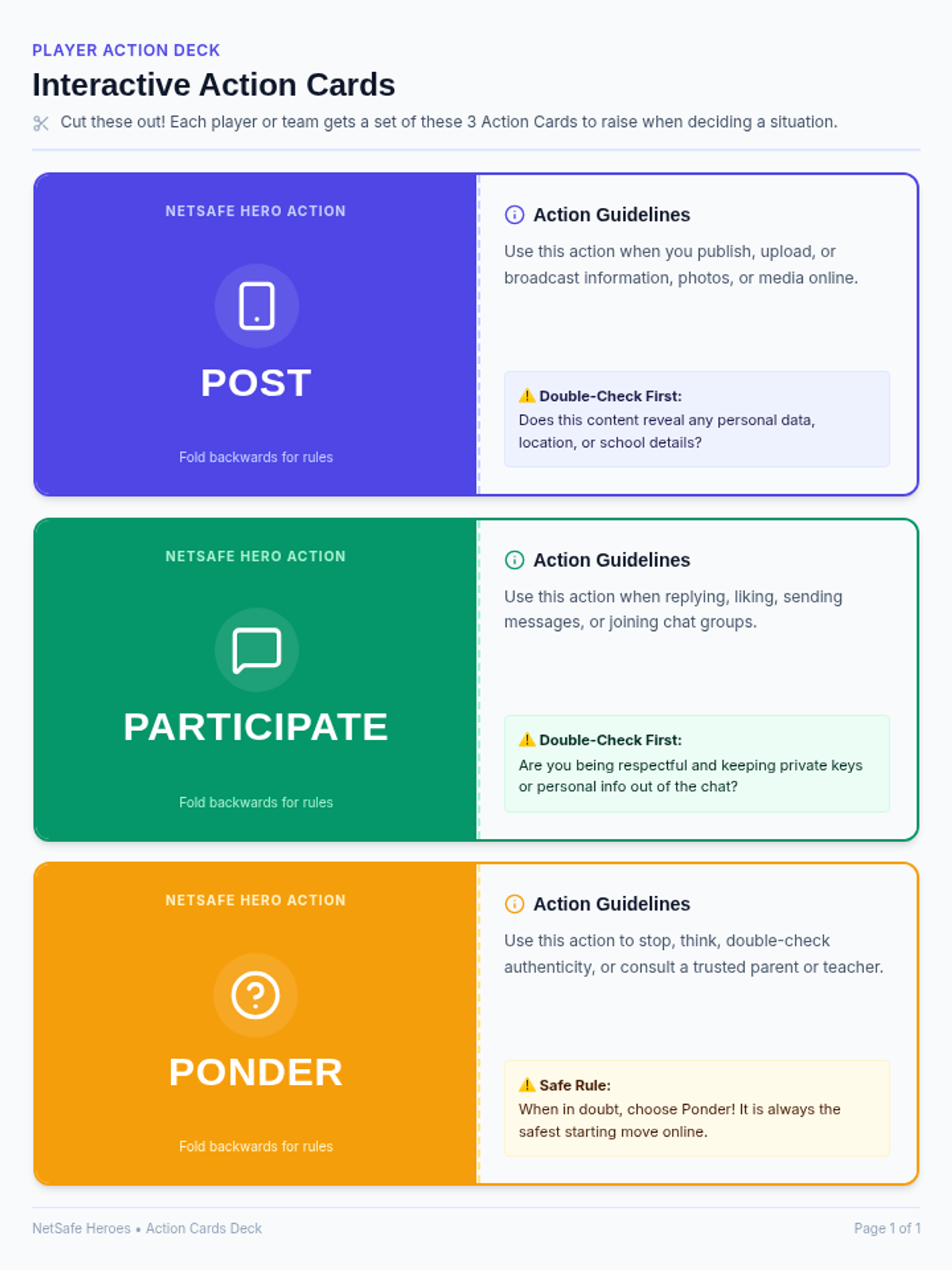
A lesson focusing on critical digital citizenship skills, helping students navigate the web safely and make informed choices when posting, interacting, or pondering online situations.
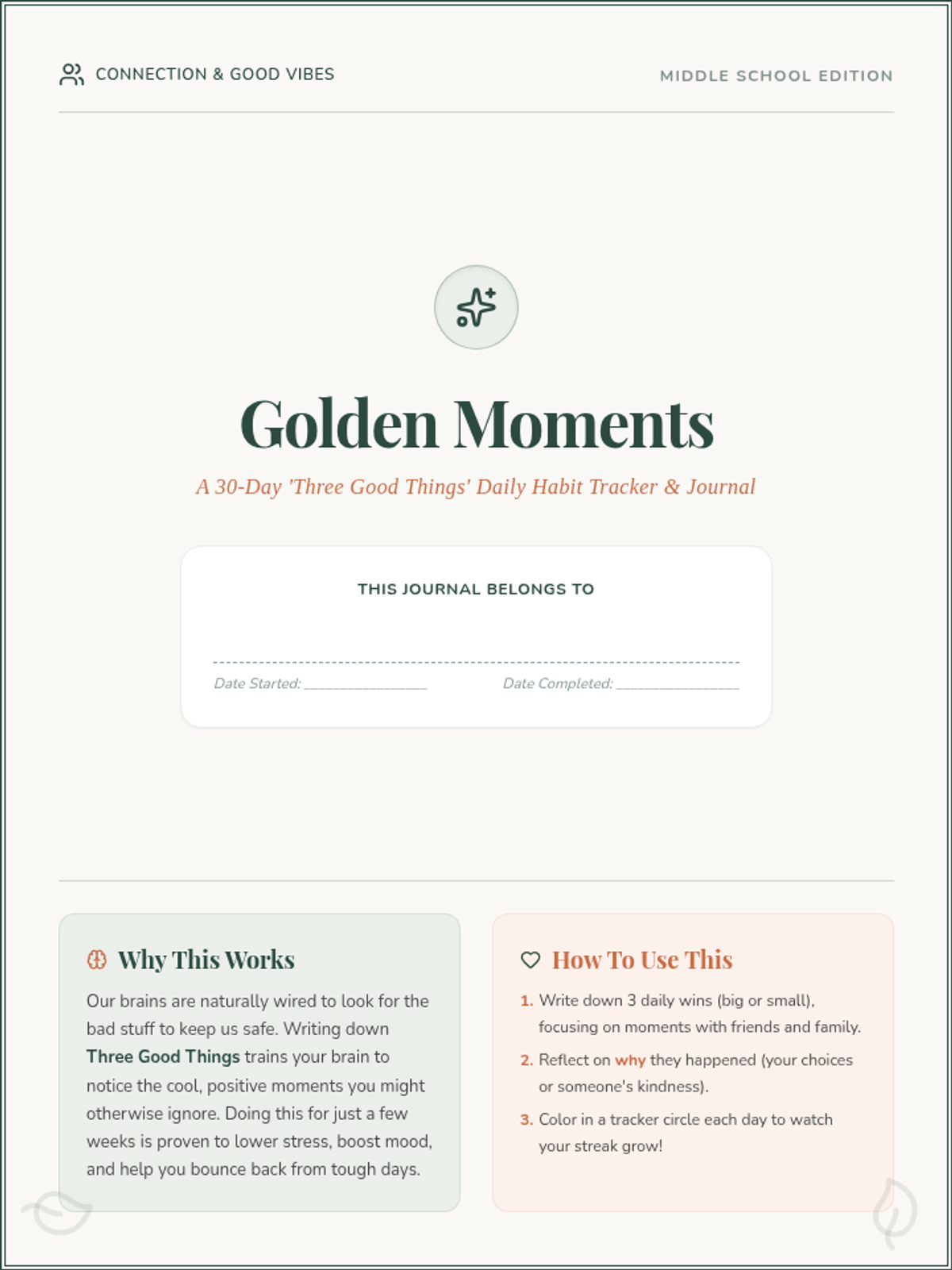
A transformative lesson introducing students to the psychological science of gratitude, centered on the 'Three Good Things' daily habit to build mental resilience, optimism, and emotional wellbeing.
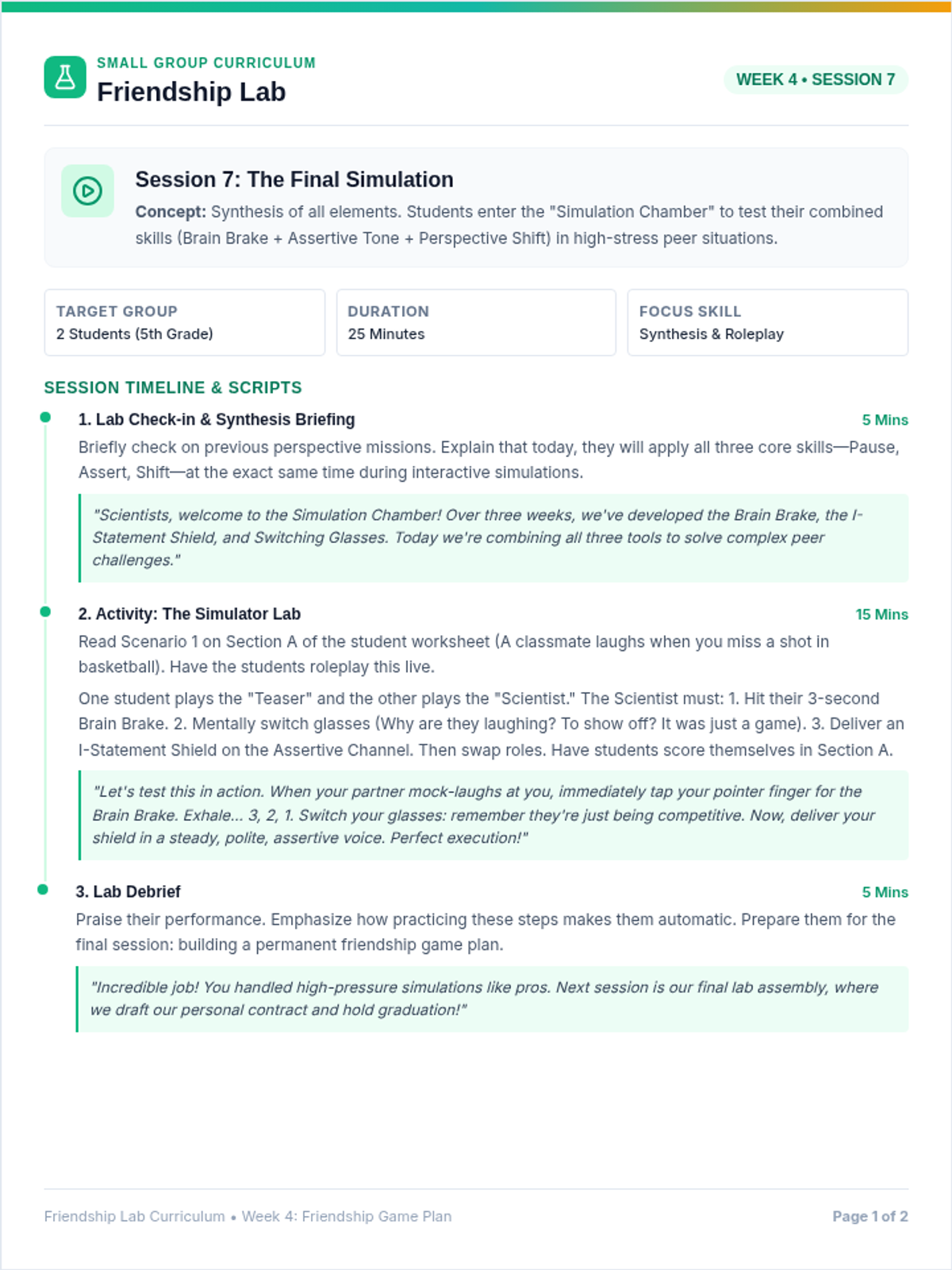
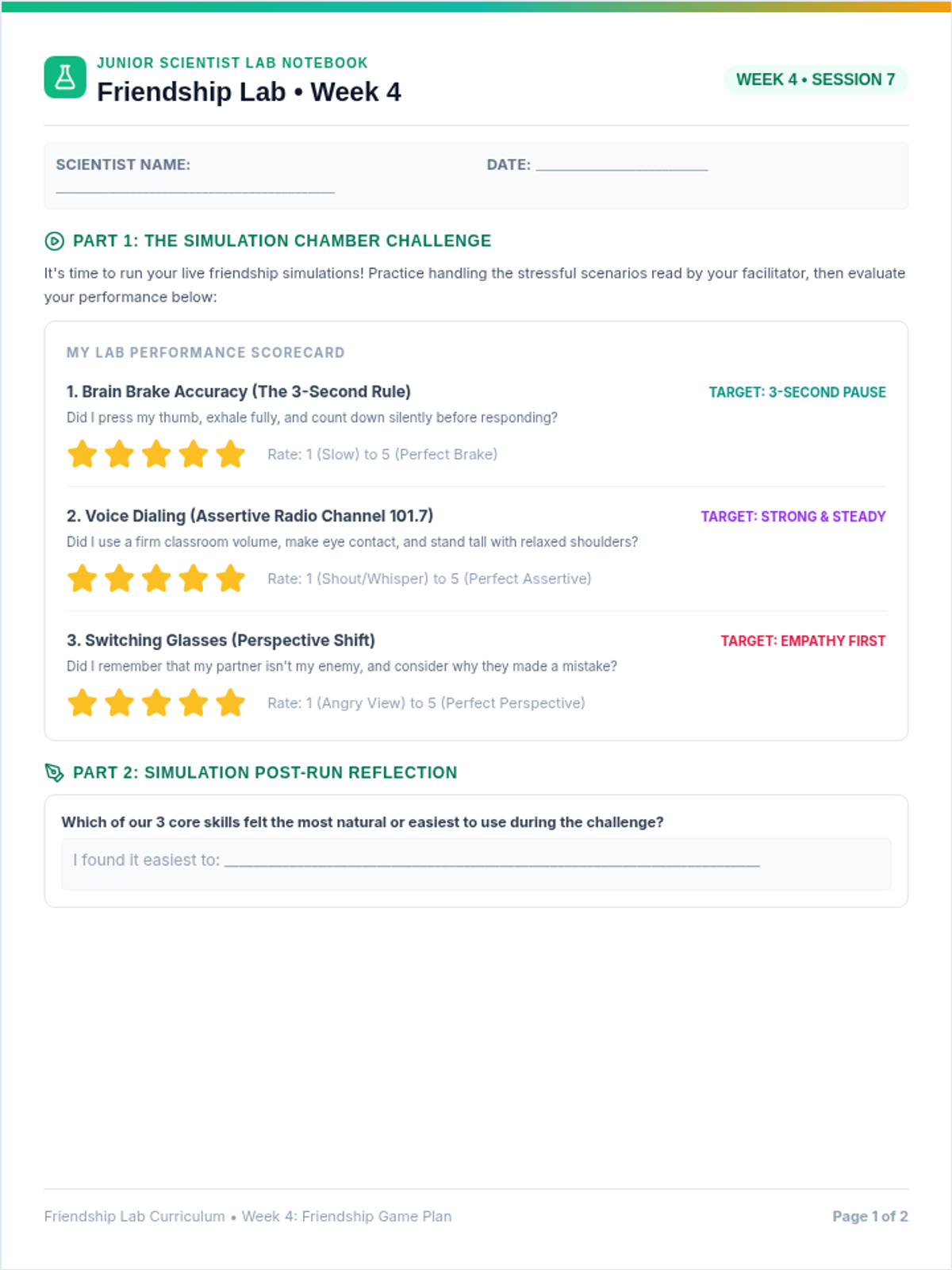
Week 4 of the program, focusing on real-world practice, synthesizing pause strategies and assertive communication, and creating a shared friendship blueprint for future interactions.
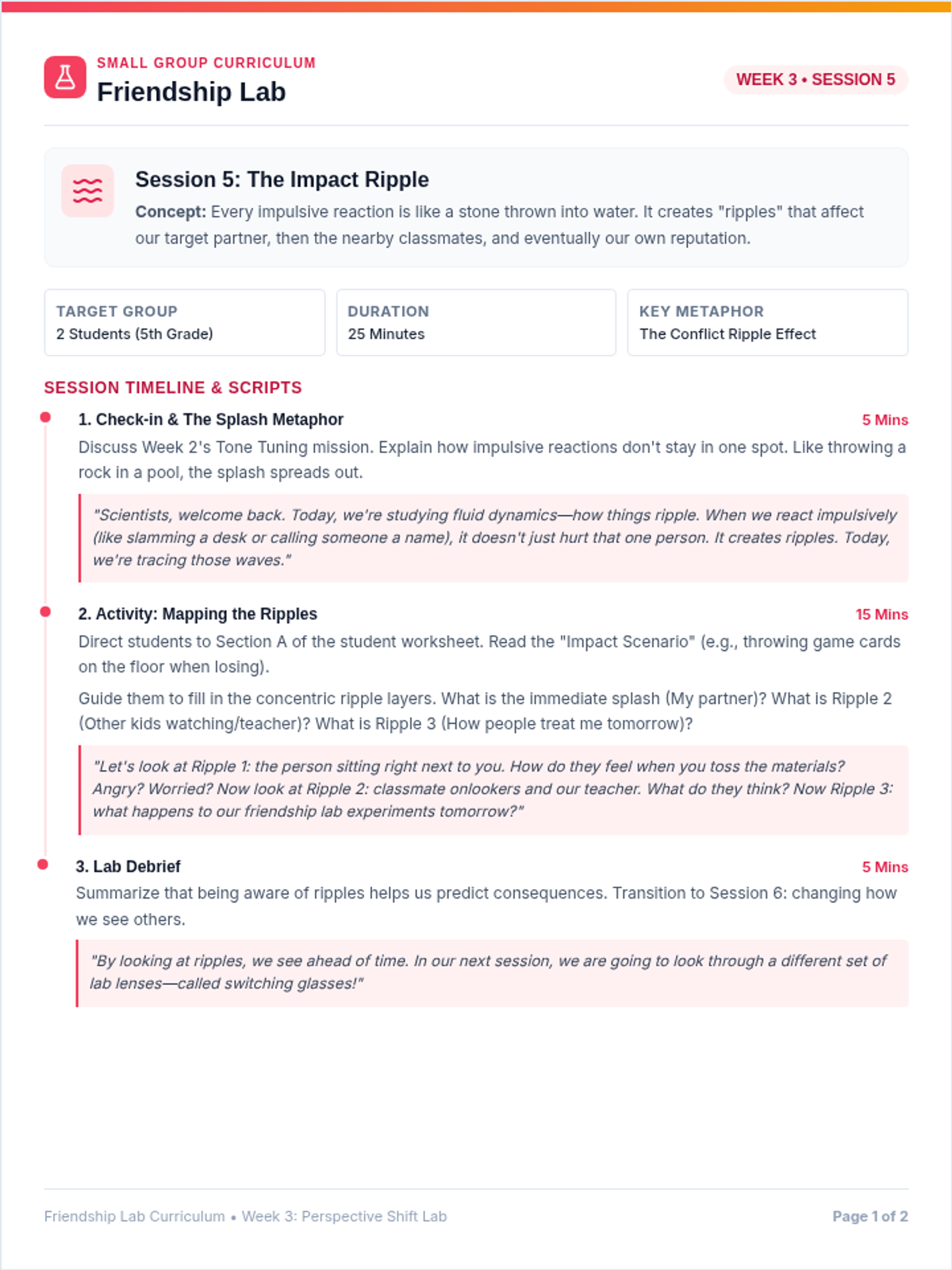
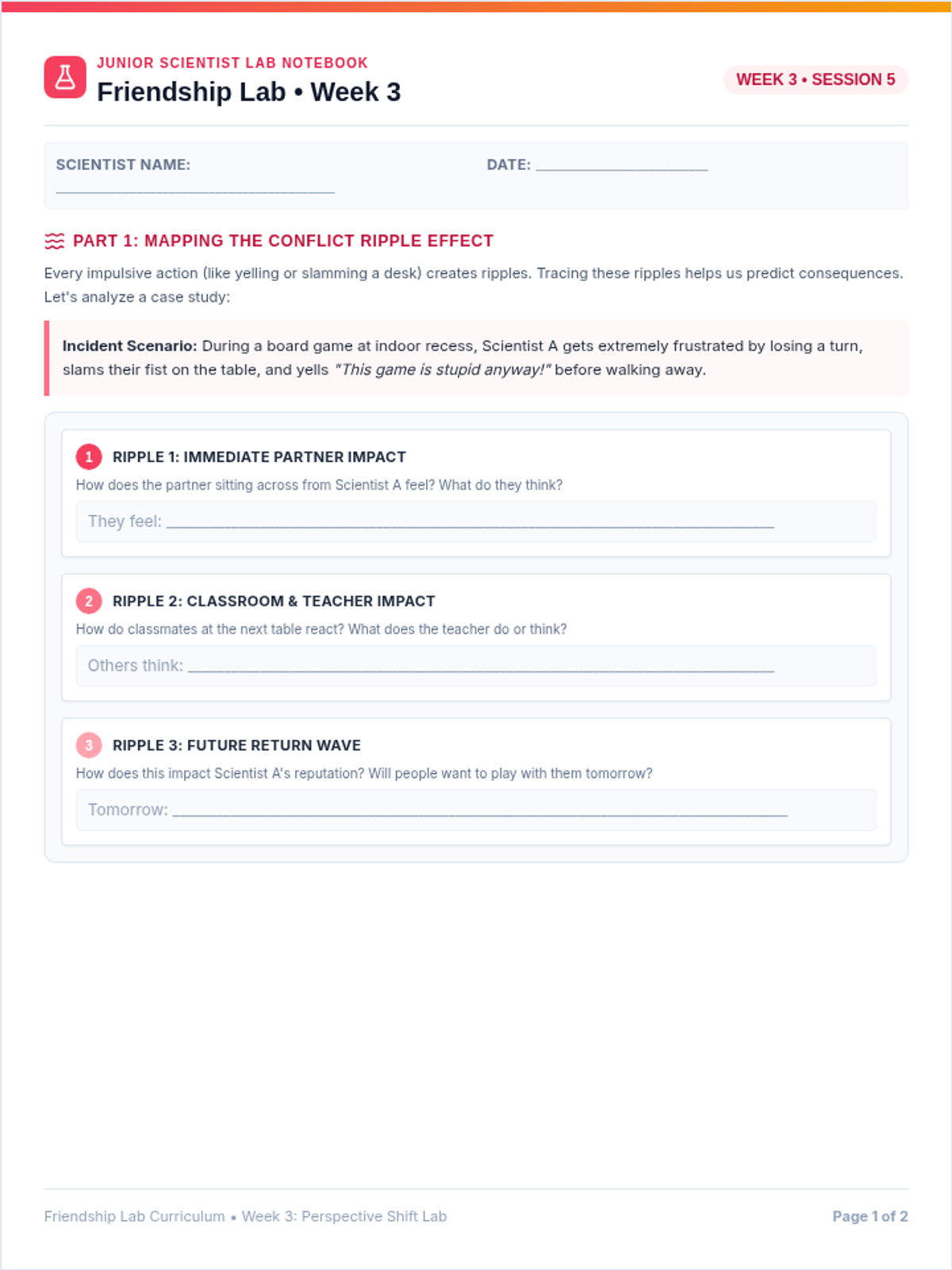
Week 3 of the program, focusing on perspective-taking activities to help students understand how their impulsive actions affect their partner's feelings and ripple out.
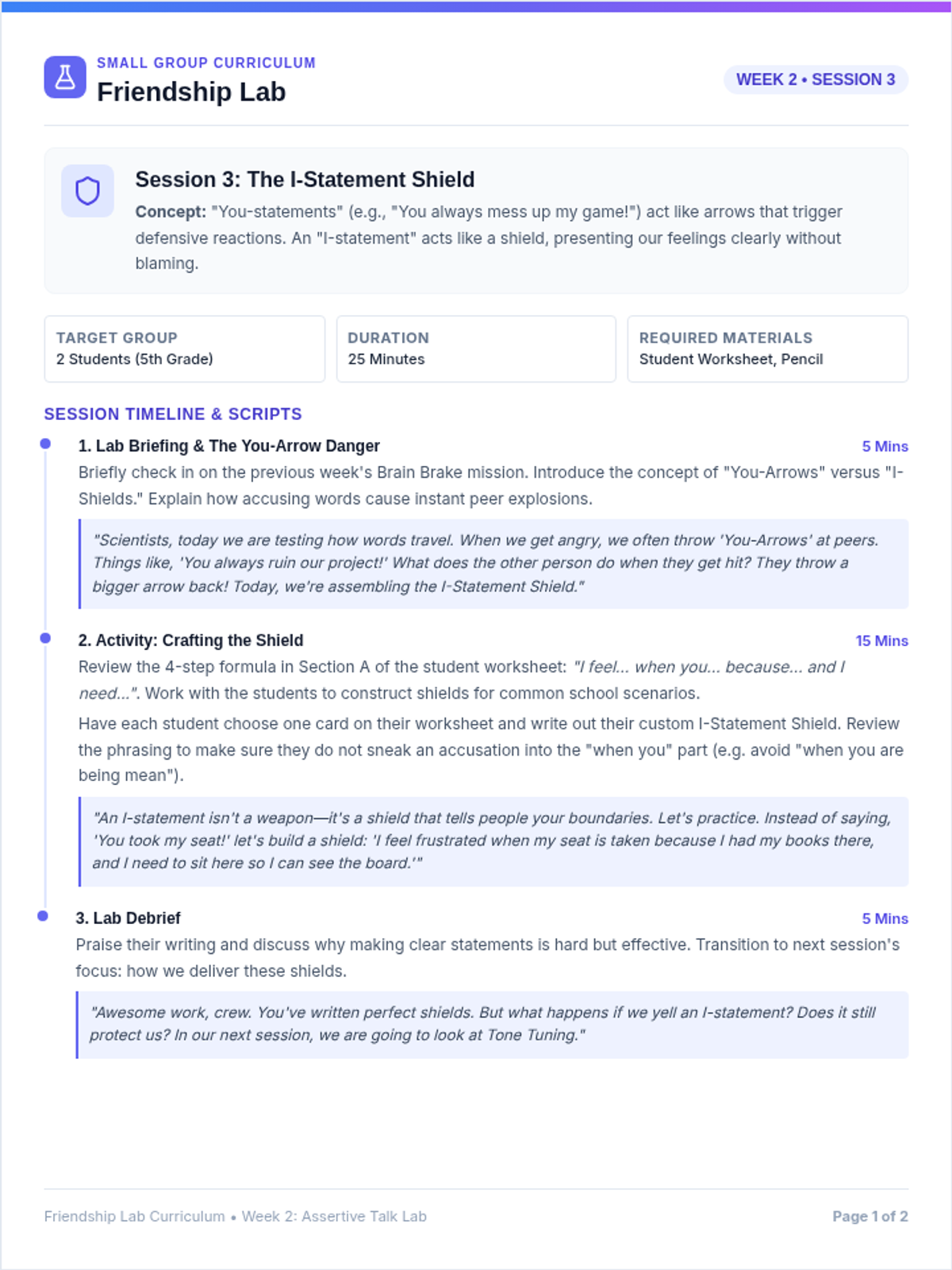
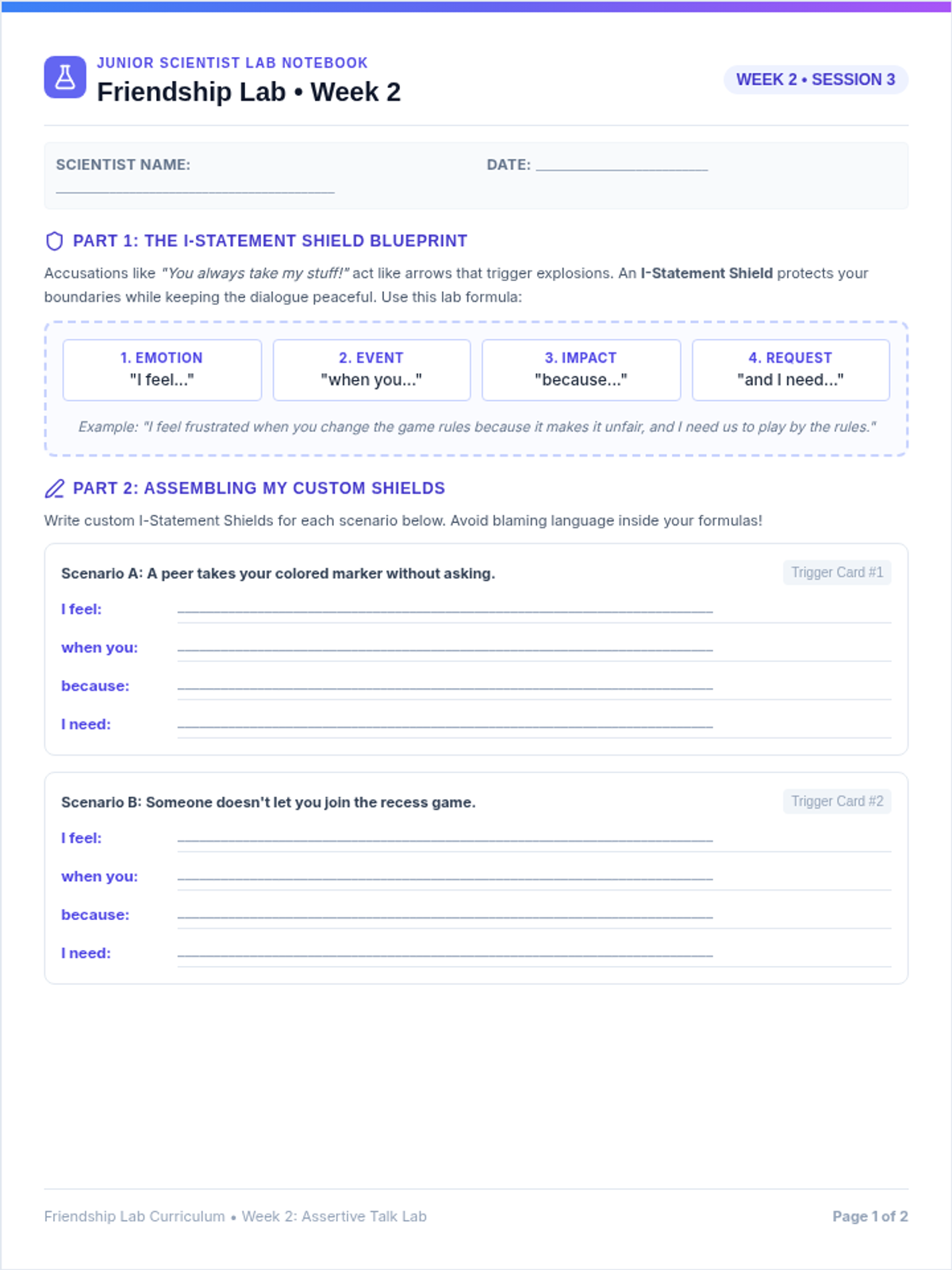
Week 2 of the program, focusing on learning and practicing assertive communication skills, specifically crafting and using 'I-statements' and modulating tone/posture to prevent conflicts.
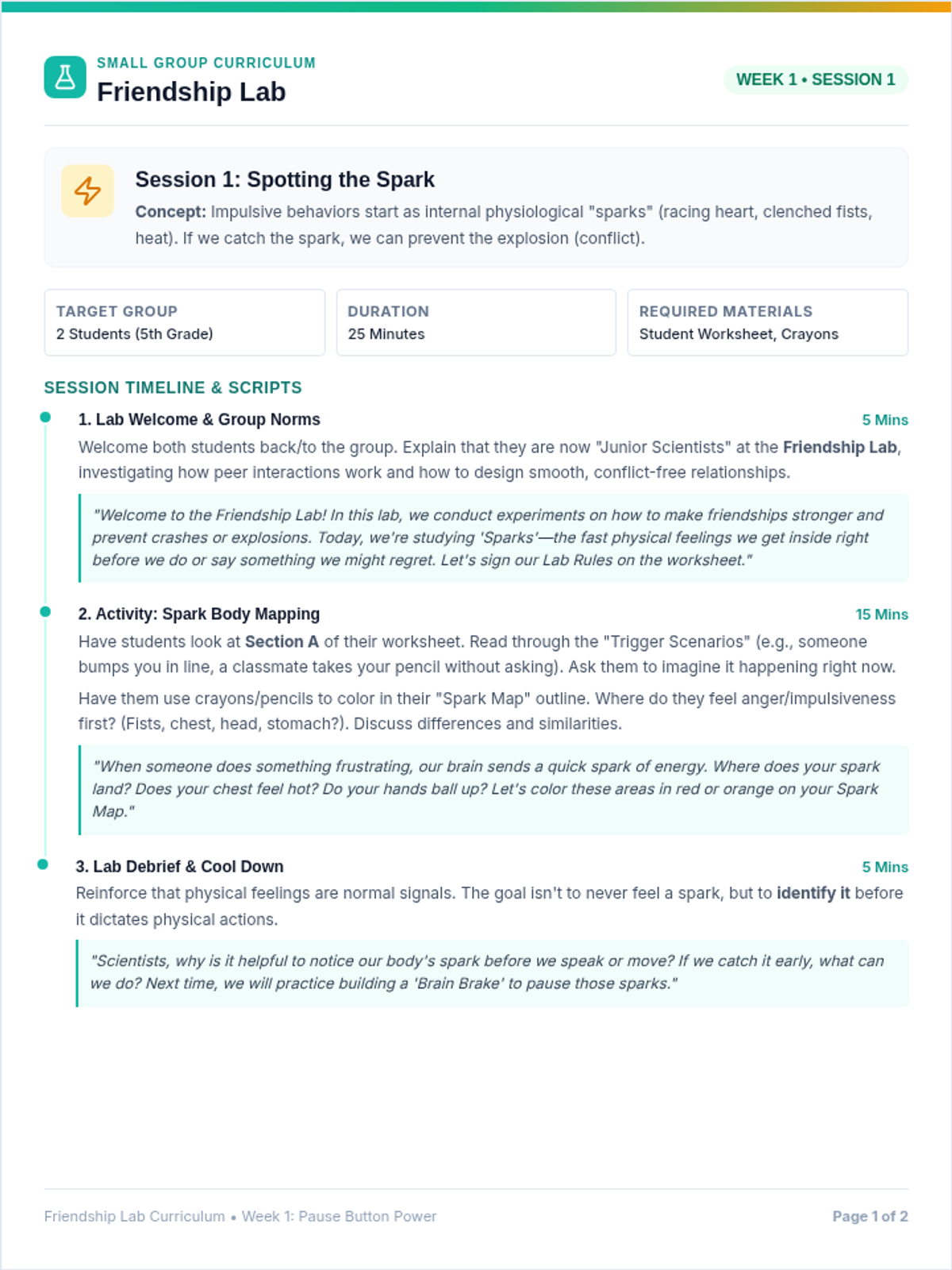
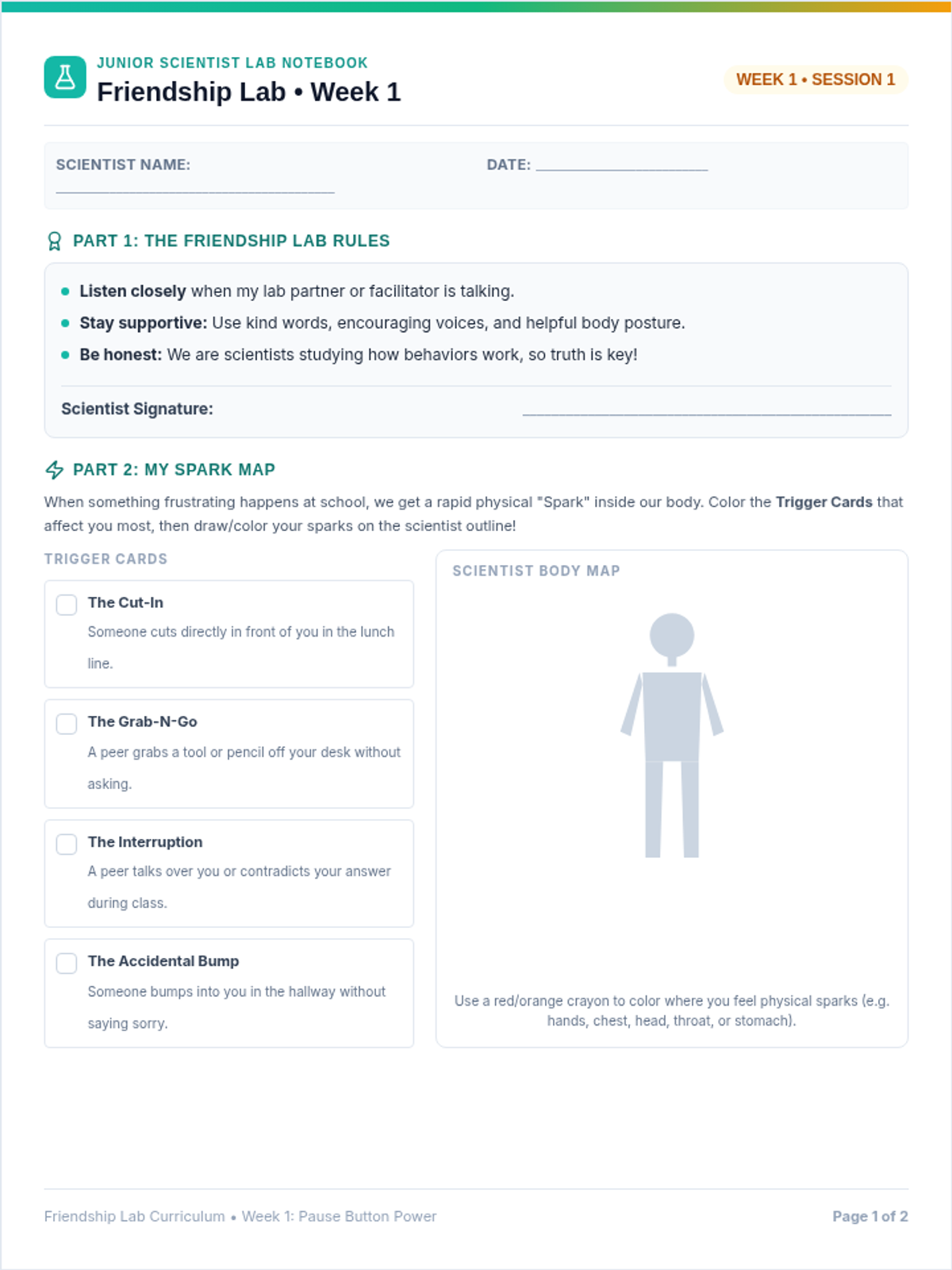
Week 1 of the program, focusing on identifying internal physical 'sparks' of anger/impulsivity and applying physical and mental 'stop' cues (the 3-second pause) before reacting to peers.
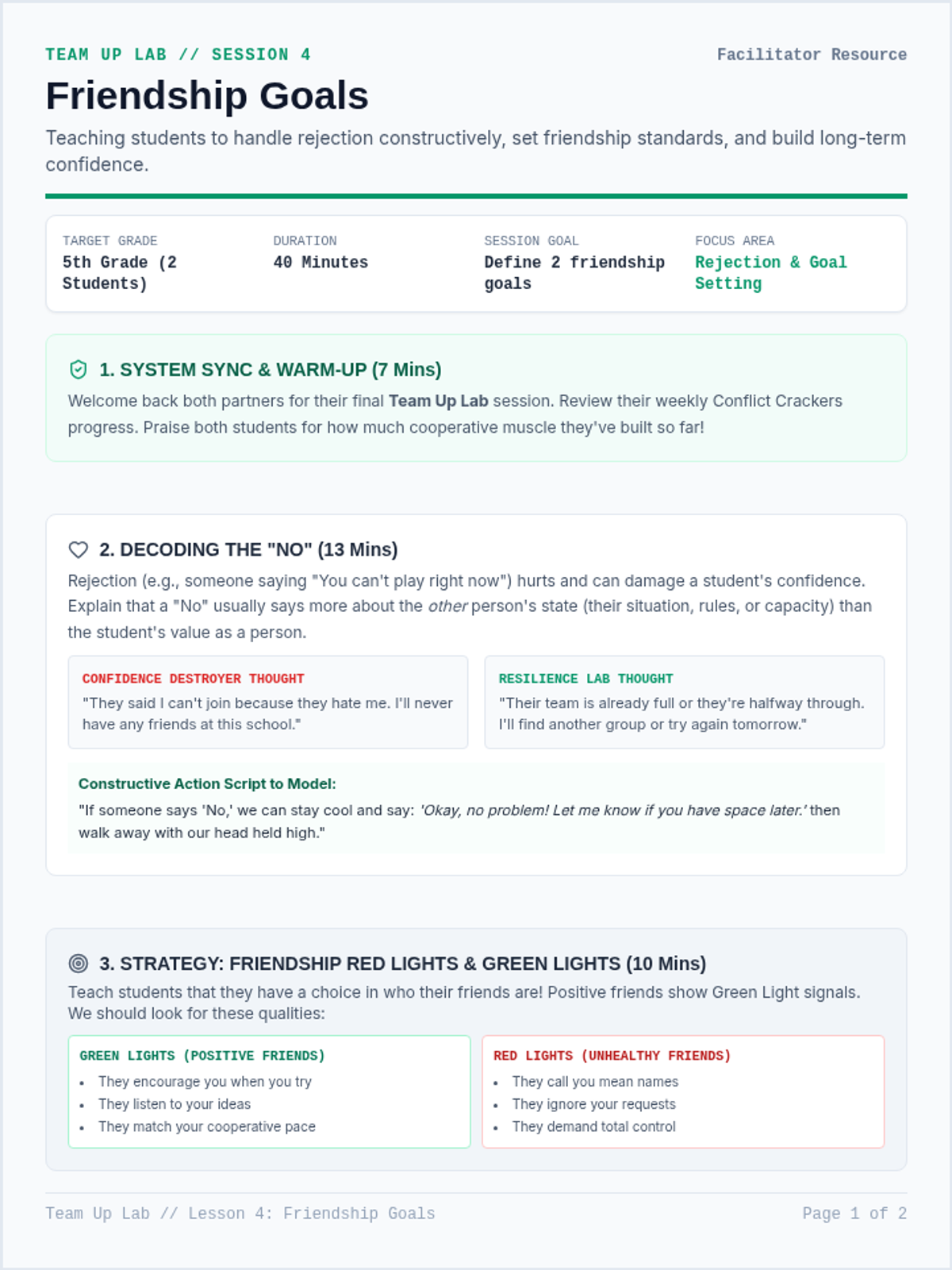
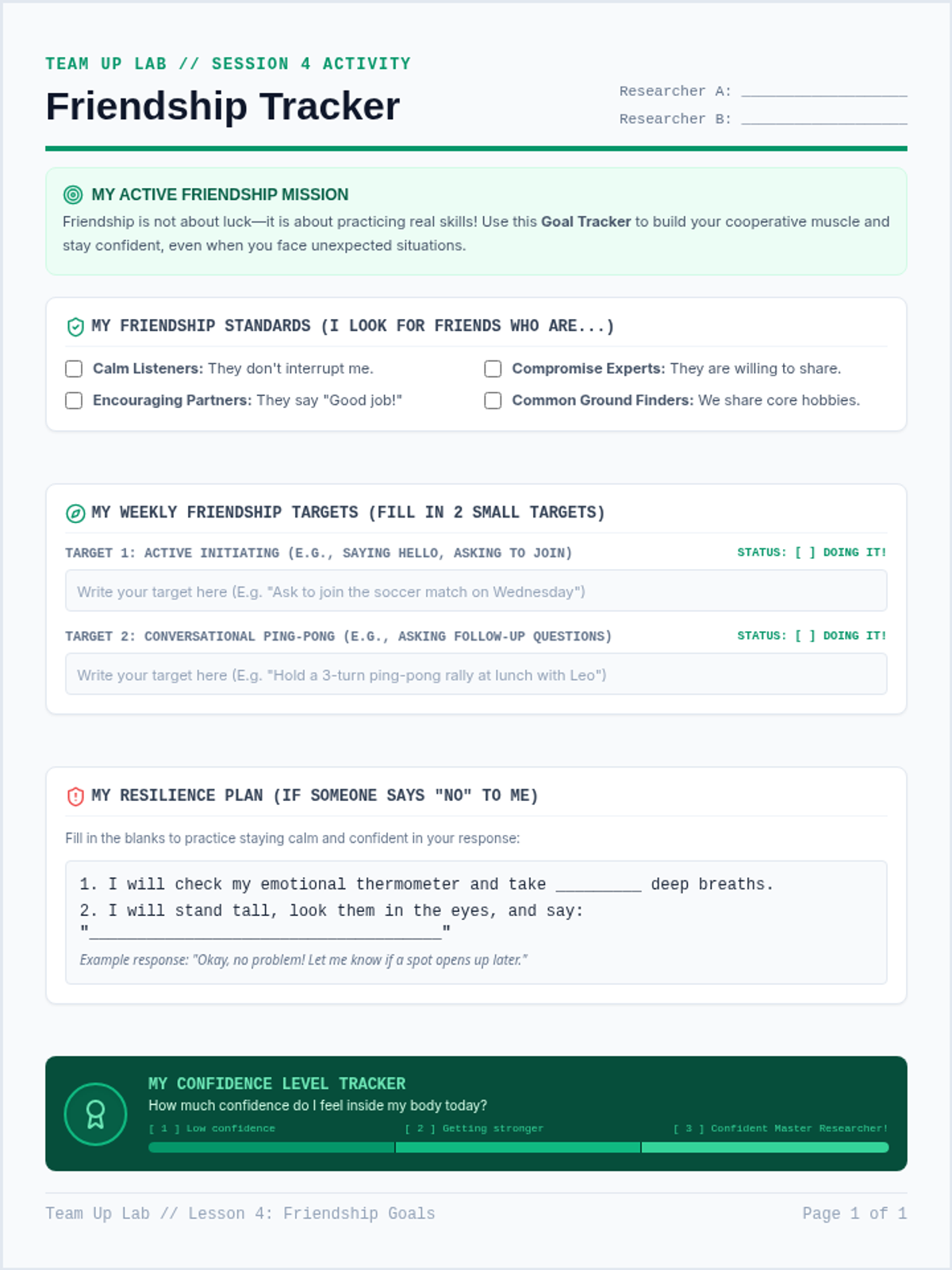
Empowers students to respond constructively to peer rejection, set realistic friendship goals, and track their self-confidence.