A comprehensive social skills lesson designed to help middle schoolers confidently reach out, initiate conversations, and coordinate summer hangout plans with classmates using various communication channels.
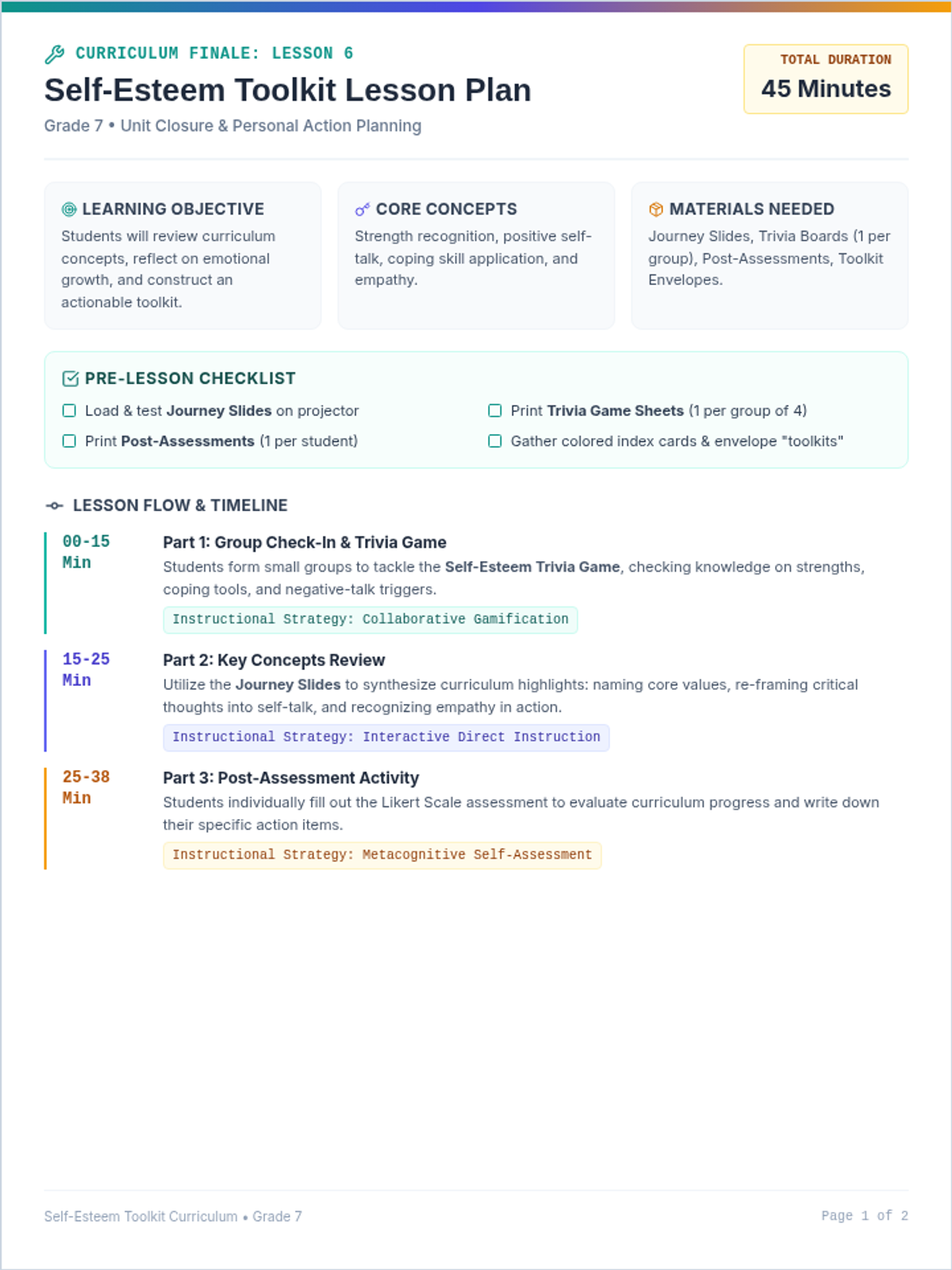
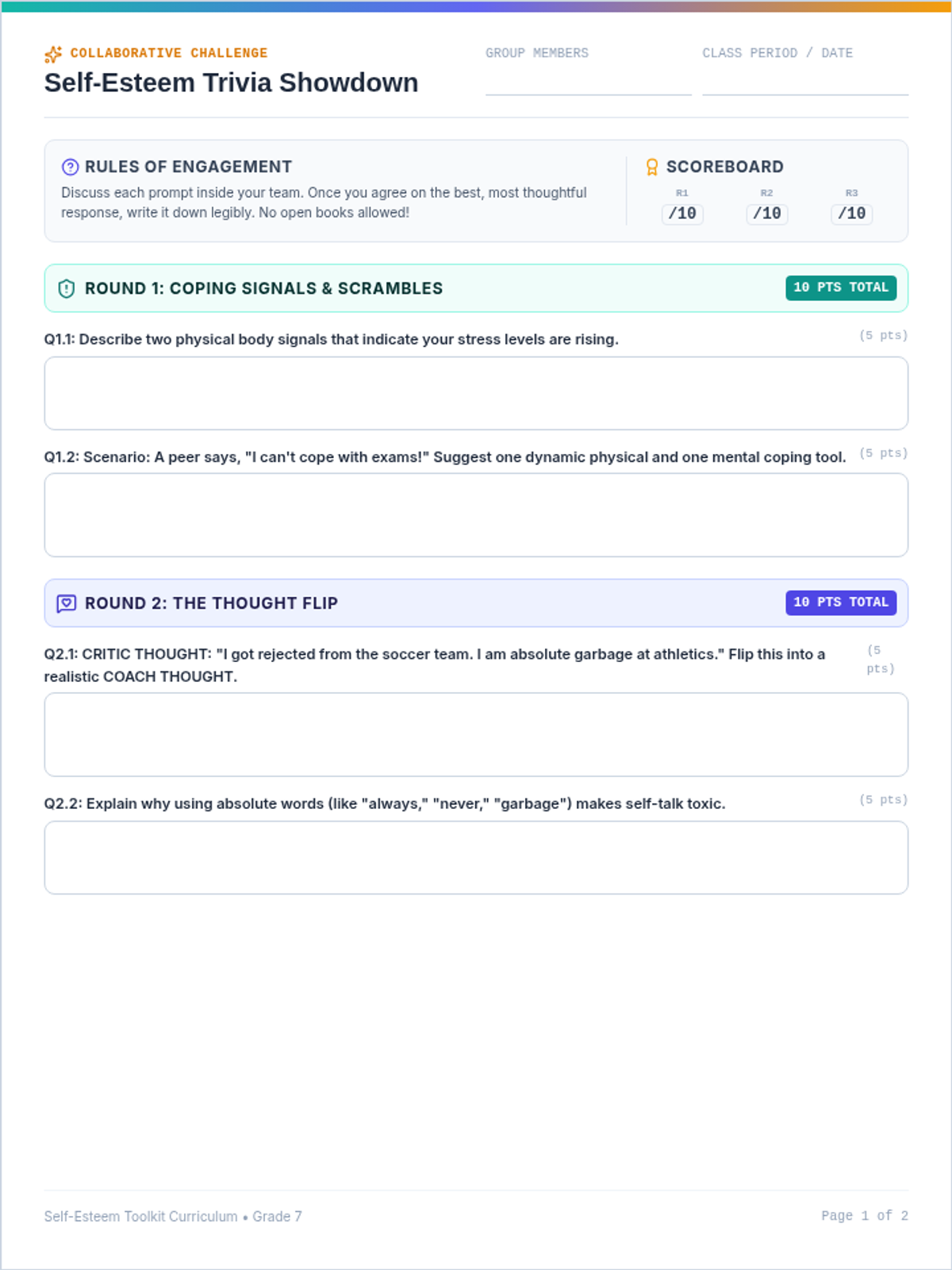
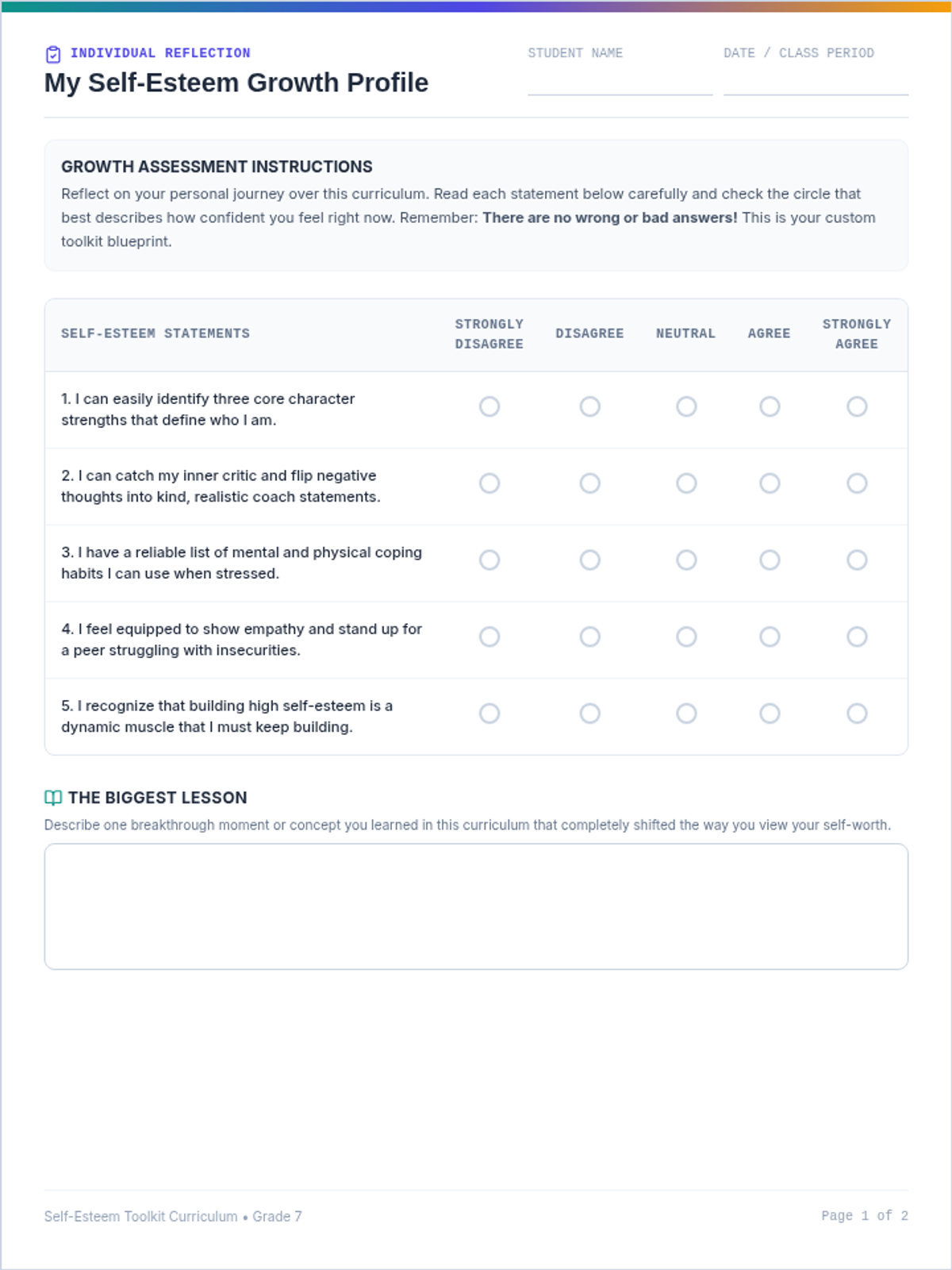
A comprehensive 45-minute concluding lesson for 7th grade students to review core self-esteem concepts through an engaging trivia game, self-reflect with a growth-focused post-assessment, and build their personal action plans.
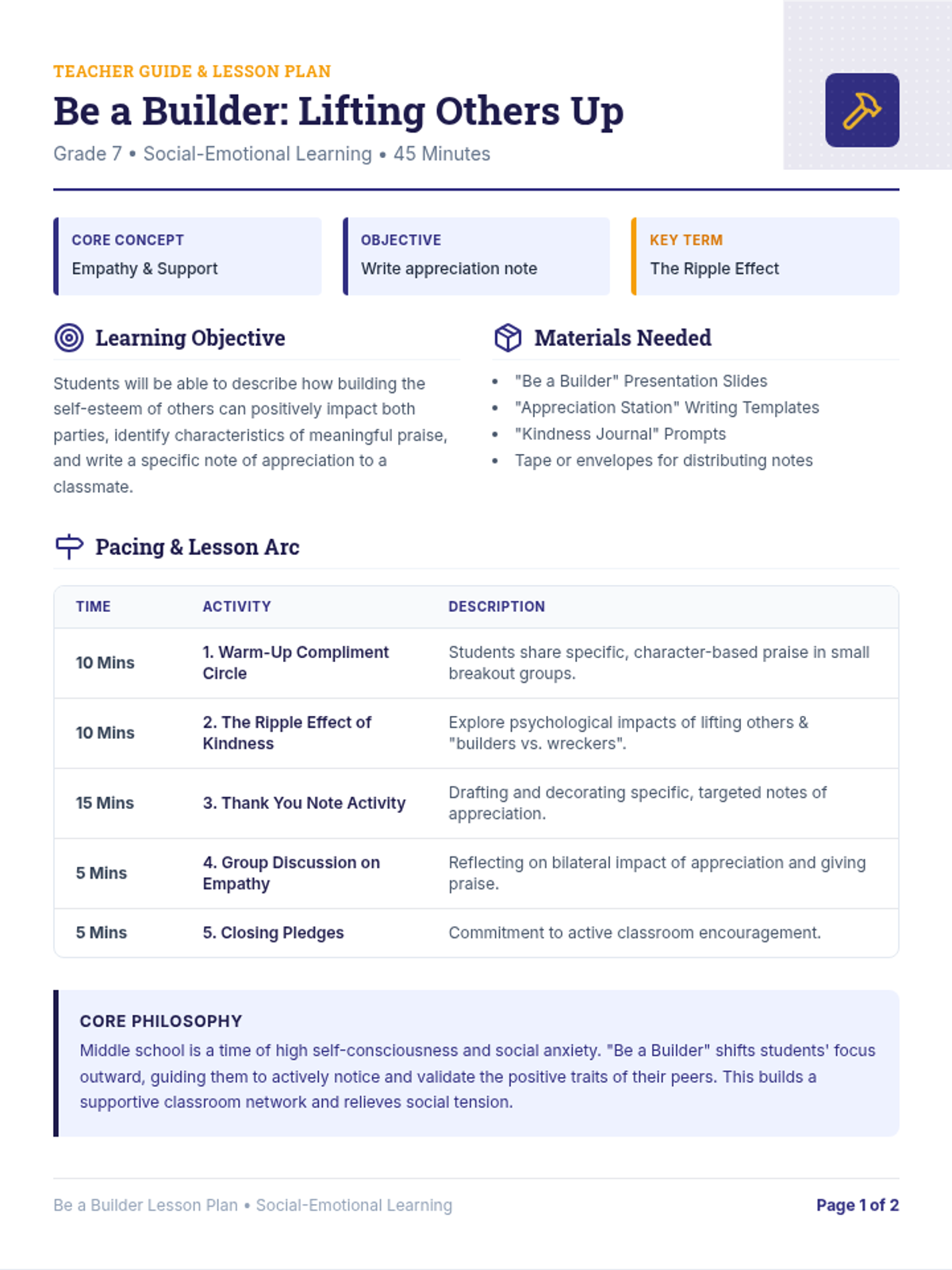
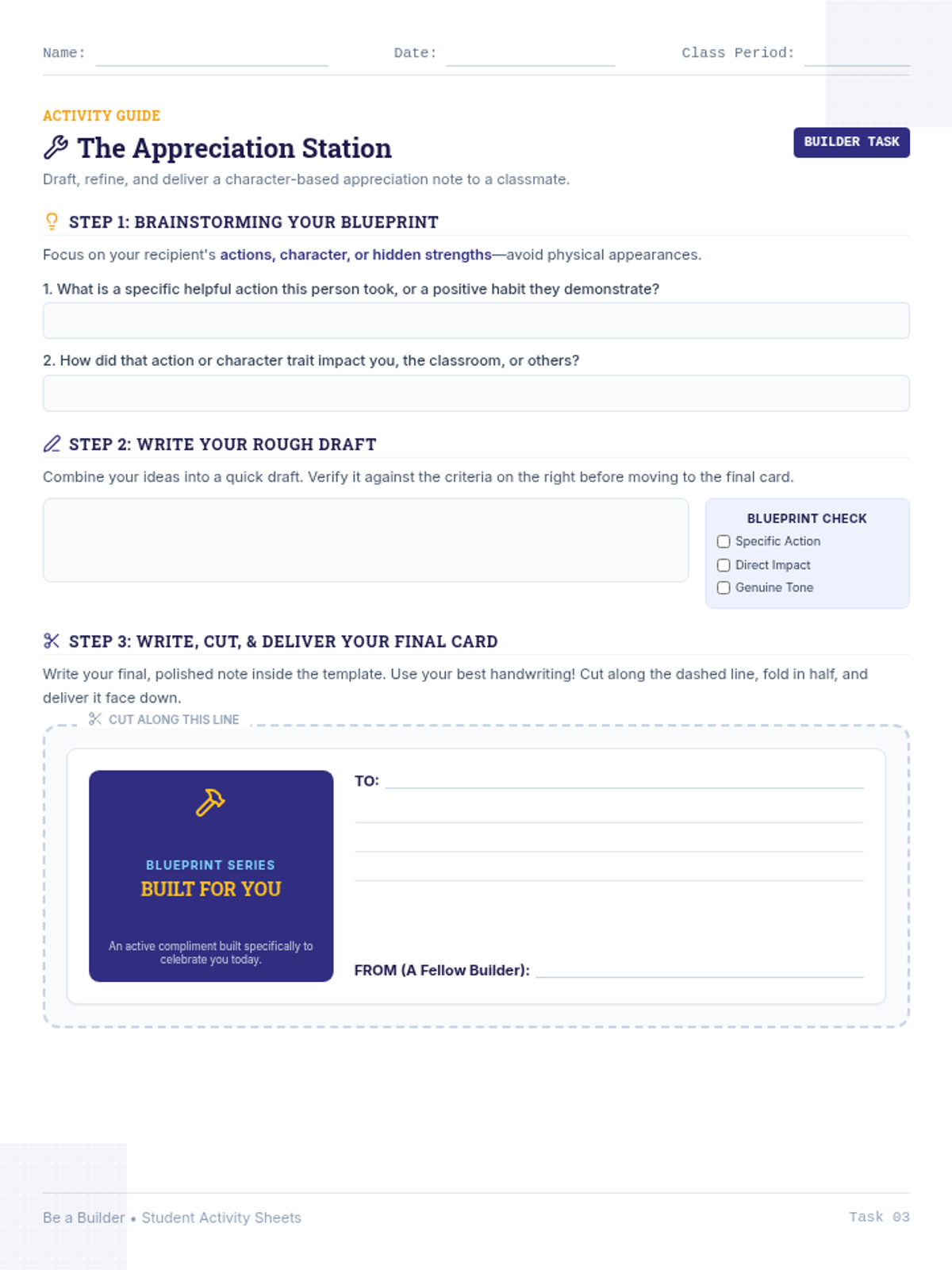
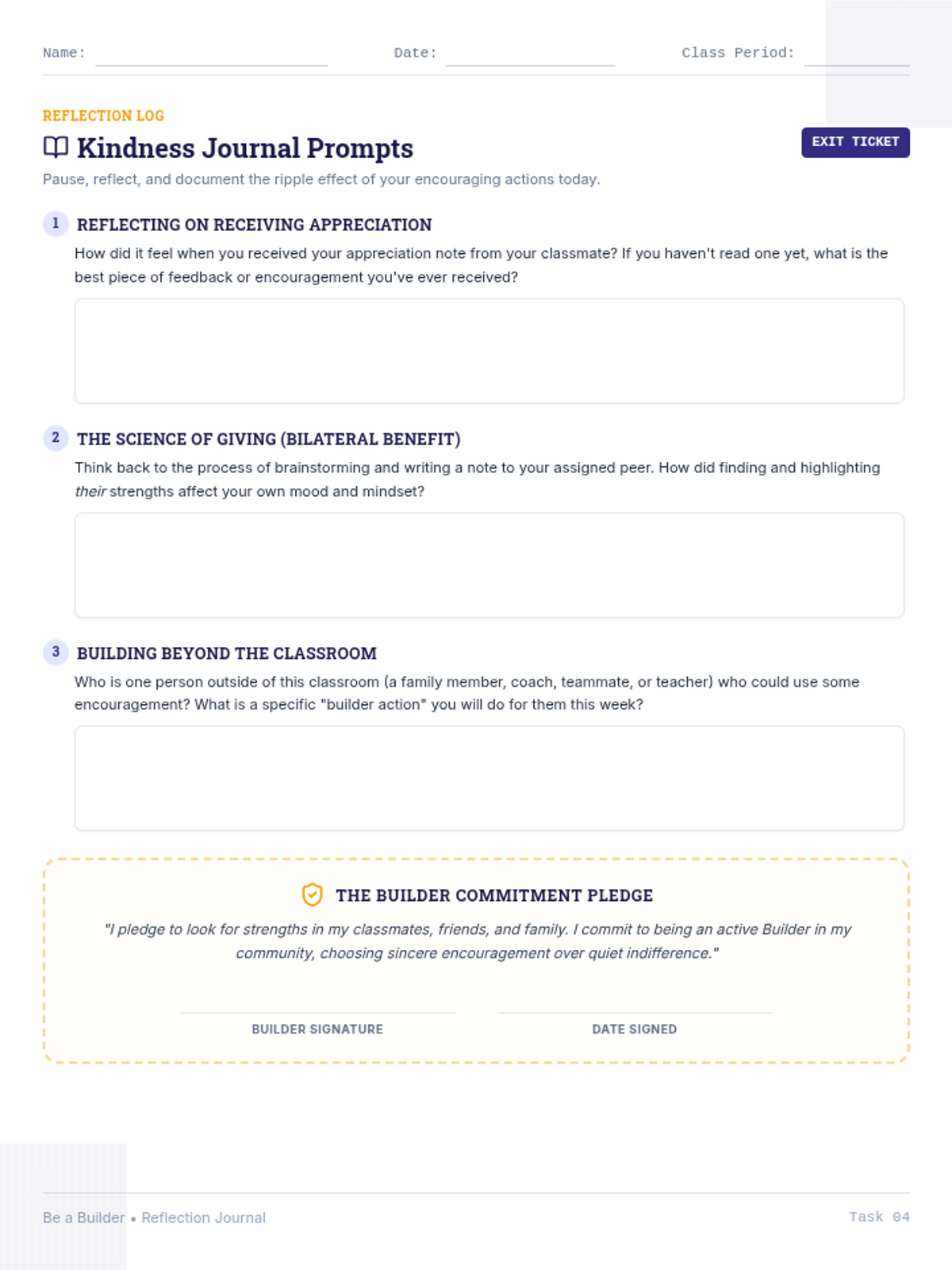
A 45-minute social-emotional learning lesson for 7th graders focused on the positive ripple effect of kindness, building others' self-esteem, and writing peer appreciation notes.
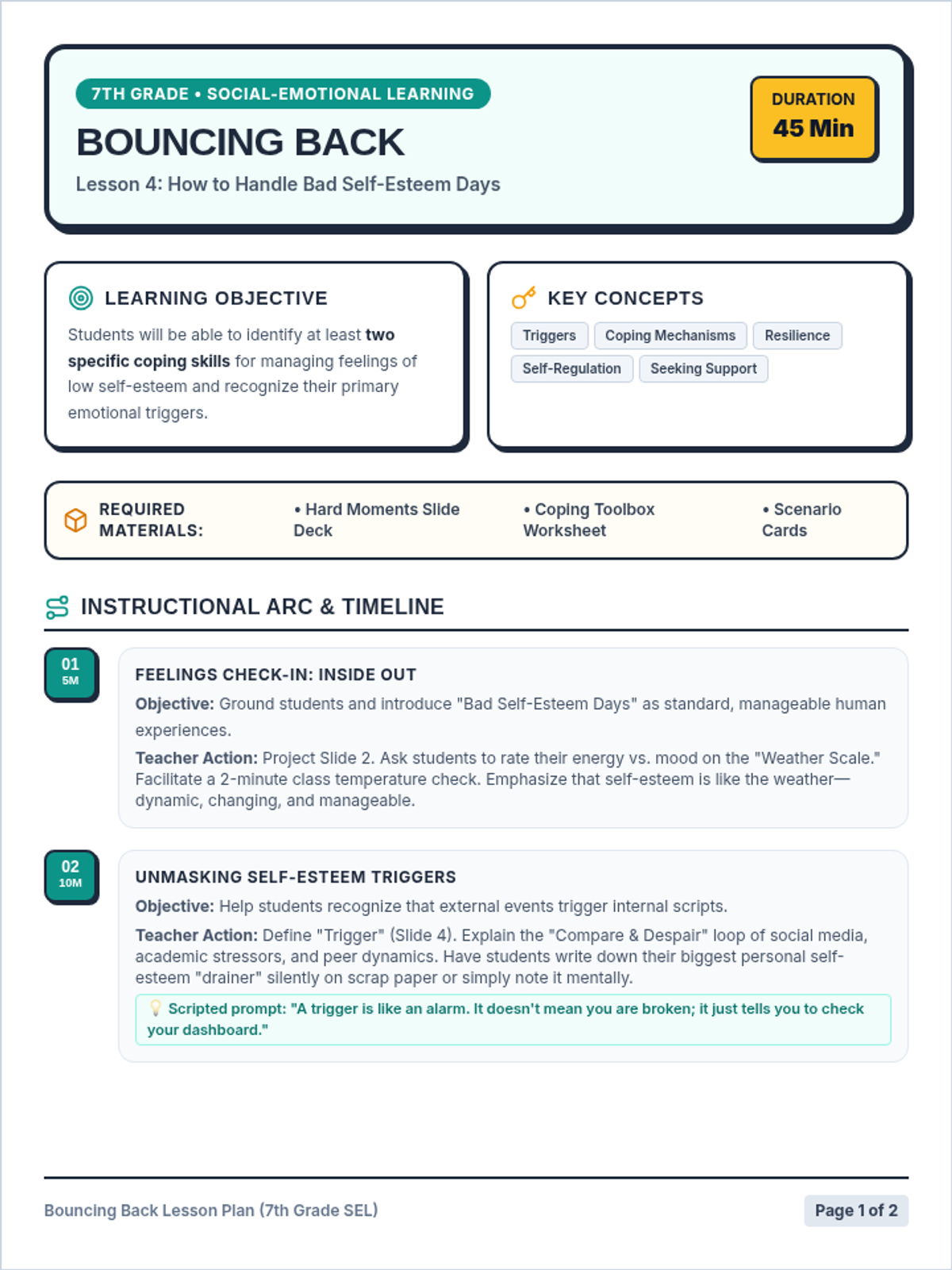
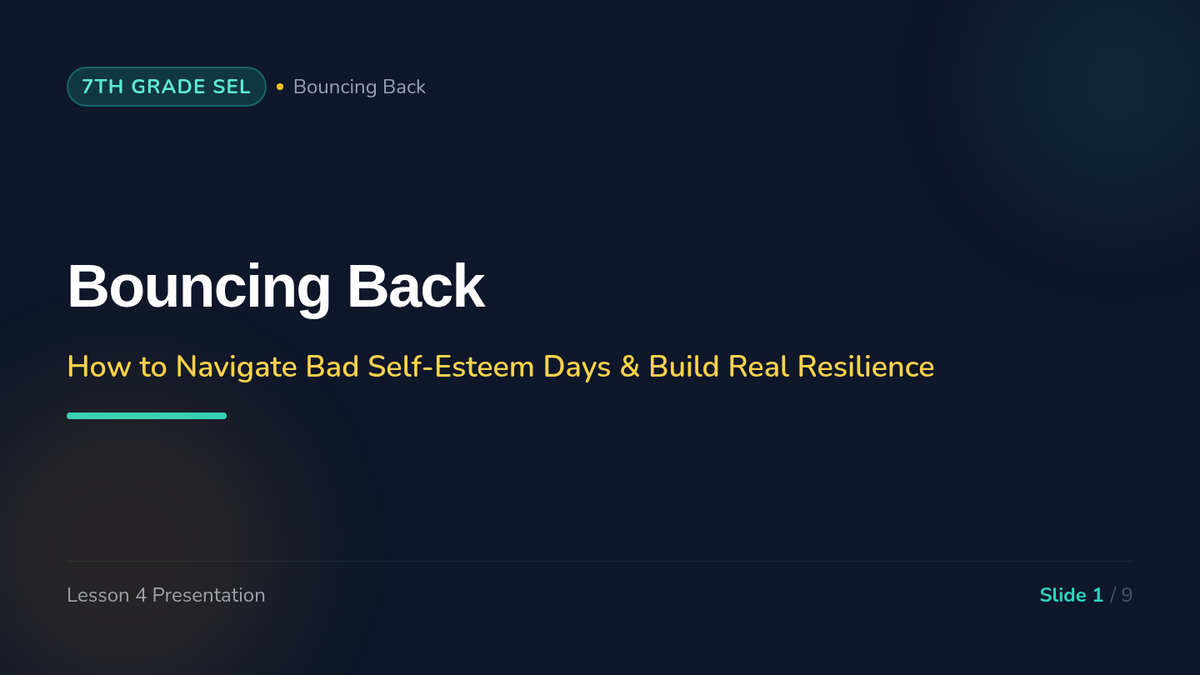
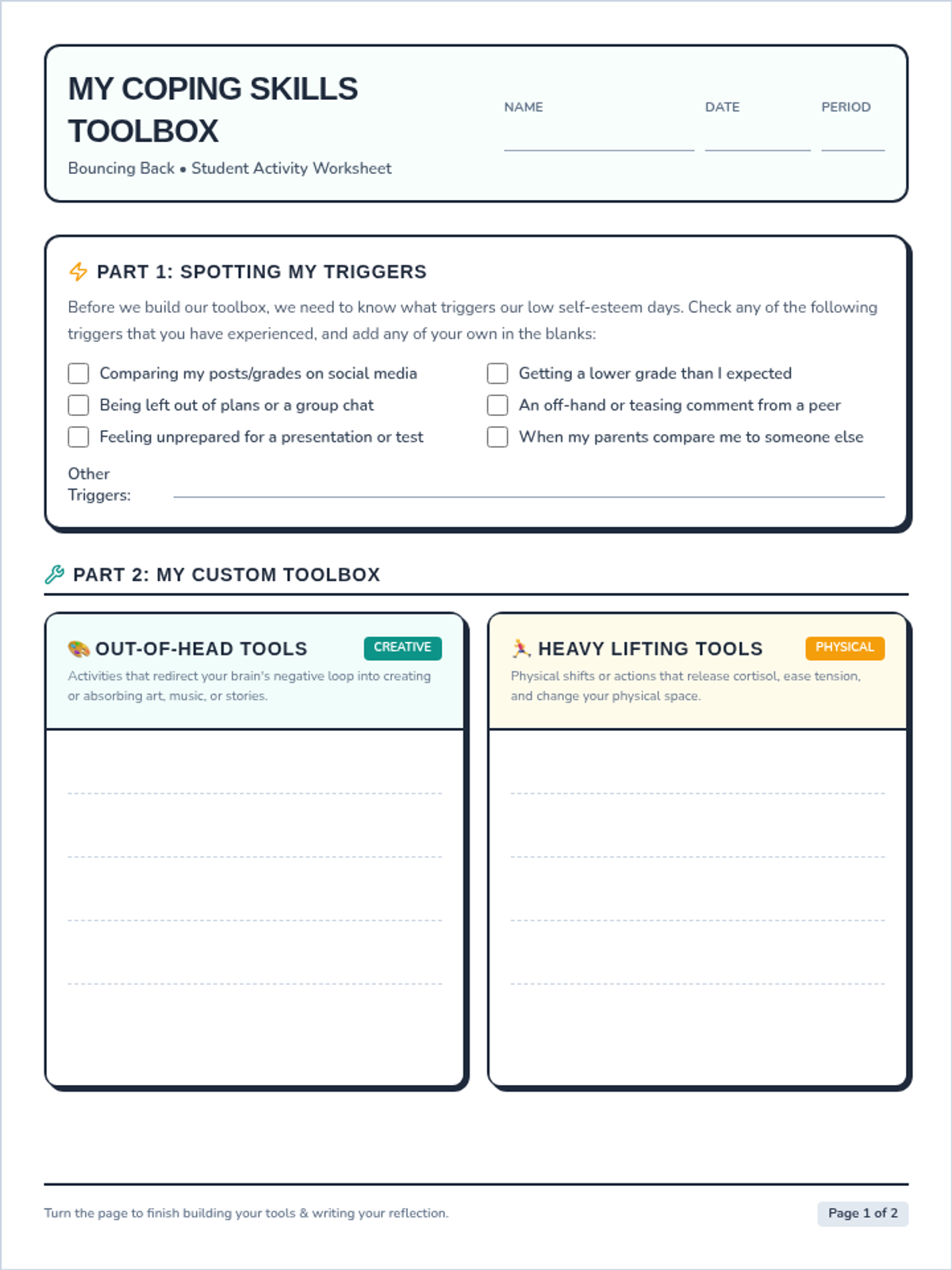
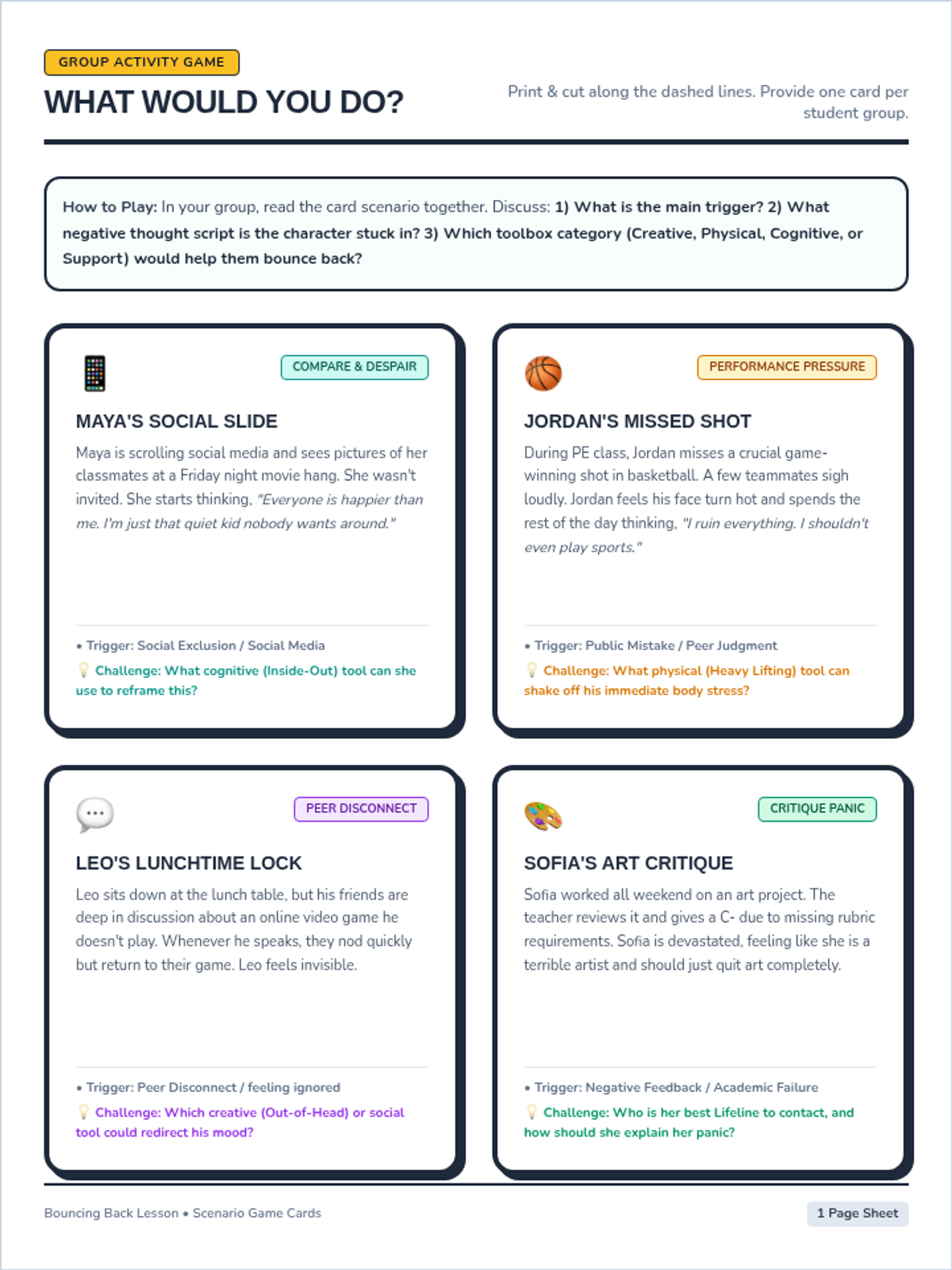
A 45-minute social-emotional learning lesson for 7th grade focused on identifying self-esteem triggers and building a personalized coping skills toolbox to navigate difficult emotional days with resilience.
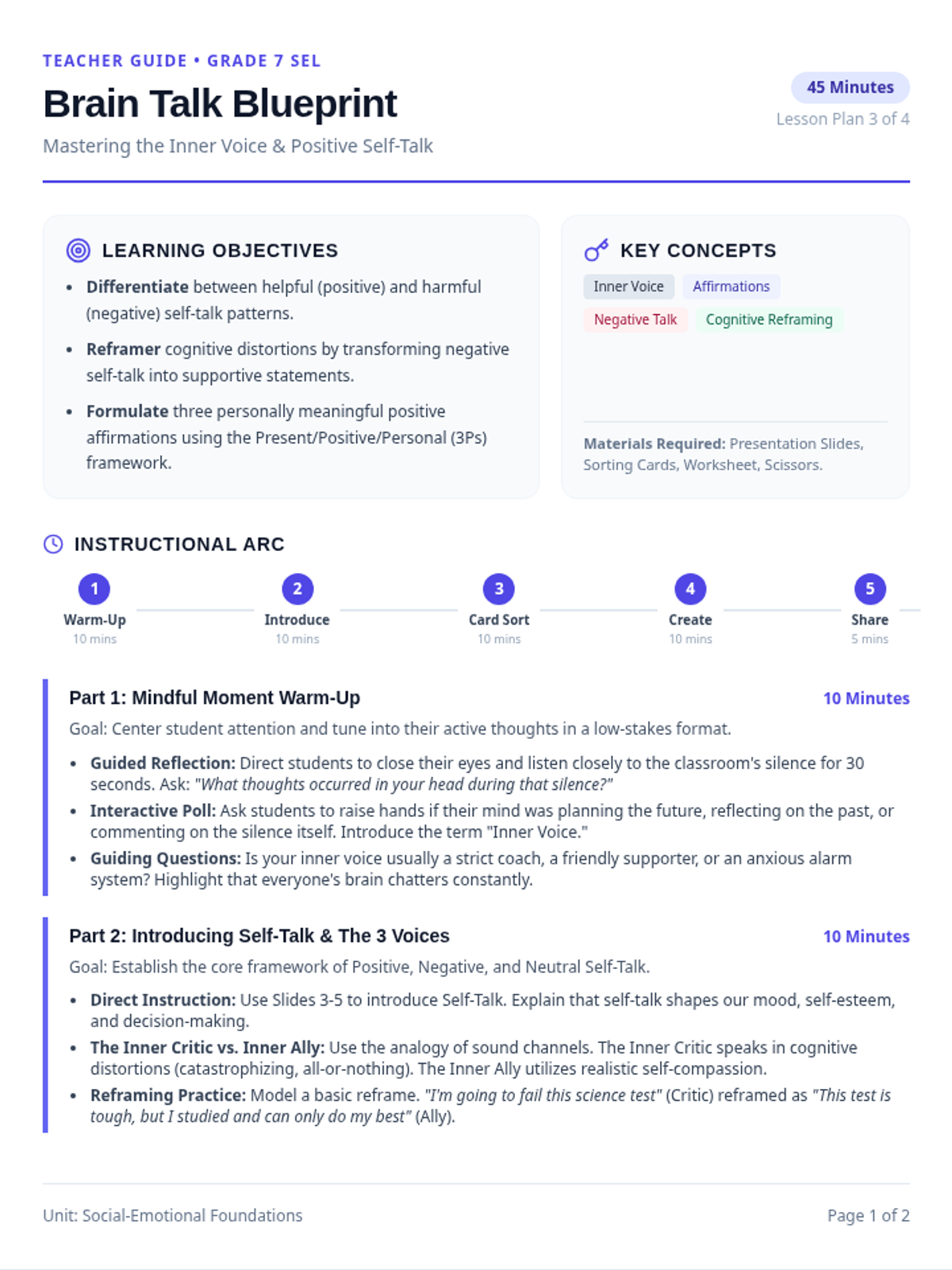
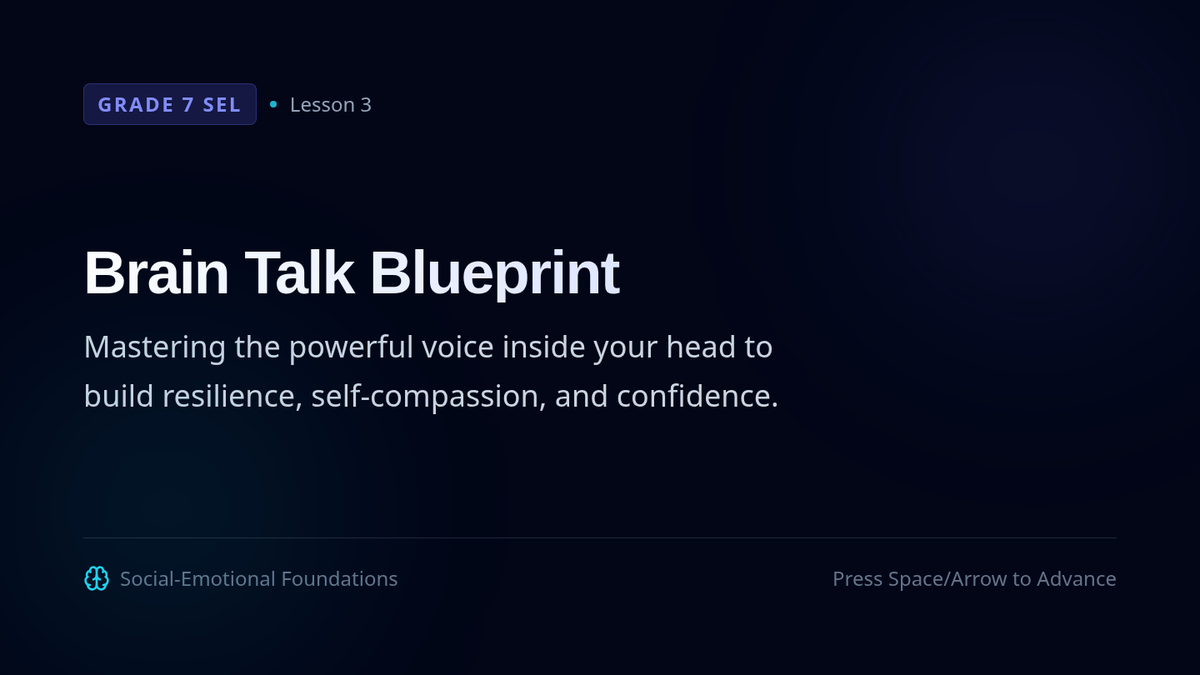
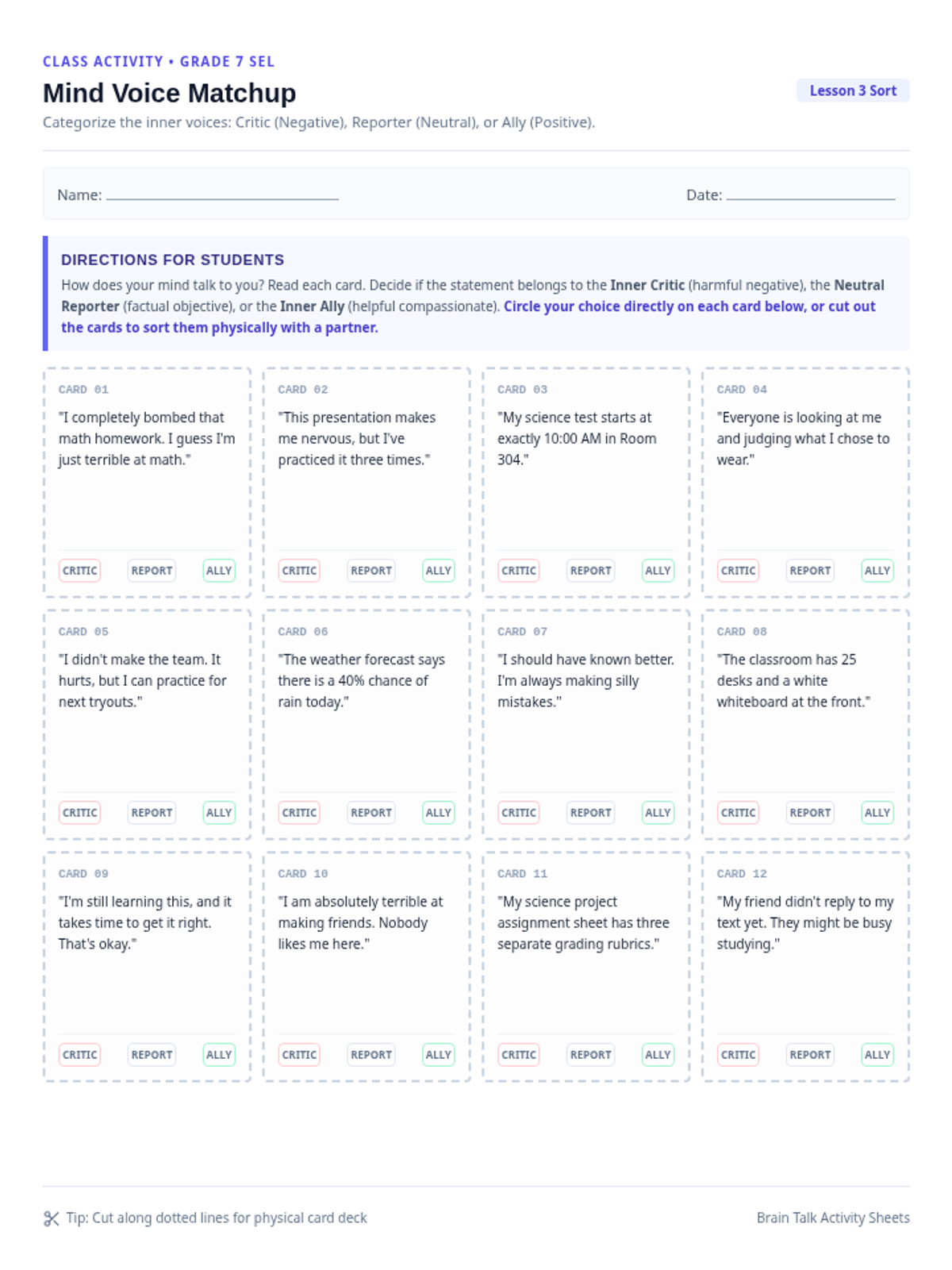
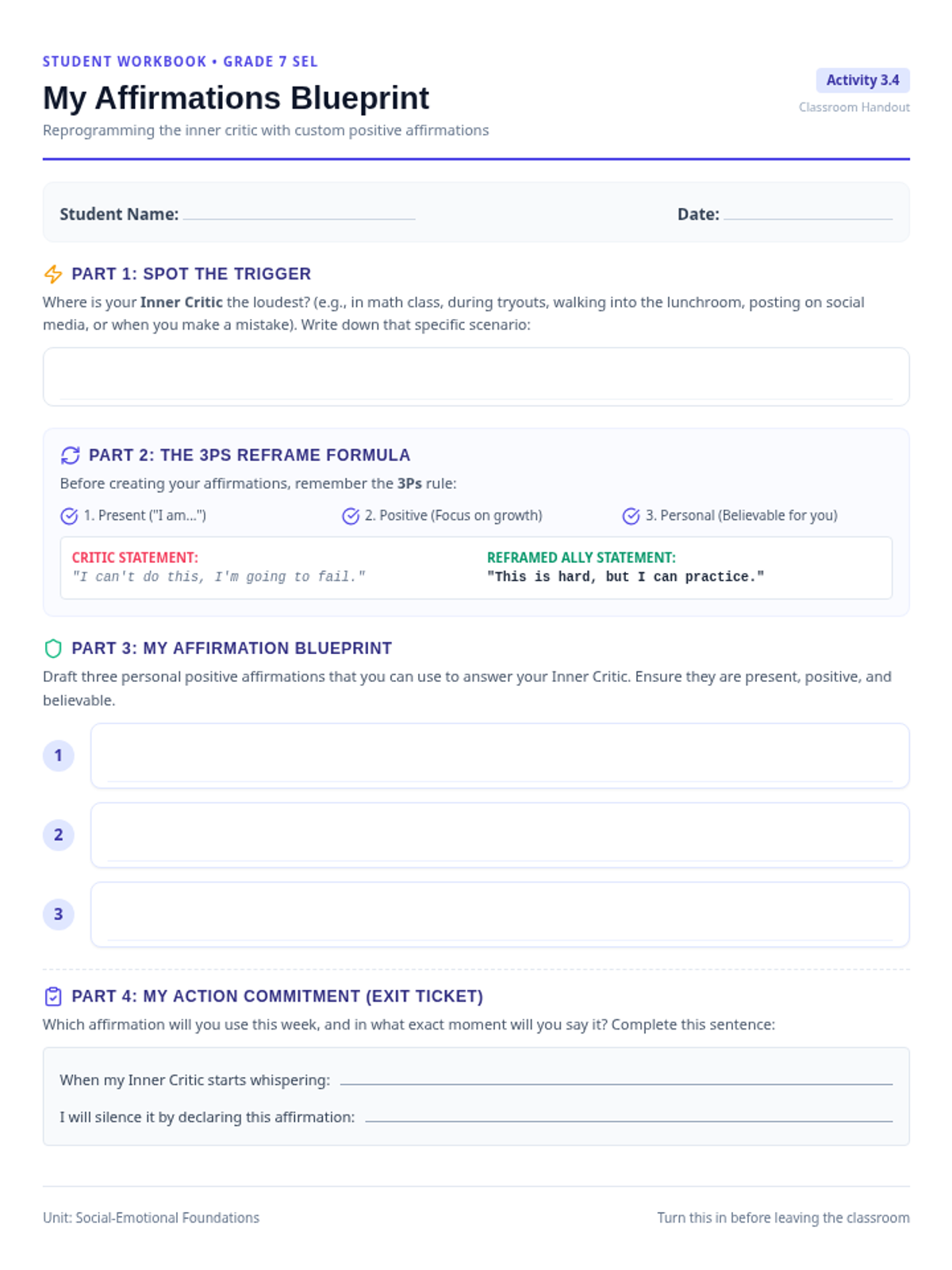
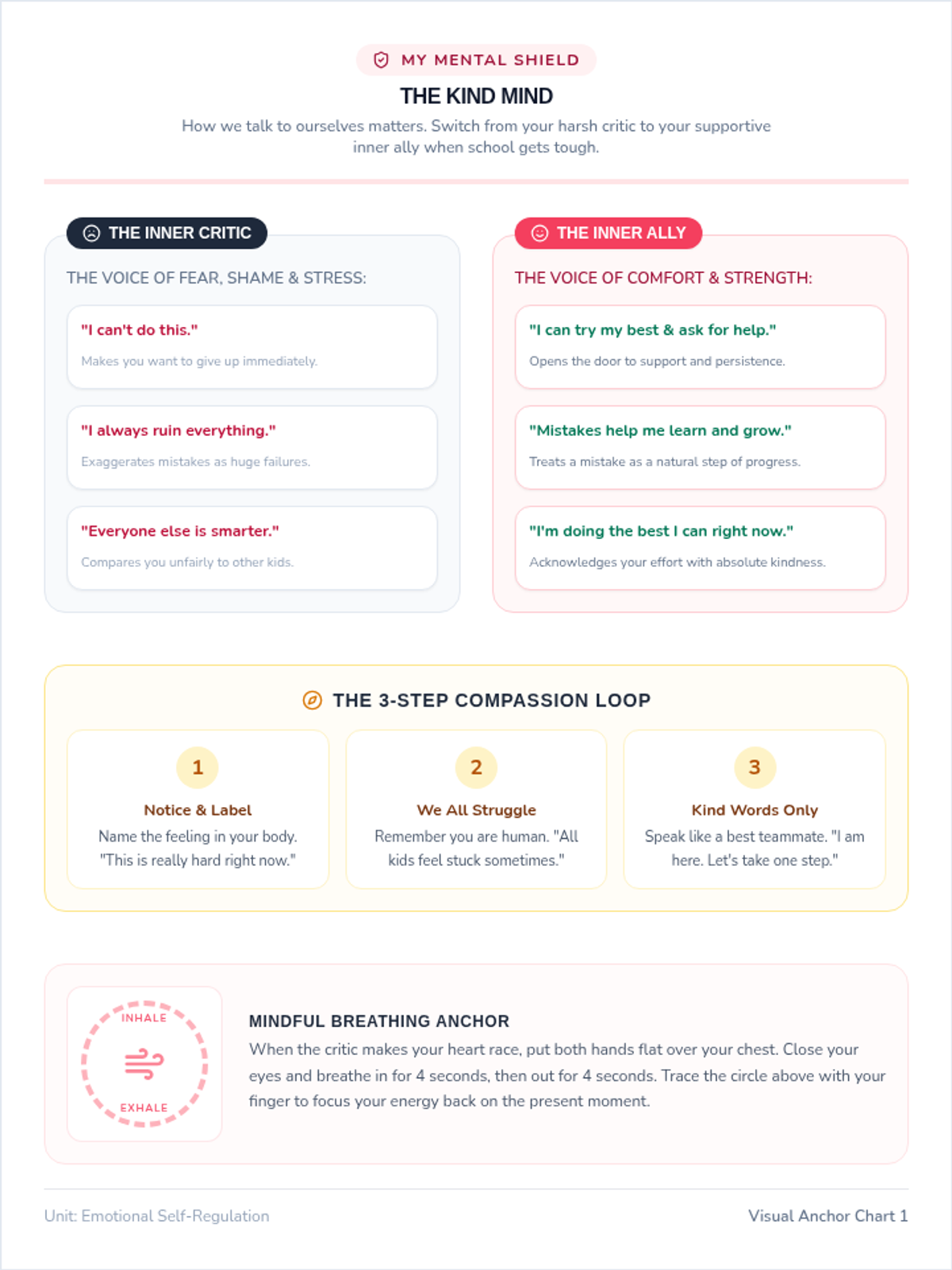
A transformative 45-minute social-emotional learning lesson for 7th graders to master their inner dialogue. Students explore cognitive reframing, separate negative self-talk from positive affirmations, and design a personalized toolkit of supportive inner voices.
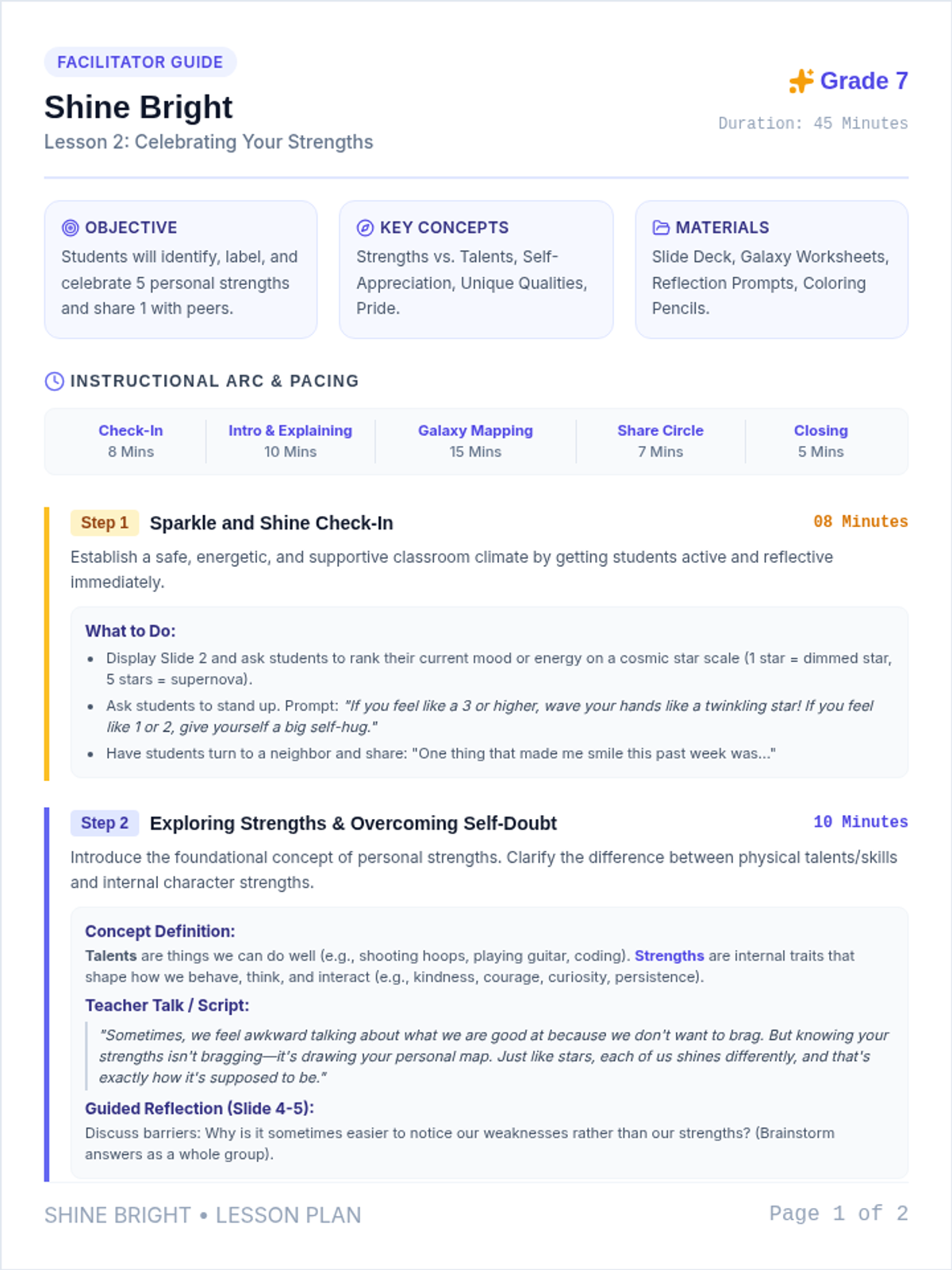
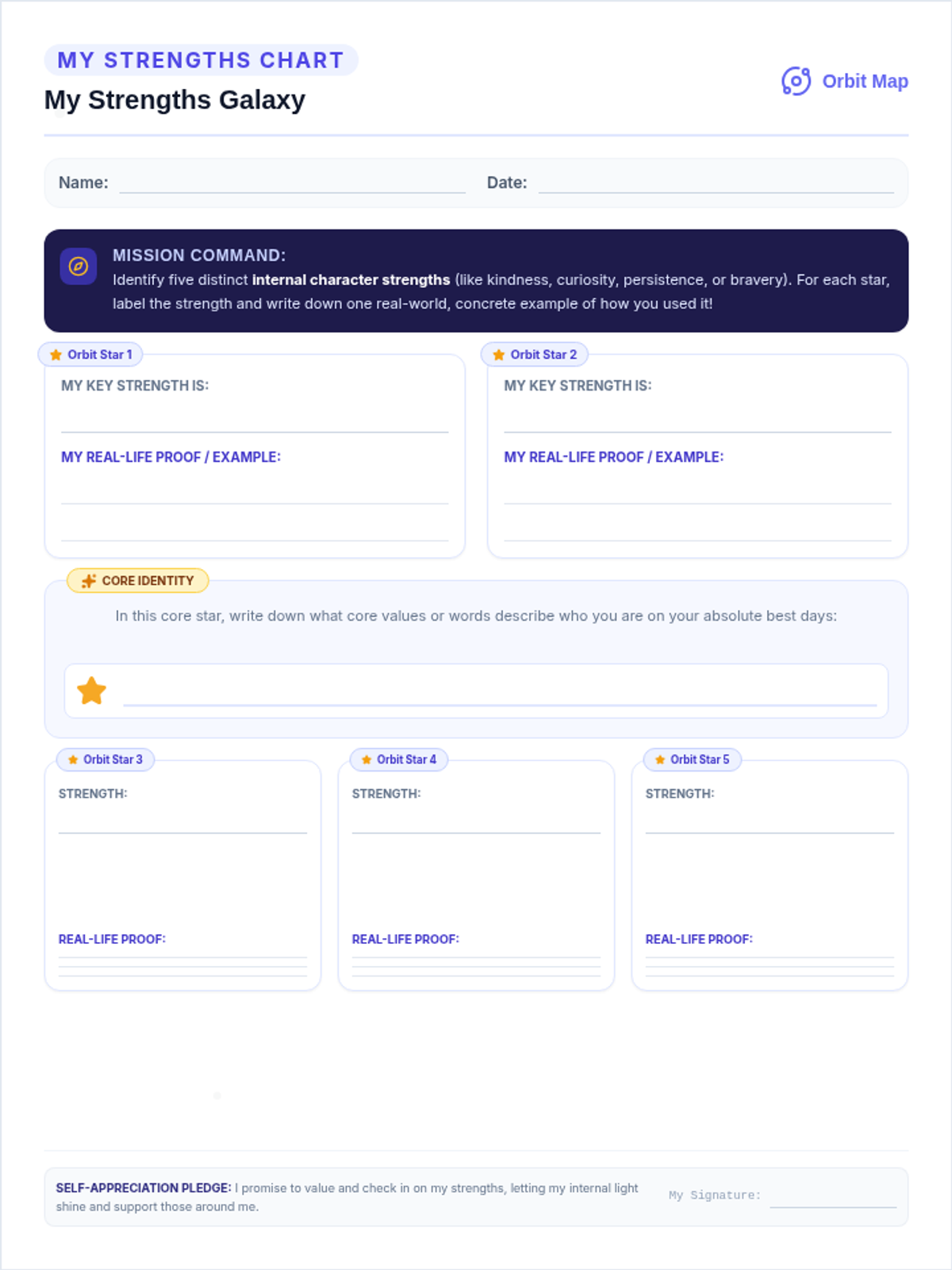
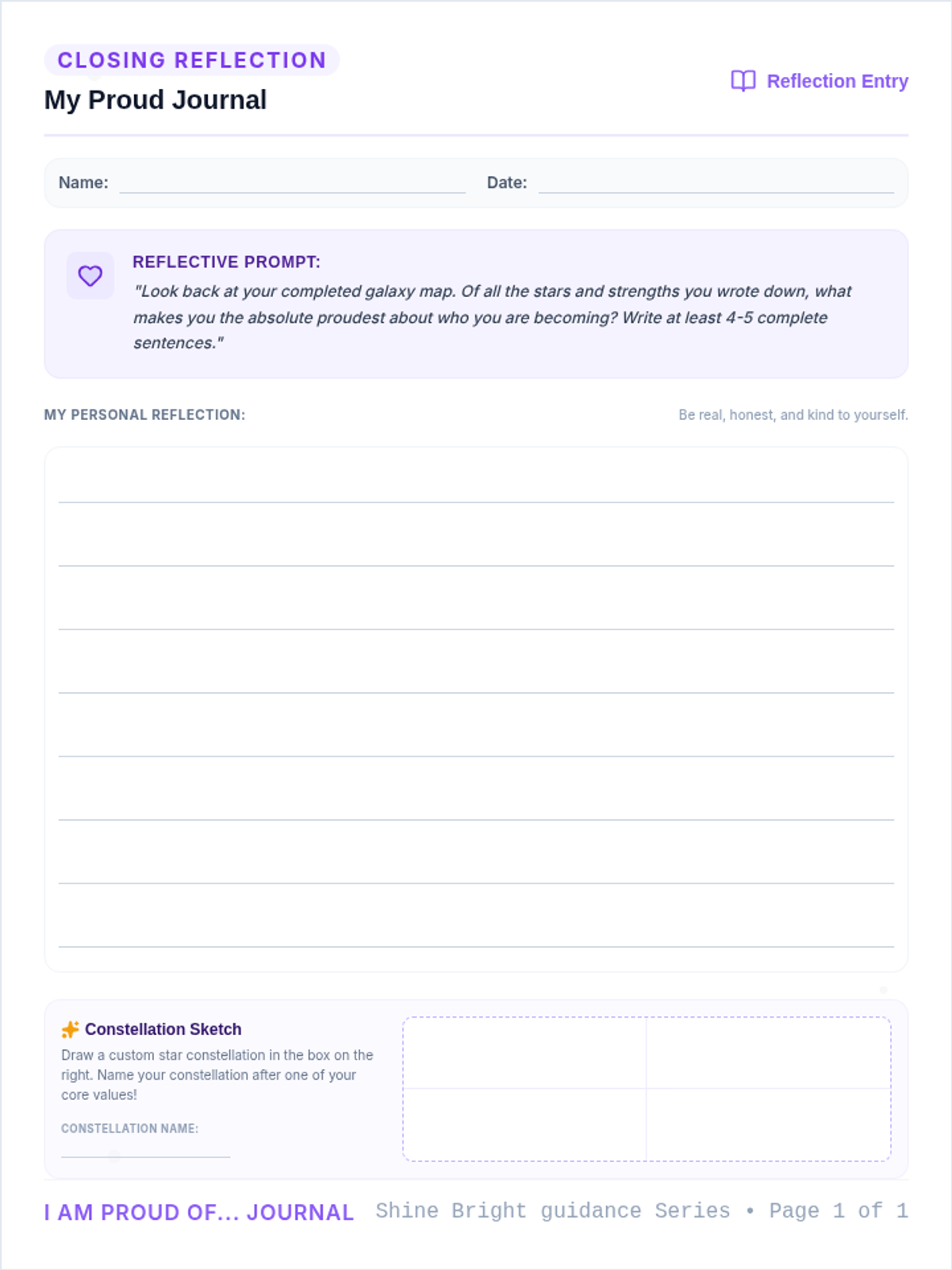
A 45-minute lesson designed for 7th-grade students to explore, identify, and celebrate their personal strengths. Students map their strengths in a creative space-themed galaxy worksheet, participate in a sharing circle, and reflect on their personal pride.
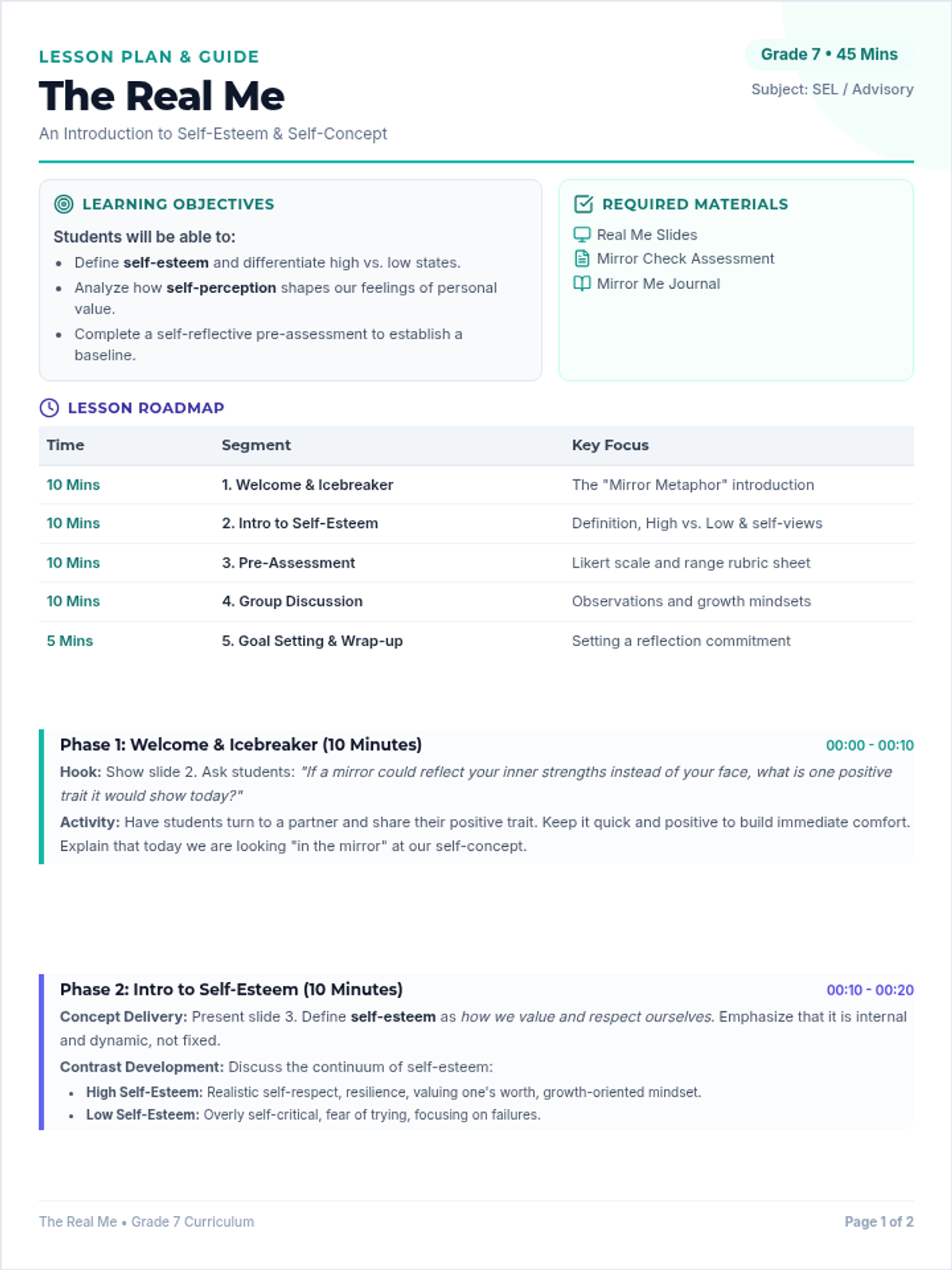
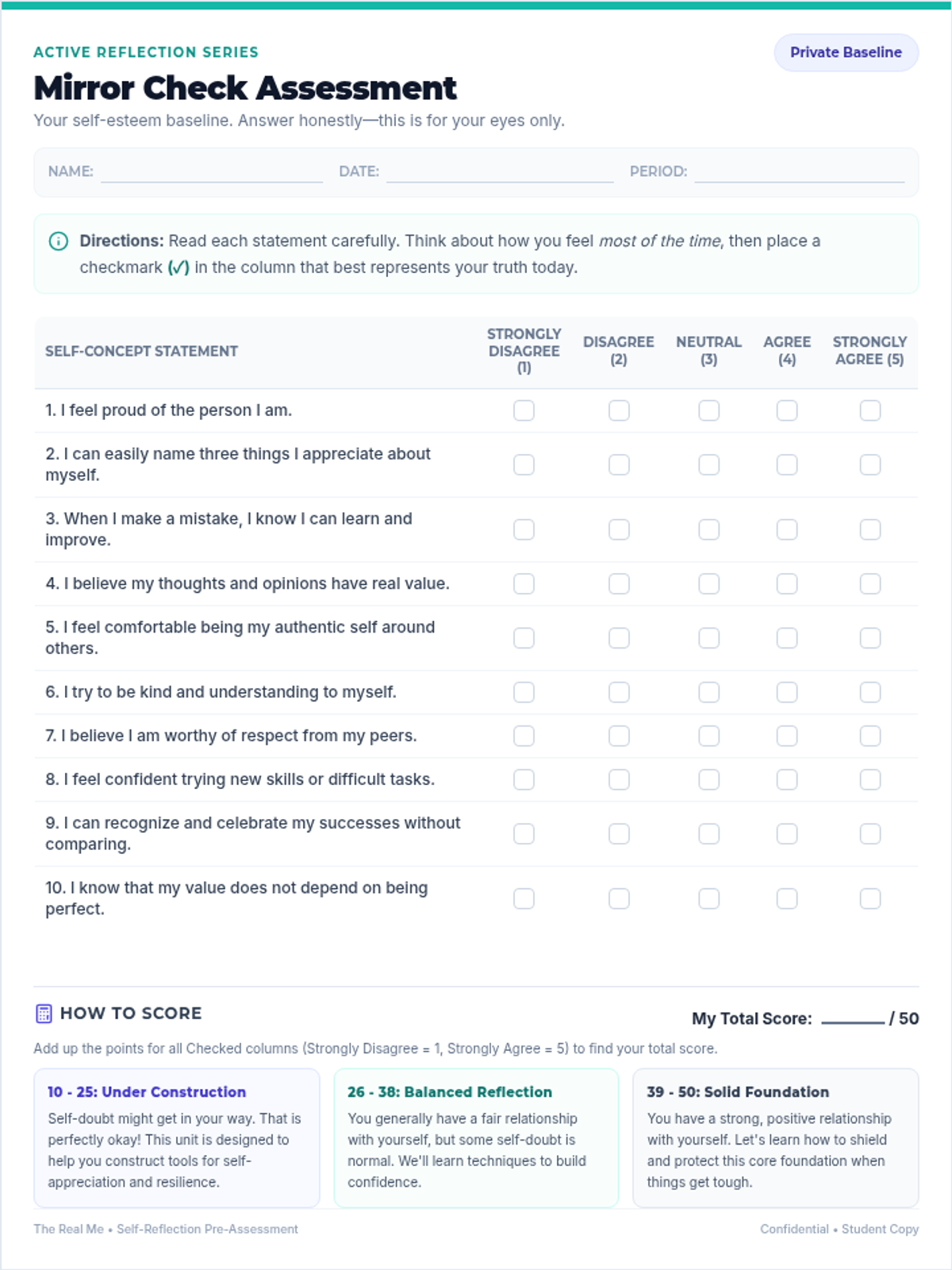
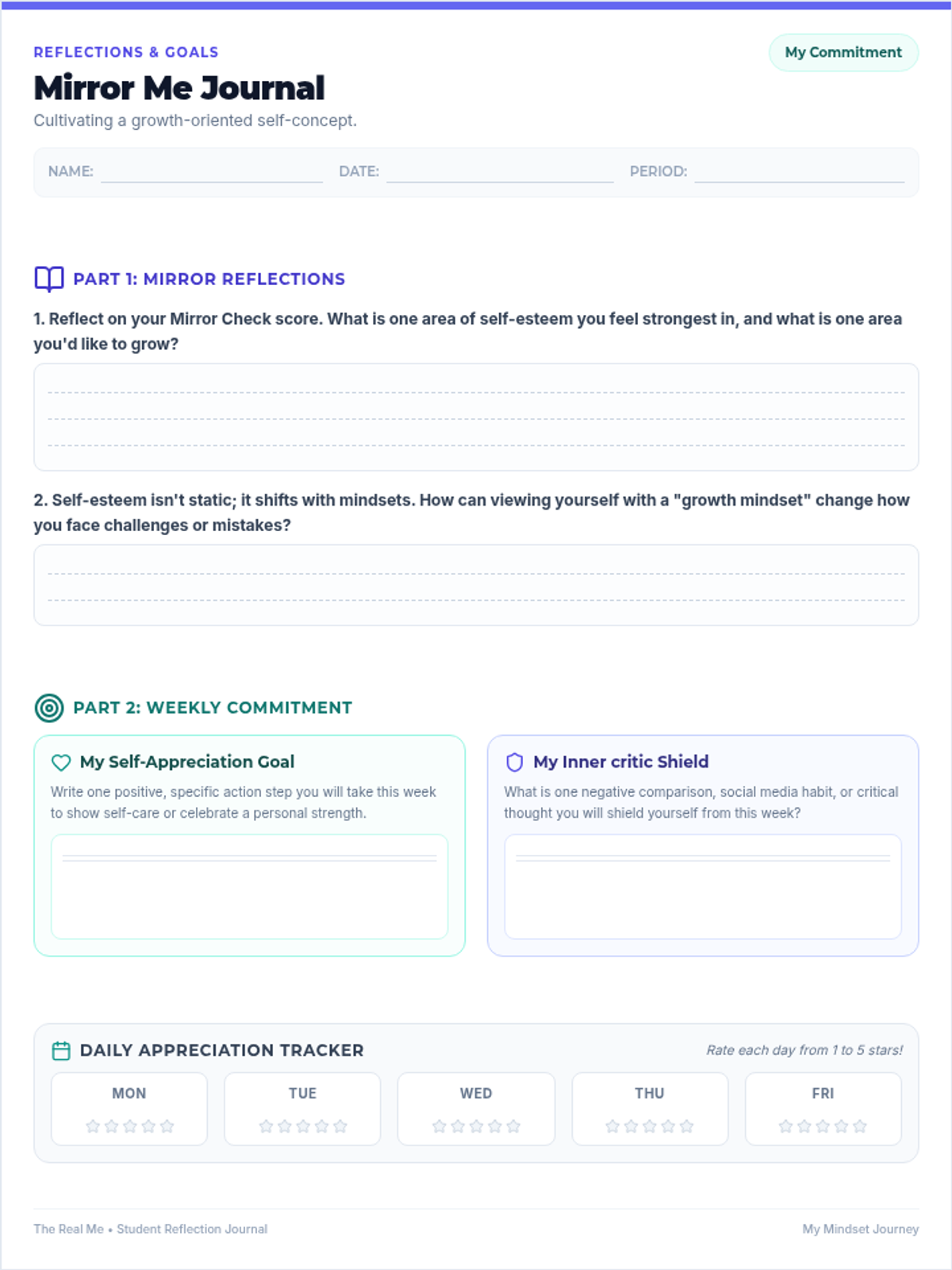
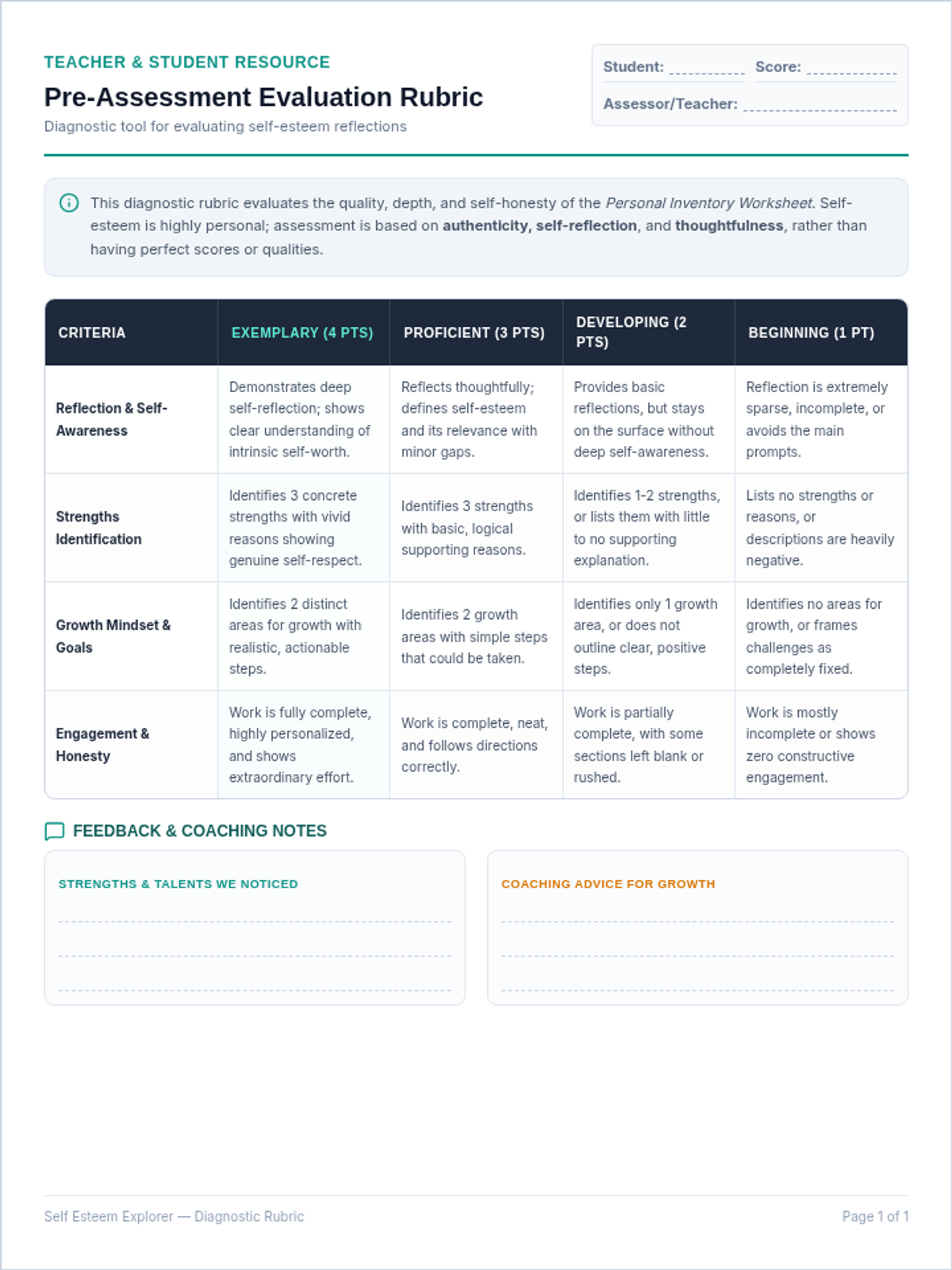
An introductory lesson on self-esteem for 7th graders, exploring personal value, self-perception, and establishing a baseline self-concept through reflection and goal-setting. This lesson guides students from definitions to deep personal reflection.
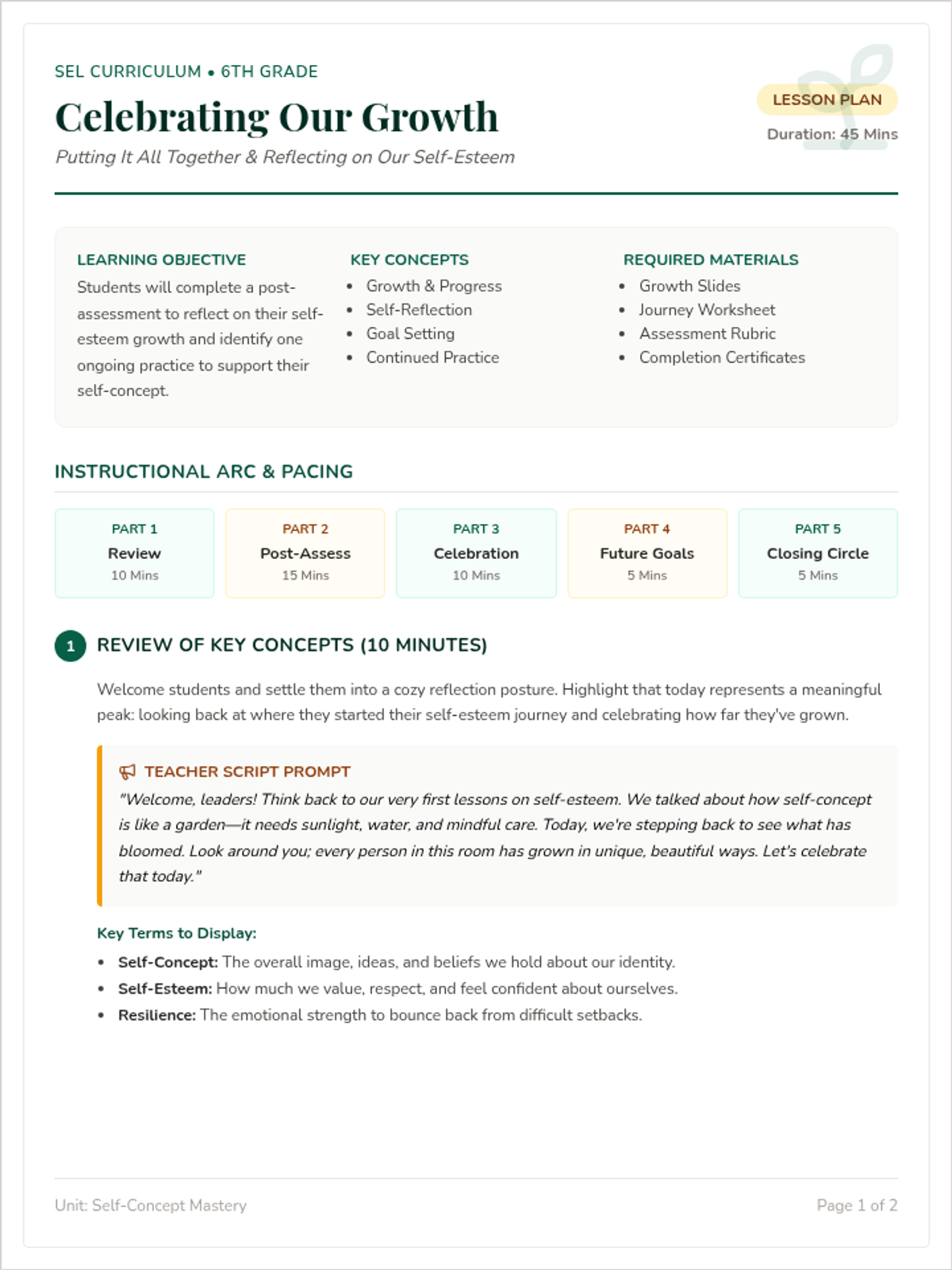
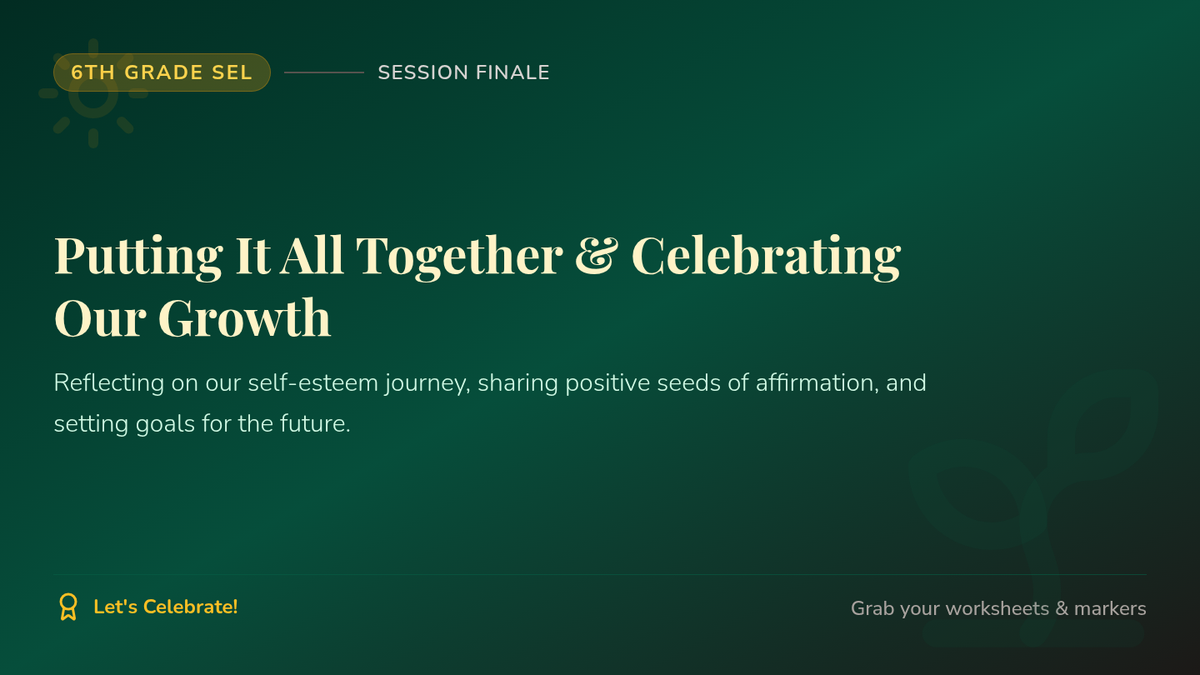
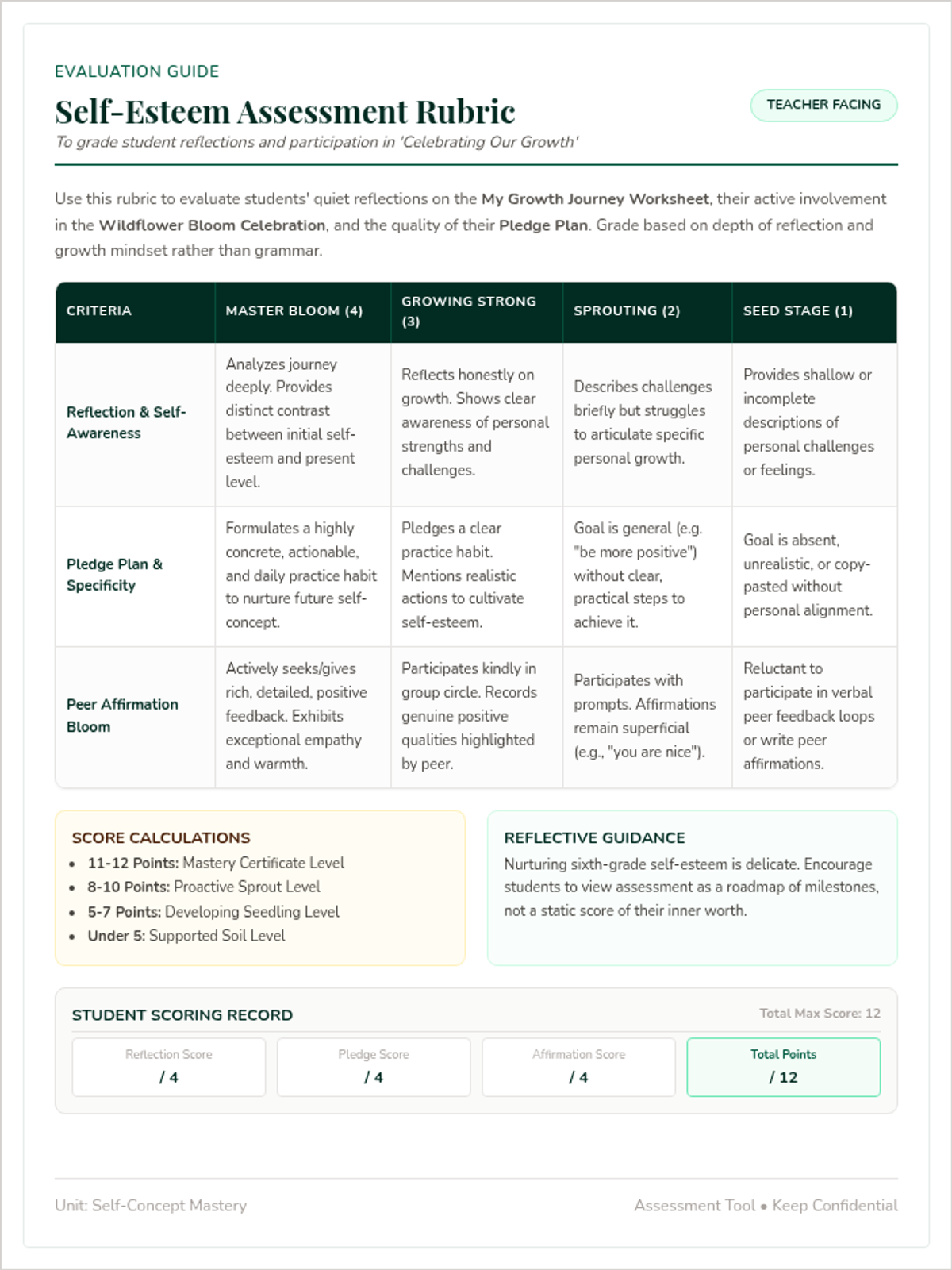
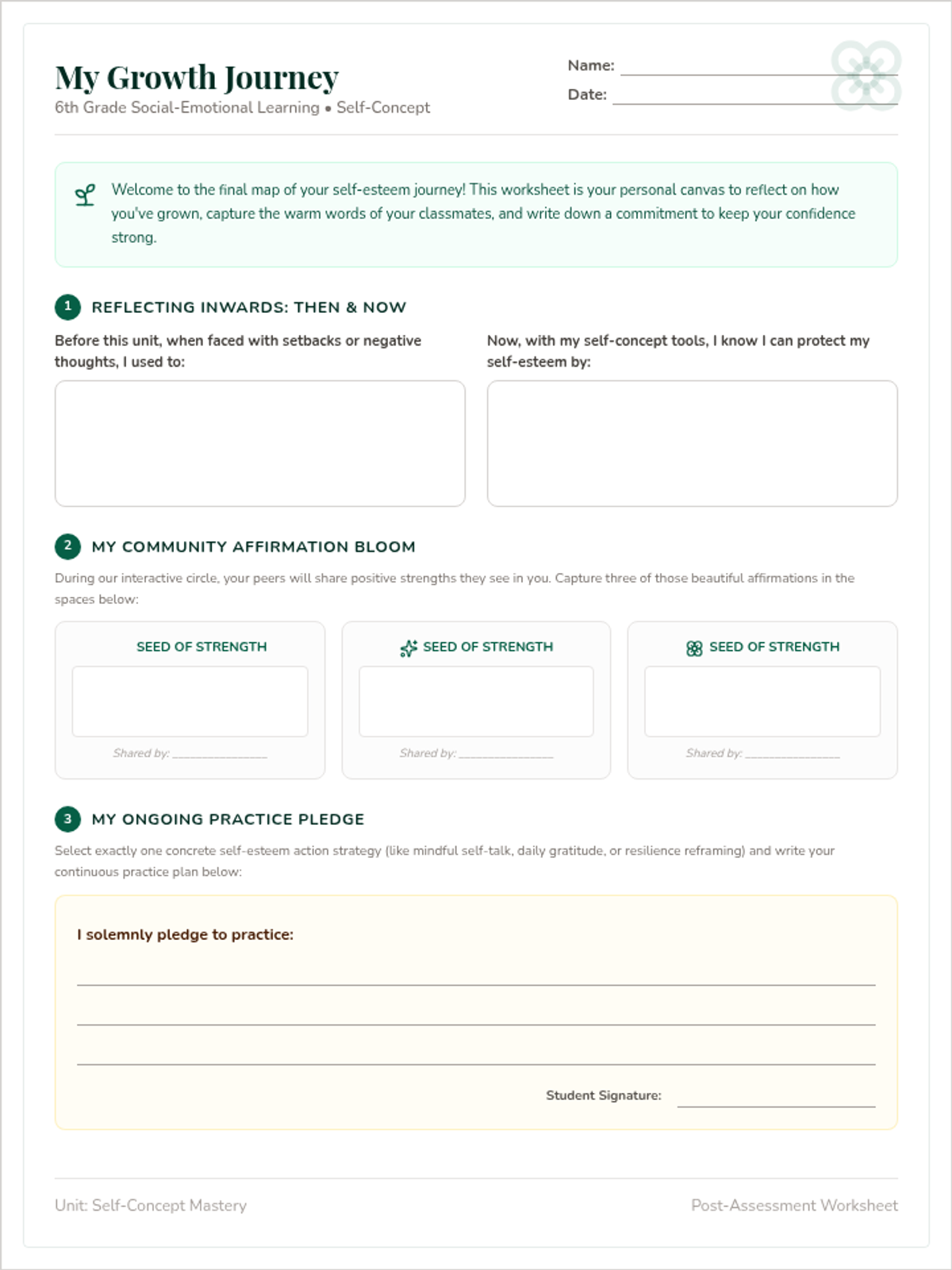
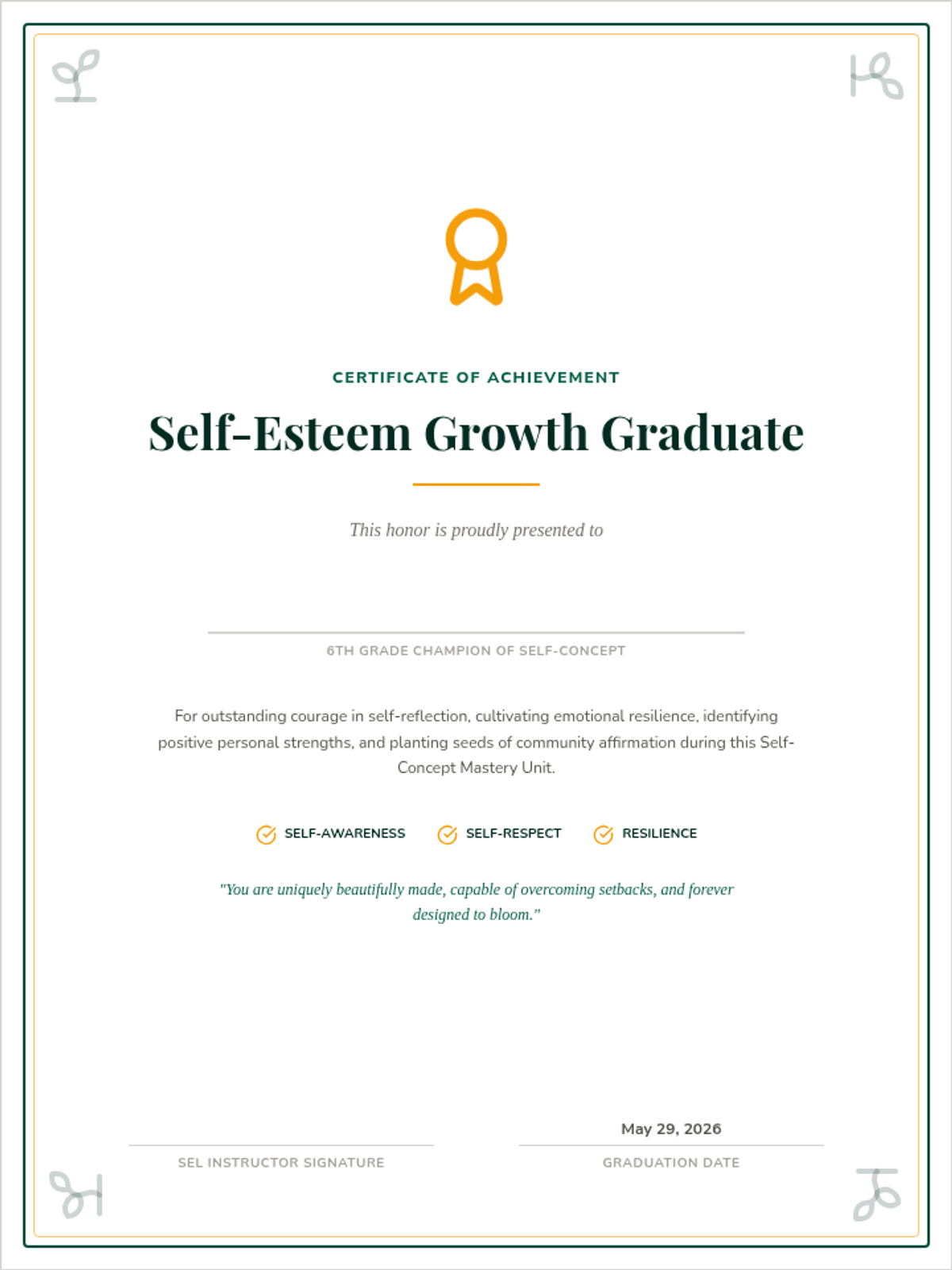
A 6th-grade social-emotional learning lesson focused on reflecting on self-esteem growth, completing a post-assessment, setting ongoing self-concept goals, and celebrating progress together. Includes a detailed lesson plan, instructional slides, reflection worksheet, assessment rubric, and a special certificate of completion.
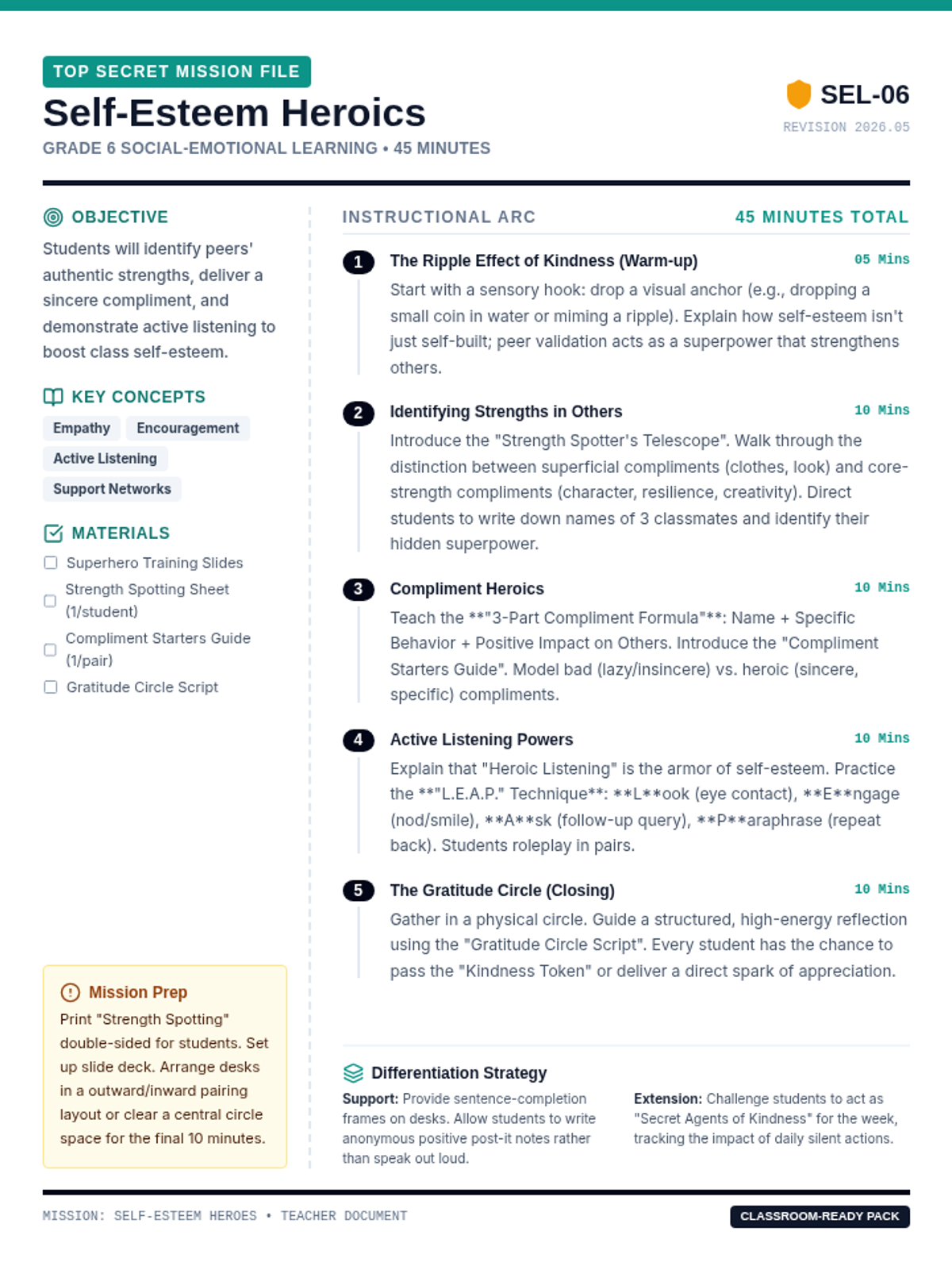
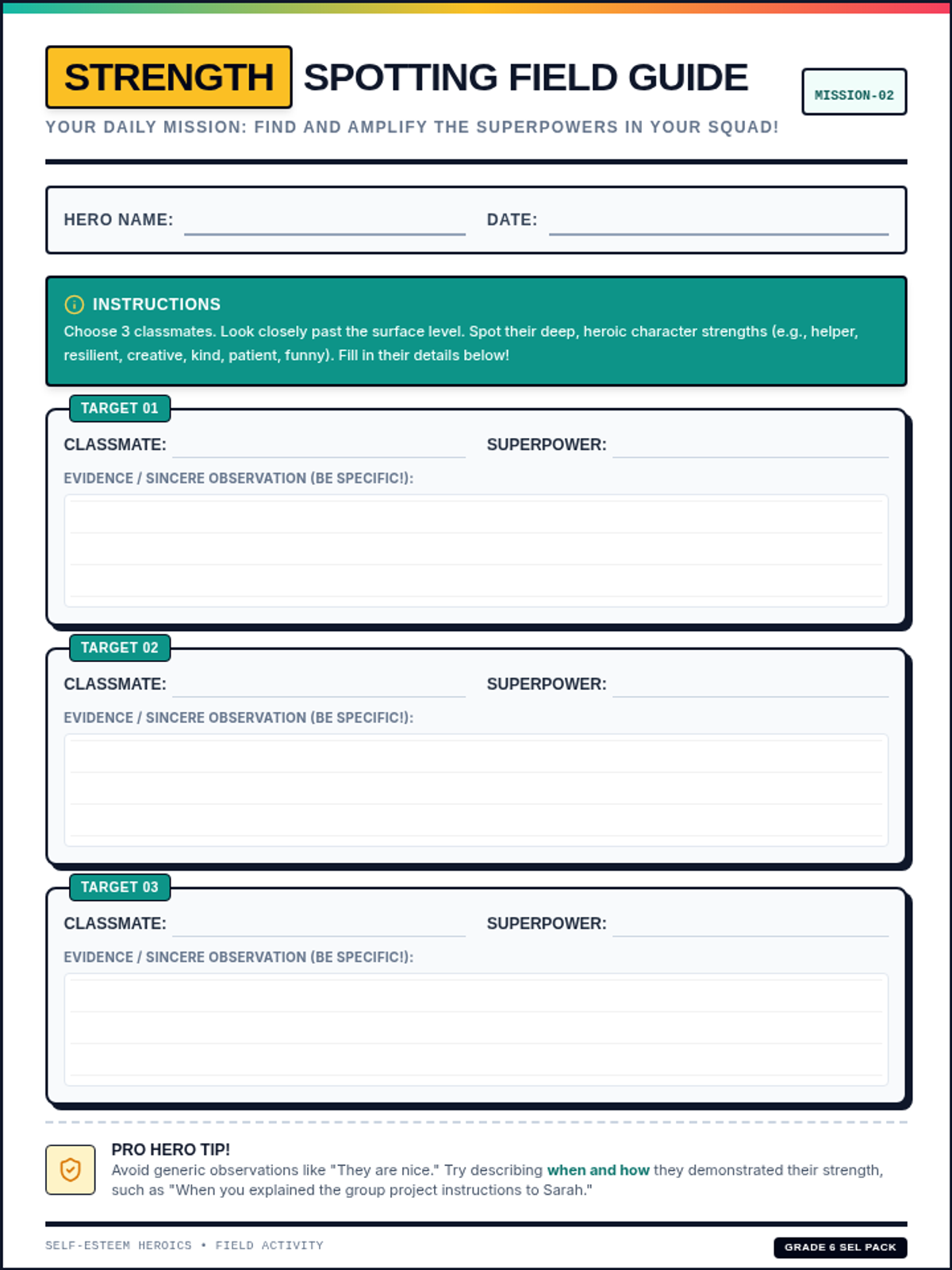
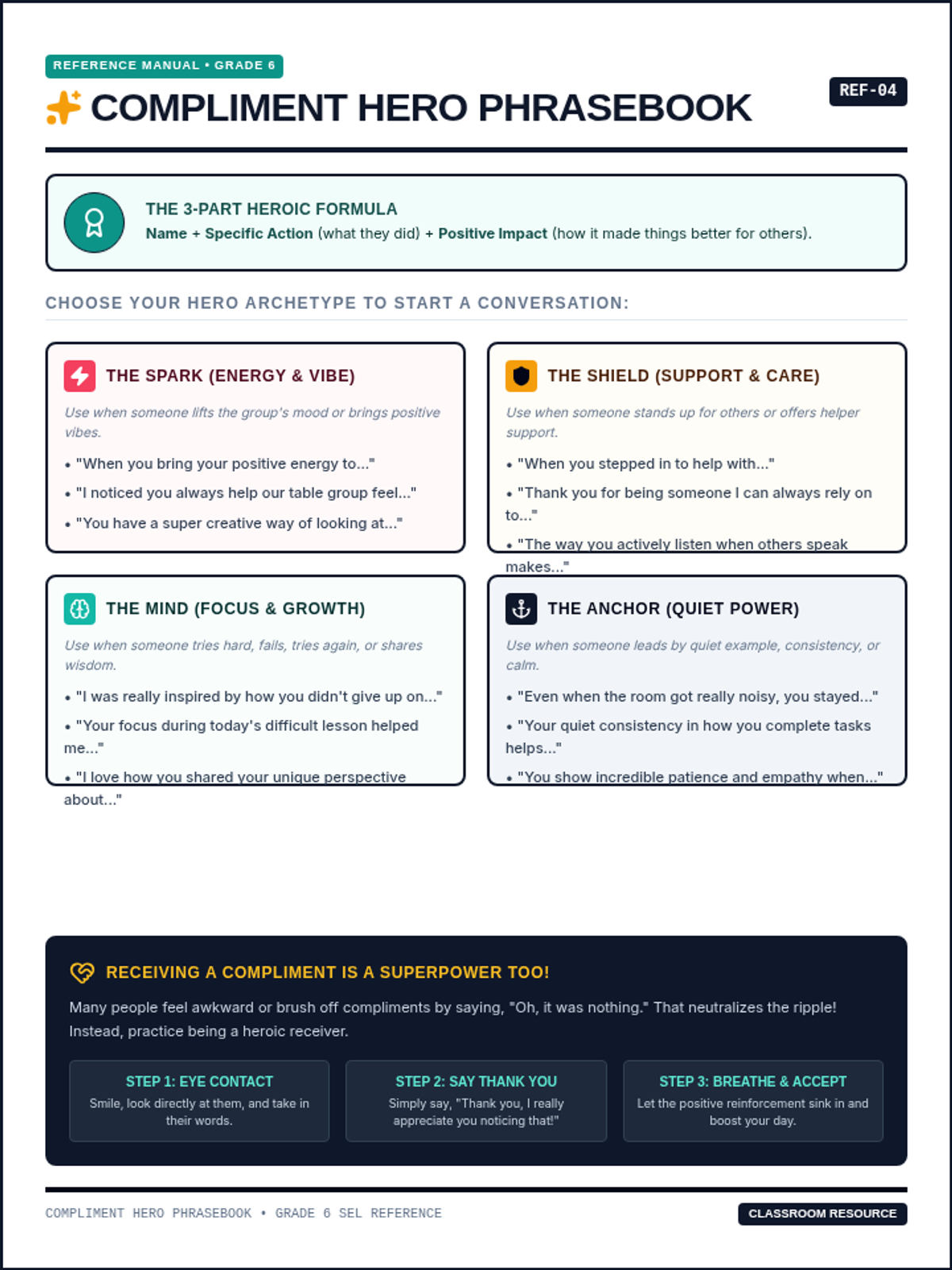
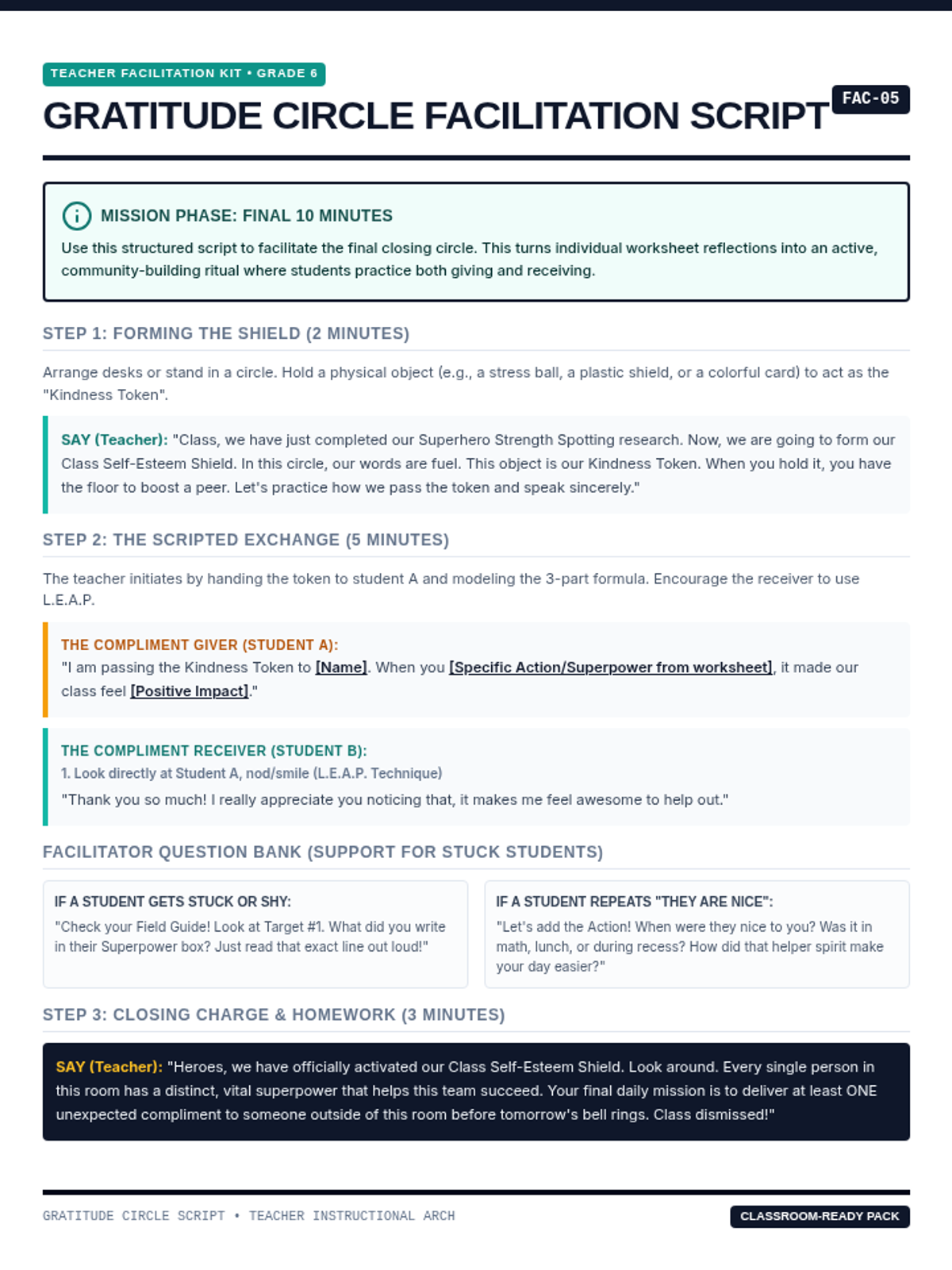
A 45-minute social-emotional learning lesson for 6th grade focused on empathy, active listening, and sincere encouragement to build peer self-esteem. Students learn to spot strengths, deliver authentic compliments, and practice active listening through comic-themed superhero training activities.
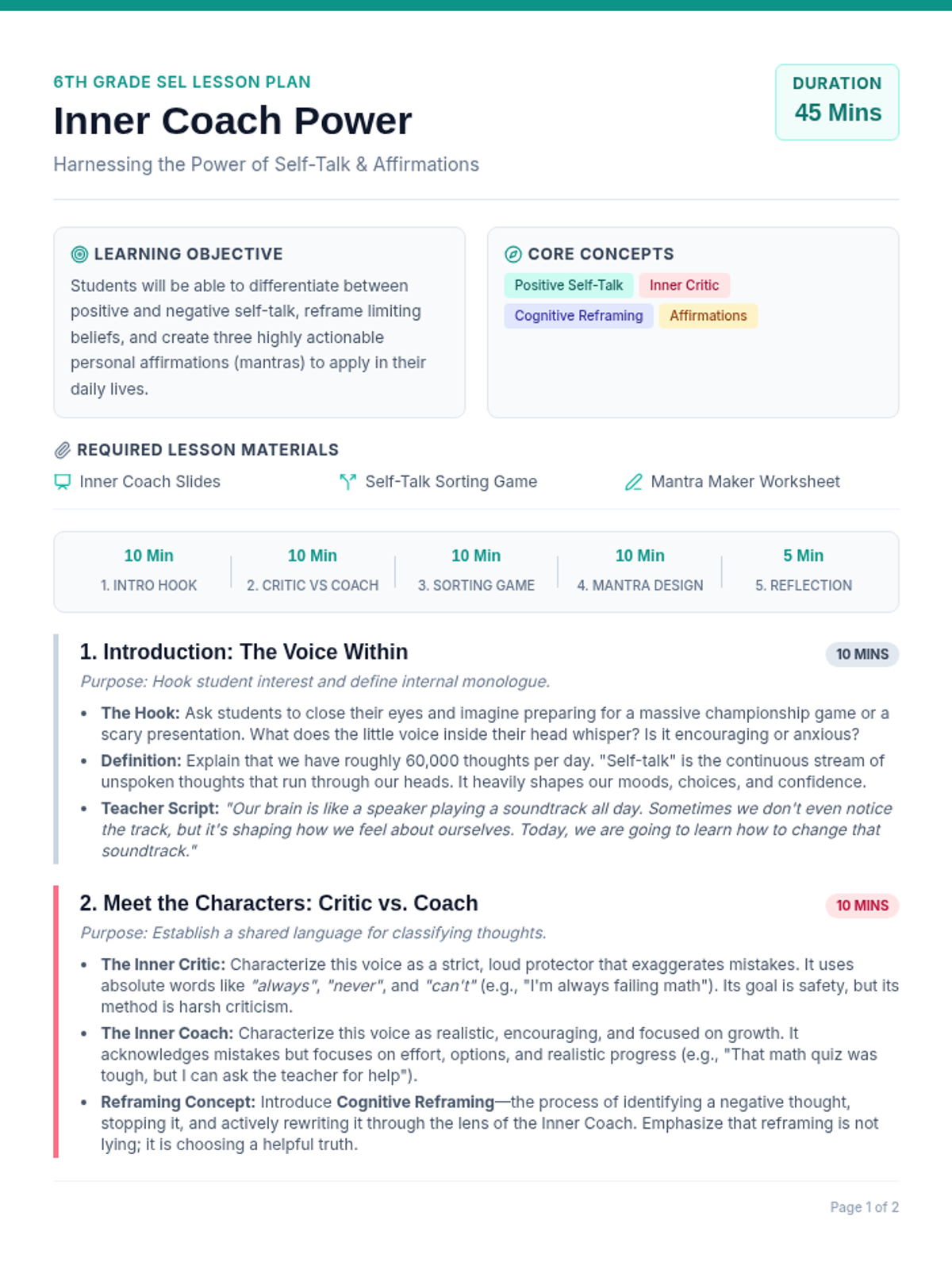
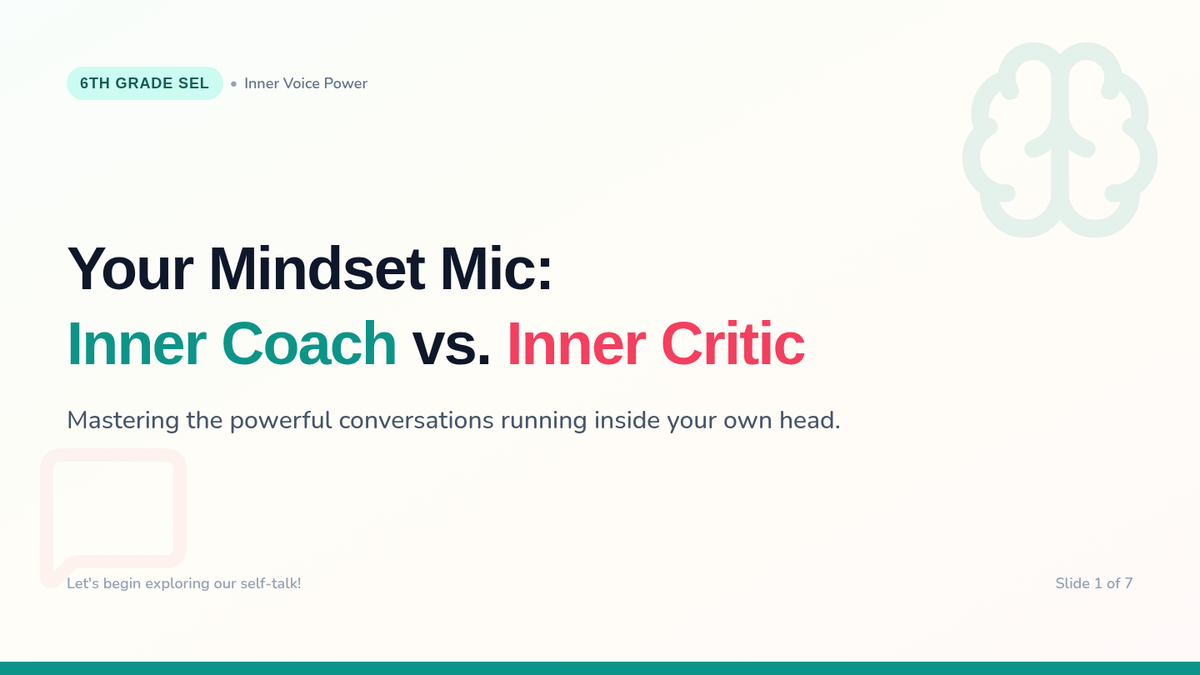
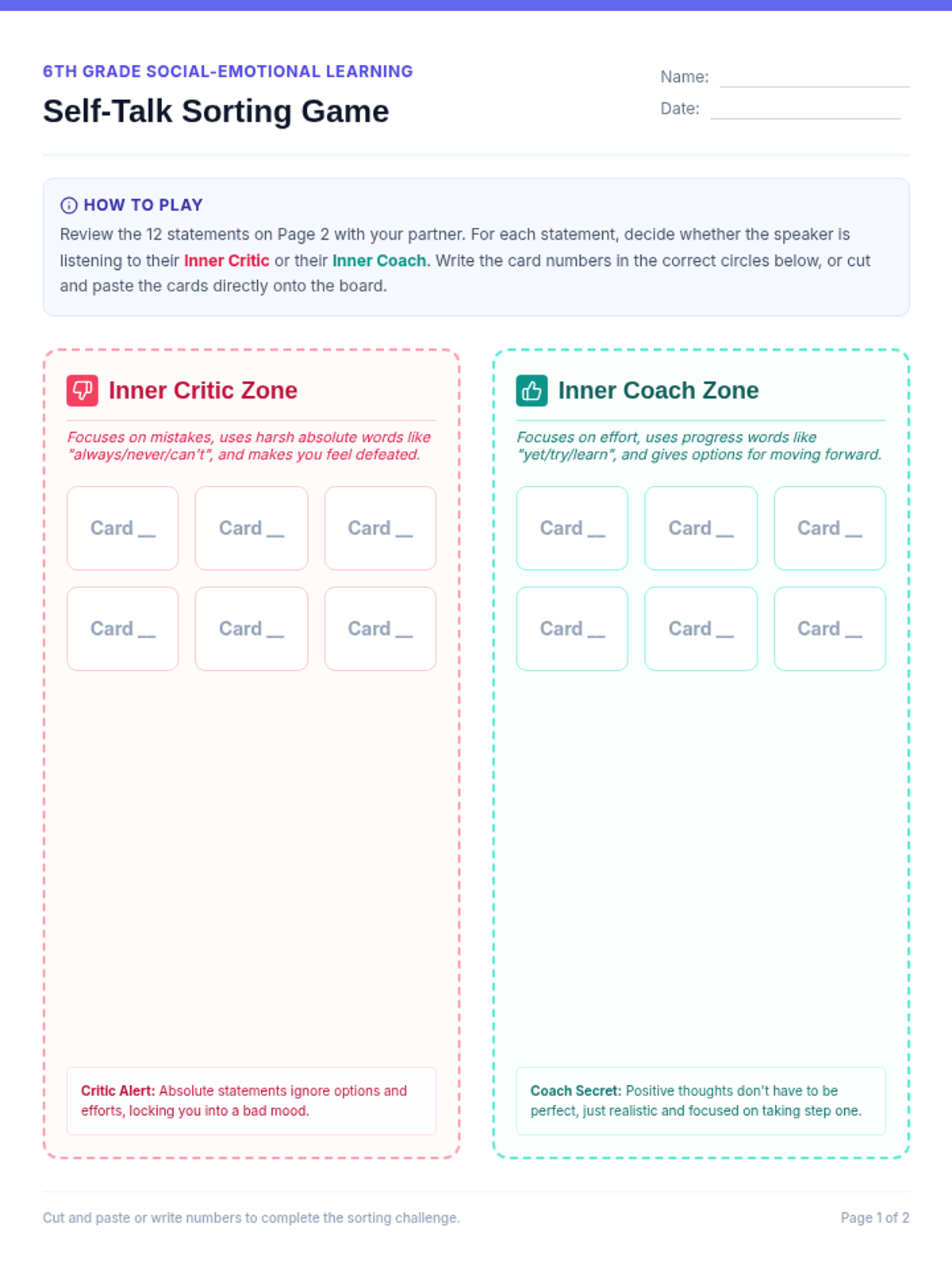
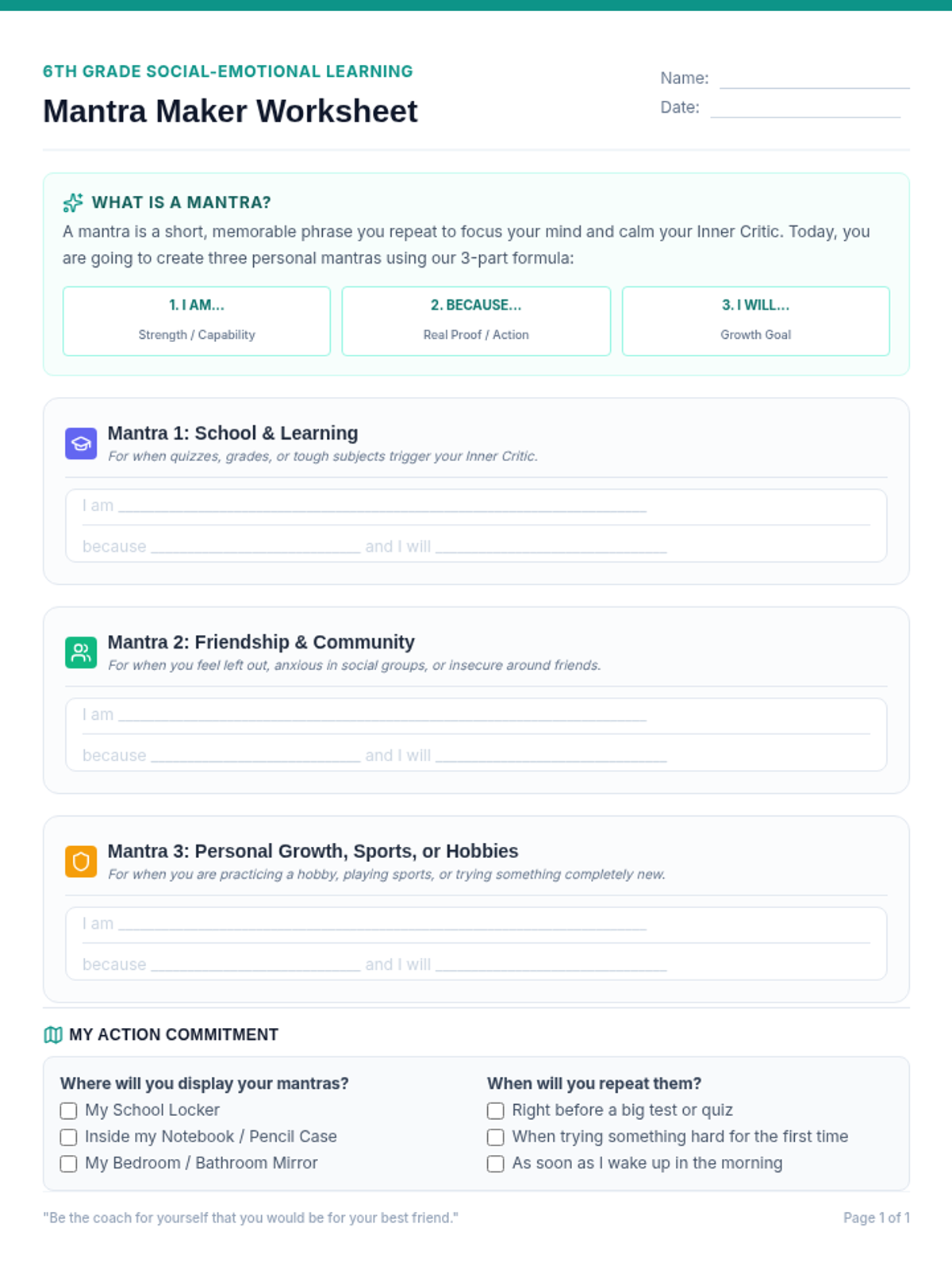
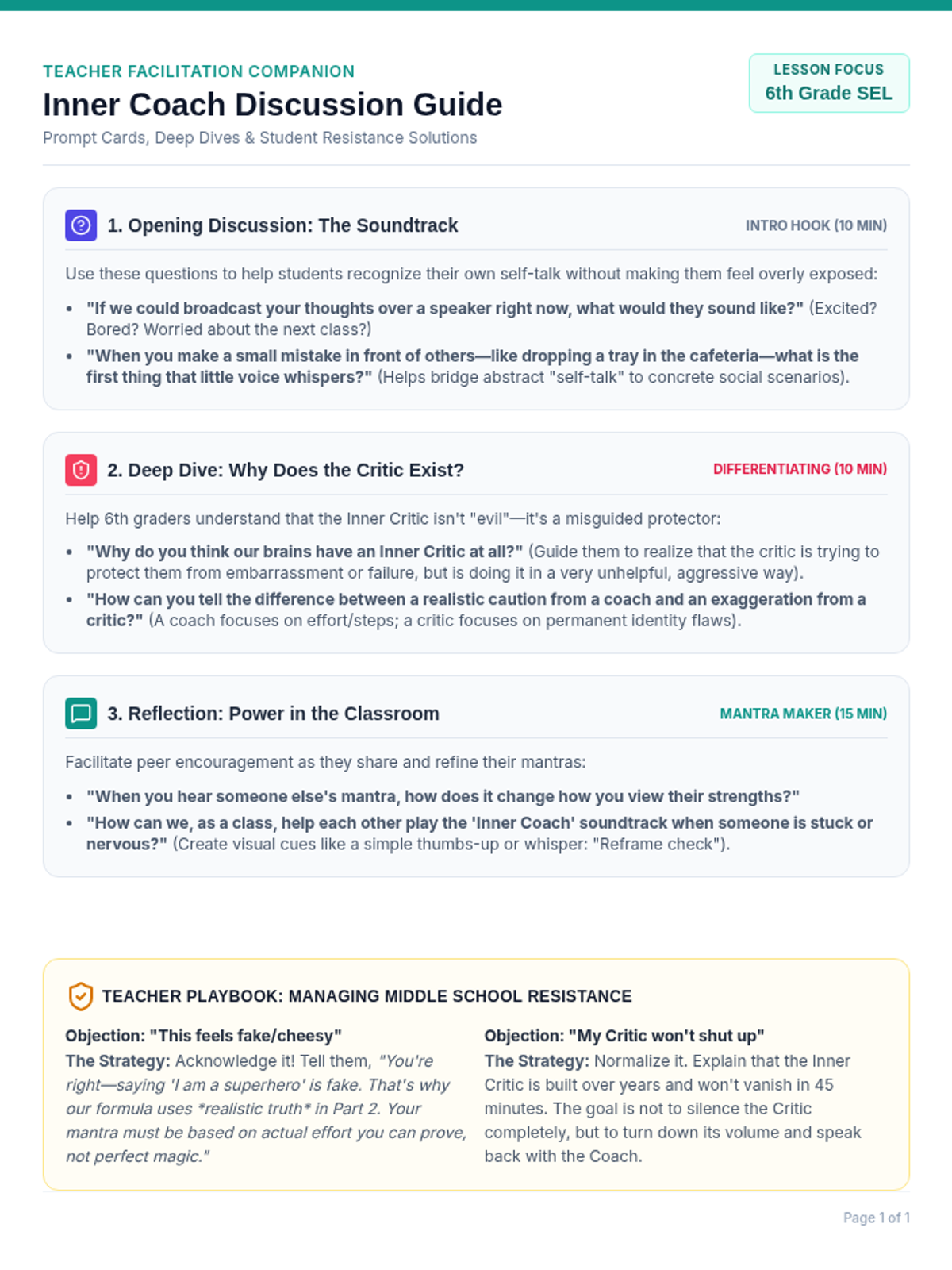
A 45-minute social-emotional learning lesson for 6th graders to explore their self-talk, contrast the 'Inner Critic' and 'Inner Coach', and design actionable personal affirmations.
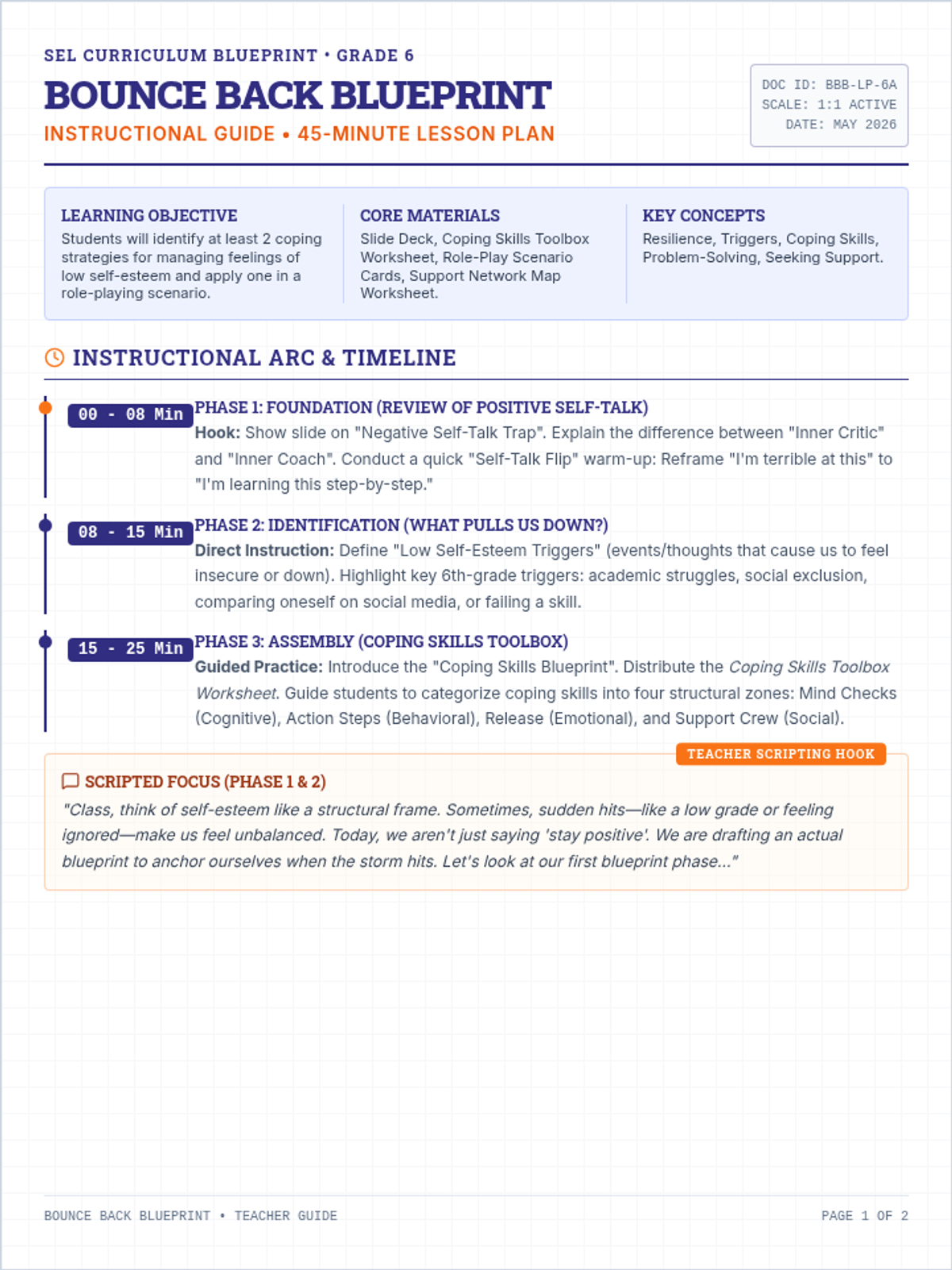
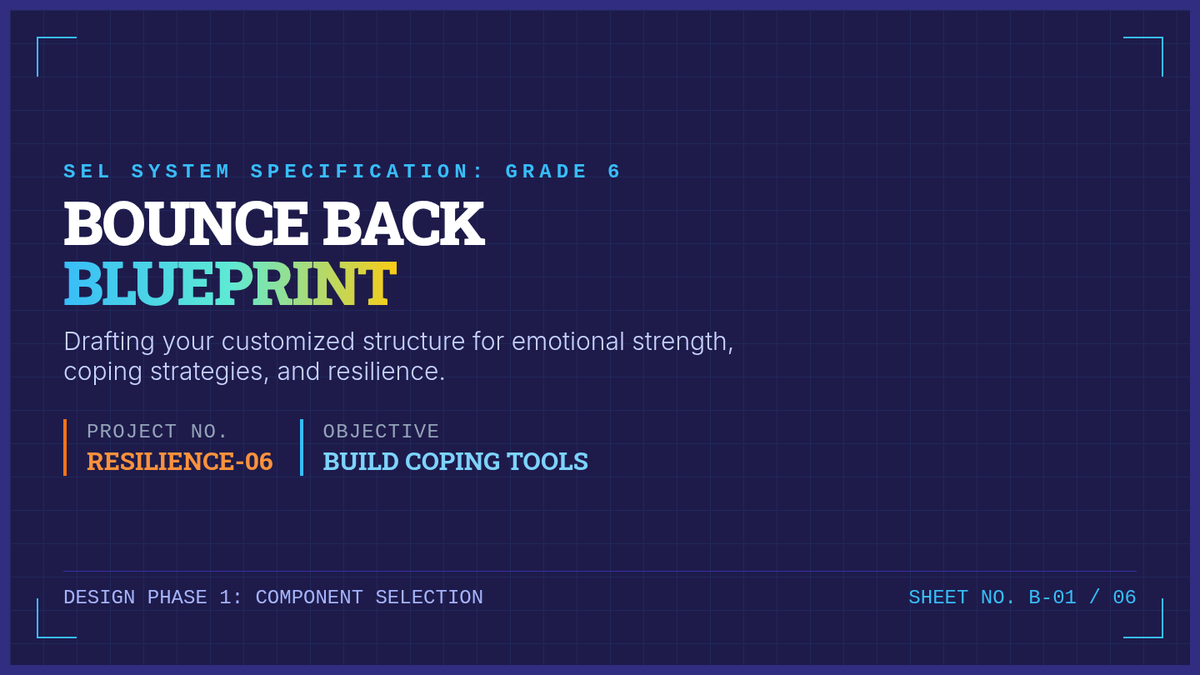
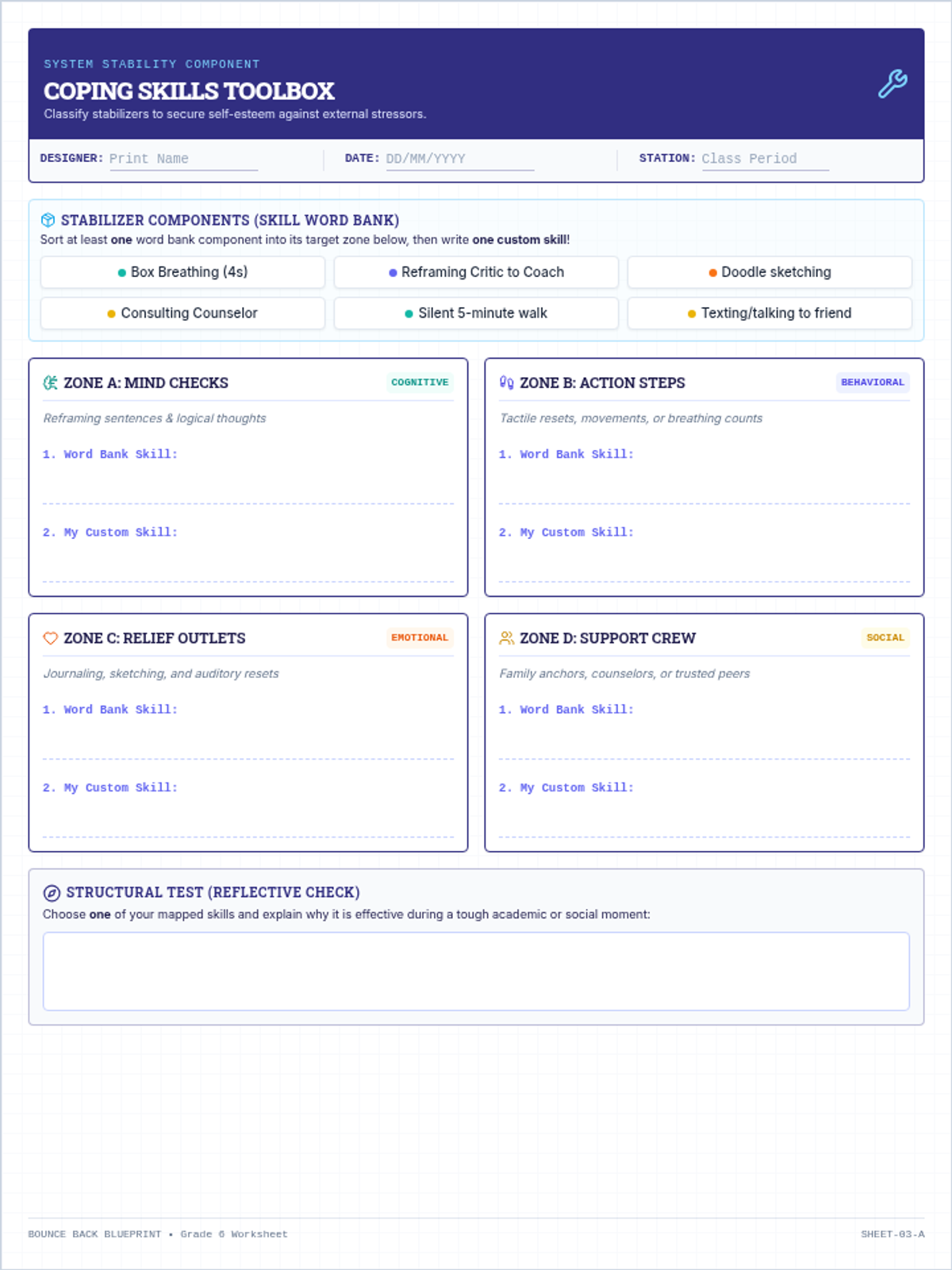
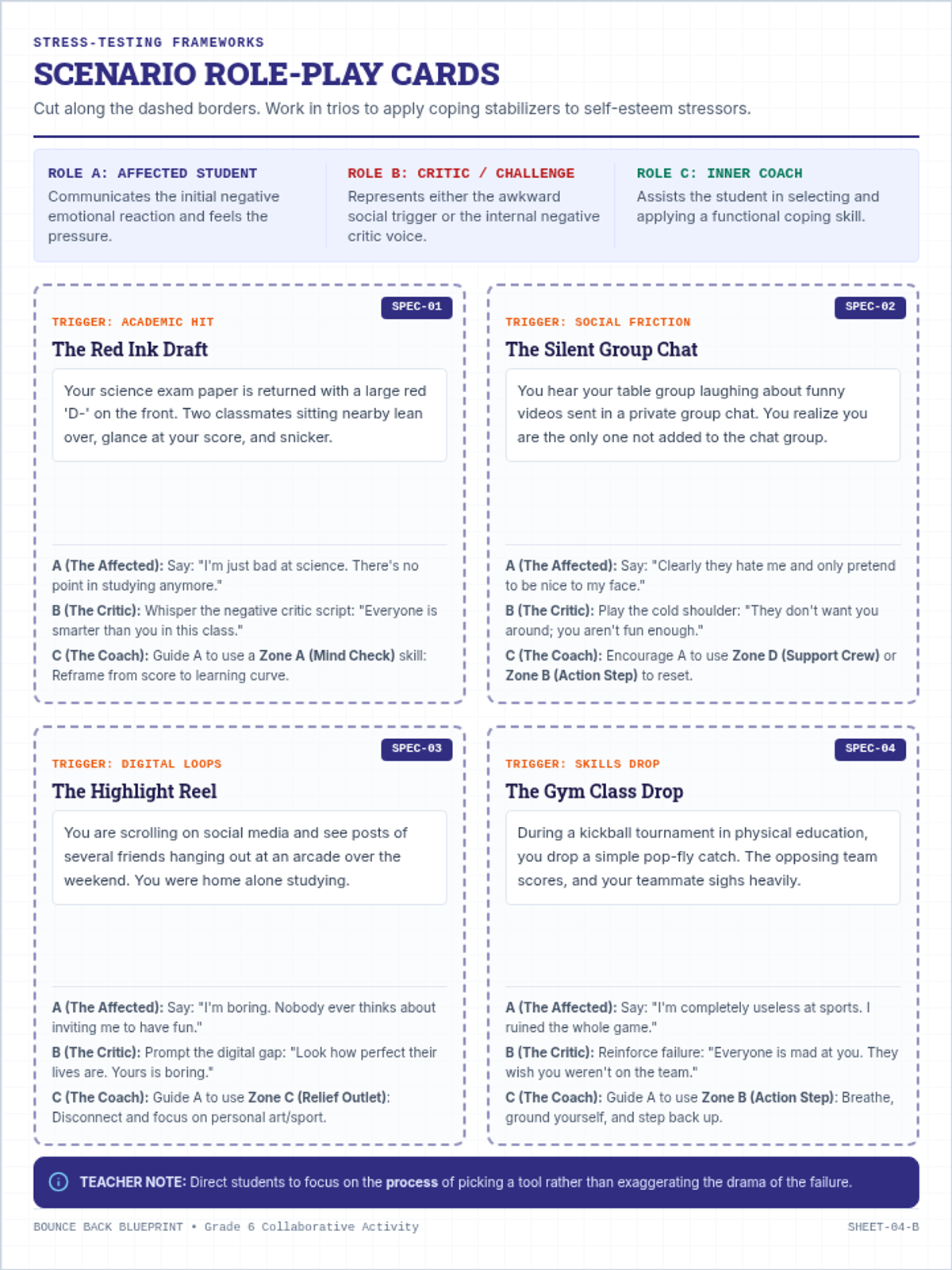
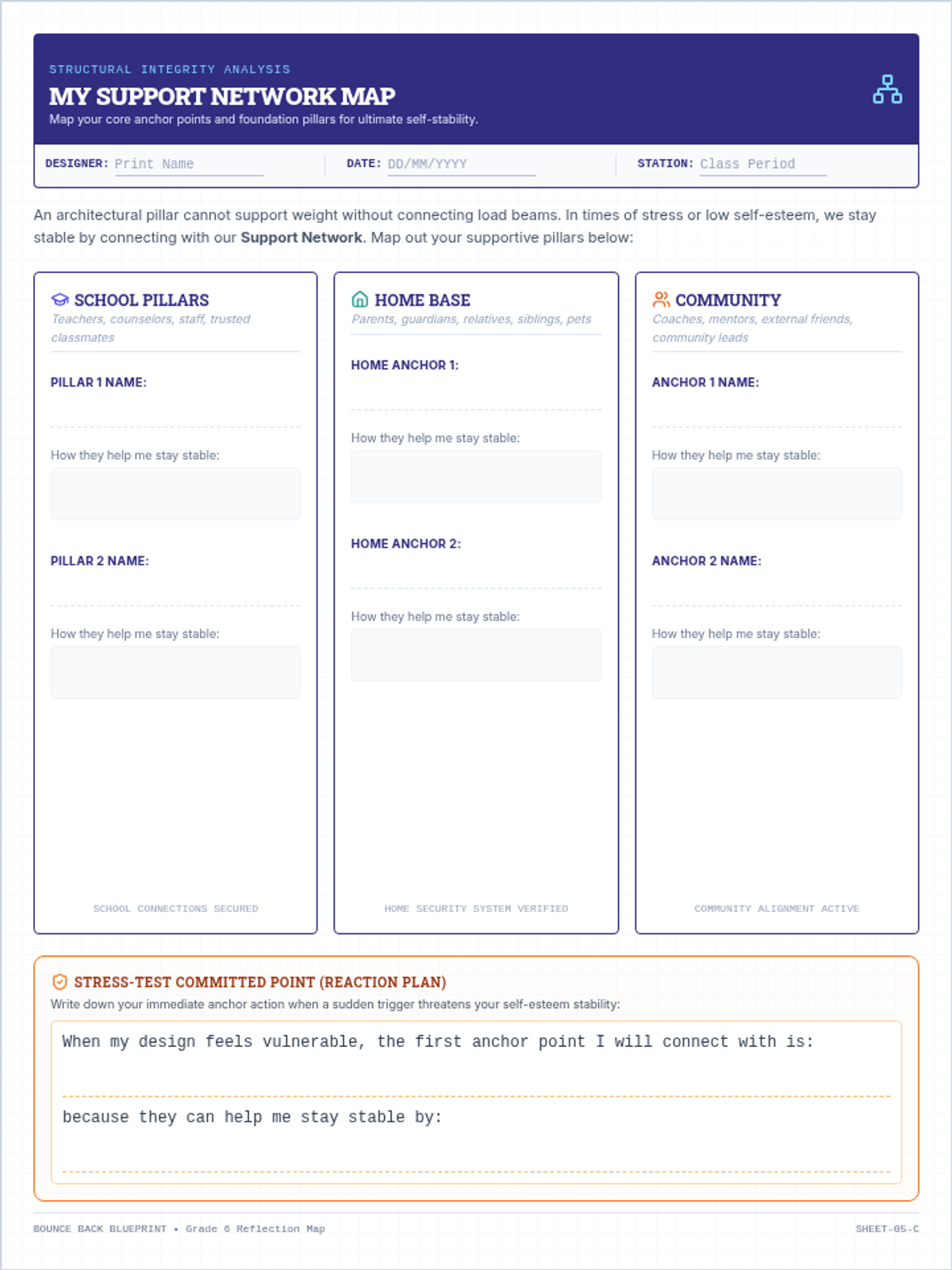
A 45-minute social-emotional learning lesson for 6th graders focused on identifying self-esteem triggers, building a personalized coping skills toolbox, mapping a support network, and practicing resilience strategies through collaborative role-play.
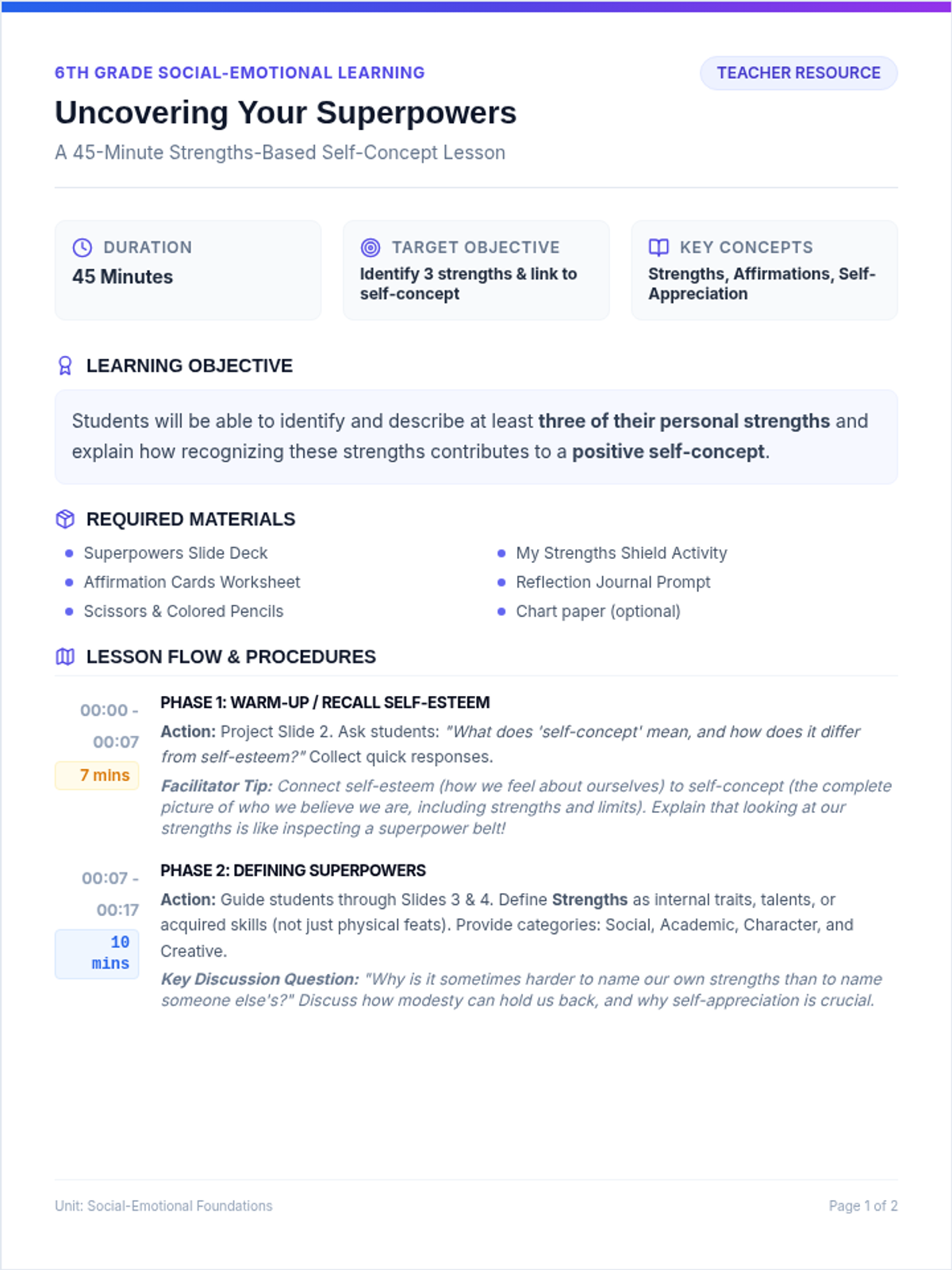
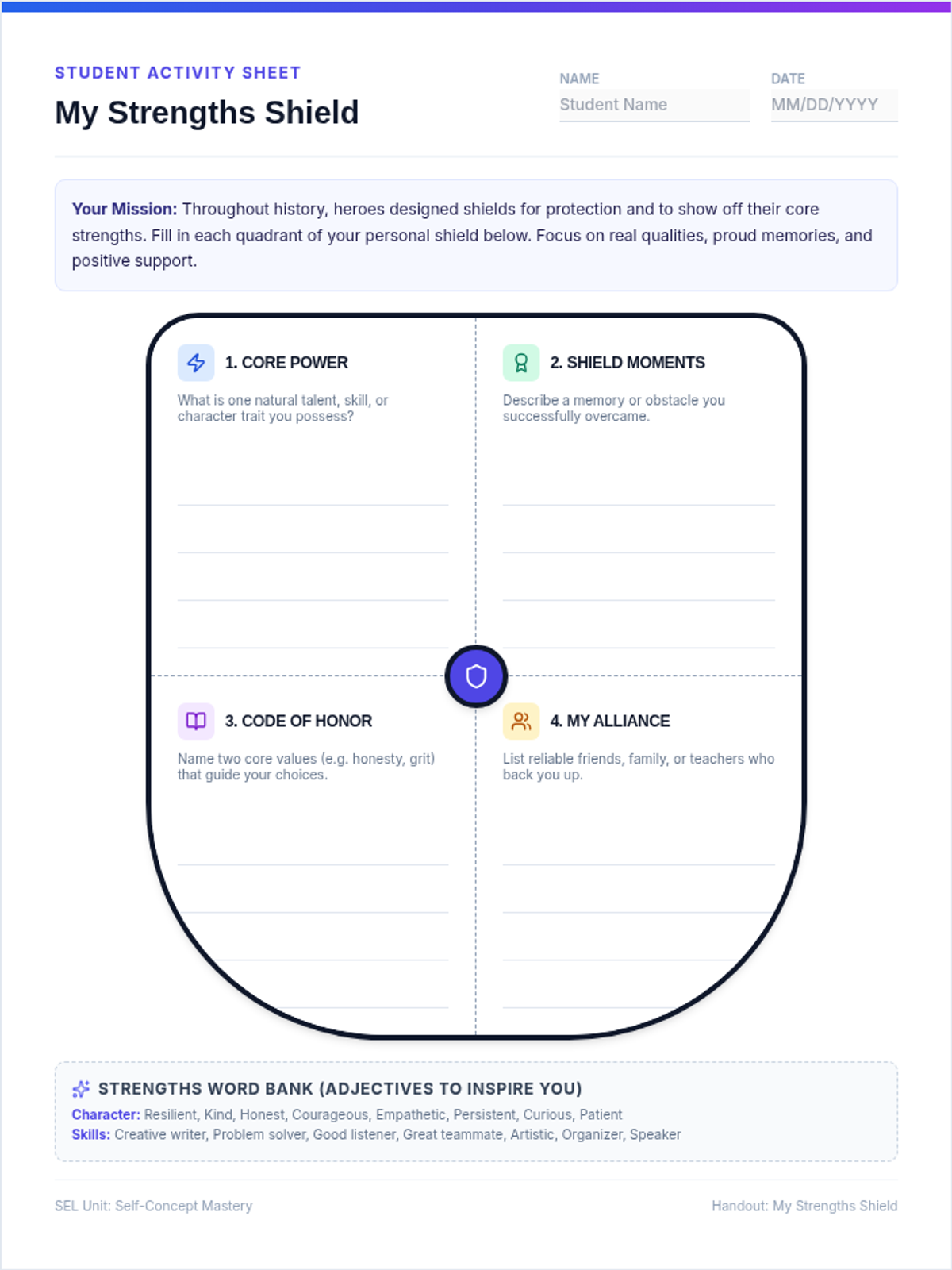
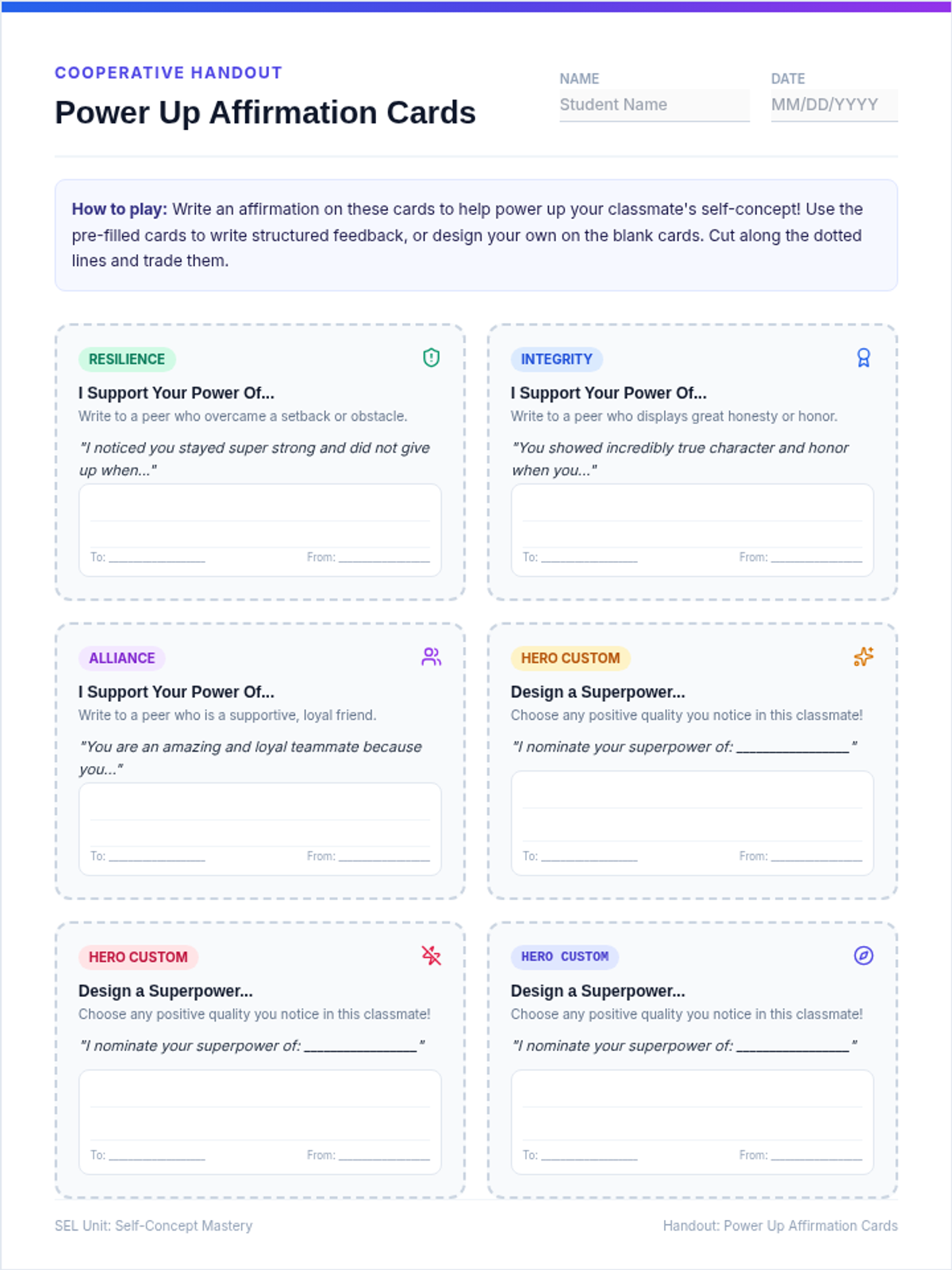
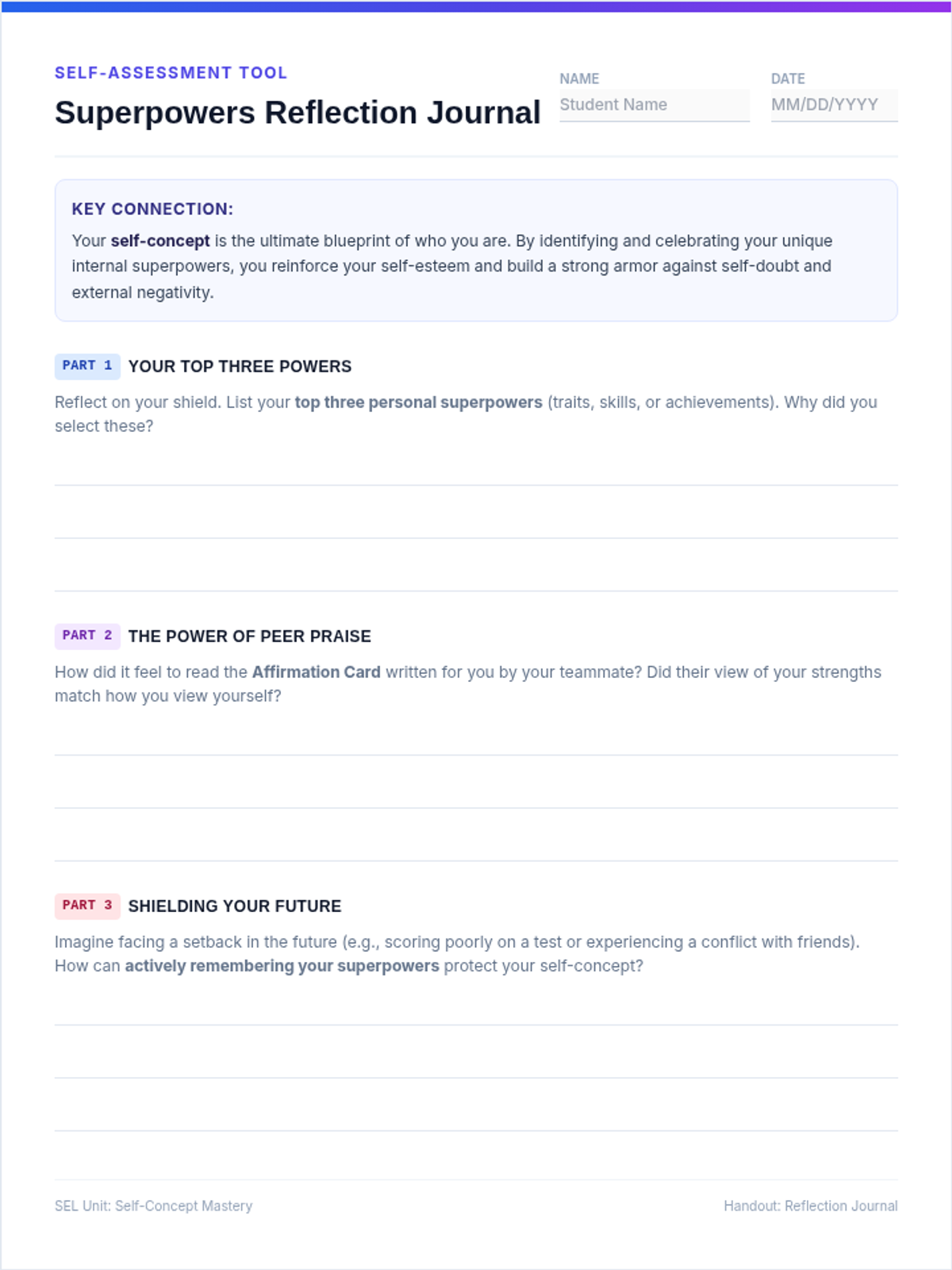
A transformative 45-minute social-emotional learning lesson for 6th graders designed to help students discover, articulate, and celebrate their personal strengths. Through a structured lesson plan, slide presentation, interactive strengths shield design, and reflection prompts, students build self-appreciation and a positive self-concept.
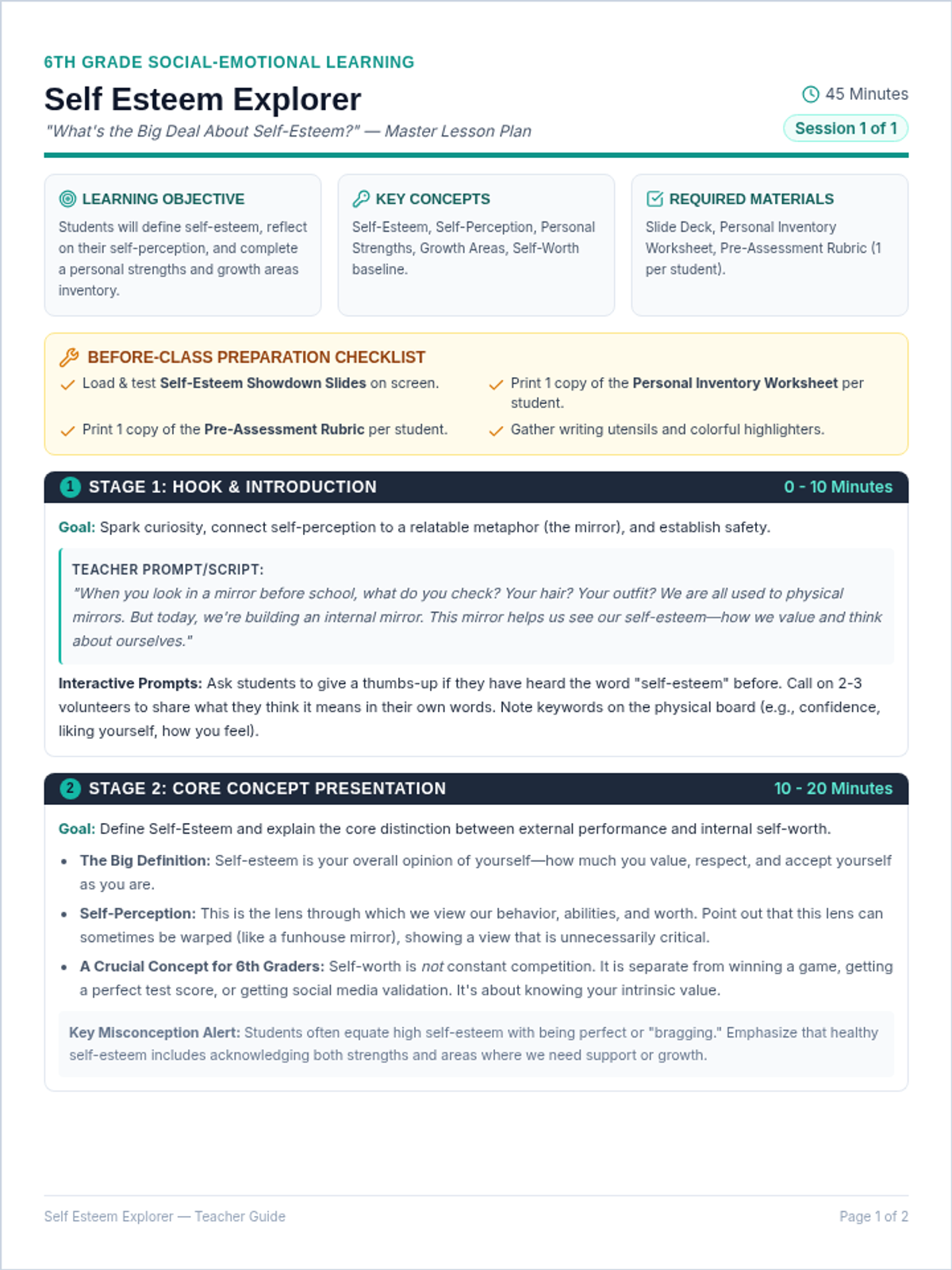
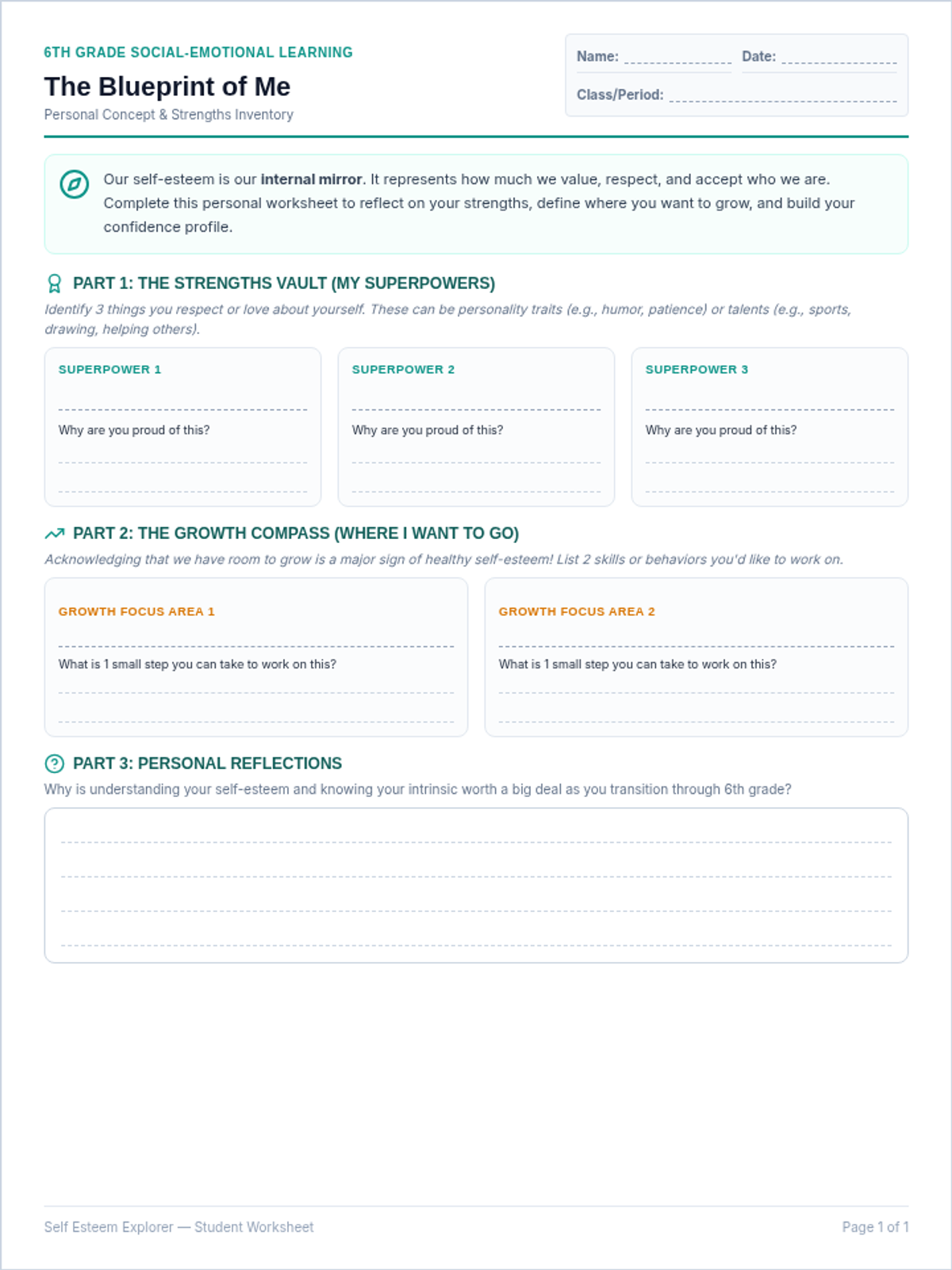
A 45-minute introductory lesson on self-esteem for 6th-grade students. It introduces self-perception, helps students complete a personal strengths inventory, and establishes a baseline for emotional self-awareness.
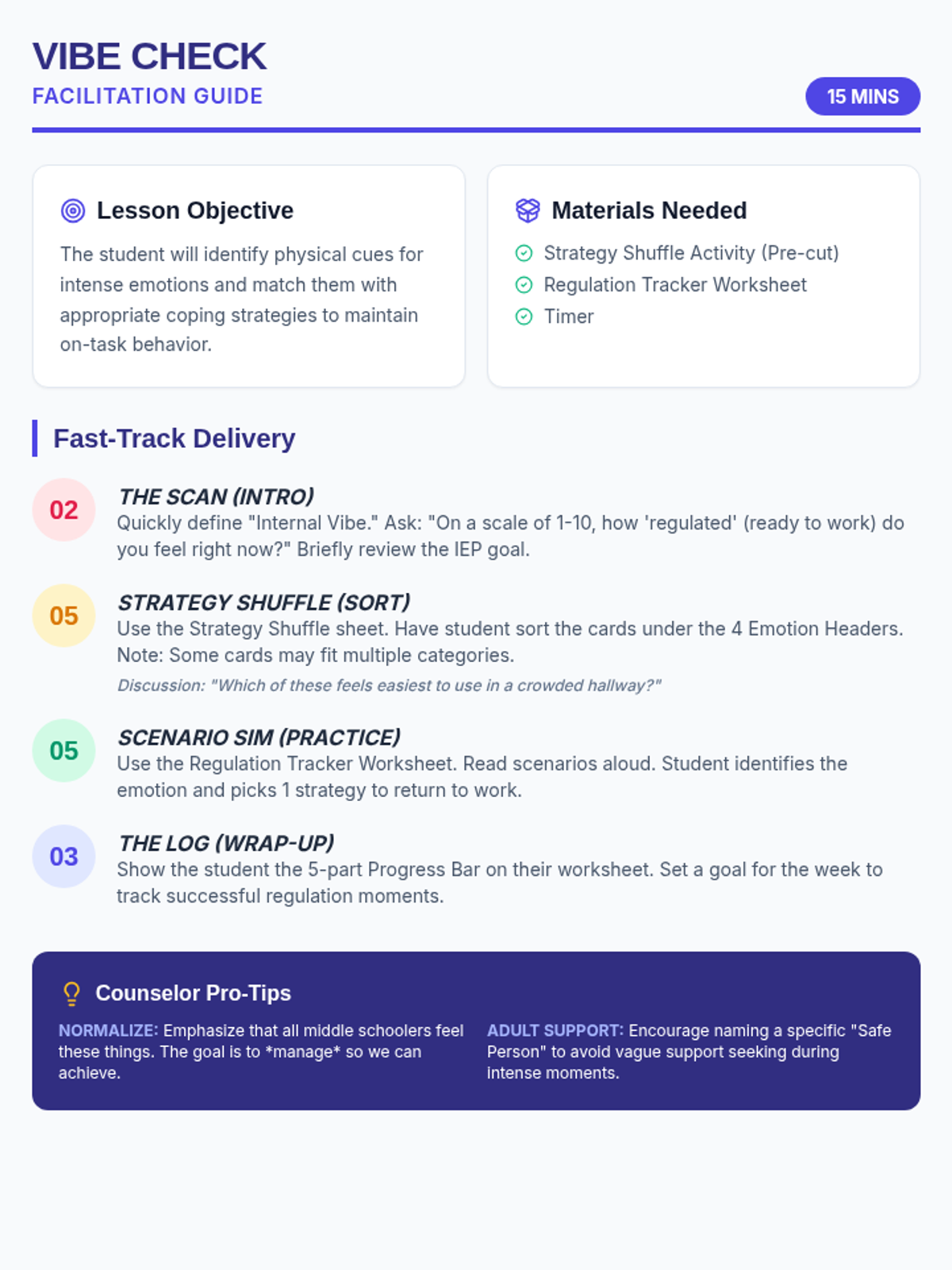
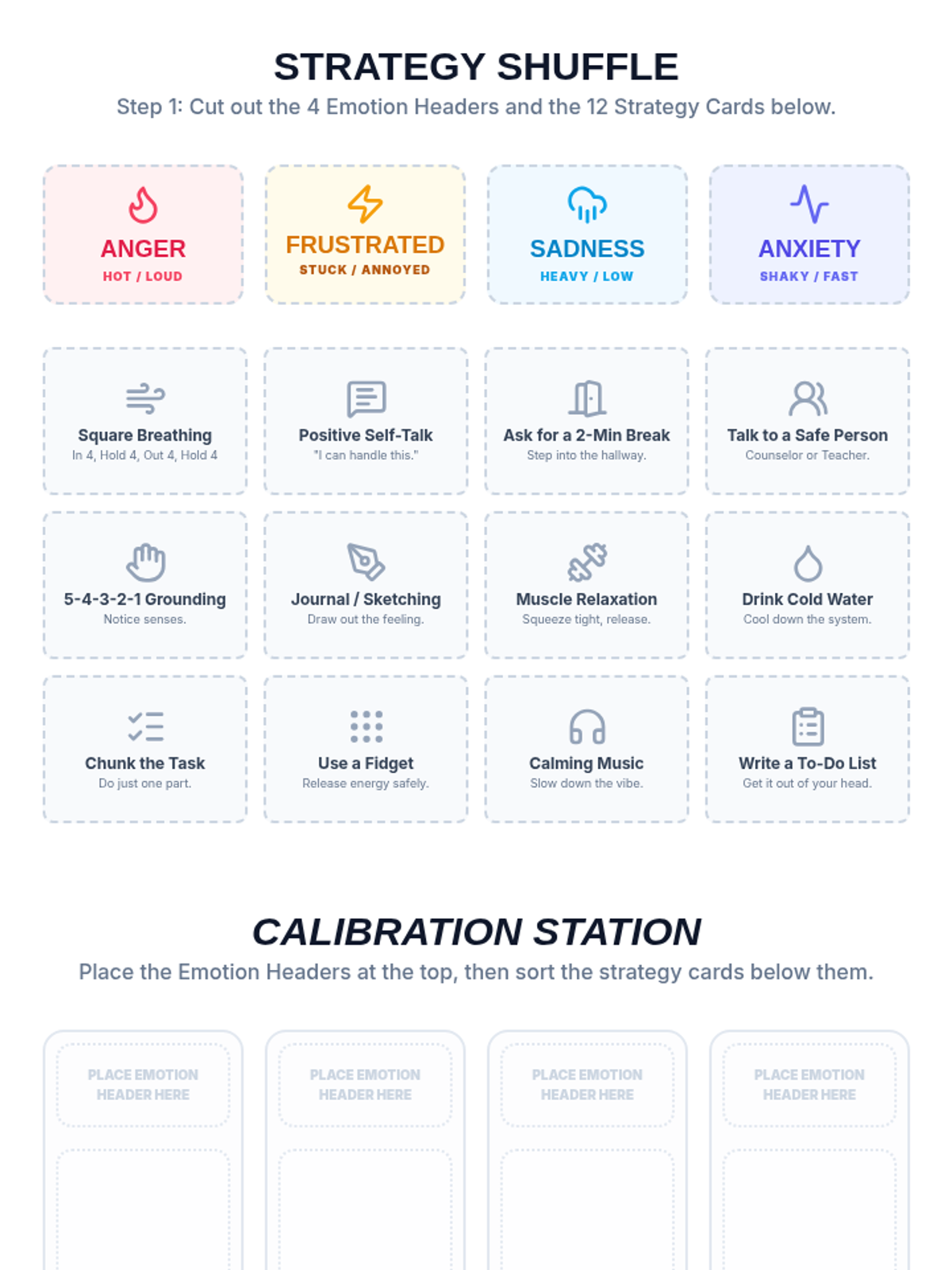
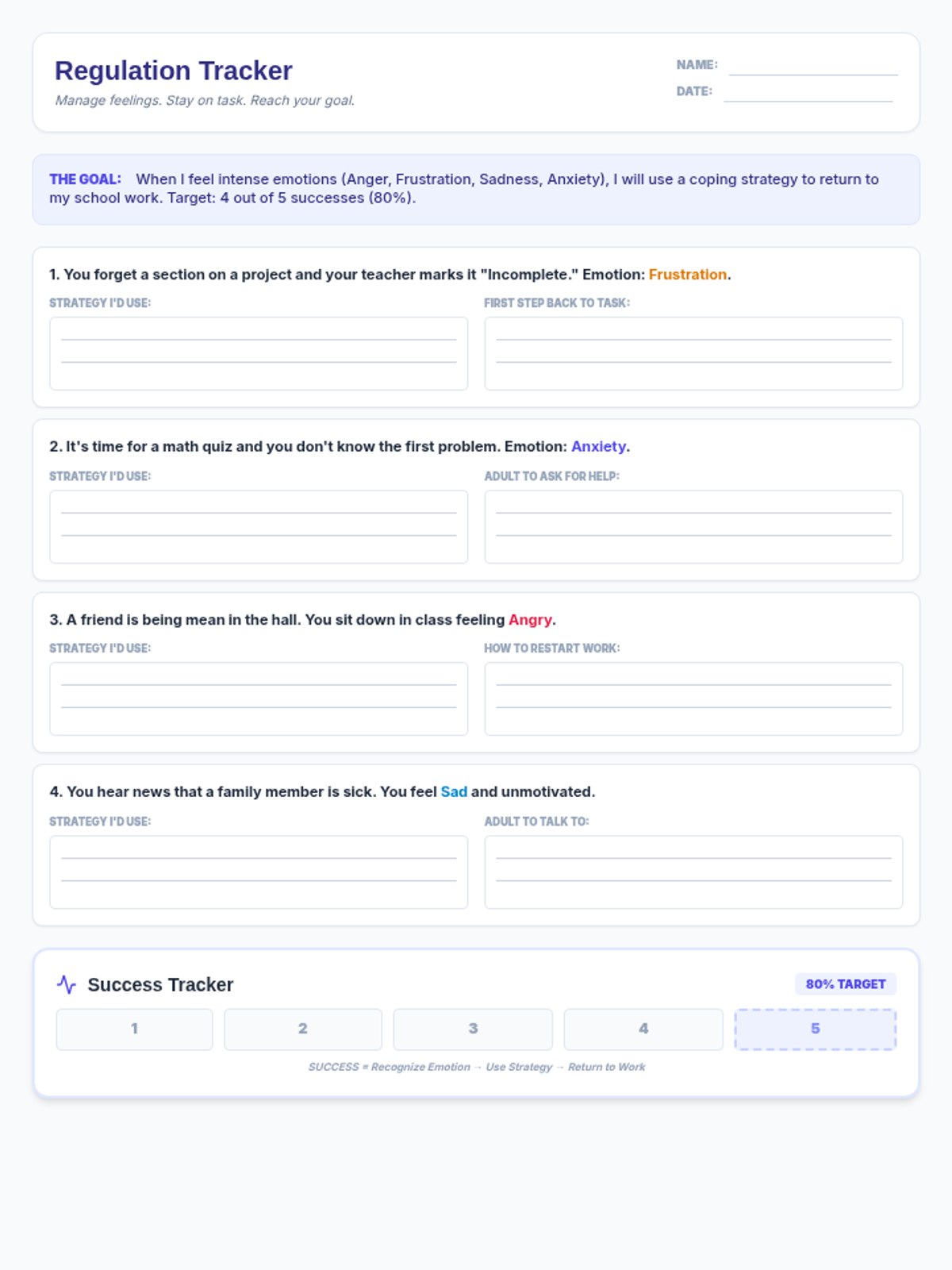
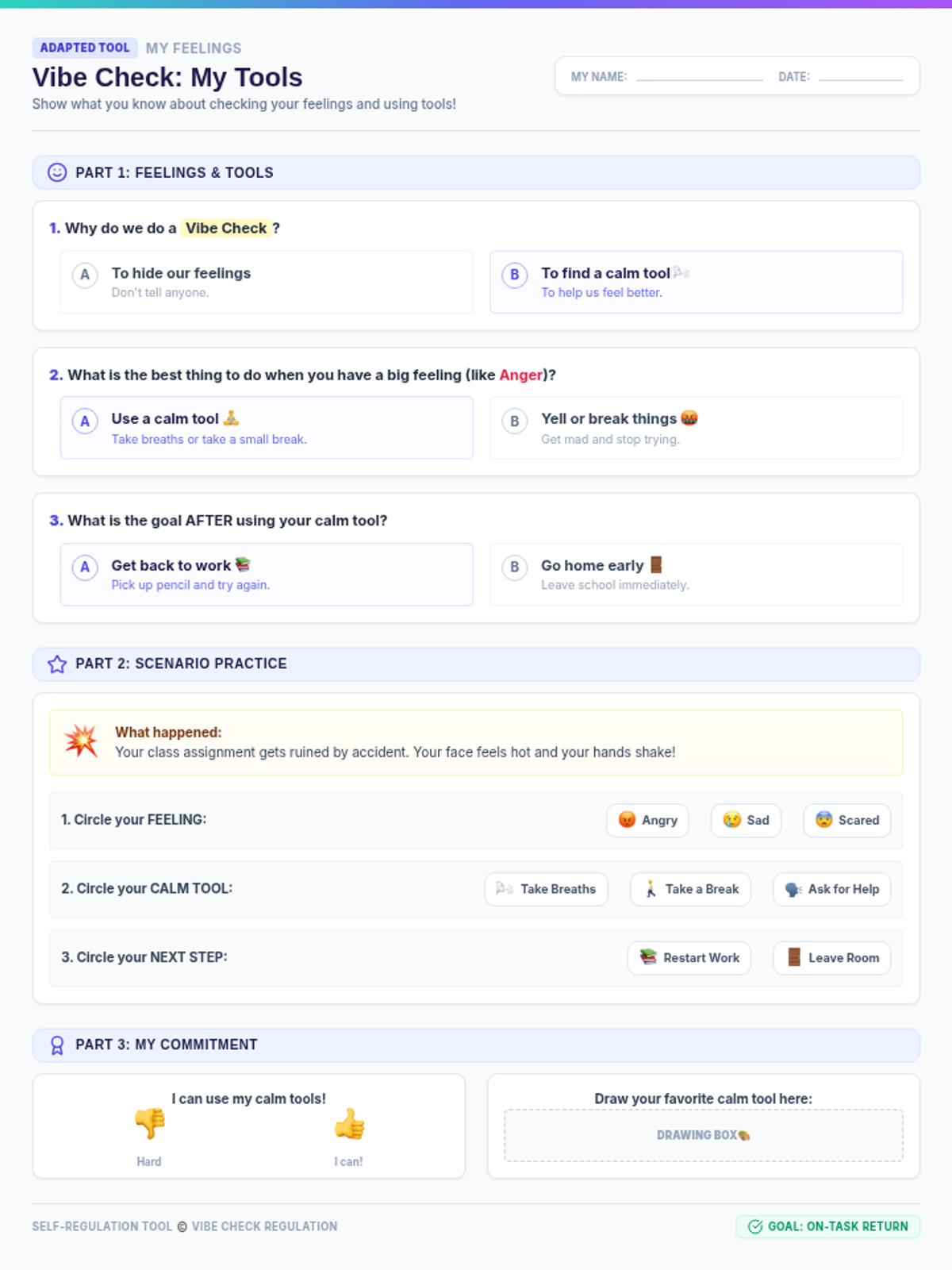
A 15-minute counseling lesson designed to help middle school students identify intense emotions and apply specific self-regulation strategies to return to on-task behavior.
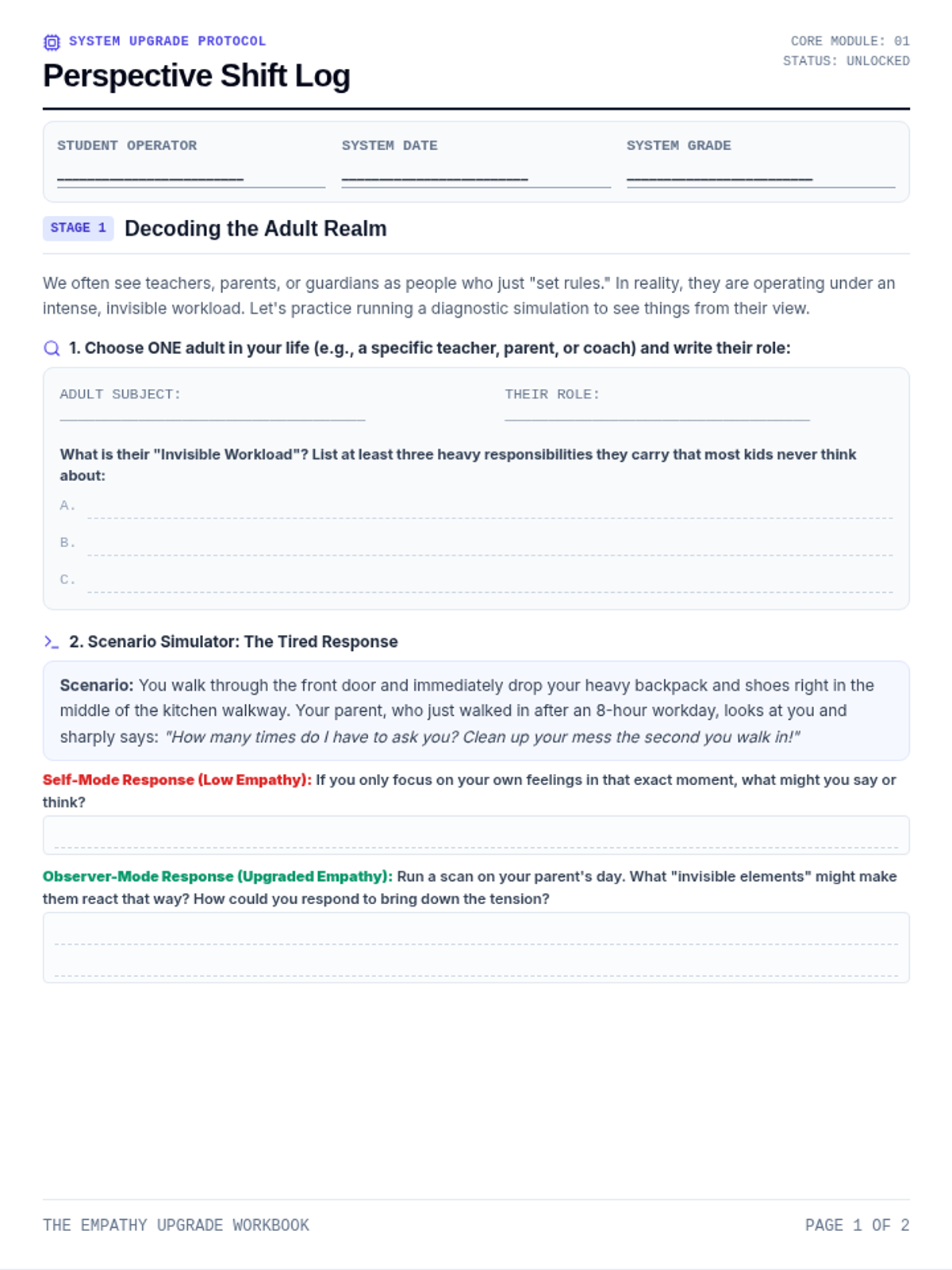
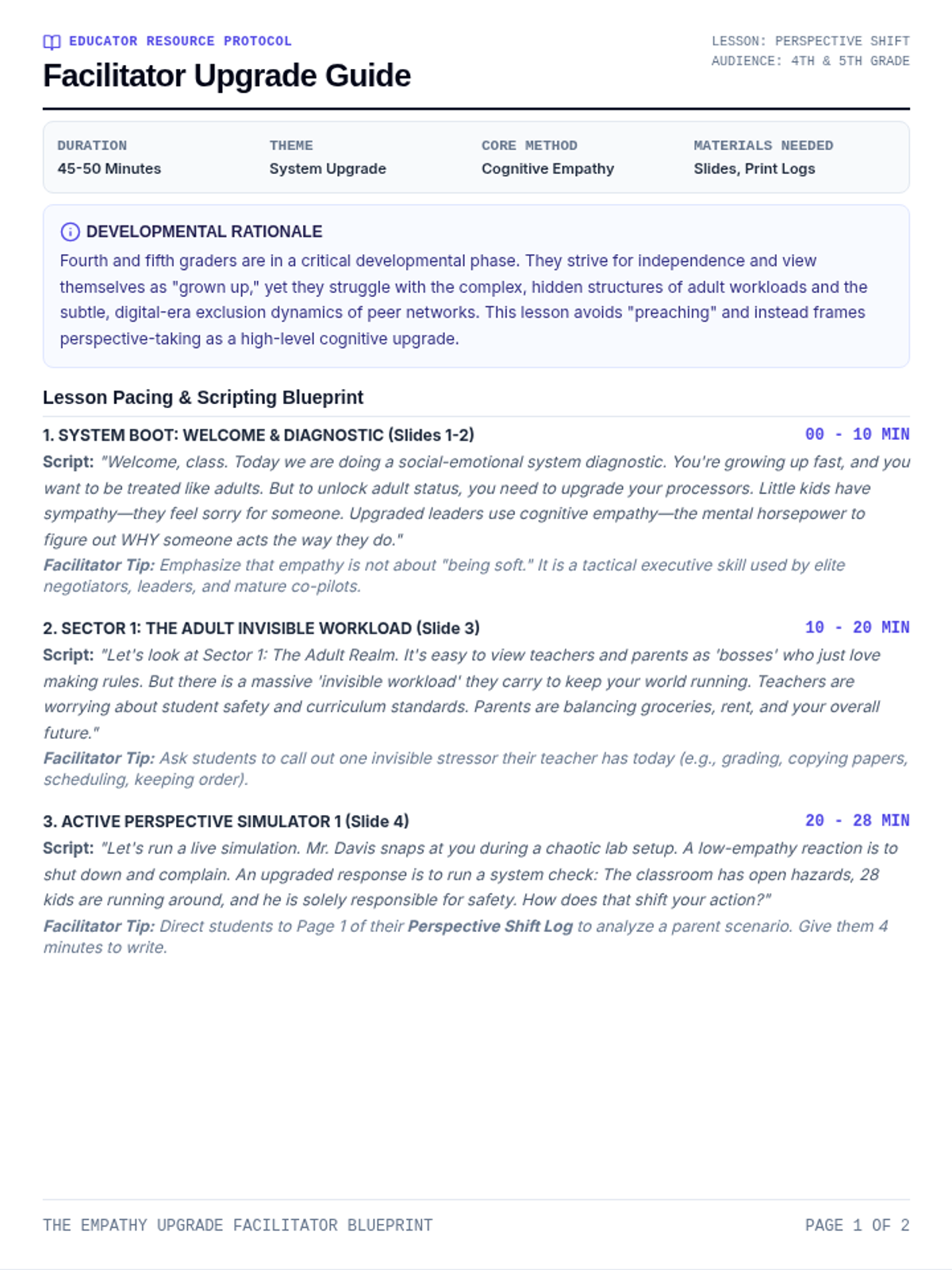
A Guidance Lesson designed for 4th and 5th graders to upgrade their empathy skills. This lesson focuses on perspective-taking, respecting adult workloads/perspectives, and navigating complex peer exclusion dynamics with maturity.
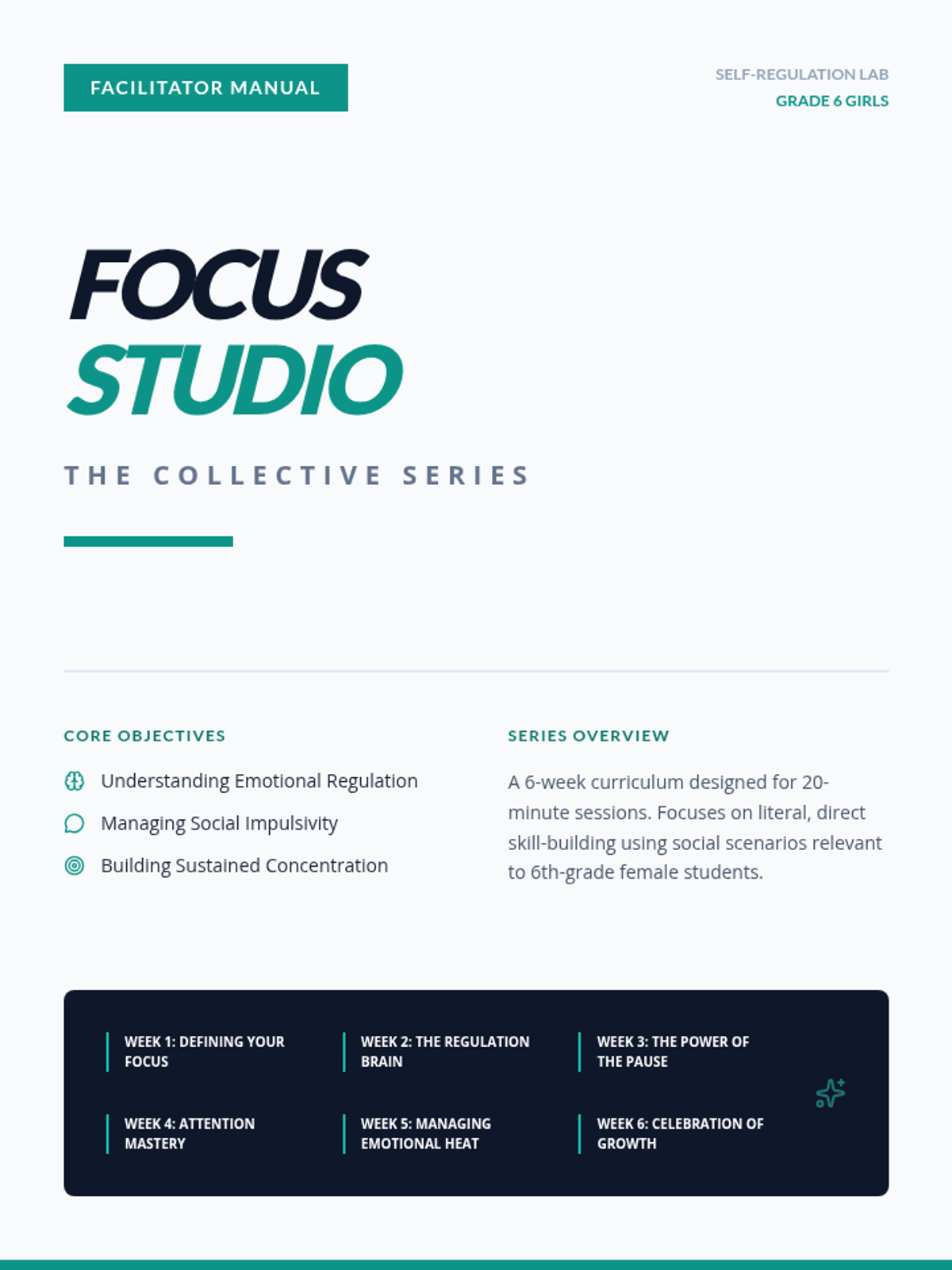
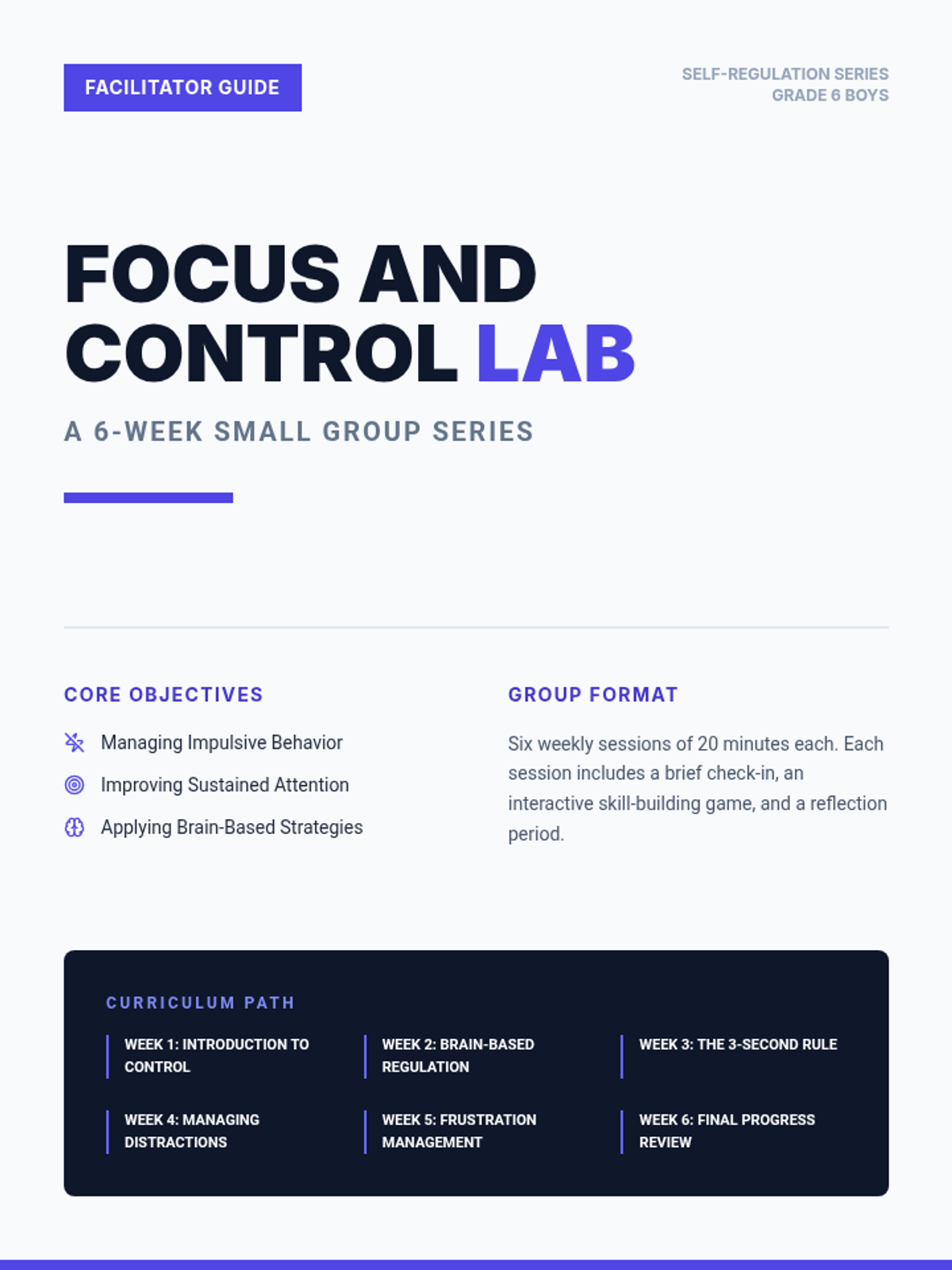
Review of self-regulation tools, personal growth reflection, and final graduation.
Recognizing the 'heat' of frustration in social settings and applying early-intervention calming strategies.
Identifying 'Focus Thieves' like social pressure and internal anxiety. Practicing sustained attention during complex tasks.
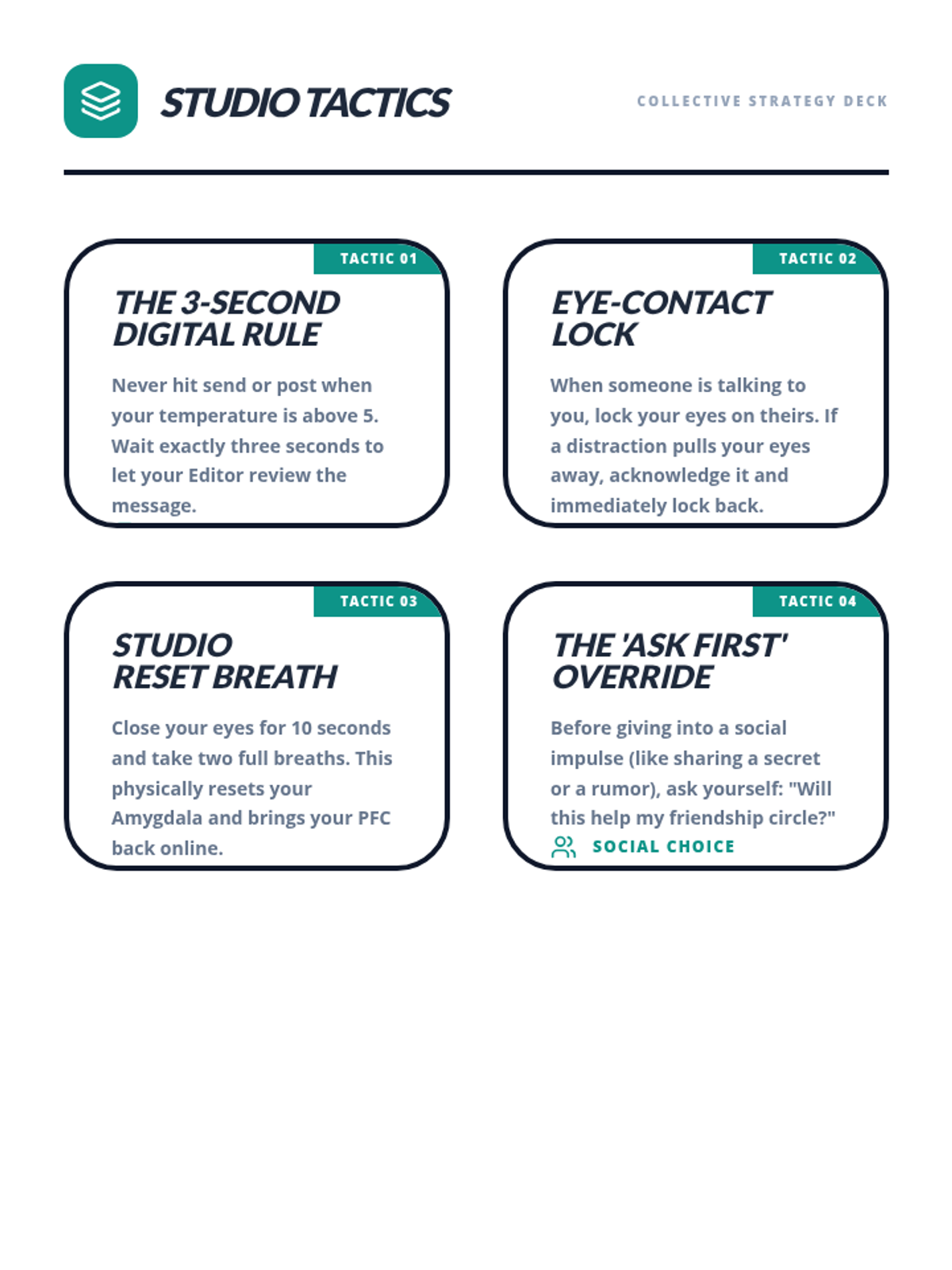
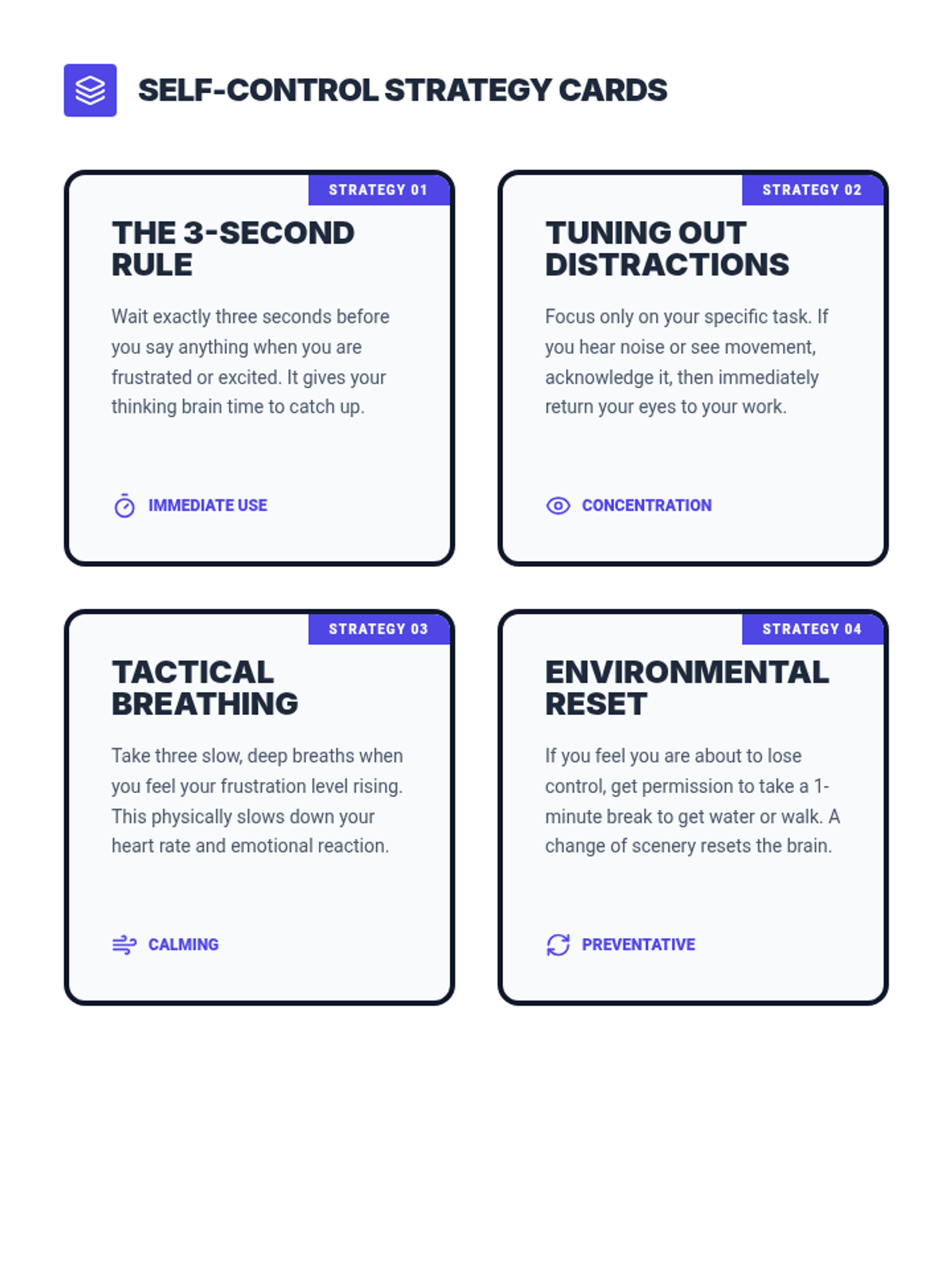
Applying the 3-second rule to social interactions and digital communication. Role-playing managed responses.
Direct instruction on the Amygdala and Prefrontal Cortex. Practice physical inhibition through the 'Slow-Motion Mirror' game.
Introduction to the group, defining self-control in social and academic contexts, and establishing norms. Includes a reaction-time icebreaker.
Review of all skills, reflection on personal progress, and setting future goals for self-control and focus.
Learning to recognize frustration early and using calming techniques to stay in control. Practice frustration management through a challenging task.
Developing techniques to block out external distractions and maintain focus on schoolwork. Practice concentration during noisy tasks.
Learning the '3-Second Rule' to manage immediate reactions. Practice identifying high-impulse situations and planning alternatives.
Explaining the difference between the 'Emotional Brain' (Amygdala) and the 'Thinking Brain' (Prefrontal Cortex). Practice pausing through a physical game.
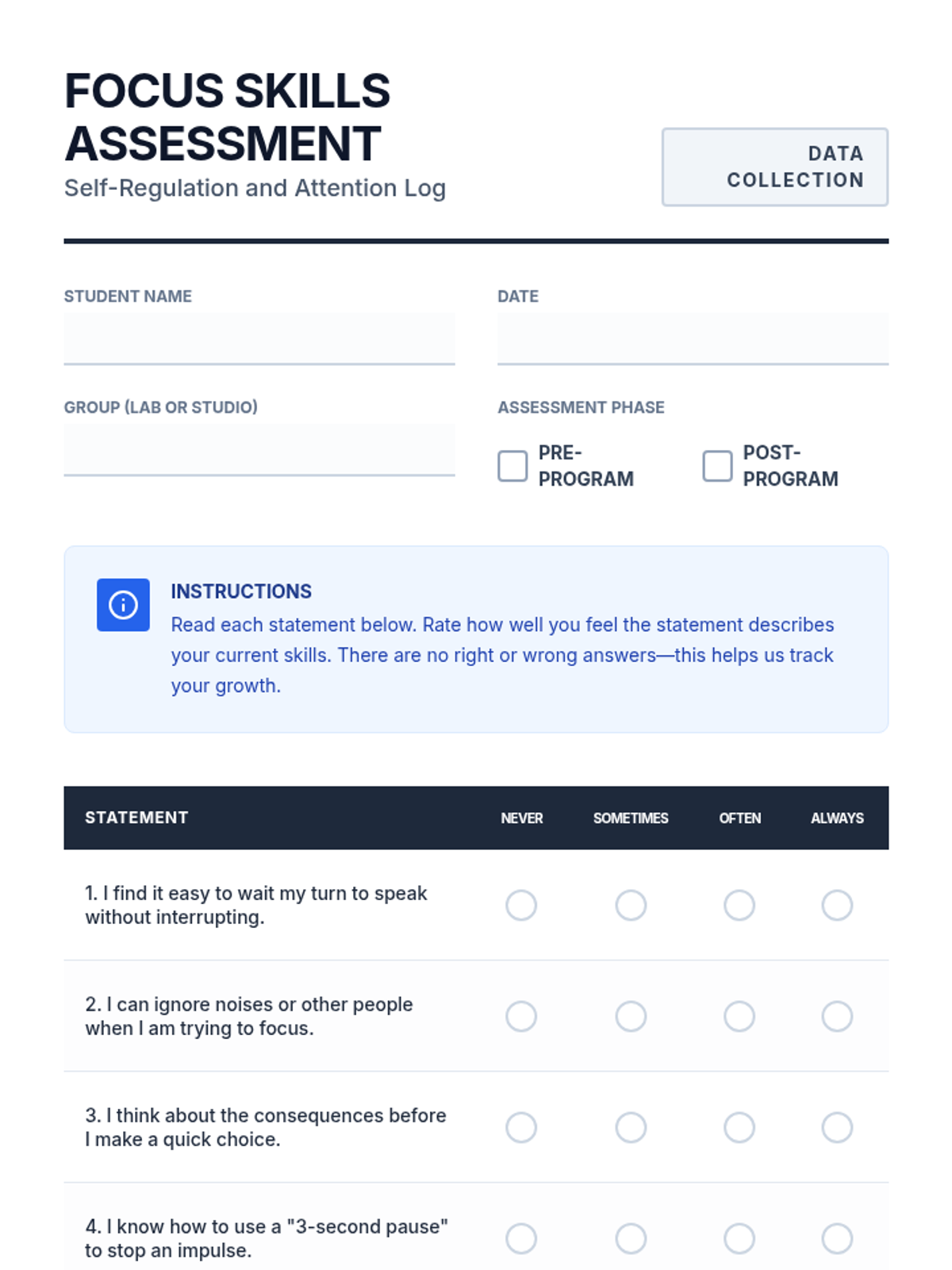
Introduction to the group, defining self-control, and establishing group norms. Includes an icebreaker to measure baseline reaction times.
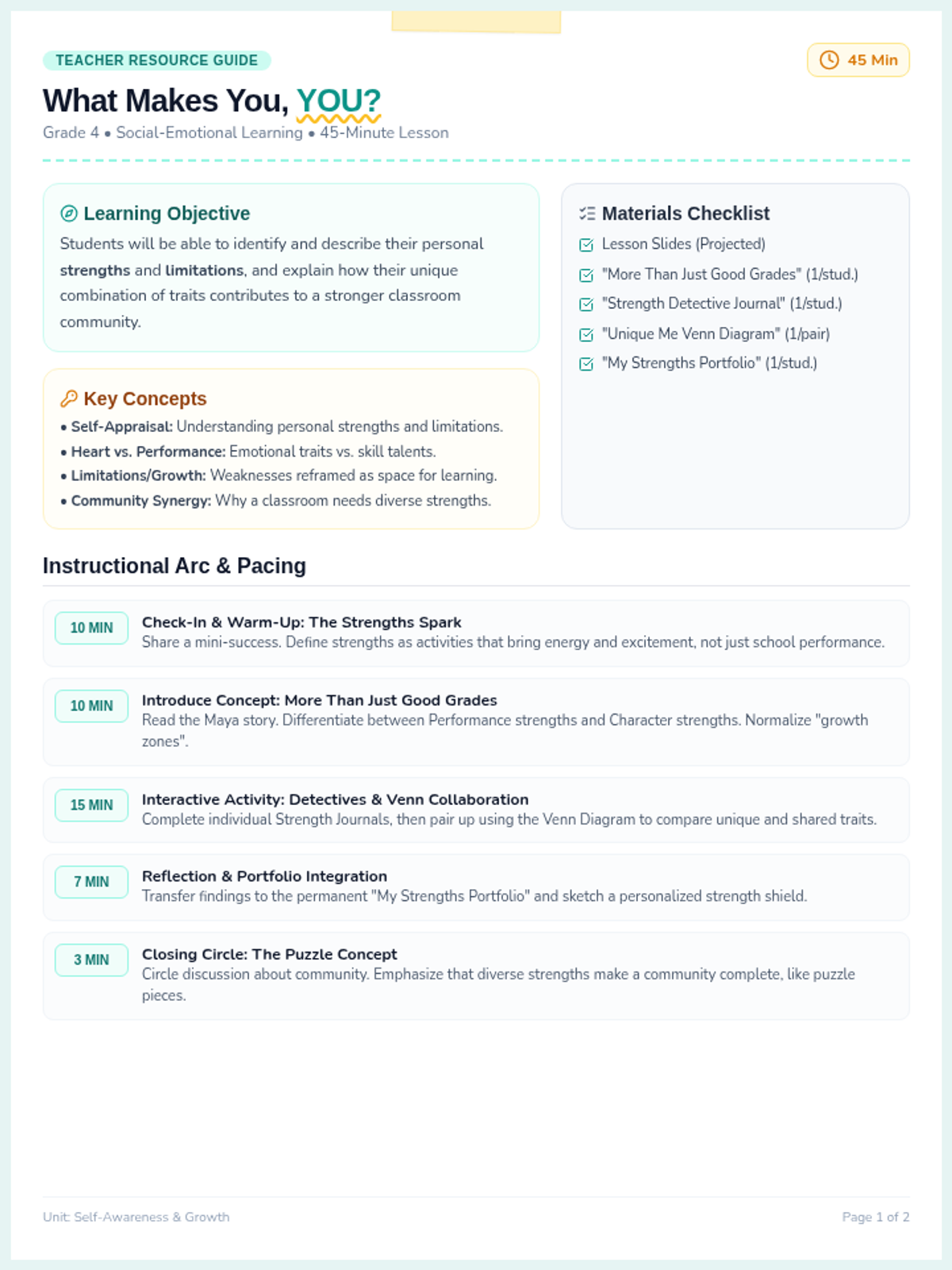
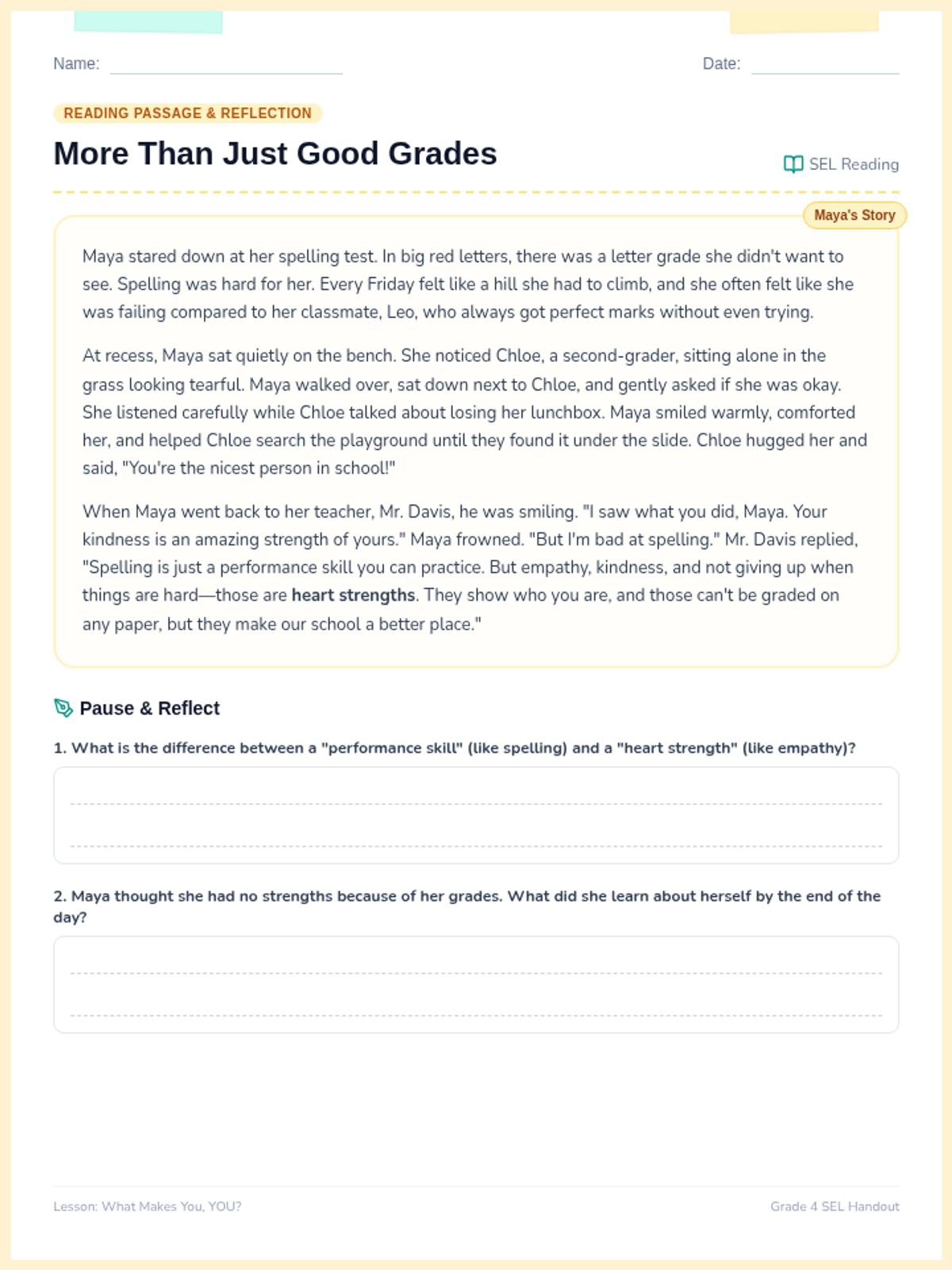
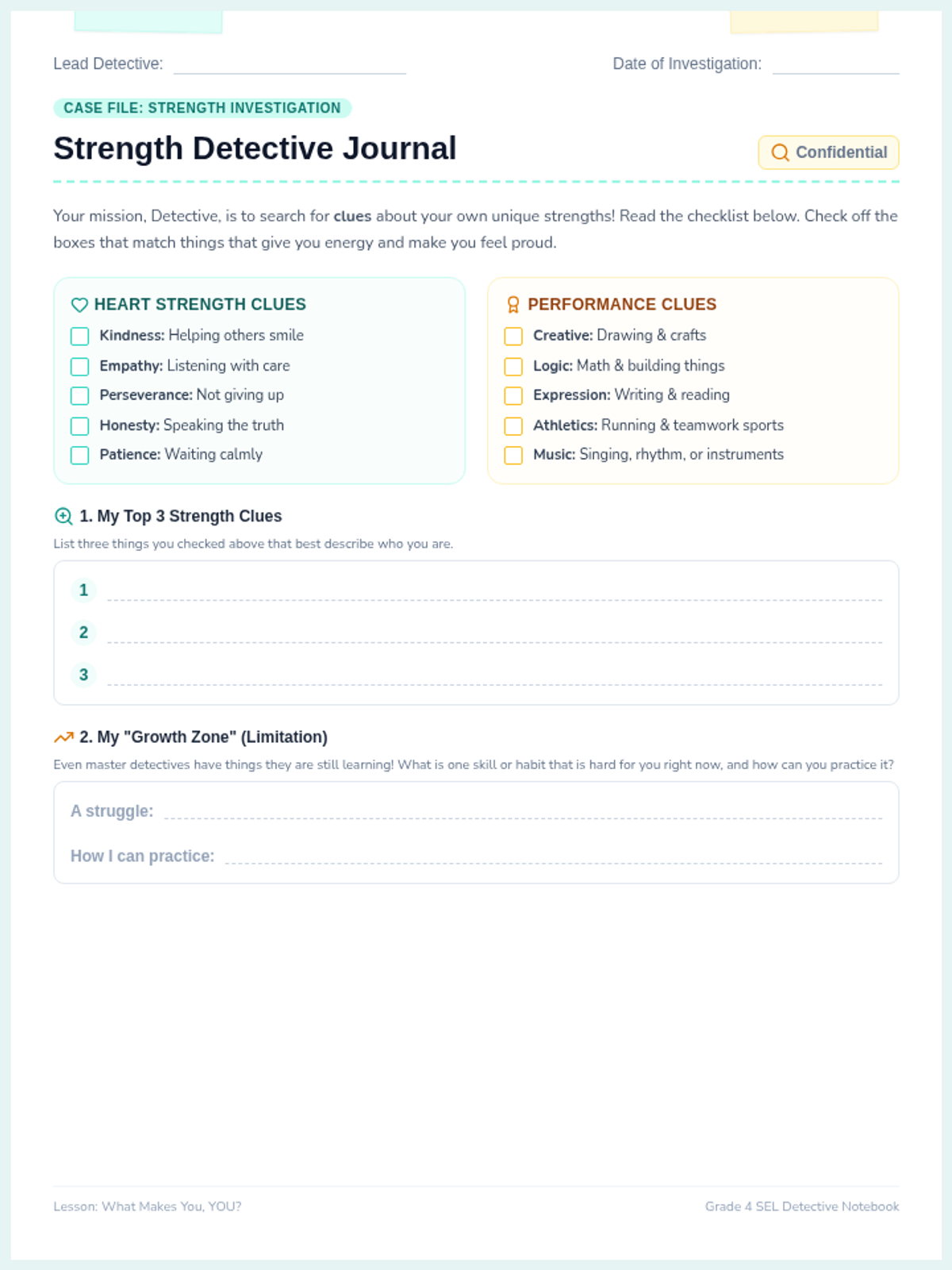
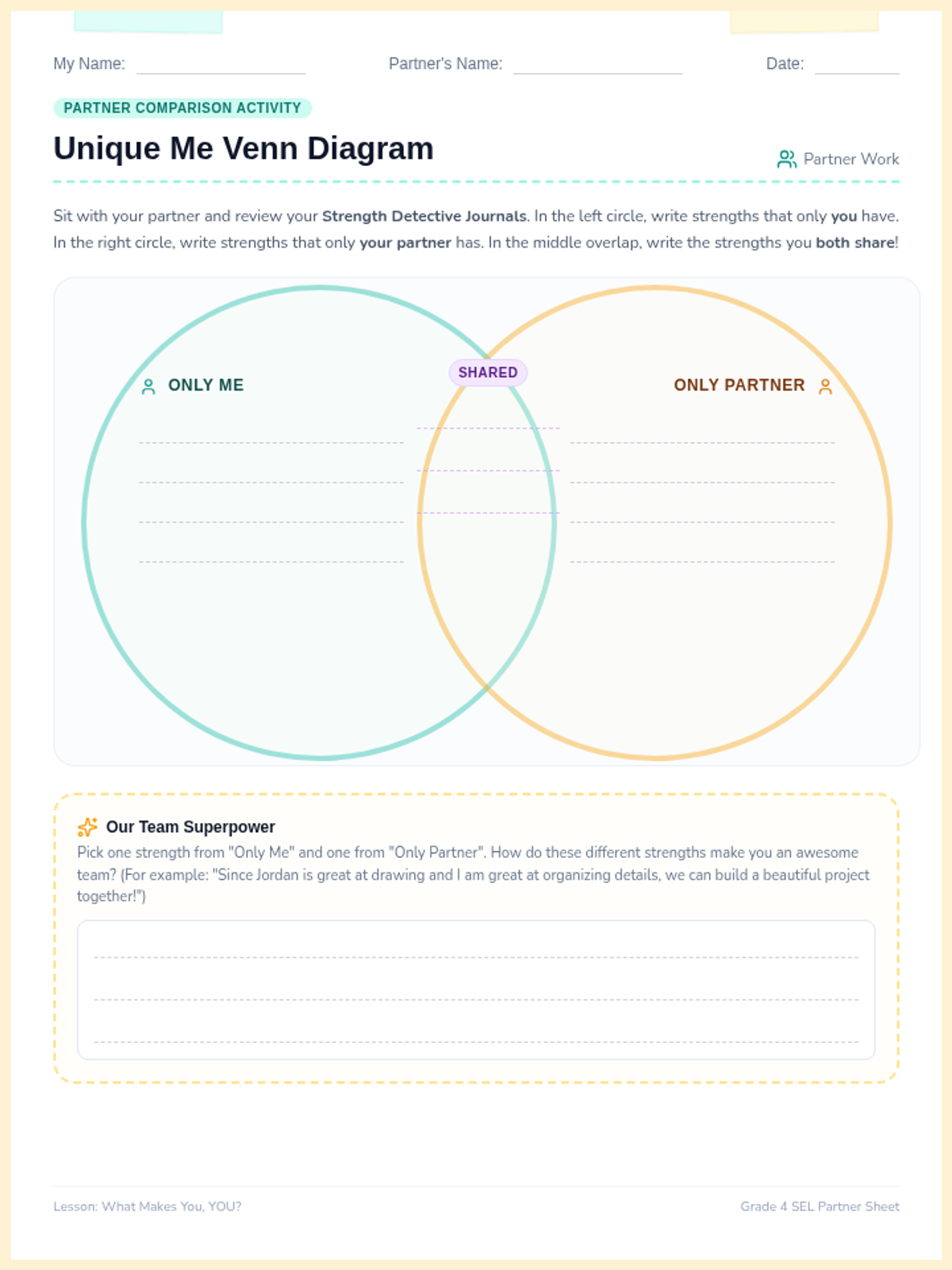
A 45-minute social-emotional learning lesson for 4th graders to explore their personal strengths and limitations. Students learn to self-appraise, appreciate their unique qualities, and understand how diverse strengths make their classroom community stronger.
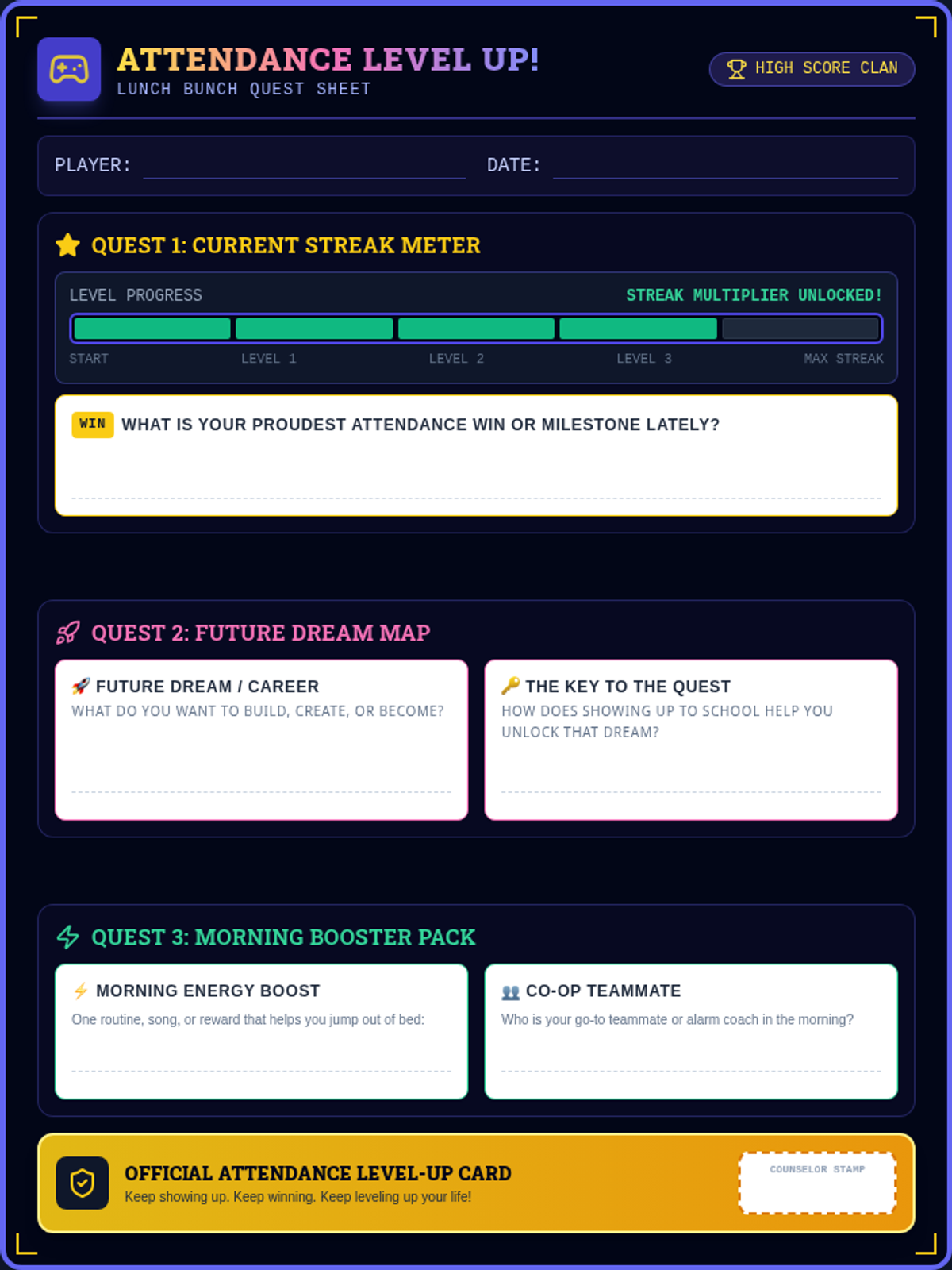
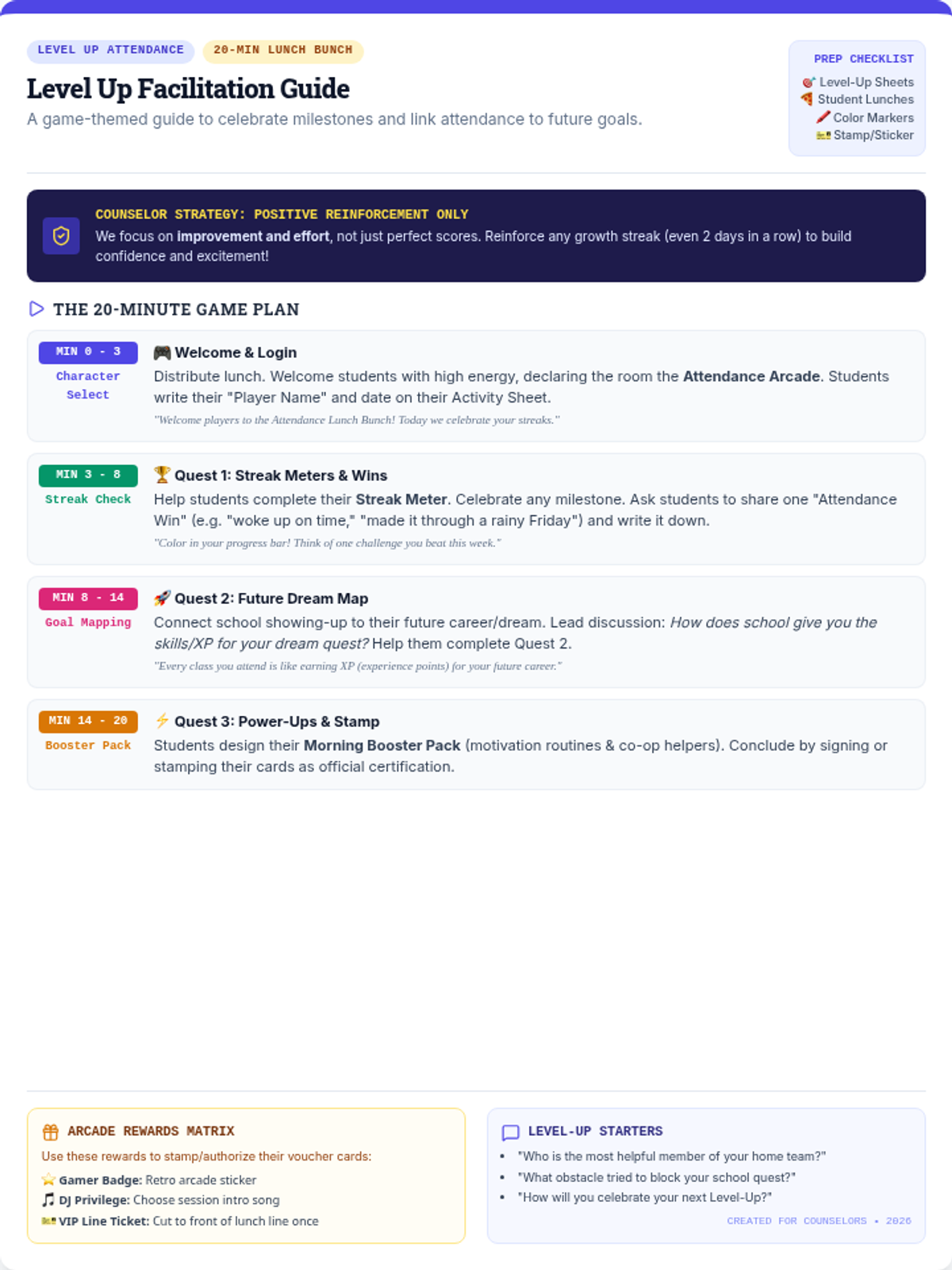
A 20-minute Lunch Bunch lesson plan and facilitation guide designed to celebrate attendance milestones, connect consistent attendance to future goals, and foster a high-energy, positive environment for students.
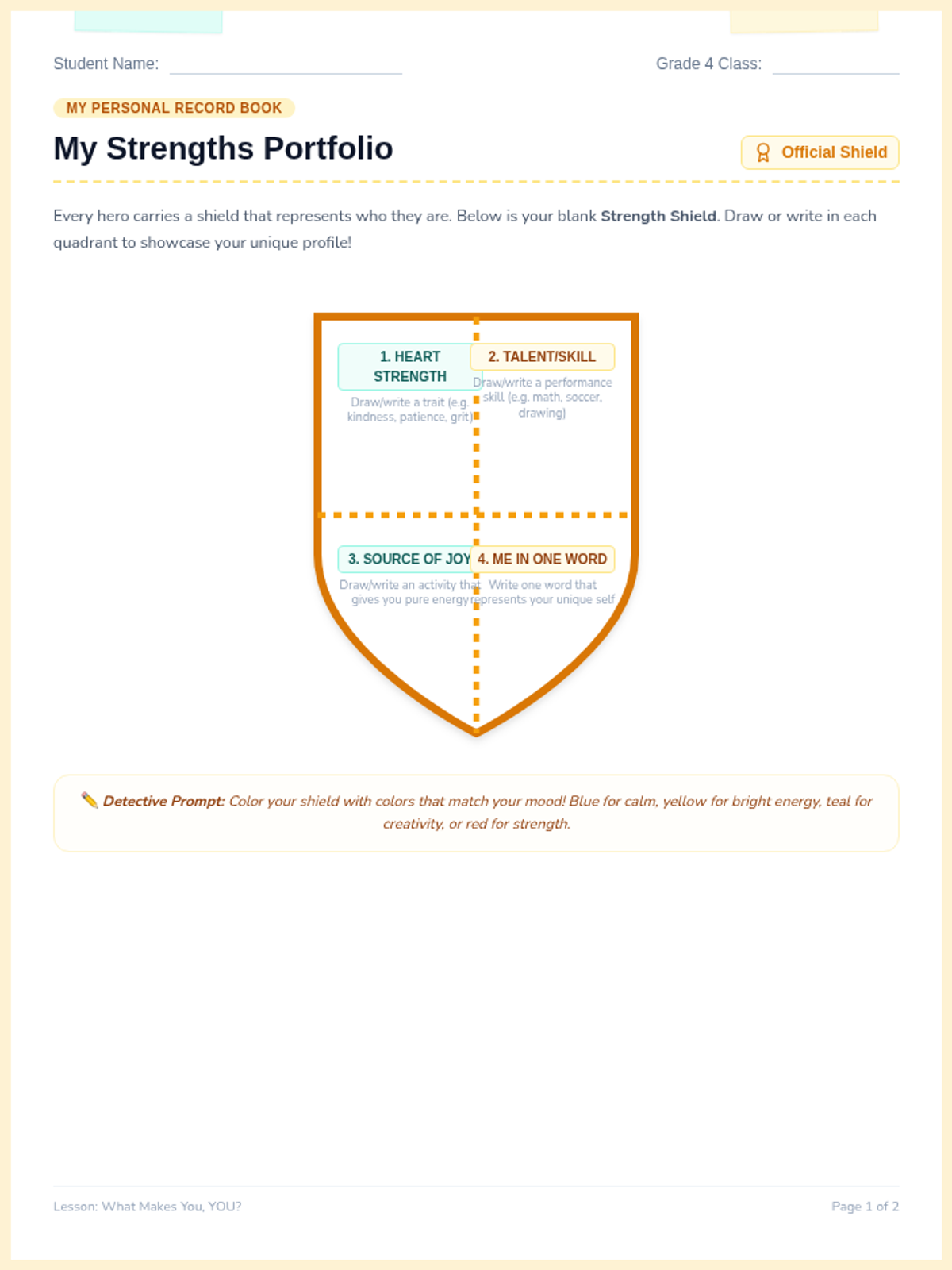
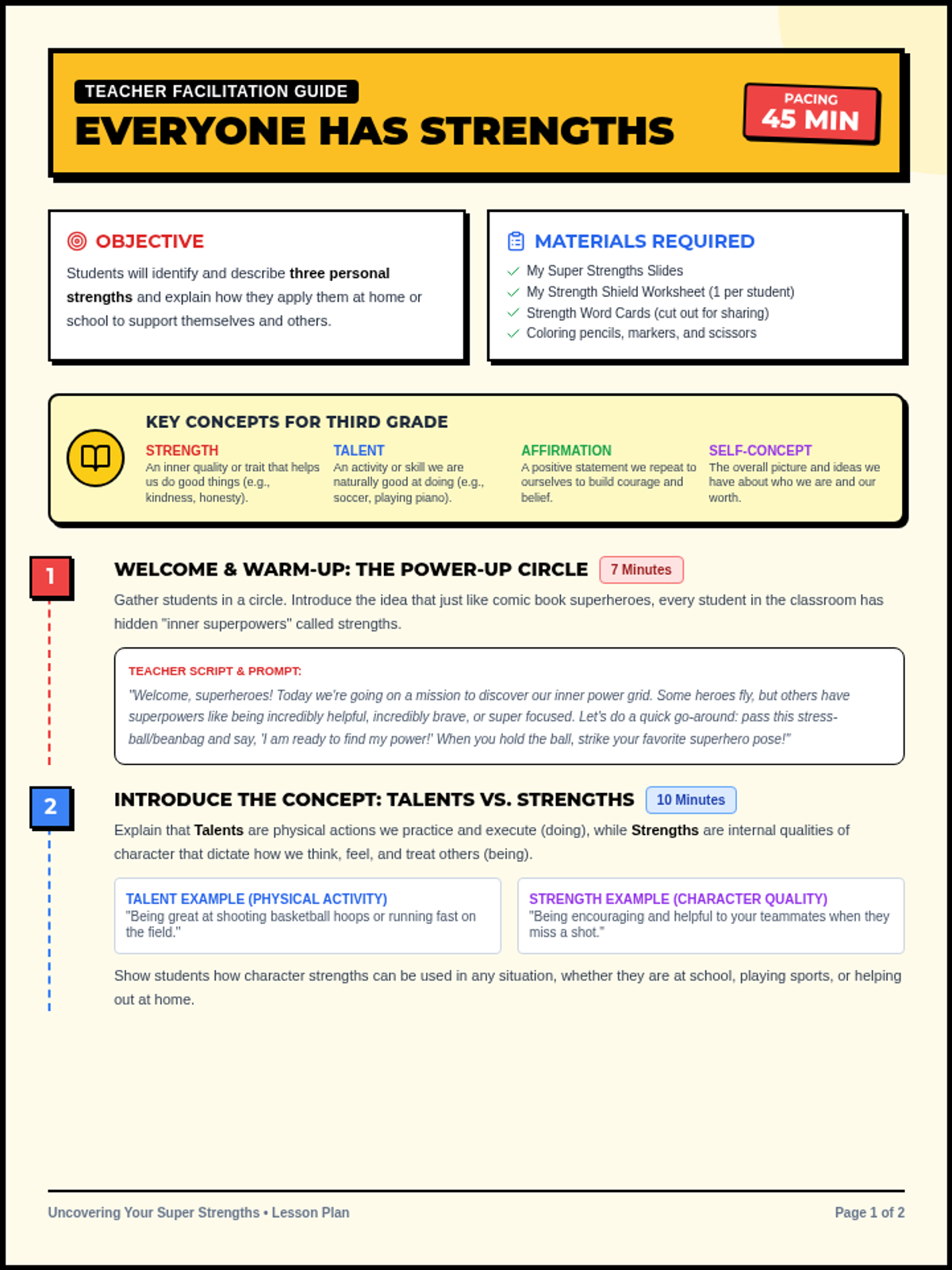
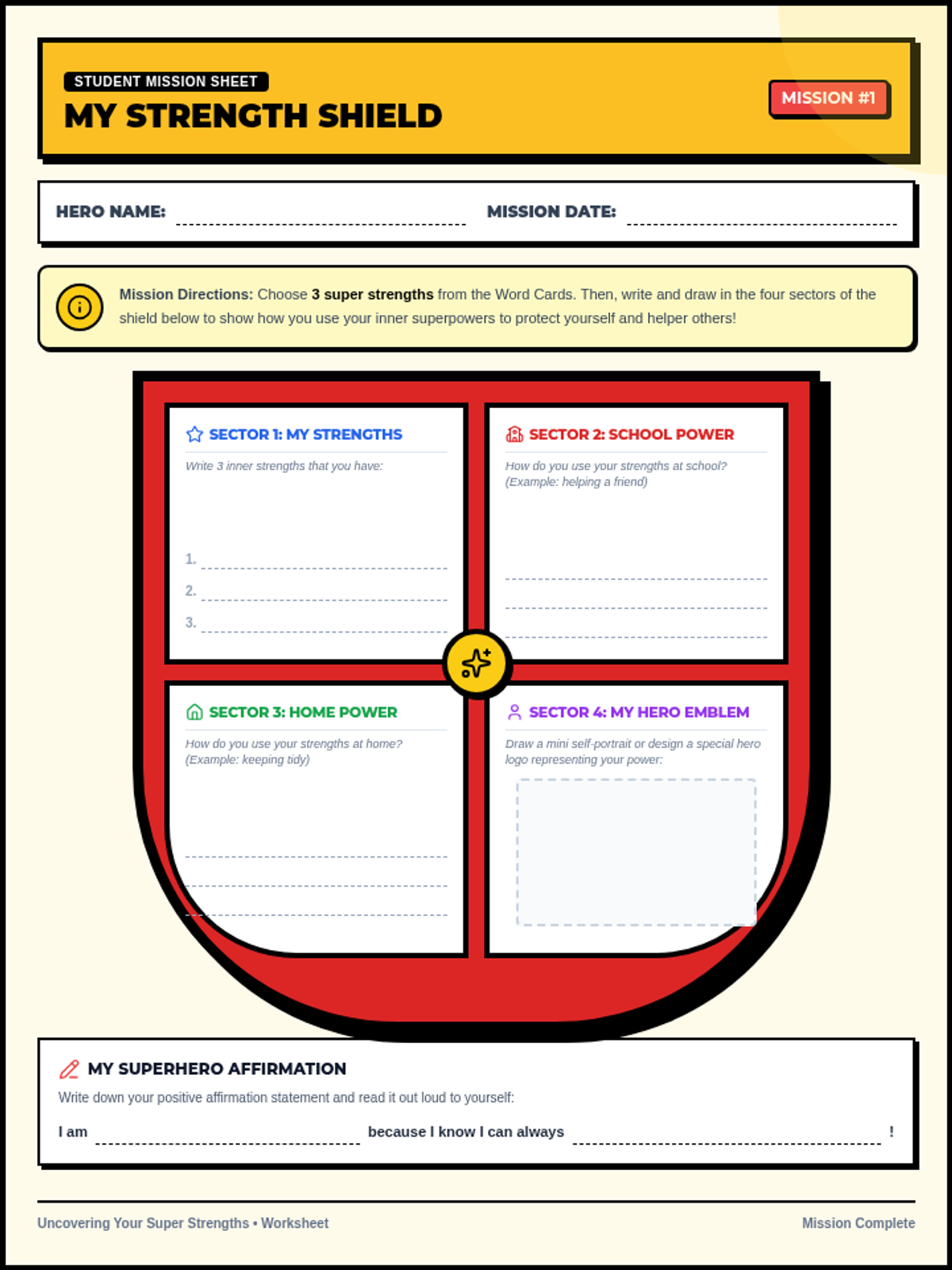
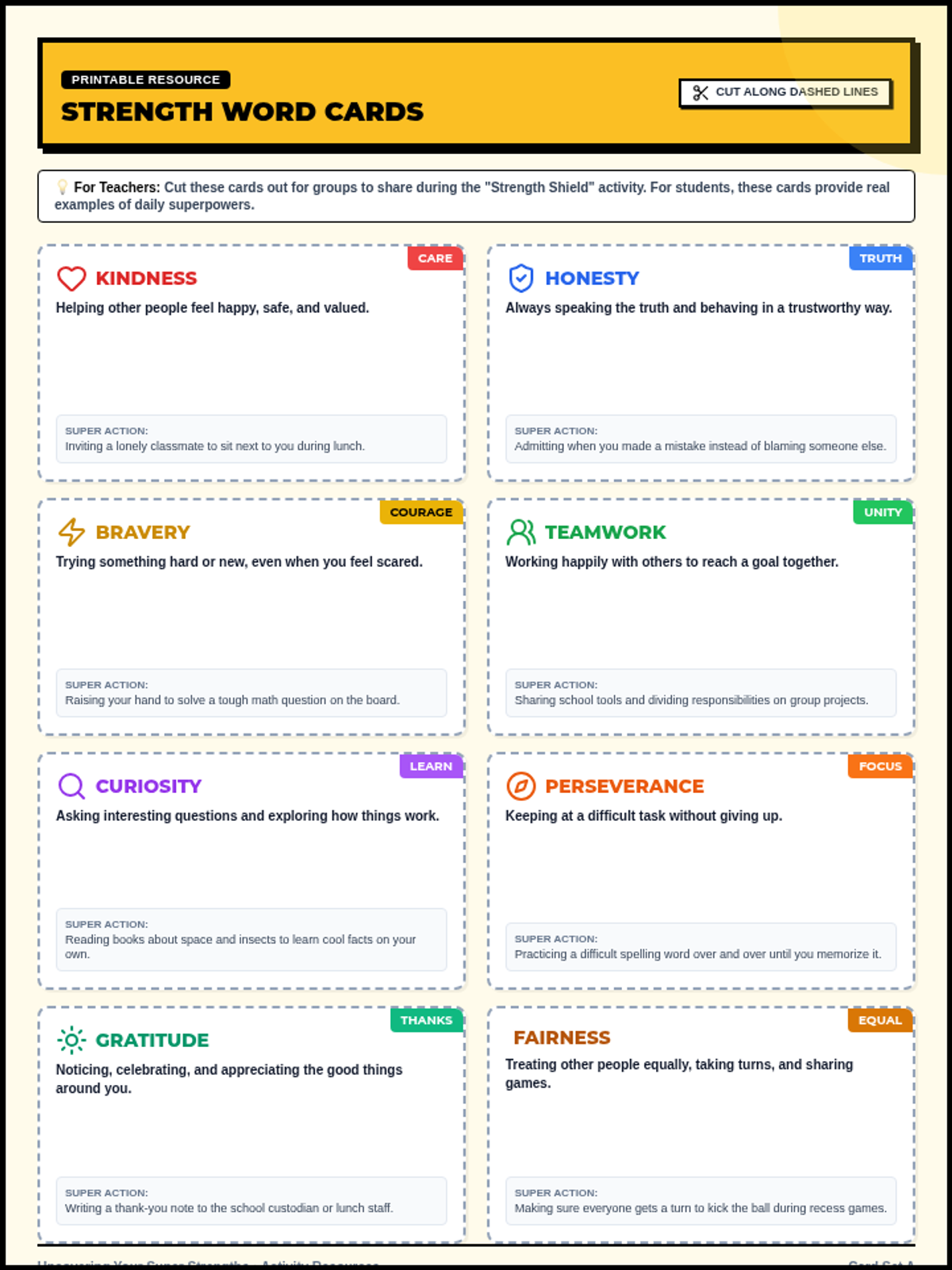
A 45-minute social-emotional learning lesson for 3rd graders to discover, articulate, and celebrate their personal strengths. Students explore the difference between talents and strengths, build a 'Strength Shield' representing their core qualities, and practice positive affirmations.
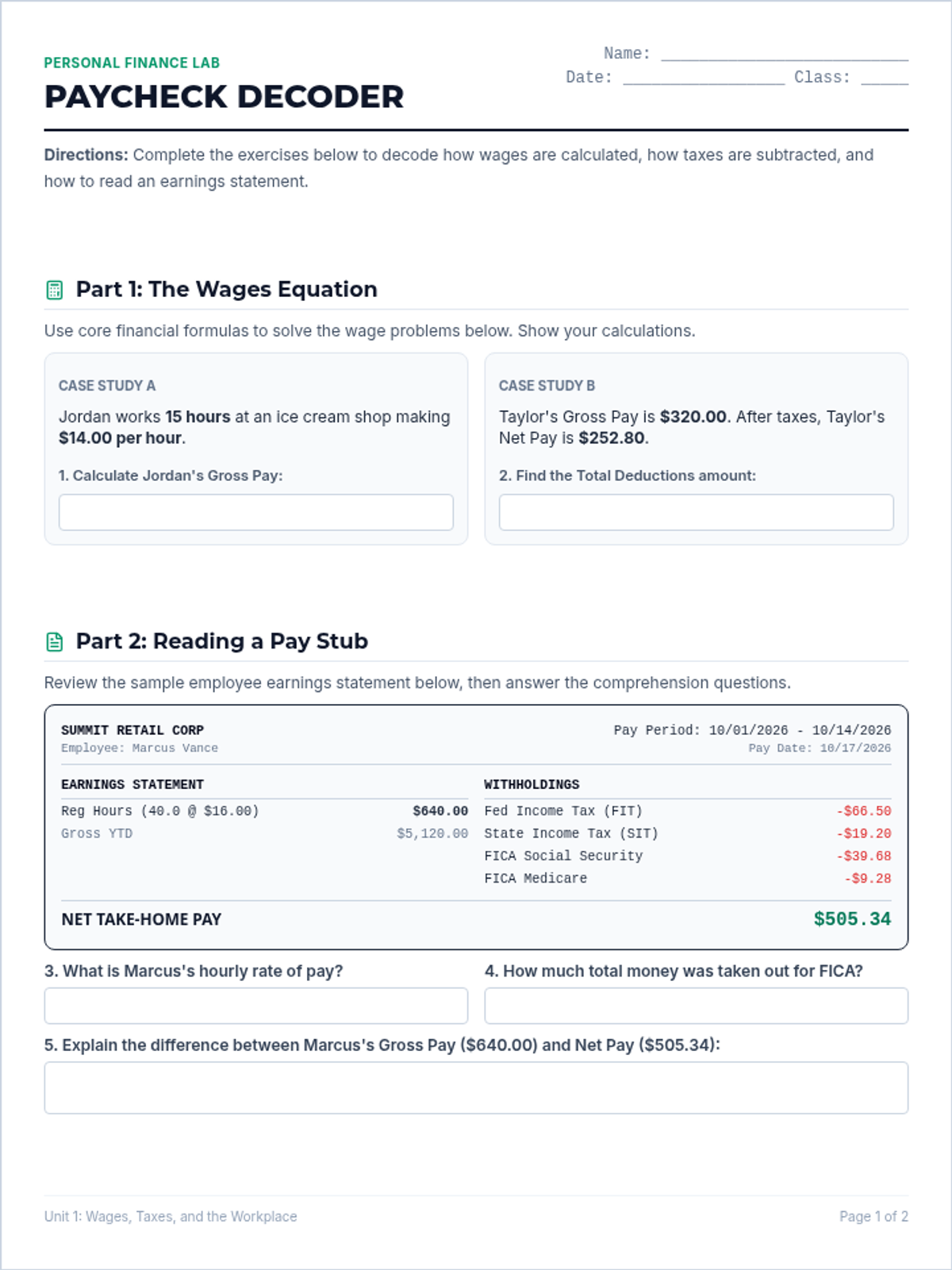
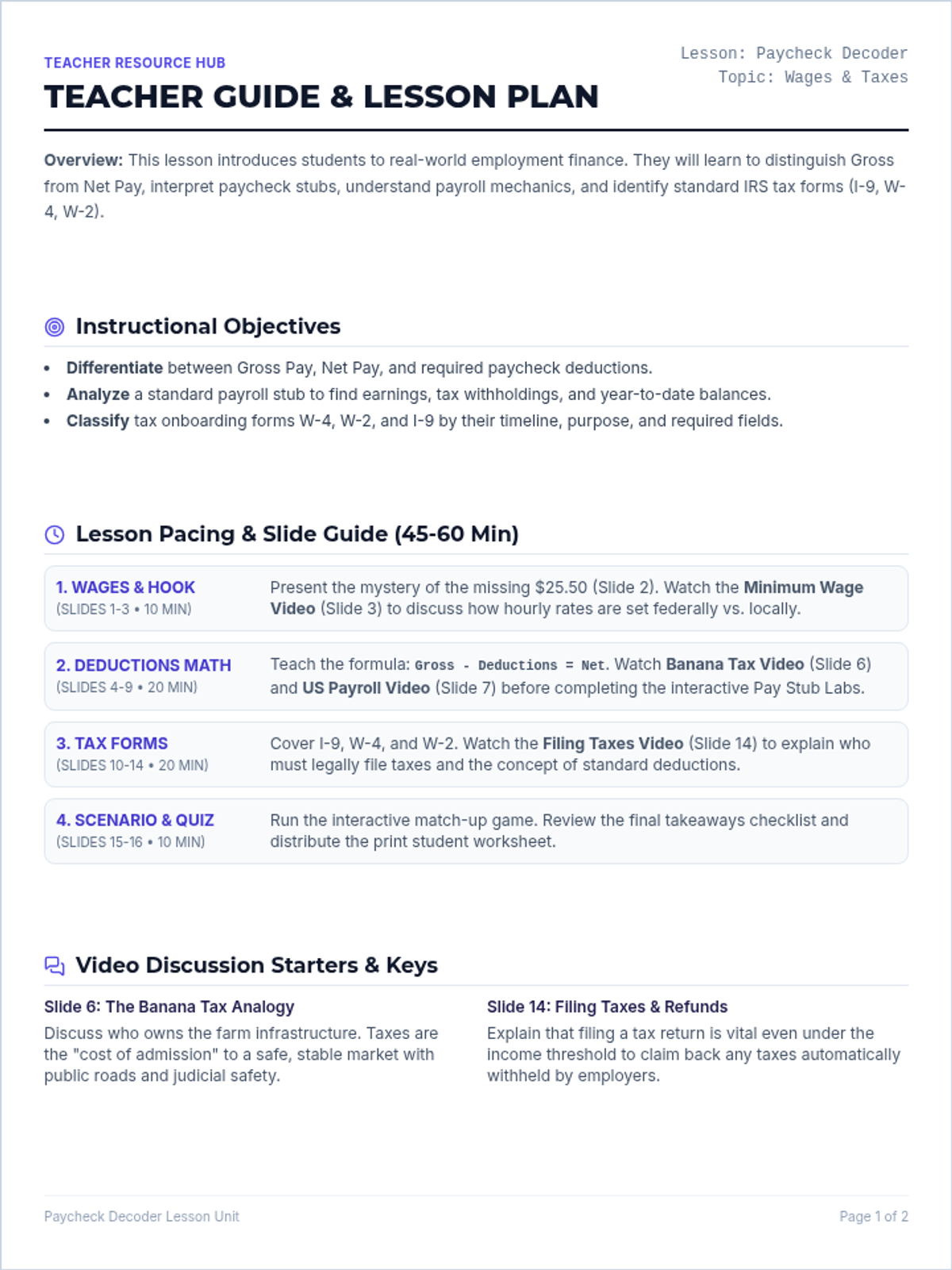
A lesson focusing on gross versus net pay, understanding paycheck deductions, reading a pay stub, and identifying key employment tax forms (W-4, W-2, I-9).
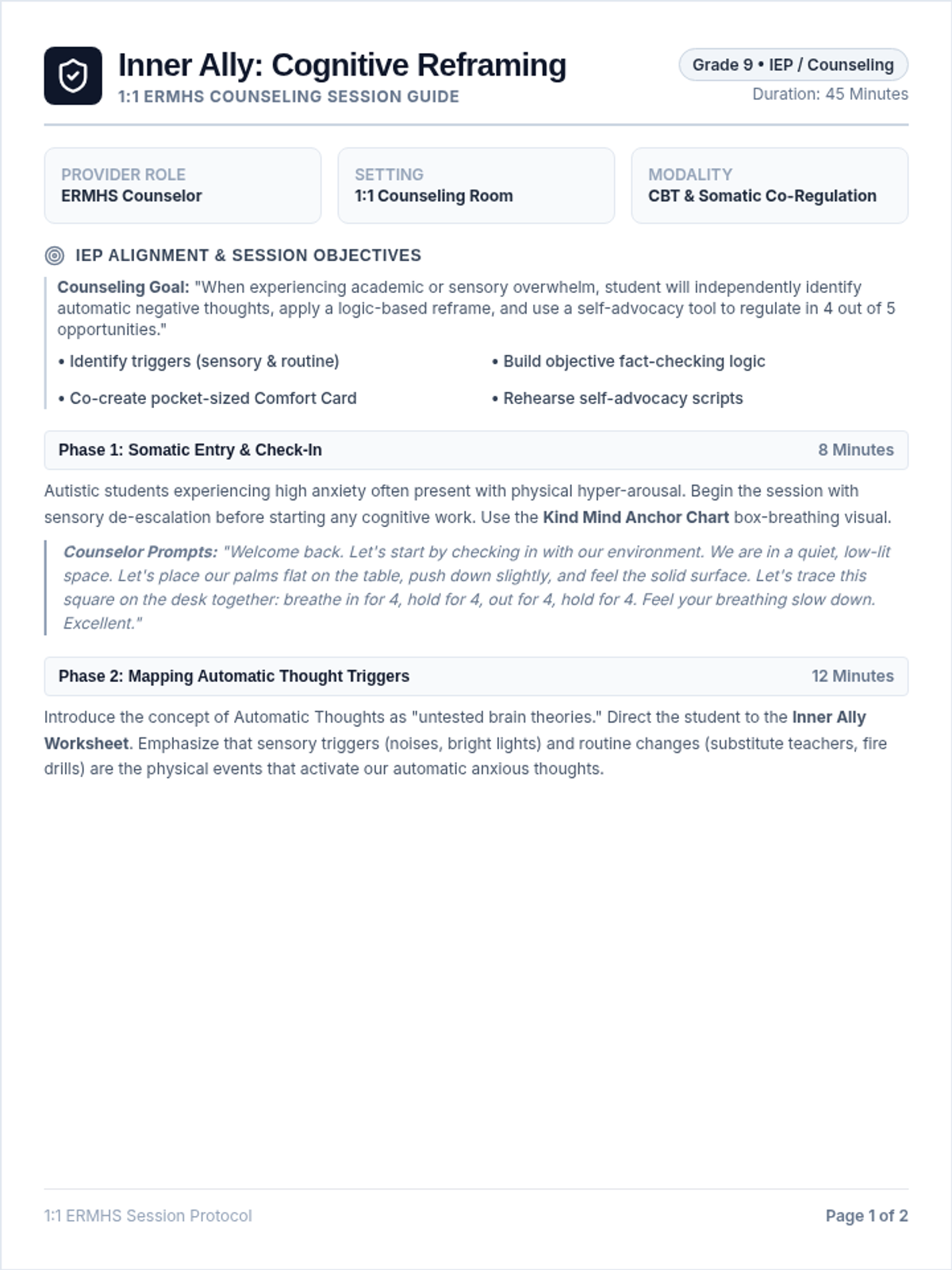
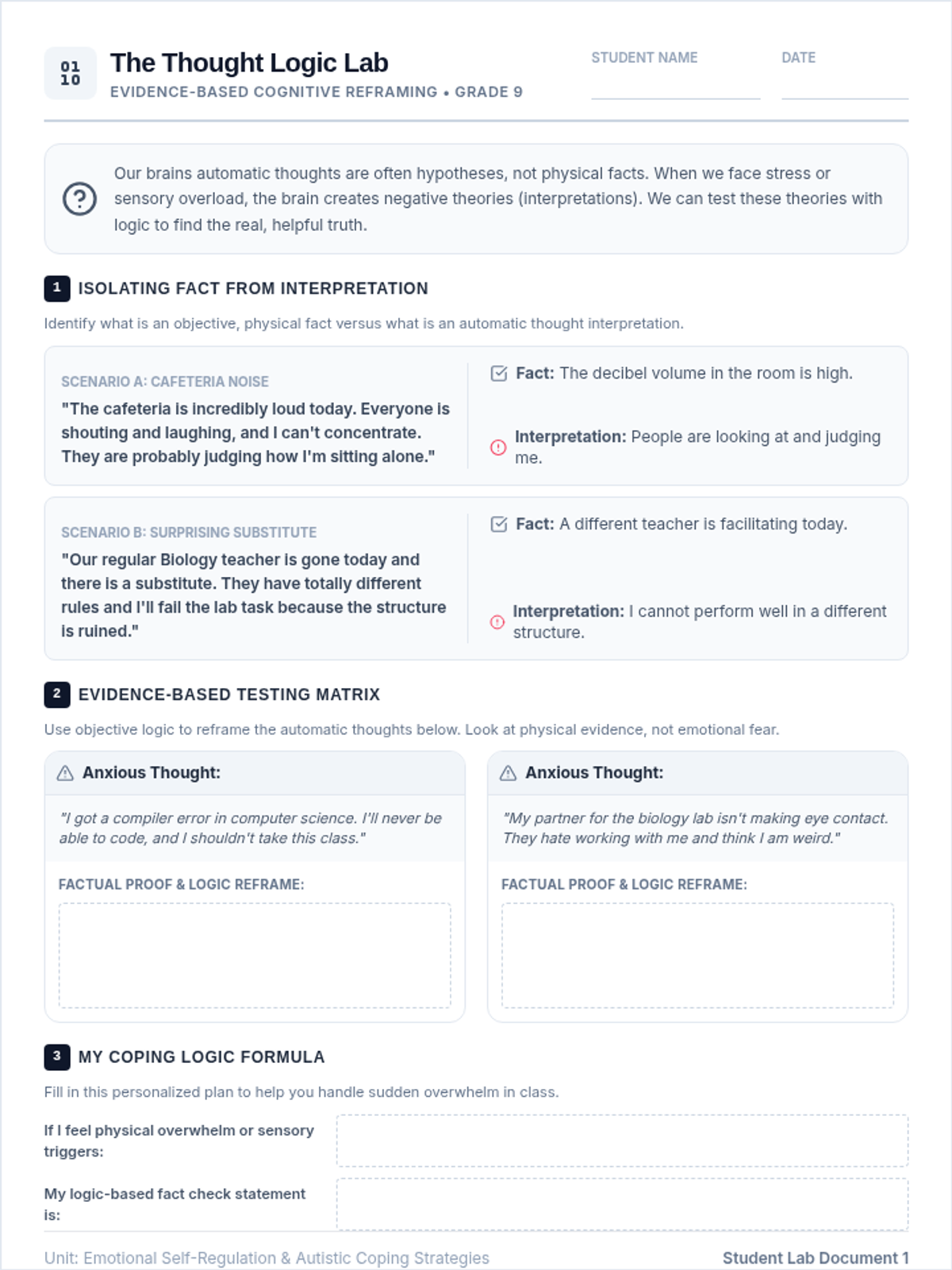
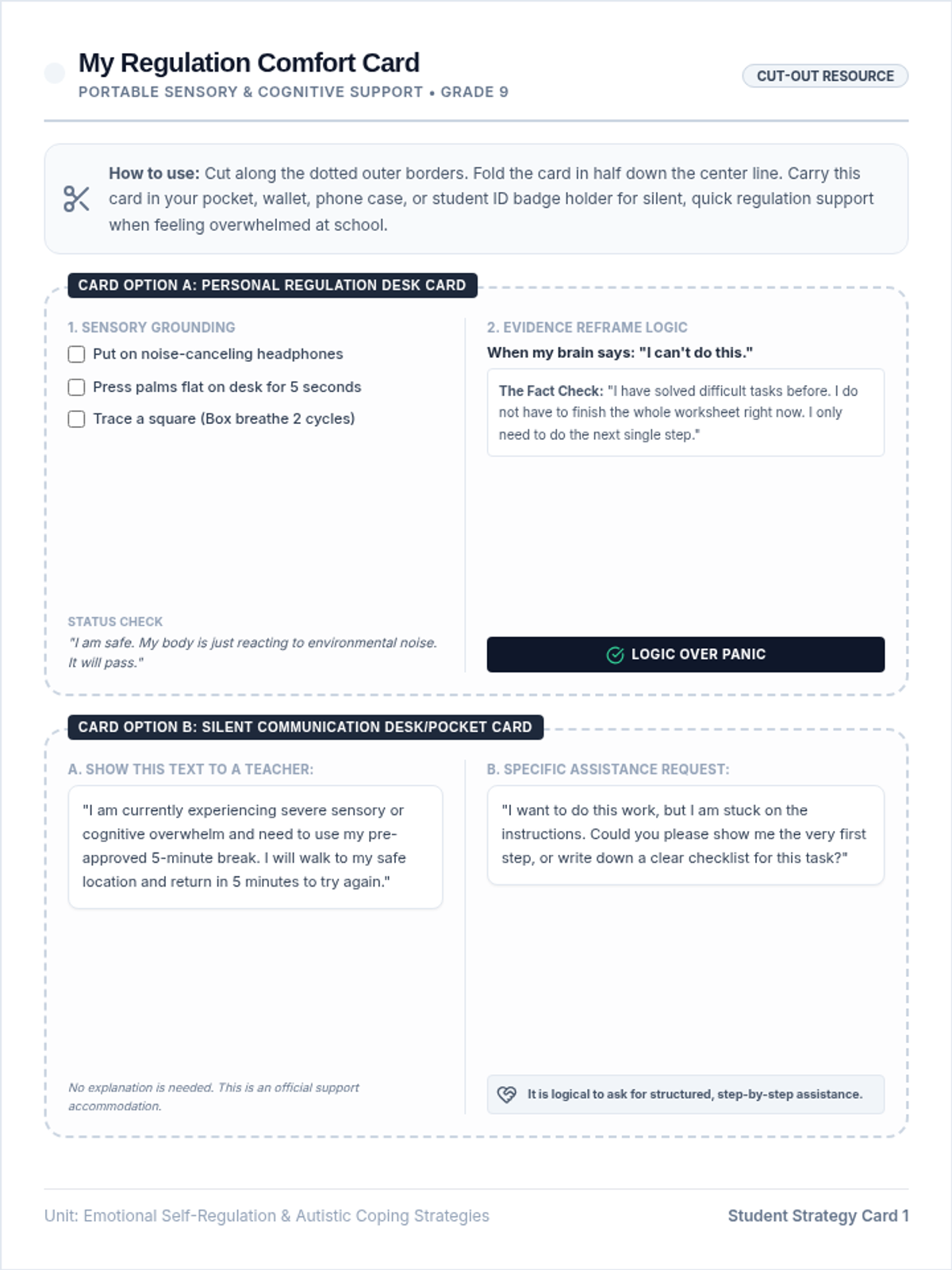
A 1:1 ERMHS (Educationally Related Mental Health Services) counseling session designed for a 9th-grade autistic student. Emphasizes evidence-based cognitive-behavioral reframing, co-regulation, factual evidence testing, and co-creating a discrete pocket-sized regulation comfort card.
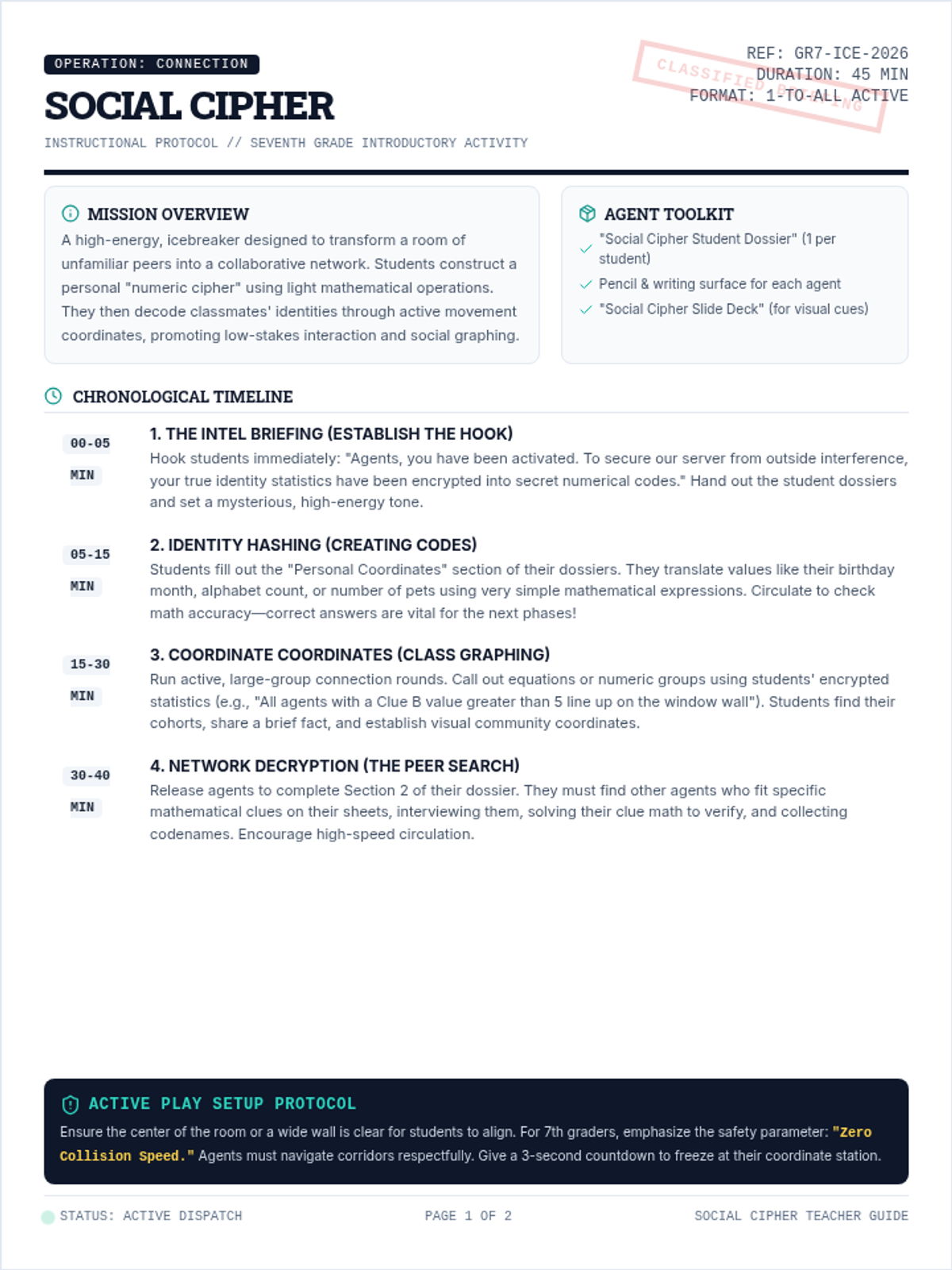
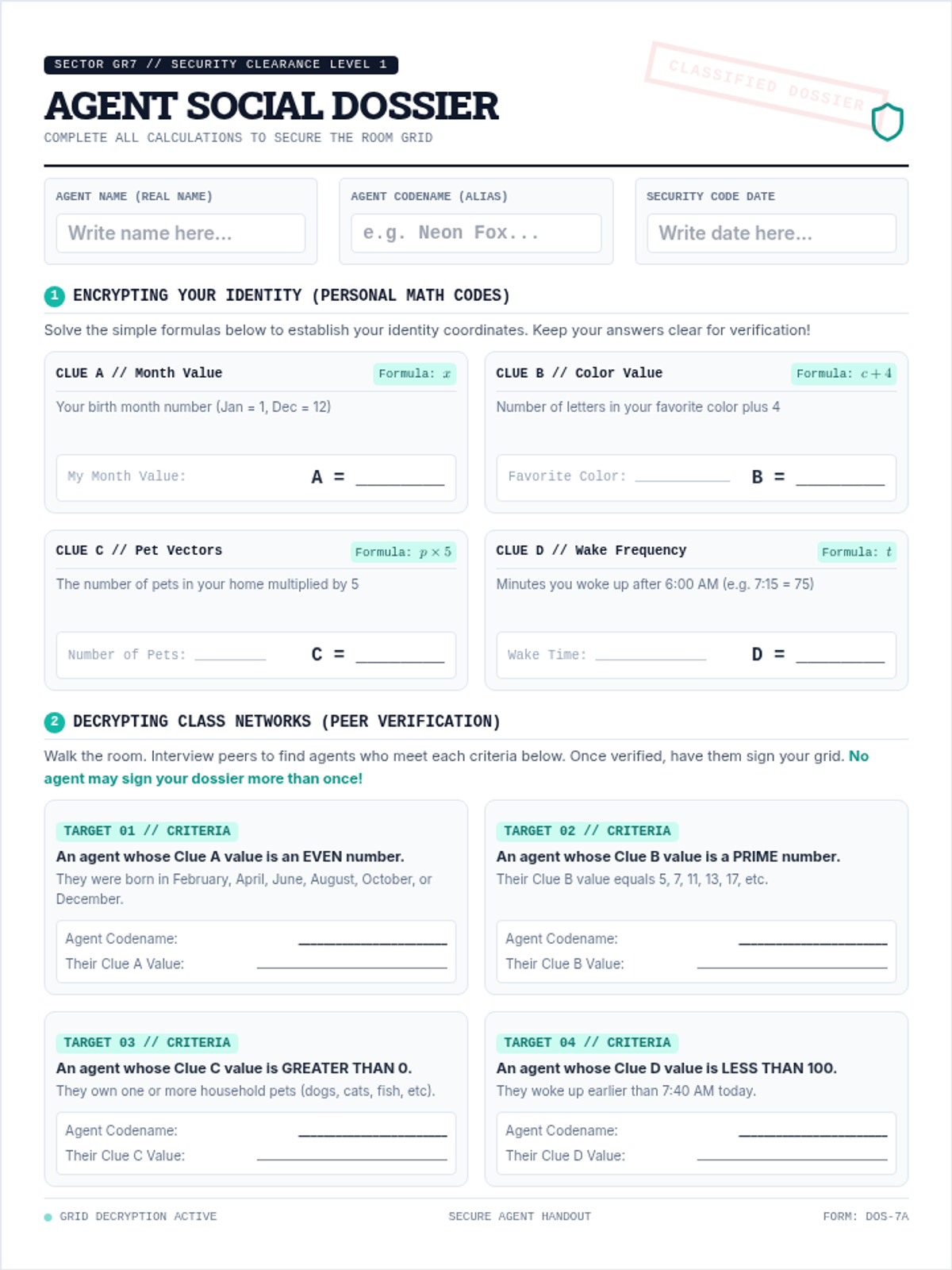
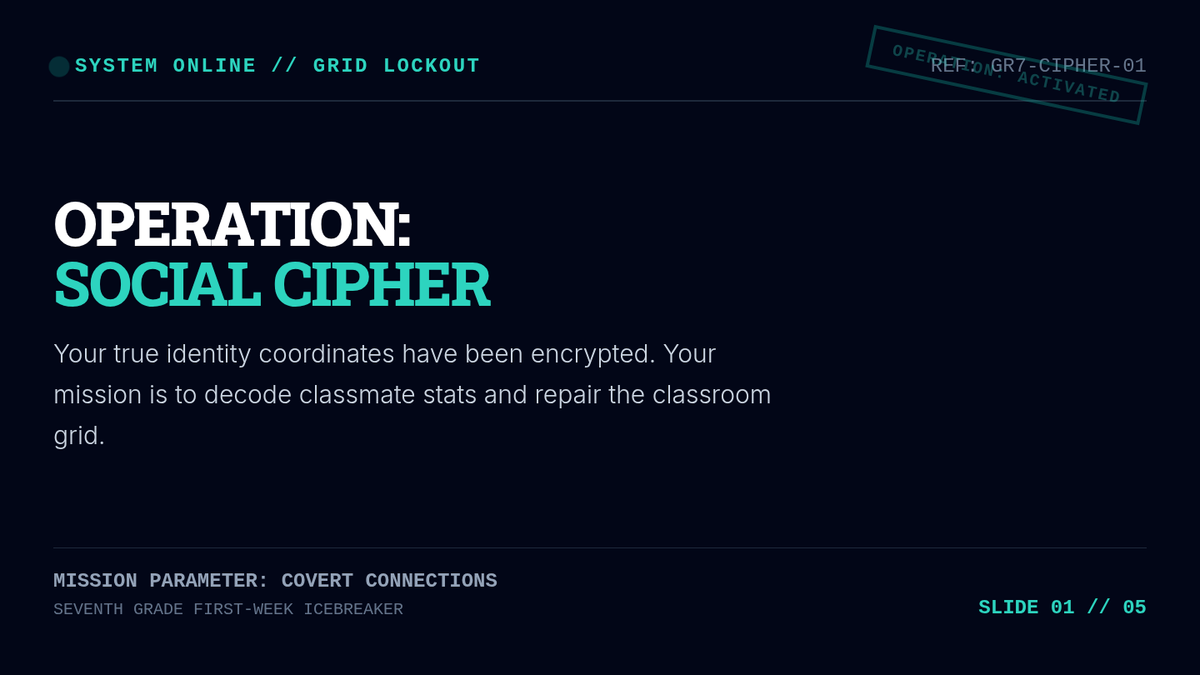
A high-energy, collaborative 7th-grade icebreaker lesson themed around being 'Social Detectives'. Students use codes, 'figure me out' numbers, and interactive class data coordinates to connect with their peers and crack the social cipher.