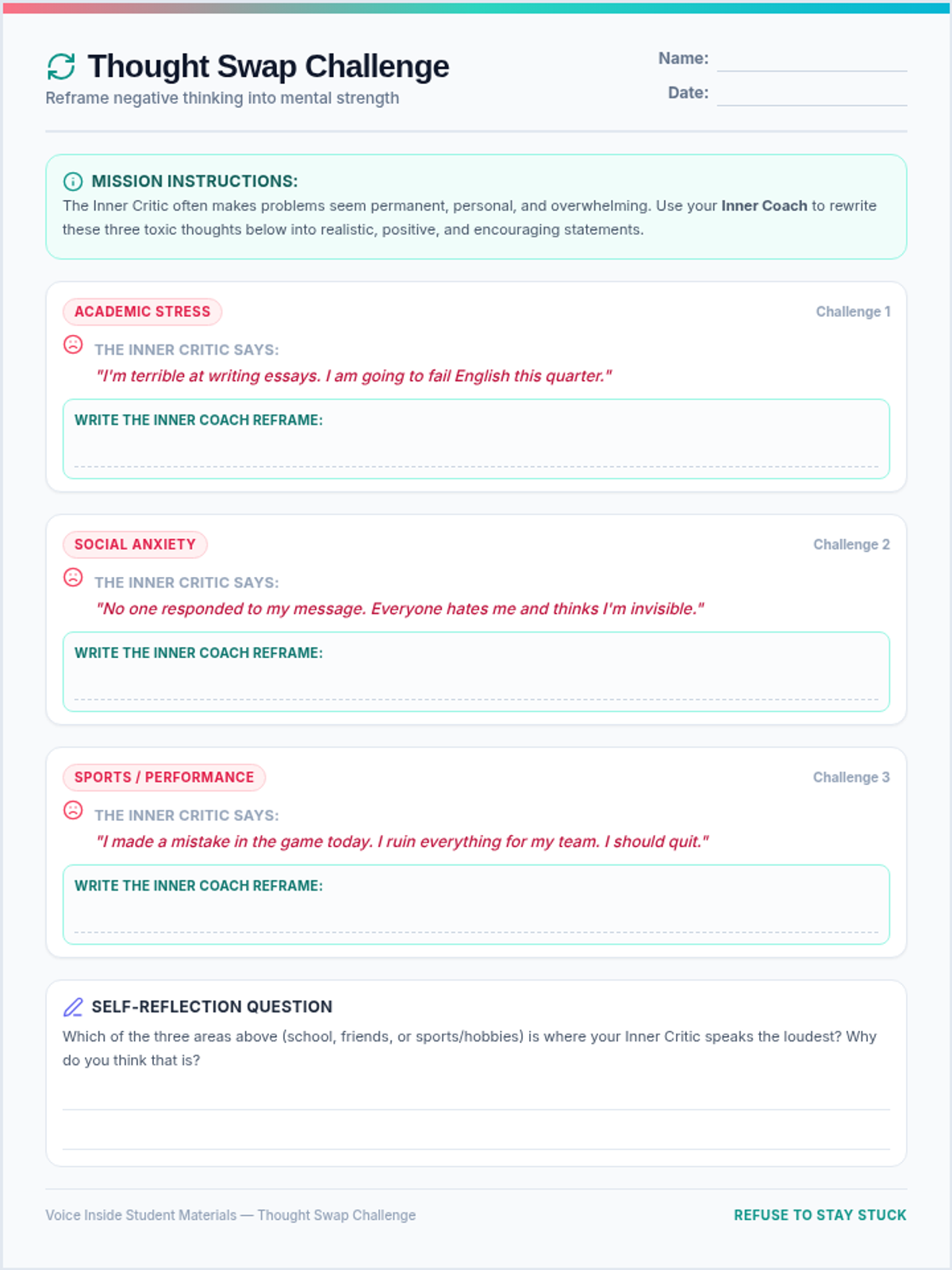
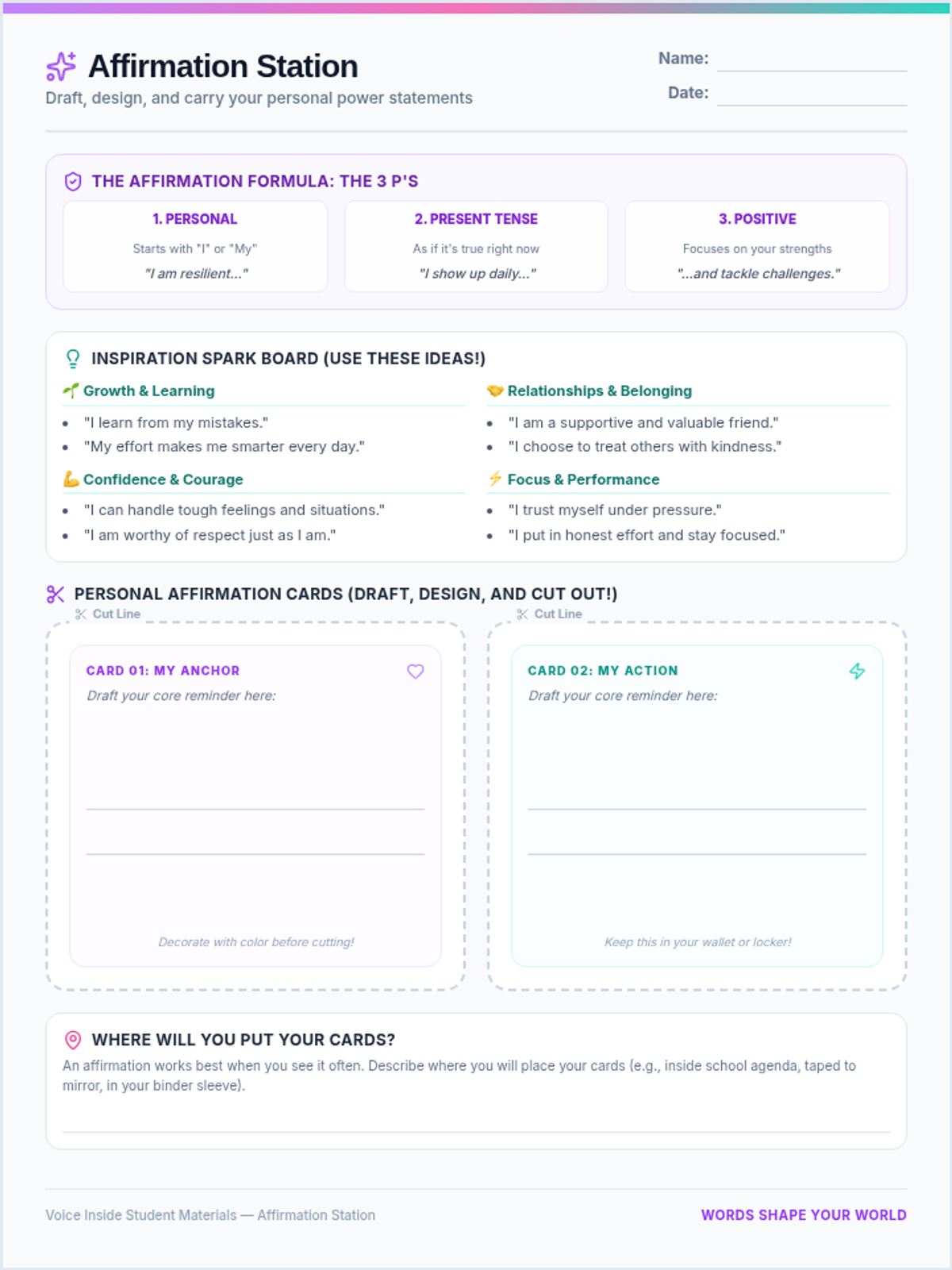
A 45-minute social-emotional learning lesson for 6th graders to explore their self-talk, contrast the 'Inner Critic' and 'Inner Coach', and design actionable personal affirmations.
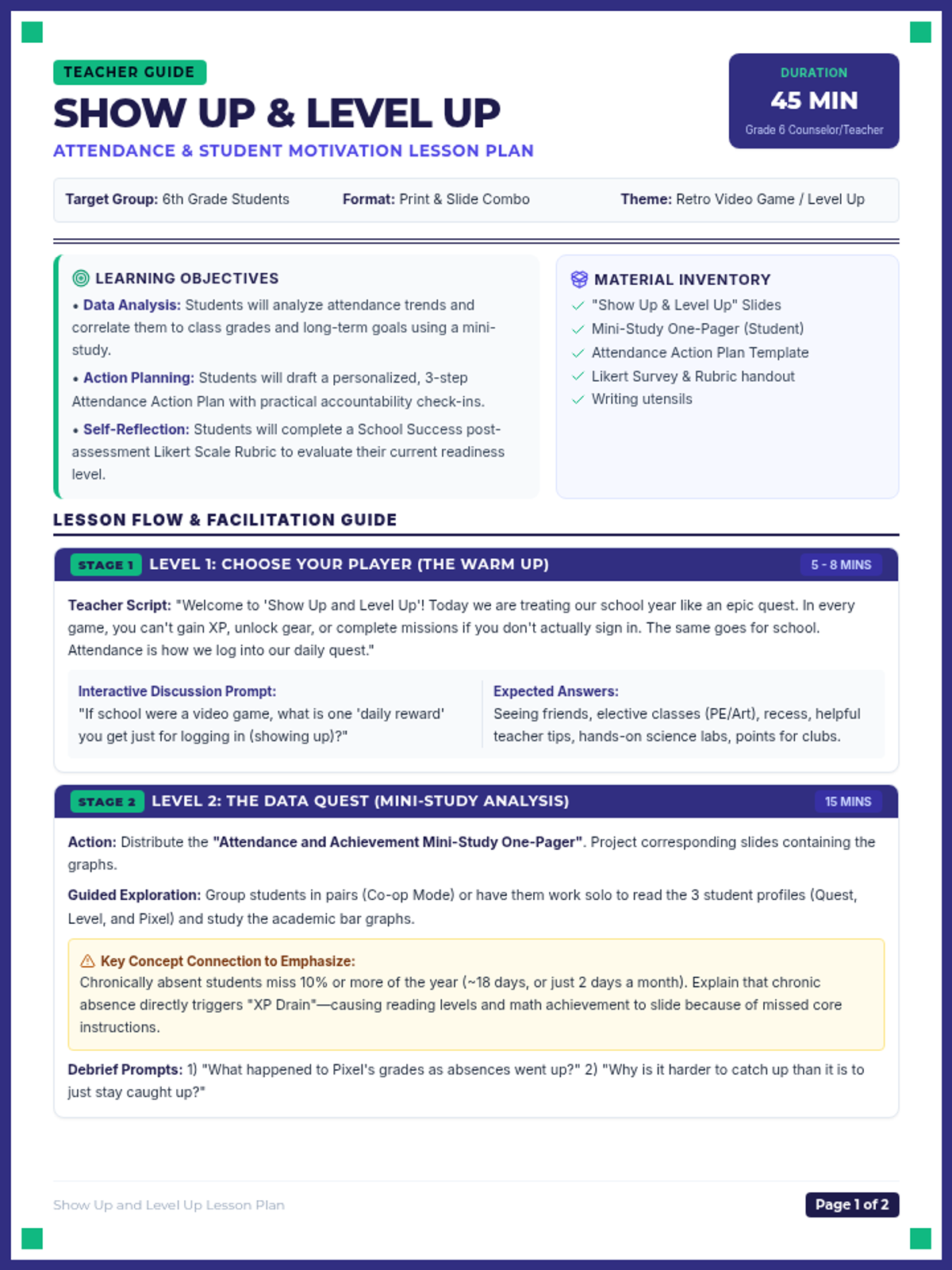
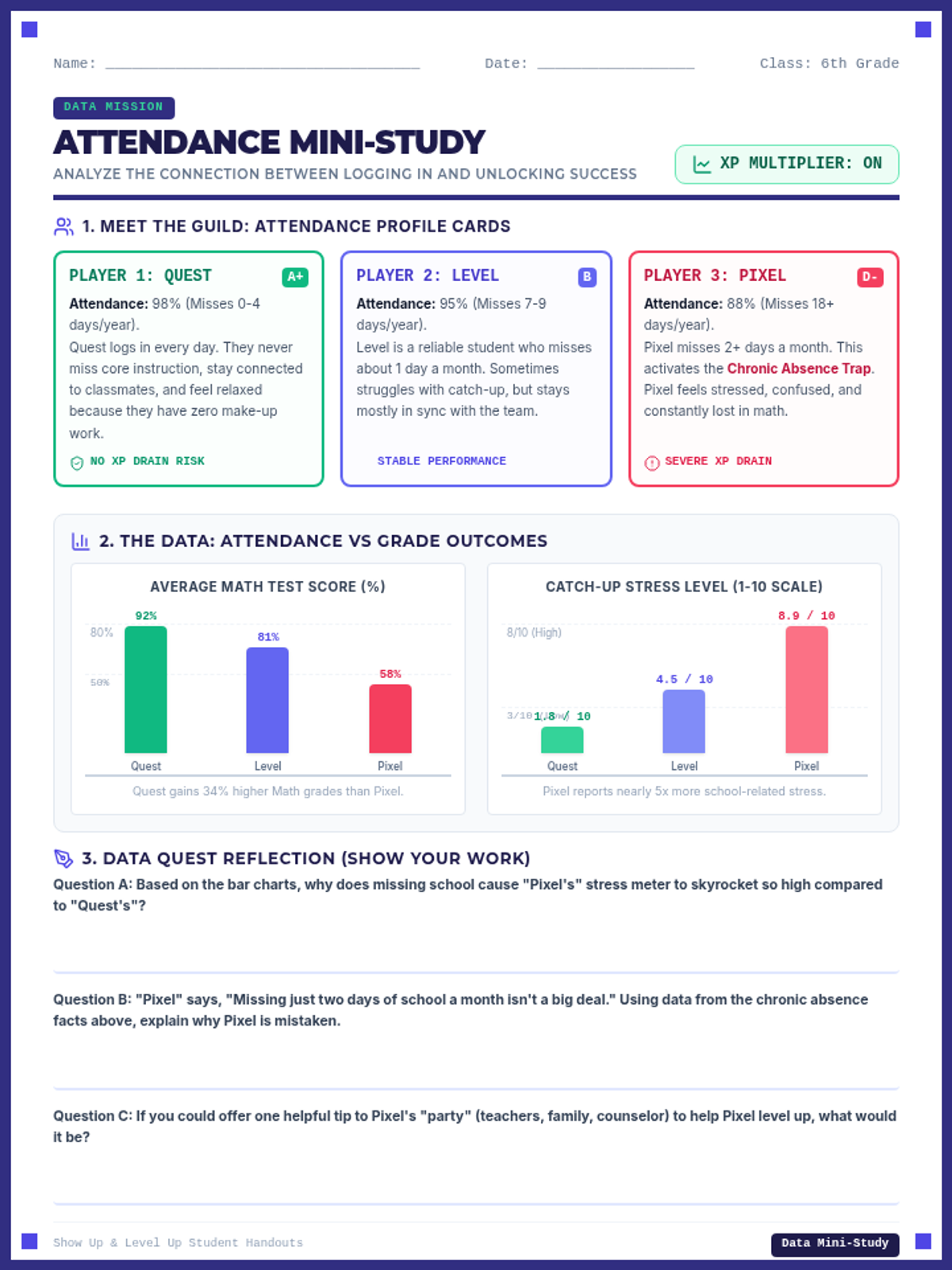
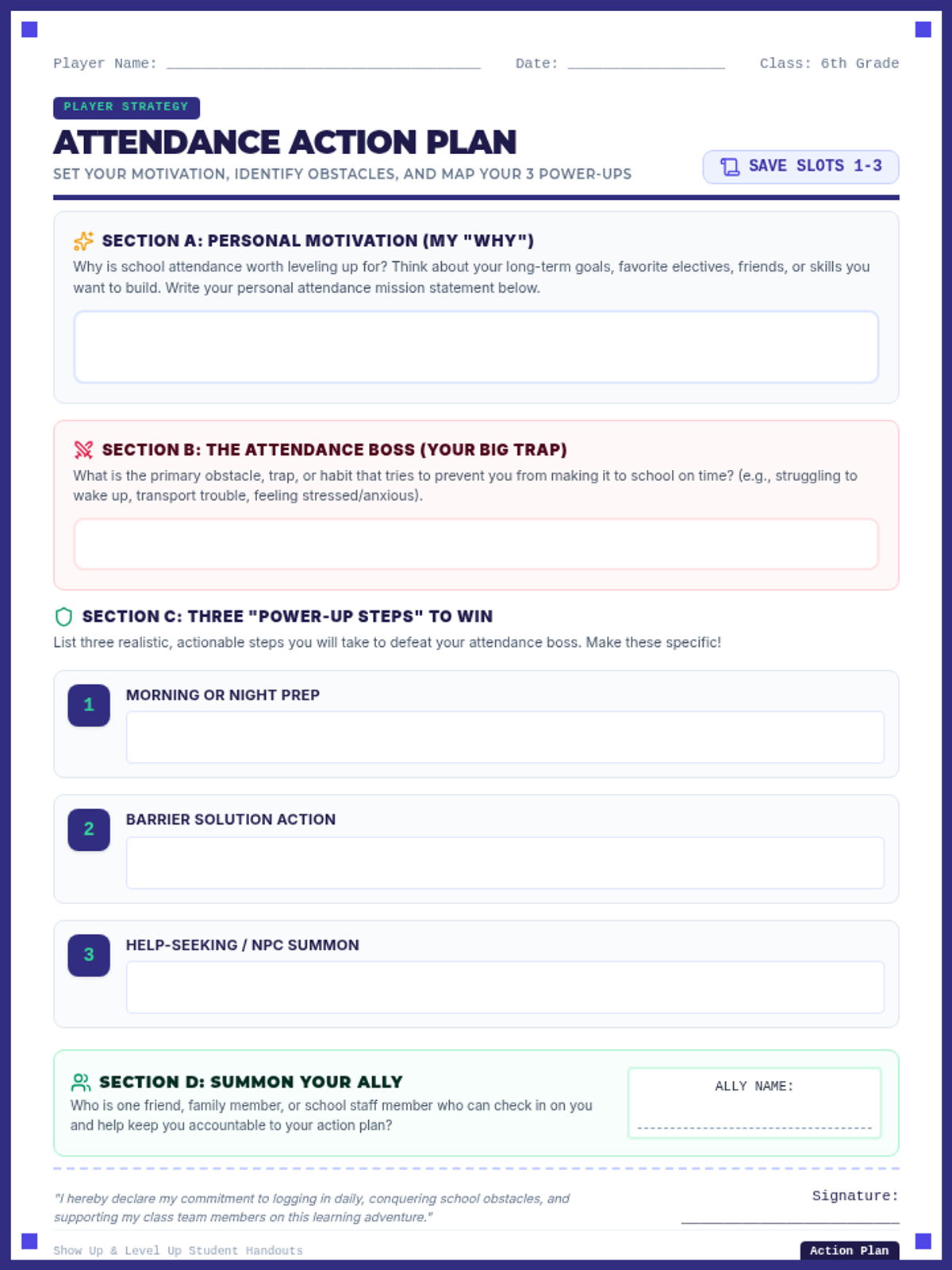
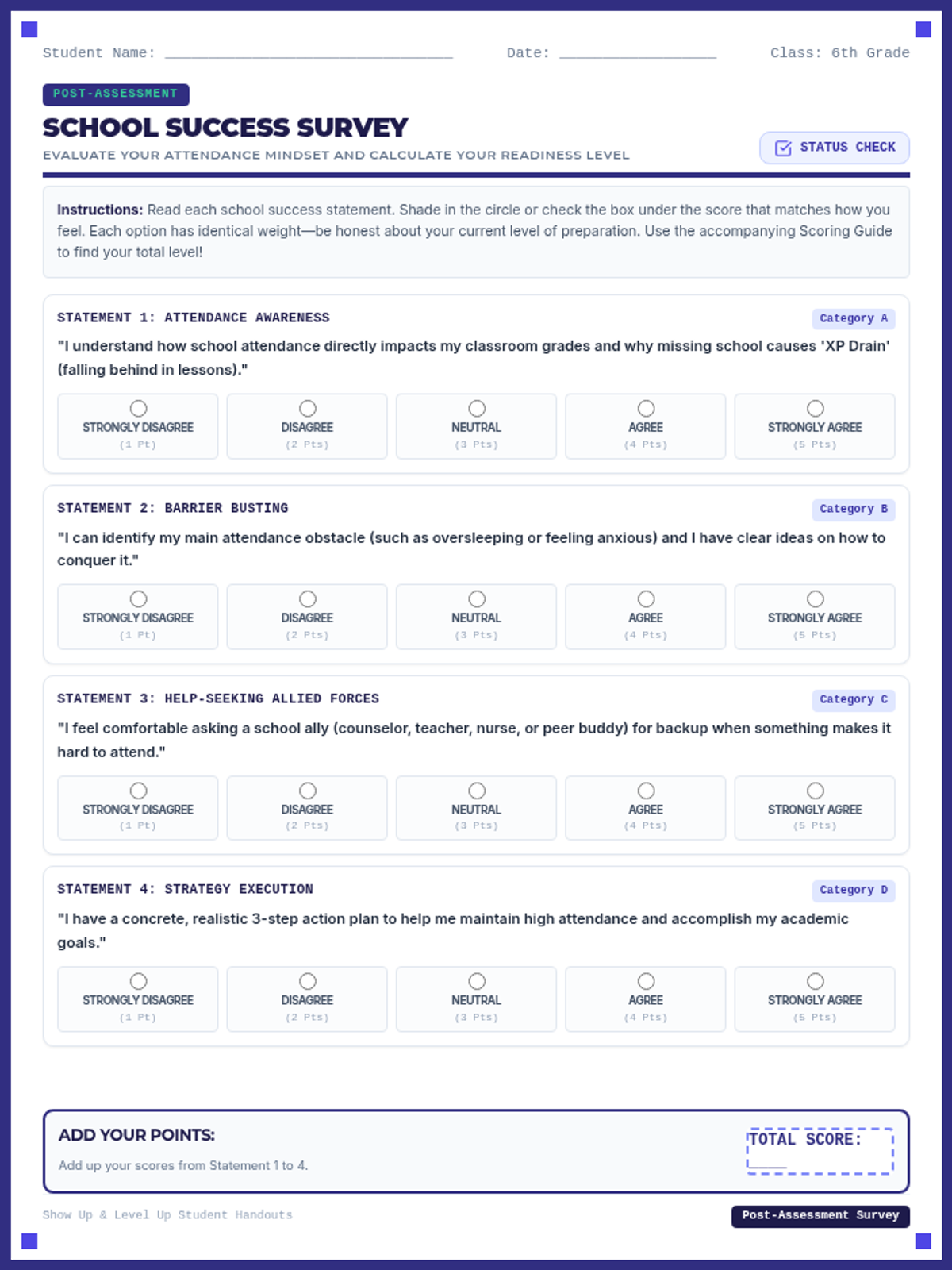
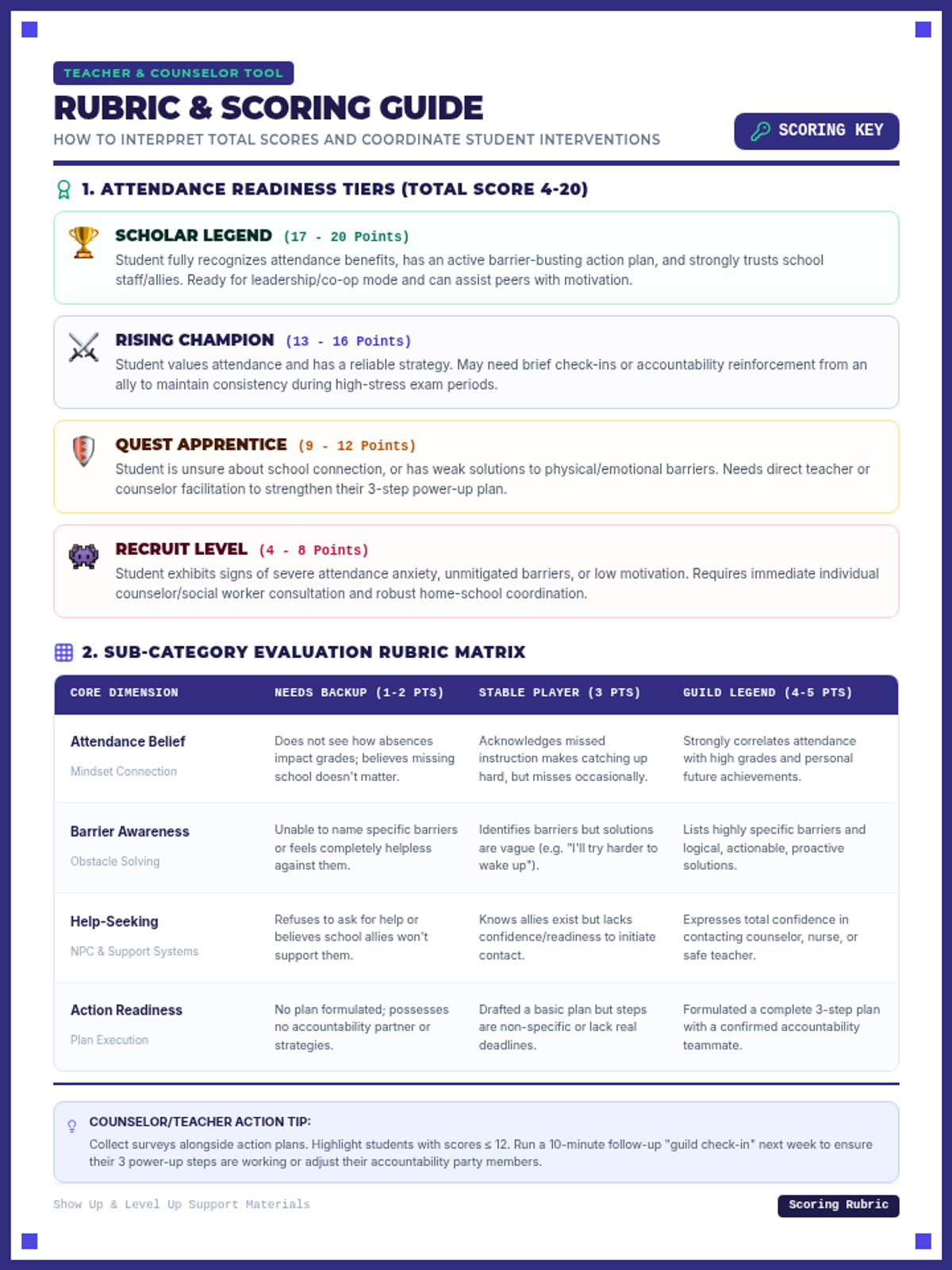
A 45-minute lesson for 6th grade designed to explore how school attendance directly impacts academic success, student confidence, and future goals. Students analyze data, brainstorm solutions to common barriers, and draft an action plan.
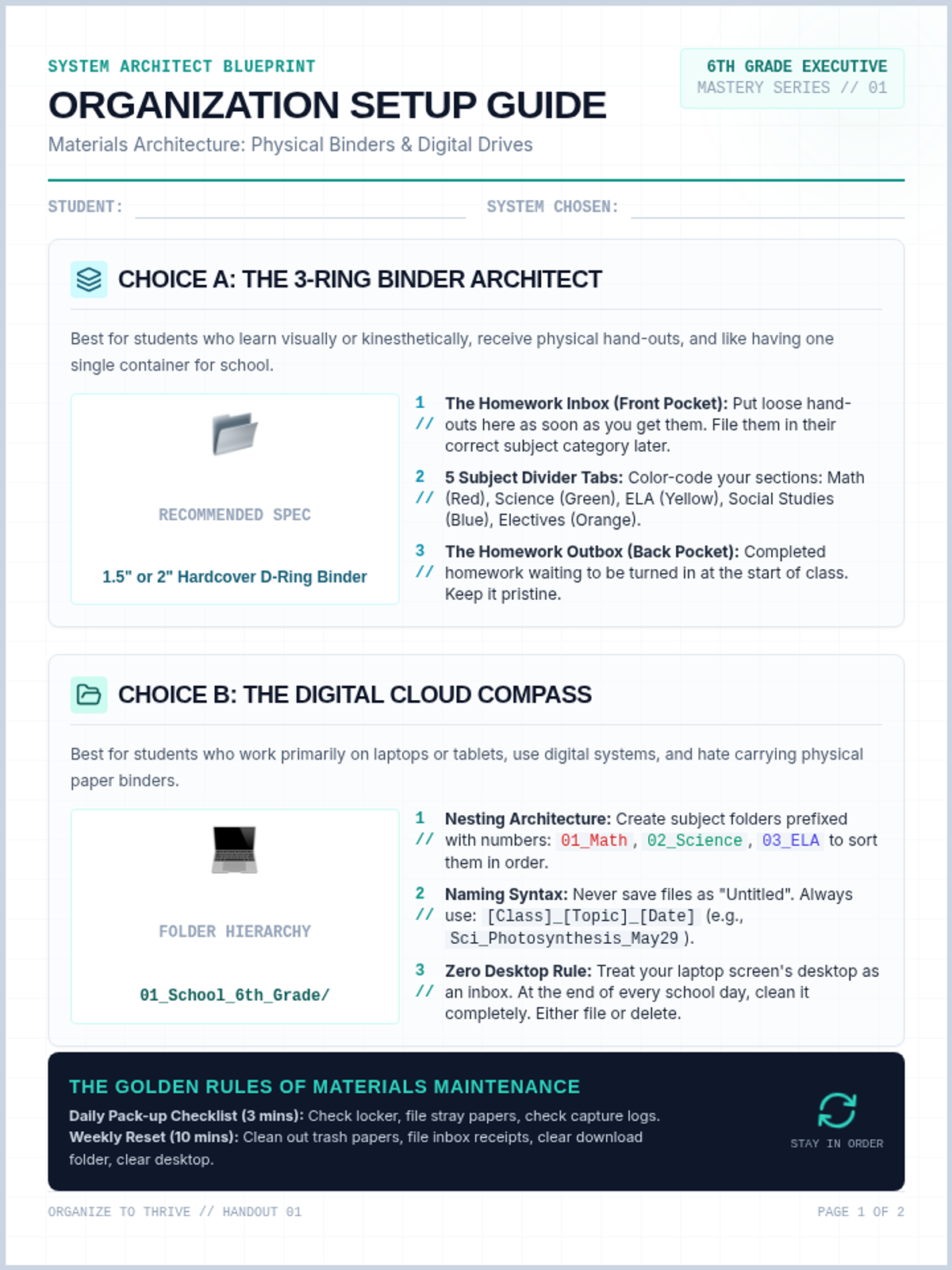
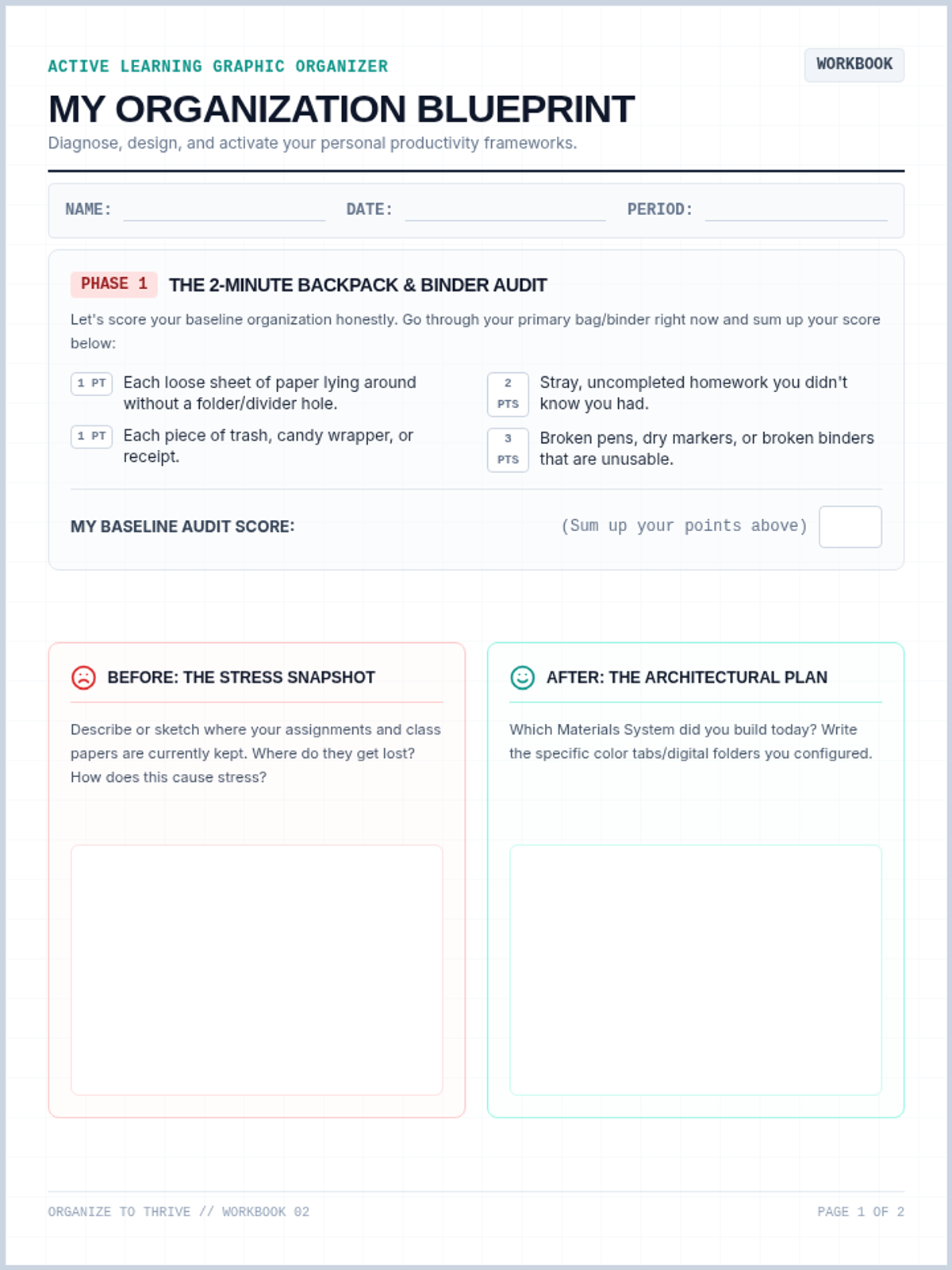
A practical, hands-on lesson designed to help 6th-grade students establish effective organizational and assignment capture systems. Students audit their current materials, select and build a binder or digital folder system, explore assignment-tracking tools, and practice logging tasks to reduce executive dysfunction and stress.
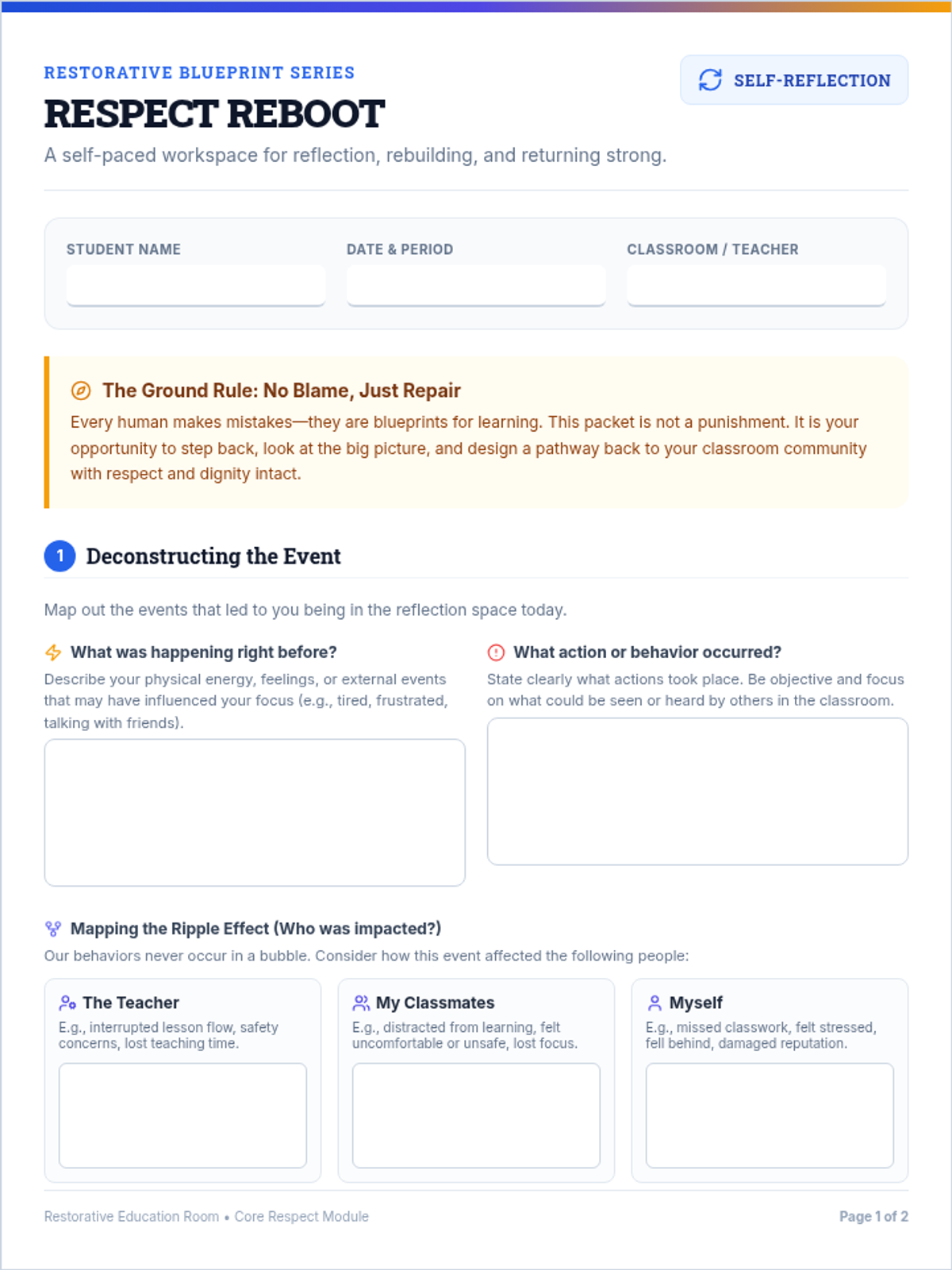
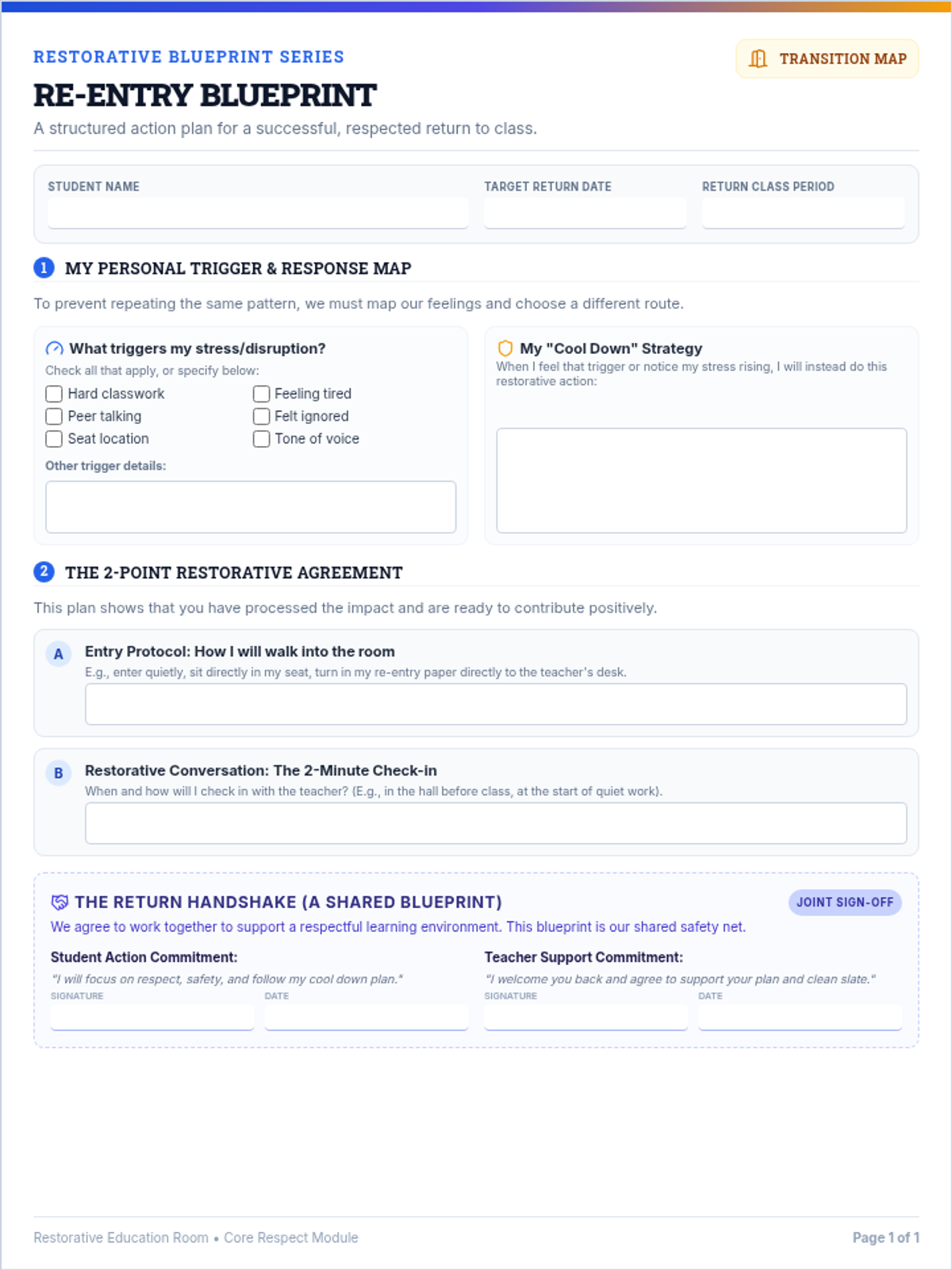
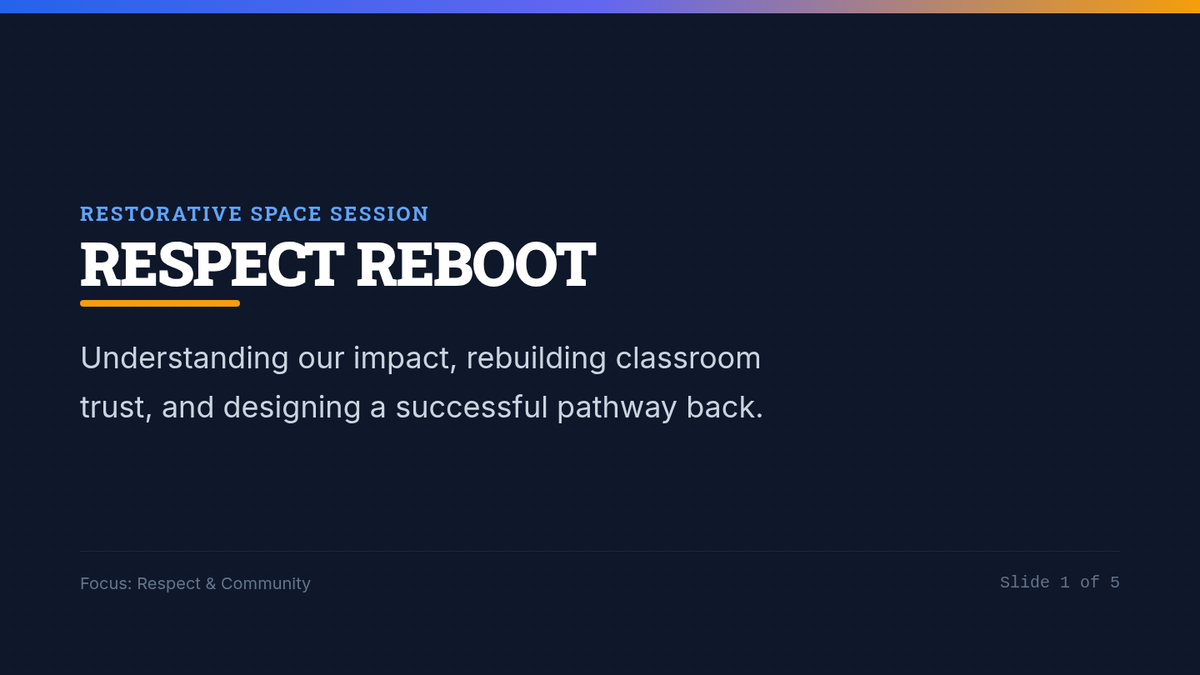
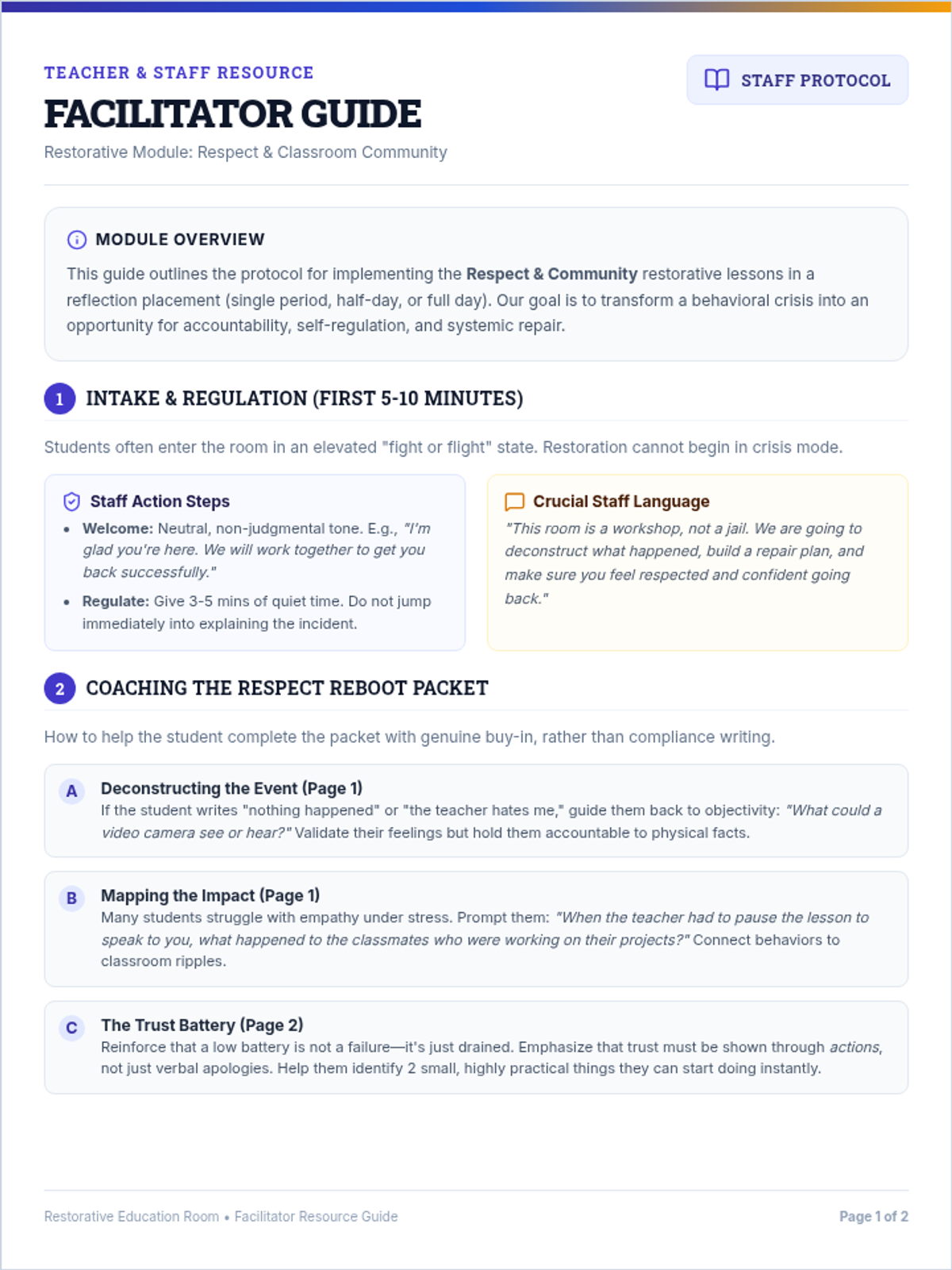
A restorative module focusing on understanding behavior impact, rebuilding classroom trust, and respecting authority. Includes a self-paced reflection packet, transition blueprint, guiding slides, and a facilitator guide.
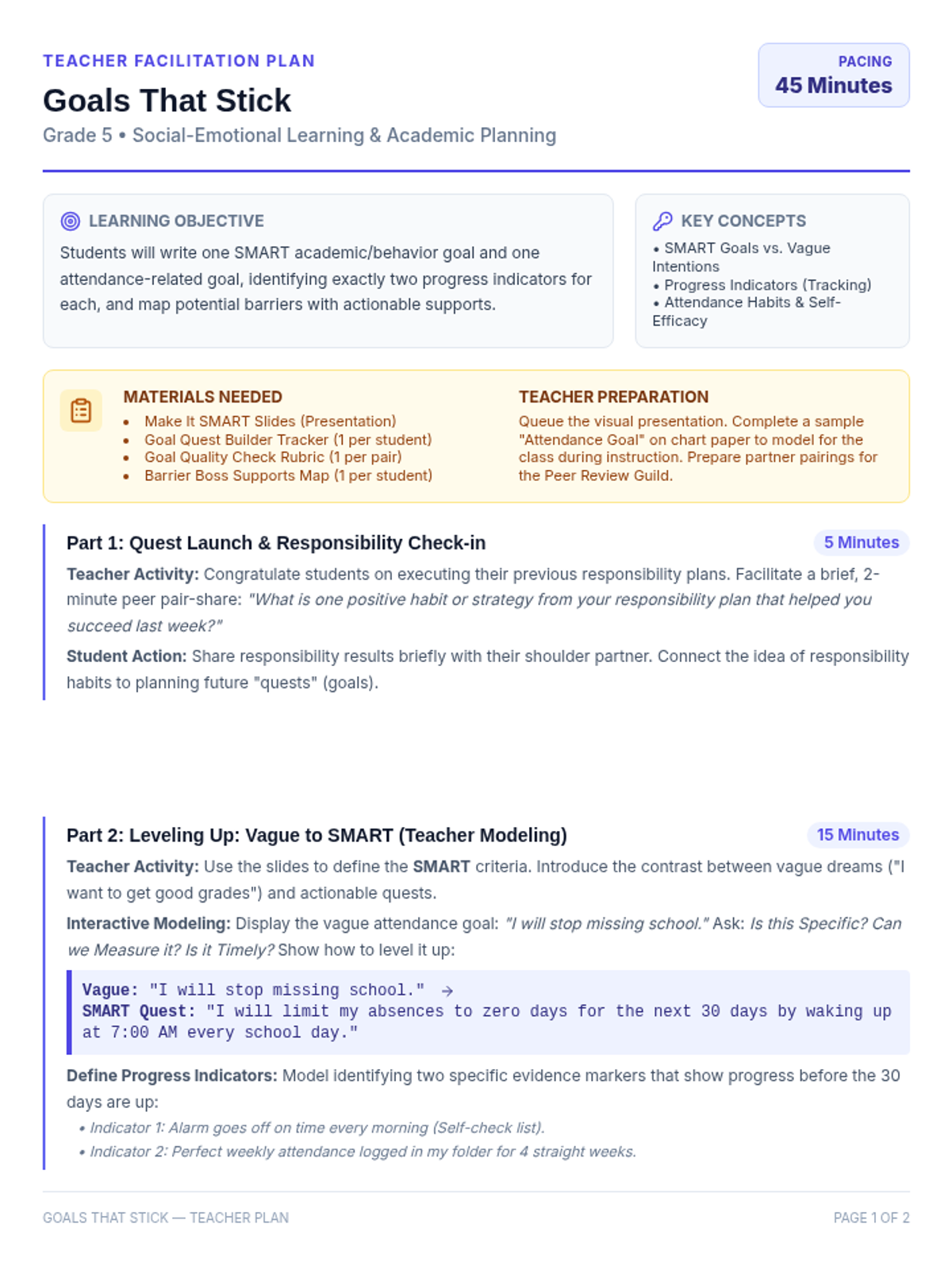
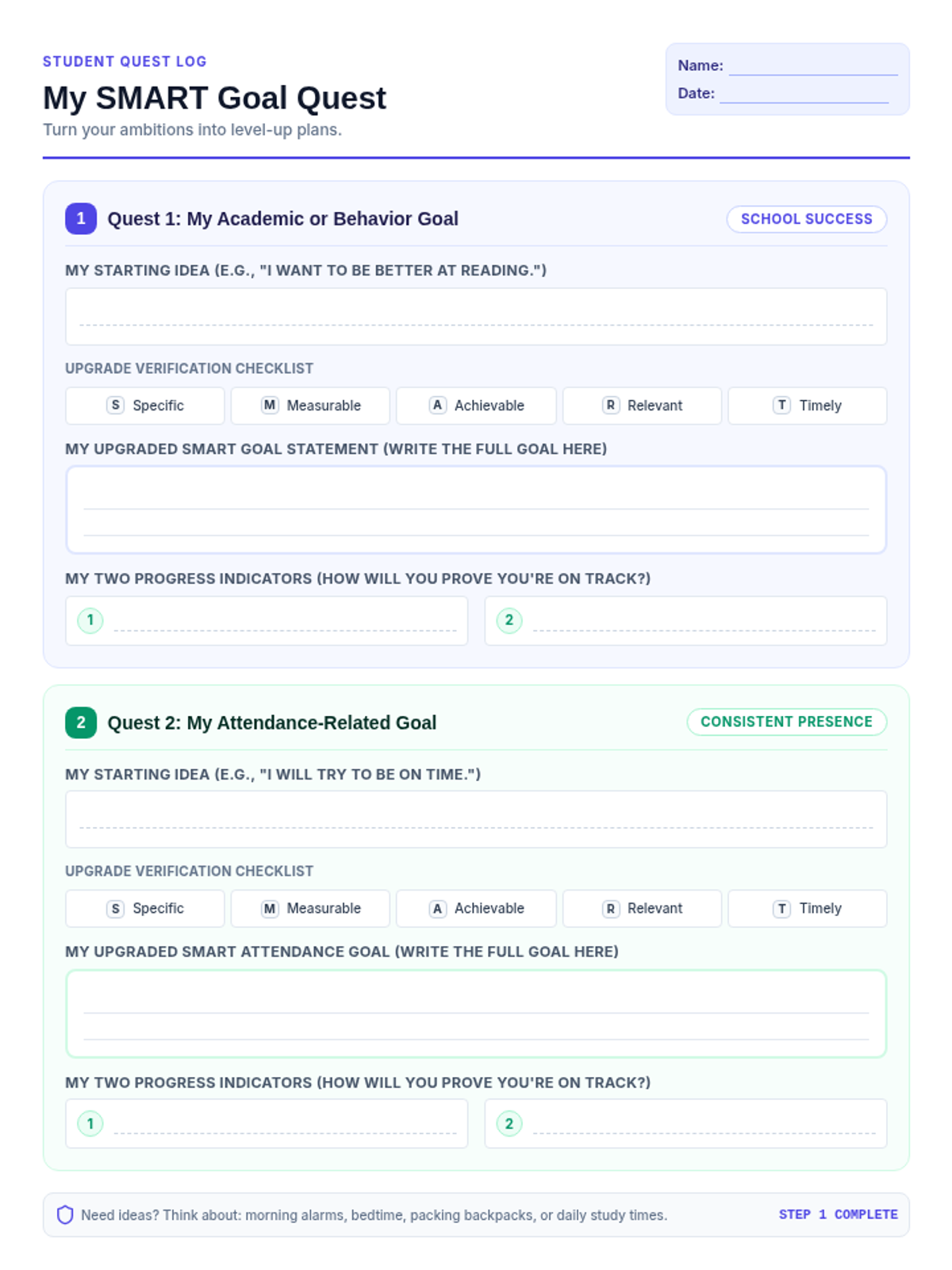
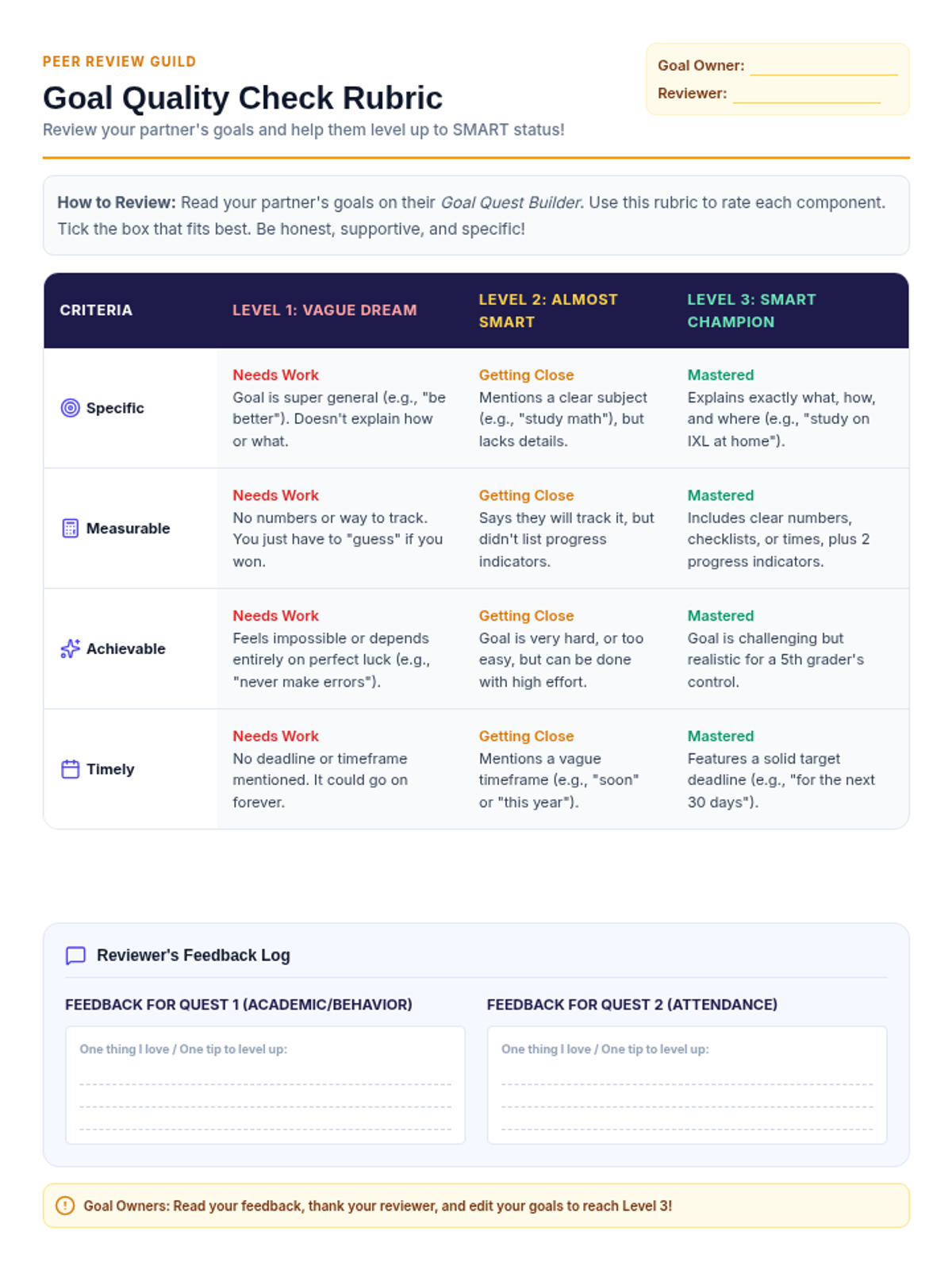
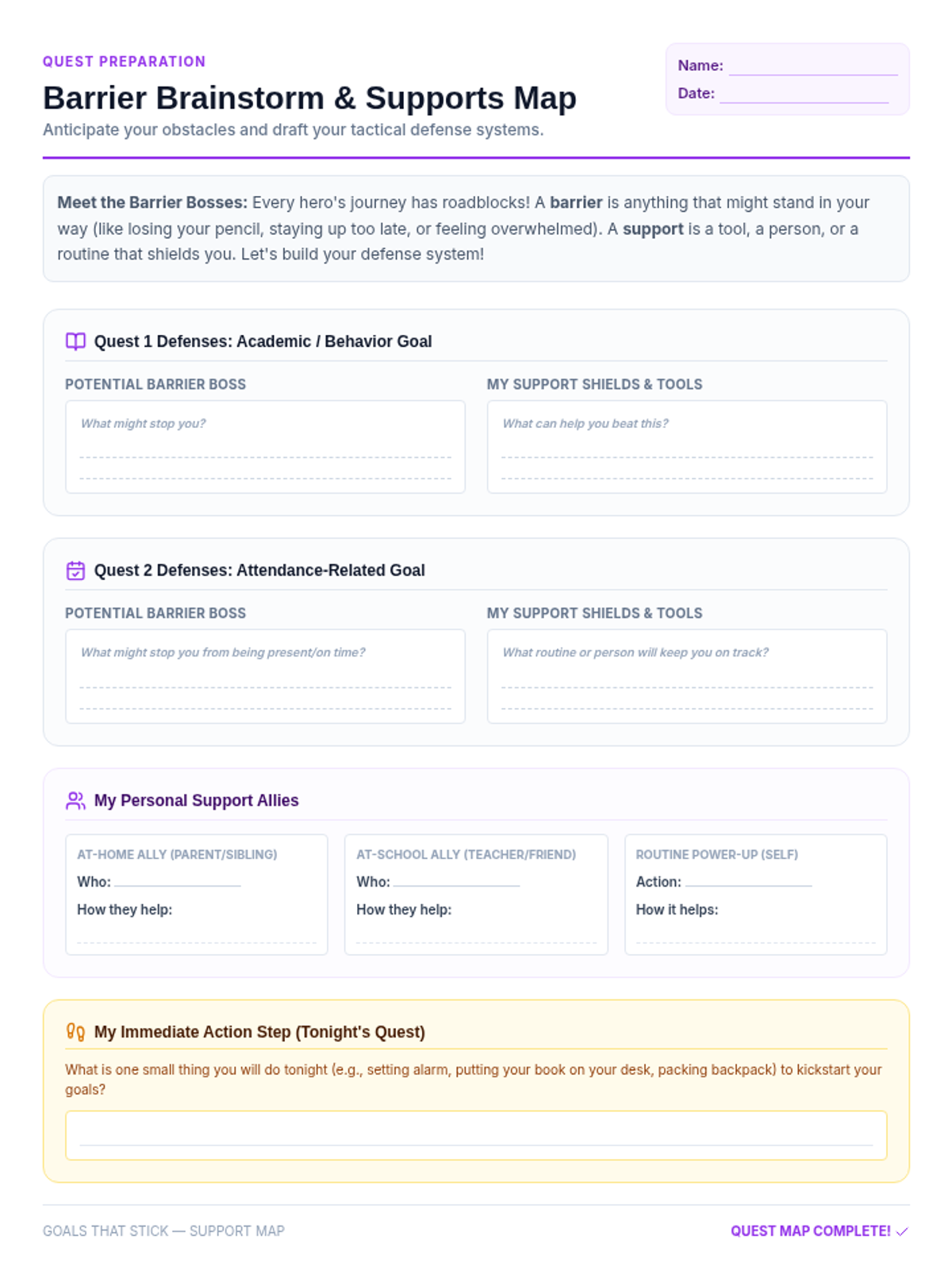
A 45-minute lesson designed for 5th-grade students to master the art of writing SMART academic/behavior and attendance goals. Students learn to define progress indicators, anticipate barriers, and use peer feedback to design achievable action plans.
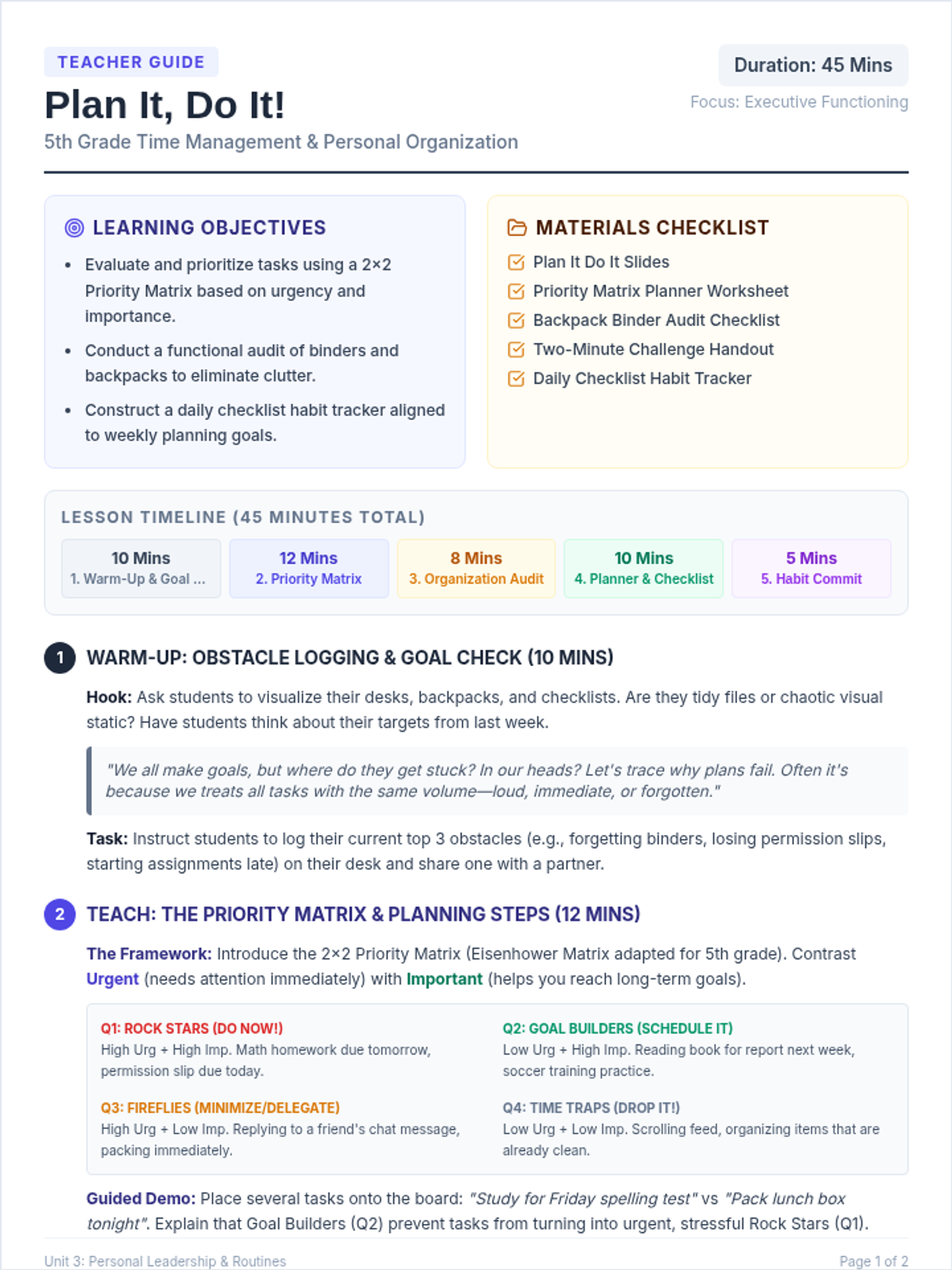
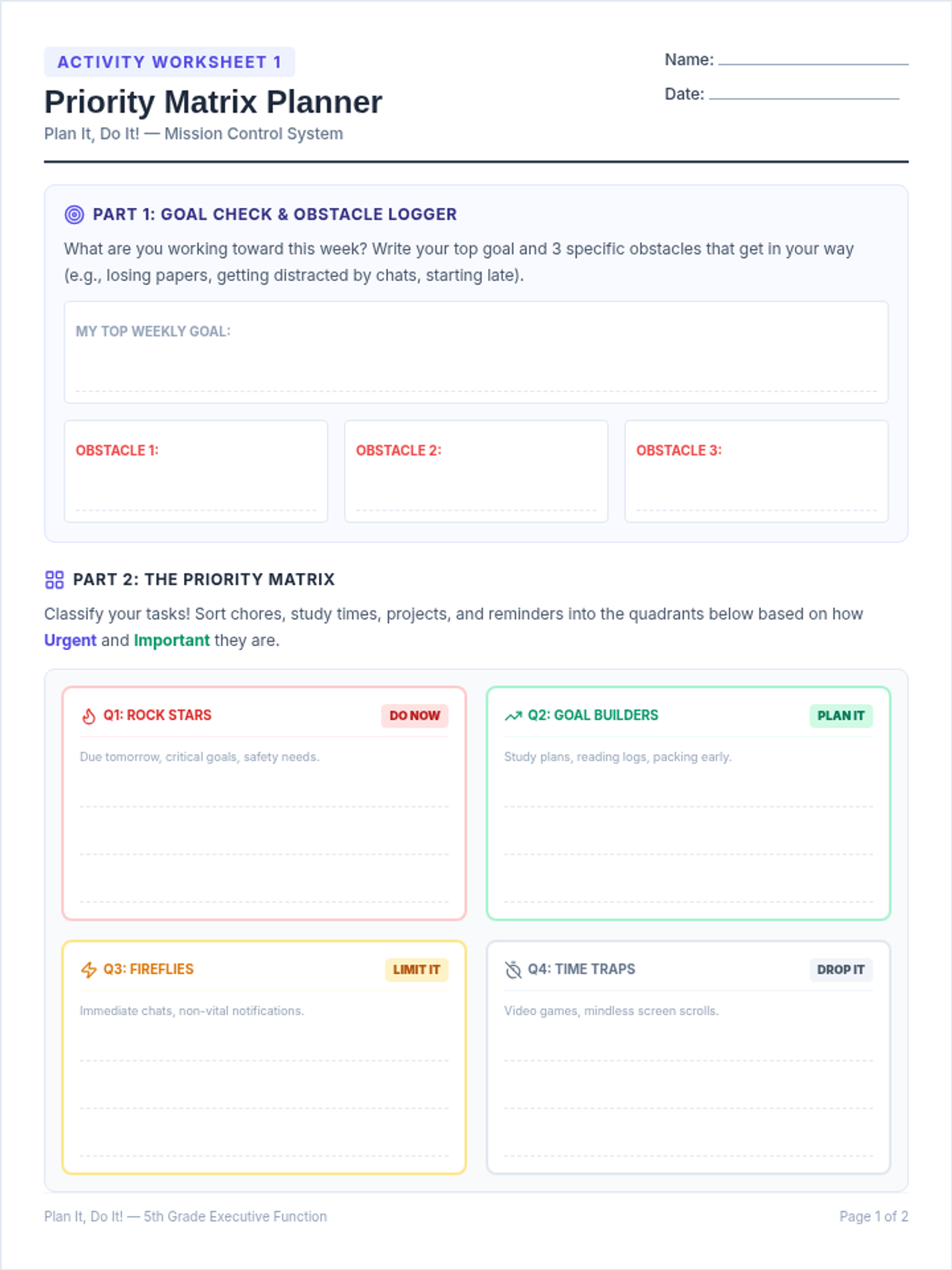
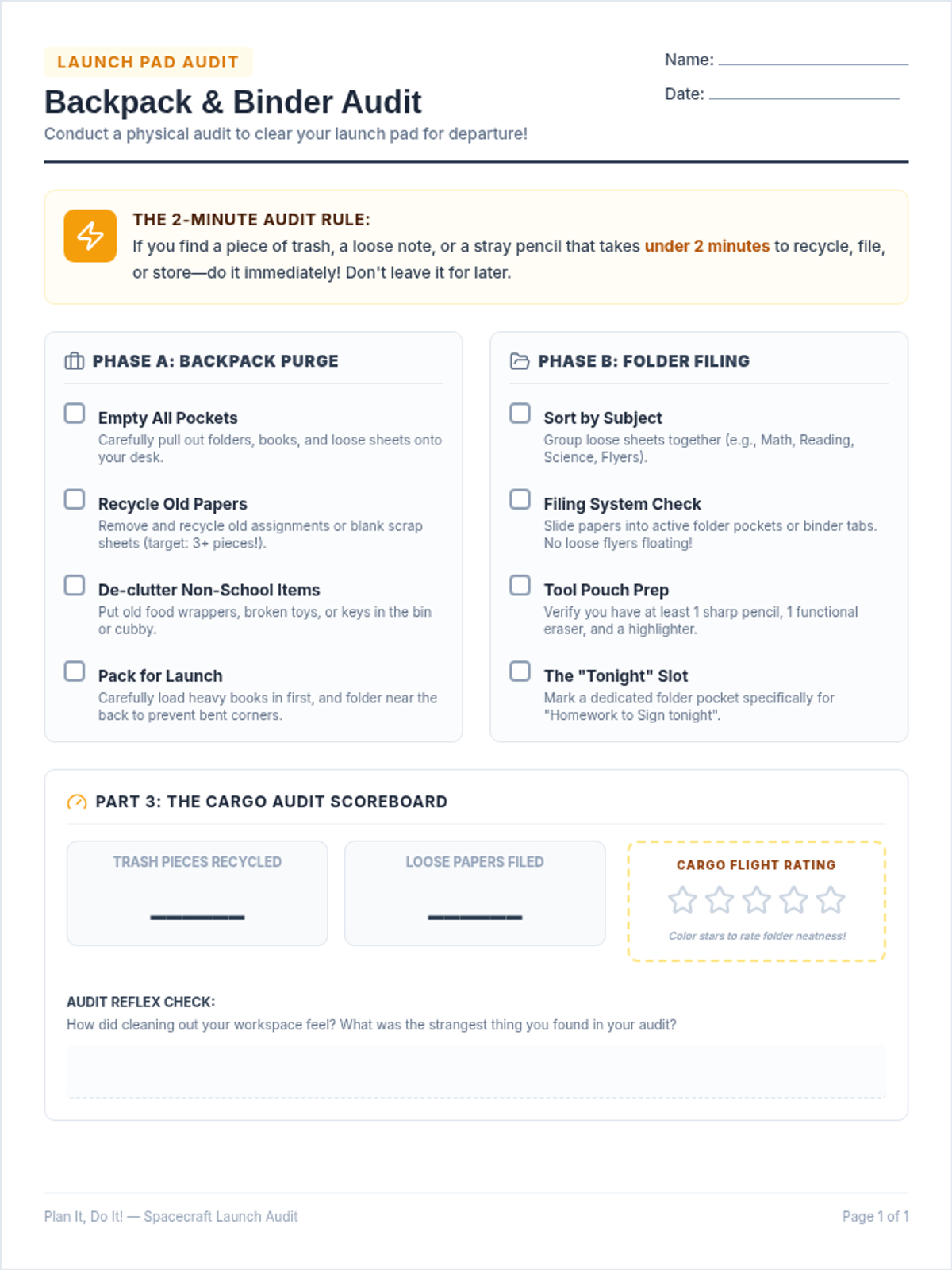
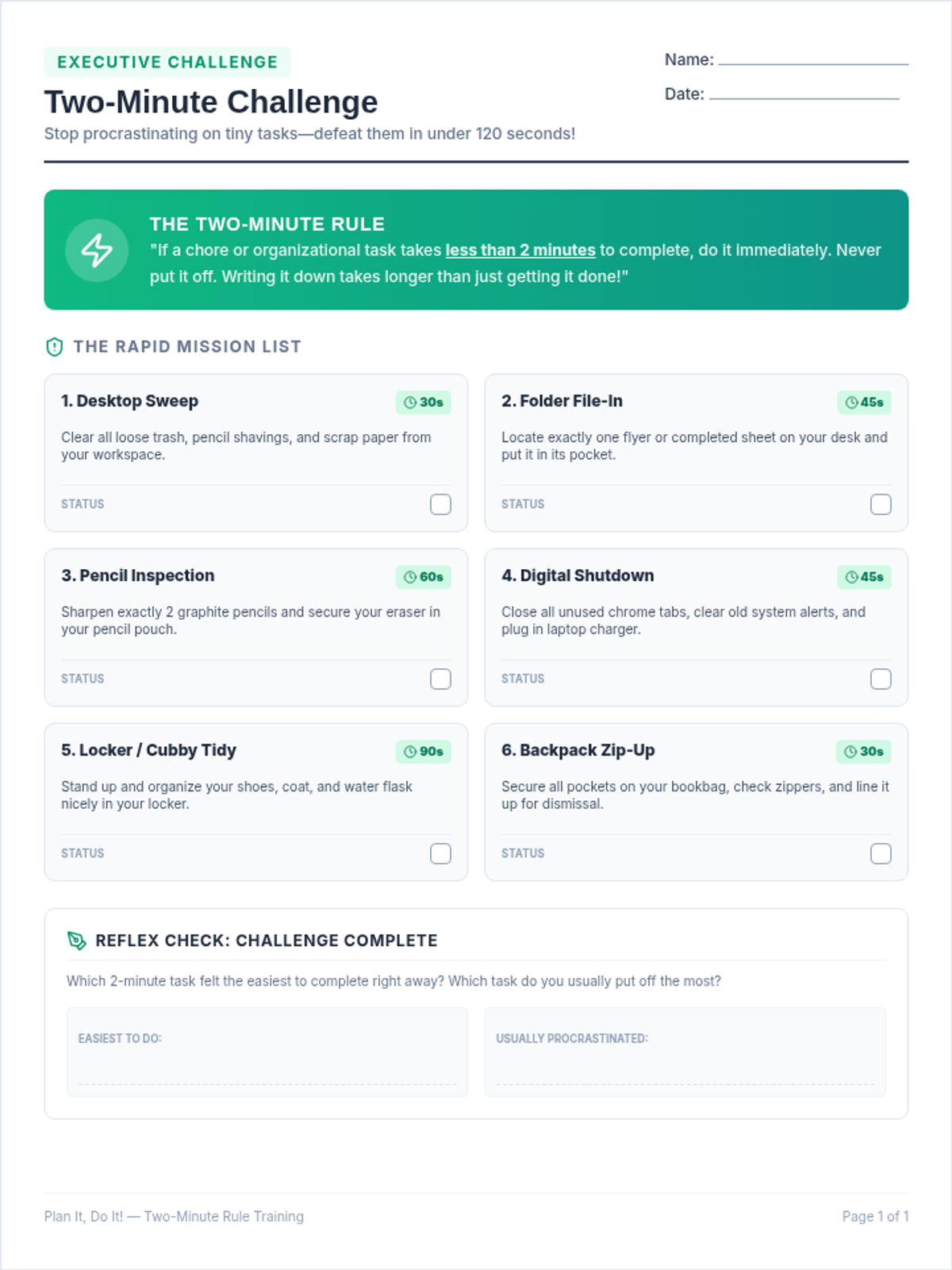
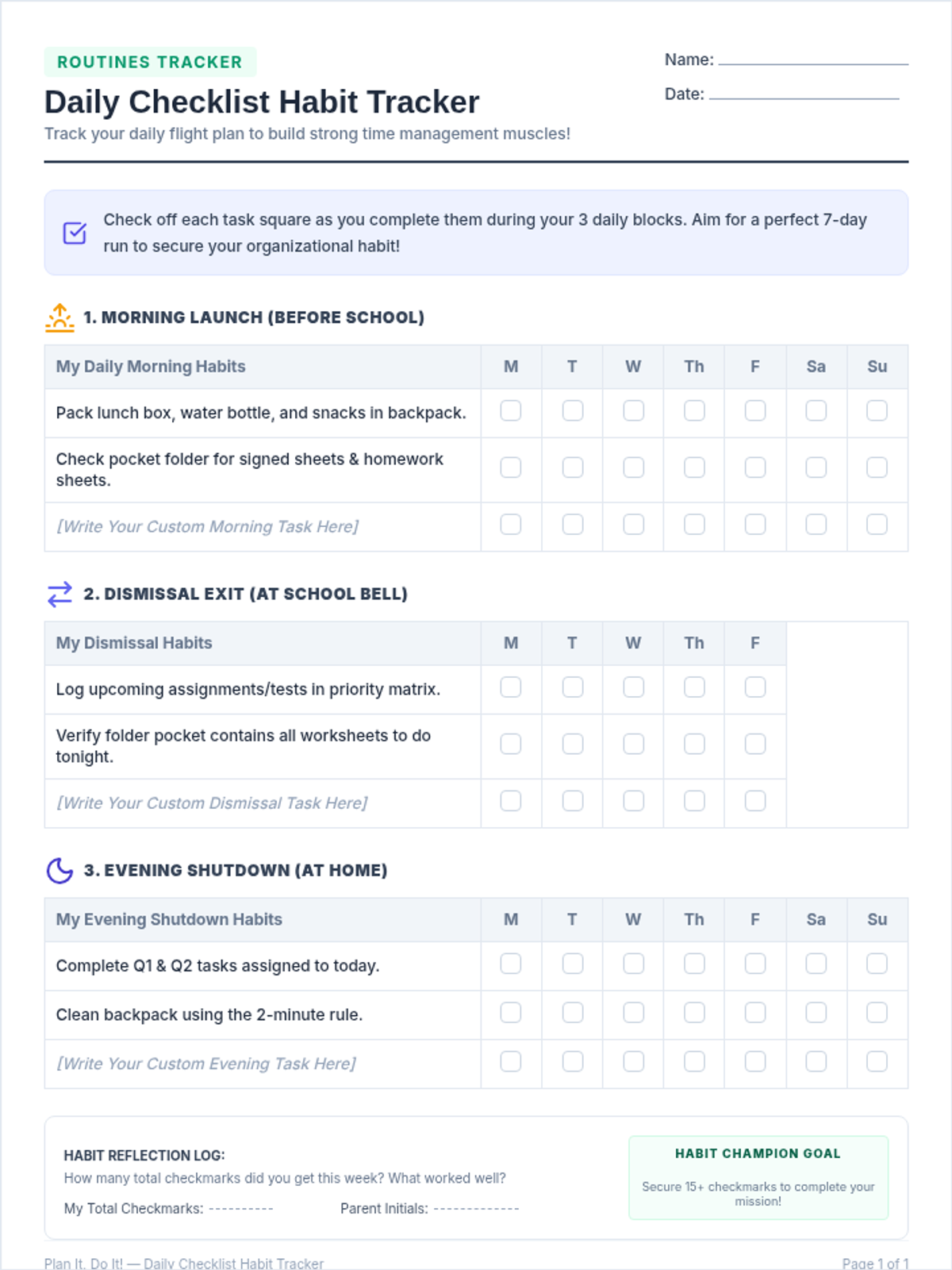
A hands-on lesson designed to teach 5th-grade students practical time management and organizational skills, including task prioritization with a matrix, binder/backpack auditing, and building sustainable daily checklists.
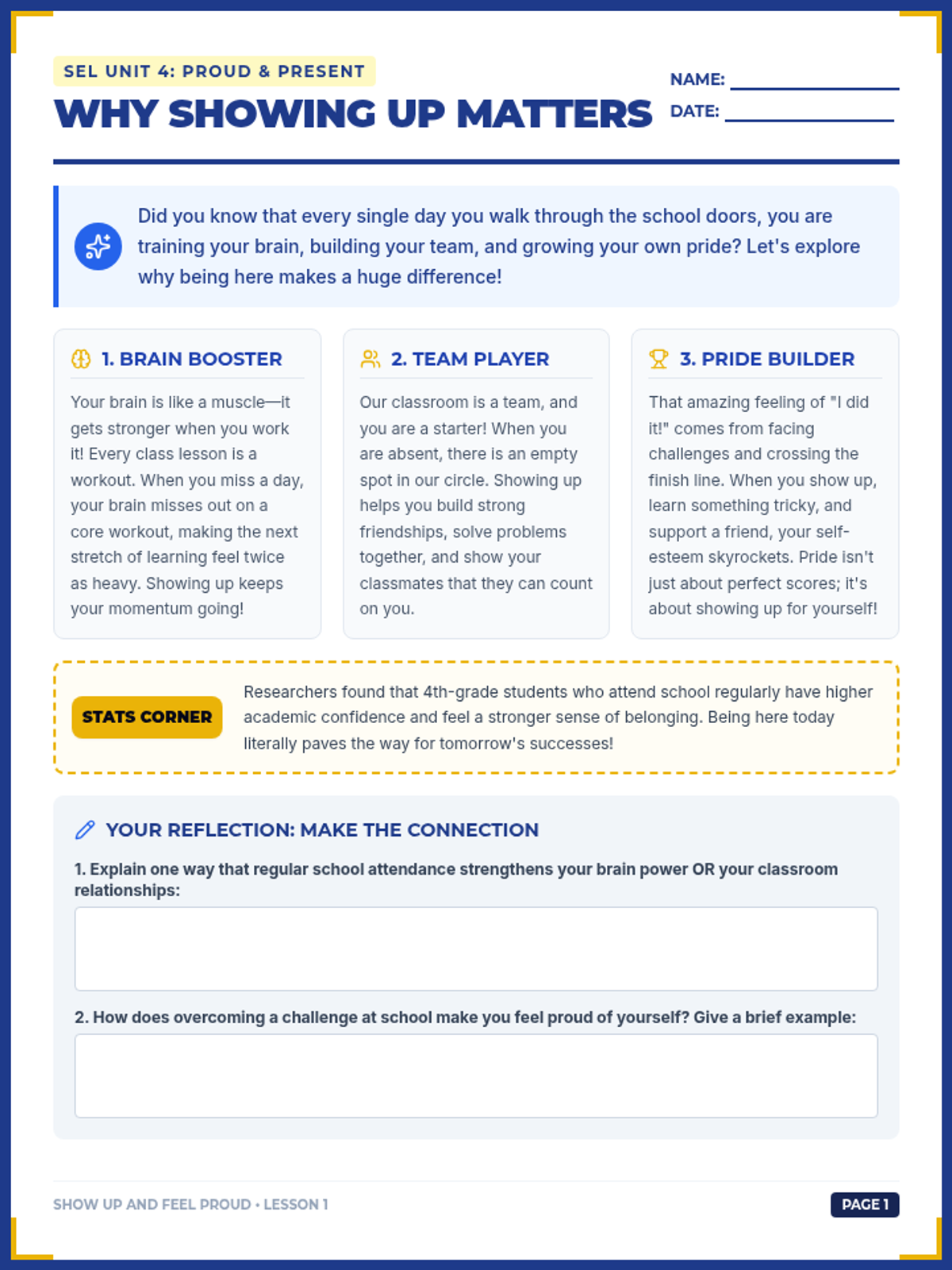
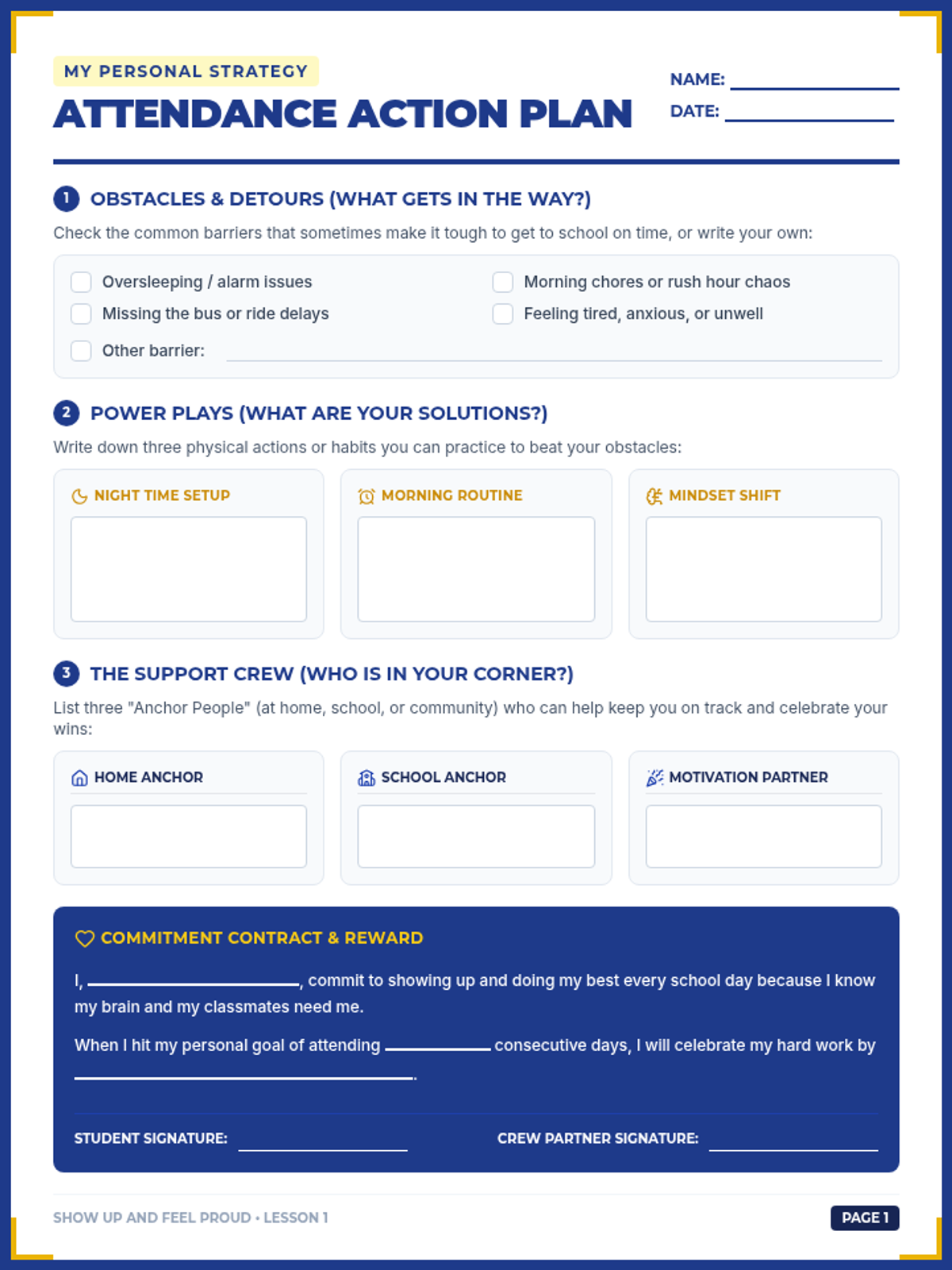
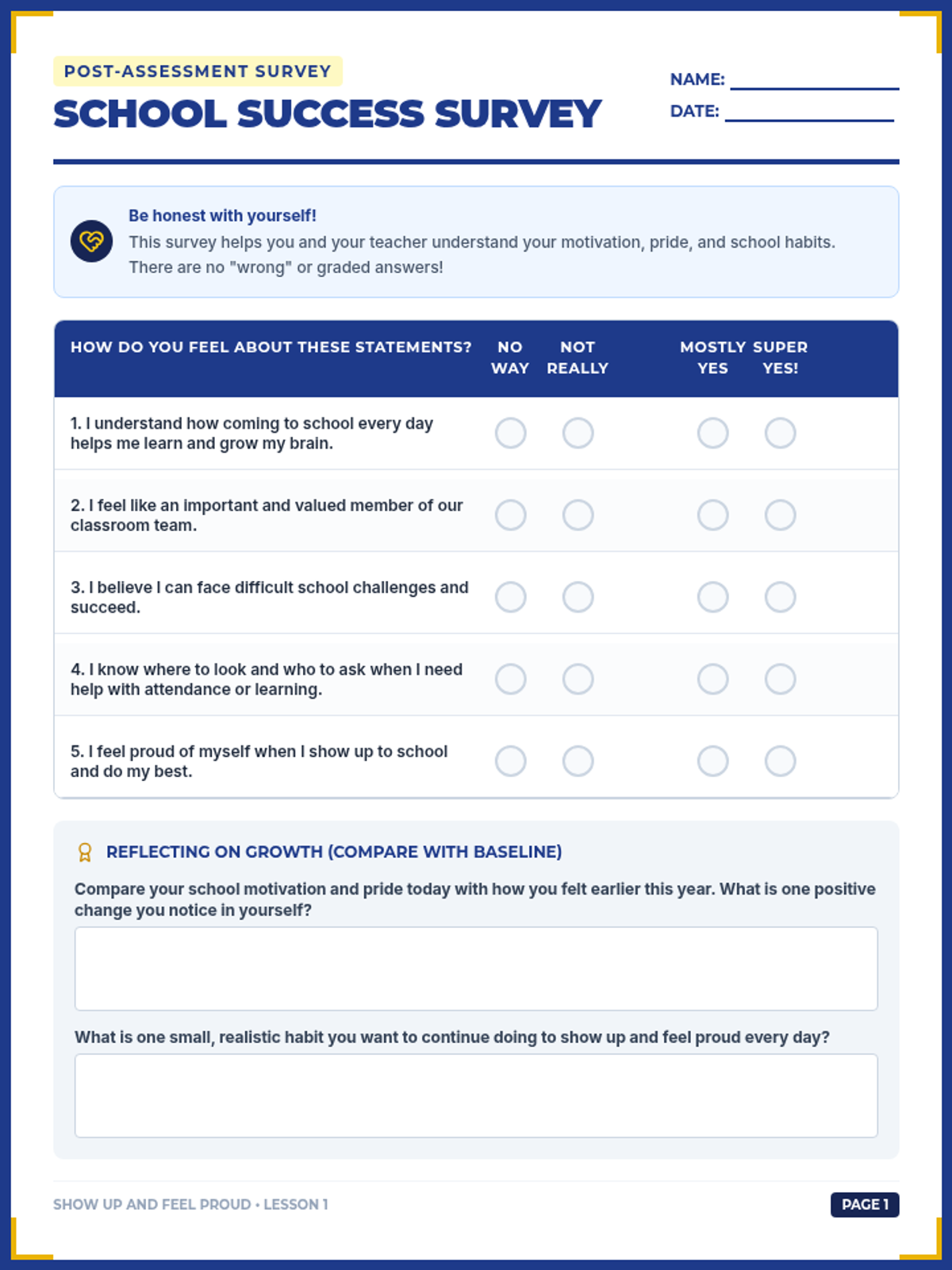
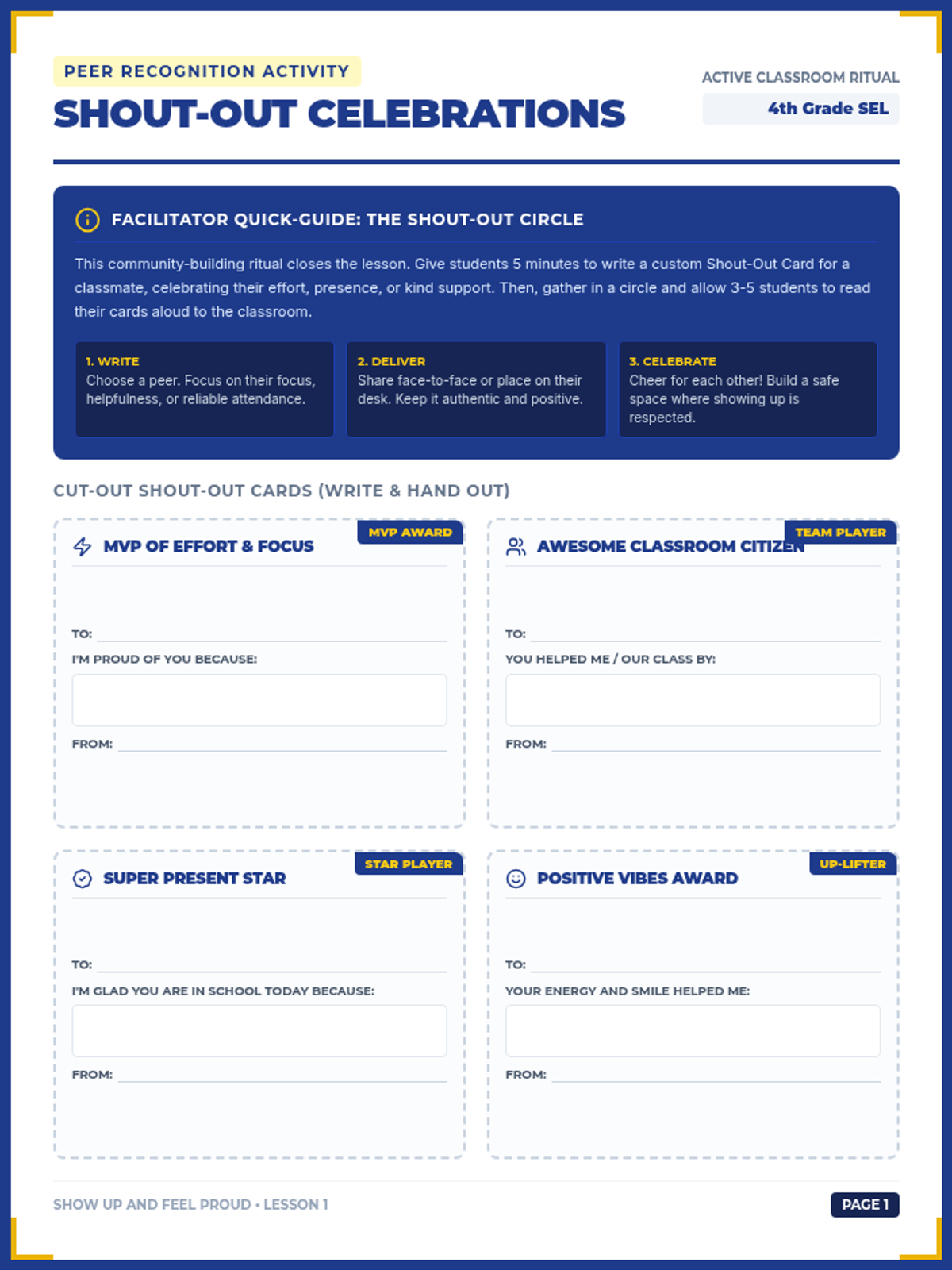
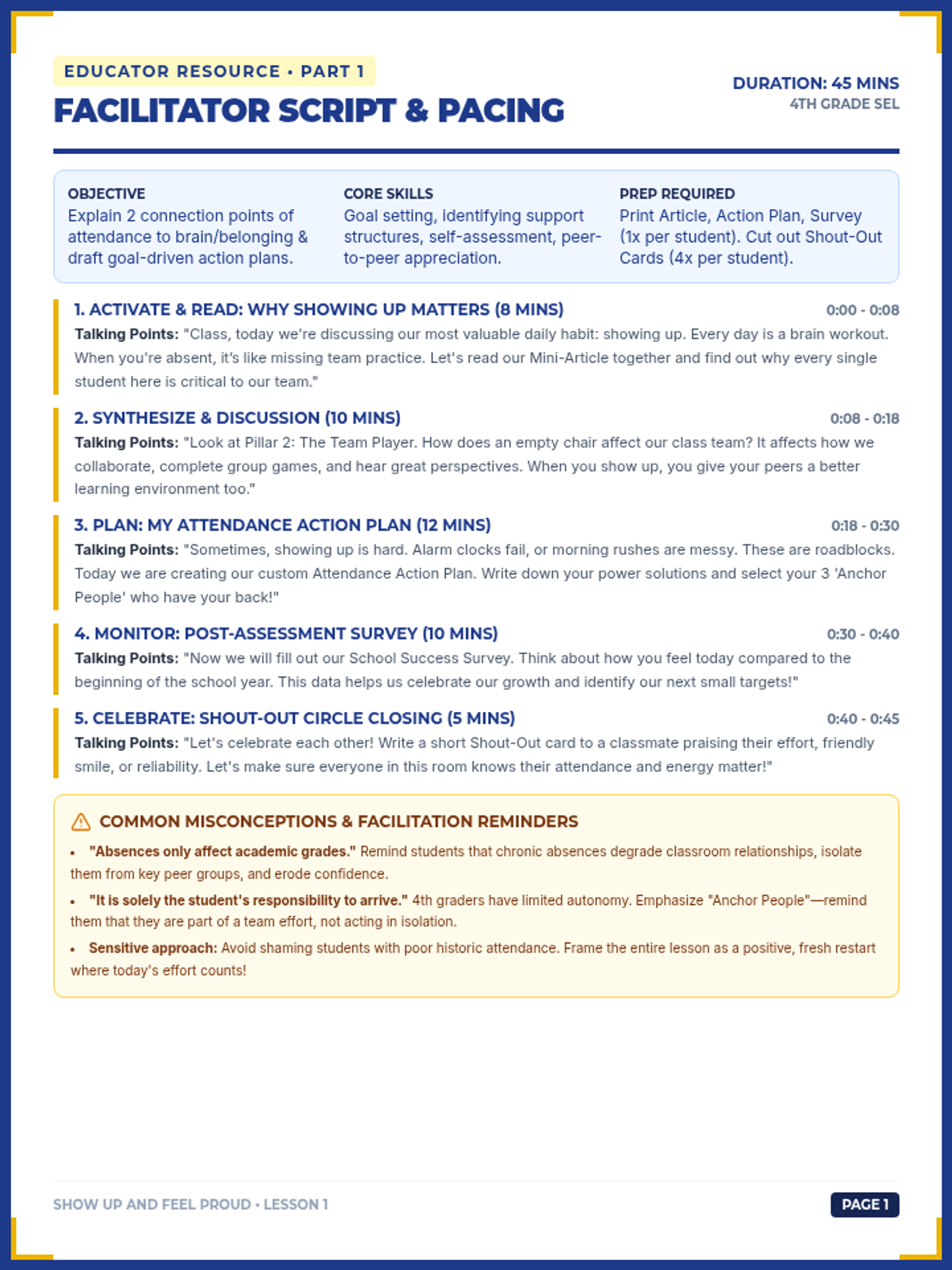
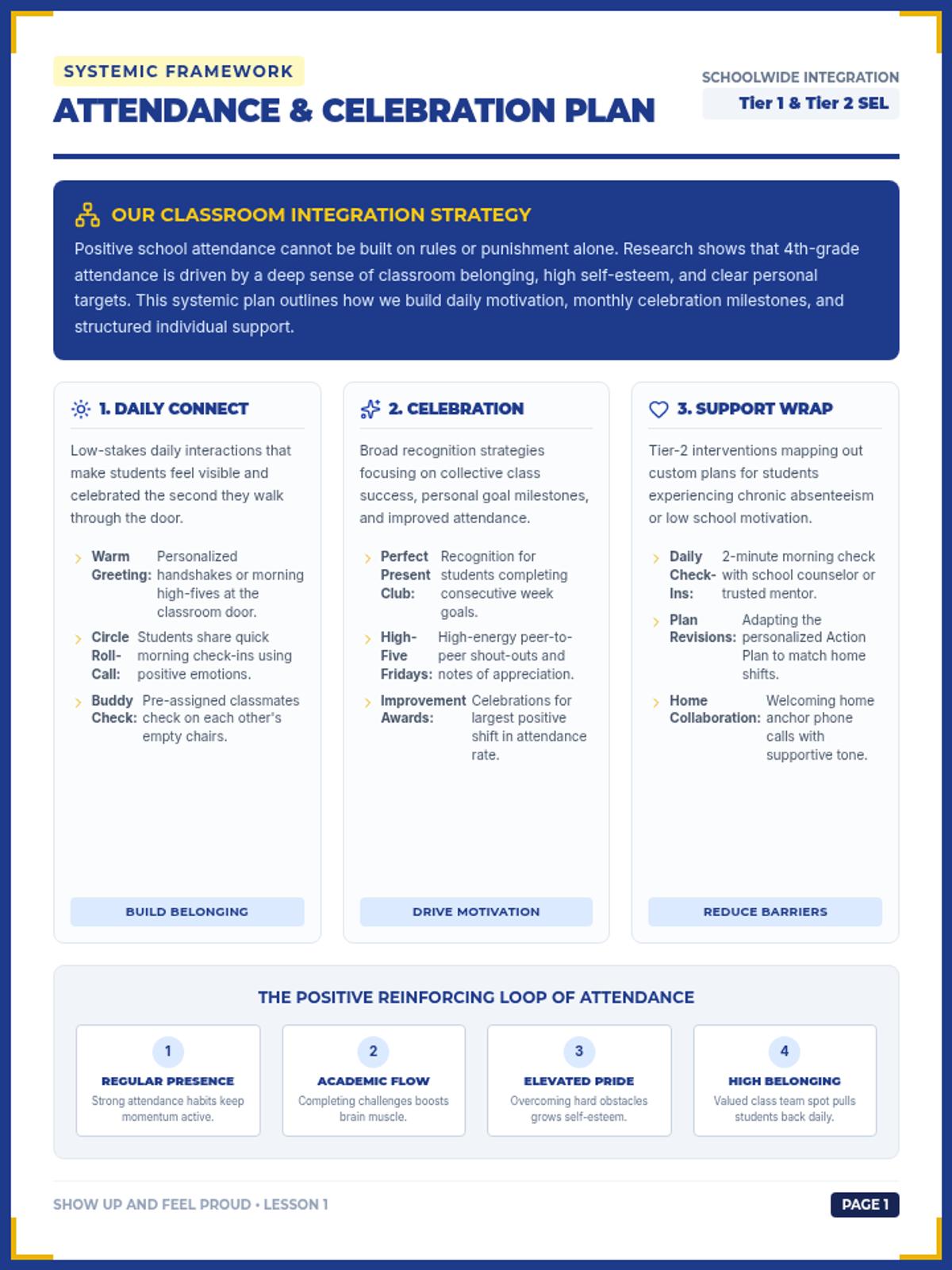
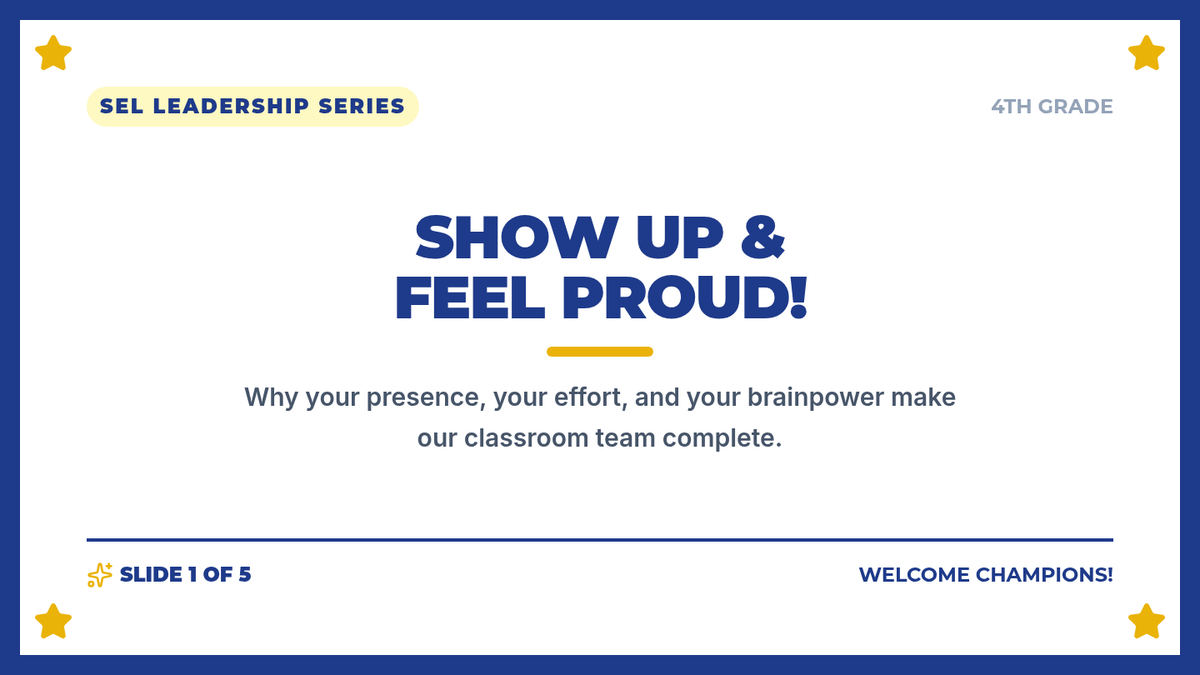
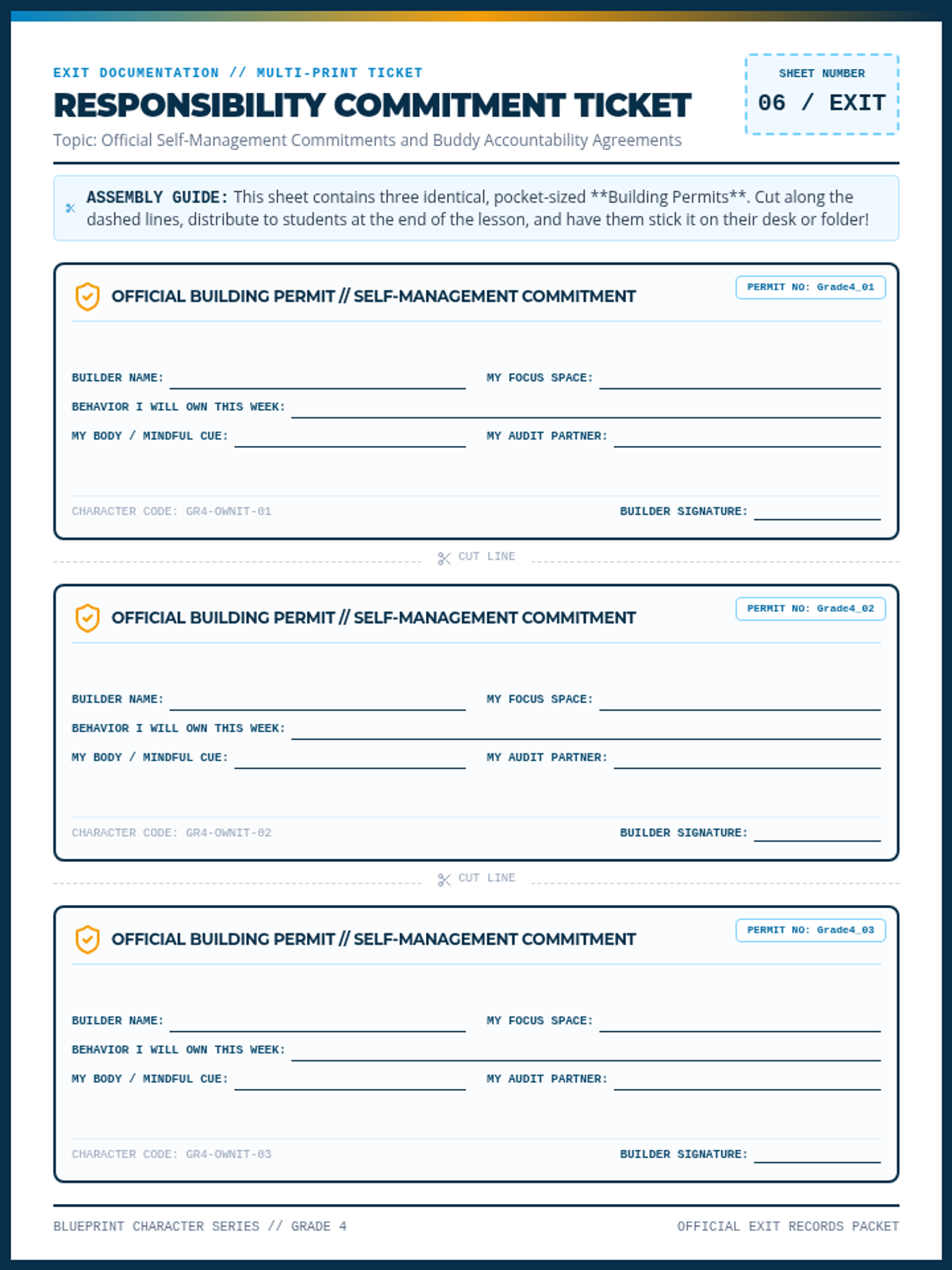
A 45-minute 4th-grade social-emotional learning lesson focusing on the connection between regular school attendance, academic success, and personal self-esteem. Students analyze a short text, design a personalized attendance action plan, complete a self-assessment, and celebrate their growth.
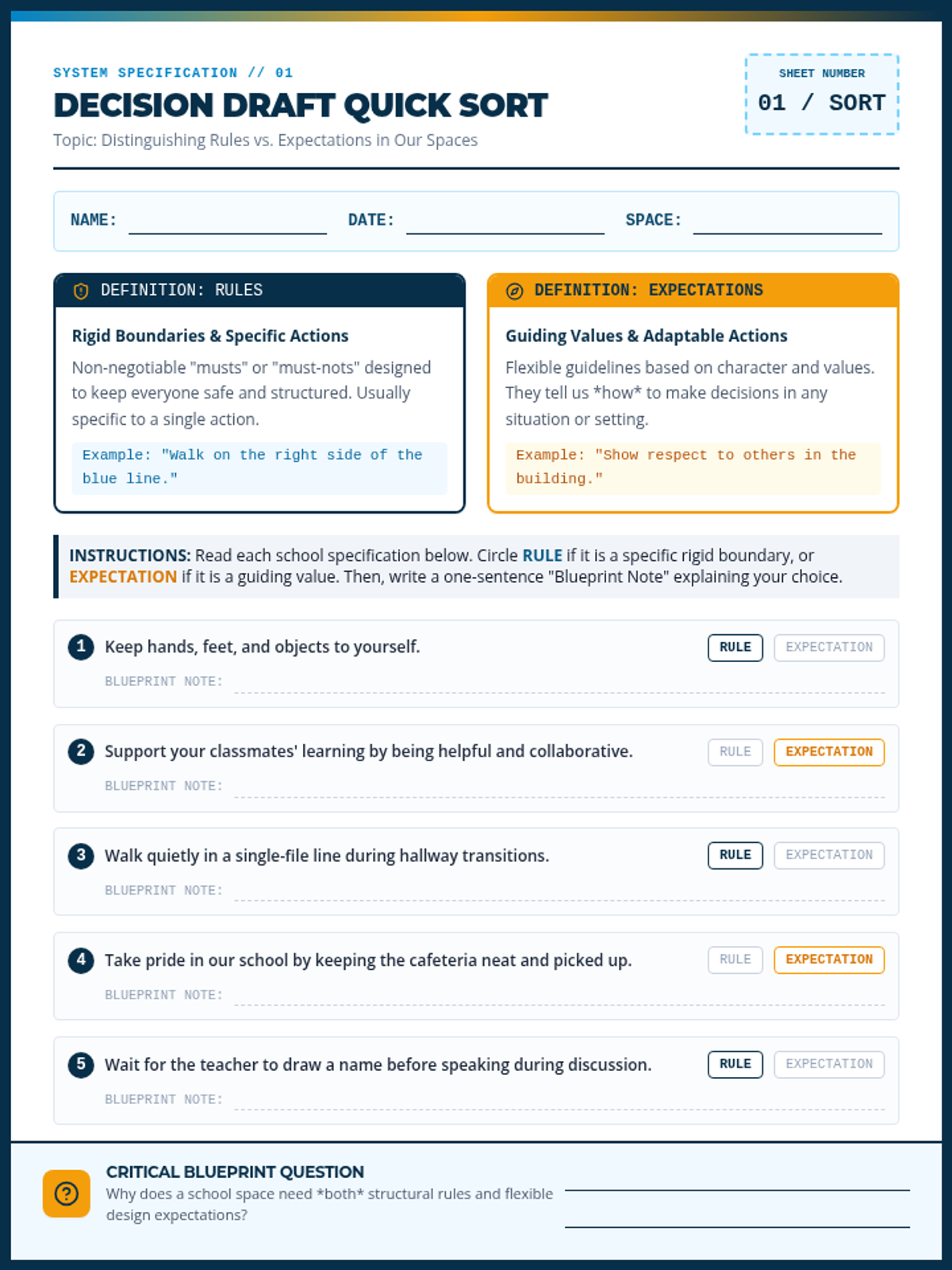
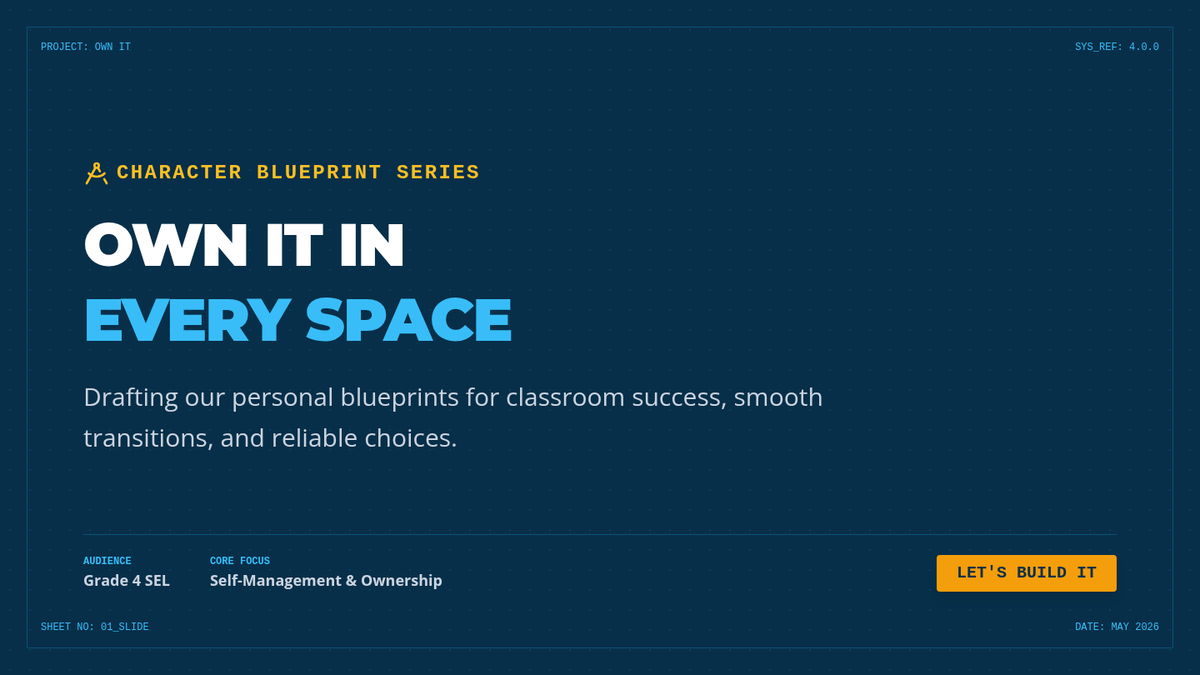
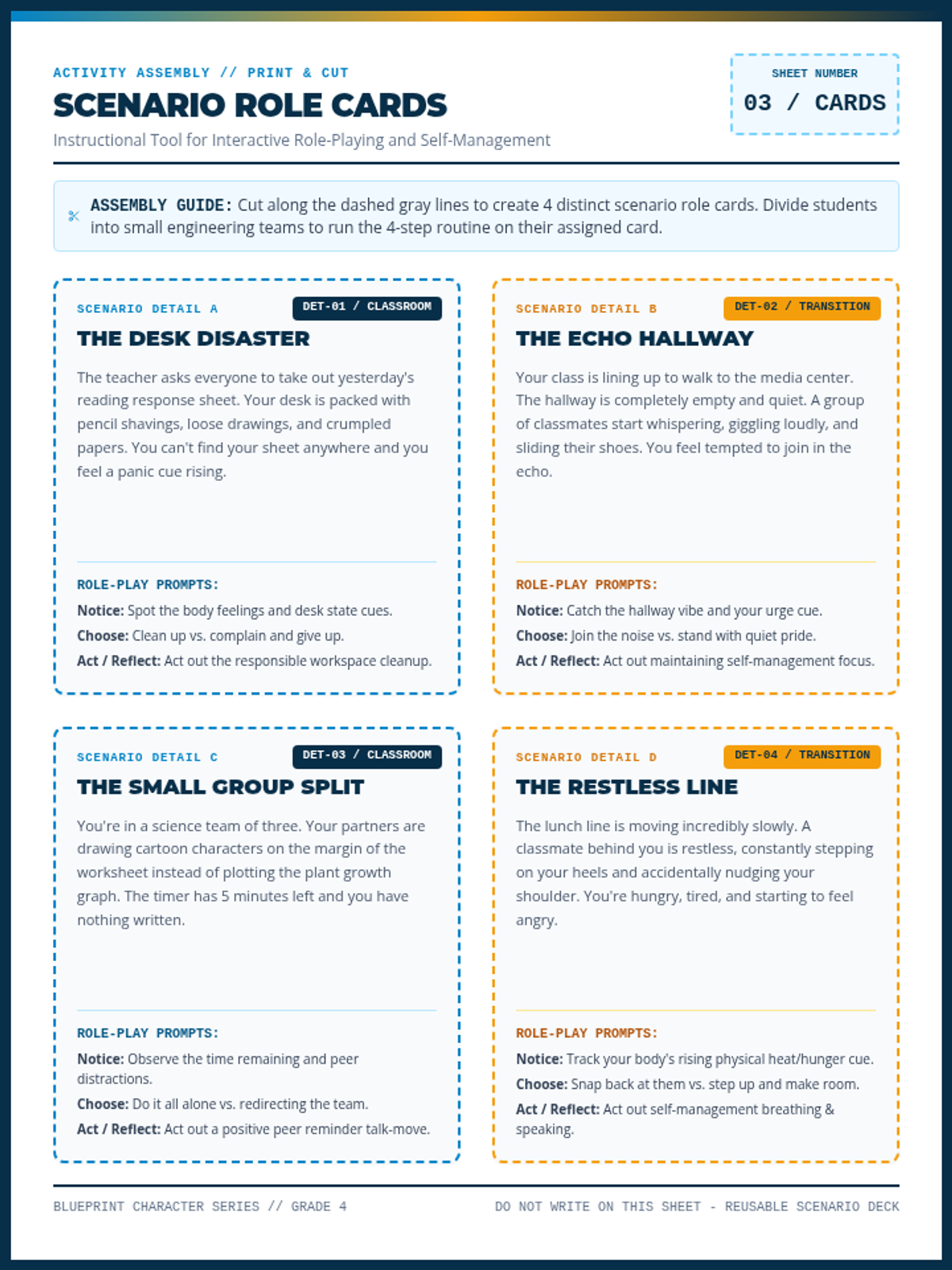
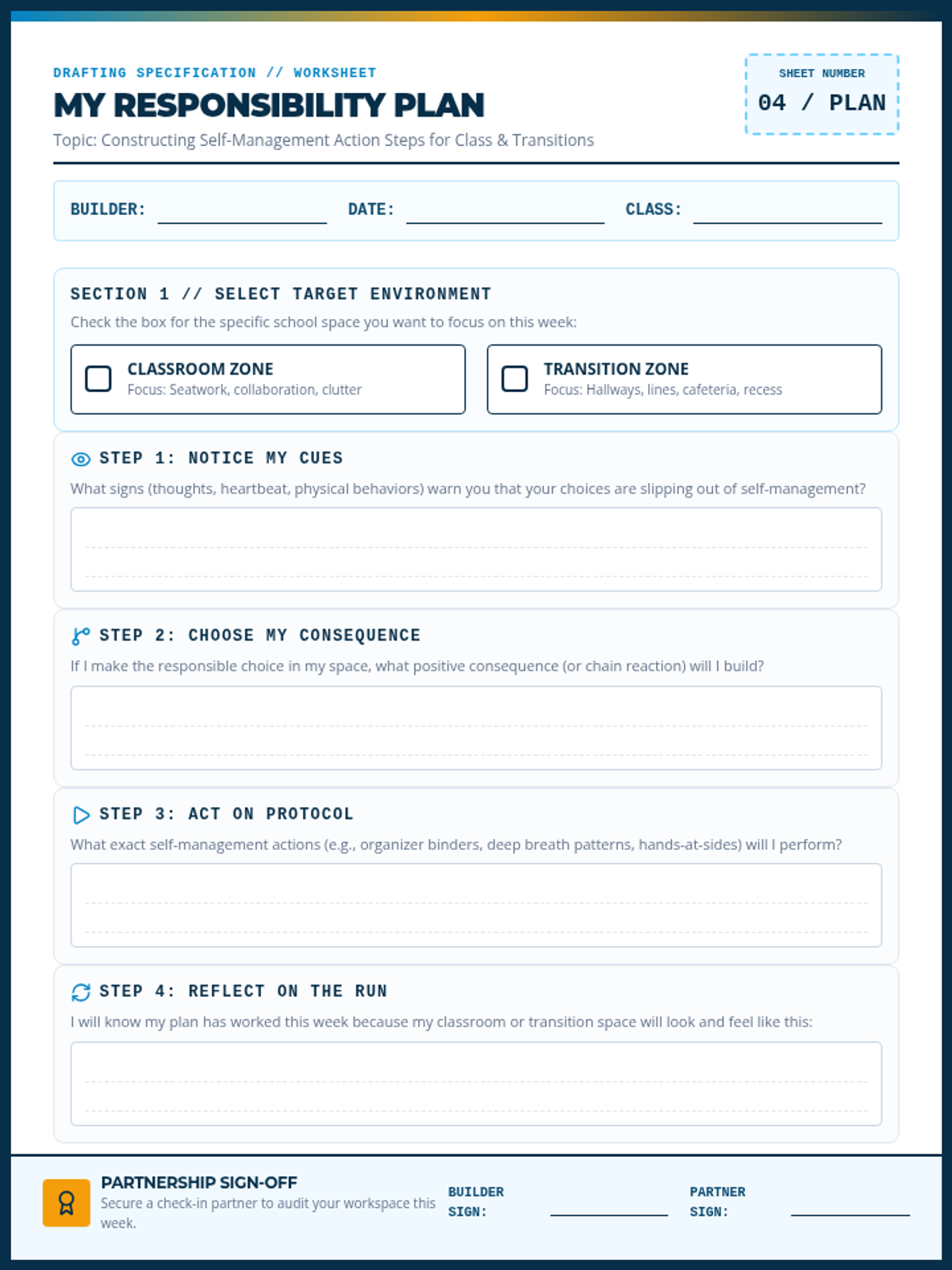
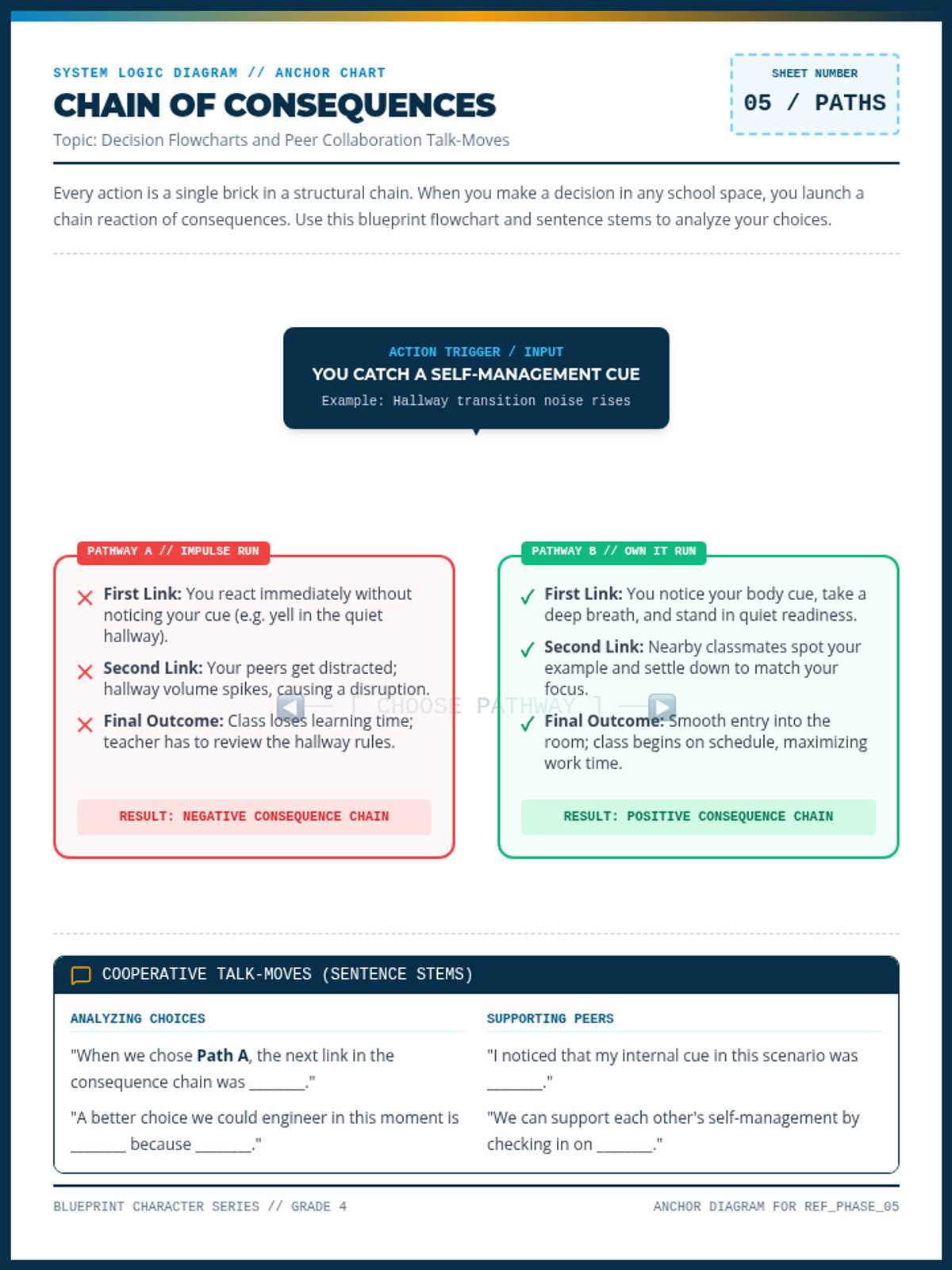
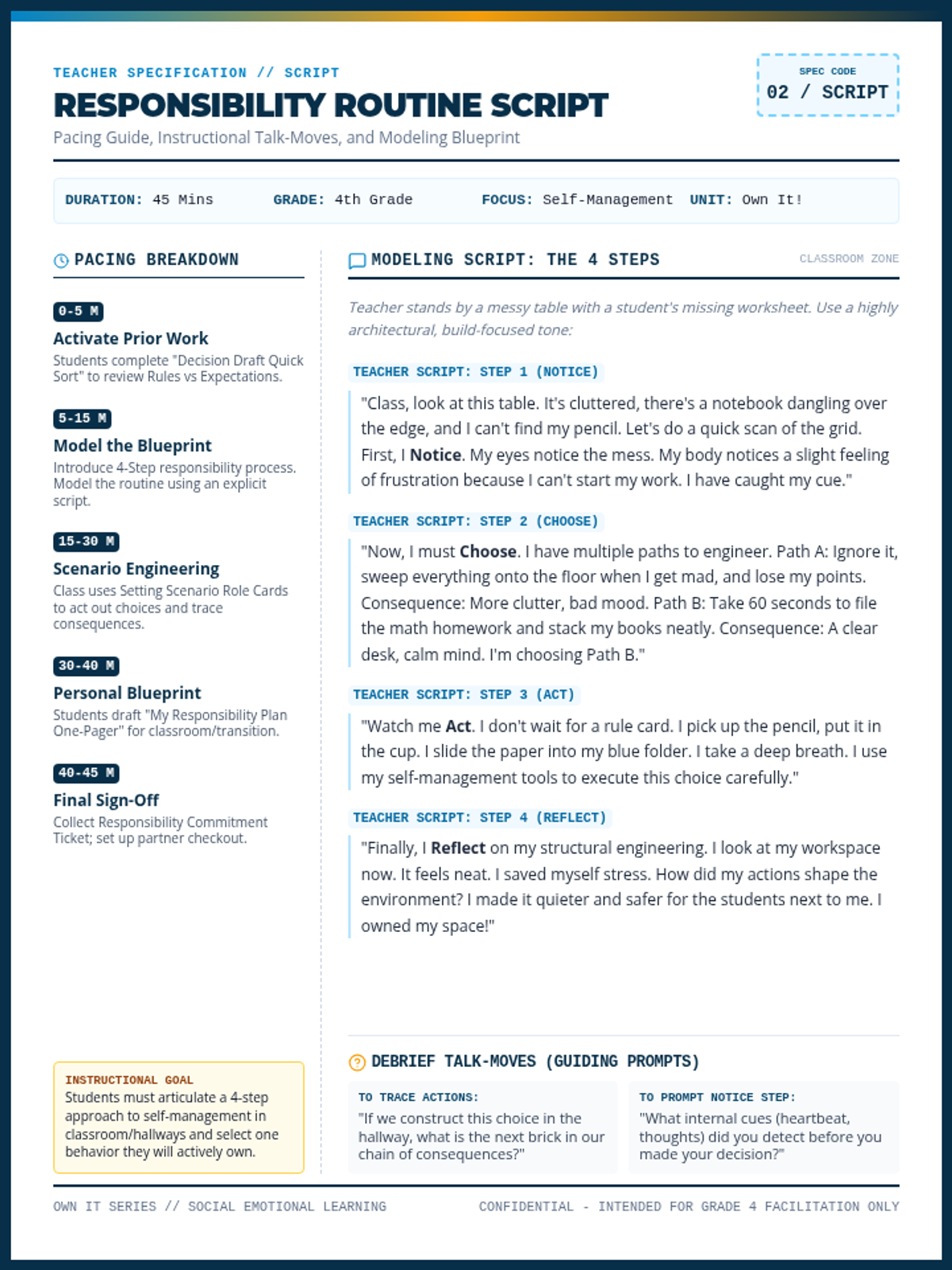
A 45-minute social-emotional learning lesson for 4th graders to master self-management and personal responsibility. Students analyze rules versus expectations, learn a 4-step responsibility process, and draft a personal action plan for classrooms and school transitions.
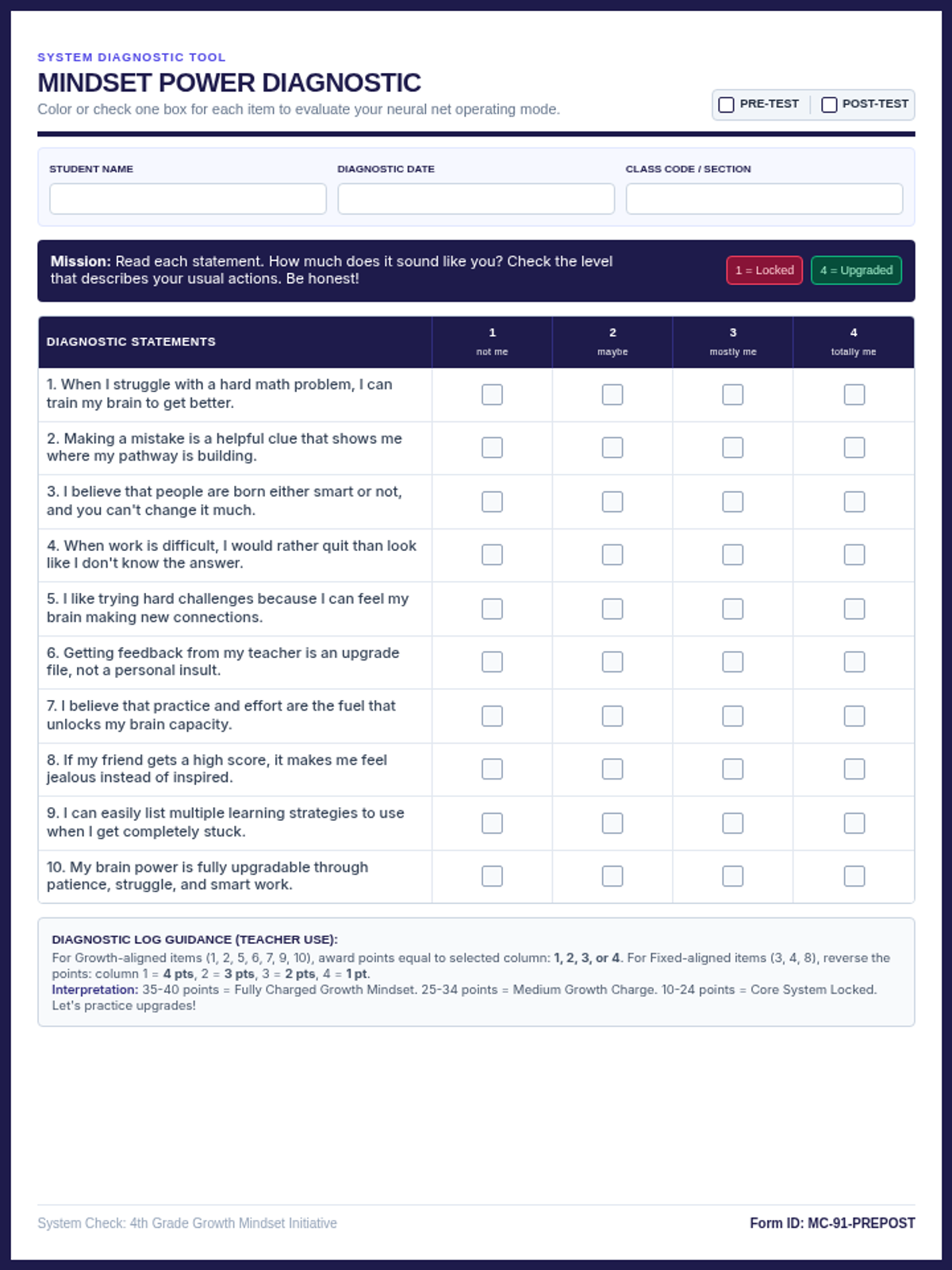
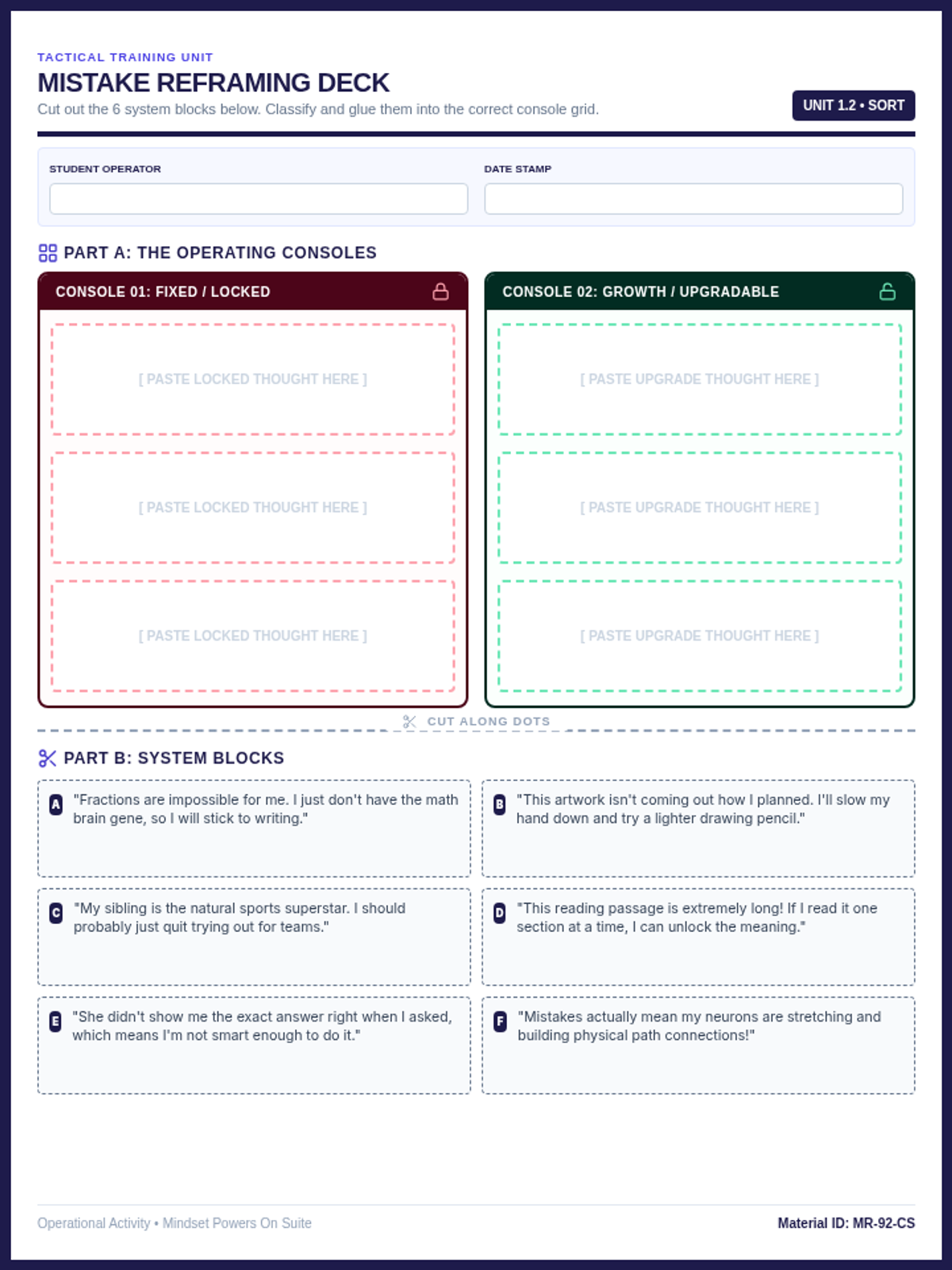
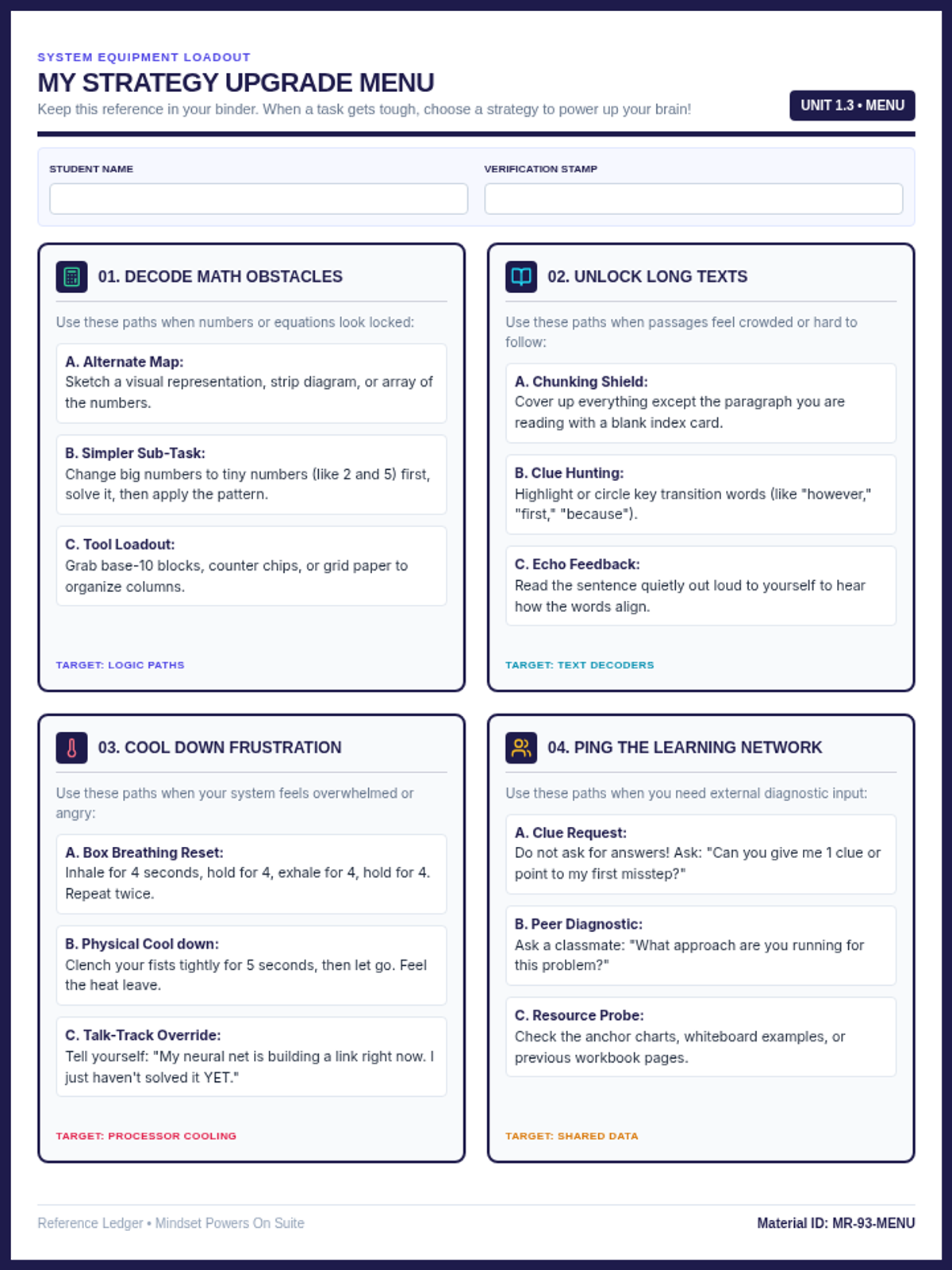
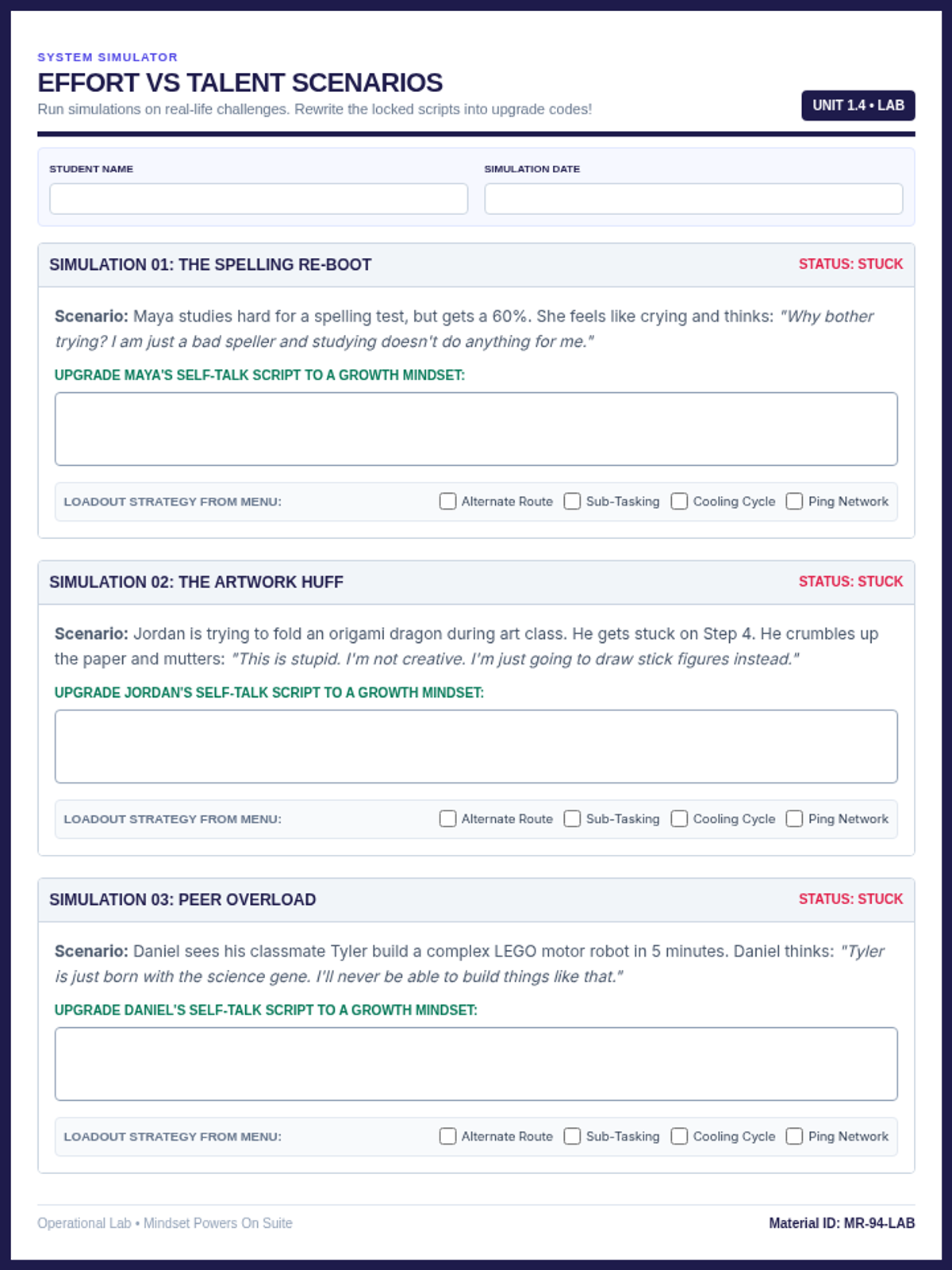
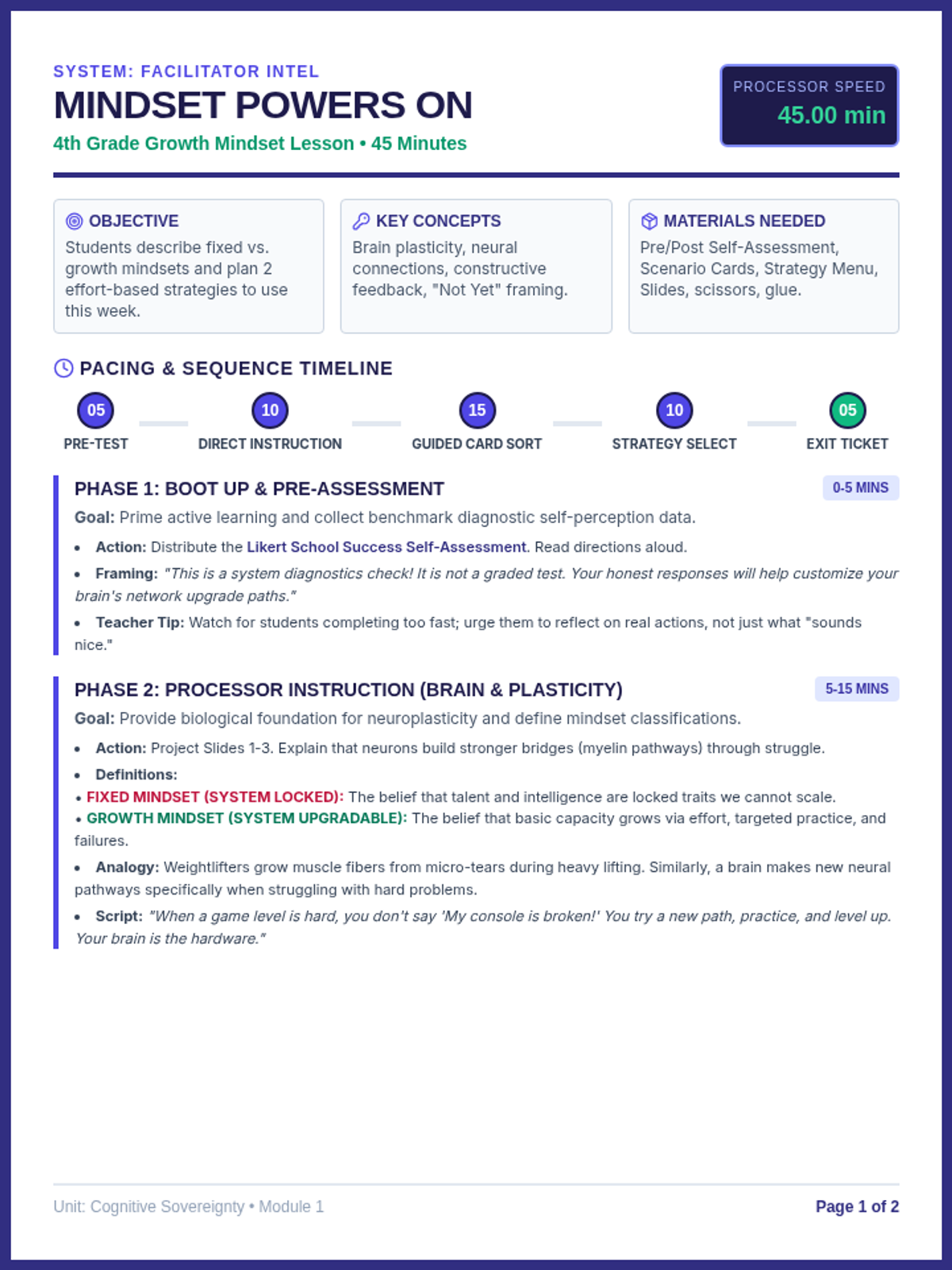
A 45-minute lesson for 4th graders on growth vs. fixed mindset. Students learn that effort and strategies build brain power, complete a self-assessment, sort growth mindset statements, and choose personal growth strategies.
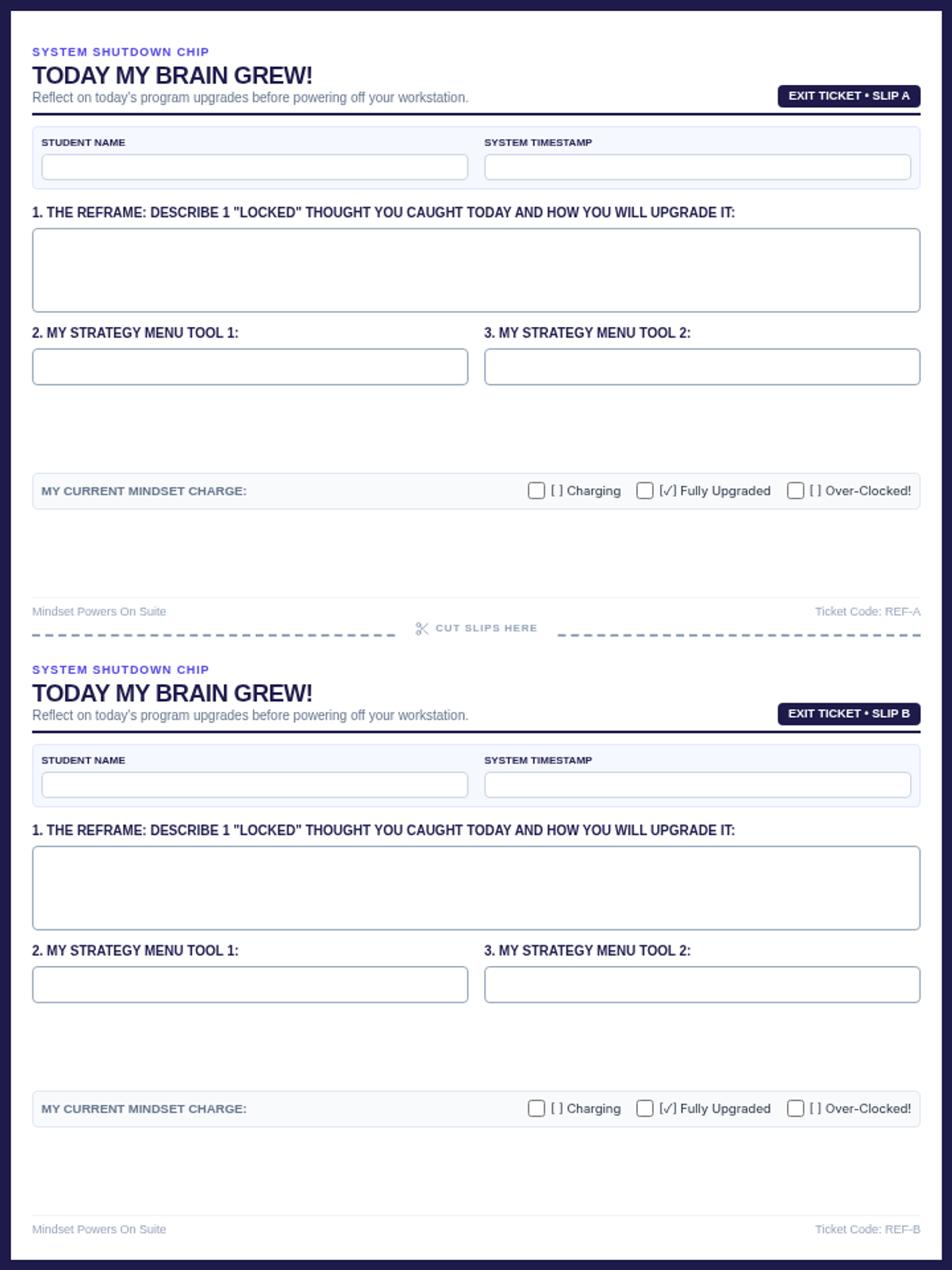
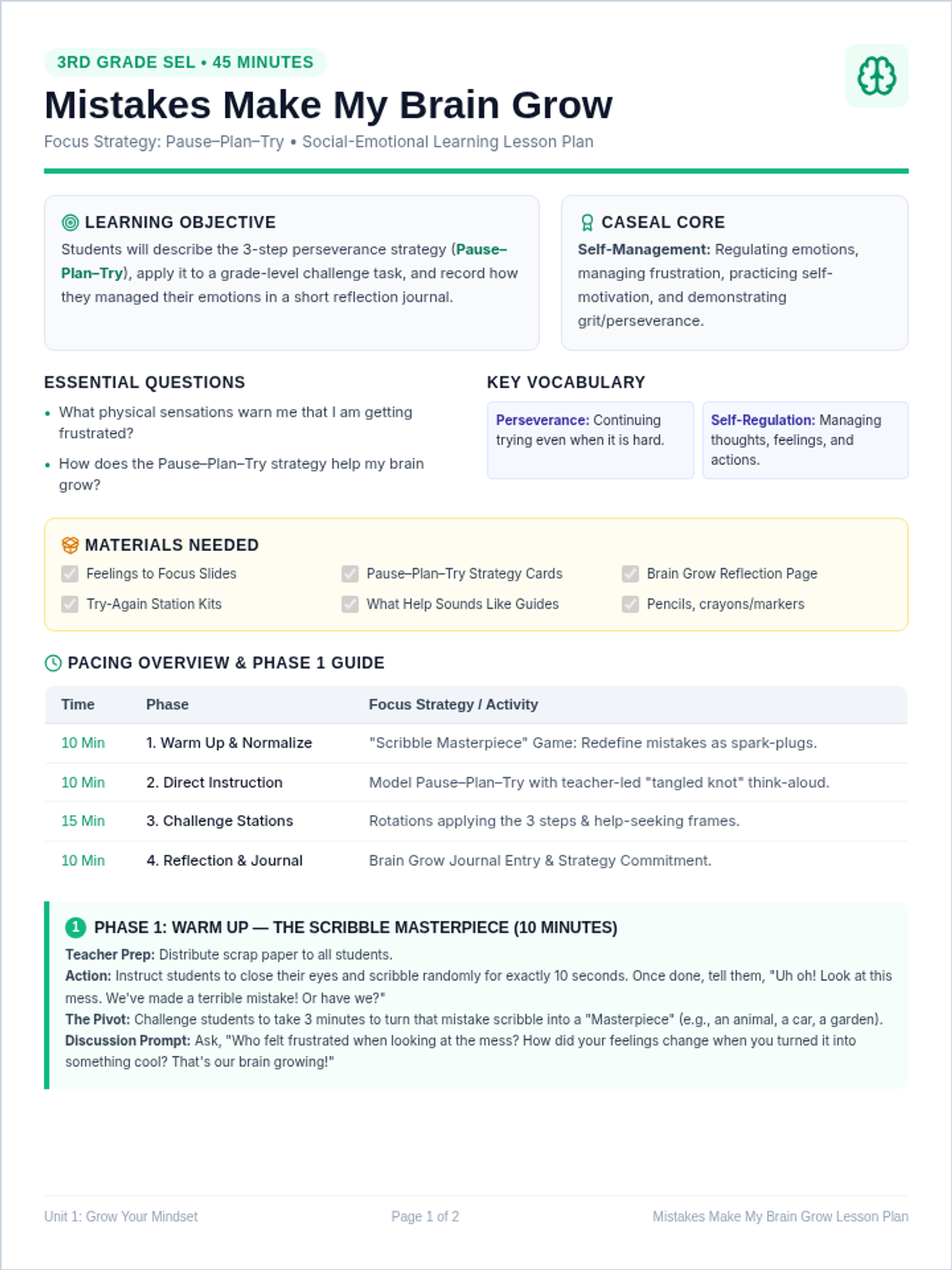
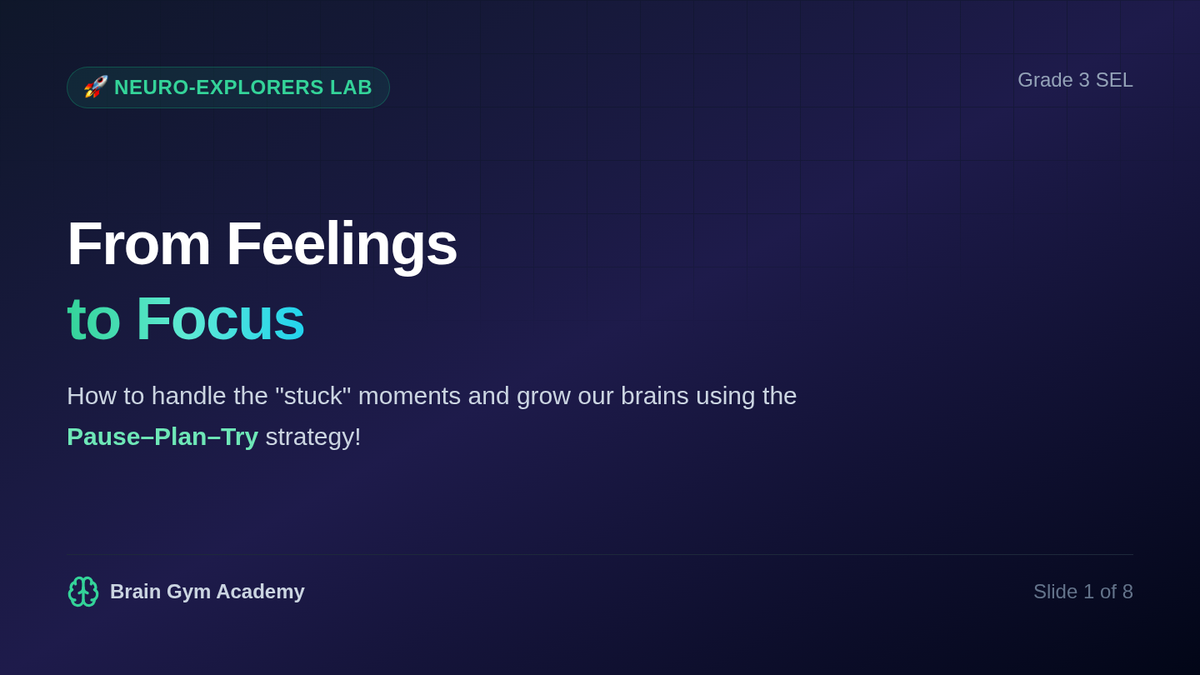
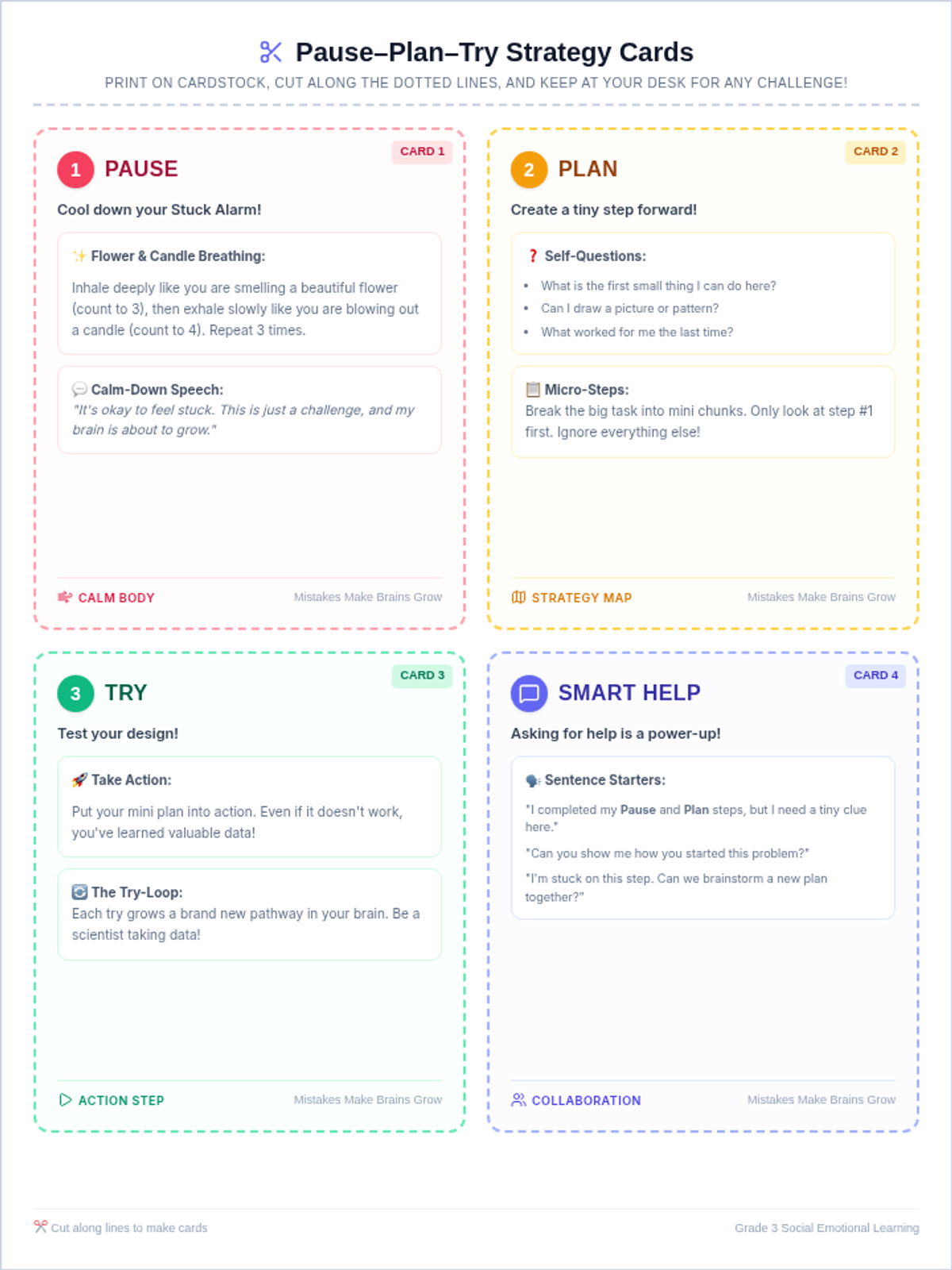
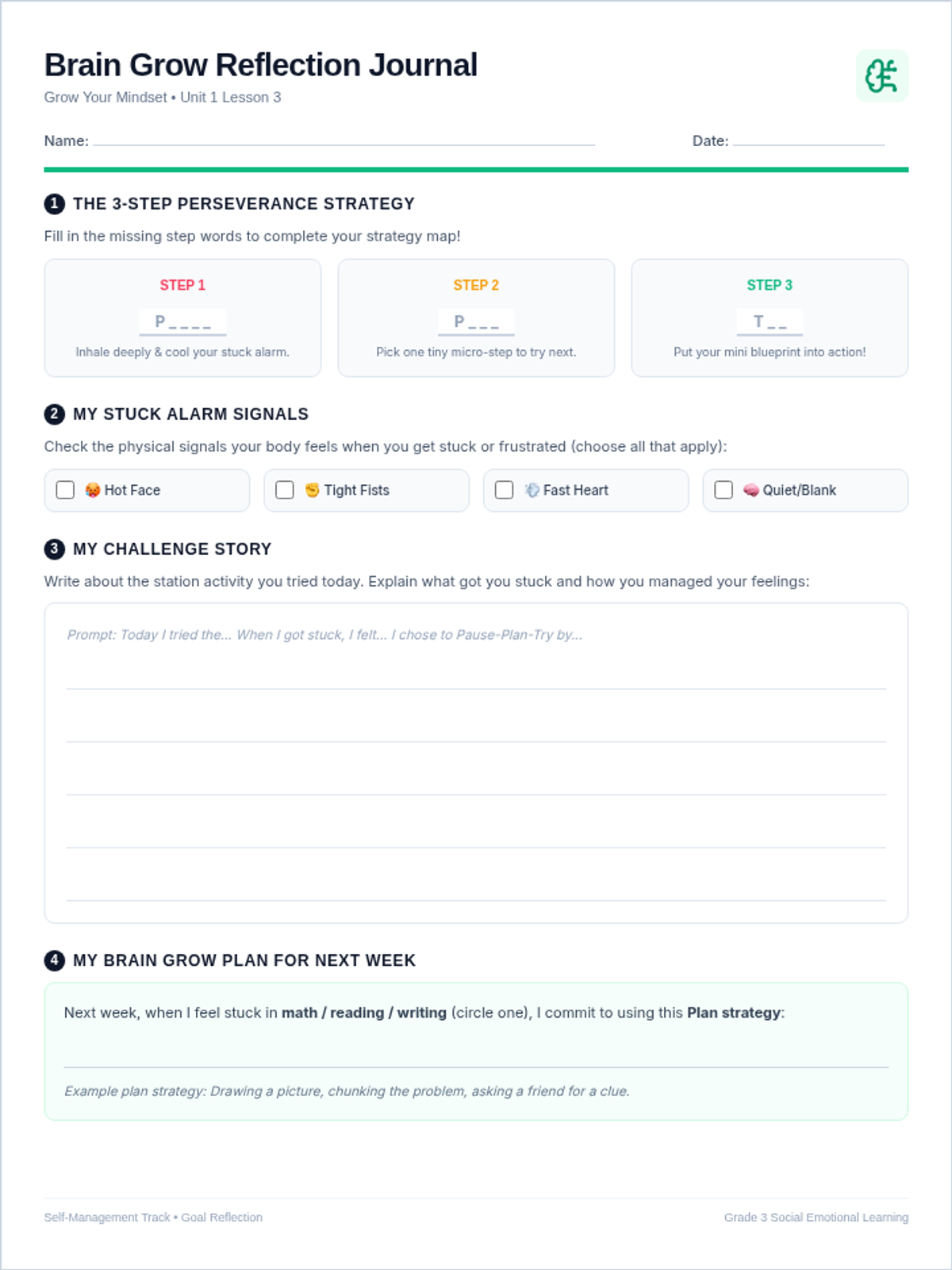
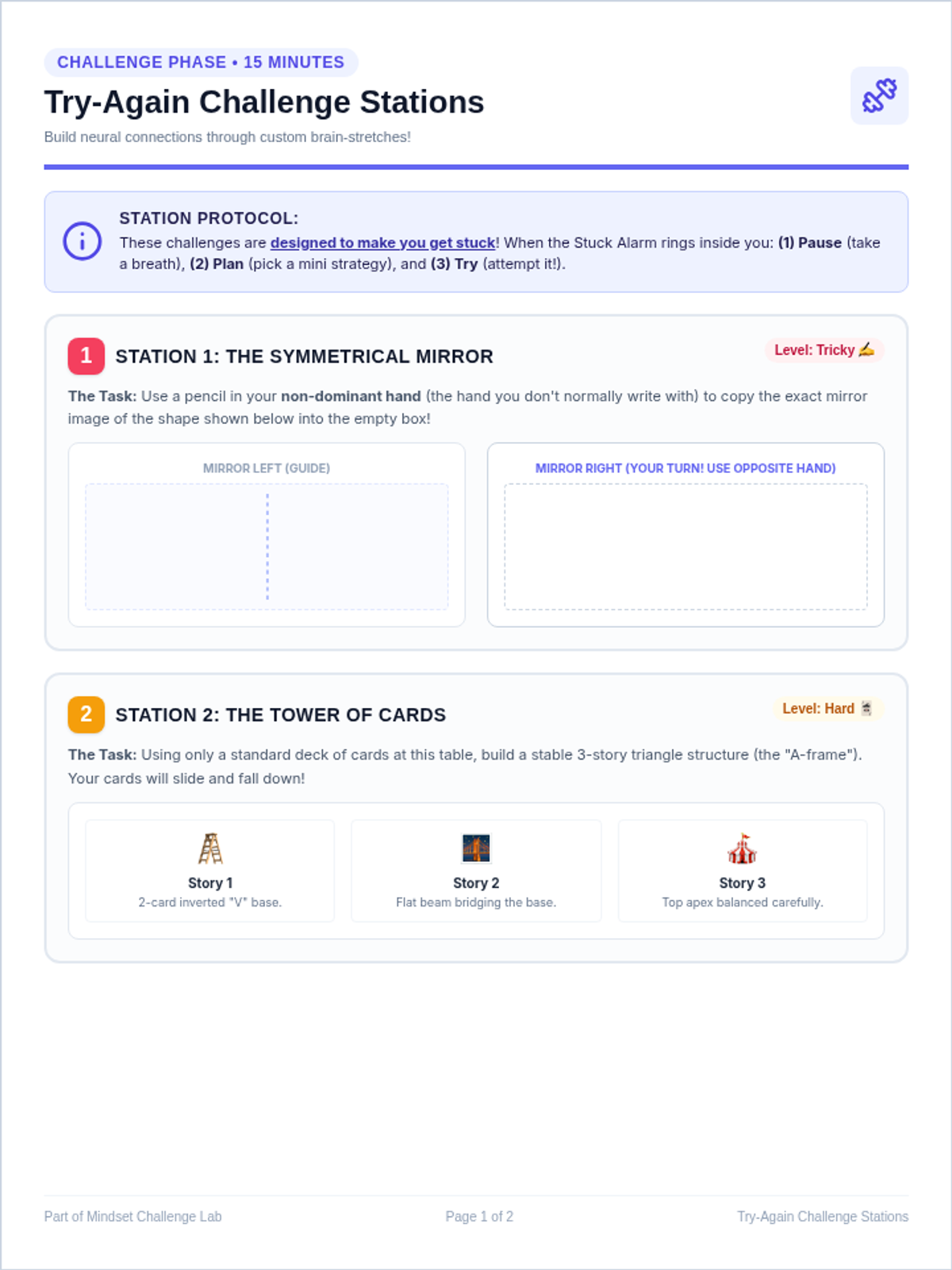
A 3rd-grade social-emotional learning lesson focusing on the 'Pause-Plan-Try' perseverance strategy. Students learn to normalize mistakes, regulate emotions, and practice constructive help-seeking language through interactive challenge stations and self-reflection.
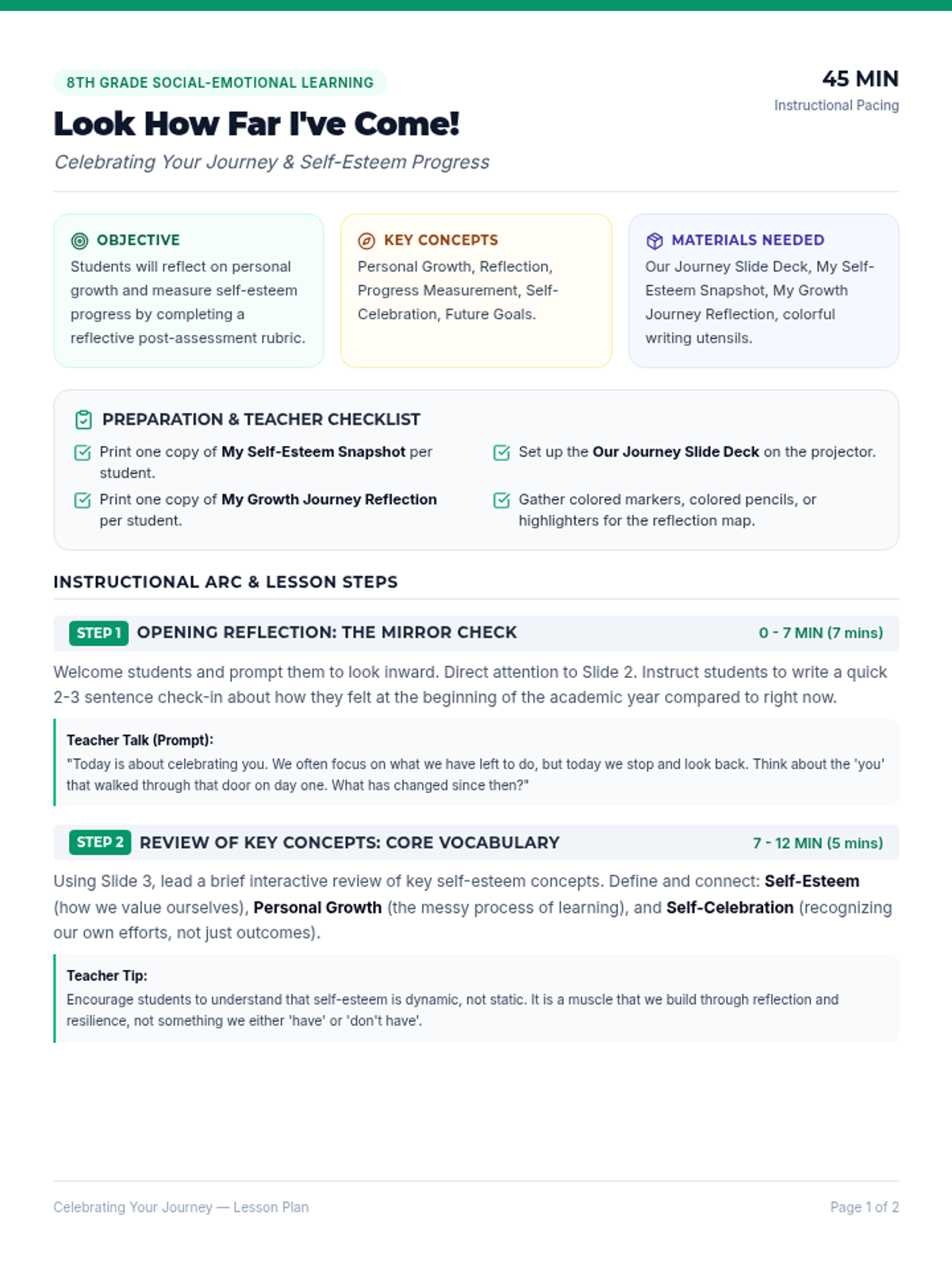
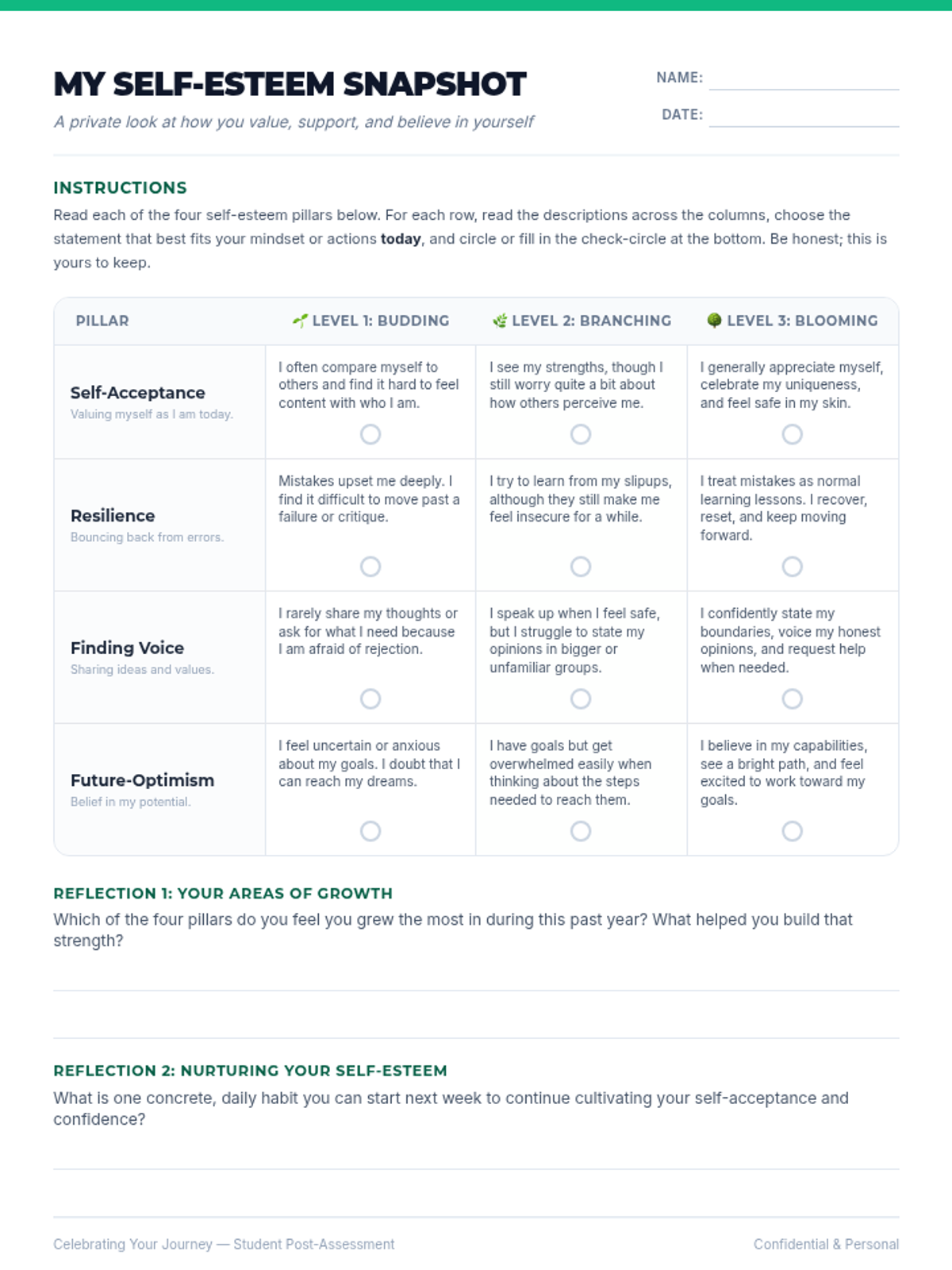
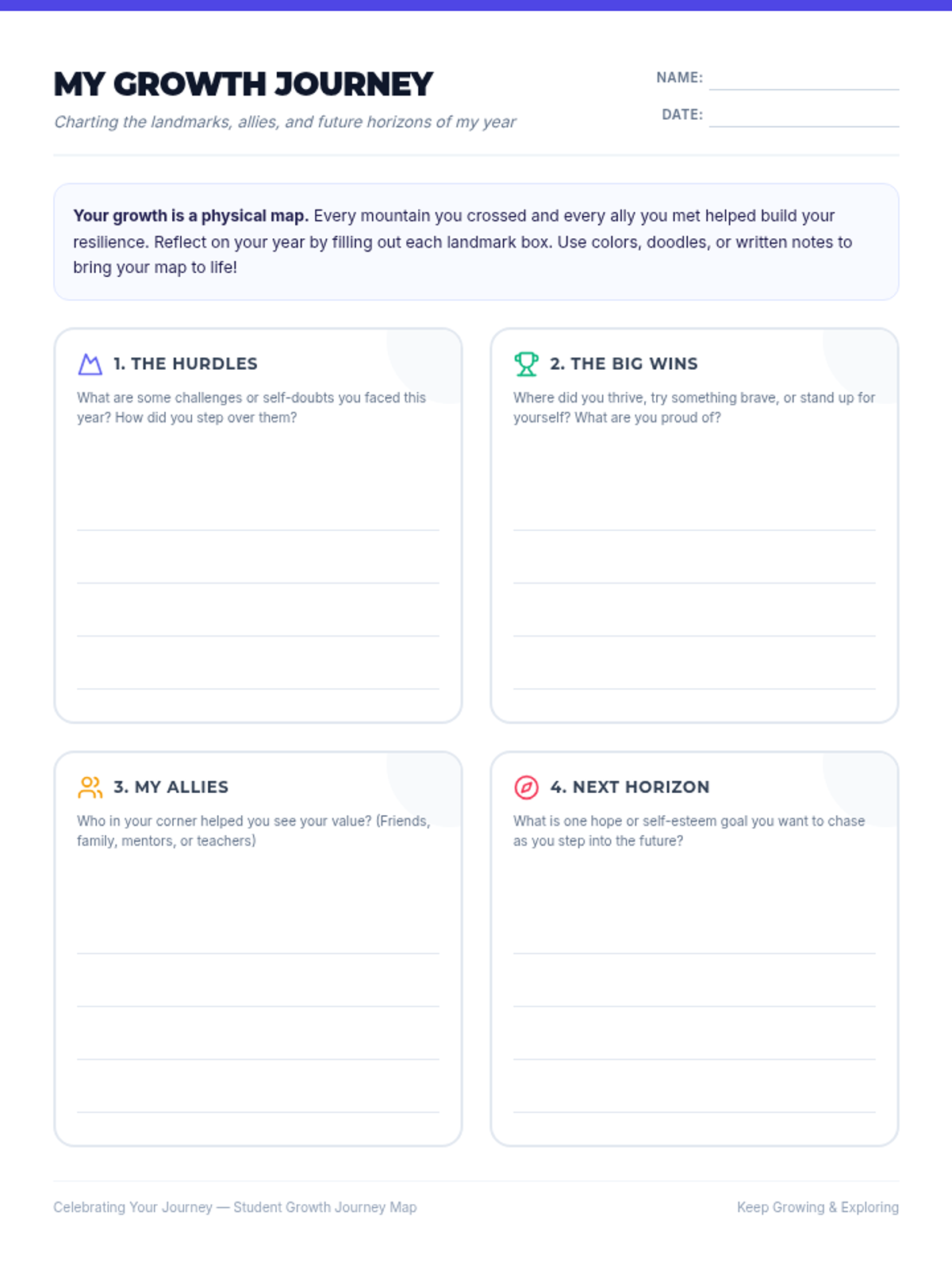
A reflective 45-minute lesson for 8th graders to measure their personal growth, self-esteem progress, and celebrate their learning journey with concrete self-assessments and creative mapping activities.
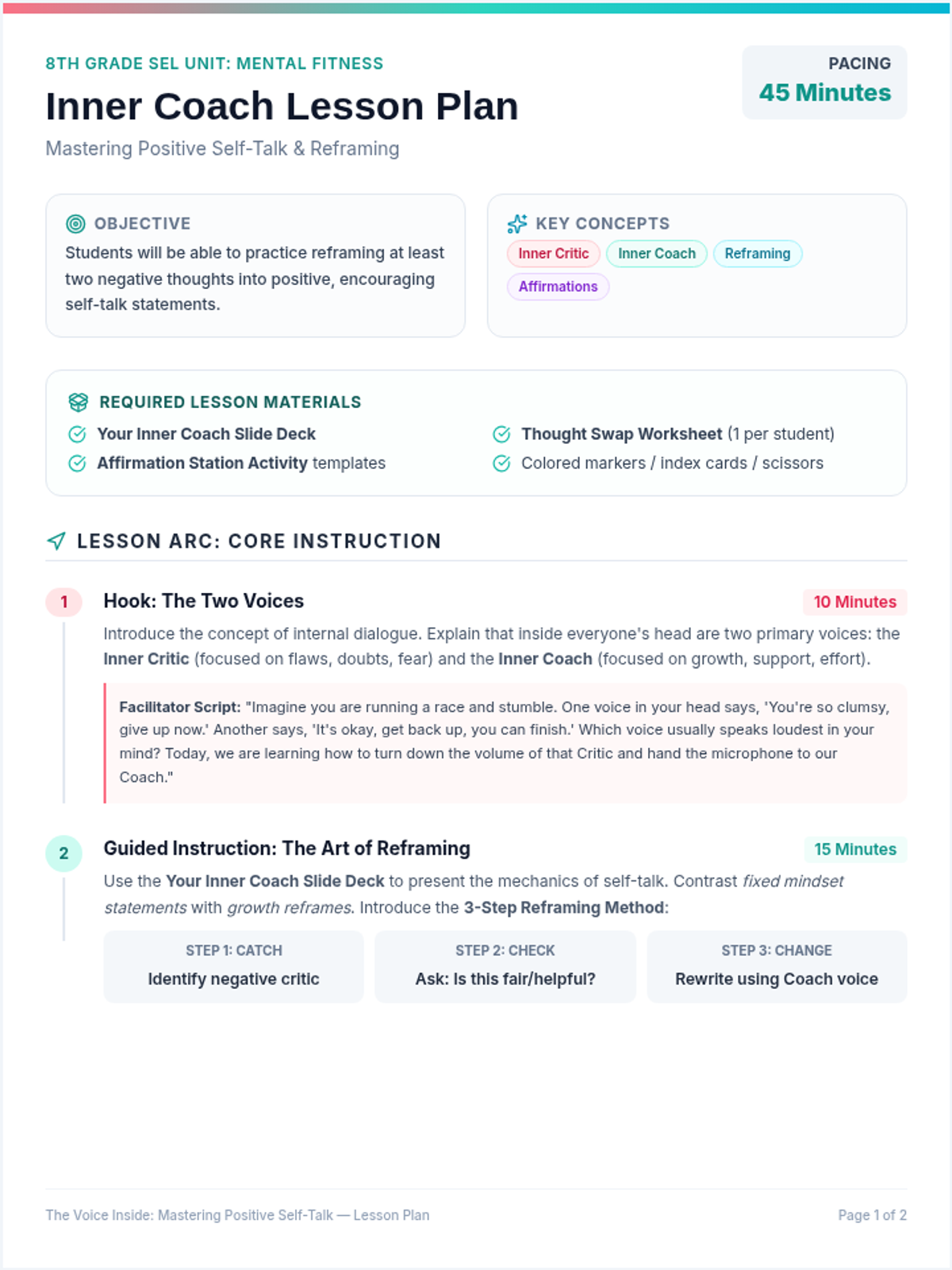
An 8th-grade social-emotional learning lesson focusing on identifying the inner critic, understanding cognitive reframing, and practicing positive self-talk through interactive activities and reflection.
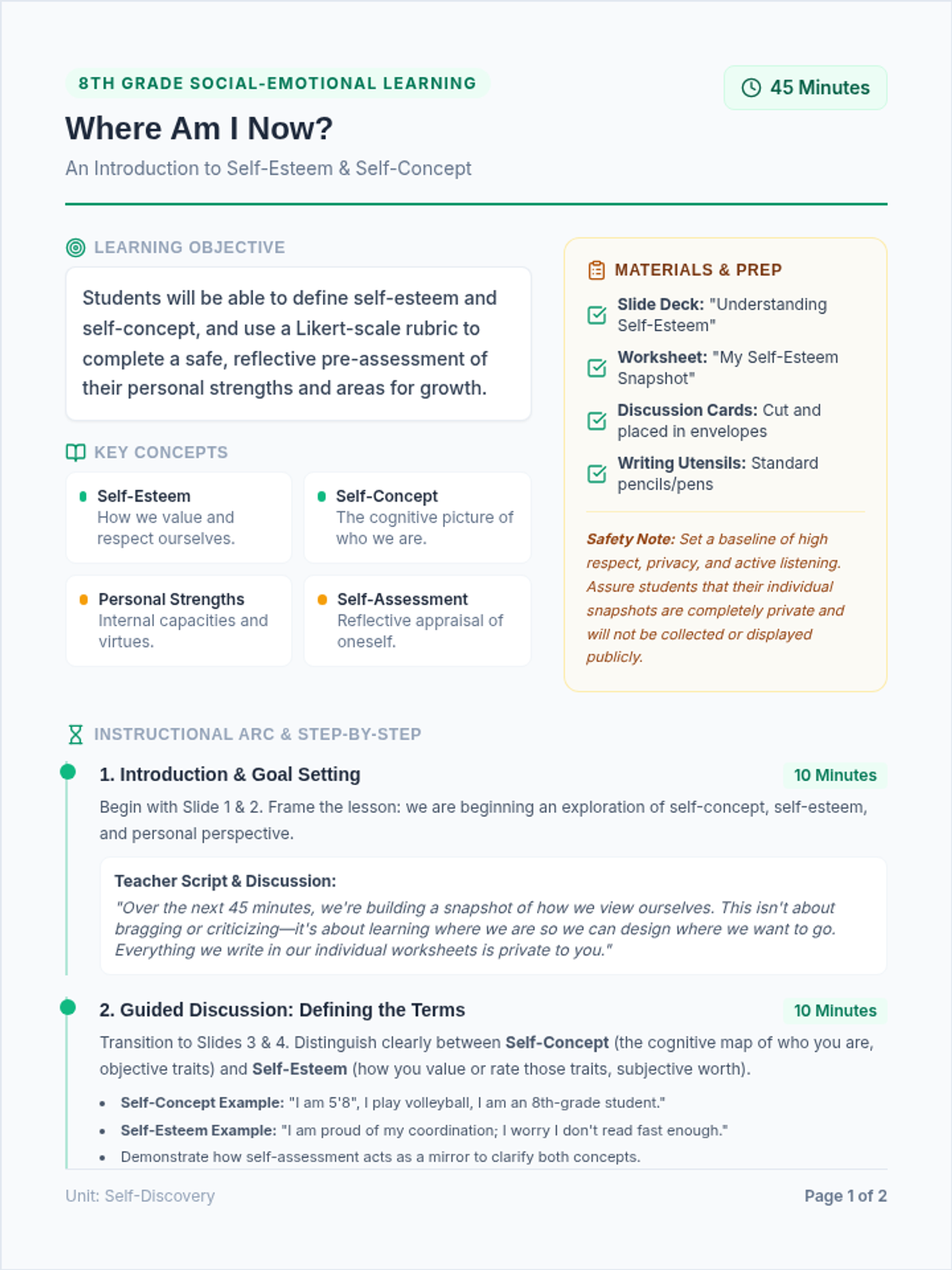
An introductory 8th-grade social-emotional learning lesson focused on defining self-esteem and self-concept, guiding students through a safe, reflective pre-assessment of their personal strengths and areas for growth.
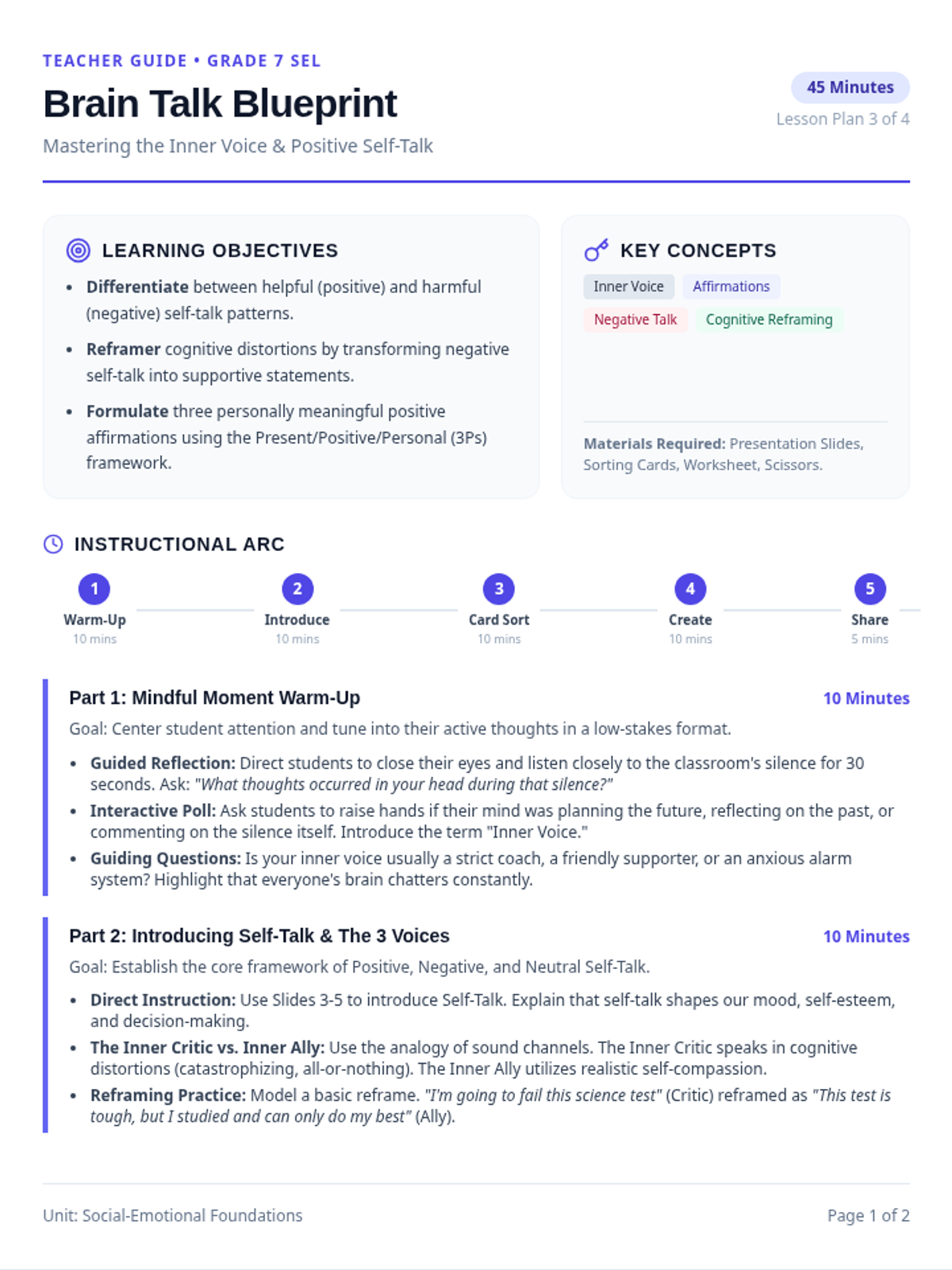
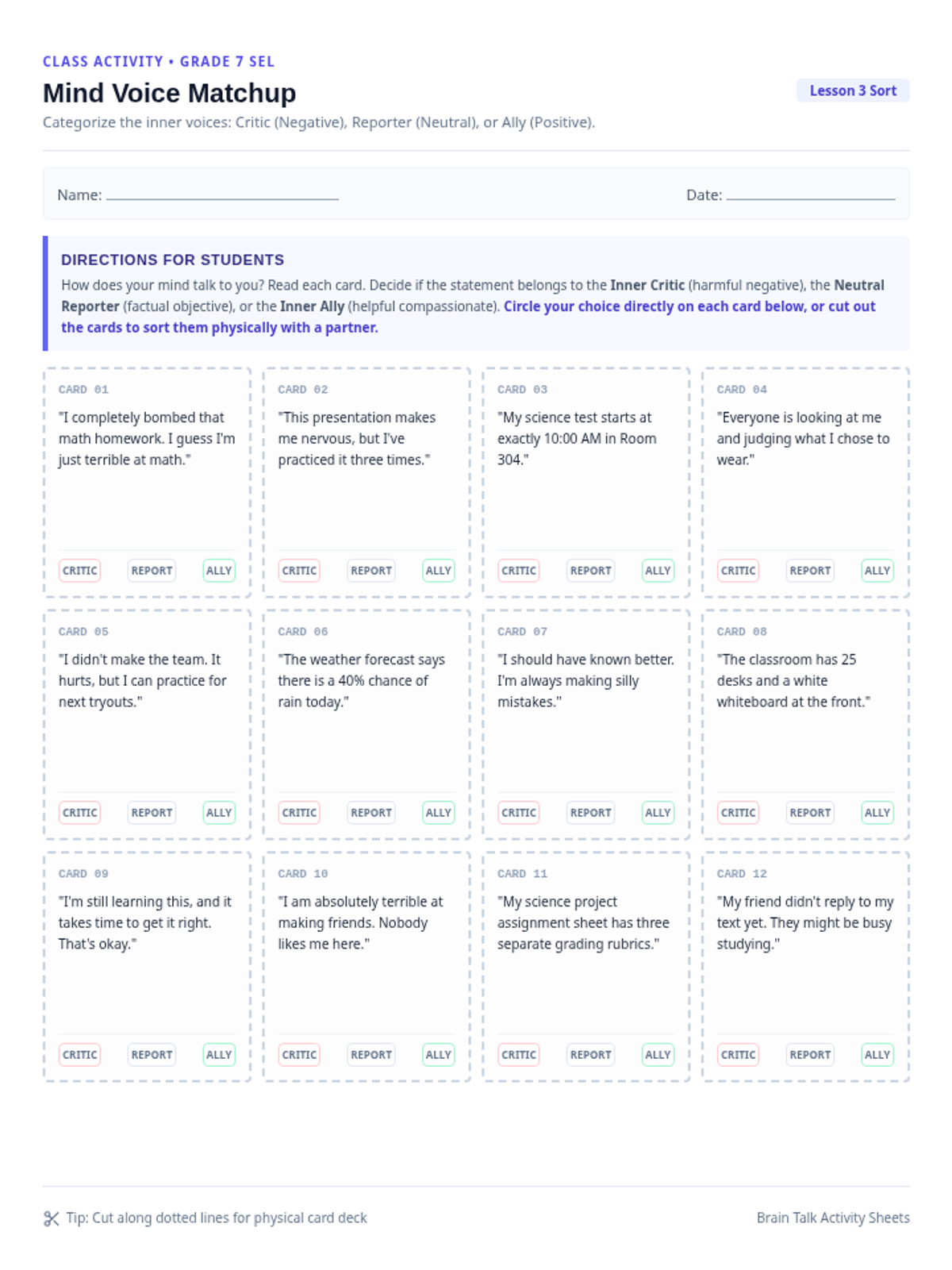
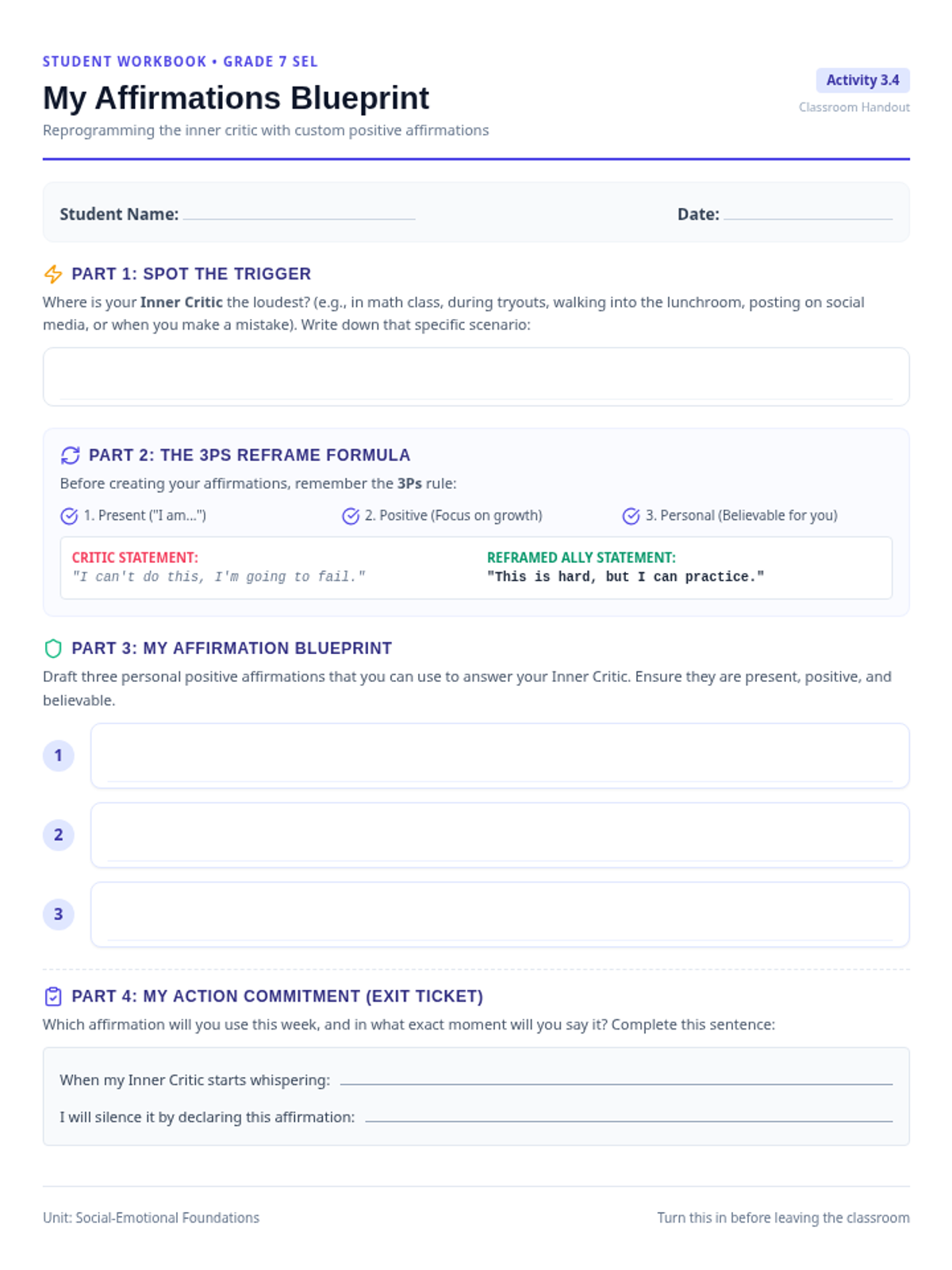
A transformative 45-minute social-emotional learning lesson for 7th graders to master their inner dialogue. Students explore cognitive reframing, separate negative self-talk from positive affirmations, and design a personalized toolkit of supportive inner voices.
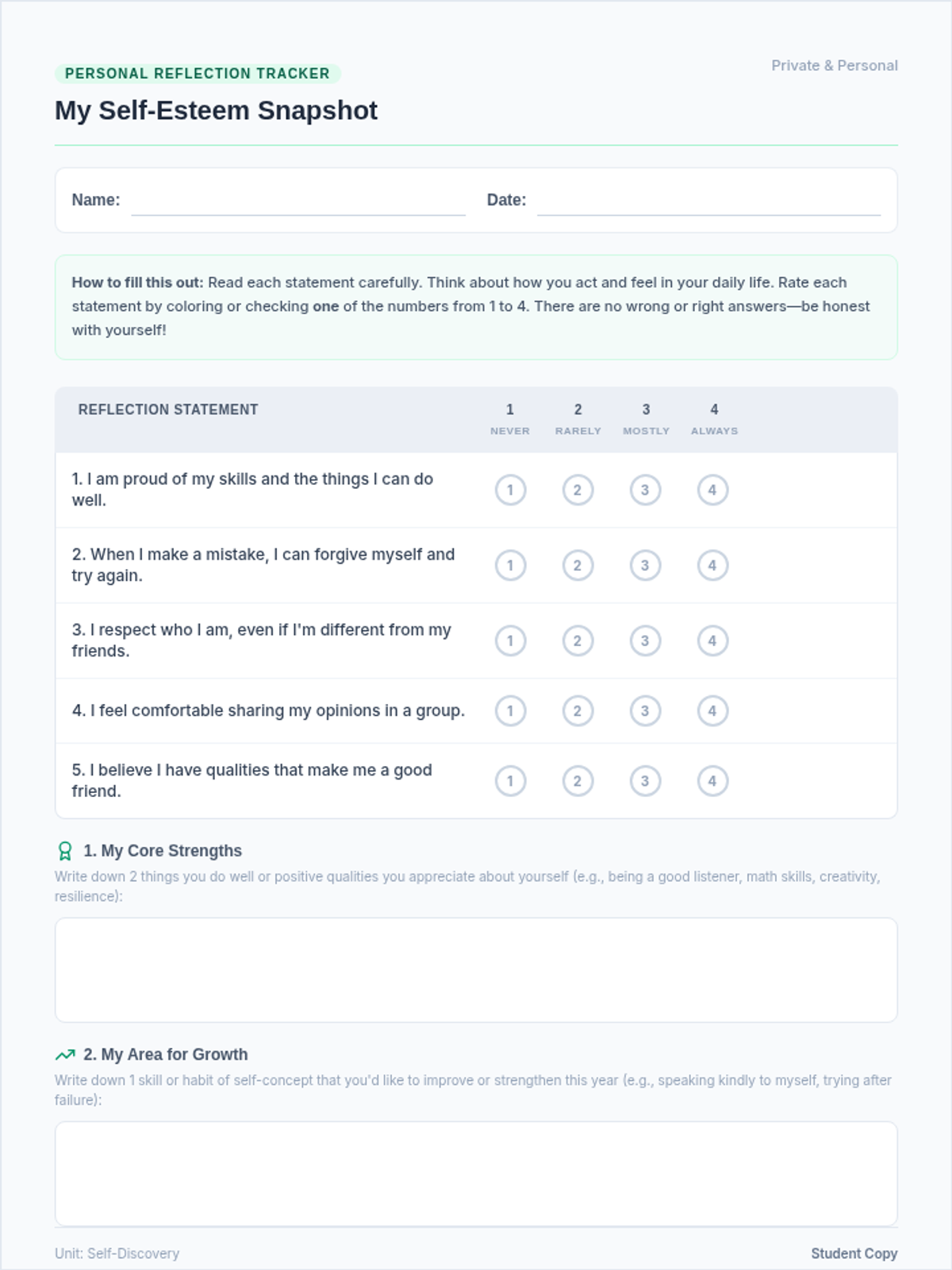
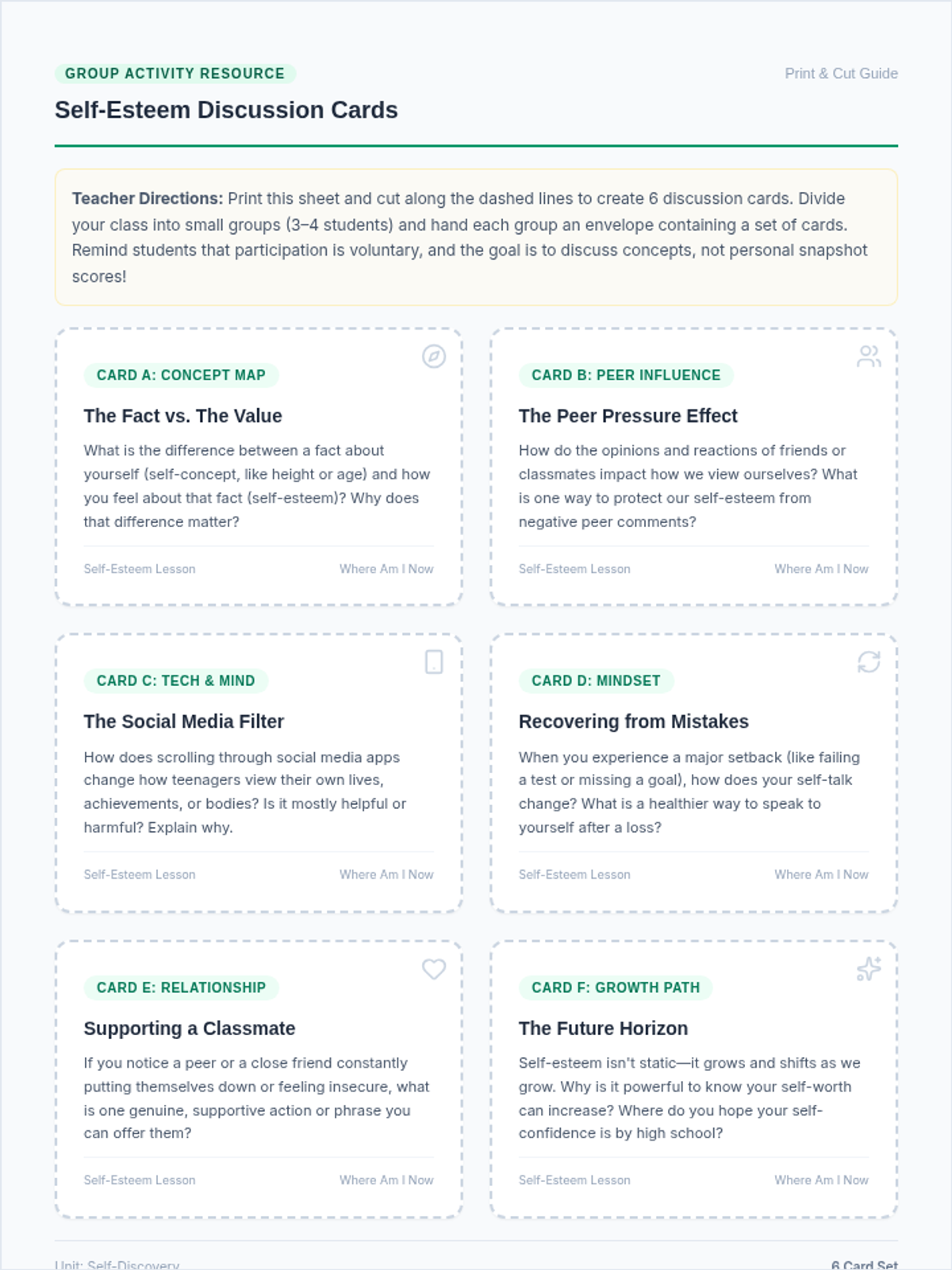
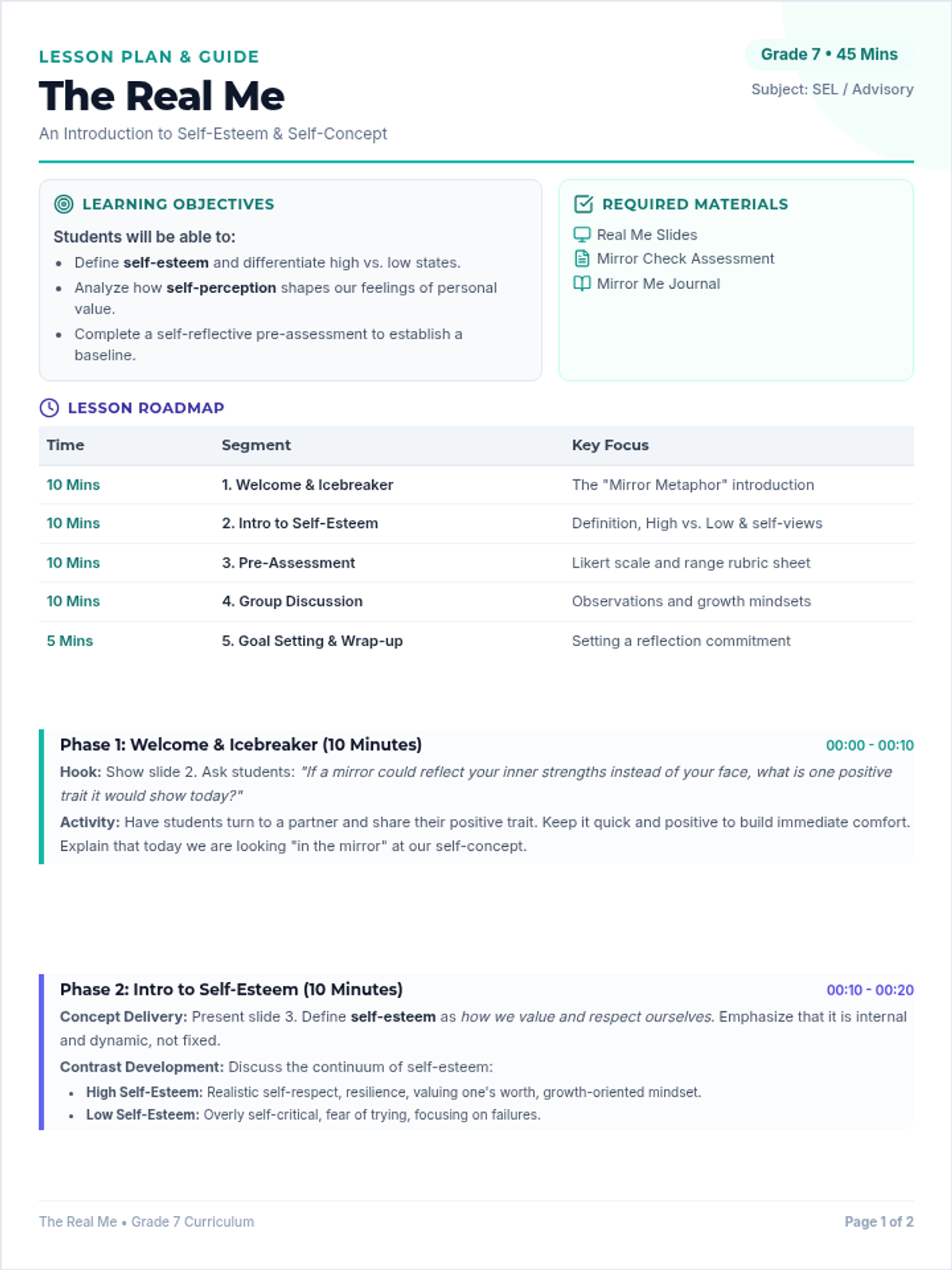
An introductory lesson on self-esteem for 7th graders, exploring personal value, self-perception, and establishing a baseline self-concept through reflection and goal-setting. This lesson guides students from definitions to deep personal reflection.
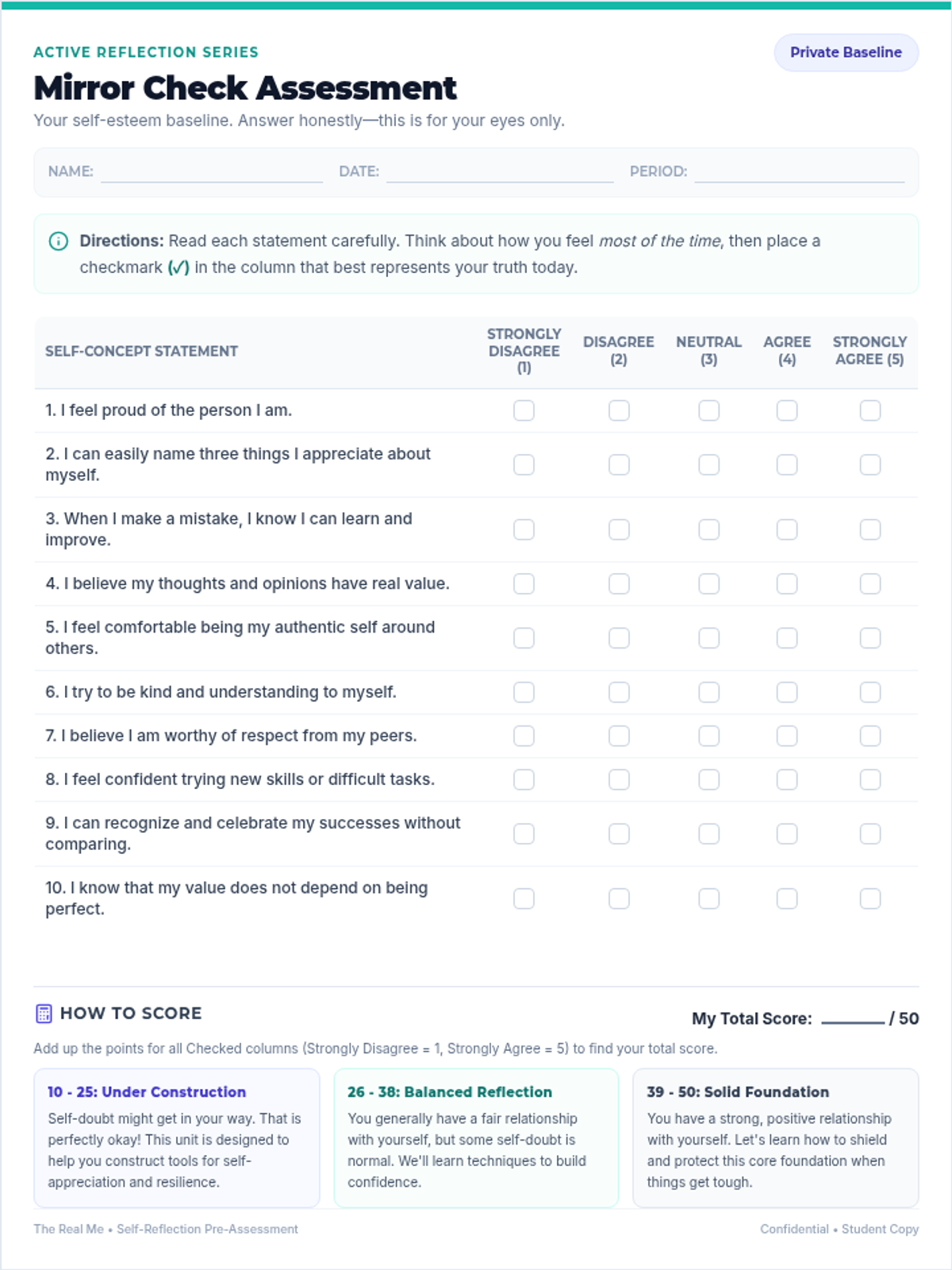
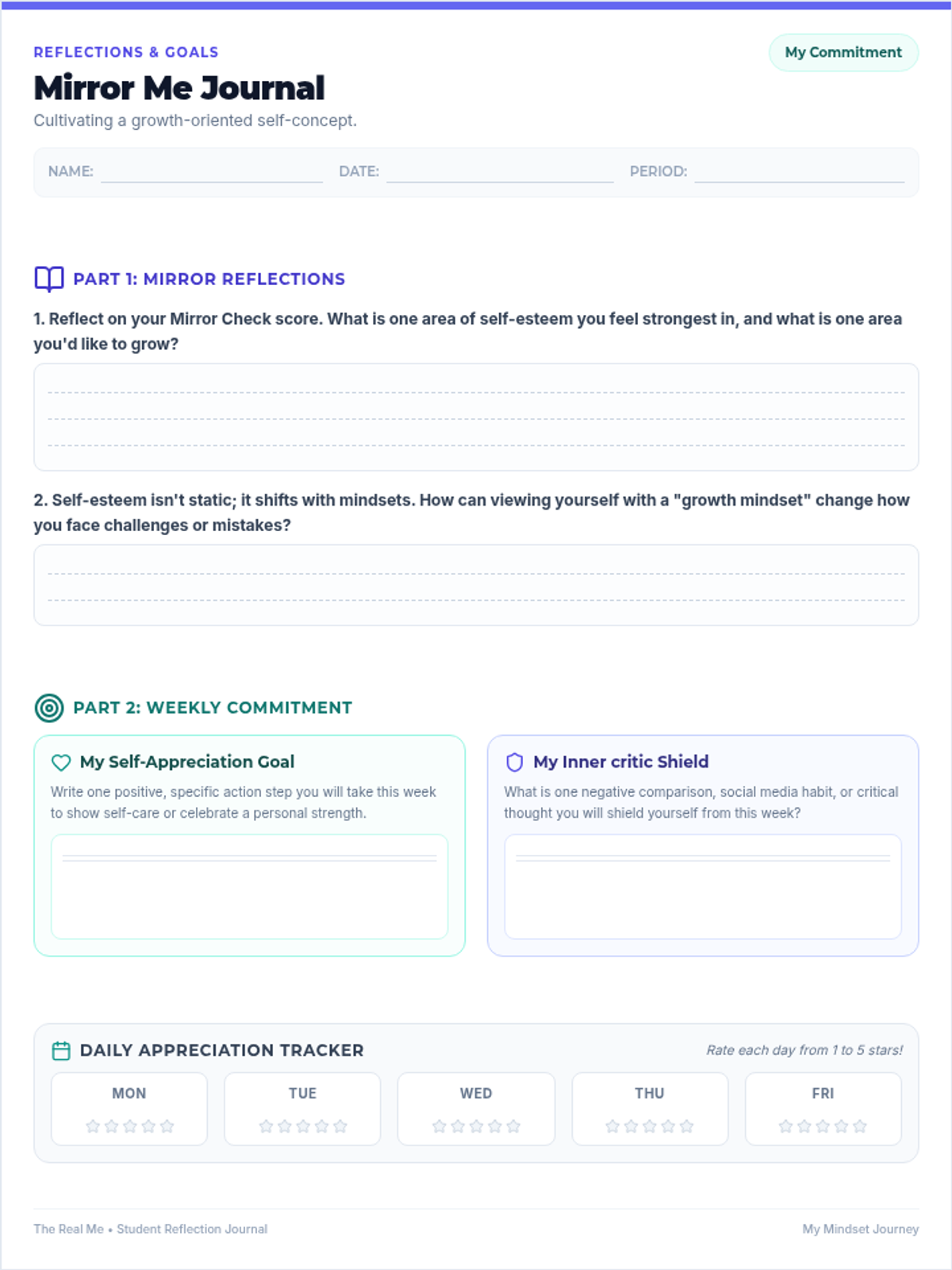
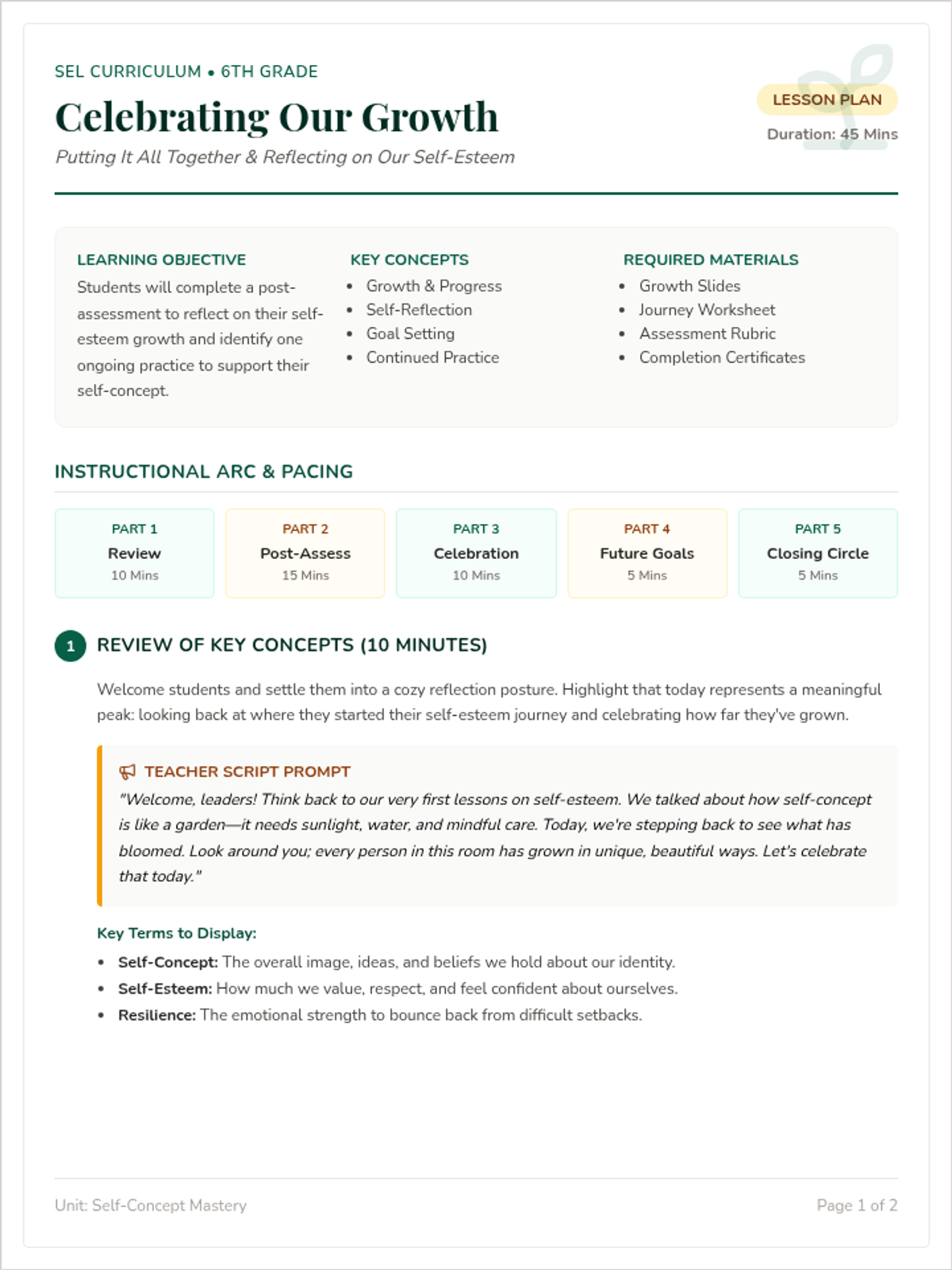
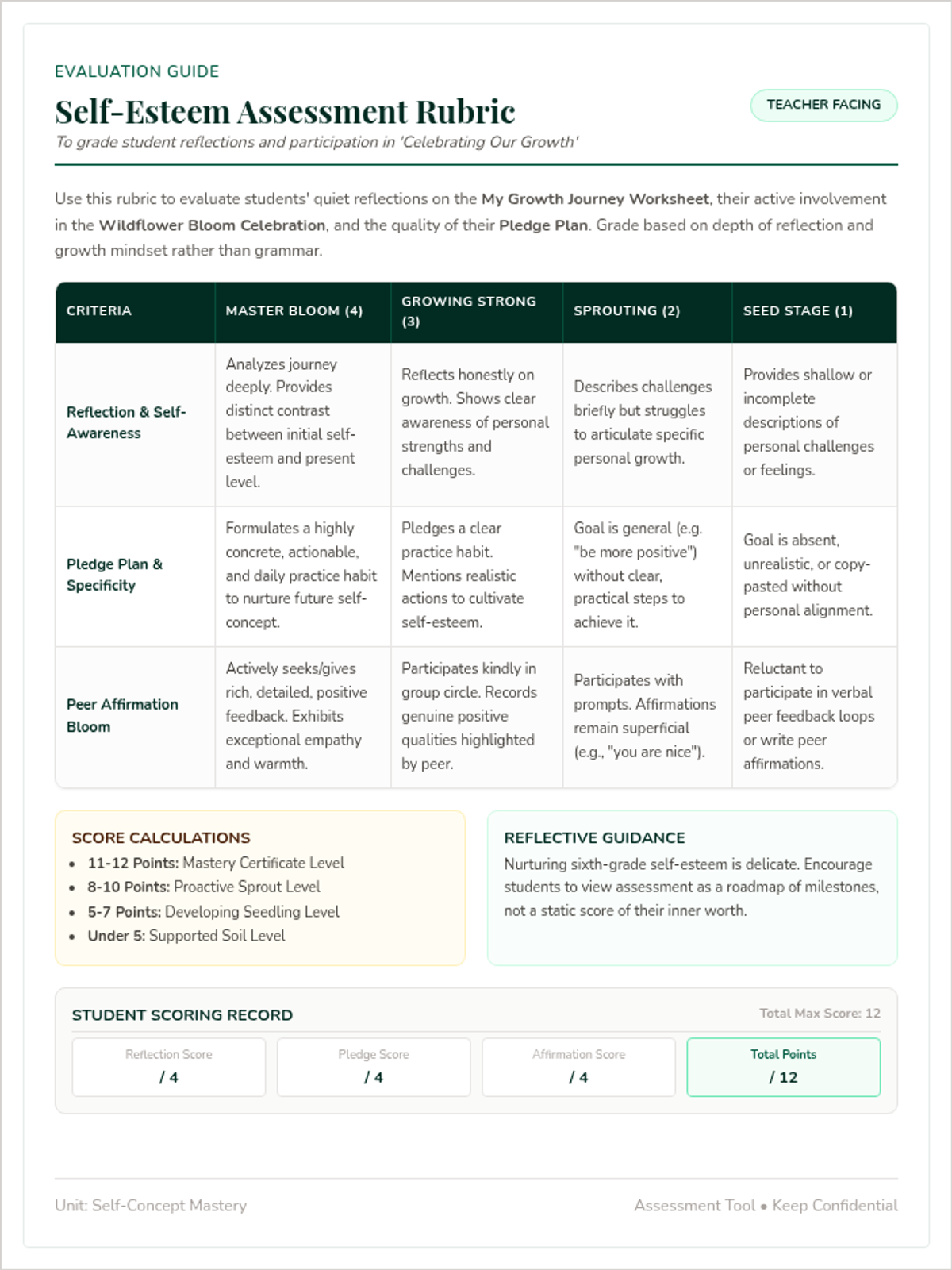
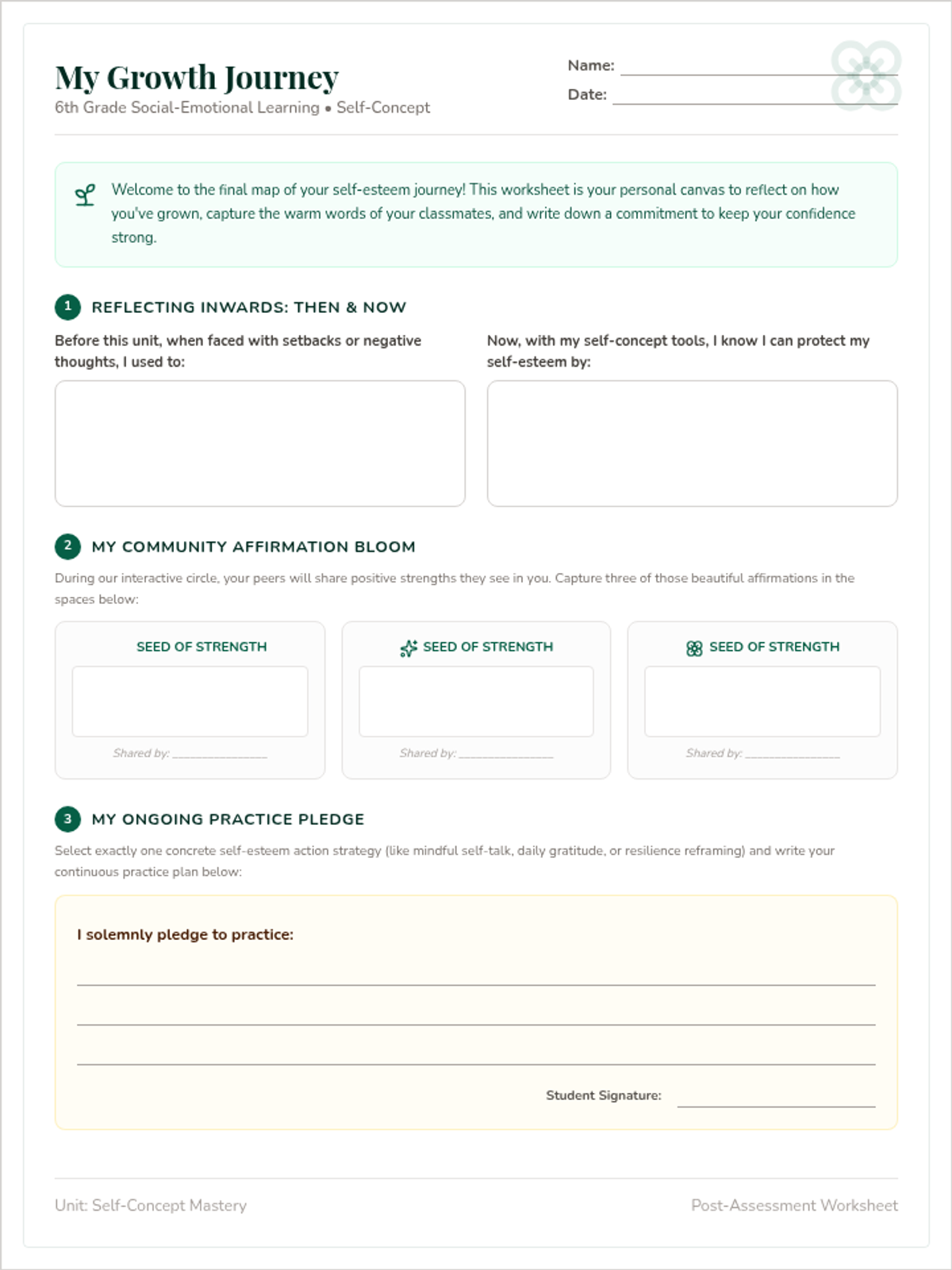
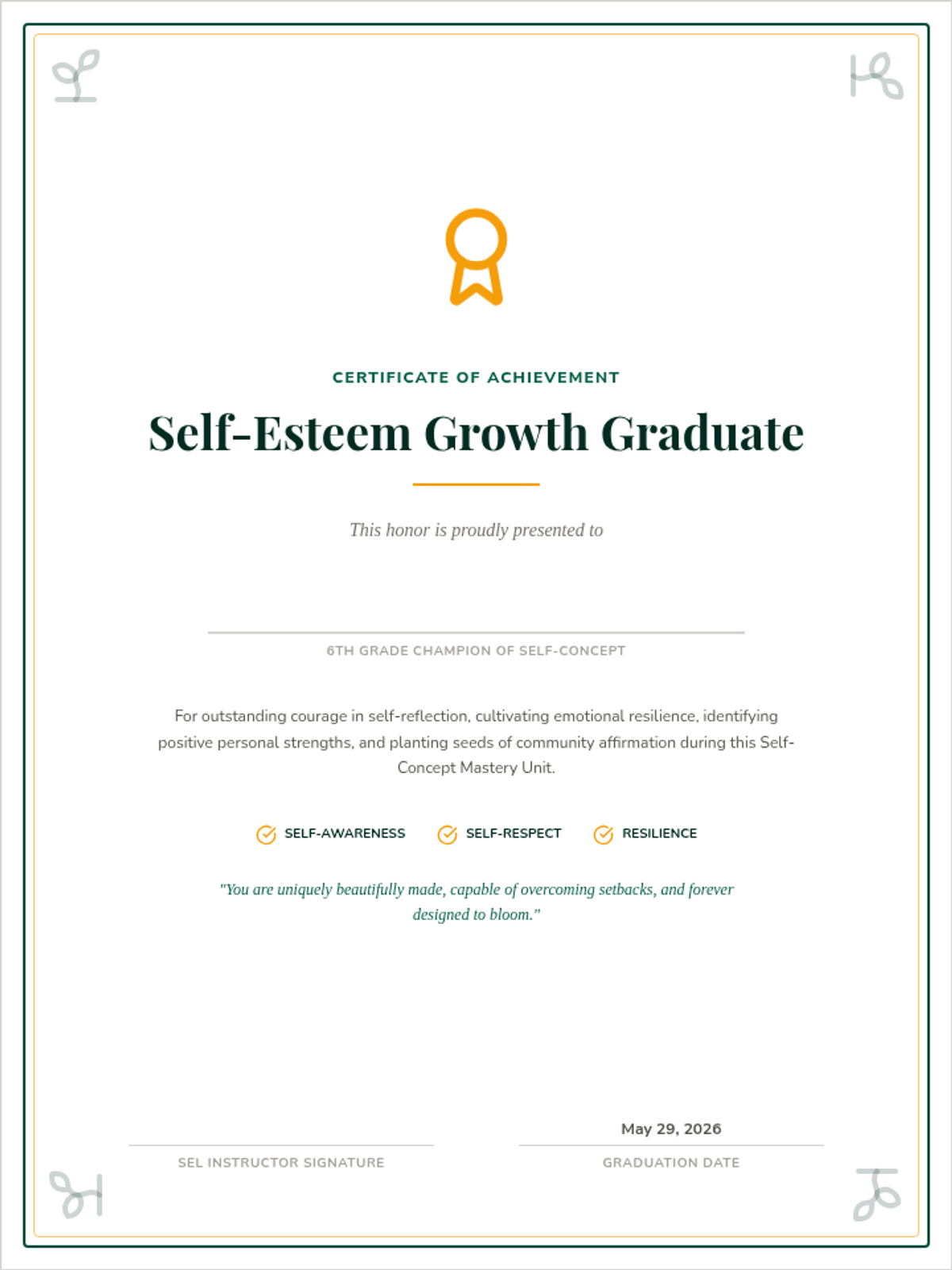
A 6th-grade social-emotional learning lesson focused on reflecting on self-esteem growth, completing a post-assessment, setting ongoing self-concept goals, and celebrating progress together. Includes a detailed lesson plan, instructional slides, reflection worksheet, assessment rubric, and a special certificate of completion.
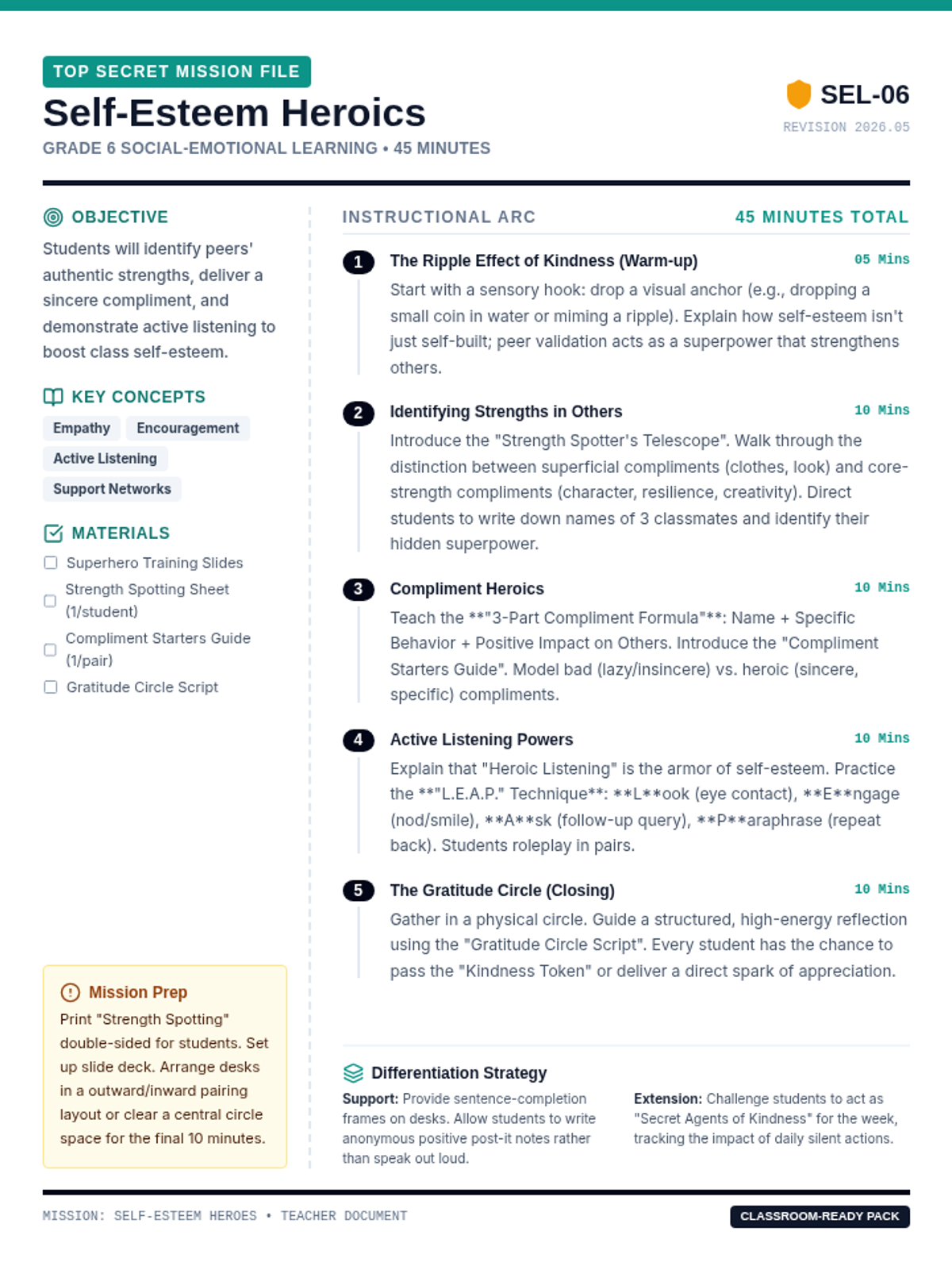
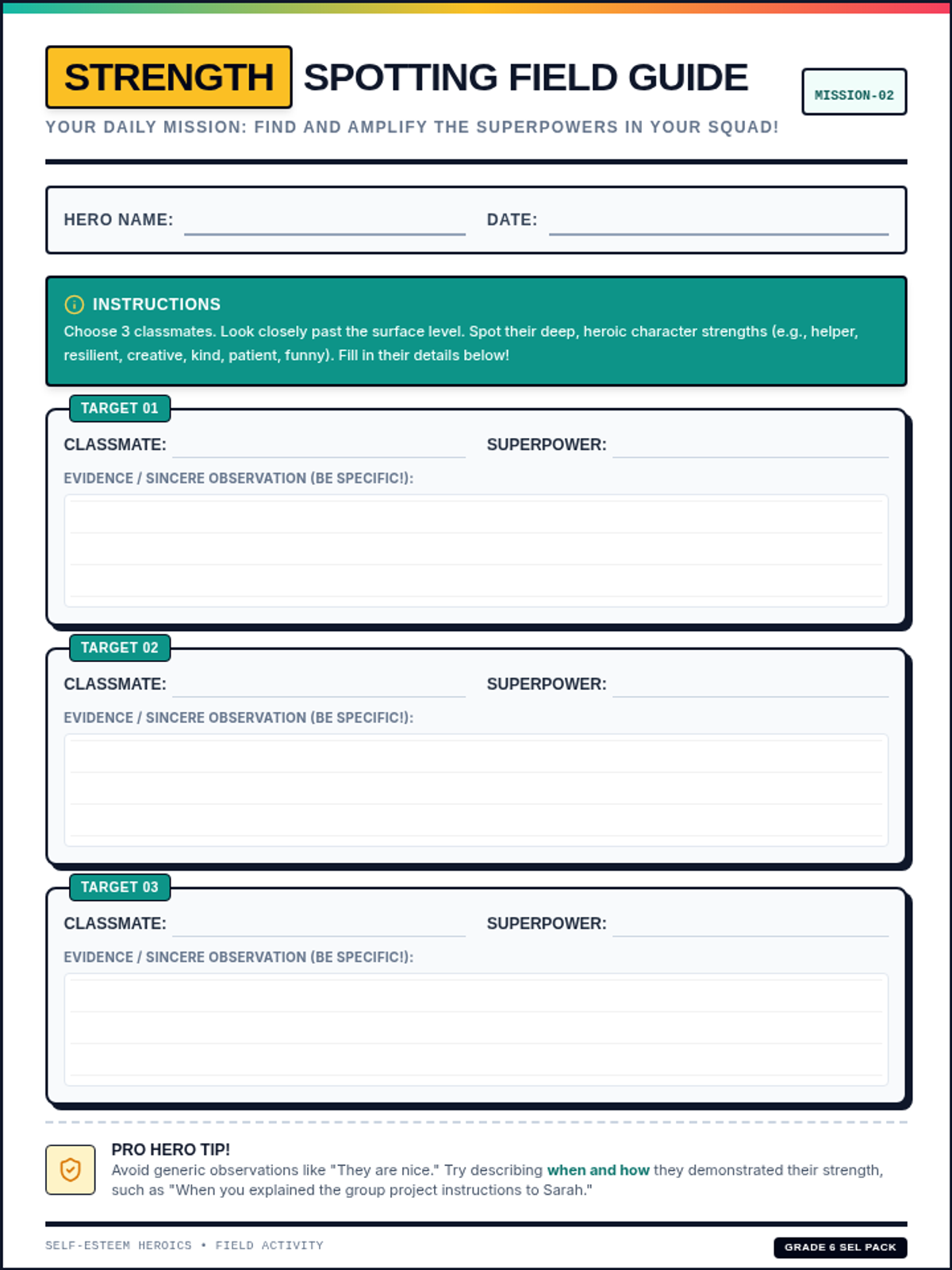
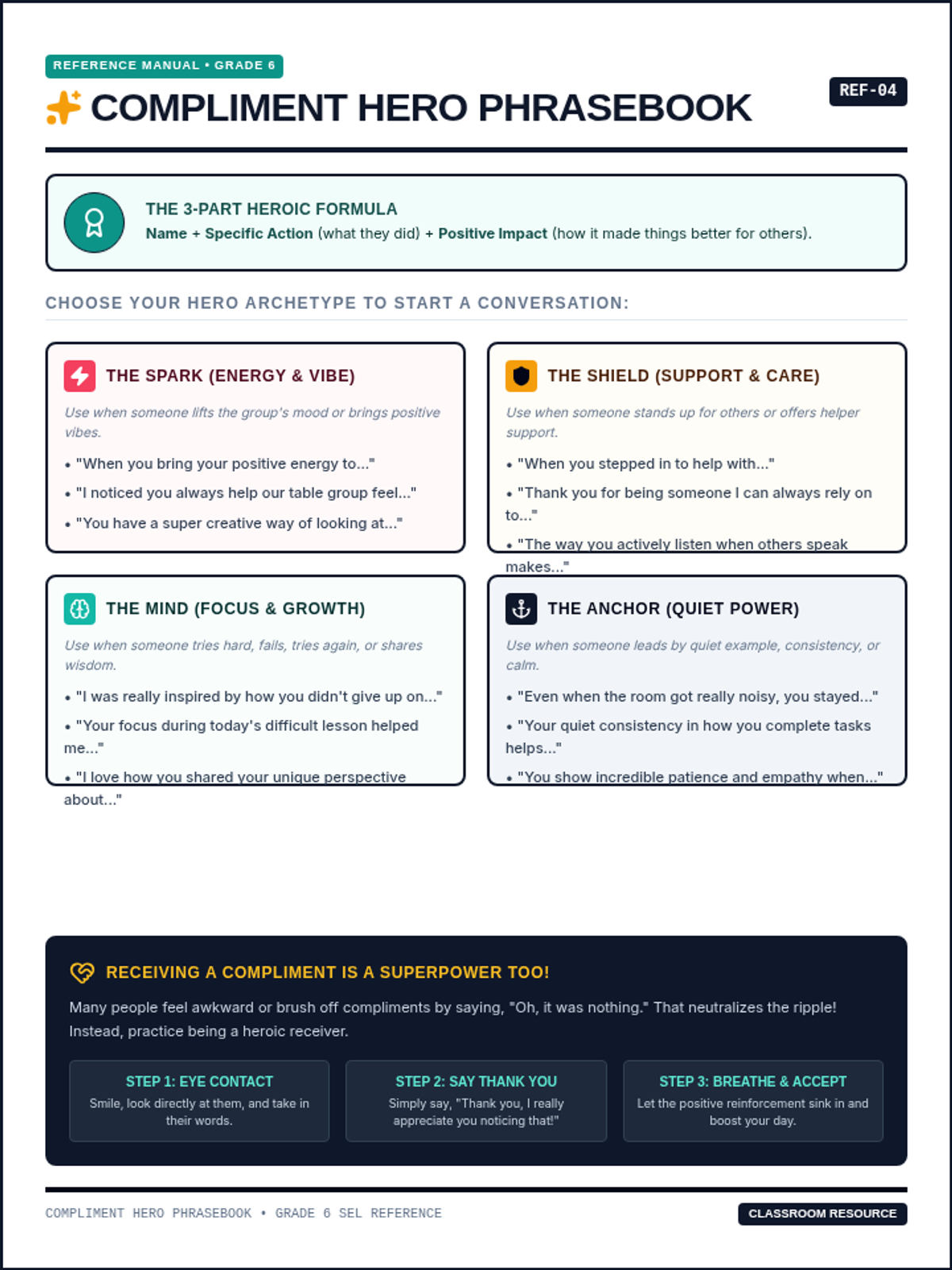
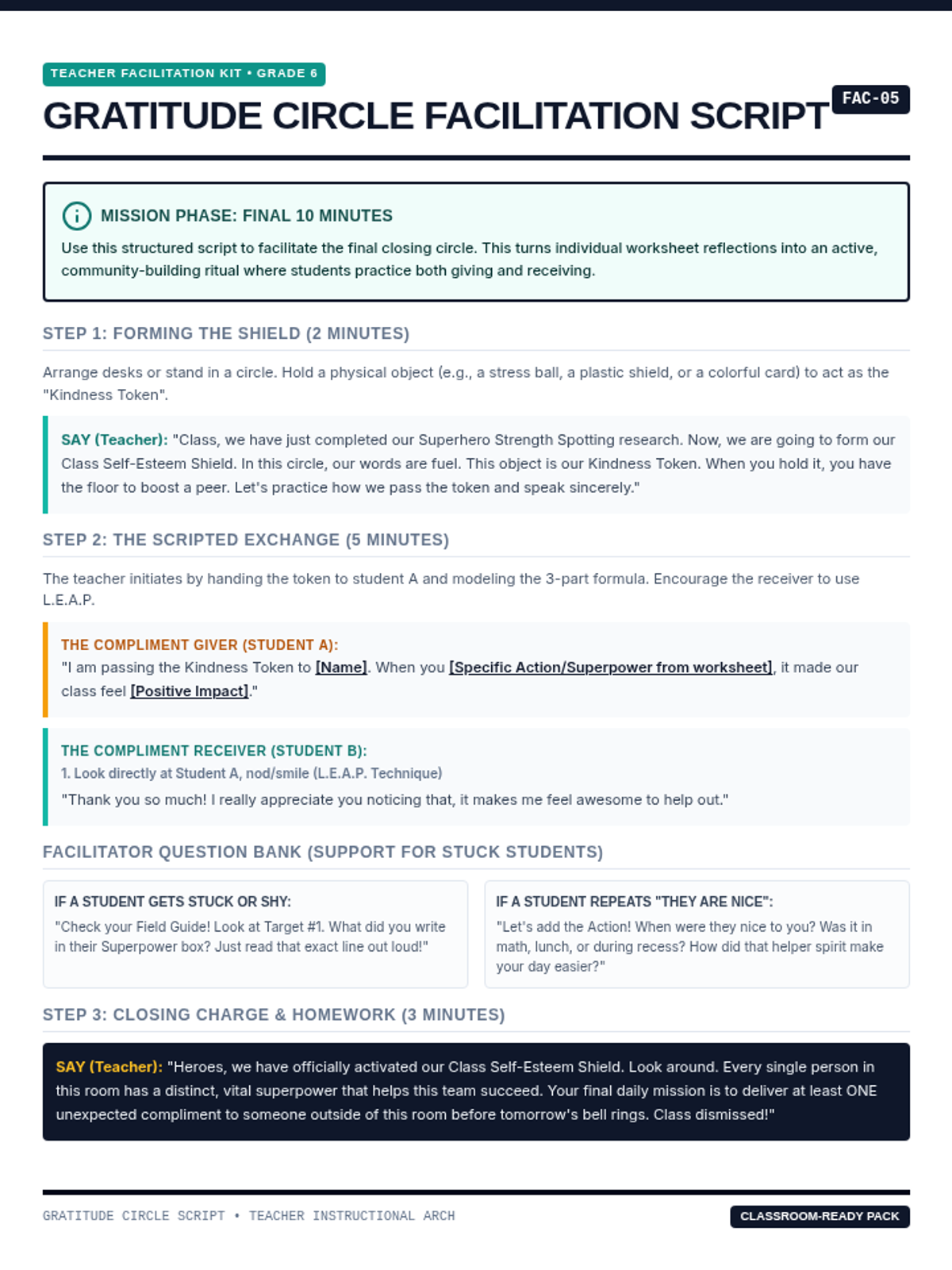
A 45-minute social-emotional learning lesson for 6th grade focused on empathy, active listening, and sincere encouragement to build peer self-esteem. Students learn to spot strengths, deliver authentic compliments, and practice active listening through comic-themed superhero training activities.