A 45-minute lesson for 4th graders on growth vs. fixed mindset. Students learn that effort and strategies build brain power, complete a self-assessment, sort growth mindset statements, and choose personal growth strategies.
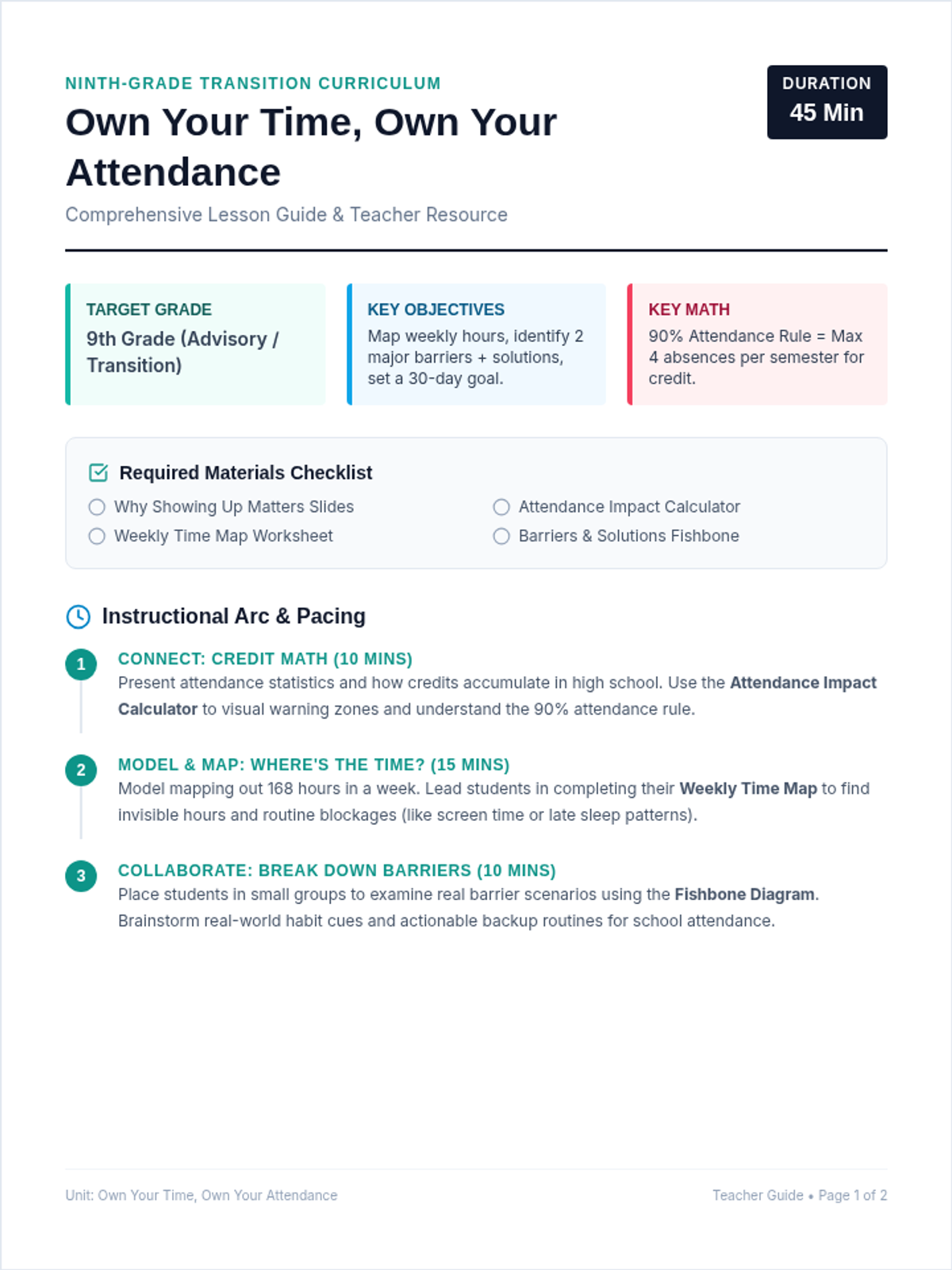
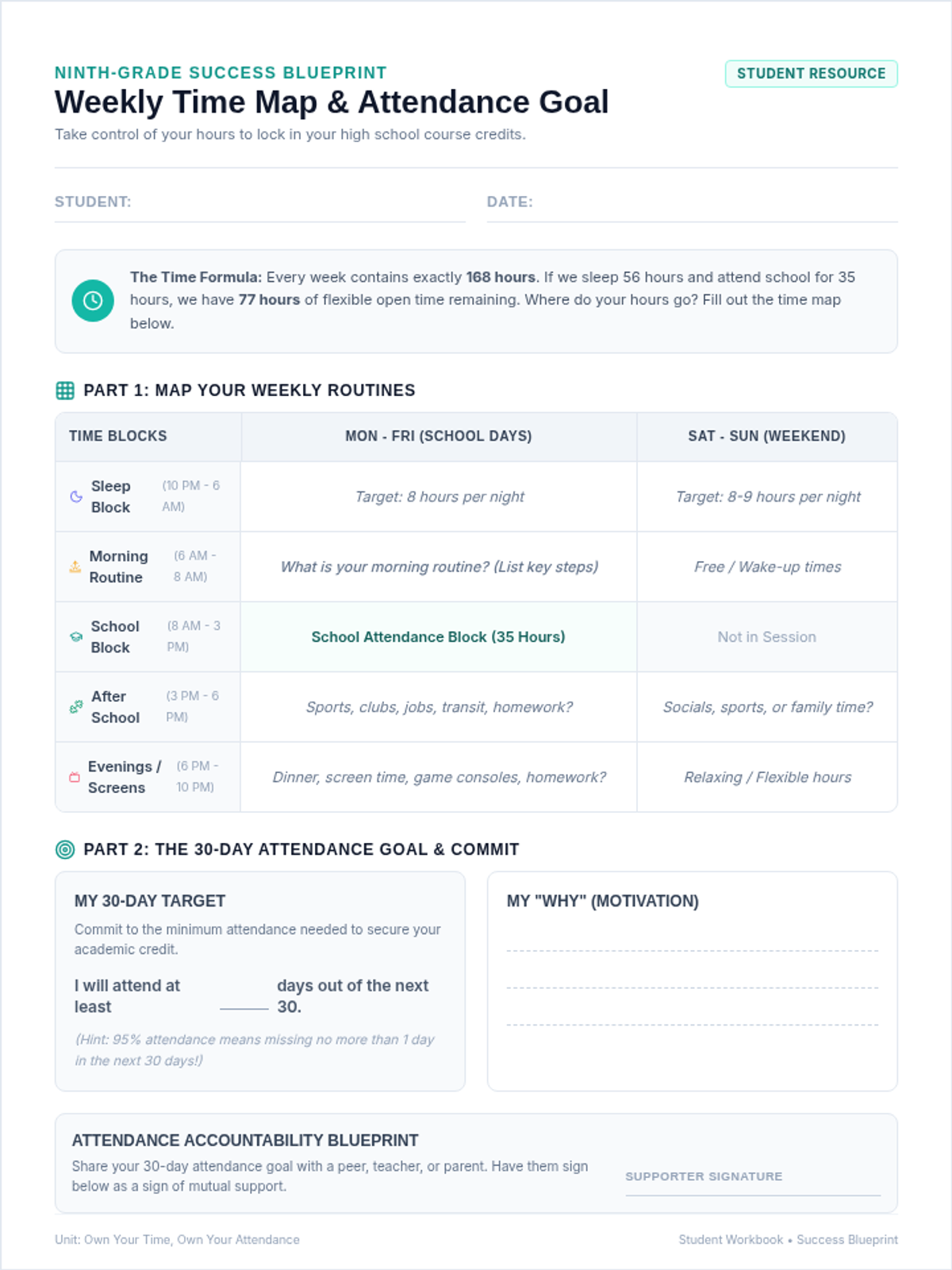
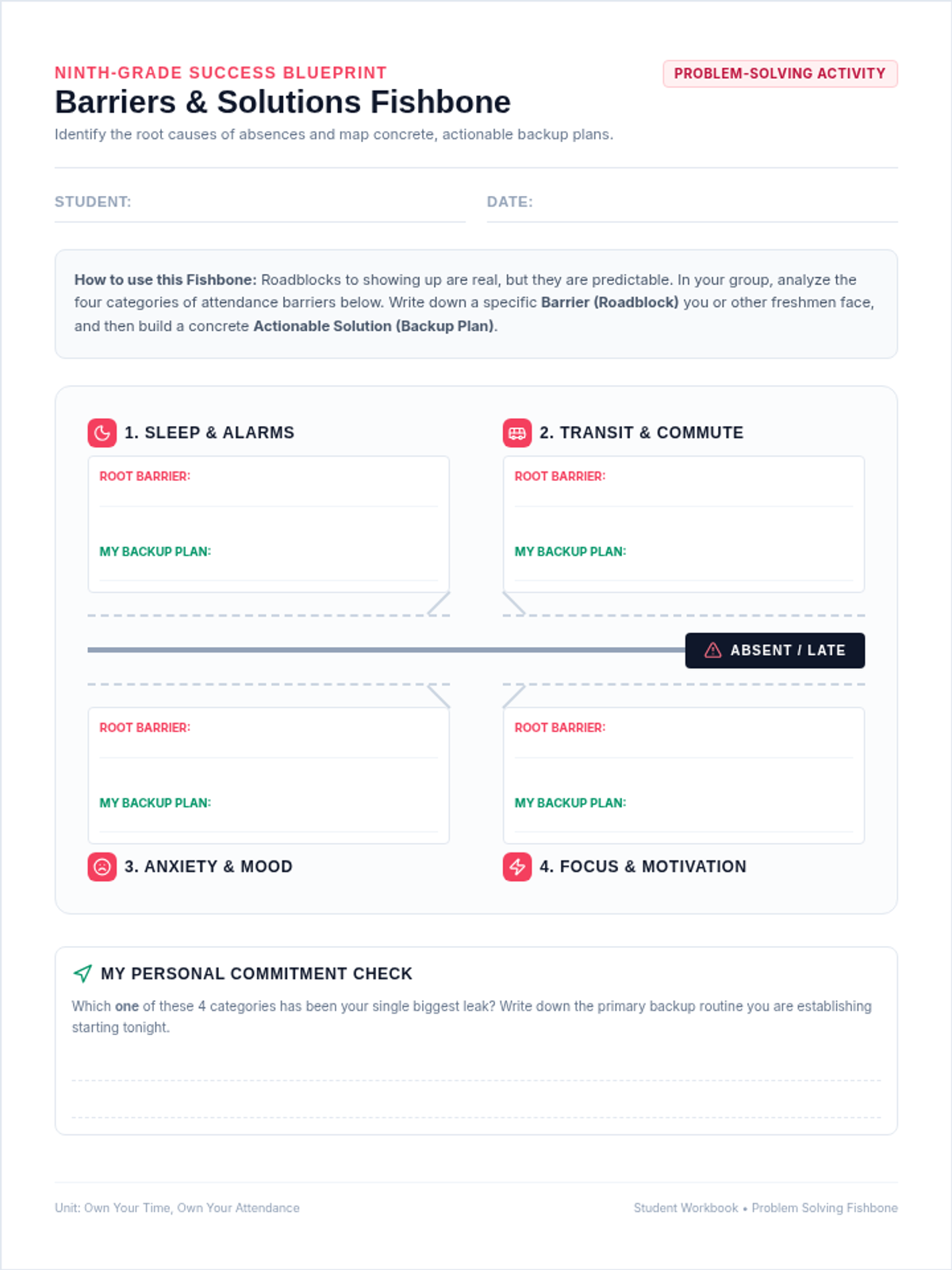
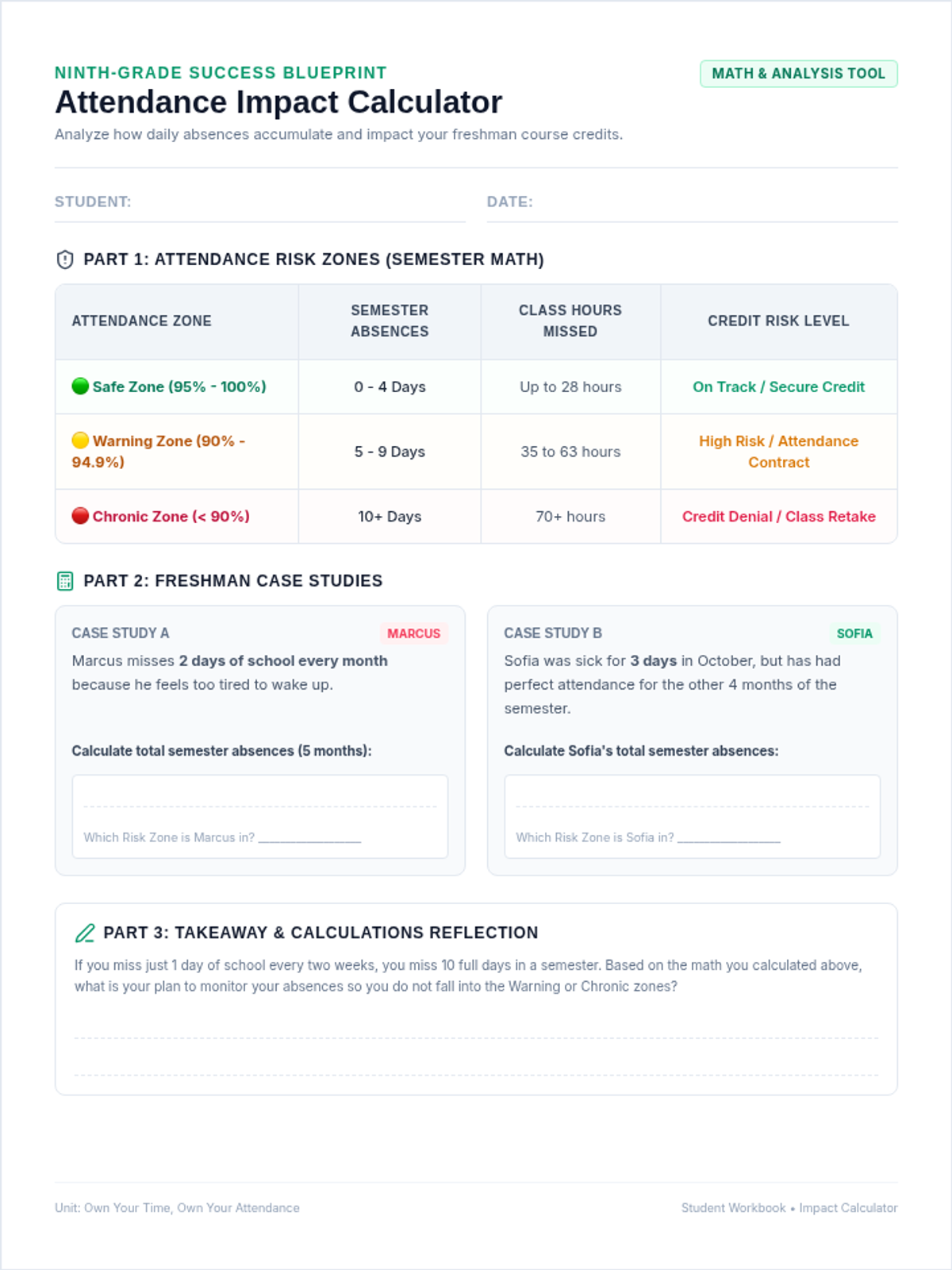
A high school transition lesson designed for 9th graders to understand the direct connection between daily attendance, high school credit acquisition, and time management. Students analyze their weekly schedules, map out barriers using a fishbone diagram, and commit to a 30-day attendance goal.
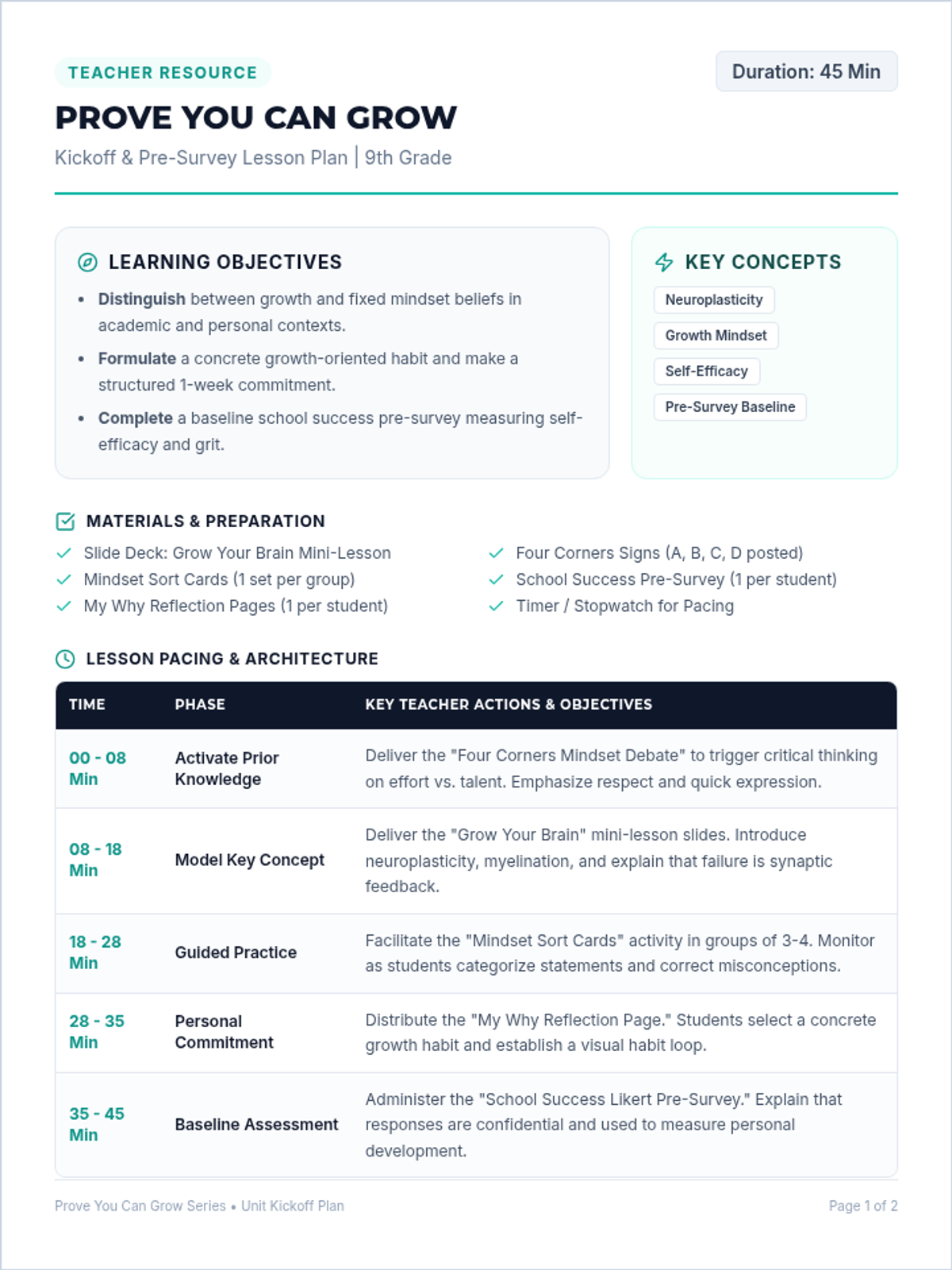
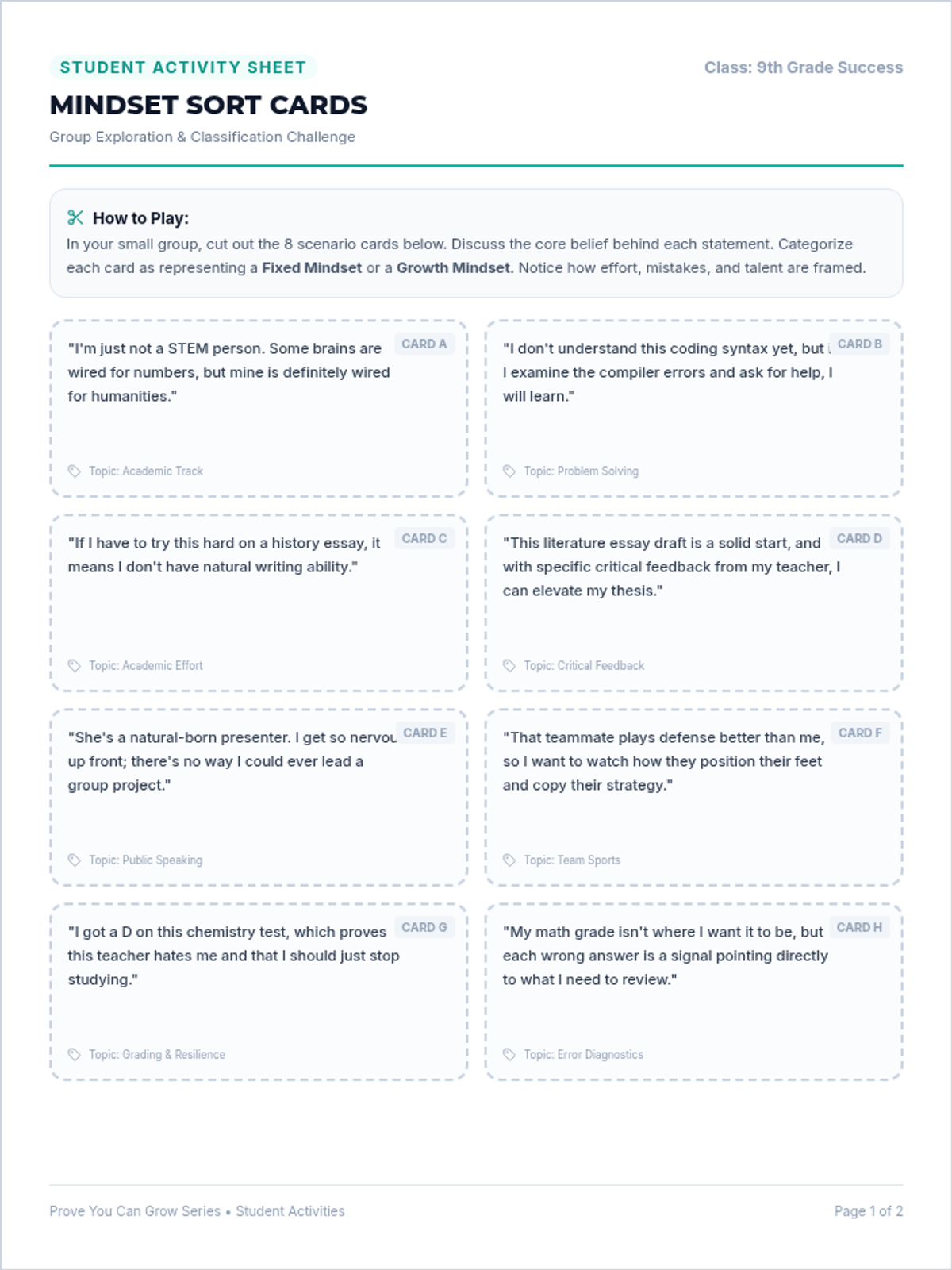
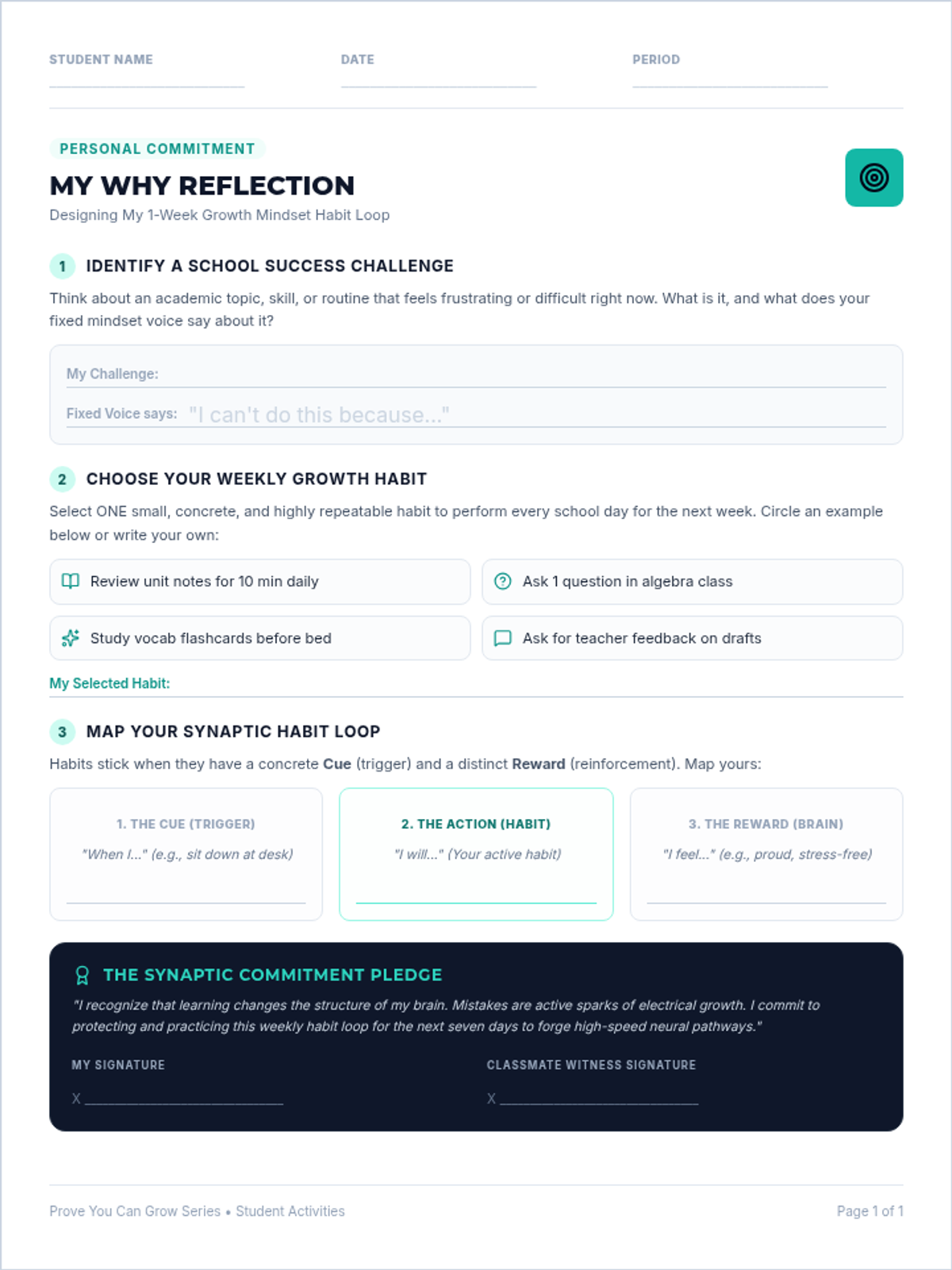
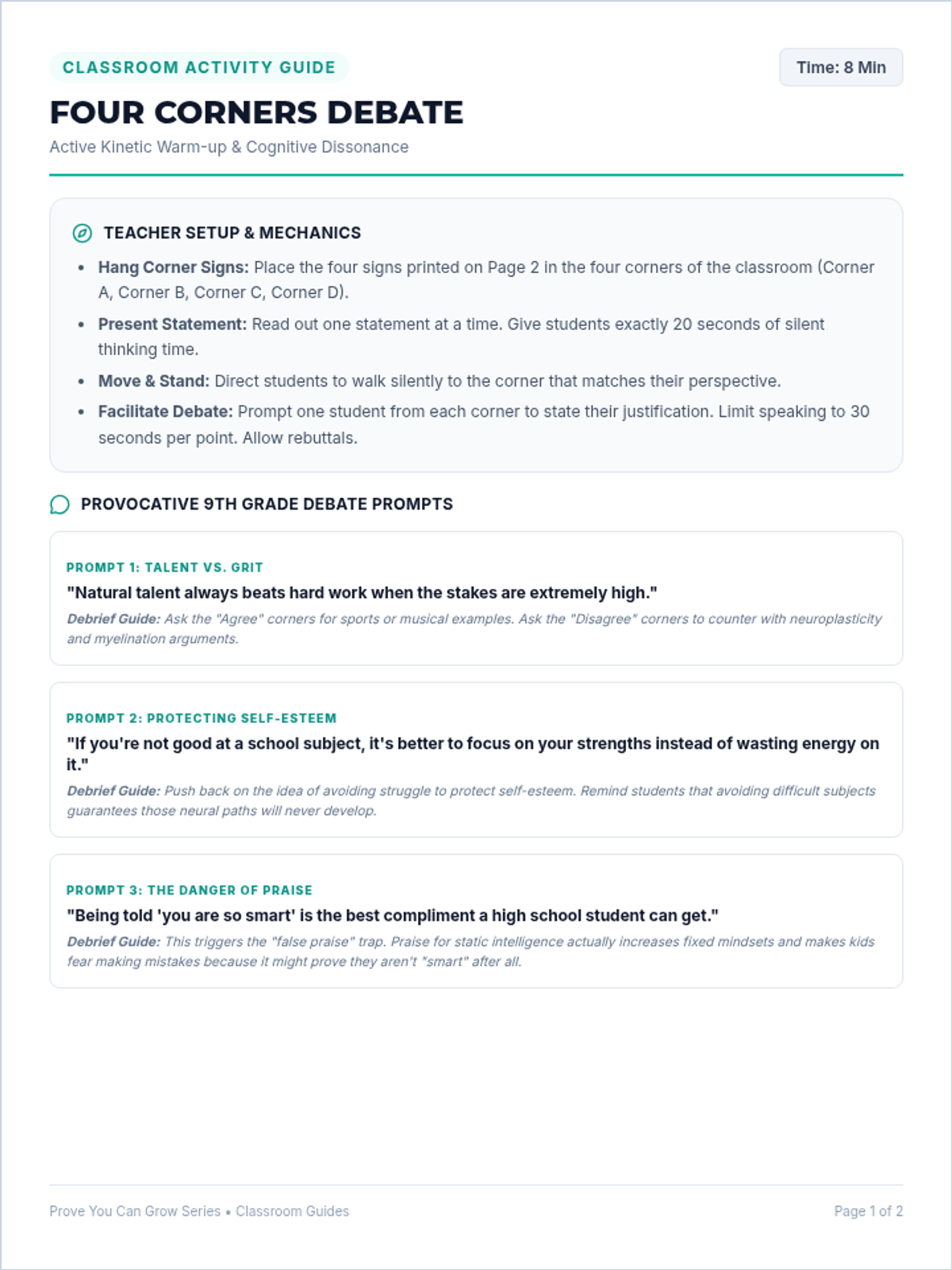
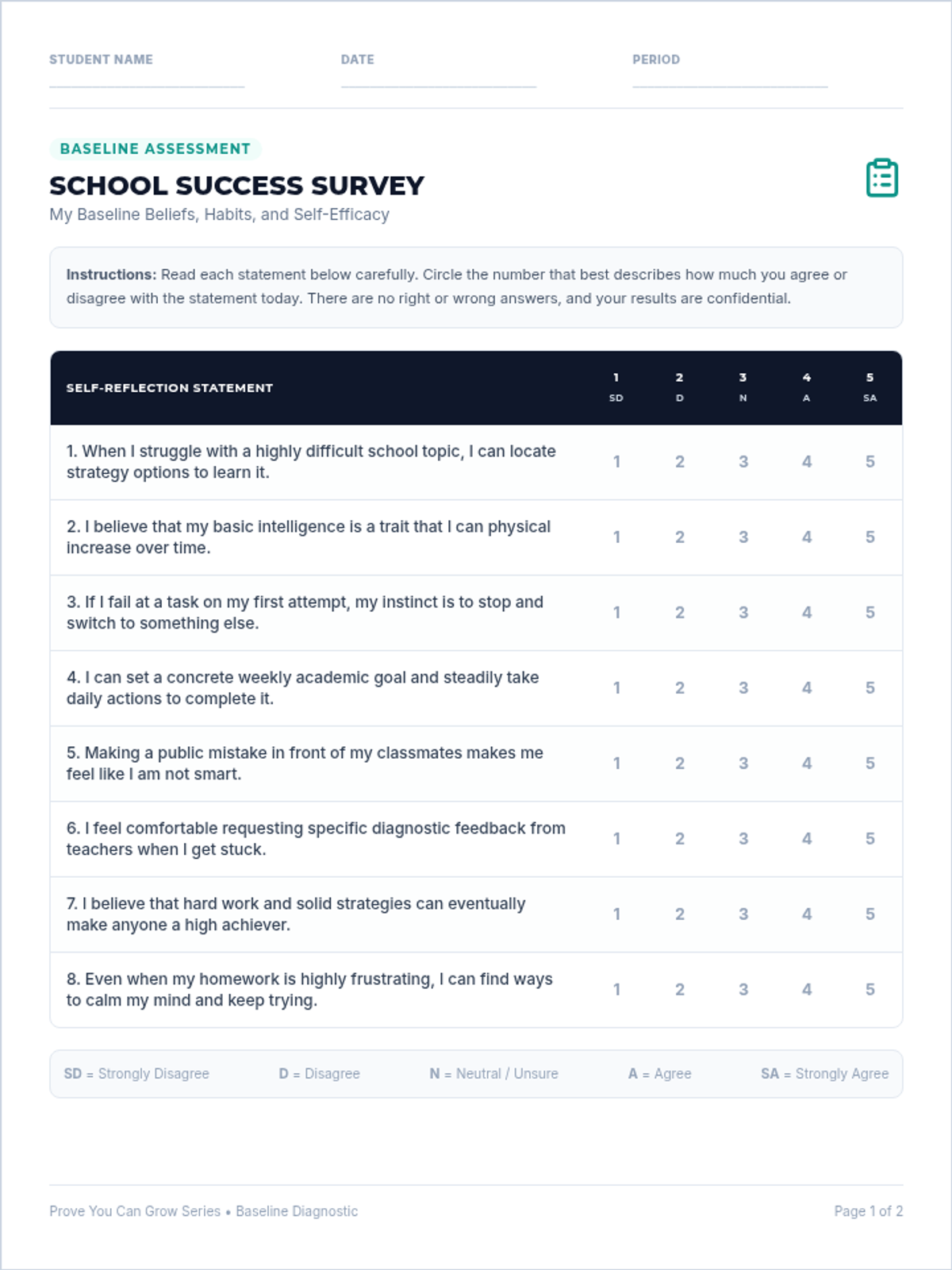
A kickoff lesson introducing 9th graders to growth mindset, neuroplasticity, and self-efficacy. Students engage in collaborative activities, analyze their mindsets, make a personal growth commitment, and complete a baseline school success pre-survey.
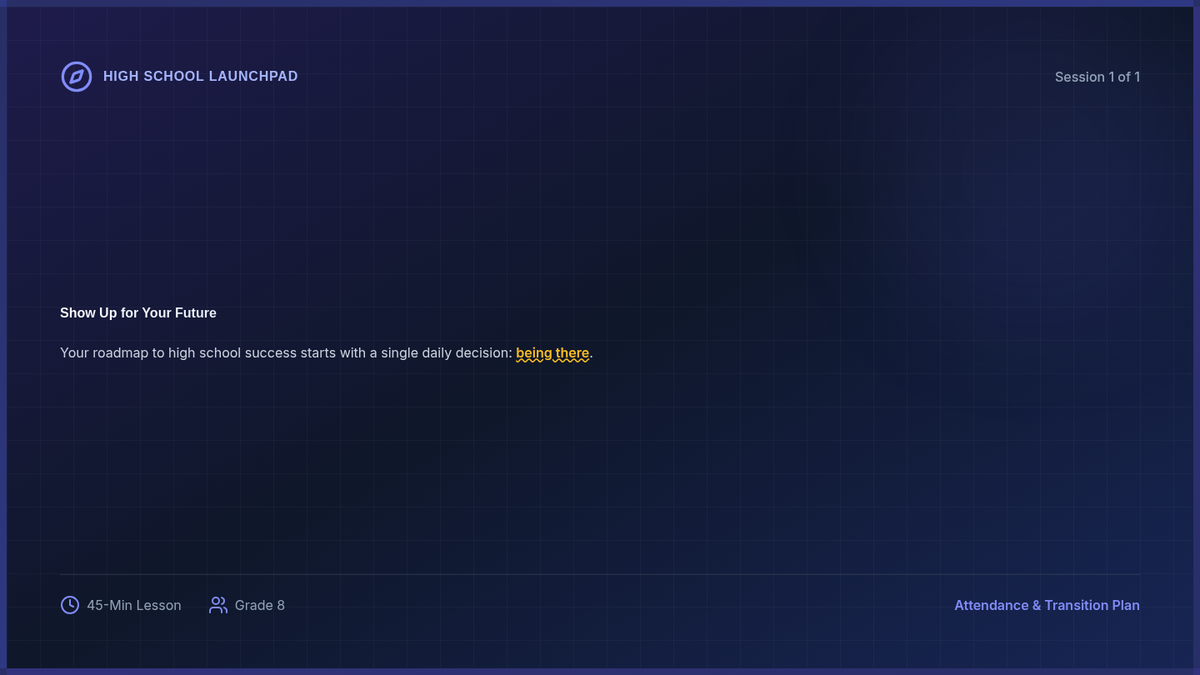
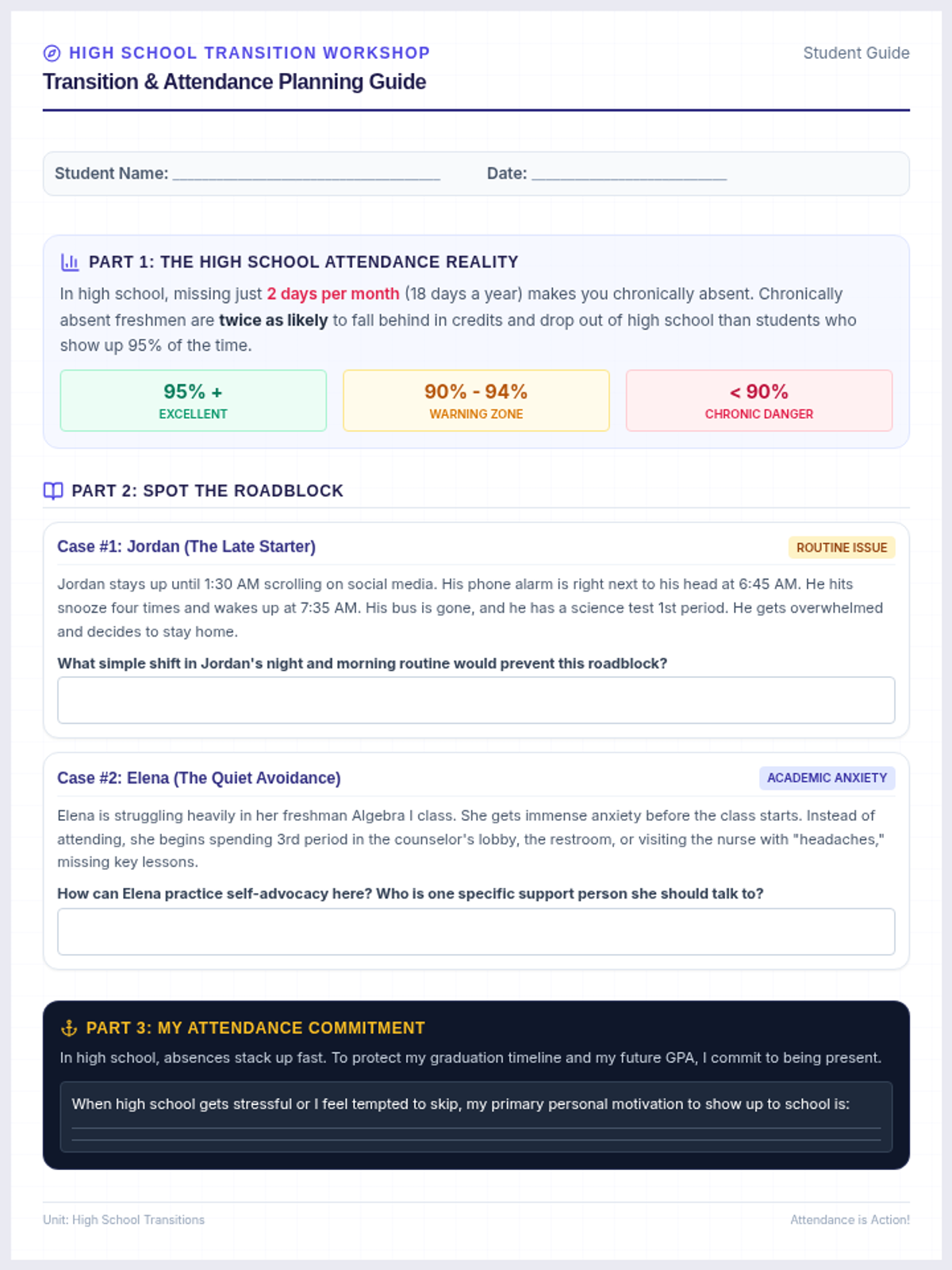
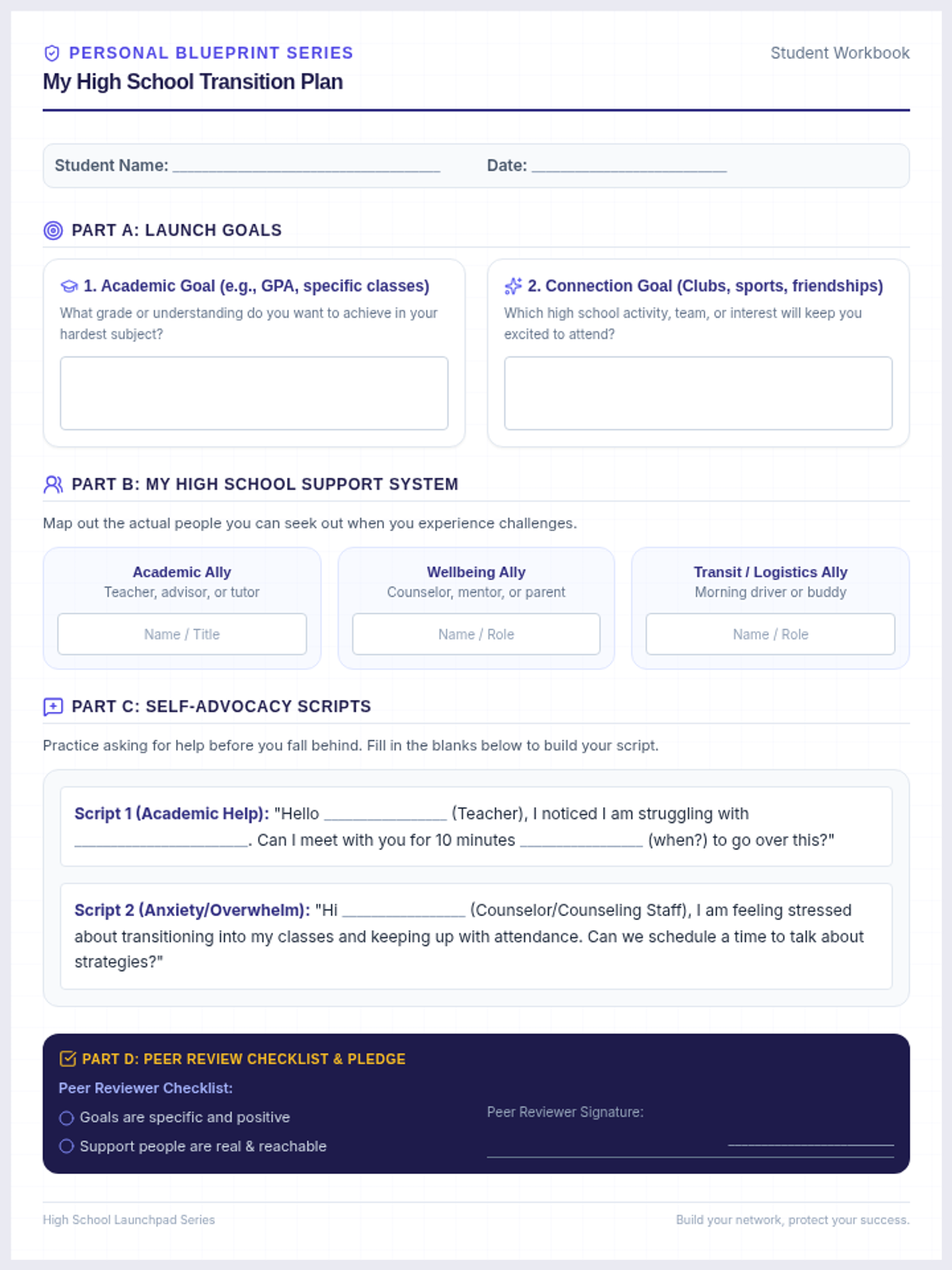
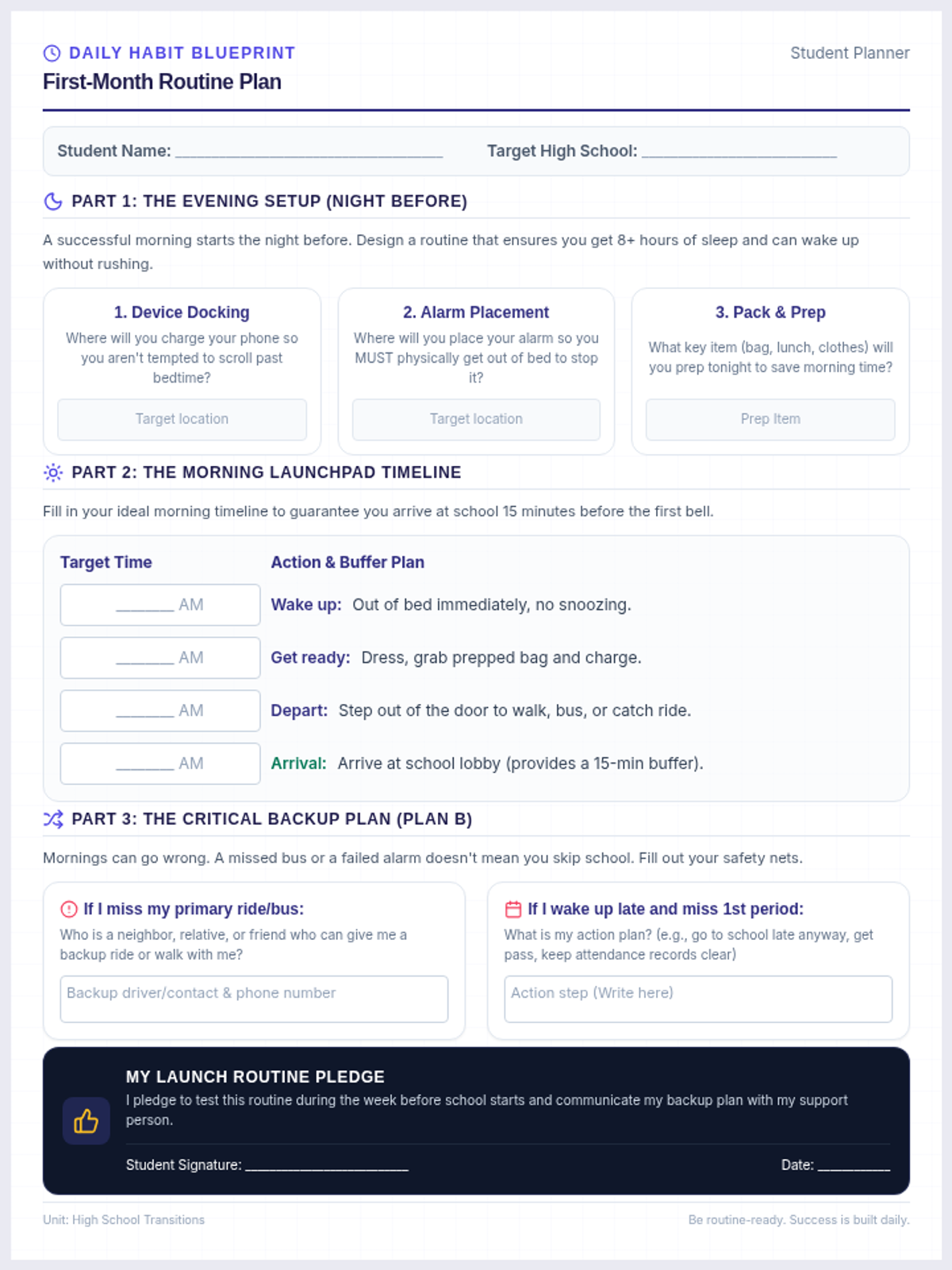
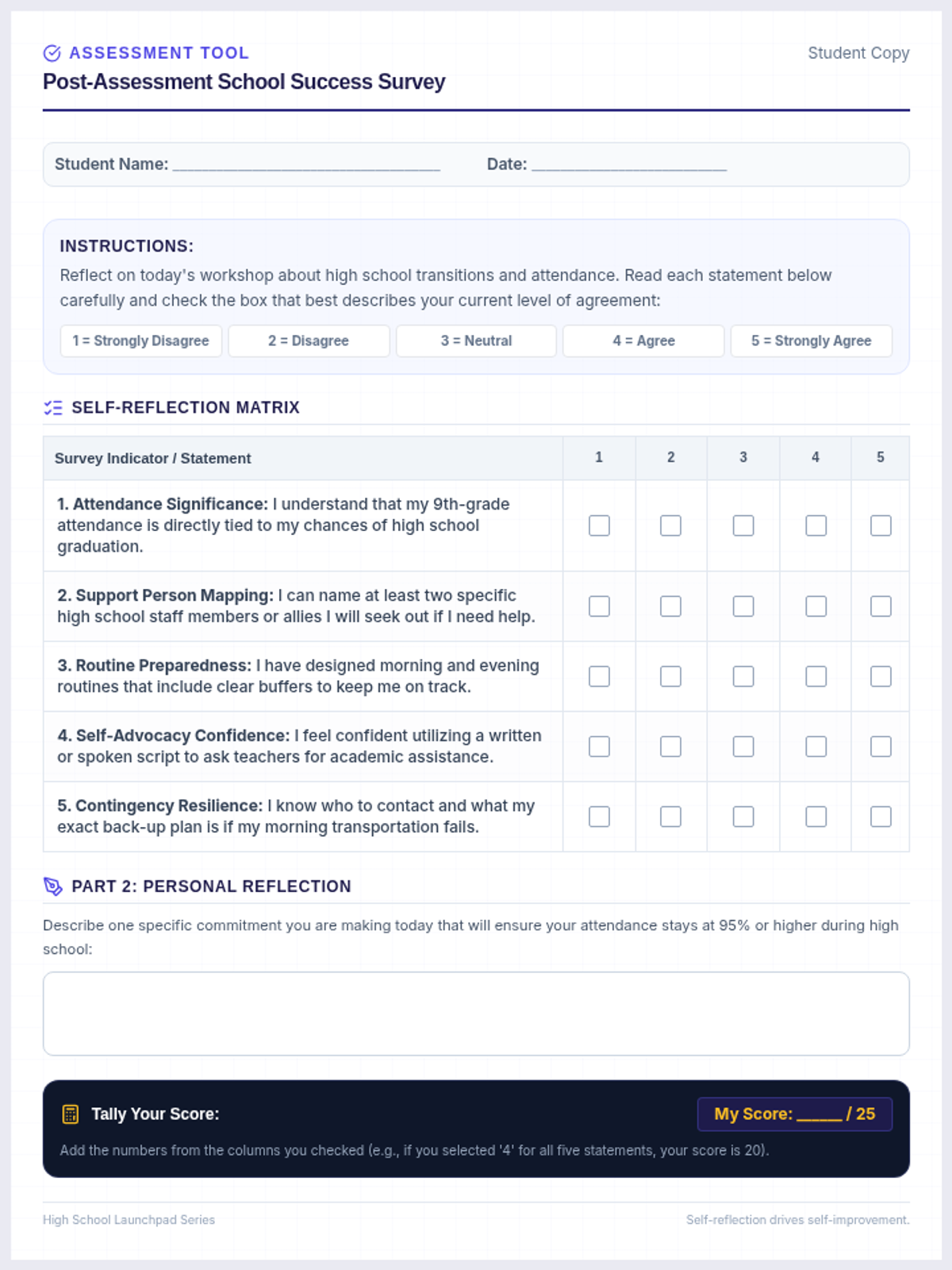
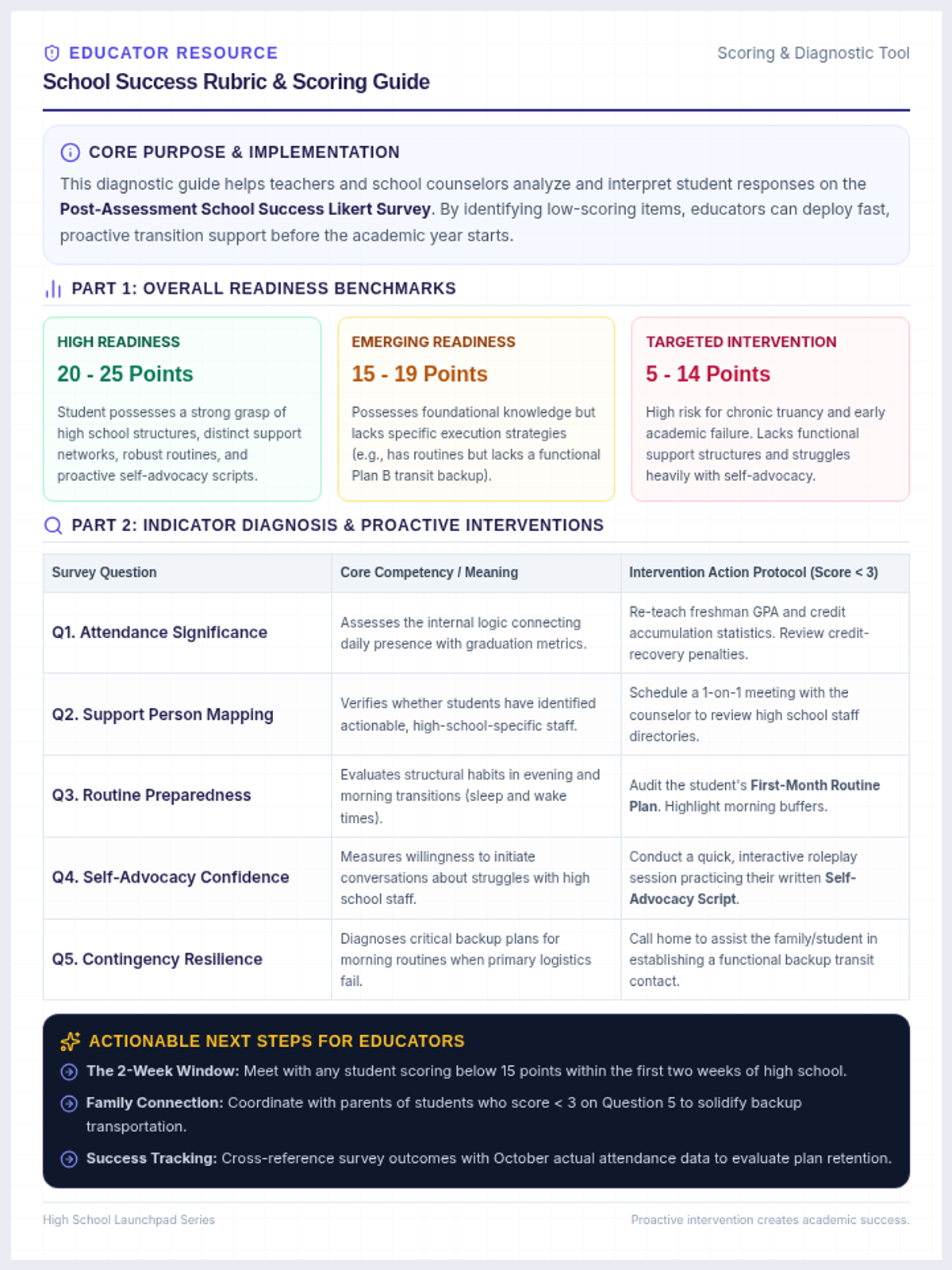
A comprehensive 45-minute lesson for 8th graders transitioning to high school, focusing on the link between attendance and academic success, building a personal transition plan with support networks, designing daily routines, and self-assessing readiness.
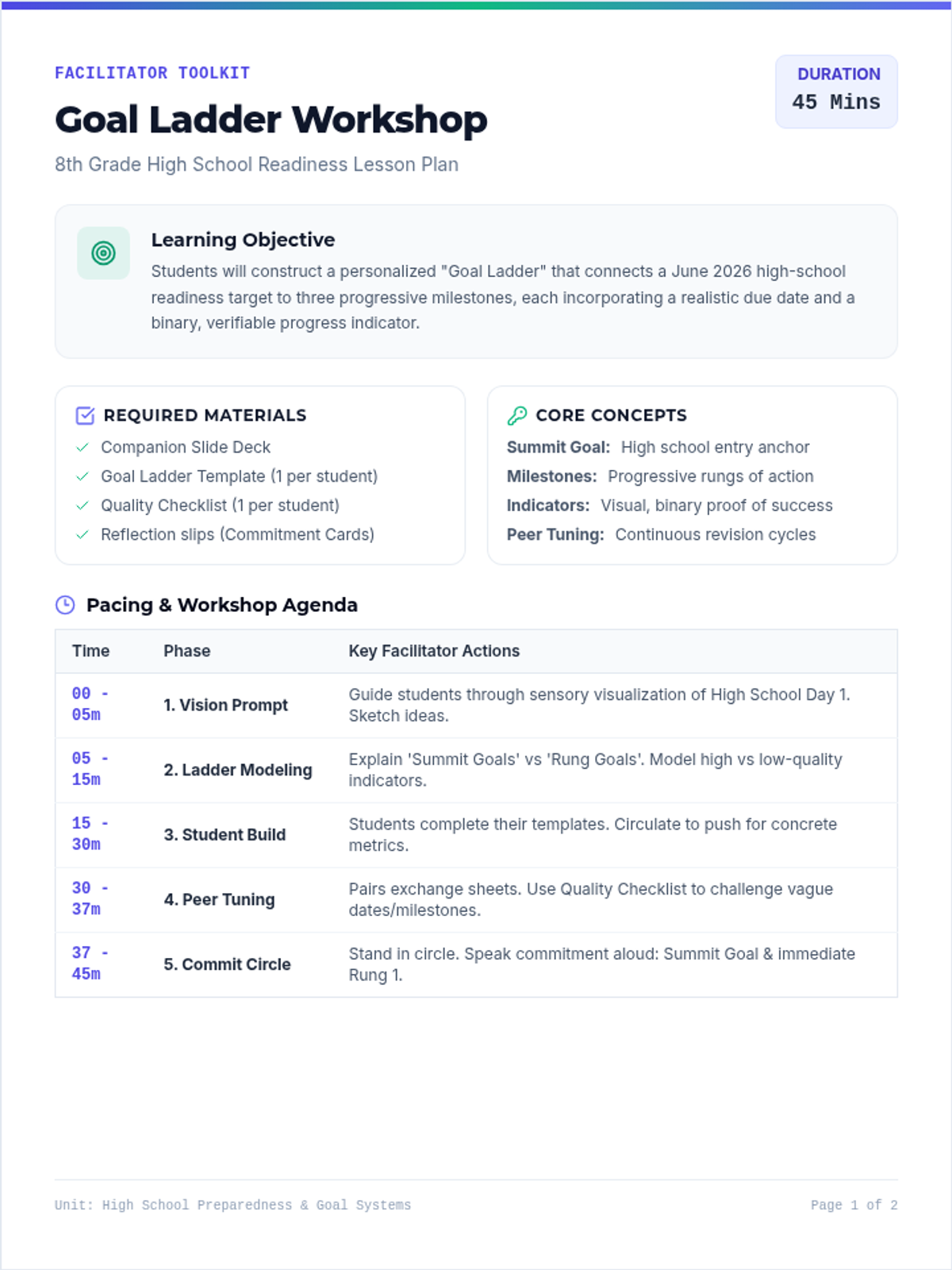
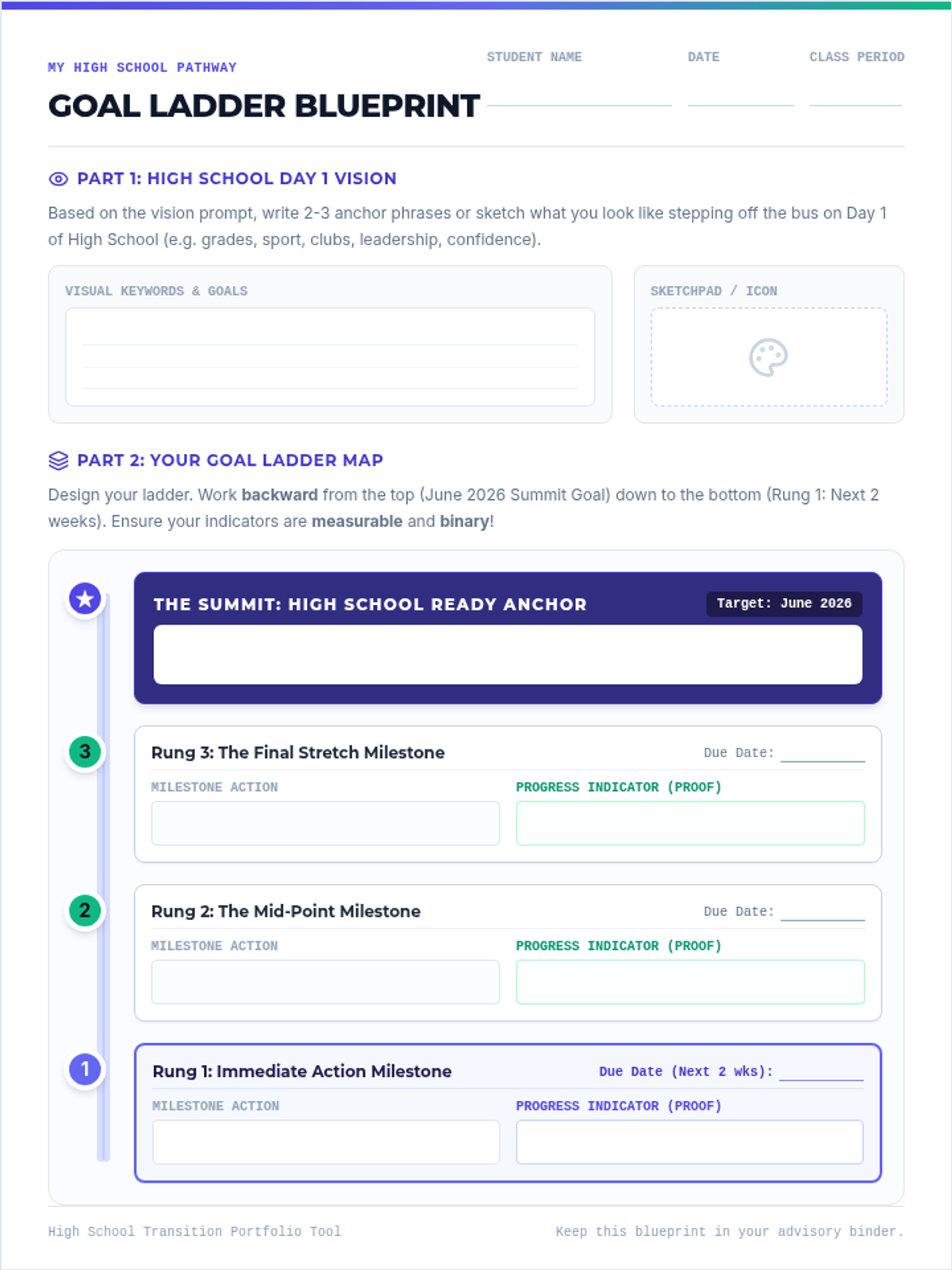
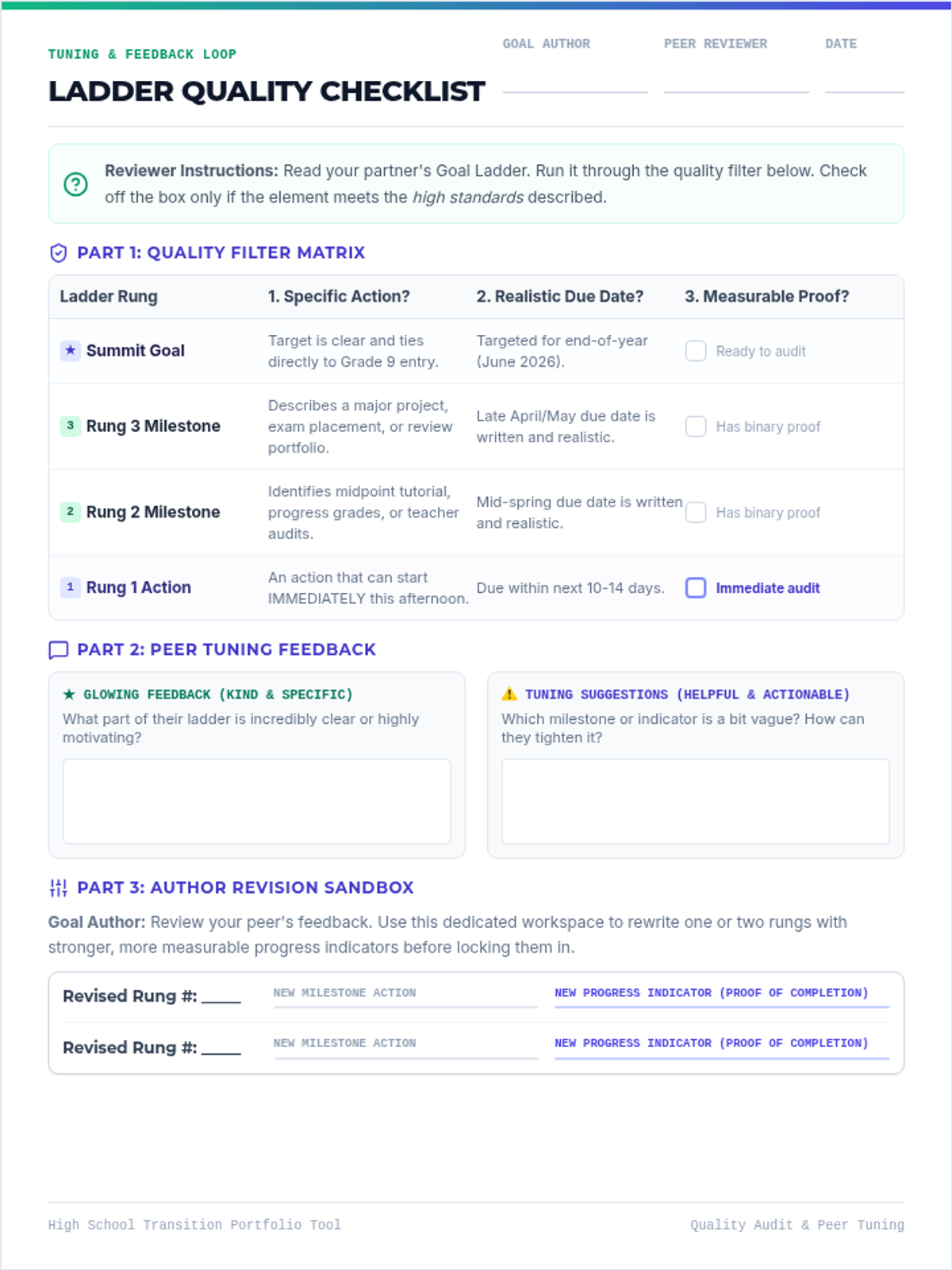
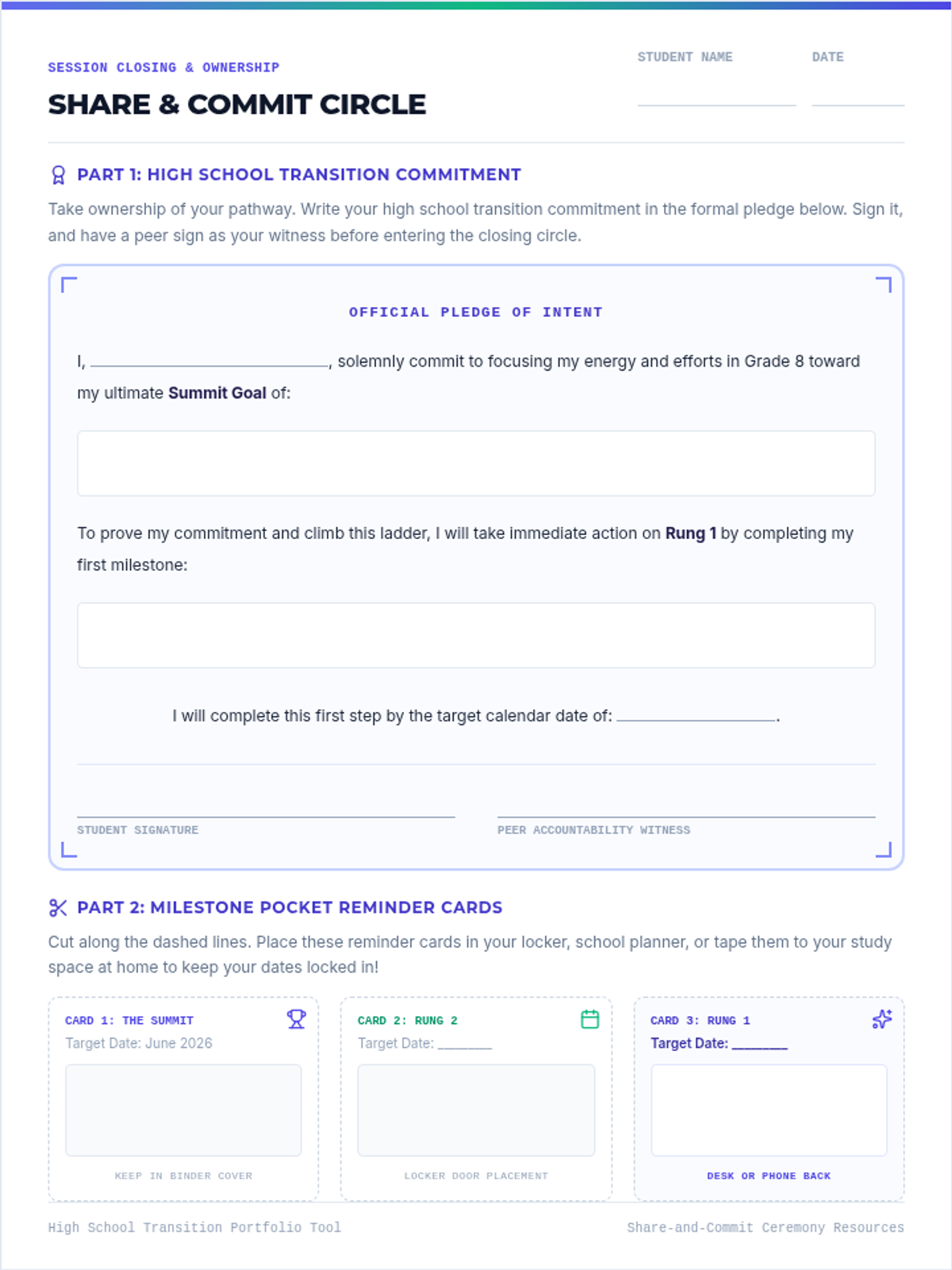
An interactive 8th-grade lesson designed to help students transition to high school by translating long-term visions into concrete, actionable steps. Students create a structured goal ladder with three milestones, specific due dates, and measurable progress indicators, followed by peer feedback and a share-and-commit circle.
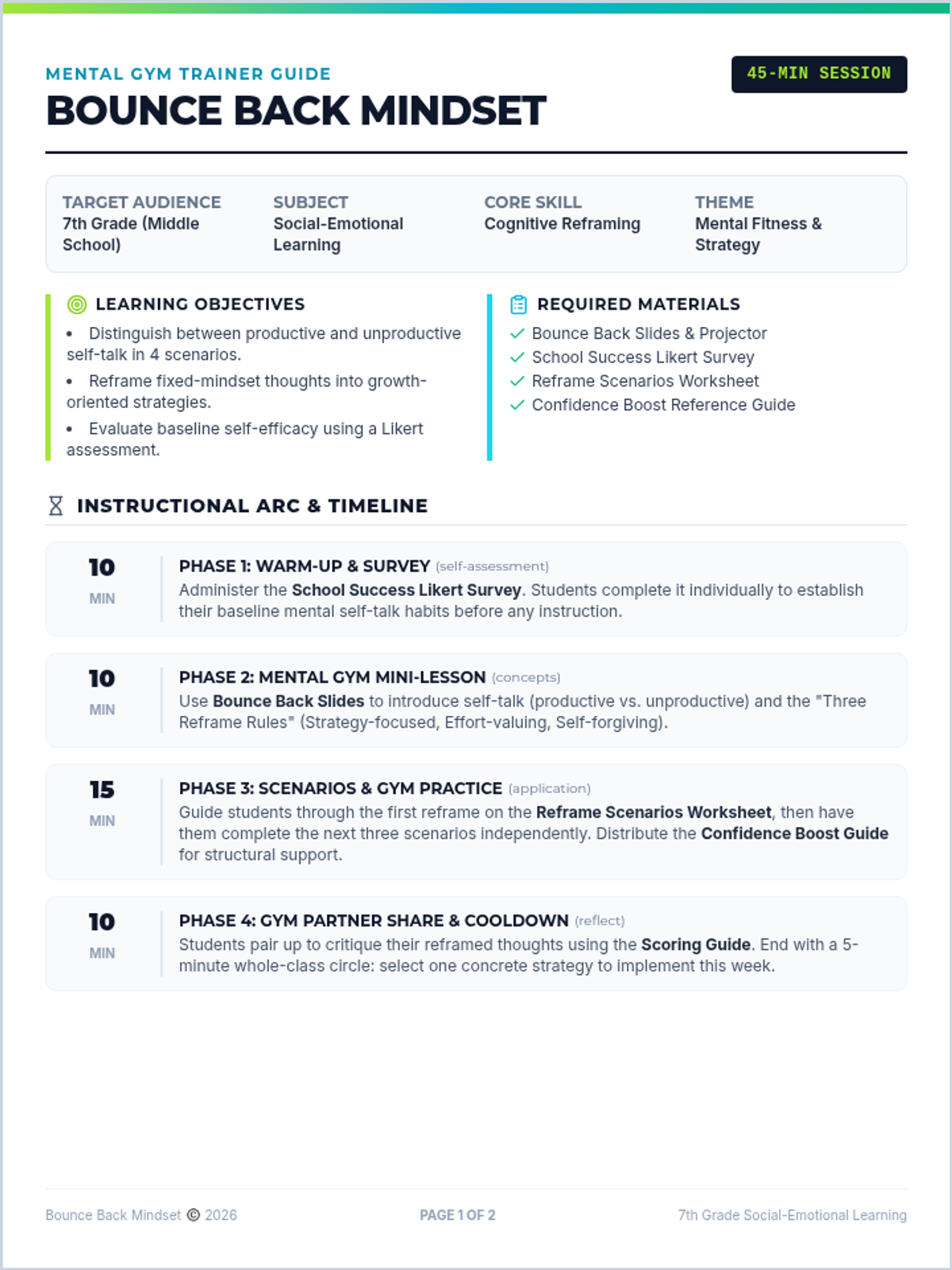
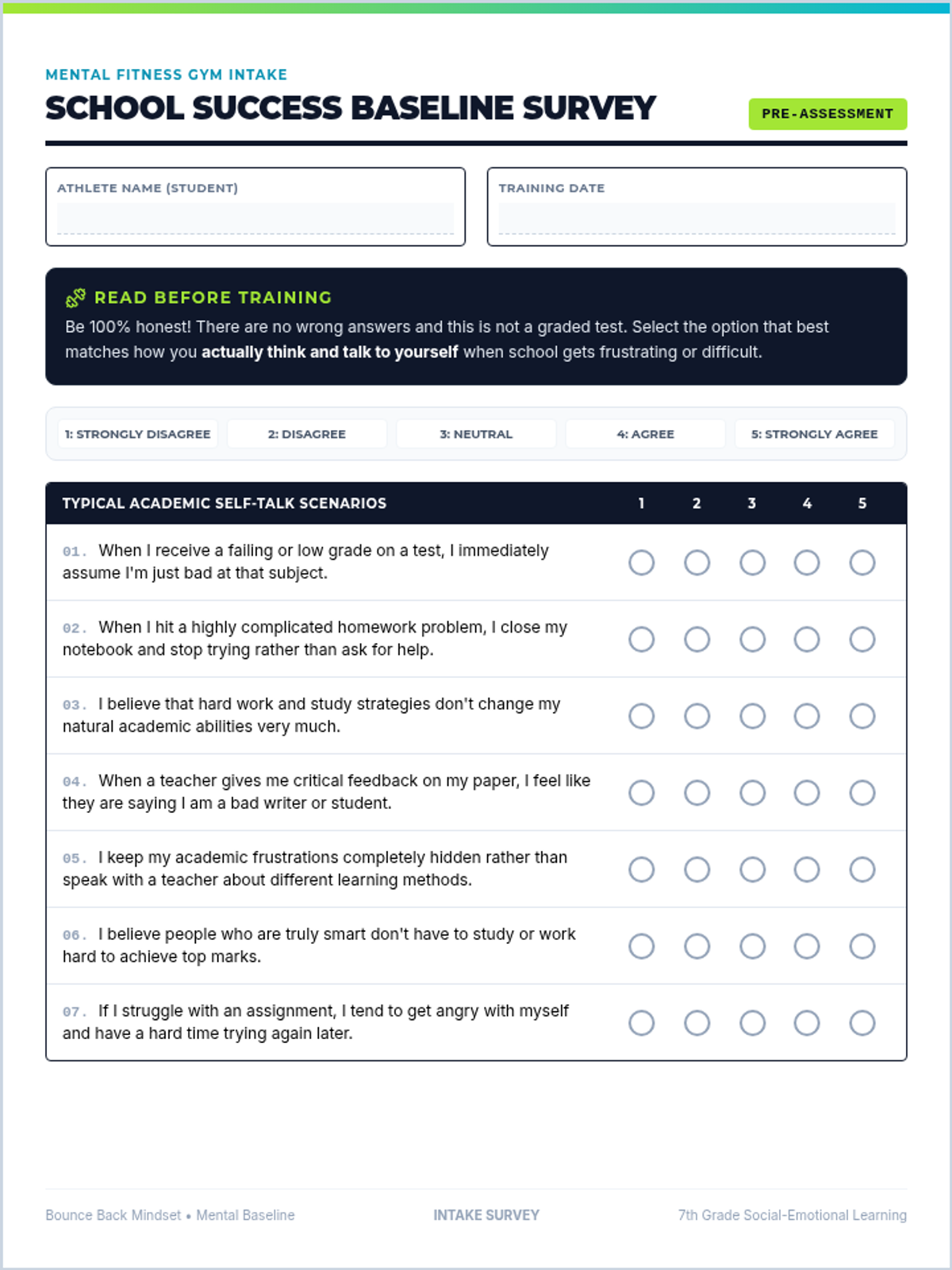
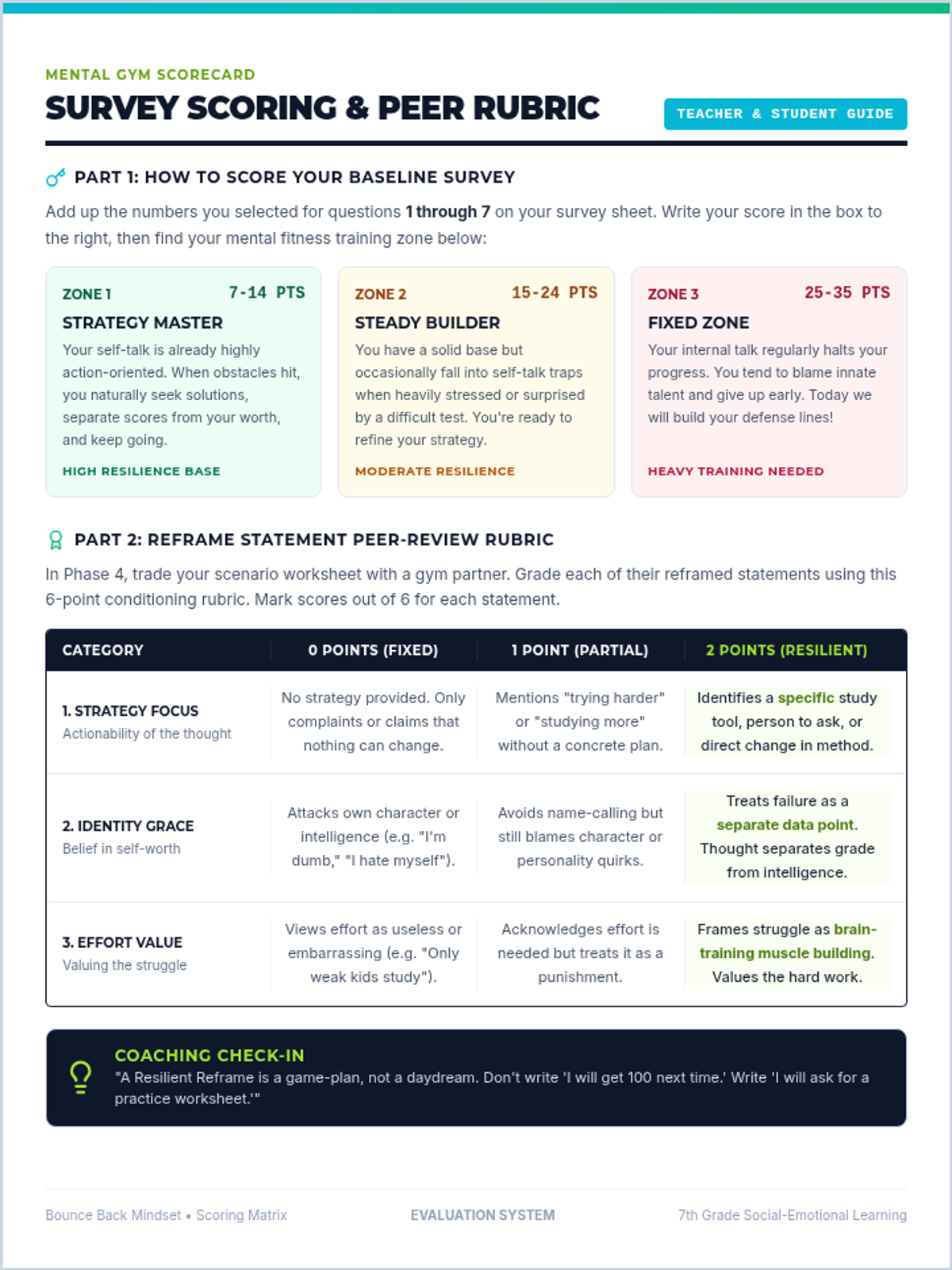
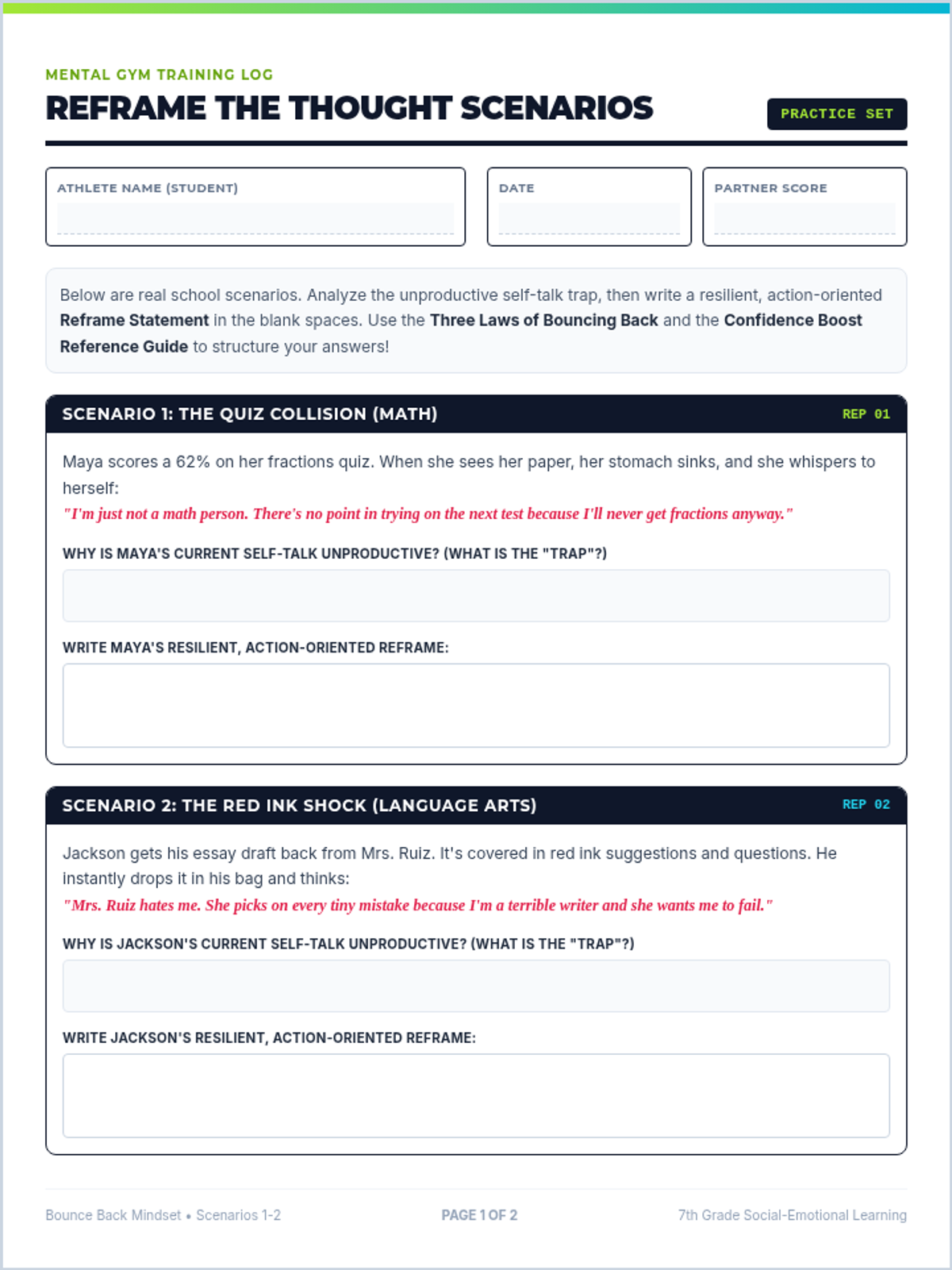
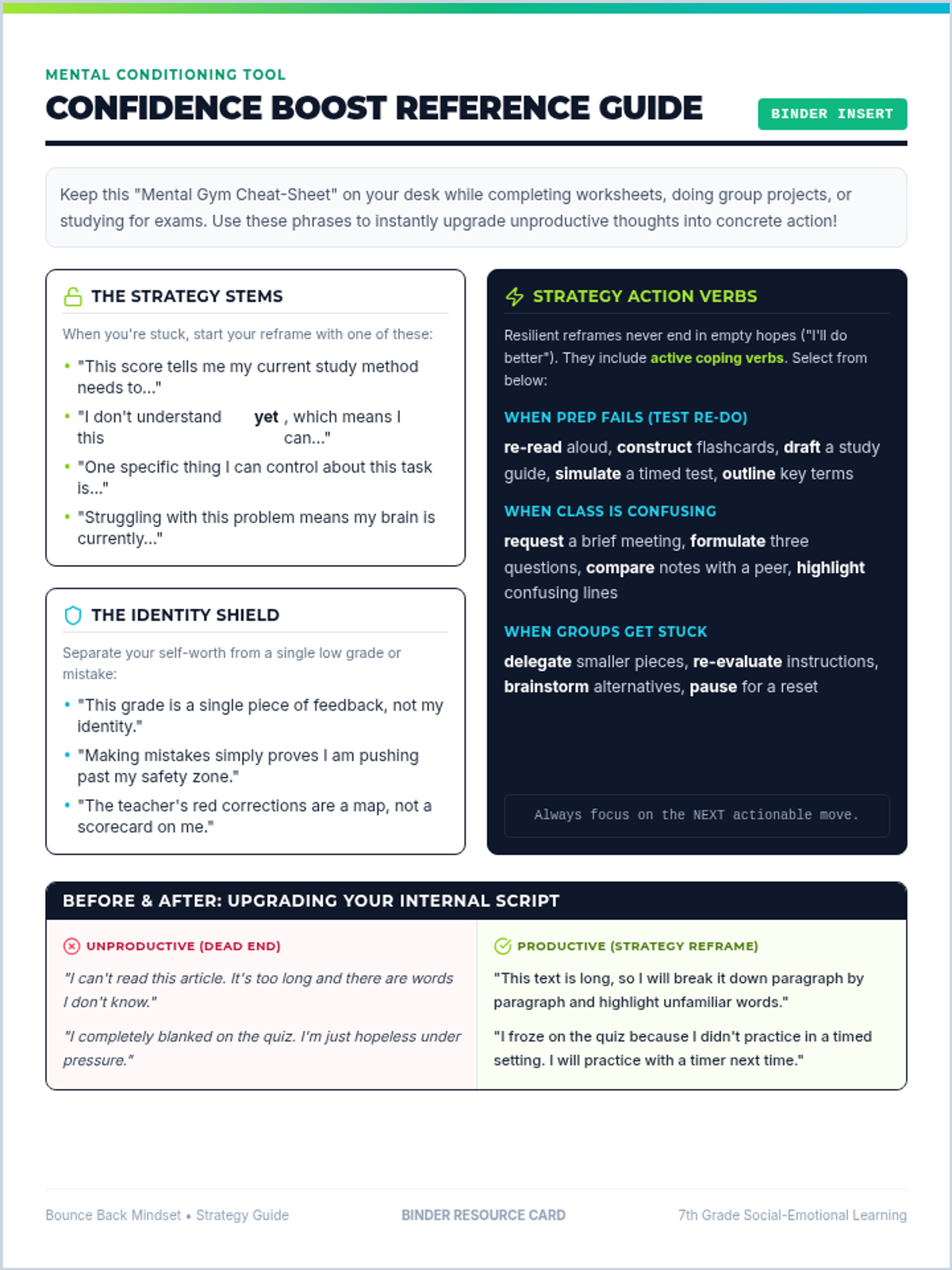
A 45-minute social-emotional learning lesson for 7th graders to explore cognitive reframing, distinguish between productive and unproductive self-talk, and practice applying growth-oriented strategies to academic setbacks.
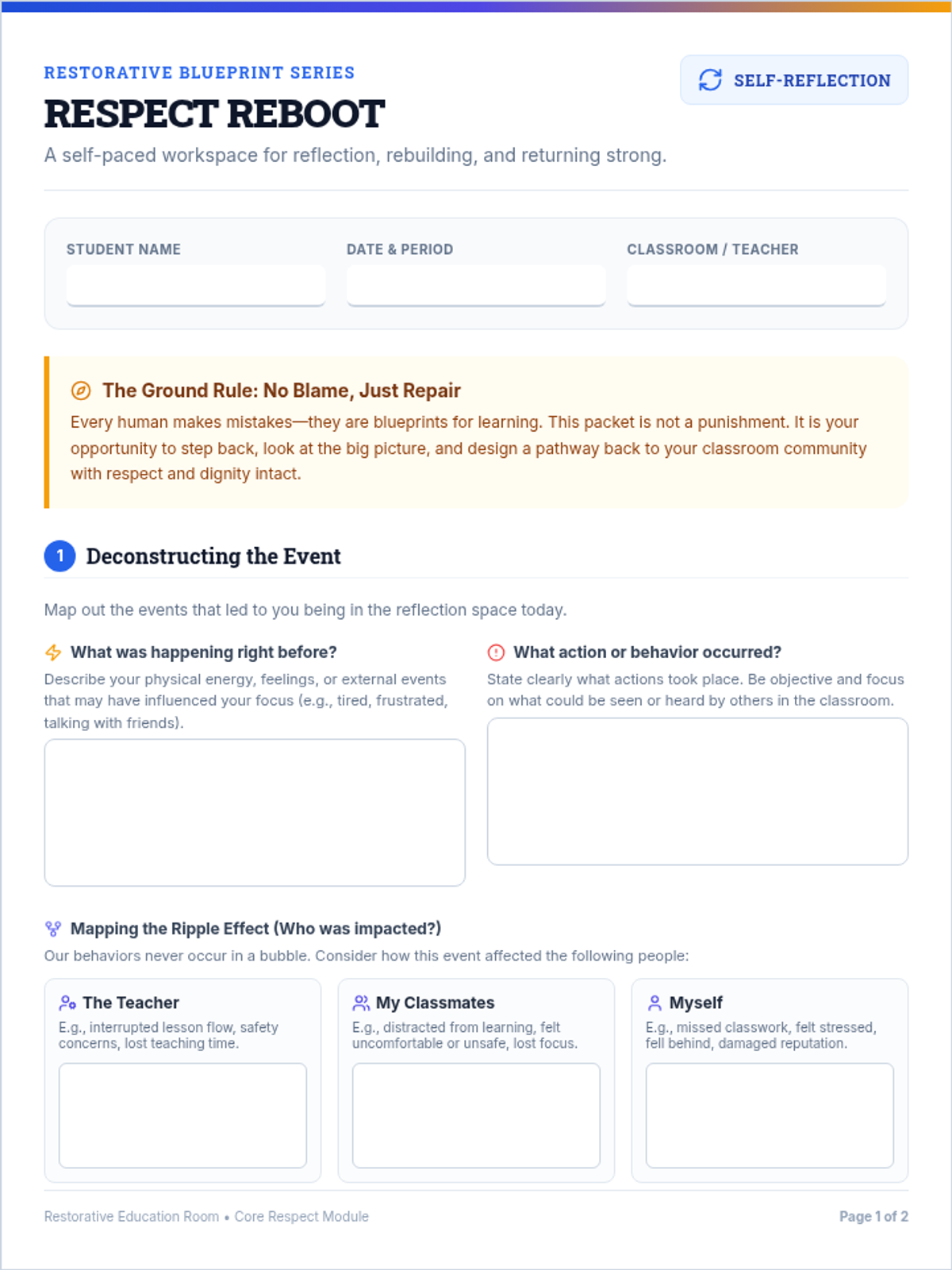
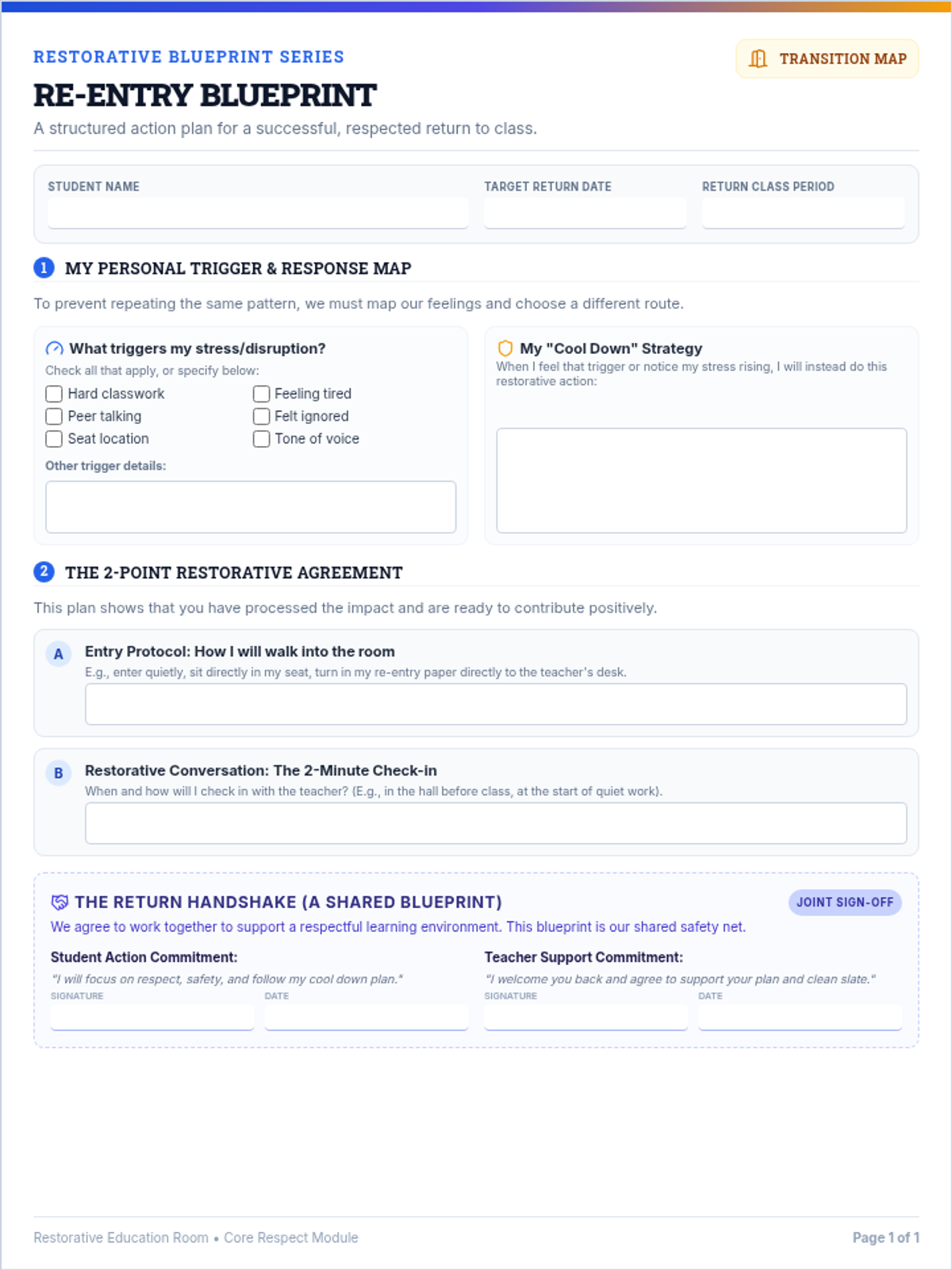
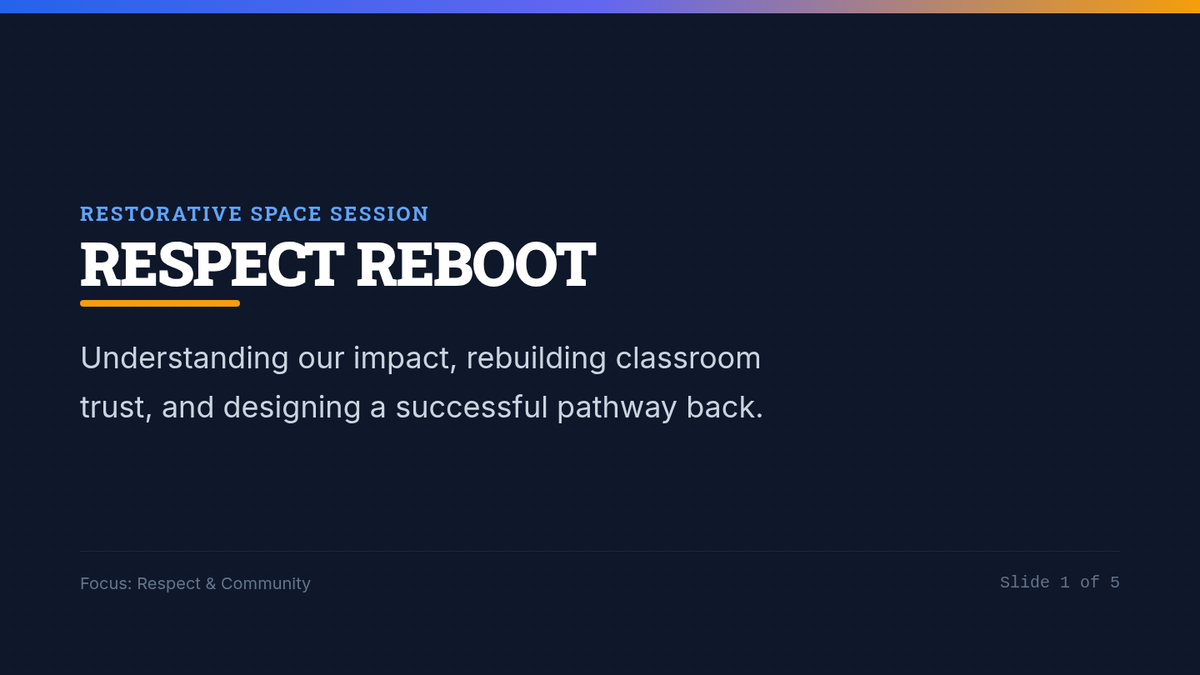
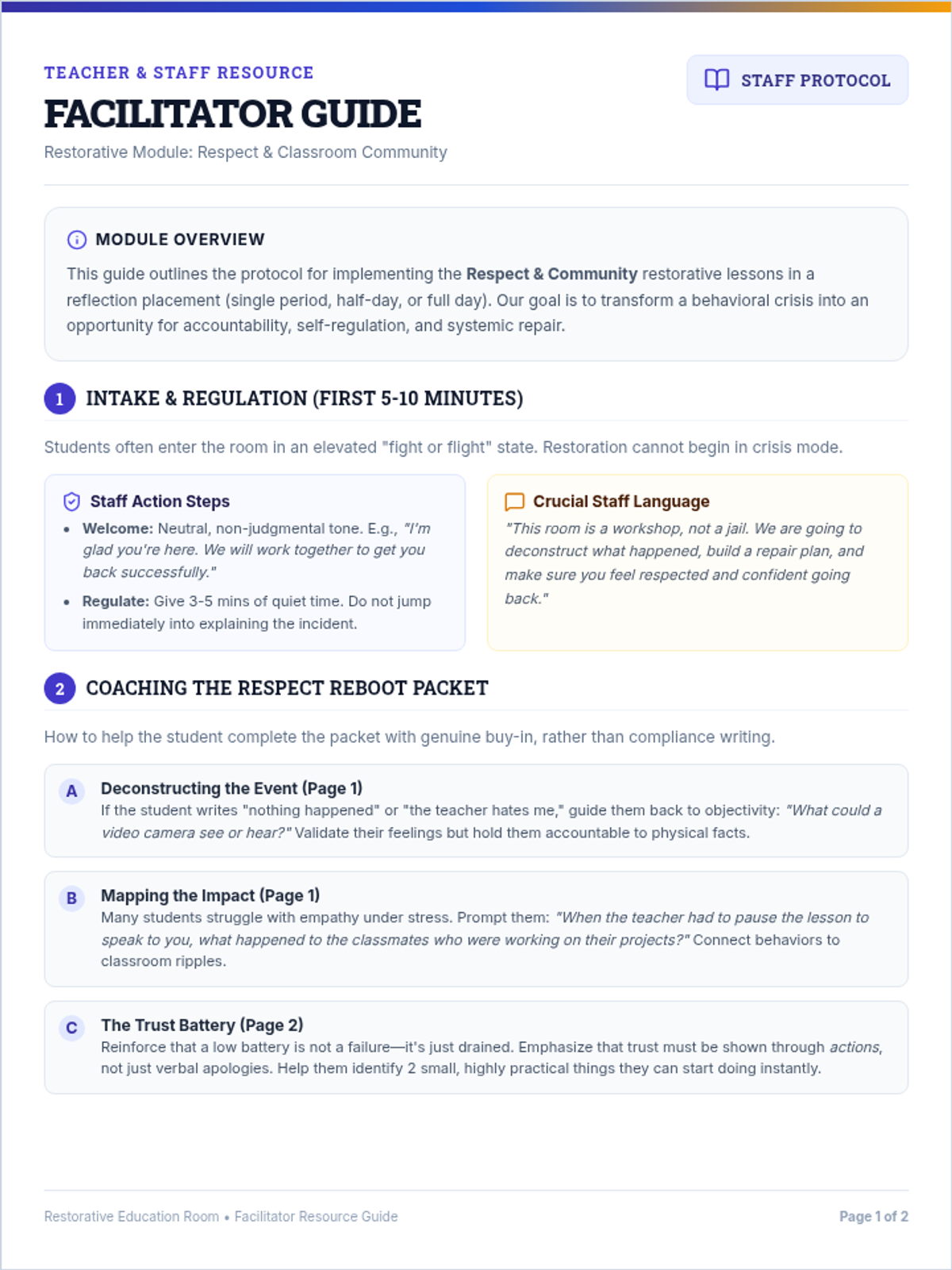
A restorative module focusing on understanding behavior impact, rebuilding classroom trust, and respecting authority. Includes a self-paced reflection packet, transition blueprint, guiding slides, and a facilitator guide.
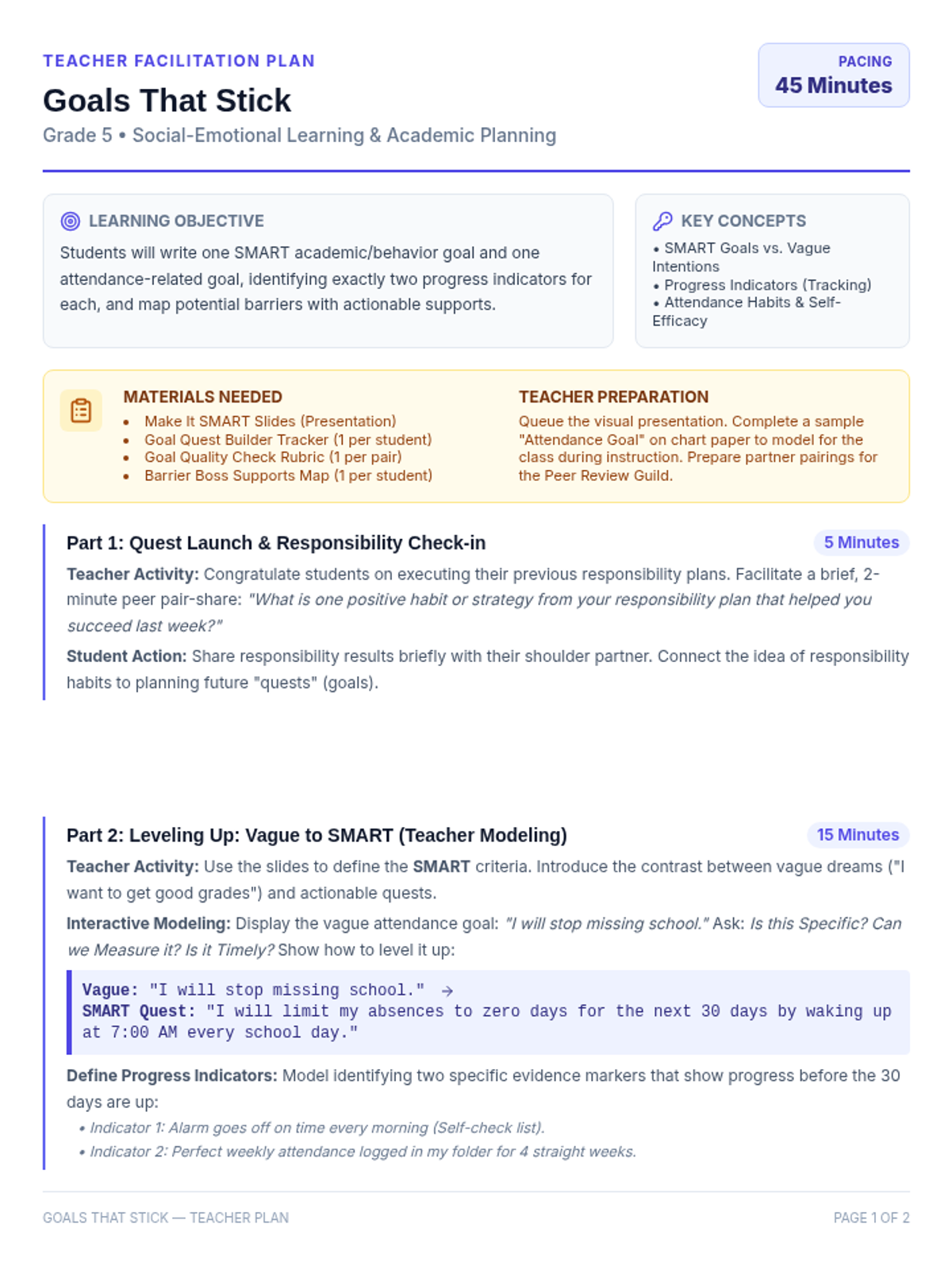
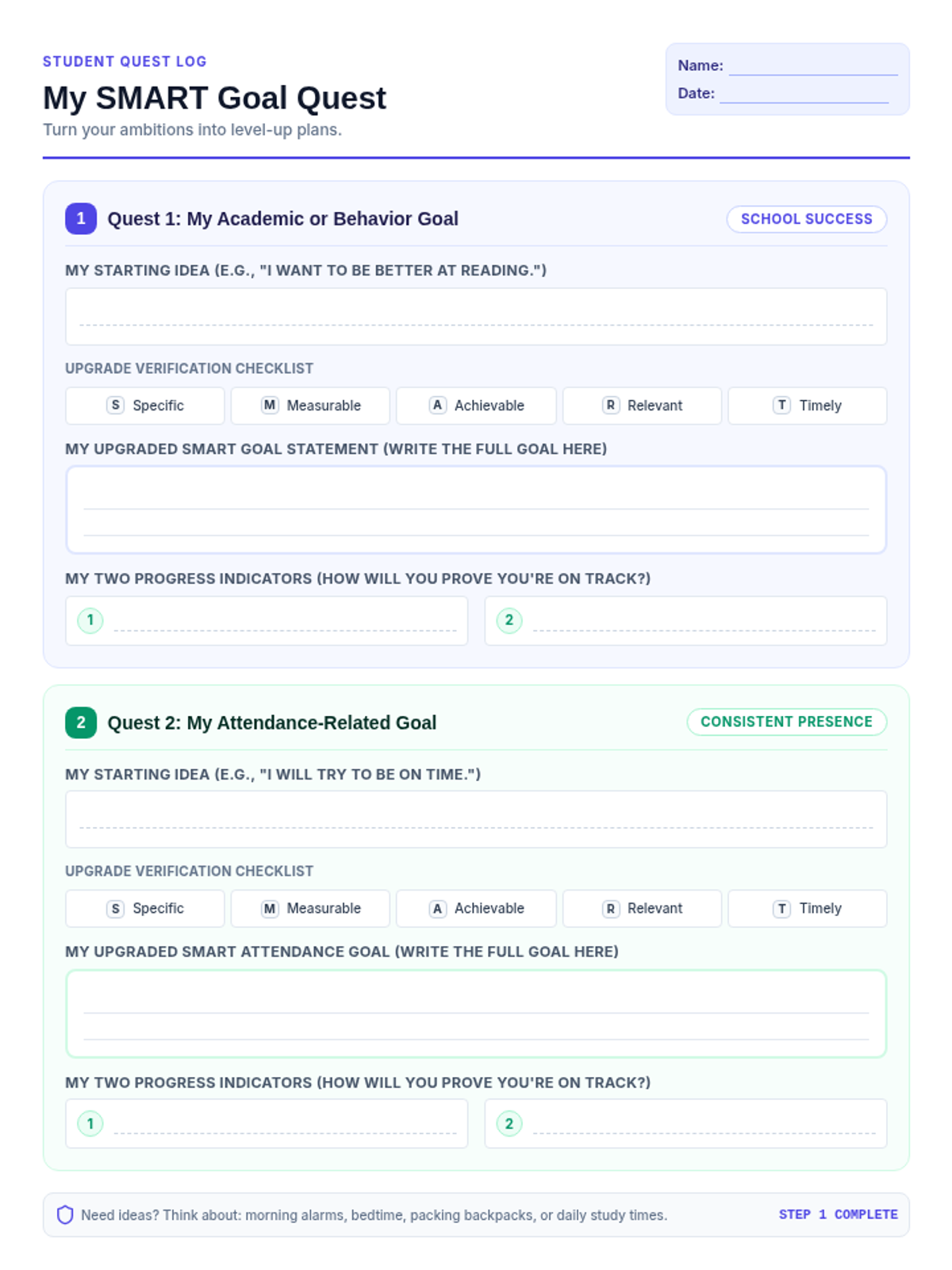
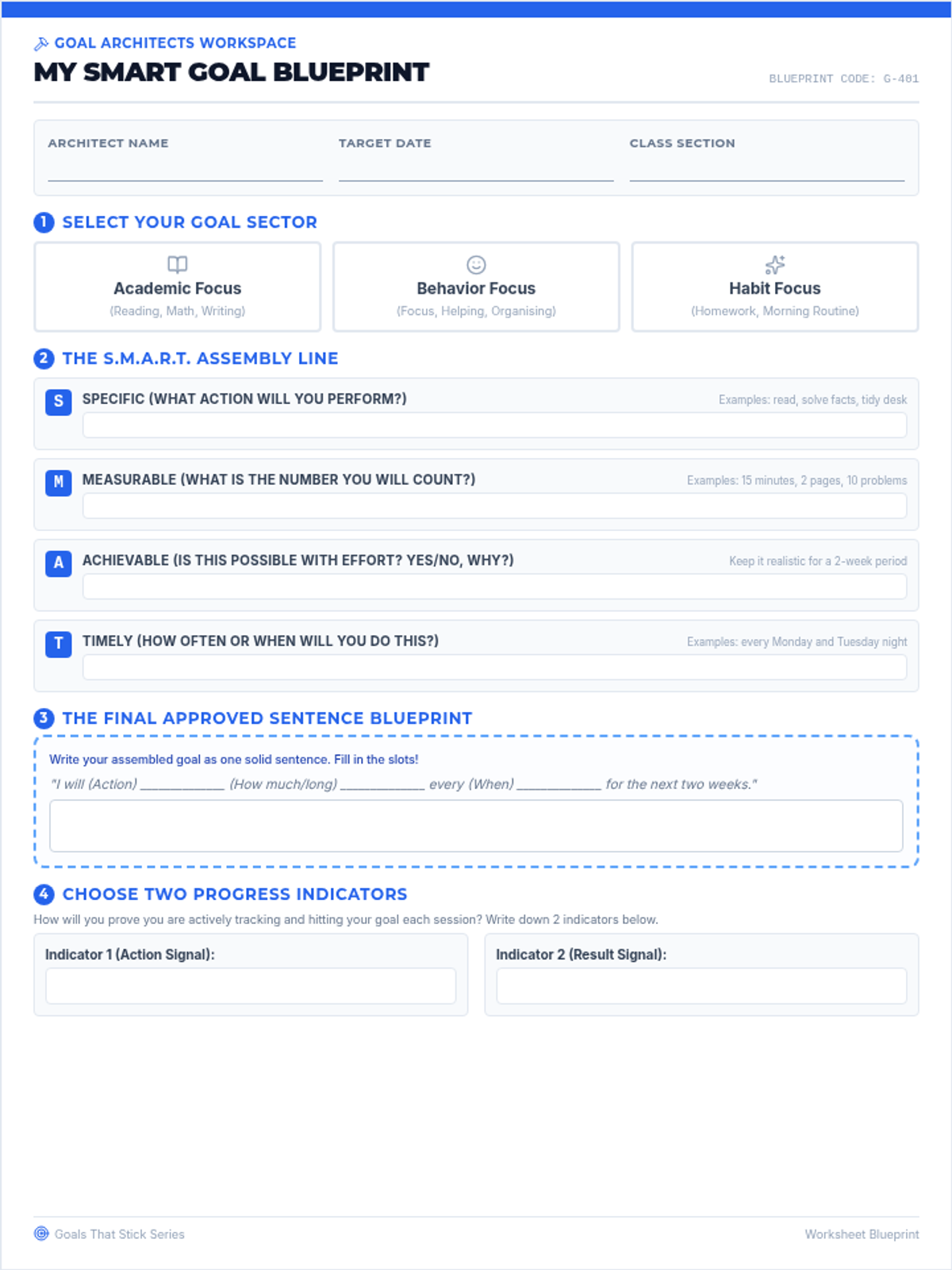
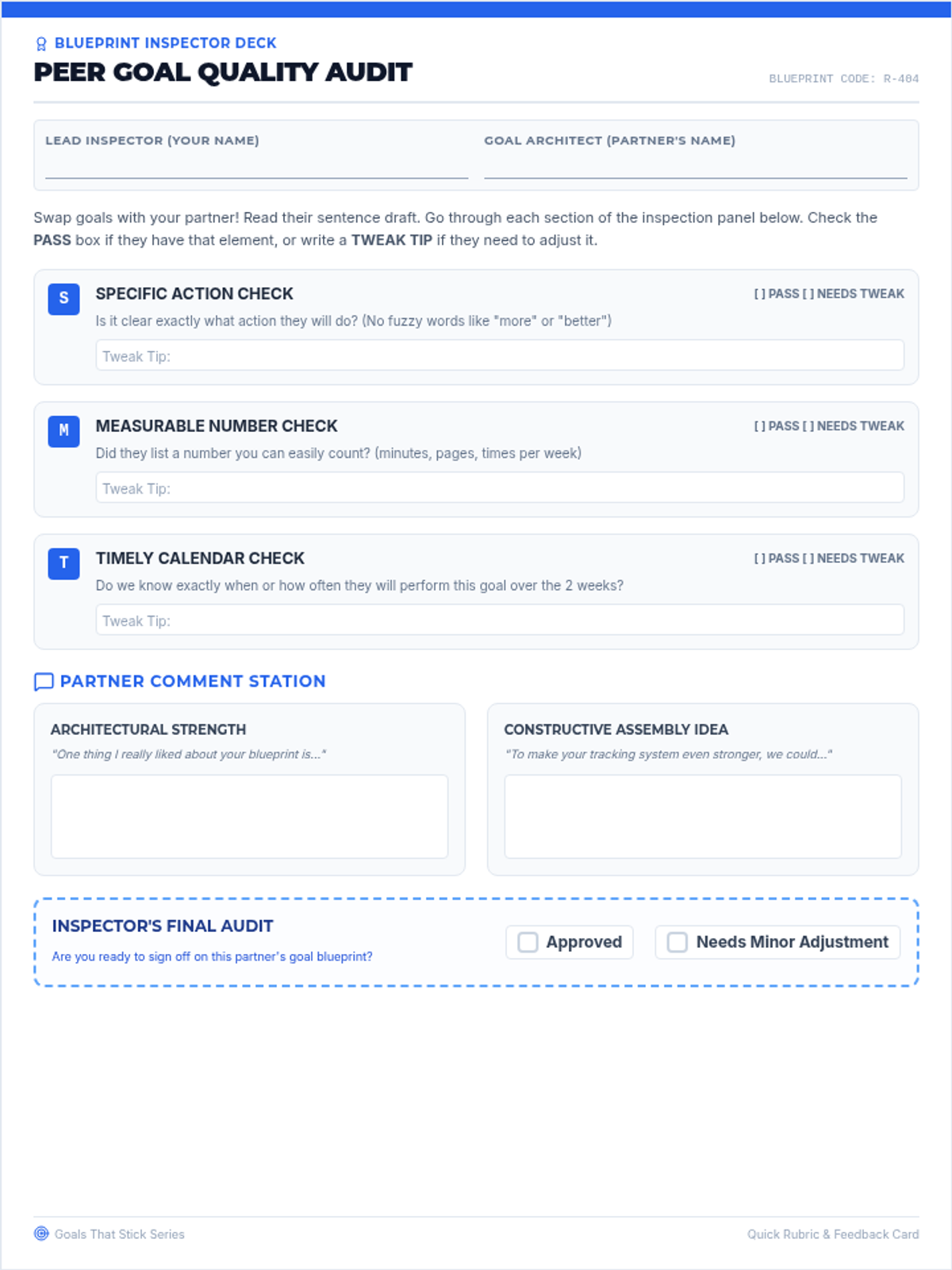
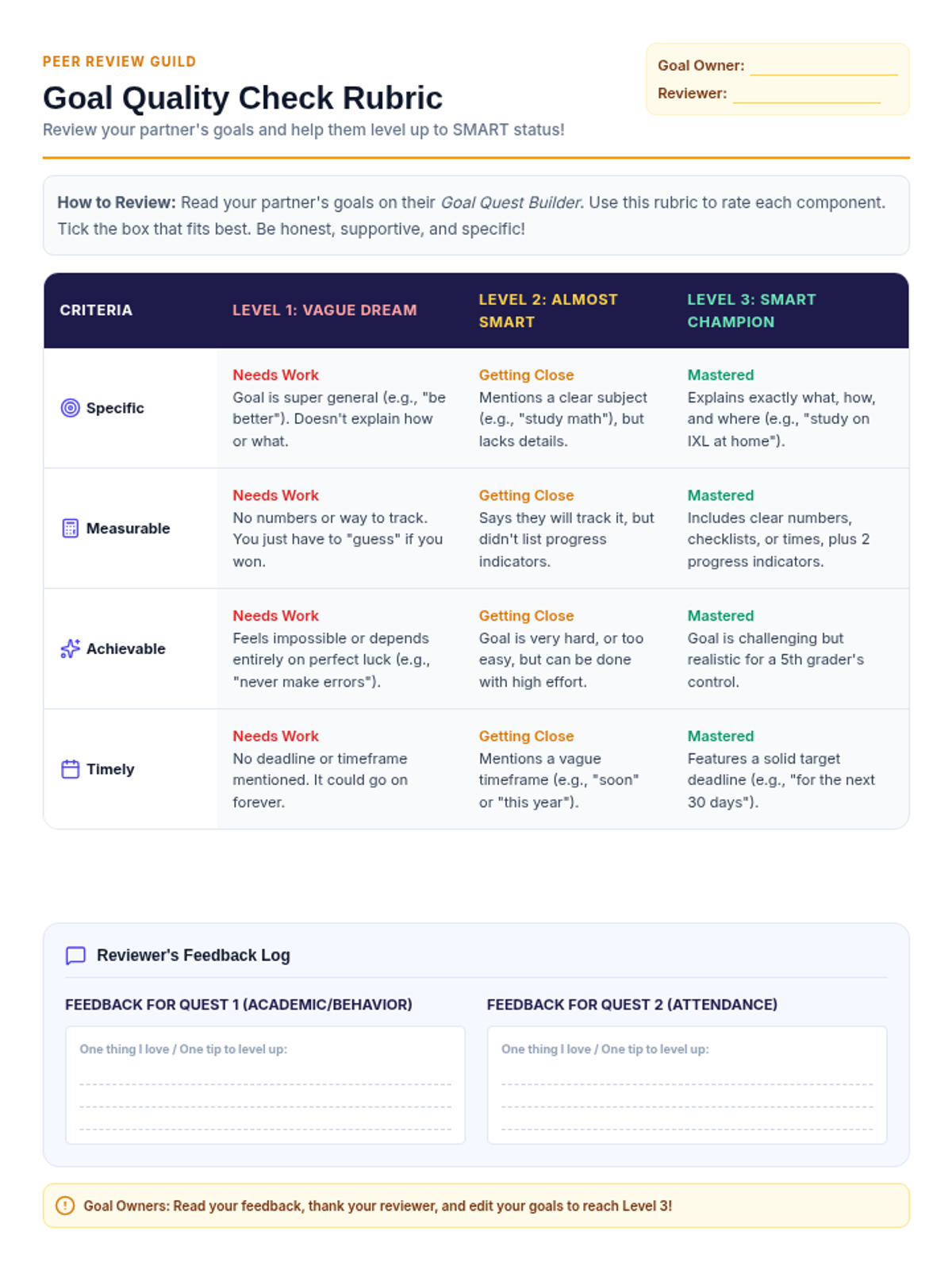
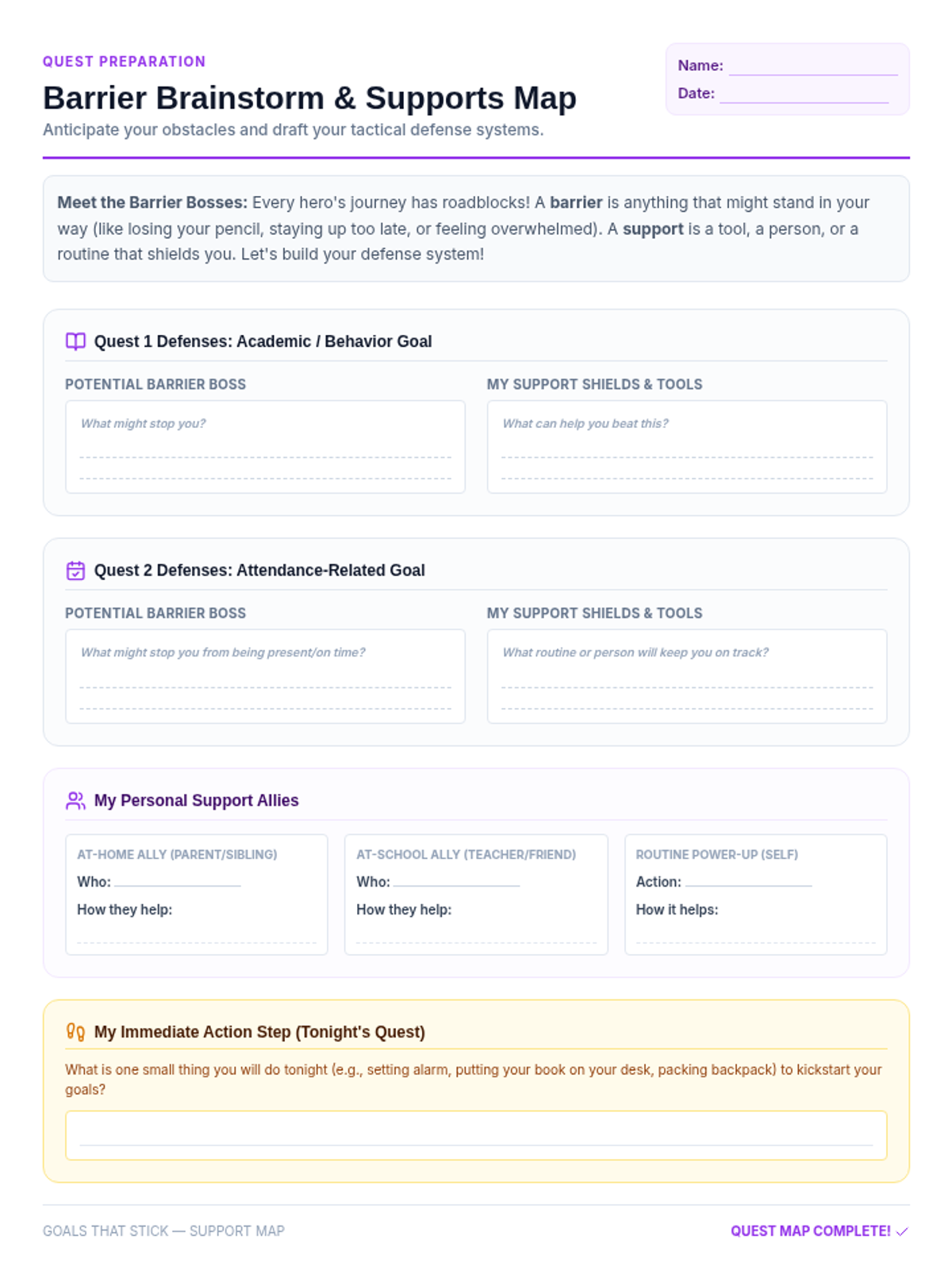
A 45-minute lesson designed for 5th-grade students to master the art of writing SMART academic/behavior and attendance goals. Students learn to define progress indicators, anticipate barriers, and use peer feedback to design achievable action plans.
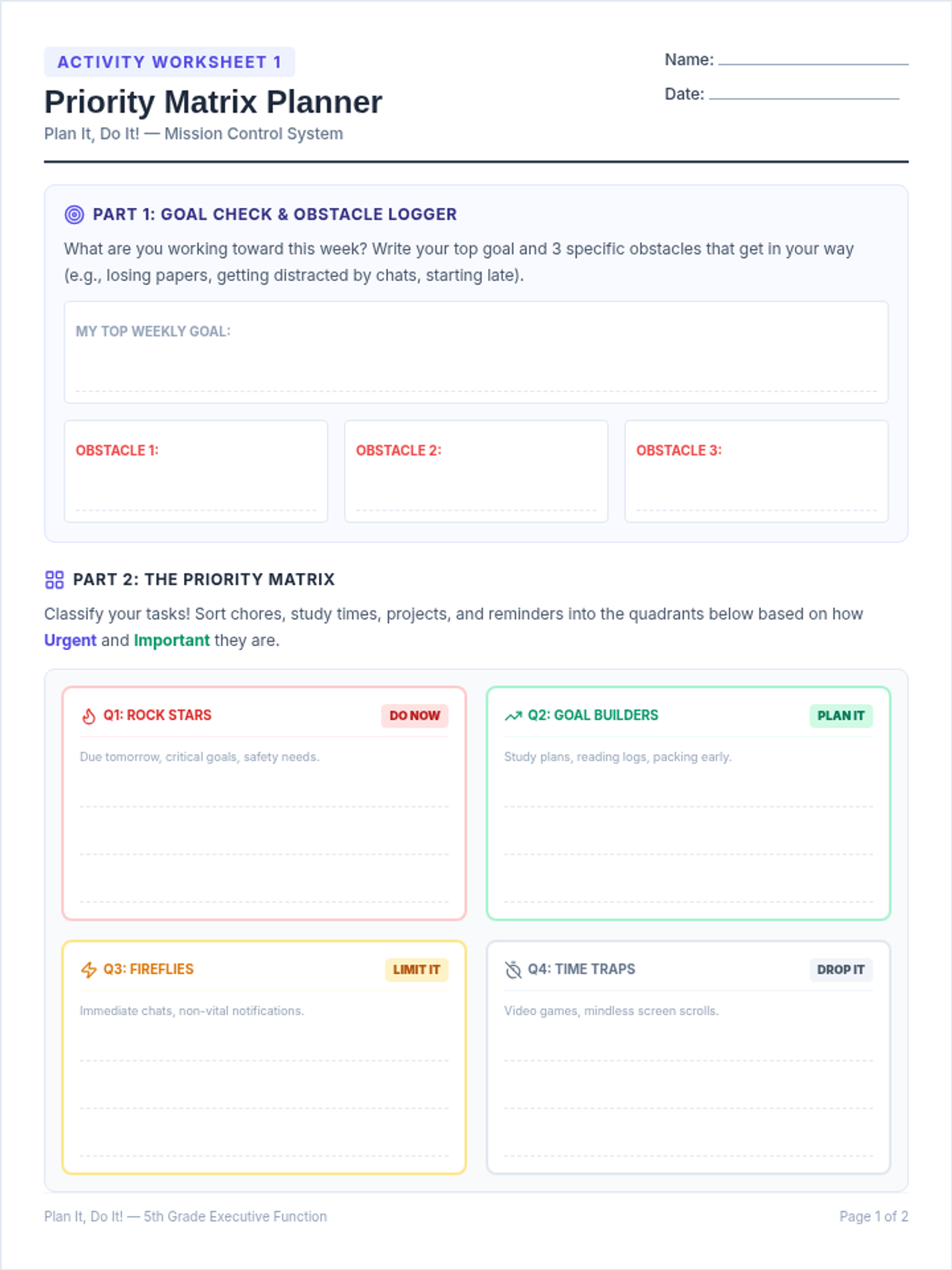
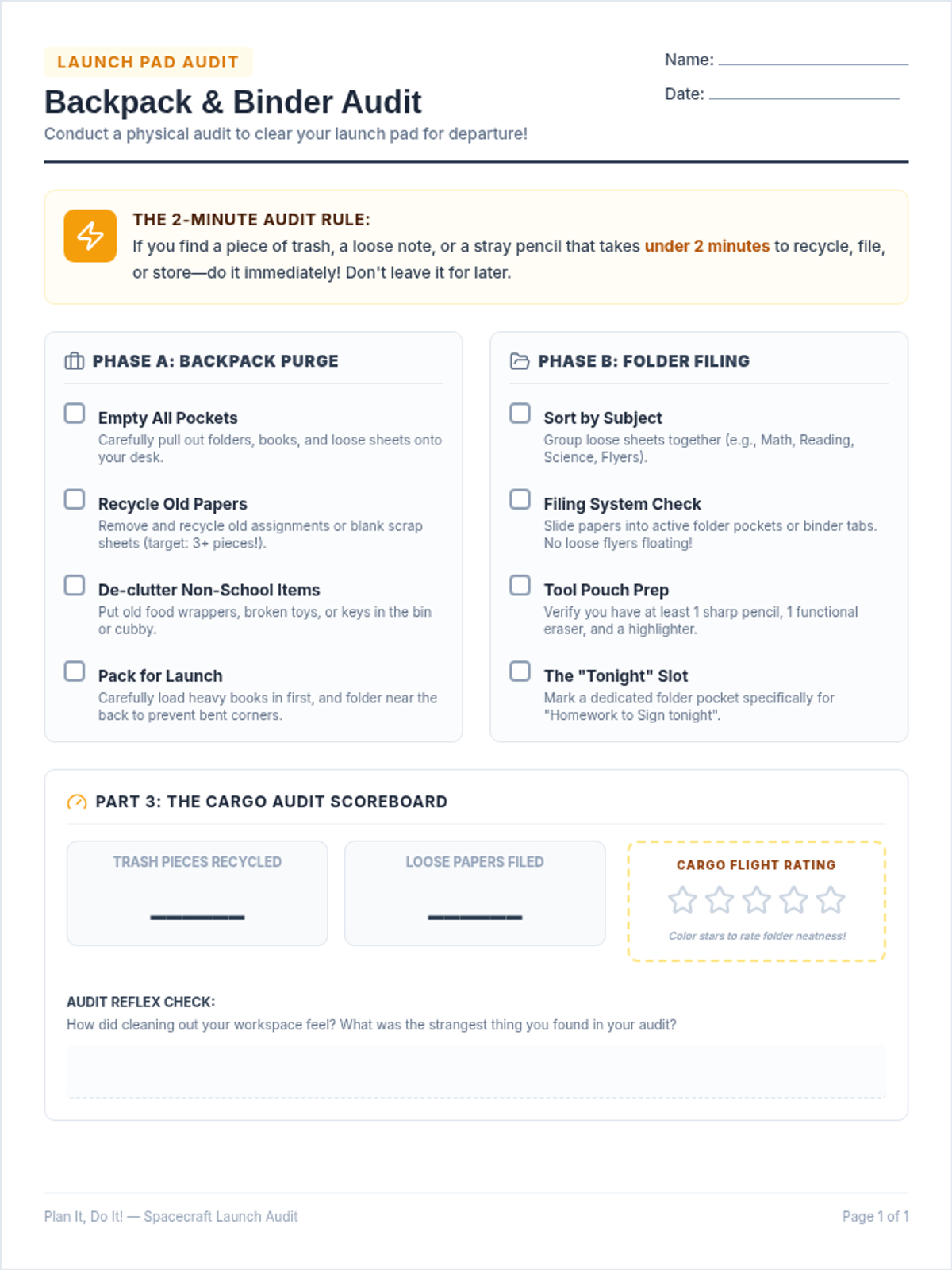
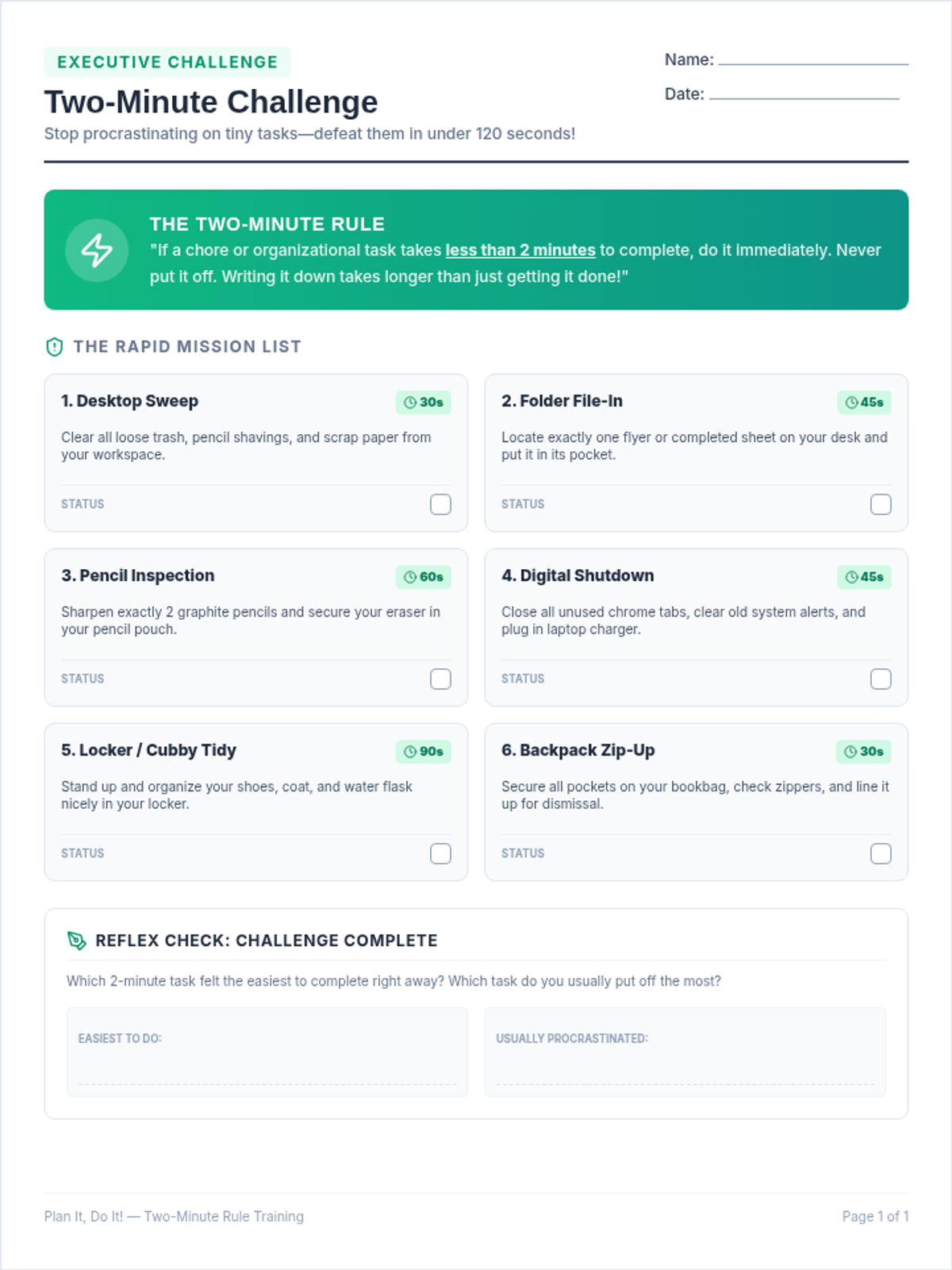
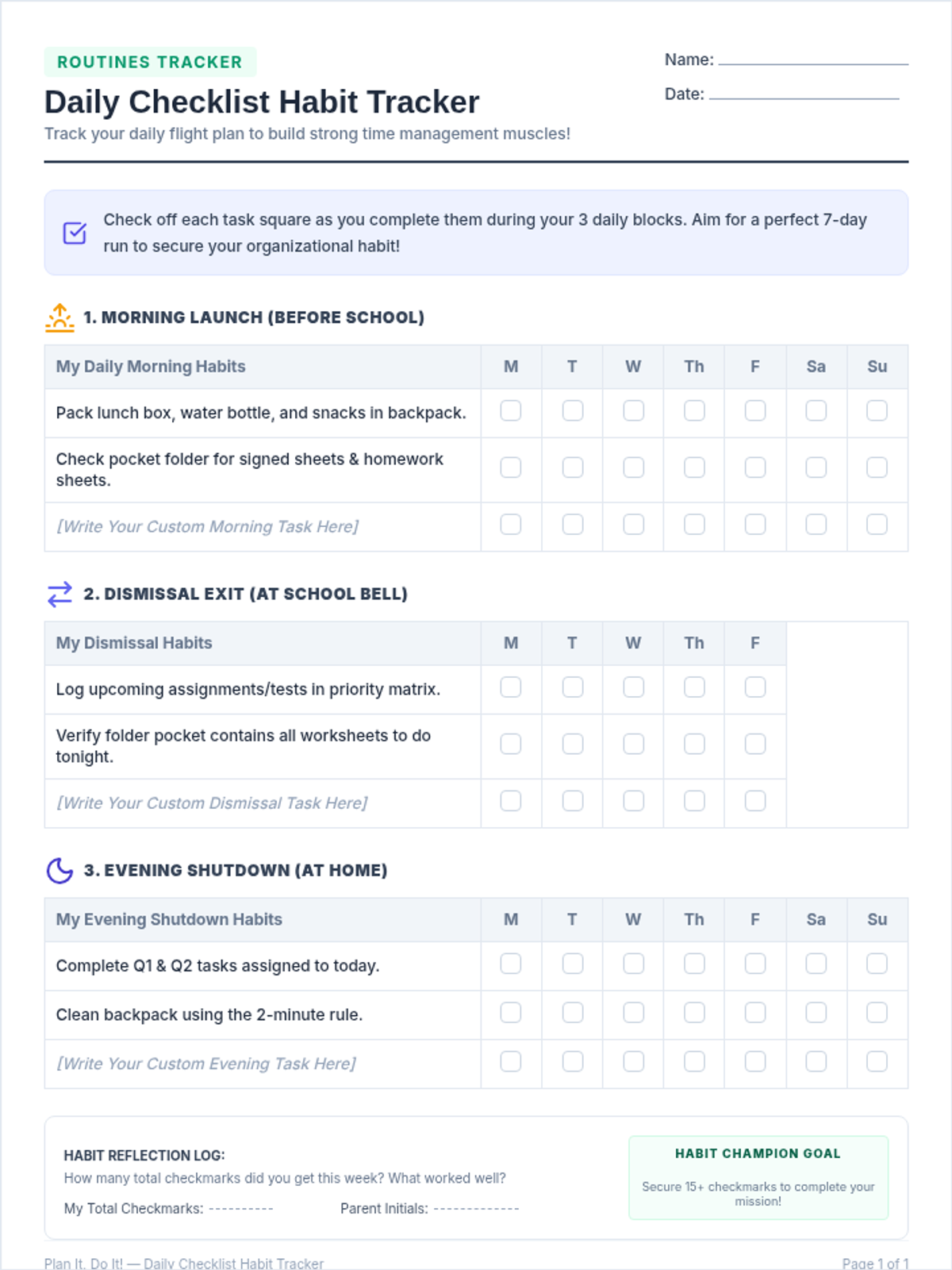
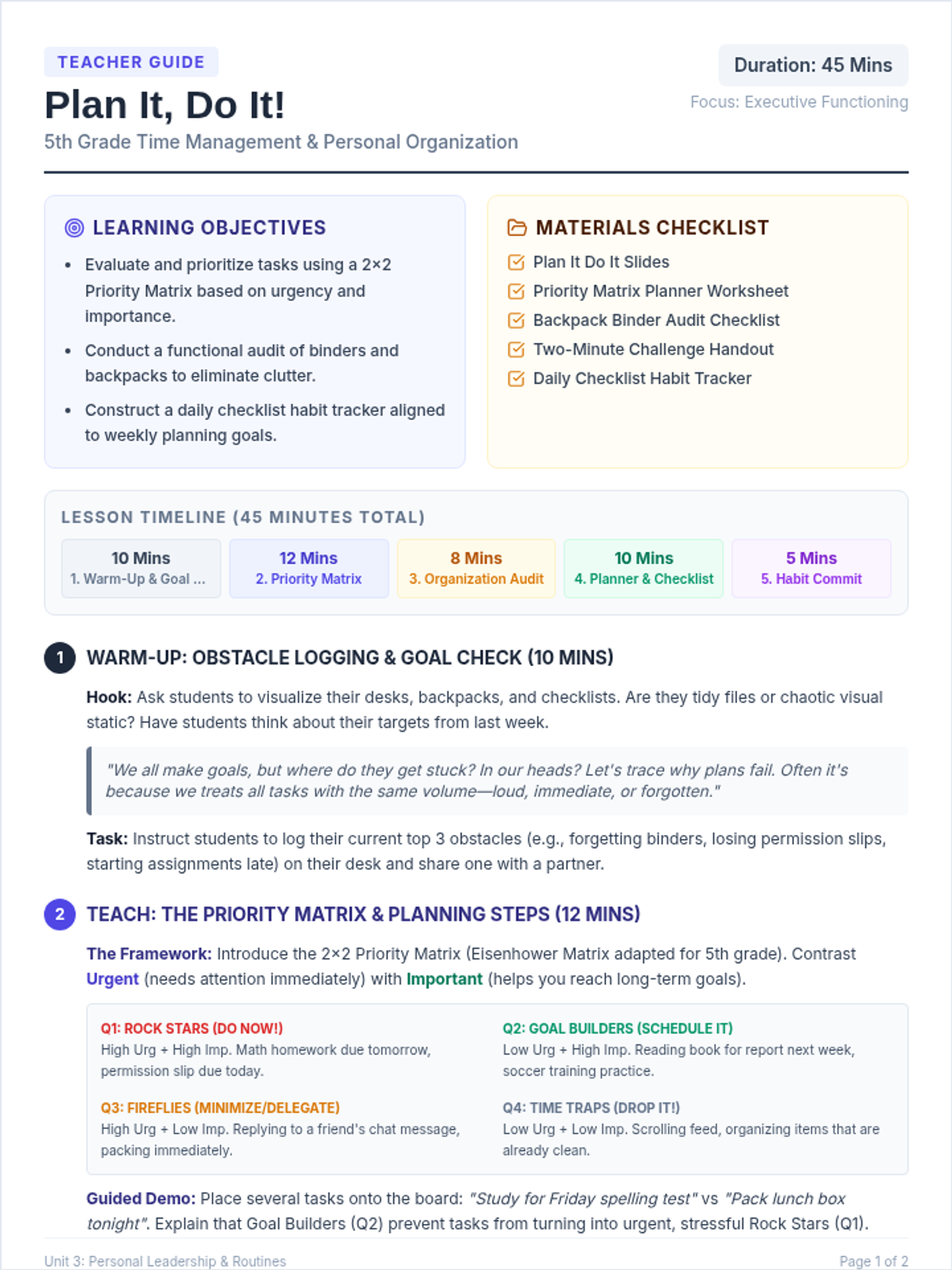
A hands-on lesson designed to teach 5th-grade students practical time management and organizational skills, including task prioritization with a matrix, binder/backpack auditing, and building sustainable daily checklists.
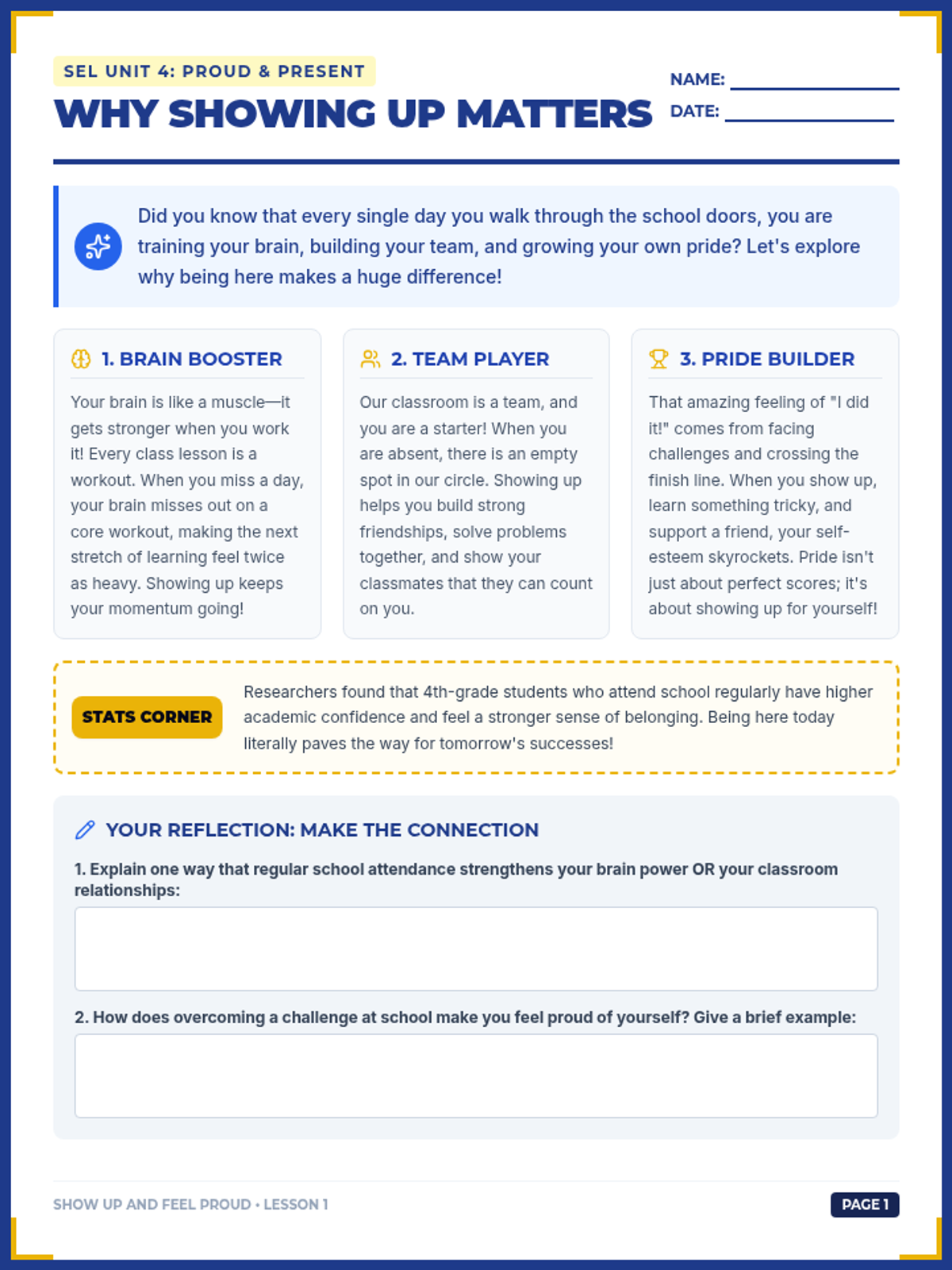
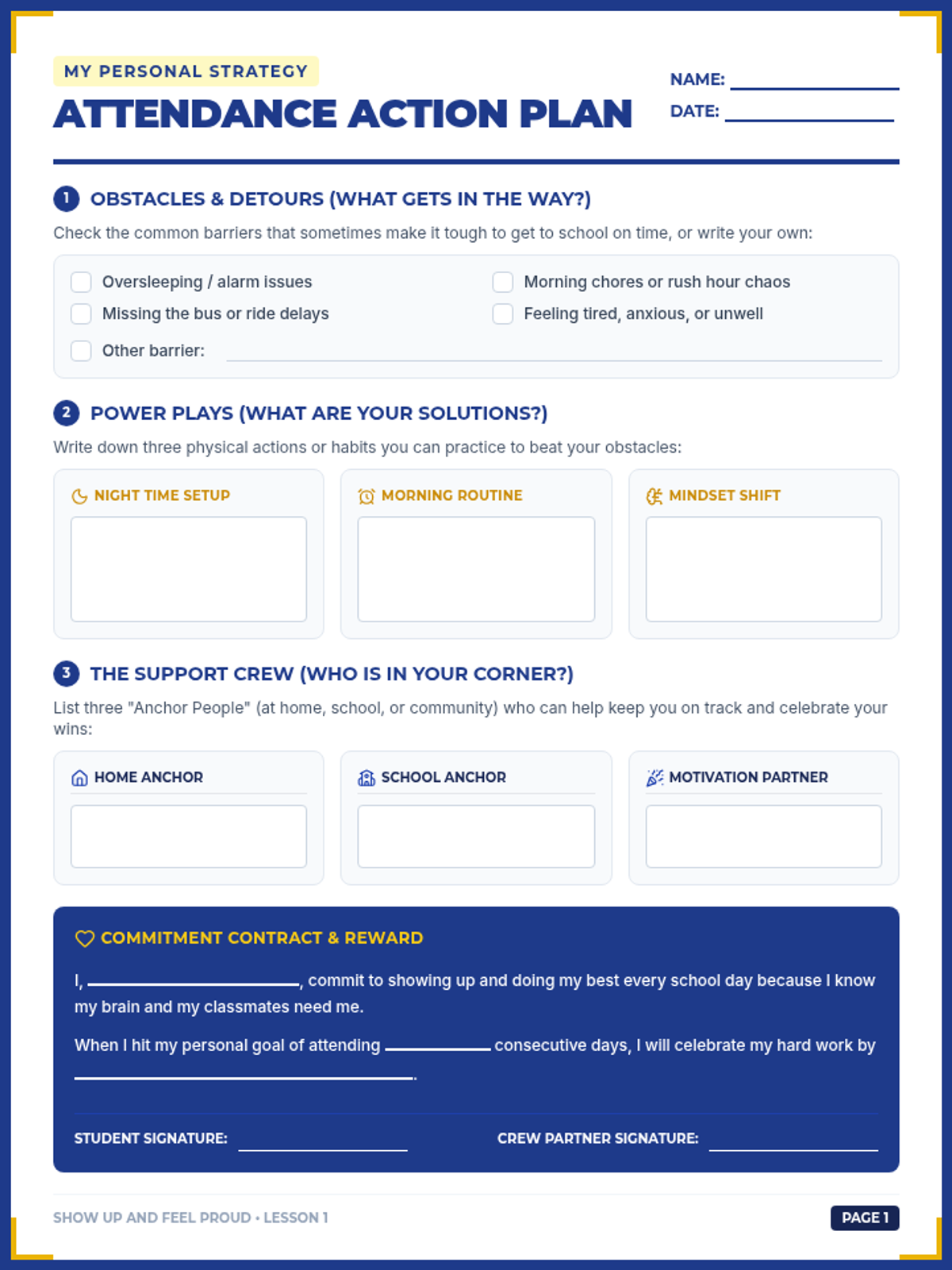
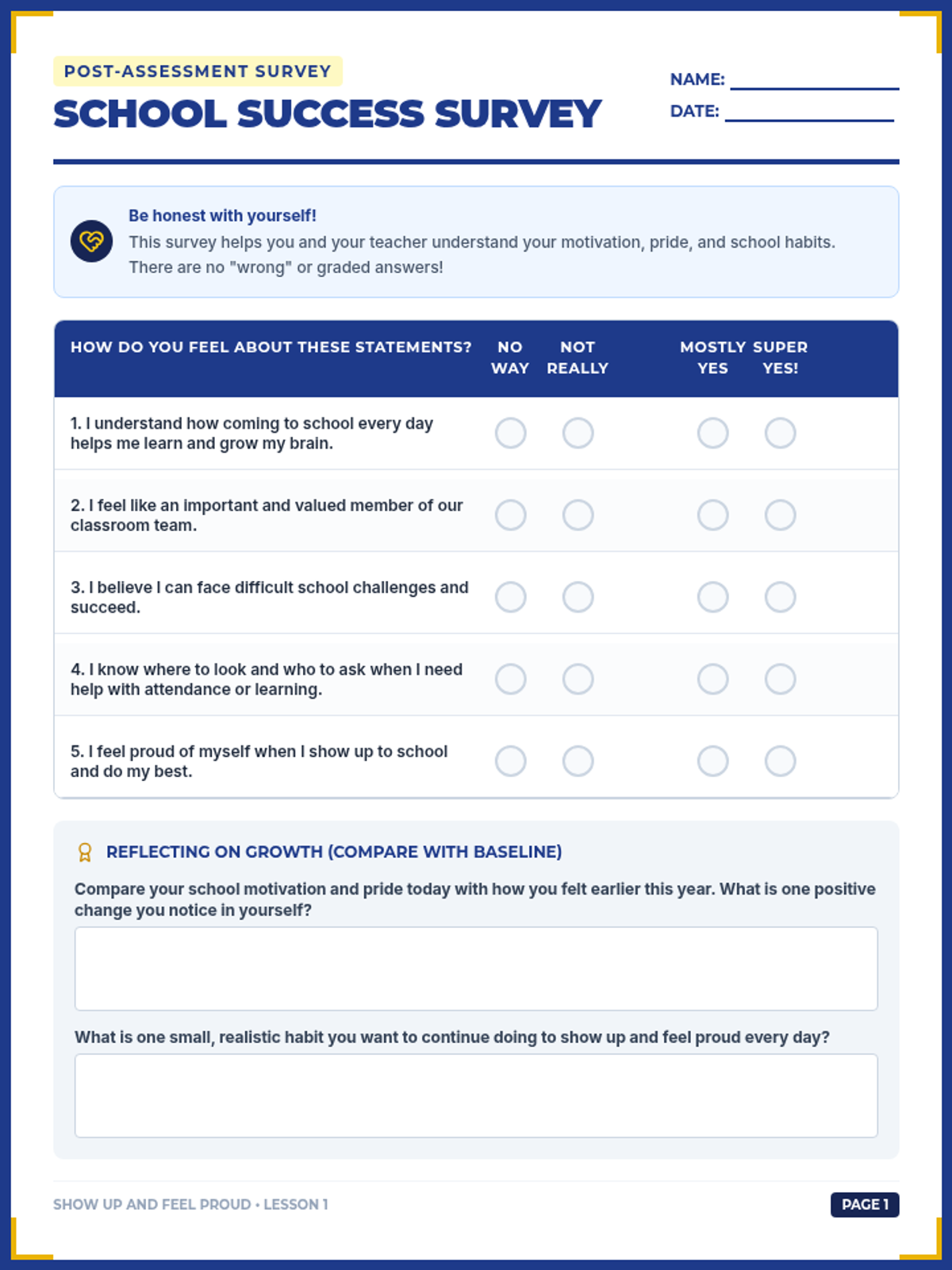
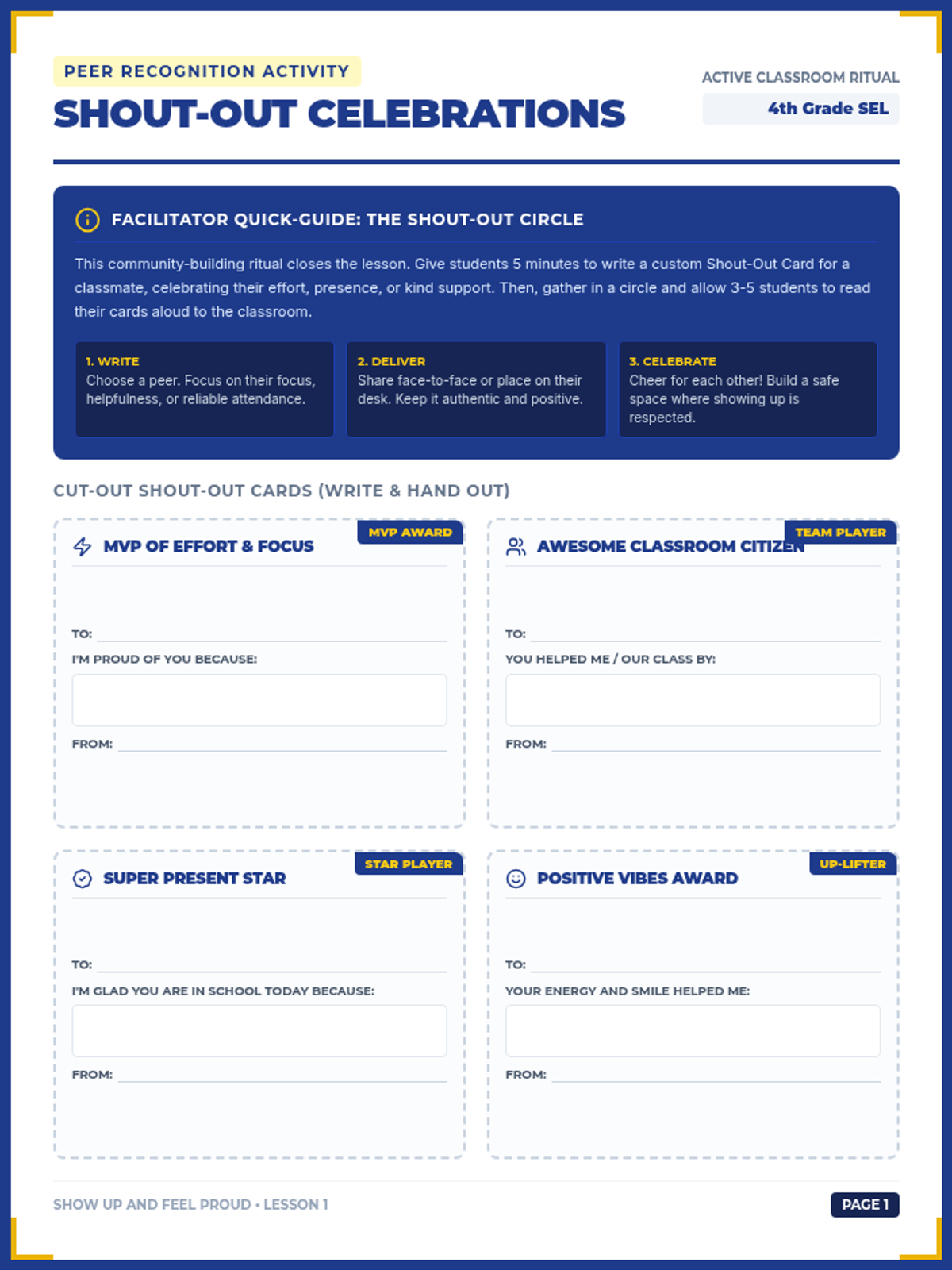
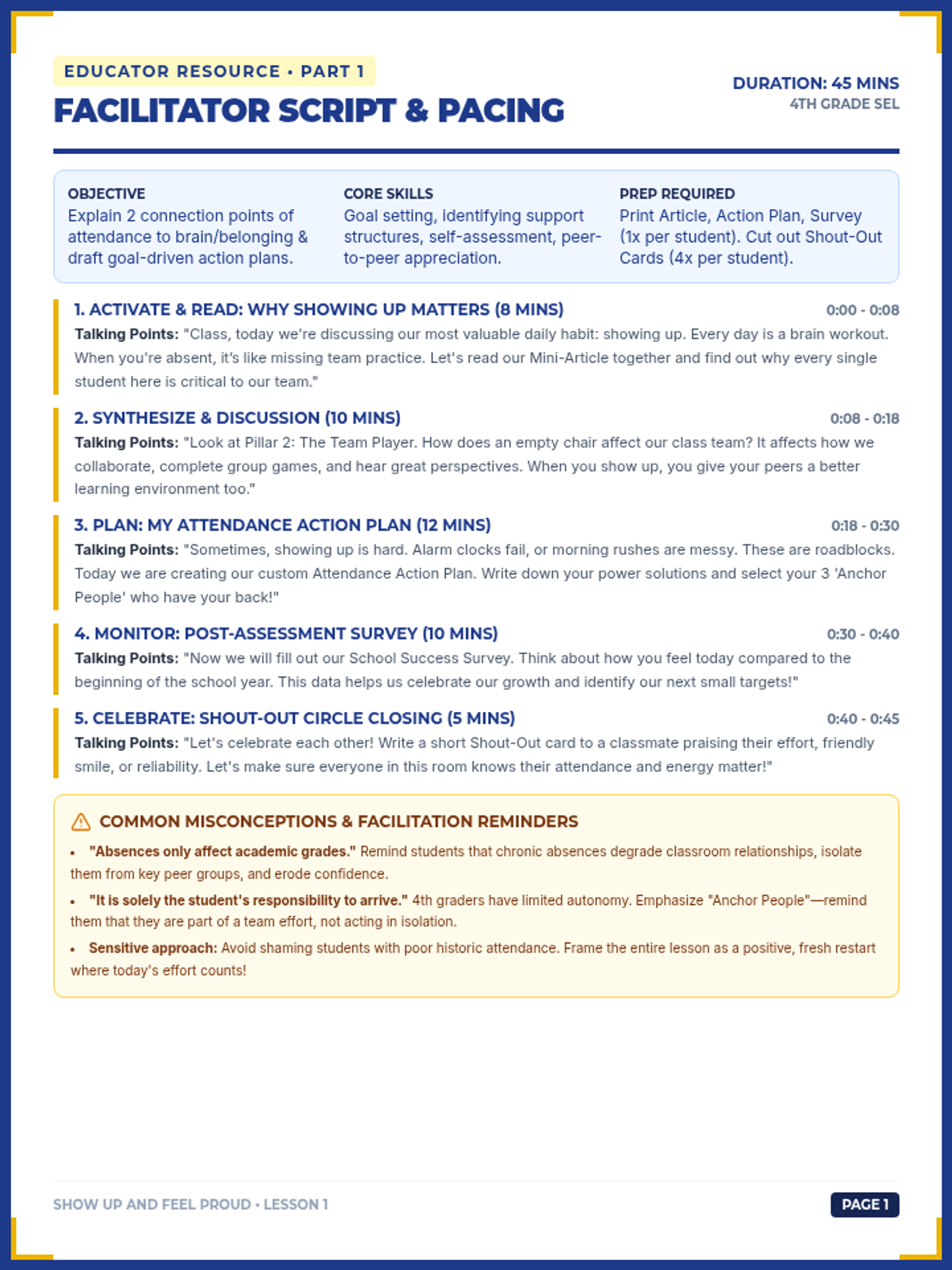
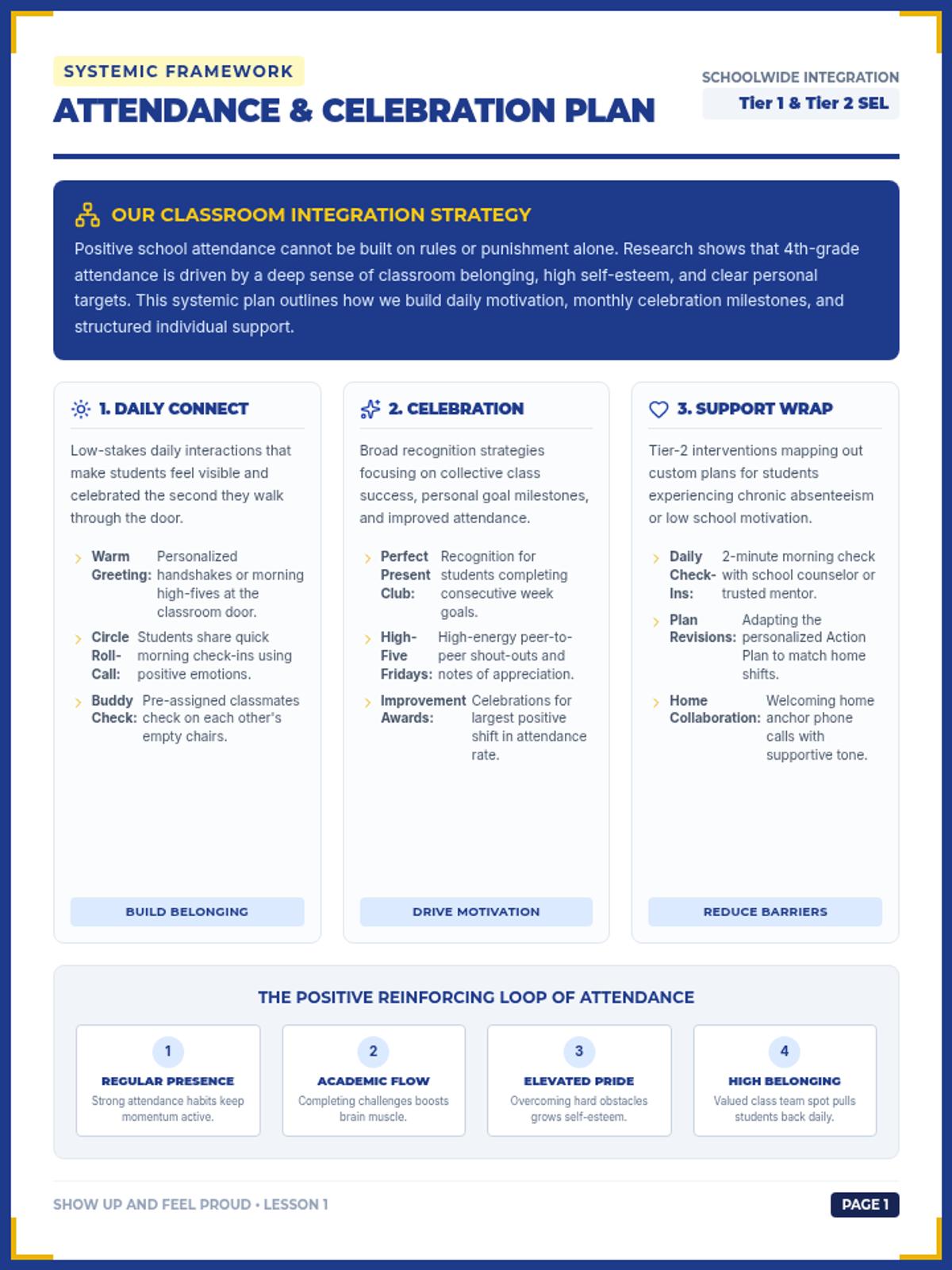
A 45-minute 4th-grade social-emotional learning lesson focusing on the connection between regular school attendance, academic success, and personal self-esteem. Students analyze a short text, design a personalized attendance action plan, complete a self-assessment, and celebrate their growth.
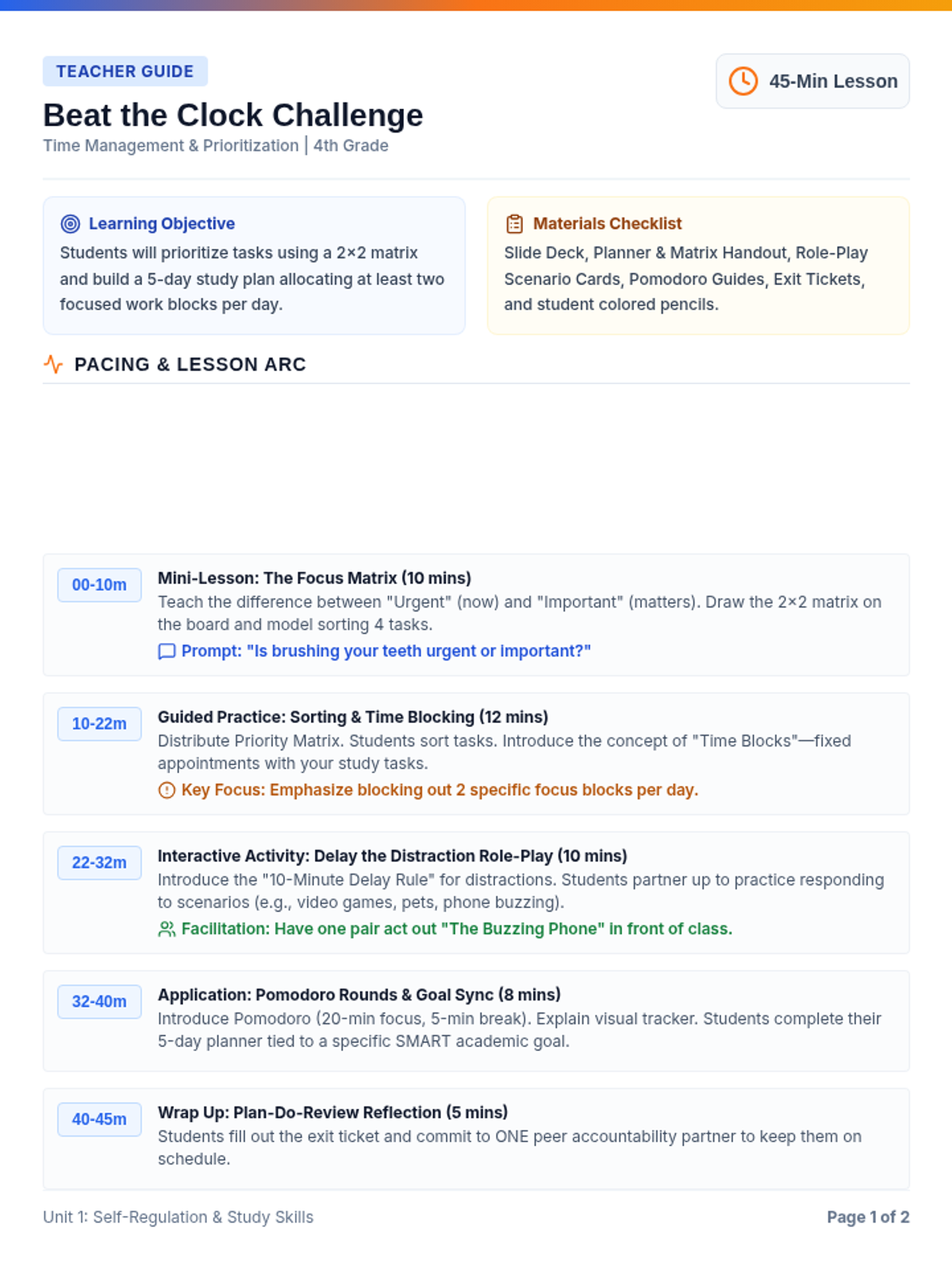
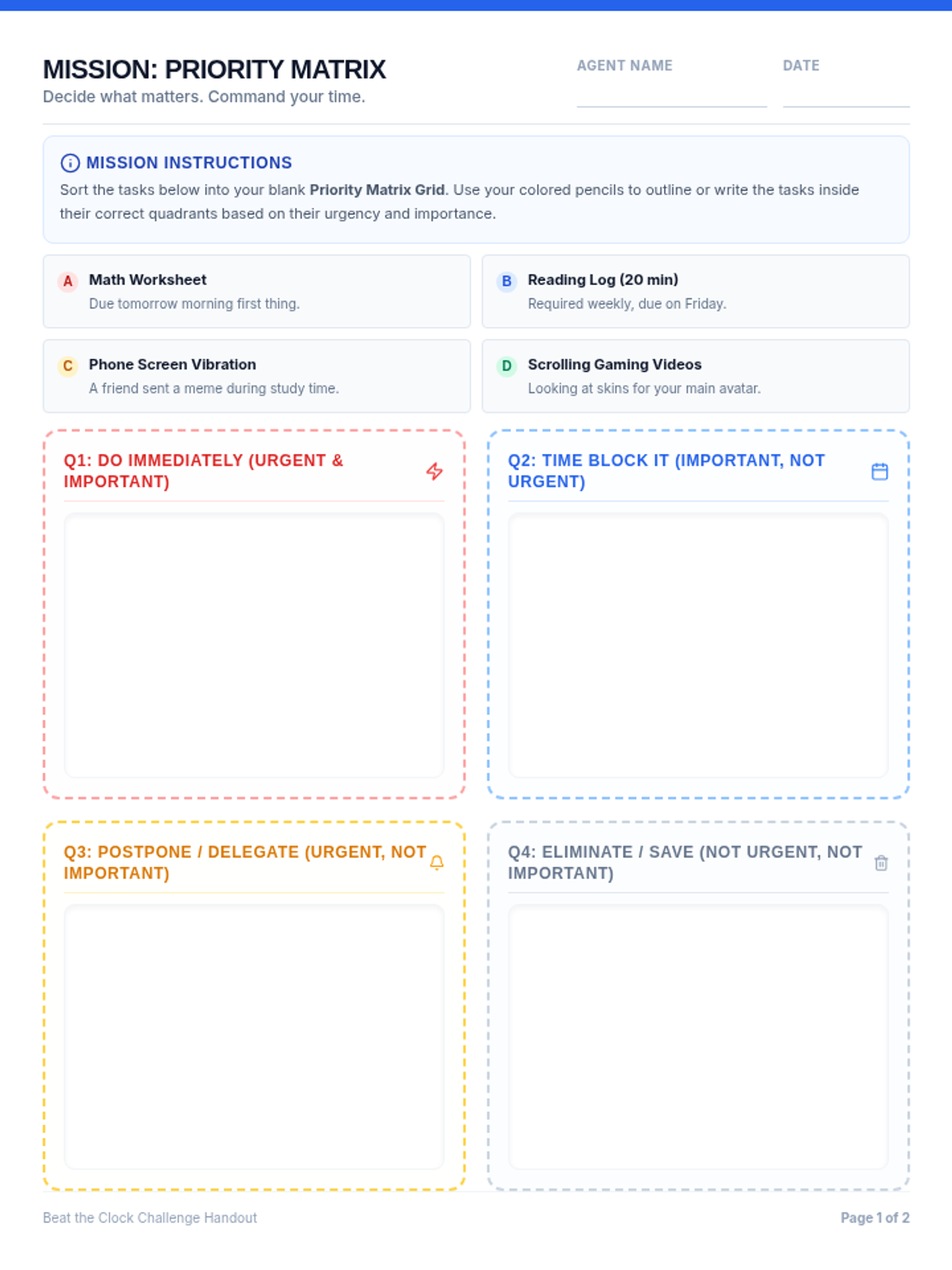
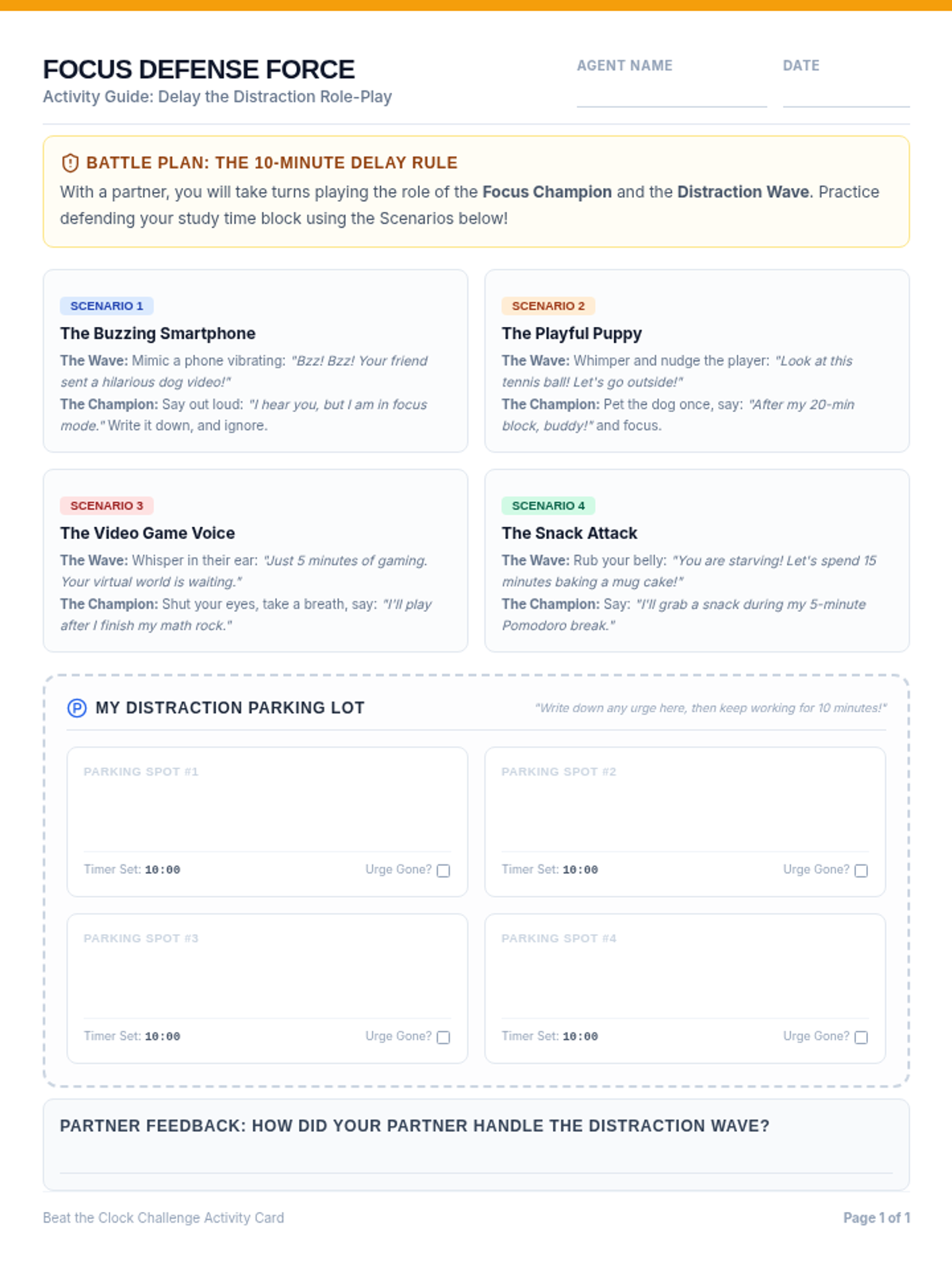
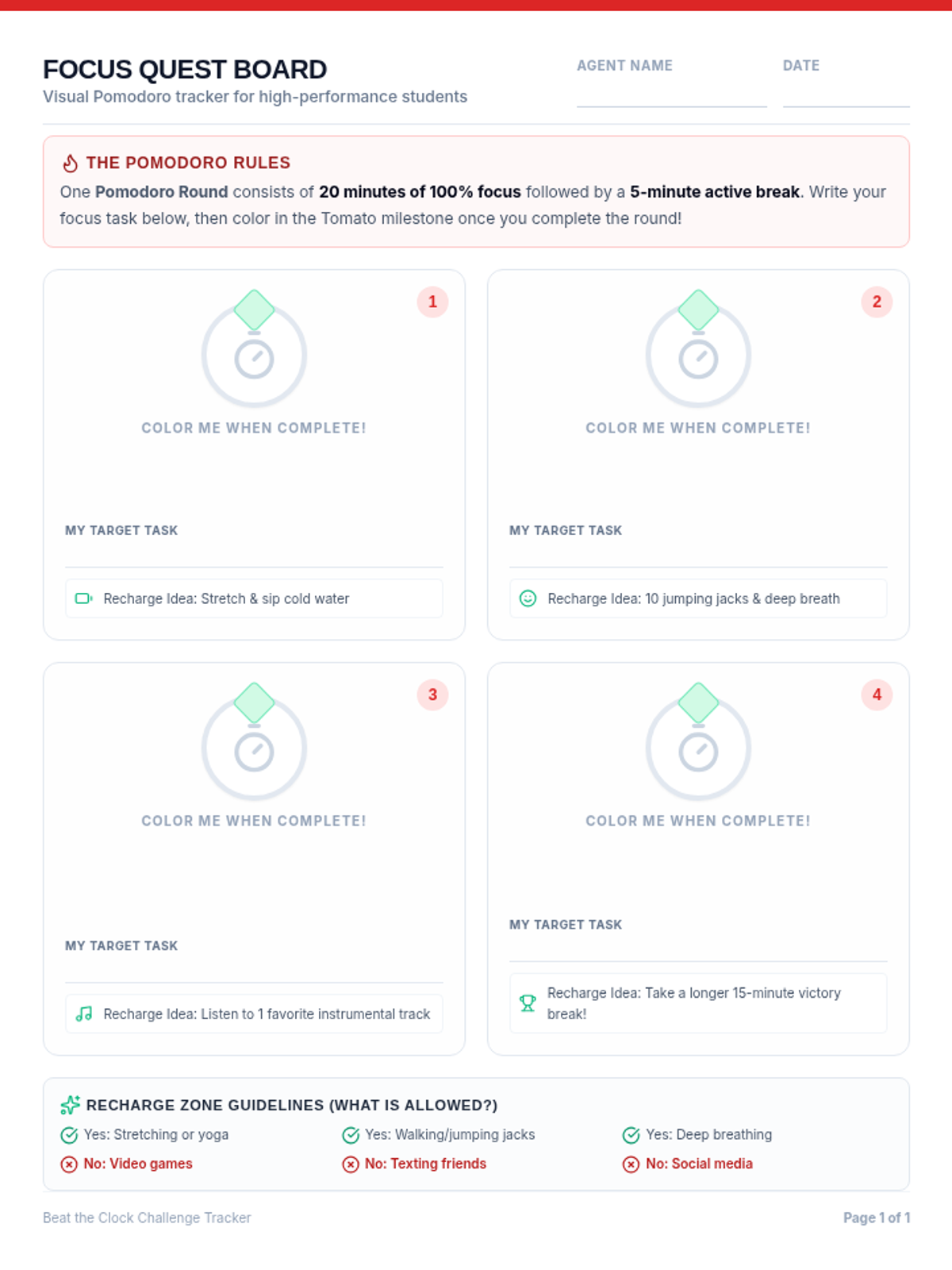
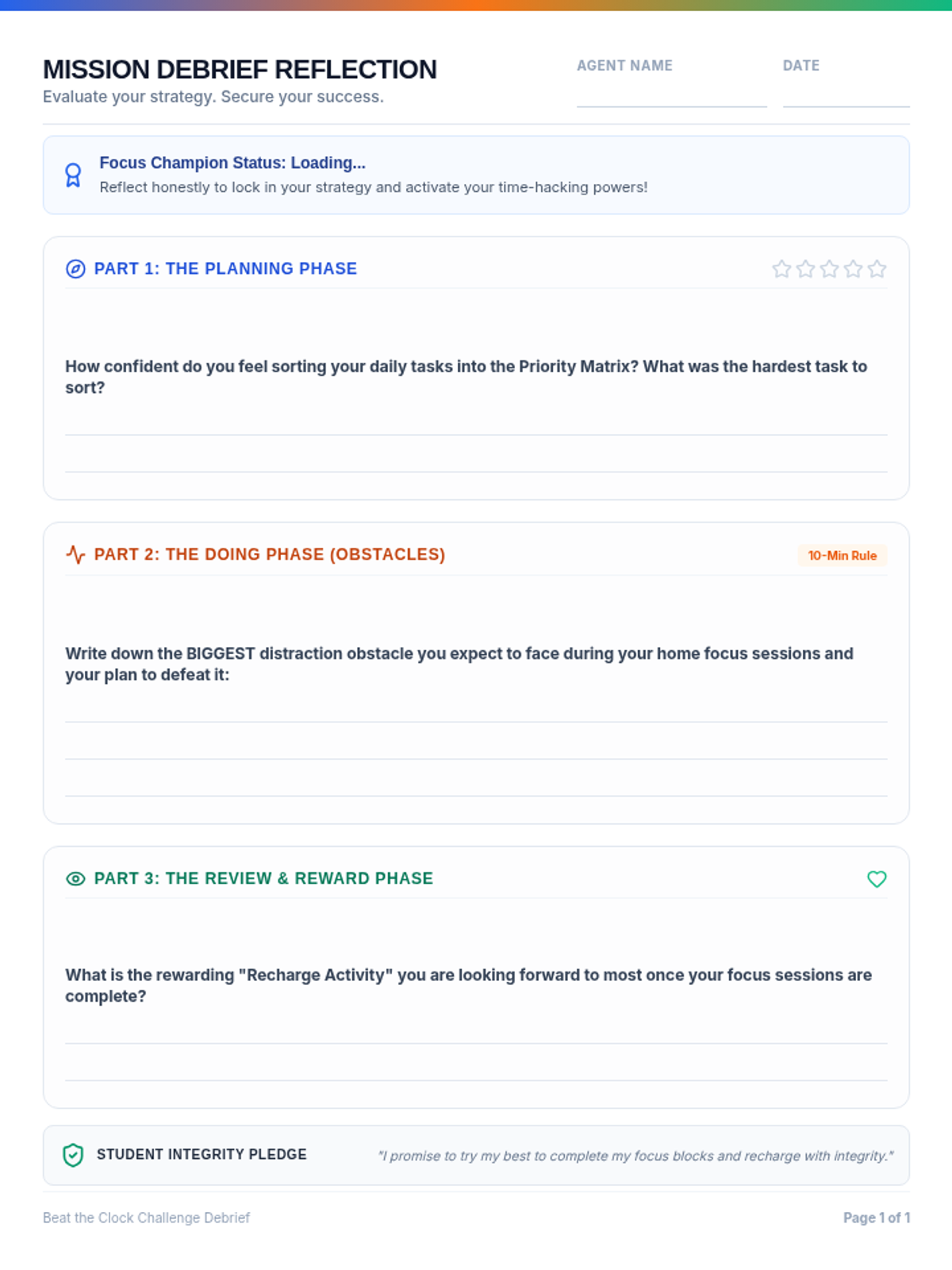
A highly interactive 4th-grade lesson on time management where students learn to prioritize tasks using a 2x2 importance/urgency matrix, block out study times, role-play distraction management, and create a realistic 5-day homework plan.
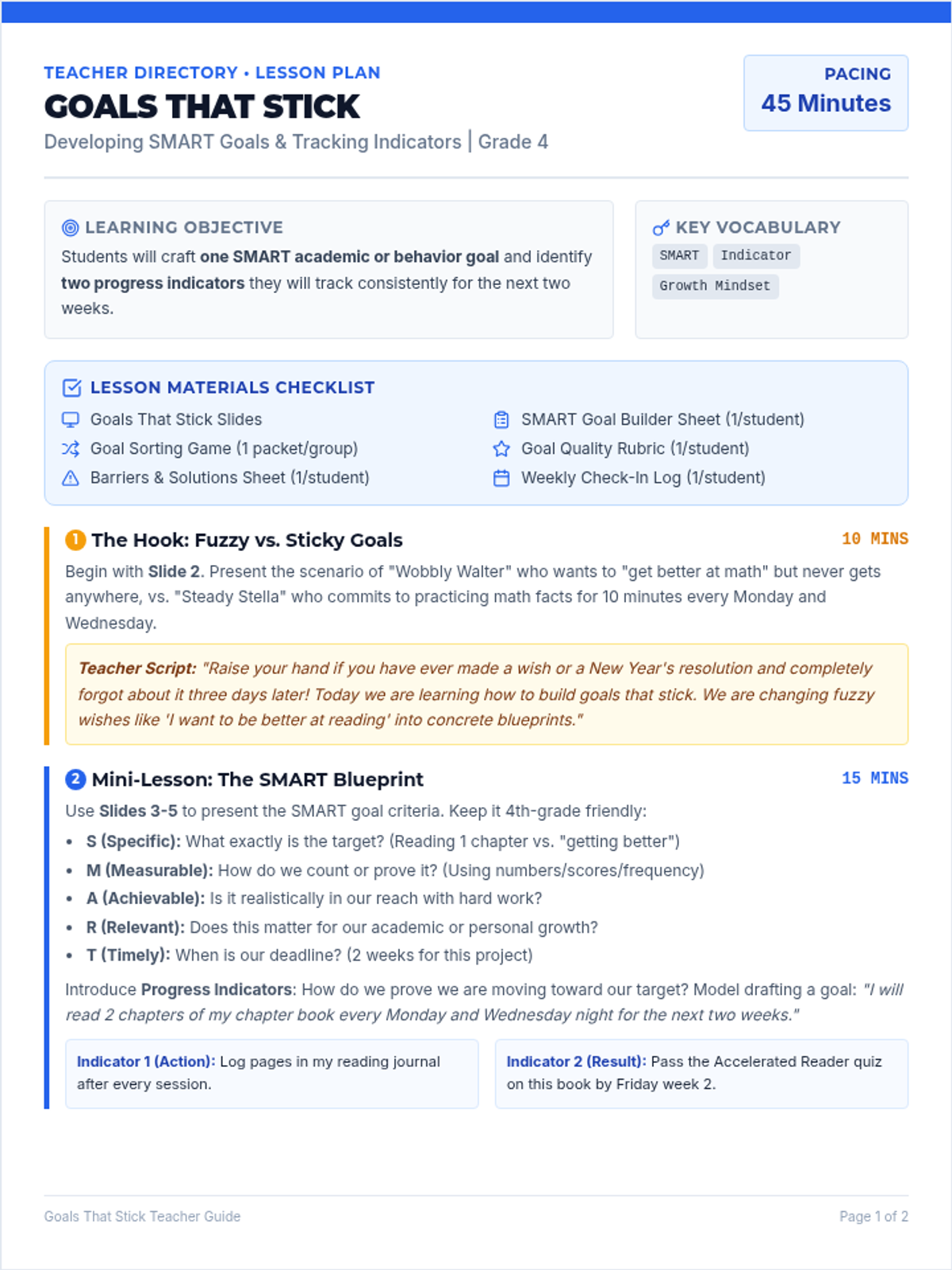
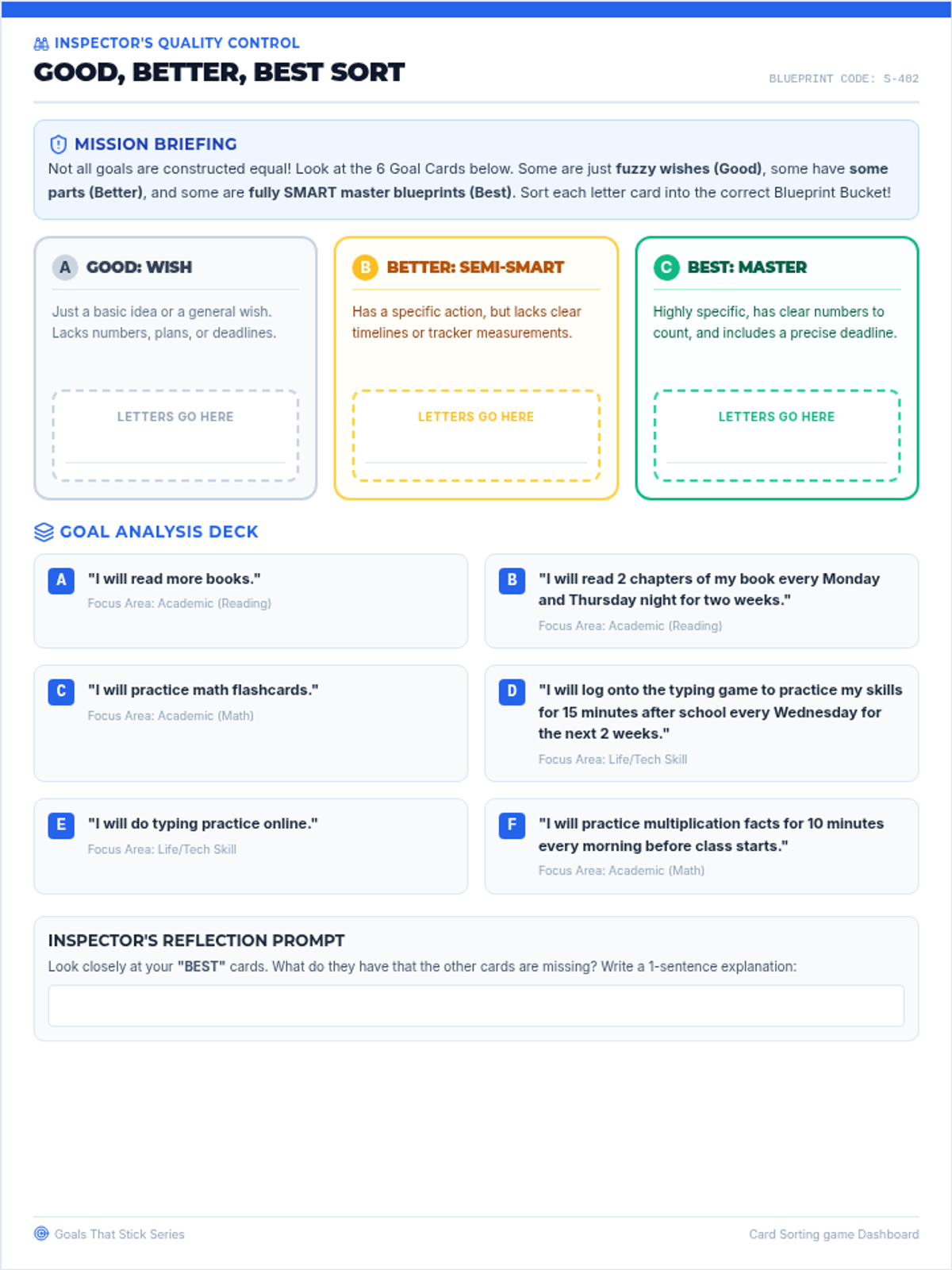
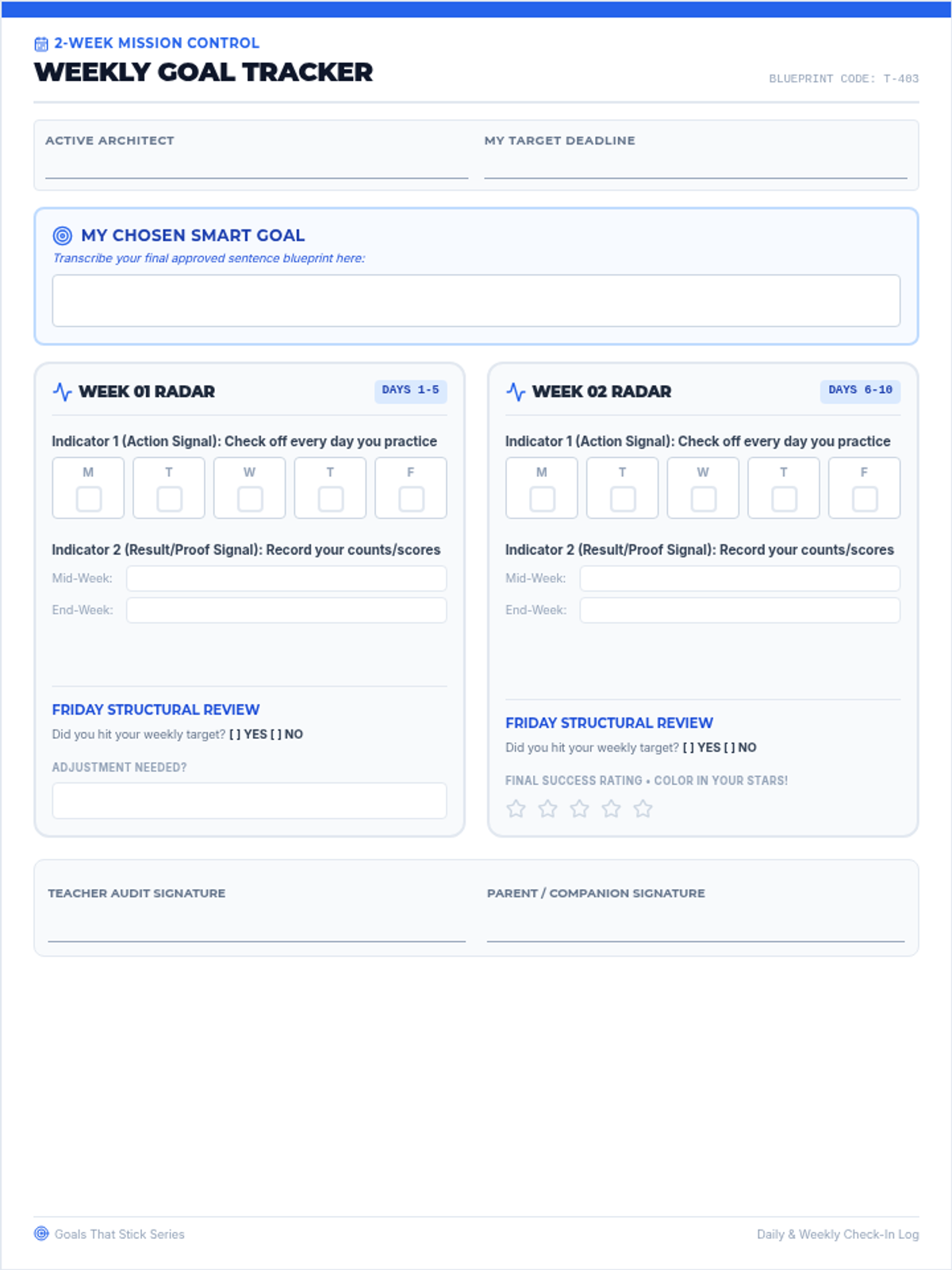
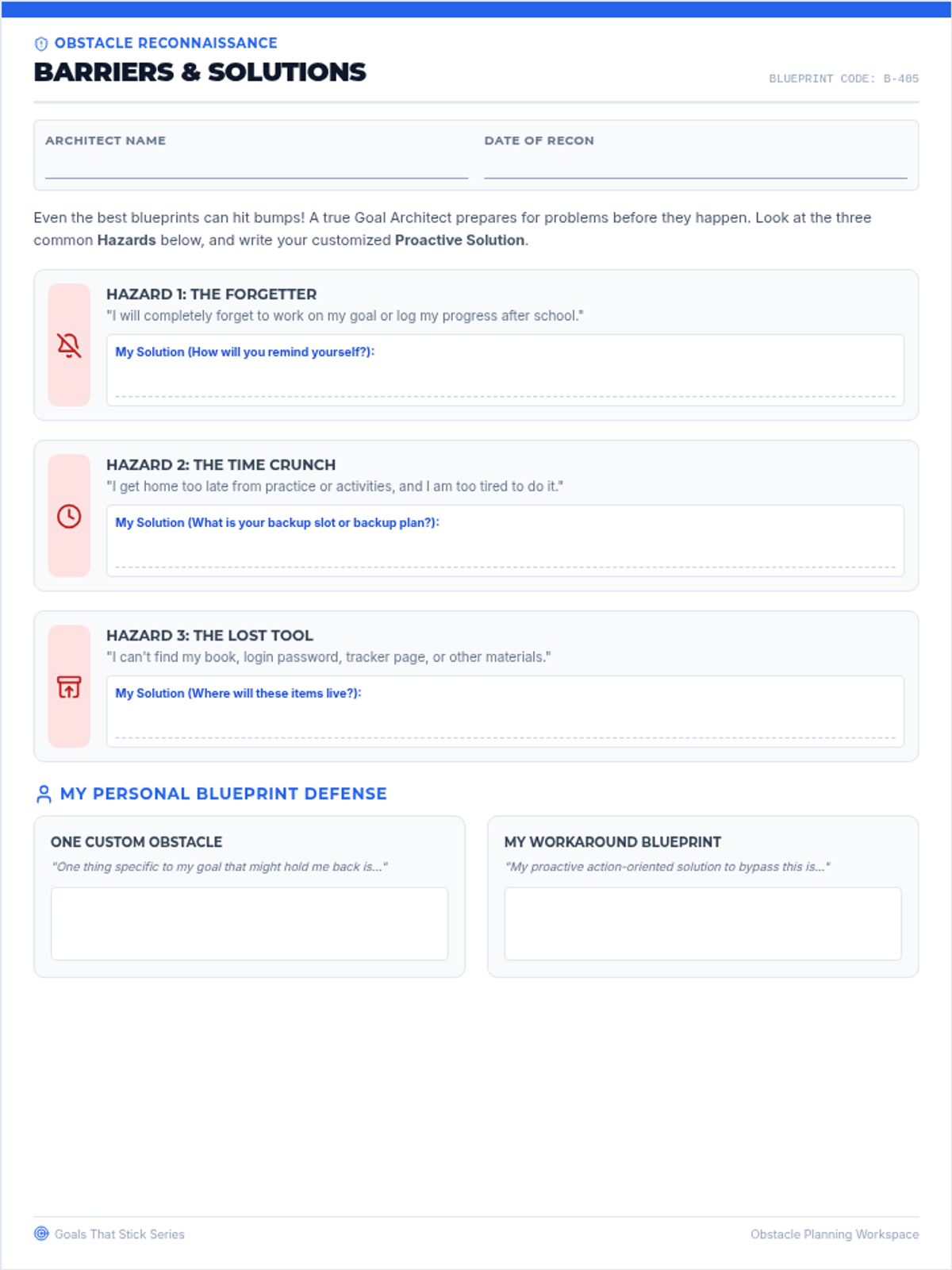
A 45-minute lesson designed for 4th graders to introduce the SMART goal framework. Students learn how to transform vague wishes into concrete, measurable goals, align them with tracking indicators, brainstorm solutions to barriers, and set up a two-week tracking routine.
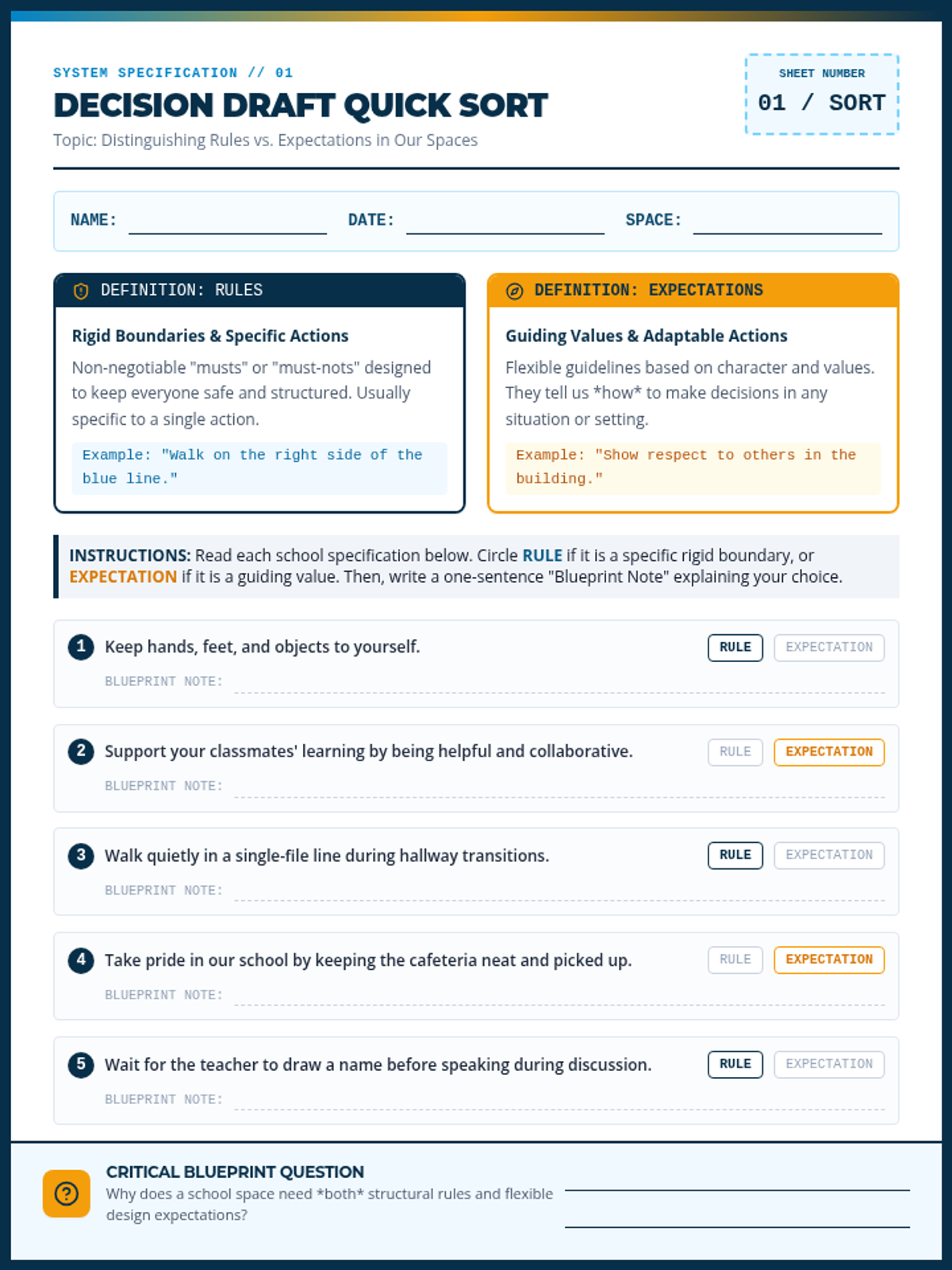
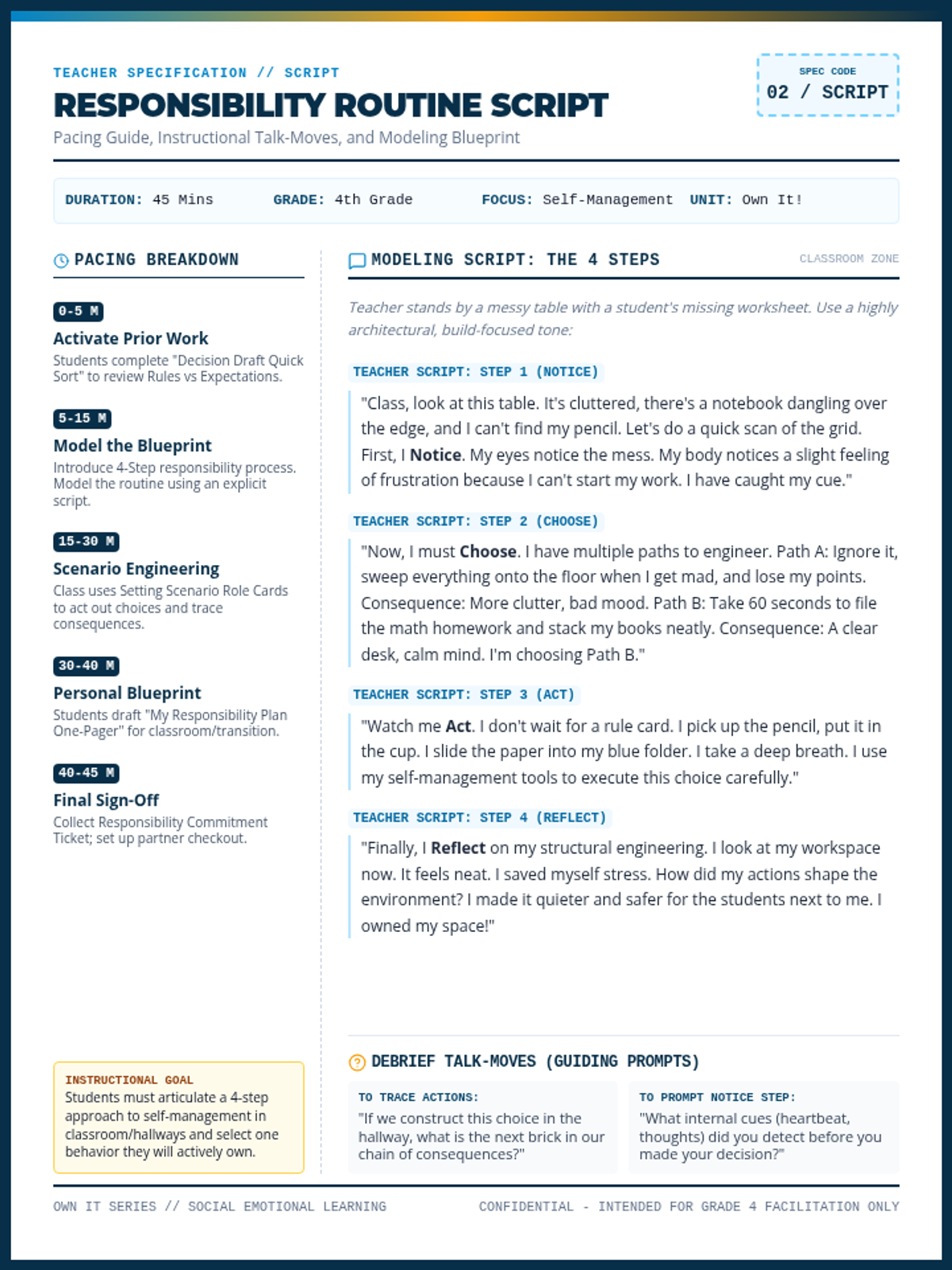
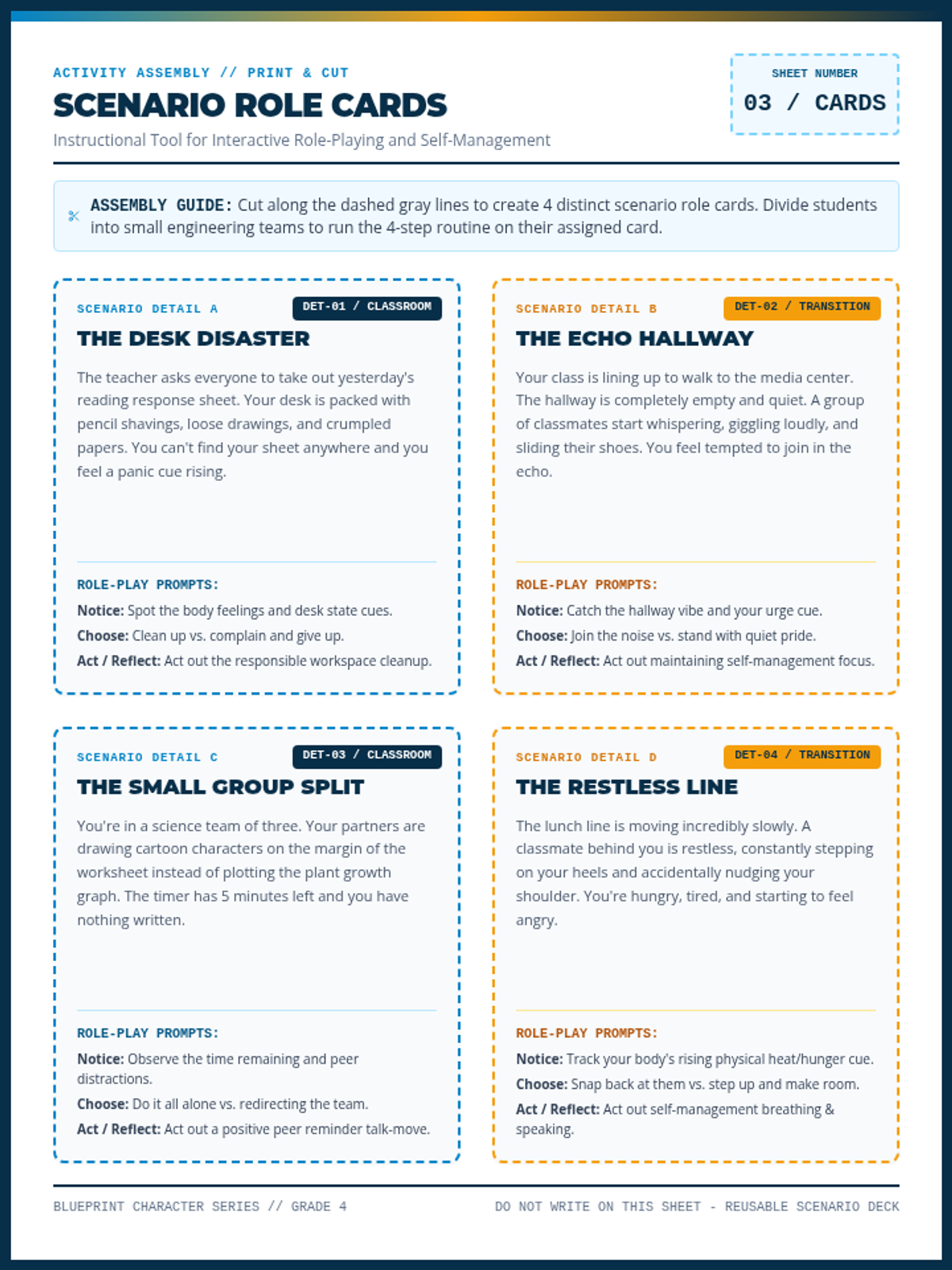
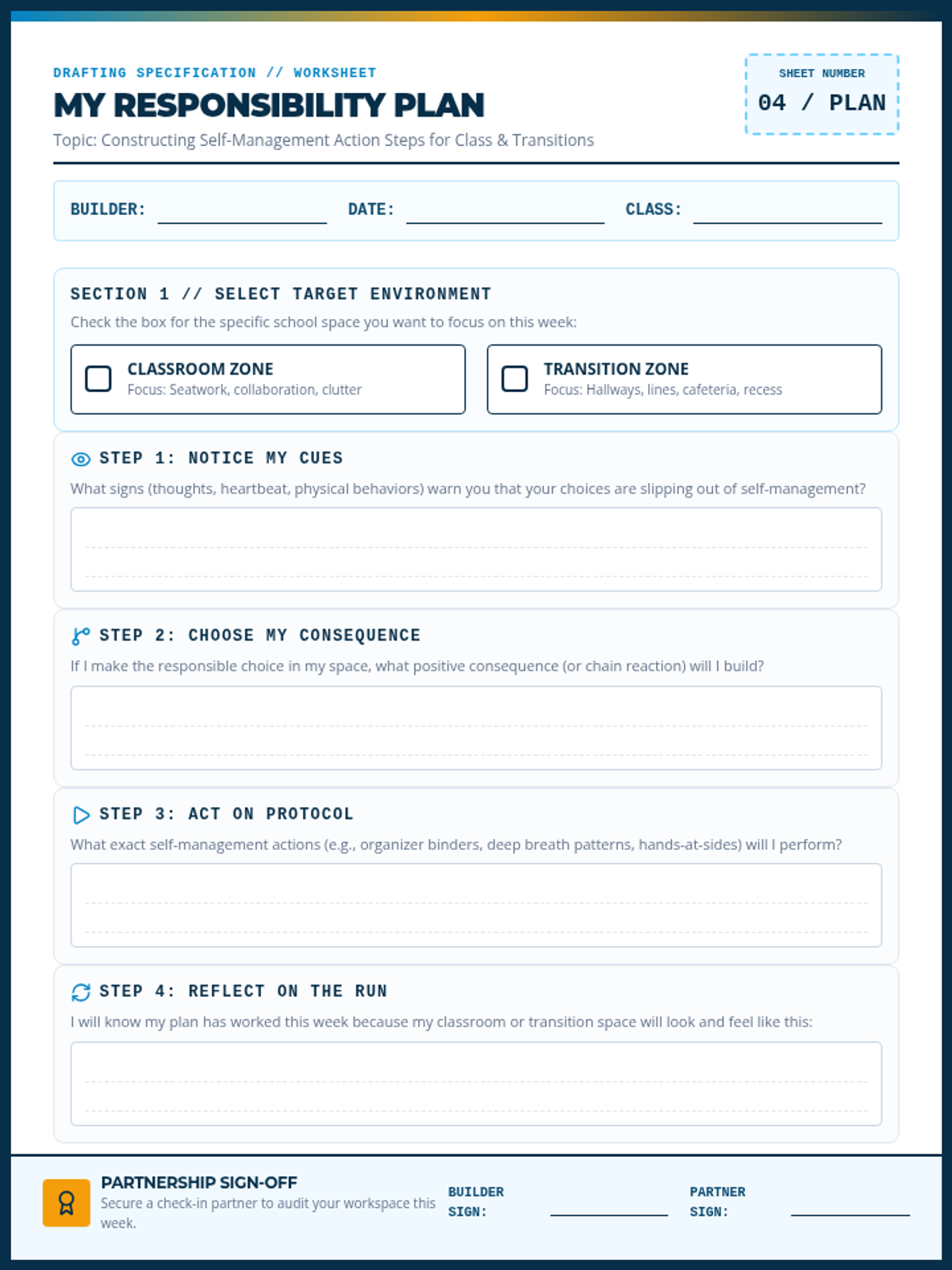
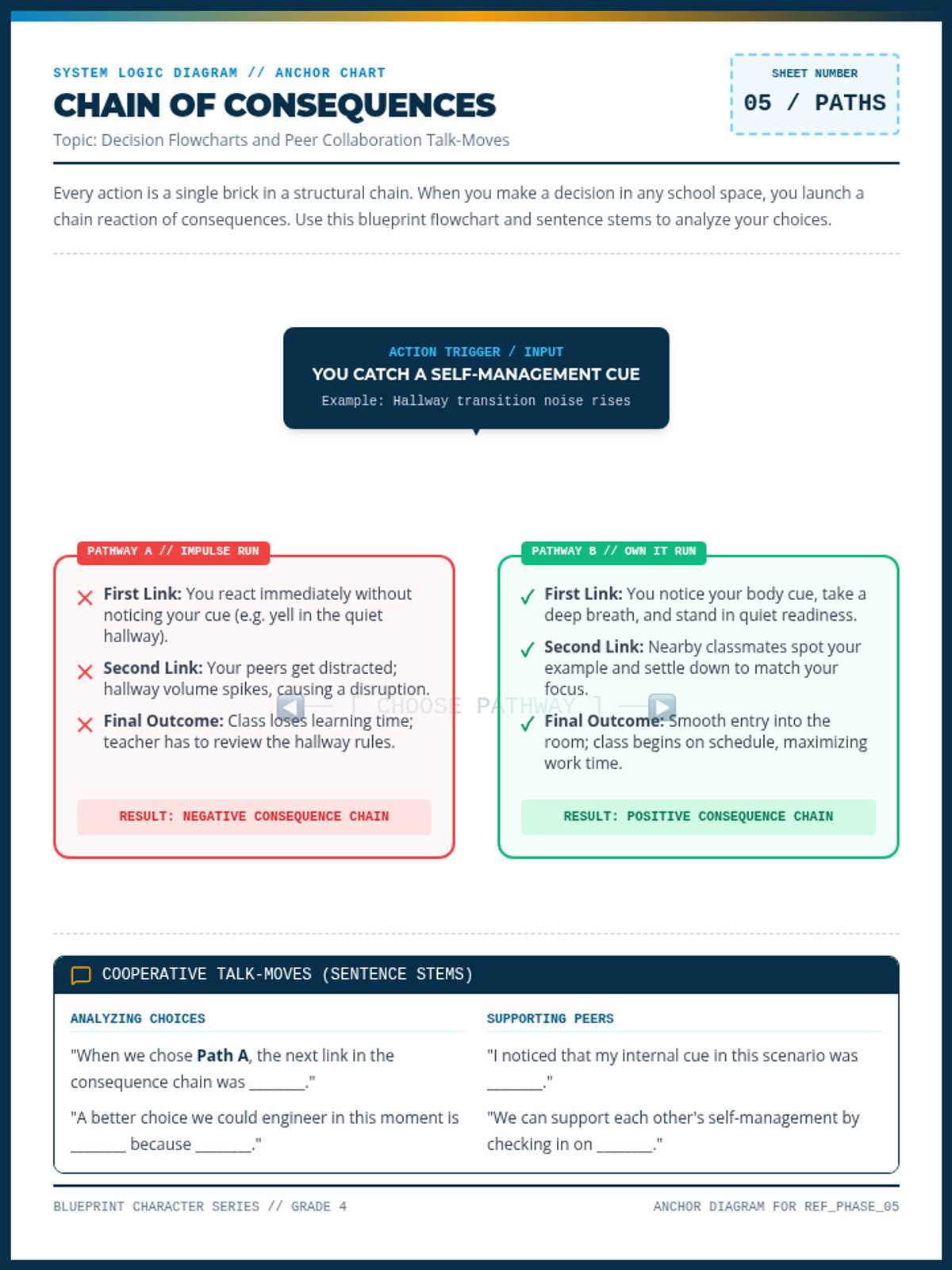
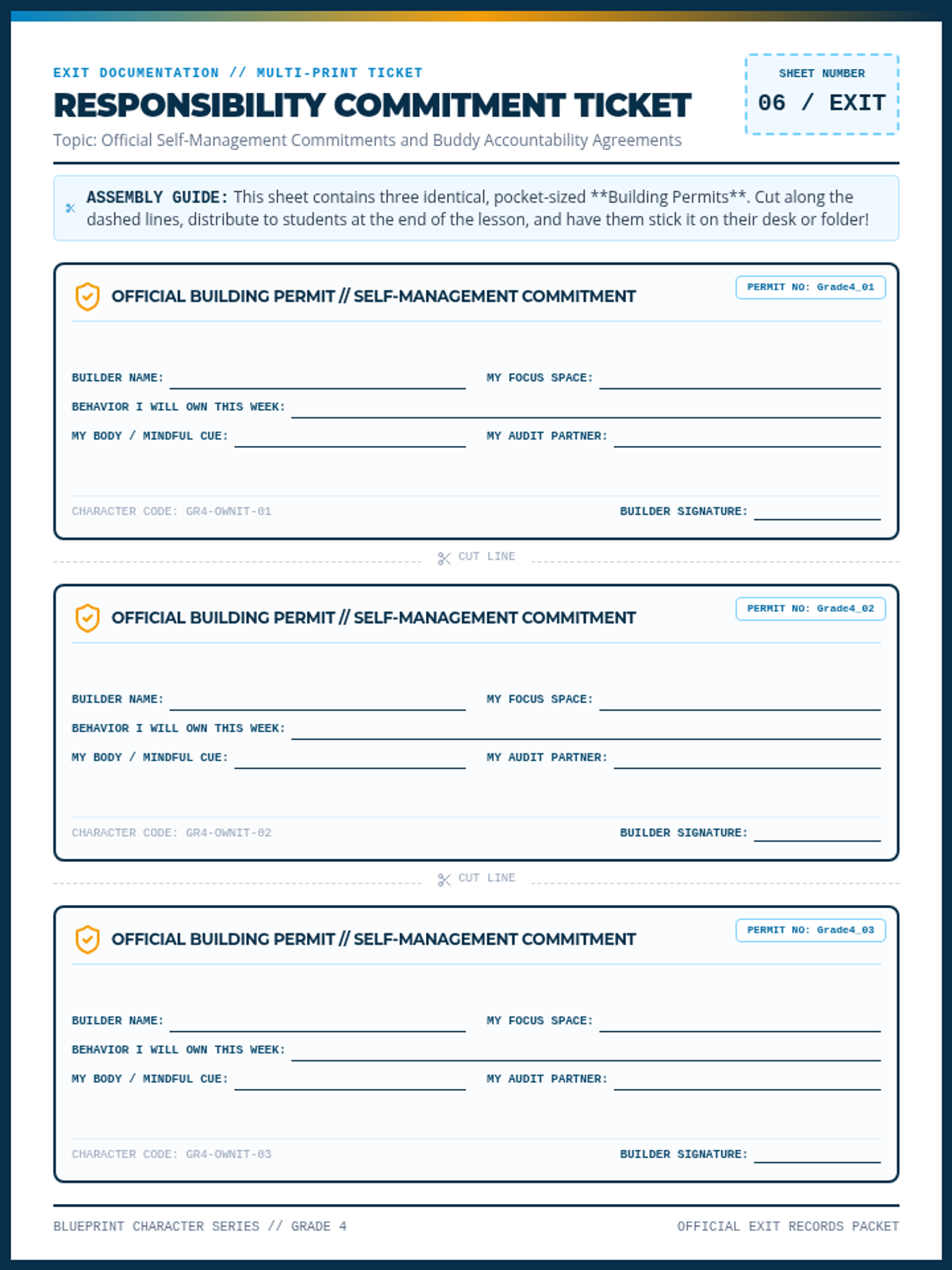
A 45-minute social-emotional learning lesson for 4th graders to master self-management and personal responsibility. Students analyze rules versus expectations, learn a 4-step responsibility process, and draft a personal action plan for classrooms and school transitions.
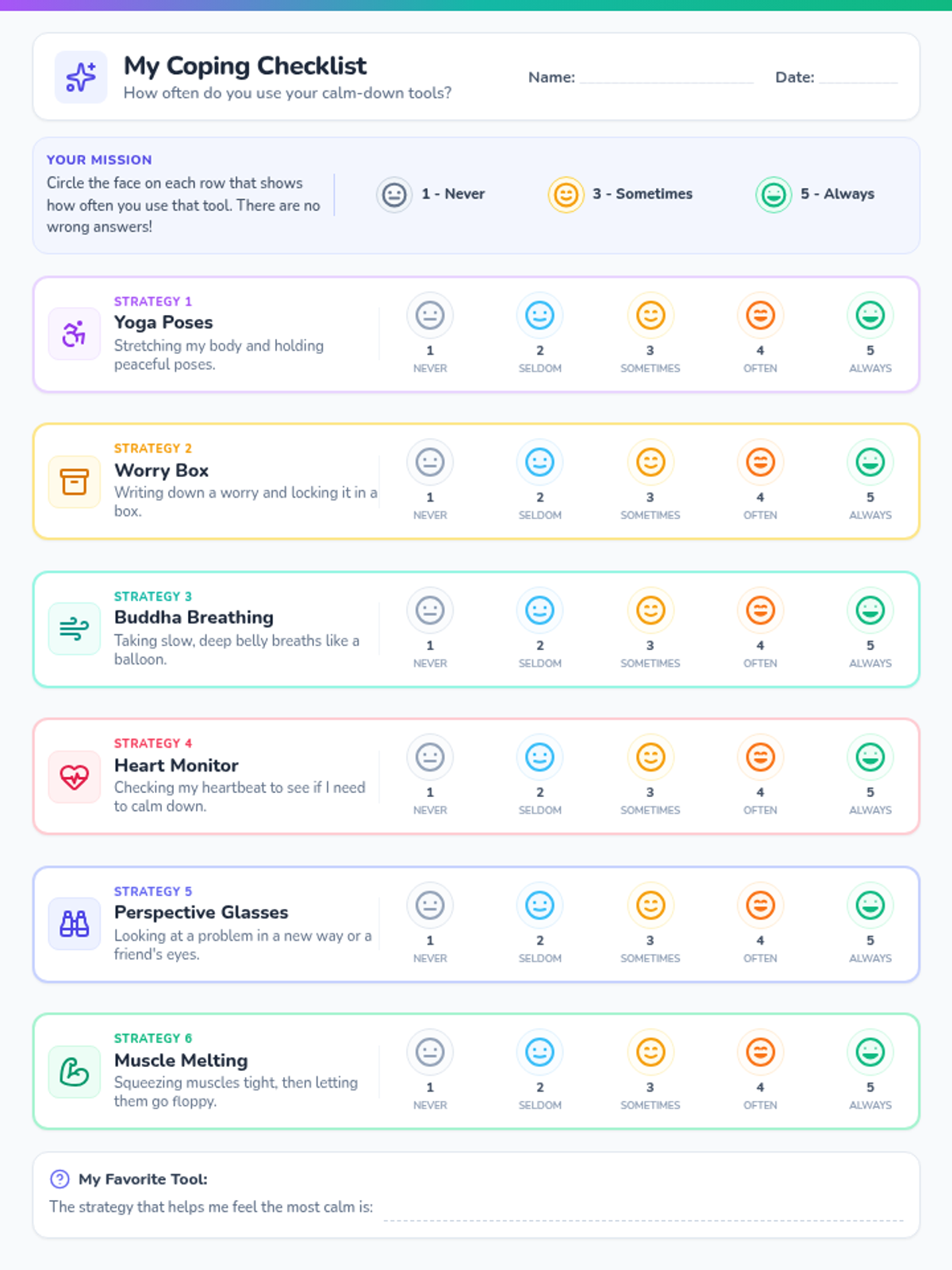
A lesson centered on evaluating student usage of coping strategies using visual checklists and rating scales, tailored for grade 4 learners with language-based learning differences.
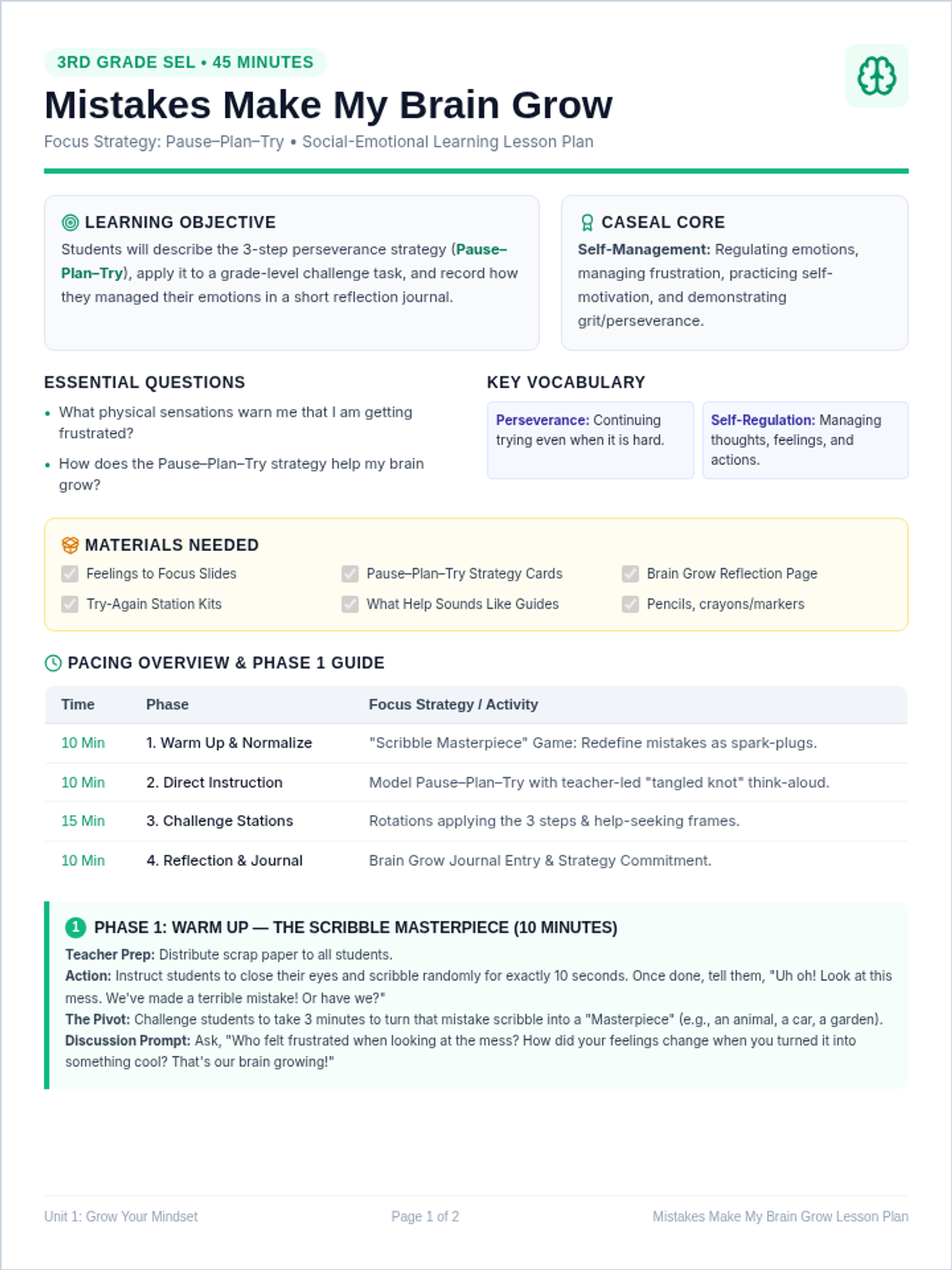
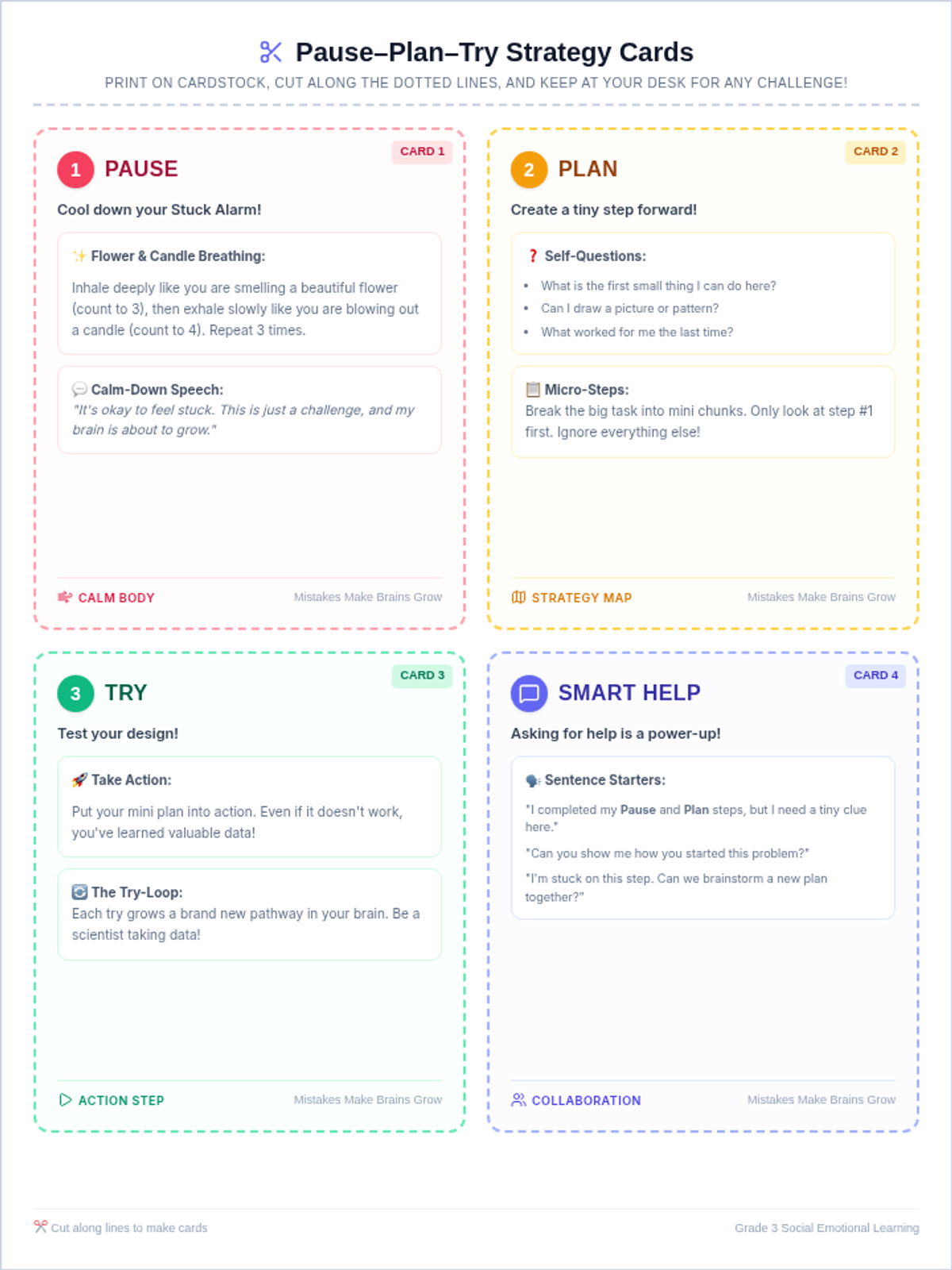
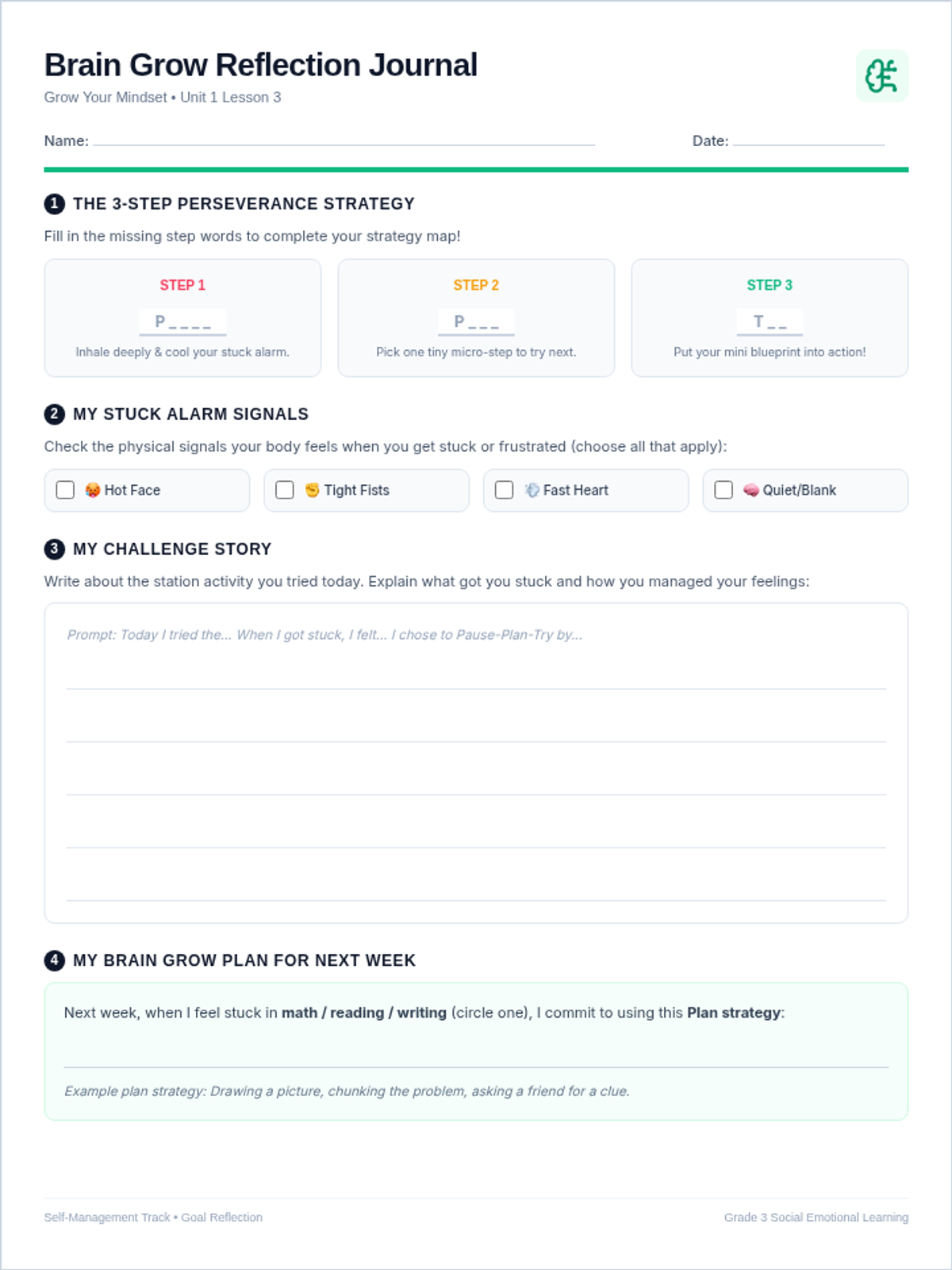
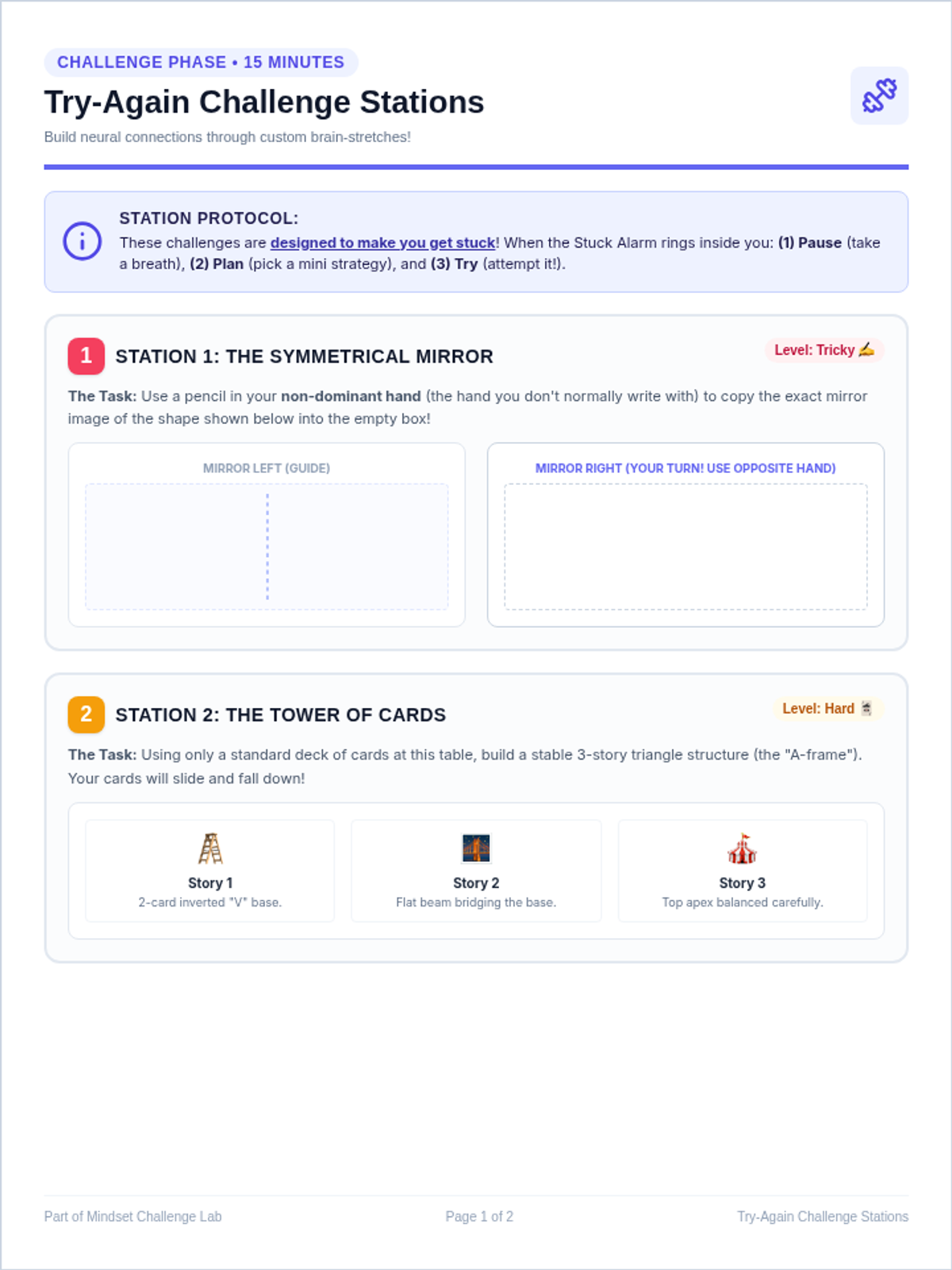
A 3rd-grade social-emotional learning lesson focusing on the 'Pause-Plan-Try' perseverance strategy. Students learn to normalize mistakes, regulate emotions, and practice constructive help-seeking language through interactive challenge stations and self-reflection.
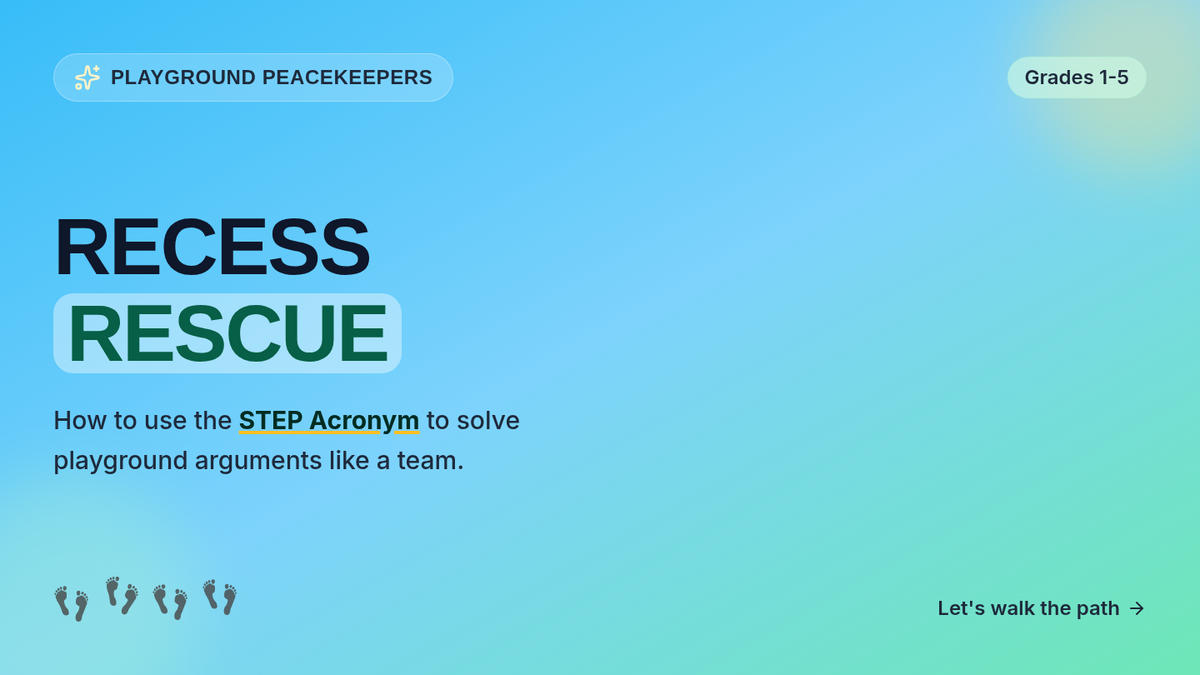
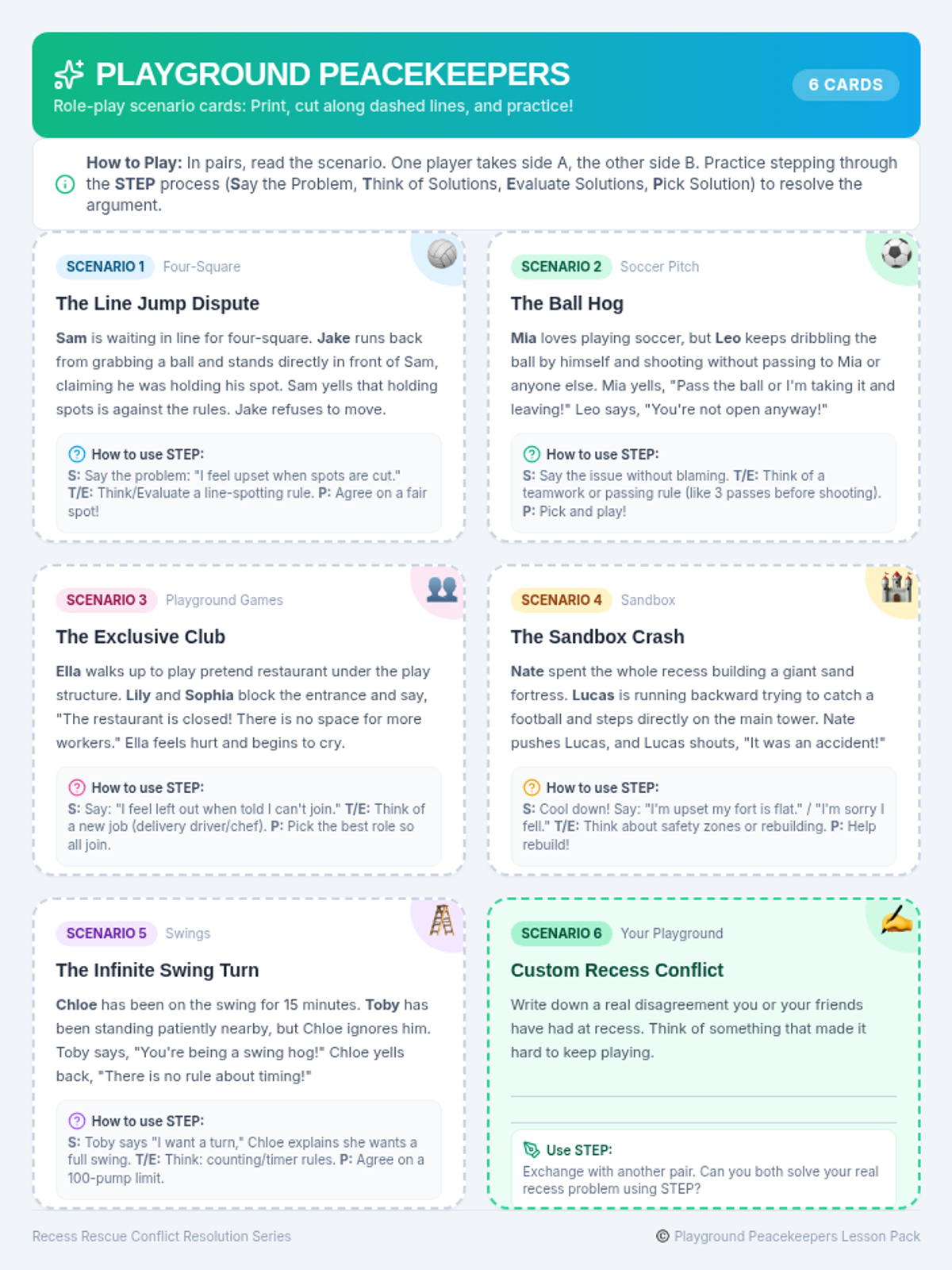
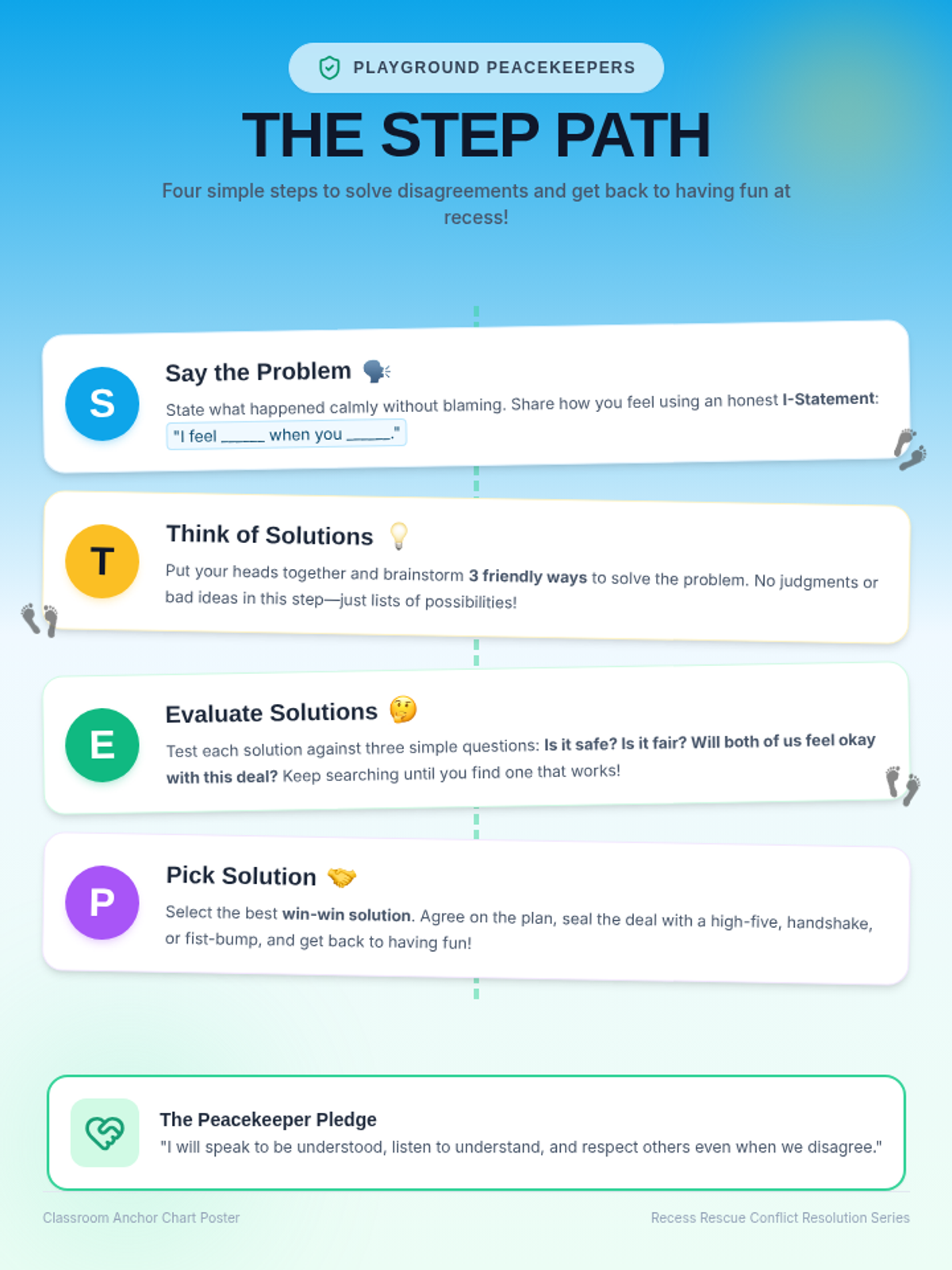
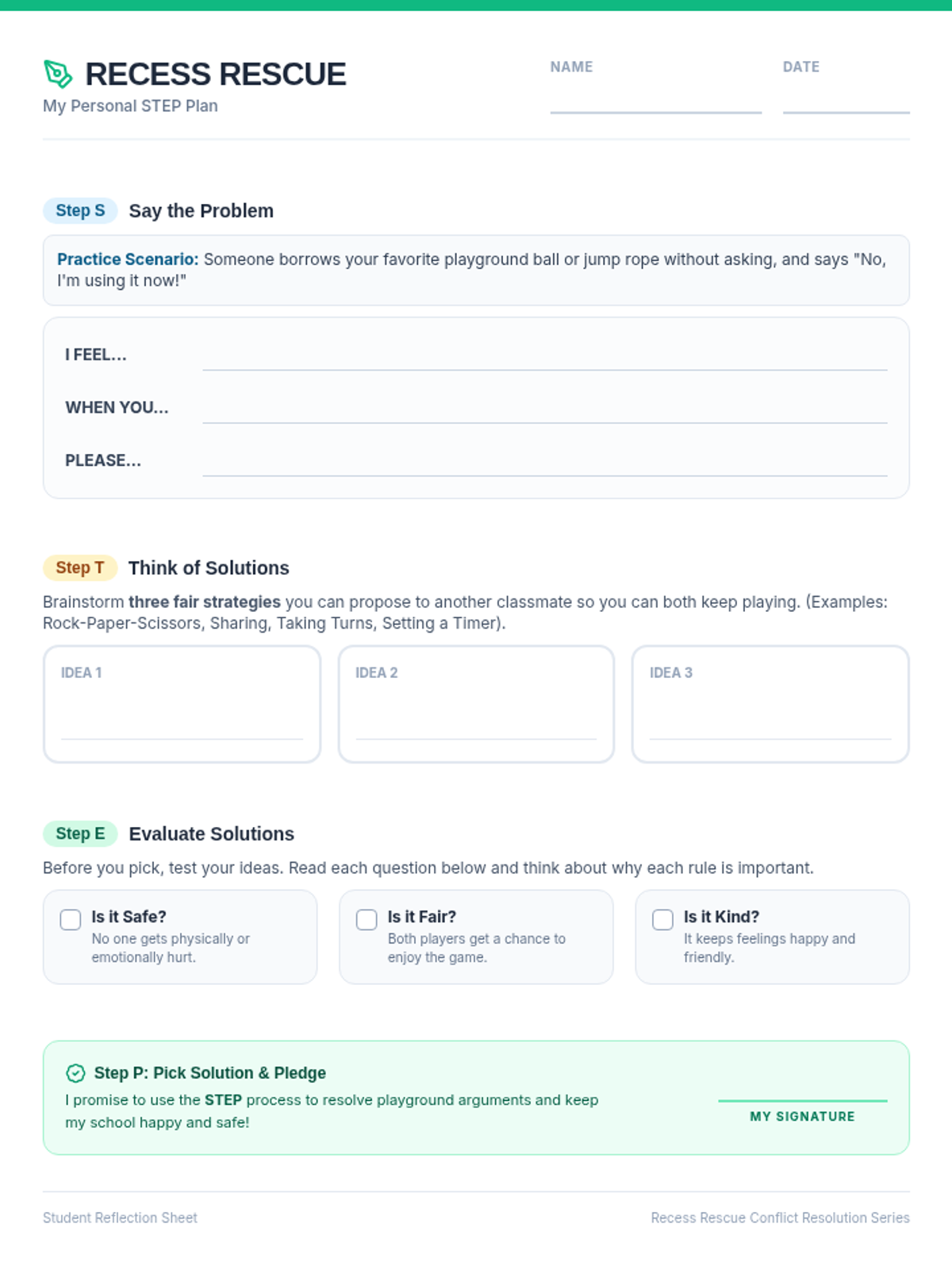
A lesson bundle designed to teach elementary students how to resolve playground conflicts using a structured, peer-to-peer 'Peace Path'. Students will learn self-regulation, active listening, and collaborative problem-solving through interactive slides, role-play scenario cards, a colorful classroom anchor chart, and an individual reflection worksheet.
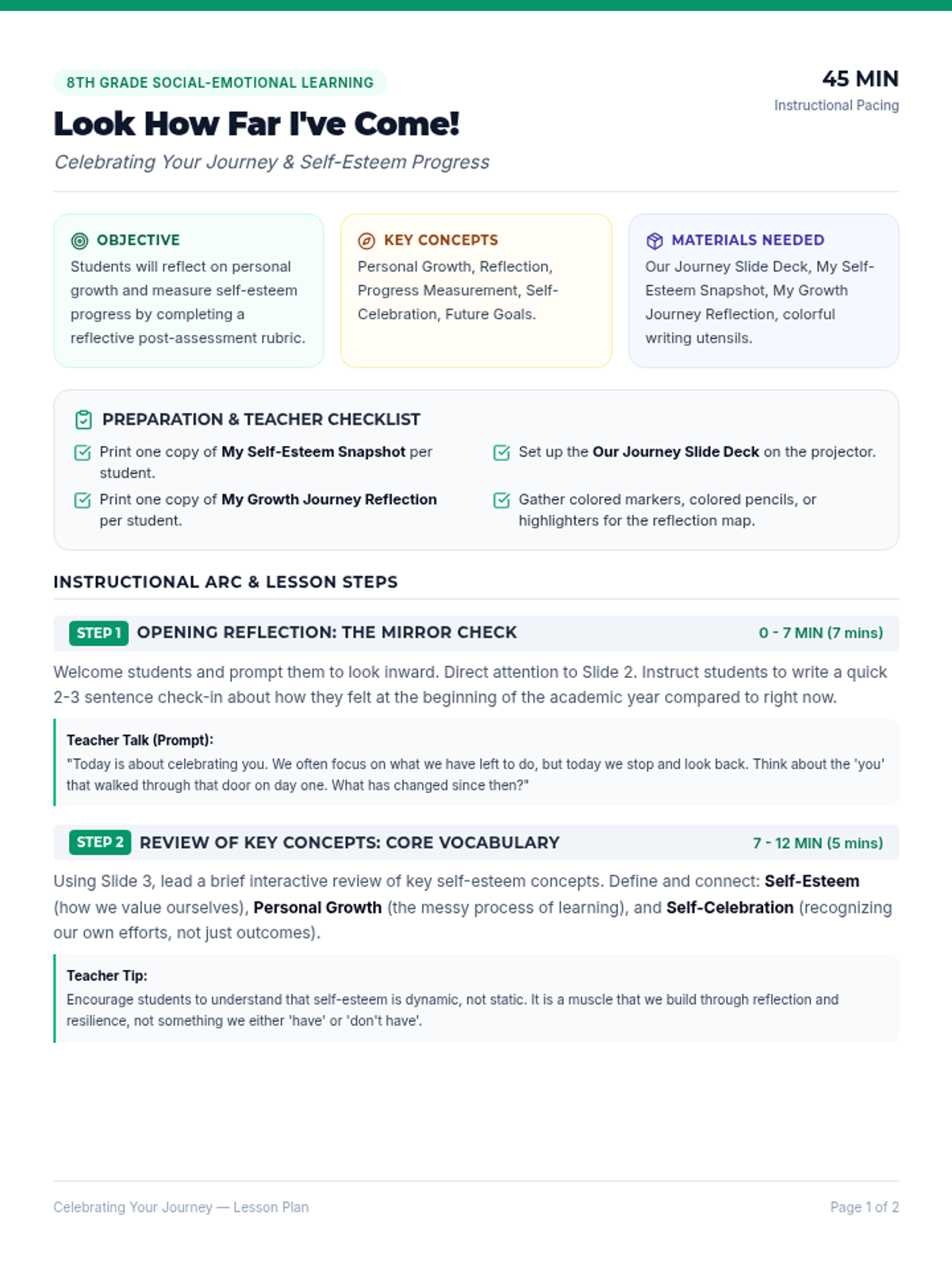
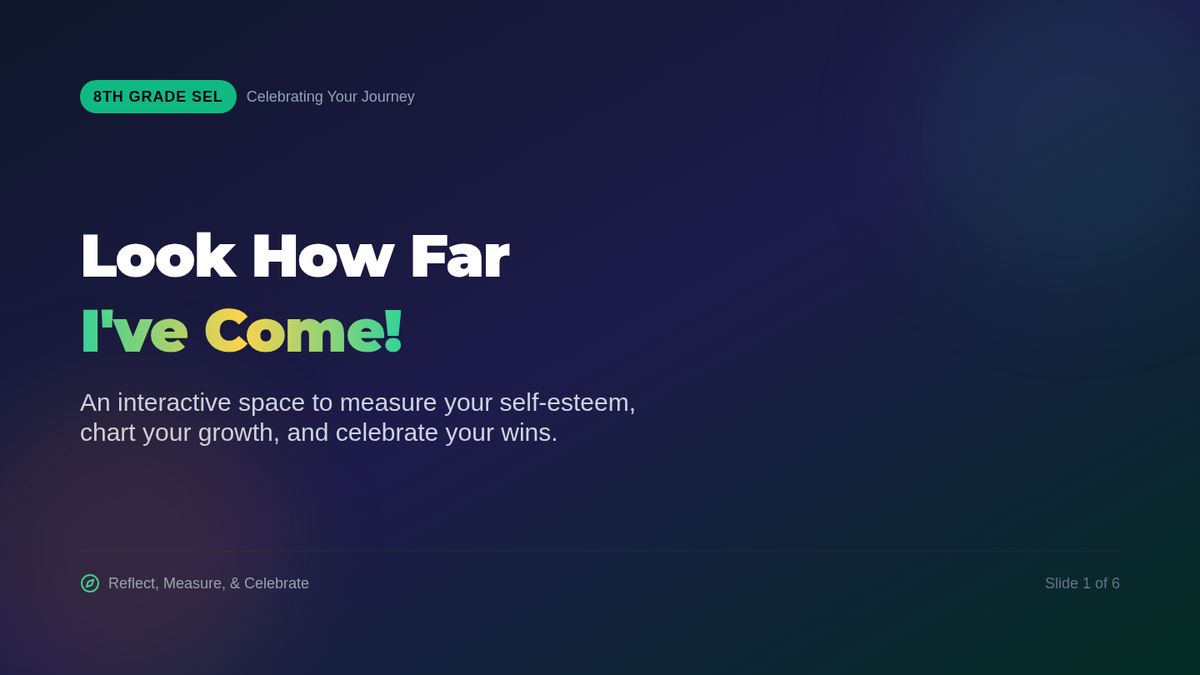
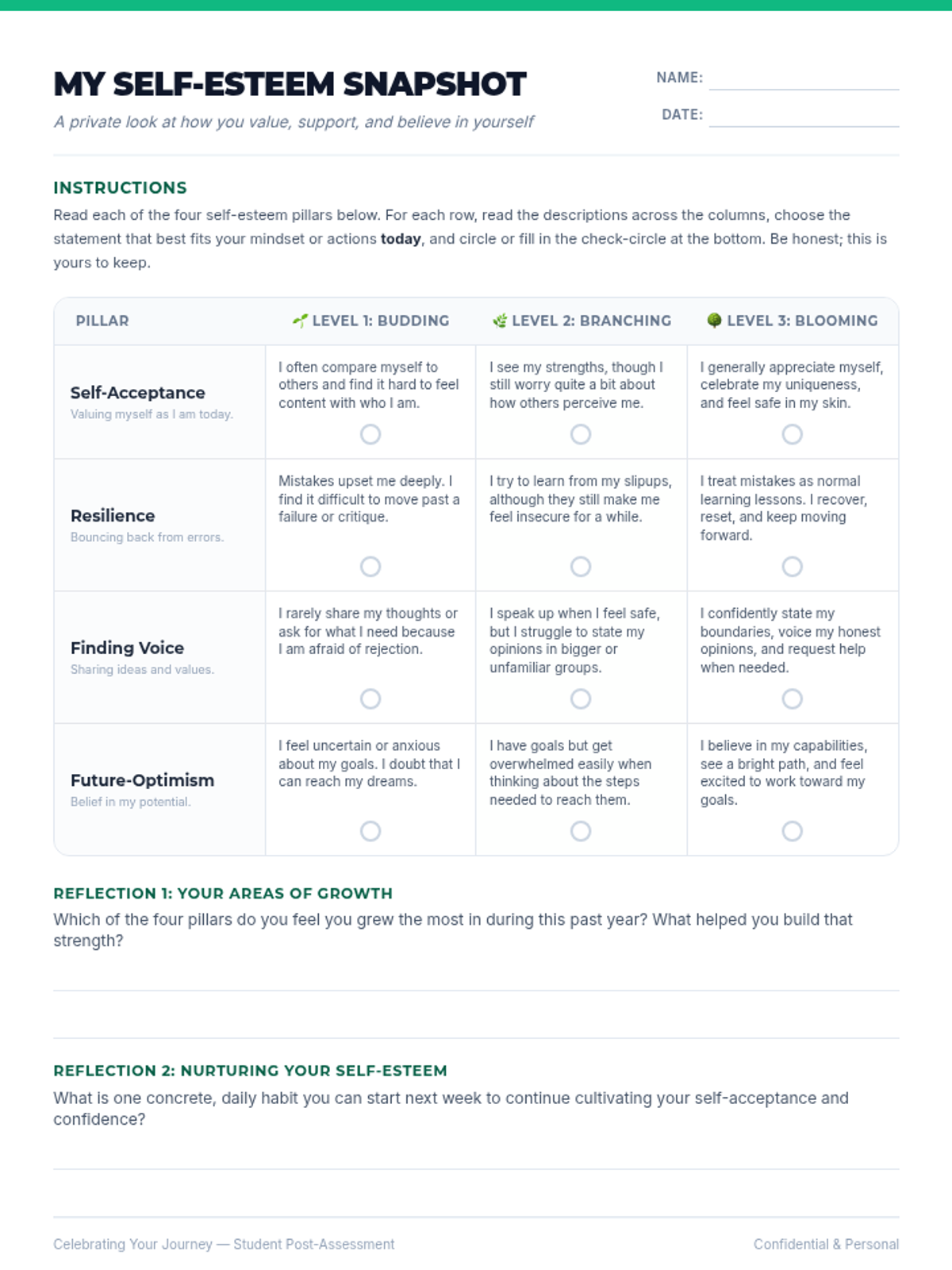
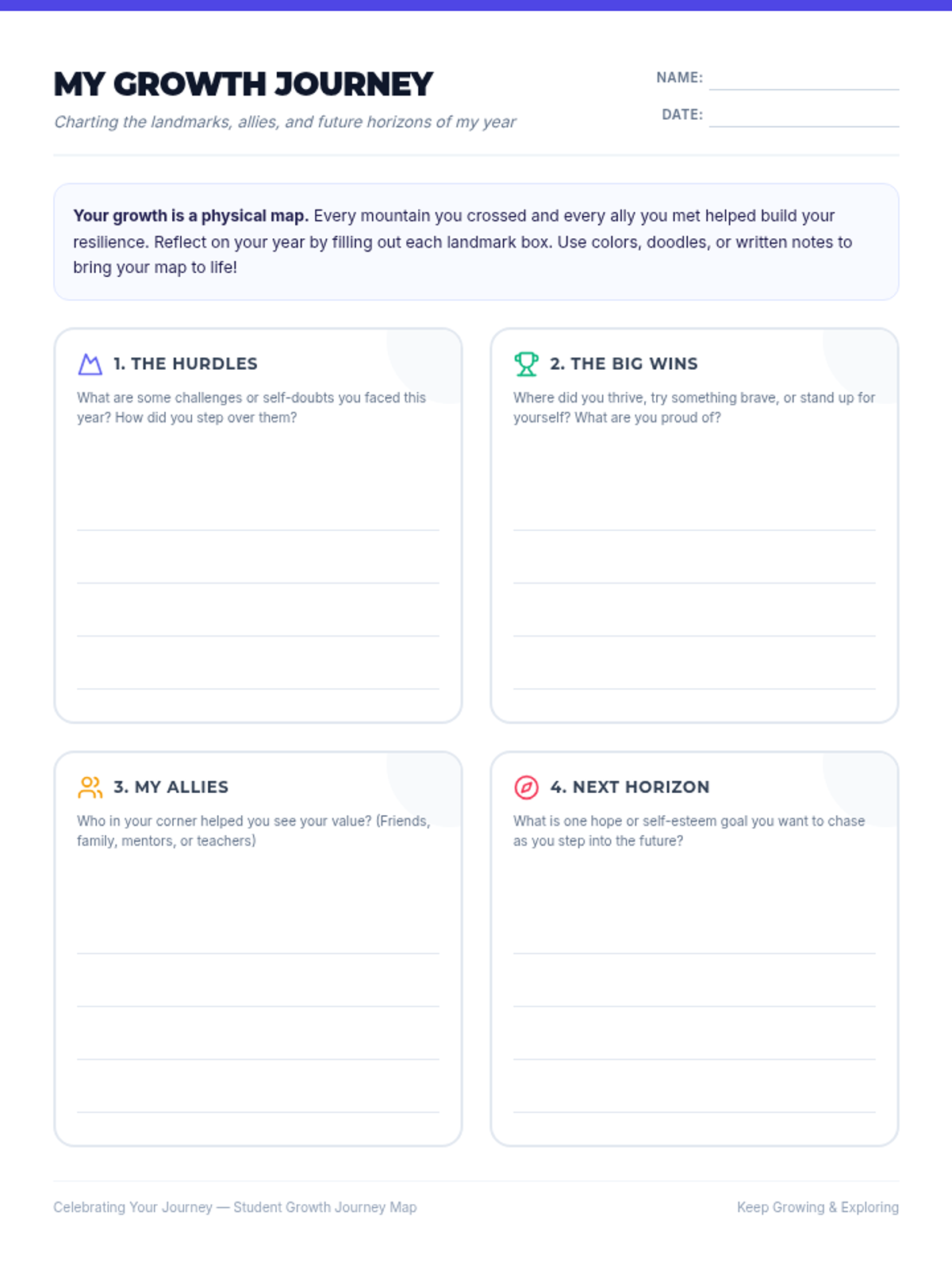
A reflective 45-minute lesson for 8th graders to measure their personal growth, self-esteem progress, and celebrate their learning journey with concrete self-assessments and creative mapping activities.
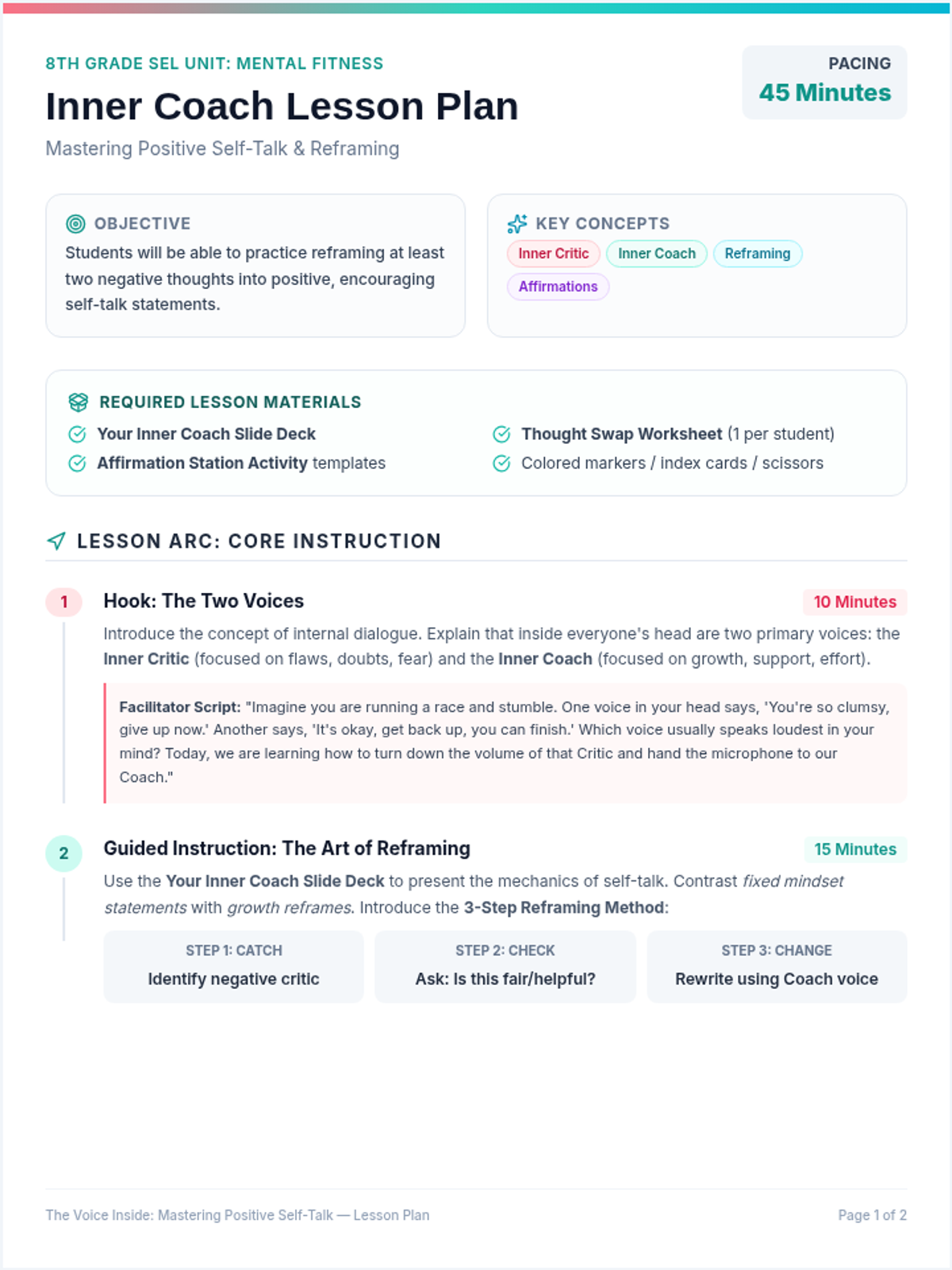
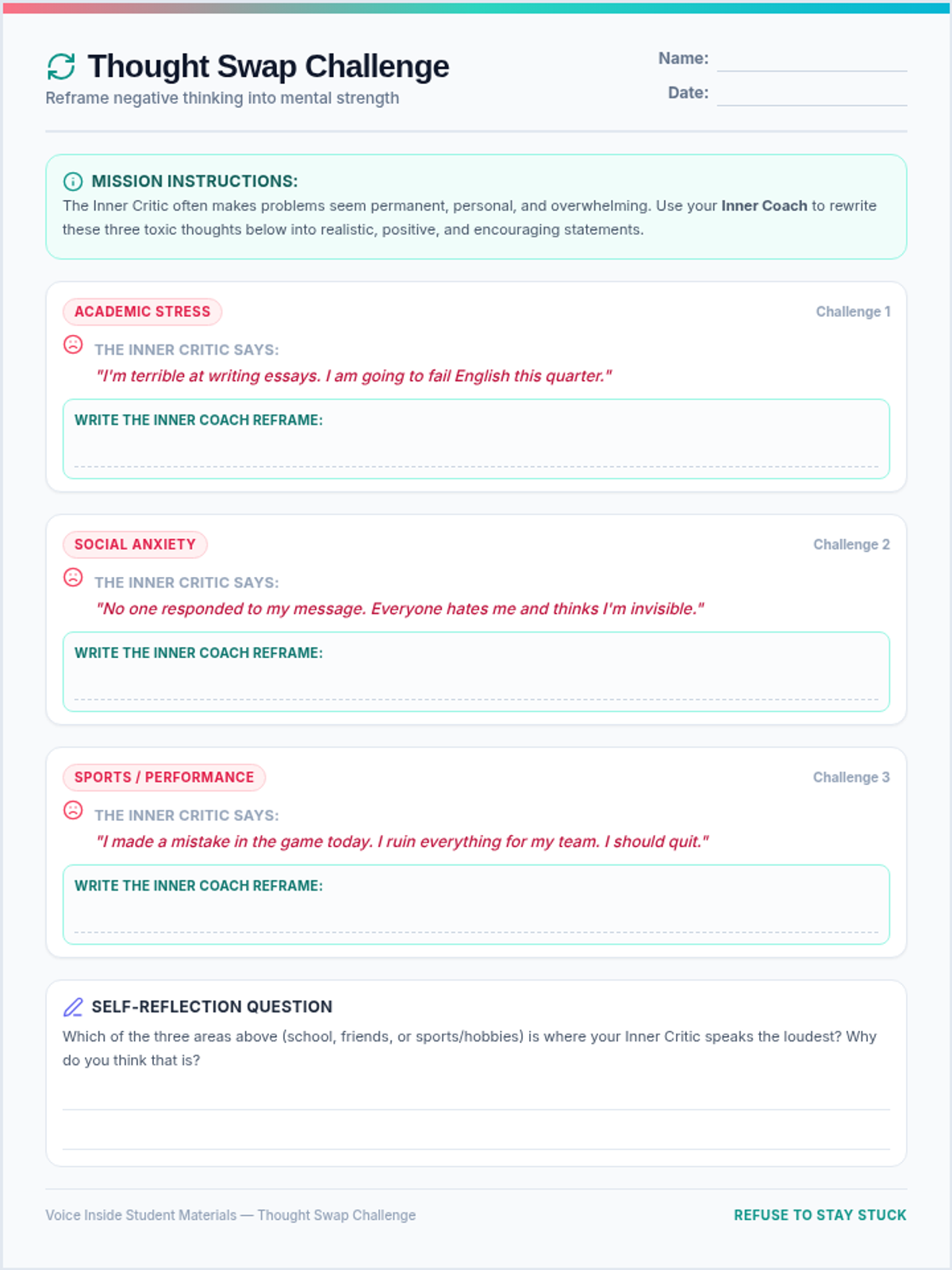
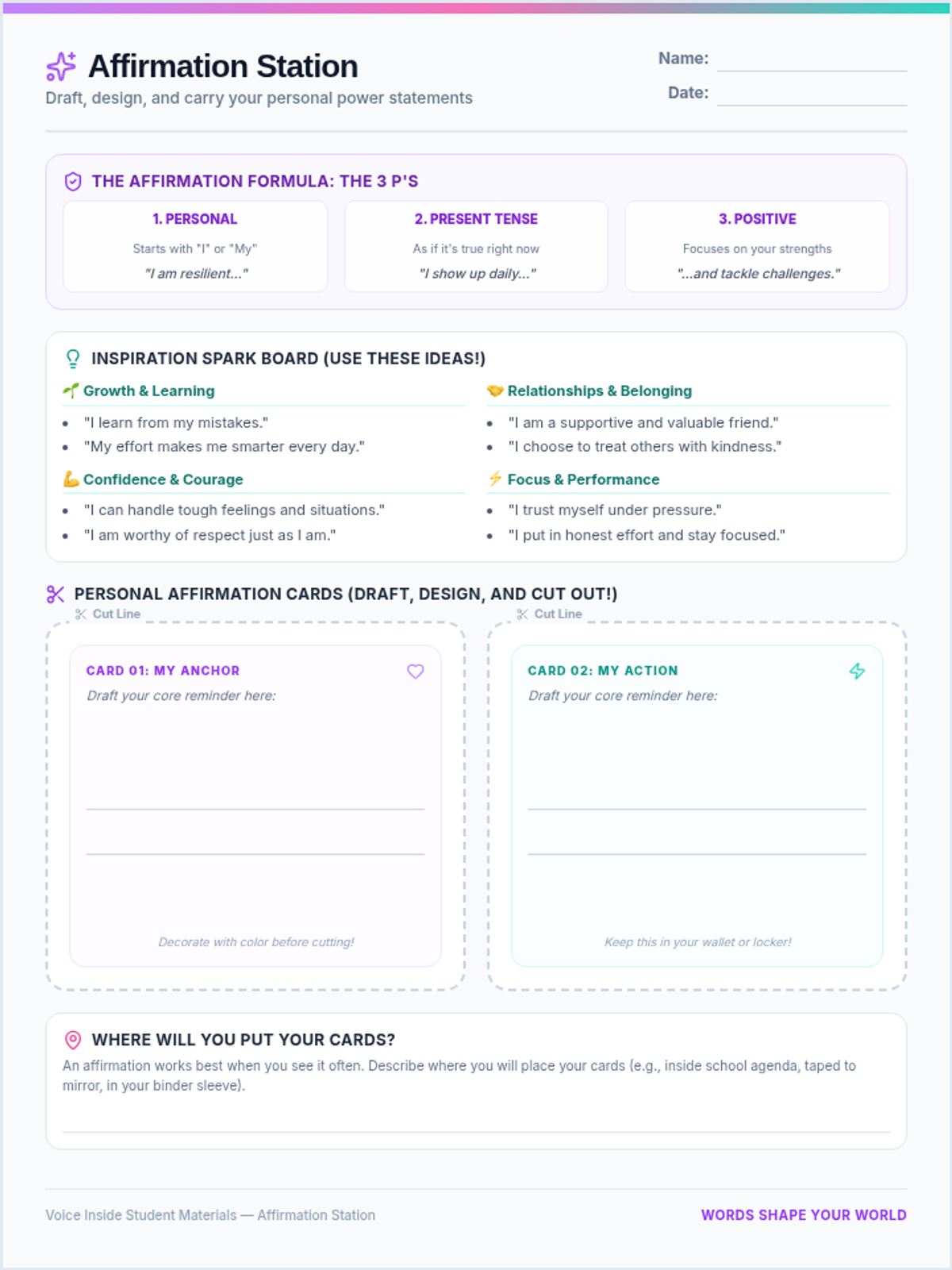
An 8th-grade social-emotional learning lesson focusing on identifying the inner critic, understanding cognitive reframing, and practicing positive self-talk through interactive activities and reflection.
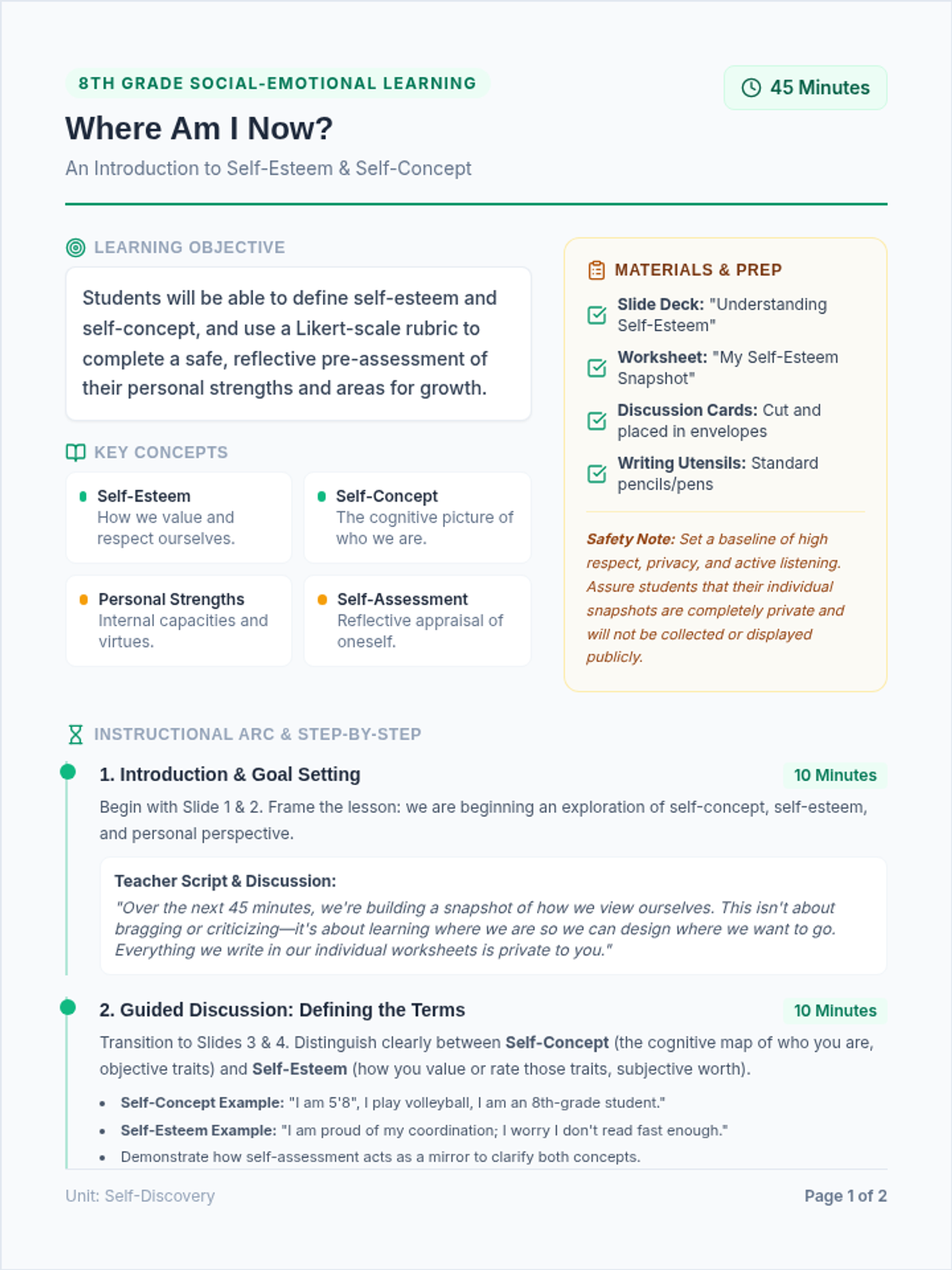
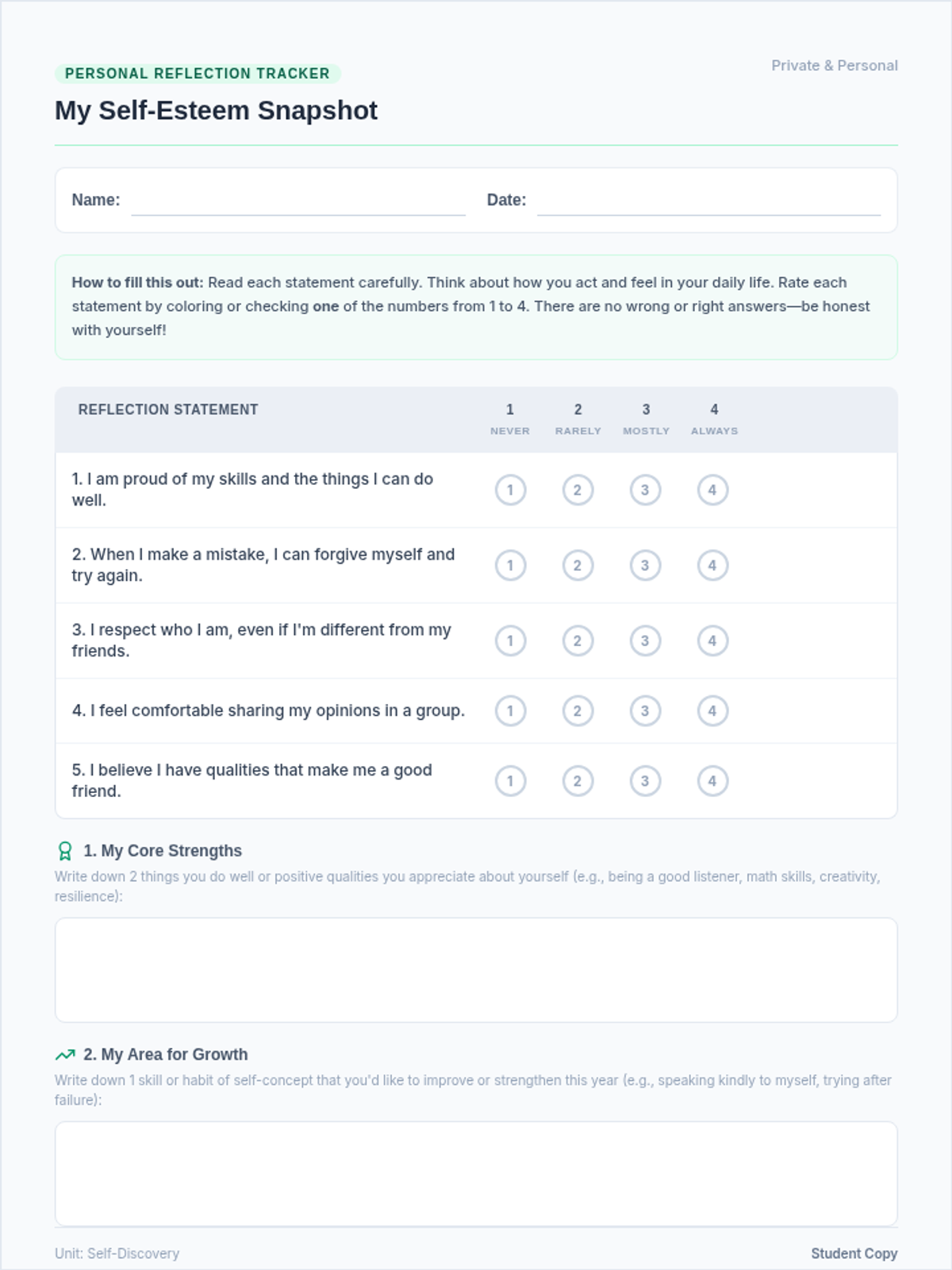
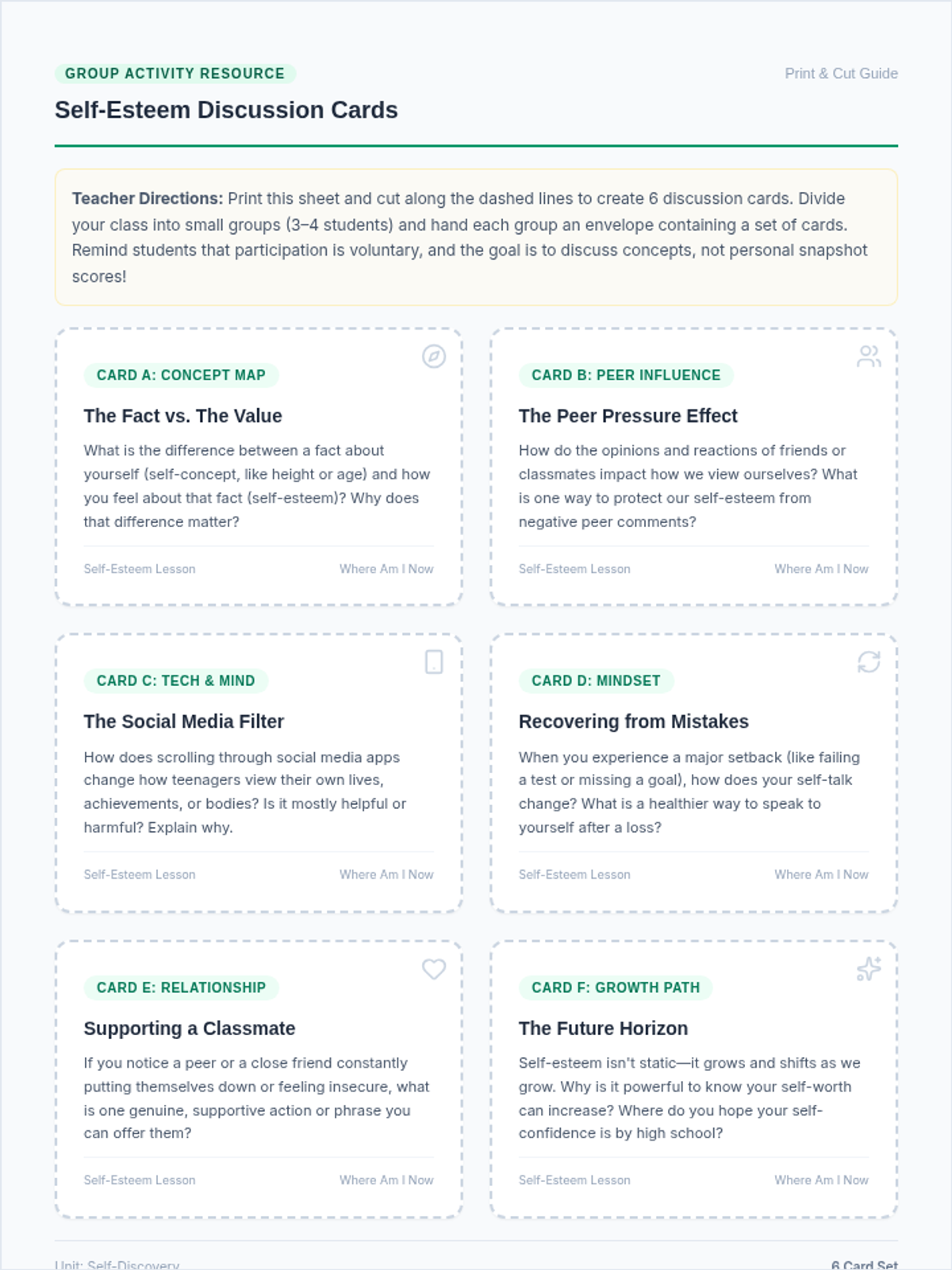
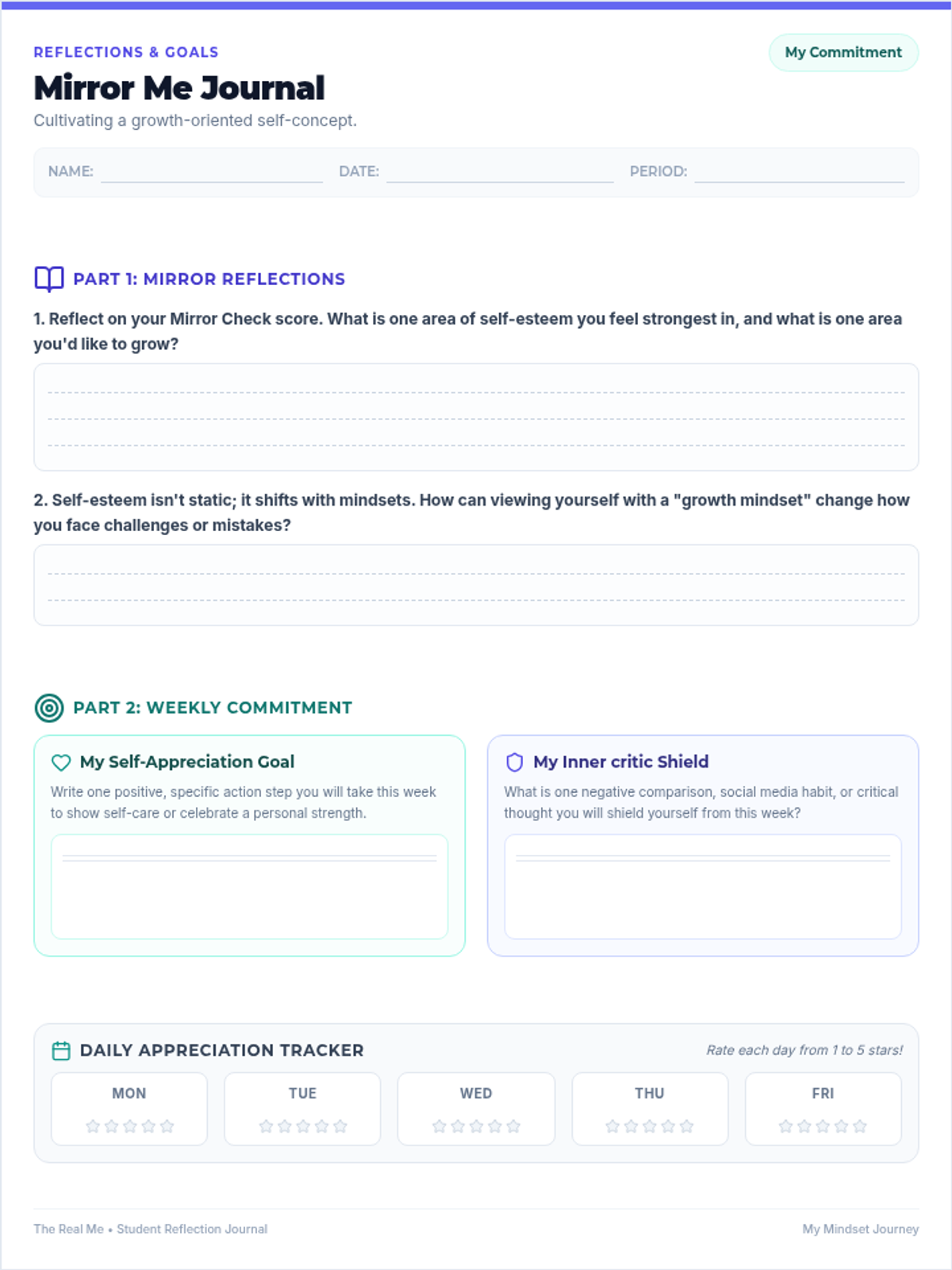
An introductory 8th-grade social-emotional learning lesson focused on defining self-esteem and self-concept, guiding students through a safe, reflective pre-assessment of their personal strengths and areas for growth.
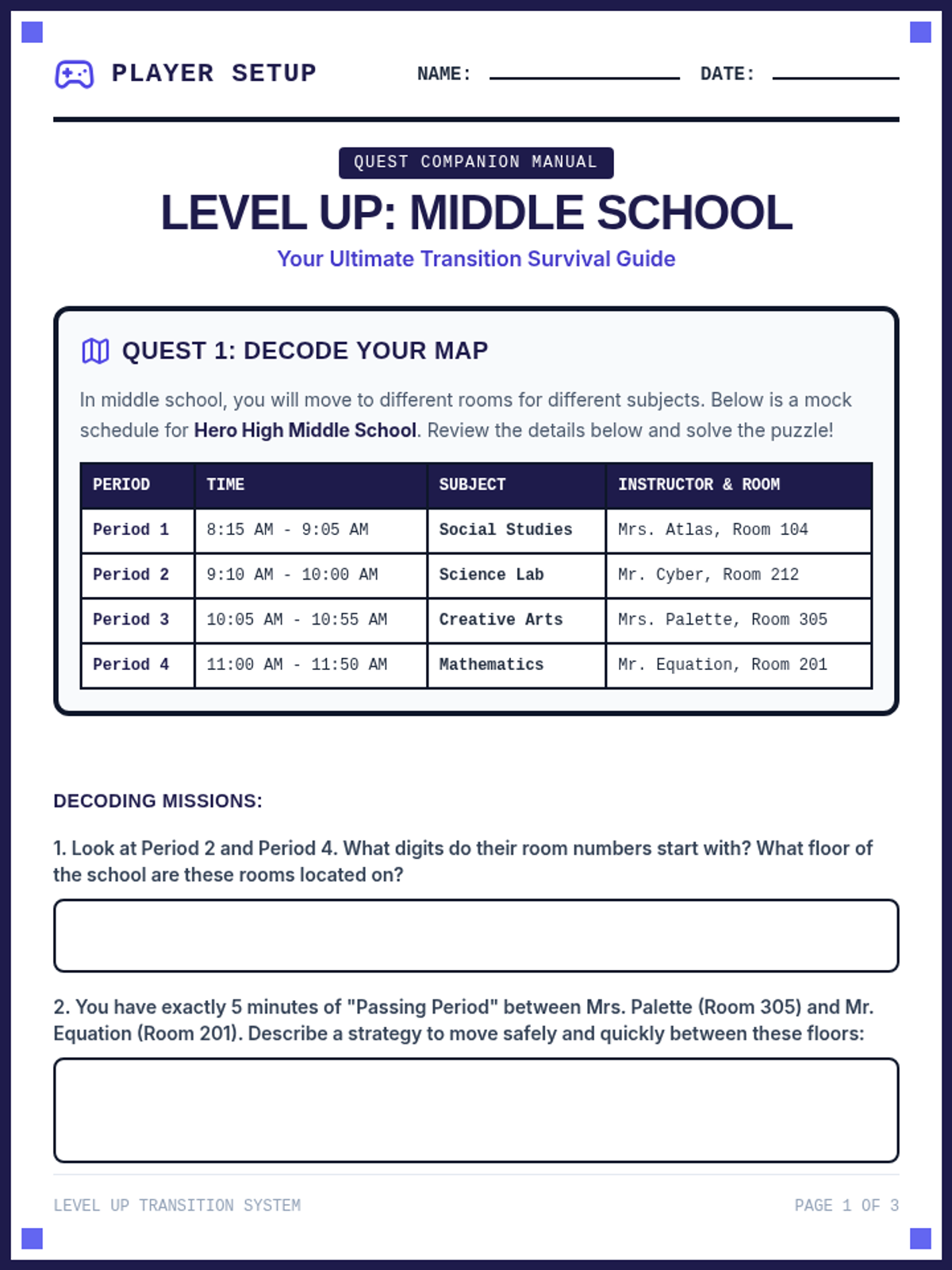
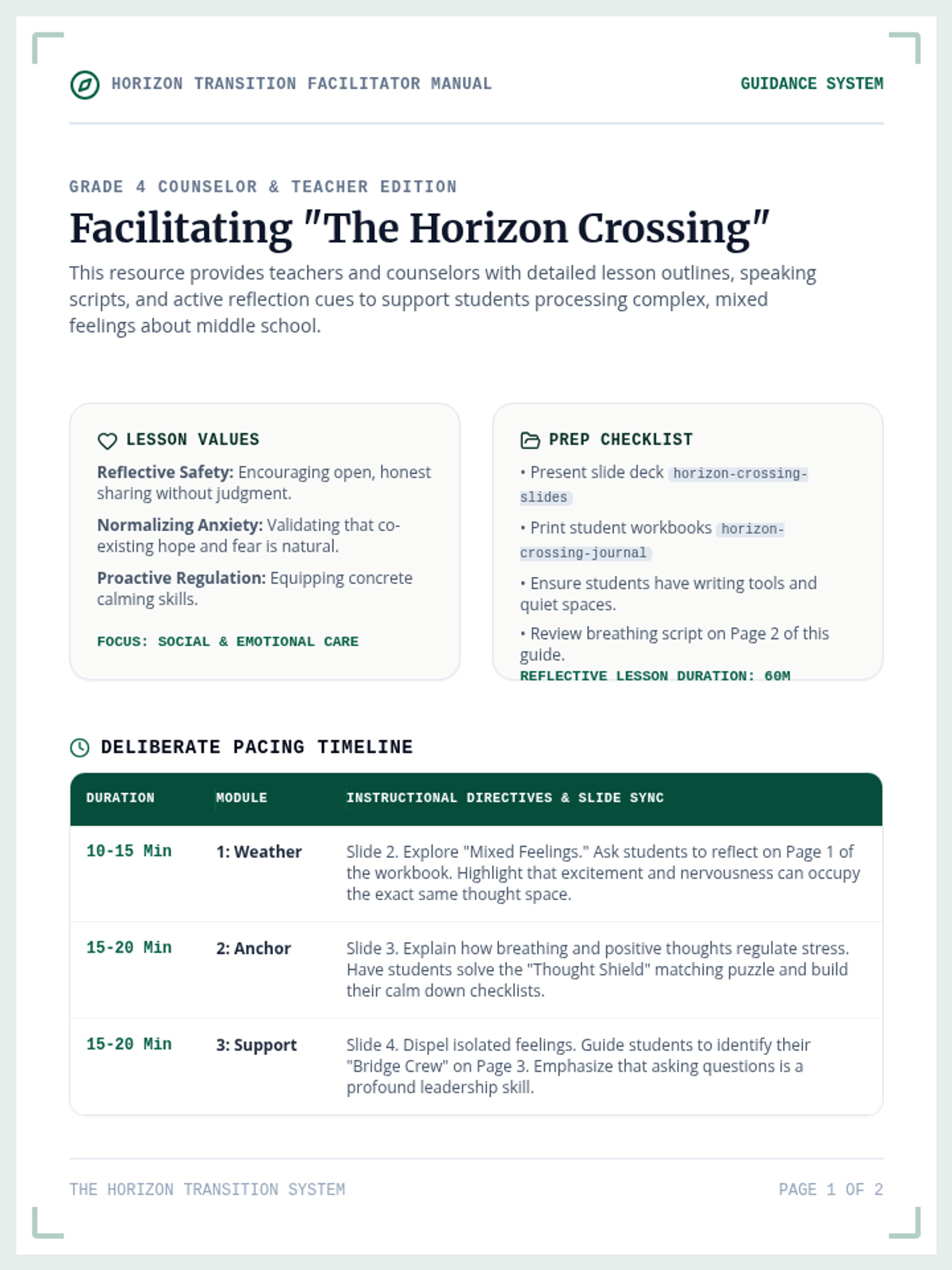
A reflective transition lesson designed for 4th-grade students preparing to enter middle school. It focuses deeply on identifying mixed emotions (excitement and anxiety), building emotional regulation/coping strategies, identifying trusted support networks, and navigating change.
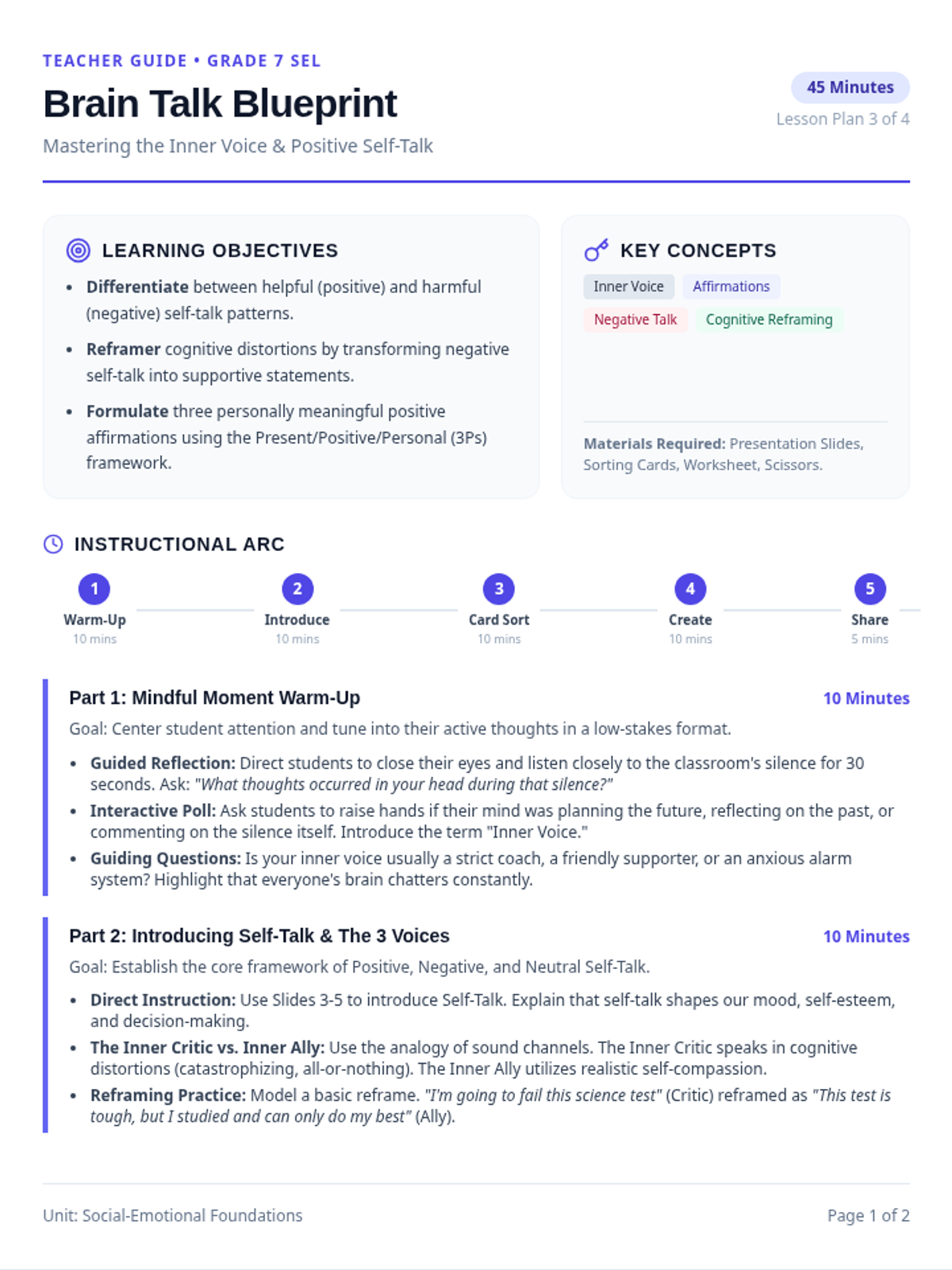
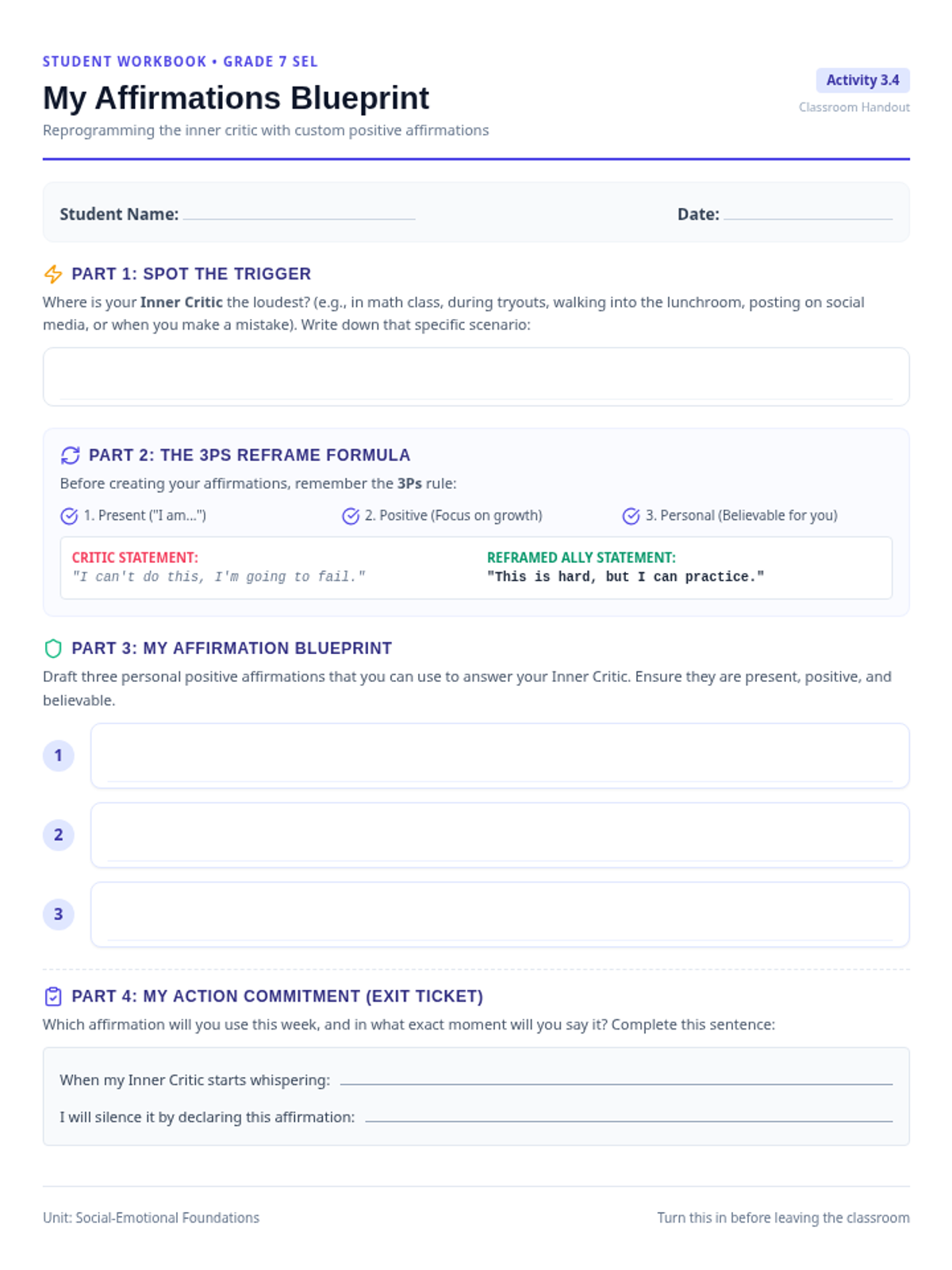
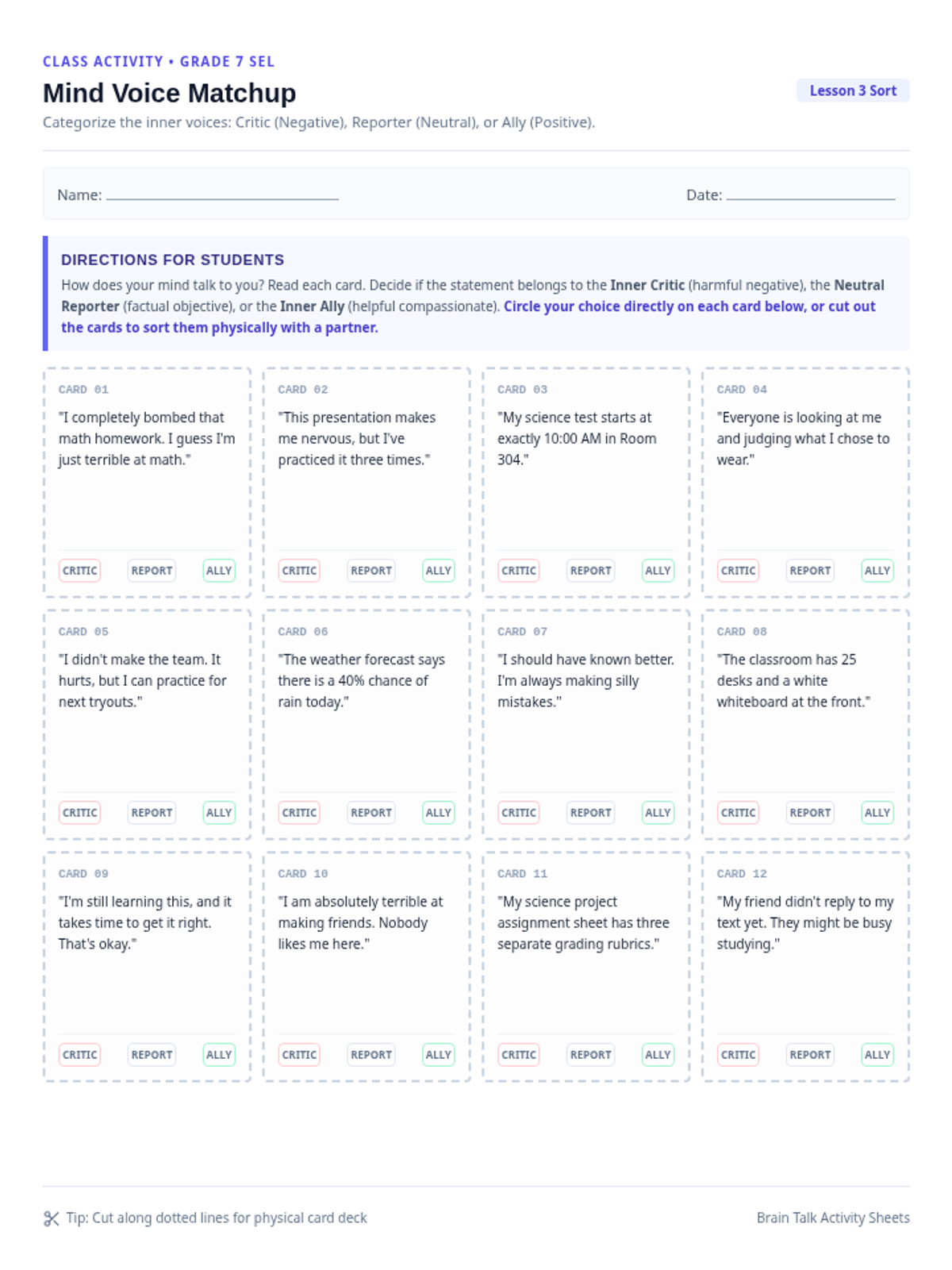
A transformative 45-minute social-emotional learning lesson for 7th graders to master their inner dialogue. Students explore cognitive reframing, separate negative self-talk from positive affirmations, and design a personalized toolkit of supportive inner voices.
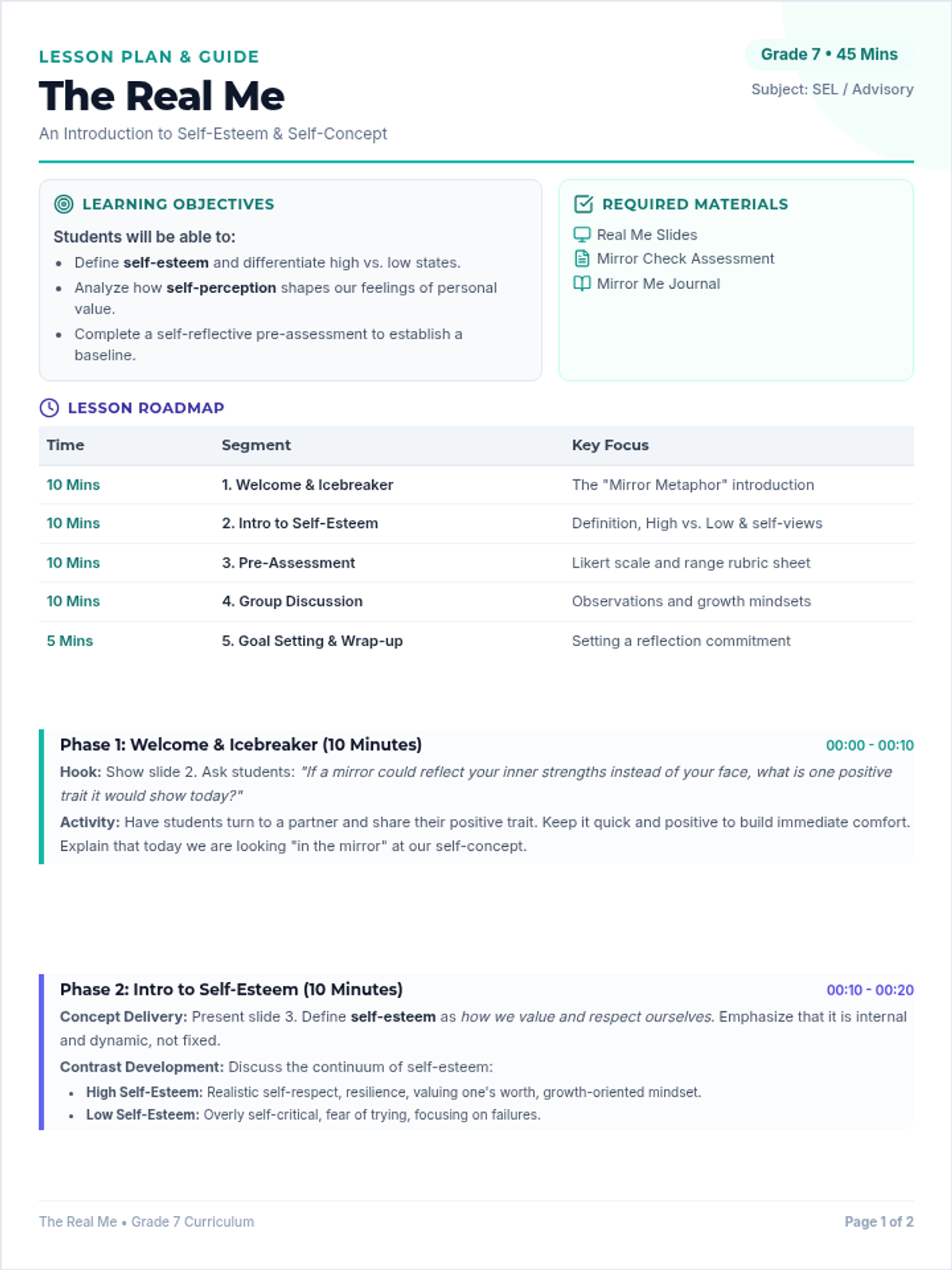
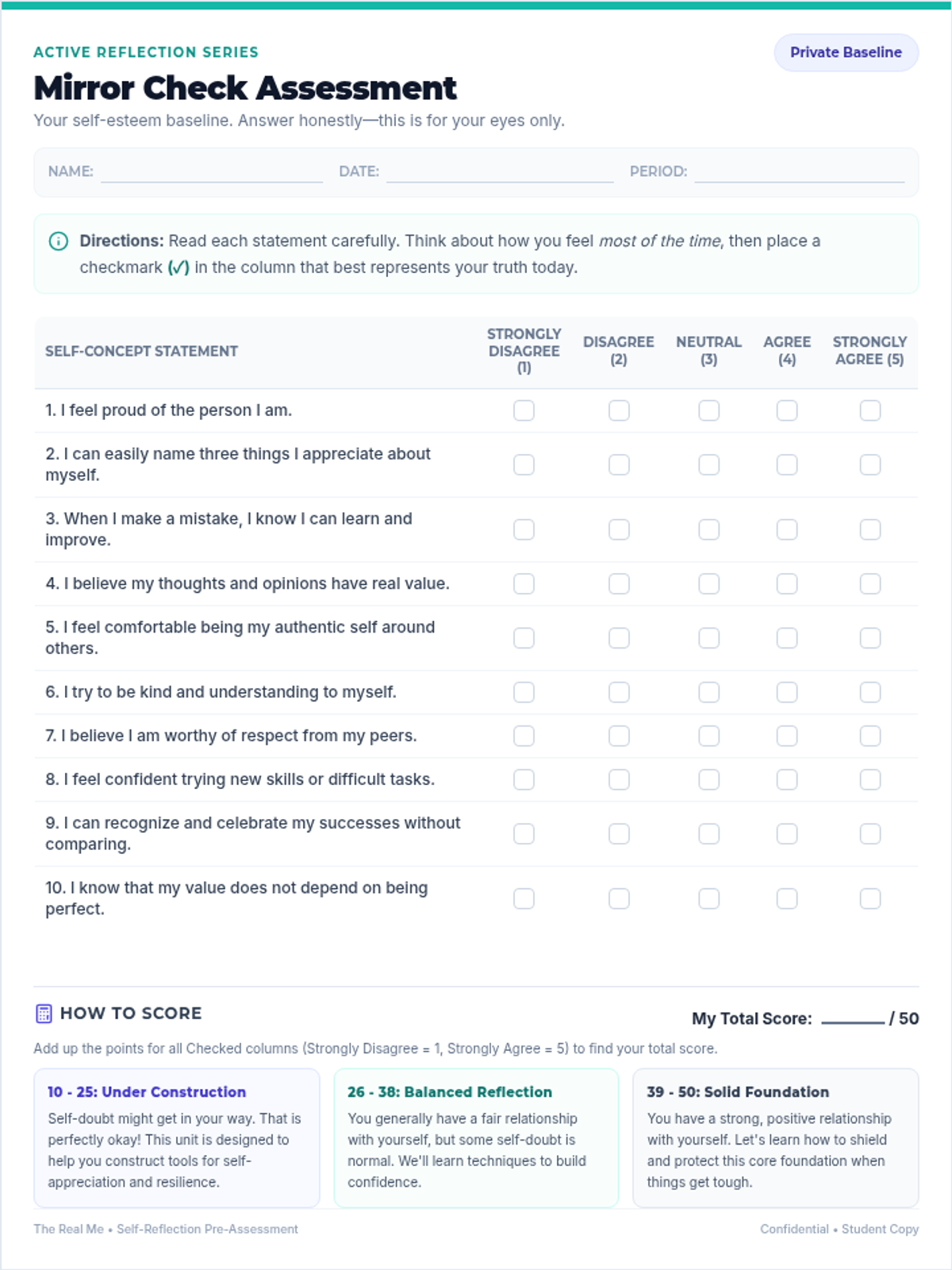
An introductory lesson on self-esteem for 7th graders, exploring personal value, self-perception, and establishing a baseline self-concept through reflection and goal-setting. This lesson guides students from definitions to deep personal reflection.
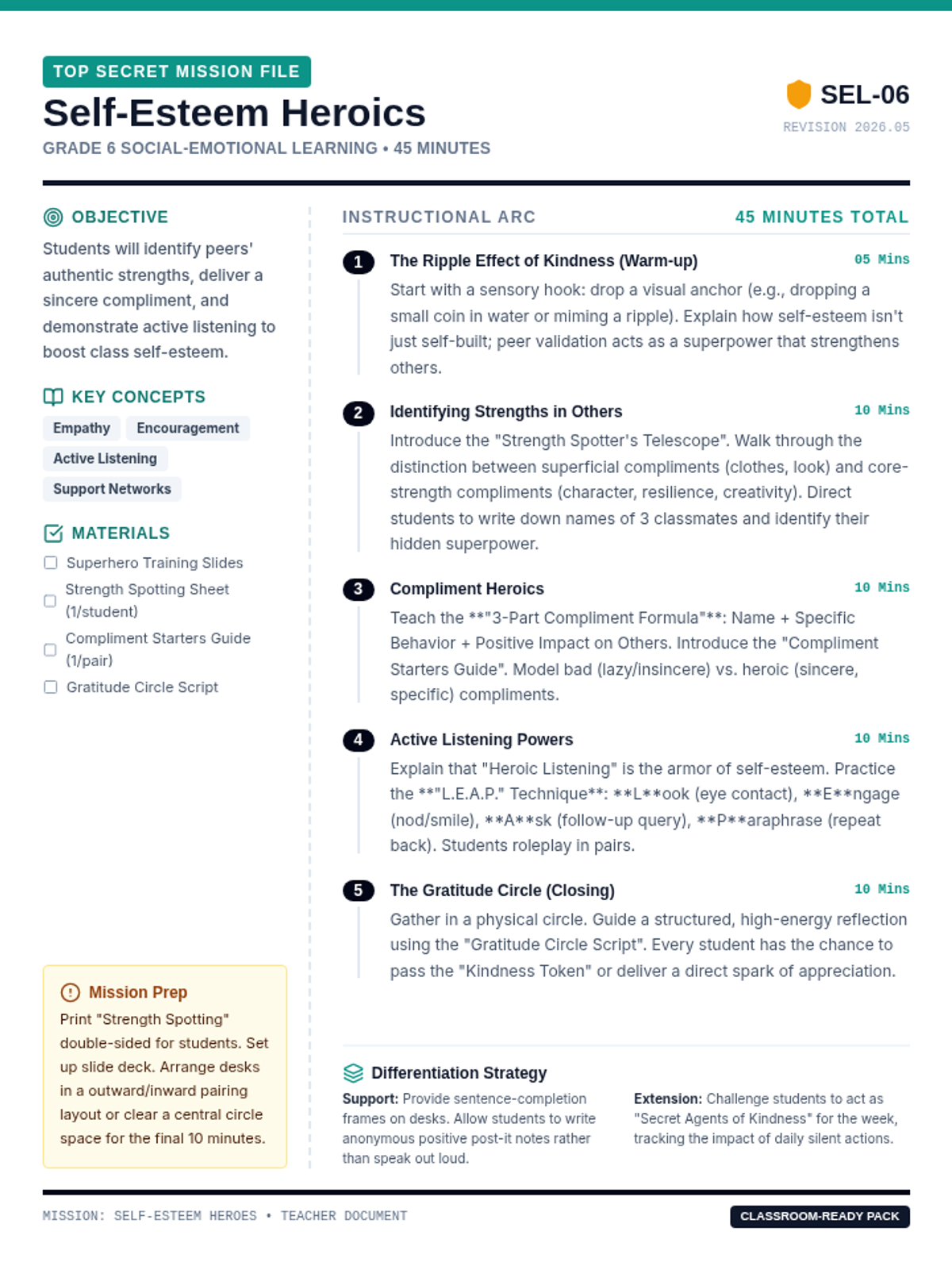
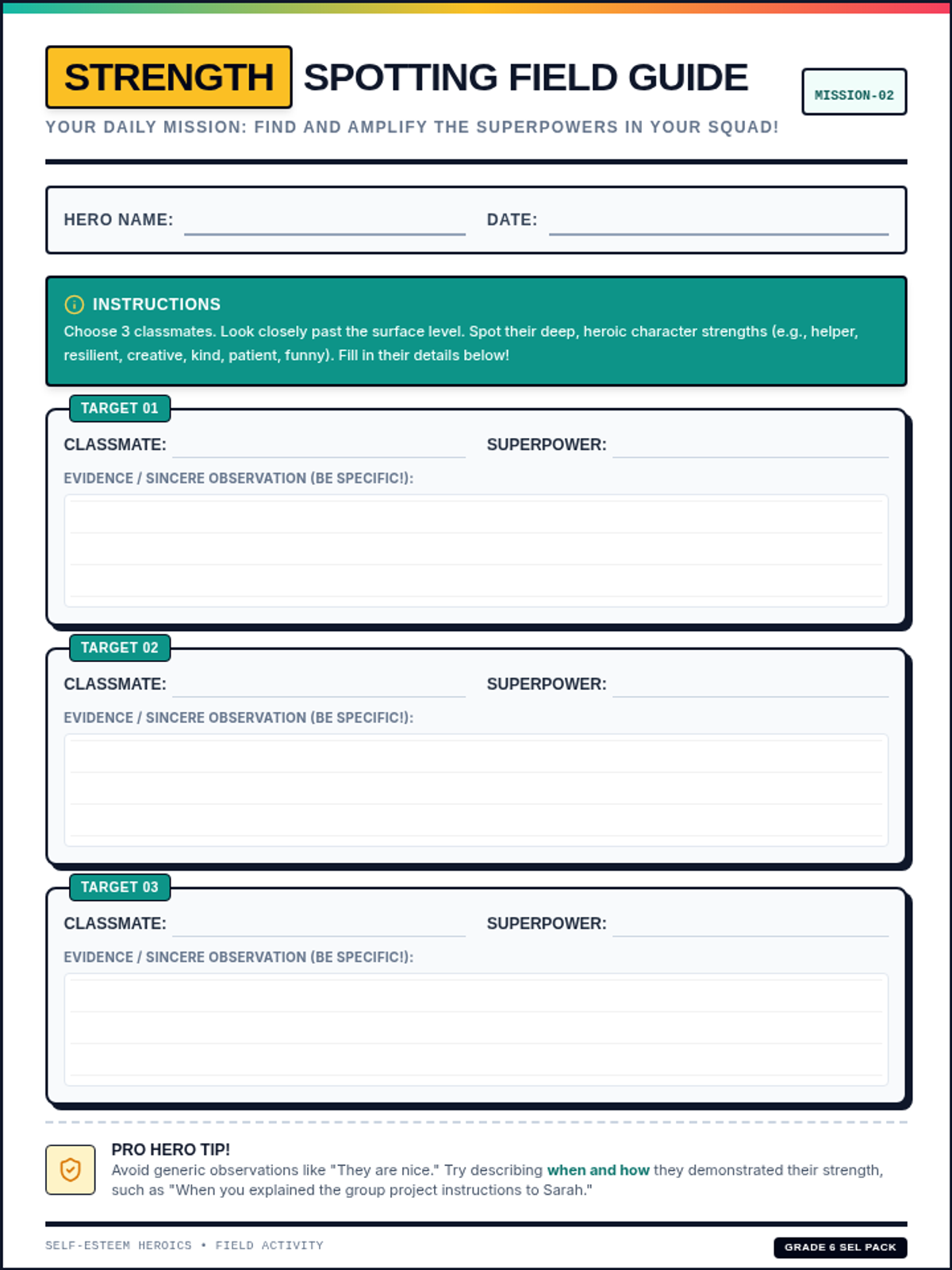
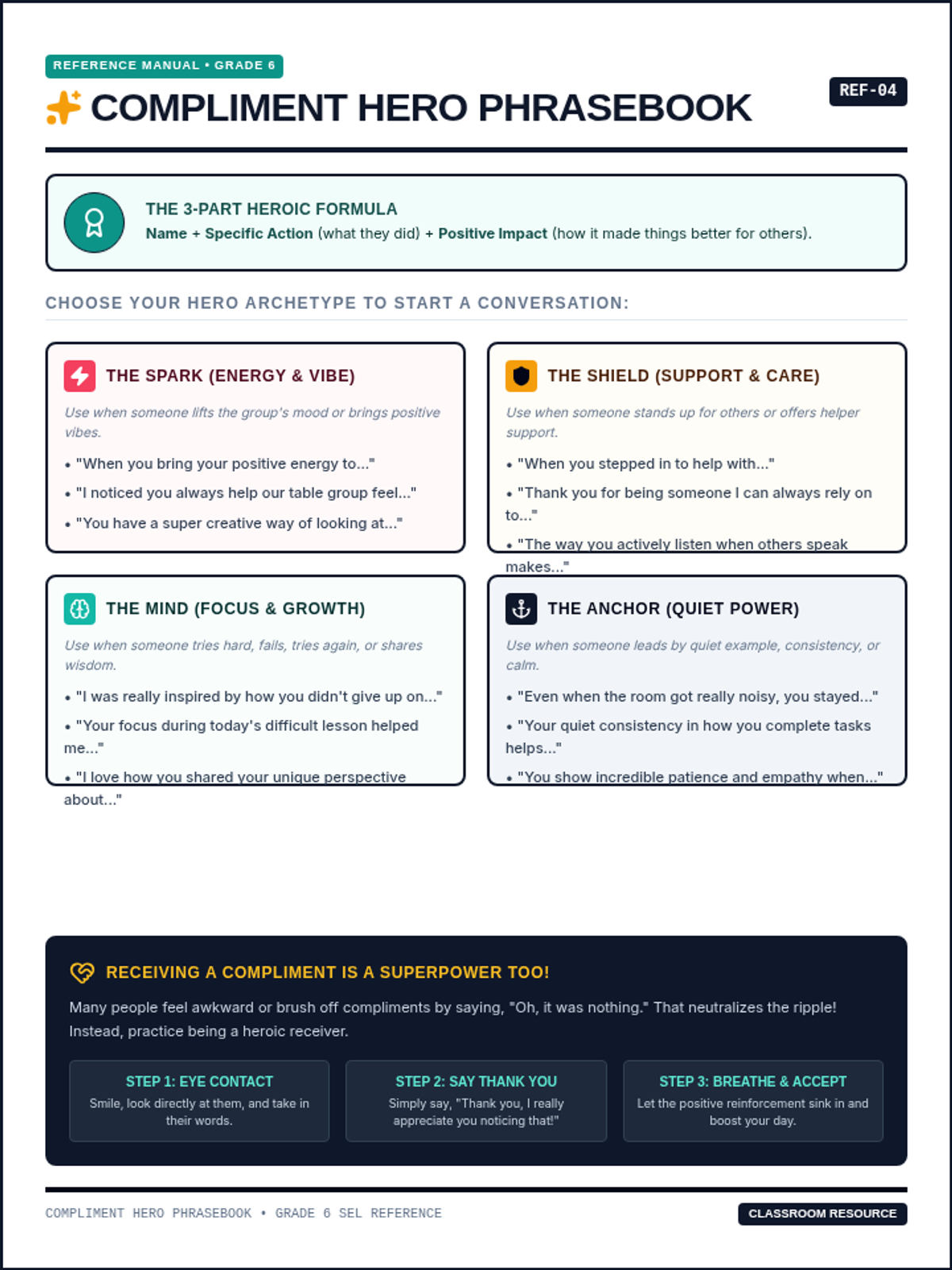
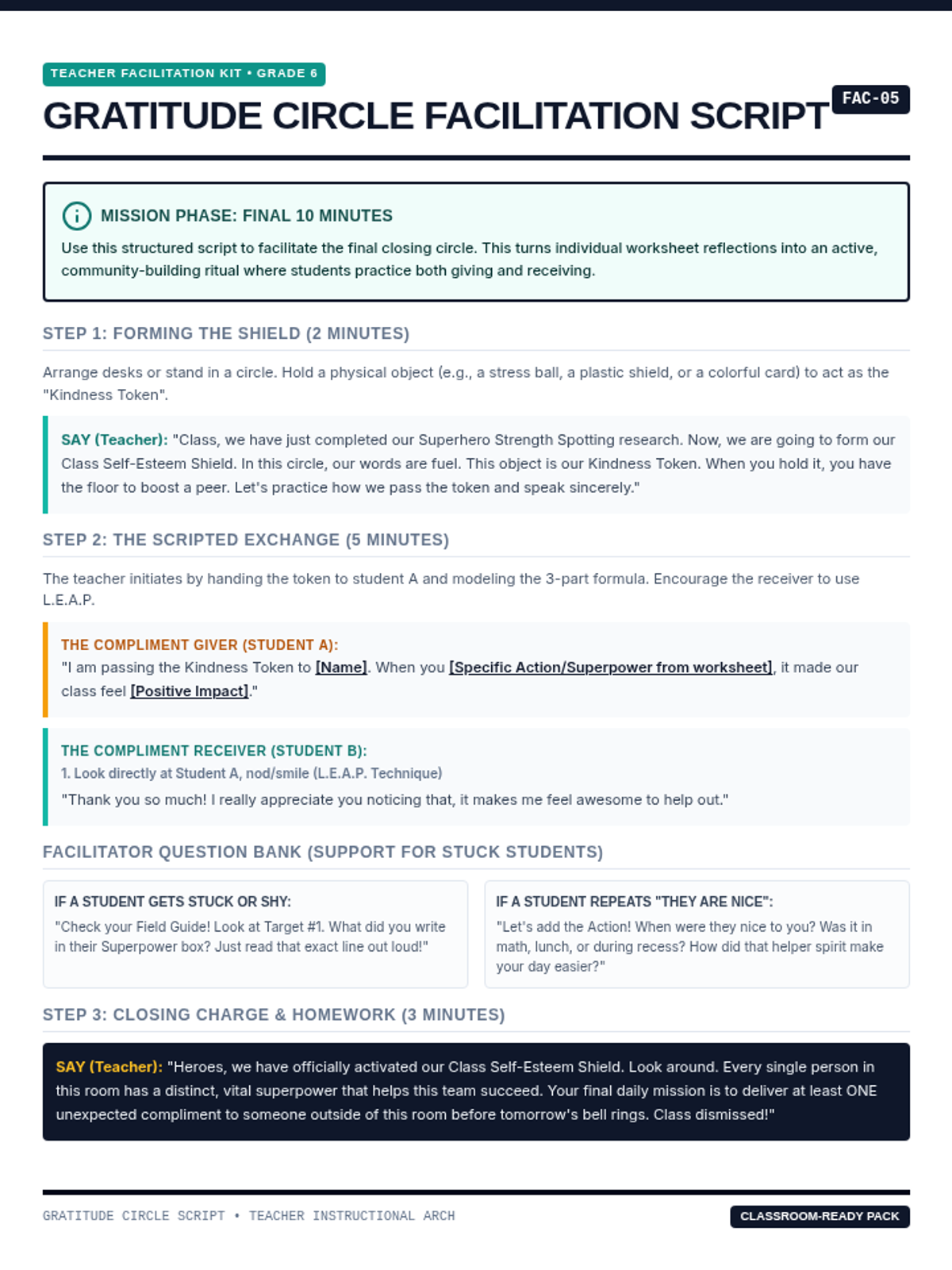
A 45-minute social-emotional learning lesson for 6th grade focused on empathy, active listening, and sincere encouragement to build peer self-esteem. Students learn to spot strengths, deliver authentic compliments, and practice active listening through comic-themed superhero training activities.
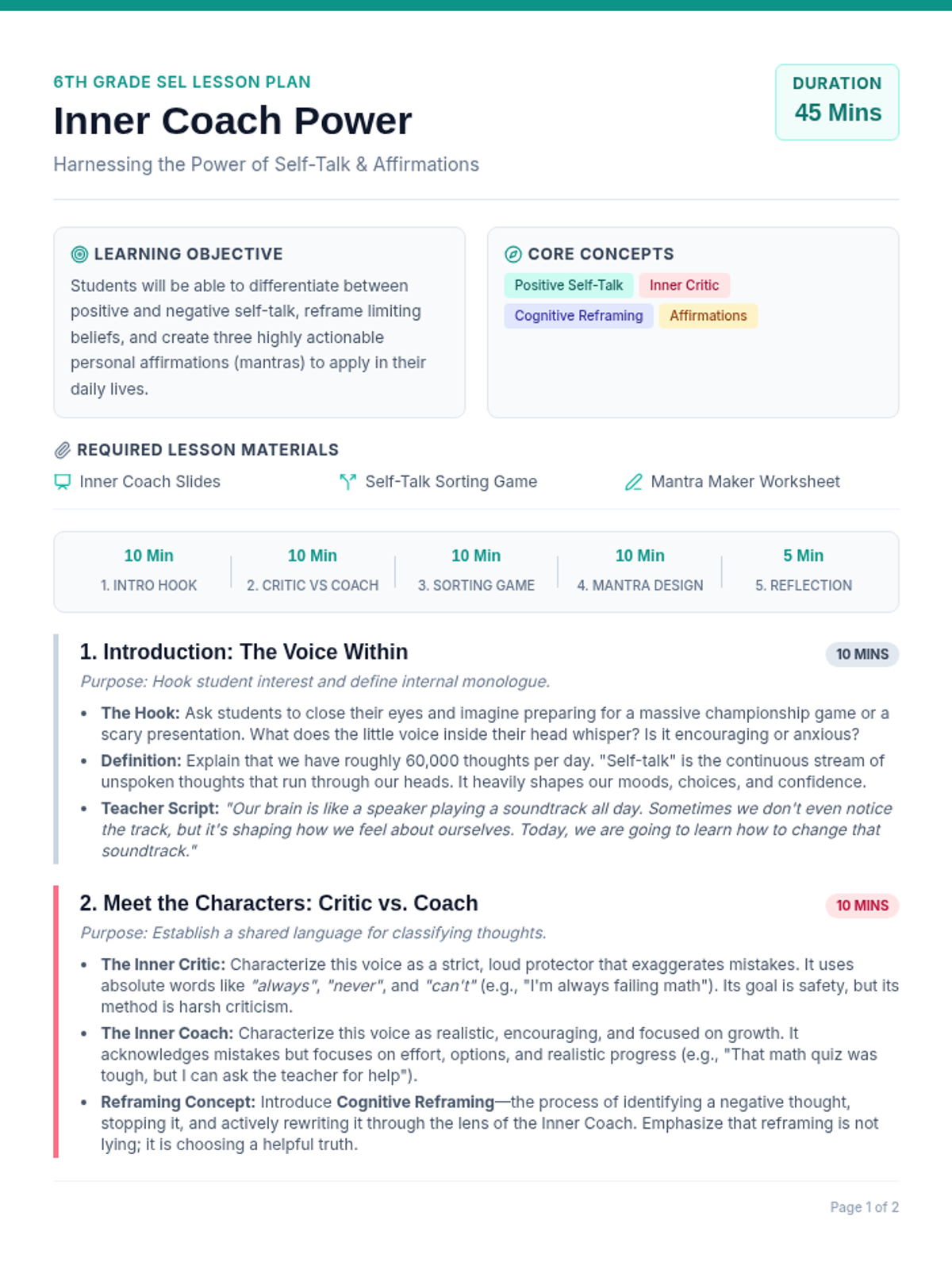
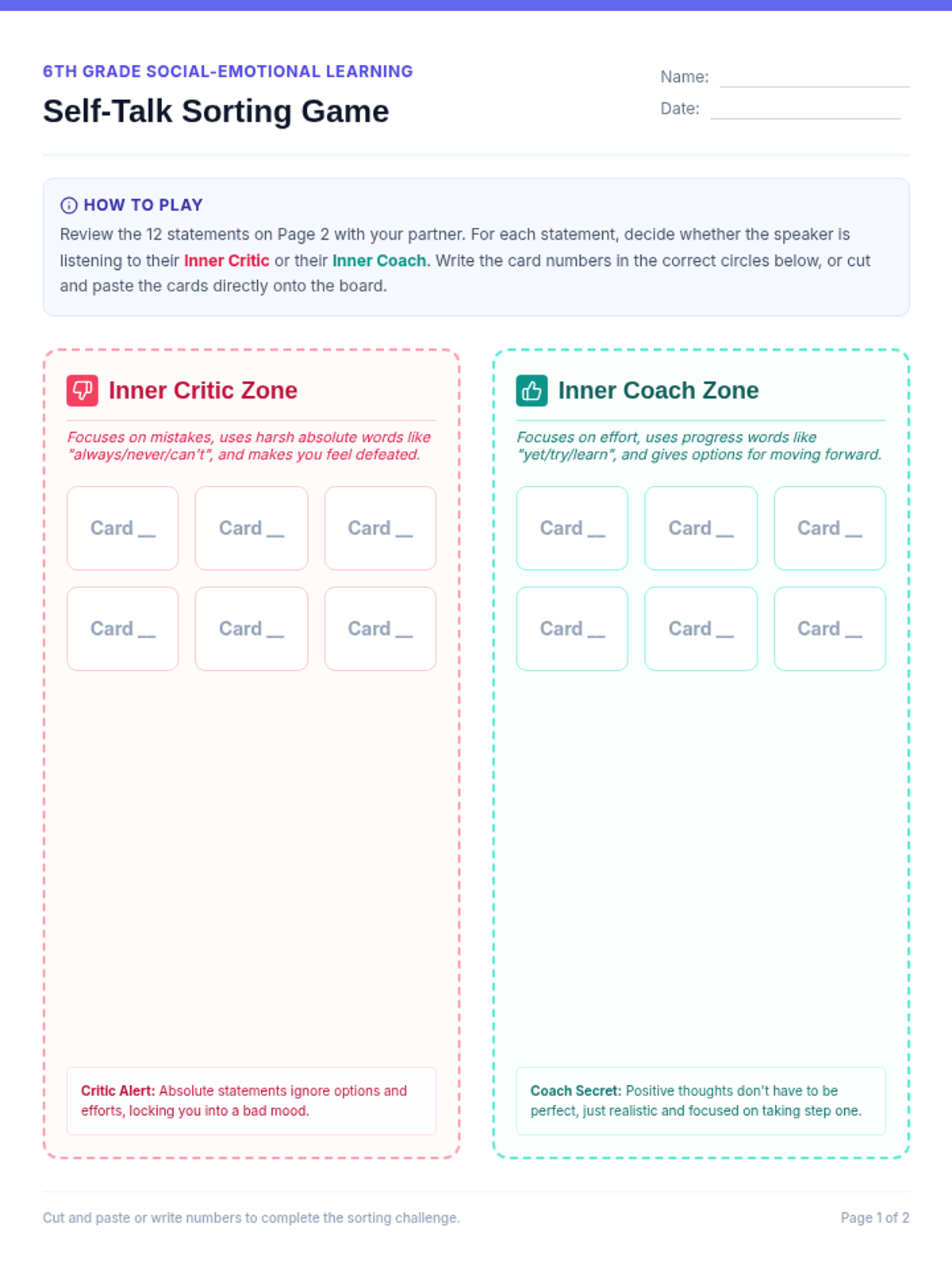
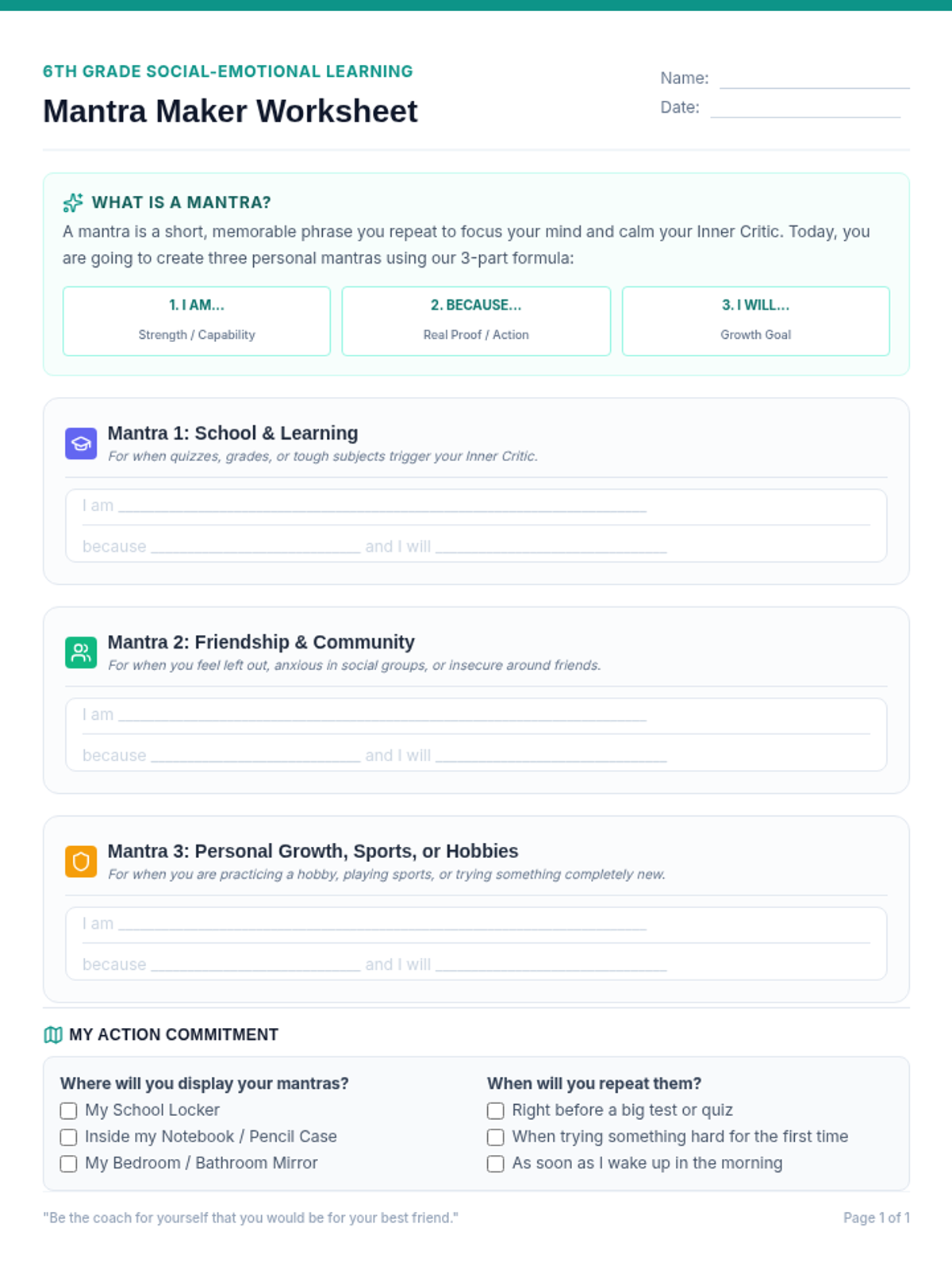
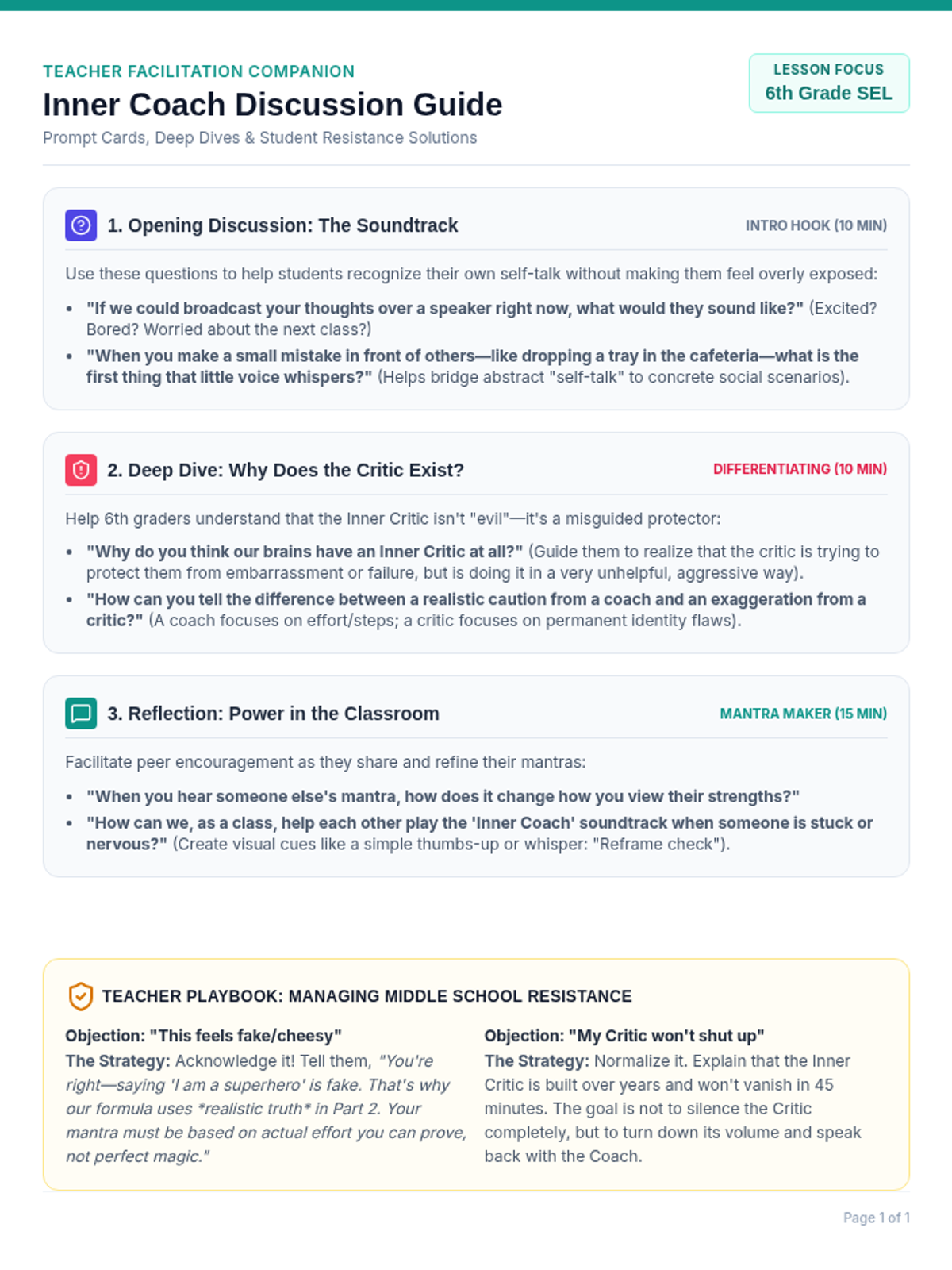
A 45-minute social-emotional learning lesson for 6th graders to explore their self-talk, contrast the 'Inner Critic' and 'Inner Coach', and design actionable personal affirmations.
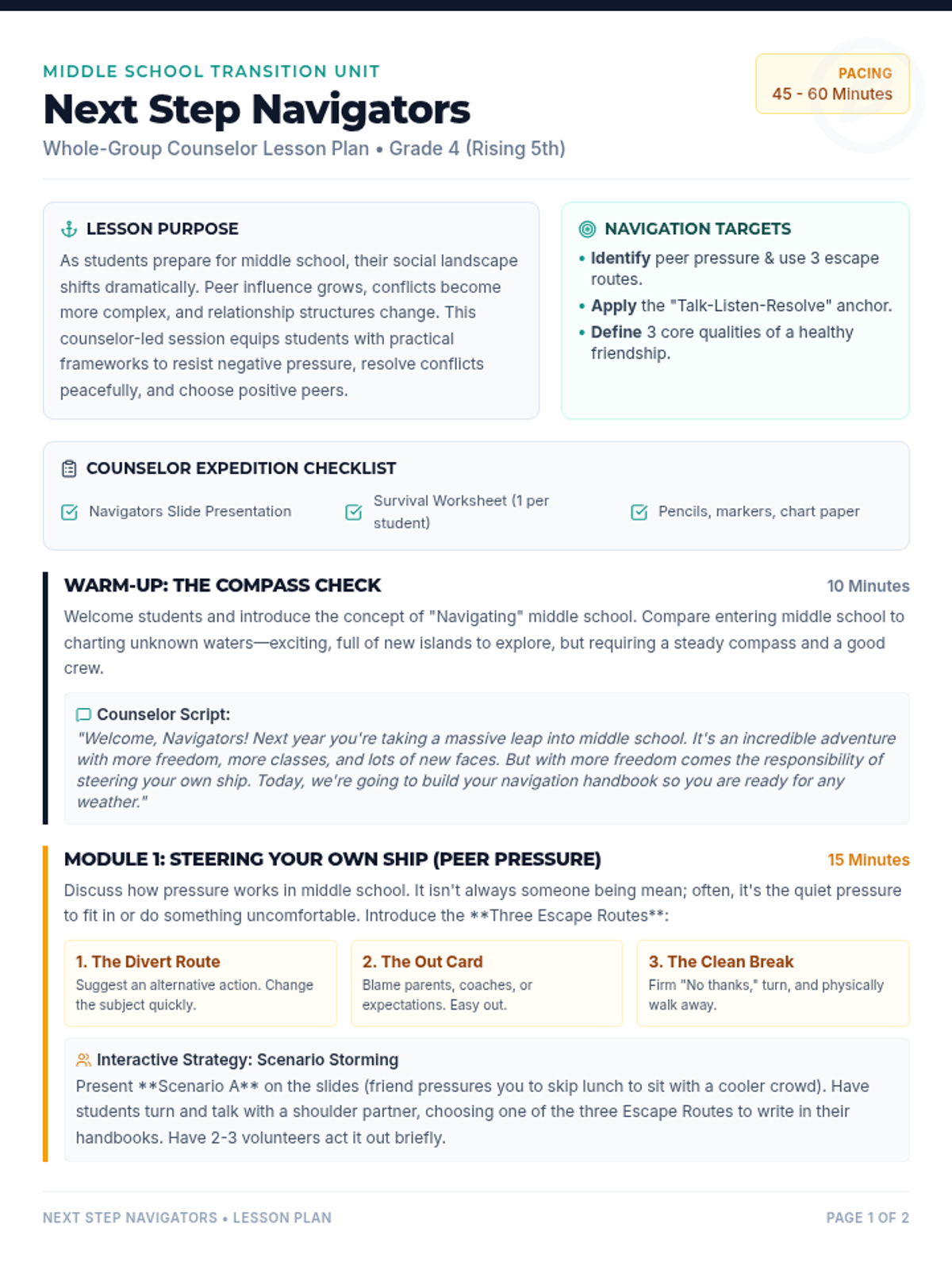
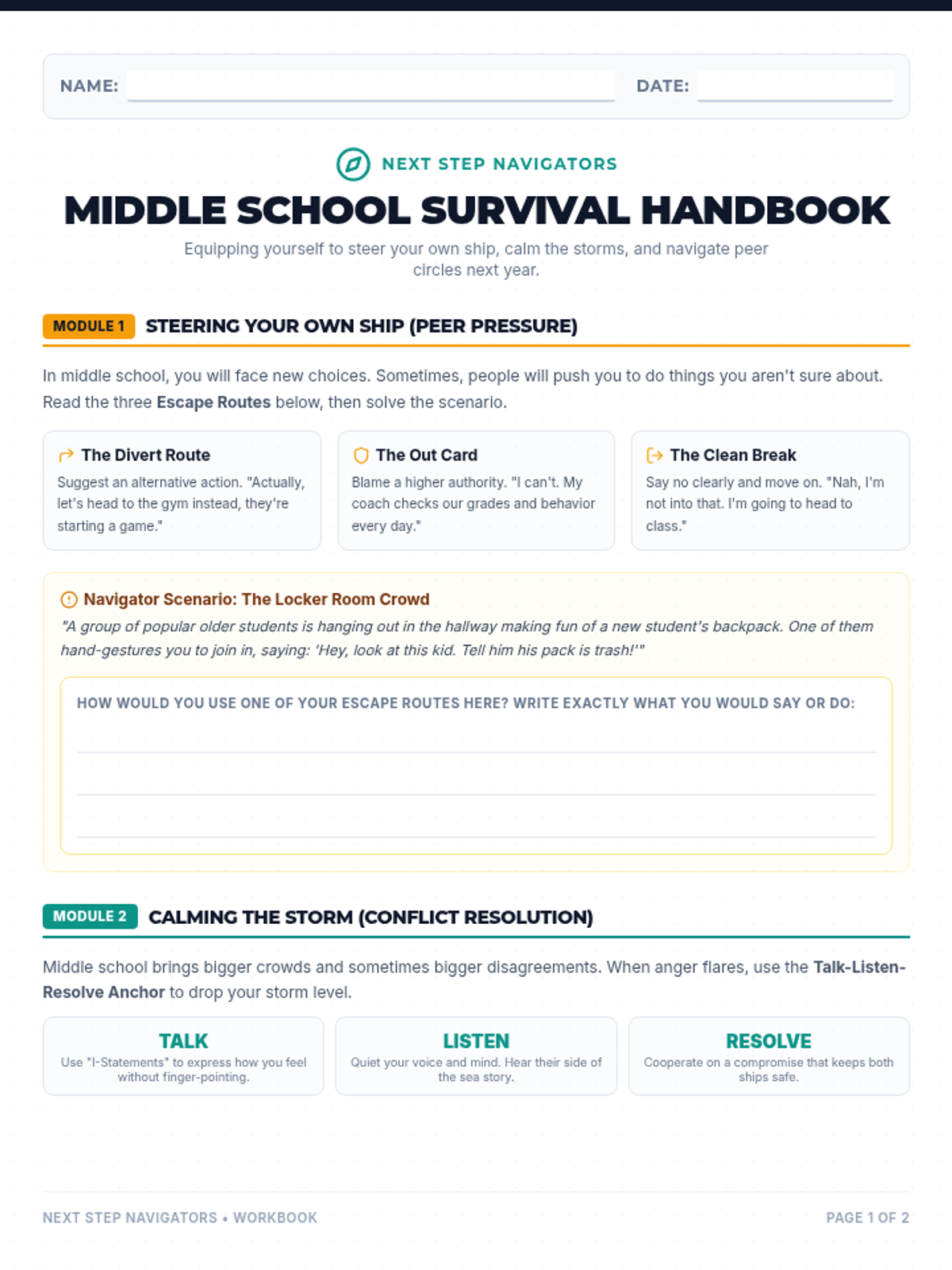
A transitional guidance lesson designed to help rising fifth graders navigate the social waters of middle school. Students explore peer pressure strategies, practice conflict resolution frameworks, and define the traits of healthy relationships through collaborative discussions.
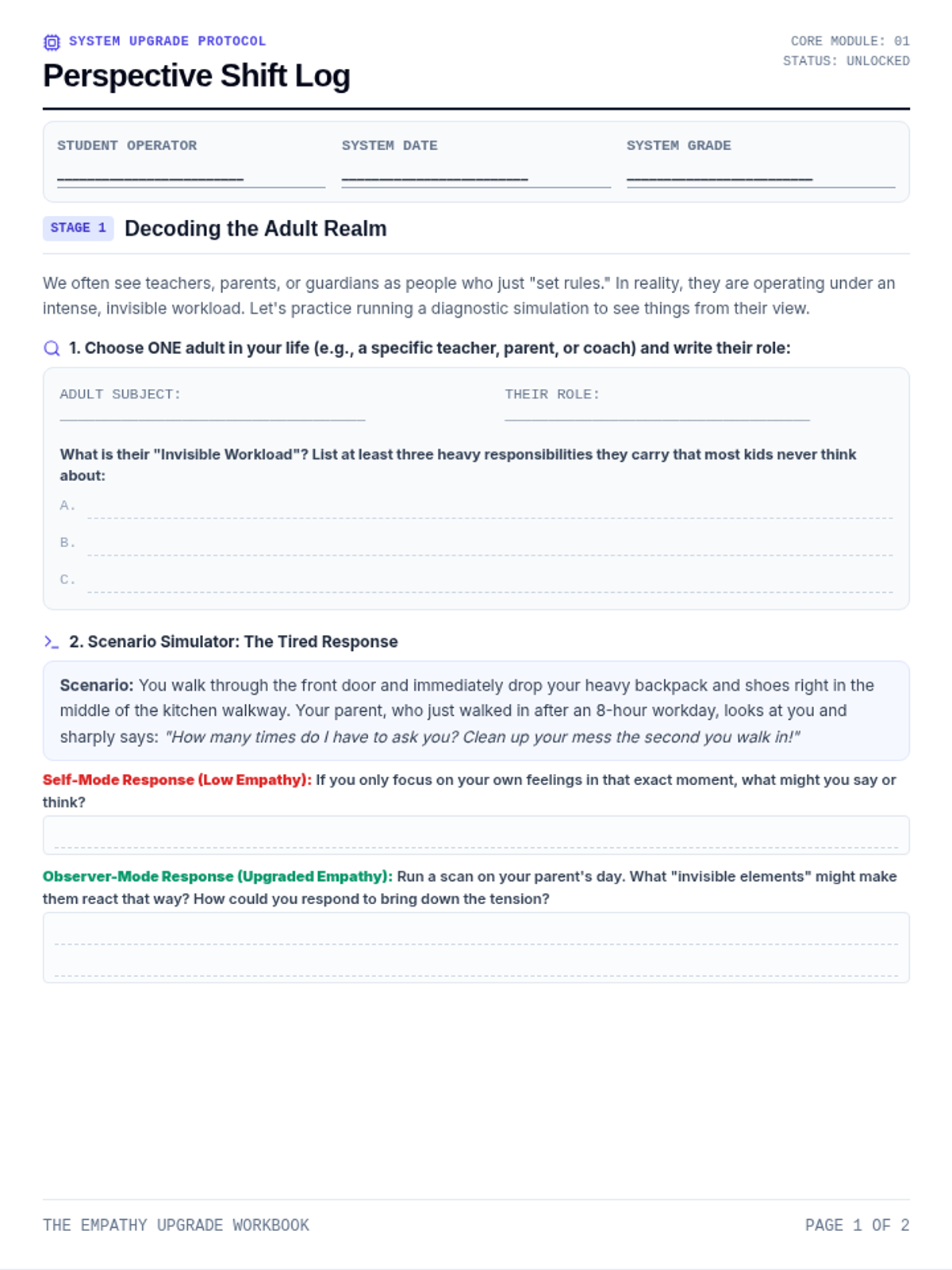
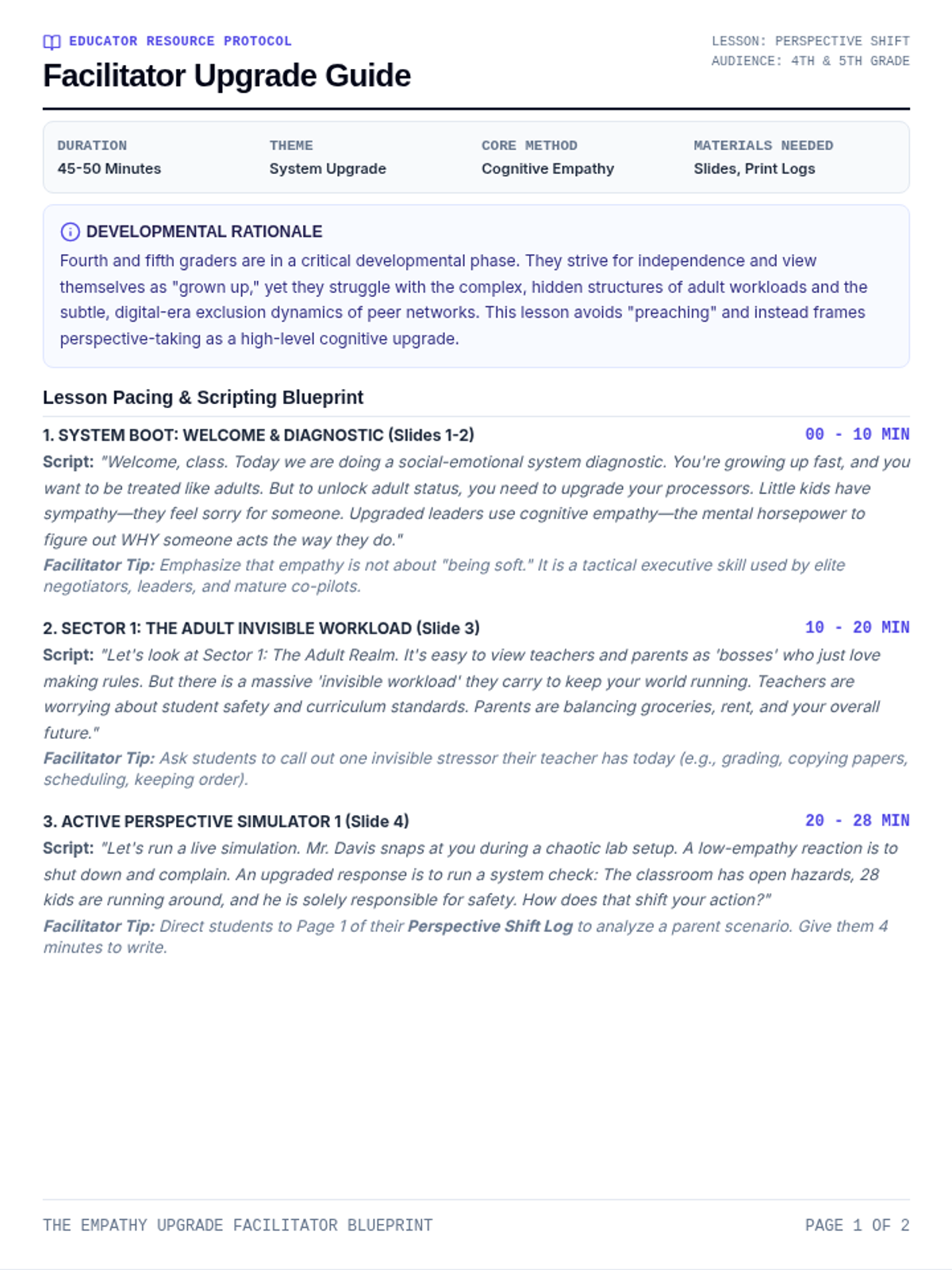
A Guidance Lesson designed for 4th and 5th graders to upgrade their empathy skills. This lesson focuses on perspective-taking, respecting adult workloads/perspectives, and navigating complex peer exclusion dynamics with maturity.