Explaining the difference between the 'Emotional Brain' (Amygdala) and the 'Thinking Brain' (Prefrontal Cortex). Practice pausing through a physical game.
No materials in this lesson yet.
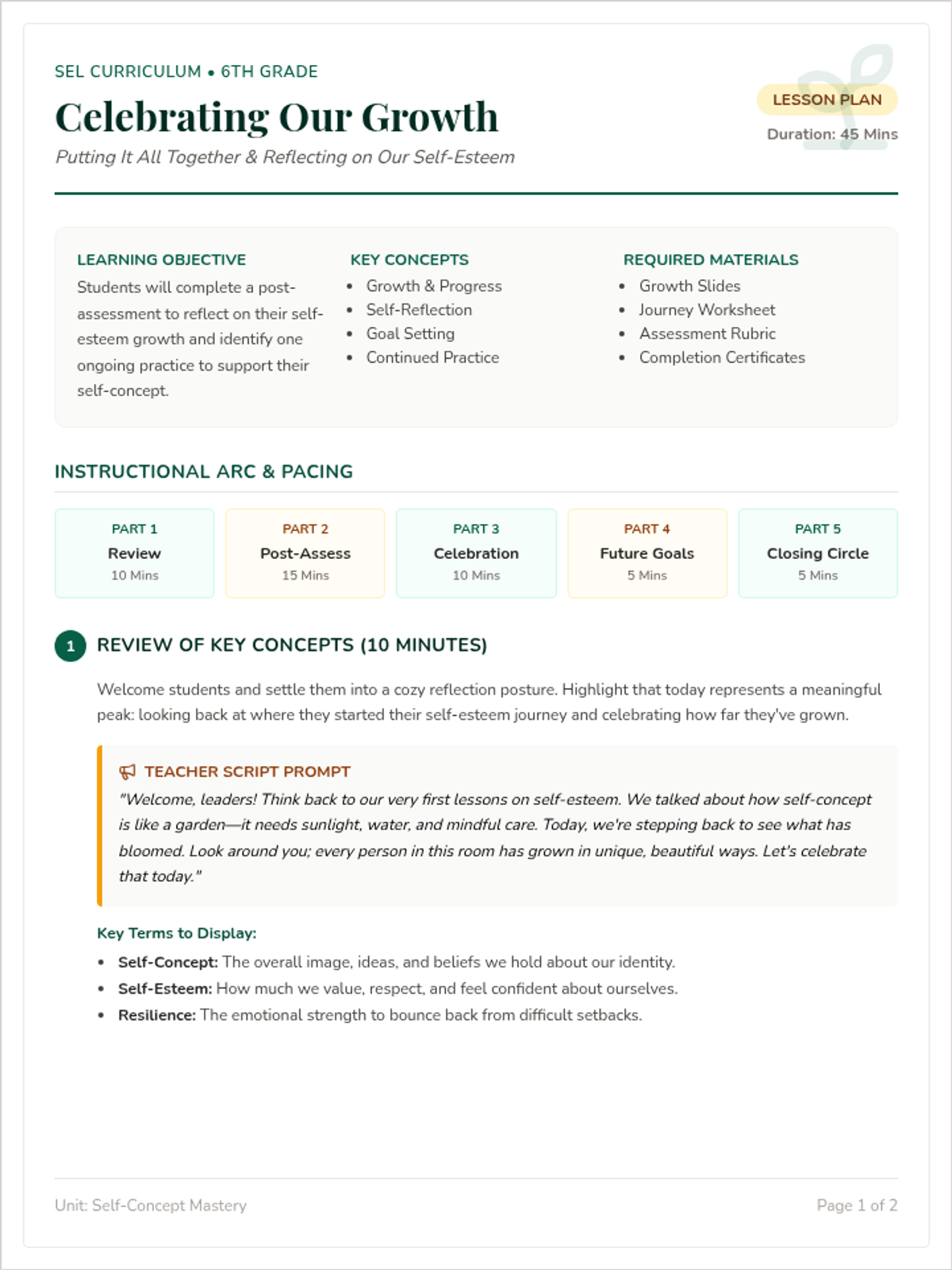
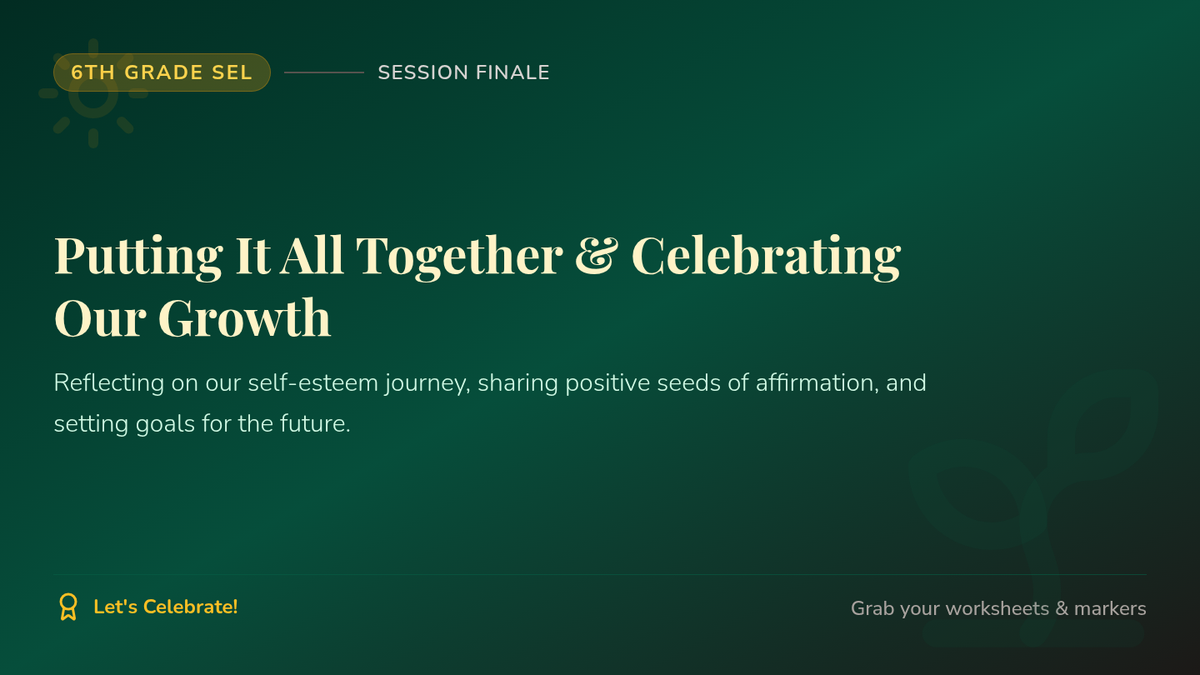
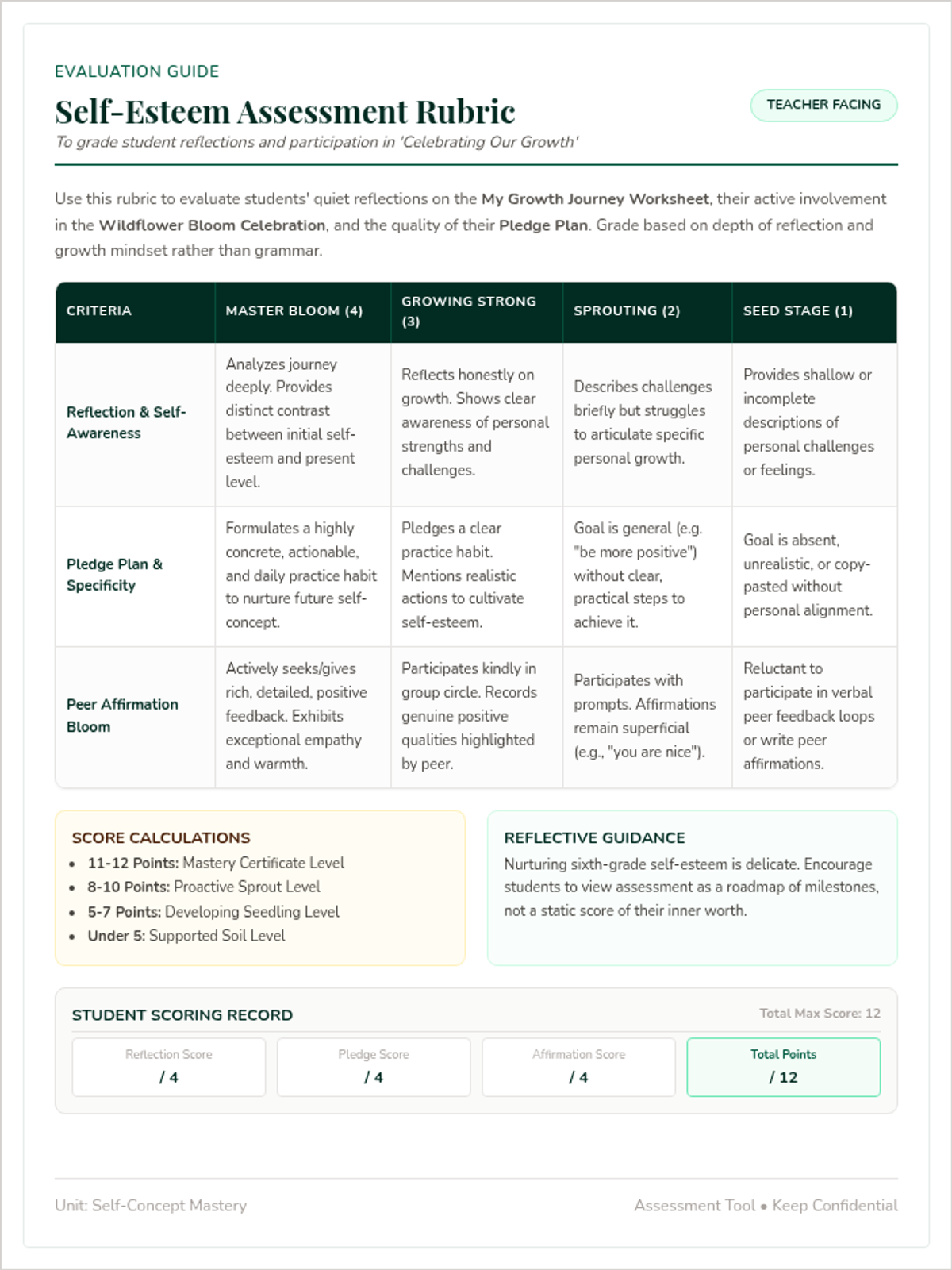
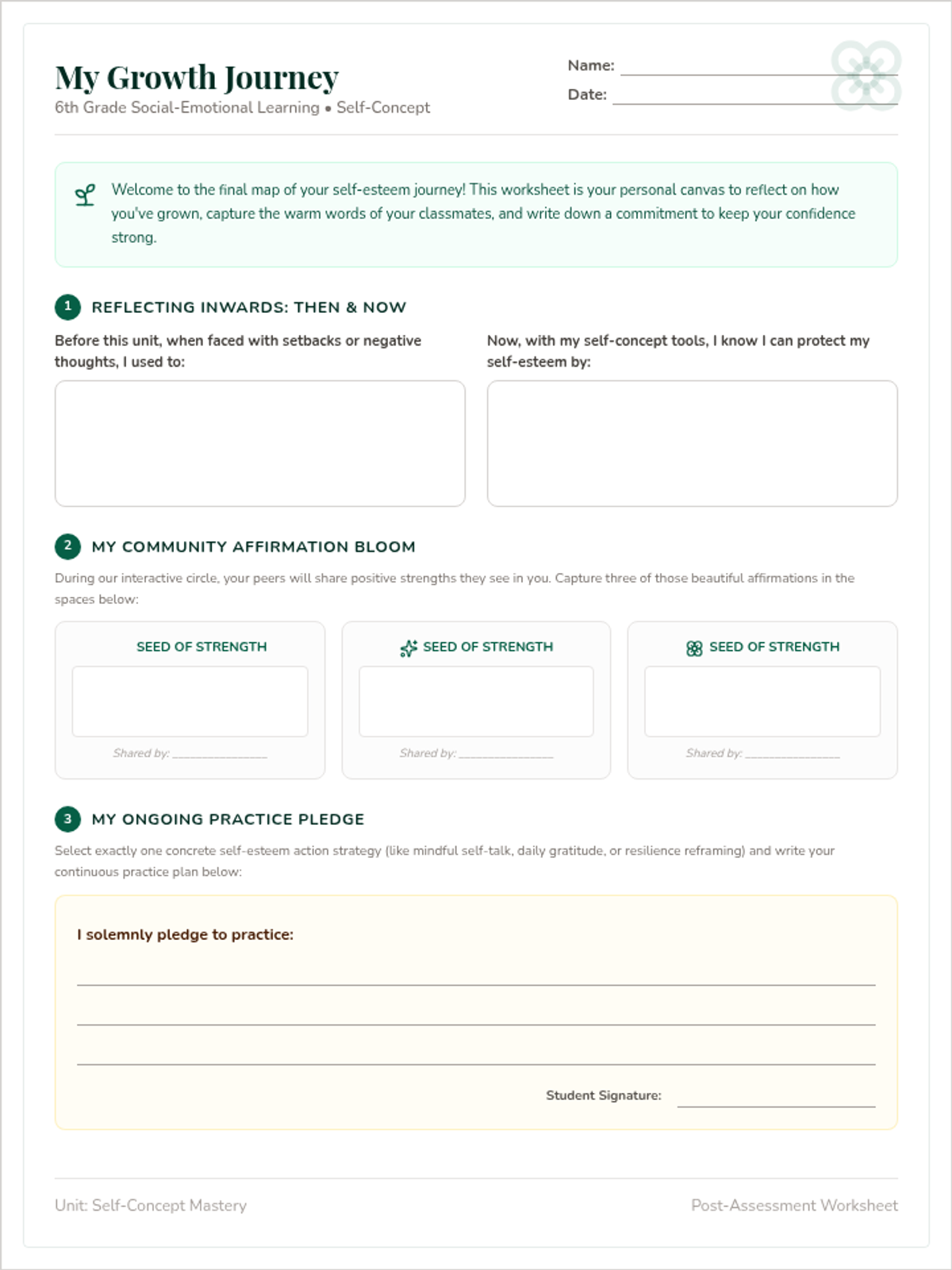
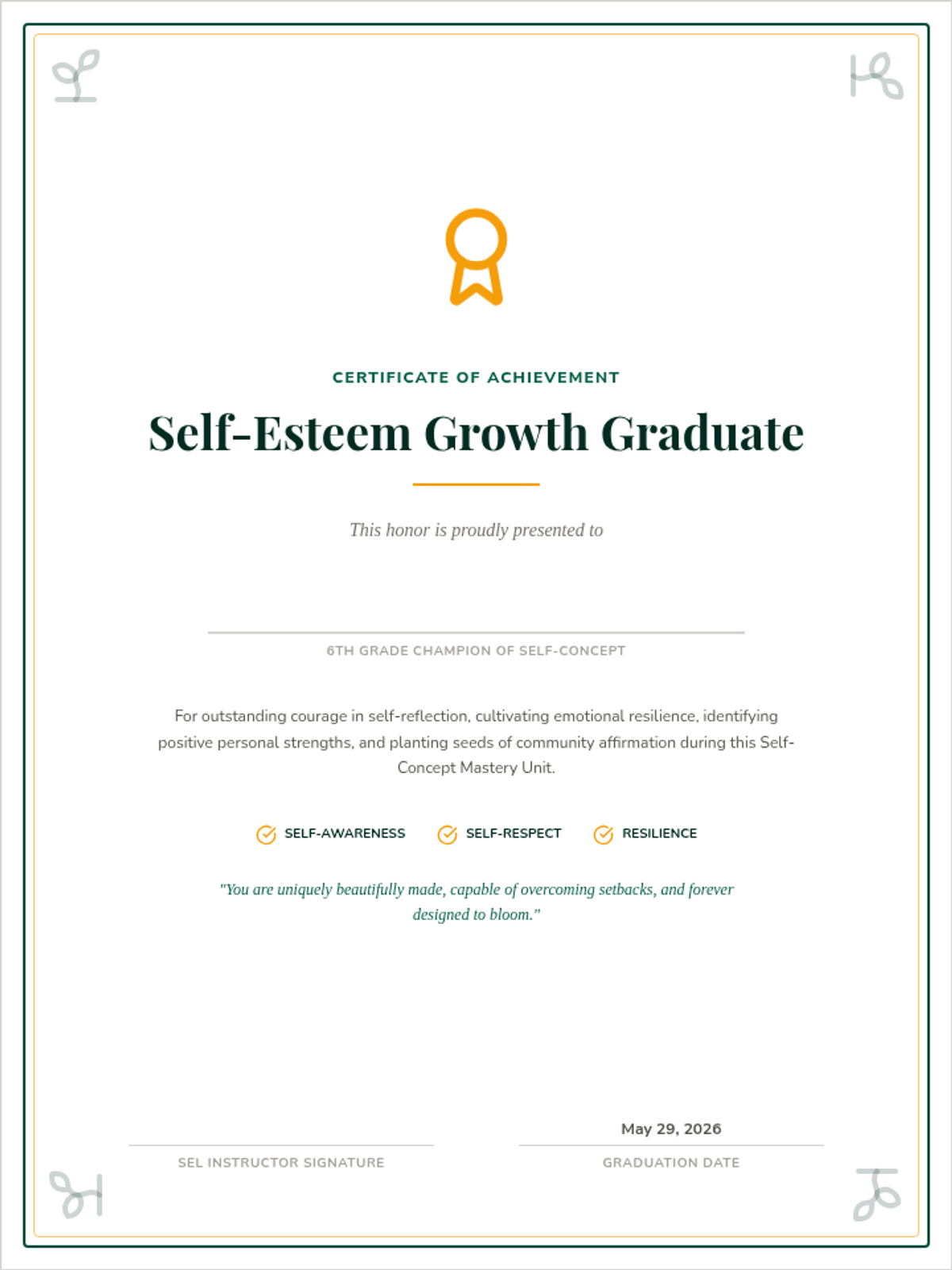
A 6th-grade social-emotional learning lesson focused on reflecting on self-esteem growth, completing a post-assessment, setting ongoing self-concept goals, and celebrating progress together. Includes a detailed lesson plan, instructional slides, reflection worksheet, assessment rubric, and a special certificate of completion.
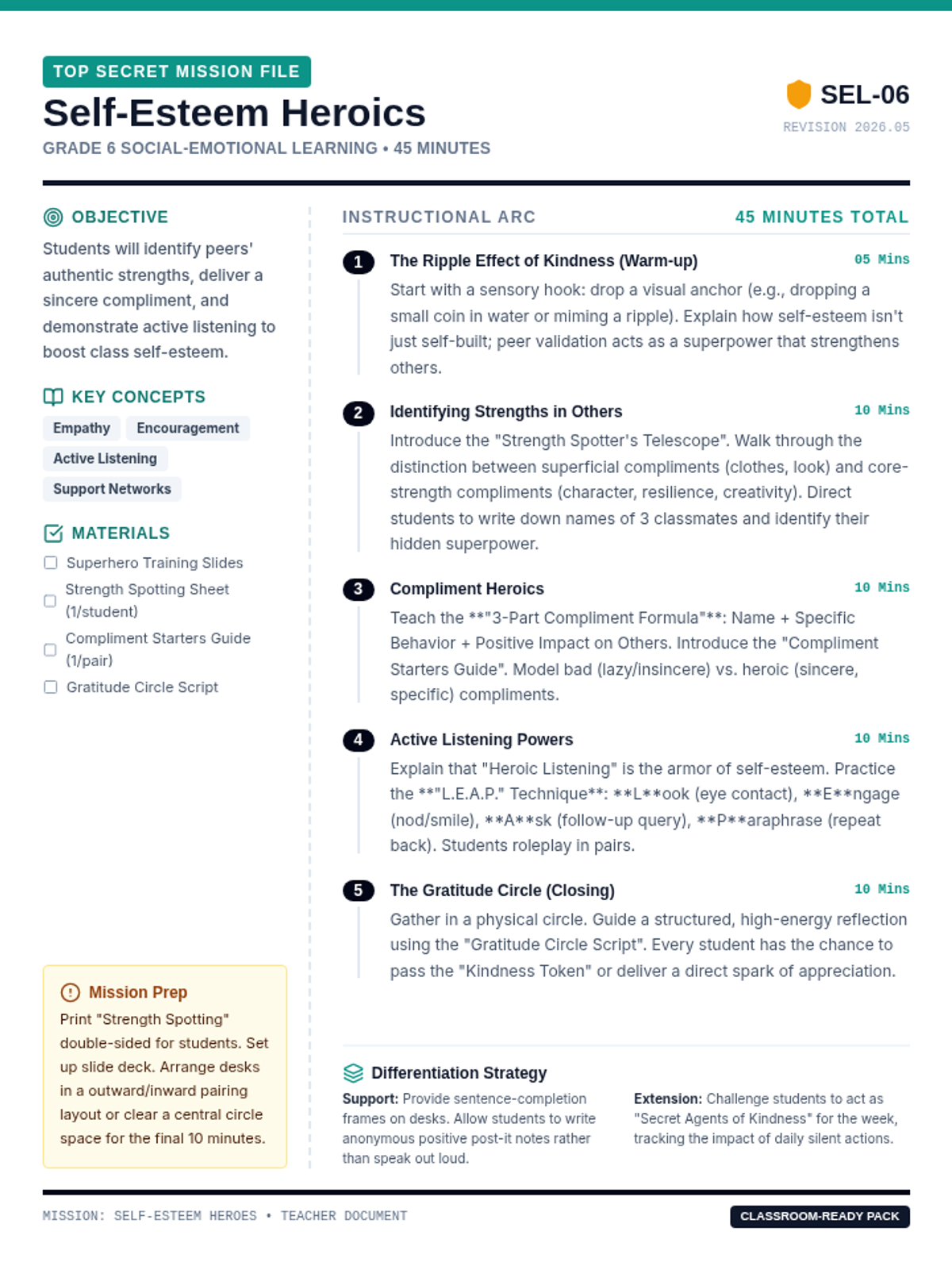
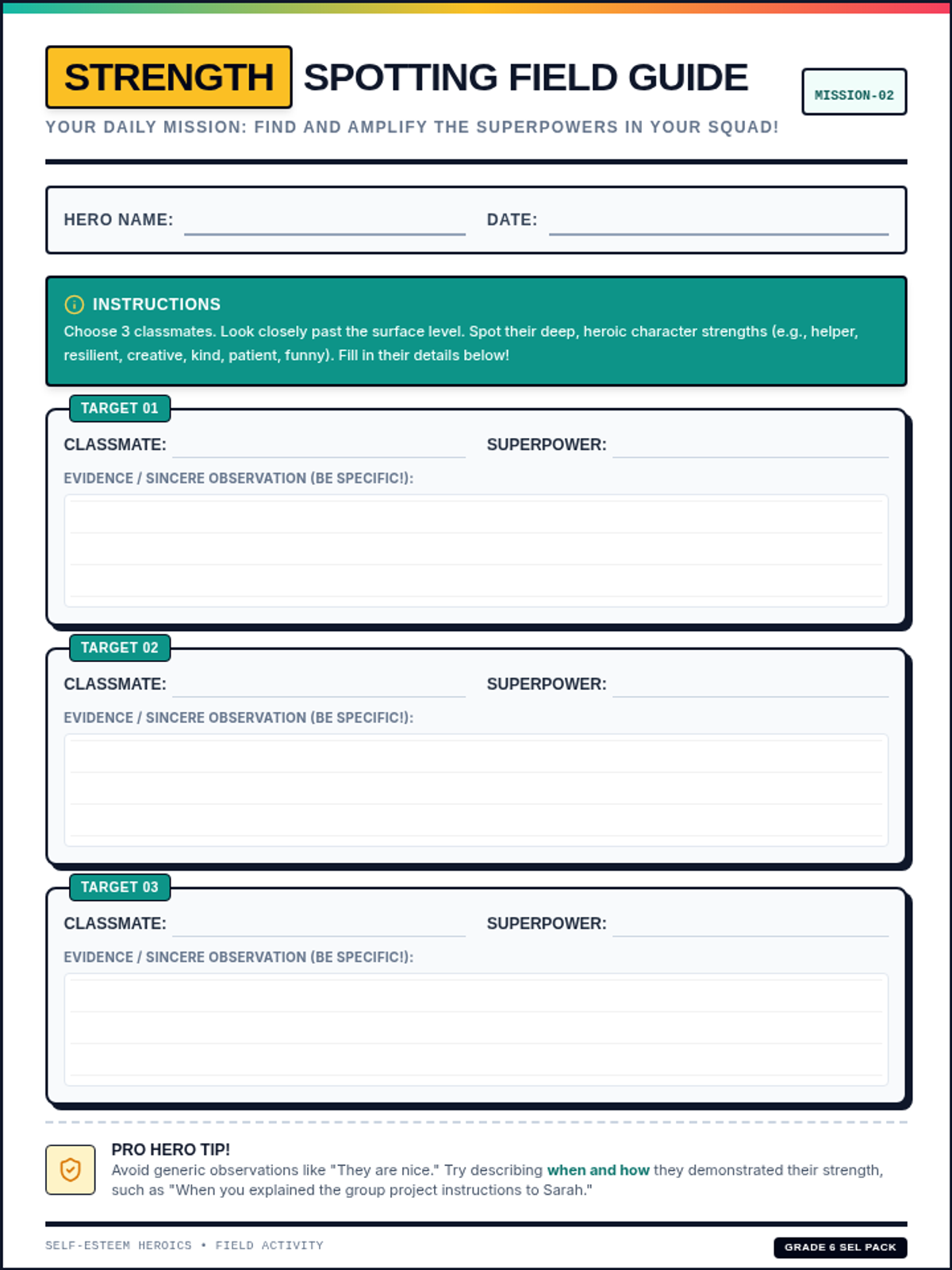
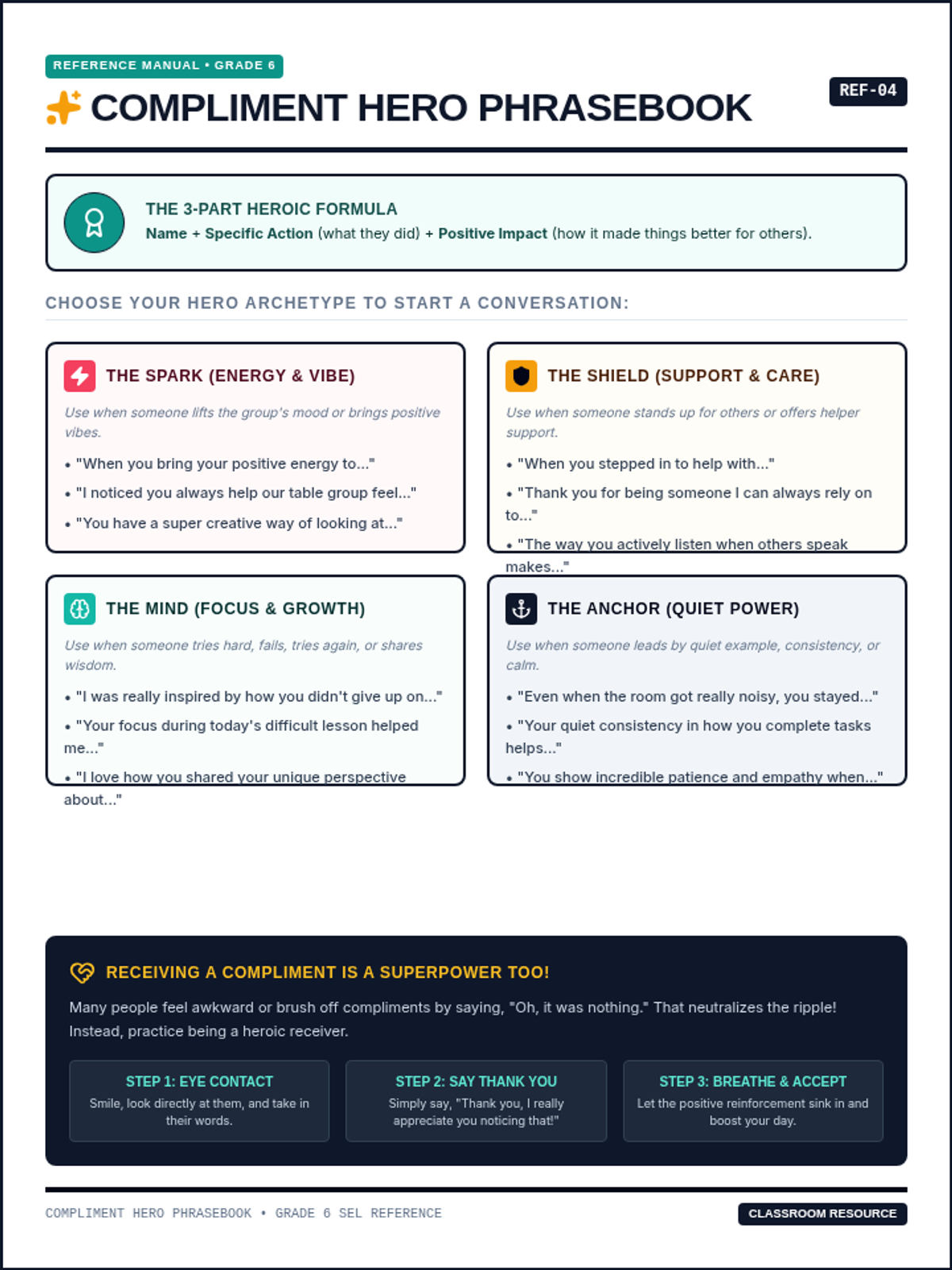
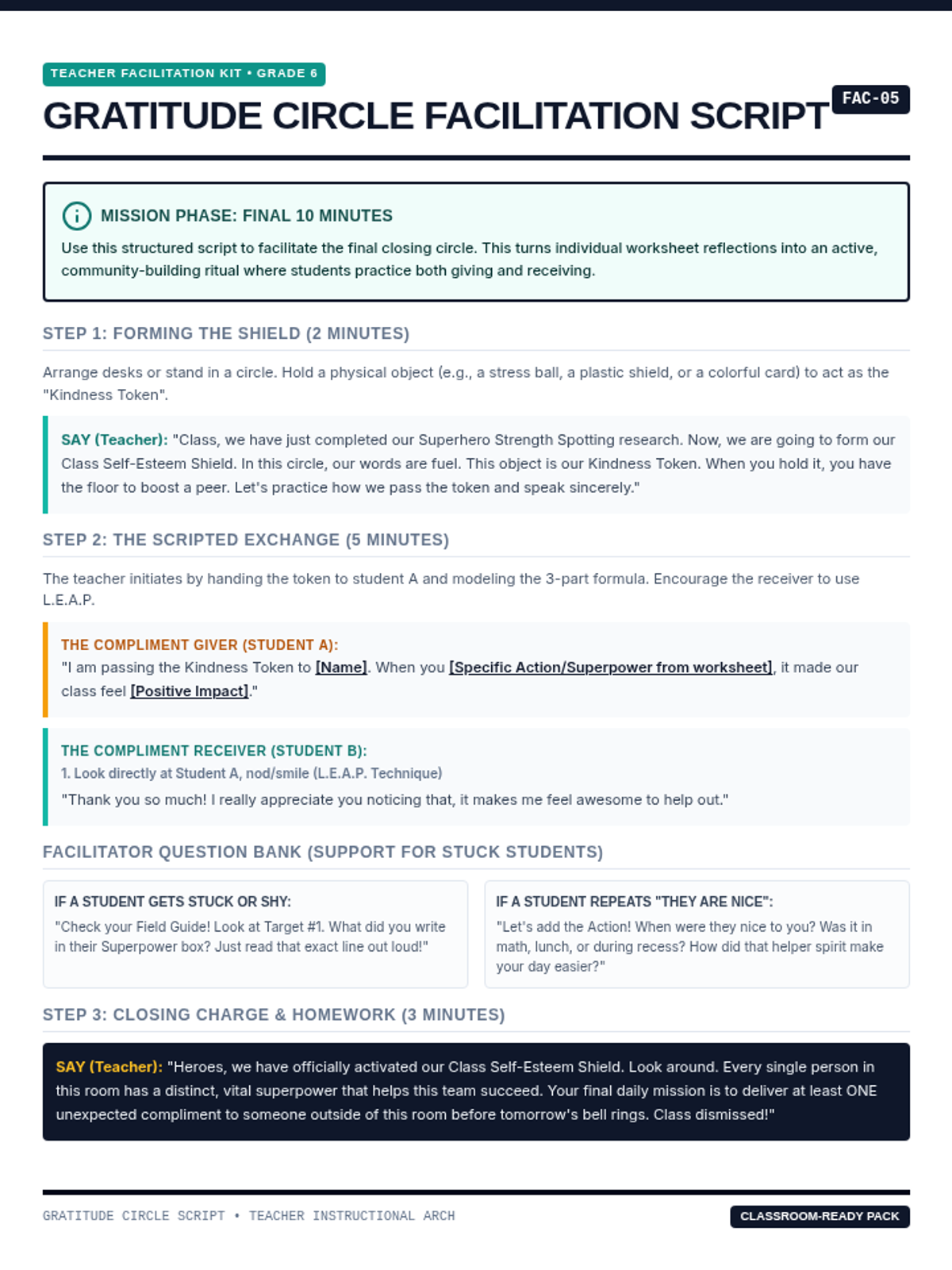
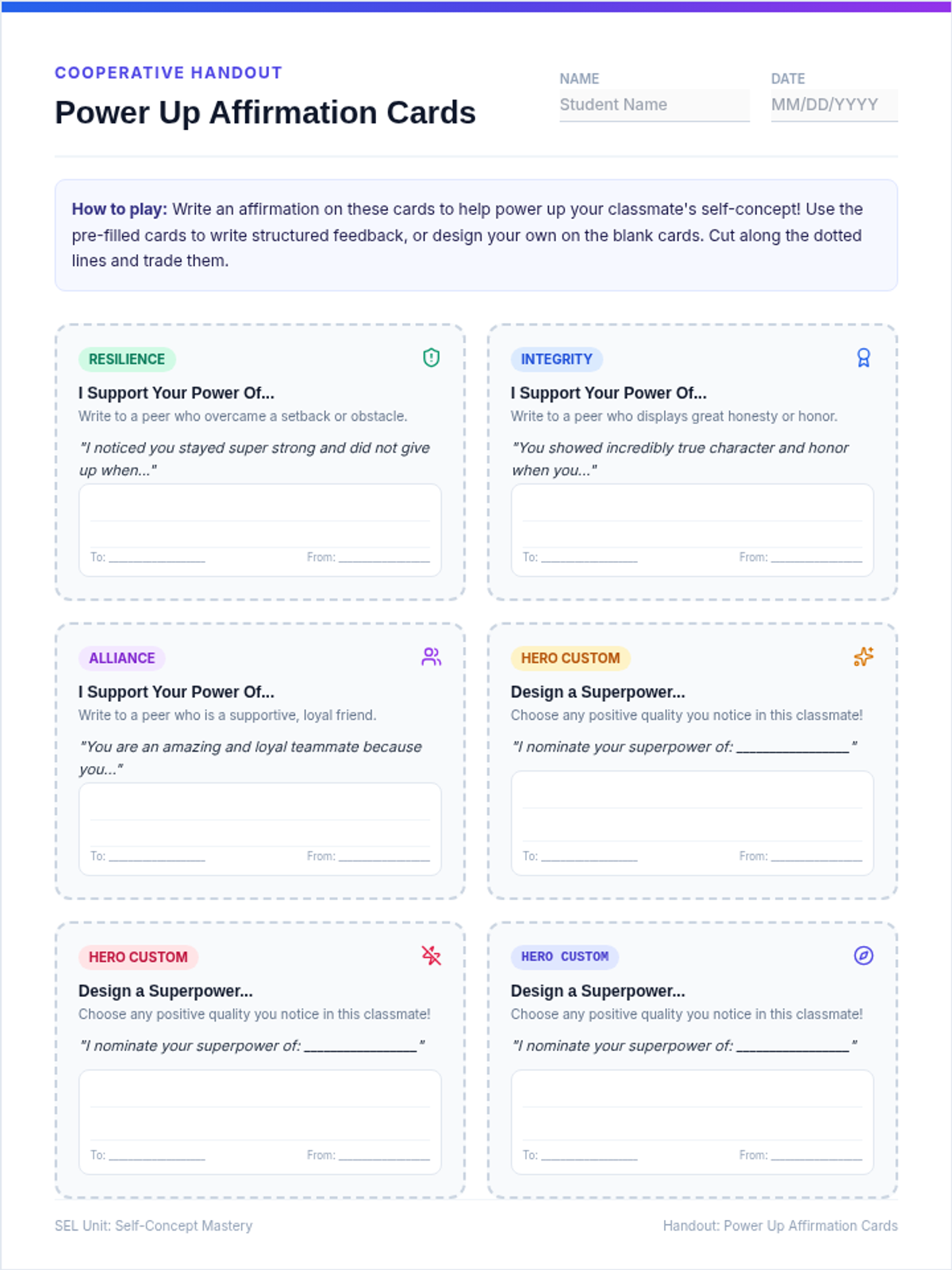
A 45-minute social-emotional learning lesson for 6th grade focused on empathy, active listening, and sincere encouragement to build peer self-esteem. Students learn to spot strengths, deliver authentic compliments, and practice active listening through comic-themed superhero training activities.
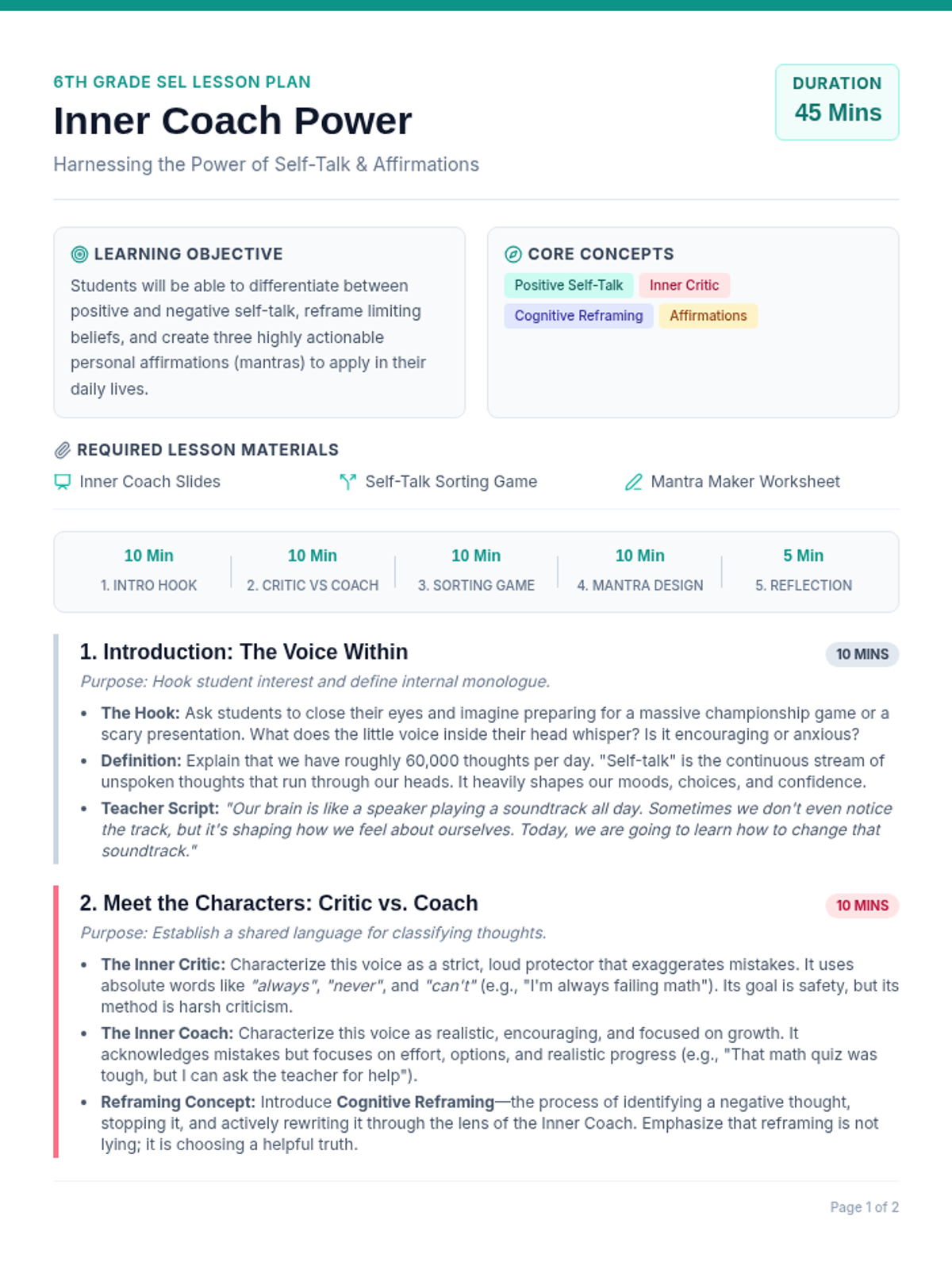
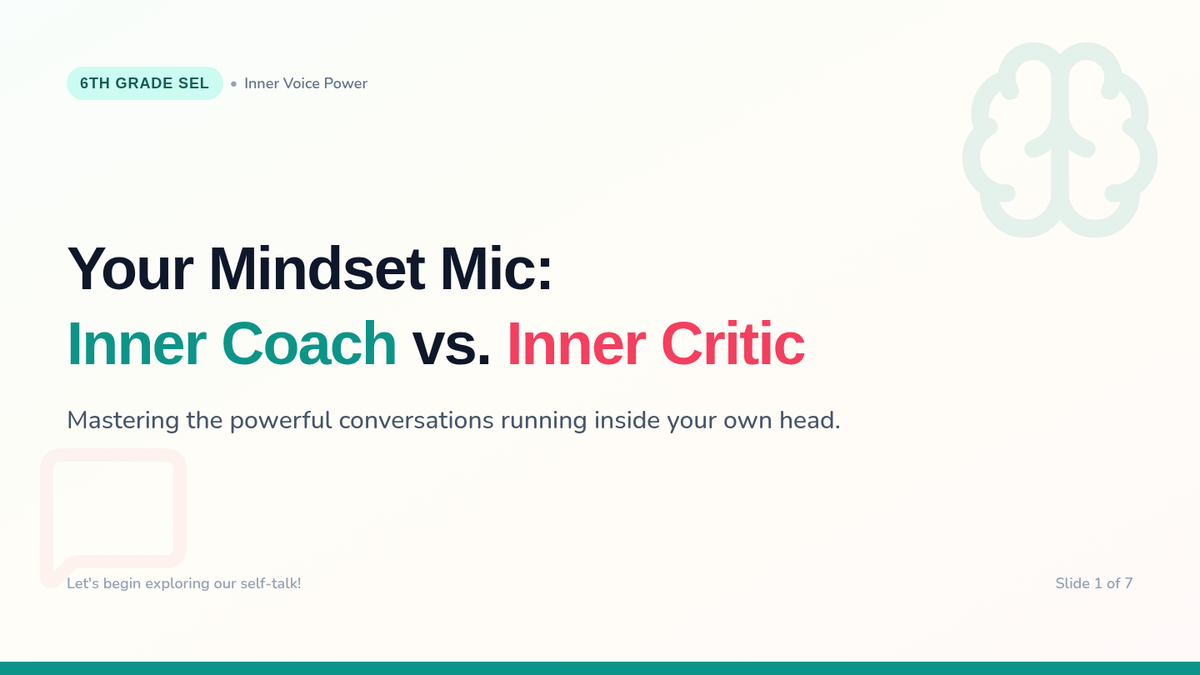
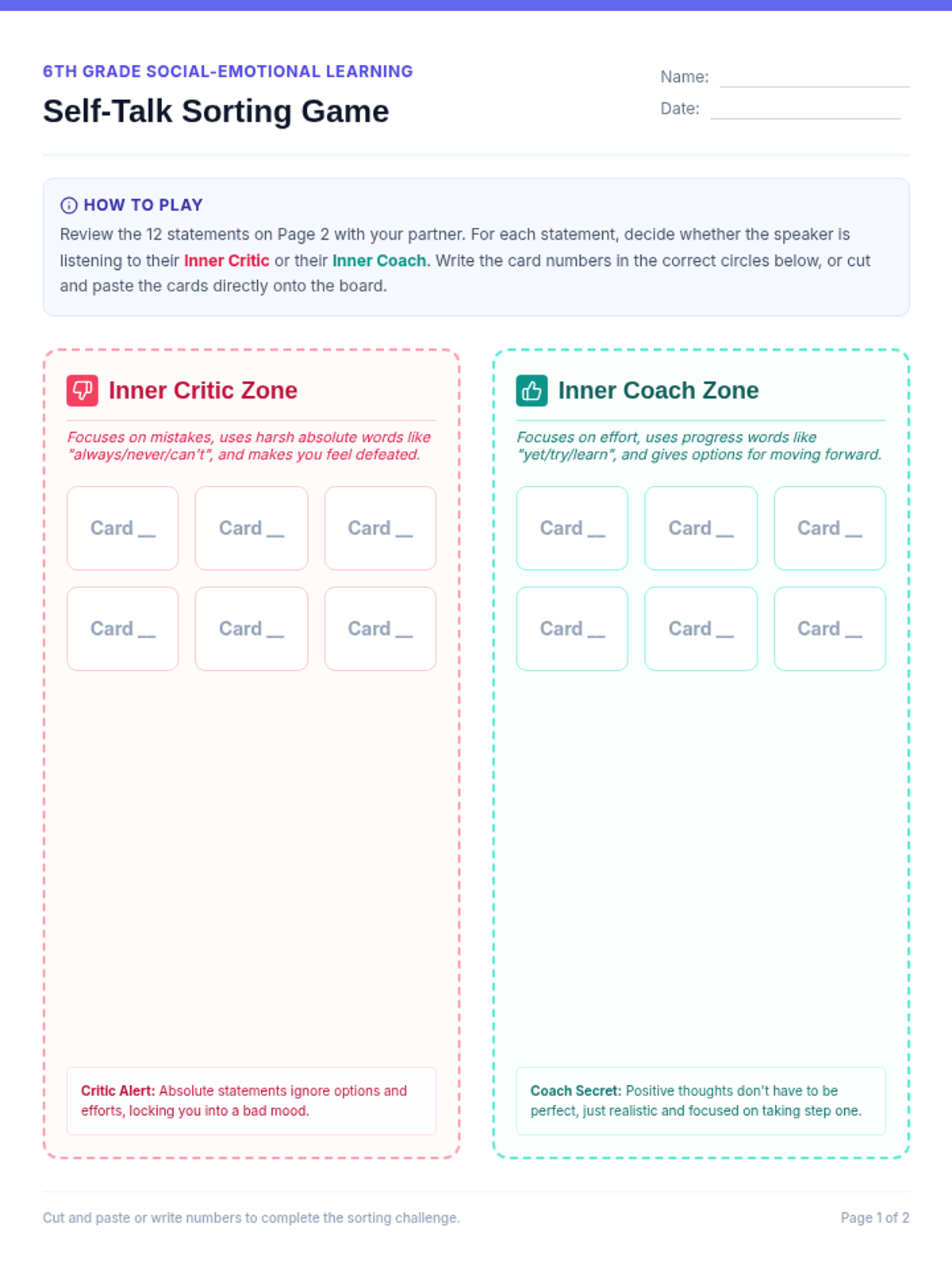
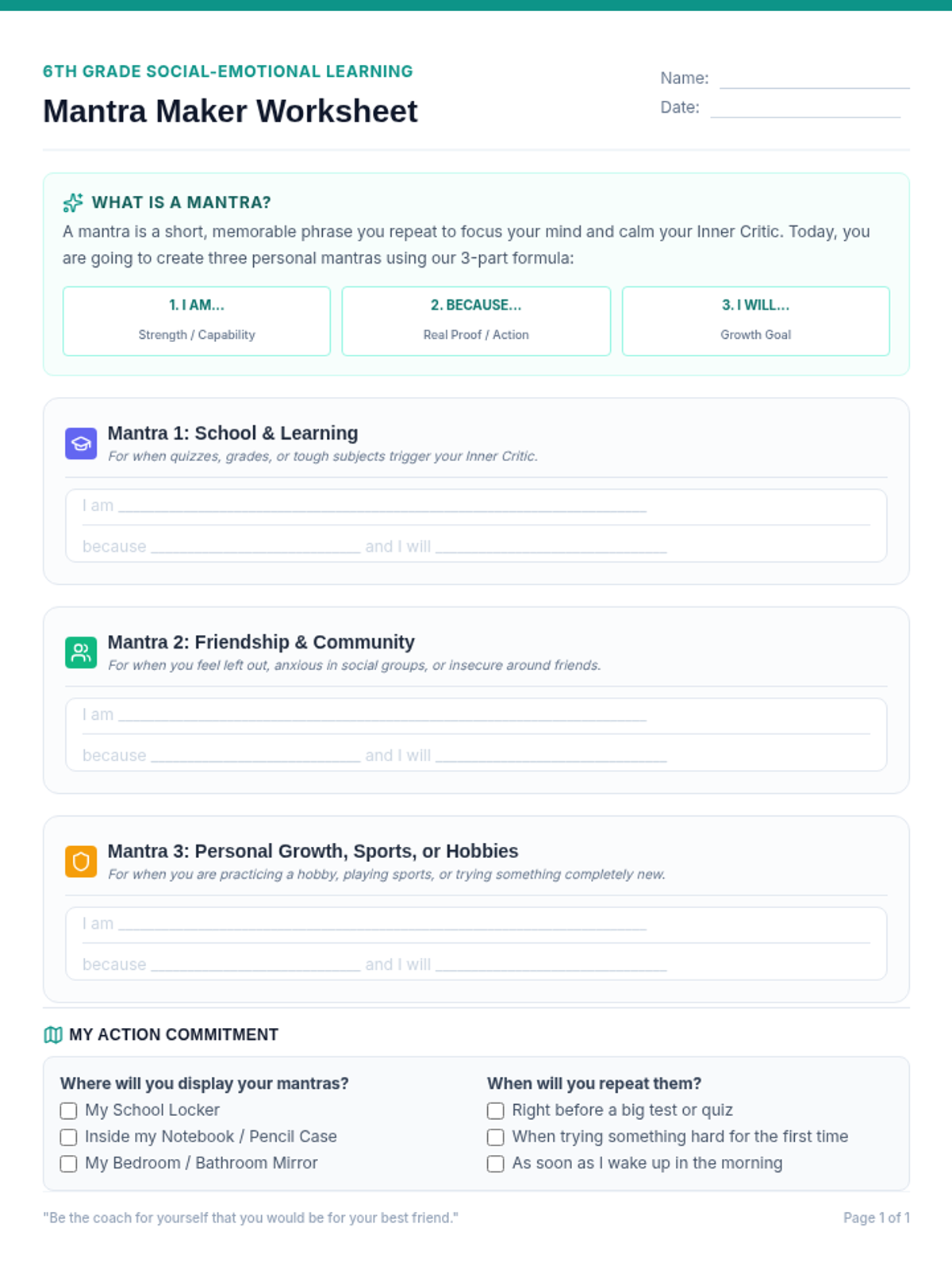
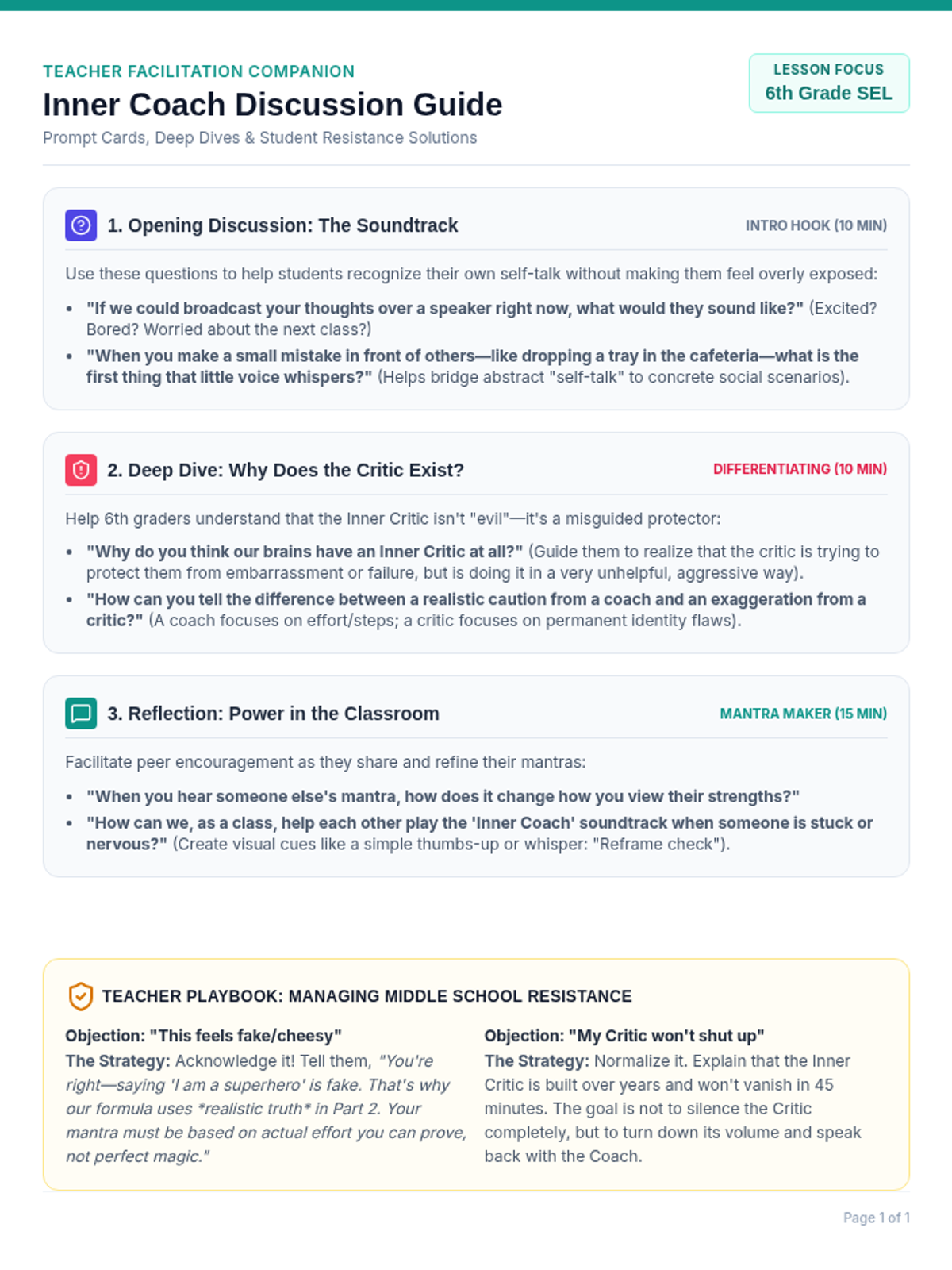
A 45-minute social-emotional learning lesson for 6th graders to explore their self-talk, contrast the 'Inner Critic' and 'Inner Coach', and design actionable personal affirmations.
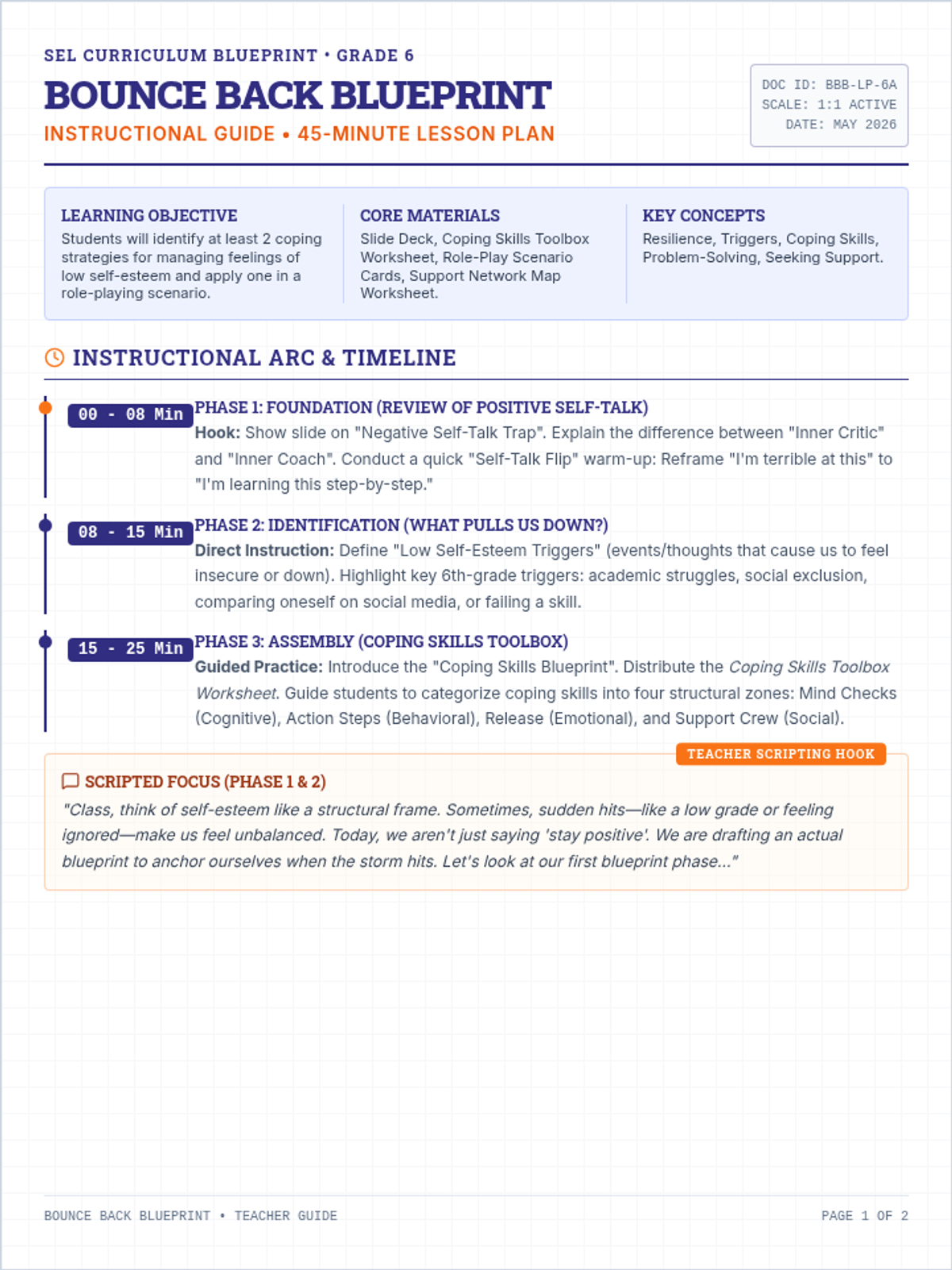
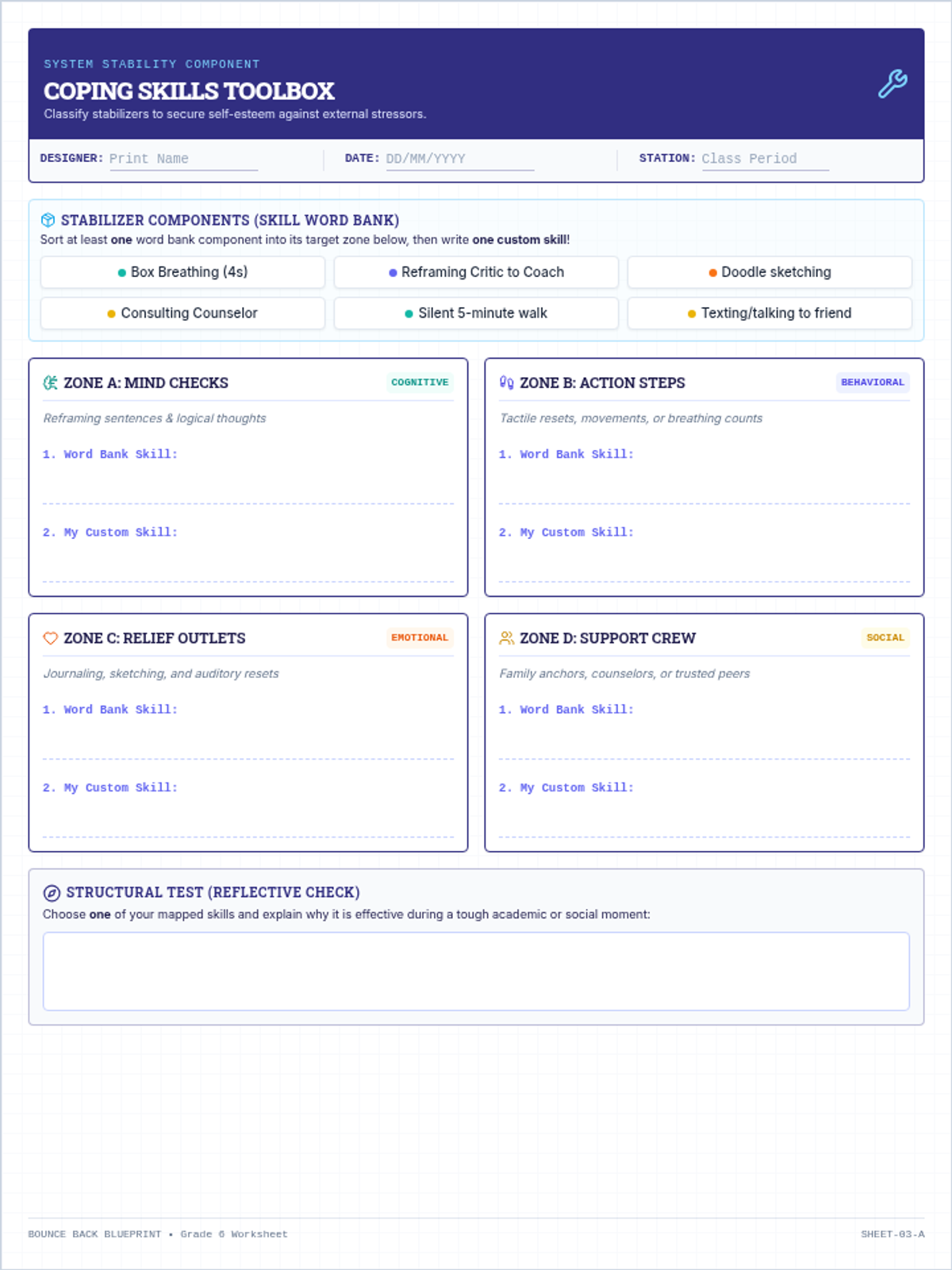
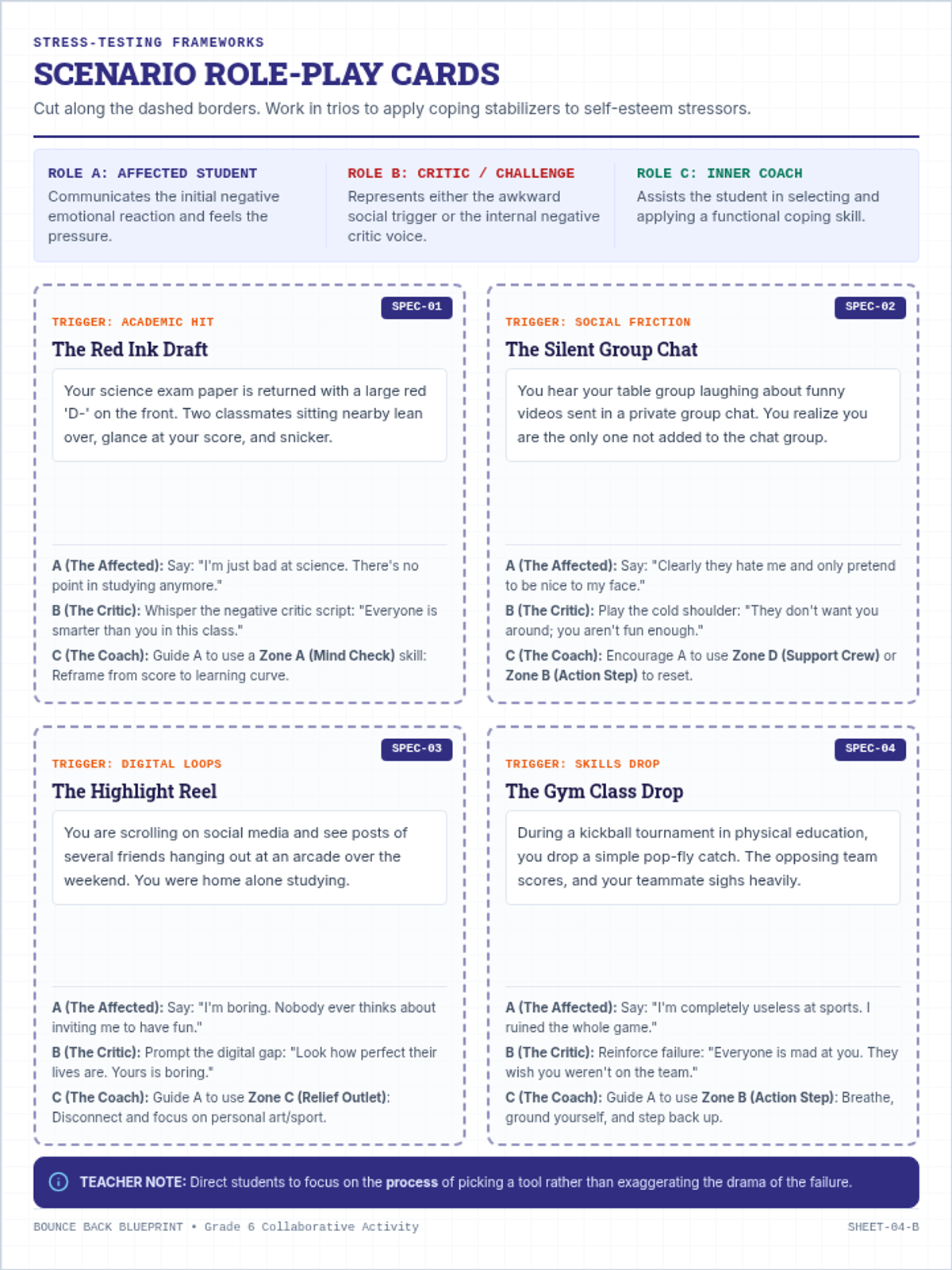
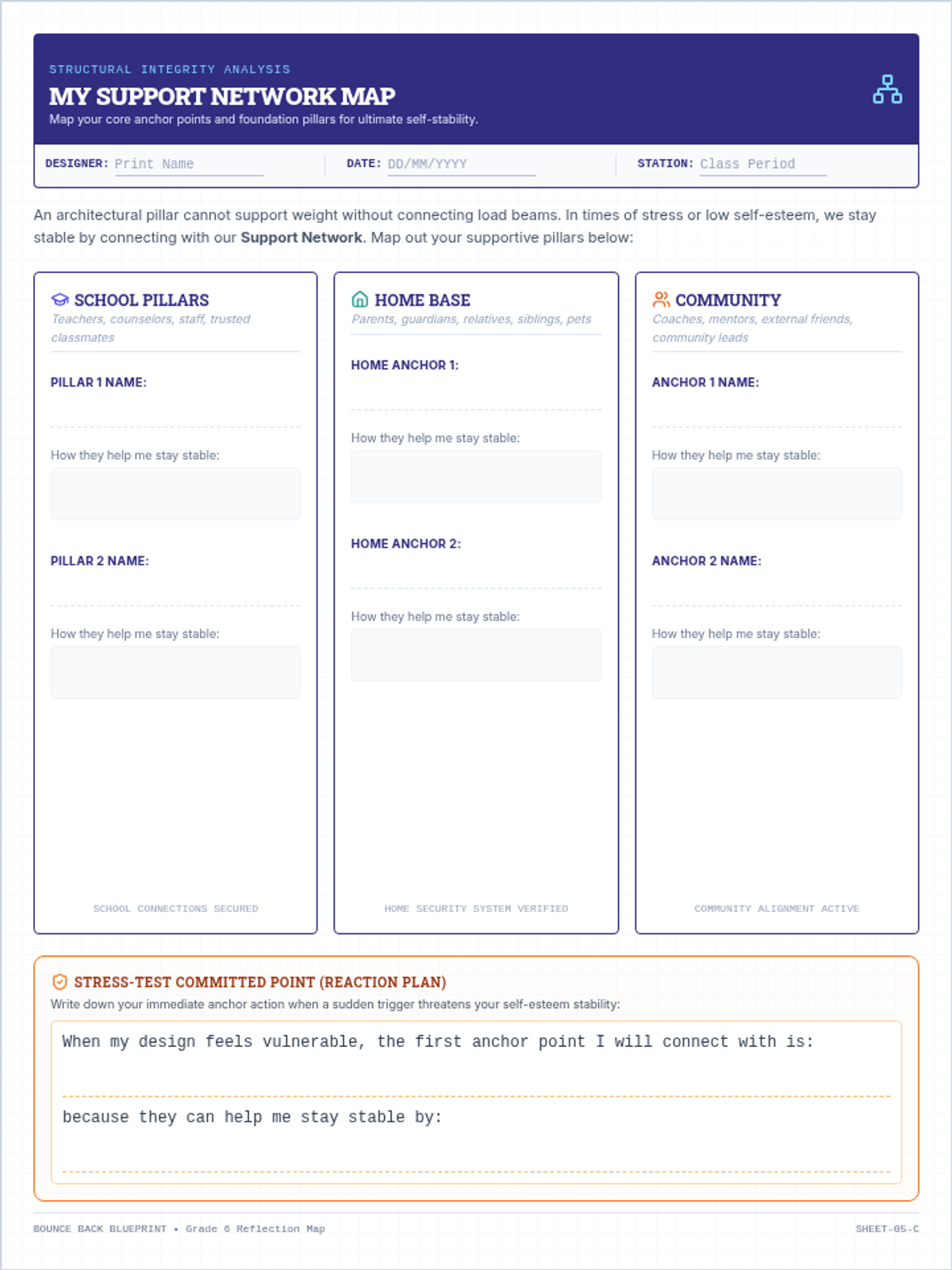
A 45-minute social-emotional learning lesson for 6th graders focused on identifying self-esteem triggers, building a personalized coping skills toolbox, mapping a support network, and practicing resilience strategies through collaborative role-play.
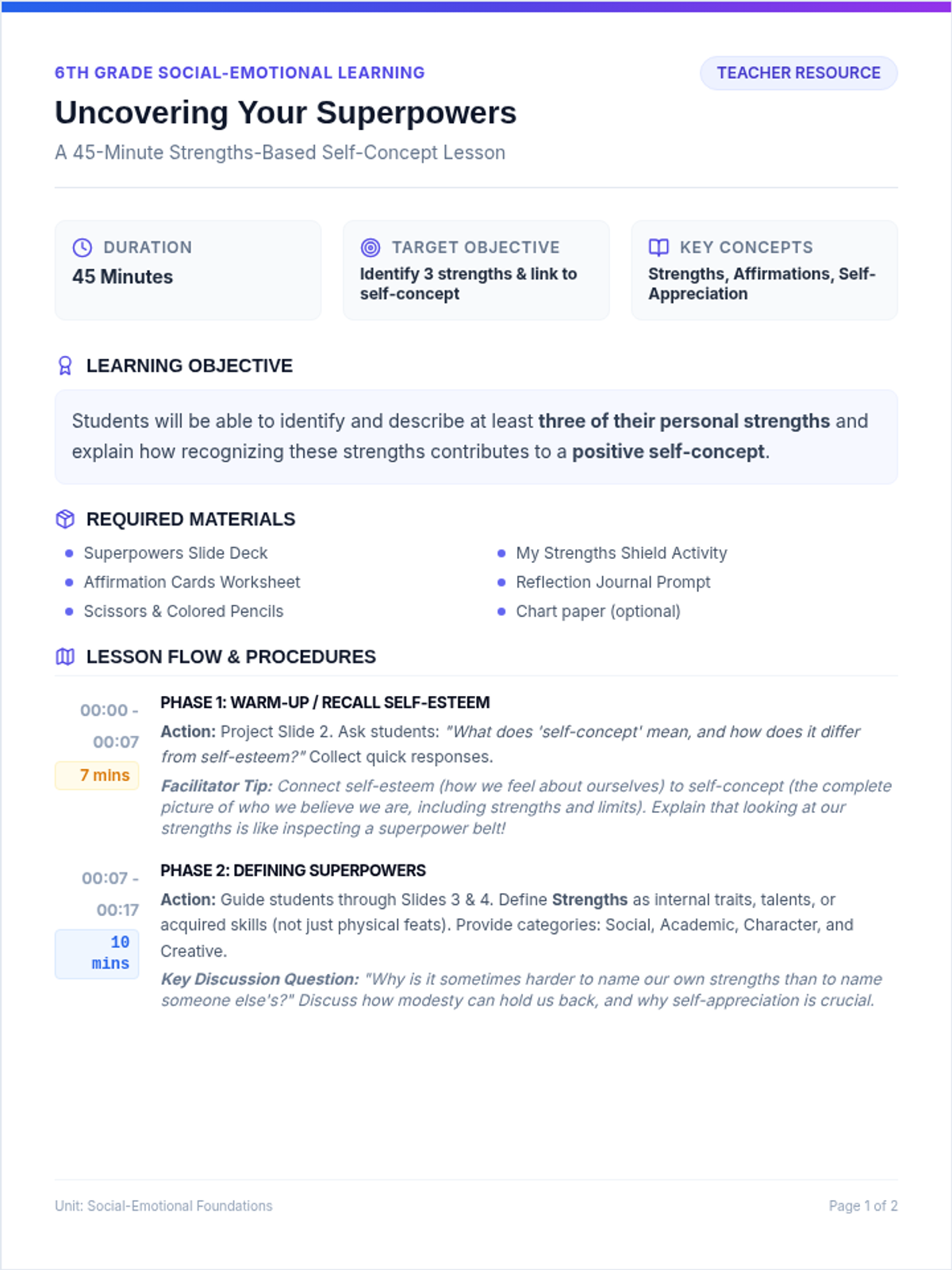
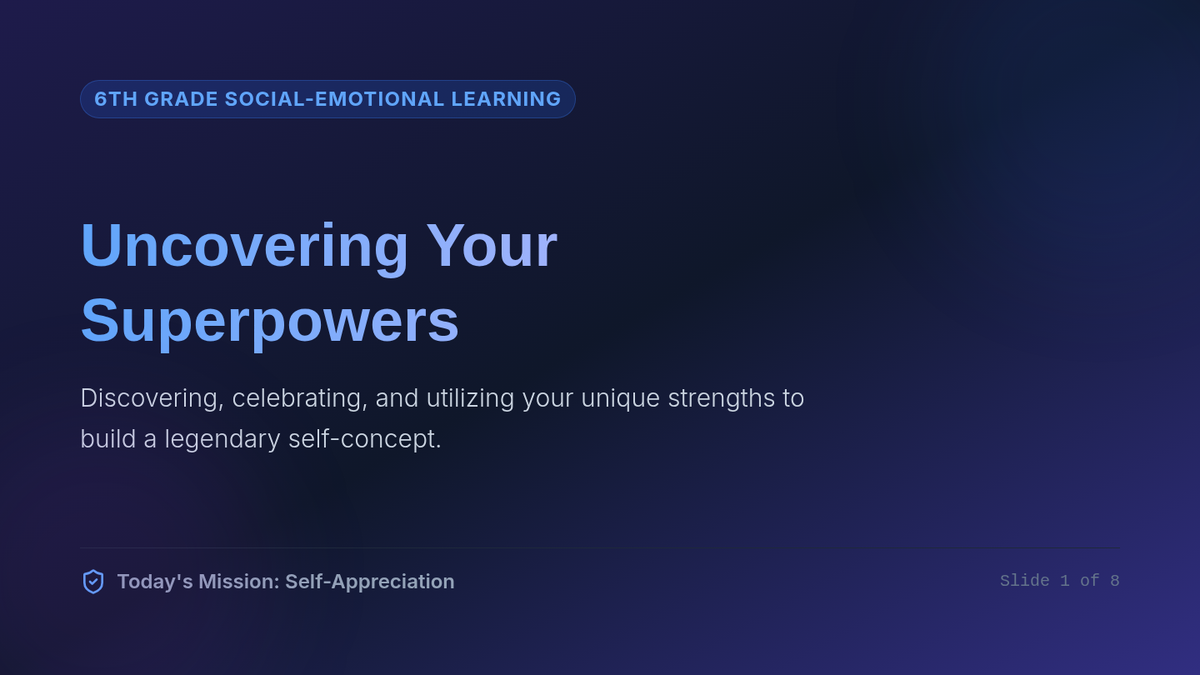
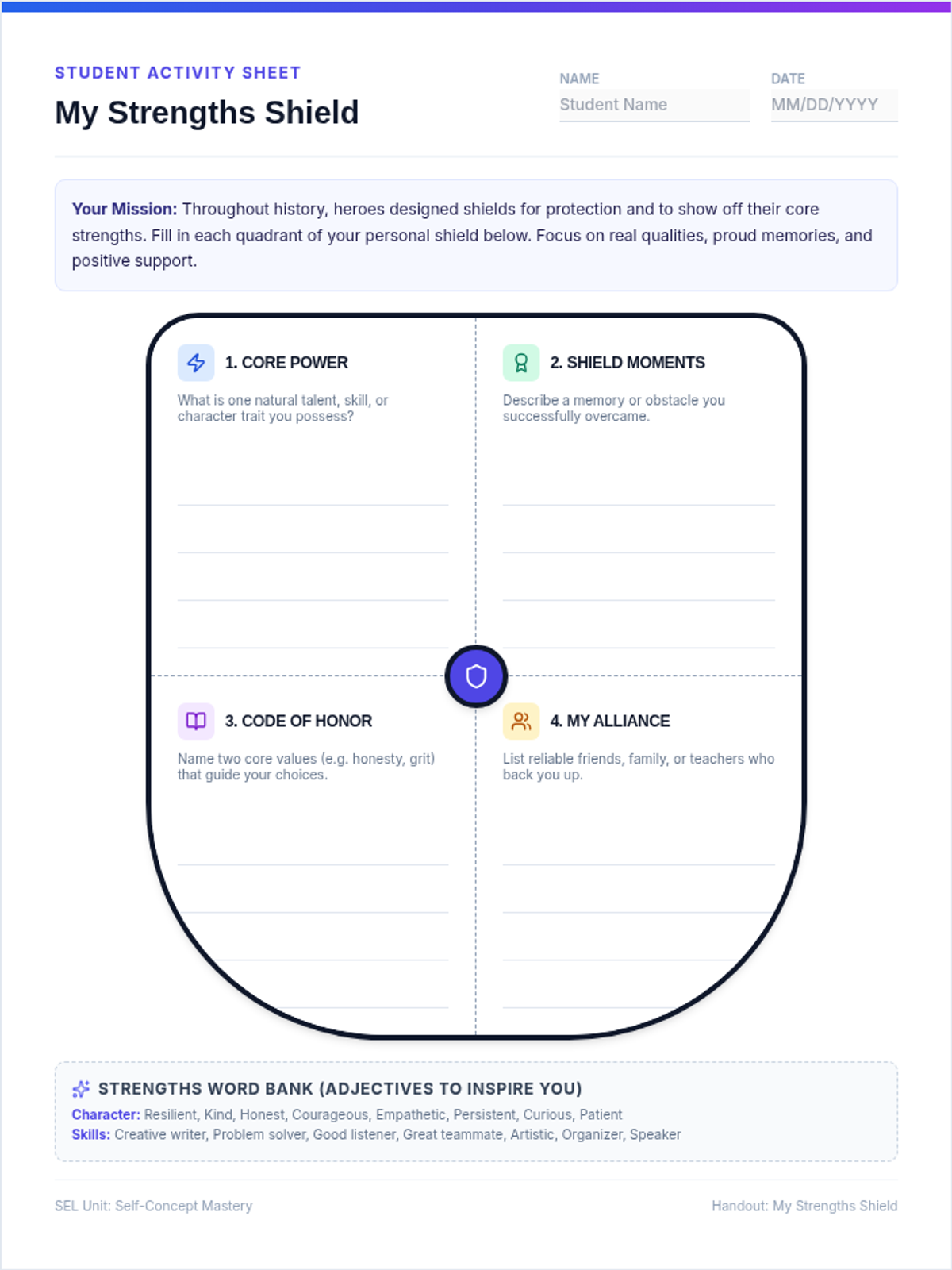
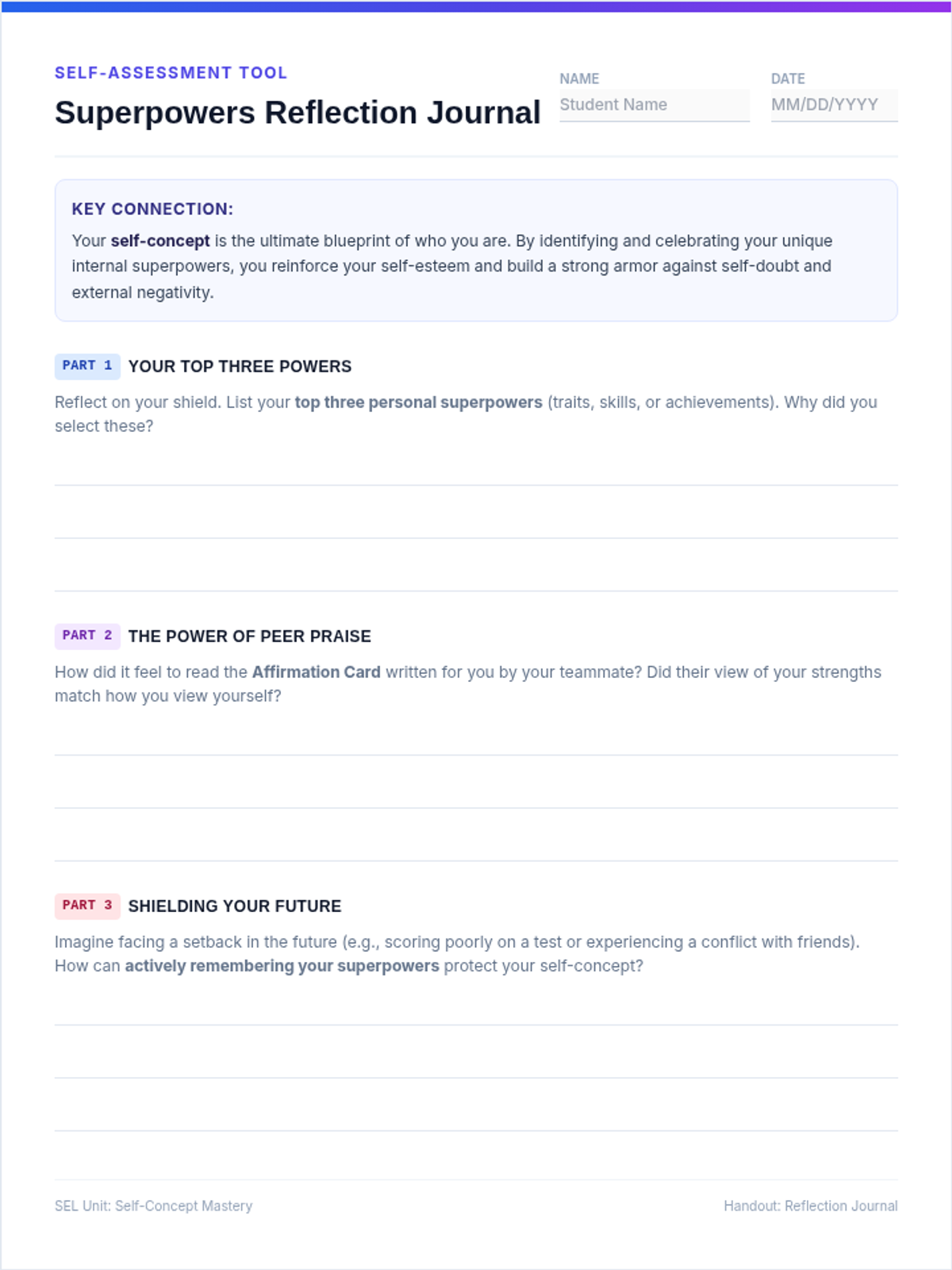
A transformative 45-minute social-emotional learning lesson for 6th graders designed to help students discover, articulate, and celebrate their personal strengths. Through a structured lesson plan, slide presentation, interactive strengths shield design, and reflection prompts, students build self-appreciation and a positive self-concept.
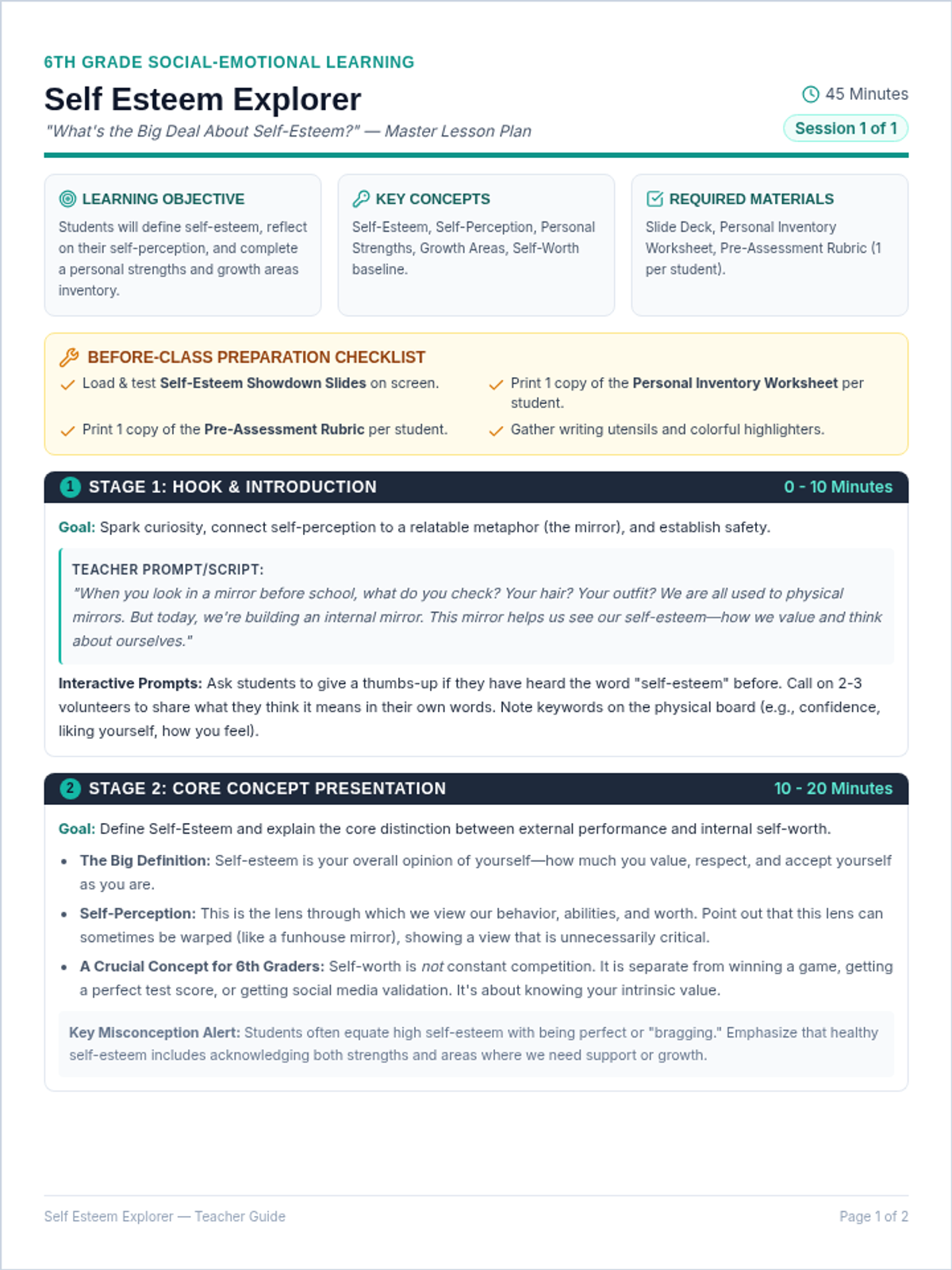
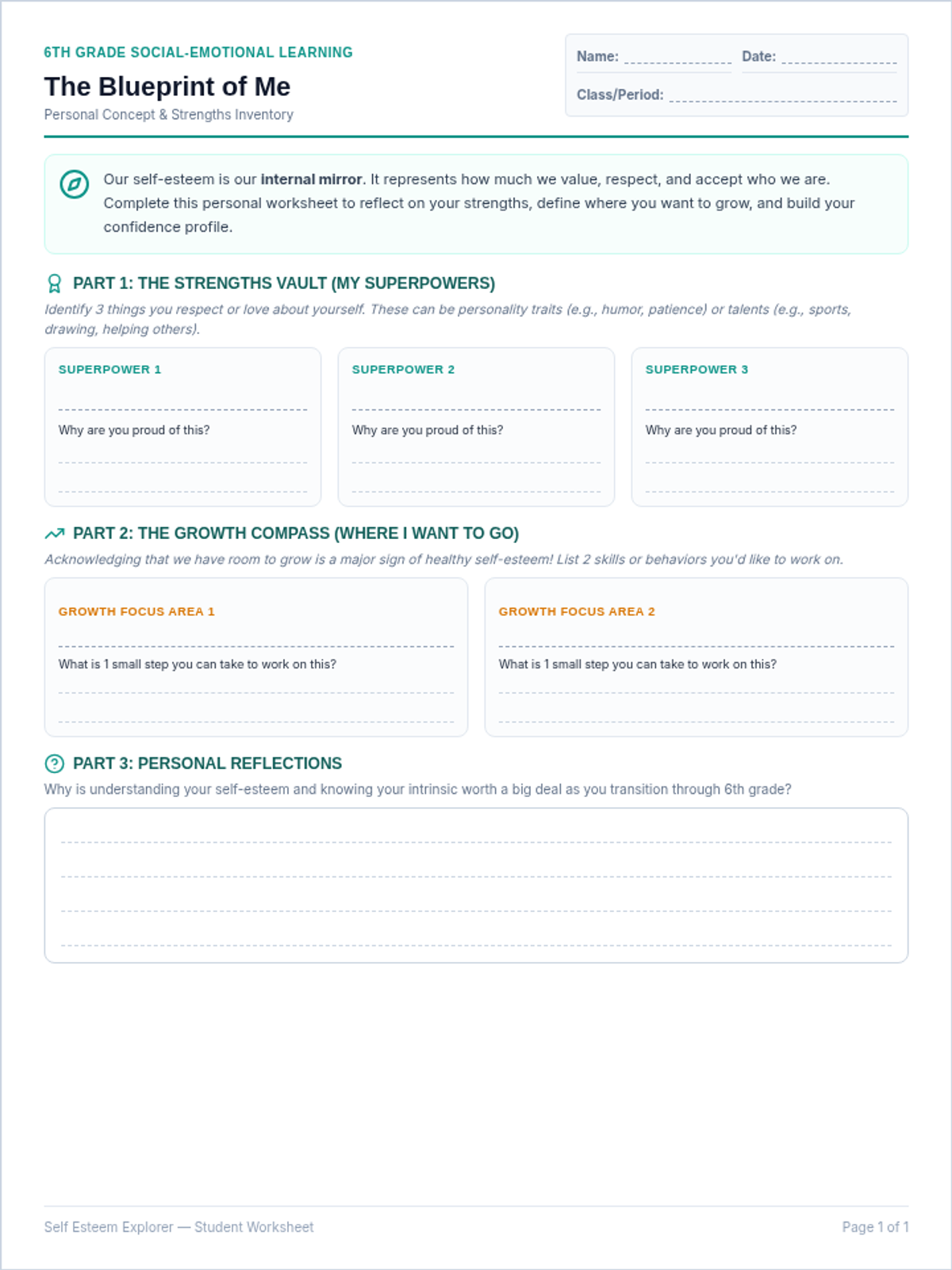
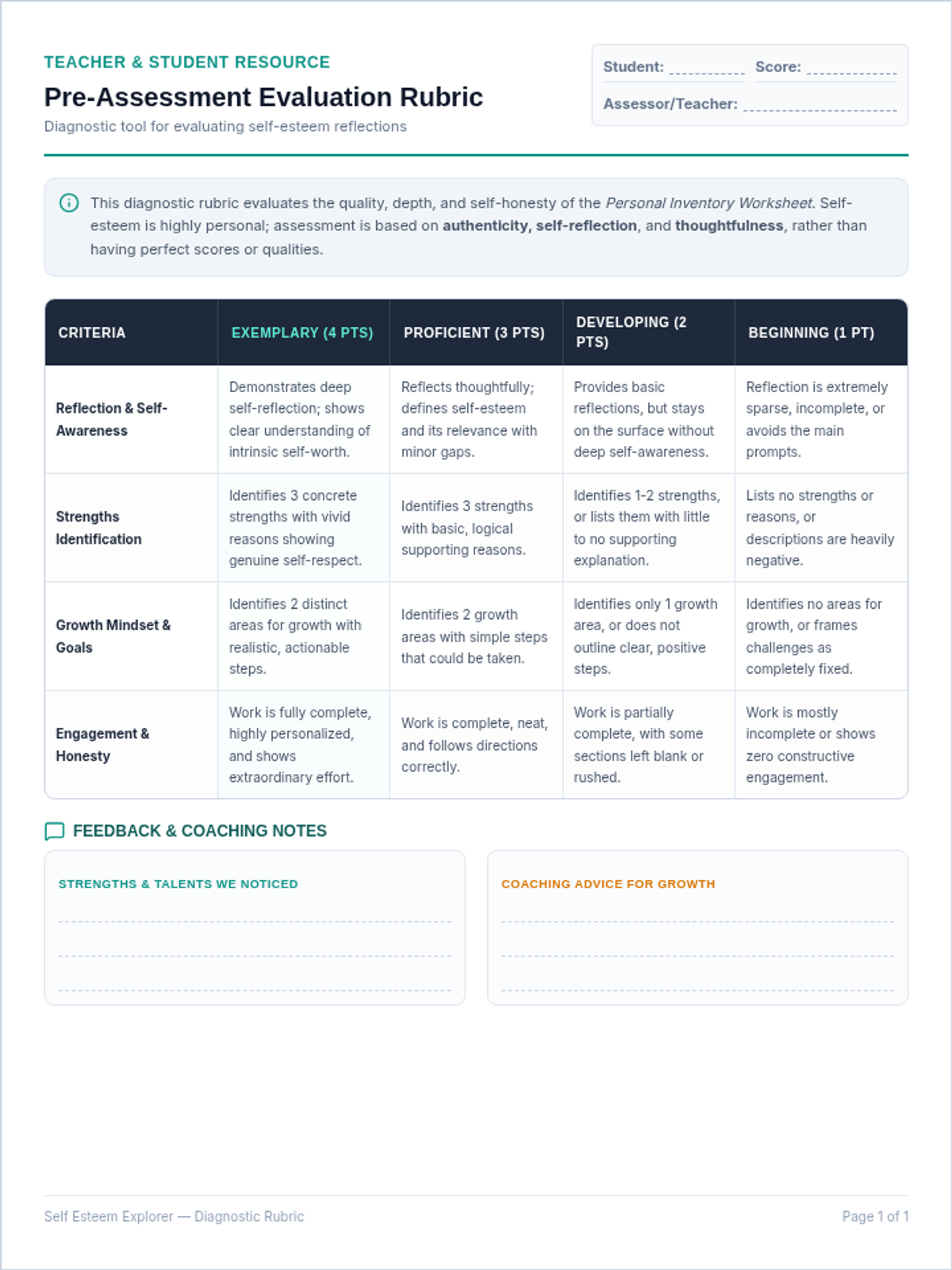
A 45-minute introductory lesson on self-esteem for 6th-grade students. It introduces self-perception, helps students complete a personal strengths inventory, and establishes a baseline for emotional self-awareness.
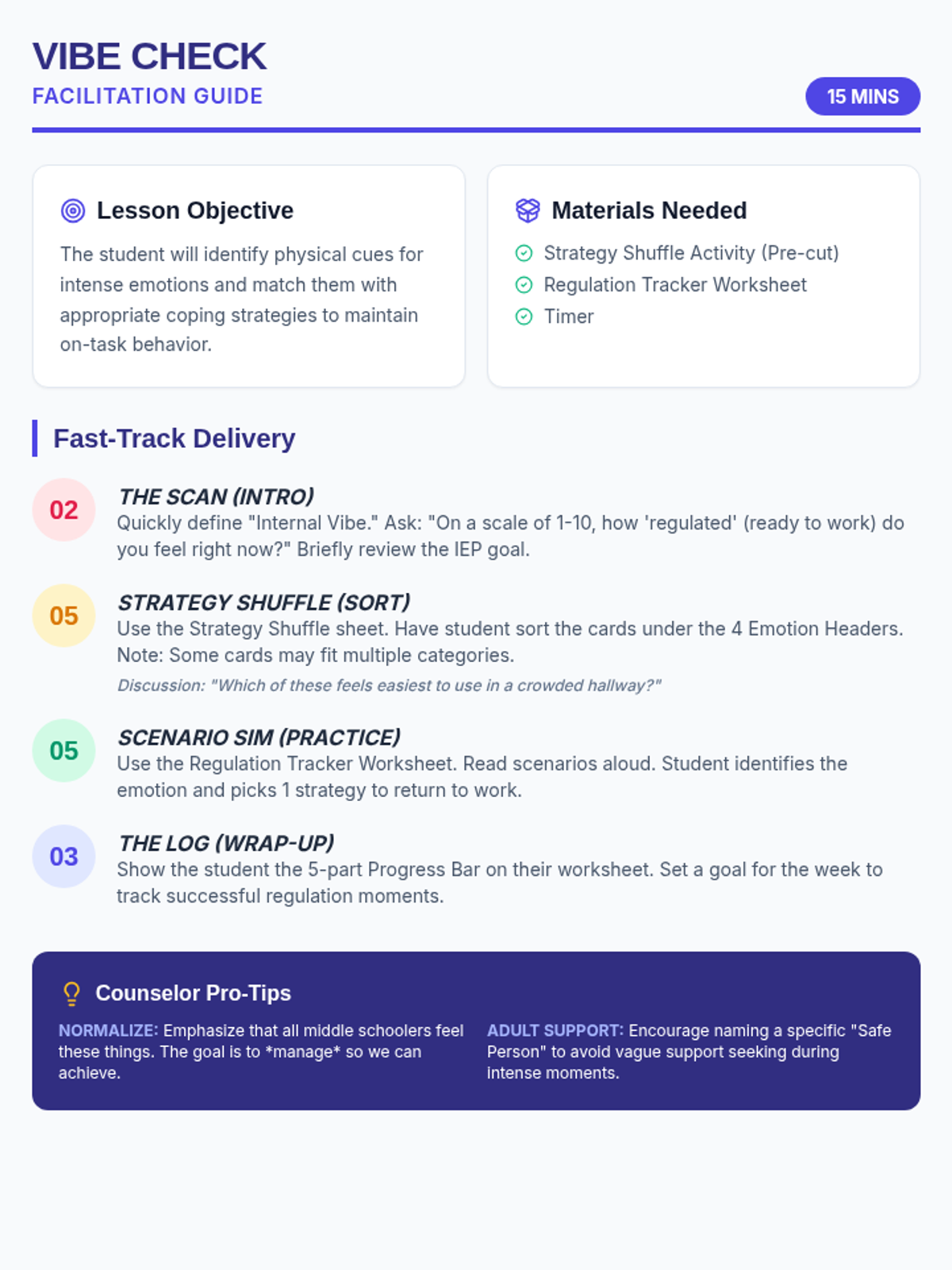
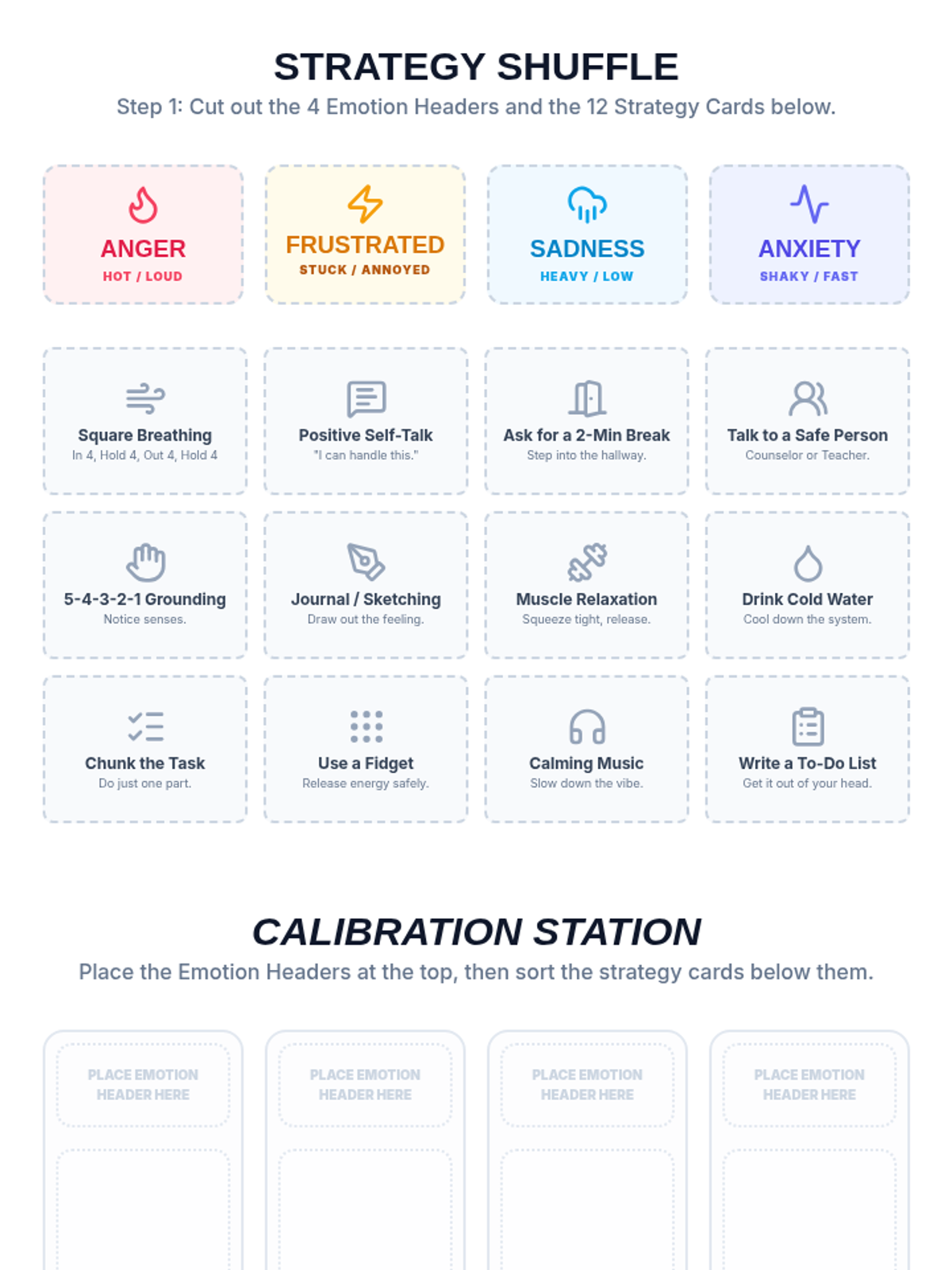
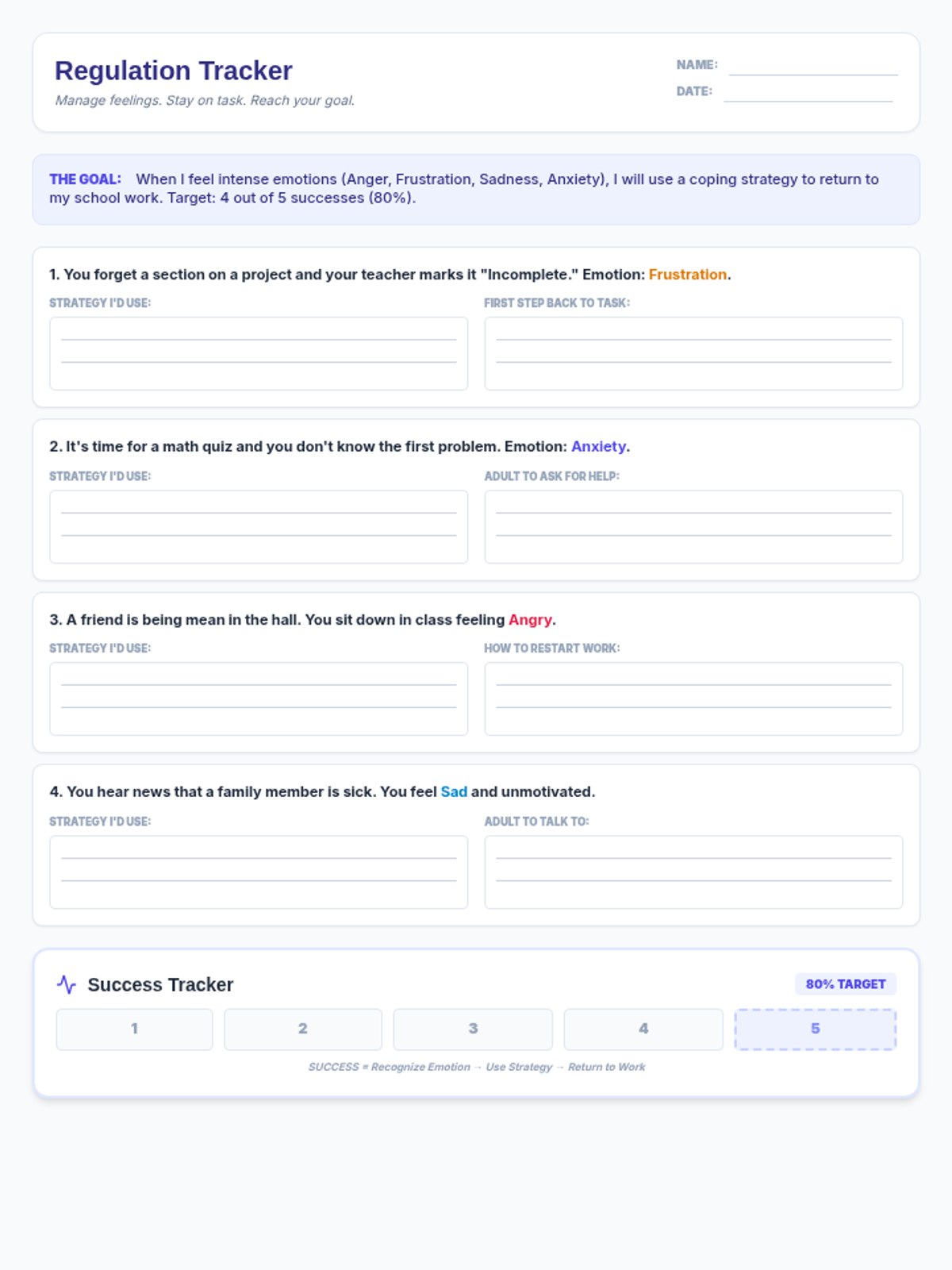
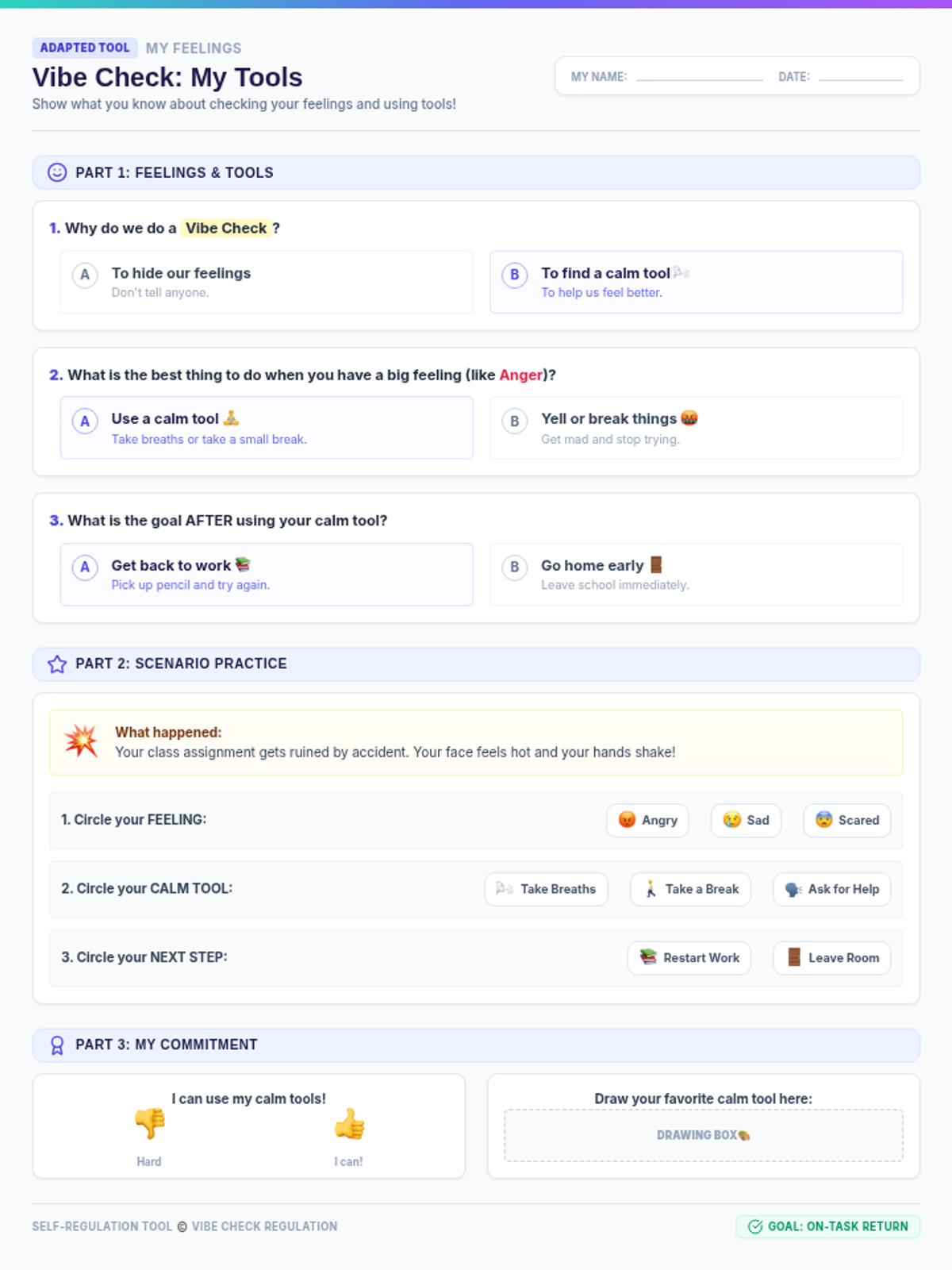
A 15-minute counseling lesson designed to help middle school students identify intense emotions and apply specific self-regulation strategies to return to on-task behavior.
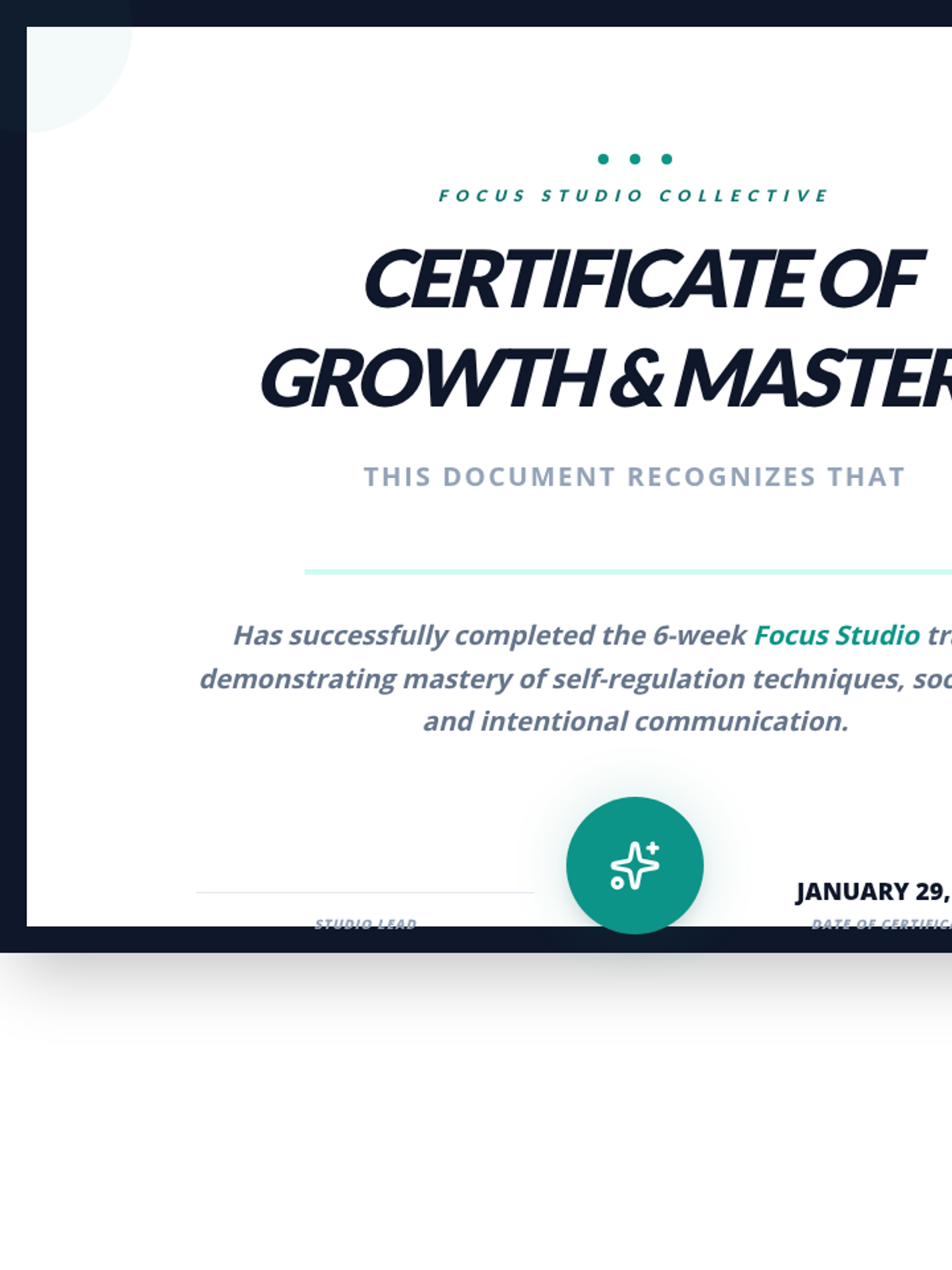
Review of self-regulation tools, personal growth reflection, and final graduation.
Recognizing the 'heat' of frustration in social settings and applying early-intervention calming strategies.
Identifying 'Focus Thieves' like social pressure and internal anxiety. Practicing sustained attention during complex tasks.