Students learn the SMART acronym (Specific, Measurable, Achievable, Relevant, Time-bound) and practice transforming vague intentions into actionable goals through critical analysis and a workshop approach.
Students synthesize their learning by creating a personal coping plan and reflecting on their growth throughout the group.
Introduces physical and environmental coping strategies, including deep breathing, grounding techniques, and healthy lifestyle habits.
Focuses on the connection between thoughts and feelings, teaching students how to challenge negative self-talk and reframe stressful situations.
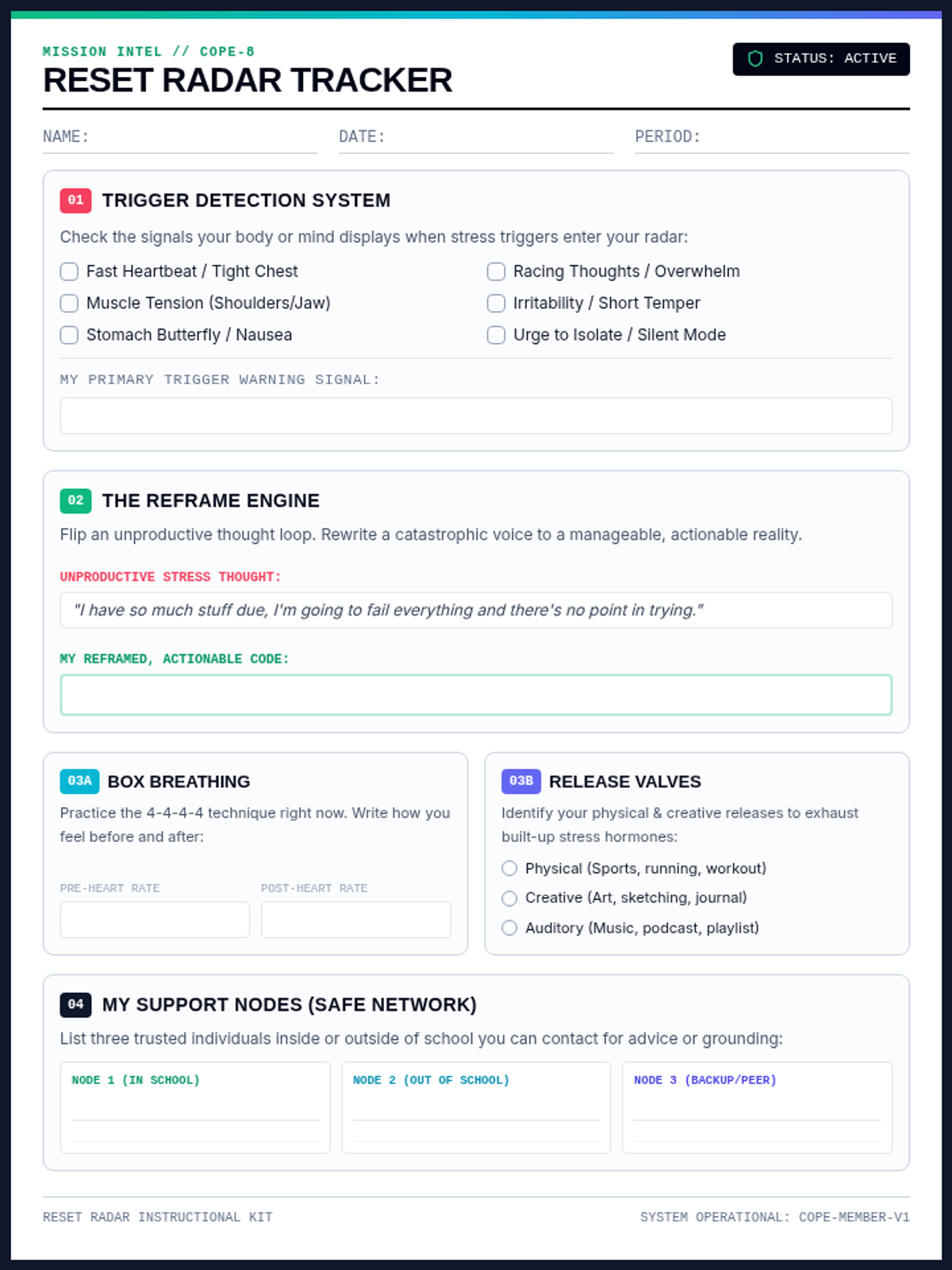
Students will define stress, identify their personal 'stress triggers', and learn how their bodies react to pressure.
A reflective session designed for 8th-grade students to evaluate their communication choices and understand the impact of classroom disruptions, specifically focusing on respectful advocacy when work is completed.
A reflective lesson designed for 8th-grade students to analyze their communication styles, specifically focusing on how to advocate for themselves respectfully when they have completed work, and understanding the collective impact of classroom disruptions.
A game-based social-emotional learning lesson using UNO cards to help students navigate the transition to high school, focusing on friendships, academic stress, peer pressure, and balance.
A comprehensive lesson on restaurant etiquette covering menu reading, ordering, manners, volume control, tipping, and conflict resolution.
A functional skills lesson focused on navigating a restaurant experience on a budget, covering menu reading, budget planning, social etiquette, and group check splitting.
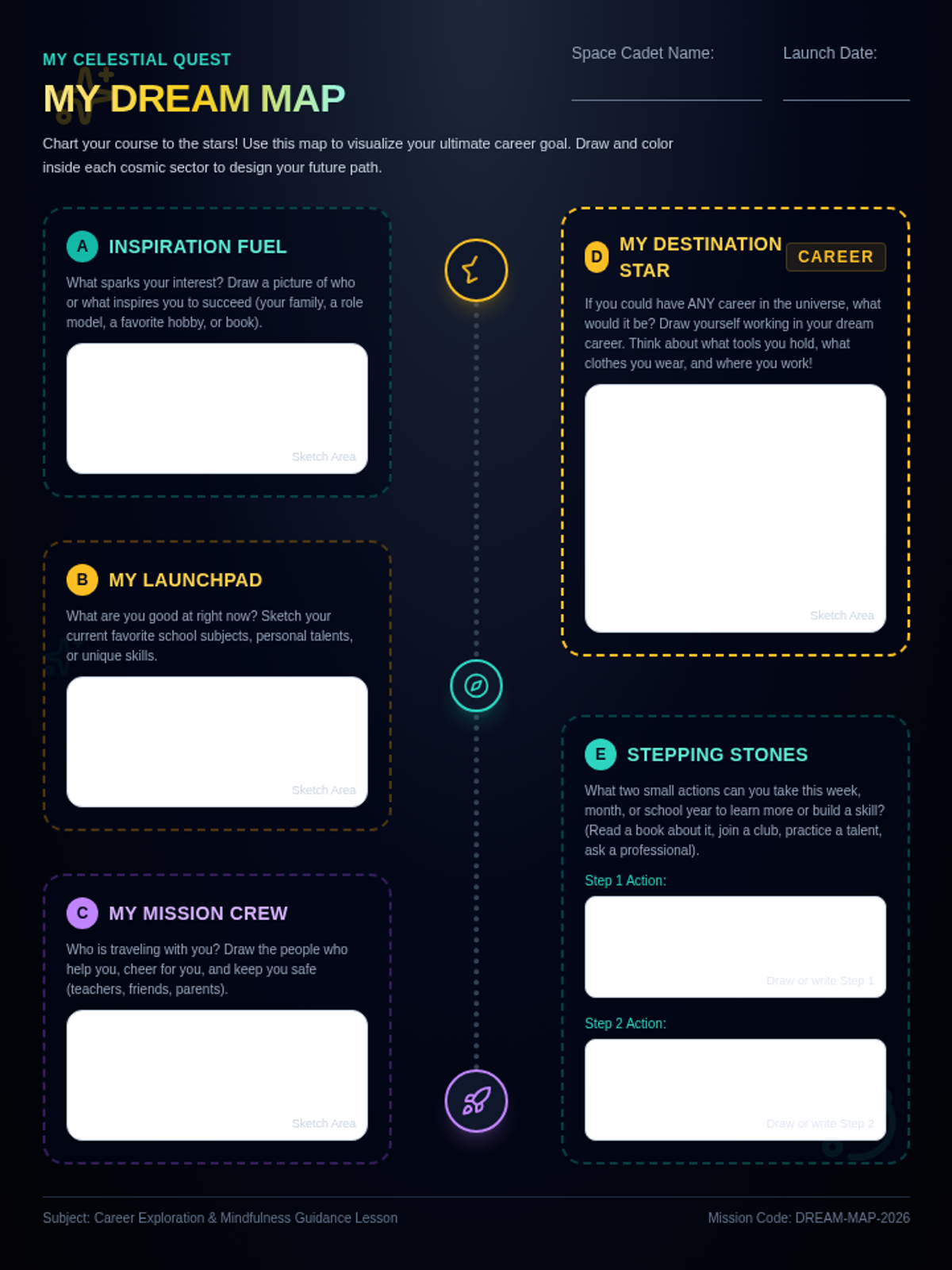
A visual career exploration lesson designed for students with moderate to severe disabilities, using real photos to identify interests across various career clusters.
A 15-minute lesson exploring the pitfalls of 'downward social comparison' and how to build authentic self-esteem without diminishing others. Students will learn that true confidence comes from personal growth rather than putting others down.
A concise 15-minute introduction to classroom norms centered on the core values of Respect, Integrity, and Safety. Students will define these values and commit to a shared culture of success.
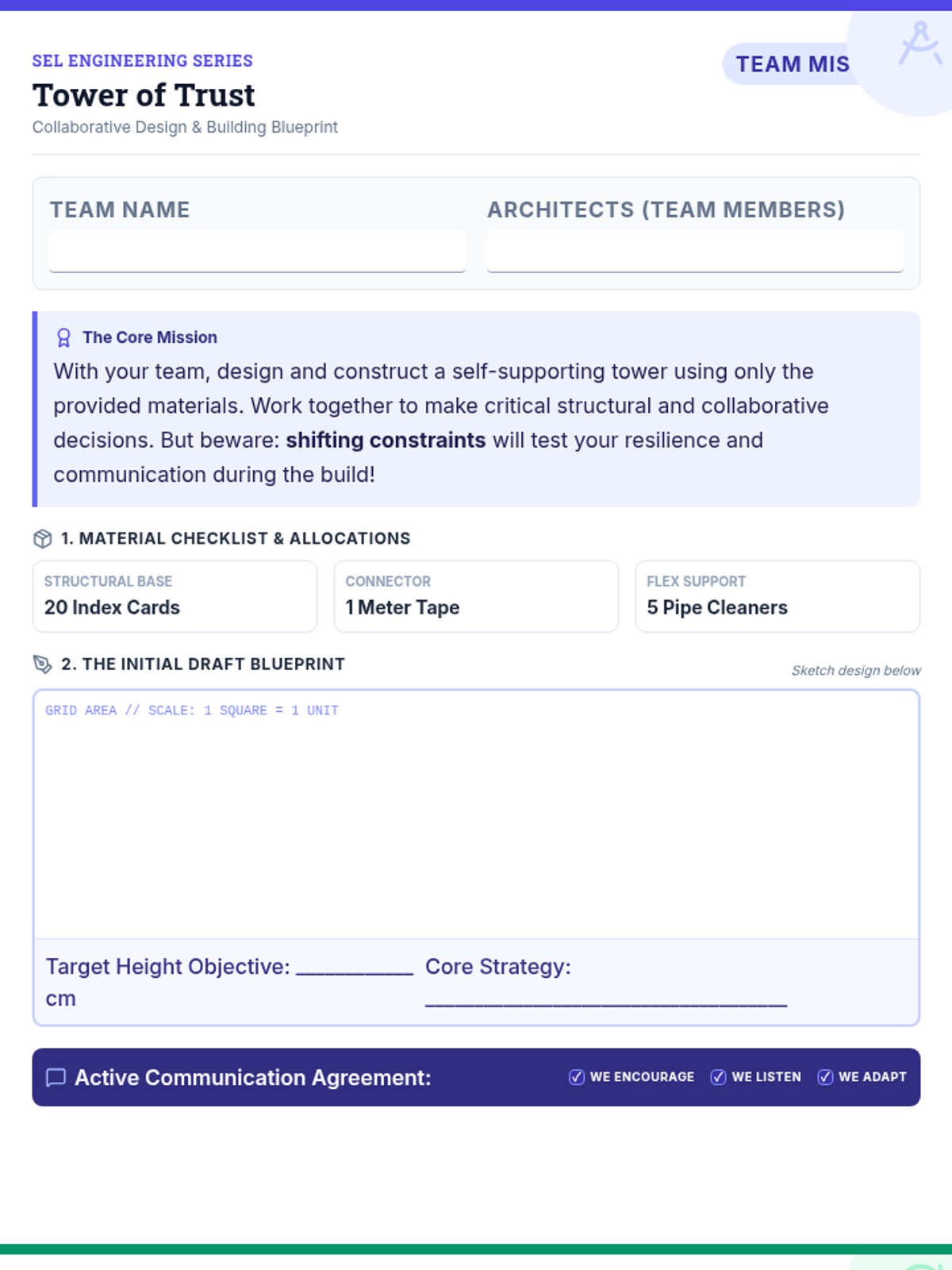
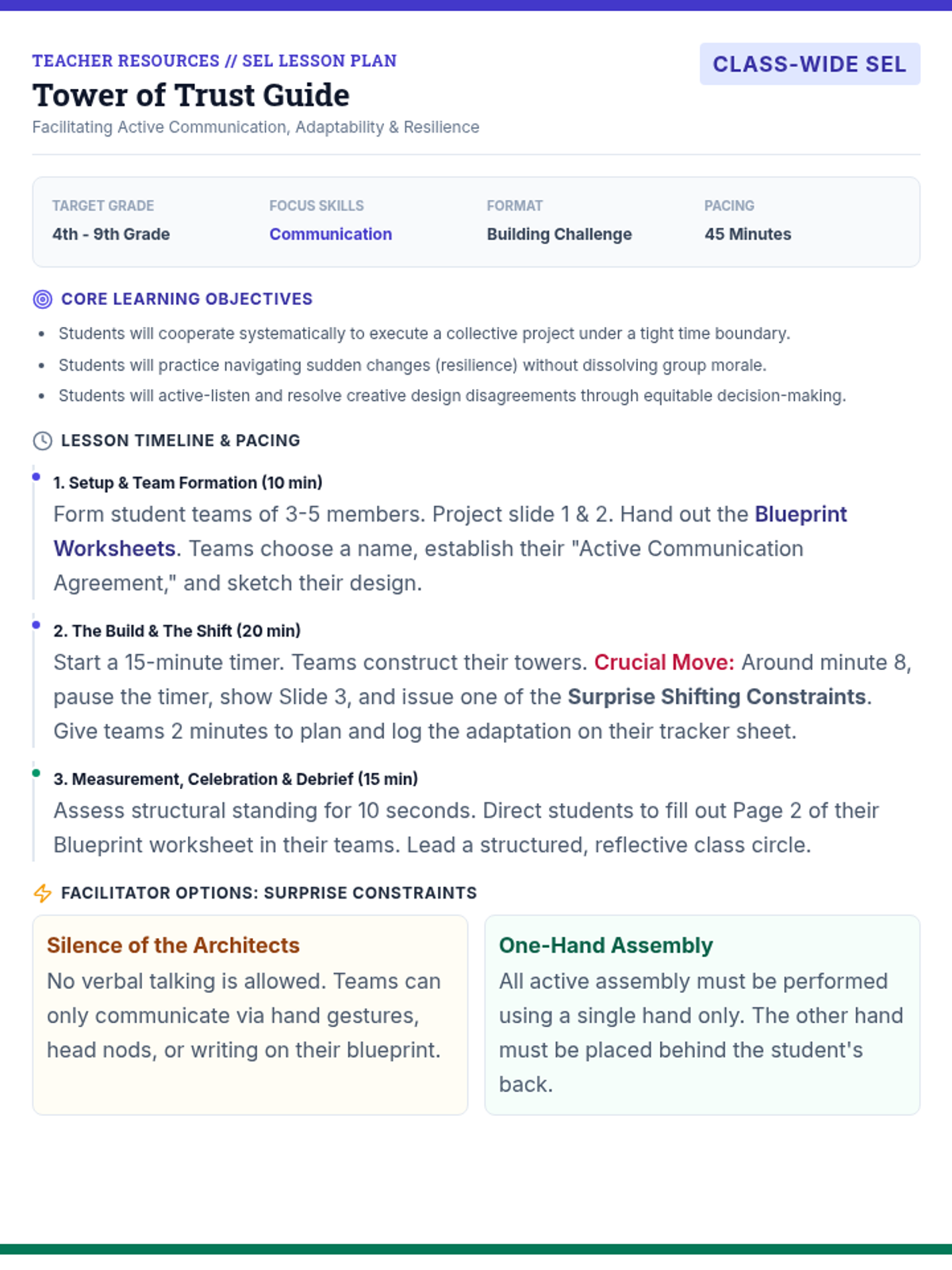
An industrial-themed teamwork lesson where students act as "Mind Mechanics" to apply the 4Cs and Computational Thinking to a complex engineering challenge.
A high-stakes engineering challenge where students use the 4Cs and Computational Thinking to design, build, and document the ultimate cup tower structure.
This lesson teaches students the importance of respecting personal space and how to contribute positively to group work. It uses social story modeling to show clear examples of 'expected' behaviors in various classroom scenarios.
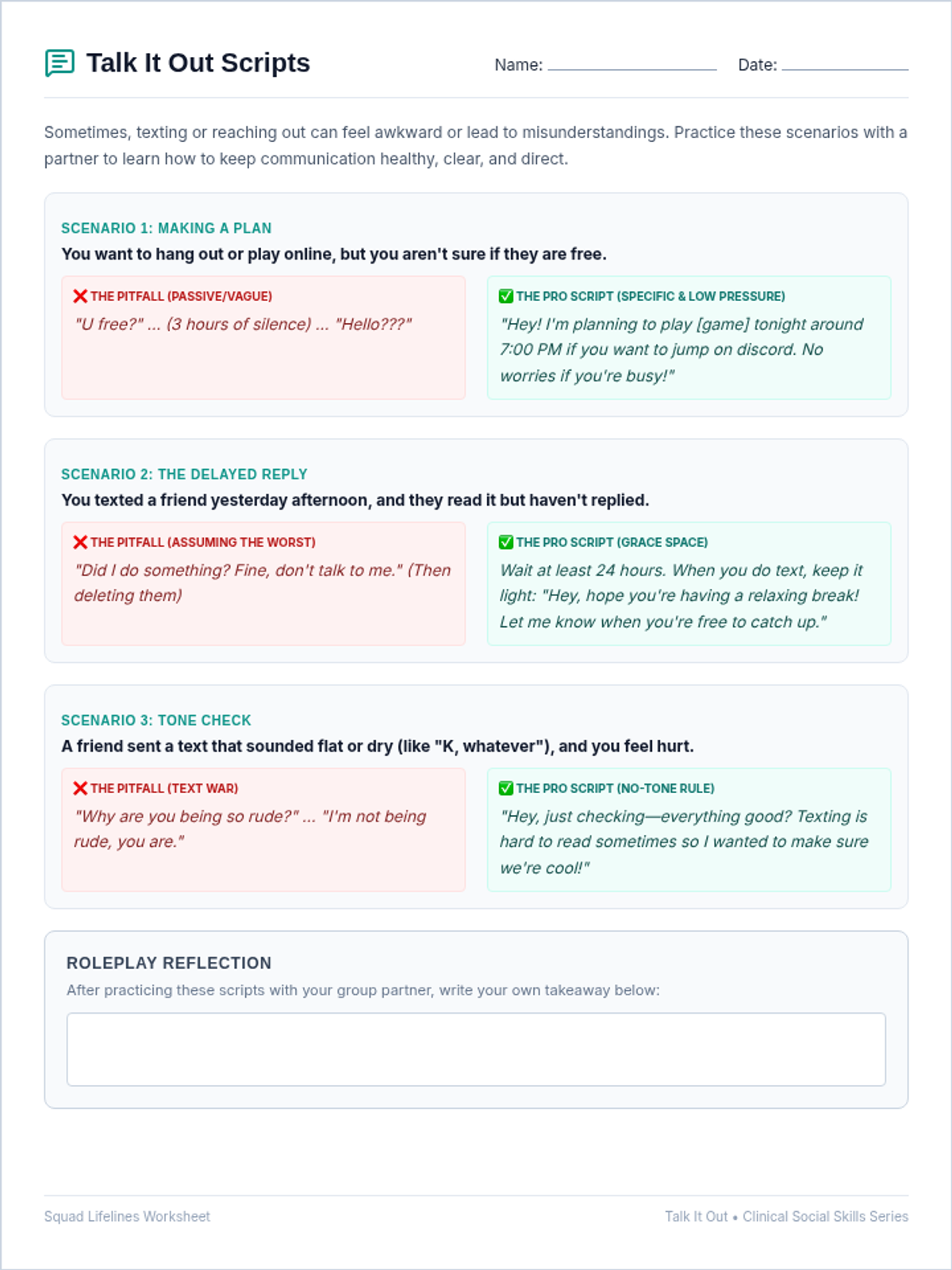
A social skills lesson focused on navigating common holiday situations like family gatherings, egg hunts, and conversations using an Easter theme. Includes interactive slides for group discussion and printable task cards for practice.
Introduces the Social Intelligence Academy and explores "Vibe Checks"—the criteria for healthy, high-functioning middle school friendships.
This lesson introduces students to the core concepts of Agile and Scrum through the lens of team dynamics. Students will explore roles, ceremonies, and the critical importance of communication in high-performing teams.
A single-session group activity for eighth-grade boys focused on building respectful communication skills and the art of the weekly check-in. This lesson uses a sports-inspired theme to make social-emotional learning accessible and engaging.
A 24-minute counseling session focused on social perspective-taking, specifically helping students identify the underlying motivations and professional pressures that influence staff member actions and directives.
A collection of low-energy, silent activities and games designed for students to engage in after high-stakes testing, focusing on visual puzzles, logic challenges, and creative drawing.
A social-emotional learning lesson designed for students with trauma backgrounds and impulse control challenges. It focuses on 'Scene Scanning'—assuming positive intent and dissecting social interactions through a detective-style lens to improve perspective-taking and reduce reactivity.
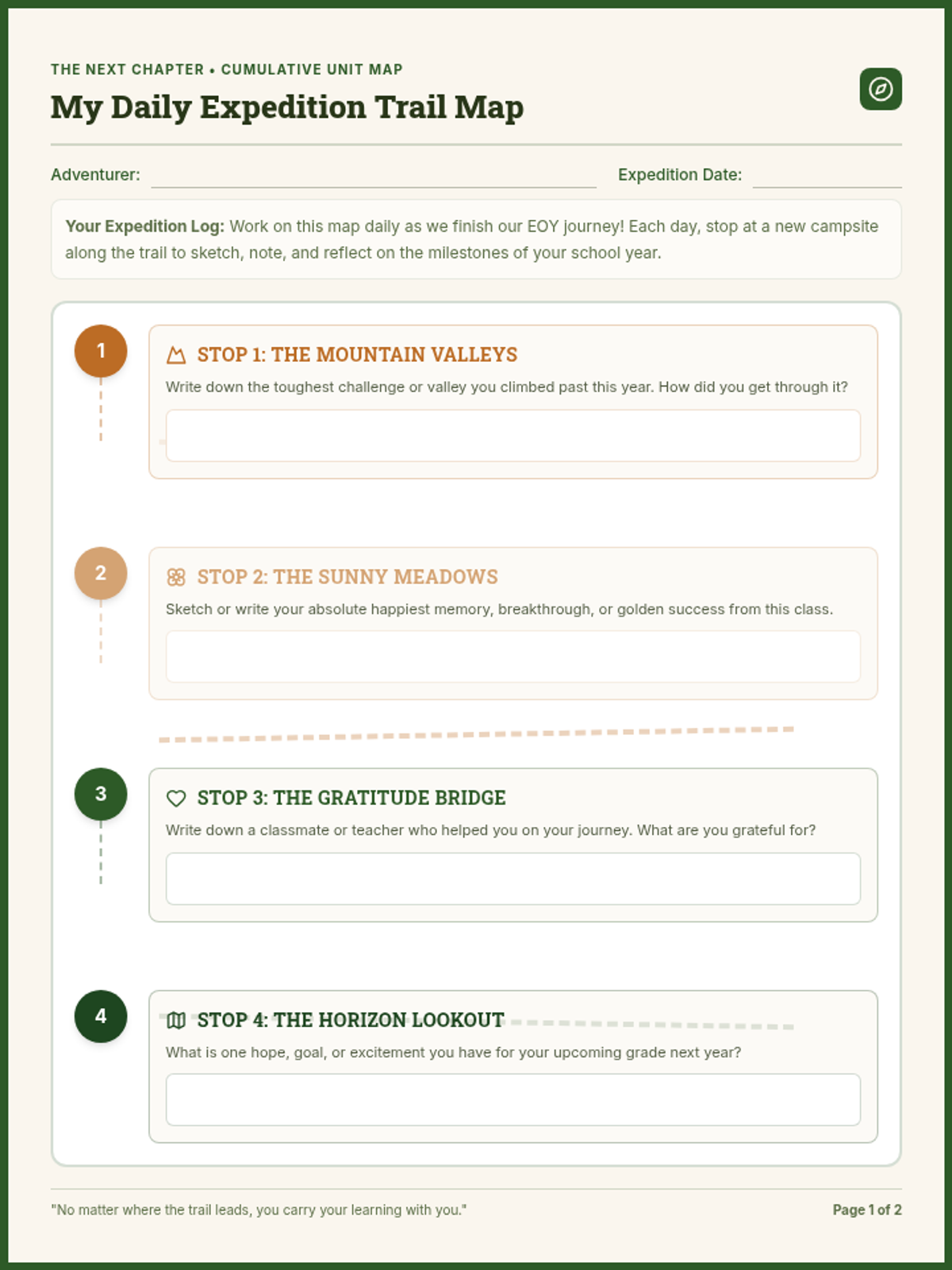
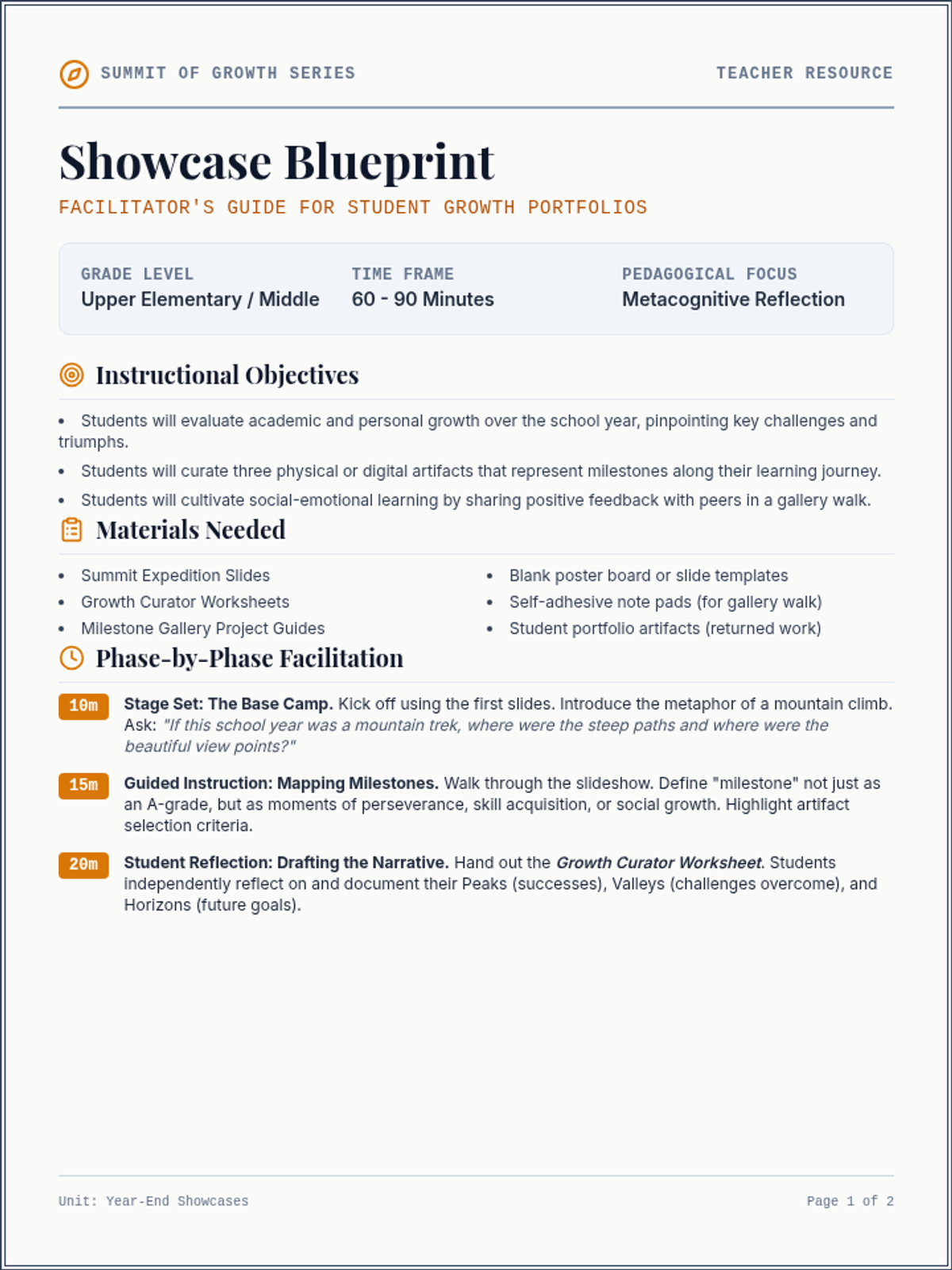
Final reflection, celebration of growth, and planning for the journey ahead.
Reviewing various coping skills and creating a personalized 'Survival Kit' for future use.
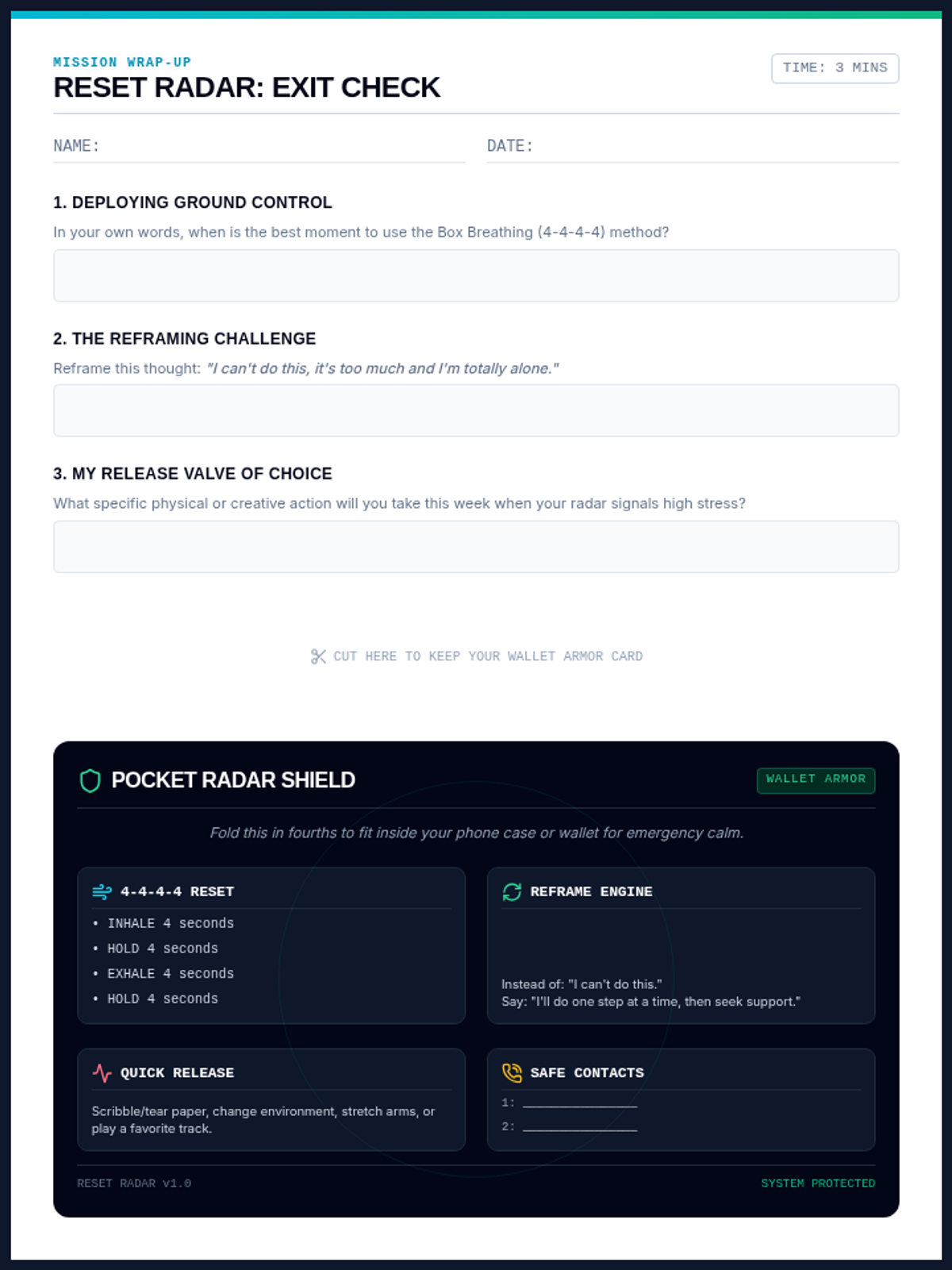
Focusing on the power of breath and mindfulness as internal tools for regulation.
Identifying cognitive distortions or 'tricky trails' and learning to reframe thoughts using a 'Thought Compass'.
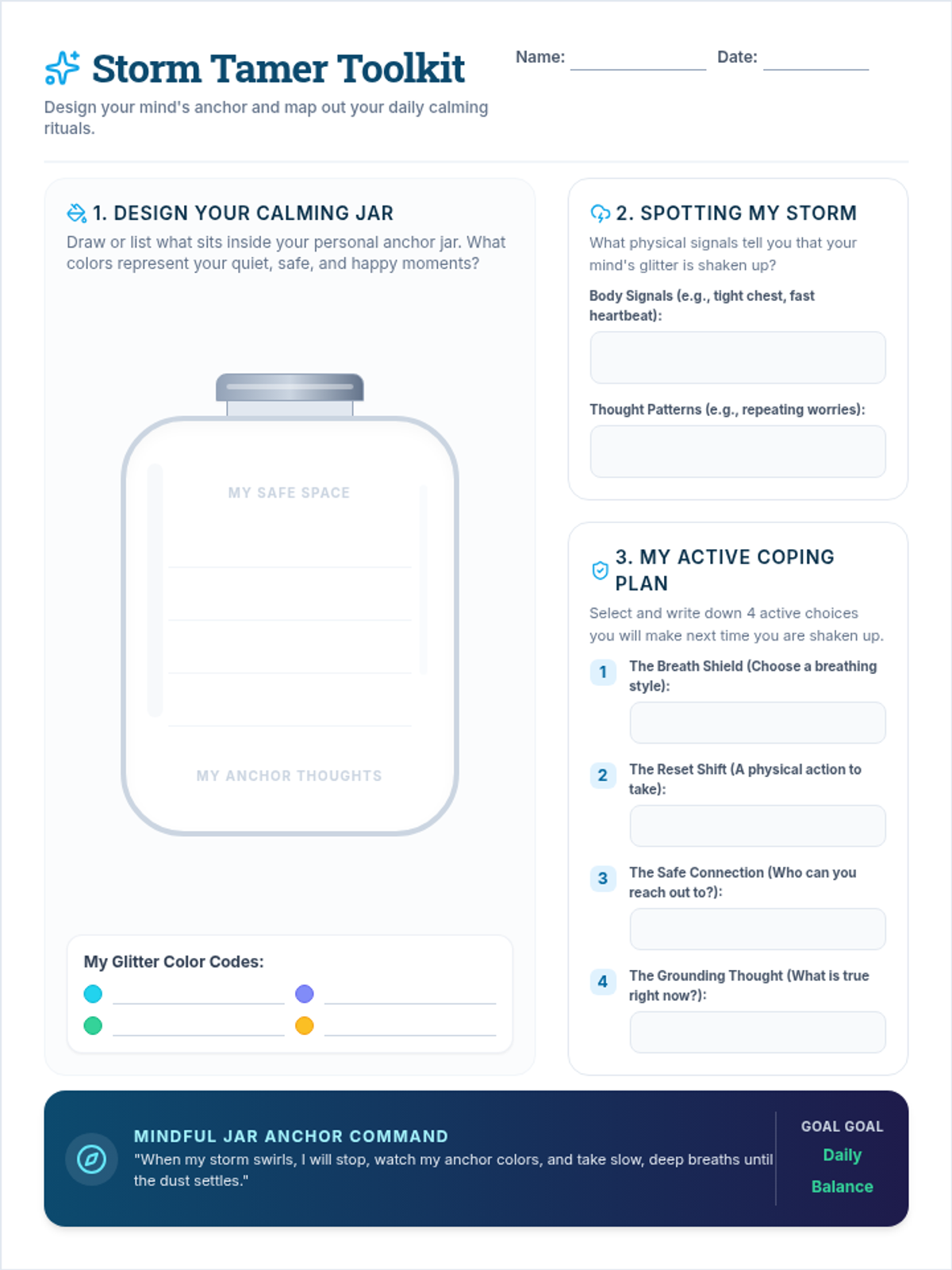
Understanding the physical 'alarm system' of the body and learning grounding techniques to stay present during 'storms'.
Introduction to the group, establishing norms, and identifying individual stress triggers using the 'Stress Landscape' metaphor.
A comprehensive workshop for middle school educators on implementing effective positive reinforcement strategies to foster a healthy, supportive classroom culture.
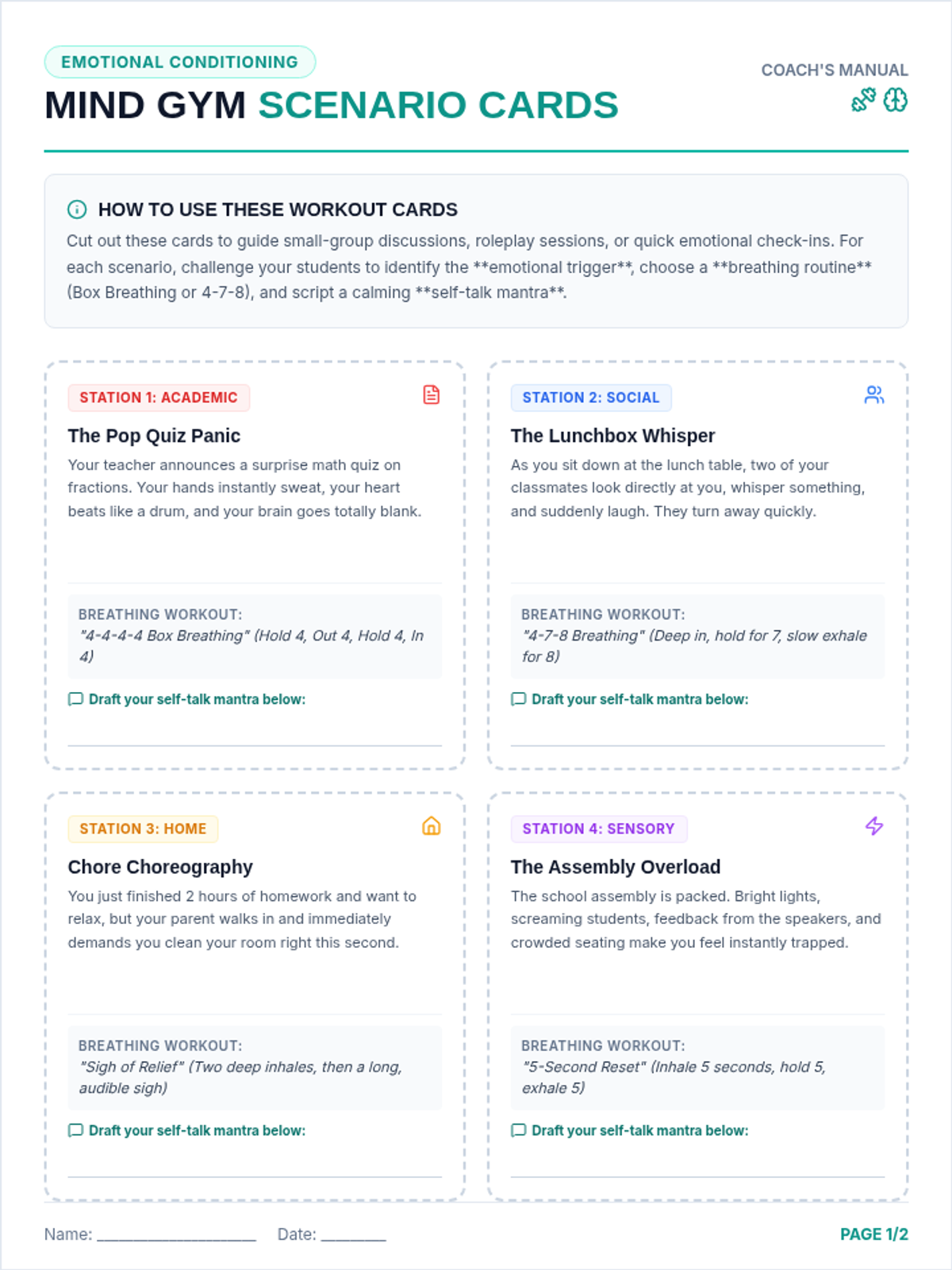
This lesson focuses on identifying internal emotional states and using visual check-ins to monitor stress levels before they lead to disruptions.
A collection of resources designed to help high-achieving students manage academic anxiety and re-entry stress through mindfulness and grounding.
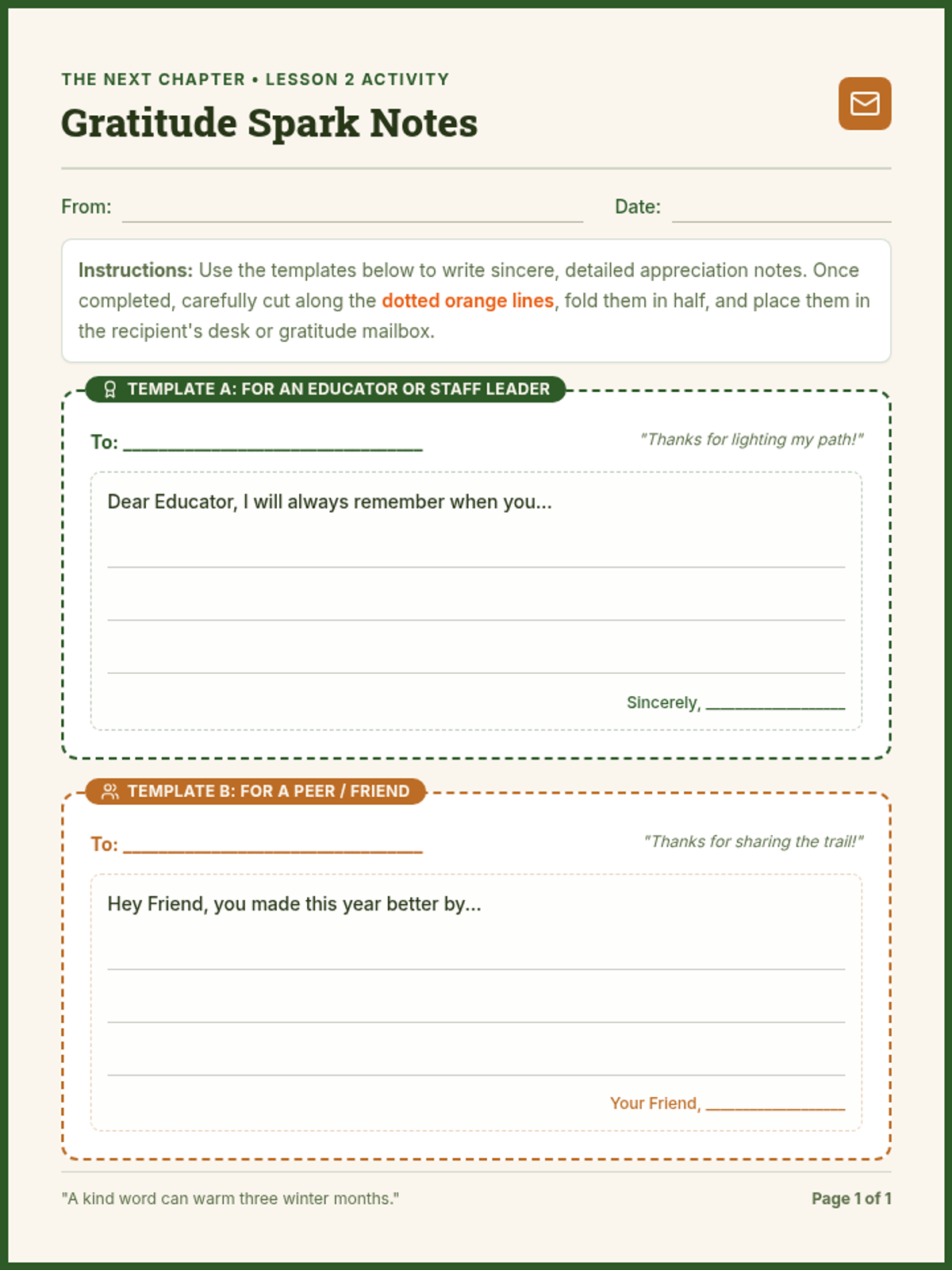
A collection of appreciation-themed resources for school staff and students to express gratitude through creative, pun-based shoutout cards.
Un juego interactivo de preguntas tipo "hacker" donde los estudiantes deben responder correctamente para "descifrar el código" y completar la misión. Incluye preguntas de cultura general, ciencia, historia y lenguaje.
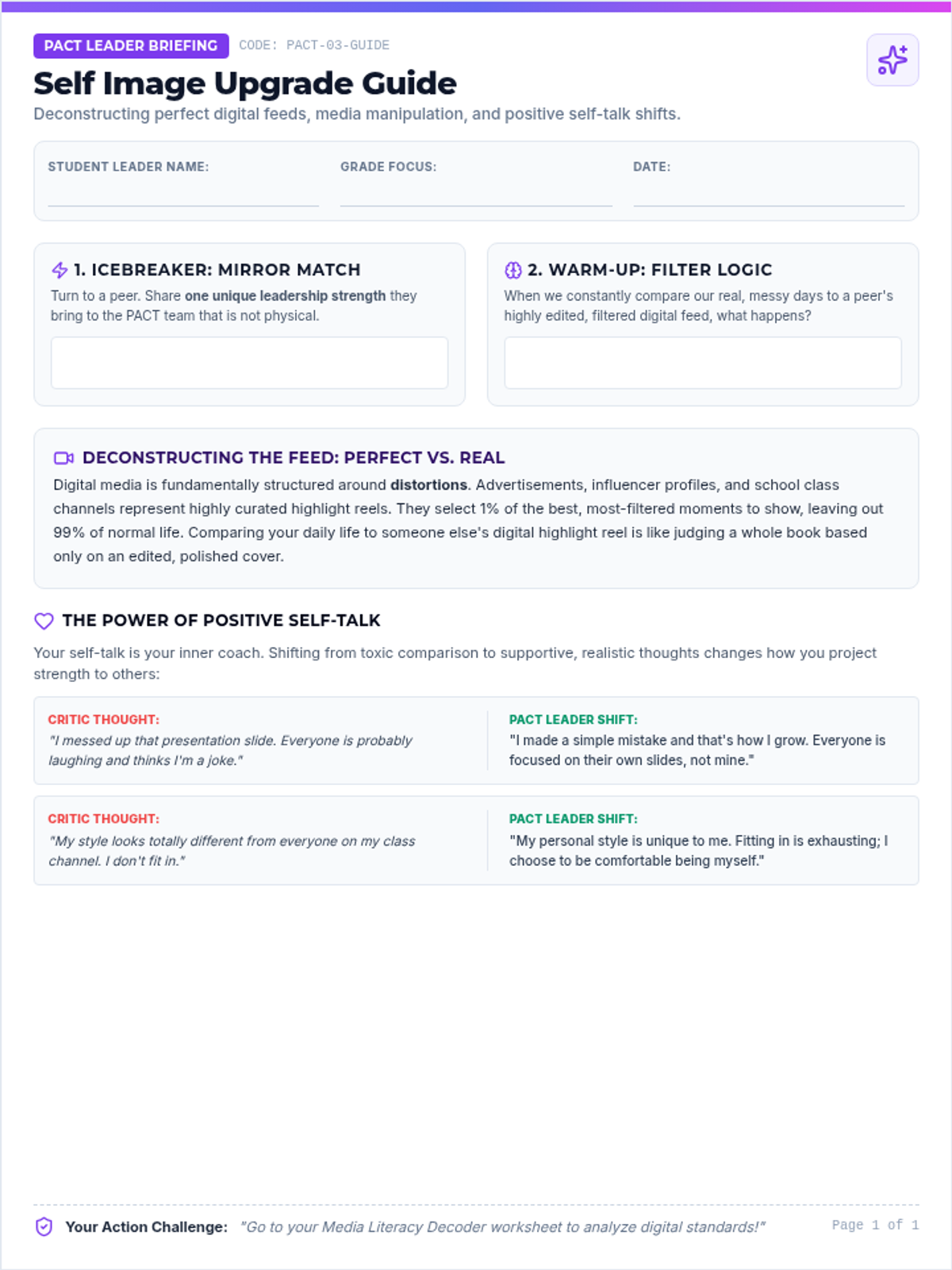
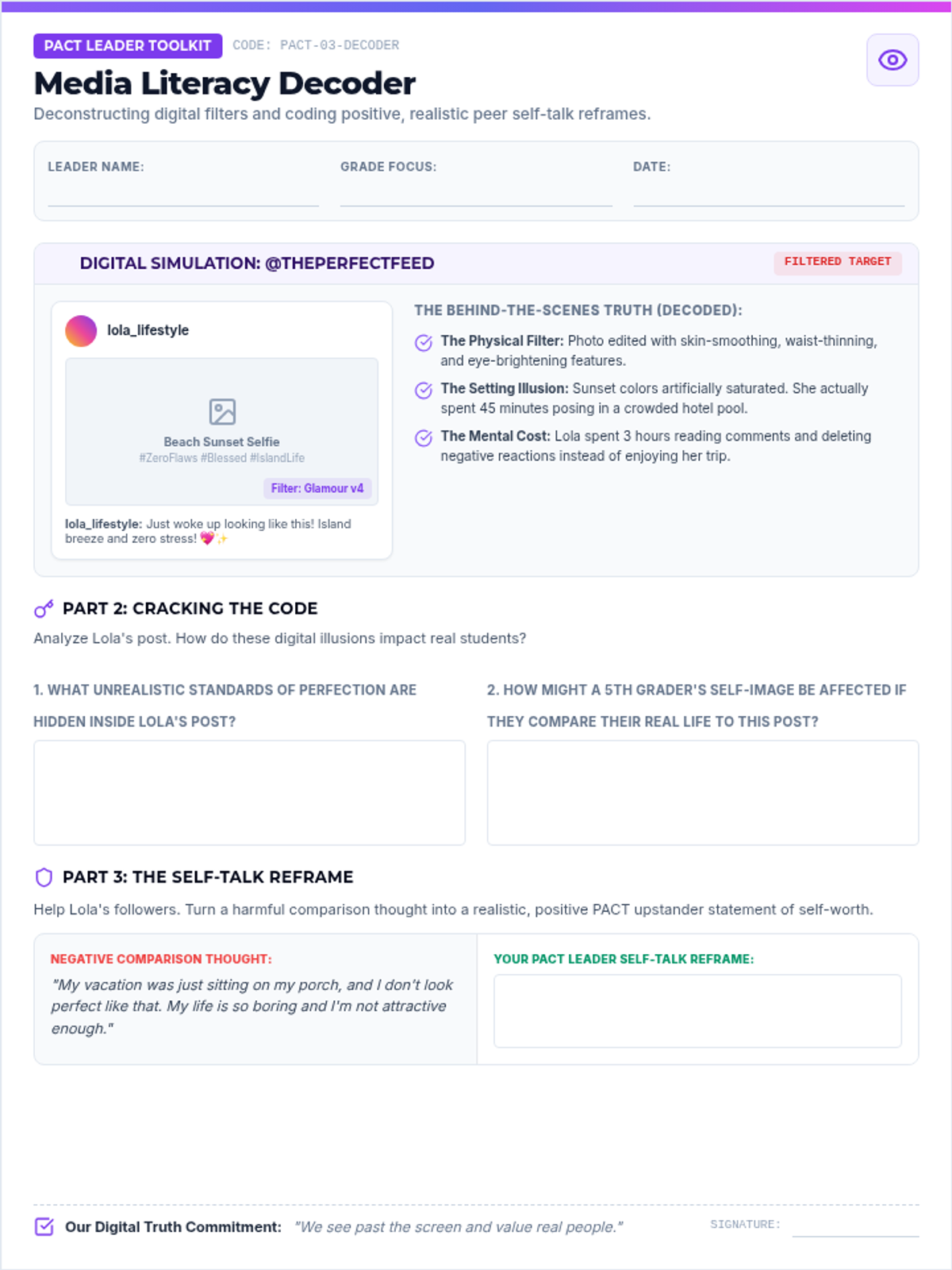
A middle school lesson exploring the impact of social media filters on body image and digital authenticity. Students analyze how images are manipulated and discuss the psychological effects of the 'Filter Factory'.
A comprehensive lesson designed to equip students with social-emotional strategies and practical techniques for tackling the STAAR test with confidence and focus.
The final three weeks focus on making amends, setting future goals, and celebrating the progress made throughout the Social Detective program.
Weeks 7-9 address physical aggression, understanding consequences, and deep-diving into reading social clues to build empathy.
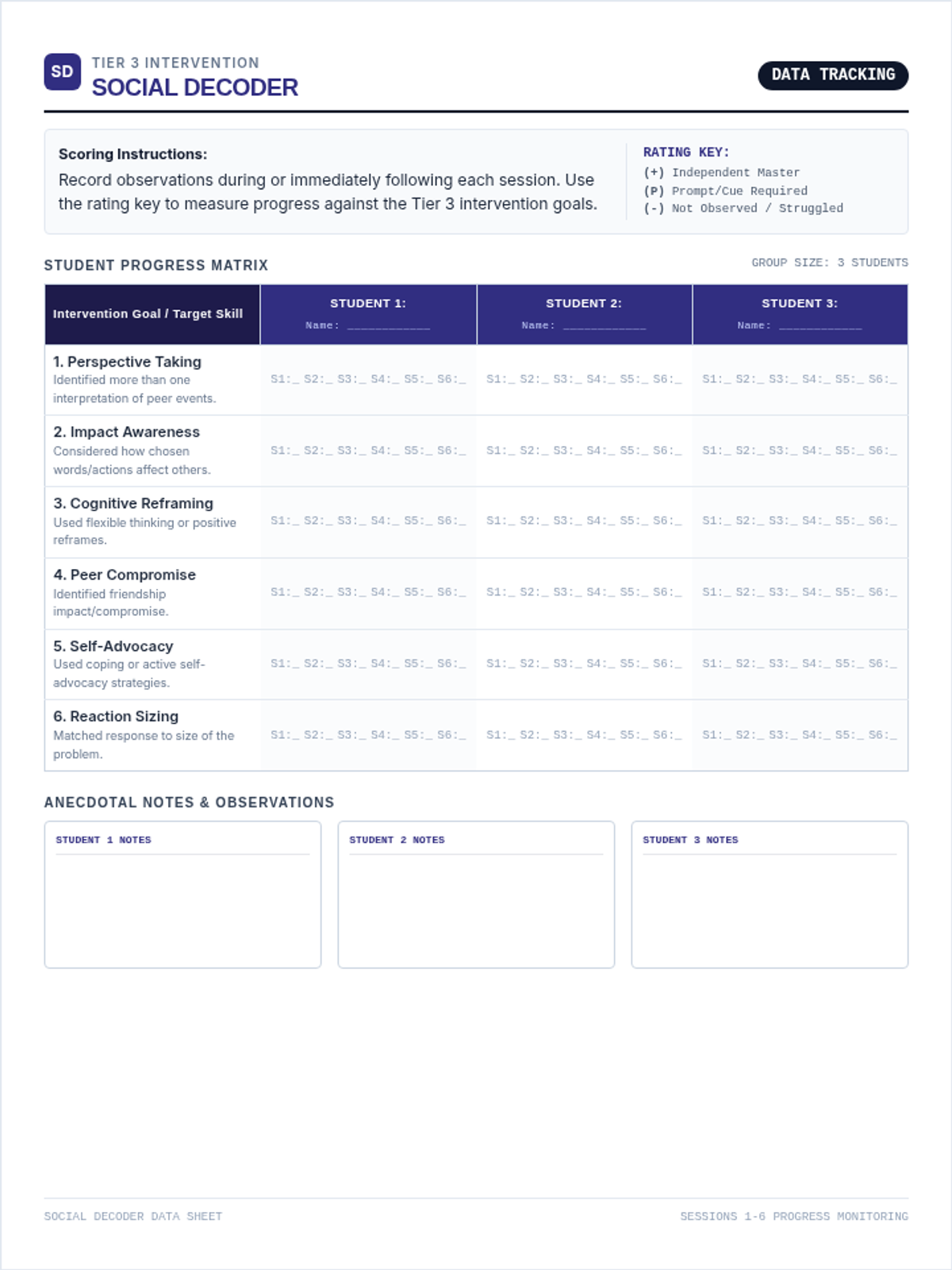
Weeks 4-6 of the intervention, focusing on practical impulse control strategies like the 'Pause Button' and addressing specific behaviors like lying and respecting property.
The first three weeks focus on building high-level self-awareness and understanding the core concepts of social perspective-taking and physiological self-monitoring.
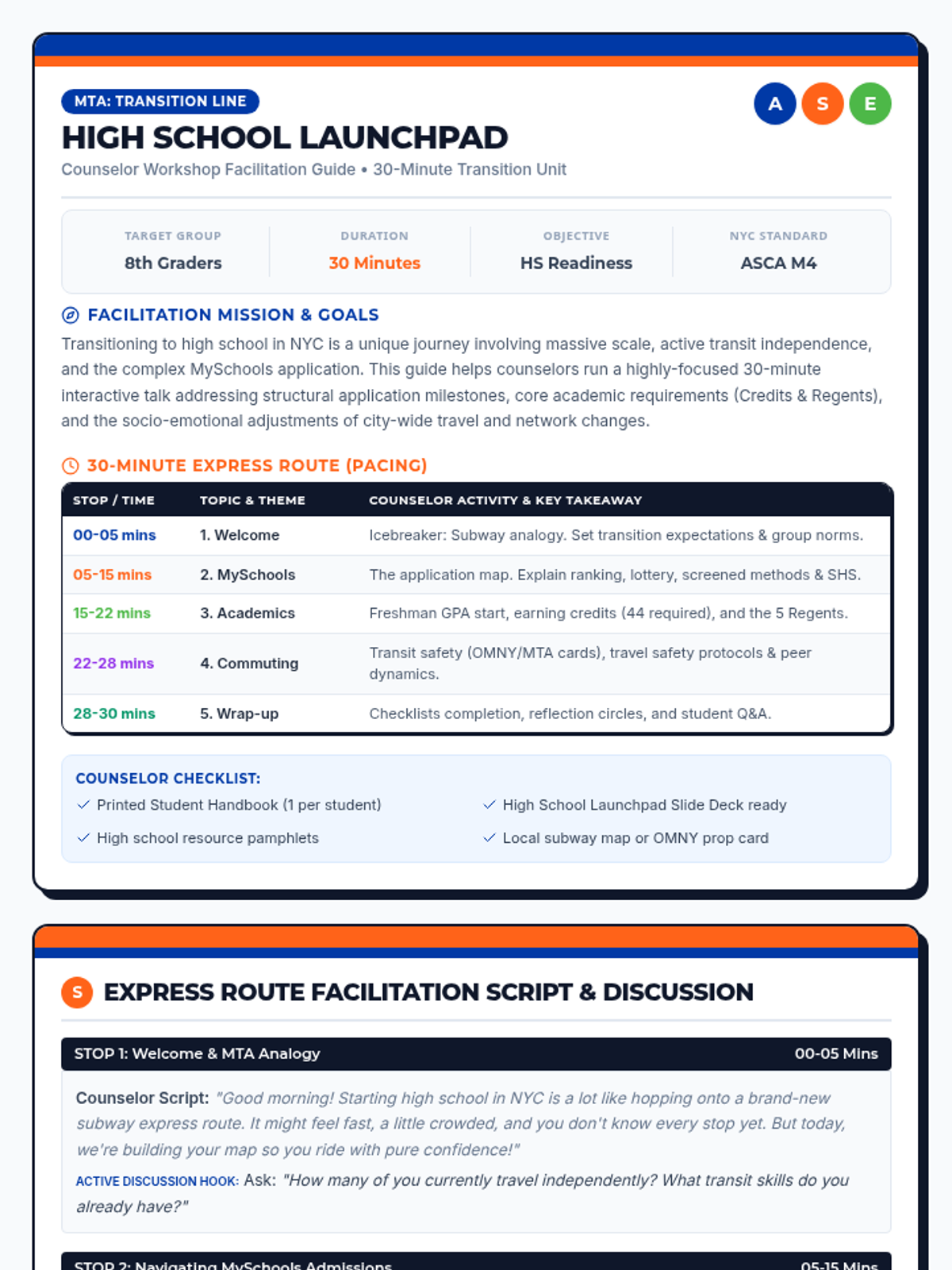
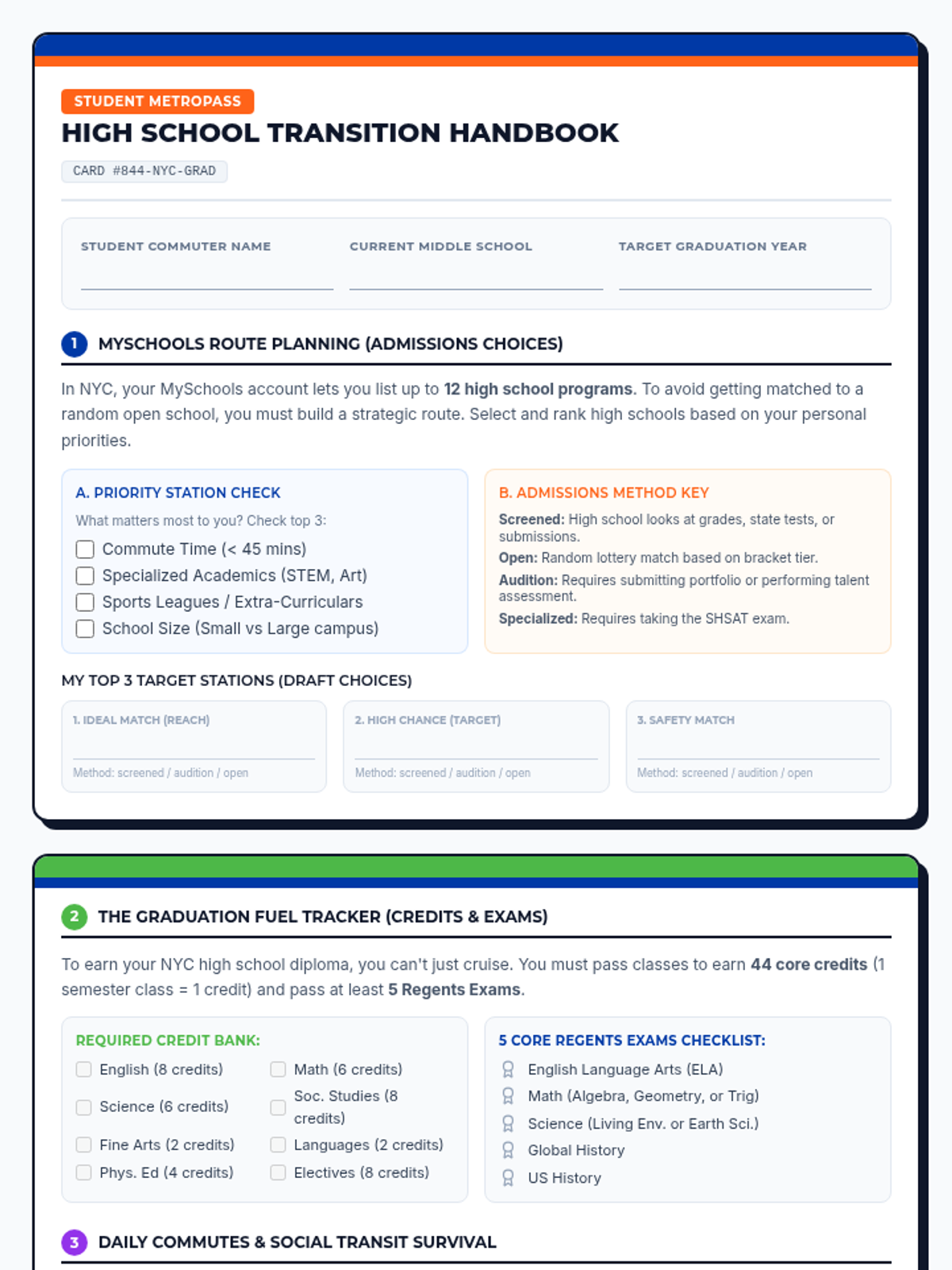
A lesson designed to help middle school students navigate the transition to high school by identifying and accessing academic, mental, and behavioral health supports.
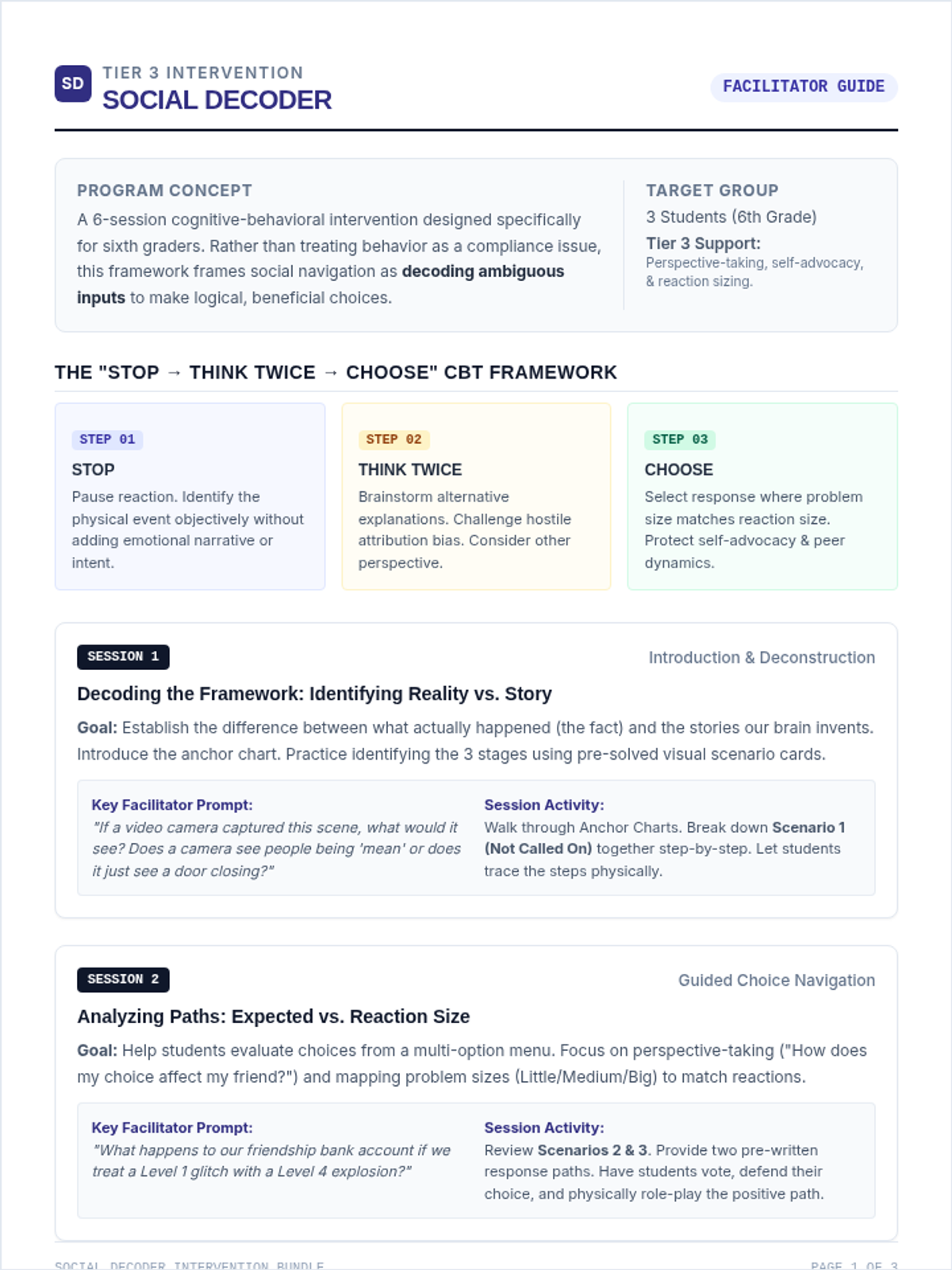
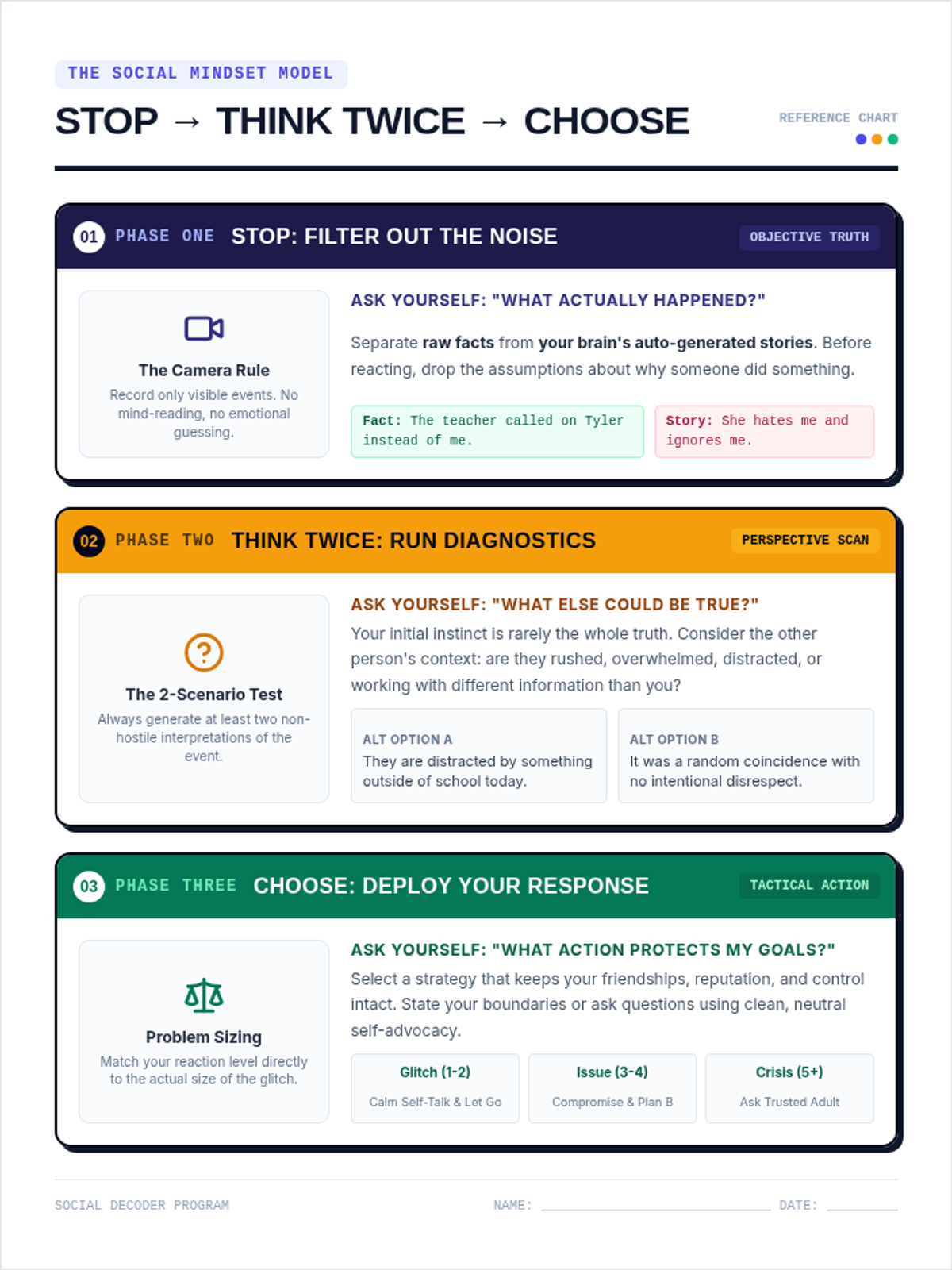
A social-emotional learning lesson focusing on the Size of the Problem framework, CBT thought-feeling connections, and Social Thinking concepts of expected vs. unexpected behaviors. Students analyze classroom and digital scenarios to build self-regulation and problem-solving skills.
A fast-paced formative assessment game where students identify the four pillars of maturity through real-world scenarios. Includes a visual slide deck, a bank of 60 scenarios for the teacher, and reference cards for students.
A fast-paced formative assessment game where students identify the four pillars of maturity (Emotional, Social, Intellectual, and Physical) through real-world scenarios. Includes a visual slide deck, a bank of 40+ scenarios for the teacher, and reference cards for students.
A comprehensive introduction to the CBT Triangle, focusing on identifying negative thought patterns, understanding the connection between thoughts, feelings, and behaviors, and practicing cognitive restructuring.
A comprehensive lesson for 6th graders on impulse control, teaching the 'Stop, Think, Act' method through interactive scenarios and reflection.