A social-emotional learning lesson designed to help students build emotional regulation muscles using self-talk and breathing exercises across school and home scenarios.
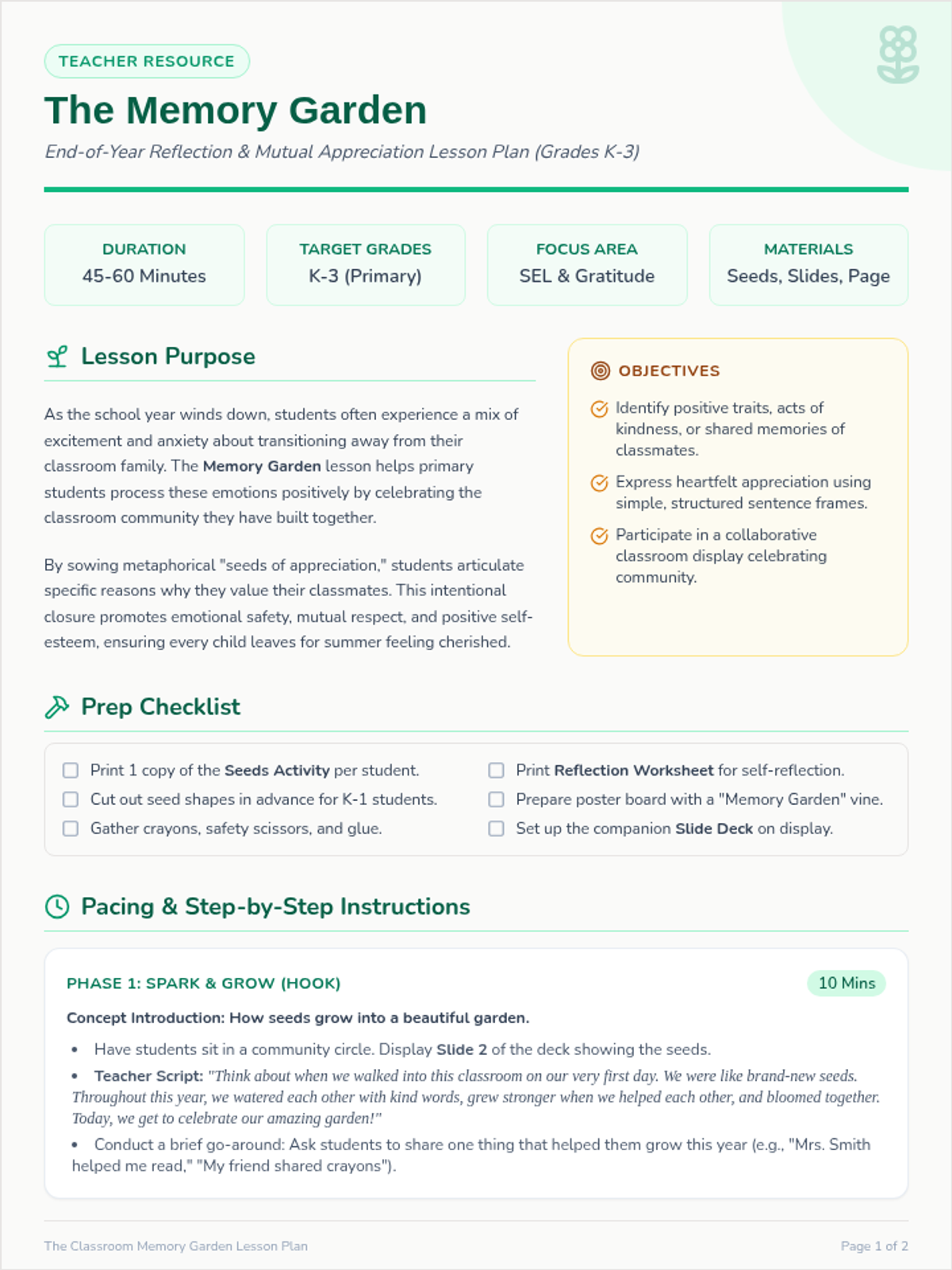
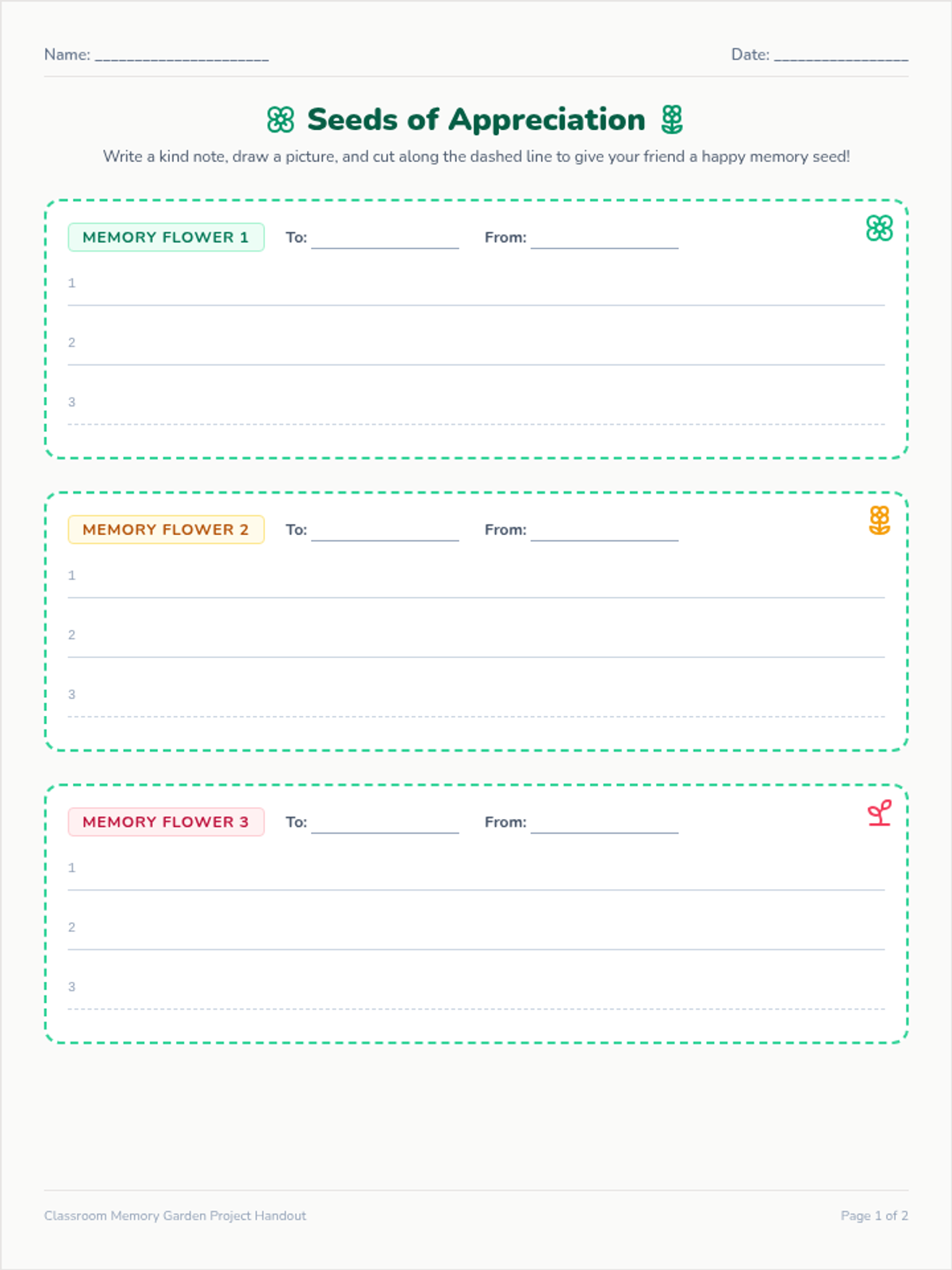
A nurturing end-of-year lesson for K-3 students to reflect on positive peer relationships, express gratitude, and plant metaphorical seeds of appreciation to foster a supportive classroom closure.
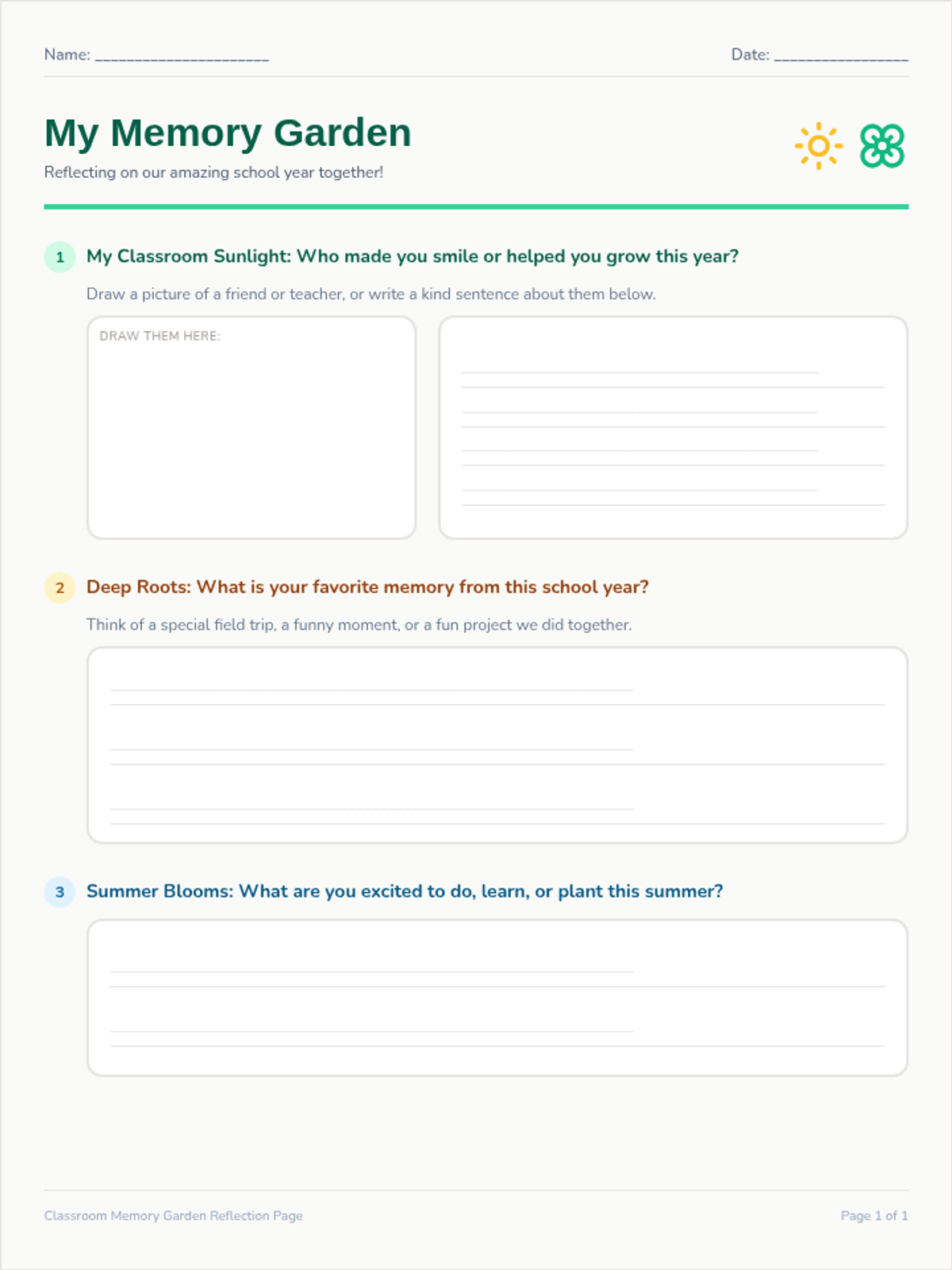
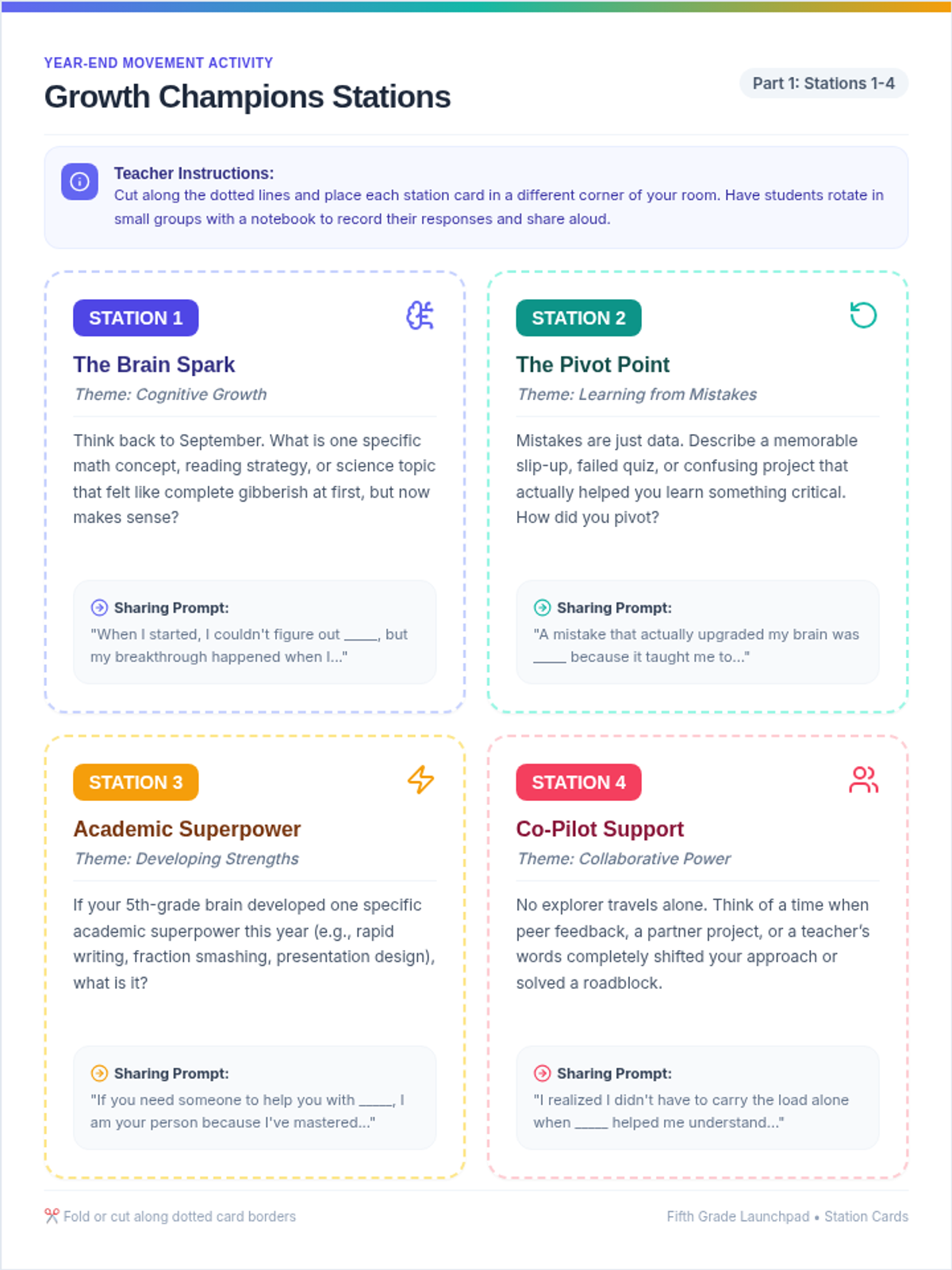
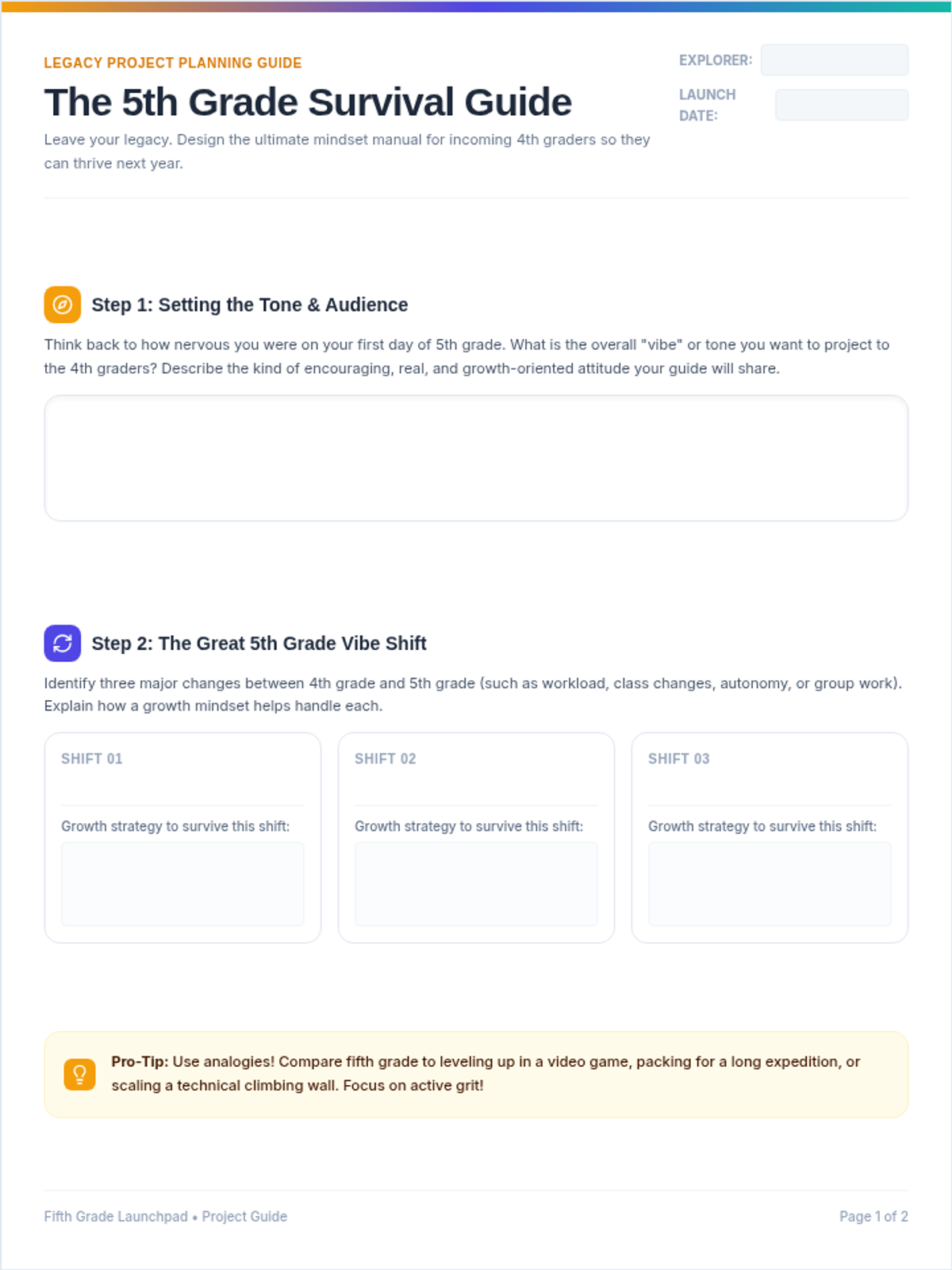
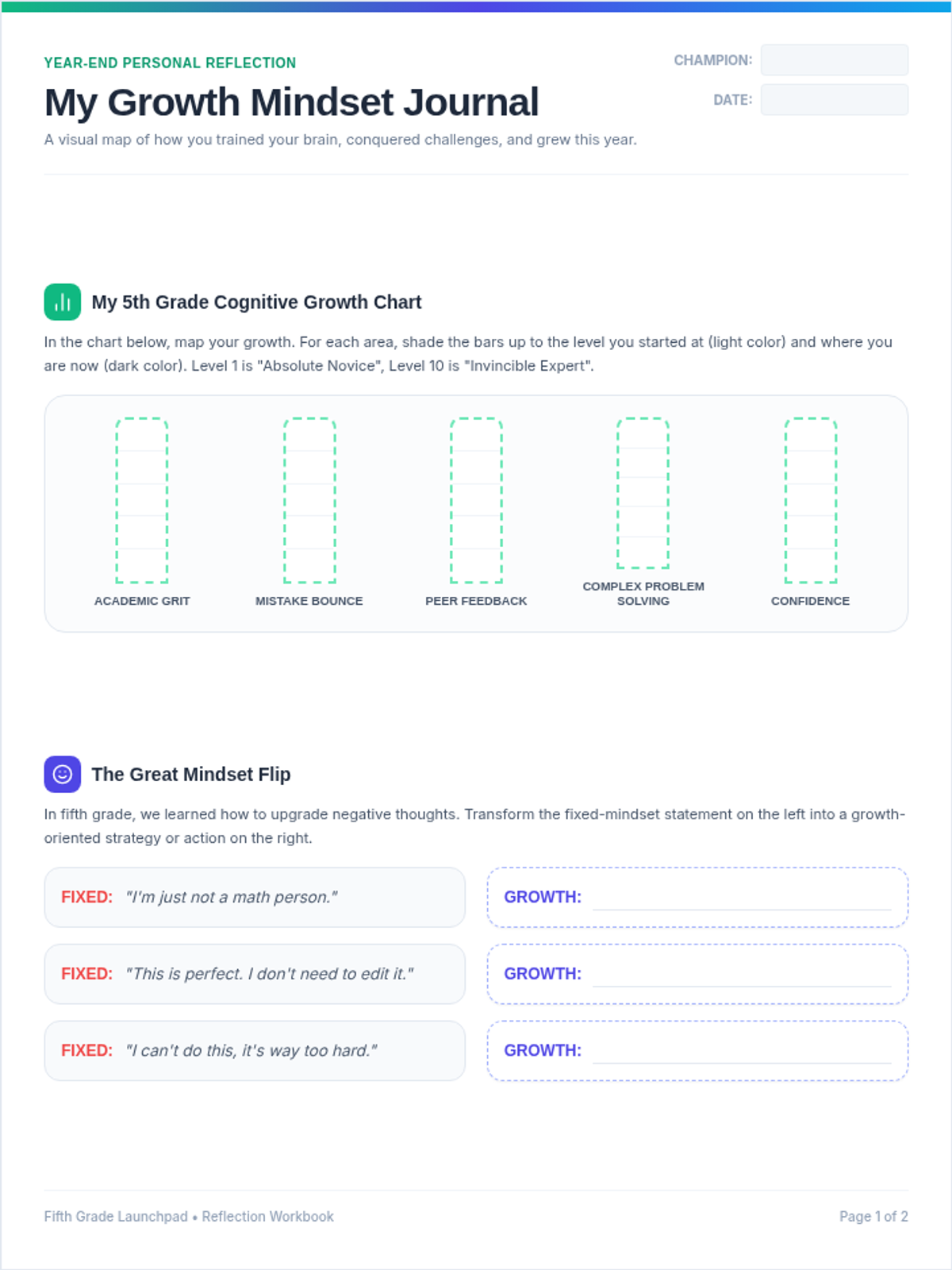
A comprehensive year-end reflection toolkit for fifth graders to celebrate their growth, process challenges, and craft practical advice for incoming students. Features movement-based station cards, a structured survival guide project, and an introspective growth mindset workbook.
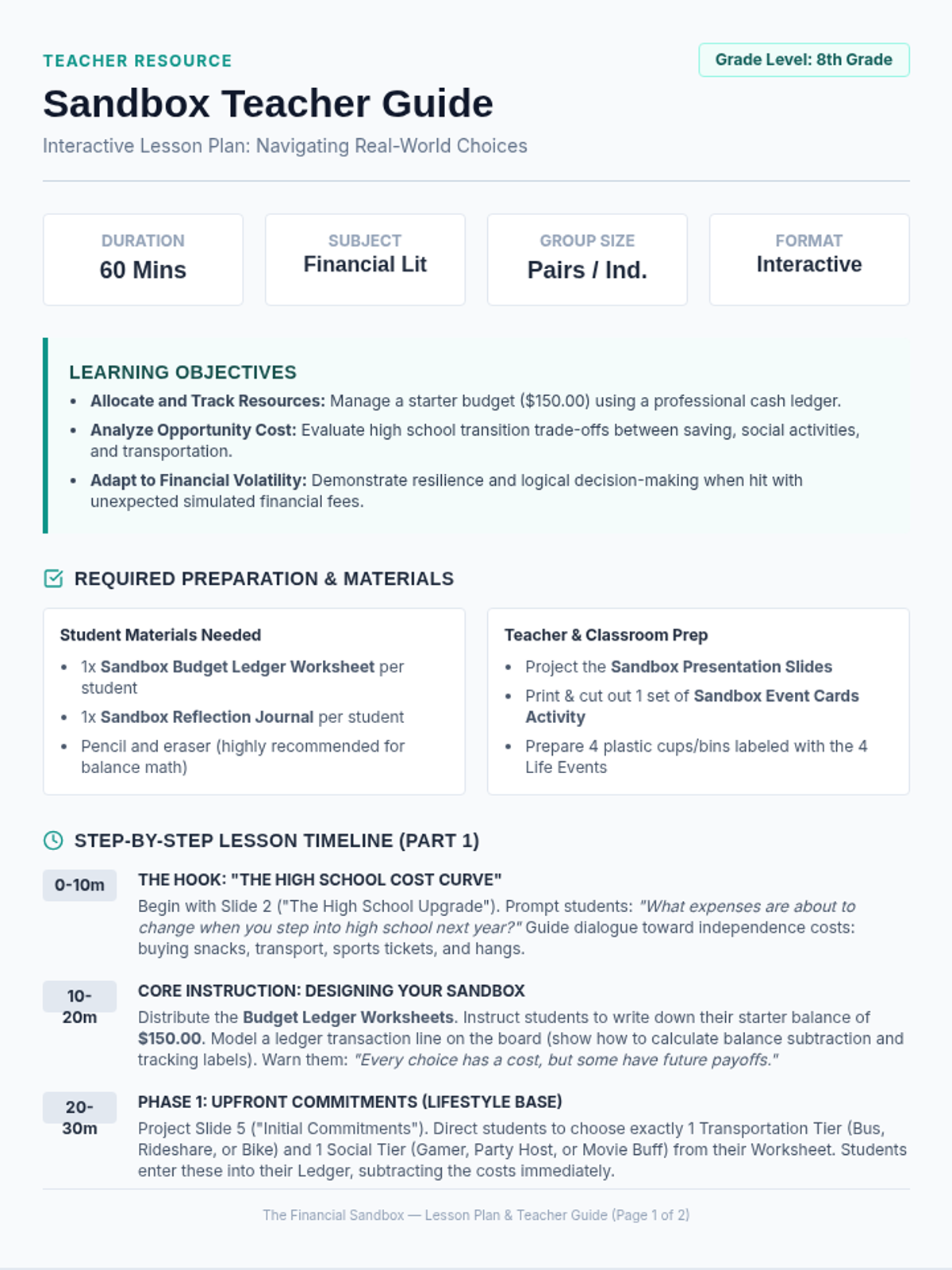
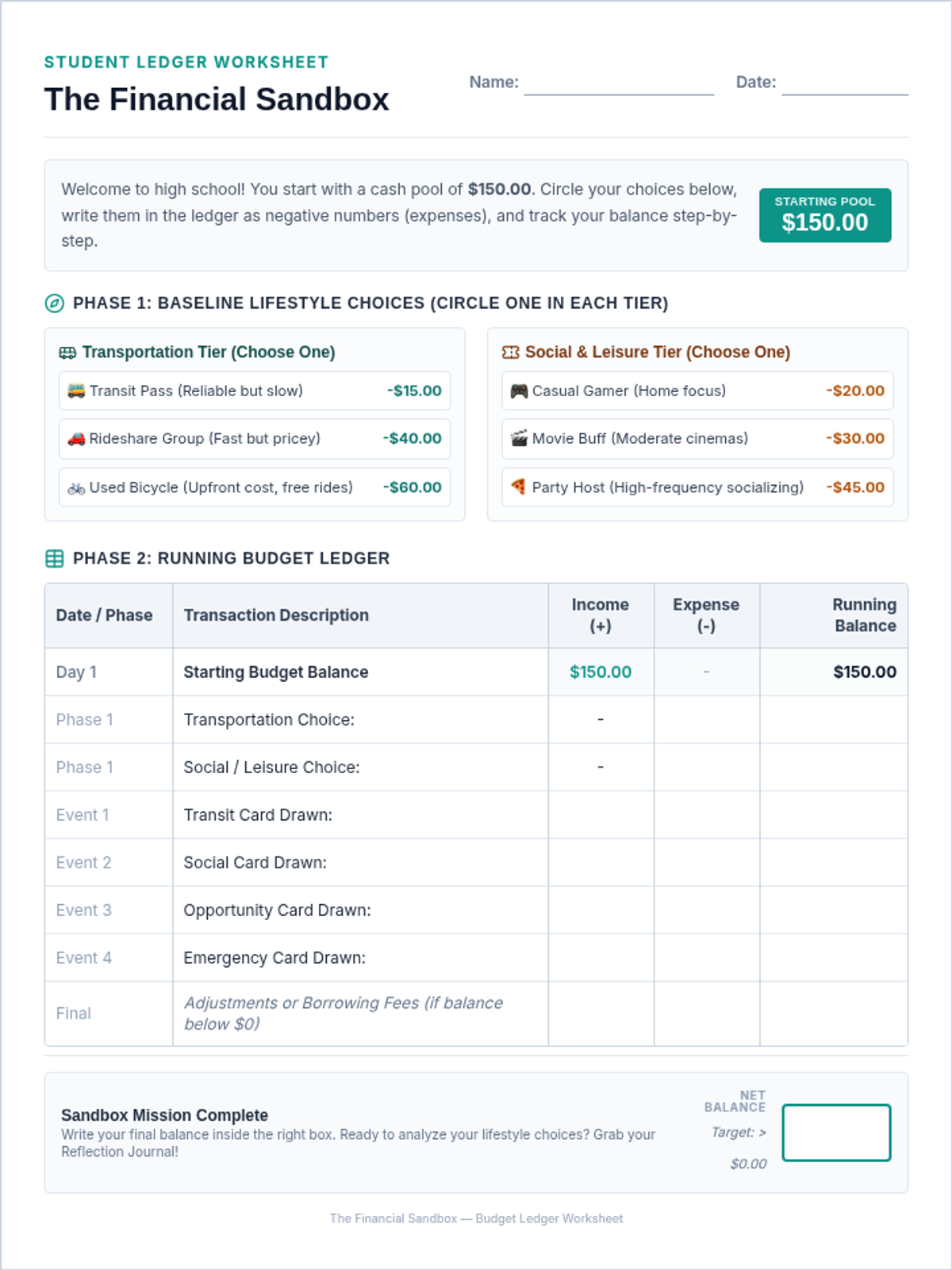
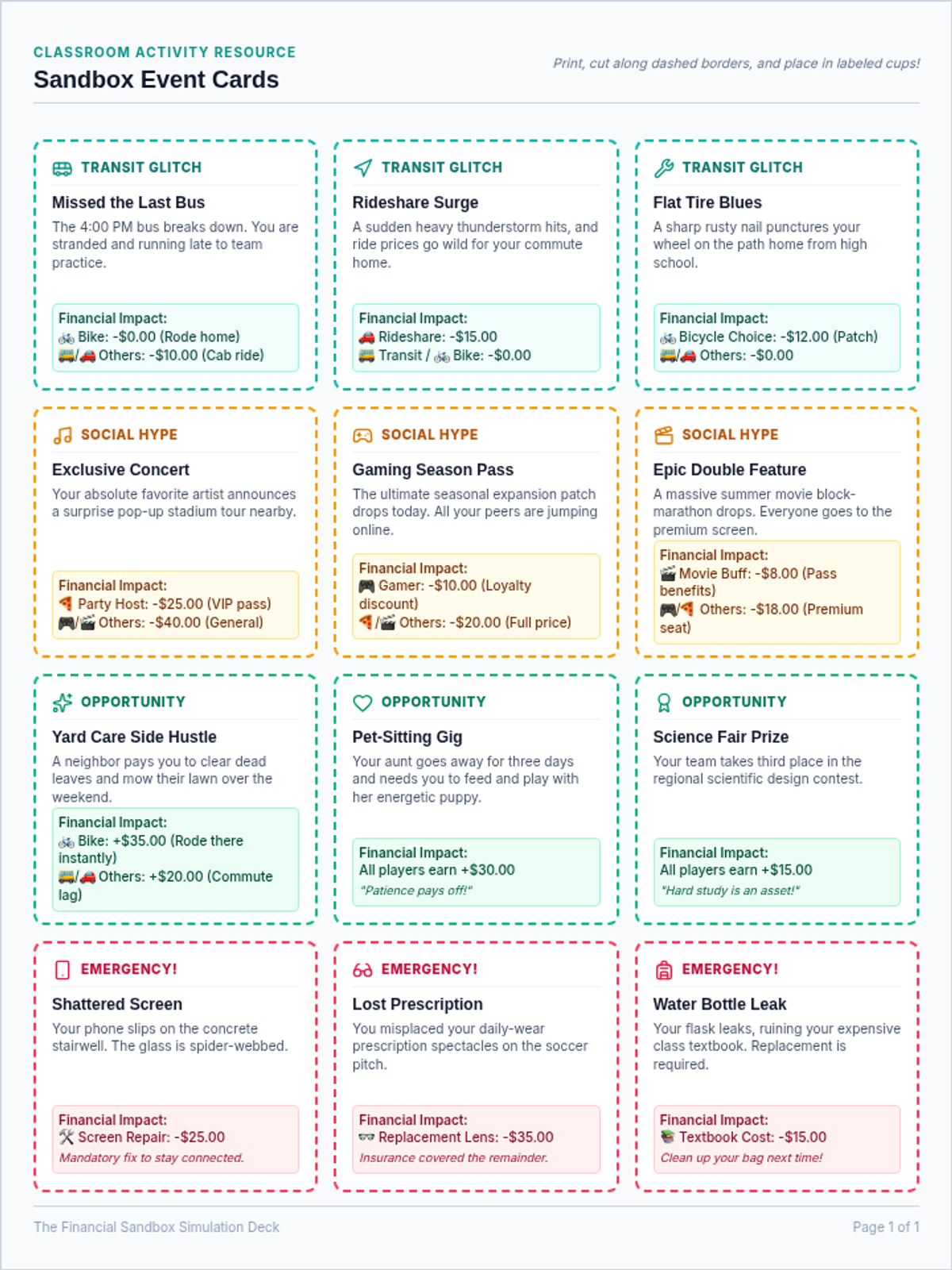
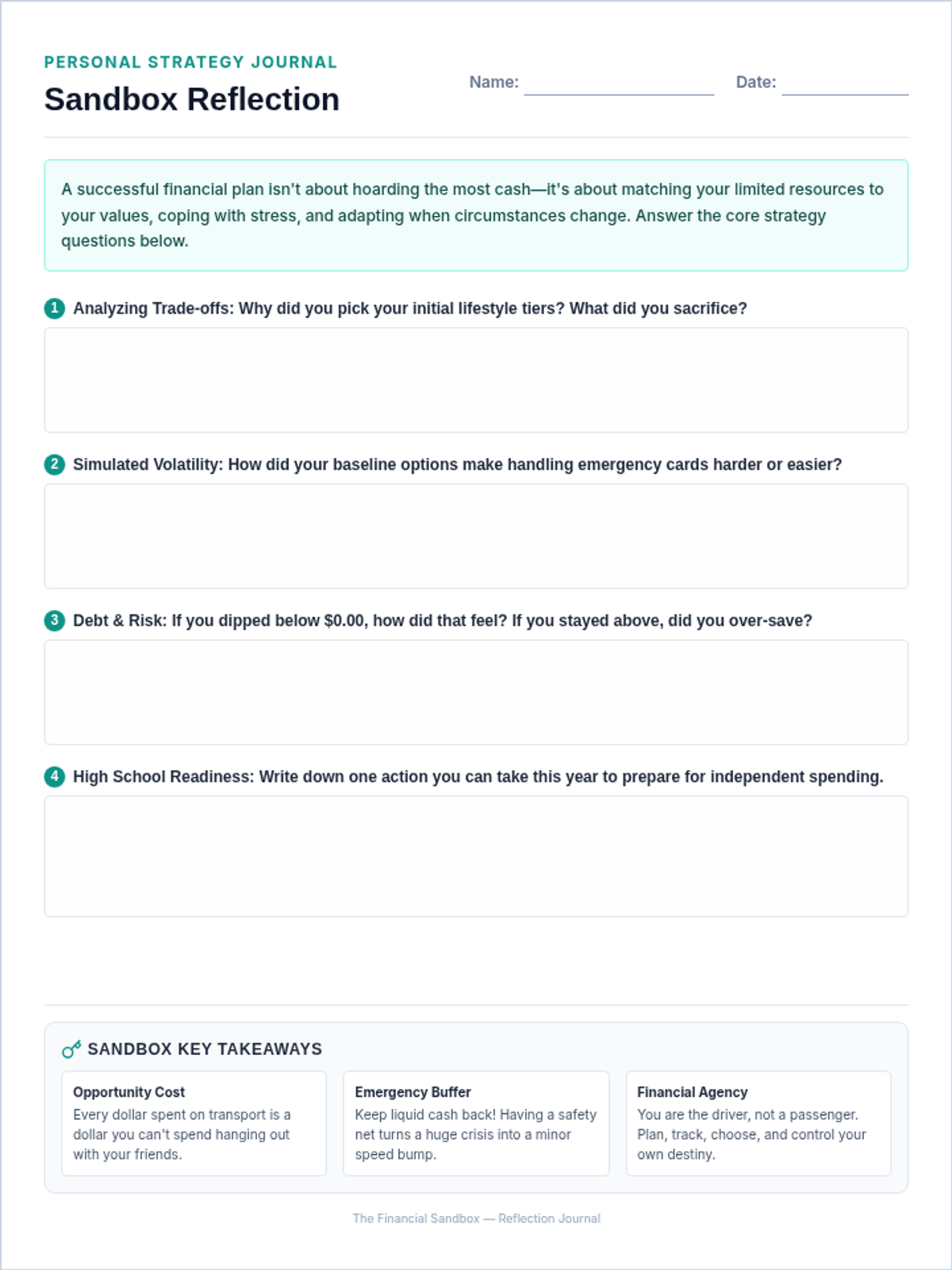
An interactive, hands-on financial literacy lesson where 8th graders manage a starter budget, navigate unexpected simulated financial events, and practice building financial agency for their upcoming transition to high school.
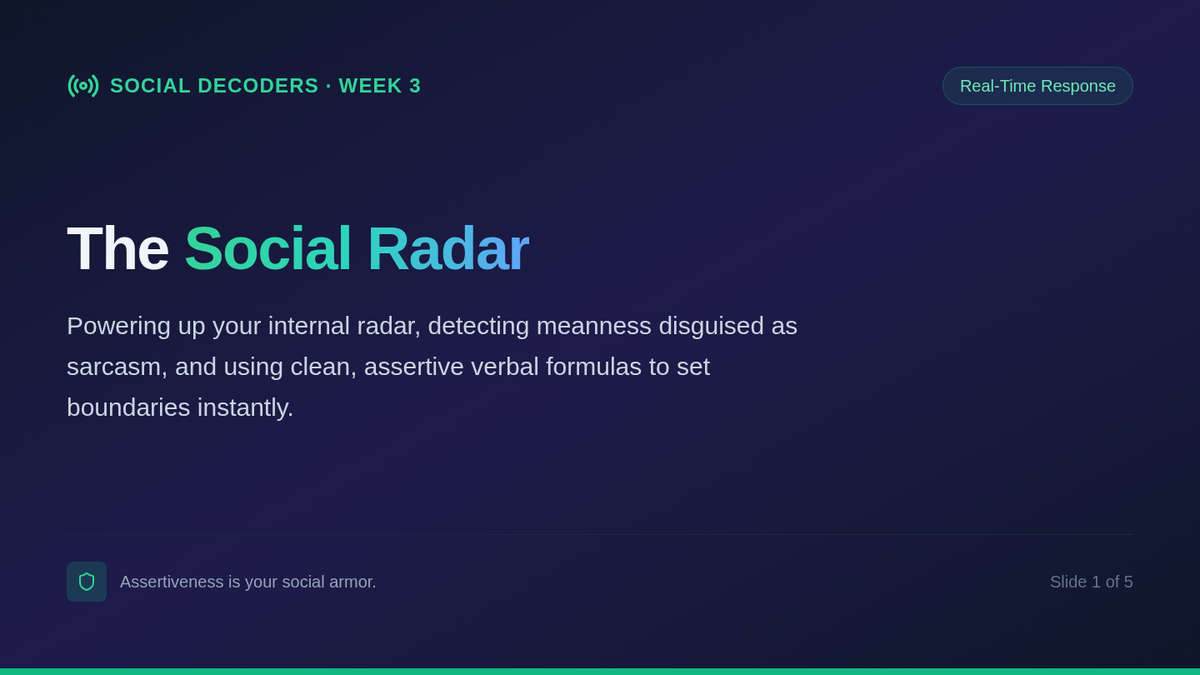
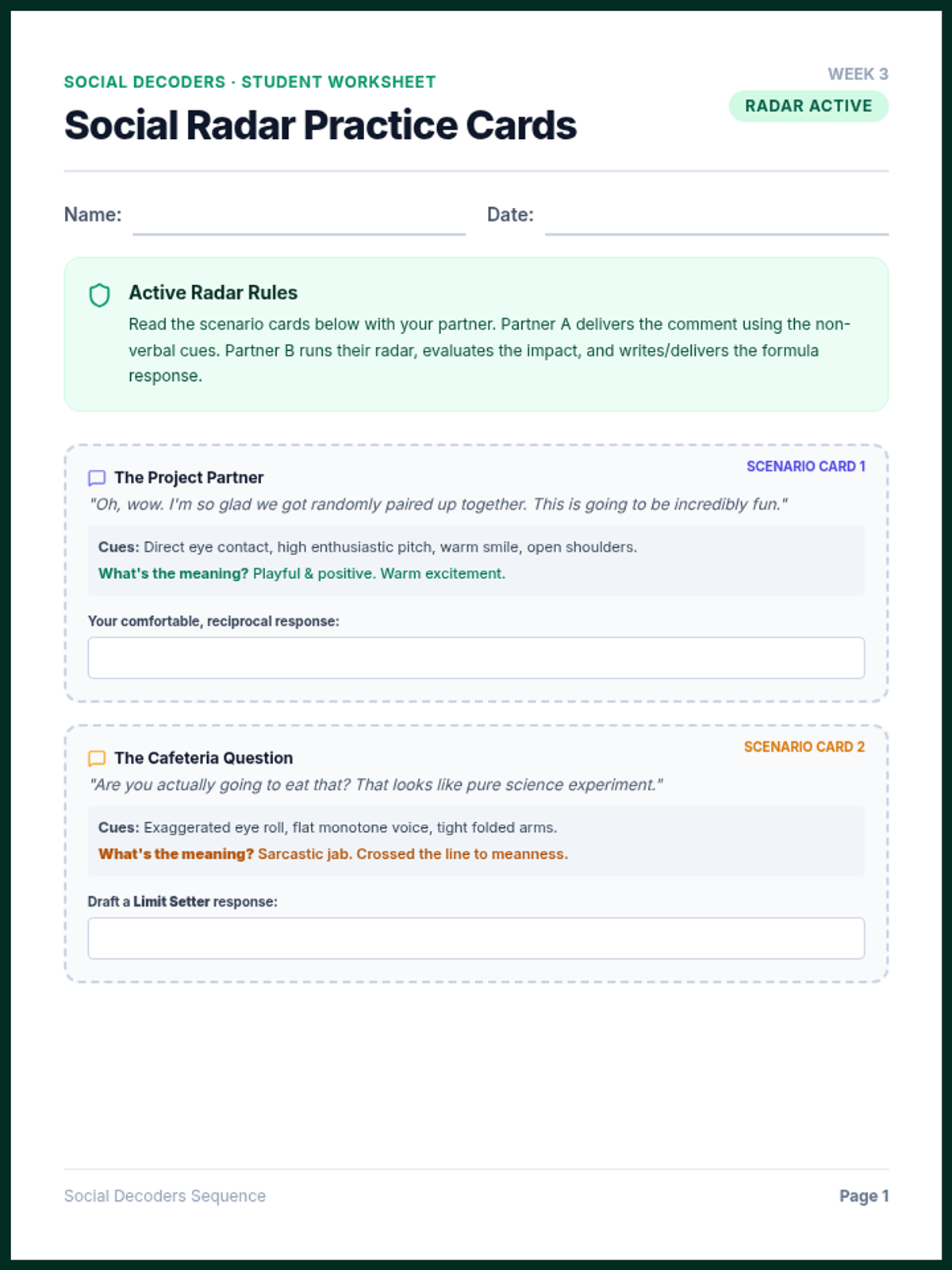
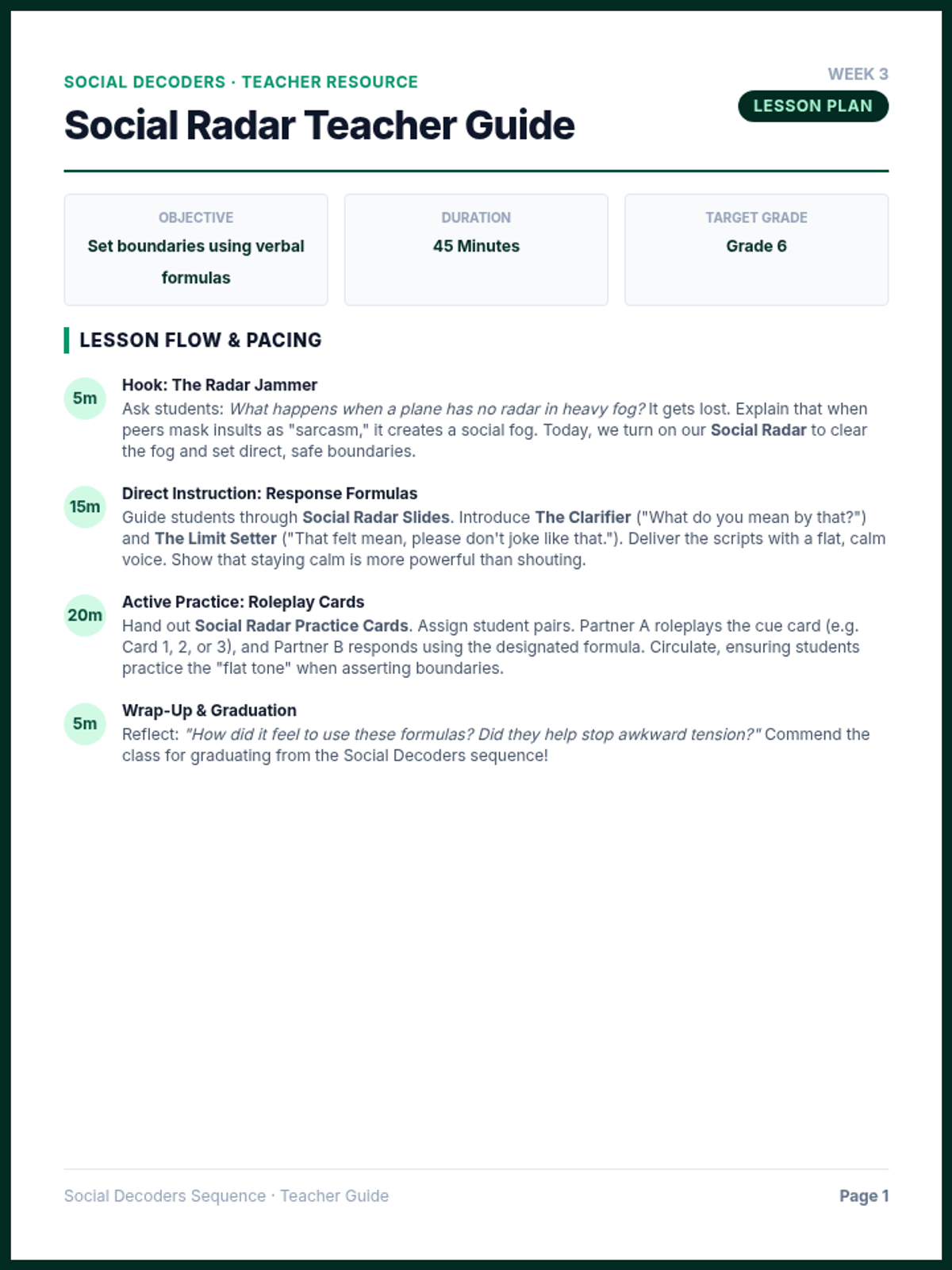
Students synthesize physical cues and the intent-impact model to run their 'Social Radar' in real-time, learning clear verbal formulas to assertively handle meanness masked as sarcasm.
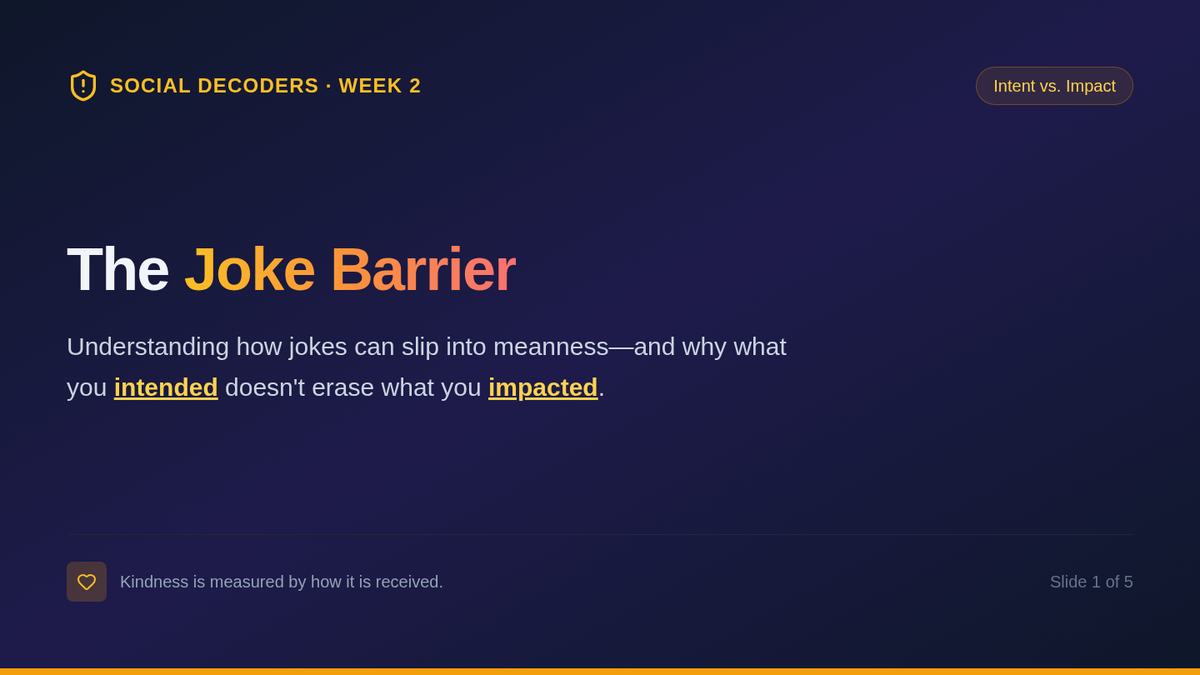
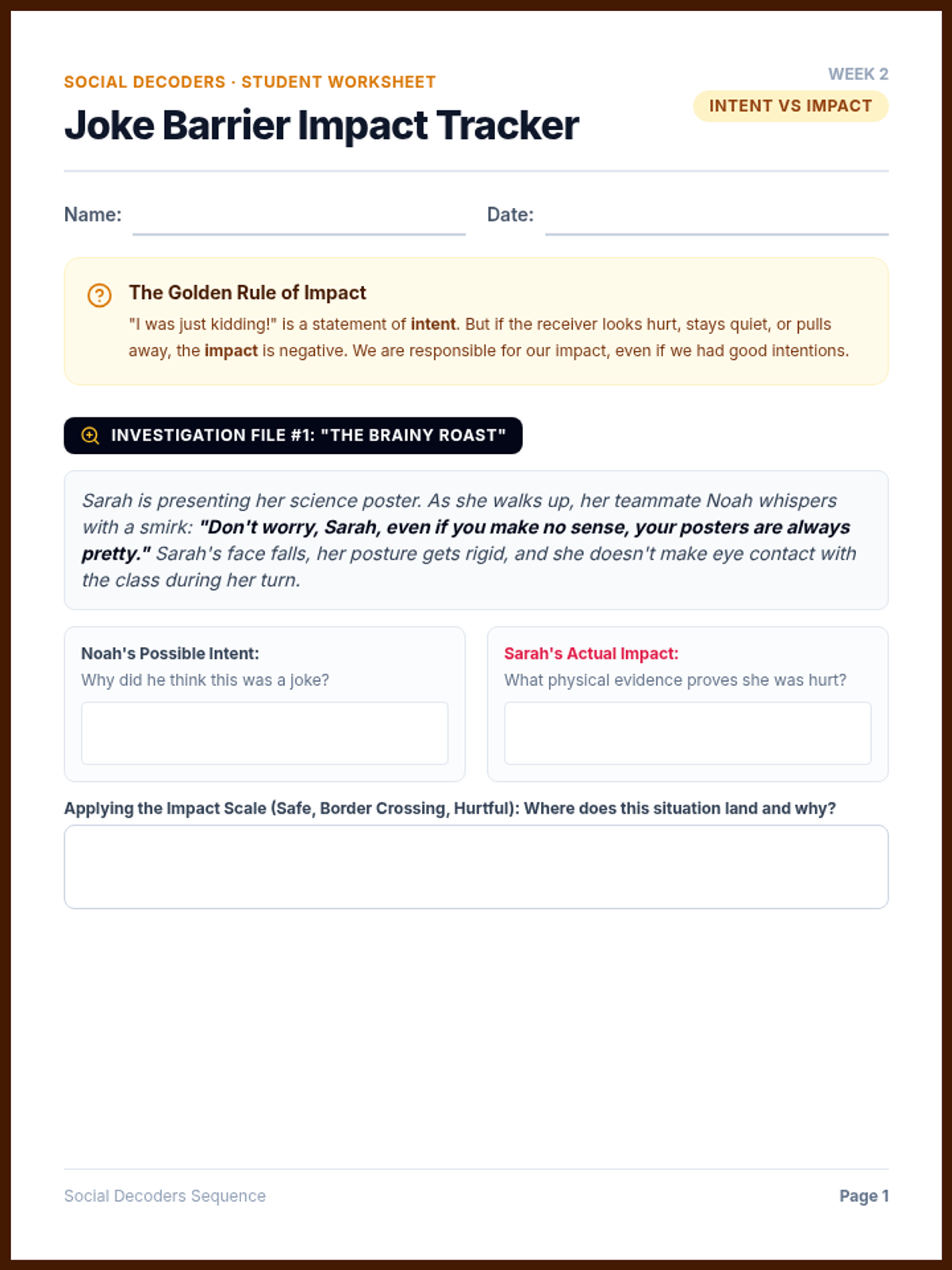
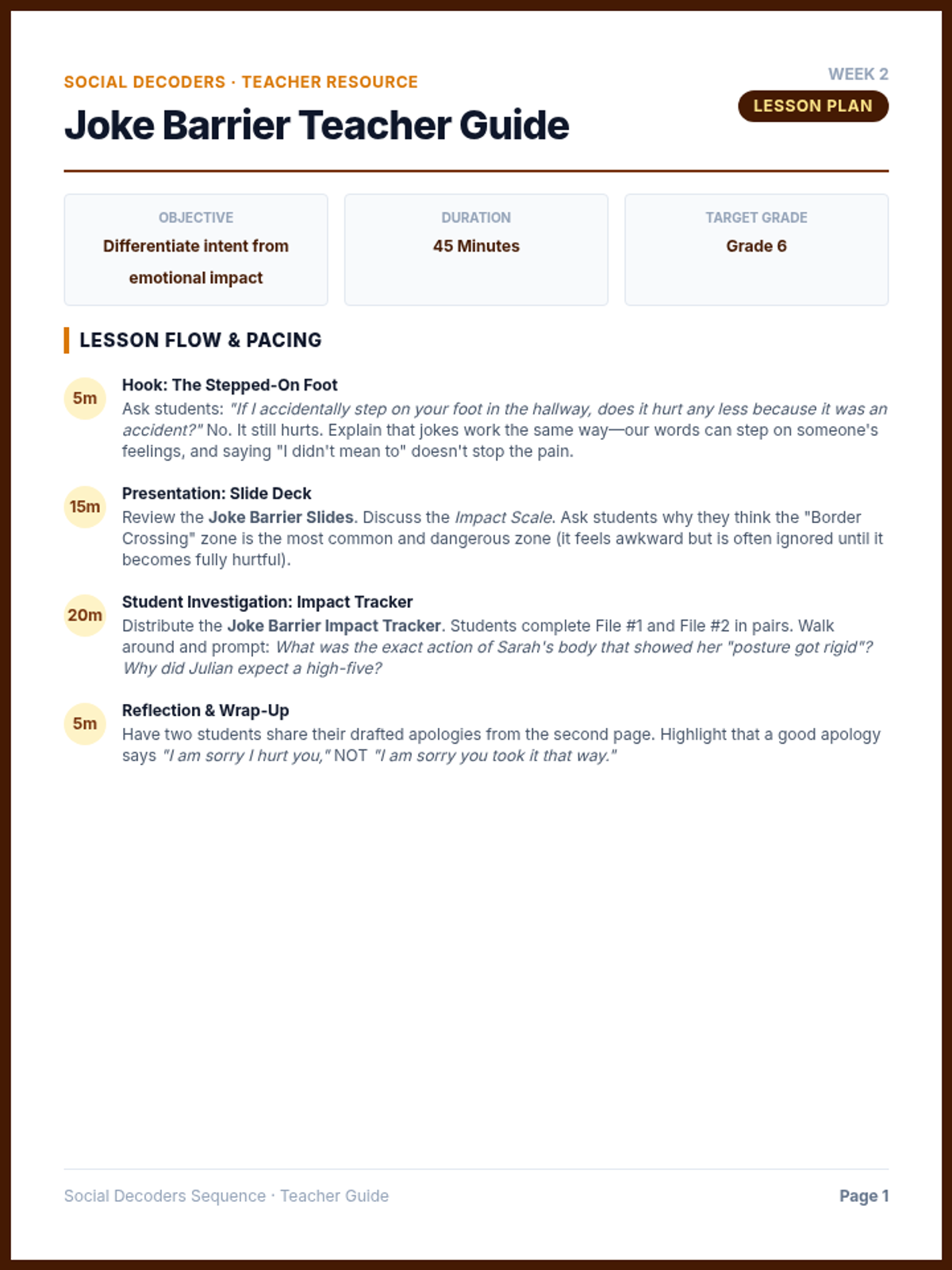
Students explore the critical gap between what a speaker intends (e.g., a joke, teasing) and the actual emotional impact of their words, establishing boundaries when jokes cross into meanness.
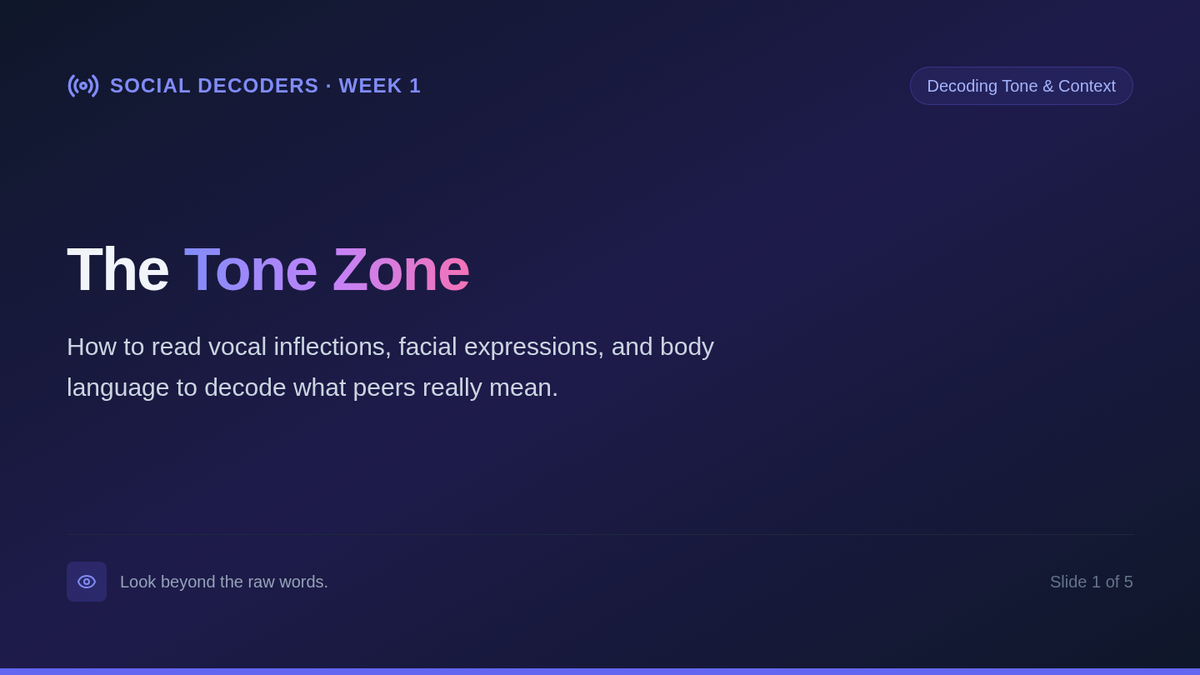
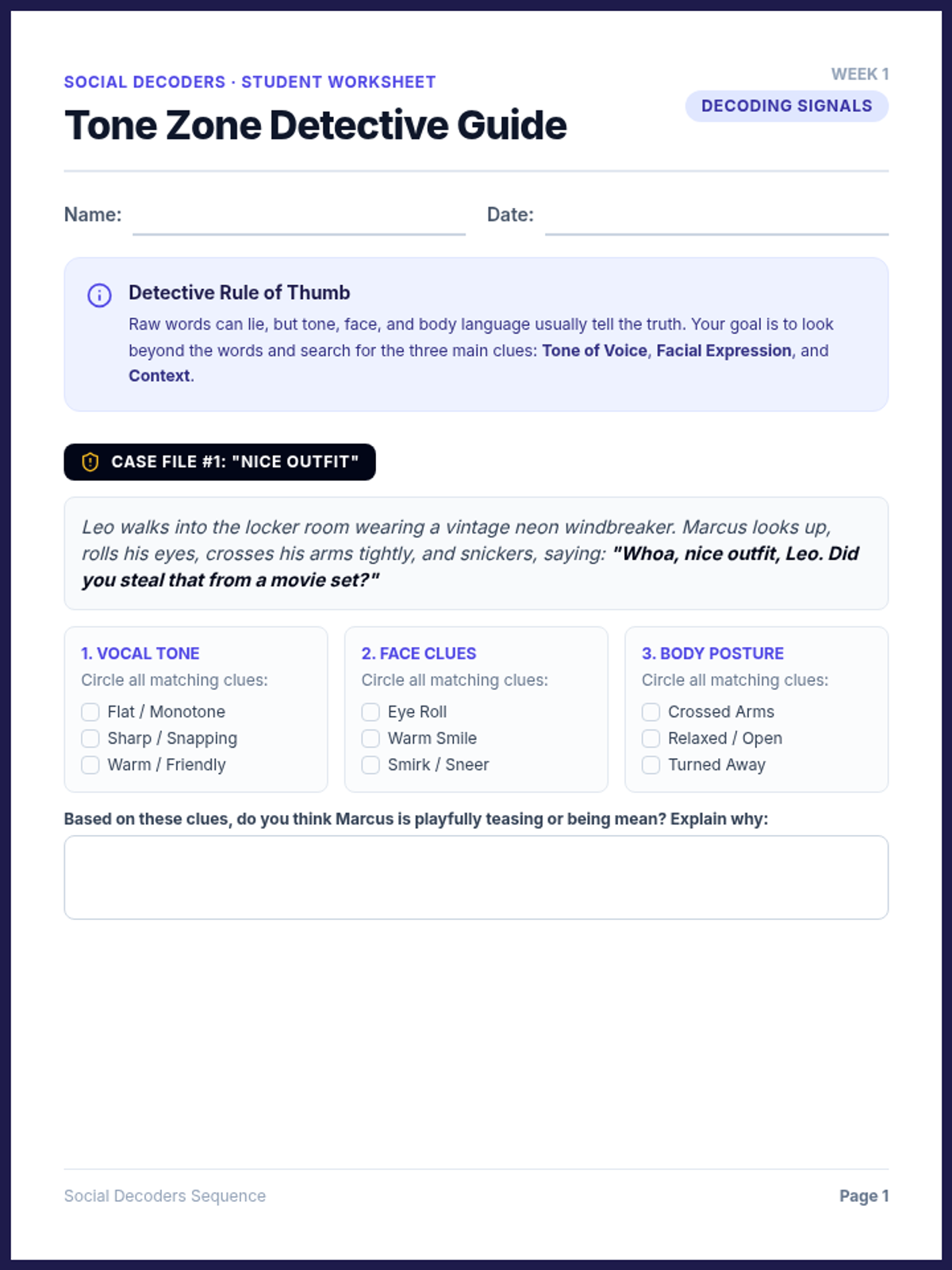
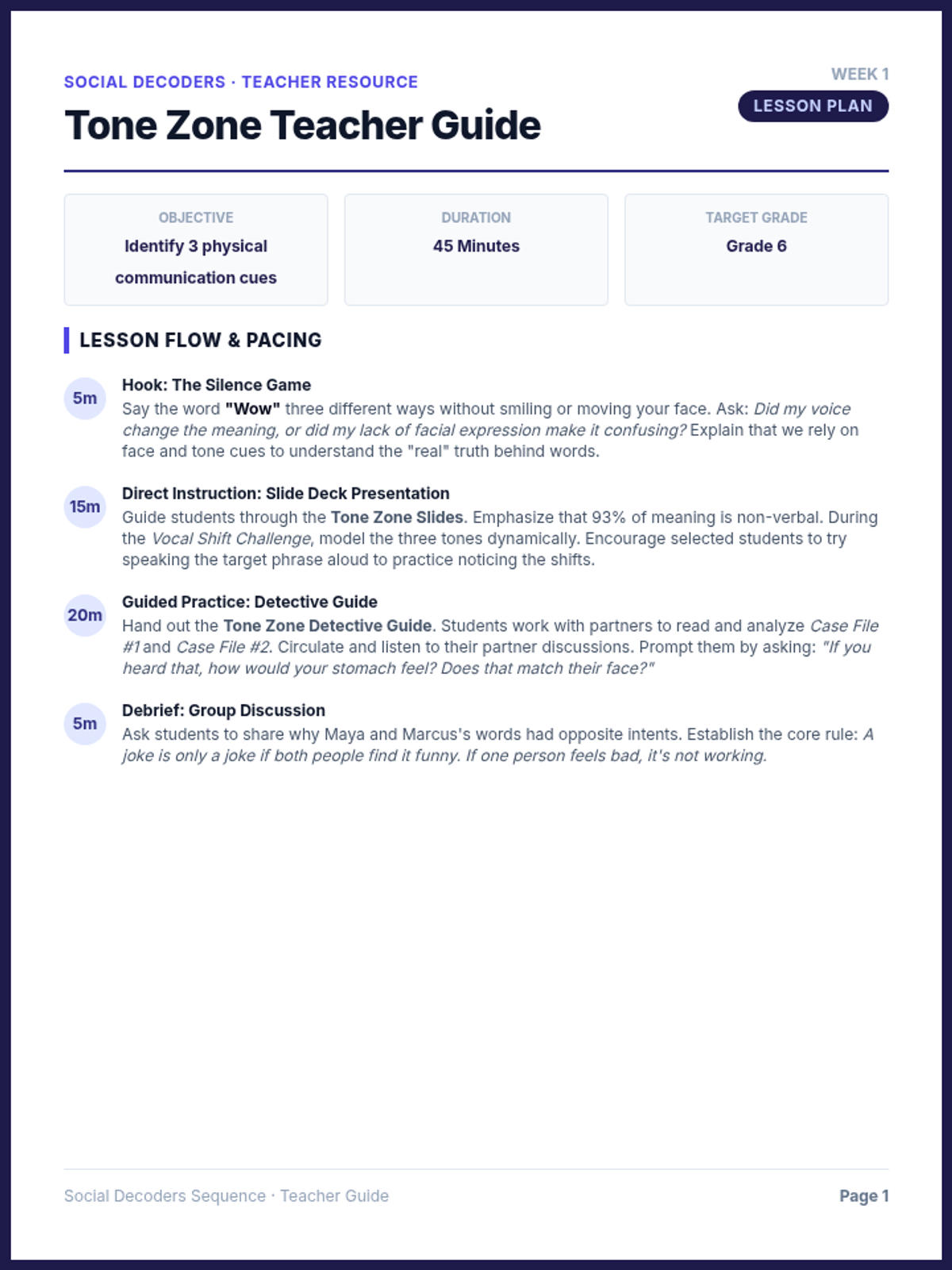
Students learn to identify vocal inflections, facial expressions, and body language to decode whether a peer is speaking playfully (sarcasm/teasing) or hurtfully (meanness).
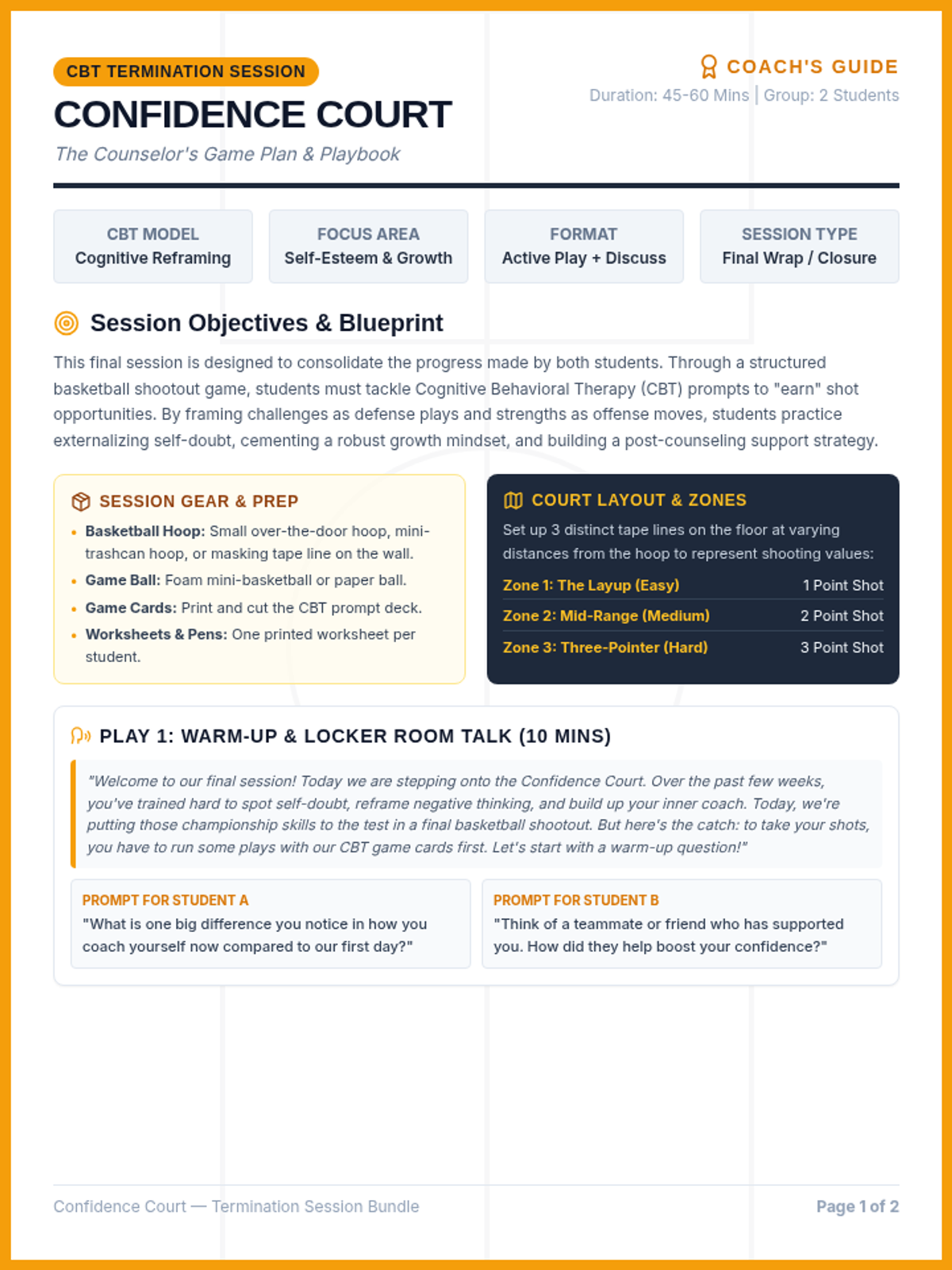
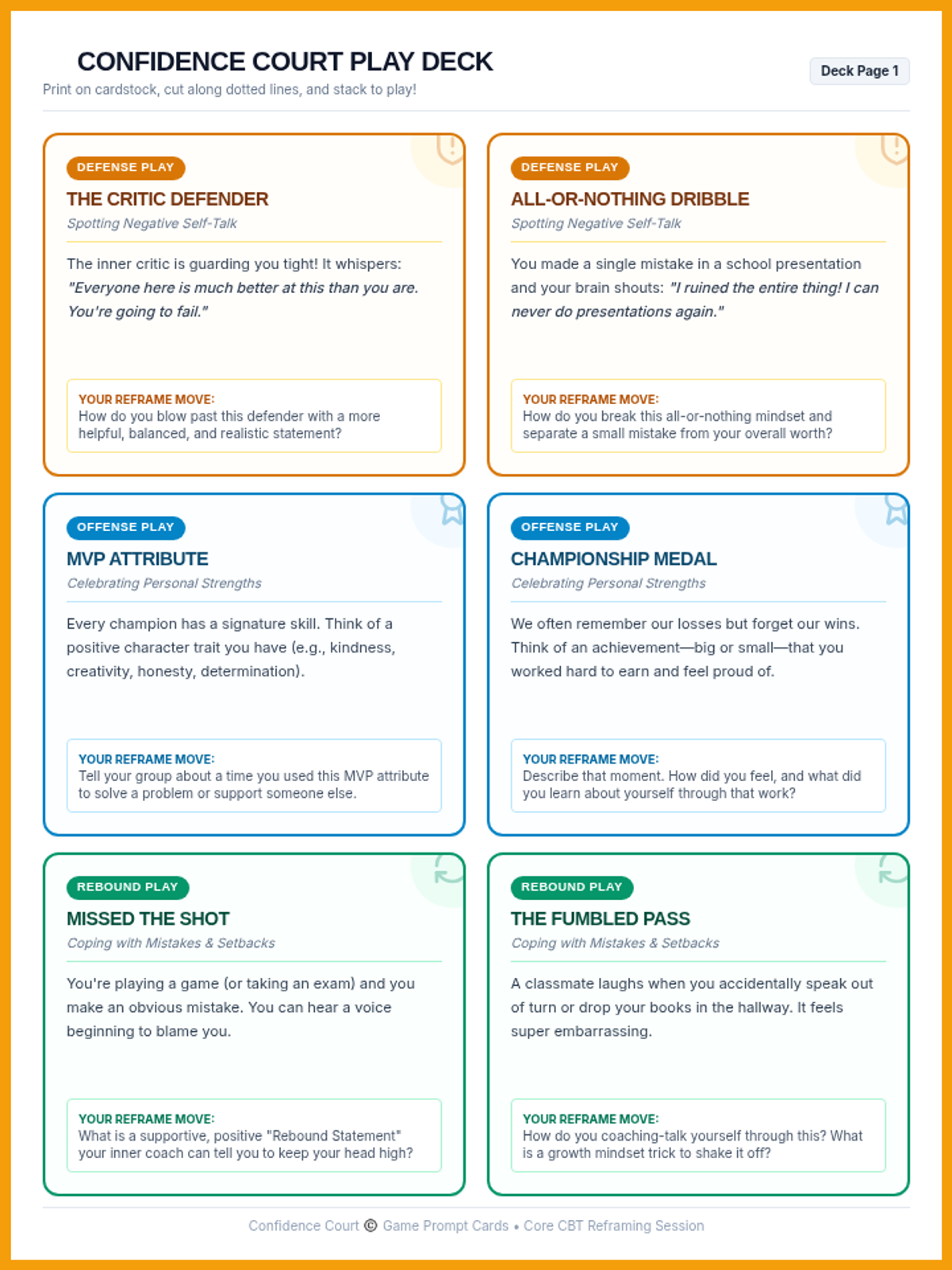
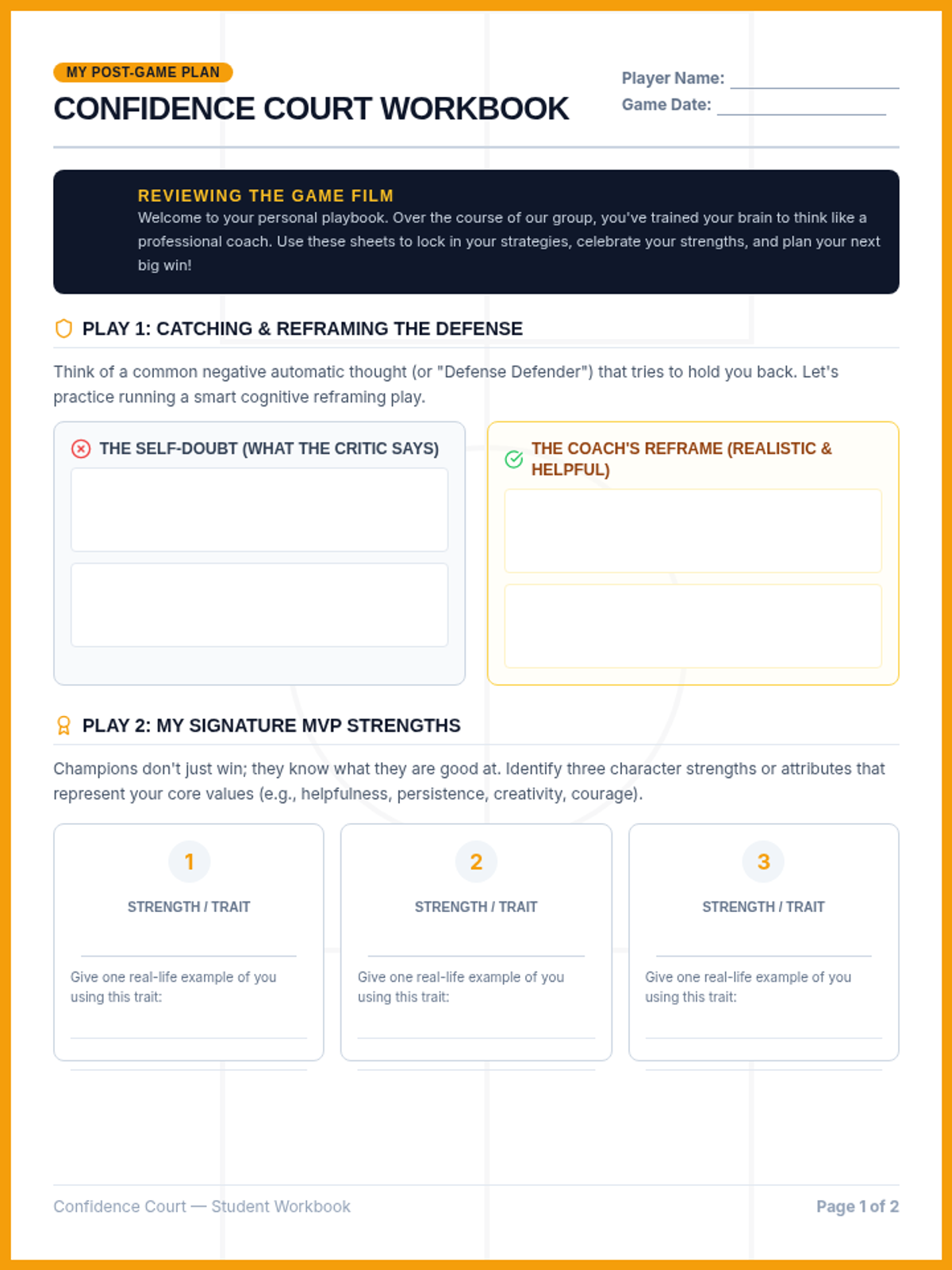
A termination counseling session lesson bundle utilizing a basketball-themed CBT game to reinforce self-esteem, cognitive restructuring, growth mindset, and future growth planning.
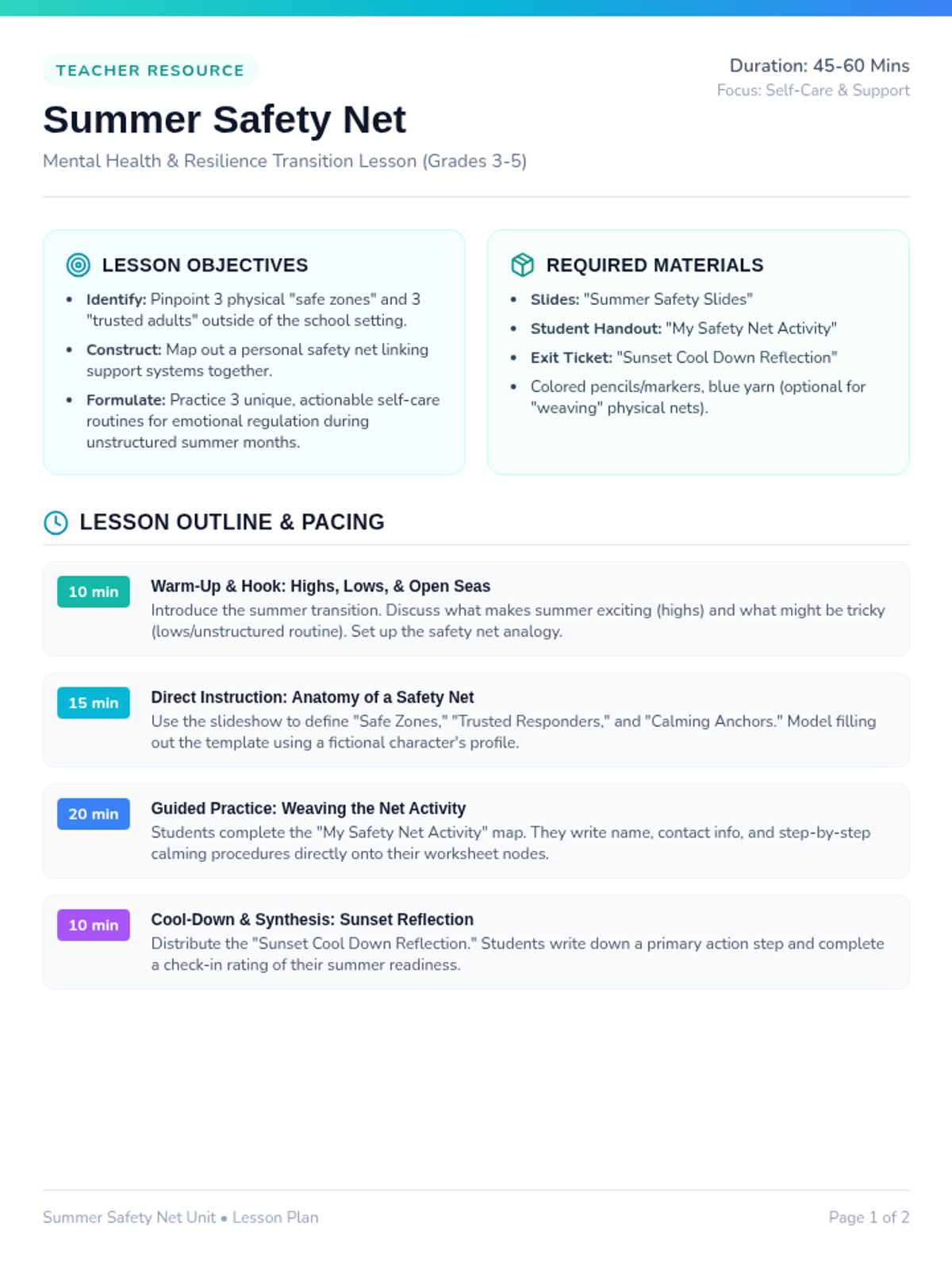
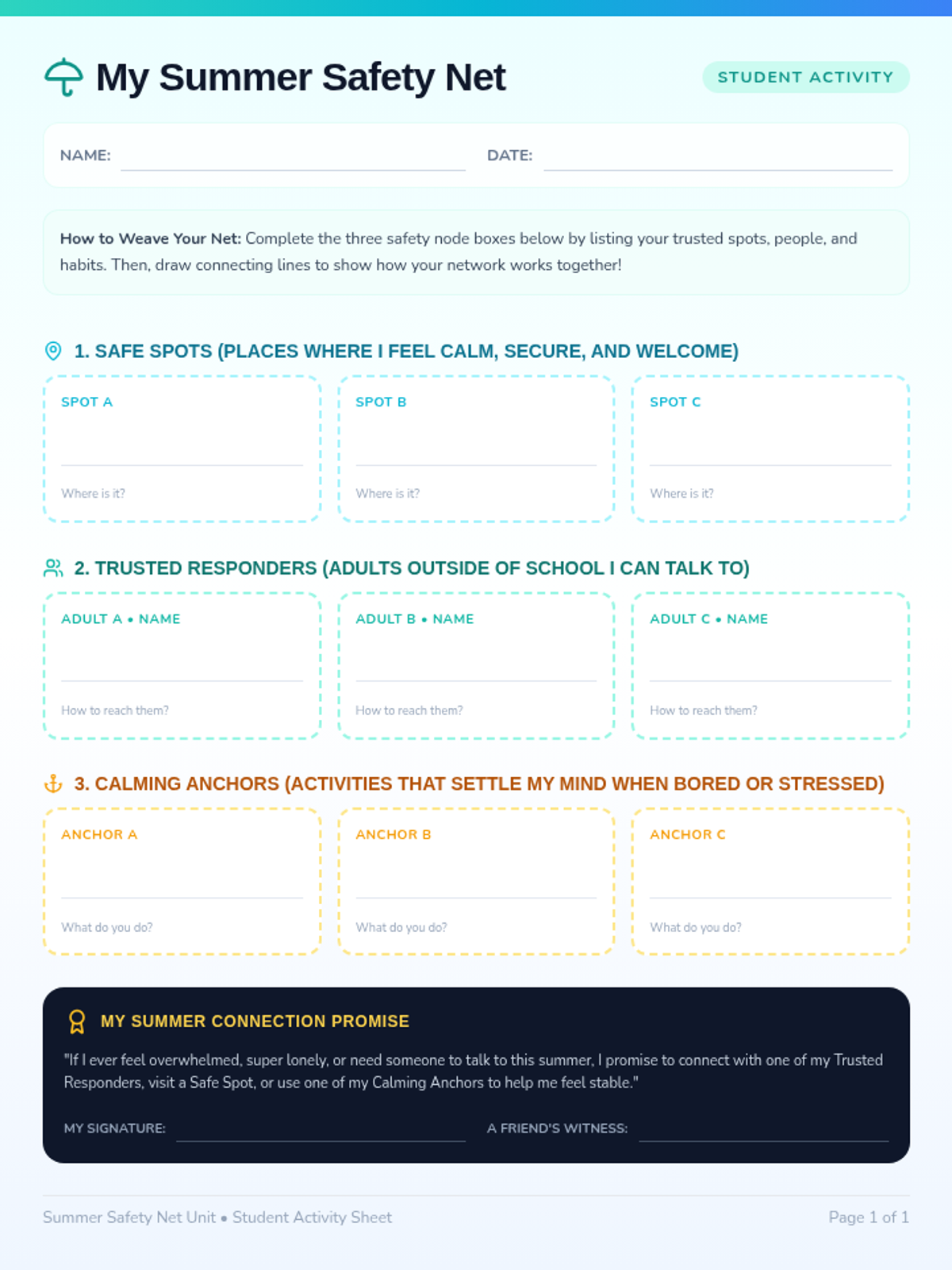
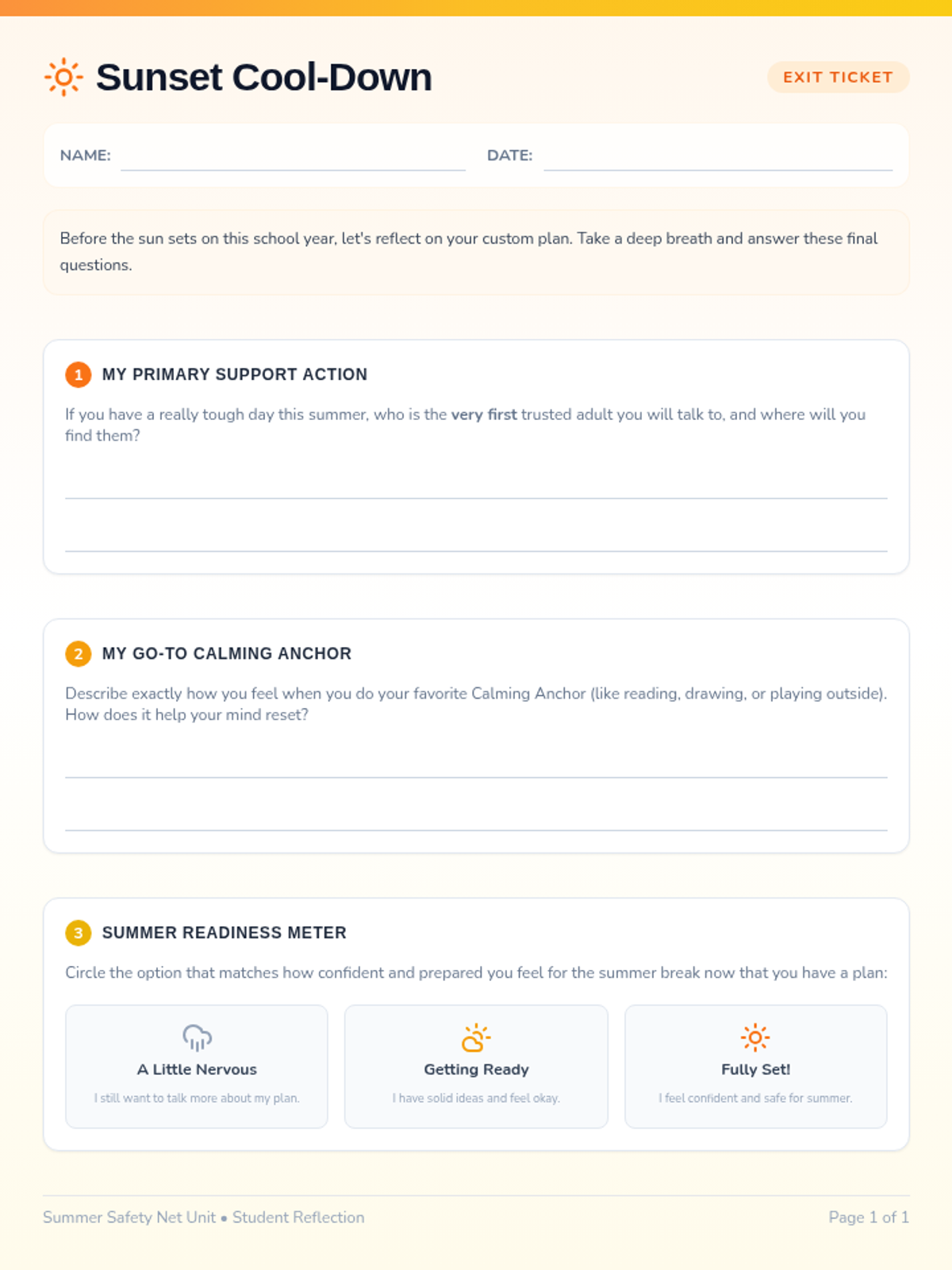
A transition lesson for 3rd-5th grade students to construct a physical and mental safety net for the unstructured summer months. Students identify safe spots, trusted adults, and calming activities to ensure a safe, connected, and relaxing break.
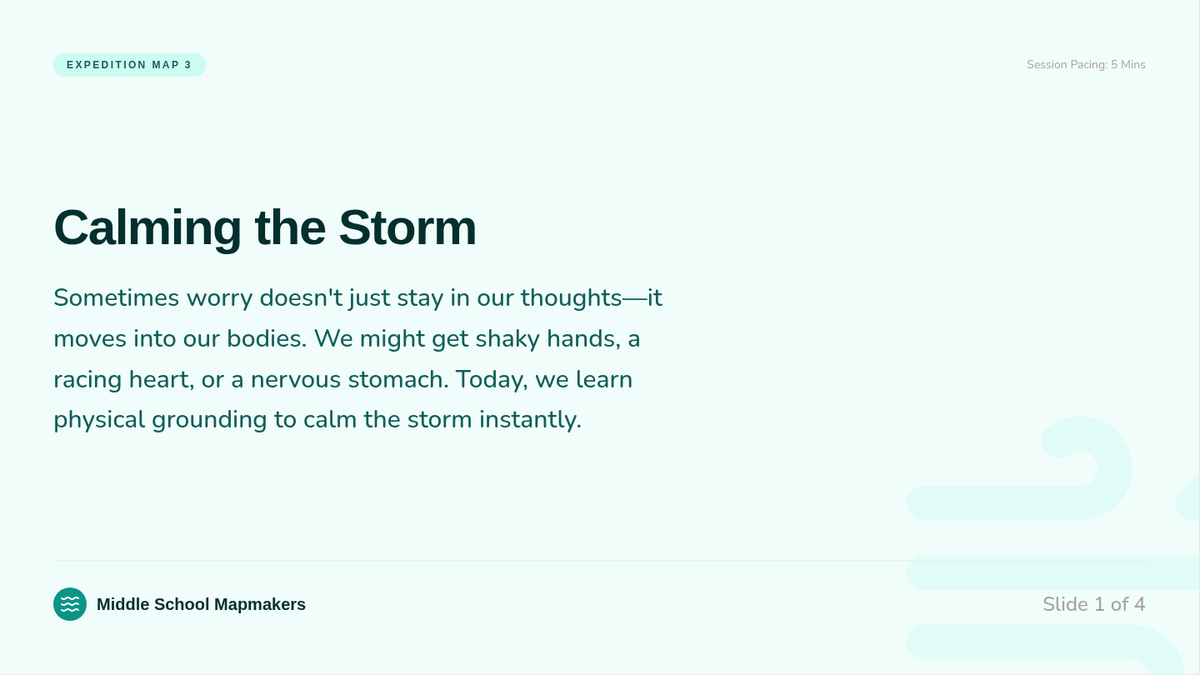
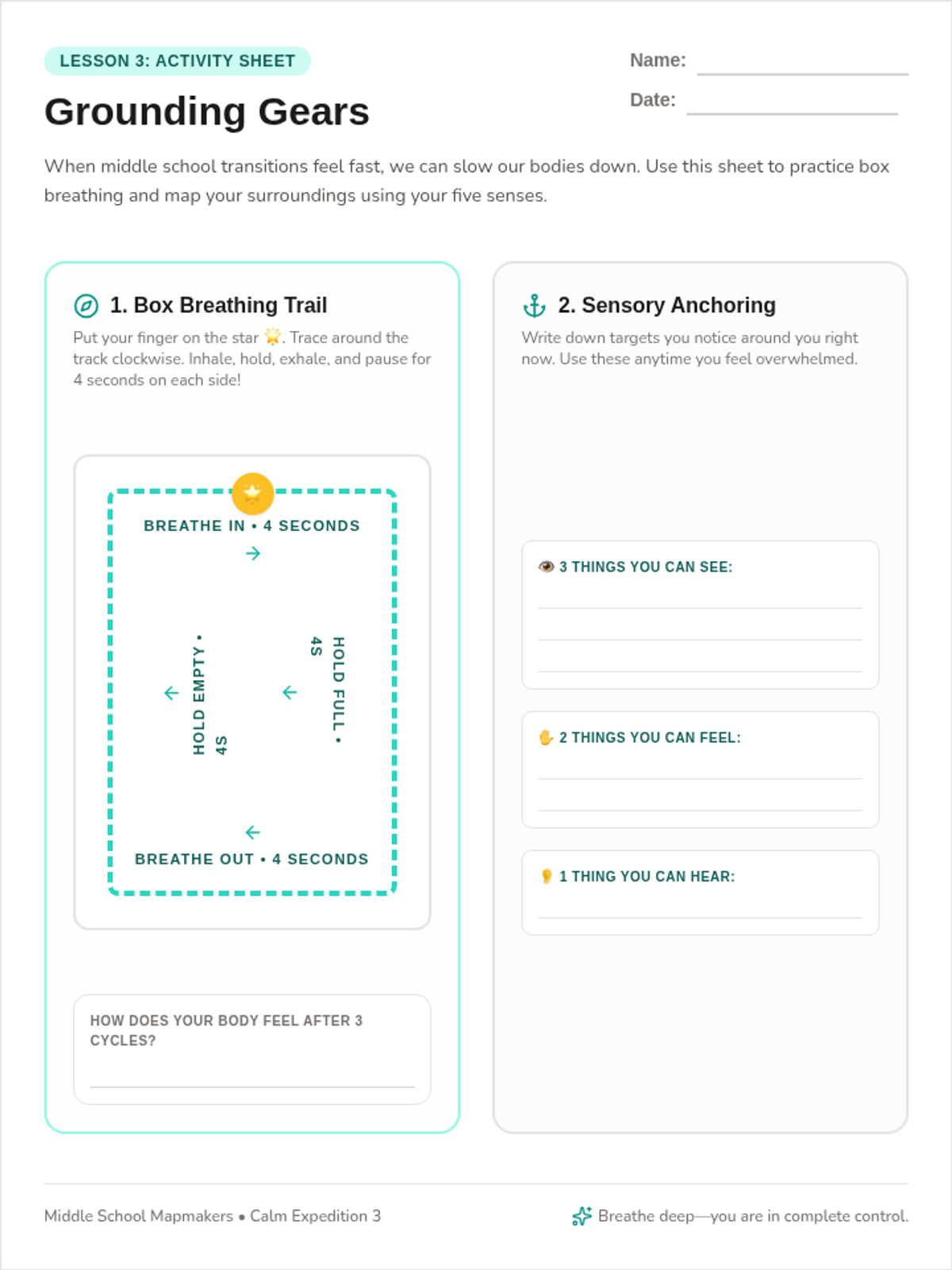
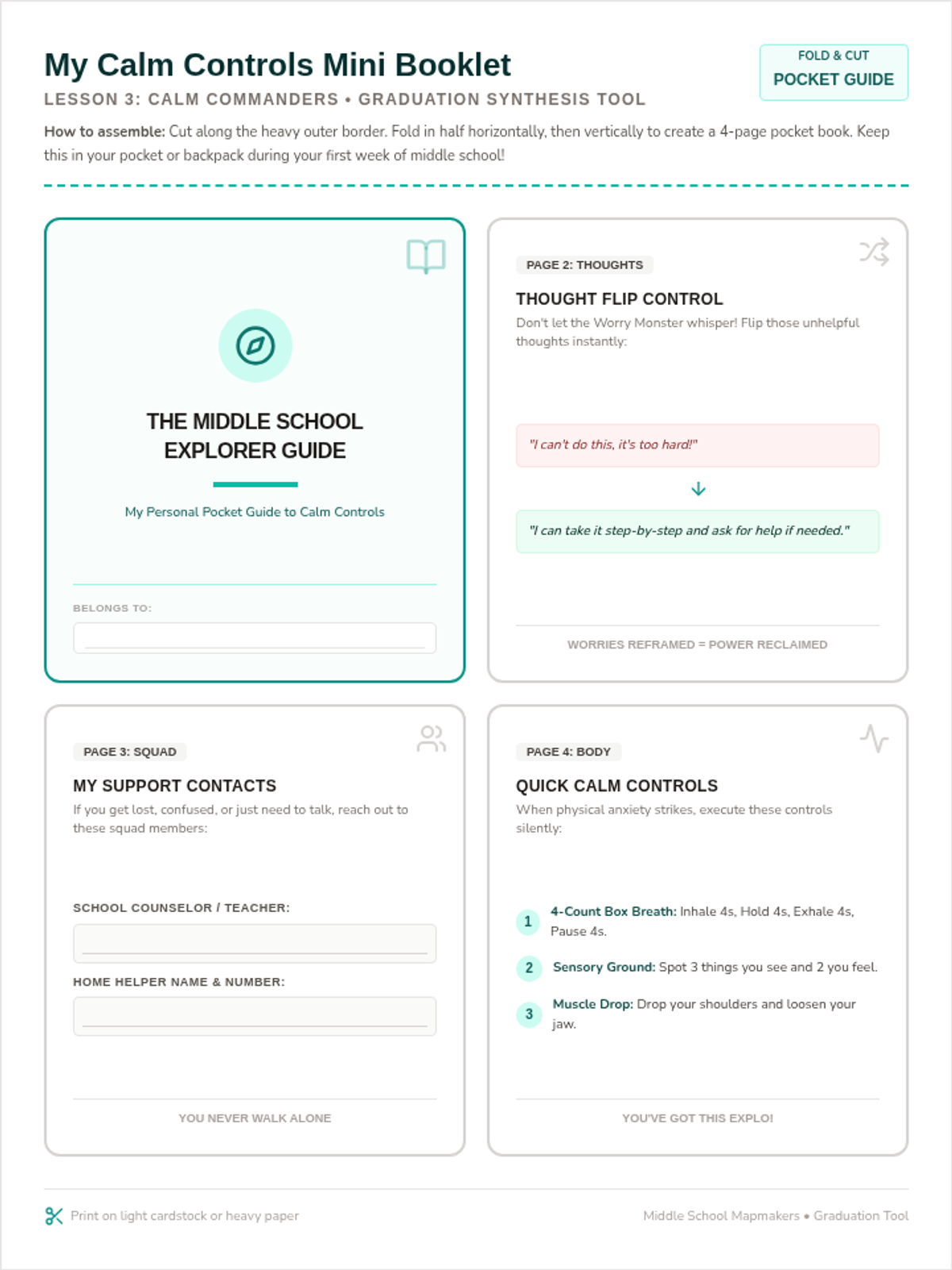
Teaches physical and mental grounding exercises (including box breathing and sensory grounding) to manage transition stress, synthesizing all coping tools into a custom pocket-sized mini booklet.
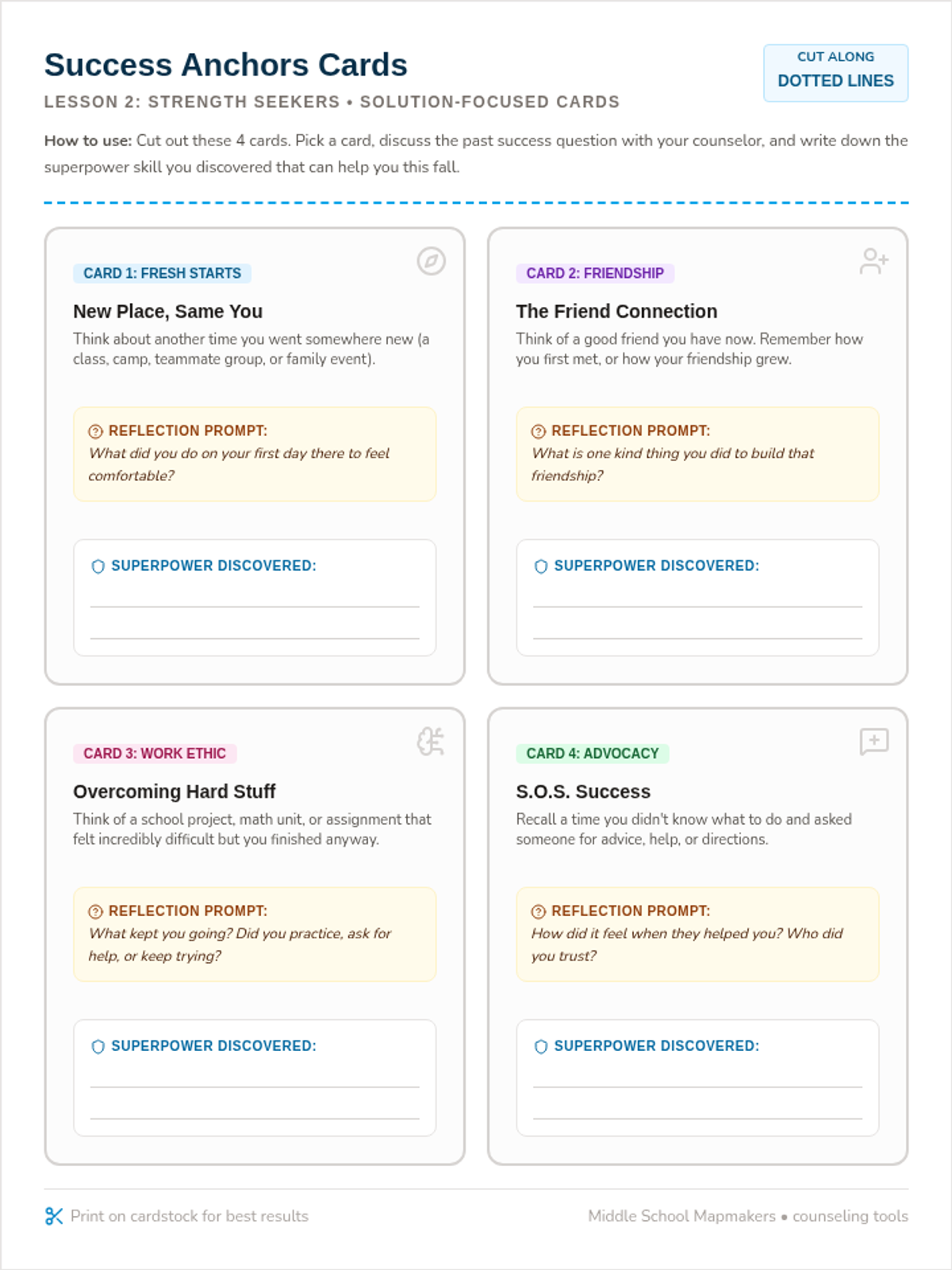
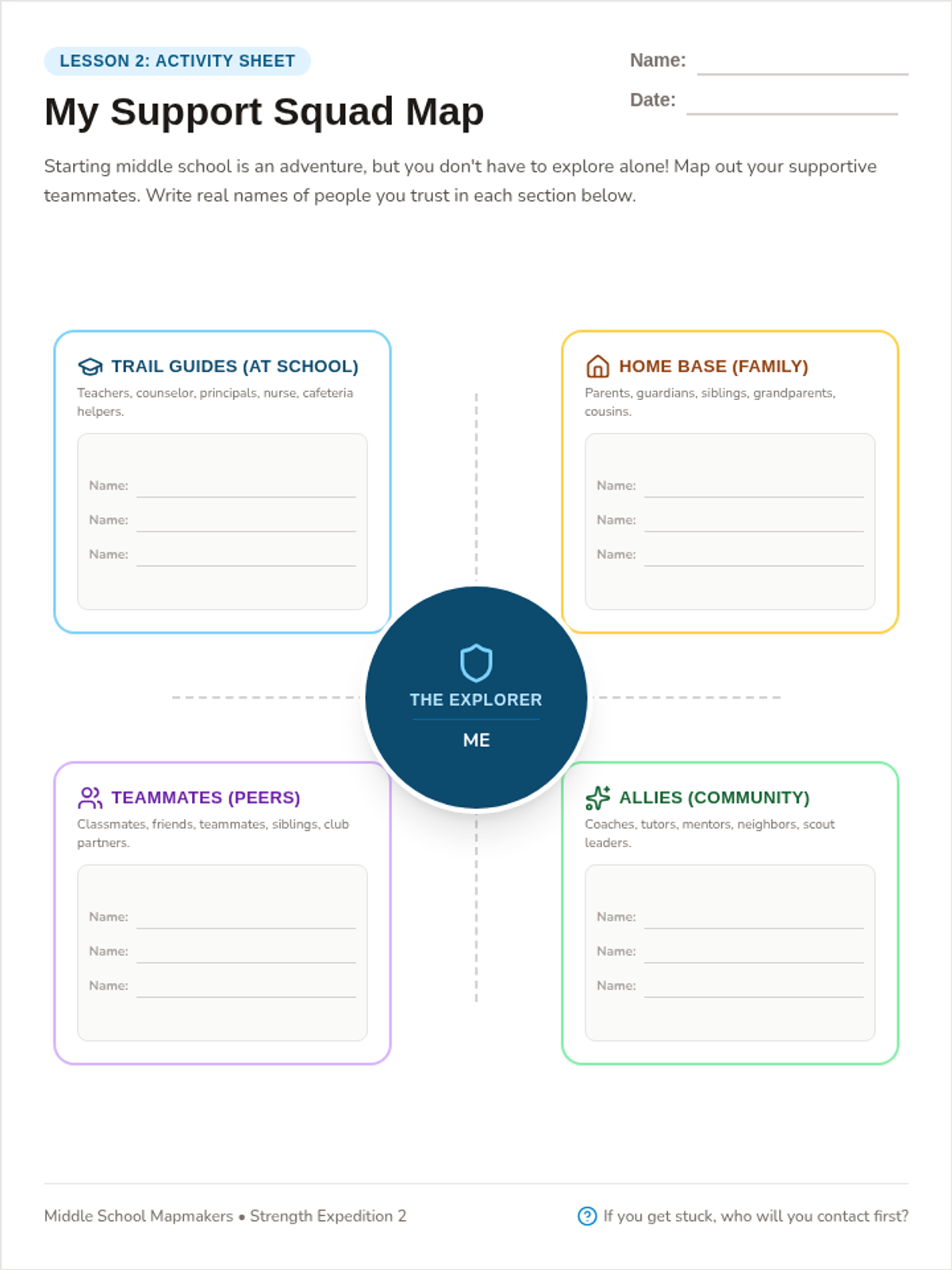
Uses Solution-Focused Brief Therapy (SFBT) principles to identify past successes, list existing character strengths, and map out a supportive social network for middle school.
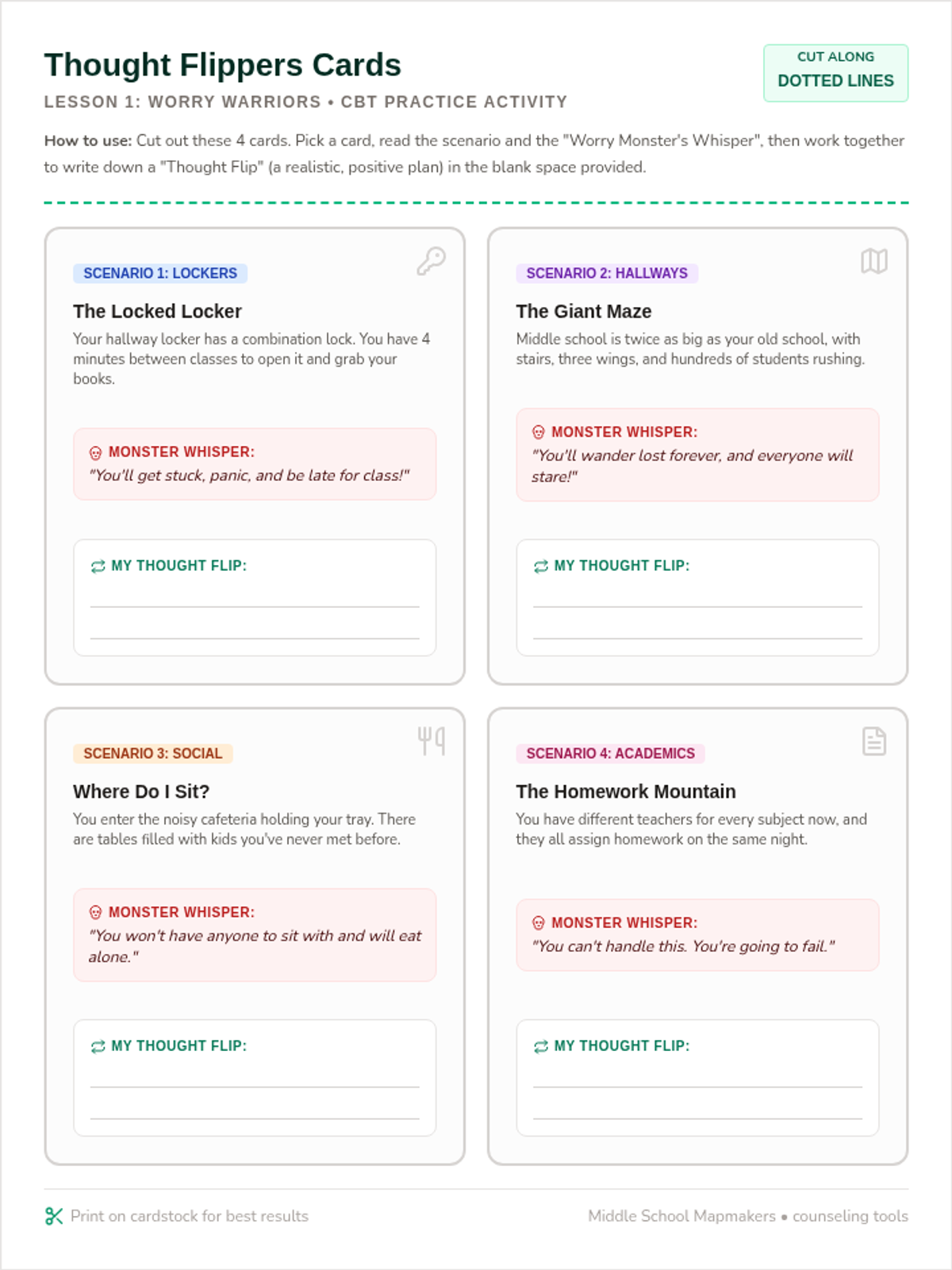
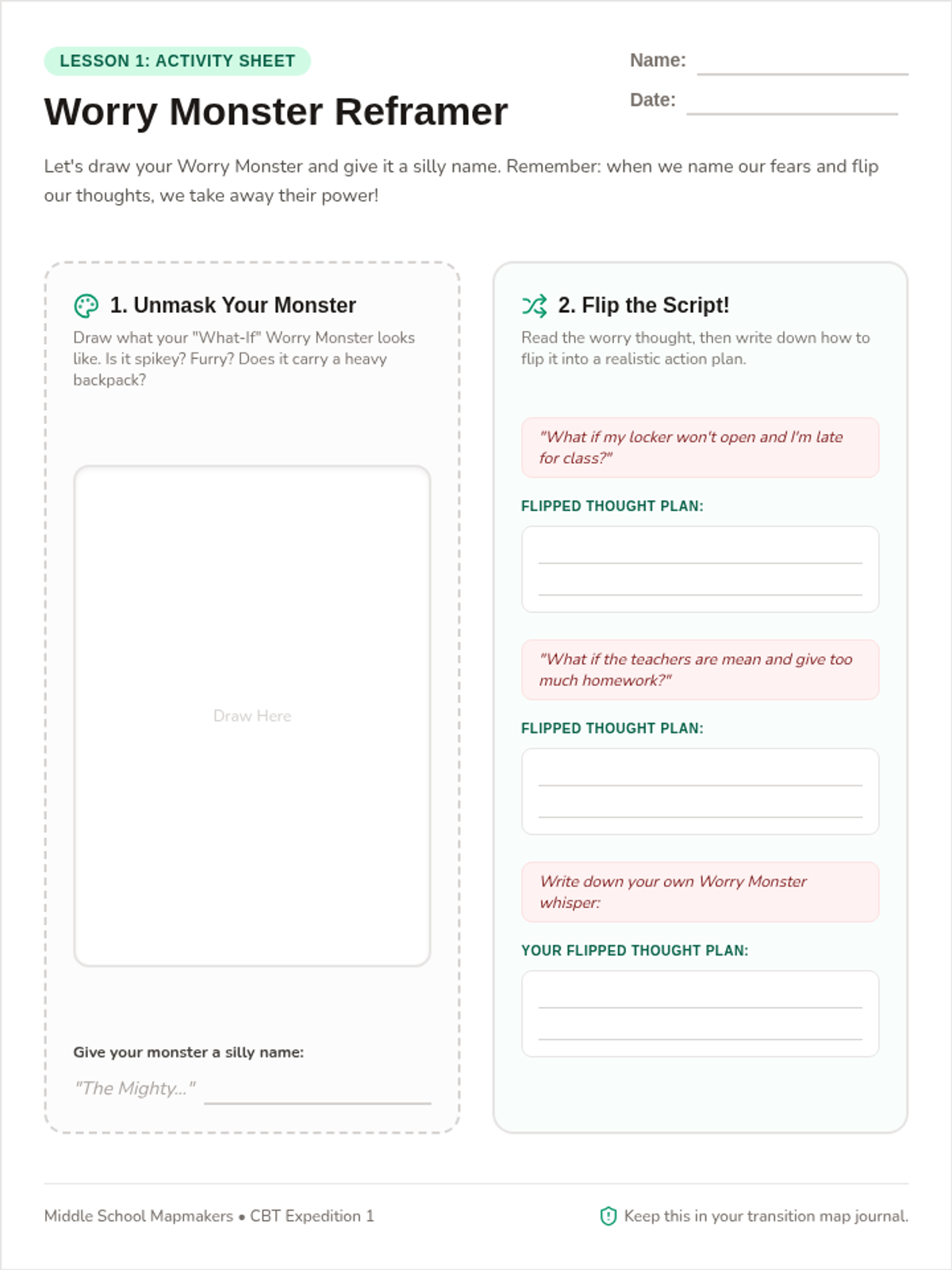
Focuses on Cognitive Behavioral Therapy (CBT) techniques to help transitioning 4th graders identify, categorize, and reframe negative thoughts and anxieties about starting middle school.