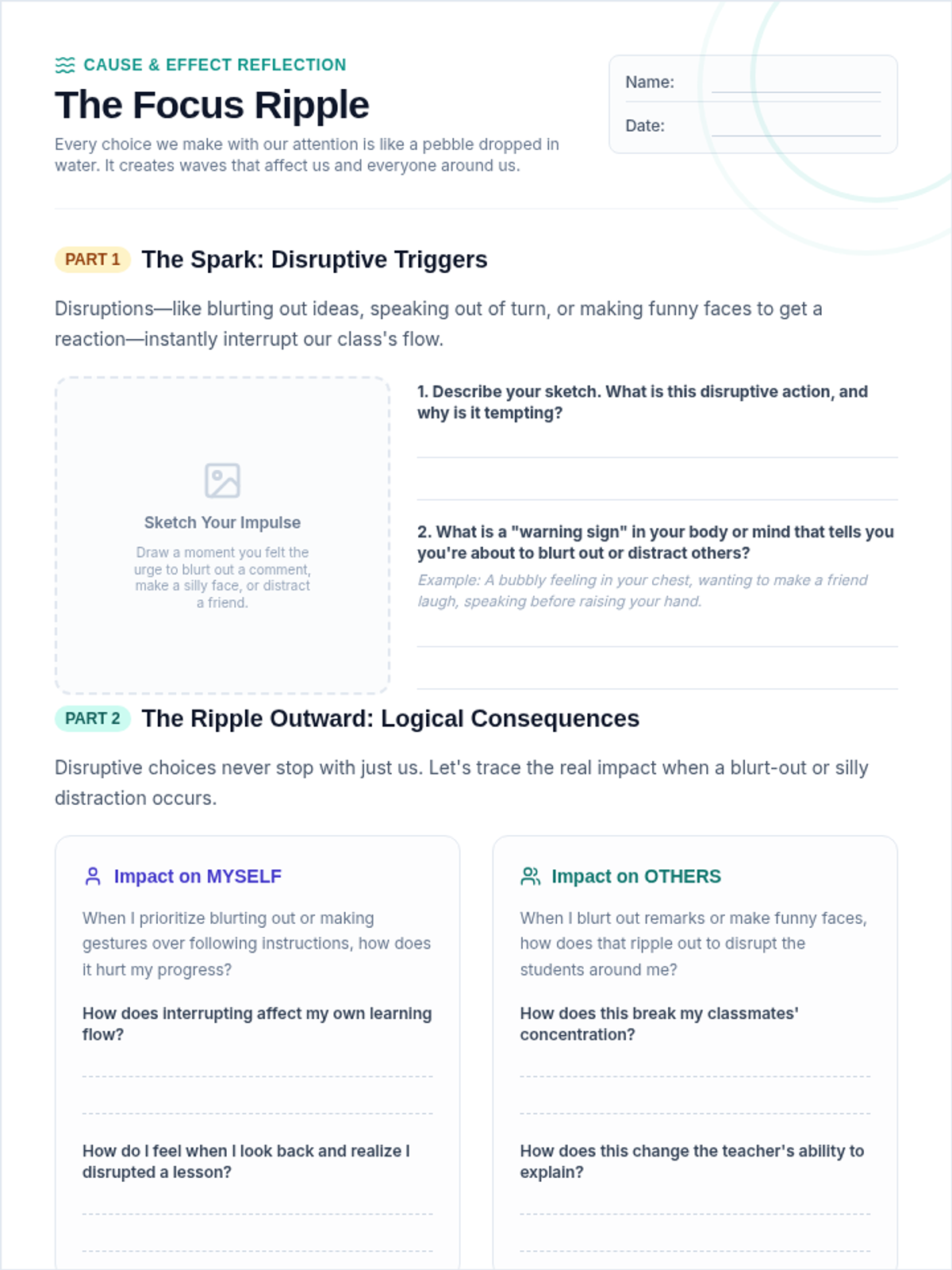
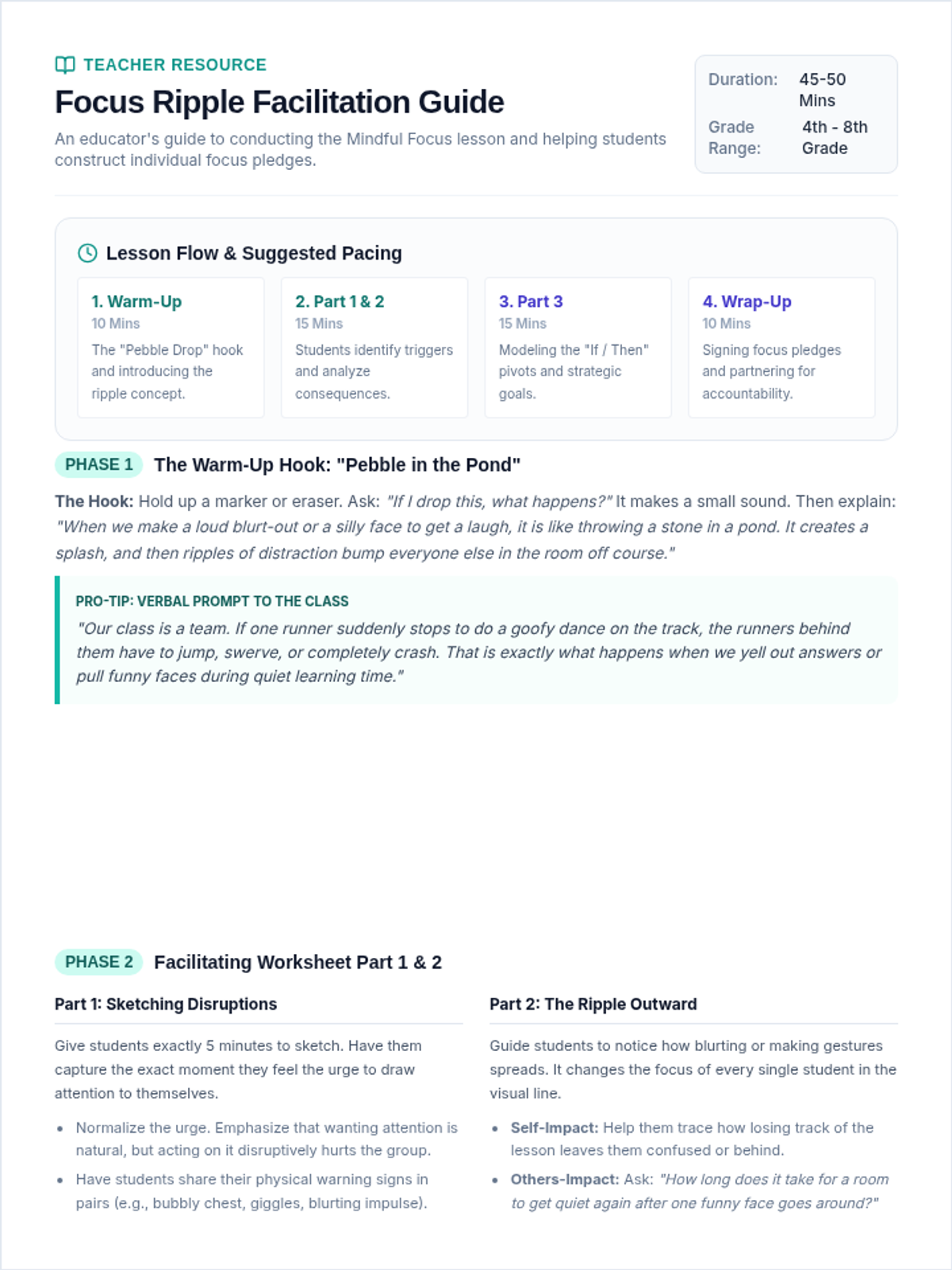
Applying strategies specifically to classroom noise triggers.
A reflective and proactive lesson designed to guide students through understanding classroom distractions, analyzing their cause-and-effect impact, and developing personalized focus strategies.
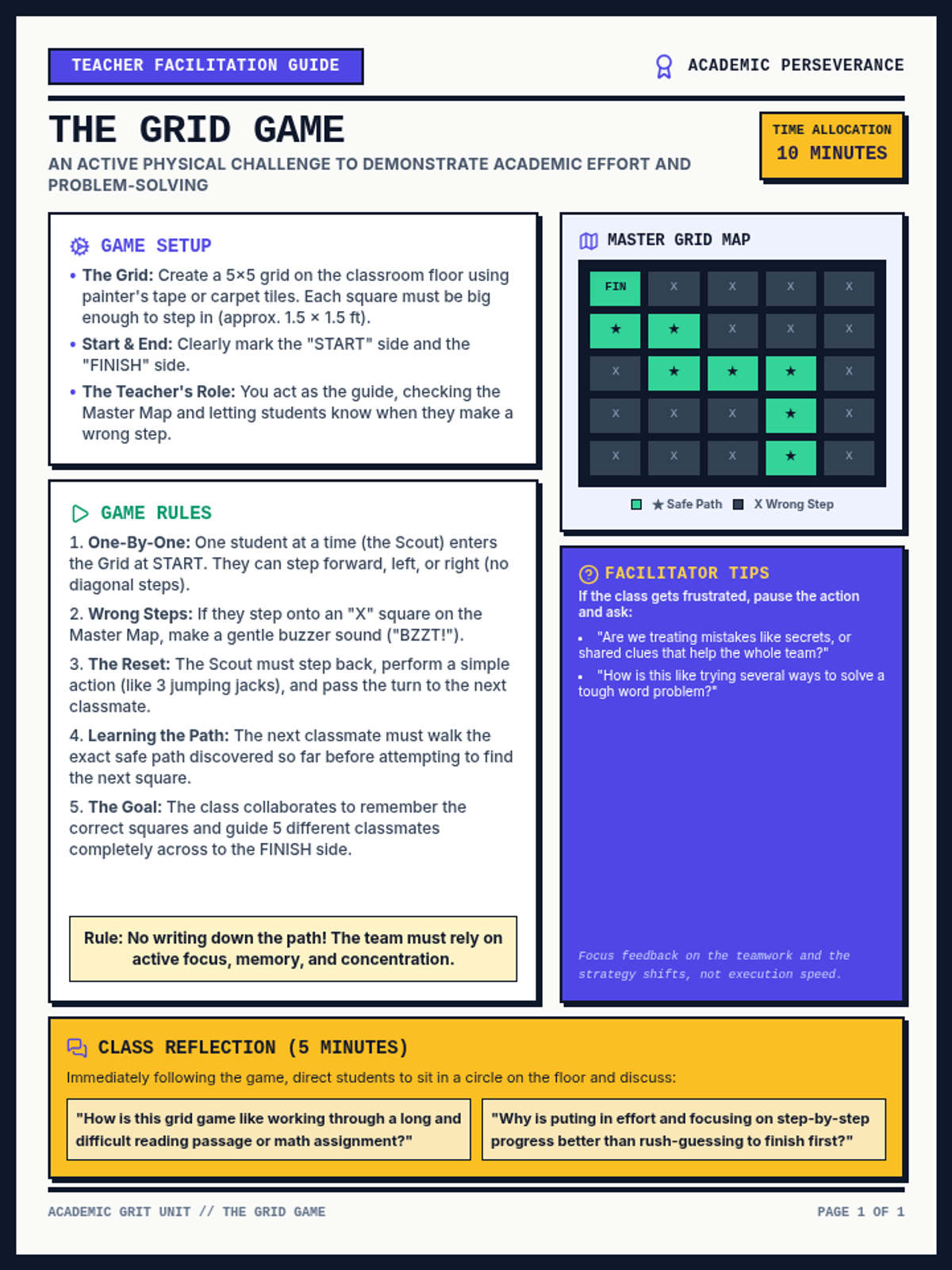
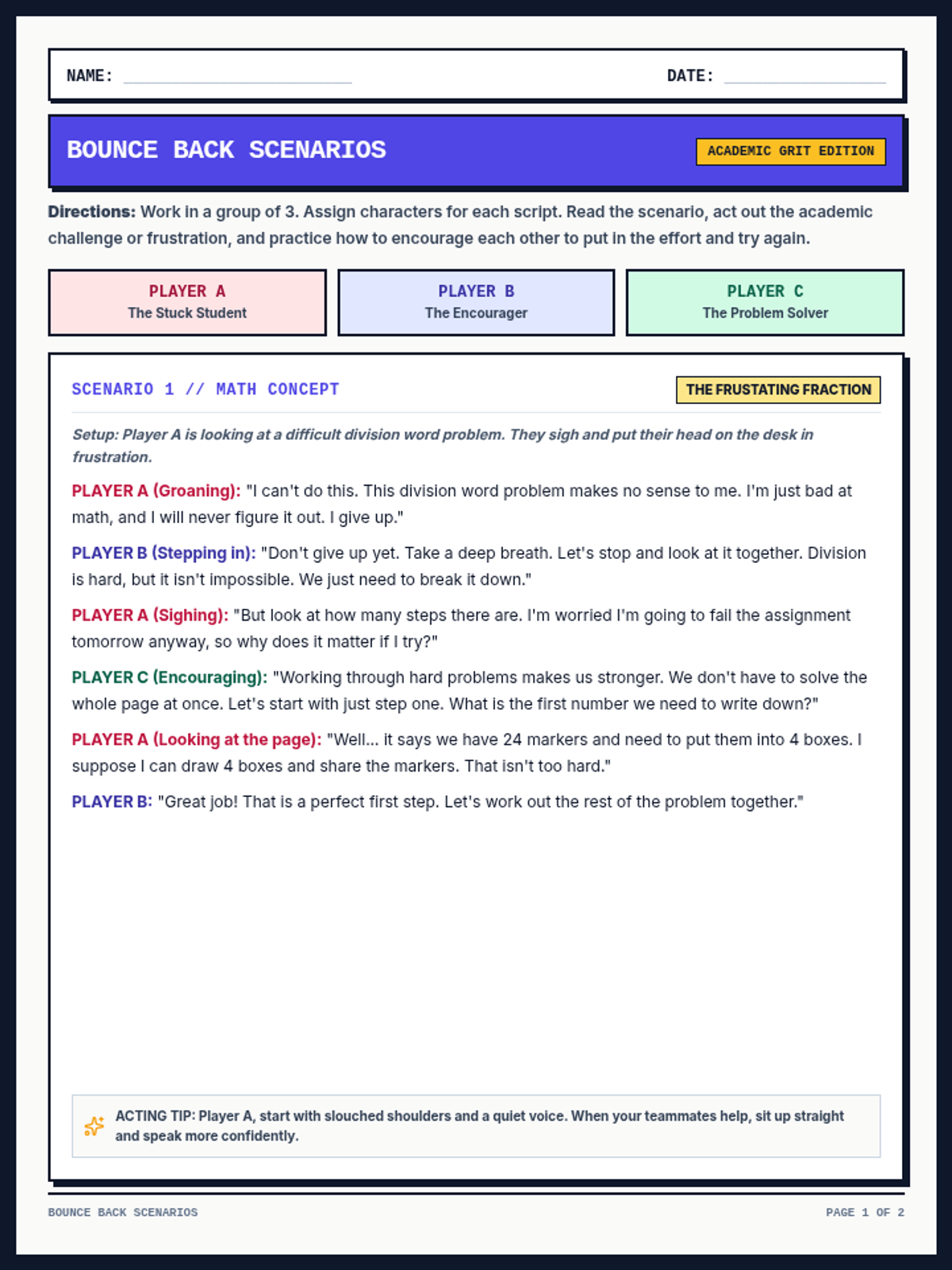
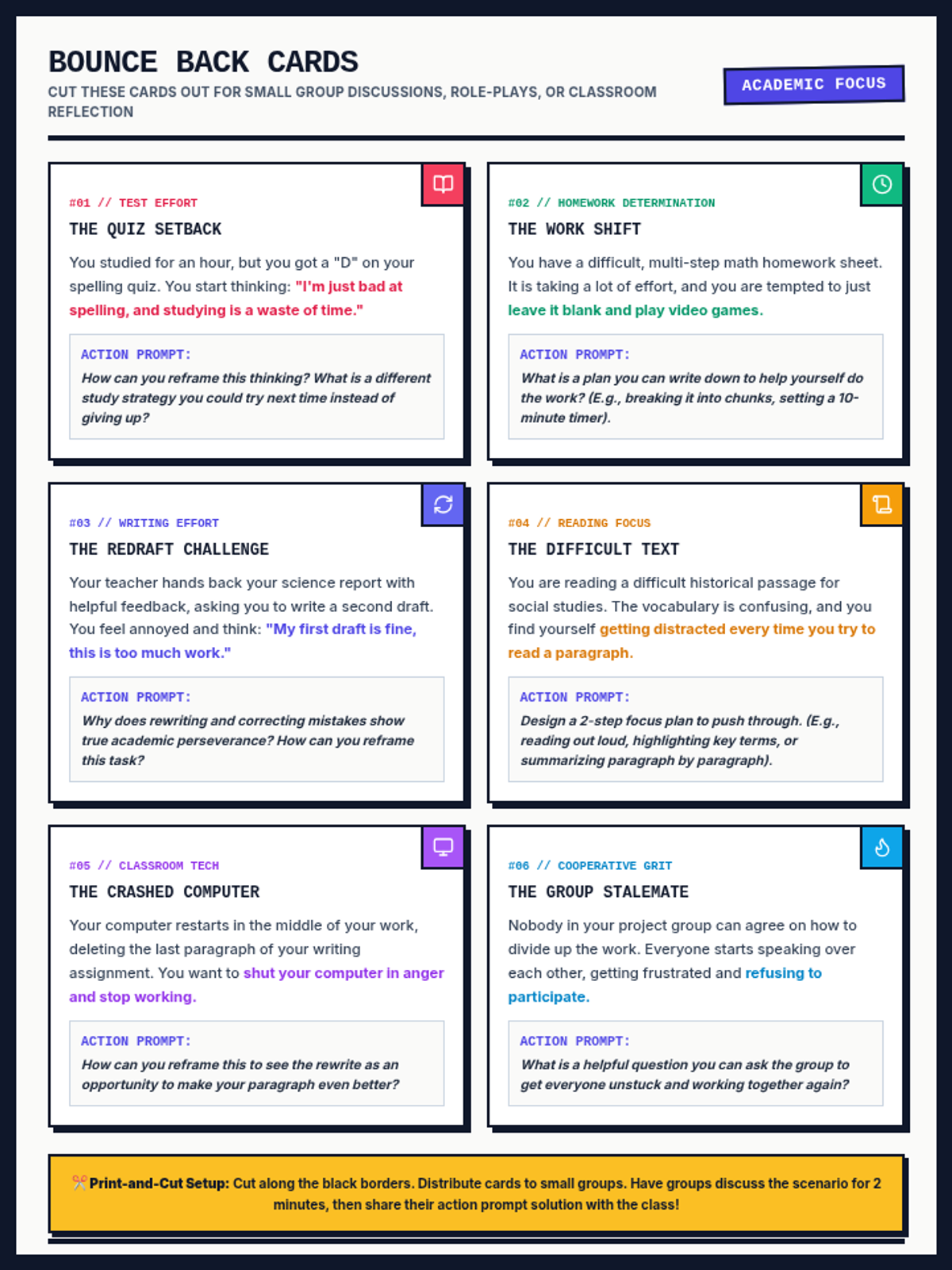
A high-energy, 30-minute interactive lesson for 4th and 5th graders designed to teach perseverance through movement, role-play, and growth mindset reflections. Students learn to reframe setbacks, practice bouncing back from common obstacles, and build collaborative grit.
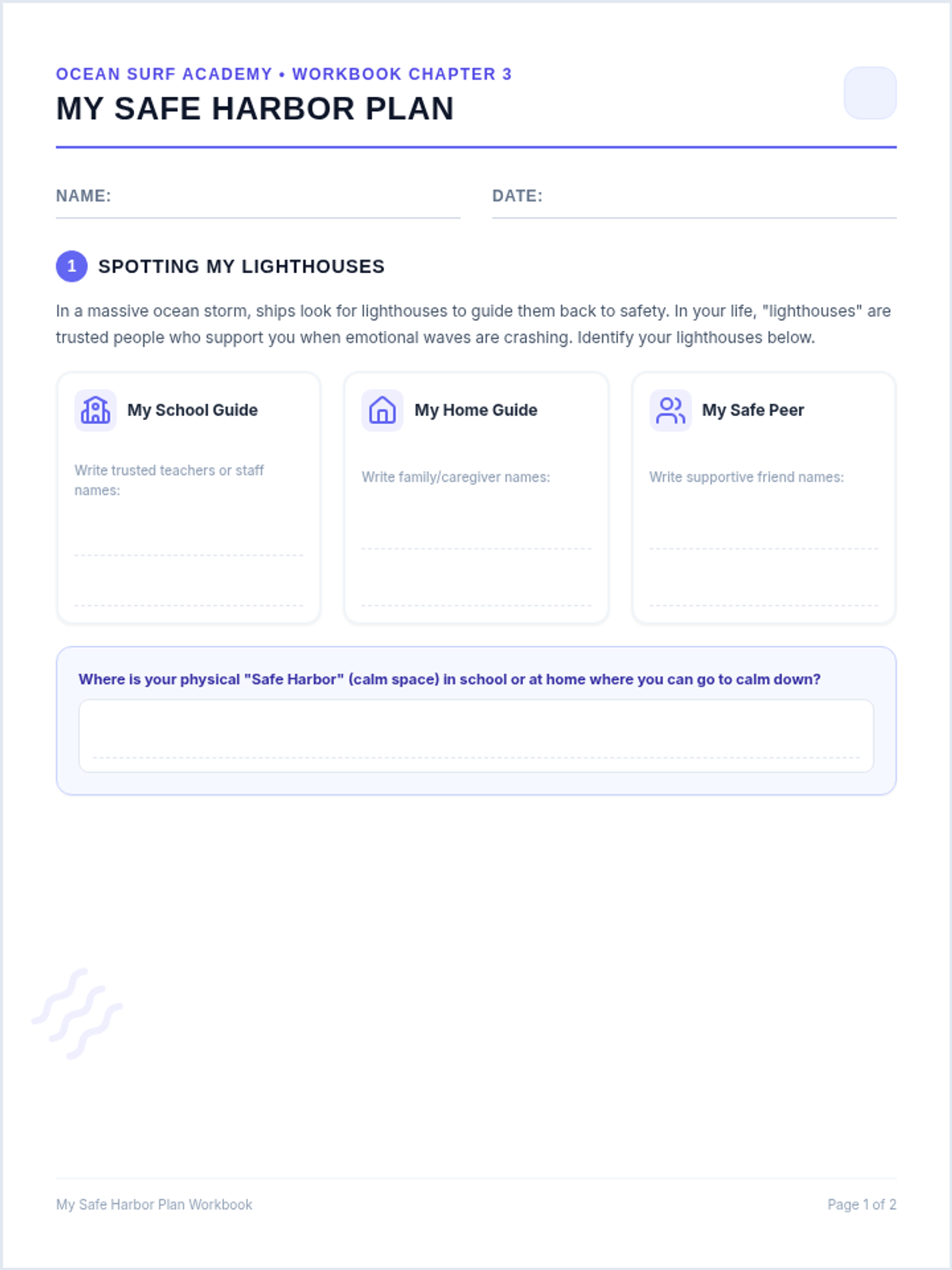
Students learn to build healthy boundaries and identify their "lighthouse" support systems. They design a safe harbor plan and practice expressive communication to safely share big feelings with trusted peers, family, and teachers.
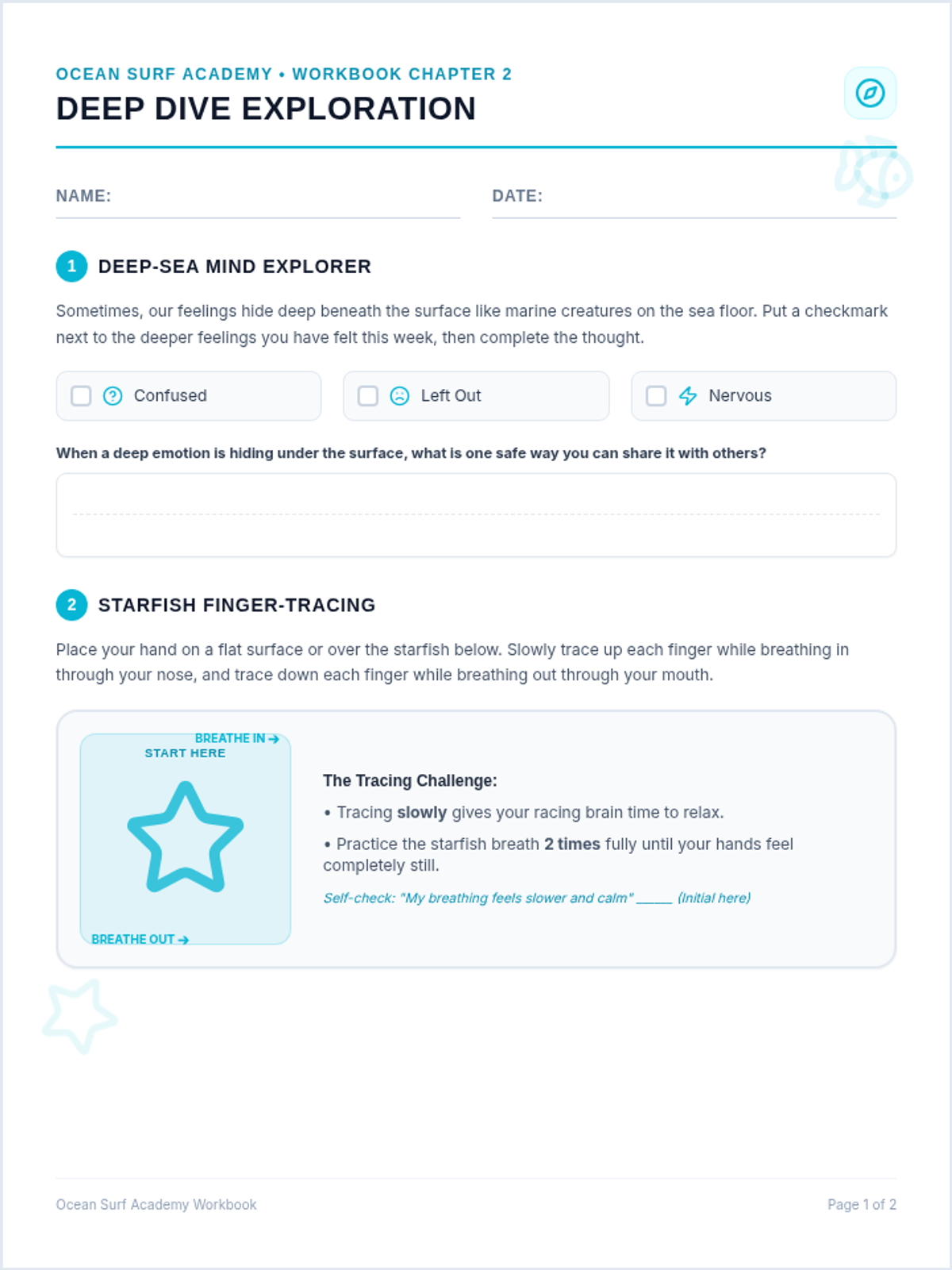
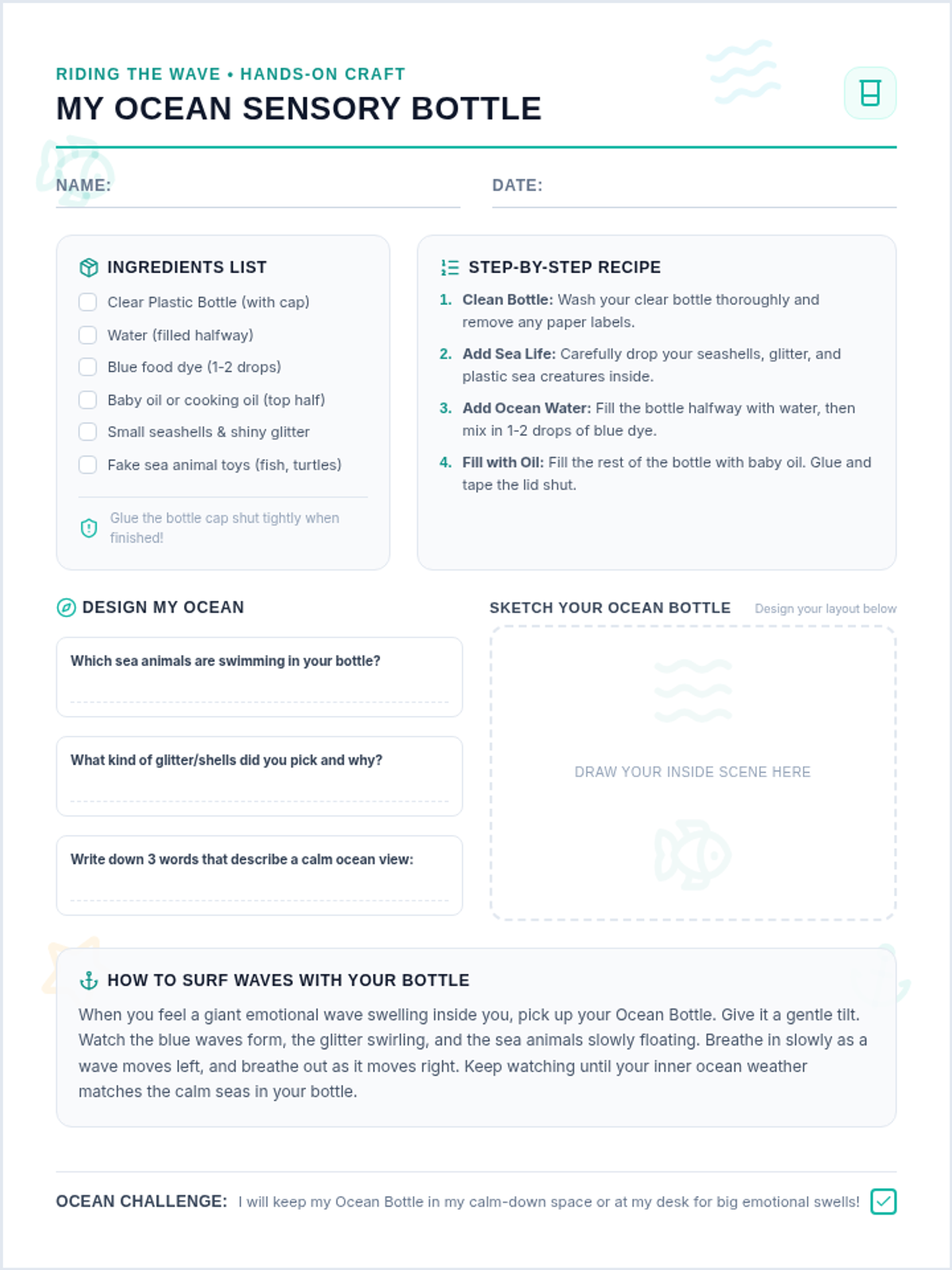
Students explore physical grounding and positive self-talk techniques to calm their minds when emotional waves swell. They design their own self-talk shields and practice five-finger ocean breathing.
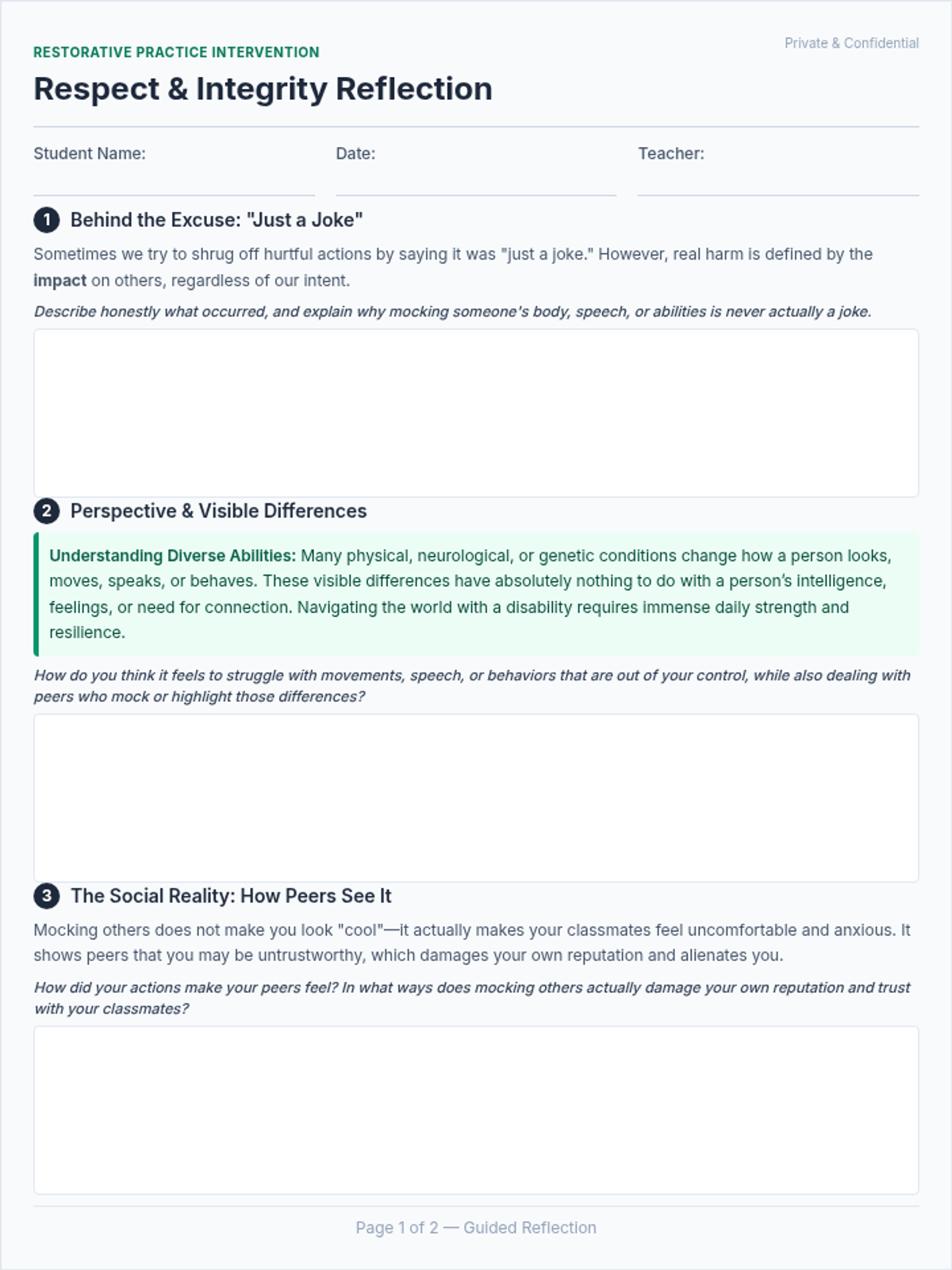
A restorative intervention lesson designed for students who have engaged in mocking or exclusionary behavior toward peers with disabilities. It focuses on perspective taking, social repositioning, impact vs. intent, and establishing concrete behavioral agreements.
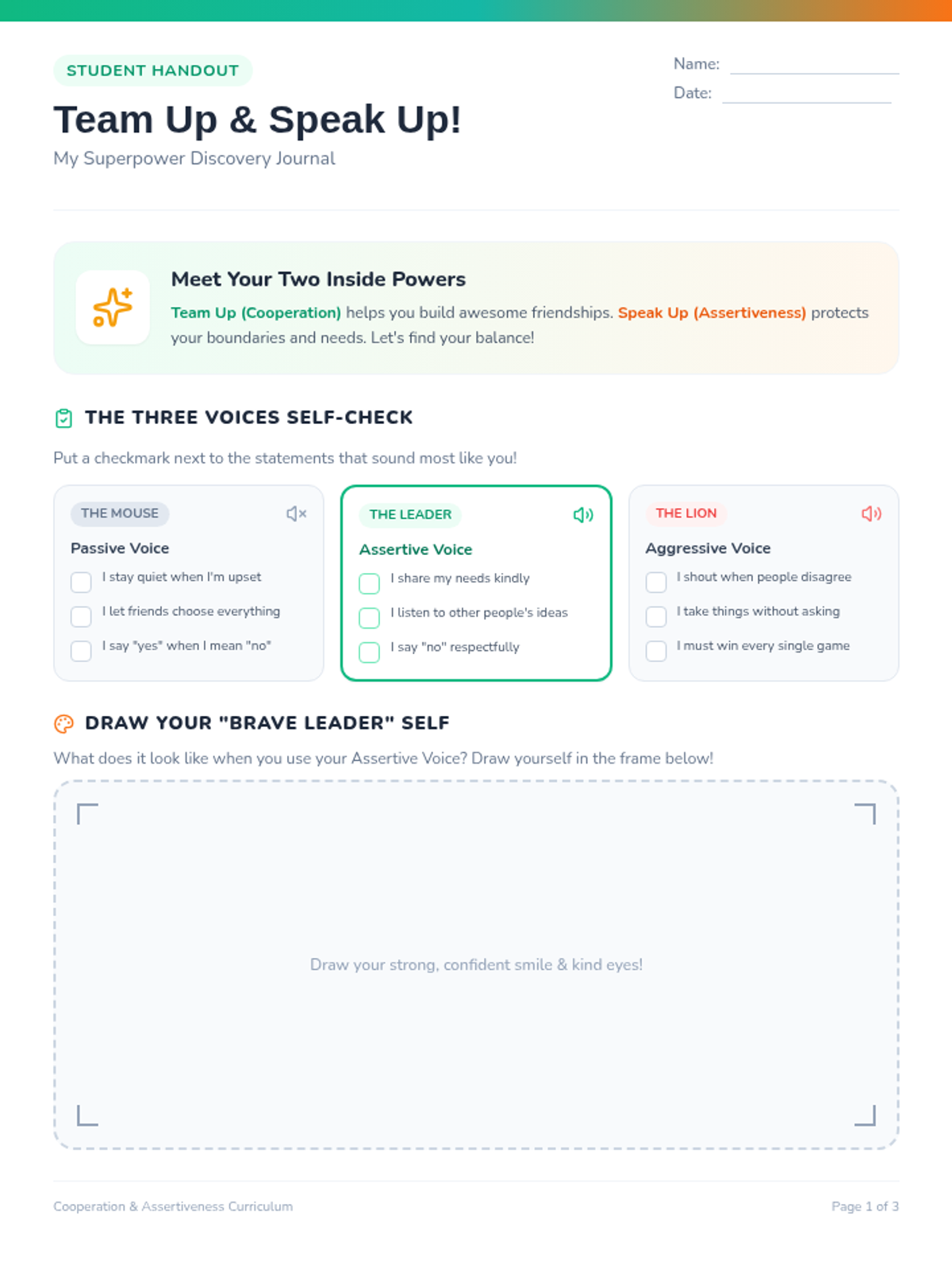
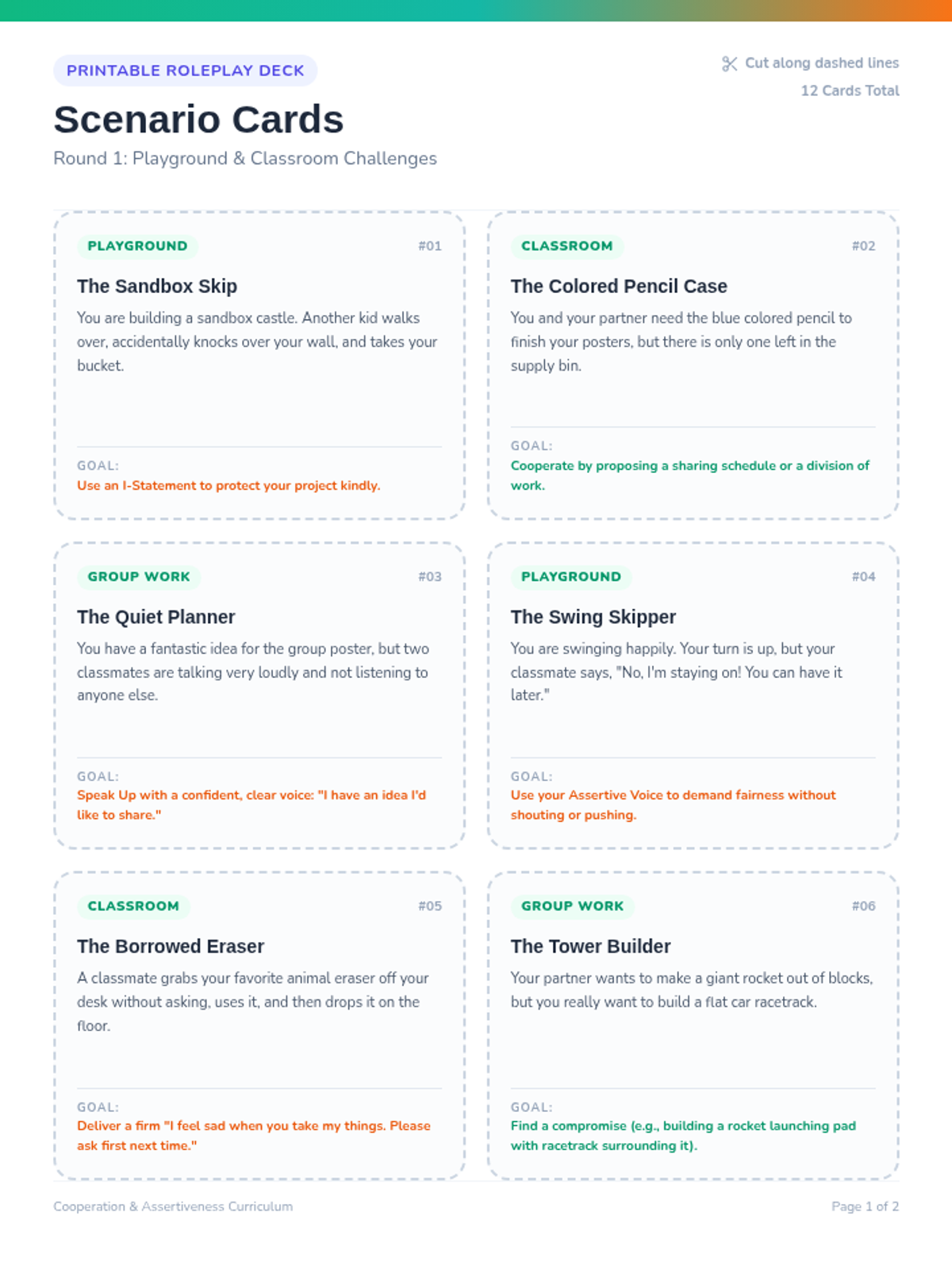
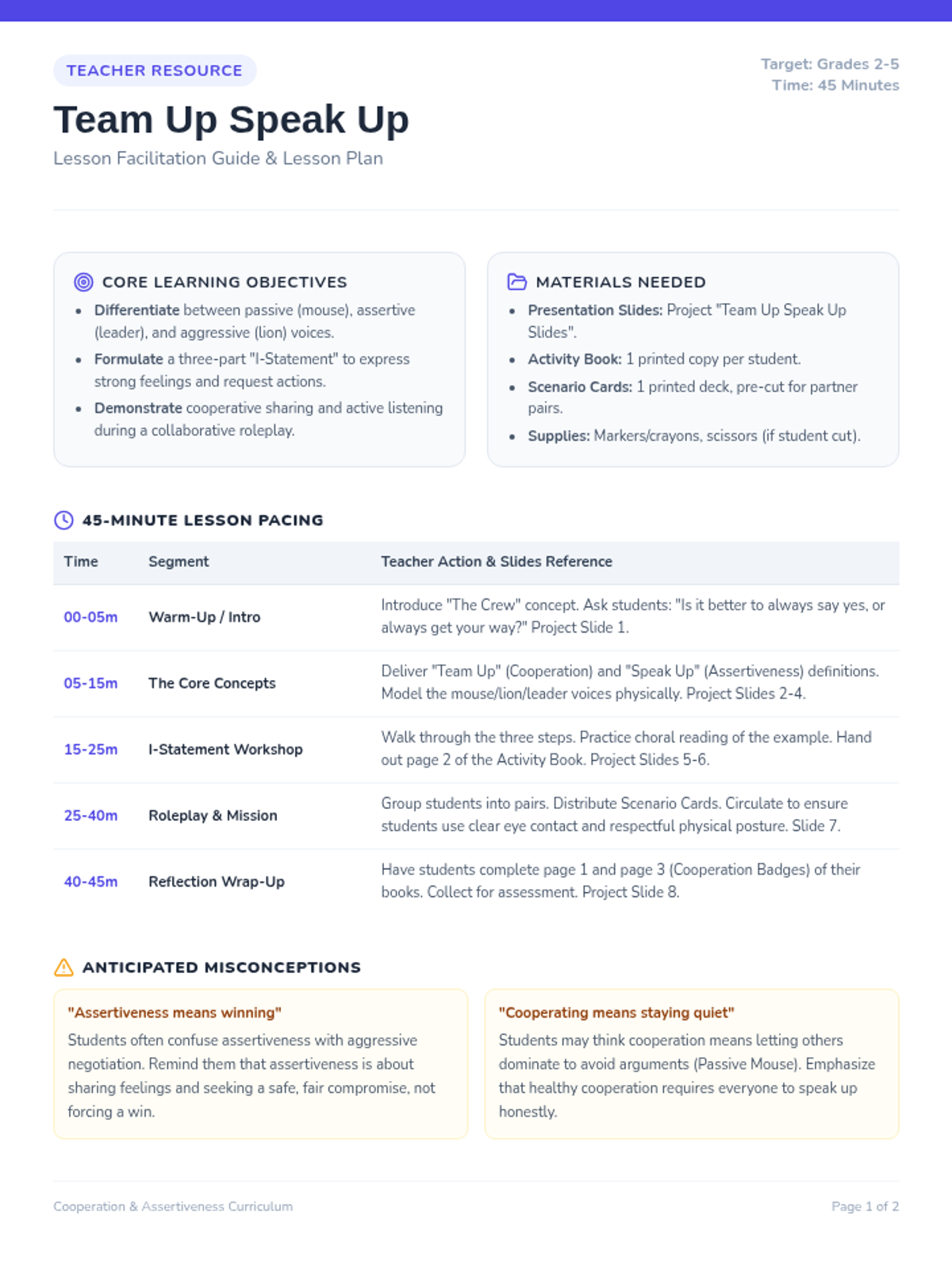
An interactive social-emotional learning lesson that teaches elementary students how to balance cooperation (working together, sharing) and assertiveness (speaking up for themselves, expressing feelings clearly) through roleplays, self-assessments, and guided reflection.
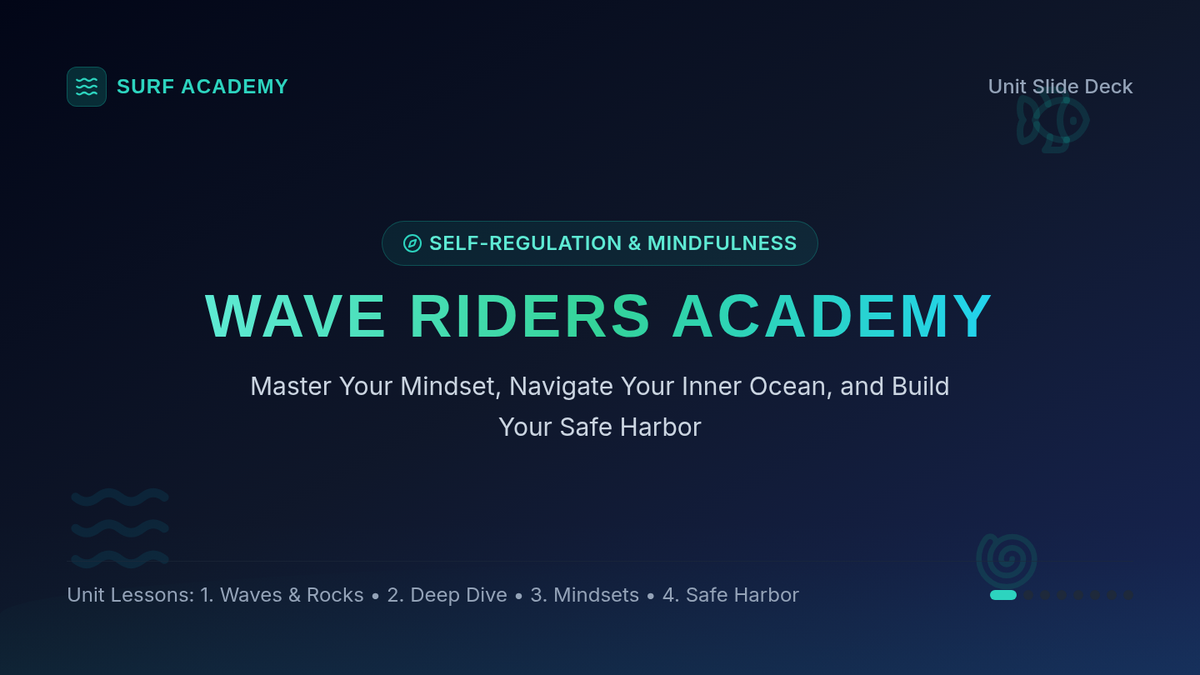
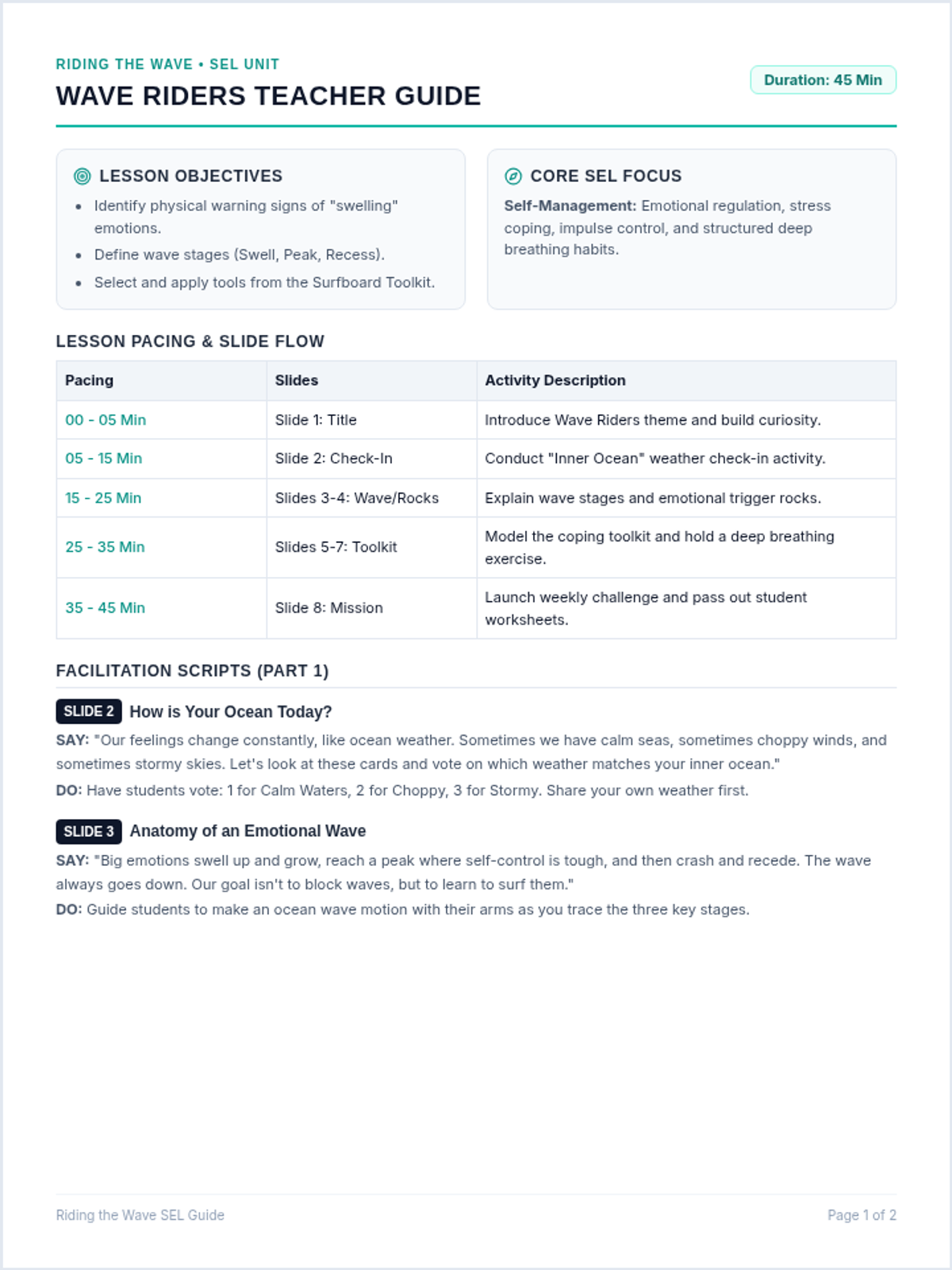
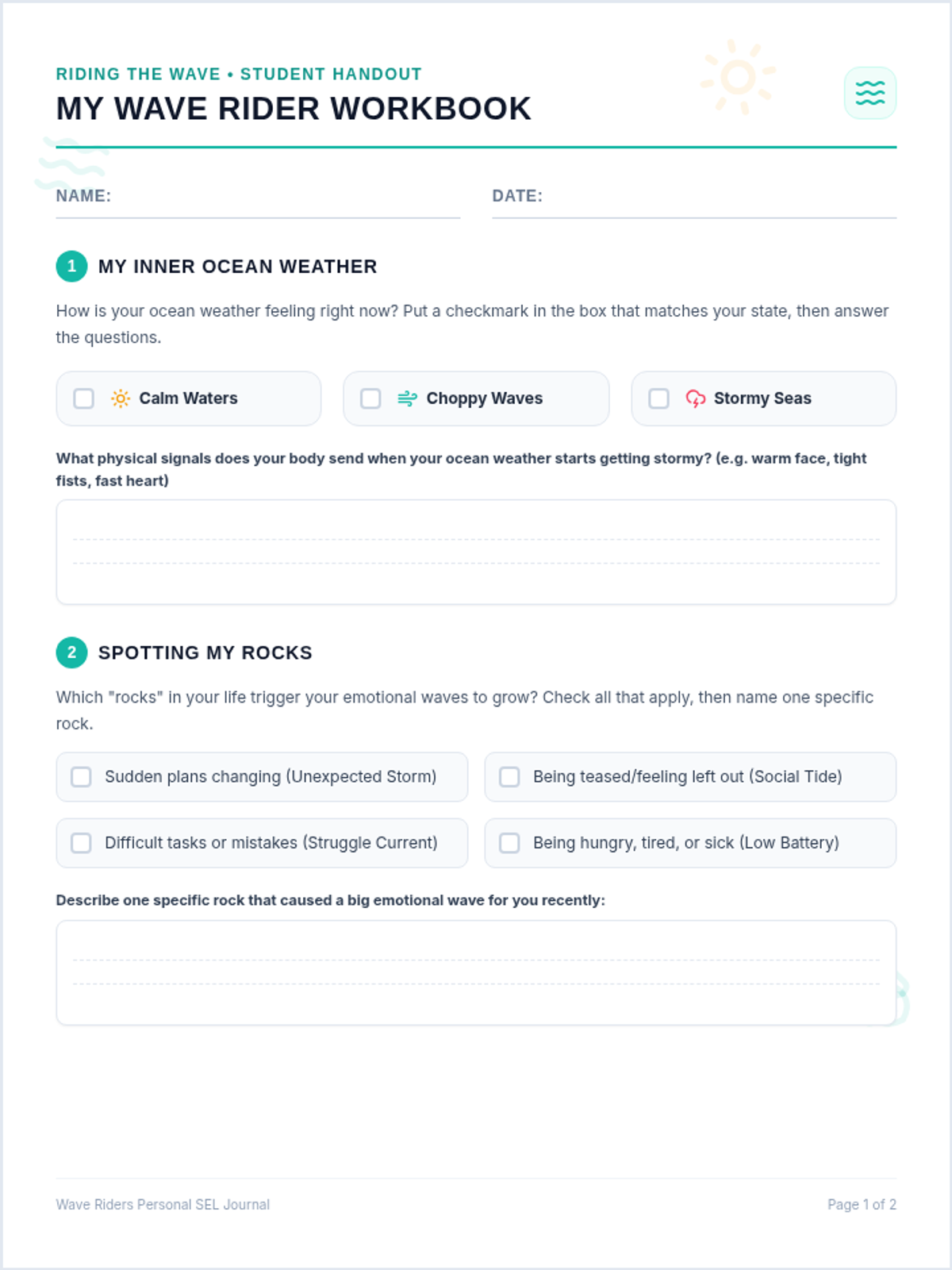
A dynamic, interactive SEL lesson on self-regulation and emotional control. Students learn to recognize emotional waves, identify personal triggers, and master practical coping techniques to surf through big feelings.
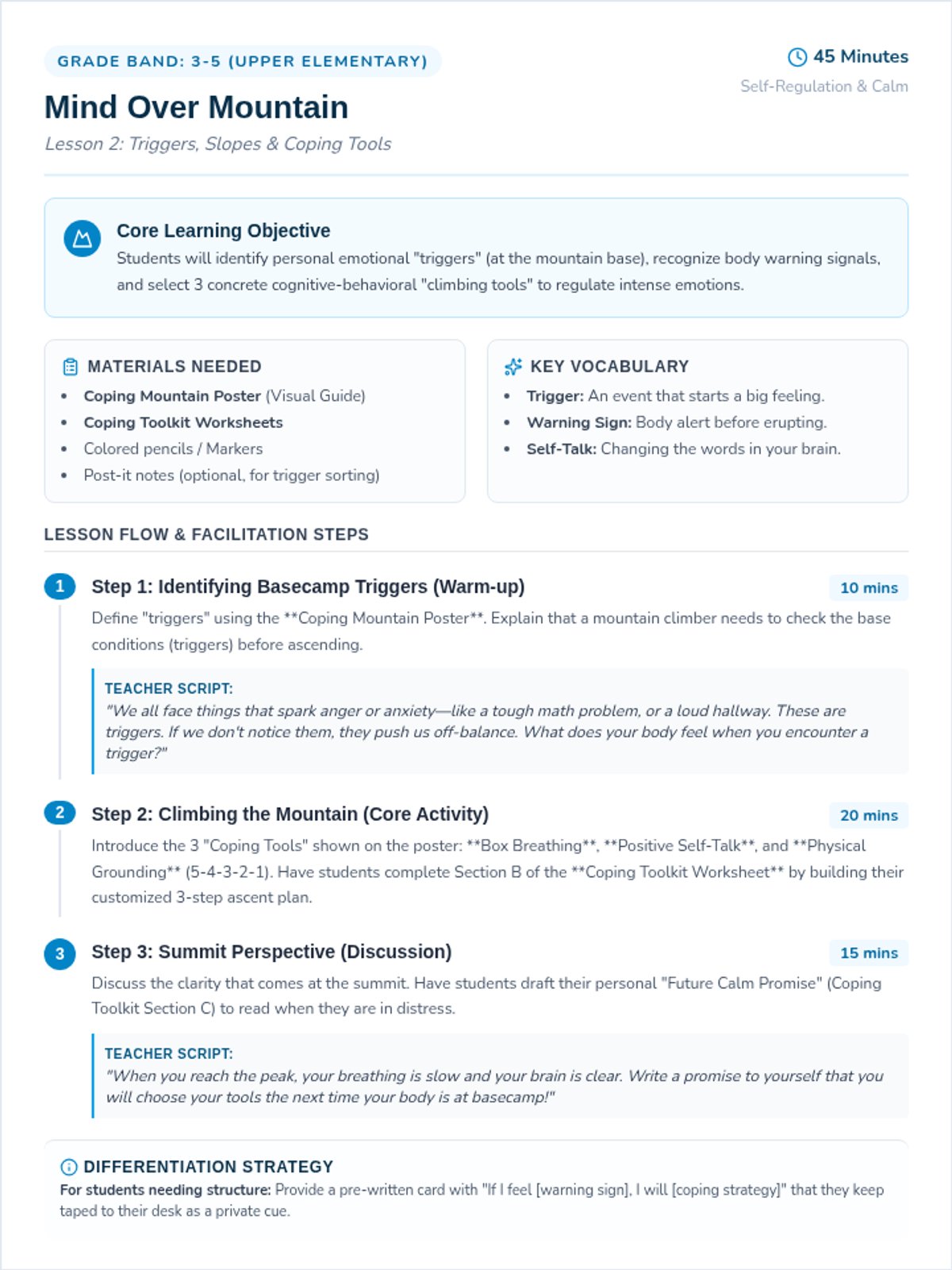
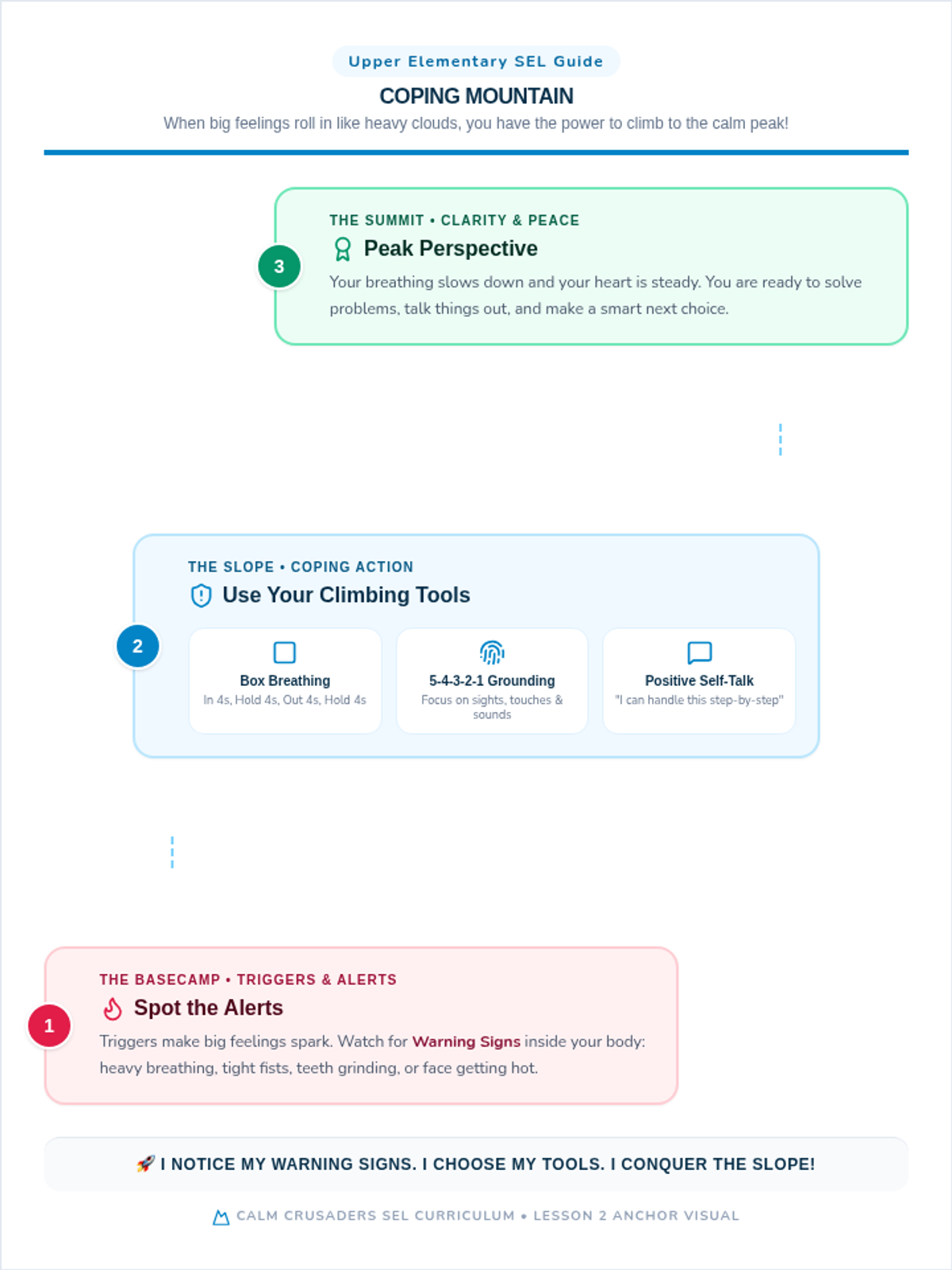
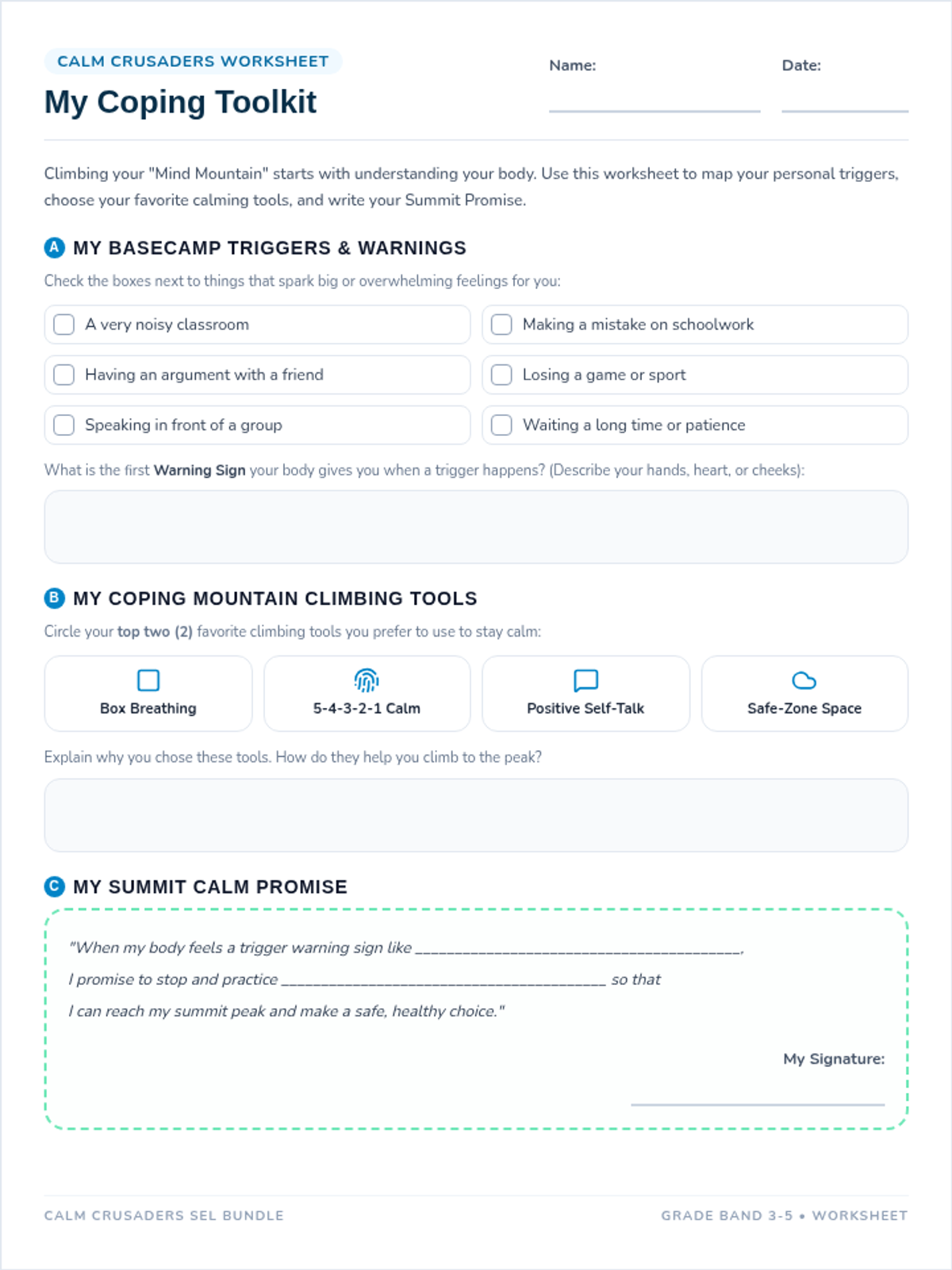
Designed for Upper Elementary (3-5), this lesson guides students to recognize emotional triggers, map out a step-by-step calming strategy, and assemble their own mental coping toolkit using a mountain climbing metaphor.
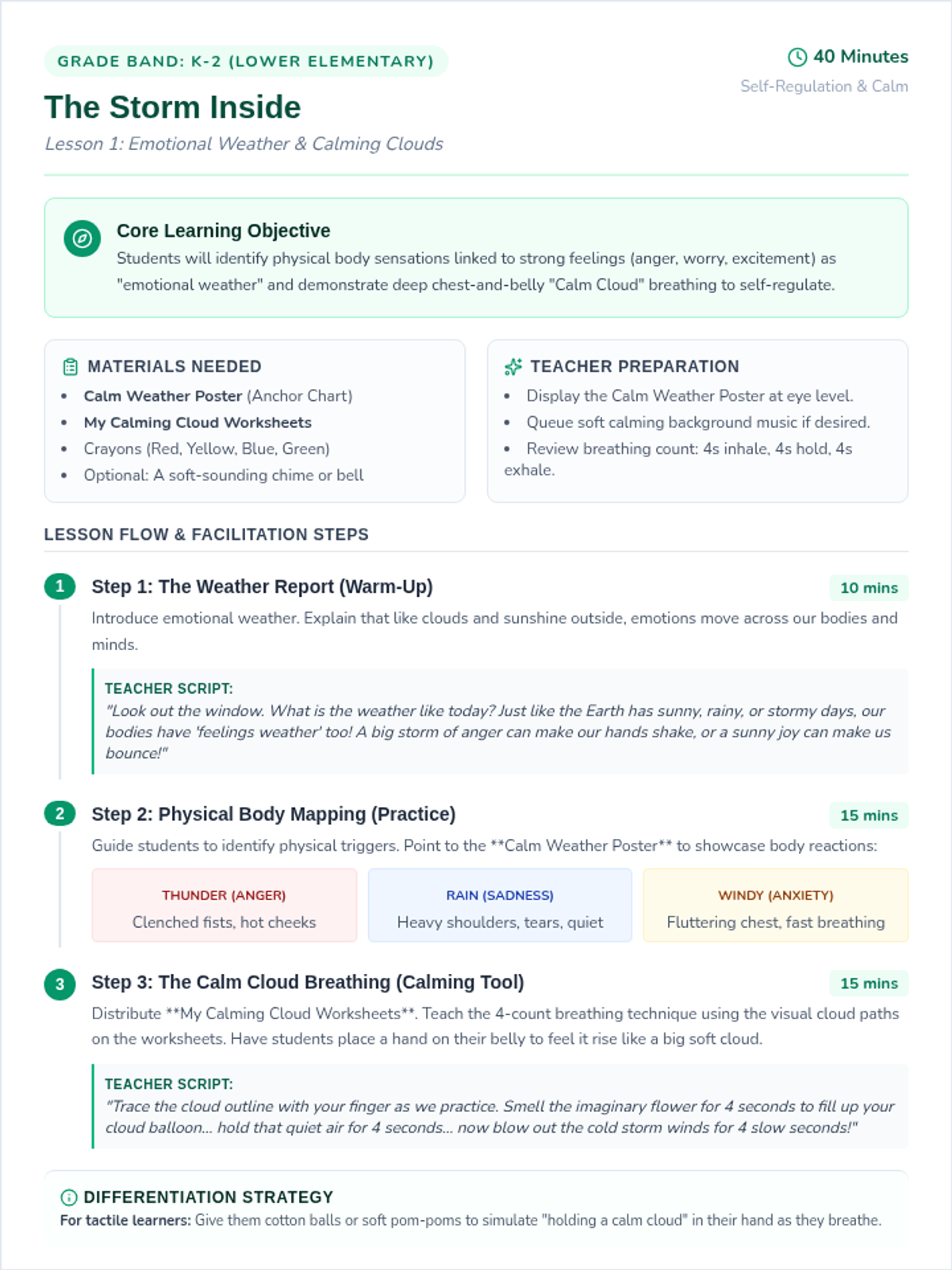
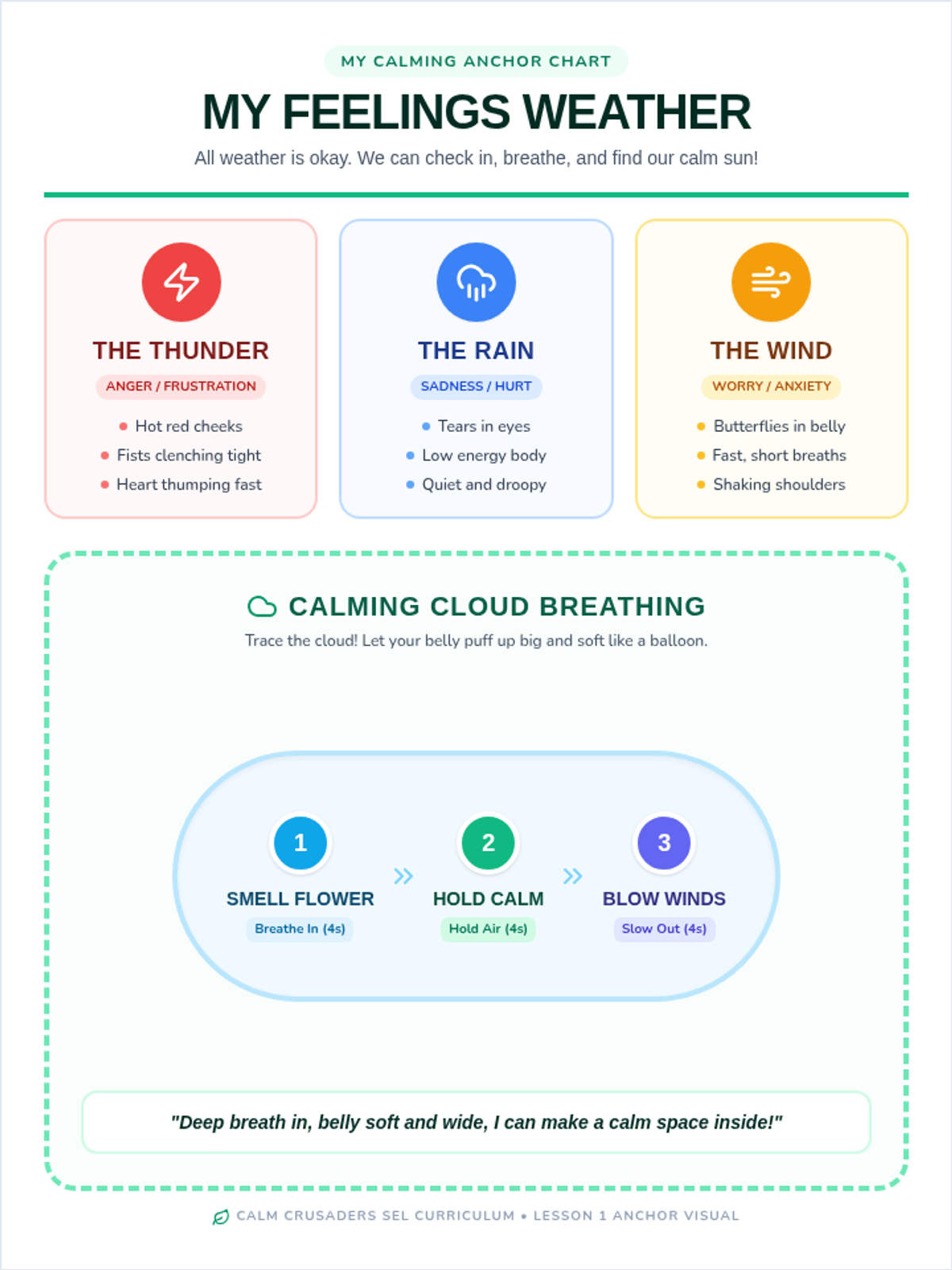
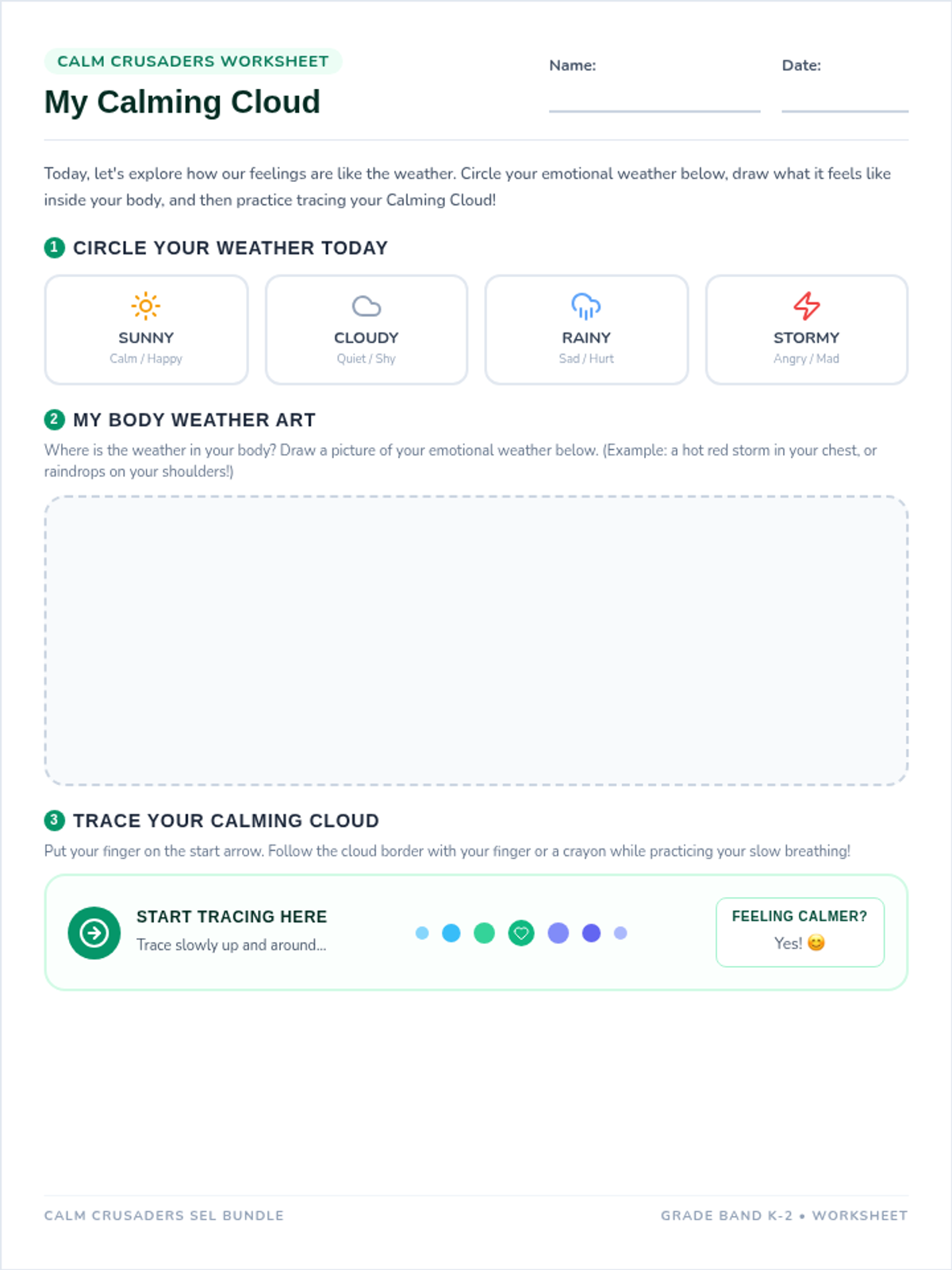
Designed for Lower Elementary (K-2), this lesson introduces students to identifying strong feelings inside their bodies as 'weather' patterns and practicing calming belly-breathing techniques.
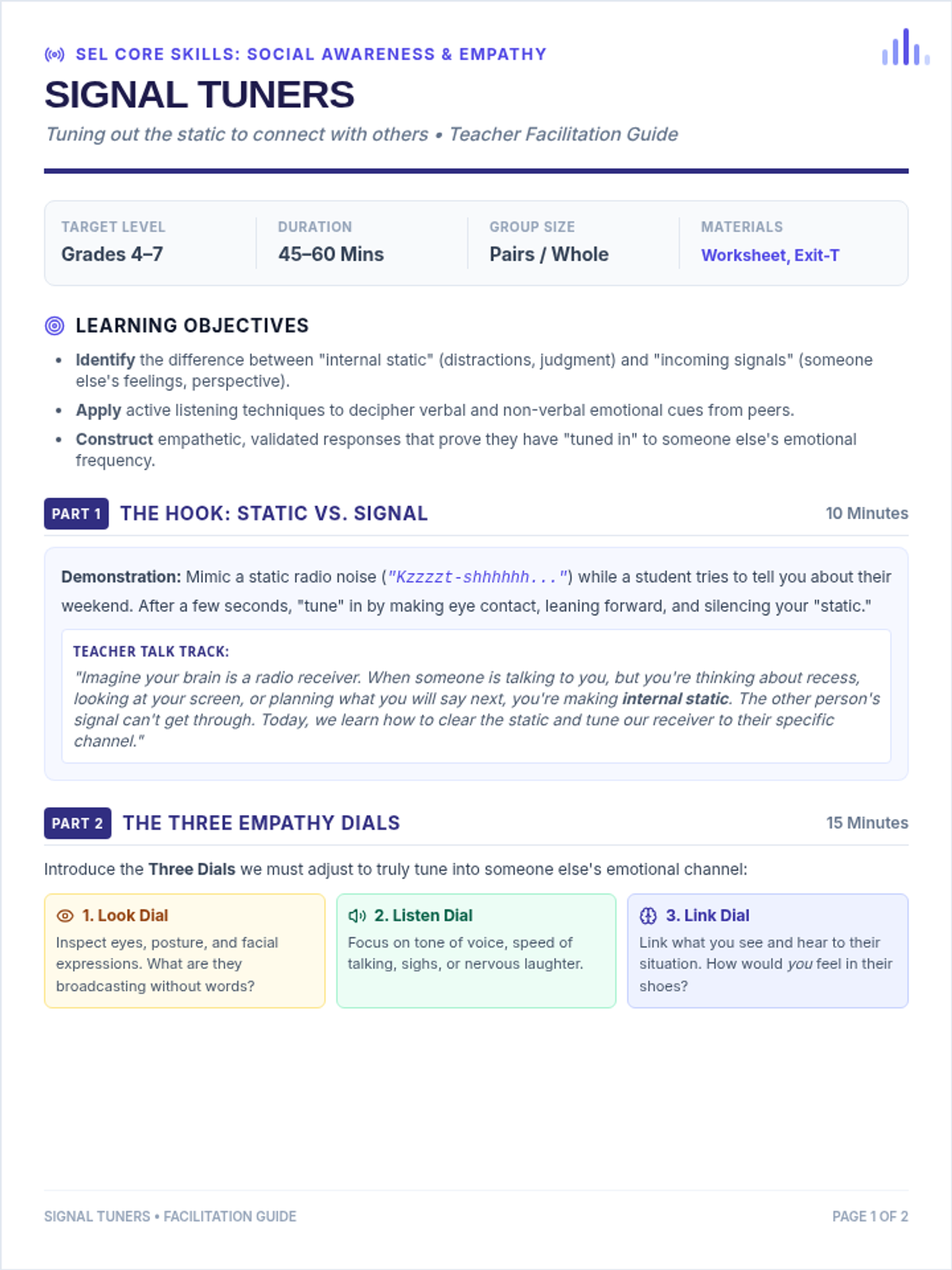
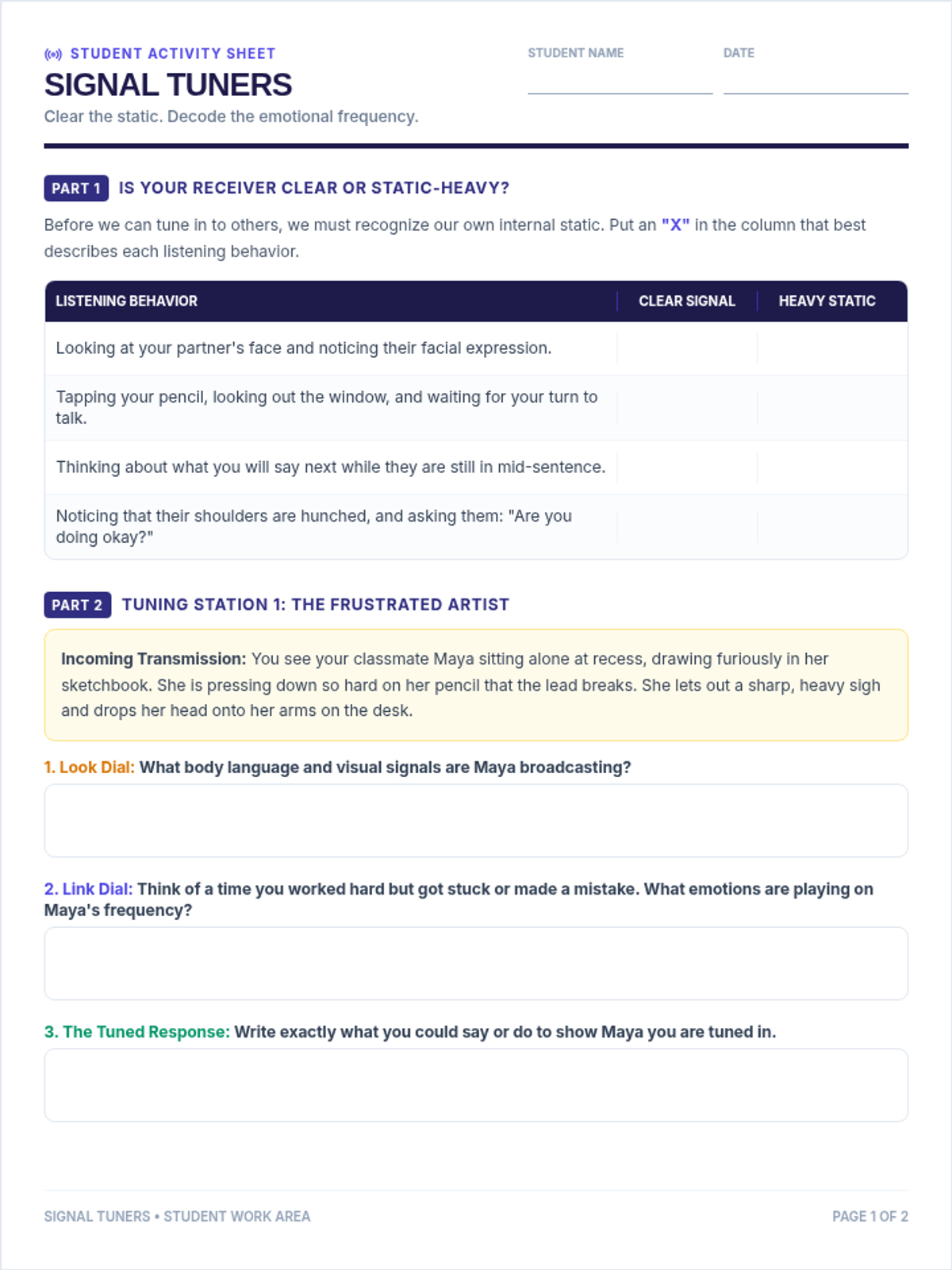
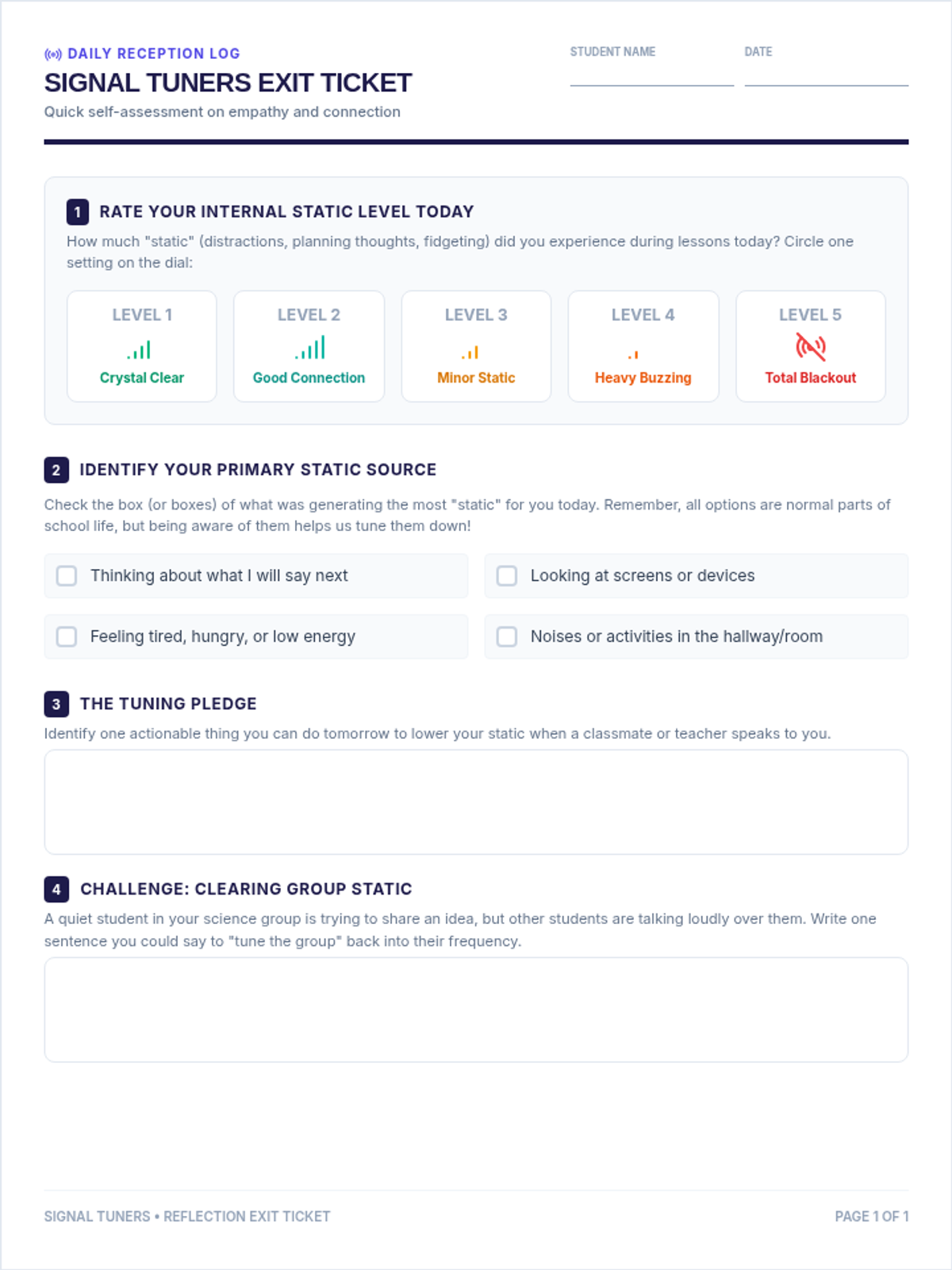
A high-engagement social-emotional learning lesson focusing on empathy, active listening, and perspective-taking. Students learn to think of others' emotions as radio signals they can 'tune into' by clearing the static of their own distractions.
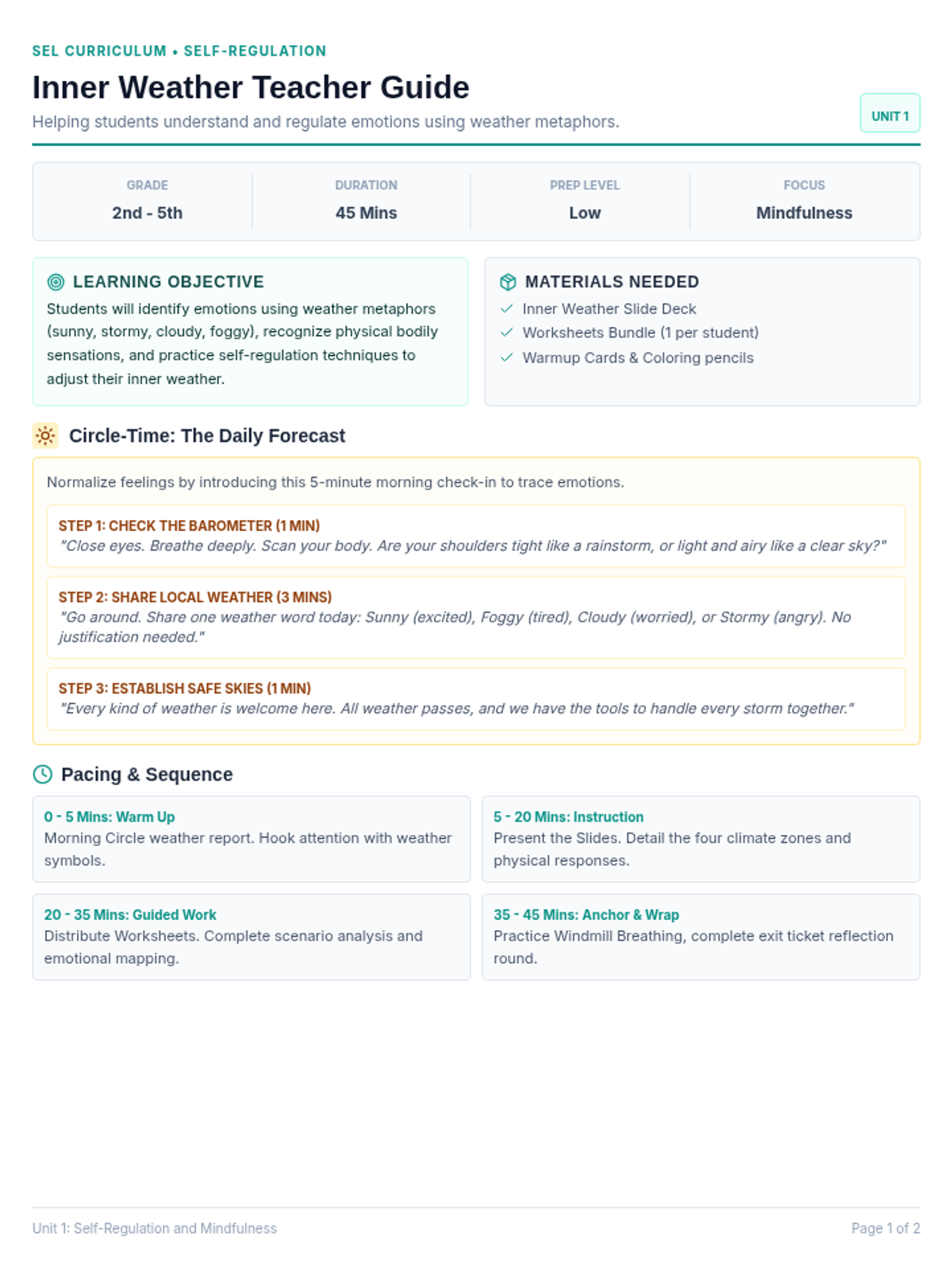
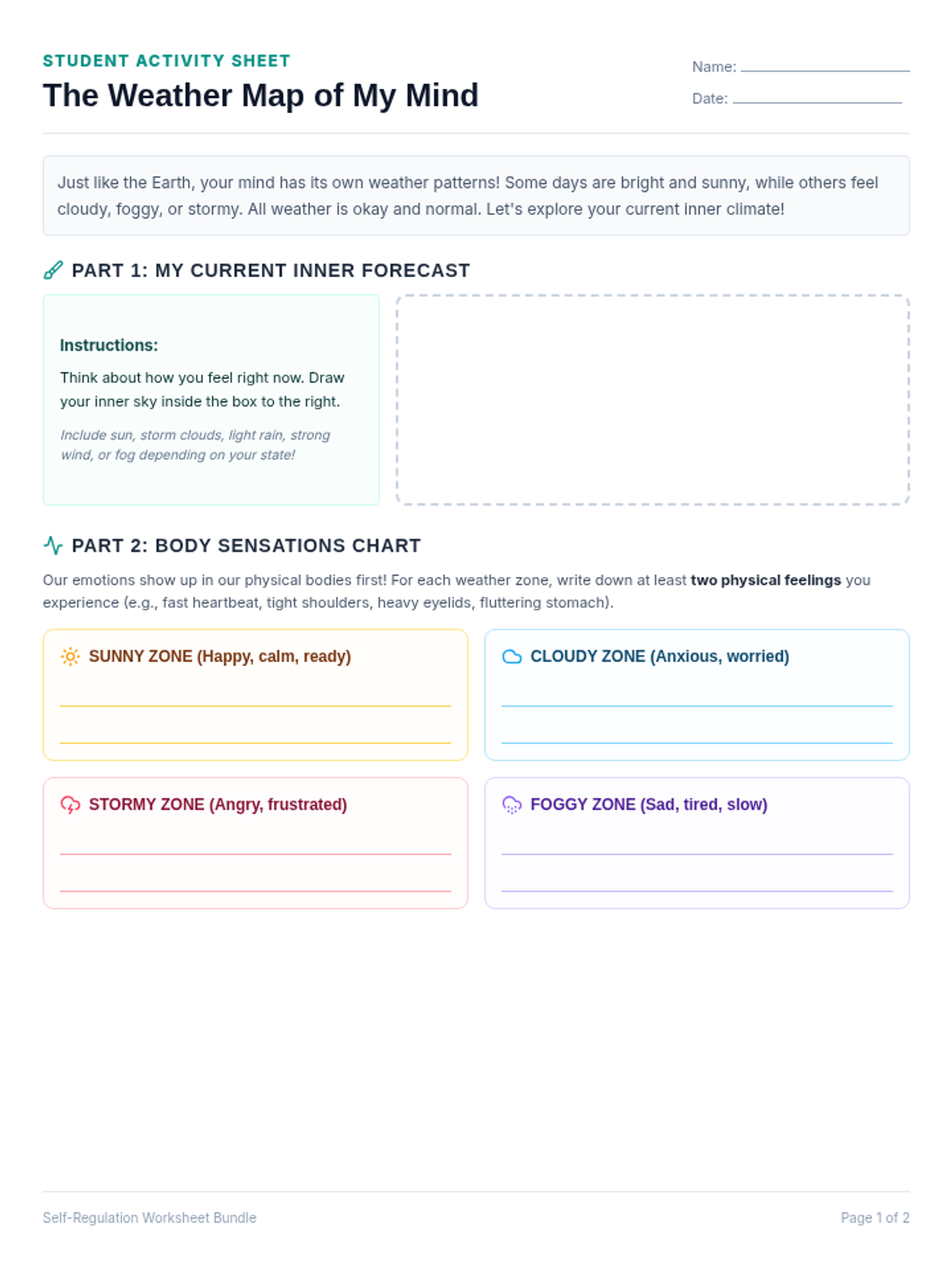
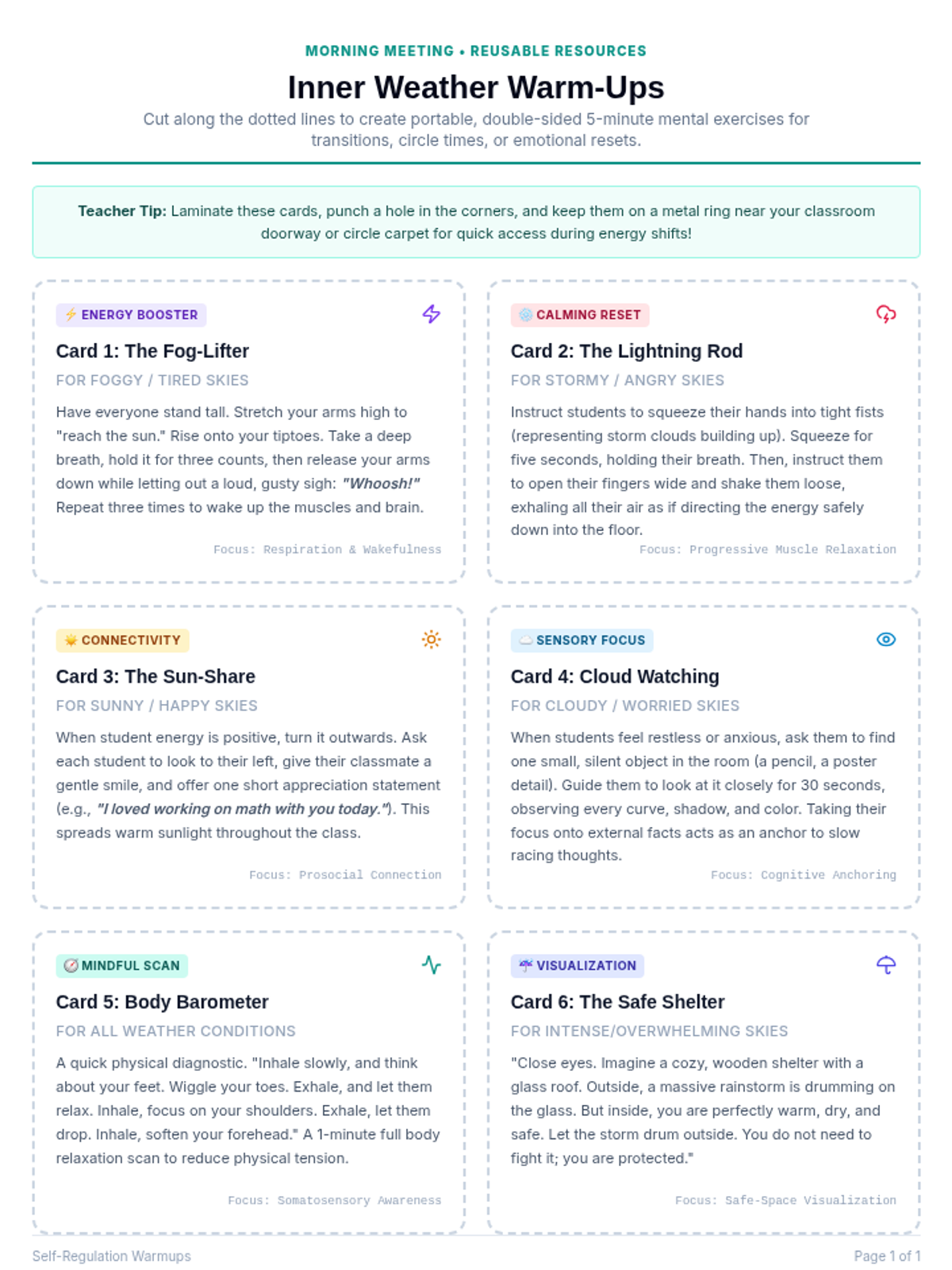
A comprehensive social-emotional learning lesson that teaches students to identify, monitor, and regulate their emotions using the metaphor of meteorology and weather patterns. Students learn practical breathing exercises, sensory anchoring, and calming strategies to navigate their inner storms and sunny days.
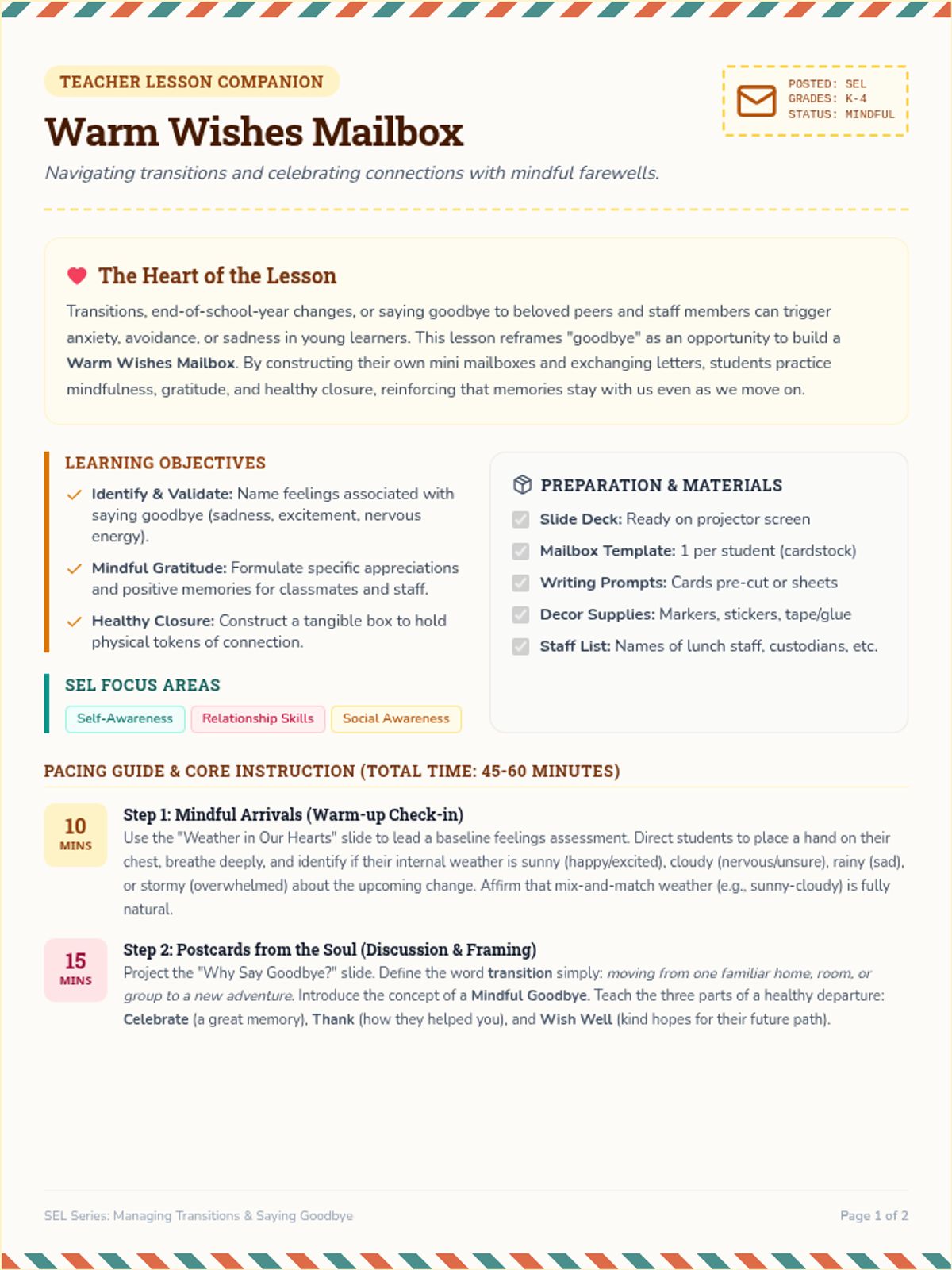
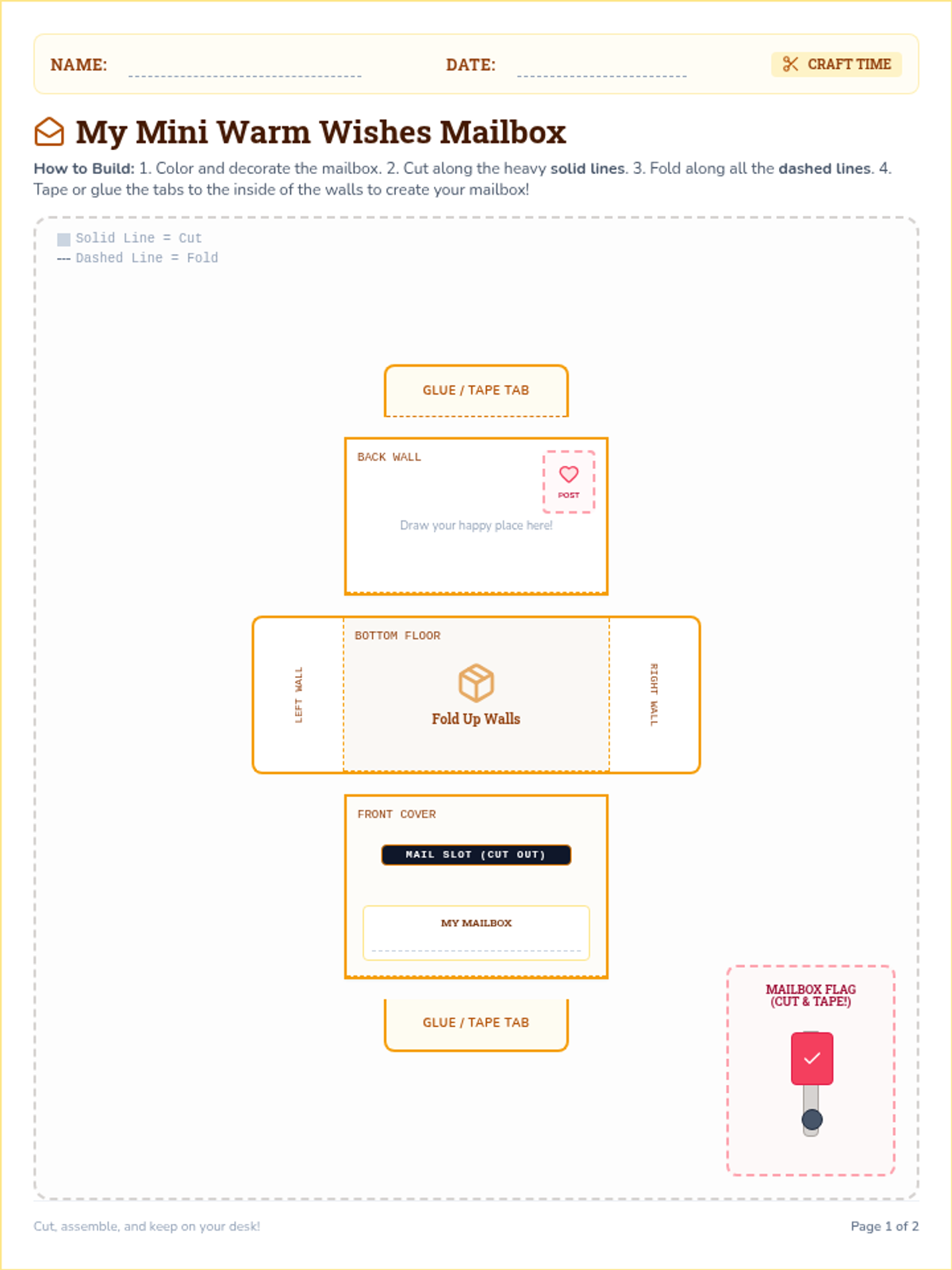
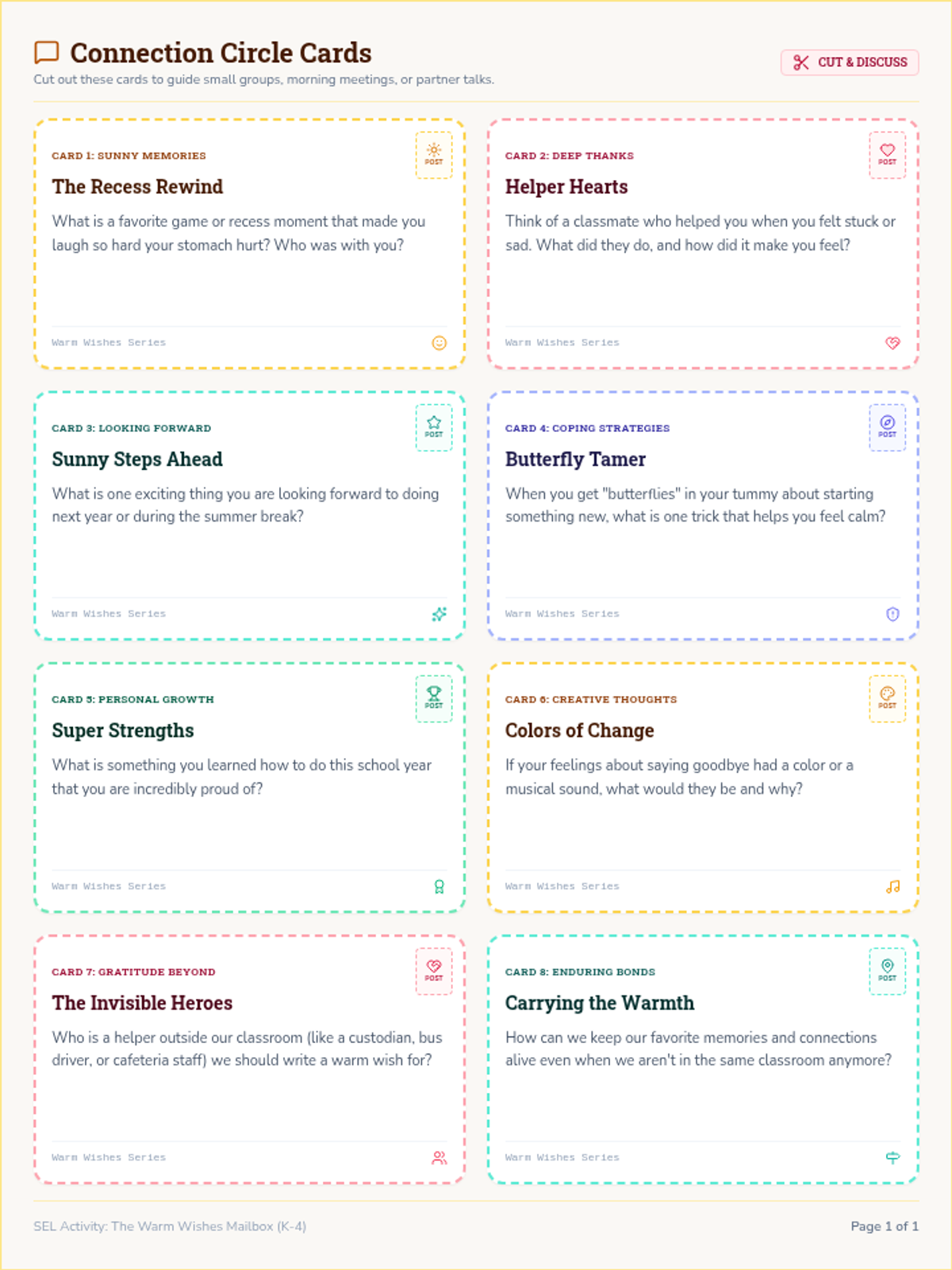
A heartwarming K-4 social-emotional learning lesson that guides students through transition anxiety by learning to say healthy, intentional fare-wells. Students construct their own mini mailbox and write and exchange positive memories, thanks, and well-wishes.
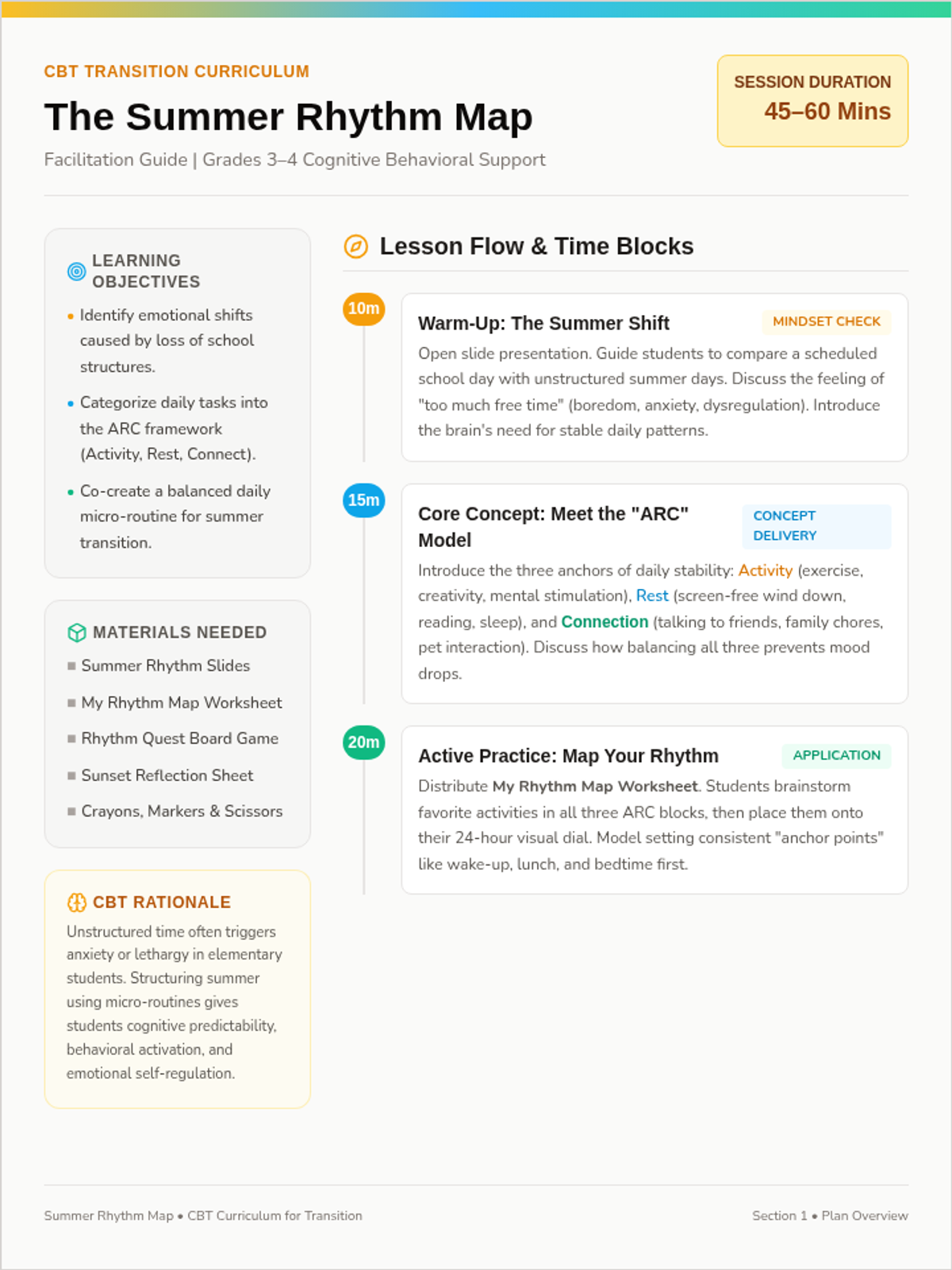
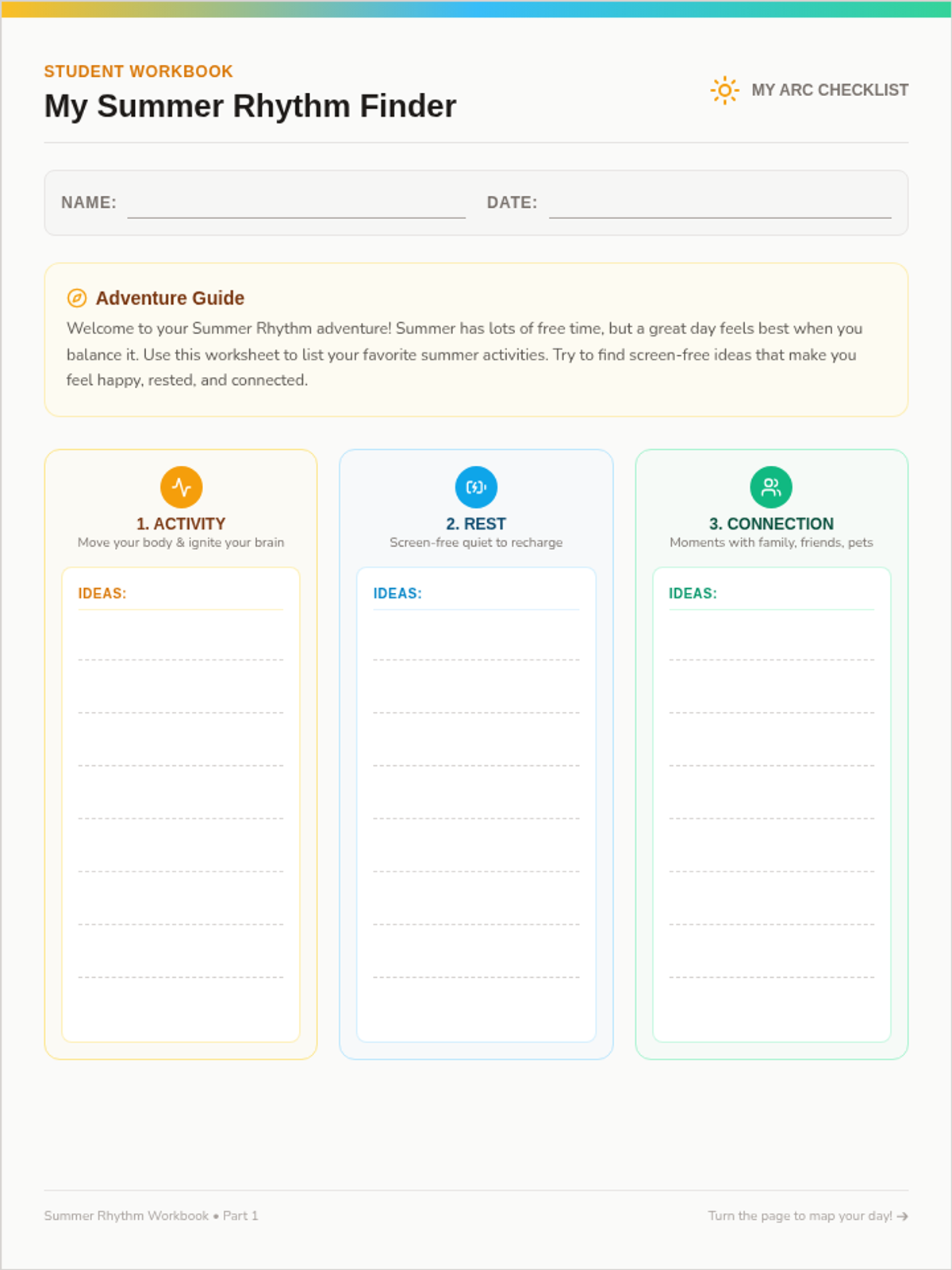
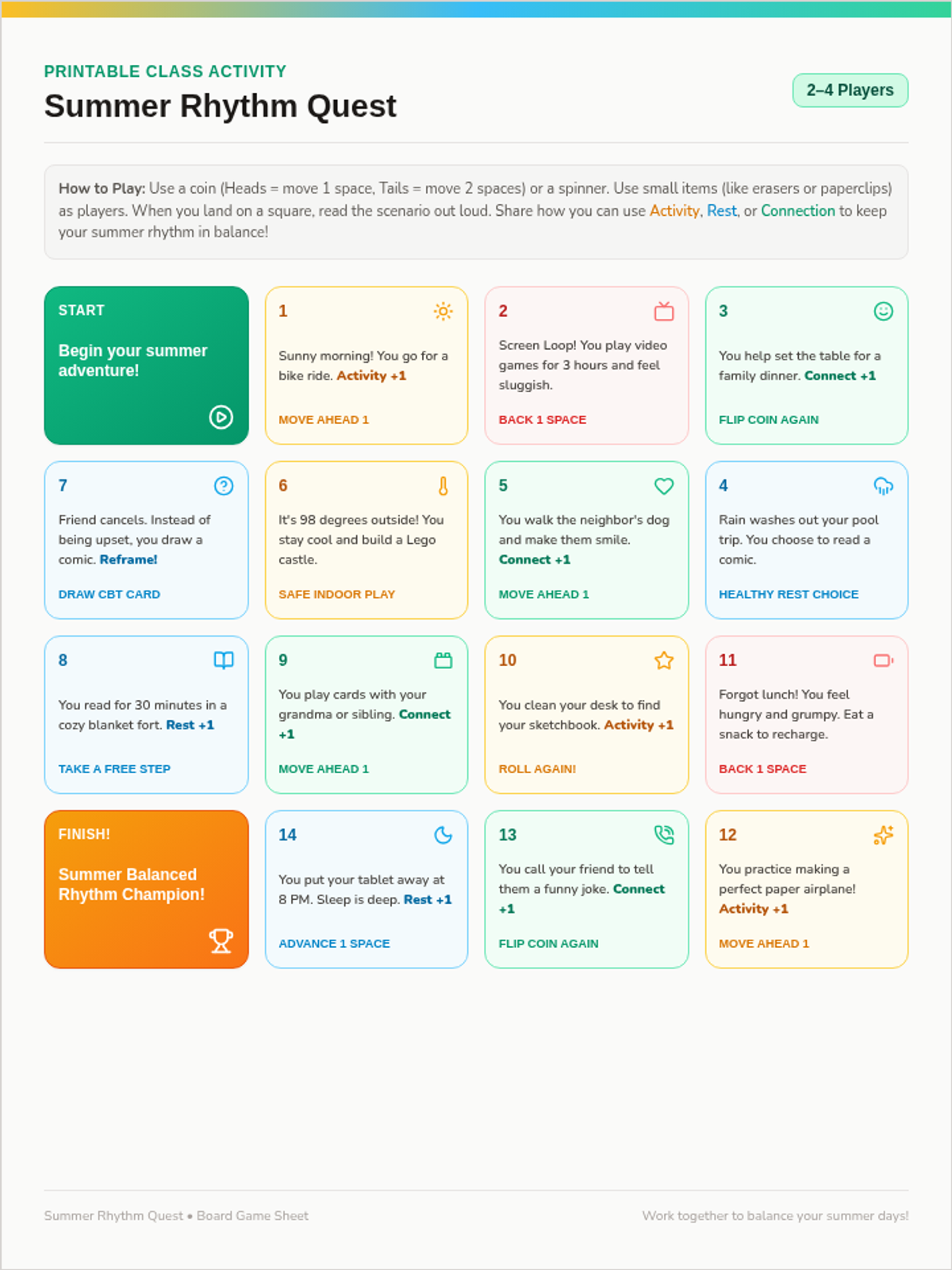
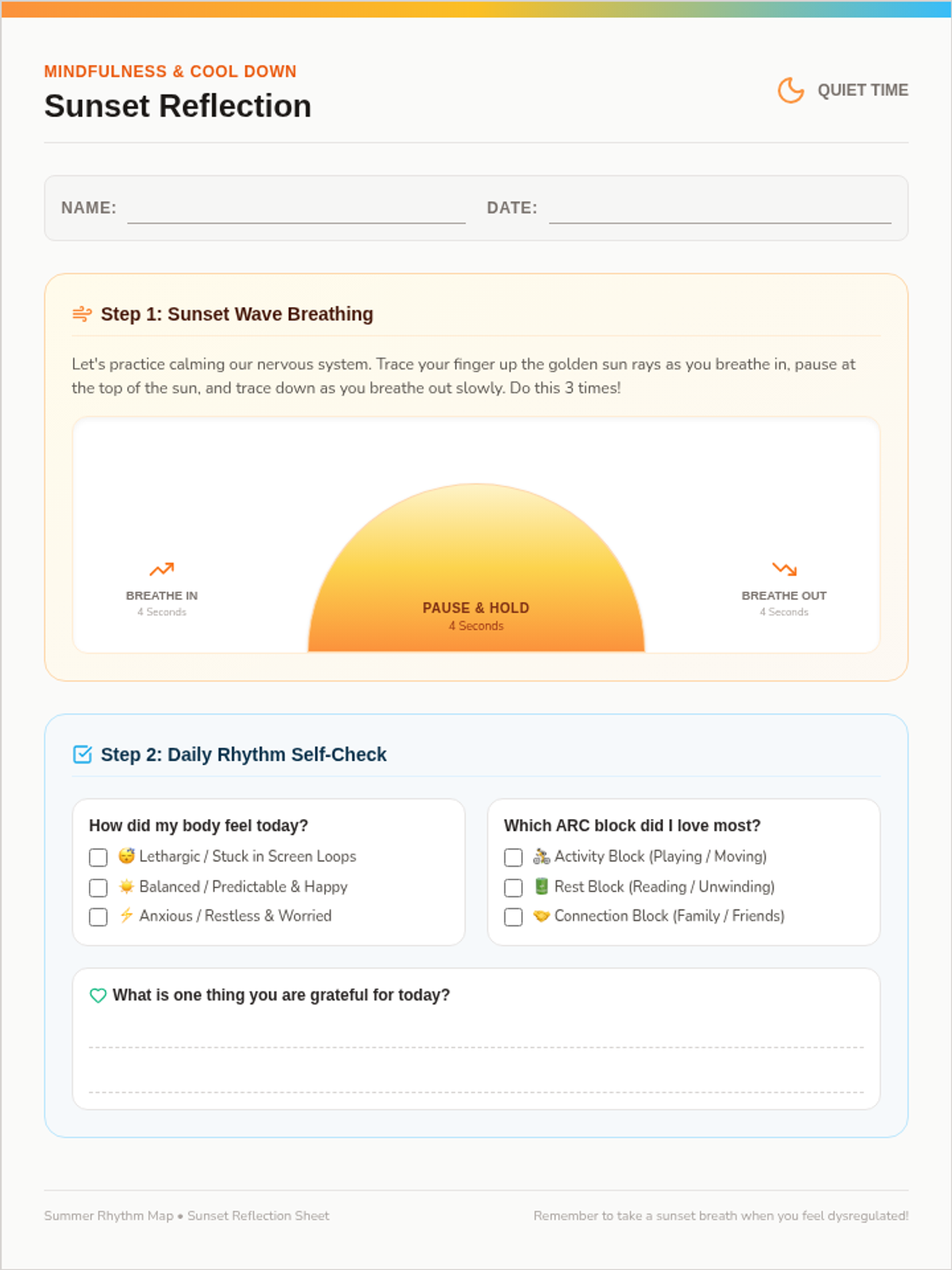
A cognitive-behavioral lesson for 3rd and 4th graders to transition from structured school days to unstructured summer months by designing micro-routines balancing activity, rest, and connection.
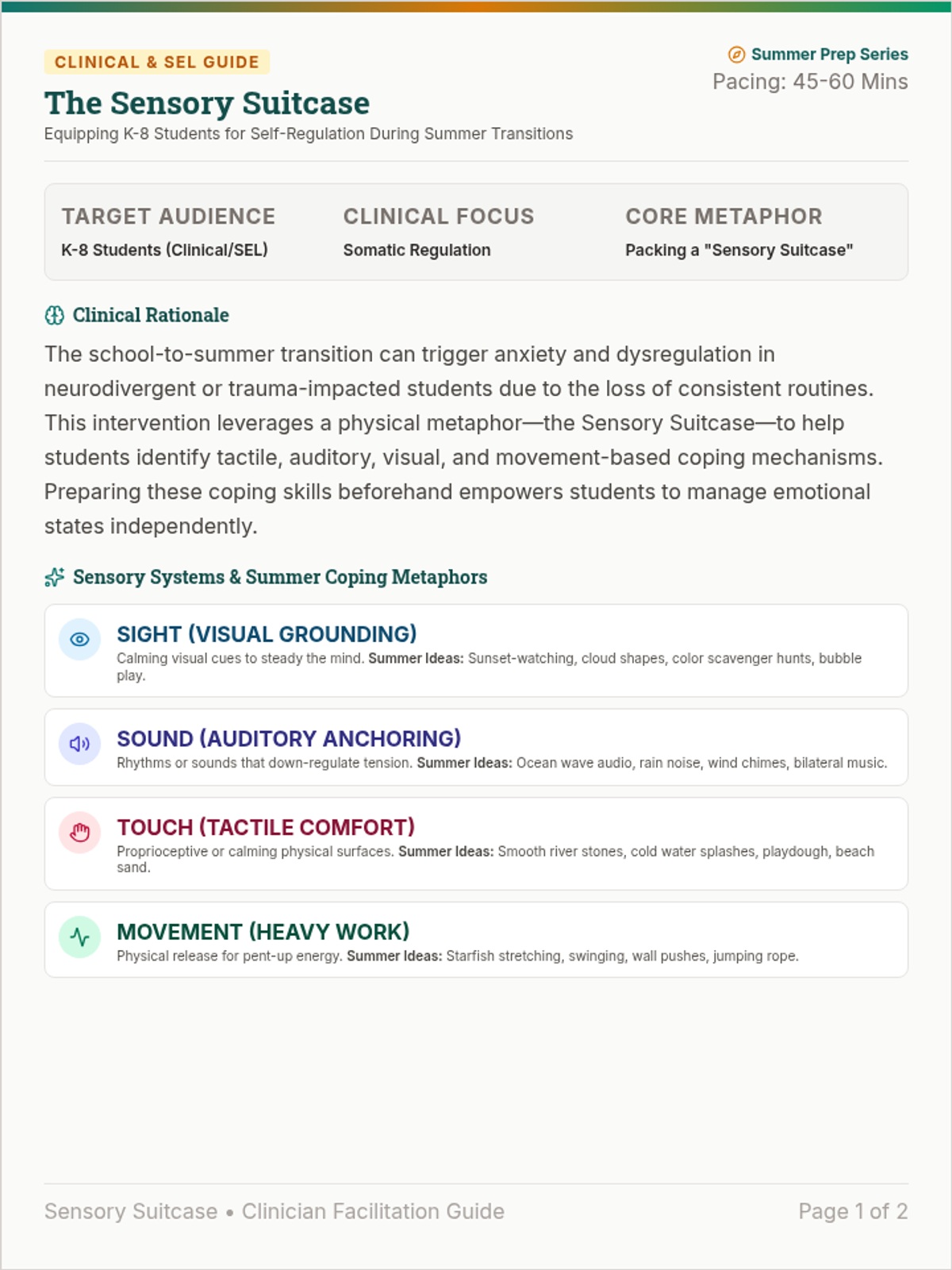
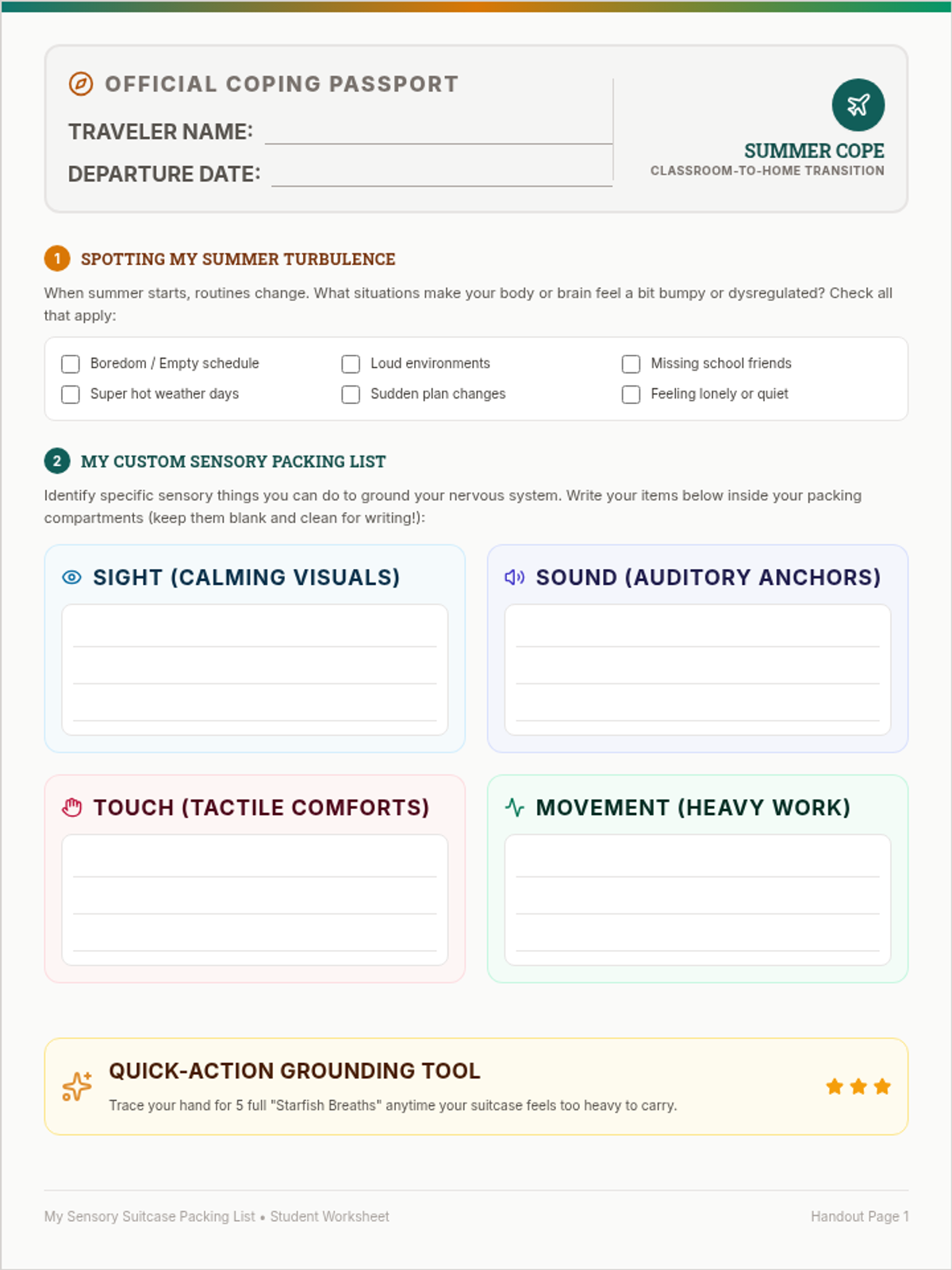
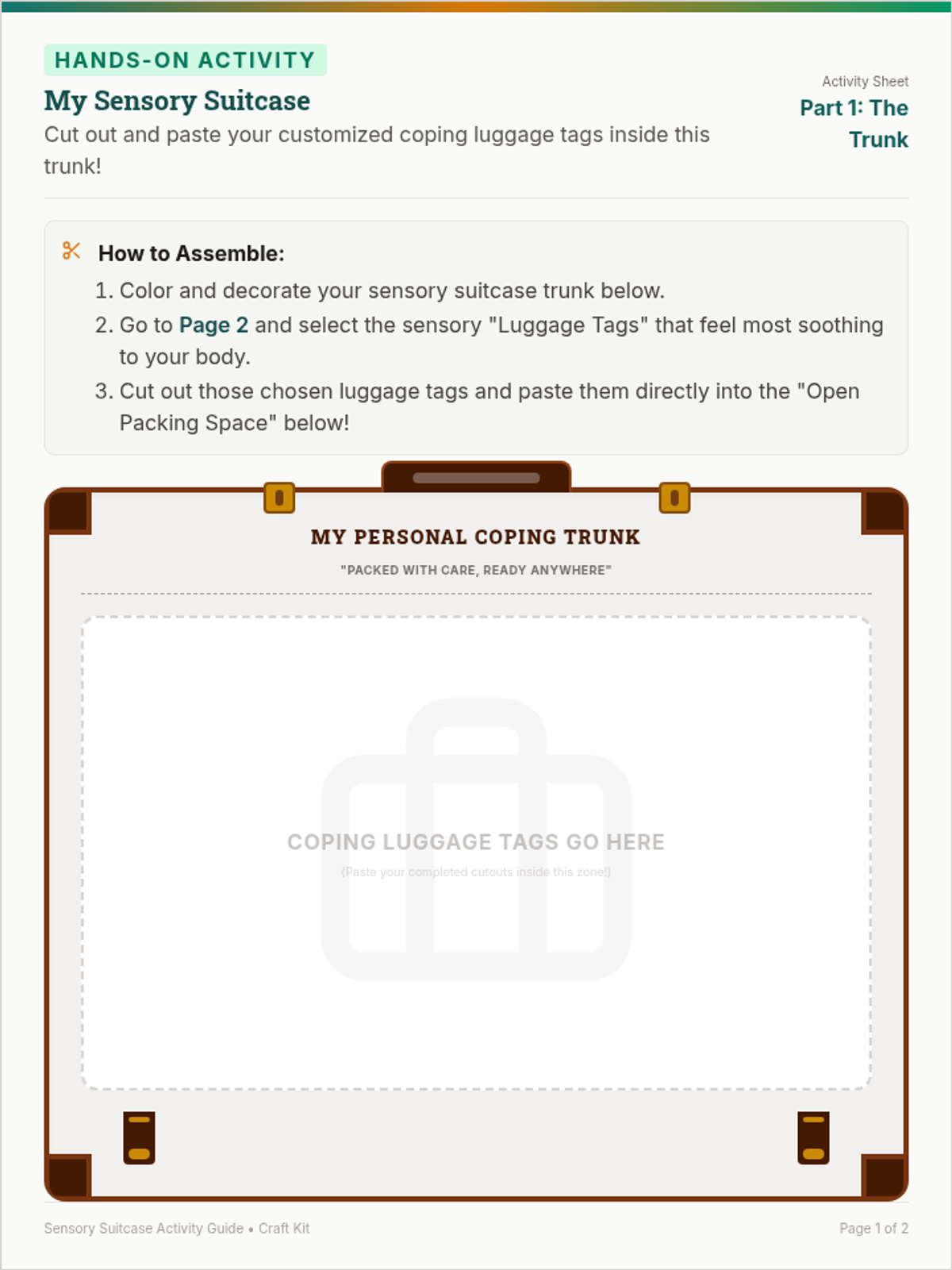
A clinical and social-emotional learning lesson that helps K-8 students build a personalized summer coping toolkit using the metaphor of a travel suitcase. Students explore sensory-based self-soothing strategies to manage emotional regulation when school routines are paused.
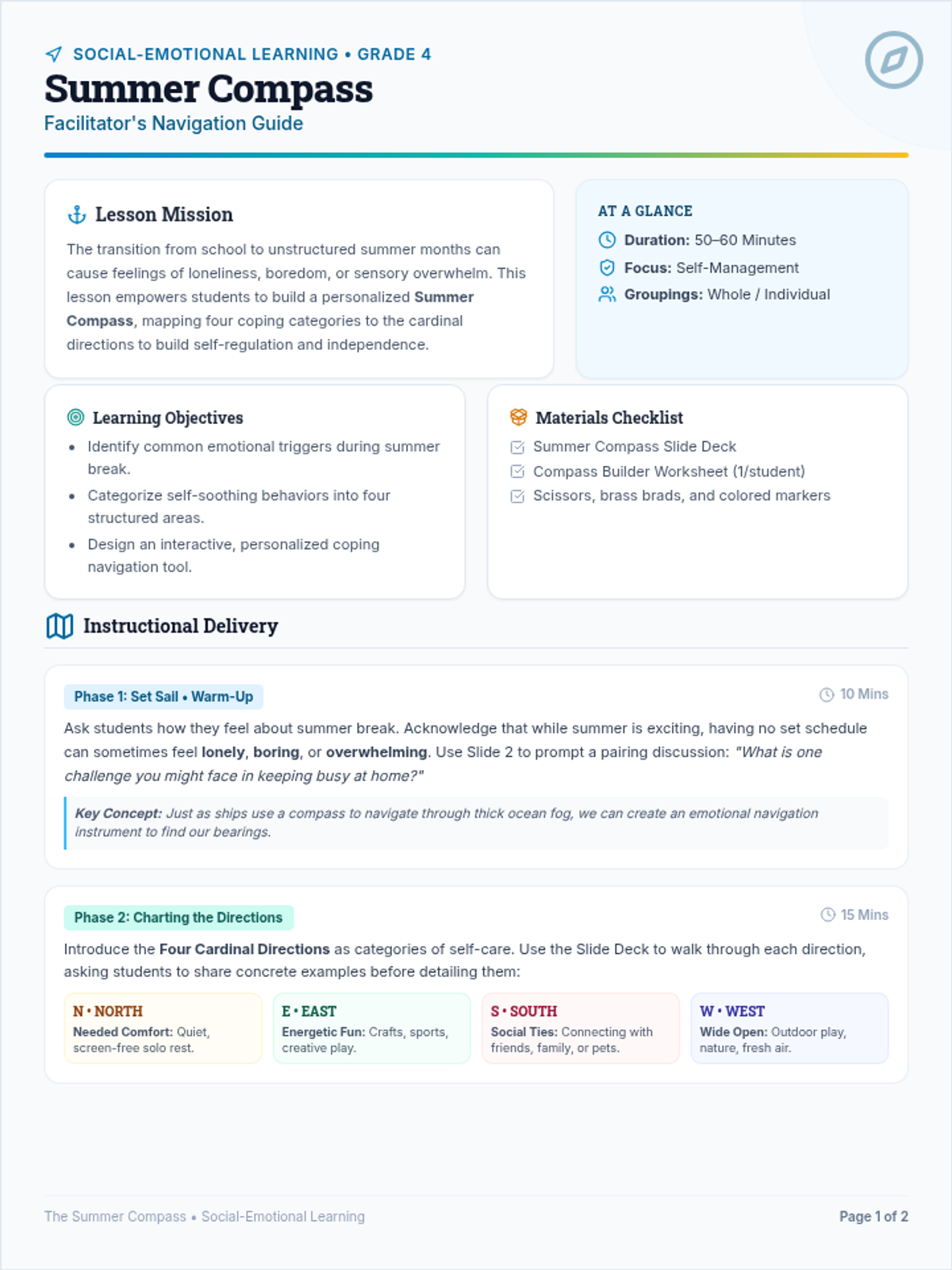
A fourth-grade emotional wellness lesson where students build a personalized self-care compass to navigate unstructured summer months. By mapping specific coping strategies to cardinal directions, students learn to regulate emotions like boredom, loneliness, and overwhelm independently.
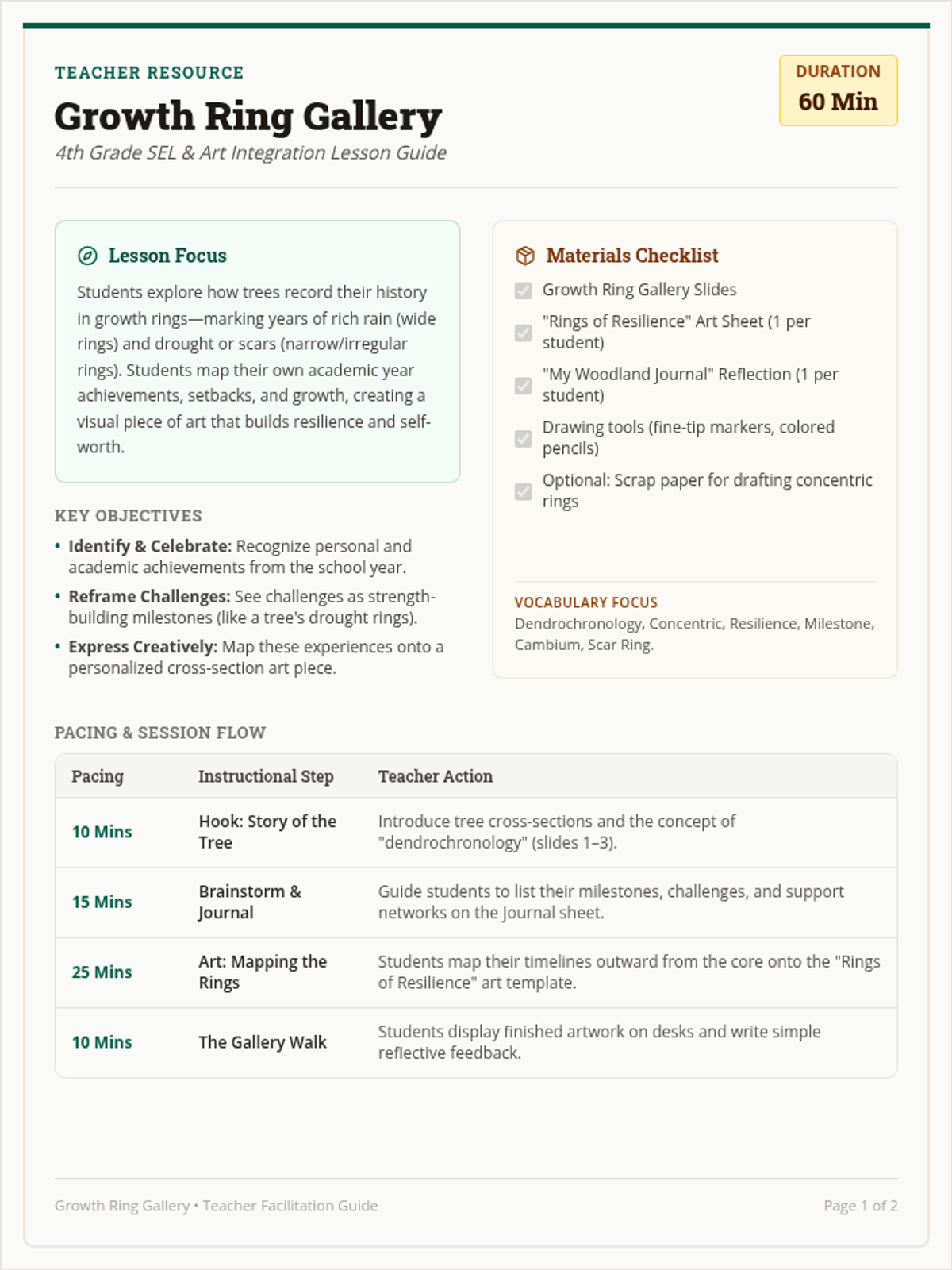
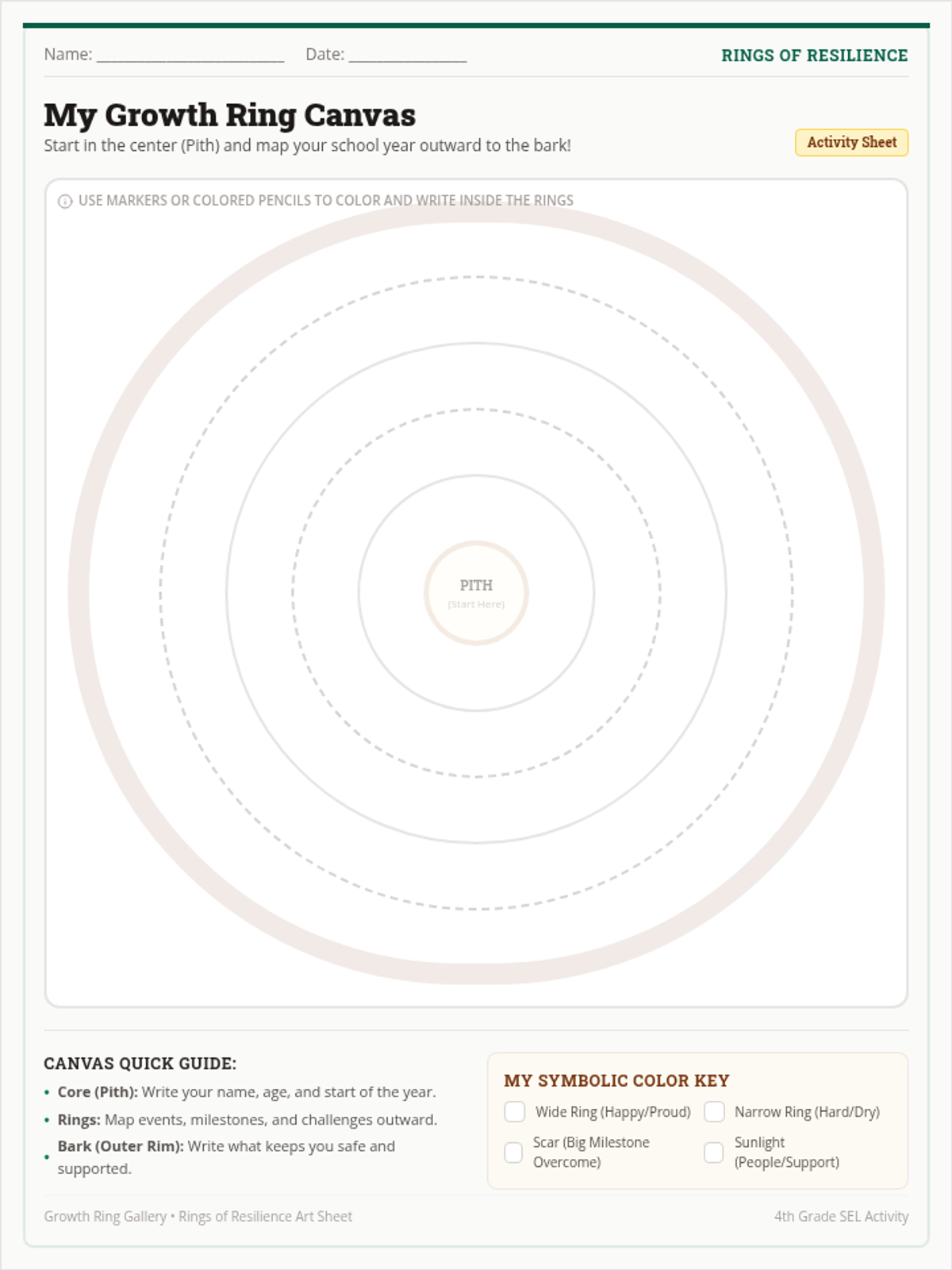
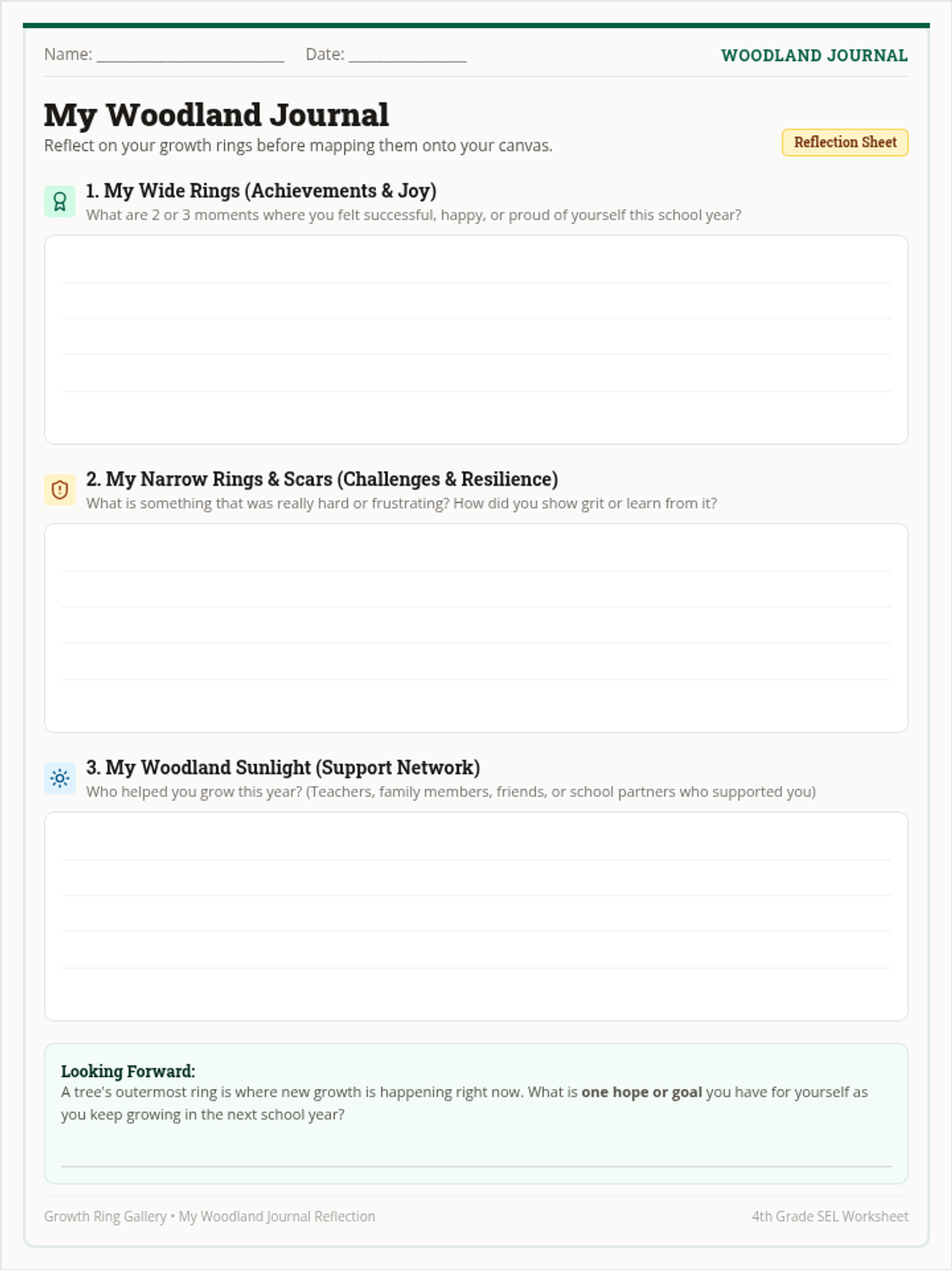
A fourth-grade SEL and art integration lesson where students map their academic year achievements, challenges, and milestones onto a native tree growth ring design, building self-worth and resilience.
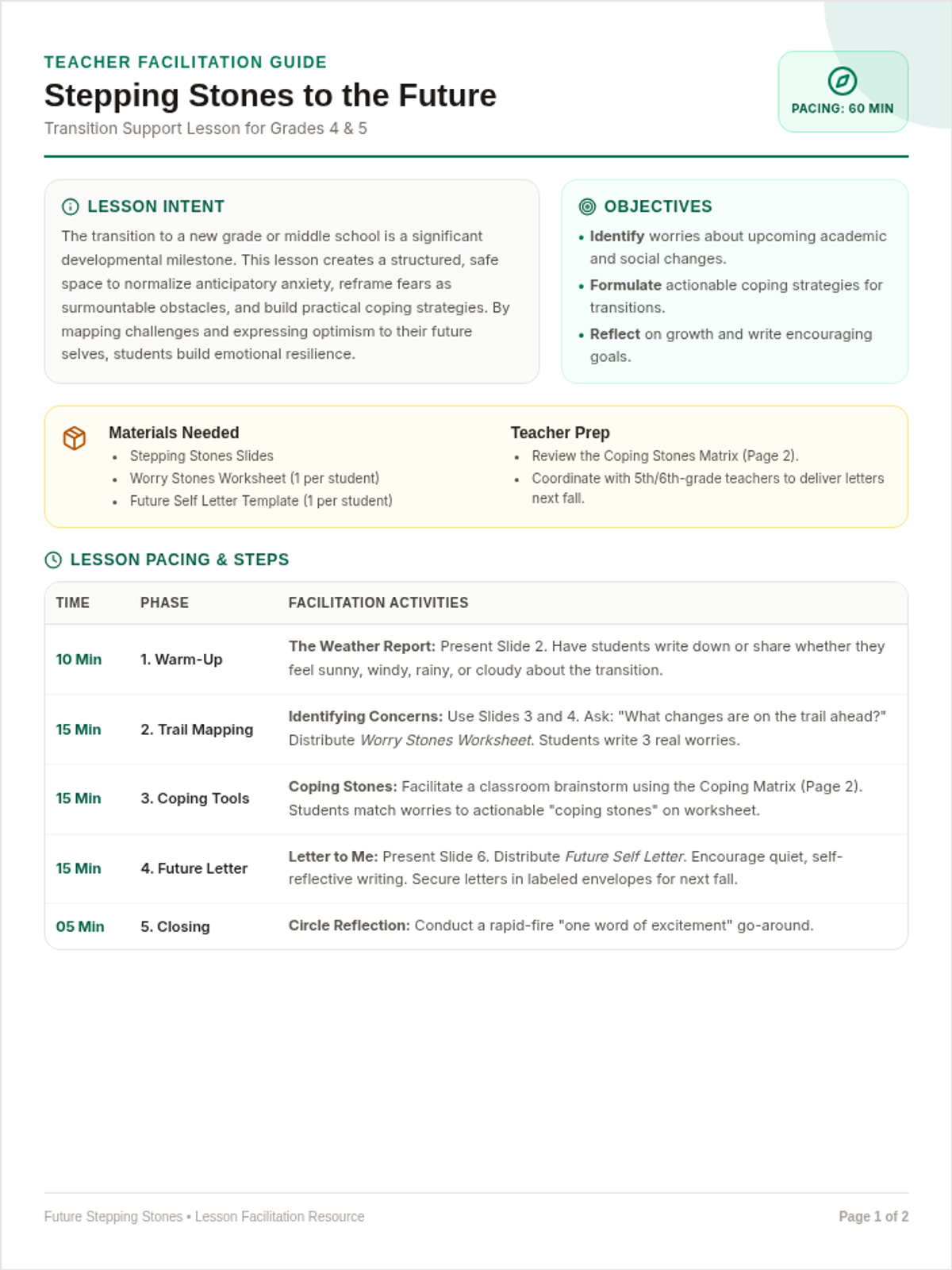
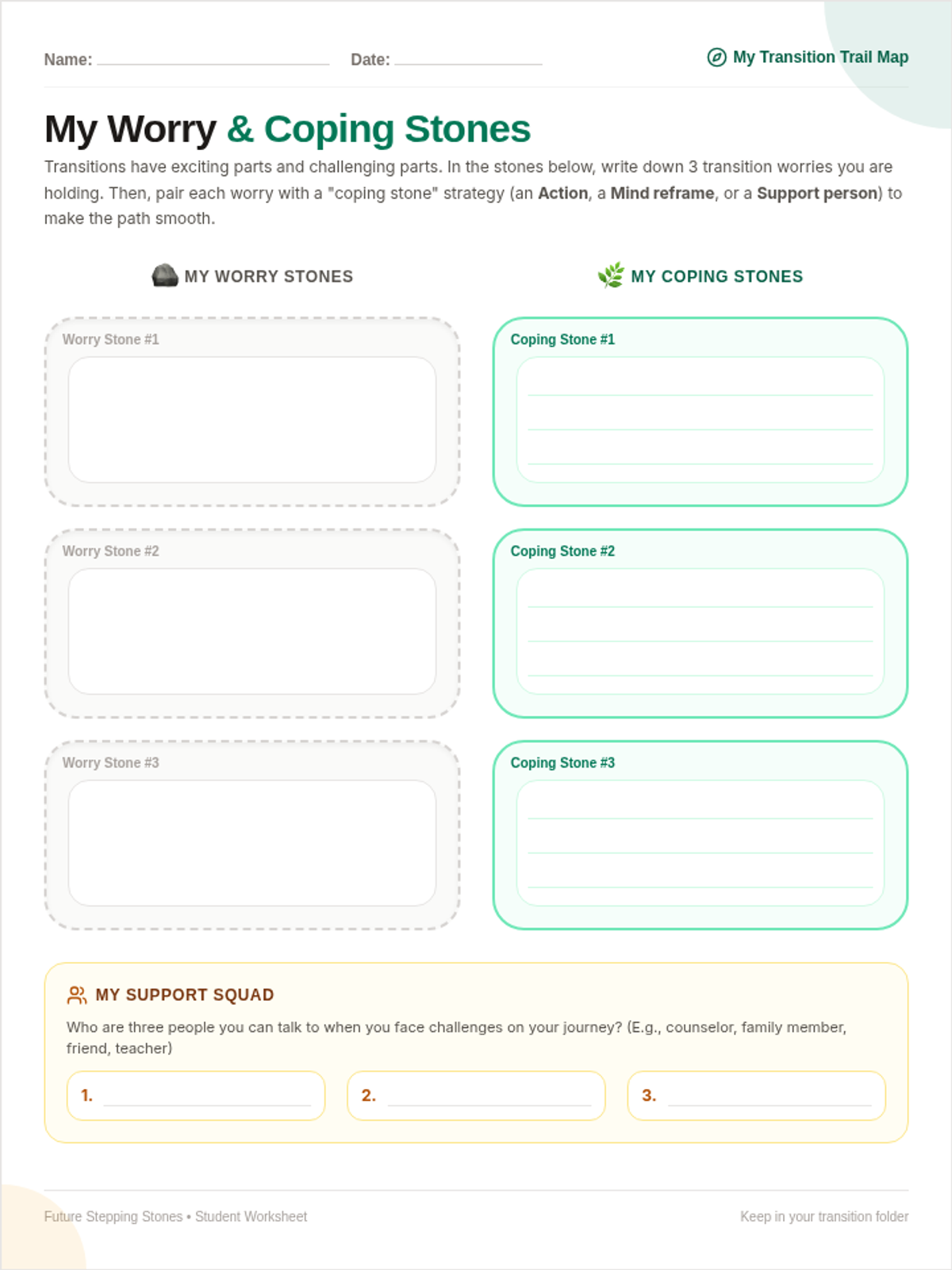
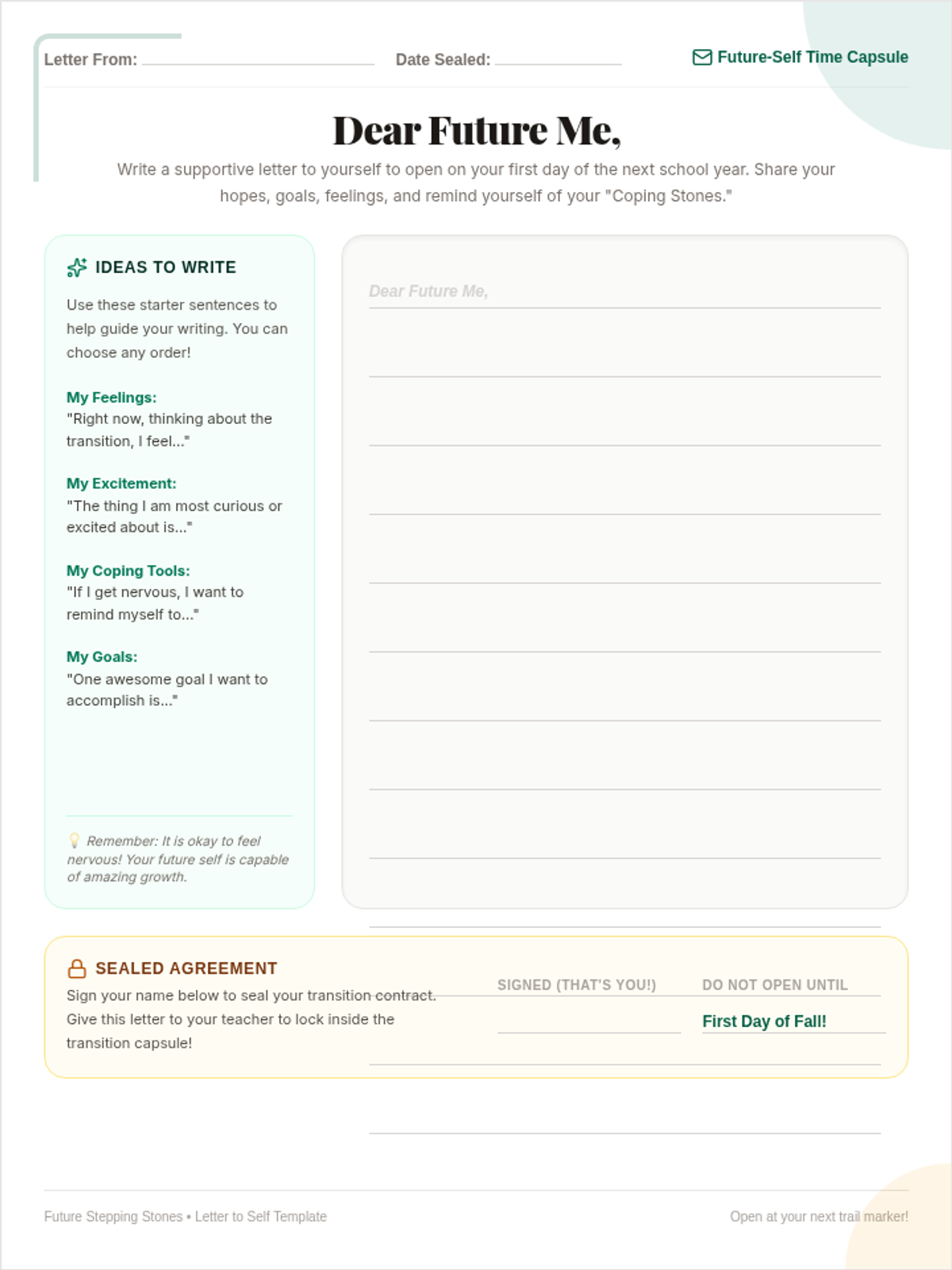
A comprehensive transition lesson for 4th and 5th graders designed to ease anxiety and build anticipation about moving to a new grade or middle school. Students map out potential challenges, discover practical coping tools, engage in structured peer discussions, and write a reflective letter to their future selves.
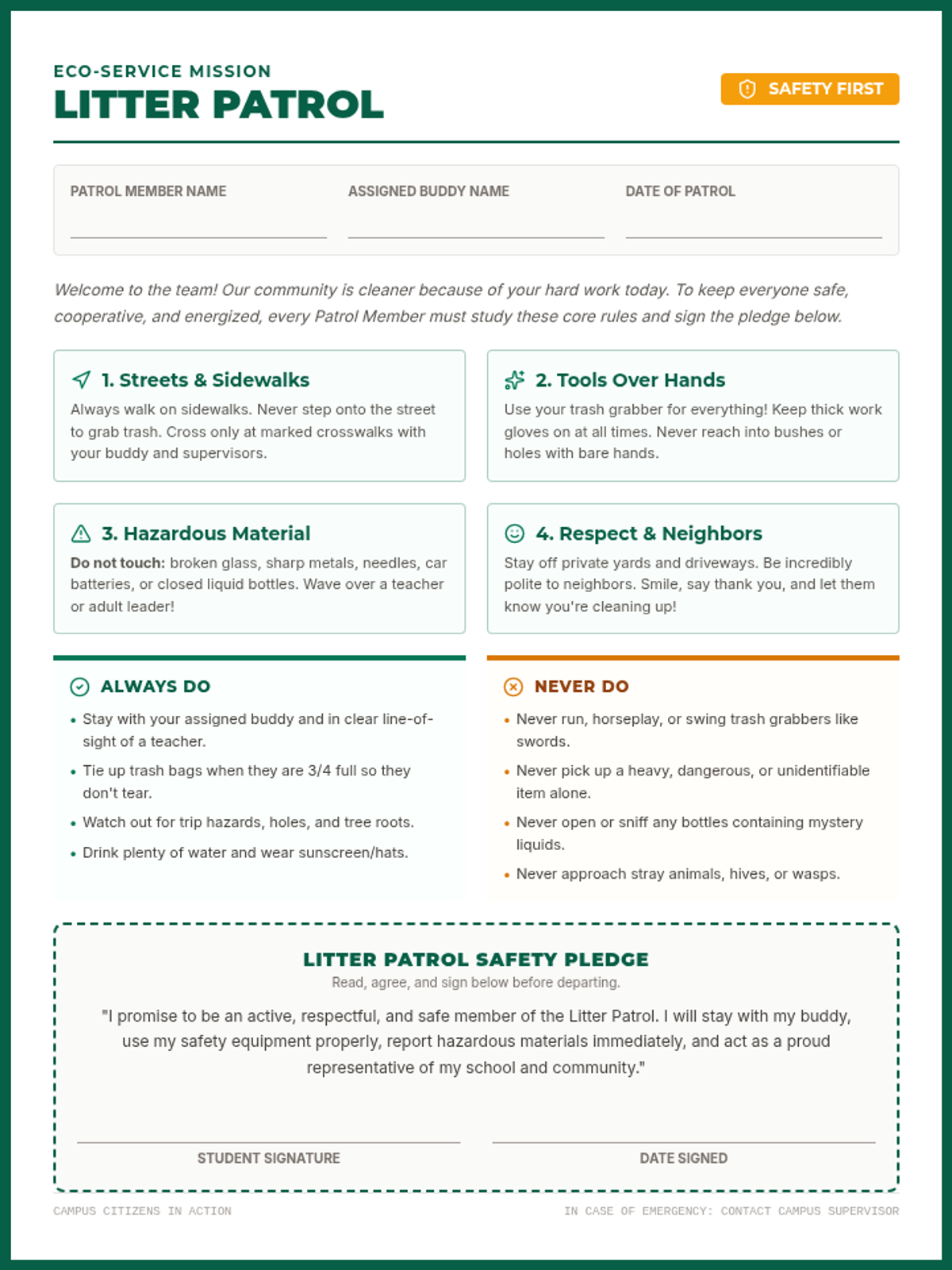
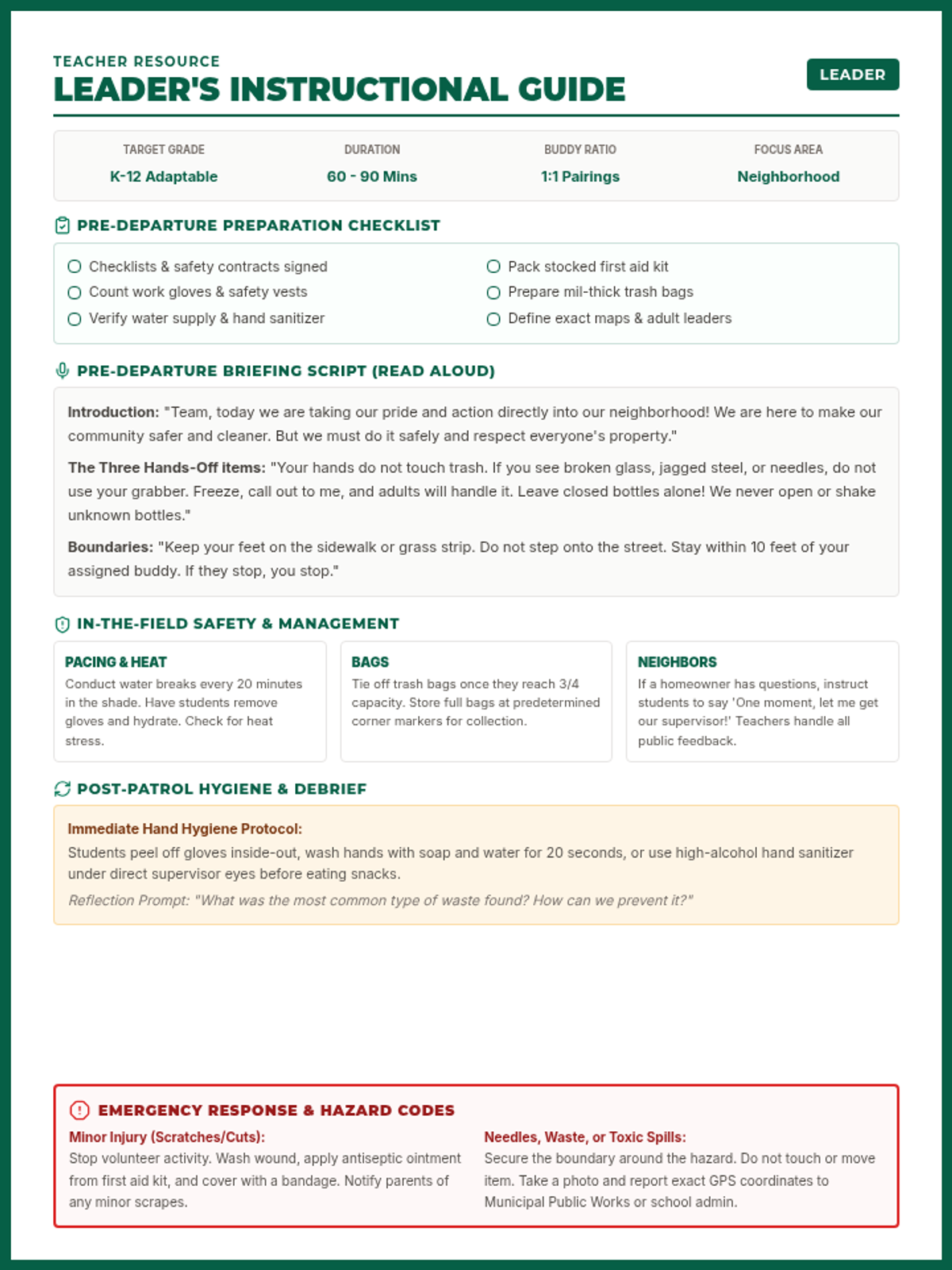
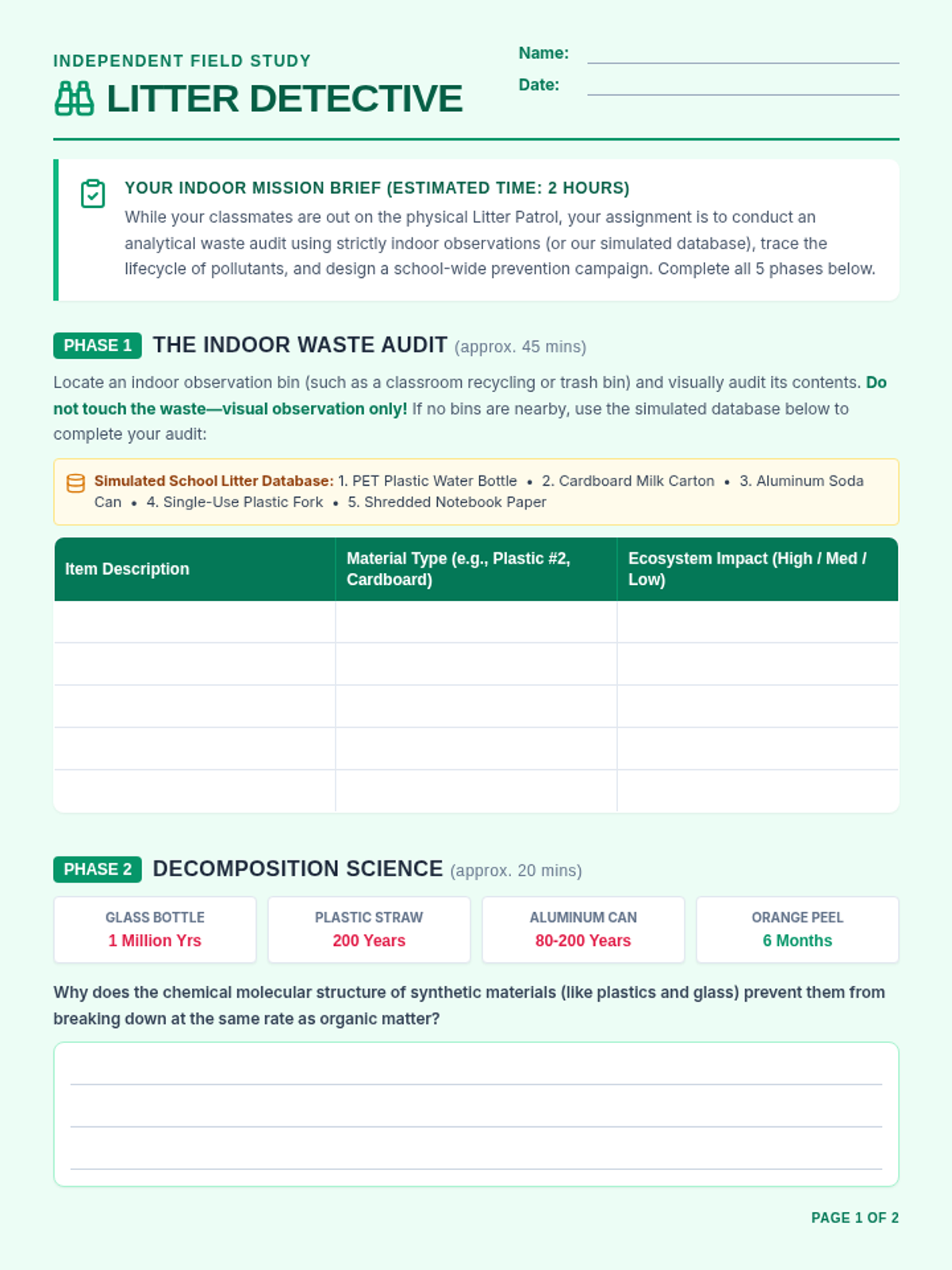
A comprehensive safety and preparation kit for students and teachers participating in a neighborhood trash pick-up community service project. It includes safety slides, a student contract and checklist, and a detailed teacher instruction guide.
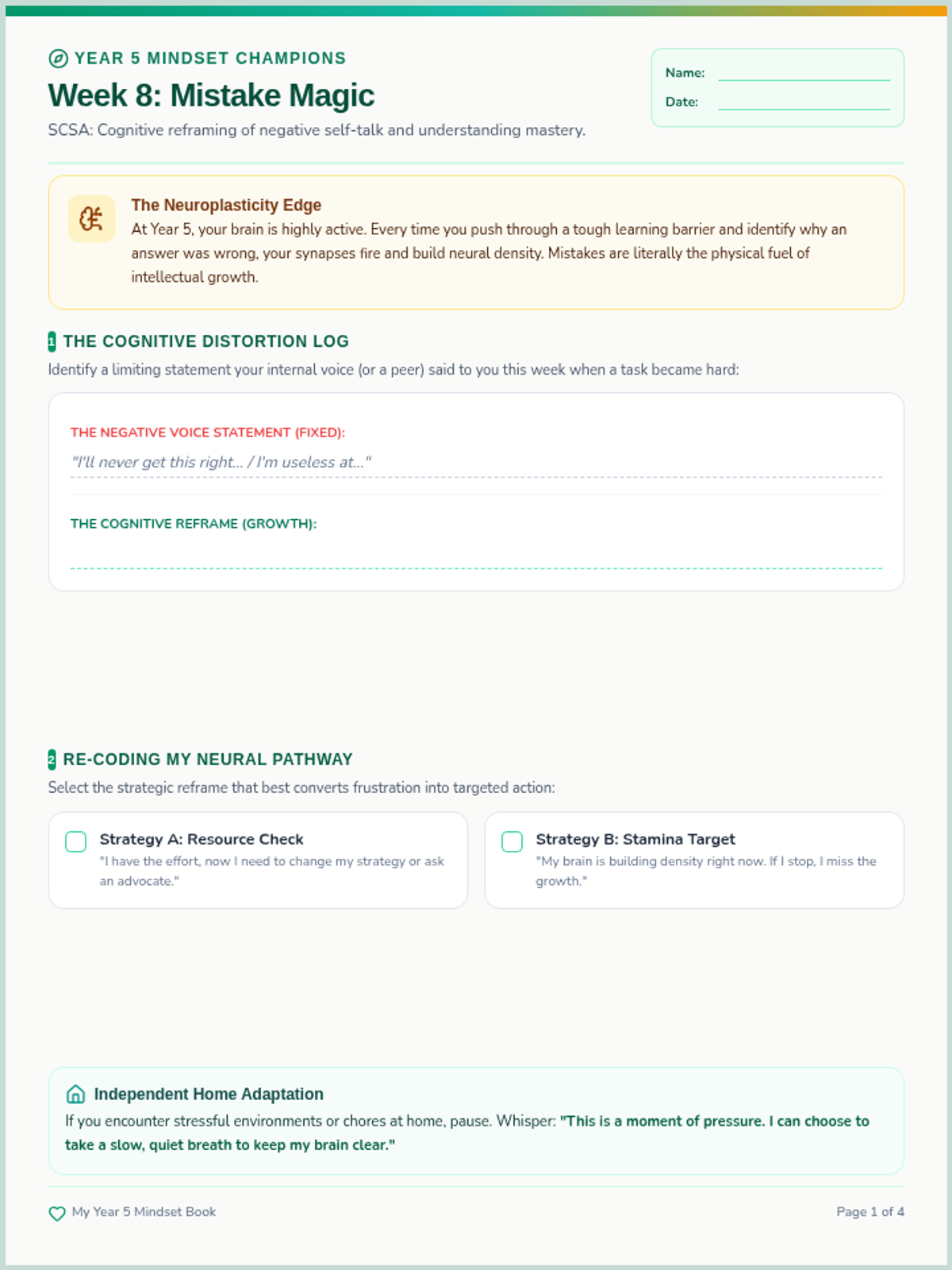
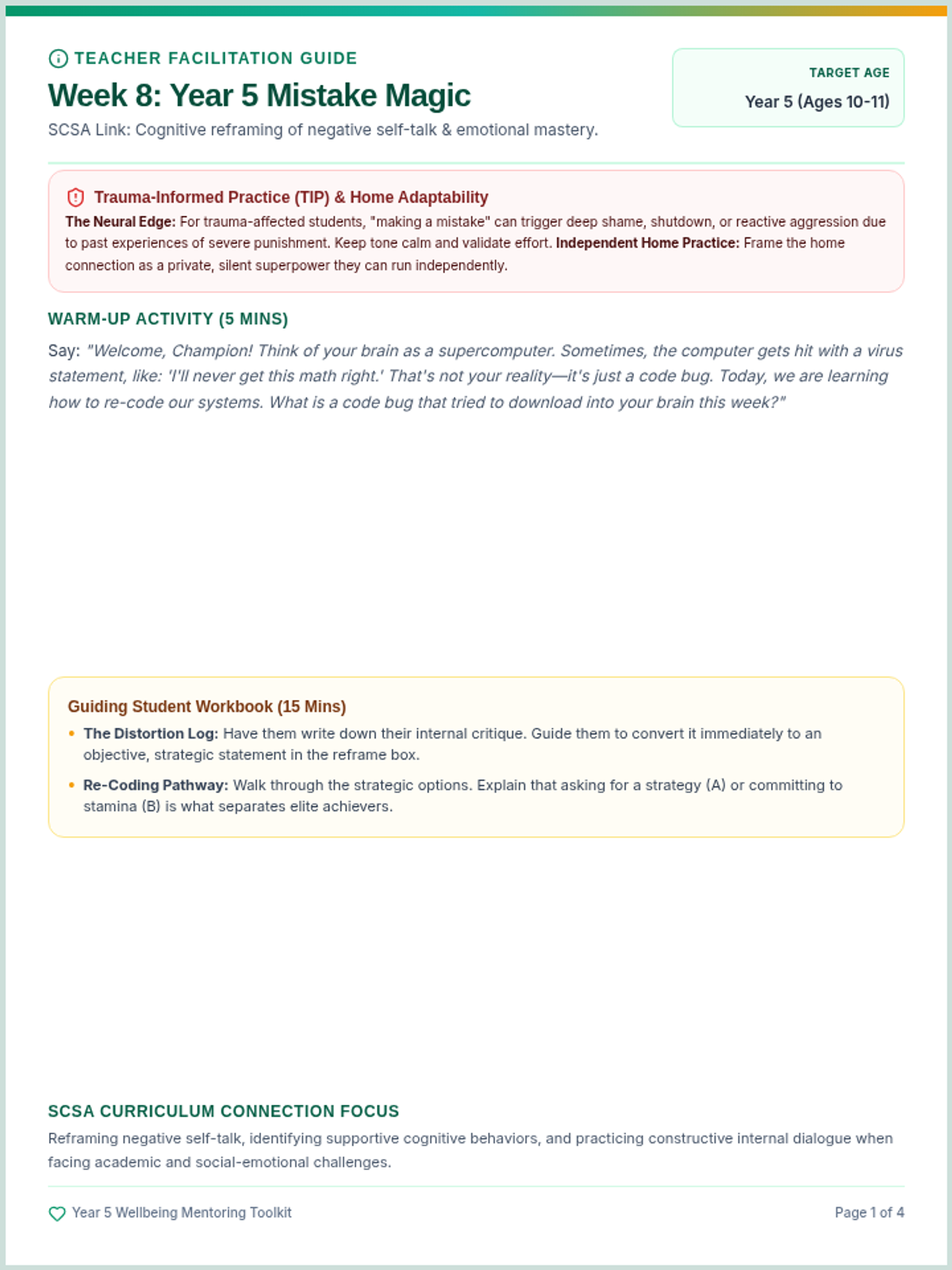
Year 5 specific 4-week check-in set. Formatted to SCSA Year 5 Health syllabus, focusing on cognitive reframing of negative self-talk, identifying supportive external coping resources, and goal-setting.
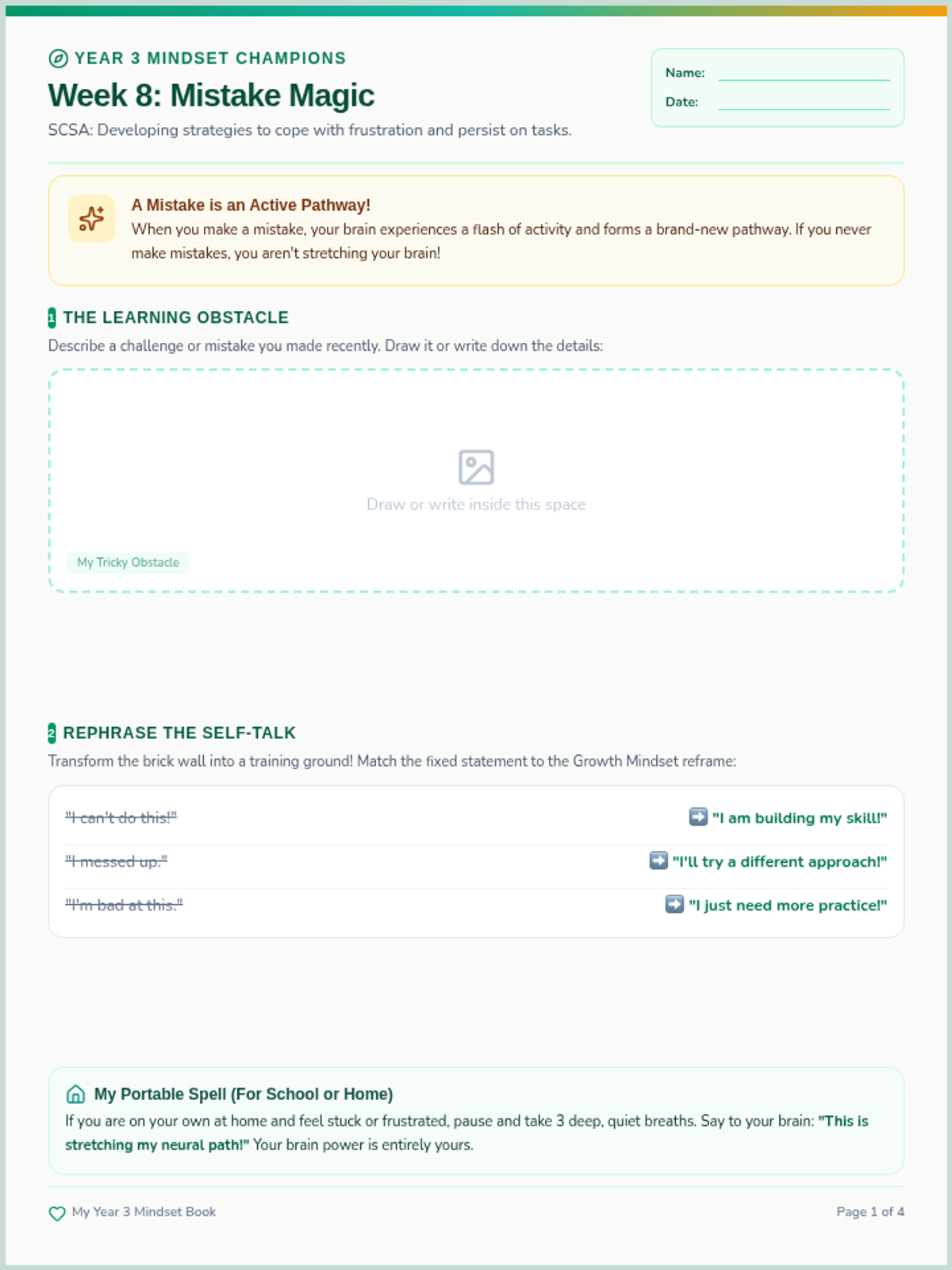
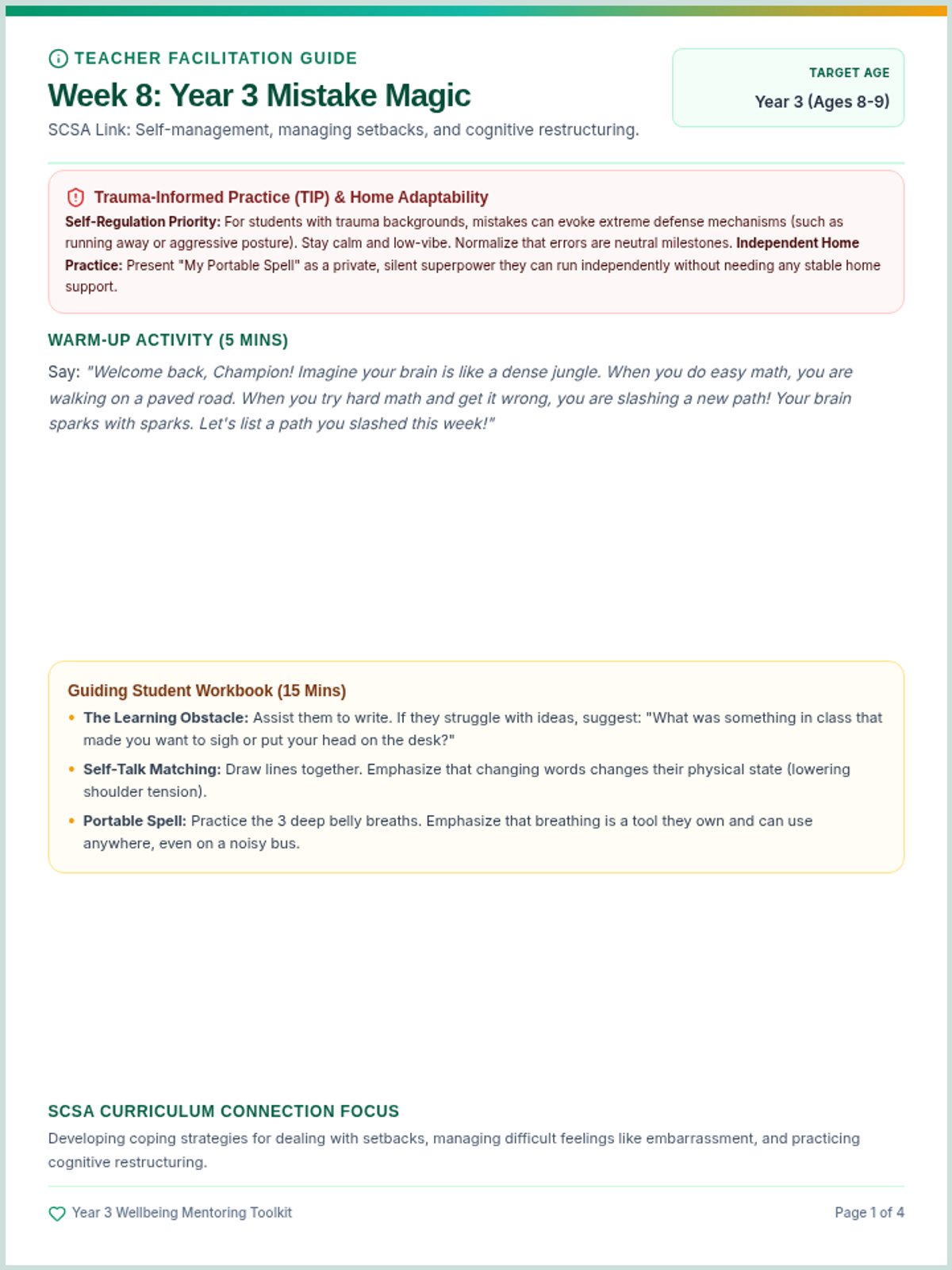
Year 3 specific 4-week check-in set. Formatted to SCSA Year 3 Health syllabus, focusing on identifying personal strengths, talking to safe helpers, and managing emerging school worries.