A short, high-impact social-emotional learning lesson for second-grade non-readers that teaches the difference between sharing cool news (stating facts) and bragging, using the 'Share-o-Meter' concept.
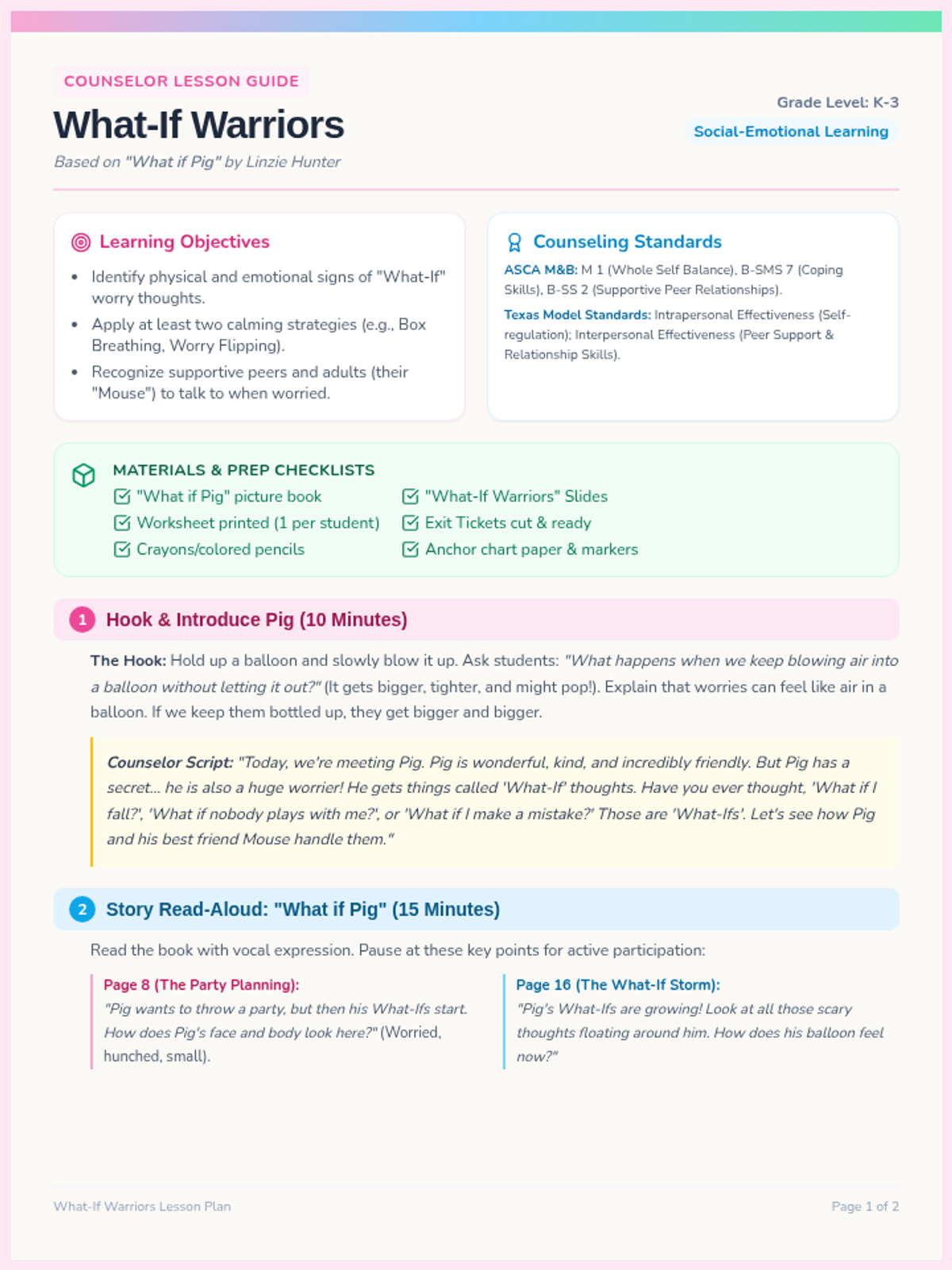
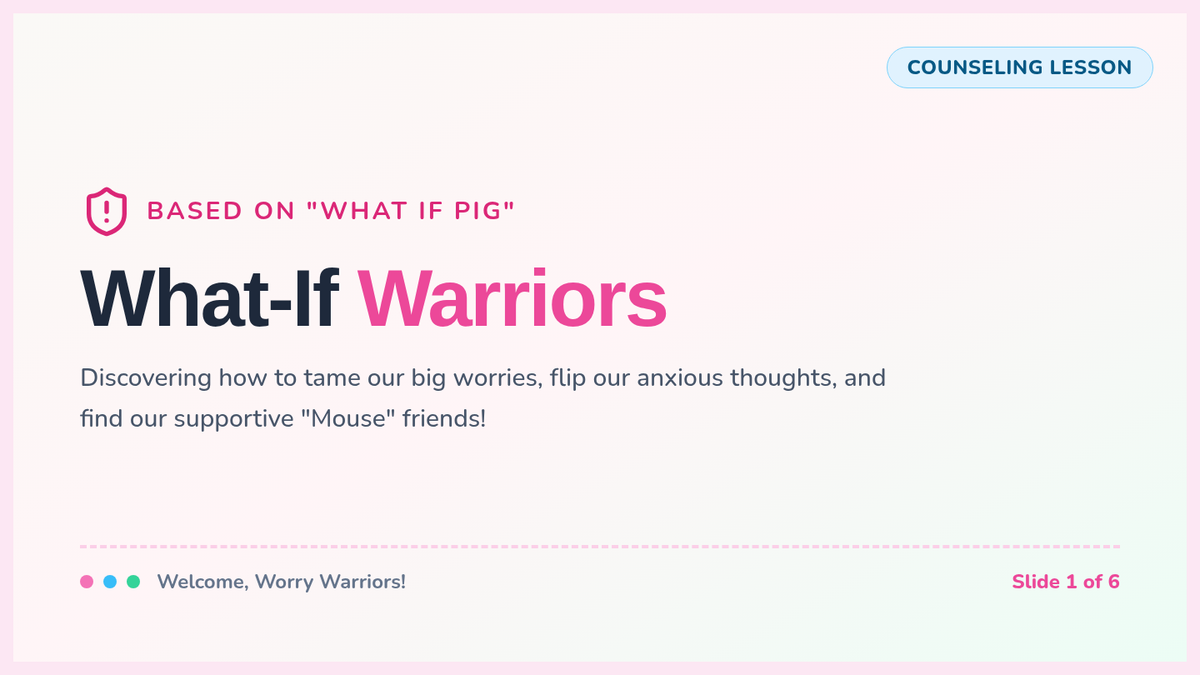
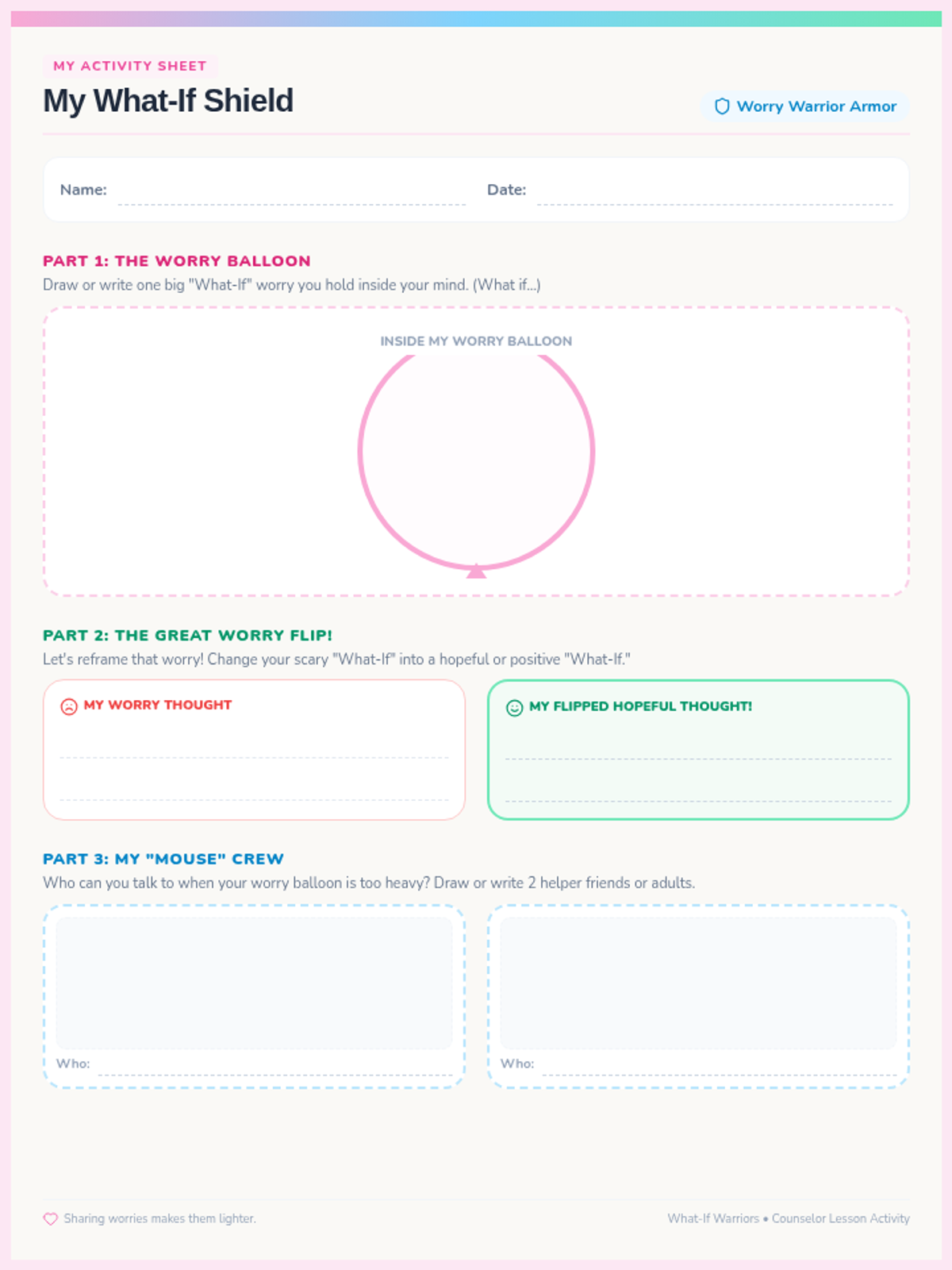
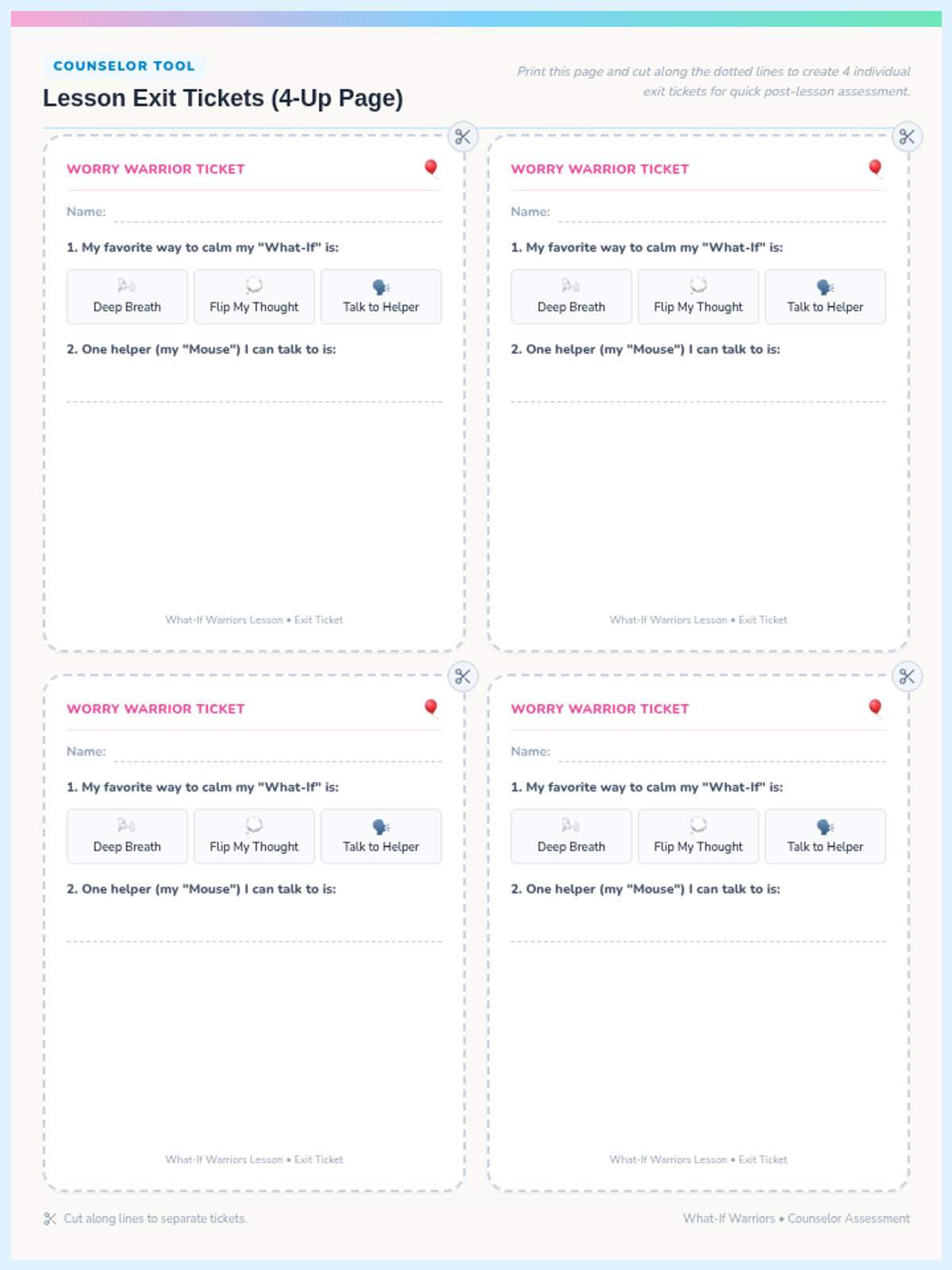
A comprehensive elementary school counseling lesson based on Linzie Hunter's 'What if Pig'. Students explore managing 'What-If' worries and building supportive peer relationships.
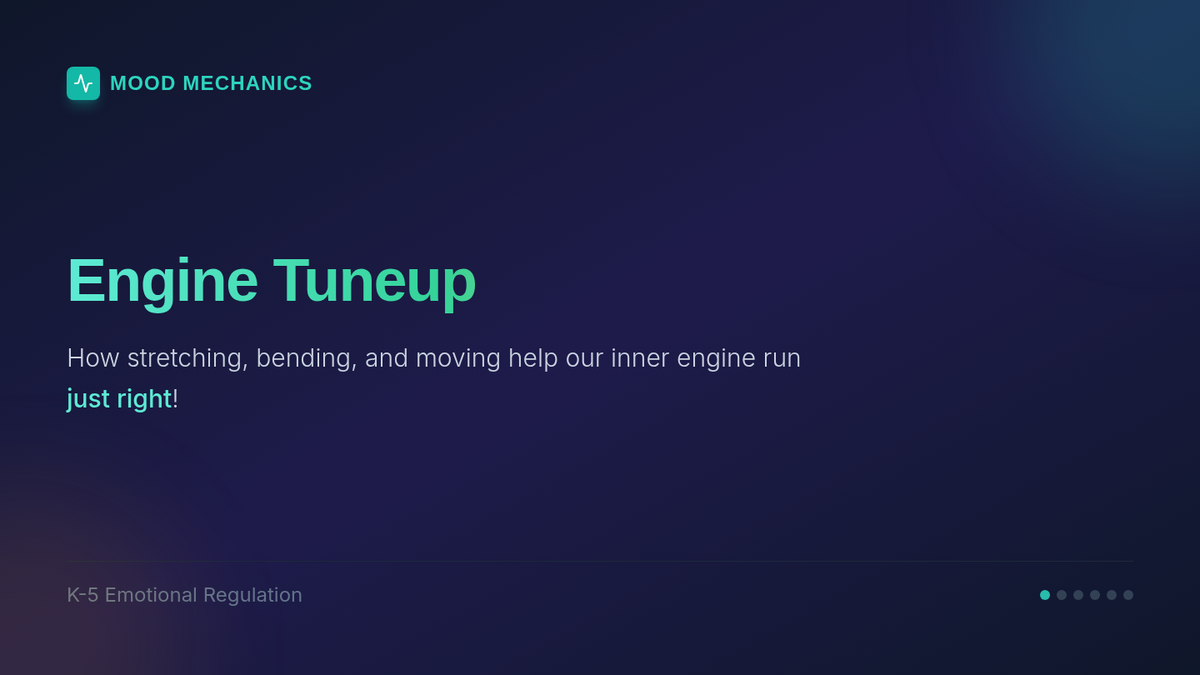
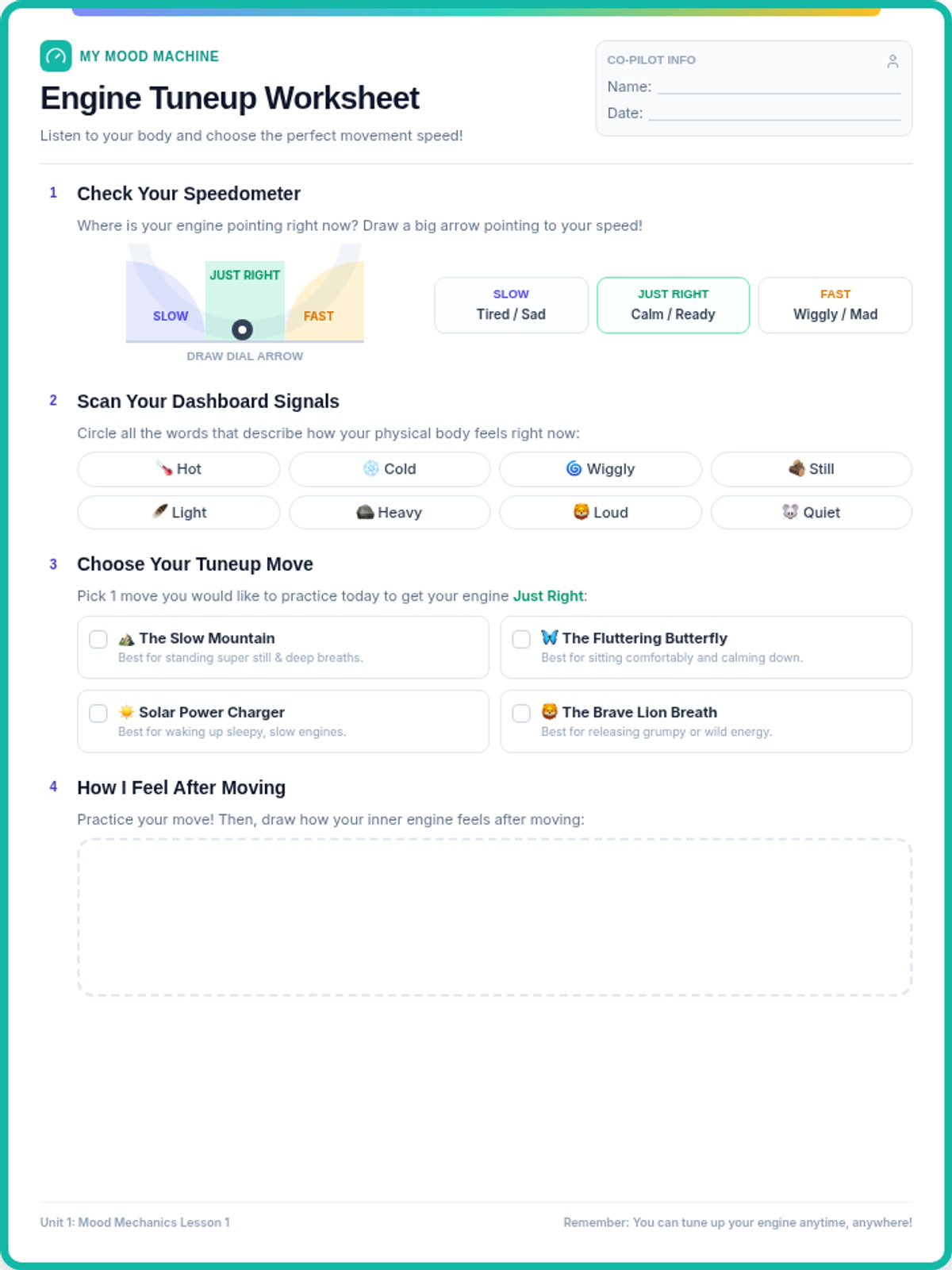
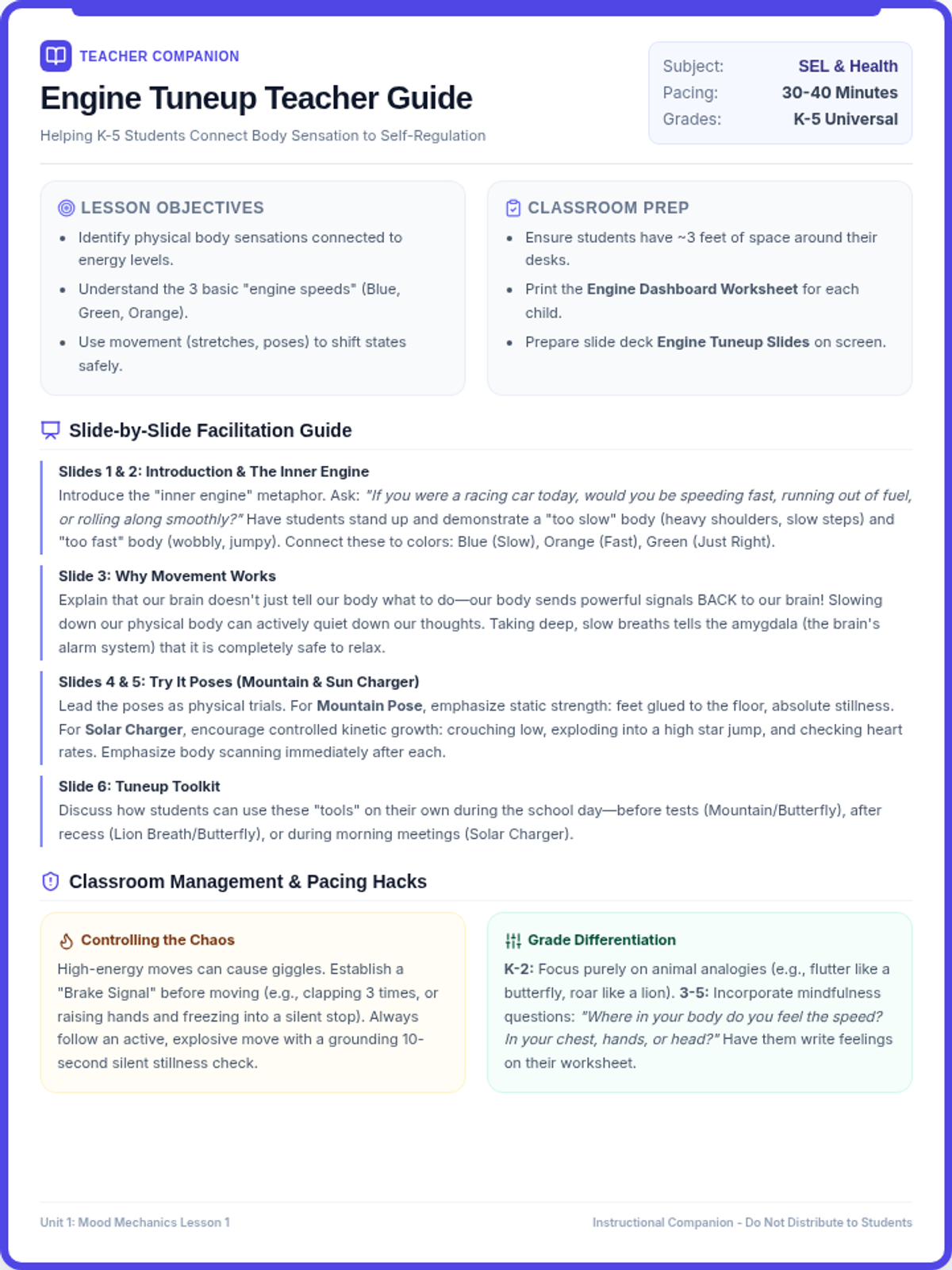
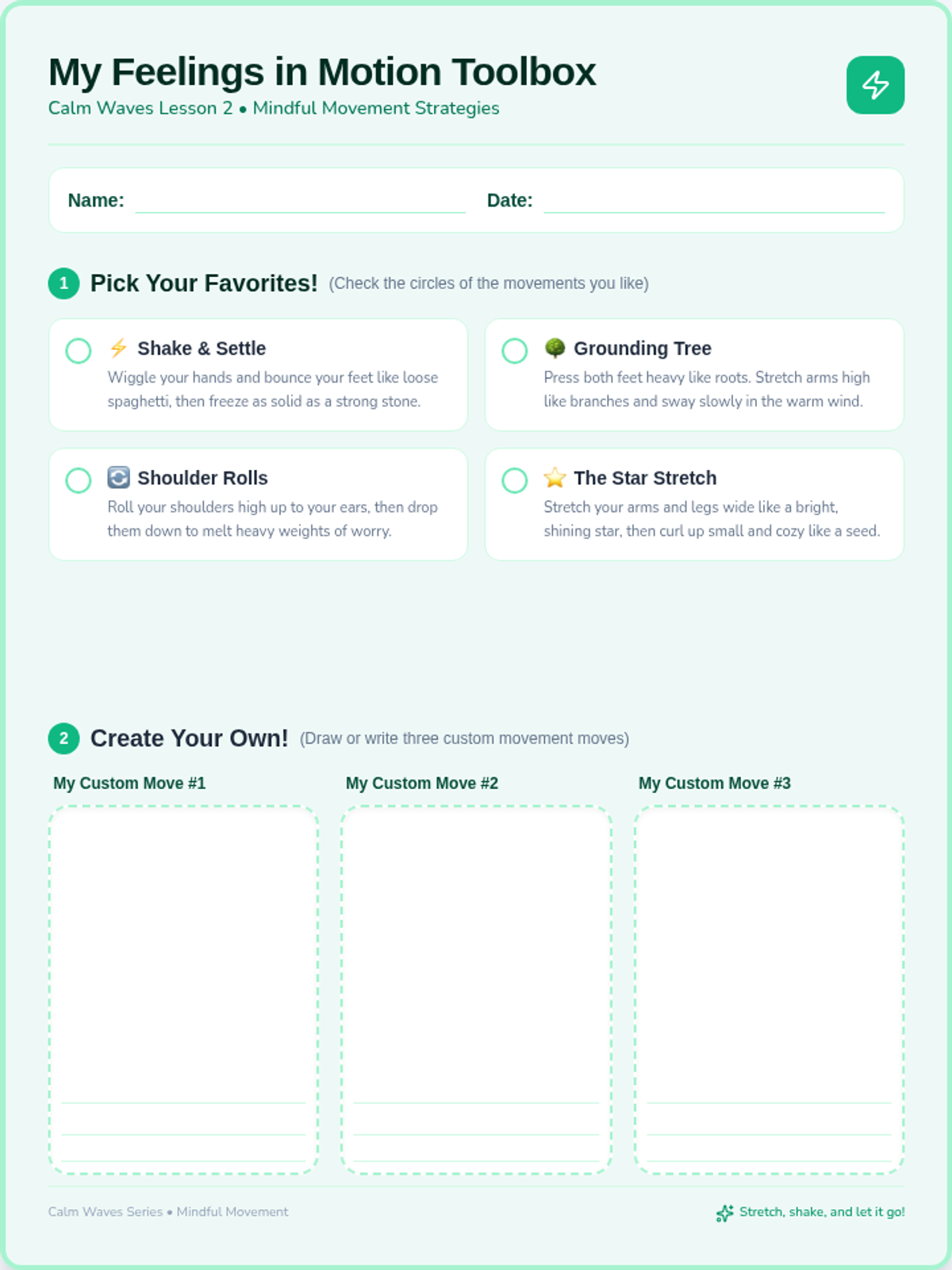
An introductory lesson for K-5 students on how slow stretches, yoga poses, and intentional movement help regulate emotions and tune up their inner engine.
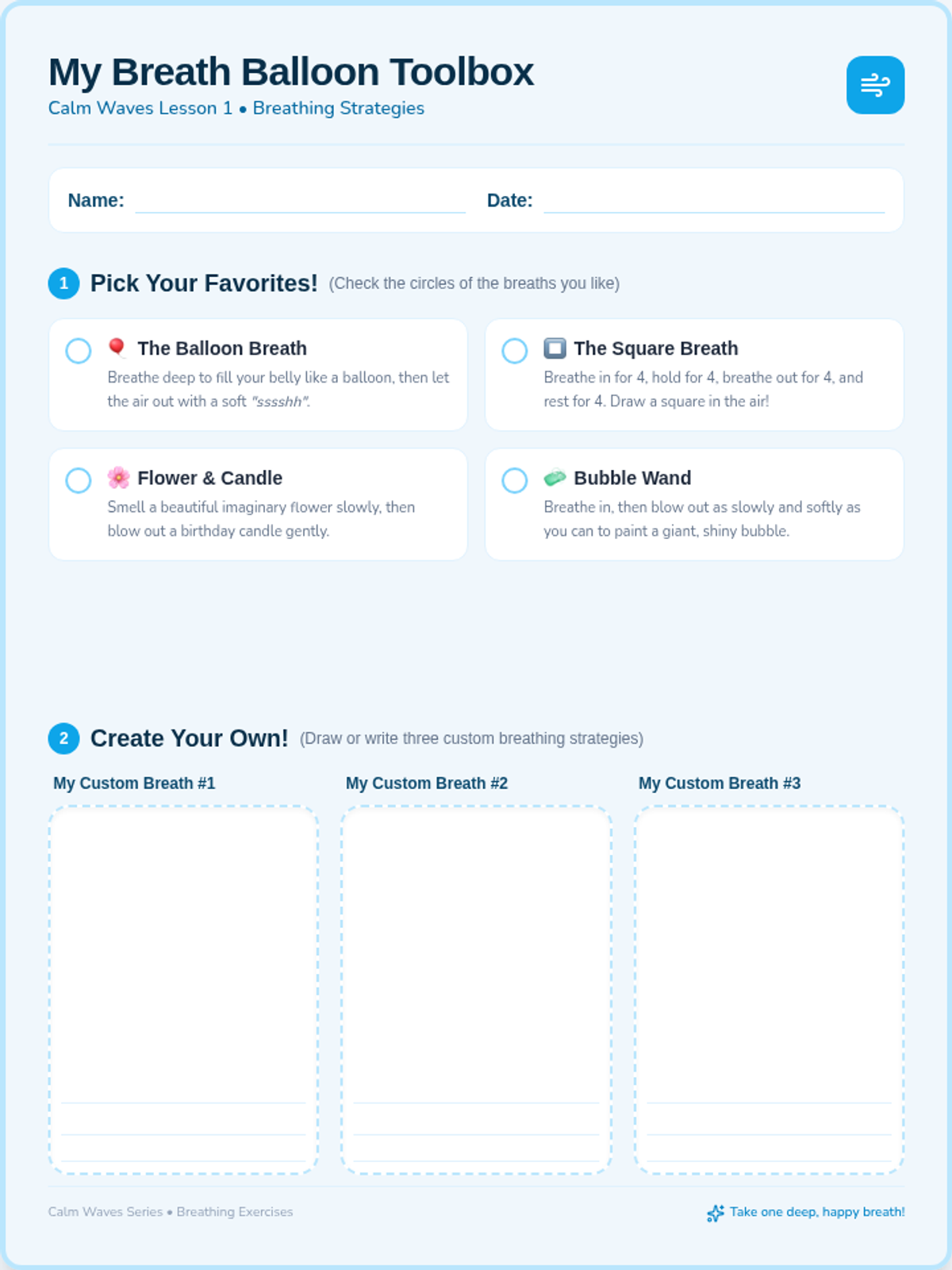
A foundational lesson introducing elementary students to the science and practice of deep breathing and mindful movement as powerful self-regulation tools.
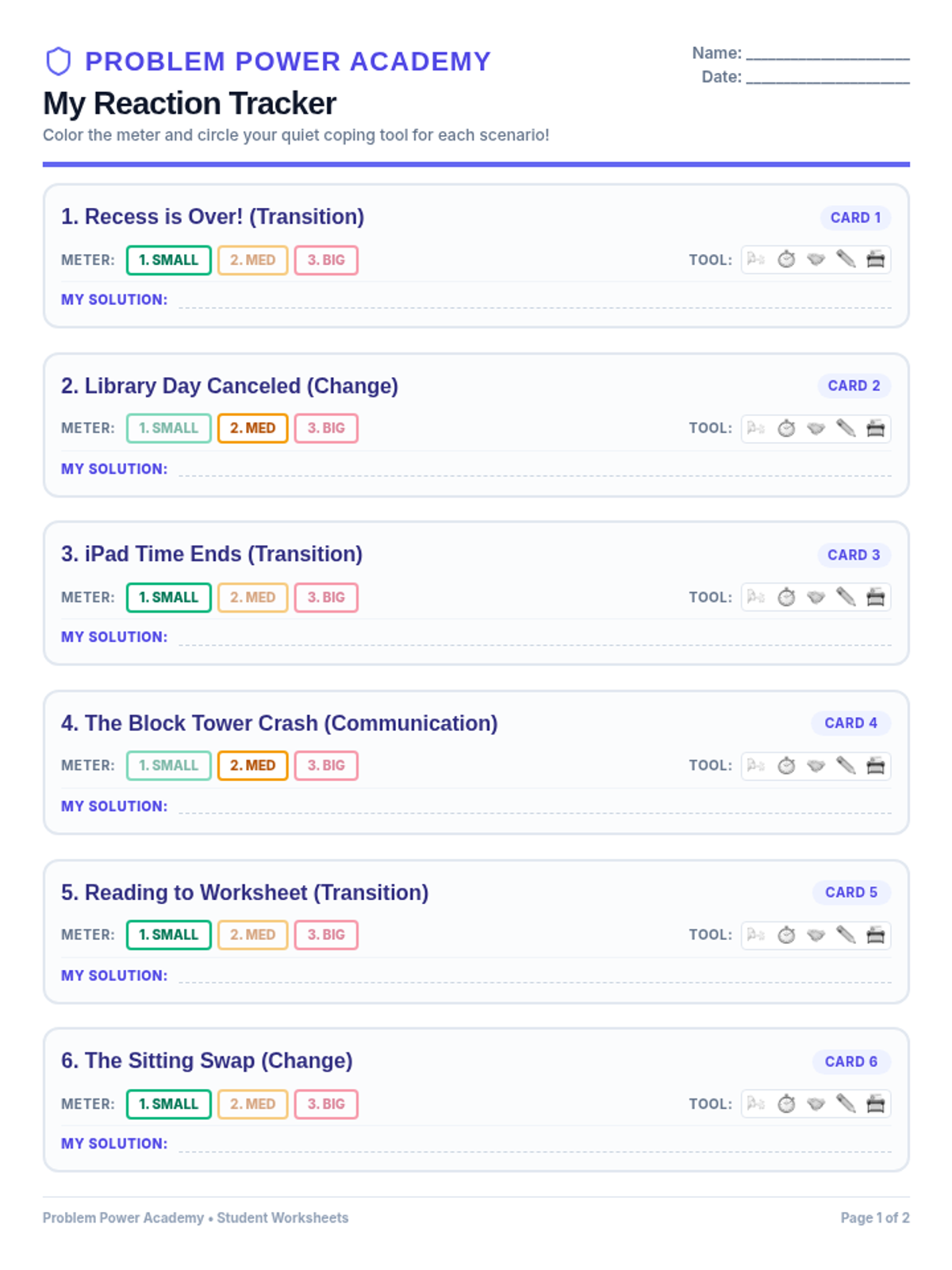
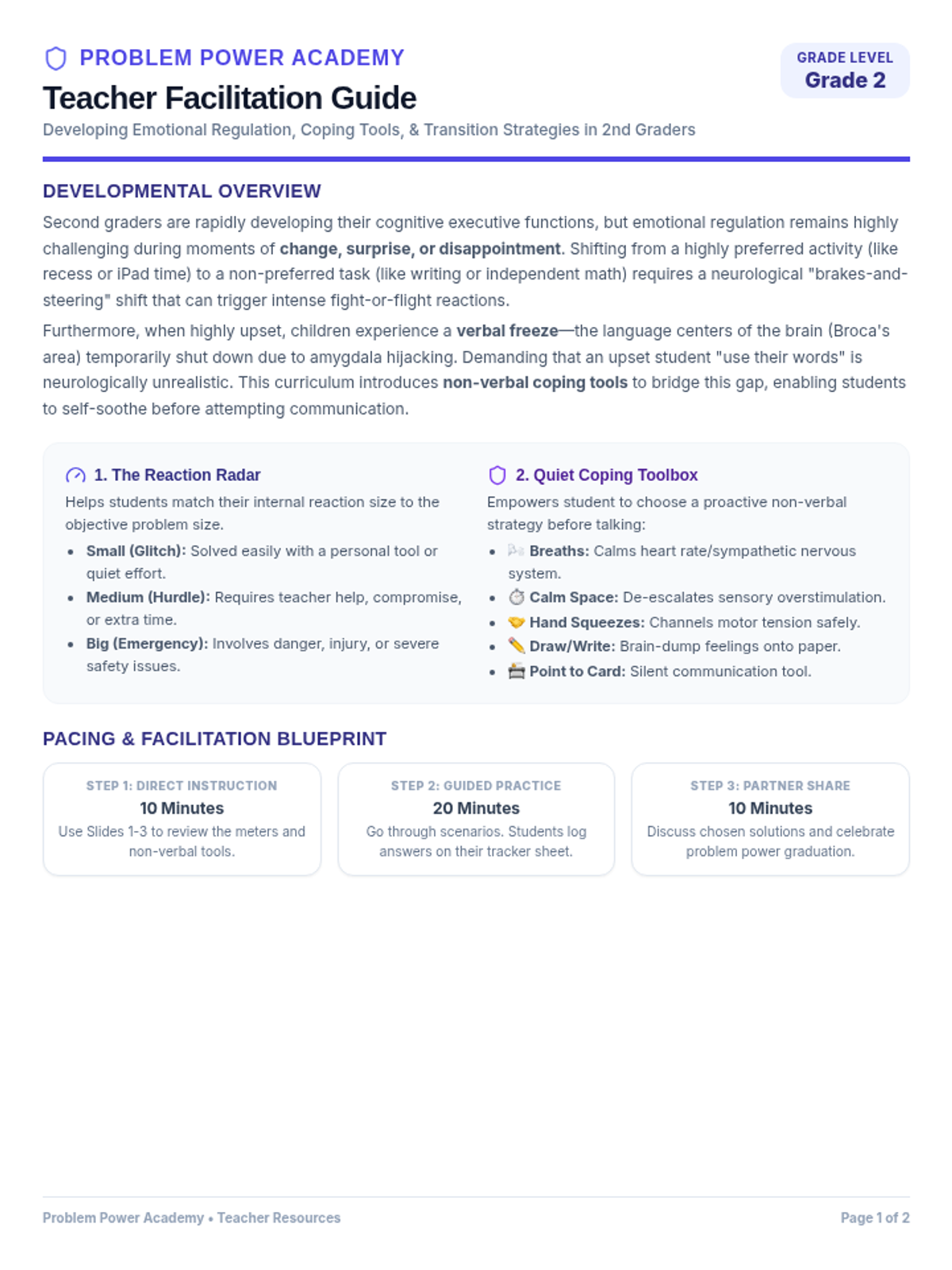
A classroom lesson focused on emotional regulation and problem-solving. It includes an interactive slide deck with 12 real-world transition and communication scenarios, a student tracking sheet, and a detailed teacher facilitation guide.
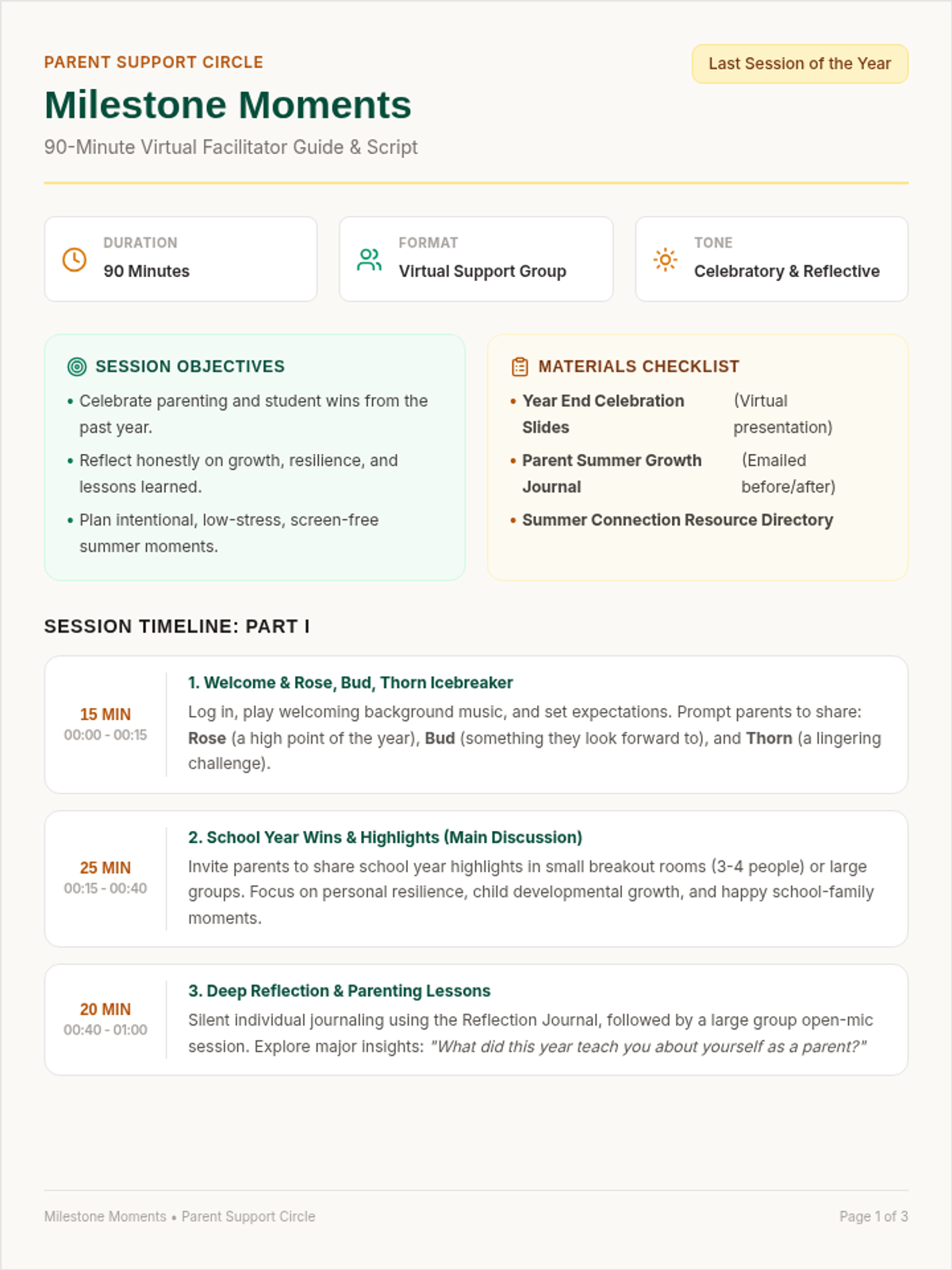
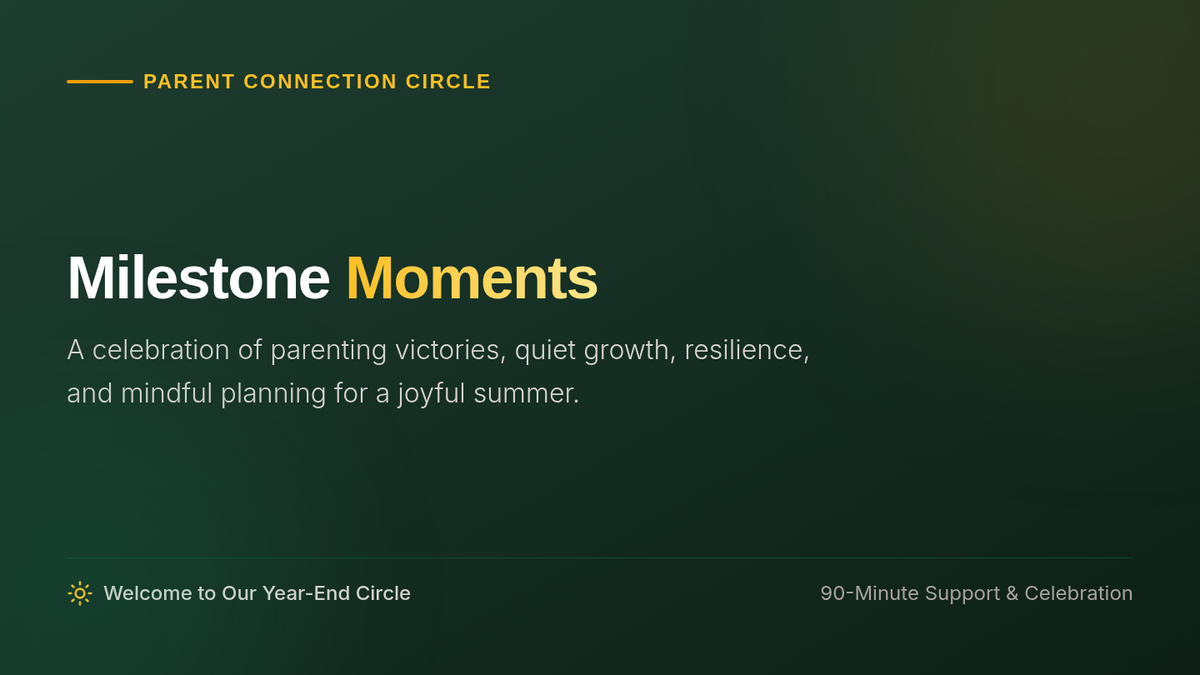
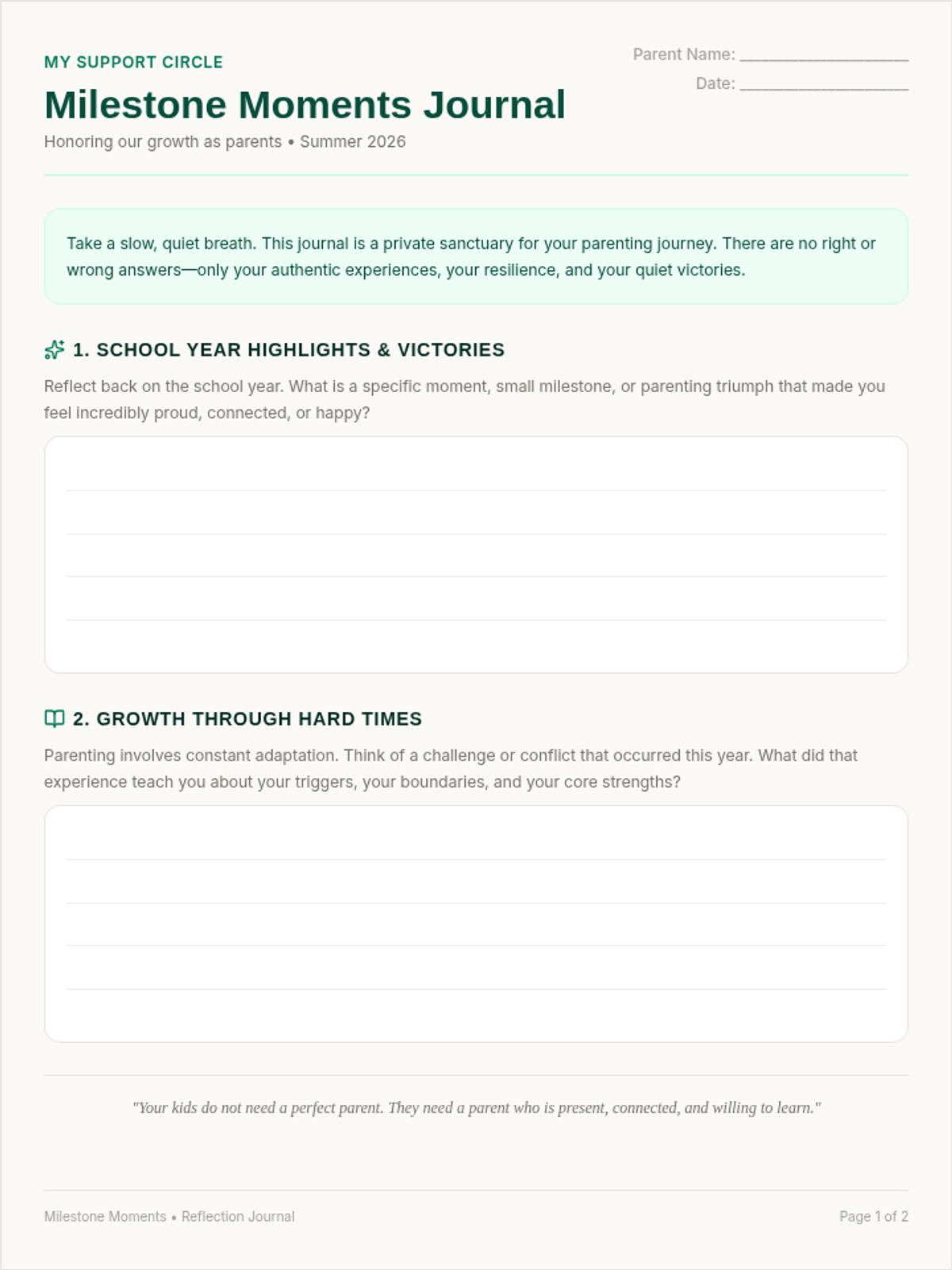
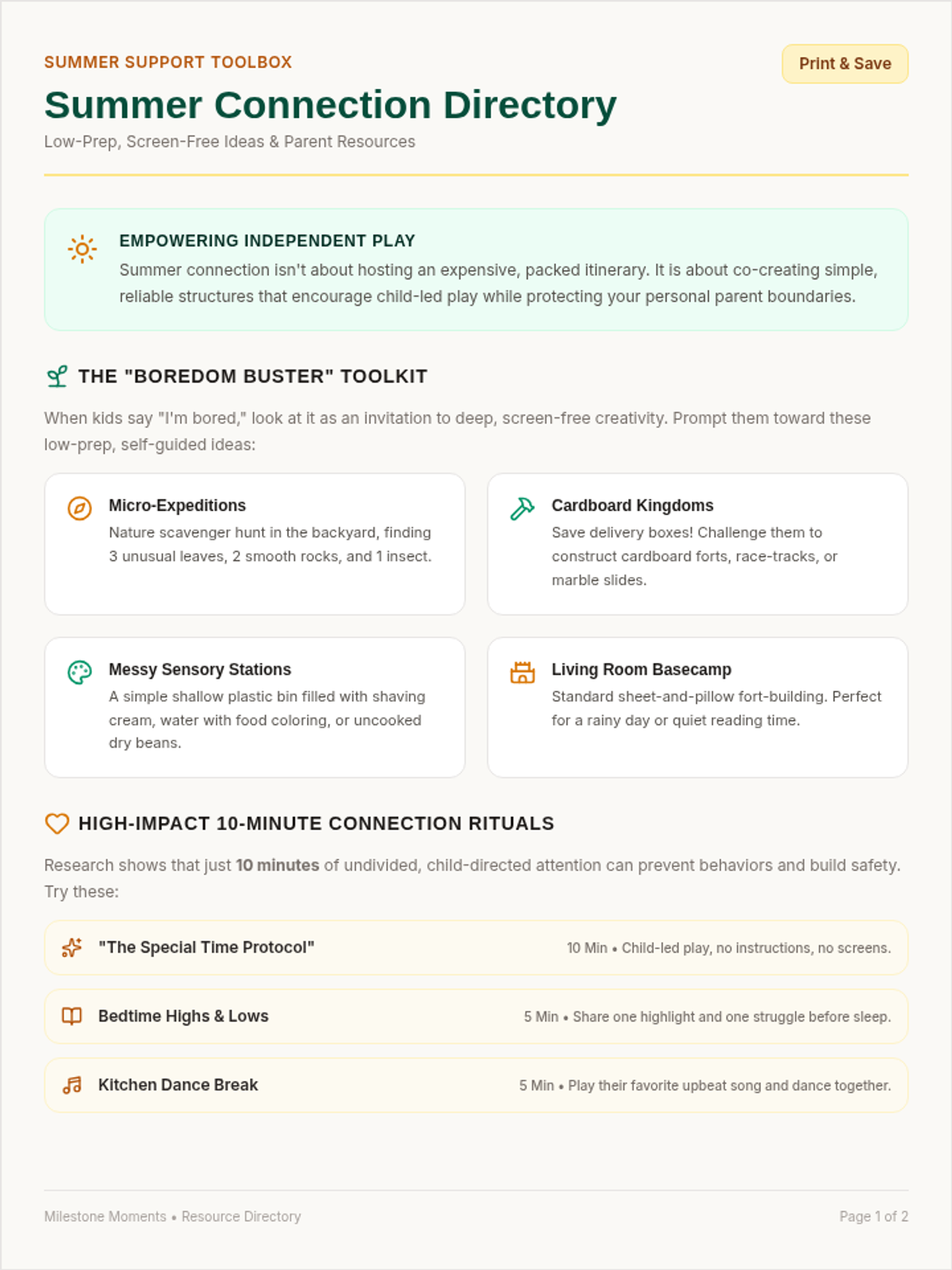
A warm, celebratory parent support group session focused on reflecting on school year successes, planning screen-free summer adventures, and setting growth goals.
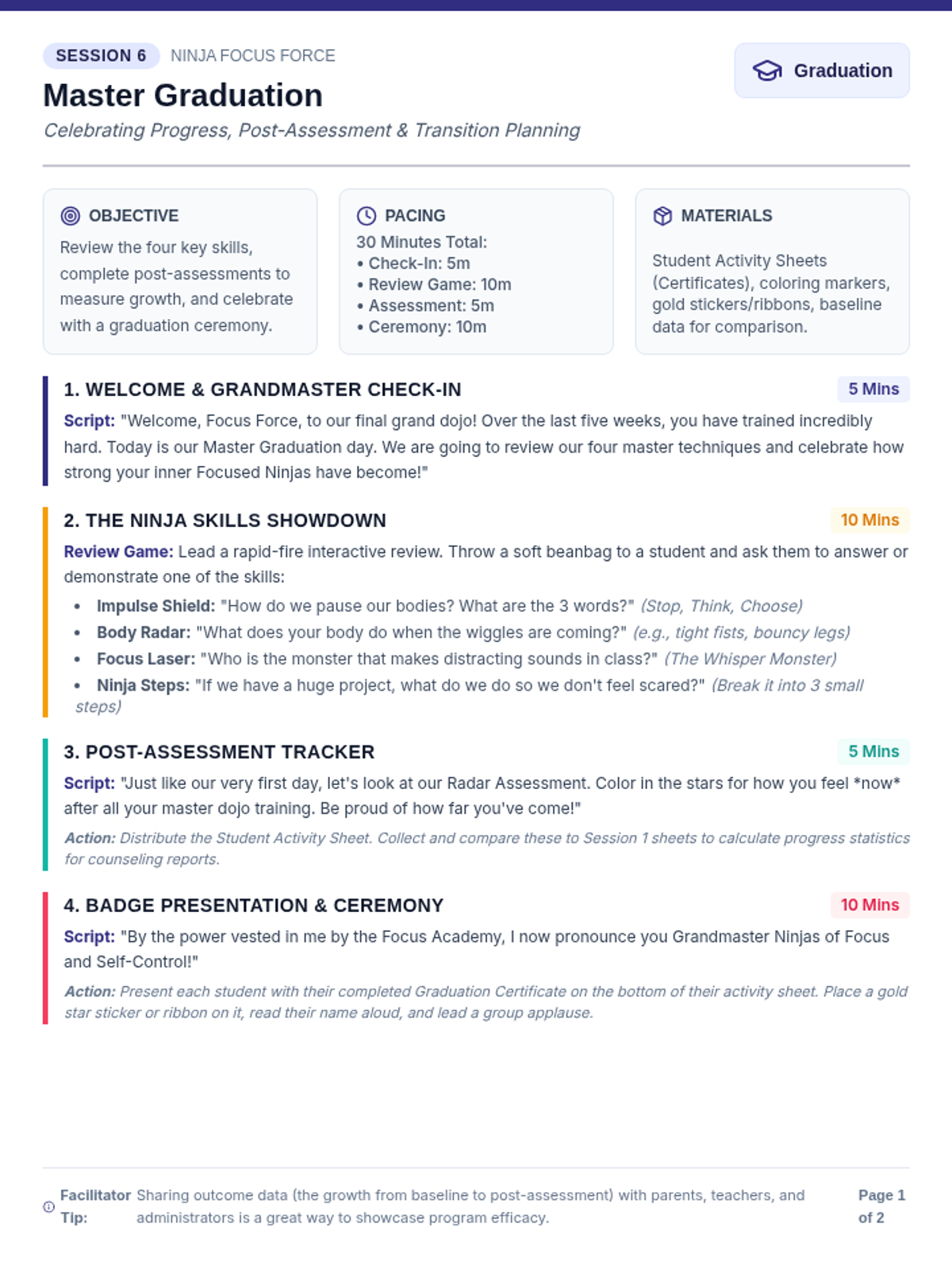
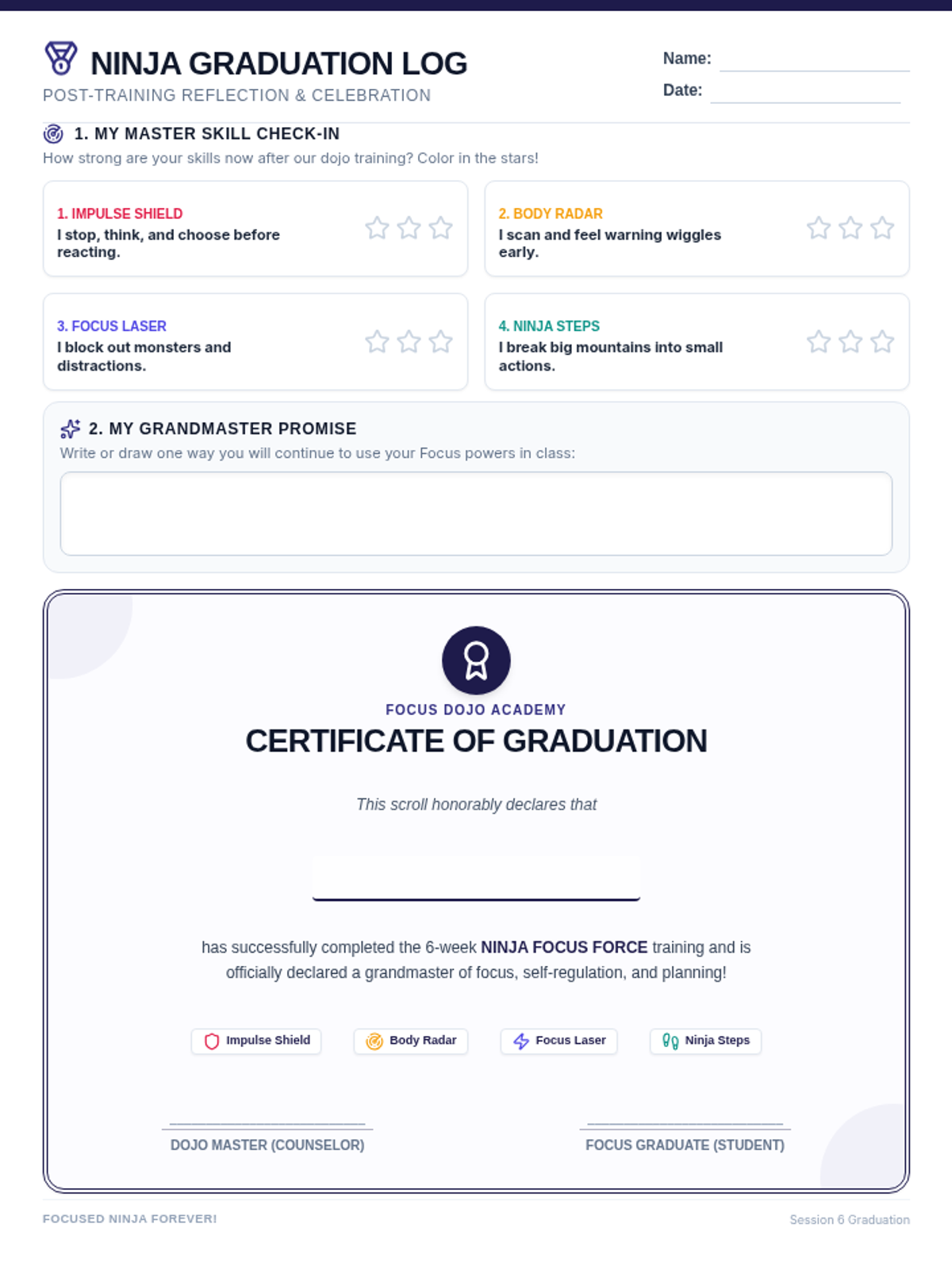
Celebrating the group's progress. Students review their ninja strategies, complete a post-assessment, and receive their graduation badges.
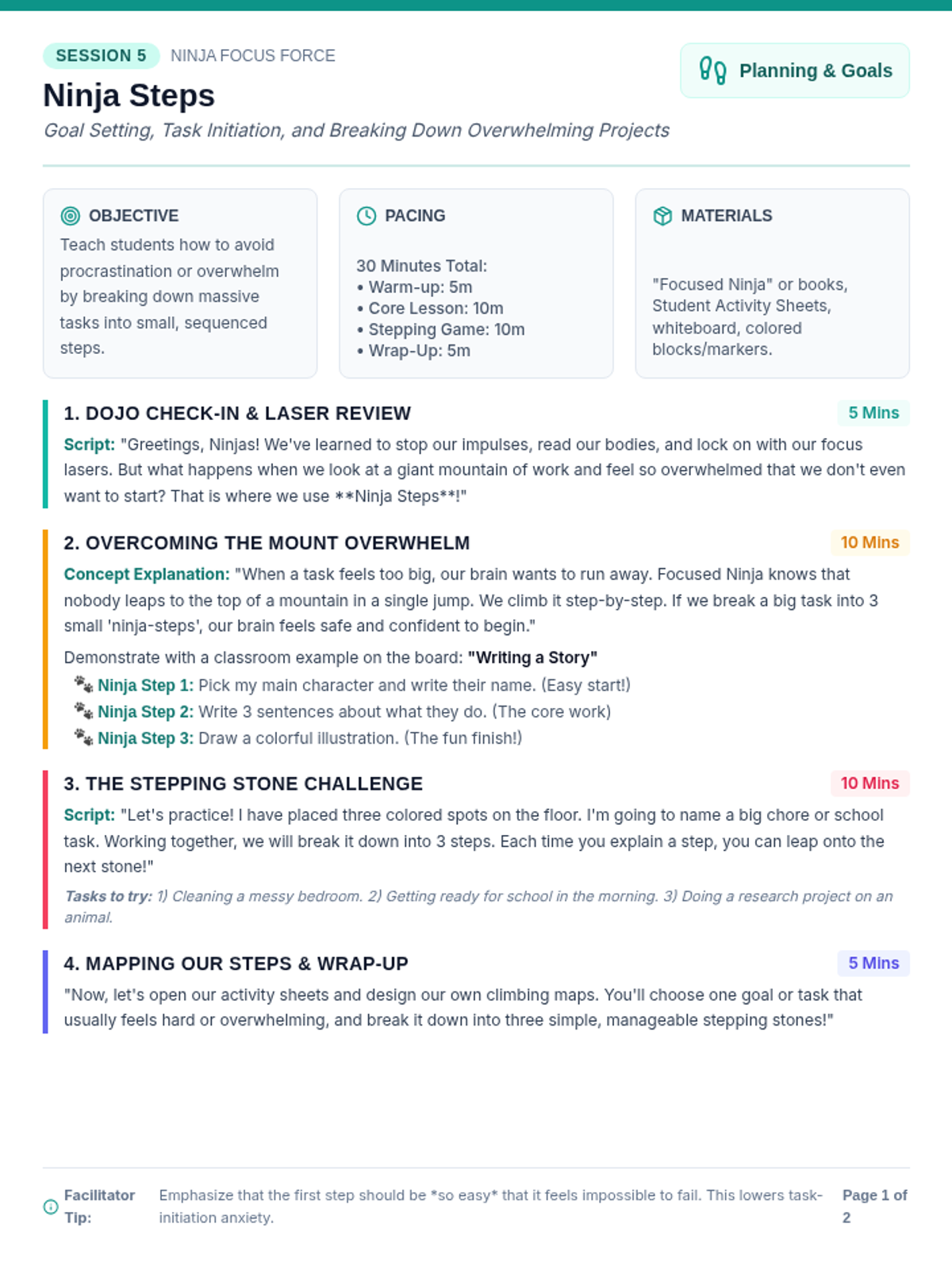
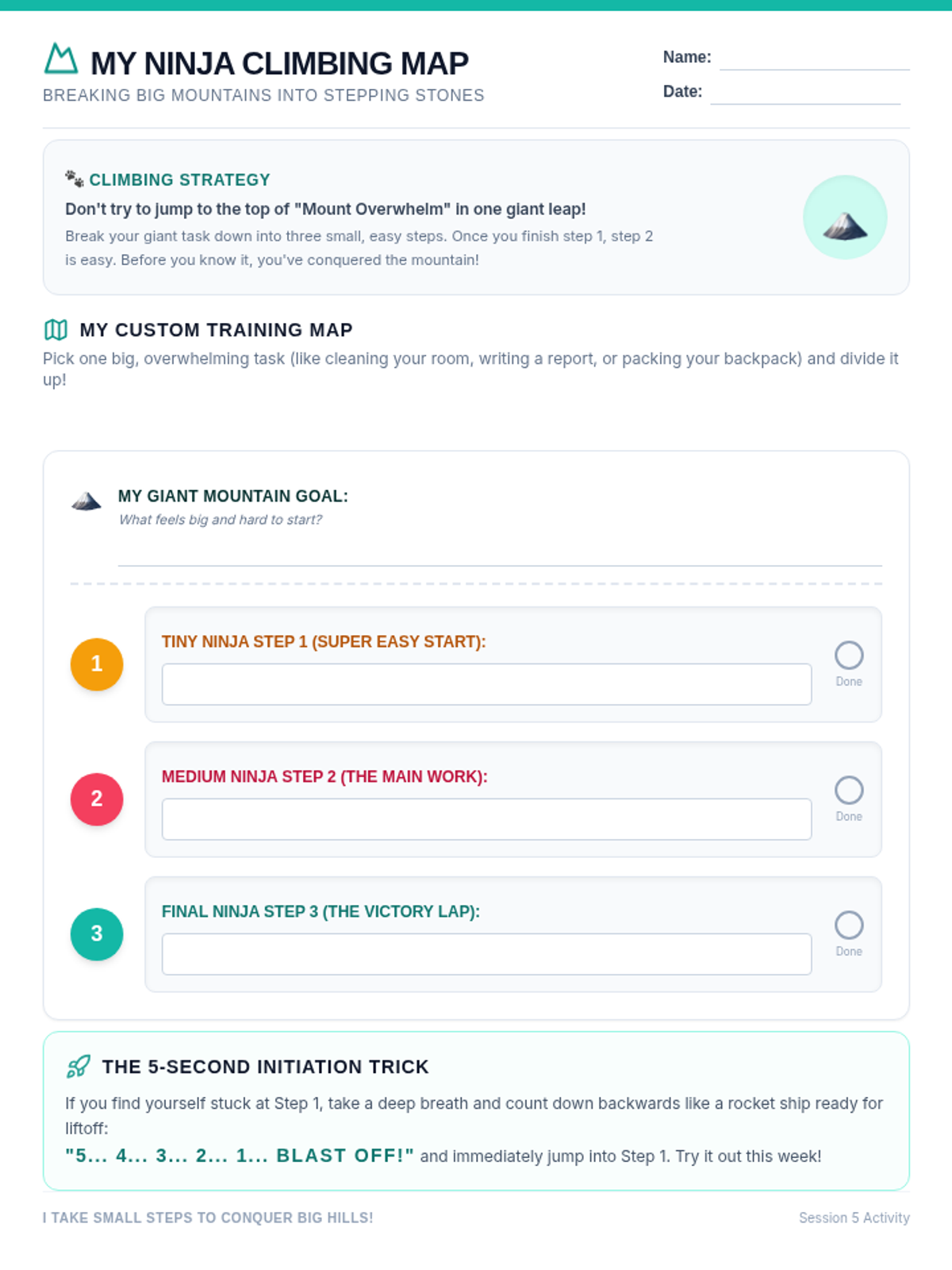
Mastering goal setting and action planning. Students learn to break big, overwhelming tasks into small, manageable 'ninja-steps'.
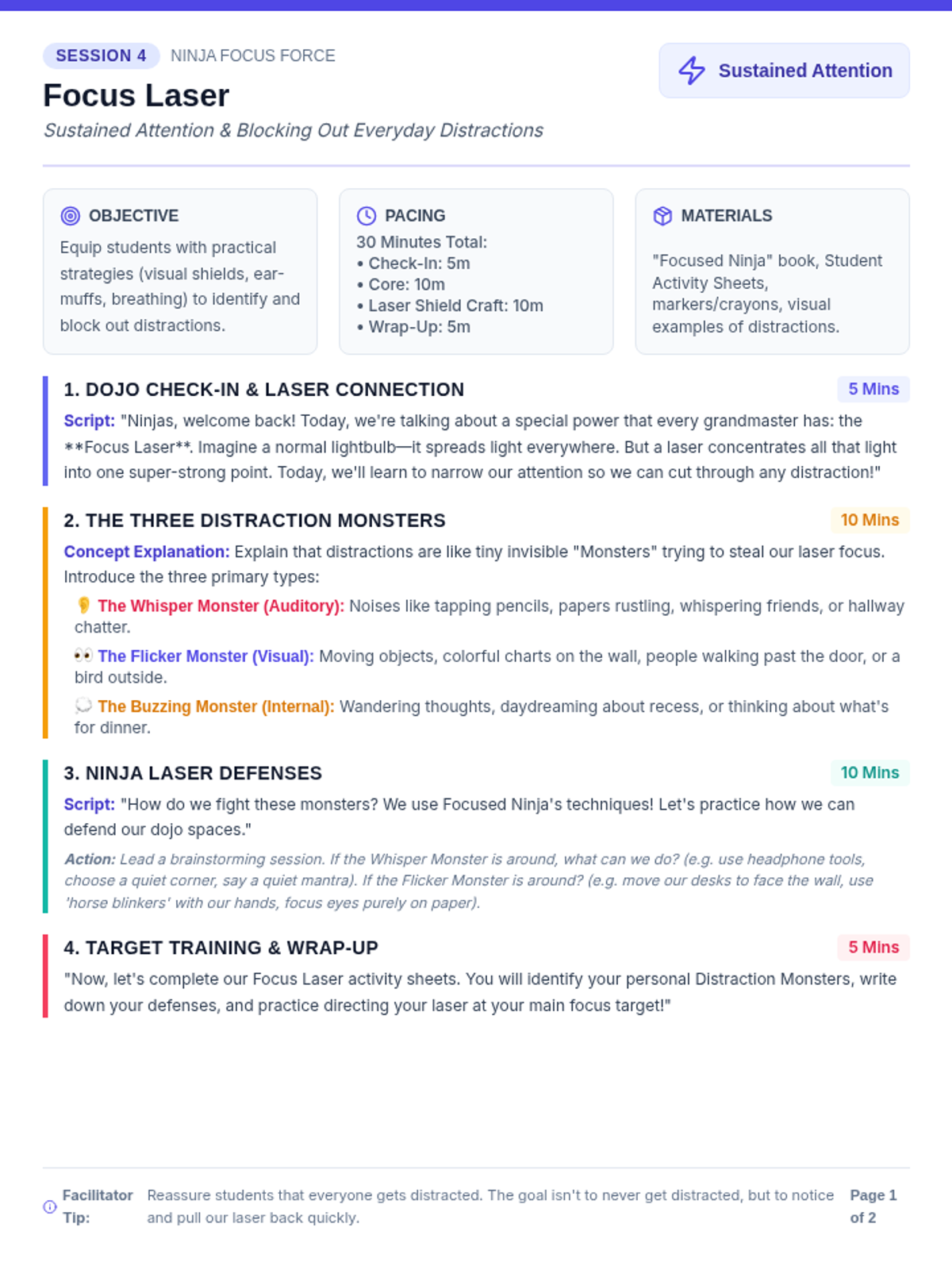
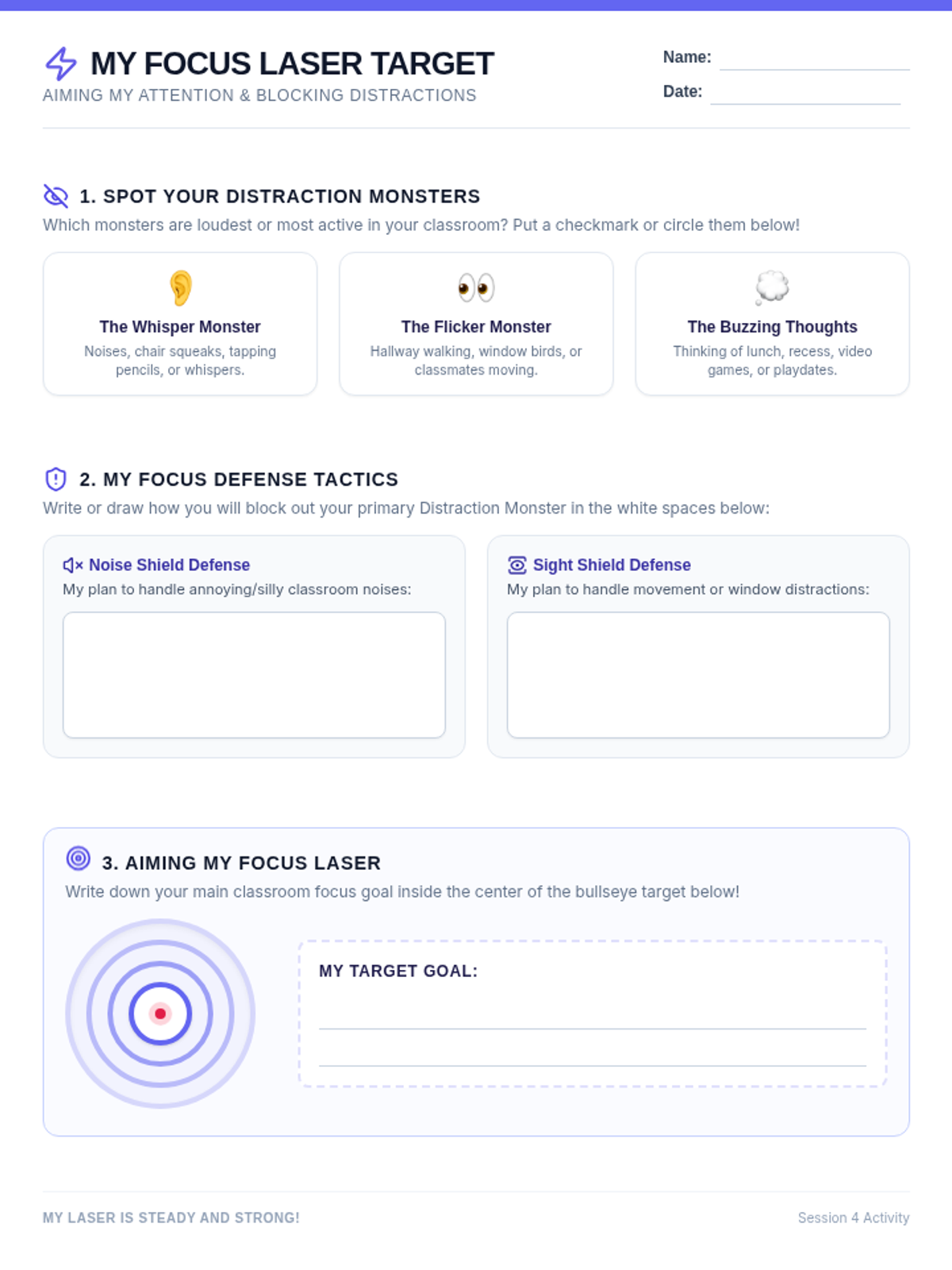
Enhancing sustained attention and concentration. Students practice blocking out distractions using the Focused Ninja's techniques.
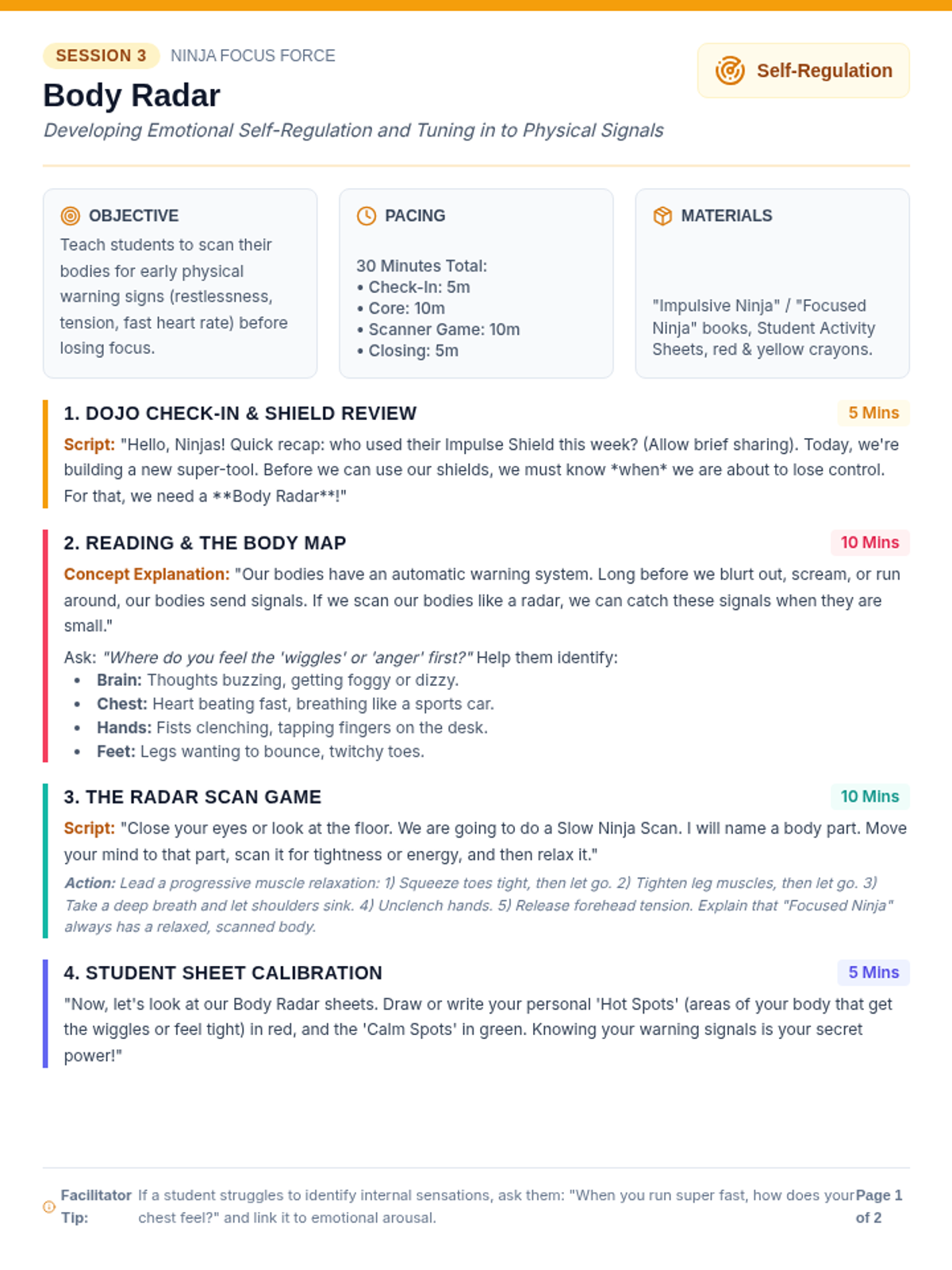
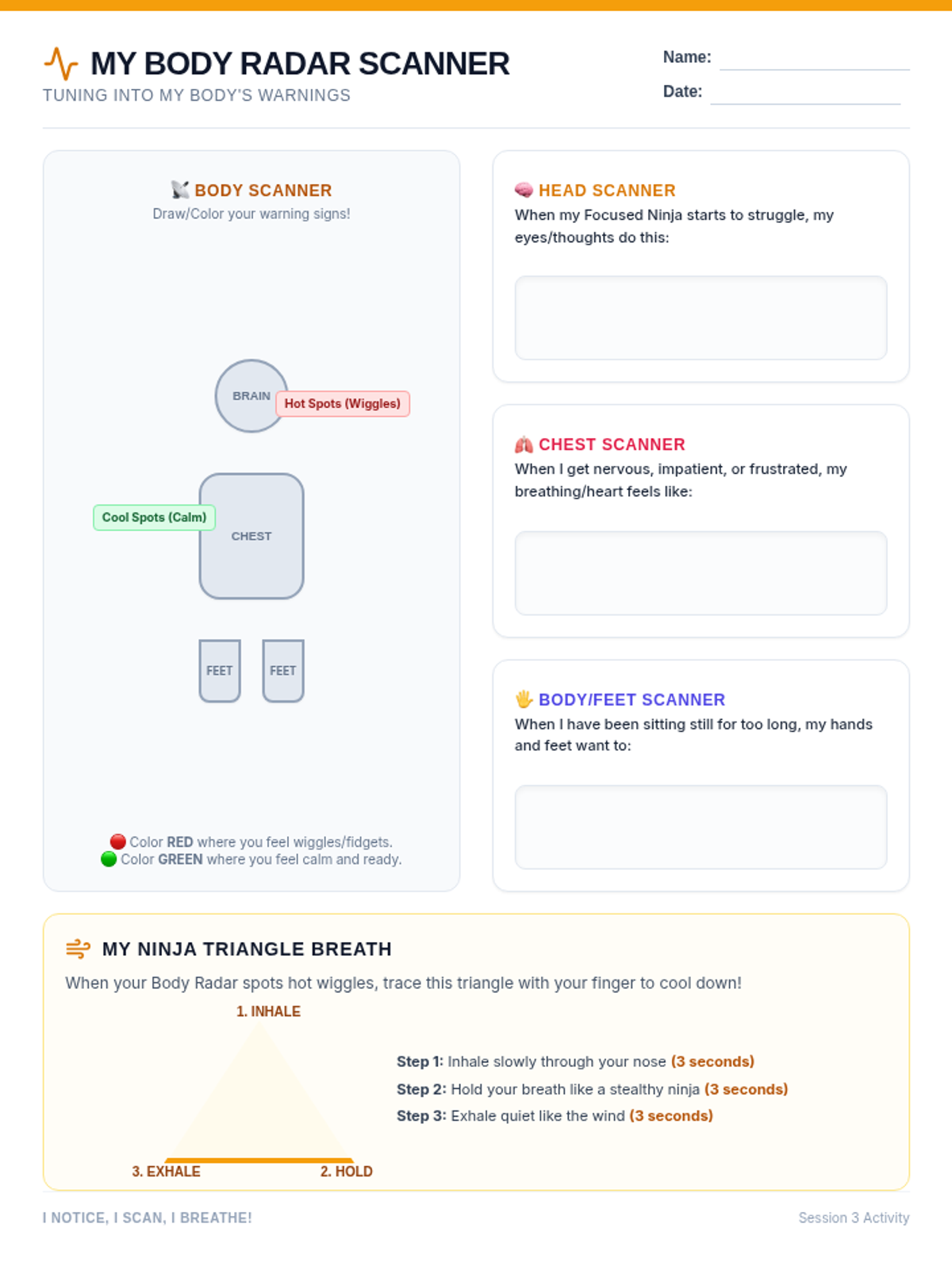
Developing emotional self-regulation. Students learn to scan their bodies for early warning signs of distraction, restlessness, or frustration.
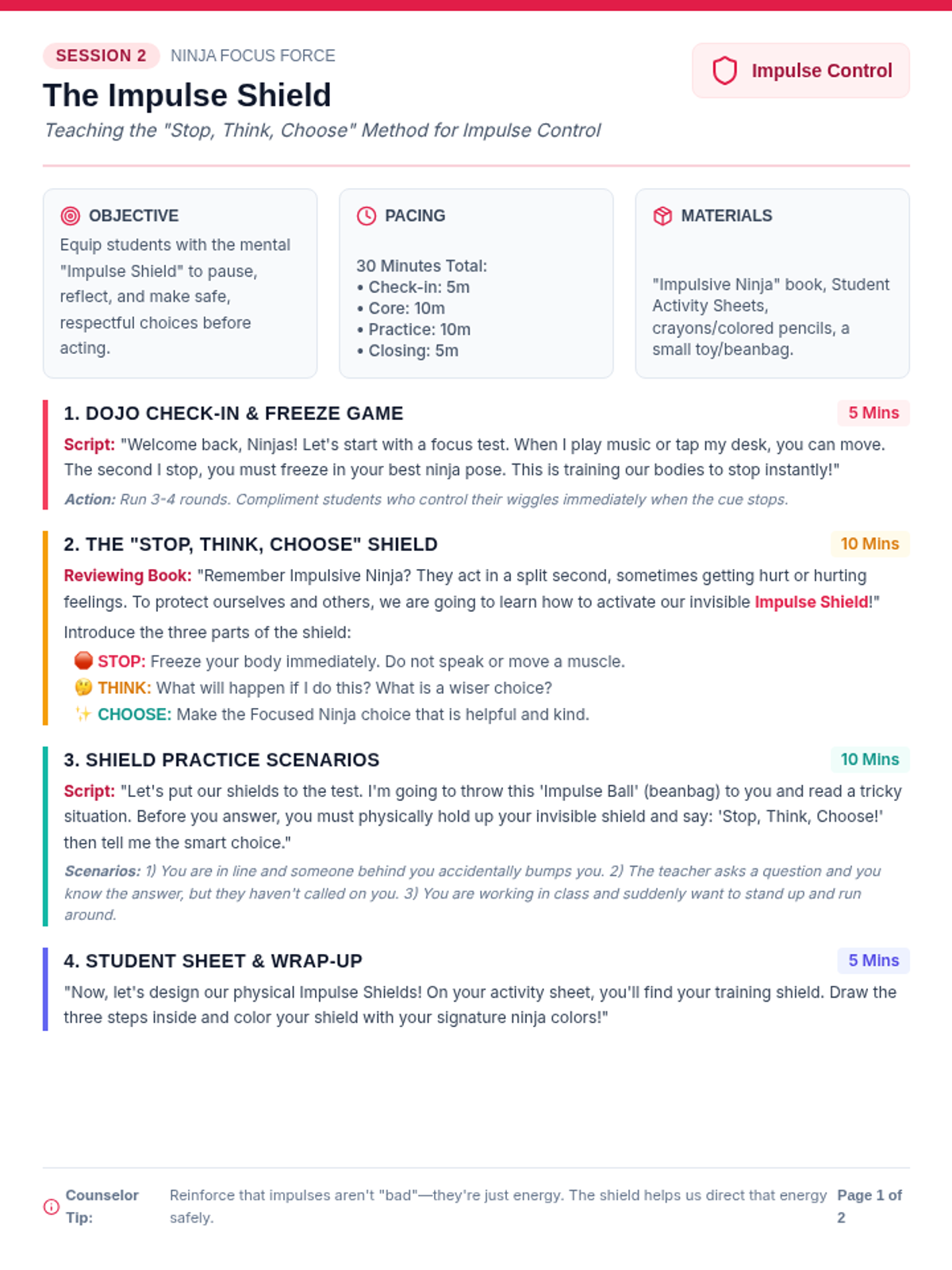
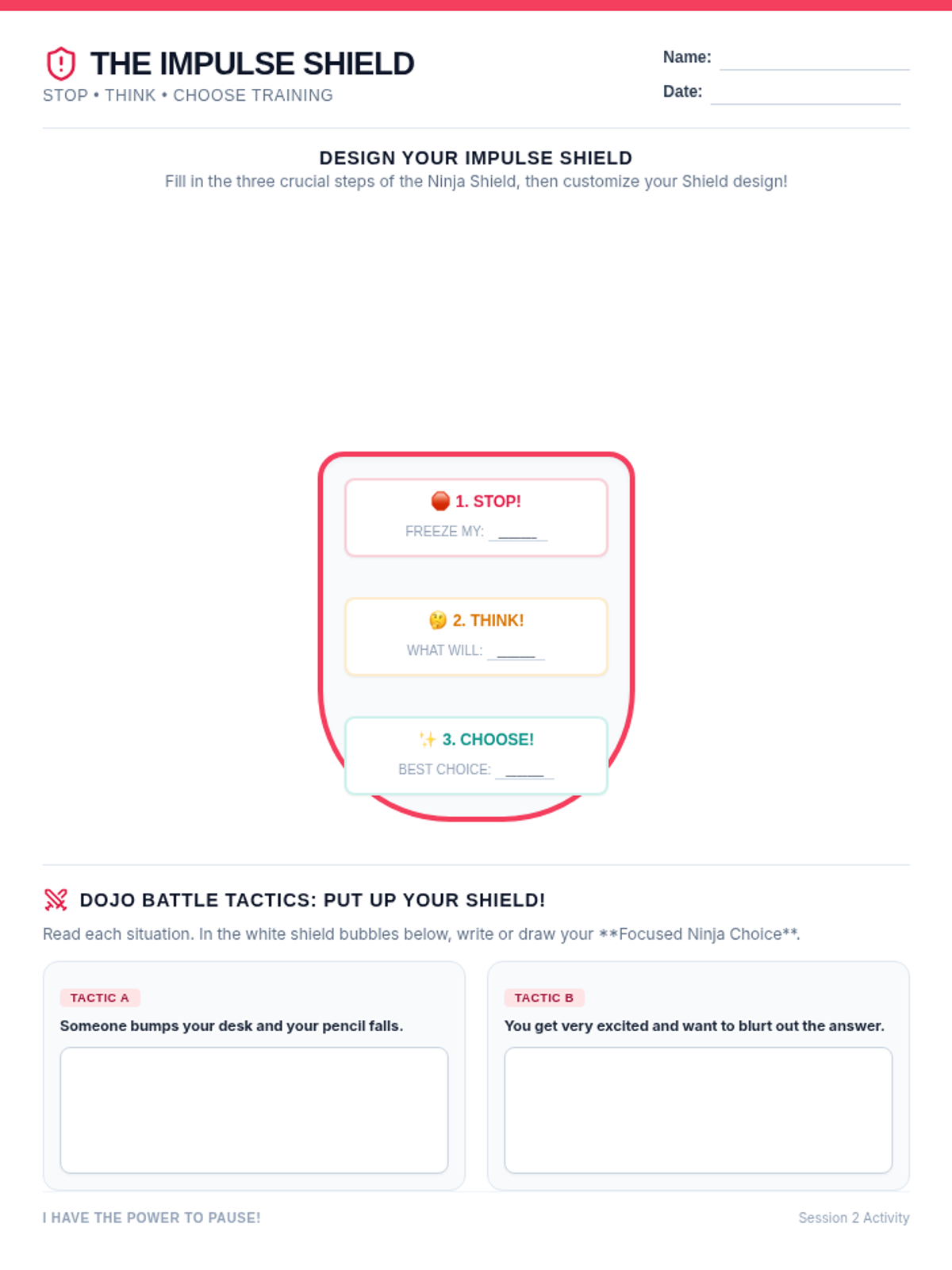
Teaching impulse control through the 'Stop and Think' method. Students learn to pause before reacting, using the concept of an invisible defensive shield.
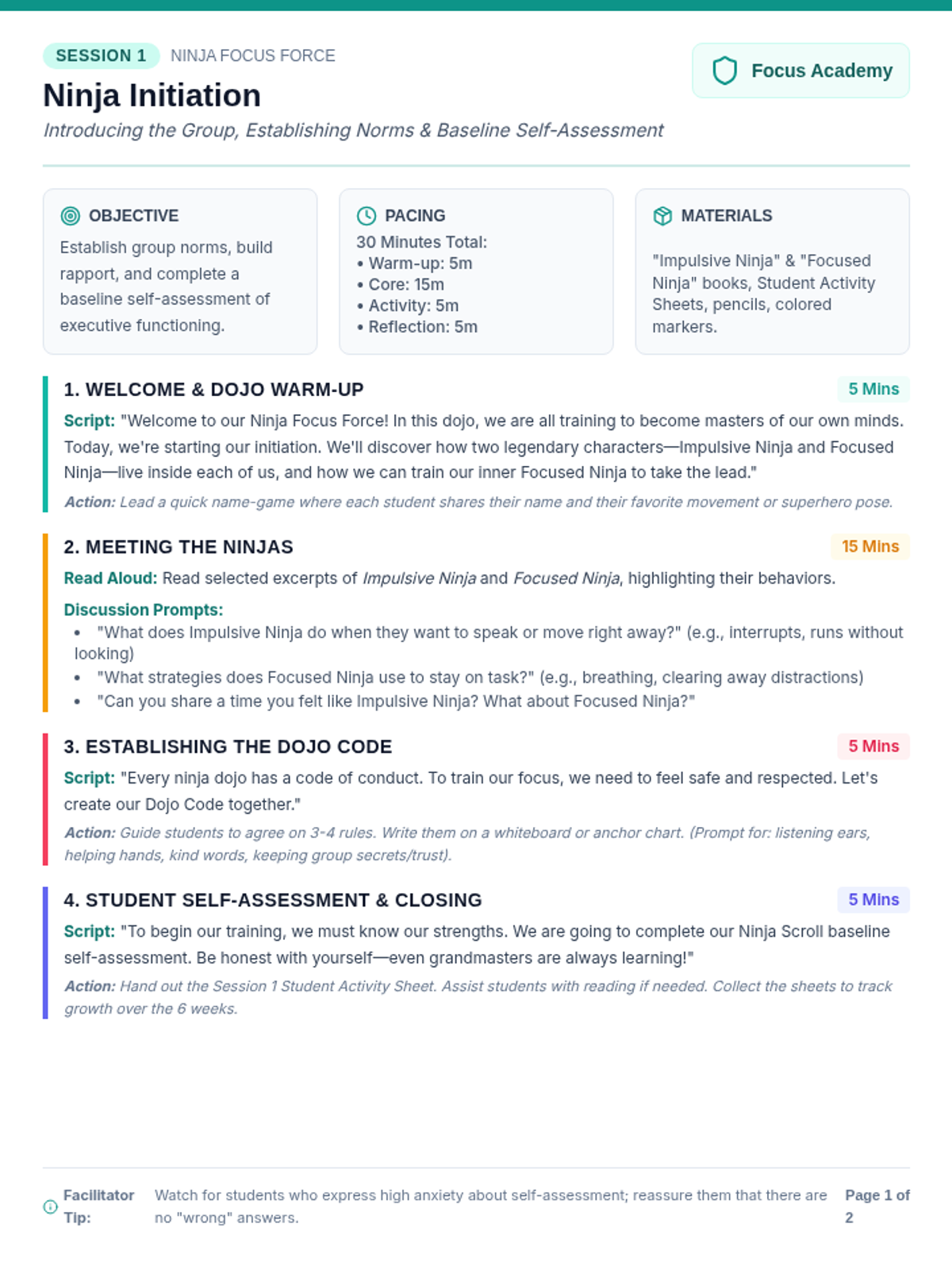
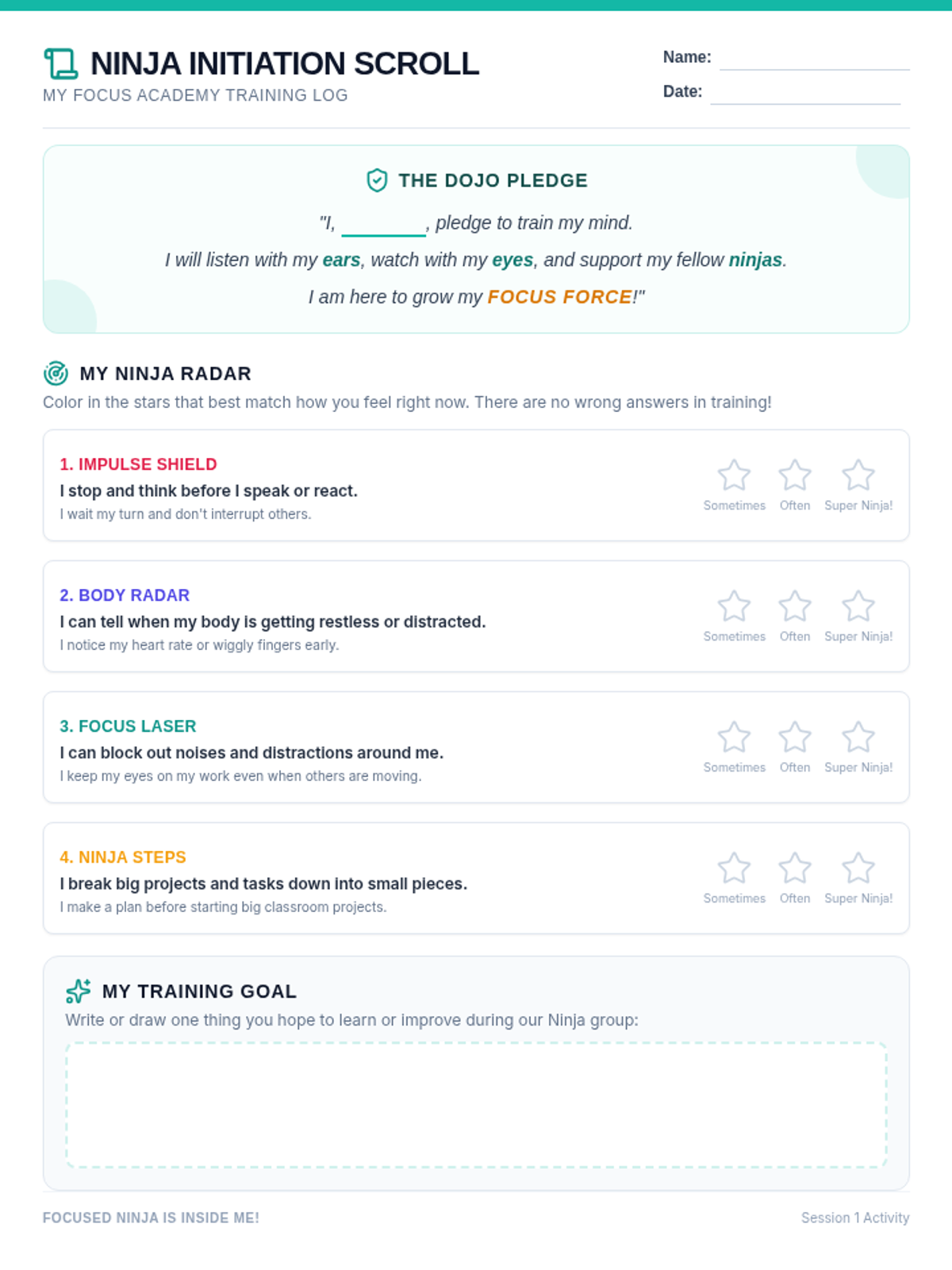
Introducing the group, establishing norms, and meeting Impulsive Ninja and Focused Ninja. Students complete a baseline self-assessment of their focus and impulse control.
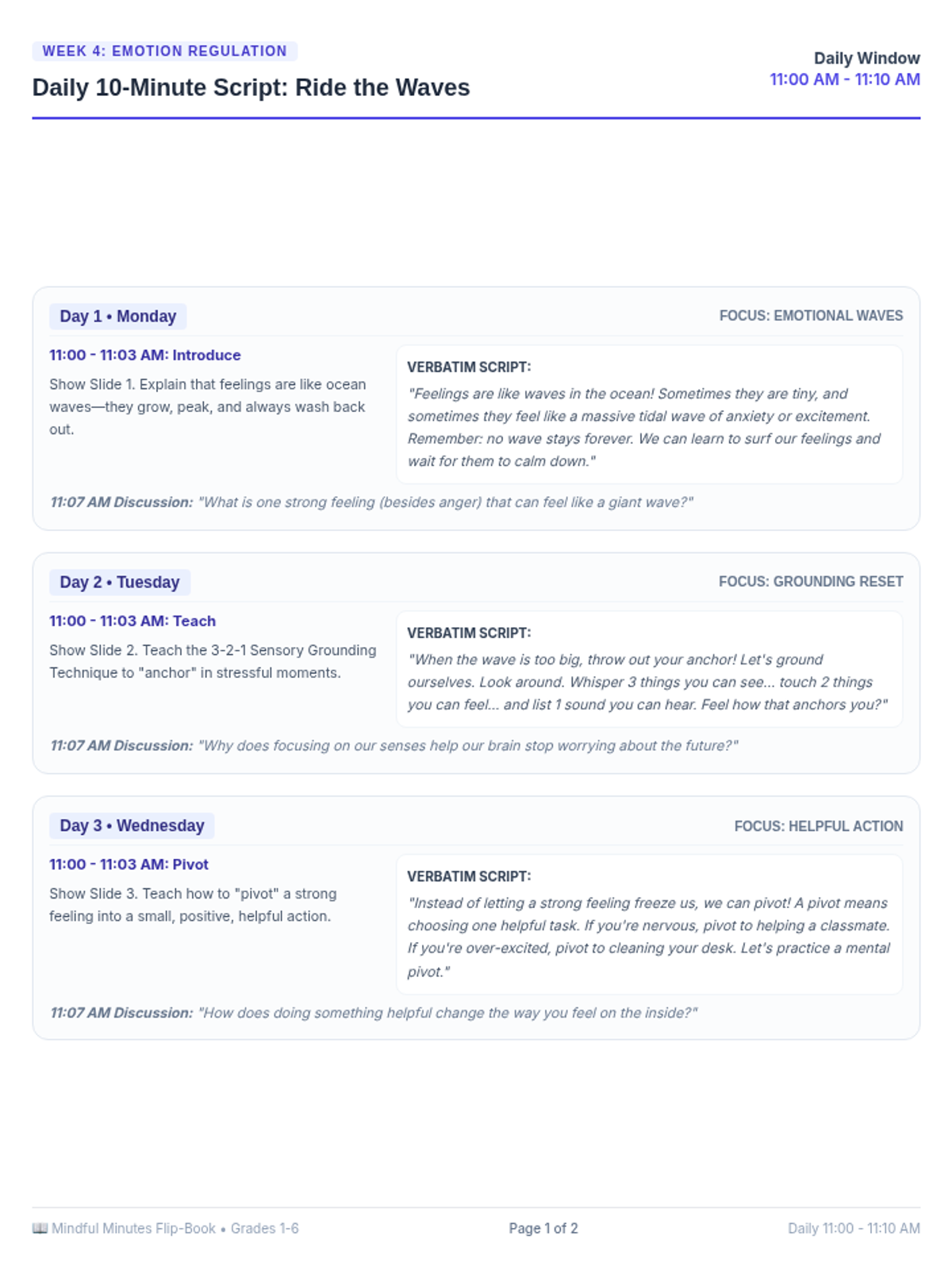
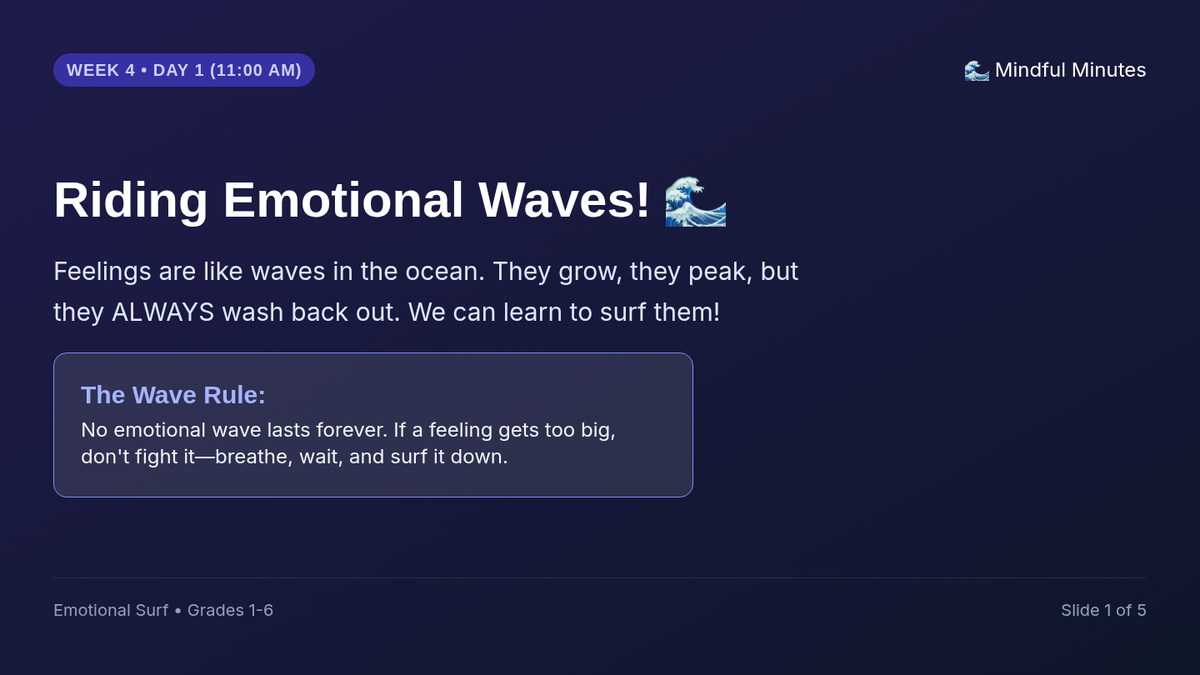
Five 10-minute daily SEL scripts and visual slides focusing on handling strong feelings and managing stress daily (emotion regulation).
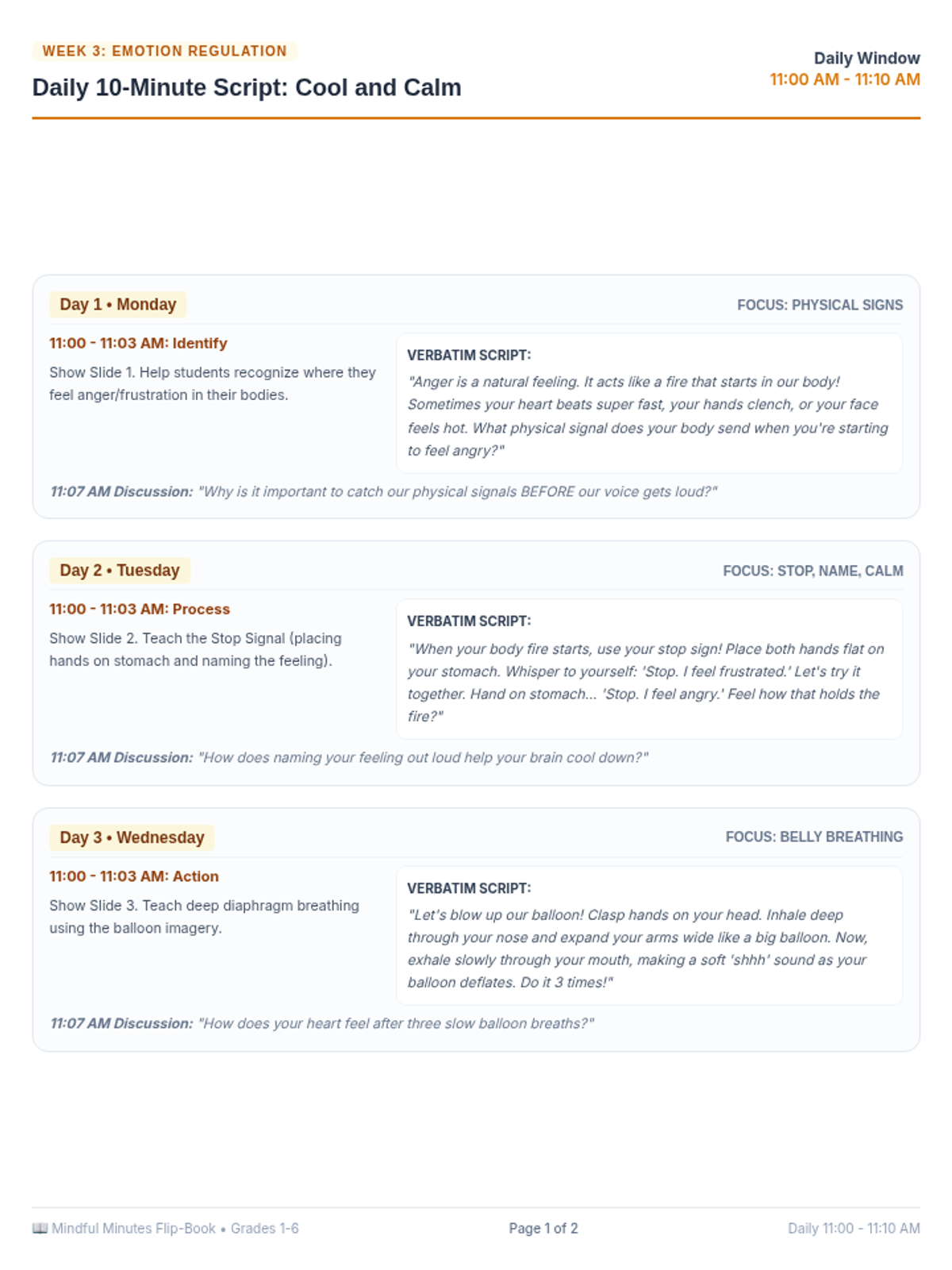
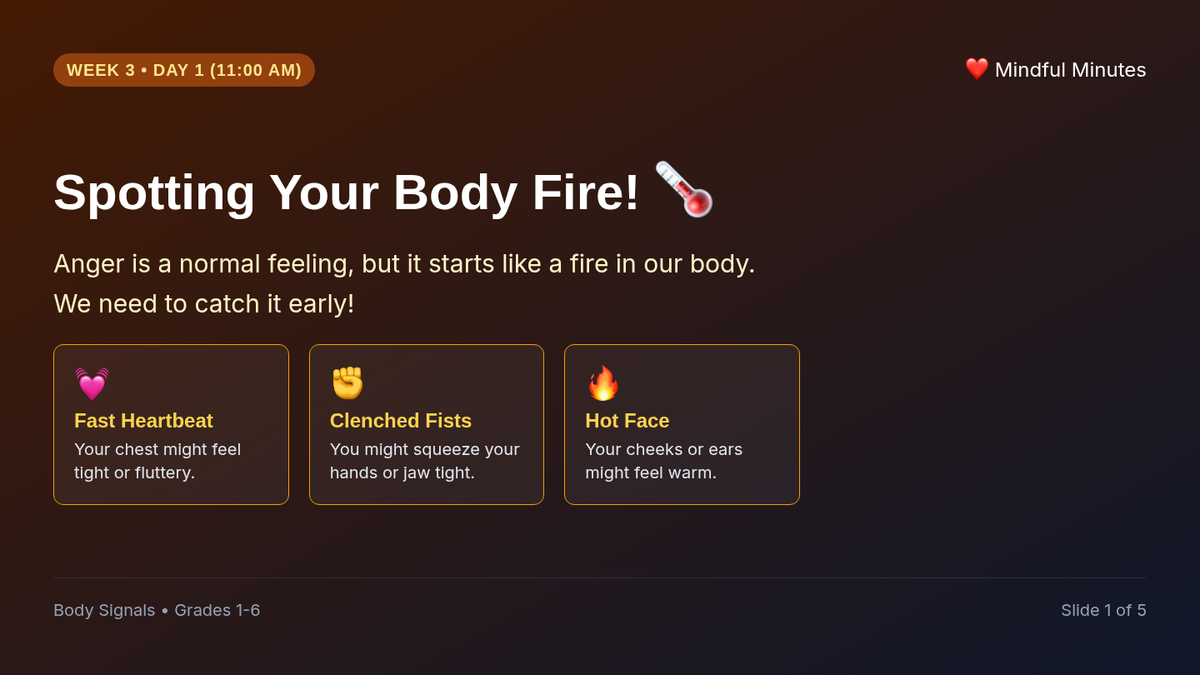
Five 10-minute daily SEL scripts and visual slides focusing on calming down and managing anger (emotion regulation).
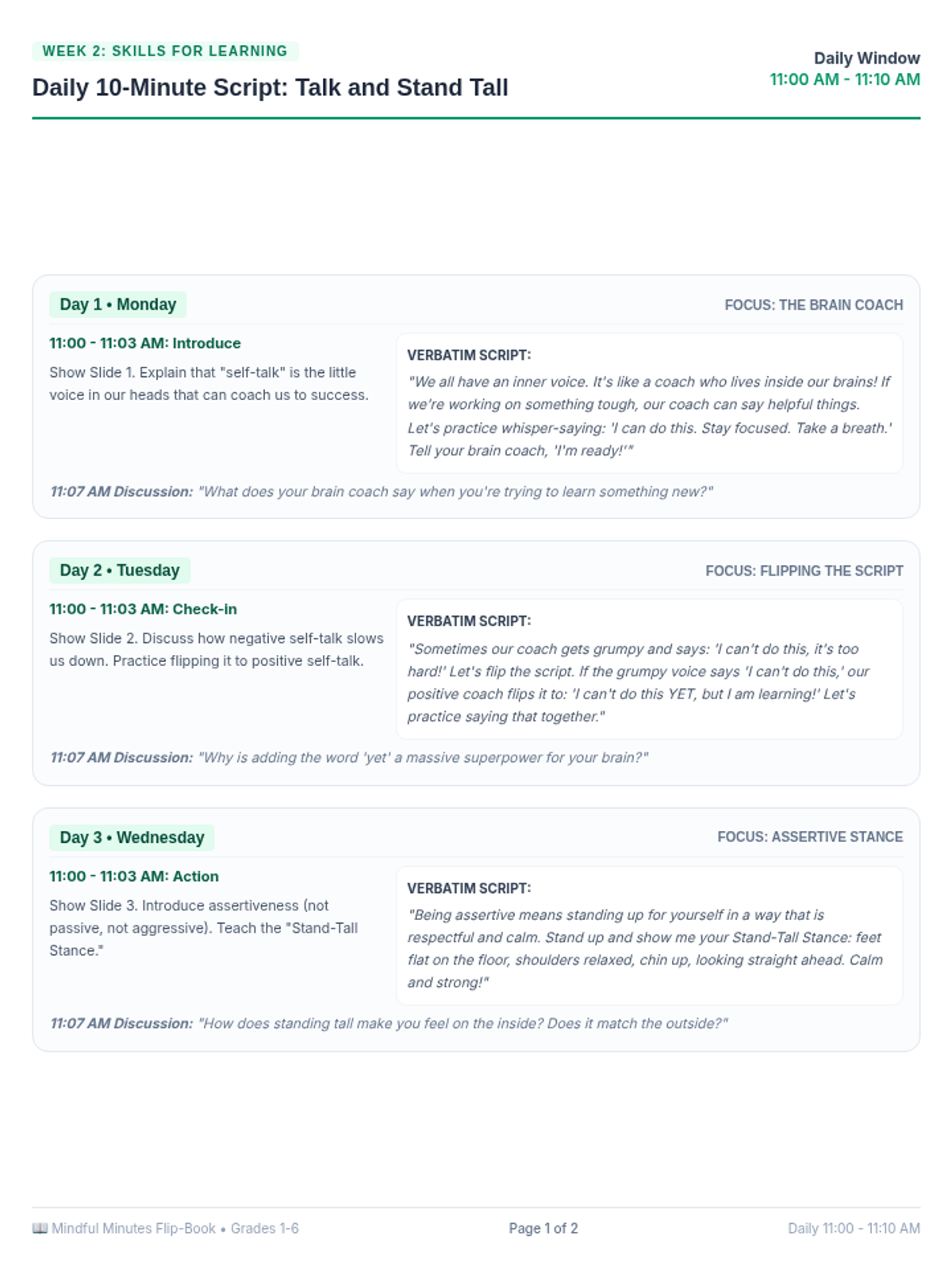
Five 10-minute daily SEL scripts and visual slides focusing on self-talk for focus and learning to be assertive (skills for learning).
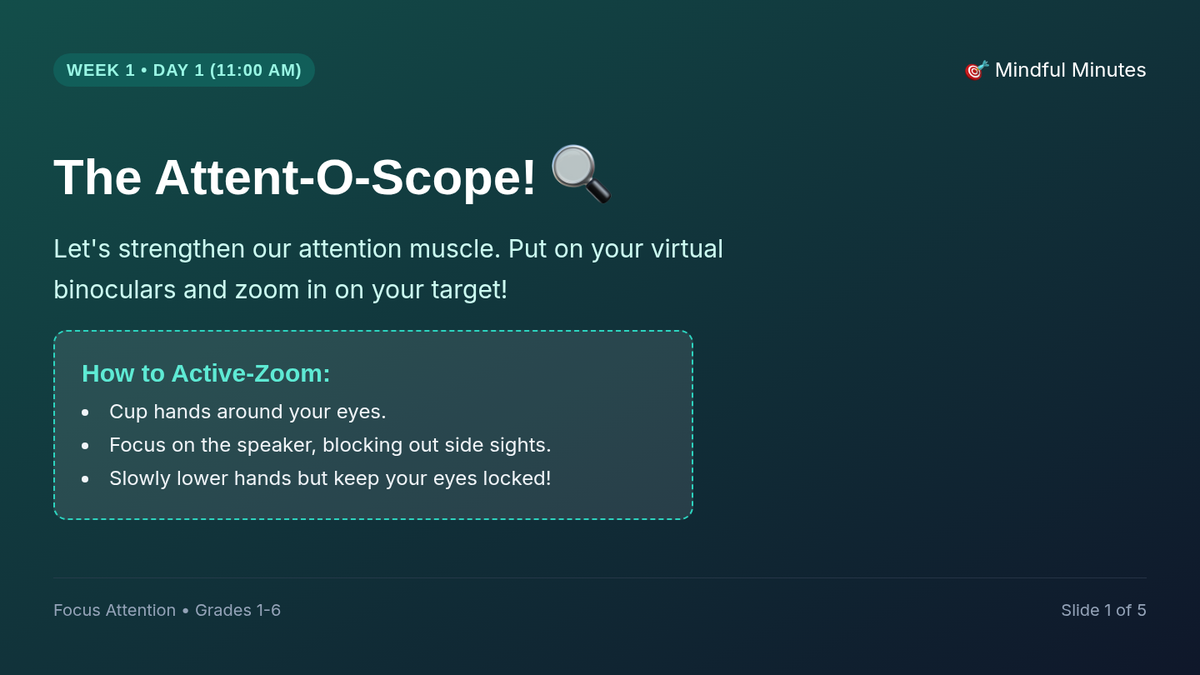
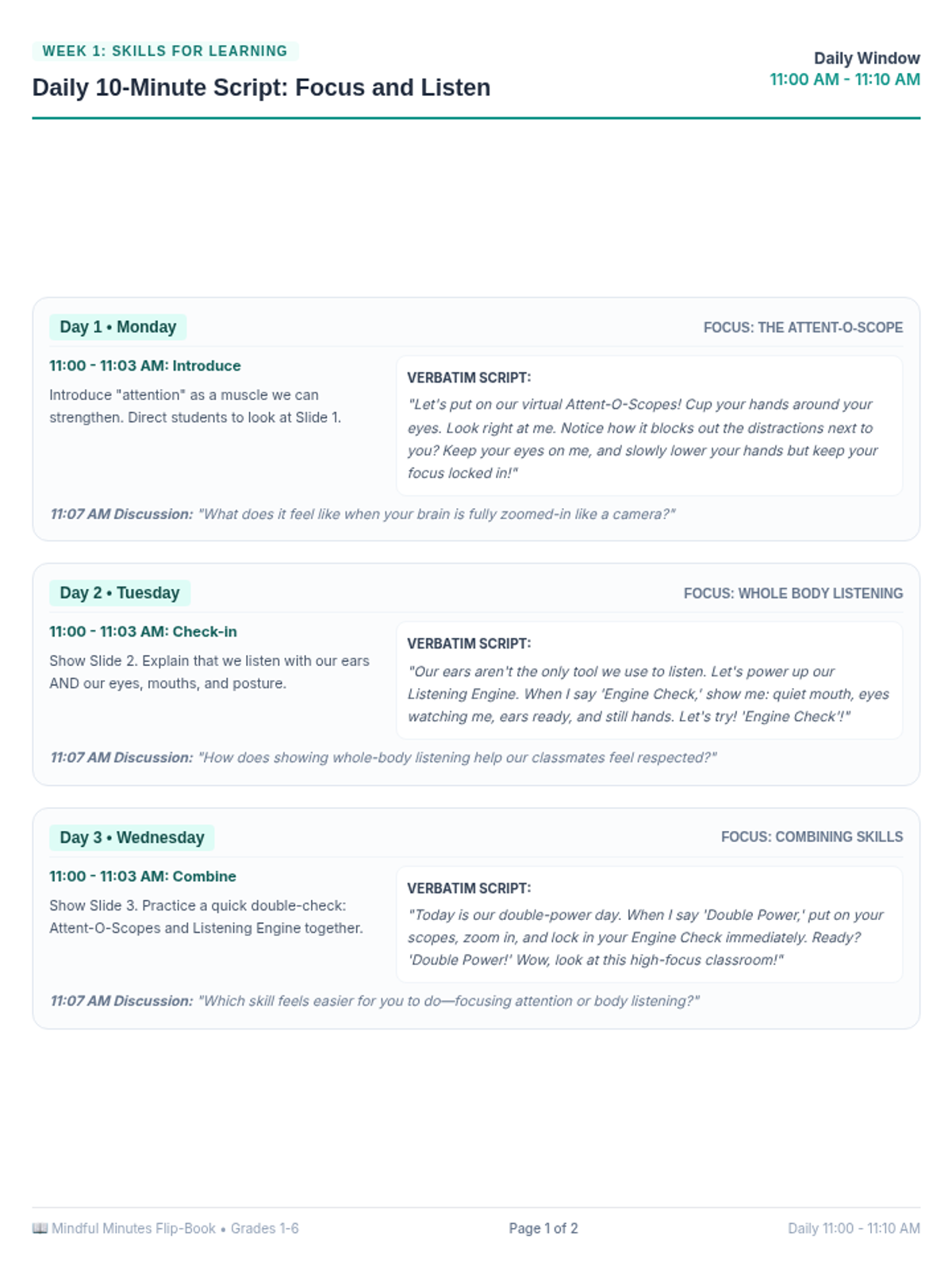
Five 10-minute daily SEL scripts and visual slides focusing on focusing attention and listening with the body (skills for learning).
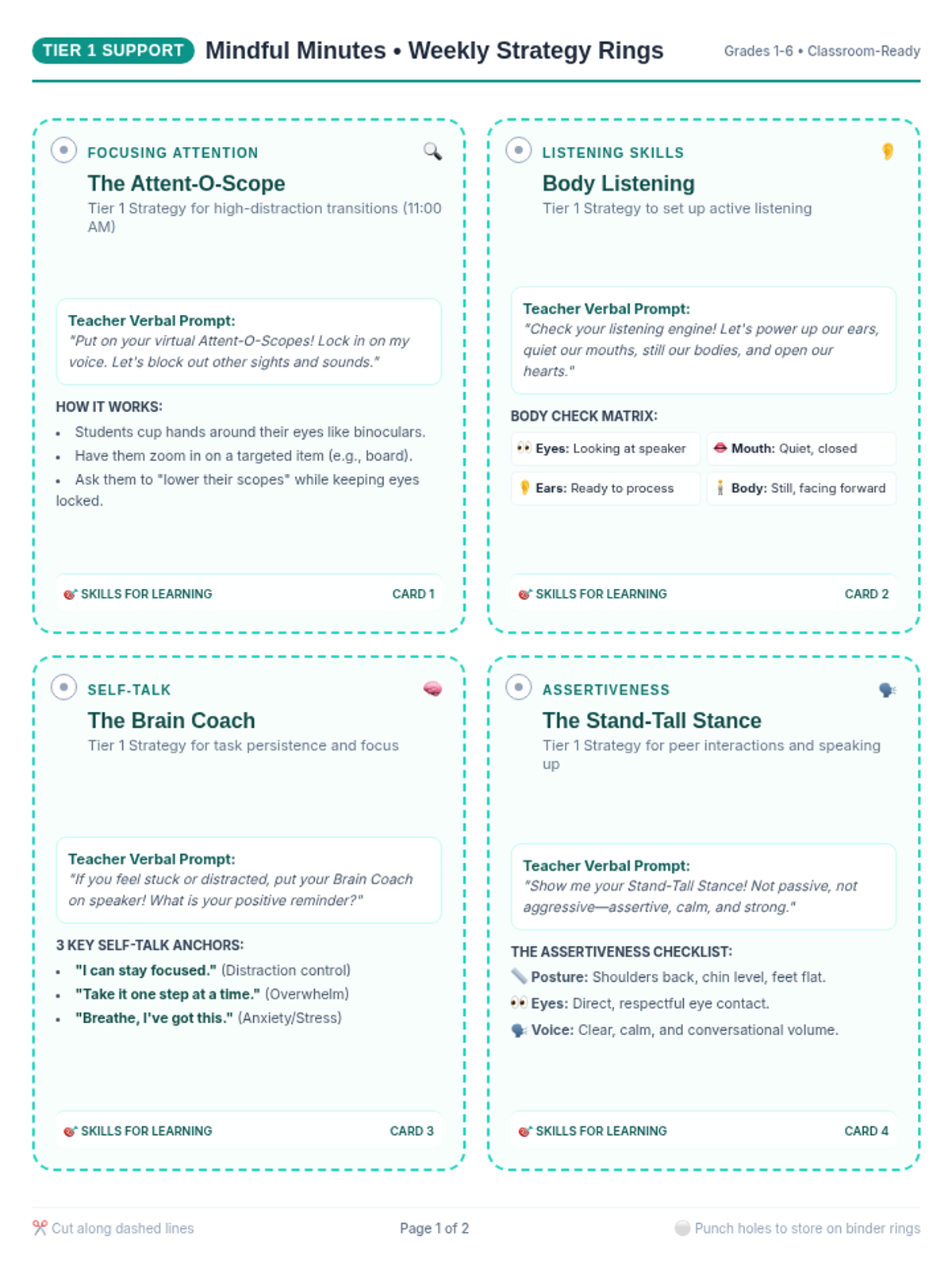
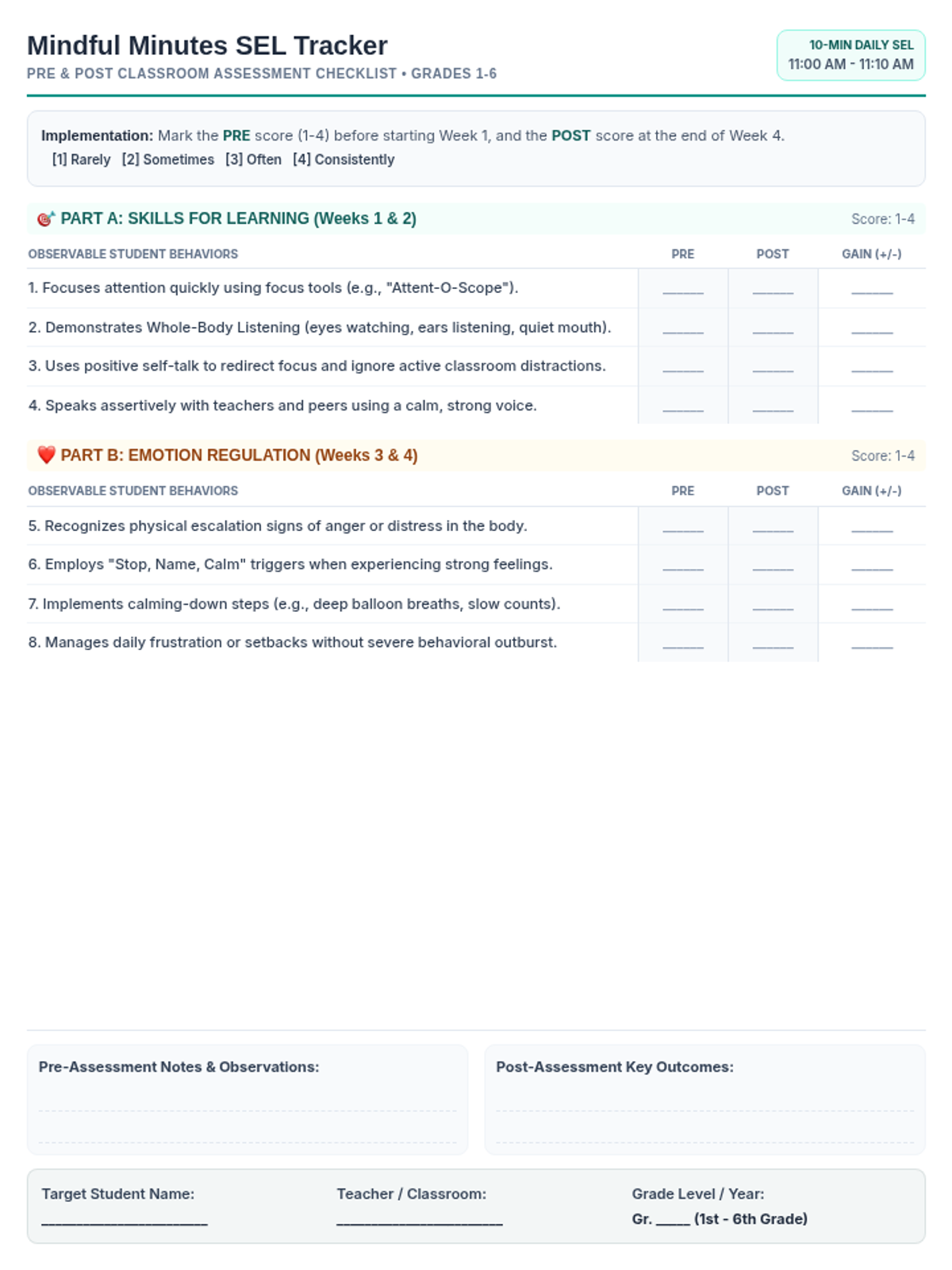
Foundational tools for the Mindful Minutes curriculum, containing Tier 1 behavioral strategy cards for printable rings and a teacher pre/post-assessment checklist.
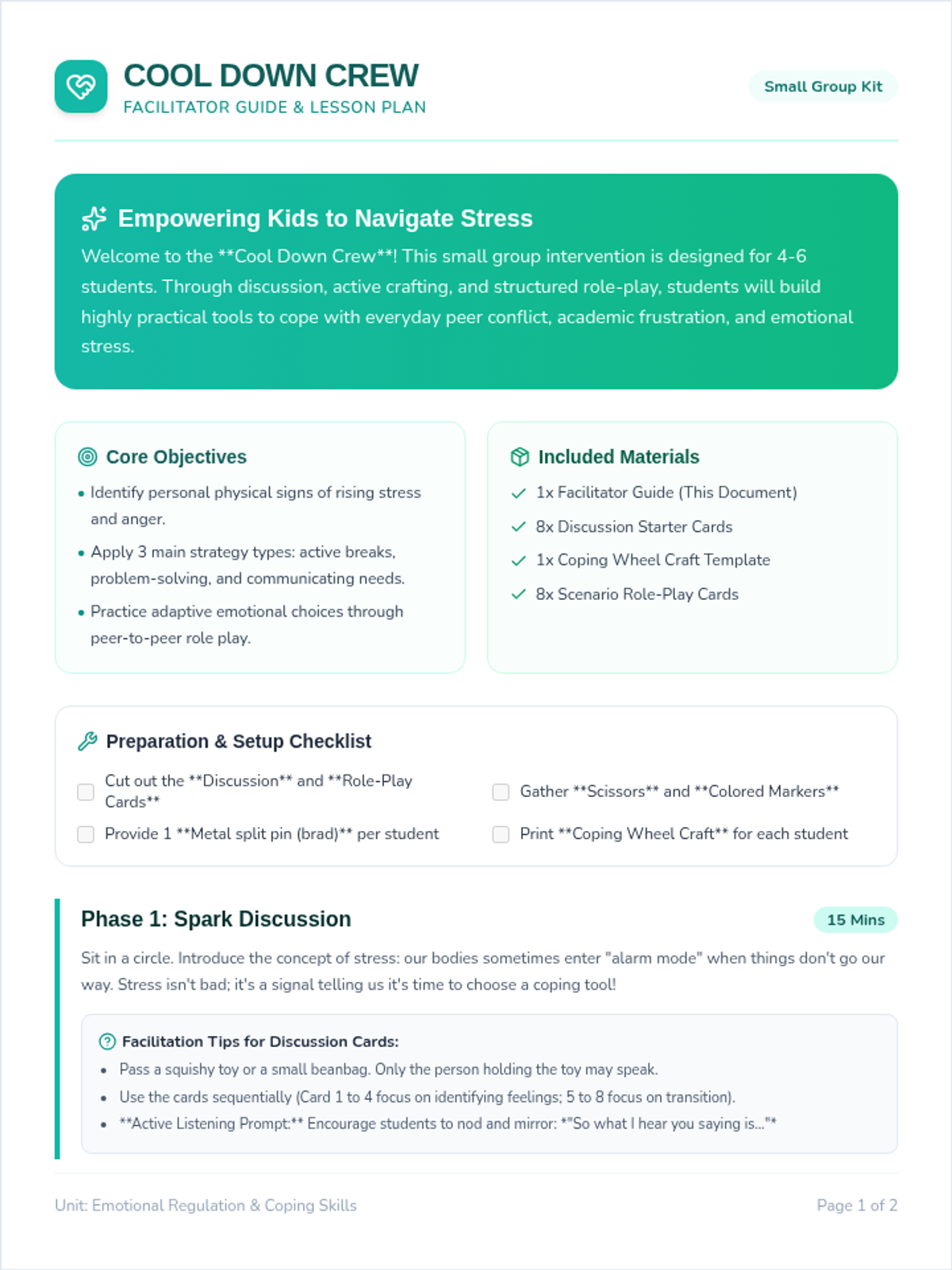
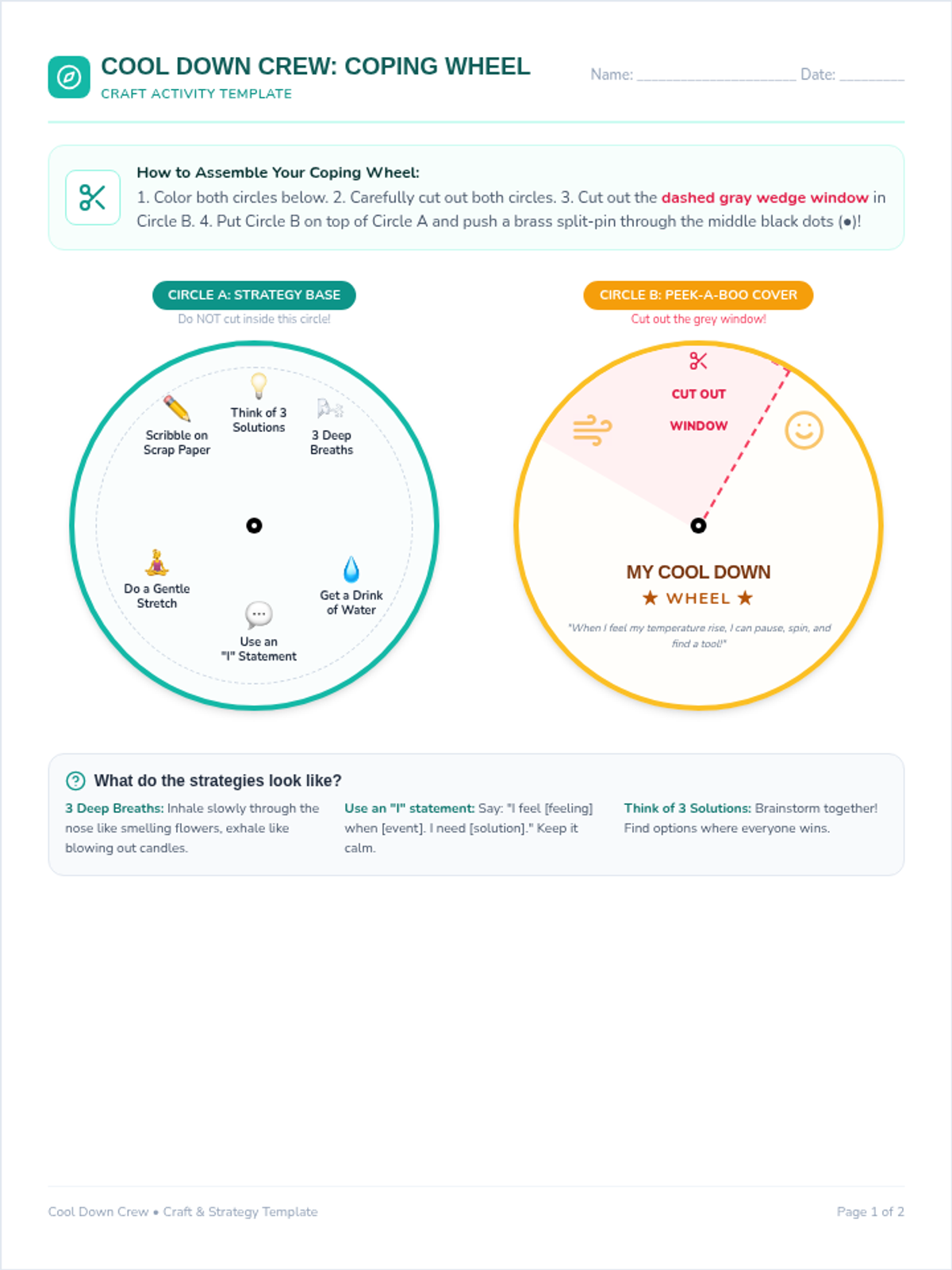
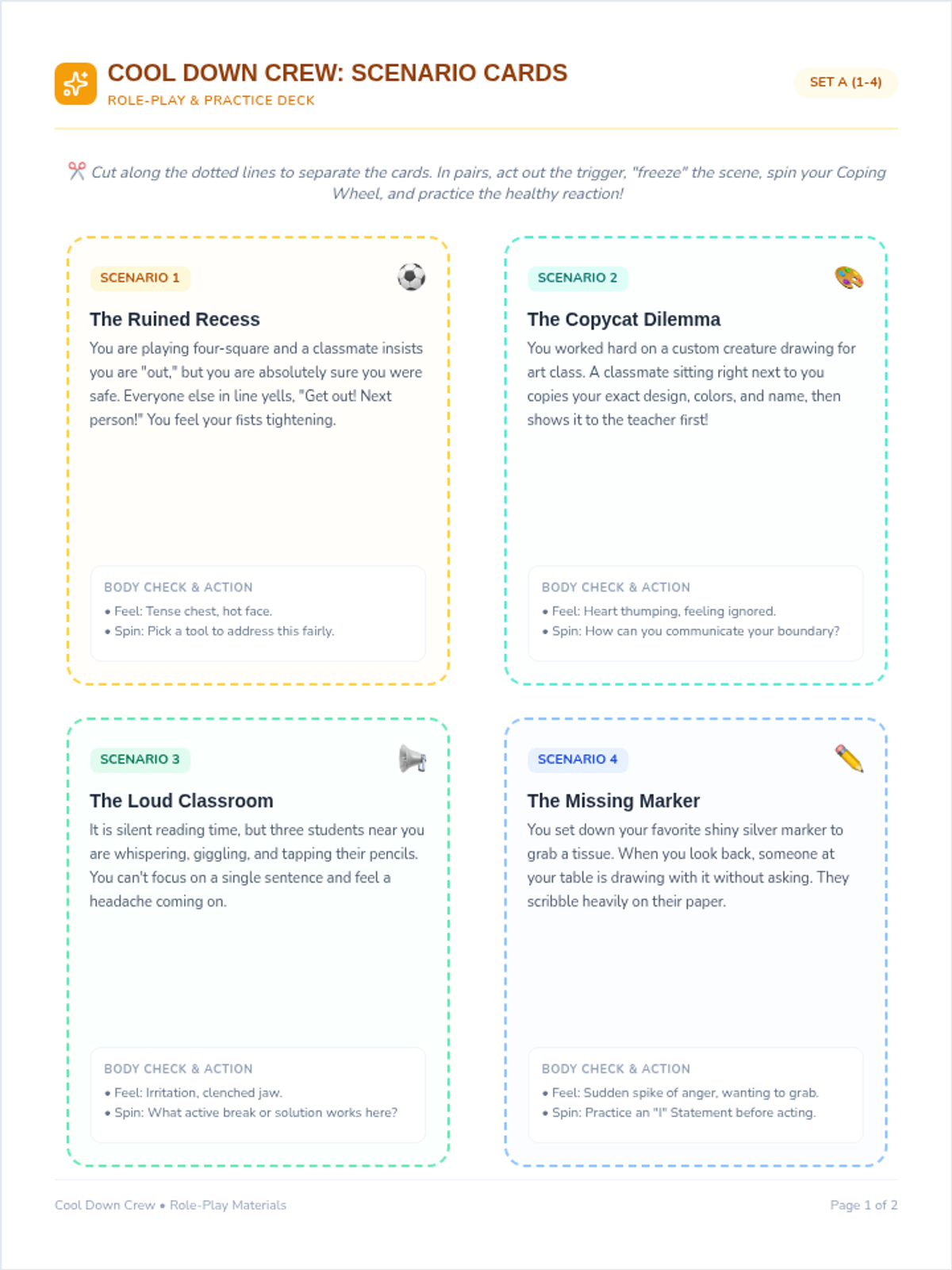
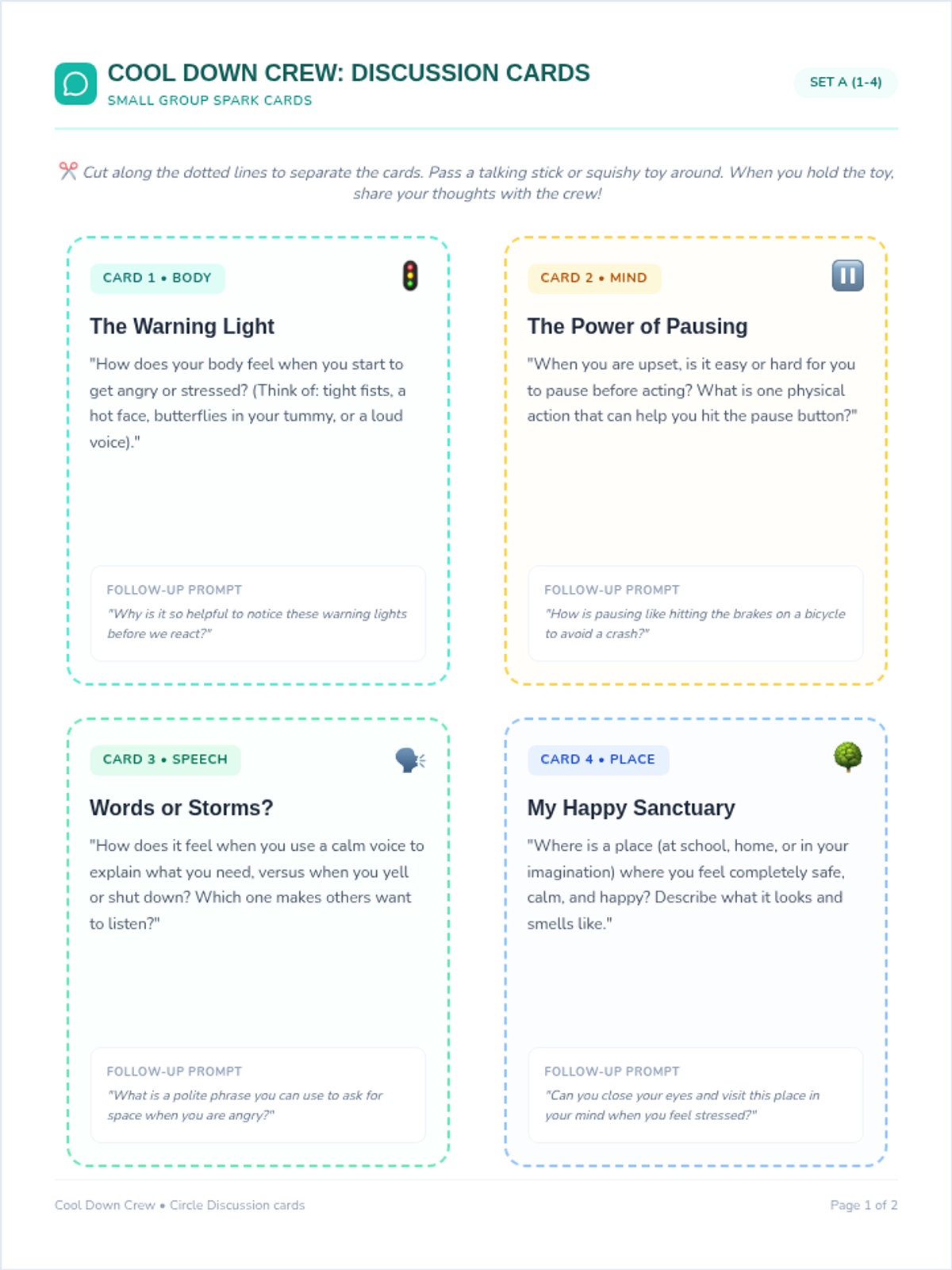
An interactive small group kit designed to equip kids with practical coping tools for everyday stress and conflict. The lesson features a hands-on coping wheel craft, discussion cards, and scenario-based role-play cards.
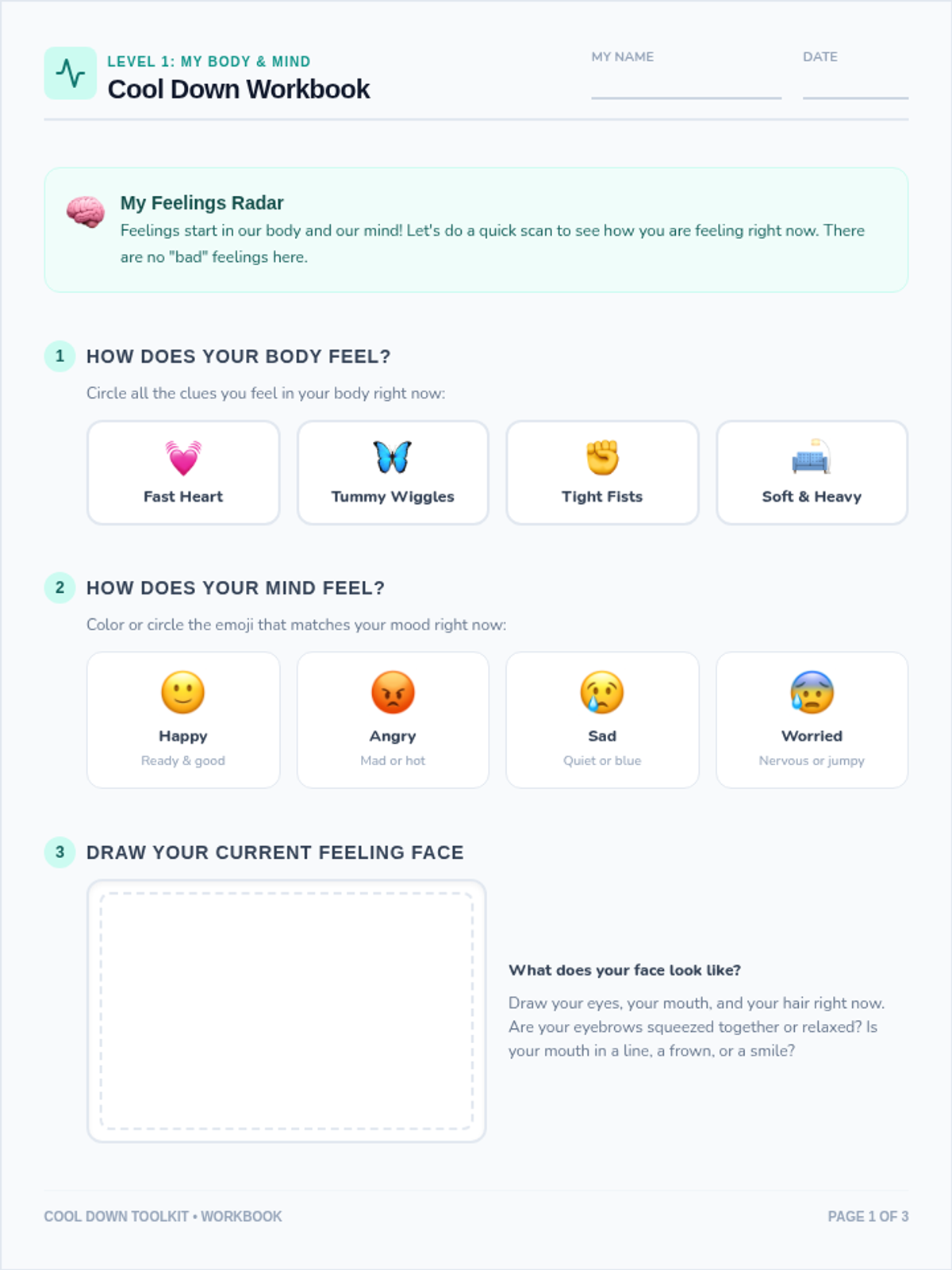
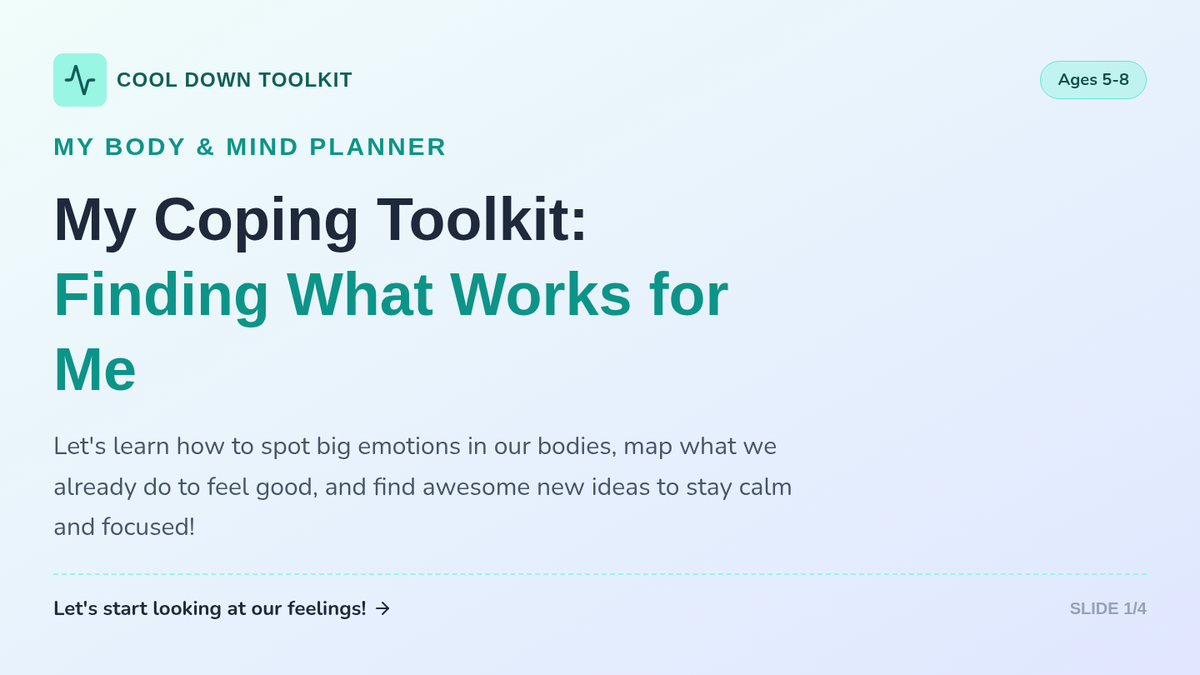
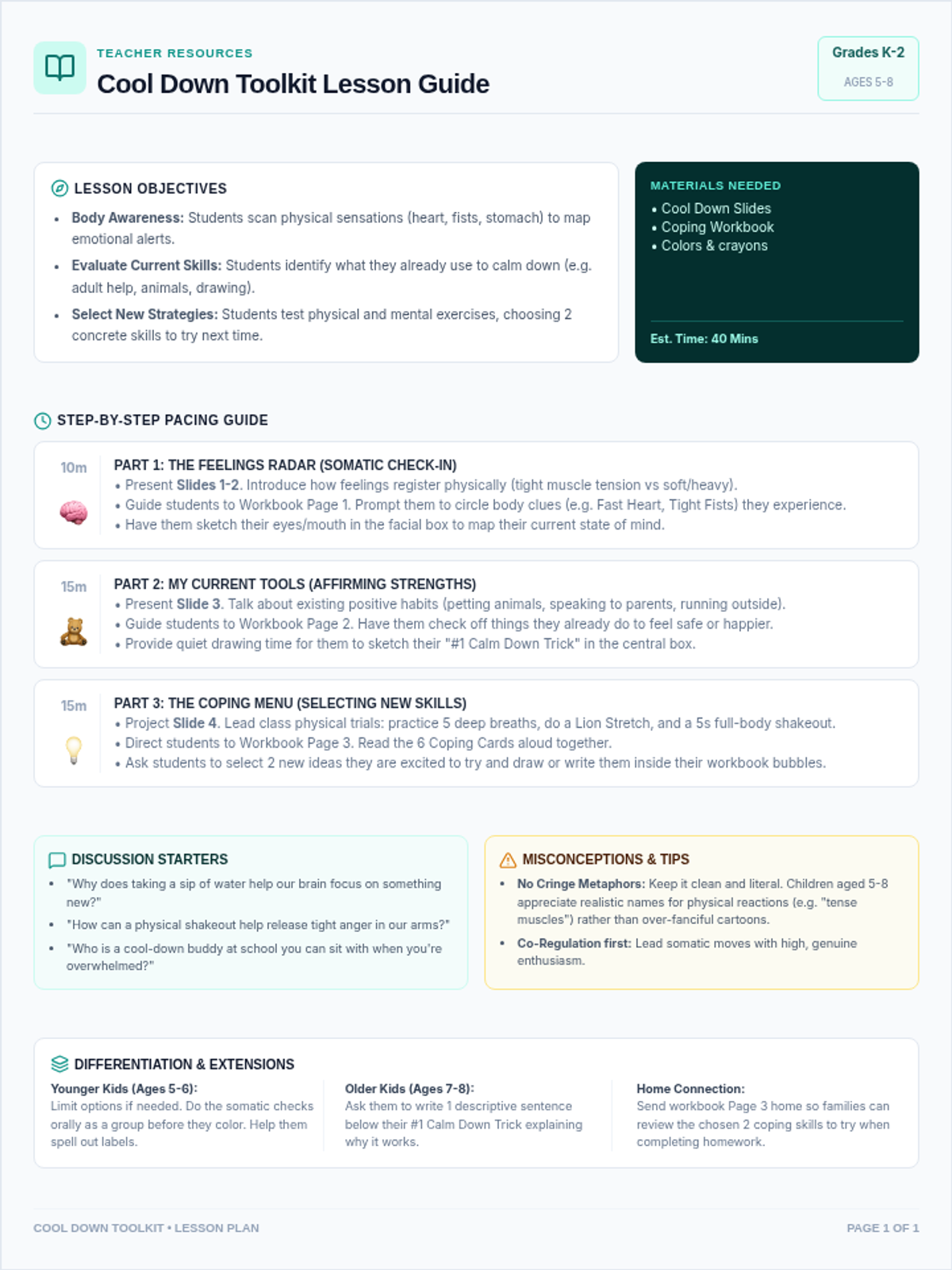
A clean, modern therapeutic lesson designed to teach students aged 5-8 how to identify physical and emotional cues, map their current coping strategies, and choose practical new skills to try.
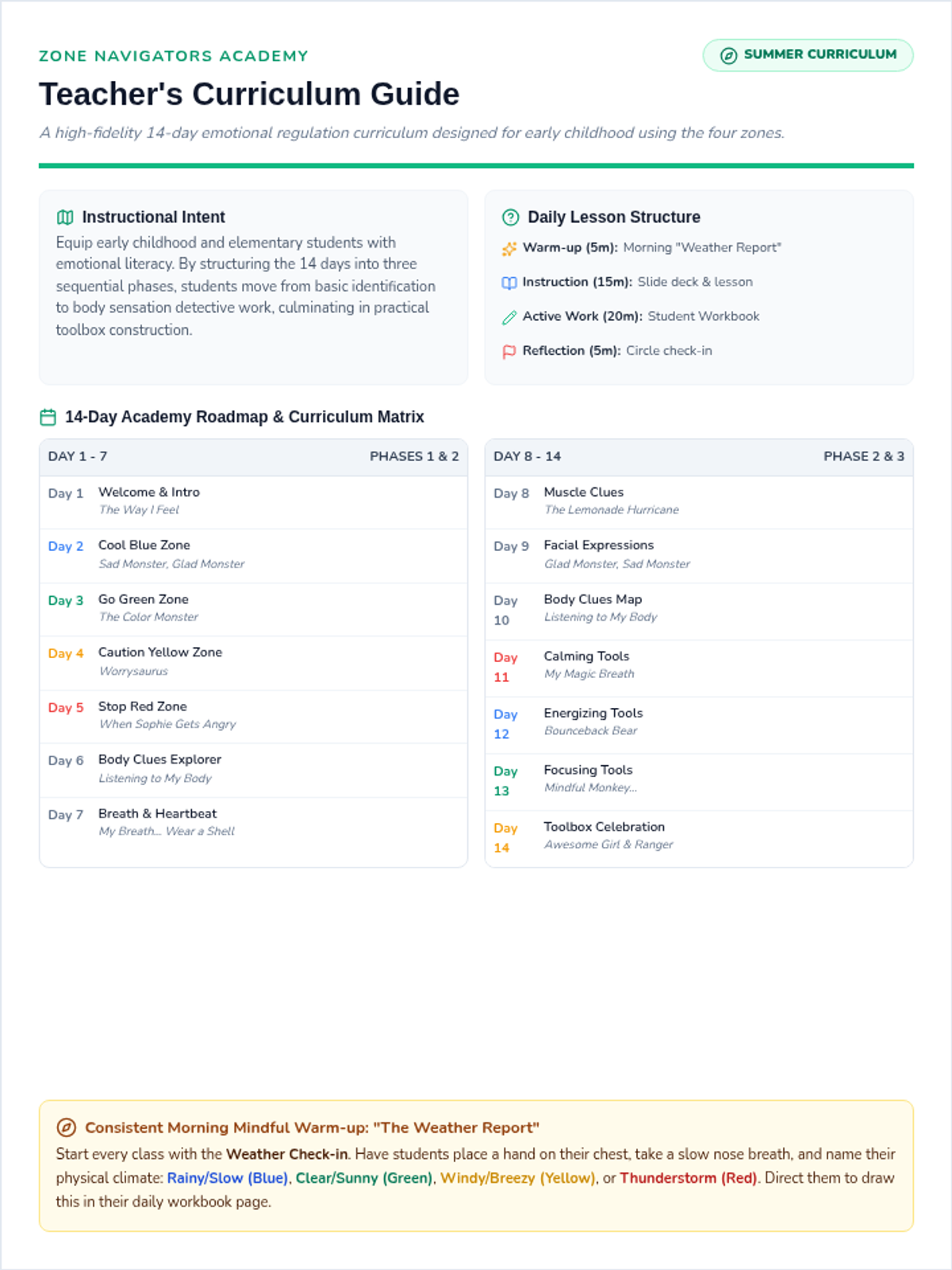
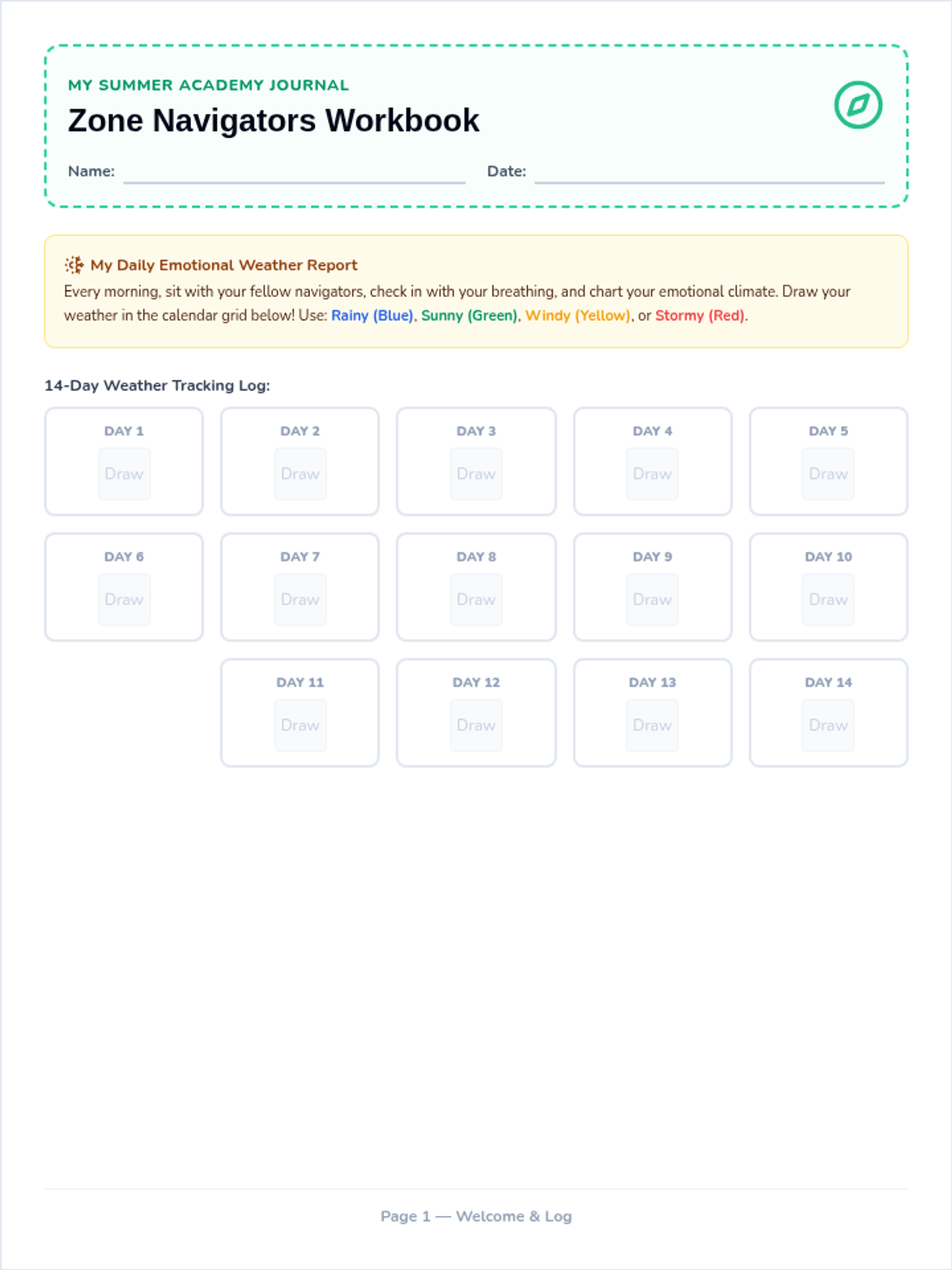
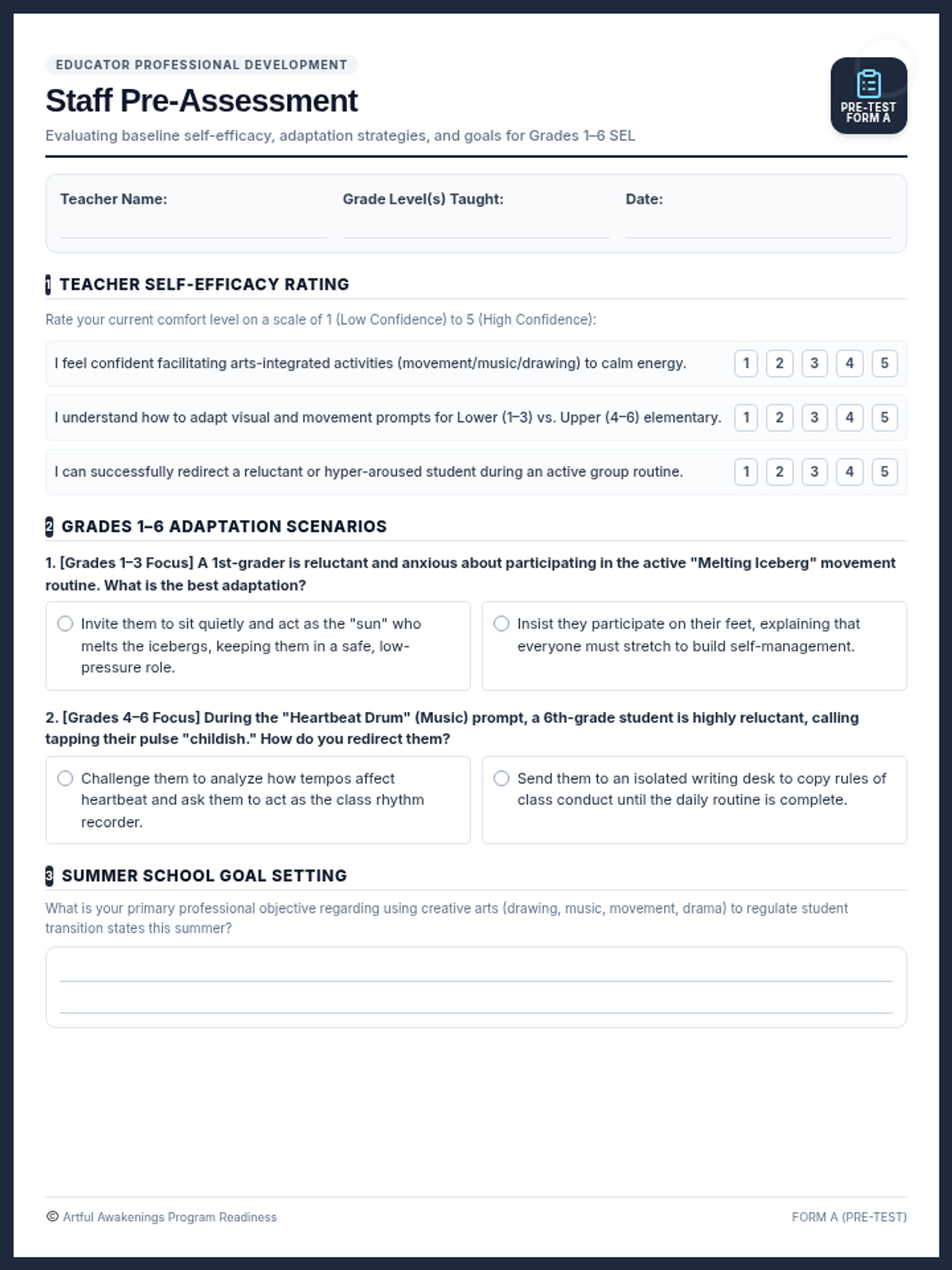
Focuses on Days 11 to 14 of the summer academy, introducing, practicing, and mastering specific calming, focusing, and energizing strategies for self-regulation across all zones.
Focuses on Days 6 to 10 of the summer academy, helping students identify how emotions feel in their physical bodies and mapping physical sensations to their emotional zones.
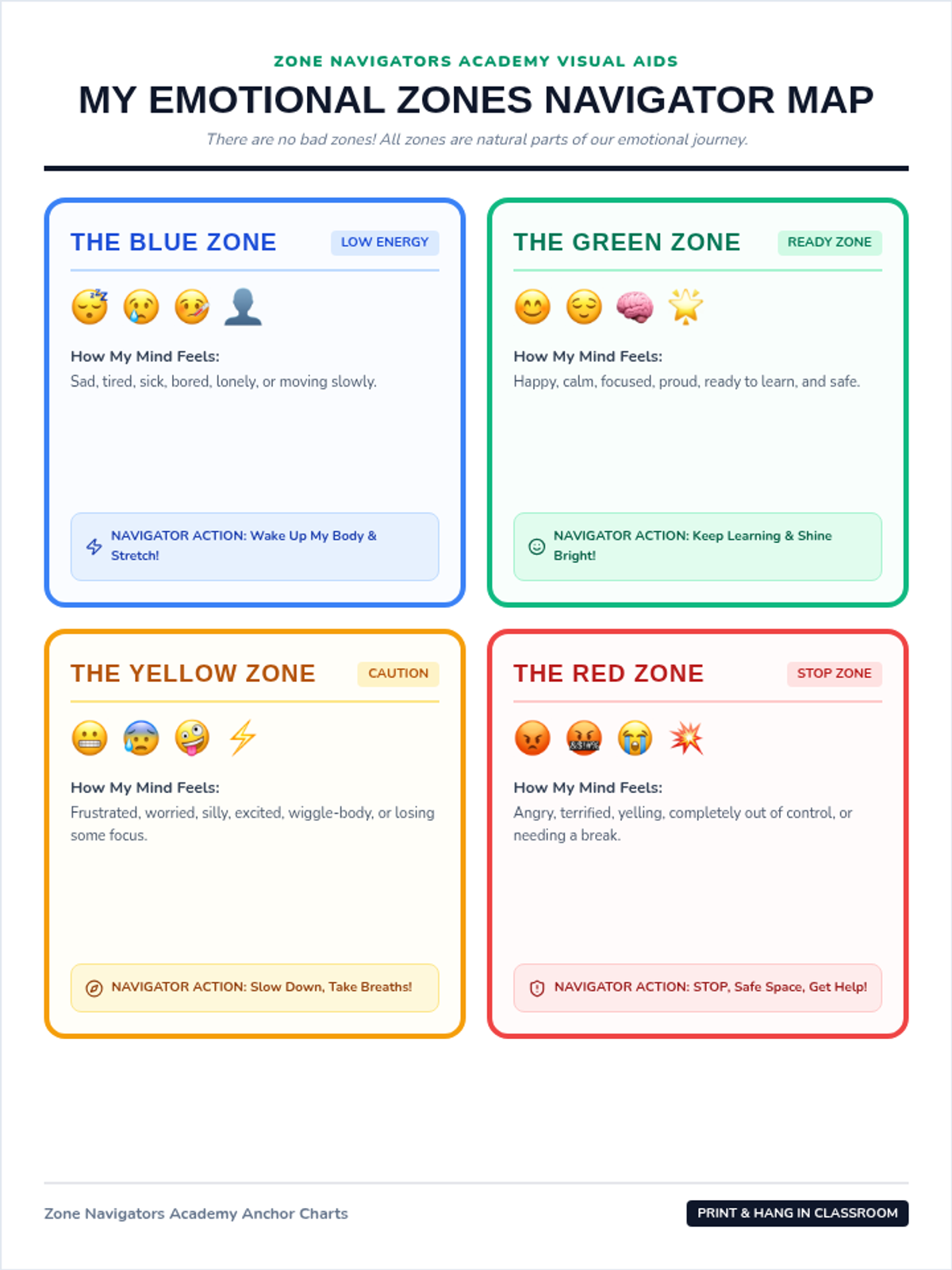
Focuses on Days 1 to 5 of the summer academy, introducing the four emotional zones (Blue, Green, Yellow, and Red) and helping students identify and name their core emotions within each zone.
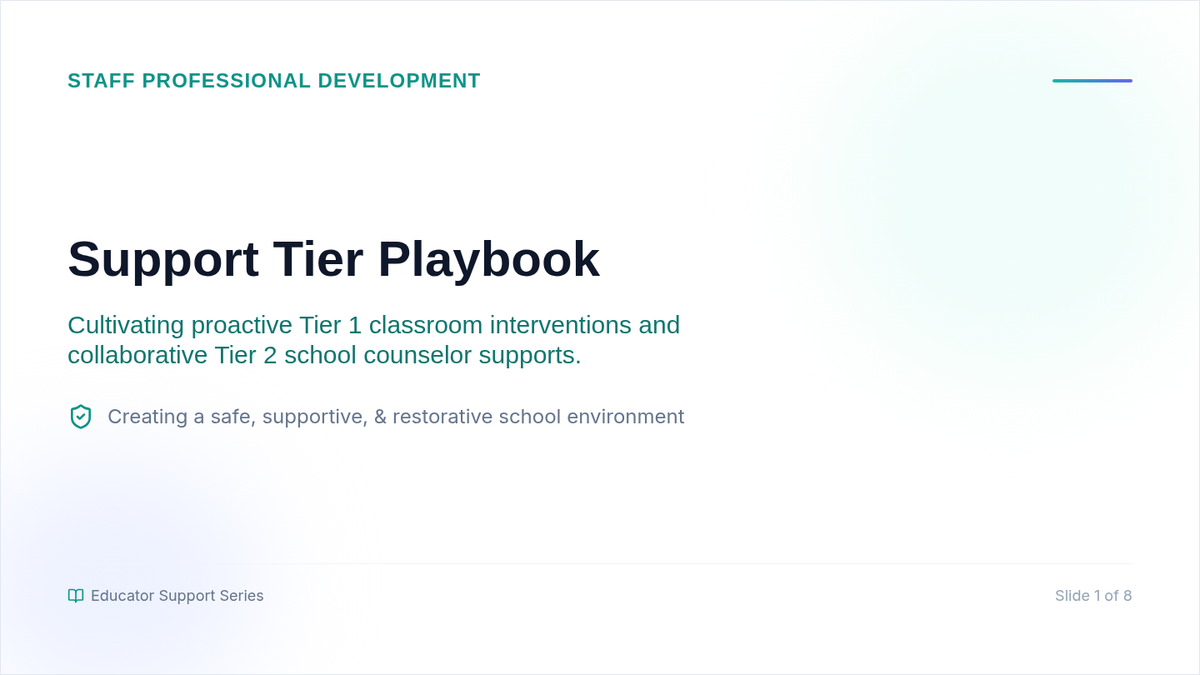
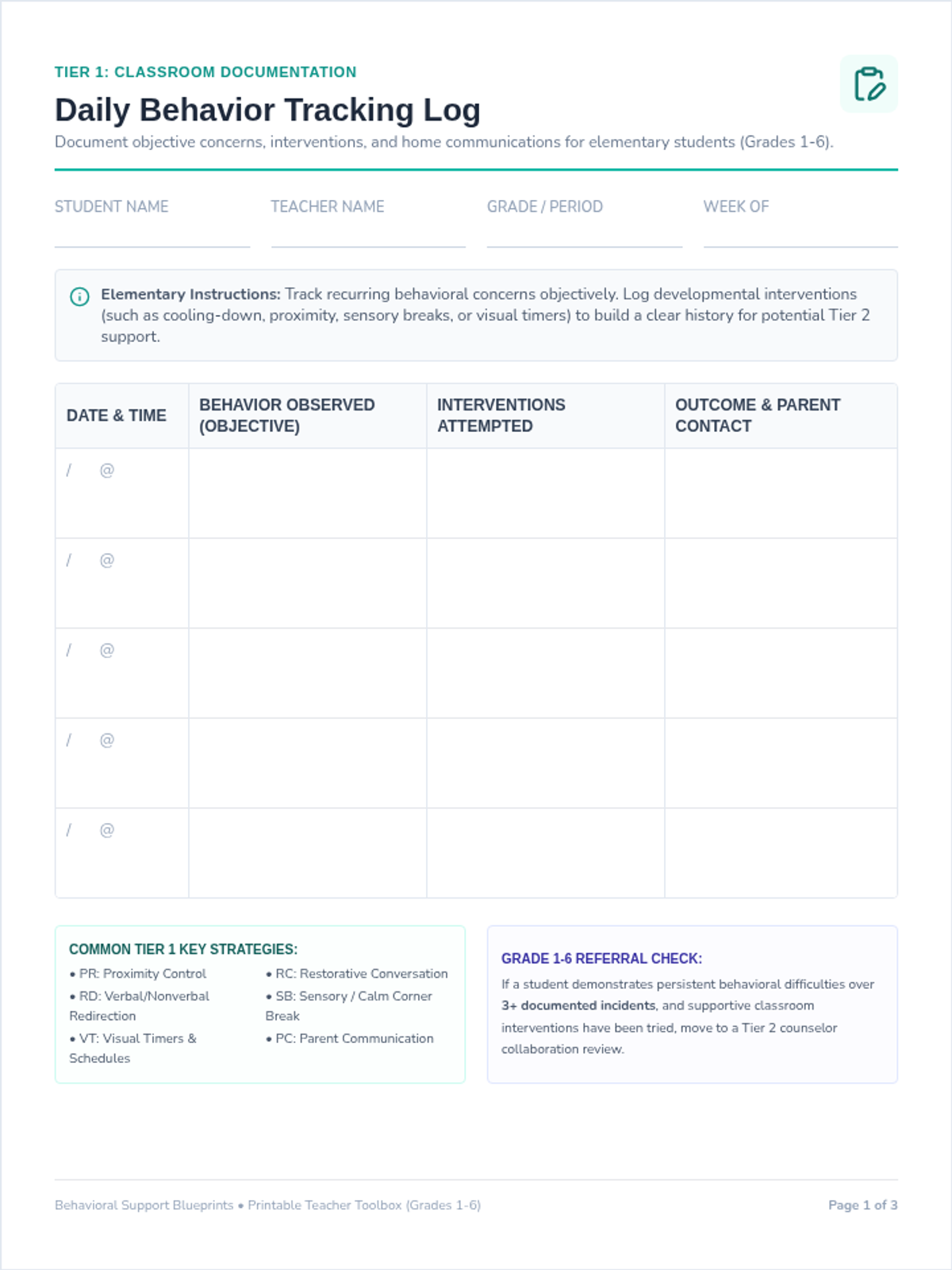
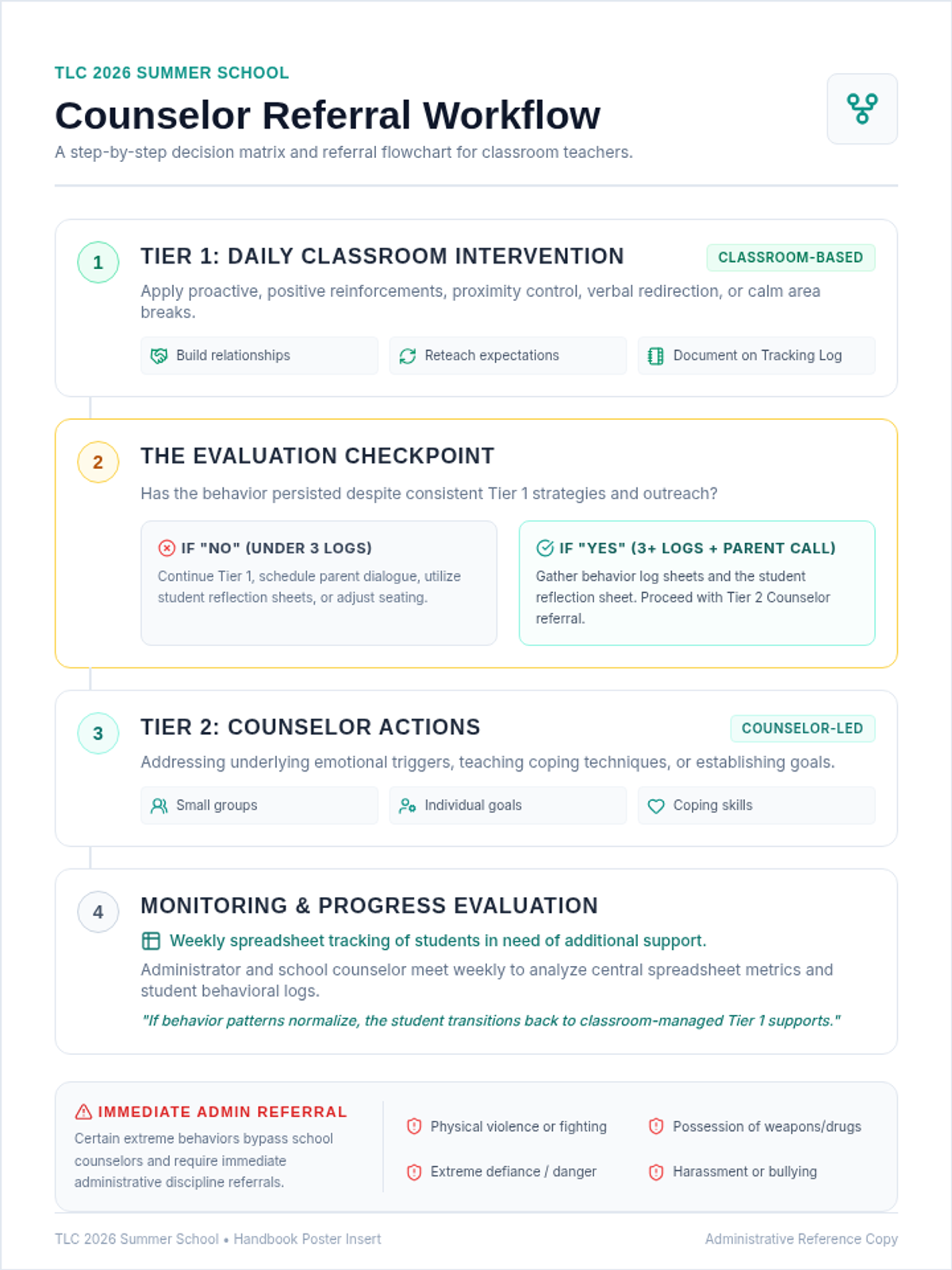
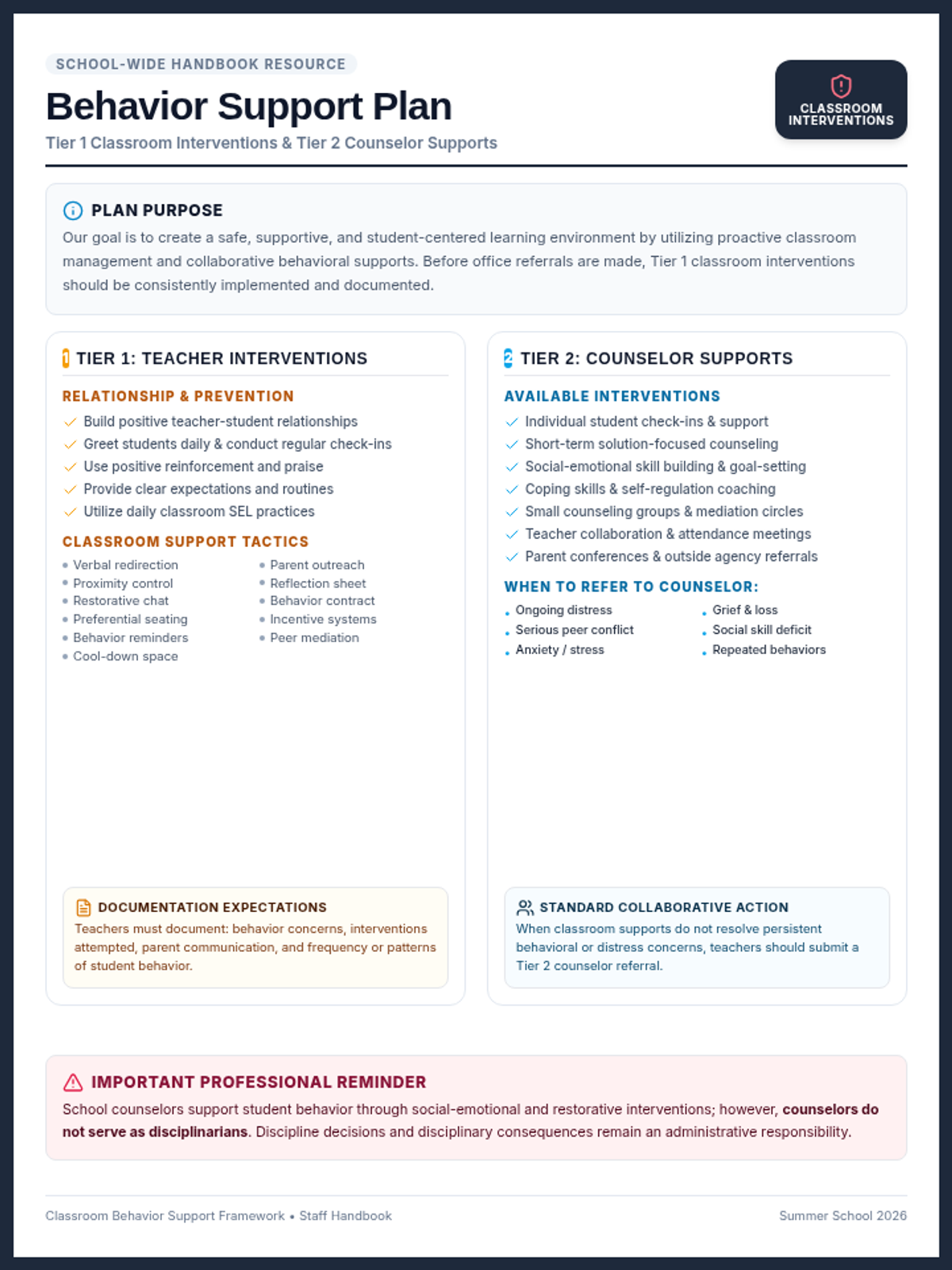
A comprehensive professional development and resource package for educators, mapping out Tier 1 classroom interventions and Tier 2 school counselor supports to build a proactive, collaborative, and restorative student support culture.
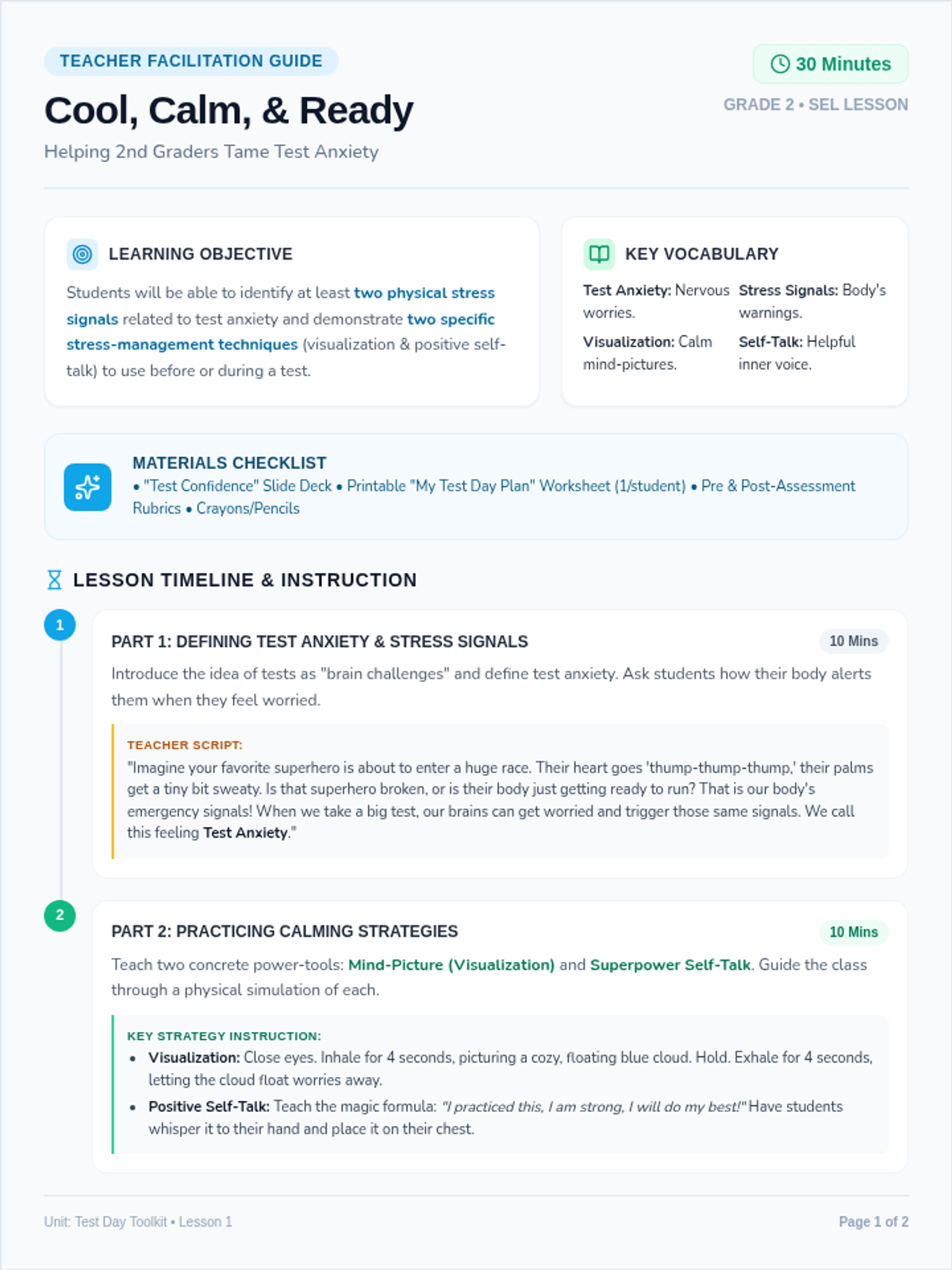
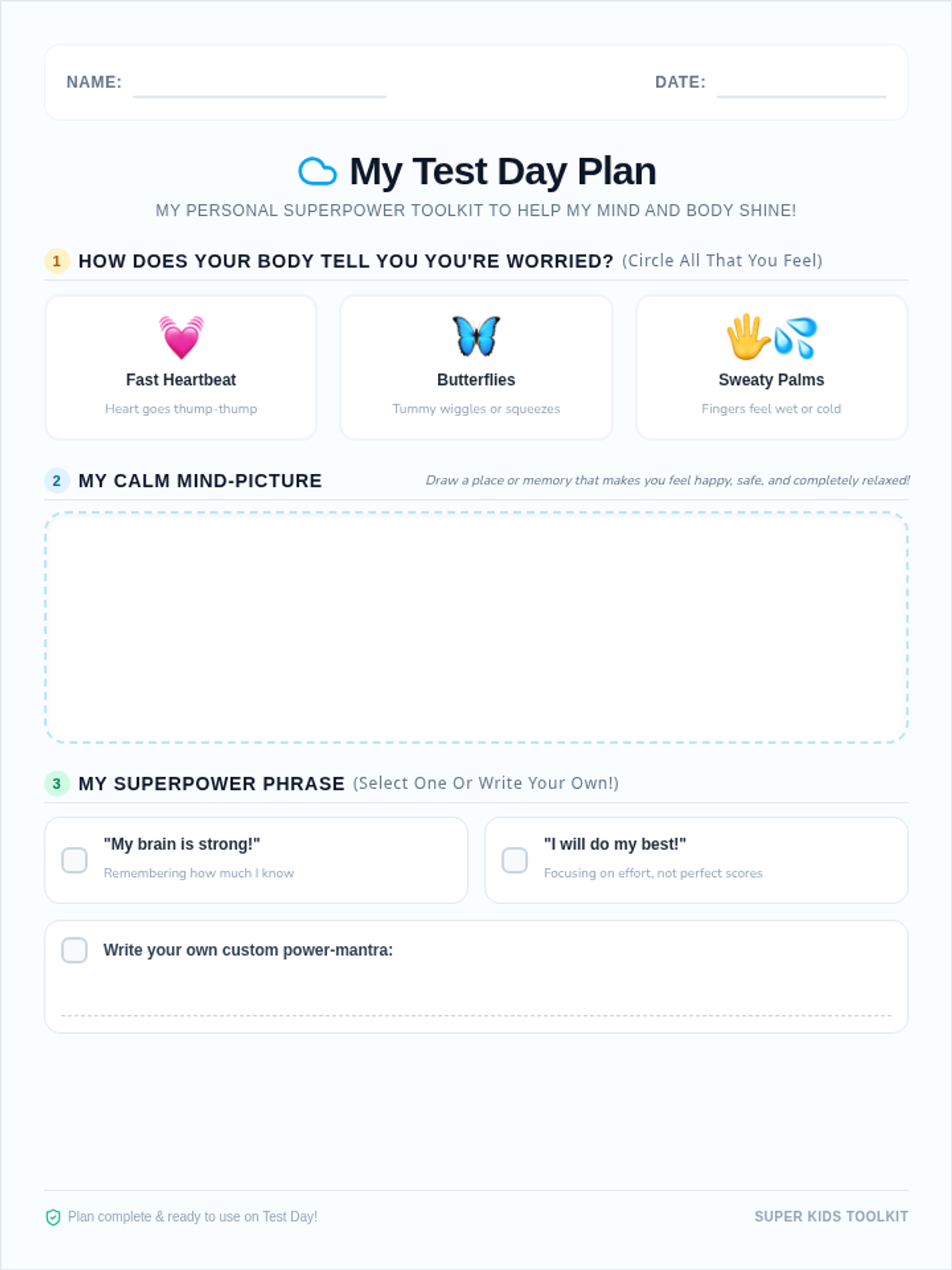
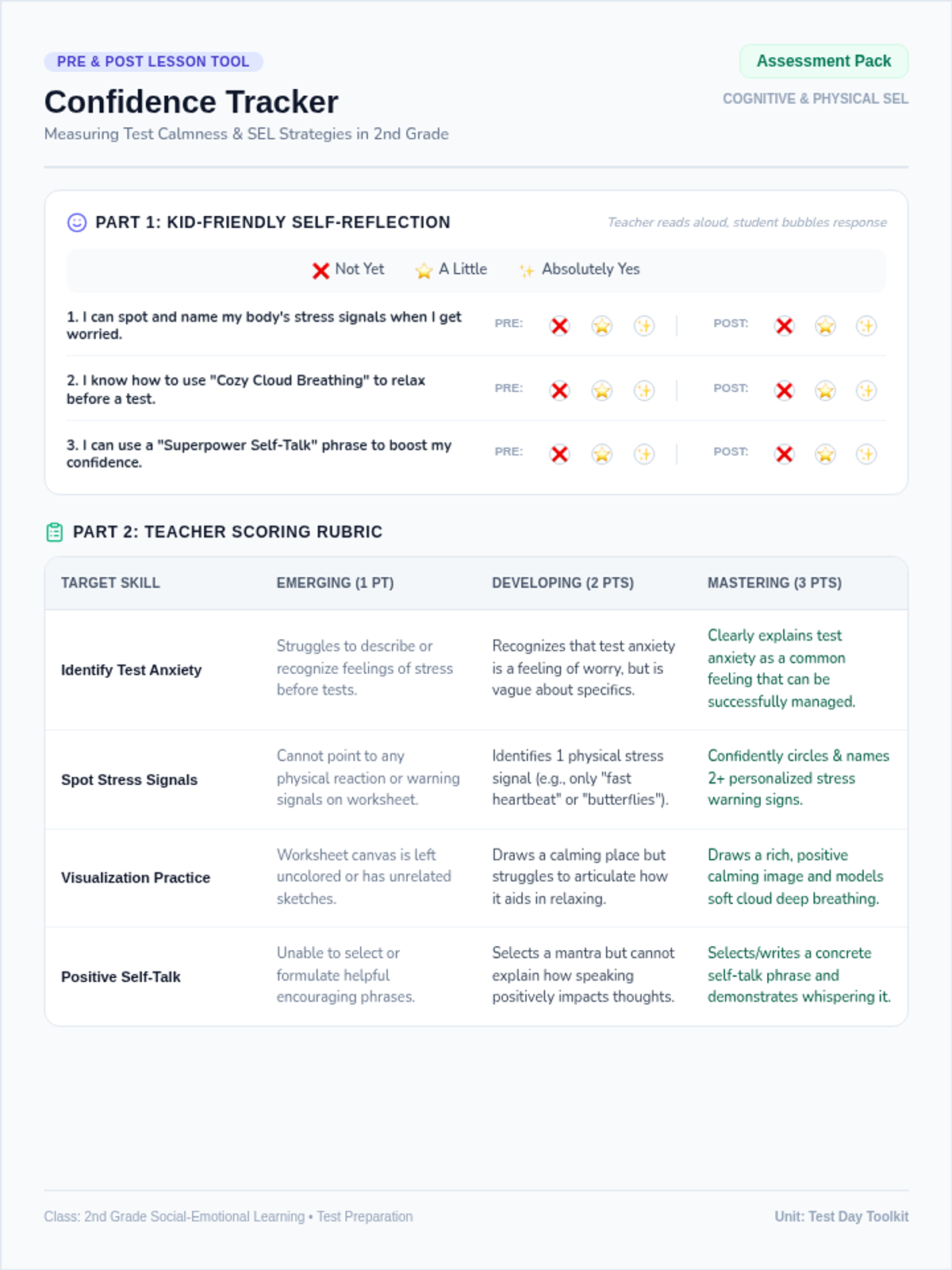
A 30-minute social-emotional learning lesson for 2nd graders to recognize test anxiety, identify physical stress signals, and practice visualization and positive self-talk strategies.
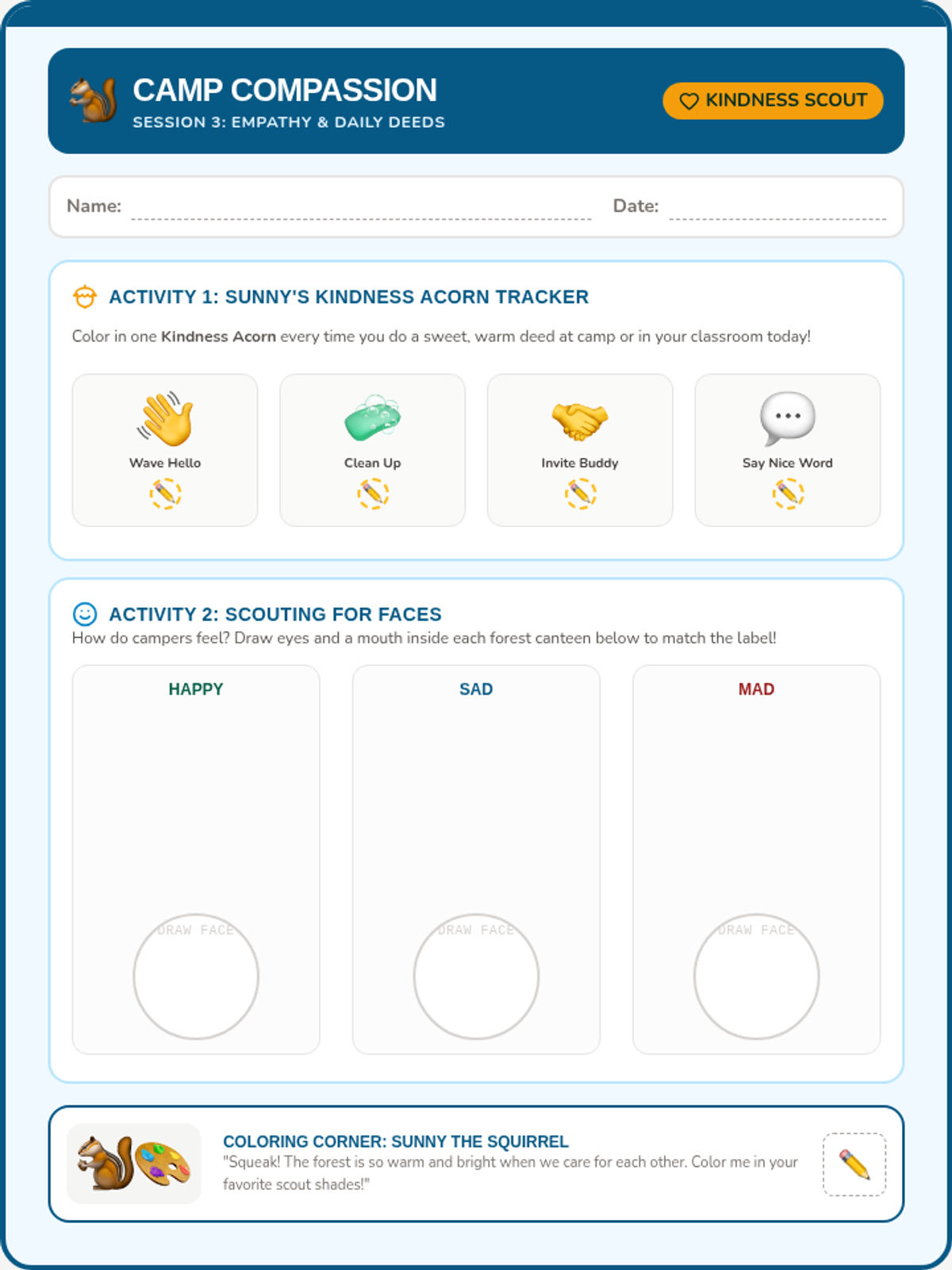
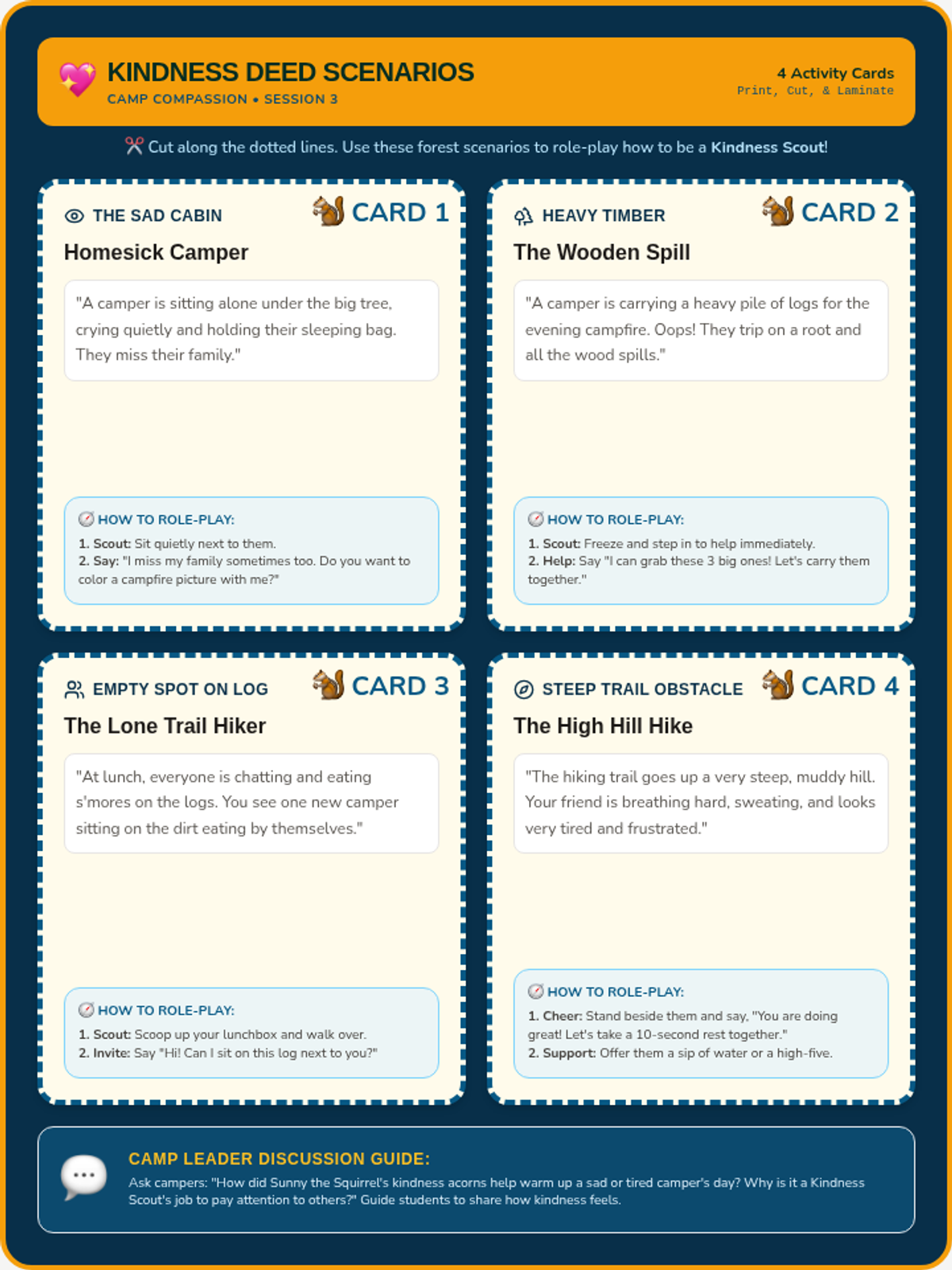
Campers learn how to scout for others' feelings, practice deep empathy, and earn 'kindness badges' by doing small daily deeds of support.
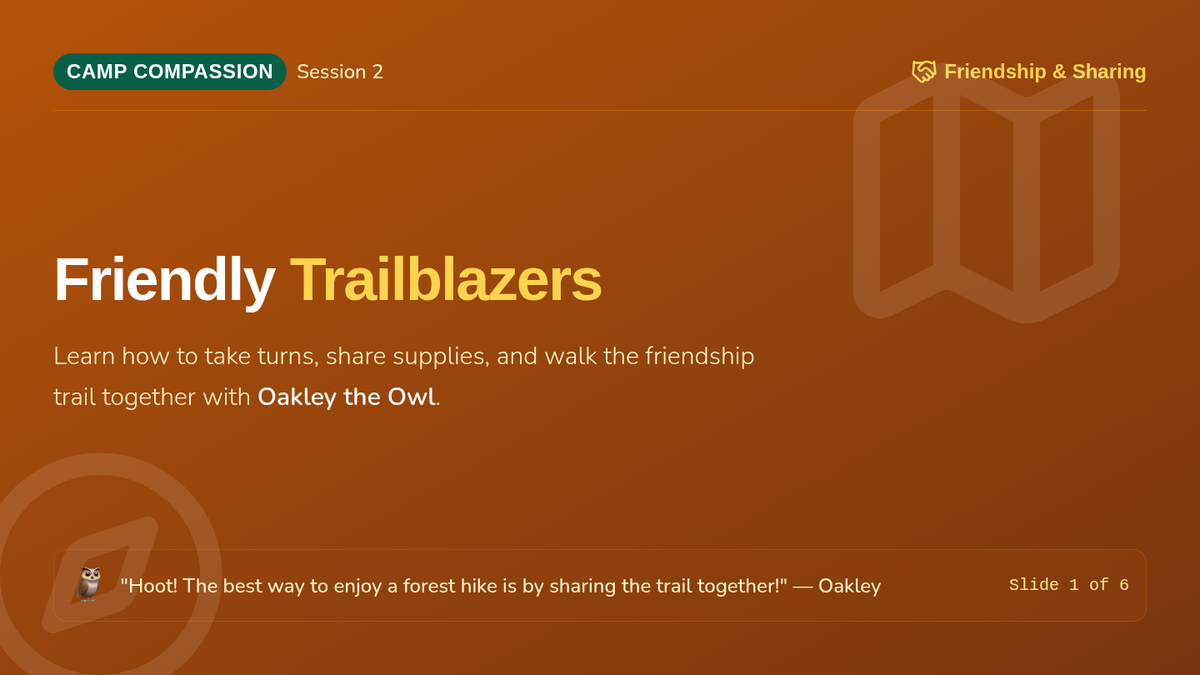
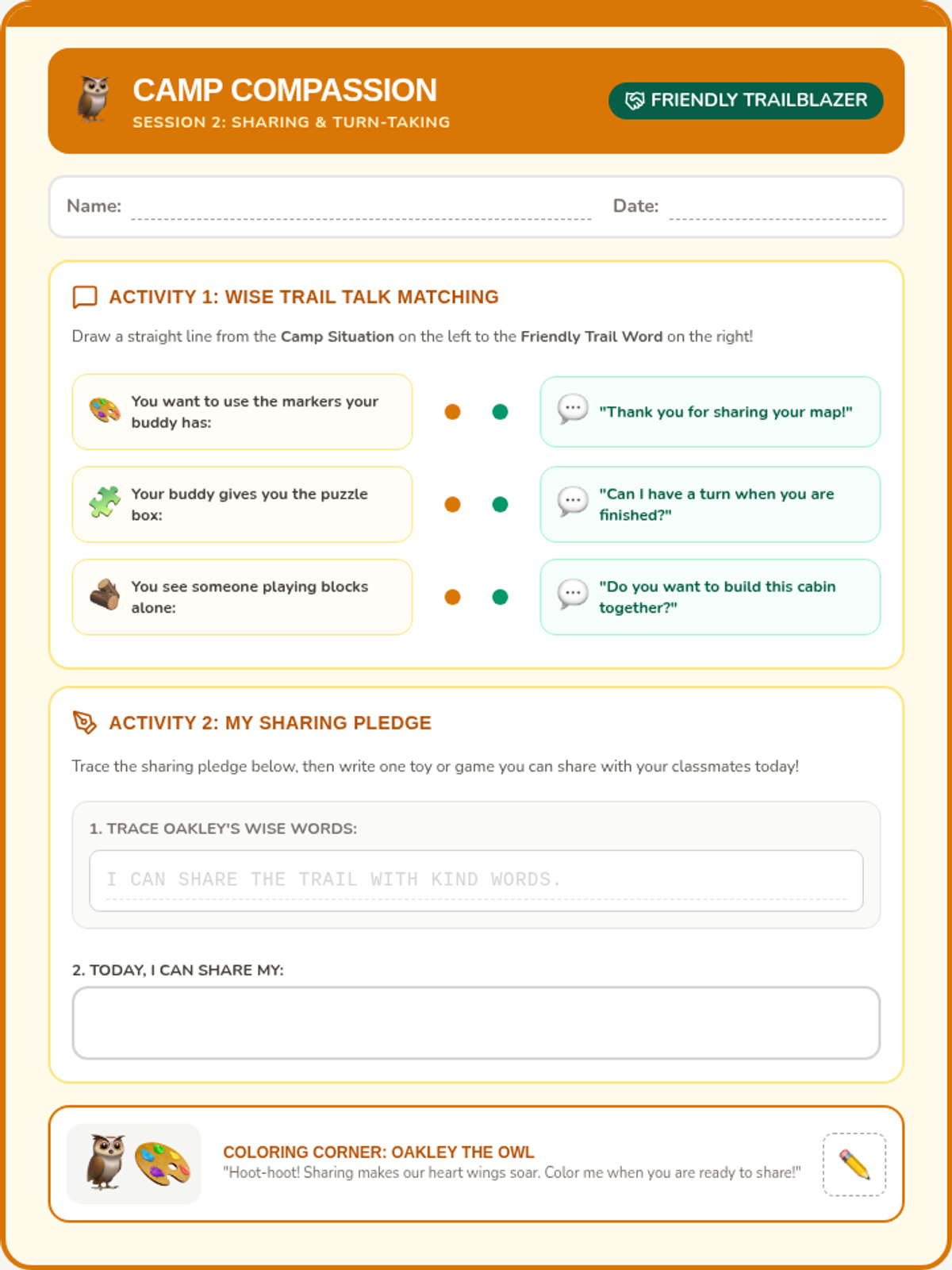
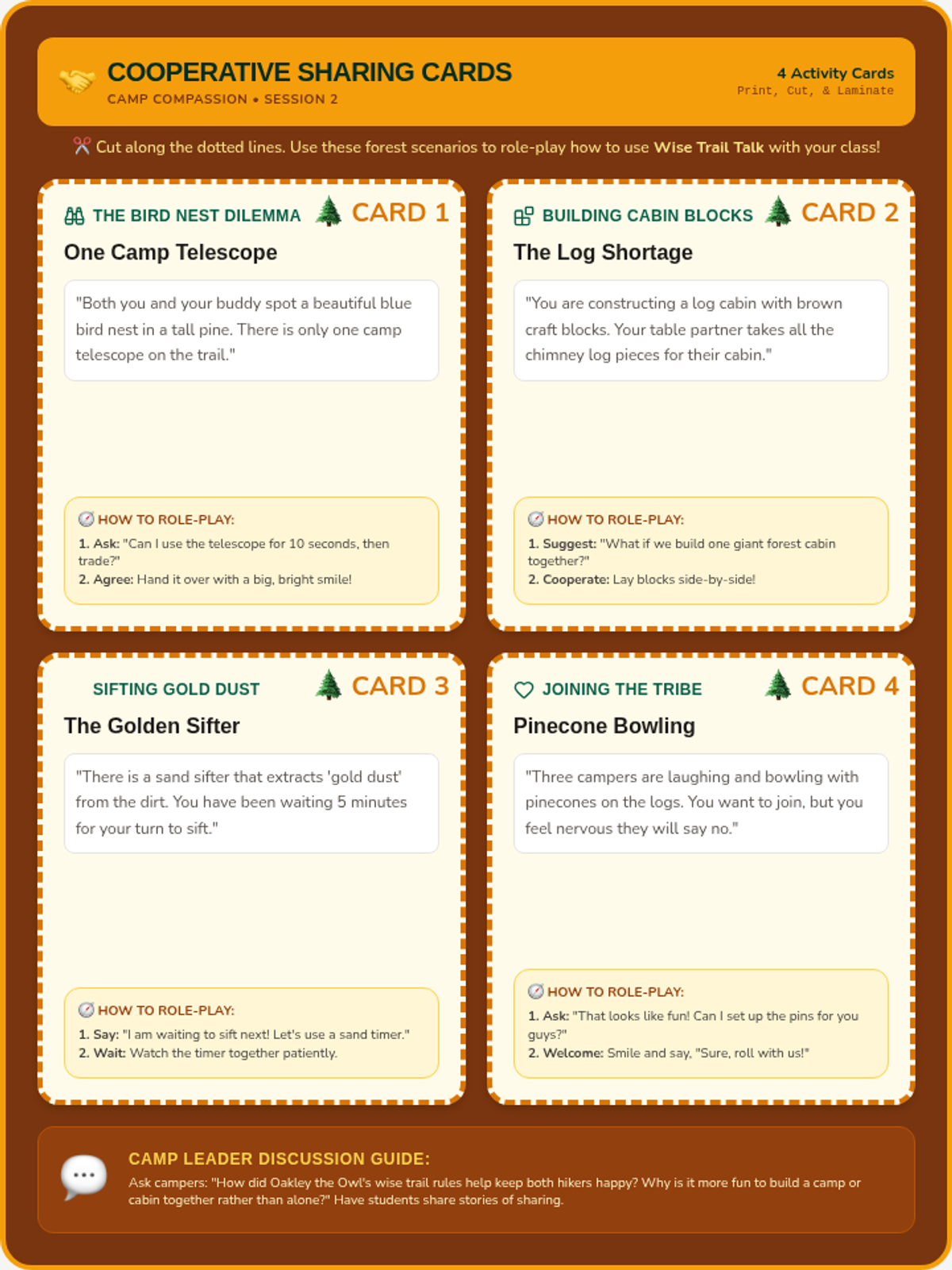
Students practice cooperative hiking strategies on the friendship trail, discovering how to share camp toys, take turns, and use supportive trail words.
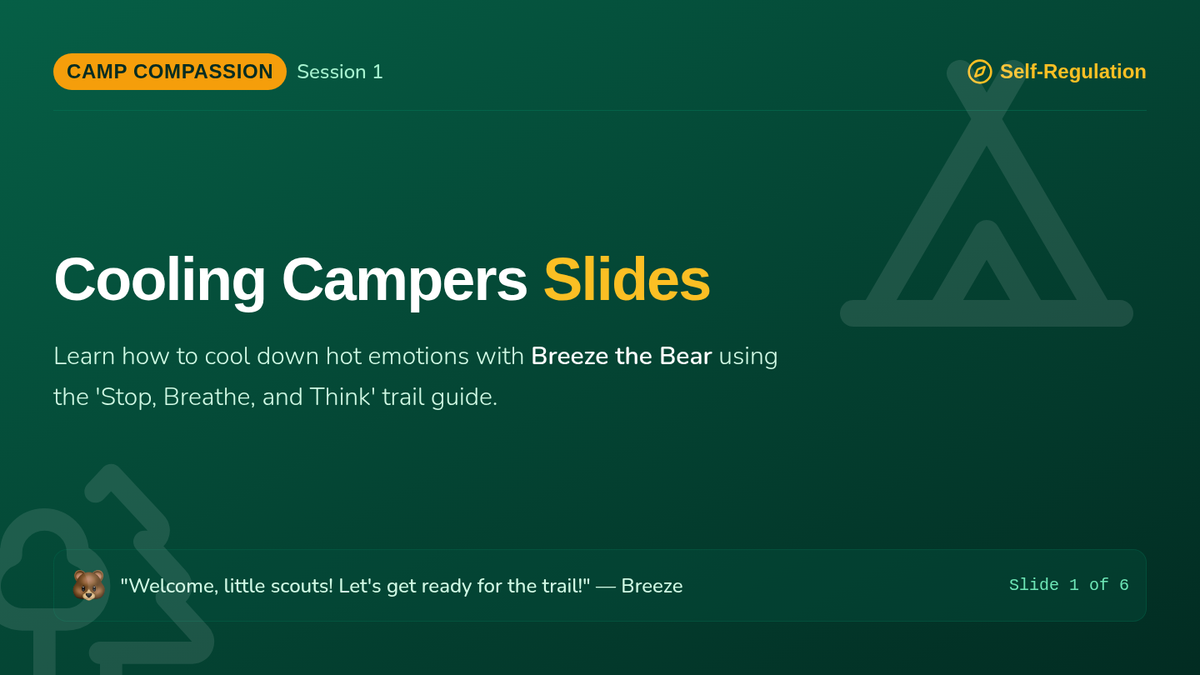
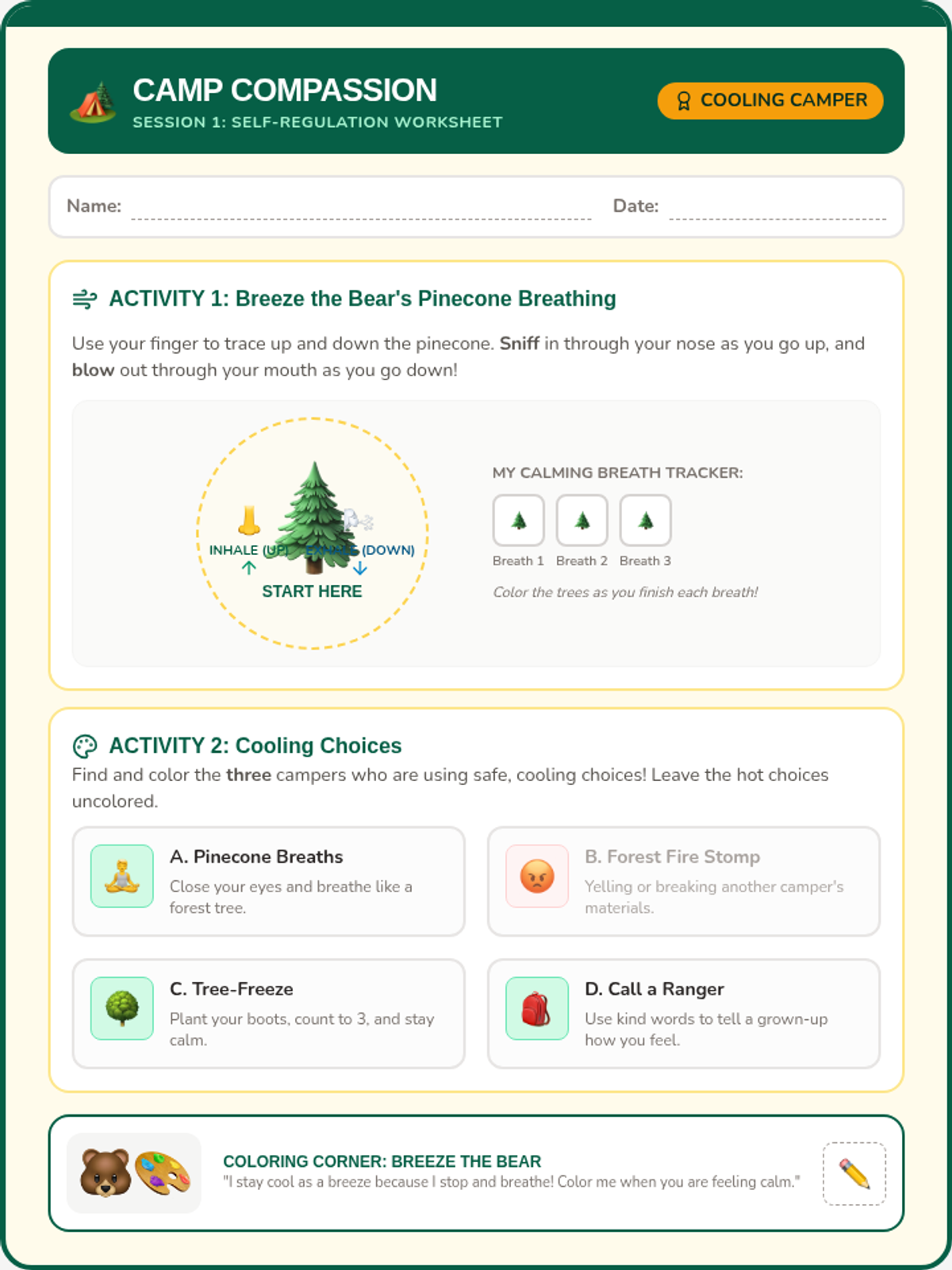
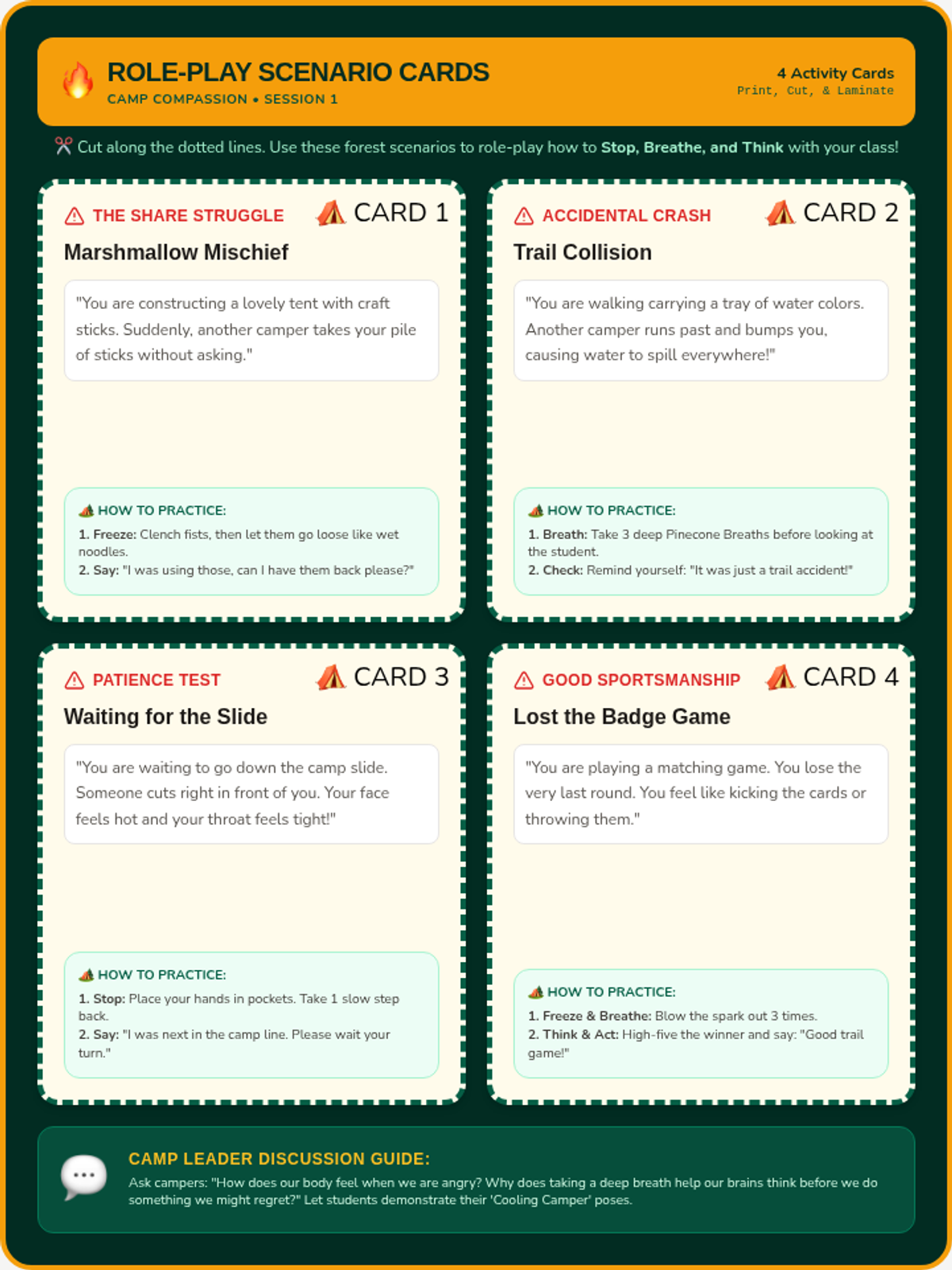
Young campers learn to cool down hot emotions using 'Stop, Breathe, and Think' strategies and a relaxing campfire deep-breathing exercise.
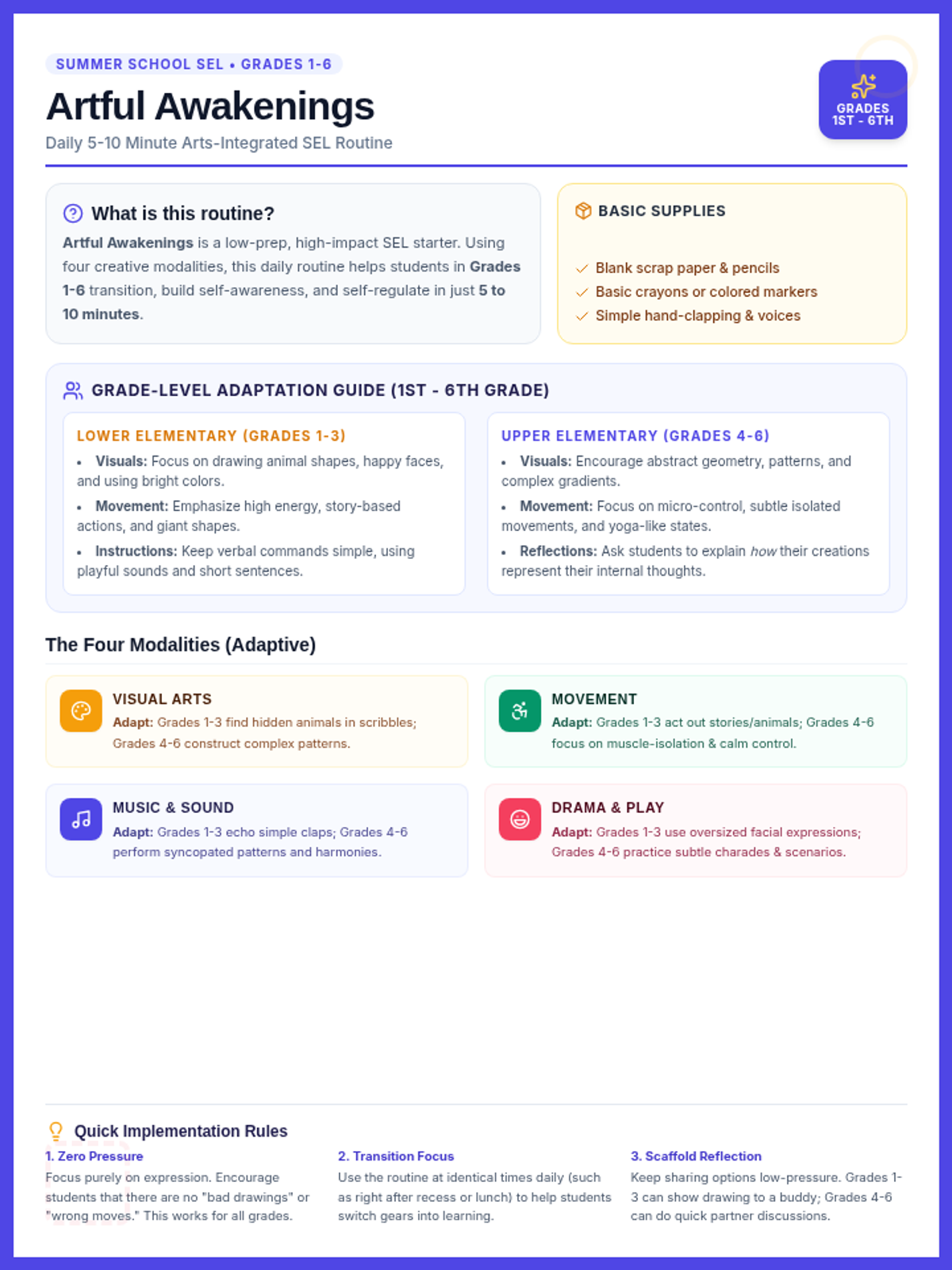
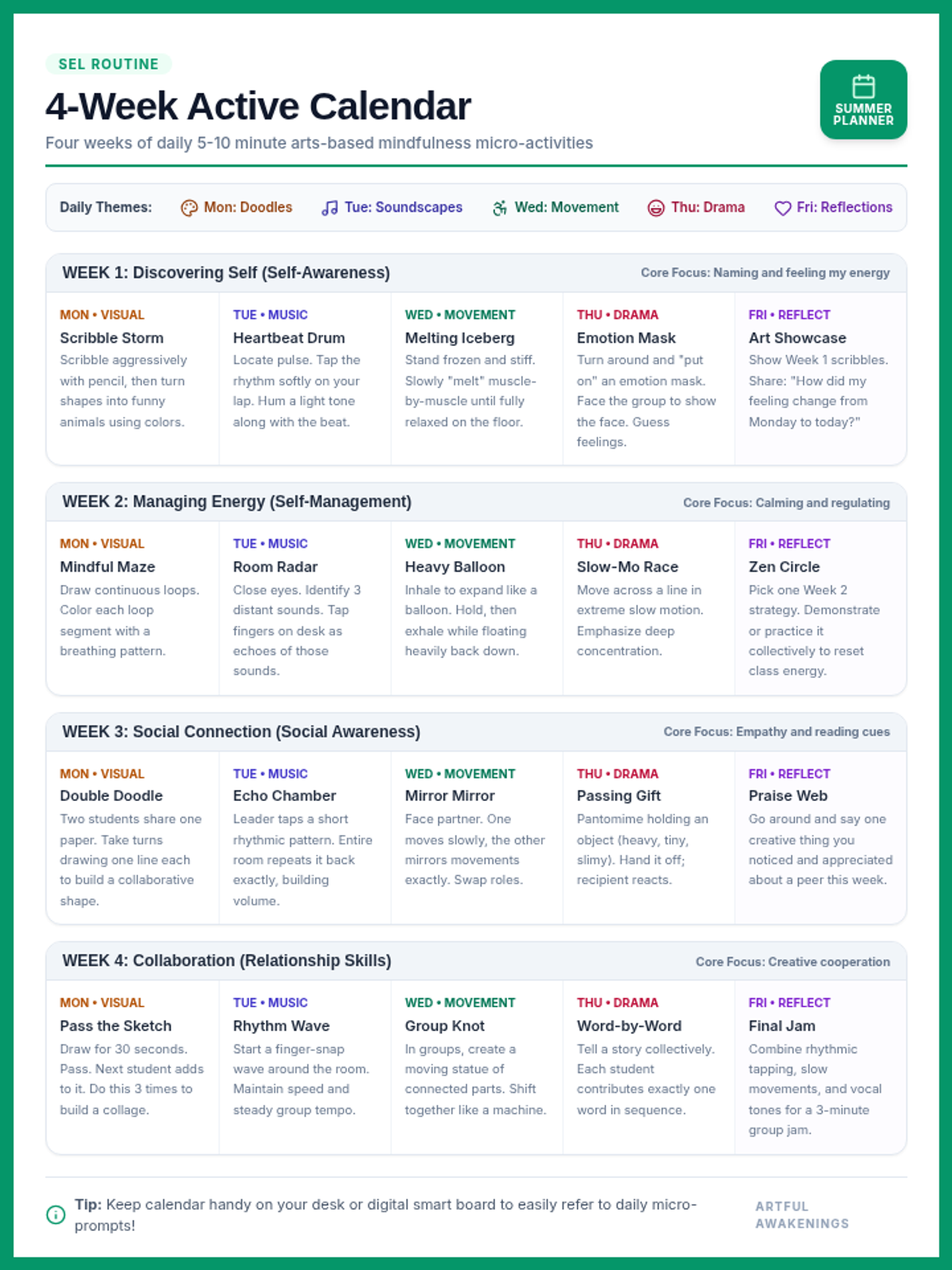
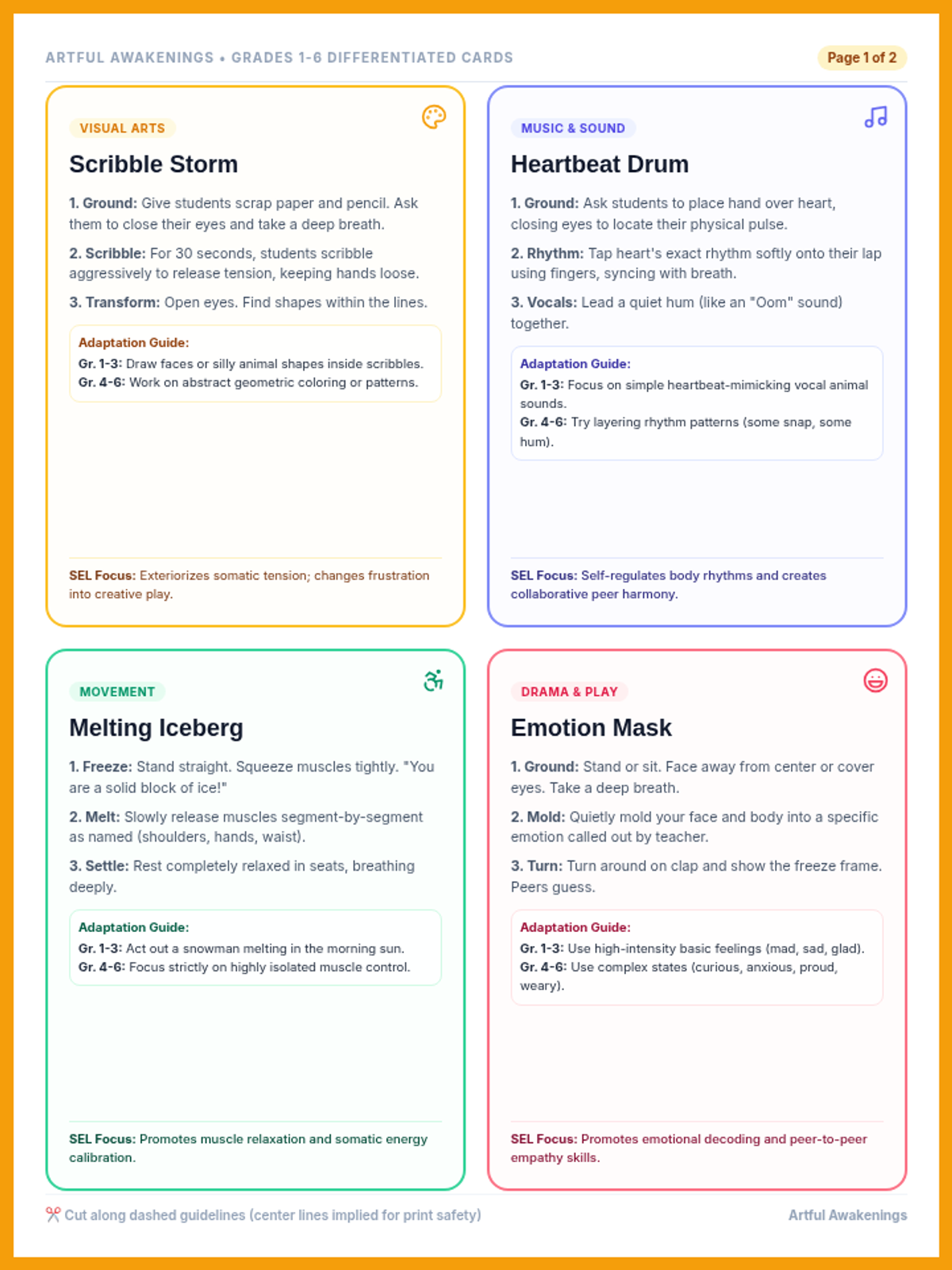
A daily 5-10 minute SEL routine incorporating visual arts, movement, music, and drama to build self-awareness and emotional regulation during summer school.
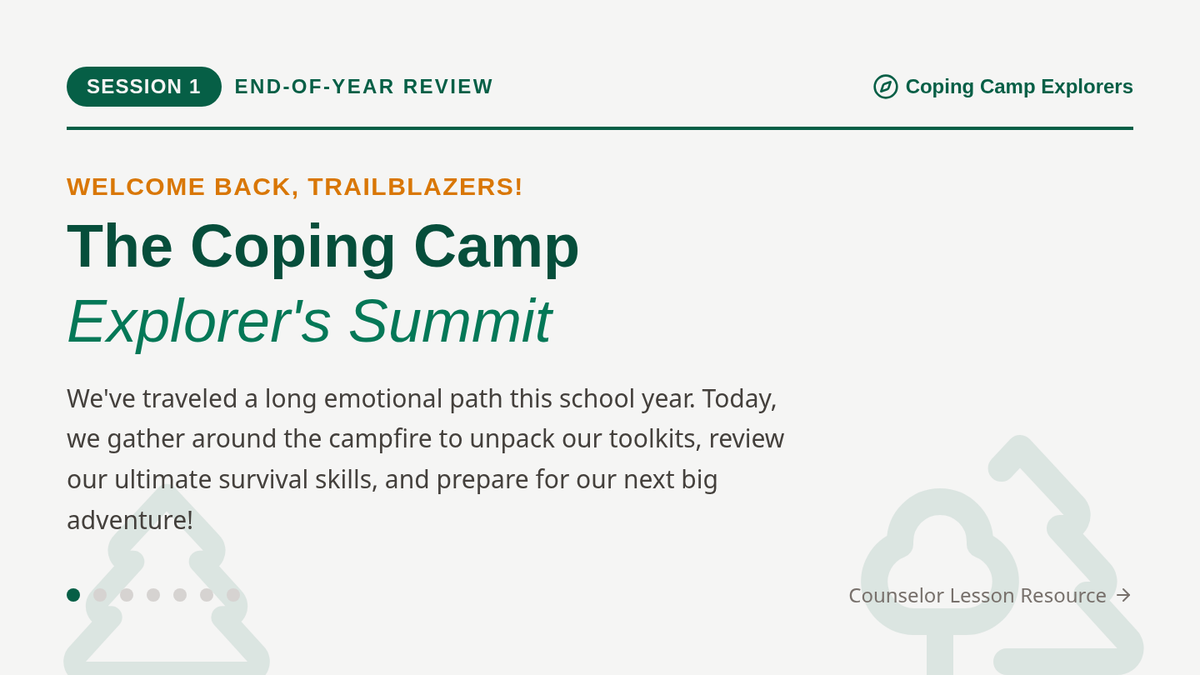
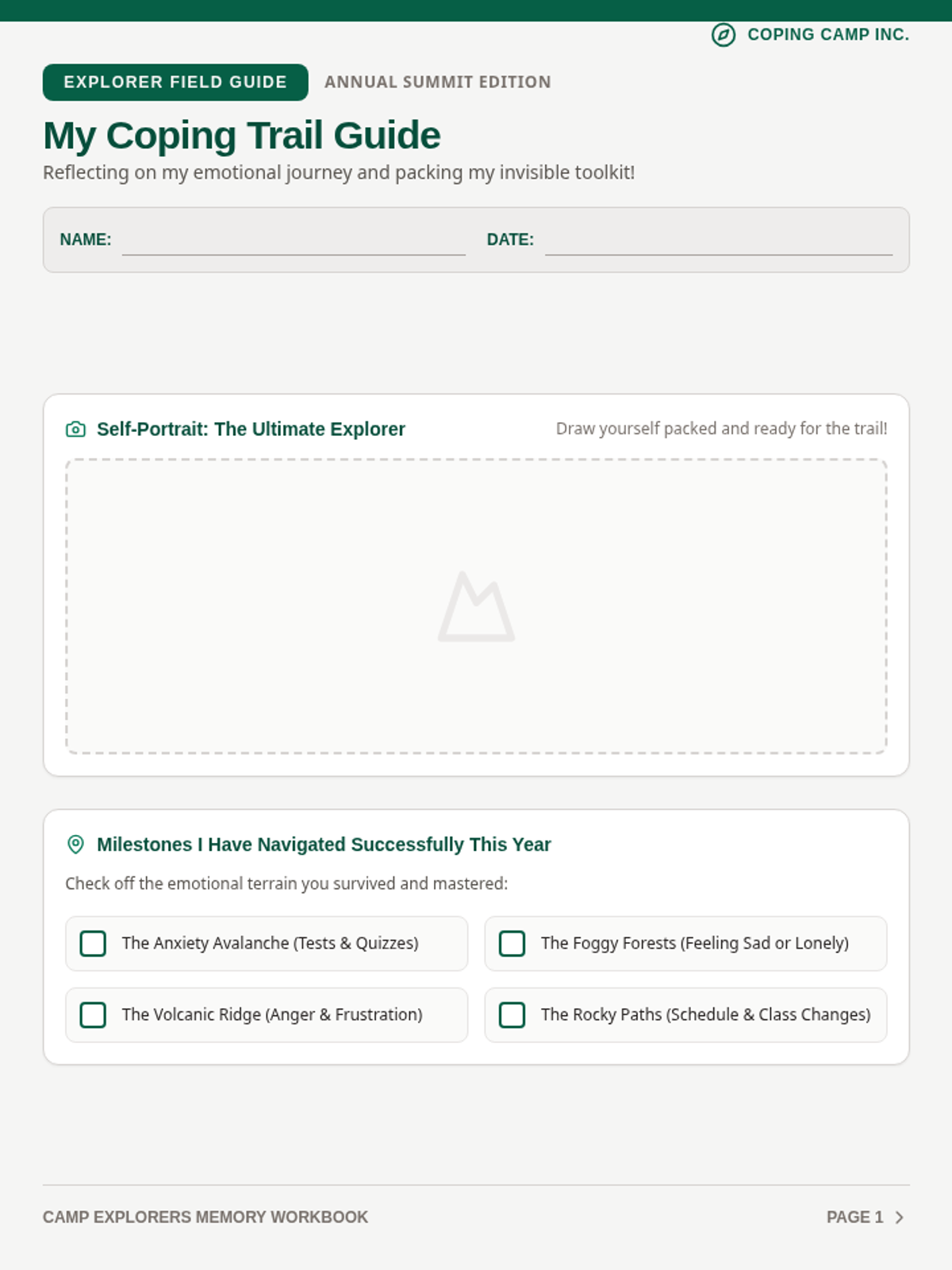
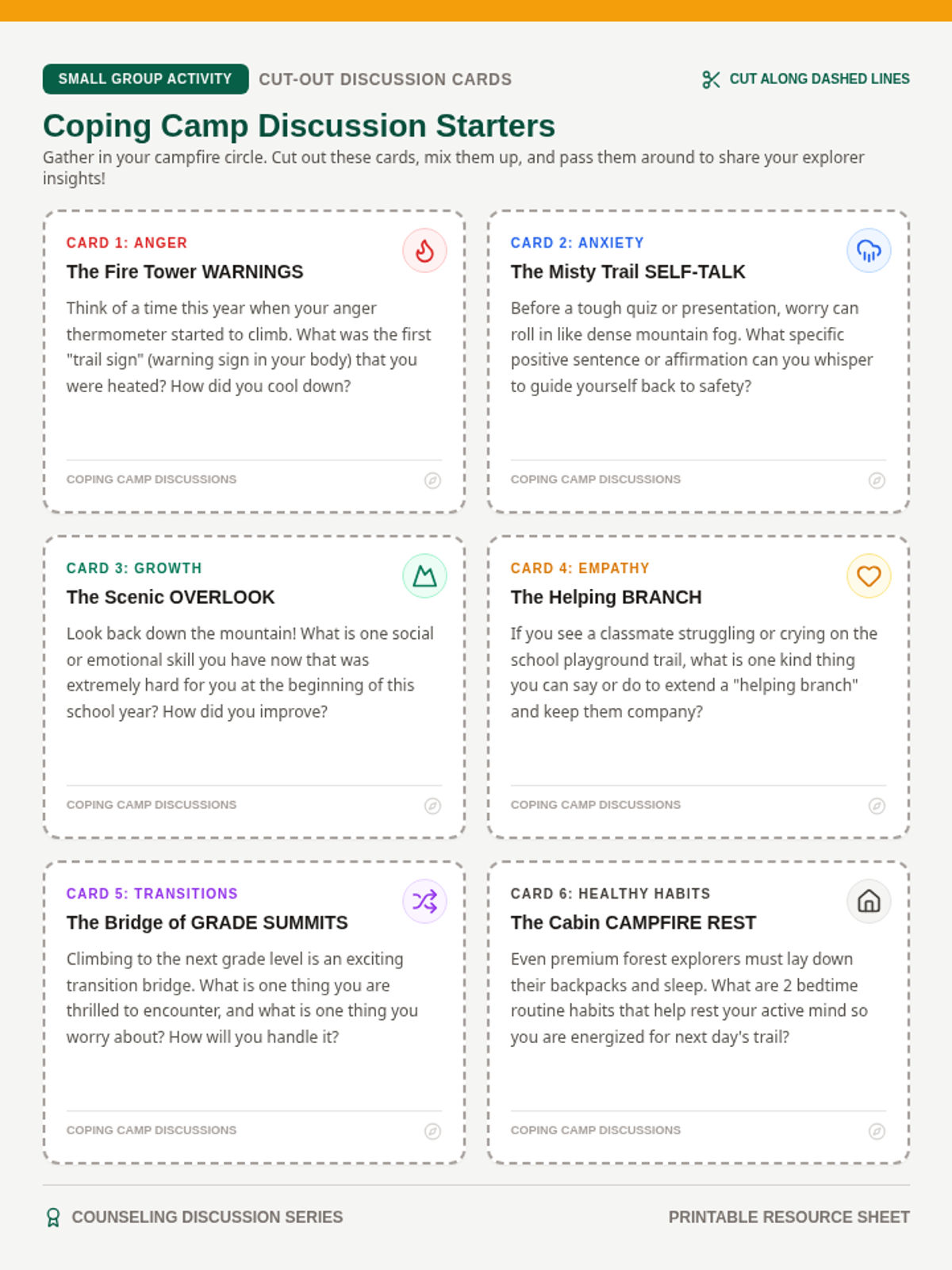
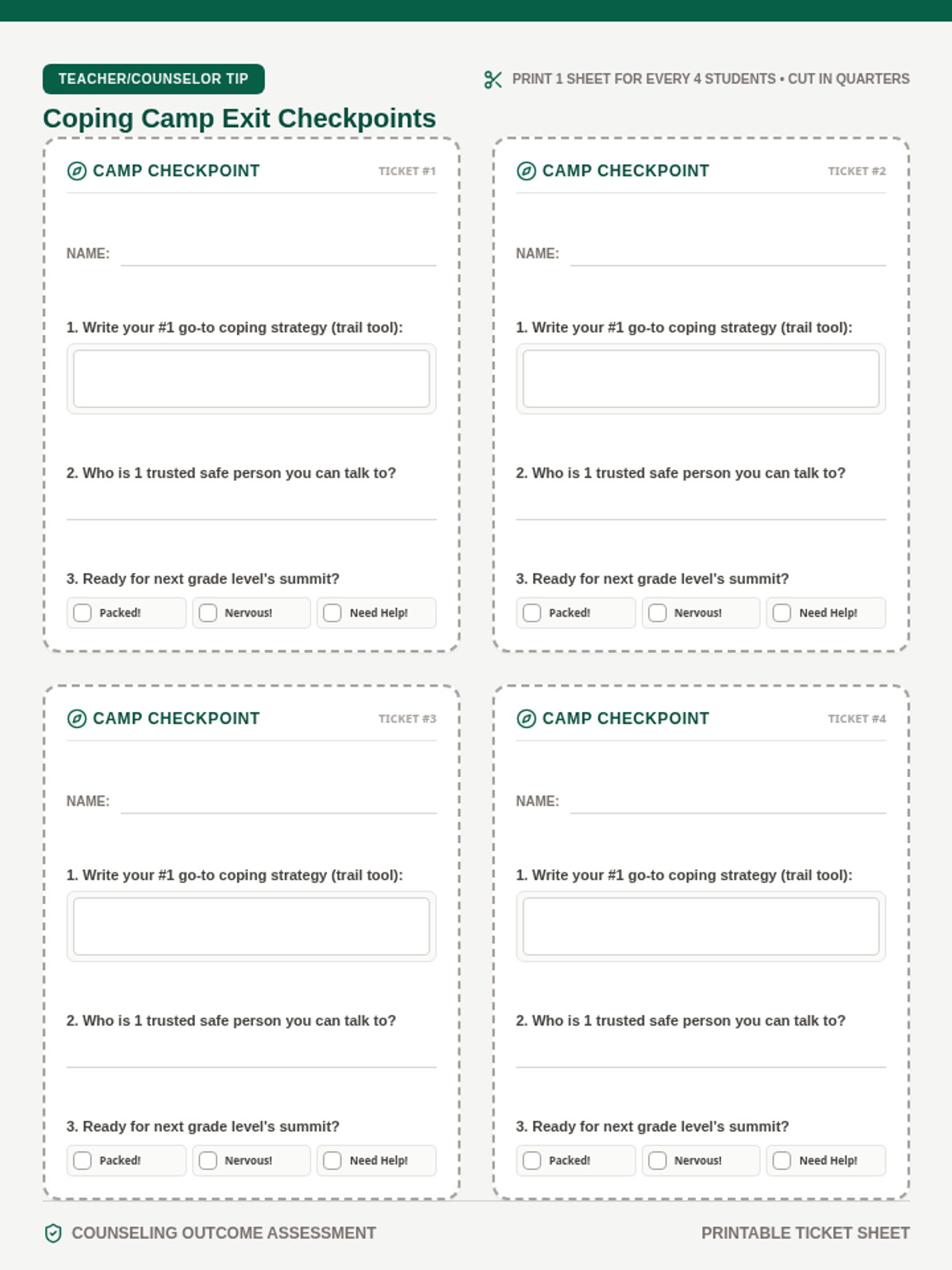
A comprehensive end-of-year counseling lesson designed to review coping strategies, celebrate emotional growth, and prepare students for transitions. The lesson includes an interactive slide deck, a printable personal memory book, interactive discussion task cards, and counseling exit tickets, all tied together under a friendly 'Coping Camp Explorers' theme.
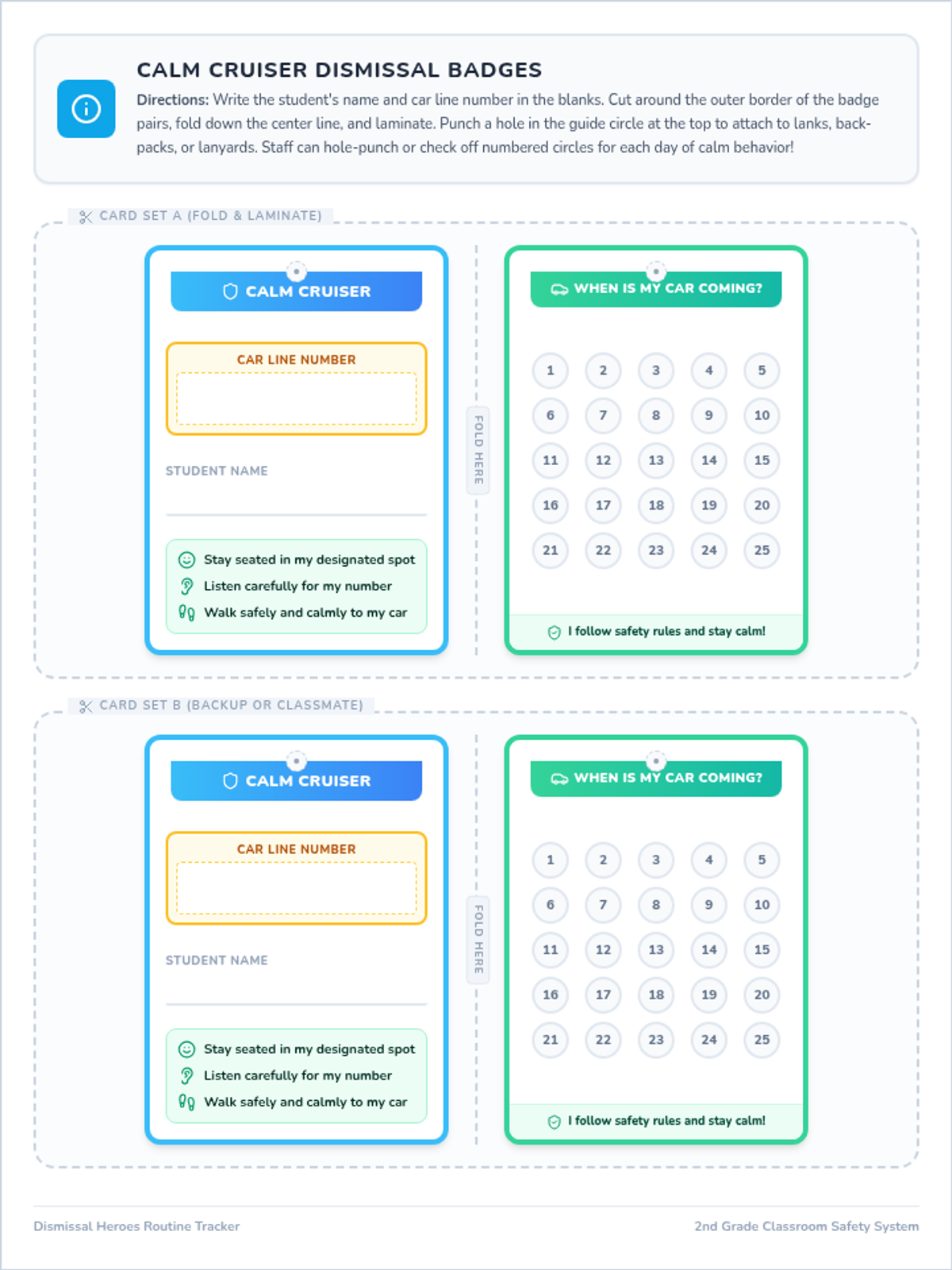
A lesson focused on establishing safe, calm, and cooperative dismissal routines for elementary school students. This lesson includes training on safety expectations, interactive practice, and a daily behavioral tracking system using personalized dismissal badges.
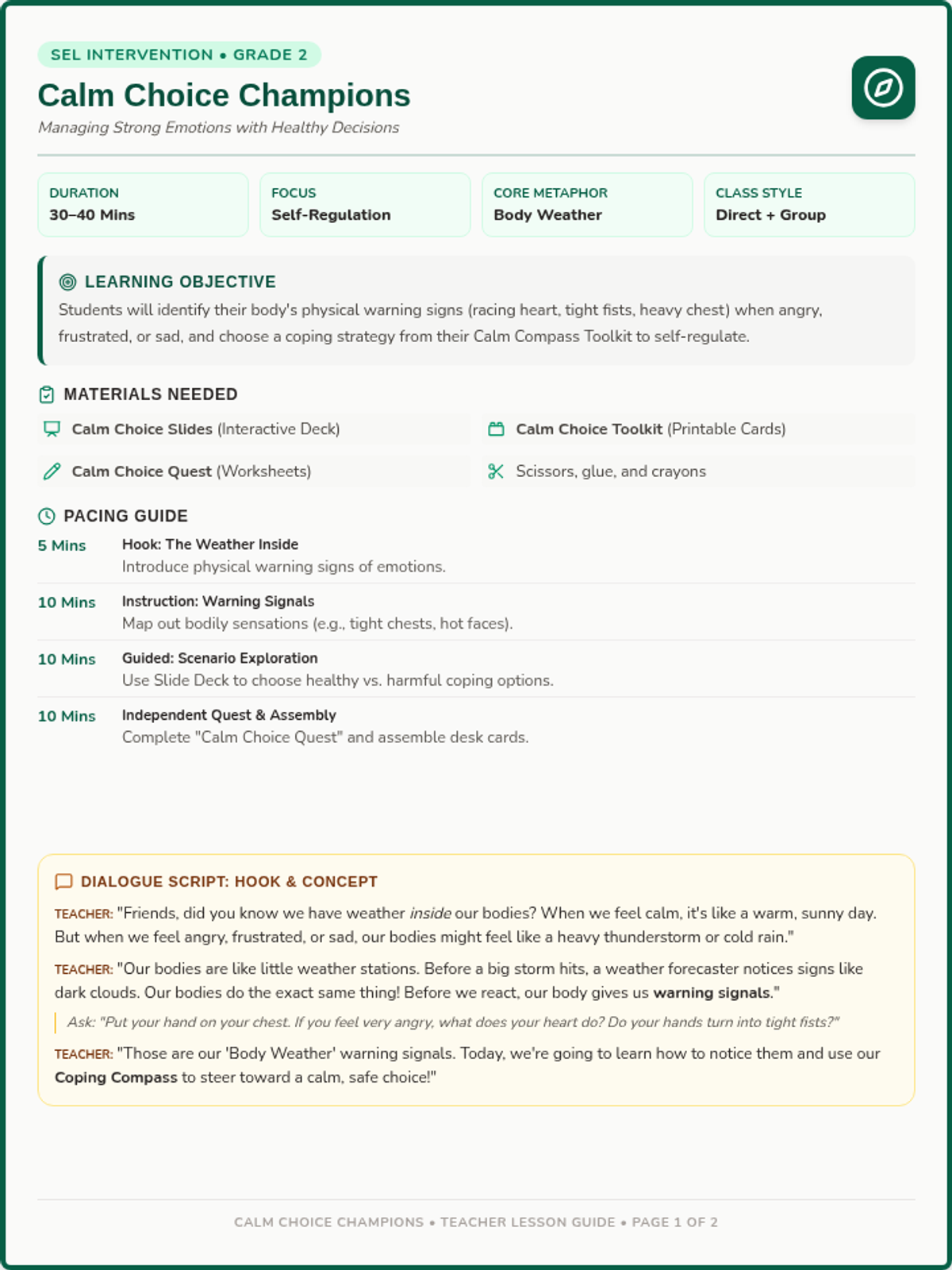
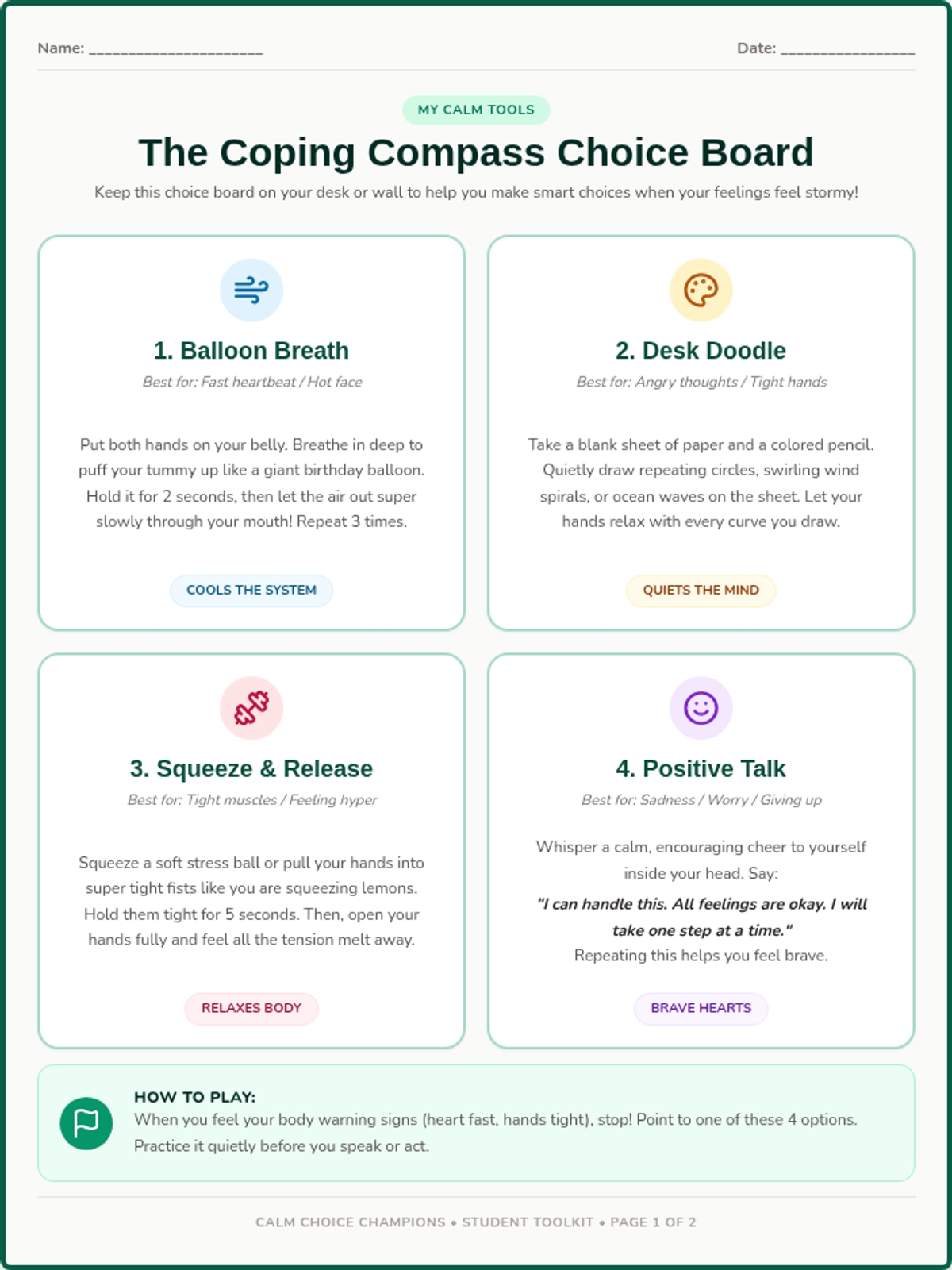
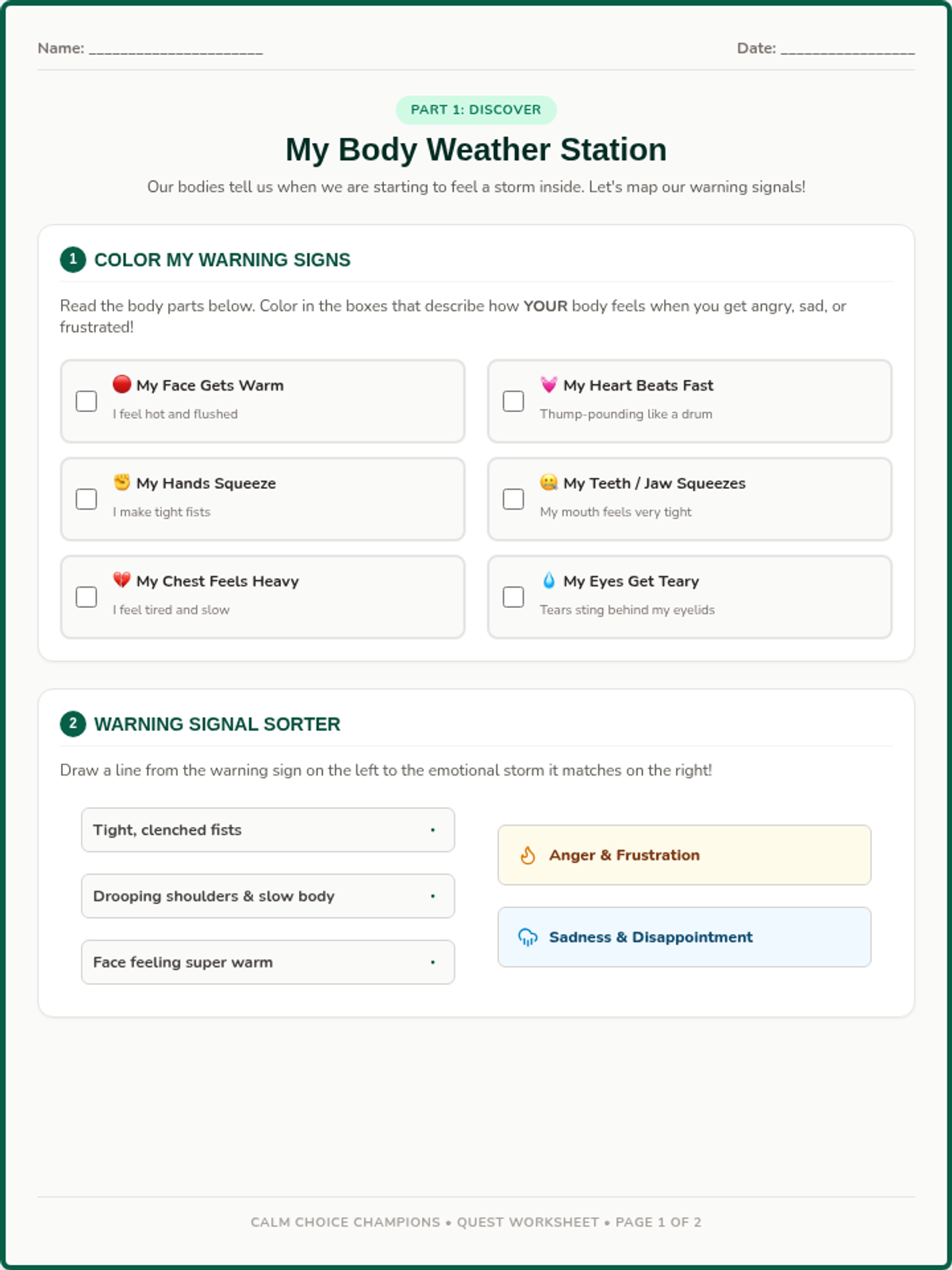
A social-emotional learning intervention lesson that helps second graders identify physical signals of strong emotions (anger, frustration, sadness) and select healthy, responsible coping strategies. Includes a comprehensive teacher lesson plan, visual interactive slides, a coping strategy toolkit, and an independent reflection worksheet.
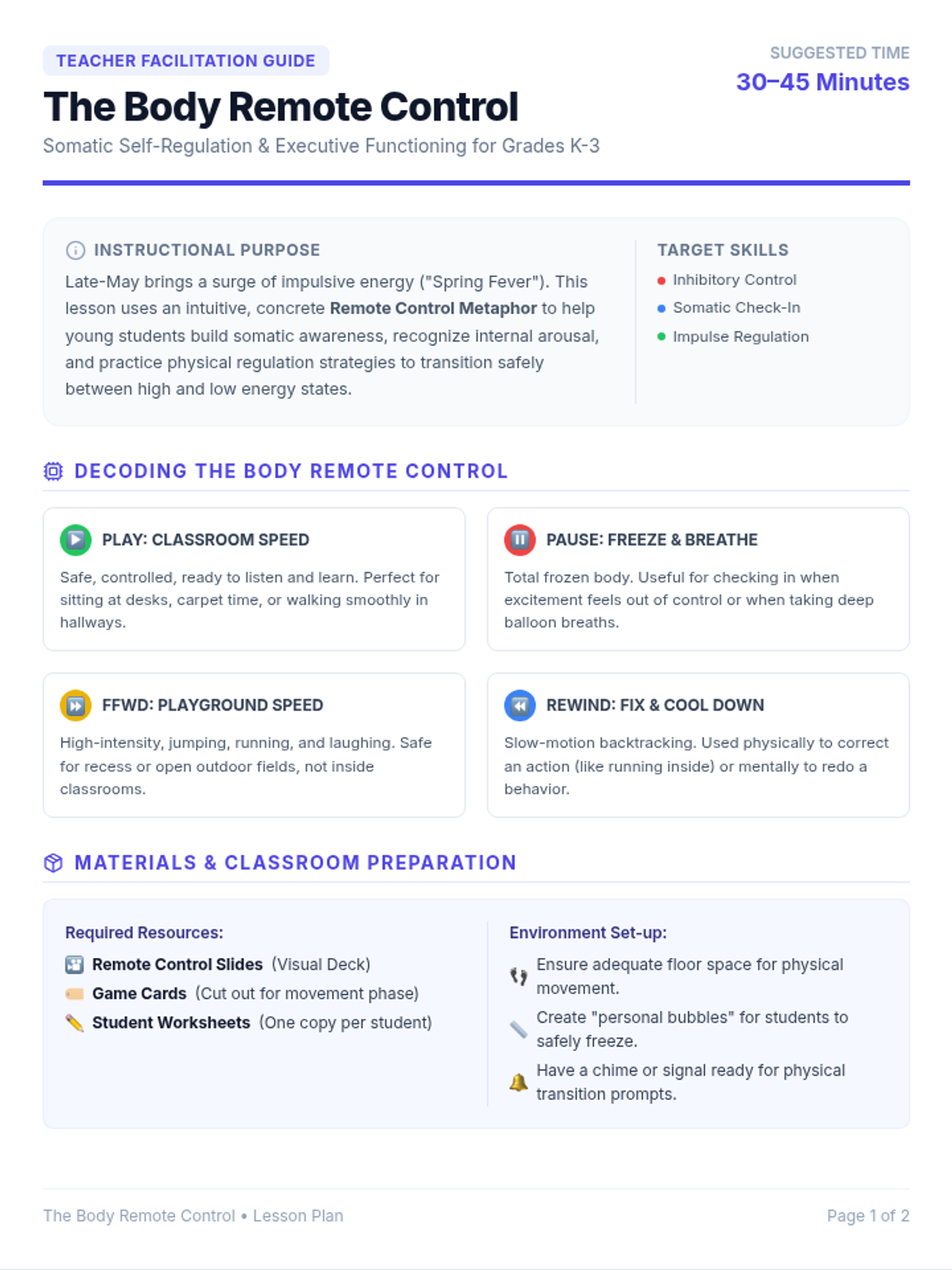
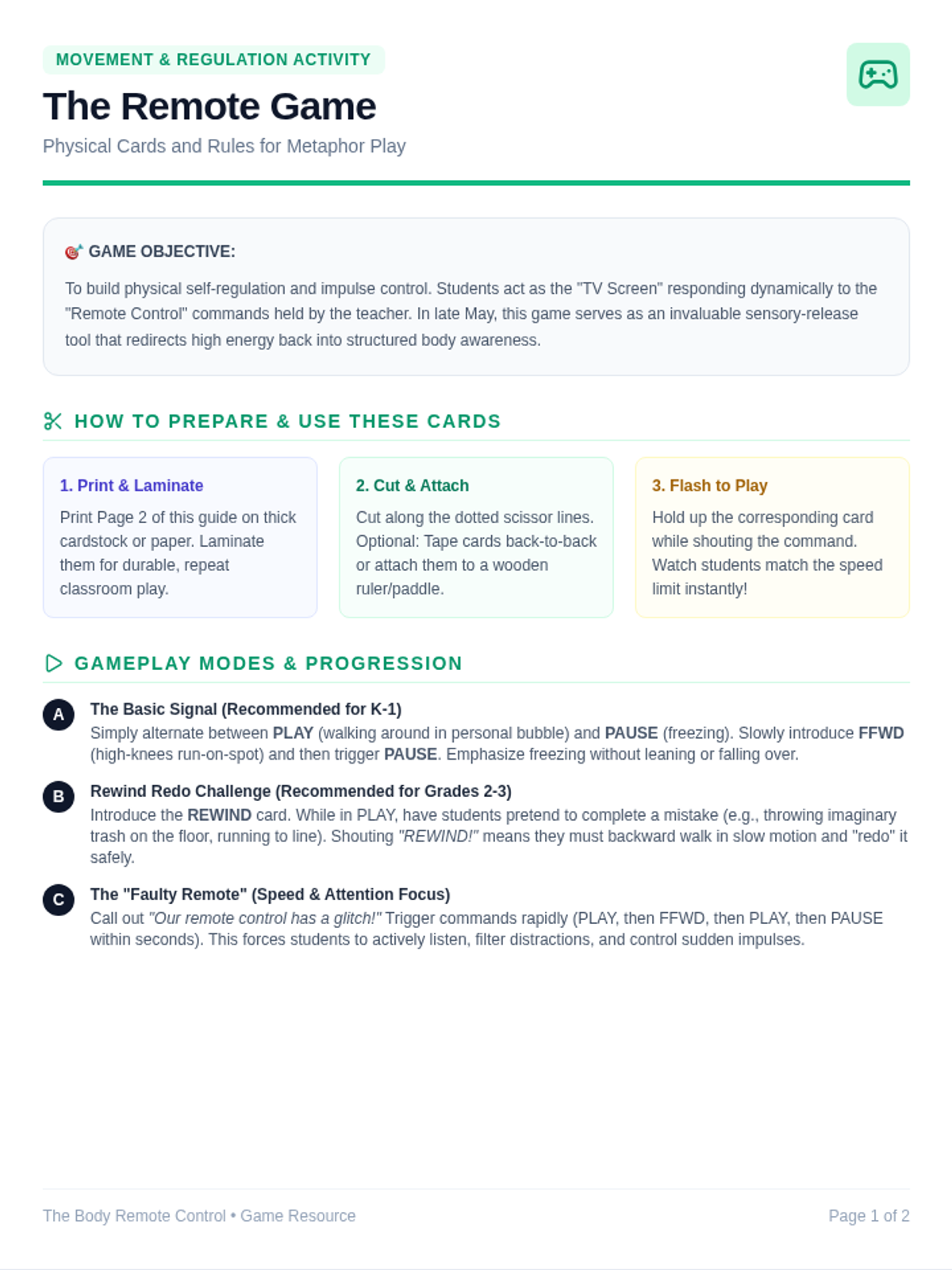
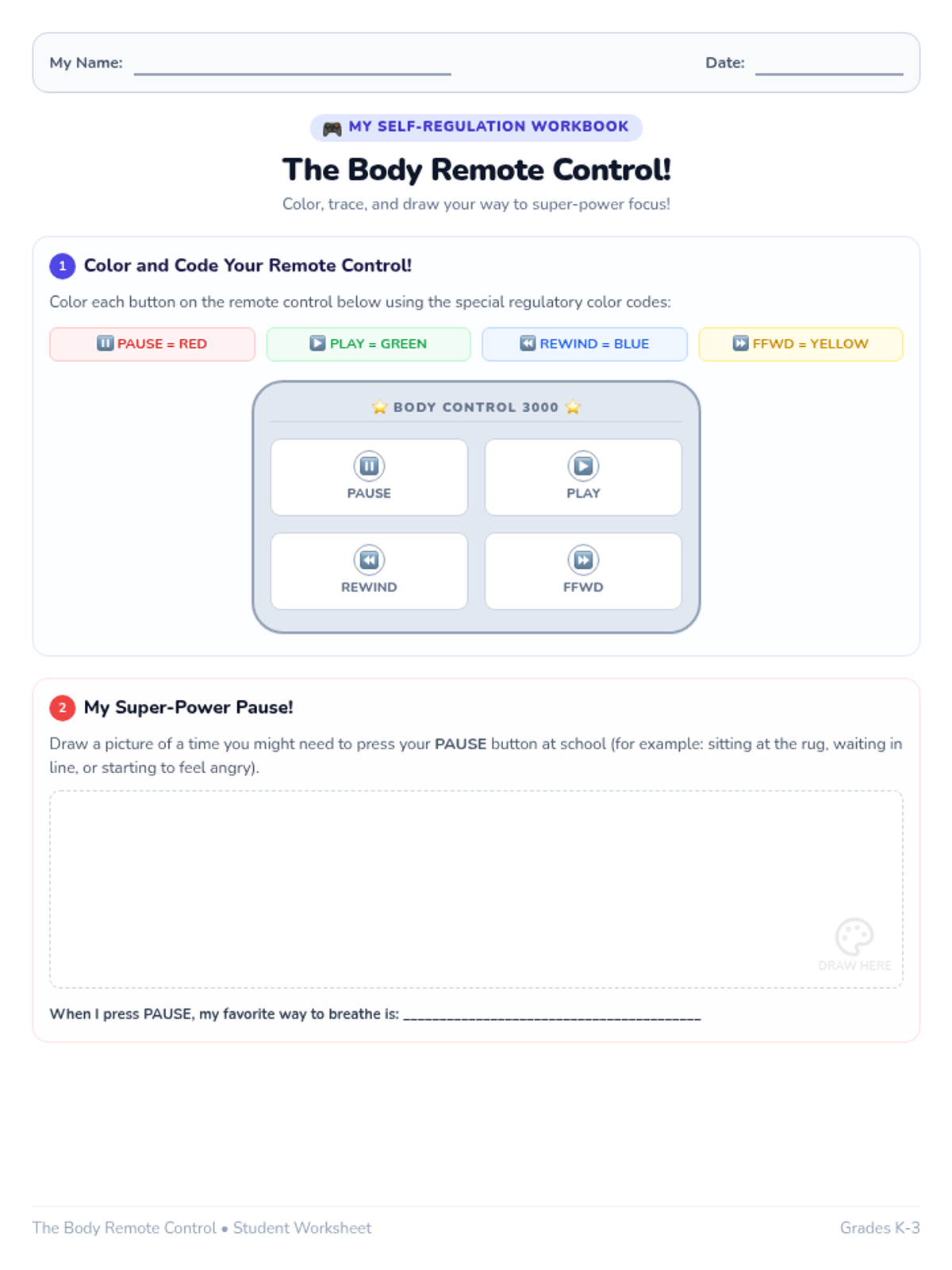
An executive functioning and regulation lesson for grades K-3 using a remote control metaphor. Students learn to recognize internal arousal states and practice physical 'rewinding', 'pausing', and 'fast-forwarding' behaviors to manage late-May high-energy impulsivity.
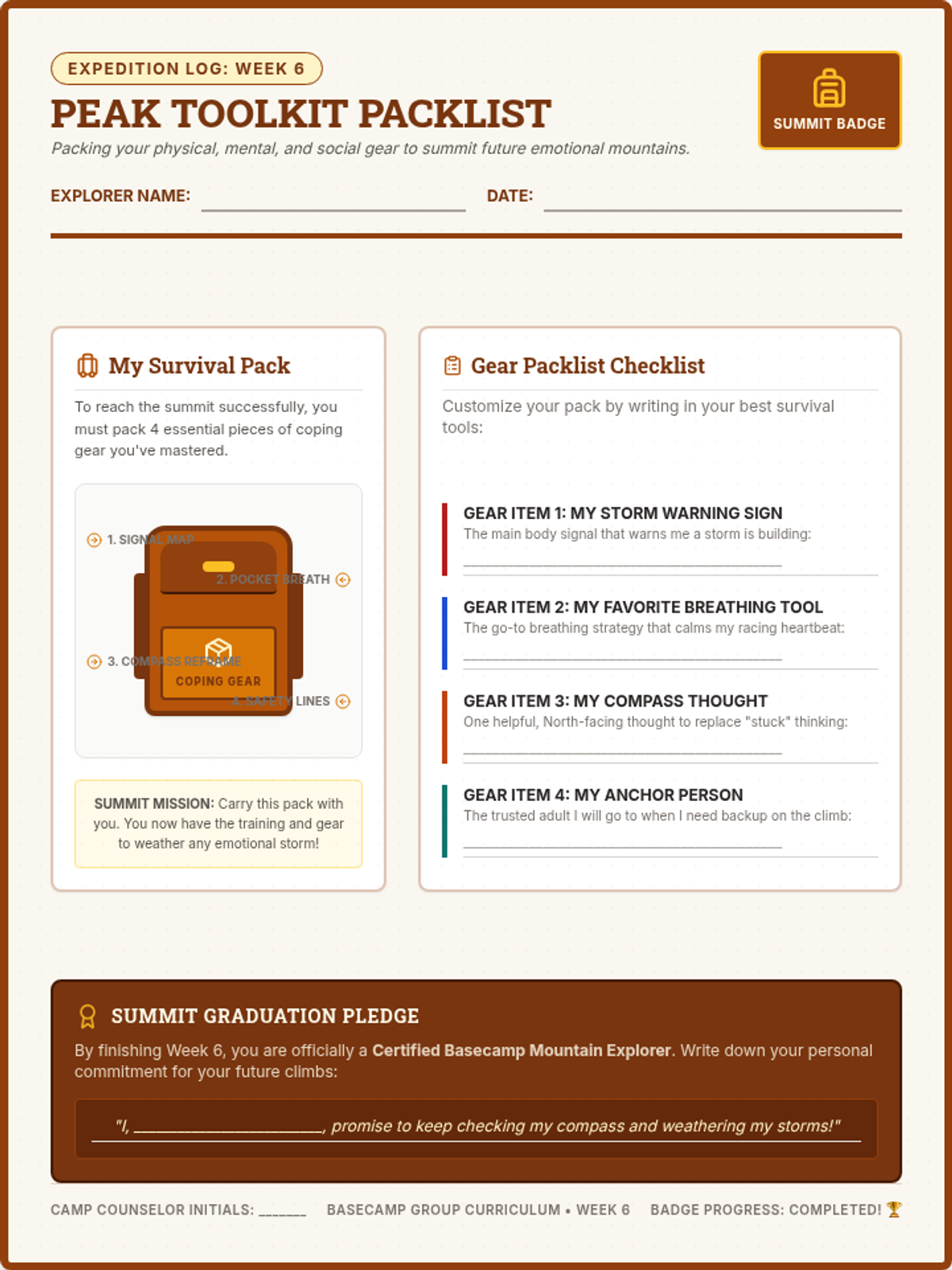
Week 6 of the Basecamp Emotion Regulation curriculum. Students review their 6-week adventure, synthesize their personalized coping skills, and construct their final "Peak Coping Kit" to use in future emotional climbs.
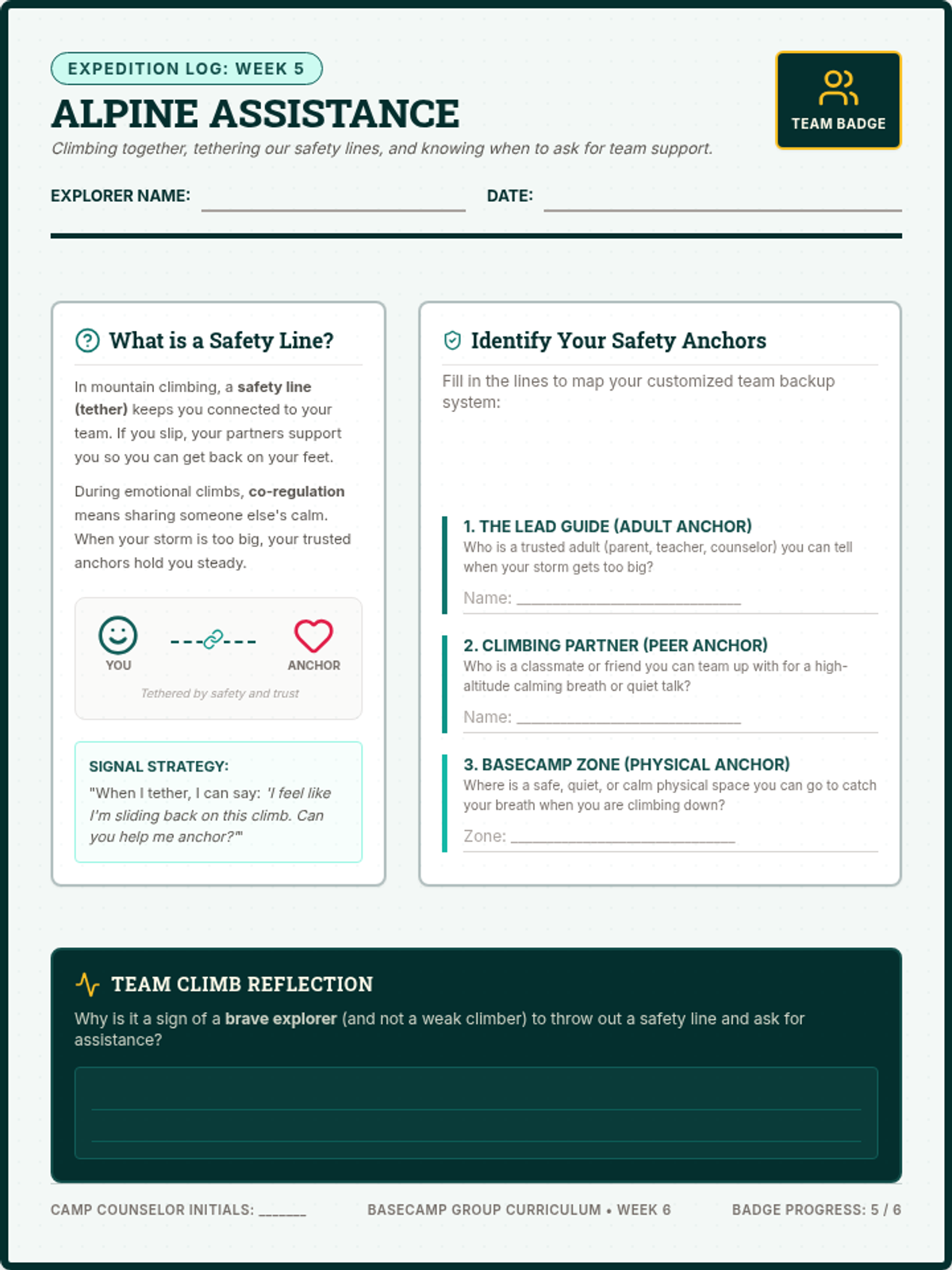
Week 5 of the Basecamp Emotion Regulation curriculum. Students focus on co-regulation, climbing together, establishing trust, and understanding when and how to seek help from trusted "safety lines."
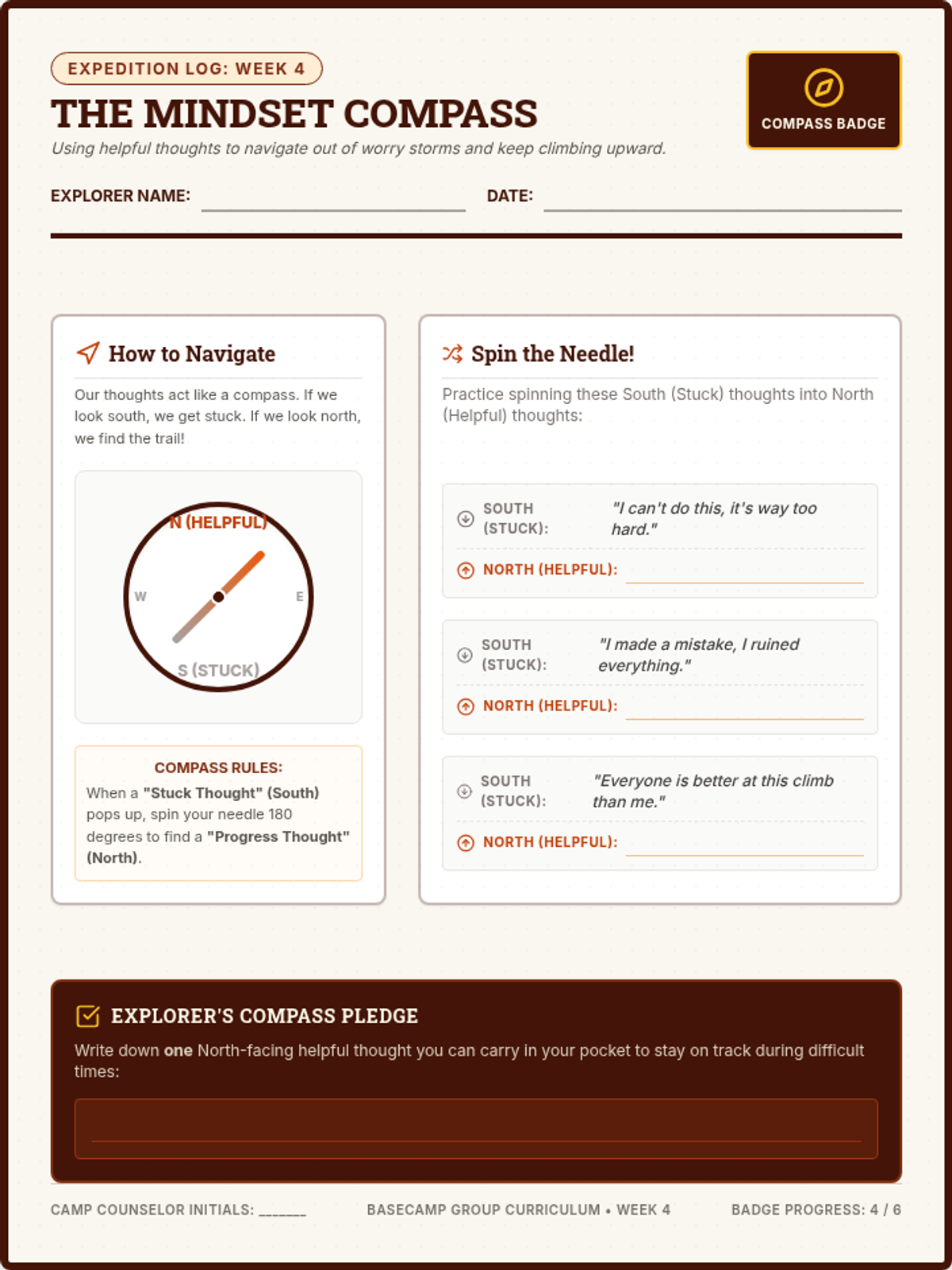
Week 4 of the Basecamp Emotion Regulation curriculum. Students discover cognitive-behavioral strategies, learning how to use positive self-talk and perspective shifts to reframe negative thoughts.
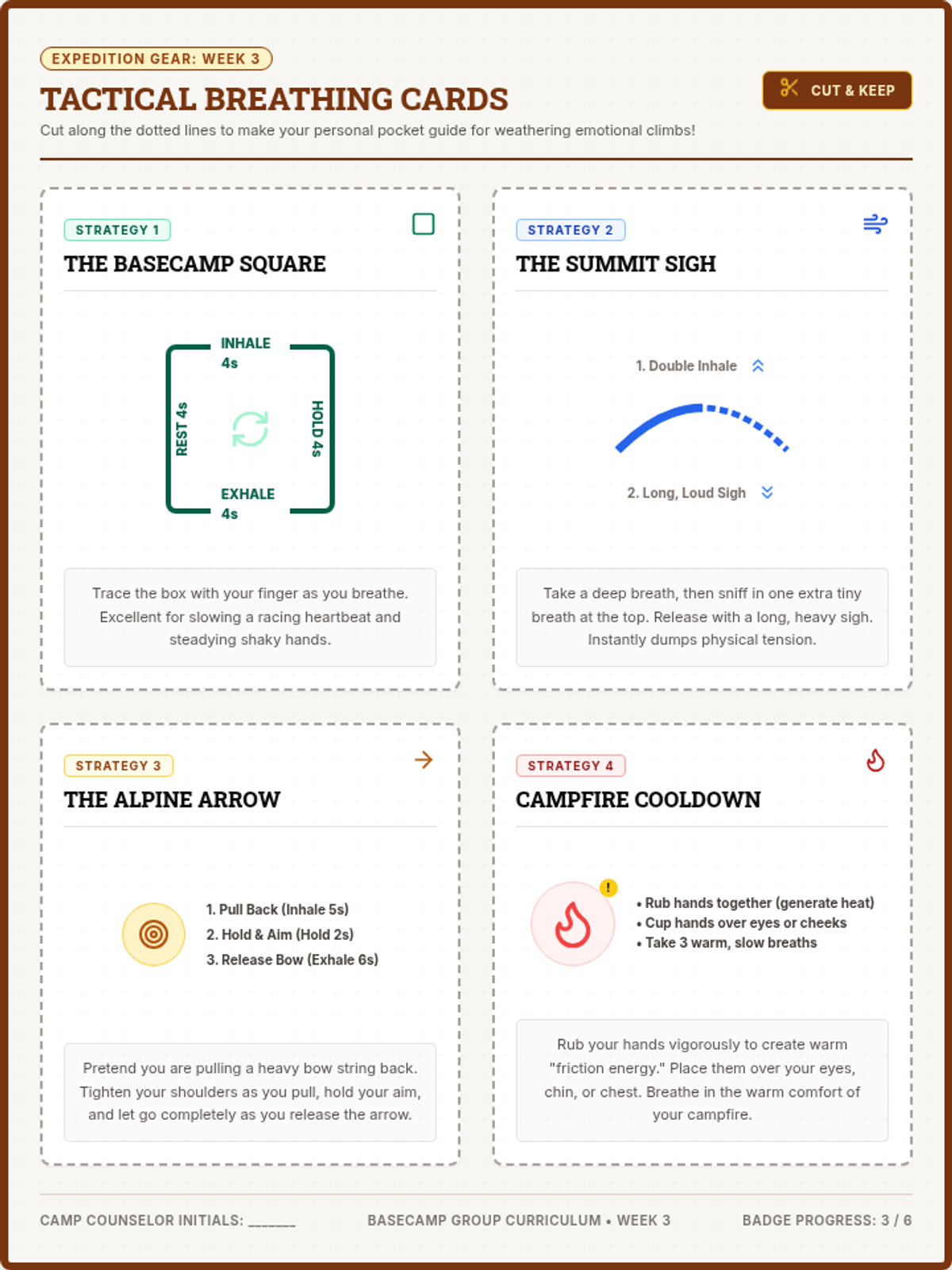
Week 3 of the Basecamp Emotion Regulation curriculum. Students practice hands-on physical calming strategies, including tactical breathing, grounding, and sensory reset exercises.
Week 2 of the Basecamp Emotion Regulation curriculum. Students explore the concept of emotional "storms" (triggers) and learn to notice early warning signs before a storm hits.