A comprehensive professional development and resource package for educators, mapping out Tier 1 classroom interventions and Tier 2 school counselor supports to build a proactive, collaborative, and restorative student support culture.
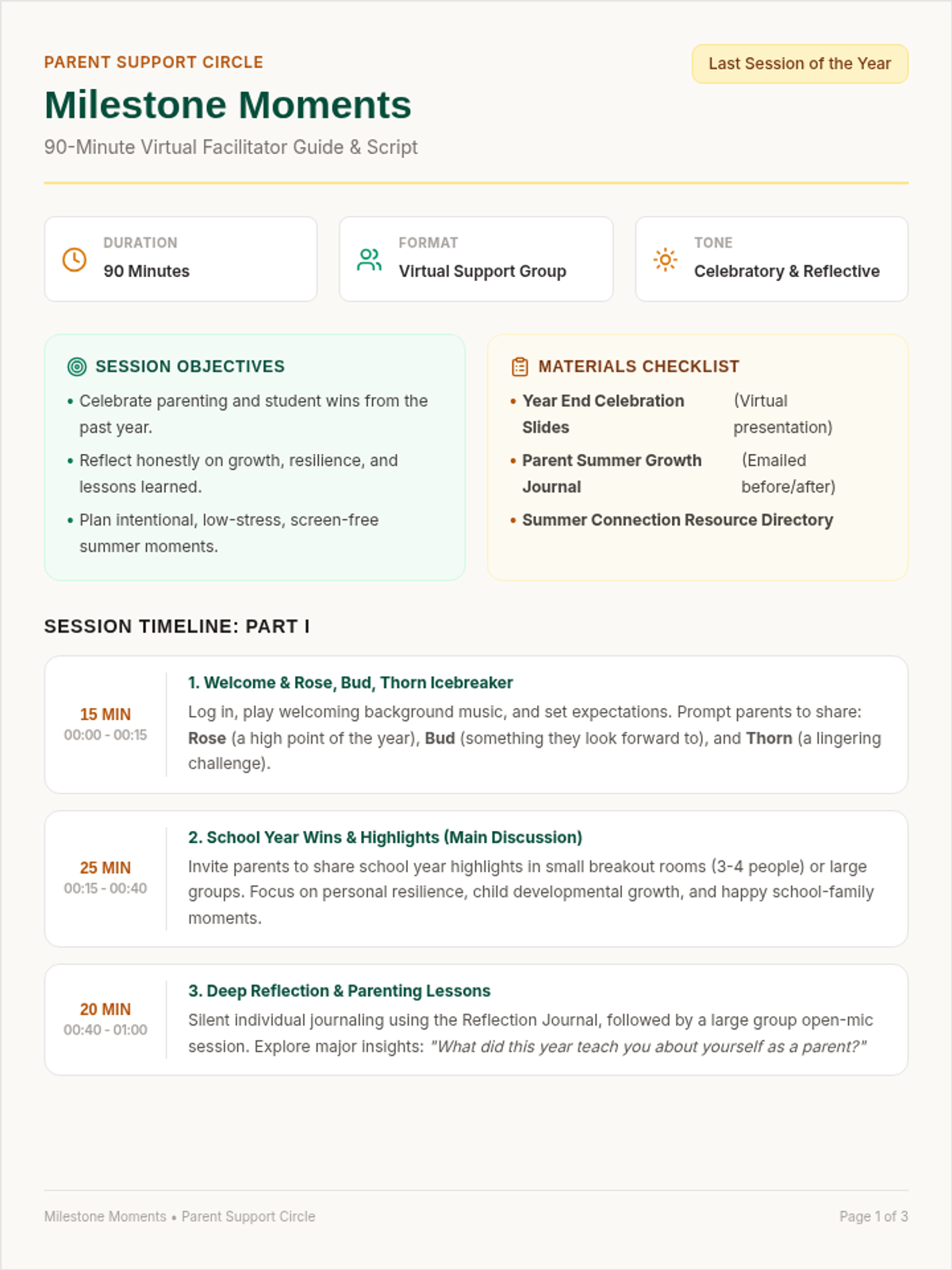
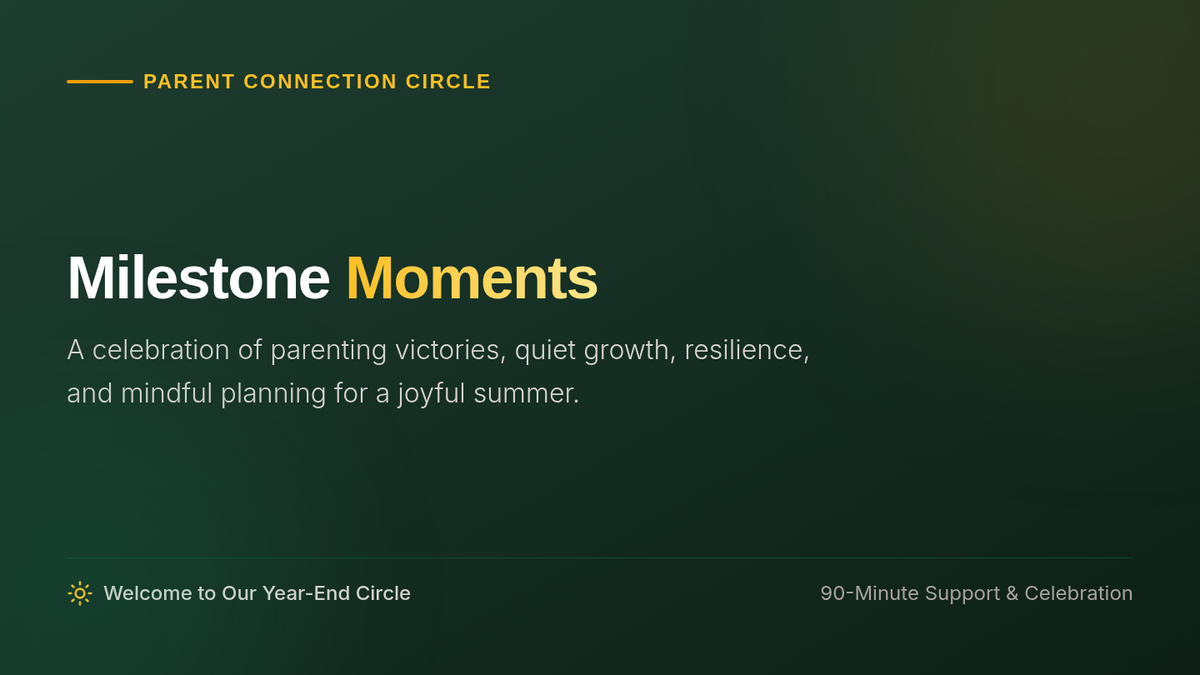
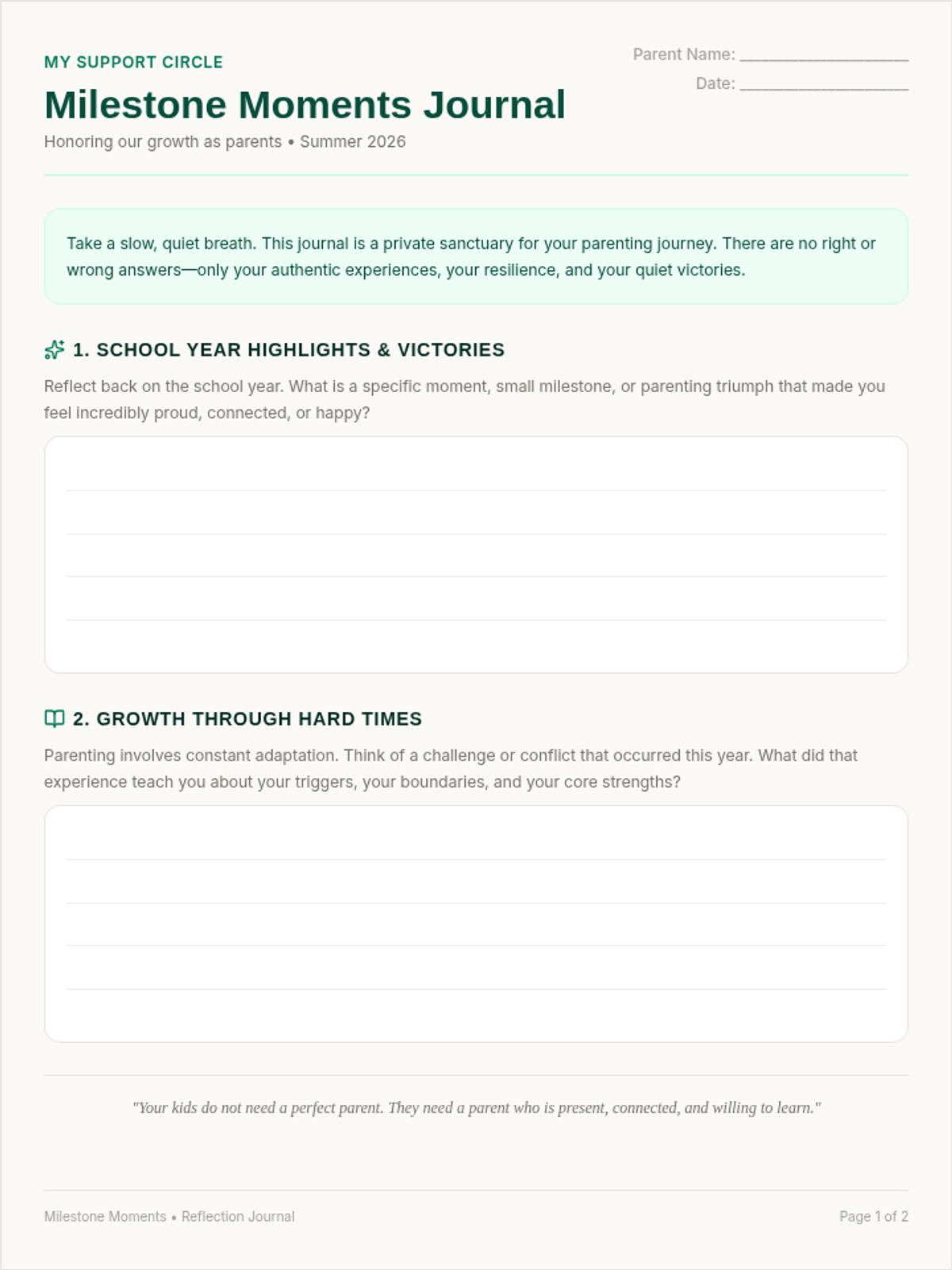
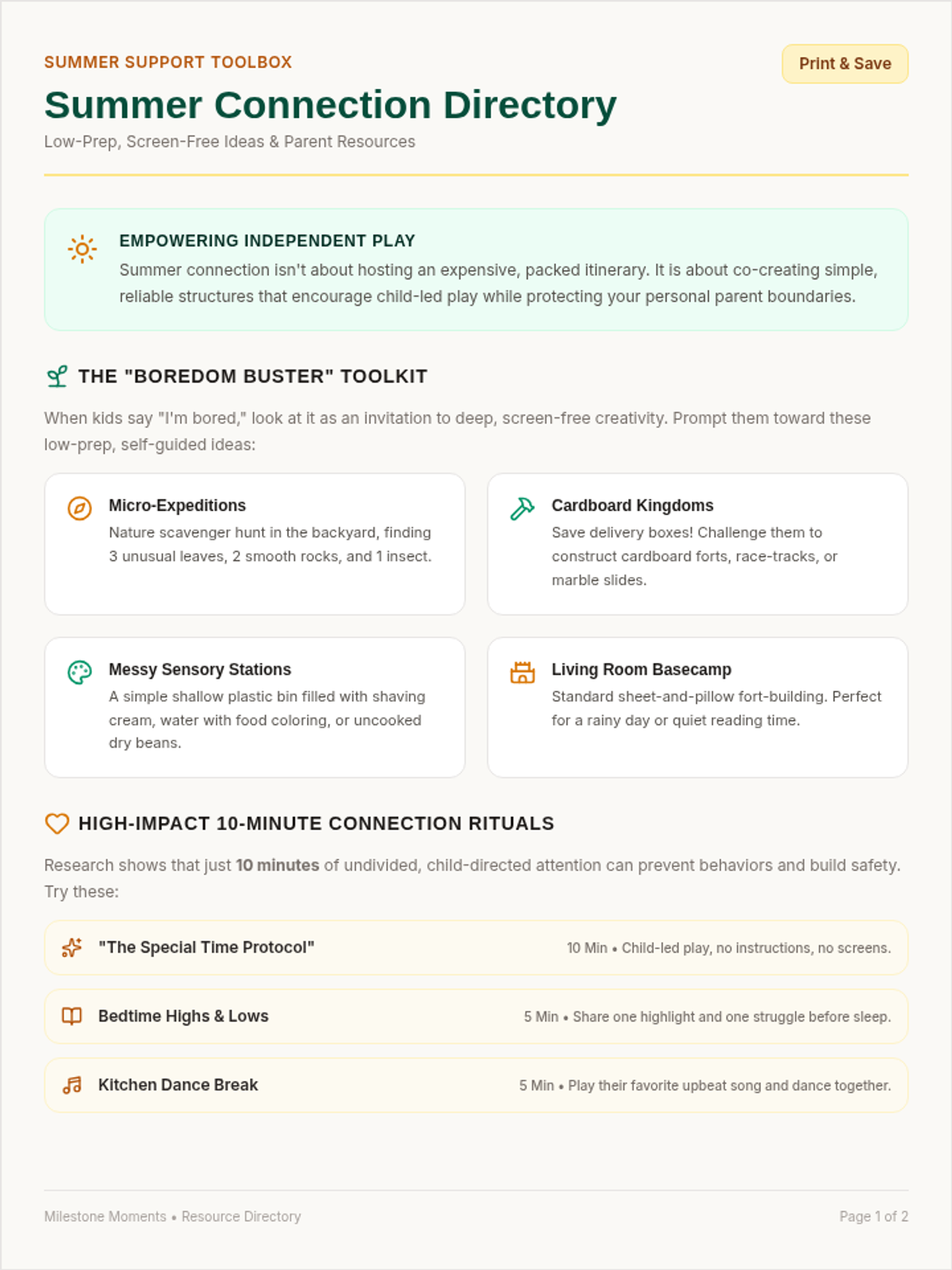
A warm, celebratory parent support group session focused on reflecting on school year successes, planning screen-free summer adventures, and setting growth goals.
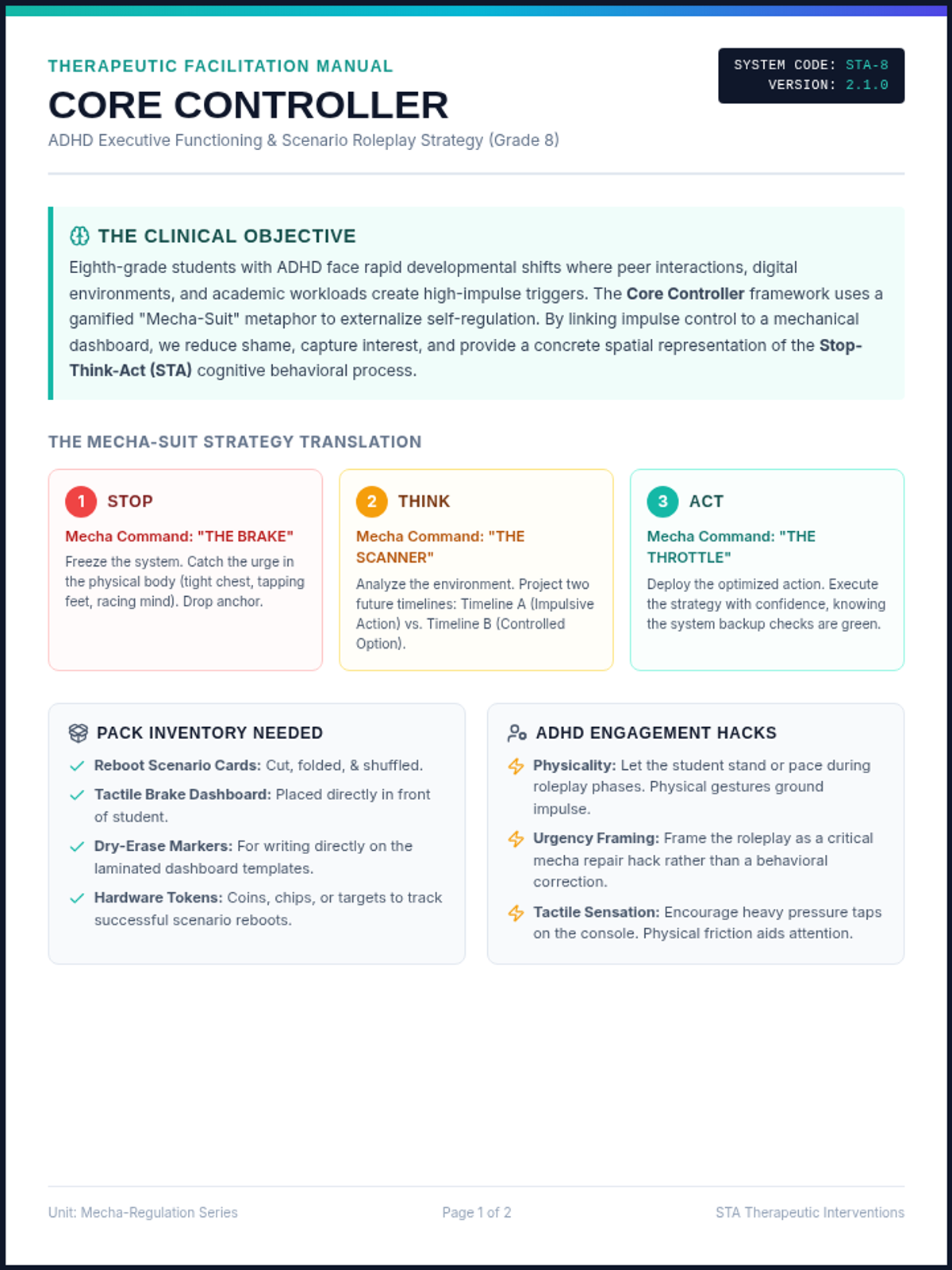
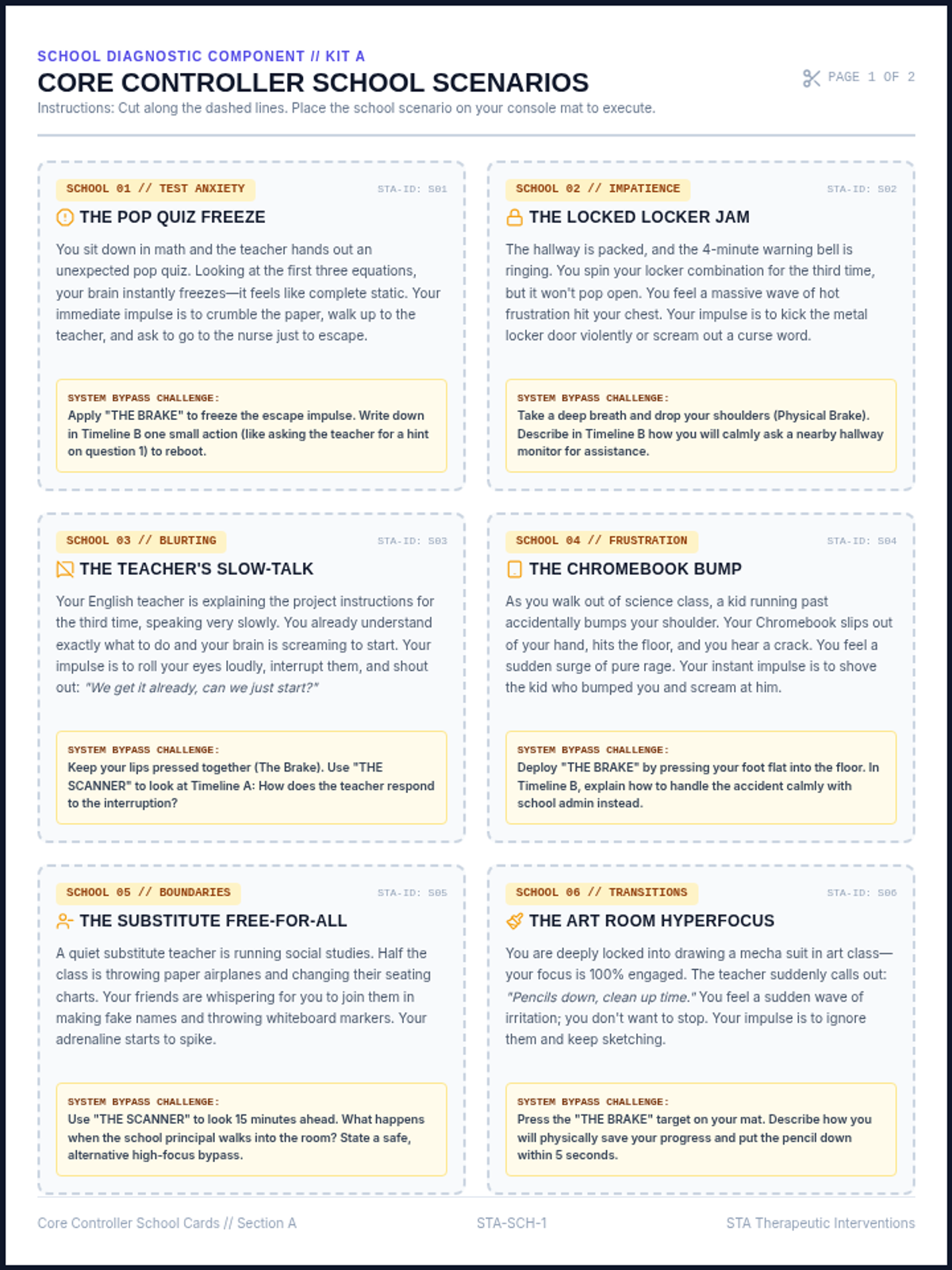
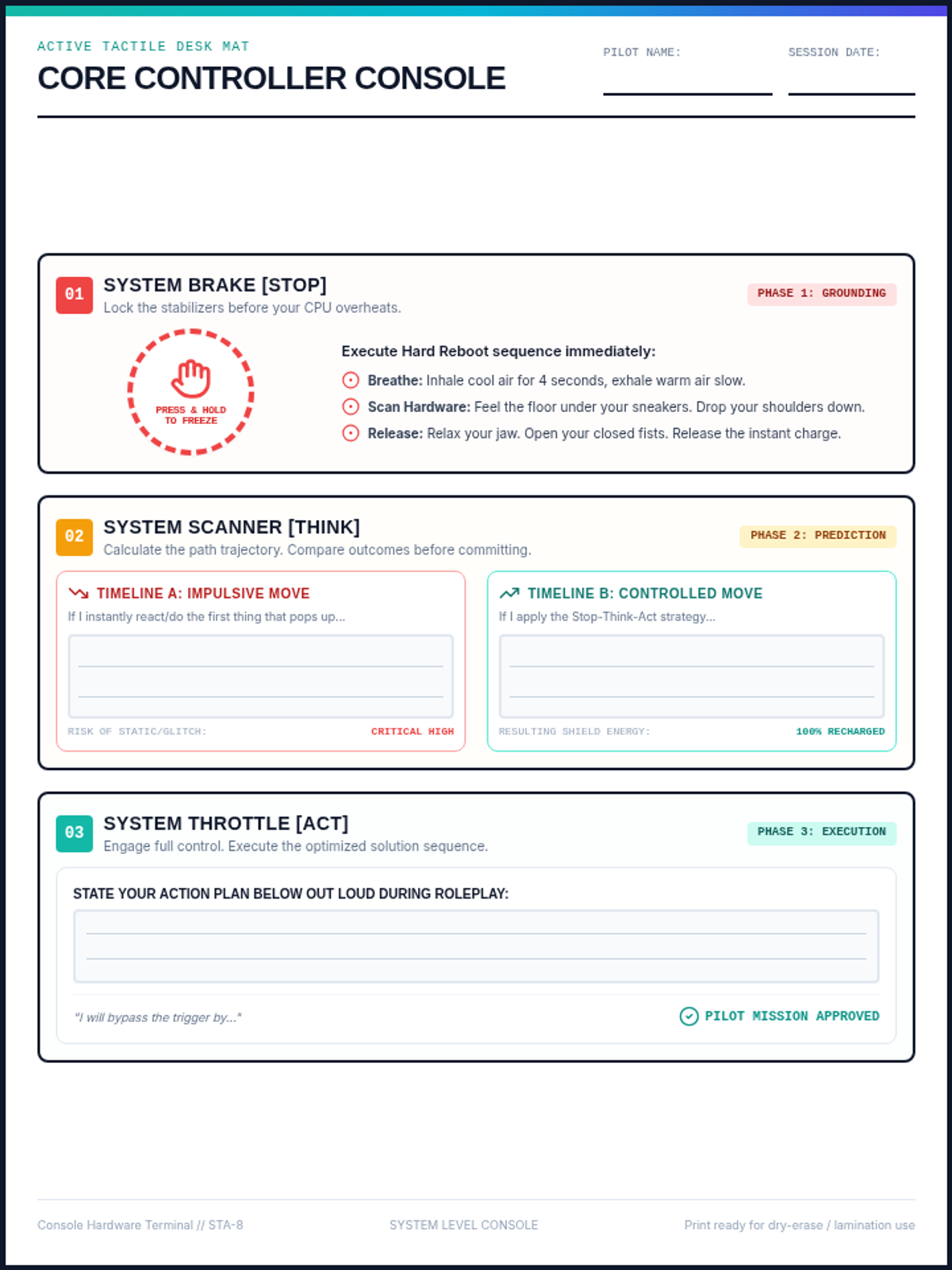
A high-engagement therapeutic game pack and session plan for 8th-grade students with ADHD, focusing on the Stop-Think-Act impulse control strategy. Designed with a retro-futuristic mecha theme to maintain focus and promote active roleplay.
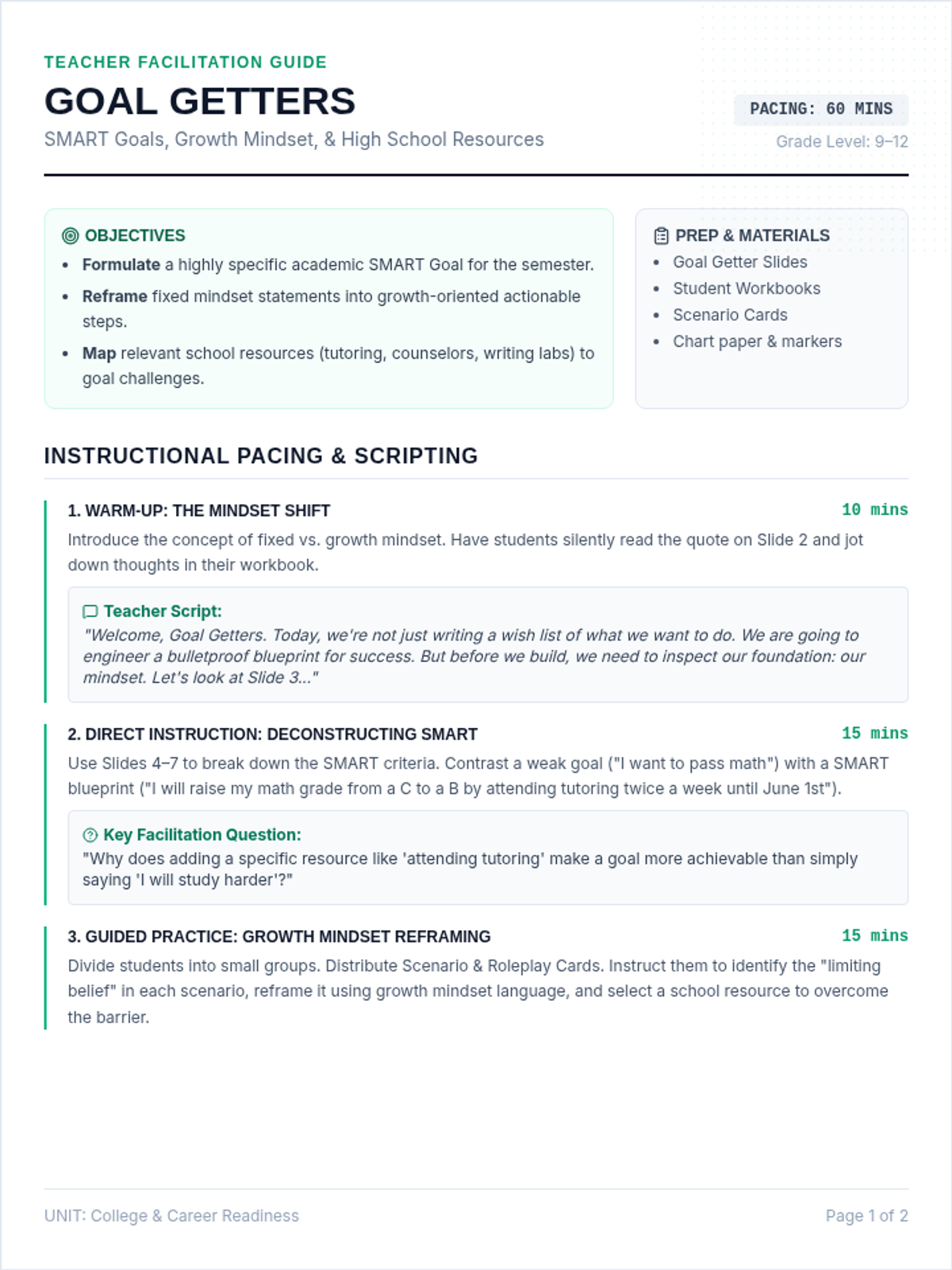
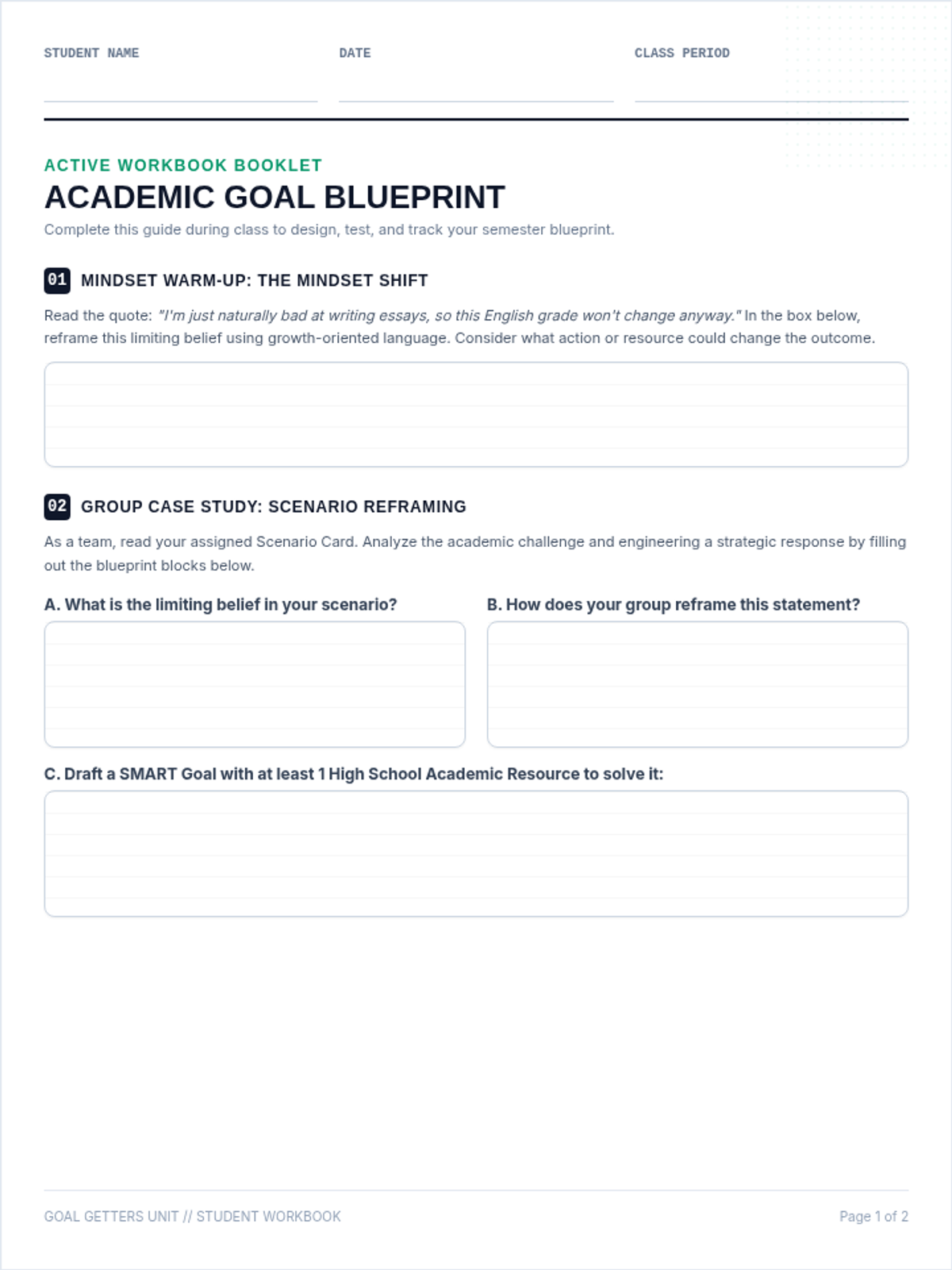
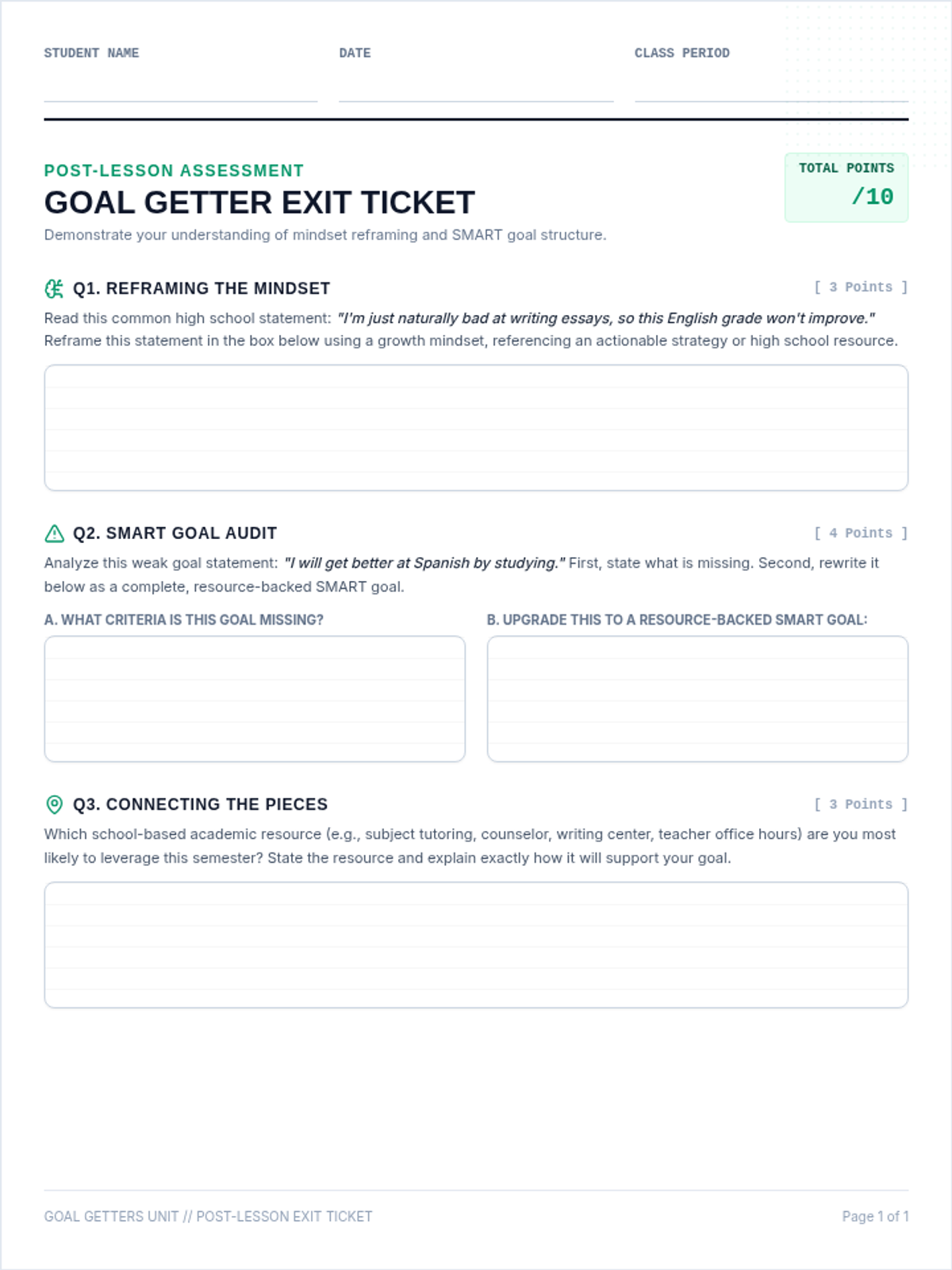
A comprehensive high school lesson focused on SMART goals, developing a growth mindset, and utilizing academic resources for goal achievement. Includes teacher-facing guides, interactive slides, a multi-page work booklet, and an exit ticket.
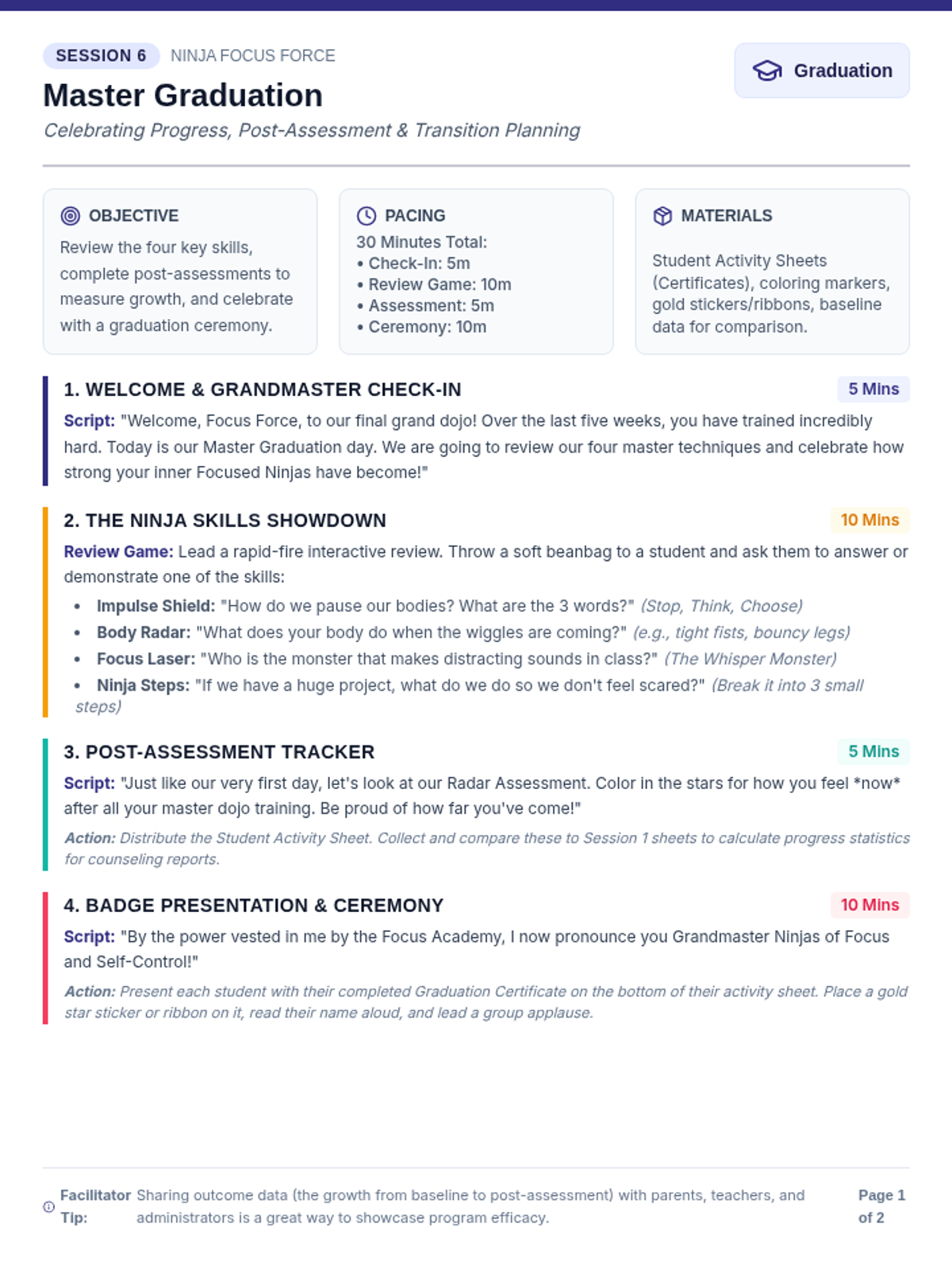
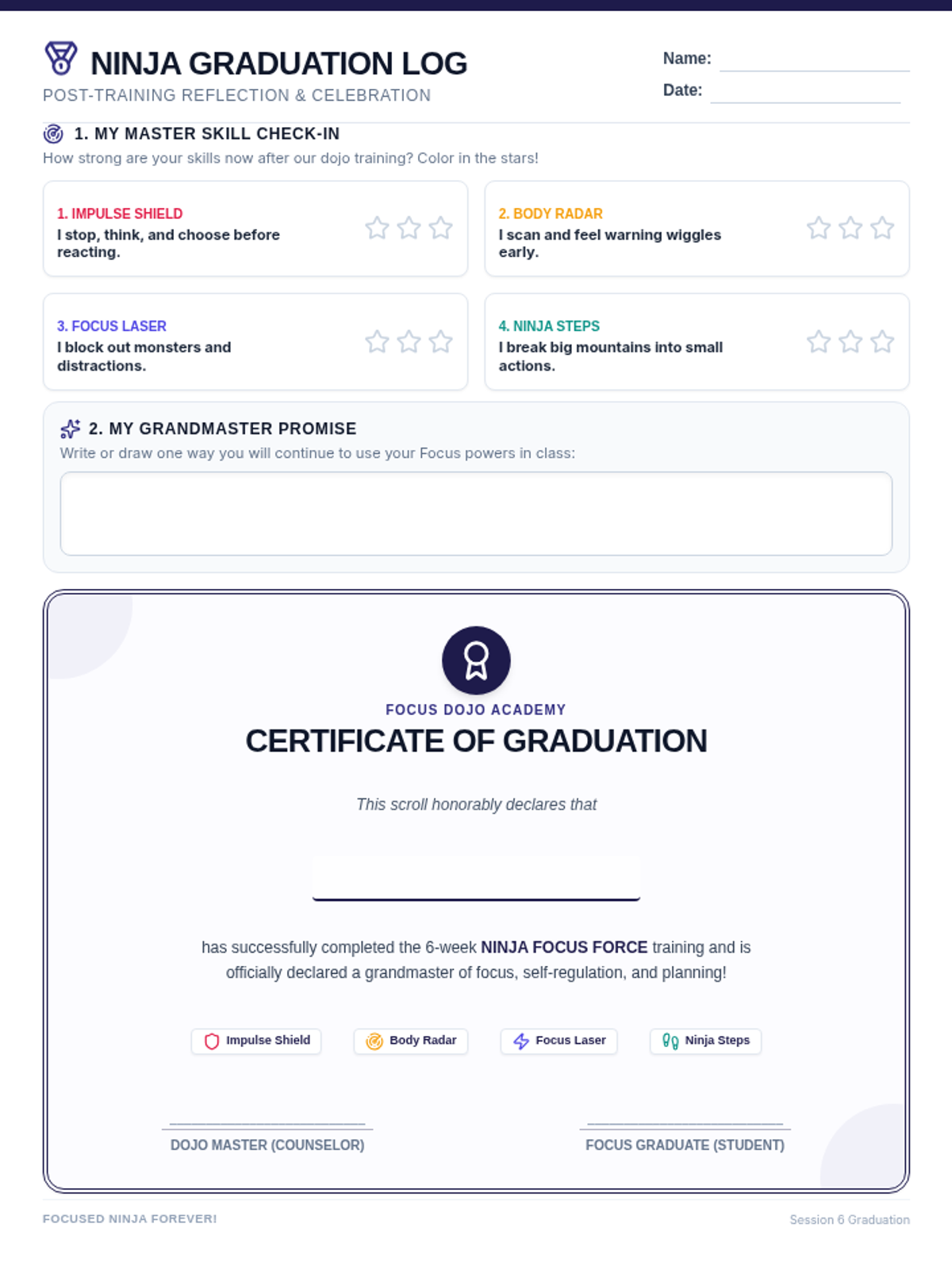
Celebrating the group's progress. Students review their ninja strategies, complete a post-assessment, and receive their graduation badges.
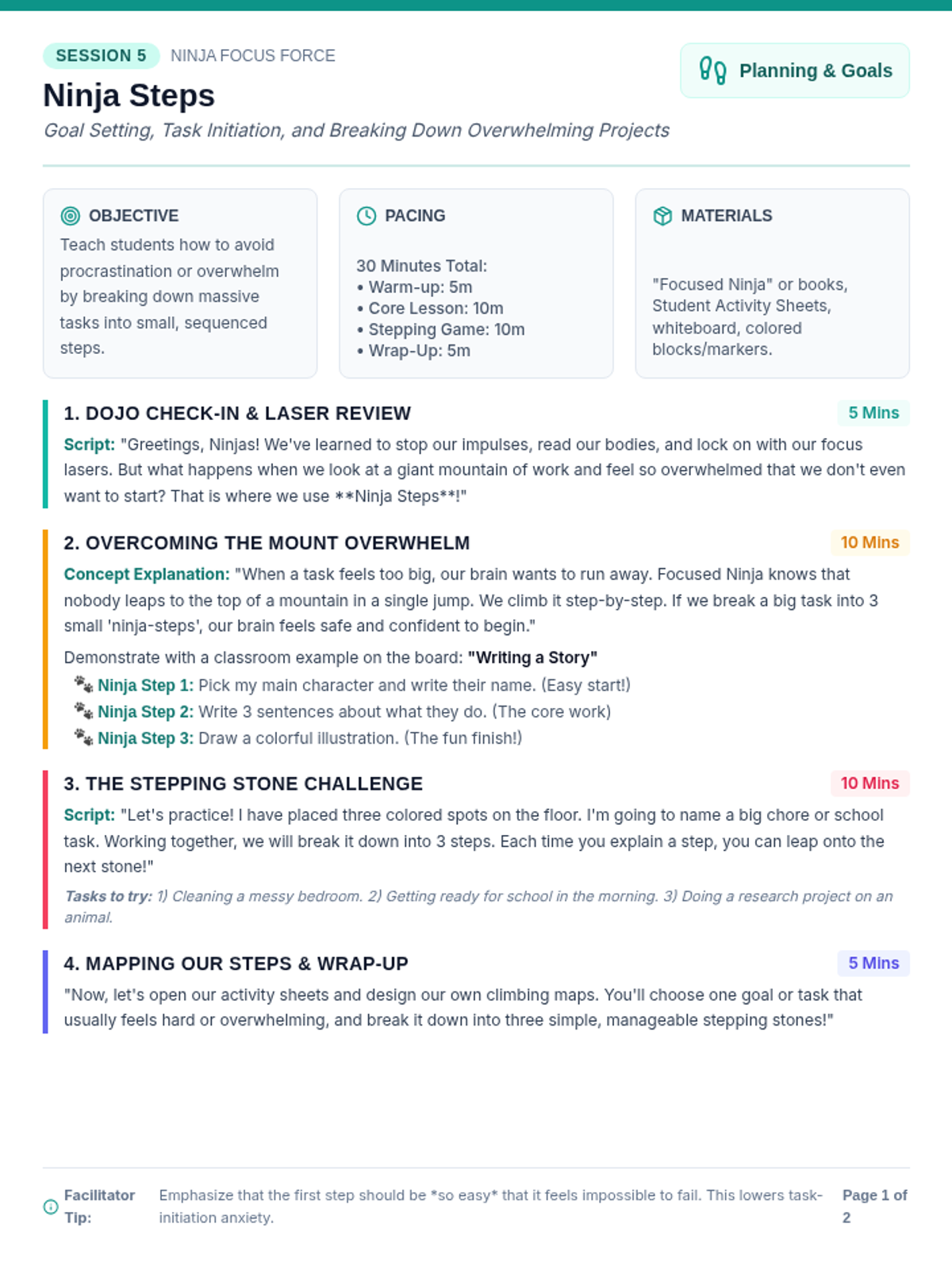
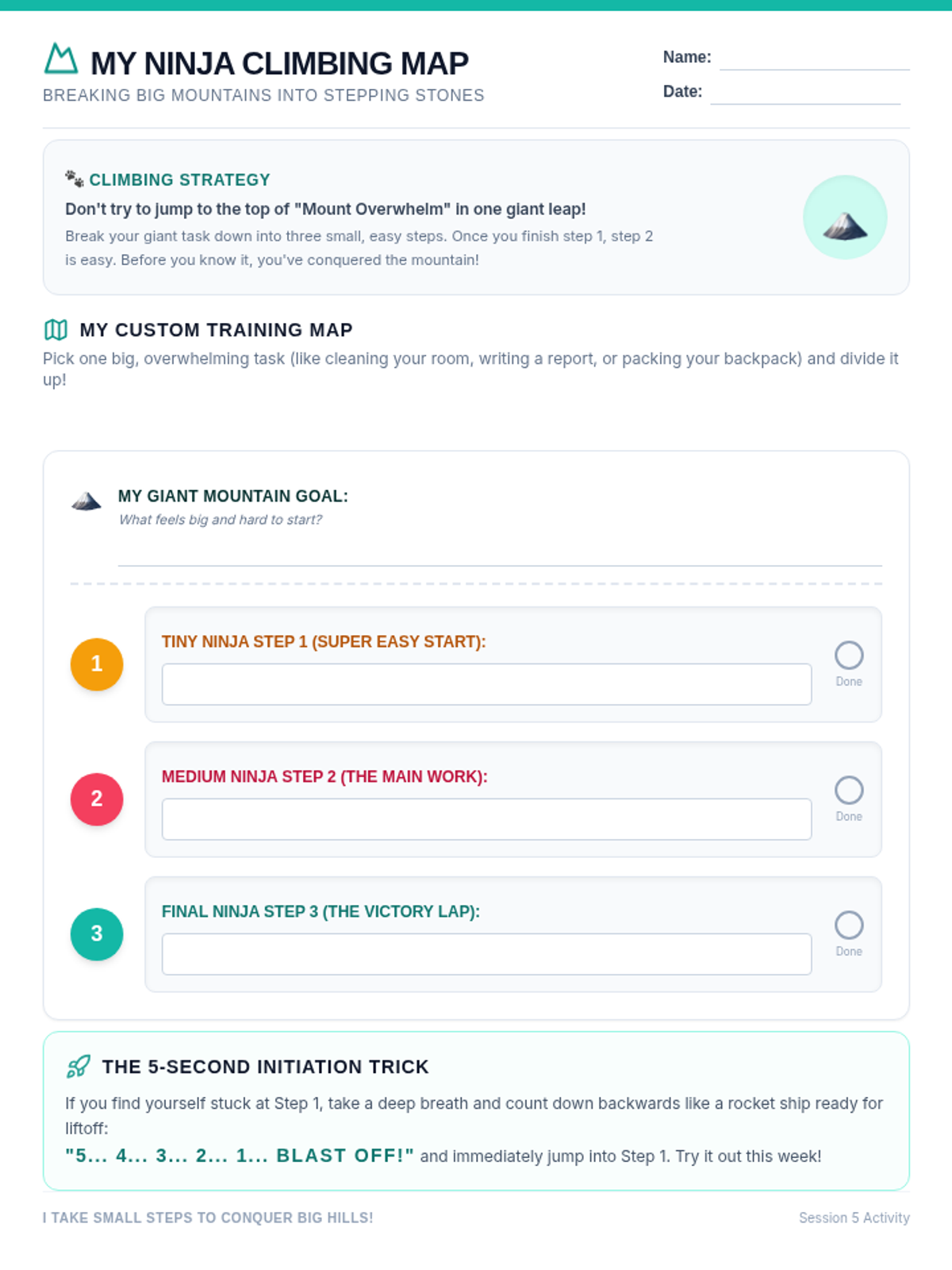
Mastering goal setting and action planning. Students learn to break big, overwhelming tasks into small, manageable 'ninja-steps'.
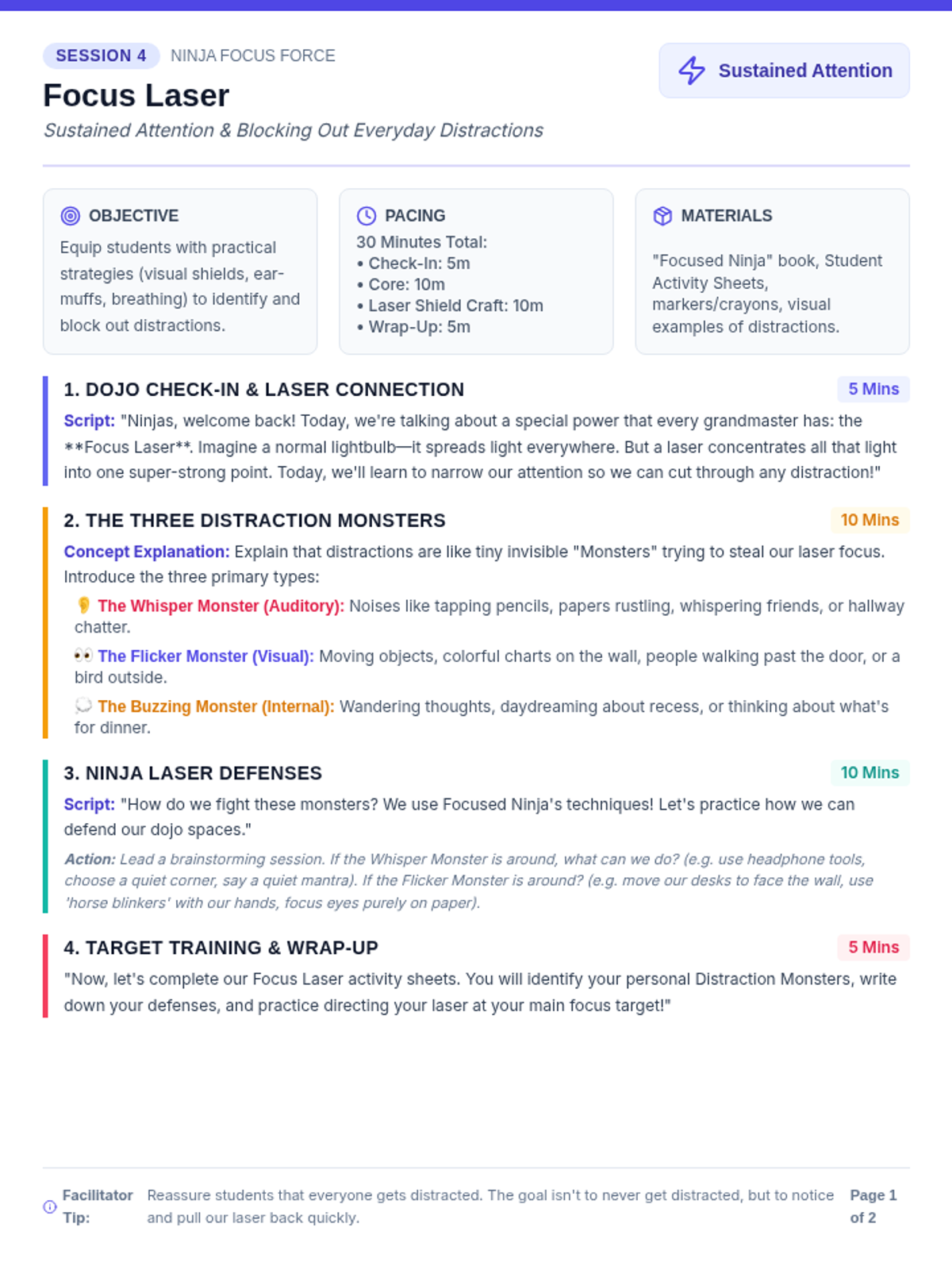
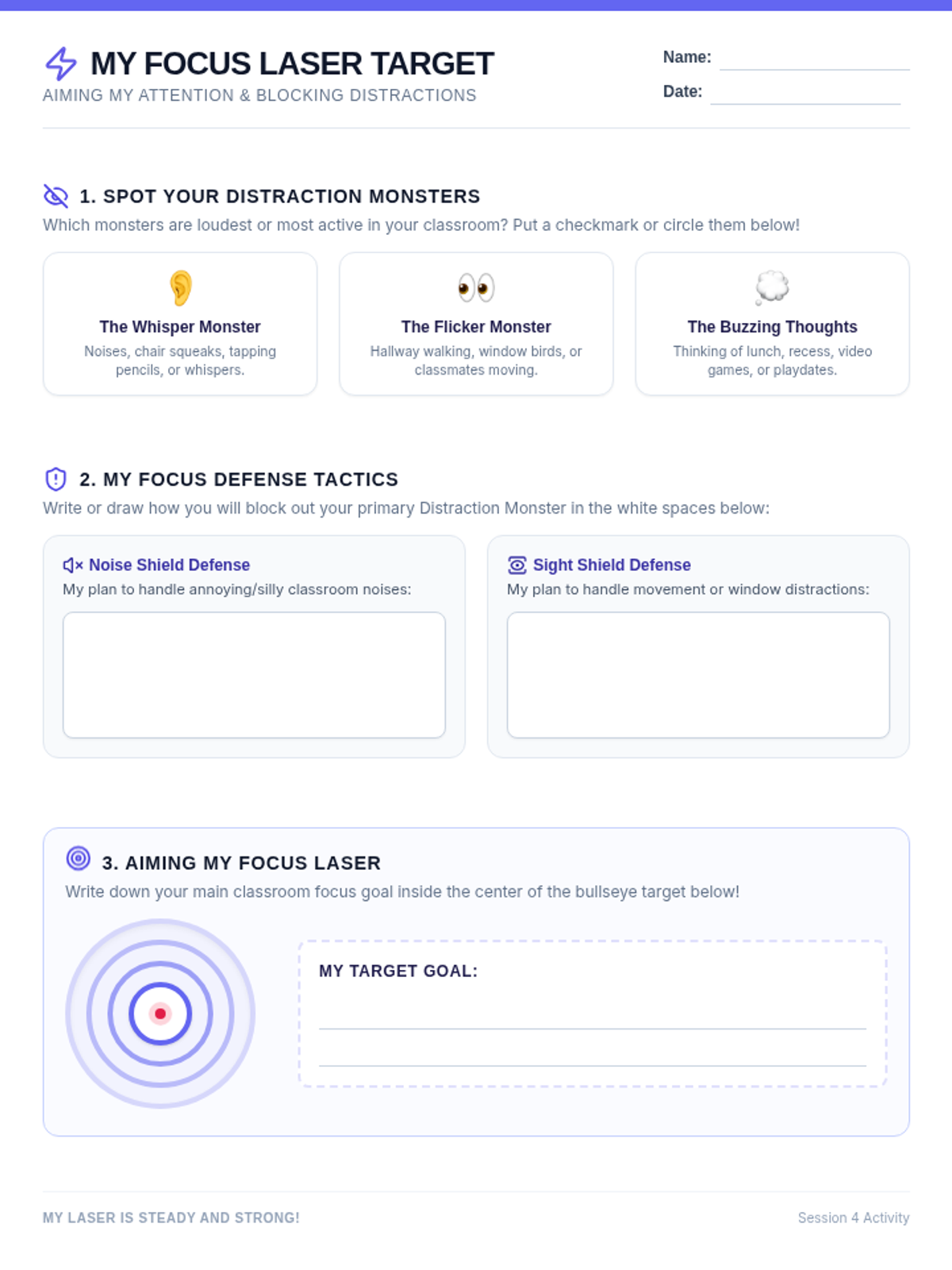
Enhancing sustained attention and concentration. Students practice blocking out distractions using the Focused Ninja's techniques.
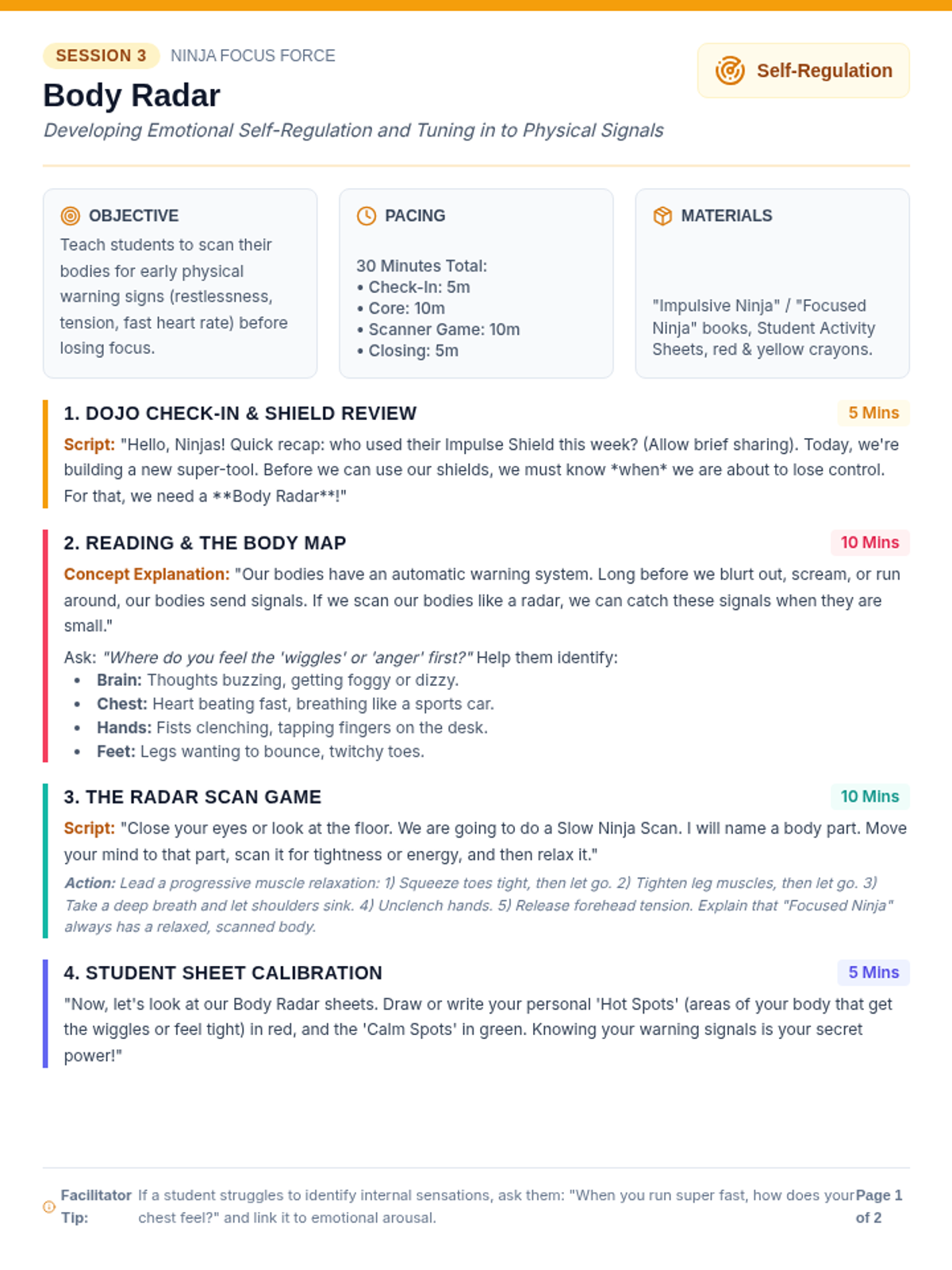
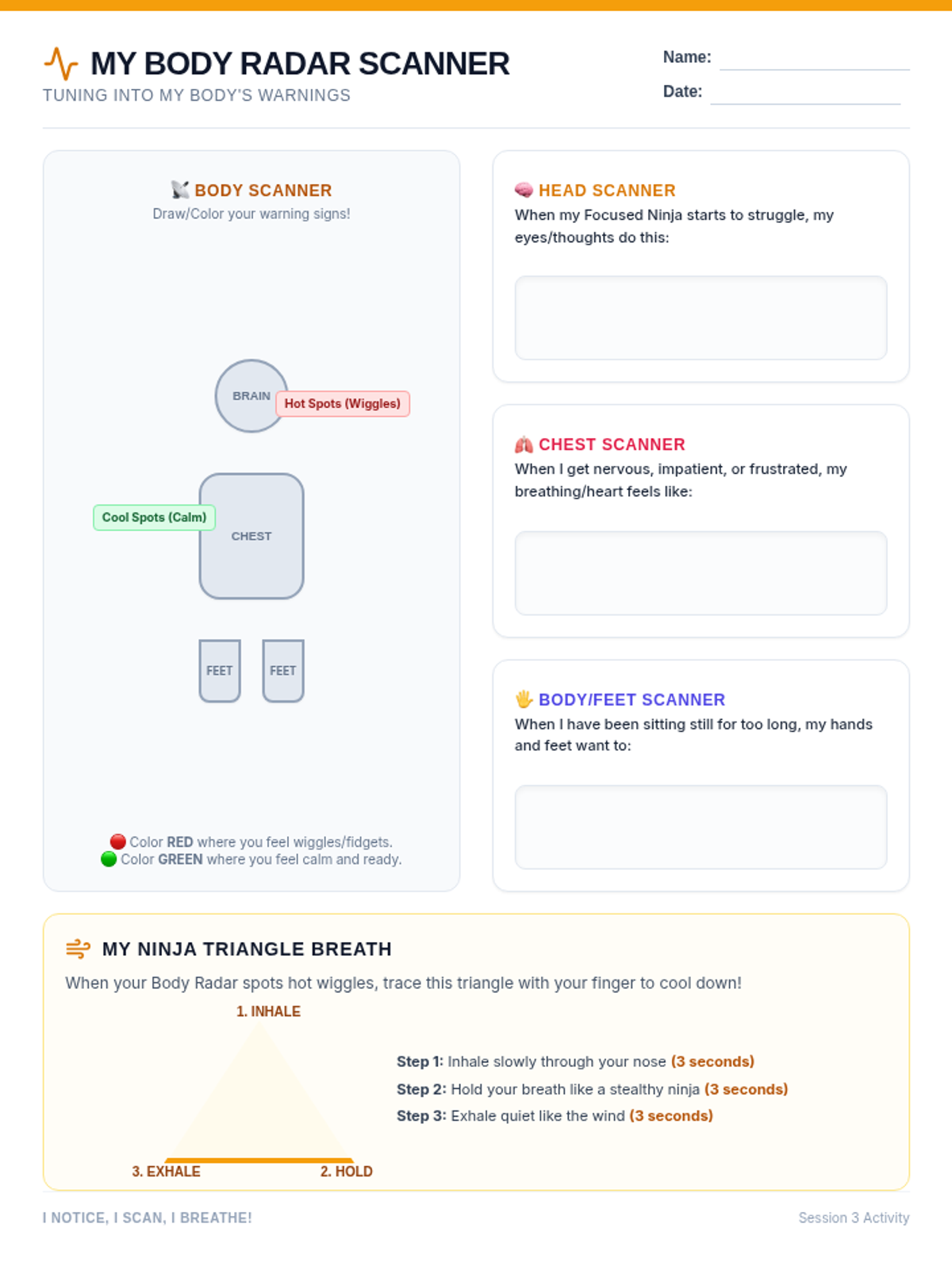
Developing emotional self-regulation. Students learn to scan their bodies for early warning signs of distraction, restlessness, or frustration.
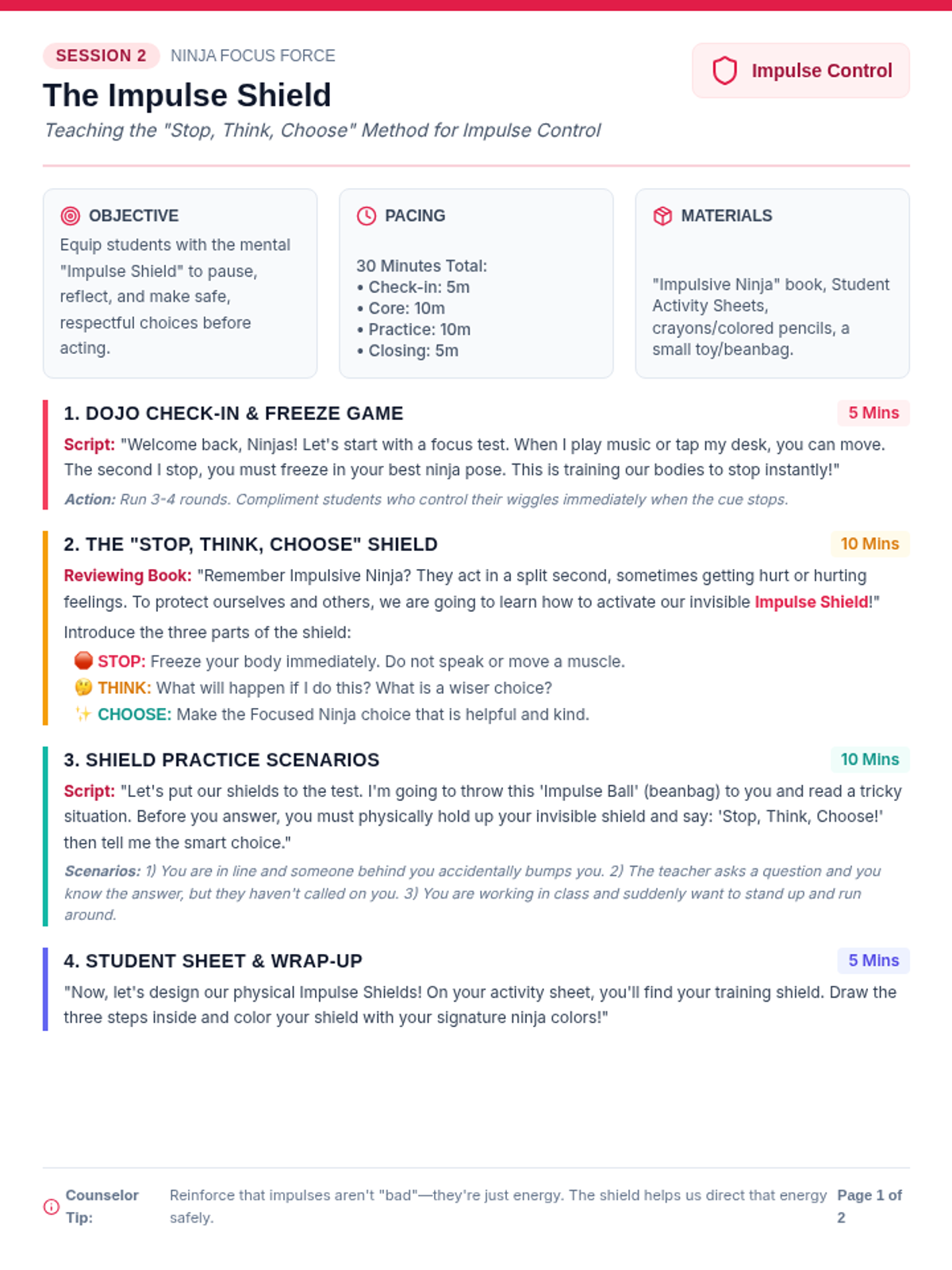
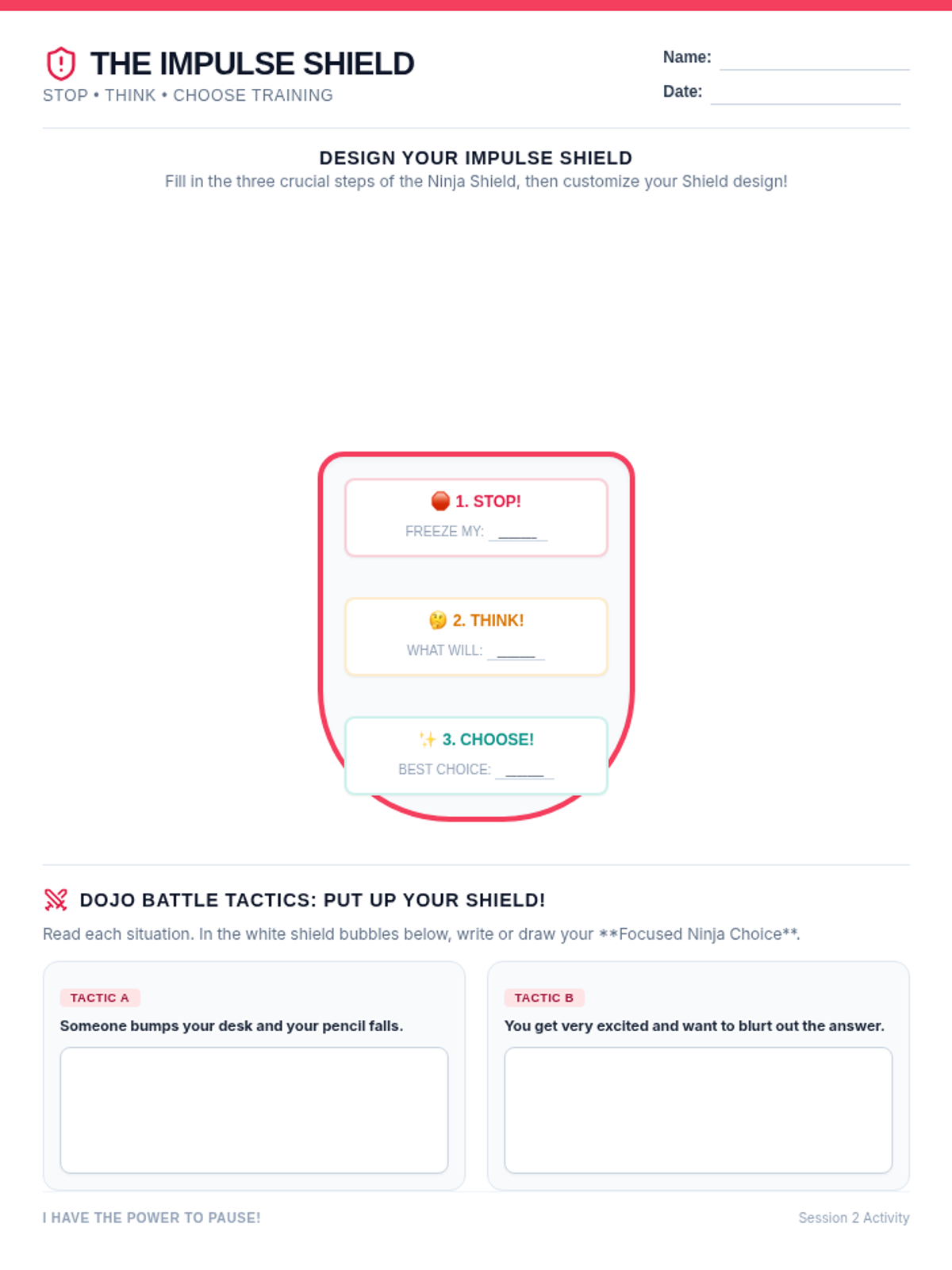
Teaching impulse control through the 'Stop and Think' method. Students learn to pause before reacting, using the concept of an invisible defensive shield.
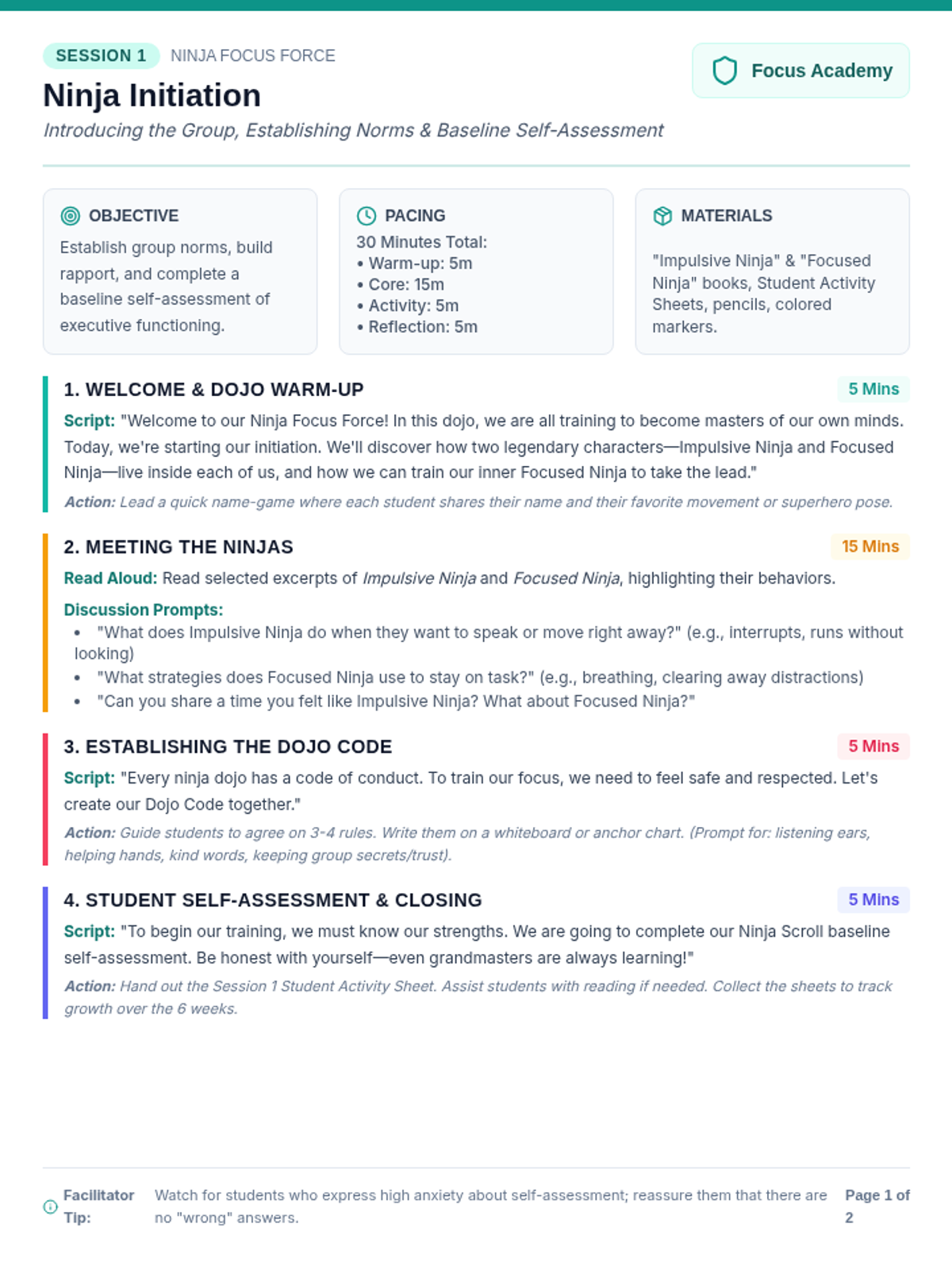
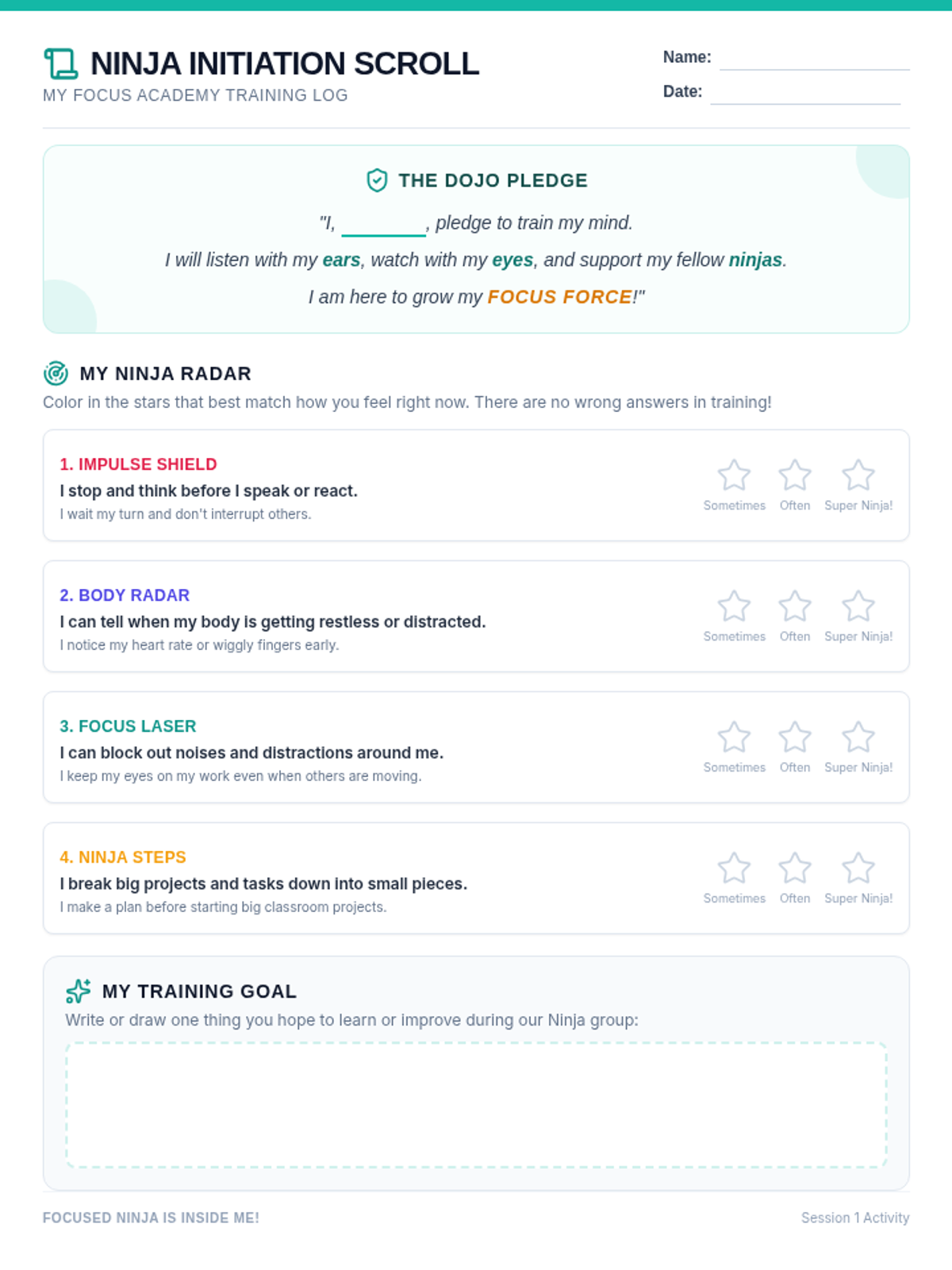
Introducing the group, establishing norms, and meeting Impulsive Ninja and Focused Ninja. Students complete a baseline self-assessment of their focus and impulse control.
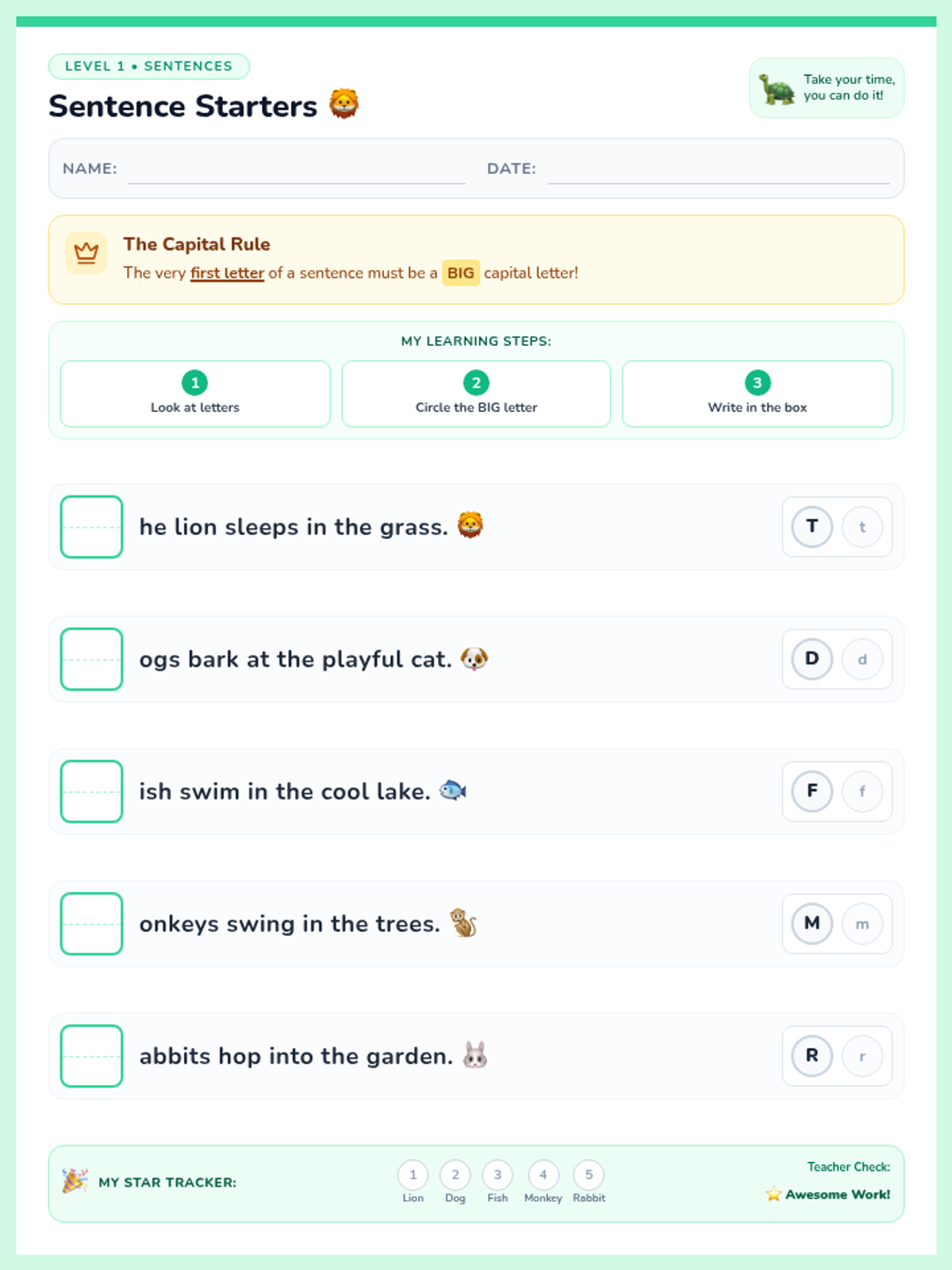
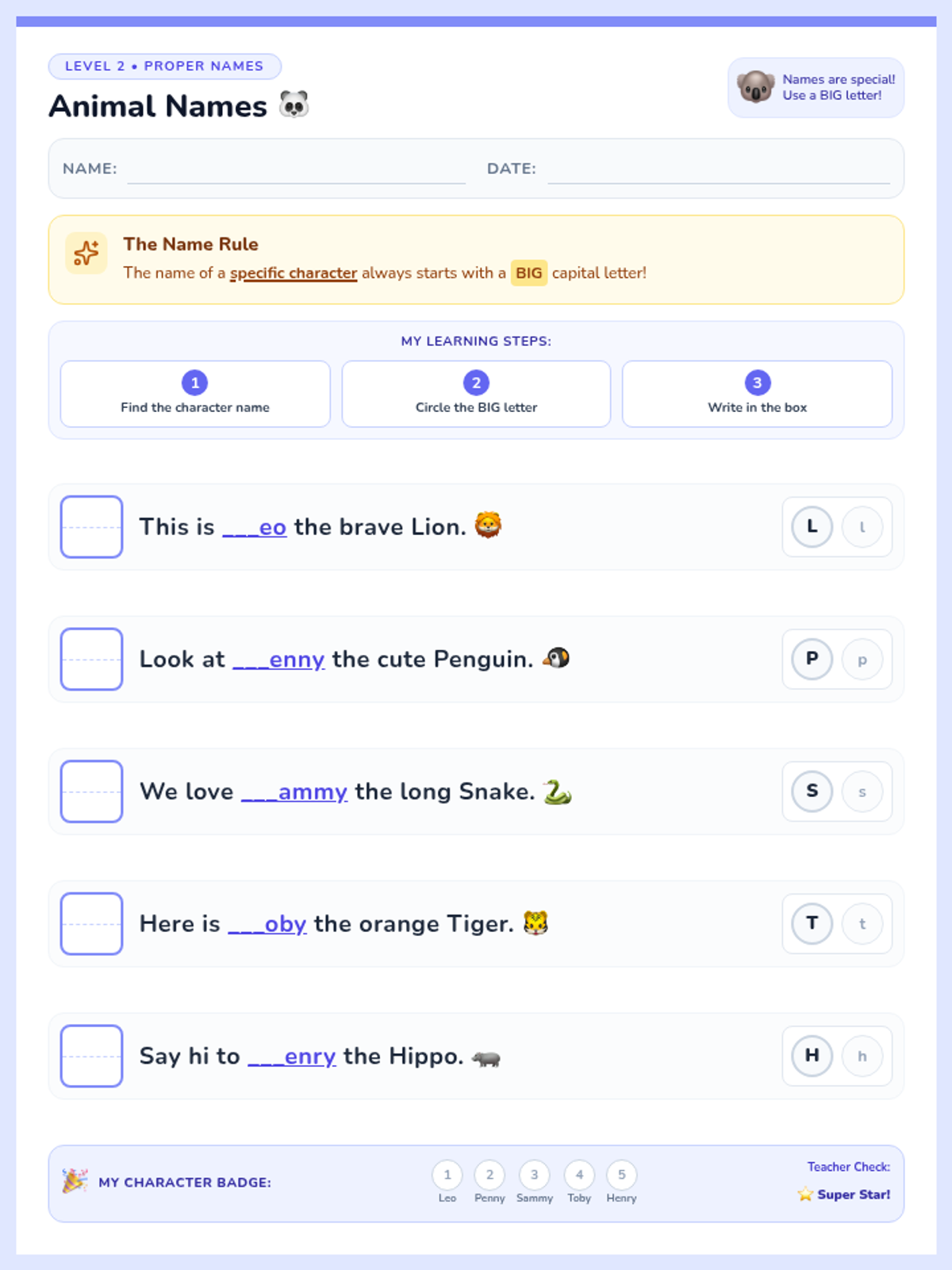
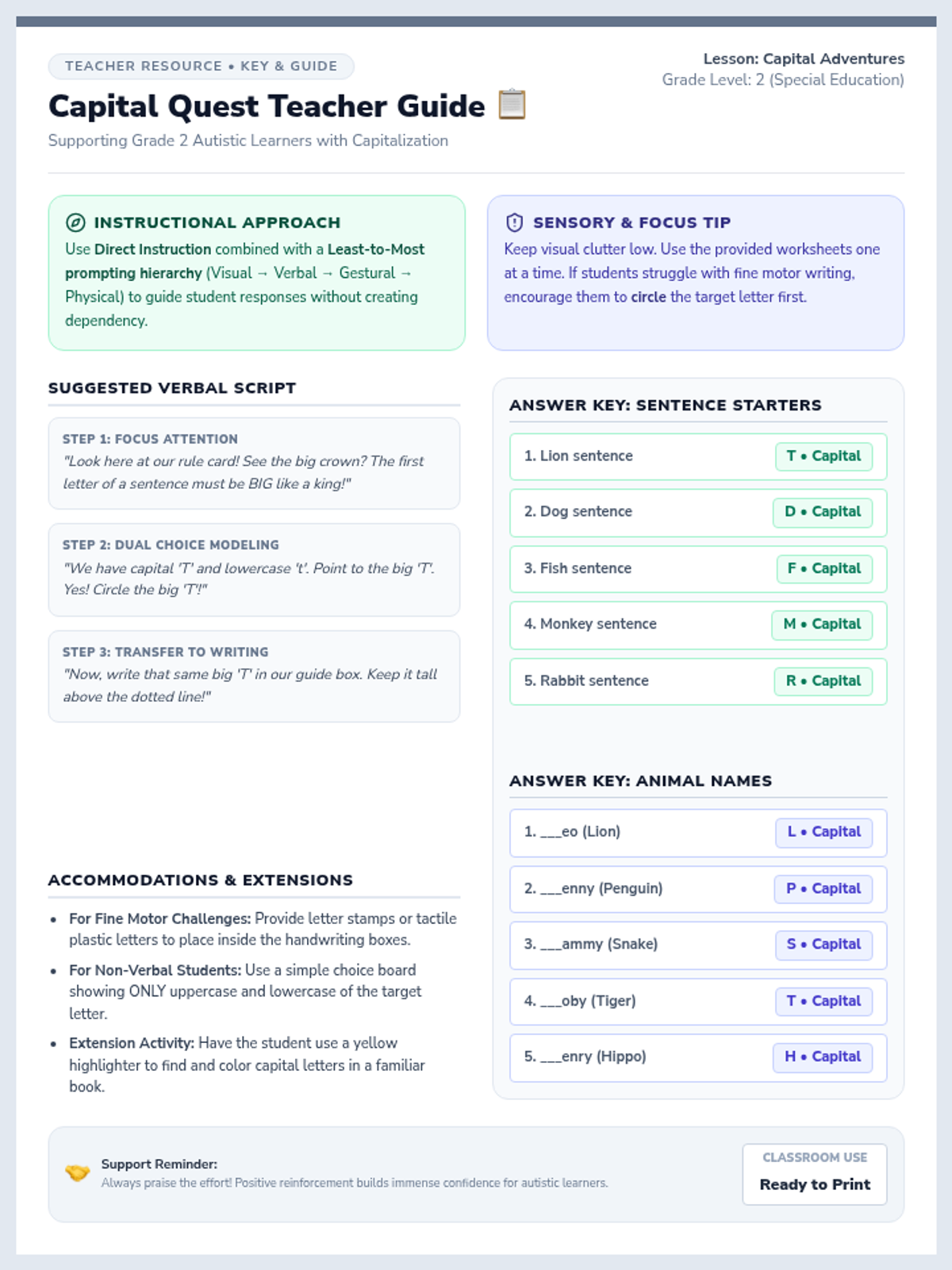
A simple, highly structured capitalization lesson for Grade 2 students with autism, featuring animal-themed worksheets and clear visual supports for sentence starters and proper character names.
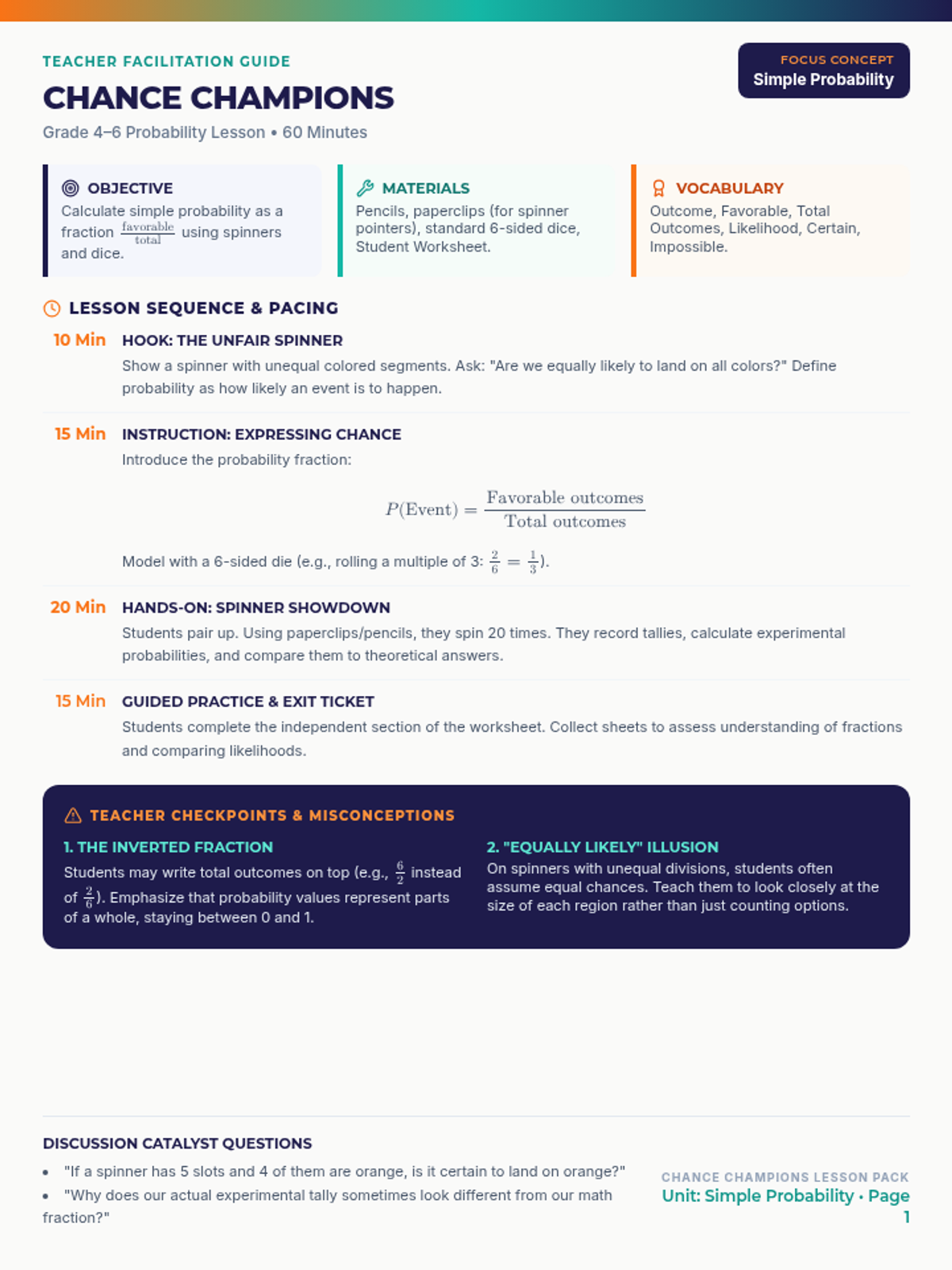
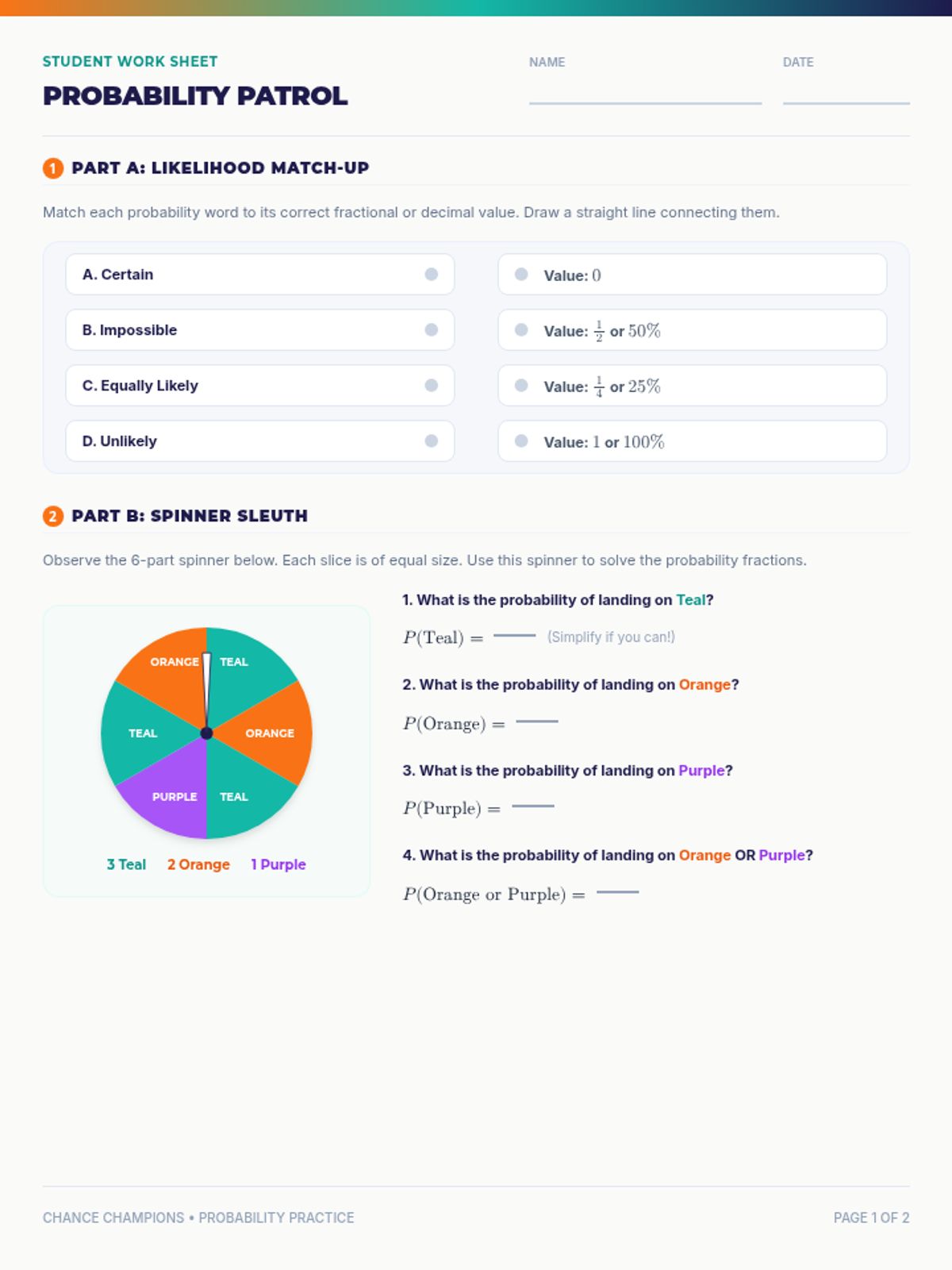
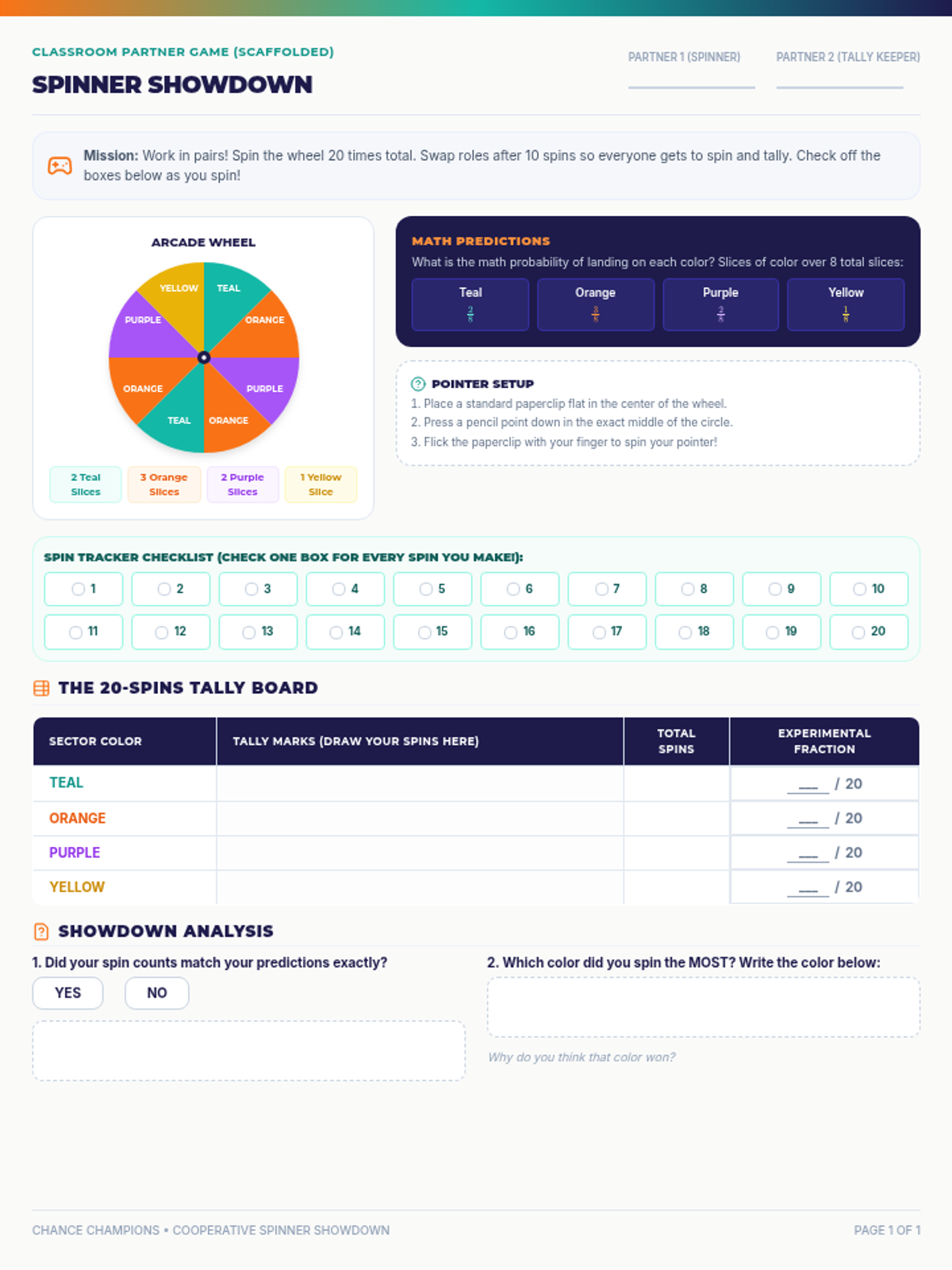
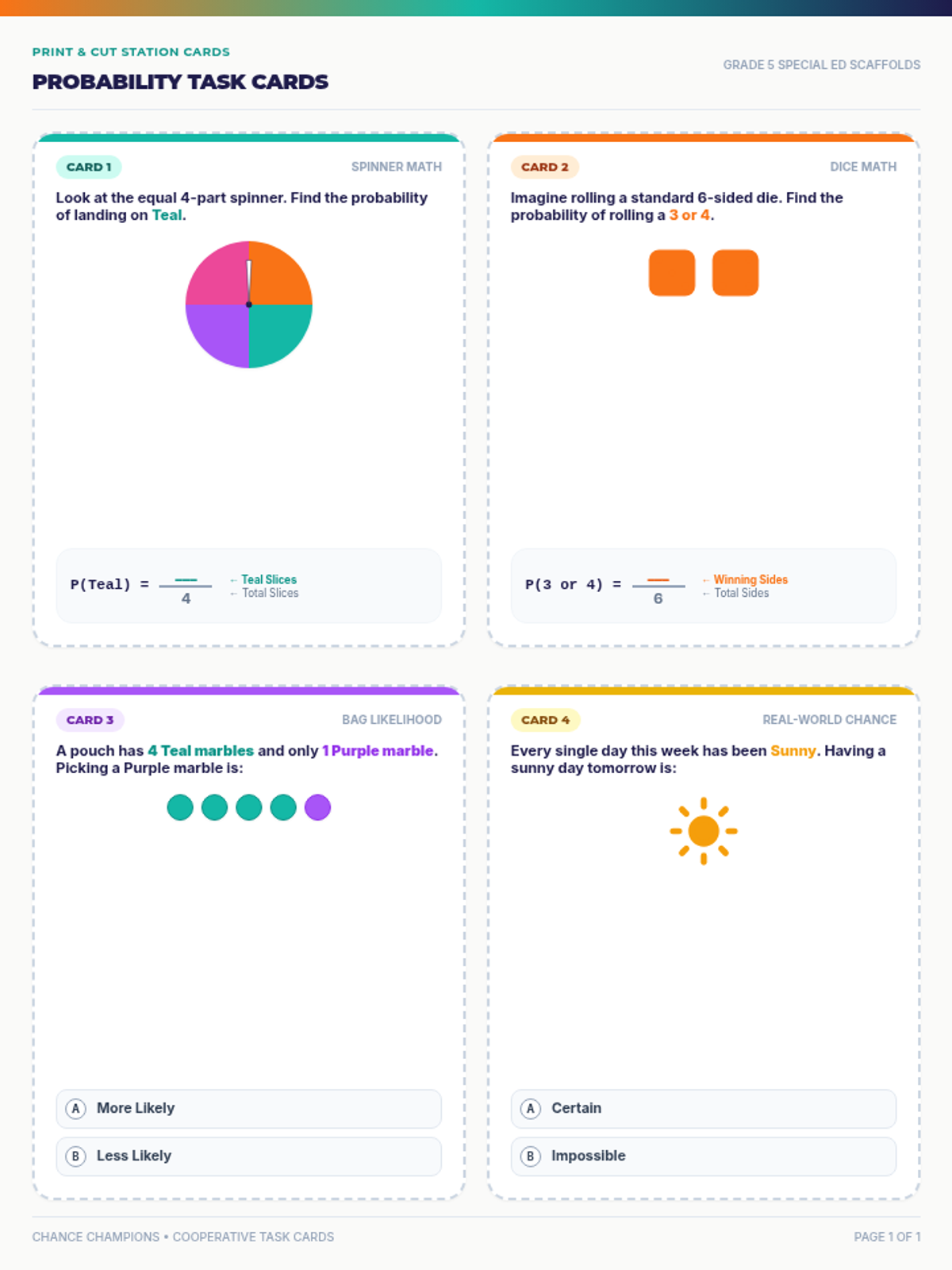
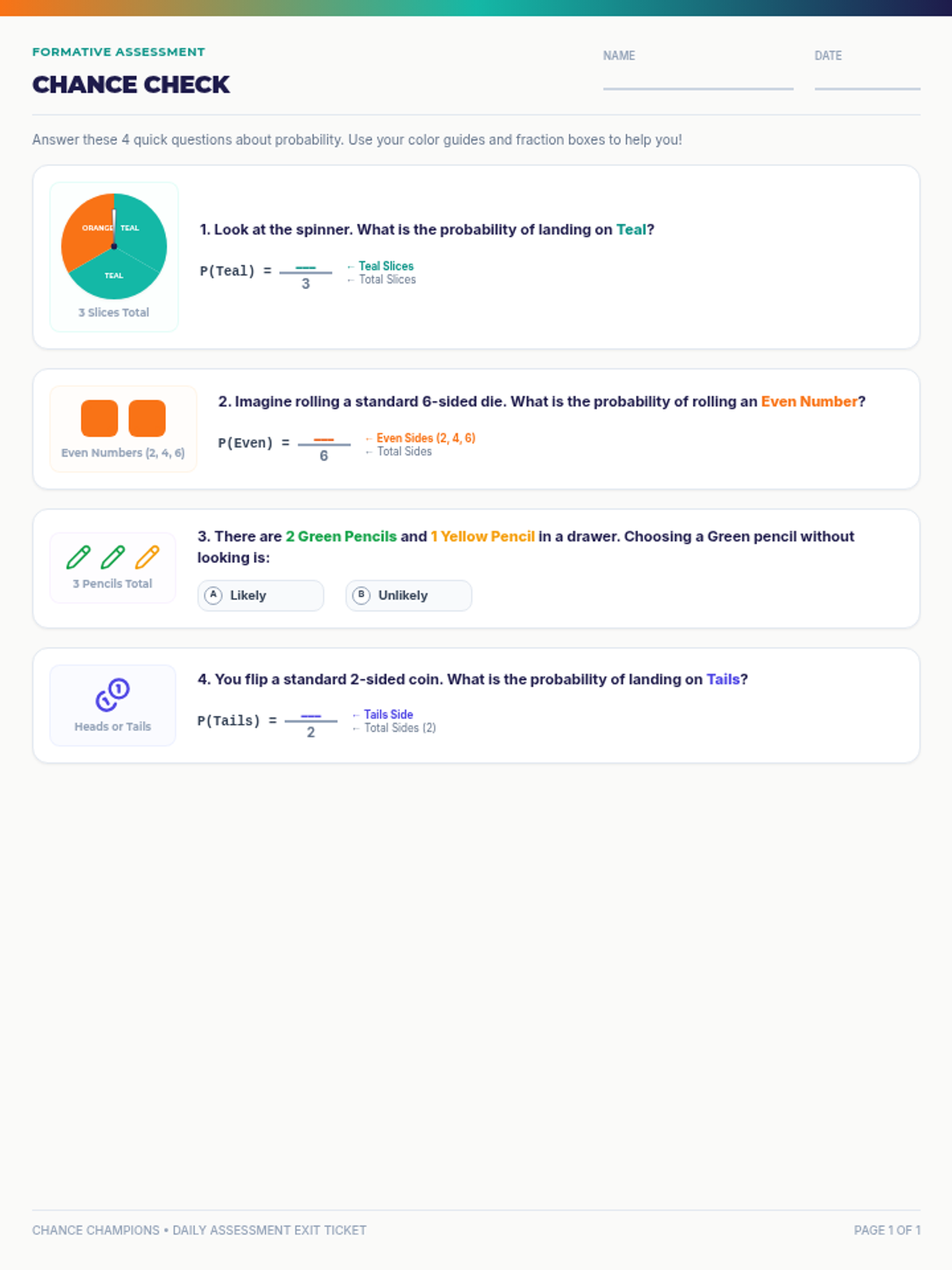
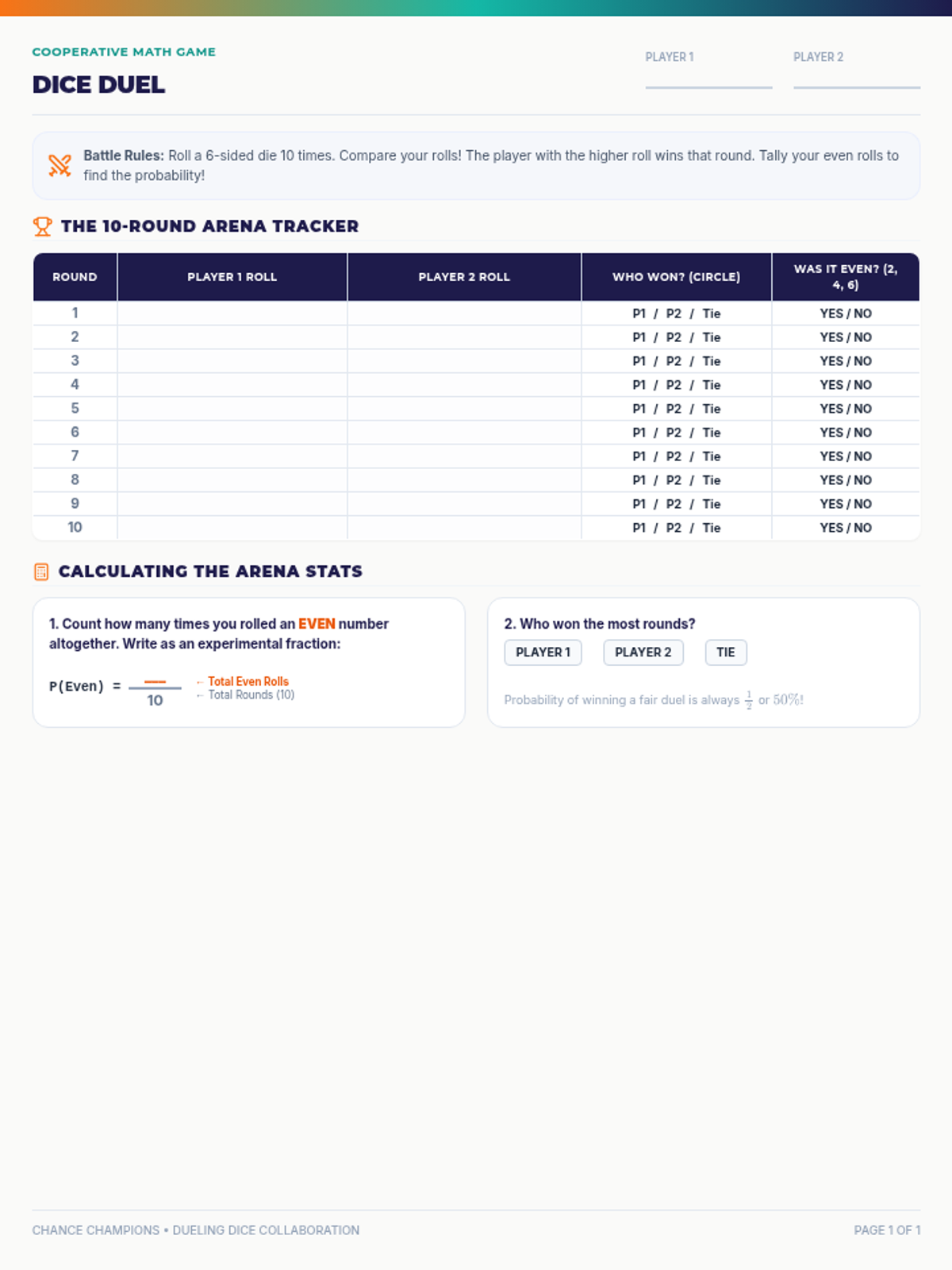
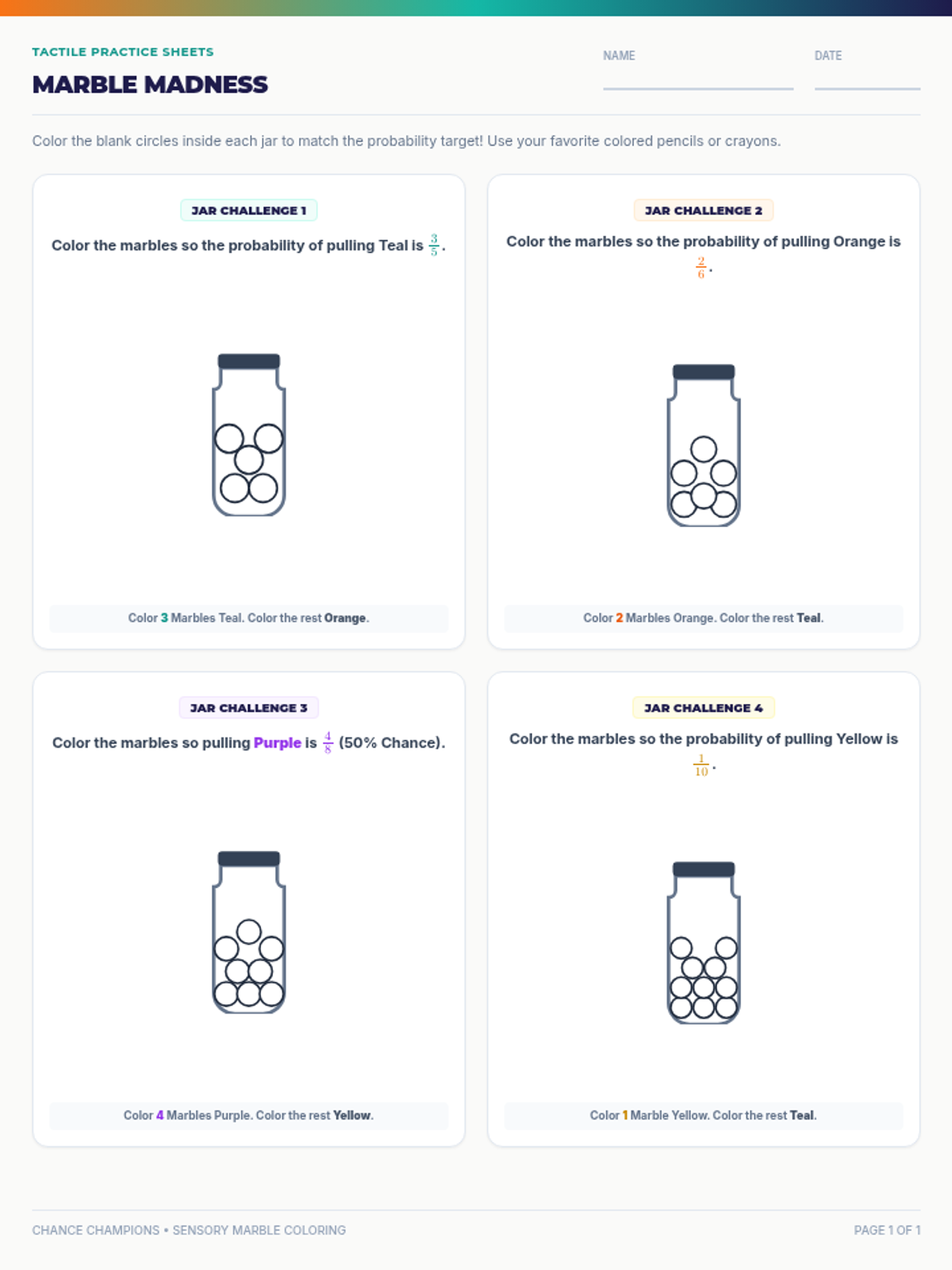
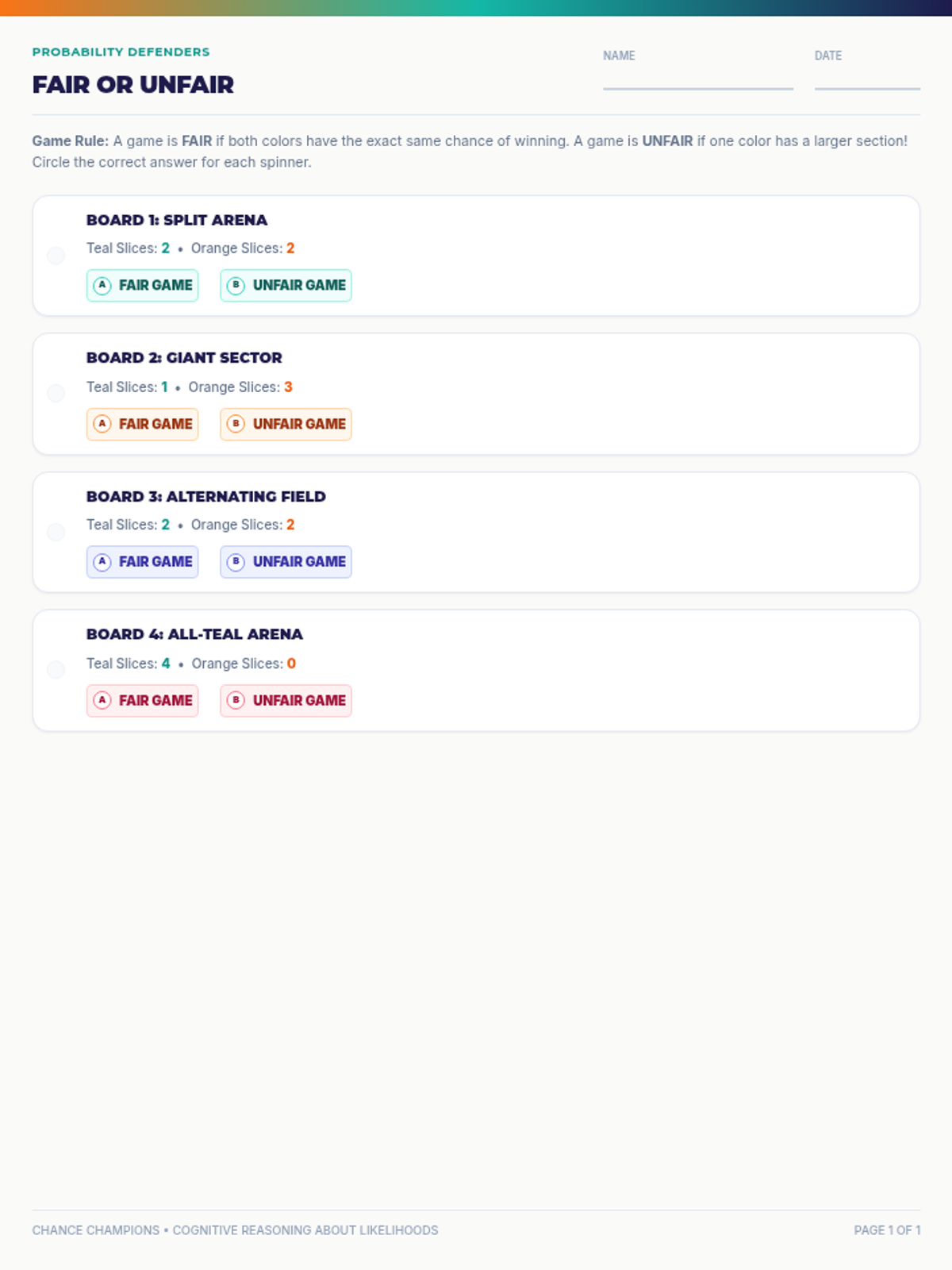
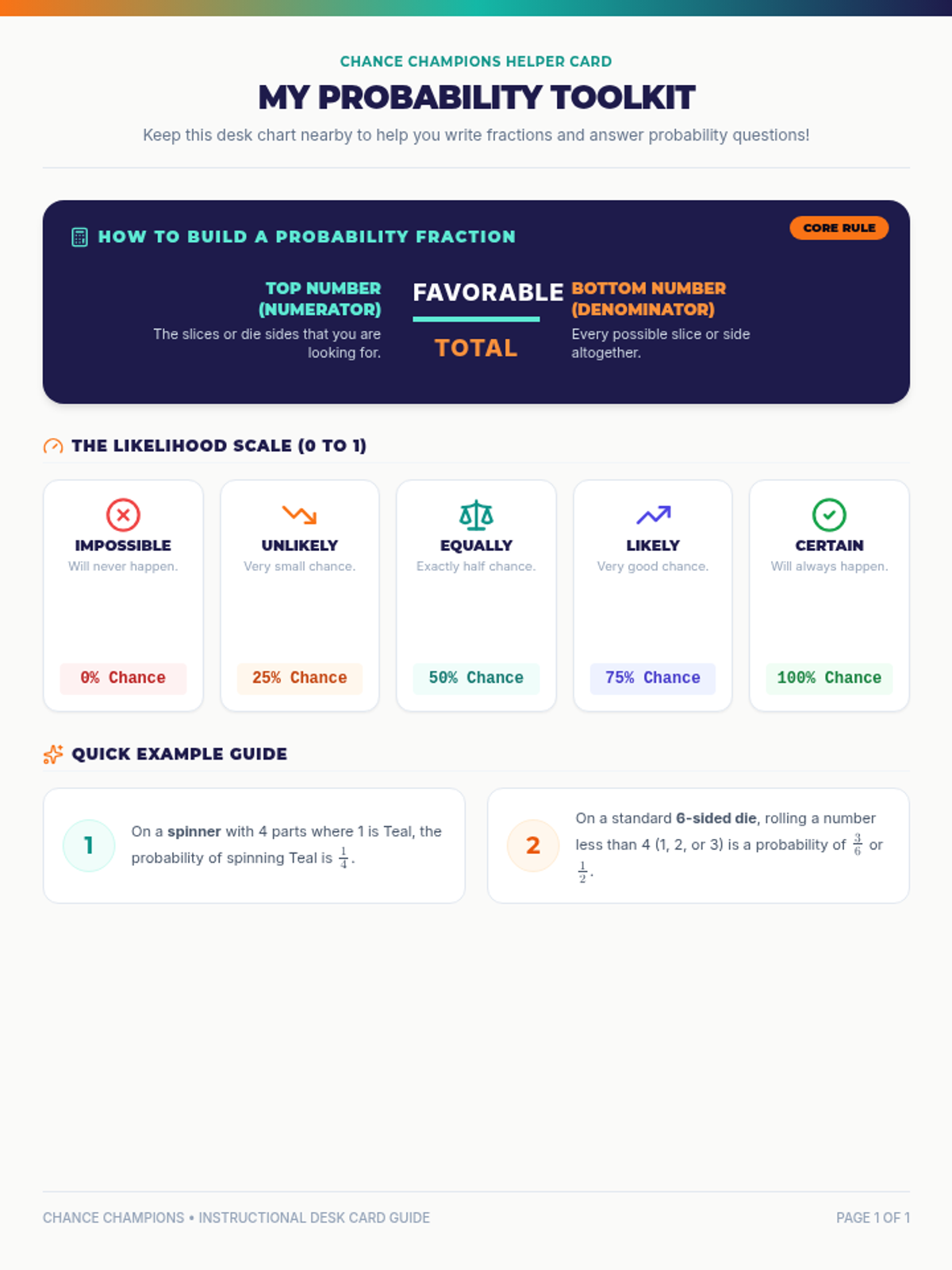
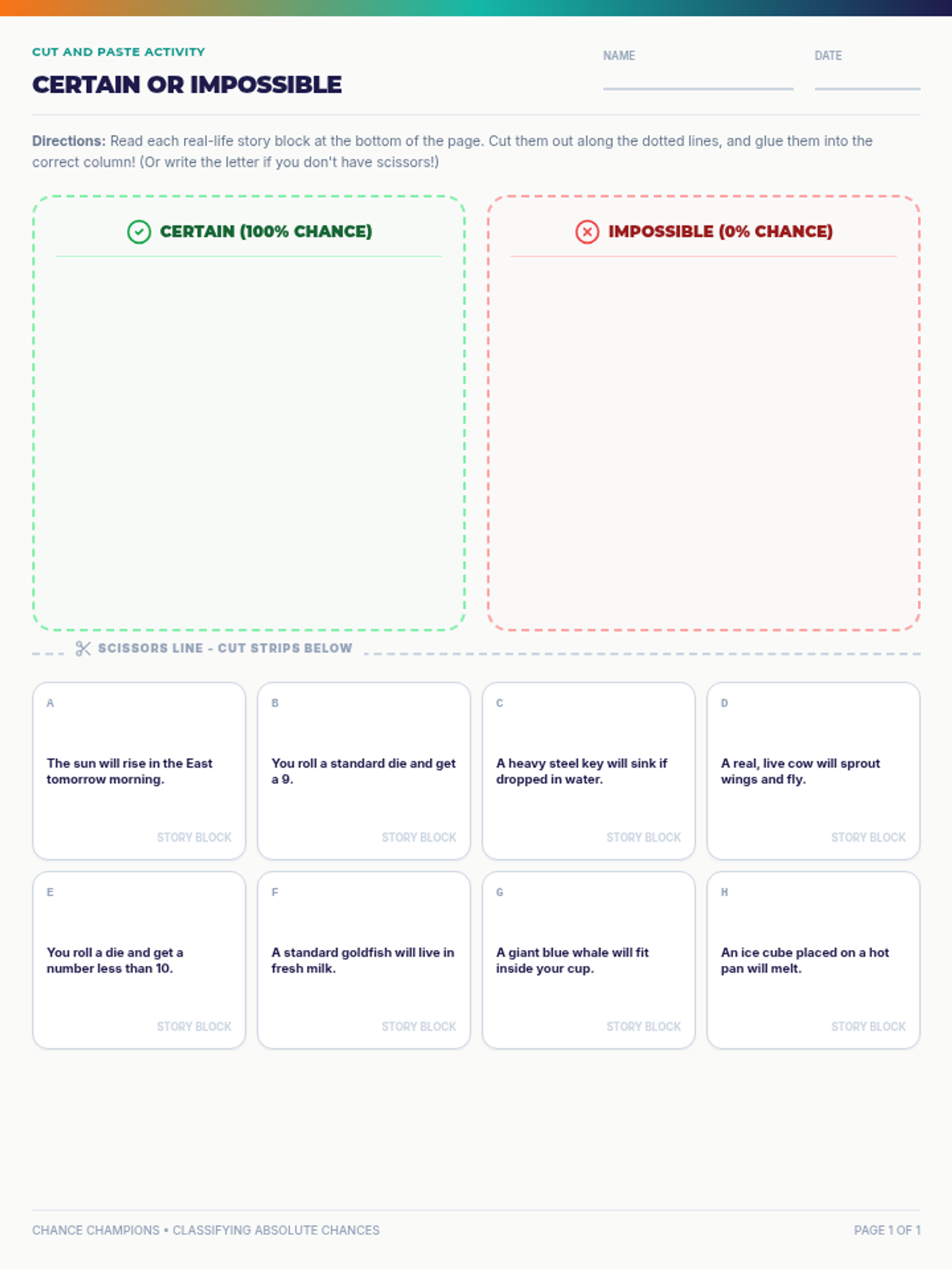
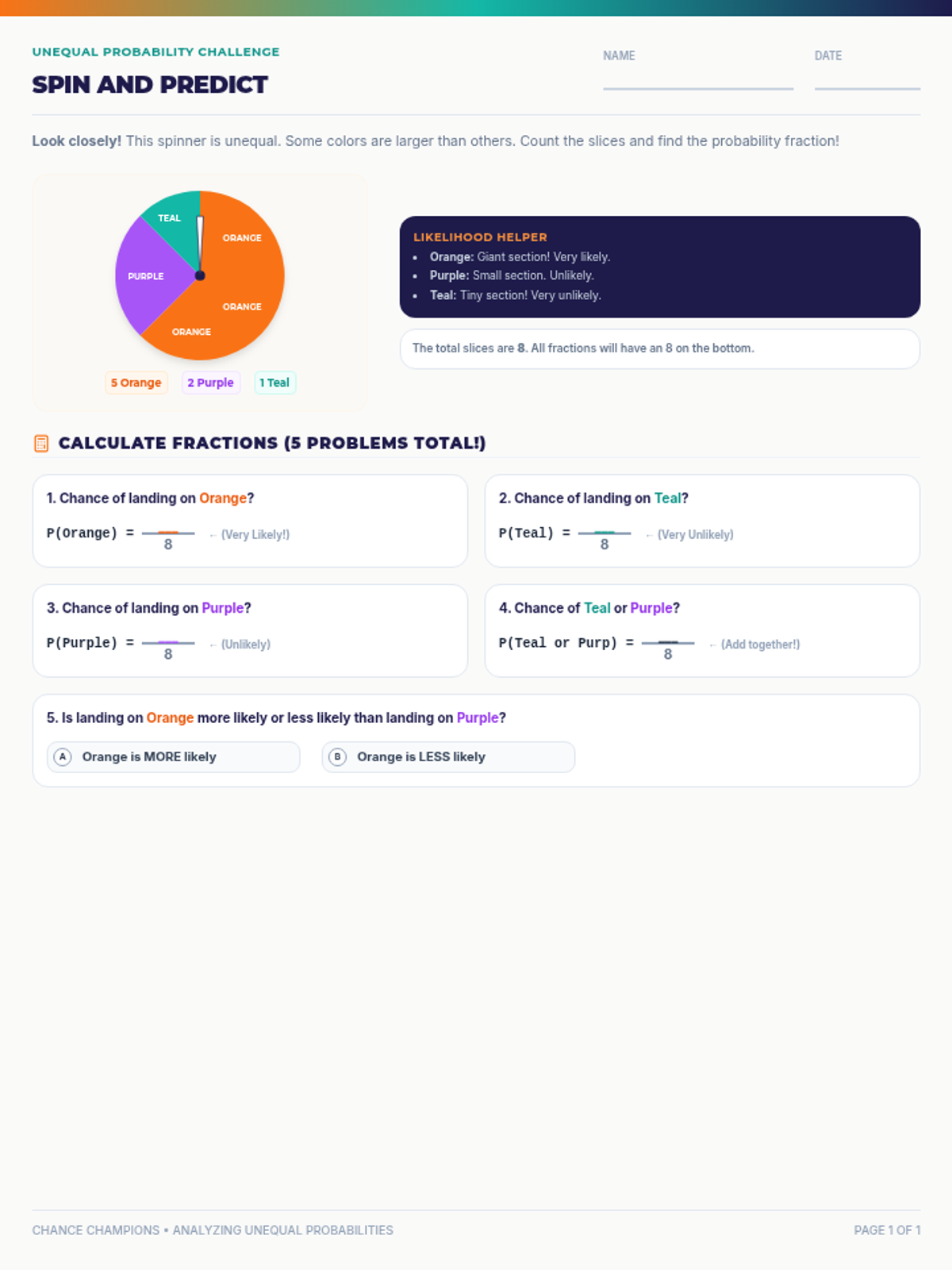
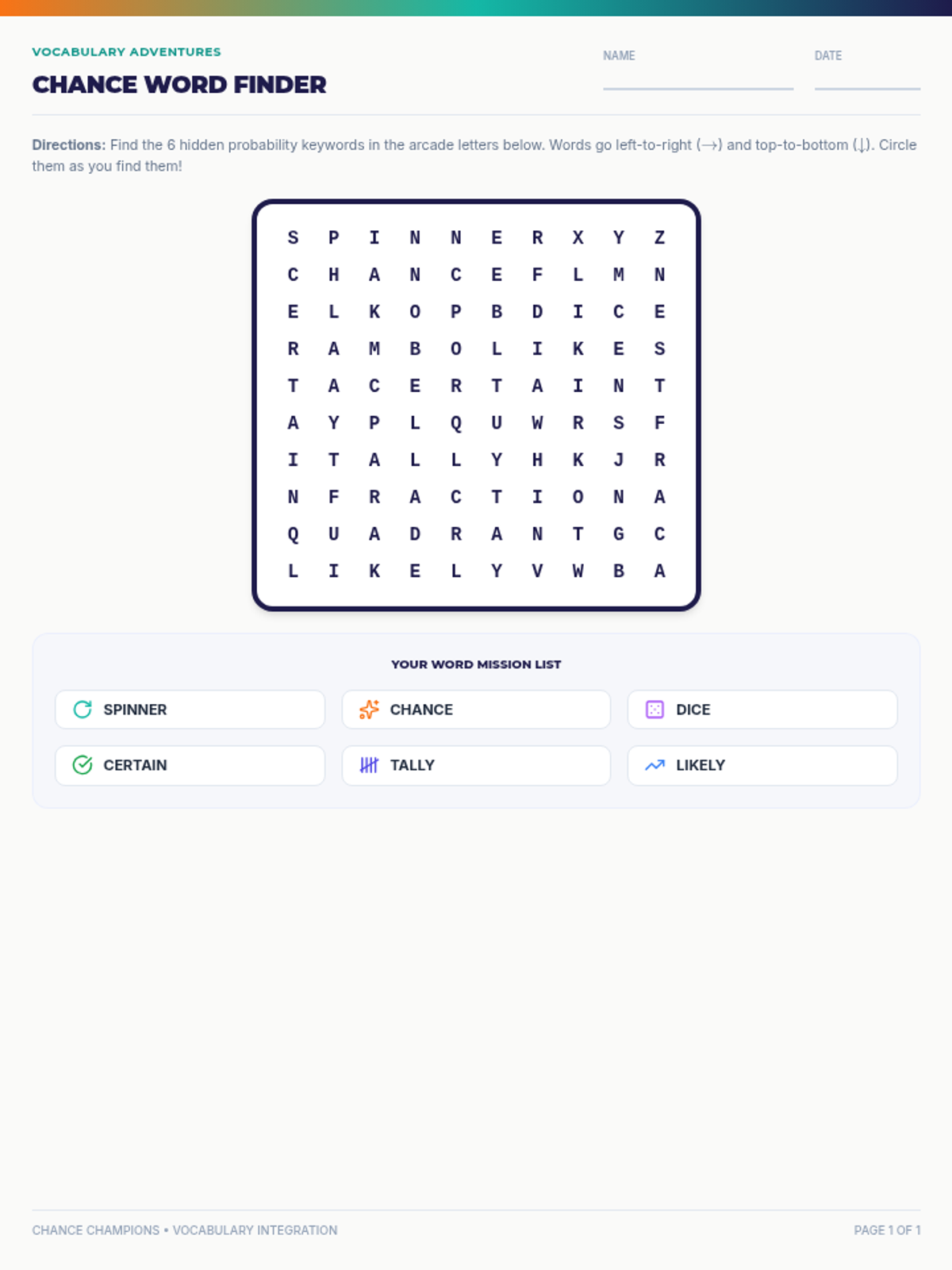
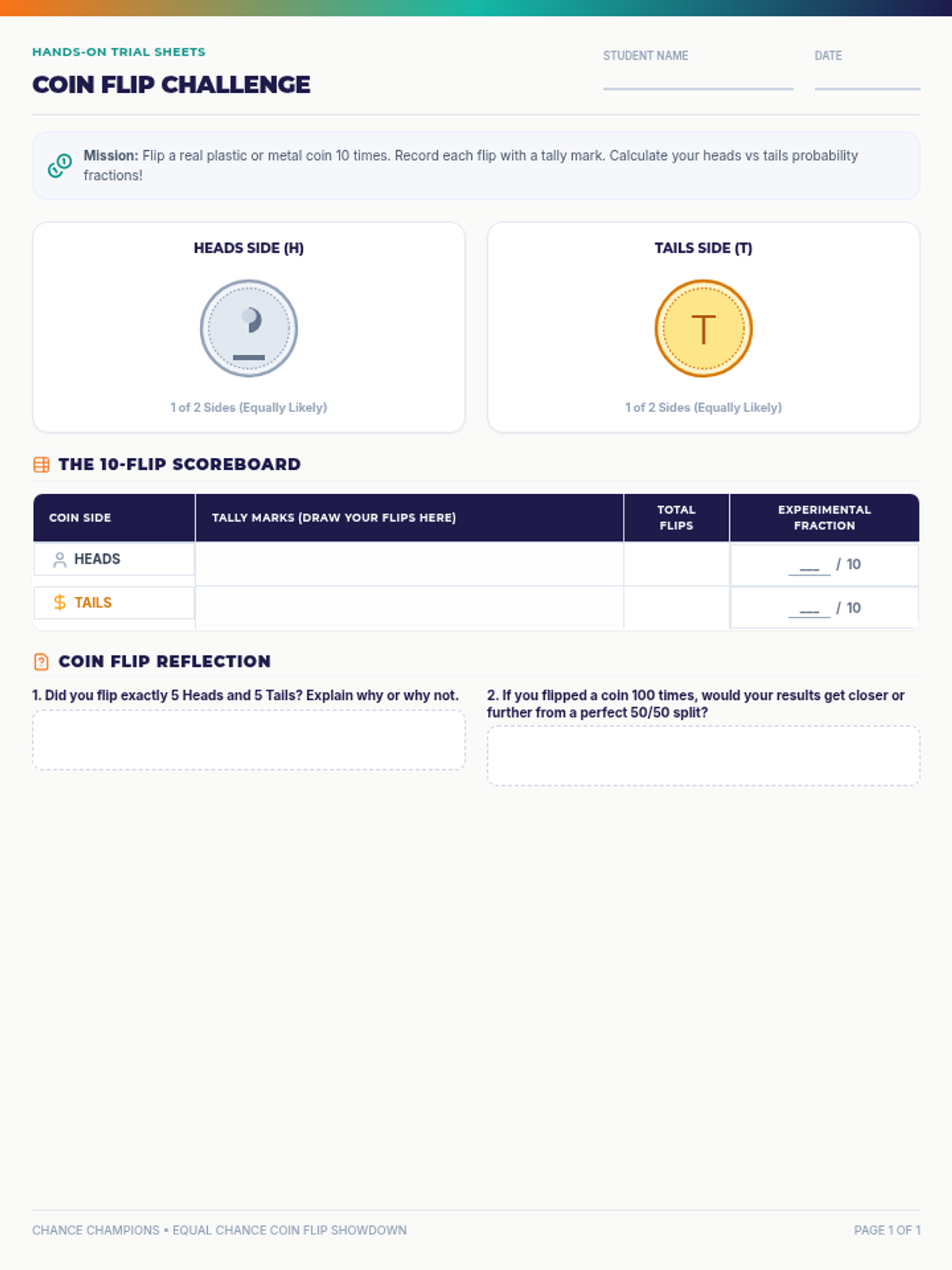
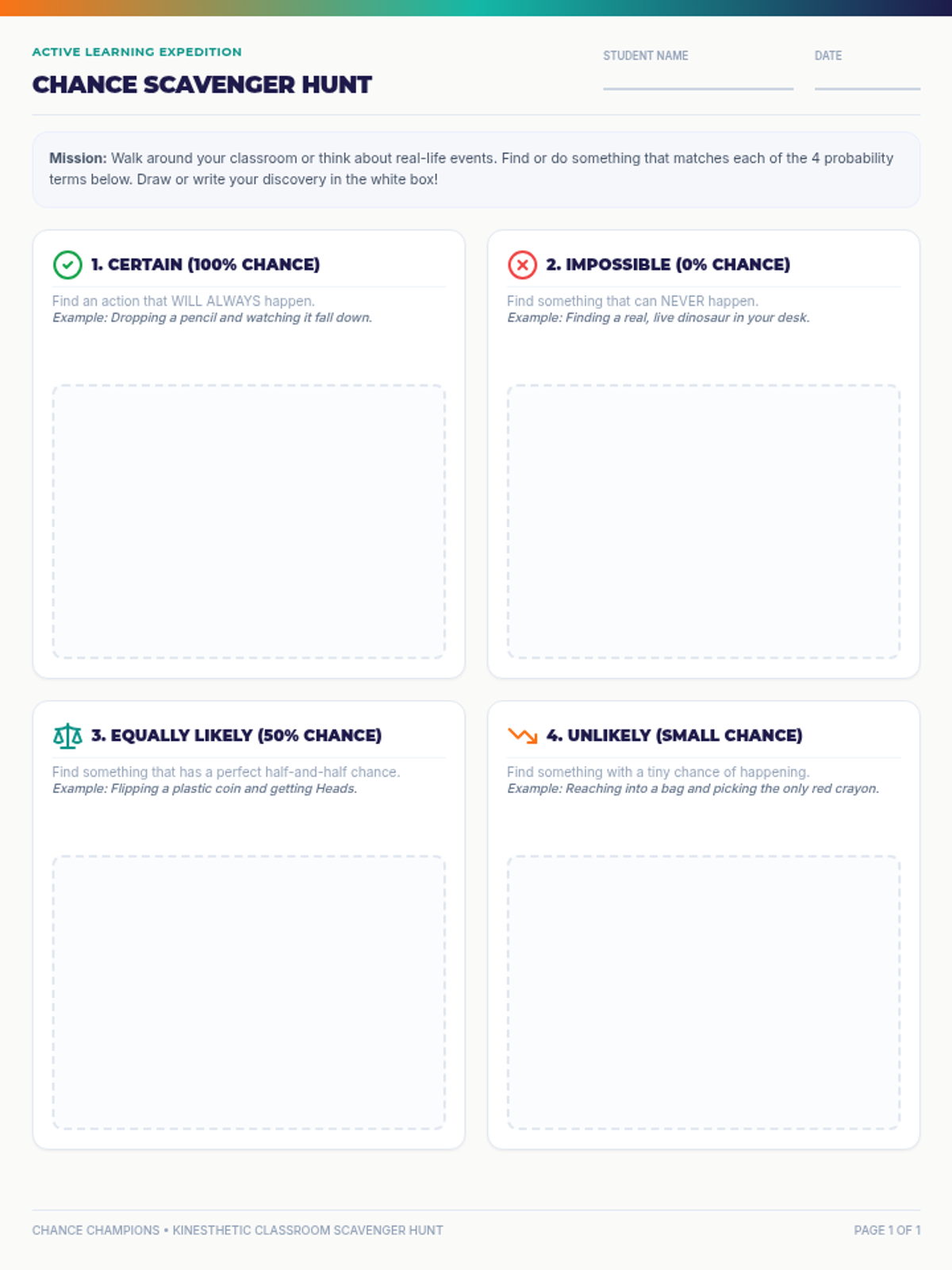
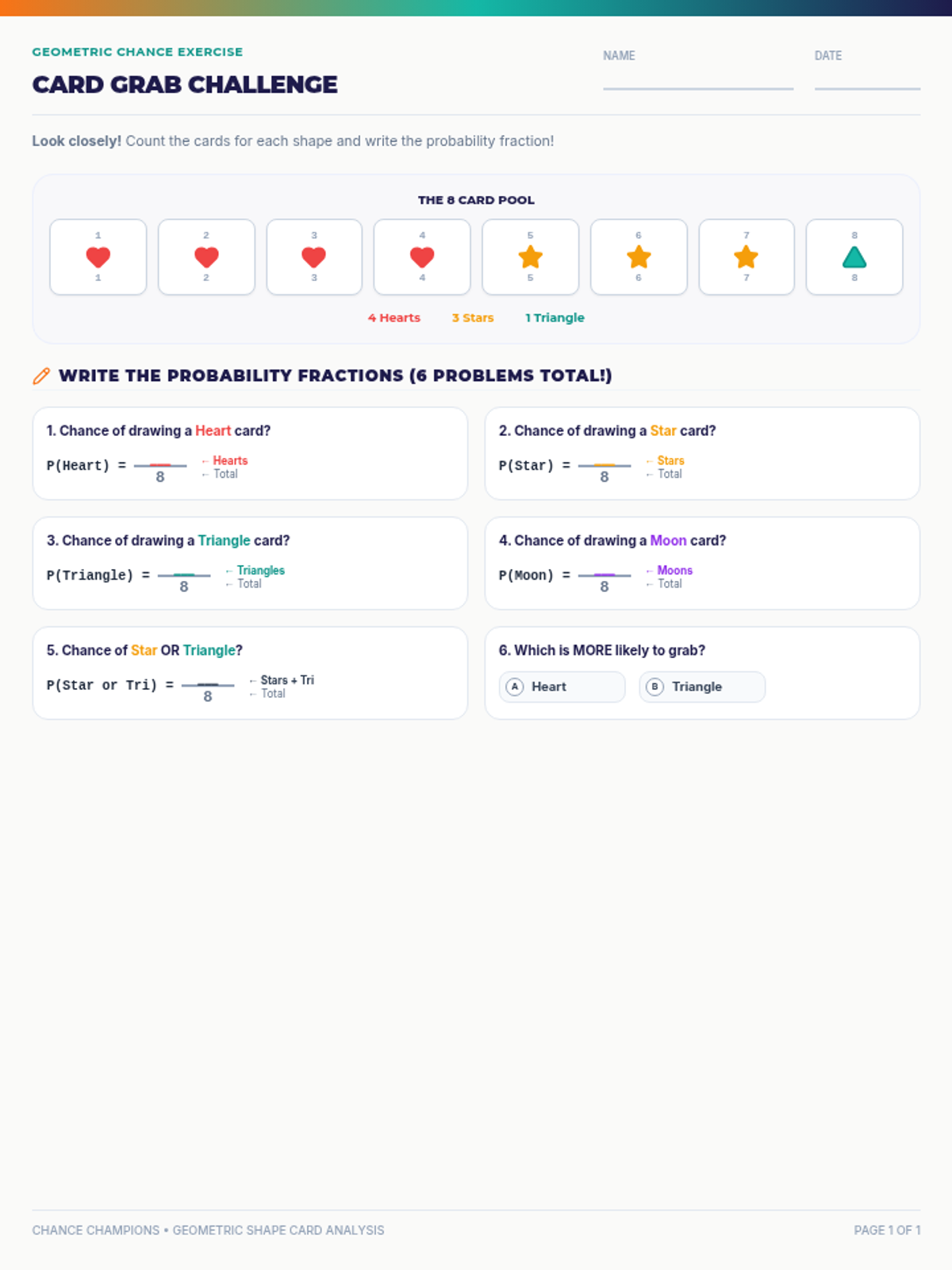
An interactive lesson bundle focused on simple probability using spinners and dice. Students learn to calculate and express probabilities as simple fractions, compare likelihoods, and play a collaborative spinner game.
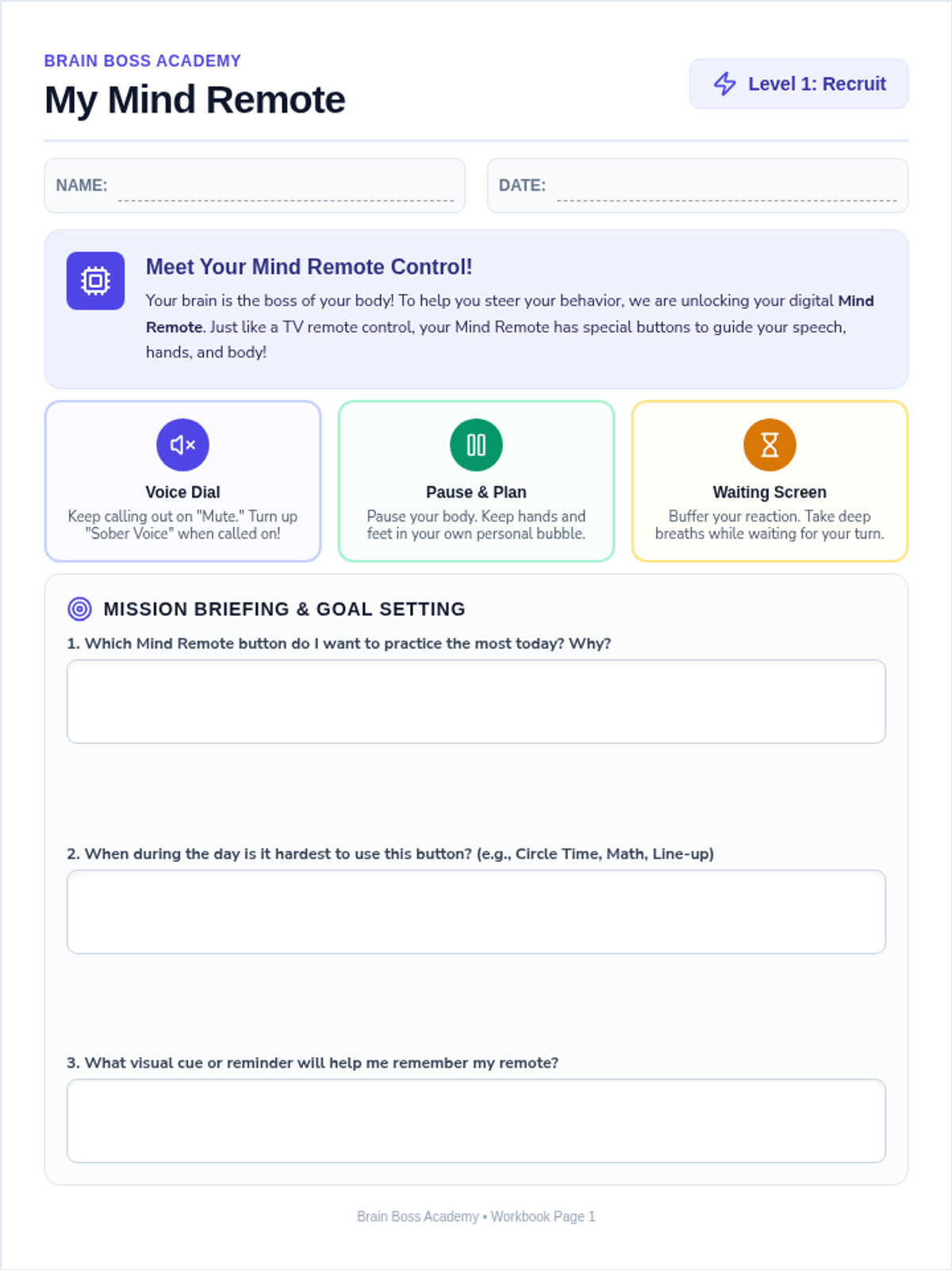
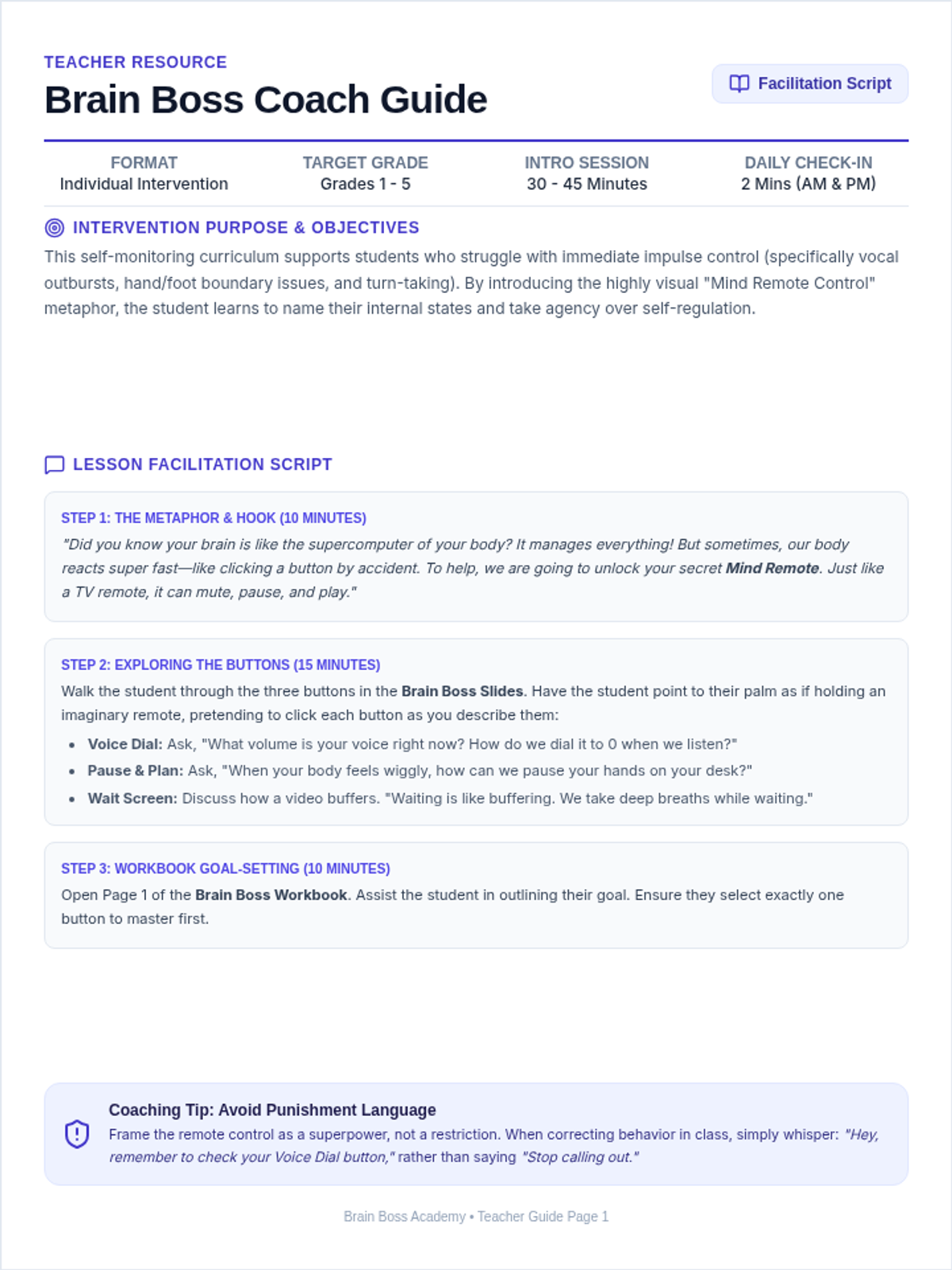
An individual self-monitoring lesson focused on impulse control, teaching students how to manage calling out, wait their turn, and maintain personal boundaries using a relatable 'Mind Remote Control' metaphor.
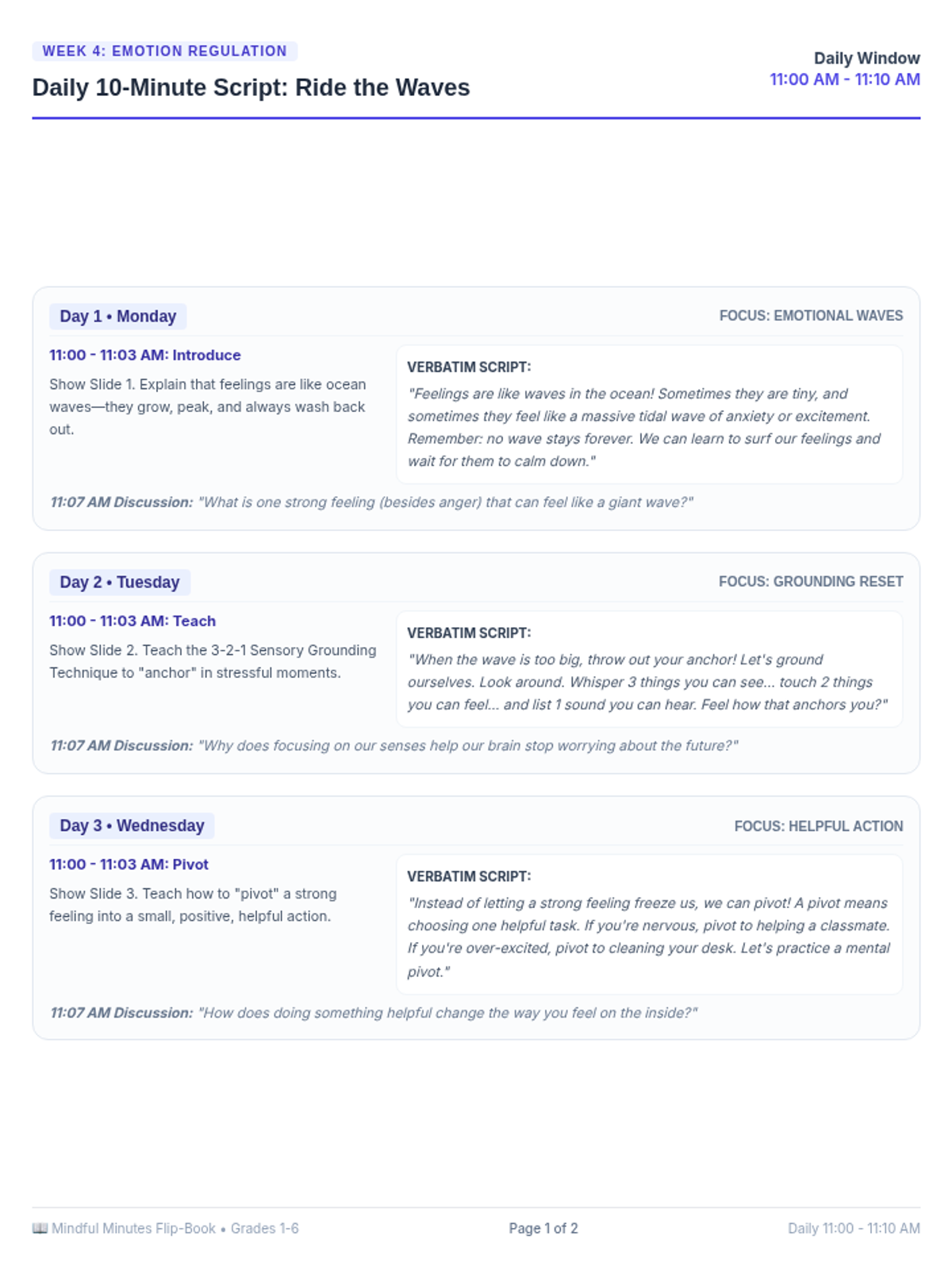
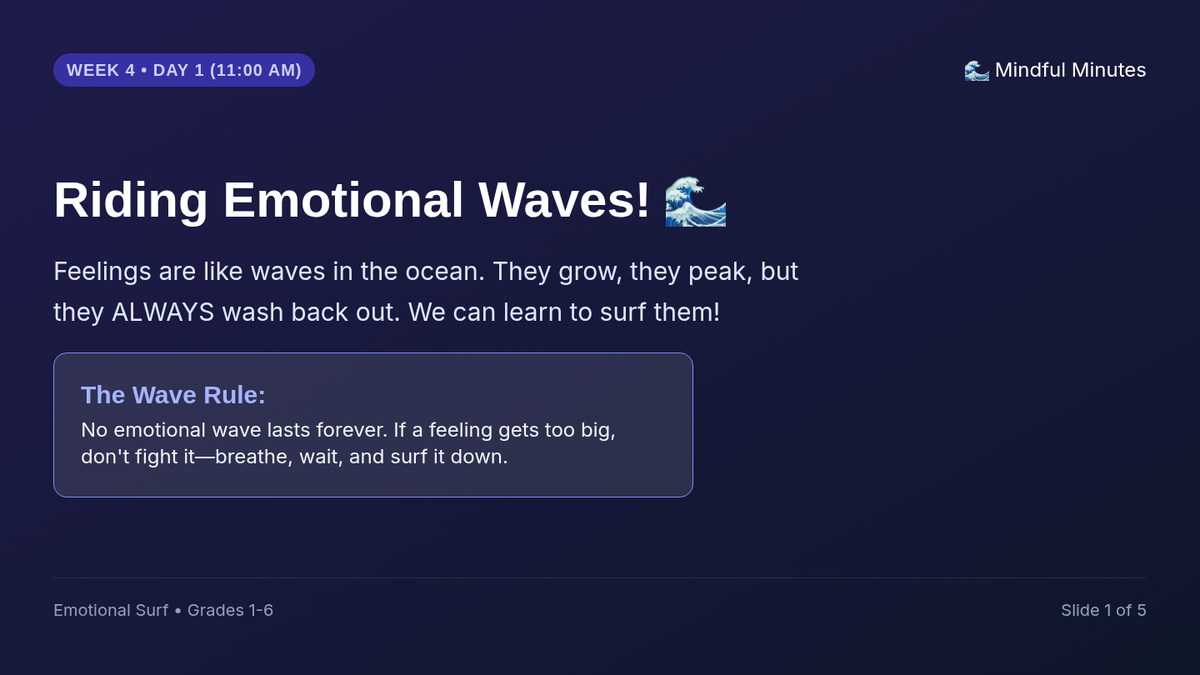
Five 10-minute daily SEL scripts and visual slides focusing on handling strong feelings and managing stress daily (emotion regulation).
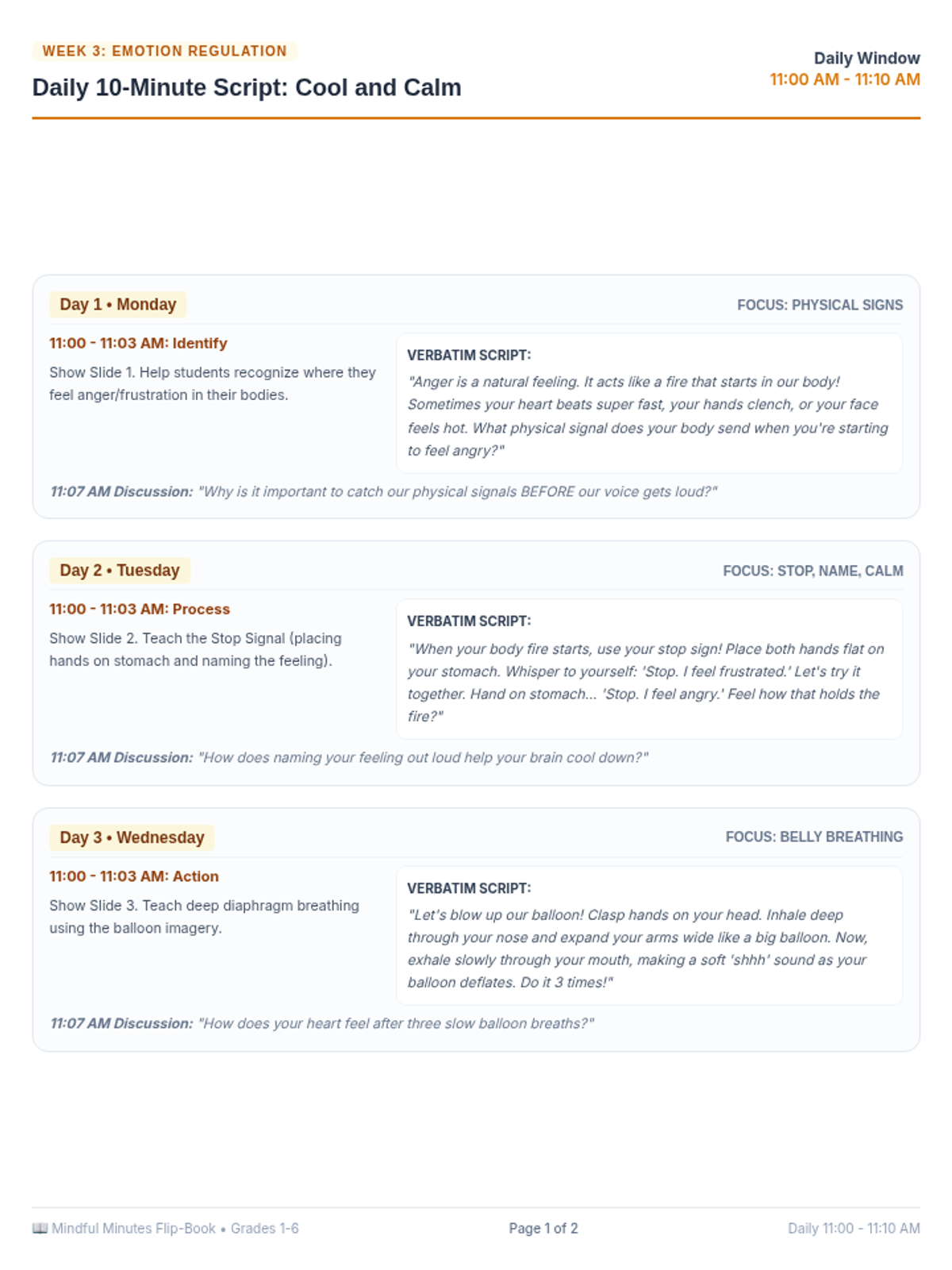
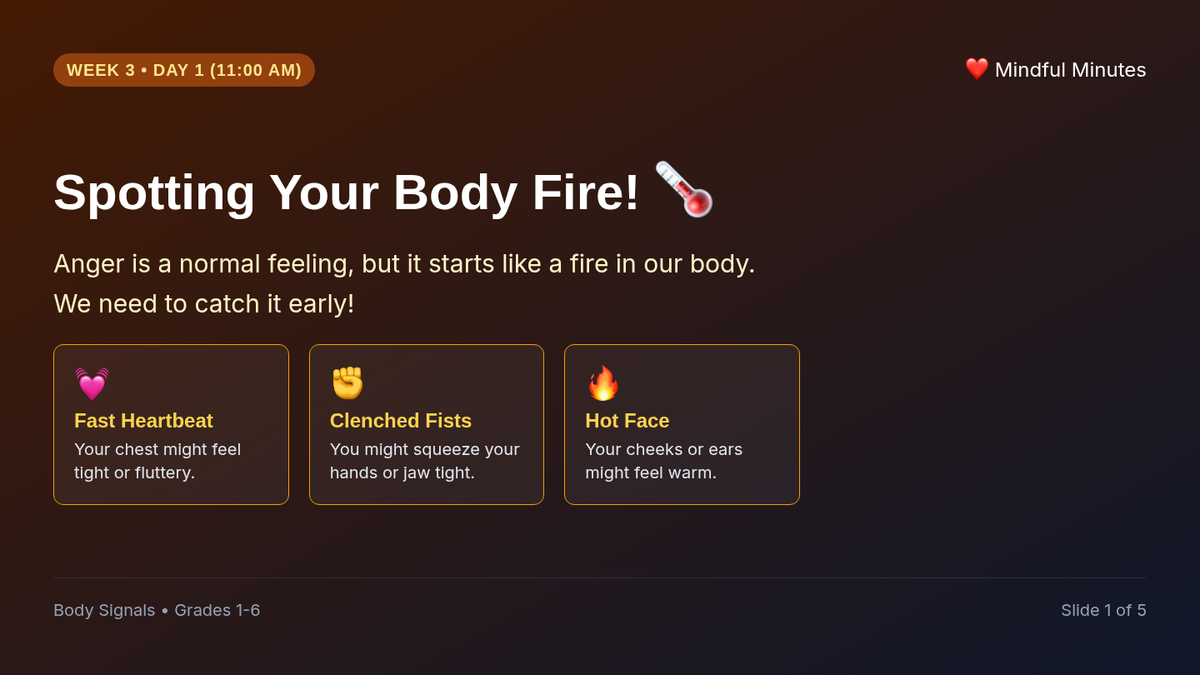
Five 10-minute daily SEL scripts and visual slides focusing on calming down and managing anger (emotion regulation).
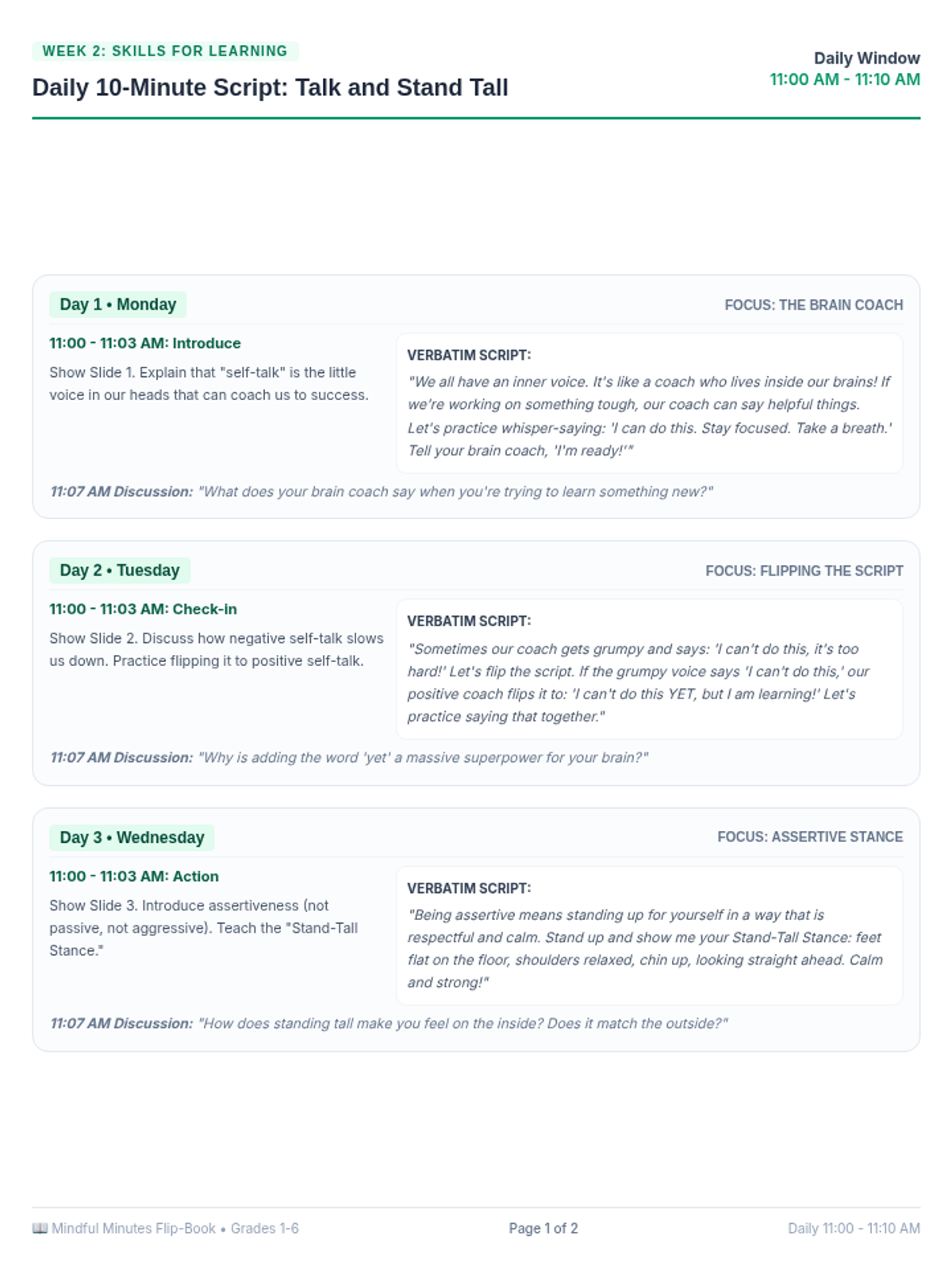
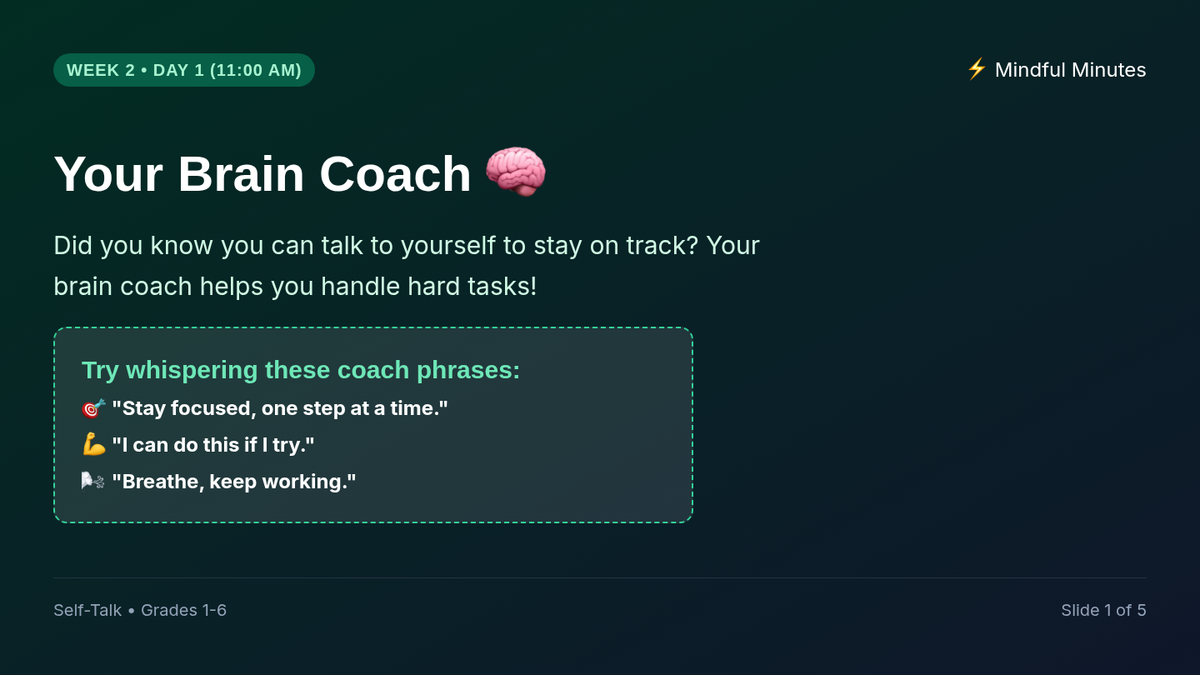
Five 10-minute daily SEL scripts and visual slides focusing on self-talk for focus and learning to be assertive (skills for learning).
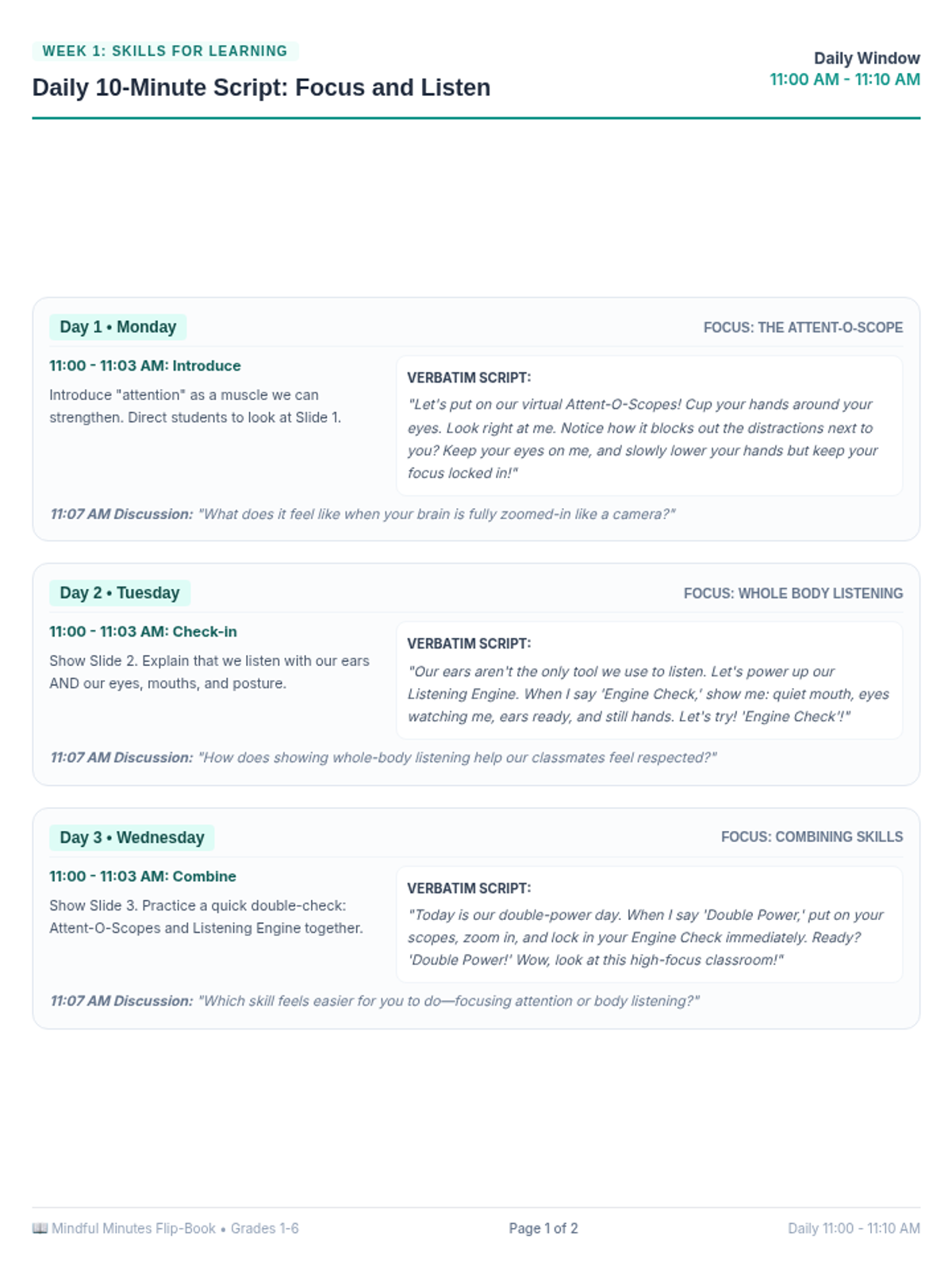
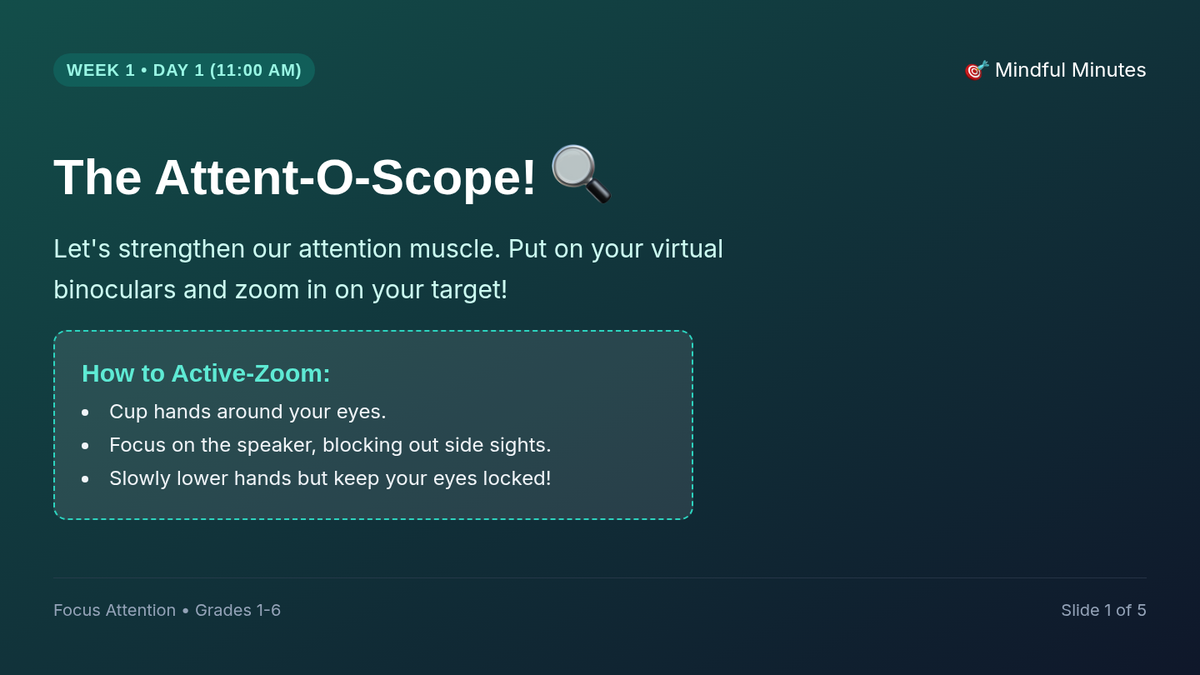
Five 10-minute daily SEL scripts and visual slides focusing on focusing attention and listening with the body (skills for learning).
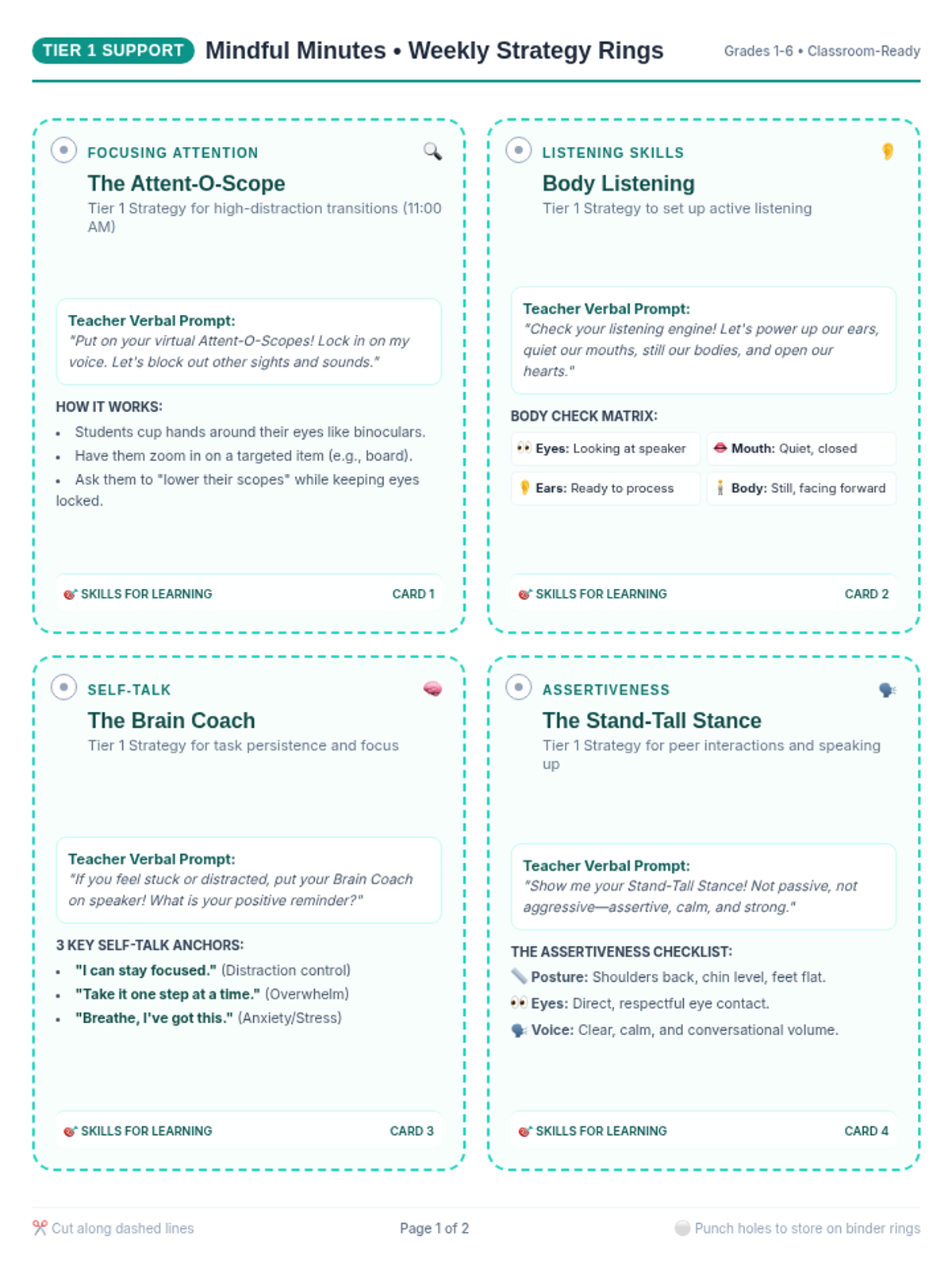
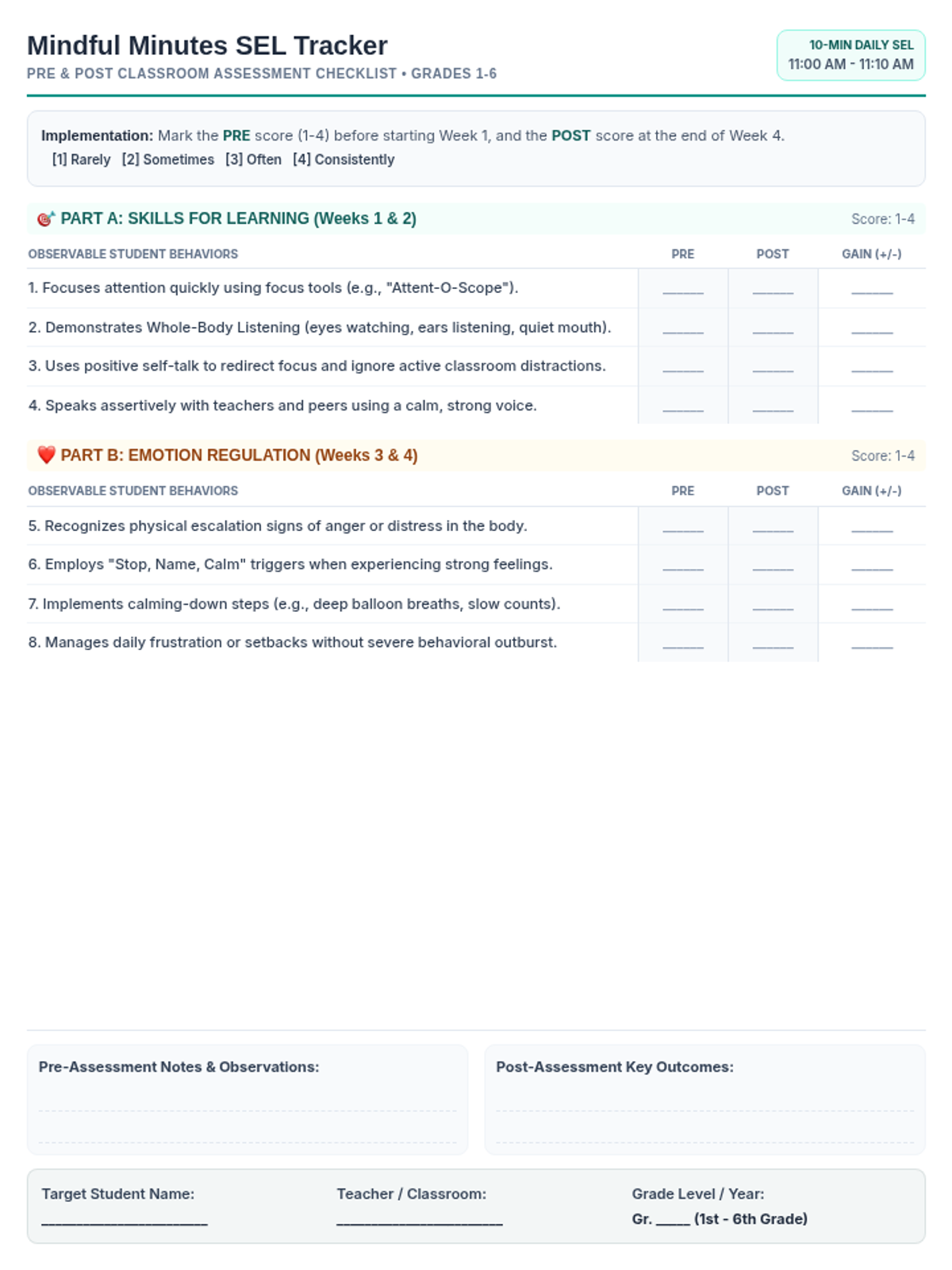
Foundational tools for the Mindful Minutes curriculum, containing Tier 1 behavioral strategy cards for printable rings and a teacher pre/post-assessment checklist.
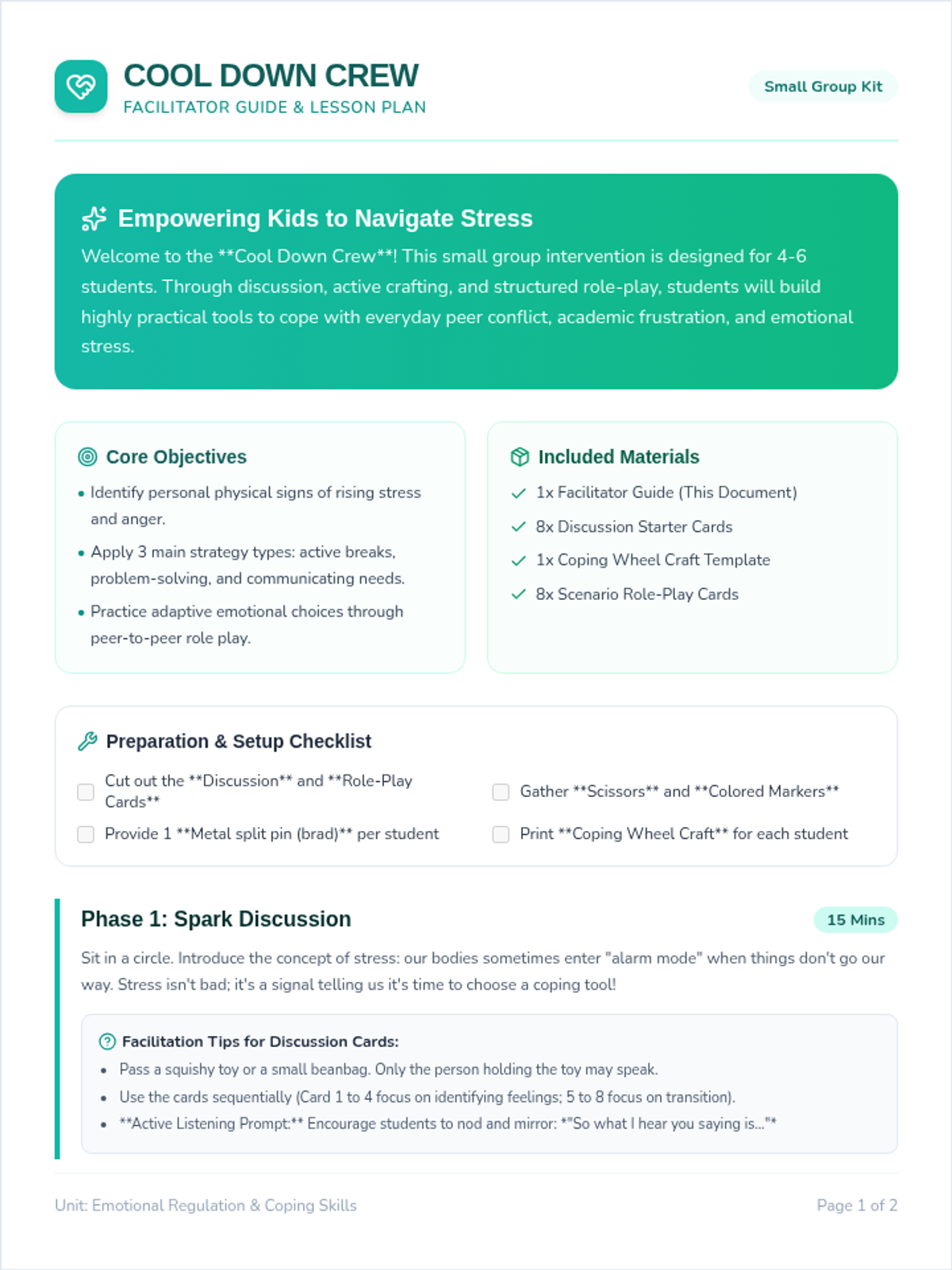
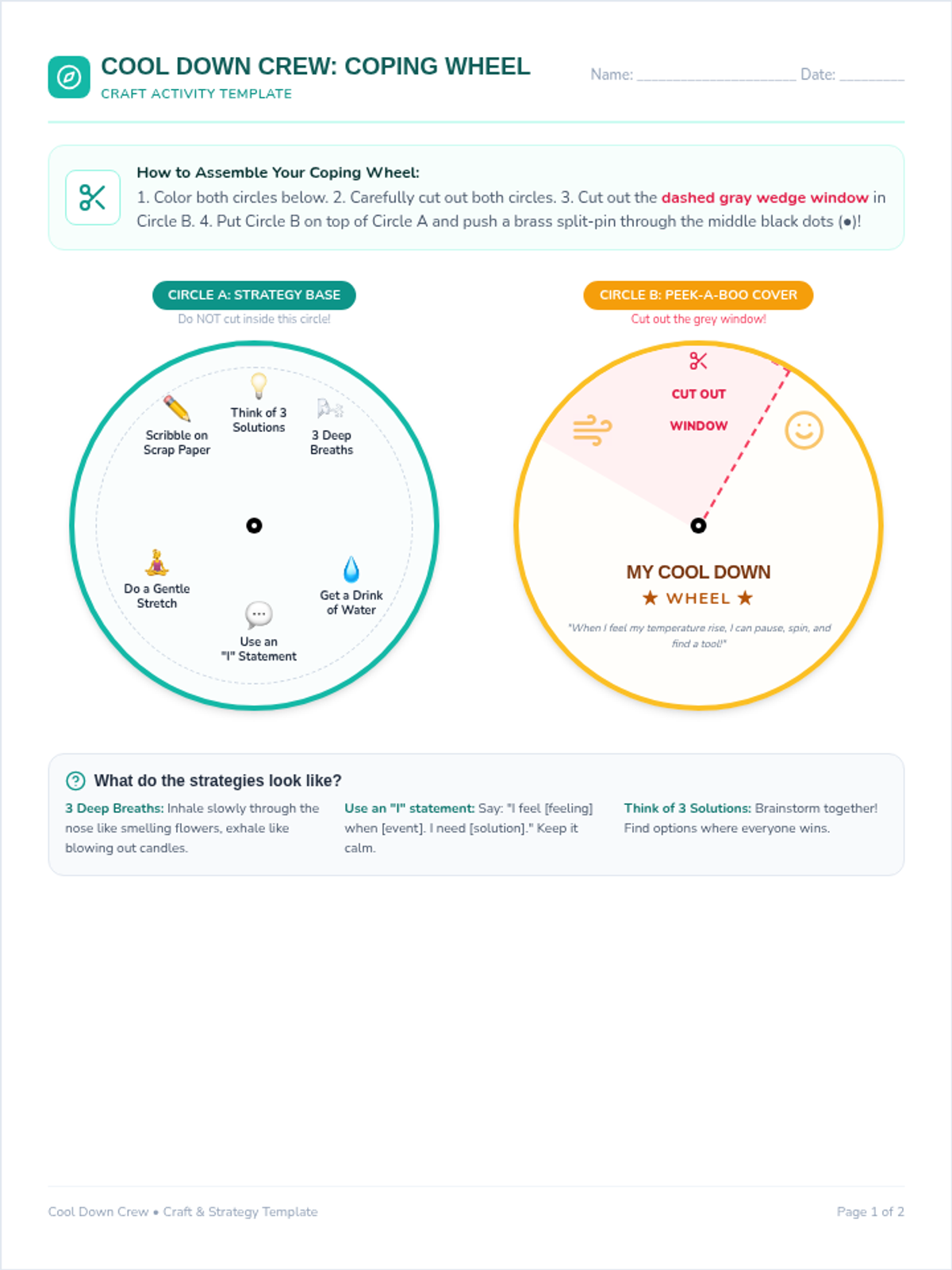
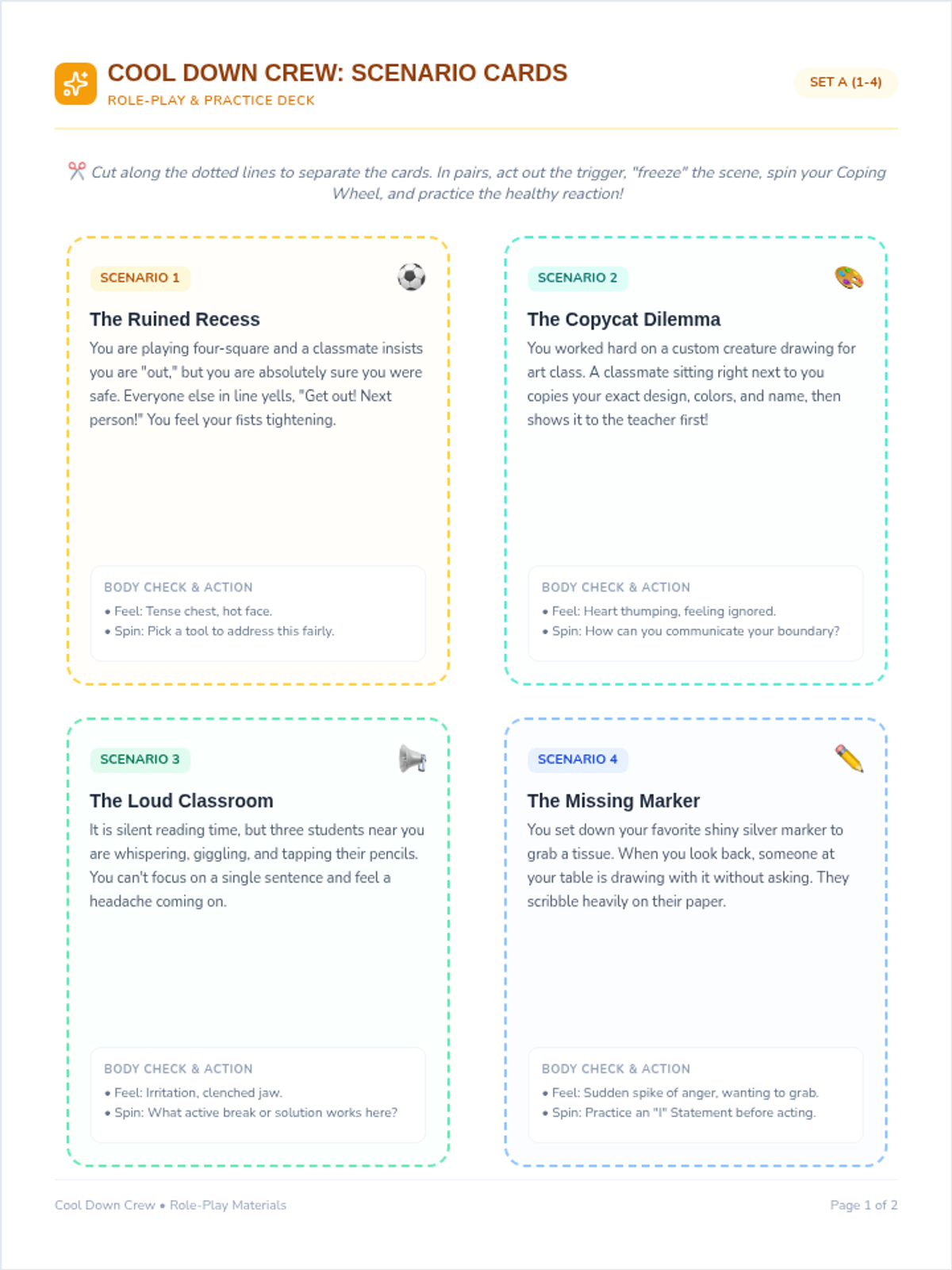
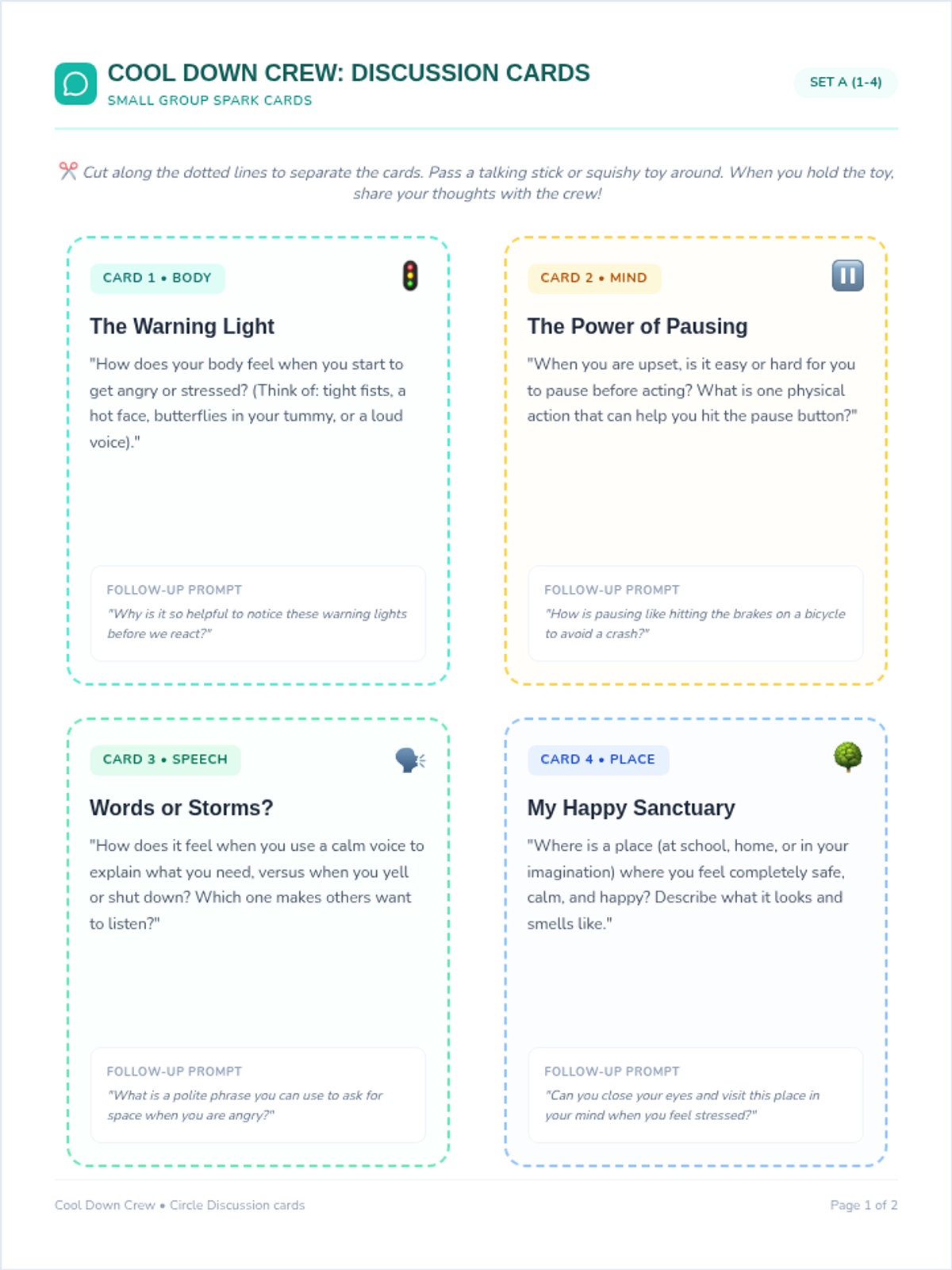
An interactive small group kit designed to equip kids with practical coping tools for everyday stress and conflict. The lesson features a hands-on coping wheel craft, discussion cards, and scenario-based role-play cards.
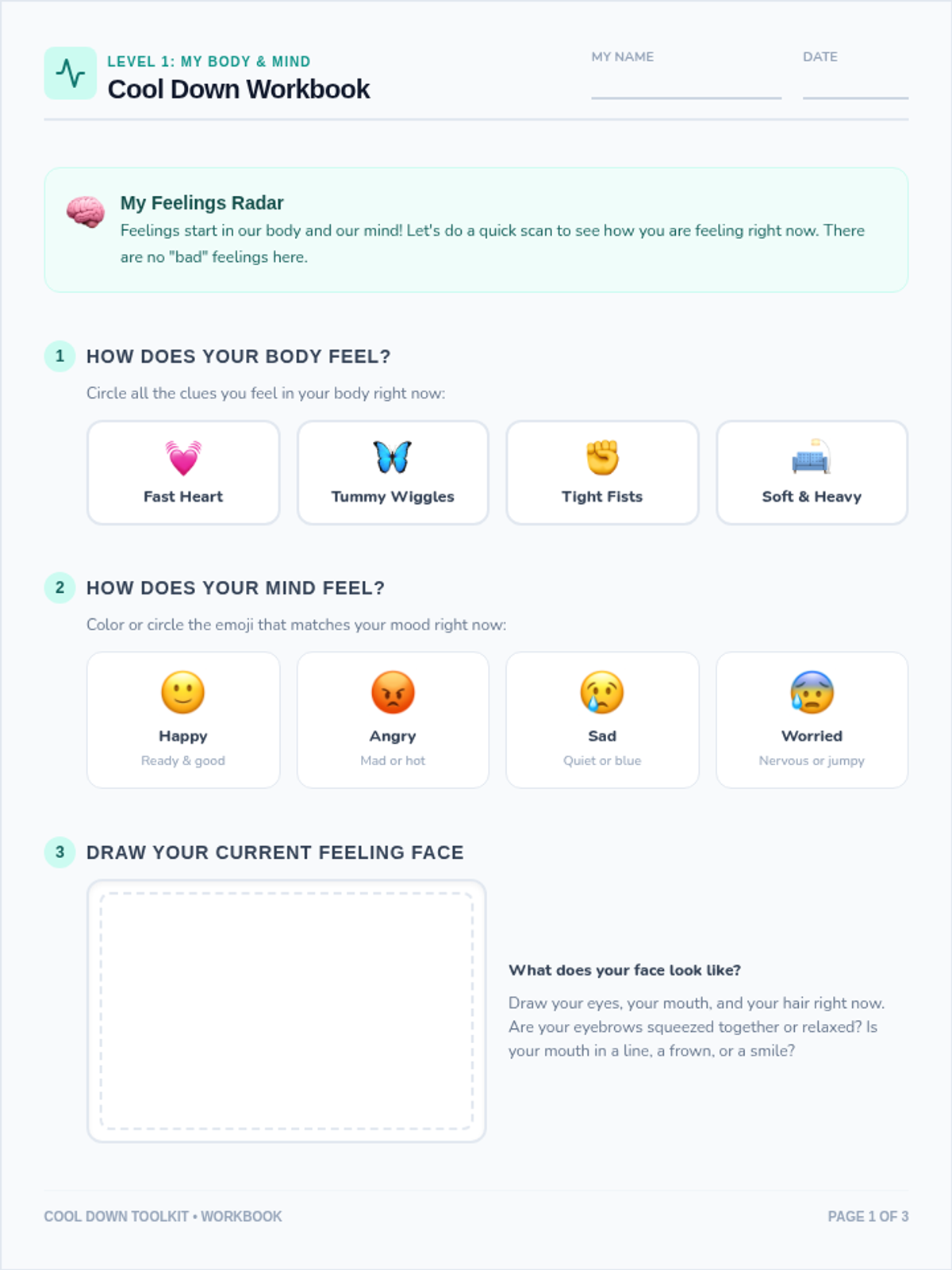
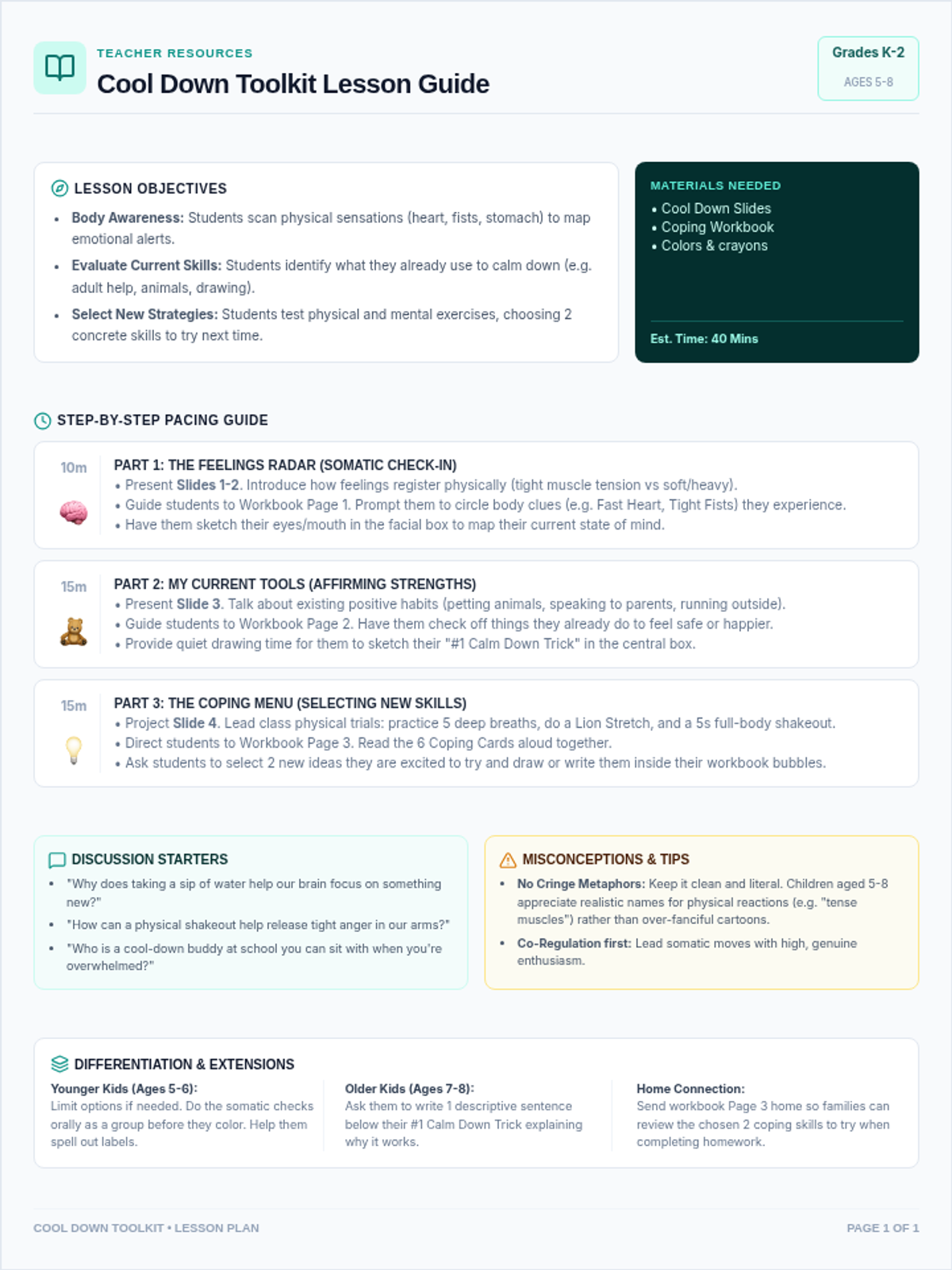
A clean, modern therapeutic lesson designed to teach students aged 5-8 how to identify physical and emotional cues, map their current coping strategies, and choose practical new skills to try.
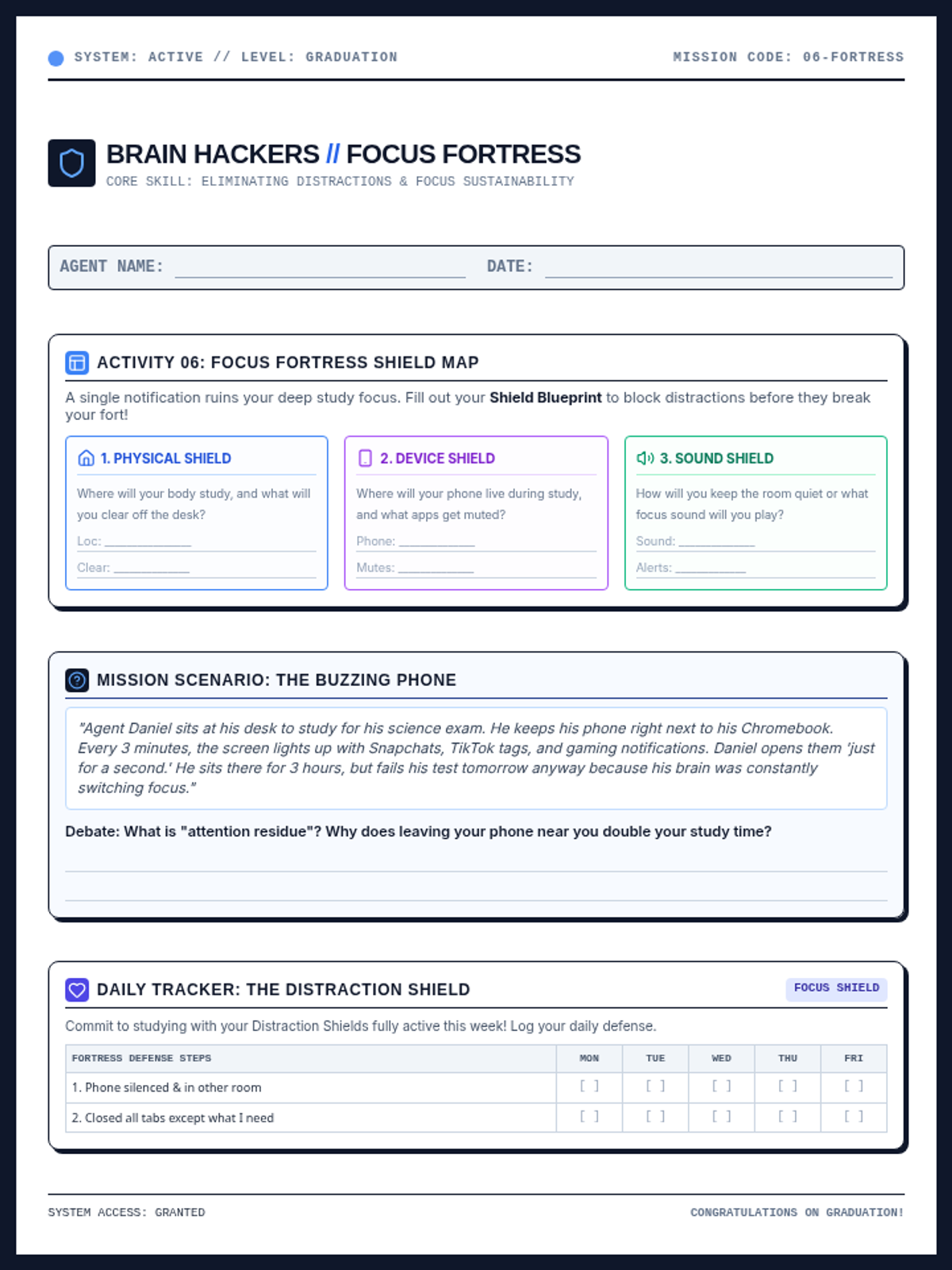
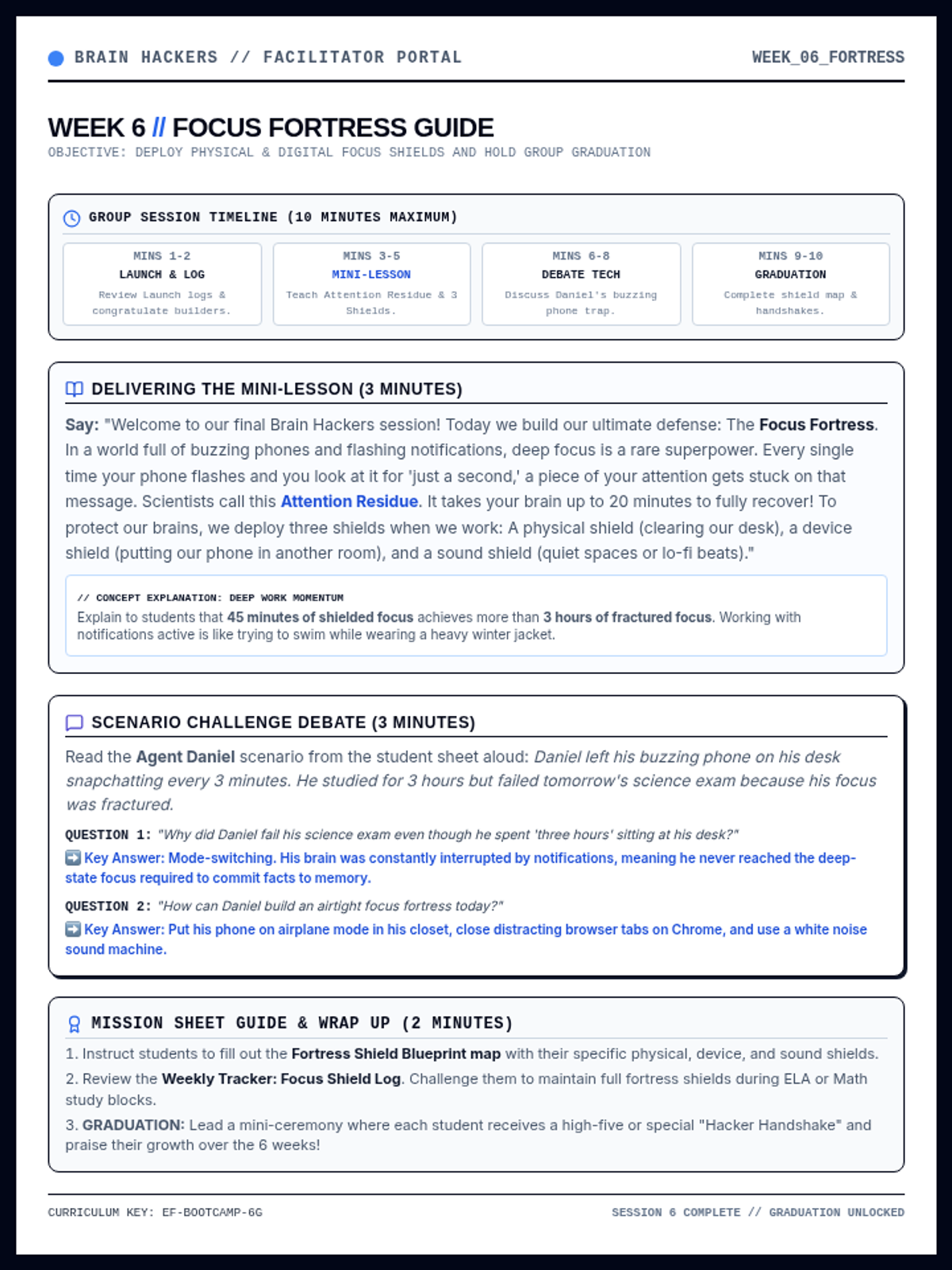
Week 6 focuses on minimizing digital and physical distractions. Students learn to build a physical and digital "Focus Fortress" and complete their executive functioning graduation.
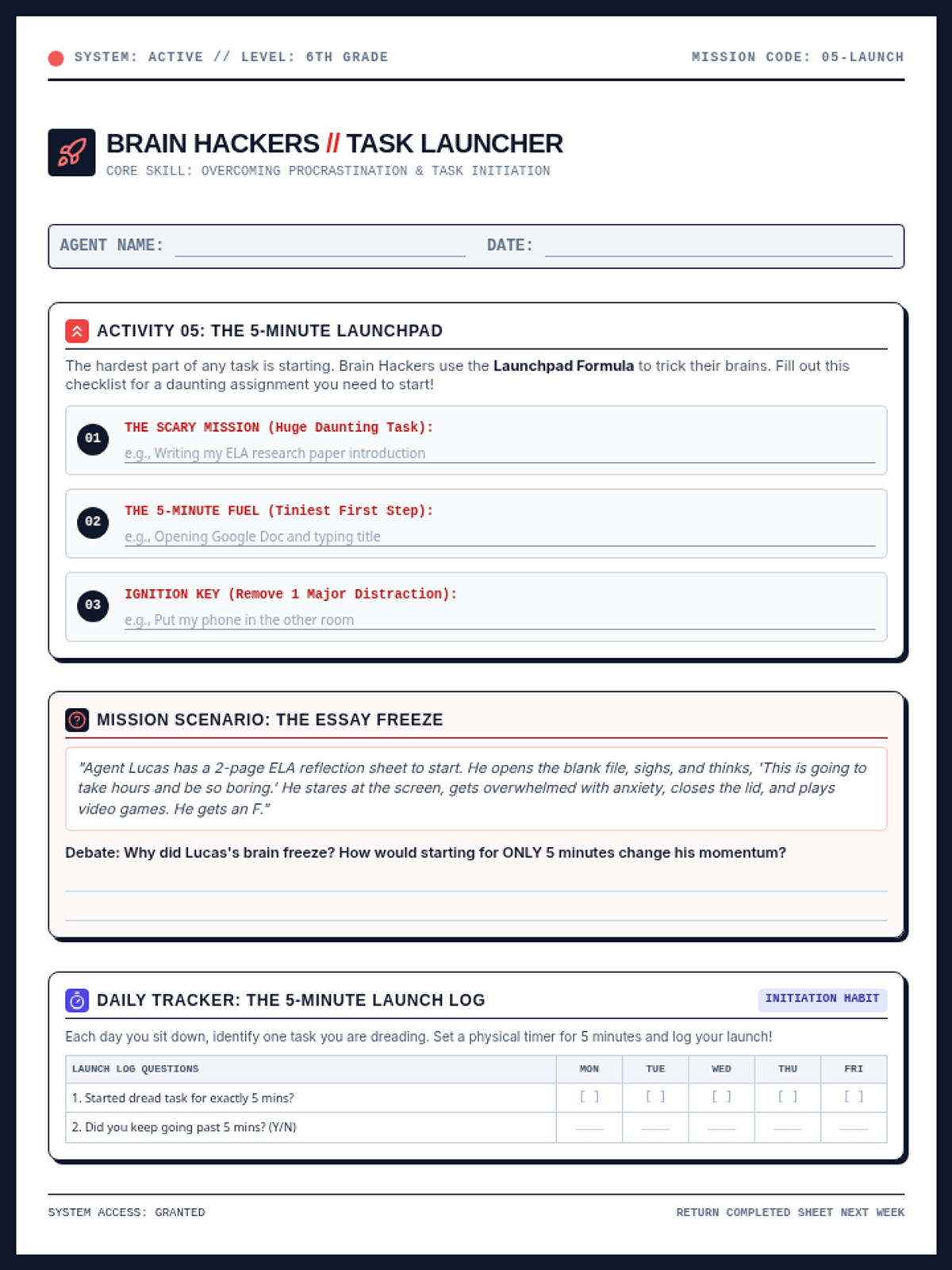
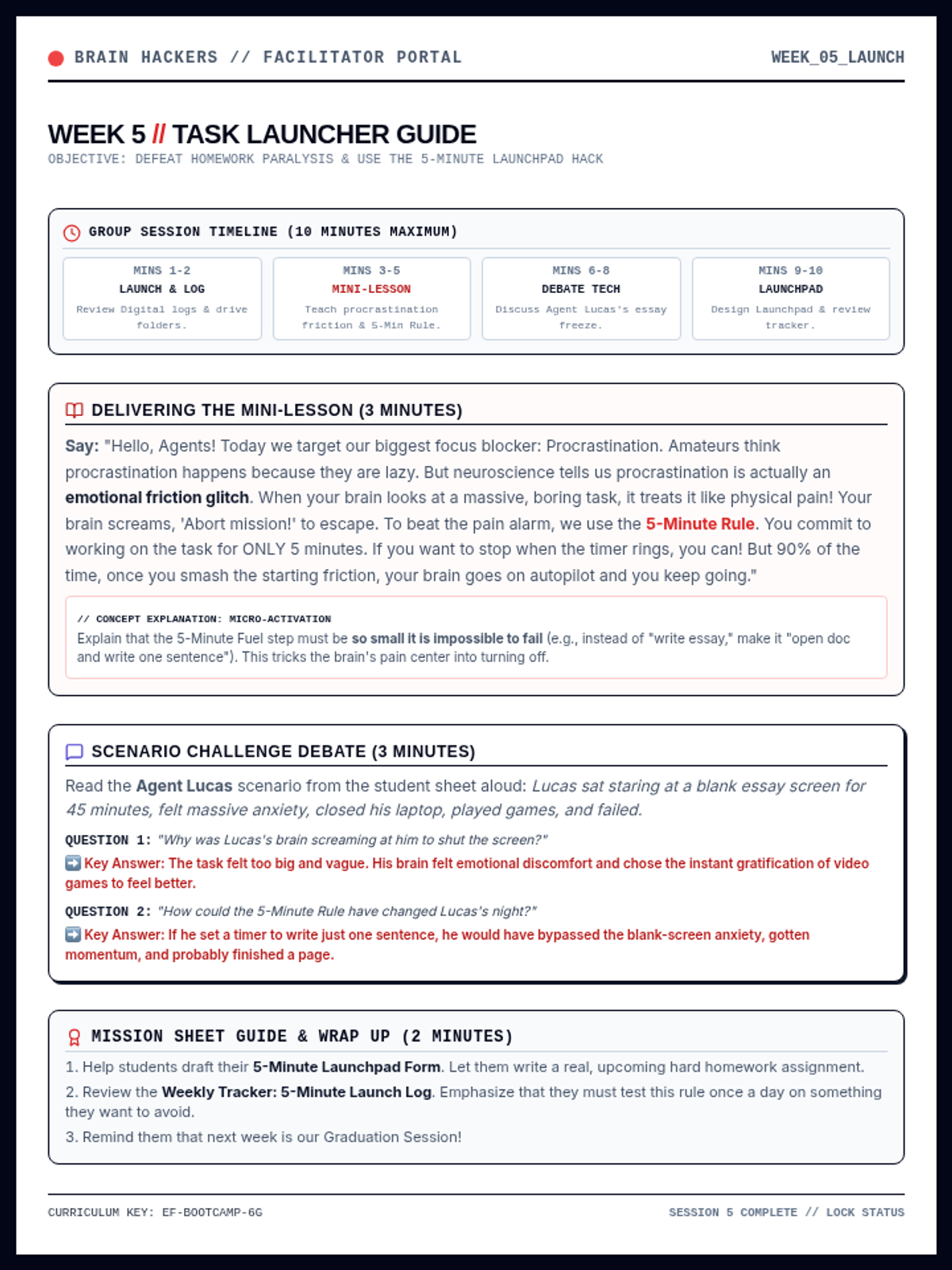
Week 5 focuses on task initiation and beating procrastination. Students learn the "5-Minute Rule" and design "Launchpads" to break down daunting assignments.
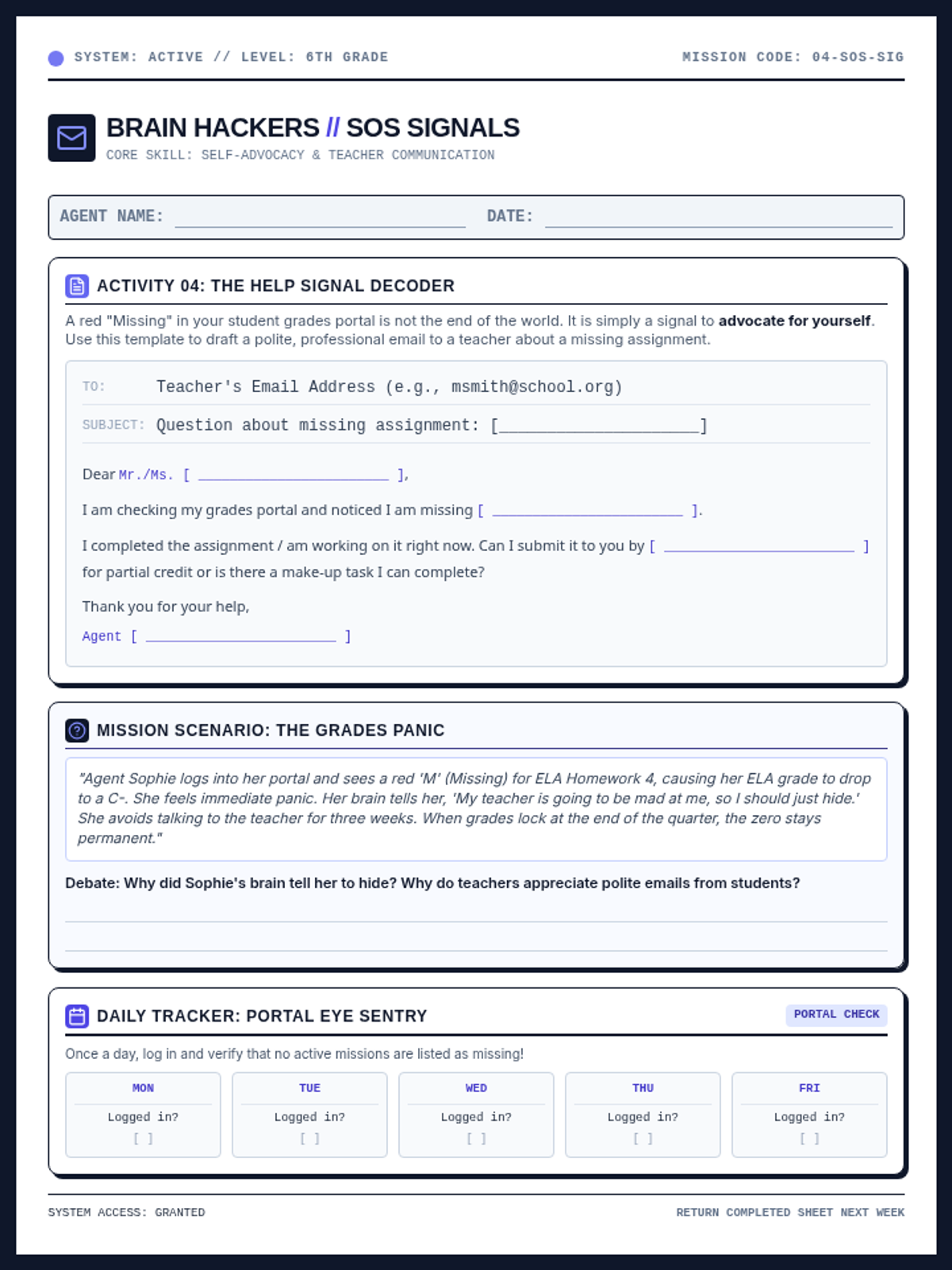
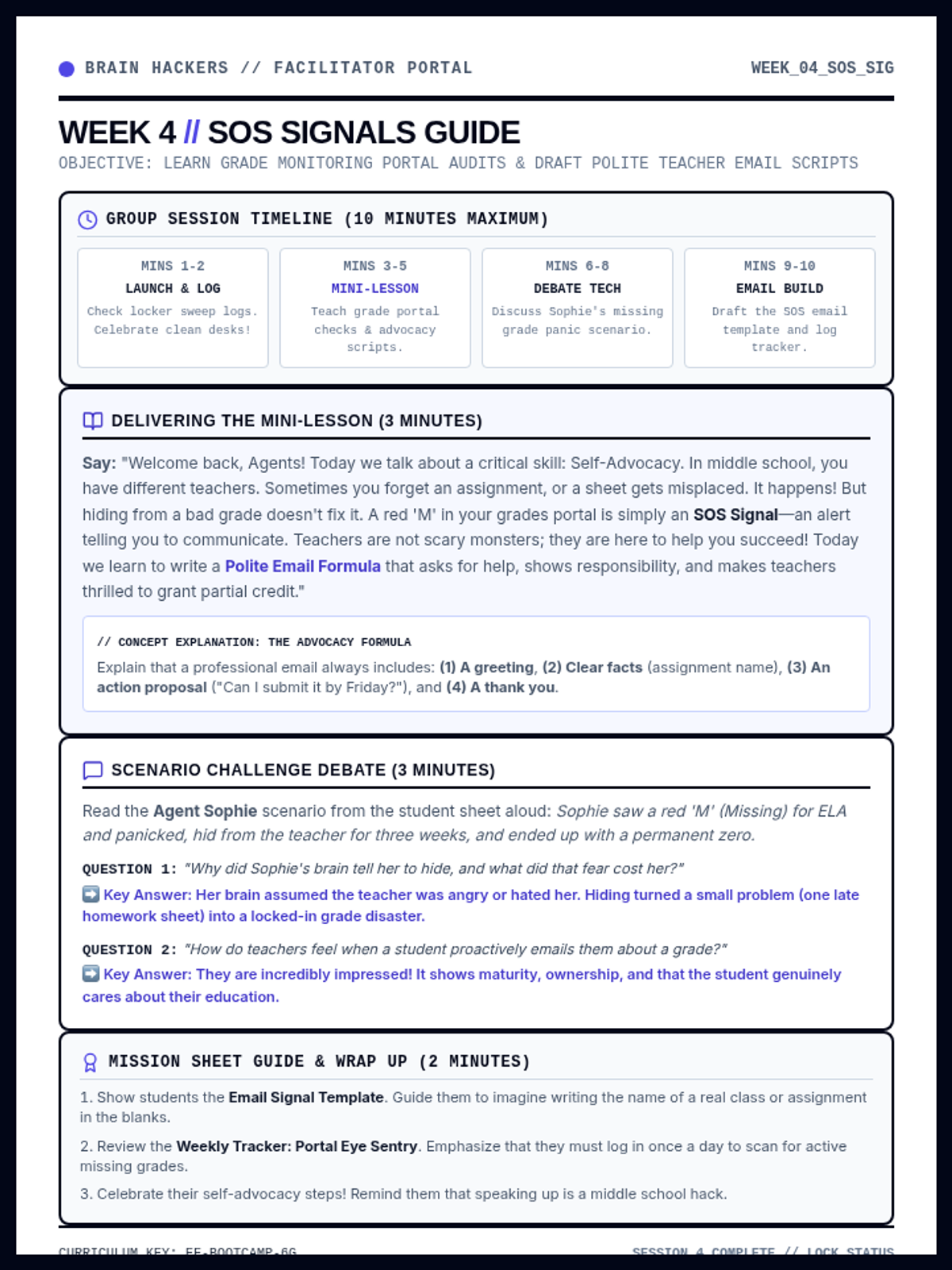
Week 4 focuses on self-advocacy and managing missing assignments. Students learn to audit their online grades portal, draft professional help emails to teachers, and use face-to-face communication scripts.
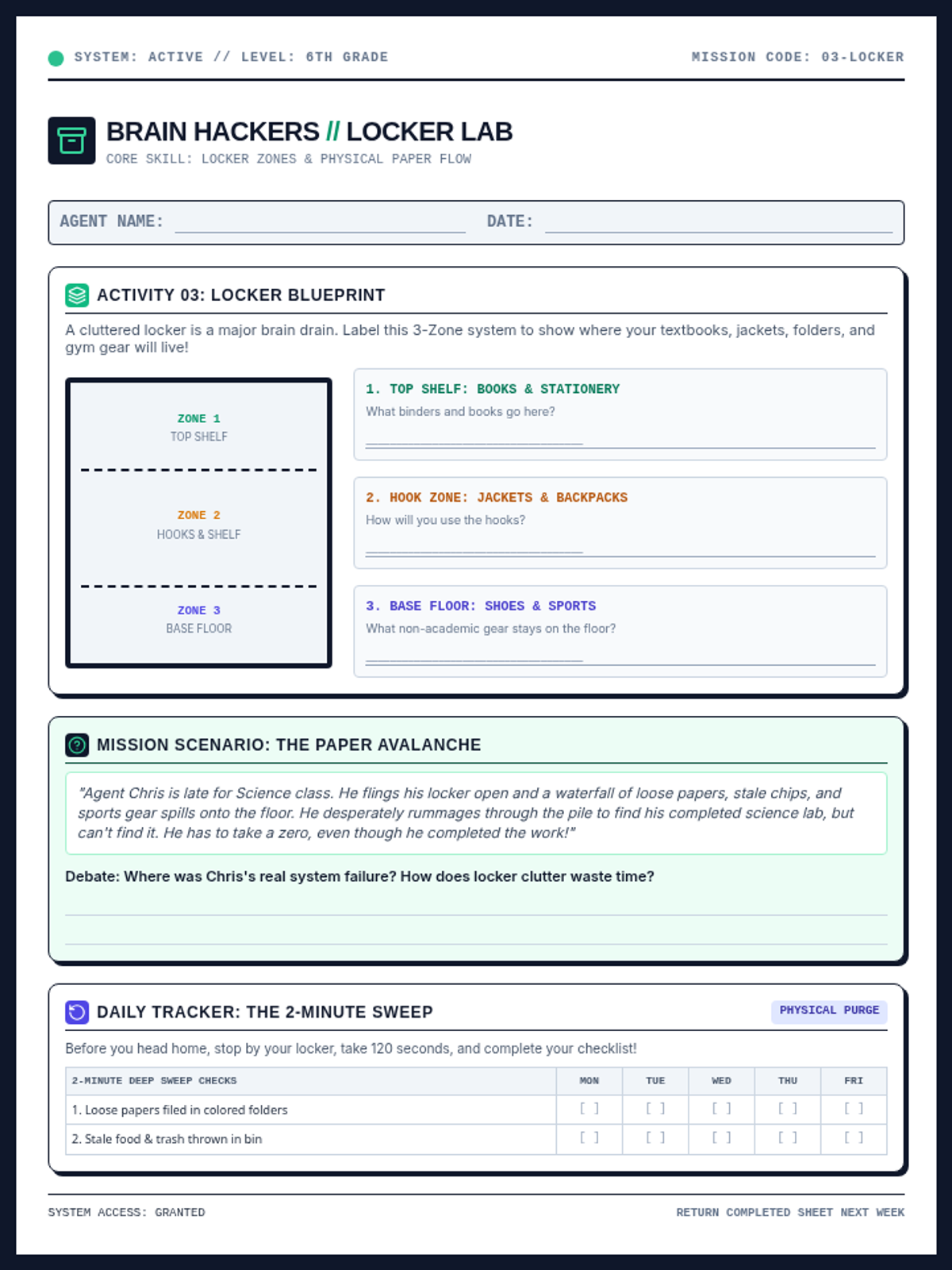
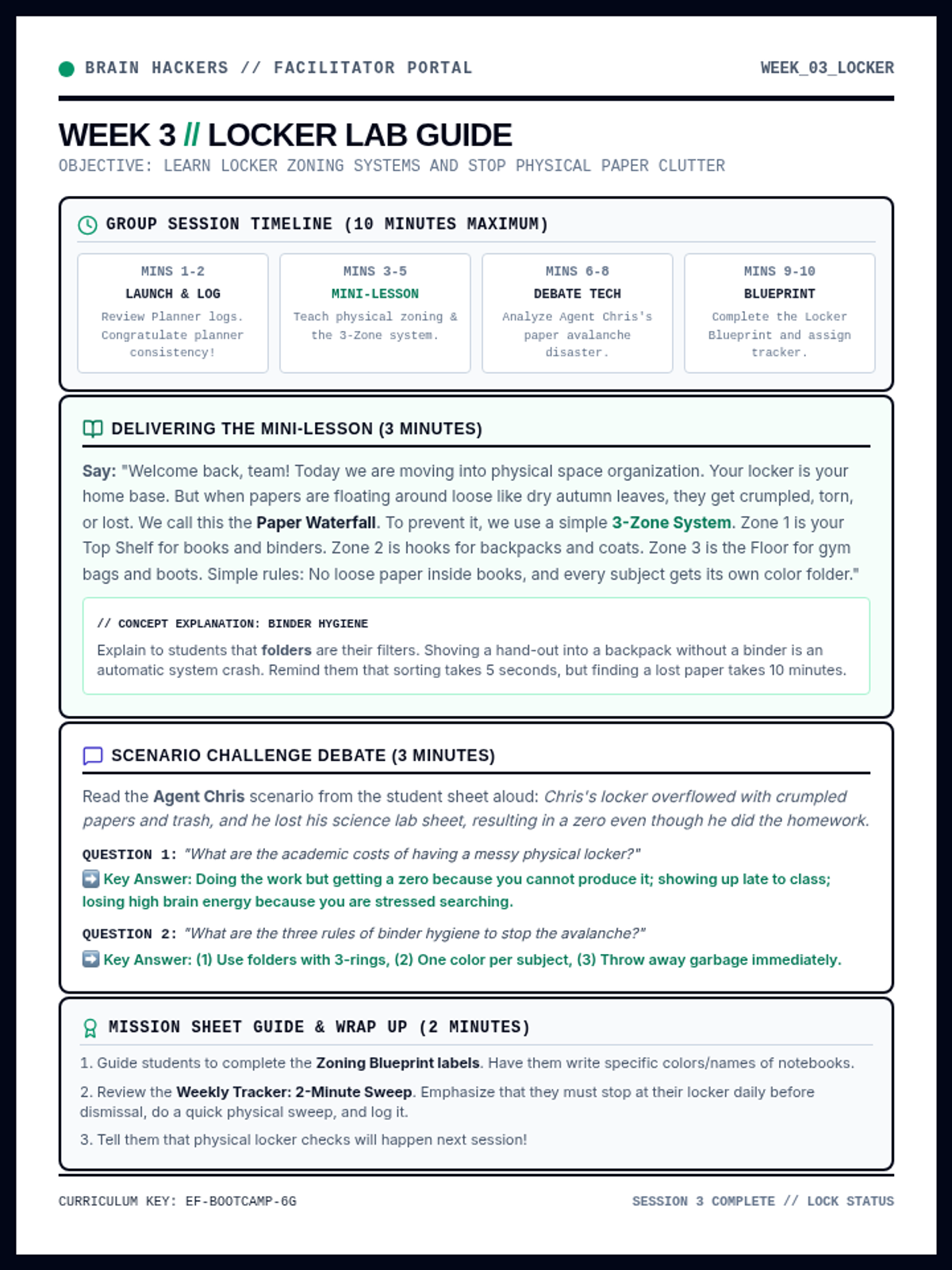
Week 3 focuses on locker and physical materials organization. Students learn to design their locker zones and apply a simple color-coded system to keep papers and notebooks in check.
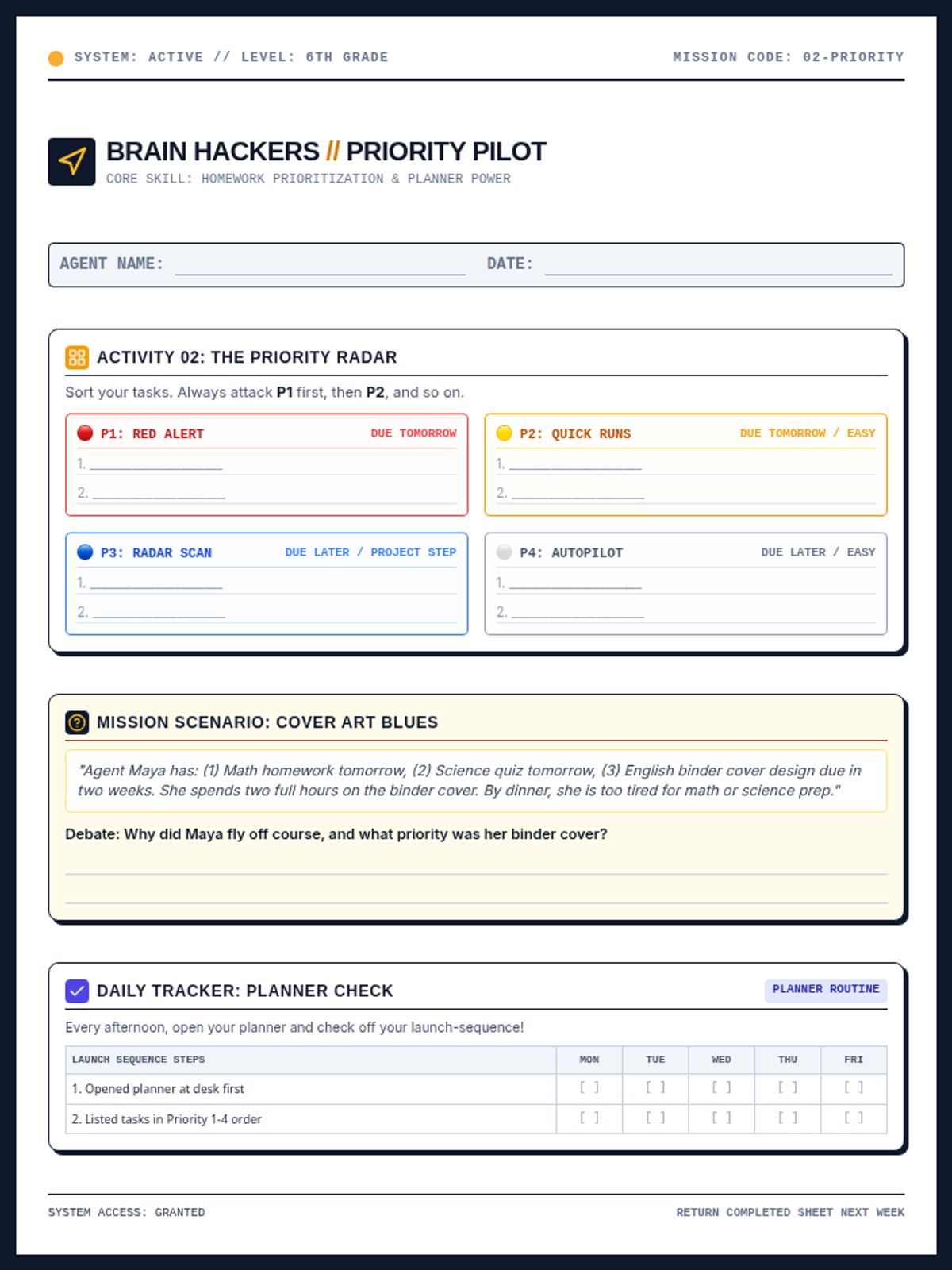
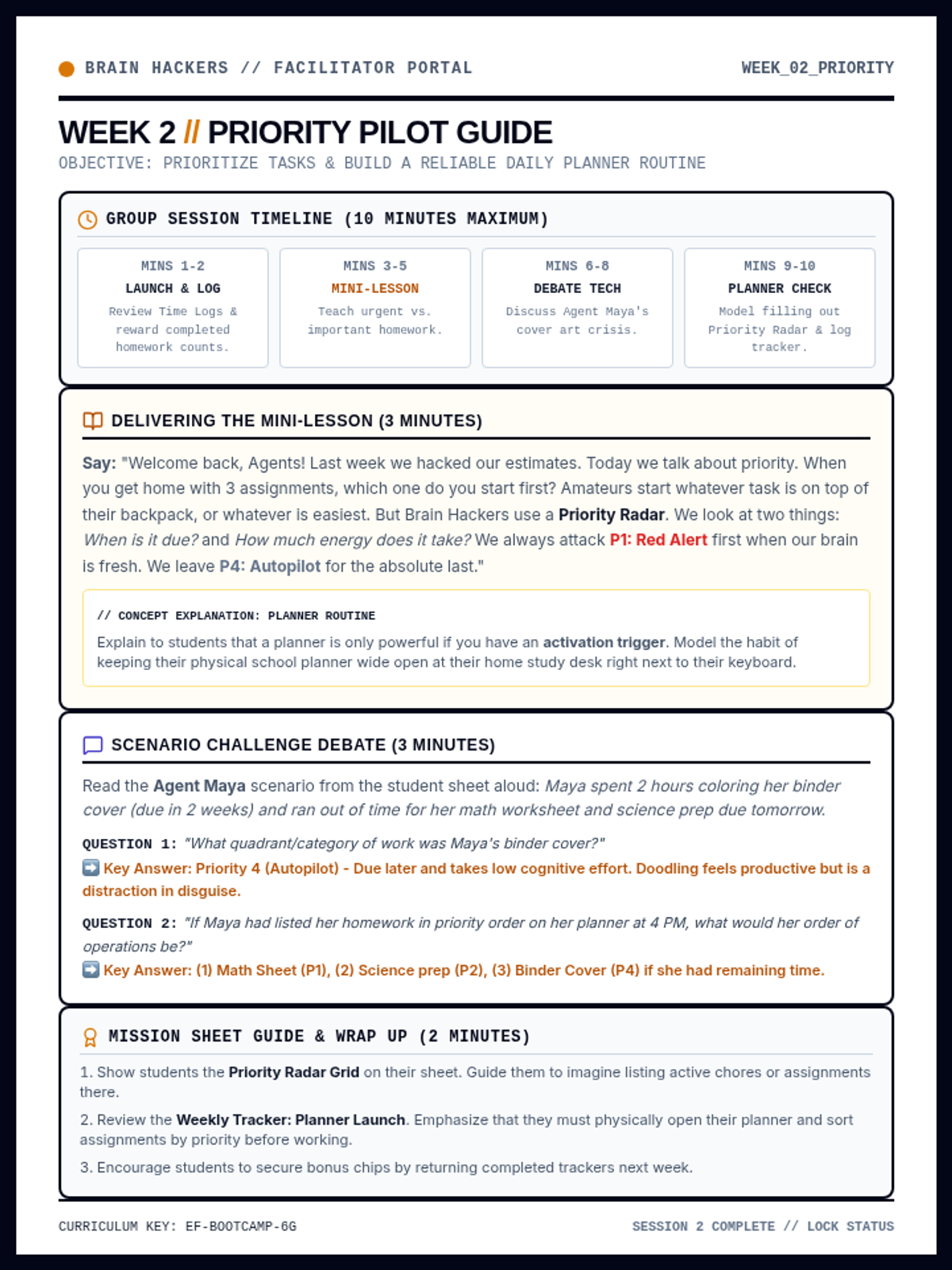
Week 2 focuses on homework prioritization and introducing students to using a planner. Students learn to categorize tasks by urgency and importance and plan their afternoon order of operations.
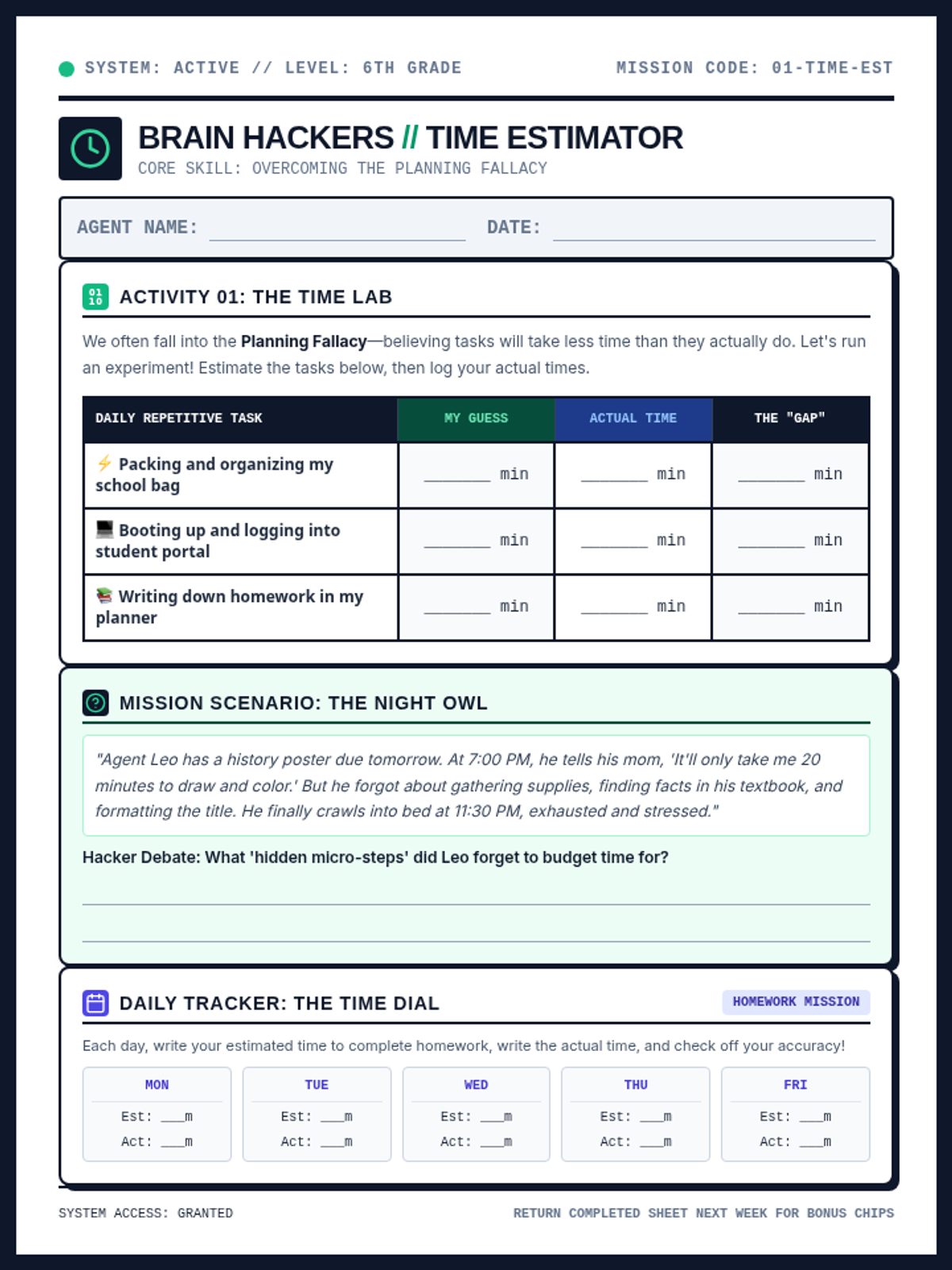
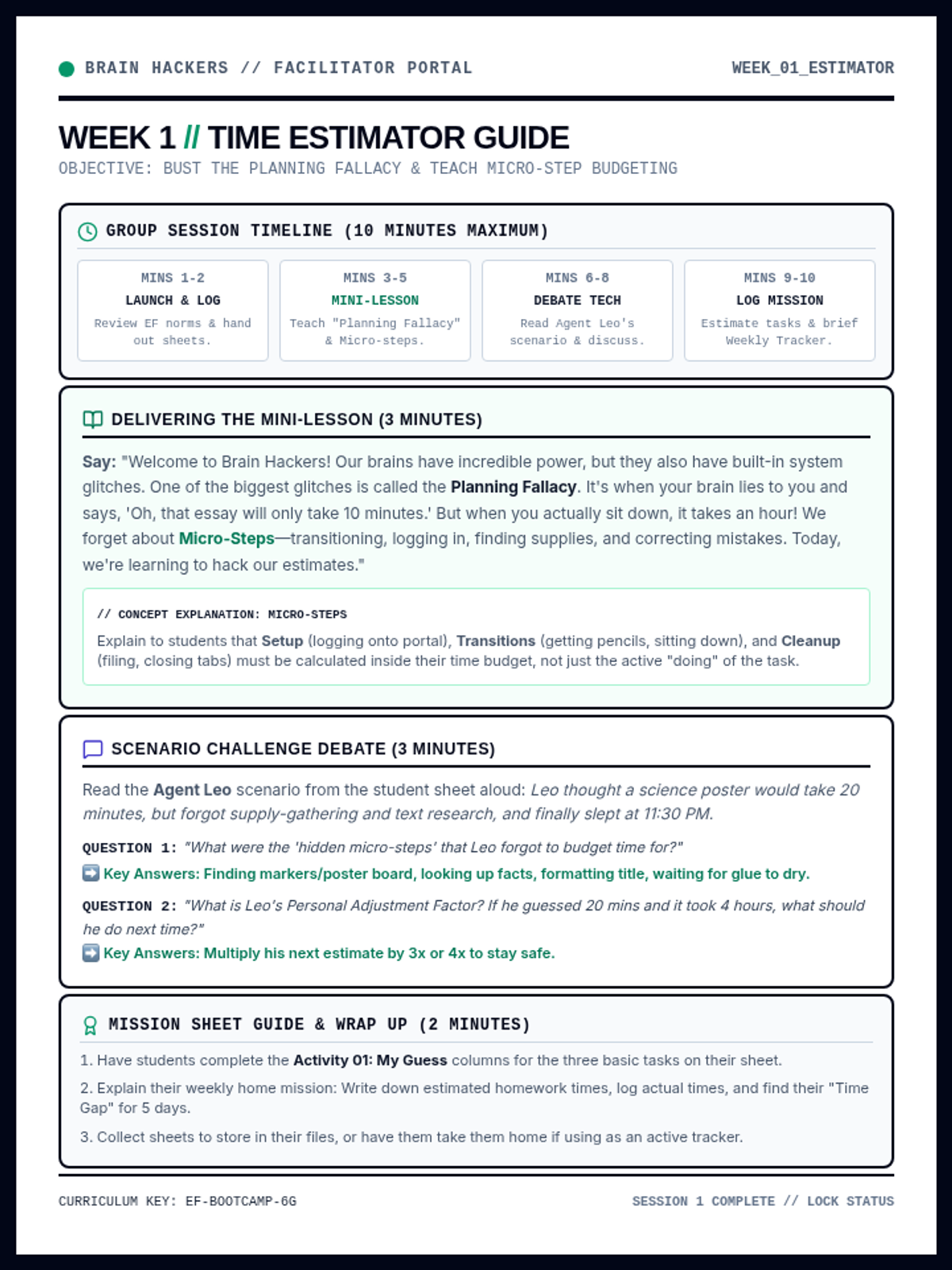
Week 1 focuses on estimating task length and planning realistic time budgets to avoid the 'planning fallacy'. Students learn to guess time, track actual time, and calculate their personal adjustment factors.
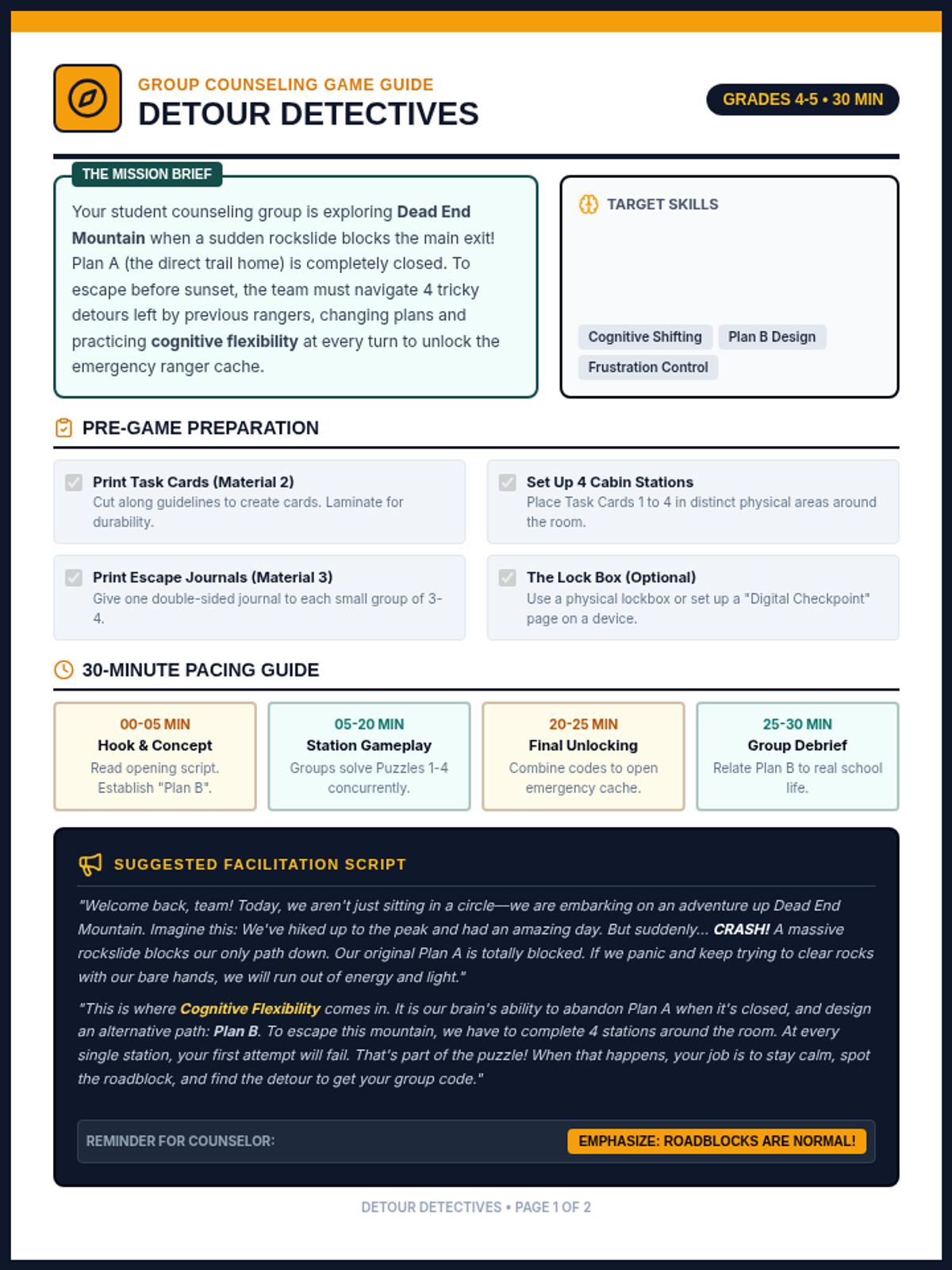
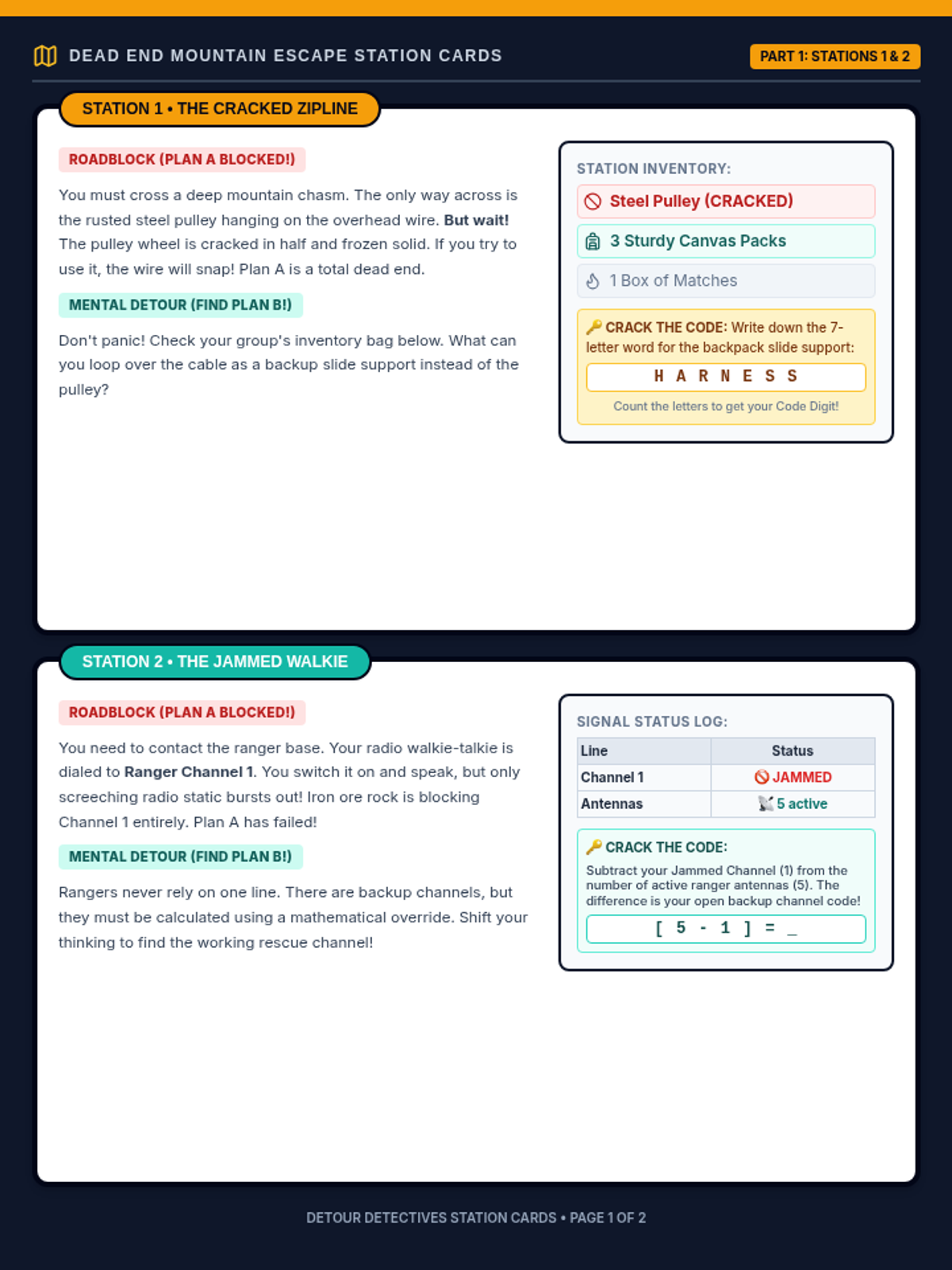
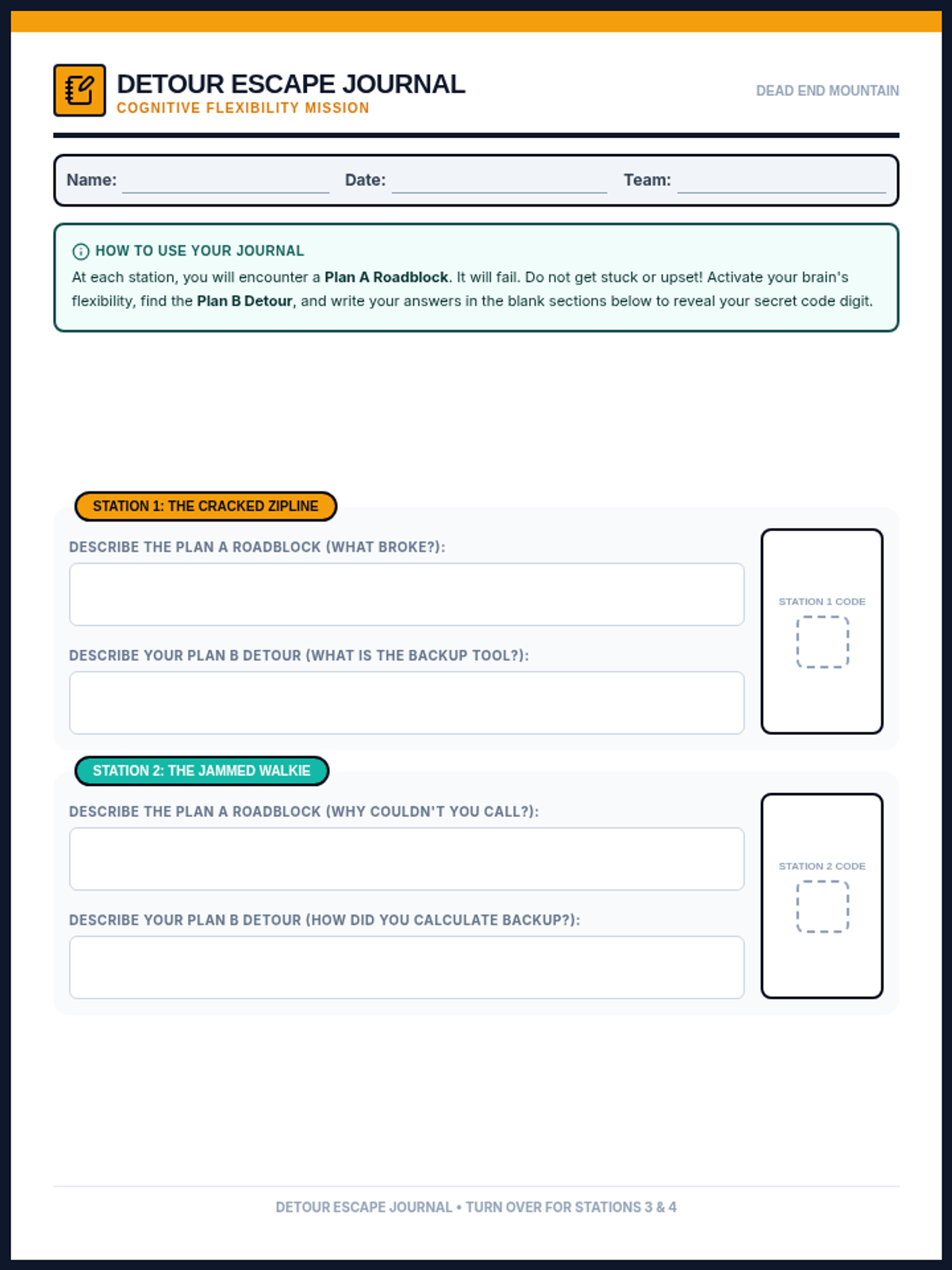
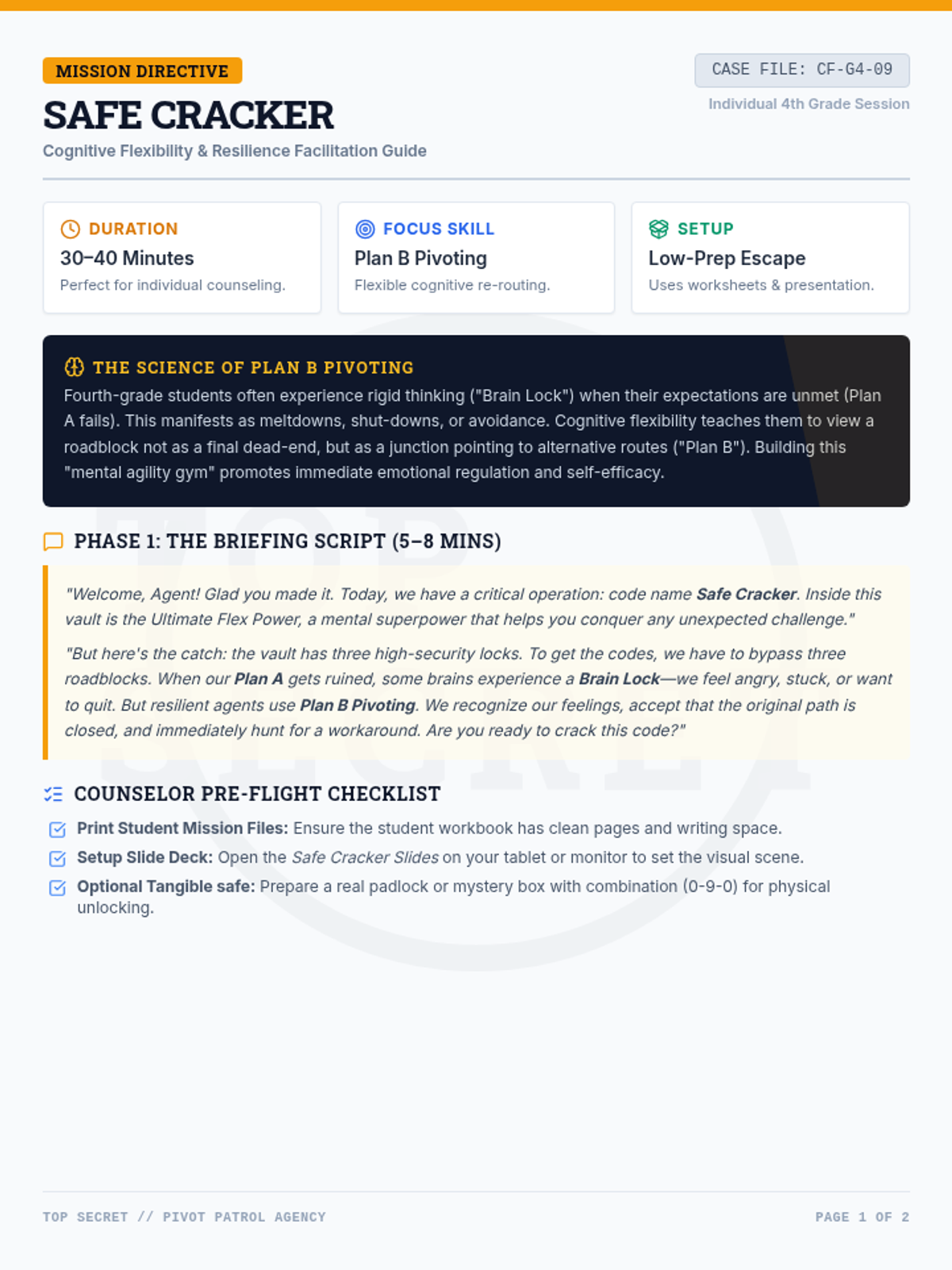
A high-energy, 30-minute counseling escape game for 4th and 5th graders teaching cognitive flexibility. Students collaborate to solve puzzle stations by discovering alternative paths ('Plan B') when their initial attempts are blocked.
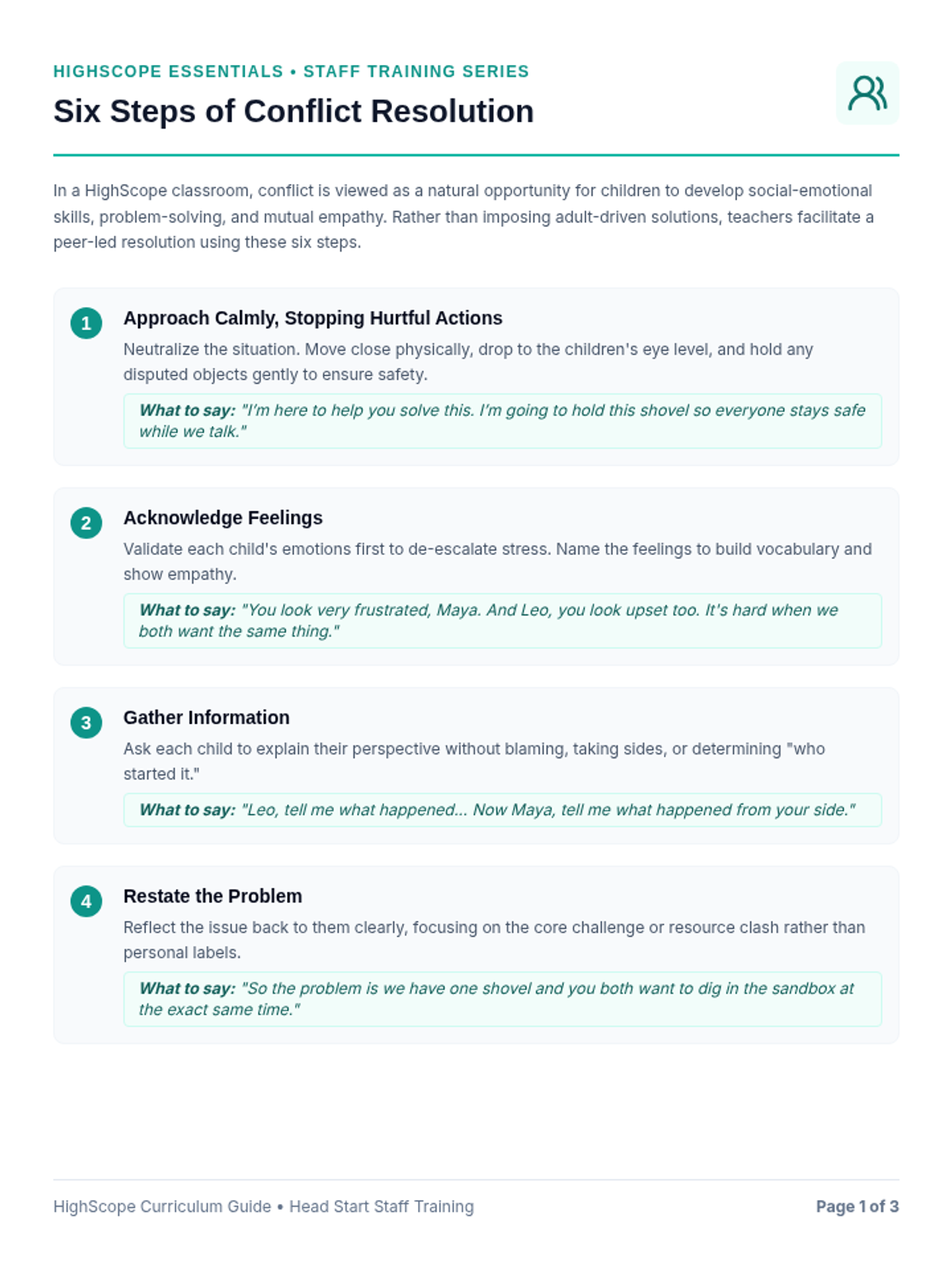
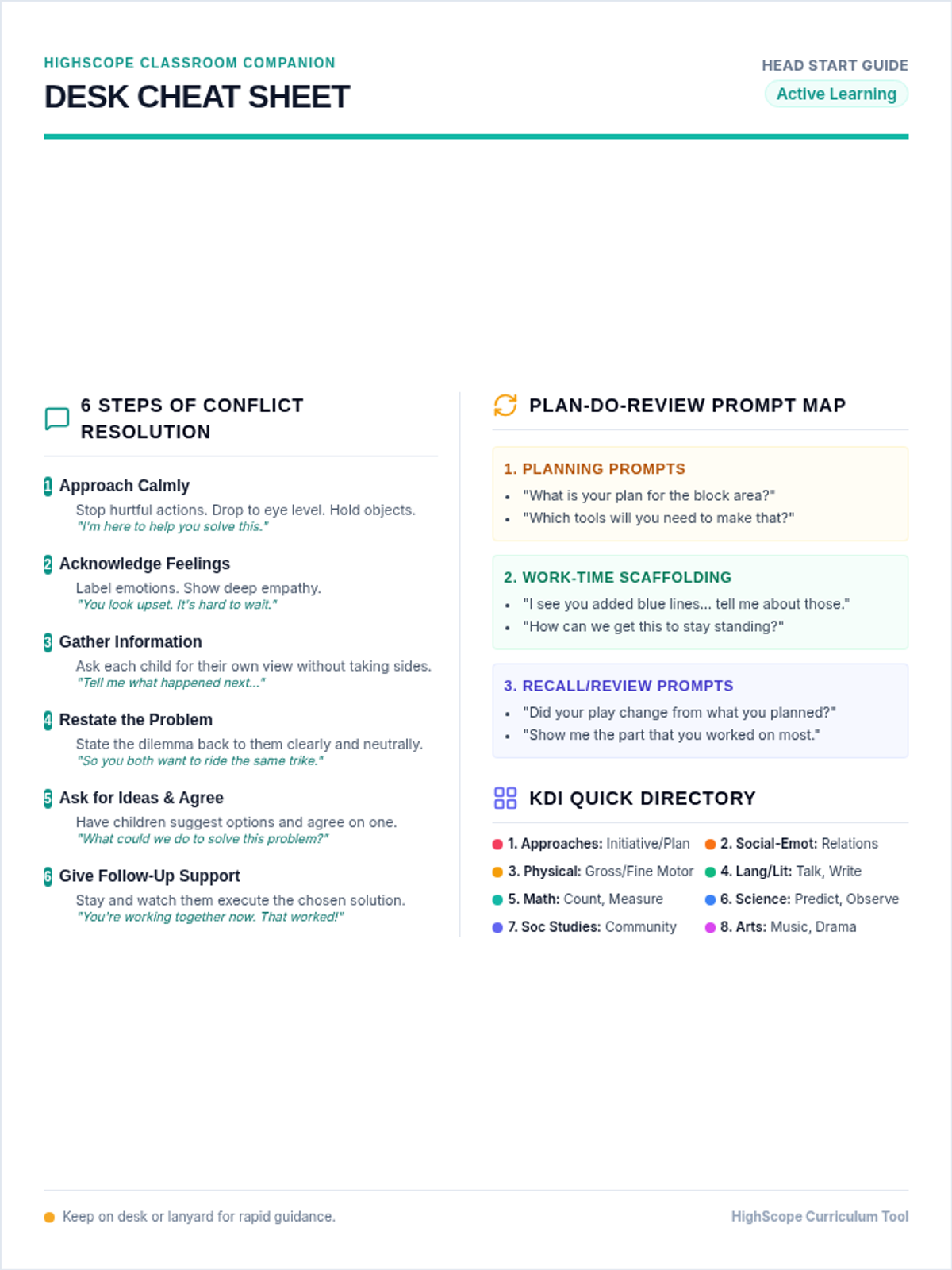
This lesson provides Head Start teachers and support staff with practical, actionable cheat sheets and guides for implementing the HighScope curriculum, focusing on conflict resolution, Plan-Do-Review cycles, and Key Developmental Indicators (KDIs).
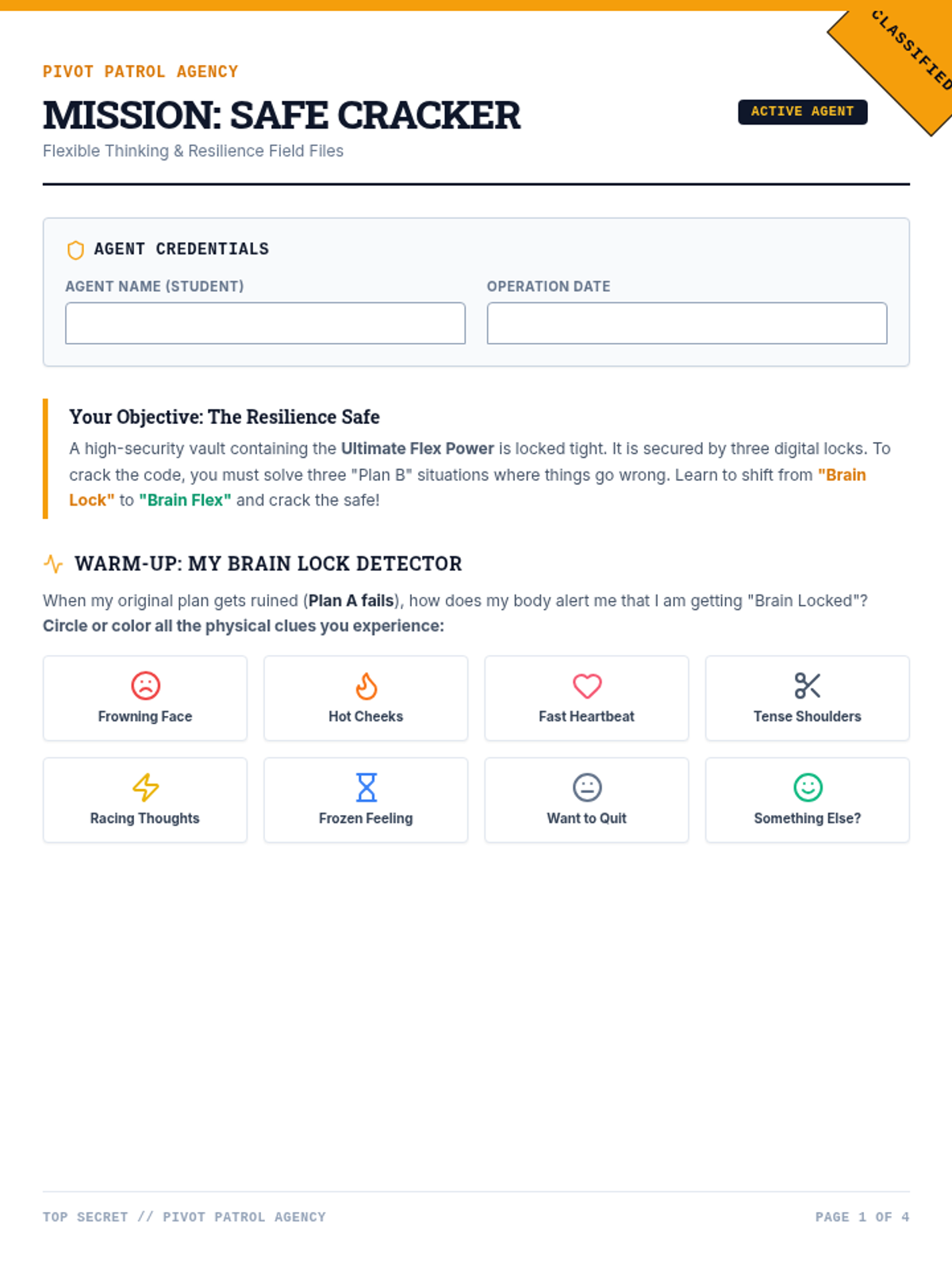
A hands-on, escape-room-style counseling lesson where students practice cognitive flexibility by solving interactive 'Plan B' challenges to crack open a resilience safe.
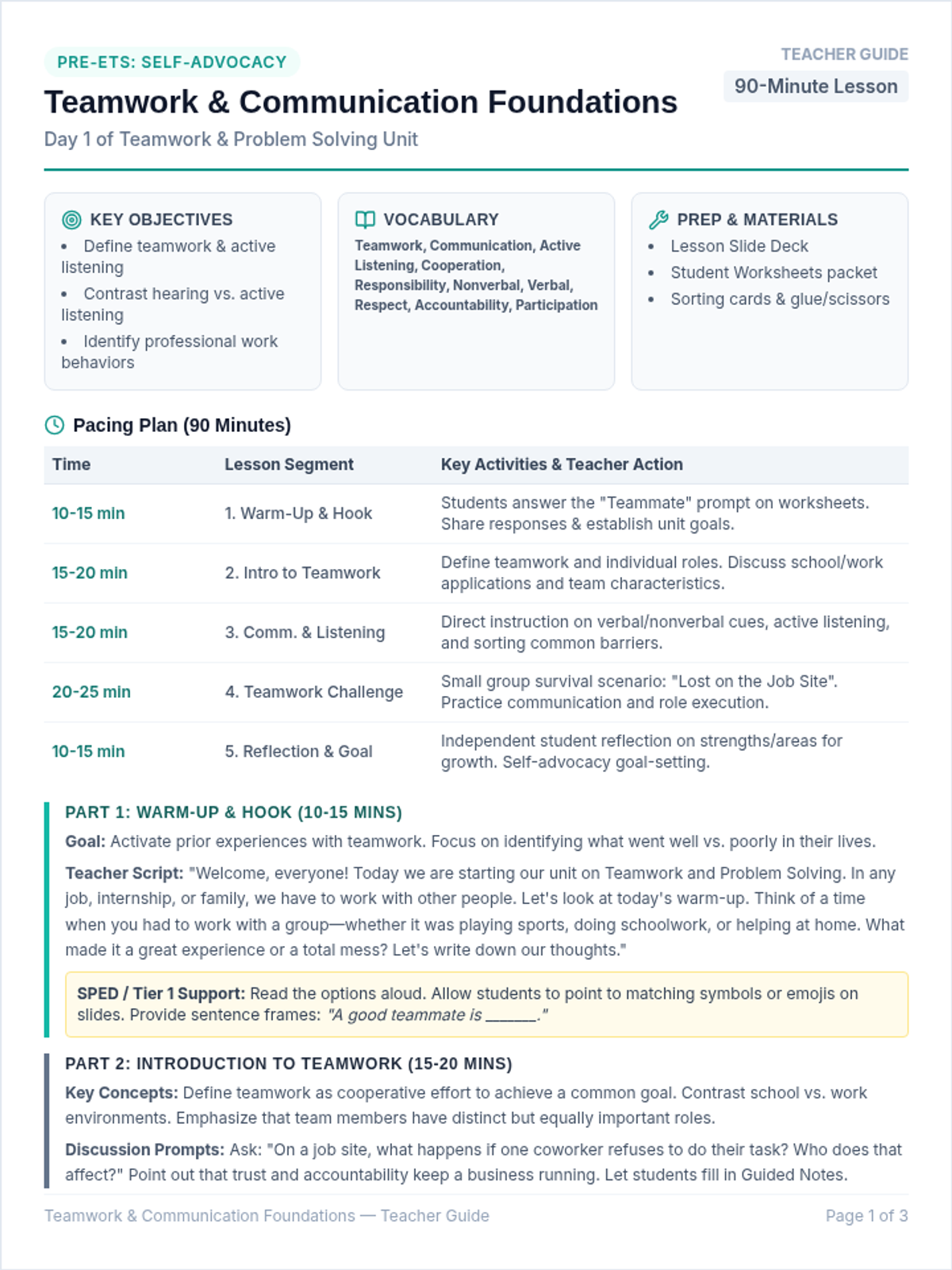
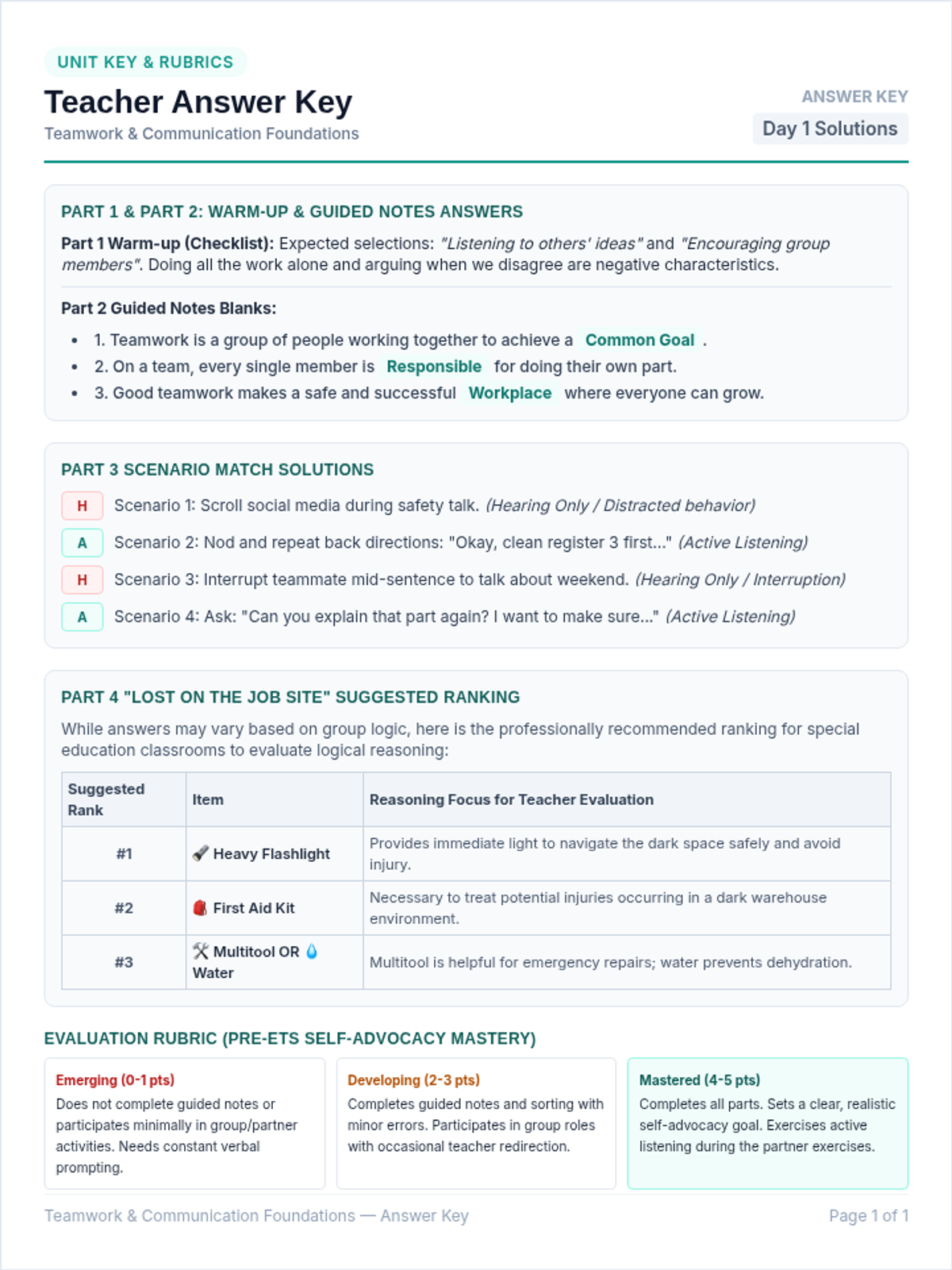
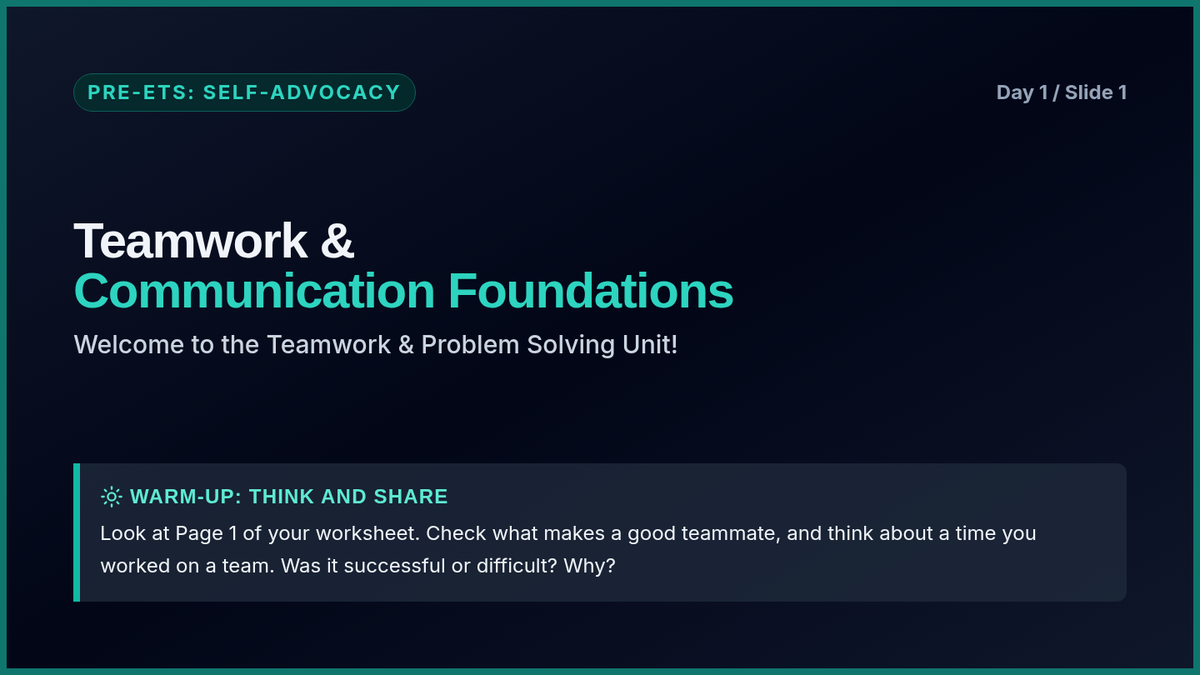
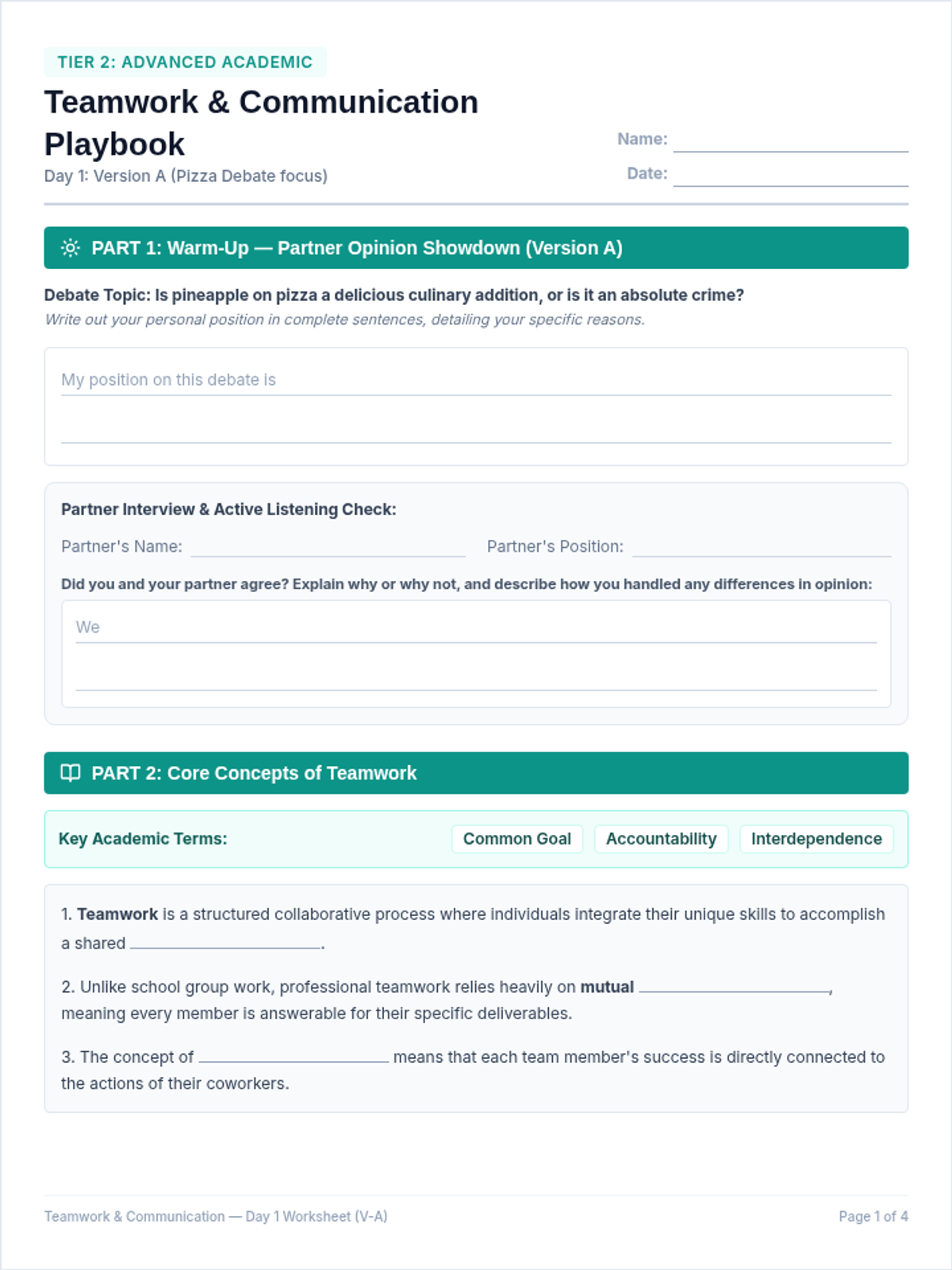
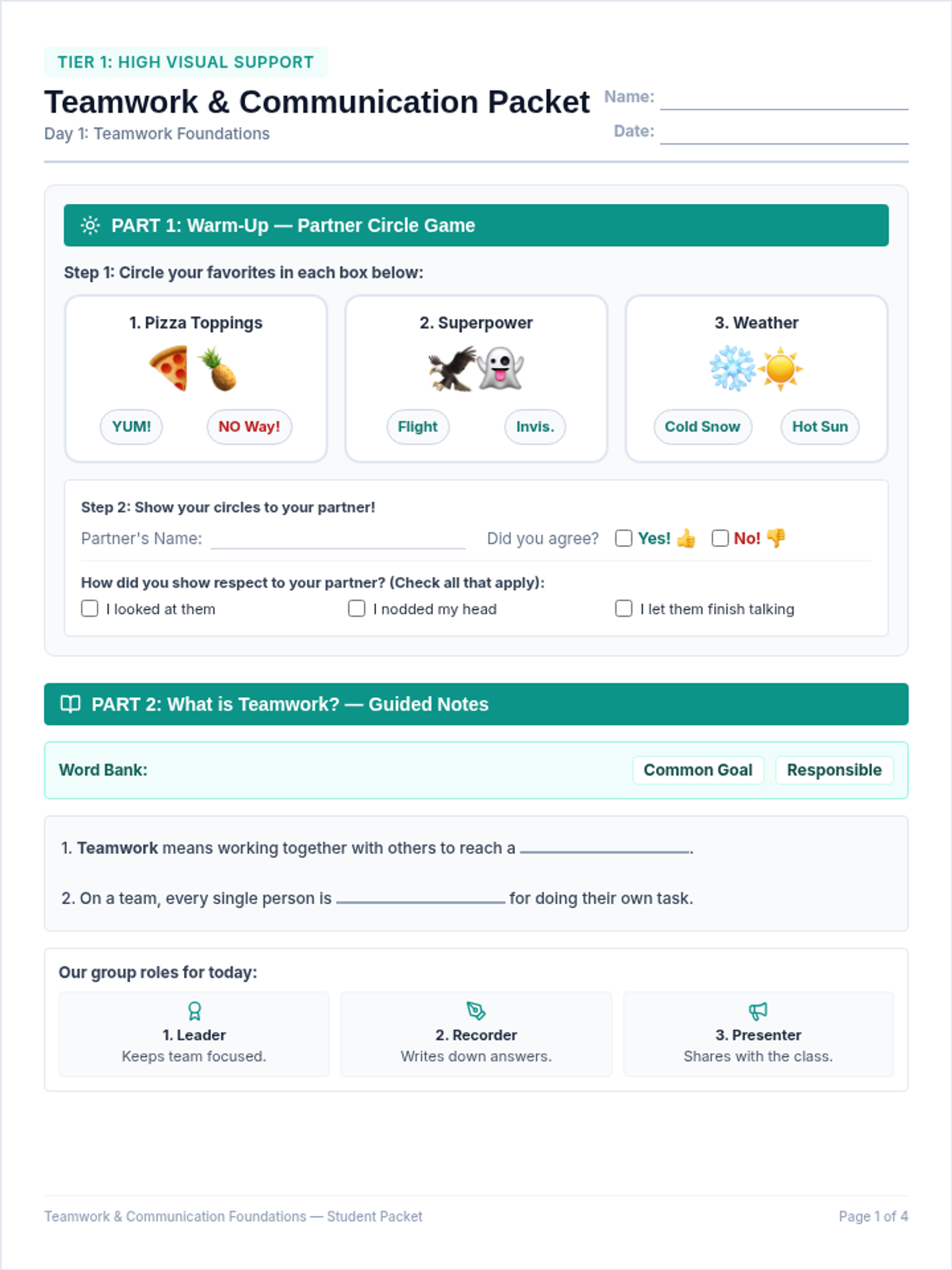
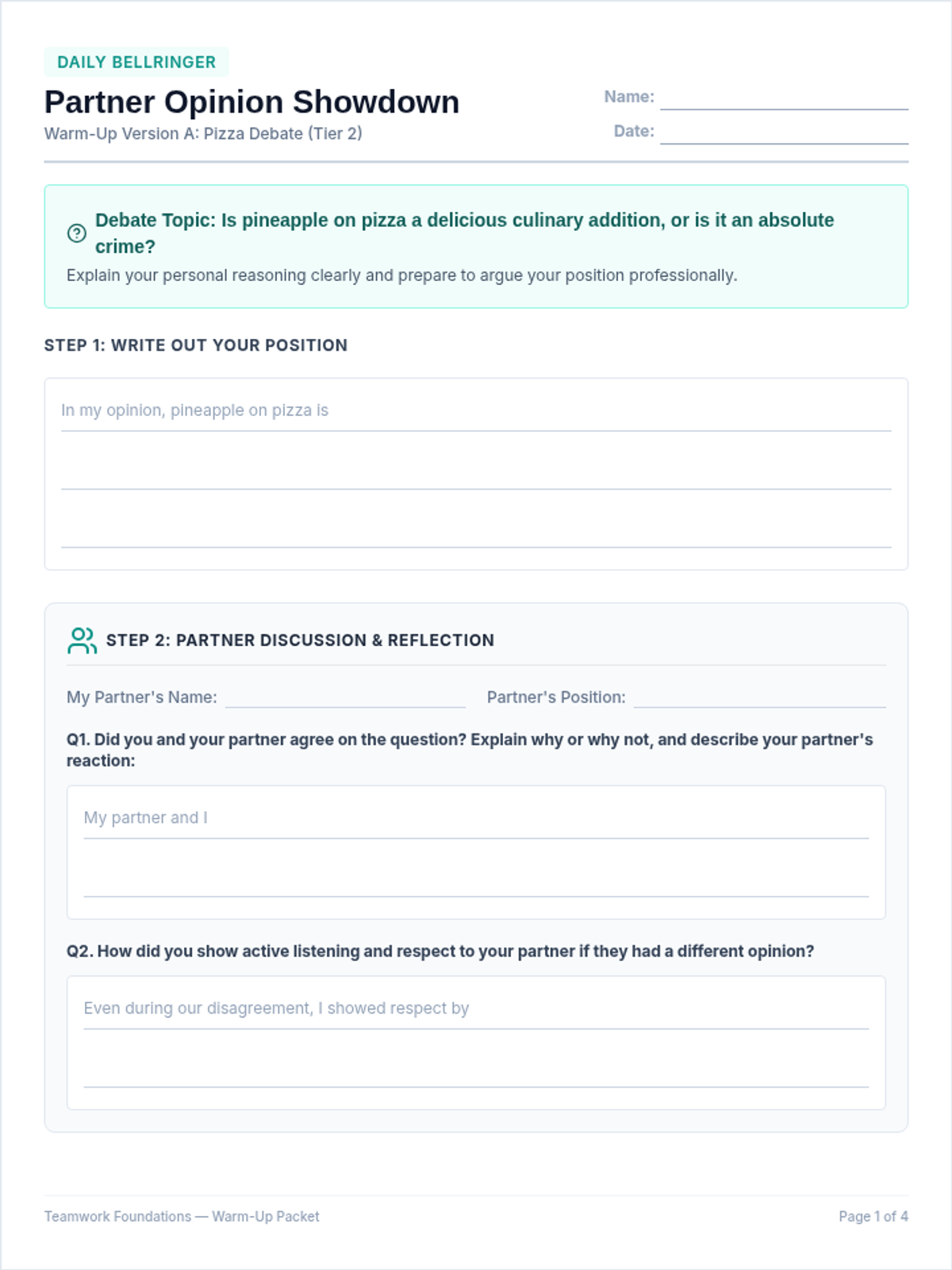
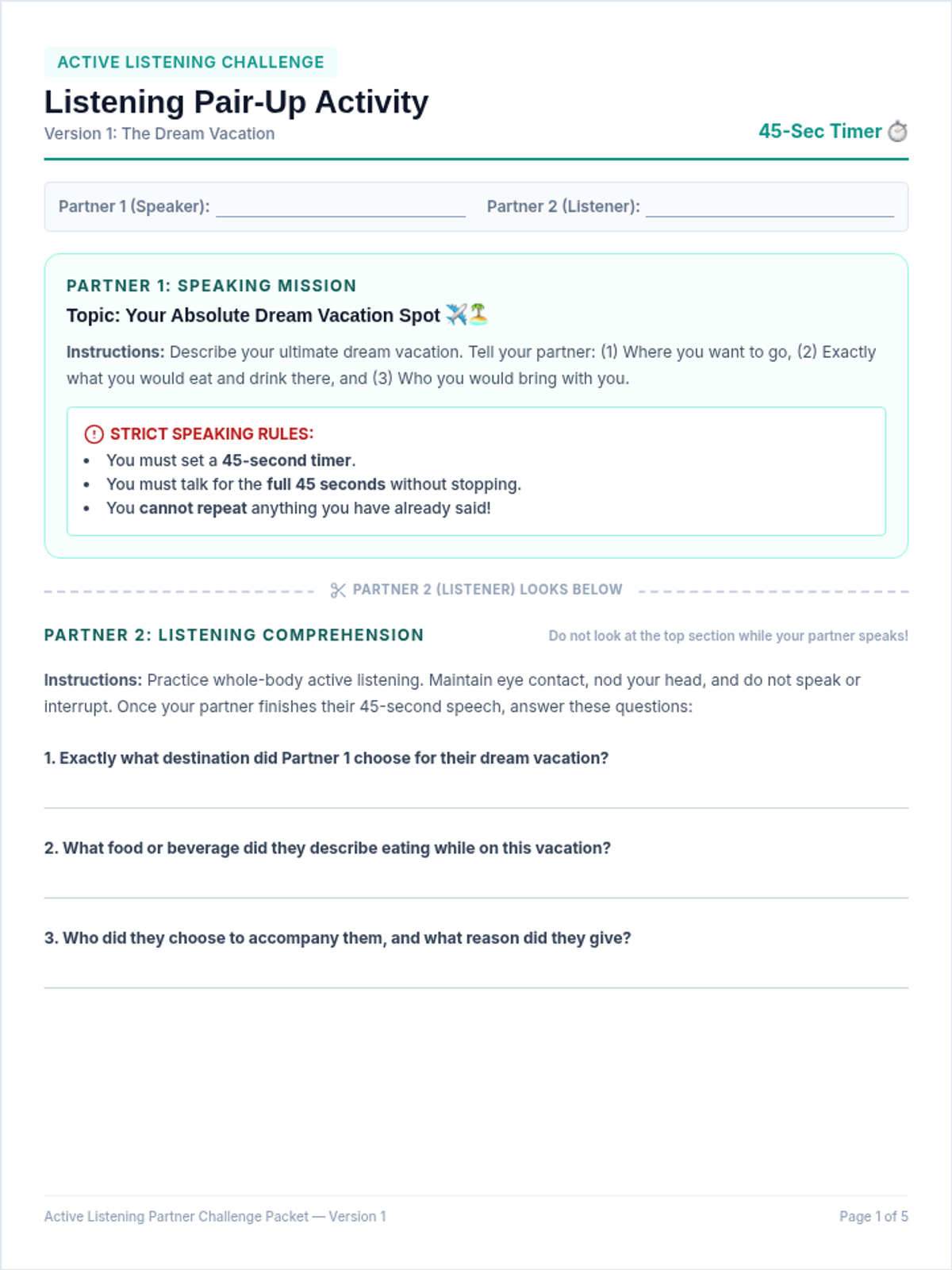
This introductory lesson establishes the fundamental principles of teamwork, verbal/nonverbal communication, and active listening. Students learn roles in a team and practice active listening through partner exercises, connecting these self-advocacy skills directly to workplace readiness and internships.
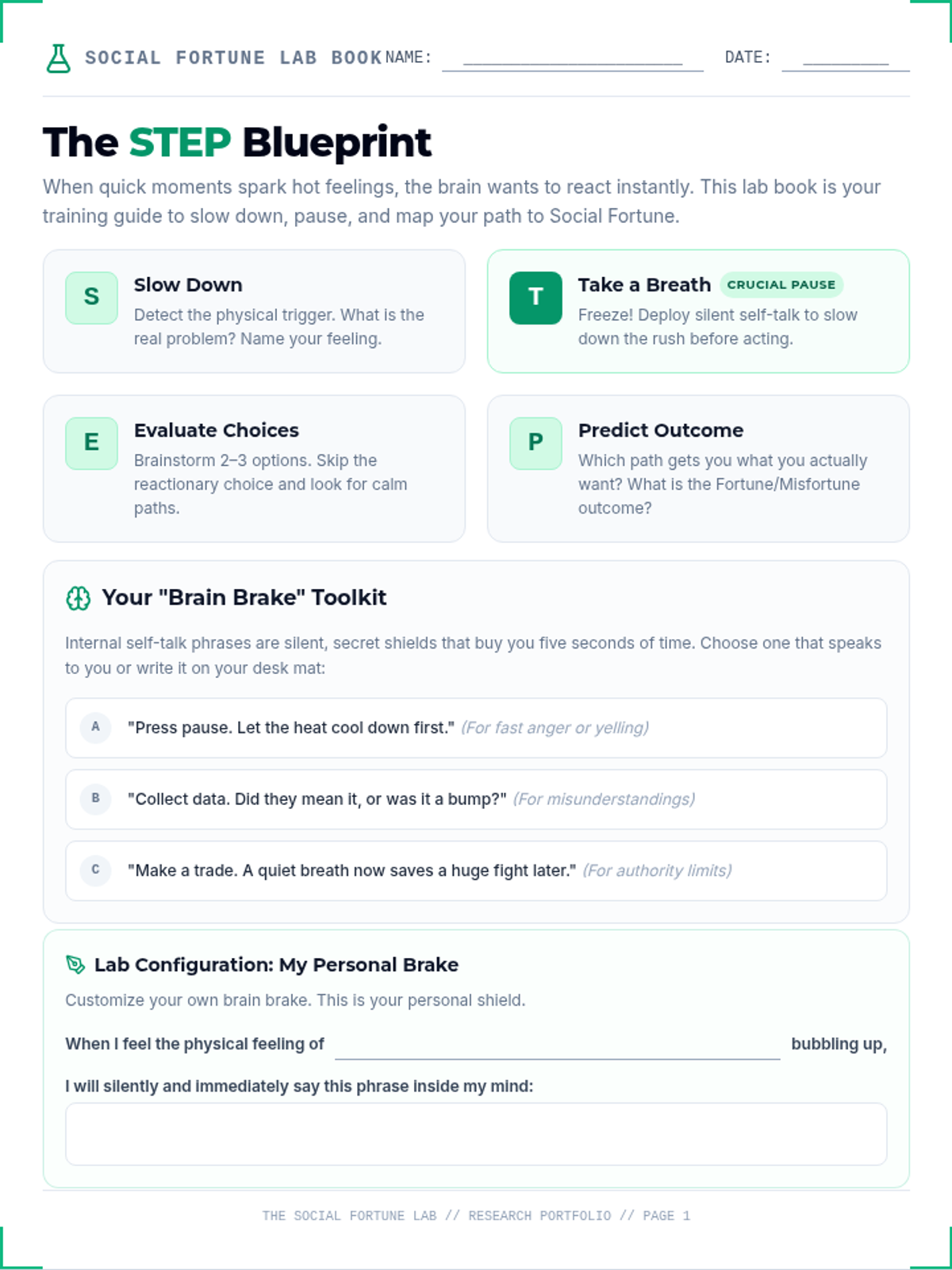
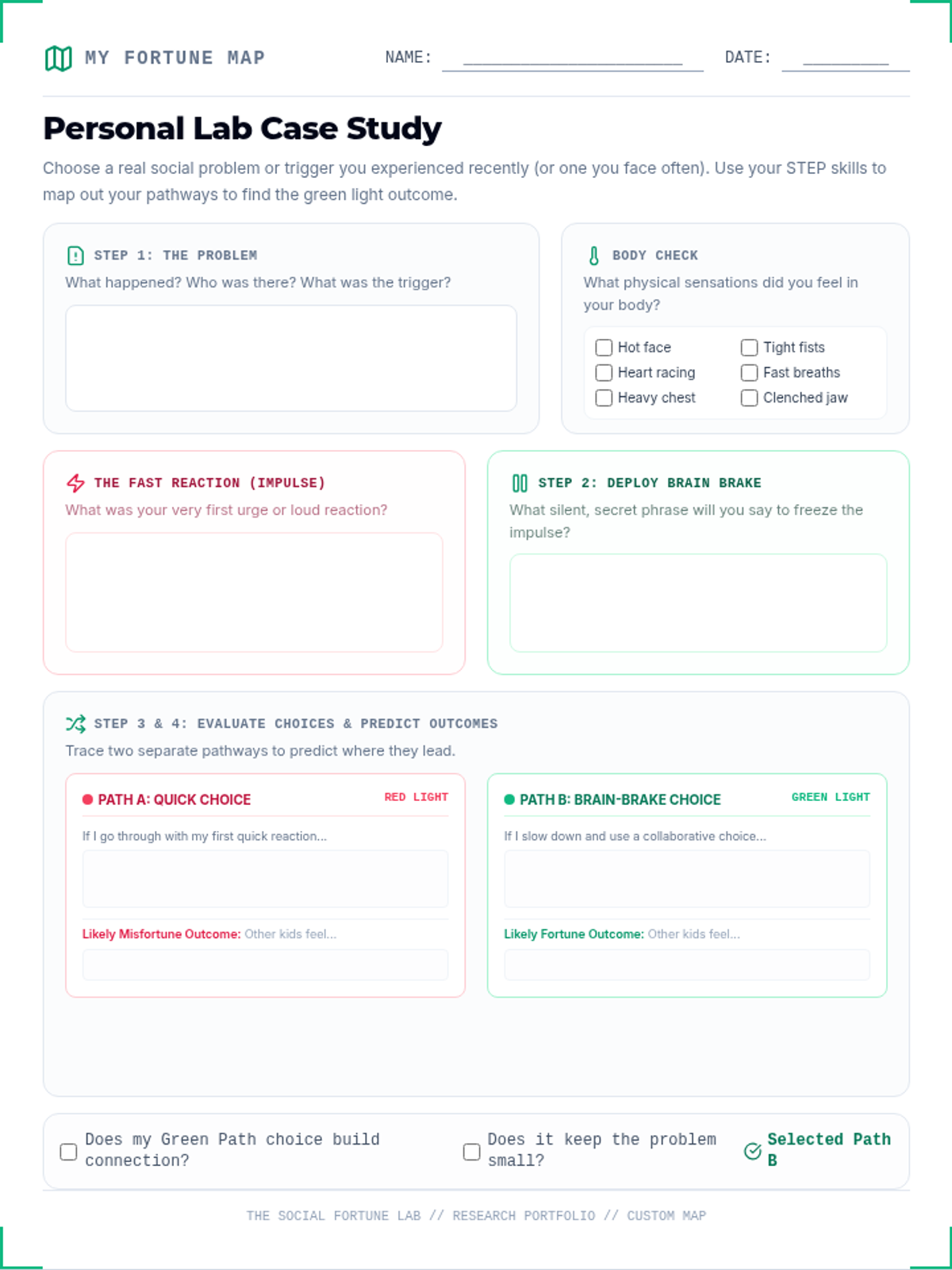
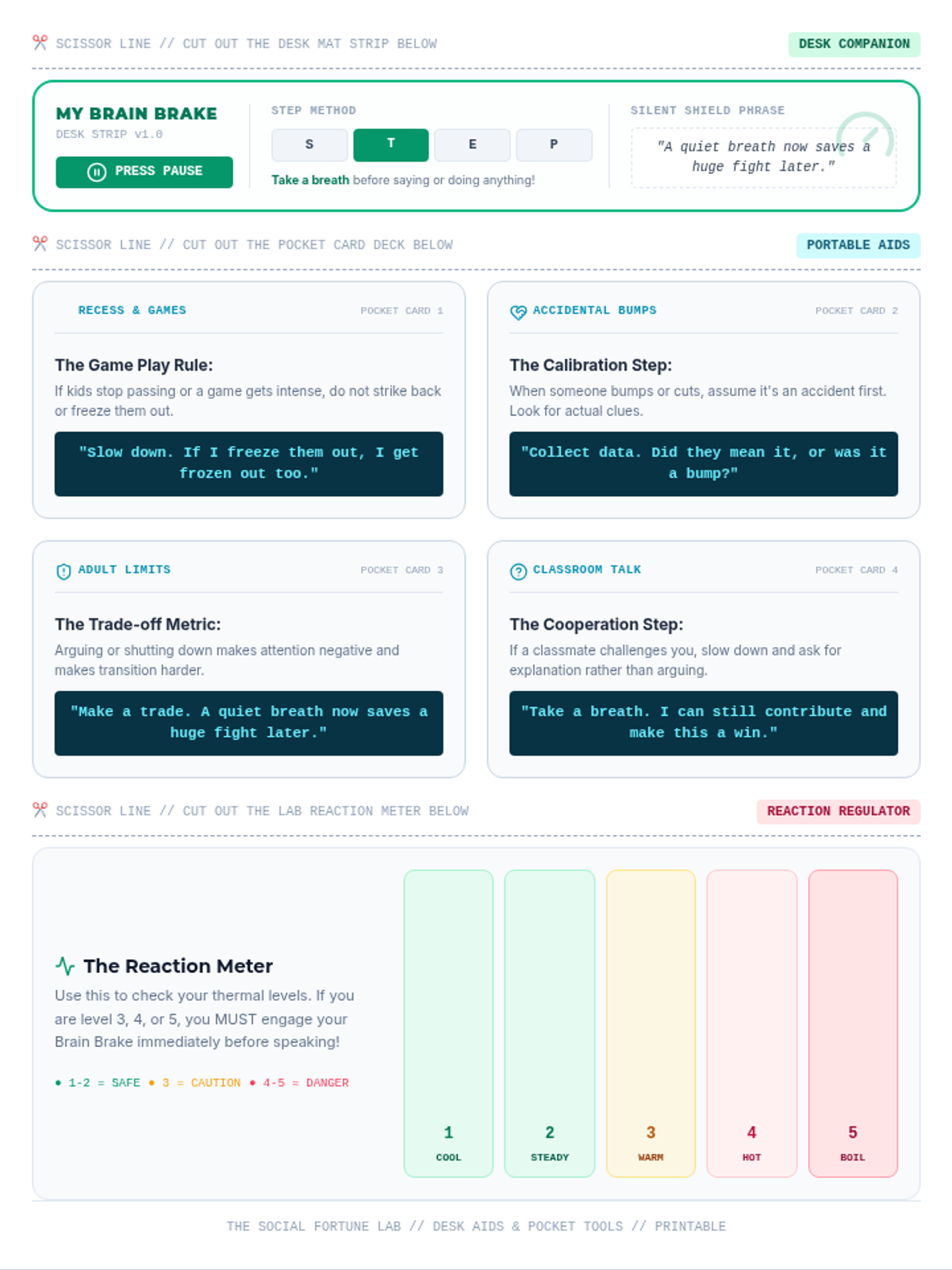
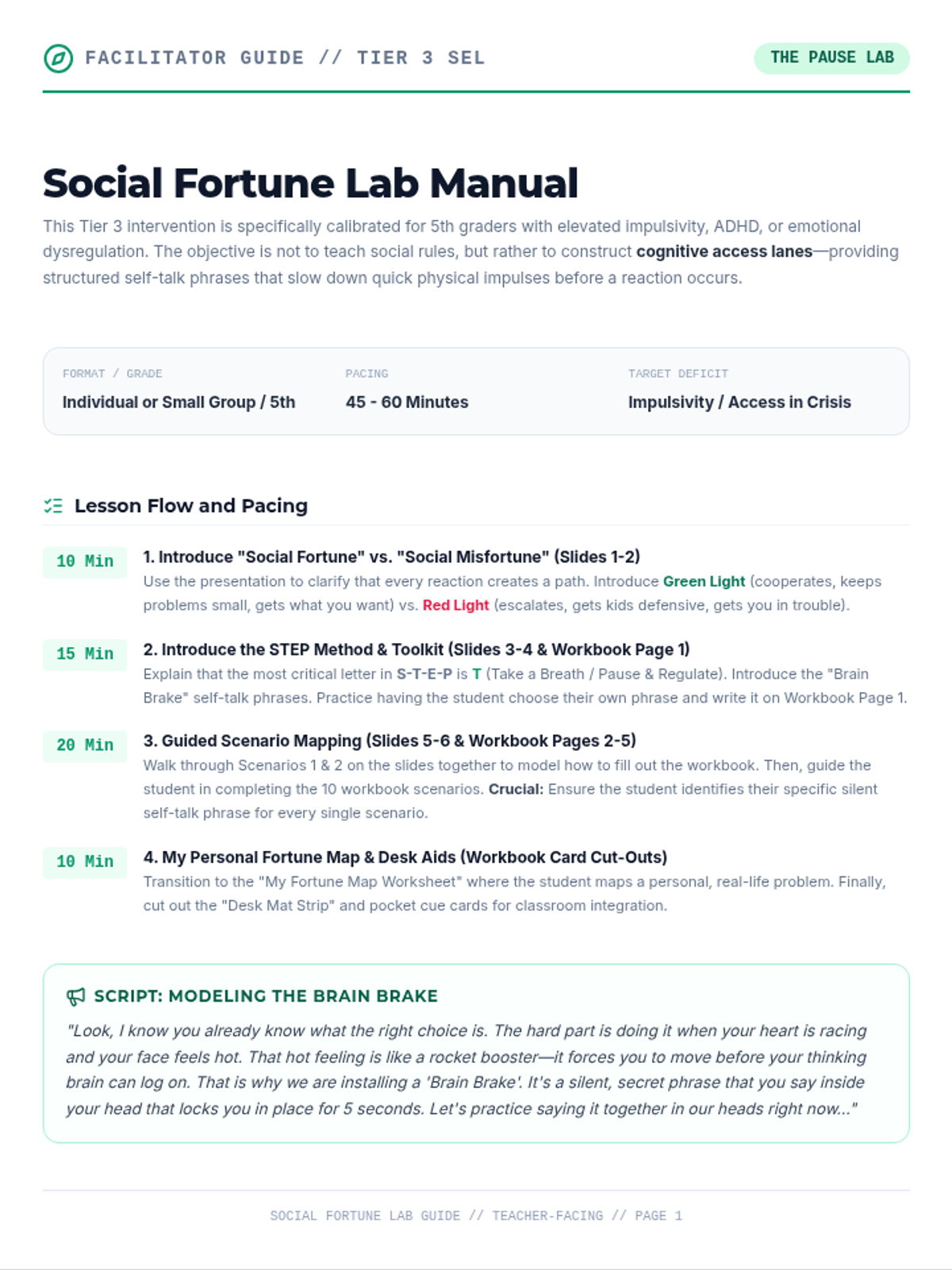
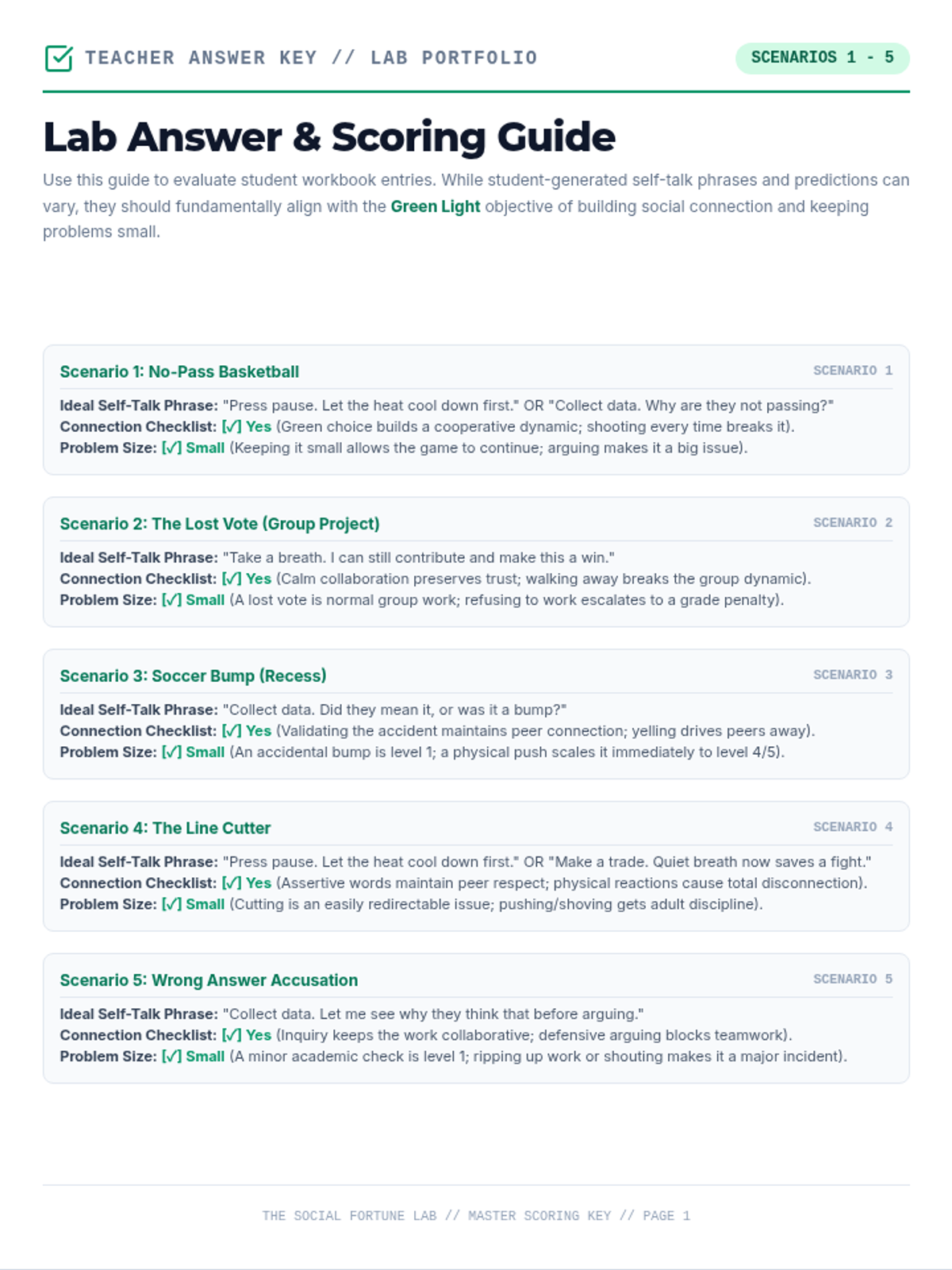
A intensive Tier 3 social-emotional learning lesson for 5th graders designed to slow down impulsive reactions, utilize the STEP framework, regulate with internal self-talk, and predict 'Social Fortune vs. Social Misfortune' outcomes across real-life scenarios.
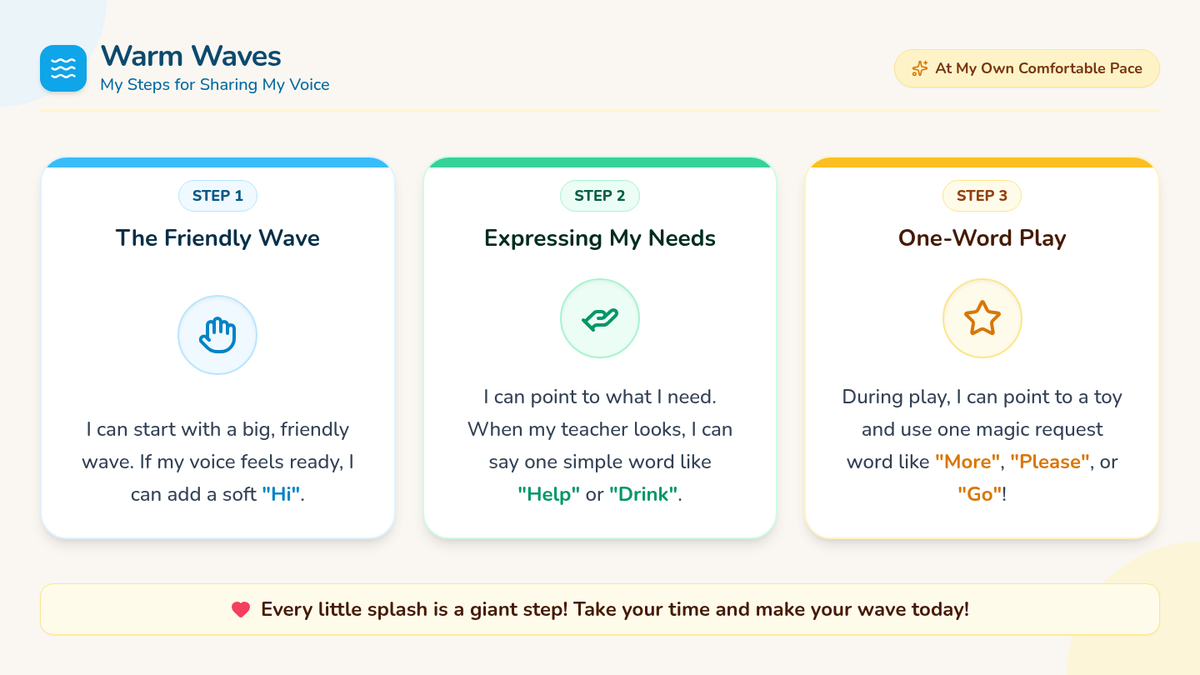
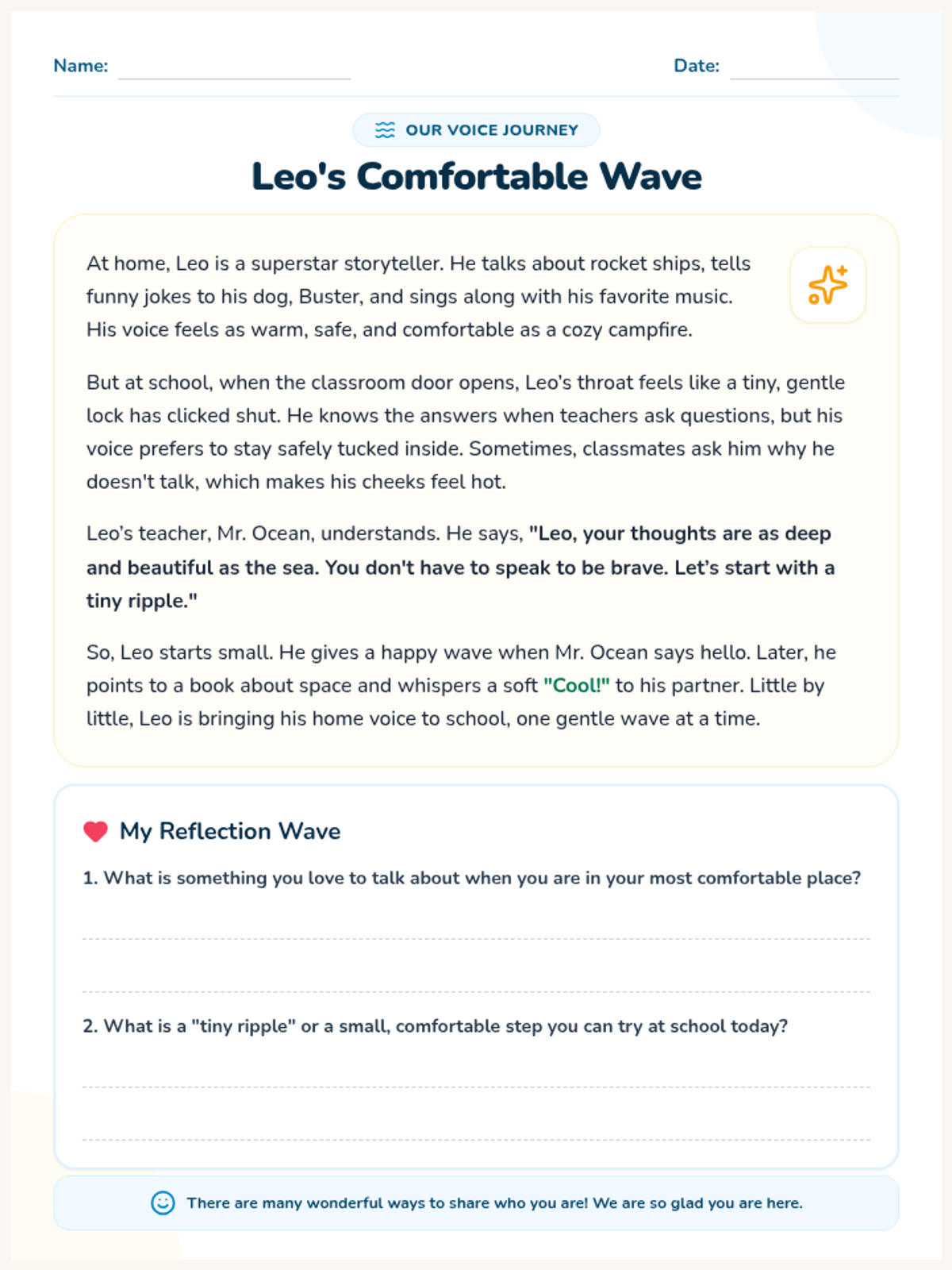
A gentle, step-by-step social narrative lesson designed for second graders who are beginning to vocalize in the classroom. This mini-lesson uses a warm, low-pressure approach to model friendly greetings, expressing basic needs, and making simple one-word requests at the student's own comfortable pace.
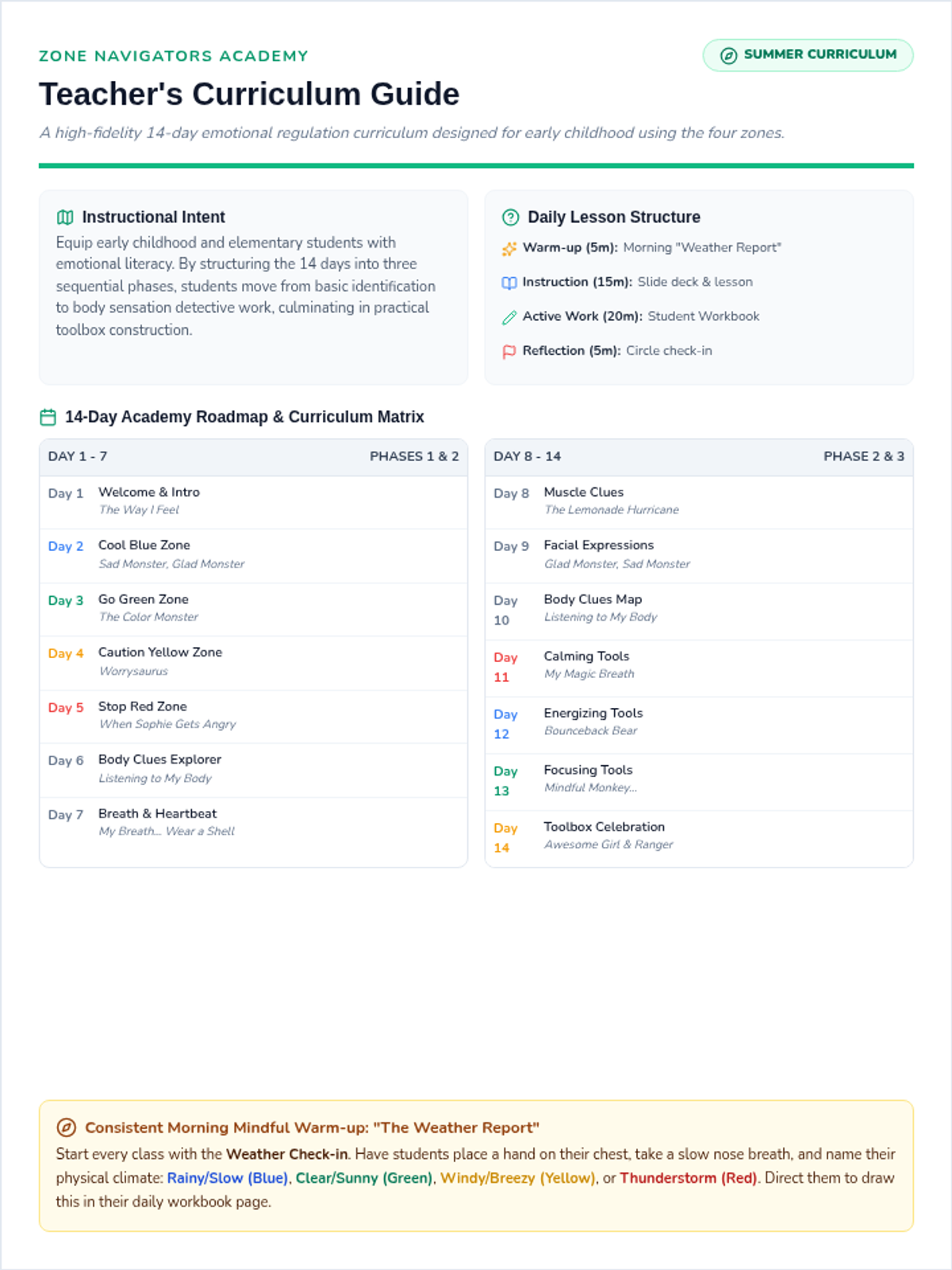
Focuses on Days 11 to 14 of the summer academy, introducing, practicing, and mastering specific calming, focusing, and energizing strategies for self-regulation across all zones.
Focuses on Days 6 to 10 of the summer academy, helping students identify how emotions feel in their physical bodies and mapping physical sensations to their emotional zones.
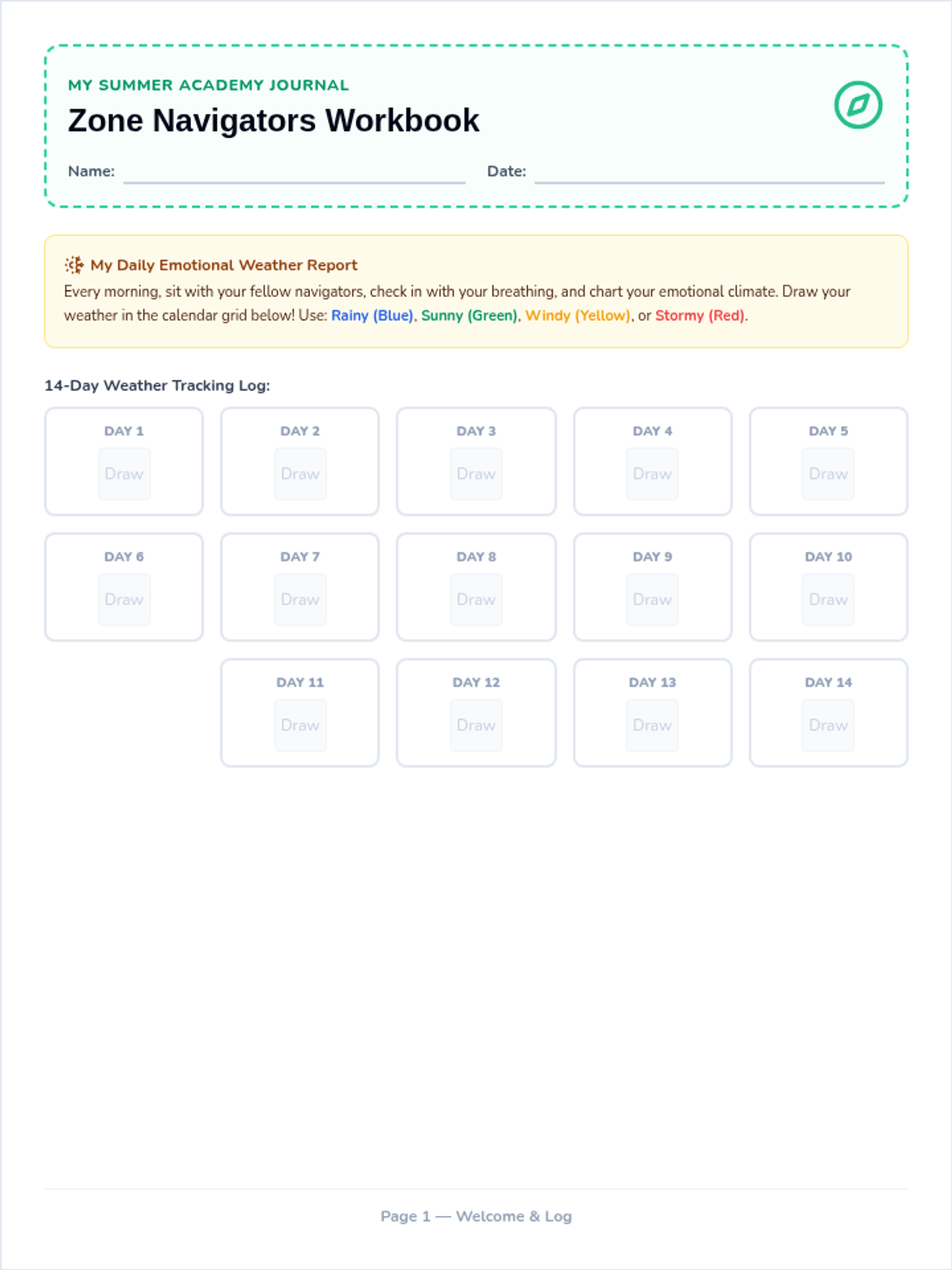
Focuses on Days 1 to 5 of the summer academy, introducing the four emotional zones (Blue, Green, Yellow, and Red) and helping students identify and name their core emotions within each zone.
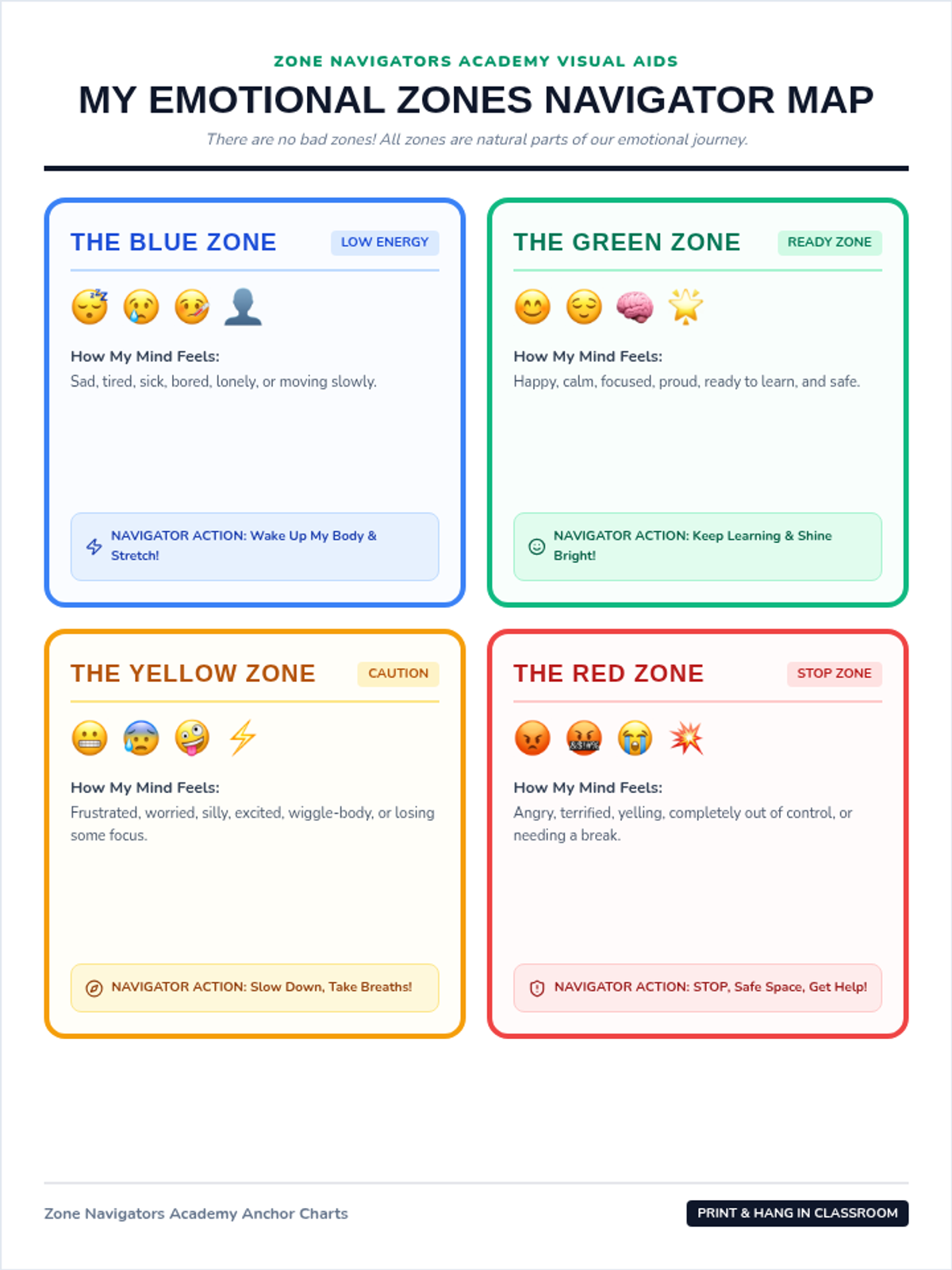
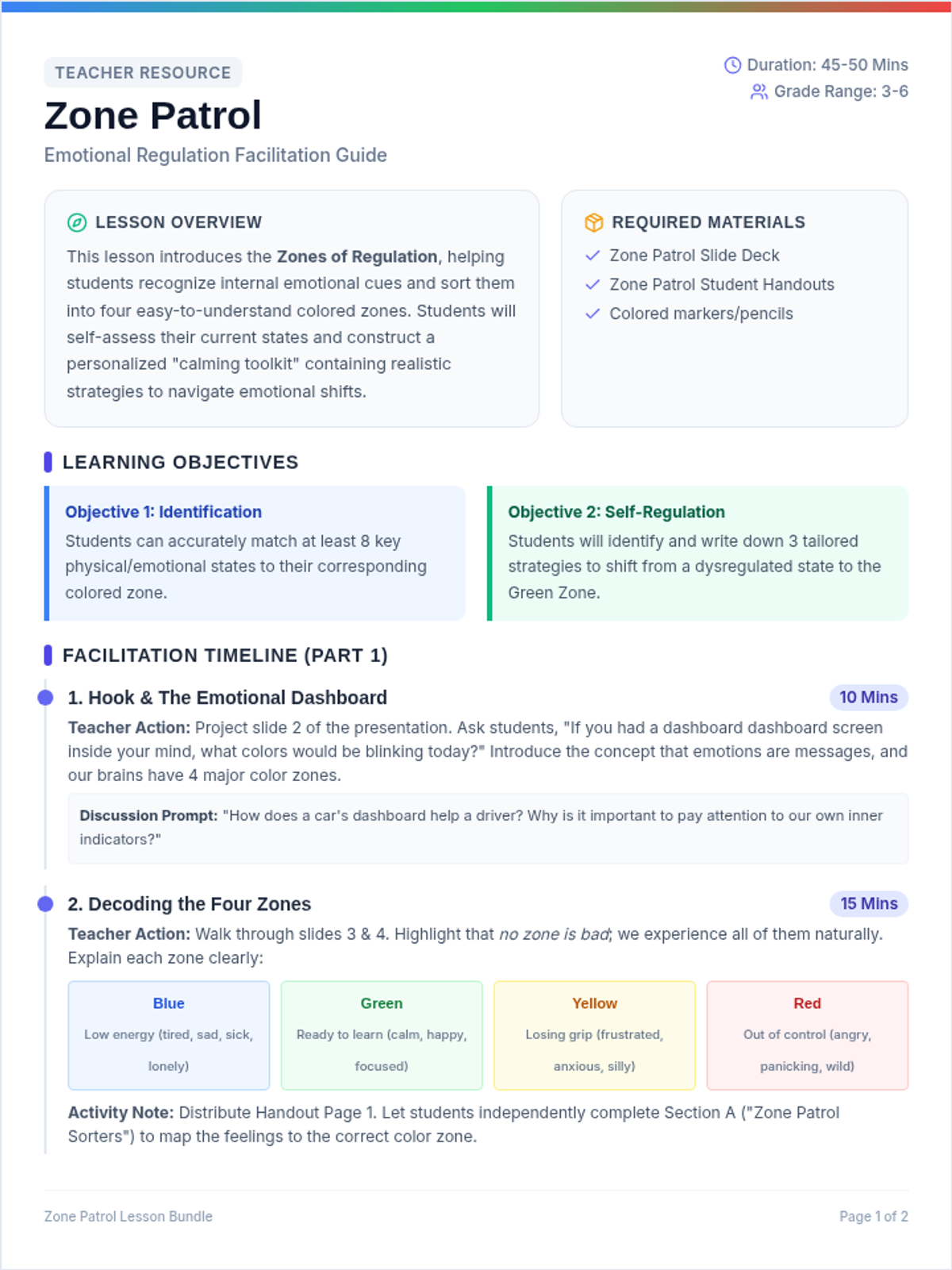
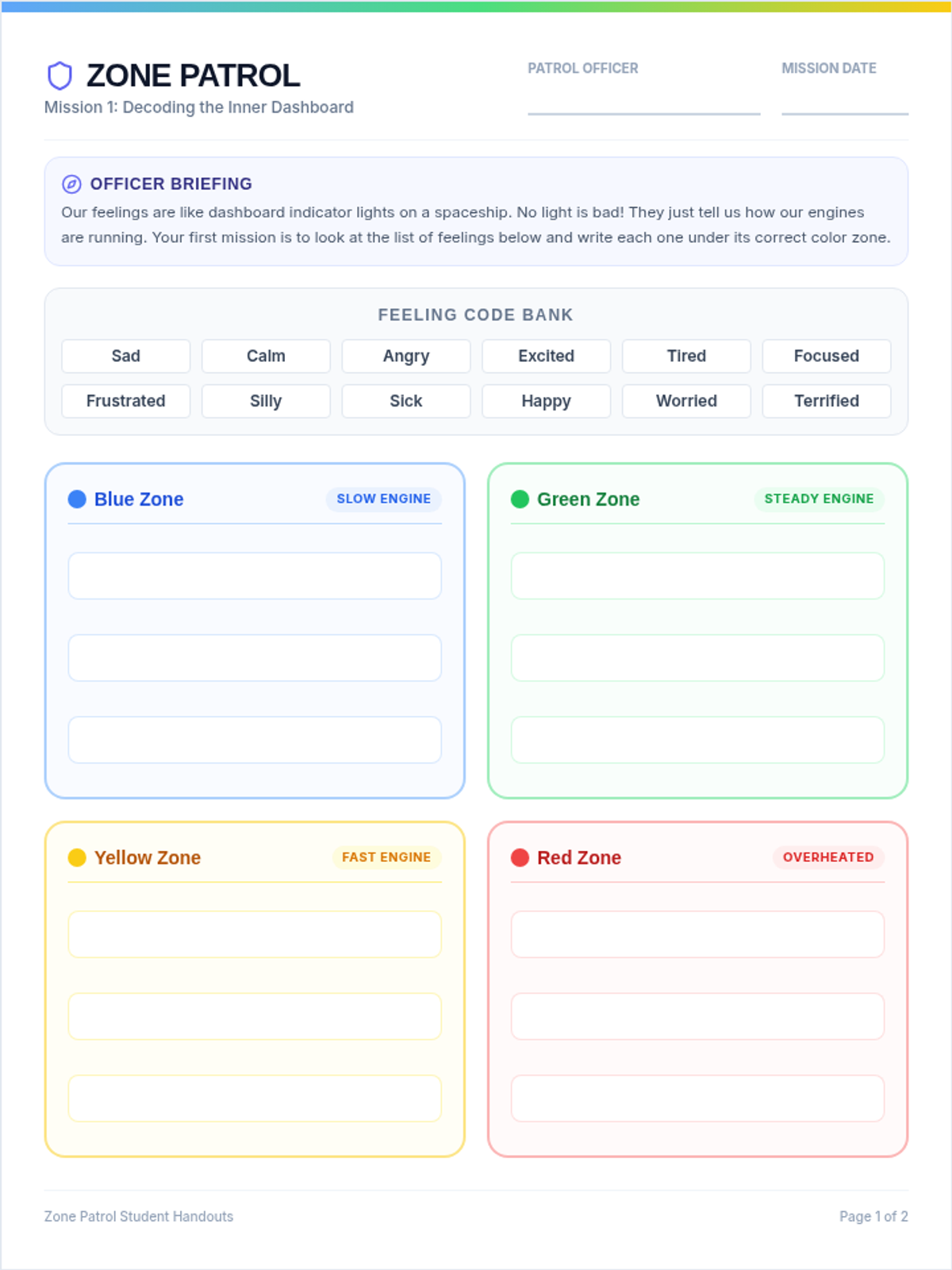
An engaging elementary-to-middle school lesson focusing on the Zones of Regulation. Students learn to identify their feelings, categorize them into the four color zones, and construct a personal toolbox of calming strategies.
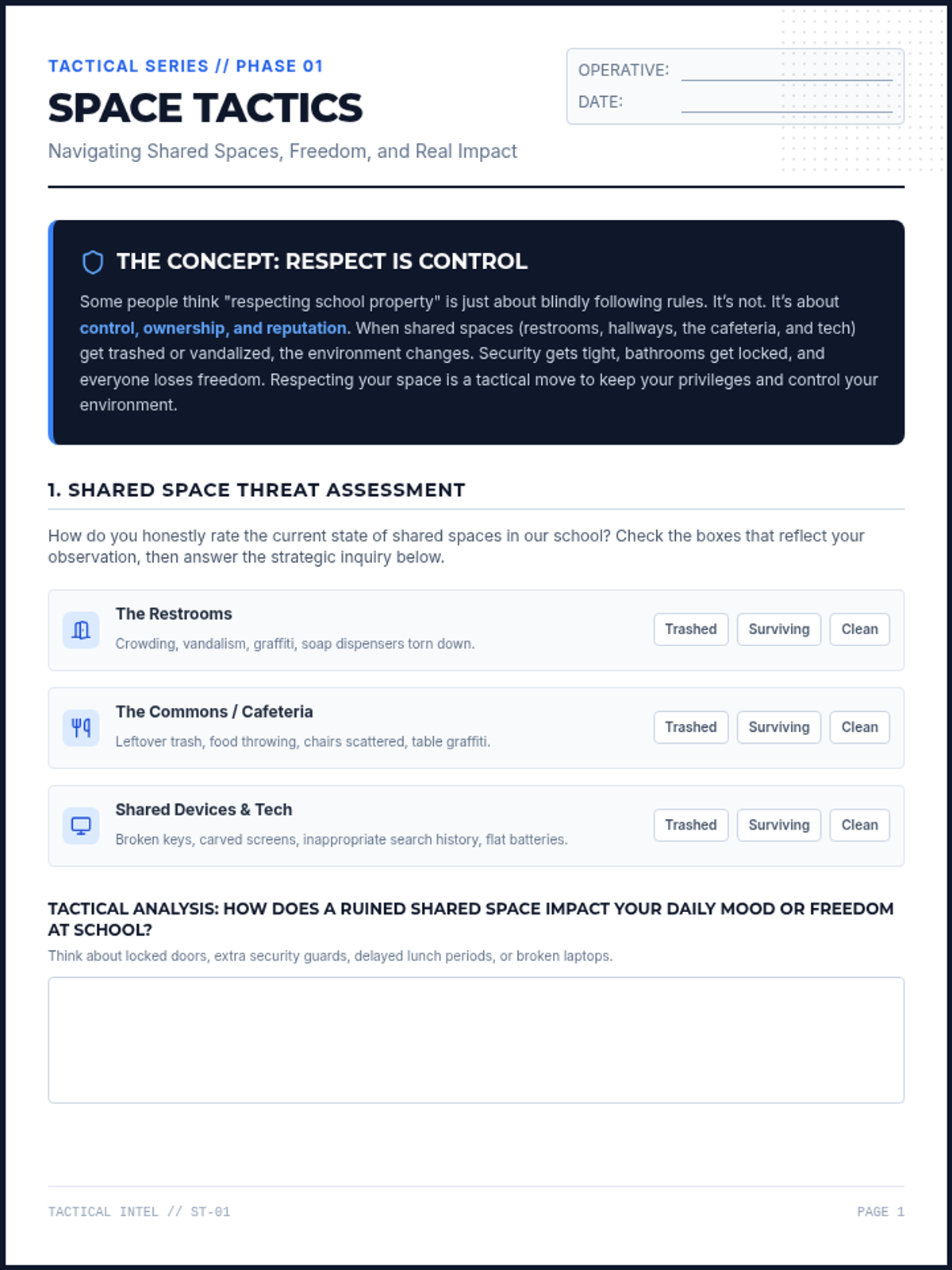
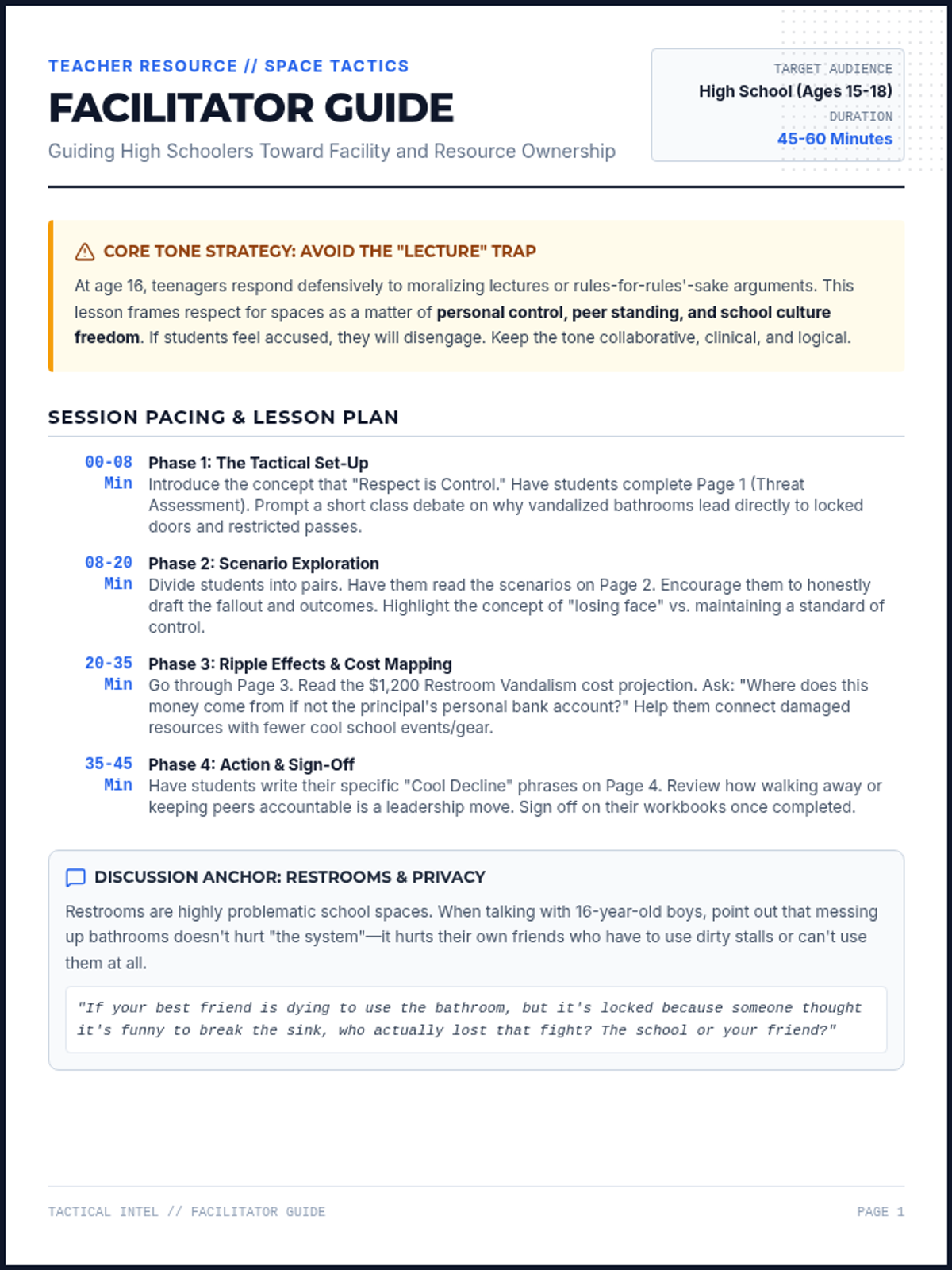
An interactive, scenario-based workbook lesson designed for high schoolers (specifically targeting 16-year-olds) focusing on respecting shared school spaces, facilities, and resources. The lesson uses relatable dilemmas, decision-tree consequence mapping, and tactical reflection to build accountability without patronizing.
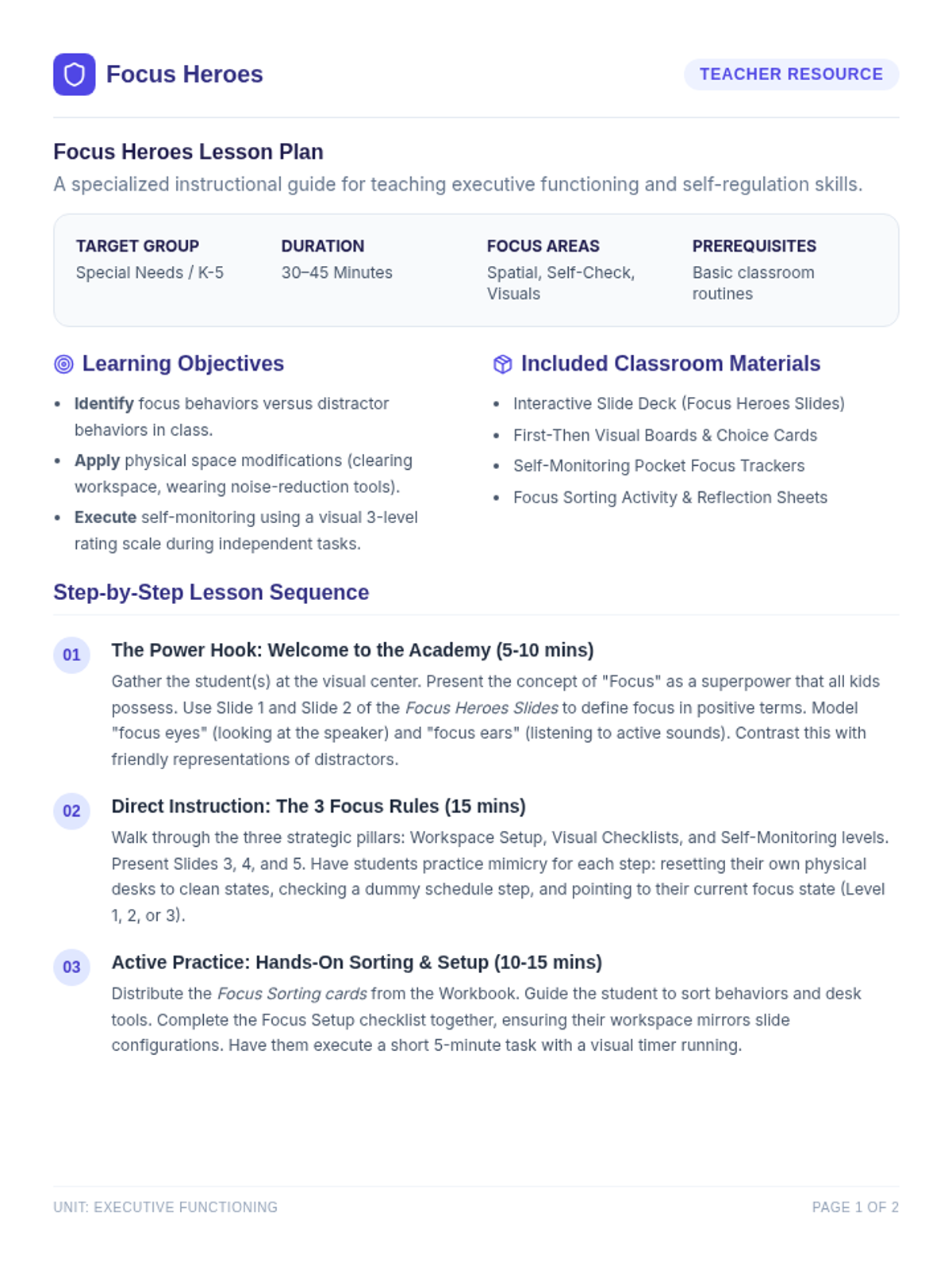
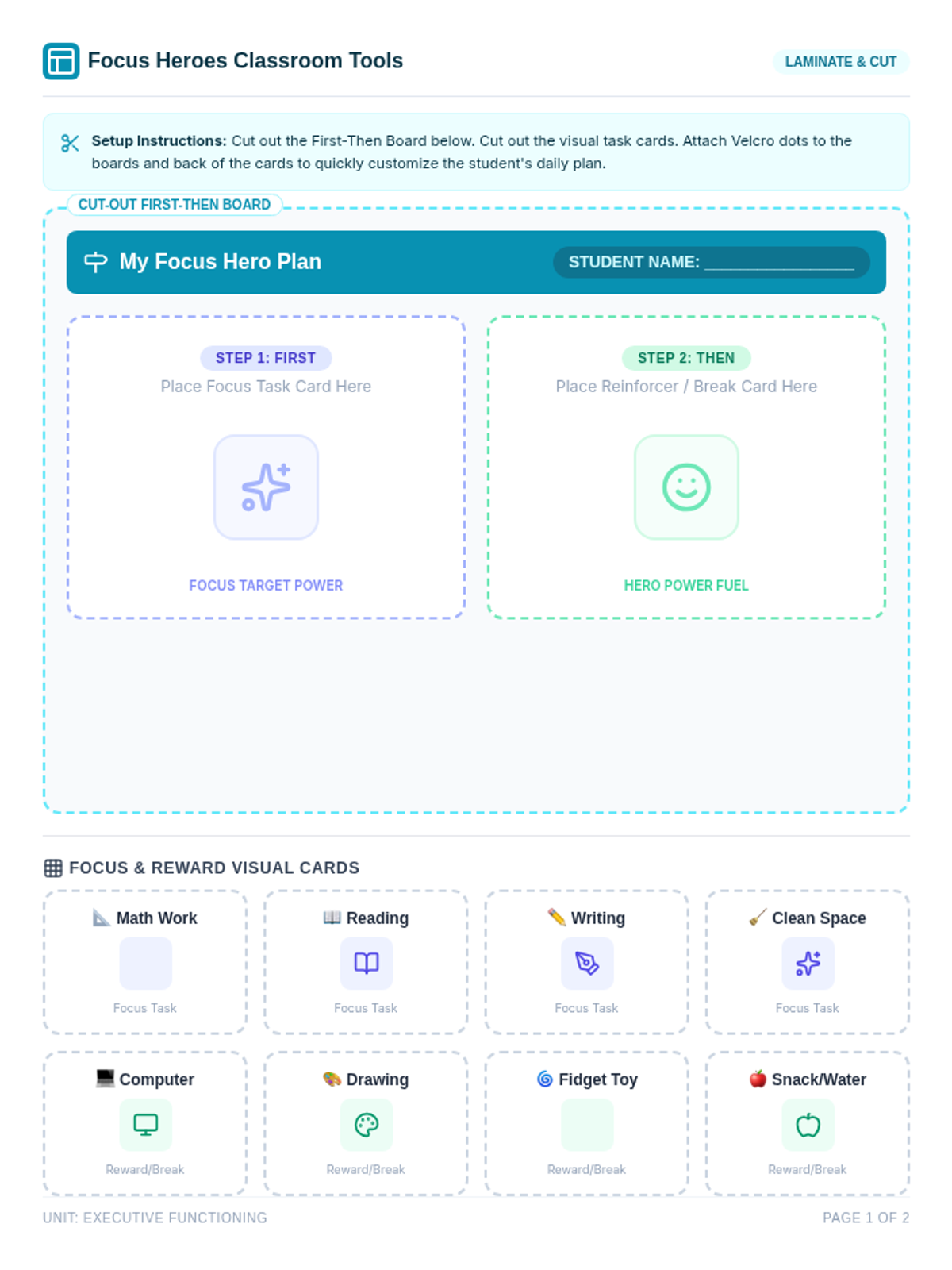
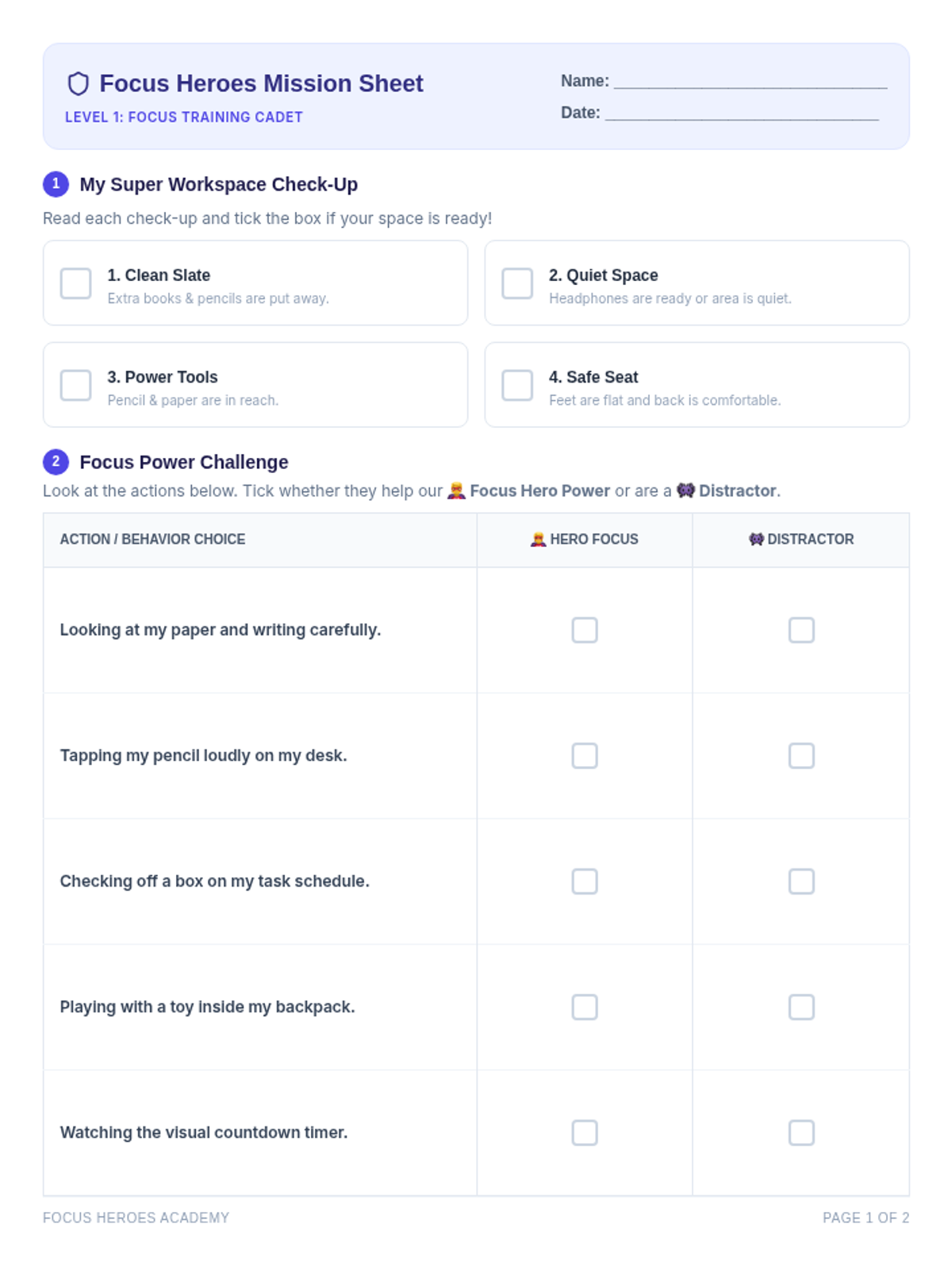
A specialized lesson designed to teach focus strategies, self-monitoring, and environmental adjustments to students with special needs, featuring concrete visual aids and self-regulation tools.