A high-engagement therapeutic game pack and session plan for 8th-grade students with ADHD, focusing on the Stop-Think-Act impulse control strategy. Designed with a retro-futuristic mecha theme to maintain focus and promote active roleplay.
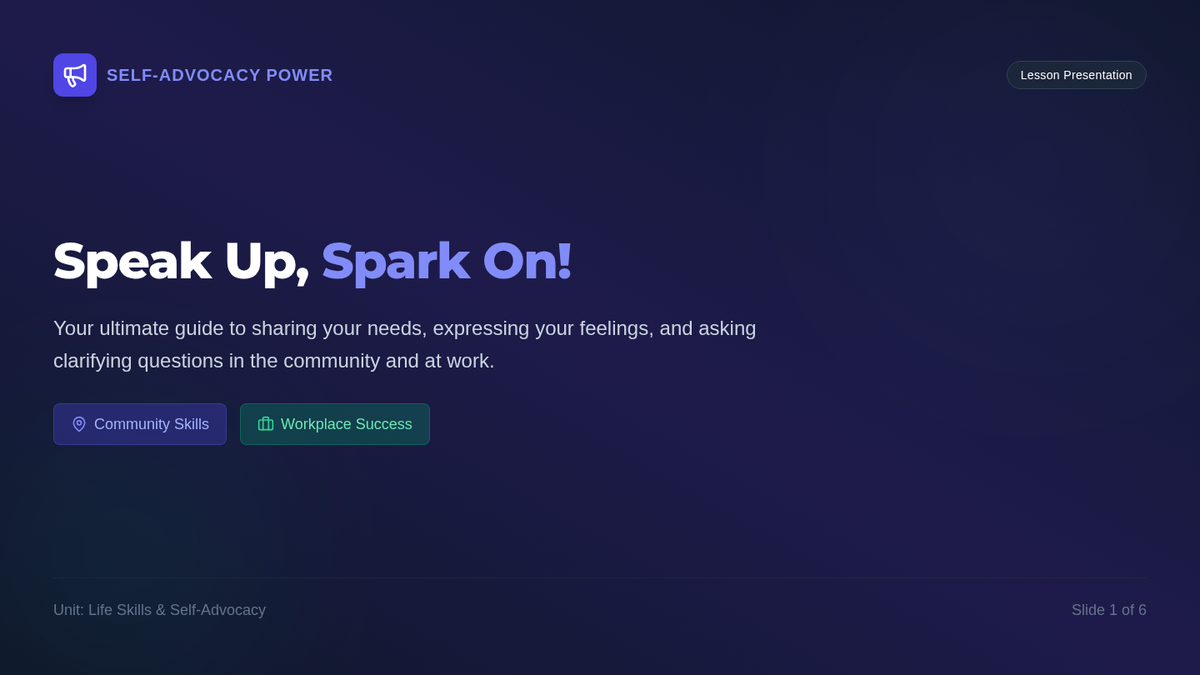
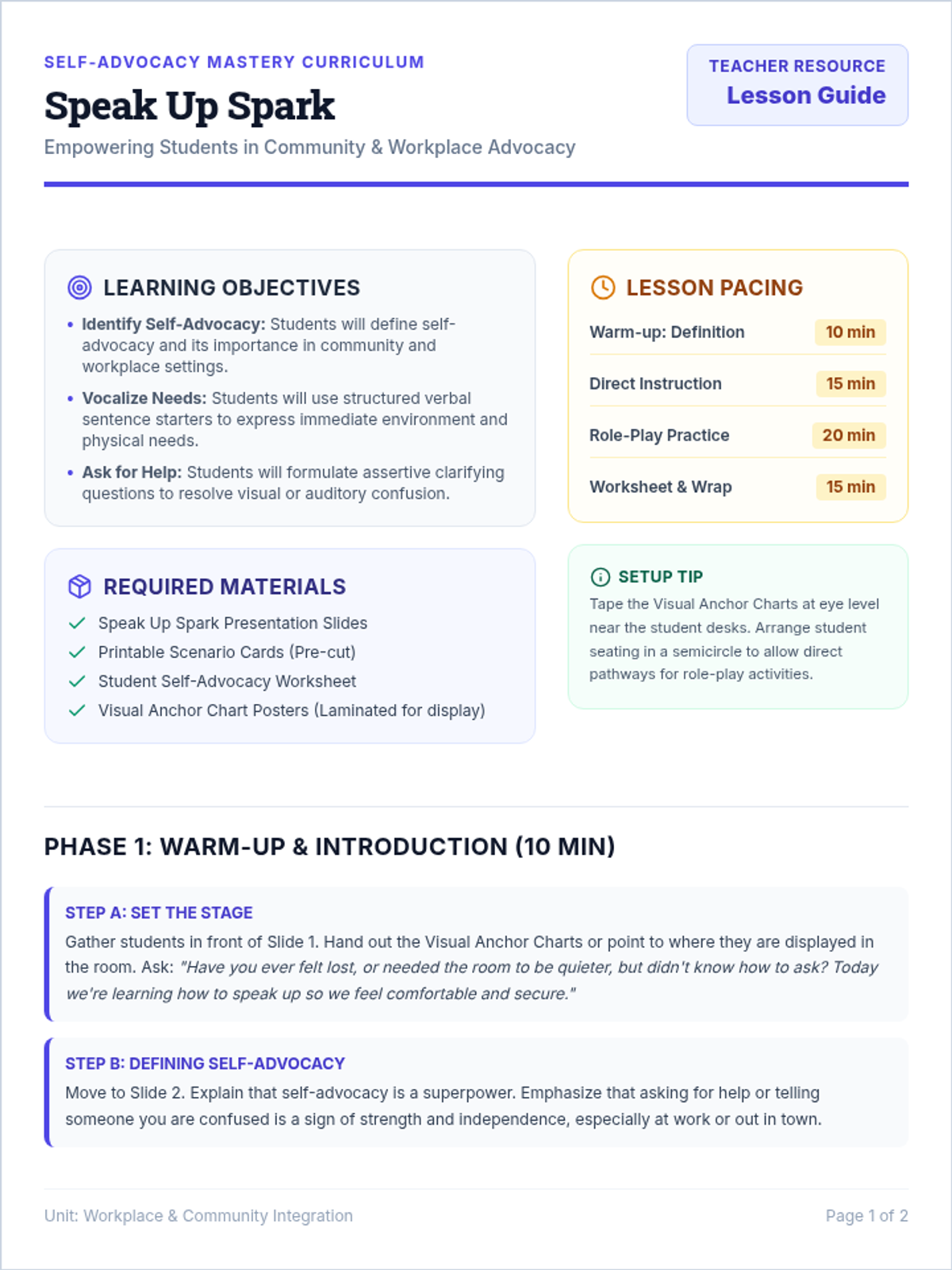
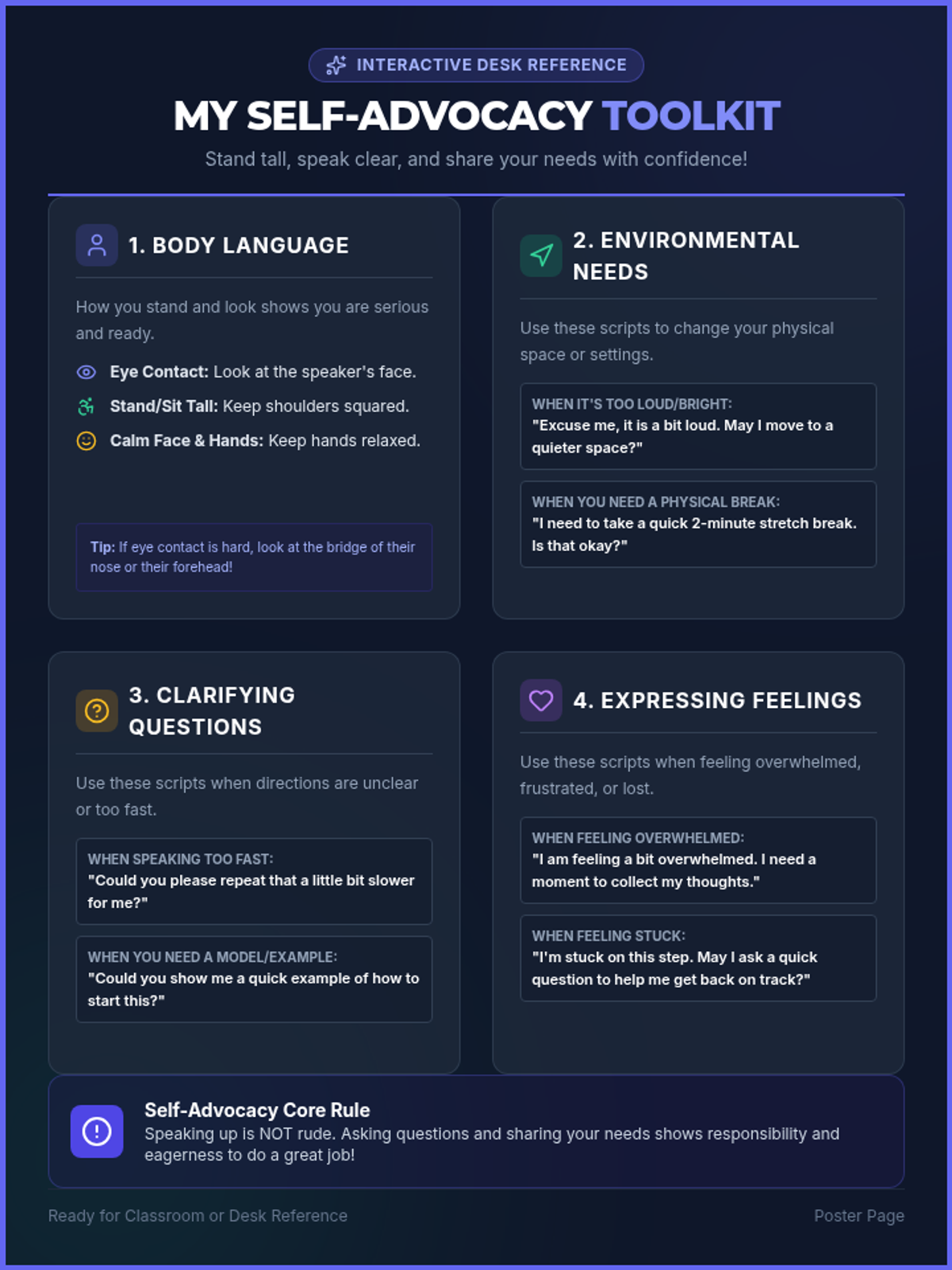
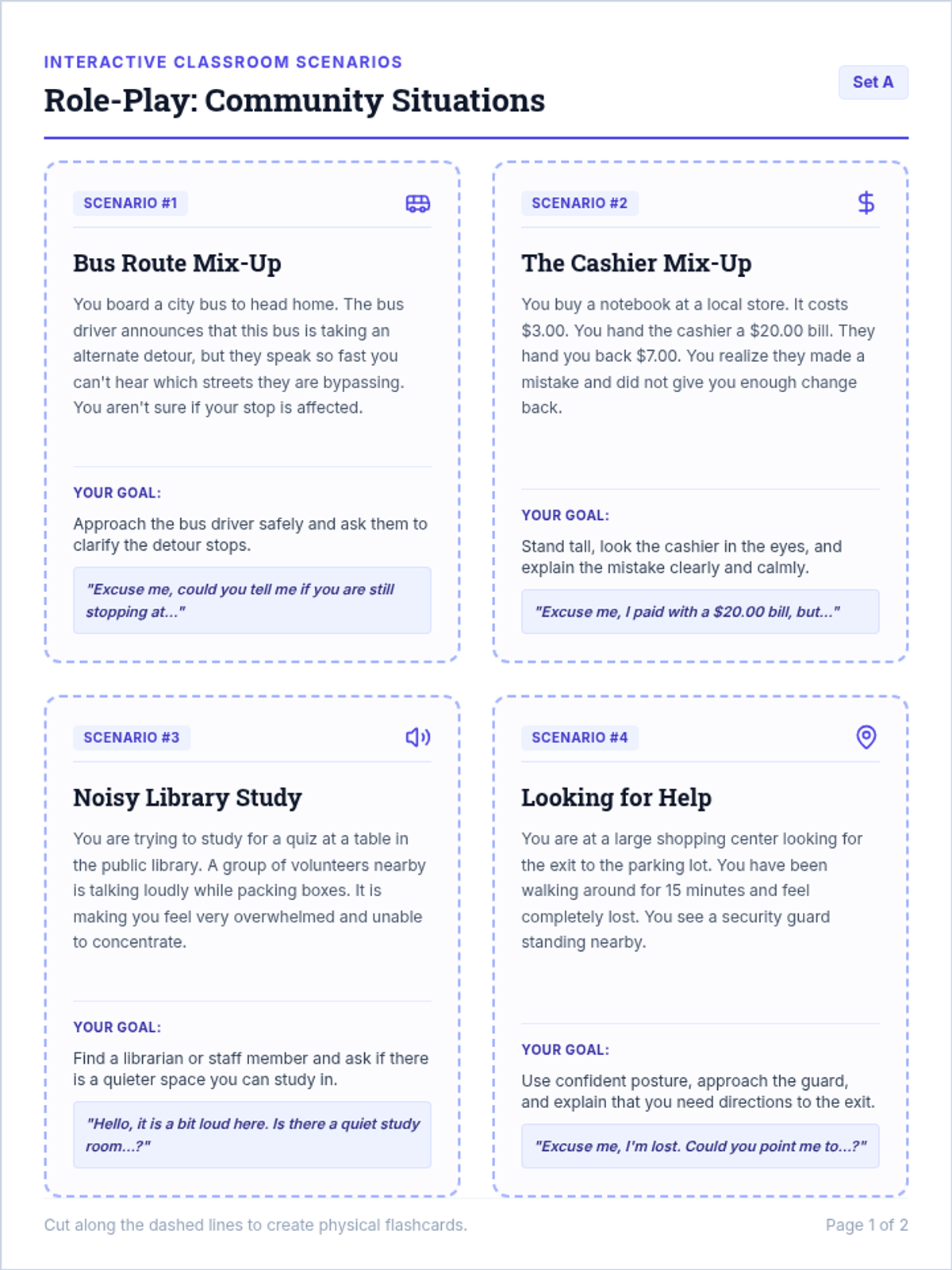
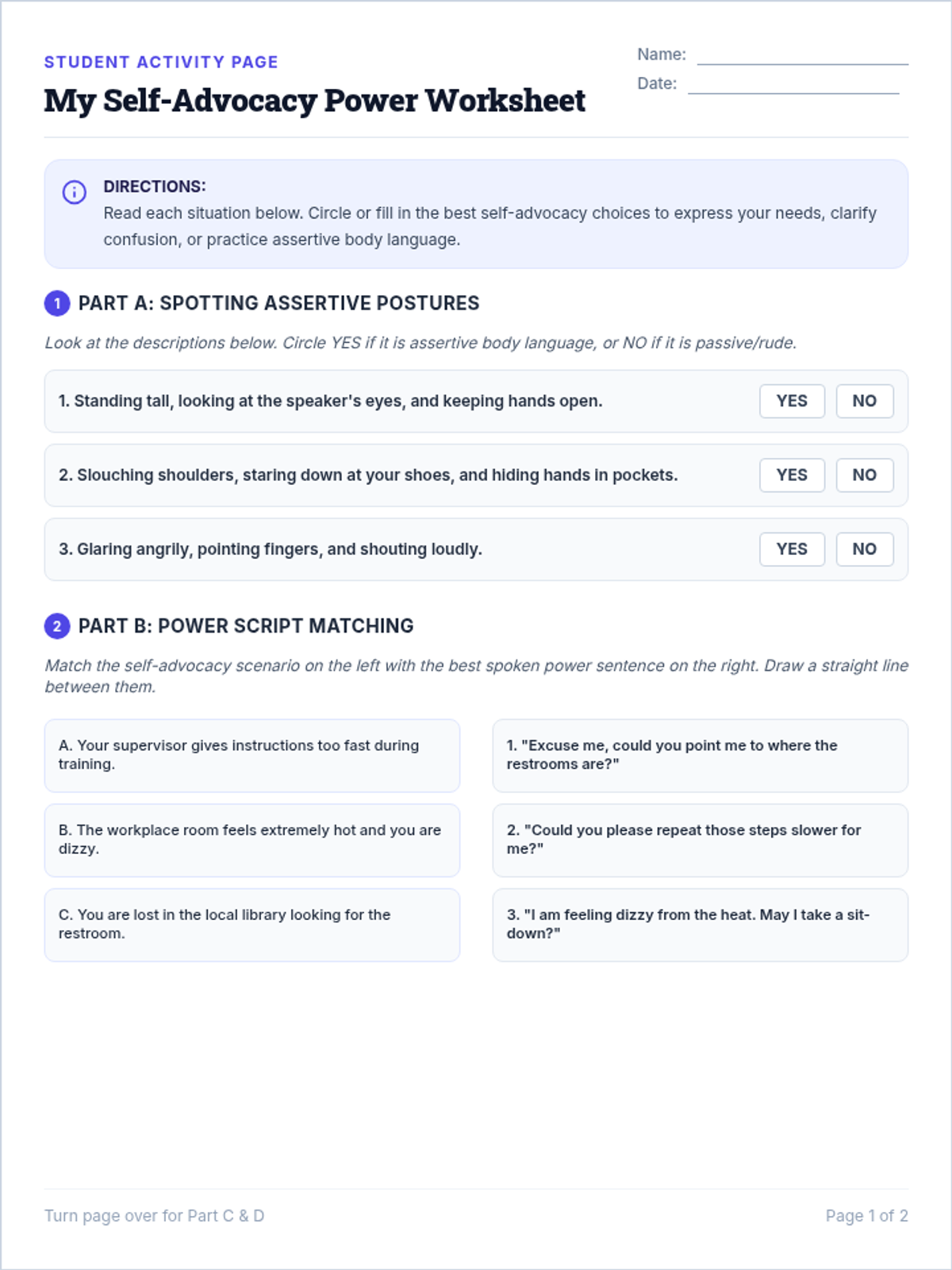
A comprehensive lesson plan and activity bundle designed to empower students with disabilities to practice self-advocacy in community and workplace settings. The lesson teaches verbal scripts, assertive body language, and clarifying questions through direct instruction, interactive slides, visual anchor charts, role-play cards, and differentiated worksheets.
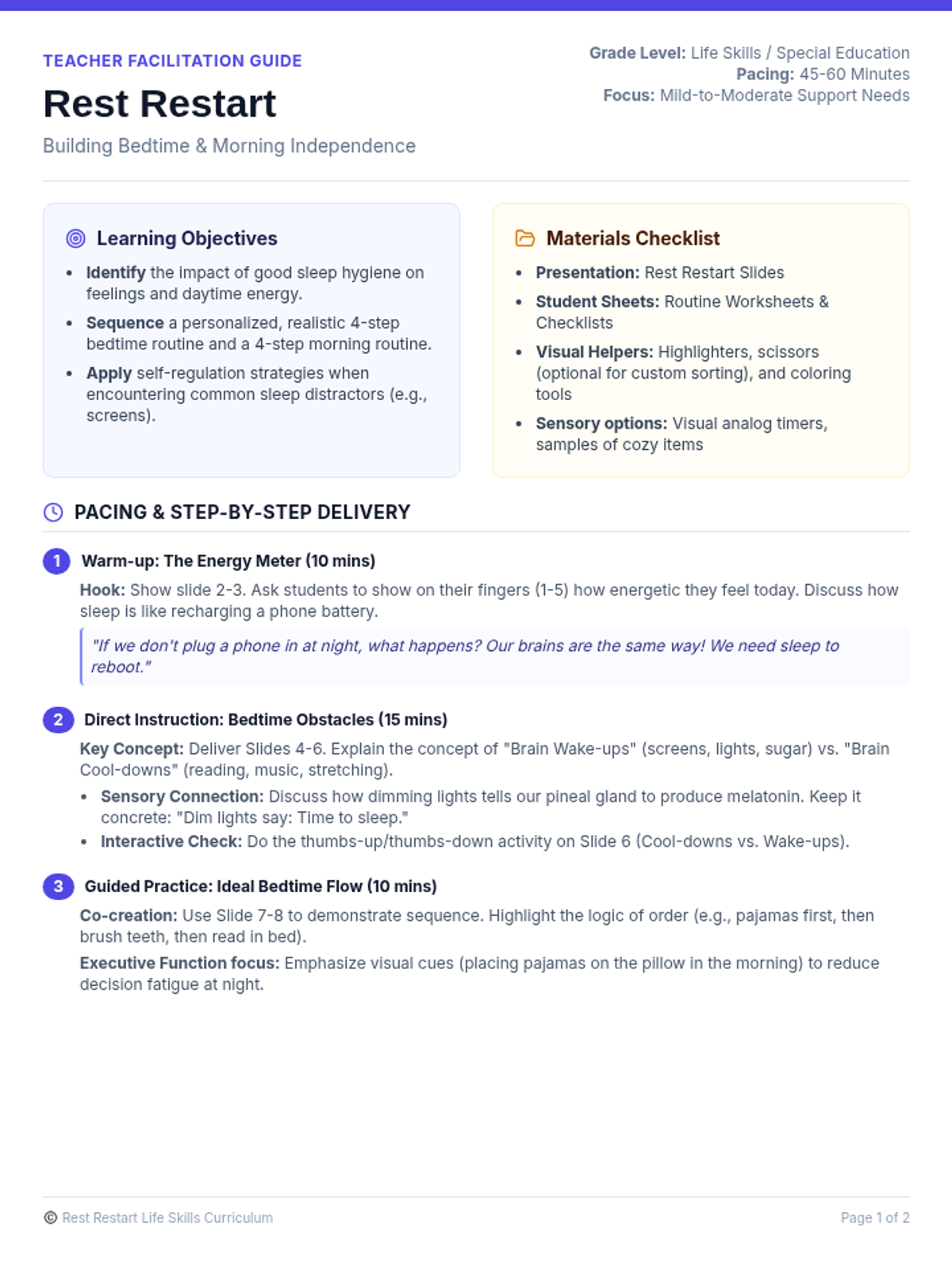
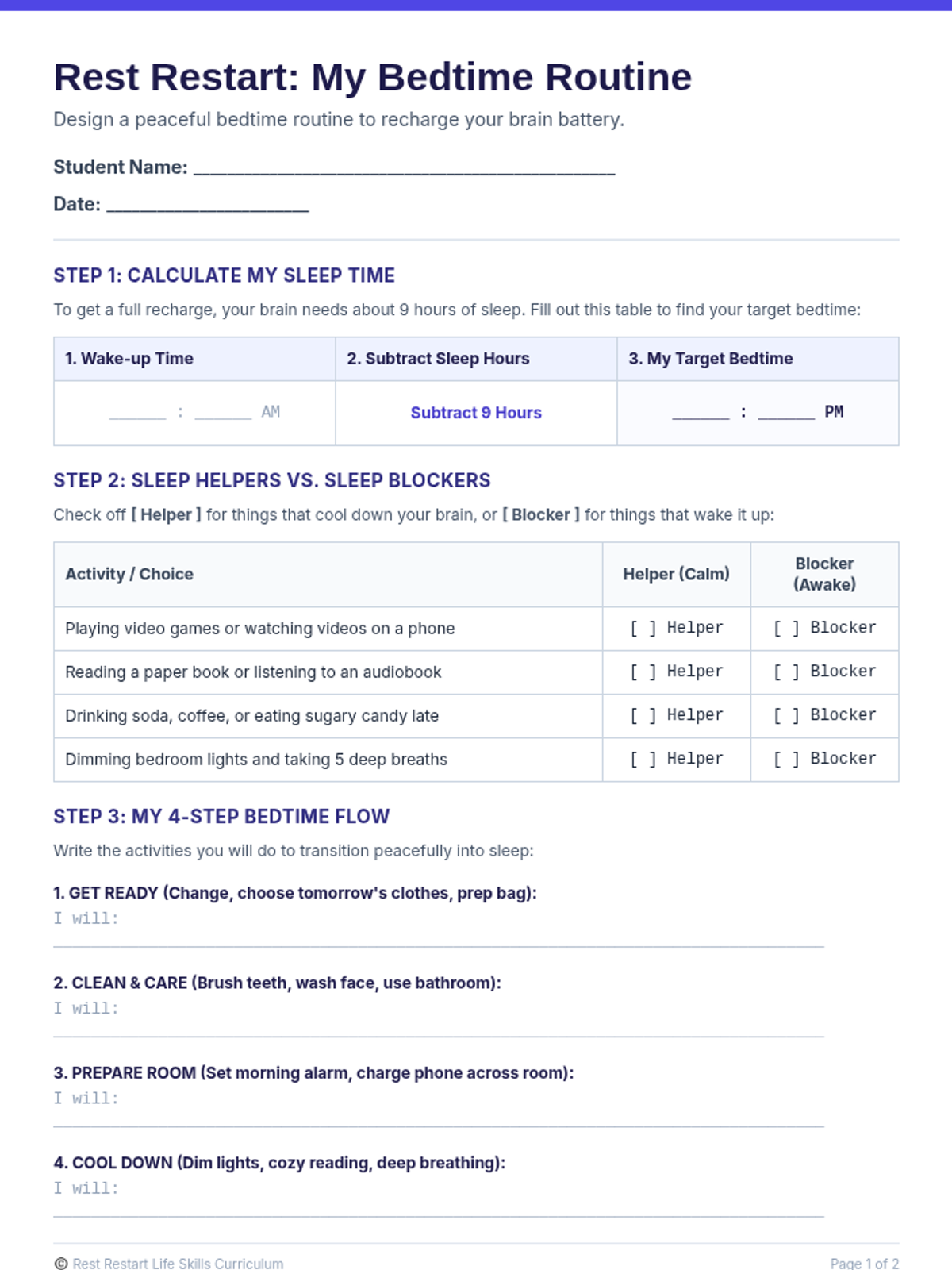
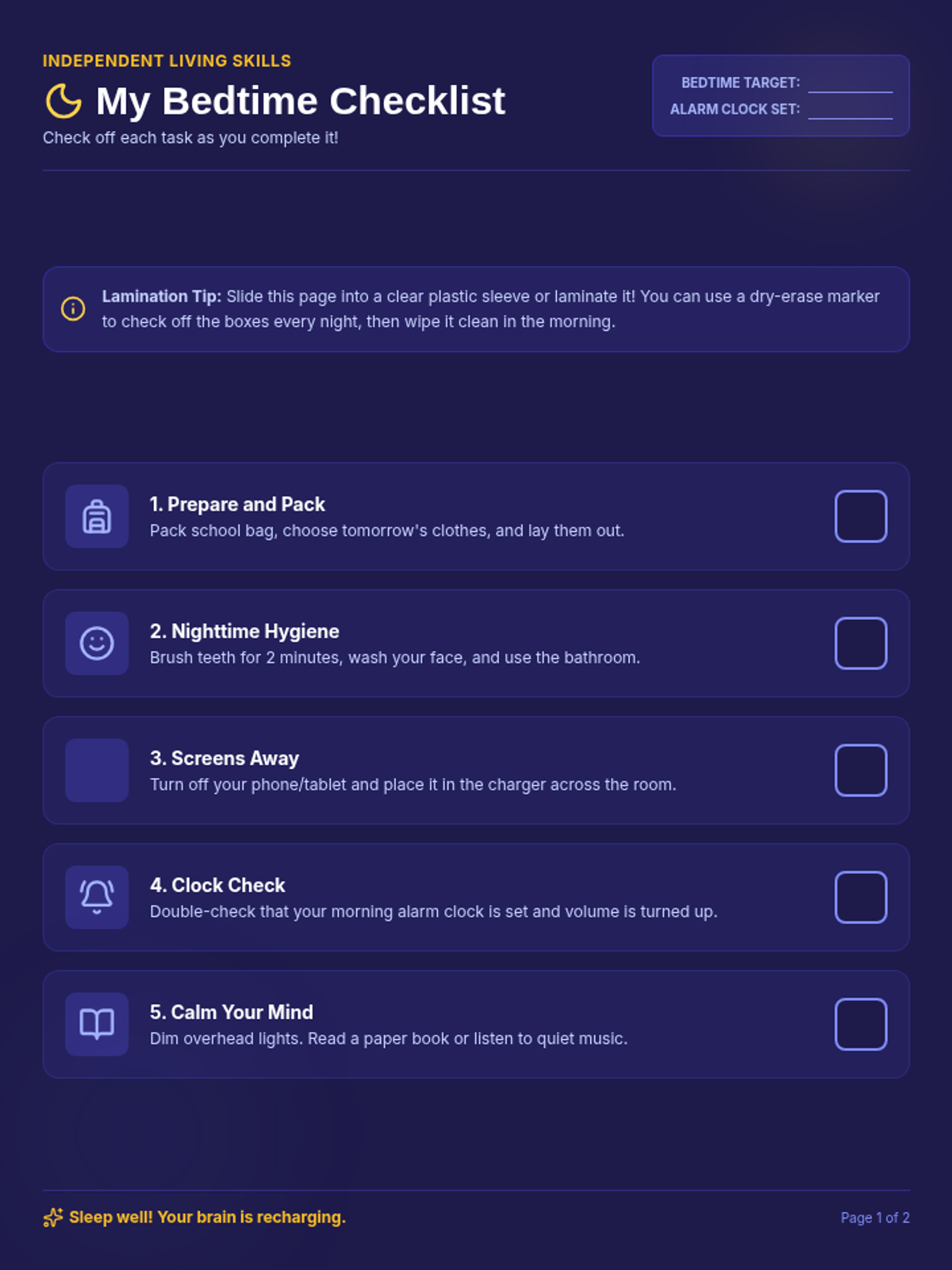
A sleep hygiene lesson designed for students with mild-to-moderate support needs to build independence. It features practical executive functioning tools, structured routines, and visual checklists for bedtime and mornings.
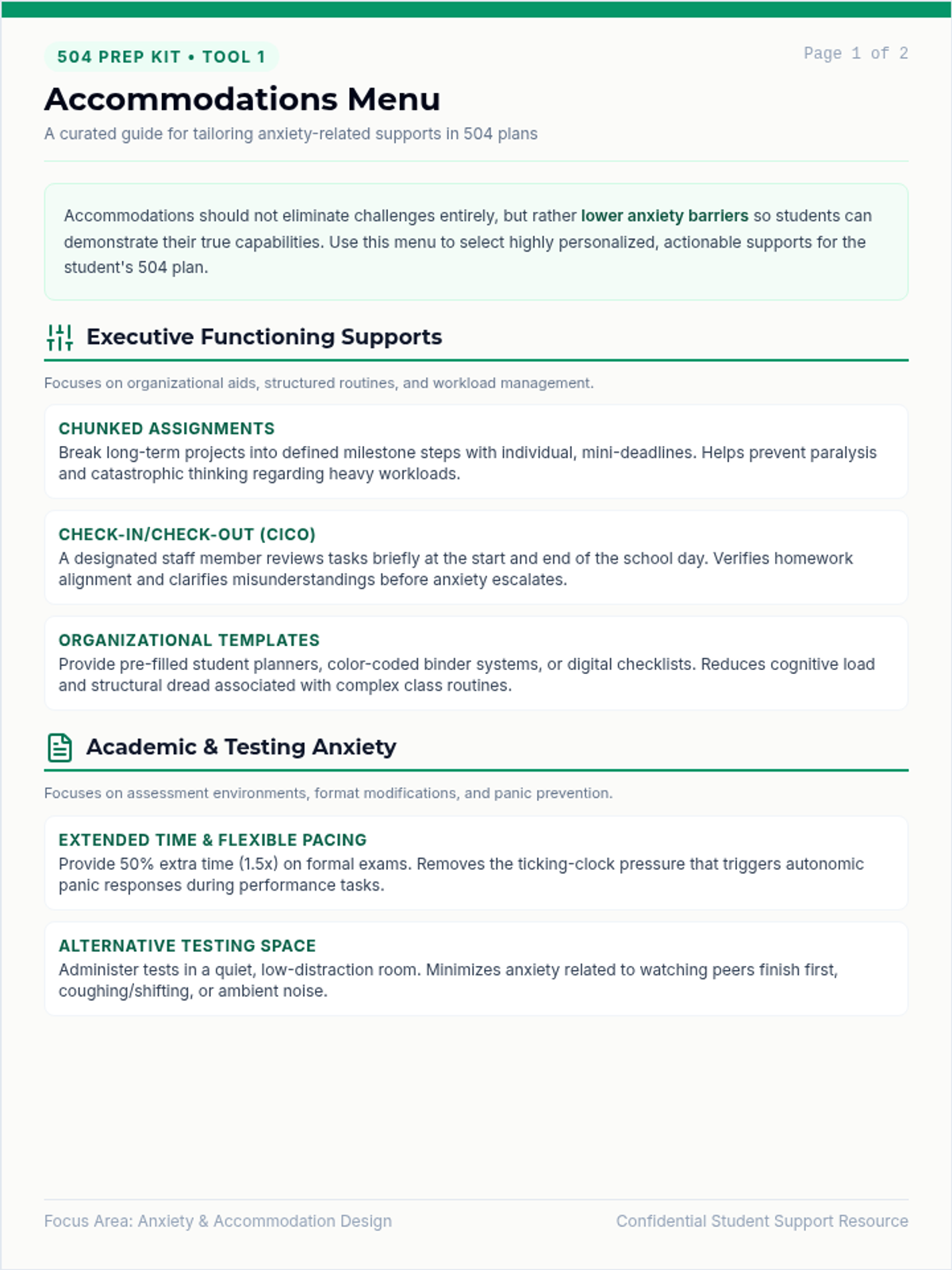
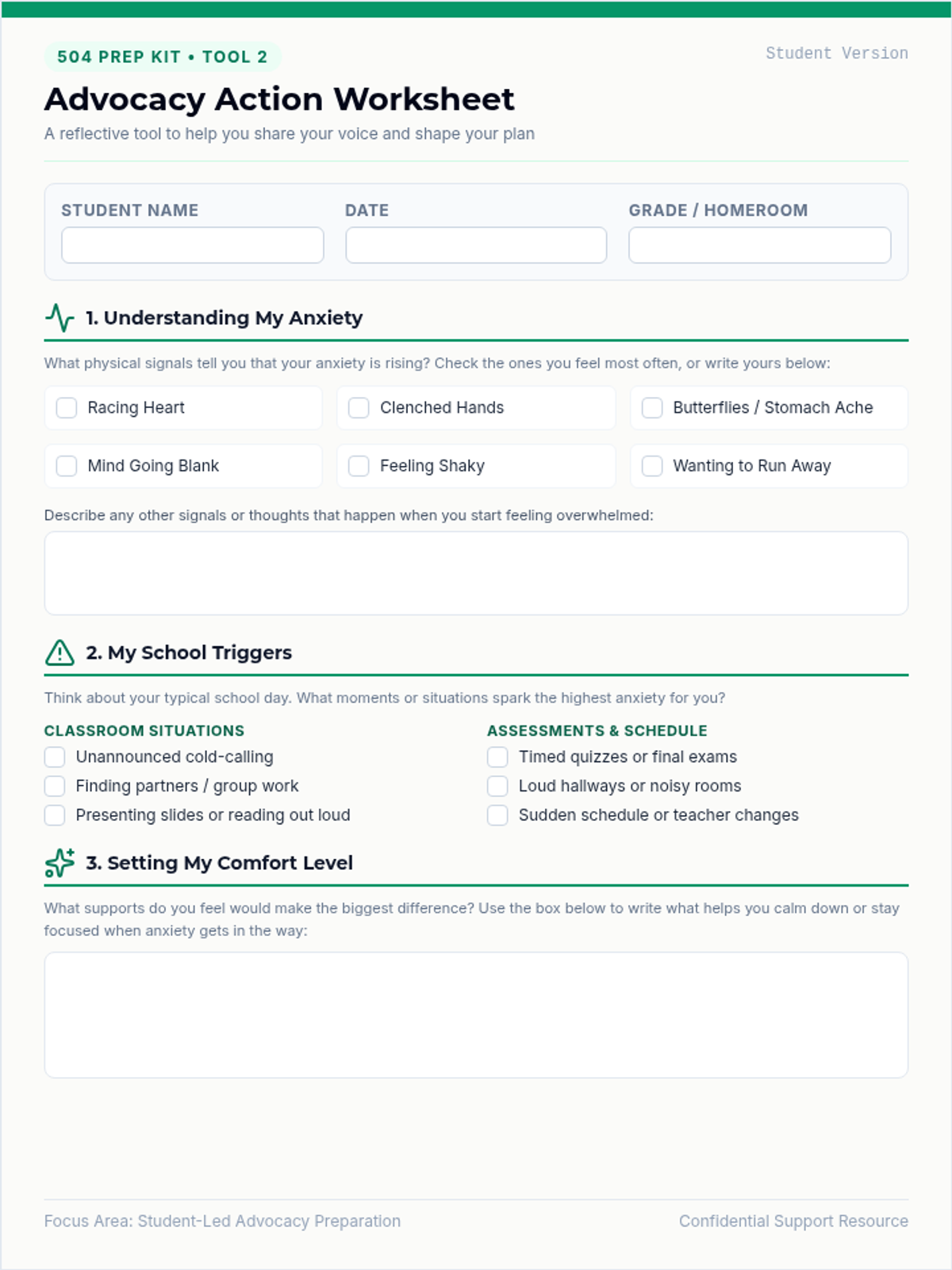
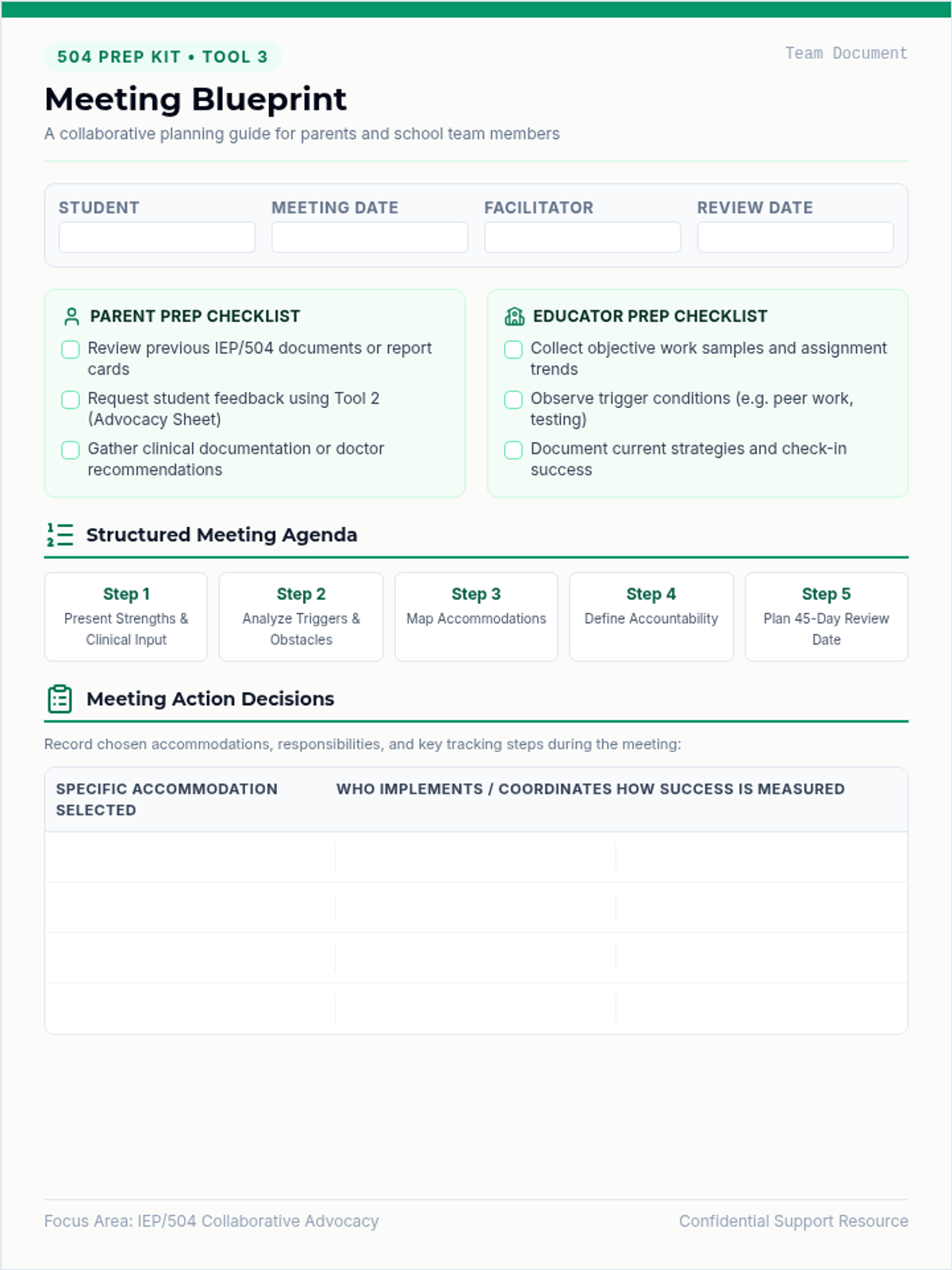
A comprehensive preparation kit for parents, teachers, and students to navigate 504 meetings for anxiety. Includes an accommodations menu categorized by domain, a student self-advocacy preparation sheet, and a meeting planning blueprint.
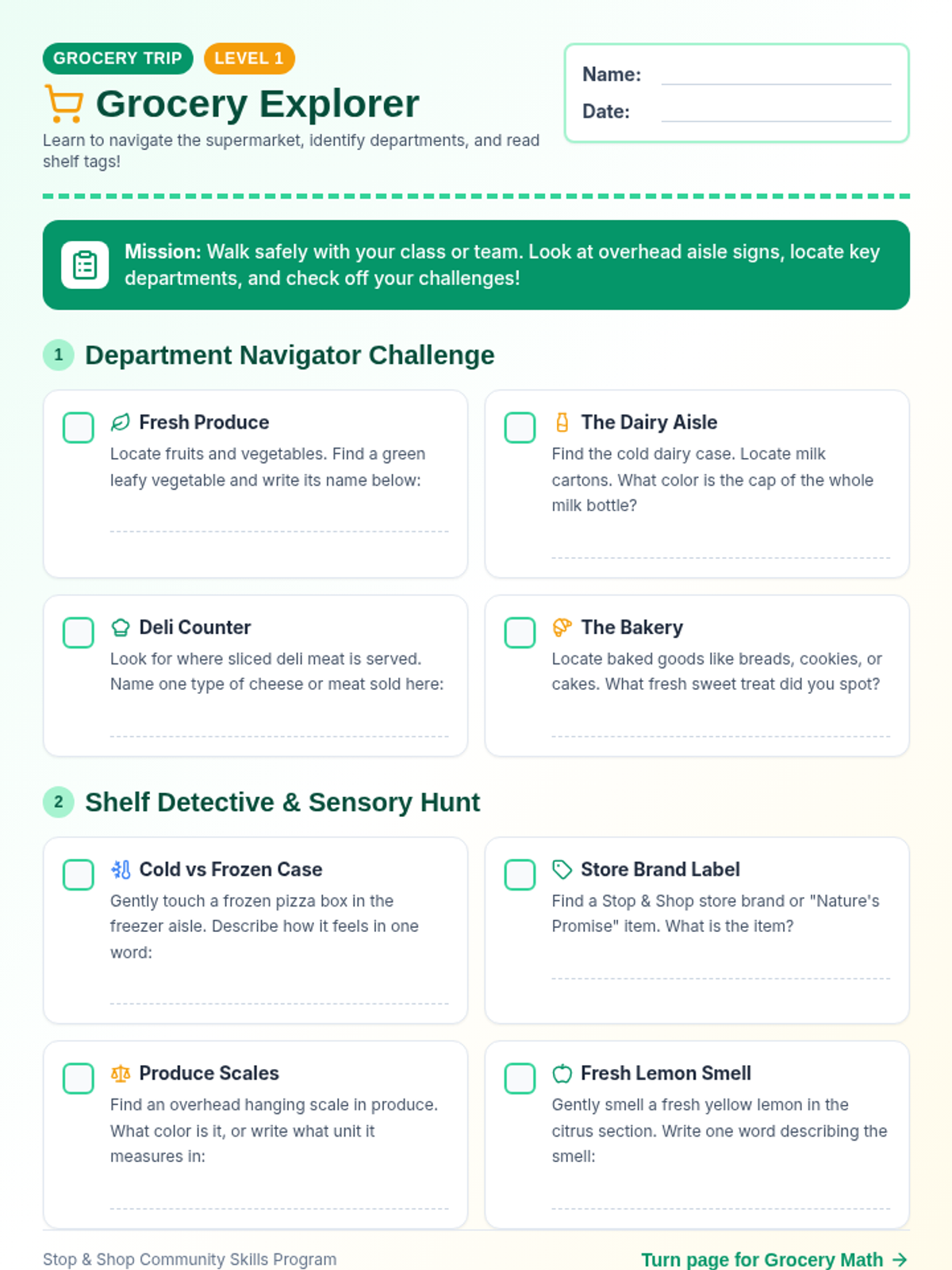
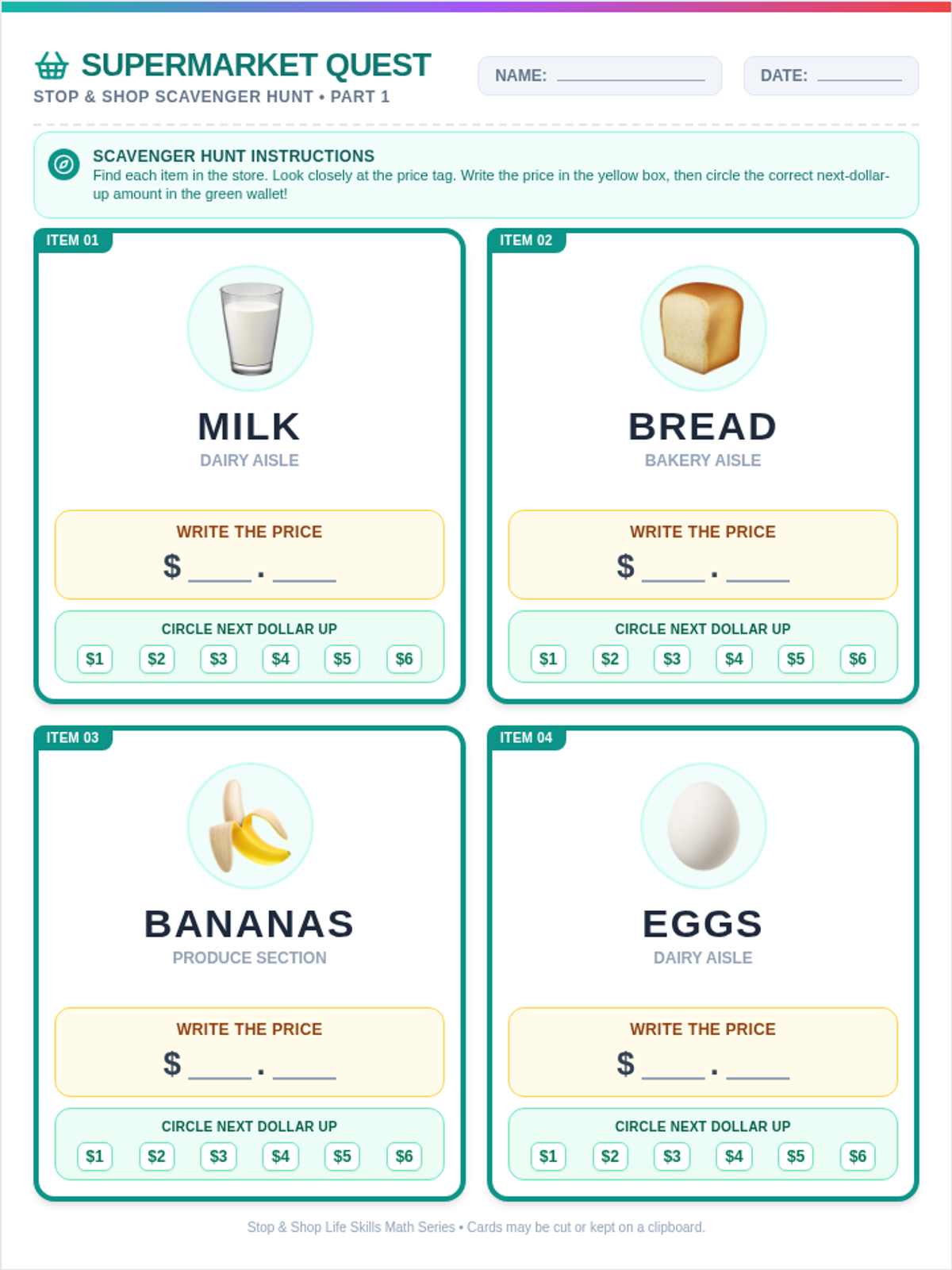
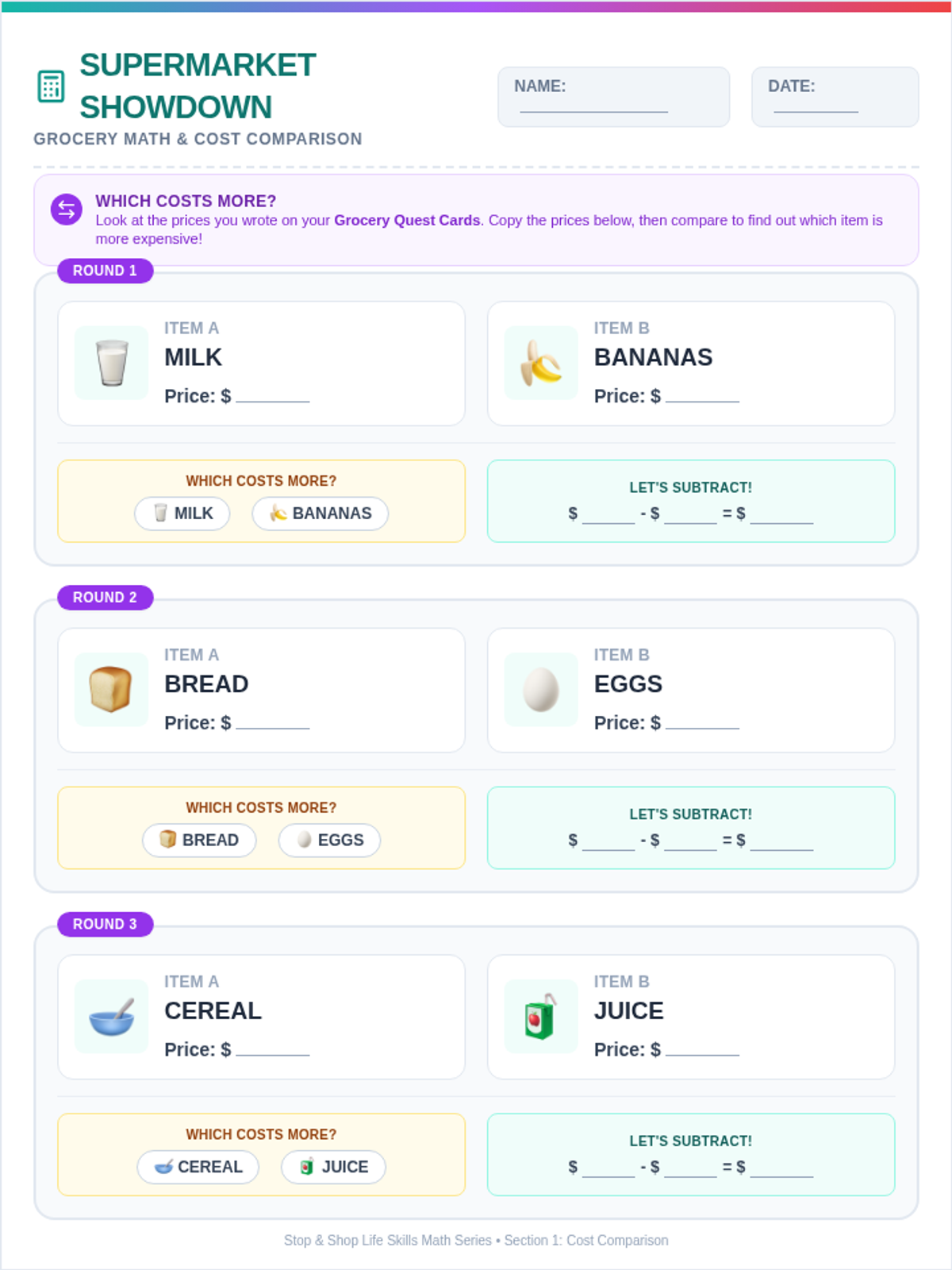
An interactive community-based instruction lesson at a Stop & Shop grocery store. Students focus on identifying departments, comparing food labels, and calculating grocery costs within a specific budget.
A real-world functional math lesson designed for life skills students. Students navigate a Stop & Shop store to locate items, read price tags, and calculate next-dollar-up budgets using highly visual scaffolded cards.
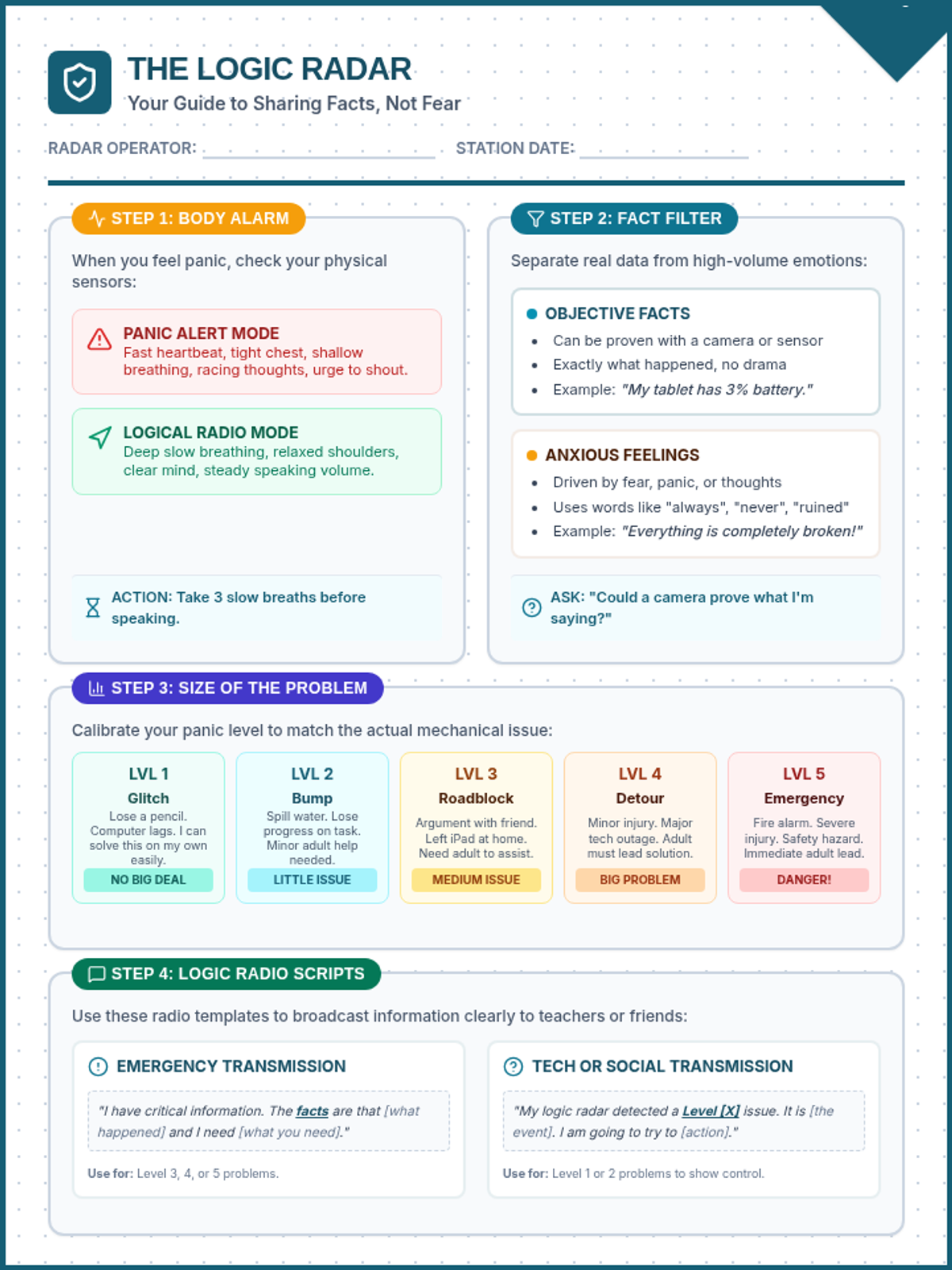
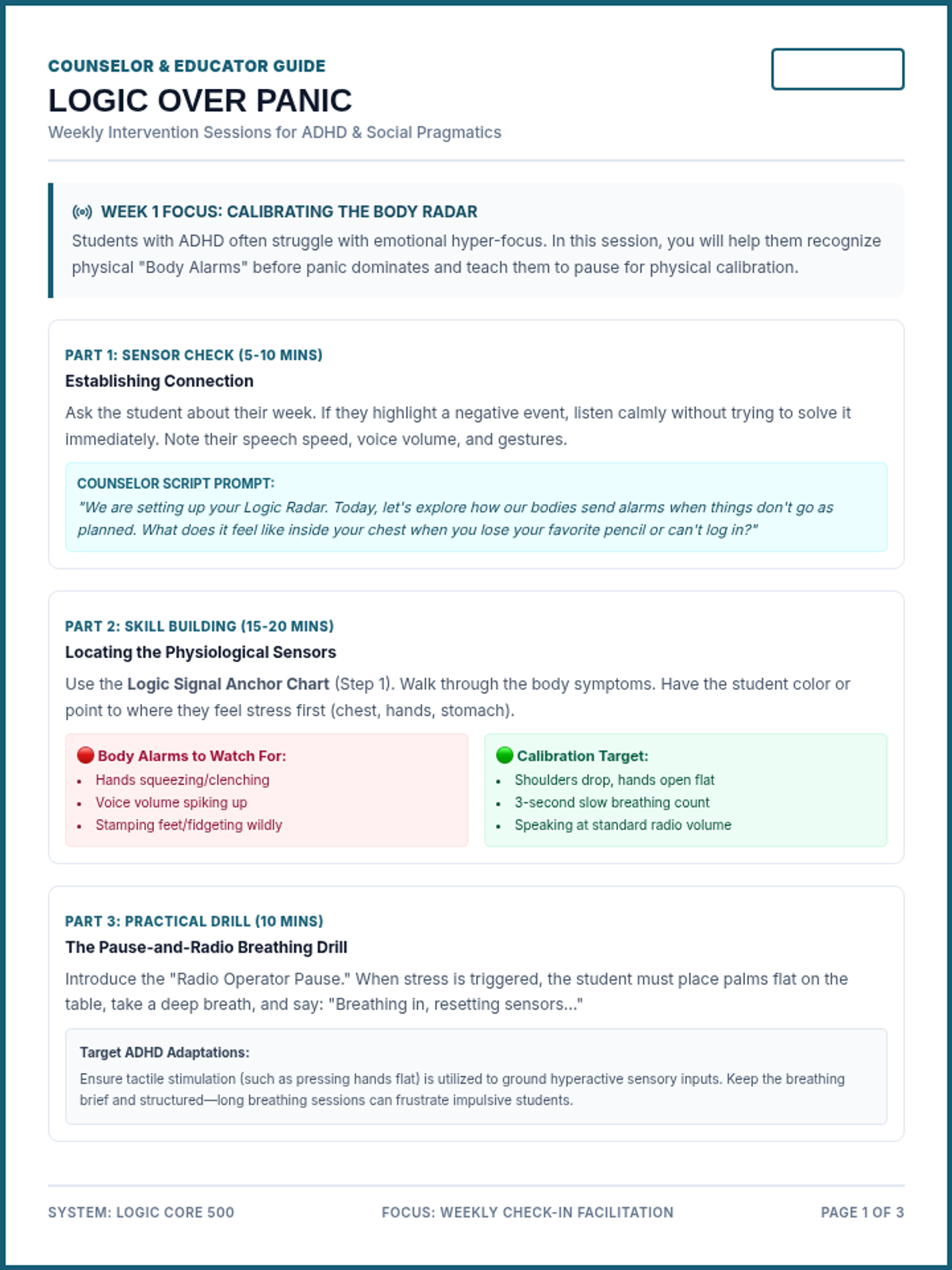
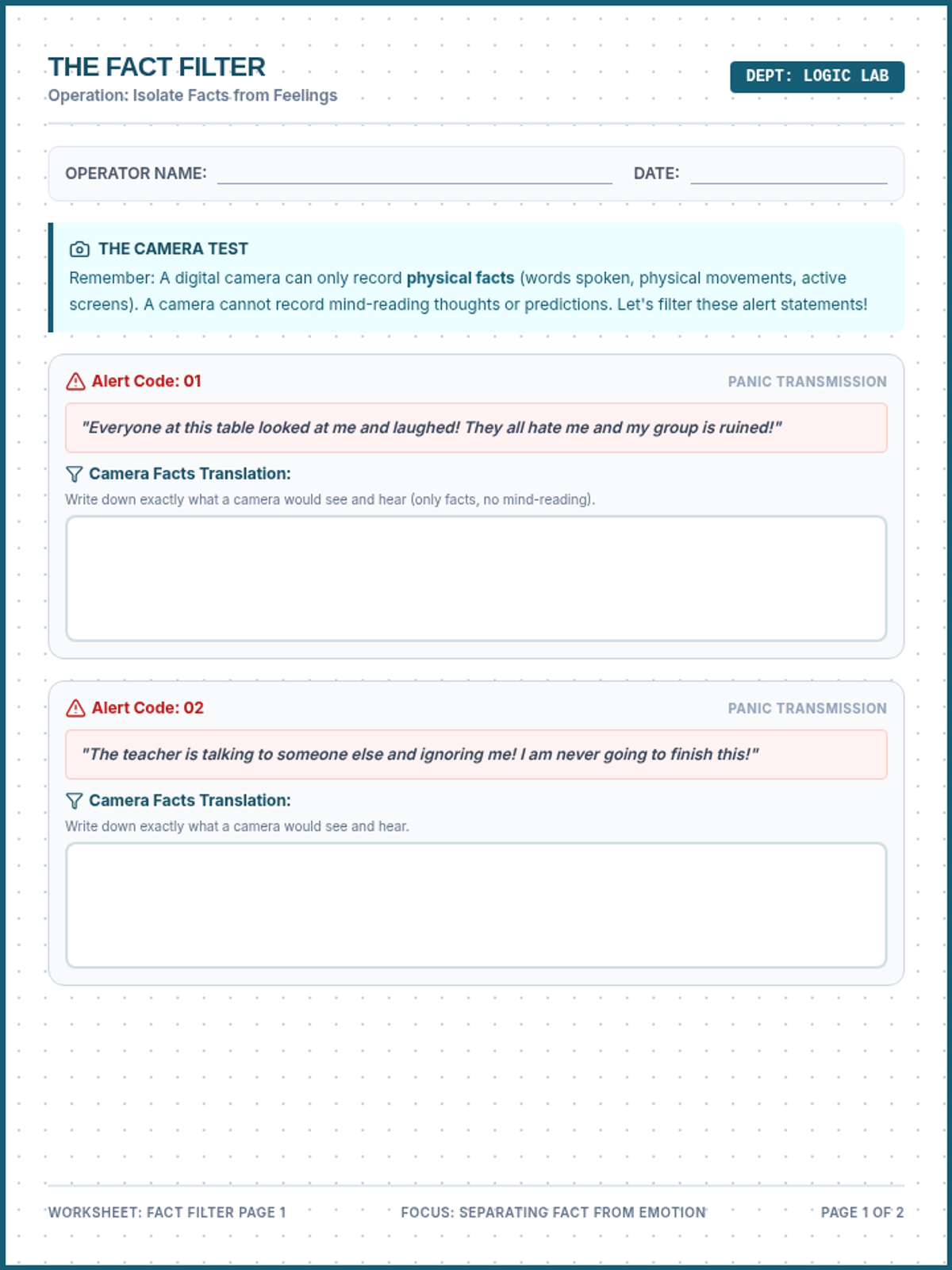
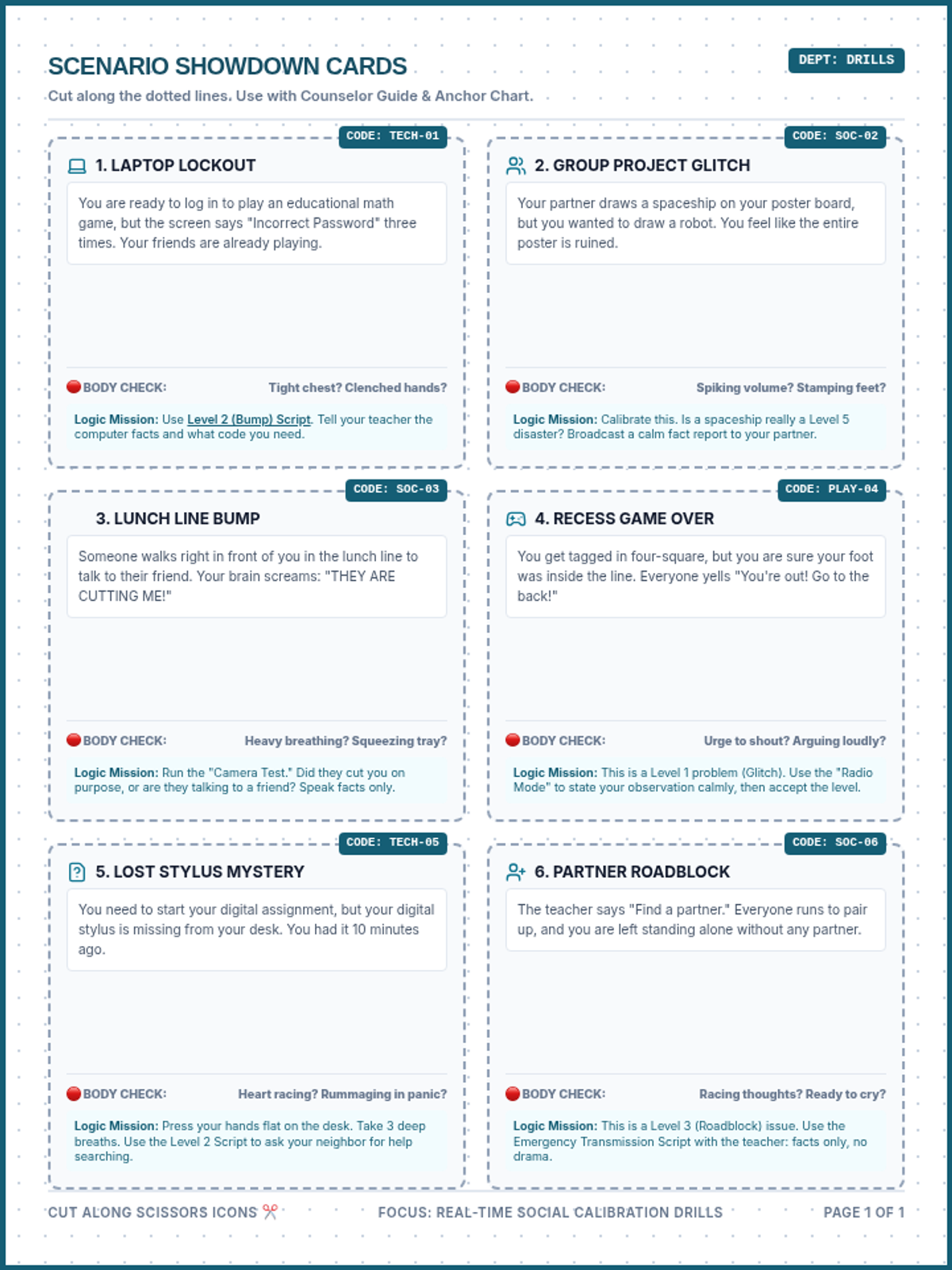
A multi-week social-emotional intervention sequence designed for students with ADHD and social communication challenges, focusing on transitioning from panic-based reactions to fact-based logical communication.
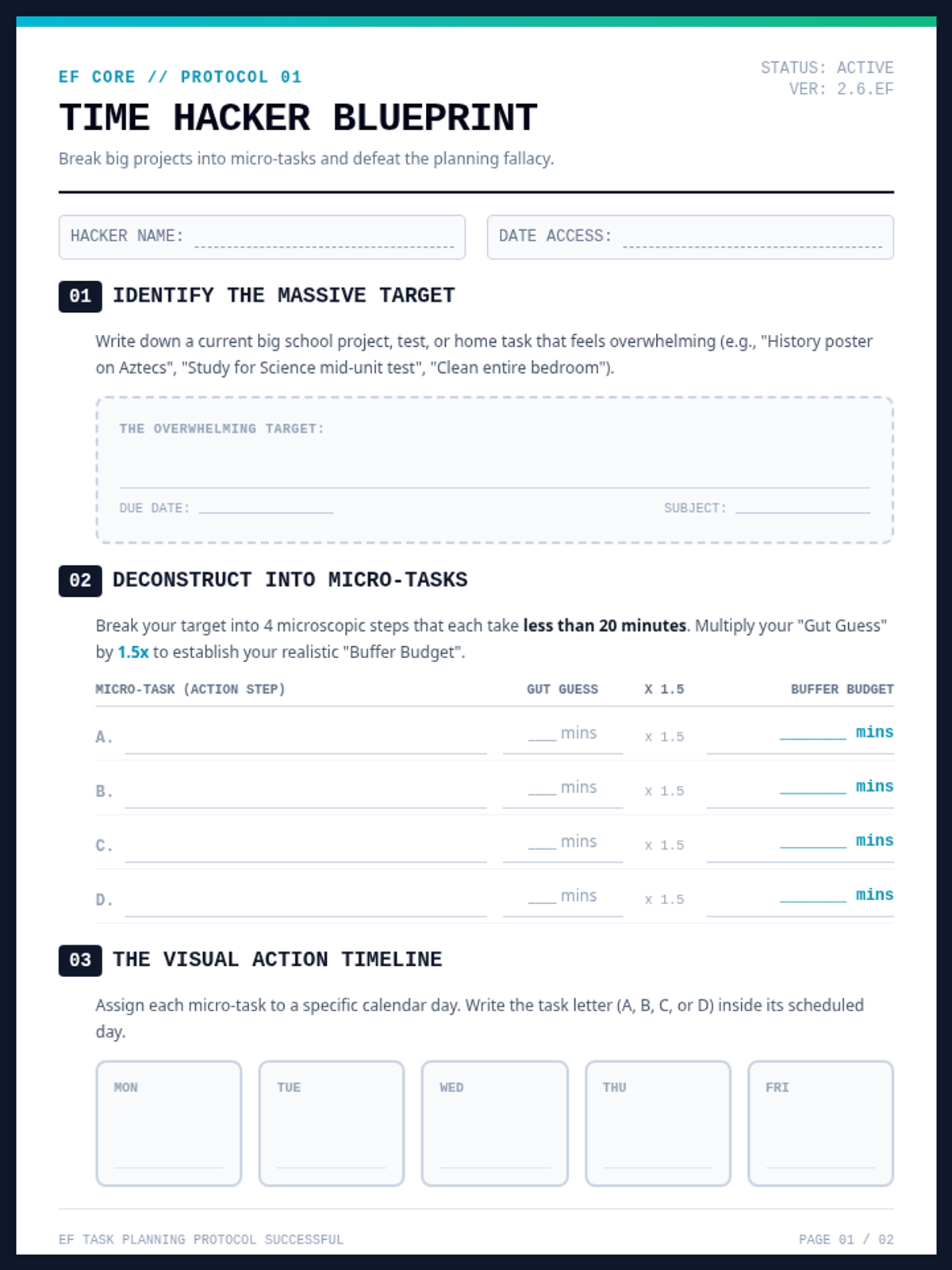
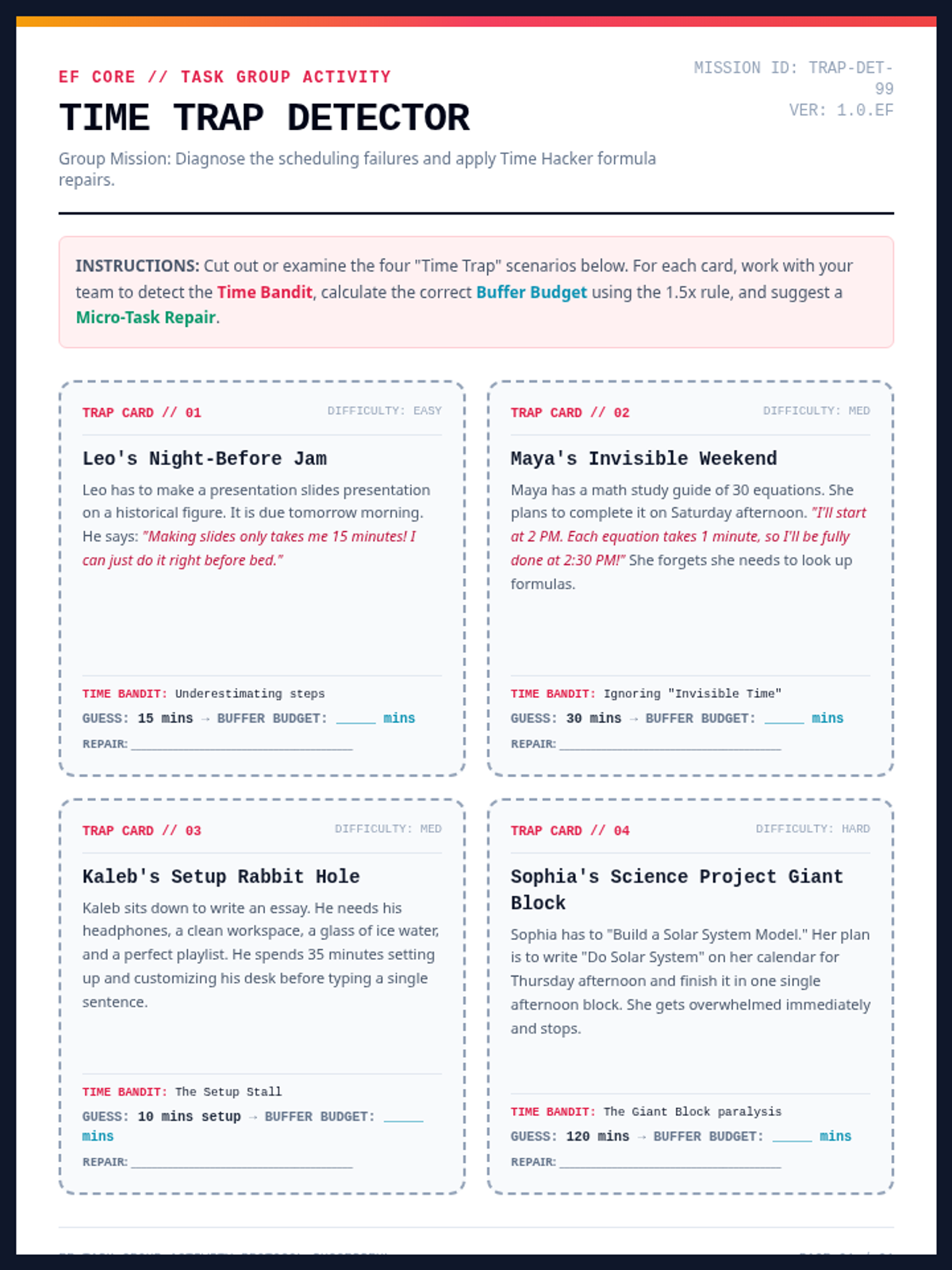
An engaging, tech-themed executive functioning lesson for middle schoolers (6th-8th grade) focusing on time management, project planning, breaking down tasks, estimating time, and building visual checklists.
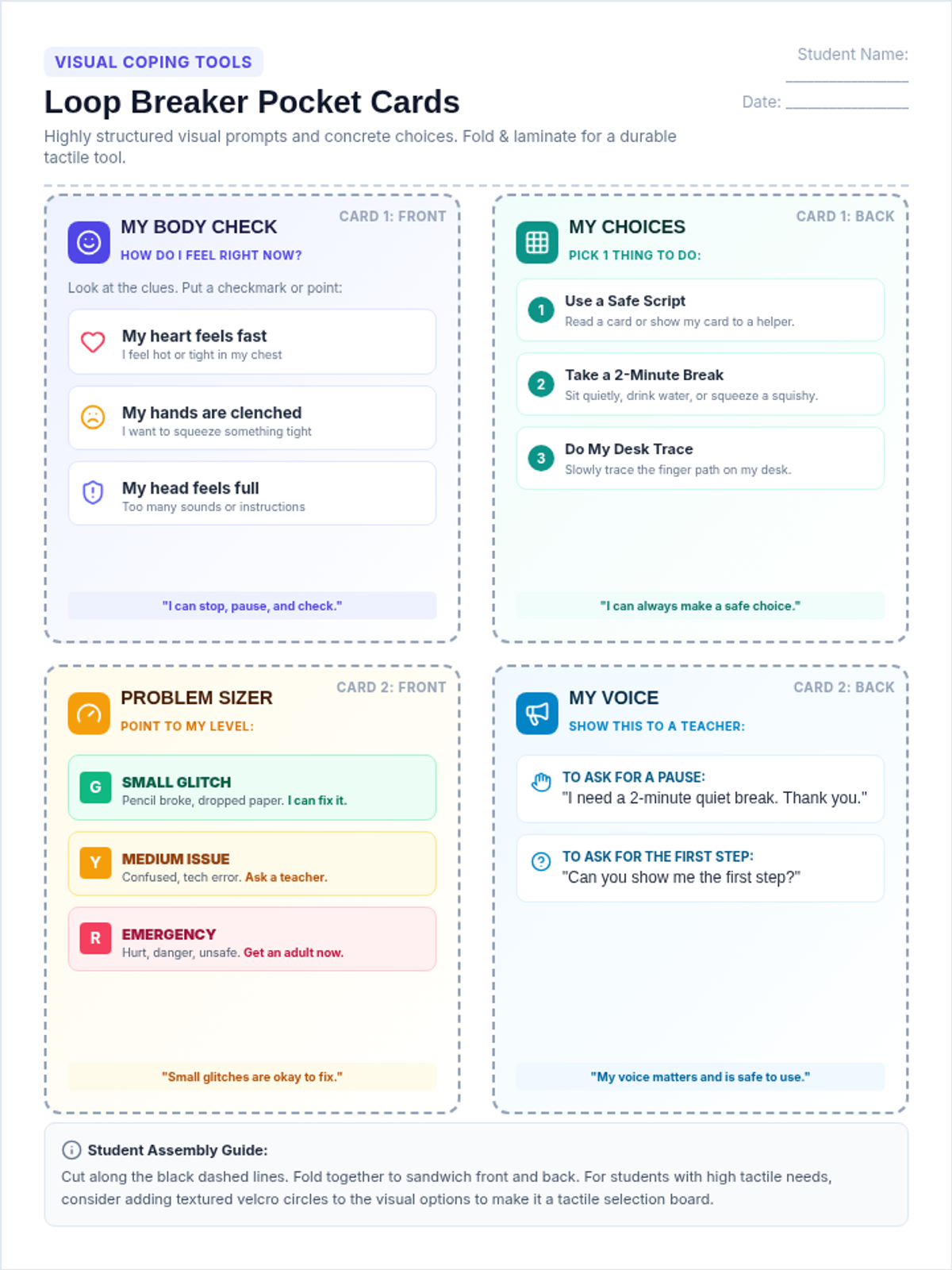
A set of portable, visual cognitive behavioral tools to help students disrupt automatic negative thoughts and set constructive boundaries when feeling overwhelmed by tasks.
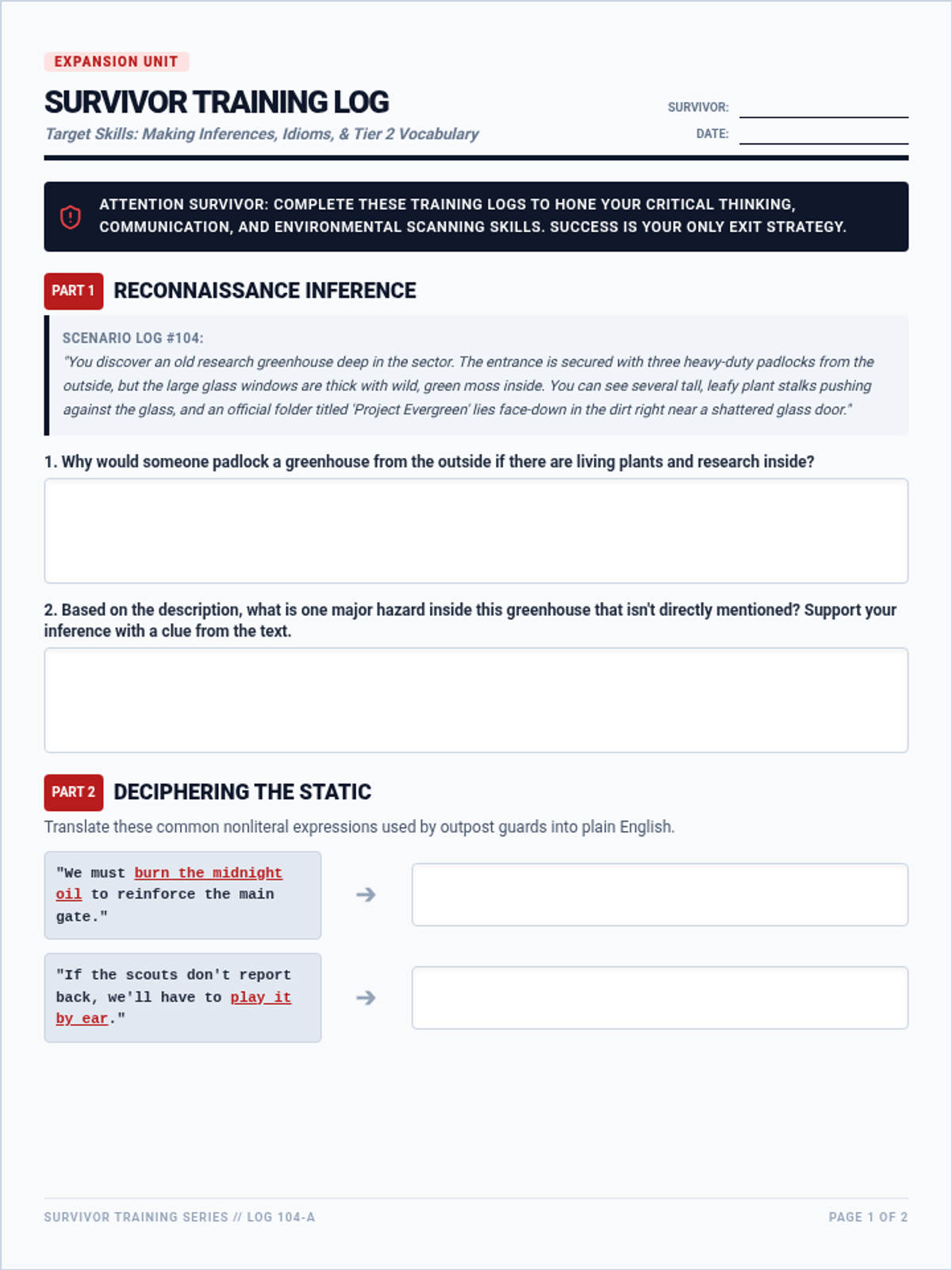
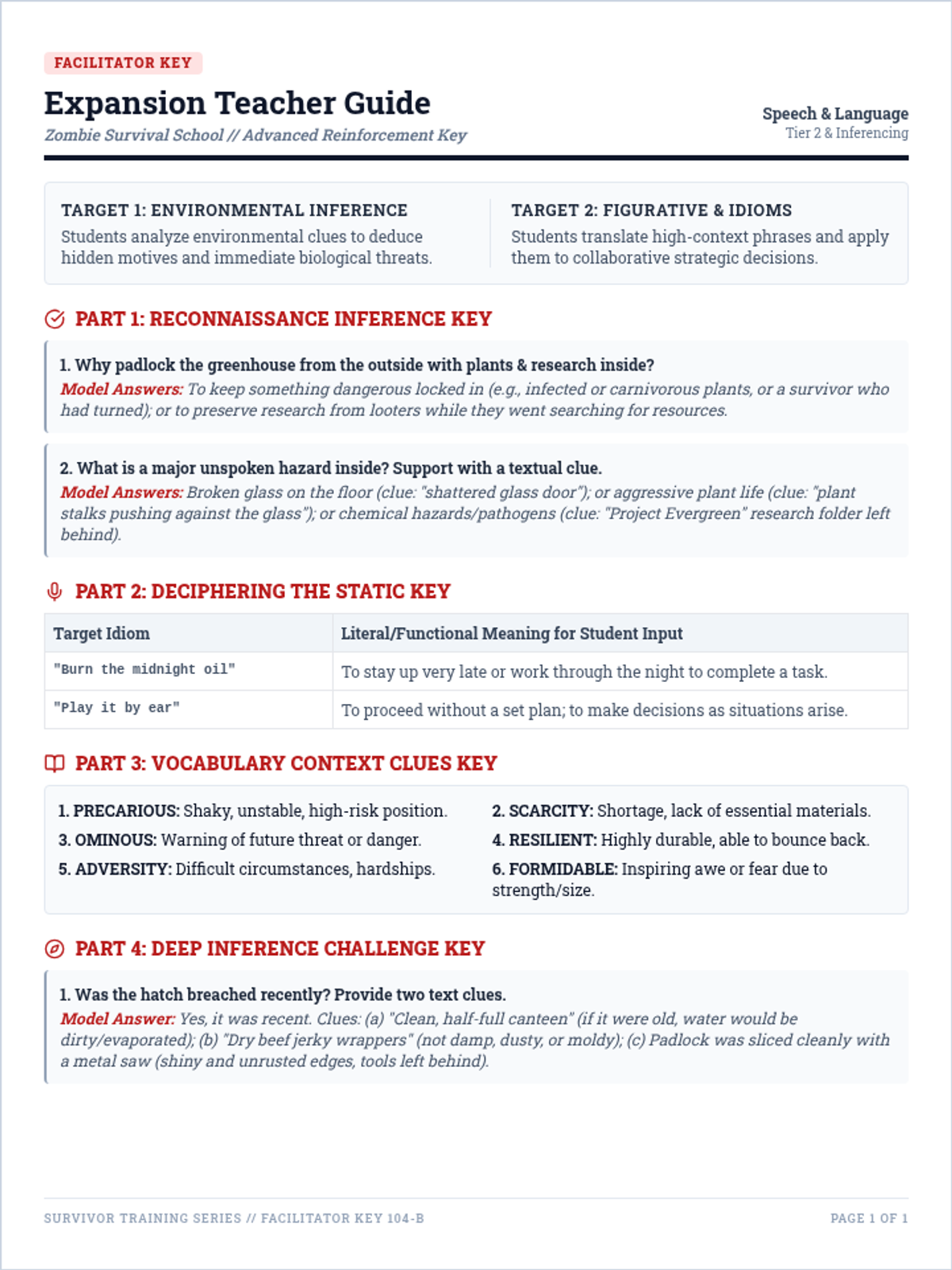
A zombie apocalypse themed speech-language therapy lesson targeting making inferences, interpreting nonliteral language, and mastering Tier 2 vocabulary.
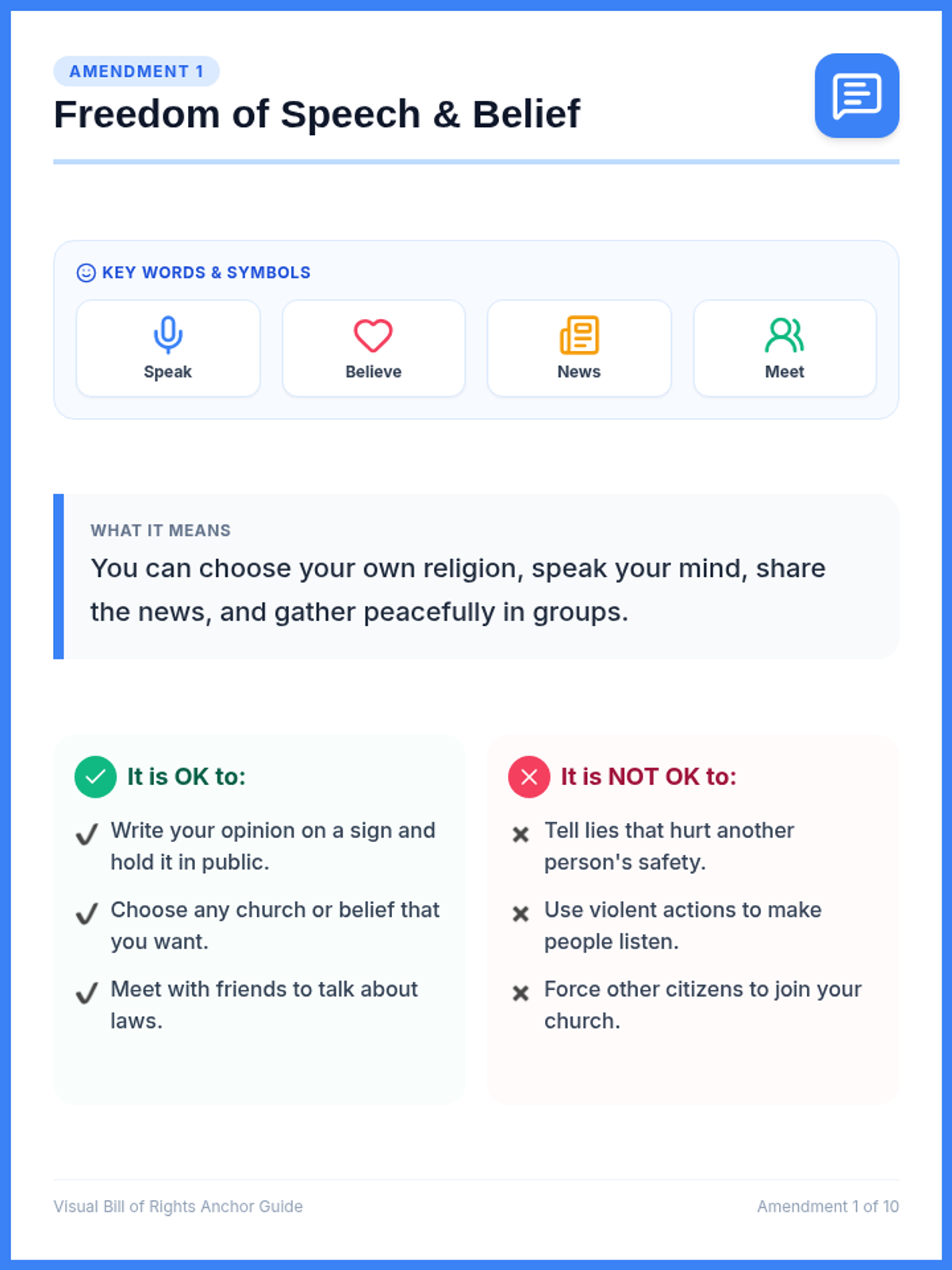
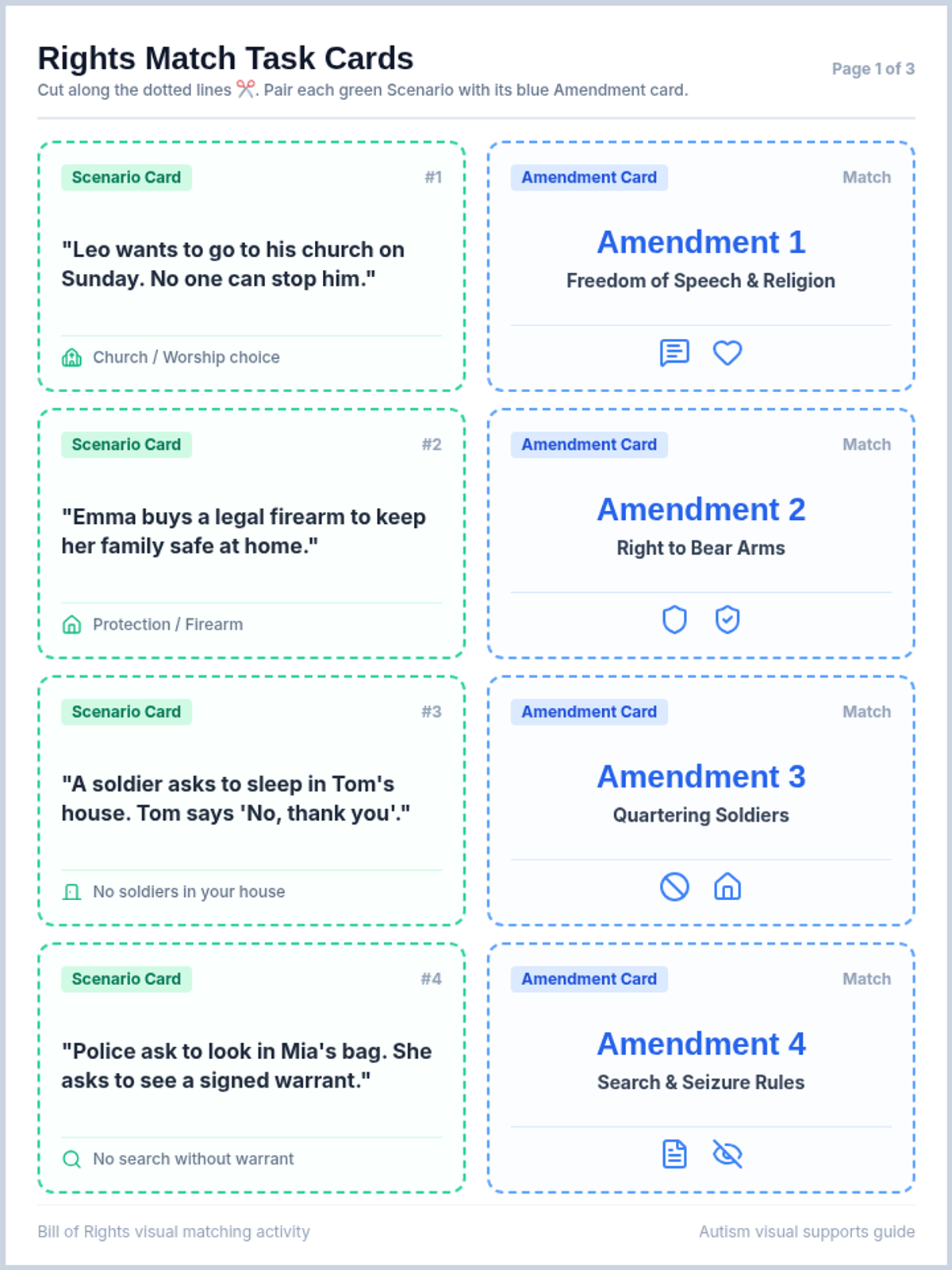
A highly structured, visually supported unit on the Bill of Rights designed for students with Autism, featuring large symbol-supported anchor charts and hands-on matching scenario task cards.
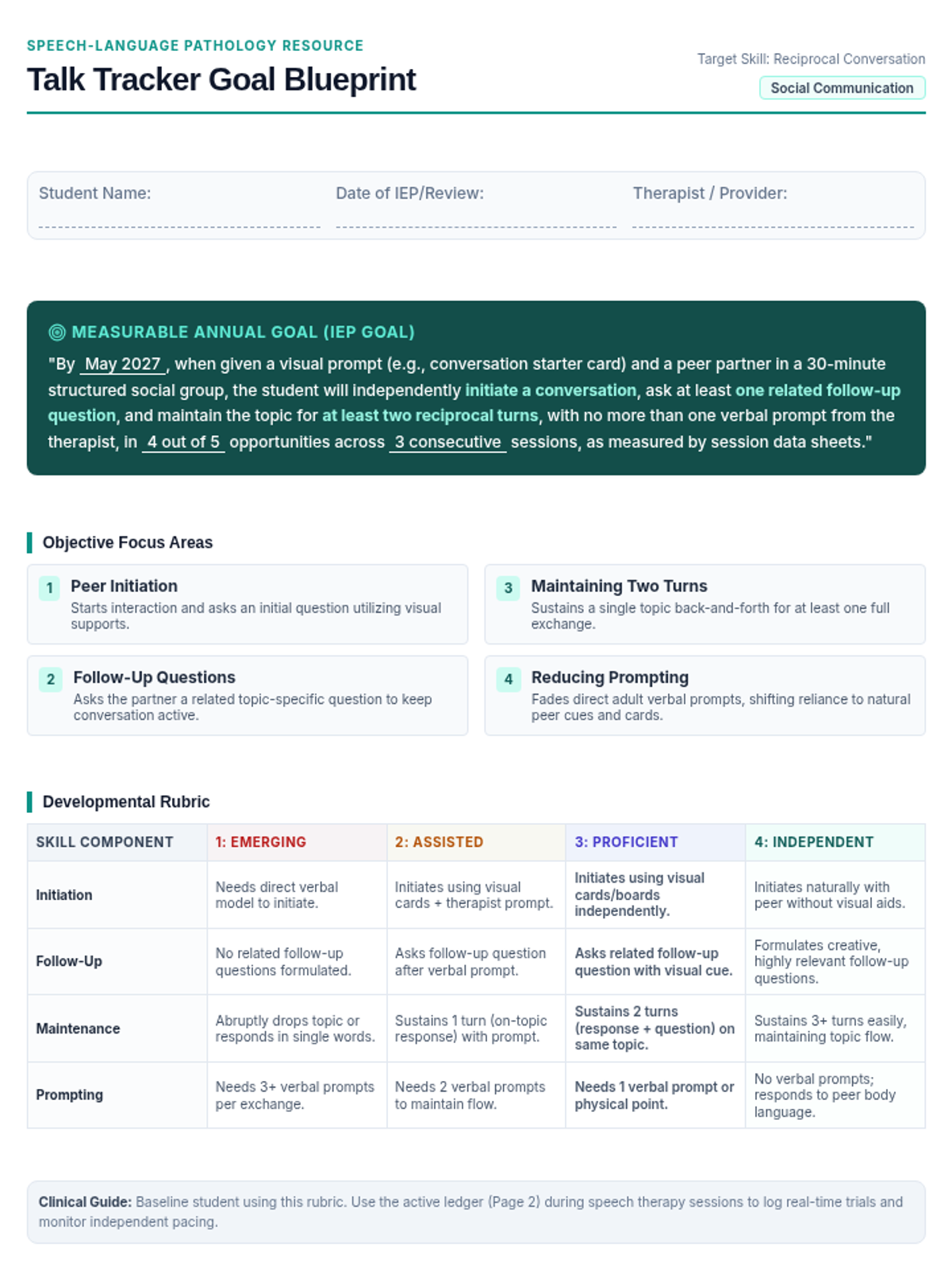
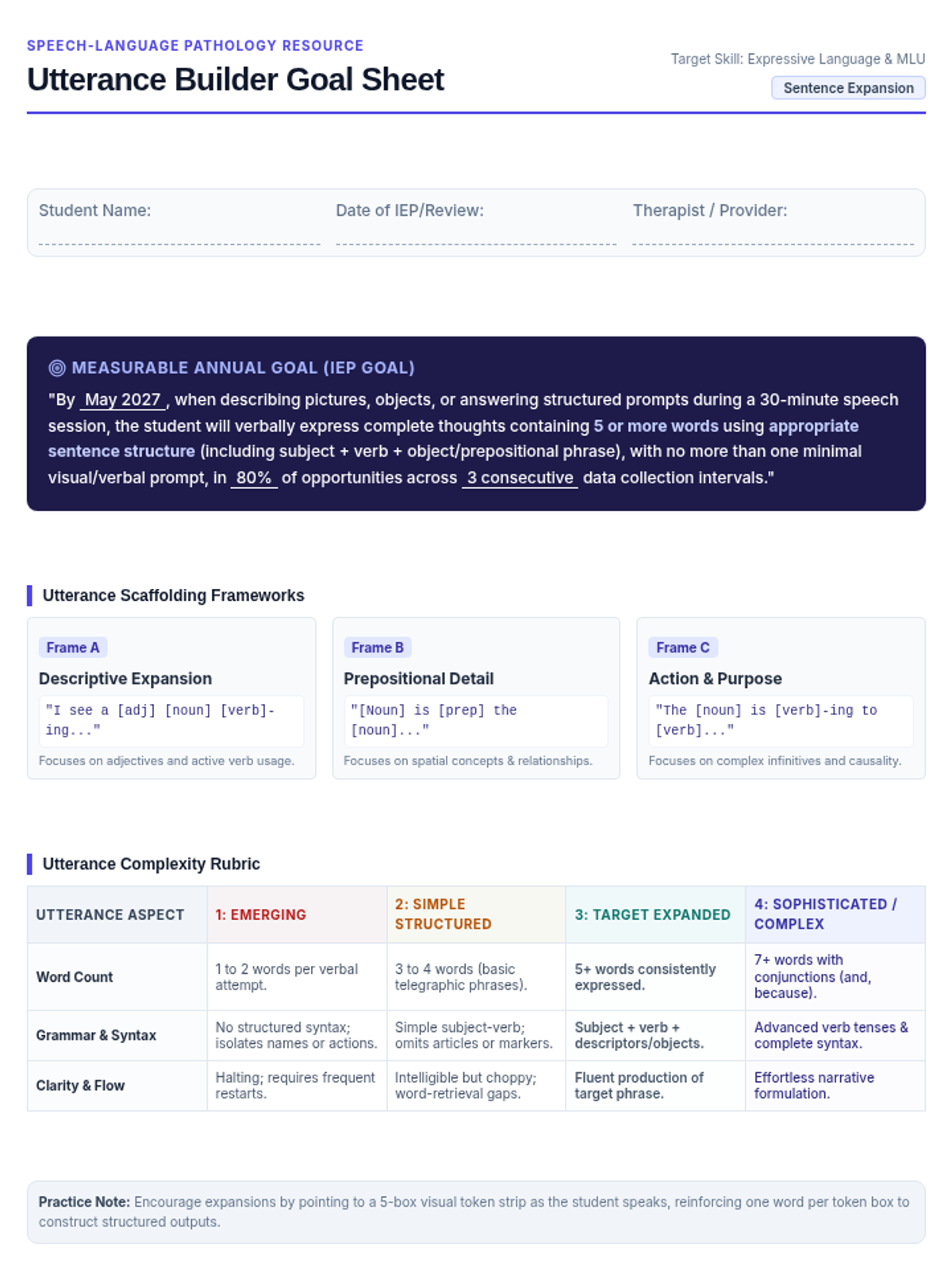
A lesson centered around tracking and achieving measurable progress in reciprocal conversation skills during speech therapy sessions, complete with formal IEP goals, a developmental rubric, and an actionable session data tracker.
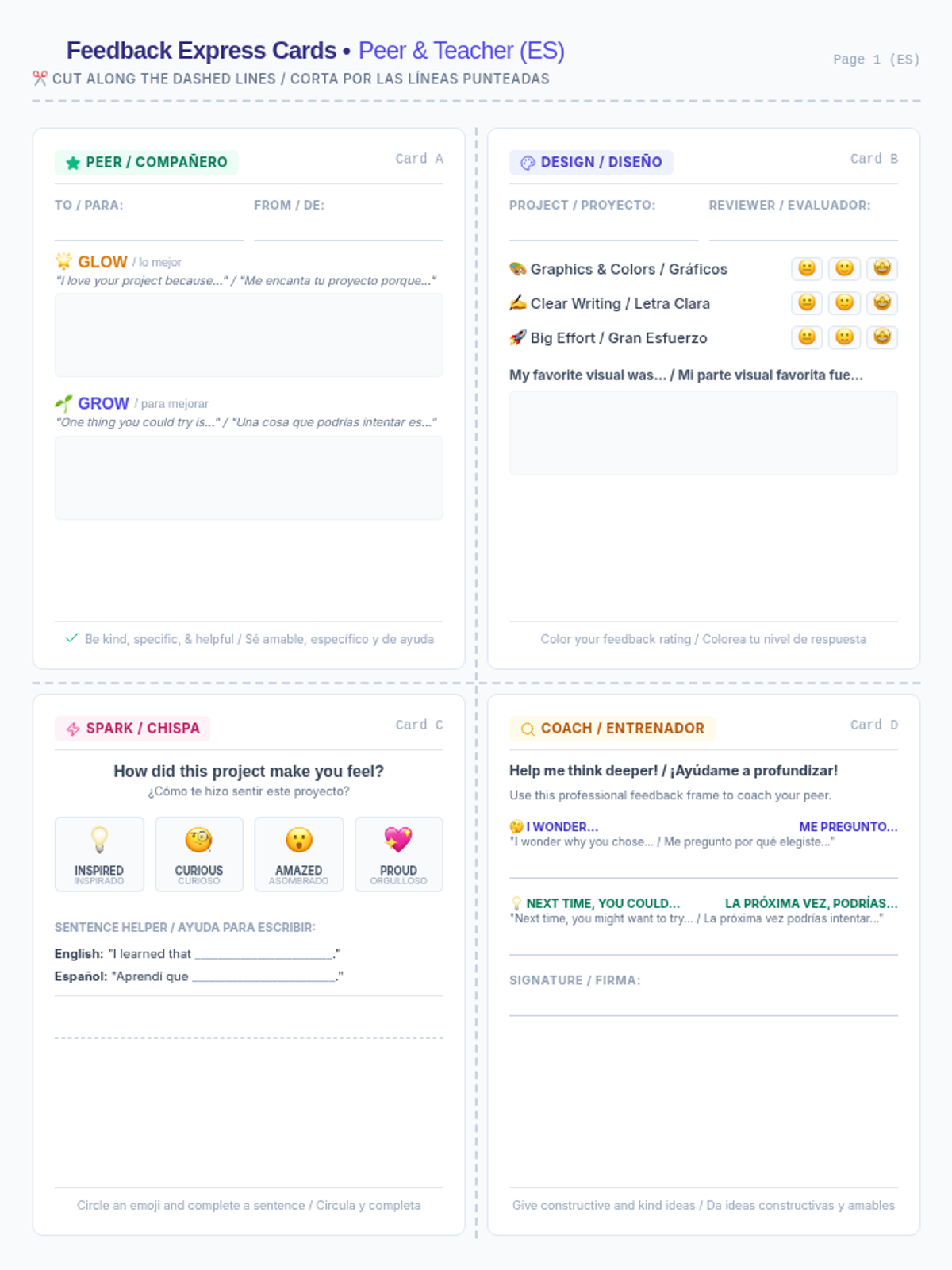
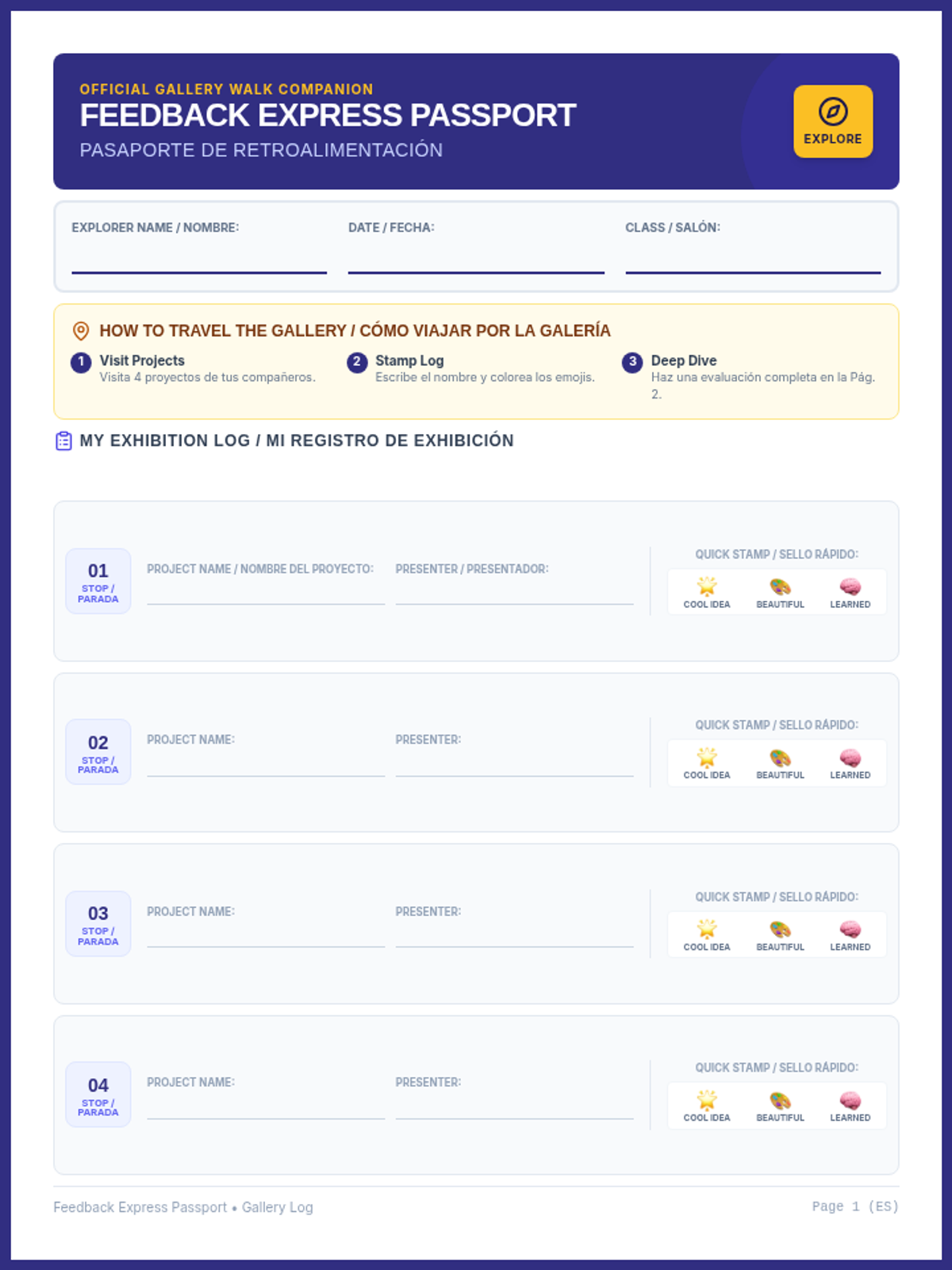
A visual feedback toolkit designed for elementary and middle school classrooms, families, and peers to provide meaningful project feedback. Includes emoji-rich rating systems, structured review guides, and sentence starter frames.
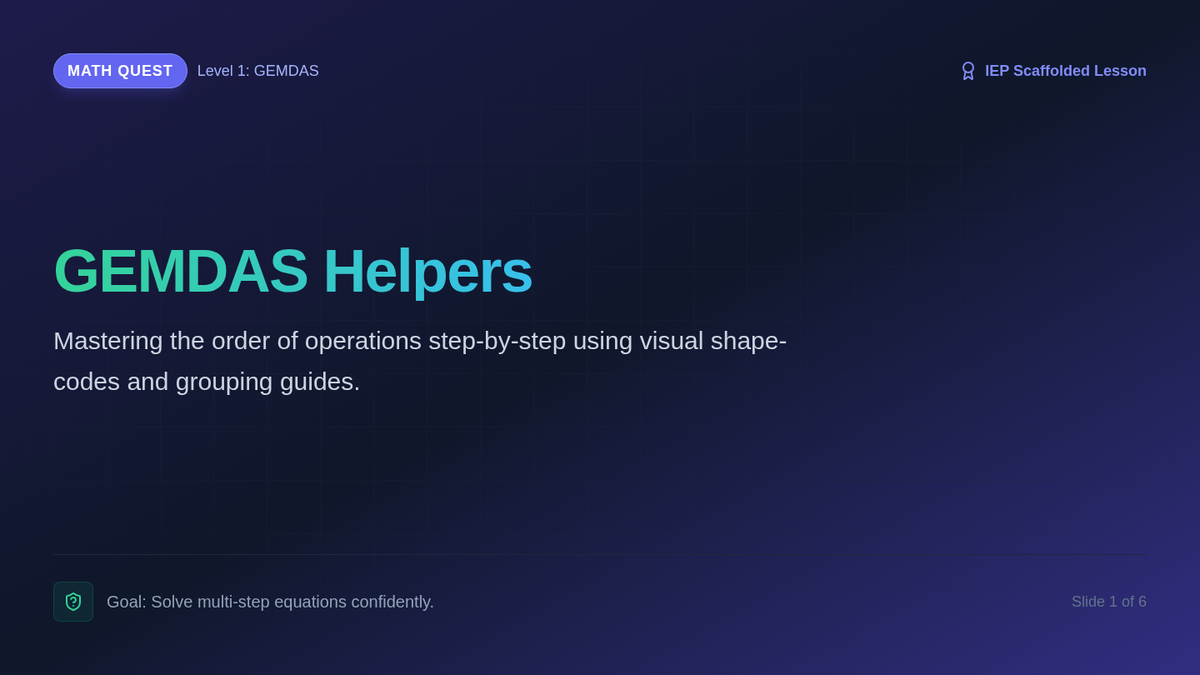
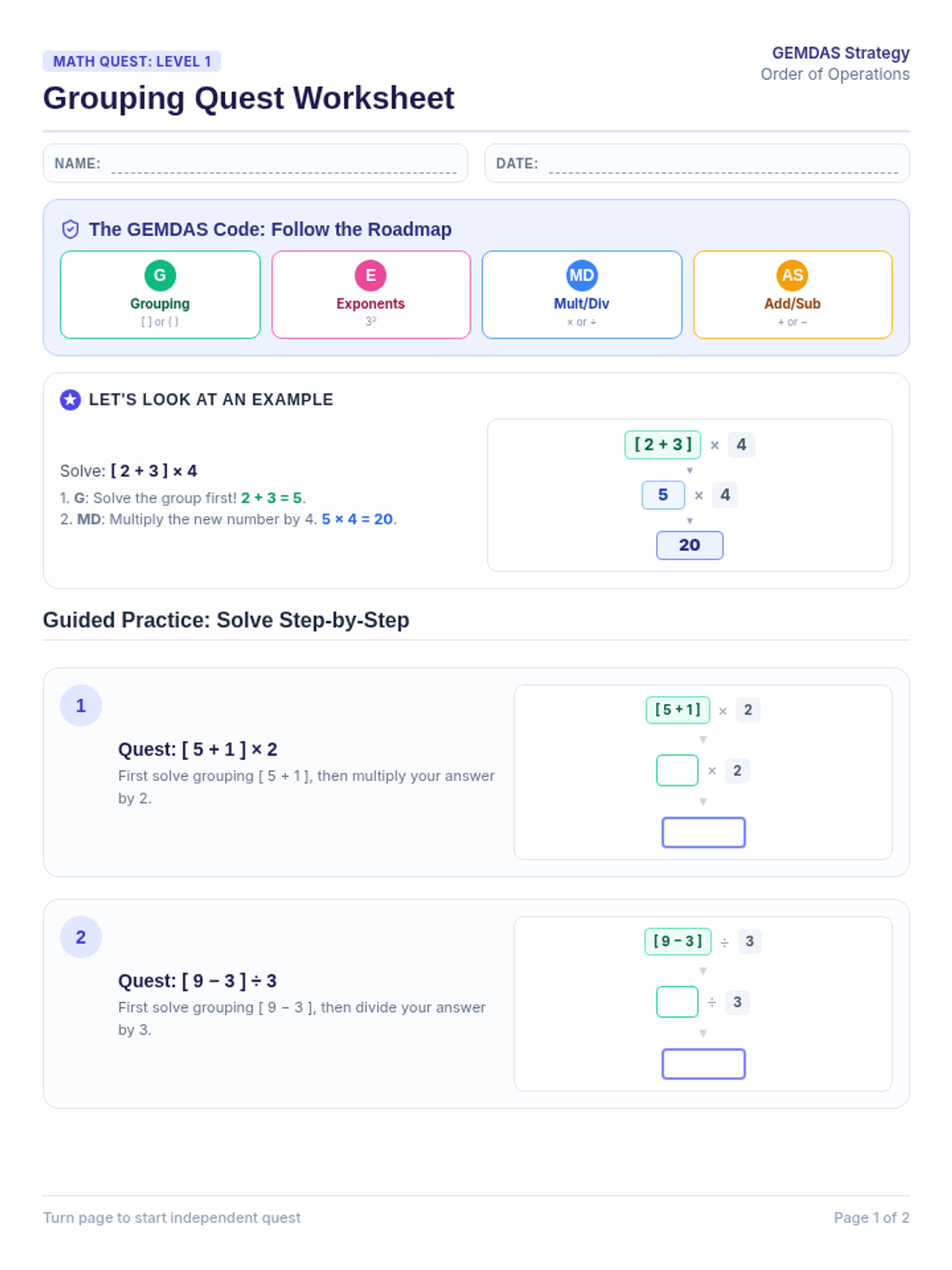
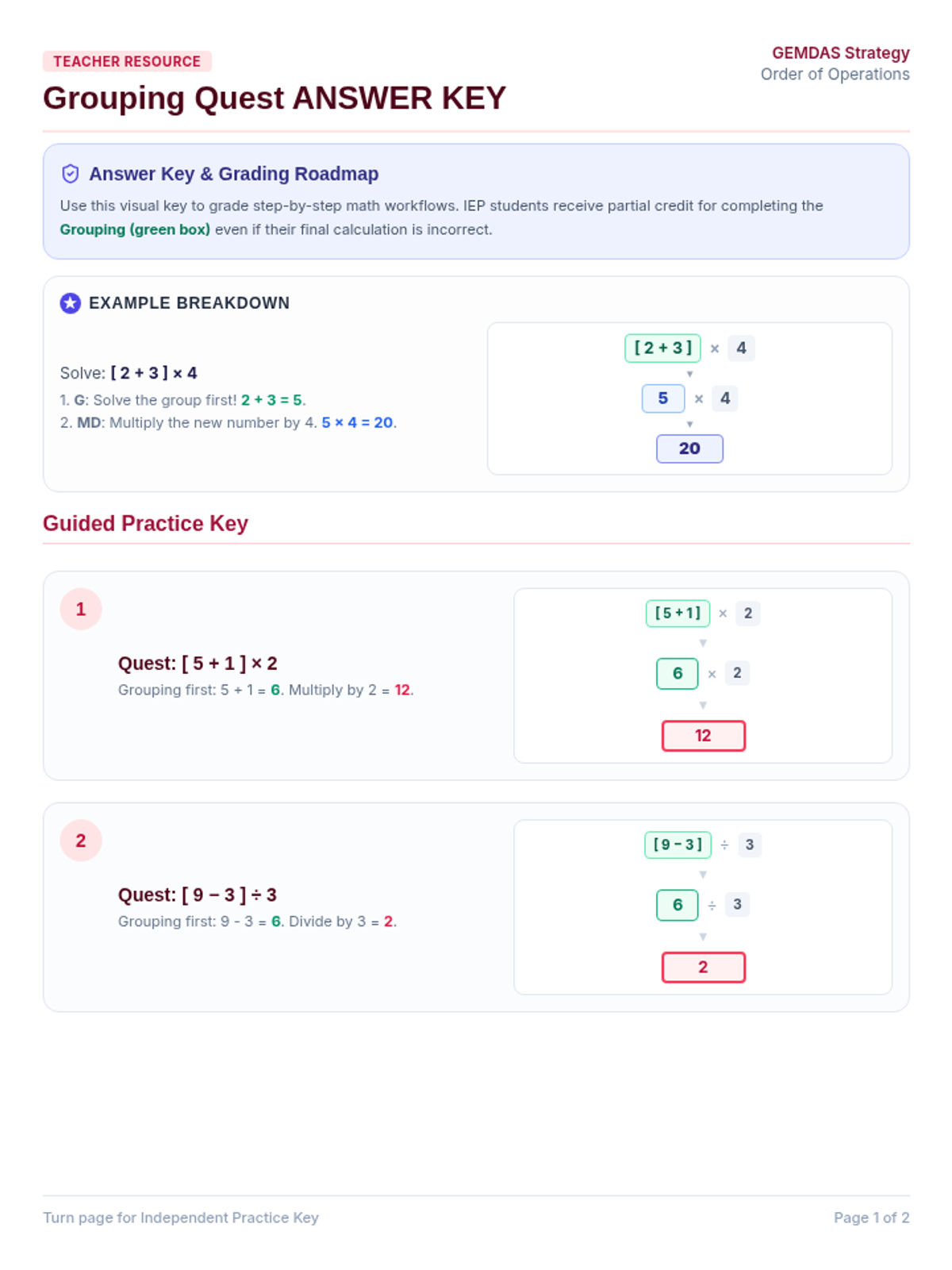
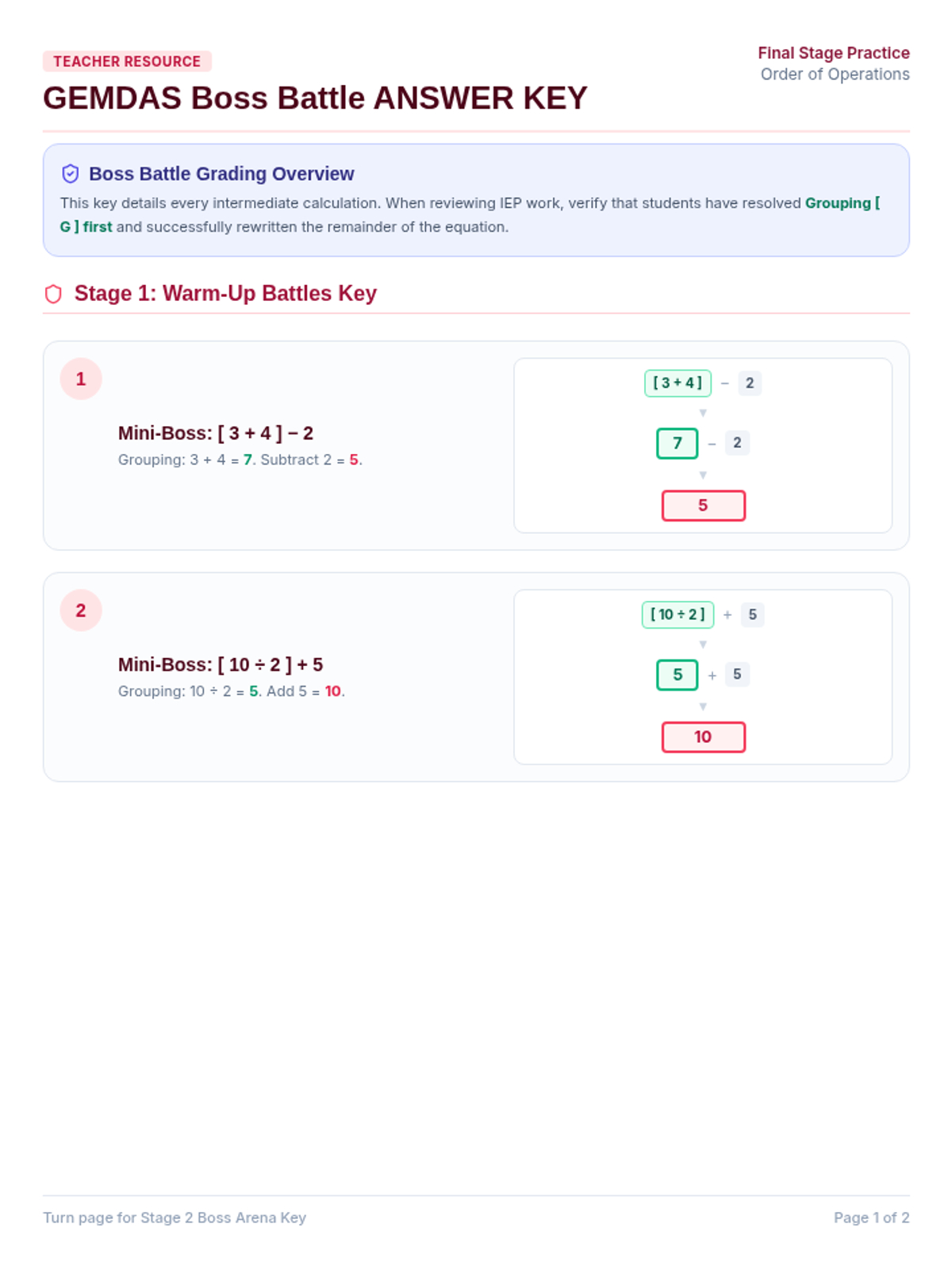
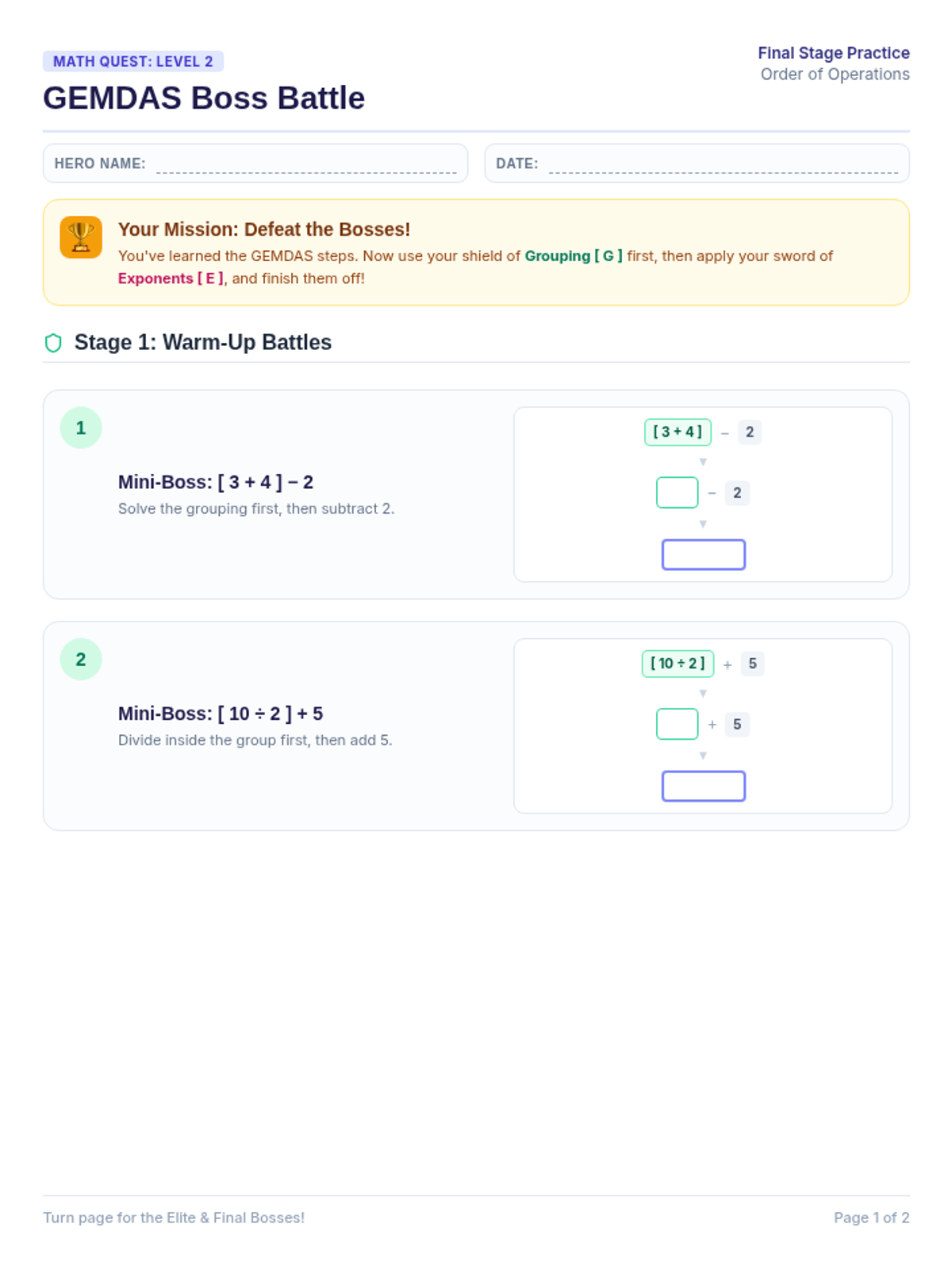
A lesson designed for IEP students focusing on the order of operations using GEMDAS (Grouping, Exponents, Multiplication/Division, Addition/Subtraction). It features shape-coded guided steps and simplified numbers to scaffold comprehension.
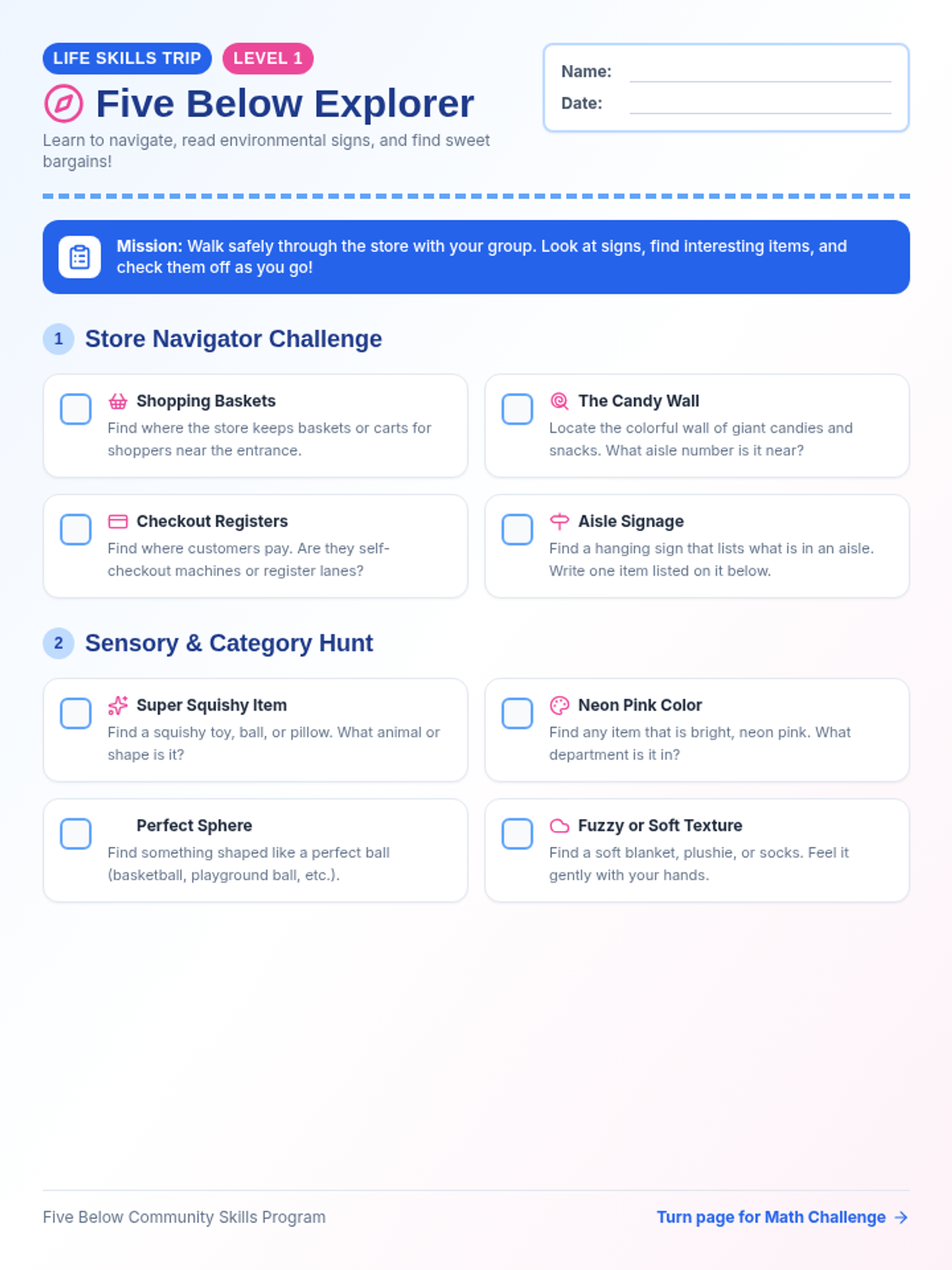
A practical life skills and functional math lesson centered around an educational store visit to Five Below. Students practice locating departments, reading signs, and performing budget calculations.
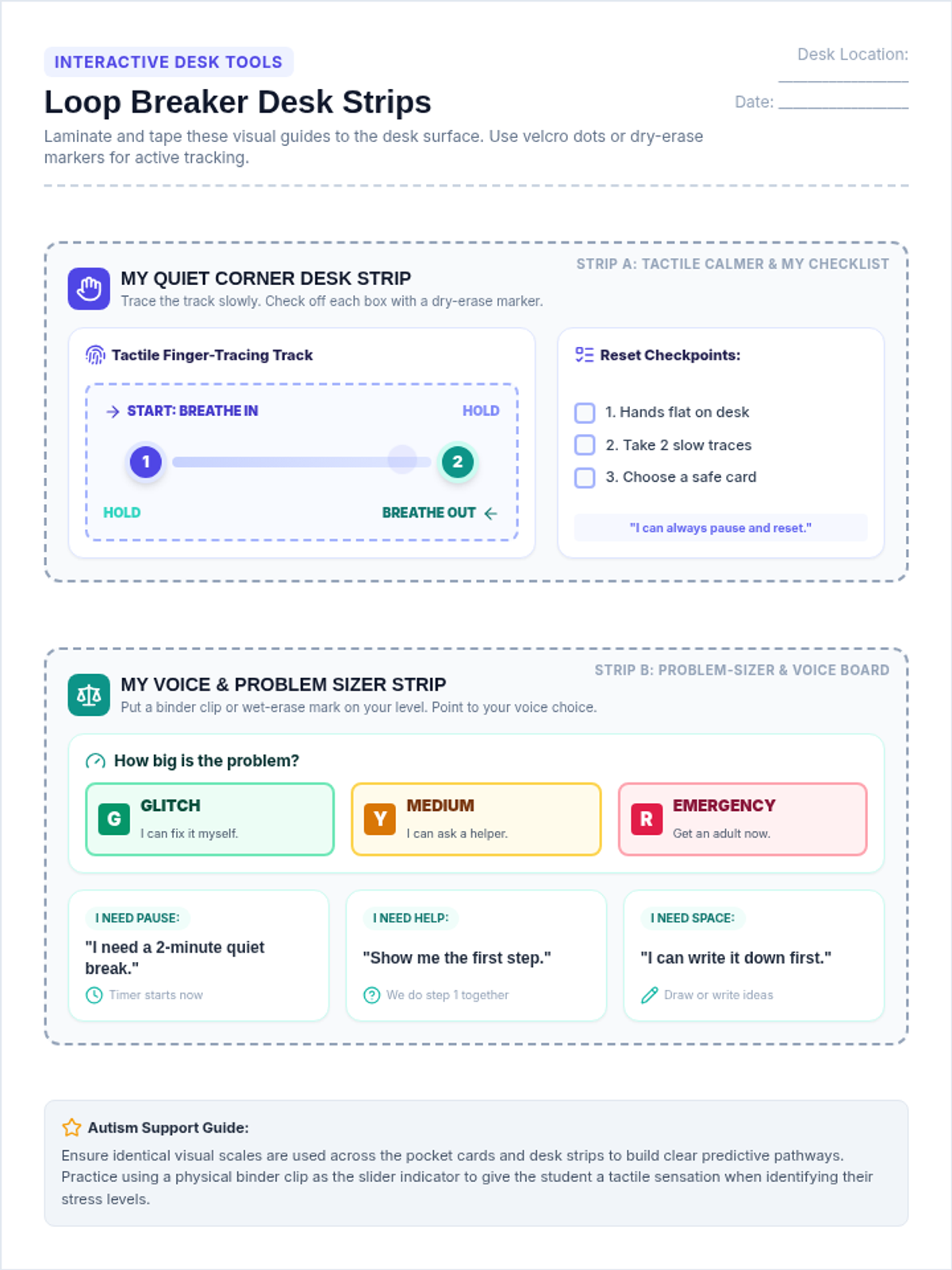
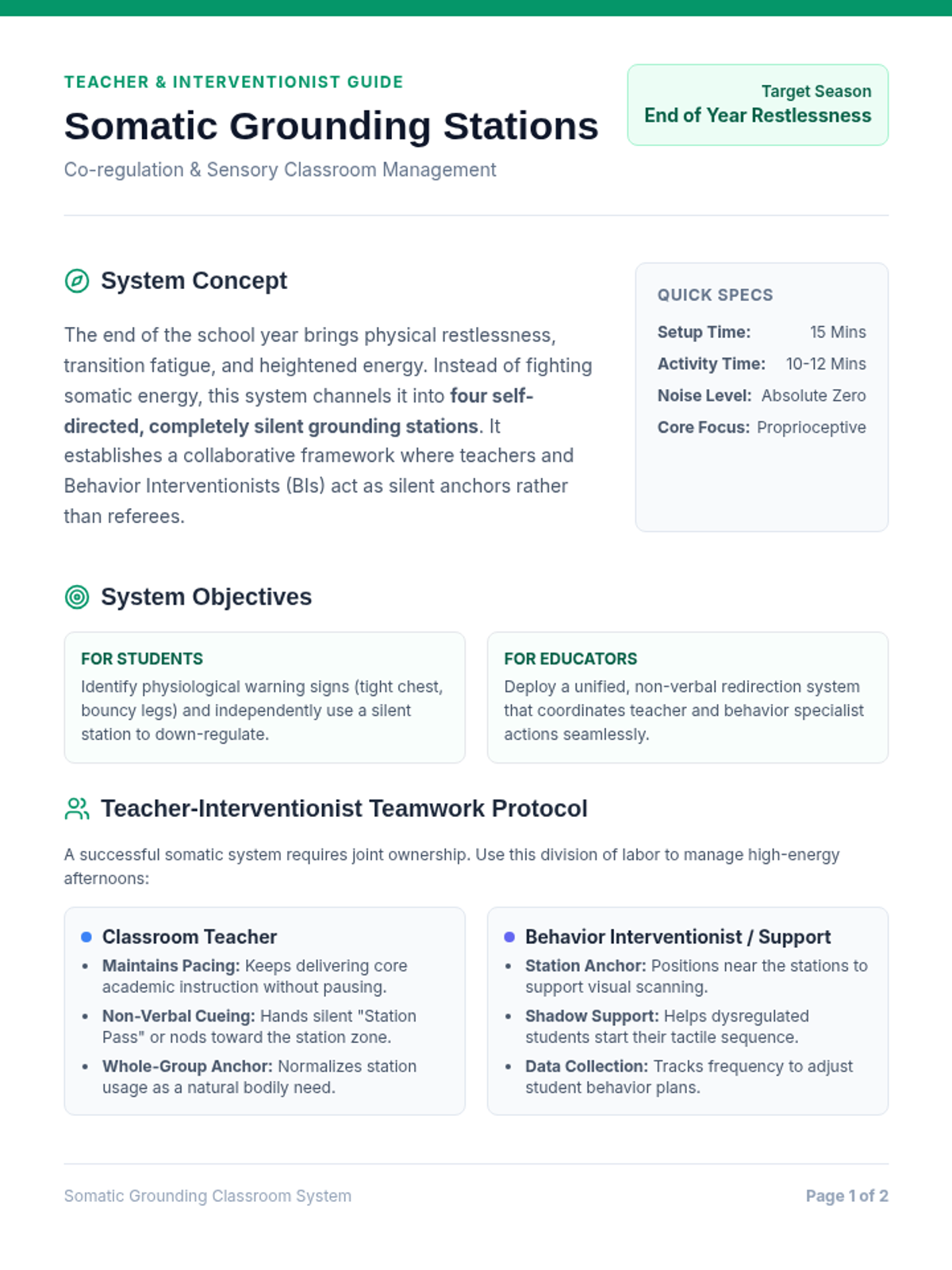
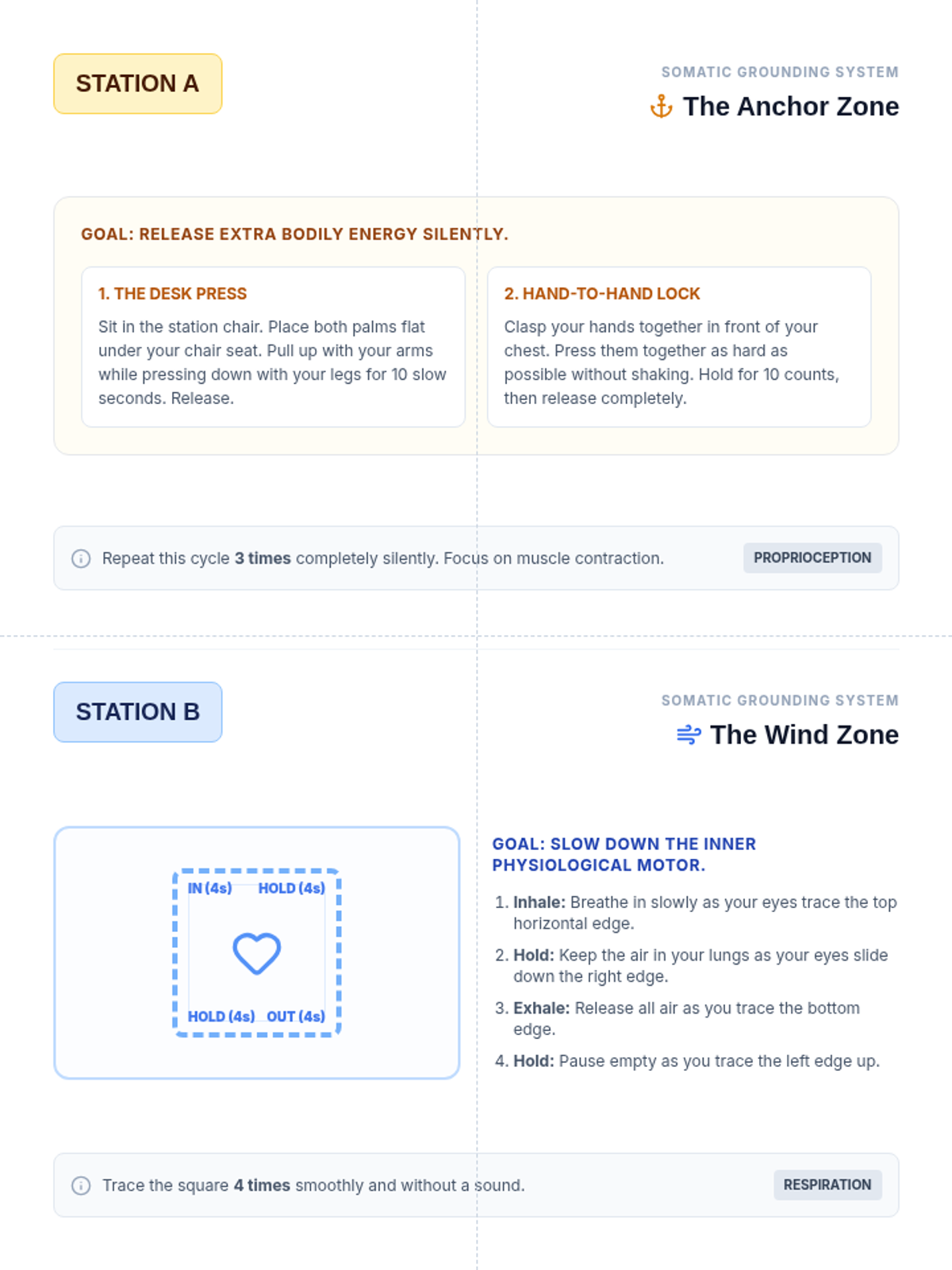
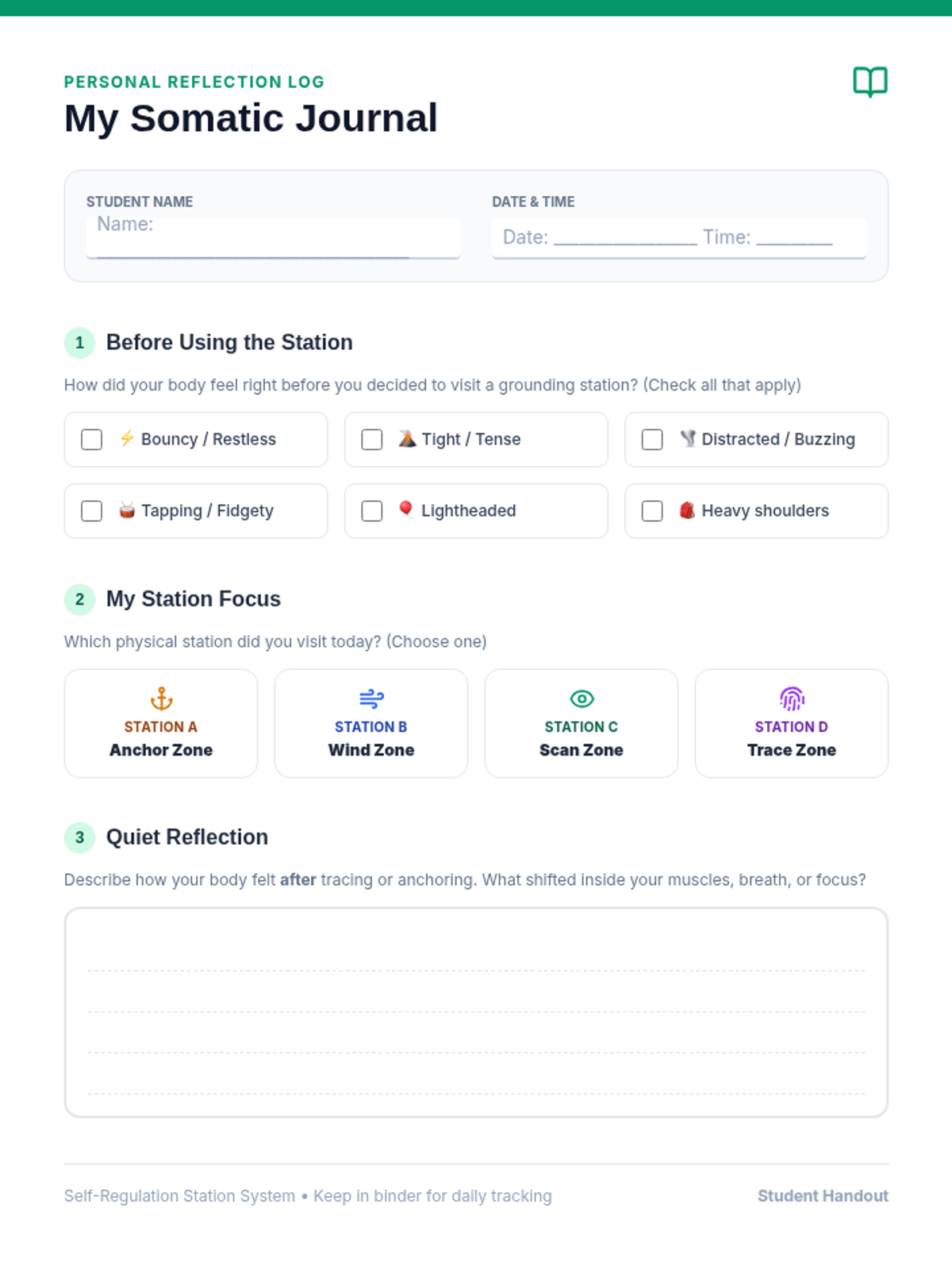
A sensory-based regulation system lesson designed to establish quick, silent coping zones in classrooms during high-energy periods, facilitating collaboration between teachers and behavior interventionists.
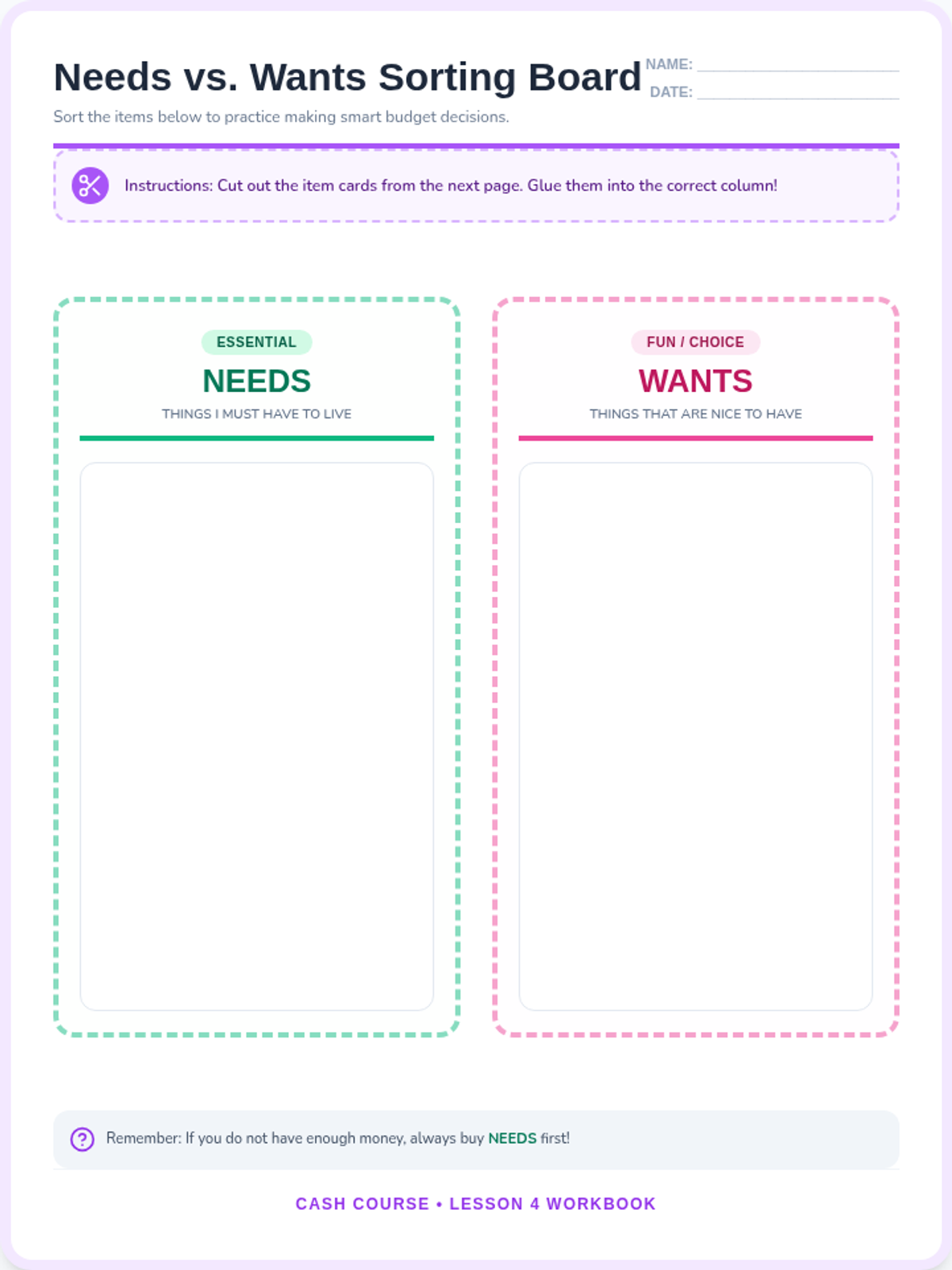
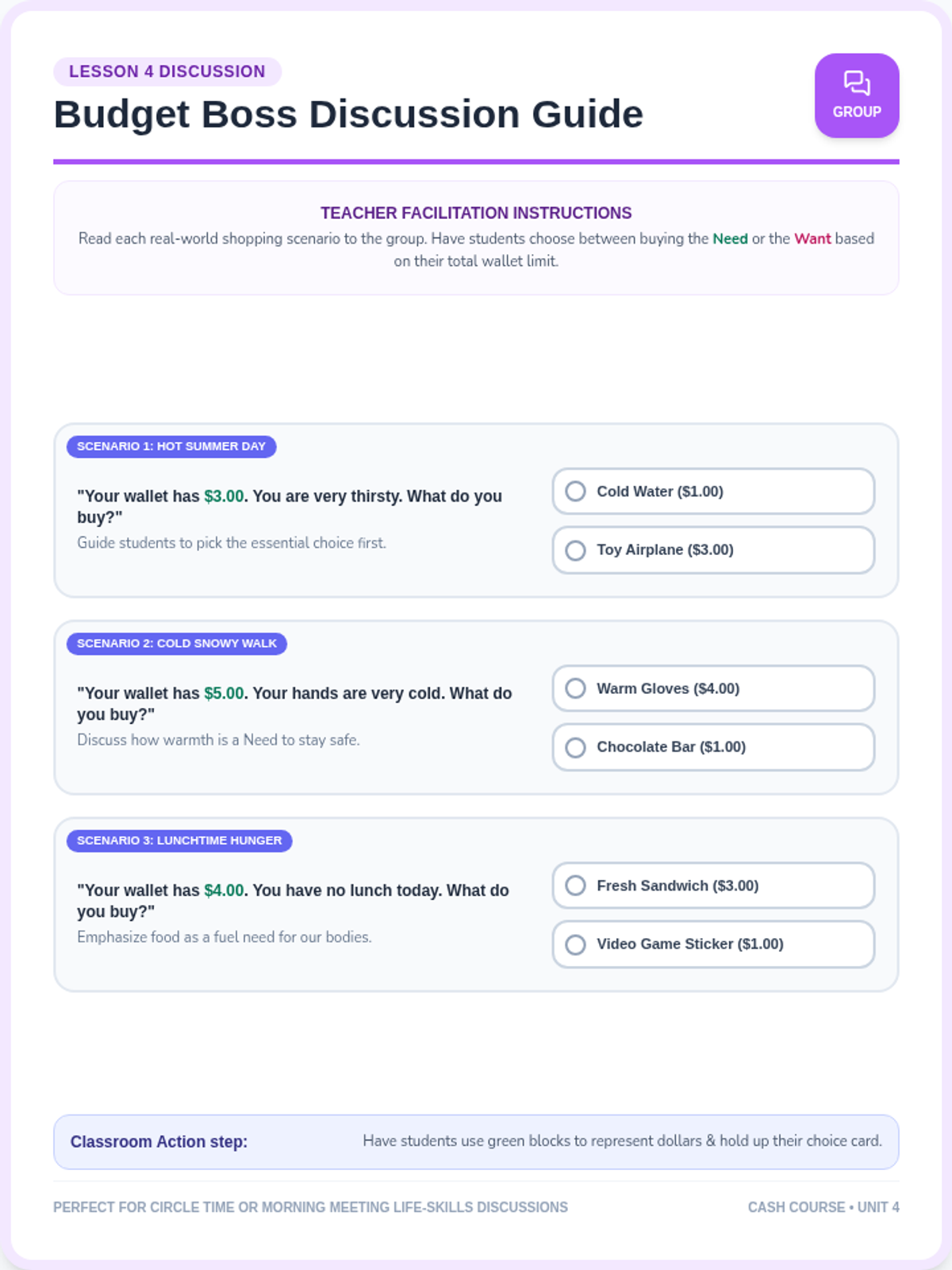
Teaches students to distinguish between essential items (needs) and non-essential items (wants), and guides them through making simple purchases within a fixed budget.
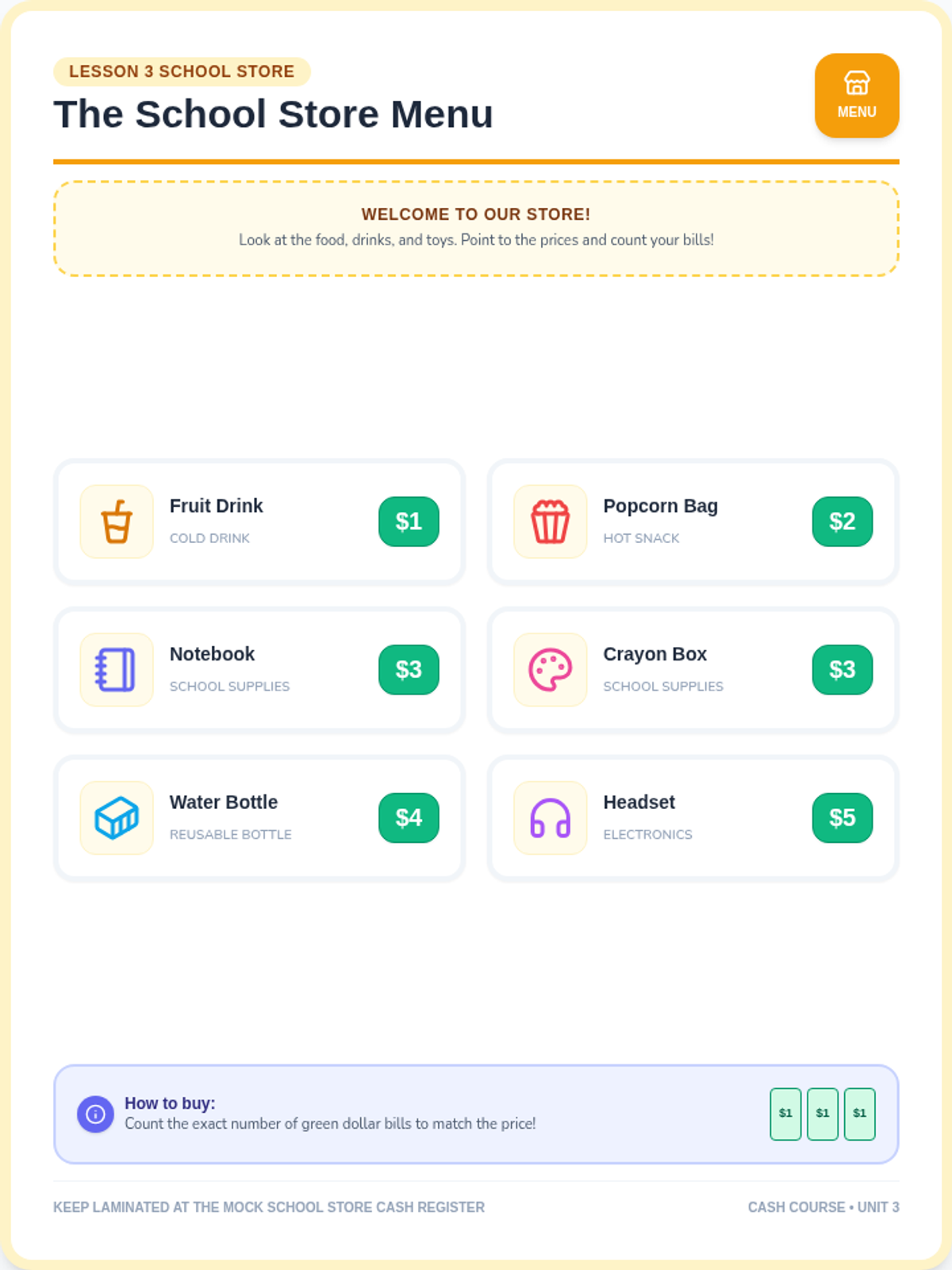
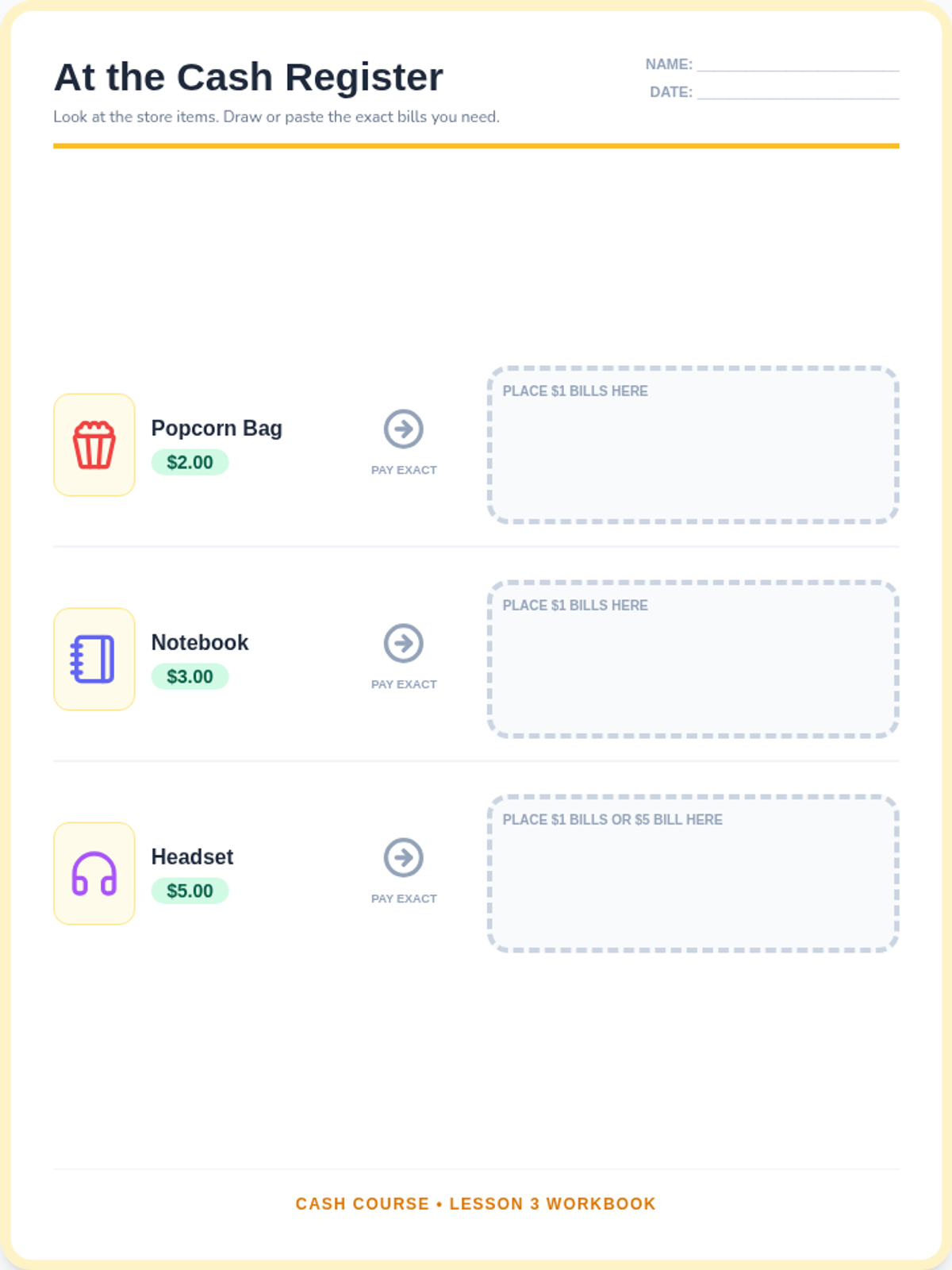
Students practice making simple exact transactions up to five dollars, simulating visual school store scenarios to build independent living skills.
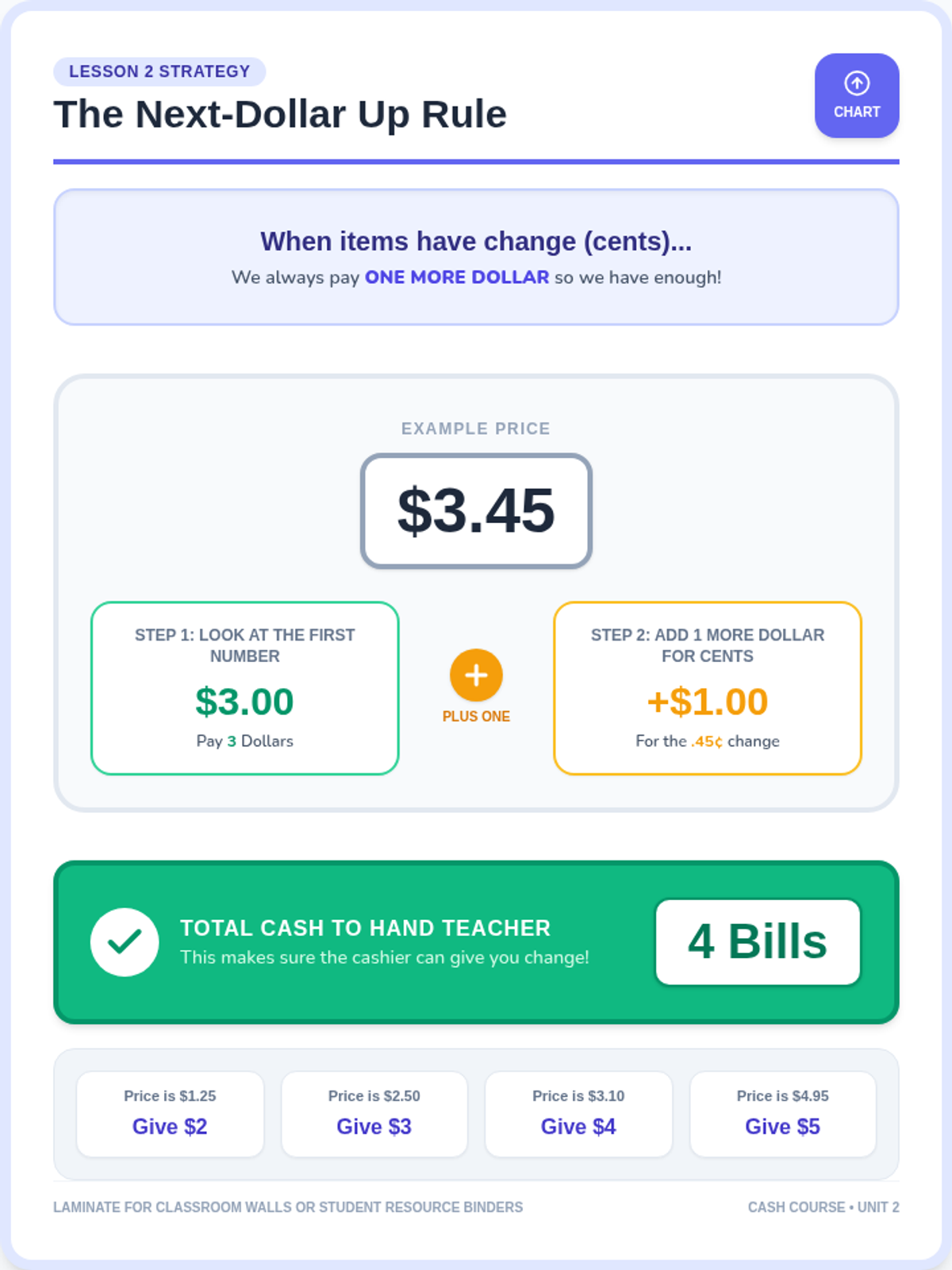
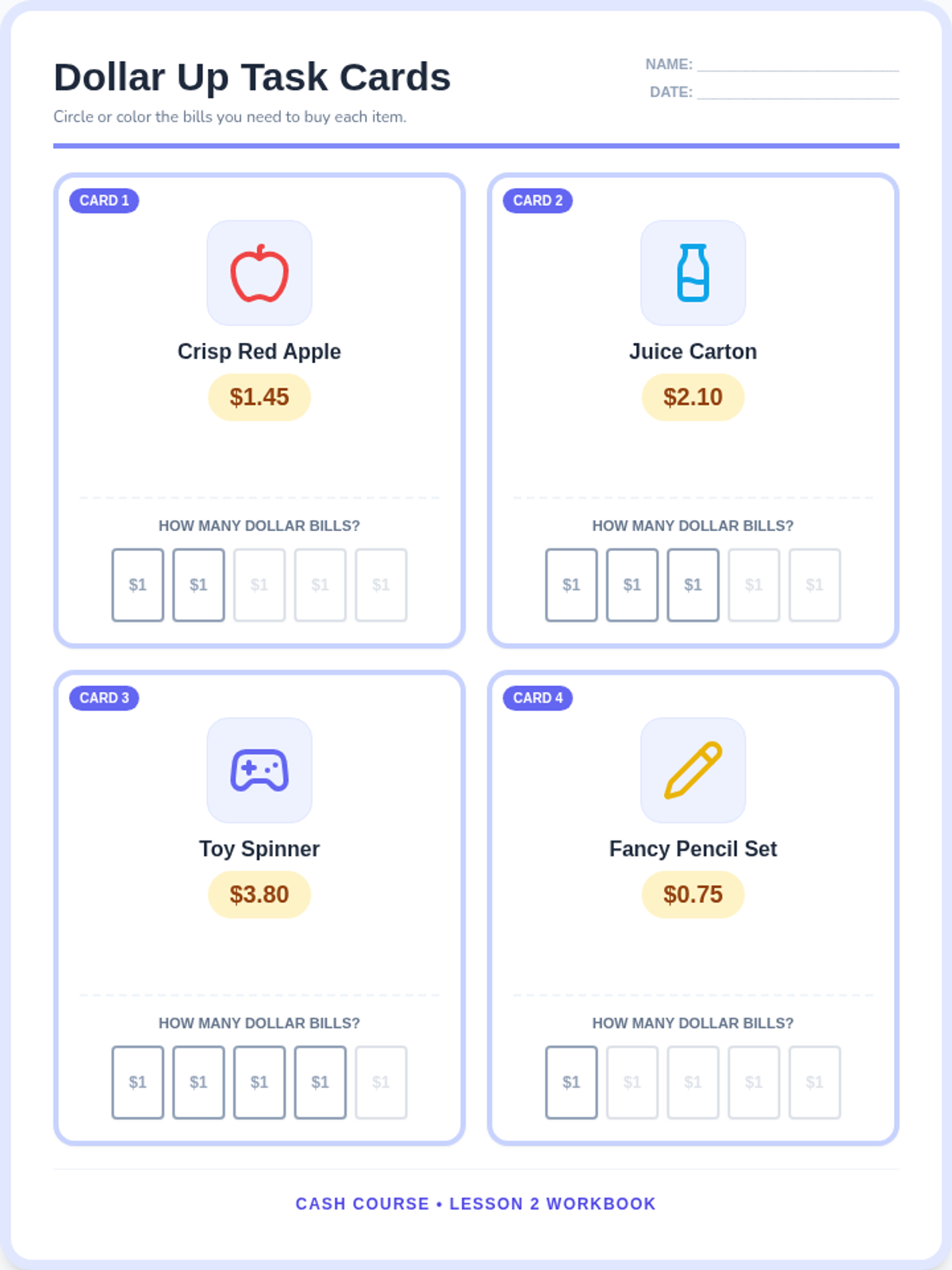
Introduces the Next-Dollar Up strategy, teaching students with cognitive and learning disabilities how to determine how many one-dollar bills to pay for items with decimal prices.
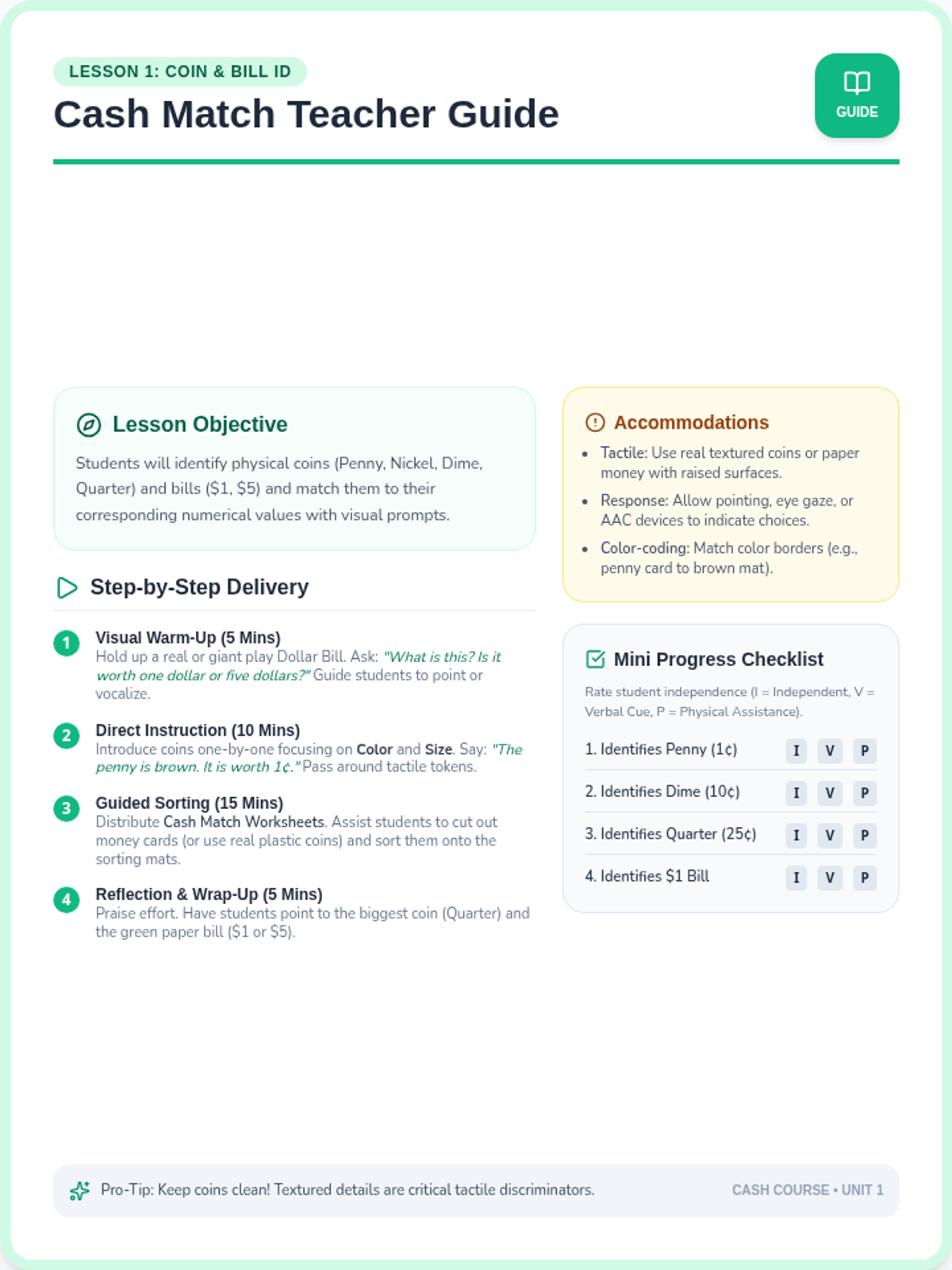
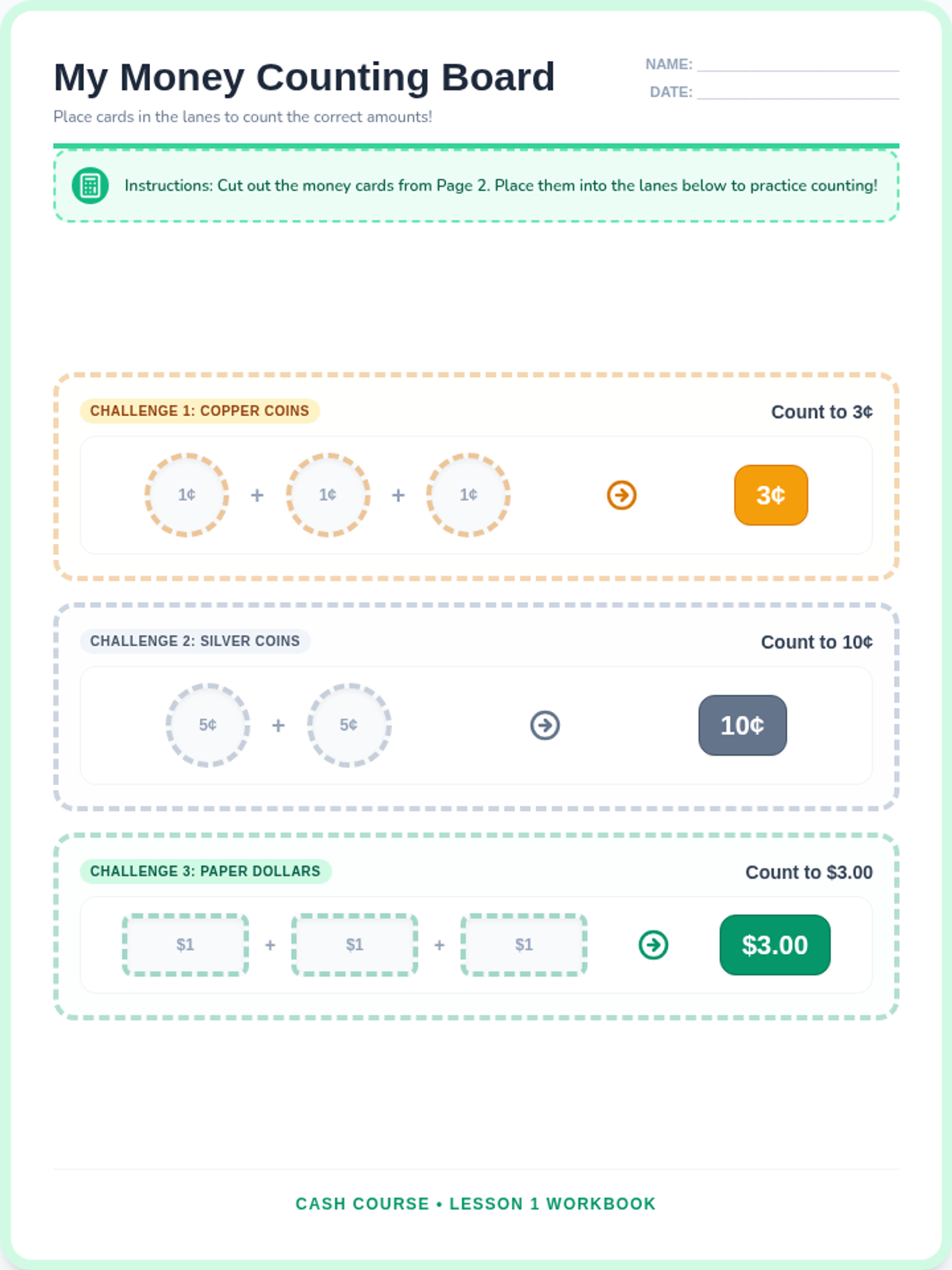
Focuses on recognizing physical coins and bills, matching them to their numeric values, and sorting money in physical or visual formats for students with significant cognitive disabilities.
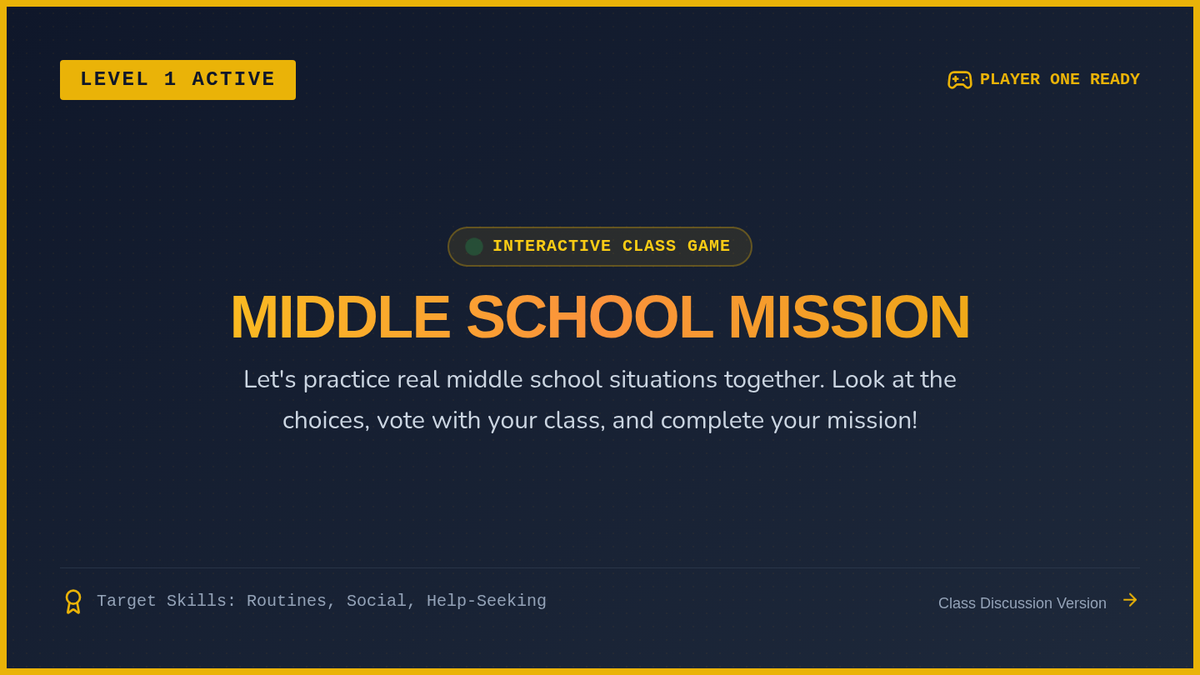
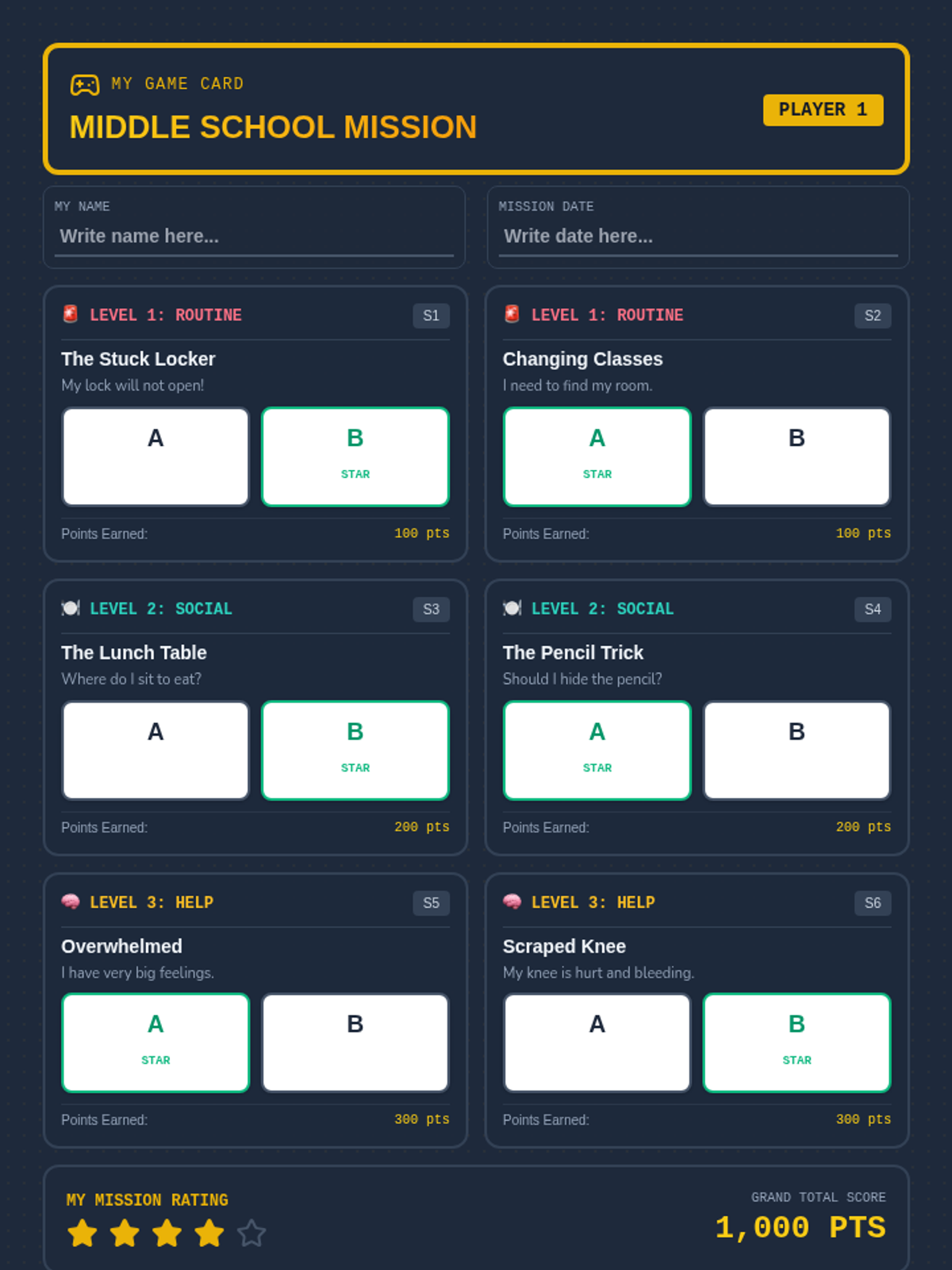
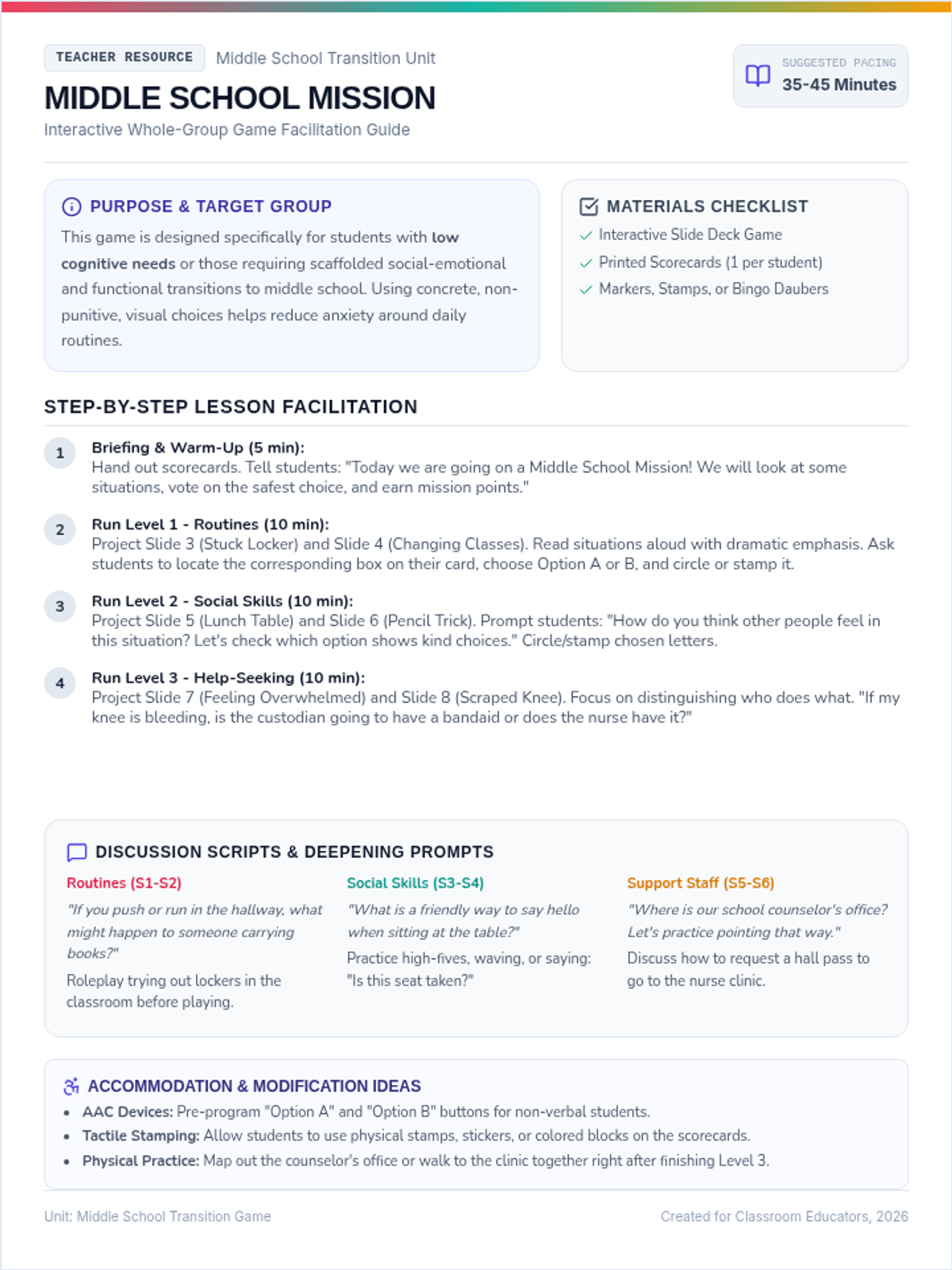
An interactive, game-based transition unit for middle school students with low cognitive needs. It teaches essential routines, social-emotional skills, and support systems through guided scenario-based choices.
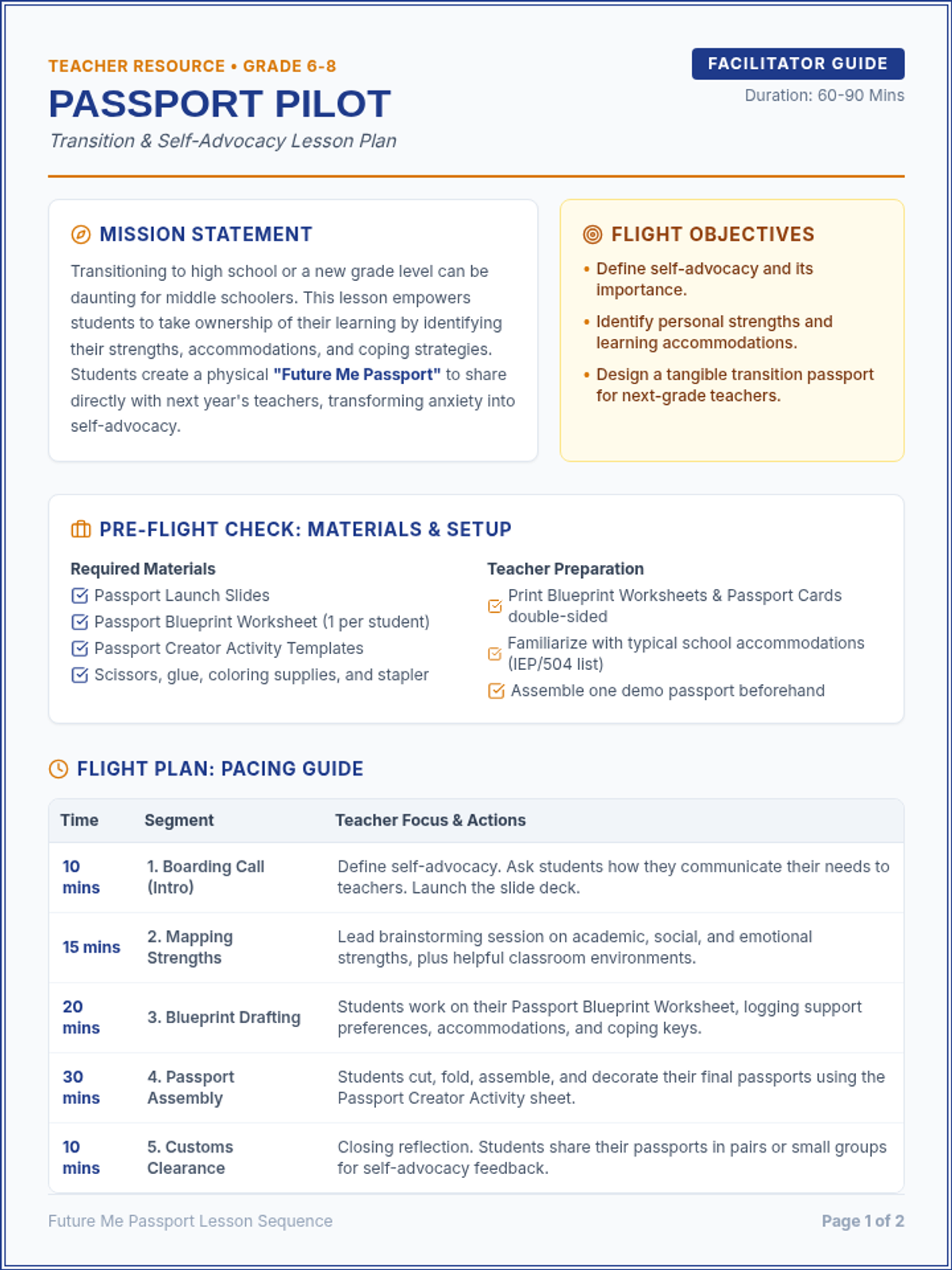
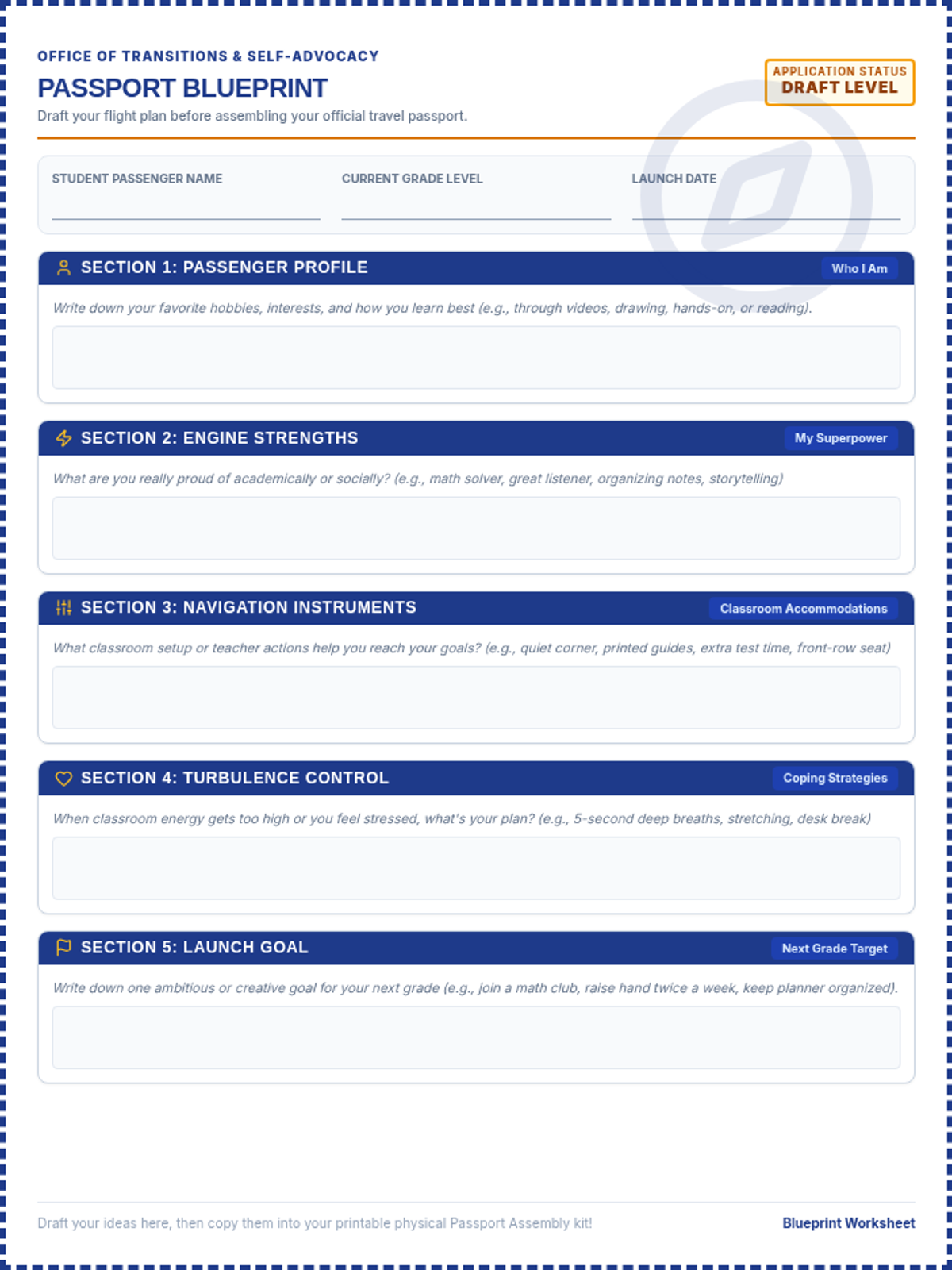
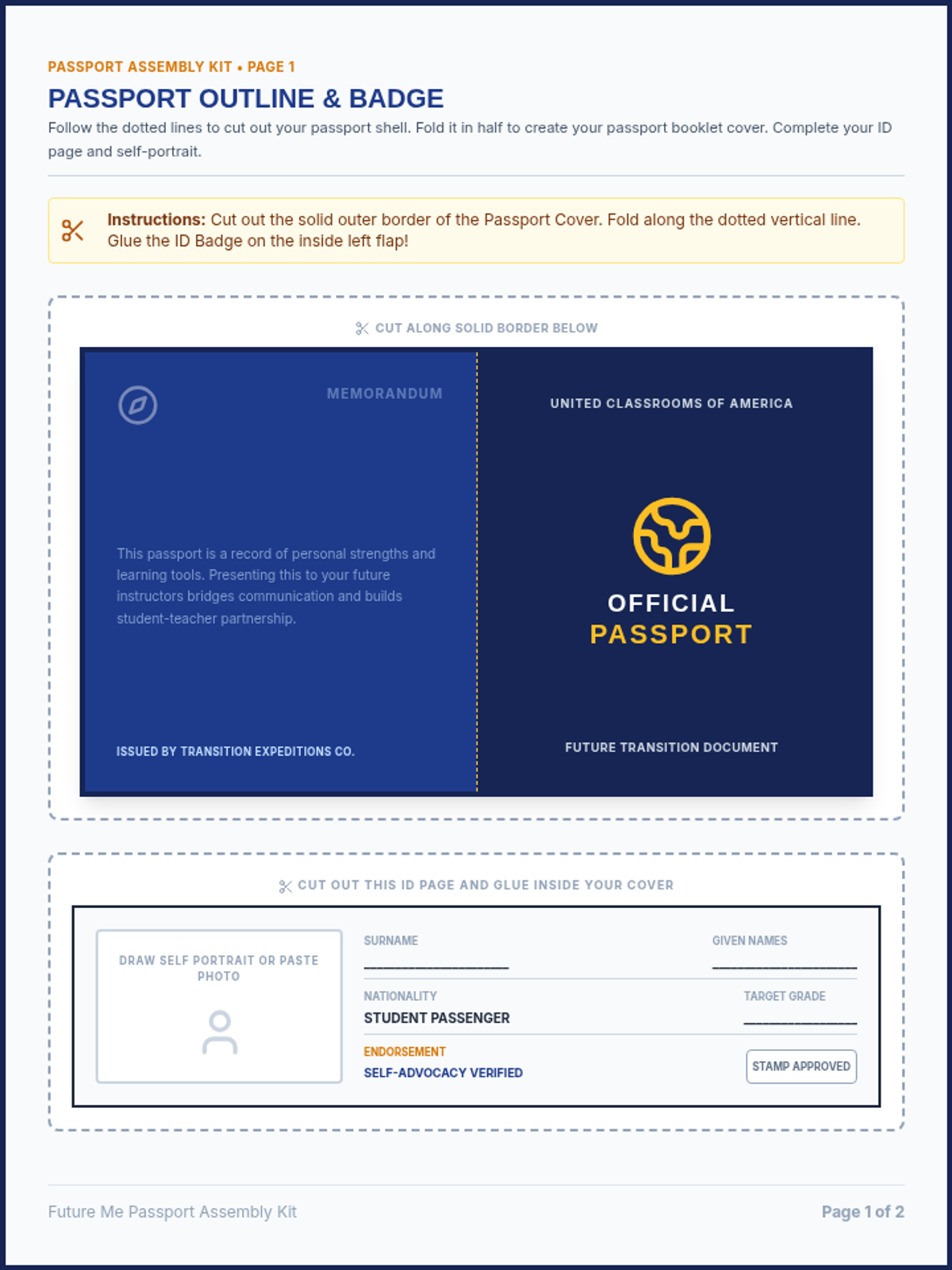
A self-advocacy and transition planning lesson where middle school students discover their strengths, identify necessary accommodations, and design a 'Transition Passport' to present to their future teachers.
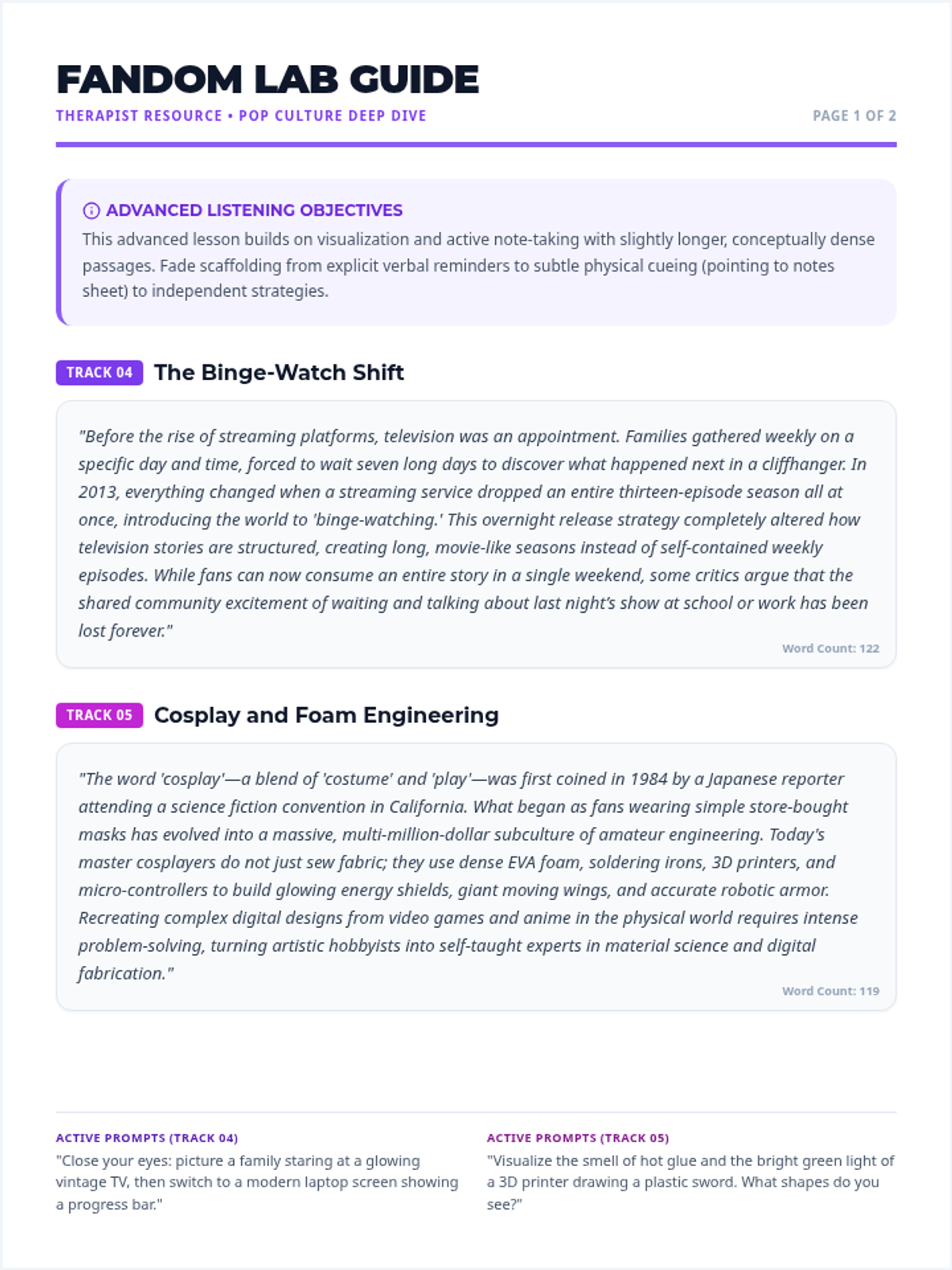
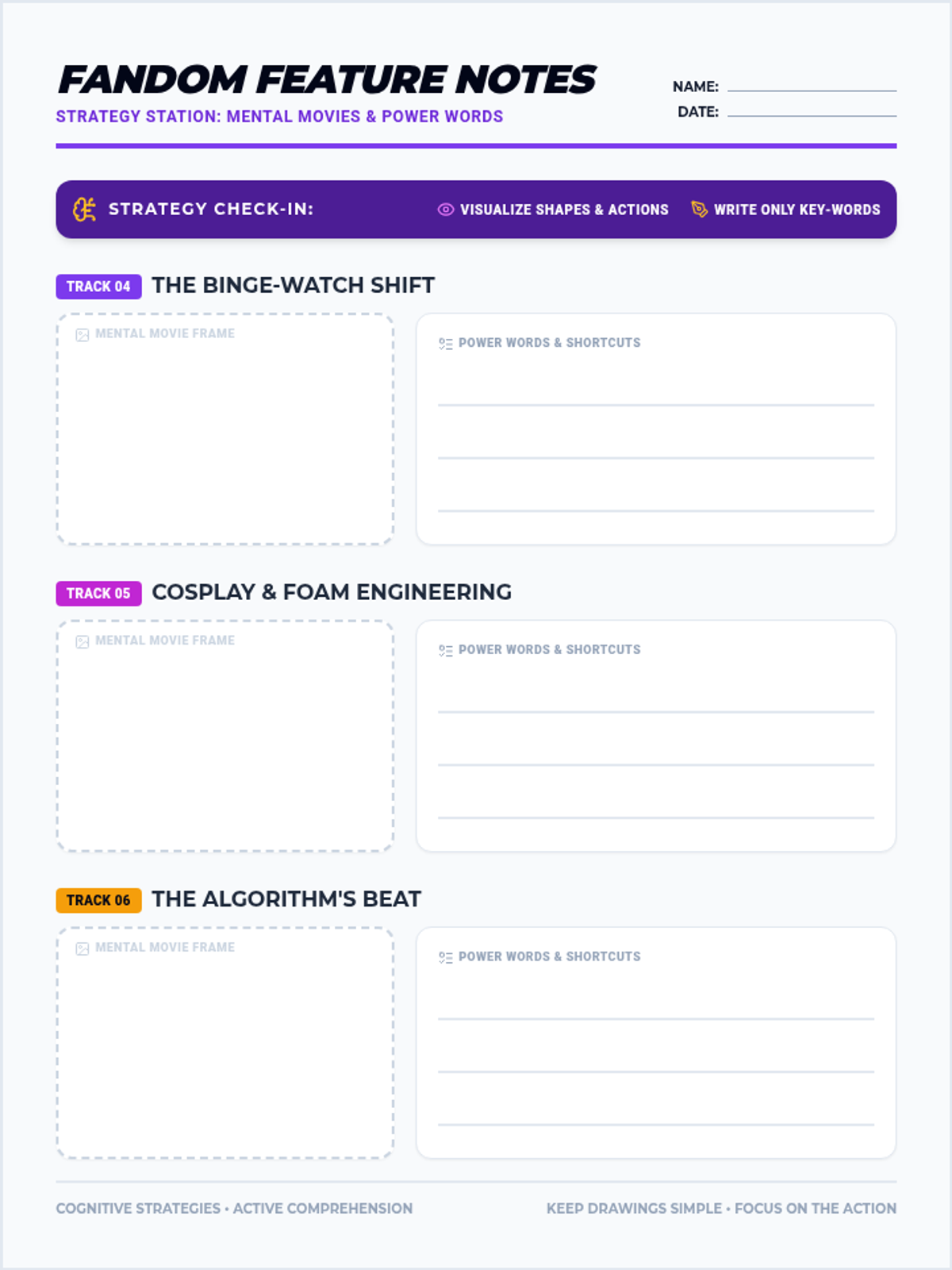
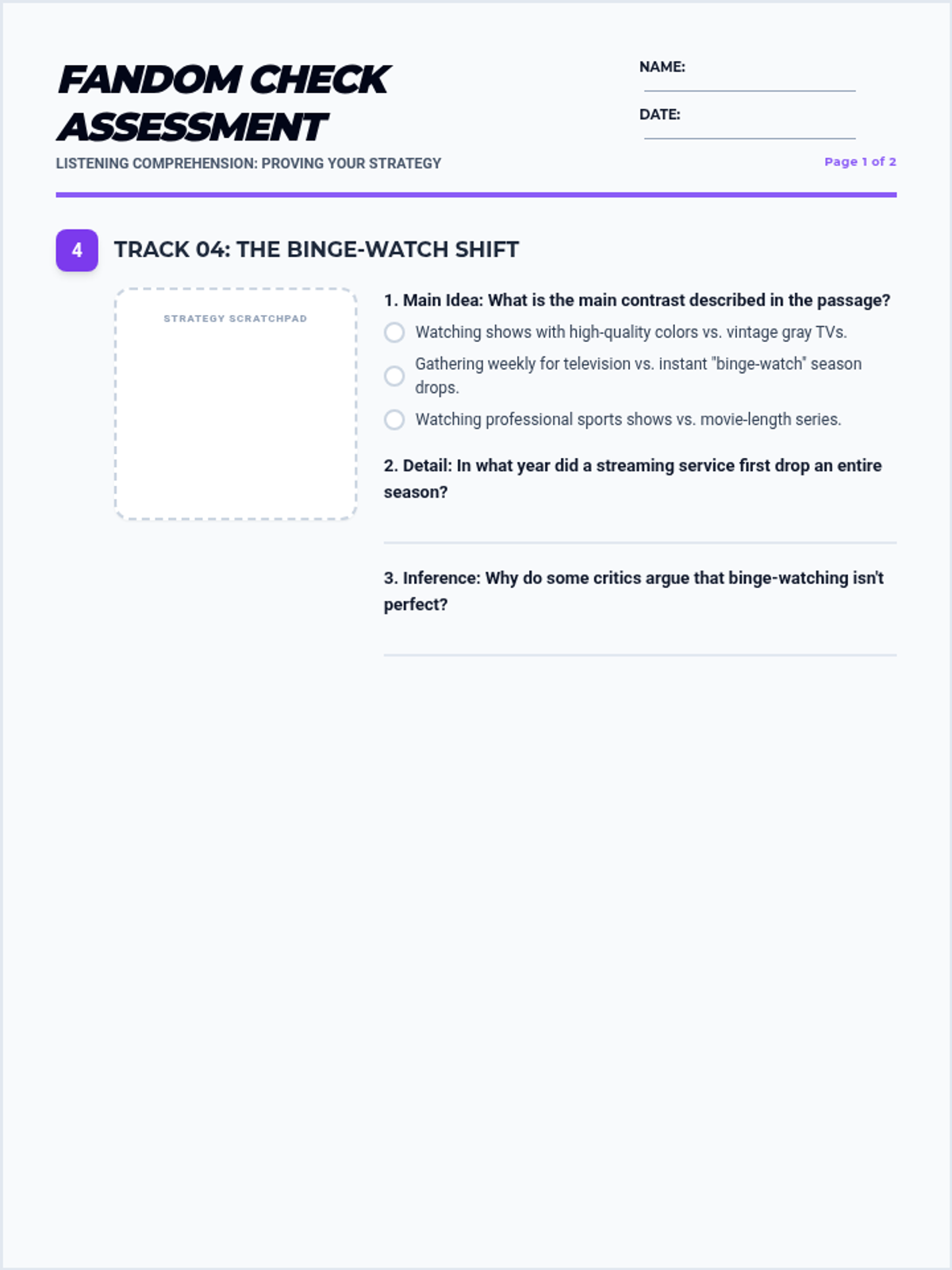
An advanced listening comprehension lesson building on visualization and active note-taking strategies with longer oral passages, denser pop culture topics, and an increased volume of targeted comprehension questions.
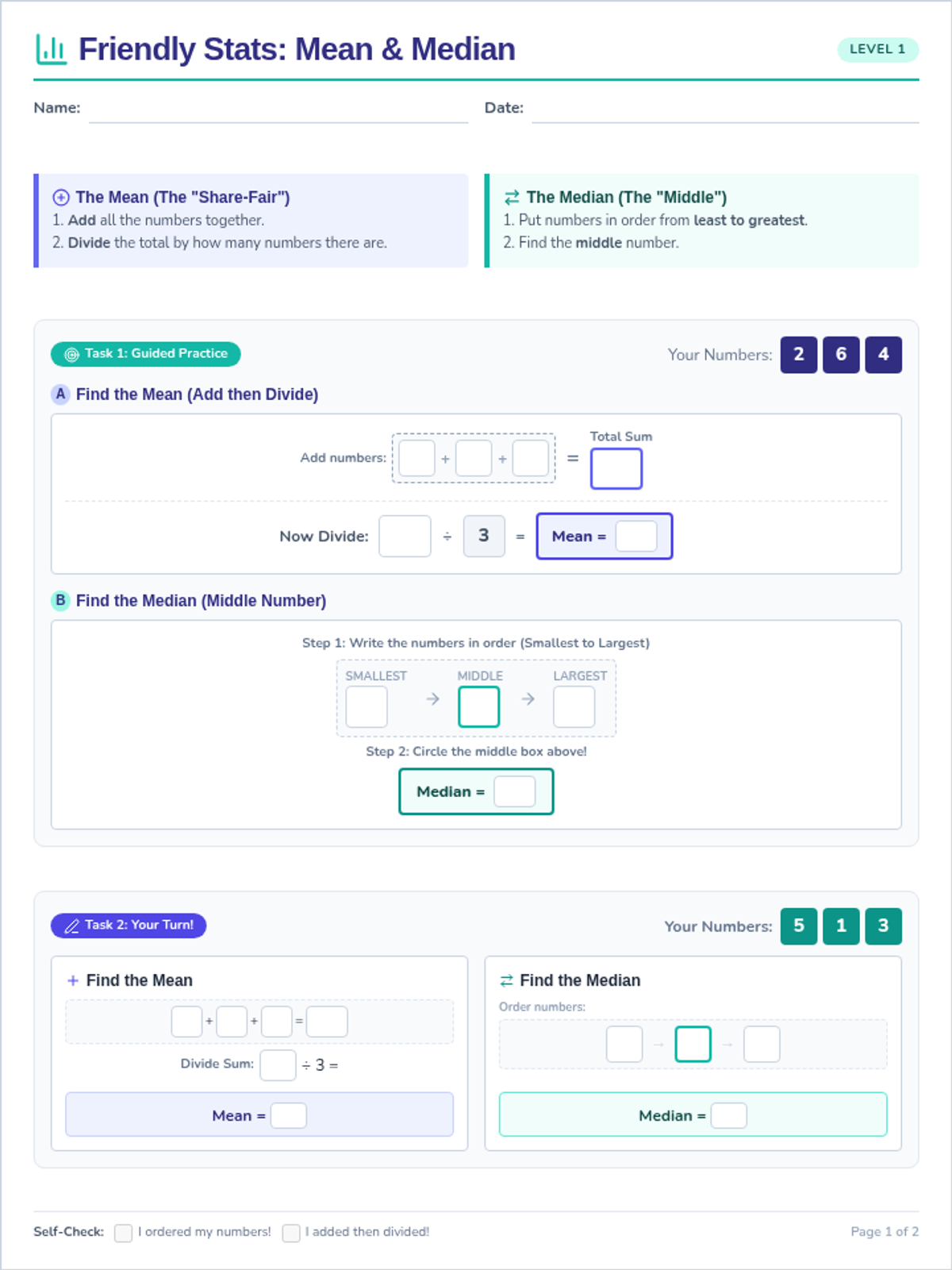
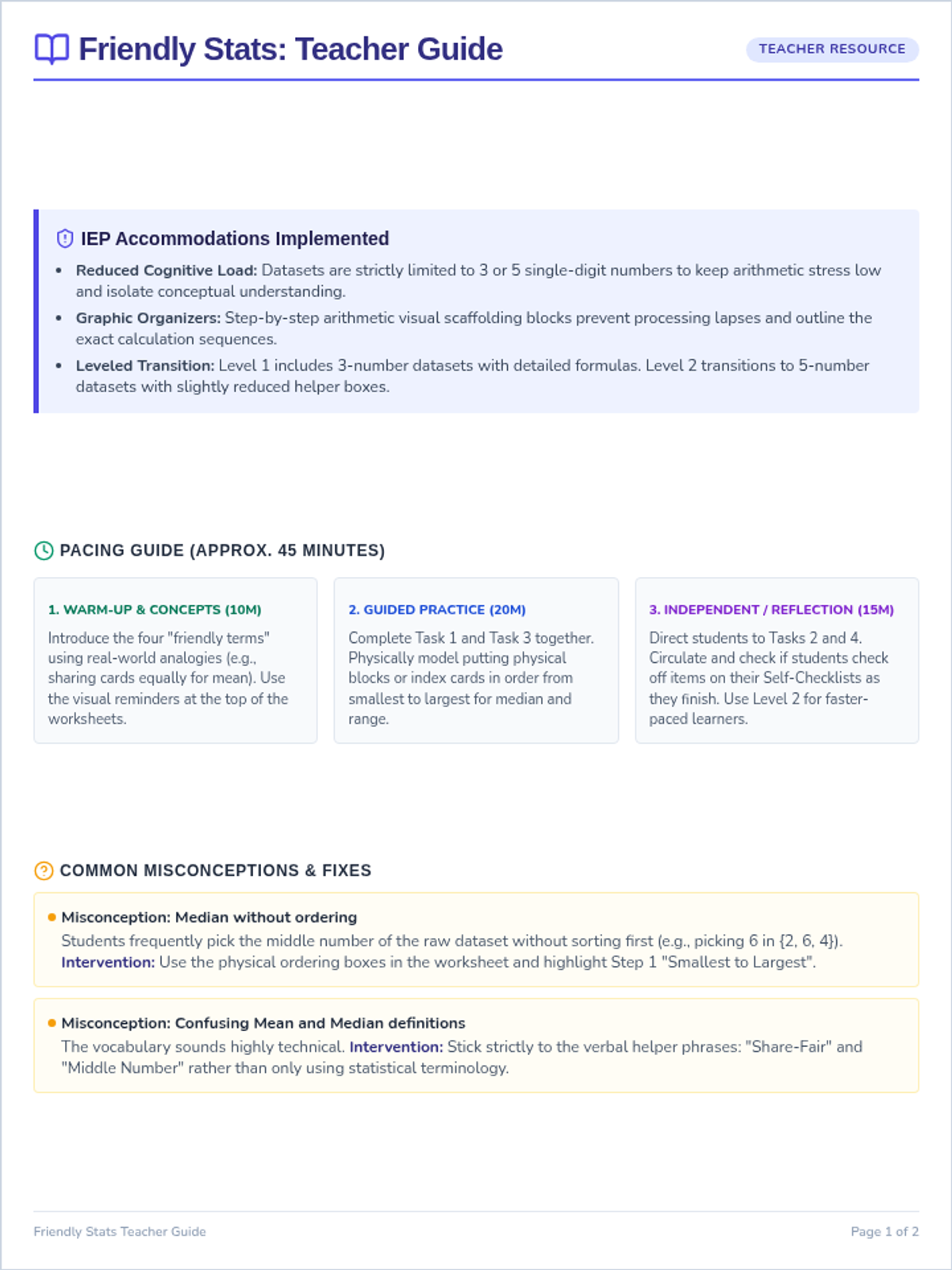
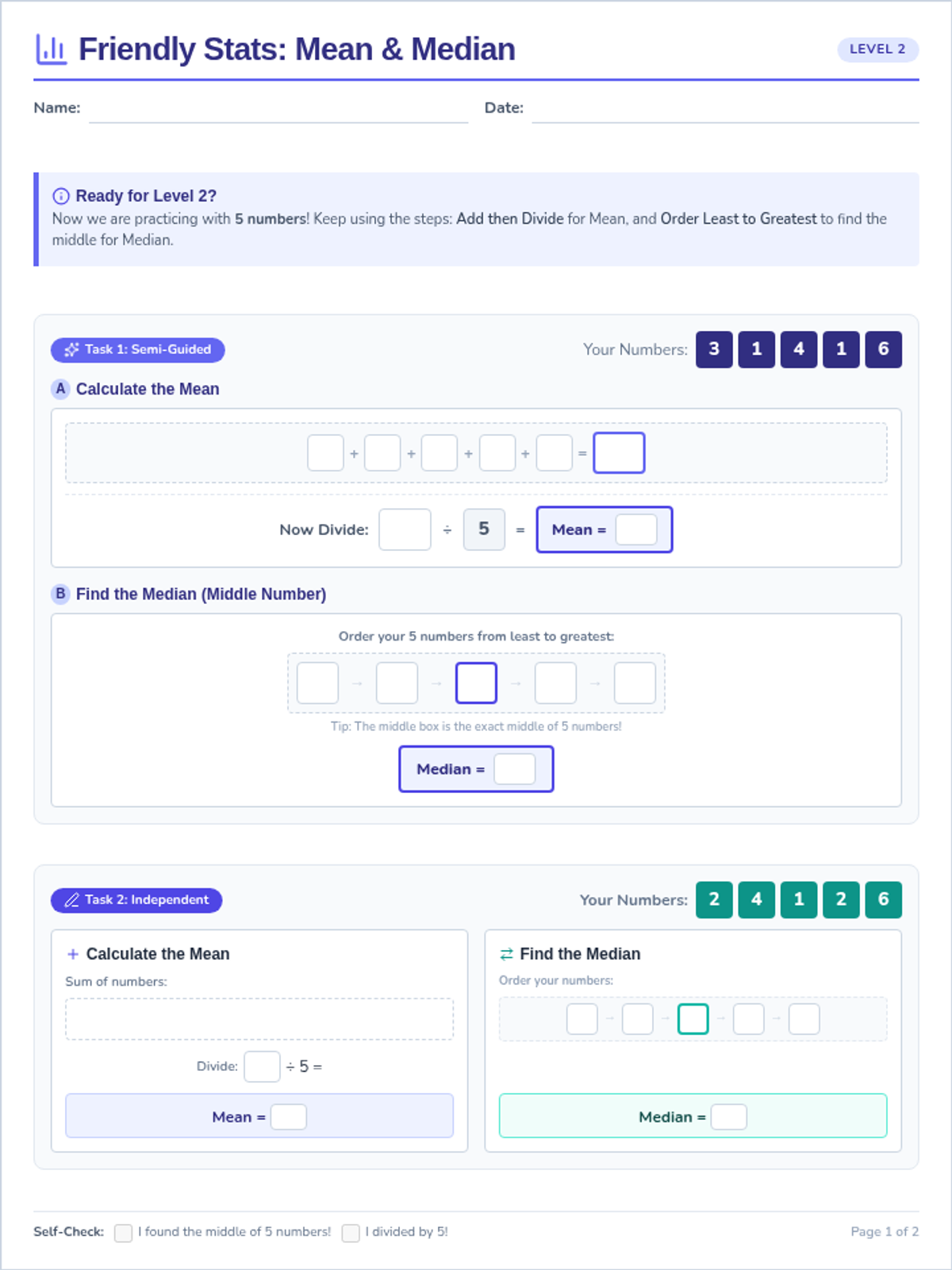
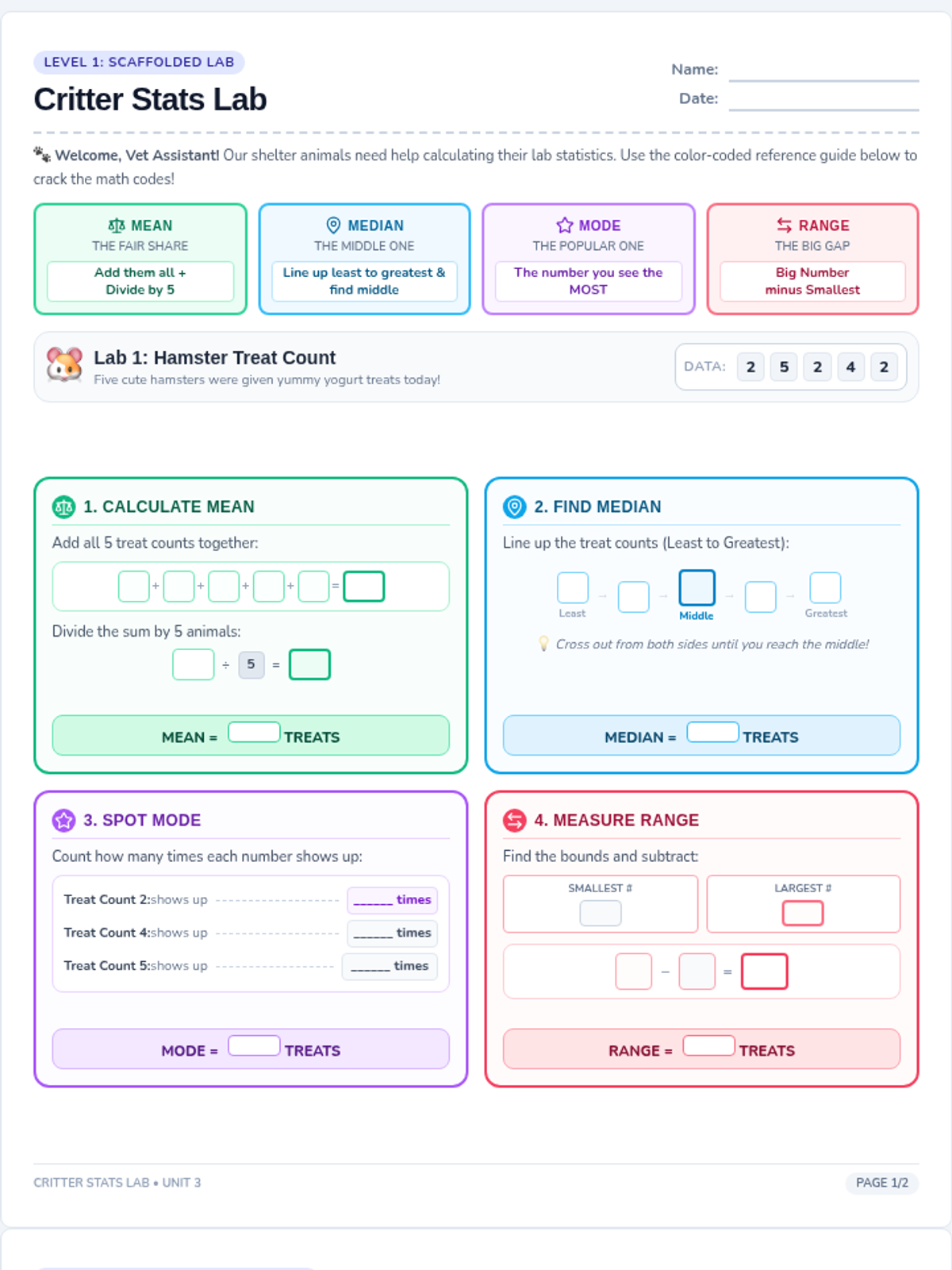
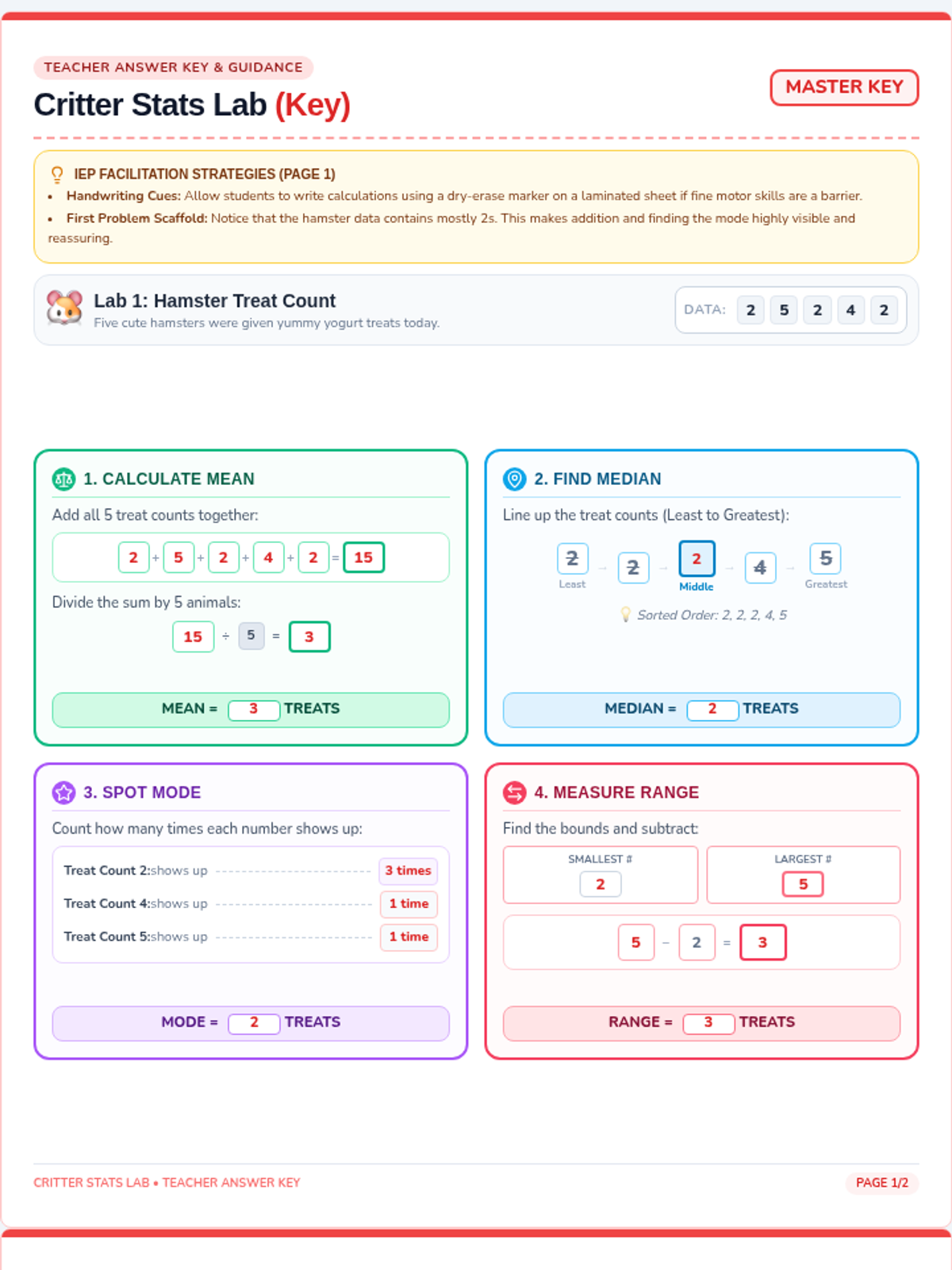
A highly scaffolded lesson on finding the mean, median, mode, and range using small, single-digit datasets (3-5 numbers) designed specifically for students with IEP accommodations.
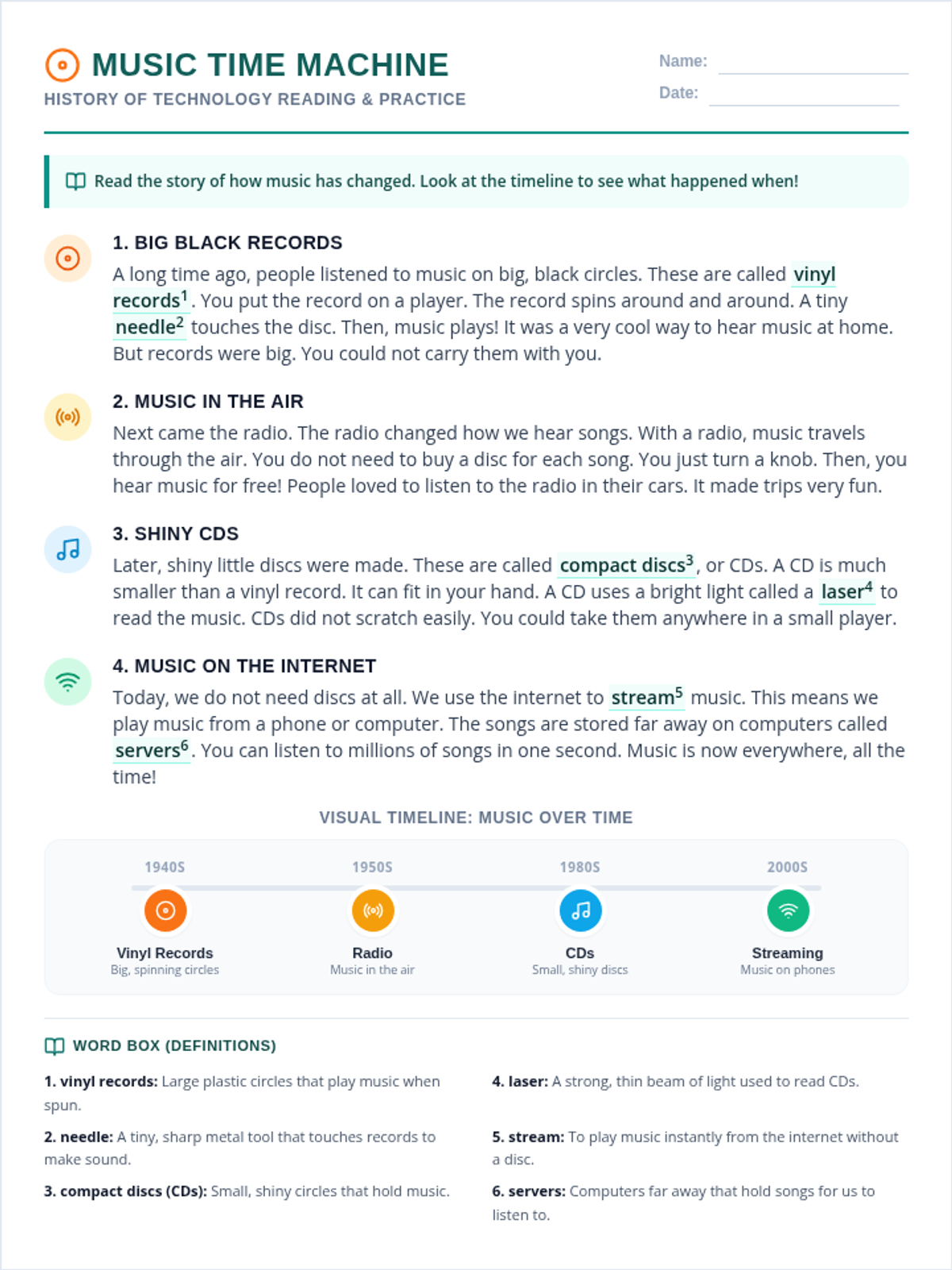
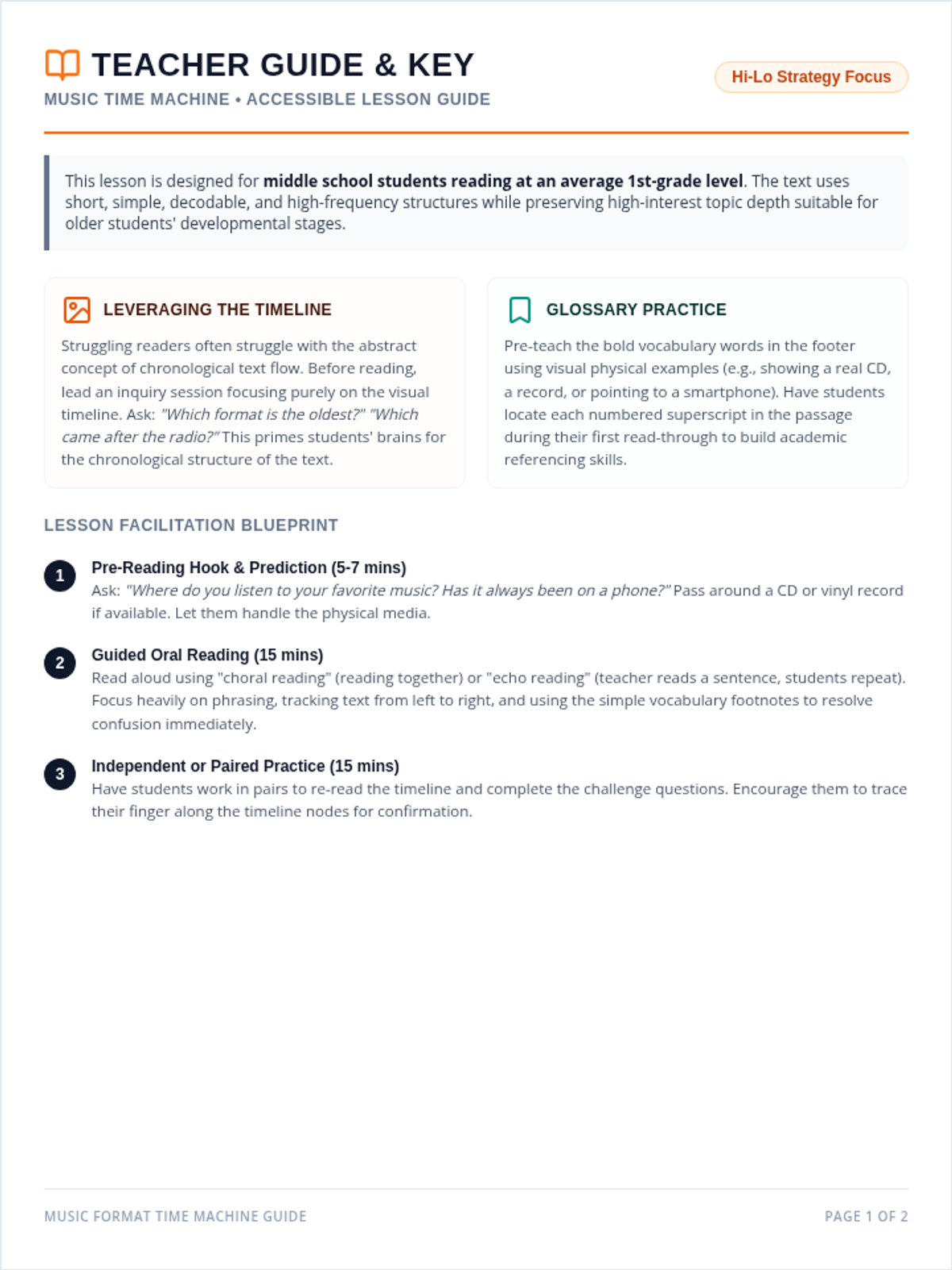
A history-of-technology lesson designed for middle school students reading at a first-grade level. It explores the evolution of music formats from vinyl records to modern streaming, supported by a visual timeline and simple vocabulary footnotes.
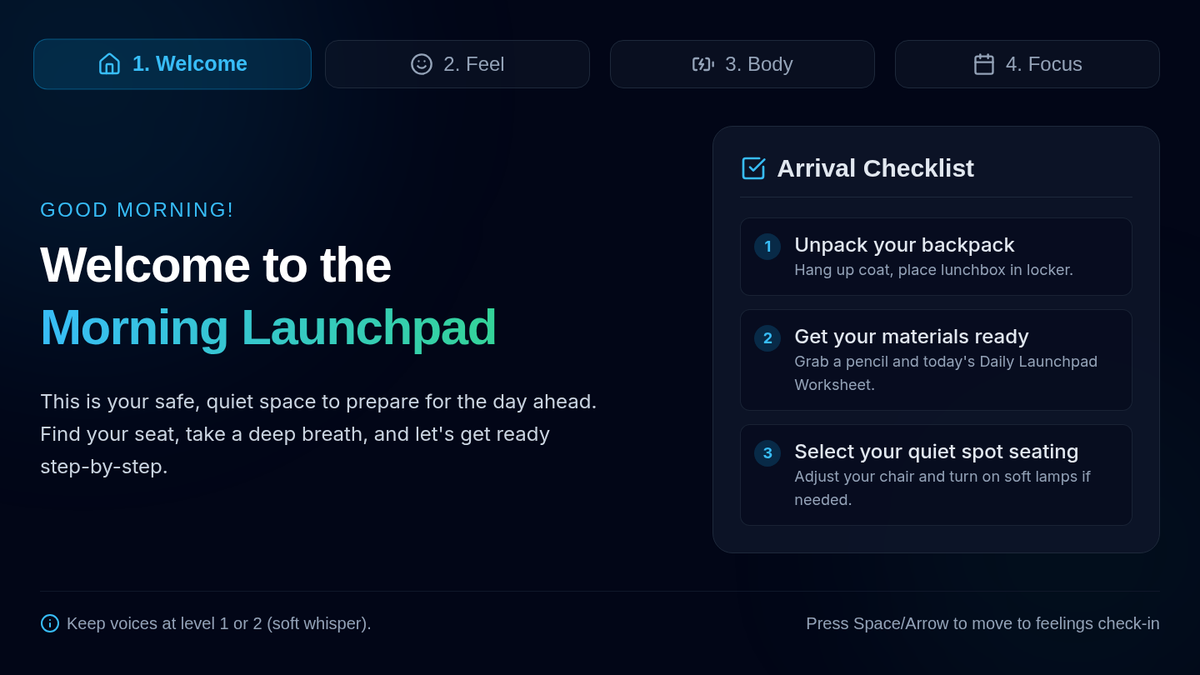
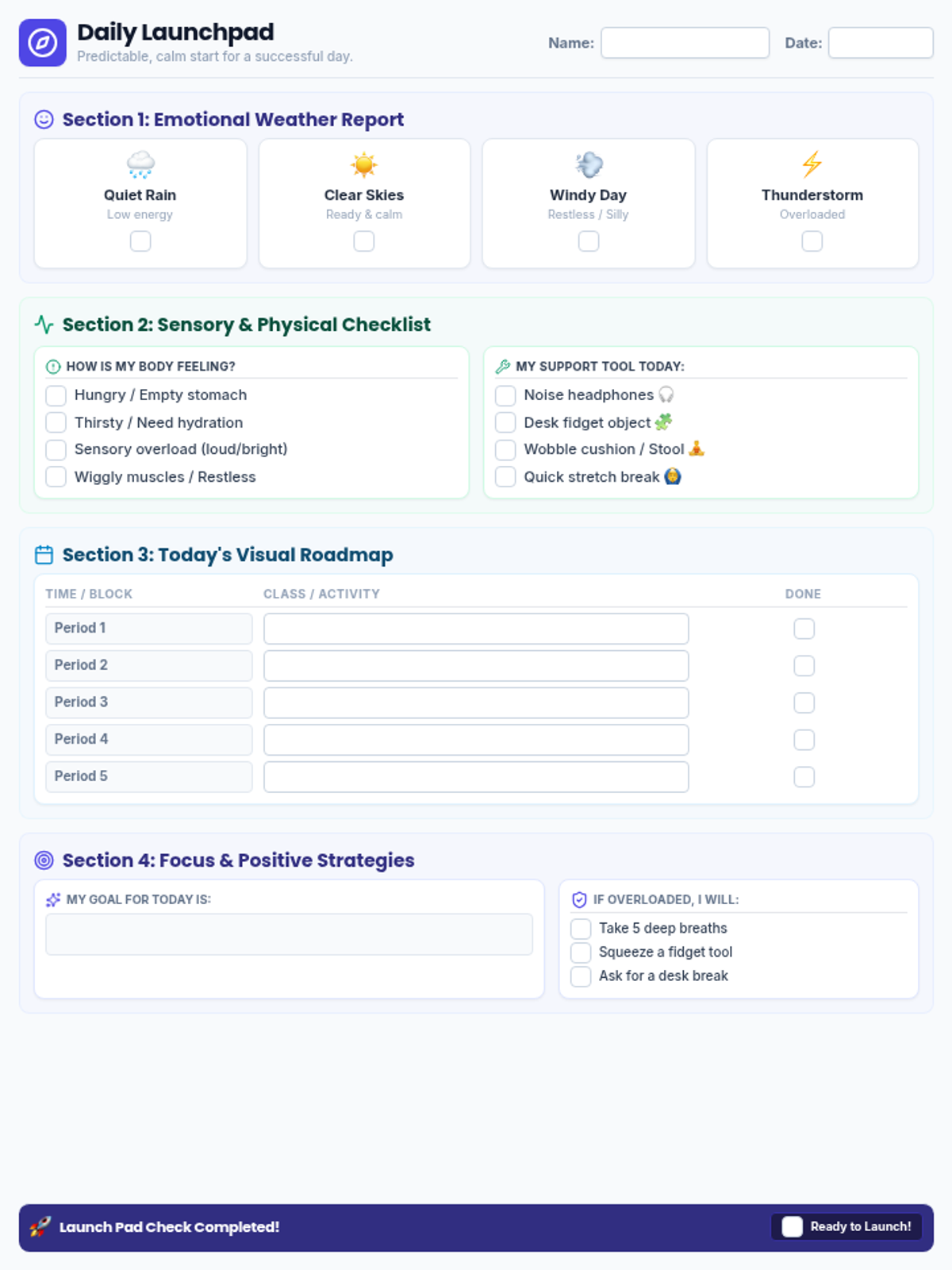
A structured morning routine sequence designed for middle school ASD students to support emotional regulation, sensory tracking, and executive functioning. Includes interactive visual slides and a corresponding daily check-in worksheet to establish a predictable, calming start to the school day.
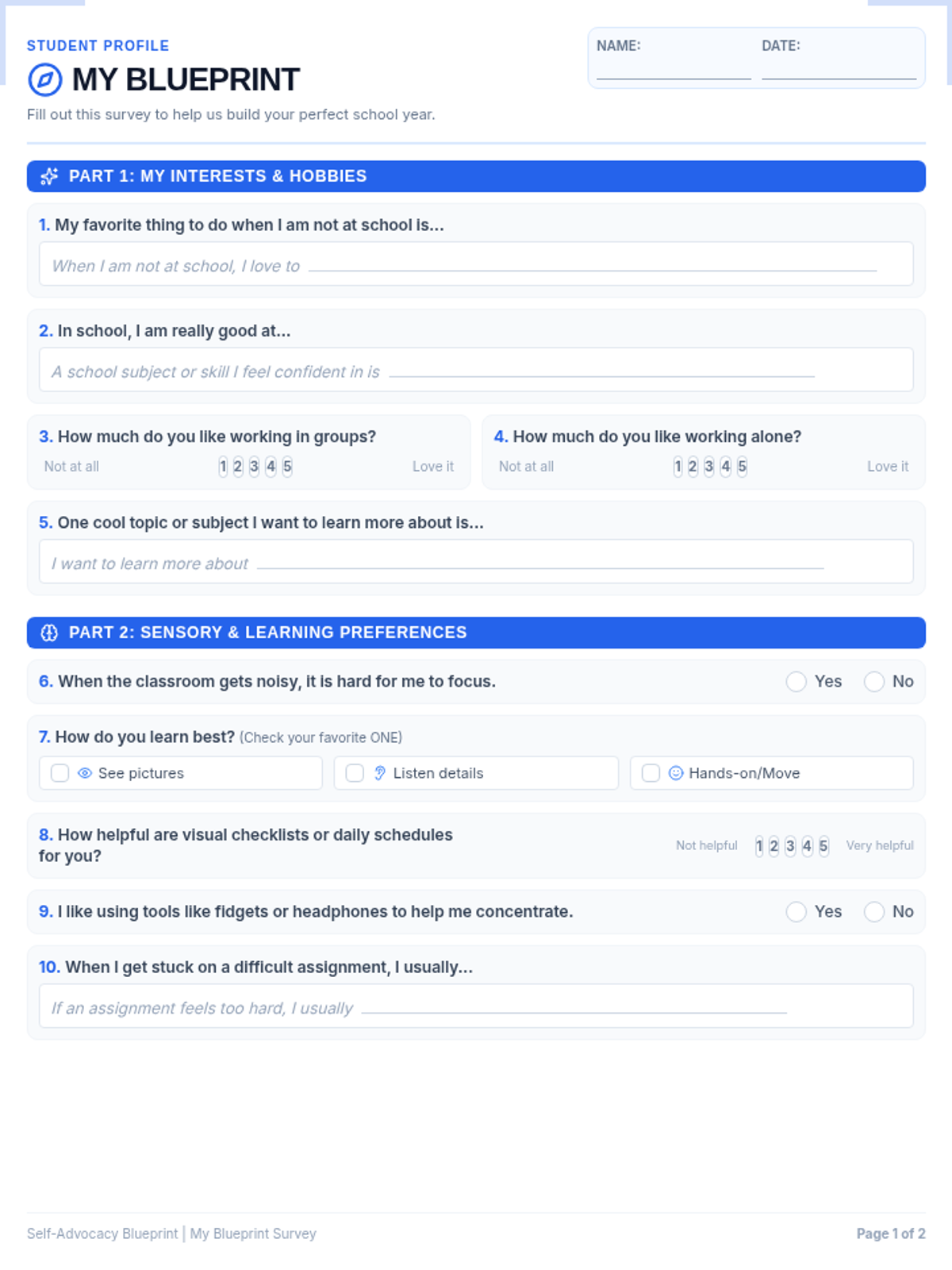
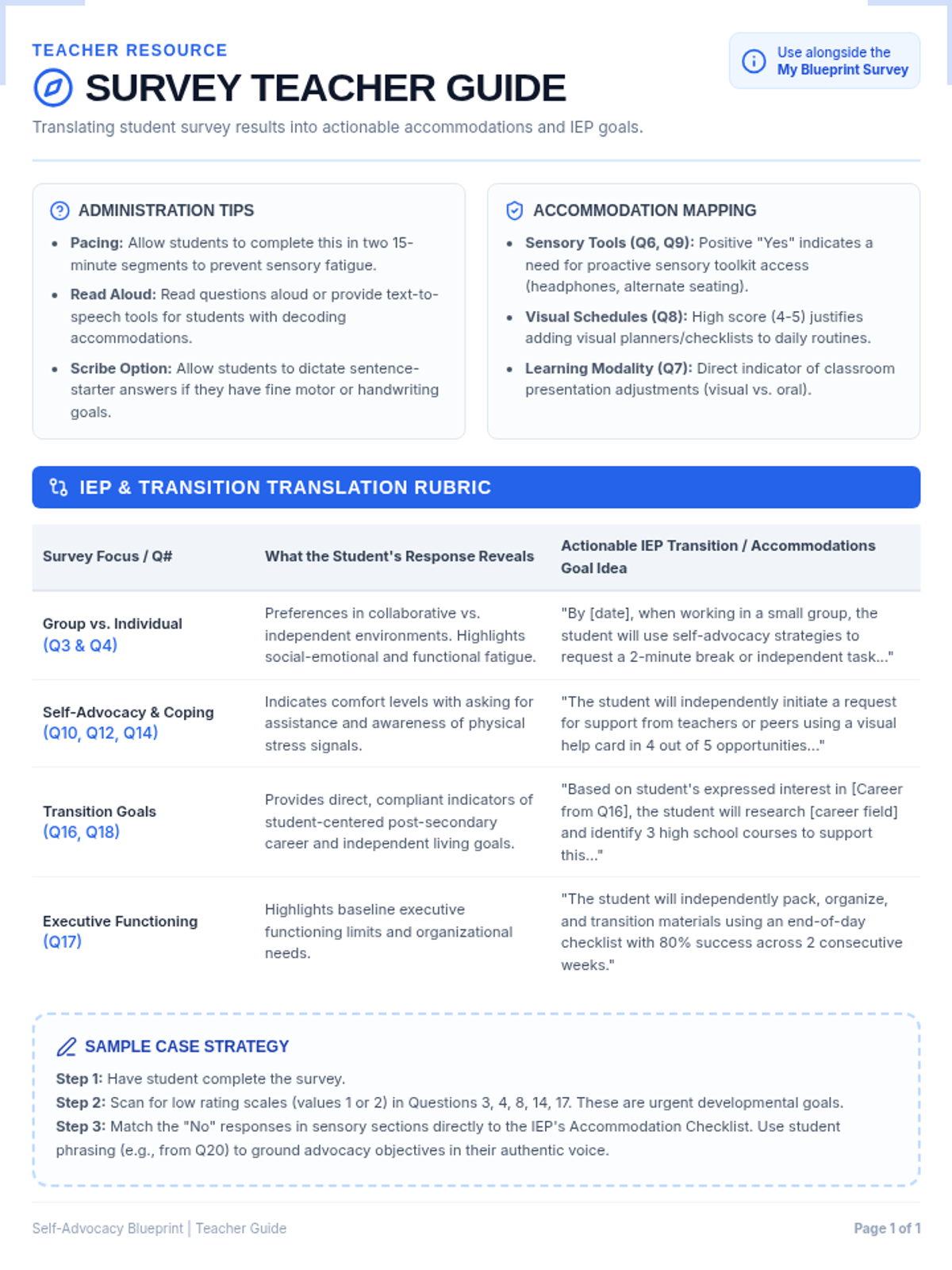
A transition-focused lesson featuring an accessible "All About Me" survey for middle school students with accommodations, alongside a guide for teachers to translate student responses into IEP goals and classroom support strategies.
A highly visual, color-coded math lesson introducing mean, median, mode, and range to IEP students using adorable pet shelter statistics. Highly structured layout with minimal text density and supportive visual cues.
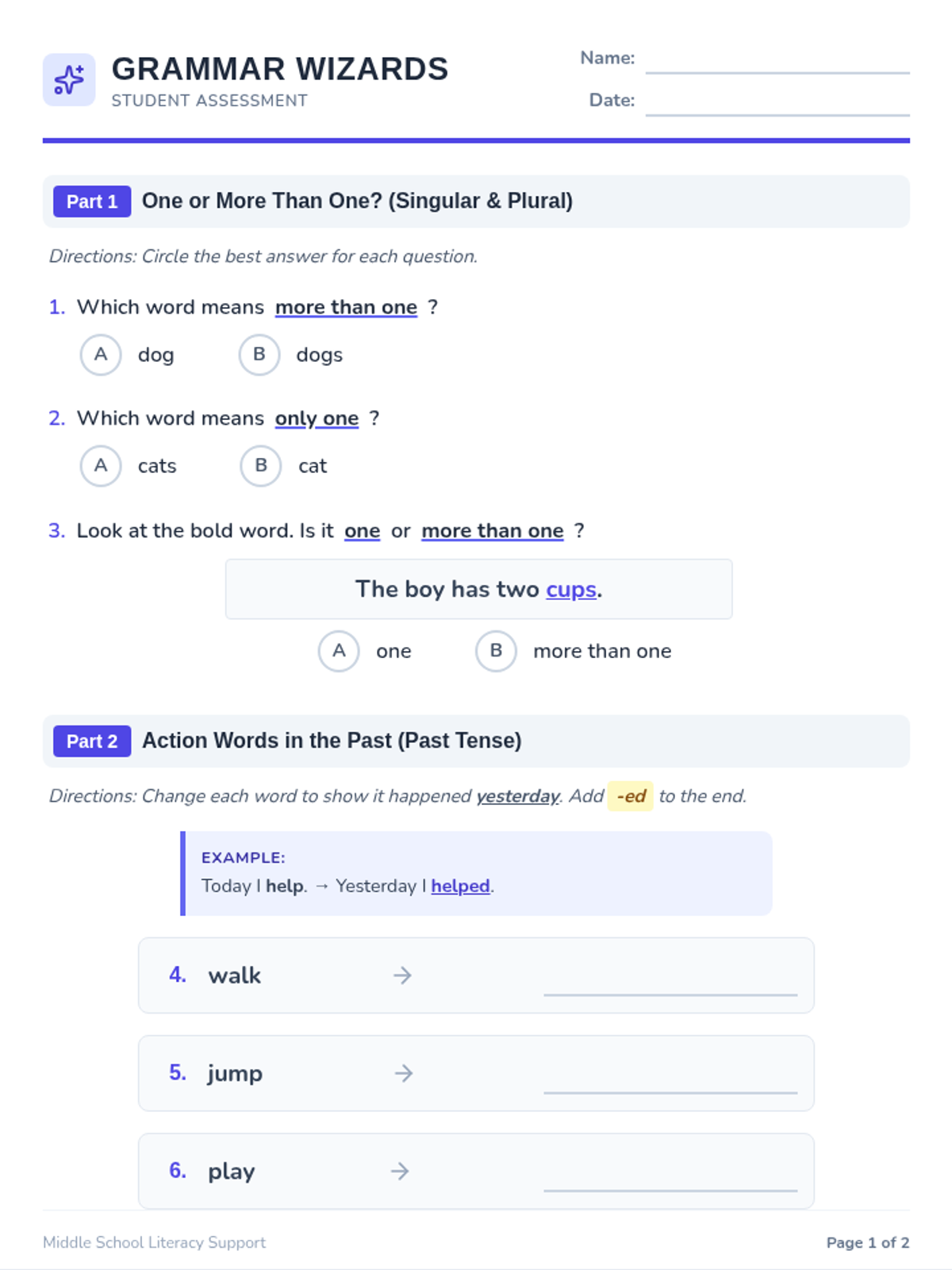
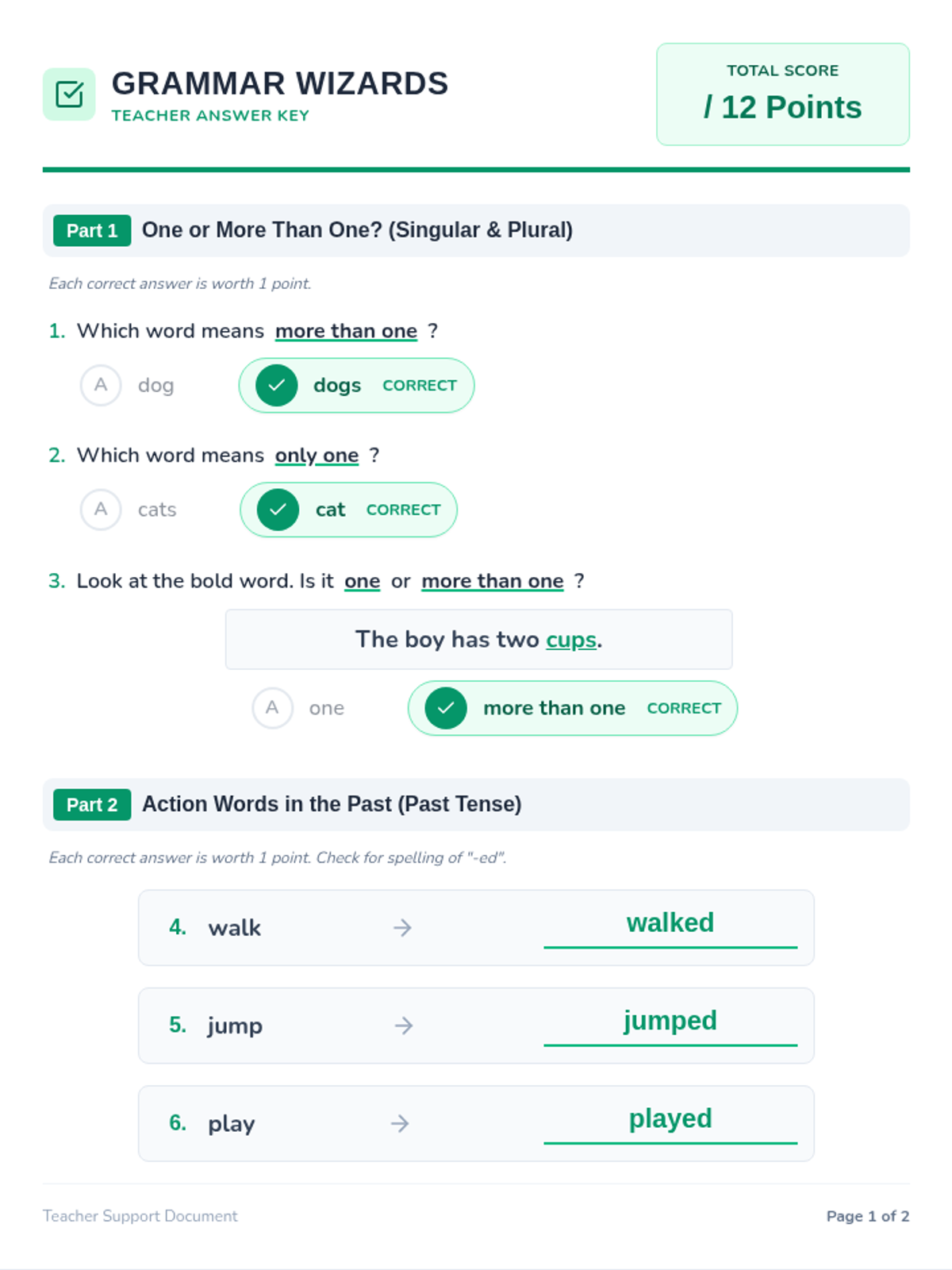
A grammar assessment designed for middle school students in a self-contained classroom reading at a first-grade level. The quiz covers past-tense verbs, common/proper nouns, singular/plural nouns, and identifying parts of speech (noun, verb, adjective) in simple context, complete with a teacher answer key.