A self-advocacy and transition planning lesson where middle school students discover their strengths, identify necessary accommodations, and design a 'Transition Passport' to present to their future teachers.
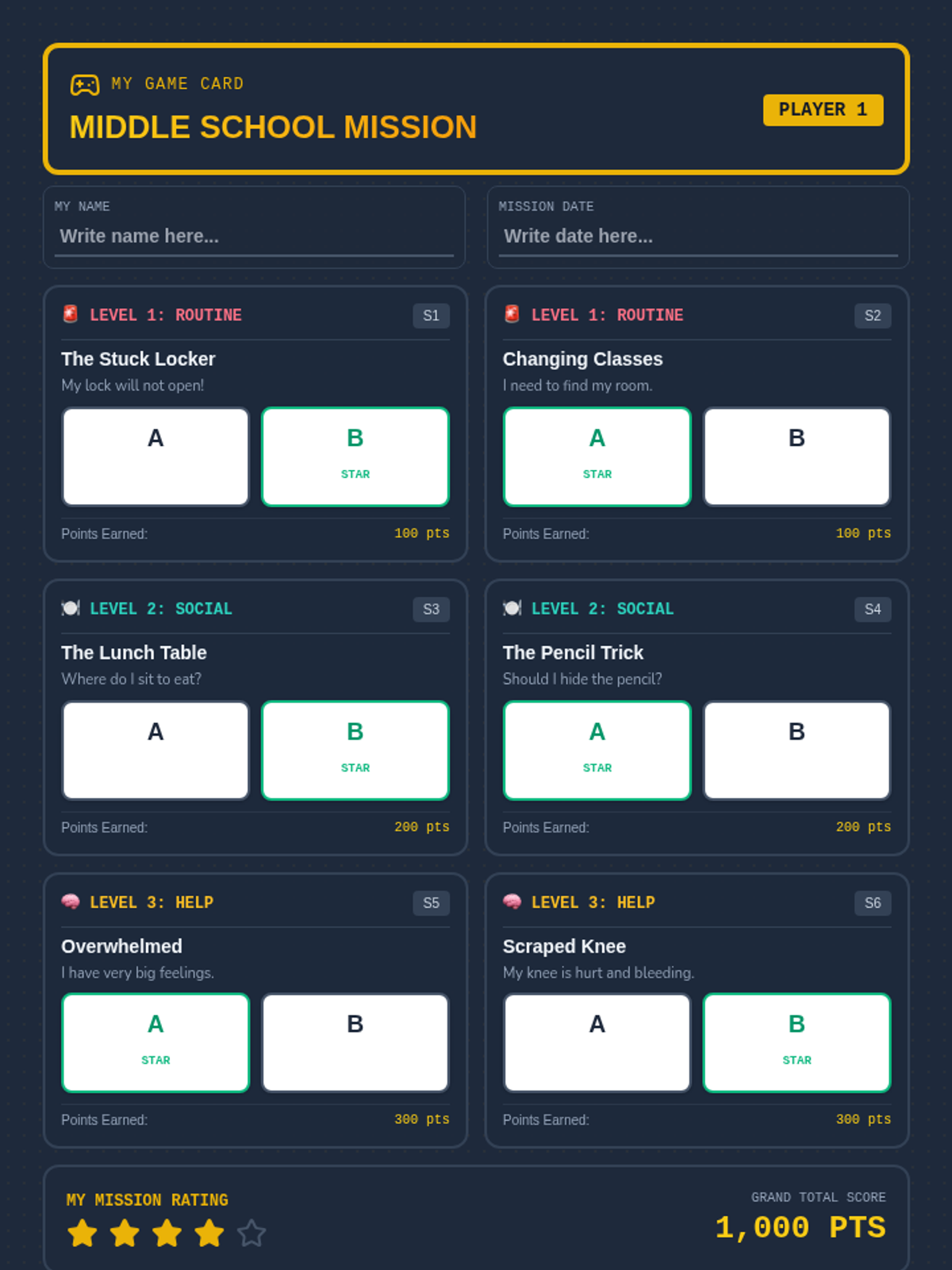
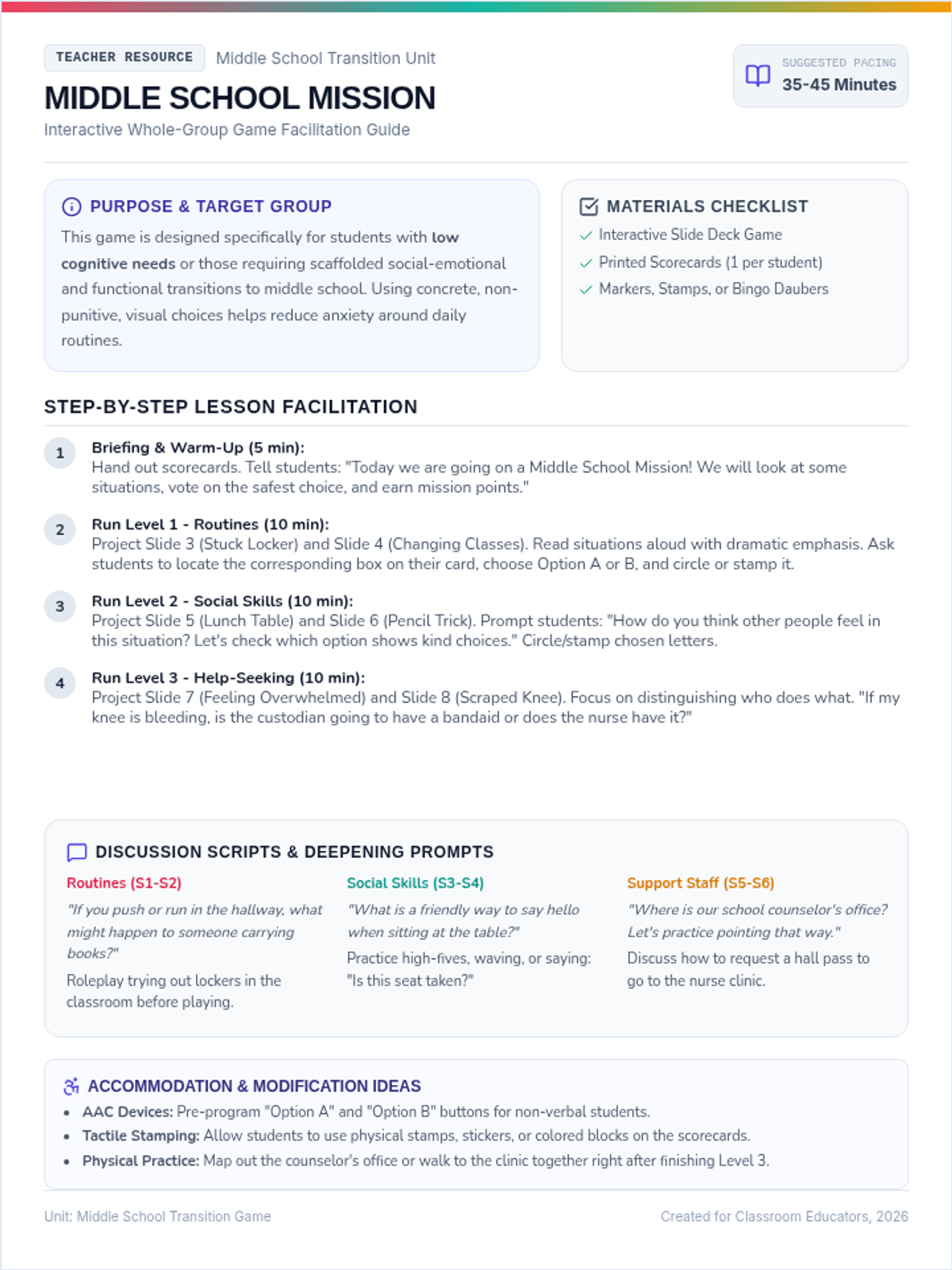
An interactive, game-based transition unit for middle school students with low cognitive needs. It teaches essential routines, social-emotional skills, and support systems through guided scenario-based choices.
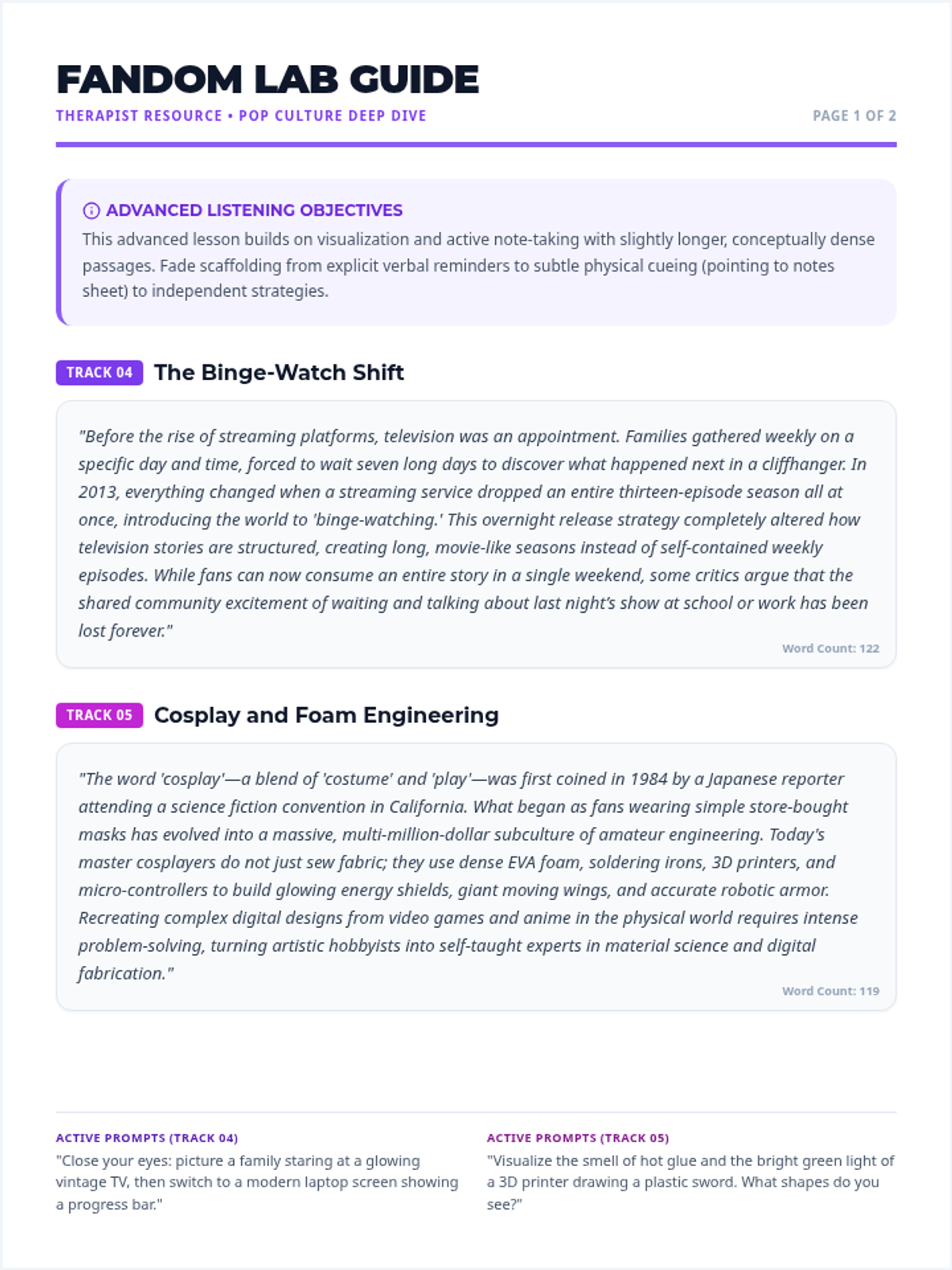
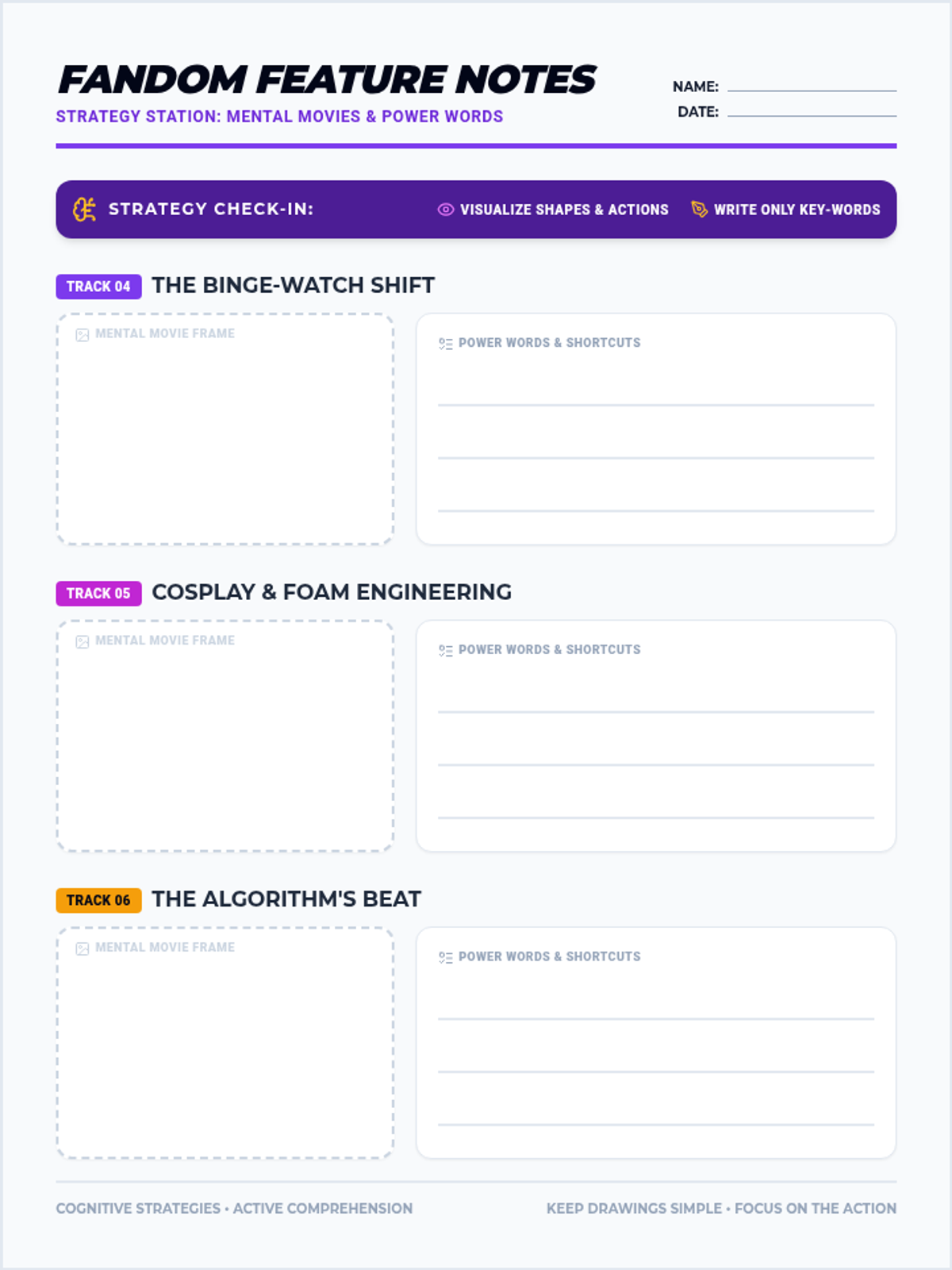
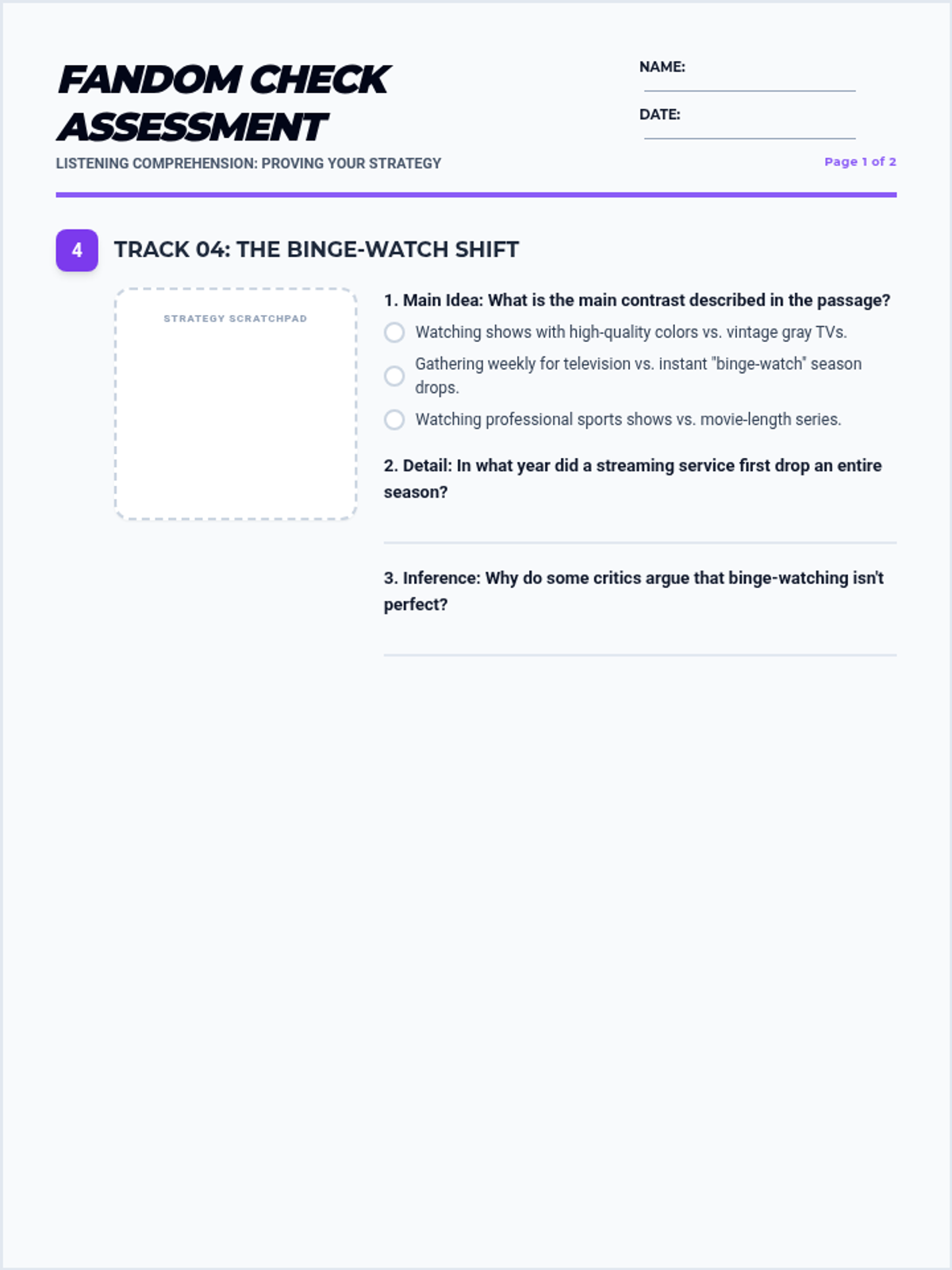
An advanced listening comprehension lesson building on visualization and active note-taking strategies with longer oral passages, denser pop culture topics, and an increased volume of targeted comprehension questions.
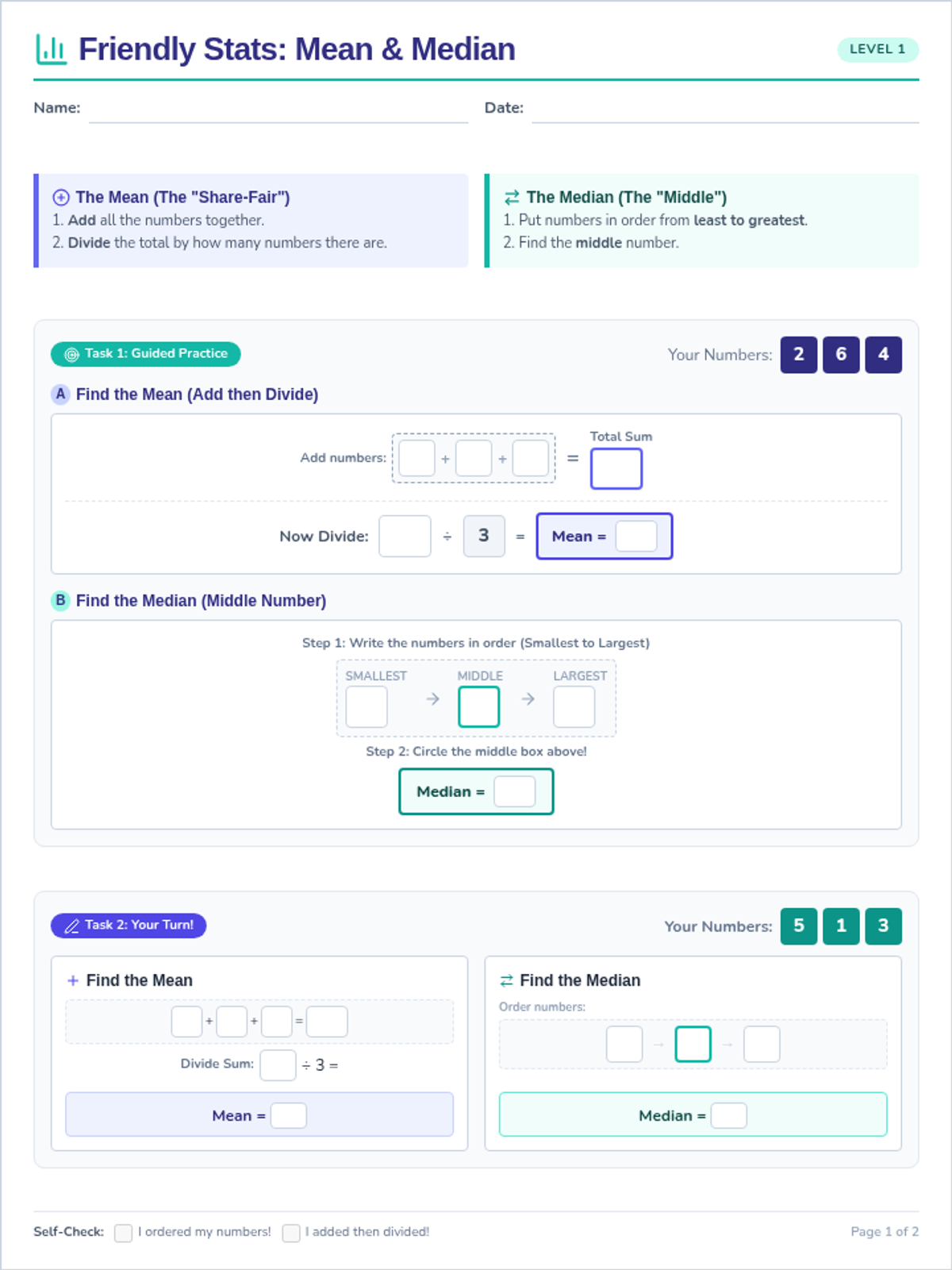
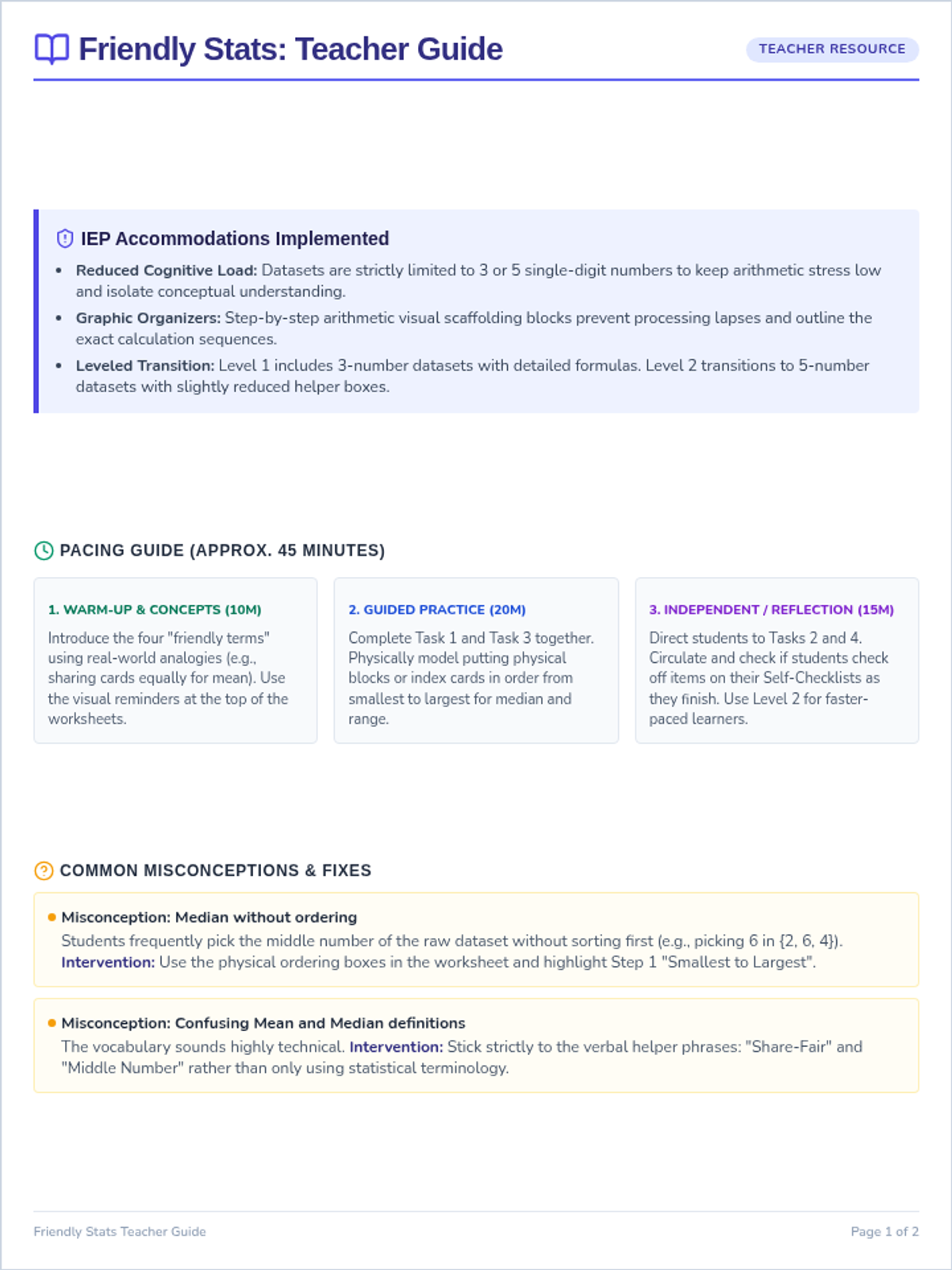
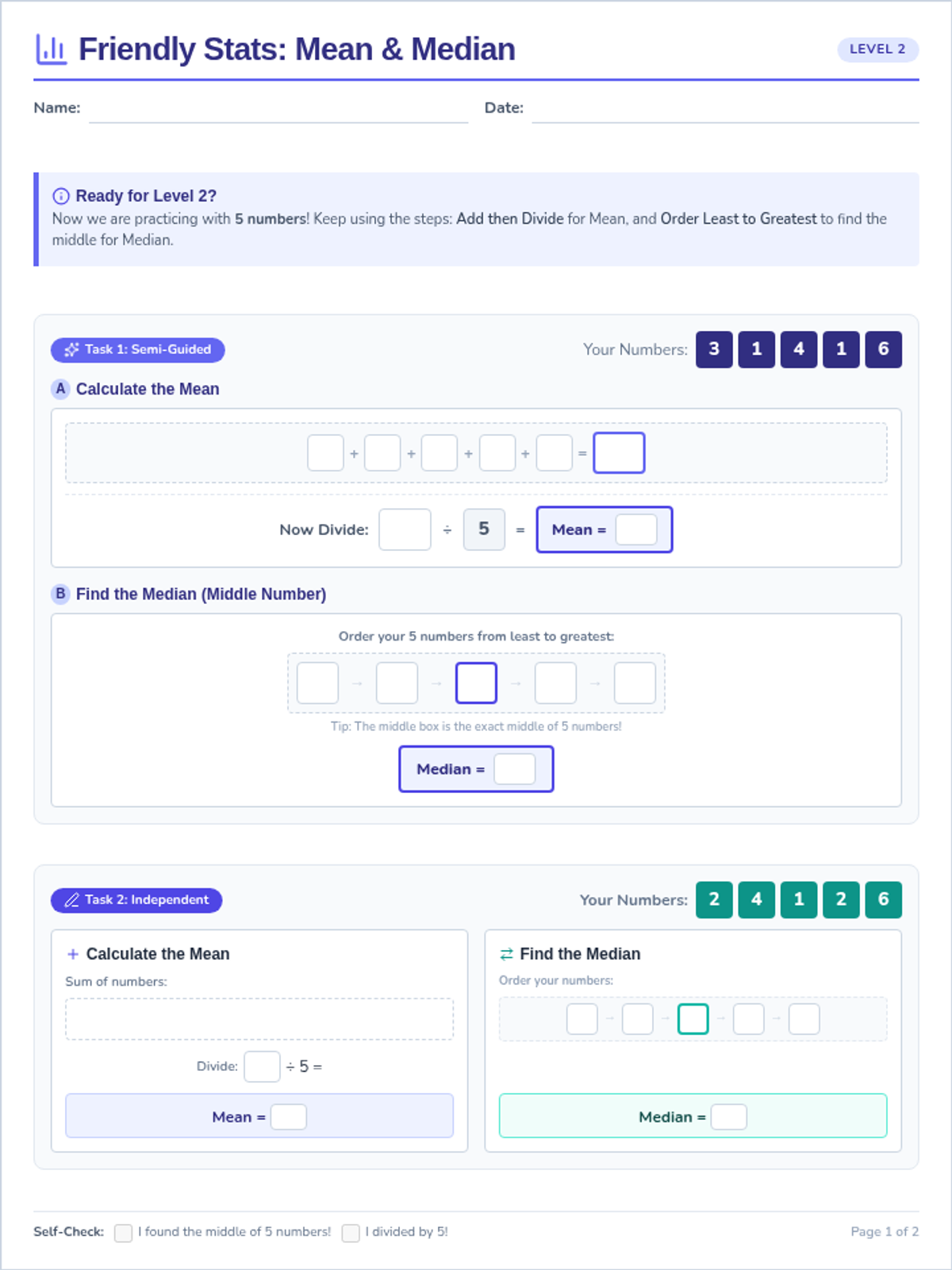
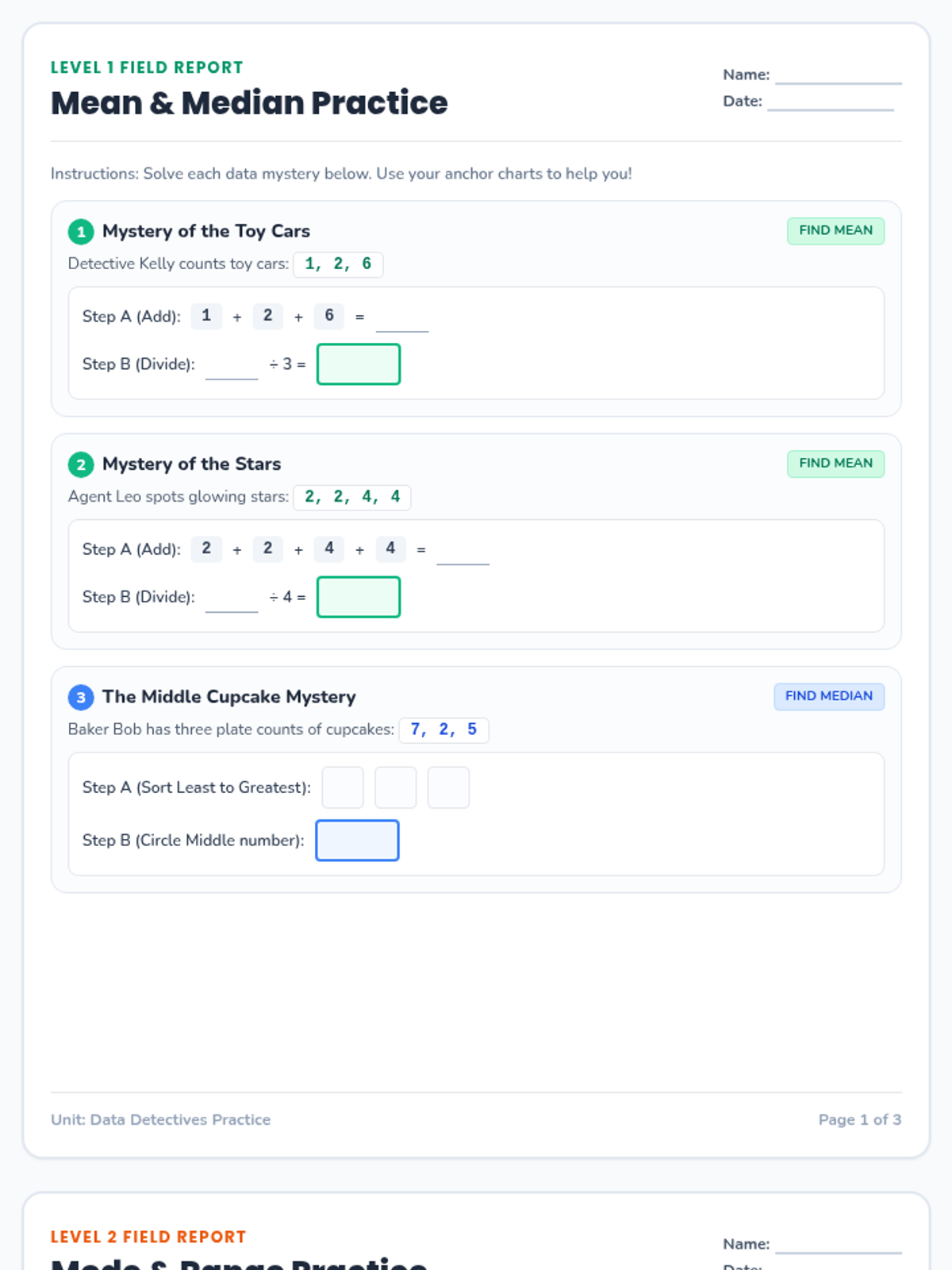
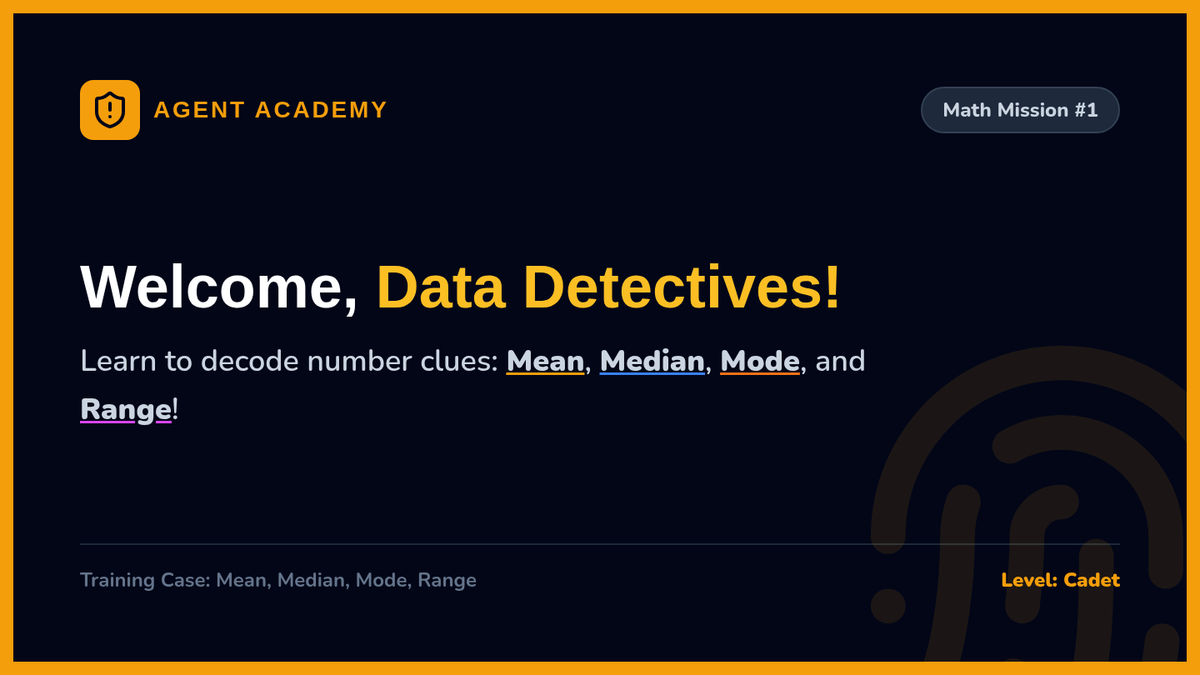
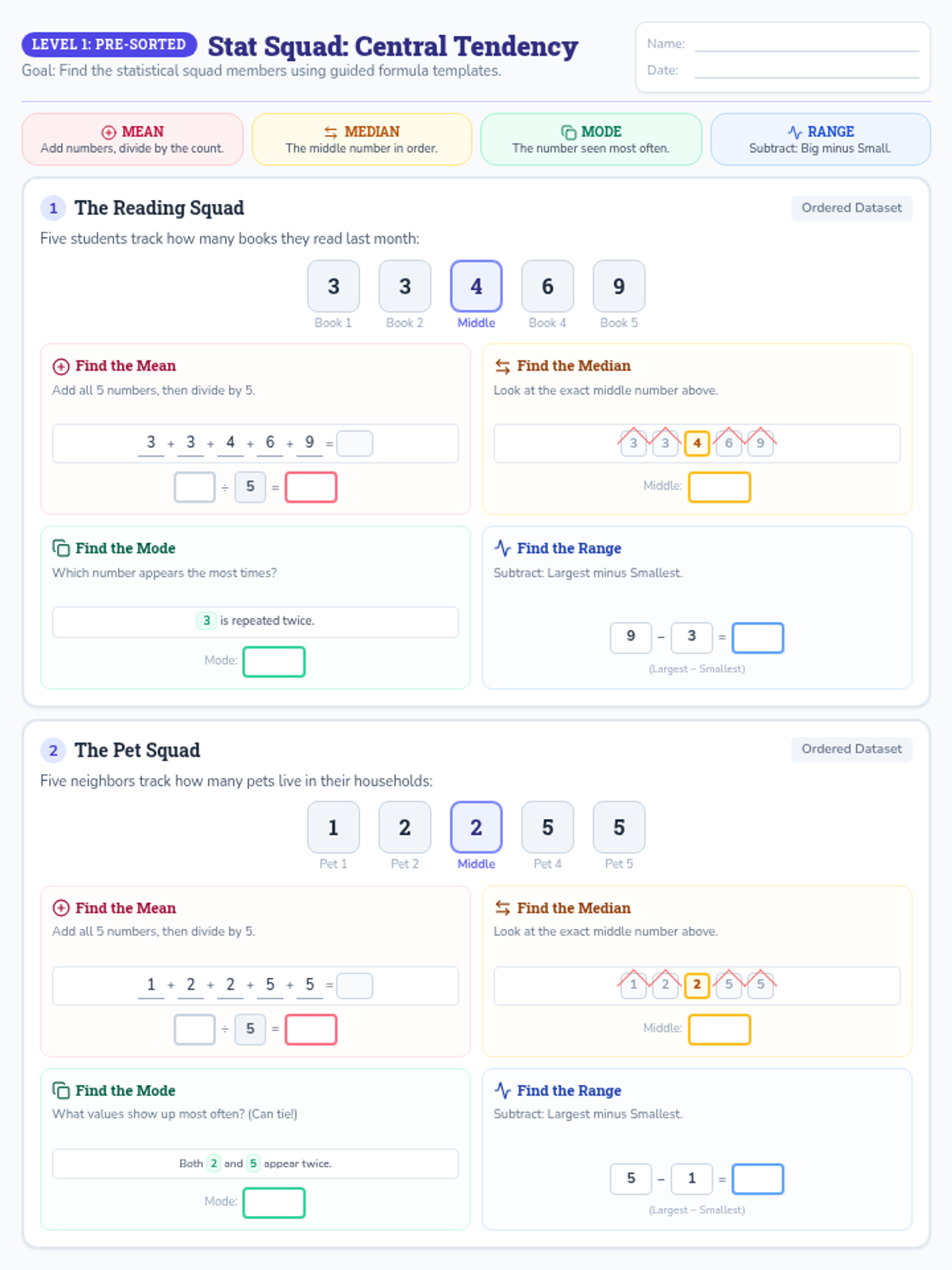
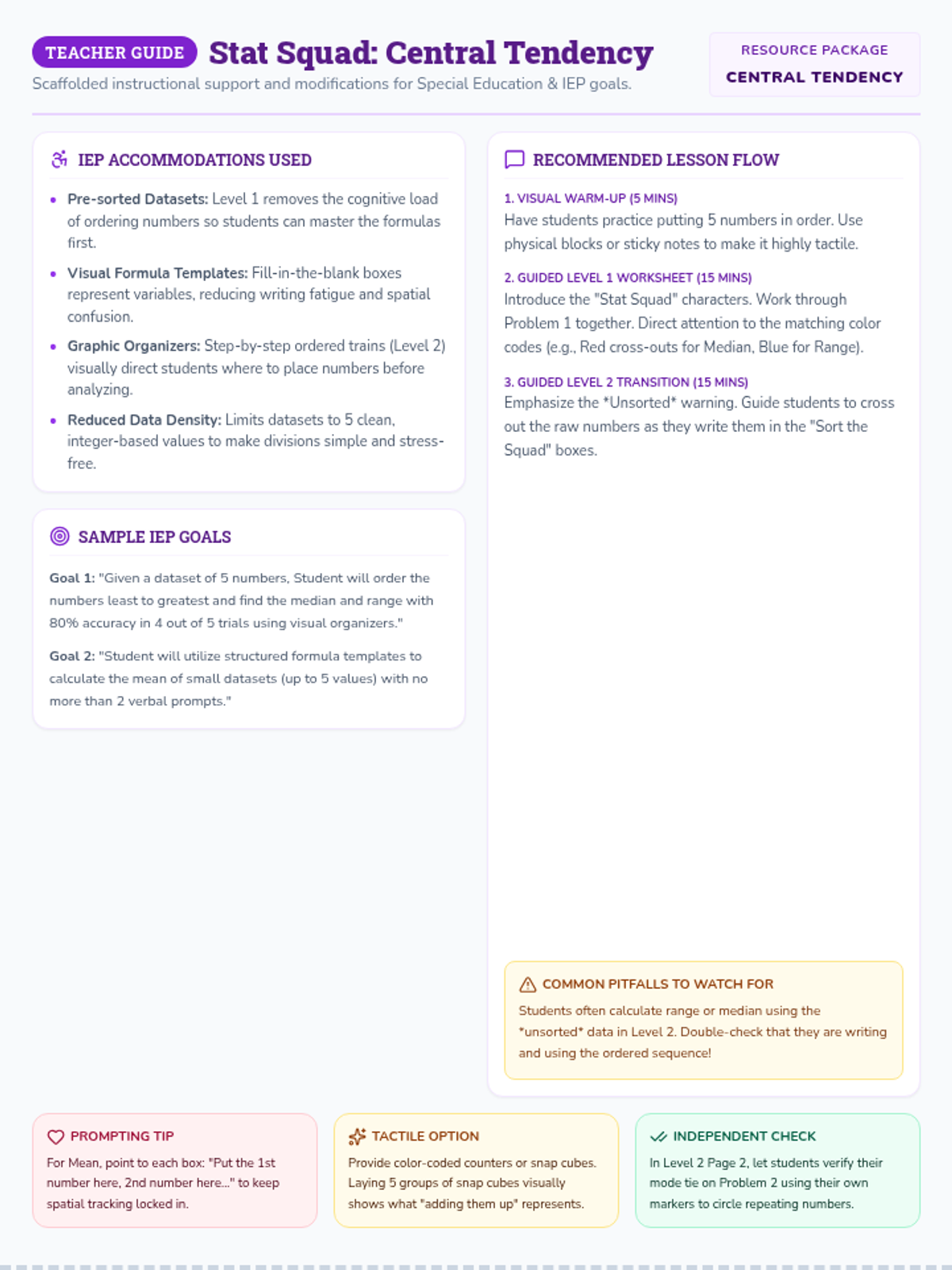
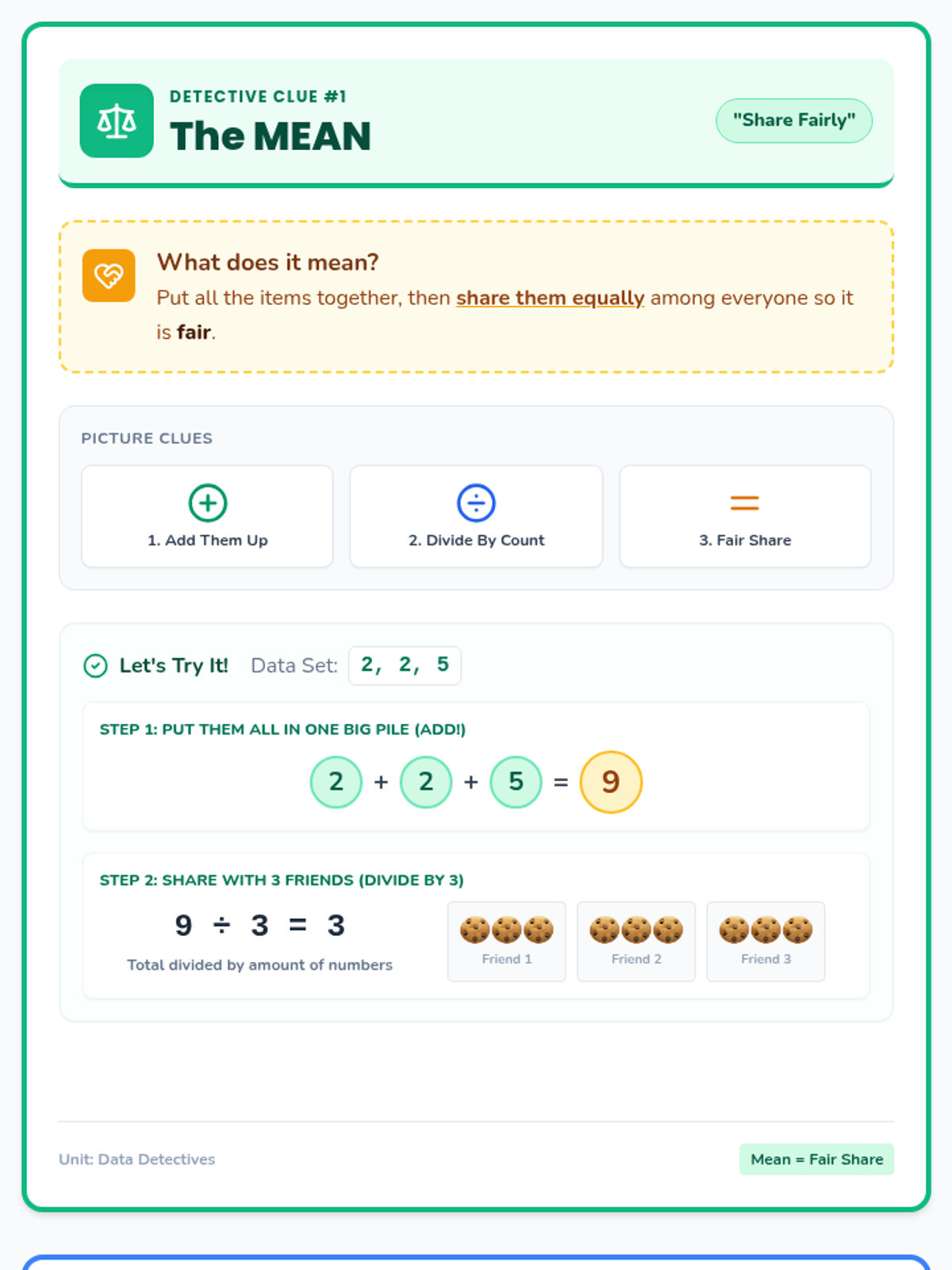
A highly scaffolded lesson on finding the mean, median, mode, and range using small, single-digit datasets (3-5 numbers) designed specifically for students with IEP accommodations.
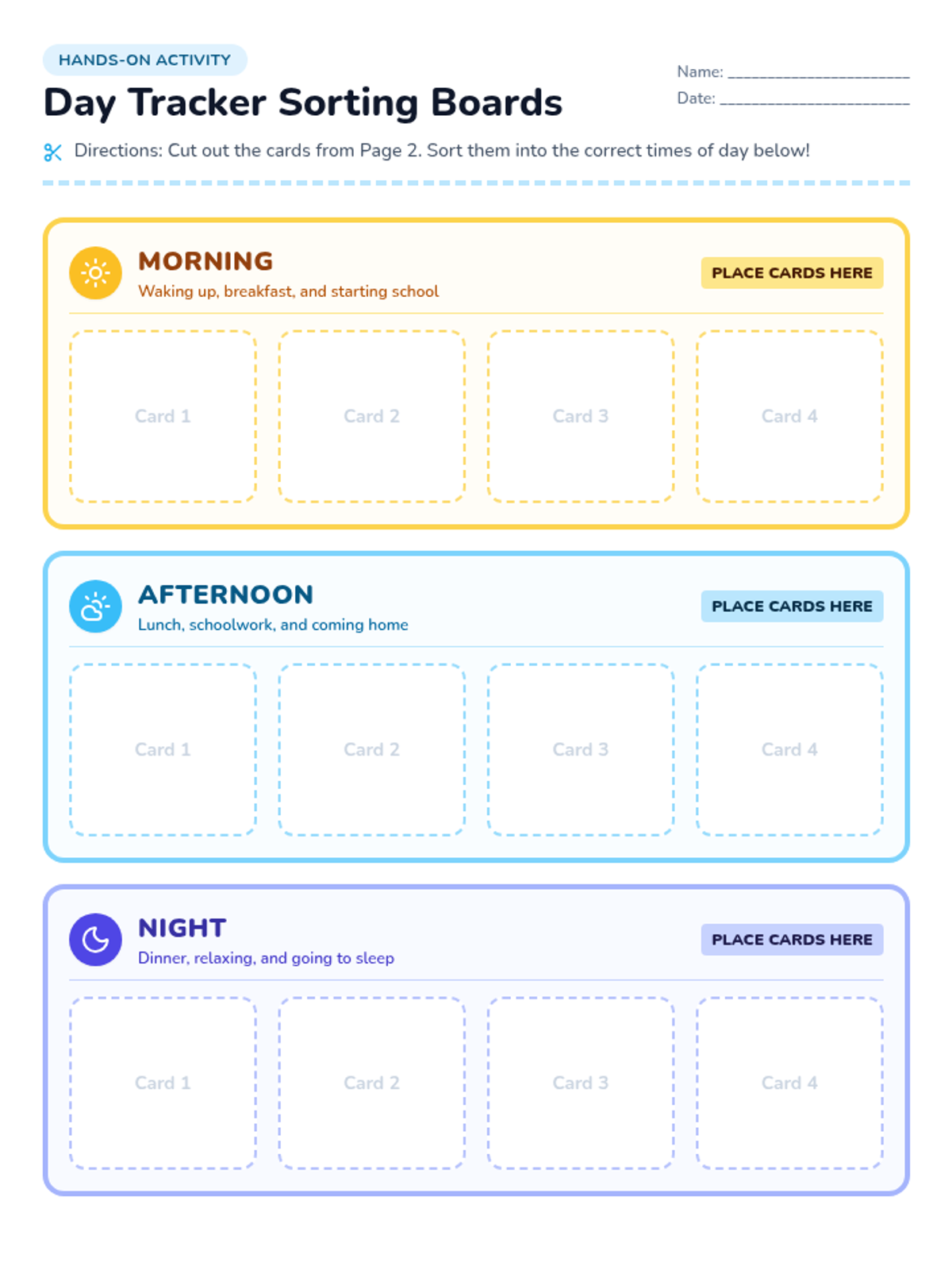
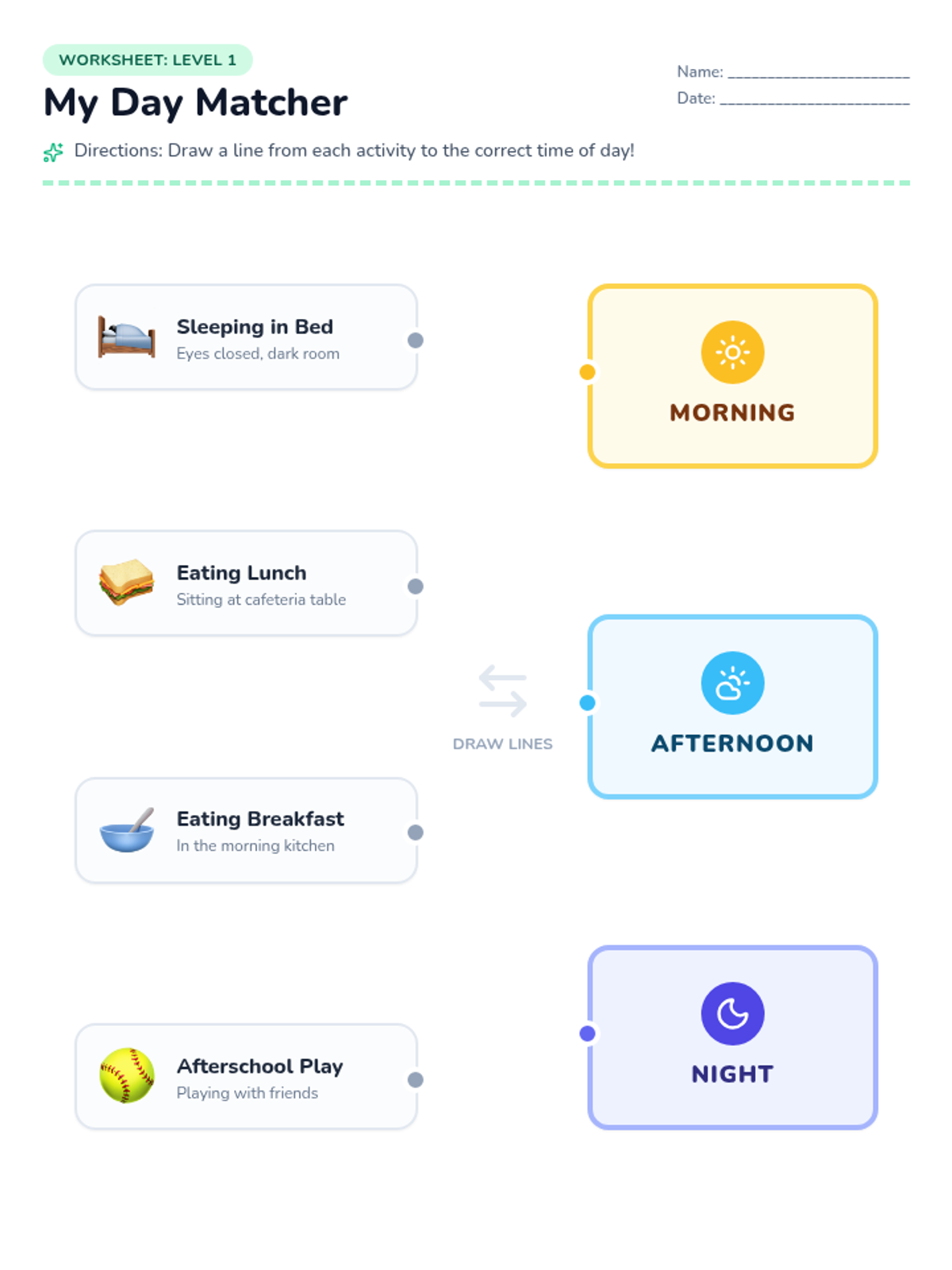
A lesson designed for 6th-grade students with low cognitive abilities to master basic time management. It uses structured visual supports, hands-on sorting cards, and simplified matching worksheets to connect times of day (morning, afternoon, night) and hours to daily school and home routines.
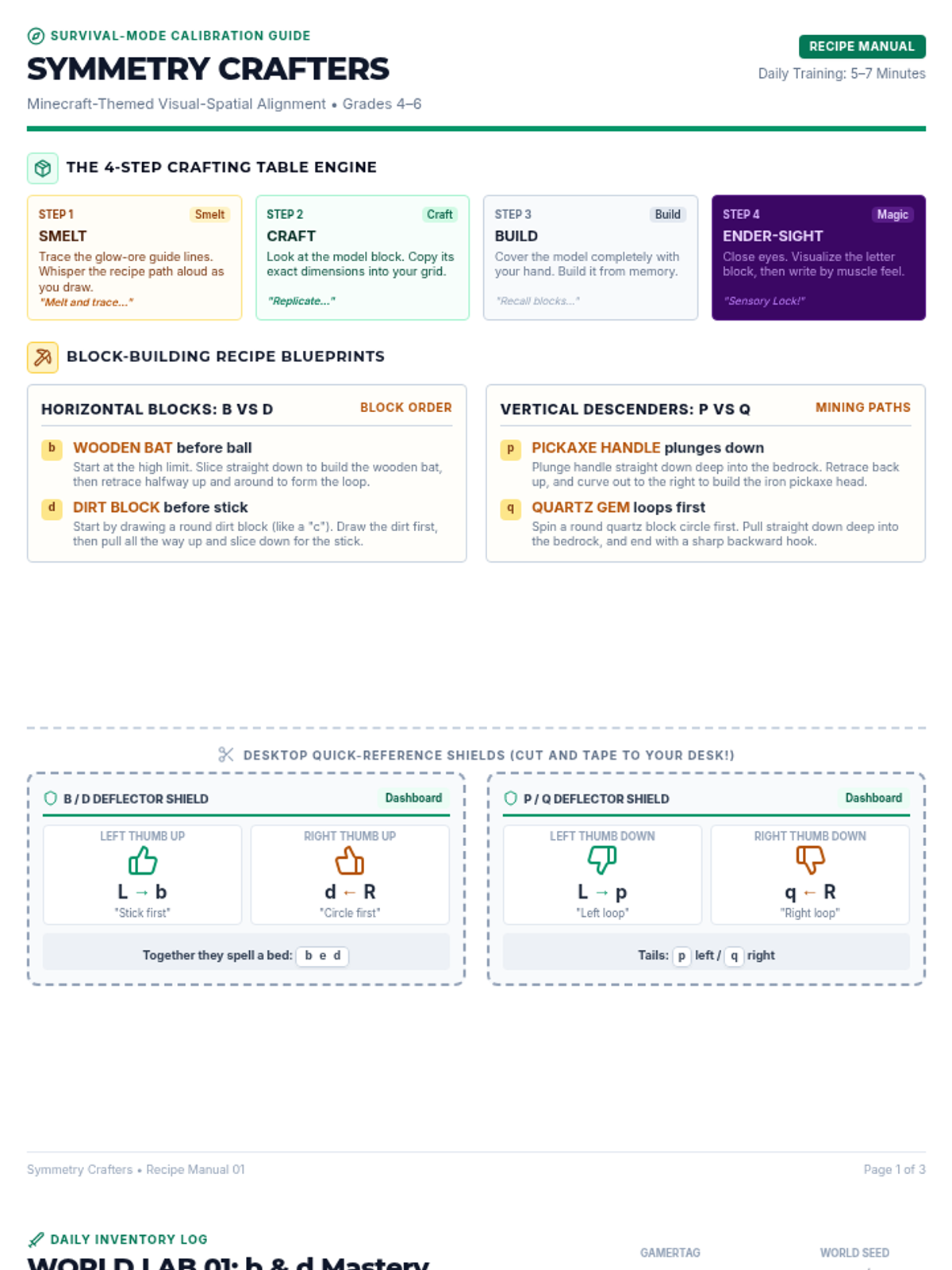
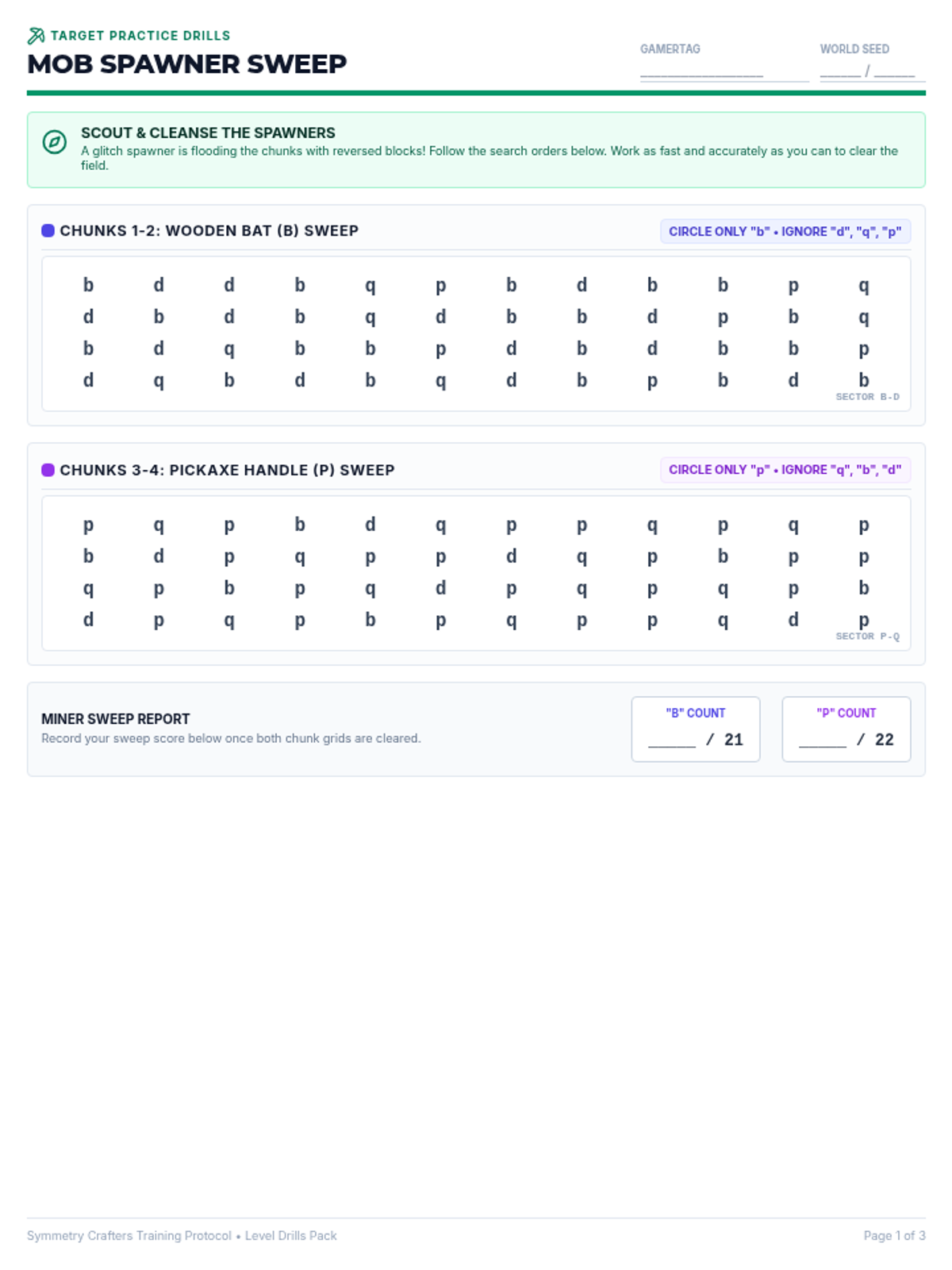
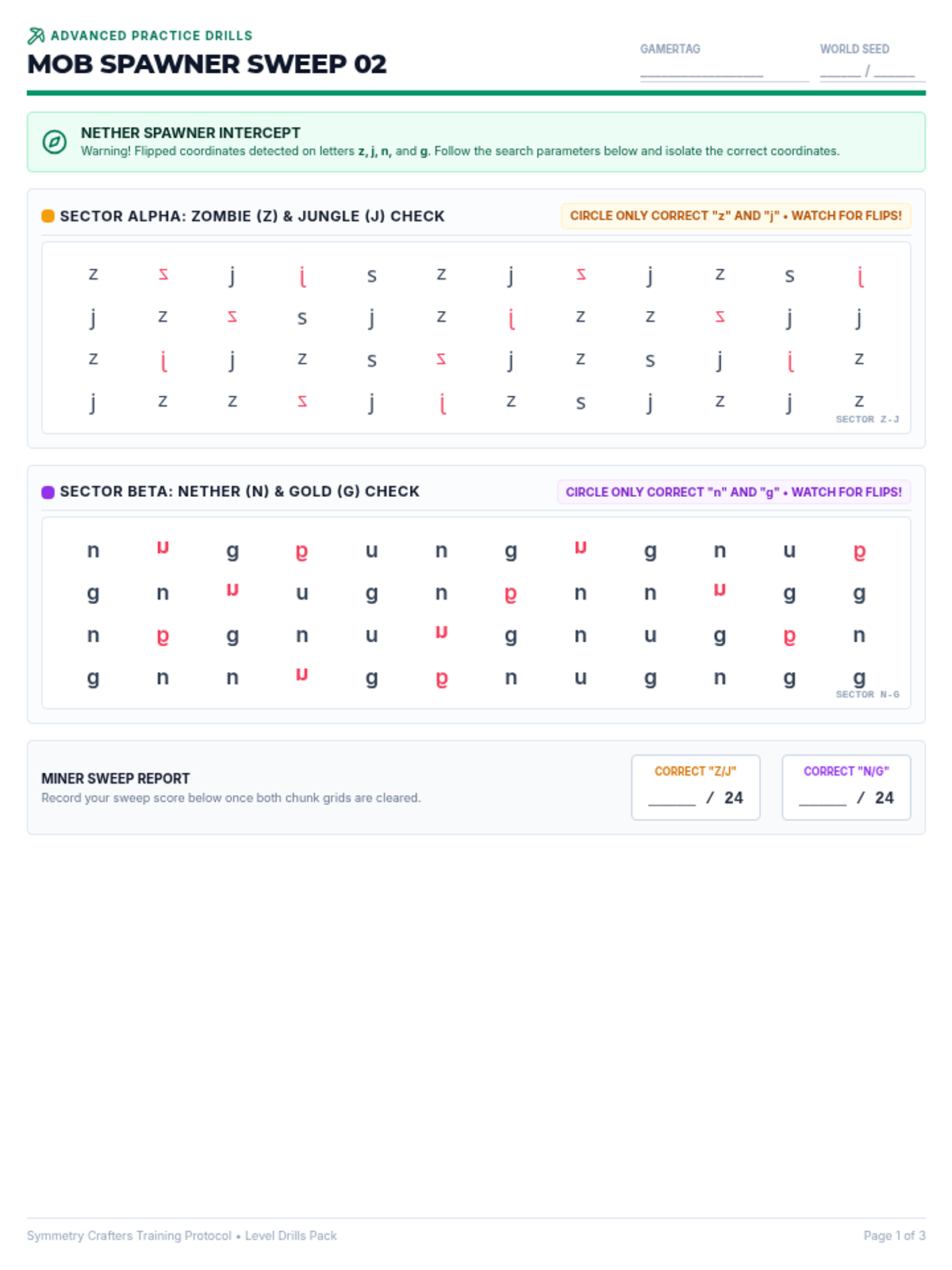
An evidence-based training program targeting letter reversals in upper elementary students, incorporating Trace-Copy-Cover-Closed and spatial-motor anchors.
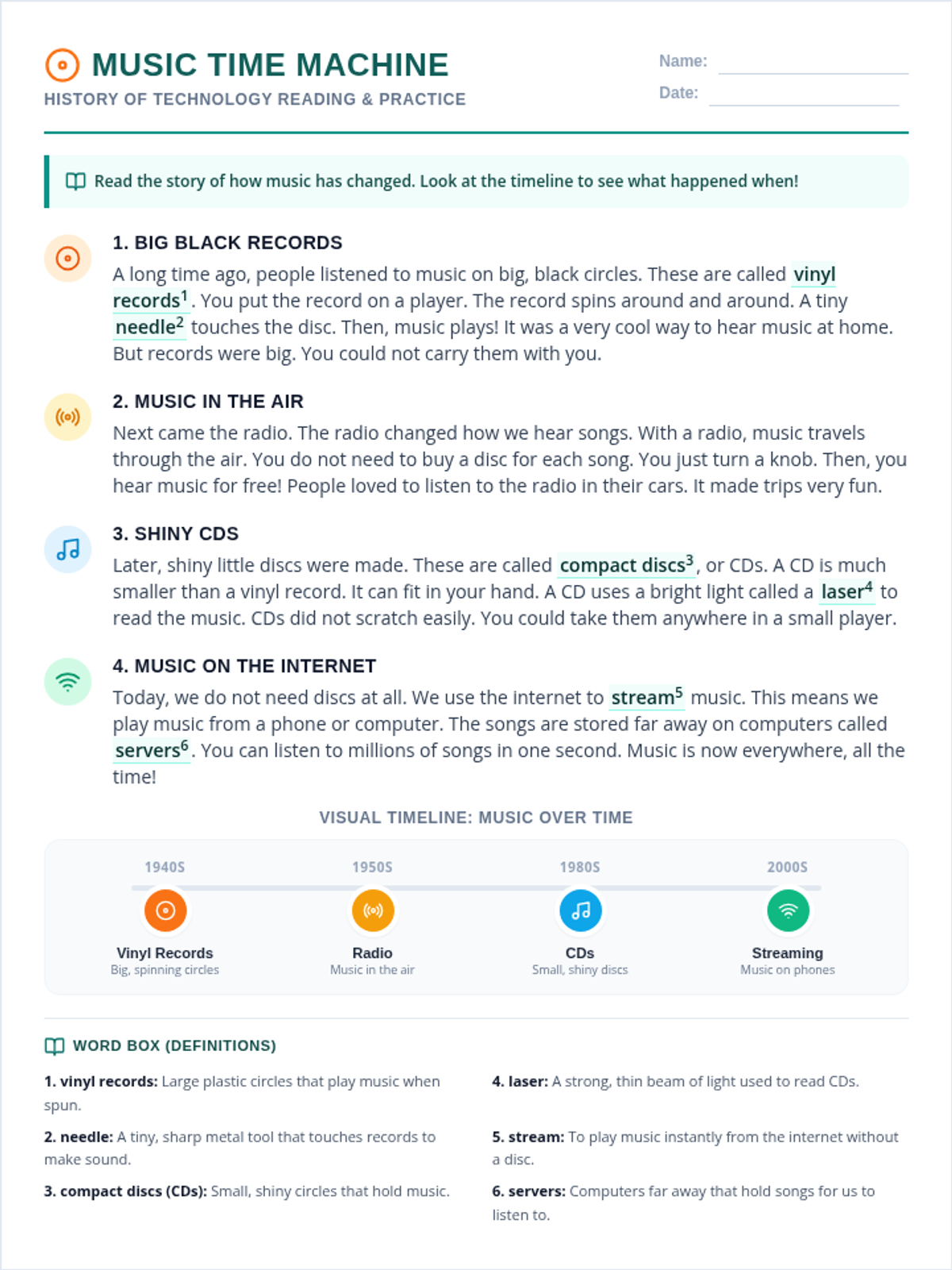
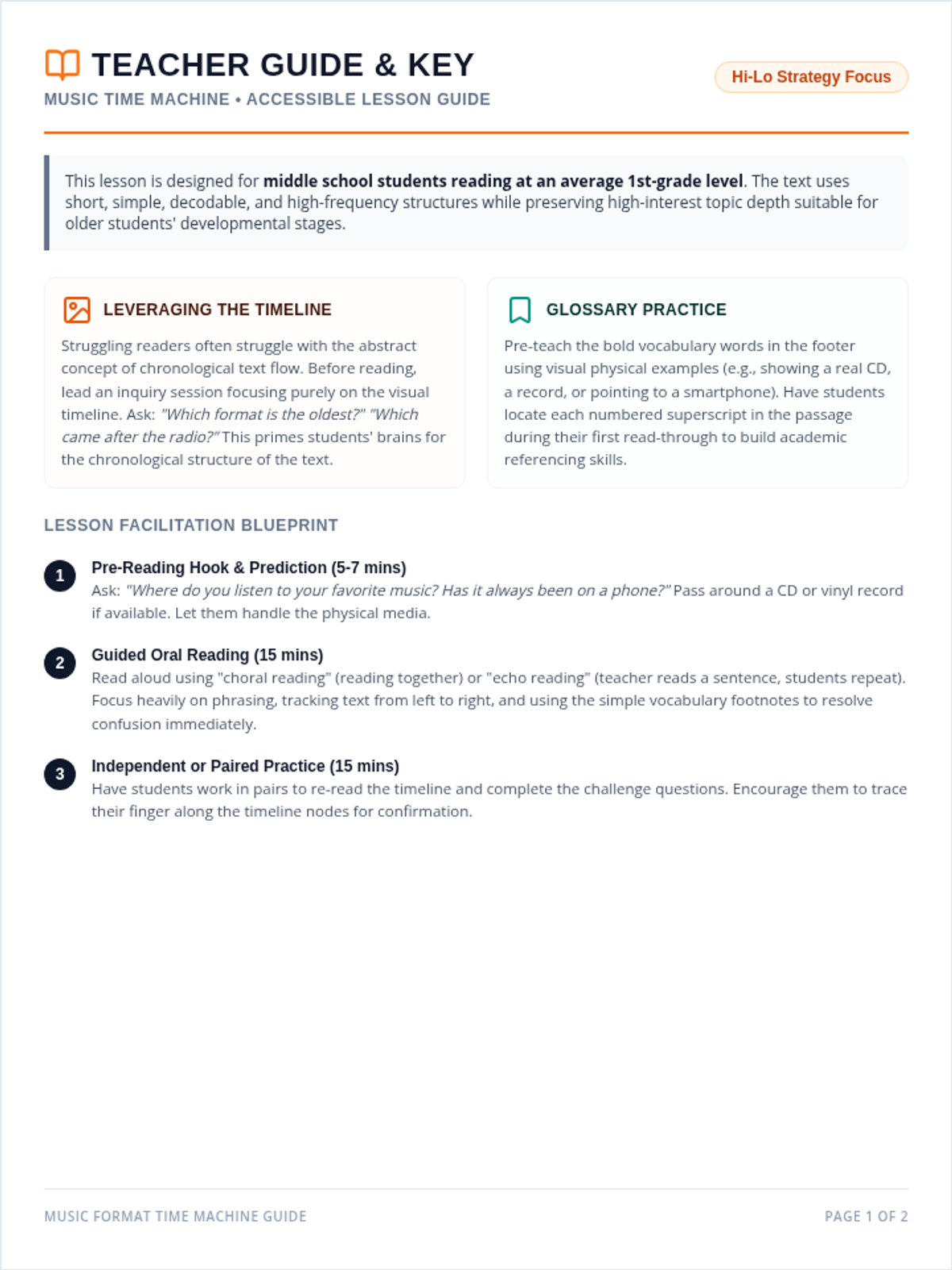
A history-of-technology lesson designed for middle school students reading at a first-grade level. It explores the evolution of music formats from vinyl records to modern streaming, supported by a visual timeline and simple vocabulary footnotes.
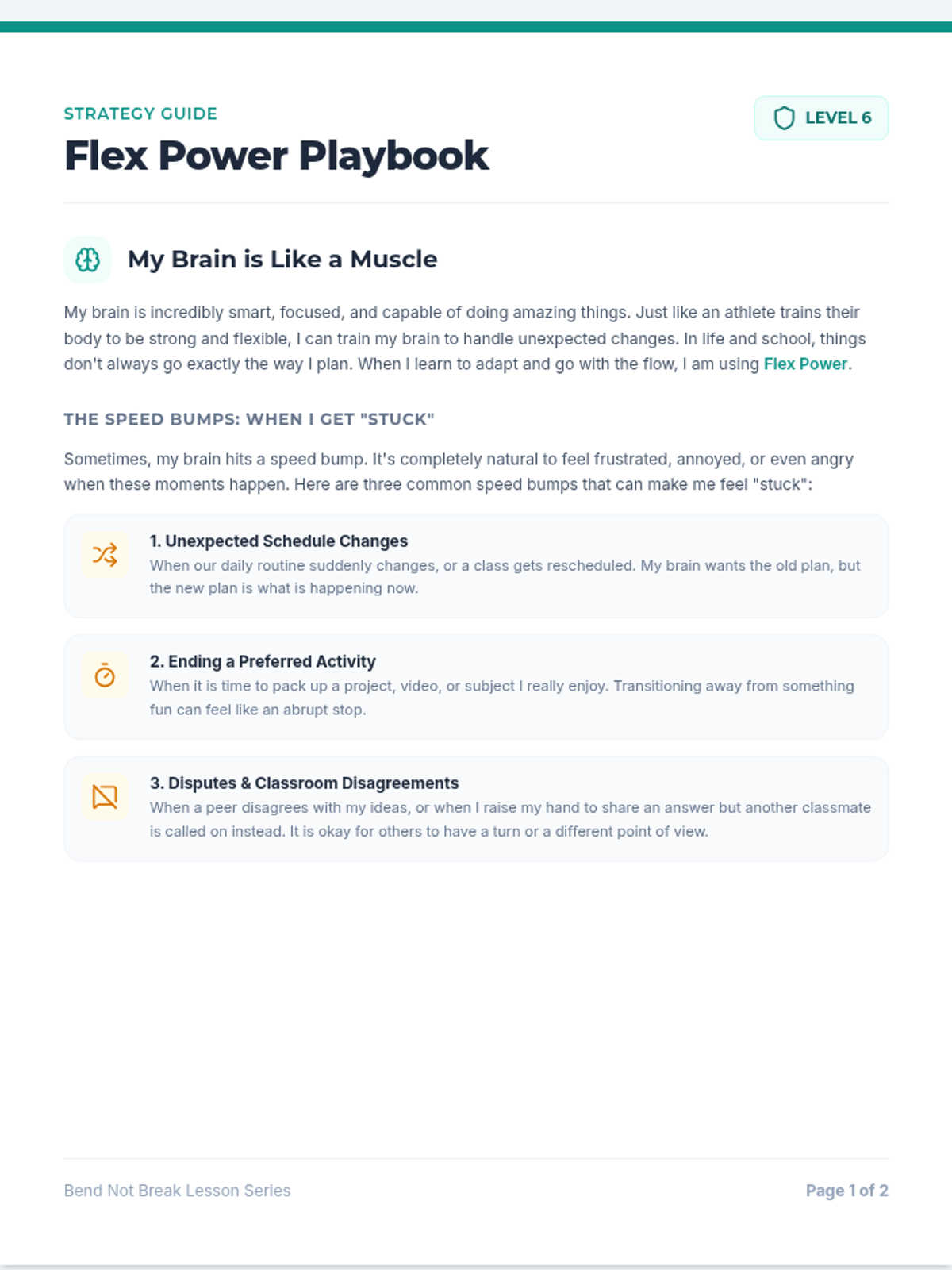
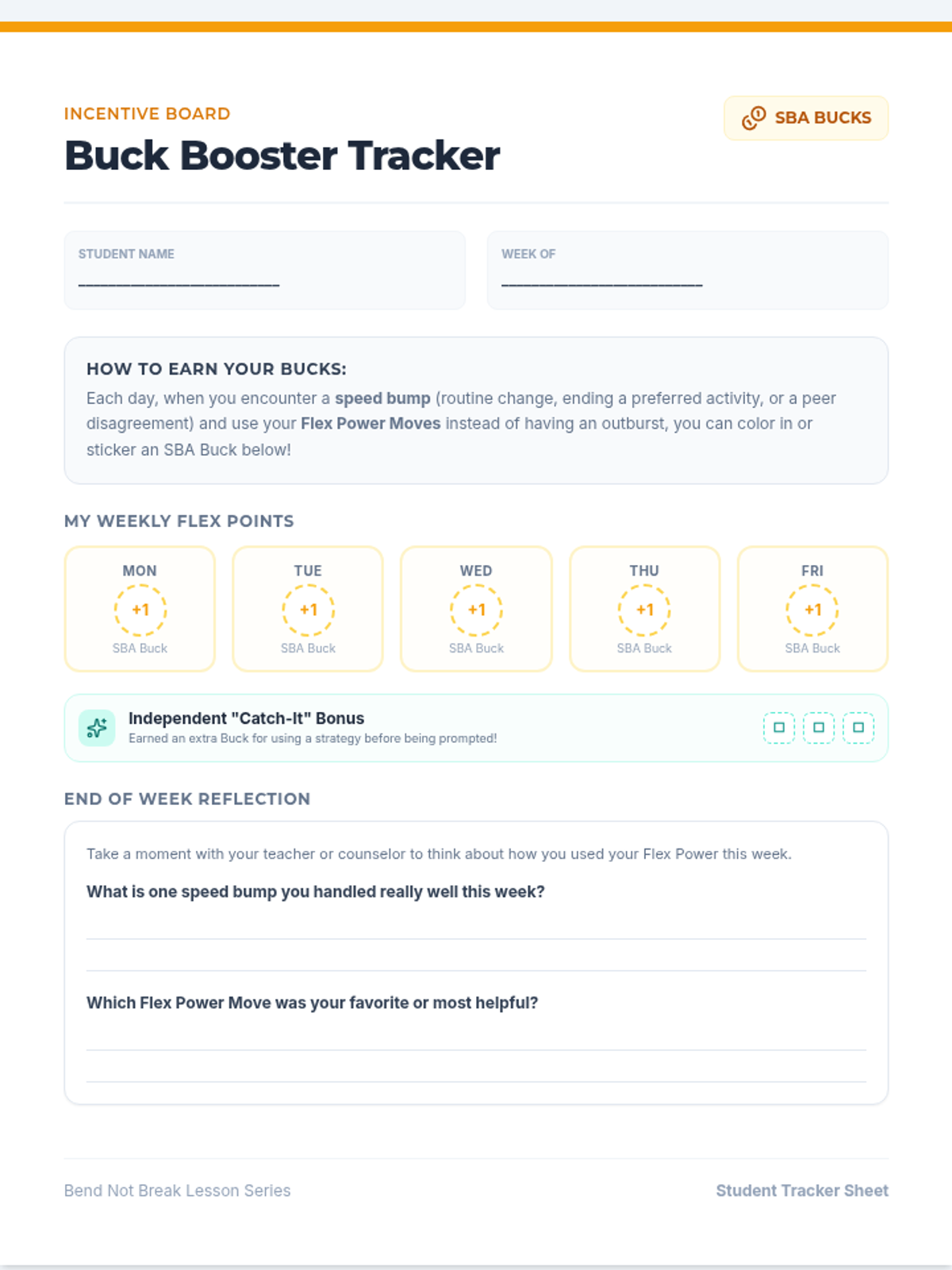
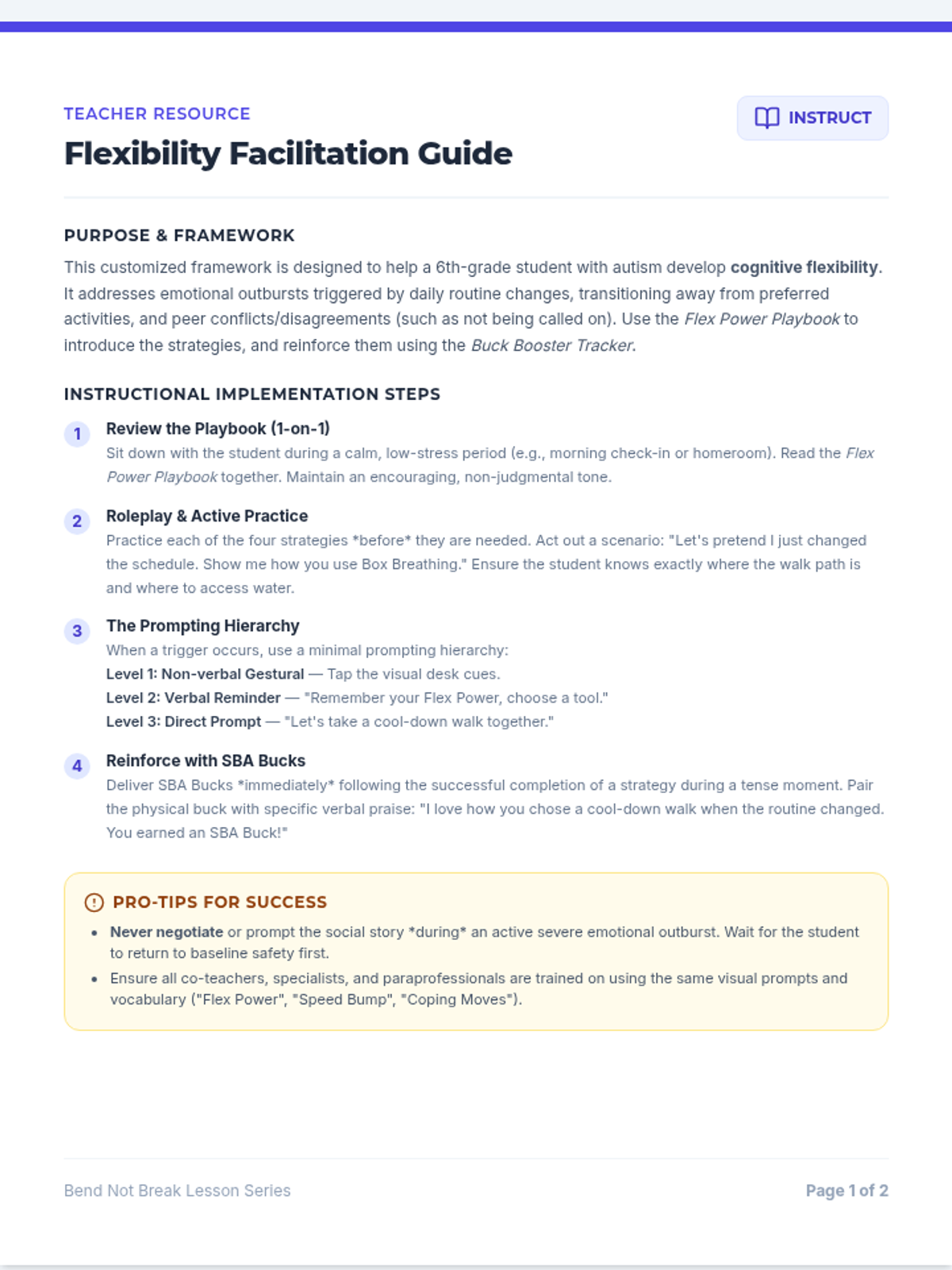
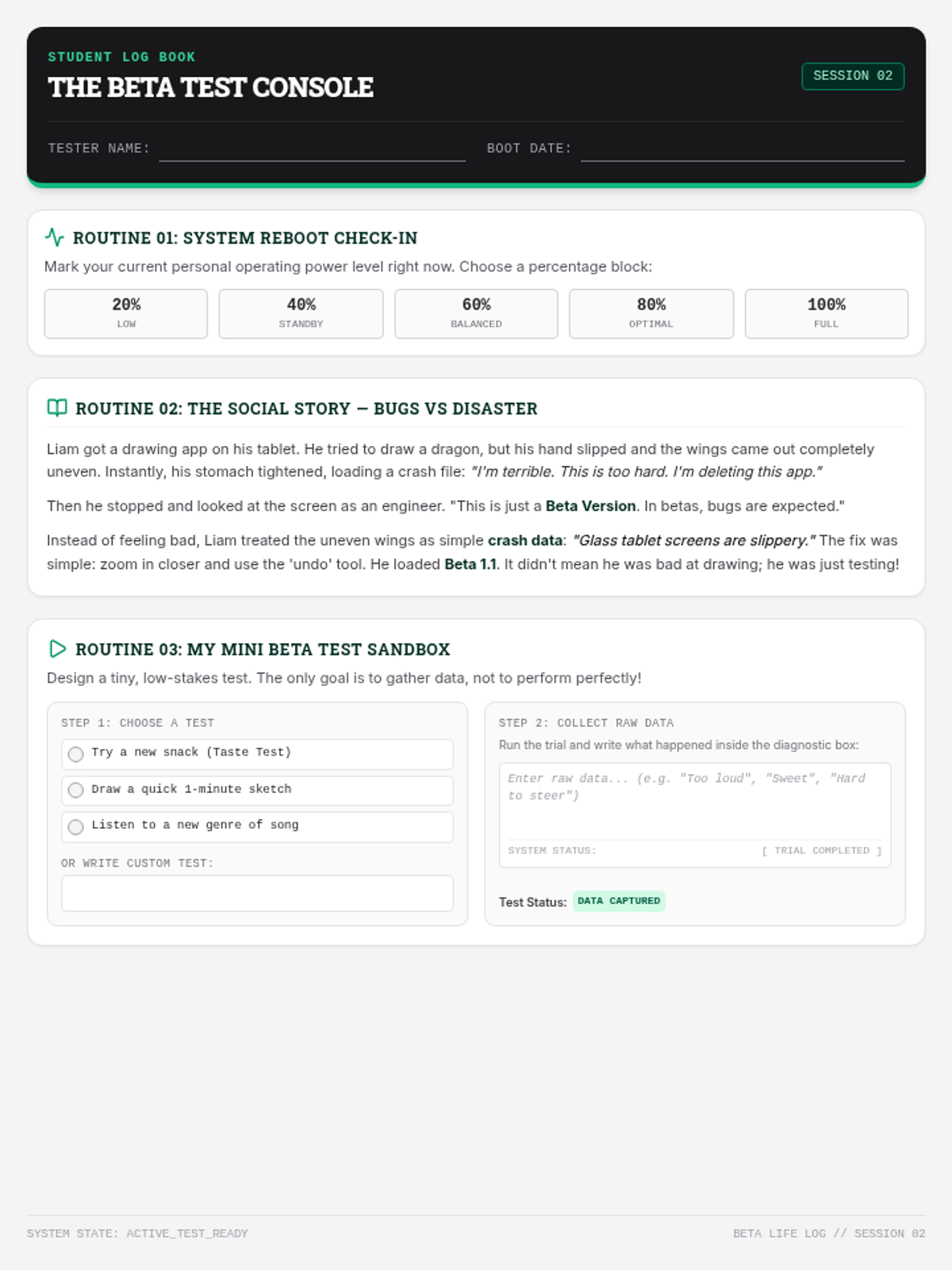
A personalized lesson framework designed to support a 6th-grade student with autism in developing cognitive flexibility, utilizing a structured social story, visual desk cues, and a targeted SBA Bucks reinforcement tracker.
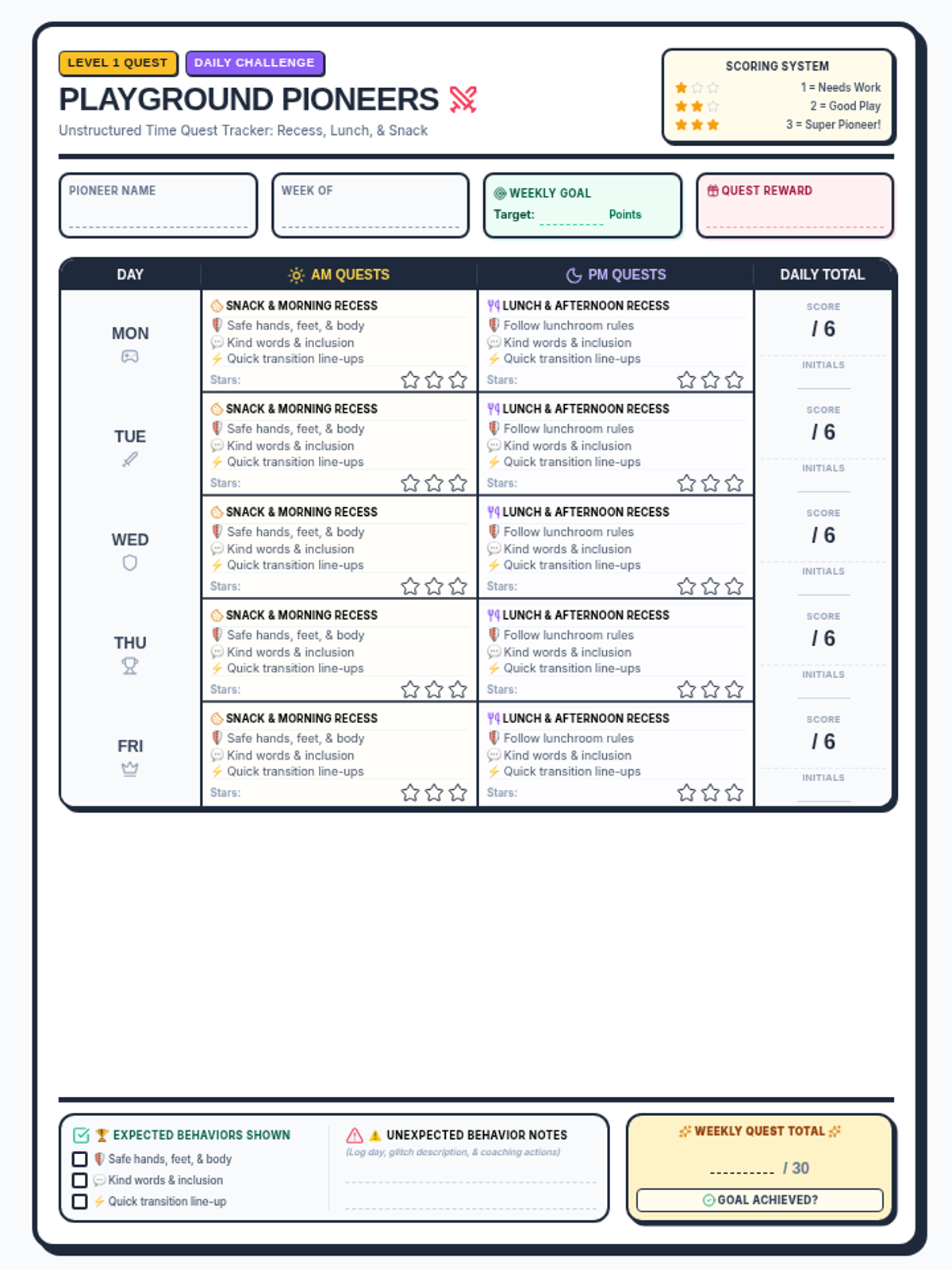
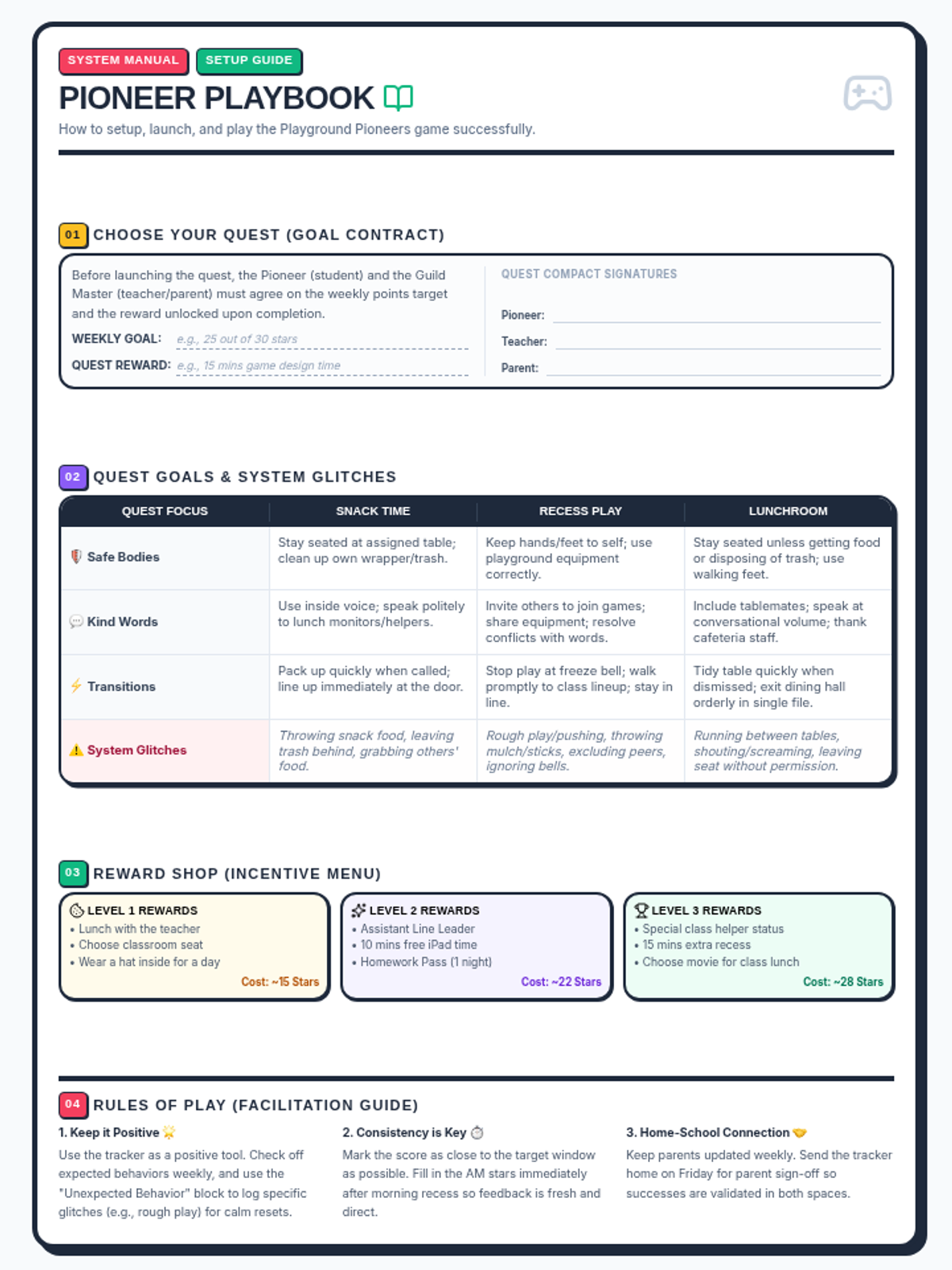
A gamified behavior tracking and support system designed to structure unstructured school times like recess, lunch, and snack. It includes a weekly AM/PM point-tracking chart and a goal-setting setup guide to promote positive peer interactions, safe play, and self-regulation.
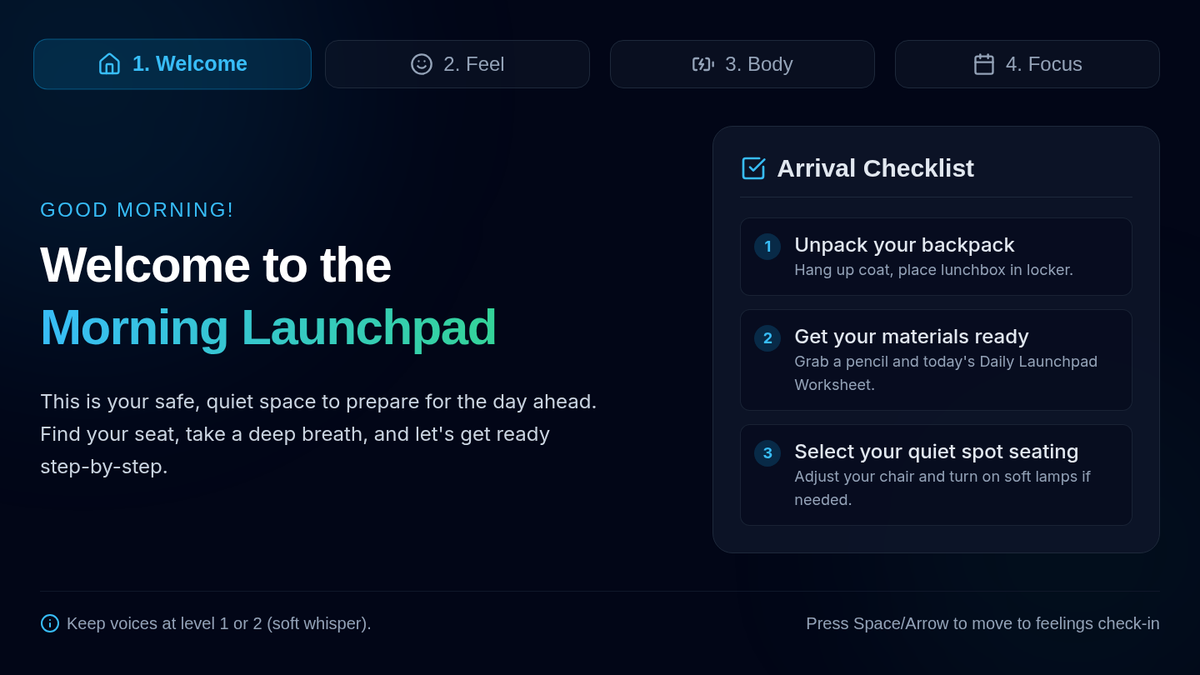
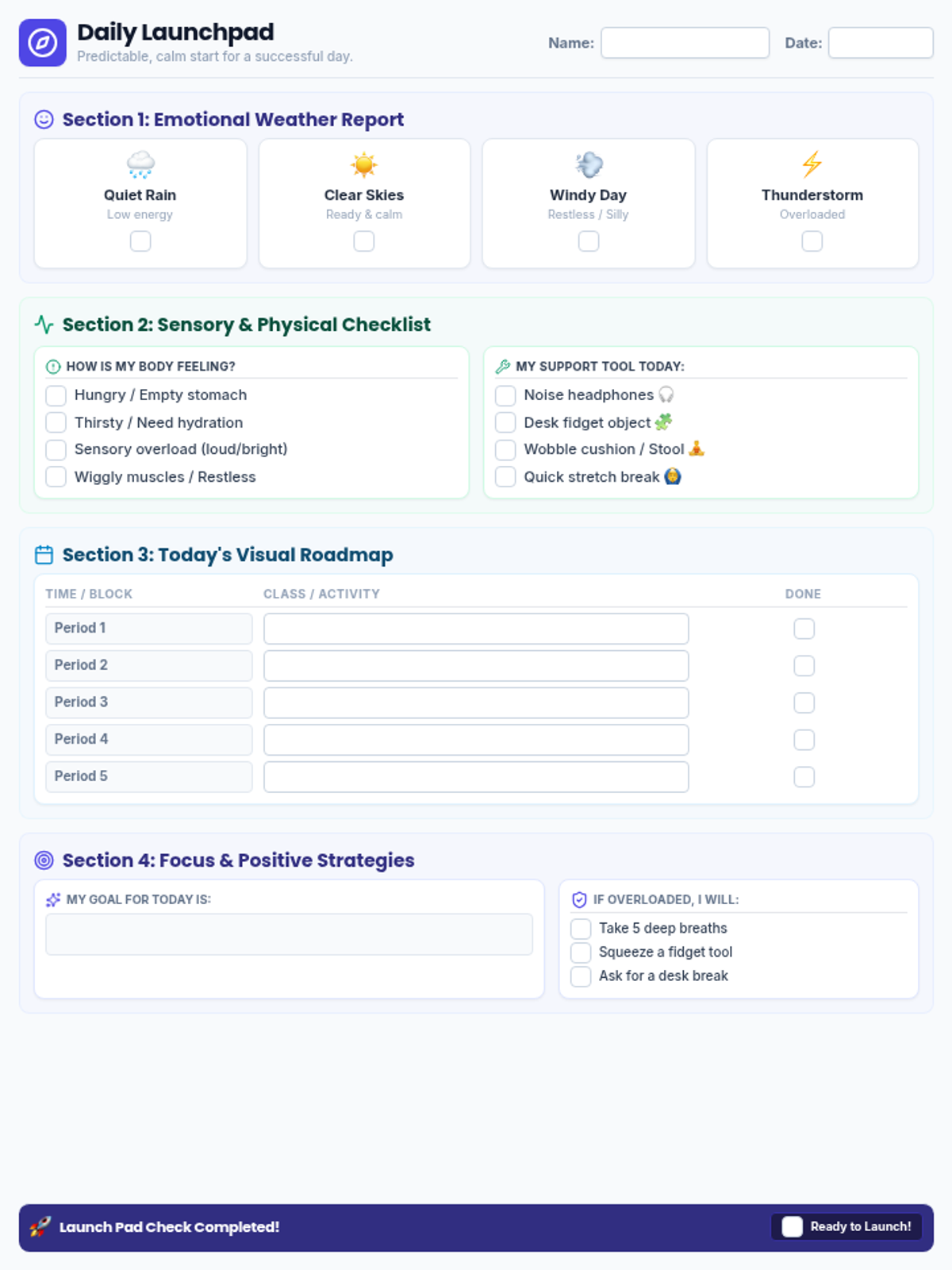
A structured morning routine sequence designed for middle school ASD students to support emotional regulation, sensory tracking, and executive functioning. Includes interactive visual slides and a corresponding daily check-in worksheet to establish a predictable, calming start to the school day.
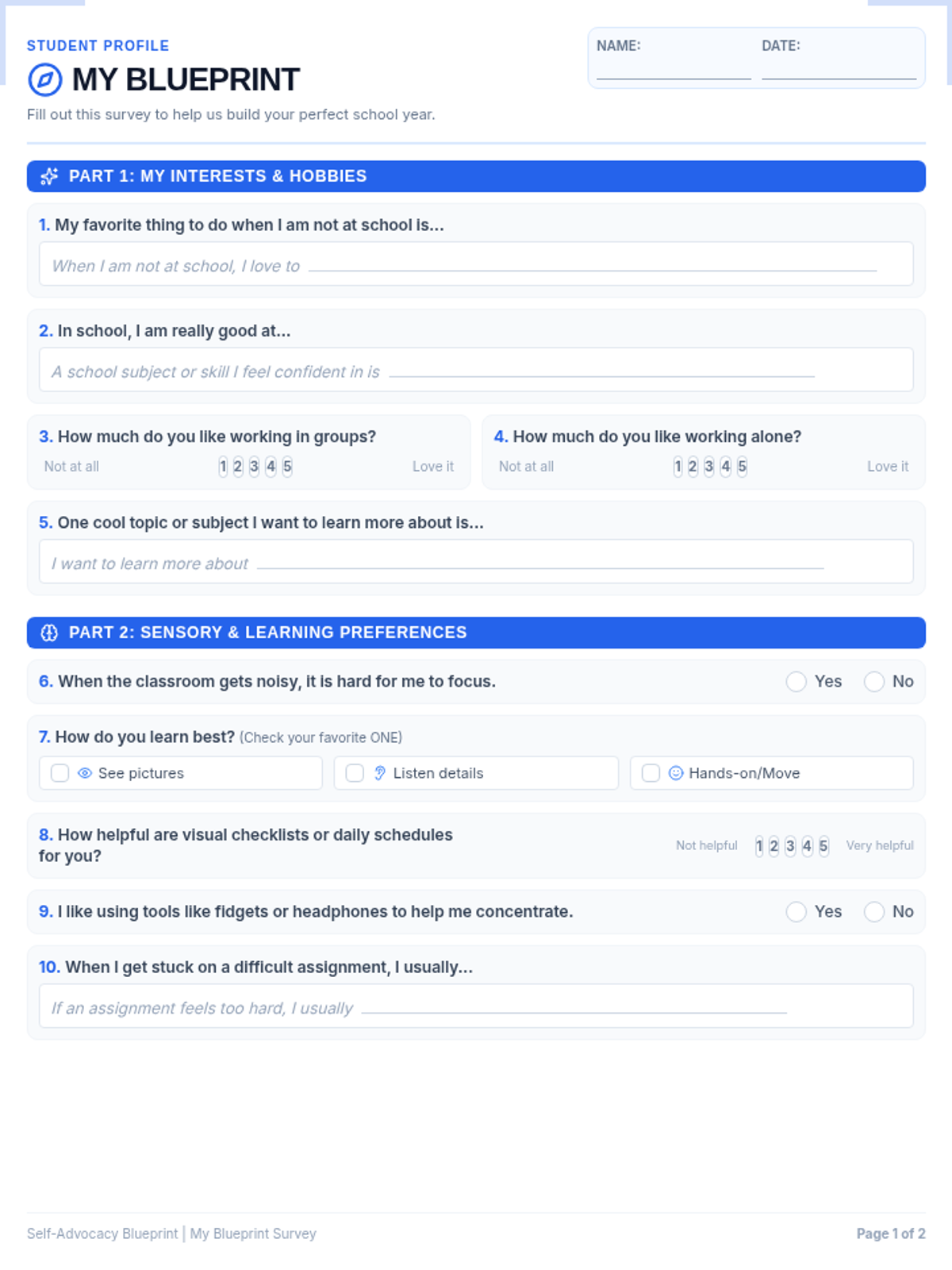
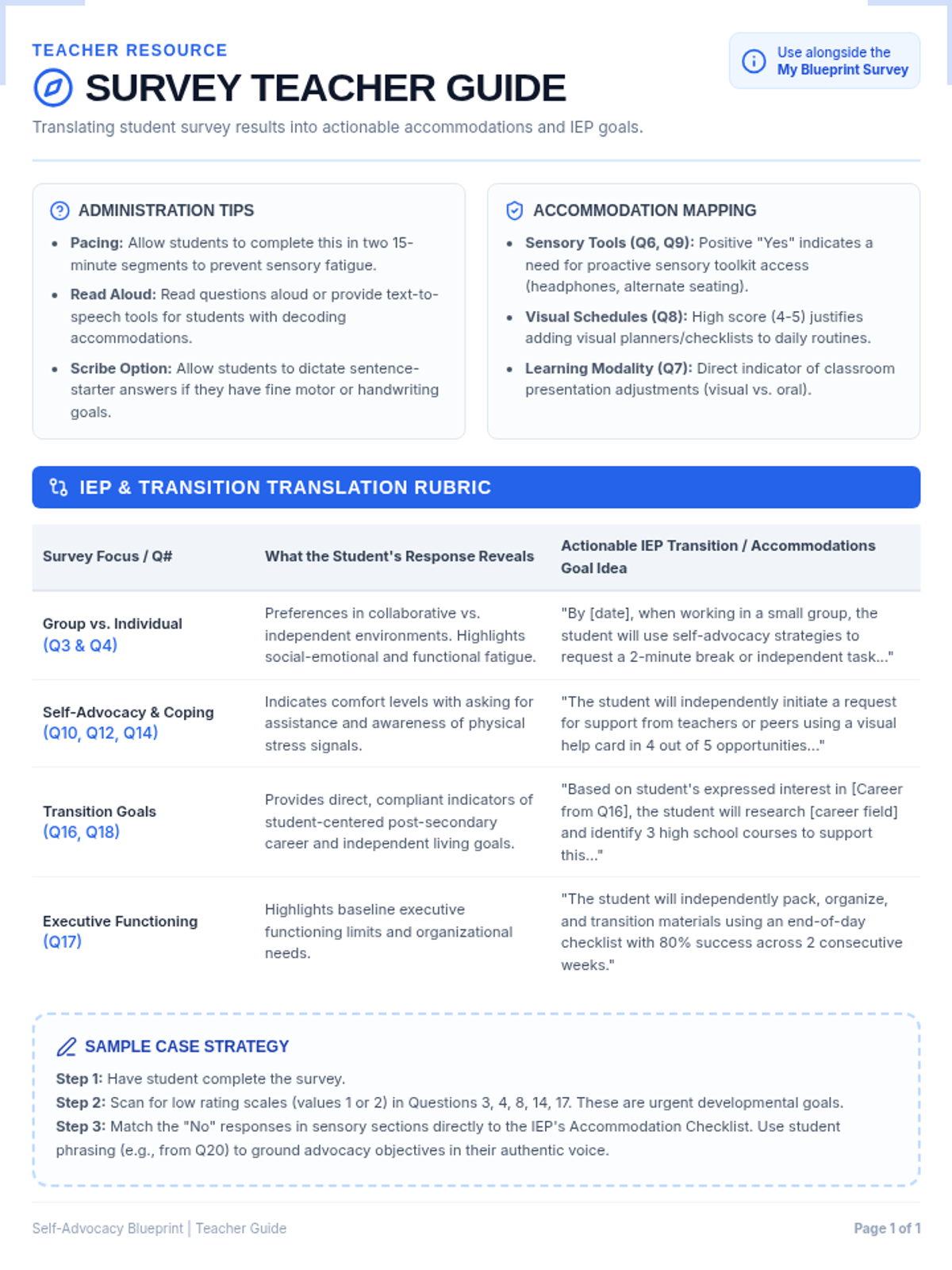
A transition-focused lesson featuring an accessible "All About Me" survey for middle school students with accommodations, alongside a guide for teachers to translate student responses into IEP goals and classroom support strategies.
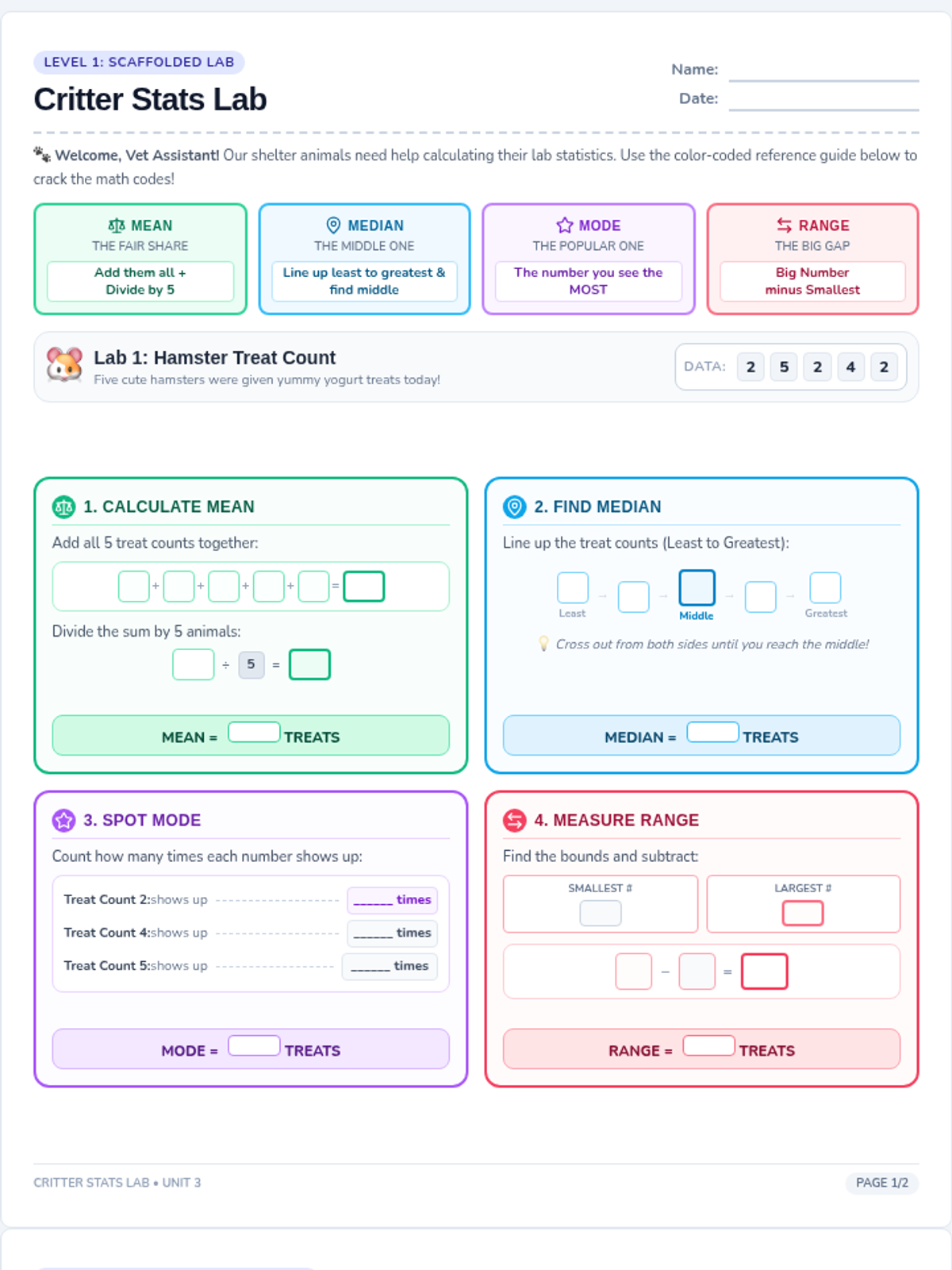
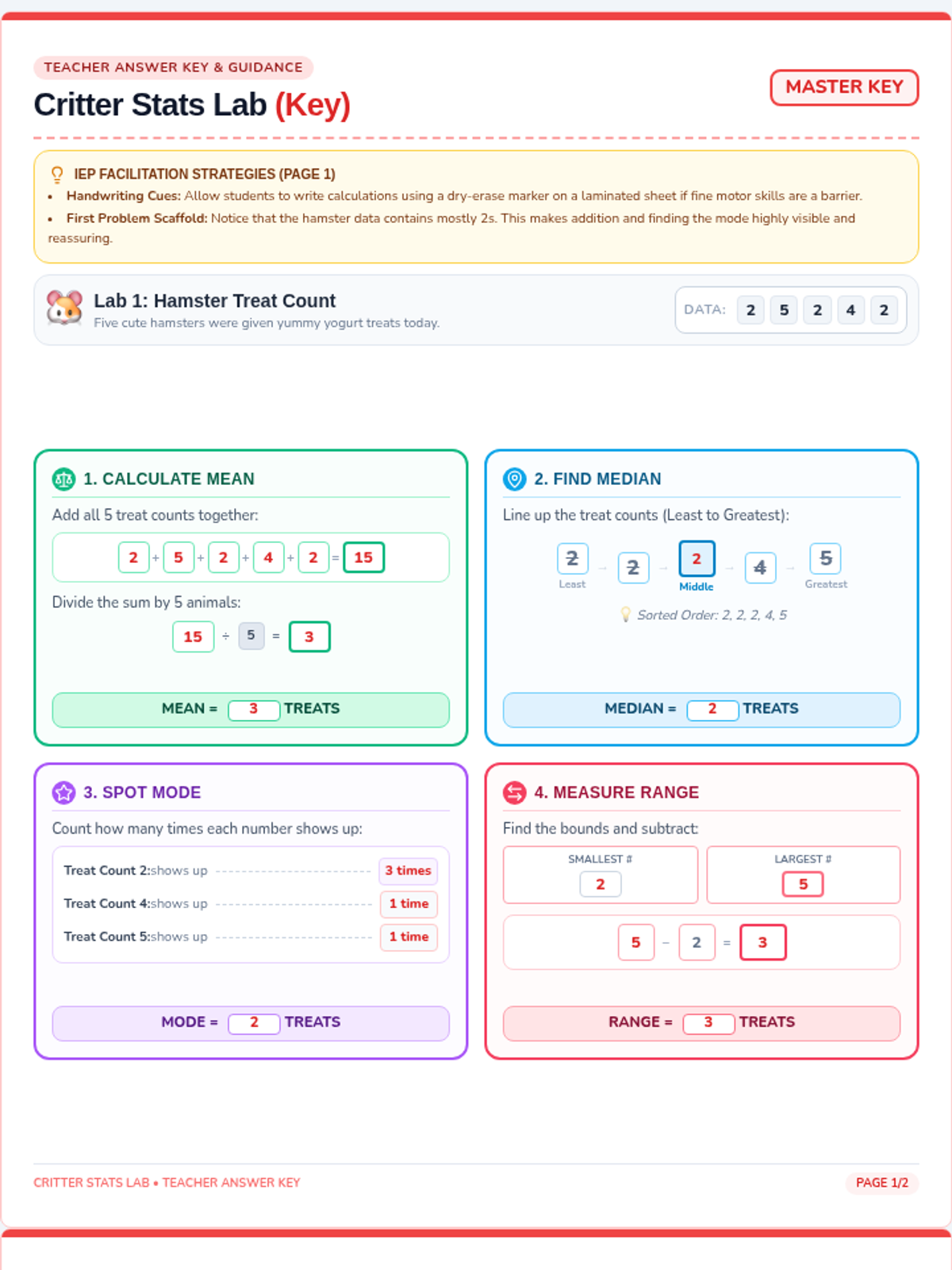
A highly visual, color-coded math lesson introducing mean, median, mode, and range to IEP students using adorable pet shelter statistics. Highly structured layout with minimal text density and supportive visual cues.
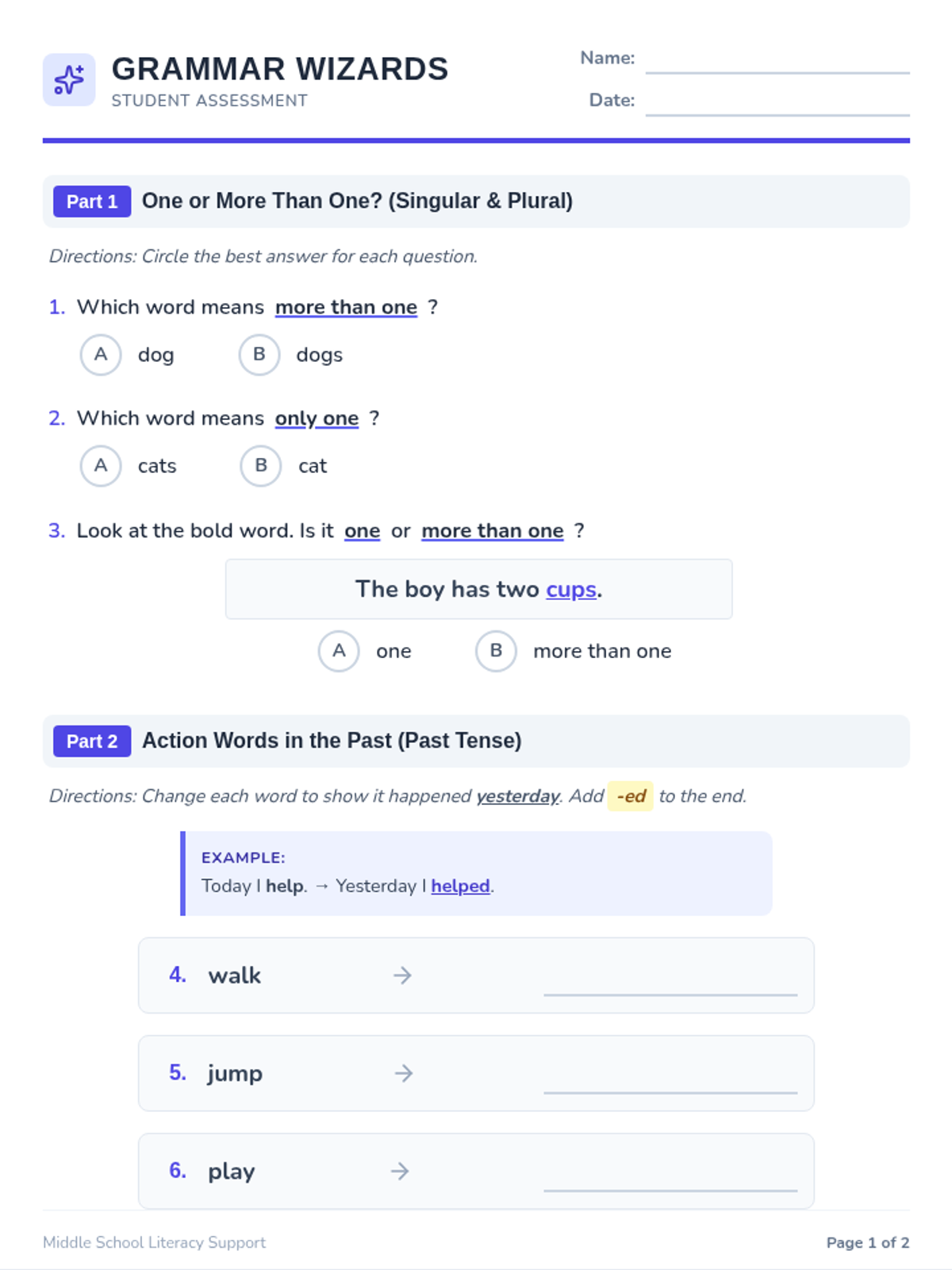
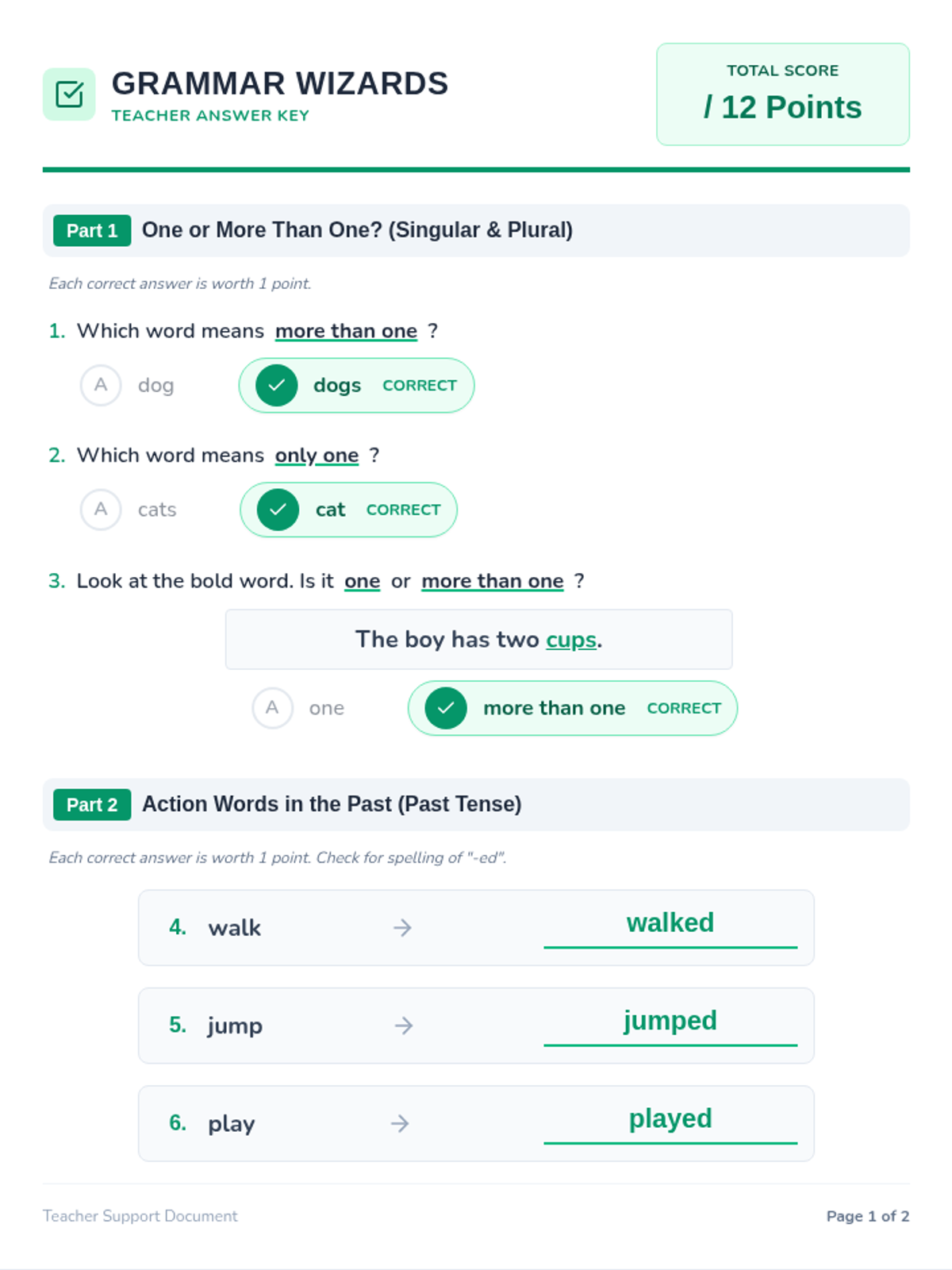
A grammar assessment designed for middle school students in a self-contained classroom reading at a first-grade level. The quiz covers past-tense verbs, common/proper nouns, singular/plural nouns, and identifying parts of speech (noun, verb, adjective) in simple context, complete with a teacher answer key.
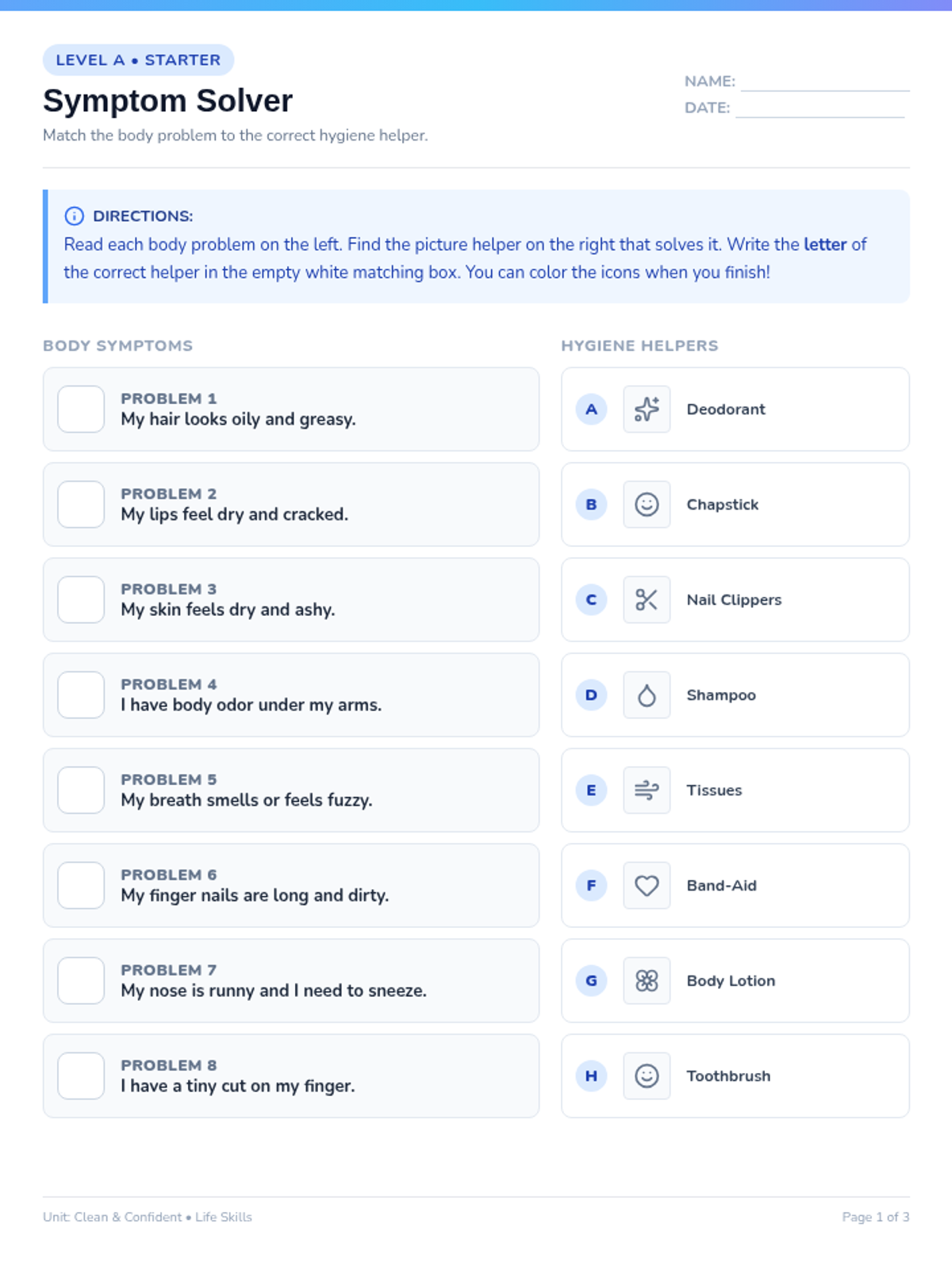
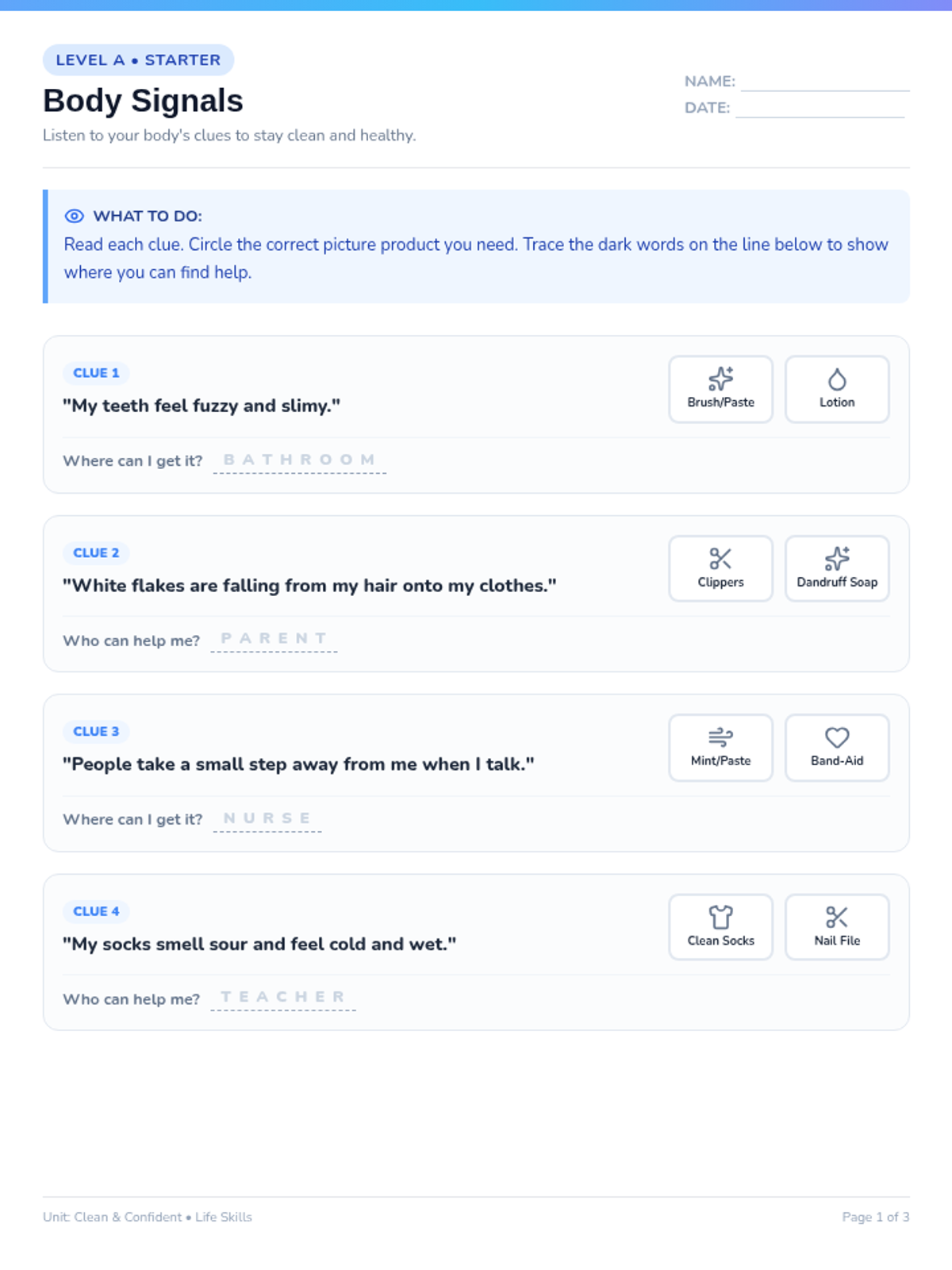
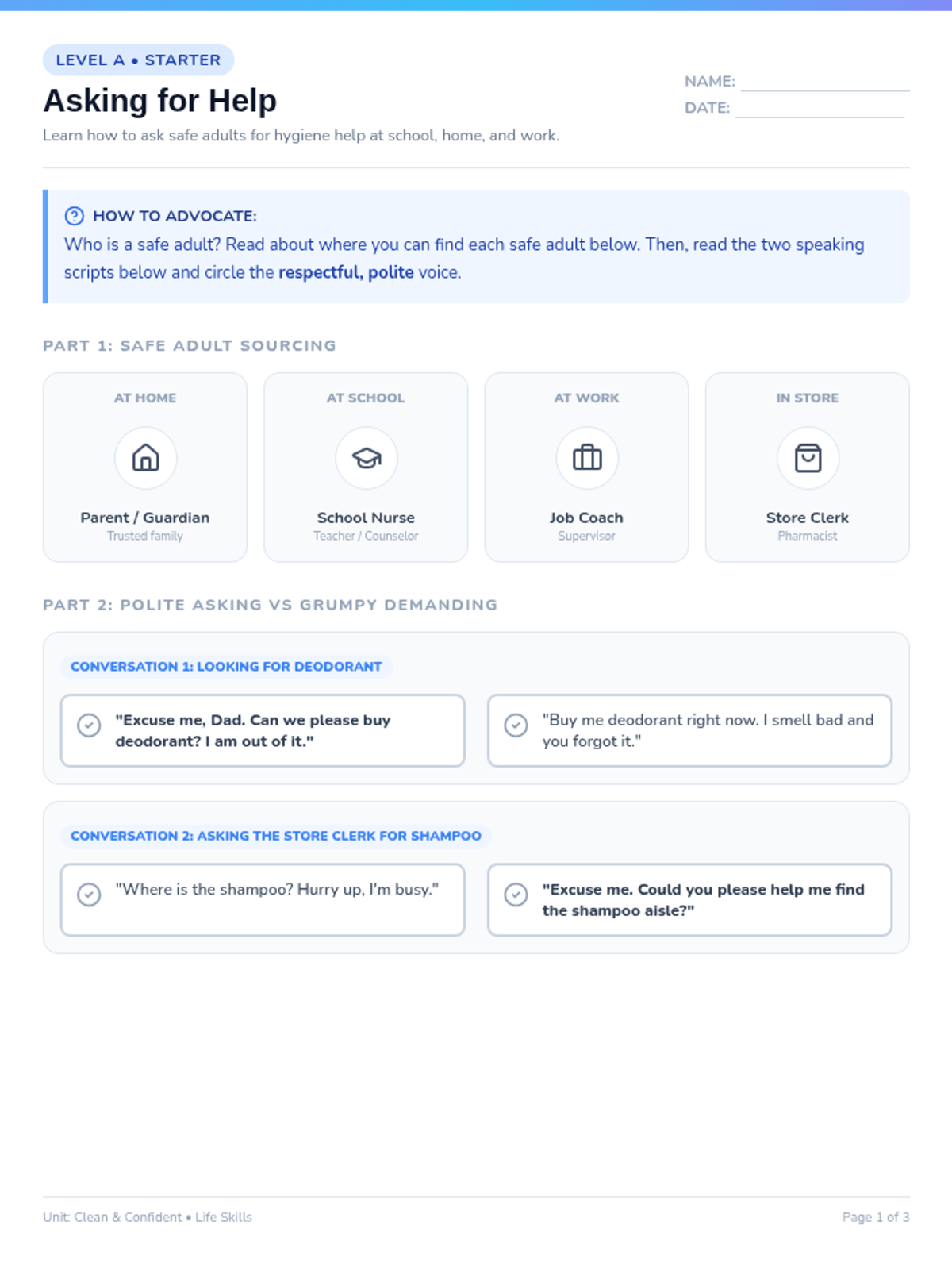
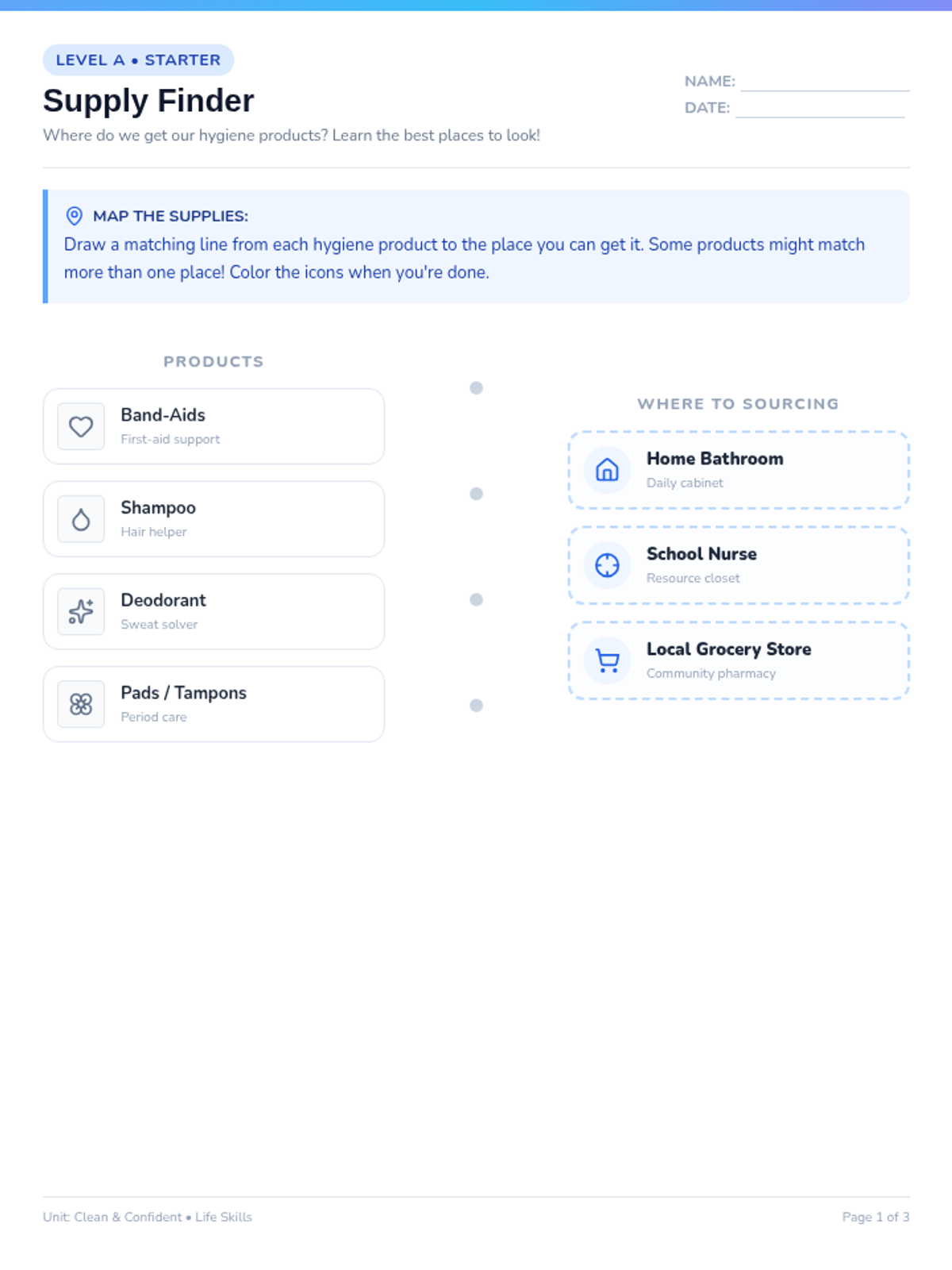
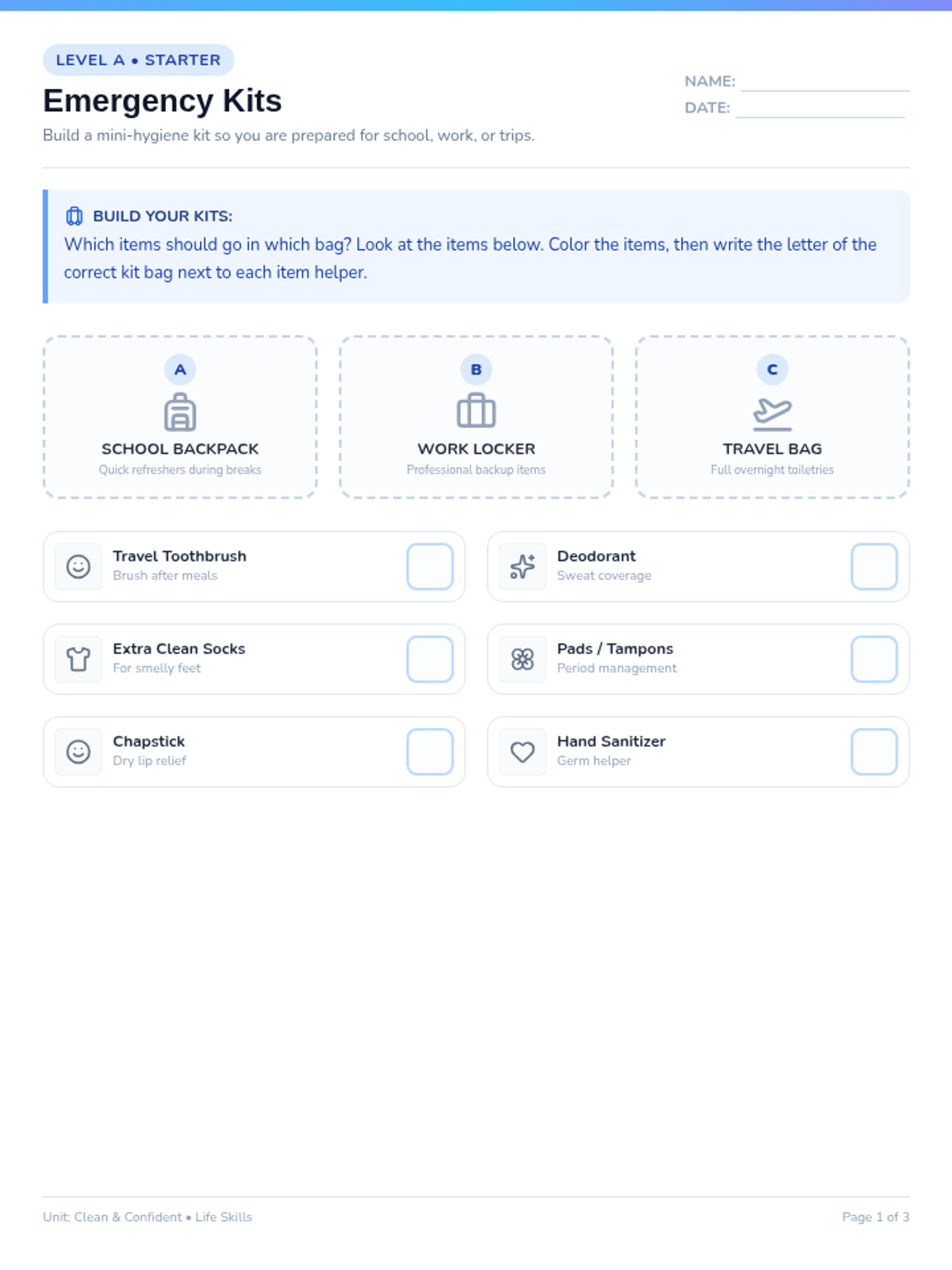
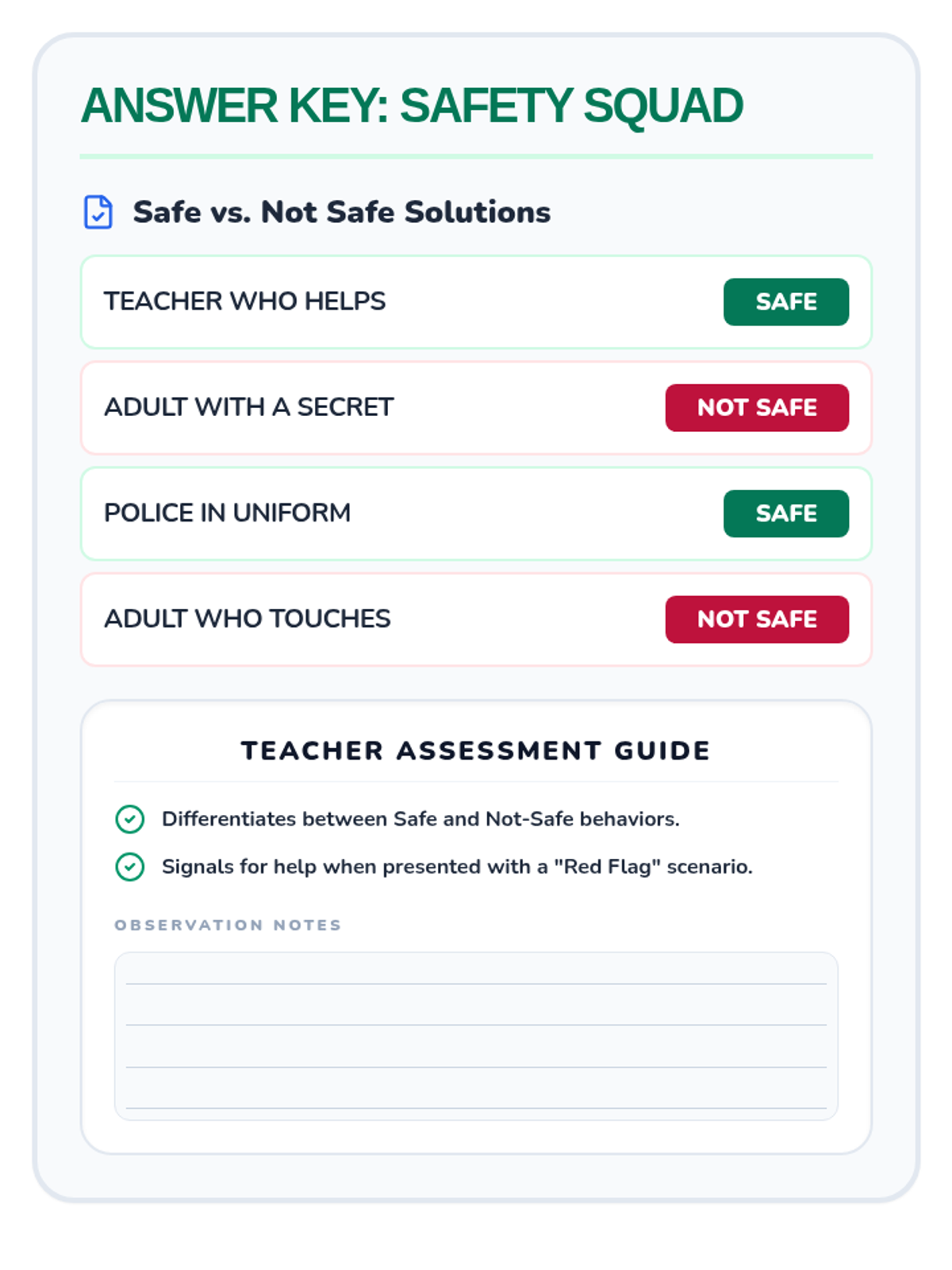
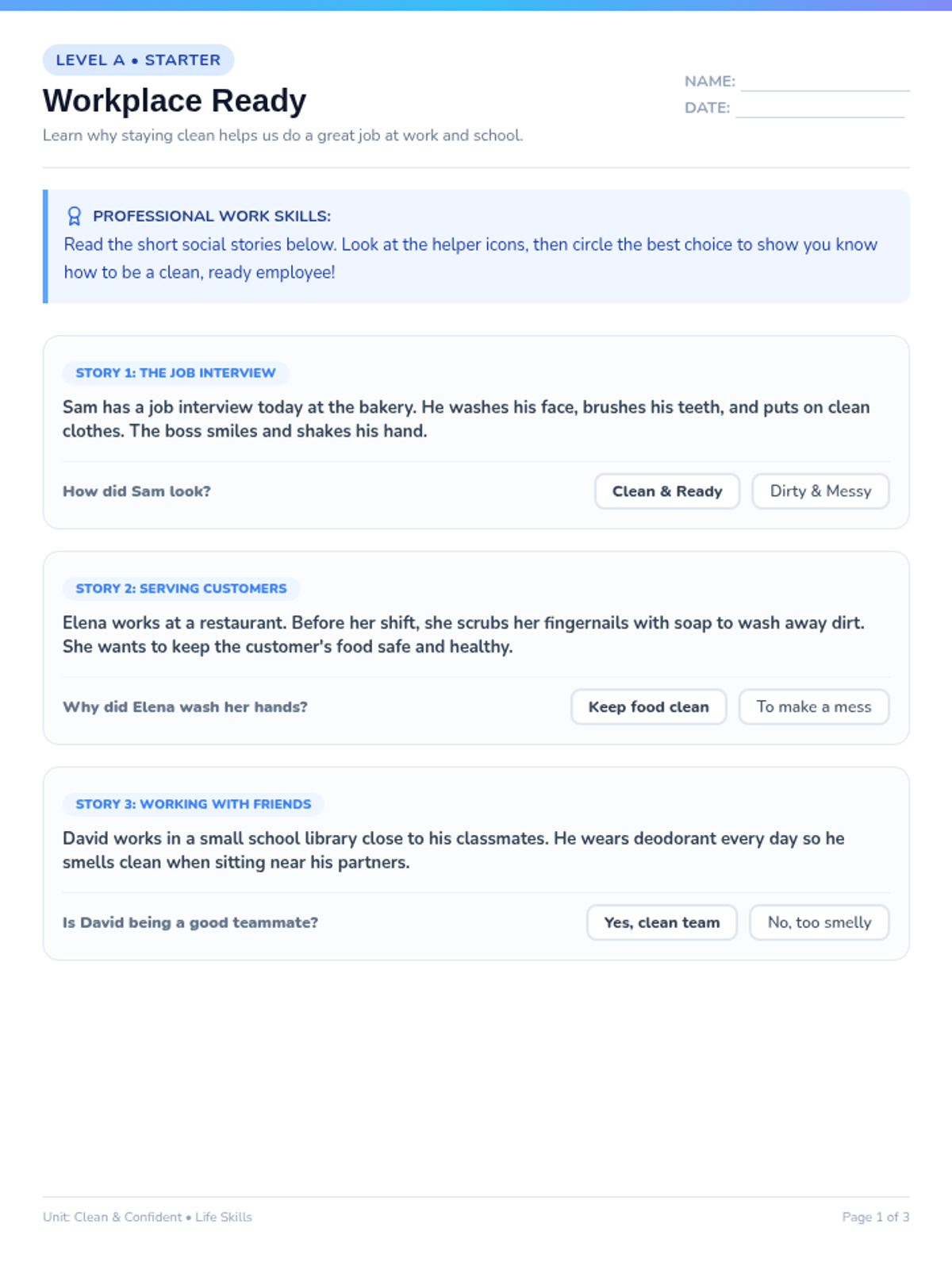
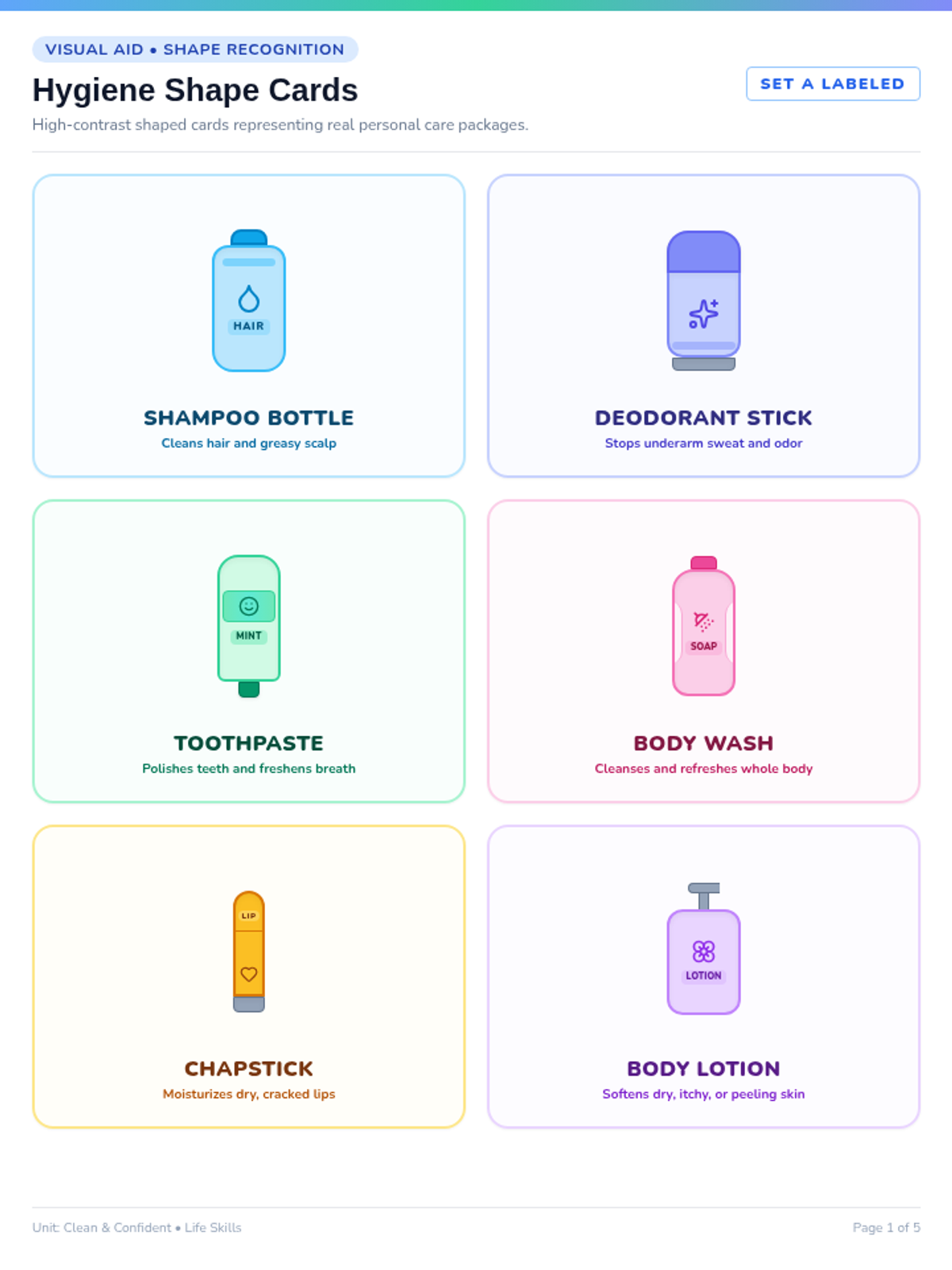
A comprehensive functional life skills unit teaching hygiene independence, self-advocacy, and workplace readiness for middle and high school special education students. Includes visual matching, body signal decoding, safe-adult communication scripts, sourcing maps, emergency kit preparation, and workplace scenario analysis.
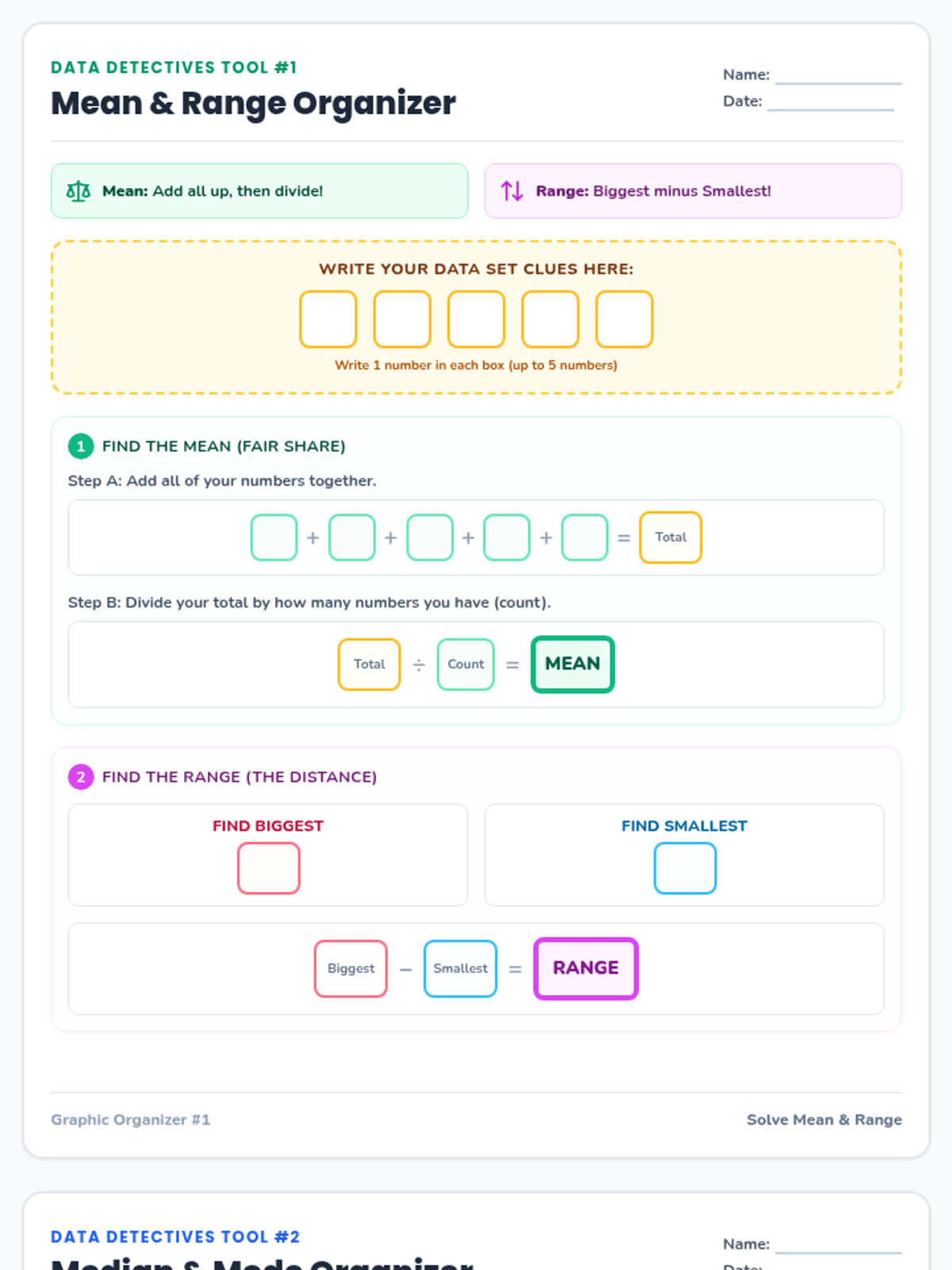
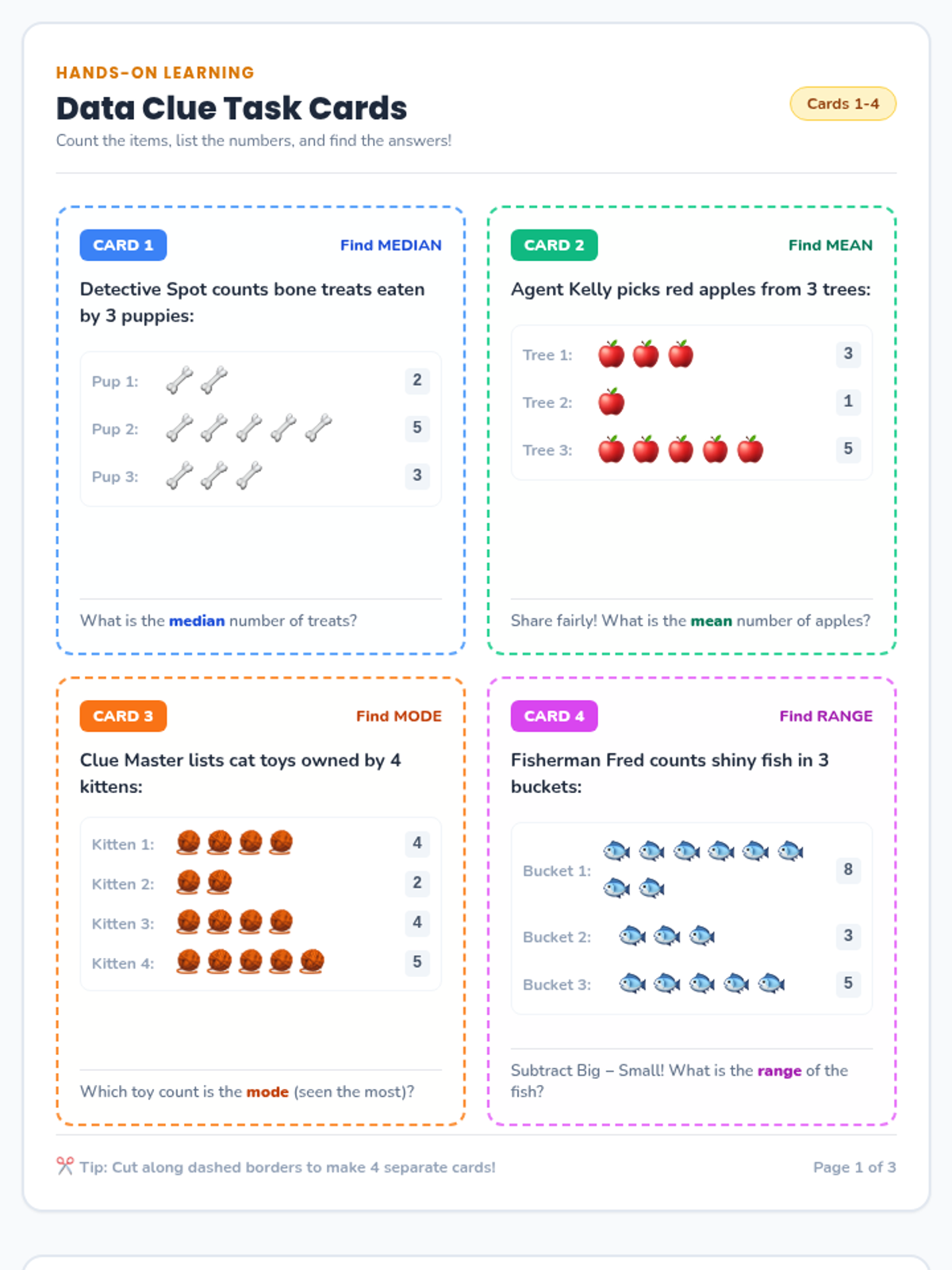
A modified, highly visual math lesson on Mean, Median, Mode, and Range tailored for IEP students. Features visual anchor charts with picture symbols, step-by-step color-coded graphic organizers, task cards with hands-on counting counters, and highly scaffolded worksheets.
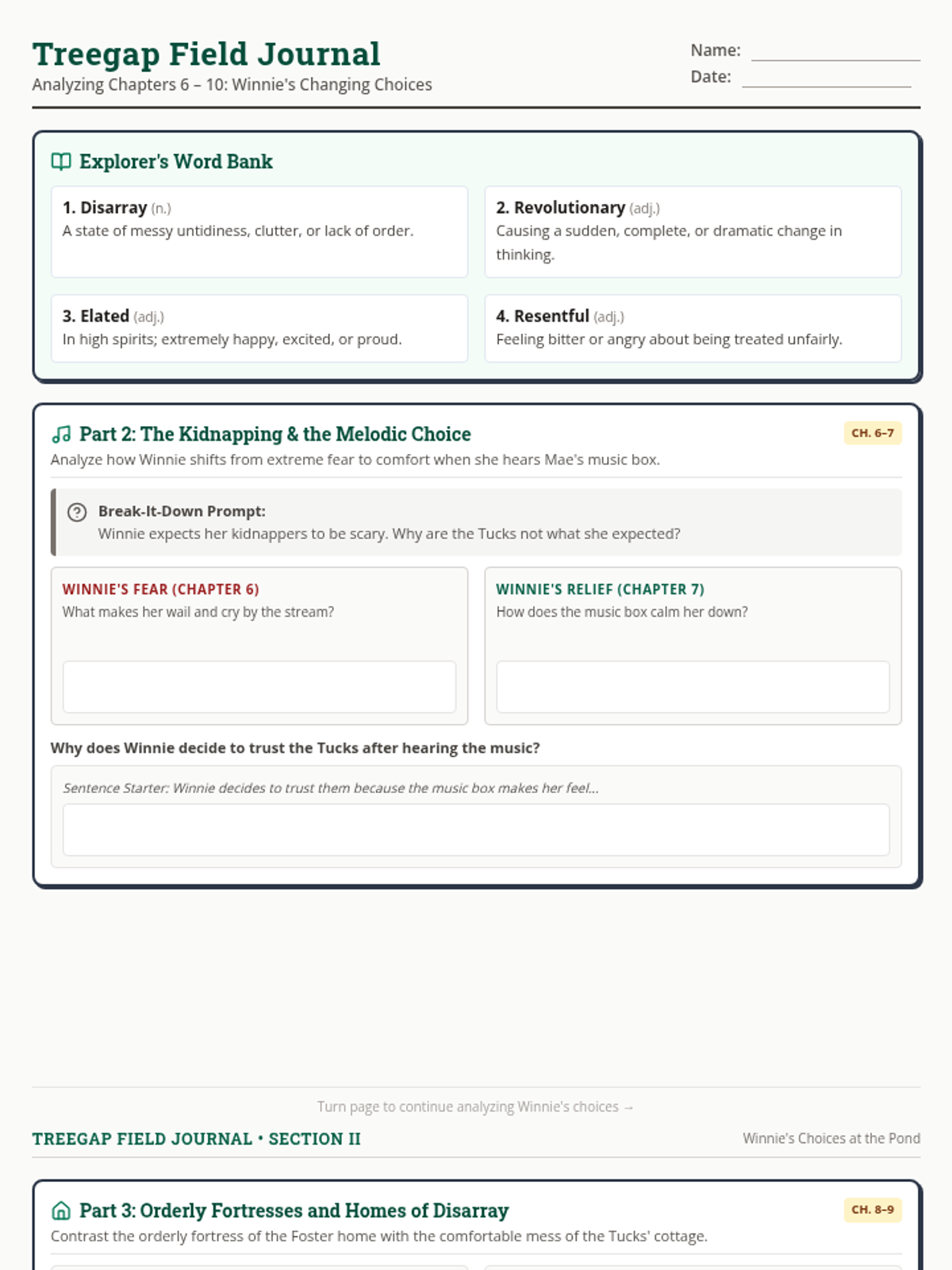
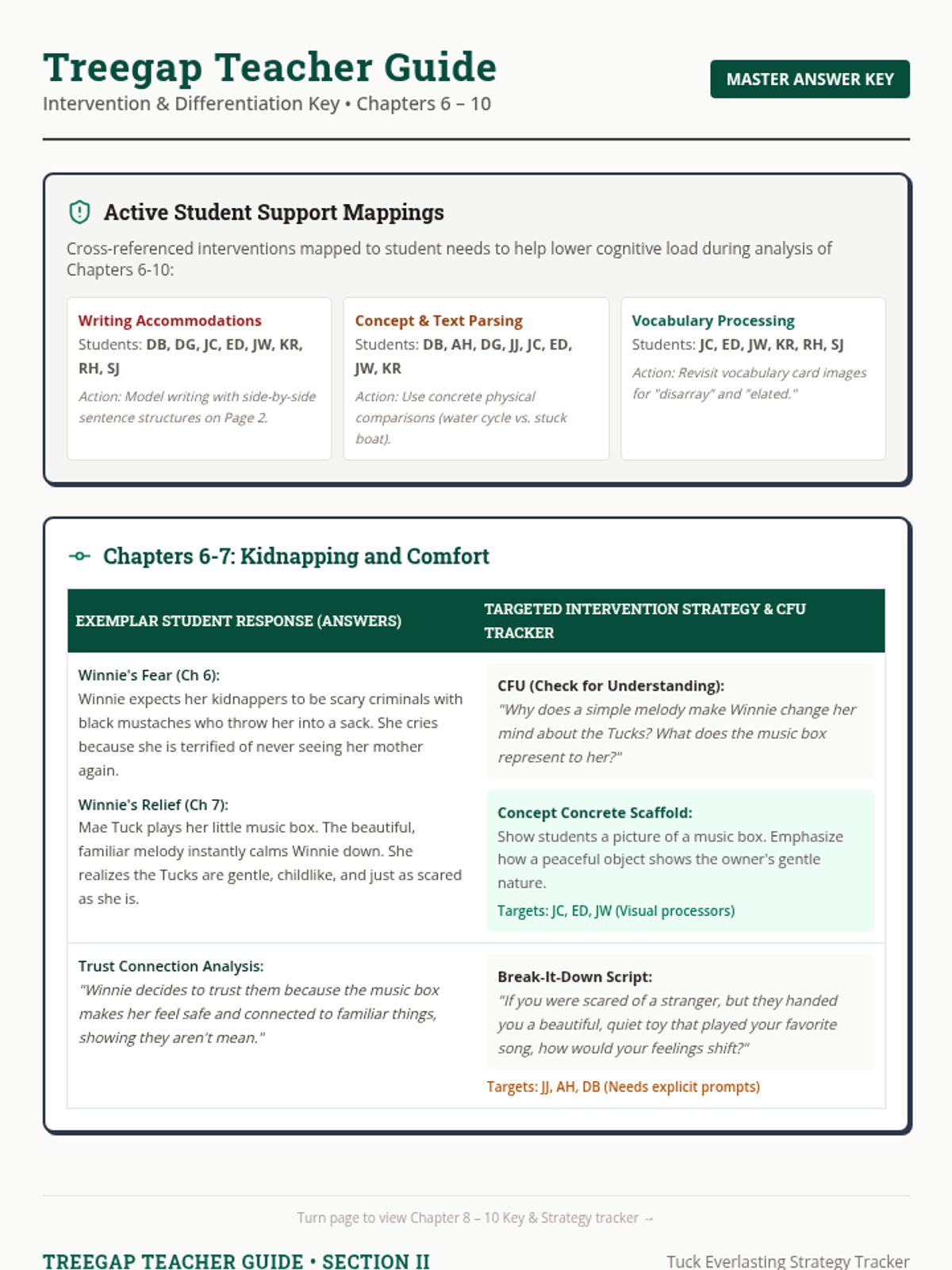
A detailed literary exploration of Chapters 6-10 of Natalie Babbitt's Tuck Everlasting. Students analyze Winnie's reactions to the Tucks' messy, timeless lifestyle compared to her own orderly home, focusing on her growing internal choices and the concept of living outside the wheel of life.
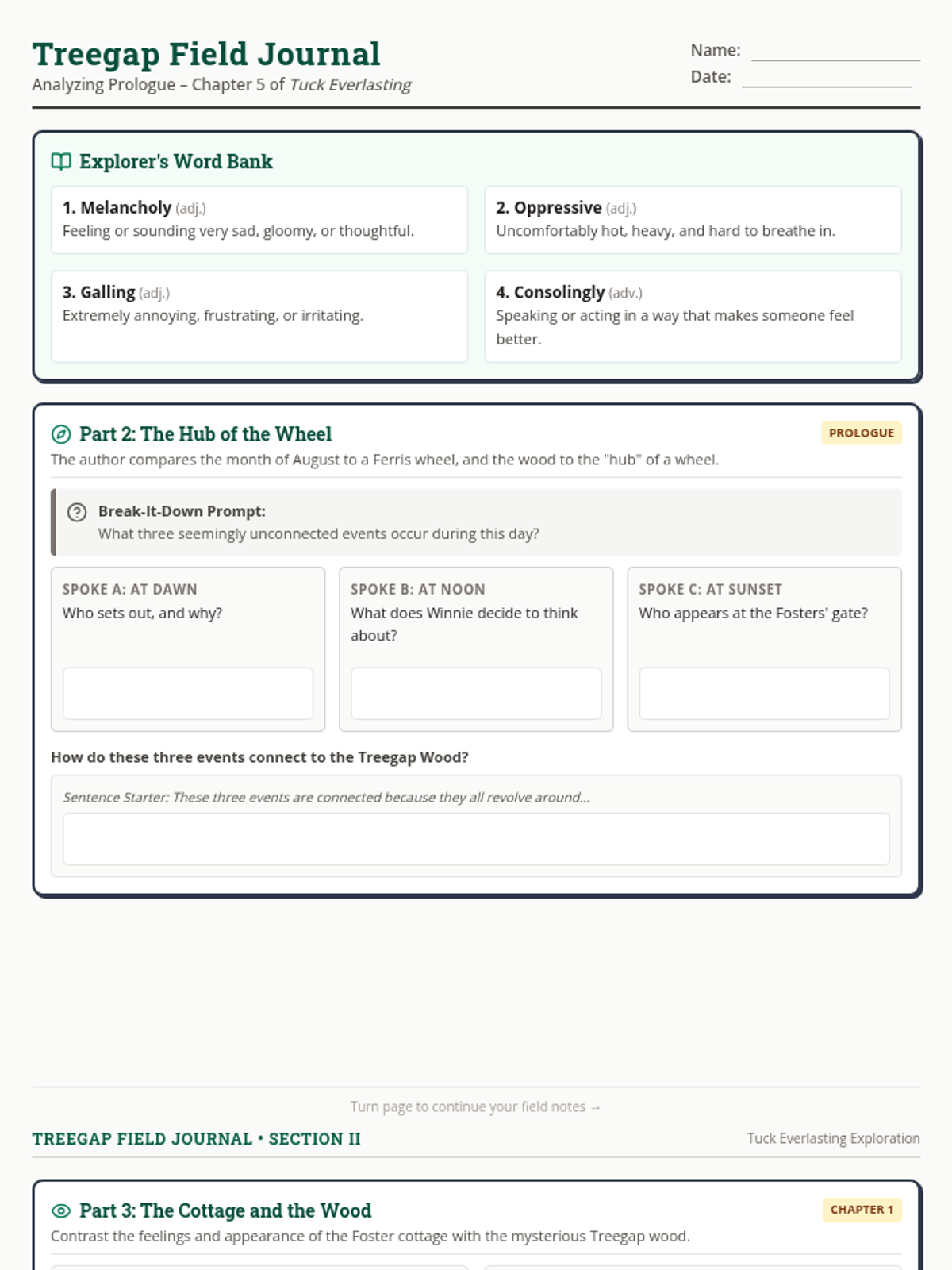
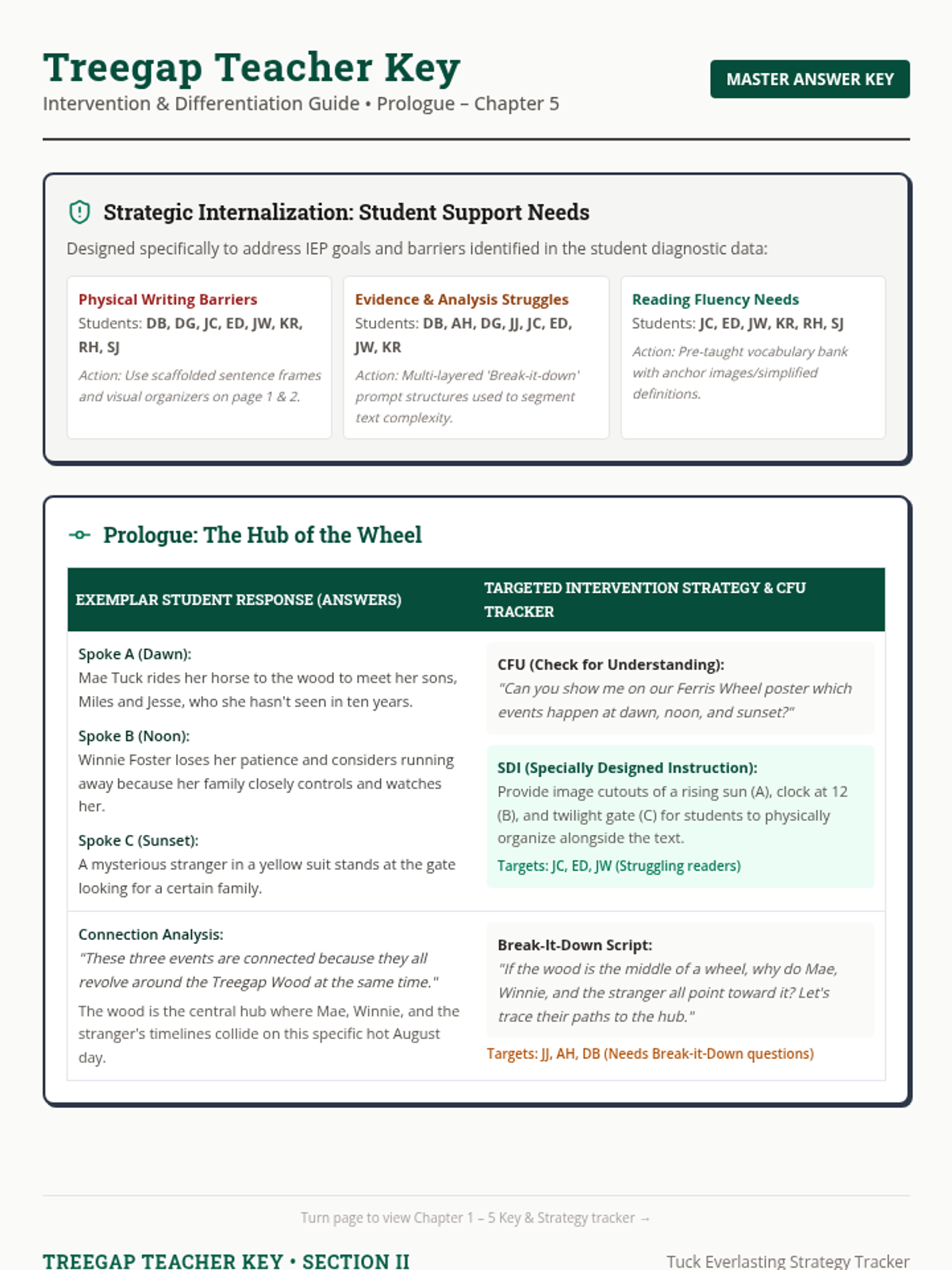
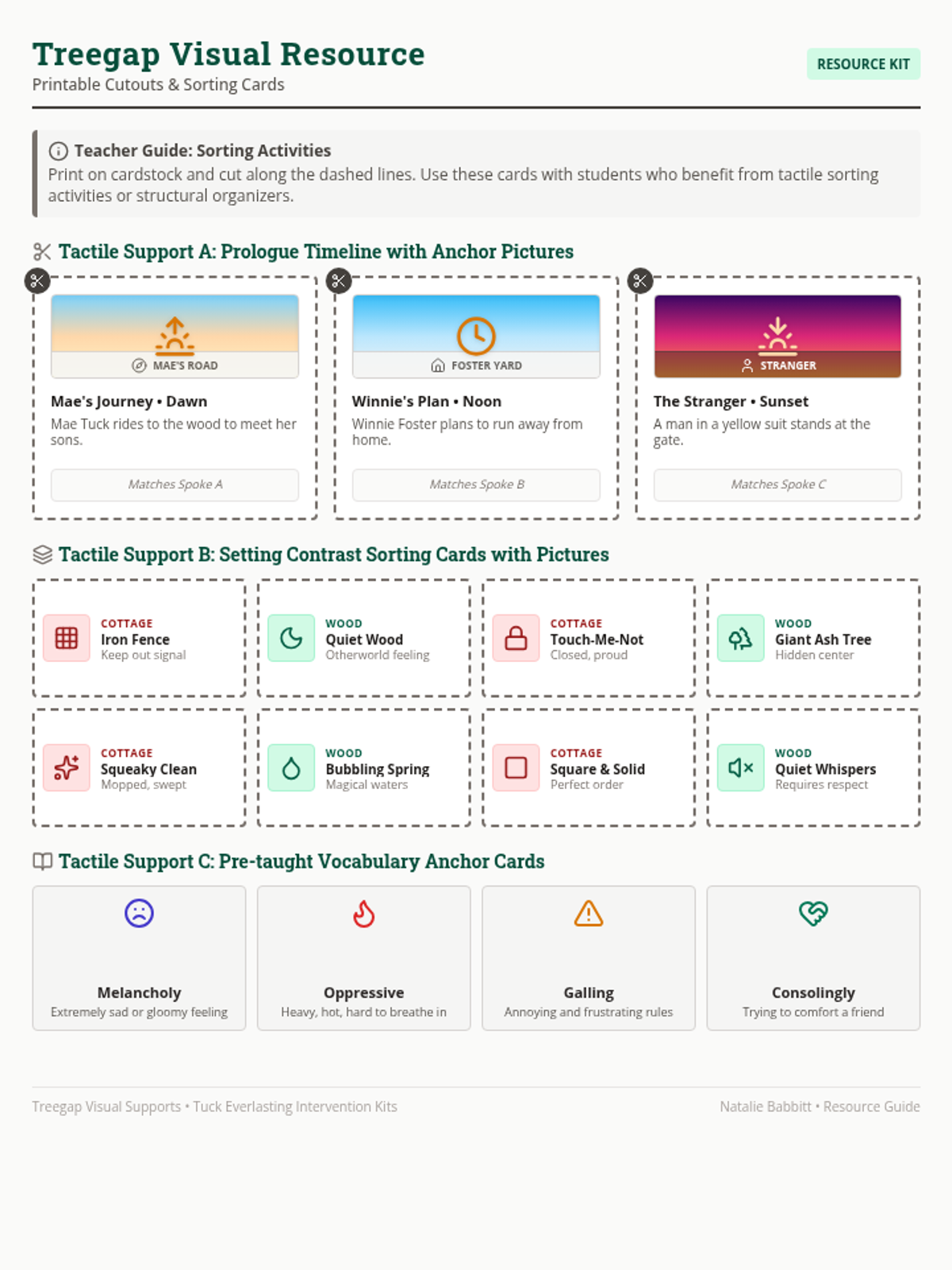
A literary investigation of the prologue through chapter 5 of Natalie Babbitt's Tuck Everlasting. Students explore setting contrasts and the mysterious meeting between Winnie and Jesse, while teachers leverage structured scaffolds and checks for understanding.
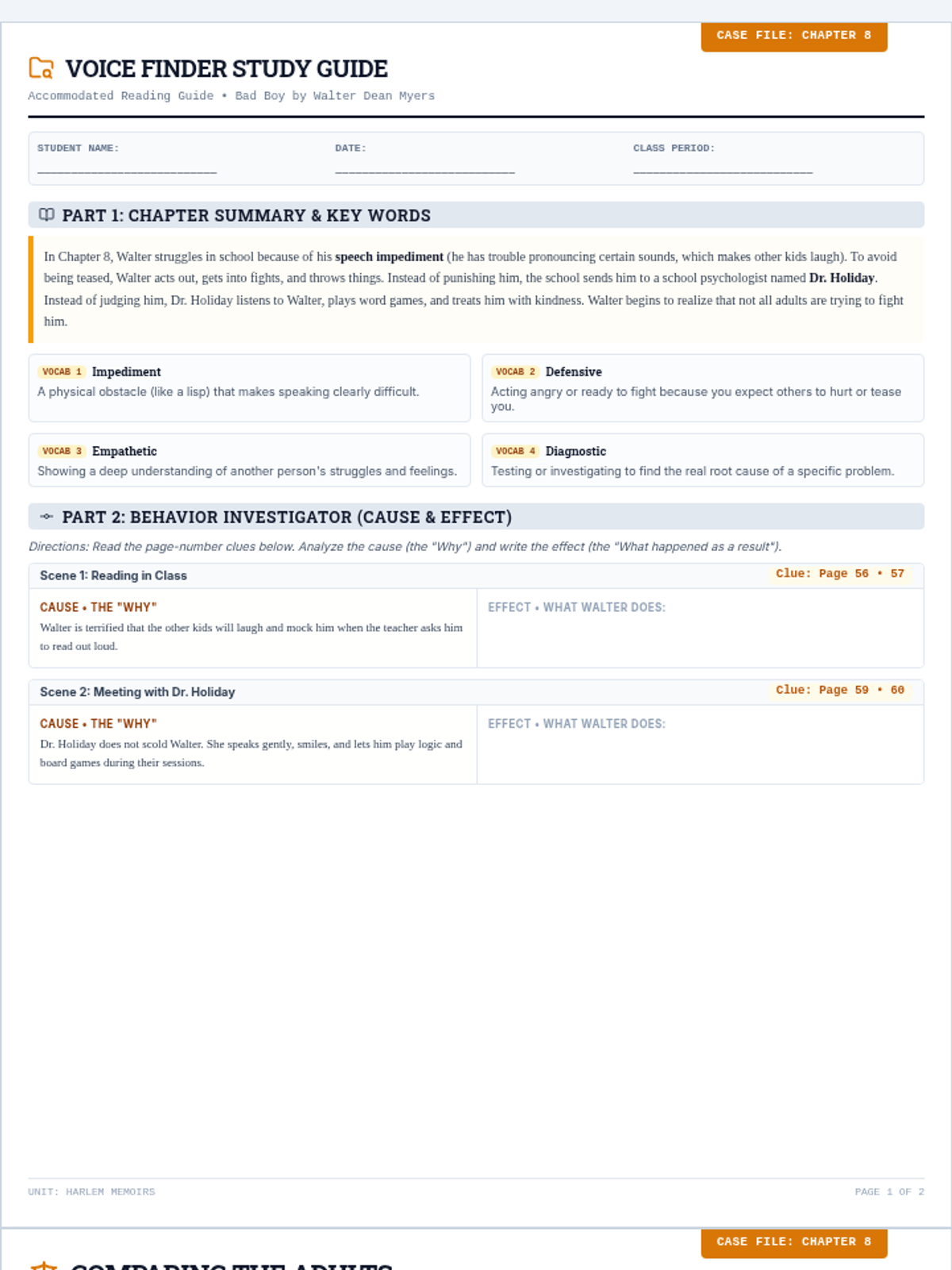
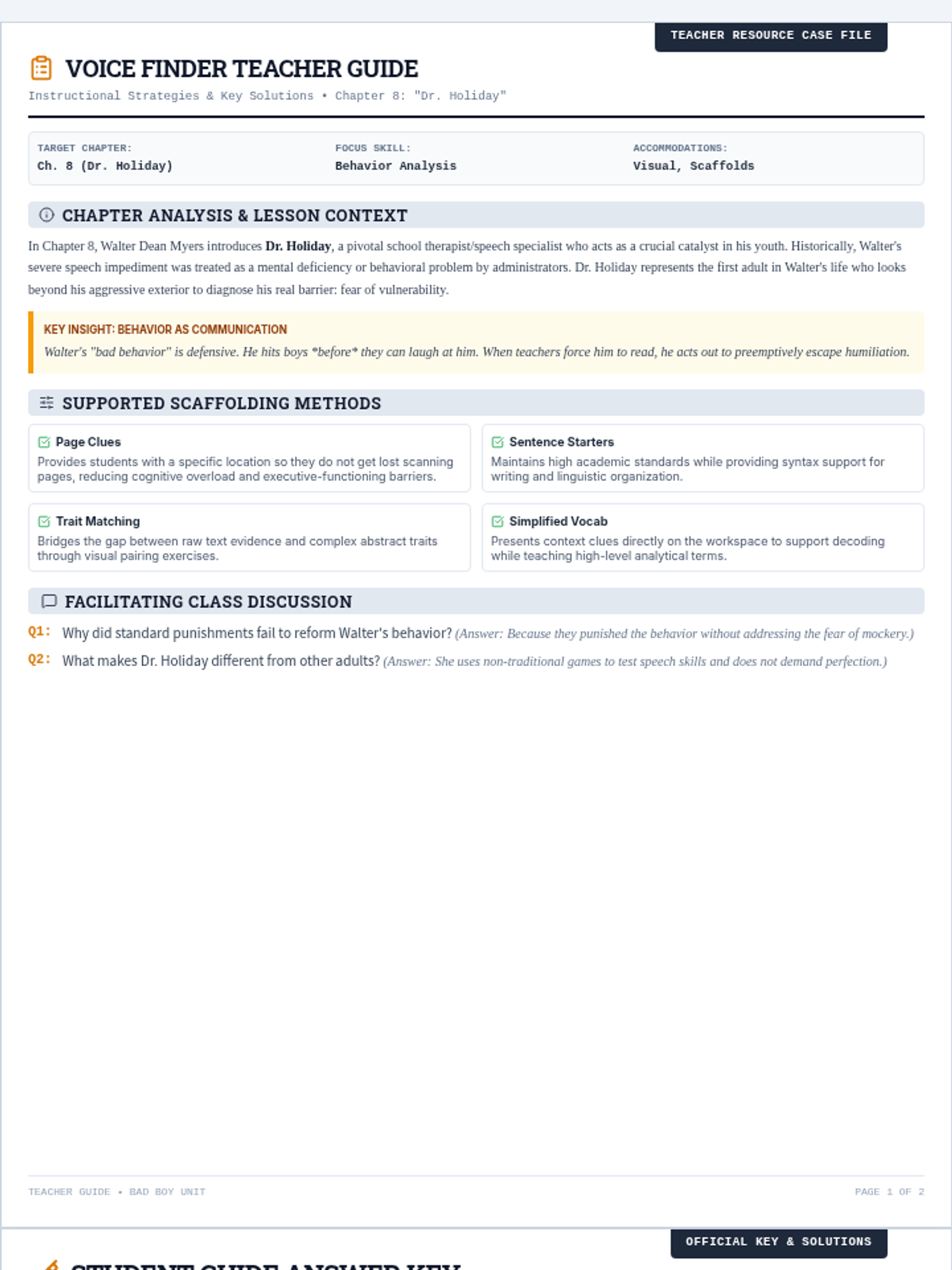
An accommodated, highly-scaffolded study guide and lesson resources focused on the 'Dr. Holiday' chapter of Walter Dean Myers' memoir, Bad Boy. Students explore character traits, comparison of adult figures, vocabulary, and cause-and-effect relationships surrounding Walter's behavior.
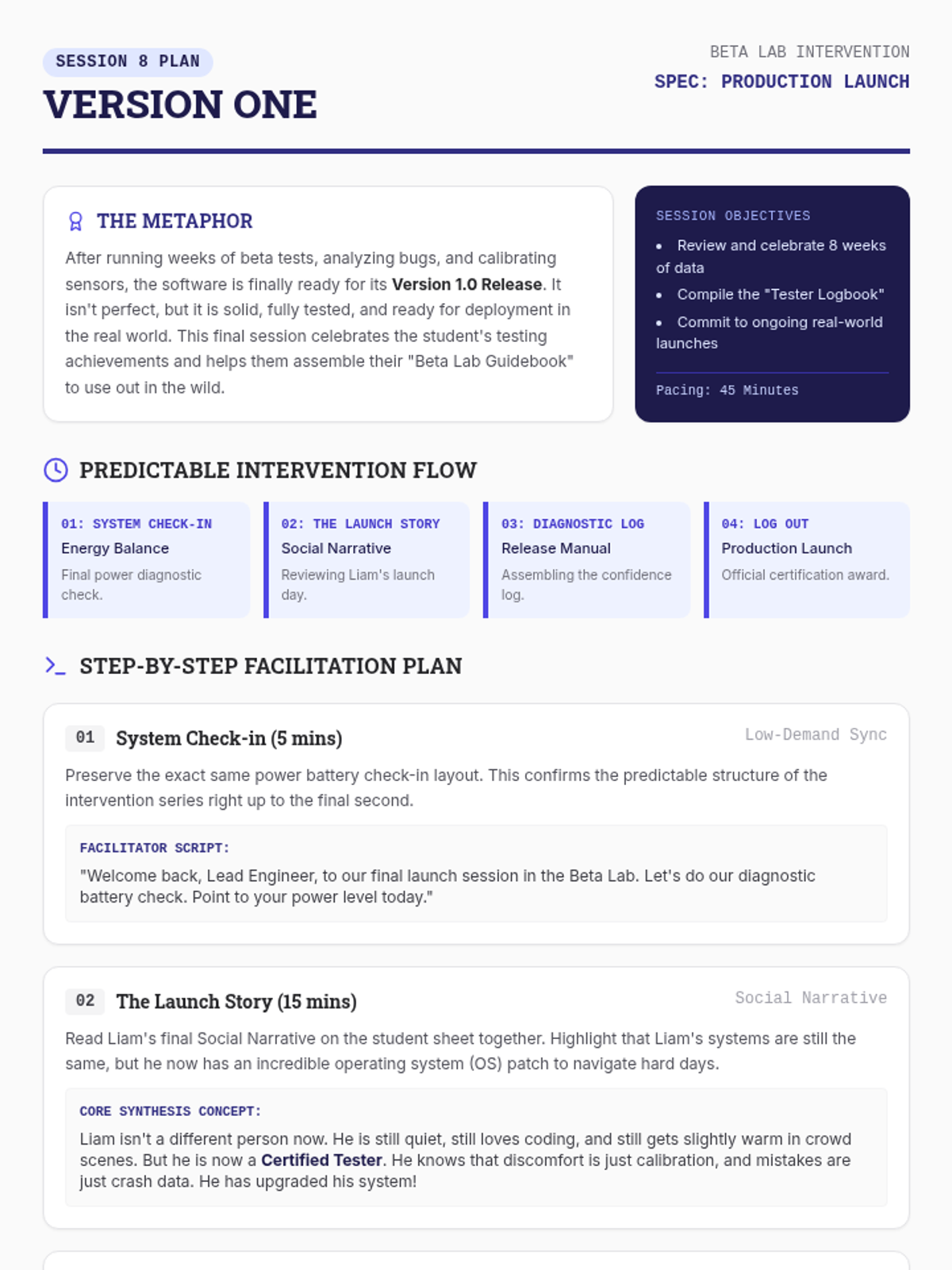
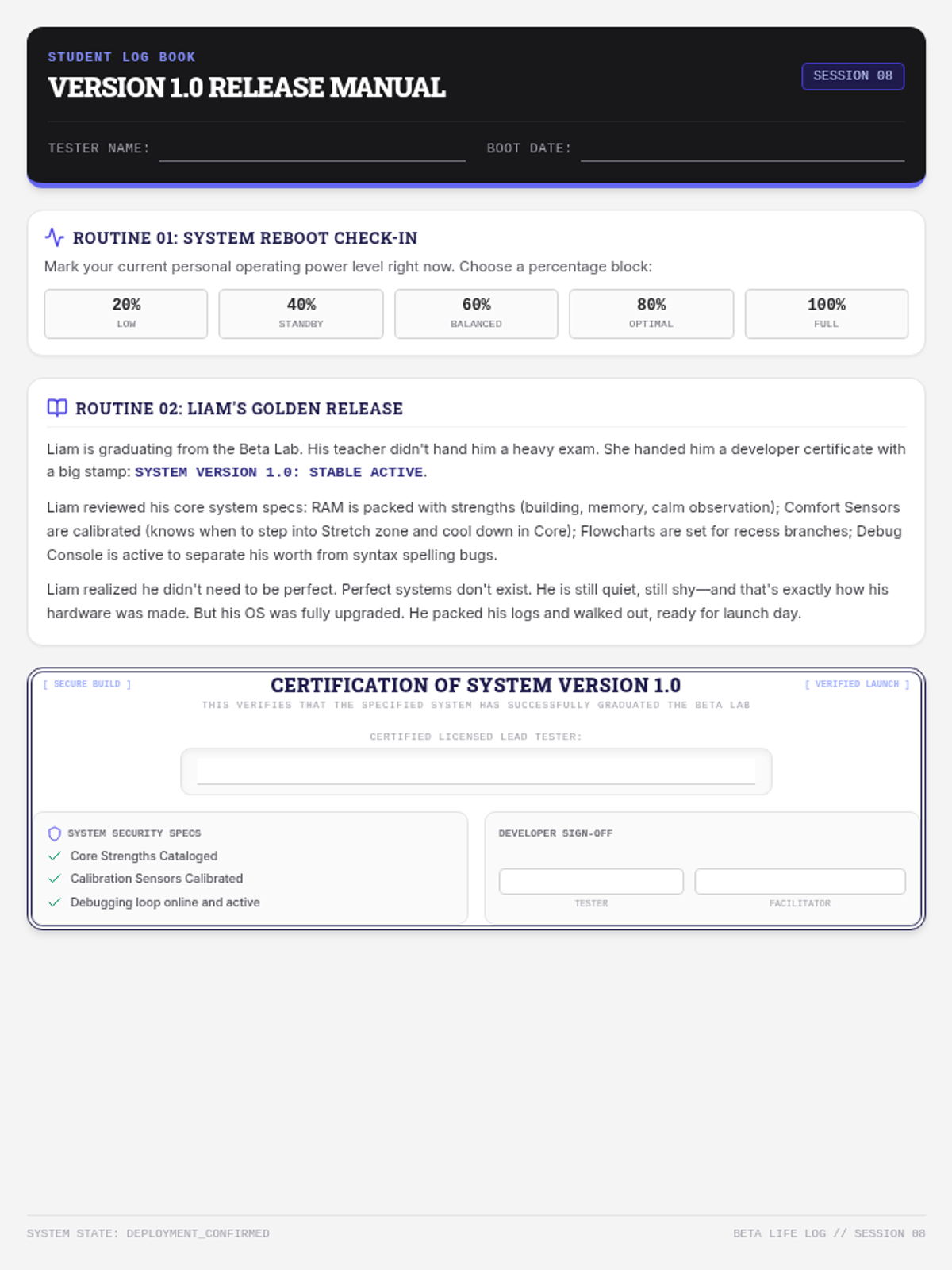
Session 8 synthesizes the 8-week journey. The student compiles their logs into a personalized confidence guide and celebrates their testing achievements.
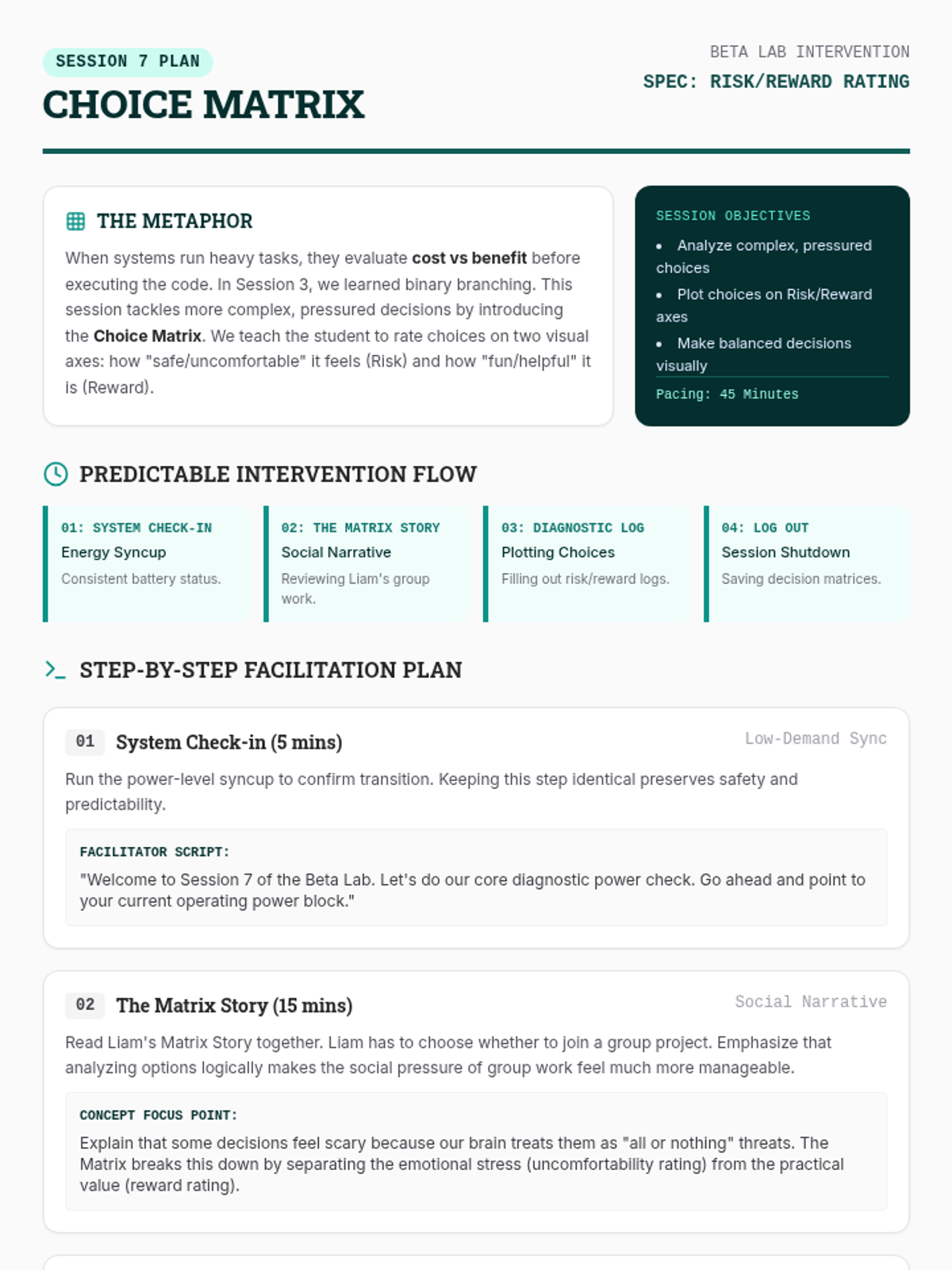
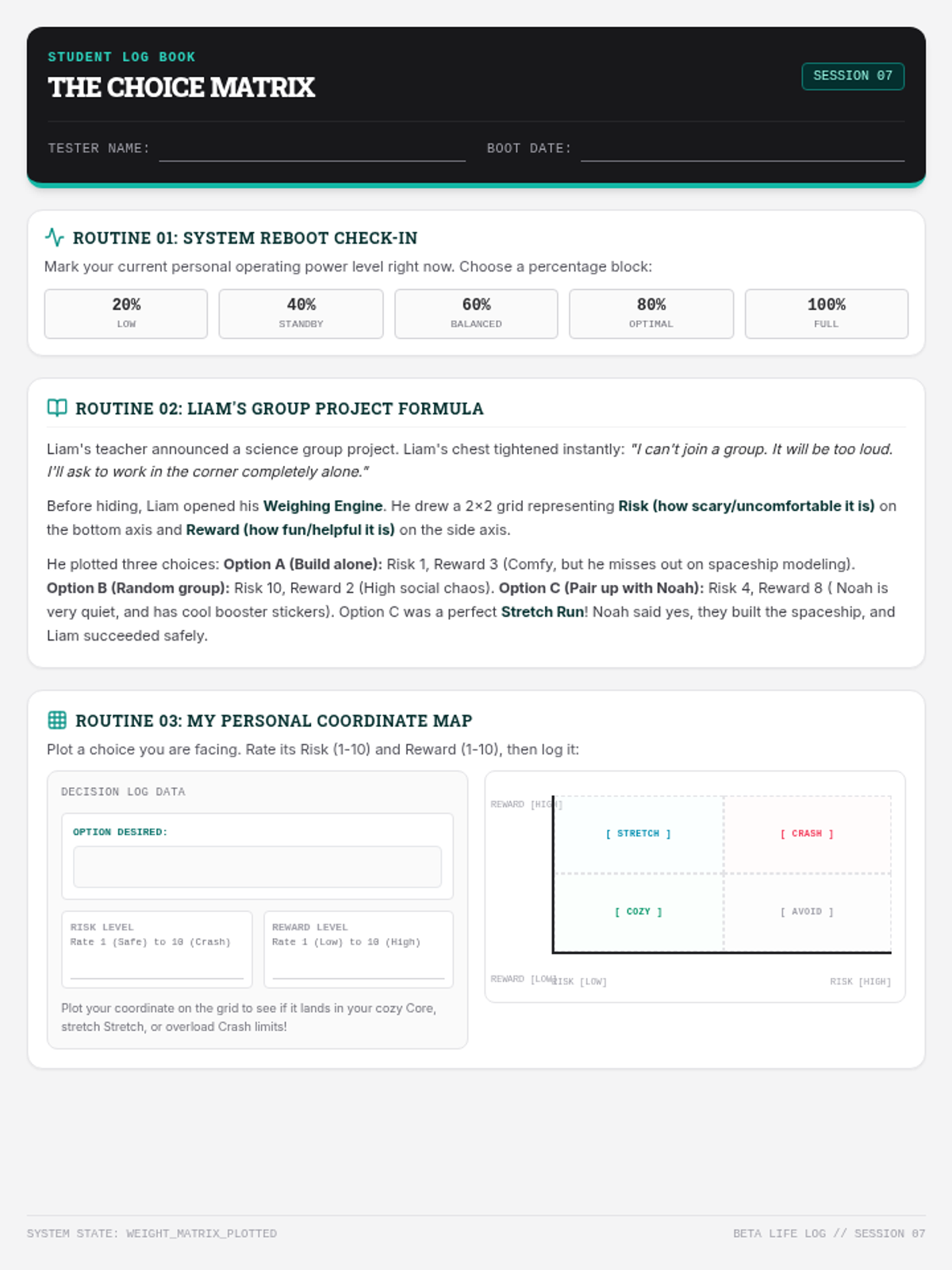
Session 7 explores more complex decisions under pressure, teaching the student how to weigh risks and rewards using a simple visual rating tool.
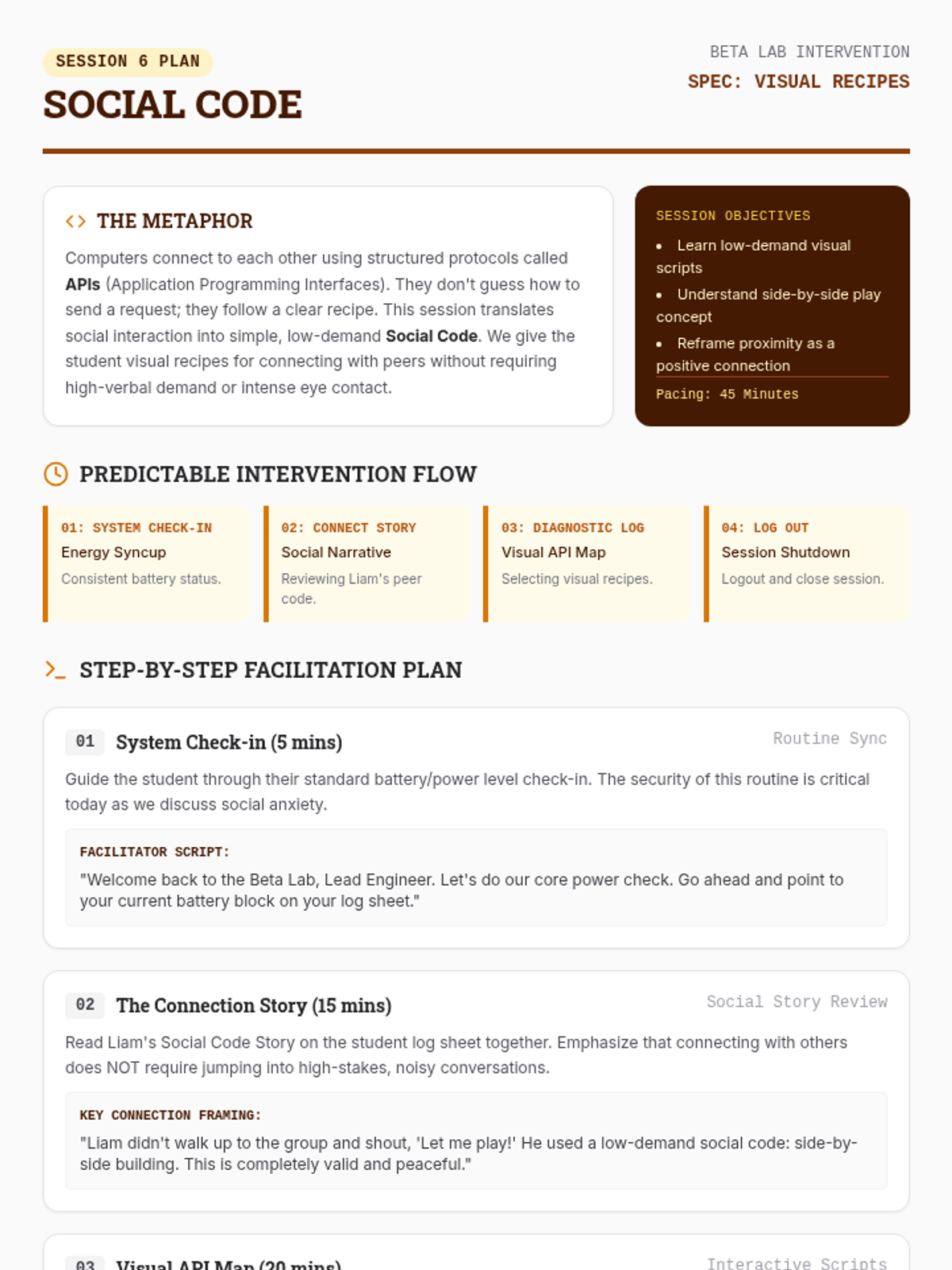
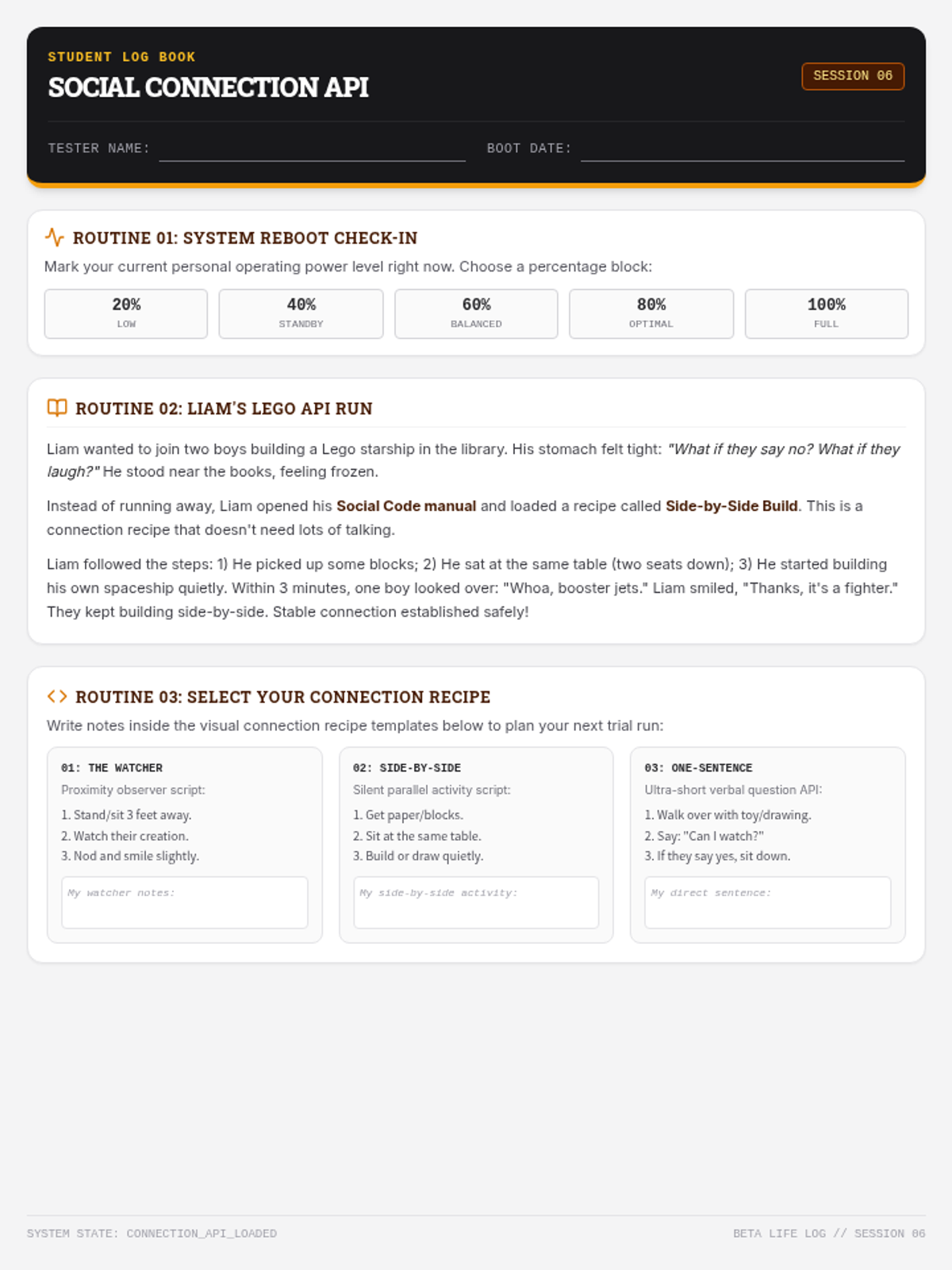
Session 6 addresses social interactions. The student learns low-demand social scripts and structured visual recipes for peer connection.
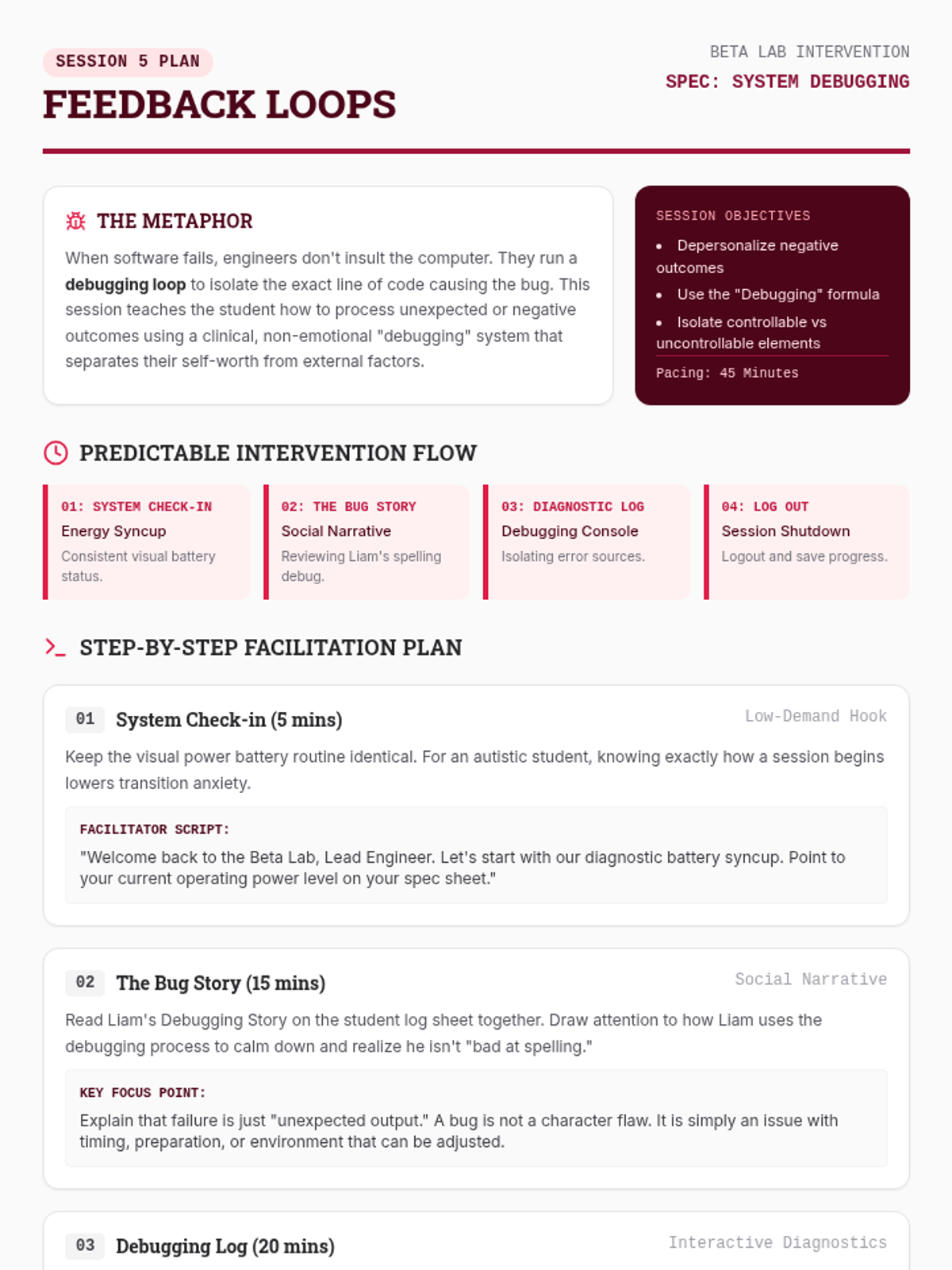
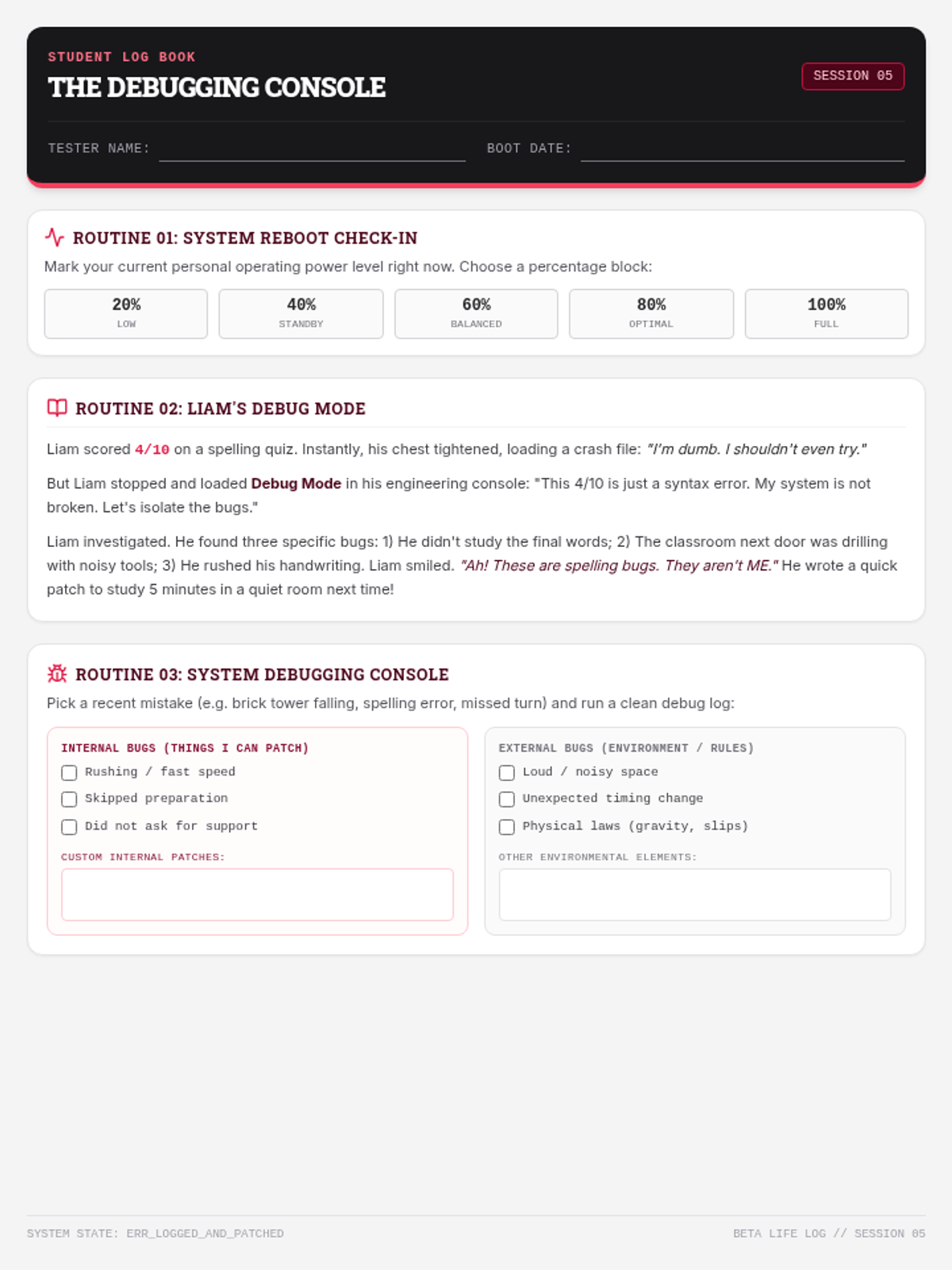
Session 5 covers processing unexpected outcomes. The student learns to analyze results without self-blame, using a structured "trail debugging" framework.
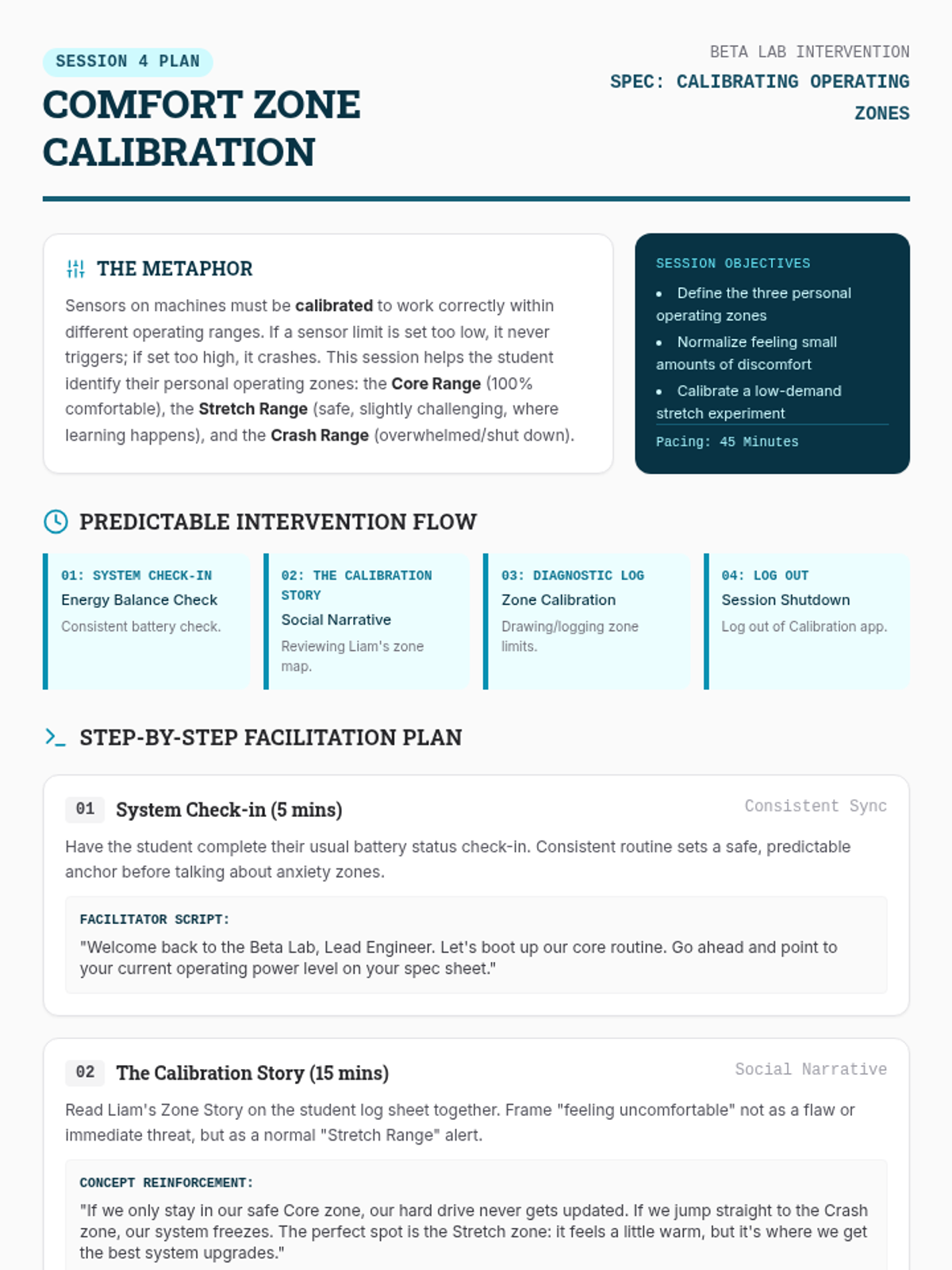
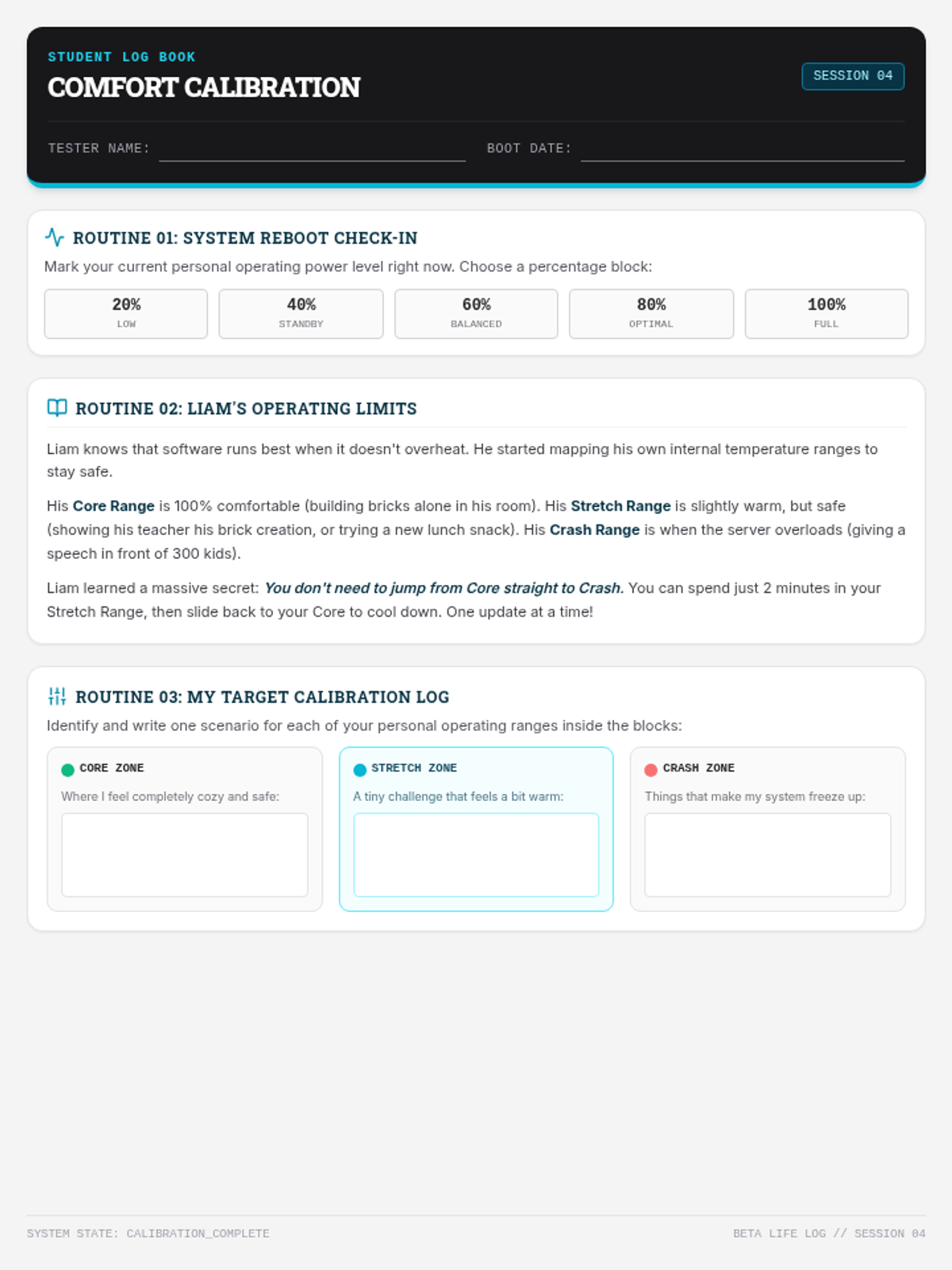
Session 4 focuses on gradually expanding the comfortable operating zone by setting up and running tiny, controlled trials in a safe environment, mapping Core, Stretch, and Storm zones.
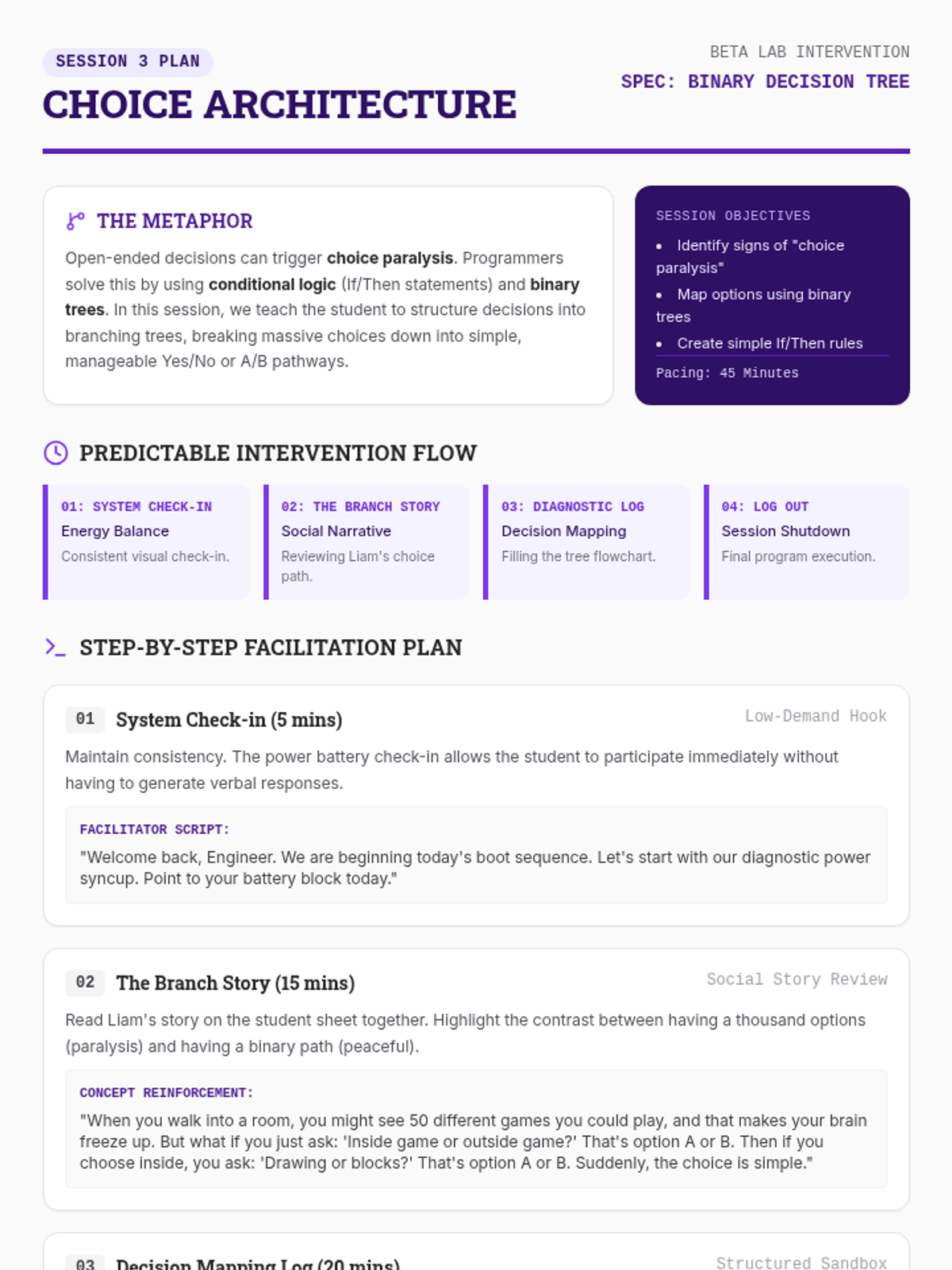
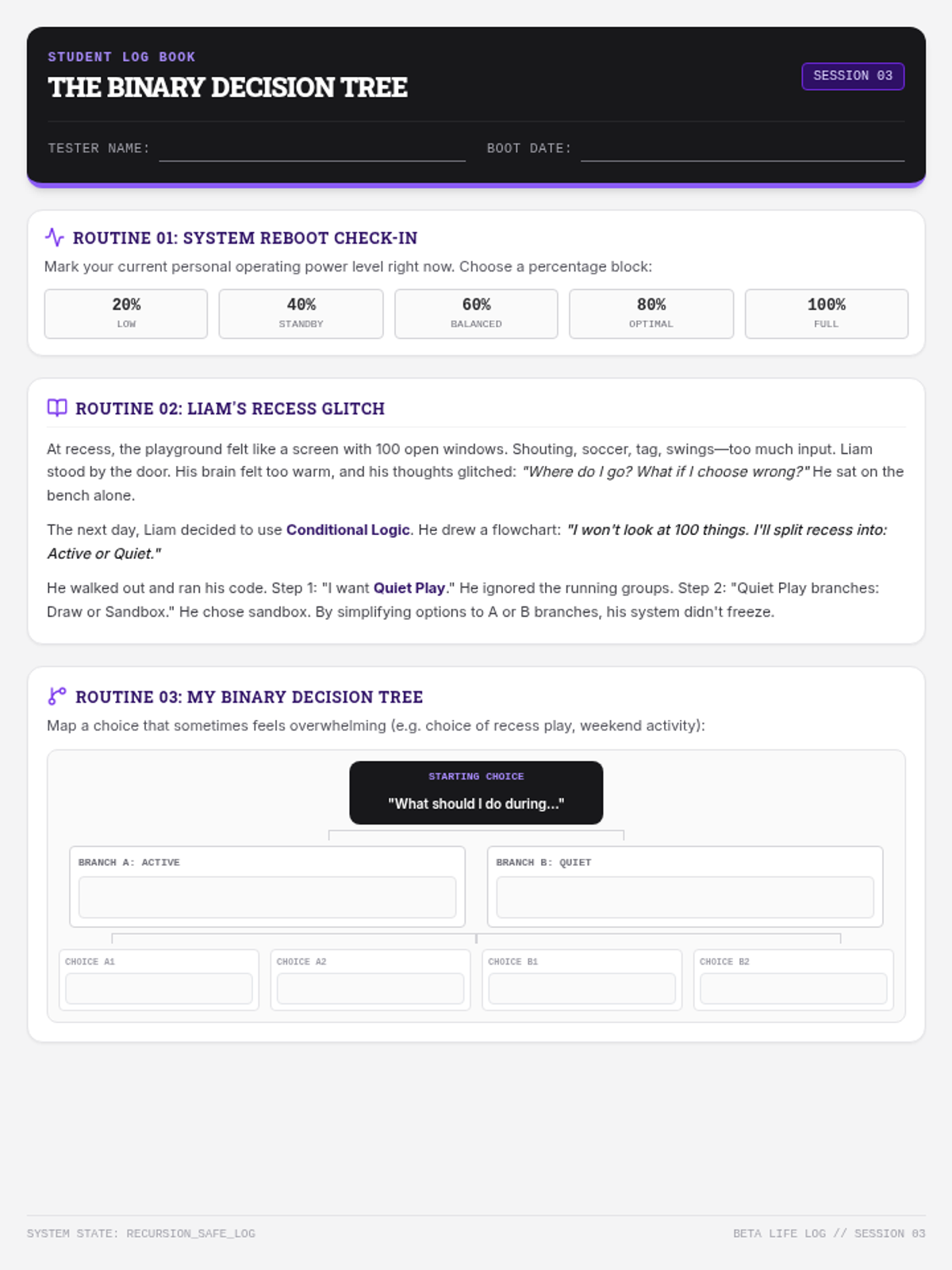
Session 3 introduces structured decision-making. The student learns to map decisions into binary "trail forks," reducing cognitive overload and paralysis.
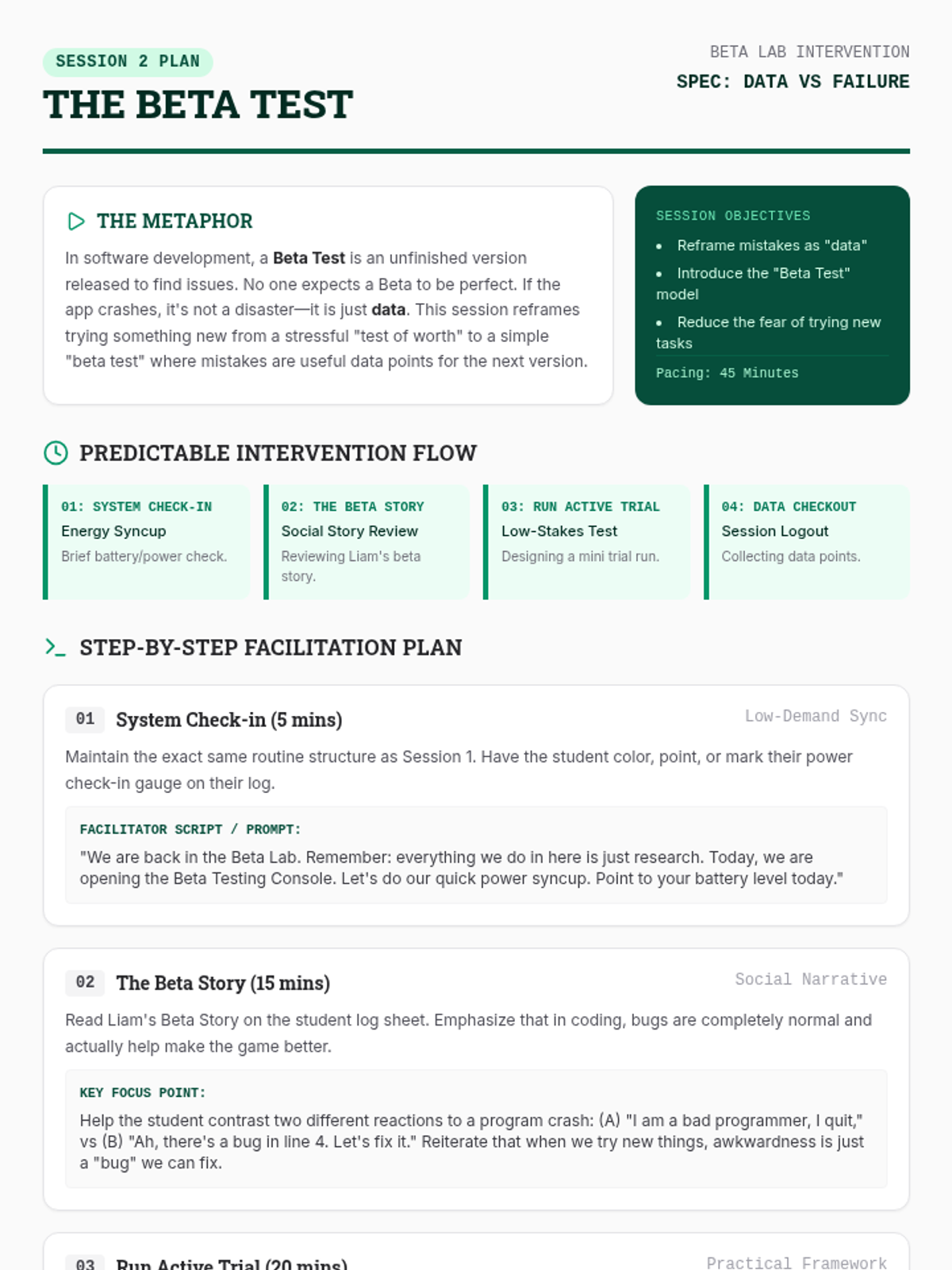
Session 2 re-frames the fear of trying new things. The student learns to treat new activities as low-stakes "scouting runs" where mistakes are just "terrain map data."
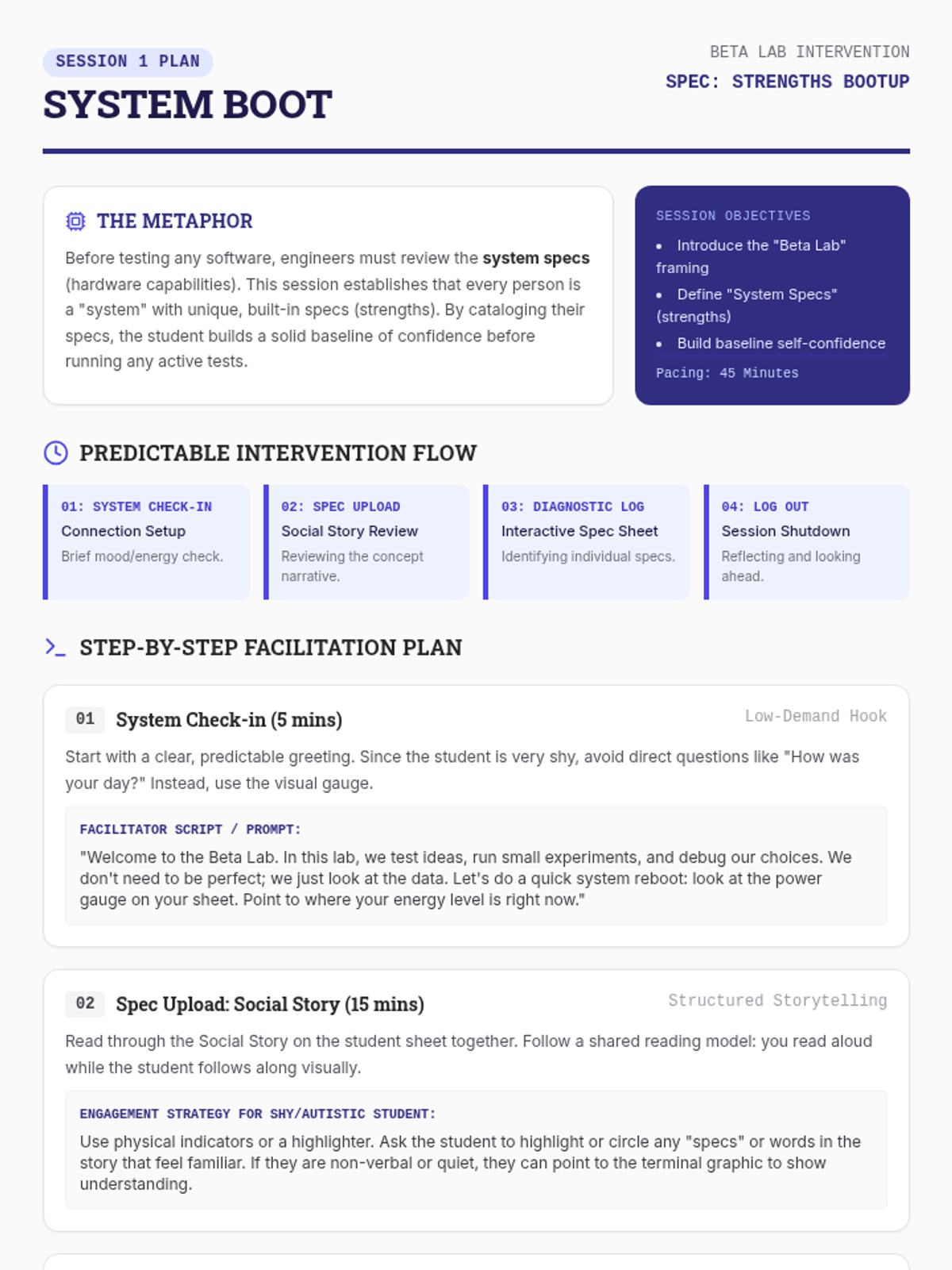
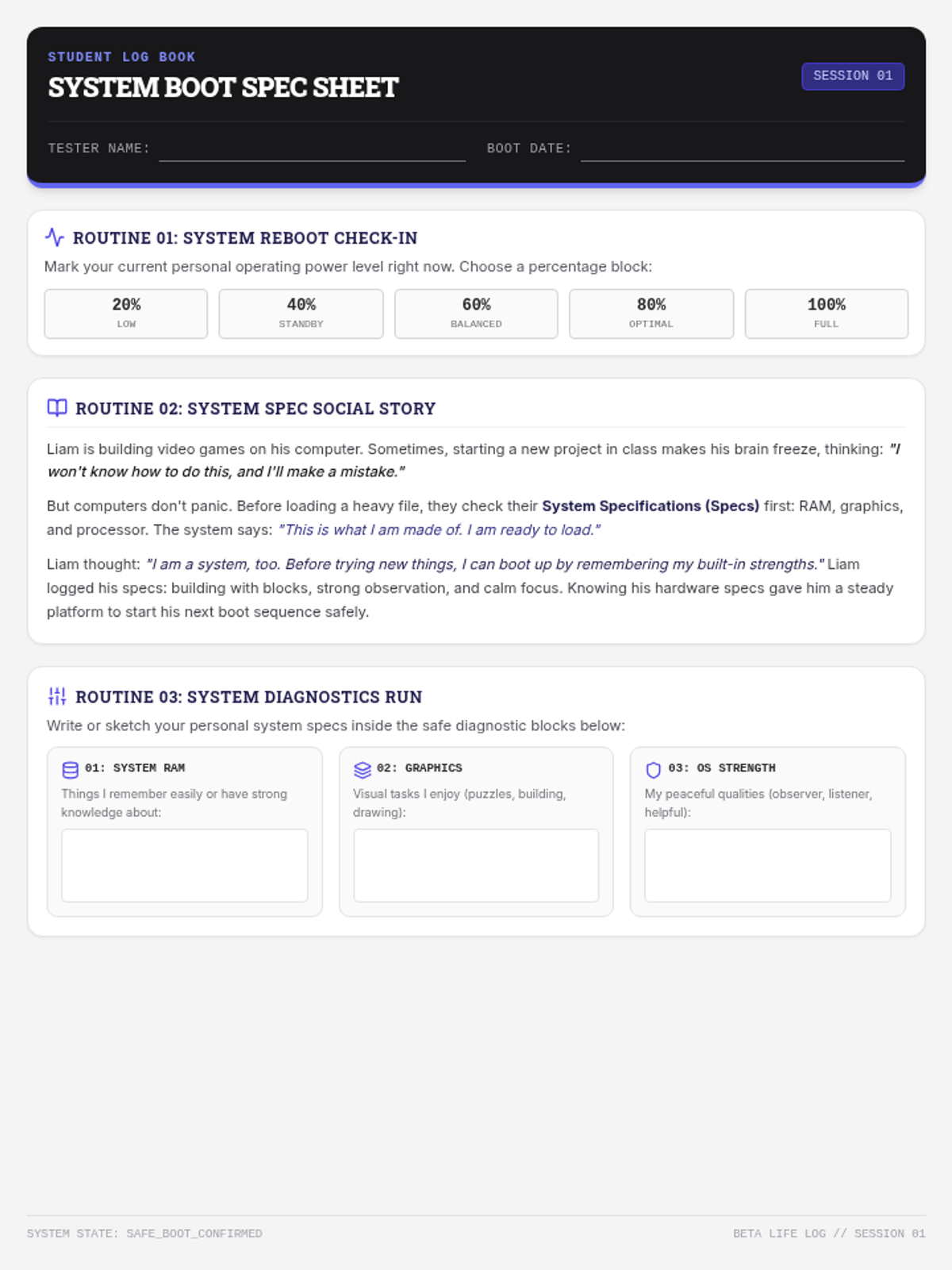
Session 1 establishes the "Field Guide" and "Wildwood Scouting" metaphor, helping the student identify their individual strengths as "field gear specs" to build baseline confidence.
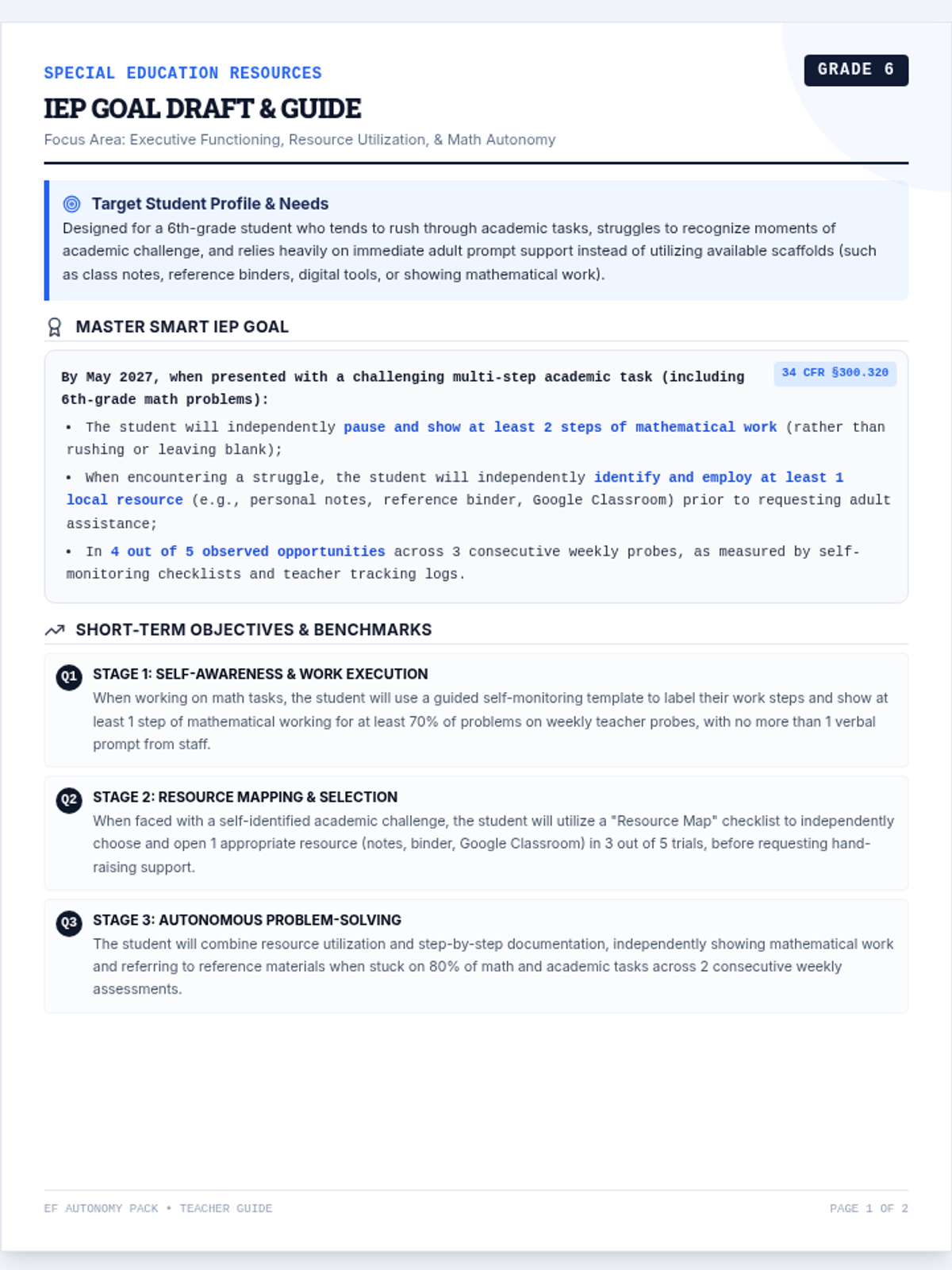
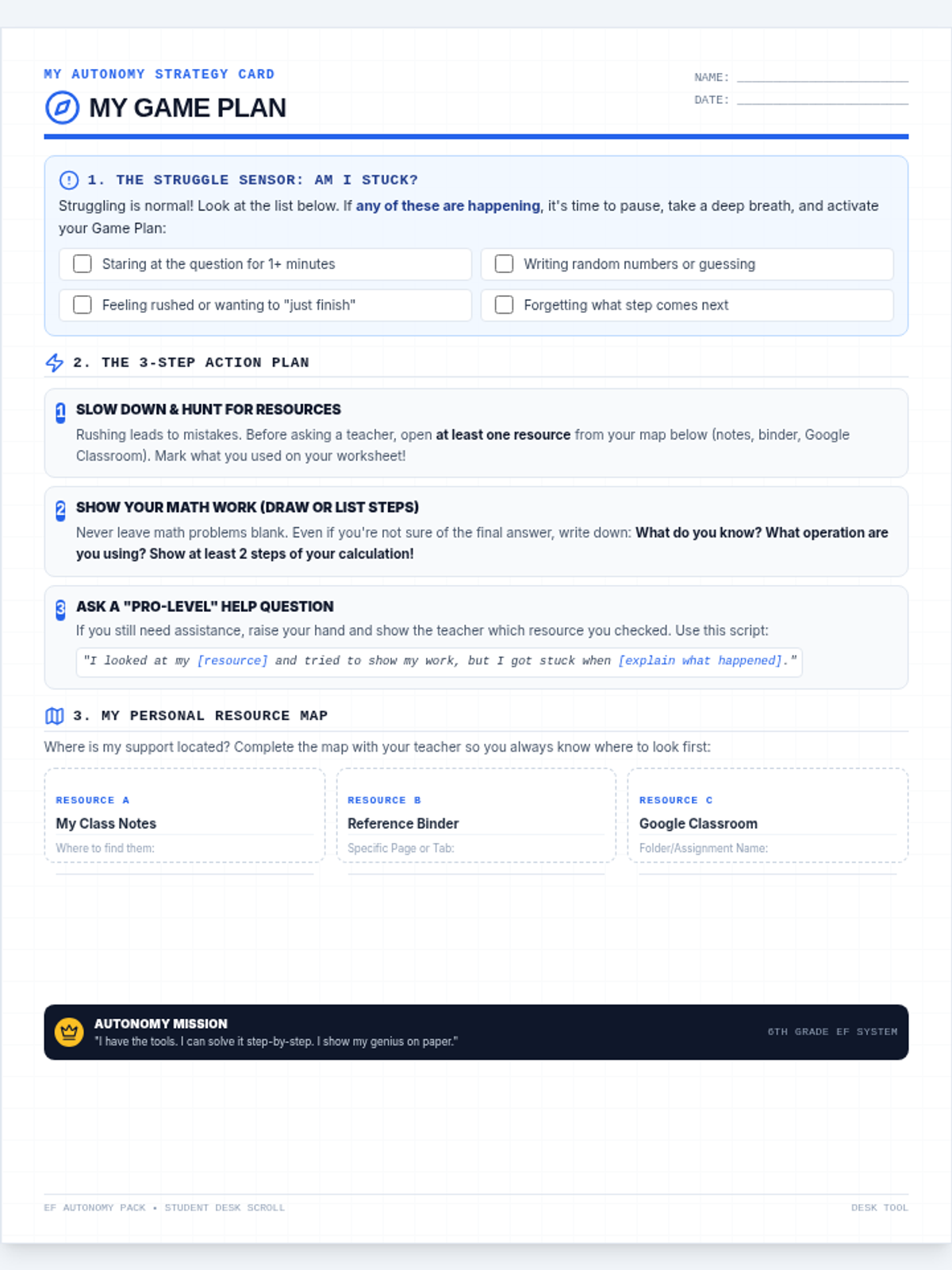
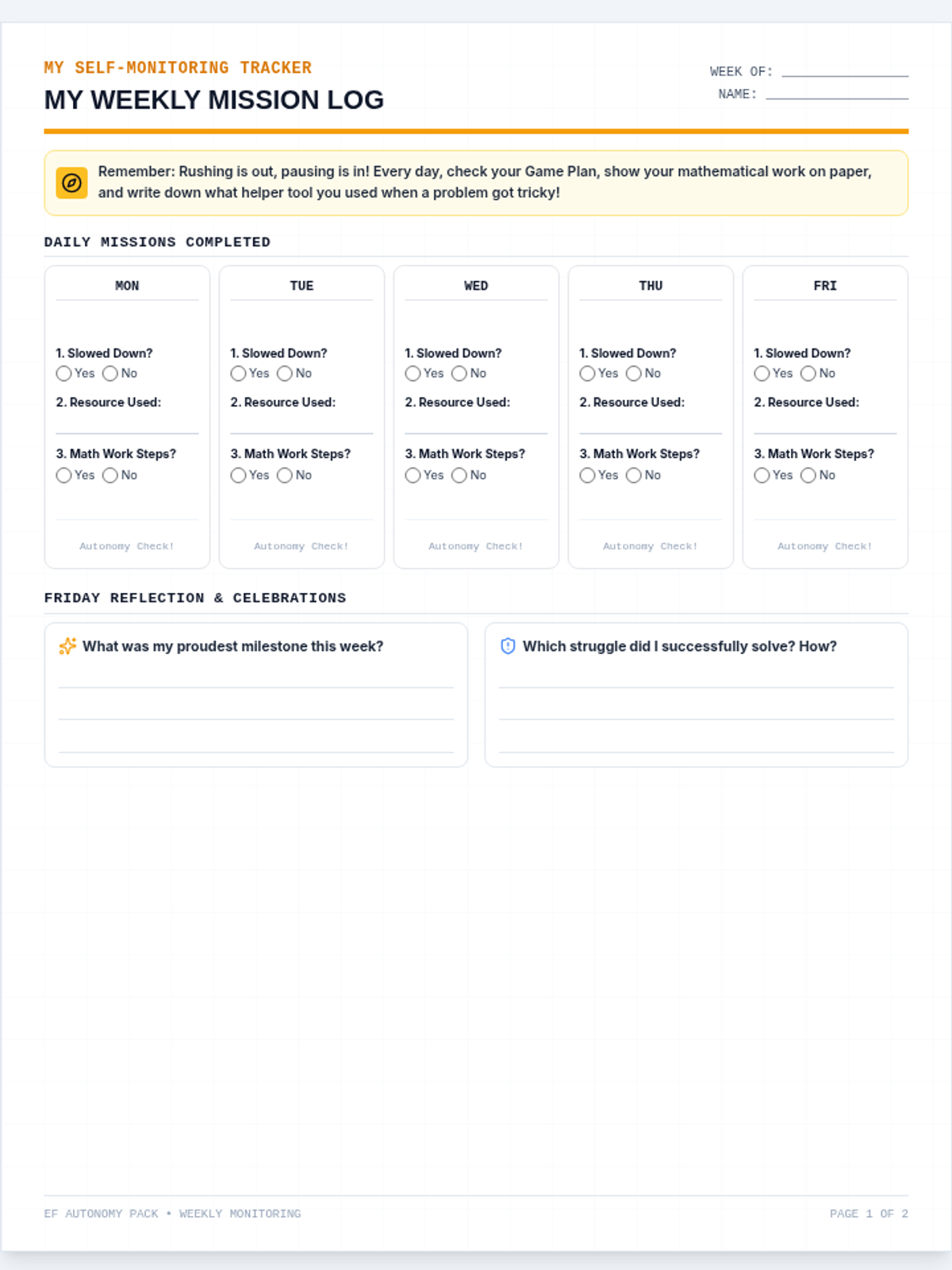
A comprehensive IEP goal draft and progress tracking system designed for a sixth-grade student to build autonomy, utilize resources, show math work, and self-monitor during struggles.
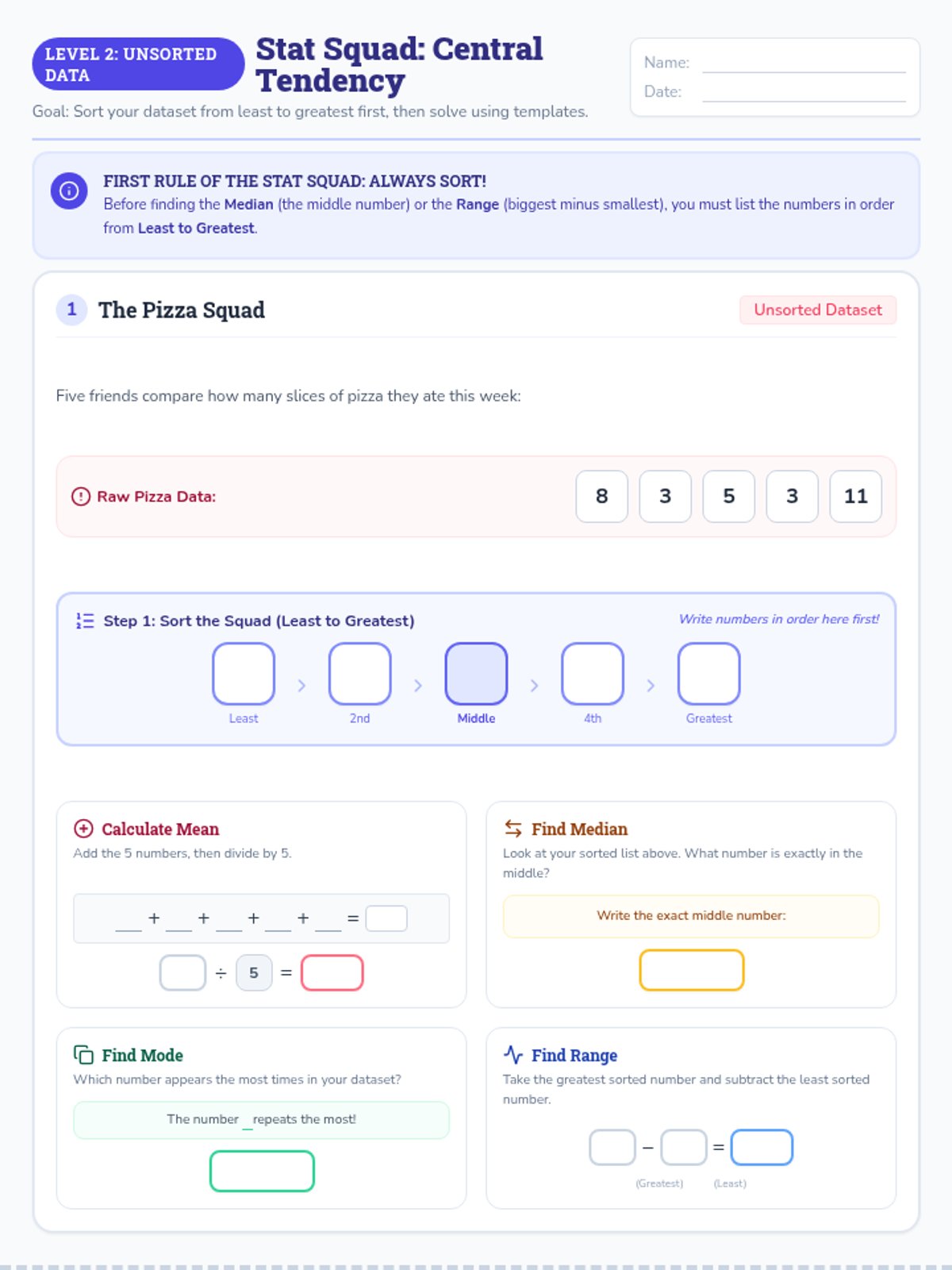
A highly scaffolded, visual lesson on mean, median, mode, and range tailored specifically for students with IEPs and learning differences. Features structured fill-in-the-blank formula templates, graphic organizers, and leveled worksheets.
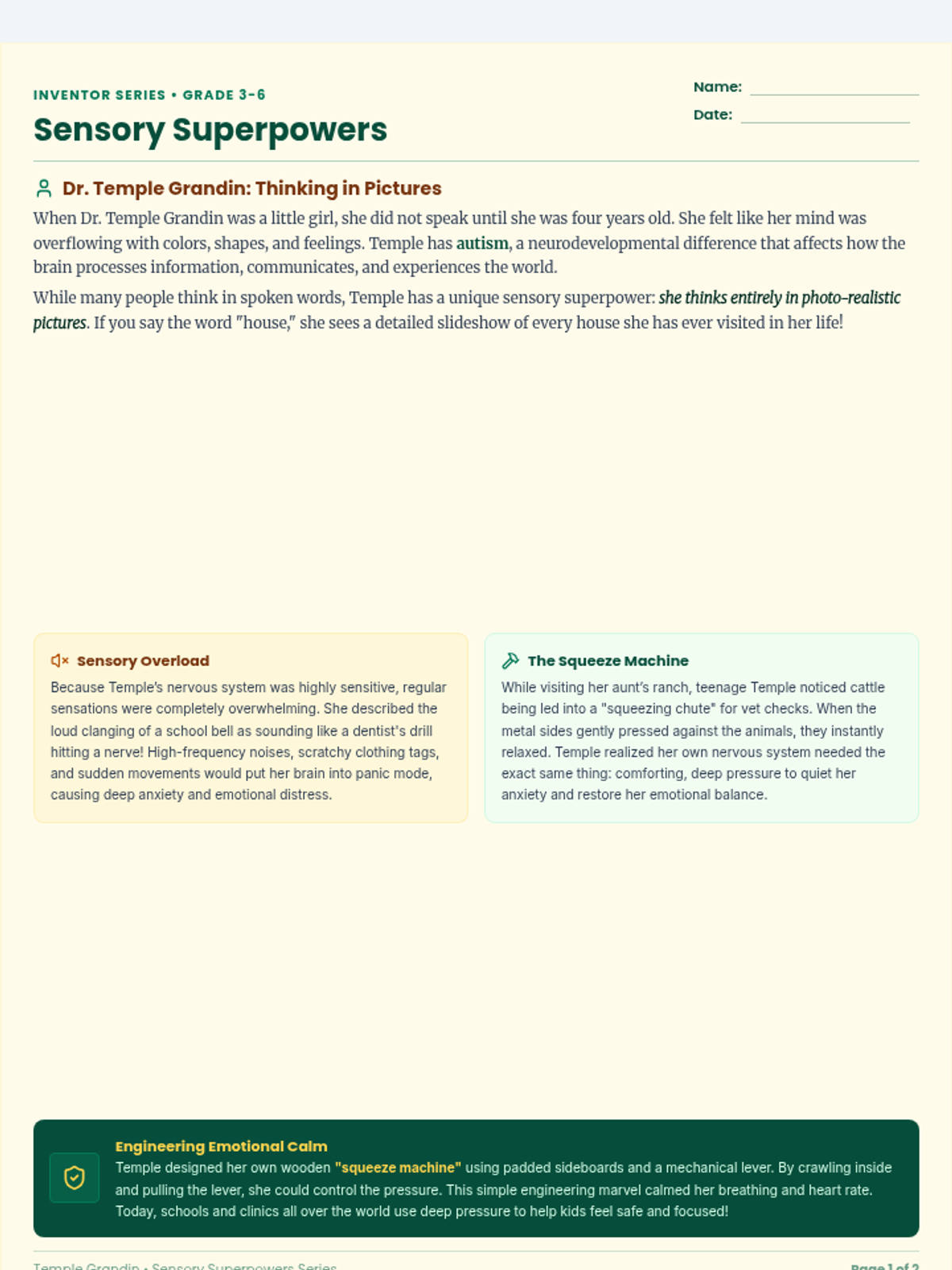
An inspiring lesson exploring the life of Dr. Temple Grandin, her experiences with autism, and how she used her unique sensory perspective and engineering skills to design emotional regulation tools like the 'squeeze machine'. Students read a biography, explore real-world examples of sensory regulation, and reflect on their own sensory needs.
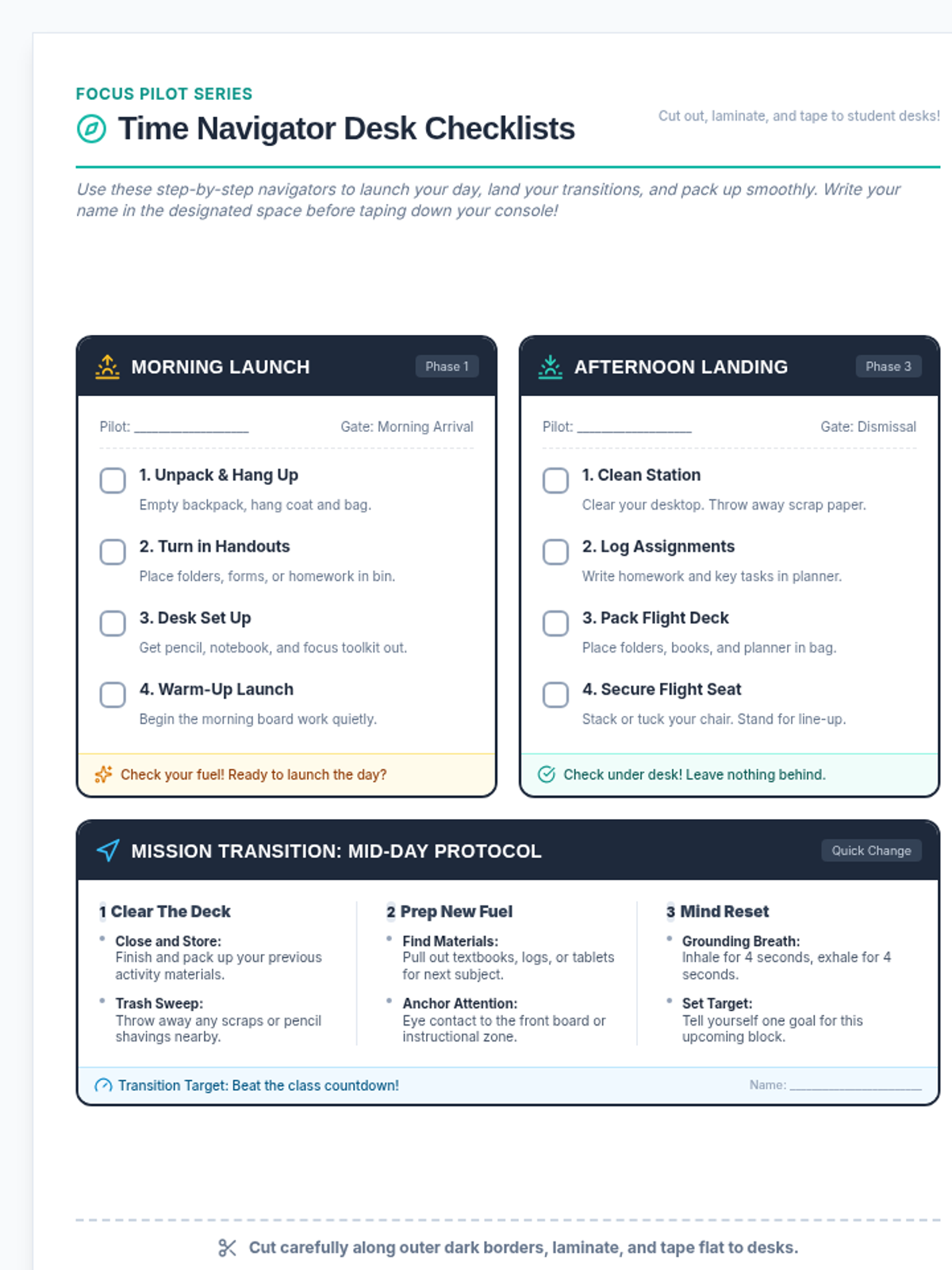
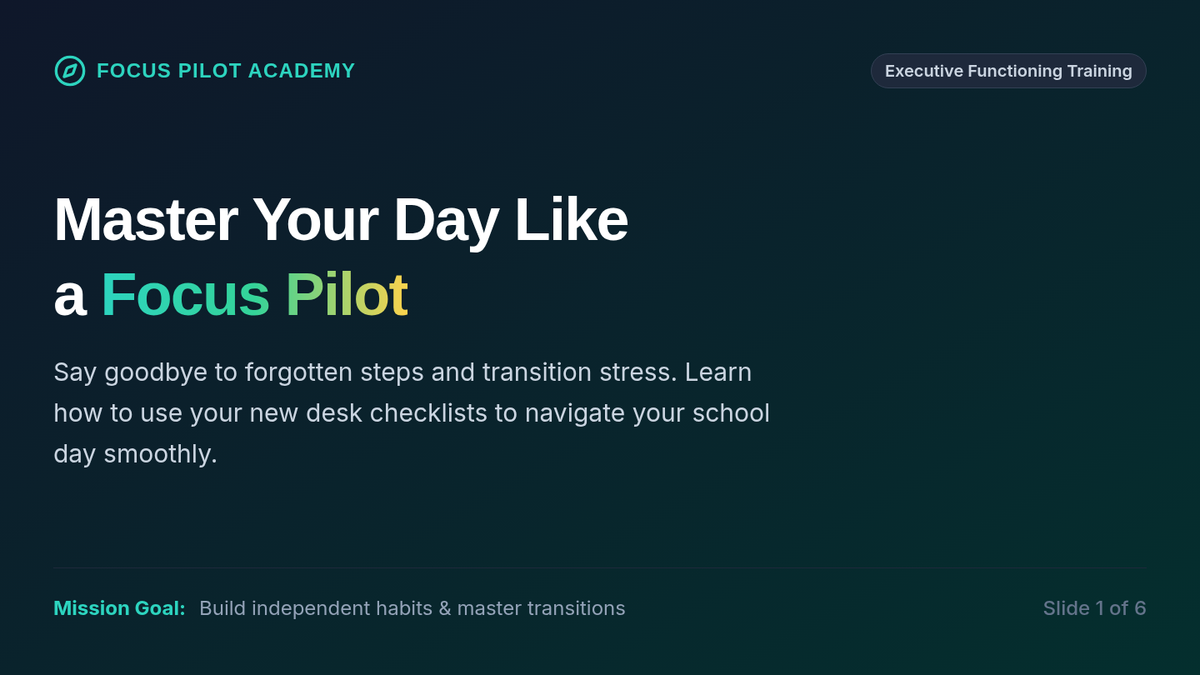
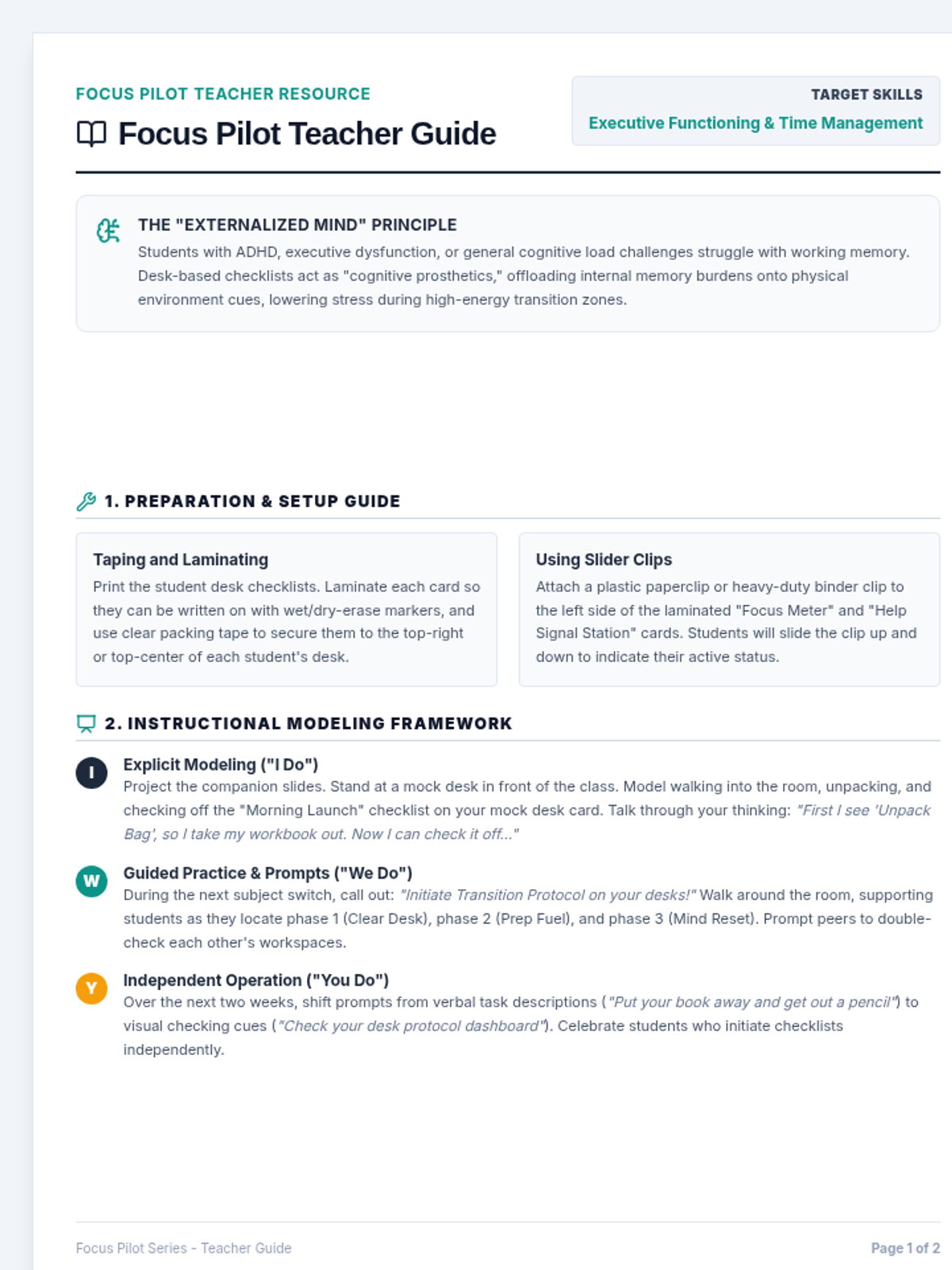
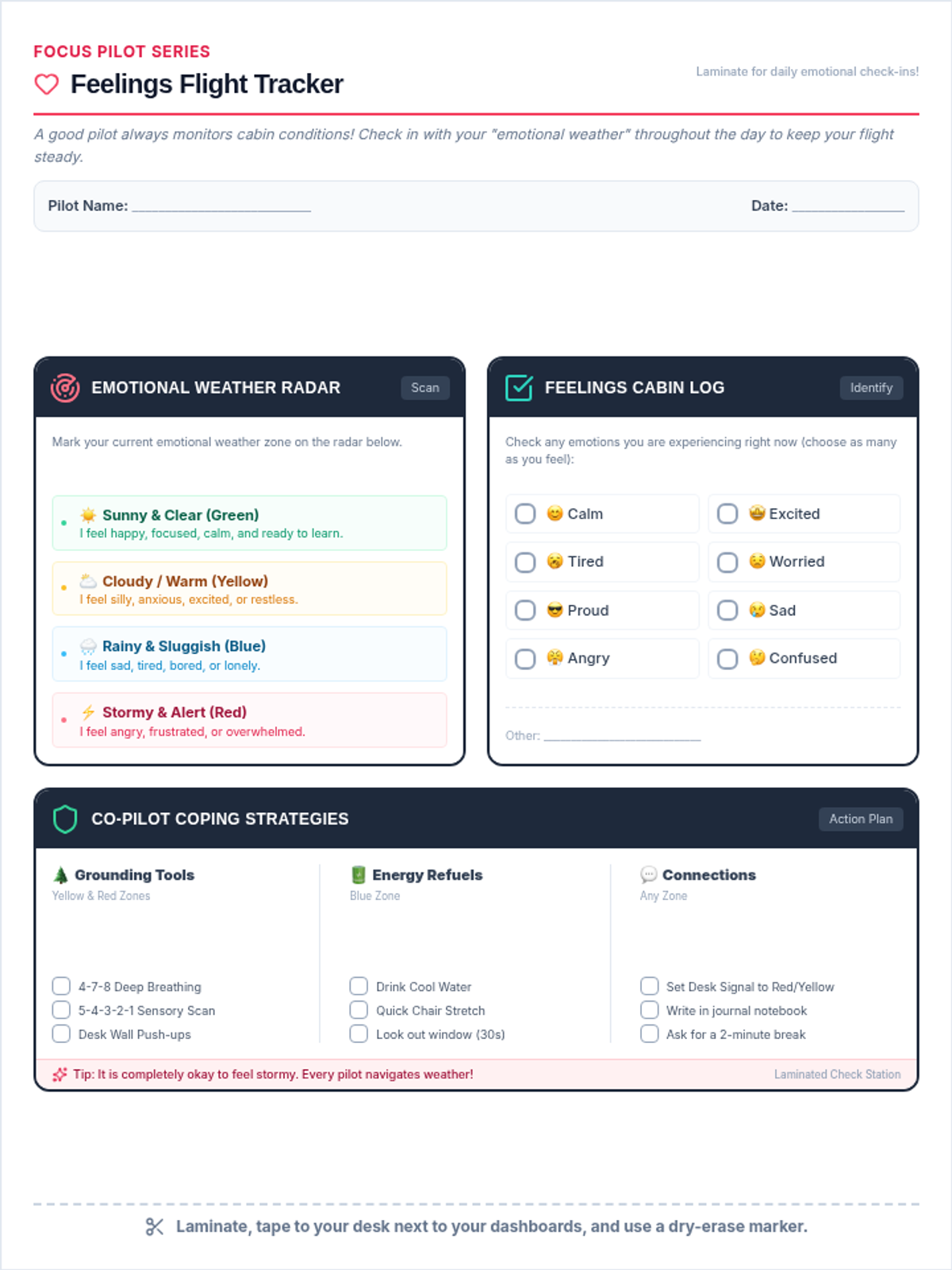
A collection of executive functioning resources designed to help students master school-day transitions, arrival, and dismissal routines using visual desk checklists, a modeled presentation, and a comprehensive teacher guide.
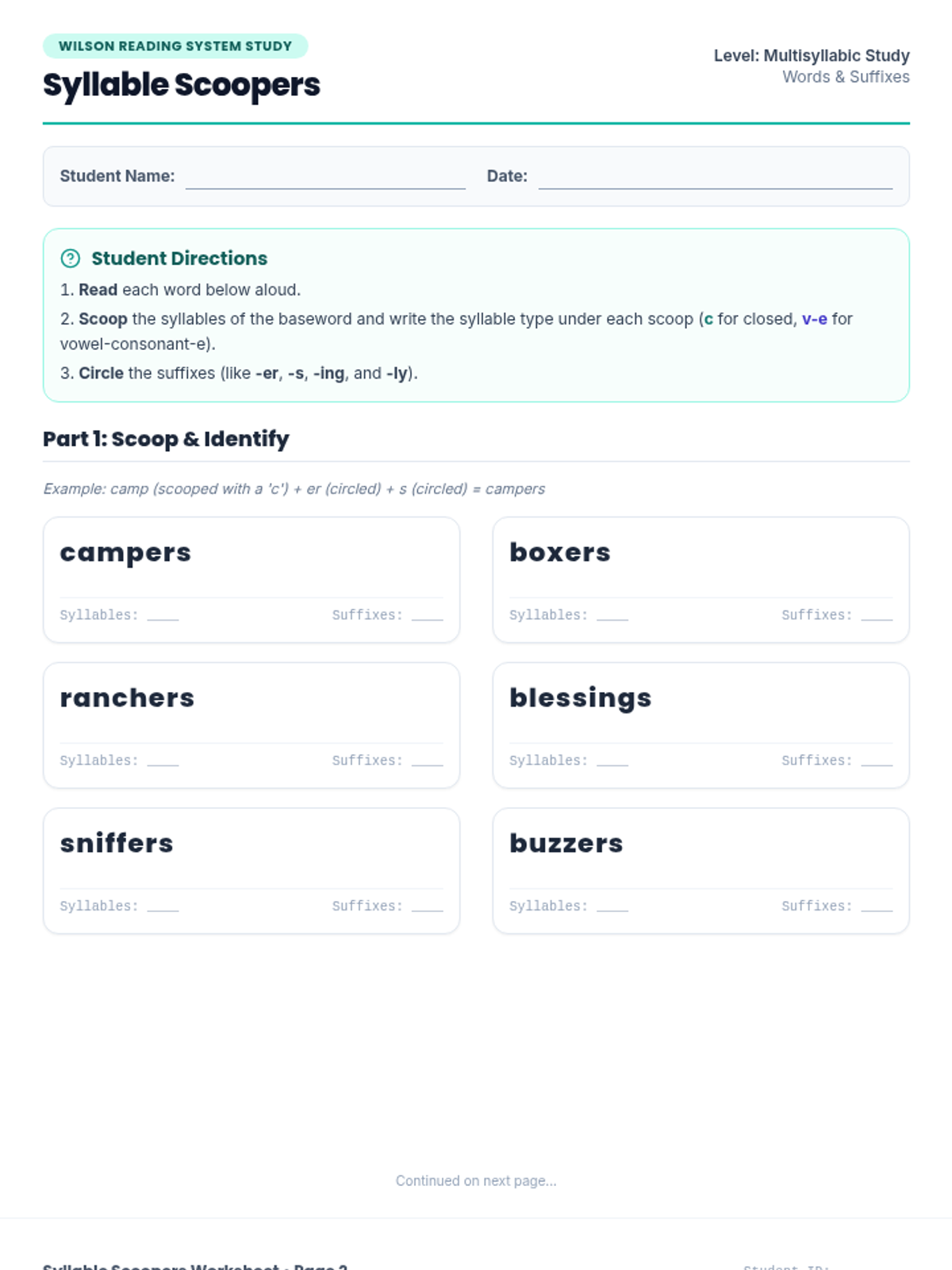
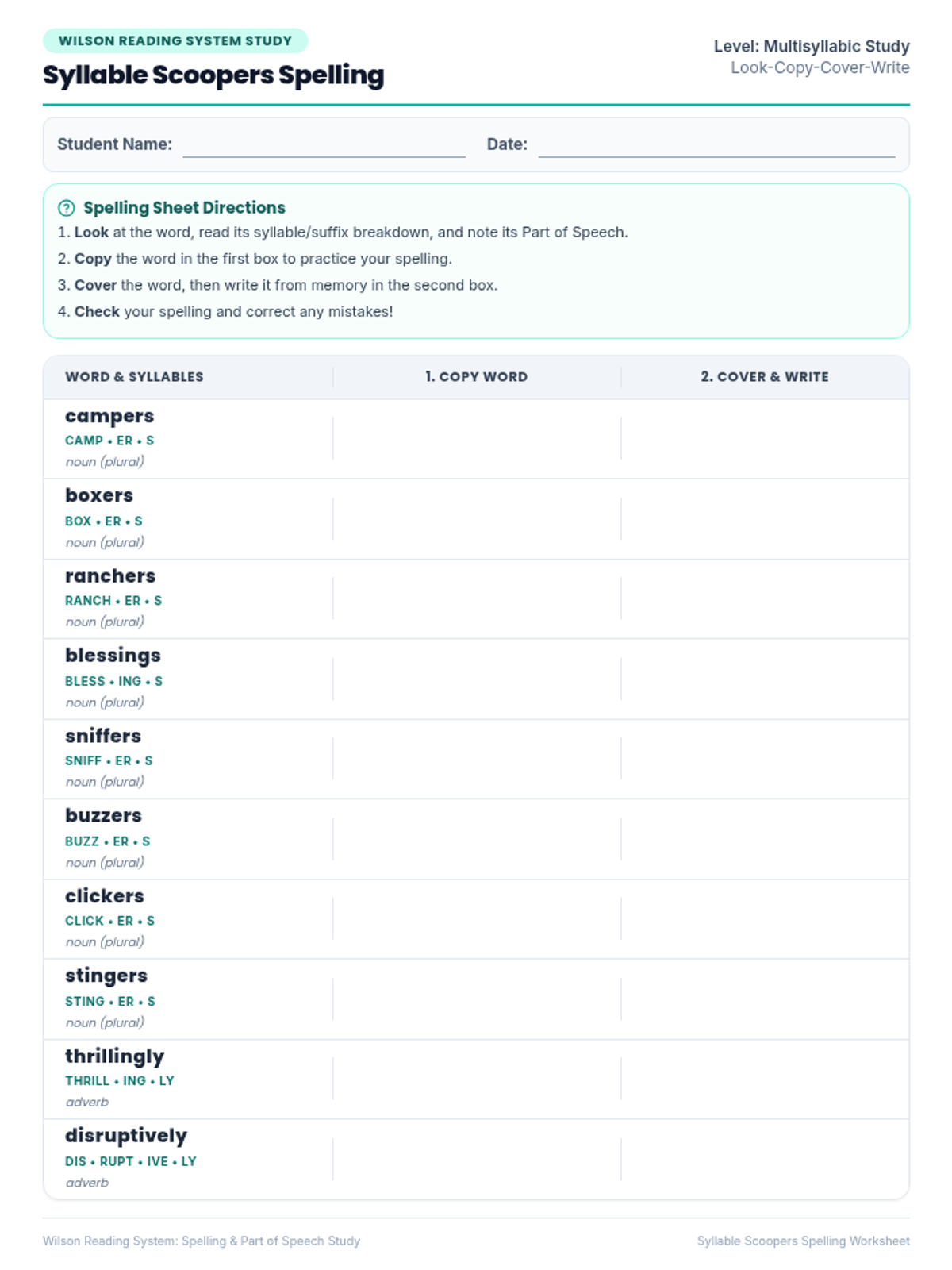
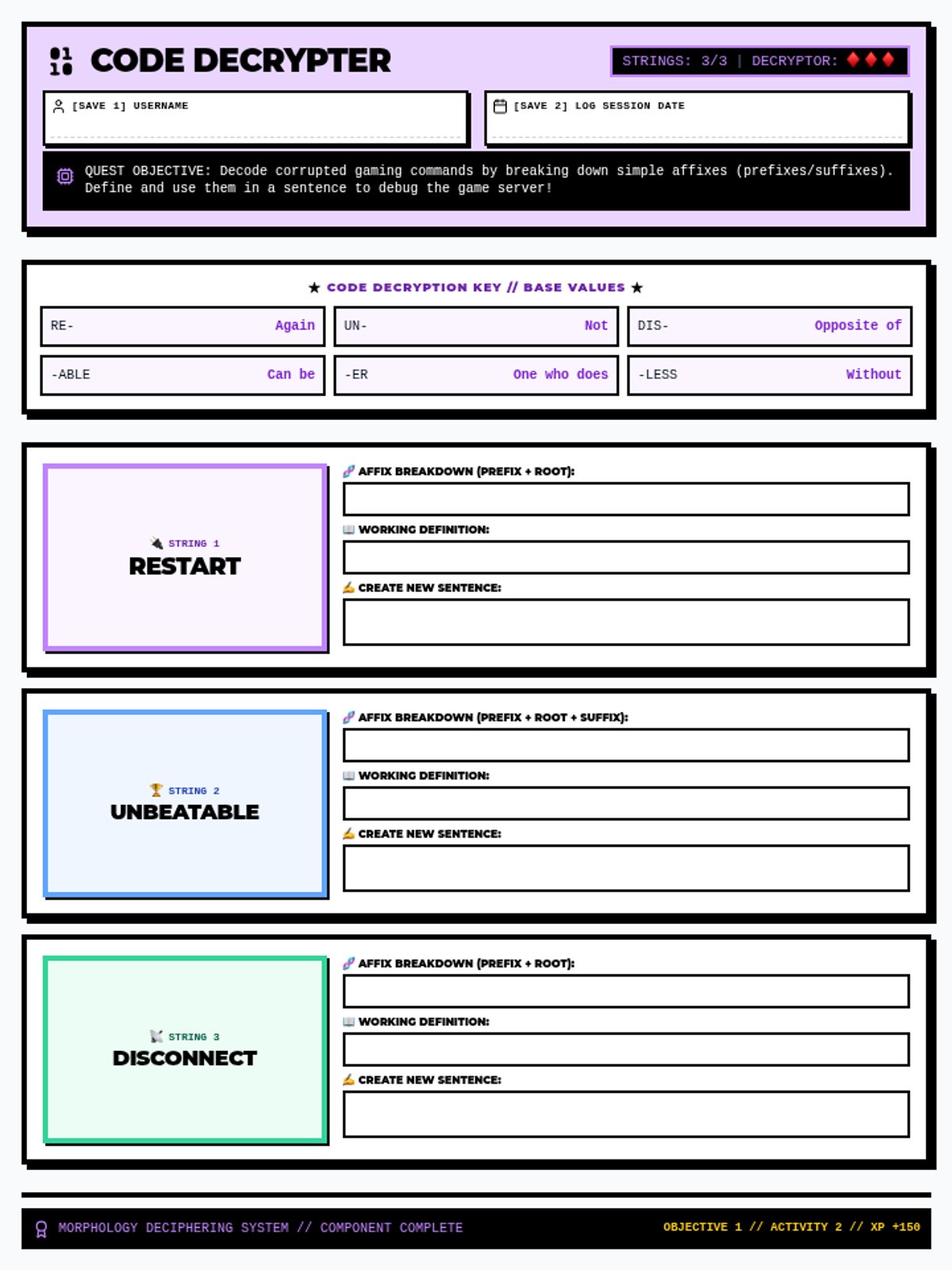
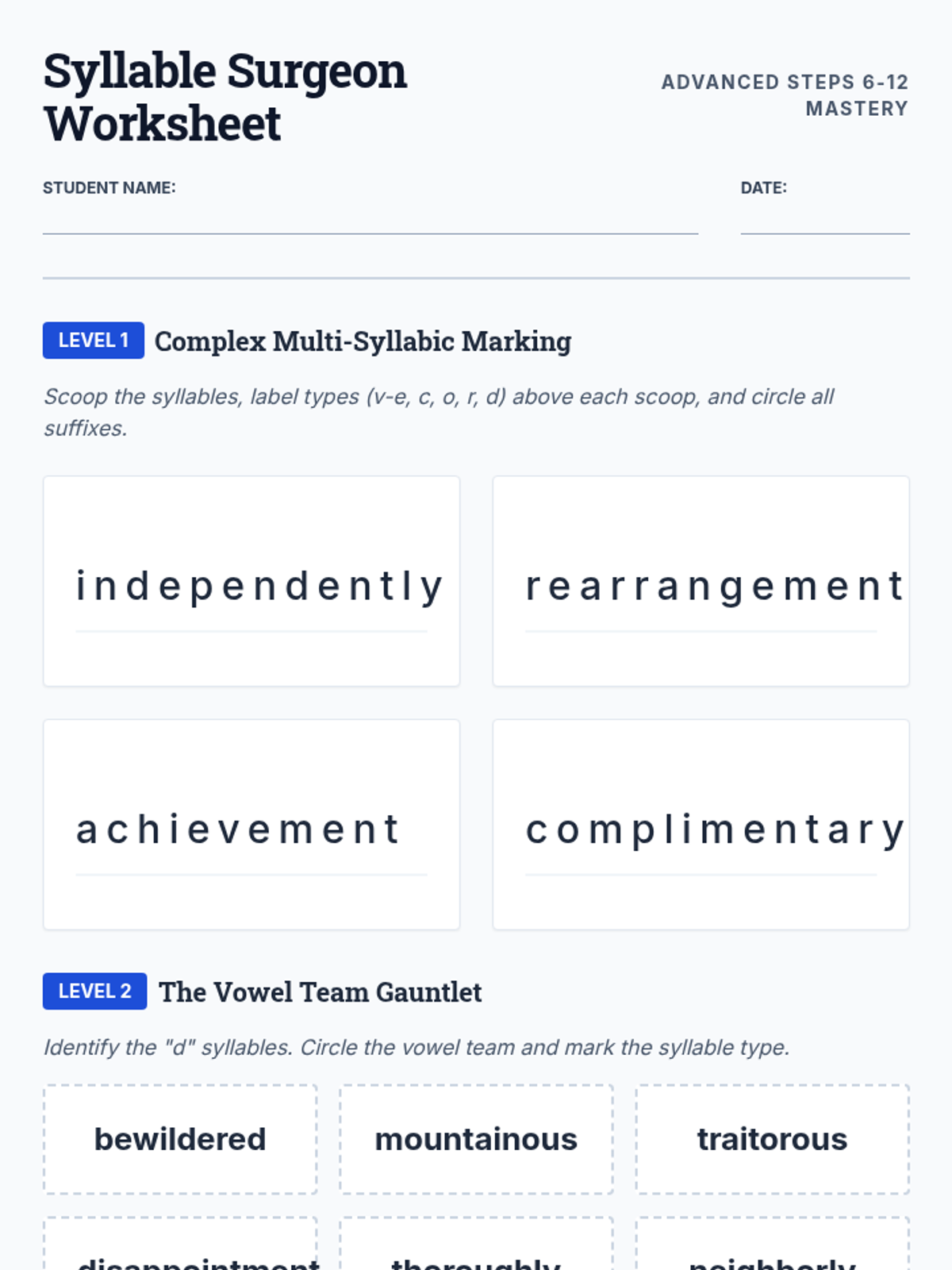
A comprehensive Wilson-aligned study of multisyllabic words and suffixes. Students practice syllable division using visual scooping and explore word meanings.
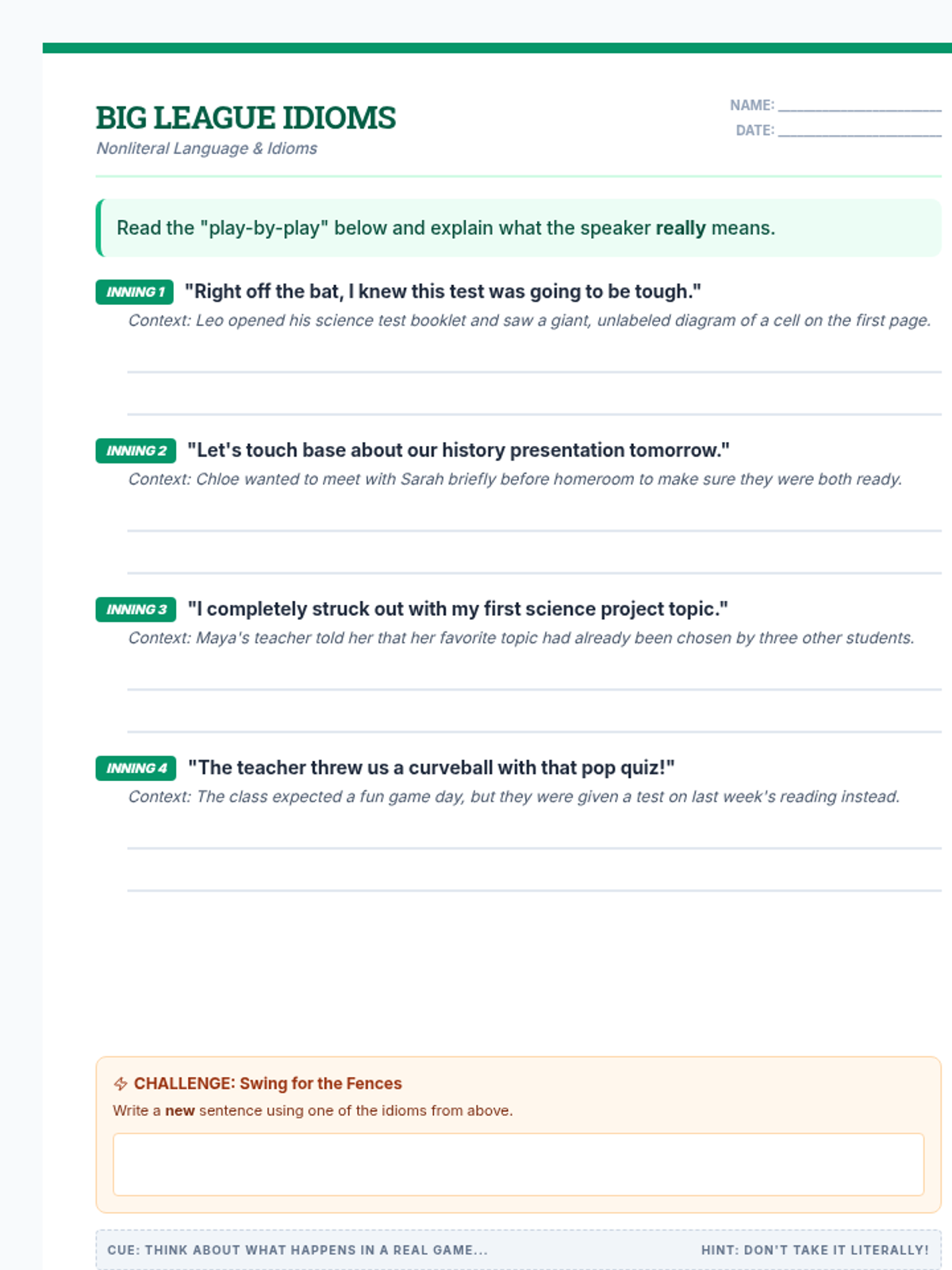
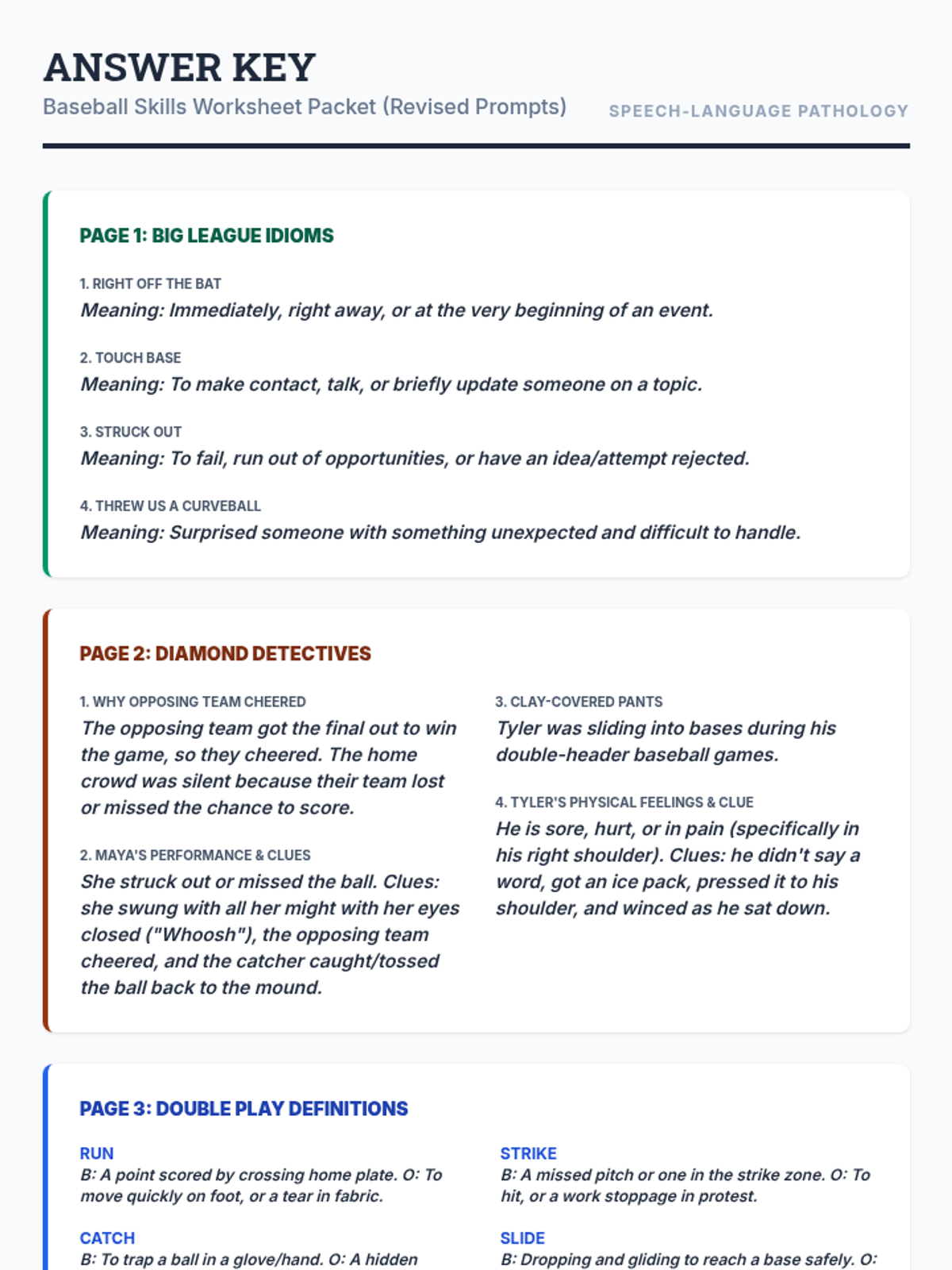
A 5-page baseball-themed worksheet packet and answer key designed for a 6th-grade student to practice nonliteral language, inference, multiple meaning words, and identifying communication breakdowns.
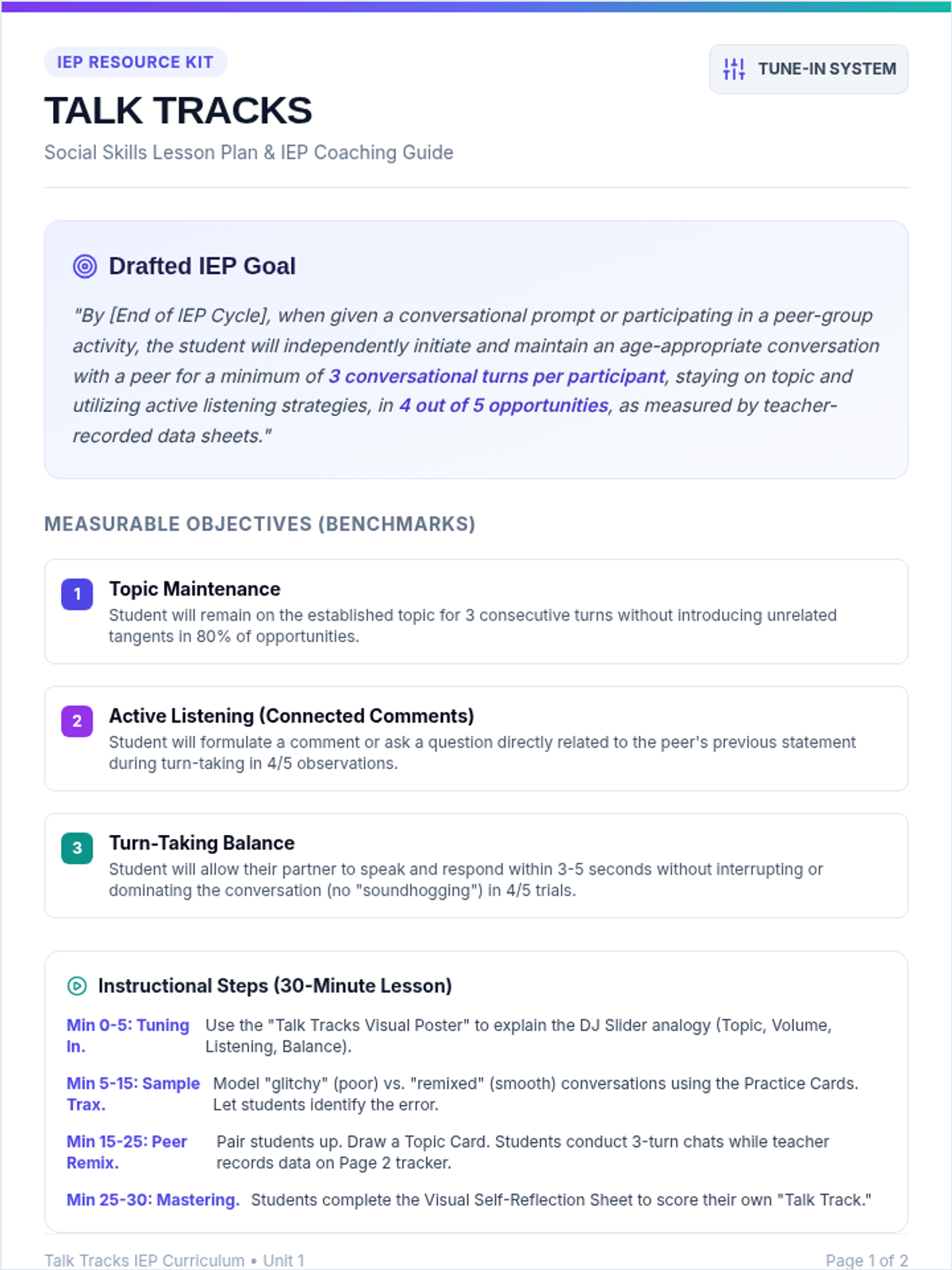
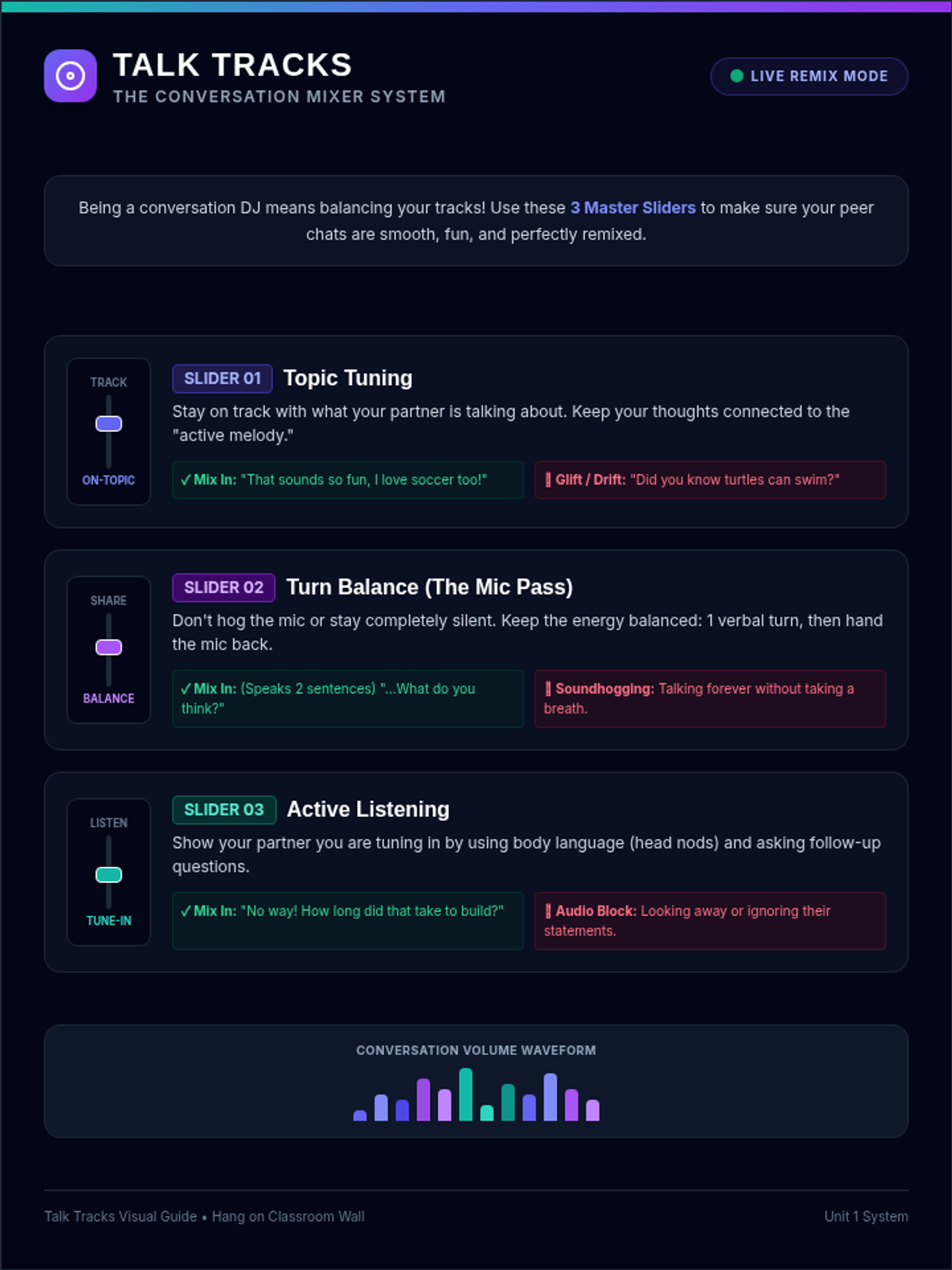
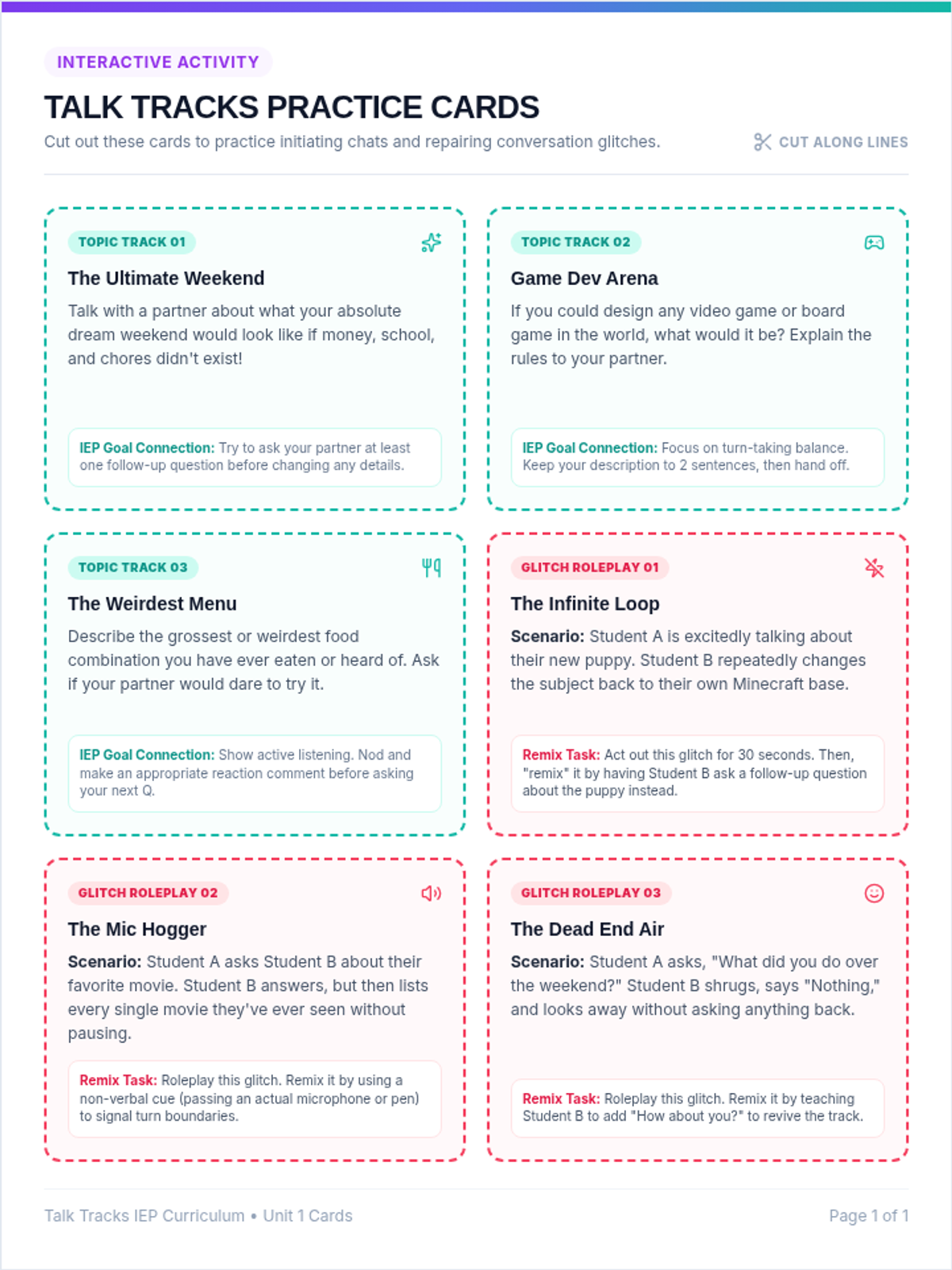
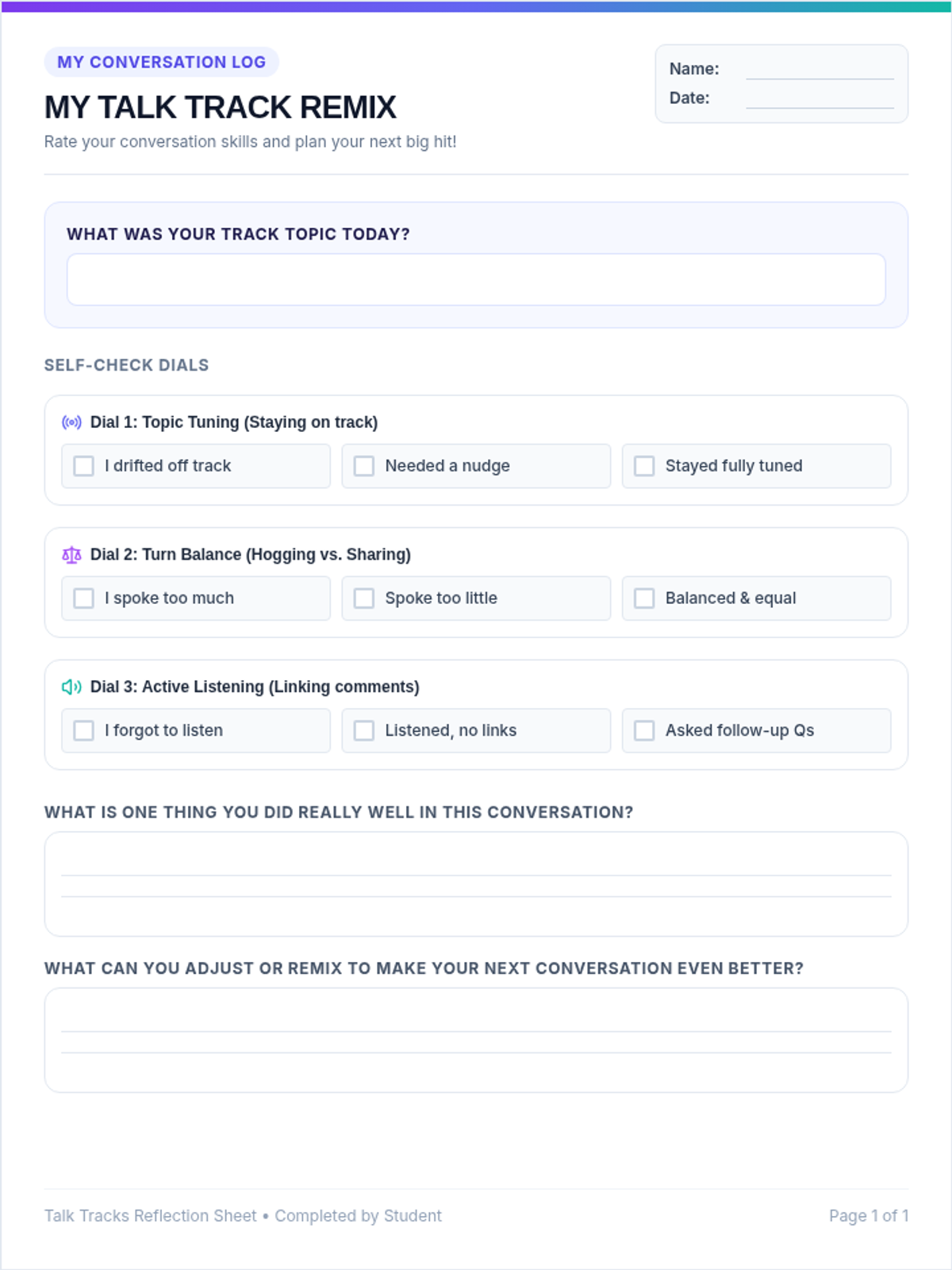
A comprehensive social skills lesson package designed to teach, practice, and track progress on conversational turn-taking, topic maintenance, and active listening for elementary and middle school students with social communication IEP goals.
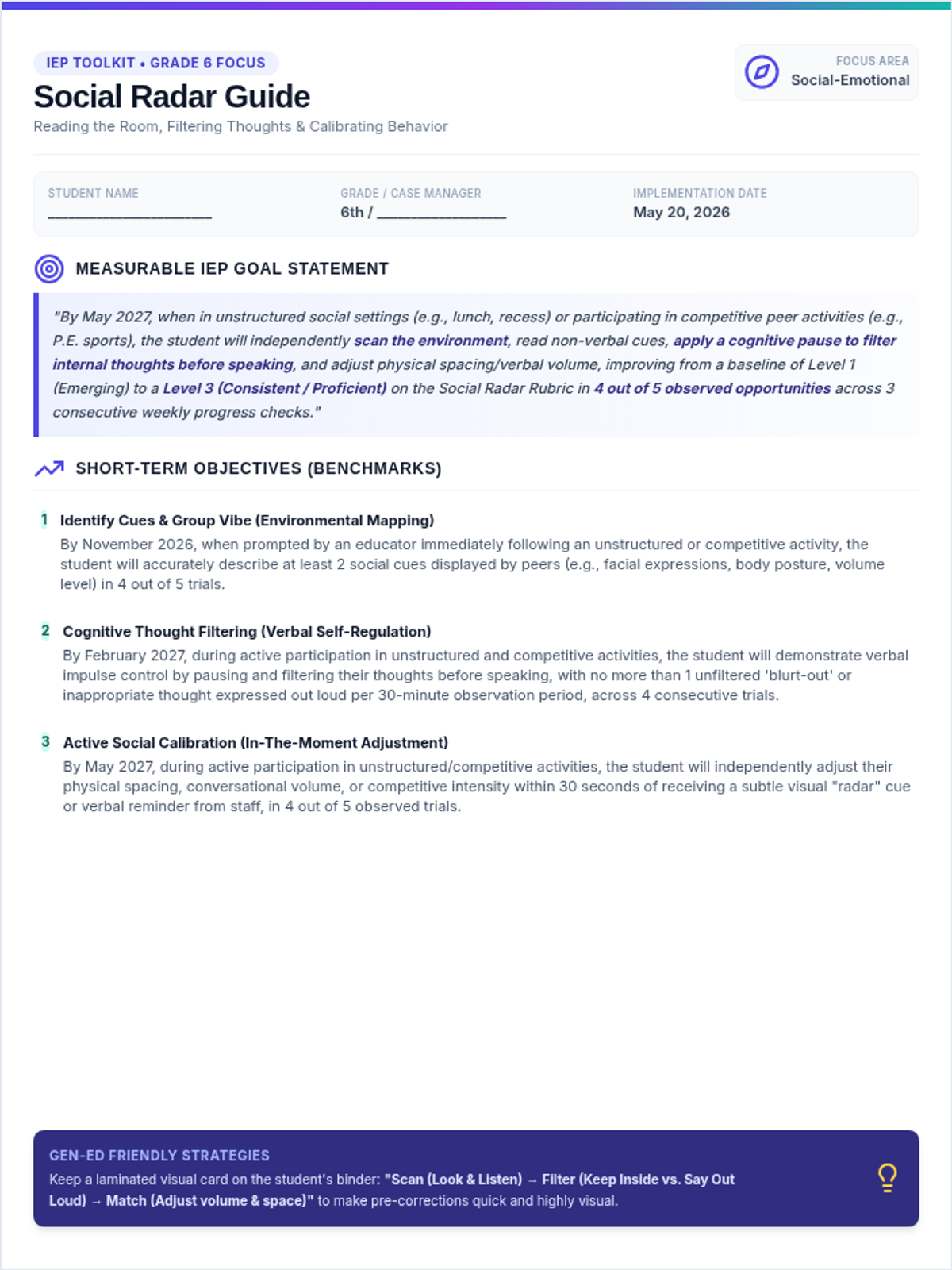
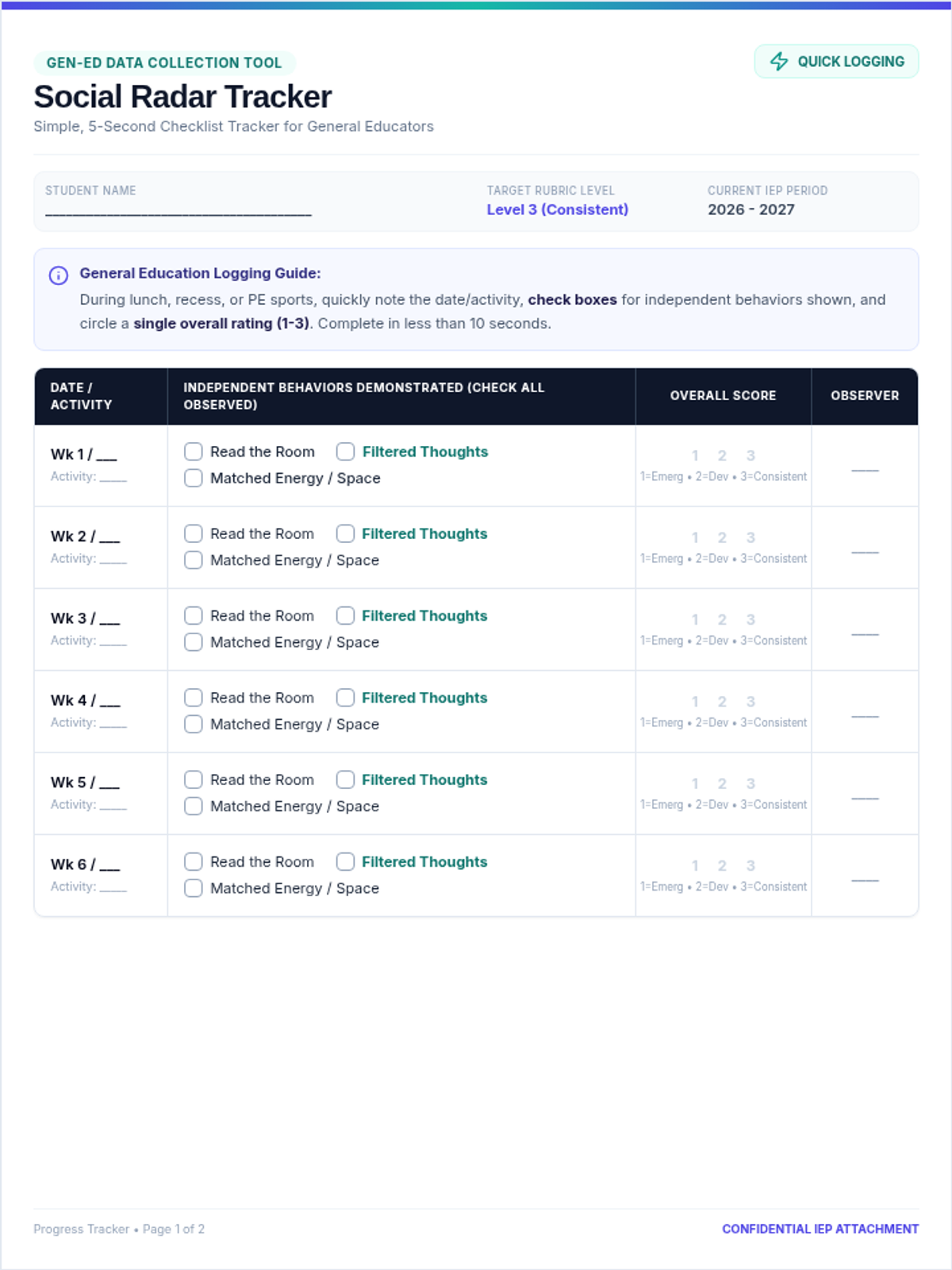
An IEP toolkit featuring a measurable social-emotional goal, a concrete evaluation rubric, and weekly progress monitoring trackers specifically designed to help a 6th-grade student navigate unstructured social settings and competitive activities.
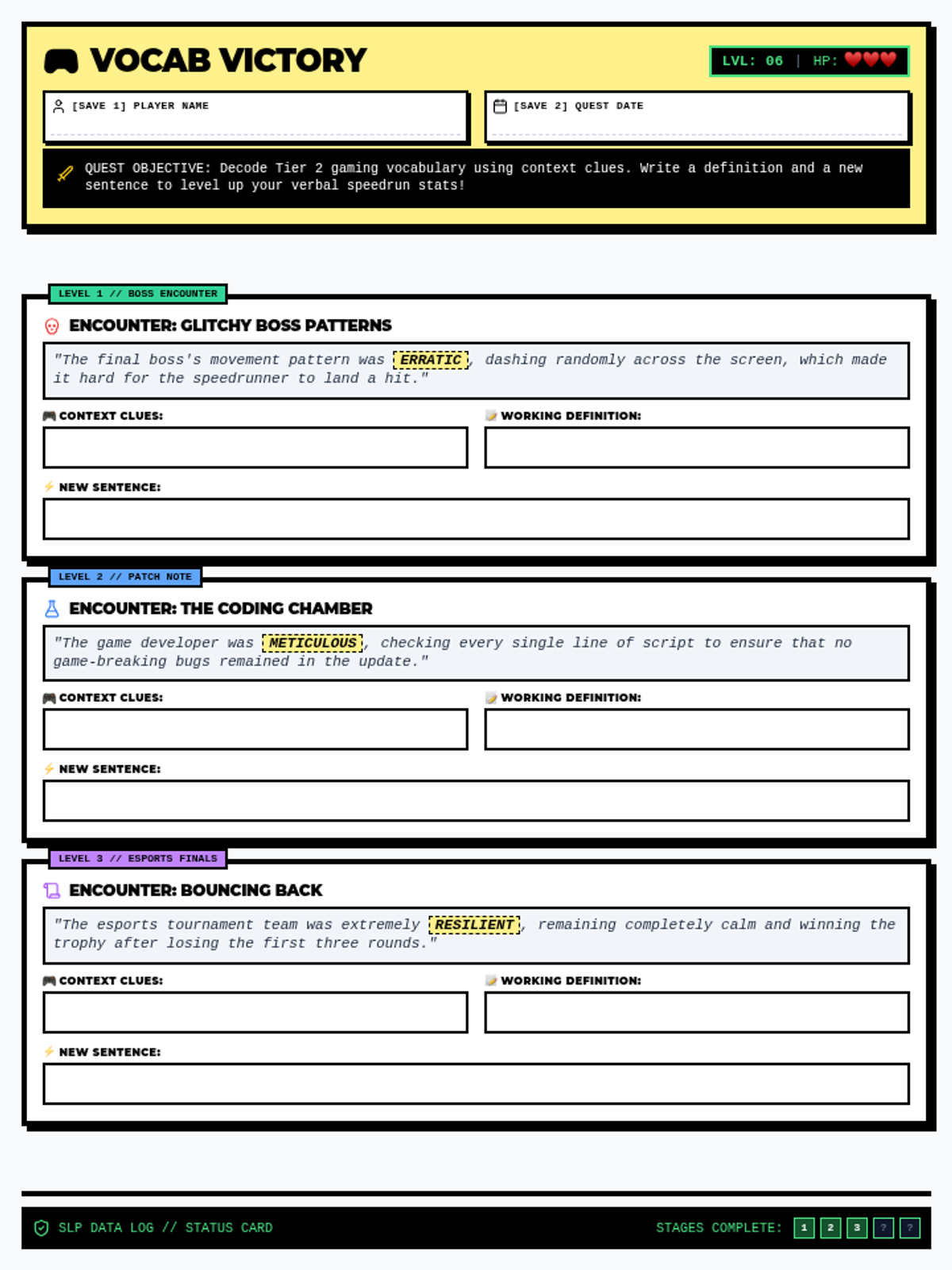
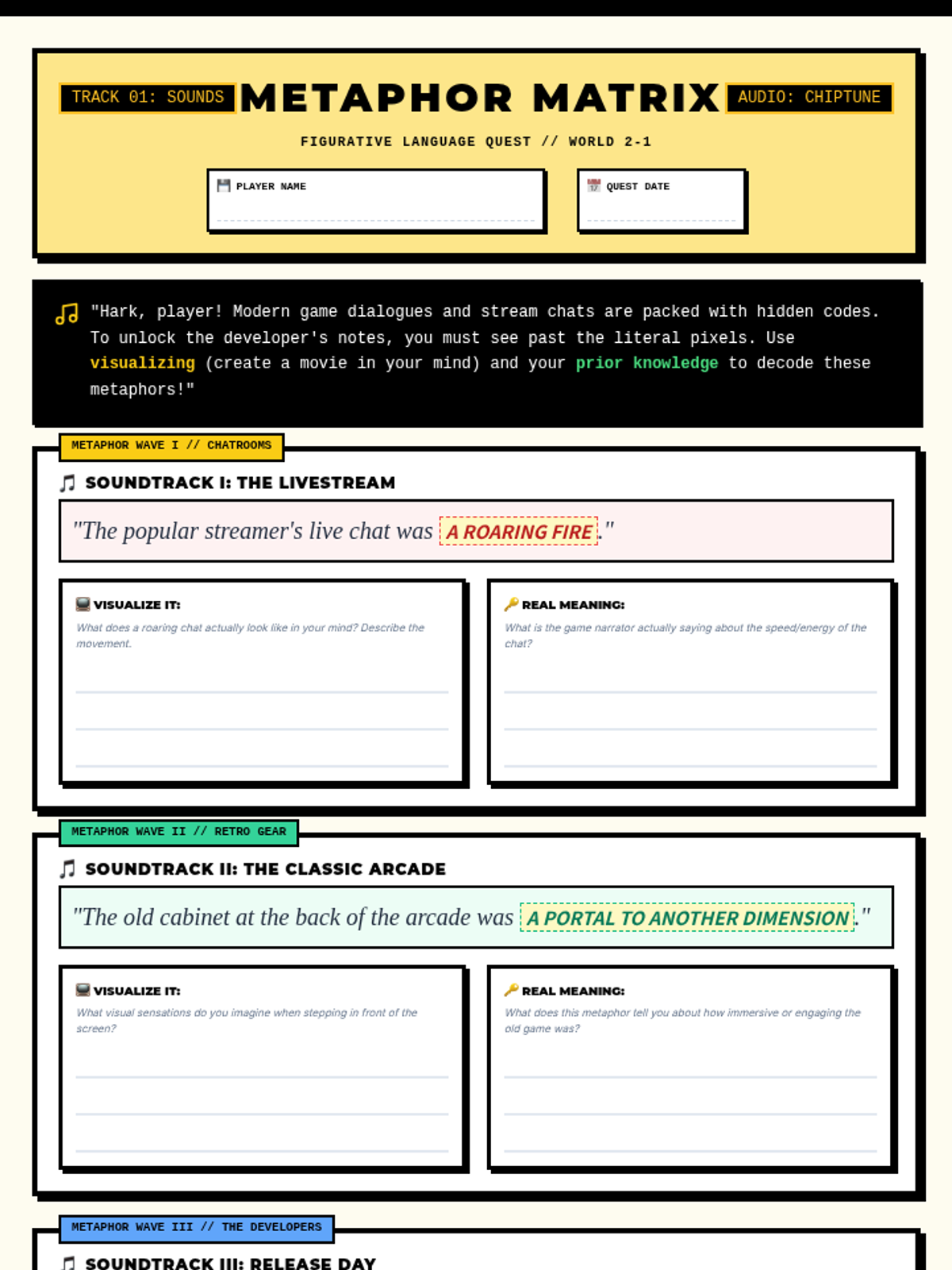
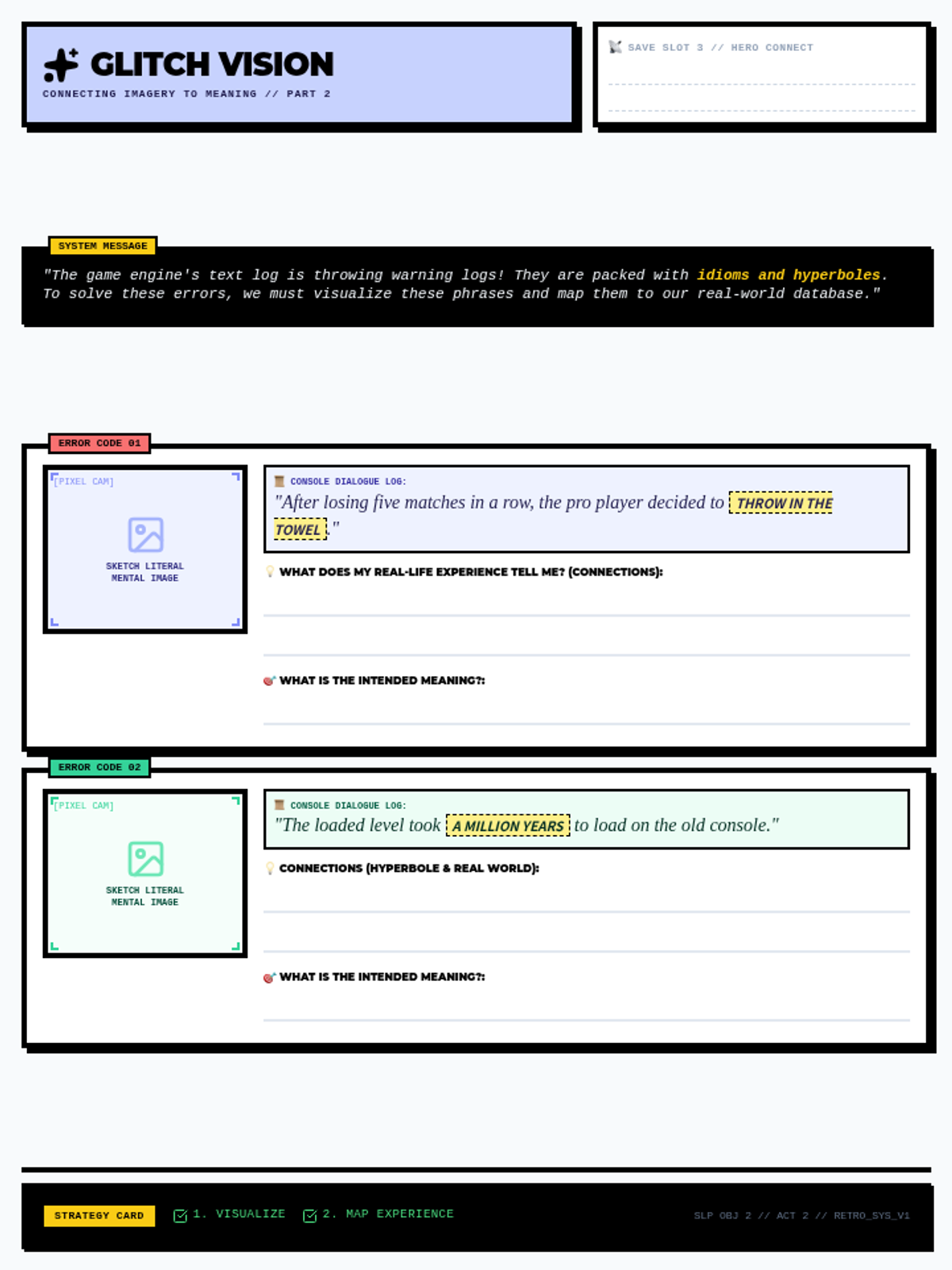
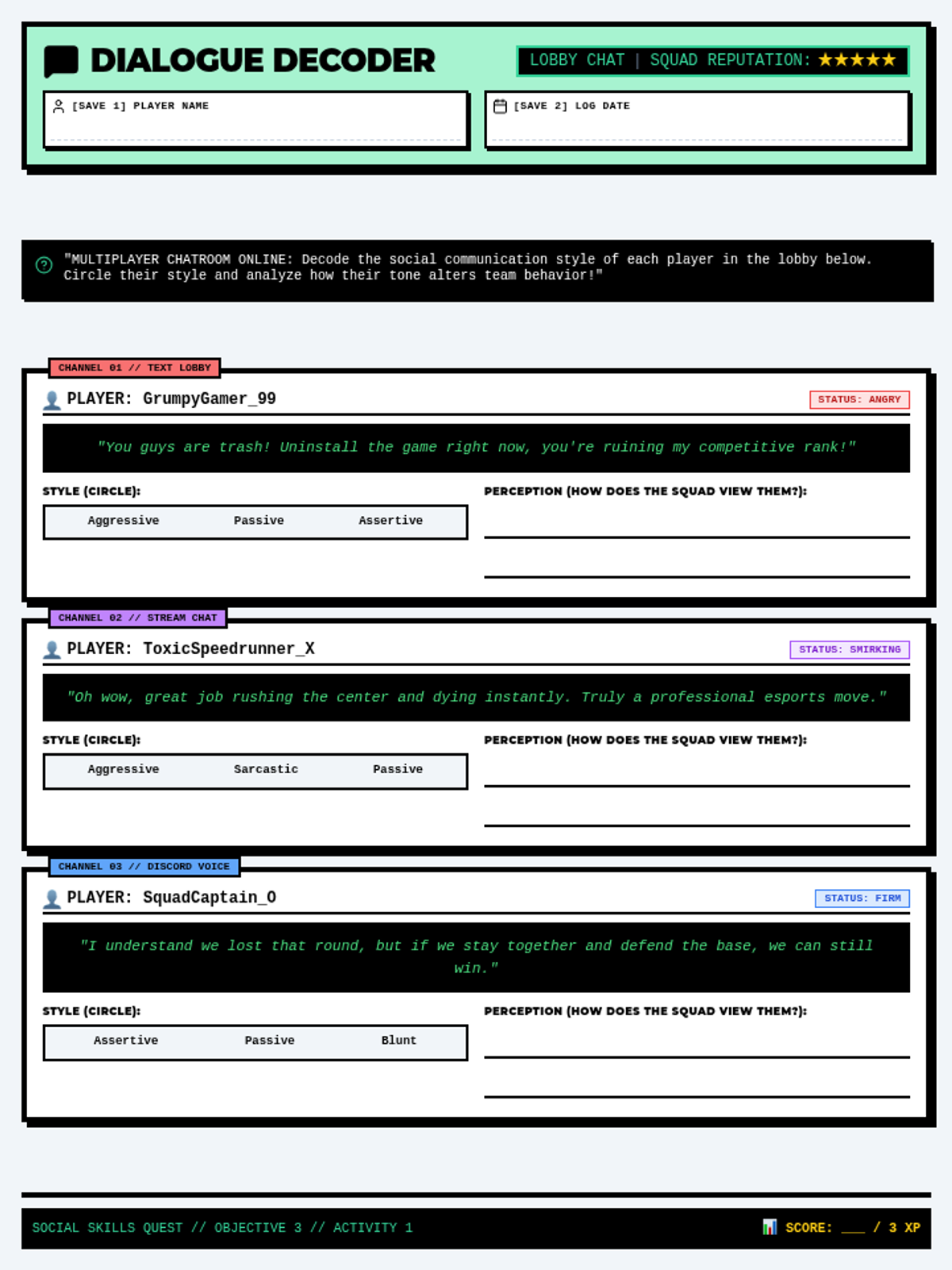
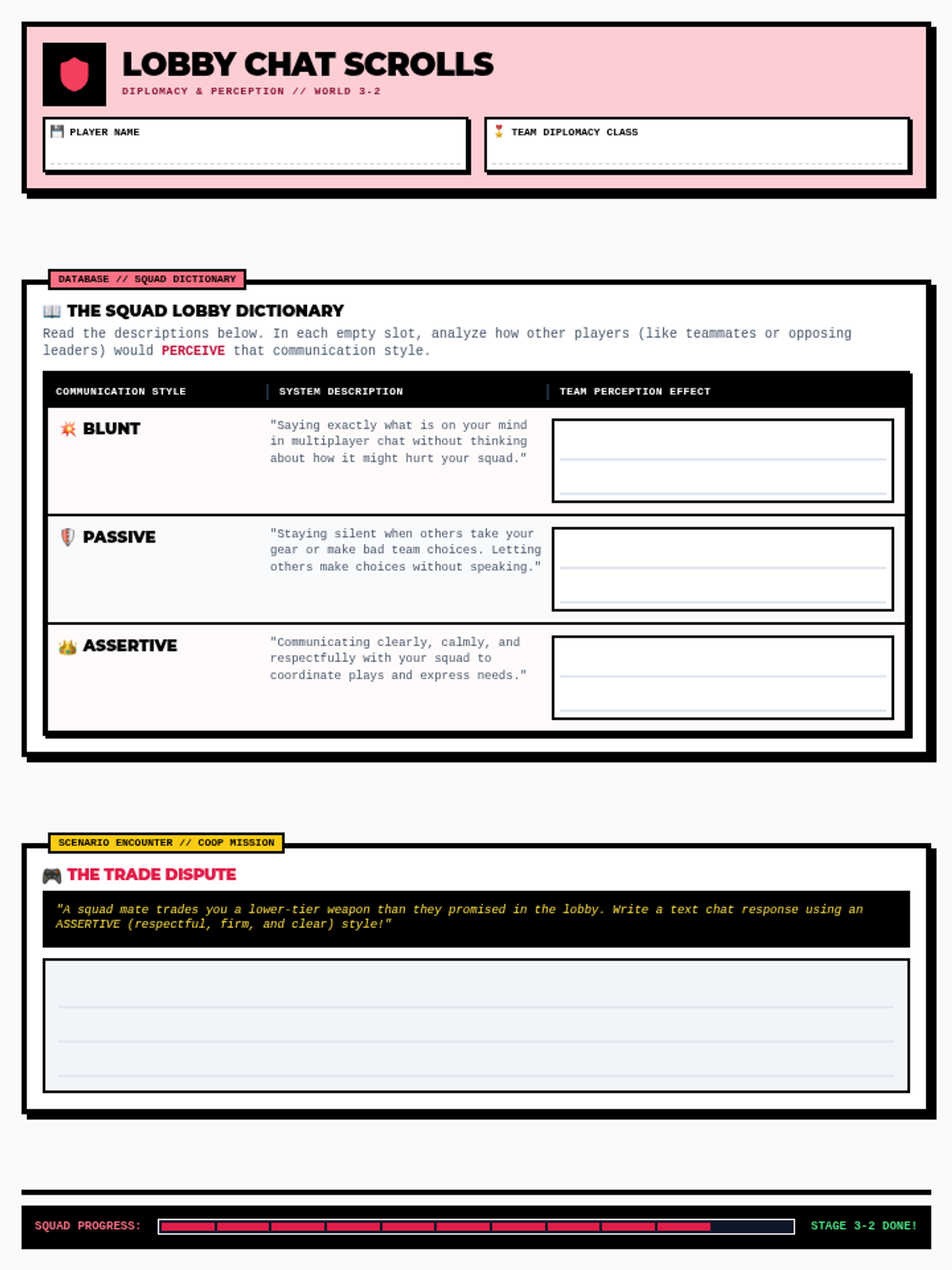
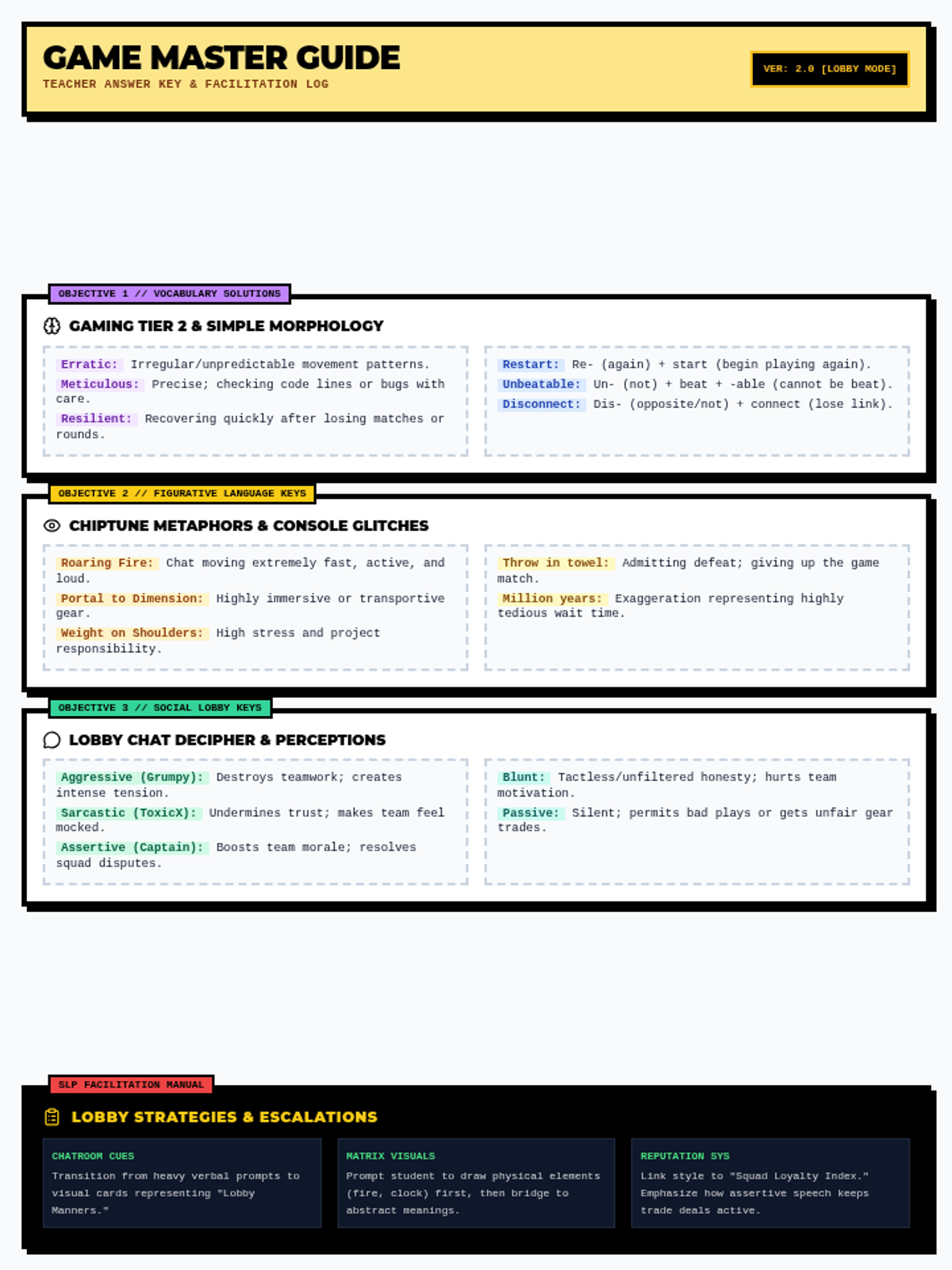
A comprehensive set of speech-language therapy activities designed for 6th-grade students, focusing on Tier 2 vocabulary, figurative language comprehension, and communication style identification through a Fantasy Quest video game theme.
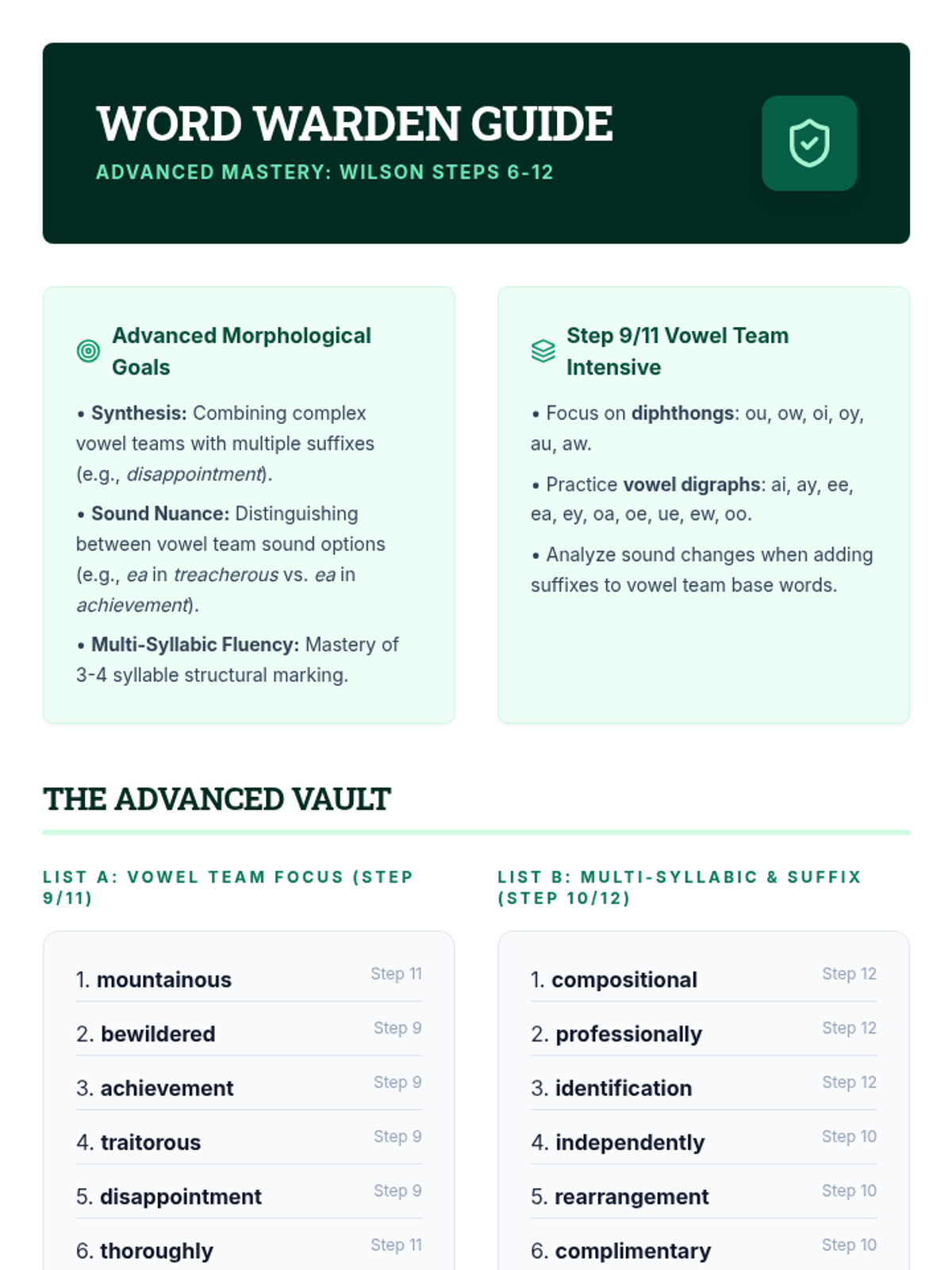
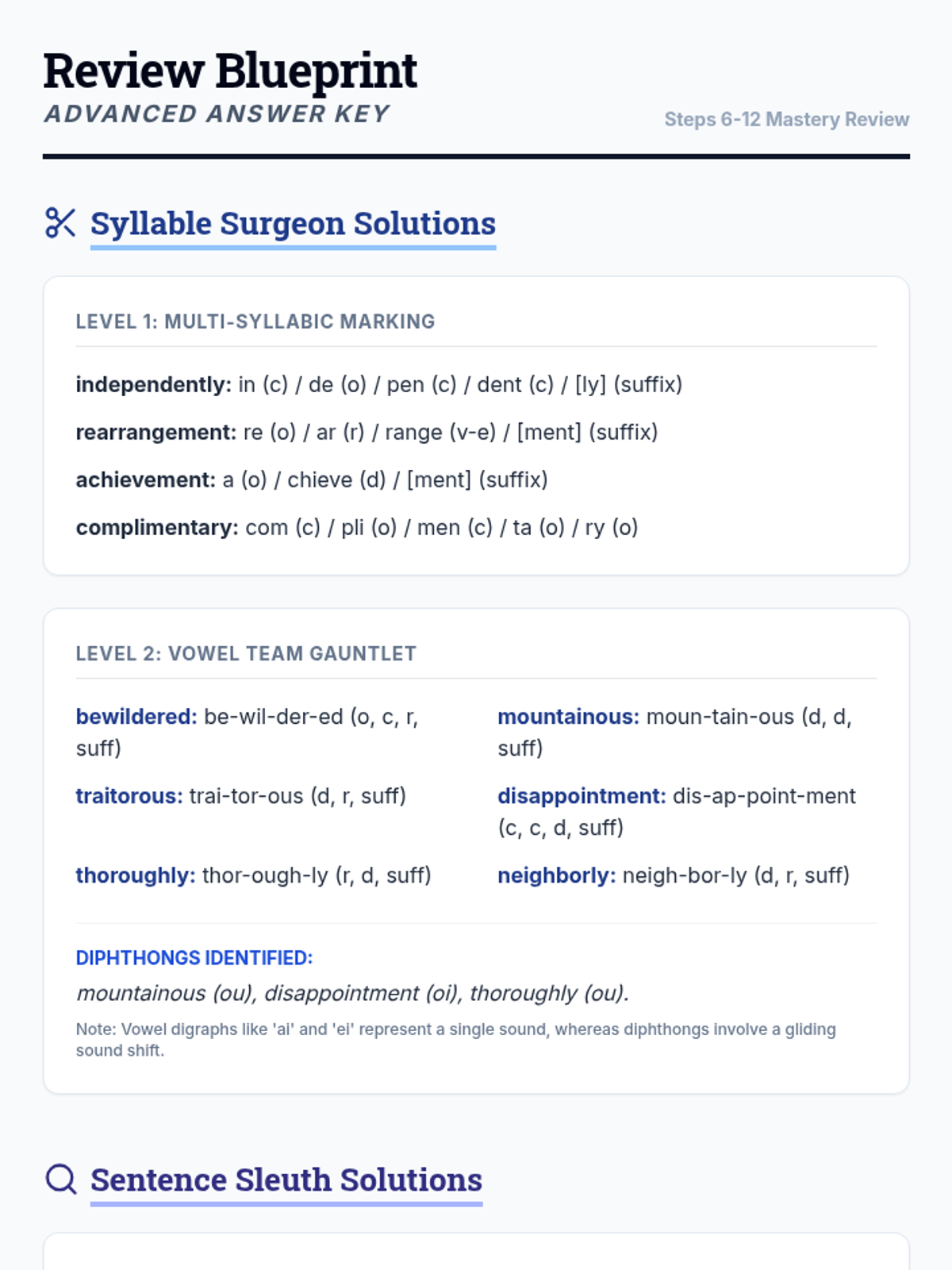
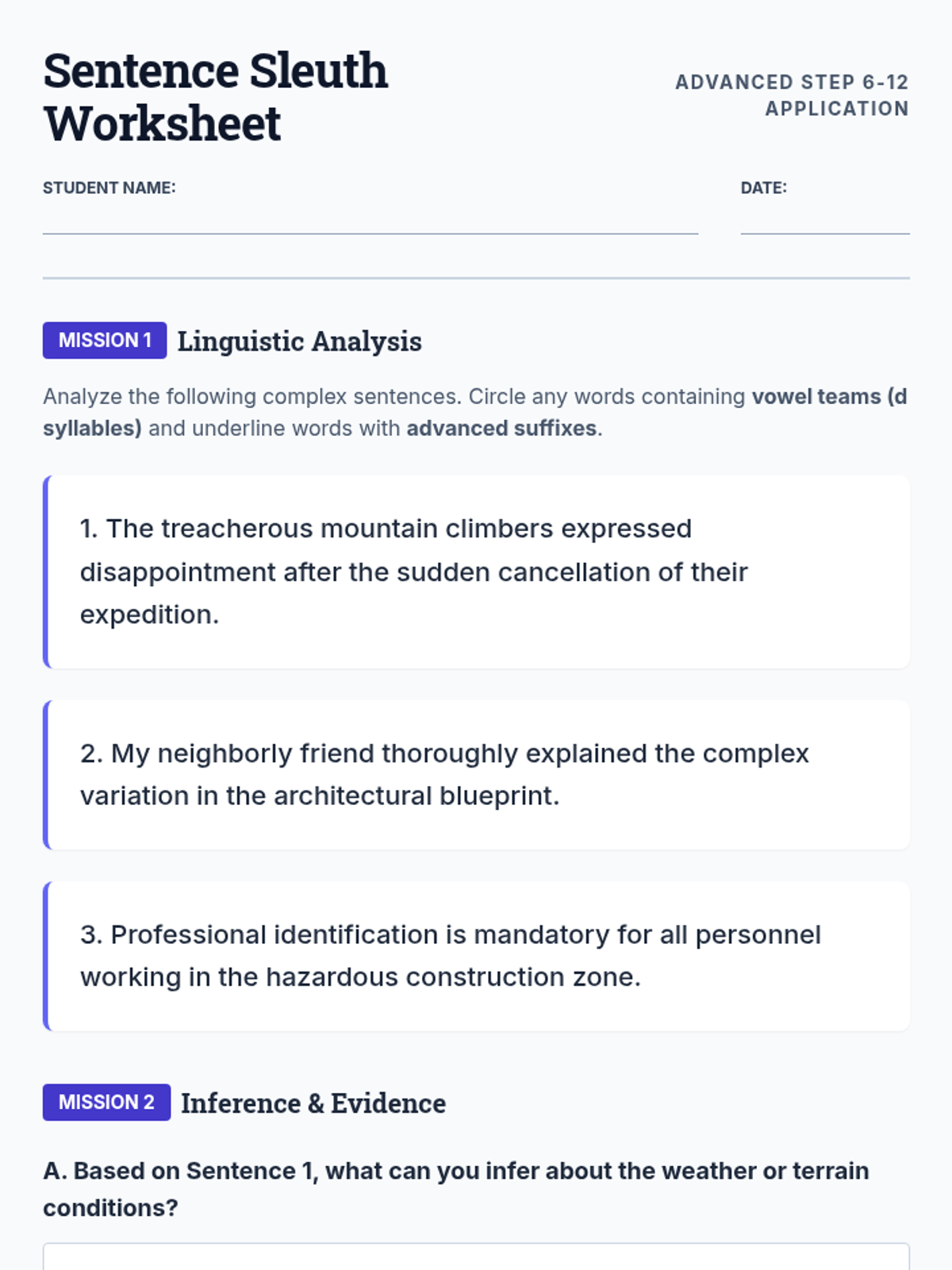
A comprehensive review unit for Wilson Reading Program Steps 6 through 12, focusing on syllable marking, complex suffix patterns, r-controlled vowels, and vowel digraphs.
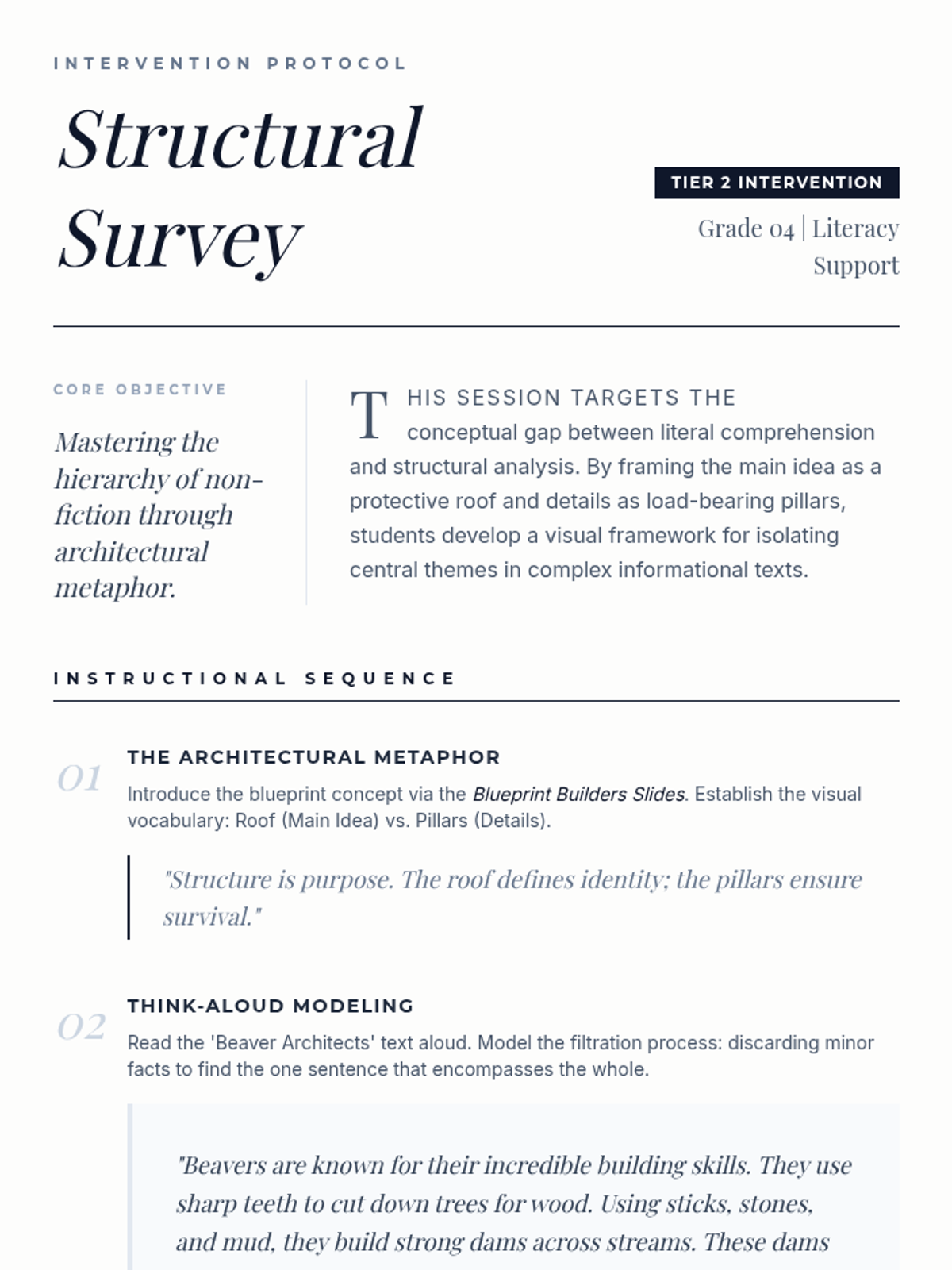
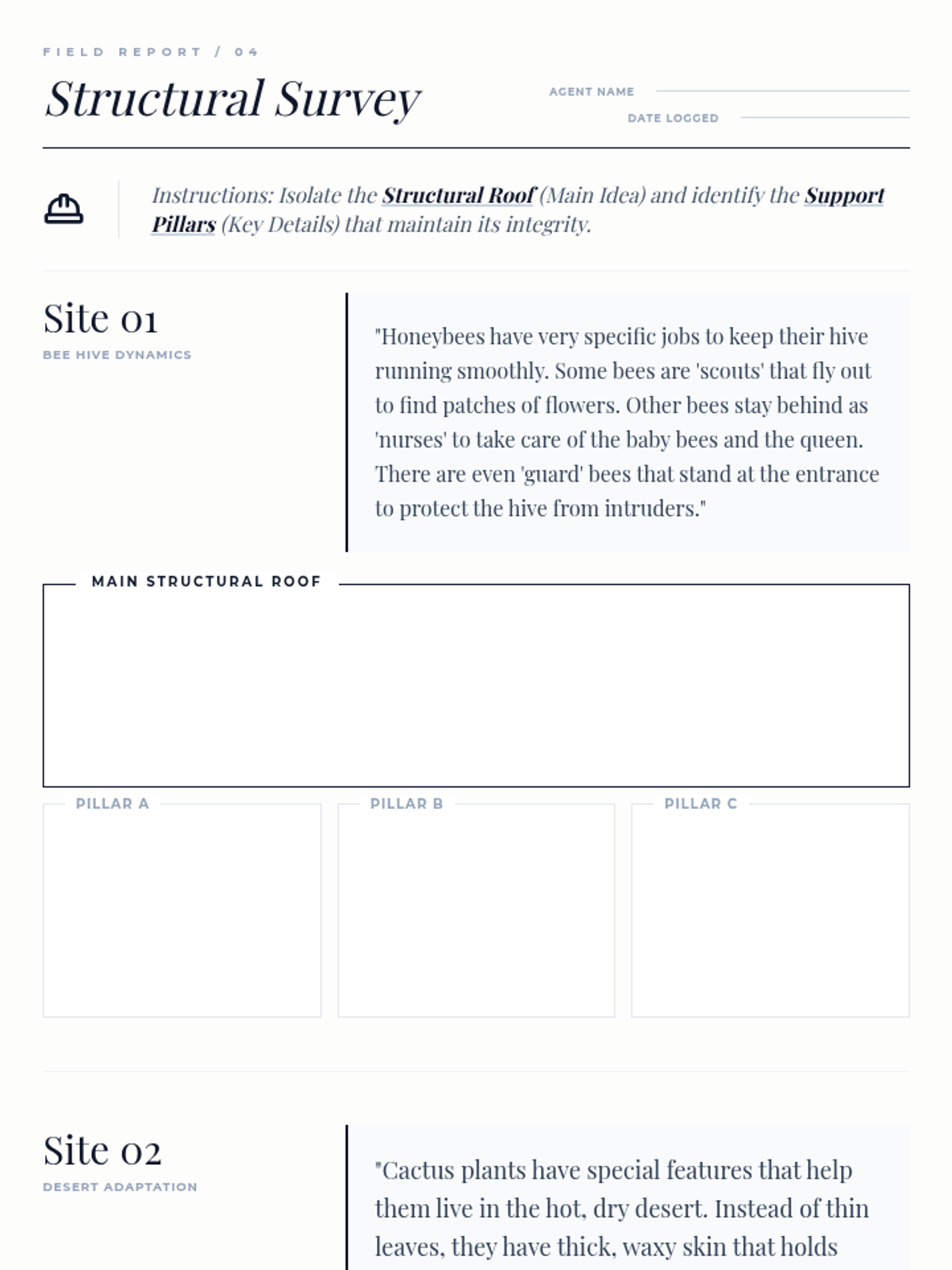
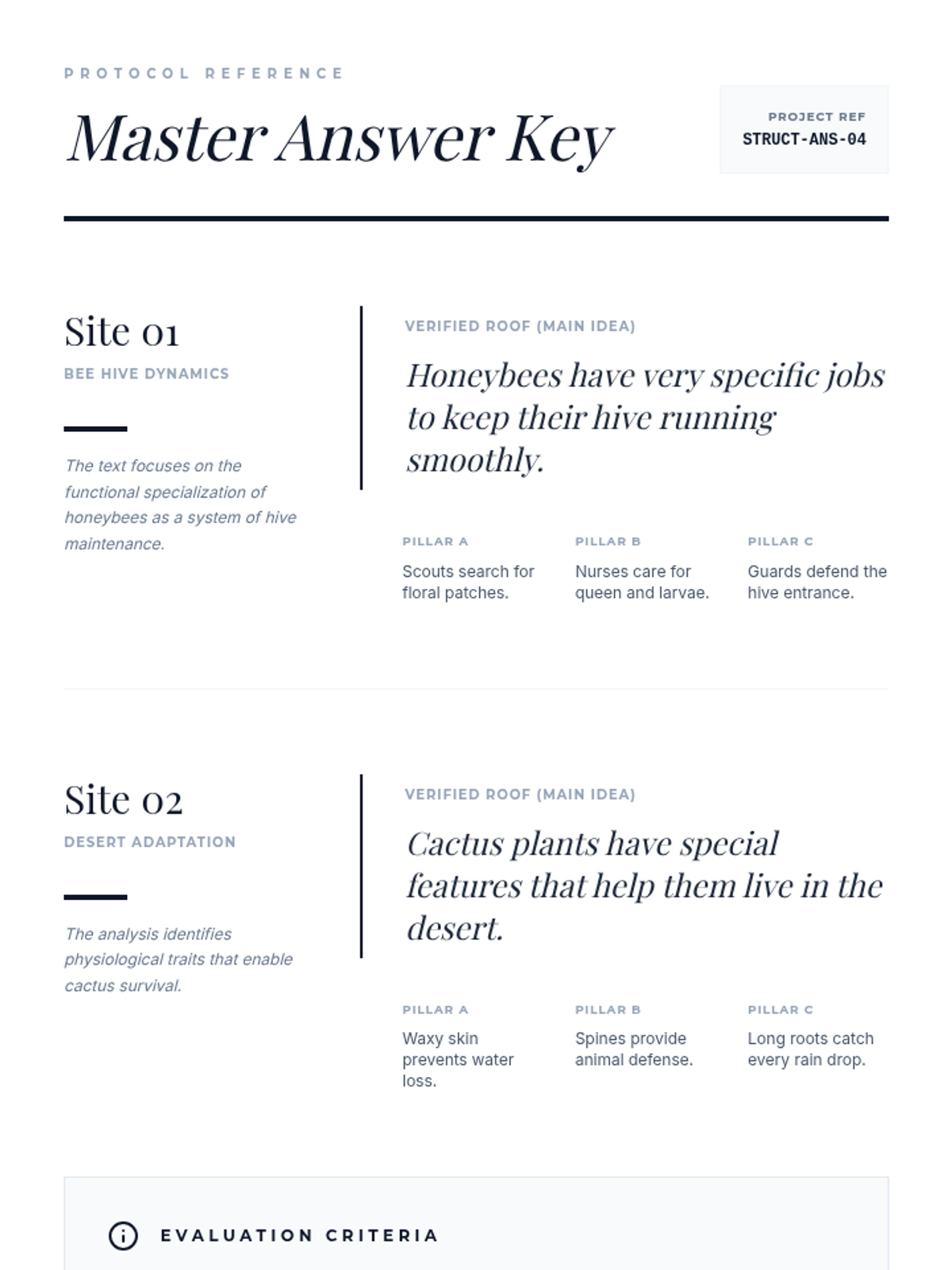
A Tier 2 intervention lesson focused on identifying the main idea and supporting details using a construction and blueprint theme. Students learn to distinguish the 'big structure' from the 'supporting pillars' in non-fiction texts.
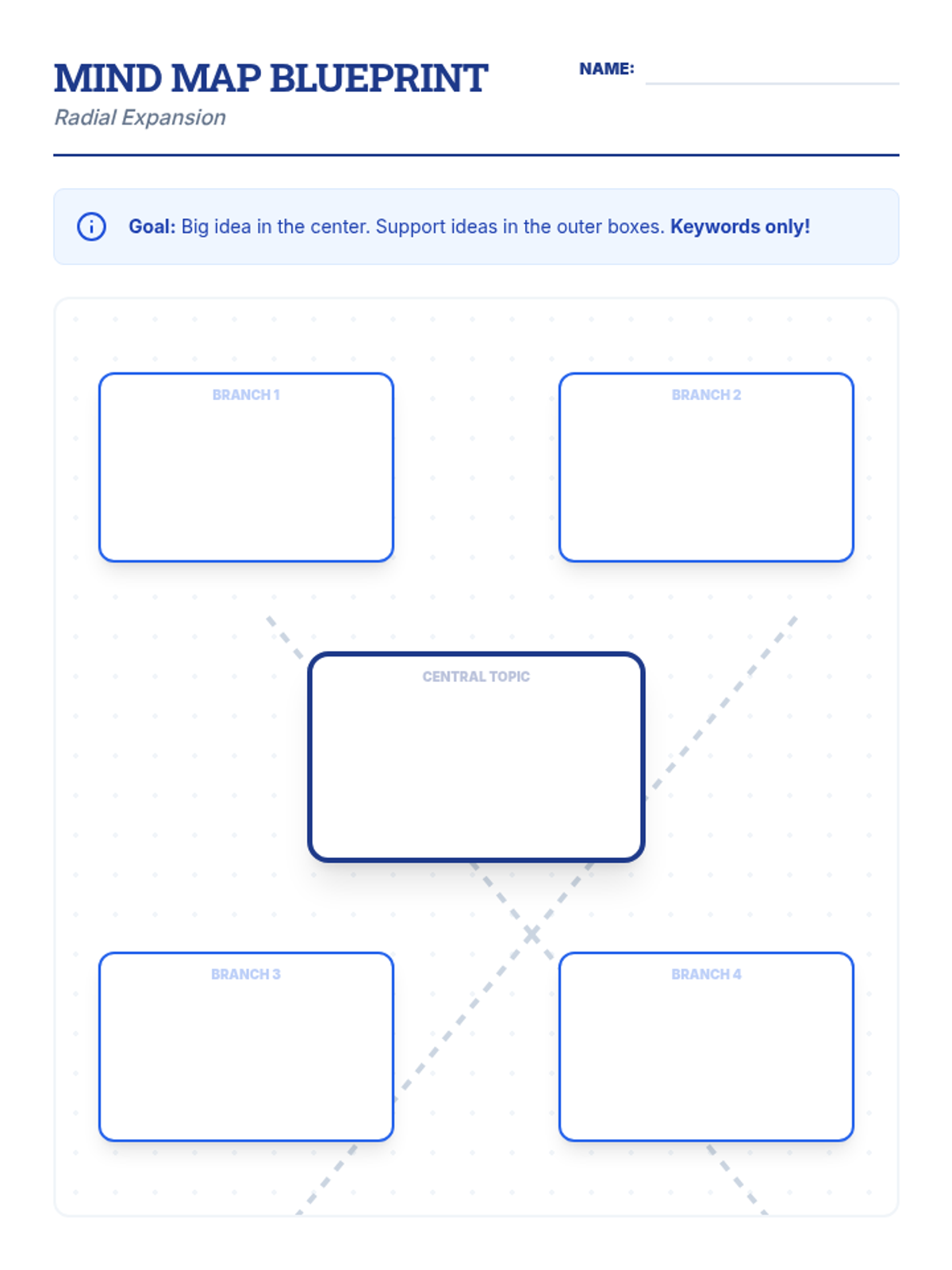
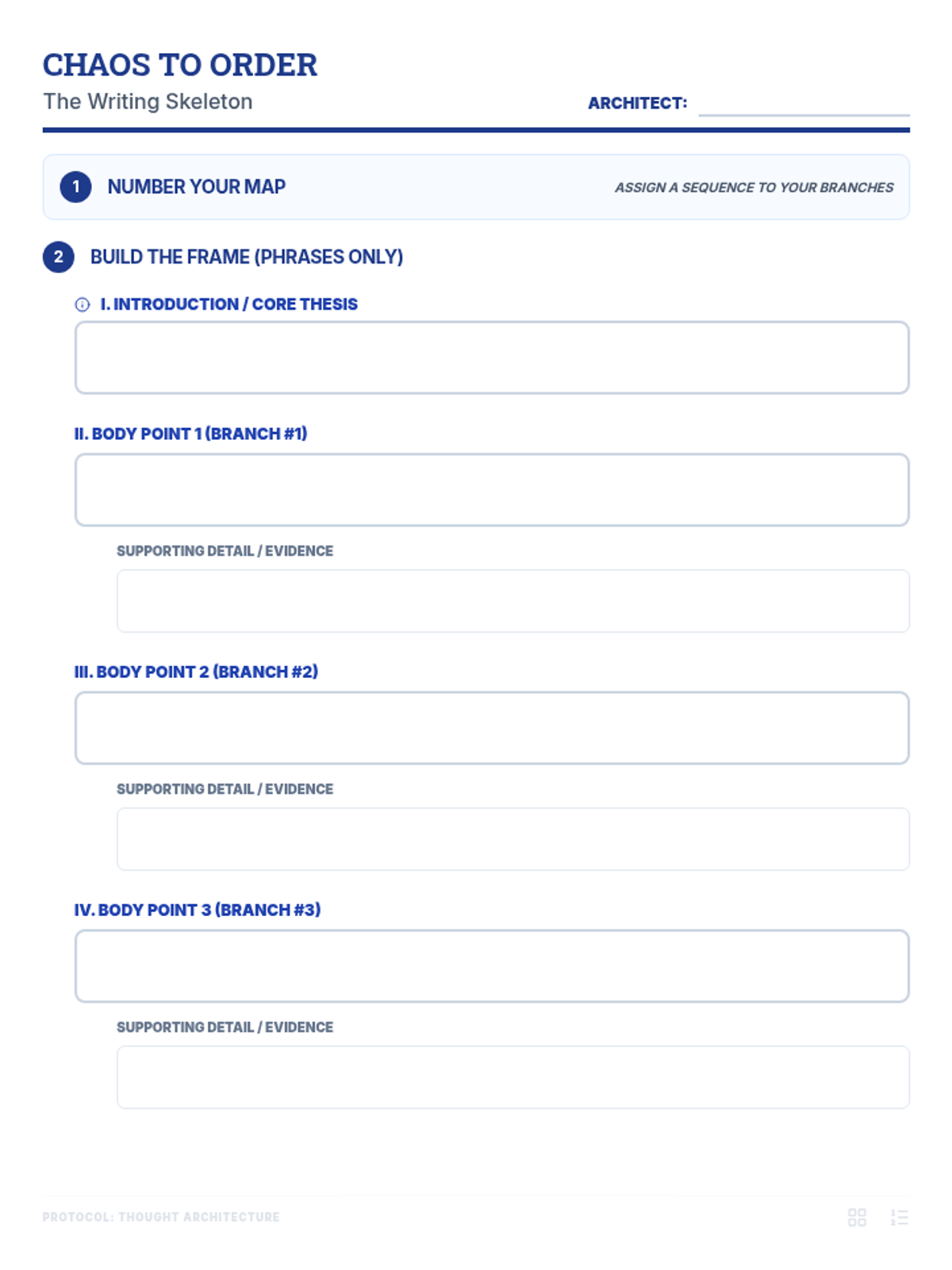
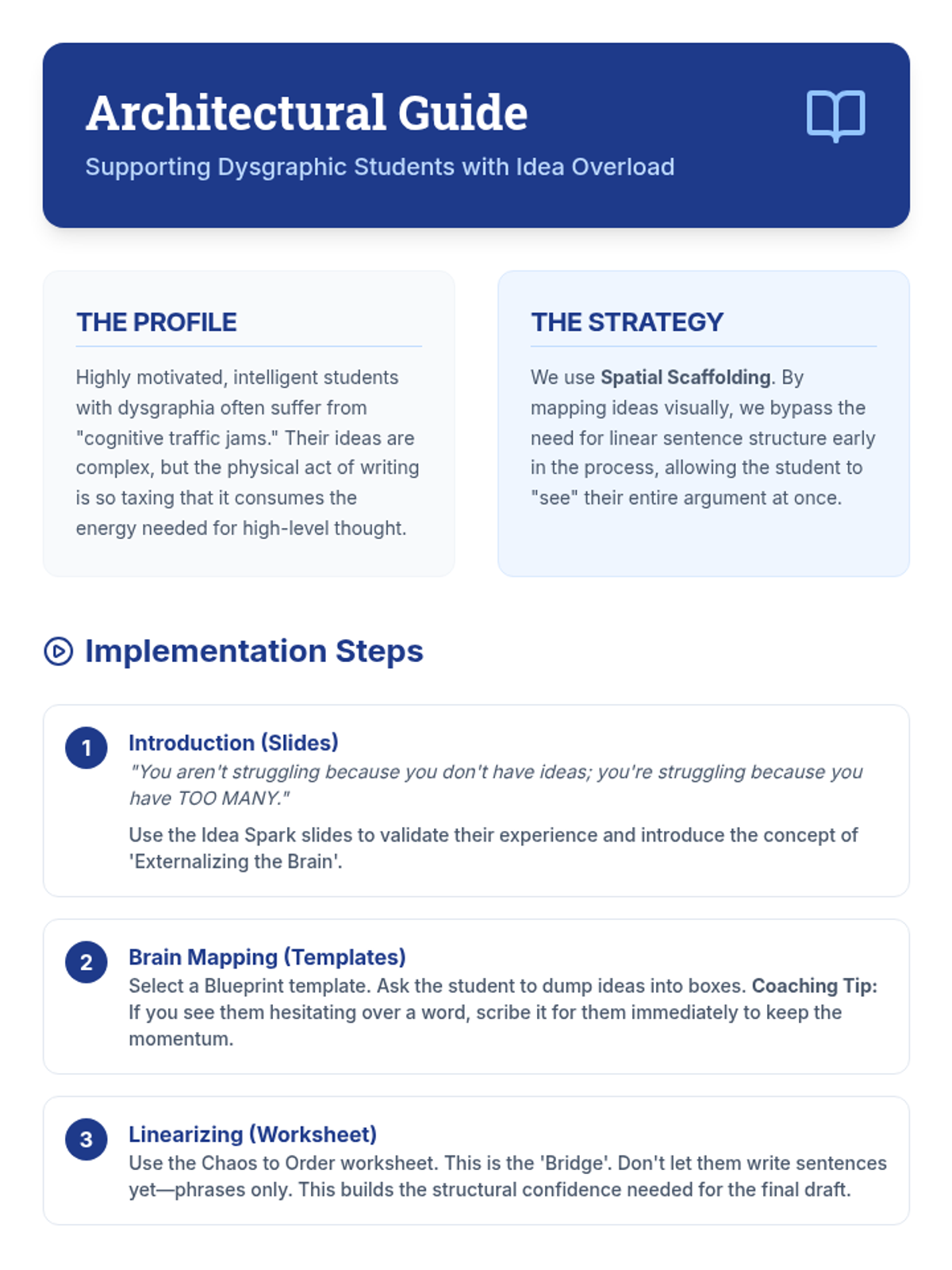
This lesson helps 8th-grade students with dysgraphia manage 'idea overload' by using visual mind-mapping as a bridge between brainstorming and writing. It focuses on externalizing complex thoughts into a structured blueprint before any linear writing begins.
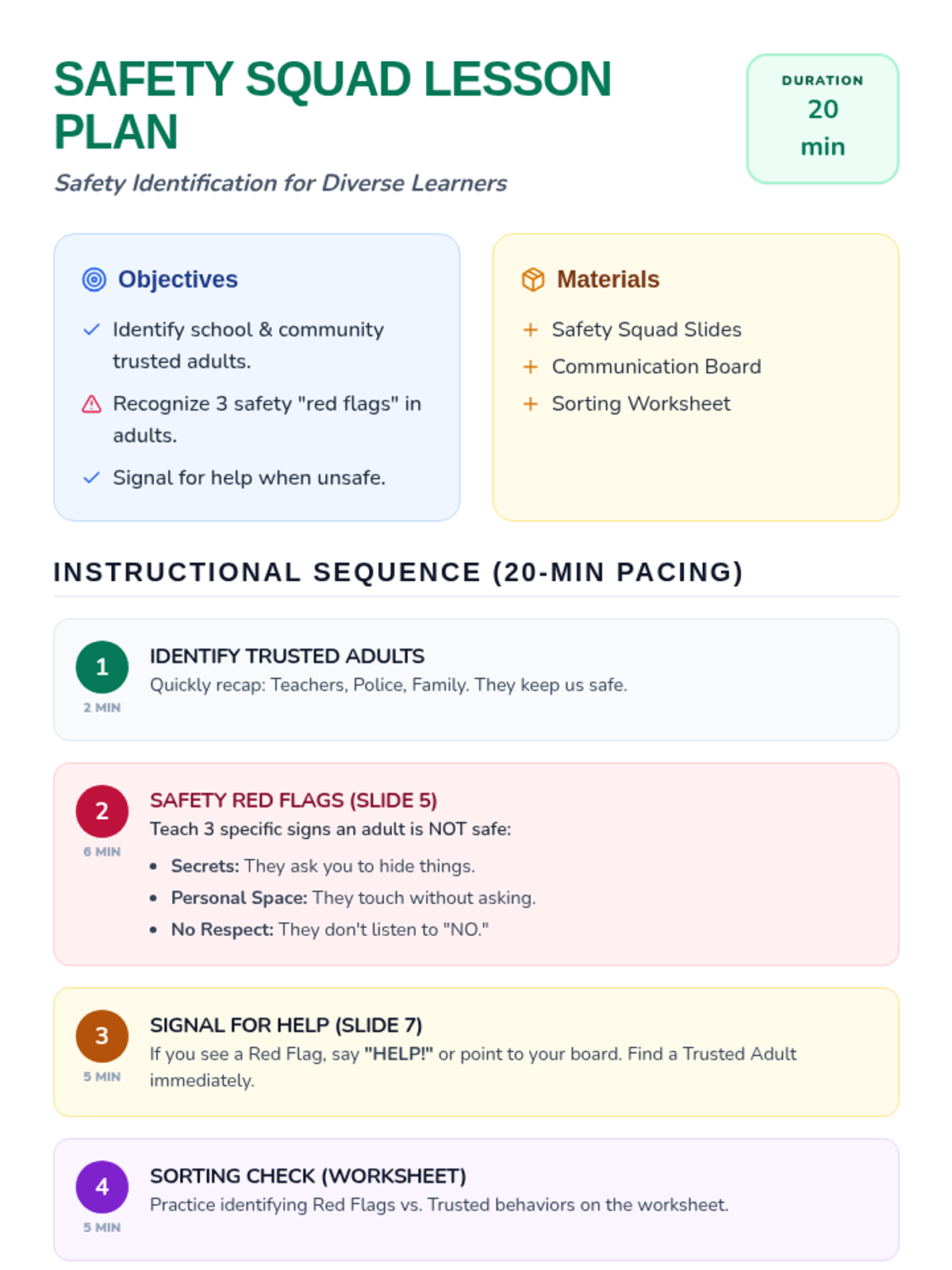
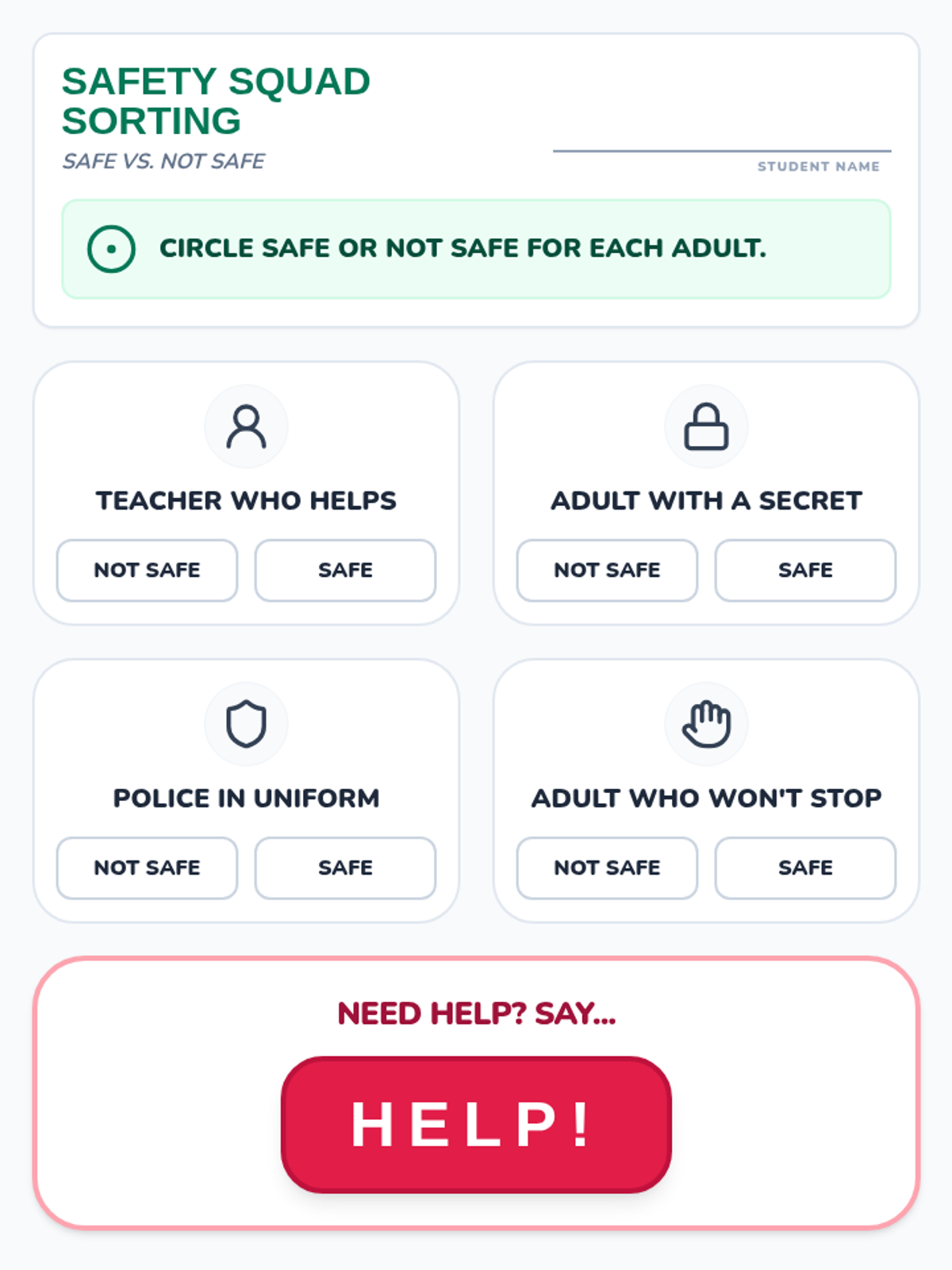
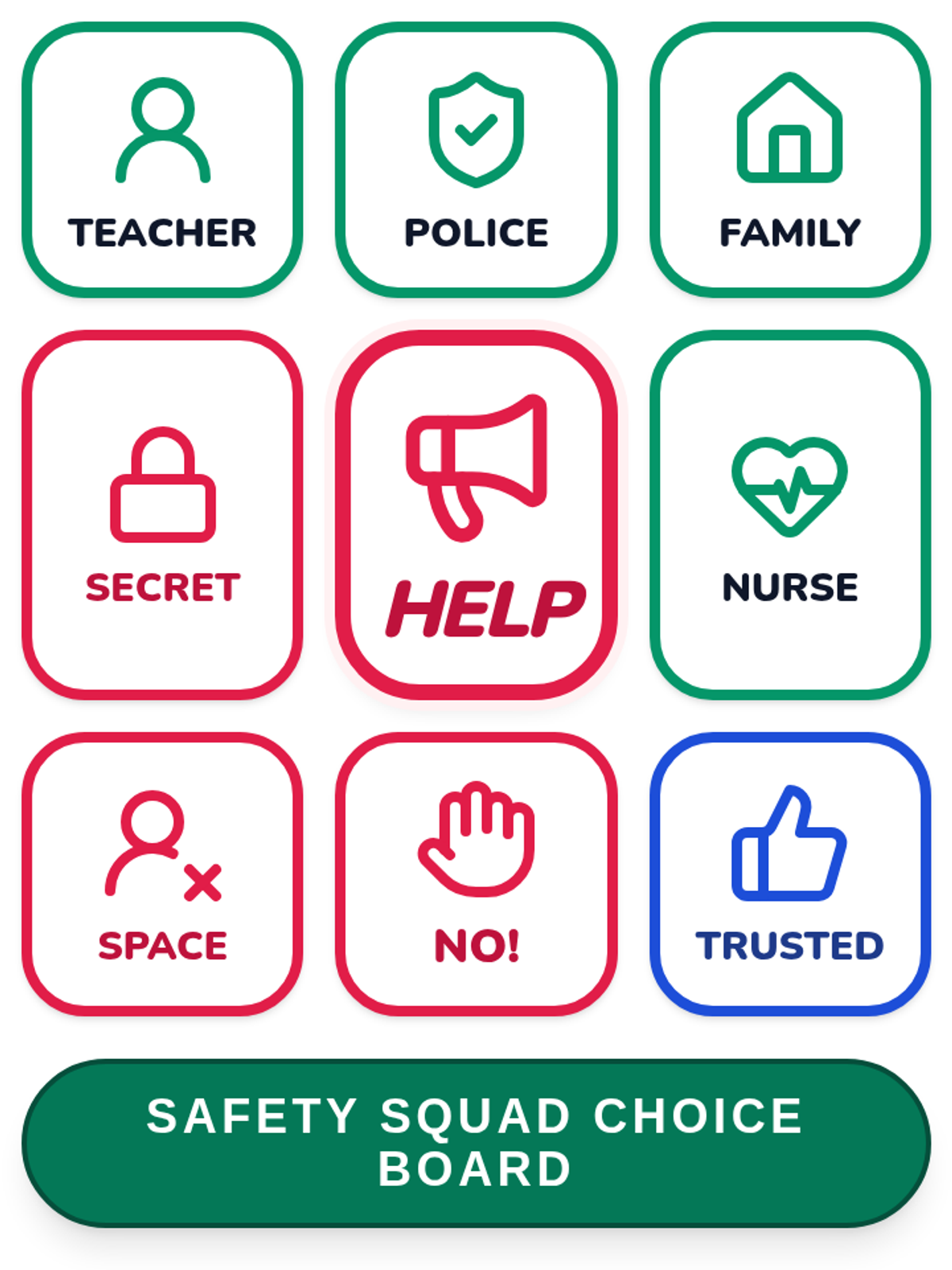
A highly visual lesson designed for students with severe disabilities to identify trusted adults at school, at home, and in the community. Includes multi-sensory prompts and clear visual supports.