Week 4 focuses on self-advocacy and managing missing assignments. Students learn to audit their online grades portal, draft professional help emails to teachers, and use face-to-face communication scripts.
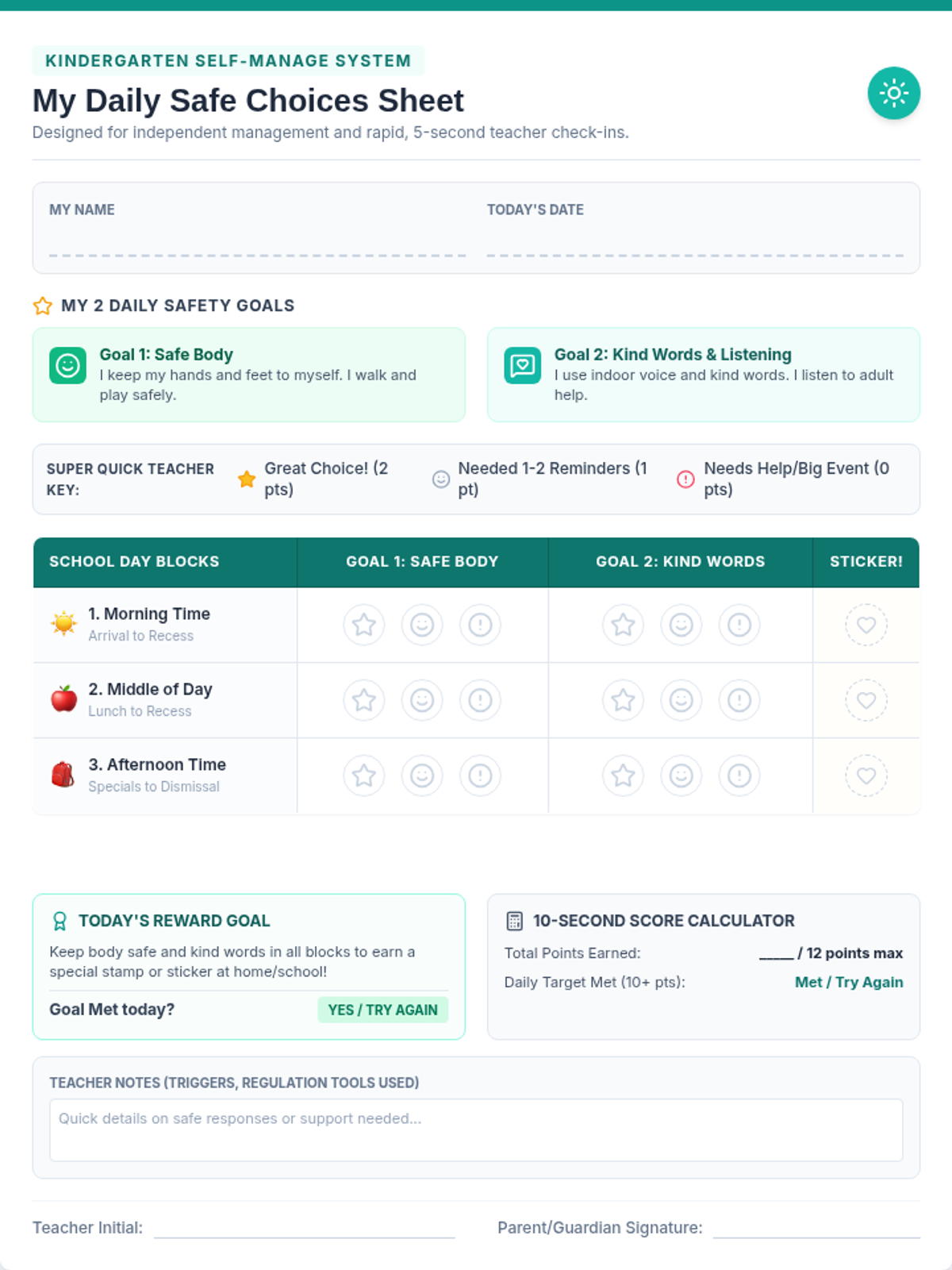
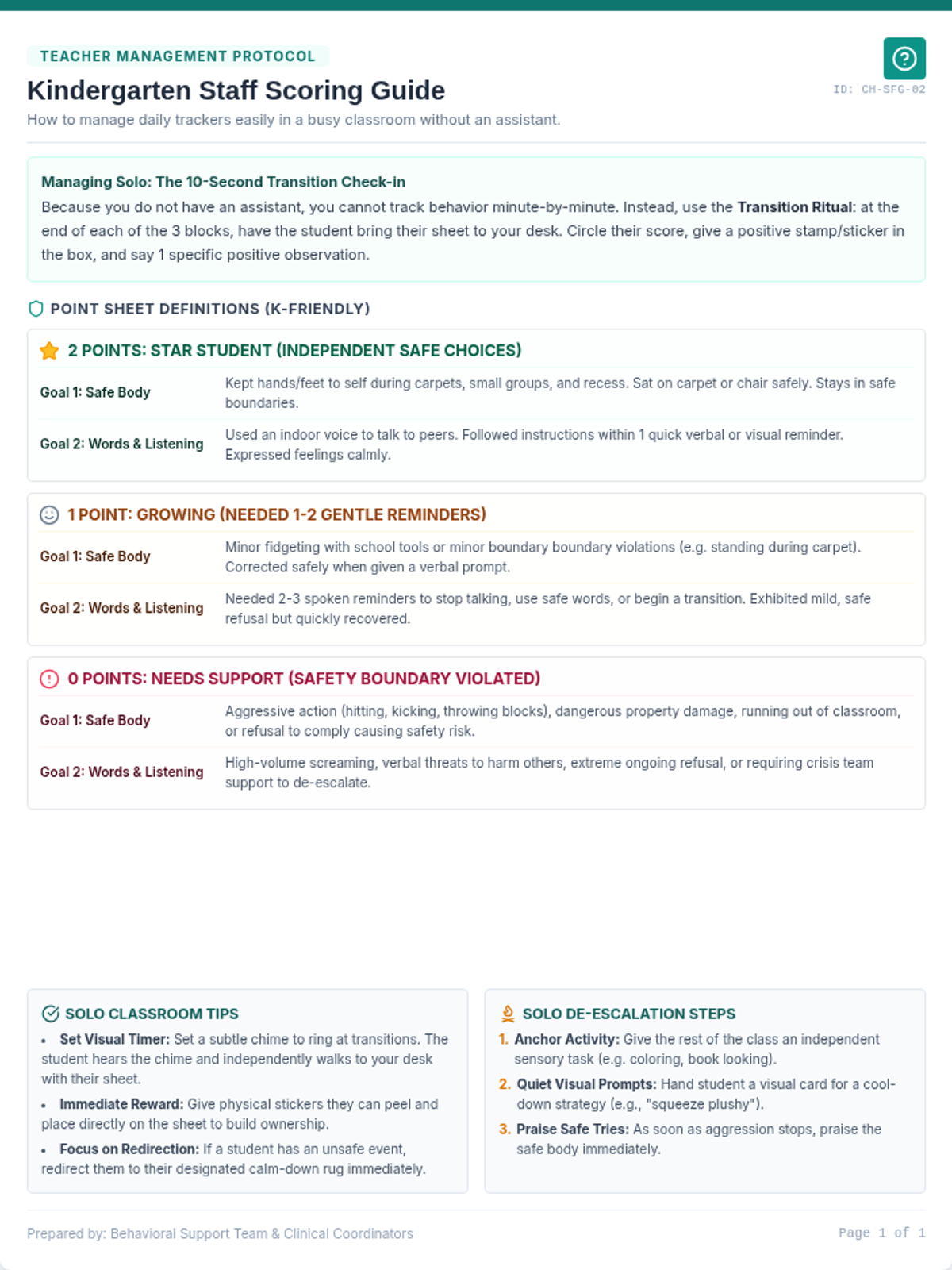
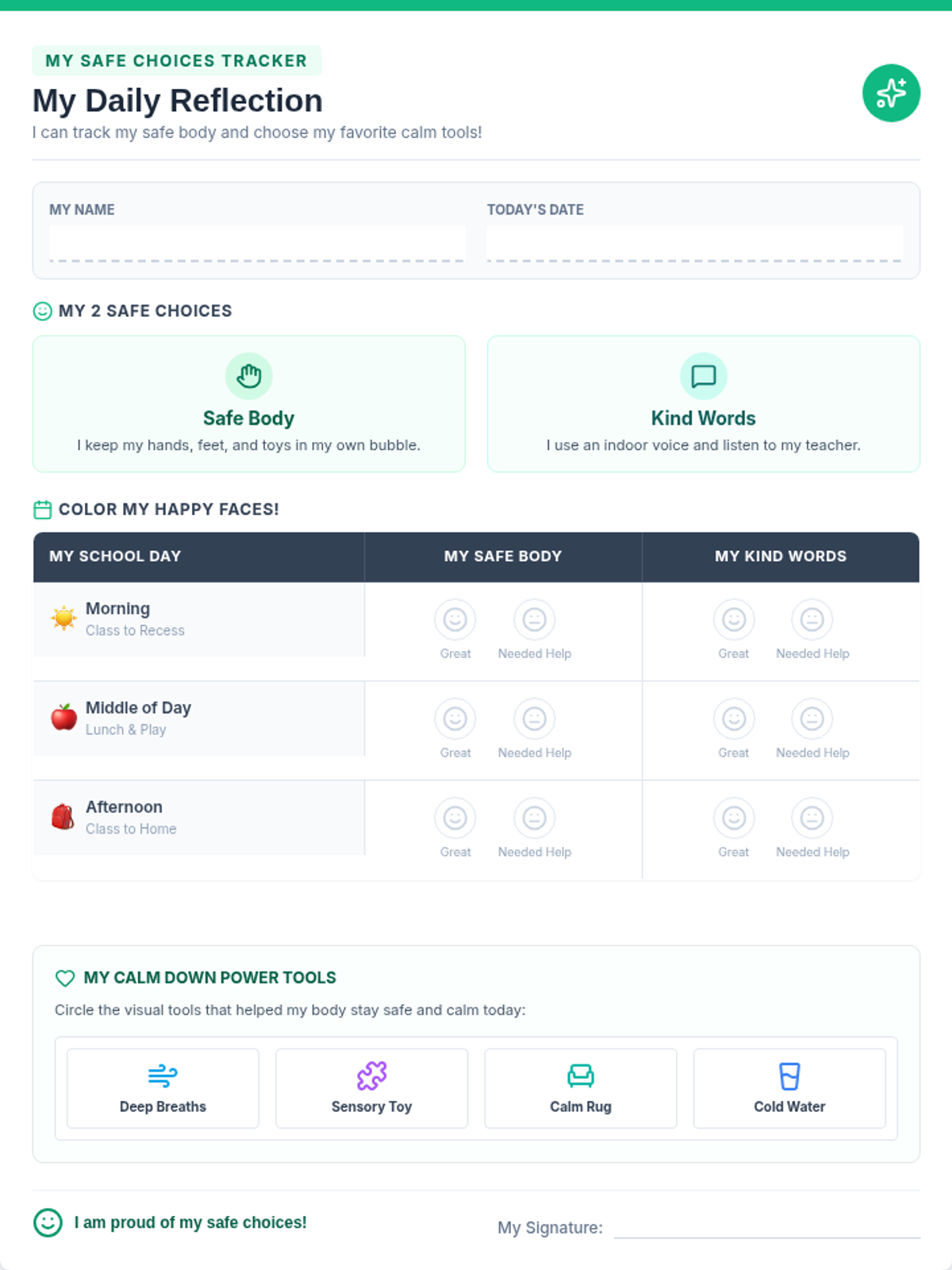
A comprehensive behavioral tracking and de-escalation toolkit designed to reduce aggressive behaviors and maintain safety boundaries. Includes interval-based daily point sheets, staff inter-rater guides, and student-led self-monitoring rubrics.
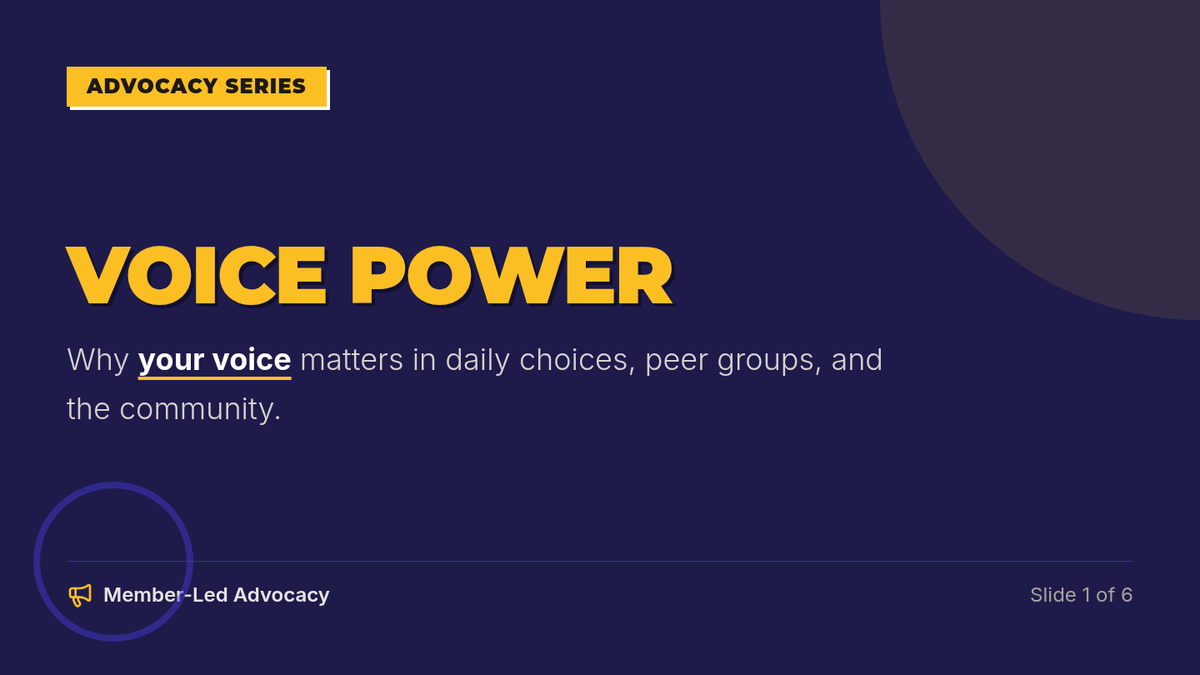
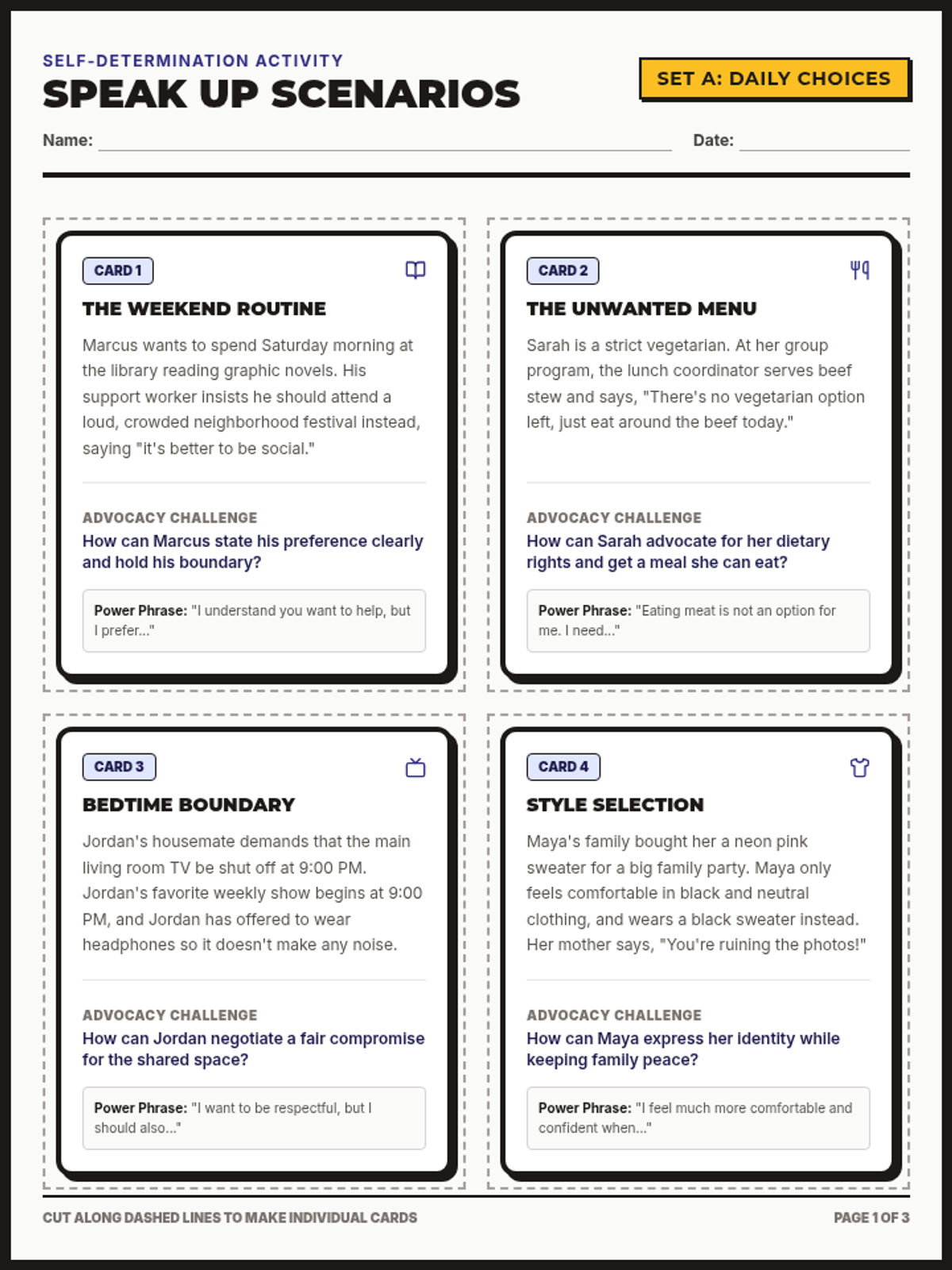
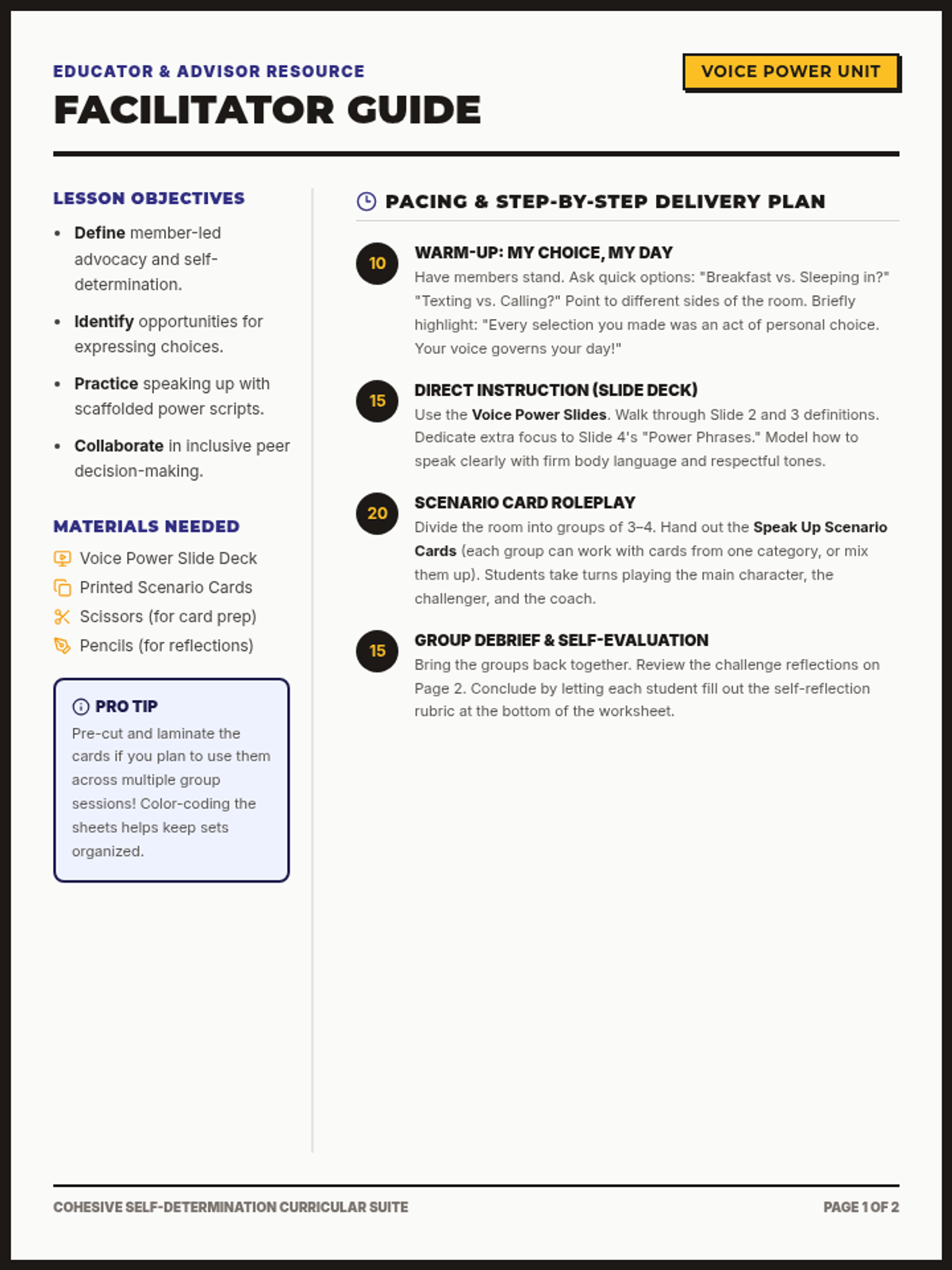
A self-determination and member-led advocacy lesson where students explore why their voices matter, practice speaking up in everyday scenarios, and build confidence in group decision-making.
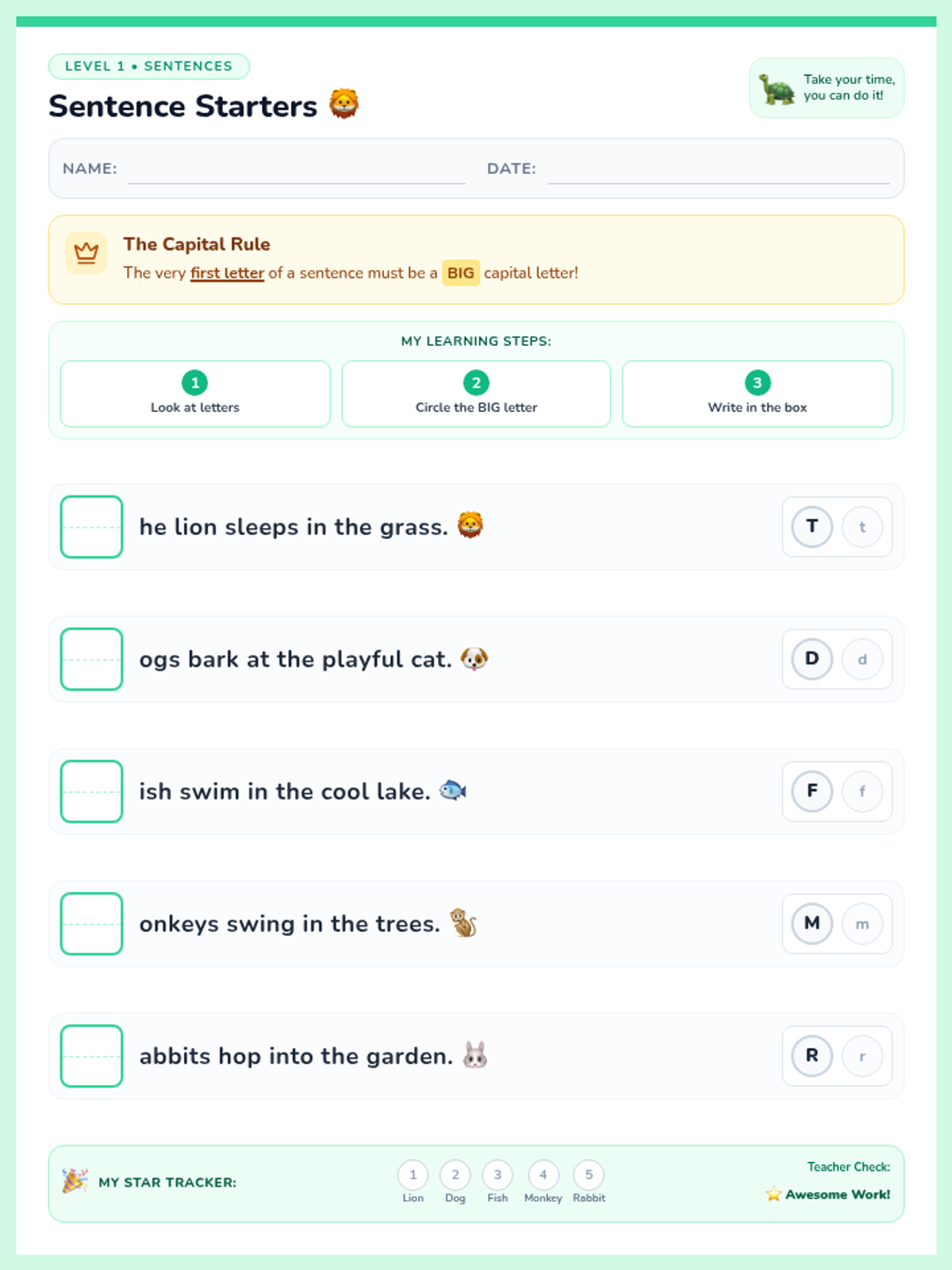
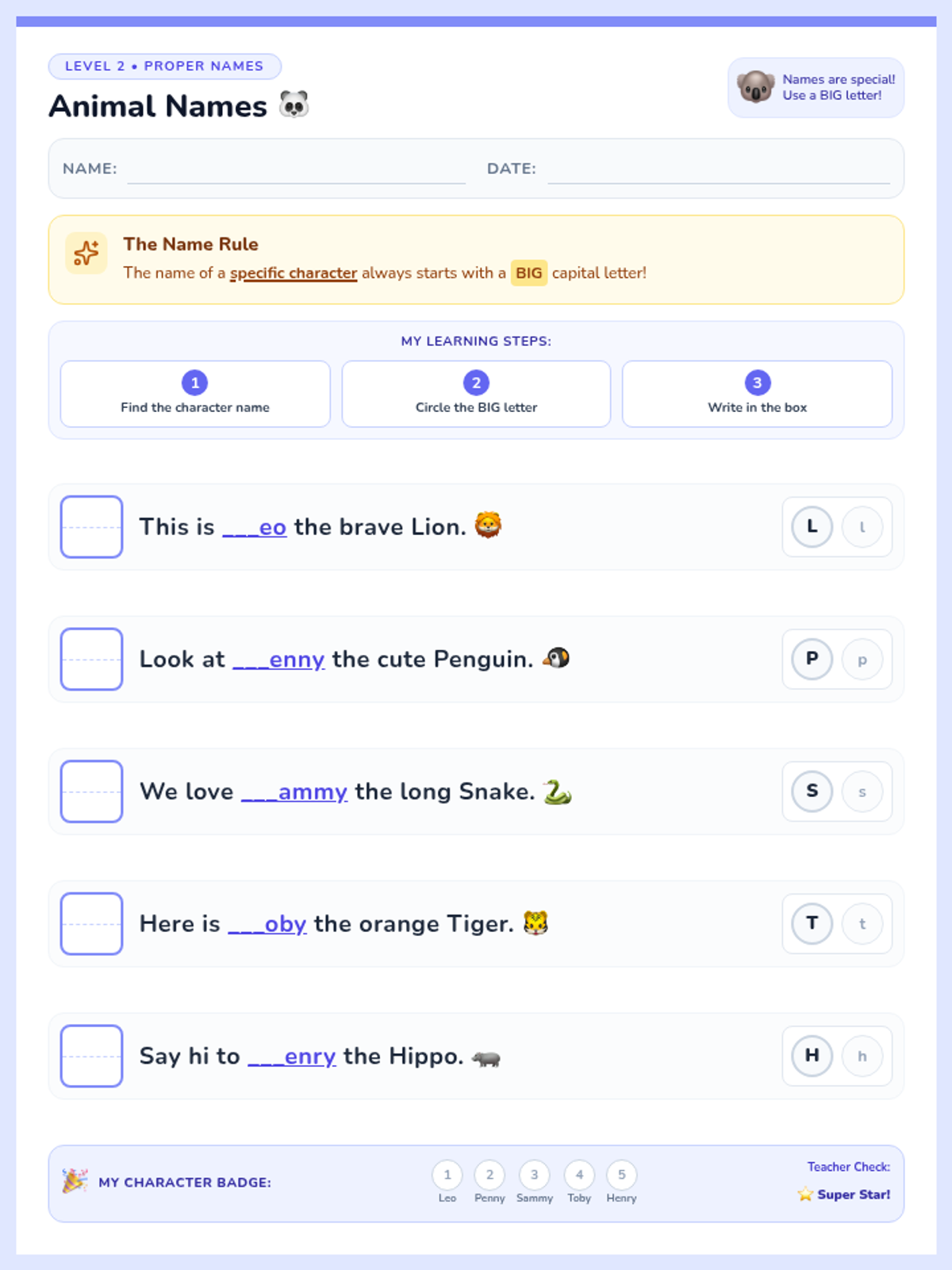
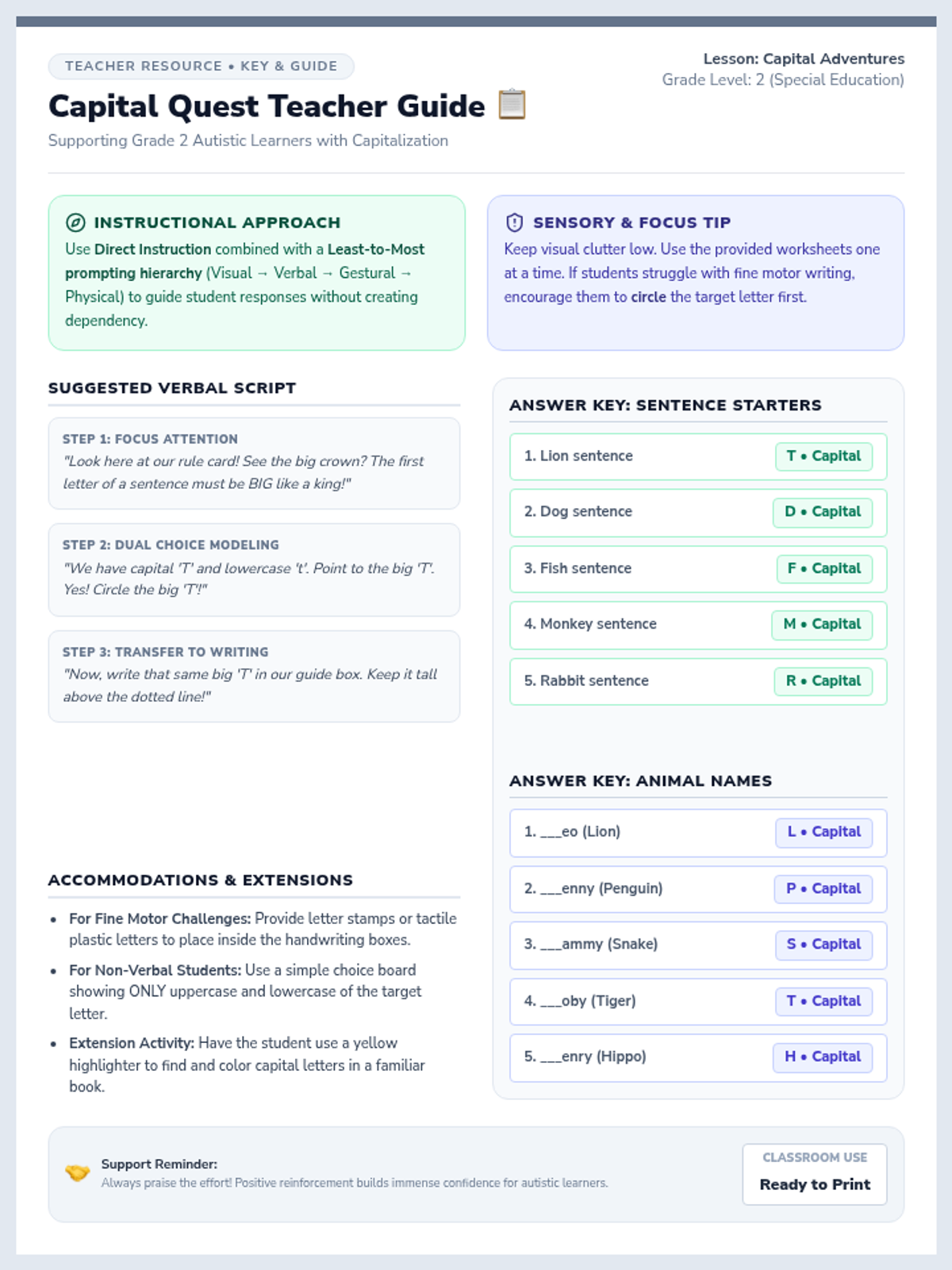
A simple, highly structured capitalization lesson for Grade 2 students with autism, featuring animal-themed worksheets and clear visual supports for sentence starters and proper character names.
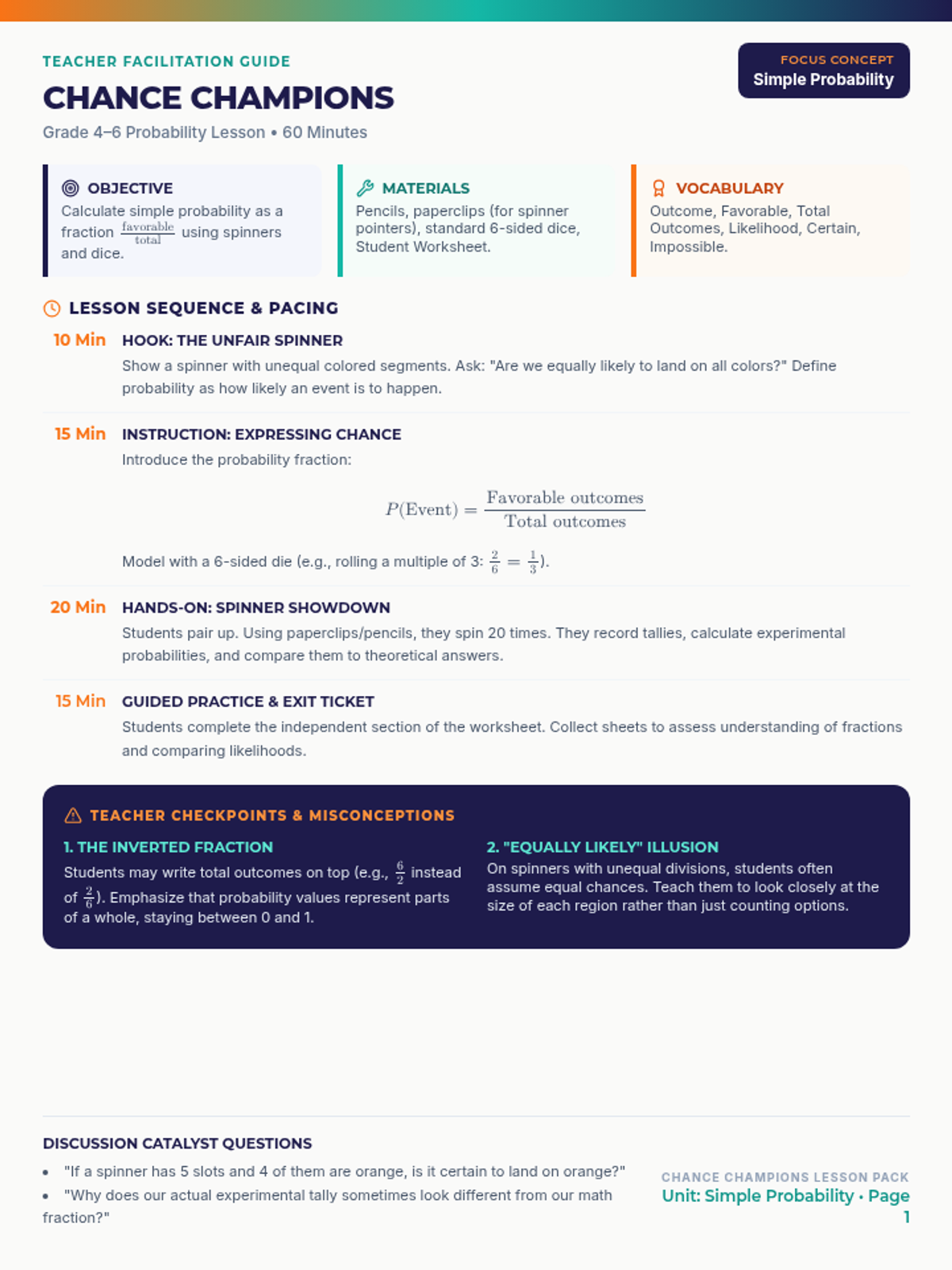
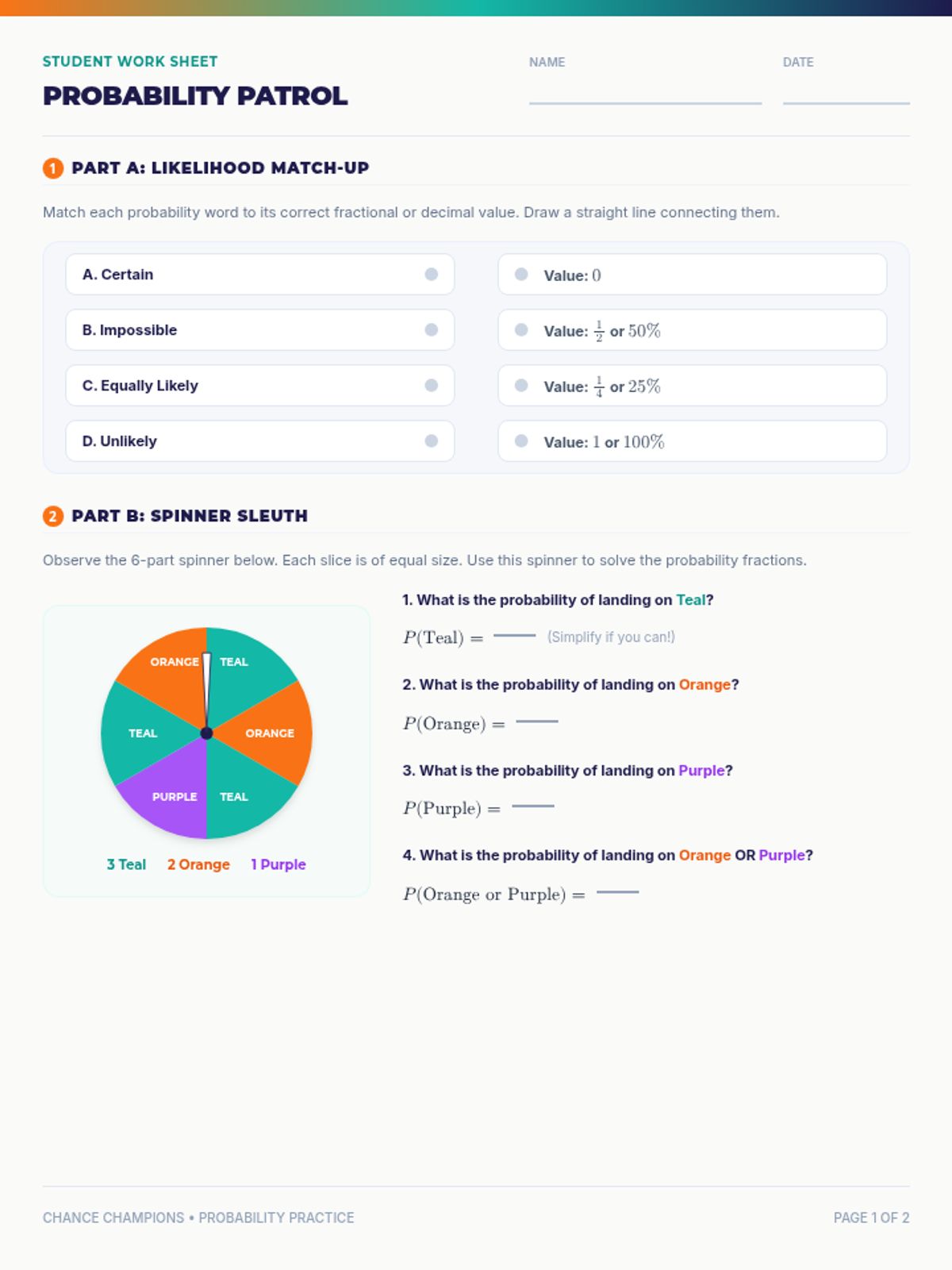
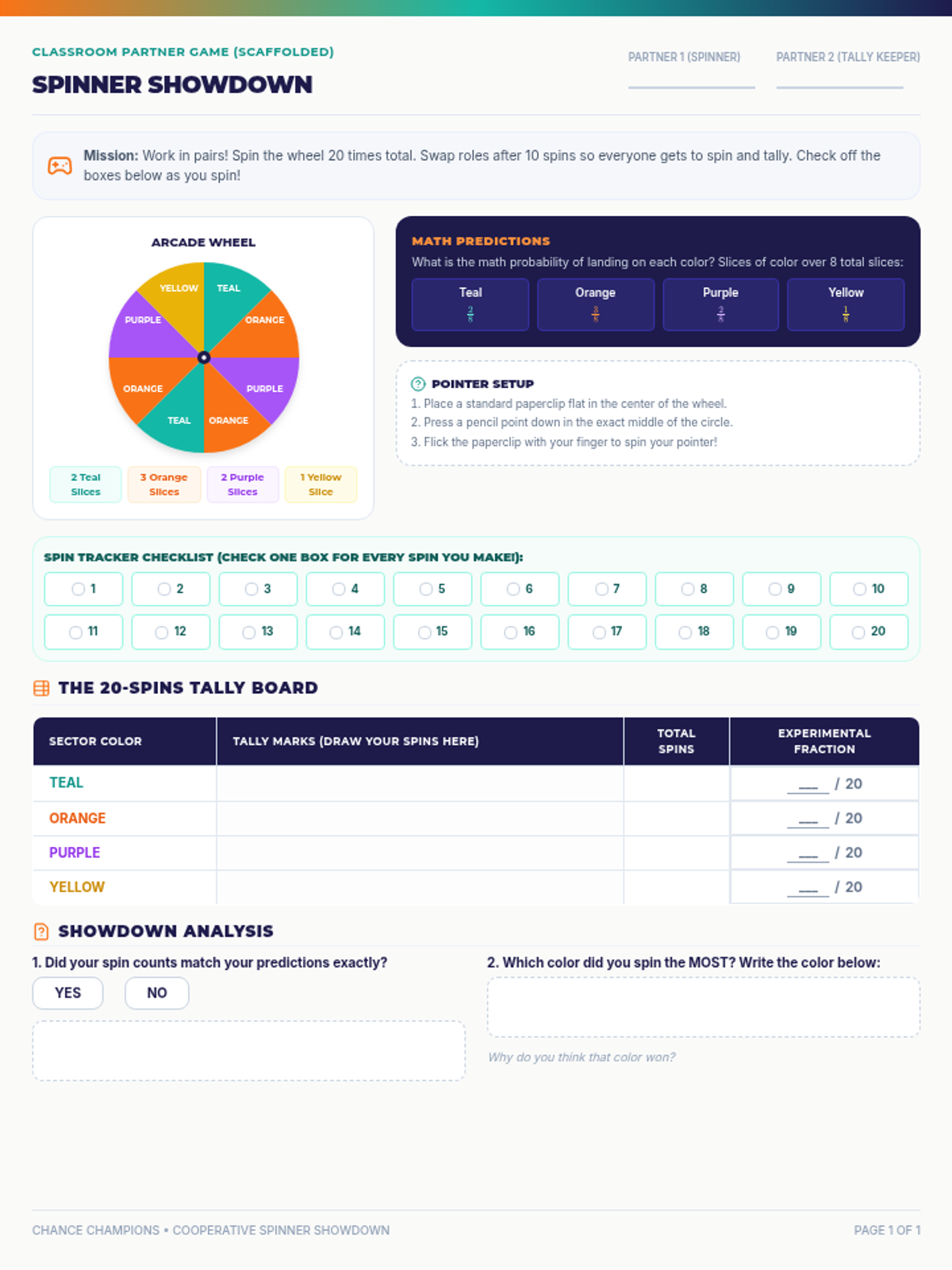
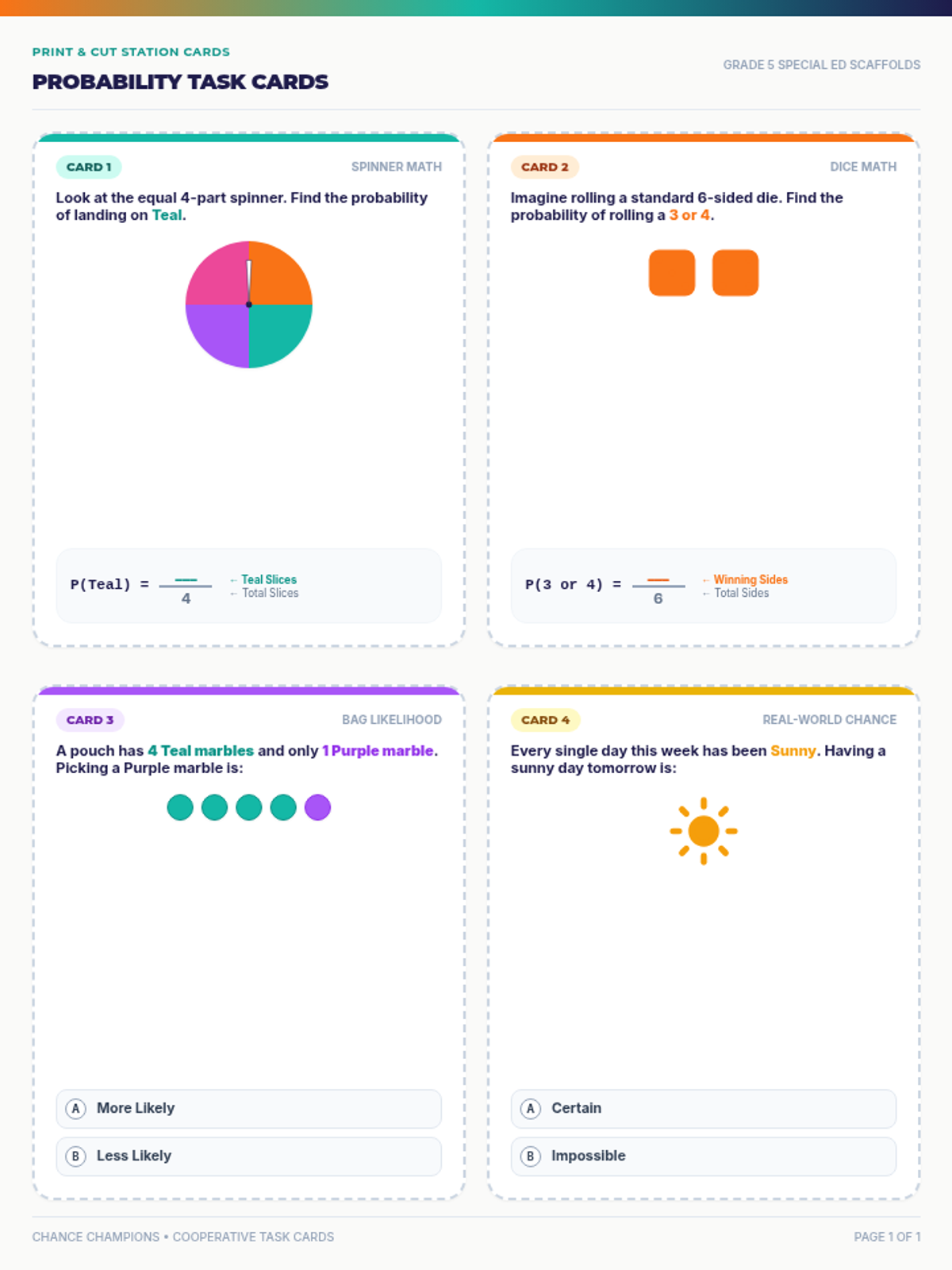
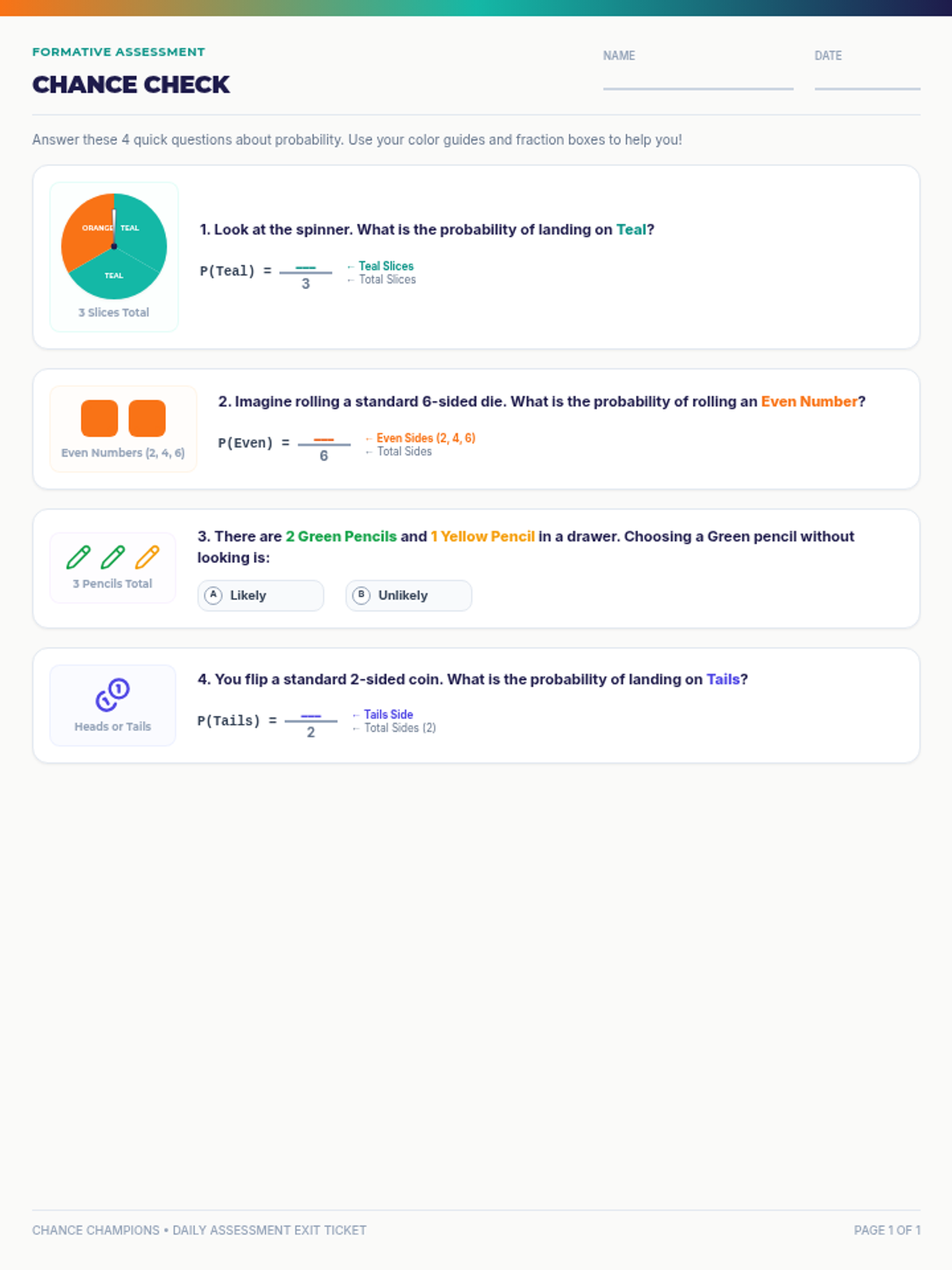
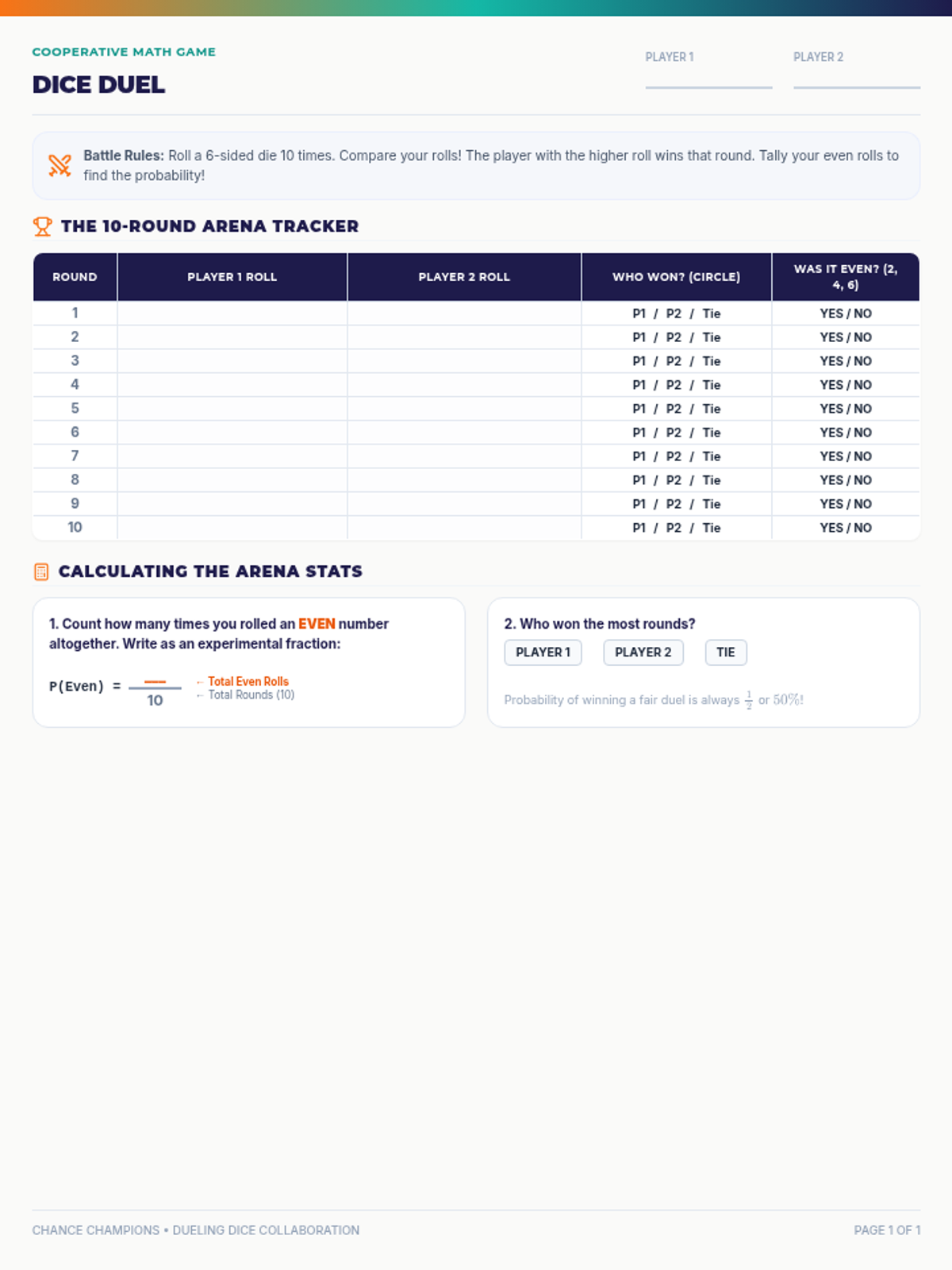
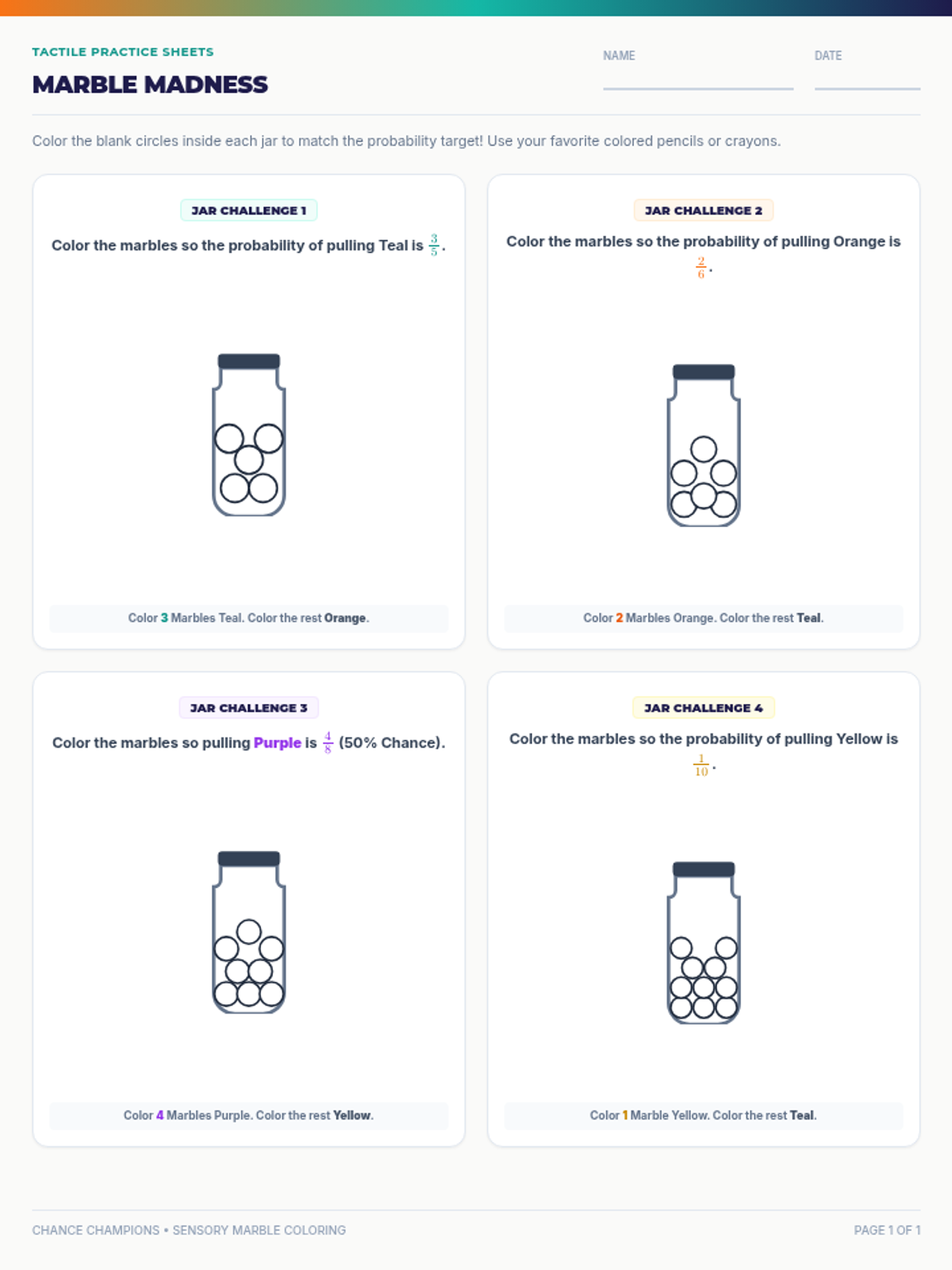
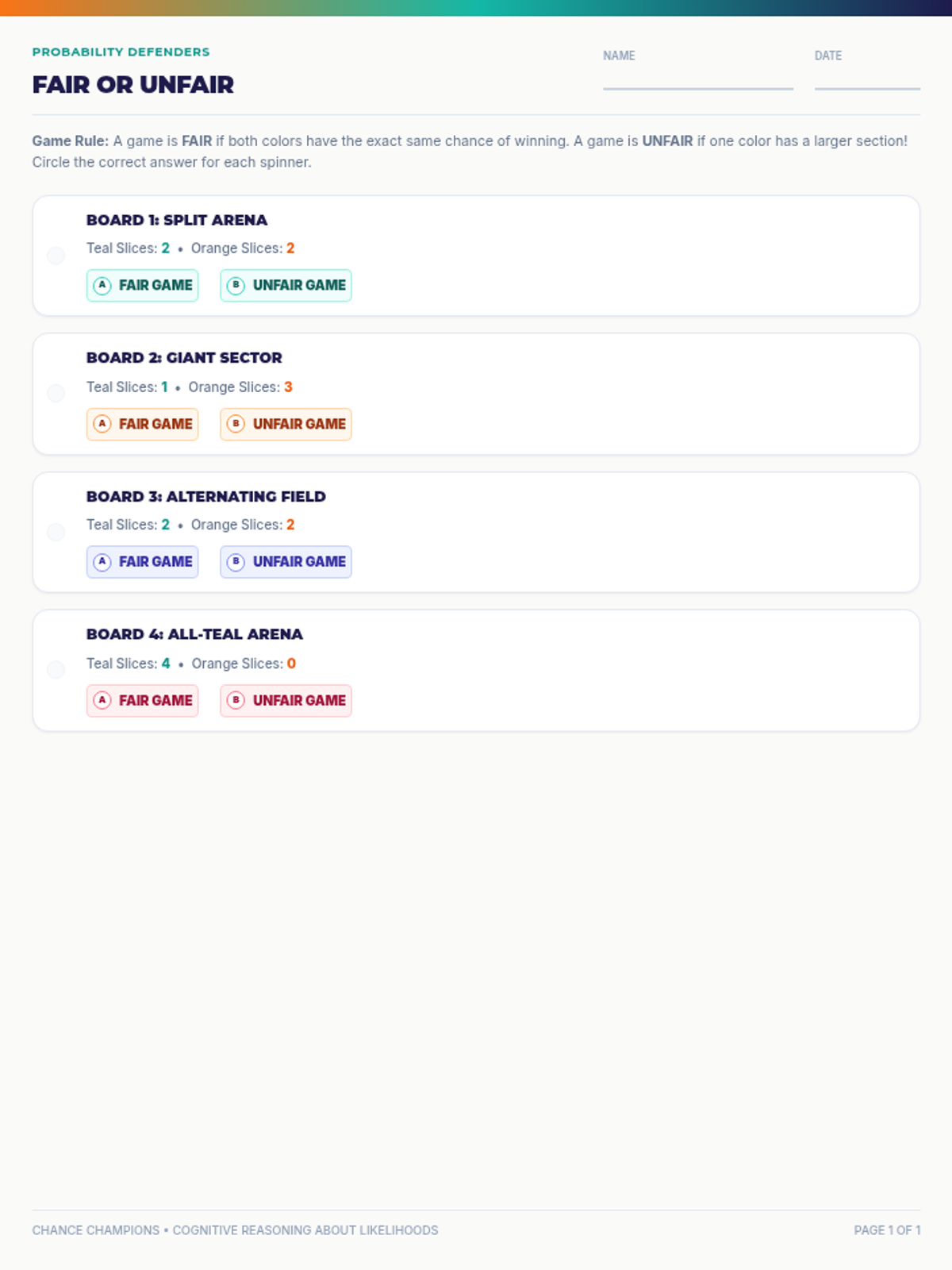
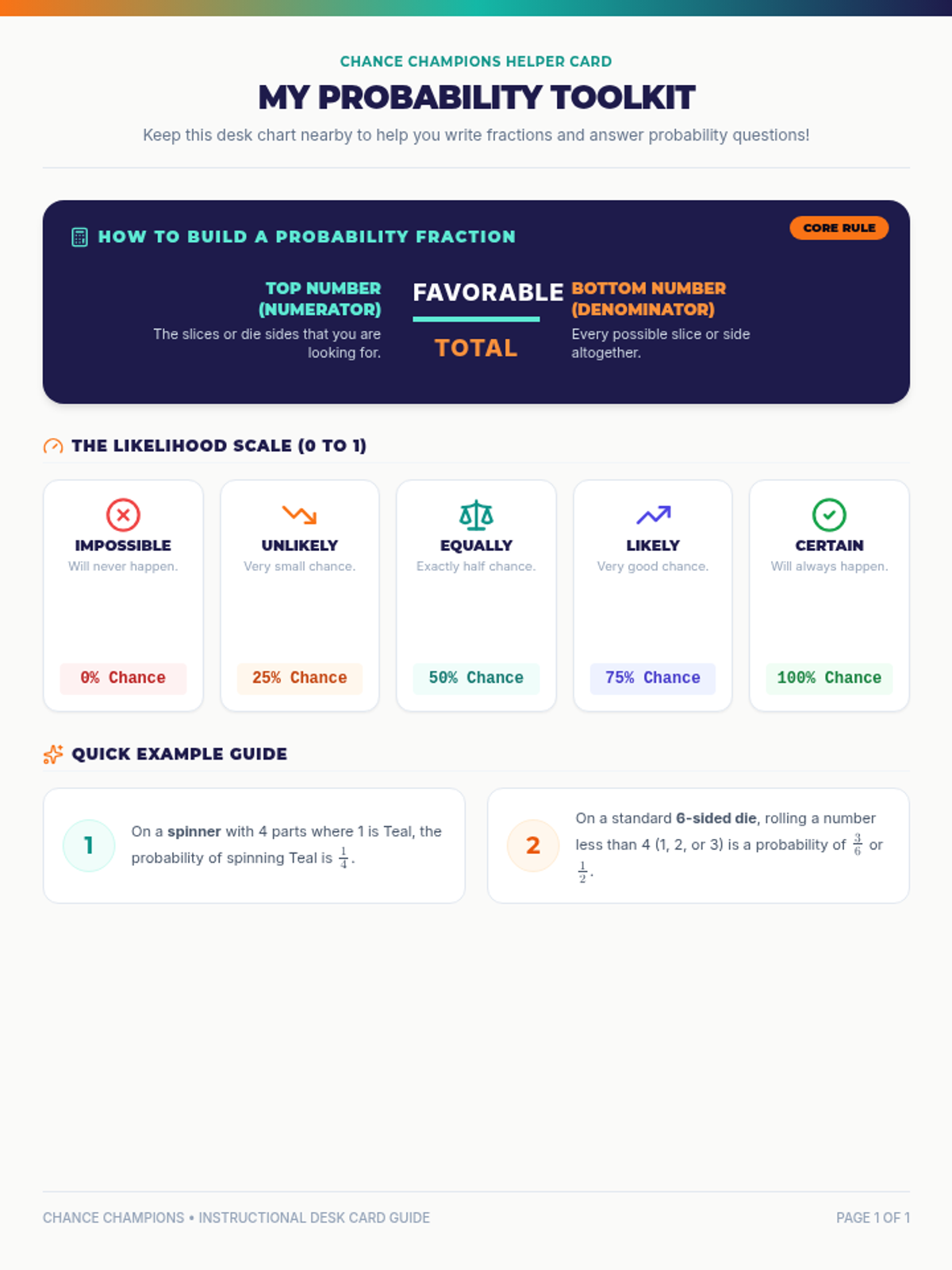
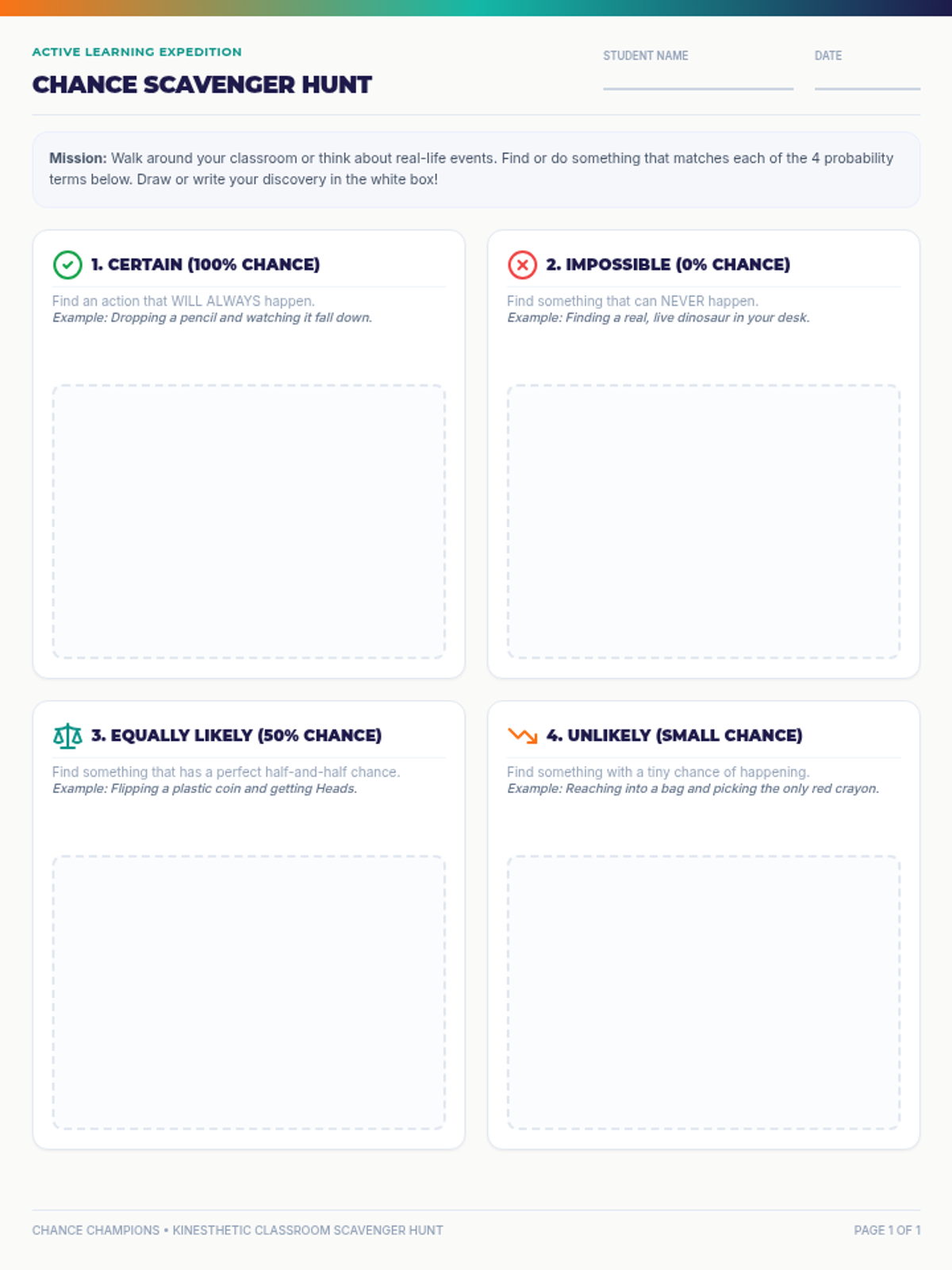
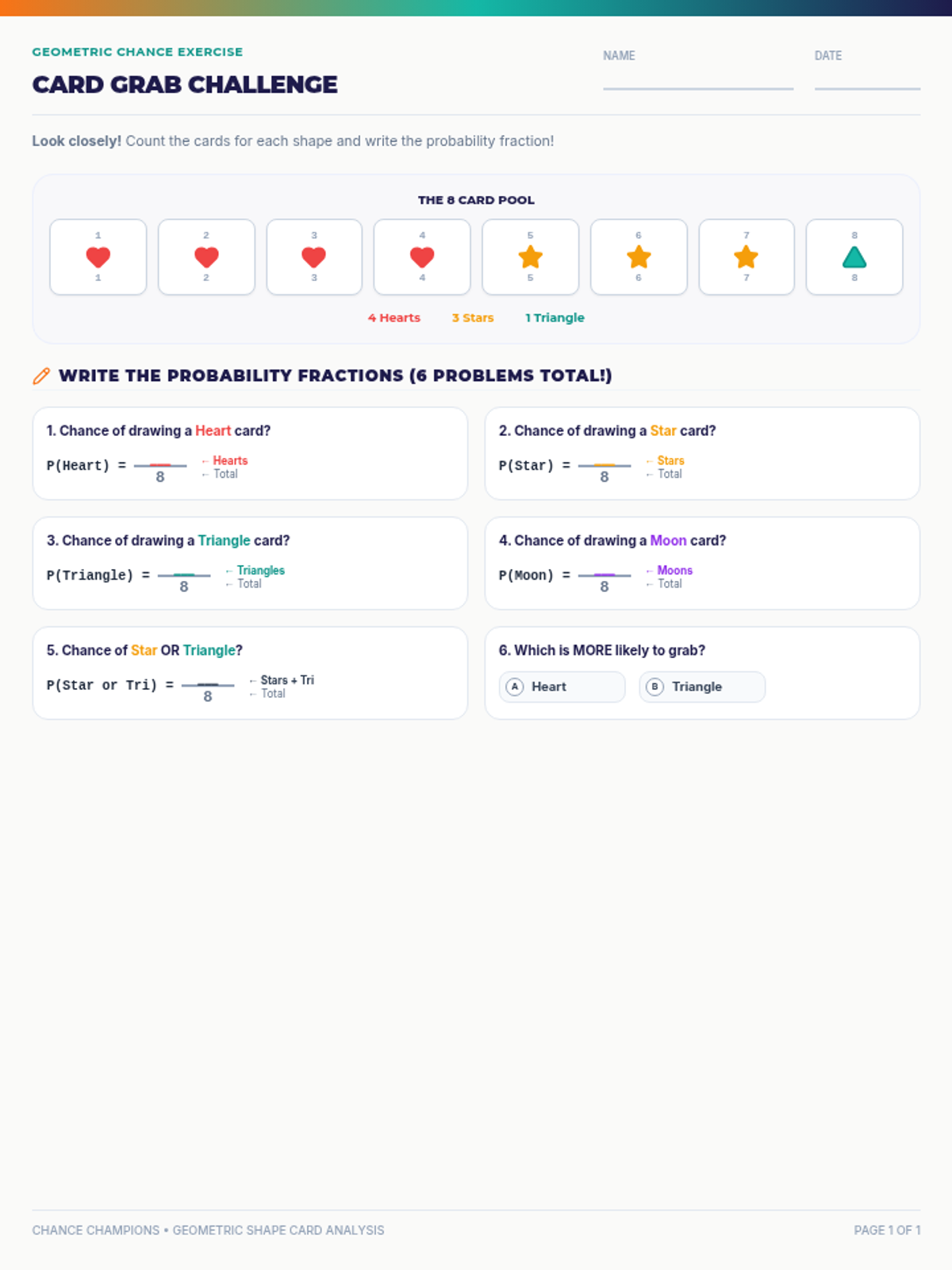
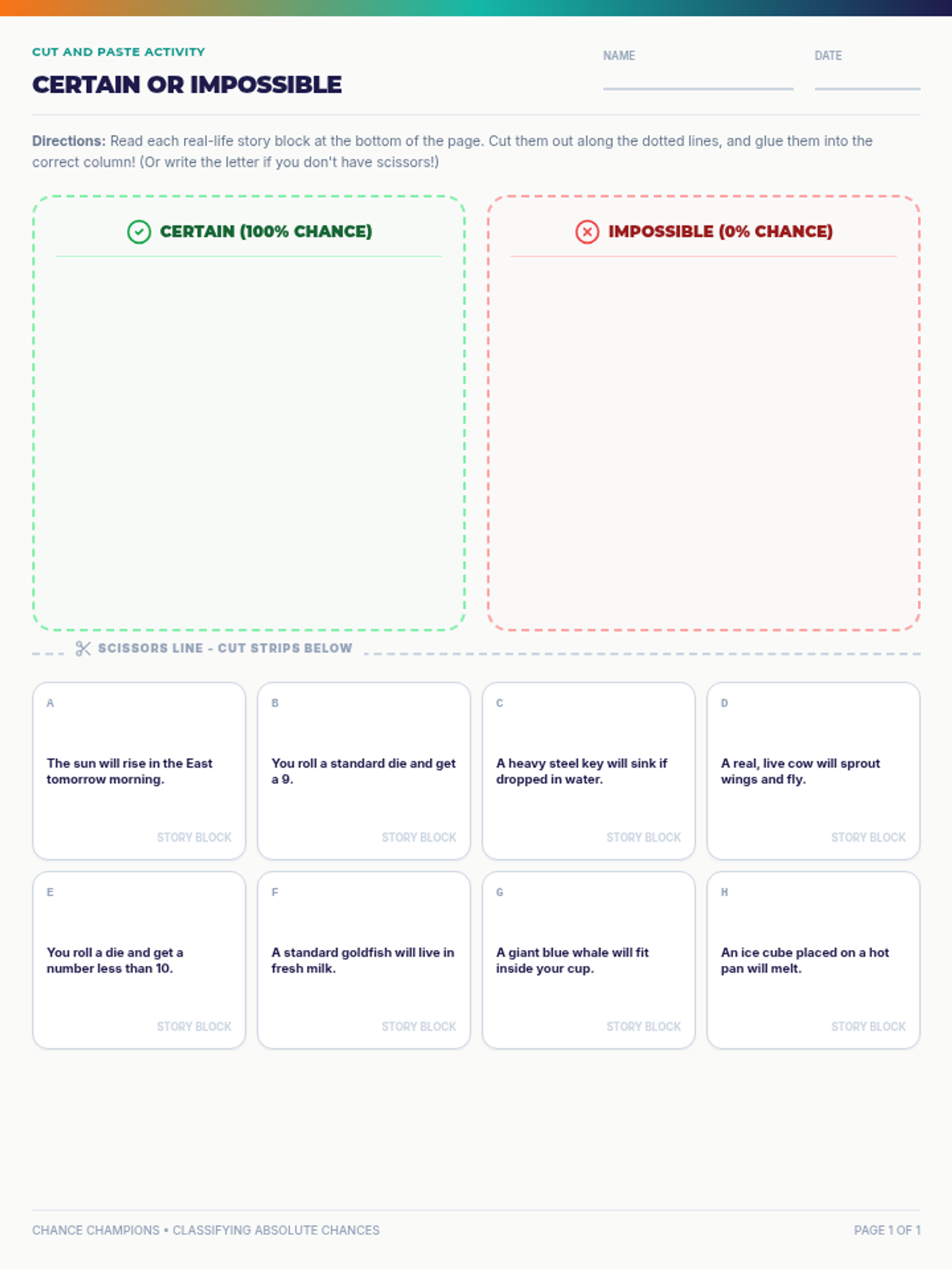
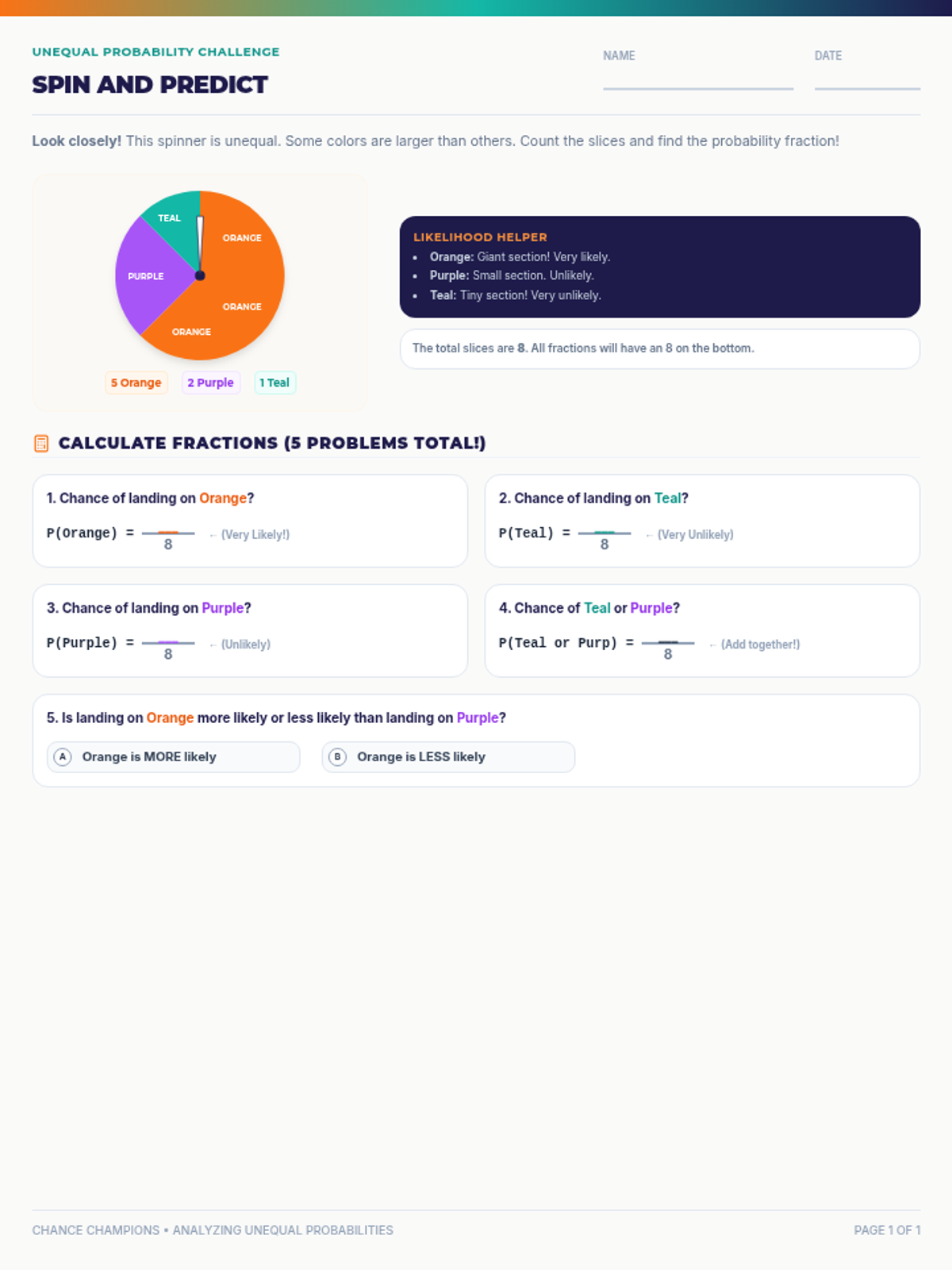
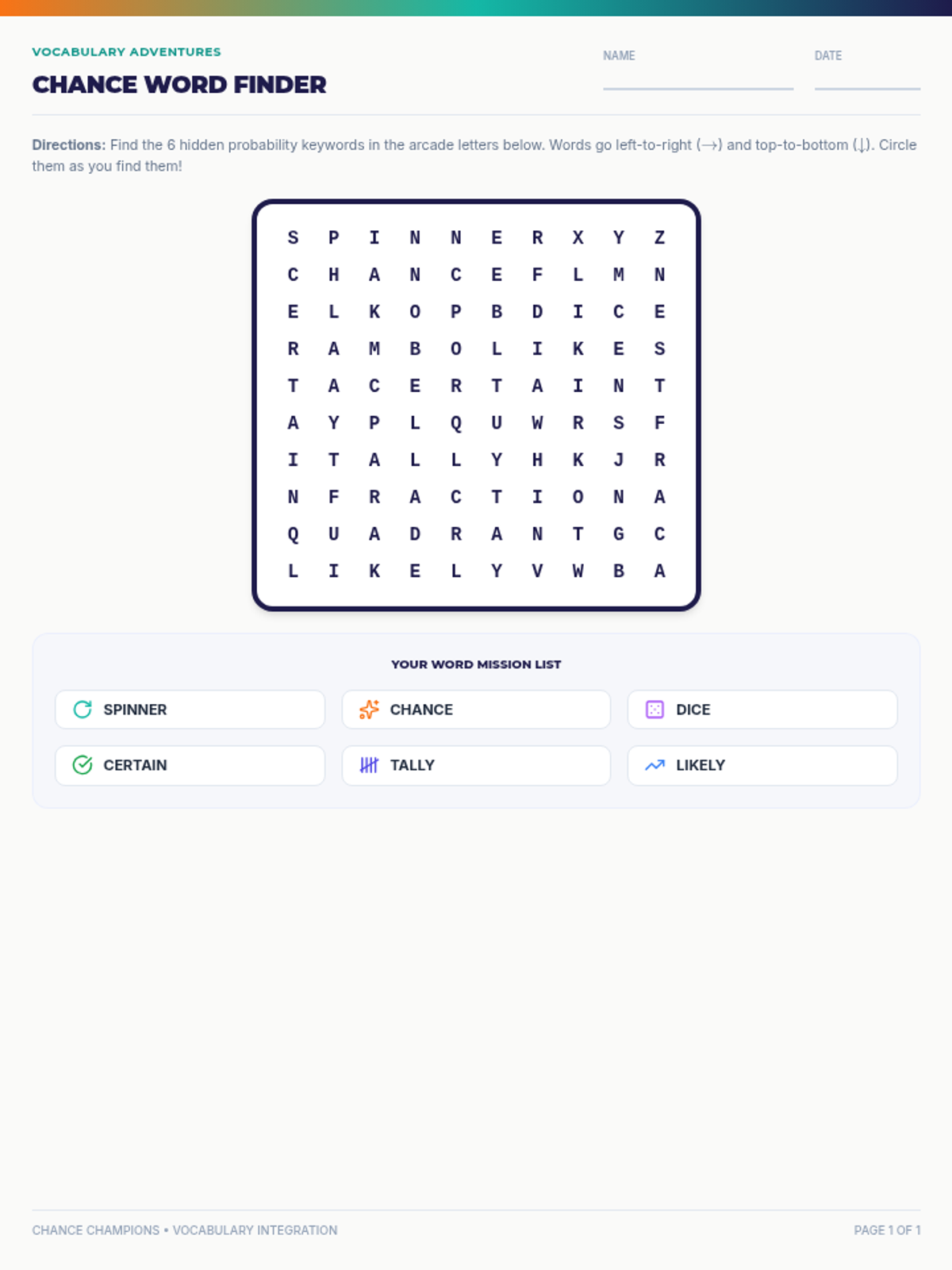
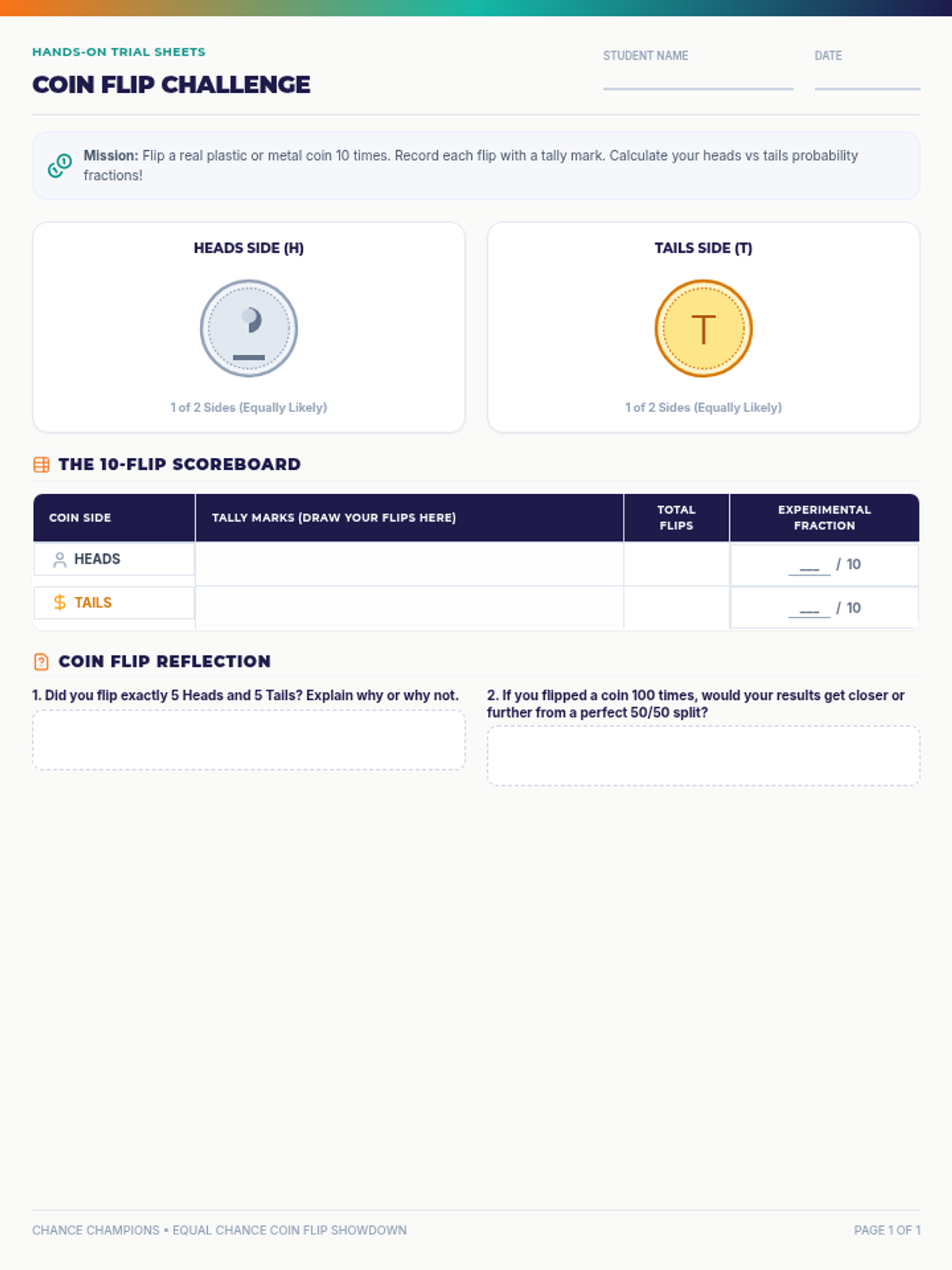
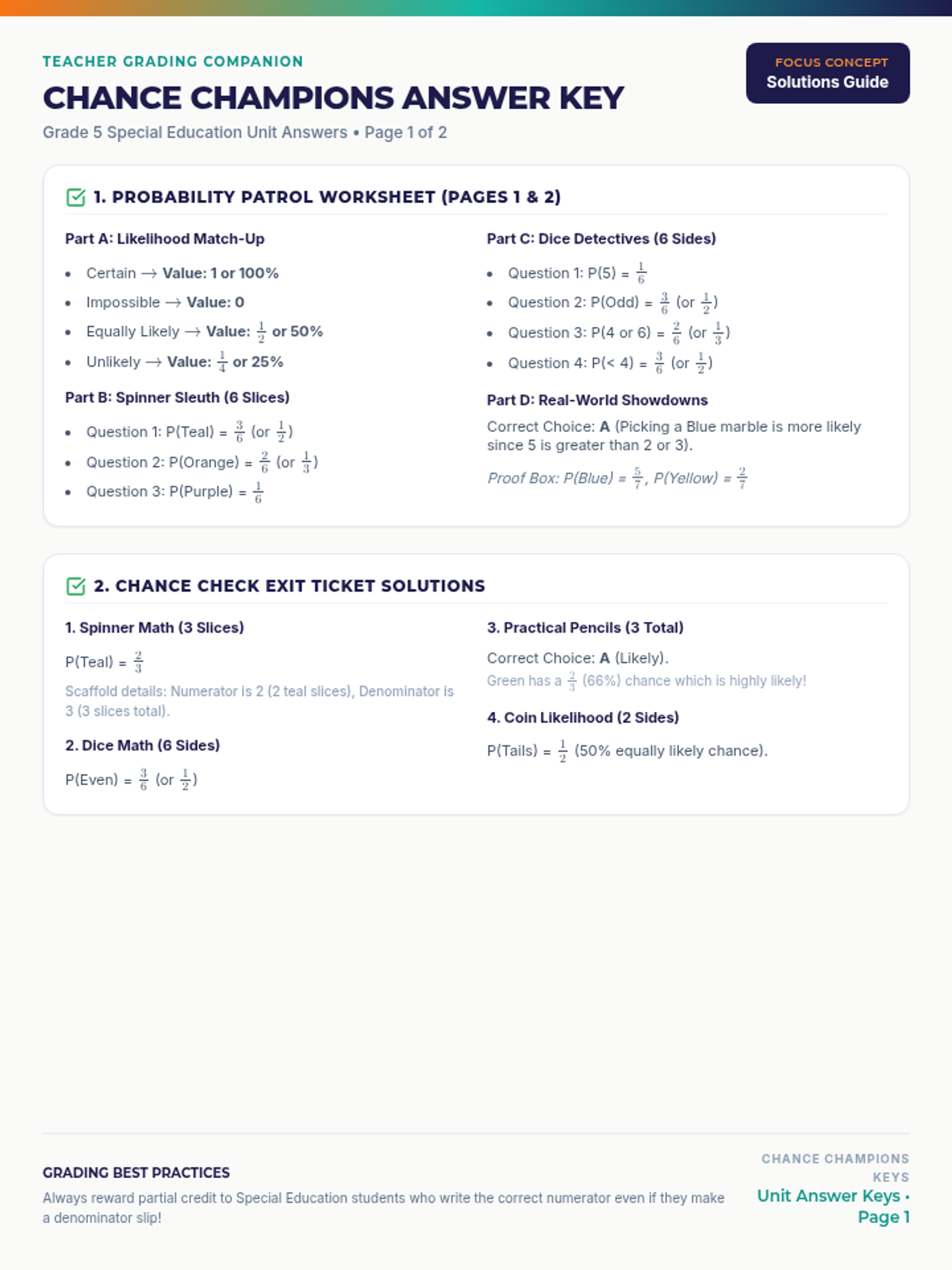
An interactive lesson bundle focused on simple probability using spinners and dice. Students learn to calculate and express probabilities as simple fractions, compare likelihoods, and play a collaborative spinner game.
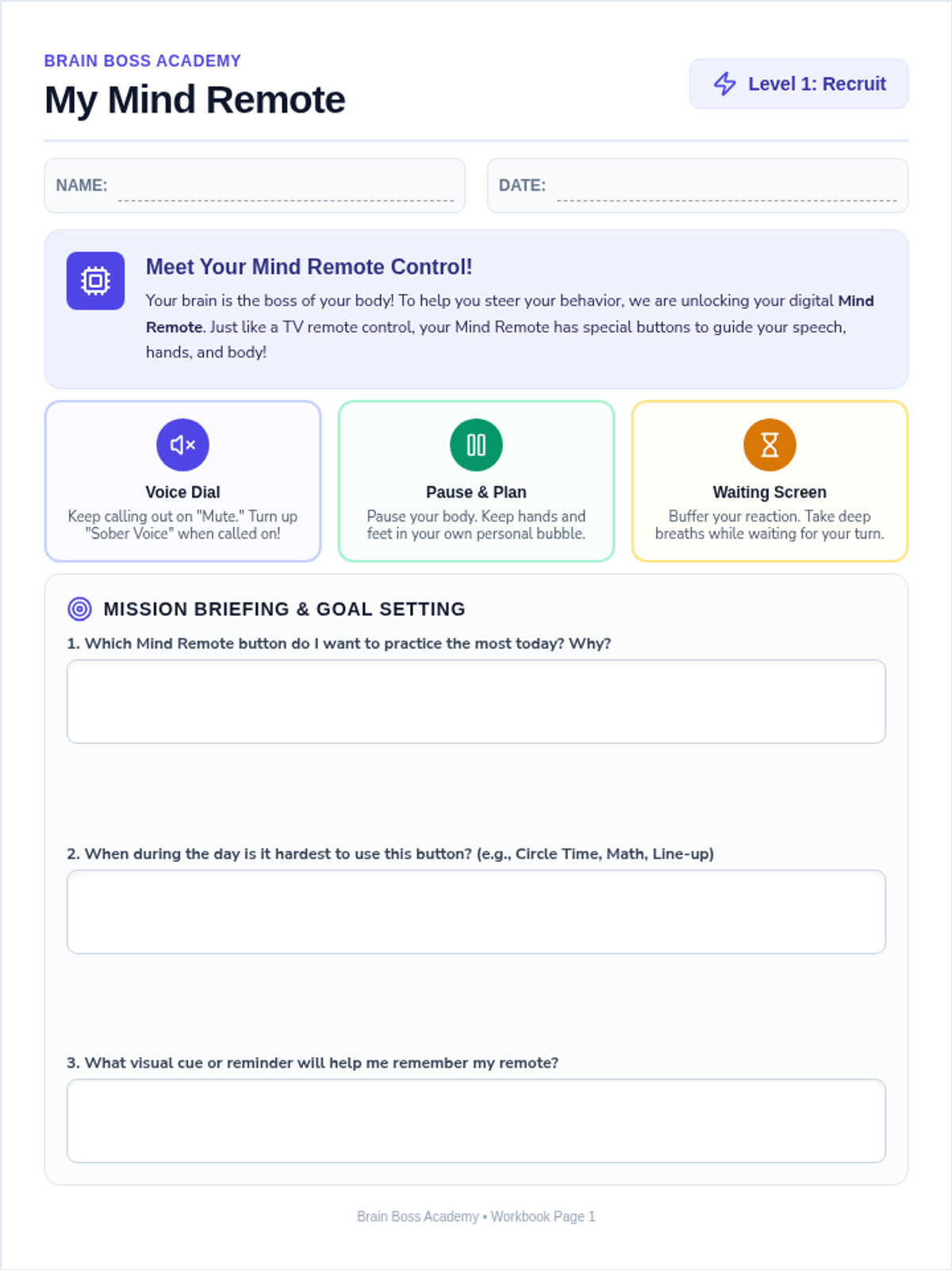
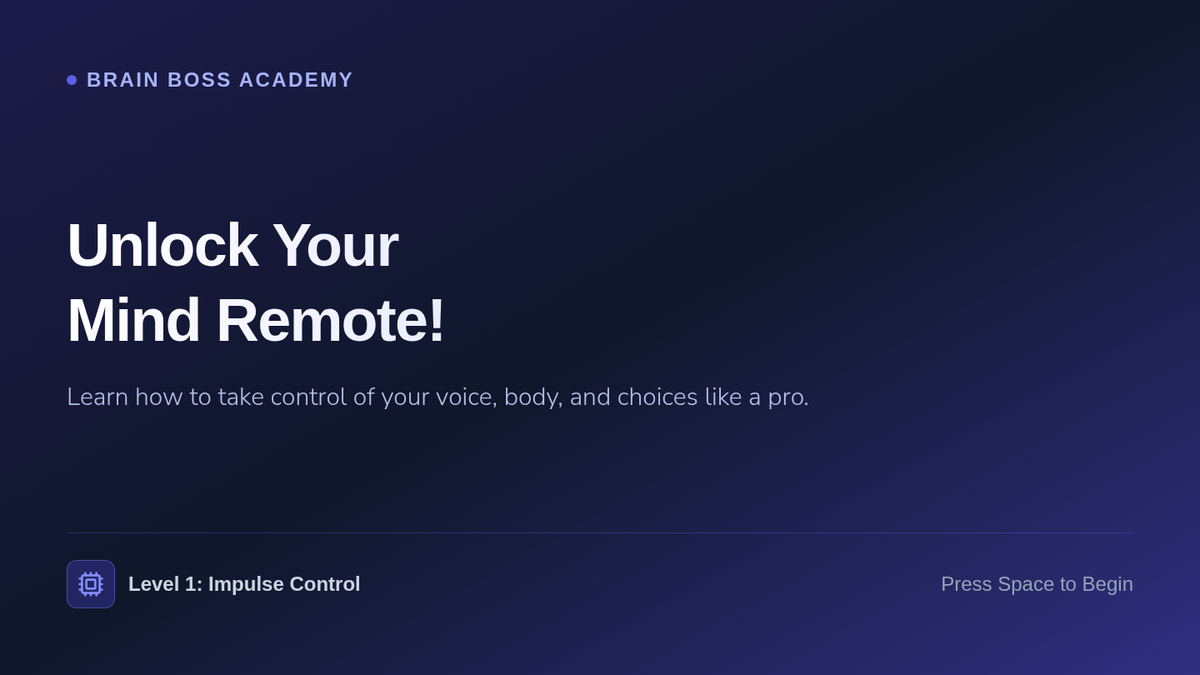
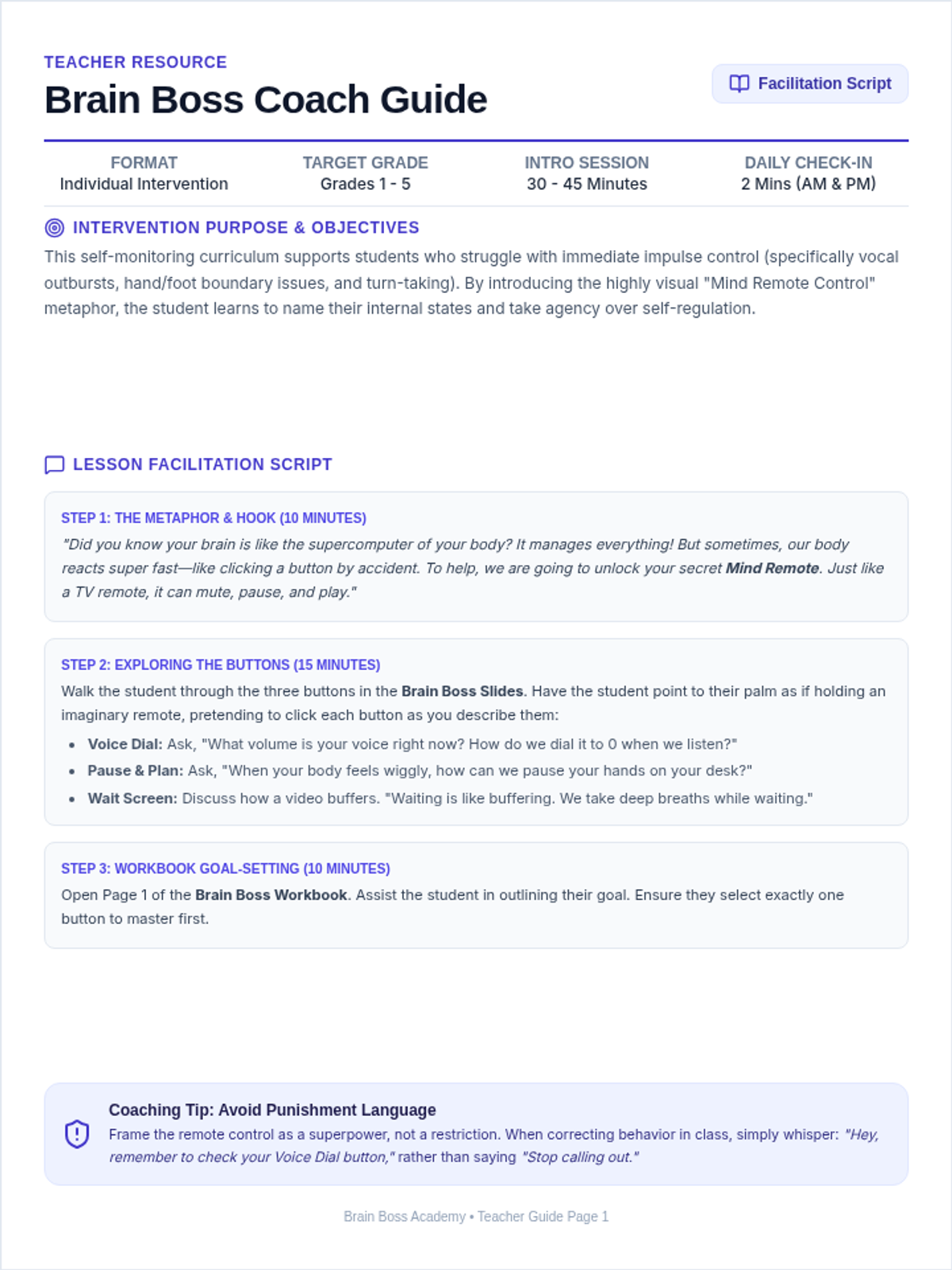
An individual self-monitoring lesson focused on impulse control, teaching students how to manage calling out, wait their turn, and maintain personal boundaries using a relatable 'Mind Remote Control' metaphor.
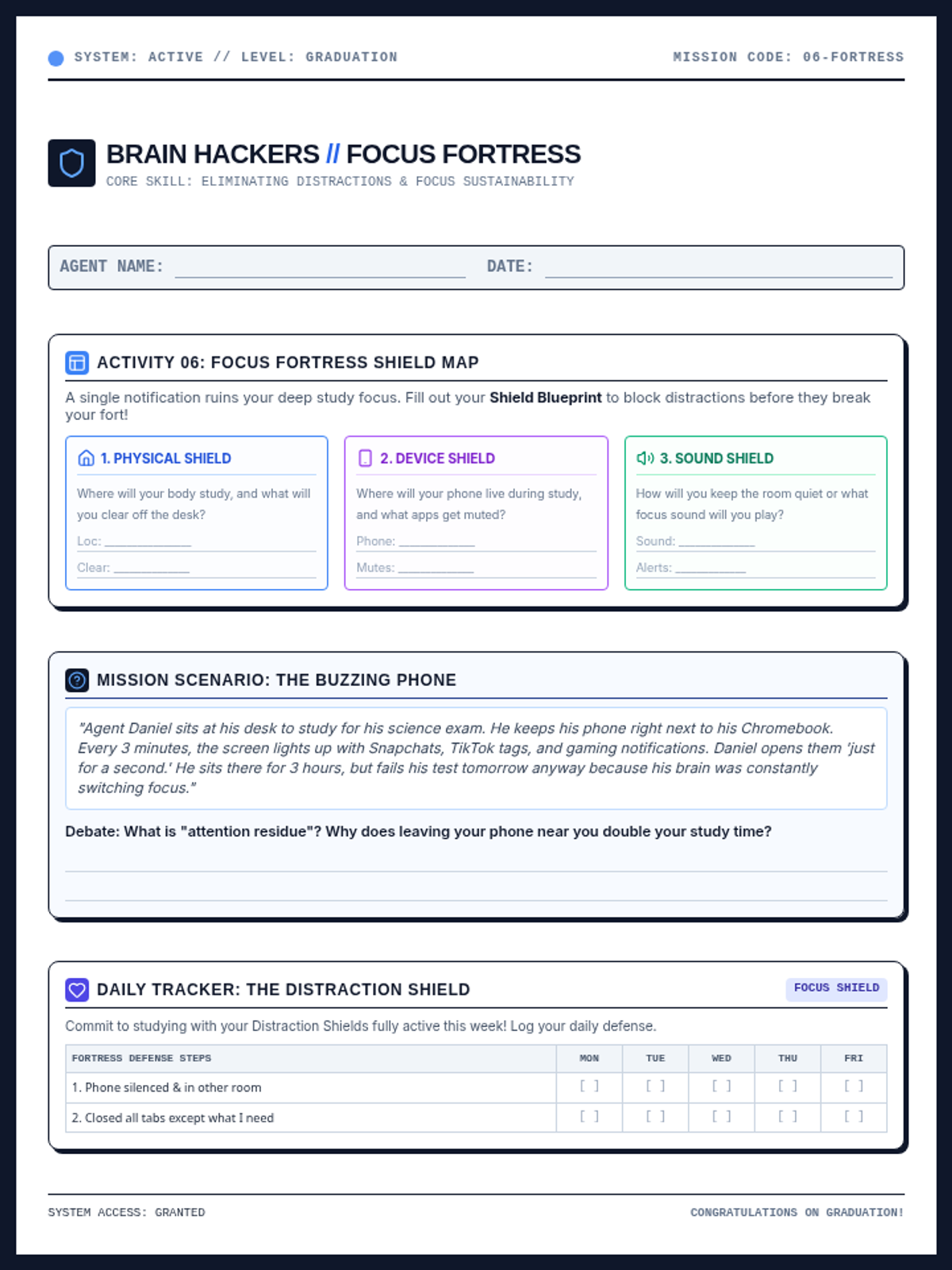
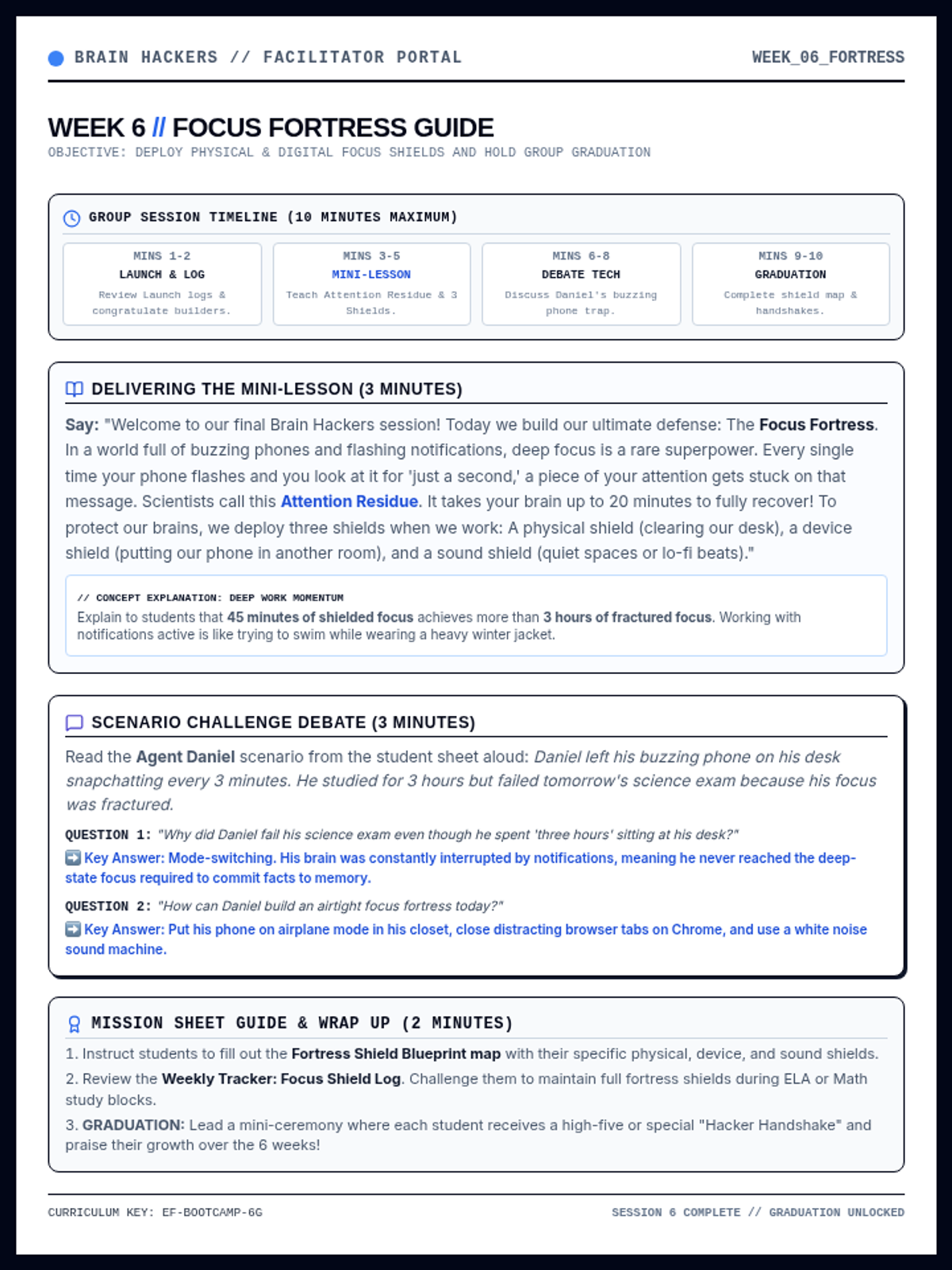
Week 6 focuses on minimizing digital and physical distractions. Students learn to build a physical and digital "Focus Fortress" and complete their executive functioning graduation.
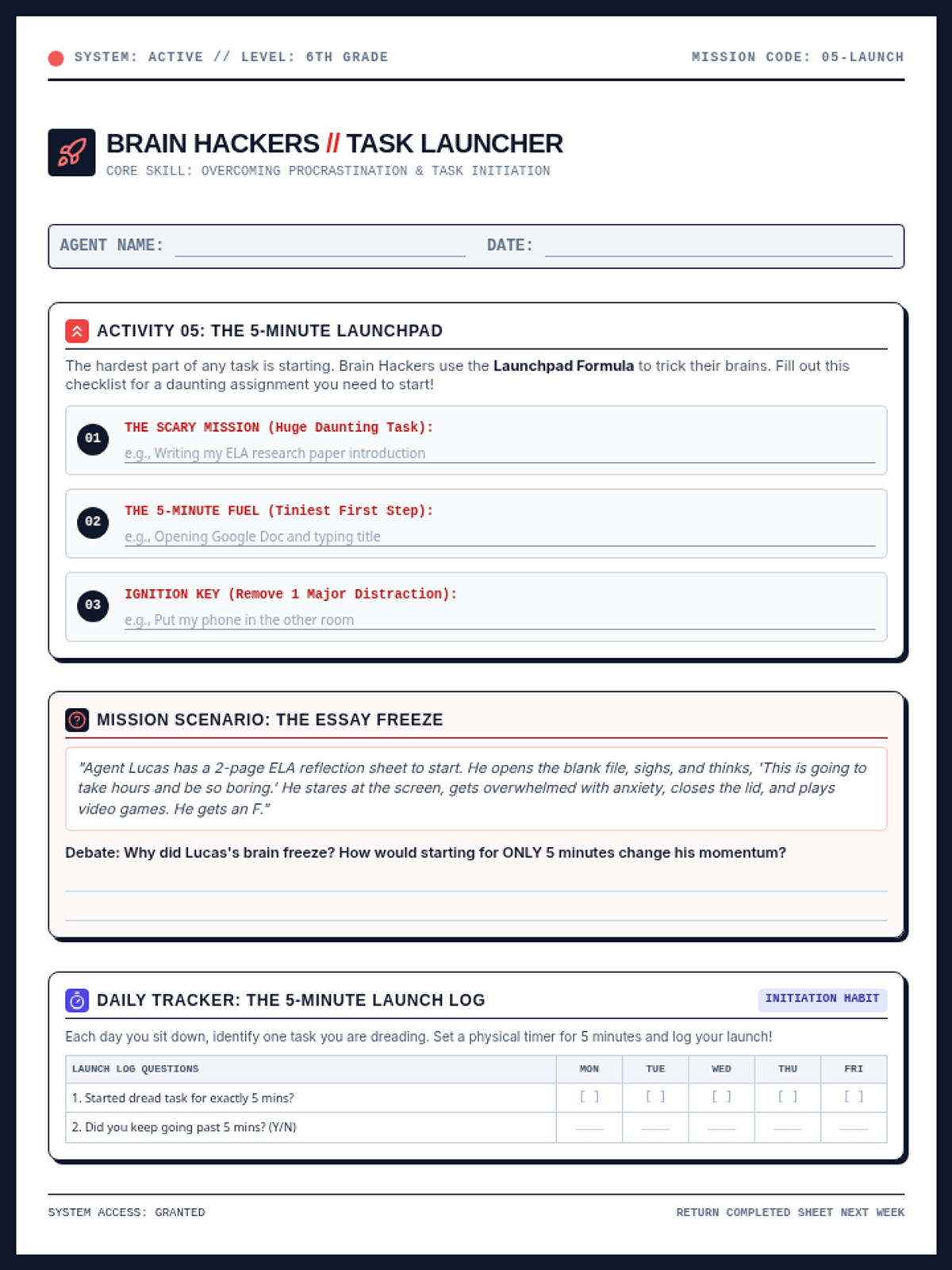
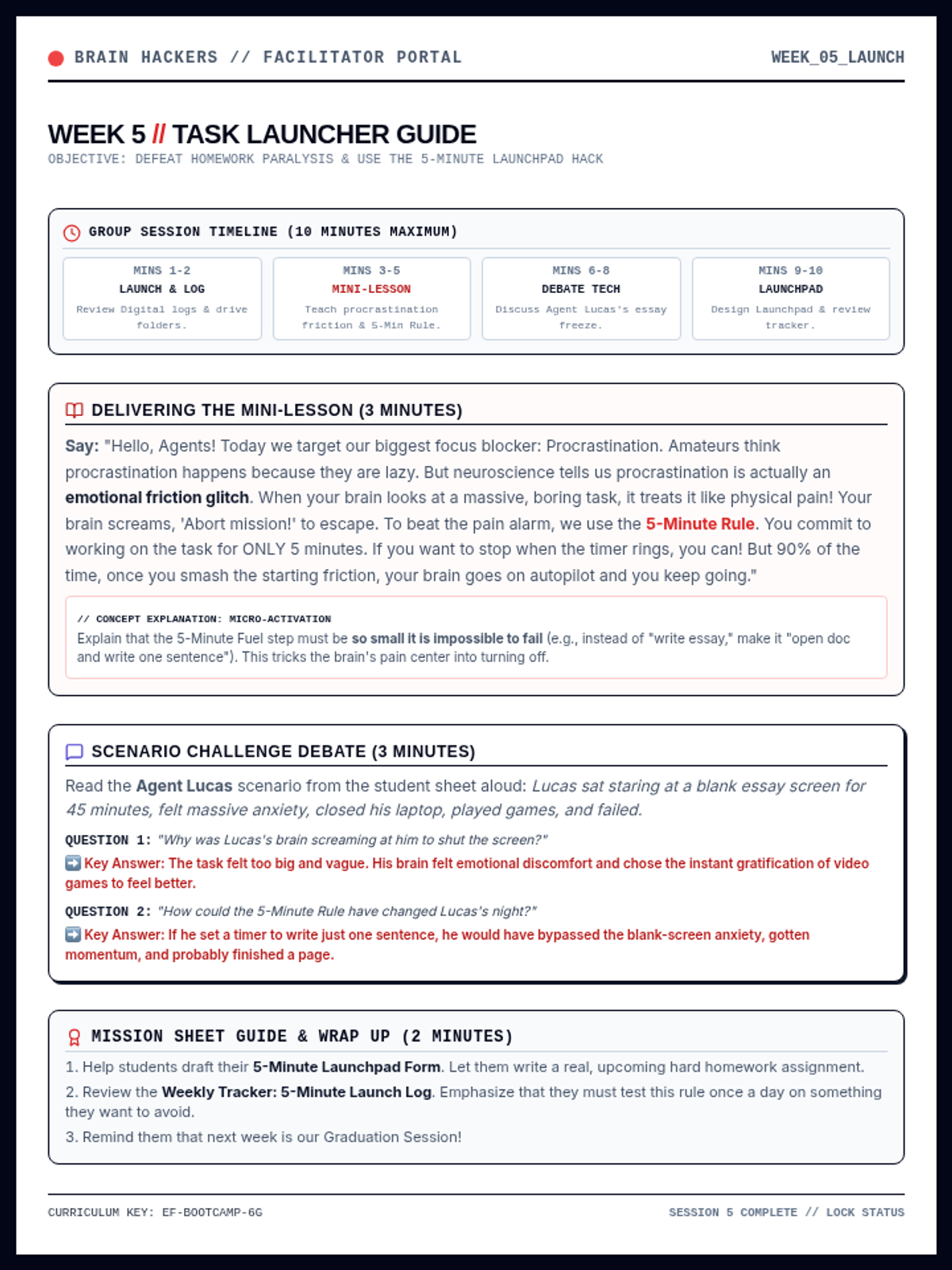
Week 5 focuses on task initiation and beating procrastination. Students learn the "5-Minute Rule" and design "Launchpads" to break down daunting assignments.
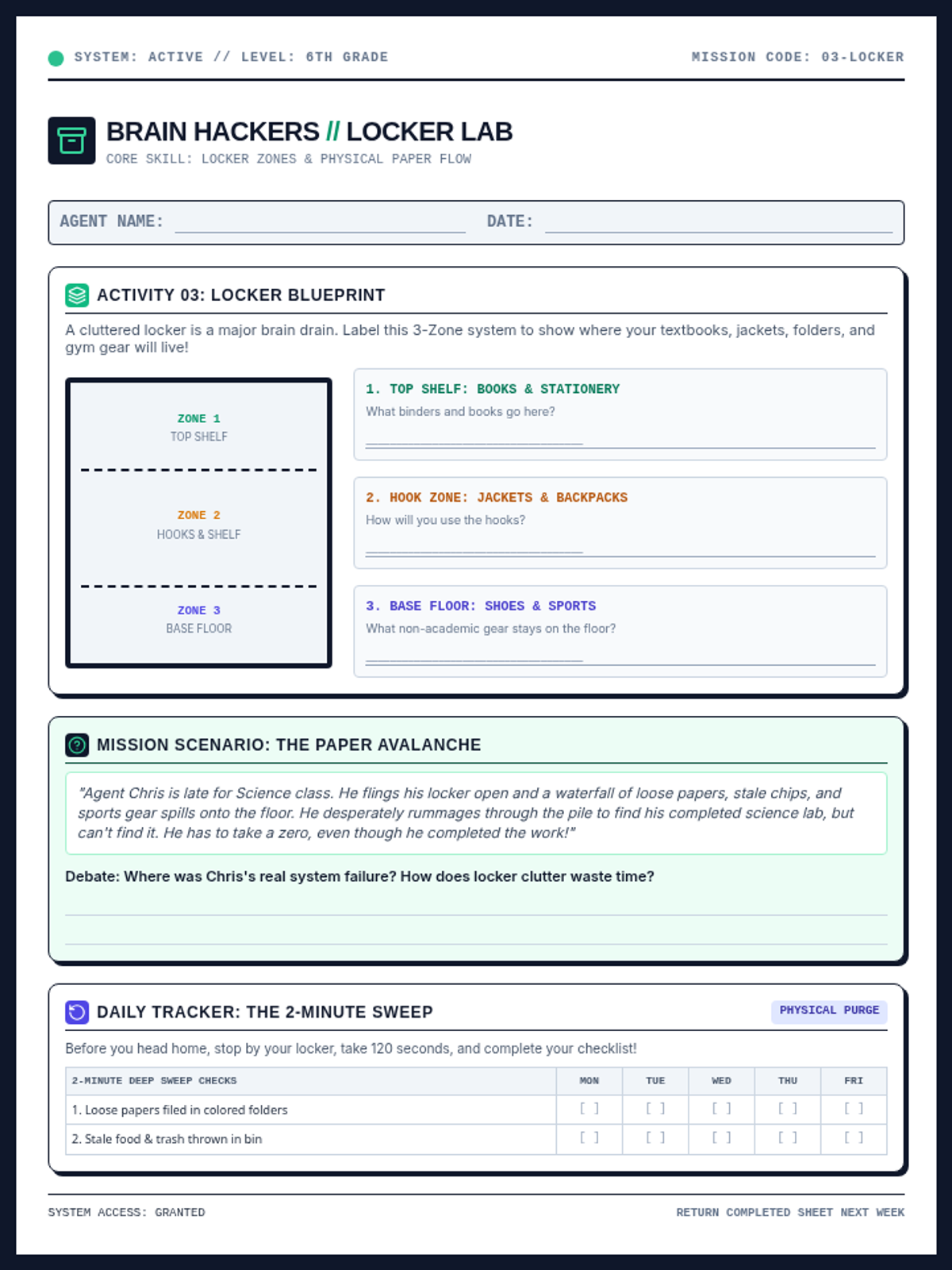
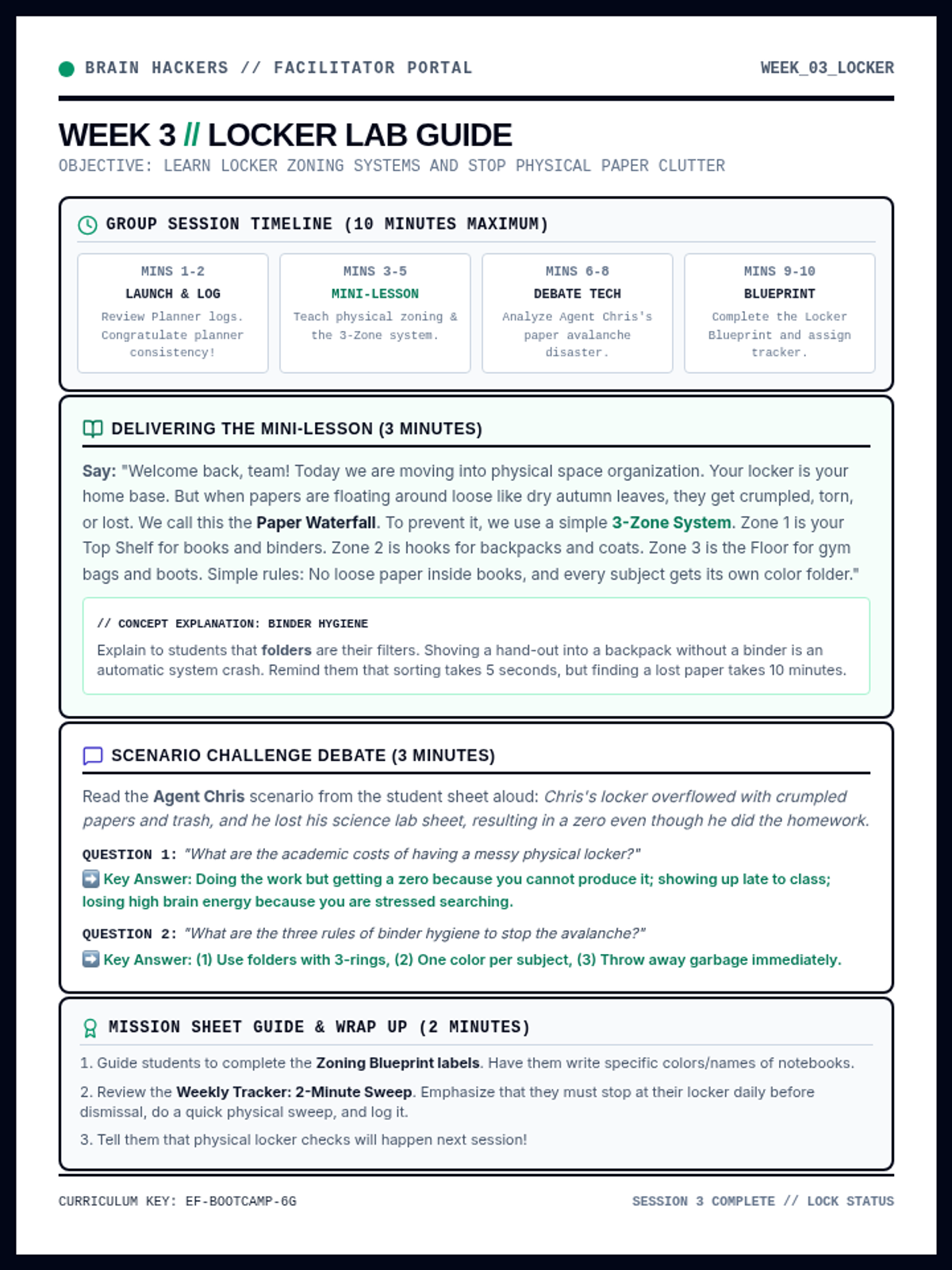
Week 3 focuses on locker and physical materials organization. Students learn to design their locker zones and apply a simple color-coded system to keep papers and notebooks in check.
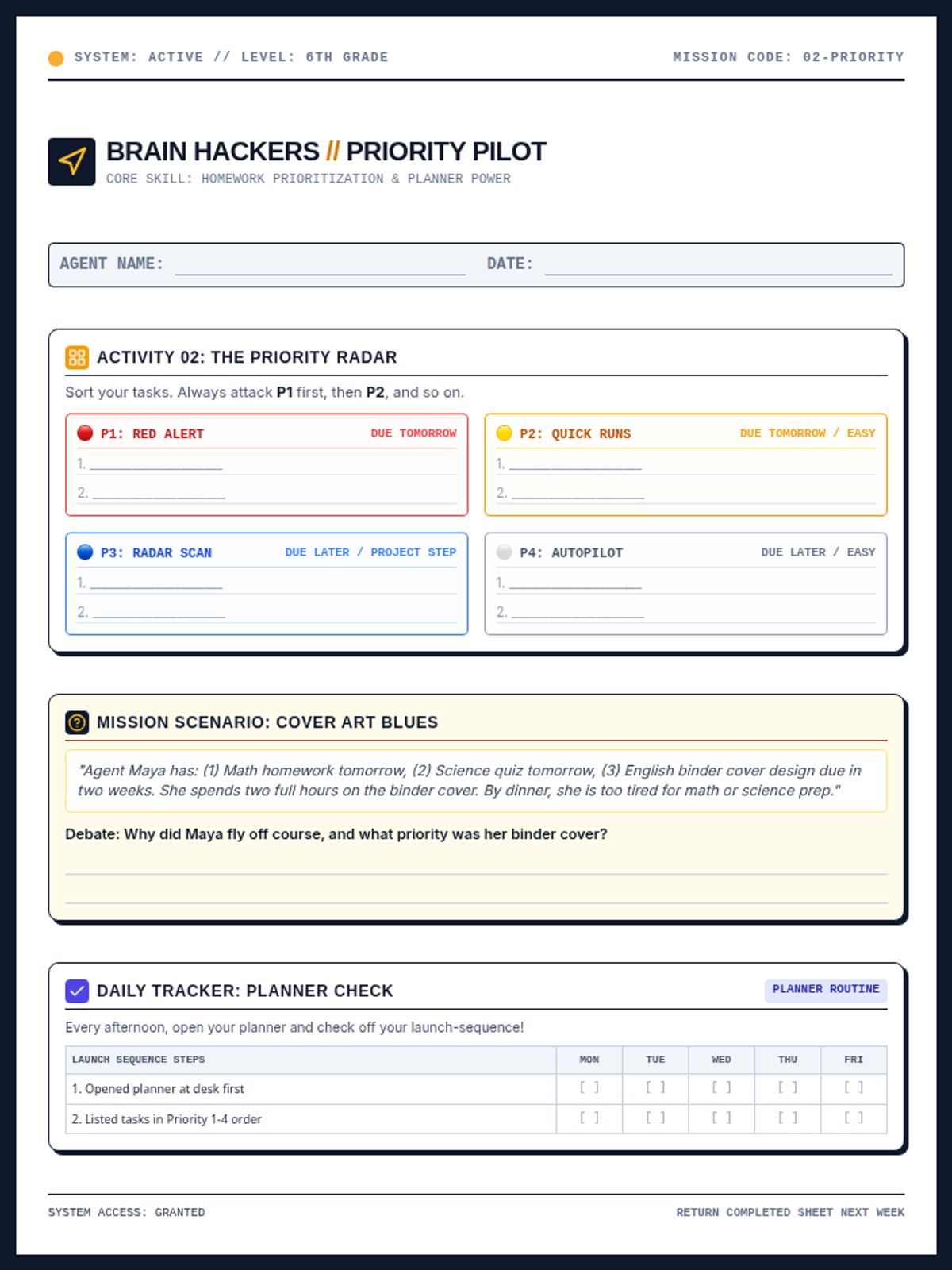
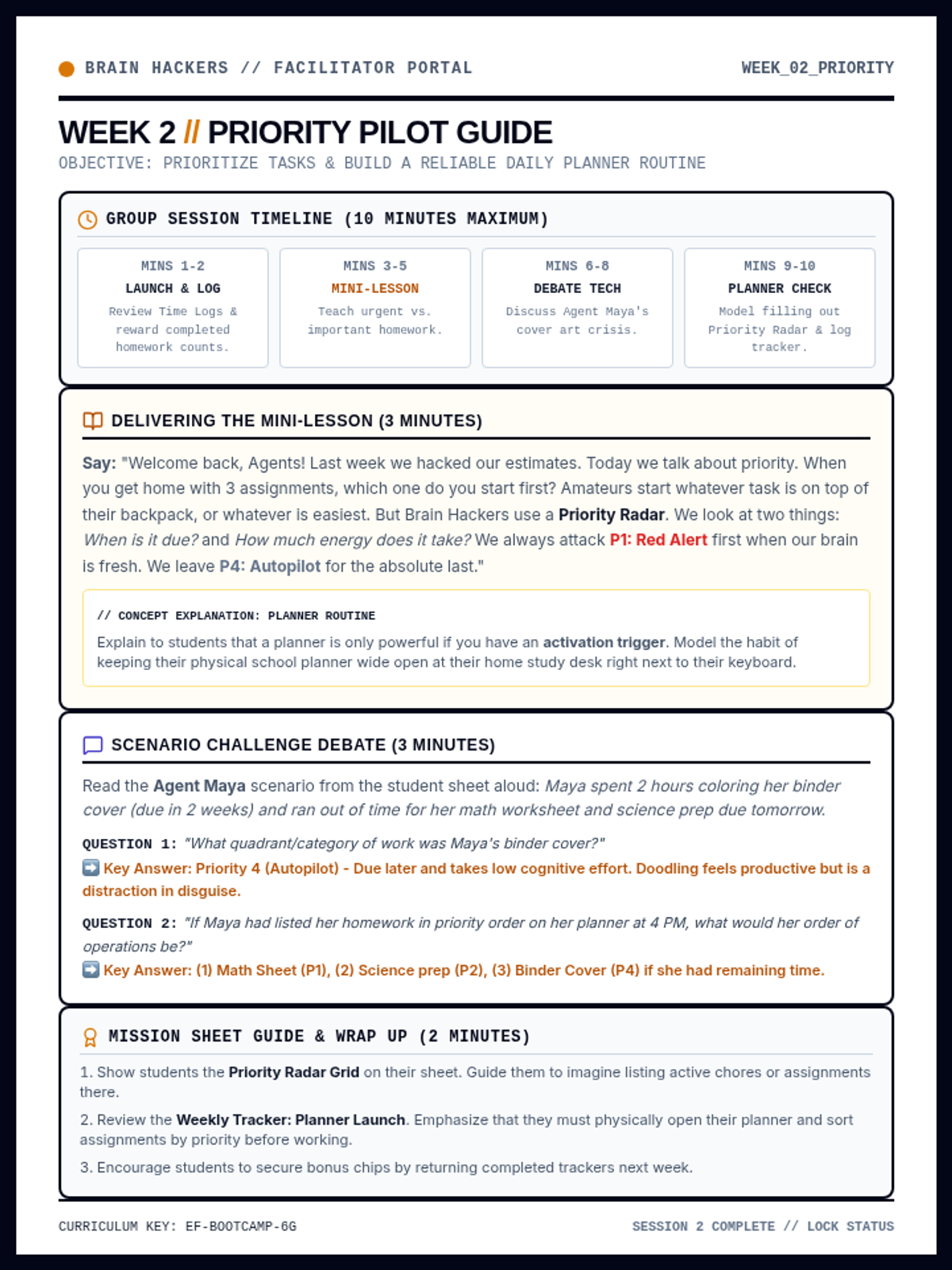
Week 2 focuses on homework prioritization and introducing students to using a planner. Students learn to categorize tasks by urgency and importance and plan their afternoon order of operations.
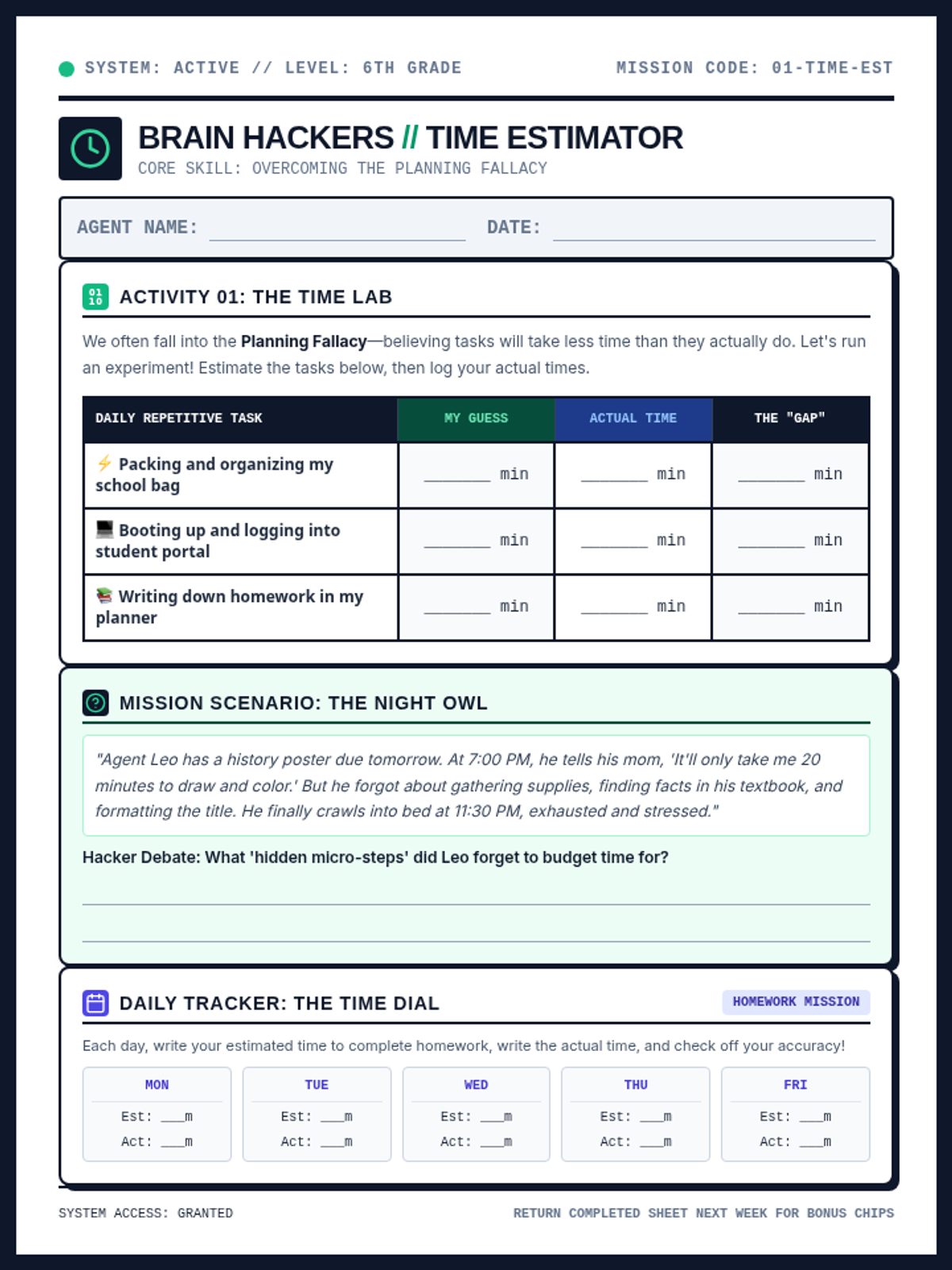
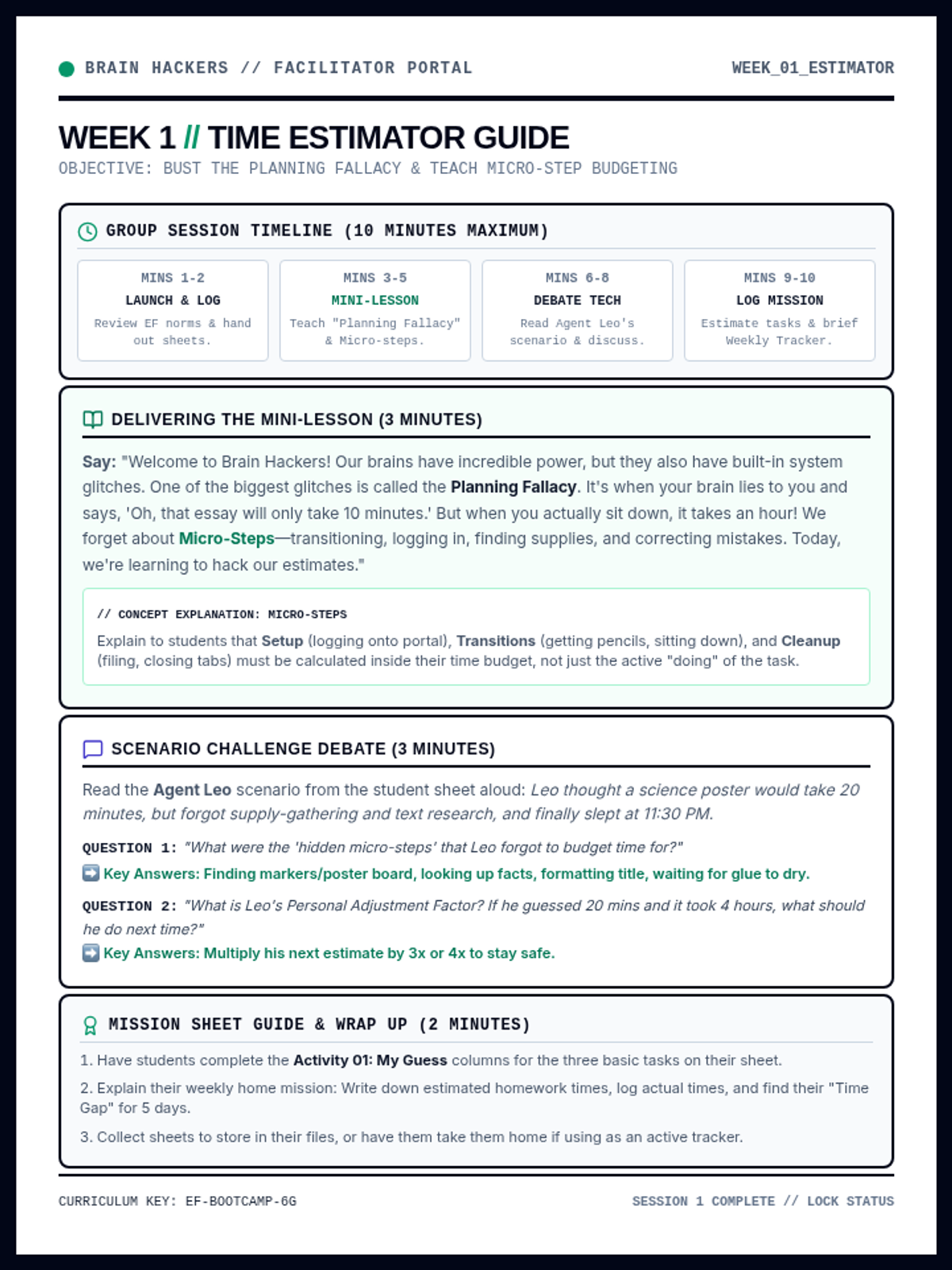
Week 1 focuses on estimating task length and planning realistic time budgets to avoid the 'planning fallacy'. Students learn to guess time, track actual time, and calculate their personal adjustment factors.
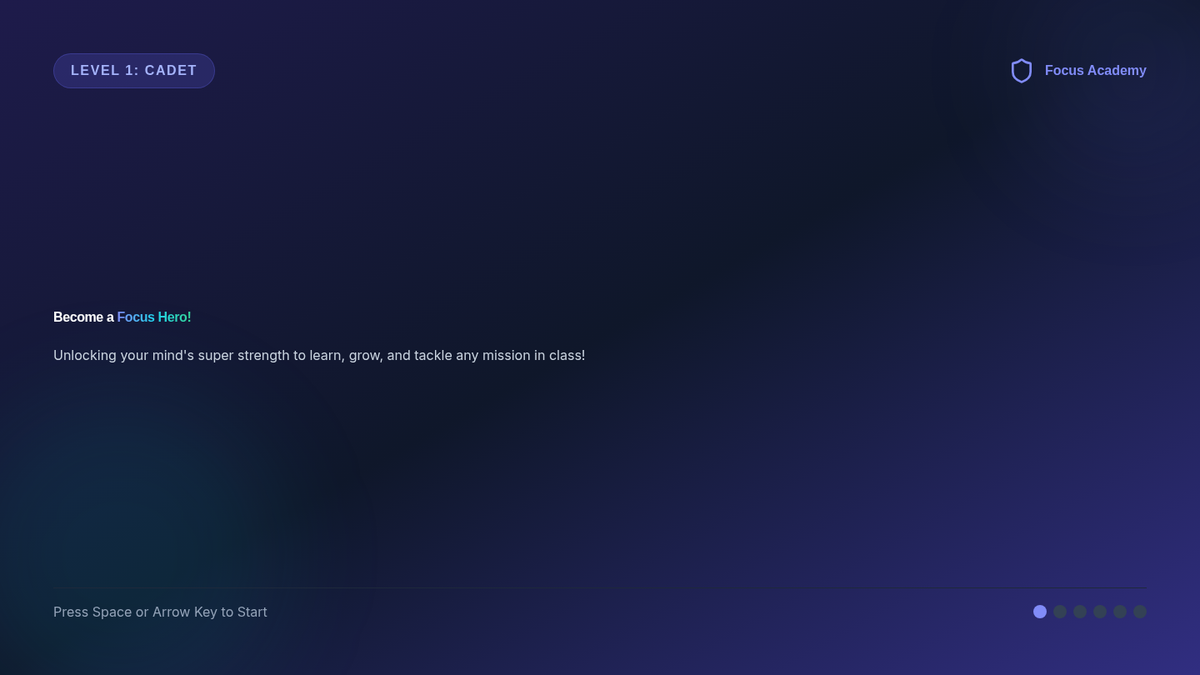
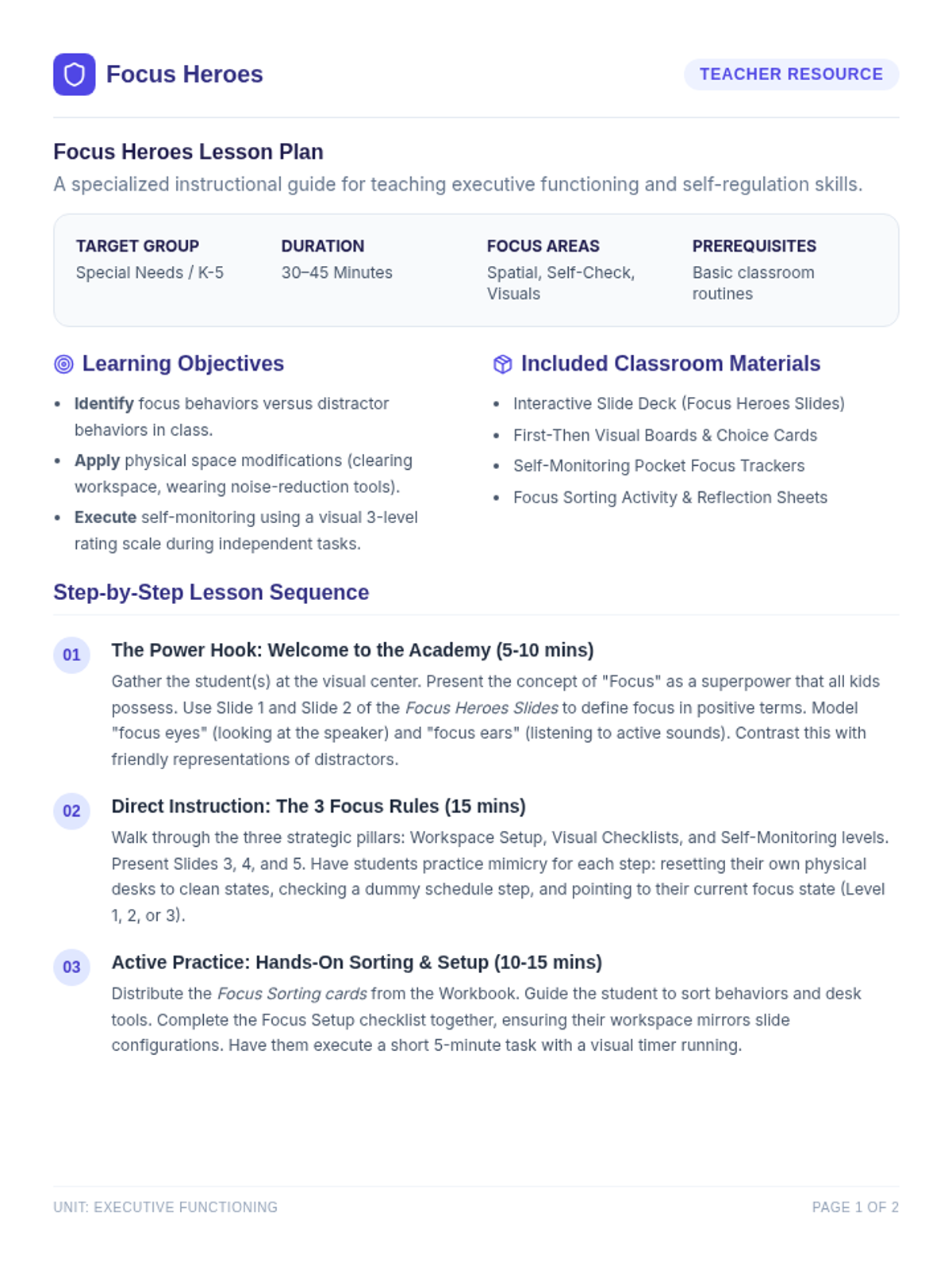
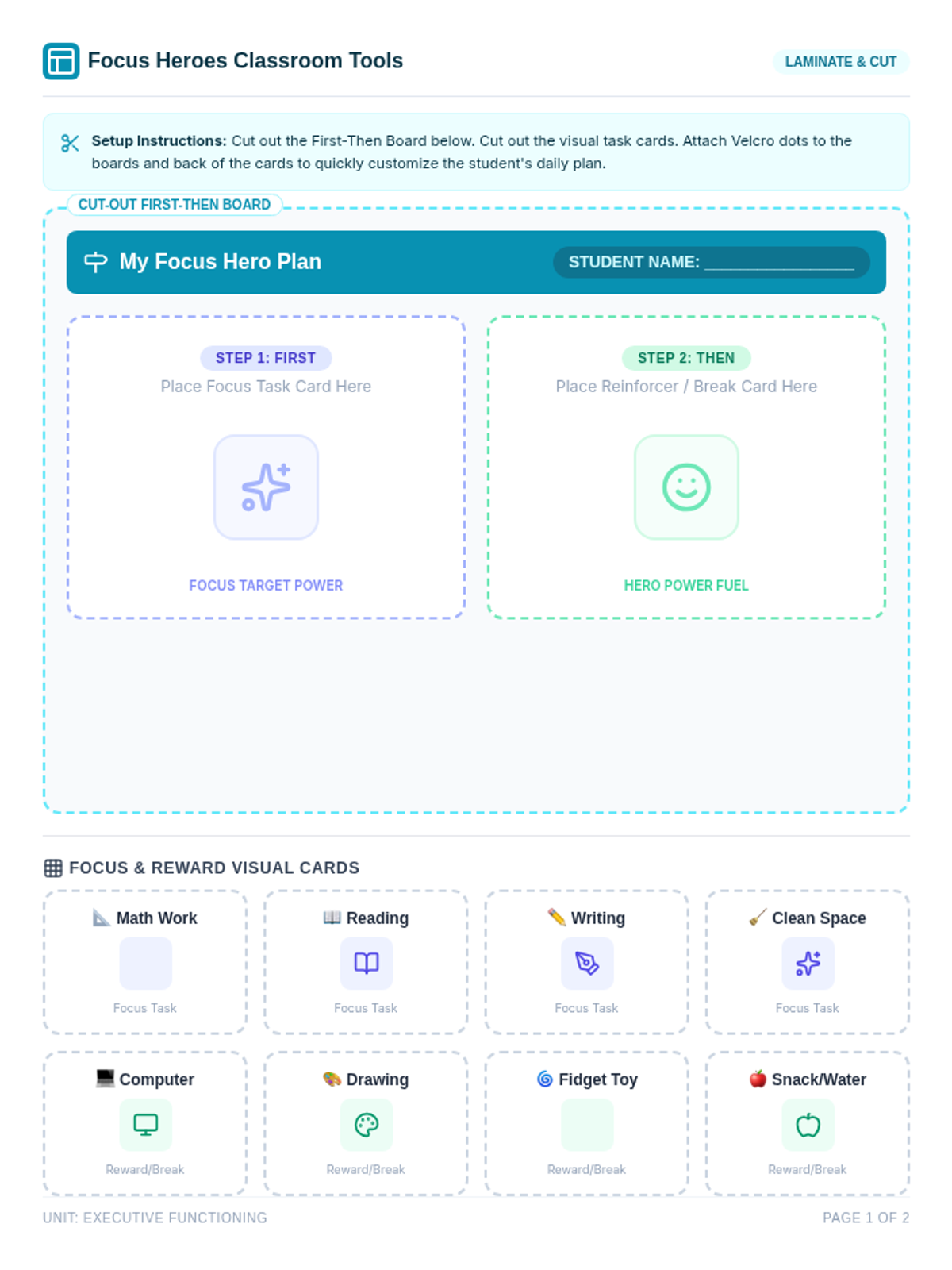
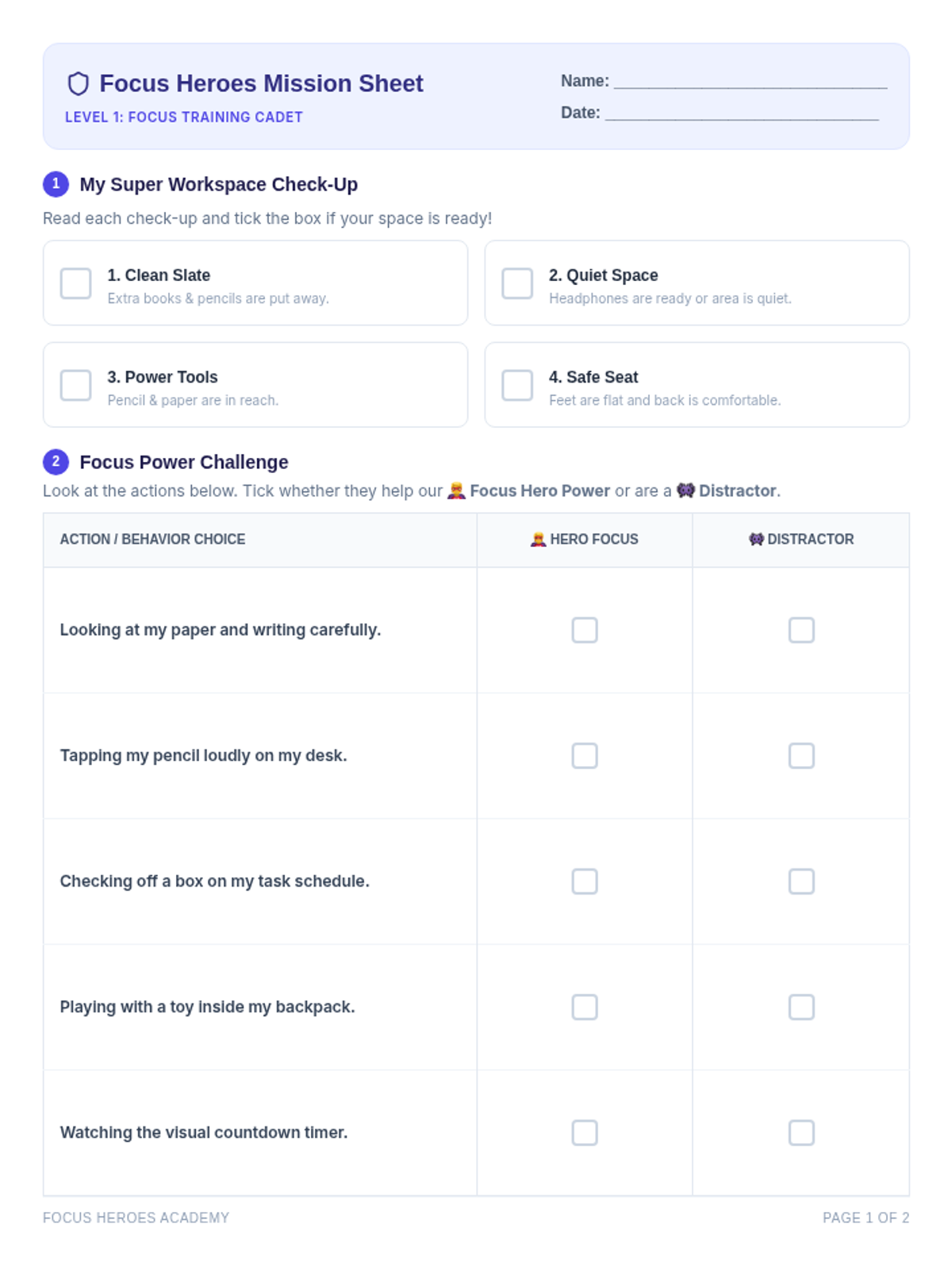
A specialized lesson designed to teach focus strategies, self-monitoring, and environmental adjustments to students with special needs, featuring concrete visual aids and self-regulation tools.
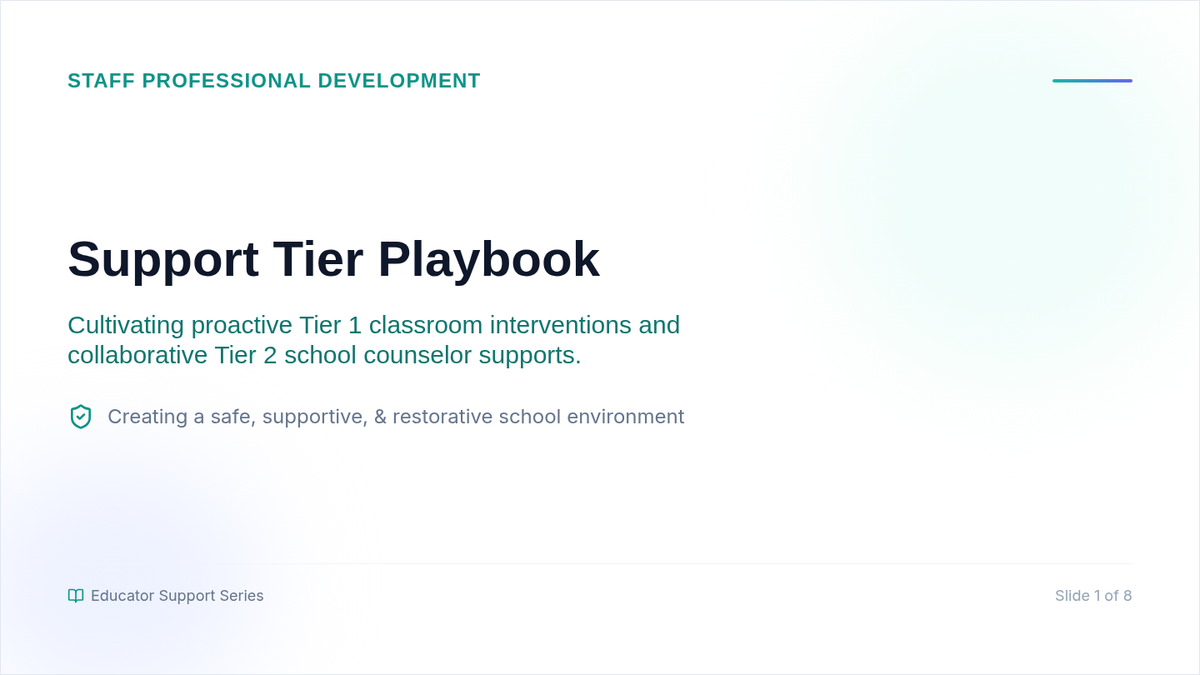
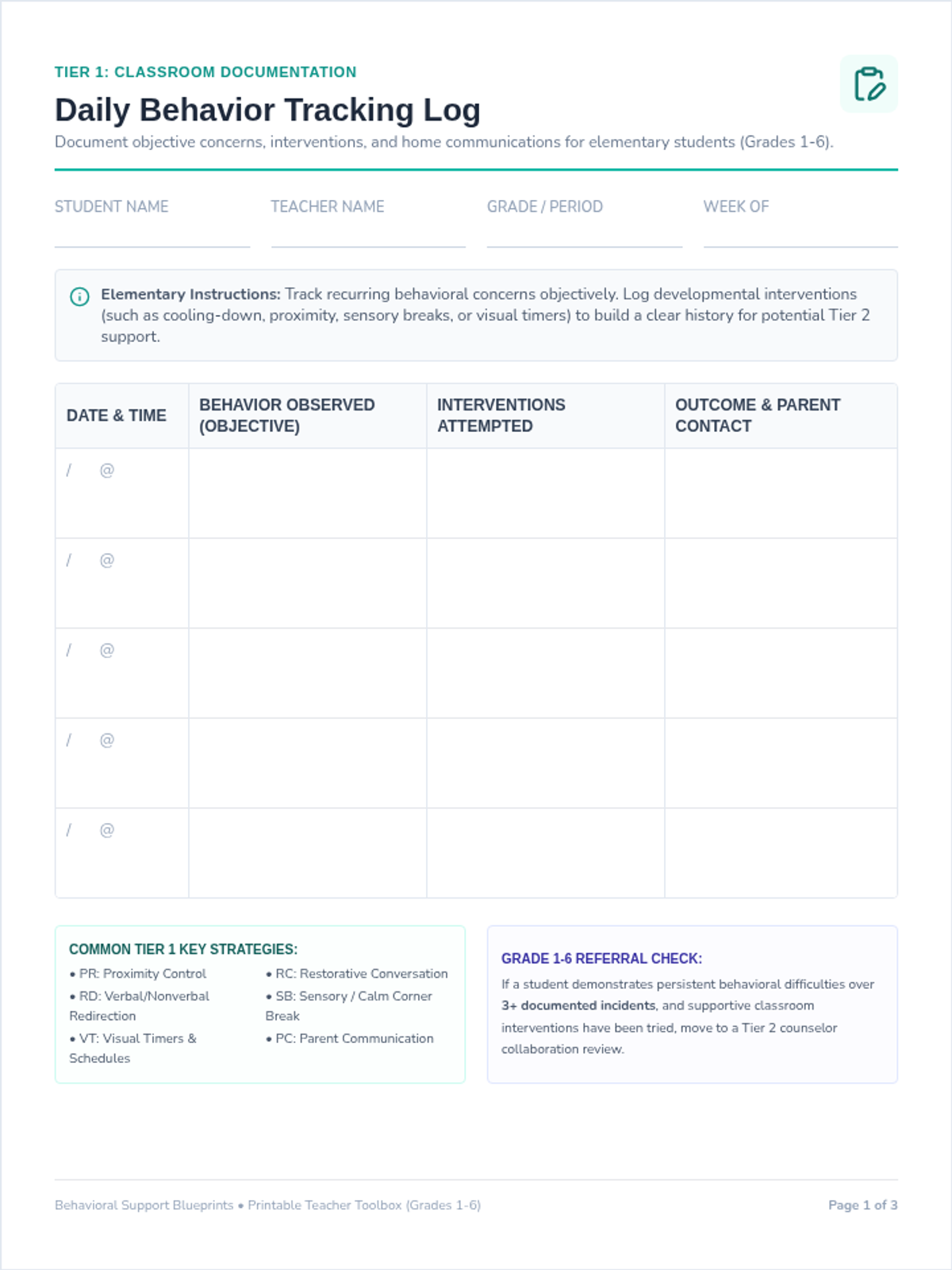
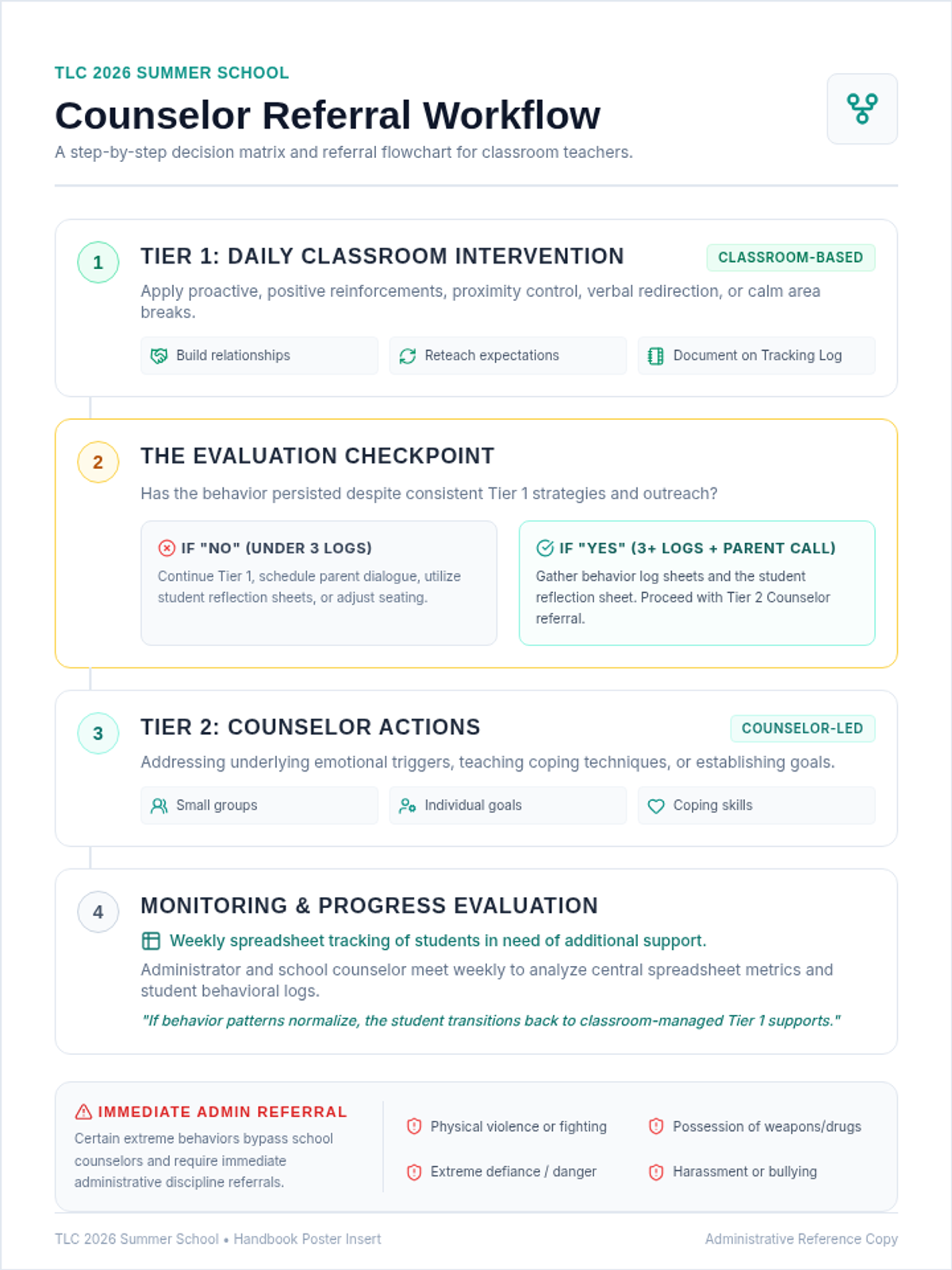
A comprehensive professional development and resource package for educators, mapping out Tier 1 classroom interventions and Tier 2 school counselor supports to build a proactive, collaborative, and restorative student support culture.
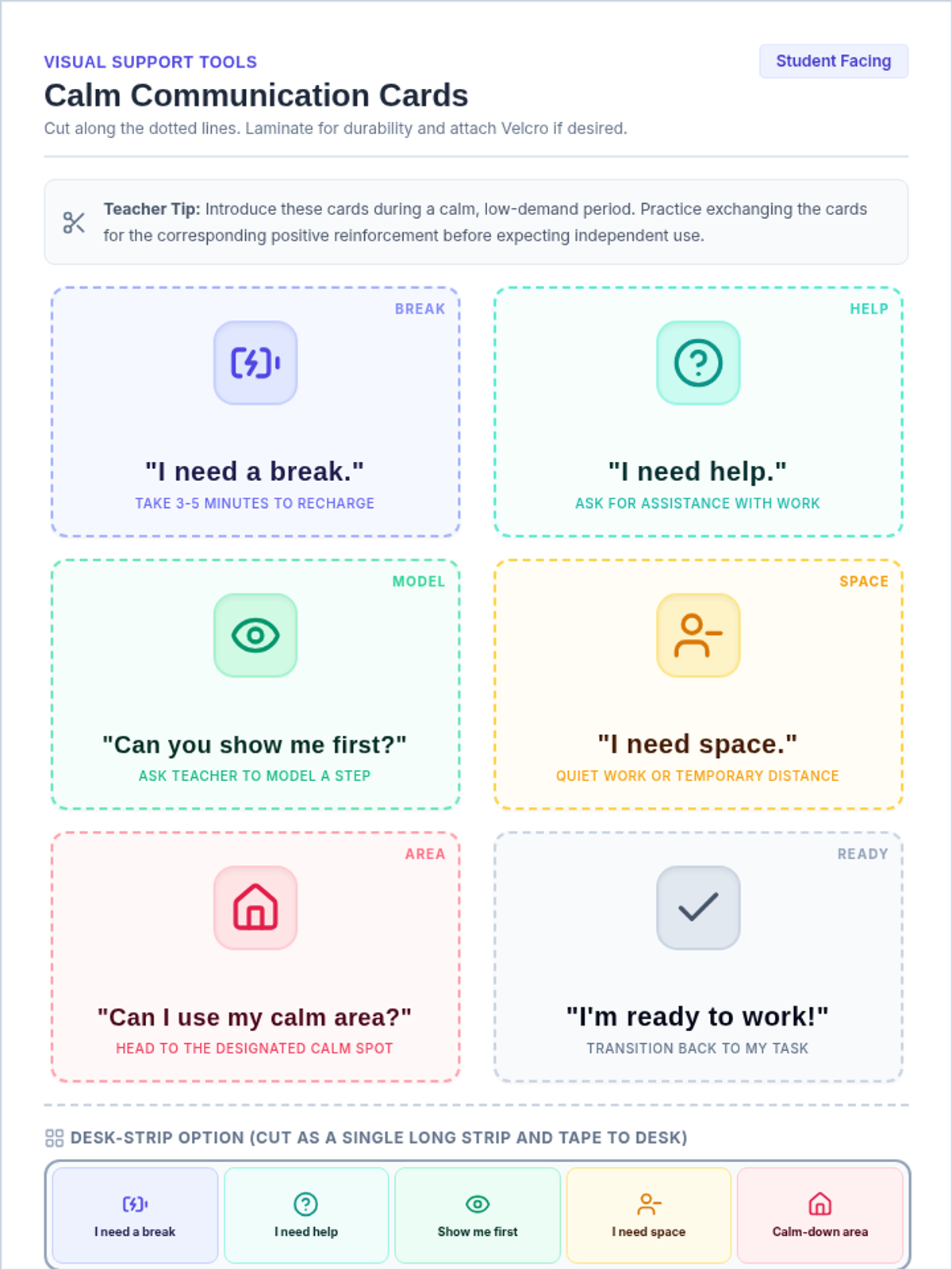
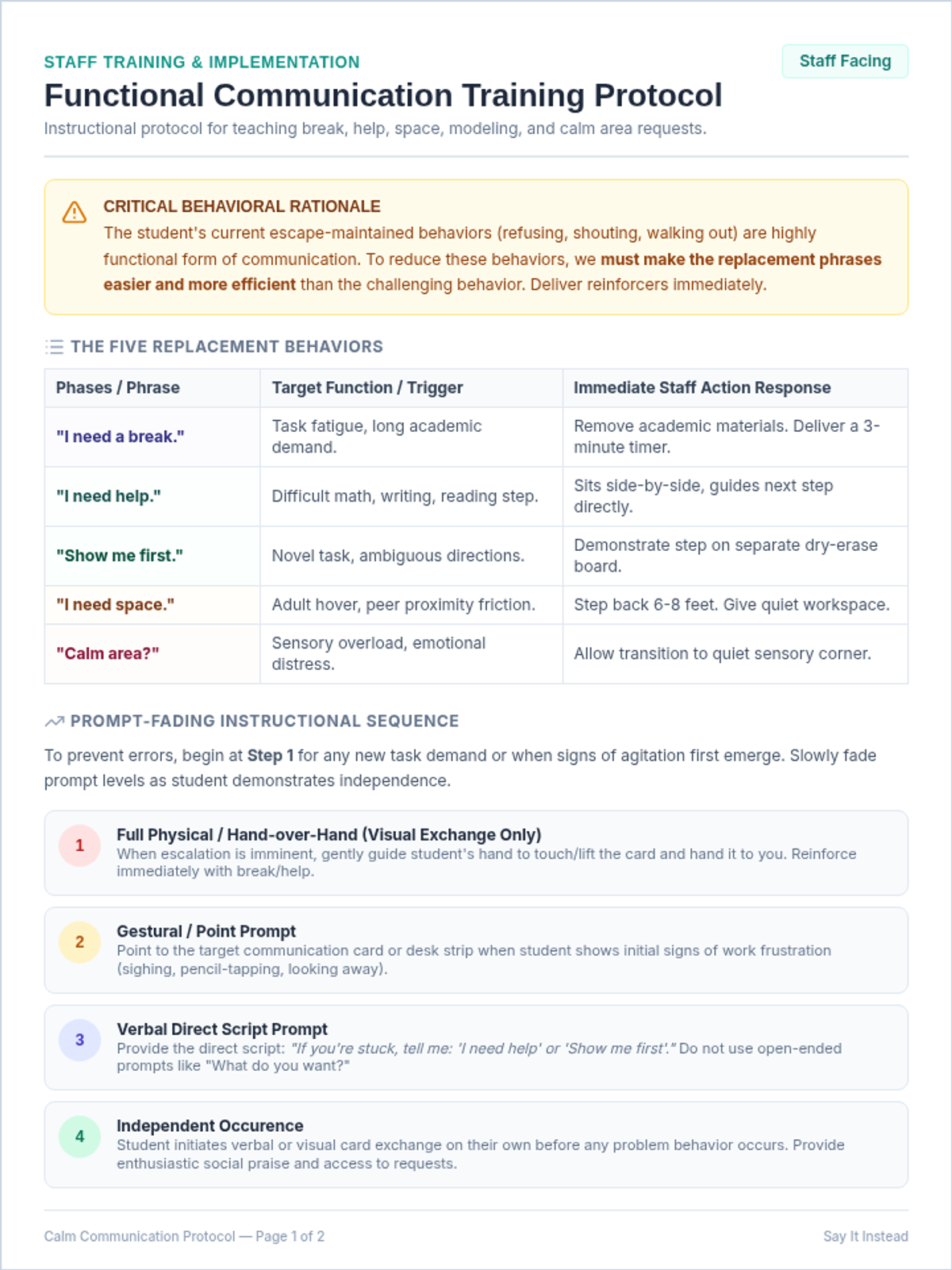
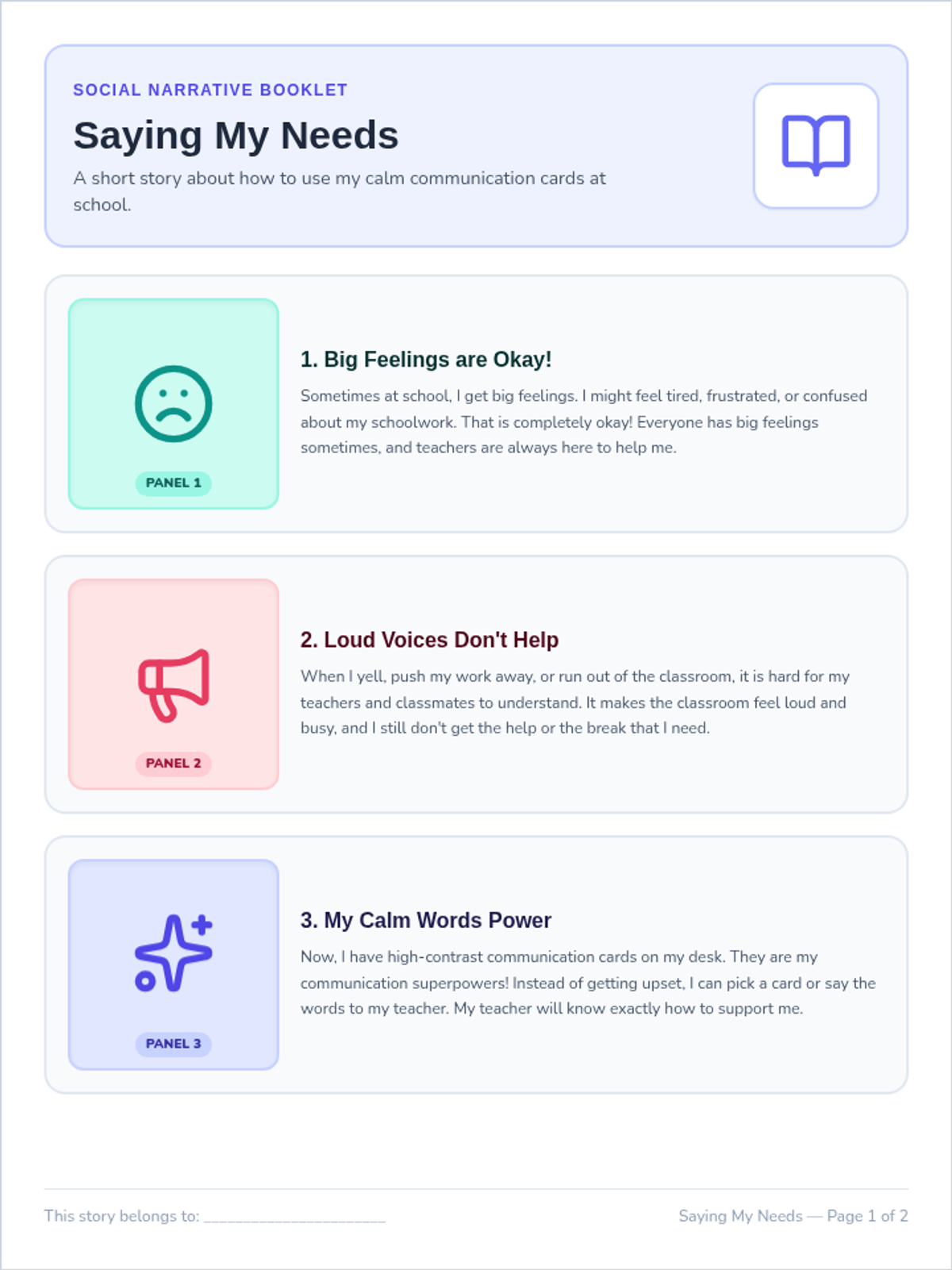
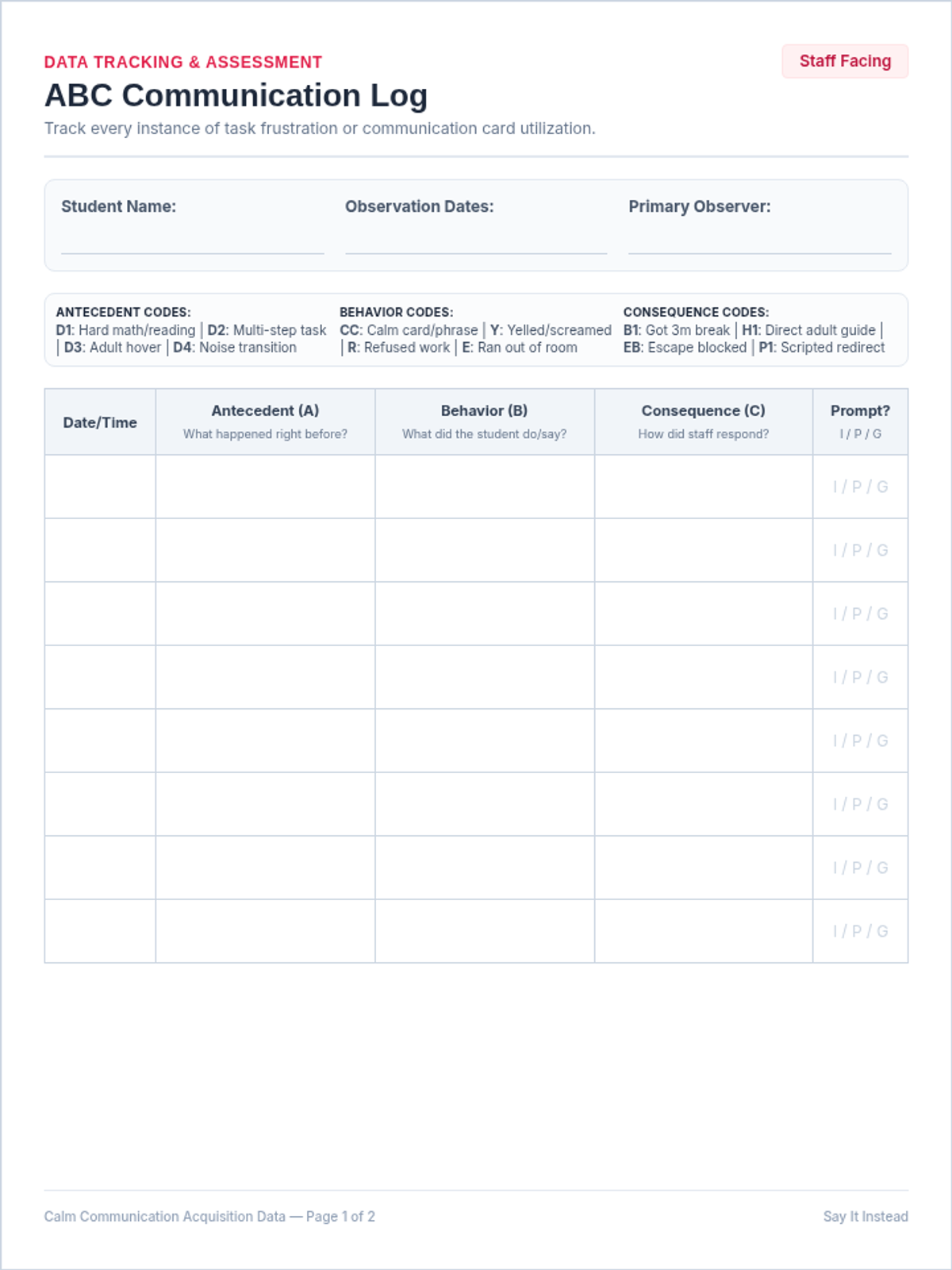
A comprehensive set of visual supports, implementation protocols, a social narrative, and tracking sheets designed to teach and reinforce five critical replacement communication behaviors: requesting a break, asking for help, requesting a demonstration, asking for space, and requesting access to a calm-down area.