A simple, highly structured capitalization lesson for Grade 2 students with autism, featuring animal-themed worksheets and clear visual supports for sentence starters and proper character names.
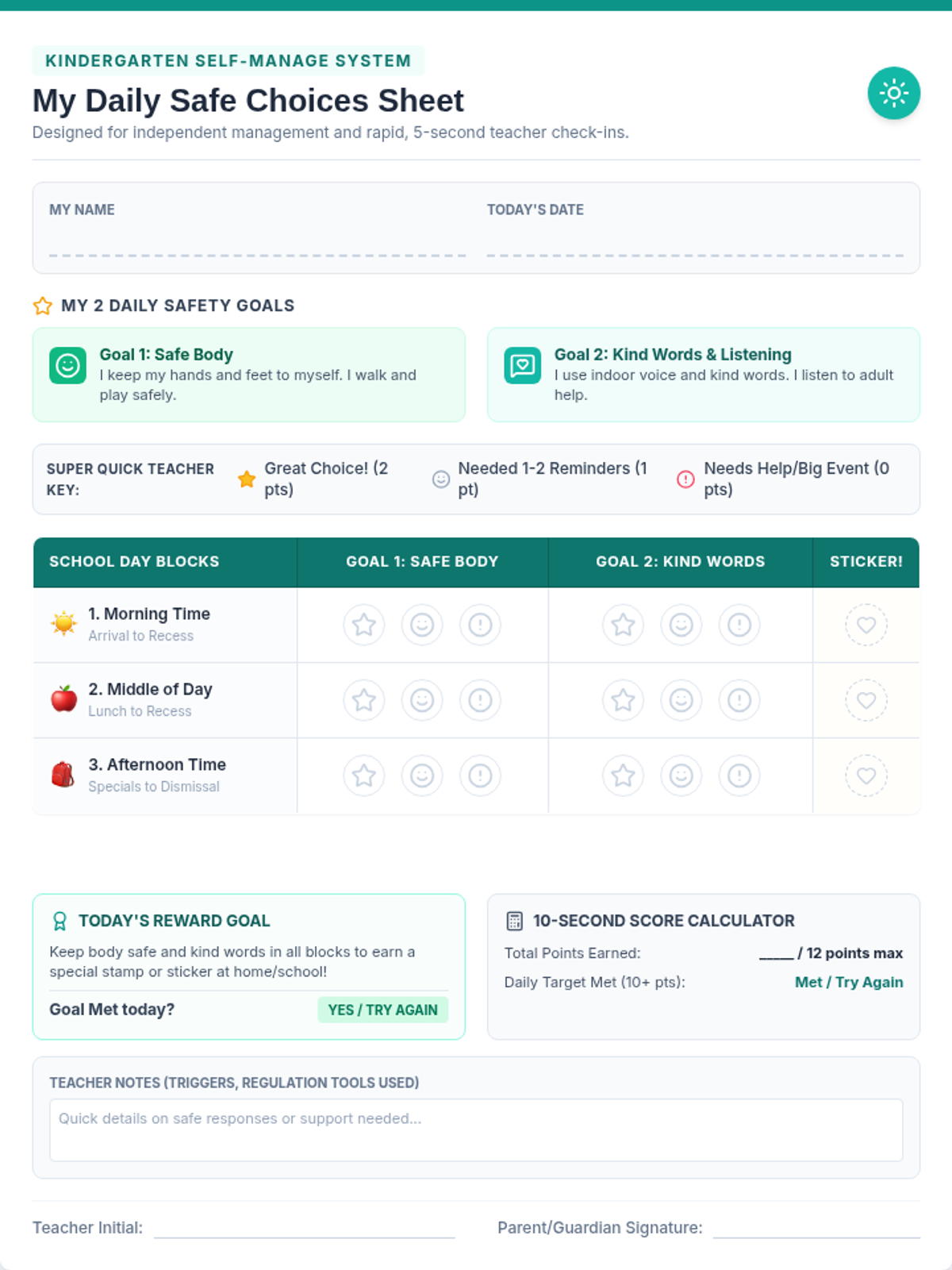
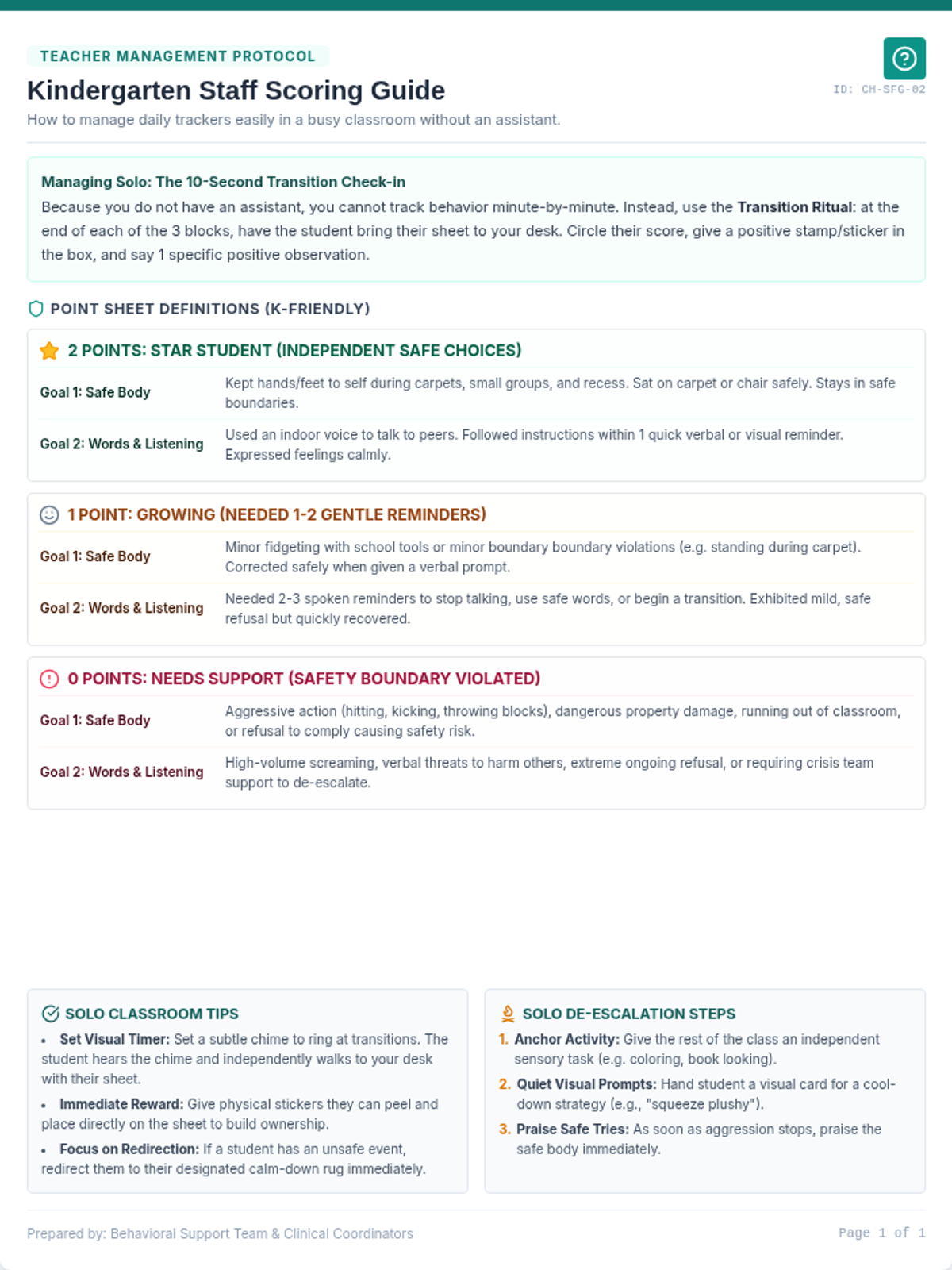
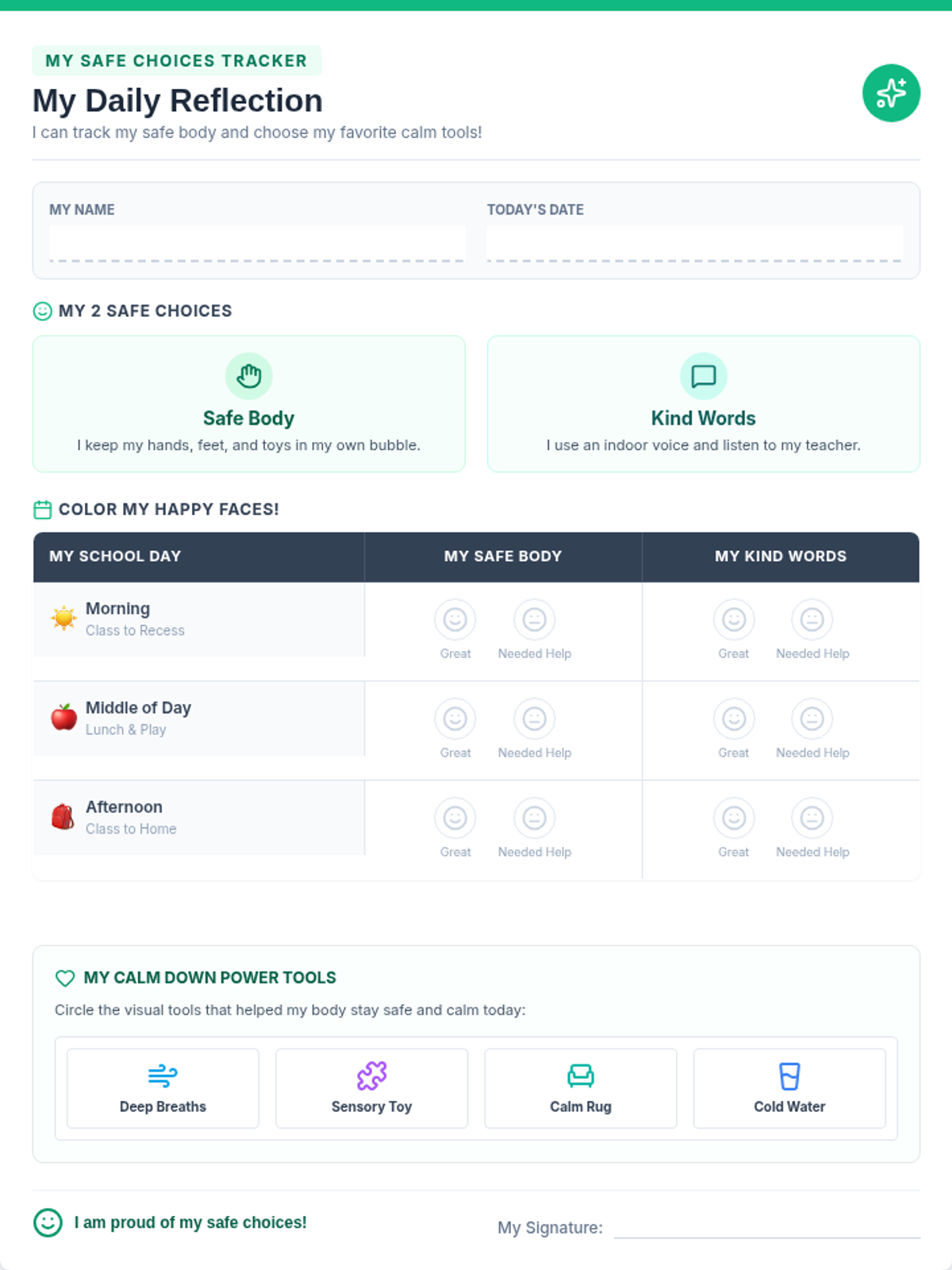
A comprehensive behavioral tracking and de-escalation toolkit designed to reduce aggressive behaviors and maintain safety boundaries. Includes interval-based daily point sheets, staff inter-rater guides, and student-led self-monitoring rubrics.
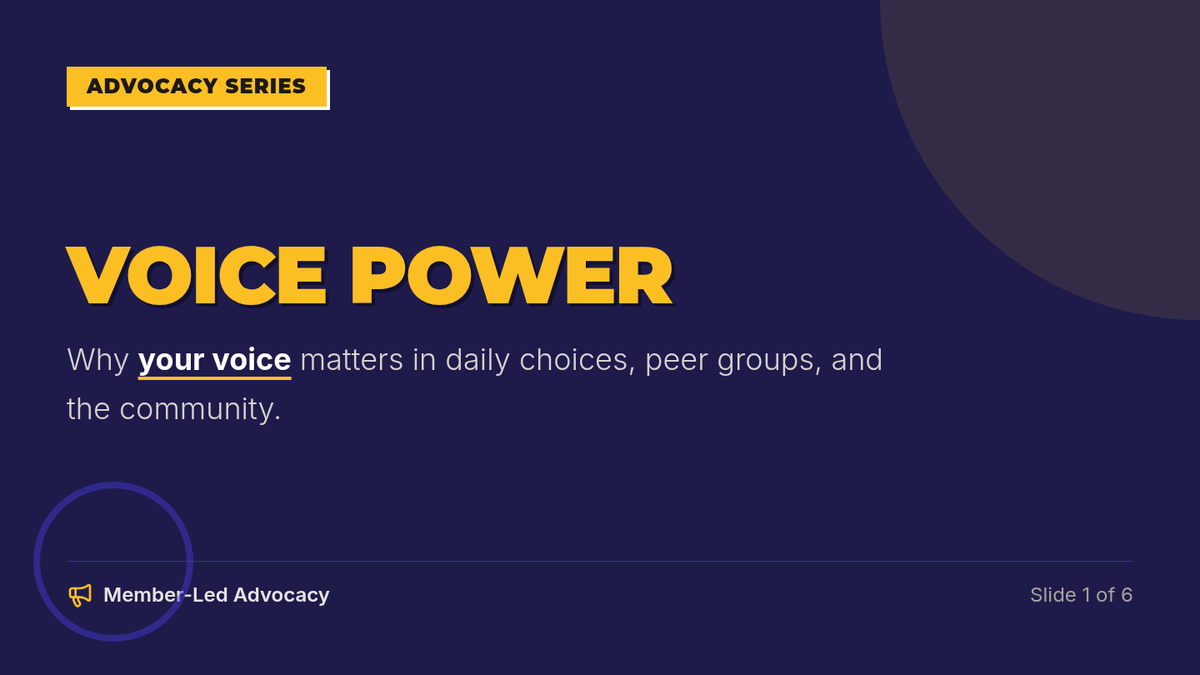
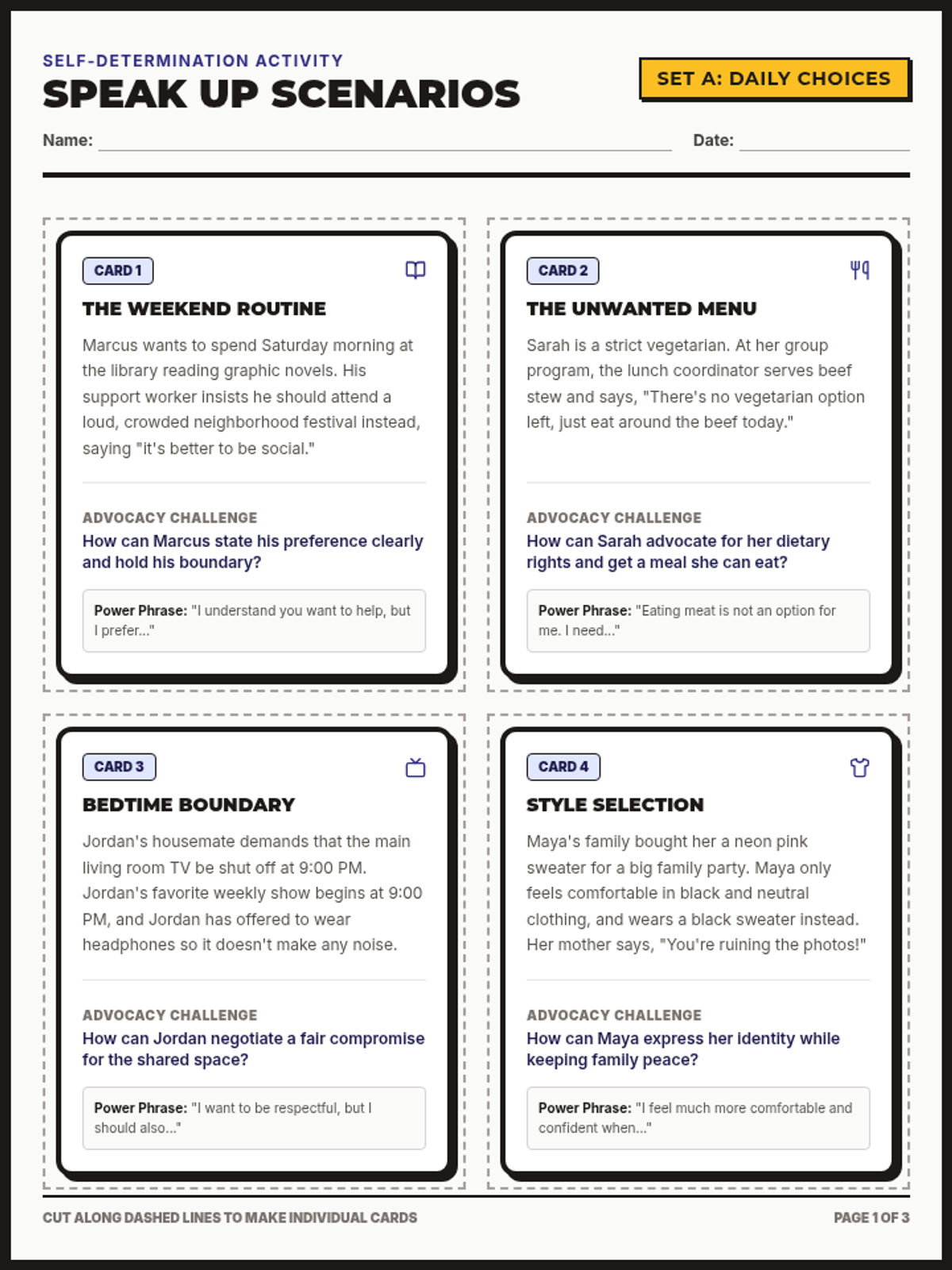
A self-determination and member-led advocacy lesson where students explore why their voices matter, practice speaking up in everyday scenarios, and build confidence in group decision-making.
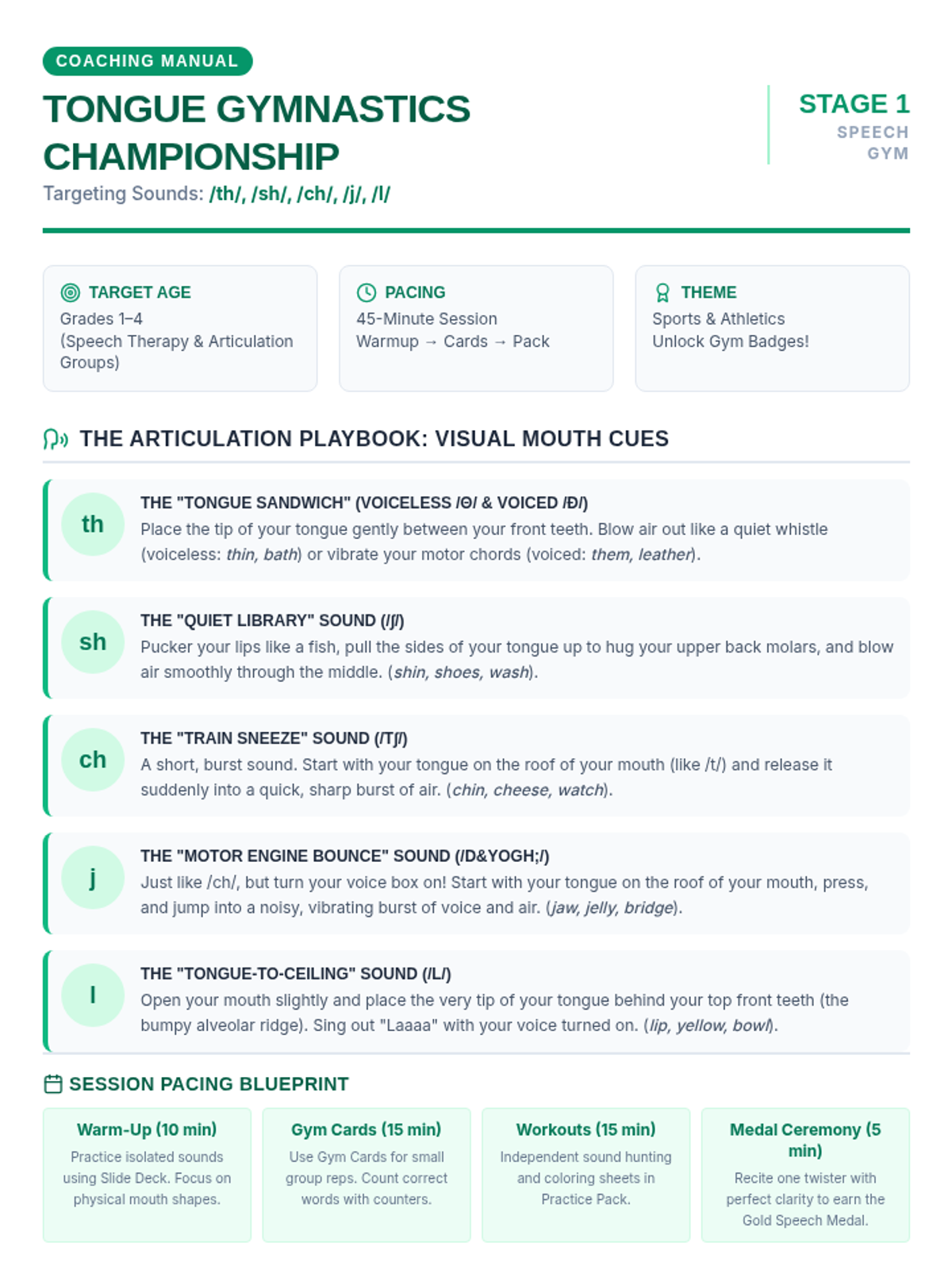
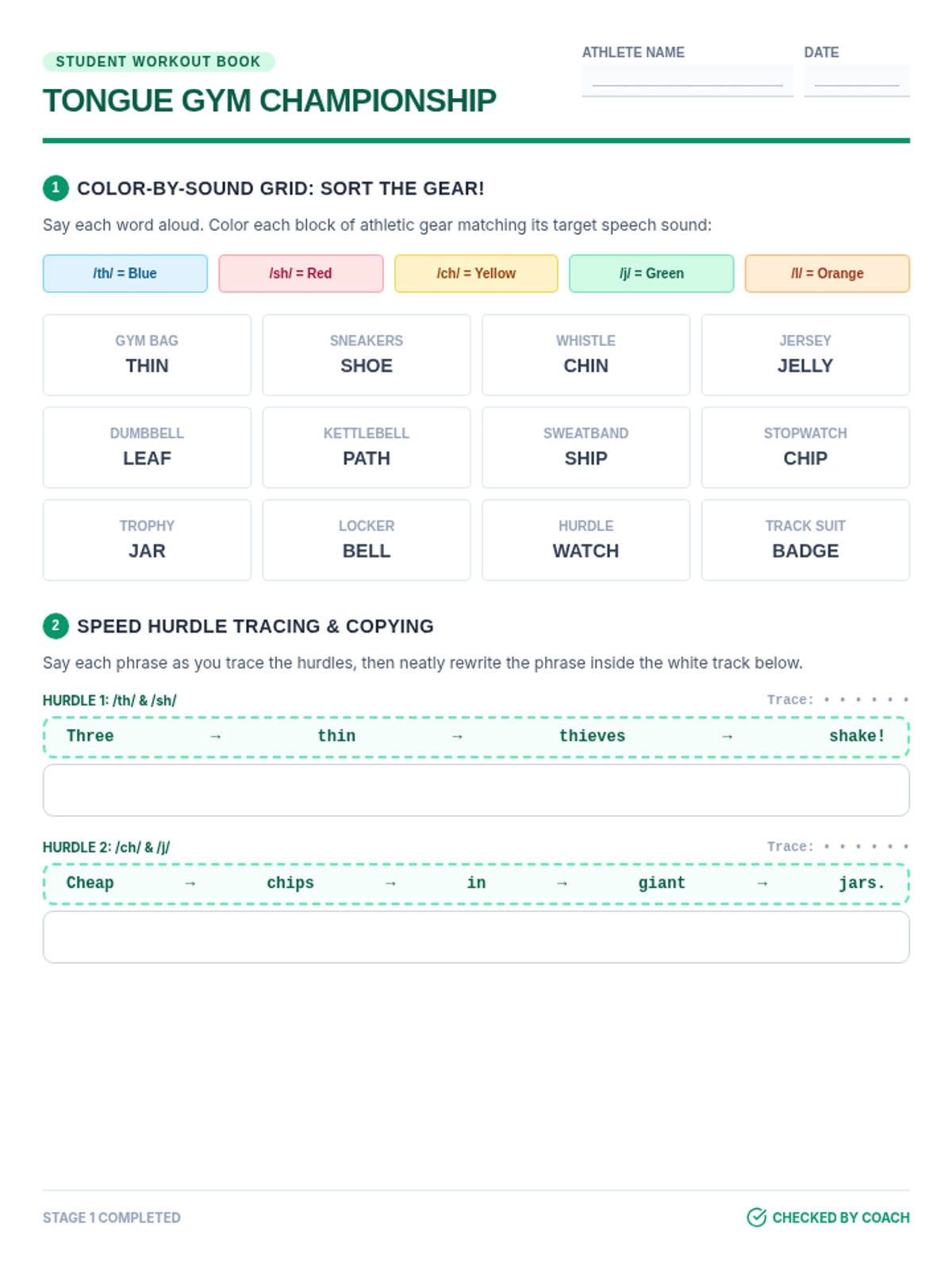
A comprehensive speech and articulation lesson designed to master the tricky /th/, /sh/, /ch/, /j/, and /l/ sounds. Using a fun "Tongue Gymnastics" sports theme, students progress through graduated difficulty levels from basic warm-ups to champion-level contrastive-pair showdowns.
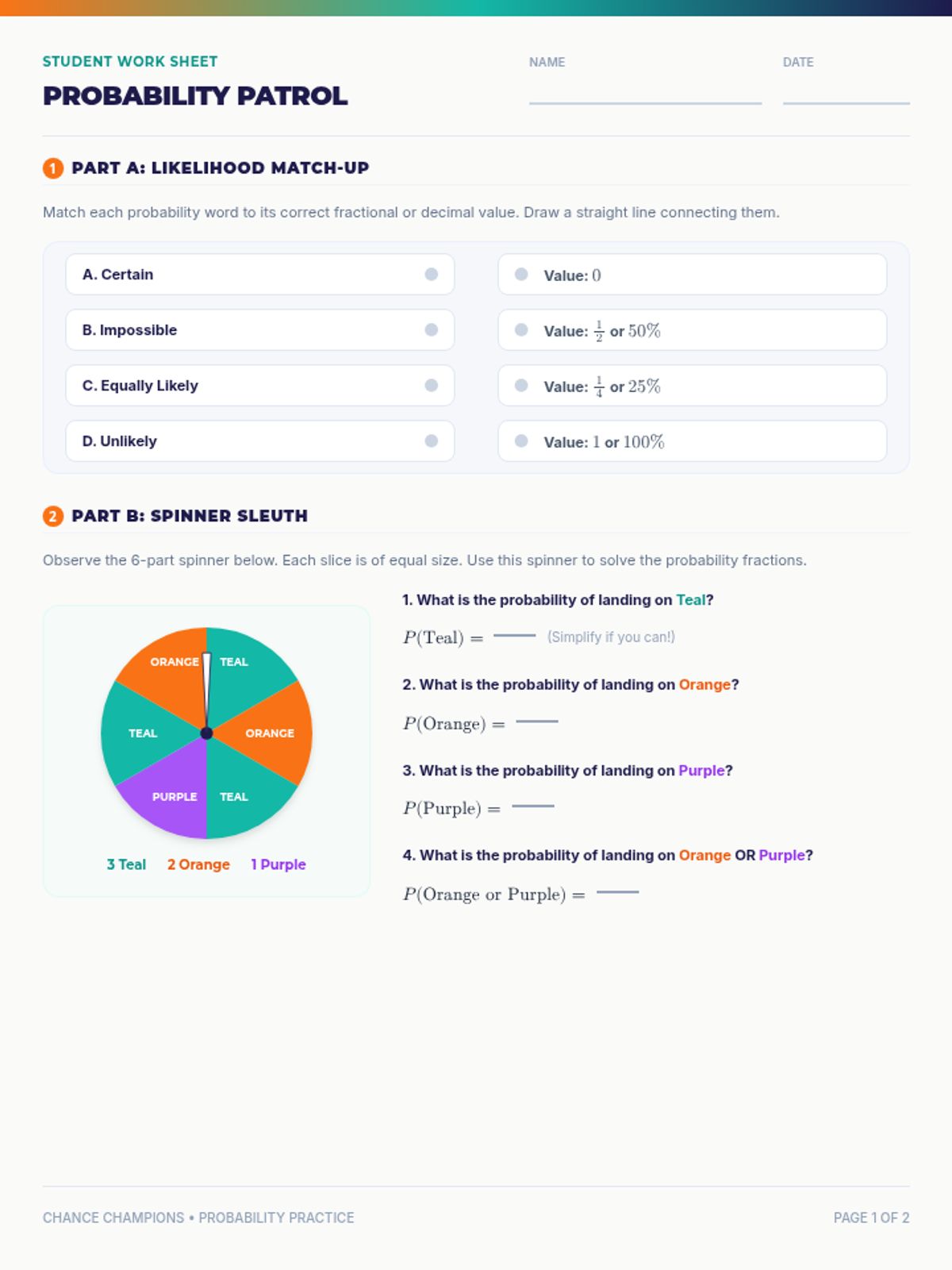
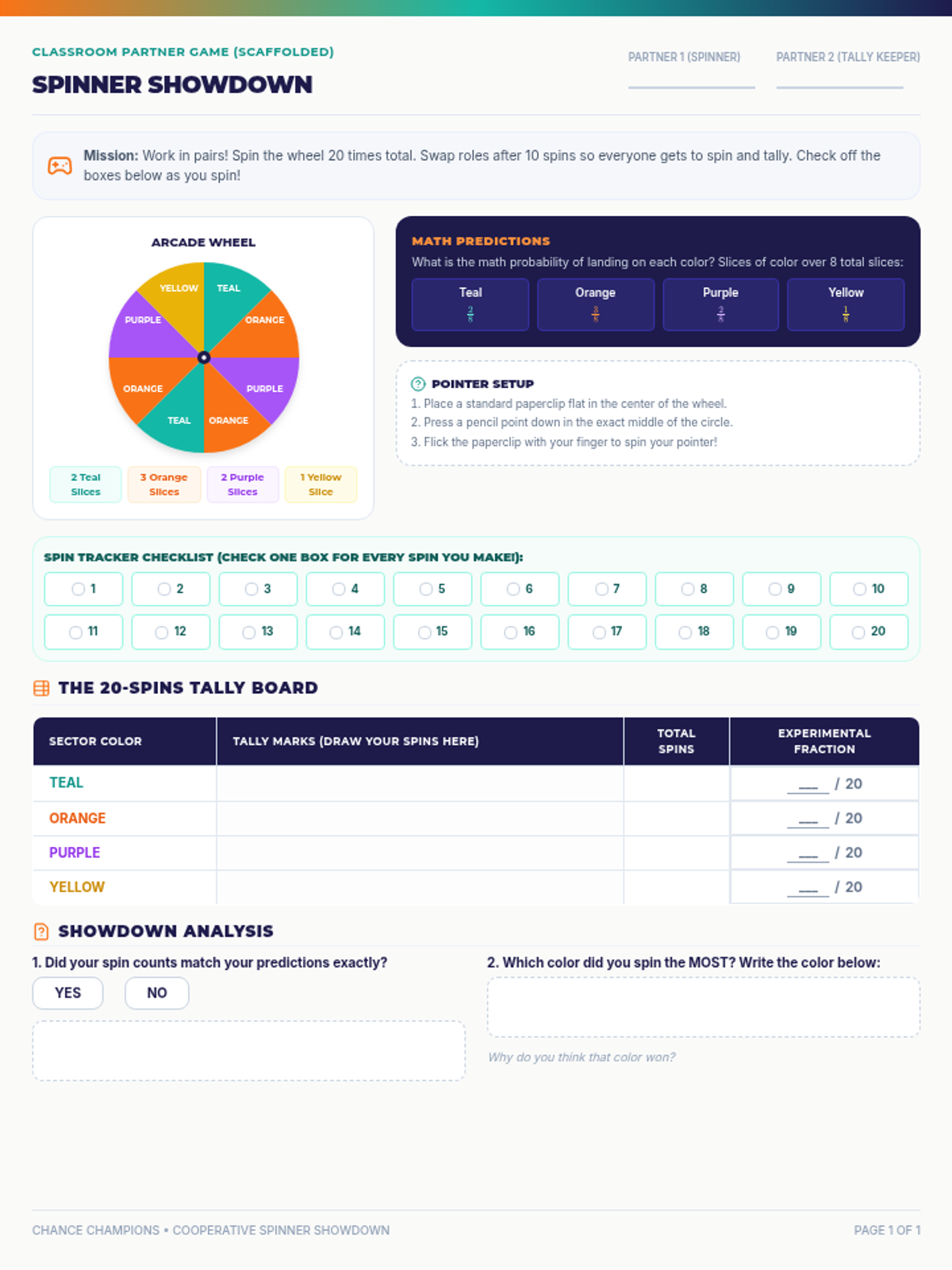
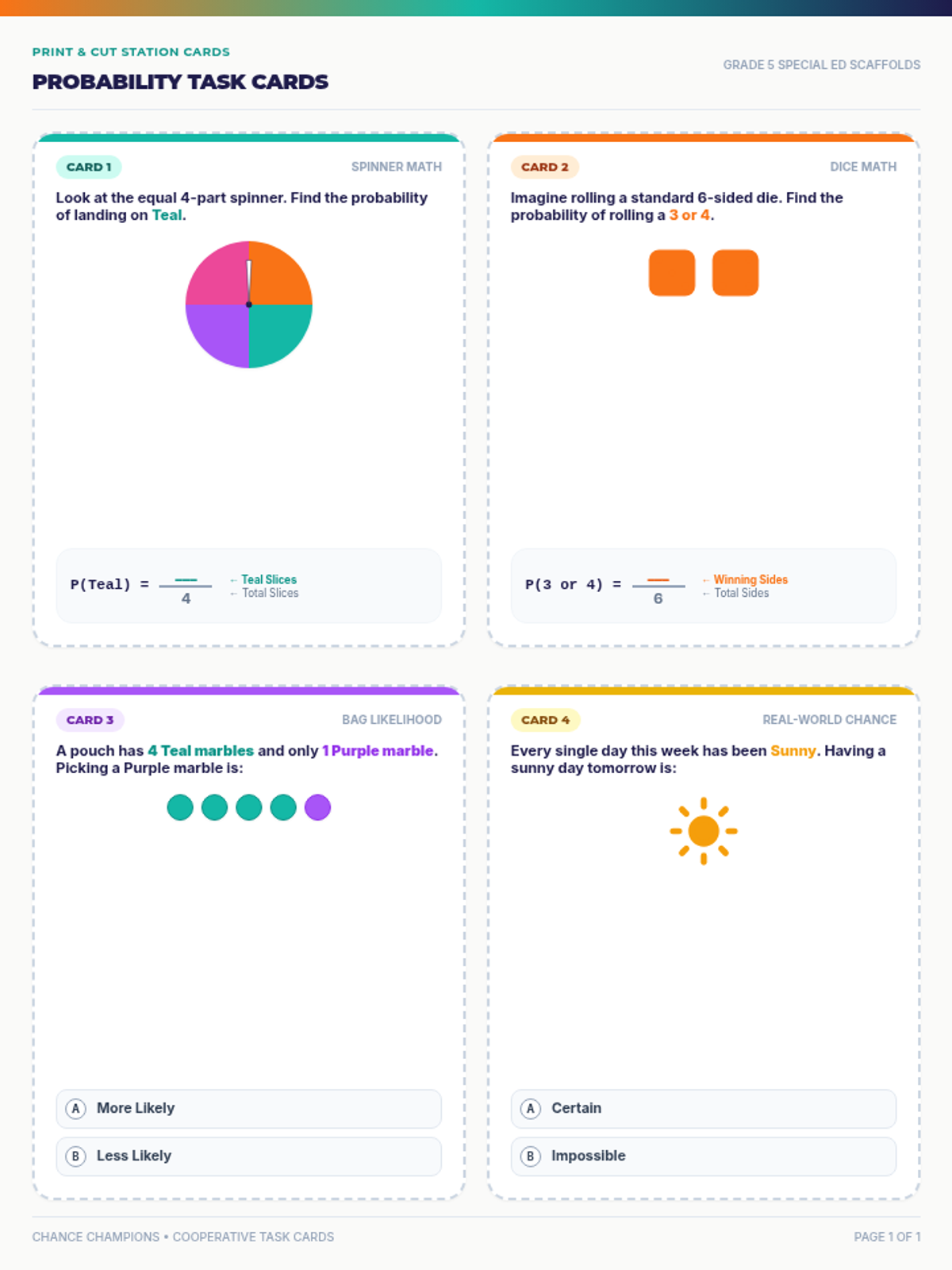
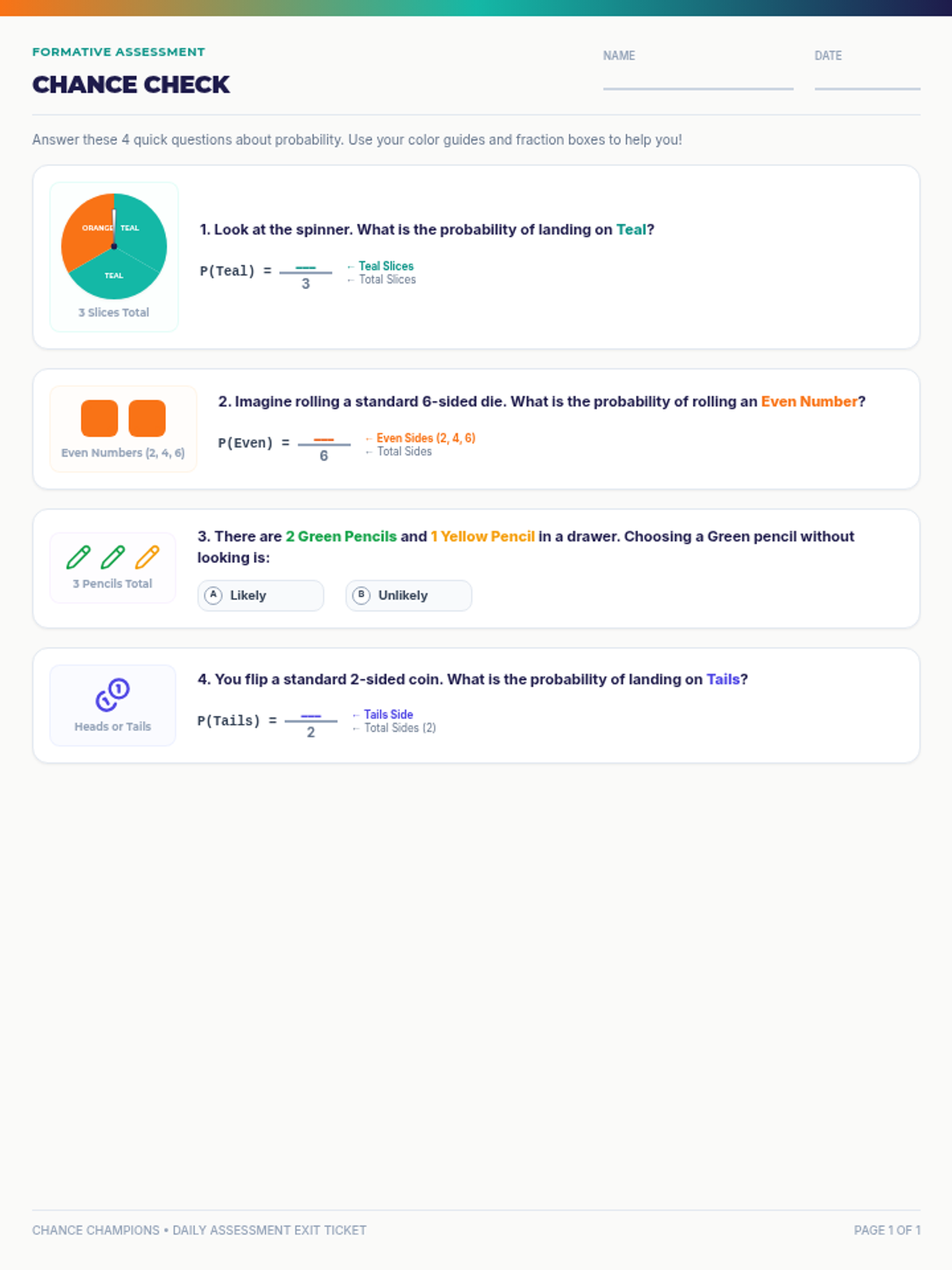
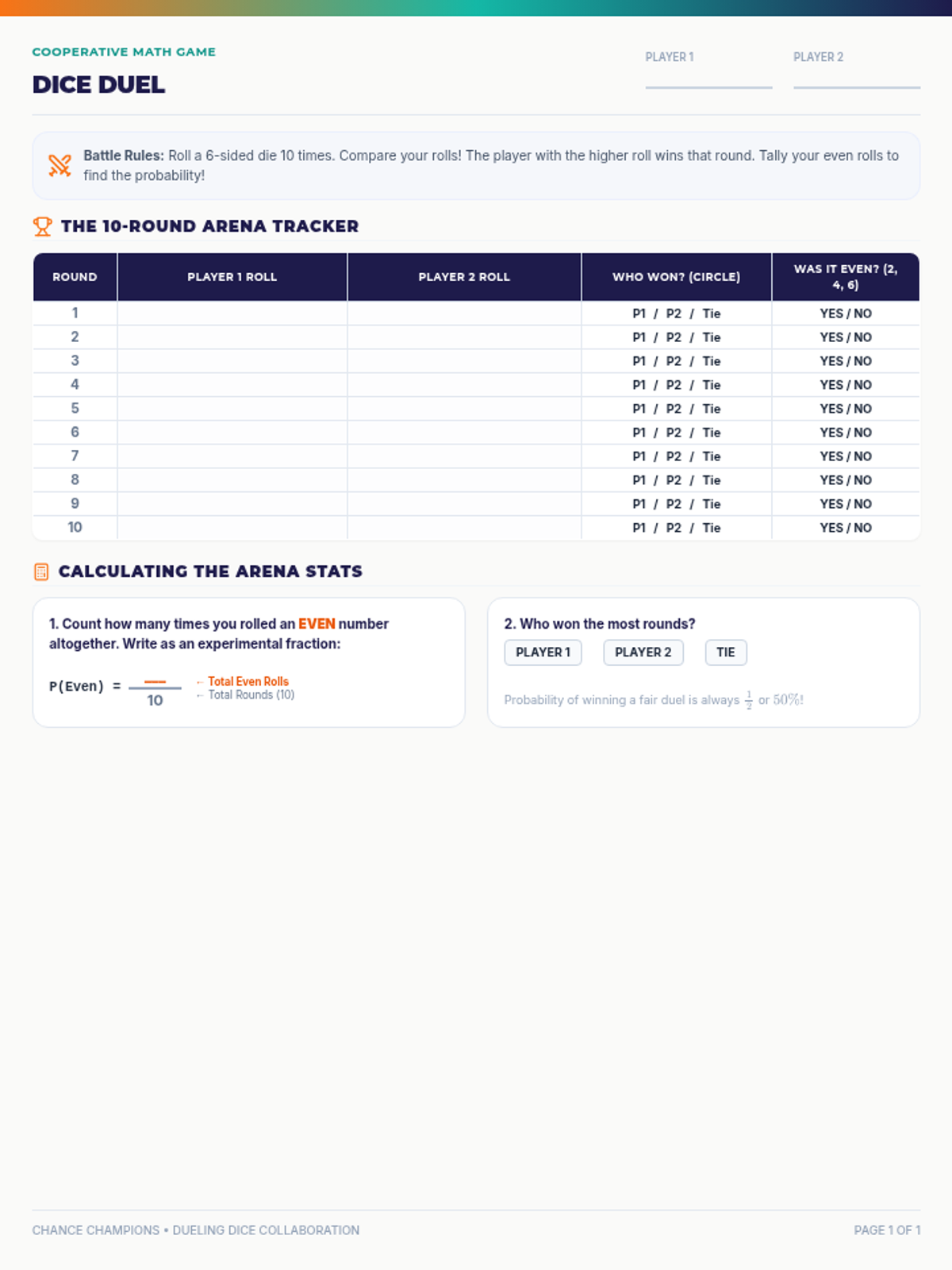
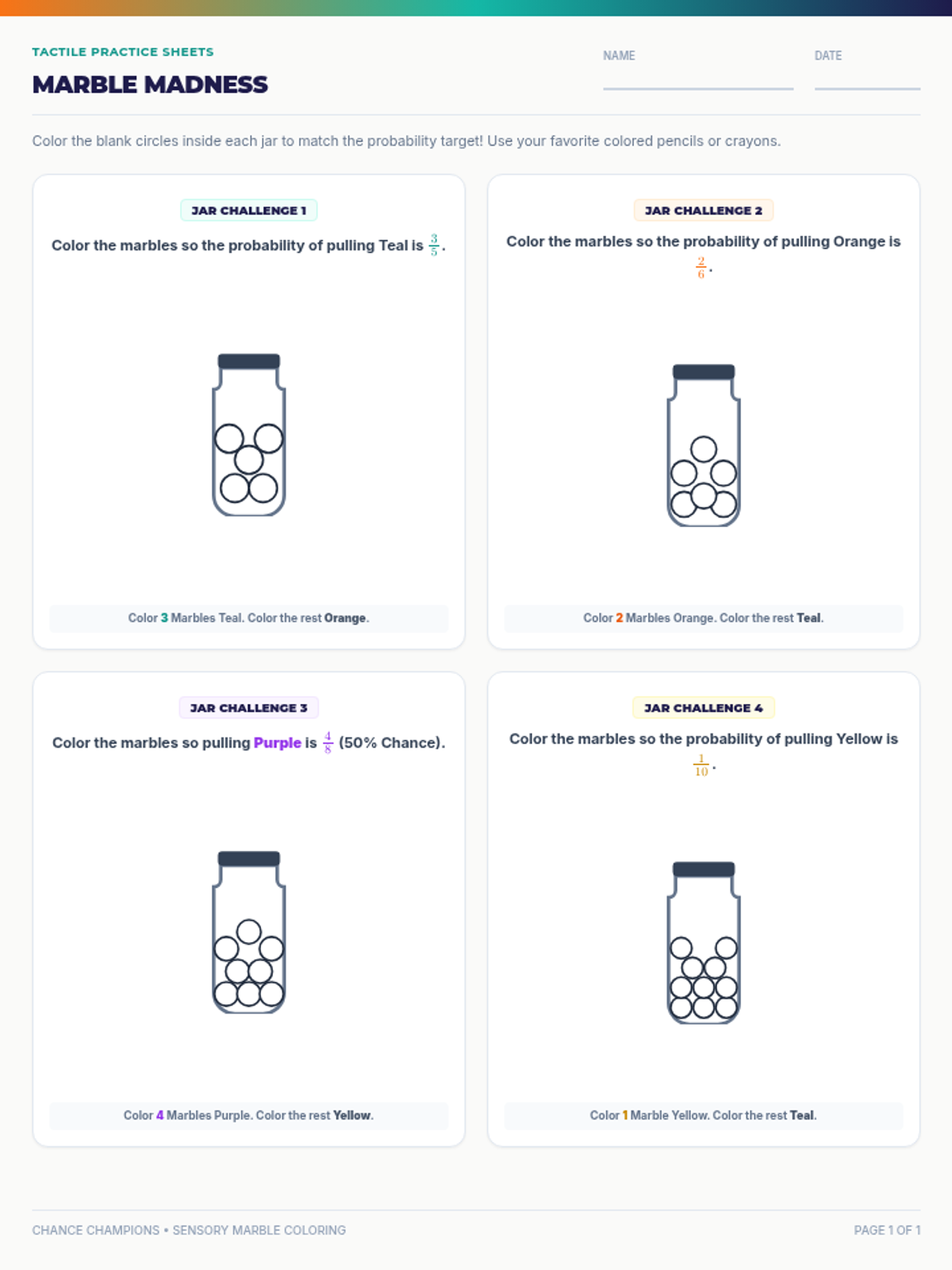
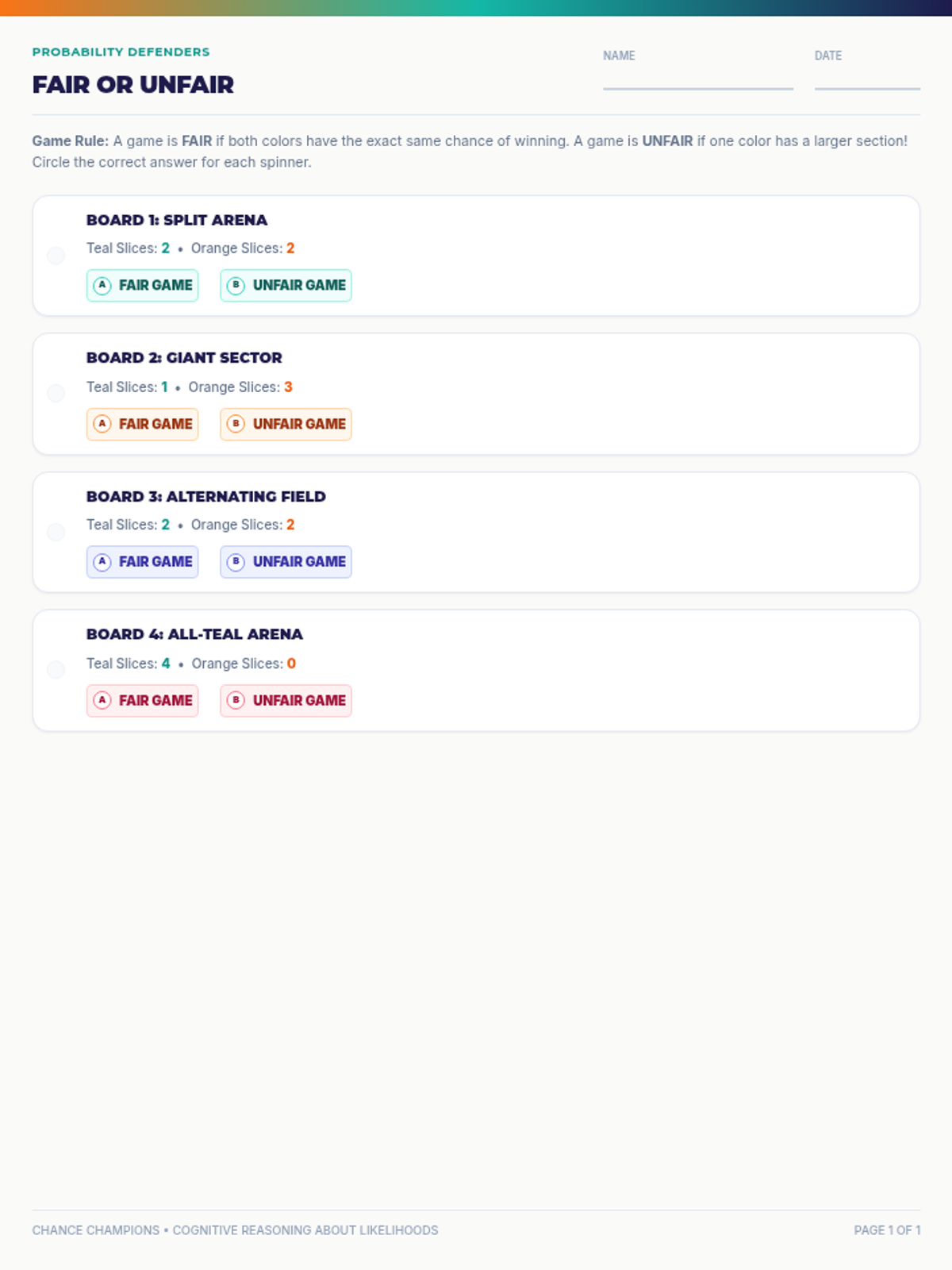
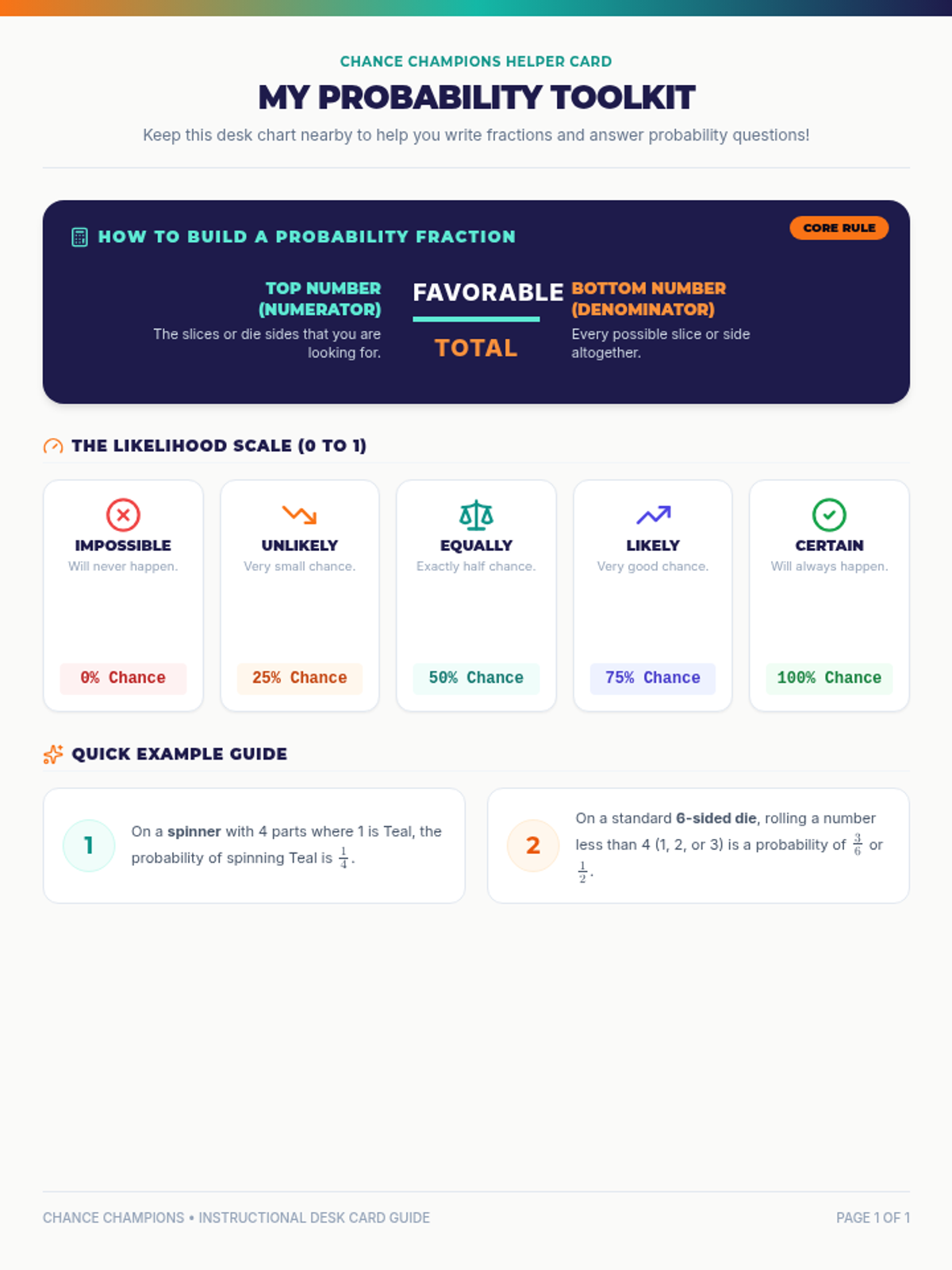
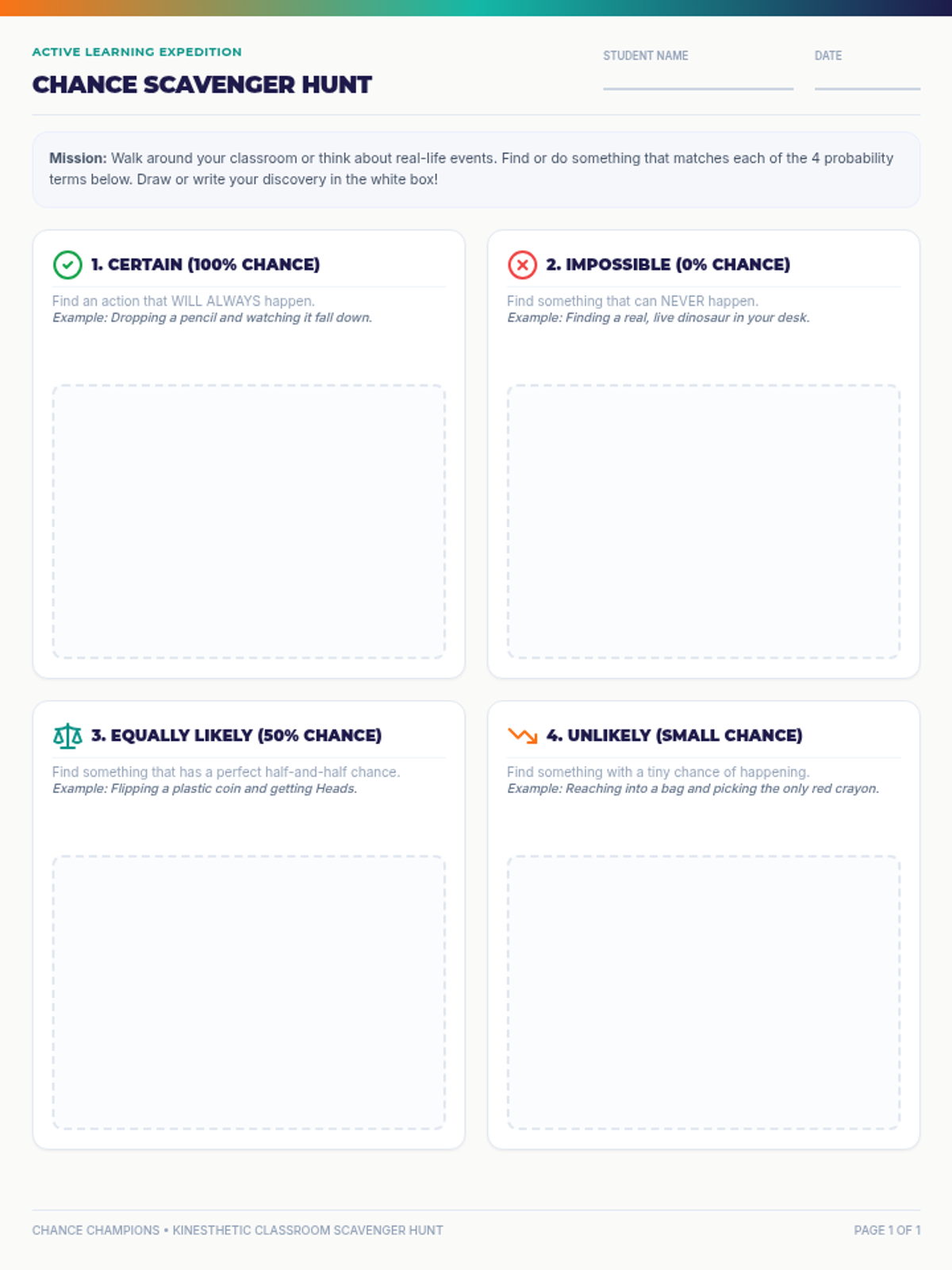
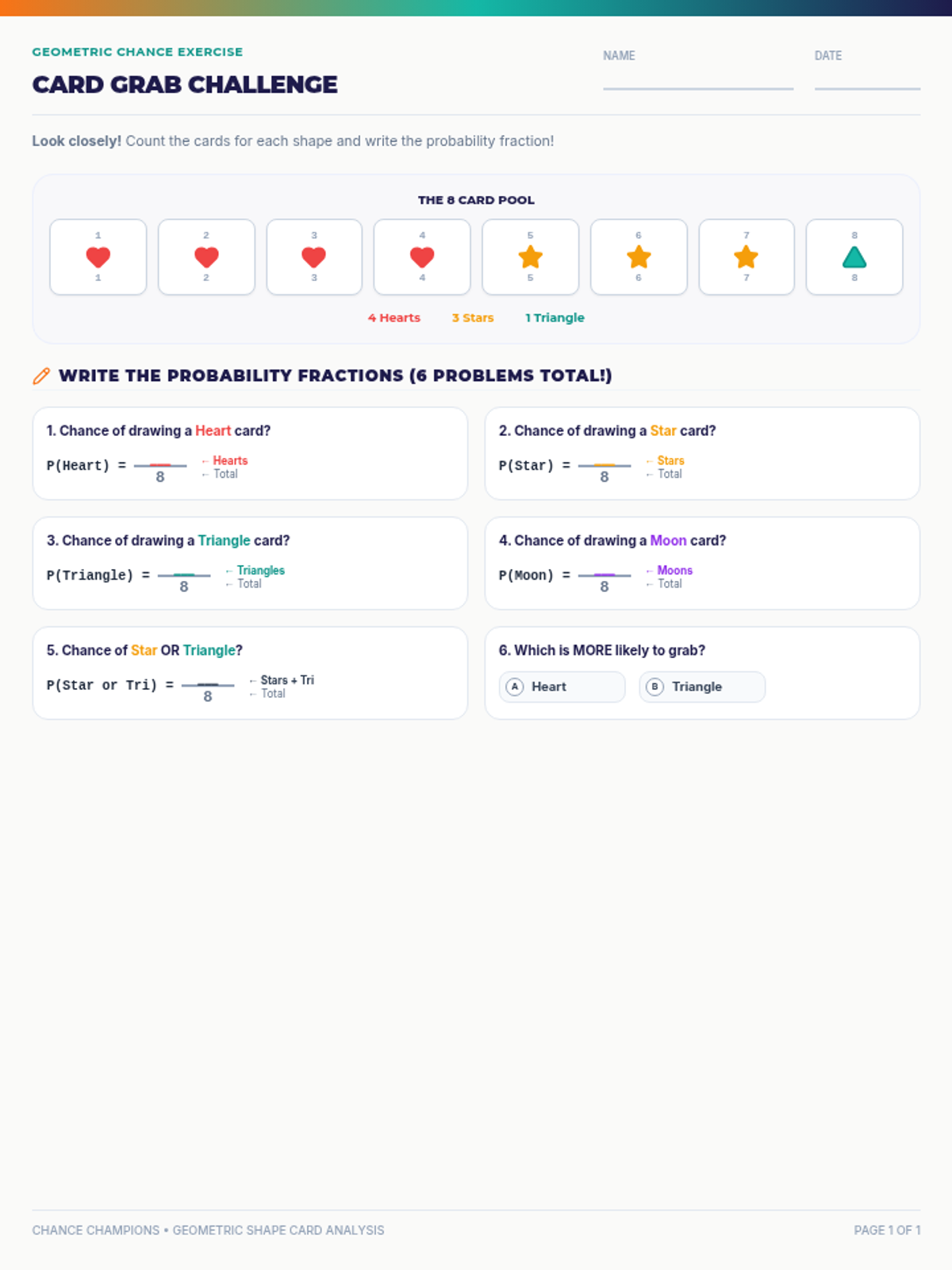
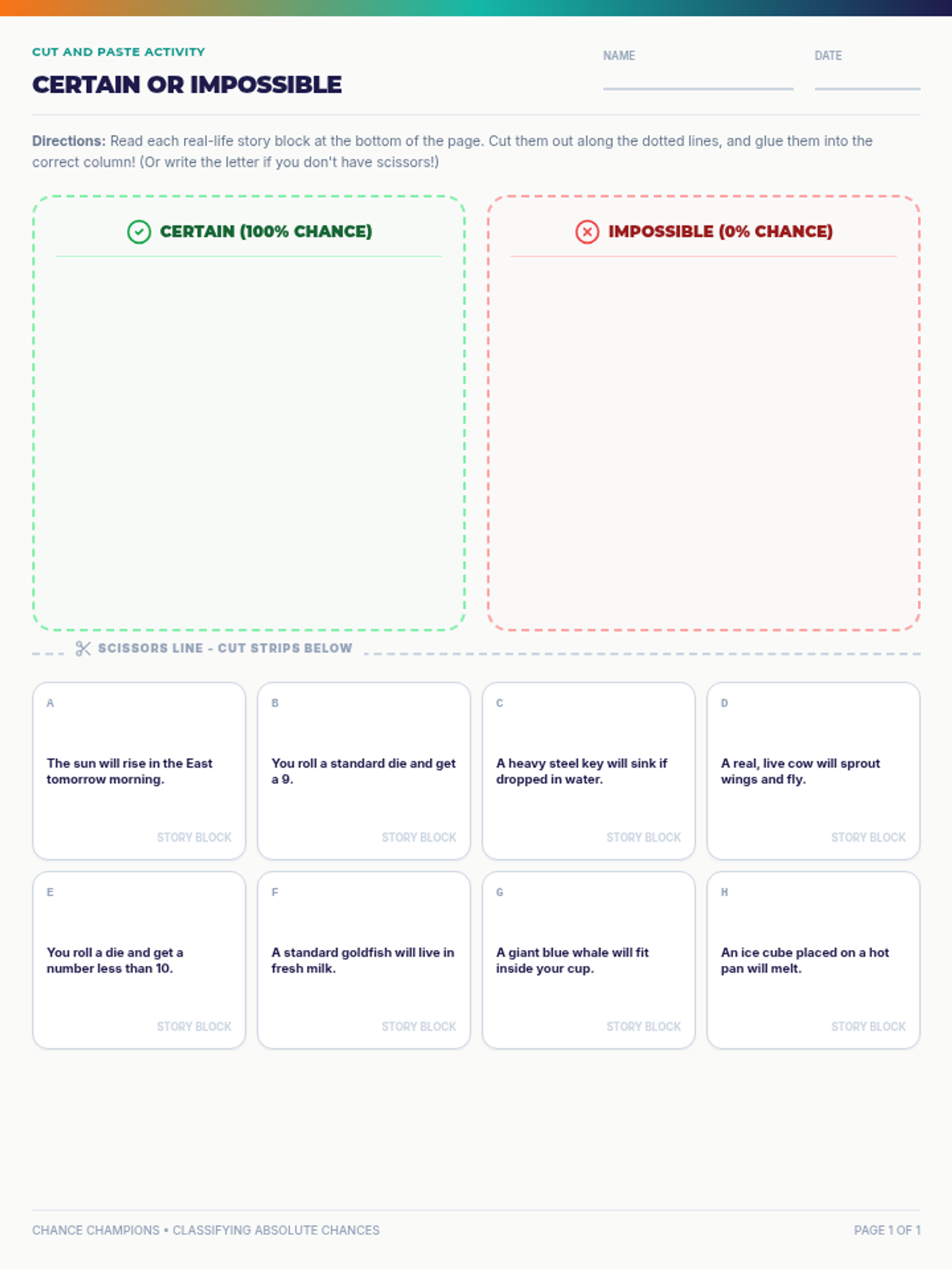
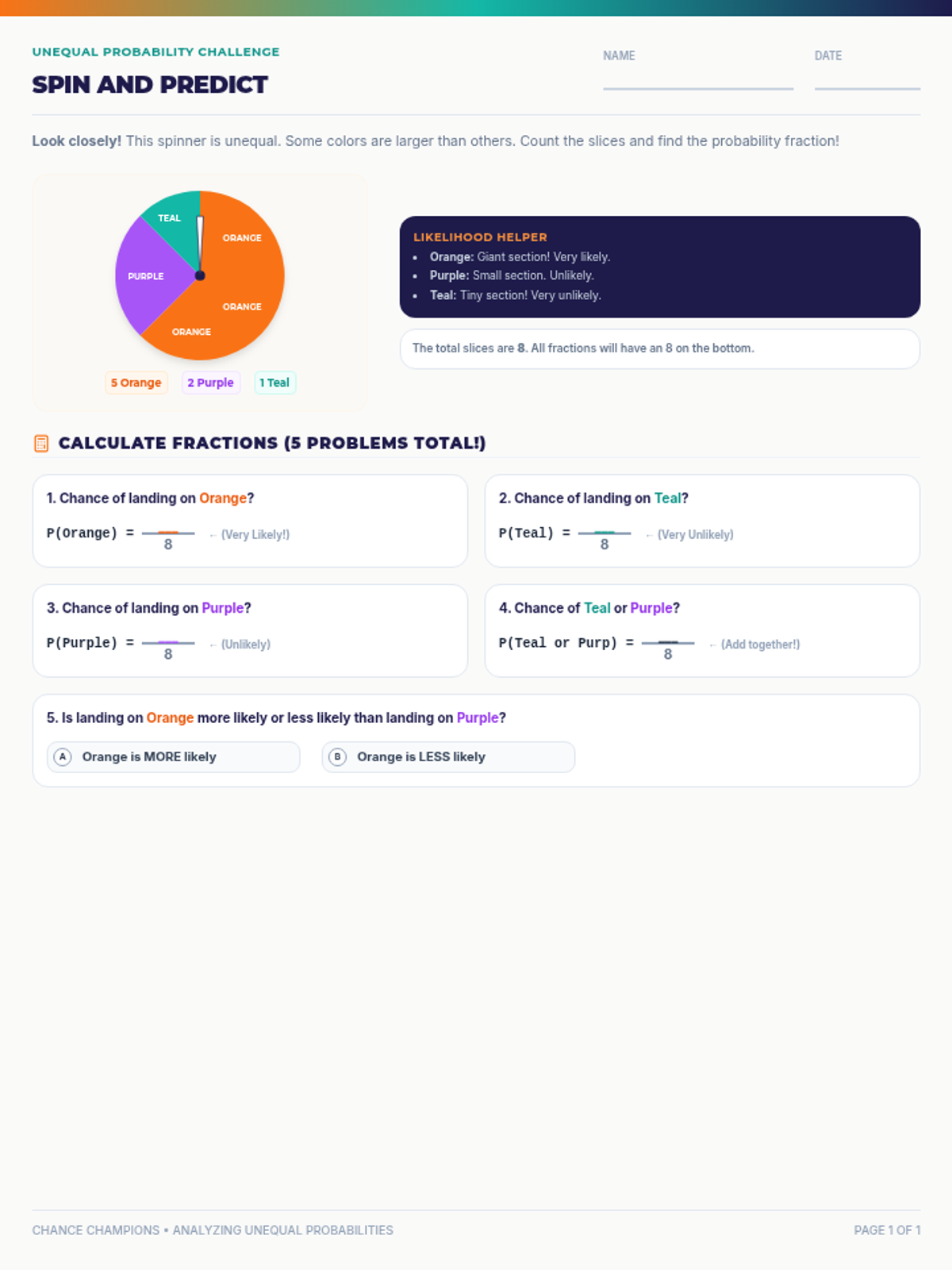
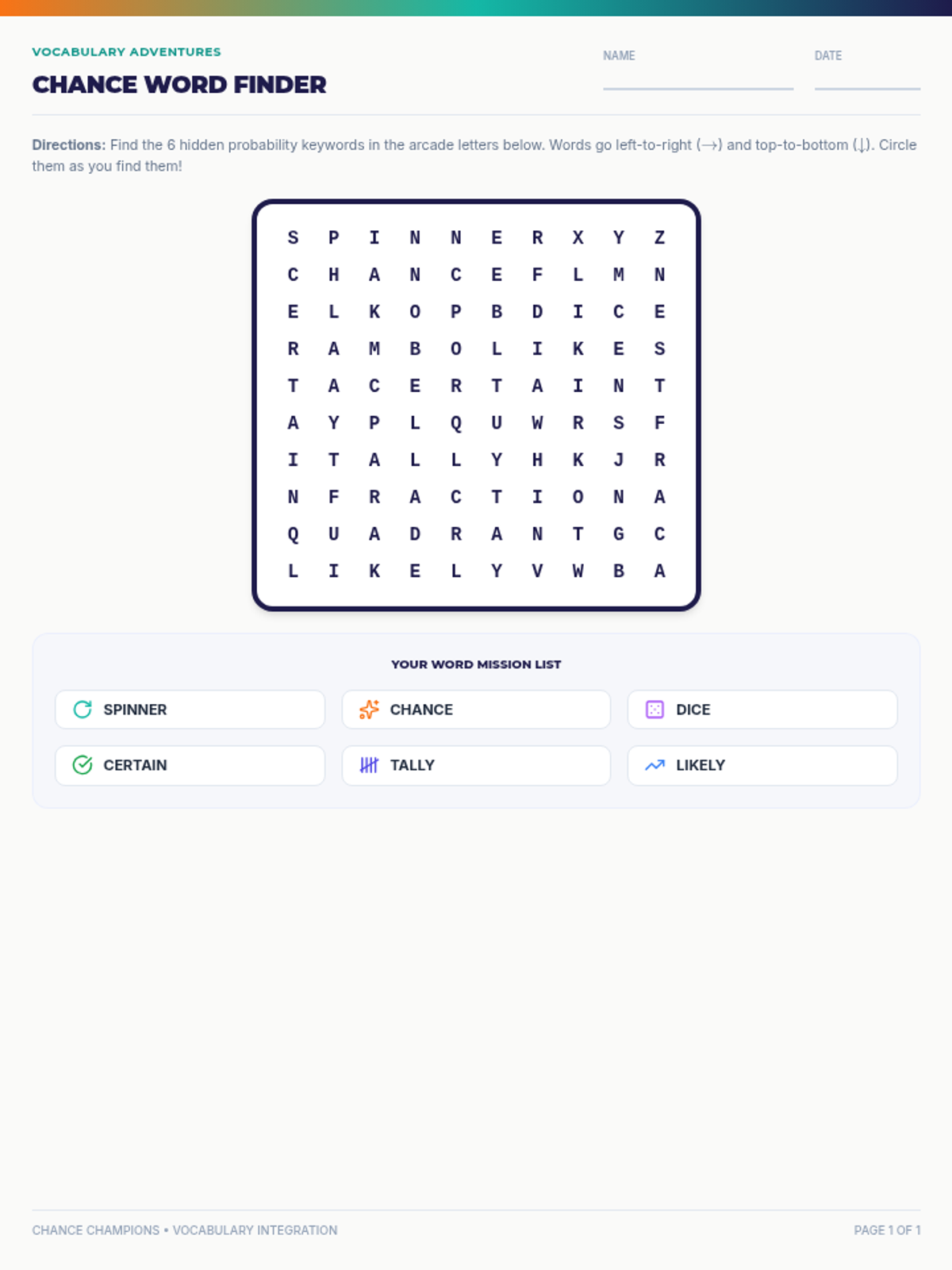
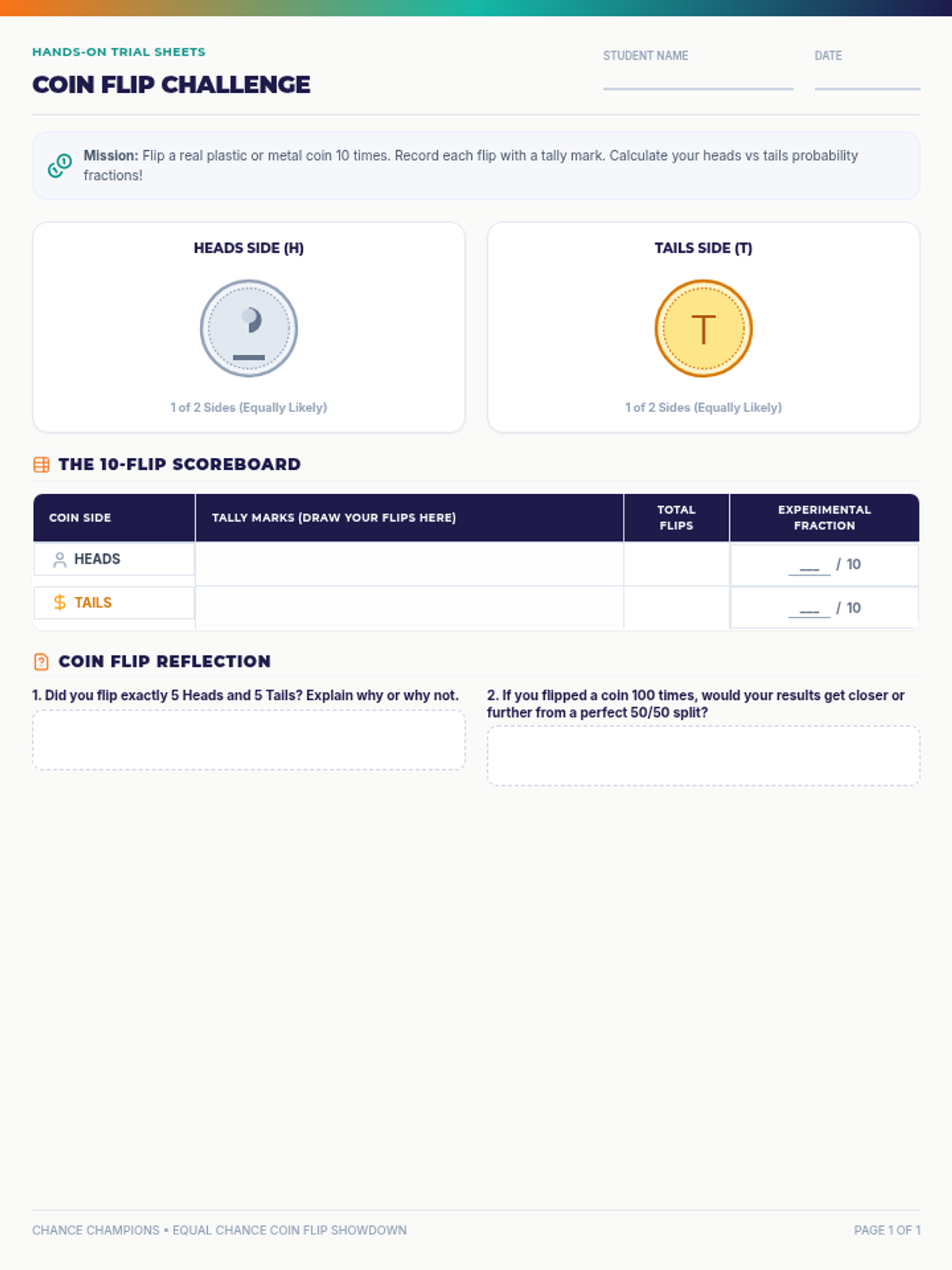
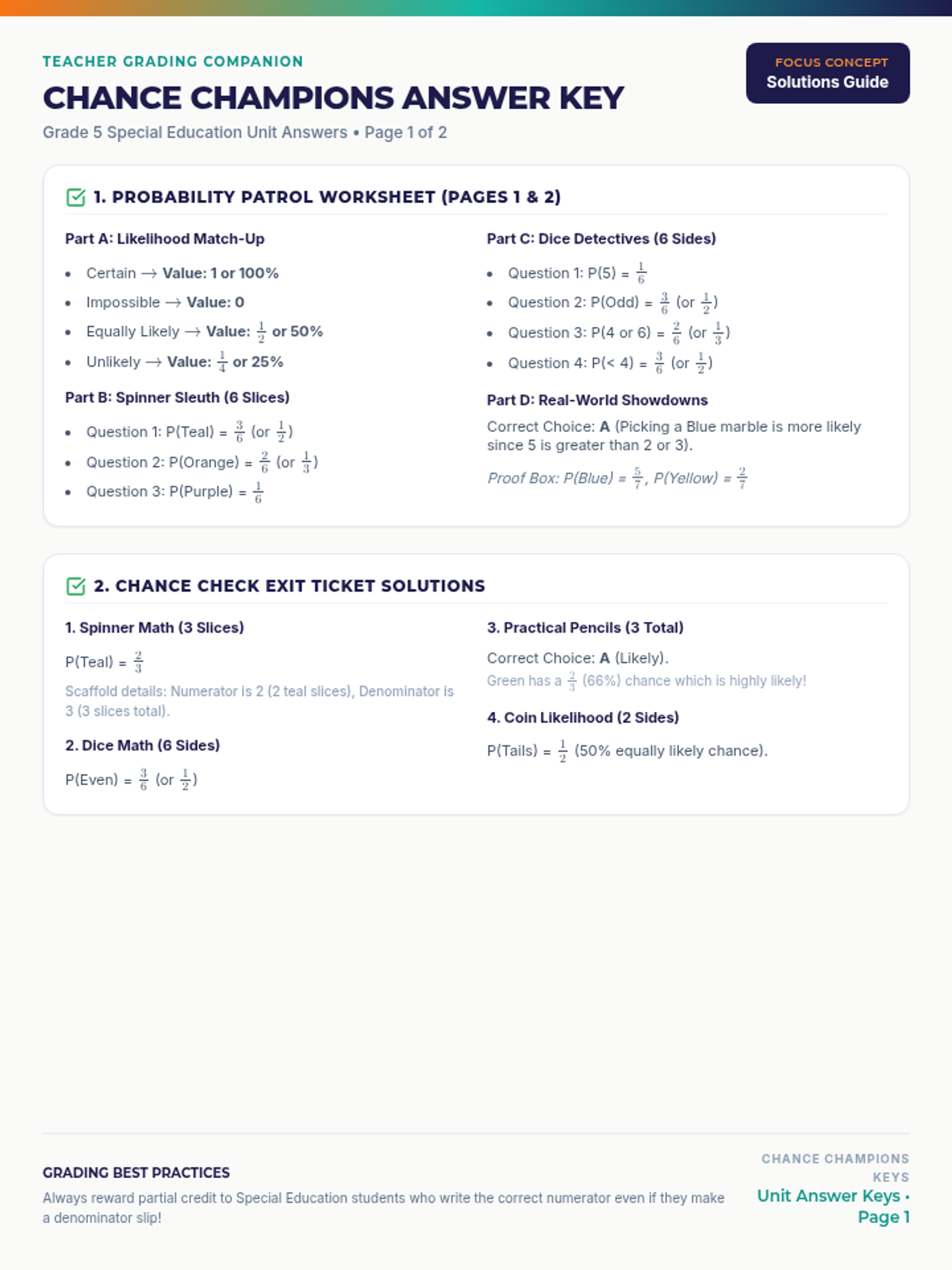
An interactive lesson bundle focused on simple probability using spinners and dice. Students learn to calculate and express probabilities as simple fractions, compare likelihoods, and play a collaborative spinner game.
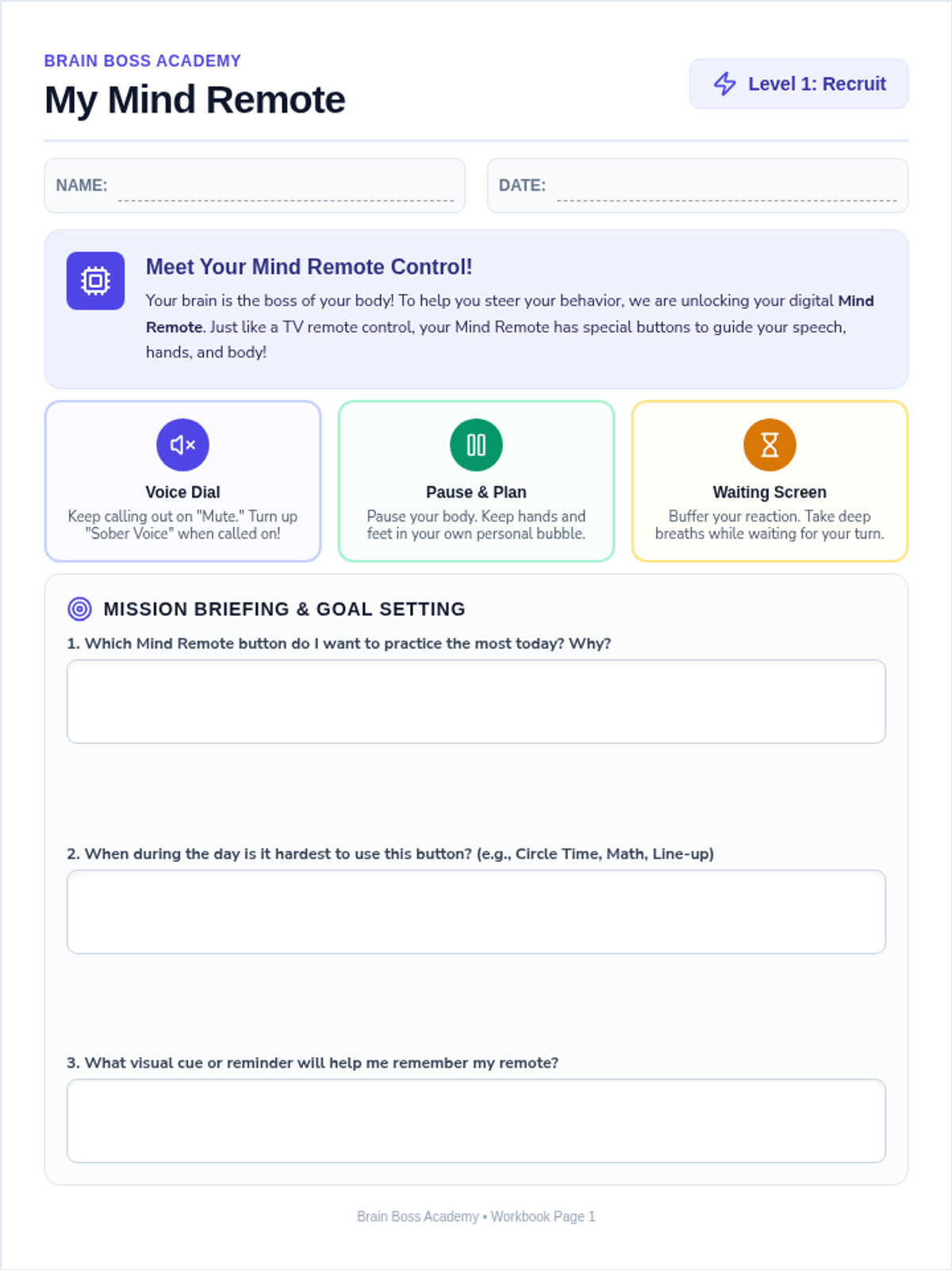
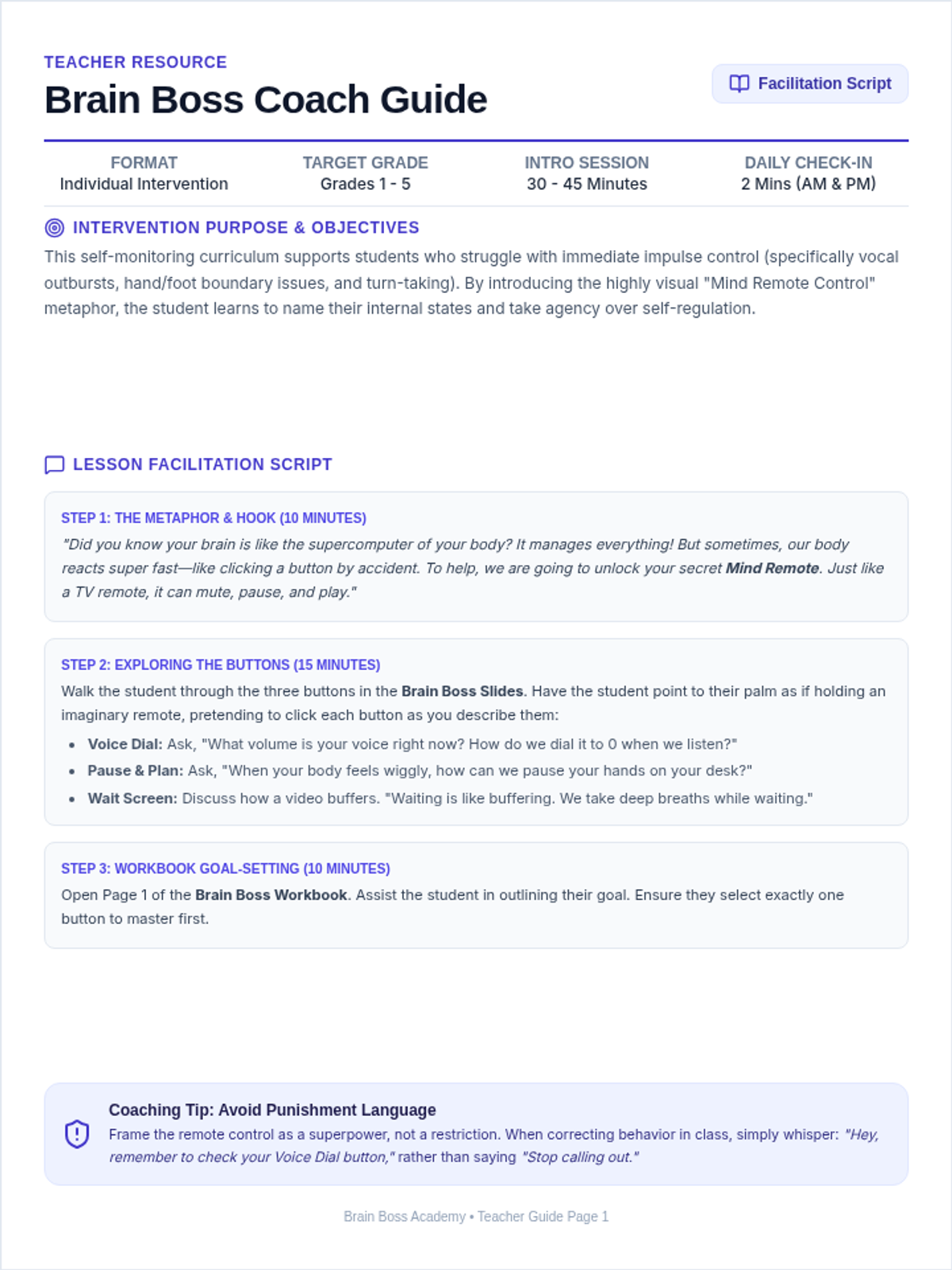
An individual self-monitoring lesson focused on impulse control, teaching students how to manage calling out, wait their turn, and maintain personal boundaries using a relatable 'Mind Remote Control' metaphor.
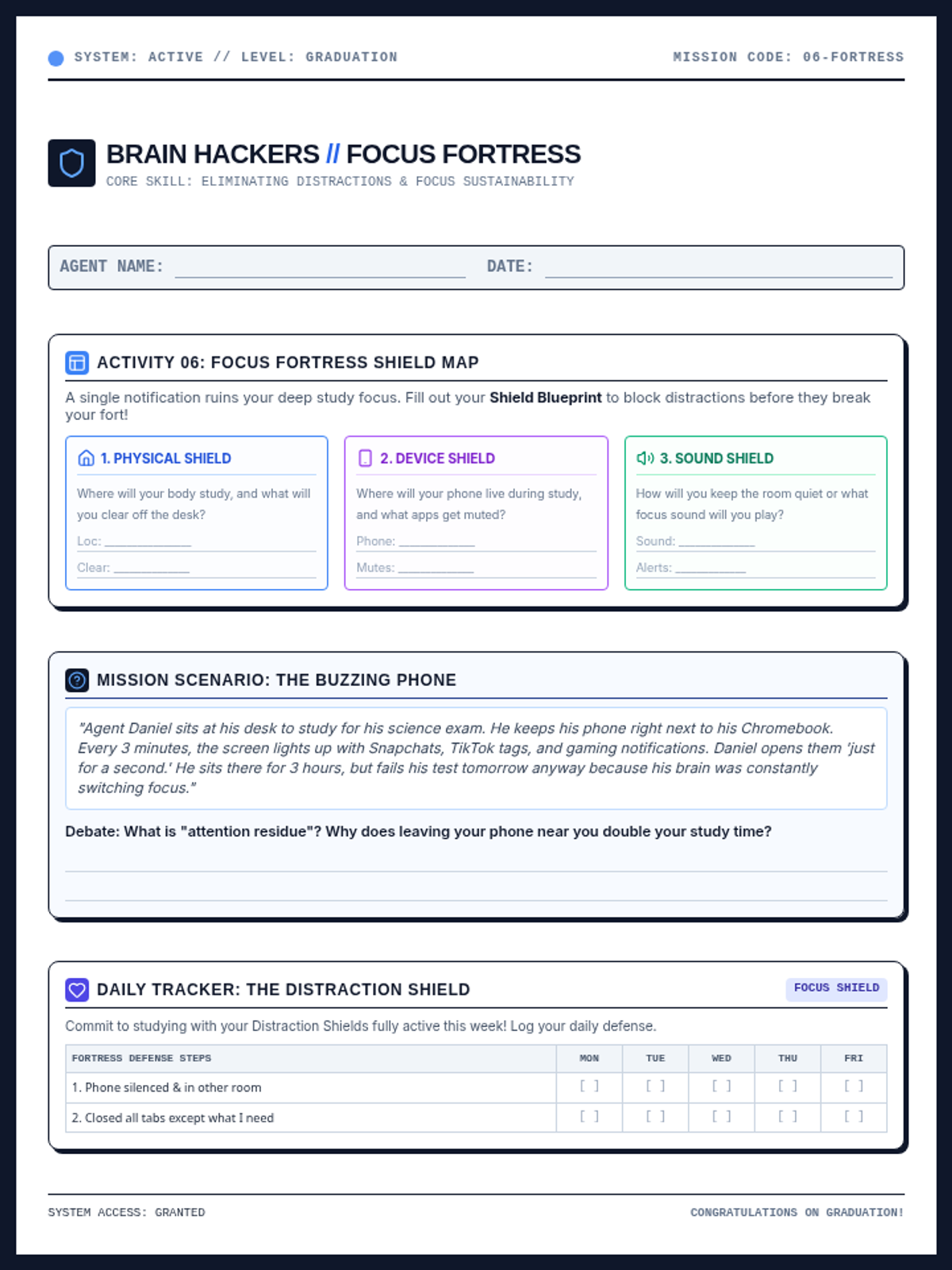
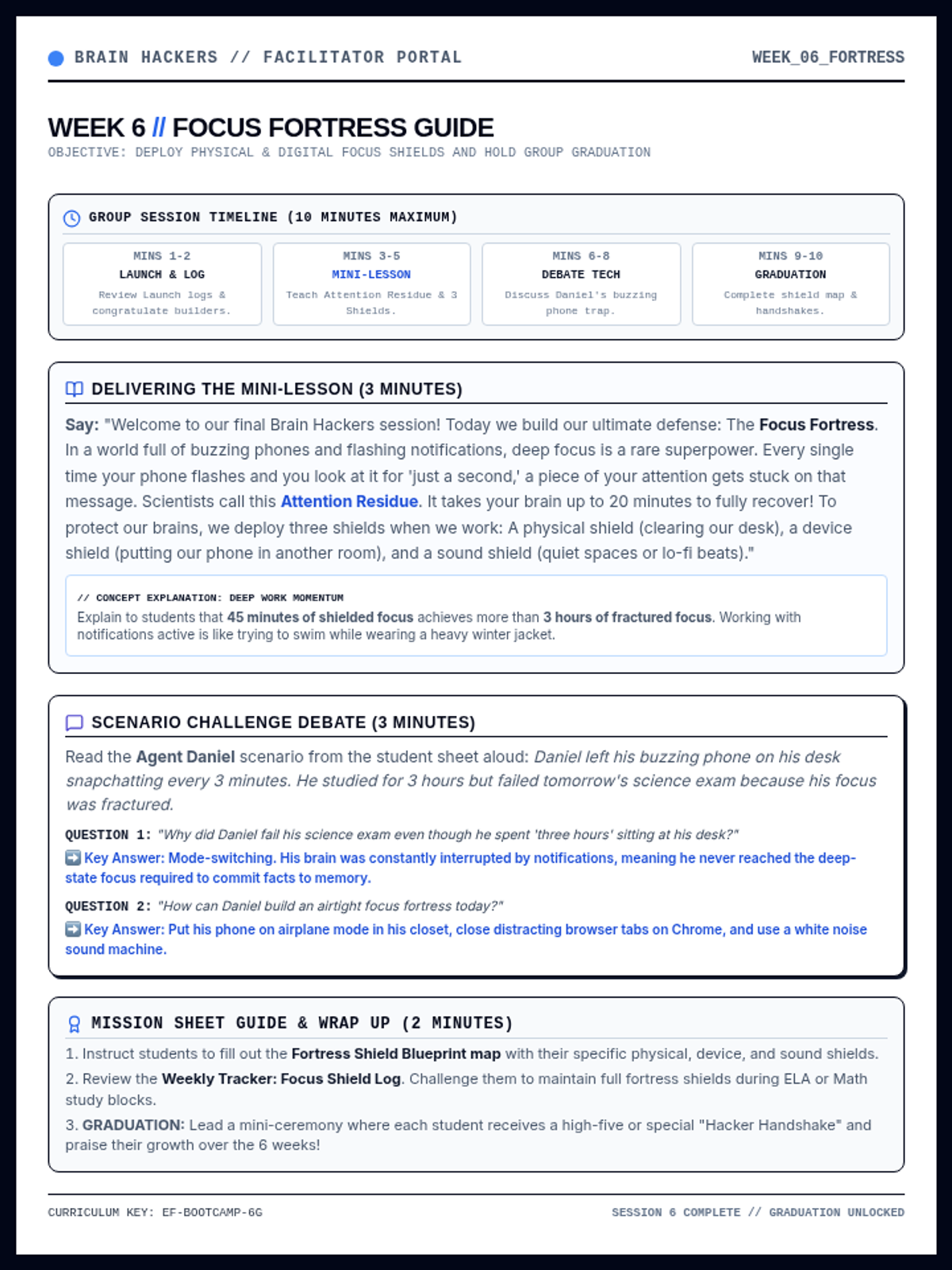
Week 6 focuses on minimizing digital and physical distractions. Students learn to build a physical and digital "Focus Fortress" and complete their executive functioning graduation.
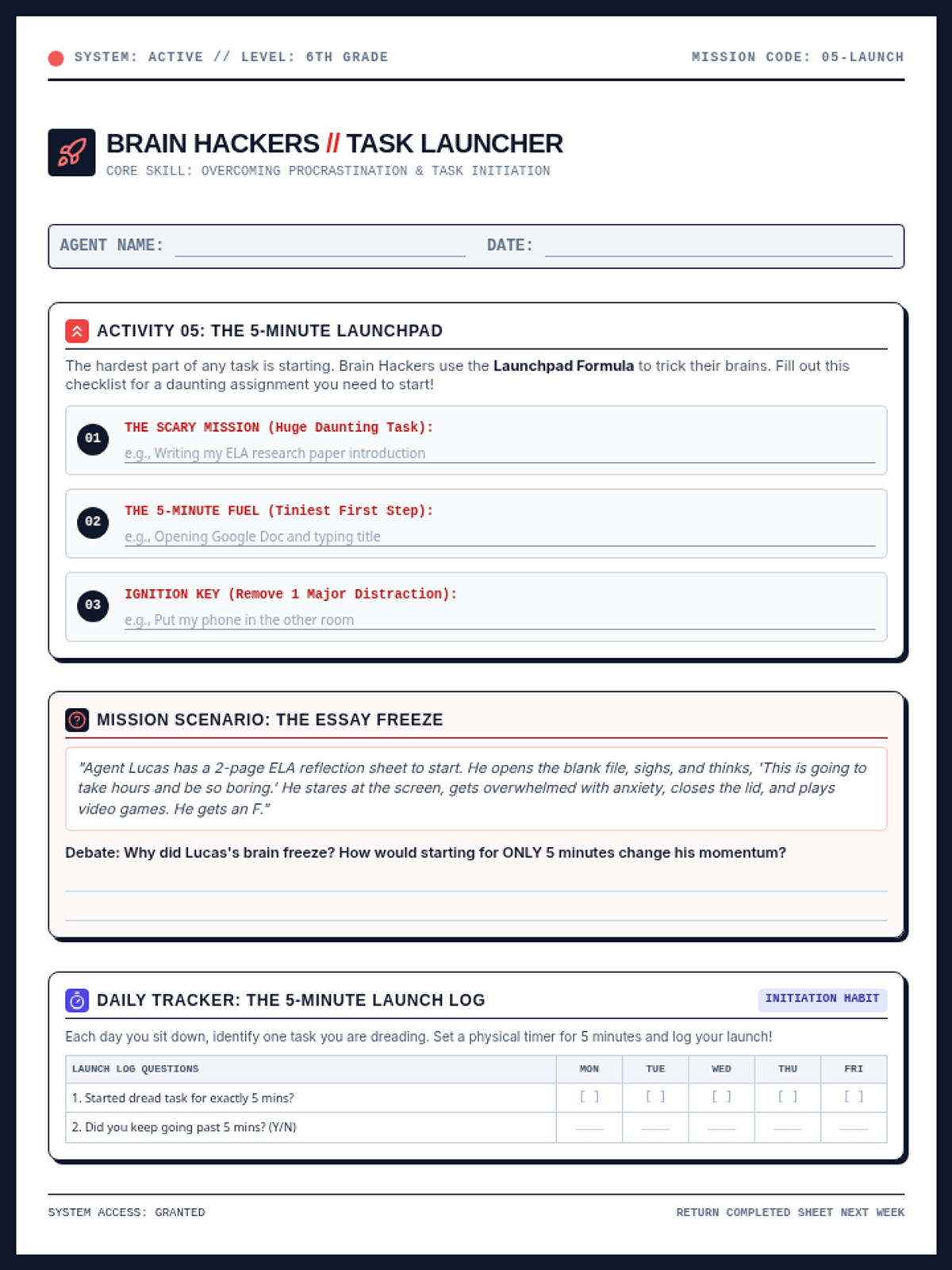
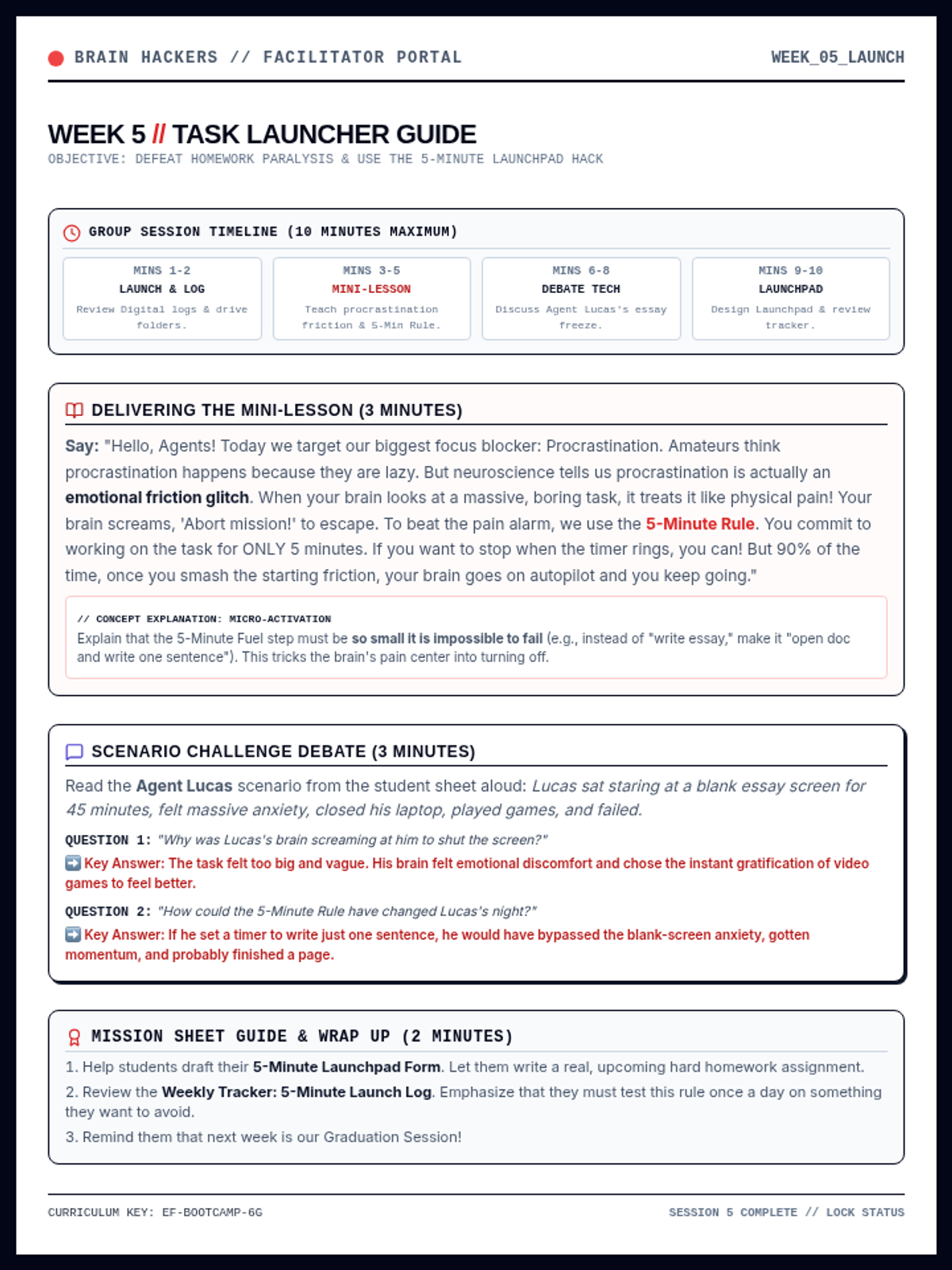
Week 5 focuses on task initiation and beating procrastination. Students learn the "5-Minute Rule" and design "Launchpads" to break down daunting assignments.
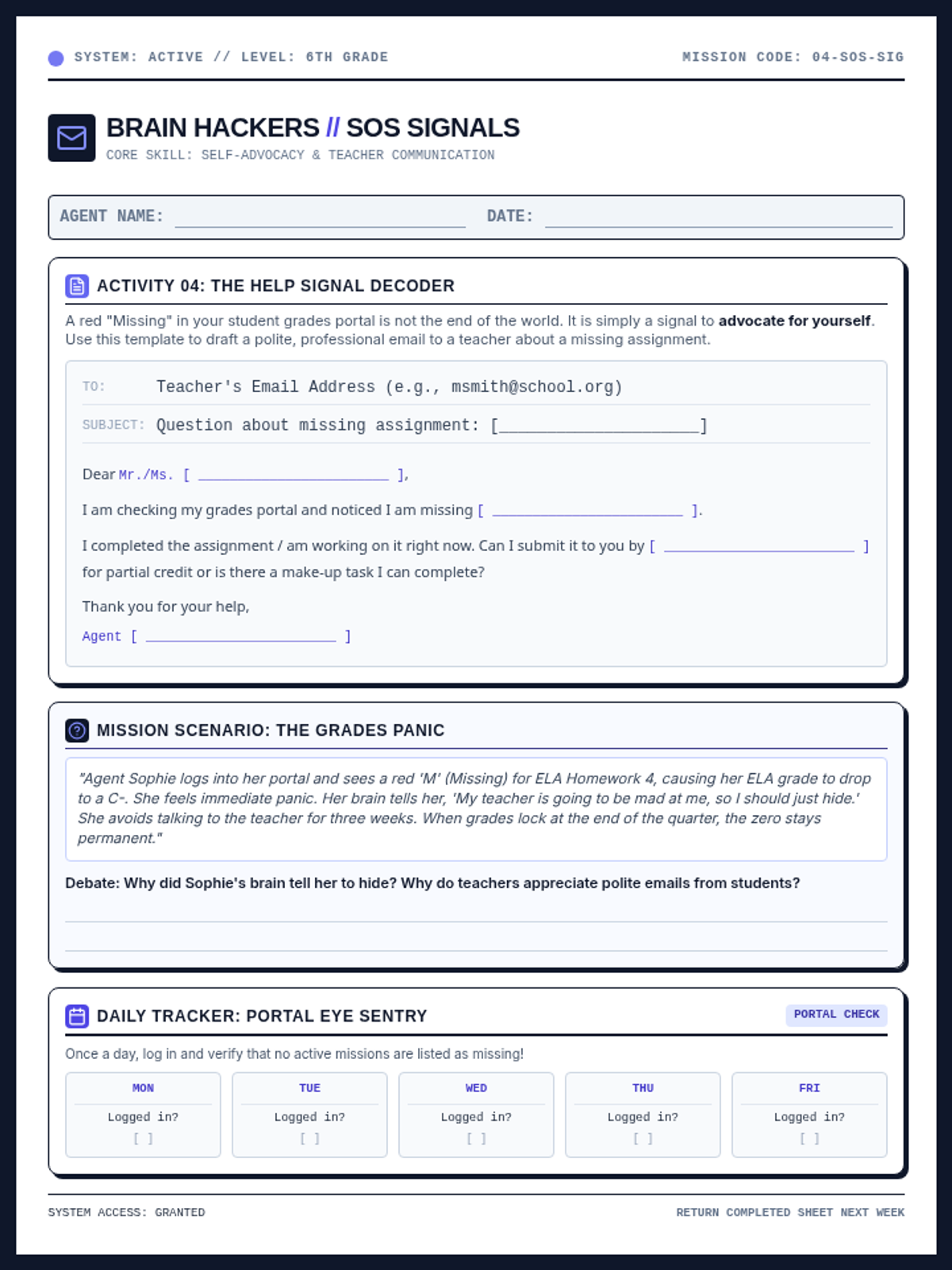
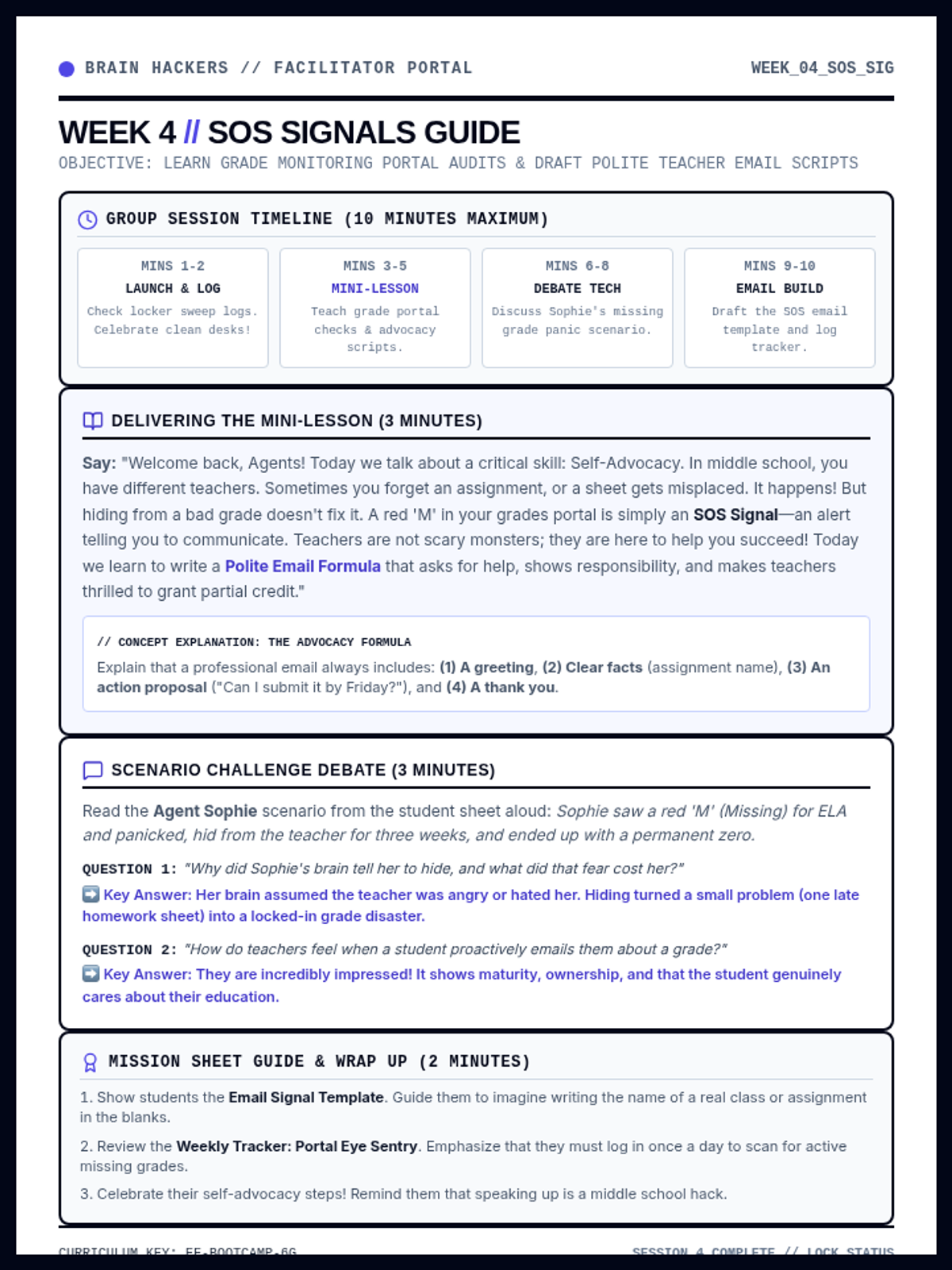
Week 4 focuses on self-advocacy and managing missing assignments. Students learn to audit their online grades portal, draft professional help emails to teachers, and use face-to-face communication scripts.
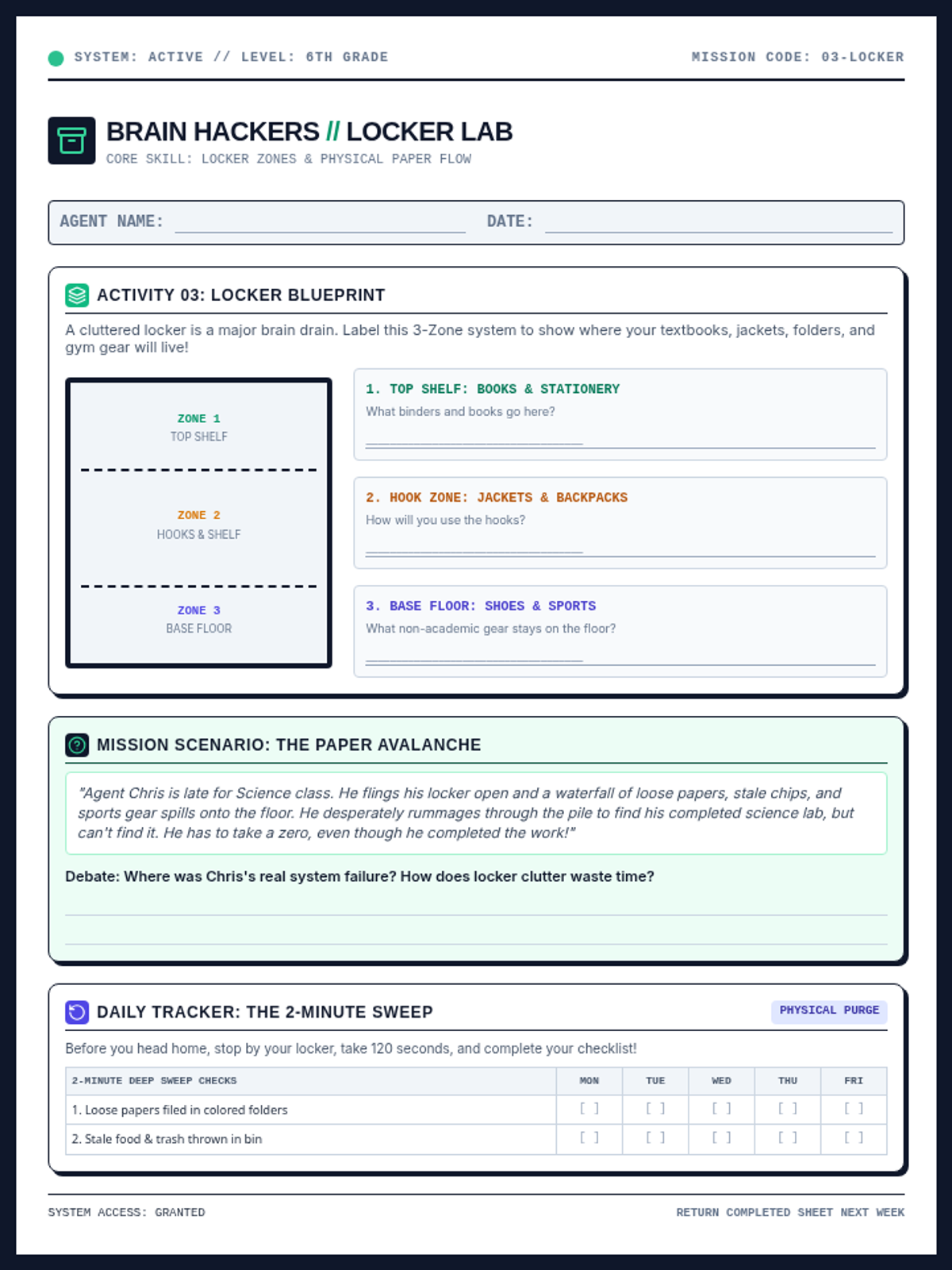
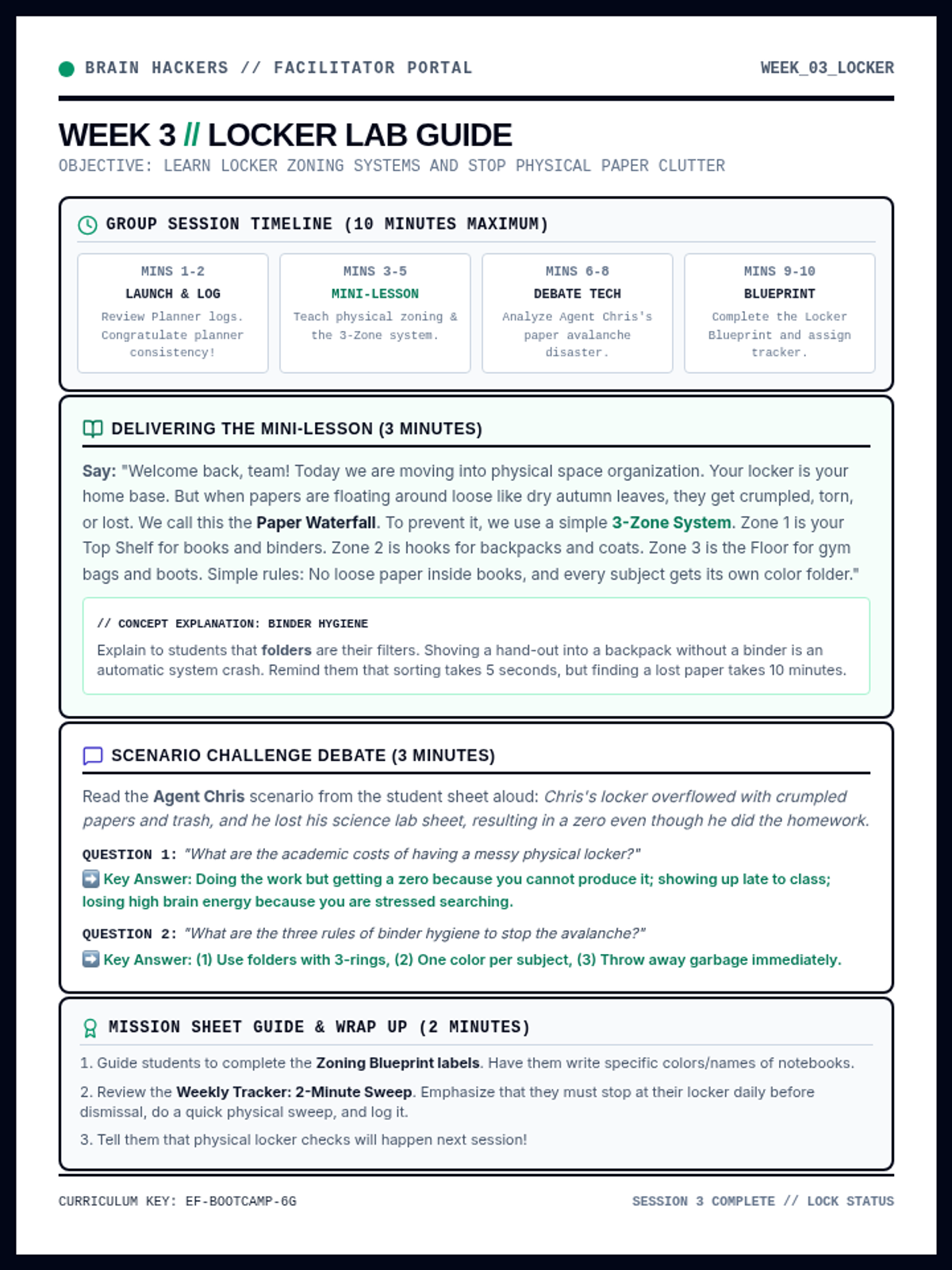
Week 3 focuses on locker and physical materials organization. Students learn to design their locker zones and apply a simple color-coded system to keep papers and notebooks in check.
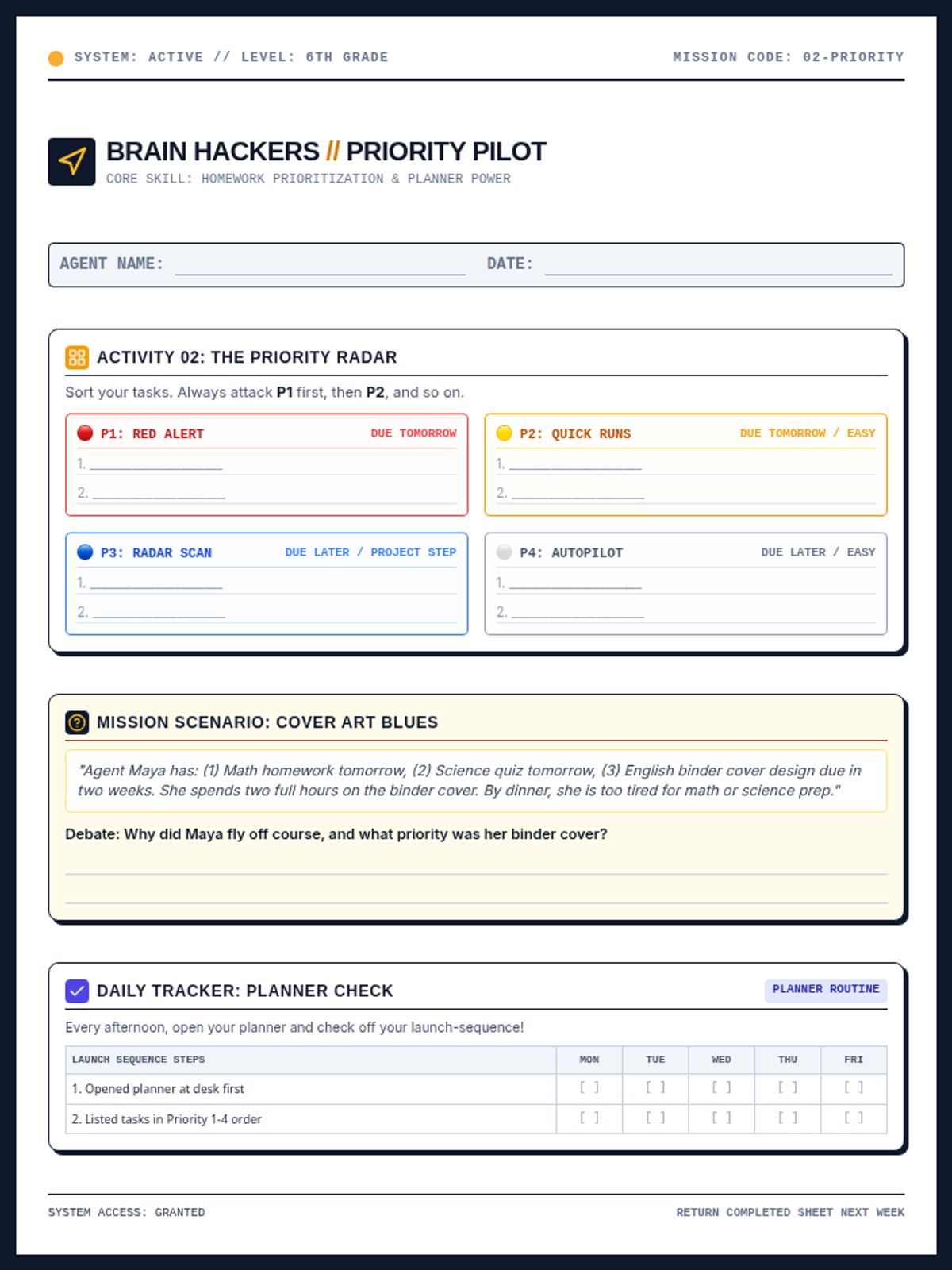
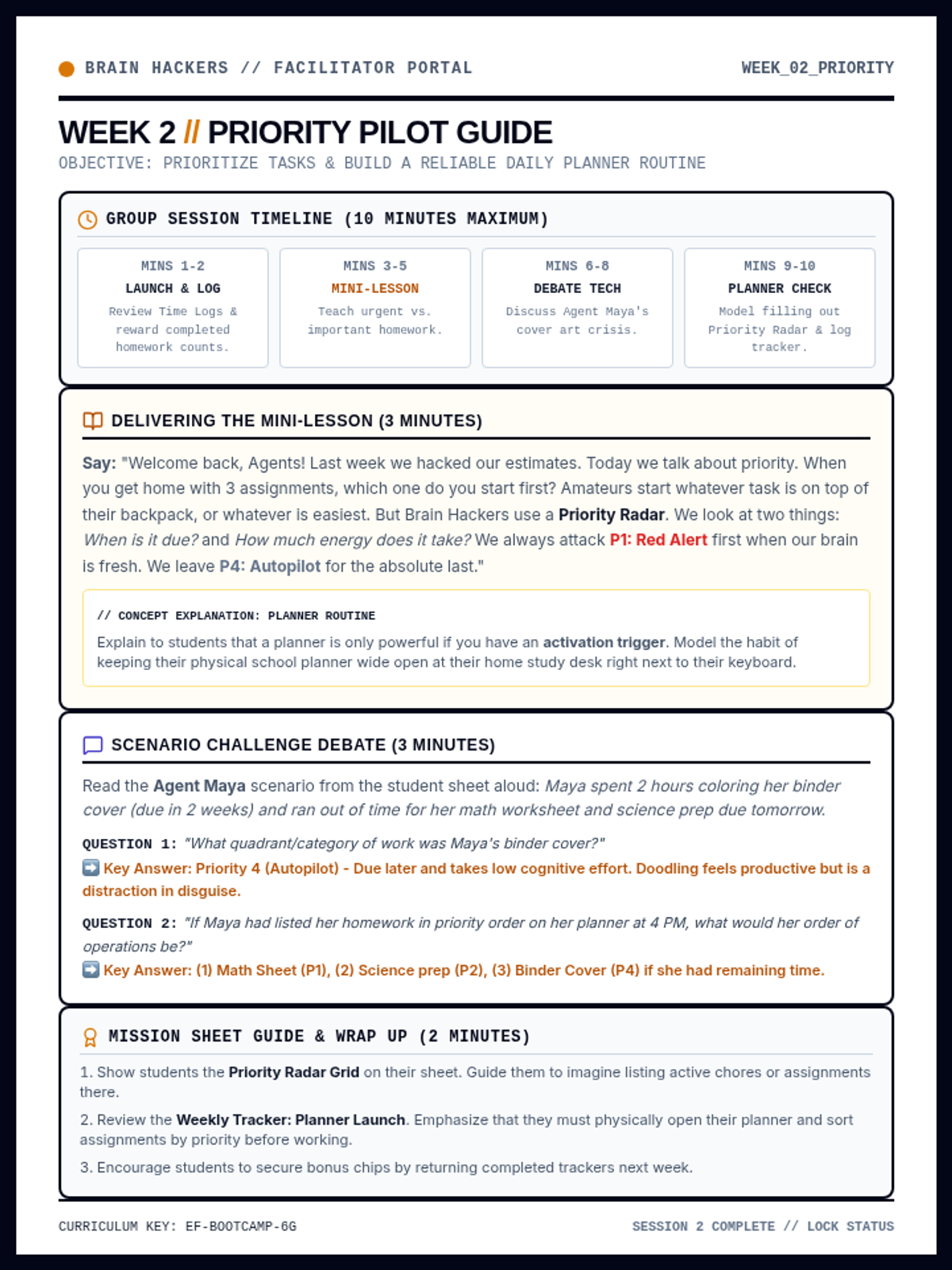
Week 2 focuses on homework prioritization and introducing students to using a planner. Students learn to categorize tasks by urgency and importance and plan their afternoon order of operations.
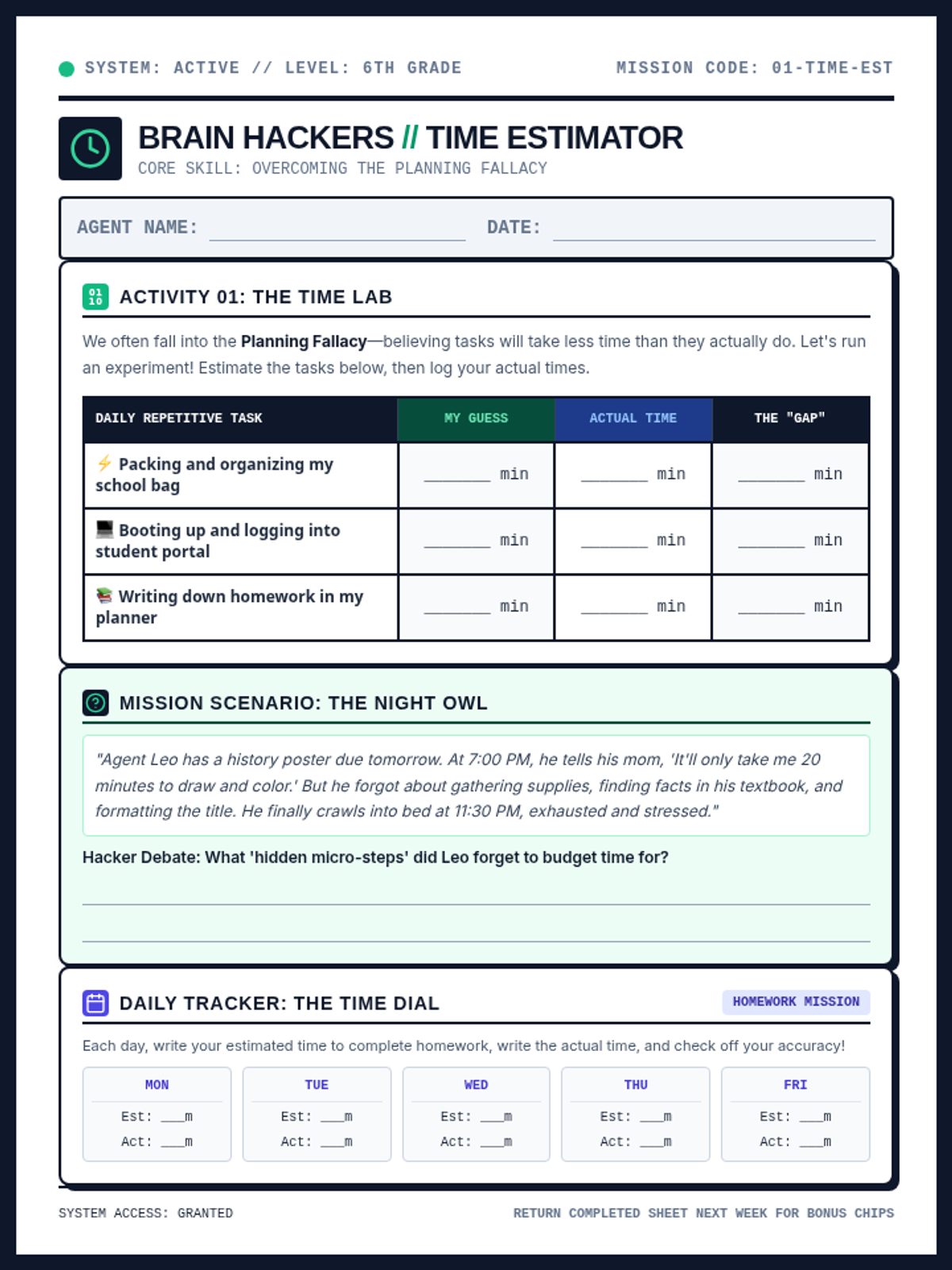
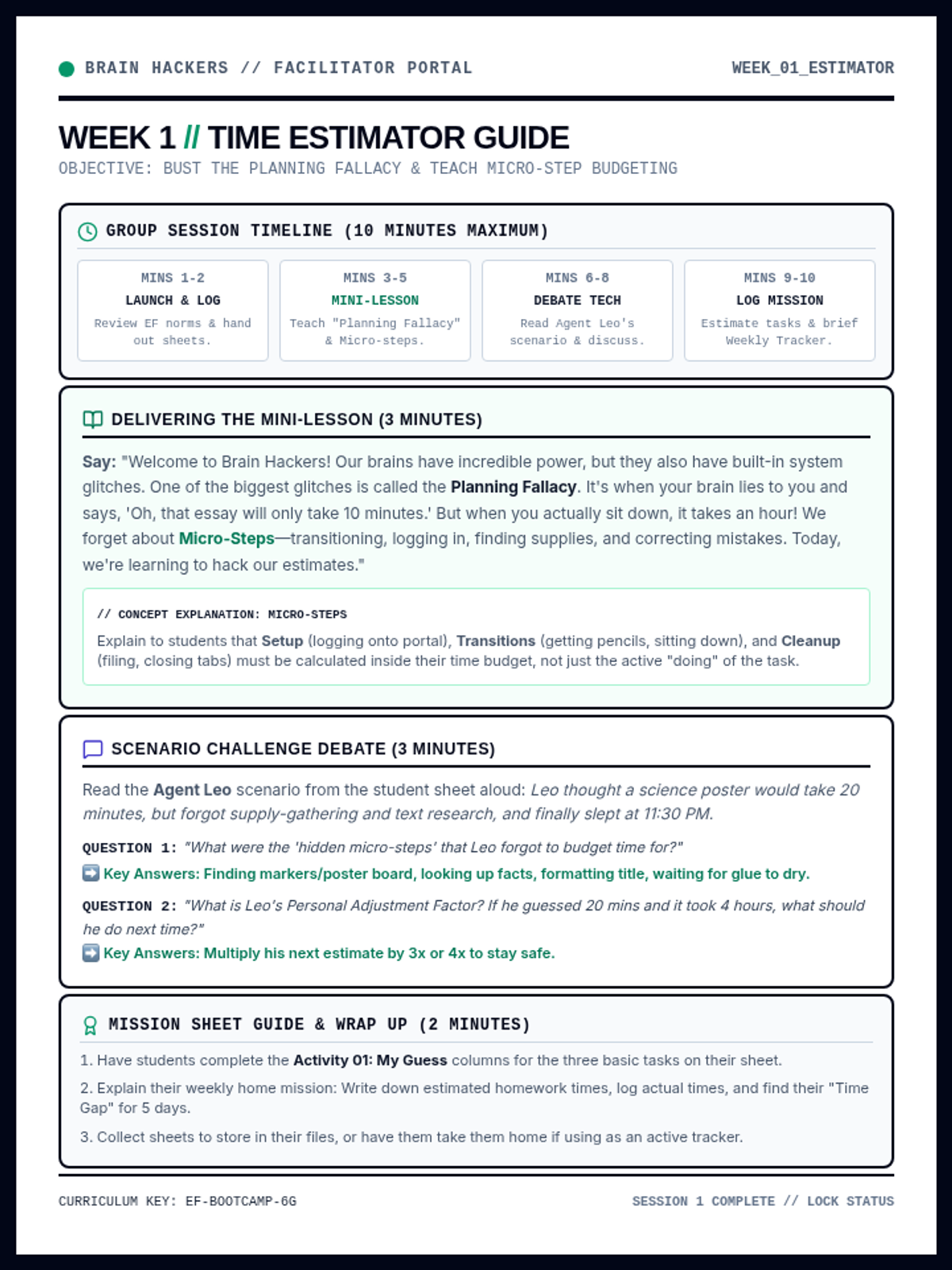
Week 1 focuses on estimating task length and planning realistic time budgets to avoid the 'planning fallacy'. Students learn to guess time, track actual time, and calculate their personal adjustment factors.
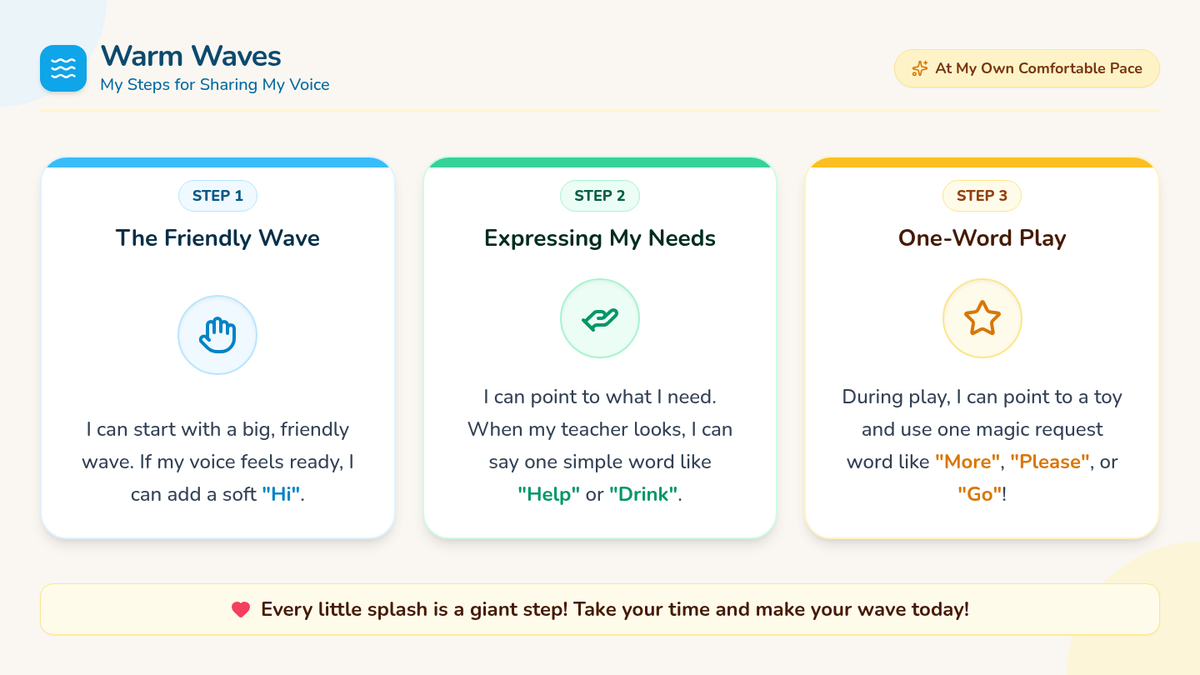
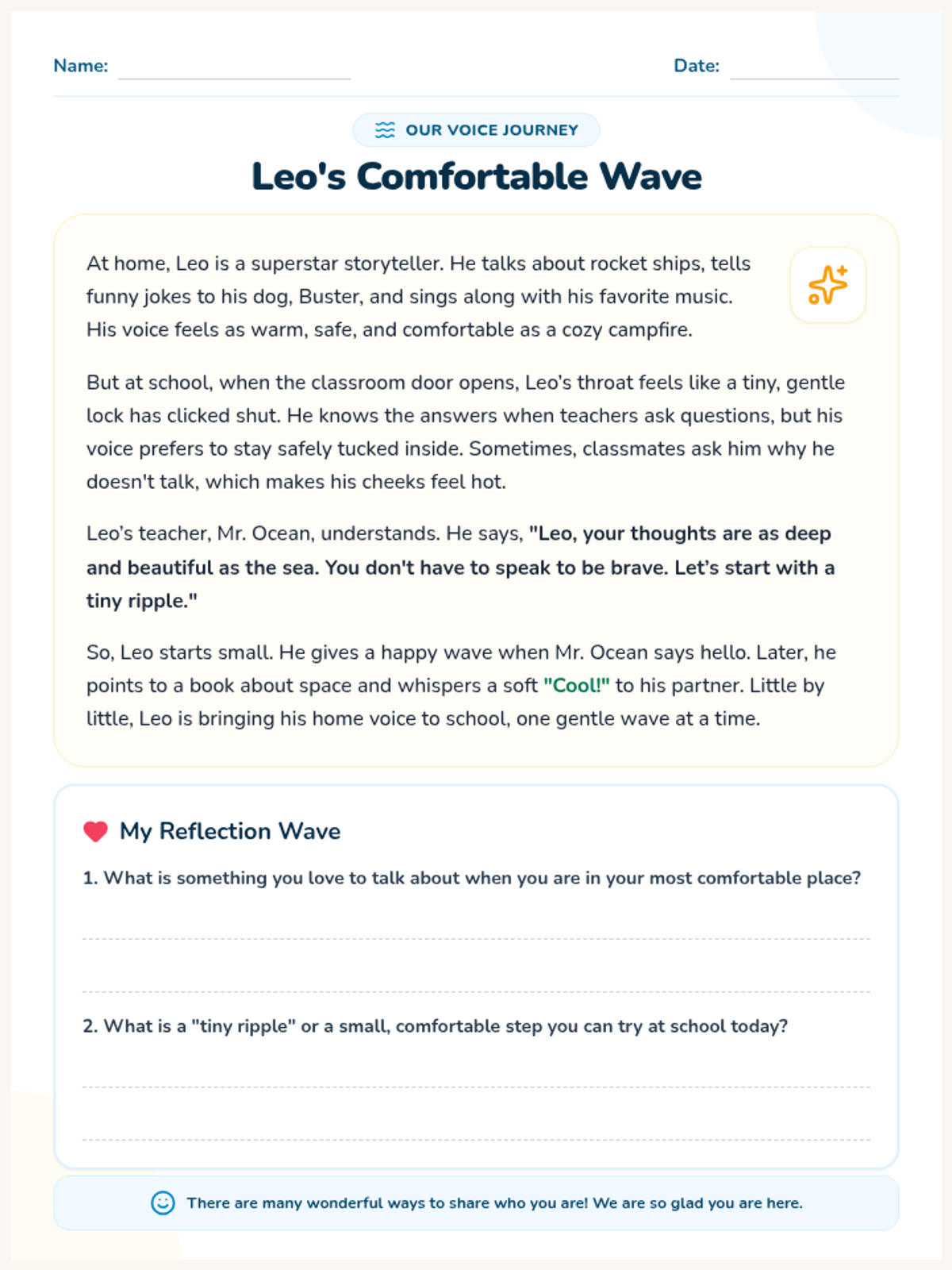
A gentle, step-by-step social narrative lesson designed for second graders who are beginning to vocalize in the classroom. This mini-lesson uses a warm, low-pressure approach to model friendly greetings, expressing basic needs, and making simple one-word requests at the student's own comfortable pace.
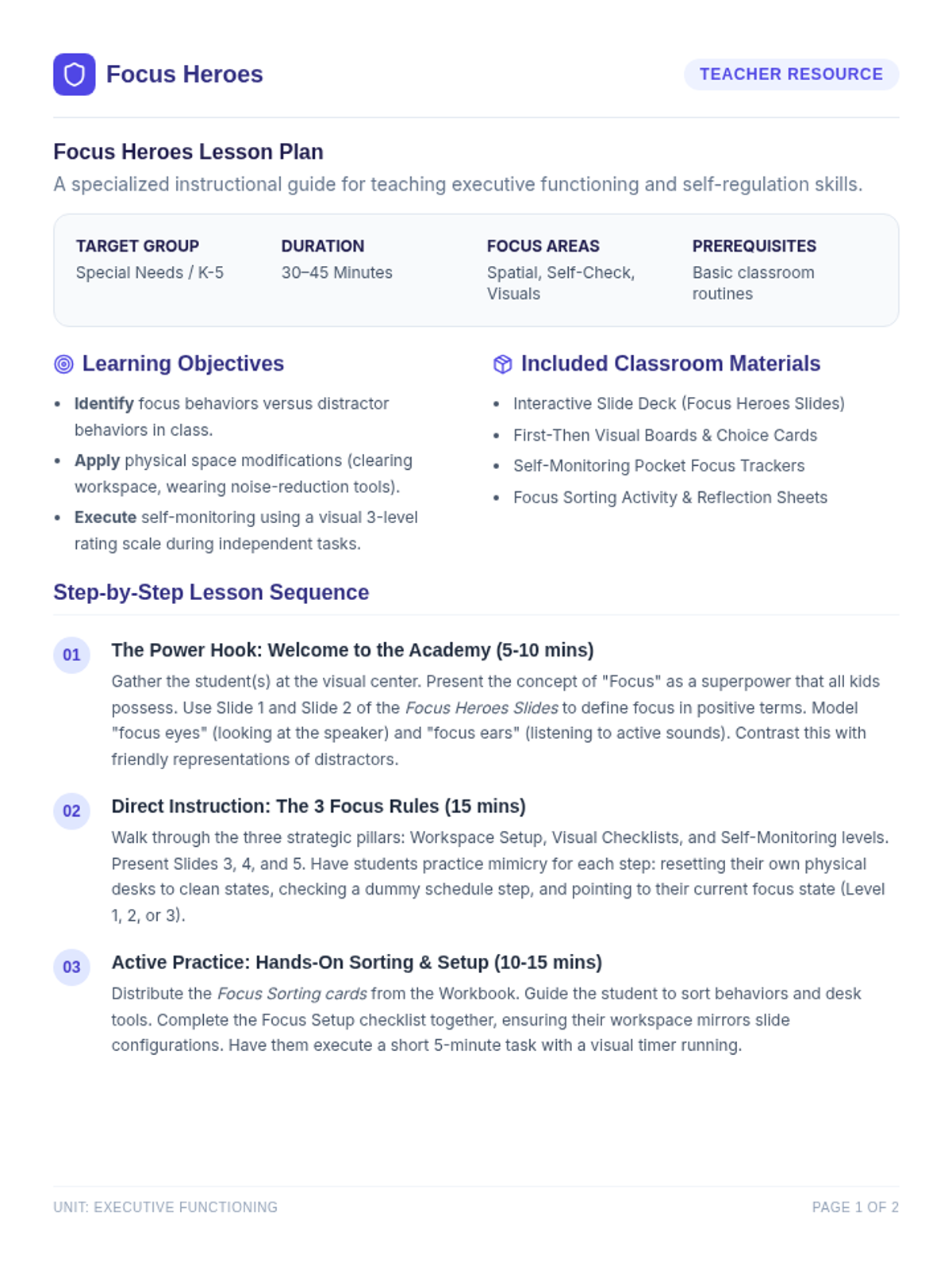
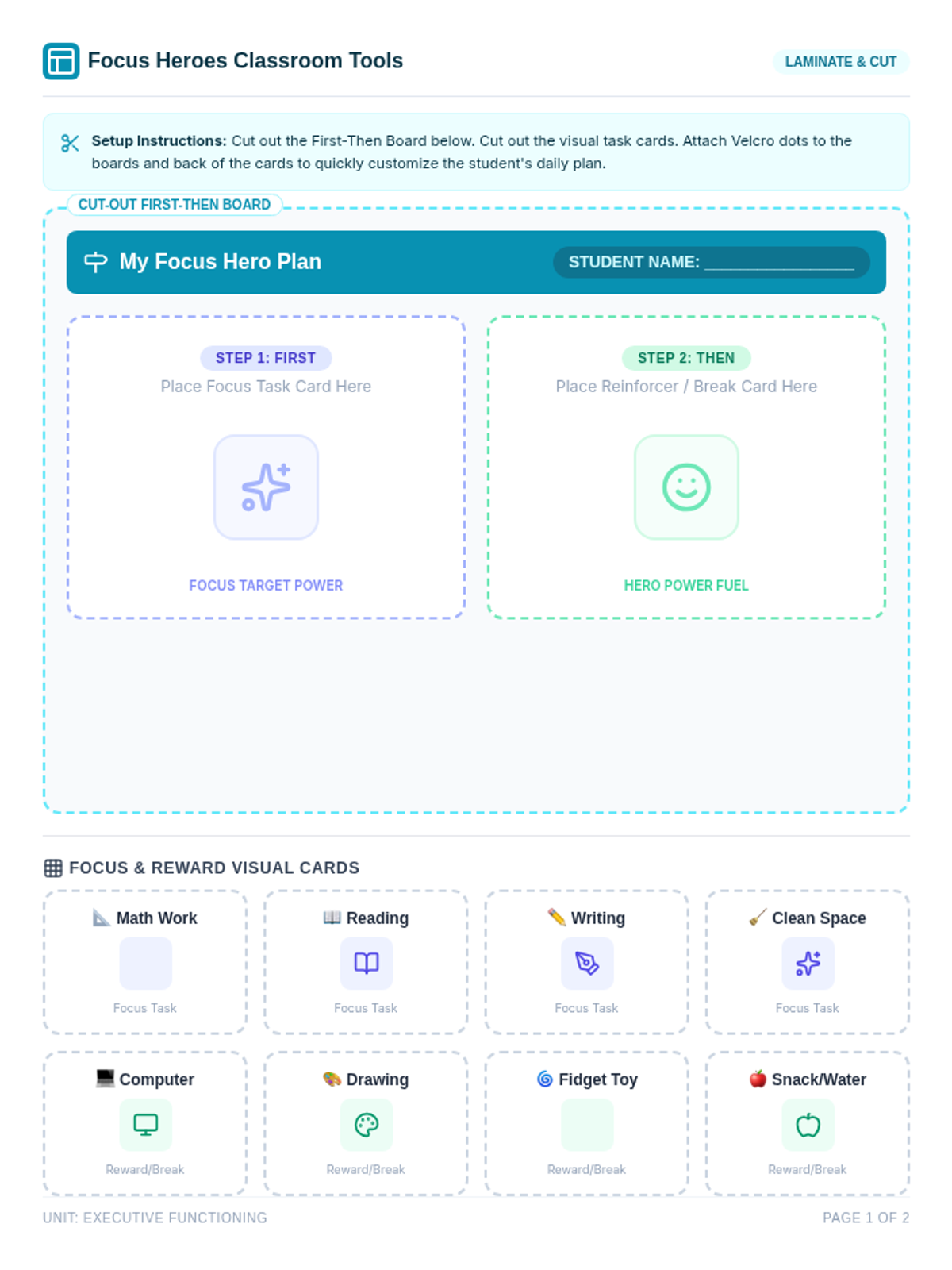
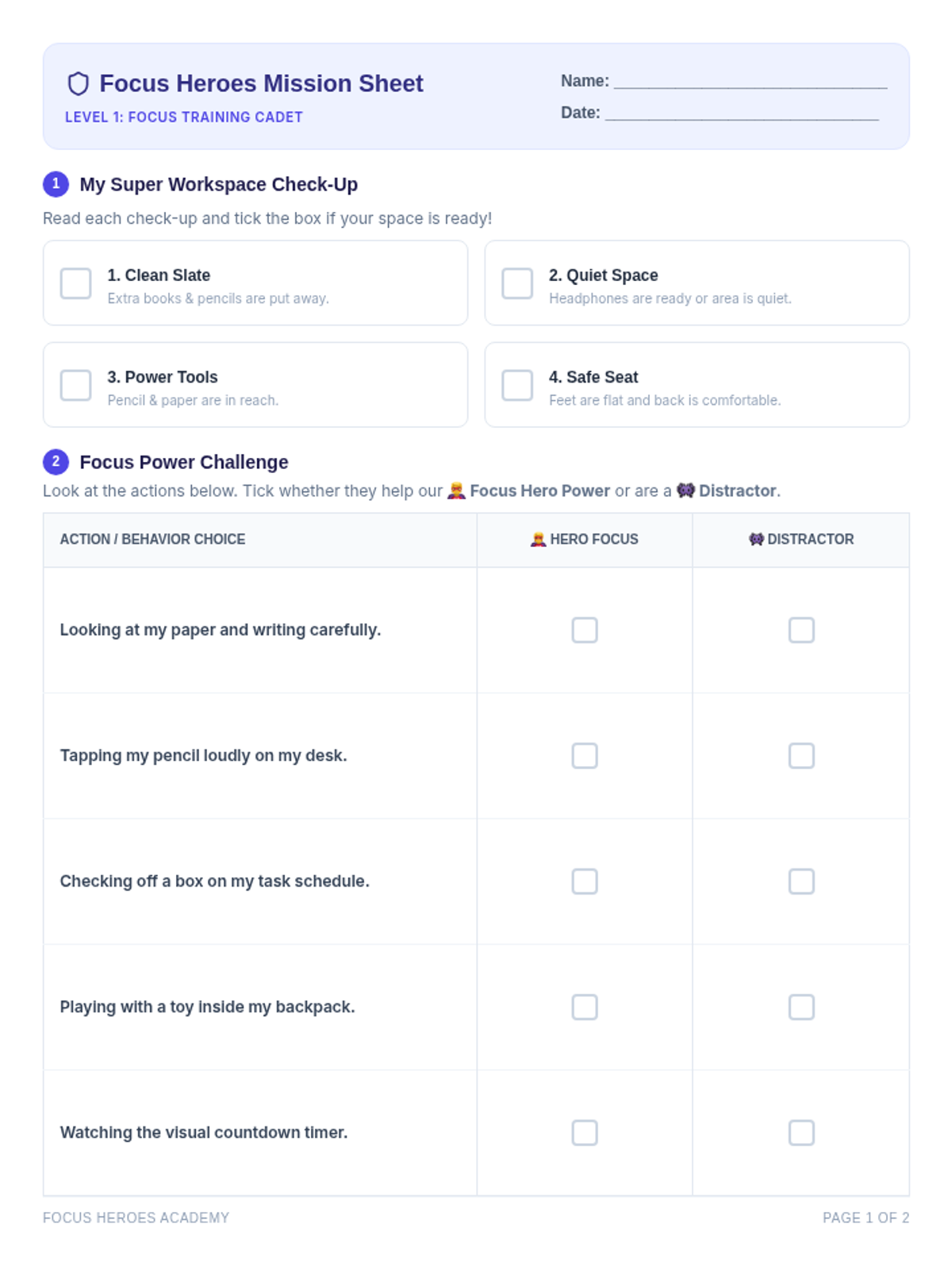
A specialized lesson designed to teach focus strategies, self-monitoring, and environmental adjustments to students with special needs, featuring concrete visual aids and self-regulation tools.
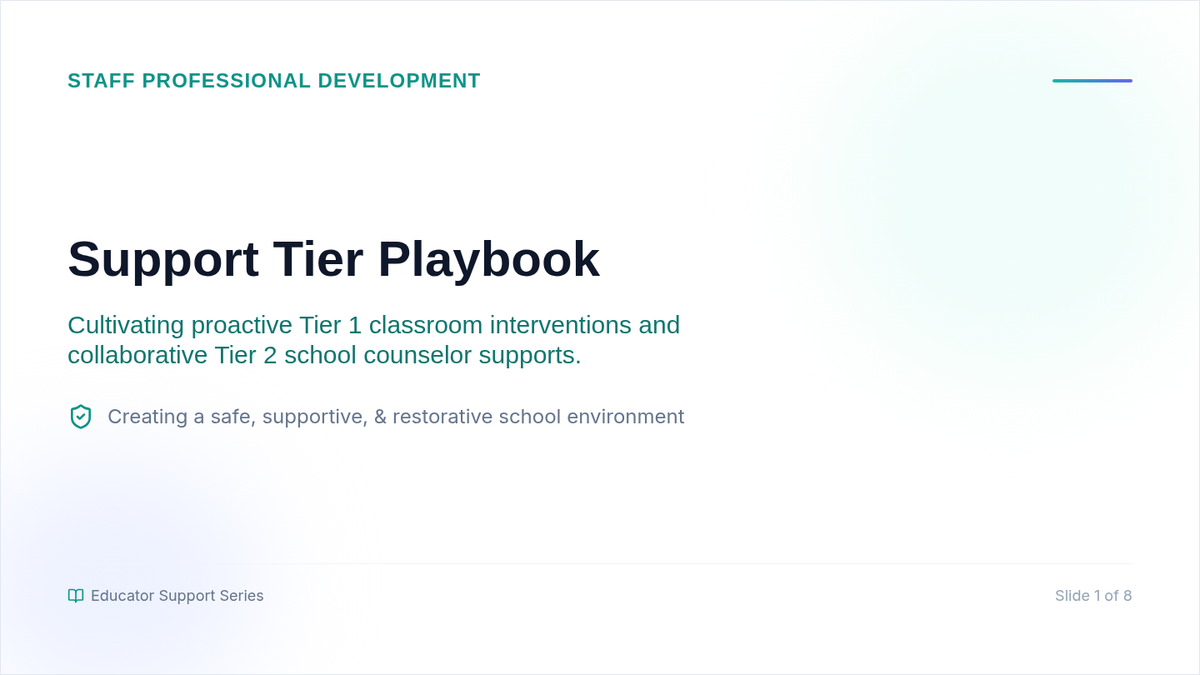
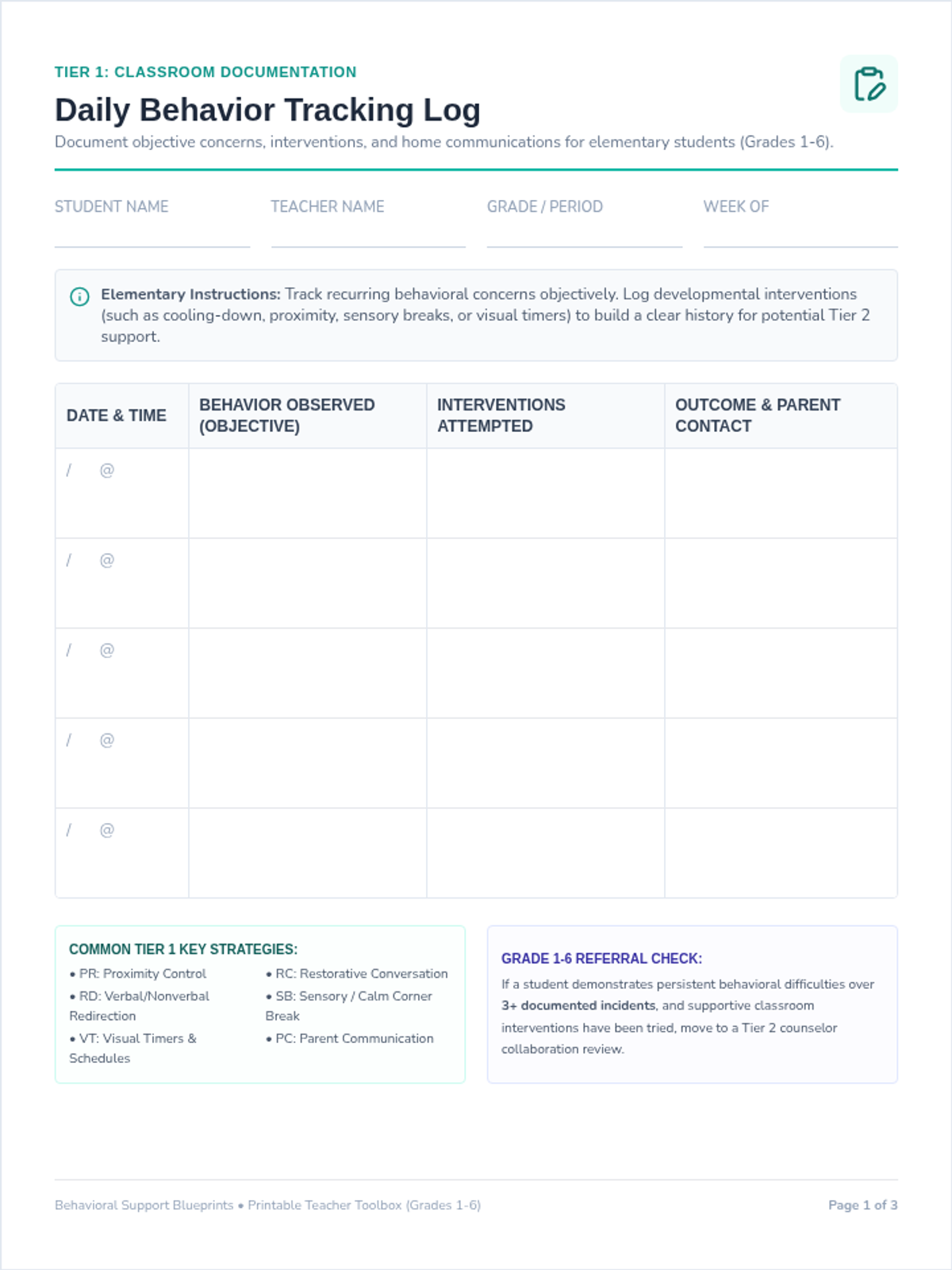
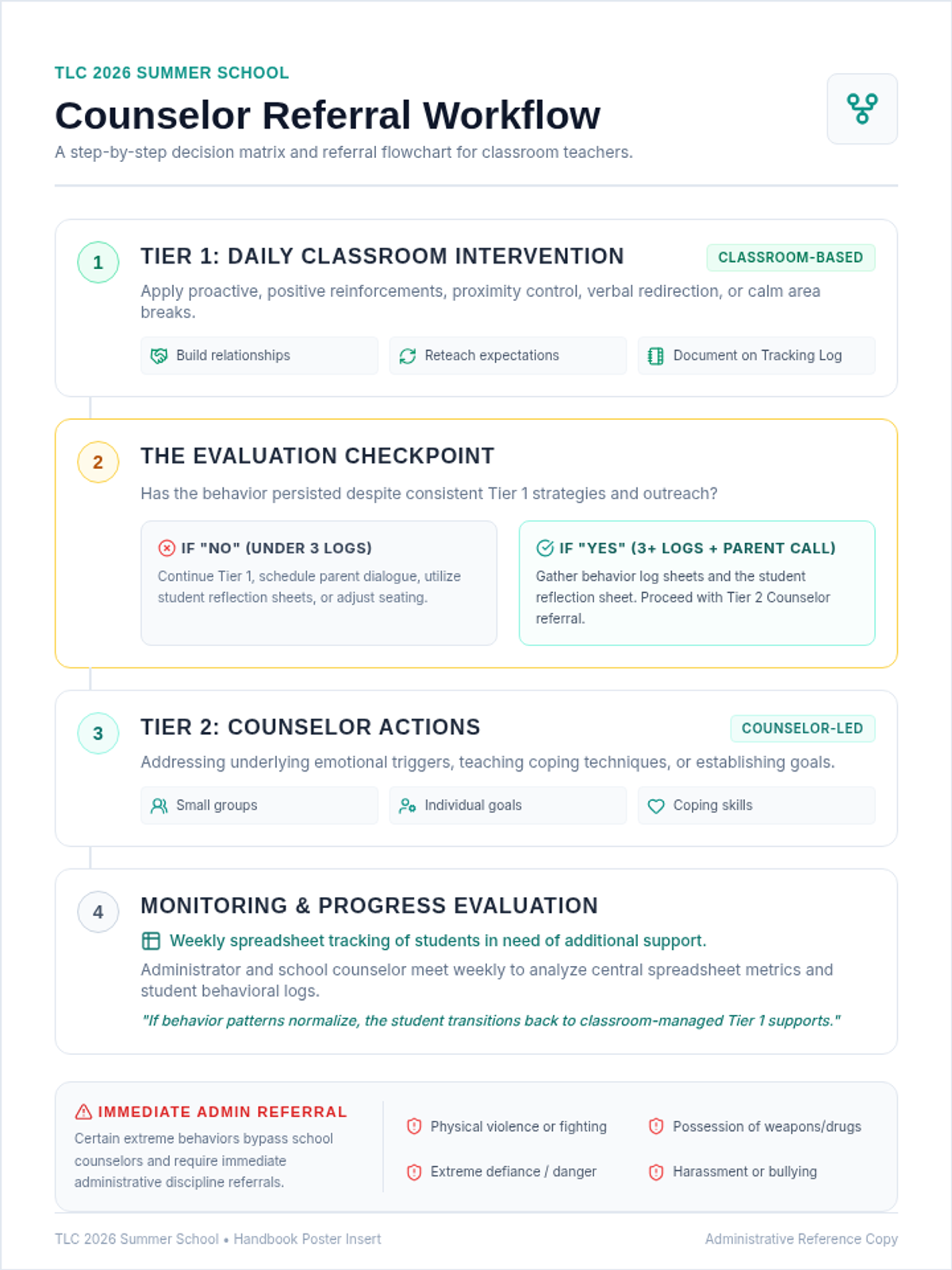
A comprehensive professional development and resource package for educators, mapping out Tier 1 classroom interventions and Tier 2 school counselor supports to build a proactive, collaborative, and restorative student support culture.
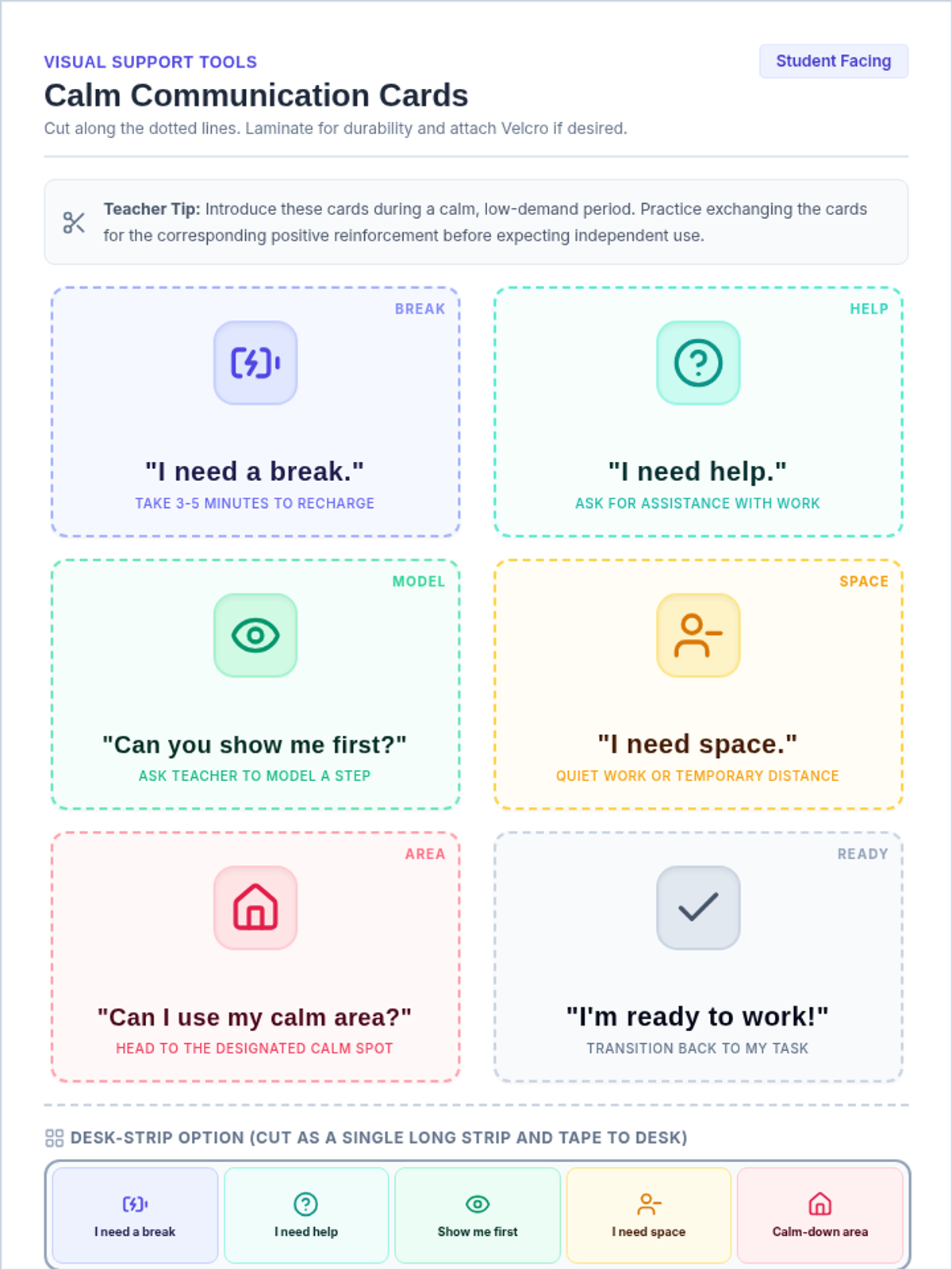
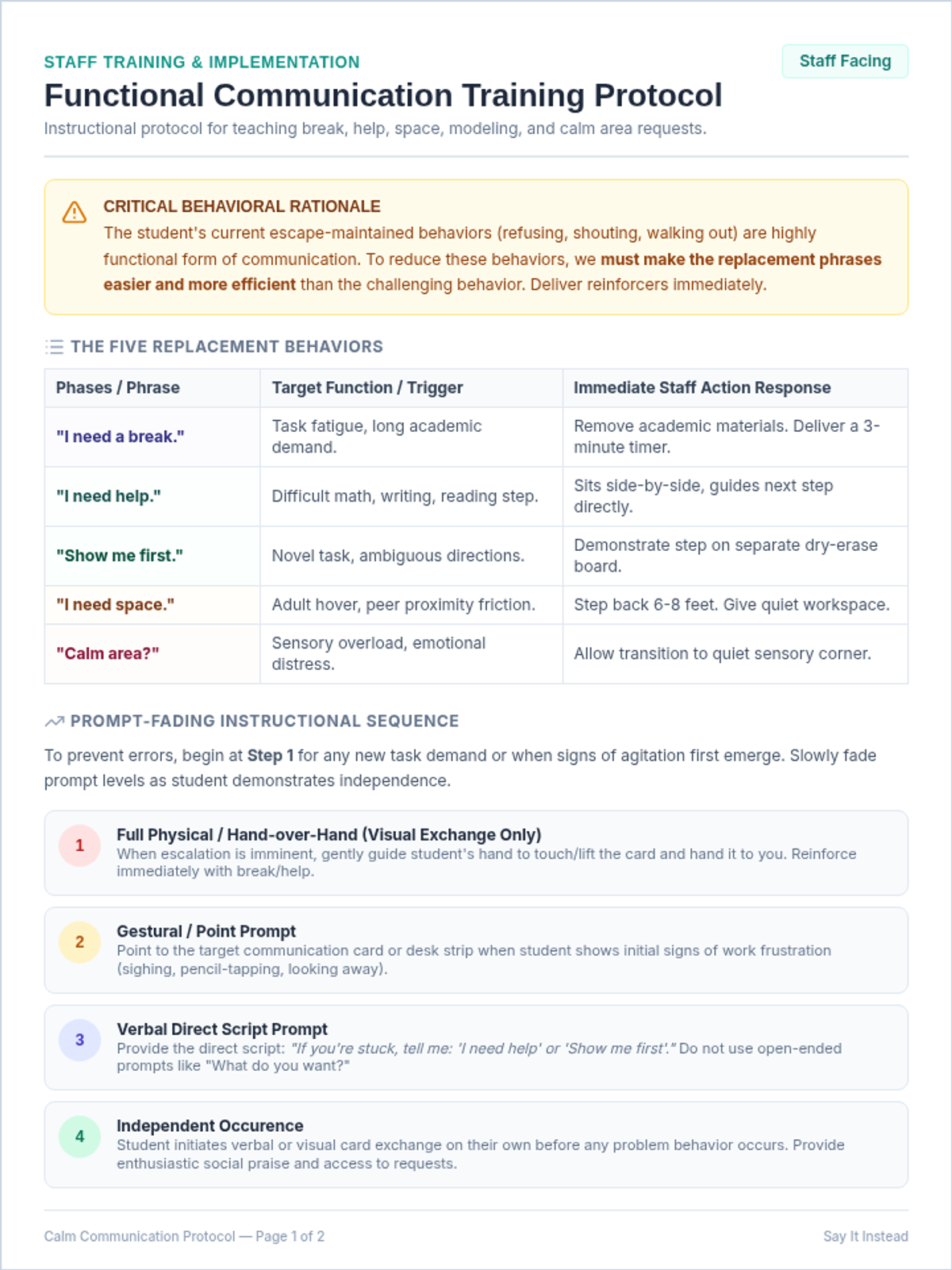
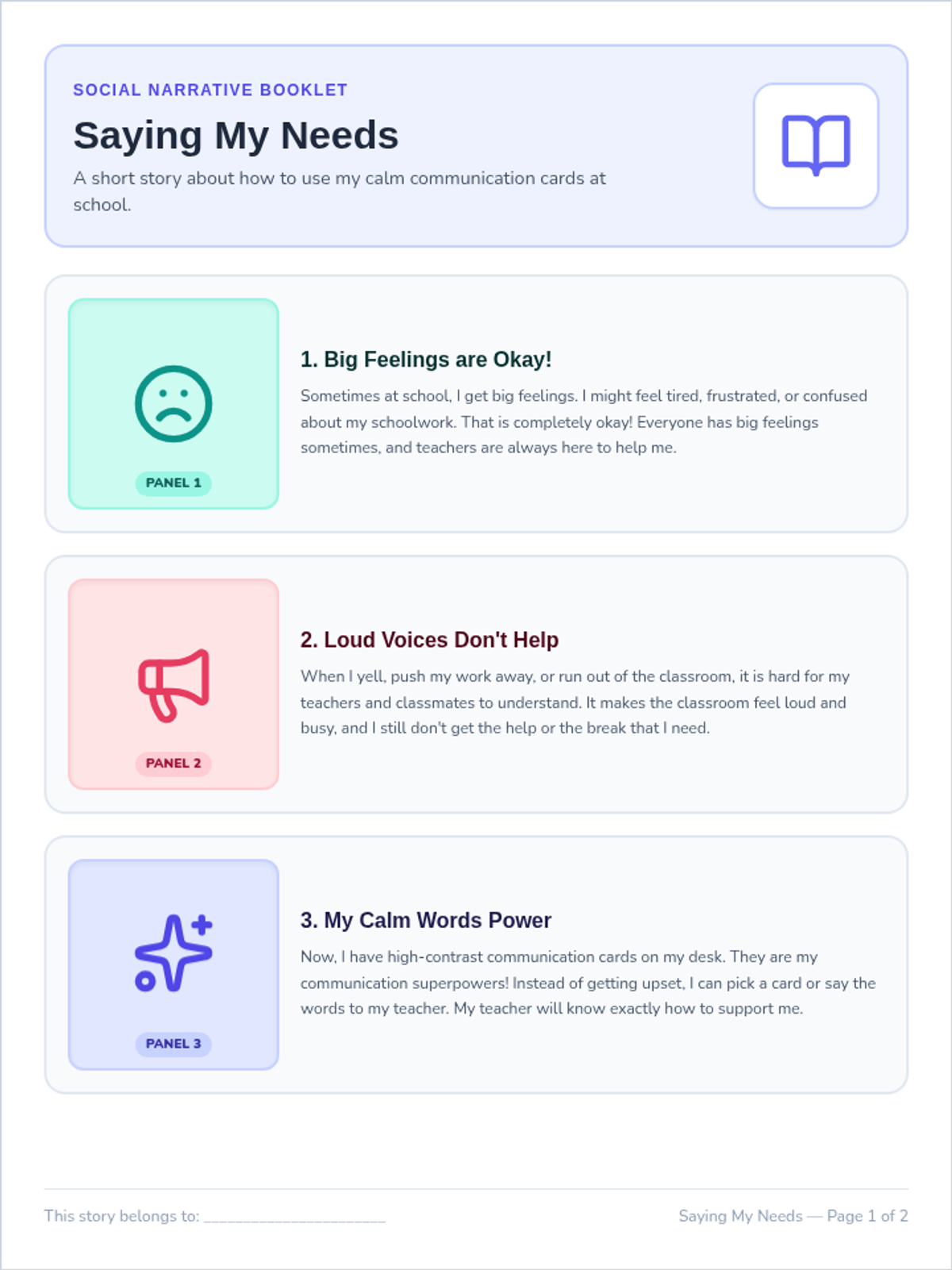
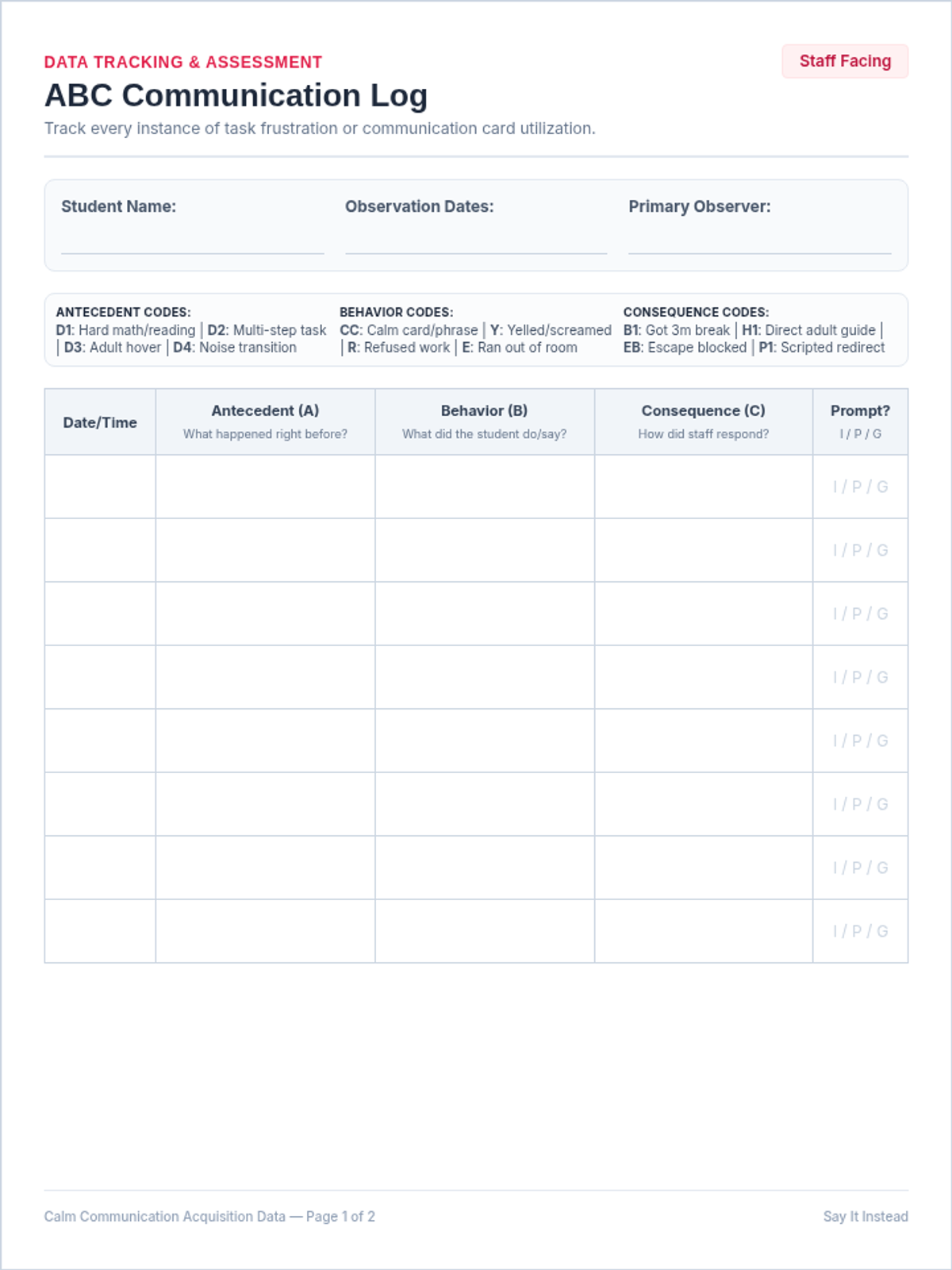
A comprehensive set of visual supports, implementation protocols, a social narrative, and tracking sheets designed to teach and reinforce five critical replacement communication behaviors: requesting a break, asking for help, requesting a demonstration, asking for space, and requesting access to a calm-down area.
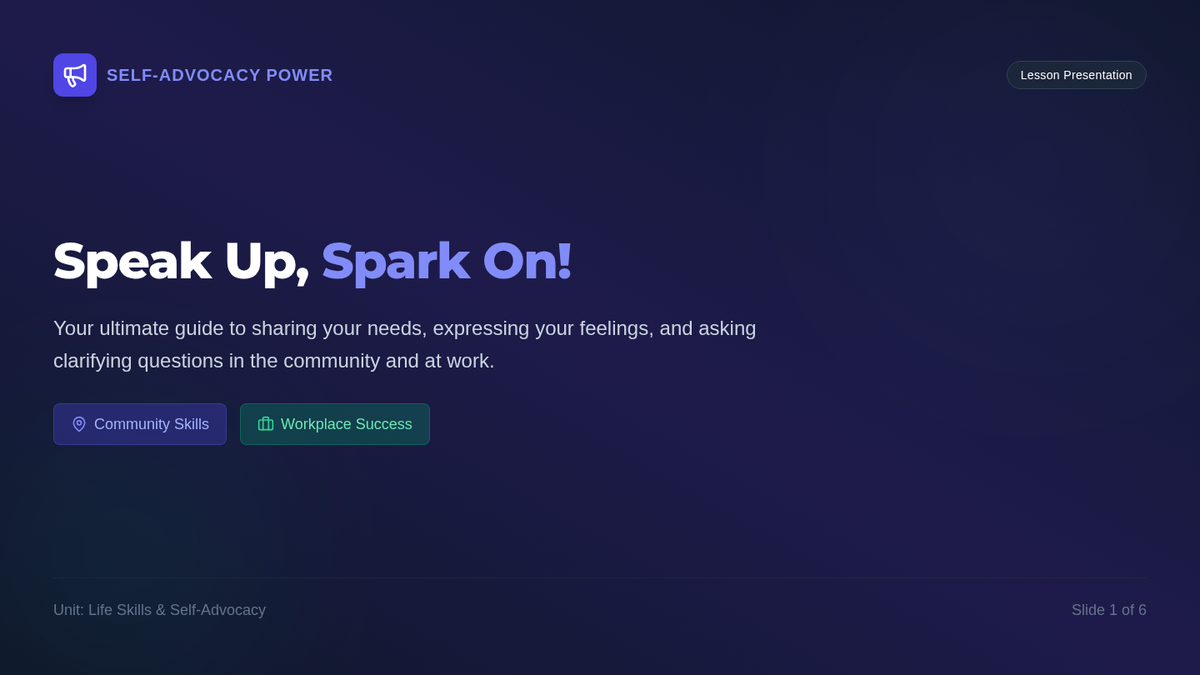
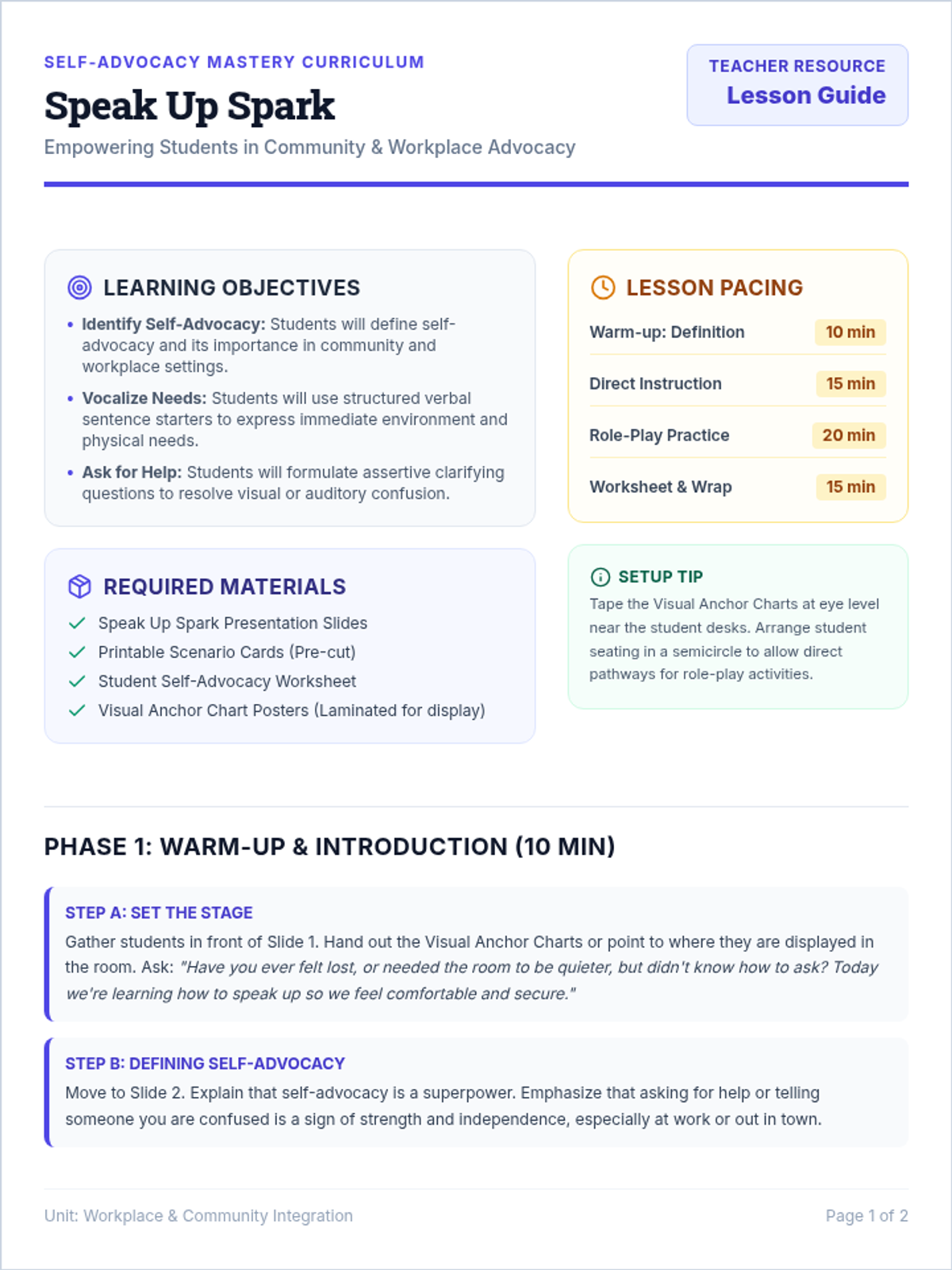
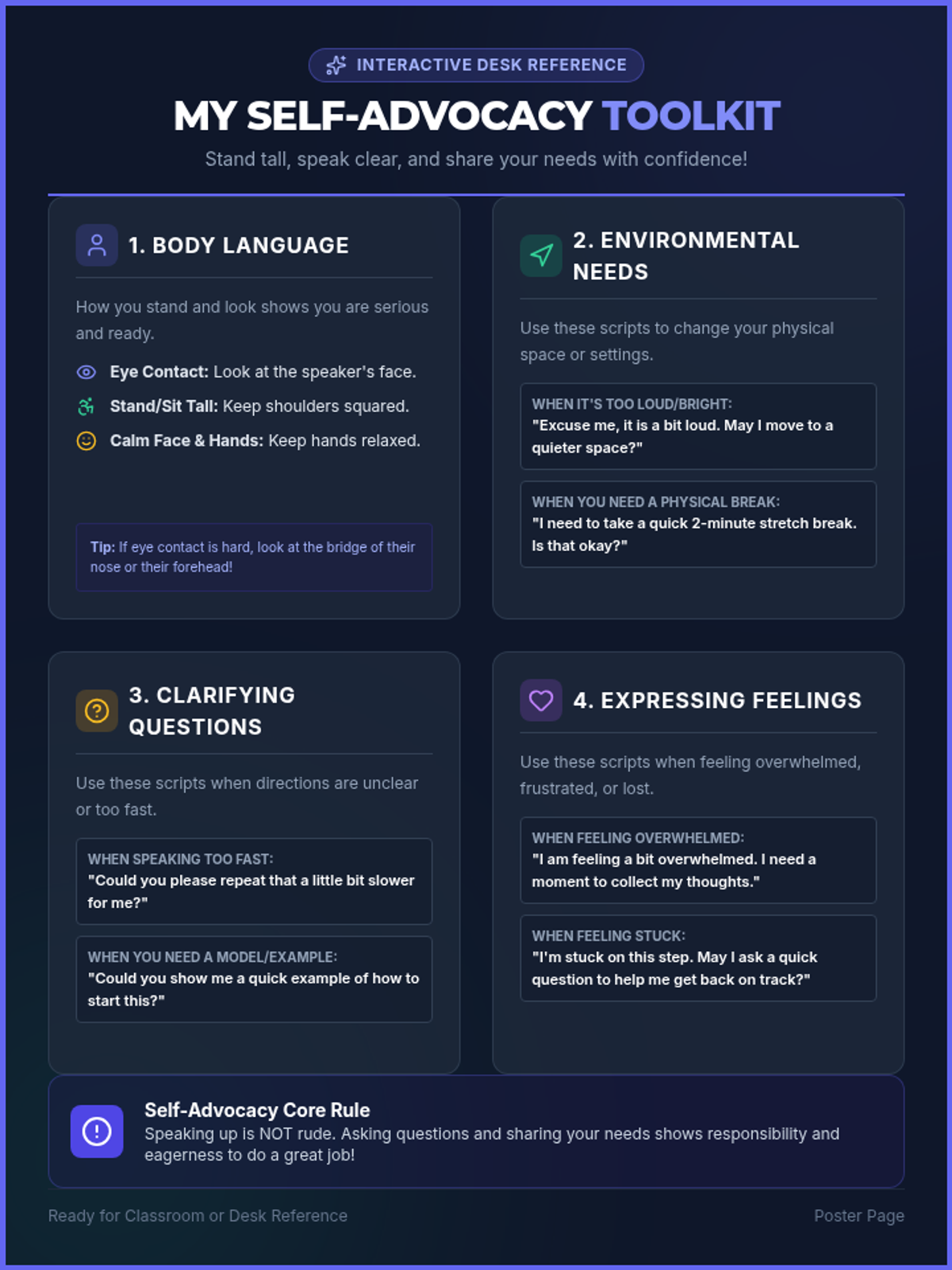
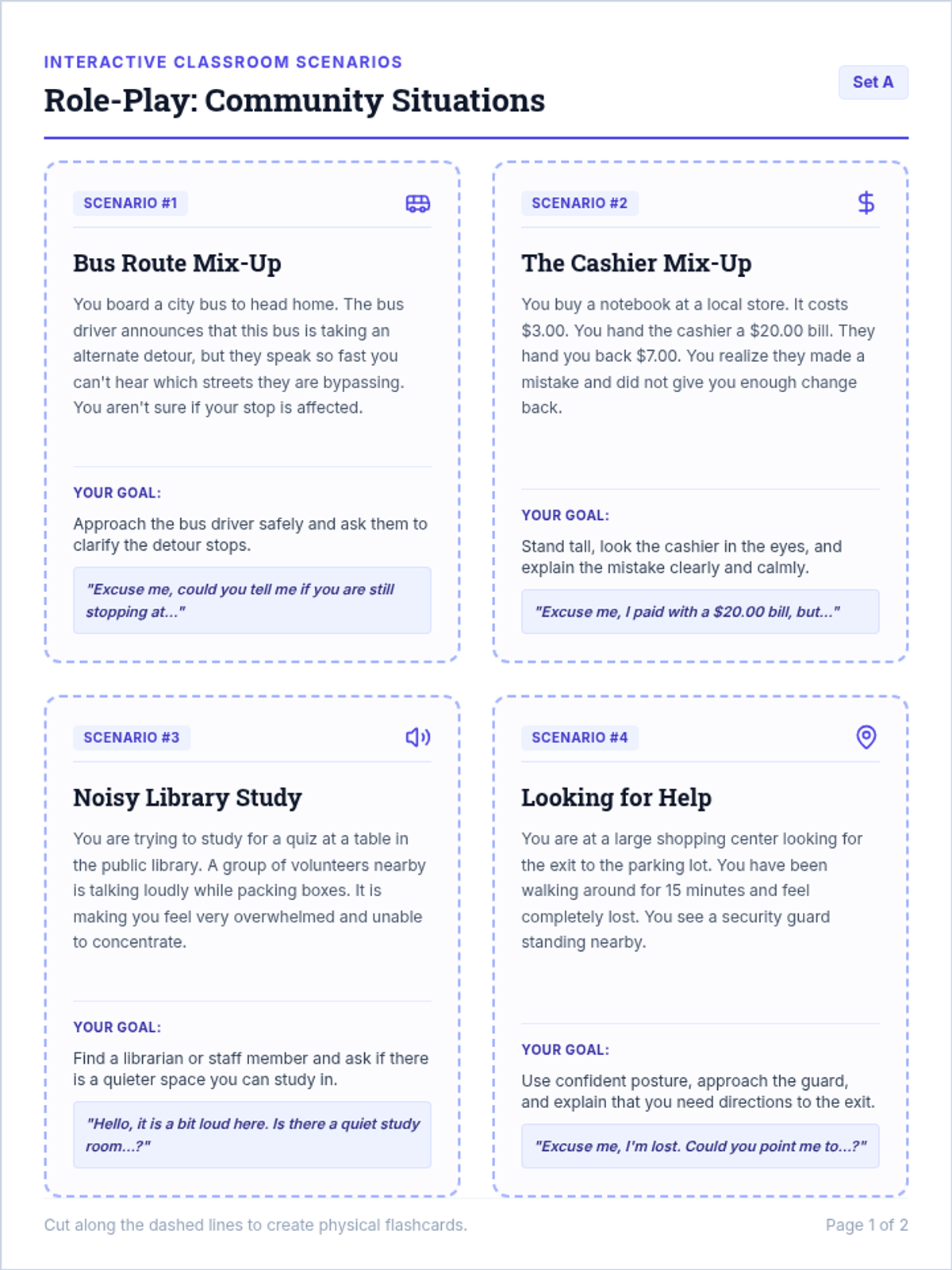
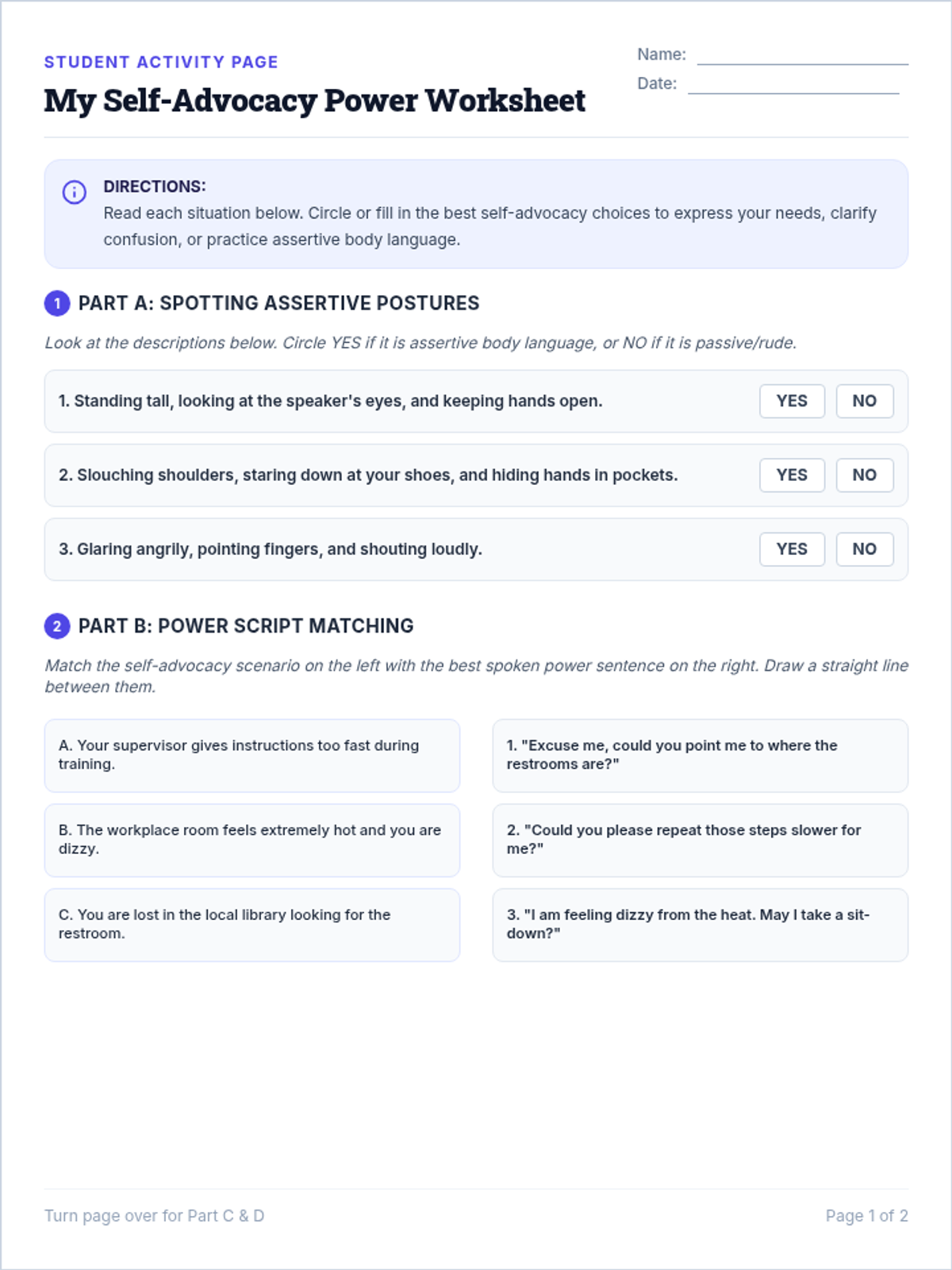
A comprehensive lesson plan and activity bundle designed to empower students with disabilities to practice self-advocacy in community and workplace settings. The lesson teaches verbal scripts, assertive body language, and clarifying questions through direct instruction, interactive slides, visual anchor charts, role-play cards, and differentiated worksheets.
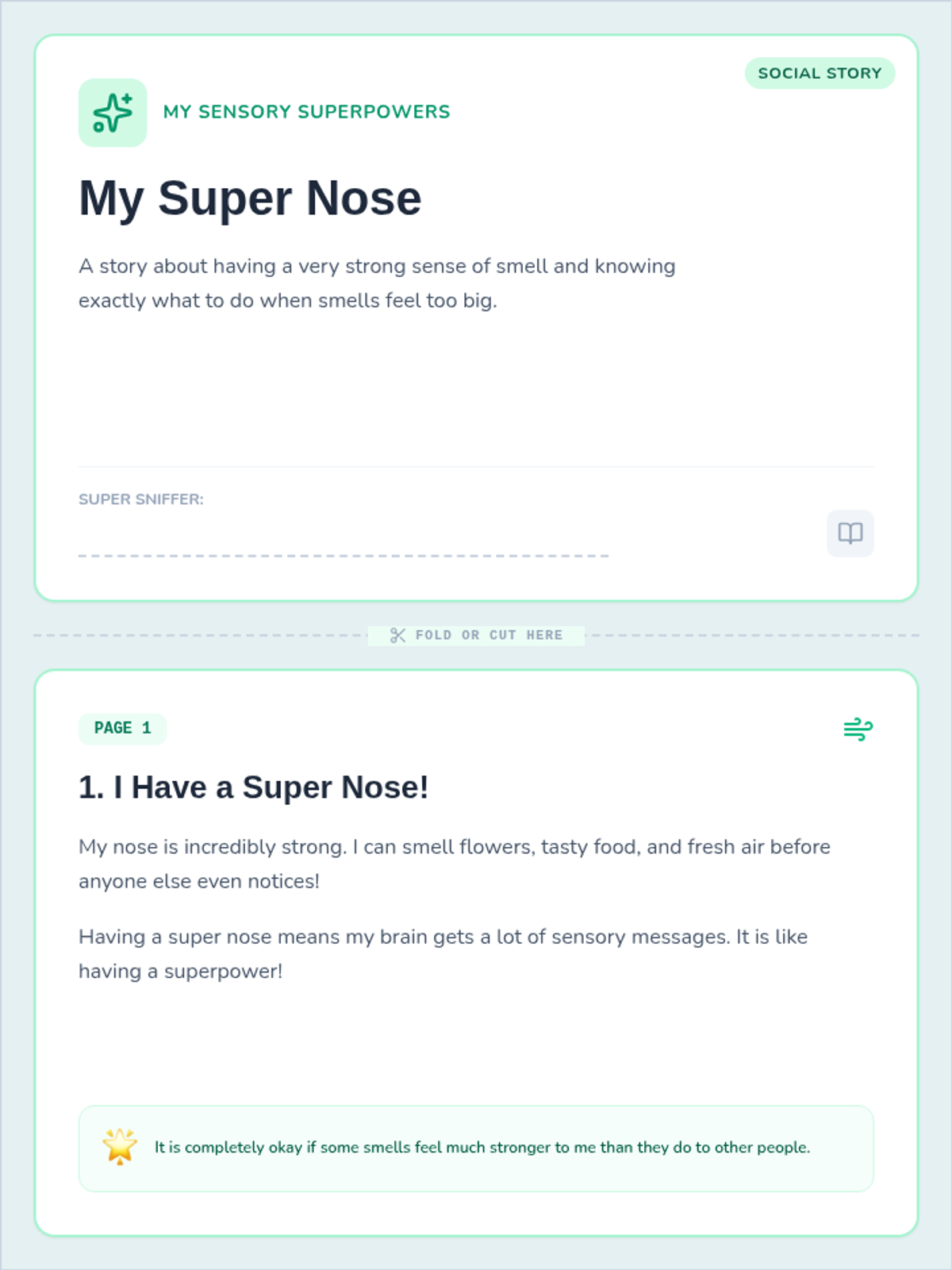
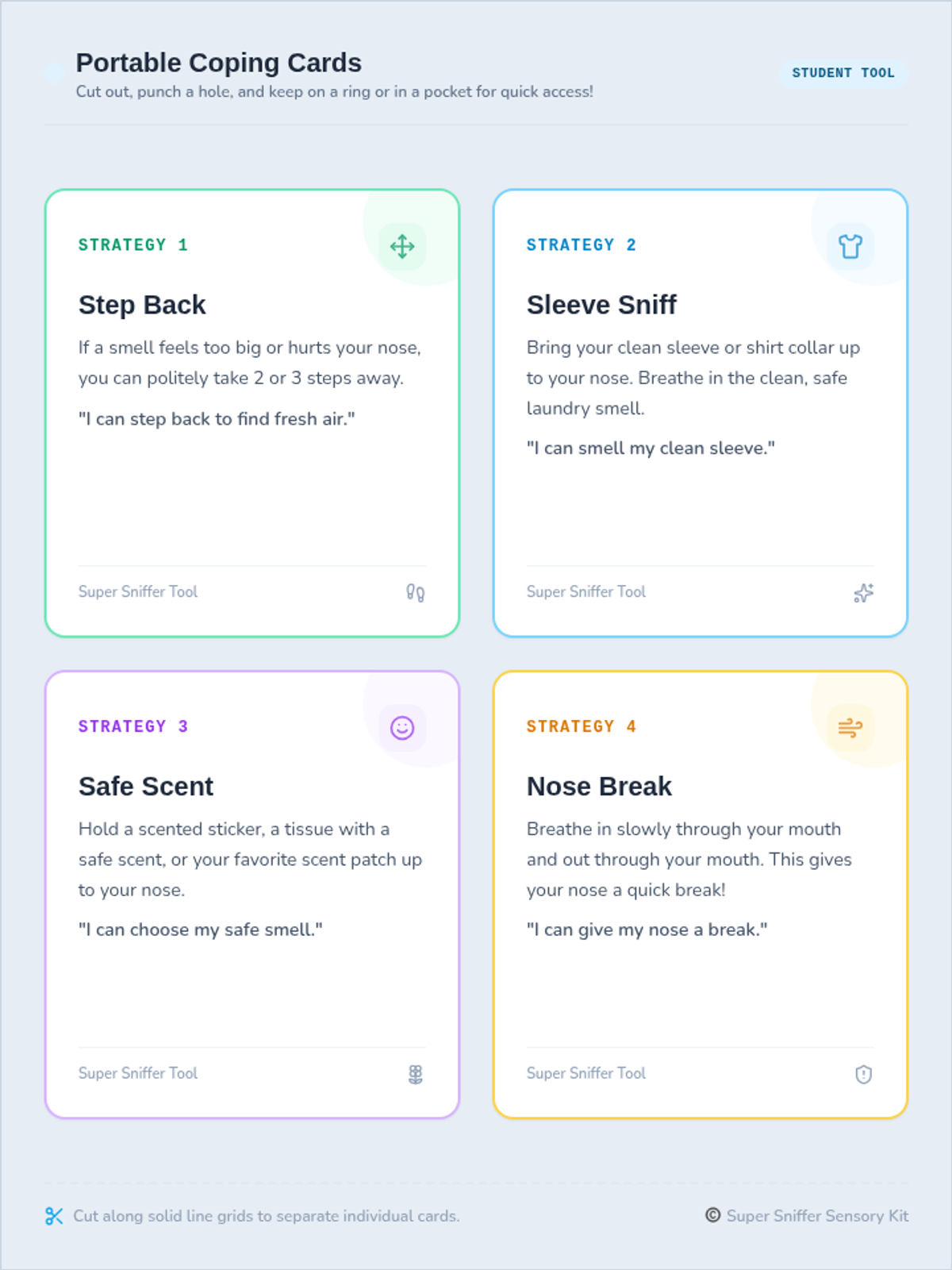
A therapeutic lesson bundle designed to support autistic children with a heightened sense of smell (hyperosmia), specifically focusing on managing sensory responses to body odor. The lesson includes a printable half-page social story booklet and portable pocket coping cards.
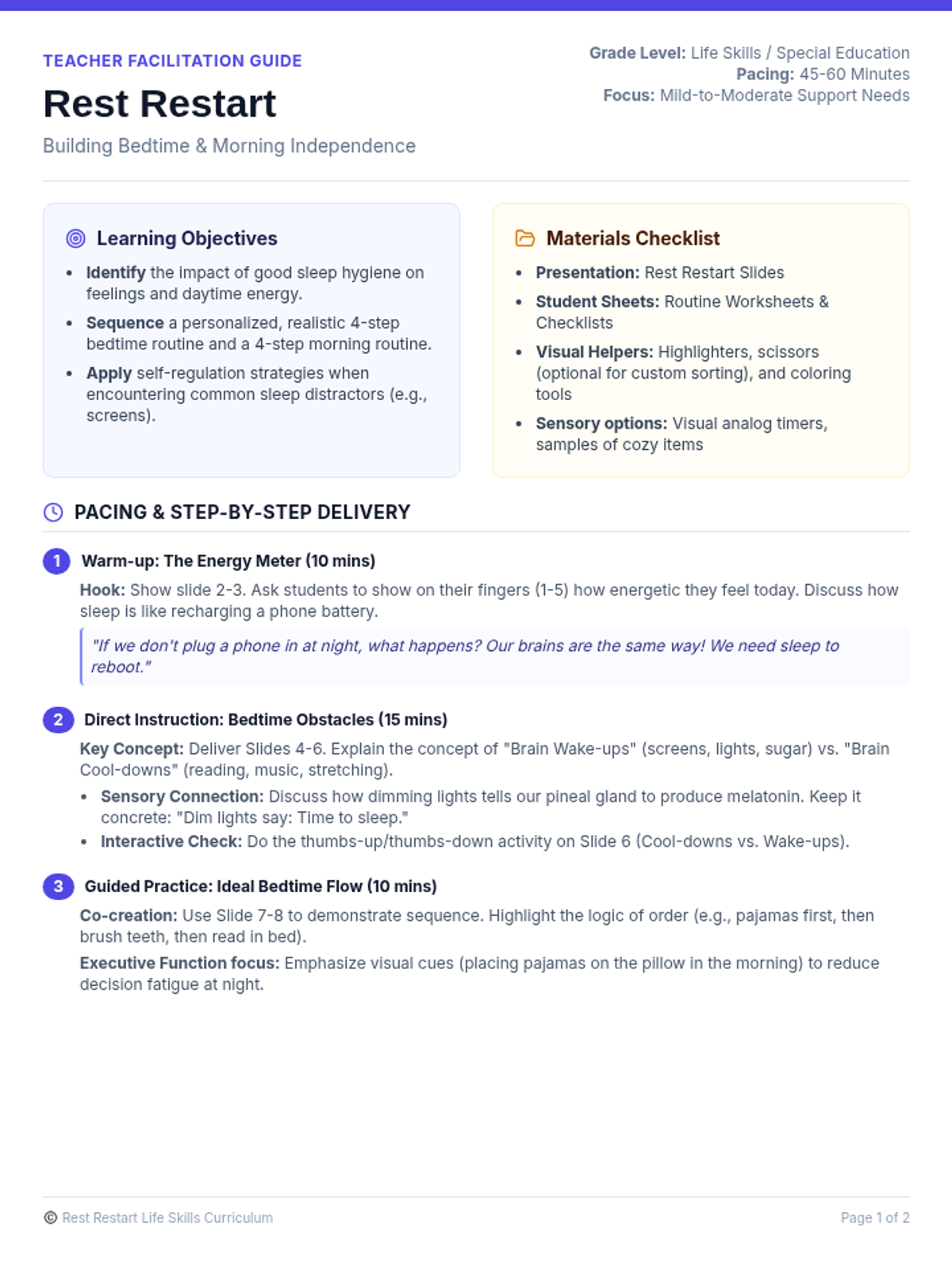
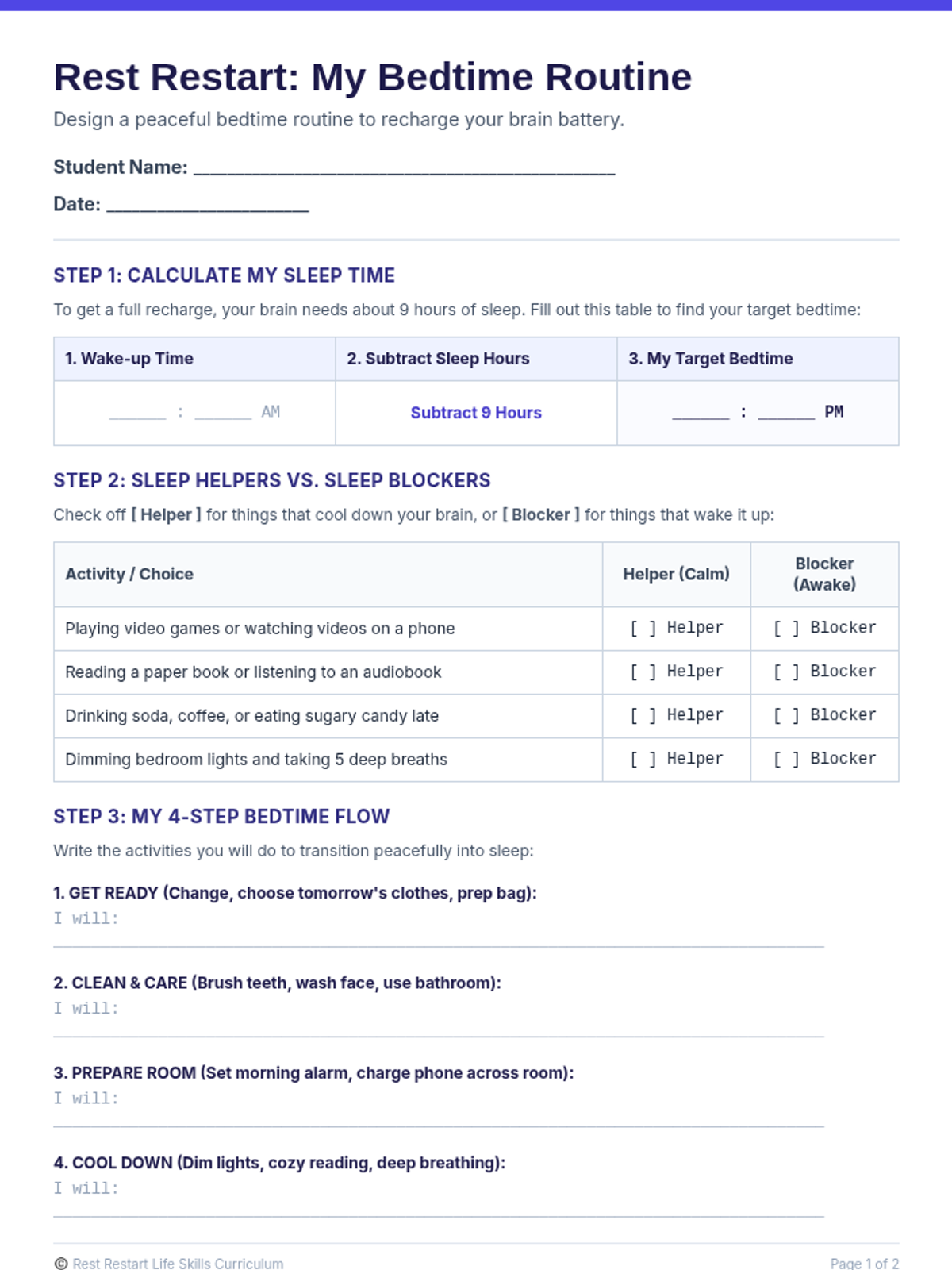
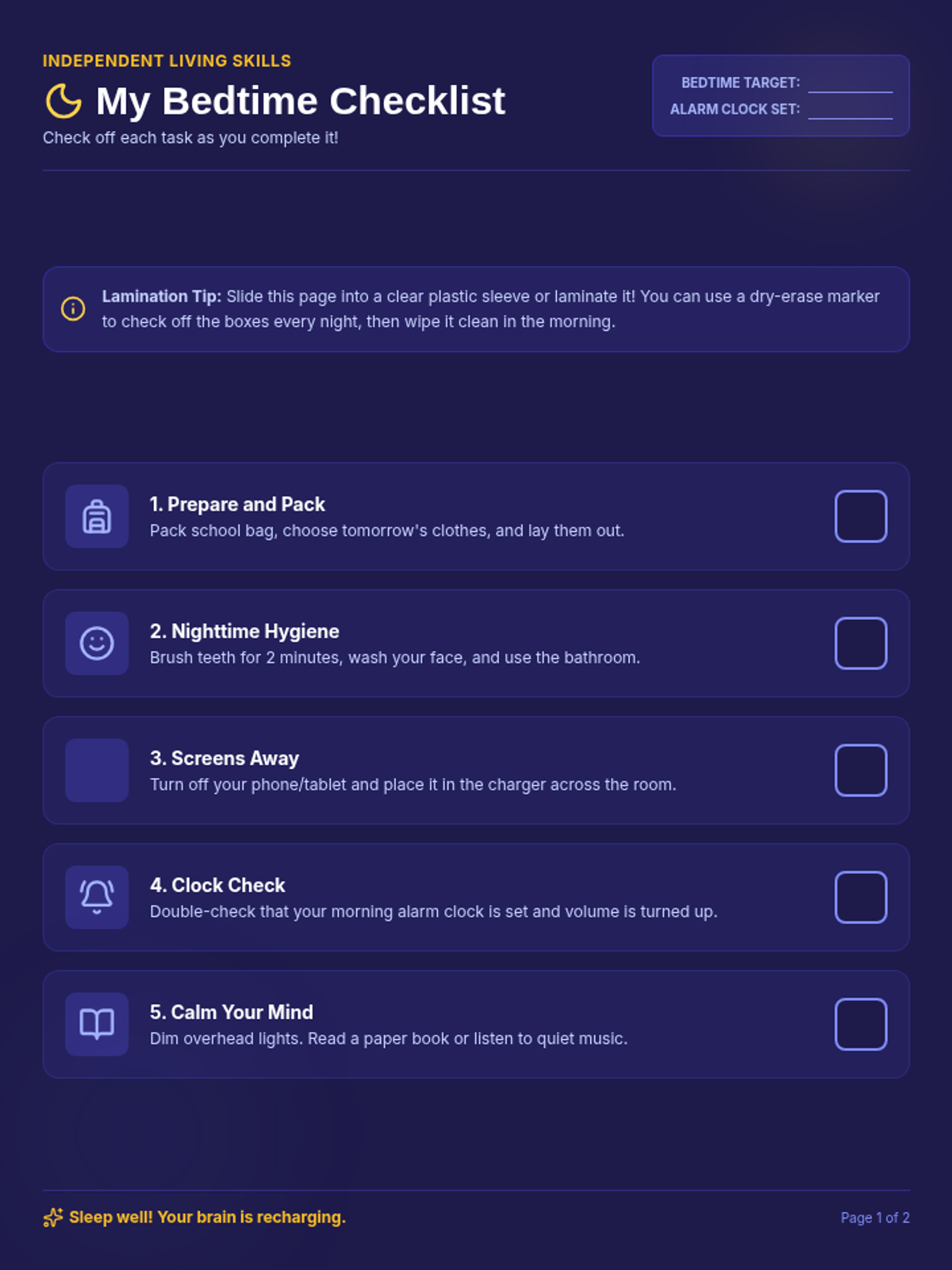
A sleep hygiene lesson designed for students with mild-to-moderate support needs to build independence. It features practical executive functioning tools, structured routines, and visual checklists for bedtime and mornings.
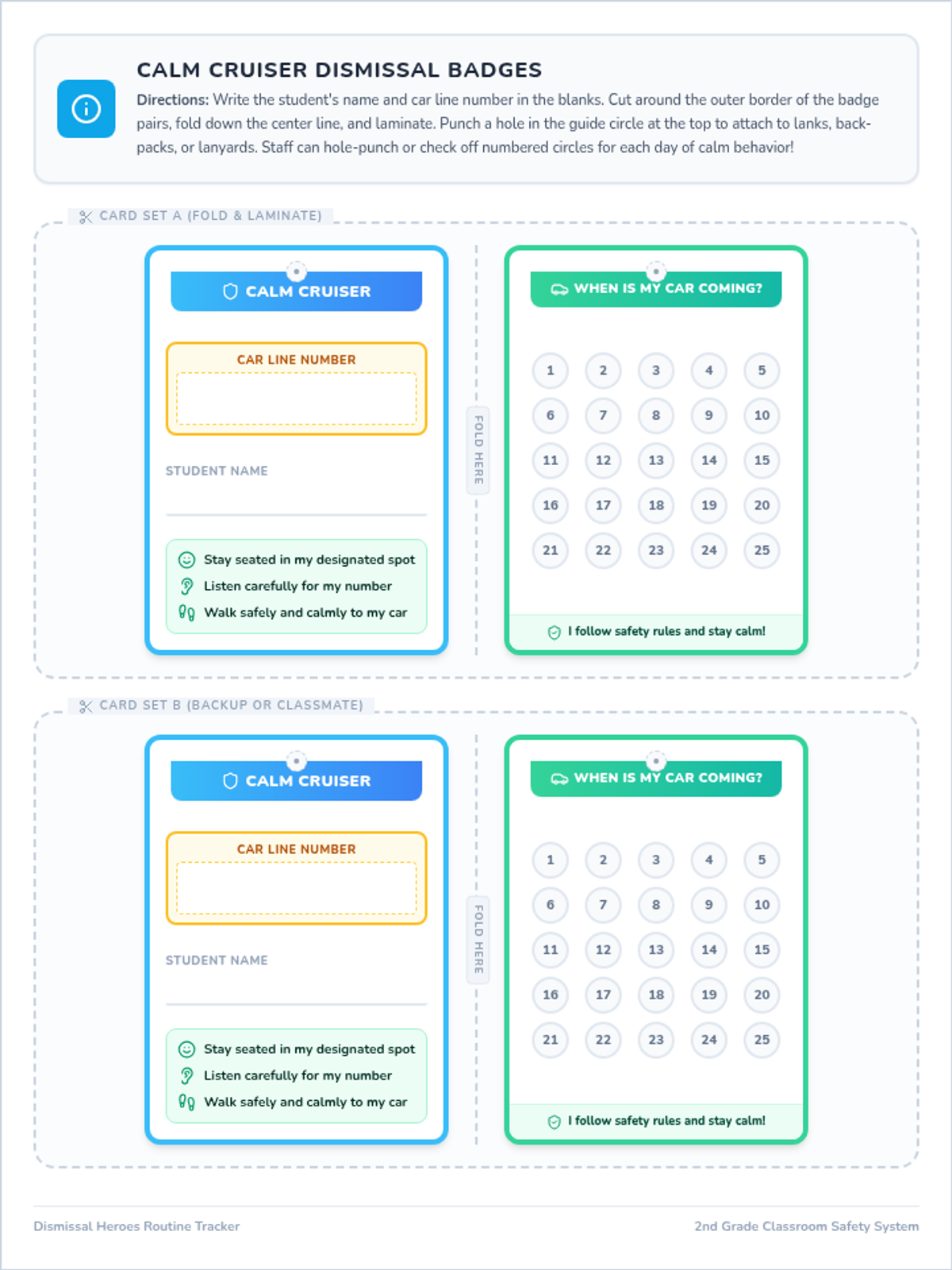
A lesson focused on establishing safe, calm, and cooperative dismissal routines for elementary school students. This lesson includes training on safety expectations, interactive practice, and a daily behavioral tracking system using personalized dismissal badges.
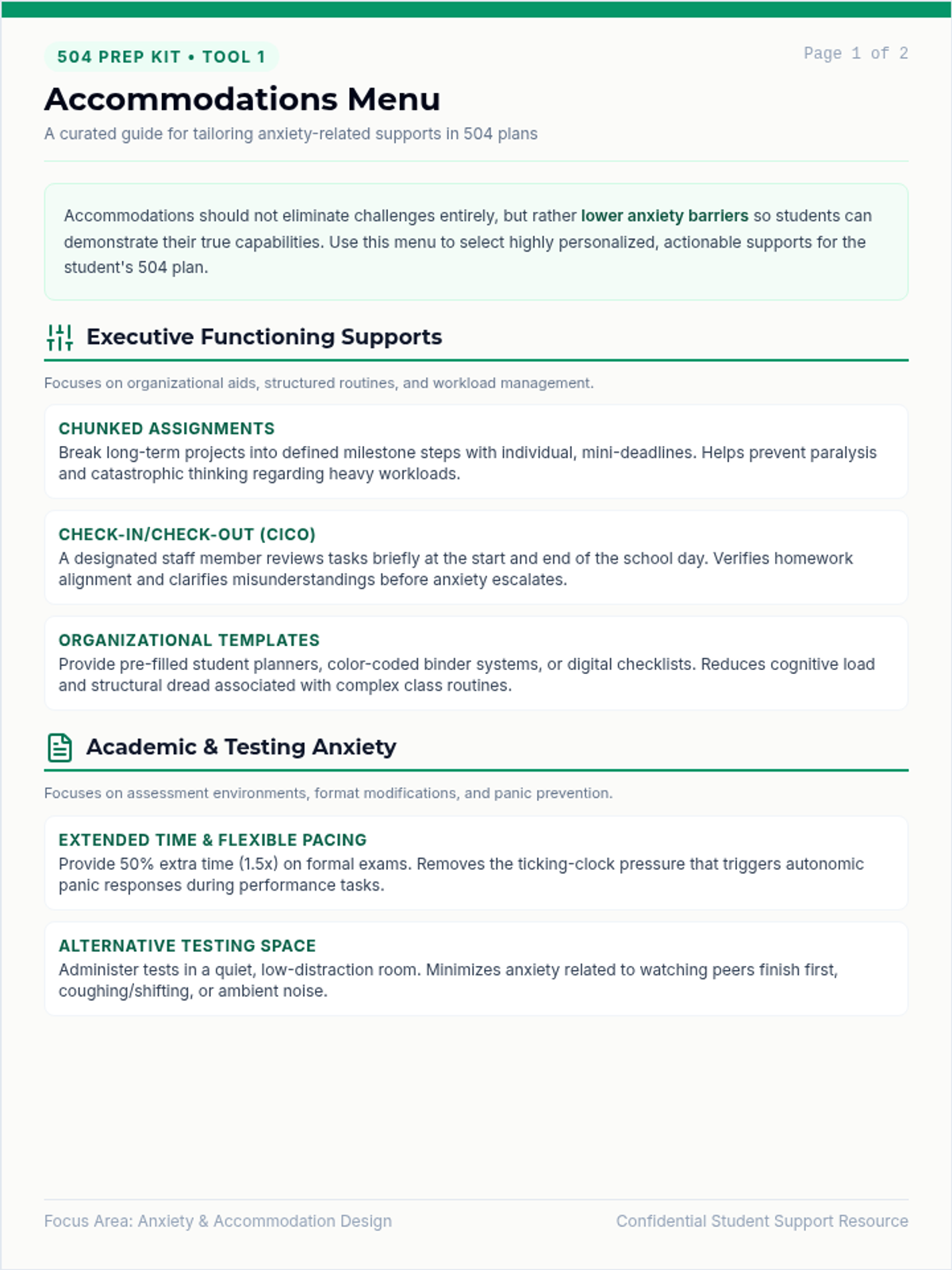
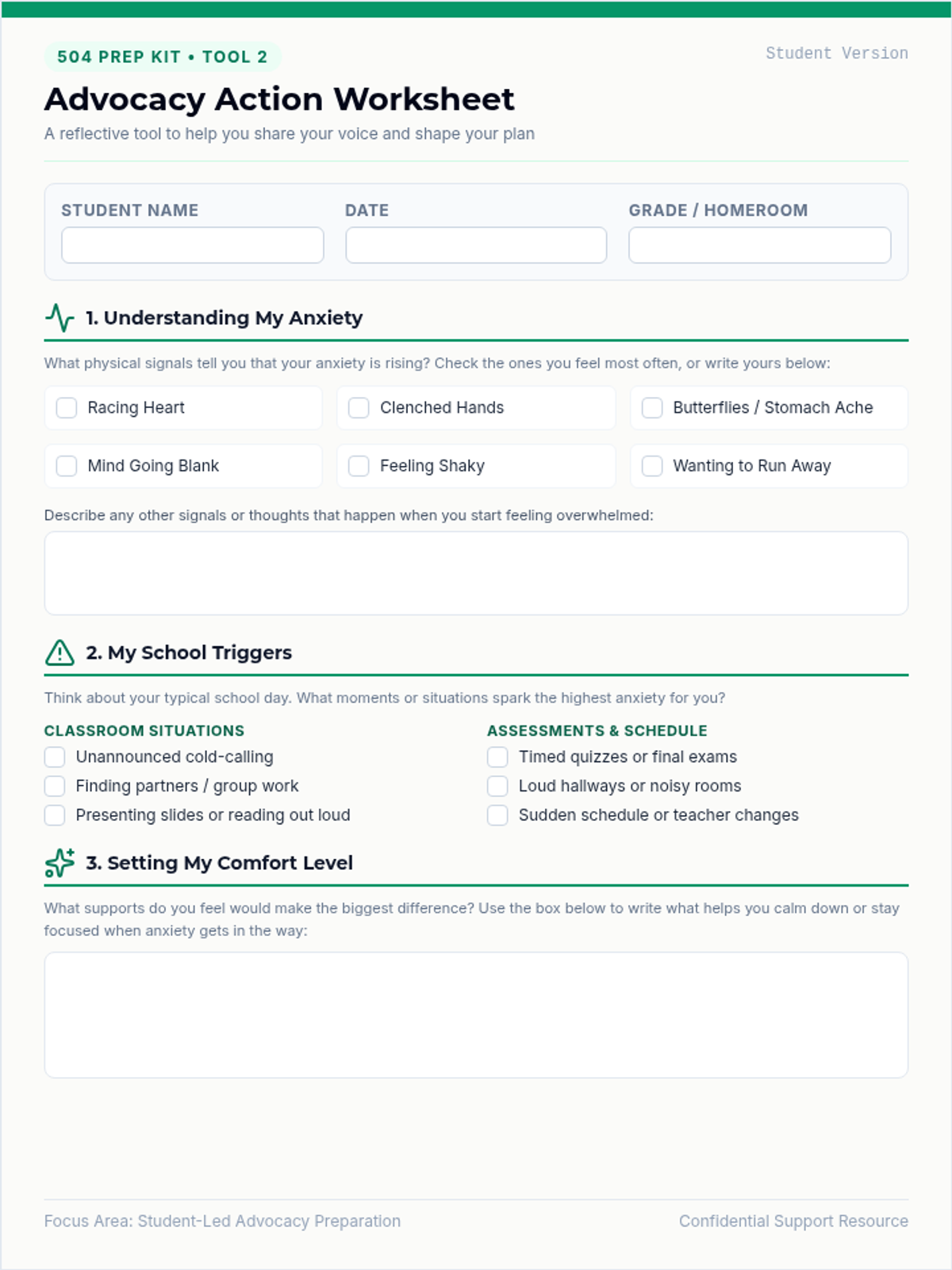
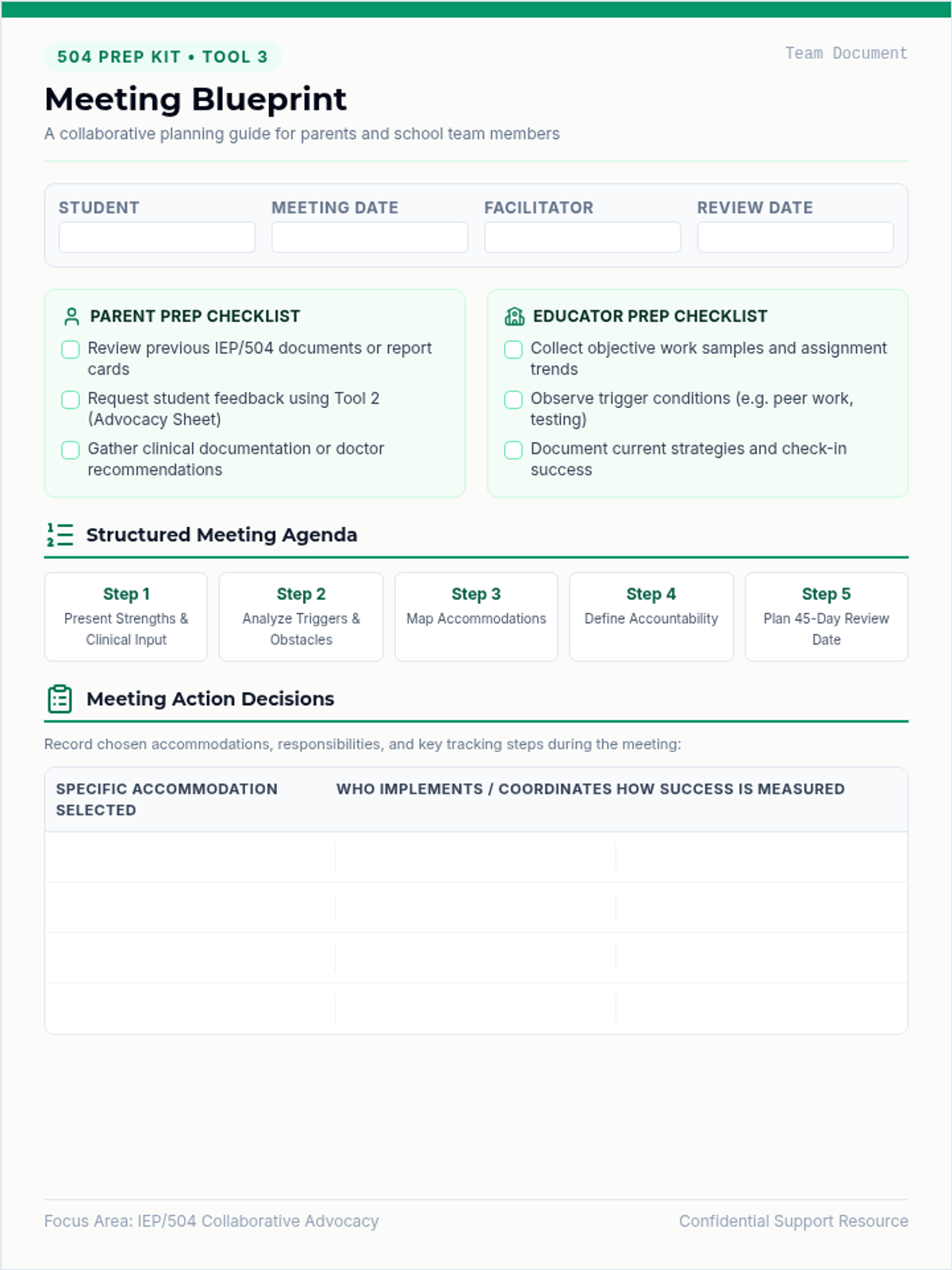
A comprehensive preparation kit for parents, teachers, and students to navigate 504 meetings for anxiety. Includes an accommodations menu categorized by domain, a student self-advocacy preparation sheet, and a meeting planning blueprint.
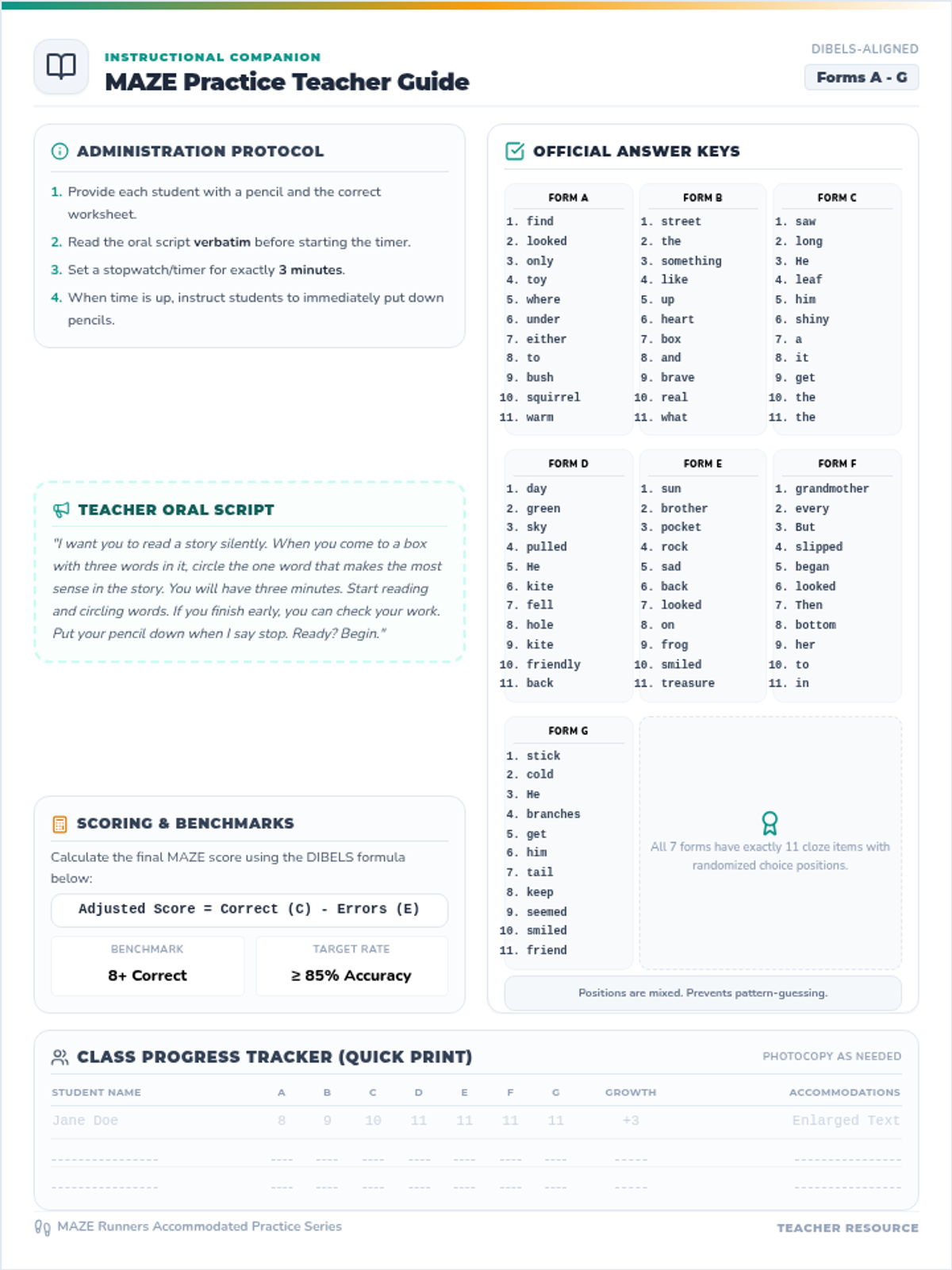
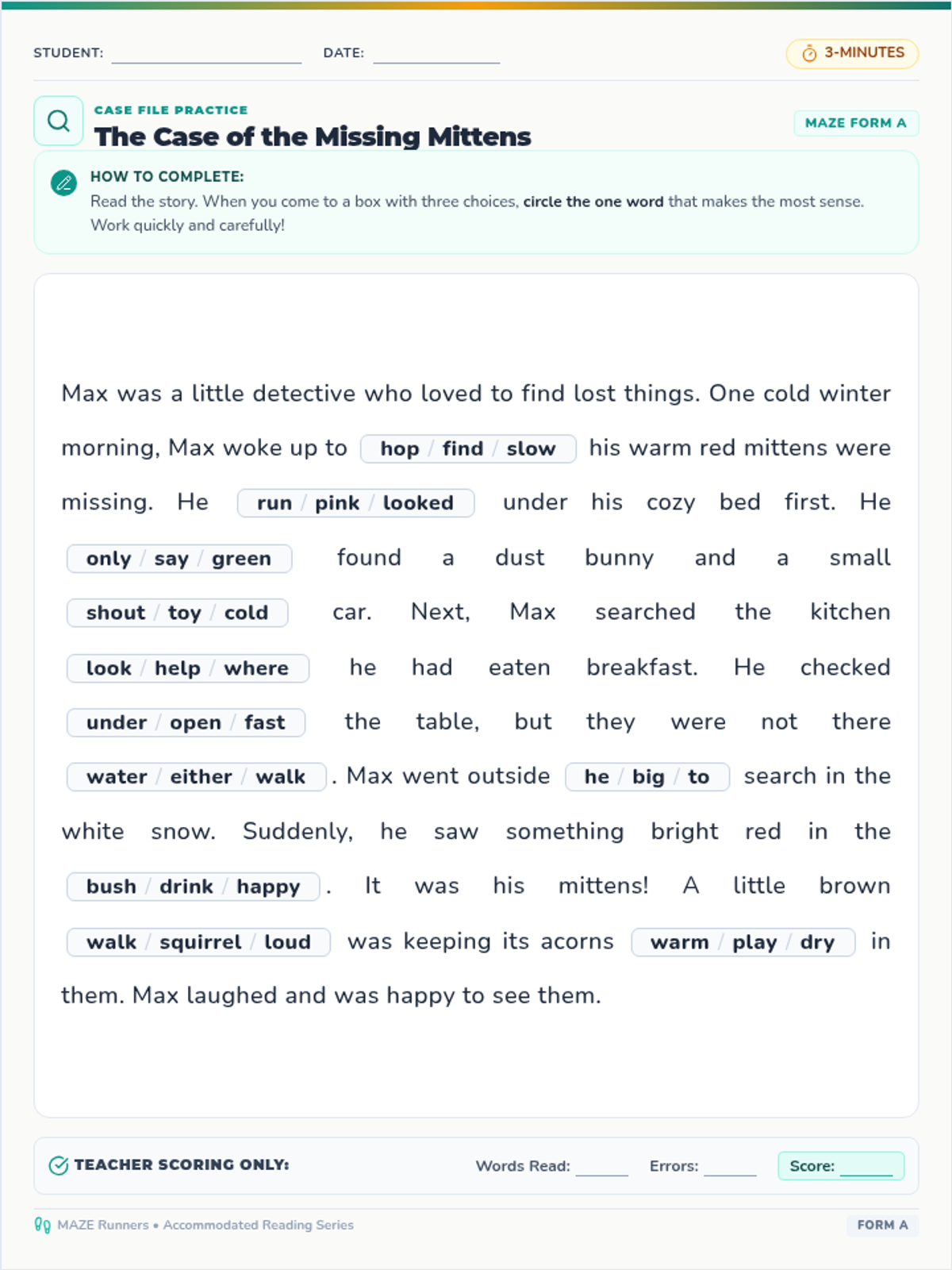
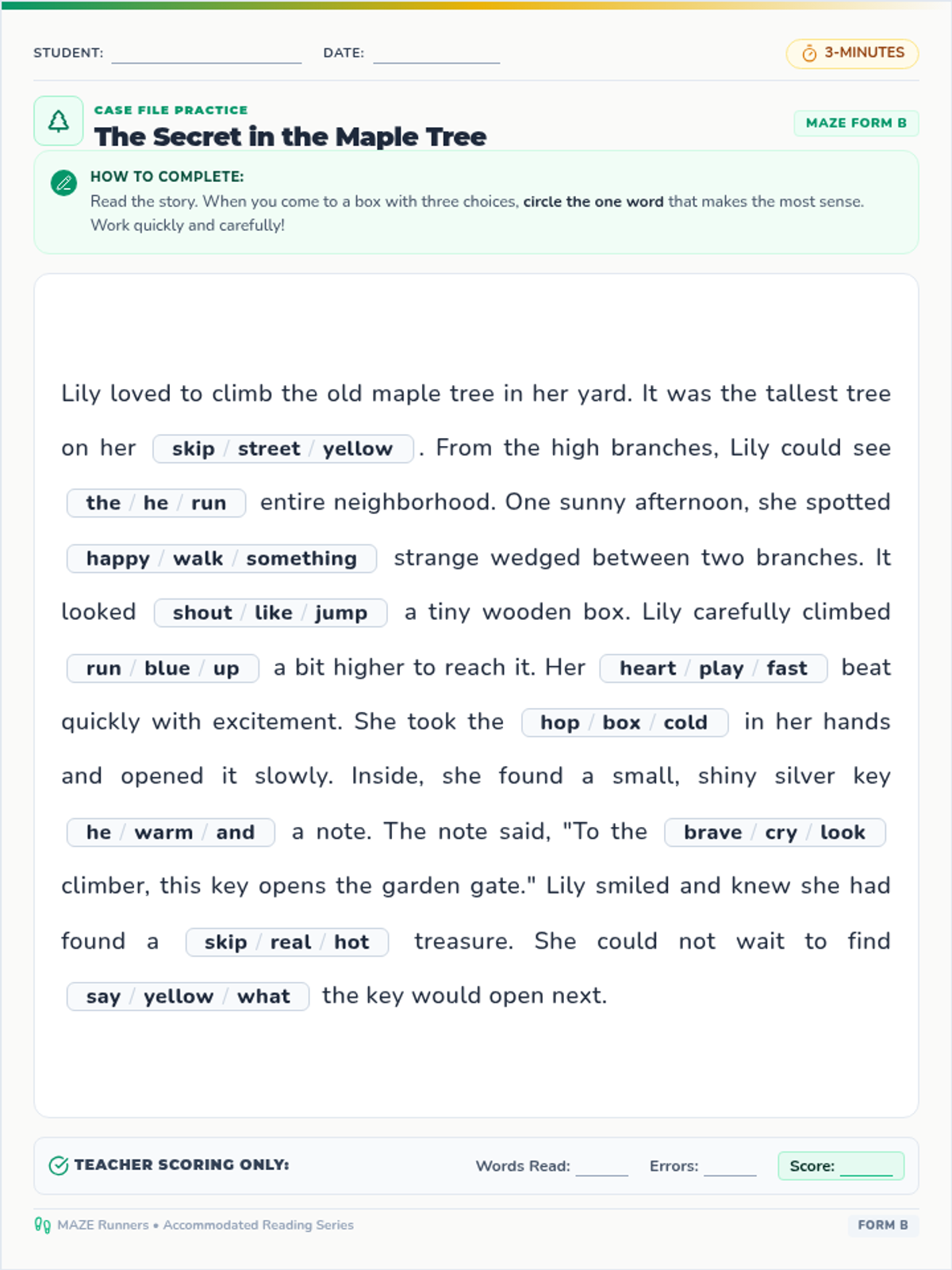
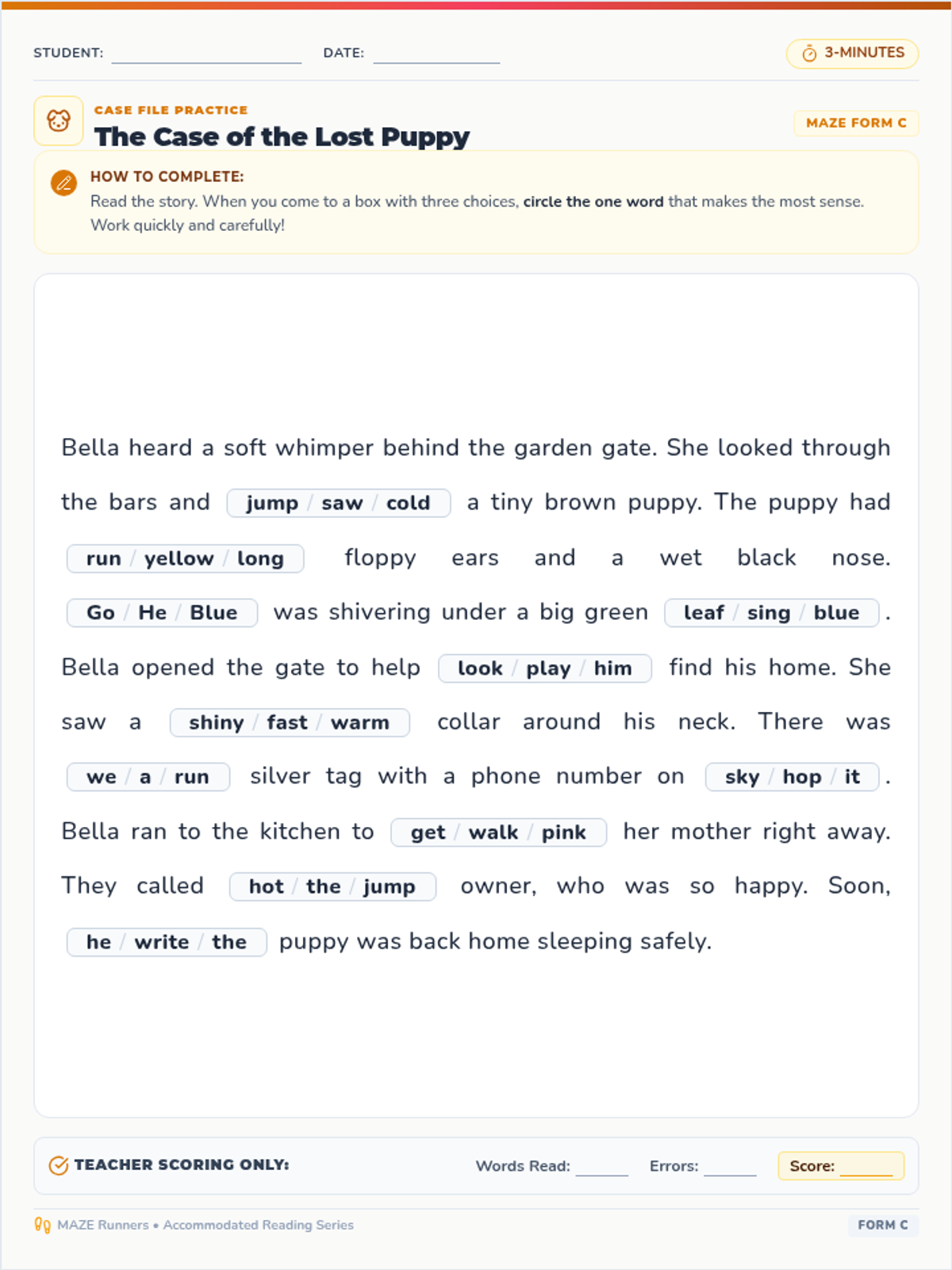
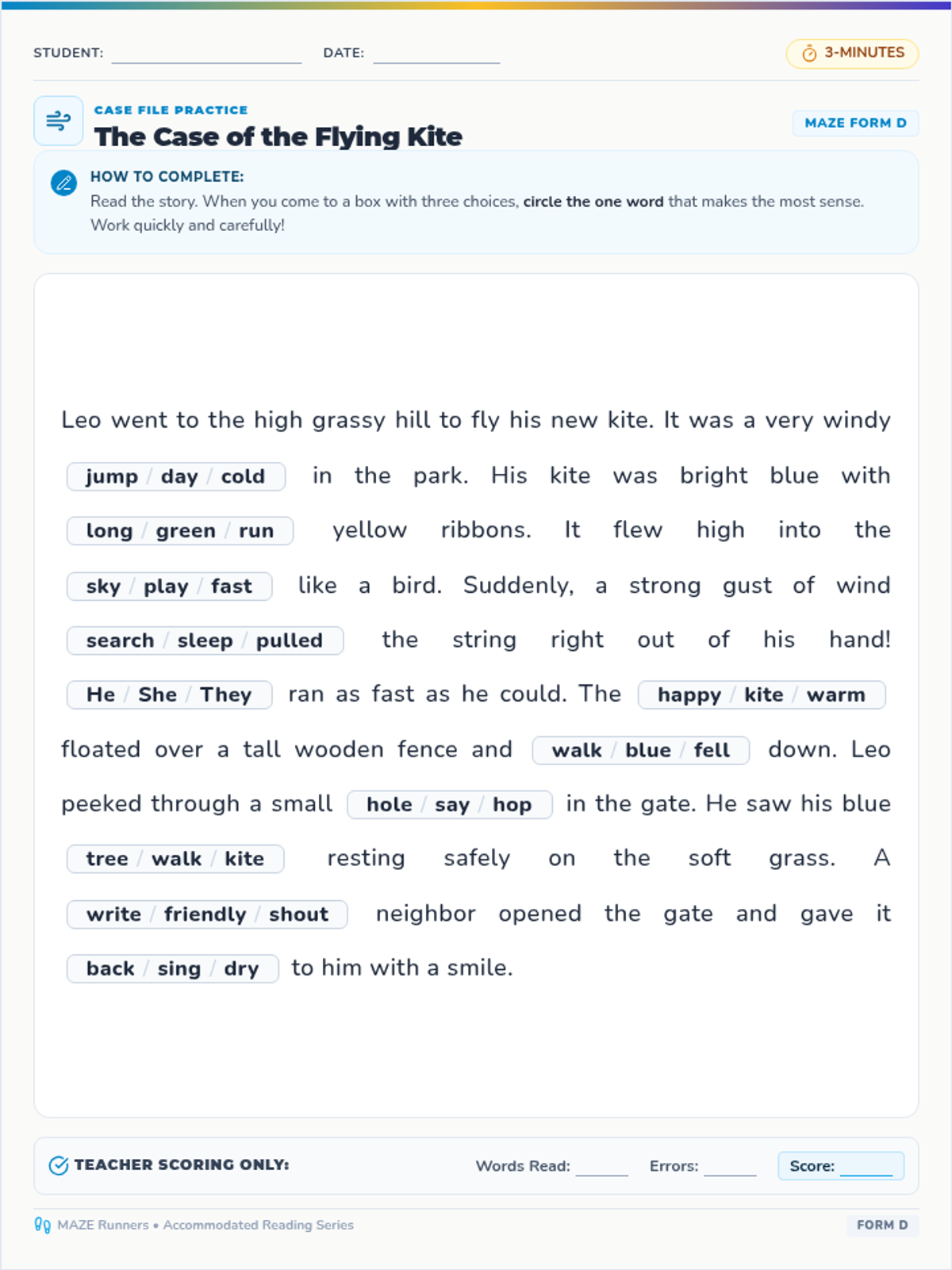
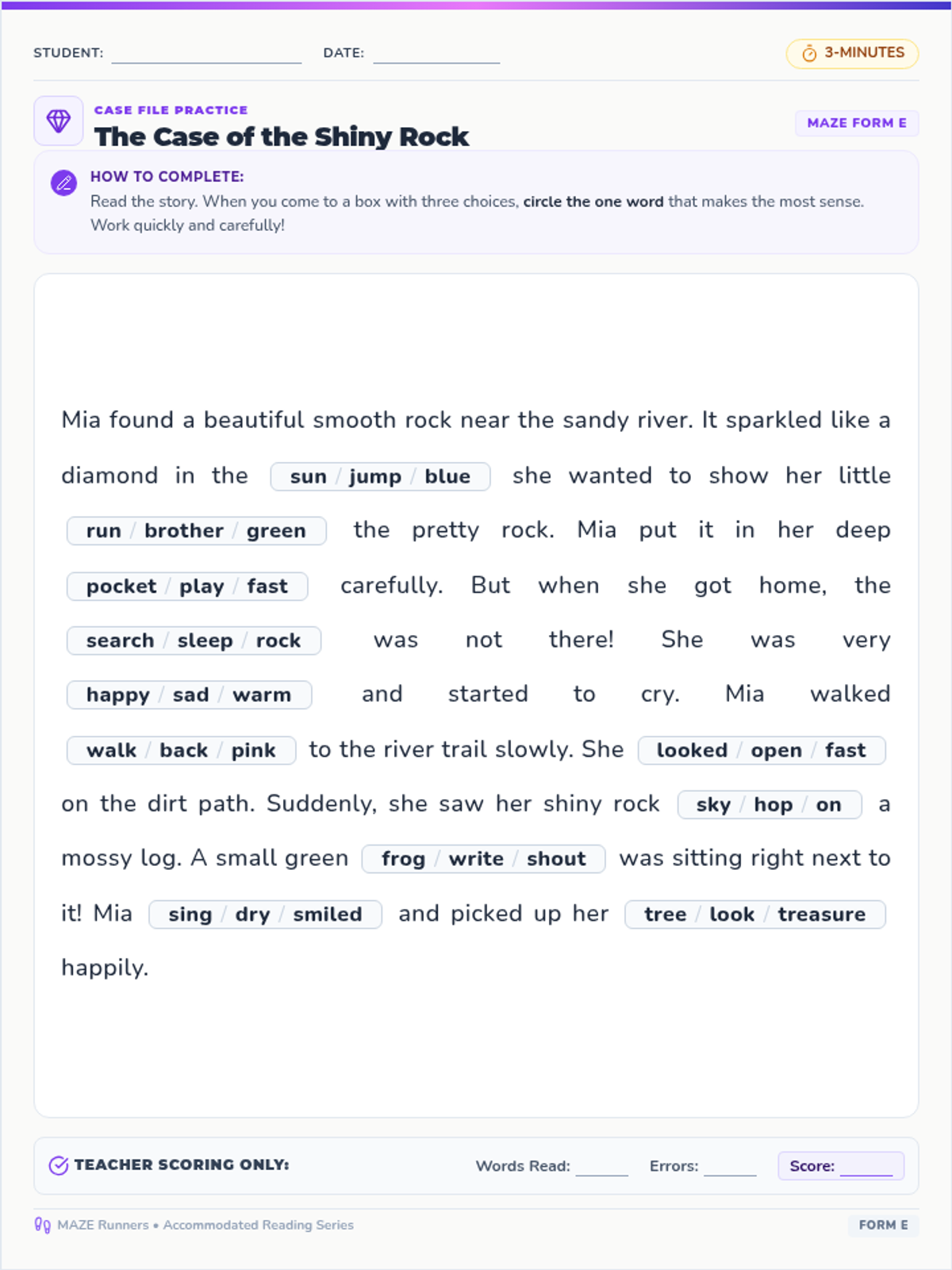
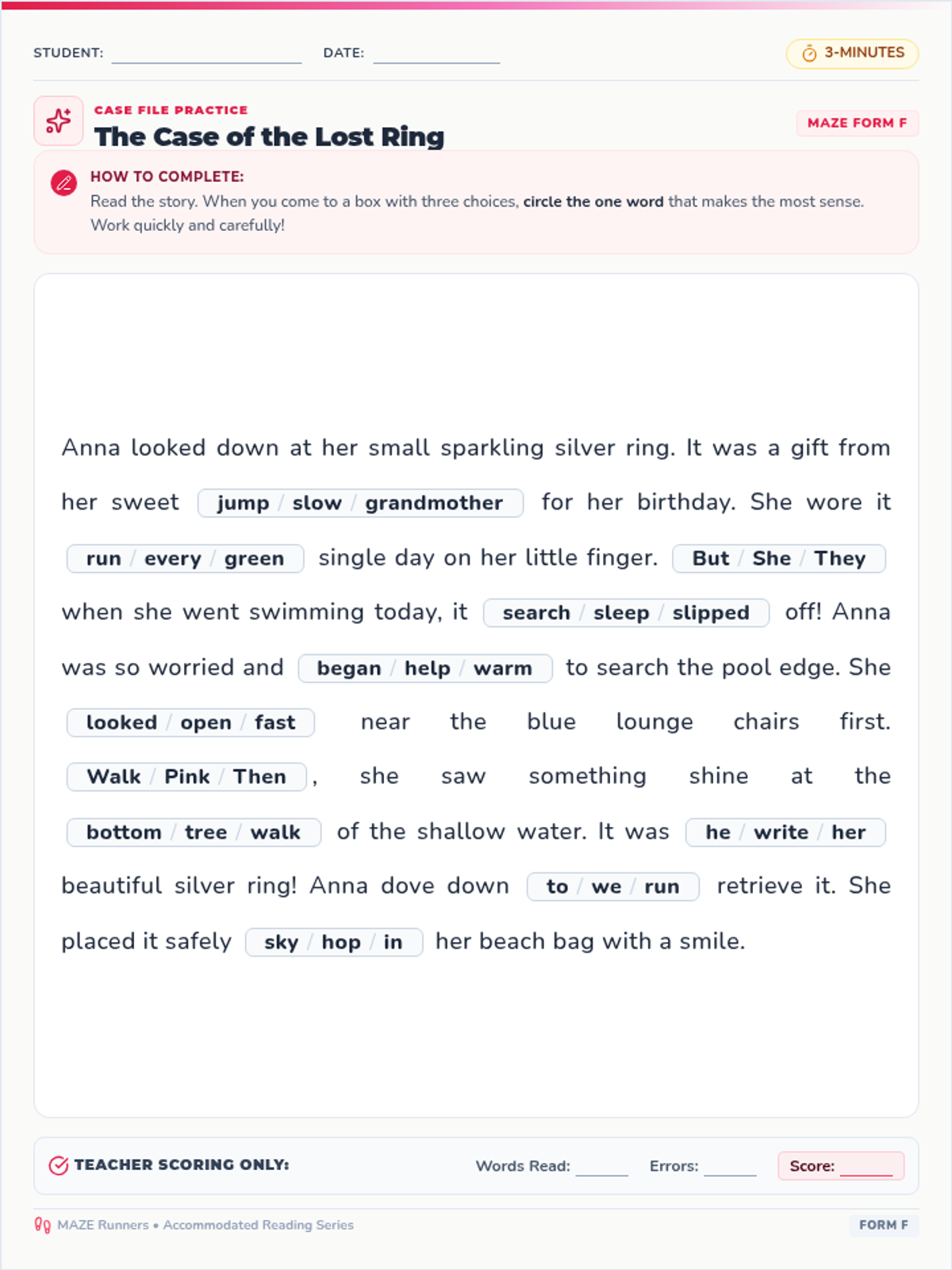
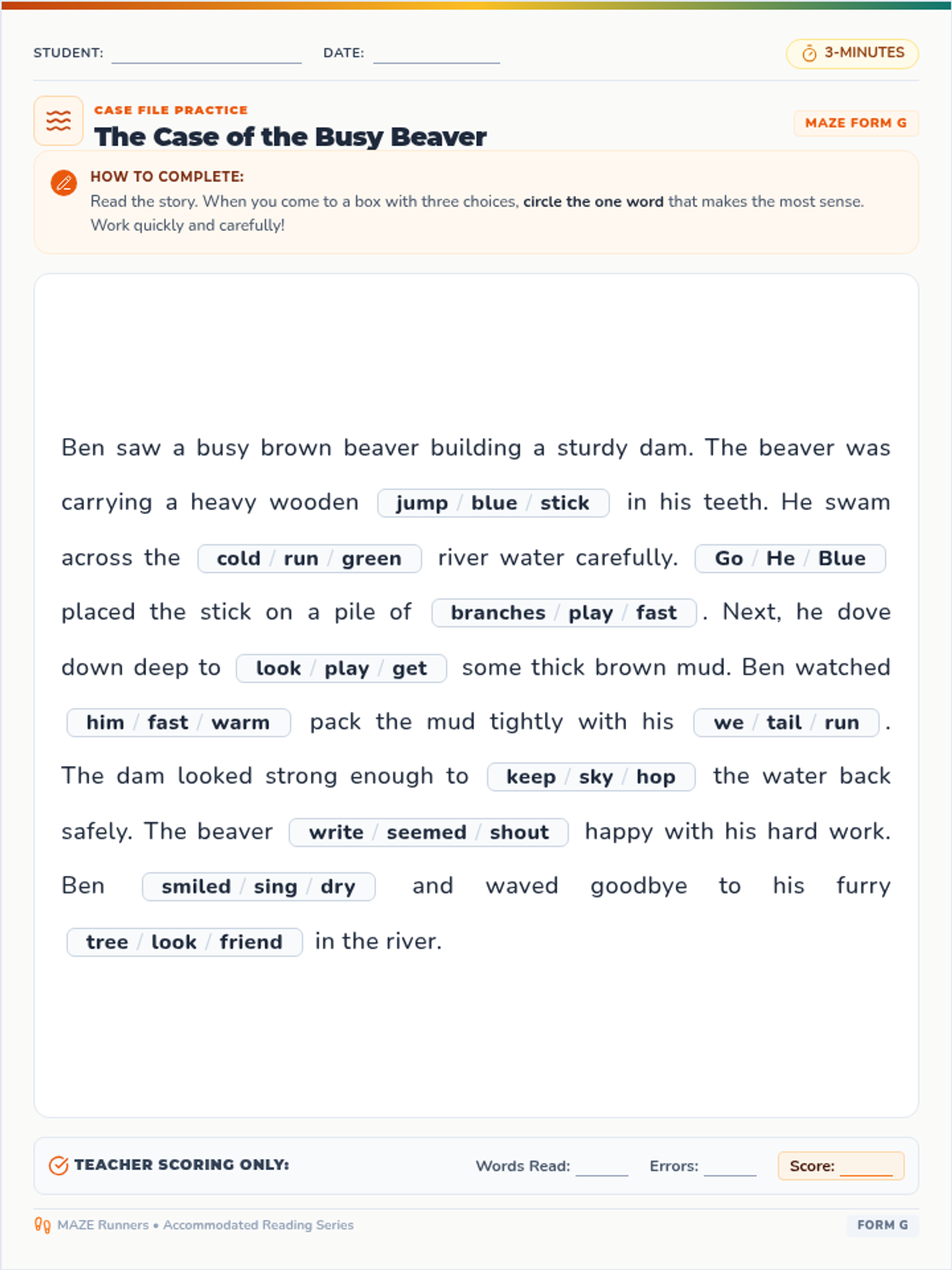
A collection of accommodated 2nd grade DIBELS MAZE comprehension practice worksheets with enlarged text and spacing to support student success.
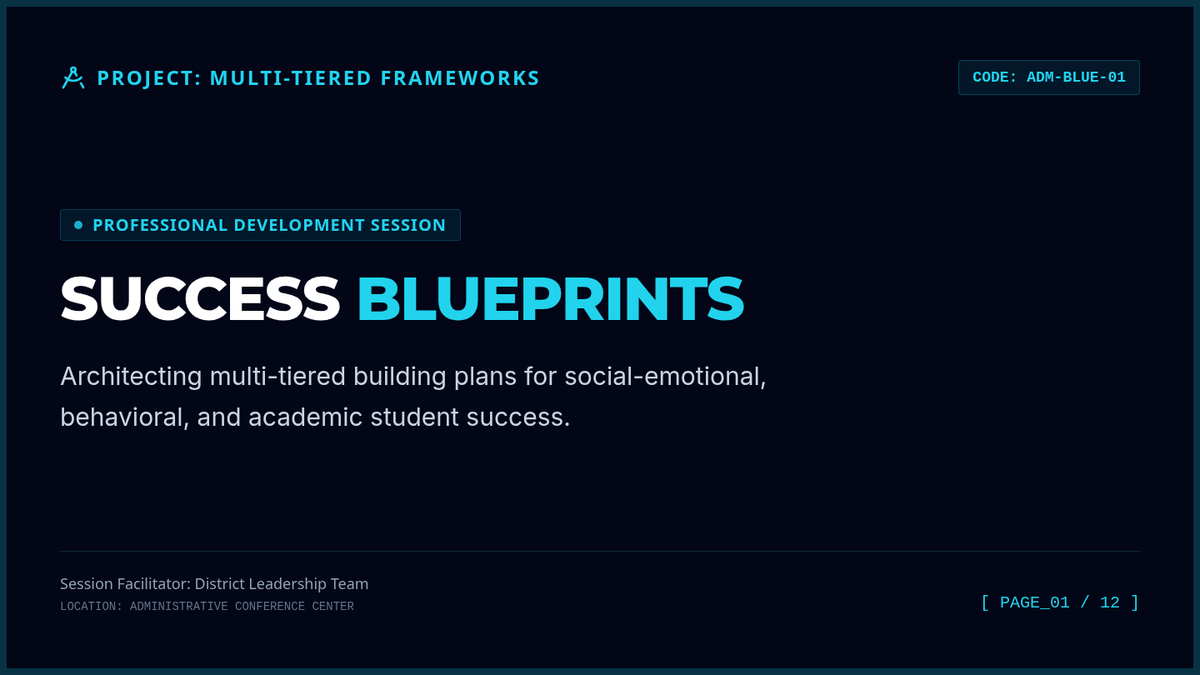
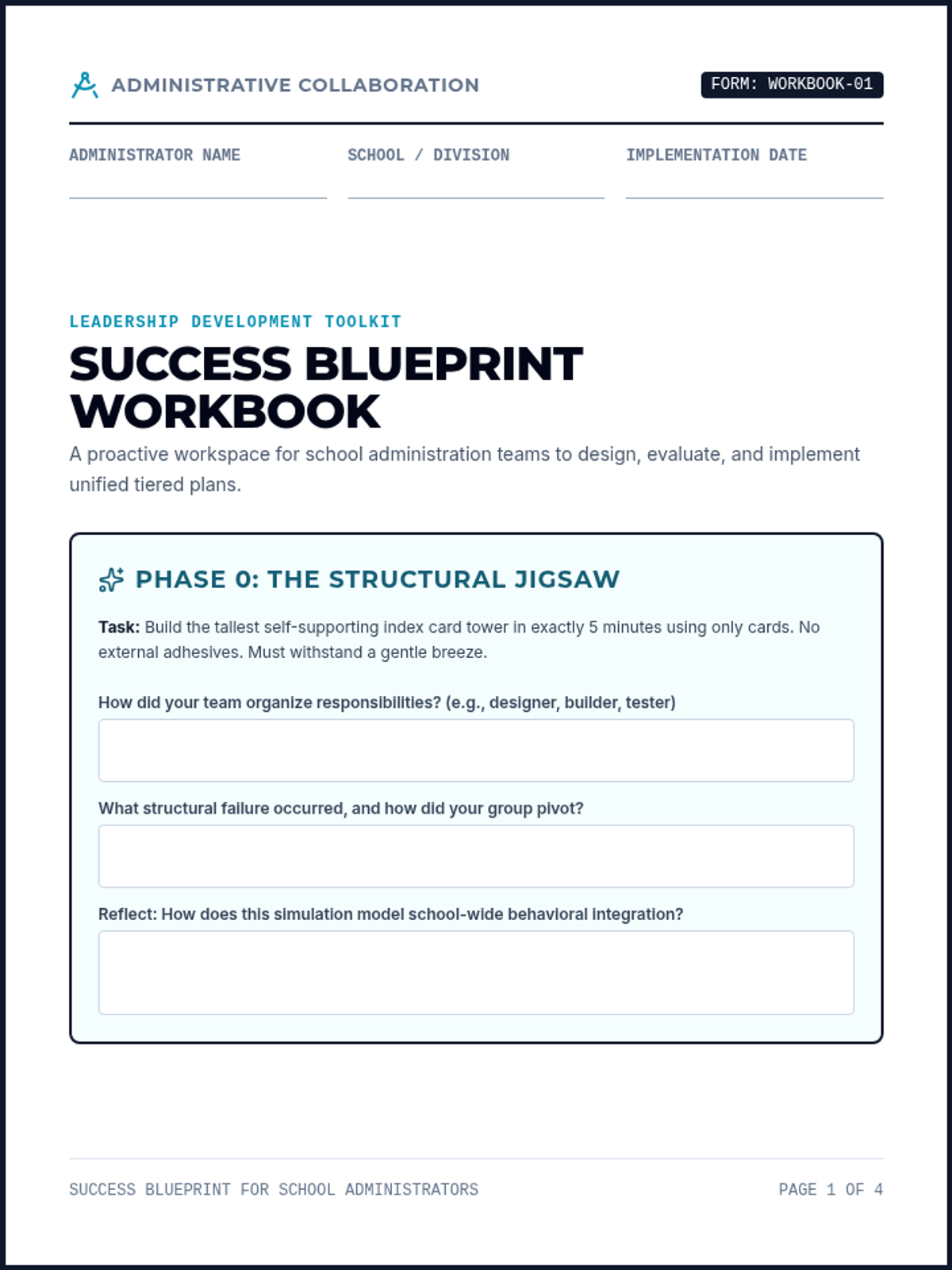
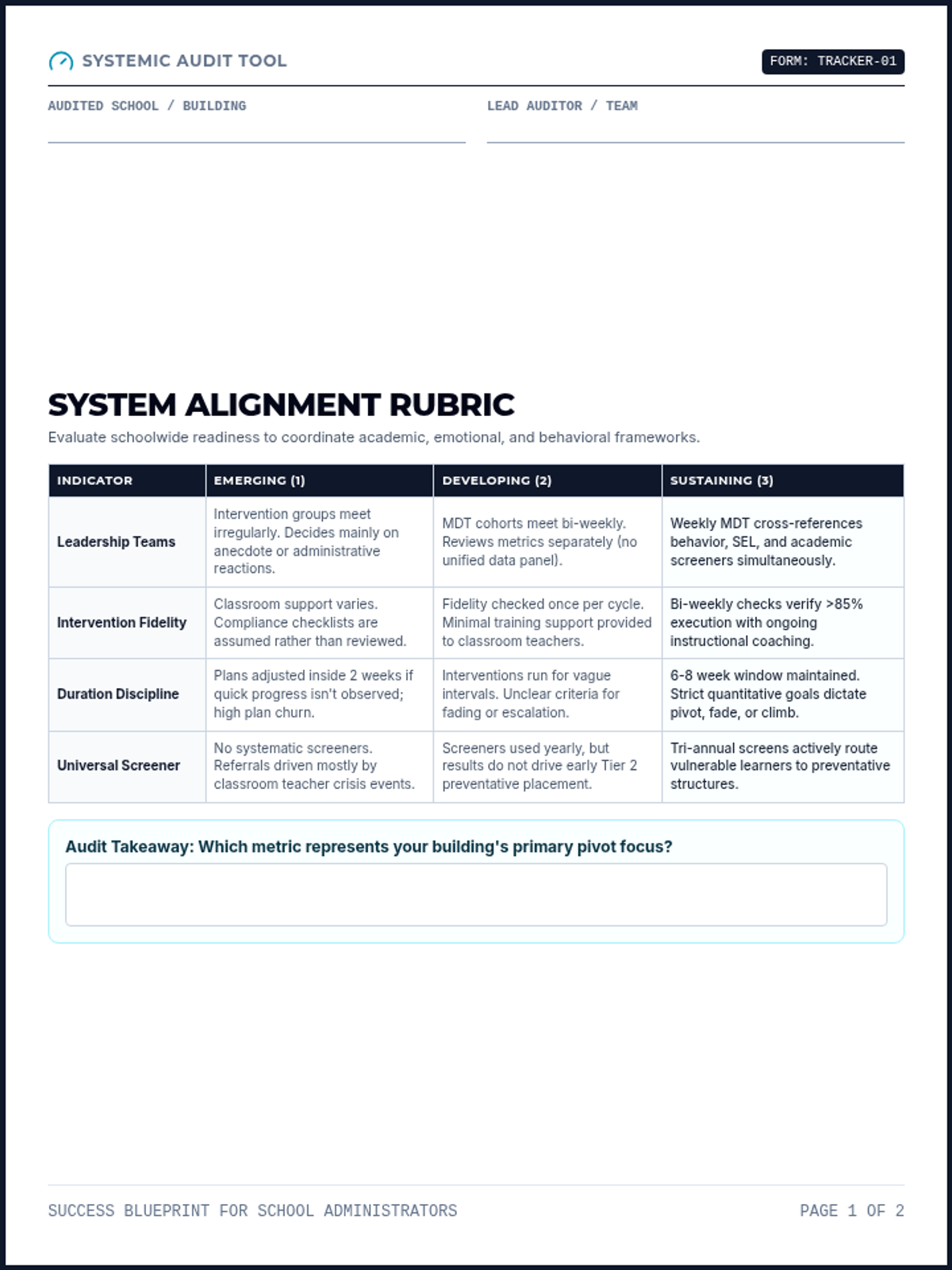
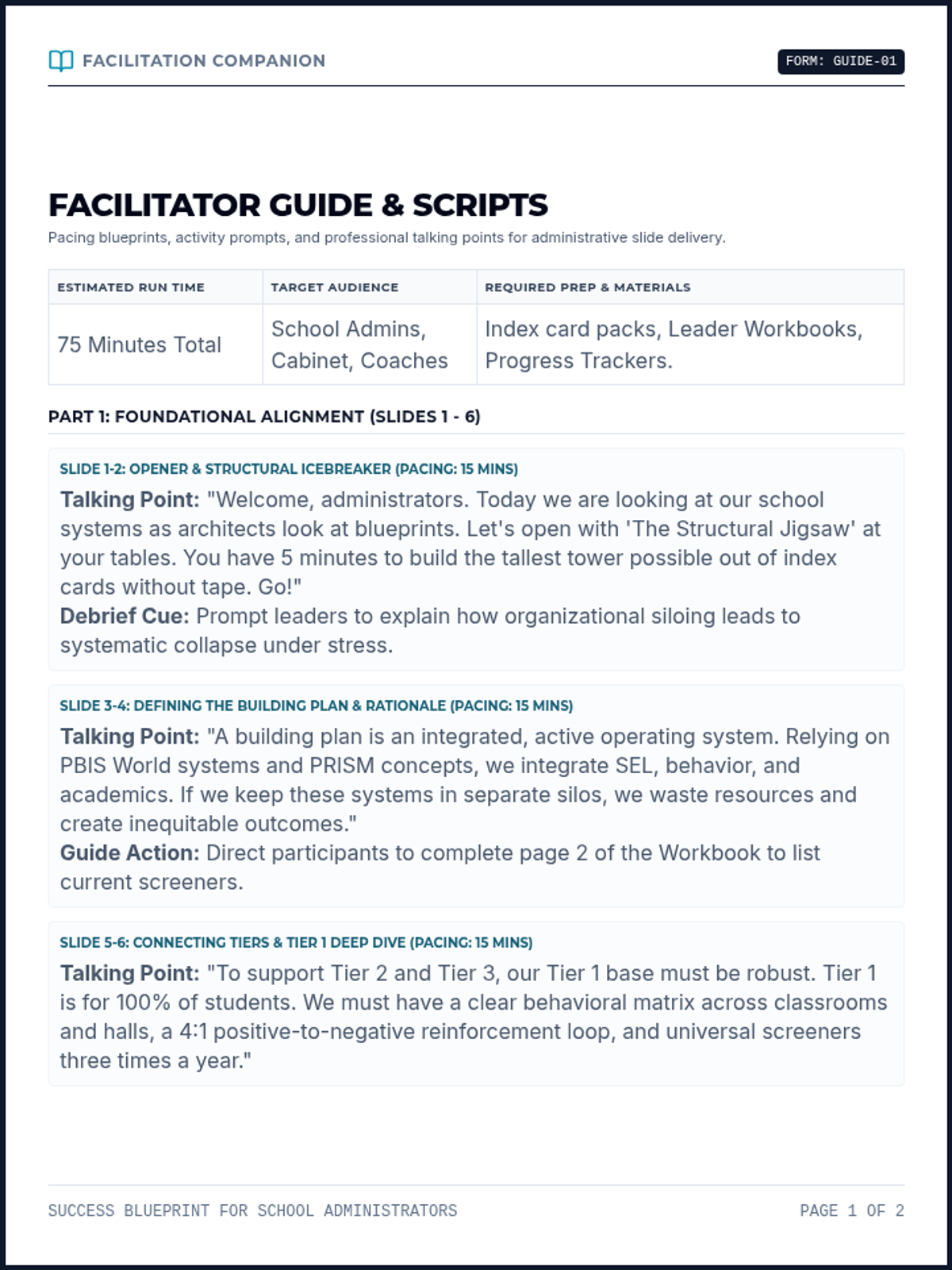
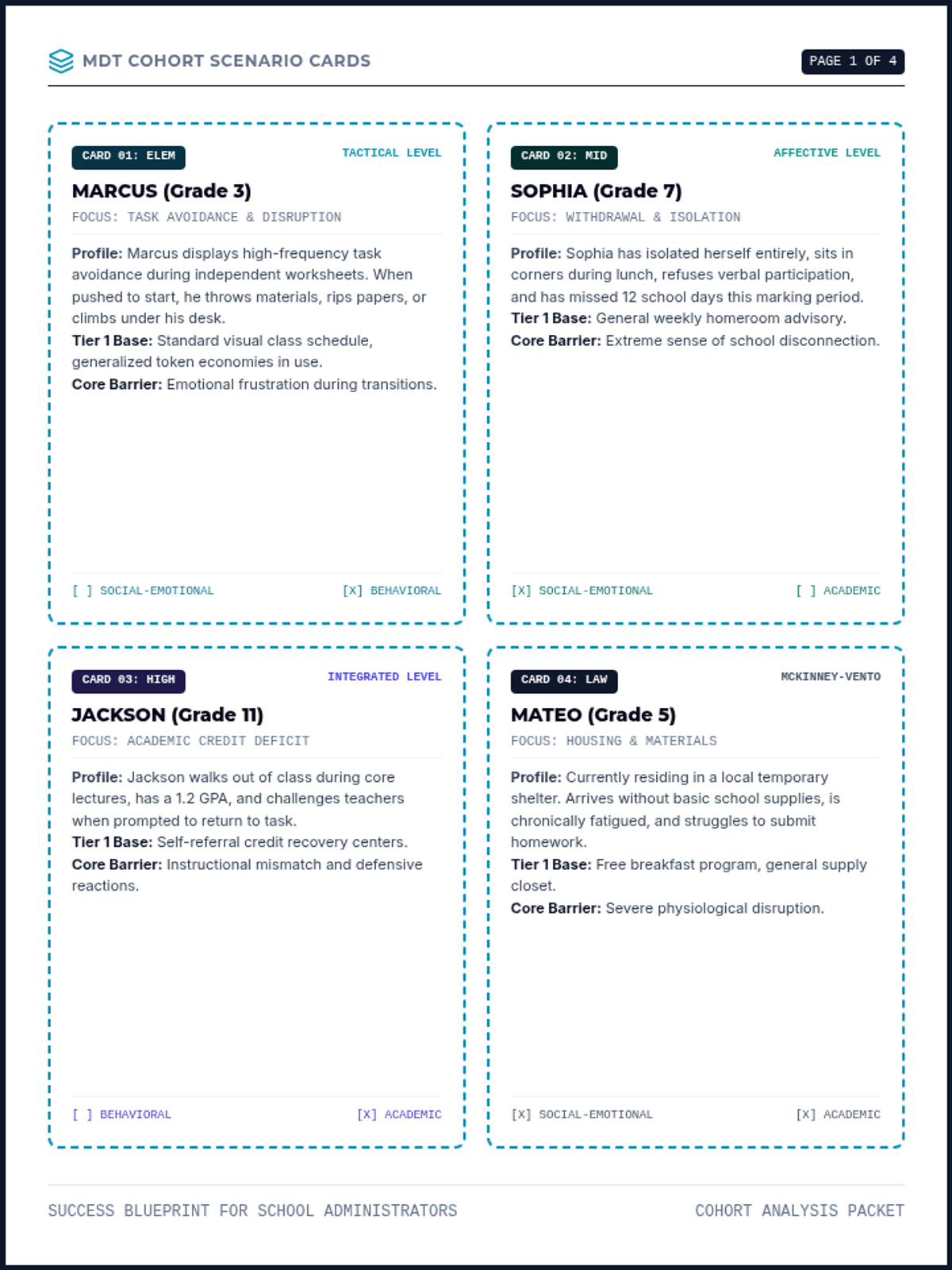
A comprehensive professional development session for school administrators on creating, implementing, and monitoring multi-tiered building plans for social-emotional, behavioral, and academic student success.
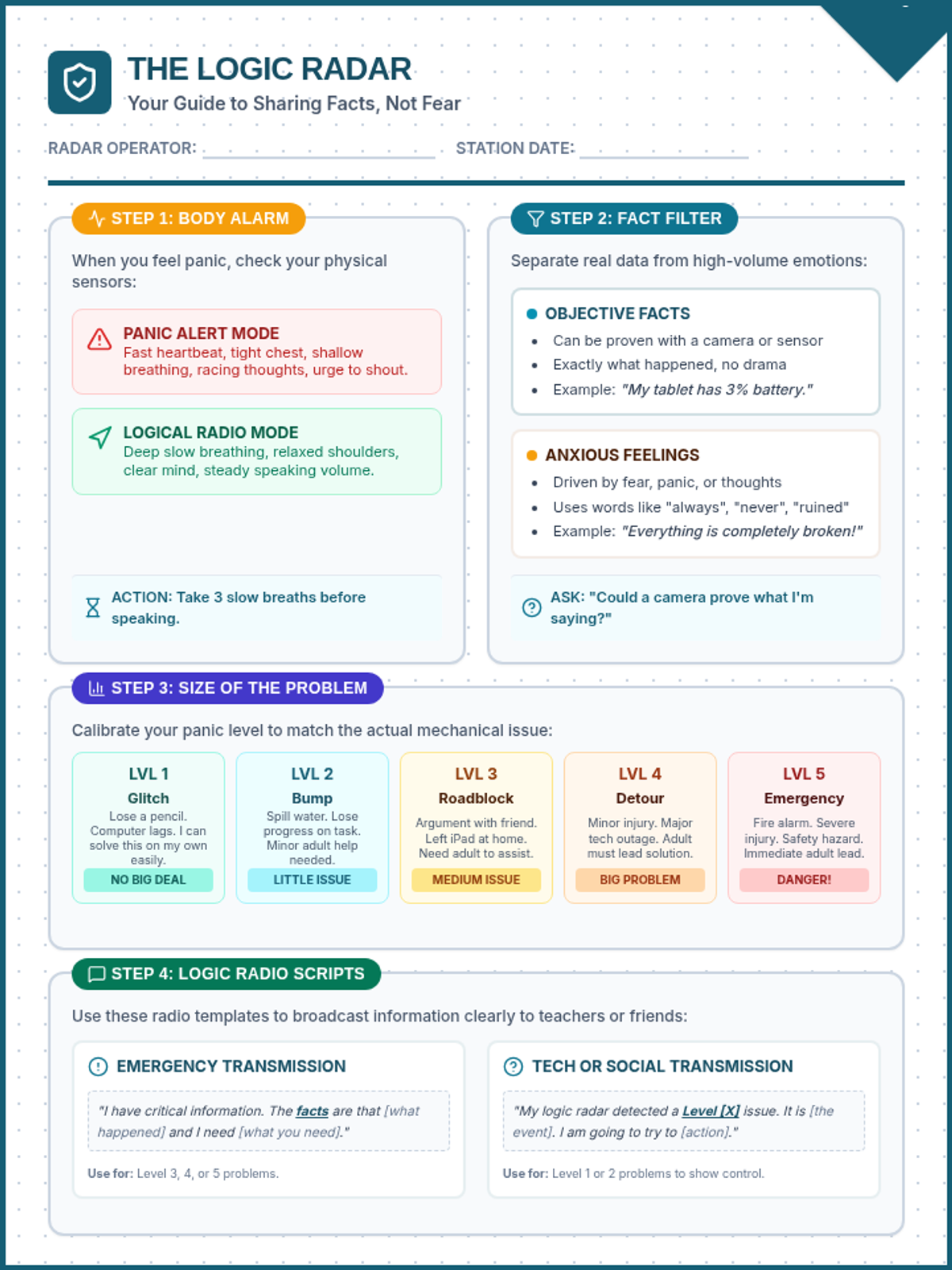
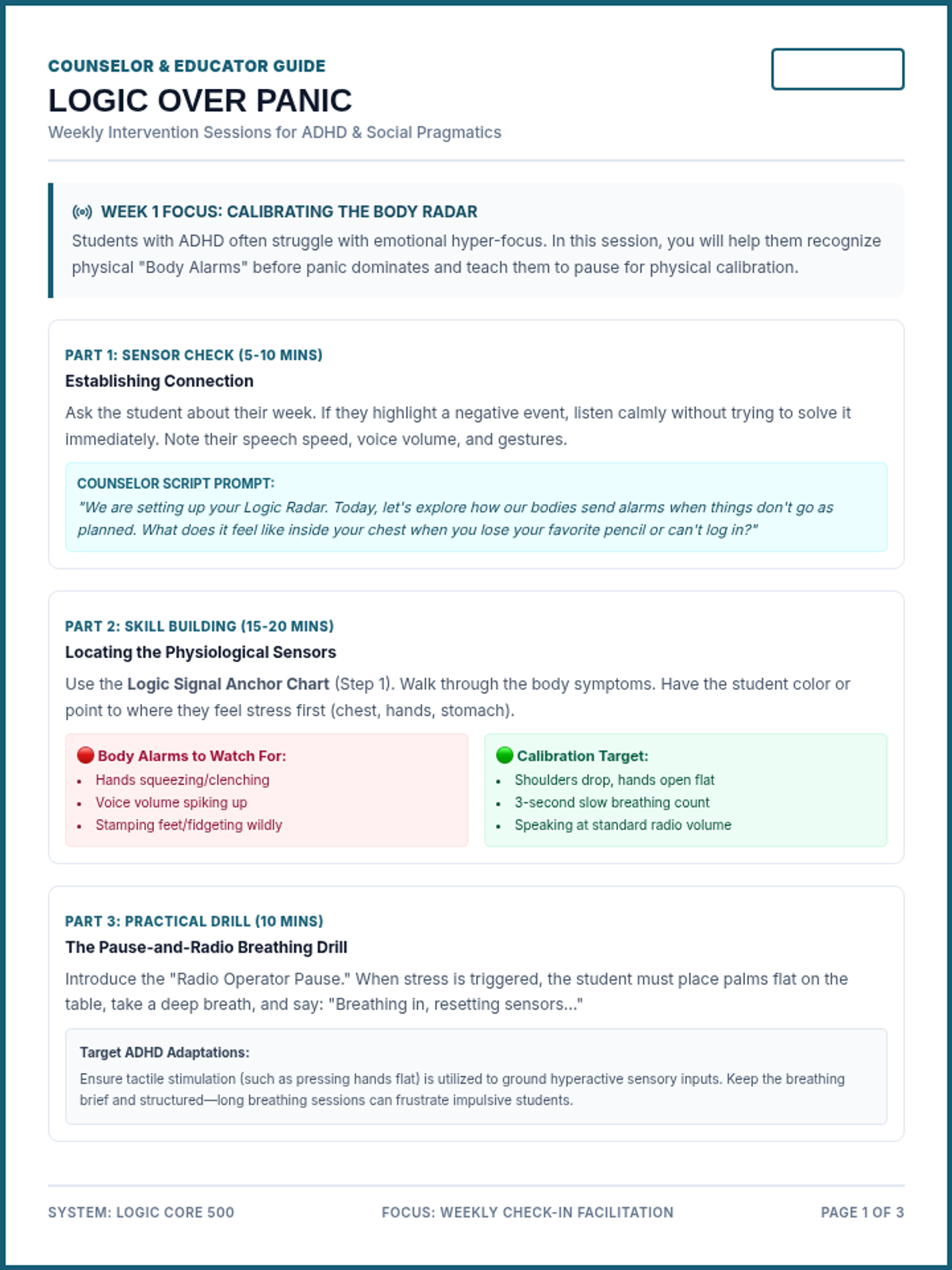
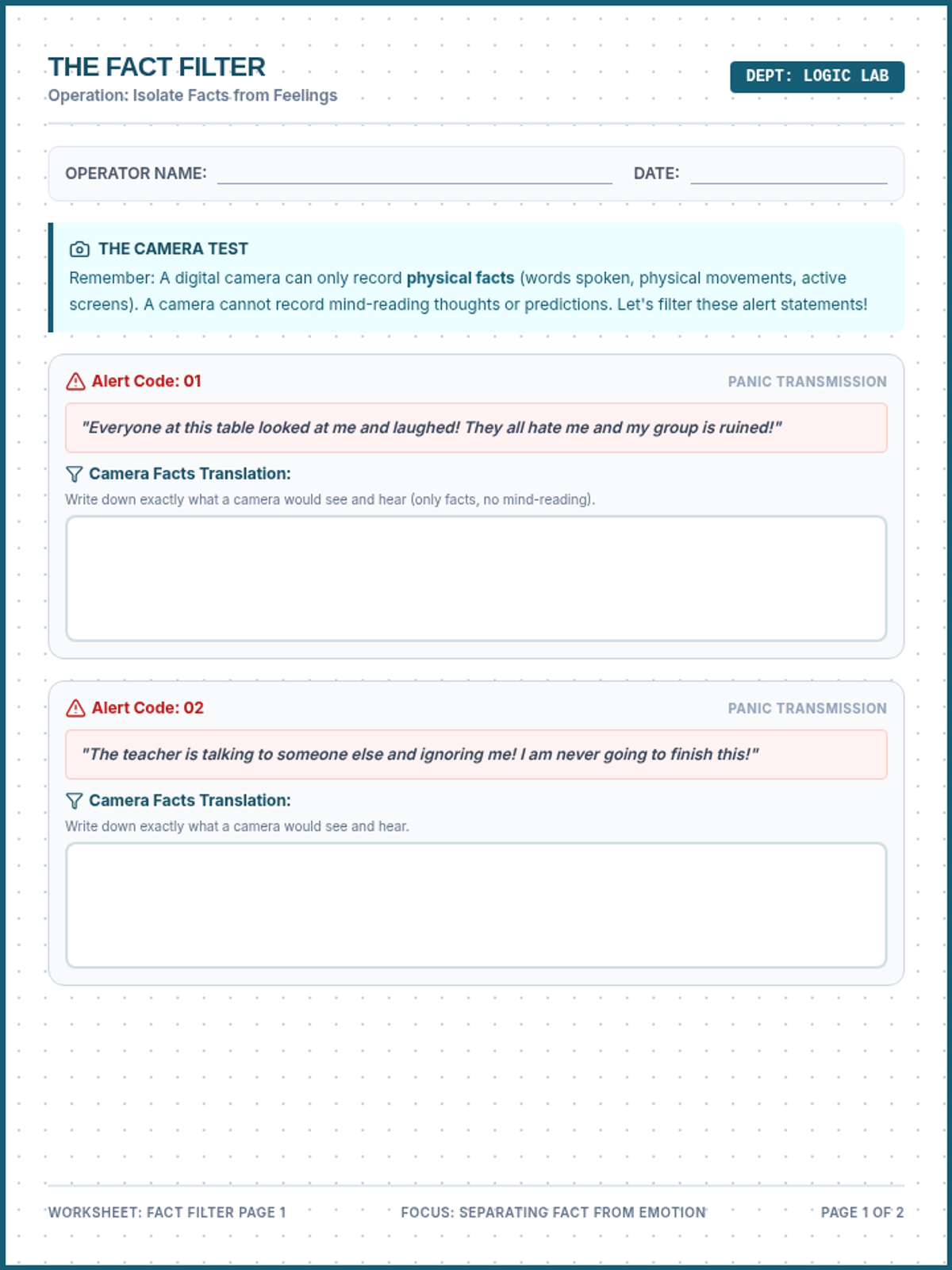
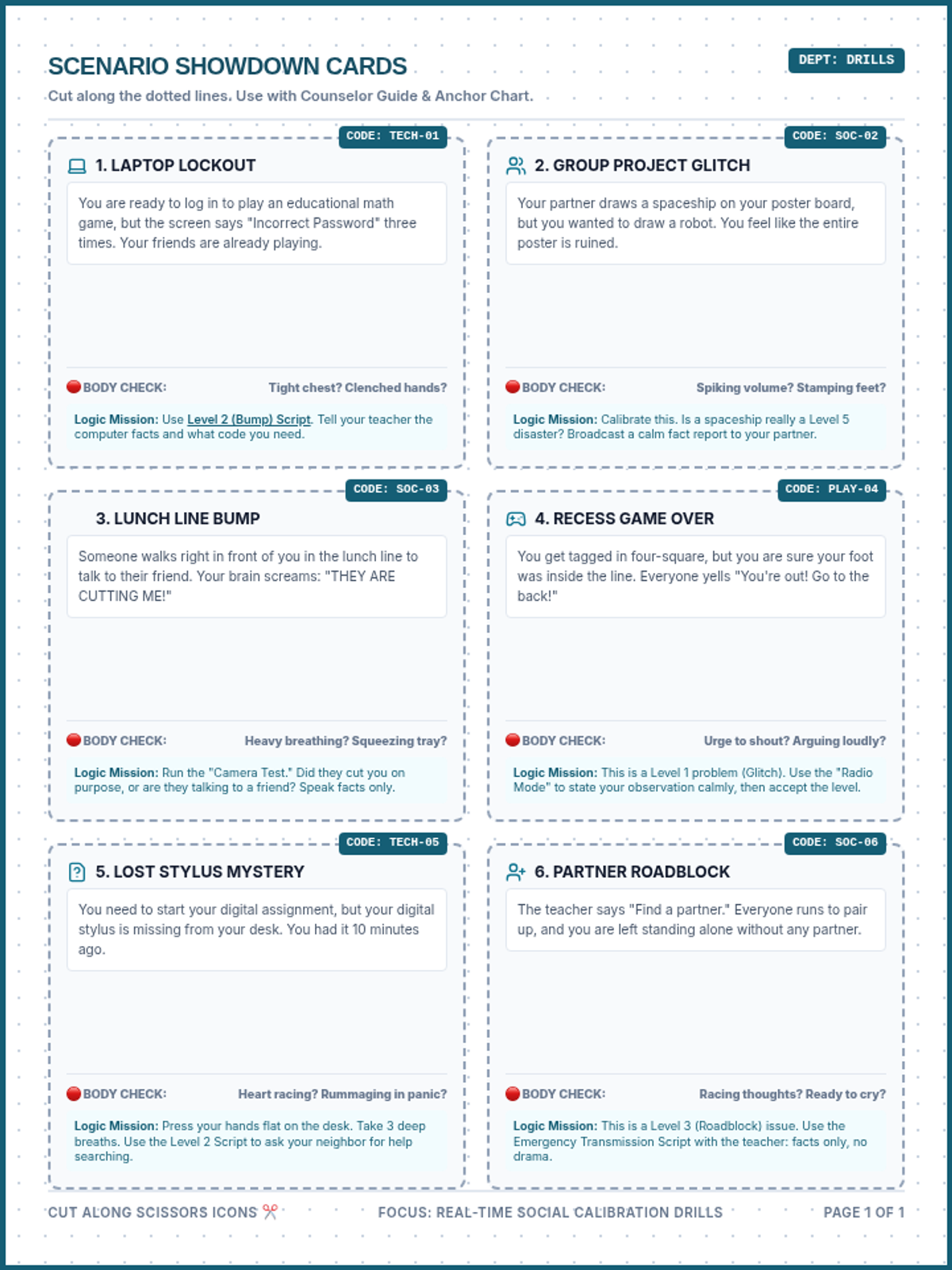
A multi-week social-emotional intervention sequence designed for students with ADHD and social communication challenges, focusing on transitioning from panic-based reactions to fact-based logical communication.
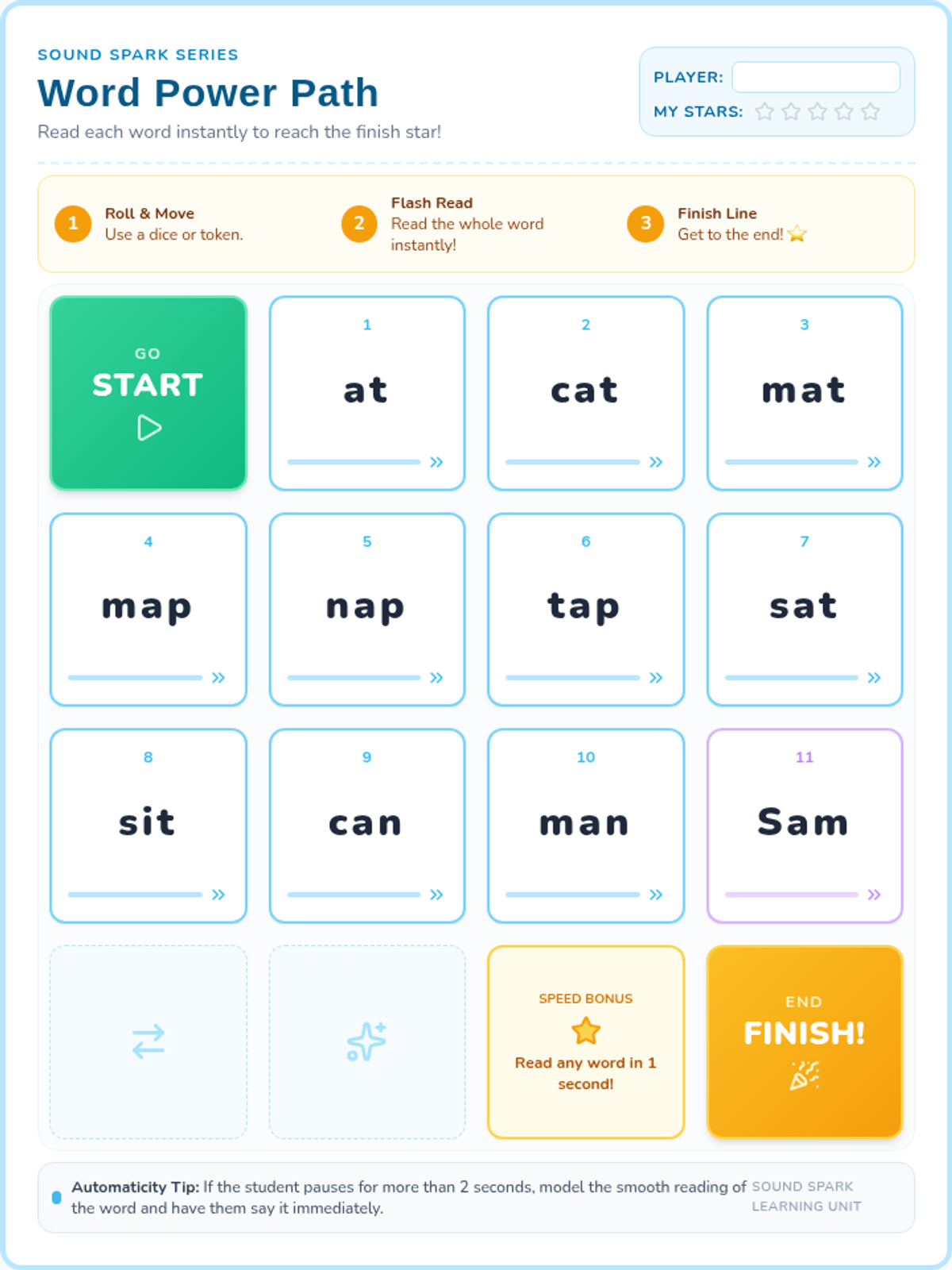
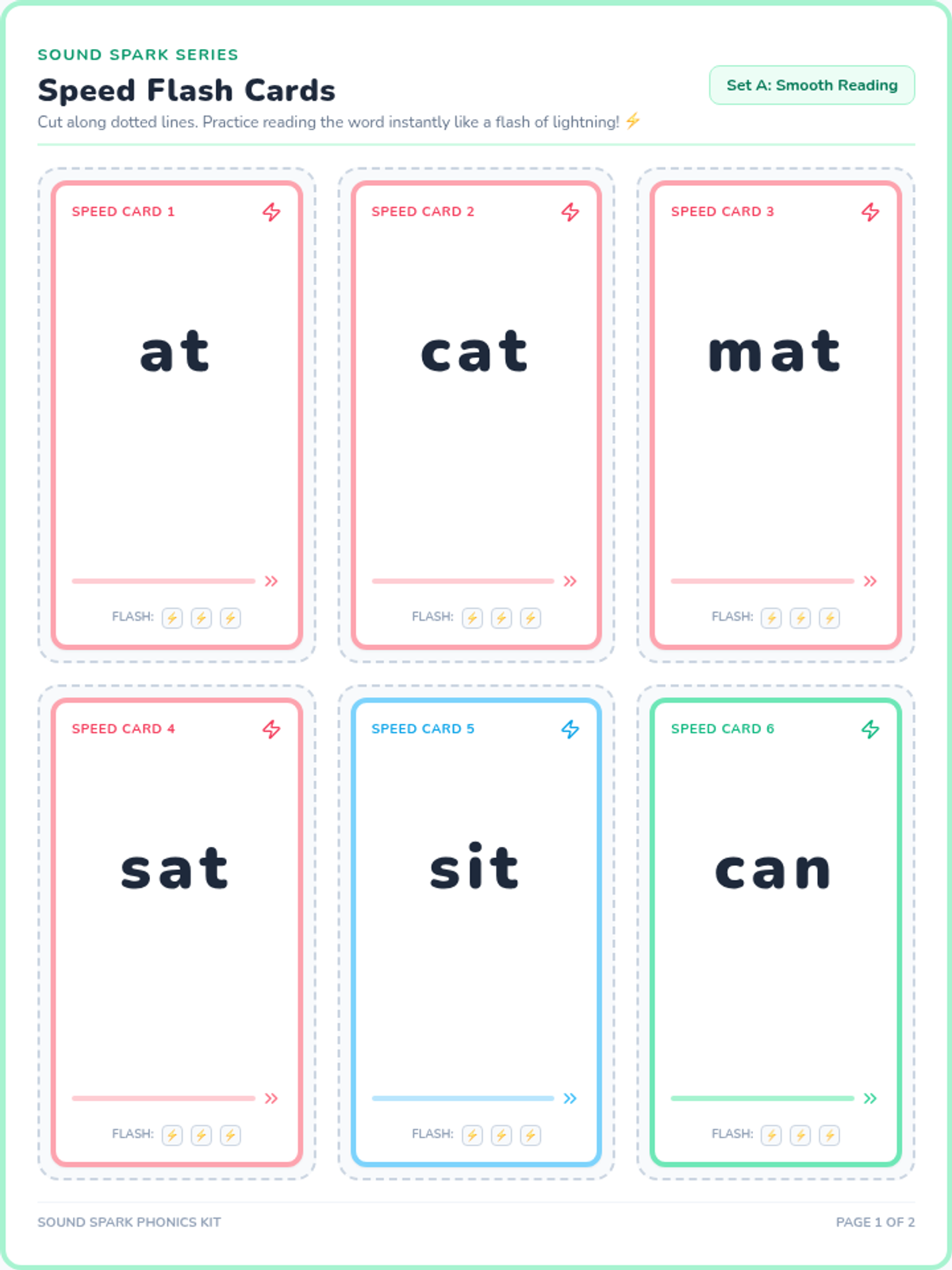
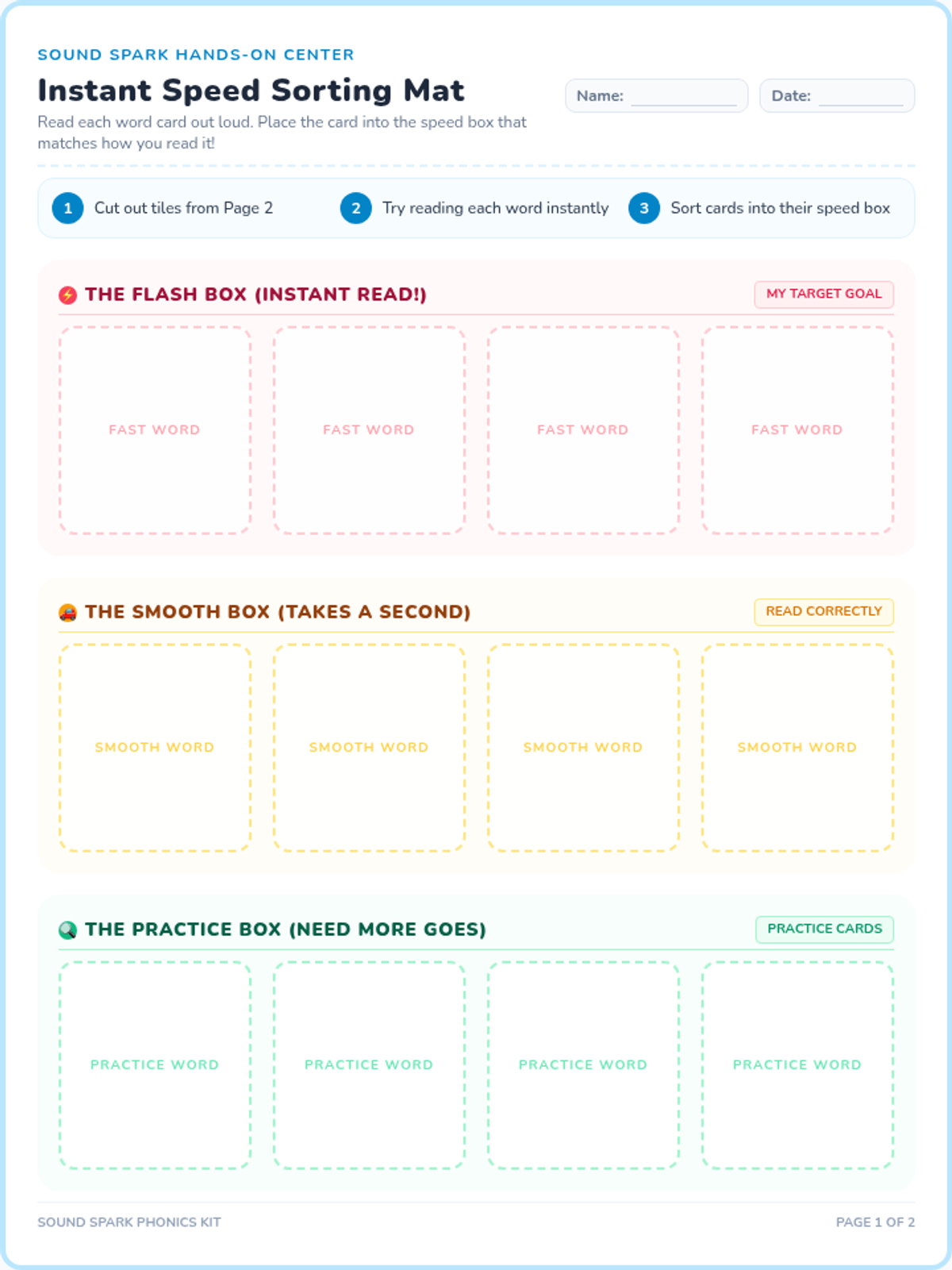
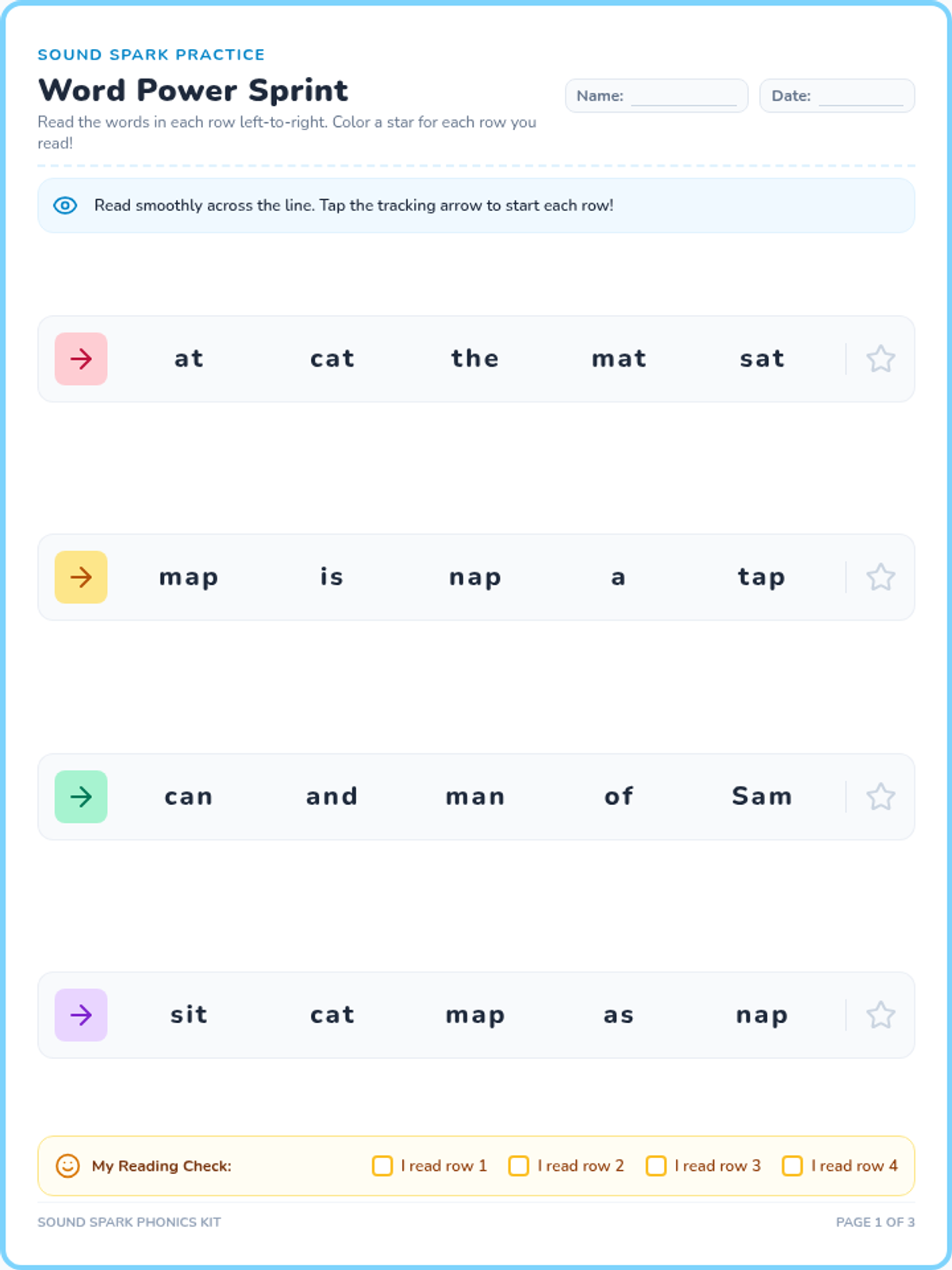
A structured, sensory-friendly early reading kit for students with autism, focusing on CVC automaticity and phonics blending. Features structured worksheets, Elkonin boxes, and low-distraction print-and-play games.
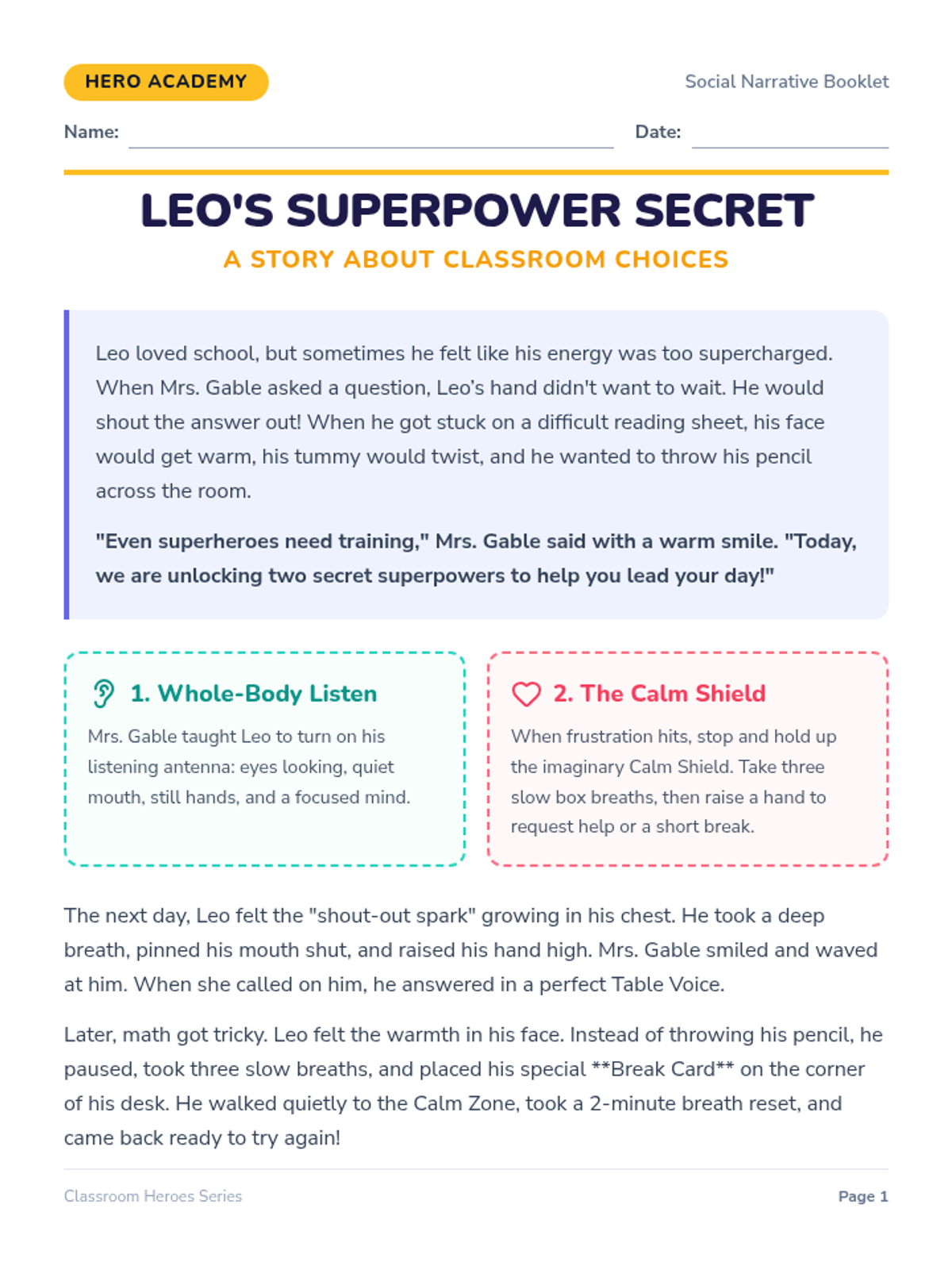
A comprehensive lesson designed to teach elementary students essential classroom self-regulation and active listening skills. It includes interactive presentation slides and a targeted social story with reflection activities to reinforce behavioral expectations.
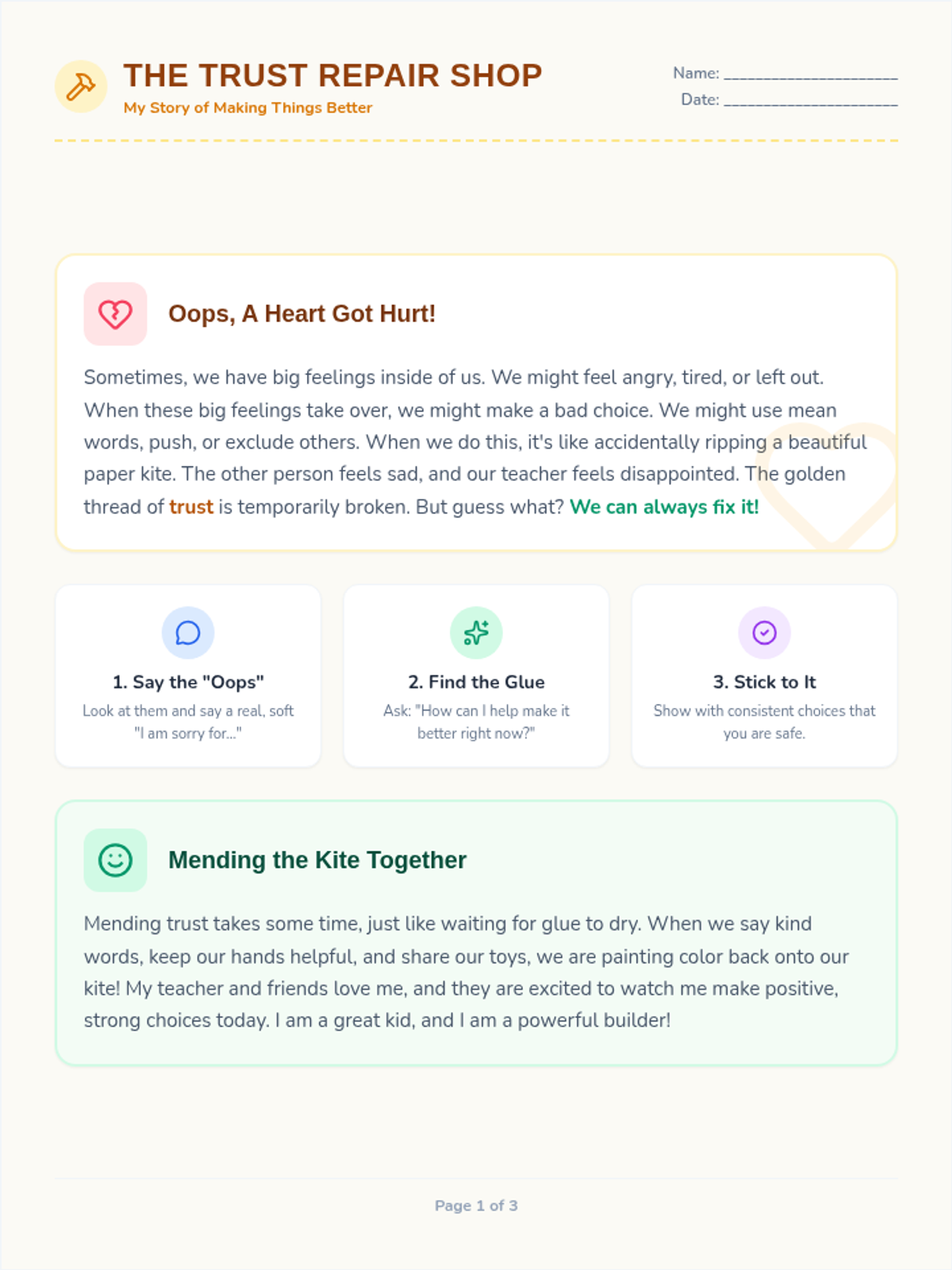
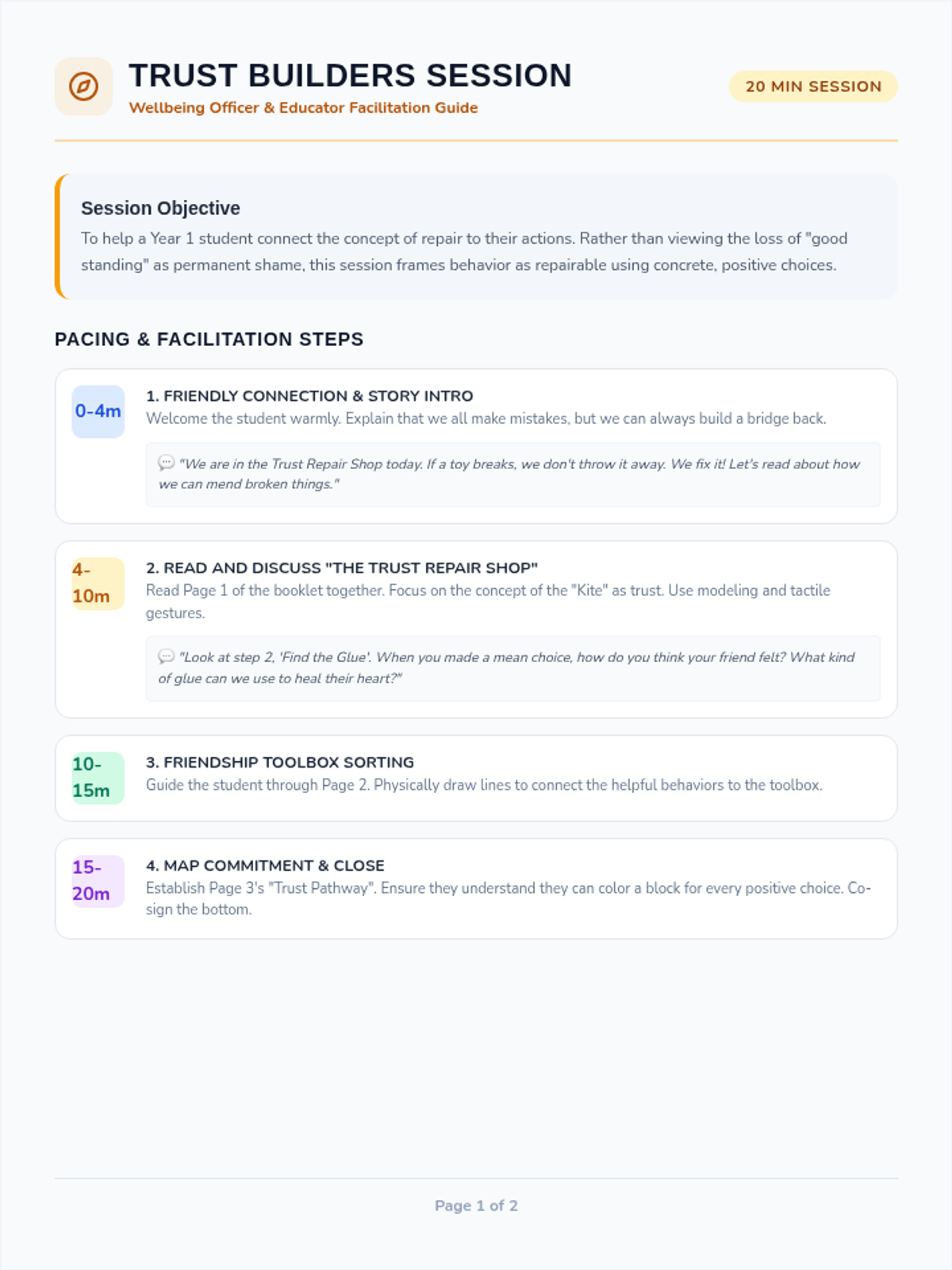
A restorative 20-minute session featuring a personalized social story and hands-on activities designed for a Year 1 student to understand, practice, and track behavioral repair.
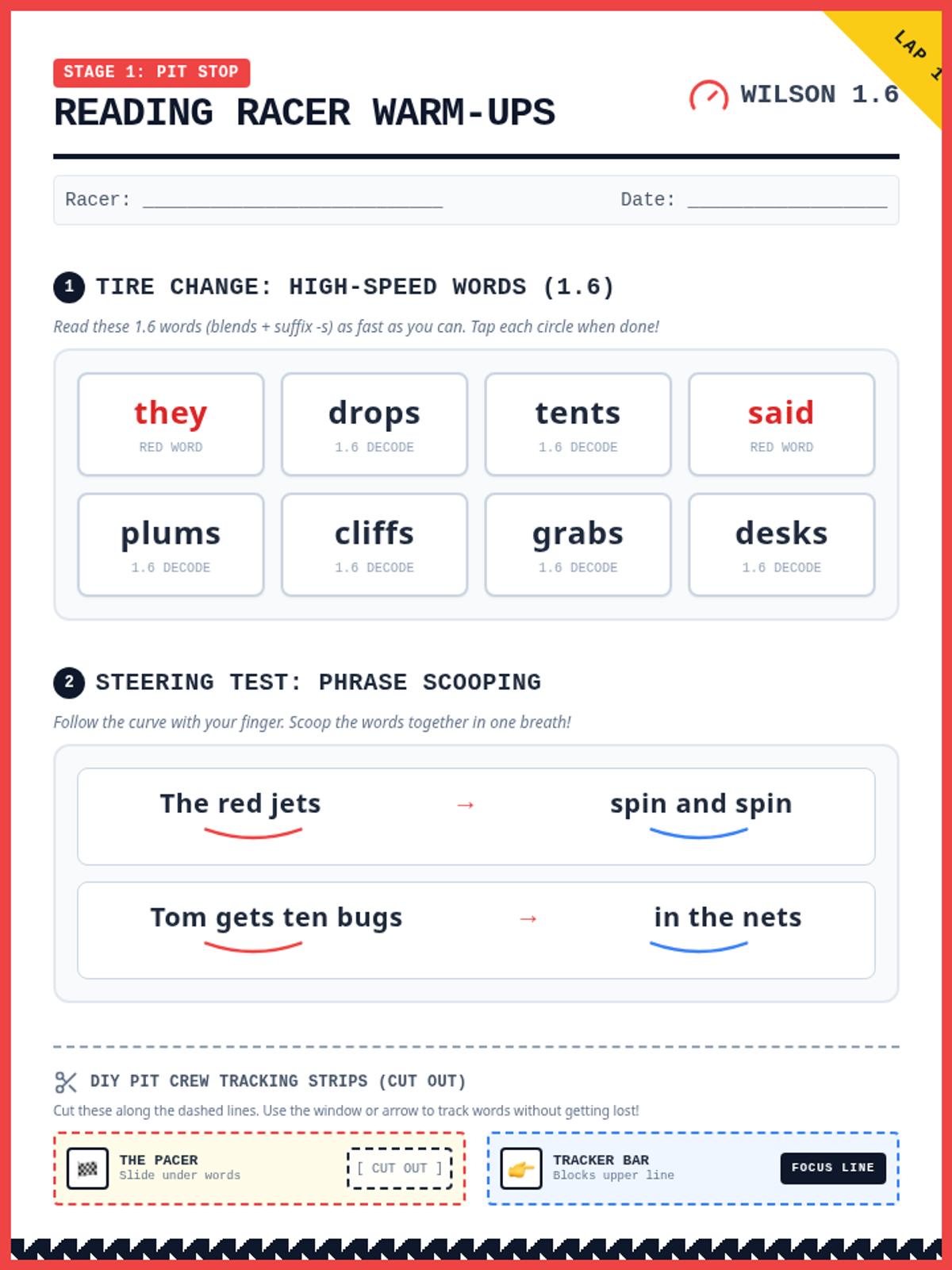
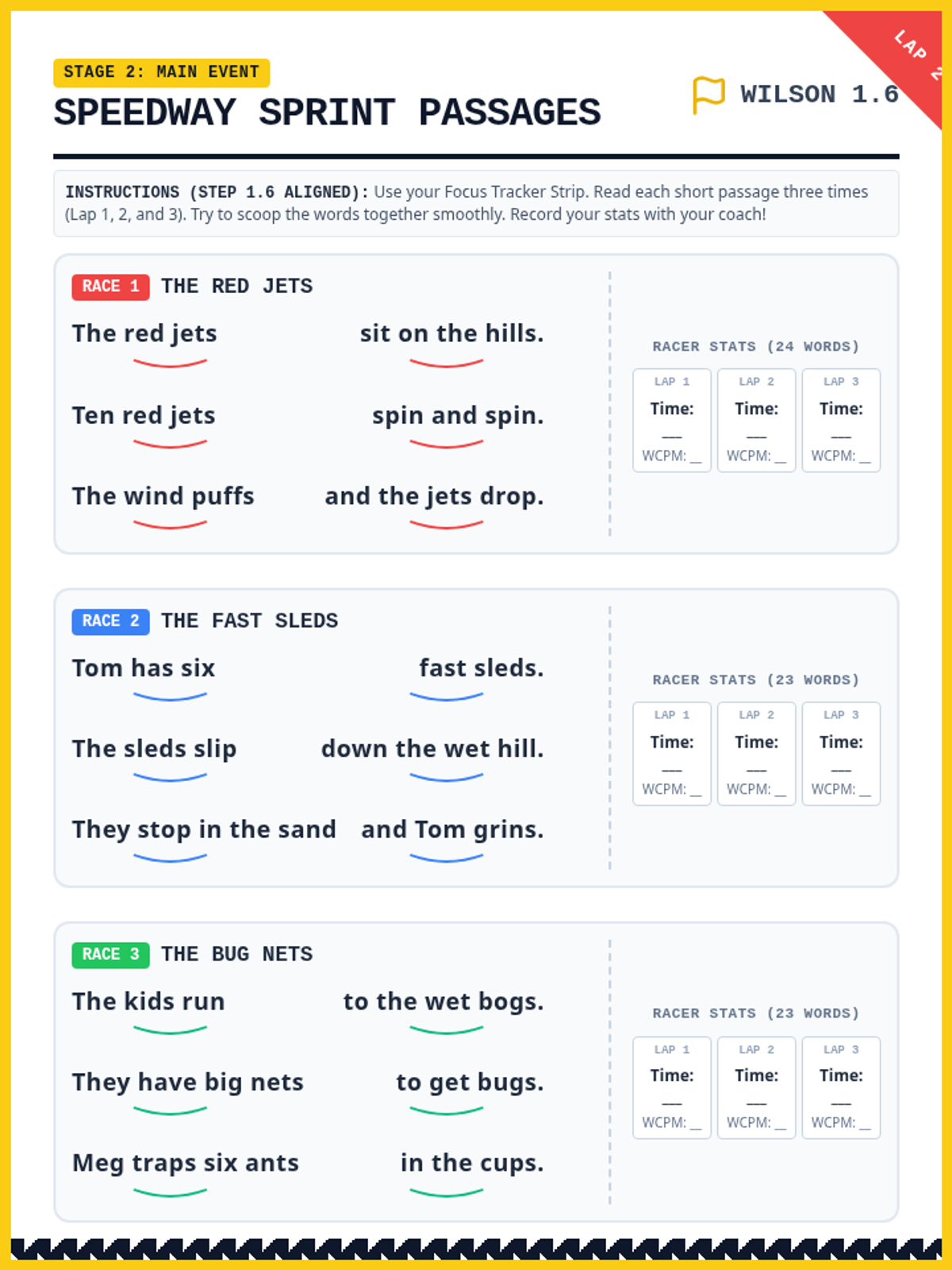
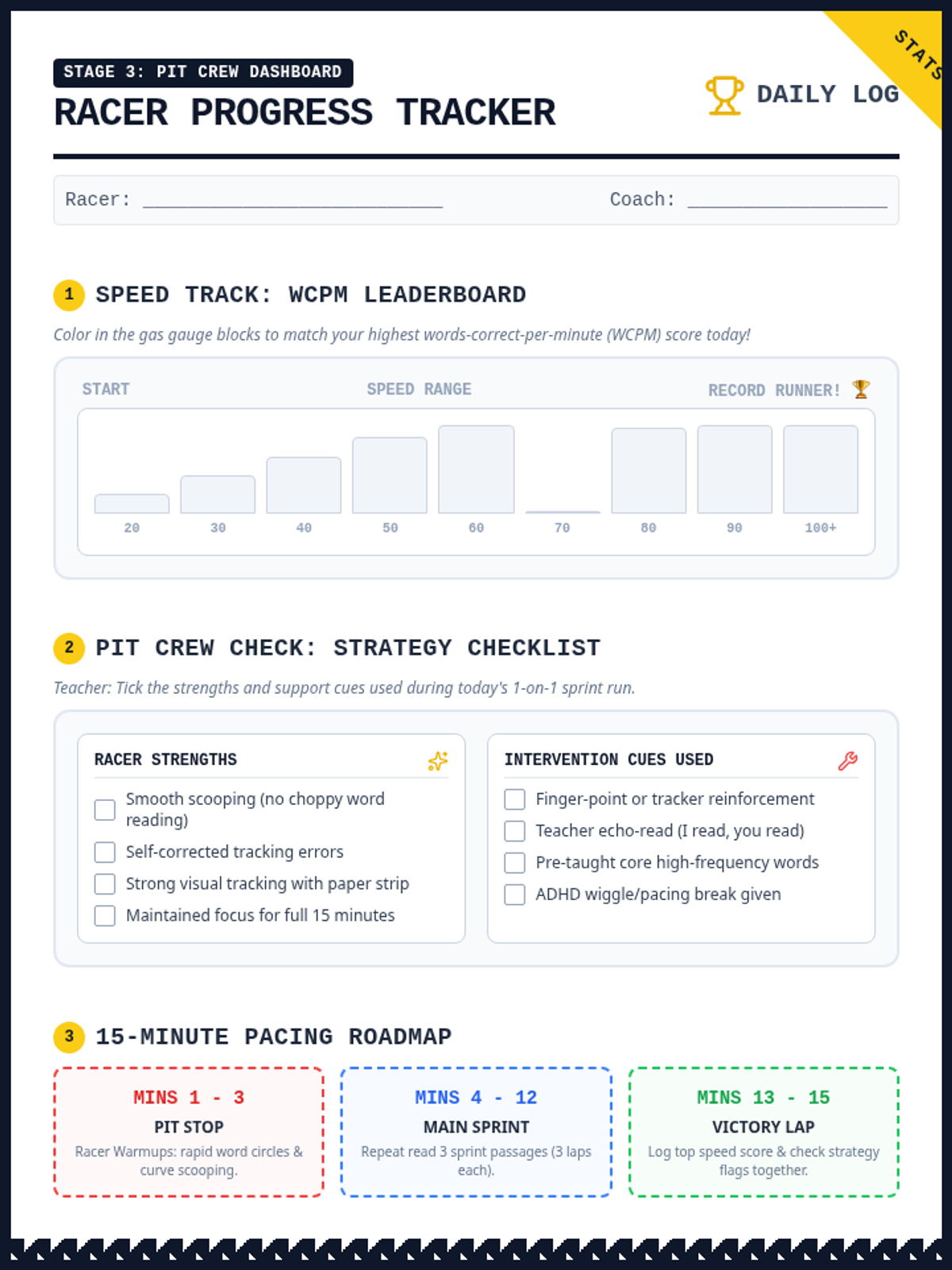
A gamified, high-intensity fluency bundle designed for a 1-on-1 15-minute intervention. Tailored for a 2nd grader with suspected dyslexia and ADHD who decodes well but needs support with visual tracking, phrasing, and rapid automaticity.
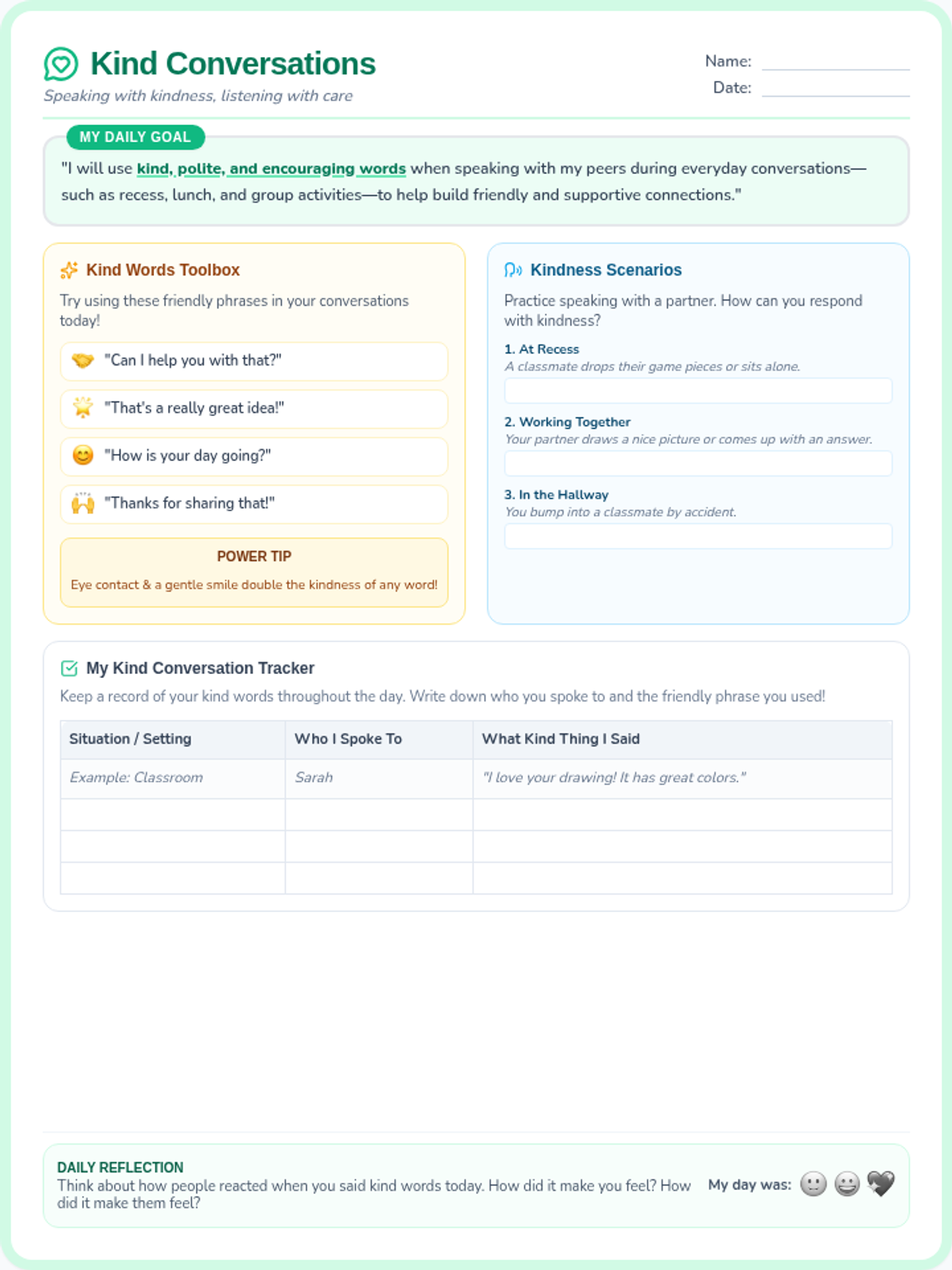
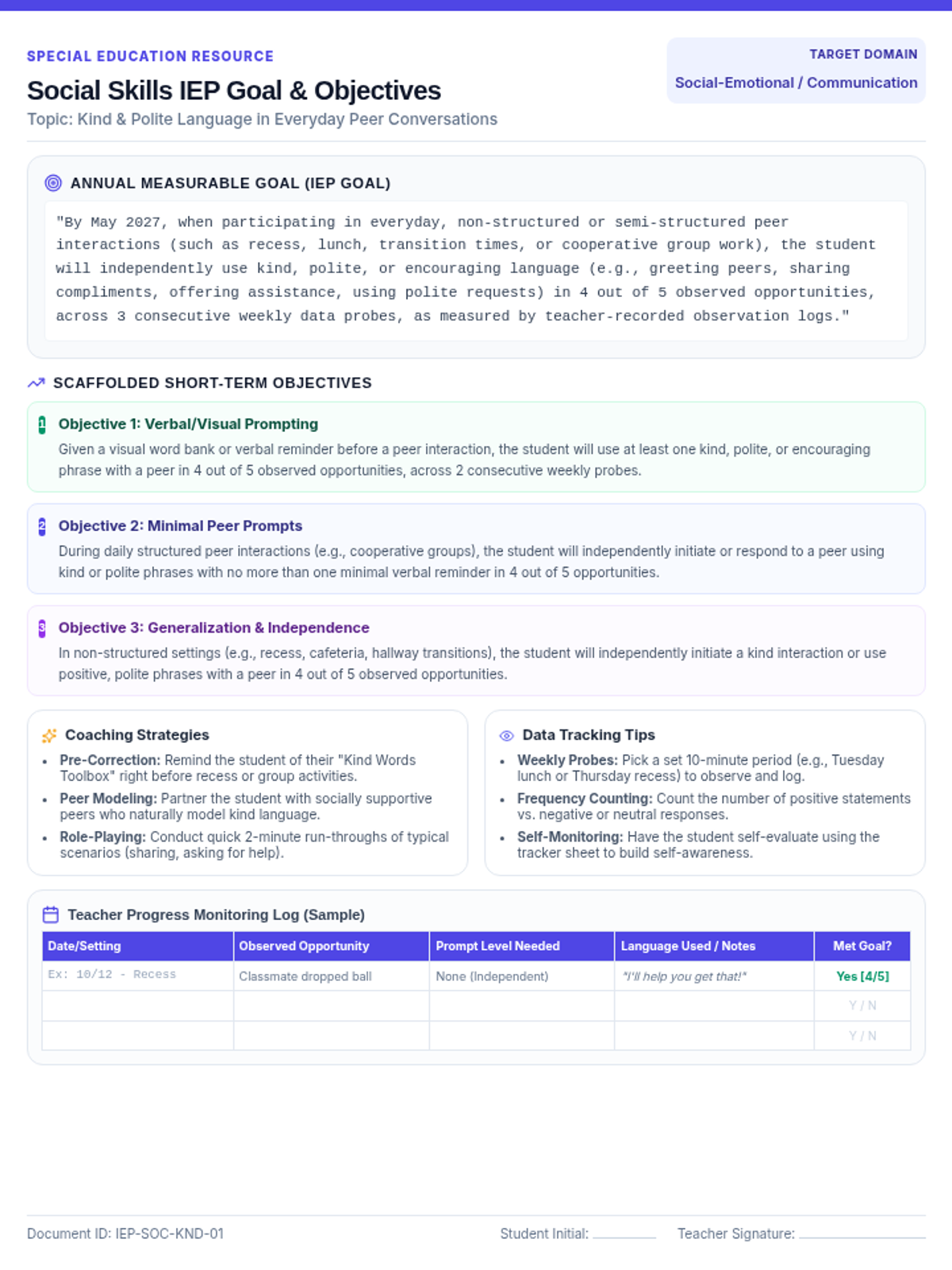
A social skills lesson designed to help students learn and apply kind, polite, and encouraging language during daily peer interactions. Includes clear visual objectives, structured discussion cards, and a reflection tracker.
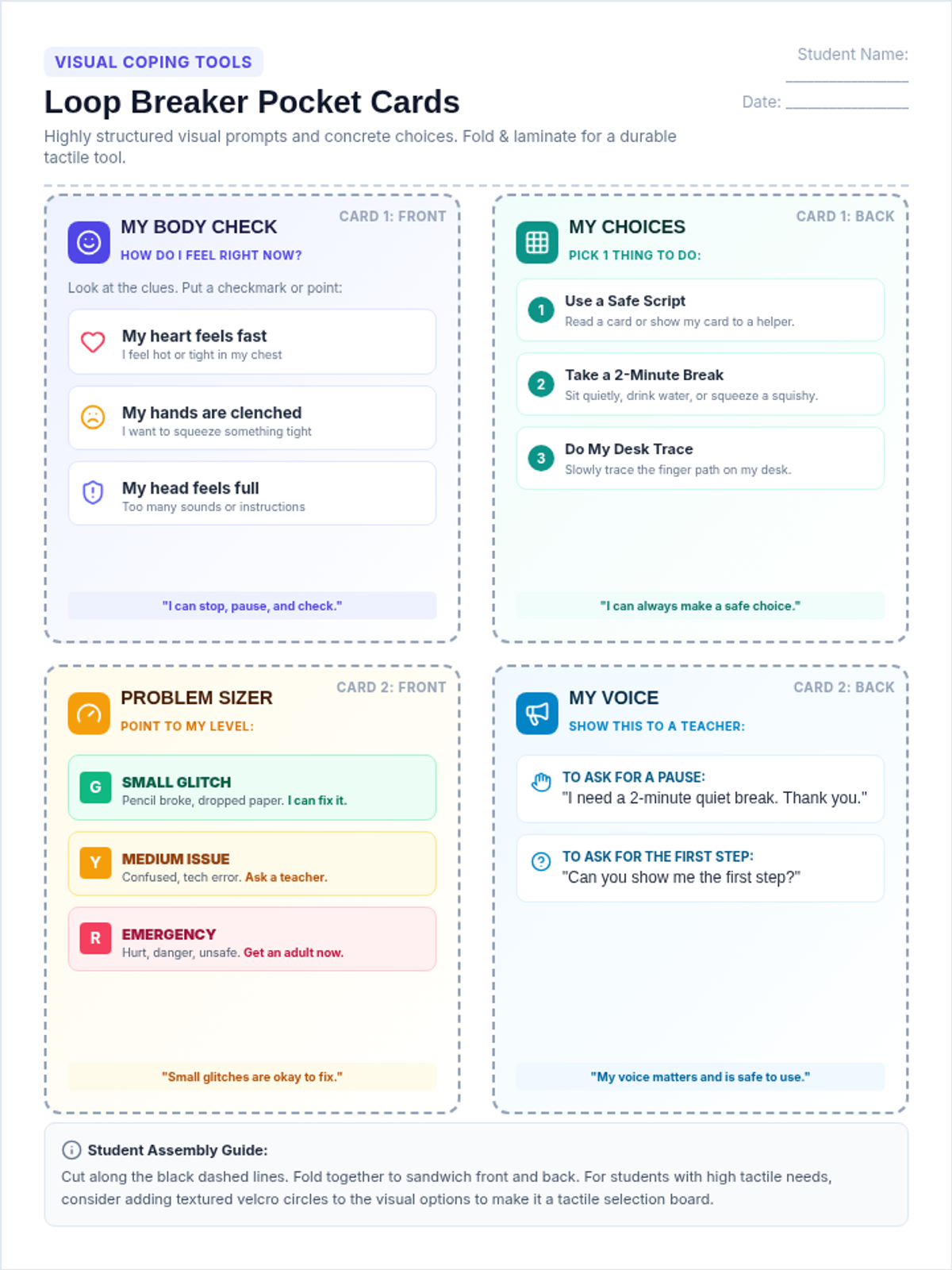
A set of portable, visual cognitive behavioral tools to help students disrupt automatic negative thoughts and set constructive boundaries when feeling overwhelmed by tasks.
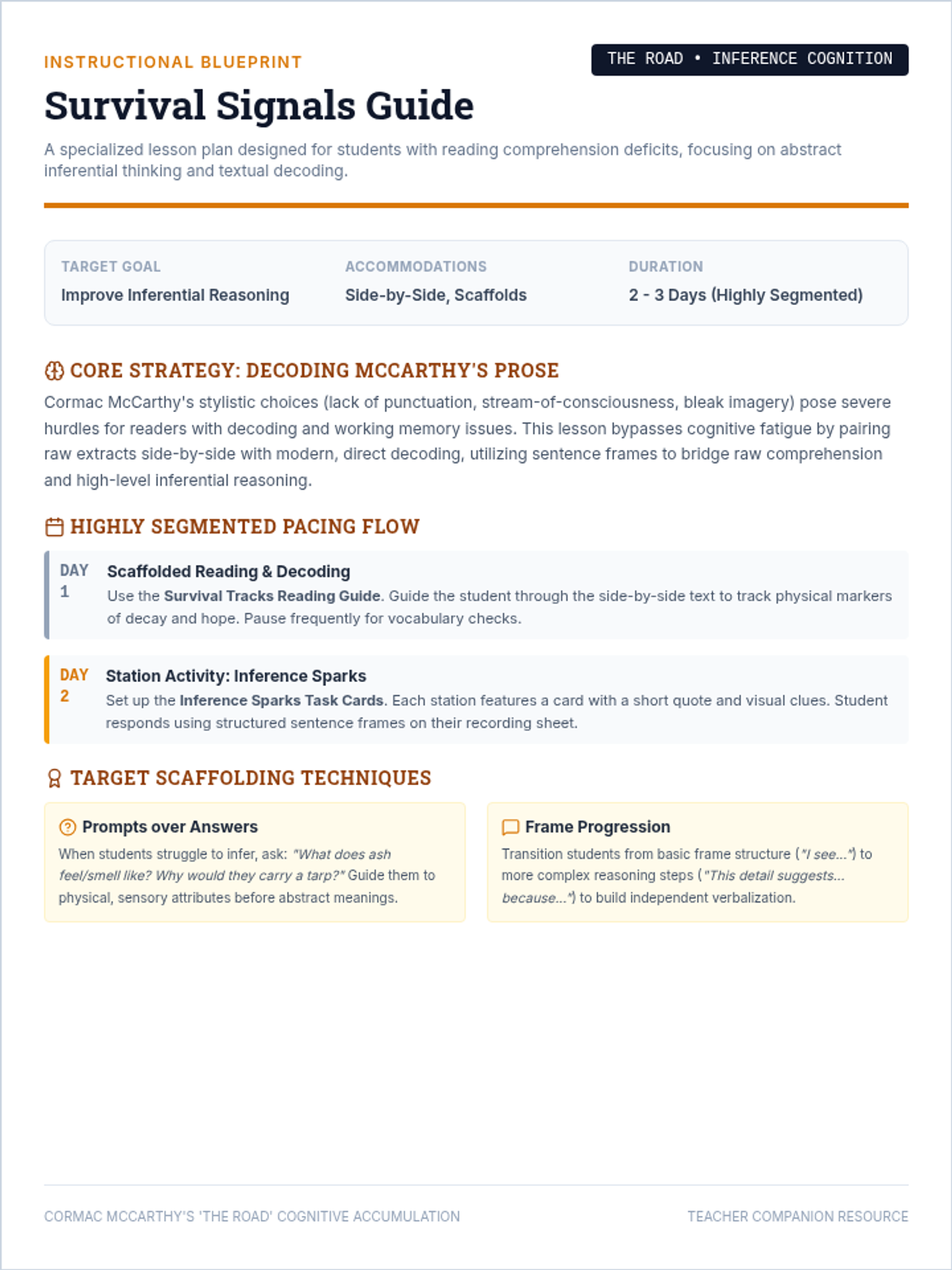
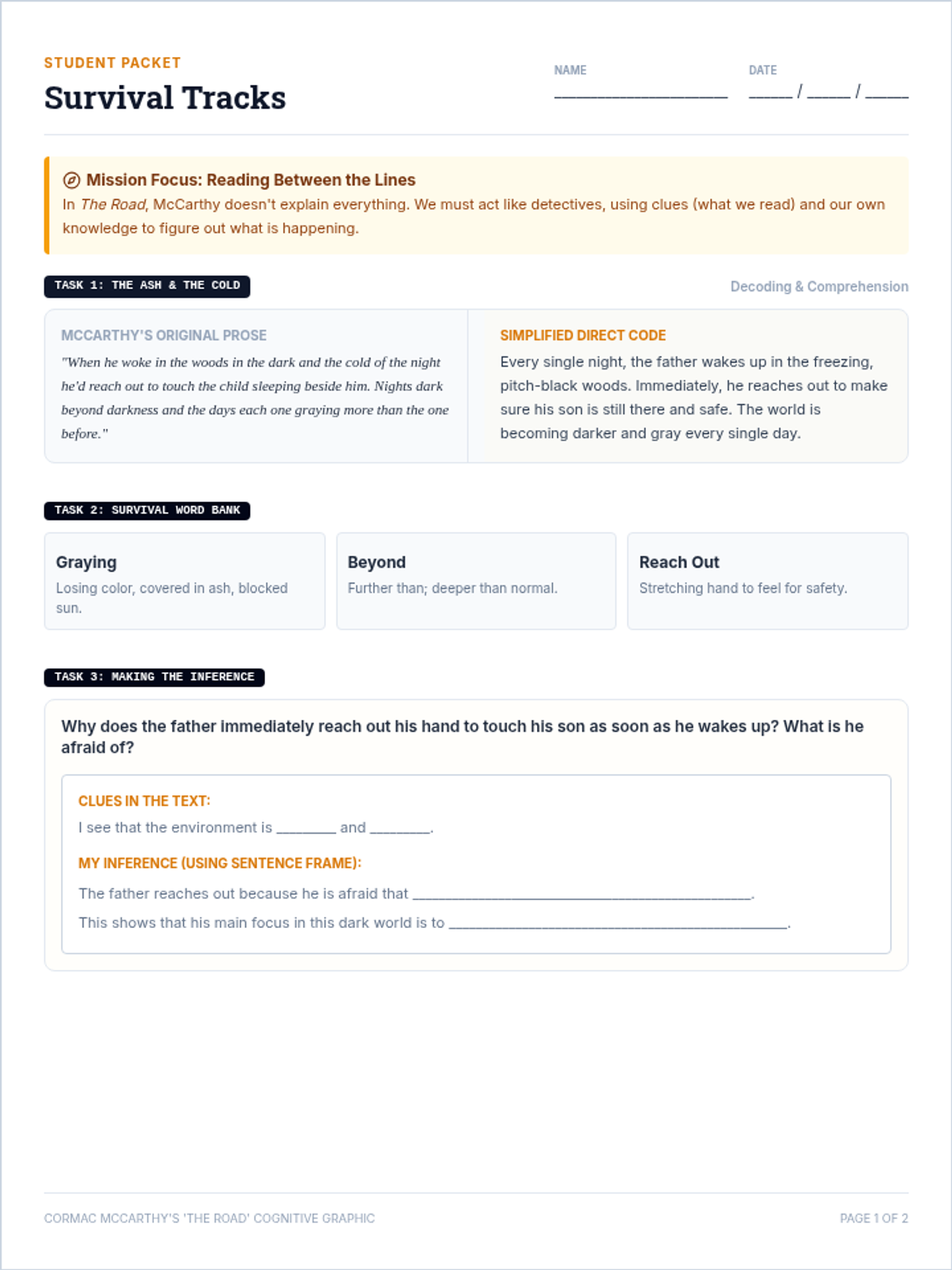
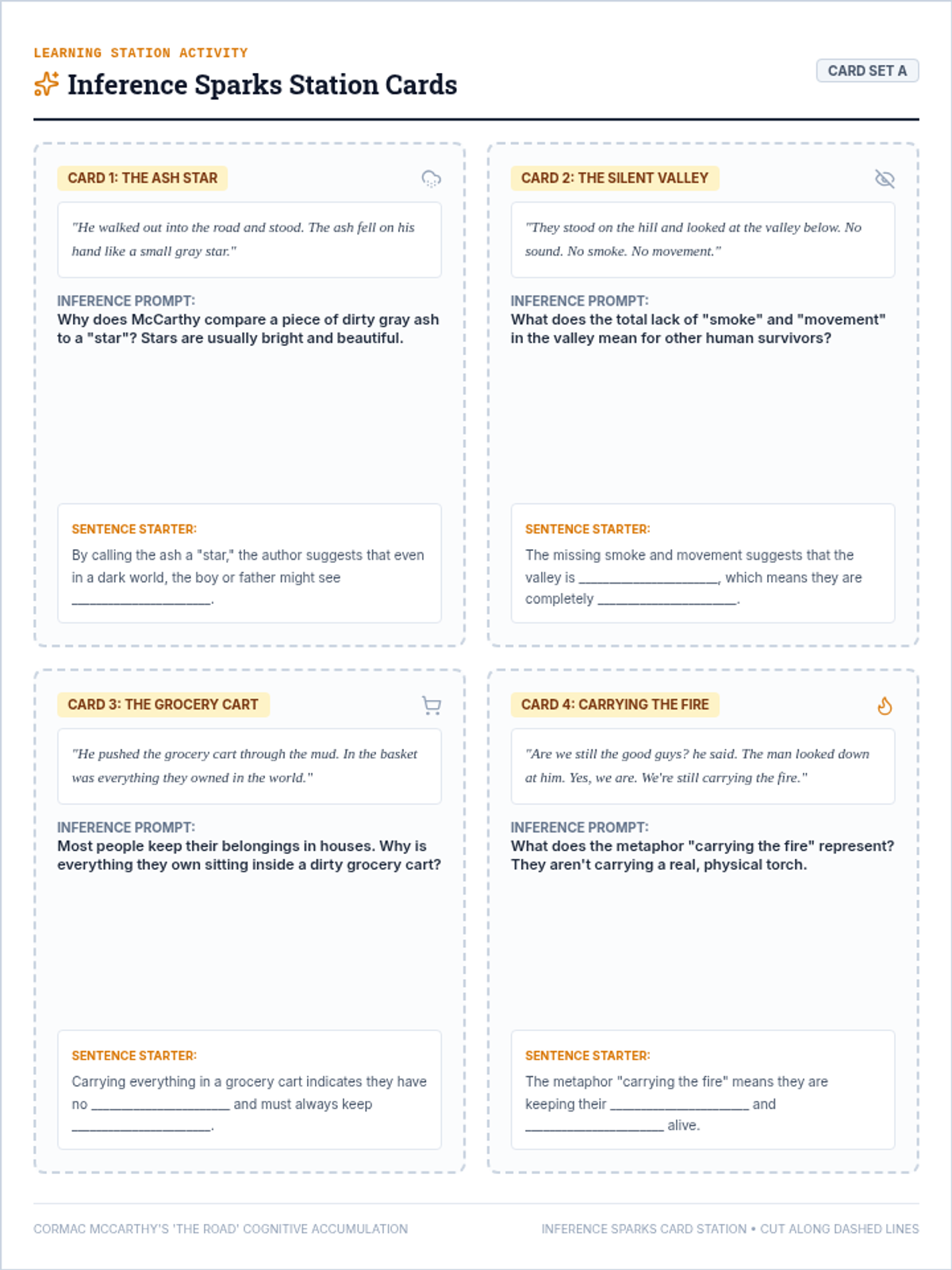
A targeted reading comprehension lesson designed for students with reading comprehension deficits, focusing on inferential thinking using Cormac McCarthy's 'The Road'. It includes a side-by-side text decoding guide, vocabulary scaffolding, highly segmented tasks, and a task card station activity with sentence starters.
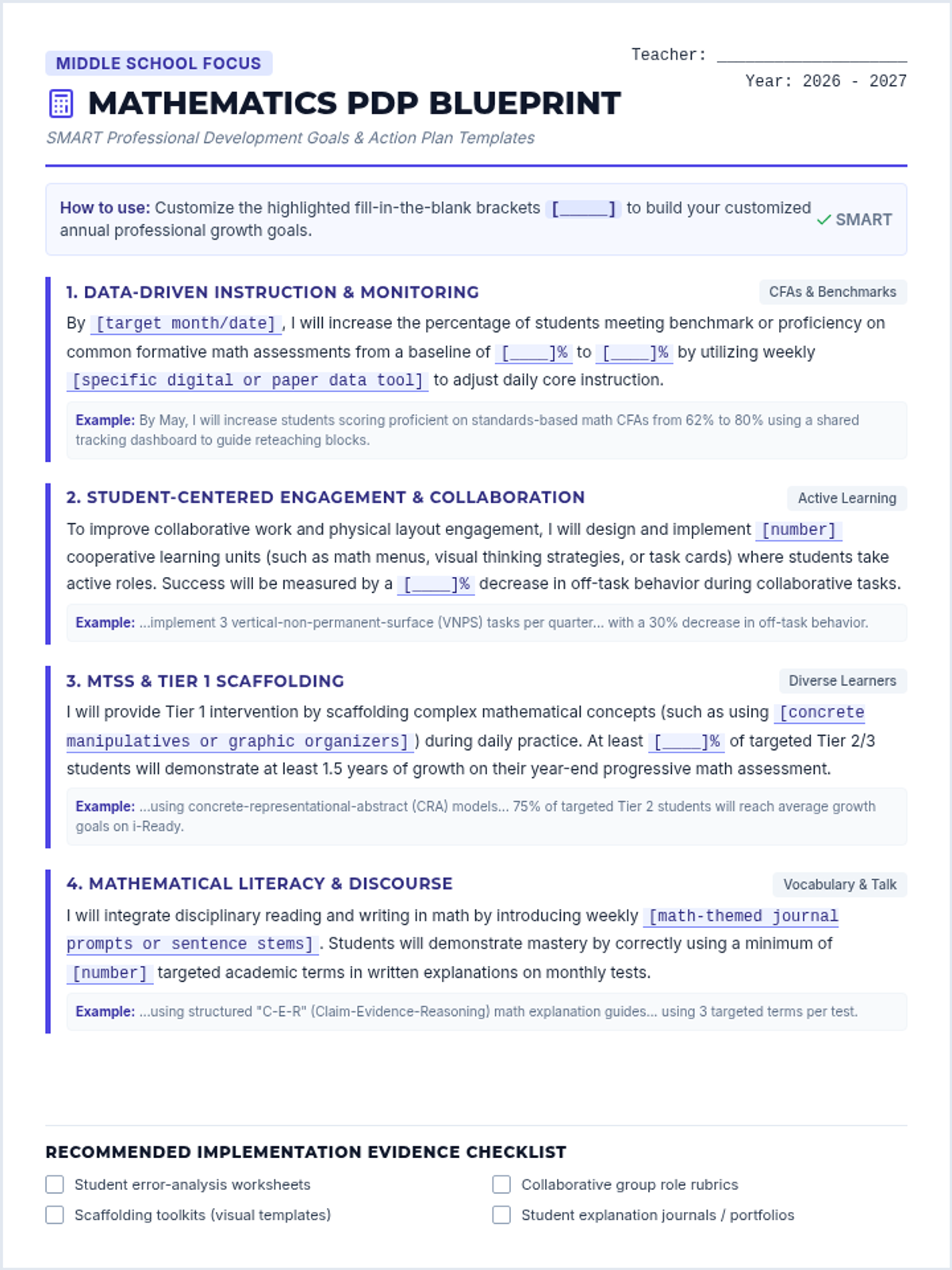
A collection of subject-specific SMART PDP (Professional Development Plan) goal-setting blueprints designed for middle school teachers across eight content areas, prioritizing data-driven instruction, student engagement, MTSS, and literacy.
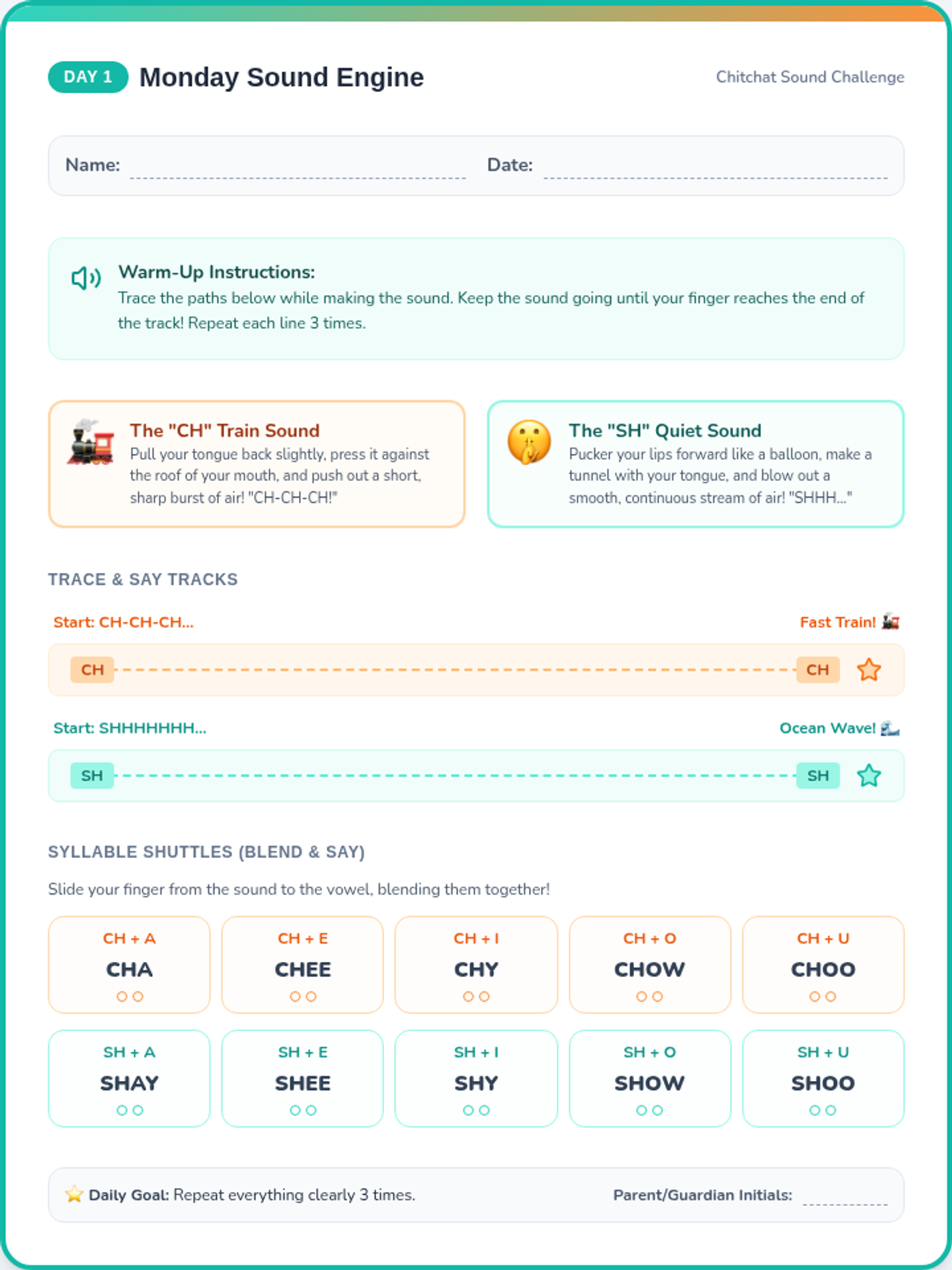
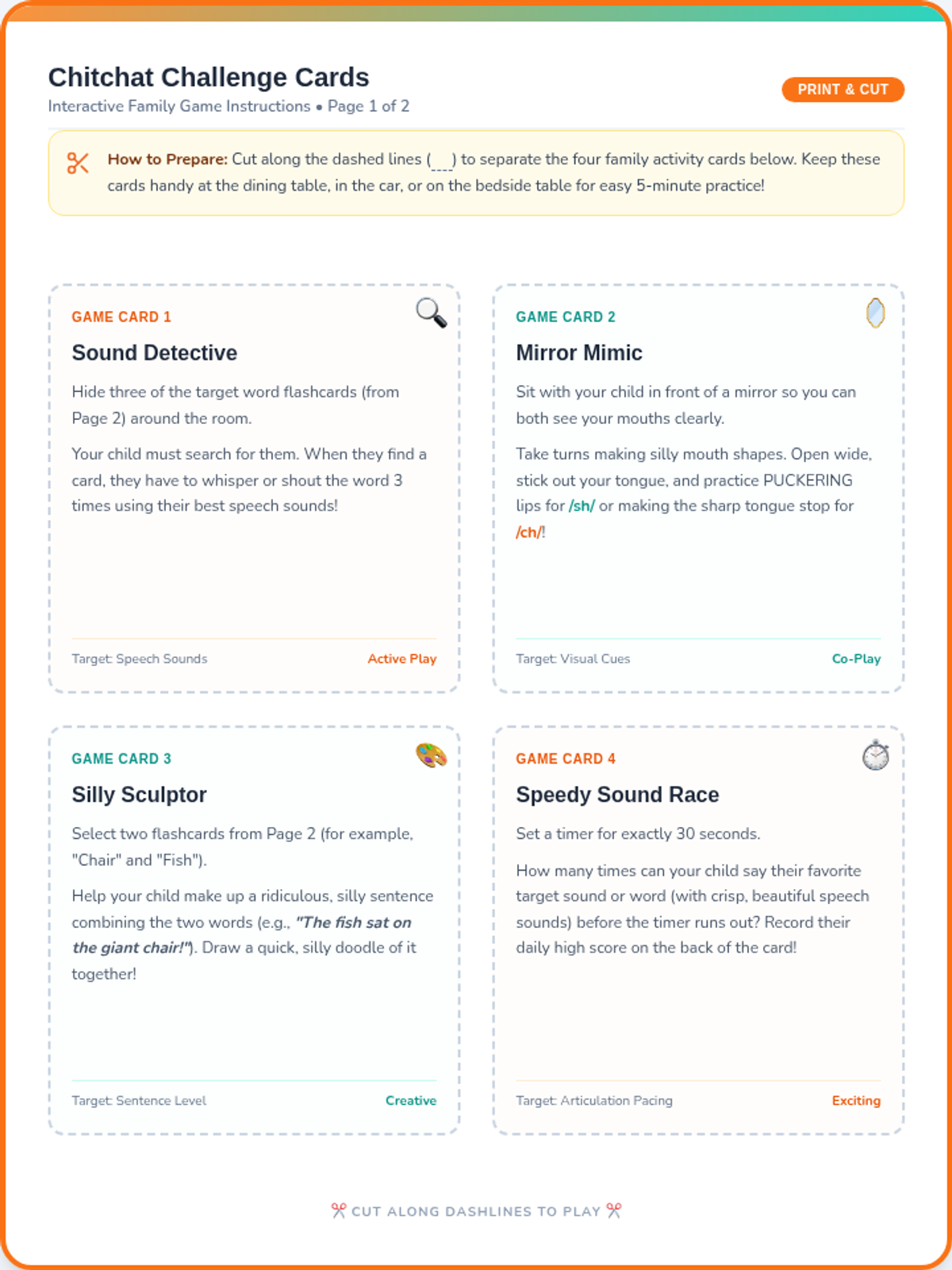
A home practice program designed to help children master the articulation of /ch/ and /sh/ sounds through engaging daily micro-activities and interactive family games.
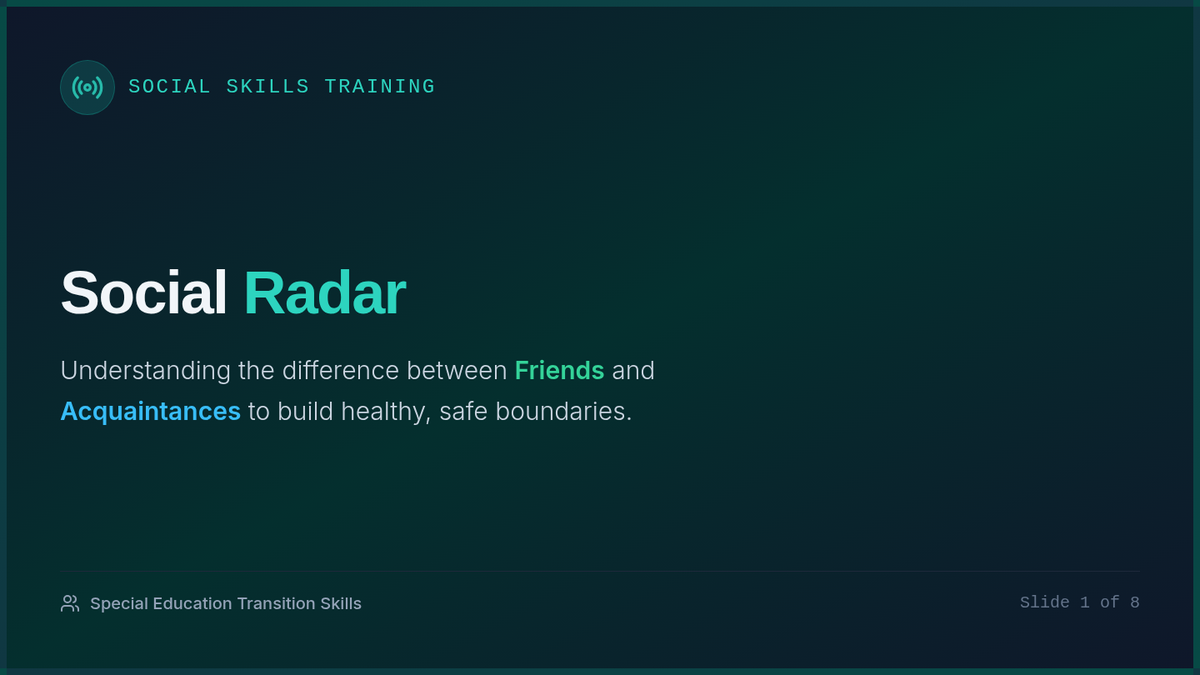
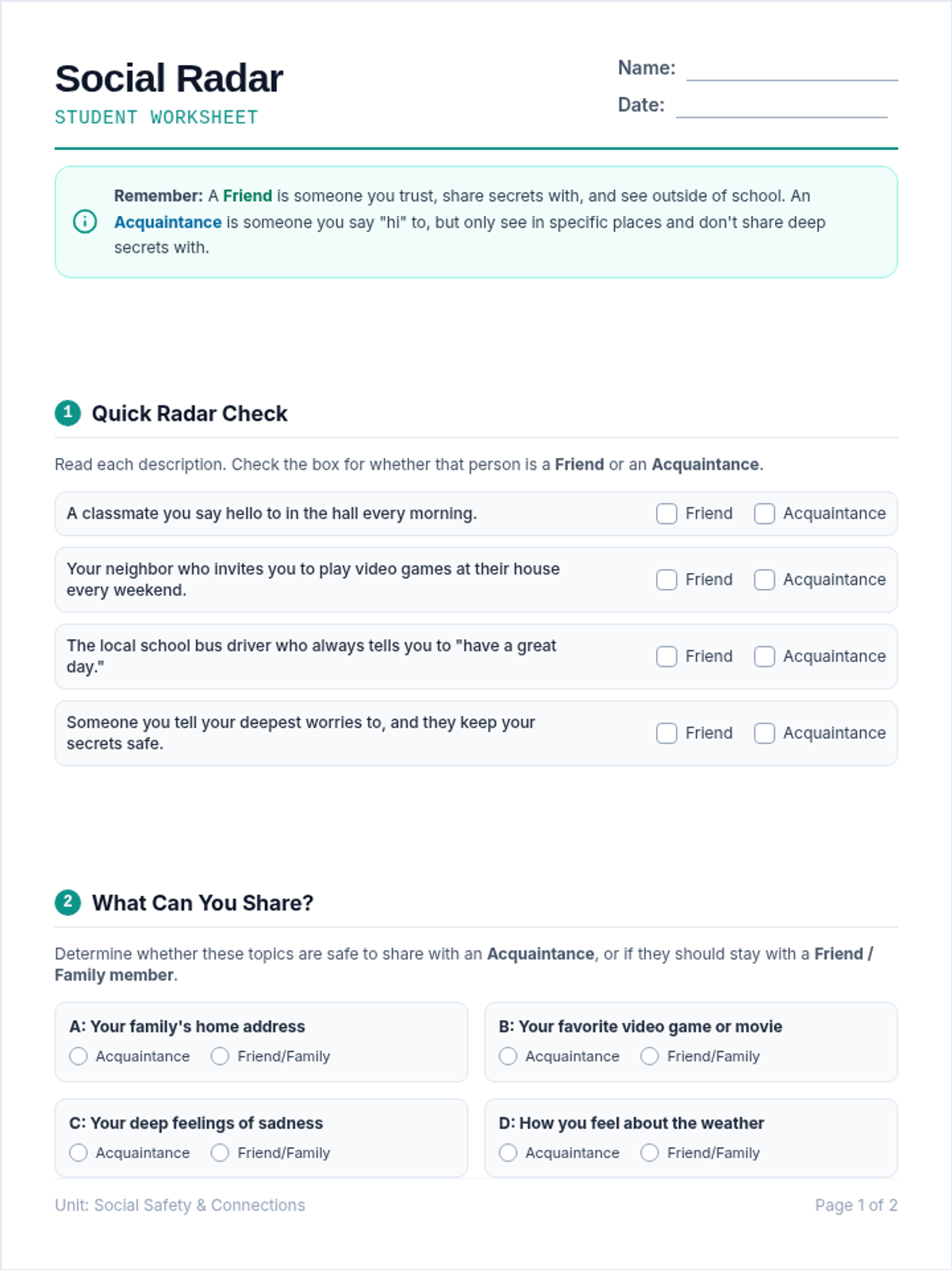
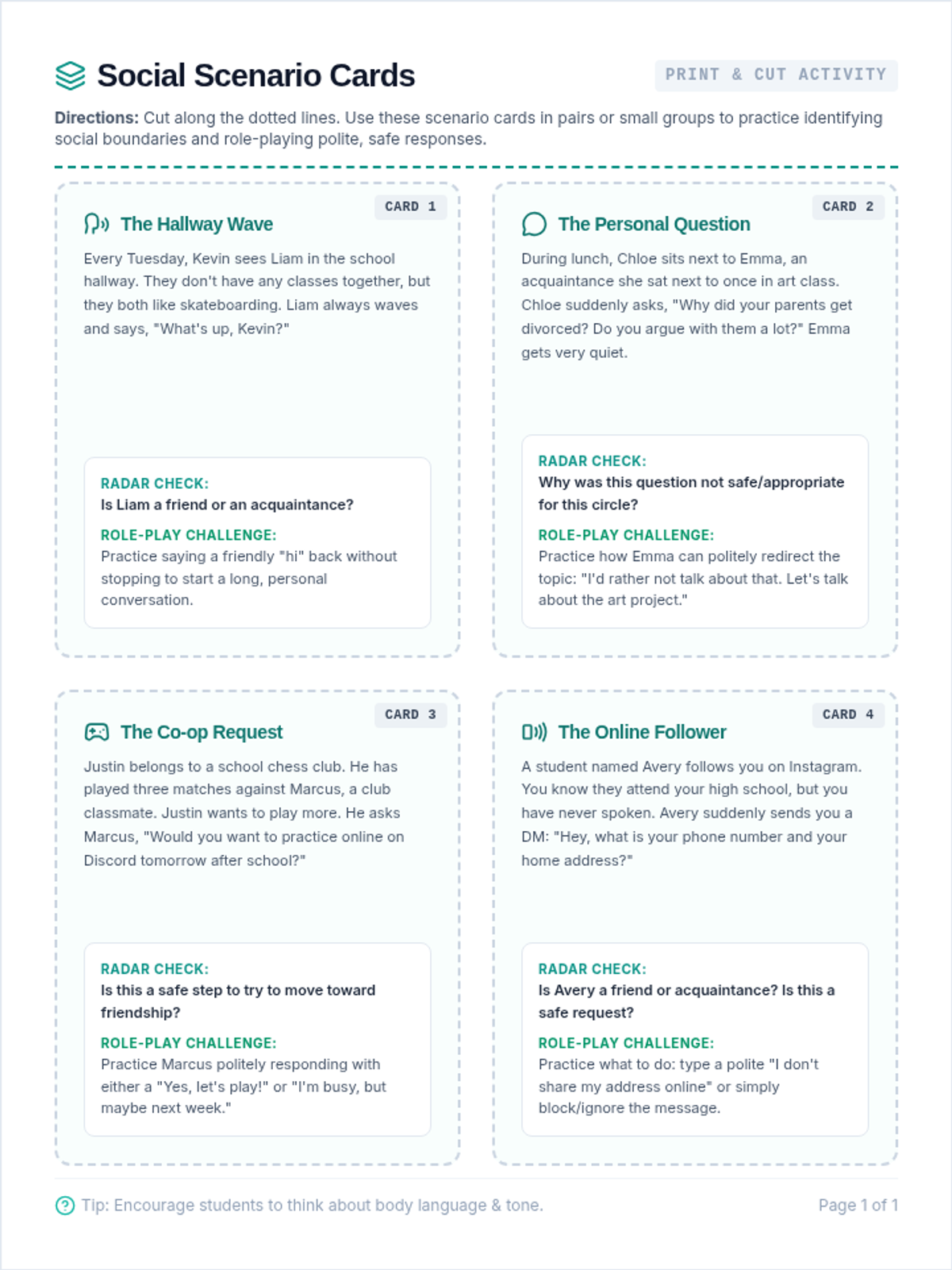
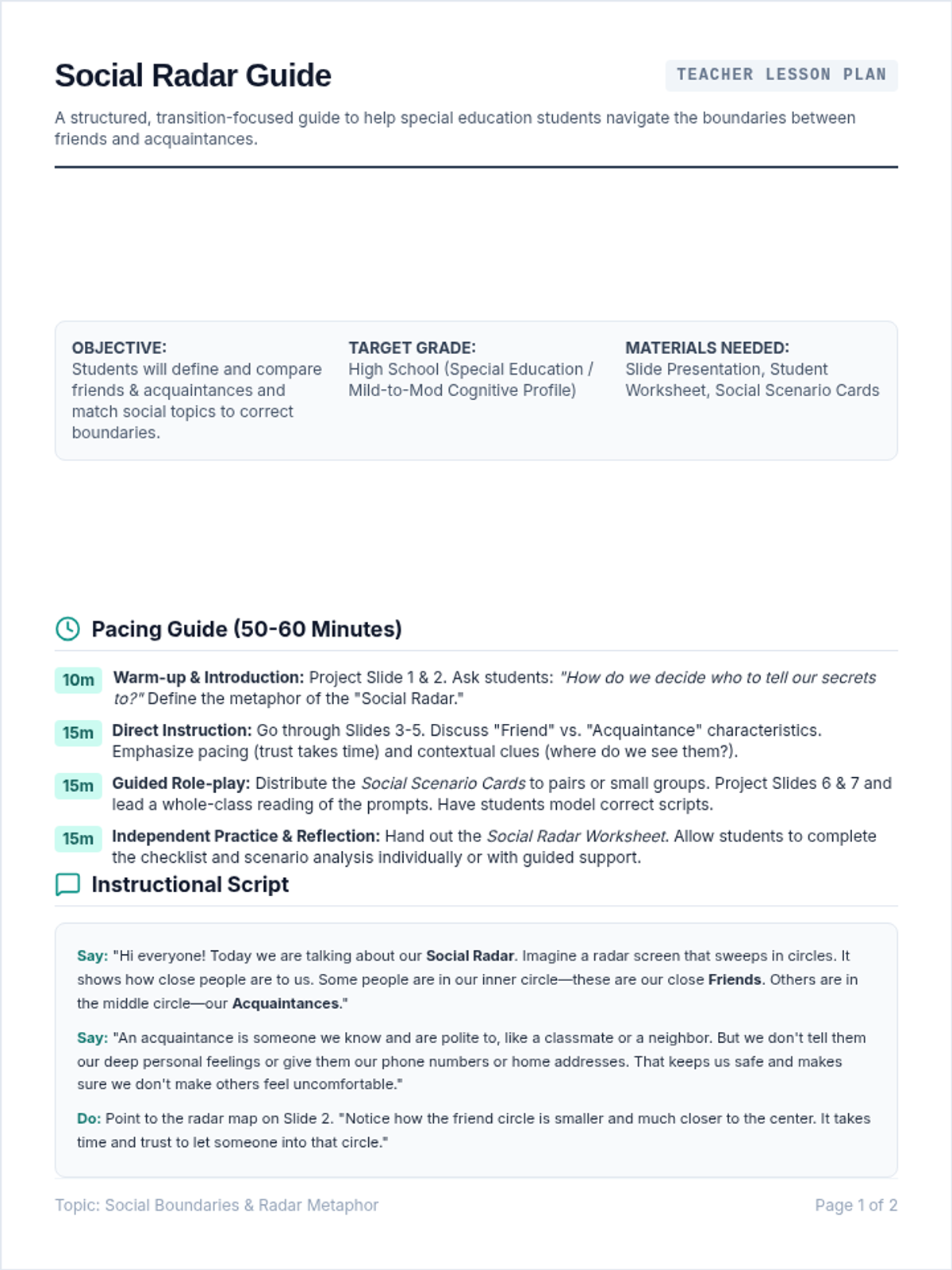
A comprehensive social skills lesson helping high school special education students distinguish between friends and acquaintances using a 'Social Radar' concentric circles metaphor. It features visual presentation slides, role-play scenario cards, and structured student worksheets.
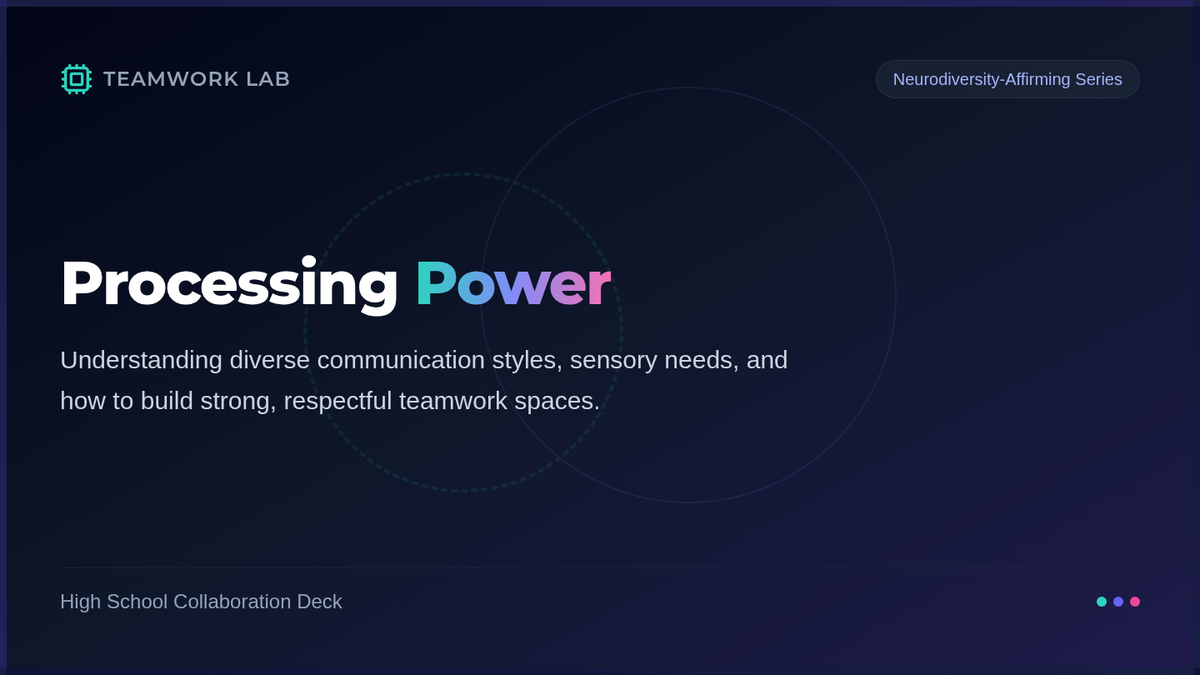
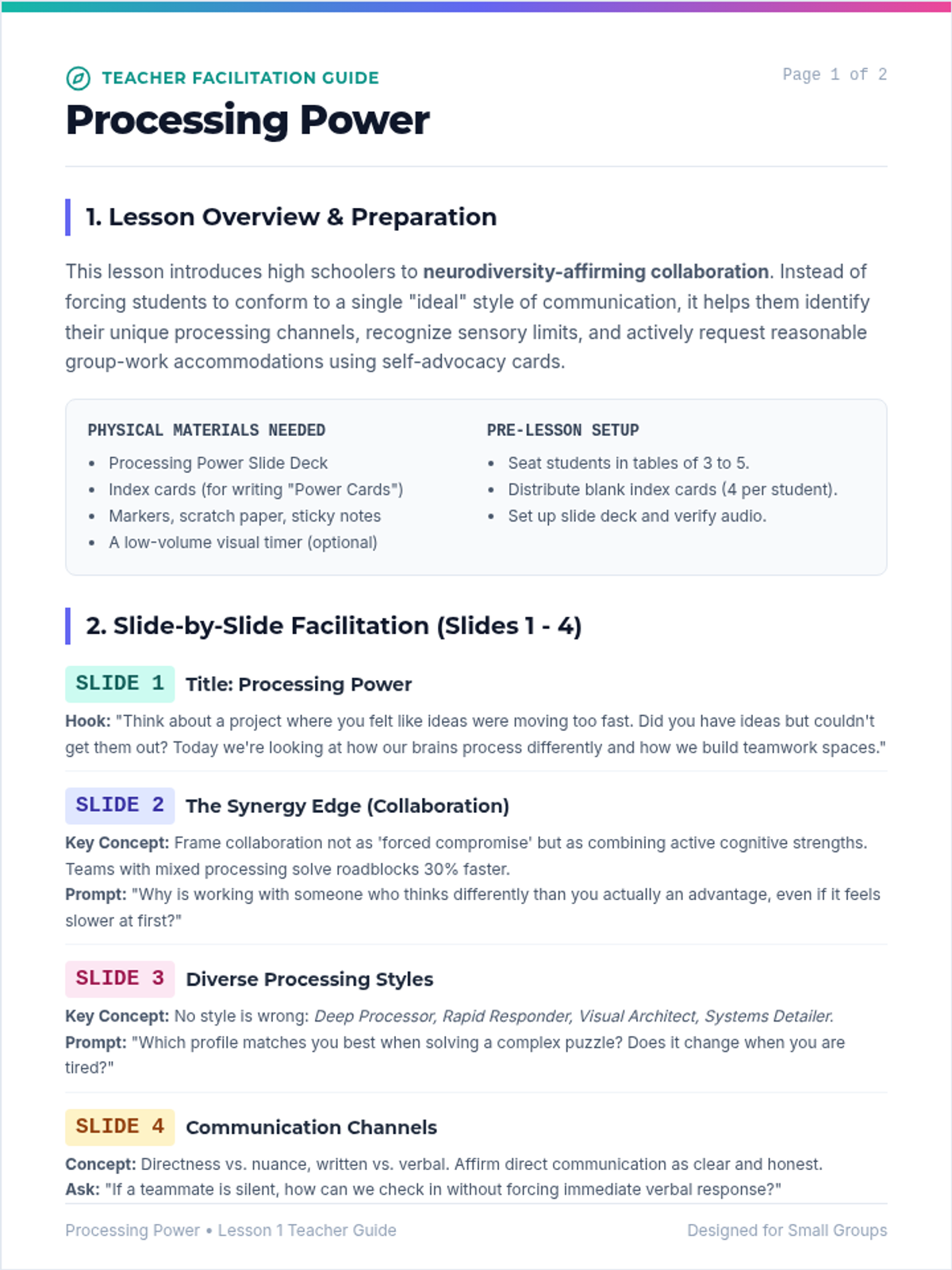
A presentation-based lesson designed for small groups of high school students to explore neurodiverse-affirming communication, understand diverse processing styles, and develop self-advocacy skills for teamwork.
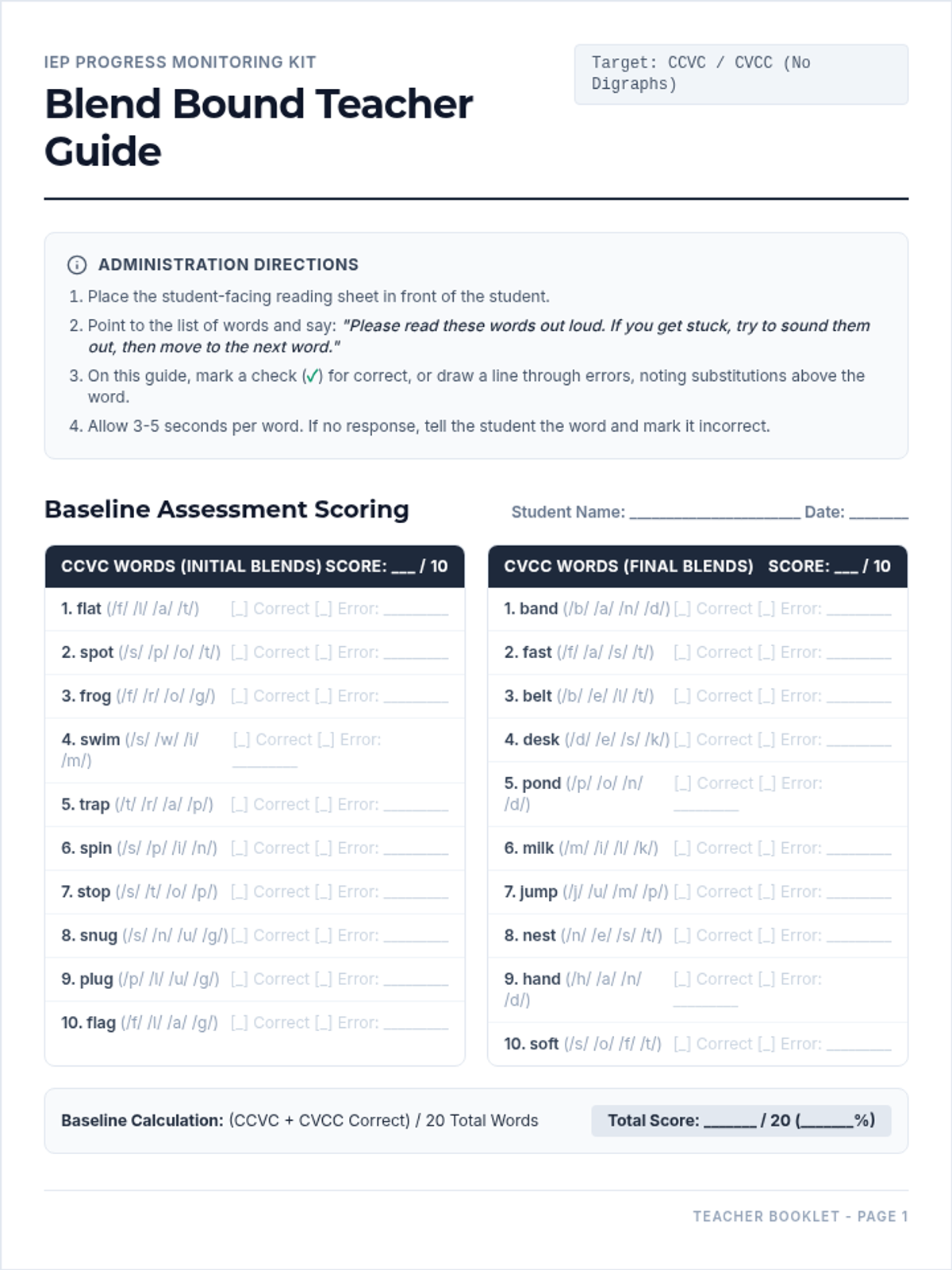
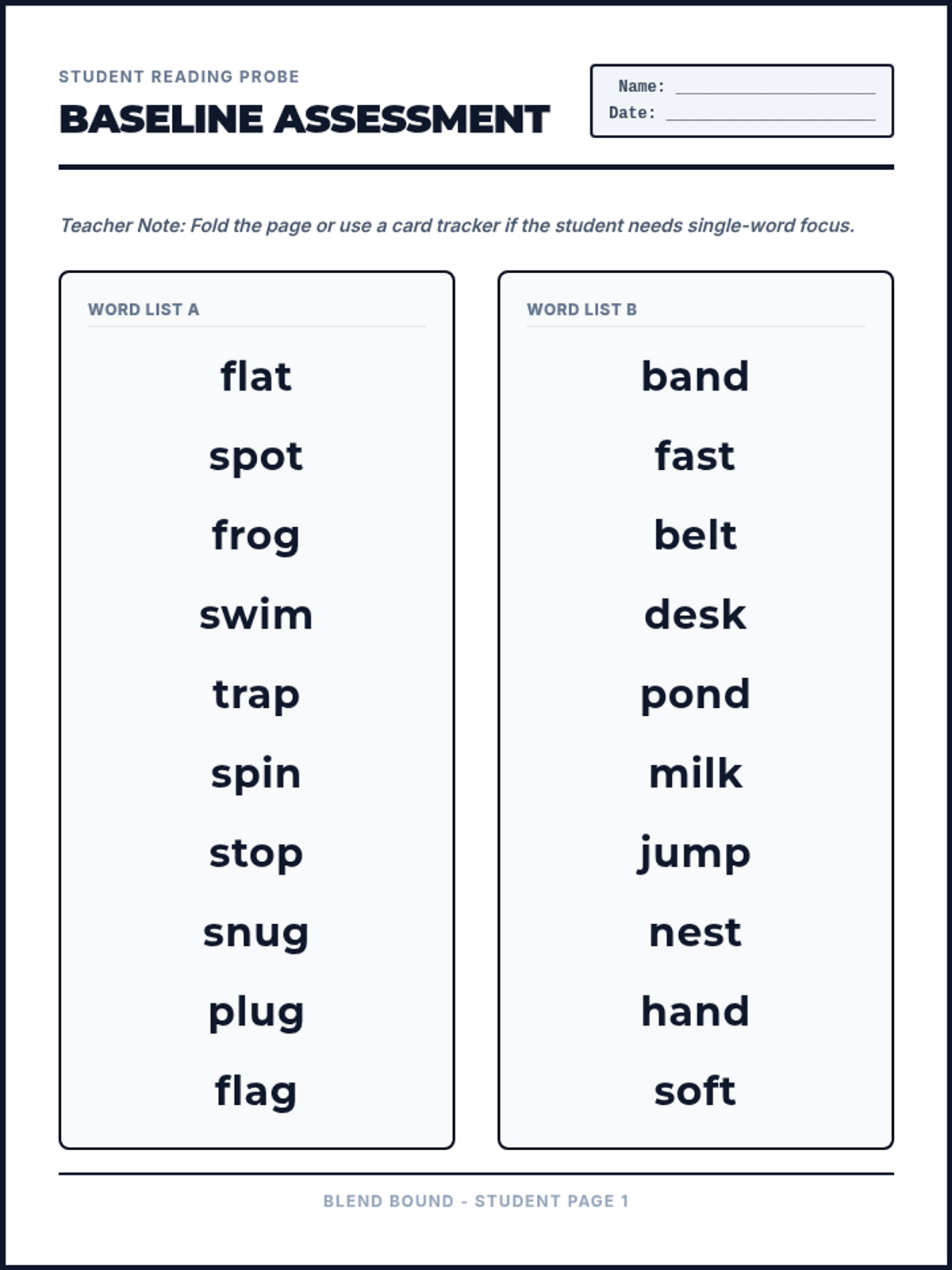
A comprehensive progress monitoring kit for tracking student mastery of CVCC and CCVC words (excluding digraphs). Includes a teacher recording and reporting guide alongside large-font, high-contrast student reading probes.
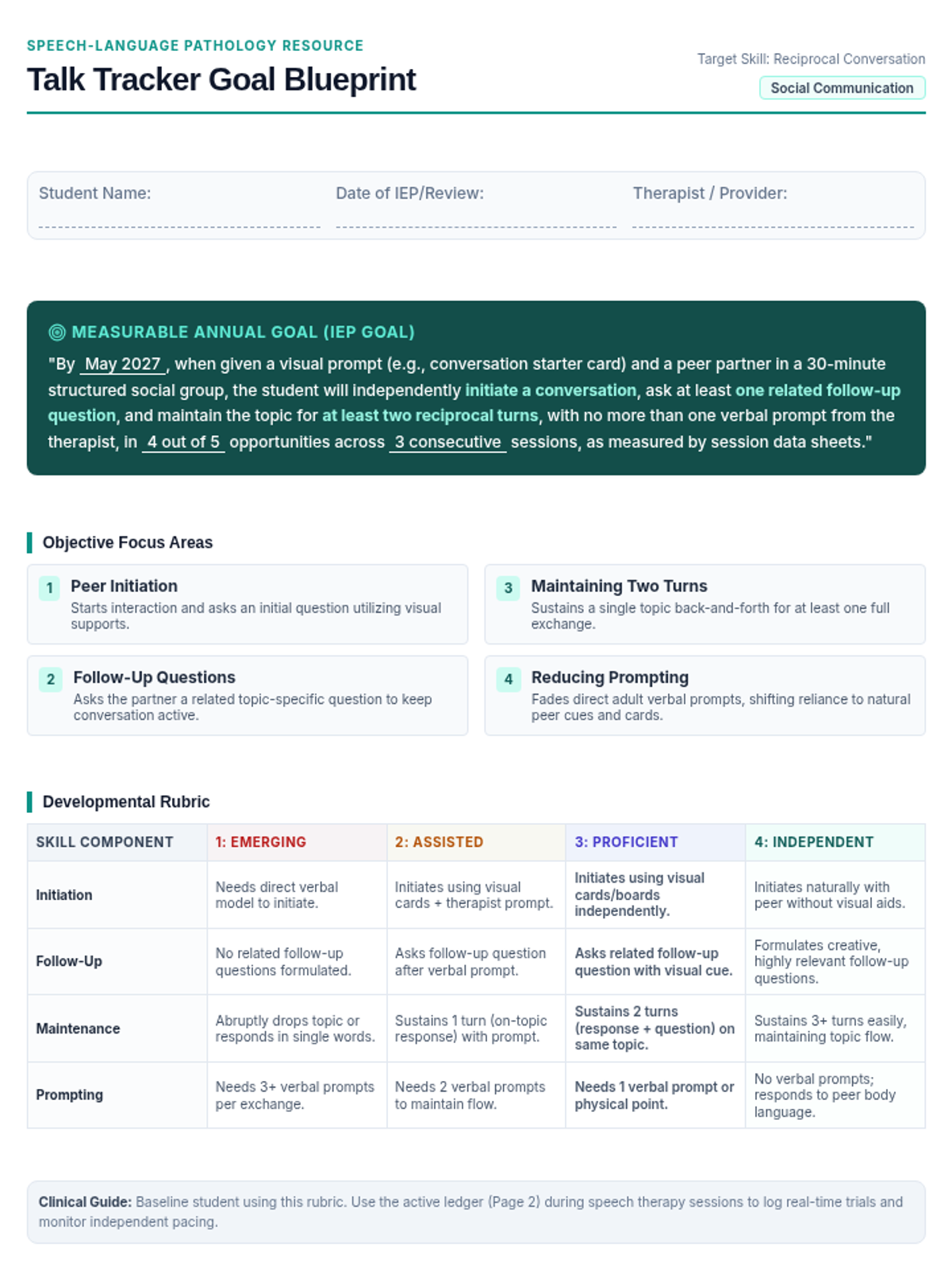
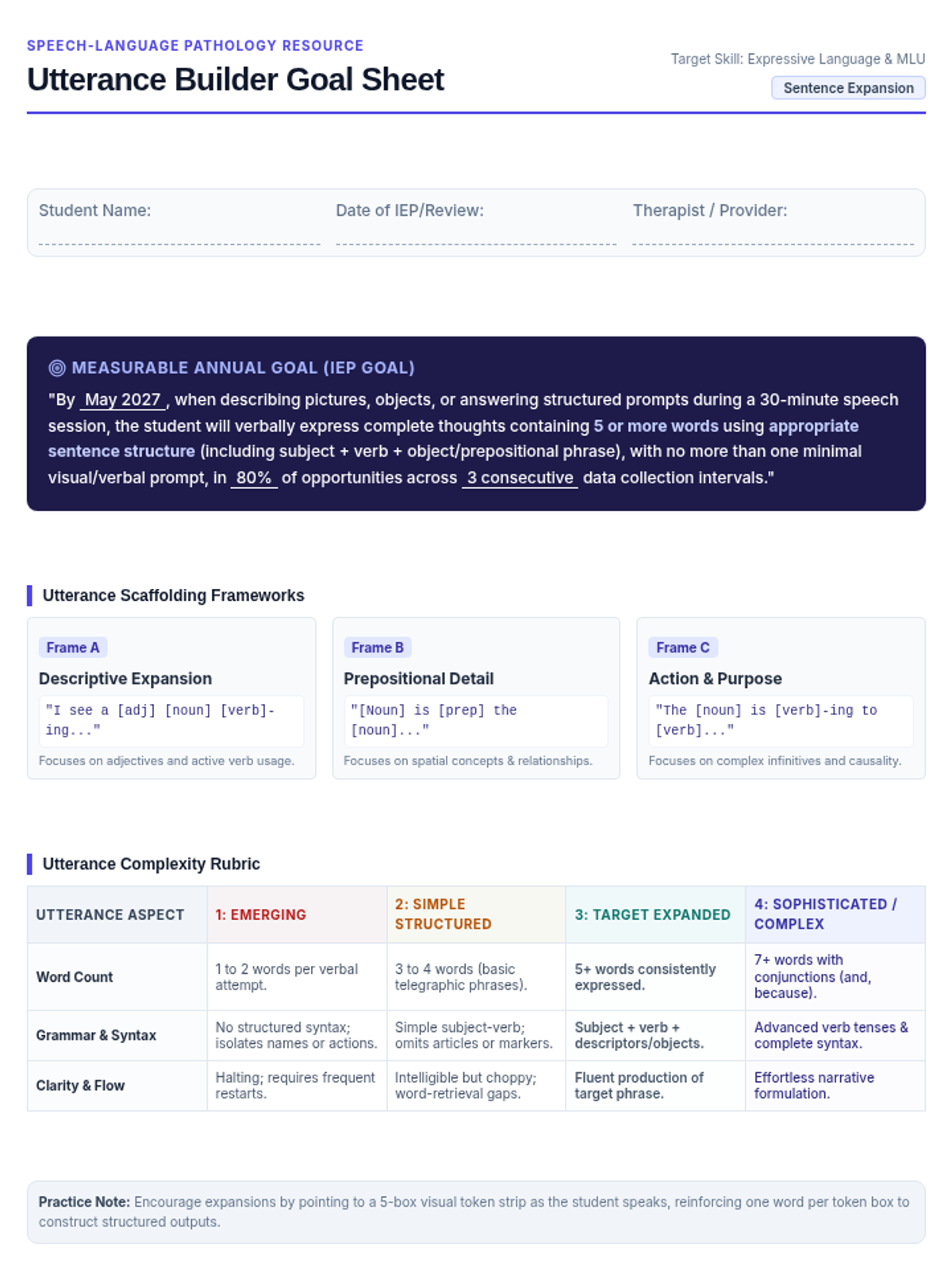
A lesson centered around tracking and achieving measurable progress in reciprocal conversation skills during speech therapy sessions, complete with formal IEP goals, a developmental rubric, and an actionable session data tracker.
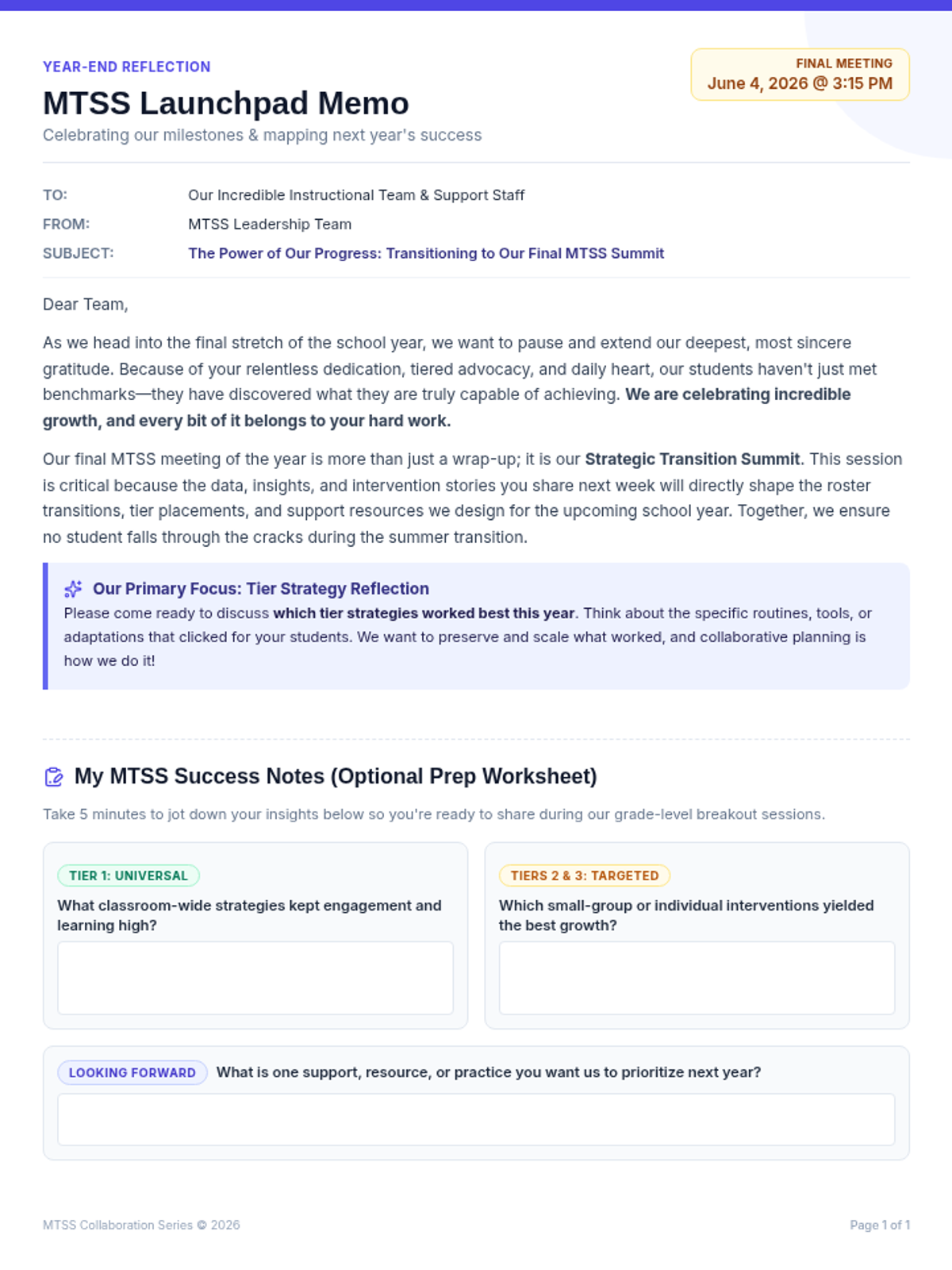
A lesson focused on wrapping up the Multi-Tiered System of Supports (MTSS) for the school year, celebrating progress, and preparing for future planning.
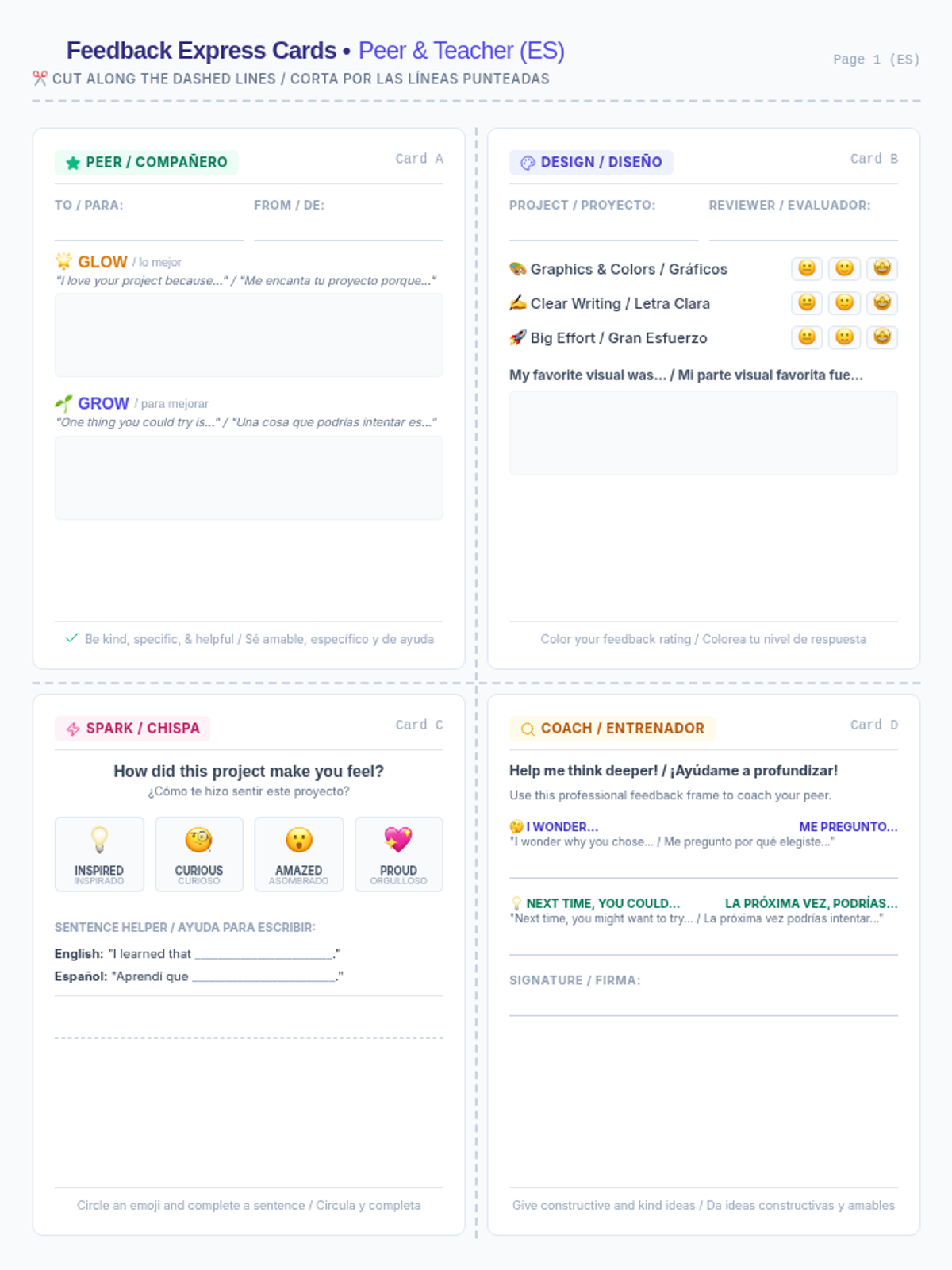
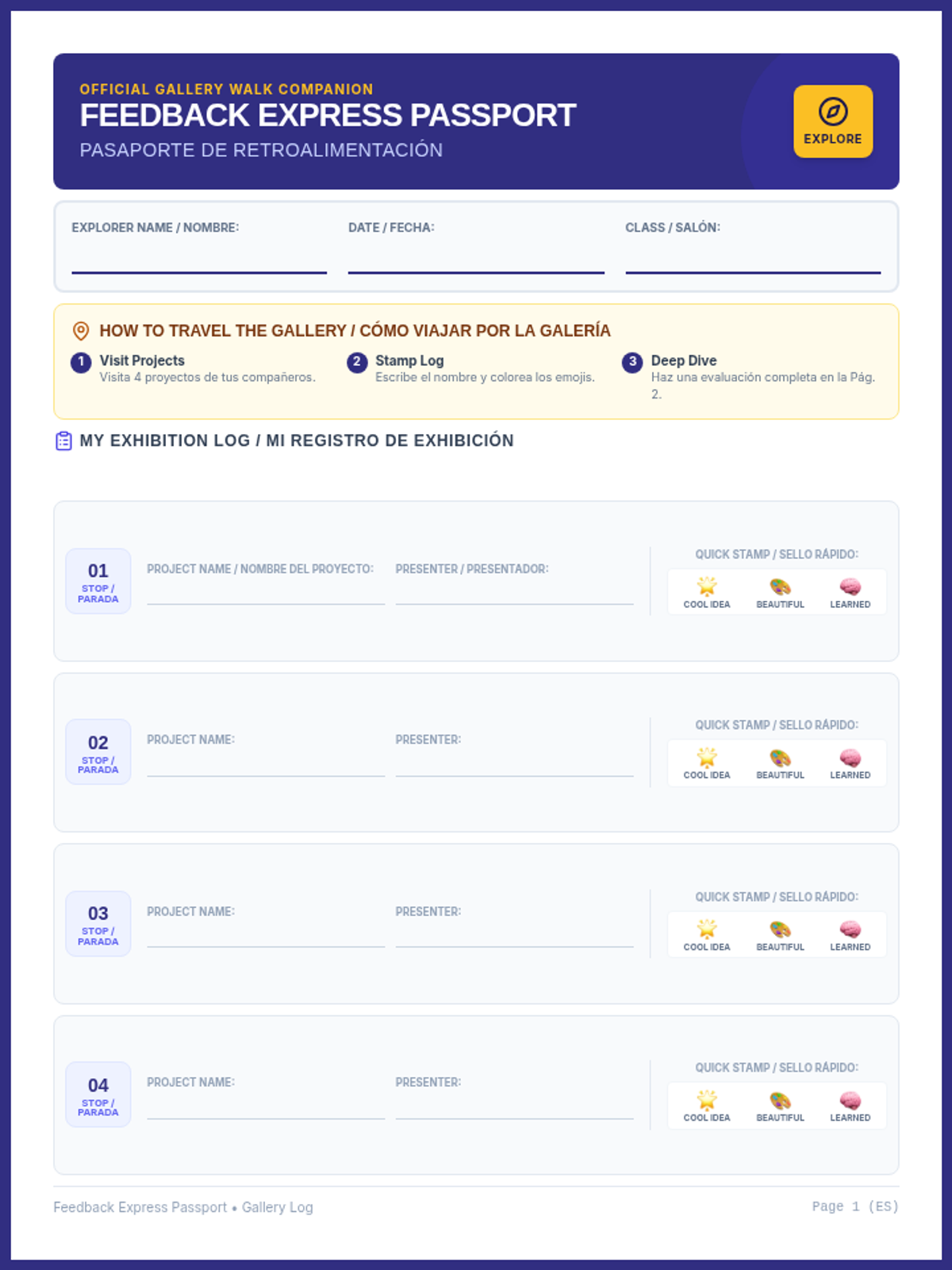
A visual feedback toolkit designed for elementary and middle school classrooms, families, and peers to provide meaningful project feedback. Includes emoji-rich rating systems, structured review guides, and sentence starter frames.
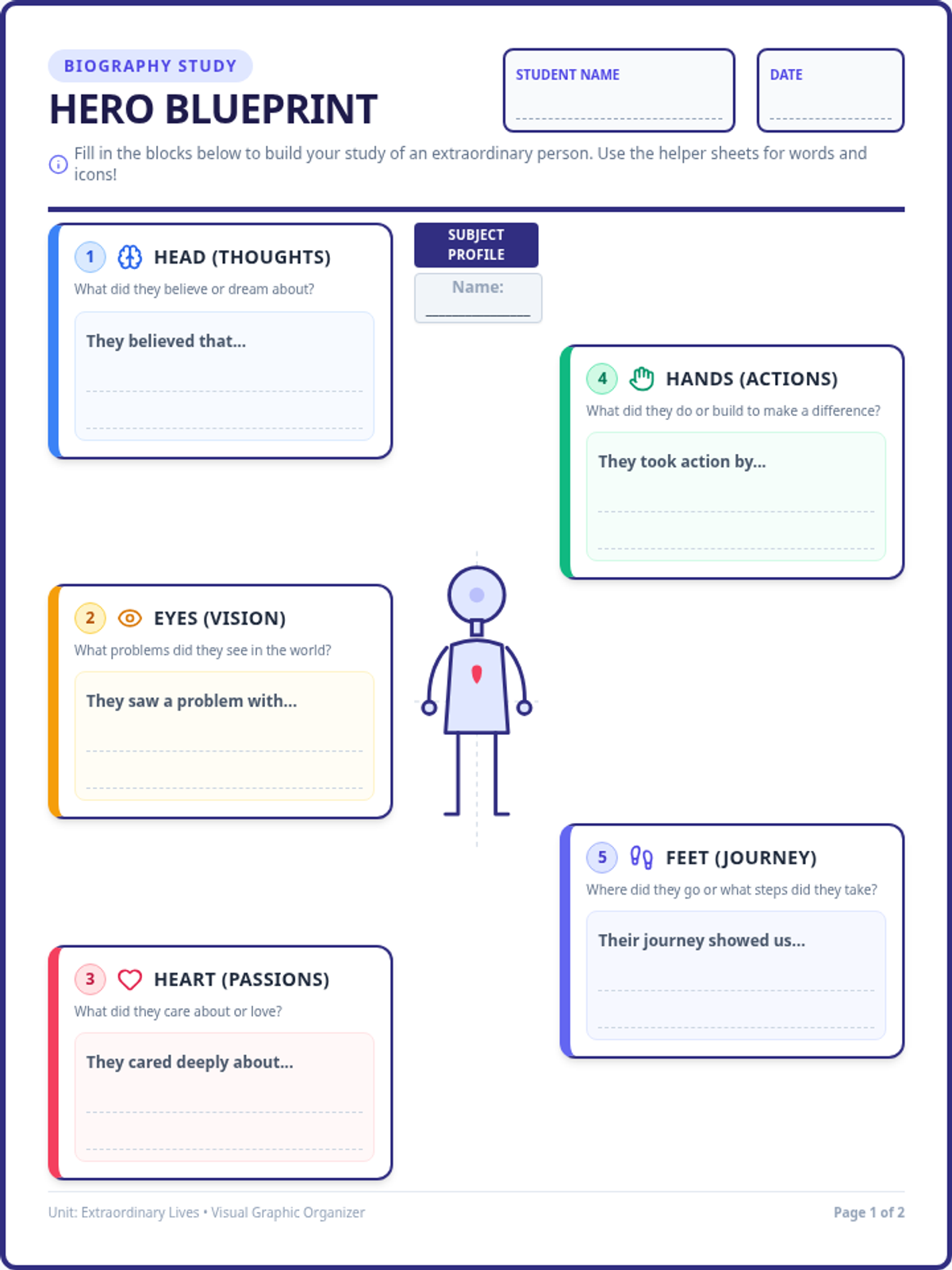
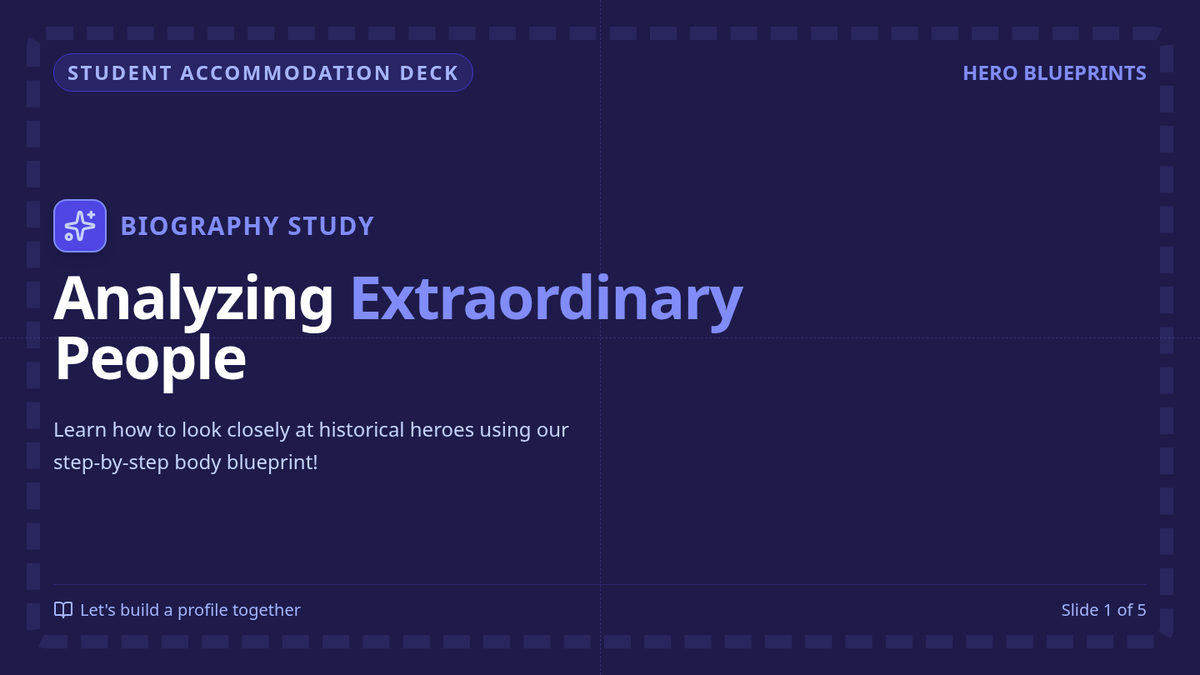
A biography study lesson featuring tiered, highly visual body graphic organizers designed to support IEP students with visual symbol supports, sentence starters, and cut-and-paste vocabulary options.