A home practice program designed to help children master the articulation of /ch/ and /sh/ sounds through engaging daily micro-activities and interactive family games.
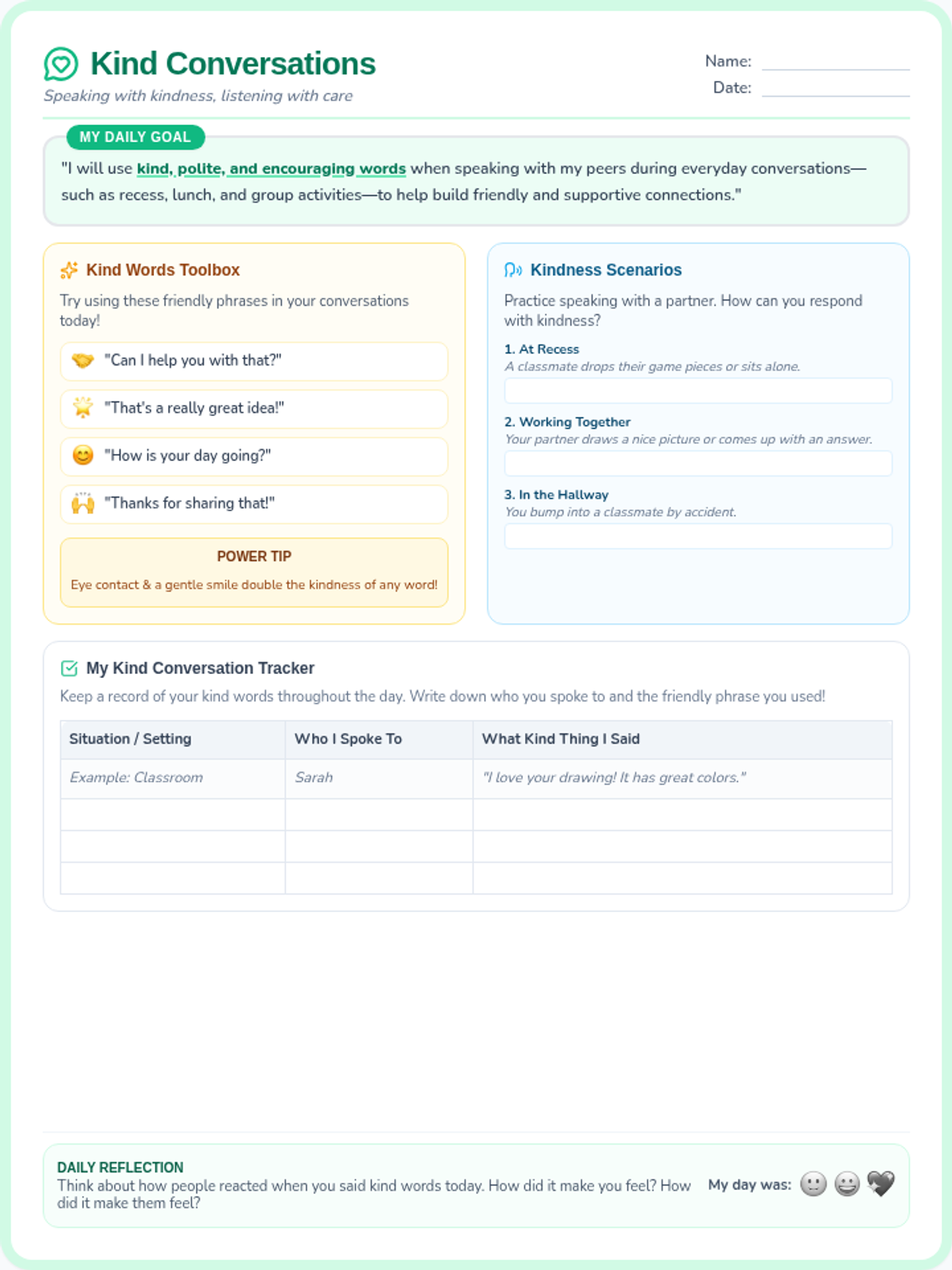
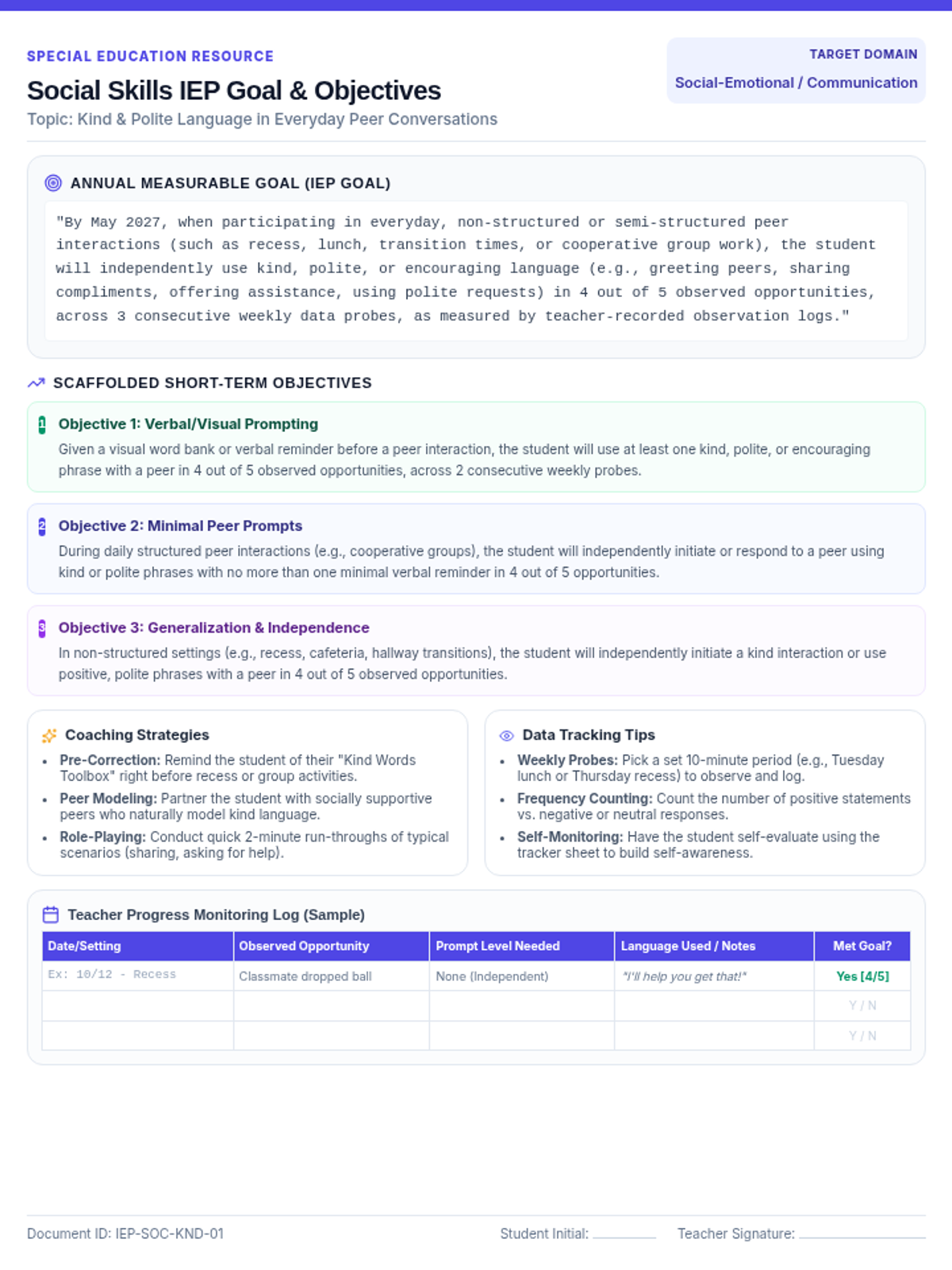
A social skills lesson designed to help students learn and apply kind, polite, and encouraging language during daily peer interactions. Includes clear visual objectives, structured discussion cards, and a reflection tracker.
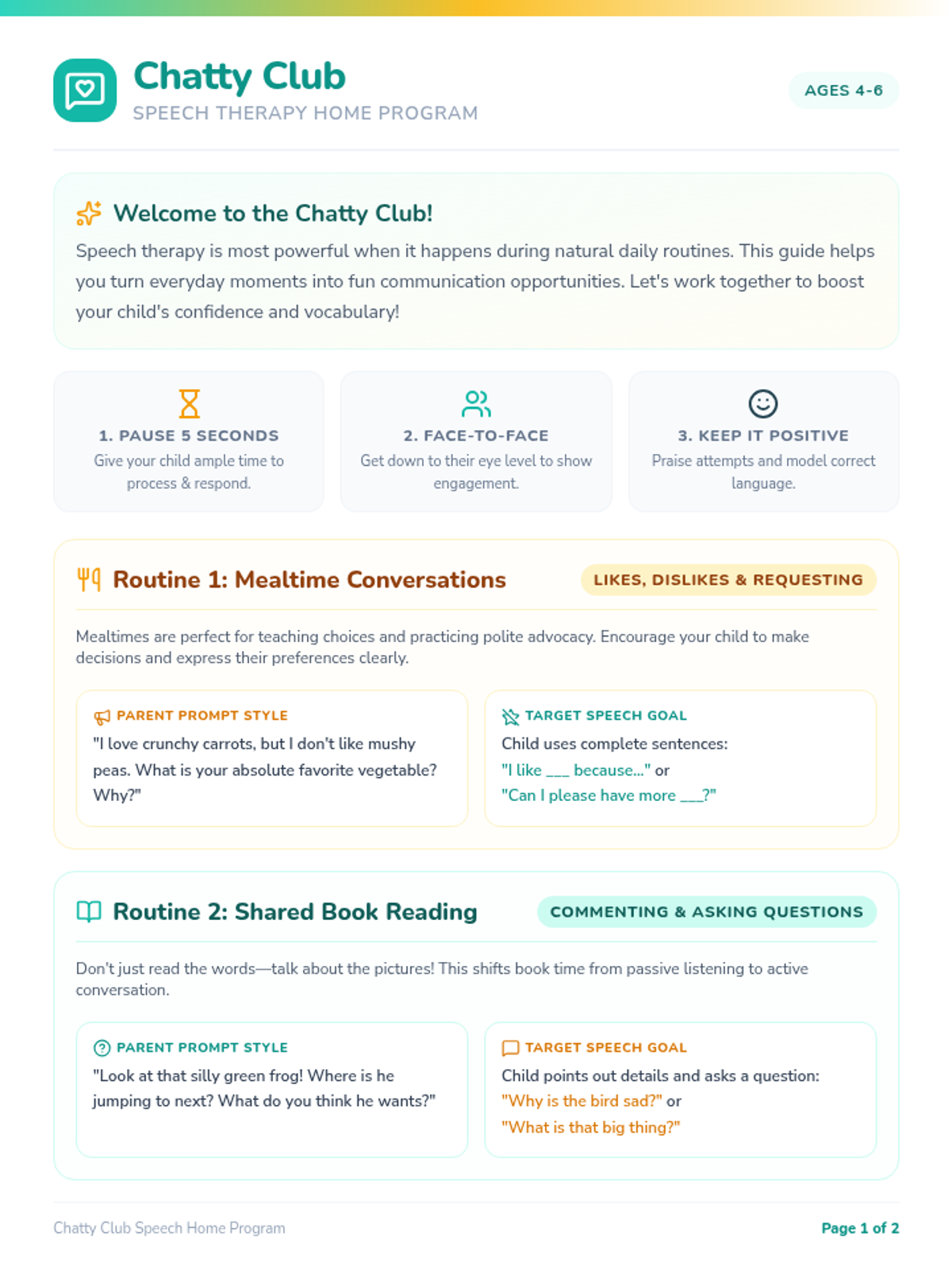
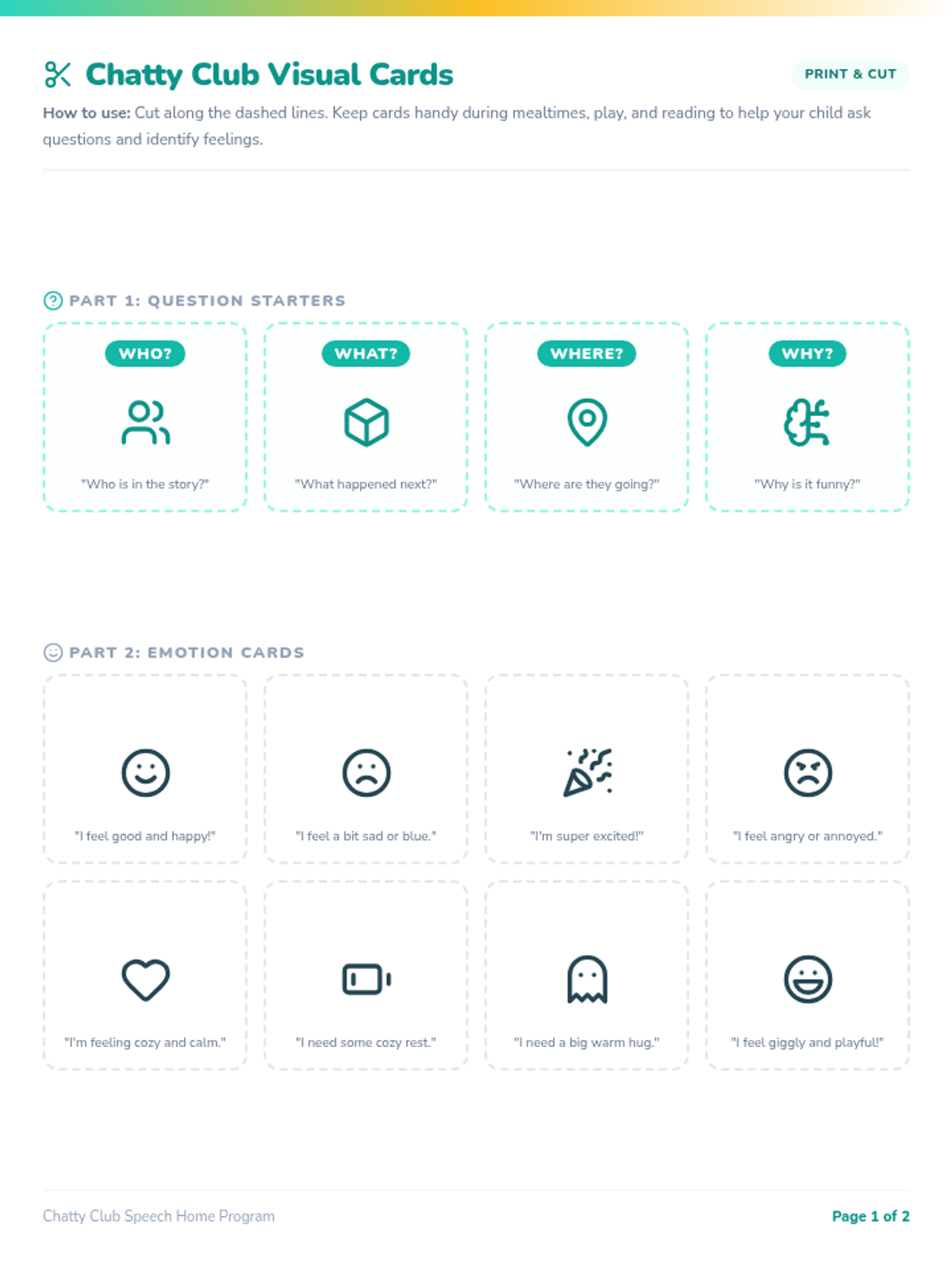
An interactive speech therapy home program designed for parents of 5-year-olds to support asking questions, commenting, recounting previous events, and advocating for preferences during natural daily routines.
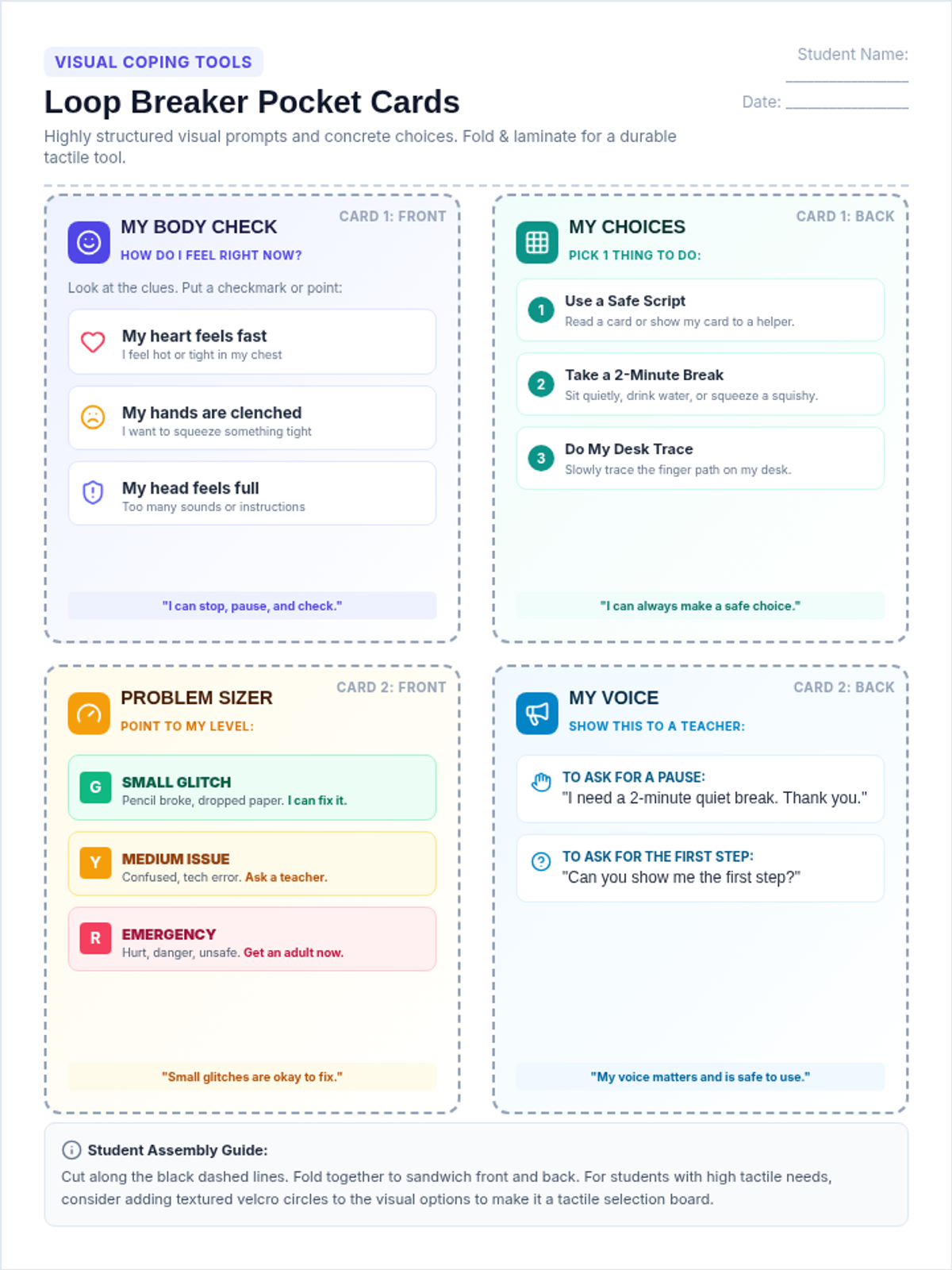
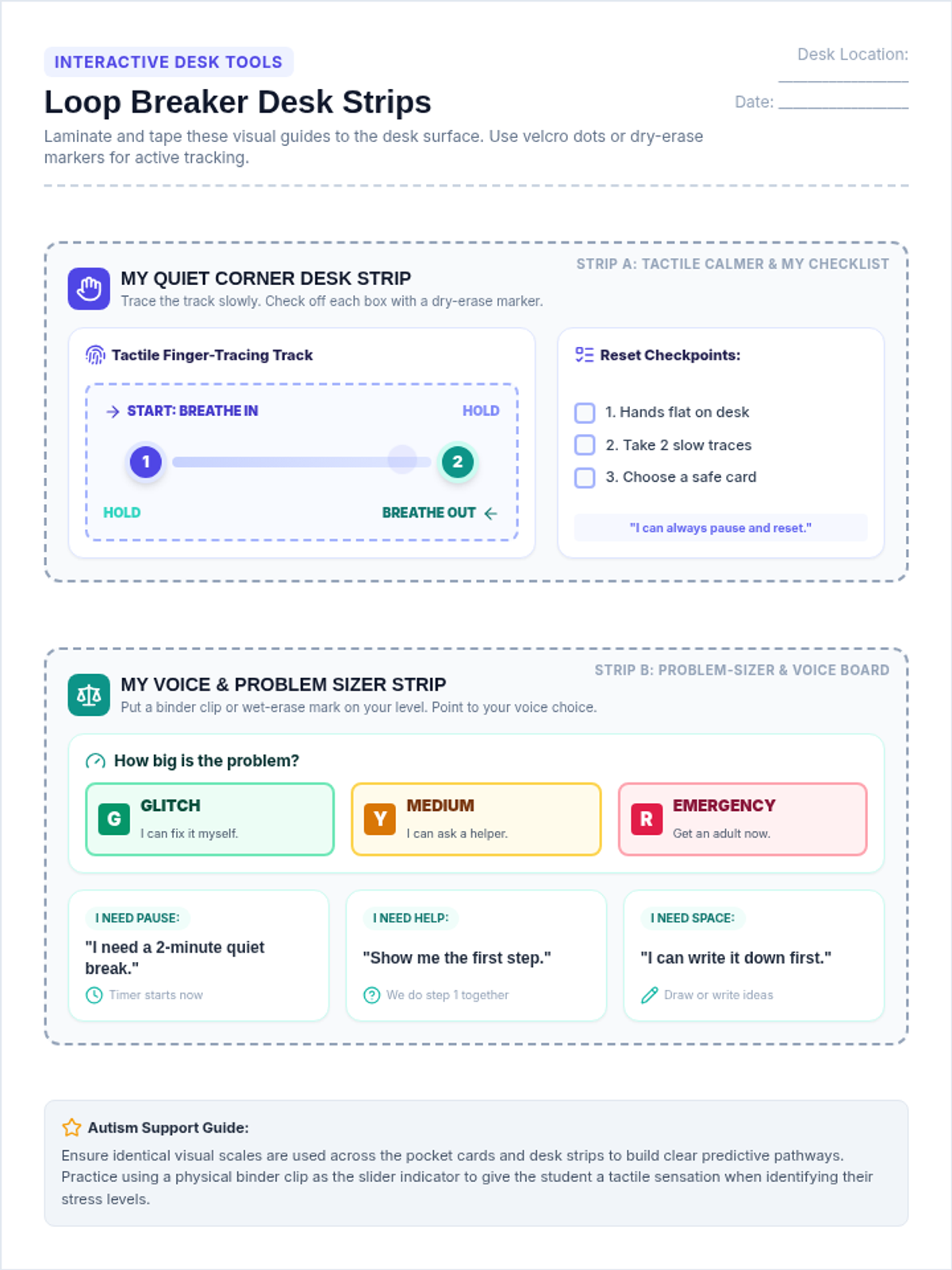
A set of portable, visual cognitive behavioral tools to help students disrupt automatic negative thoughts and set constructive boundaries when feeling overwhelmed by tasks.
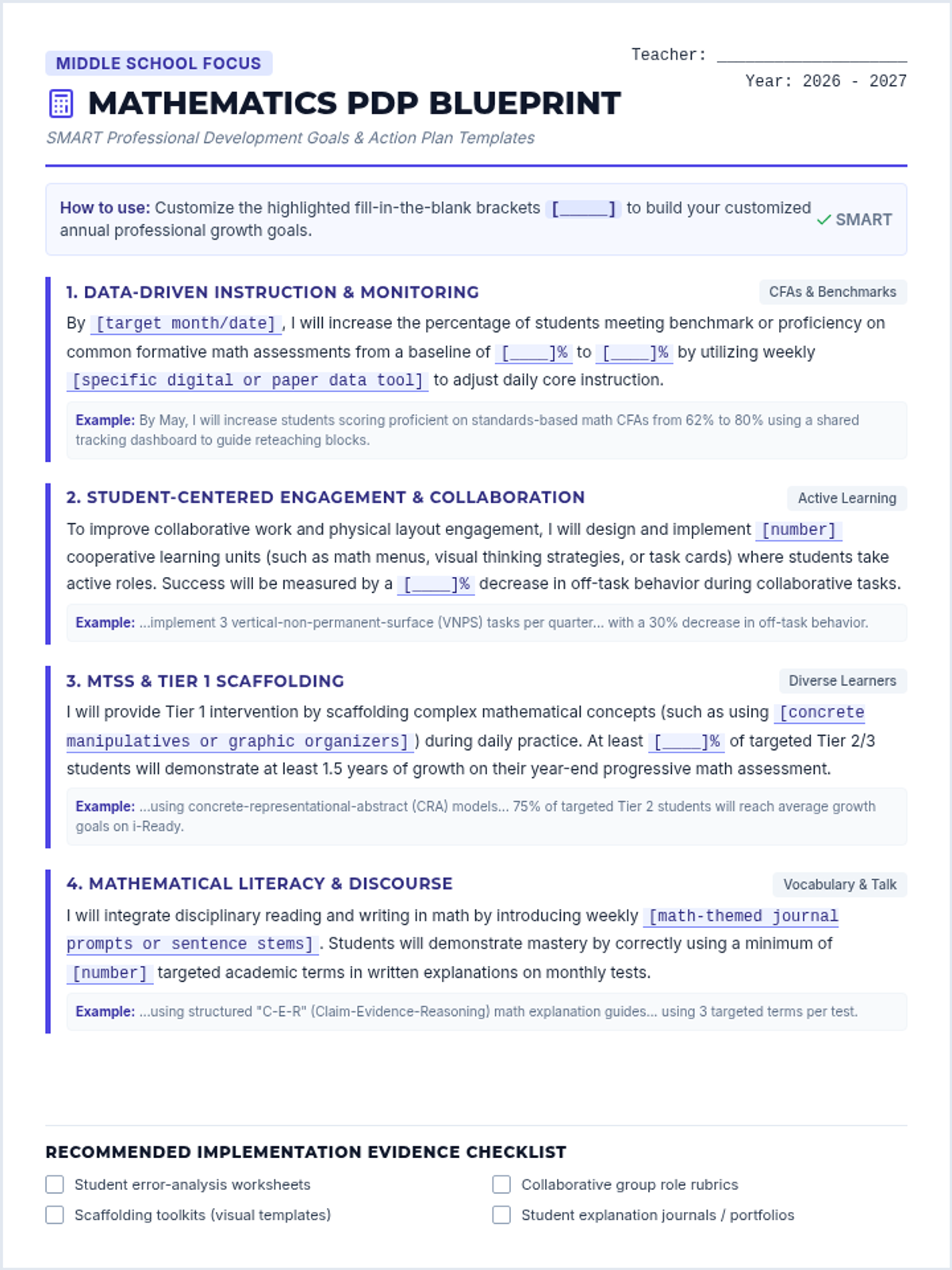
A collection of subject-specific SMART PDP (Professional Development Plan) goal-setting blueprints designed for middle school teachers across eight content areas, prioritizing data-driven instruction, student engagement, MTSS, and literacy.
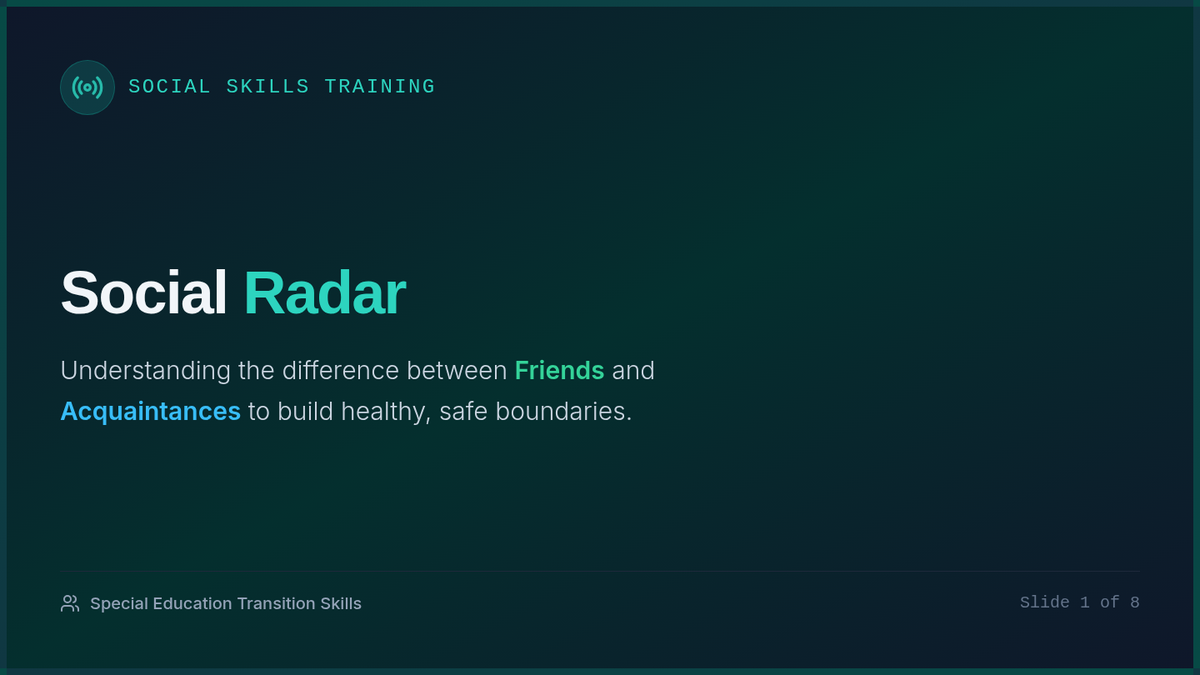
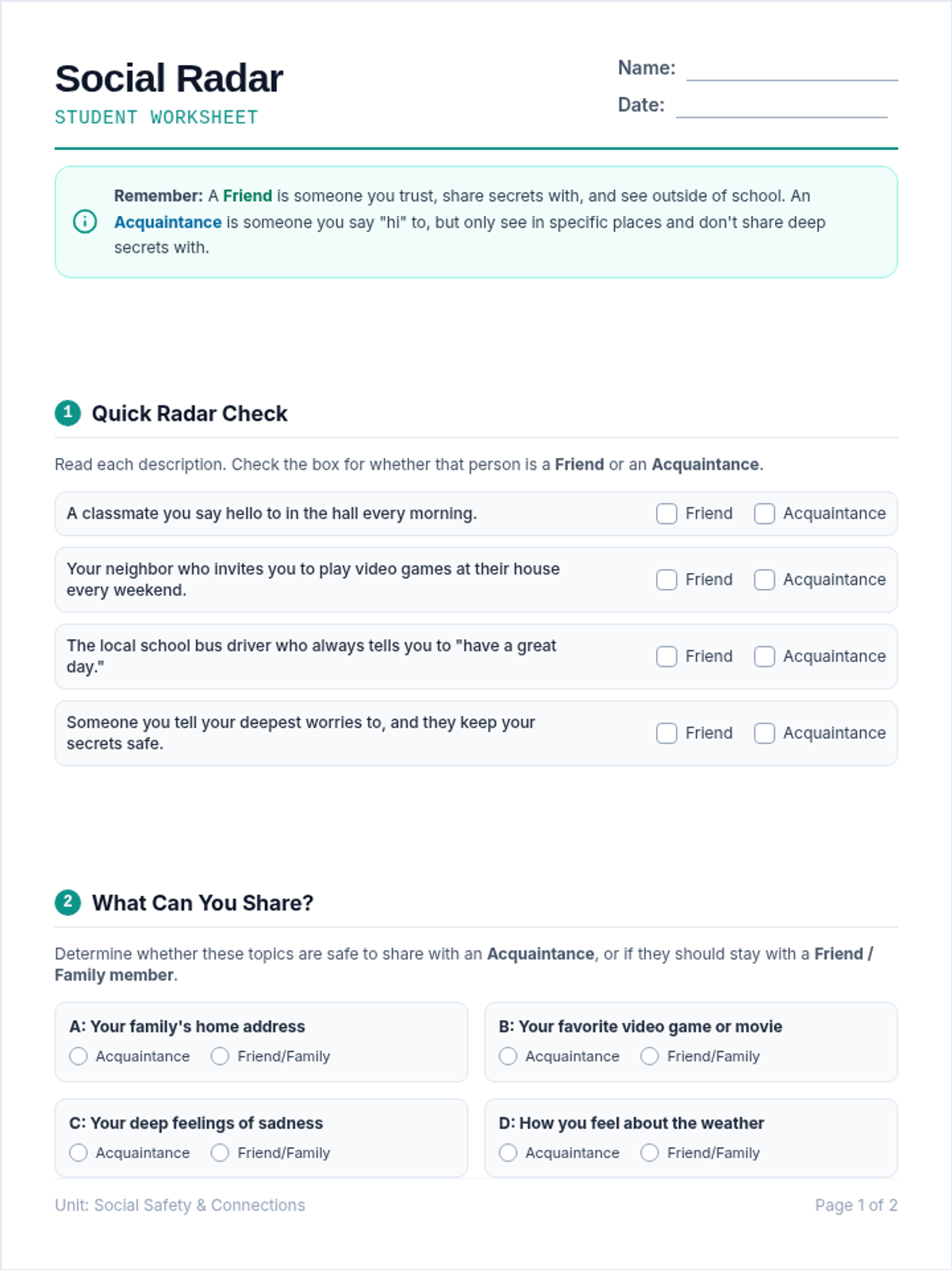
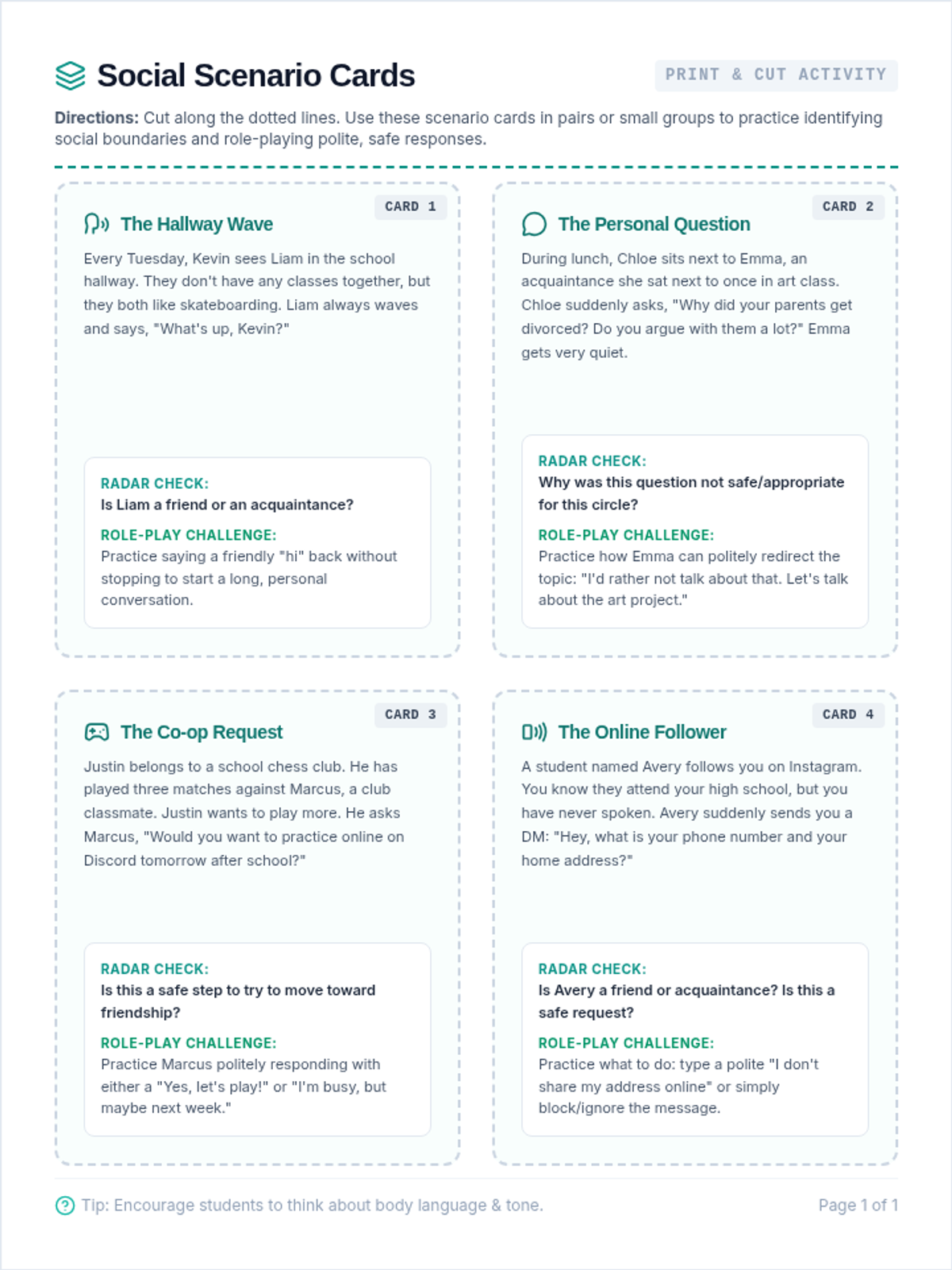
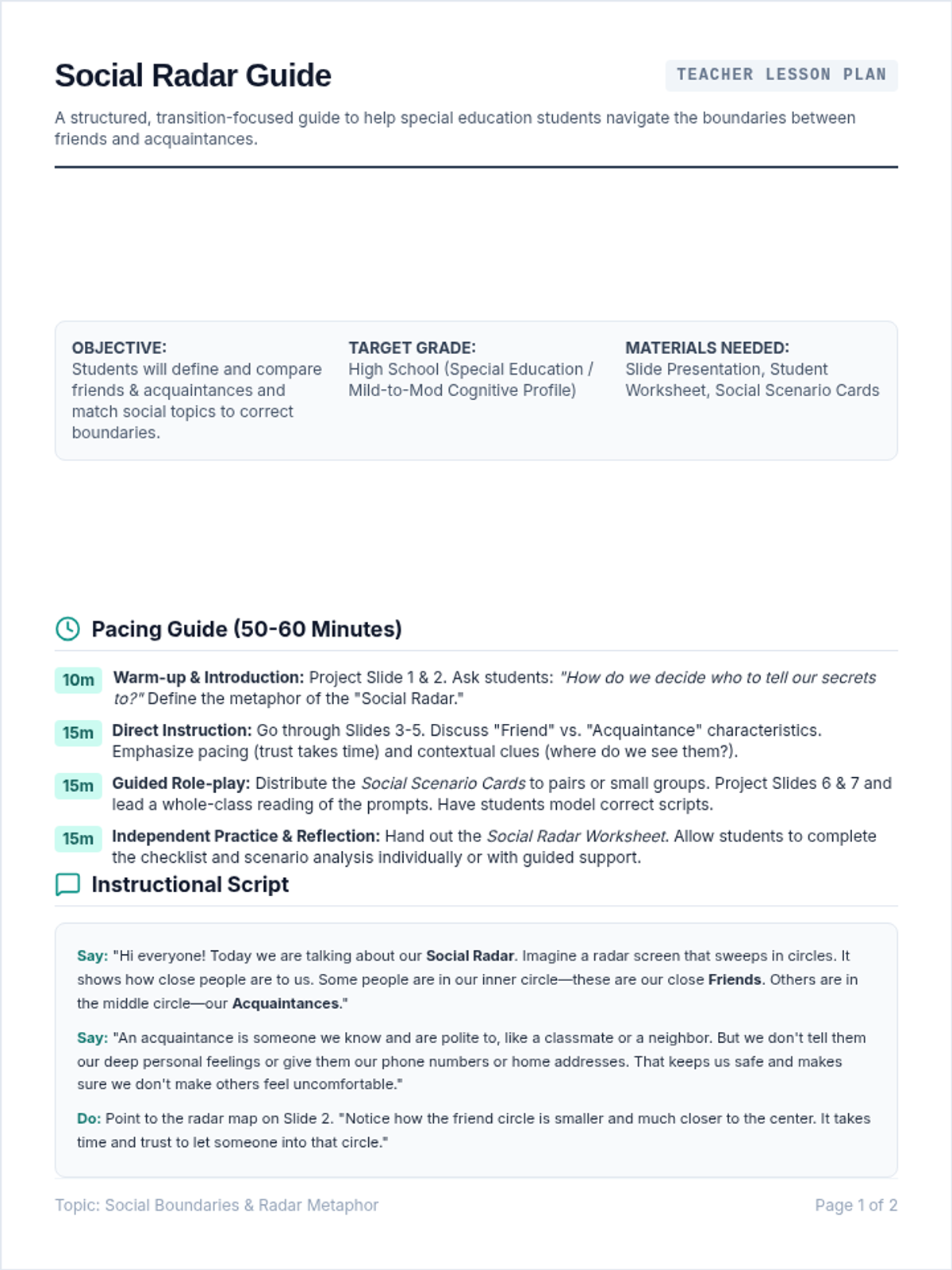
A comprehensive social skills lesson helping high school special education students distinguish between friends and acquaintances using a 'Social Radar' concentric circles metaphor. It features visual presentation slides, role-play scenario cards, and structured student worksheets.
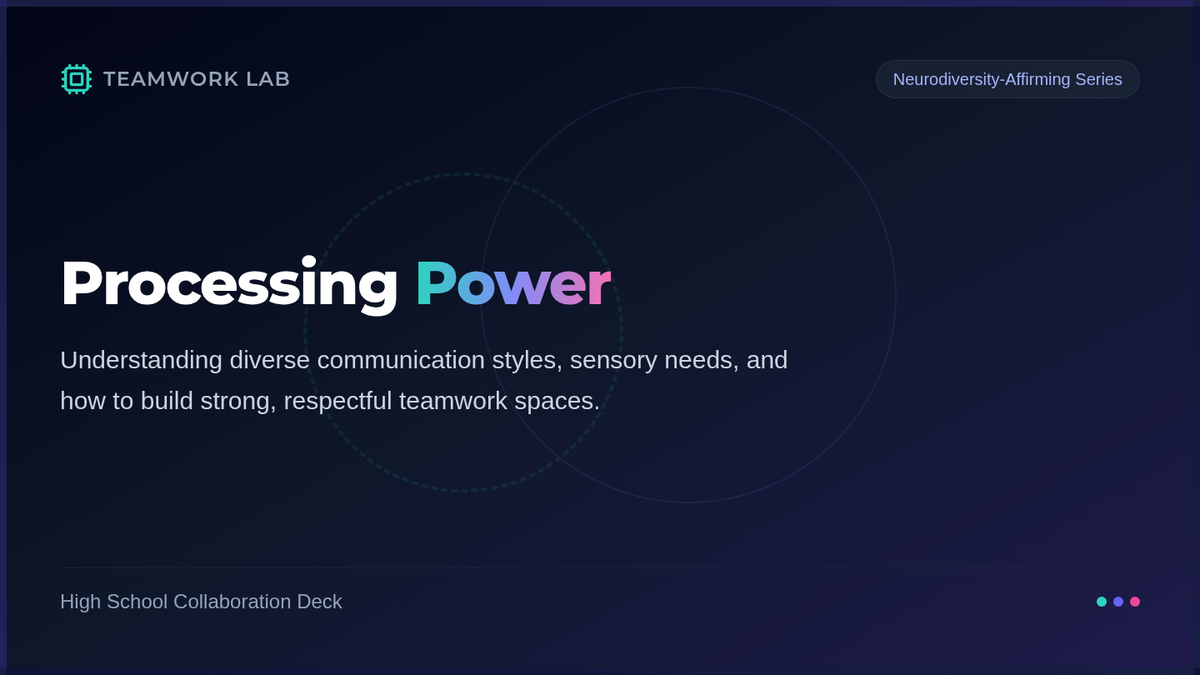
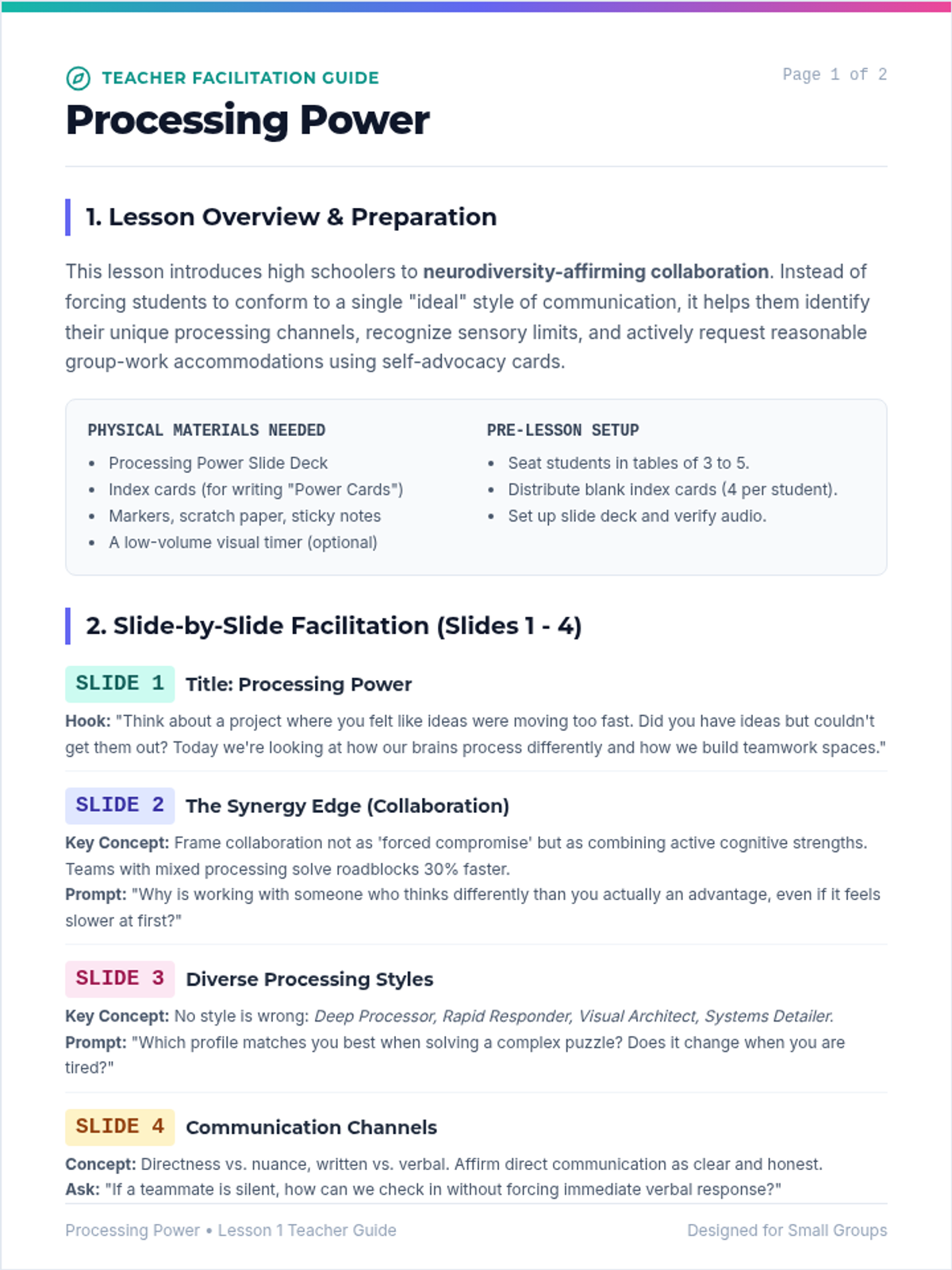
A presentation-based lesson designed for small groups of high school students to explore neurodiverse-affirming communication, understand diverse processing styles, and develop self-advocacy skills for teamwork.
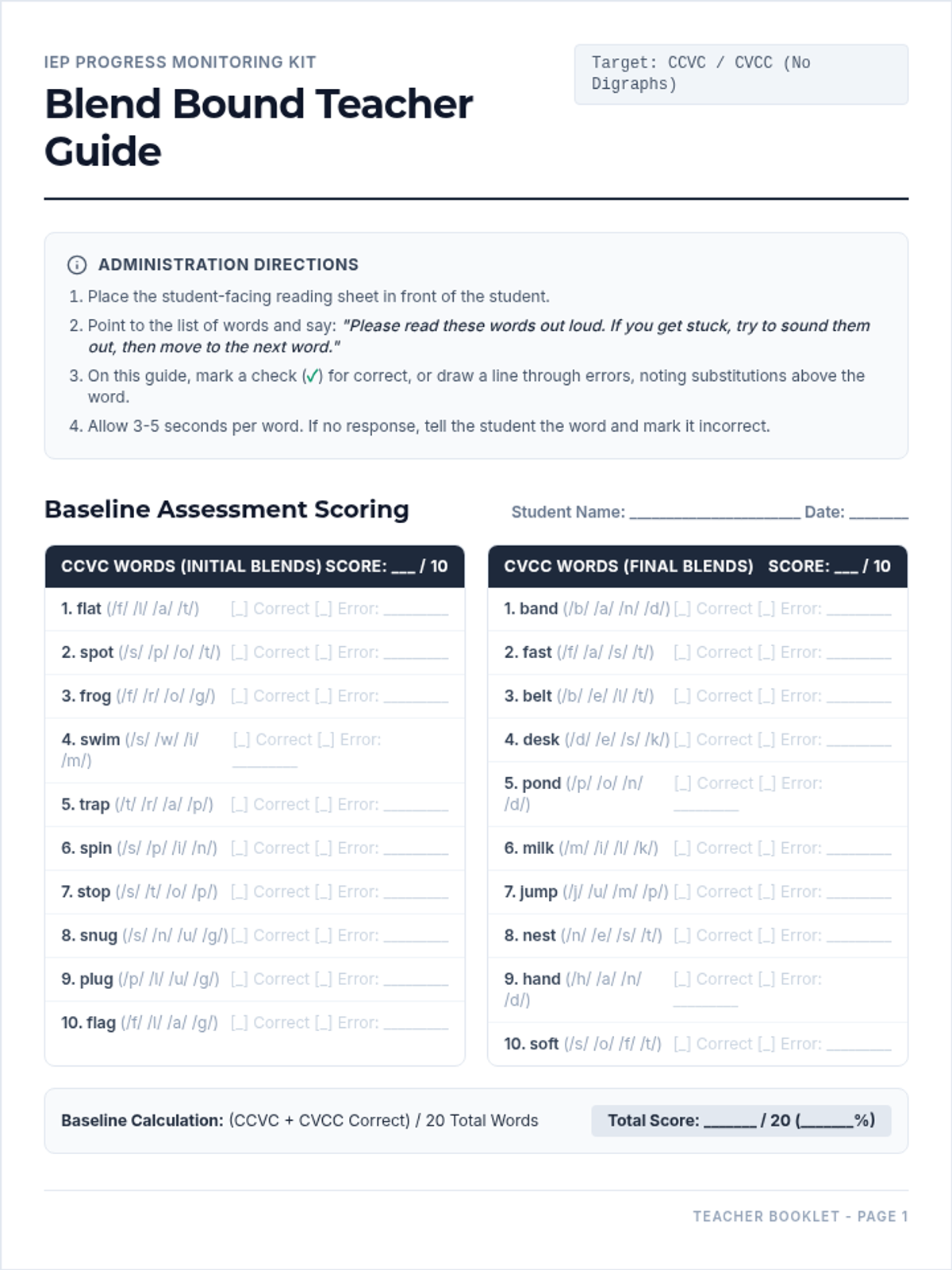
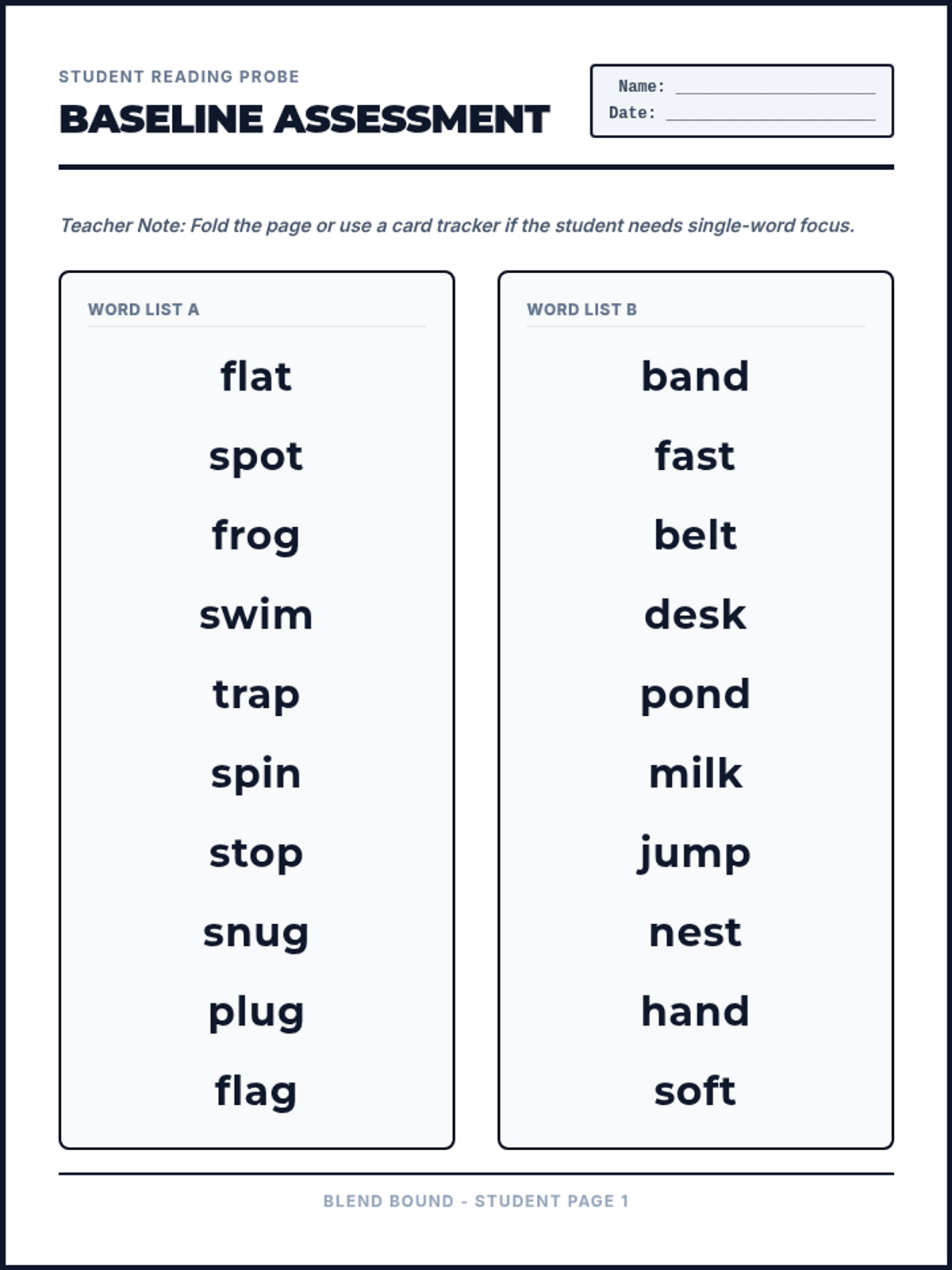
A comprehensive progress monitoring kit for tracking student mastery of CVCC and CCVC words (excluding digraphs). Includes a teacher recording and reporting guide alongside large-font, high-contrast student reading probes.
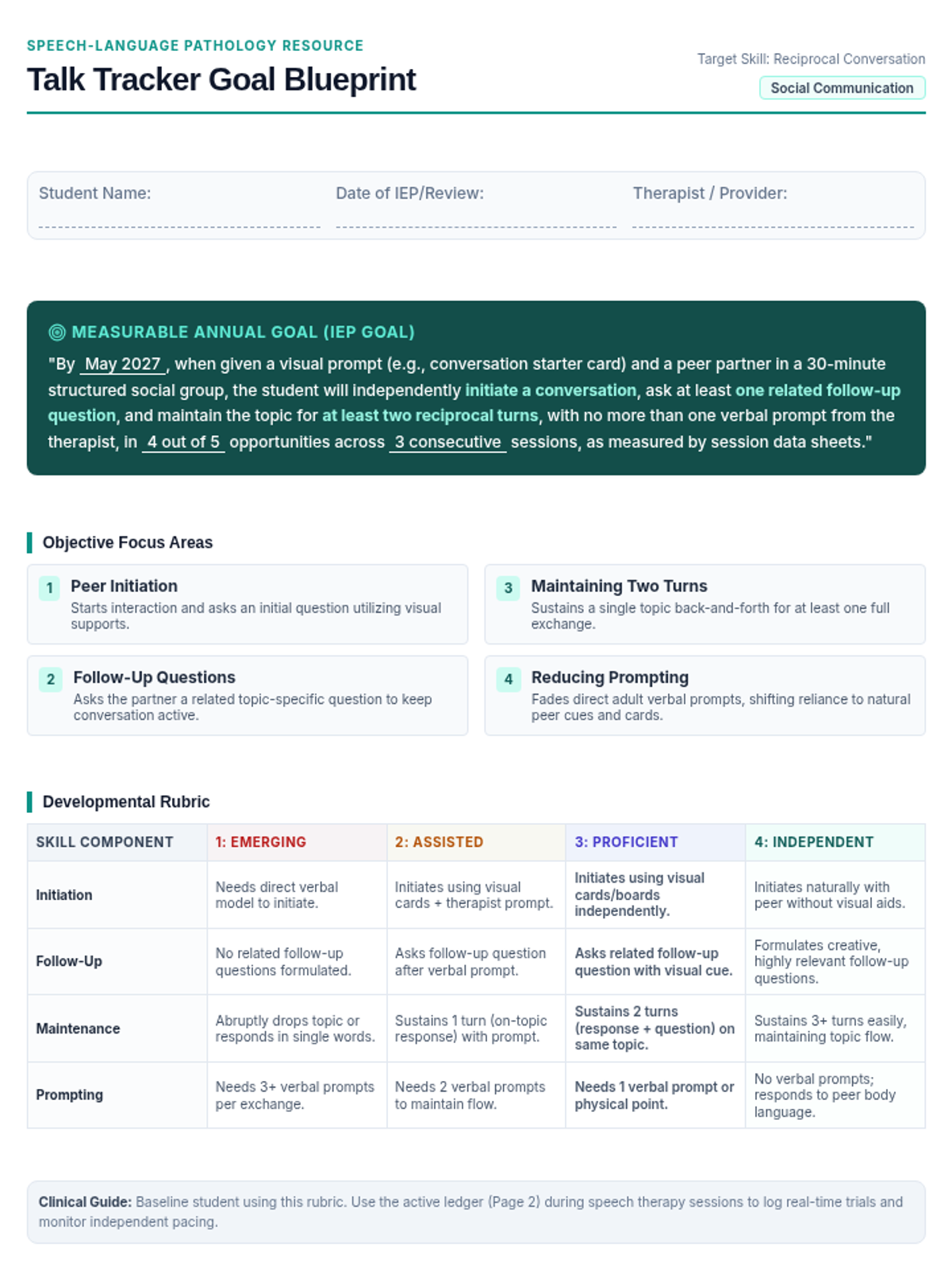
A lesson centered around tracking and achieving measurable progress in reciprocal conversation skills during speech therapy sessions, complete with formal IEP goals, a developmental rubric, and an actionable session data tracker.
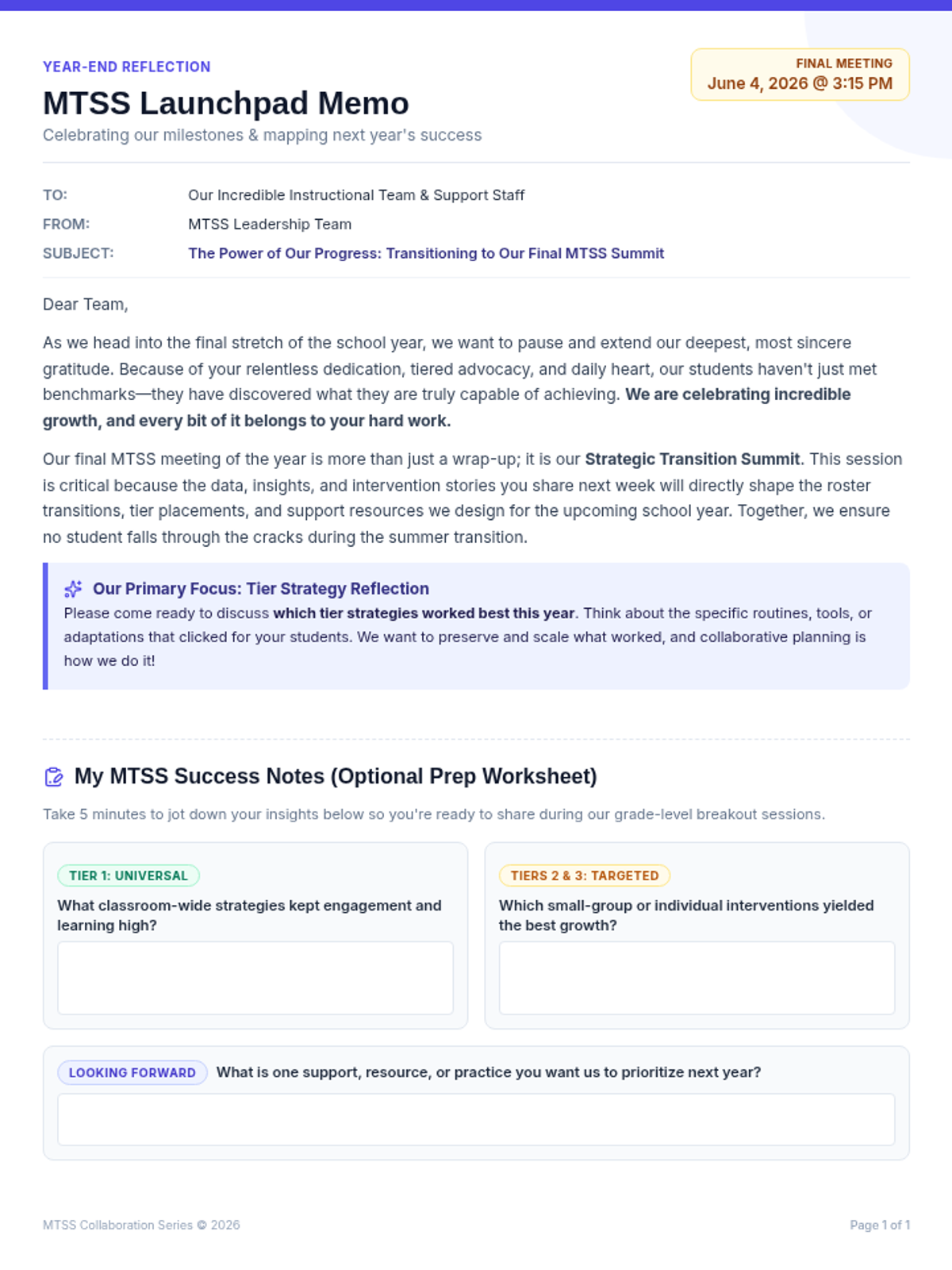
A lesson focused on wrapping up the Multi-Tiered System of Supports (MTSS) for the school year, celebrating progress, and preparing for future planning.
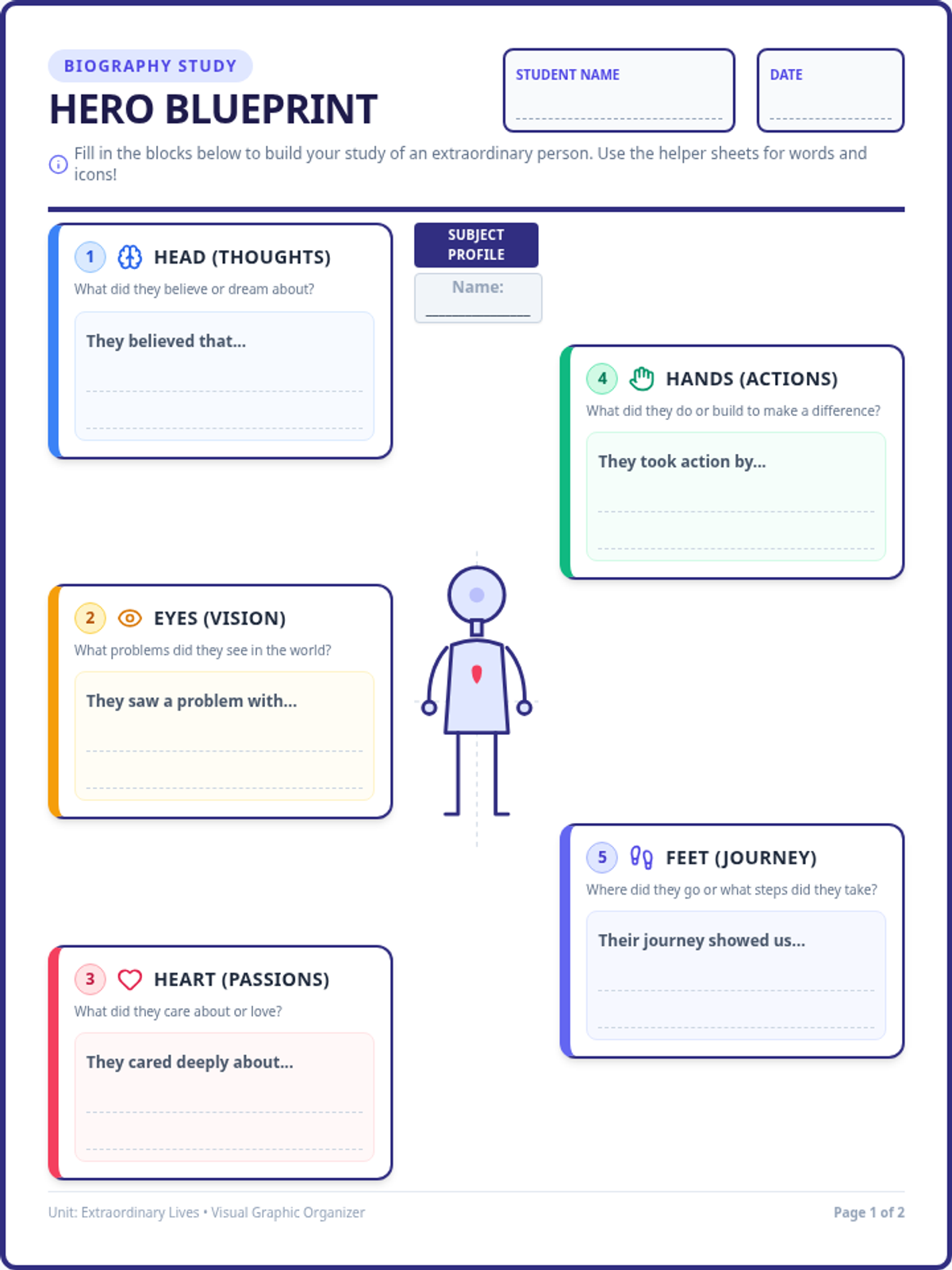
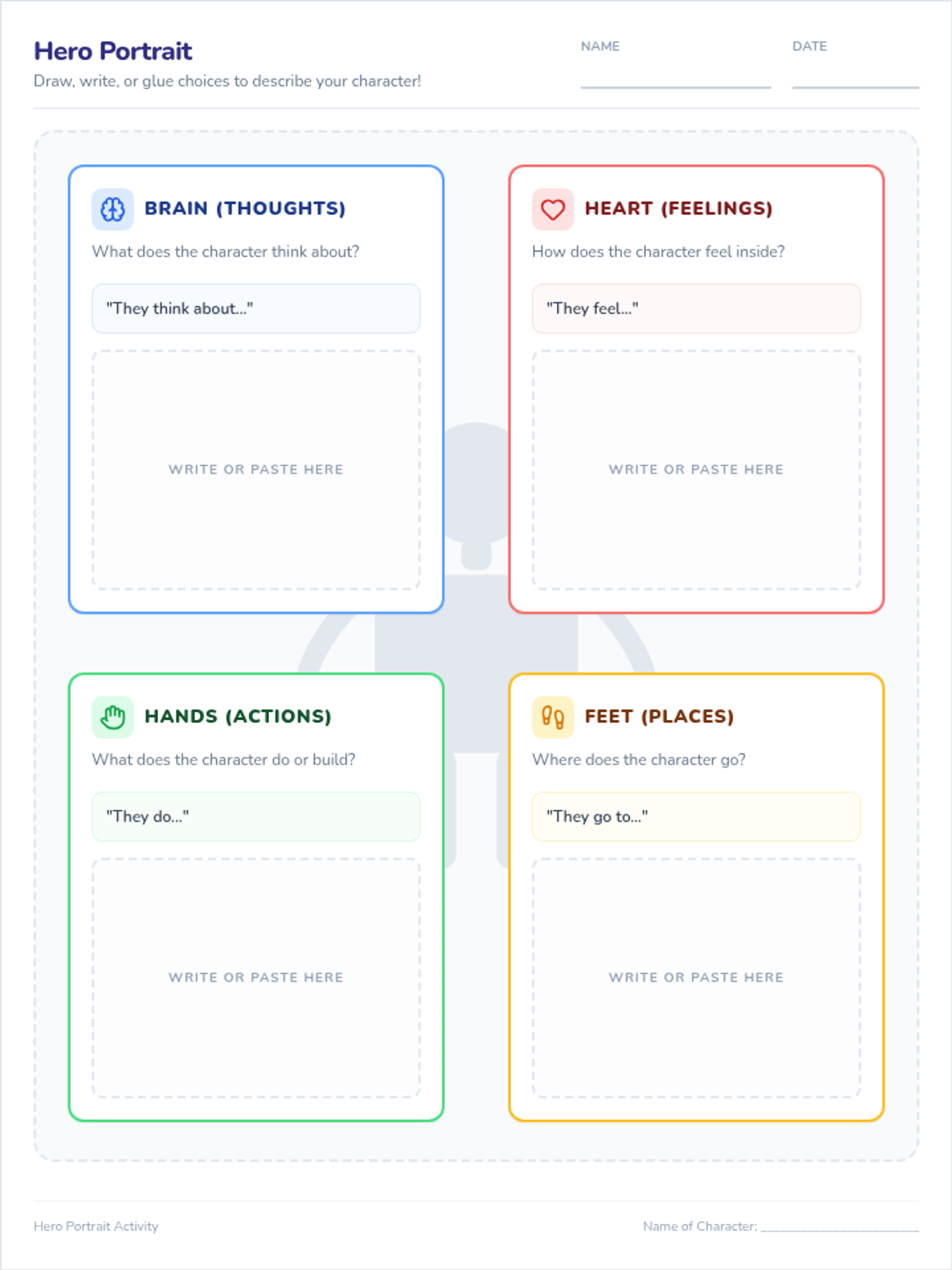
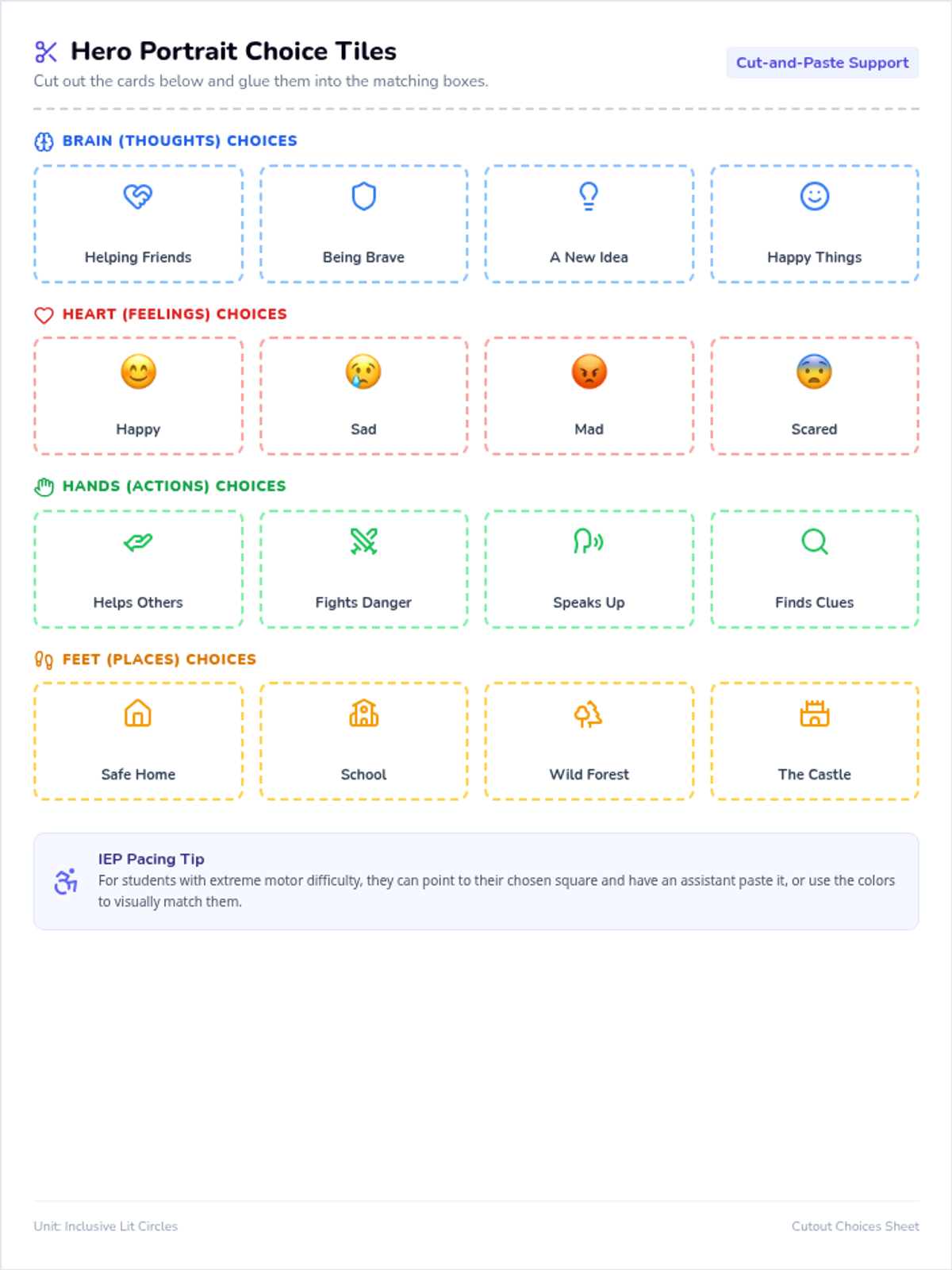
A biography study lesson featuring tiered, highly visual body graphic organizers designed to support IEP students with visual symbol supports, sentence starters, and cut-and-paste vocabulary options.
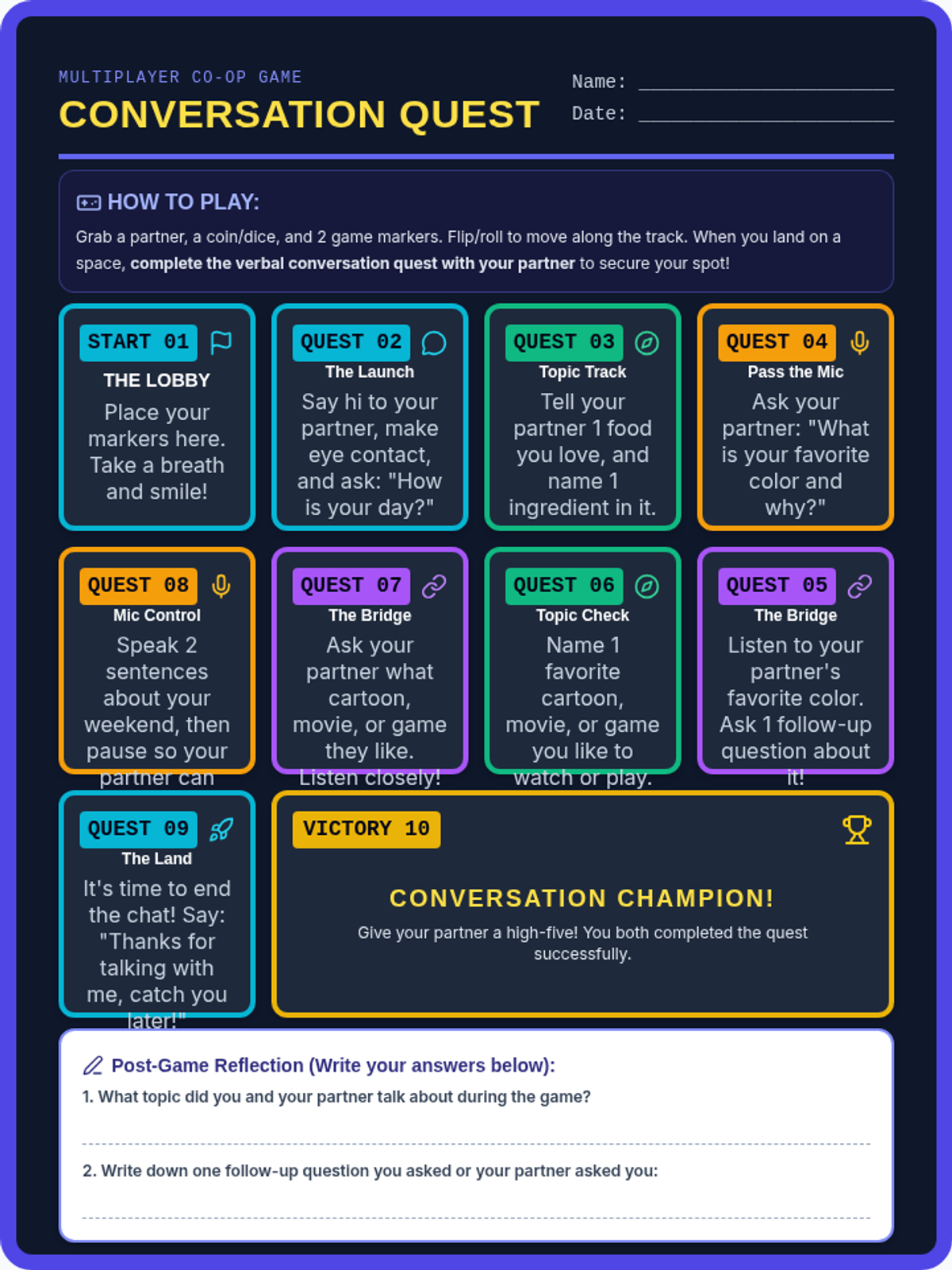
A gamified social skills lesson designed for students with ASD to practice and master conversational rules, including starting and ending conversations, staying on-topic, taking turns, and asking follow-up questions.
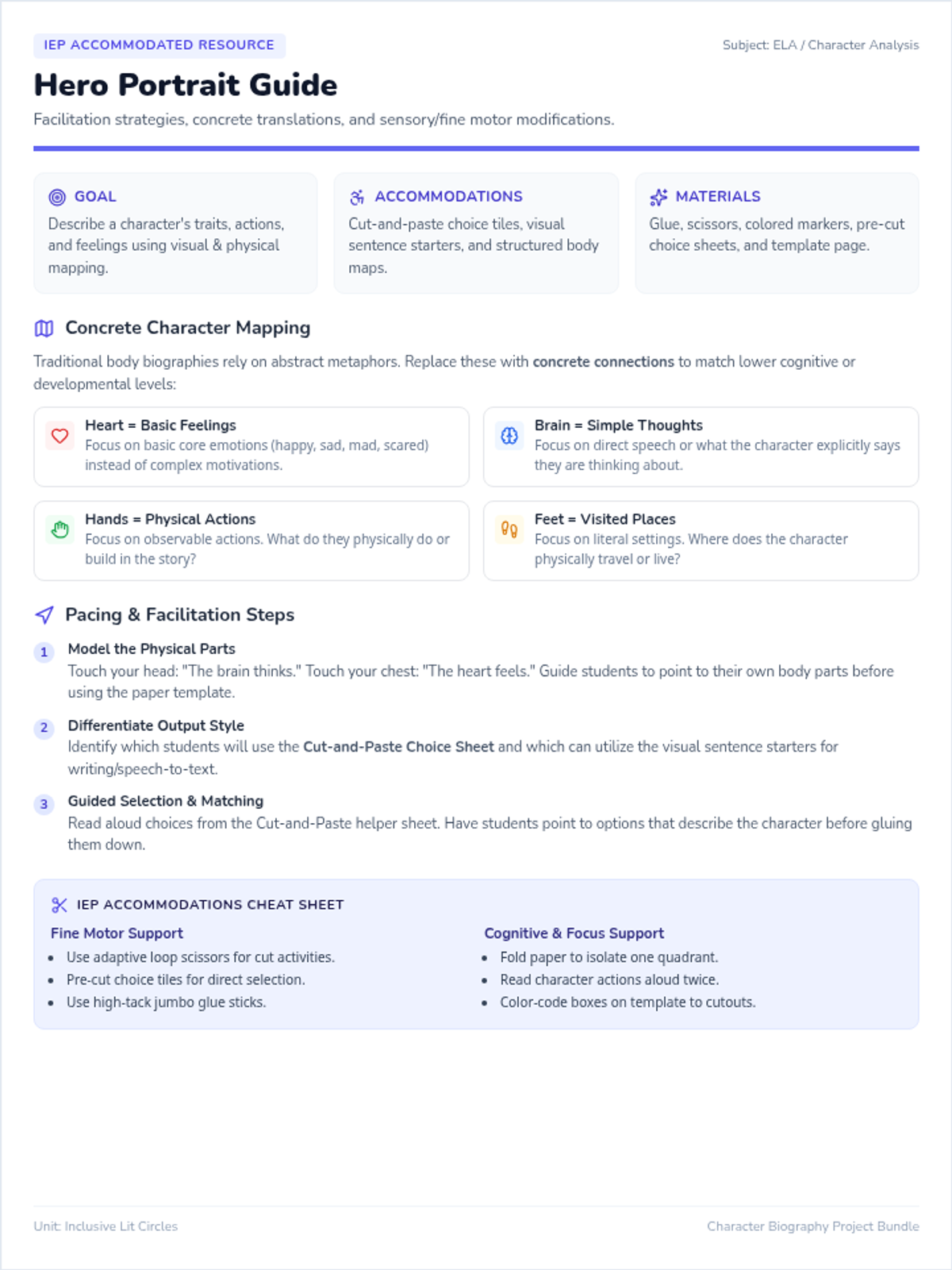
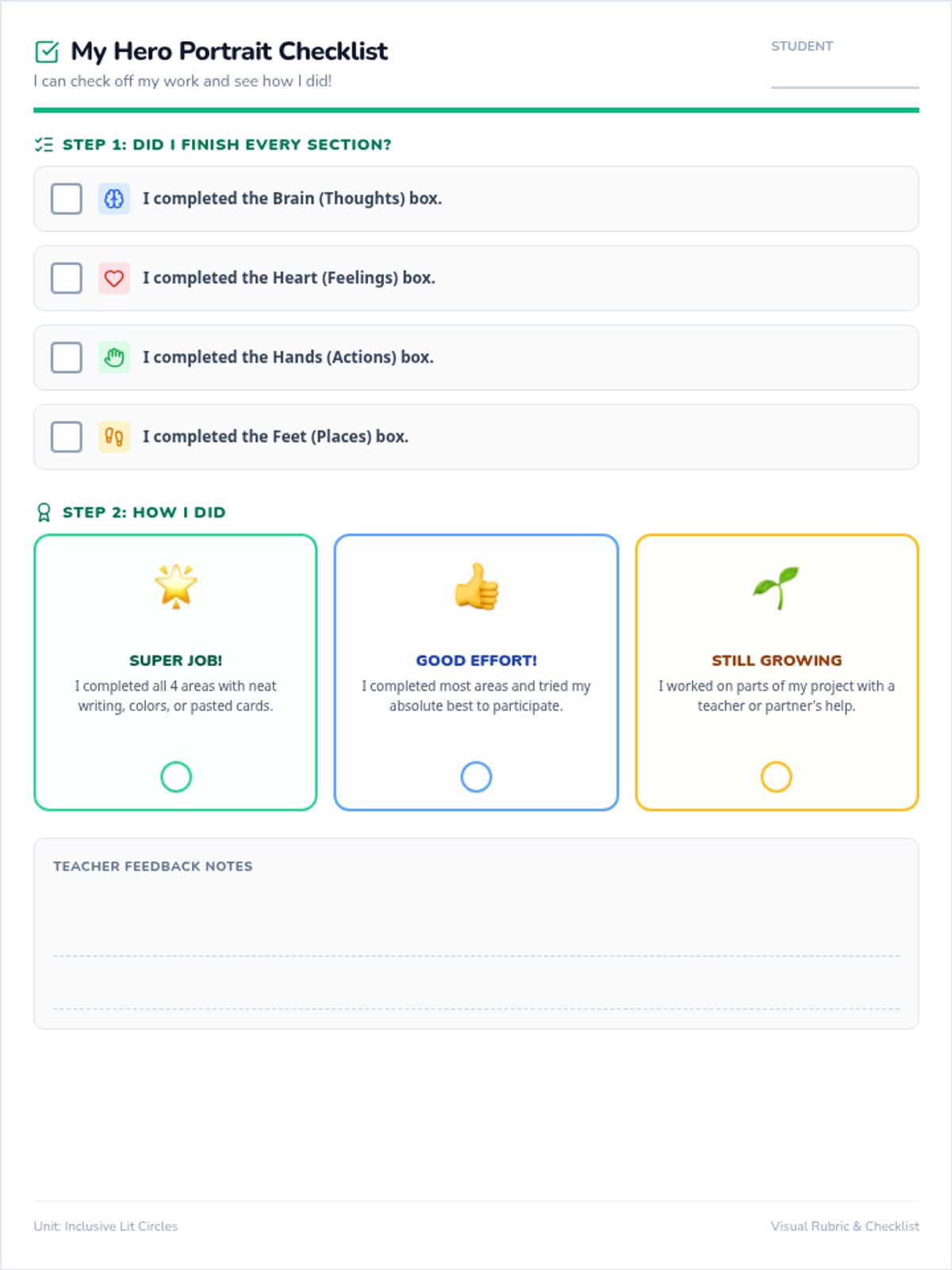
A scaffolded Character Body Biography project adapted for IEP students, featuring simplified concrete connections, cut-and-paste elements, and visual supports.
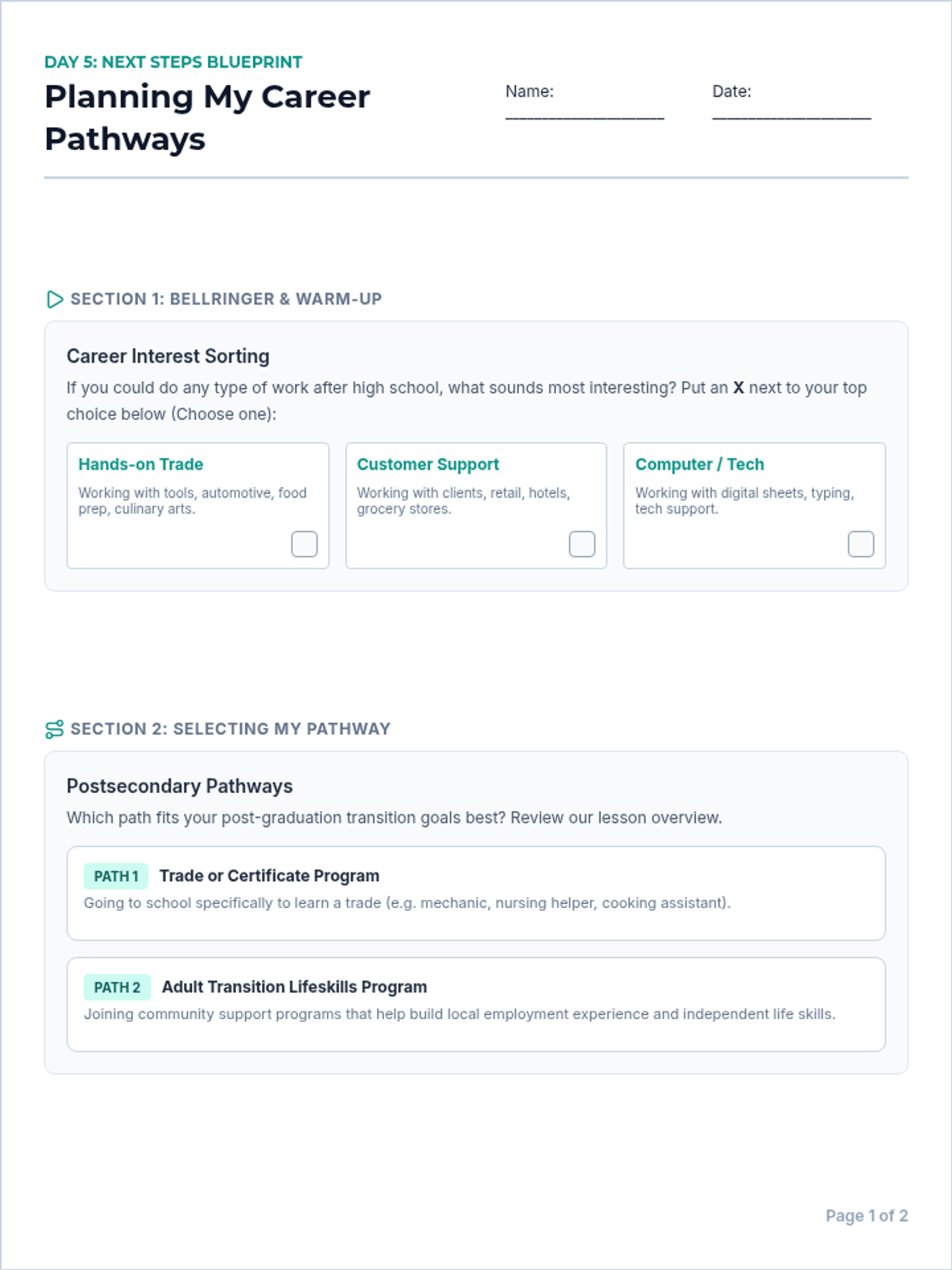
Day 5 explores postsecondary options and career pathways, conducts the final unit assessments, and establishes individual student next-steps action plans.
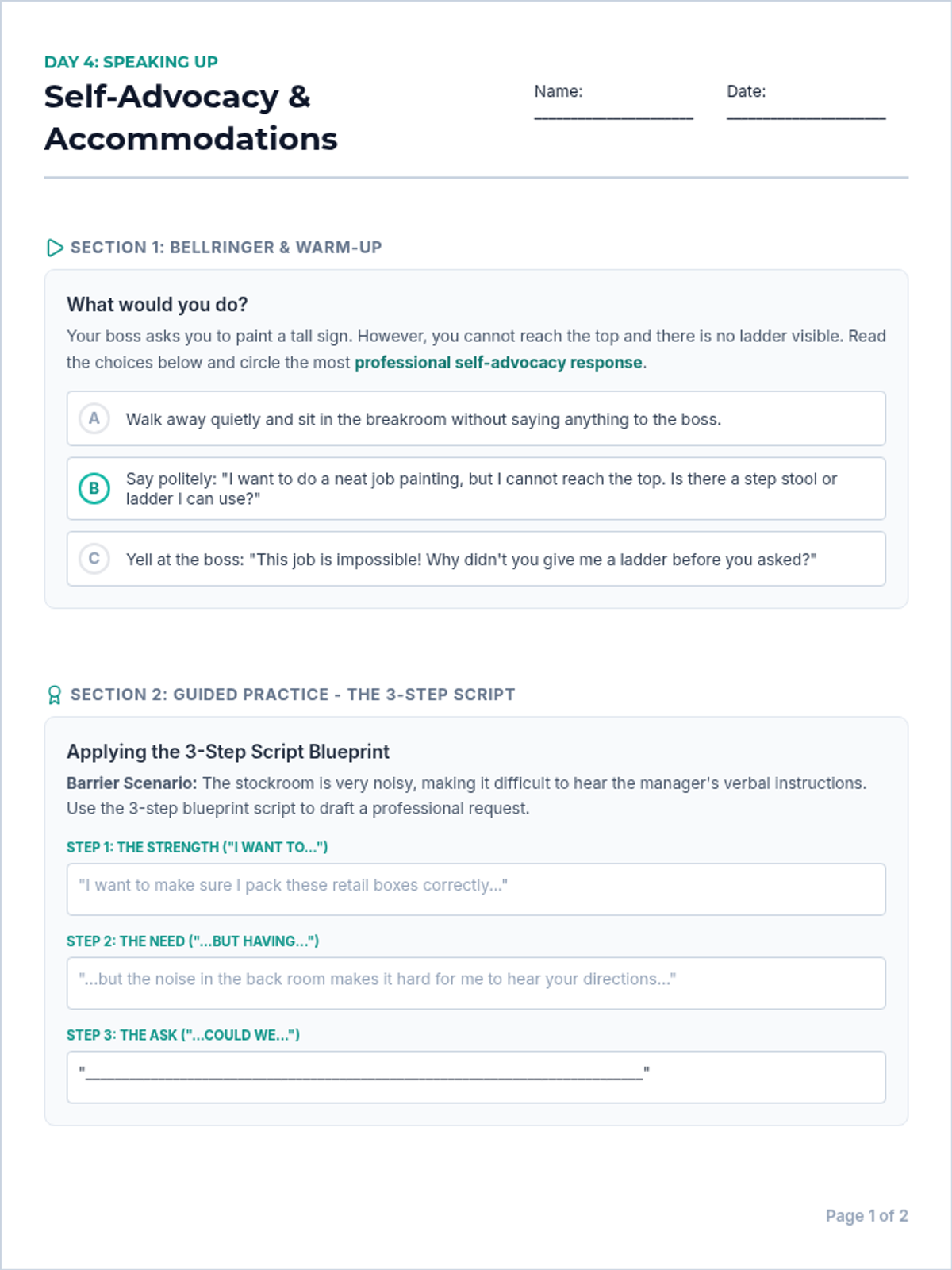
Day 4 targets self-advocacy and accommodation requesting, teaching students how to identify their needs, communicate them respectfully, and navigate the workplace independently.
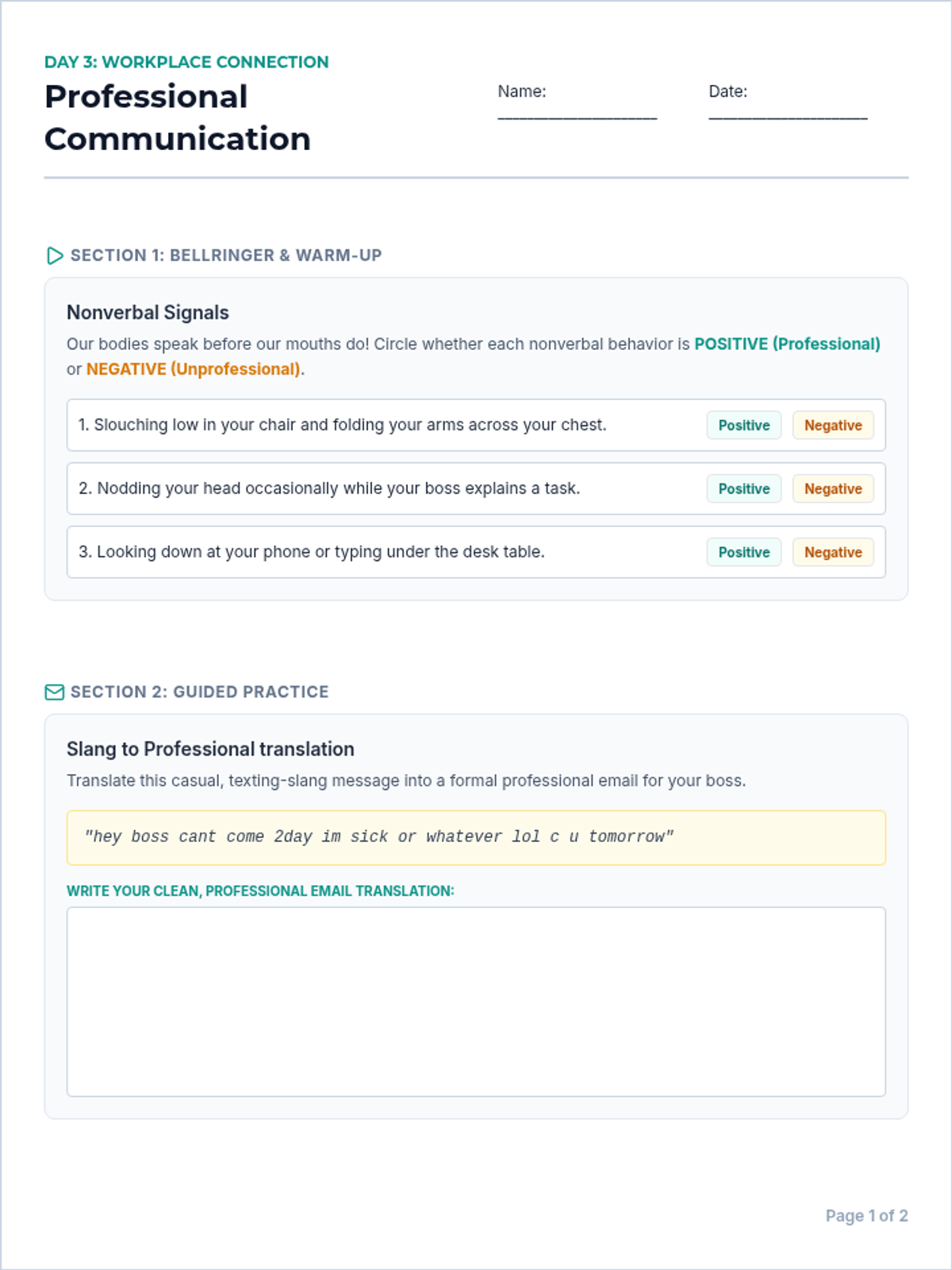
Day 3 focuses on professional verbal and non-verbal communication, email etiquette, and active teamwork within diverse workplace scenarios.
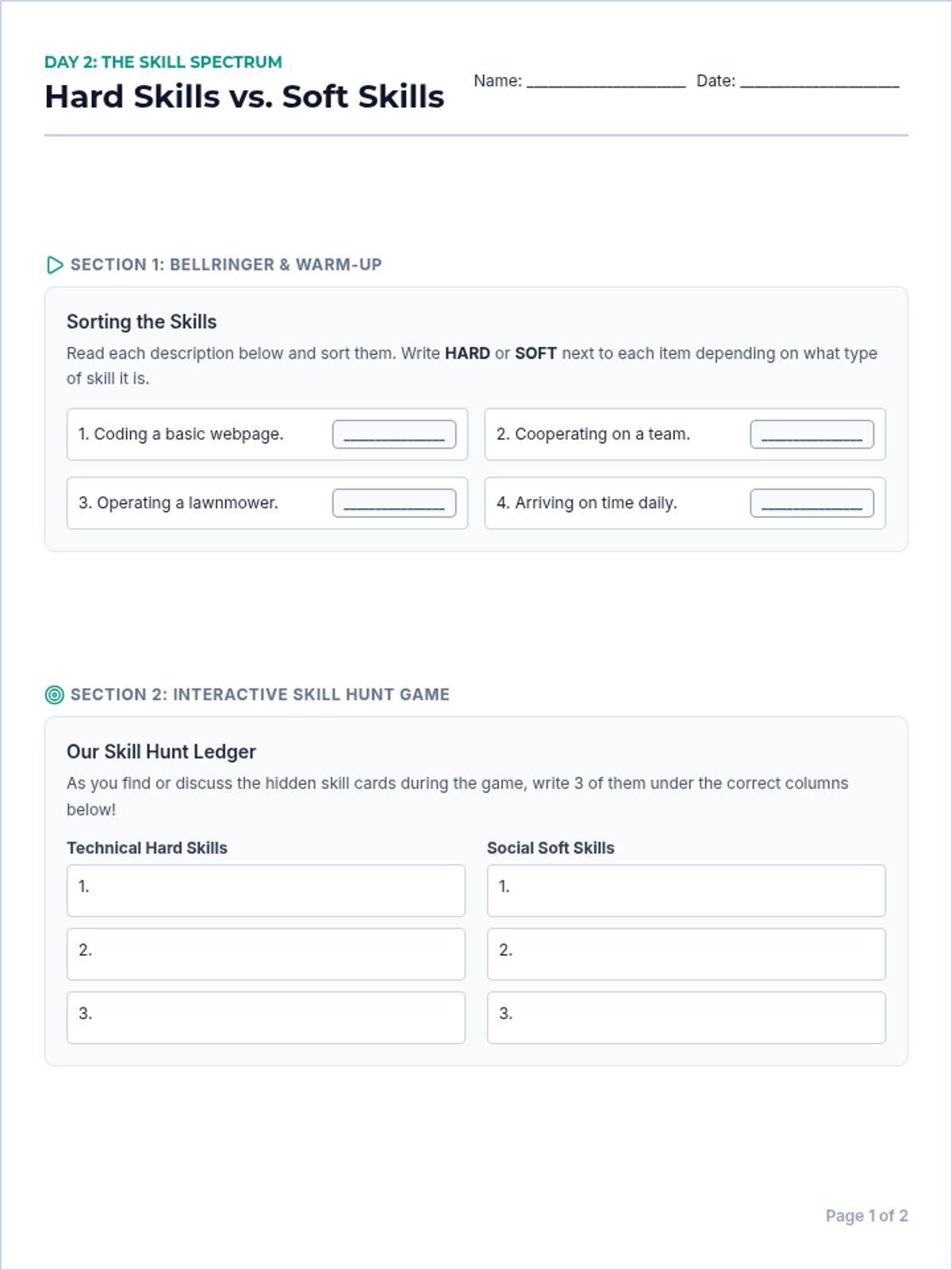
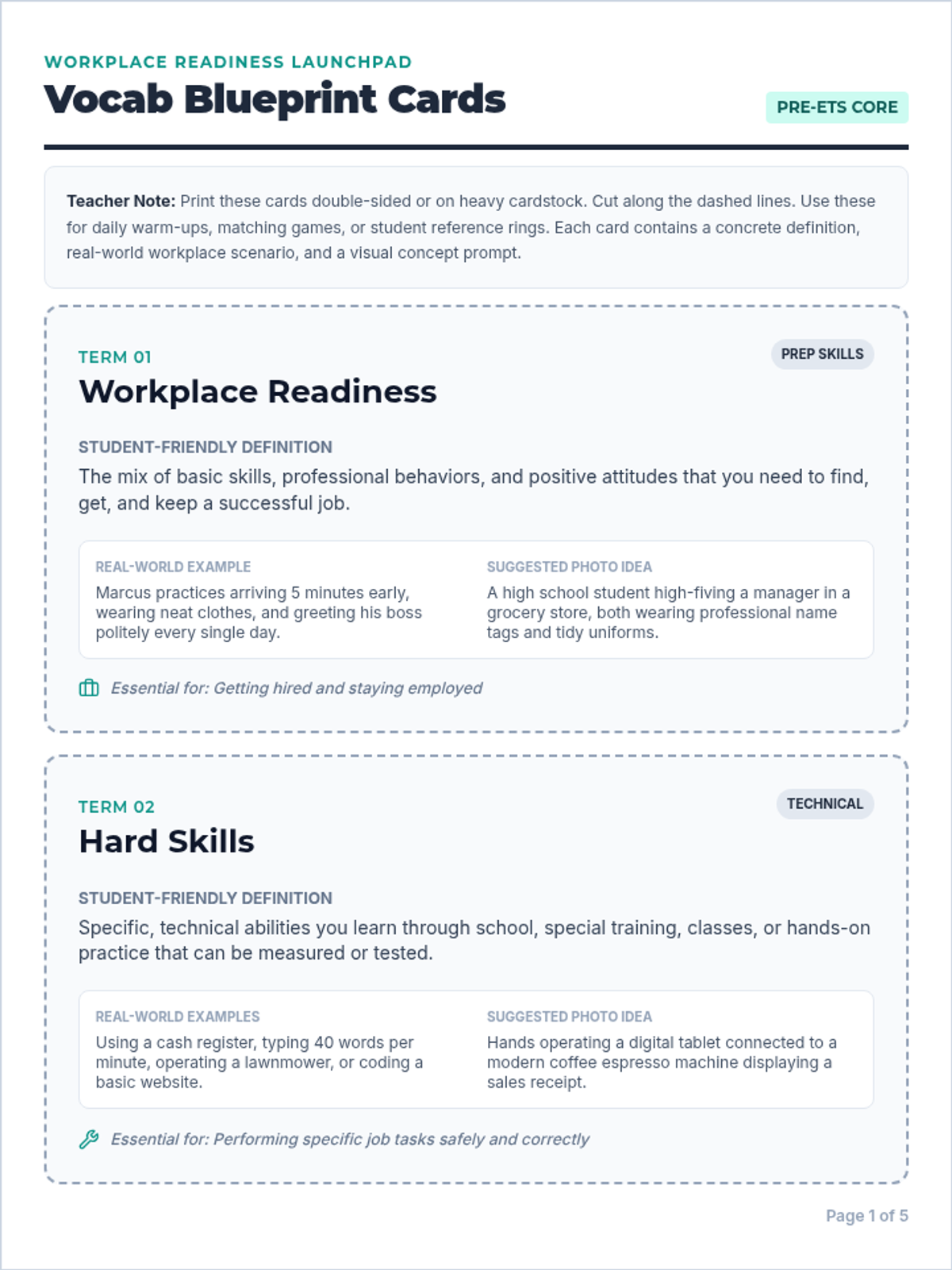
Day 2 dives into hard versus soft skills, exploring how technical abilities get you hired while interpersonal qualities keep you employed.
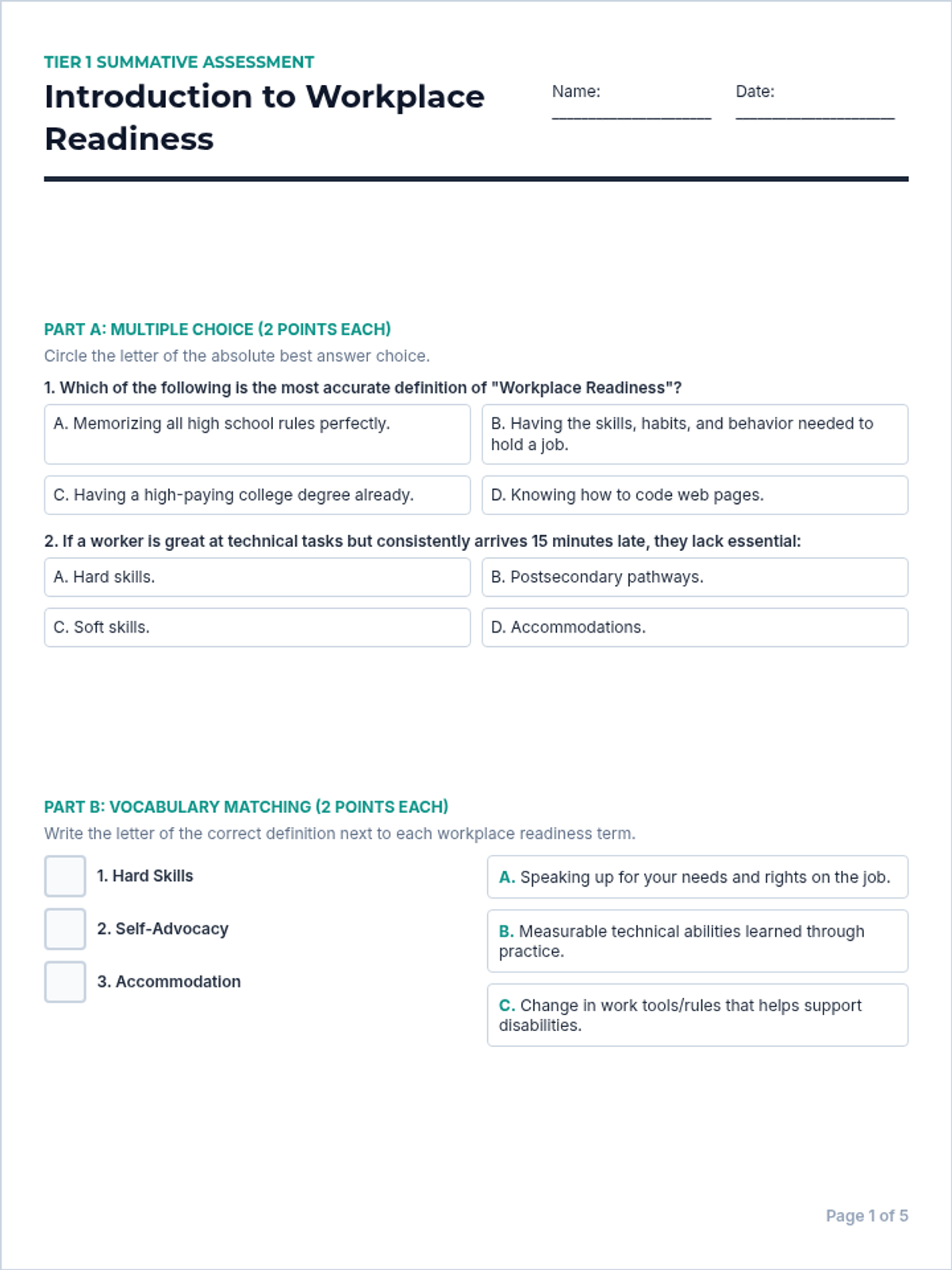
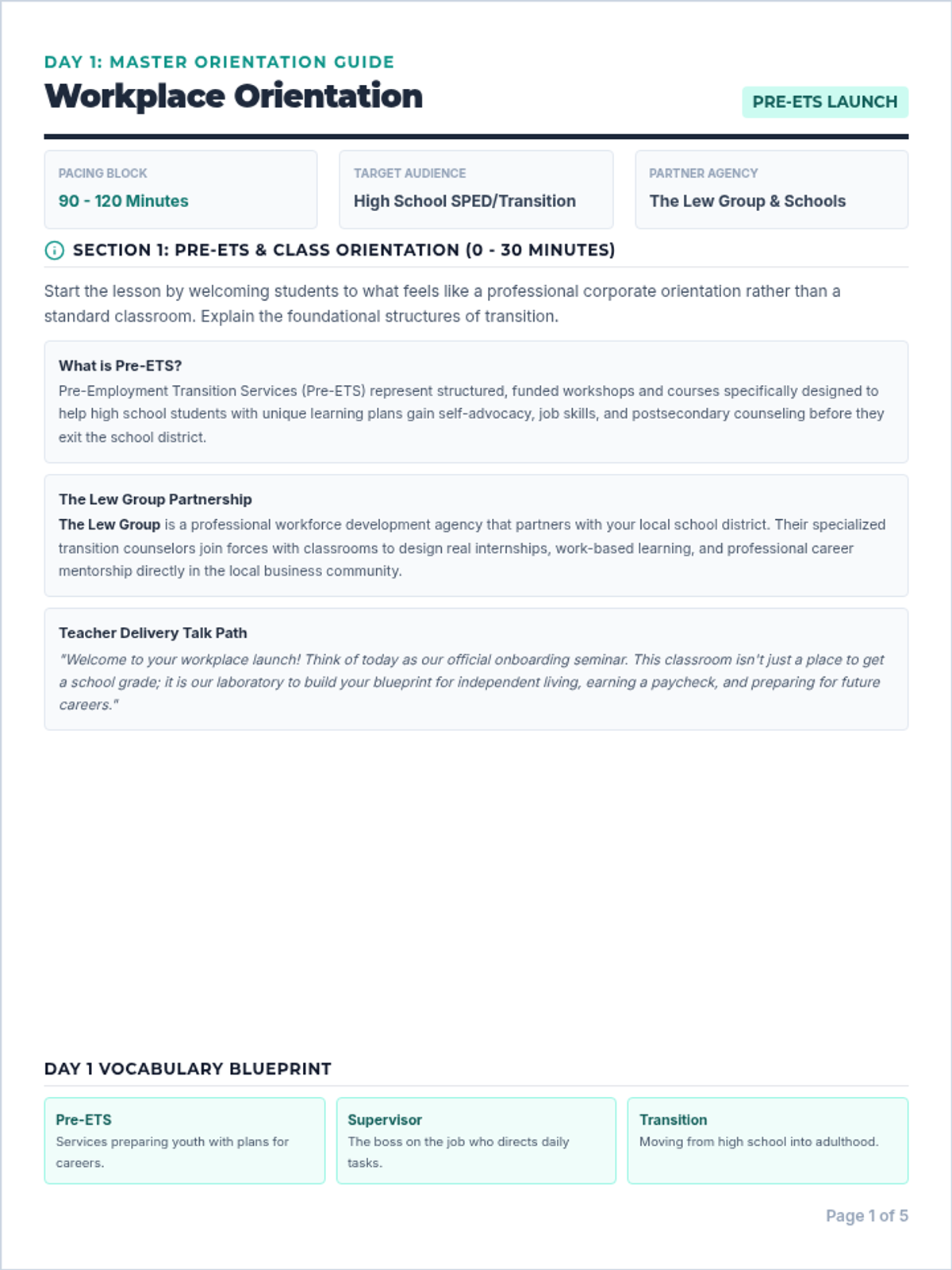
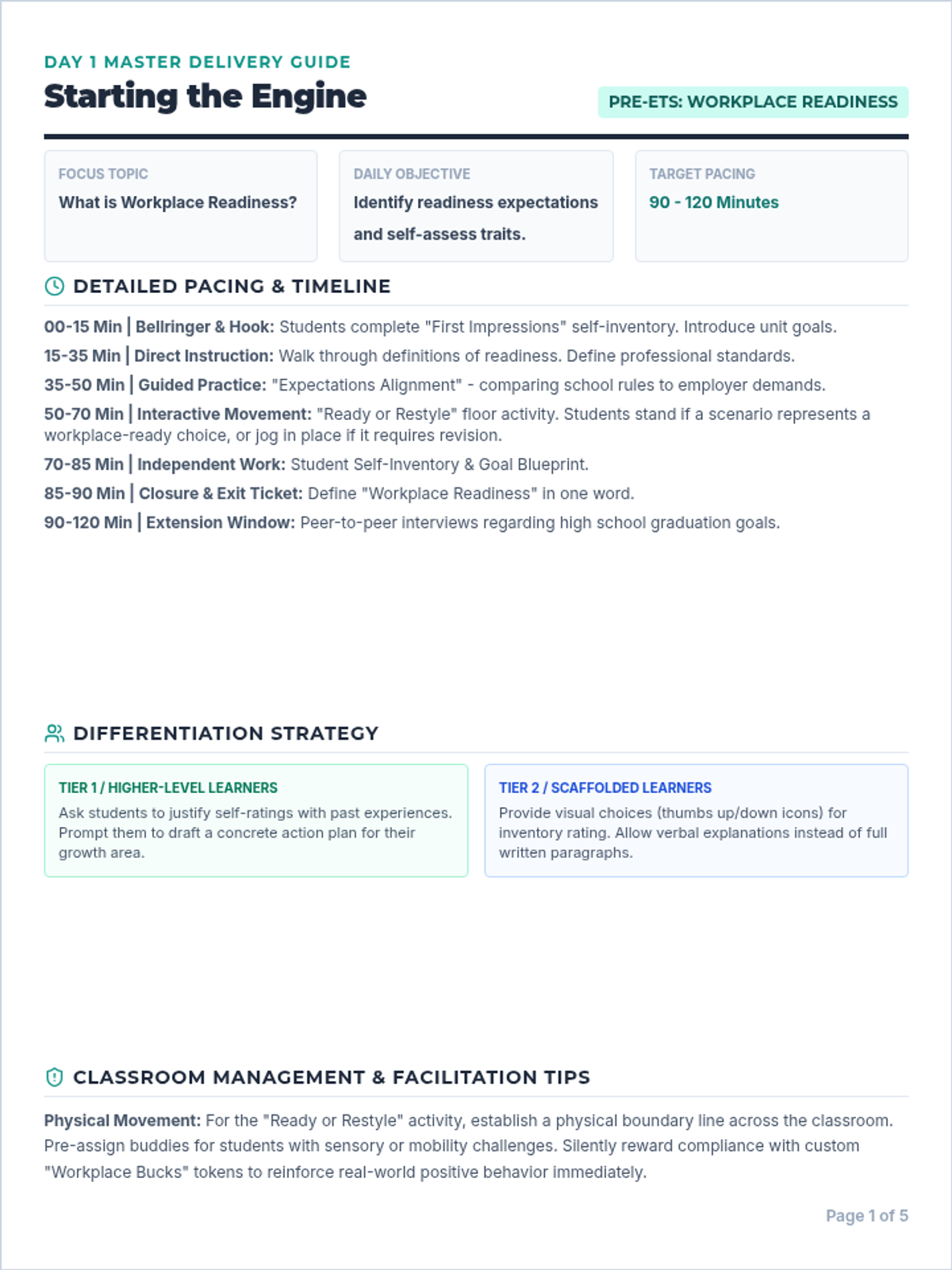
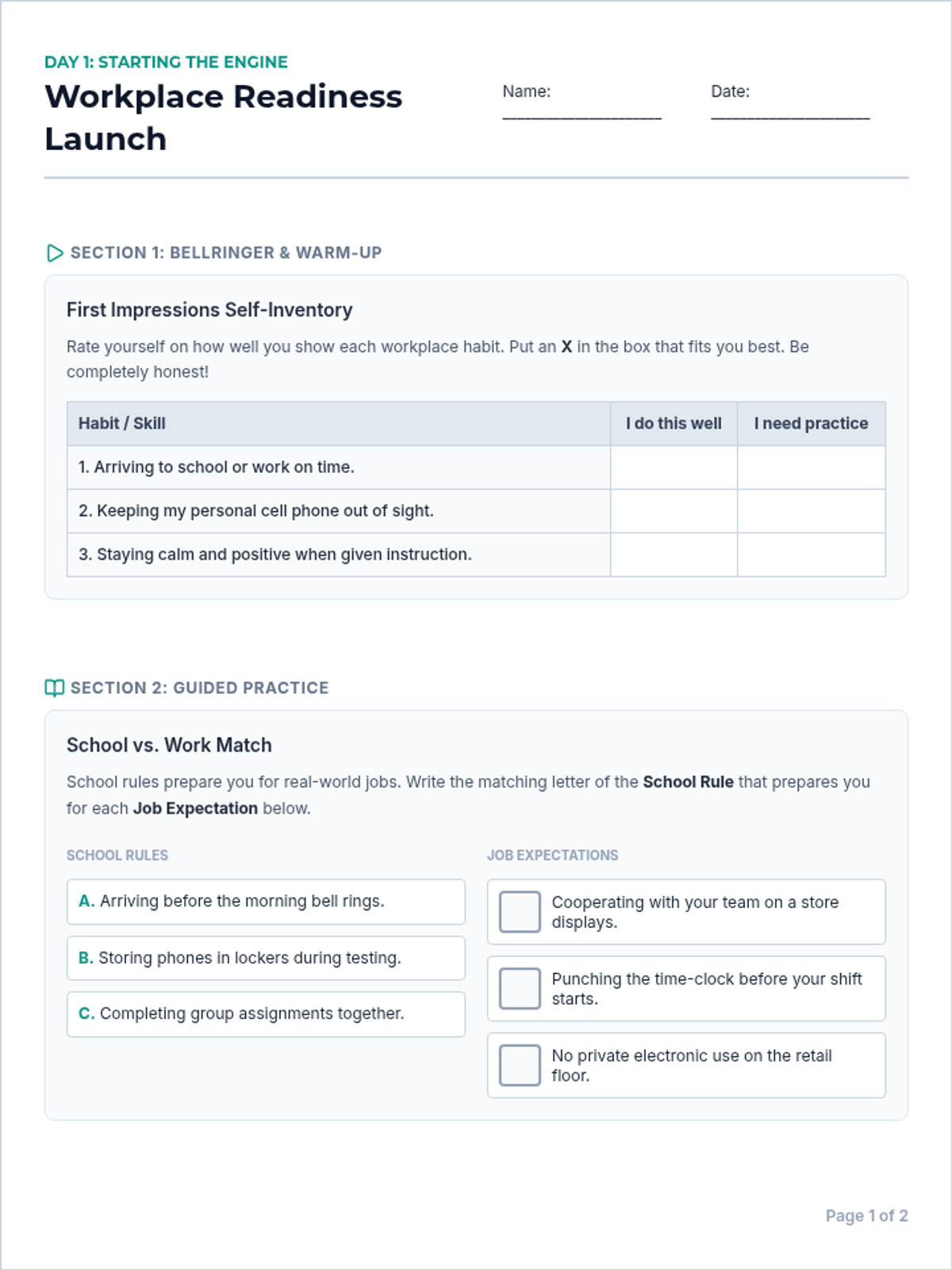
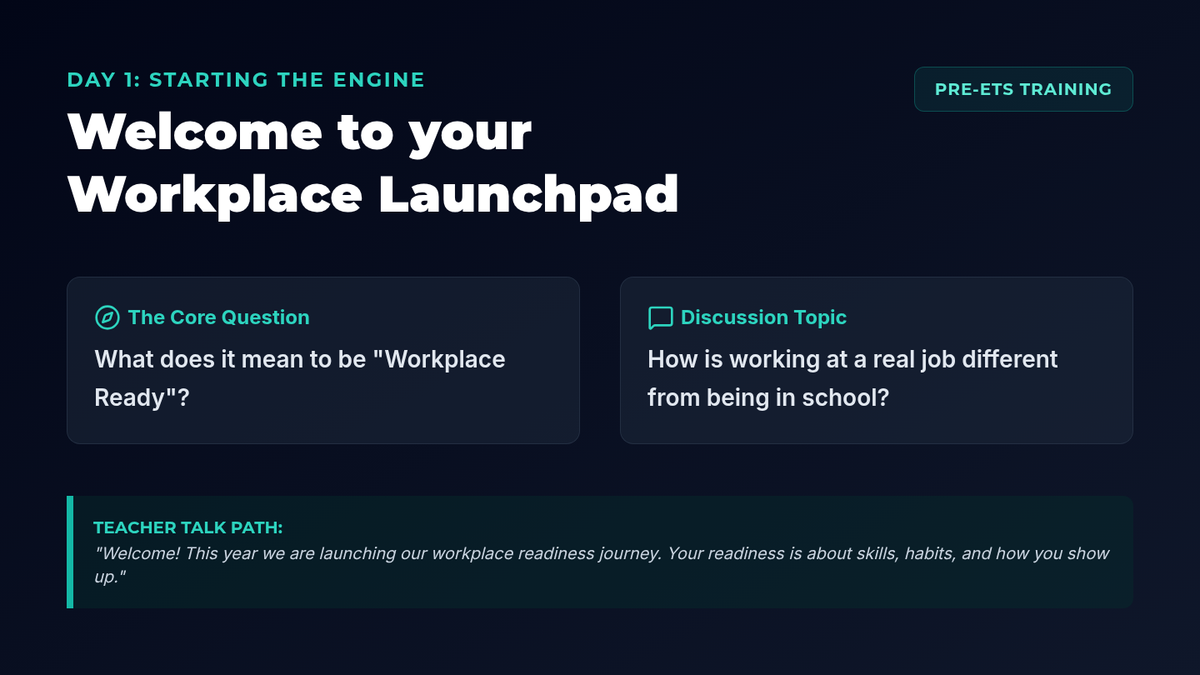
Day 1 introduces the concept of workplace readiness, high school transition expectations, and helps students assess their current baseline while establishing professional habits.
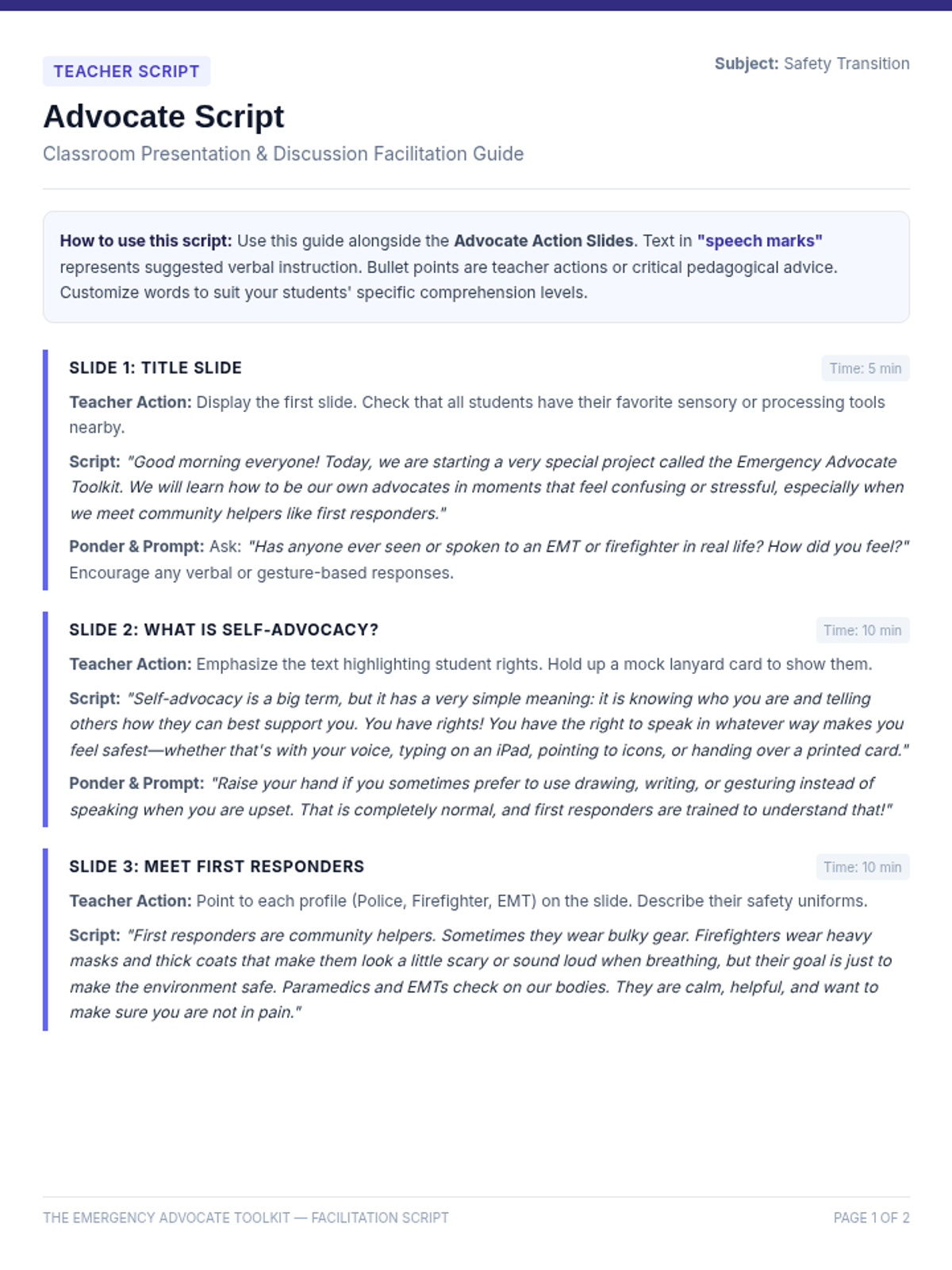
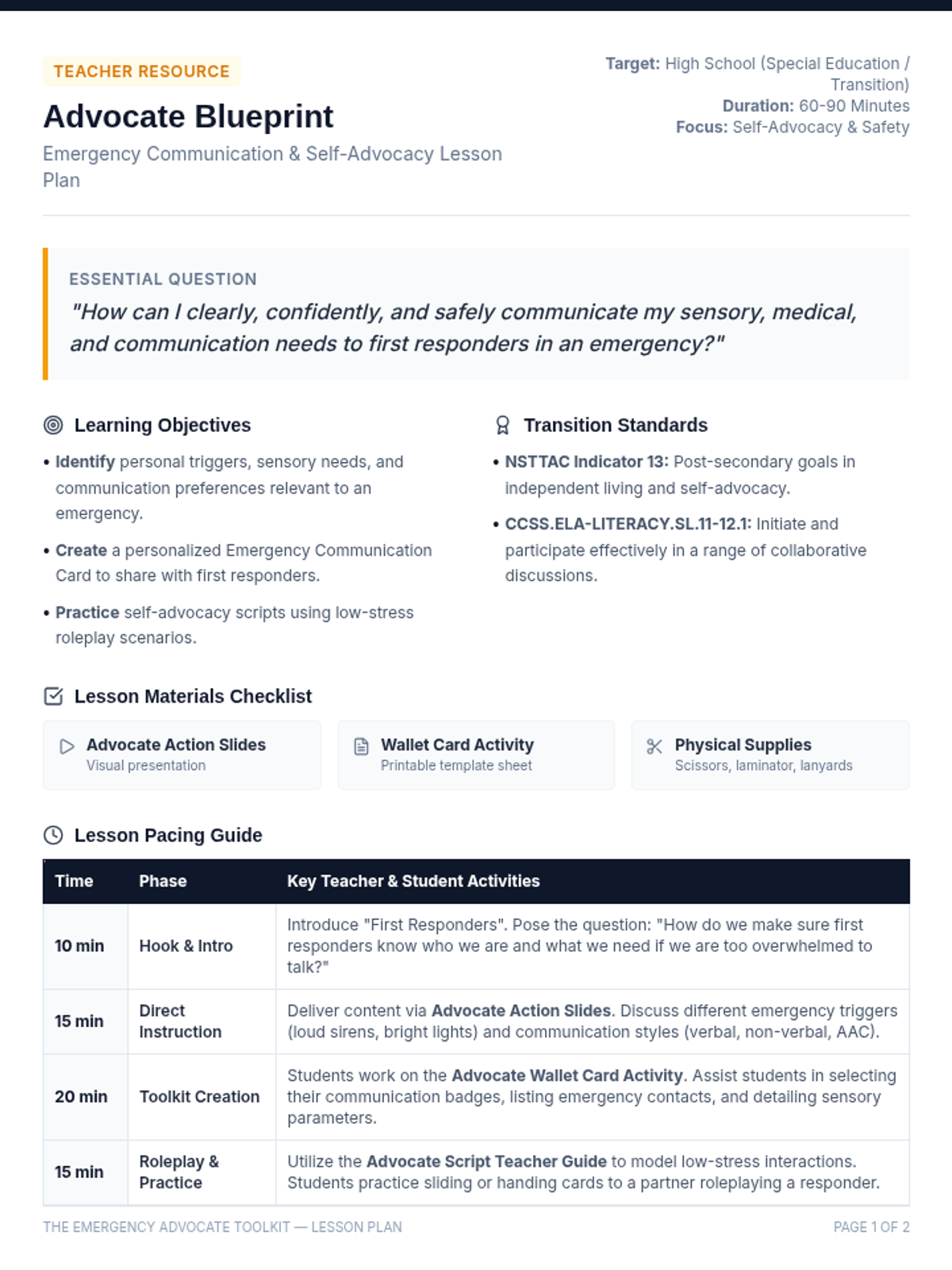
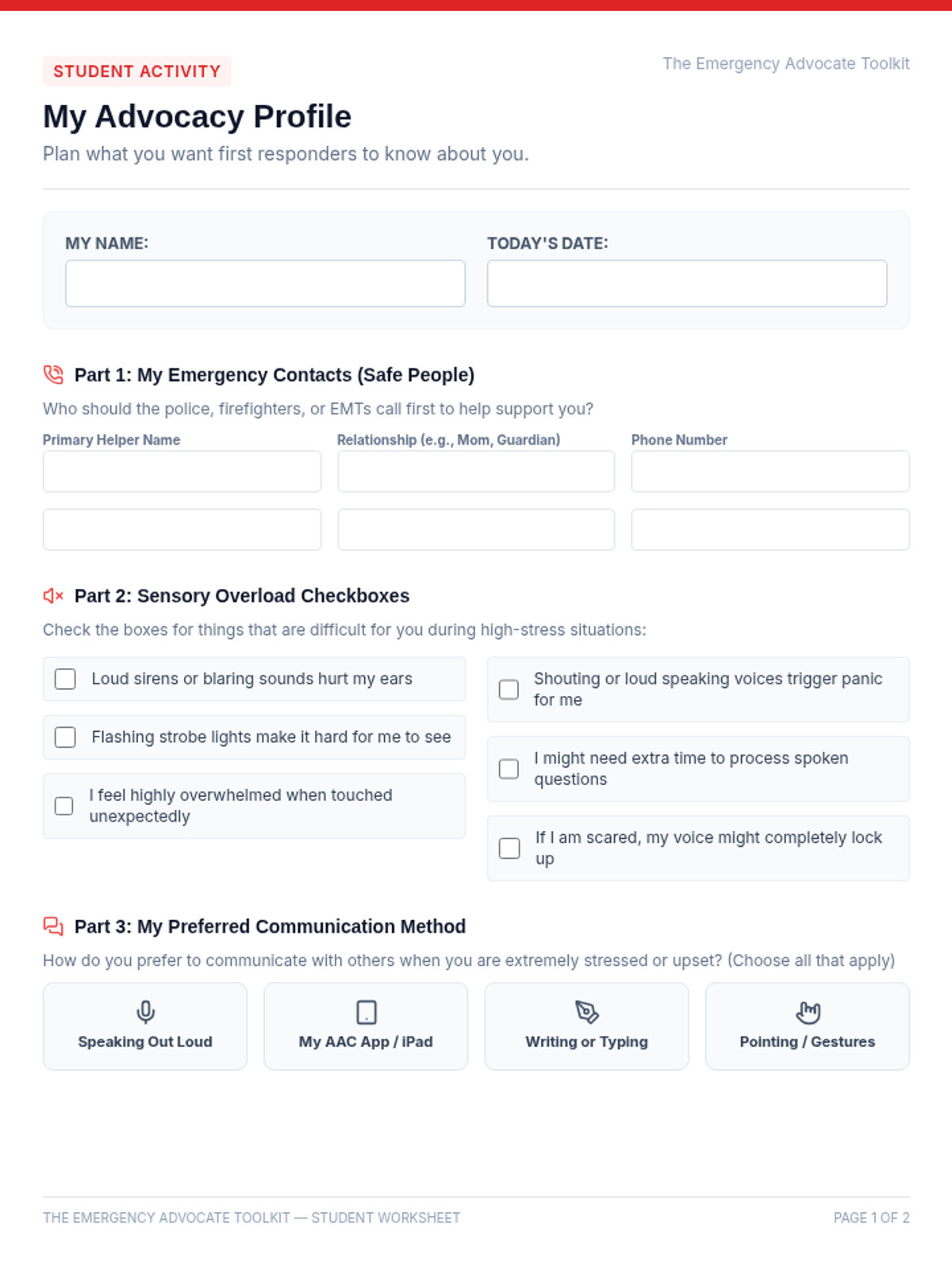
A comprehensive training package designed for high school students with exceptionalities to help them build self-advocacy skills, understand the role of first responders, and create a personalized emergency communication toolkit.
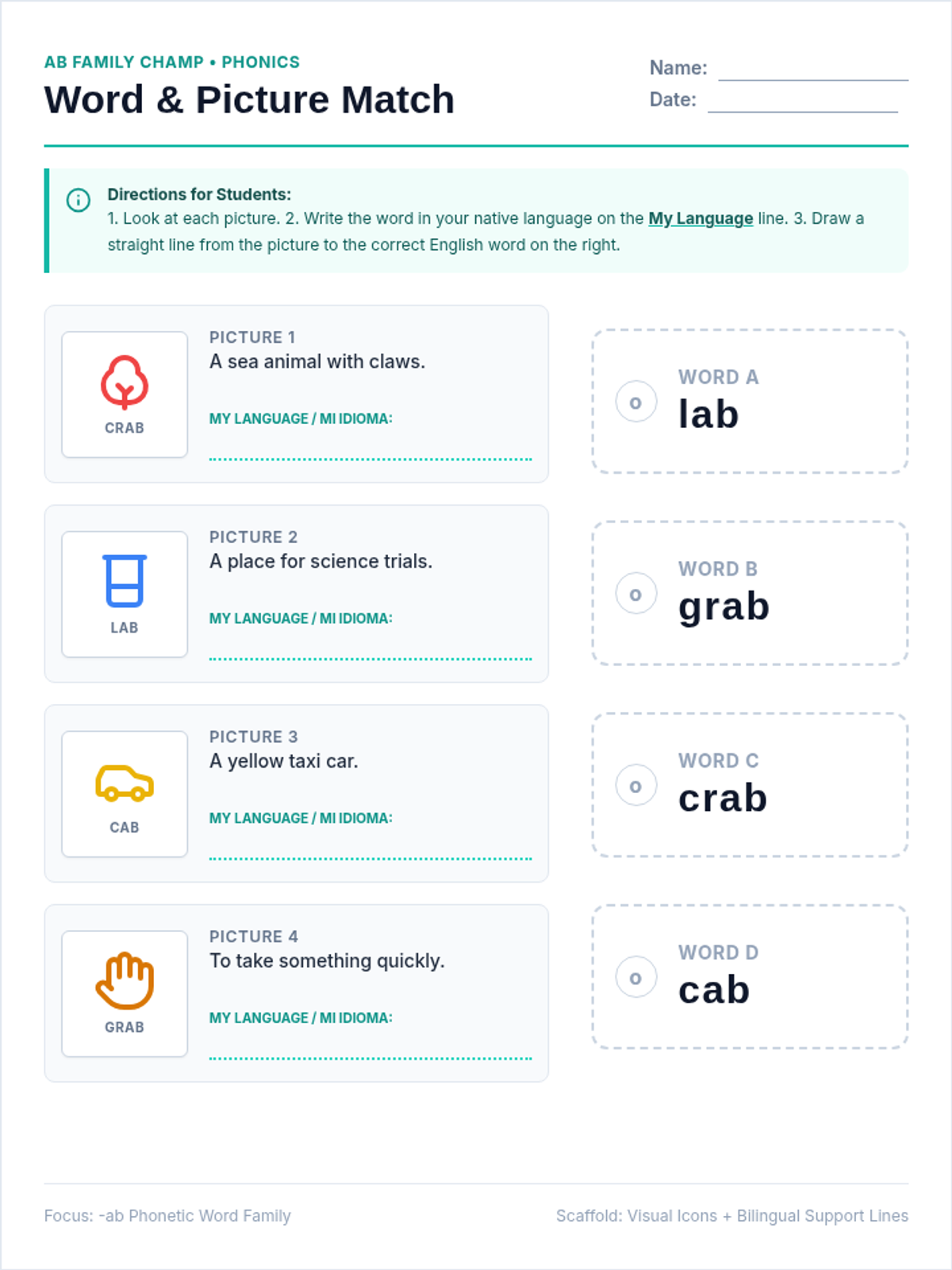
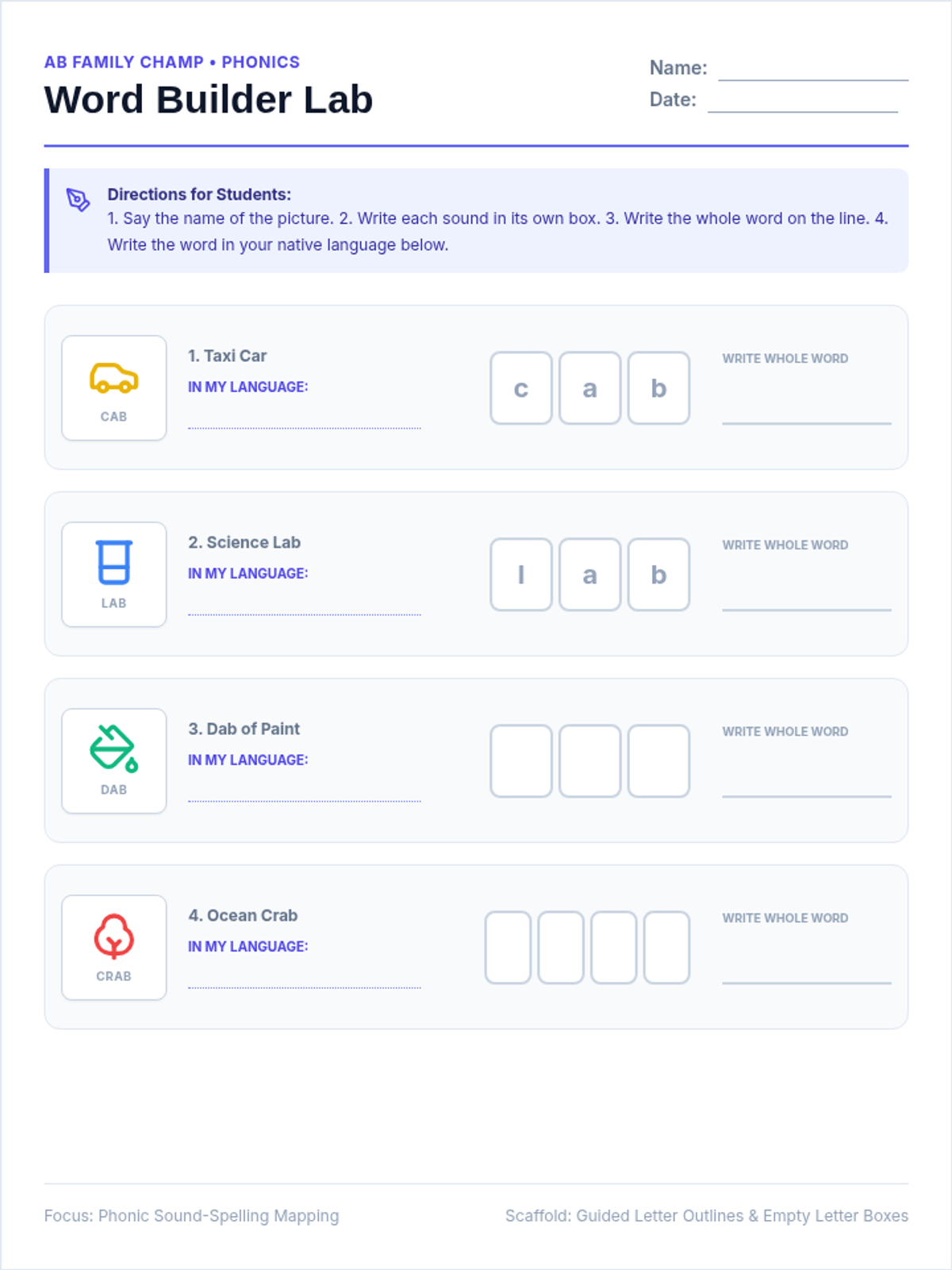
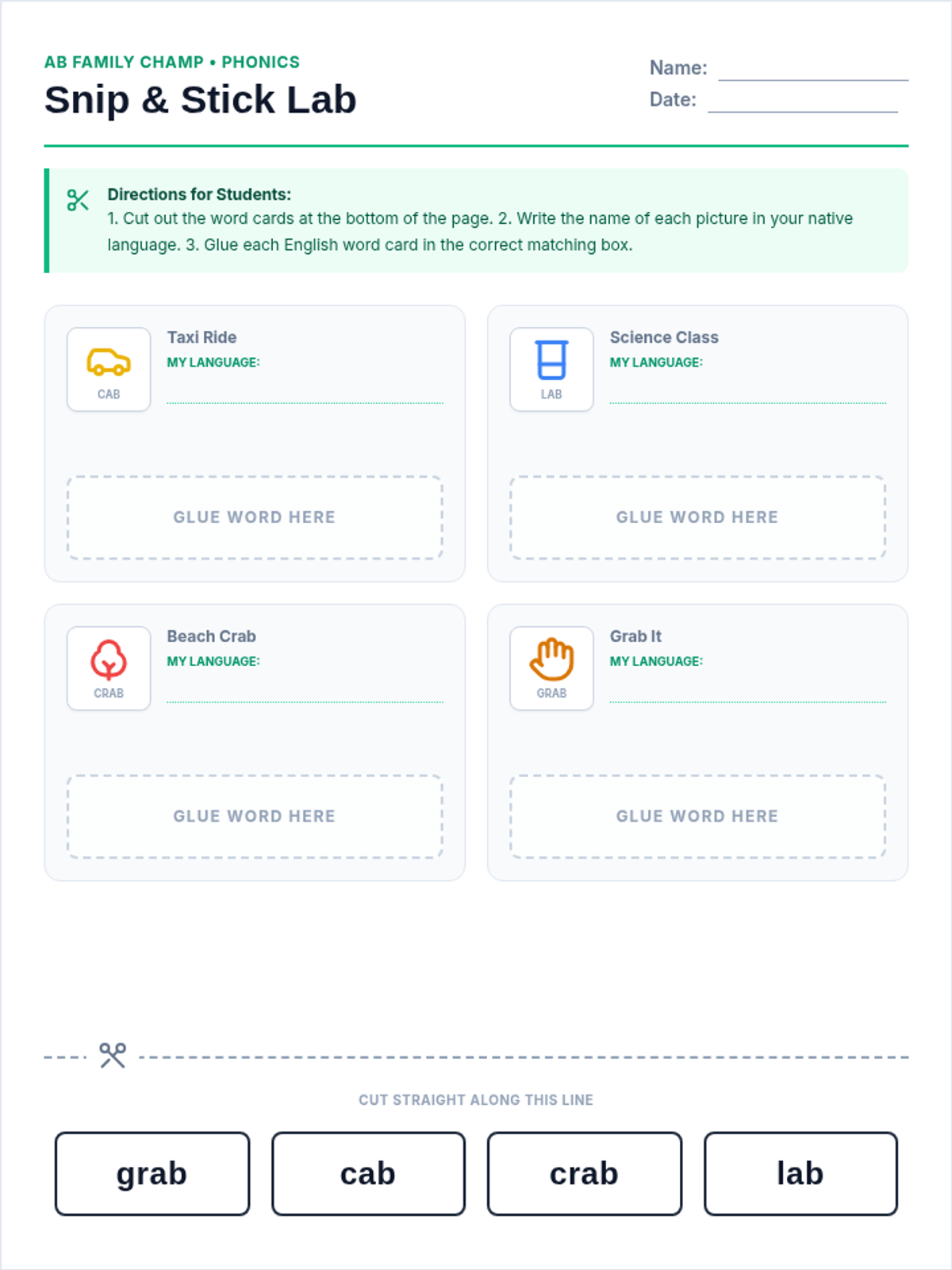
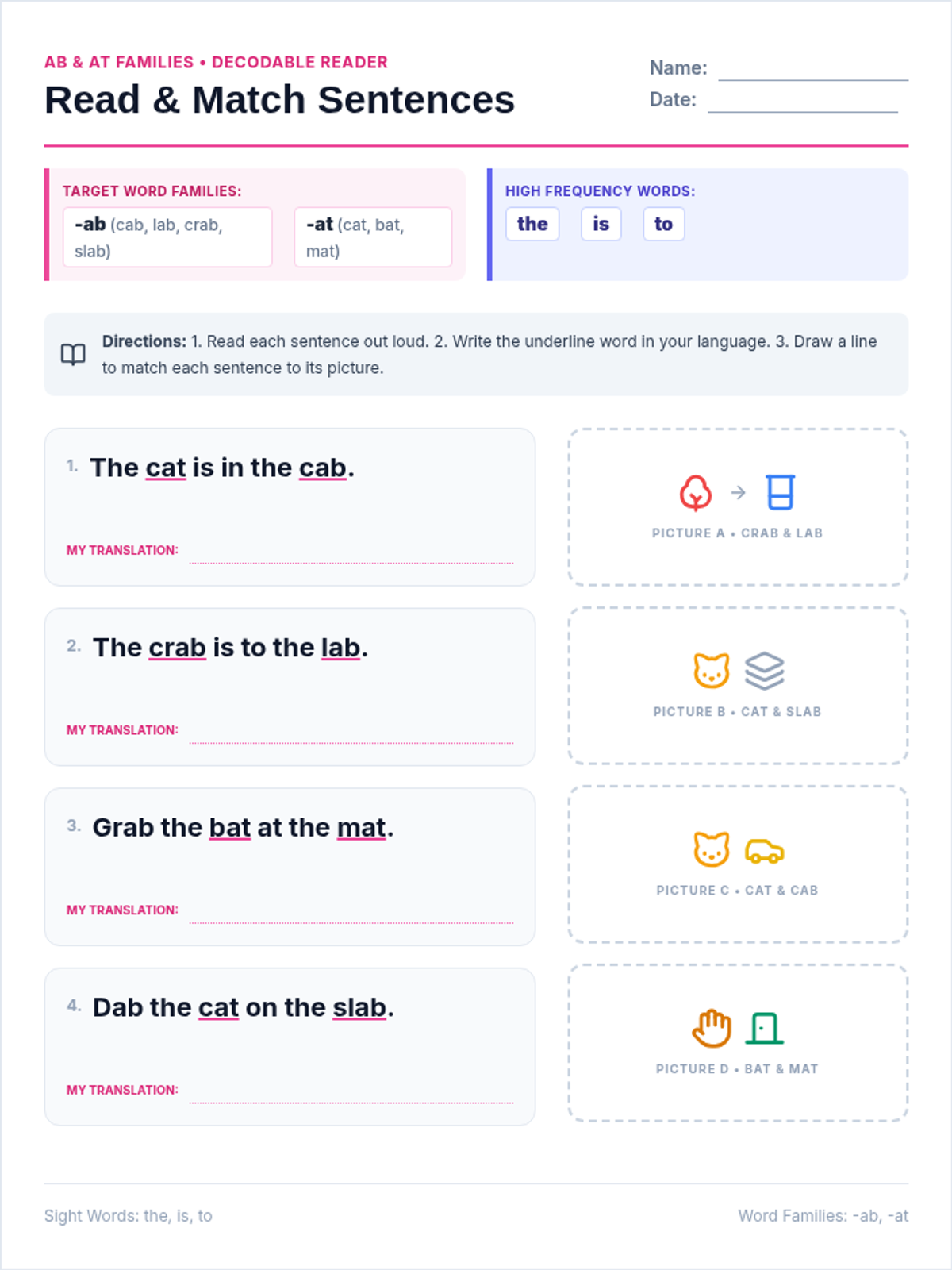
A multi-sensory lesson package for teaching the '-ab' word family to multilingual special education students. Features dual-language label spaces, highly concrete visual representations, and fine-motor activities.
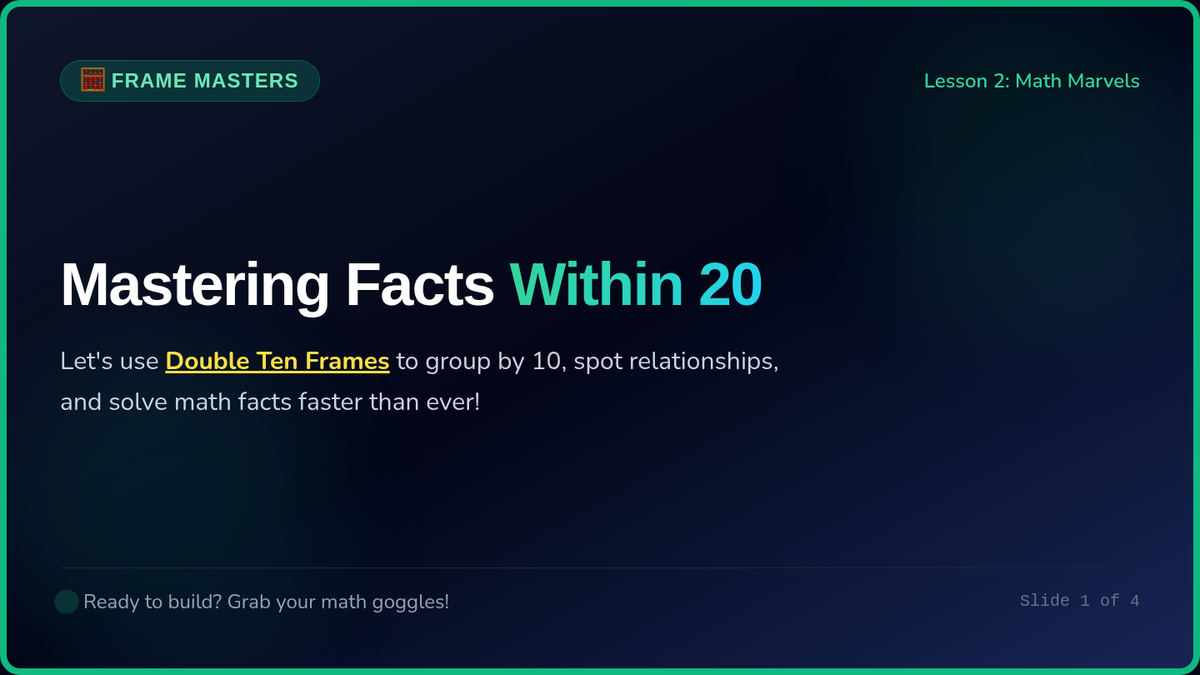
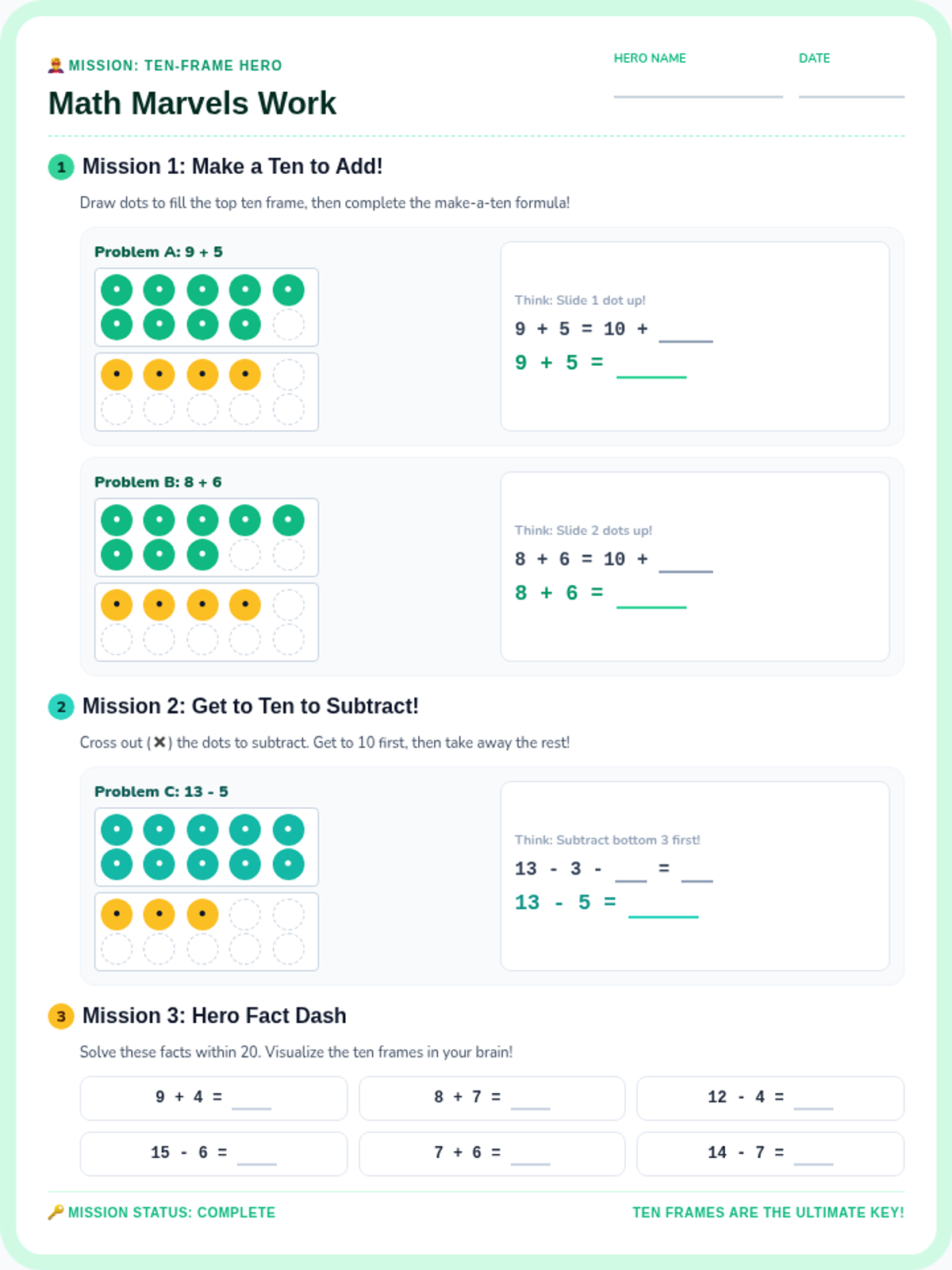
Math Marvels introduces and reinforces addition and subtraction facts within 20 using double ten-frame visuals and conceptual practice worksheets.
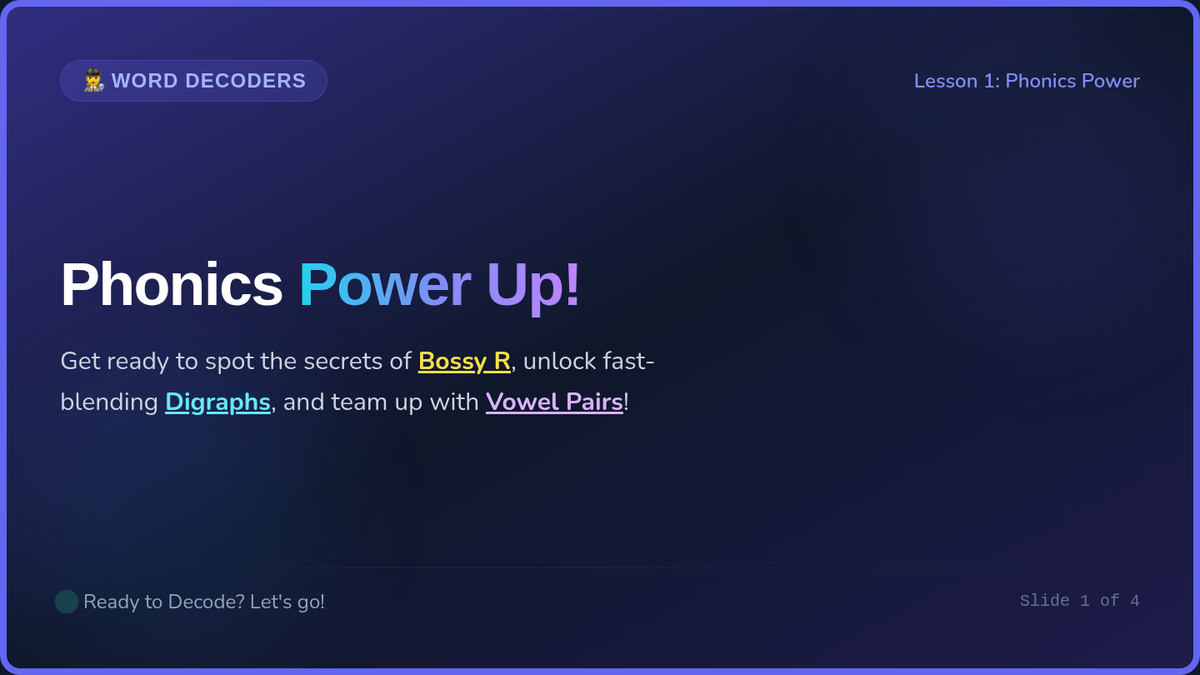
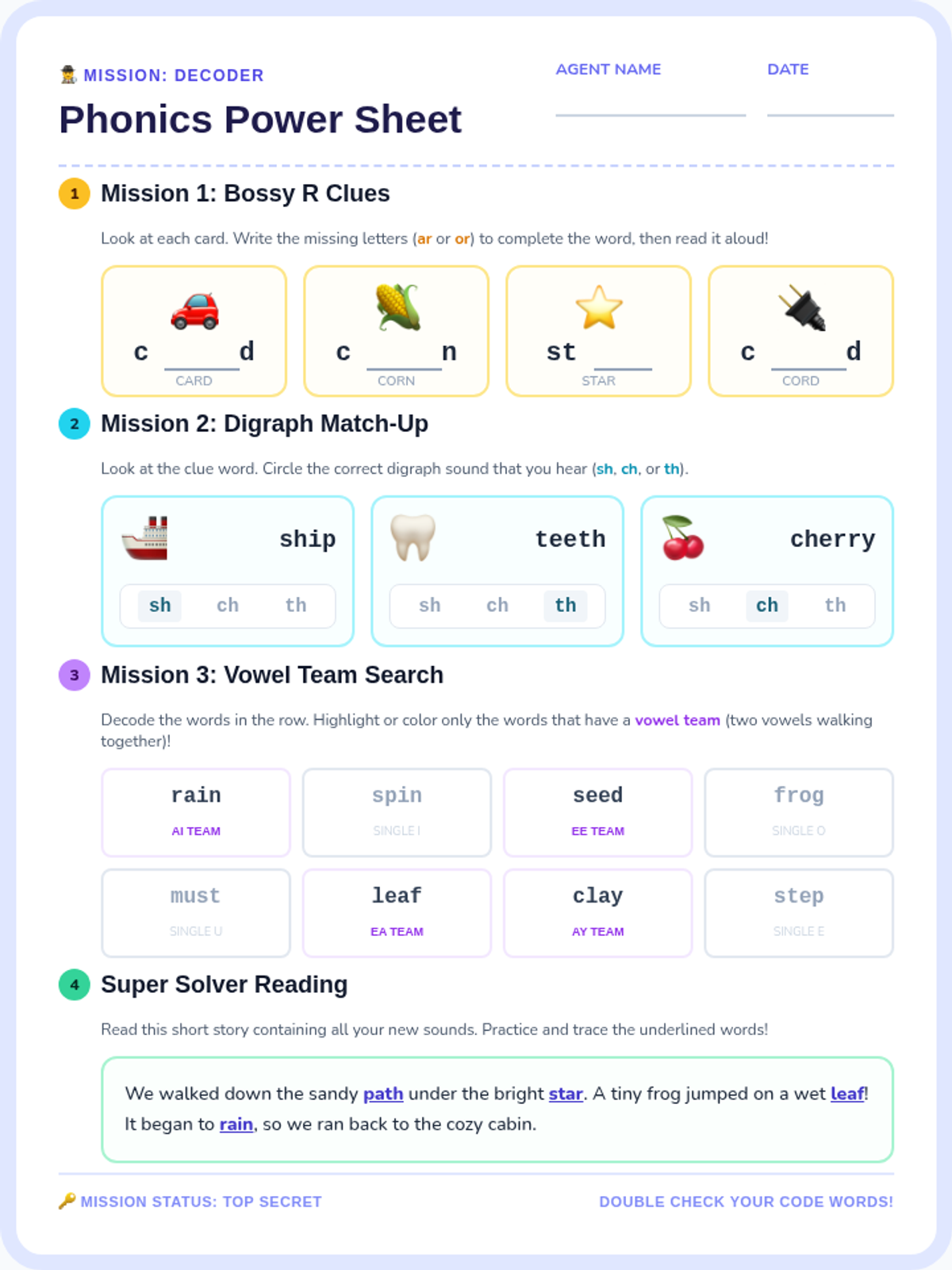
Phonics Power focuses on decoding Bossy R (ar, or), Digraphs (sh, ch, th), and Vowel Teams (ai, ay, ee, ea) through visual decoding slides and an engaging hands-on work sheet.
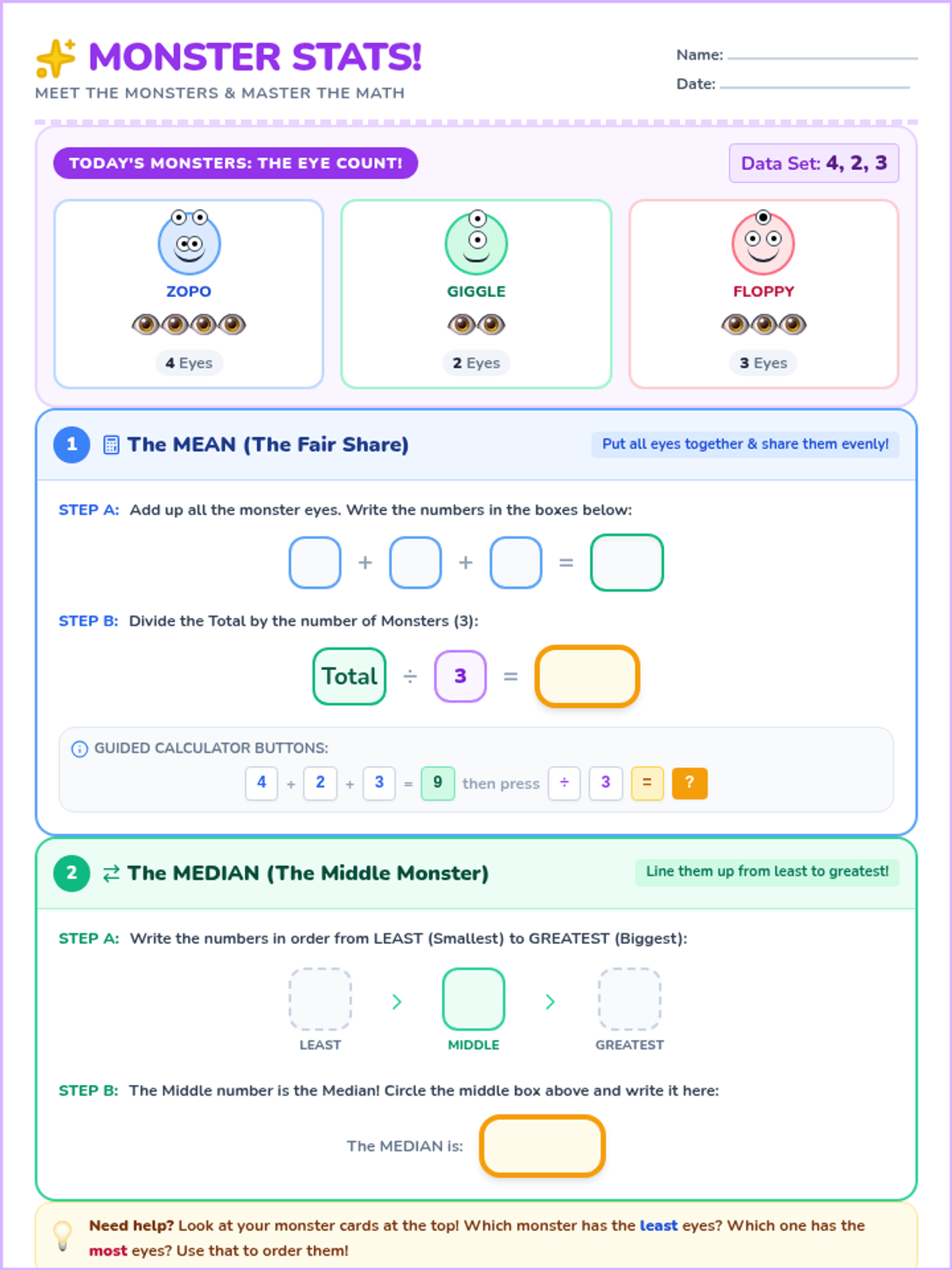
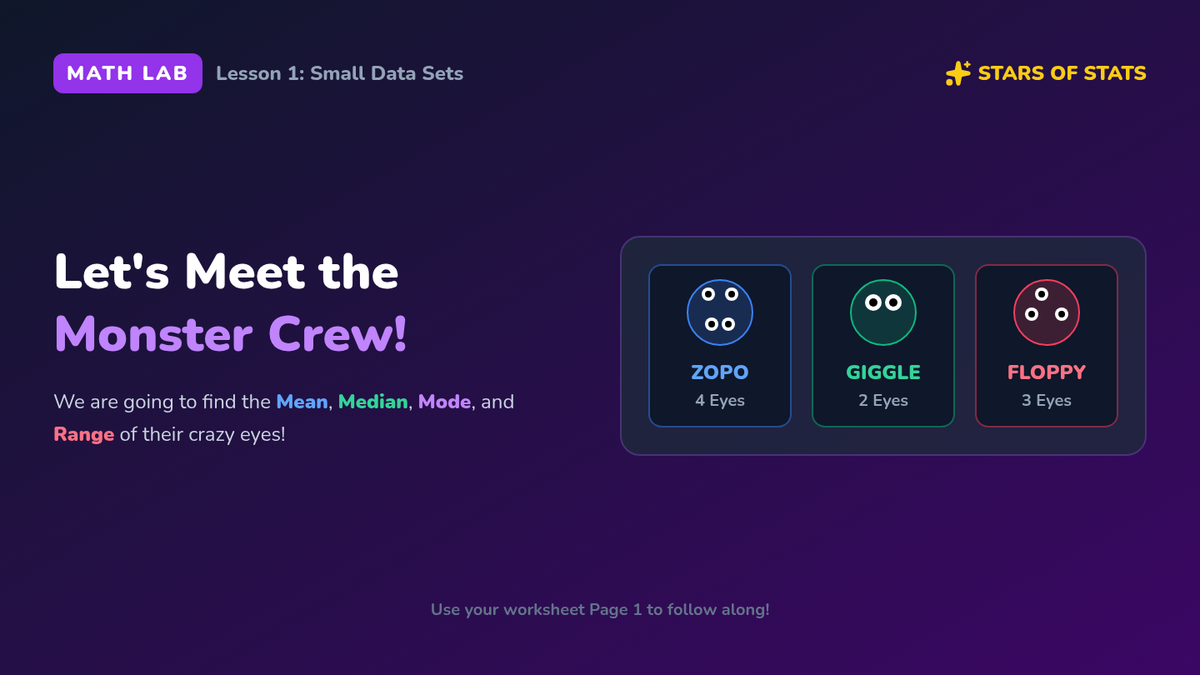
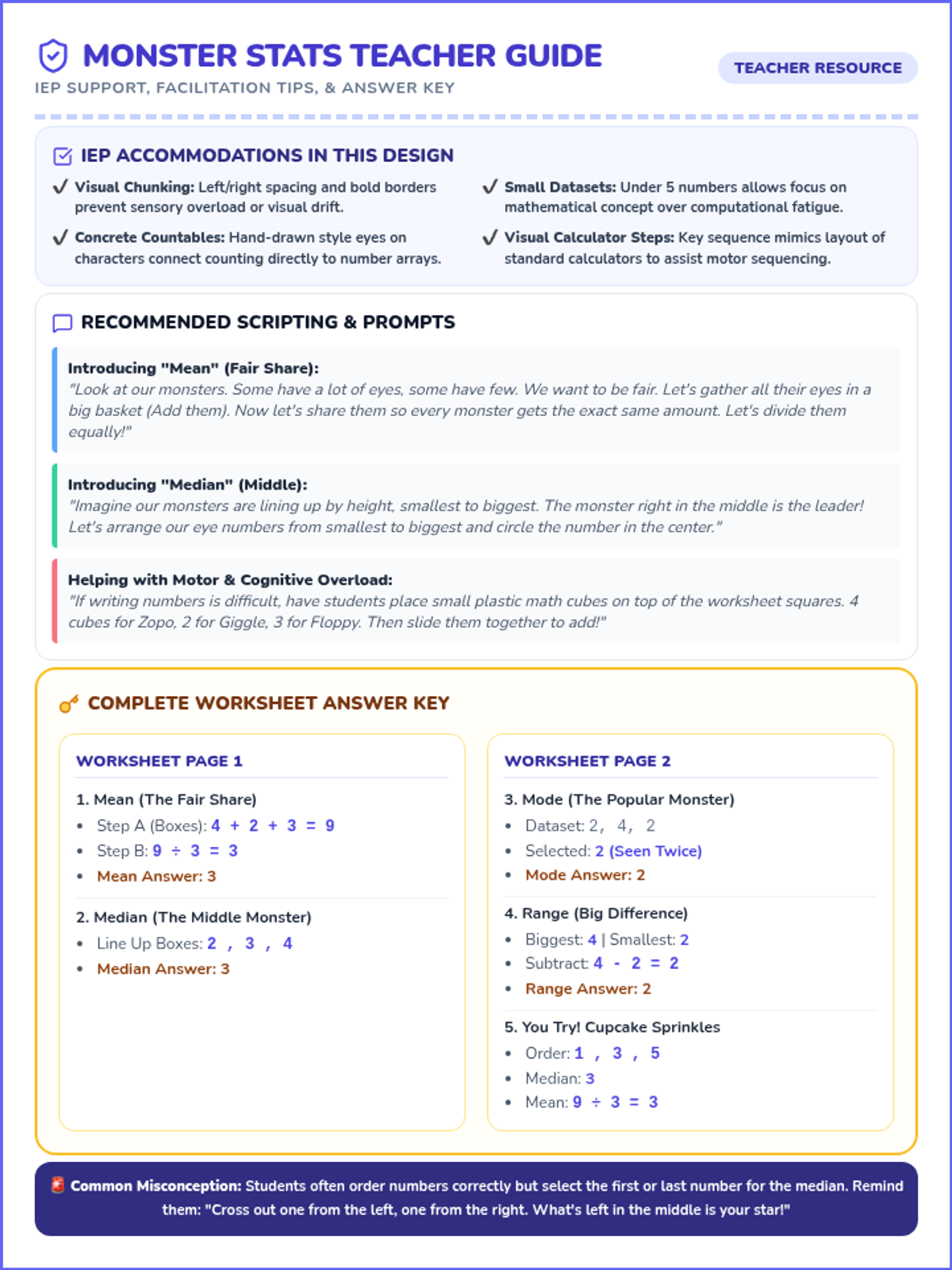
An introductory lesson on mean, median, mode, and range tailored for students with IEP accommodations. It features small data sets (under 5 numbers), countable visual objects, and step-by-step graphic organizers with guided calculator support.
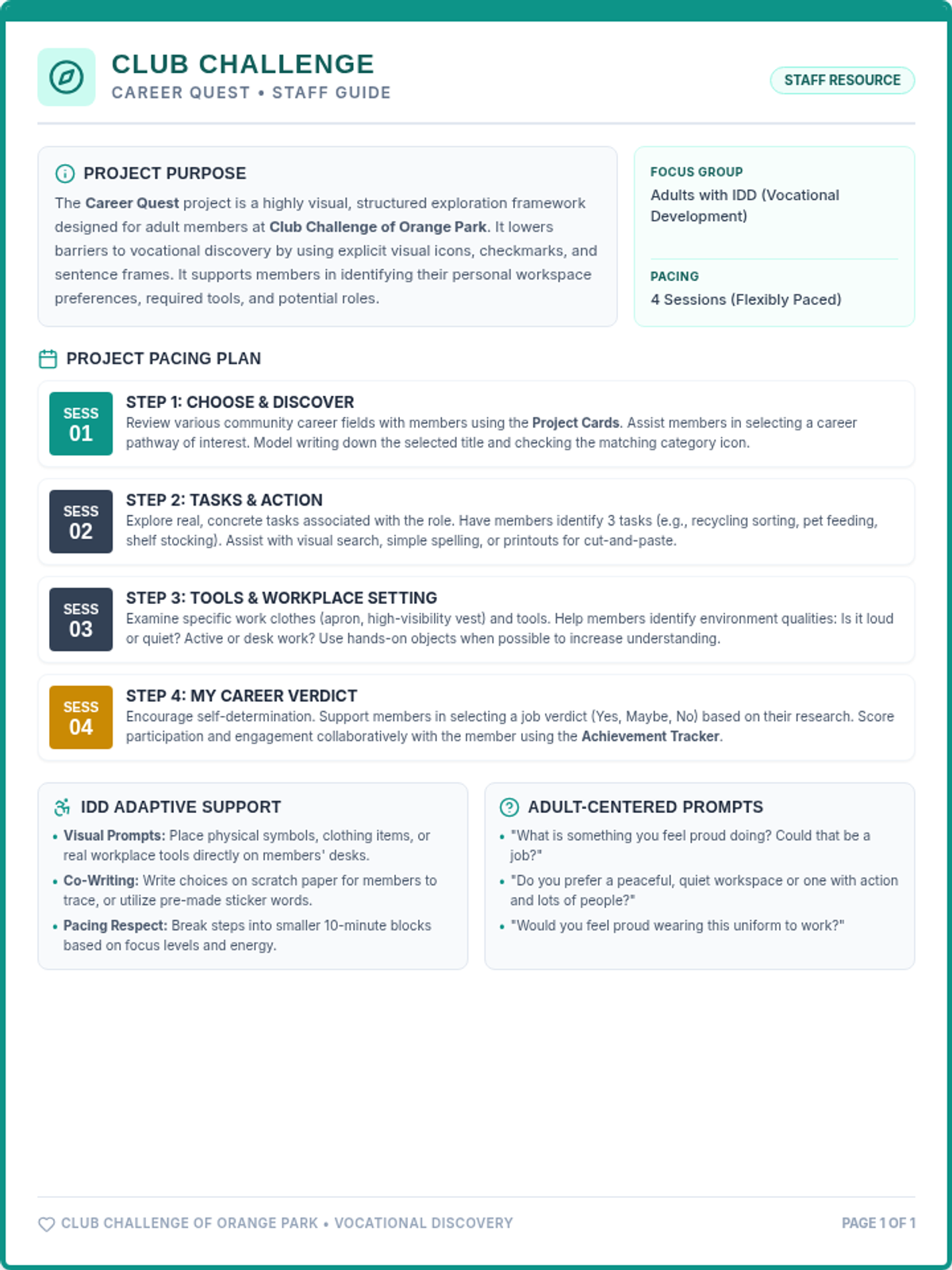
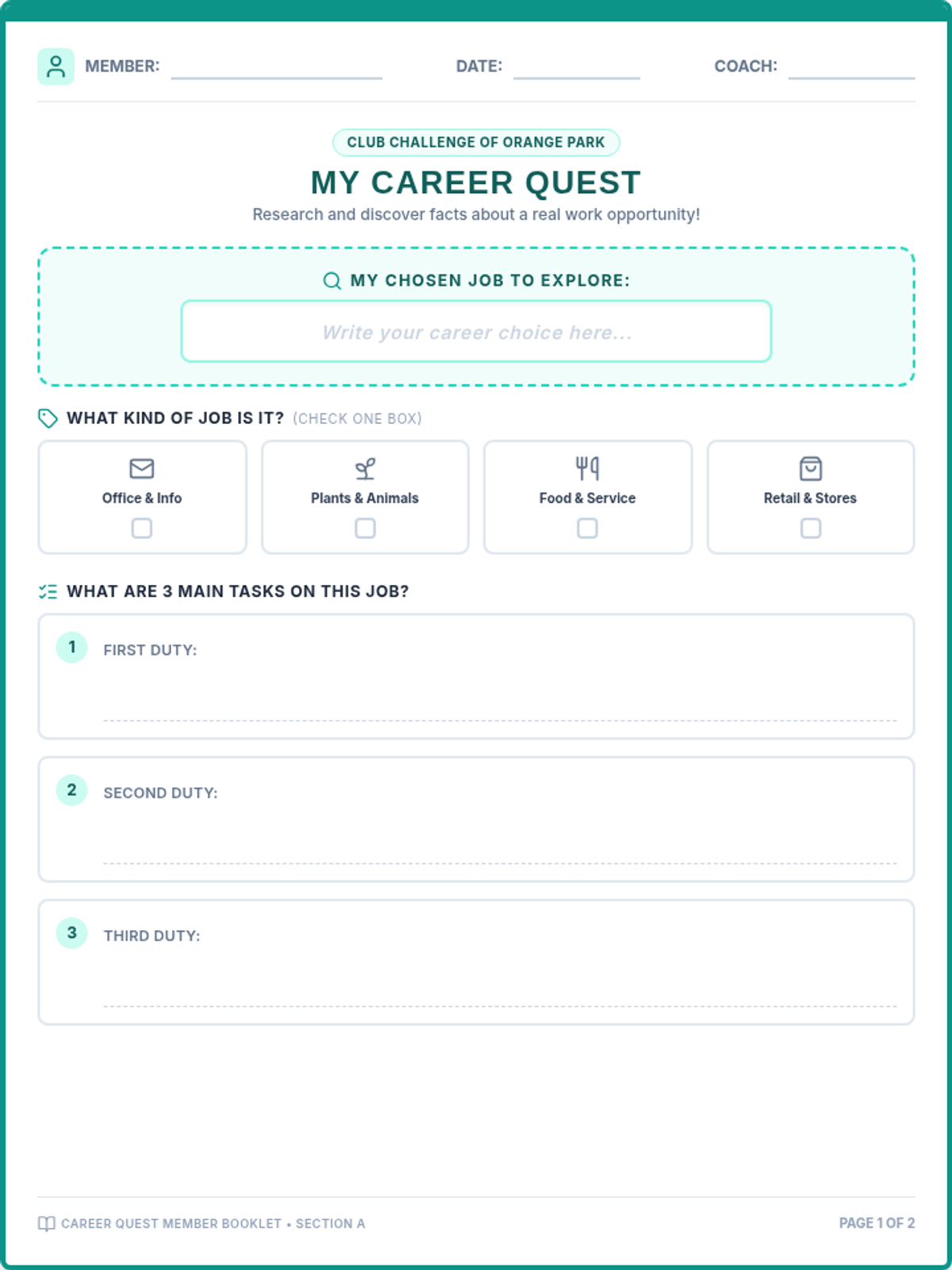
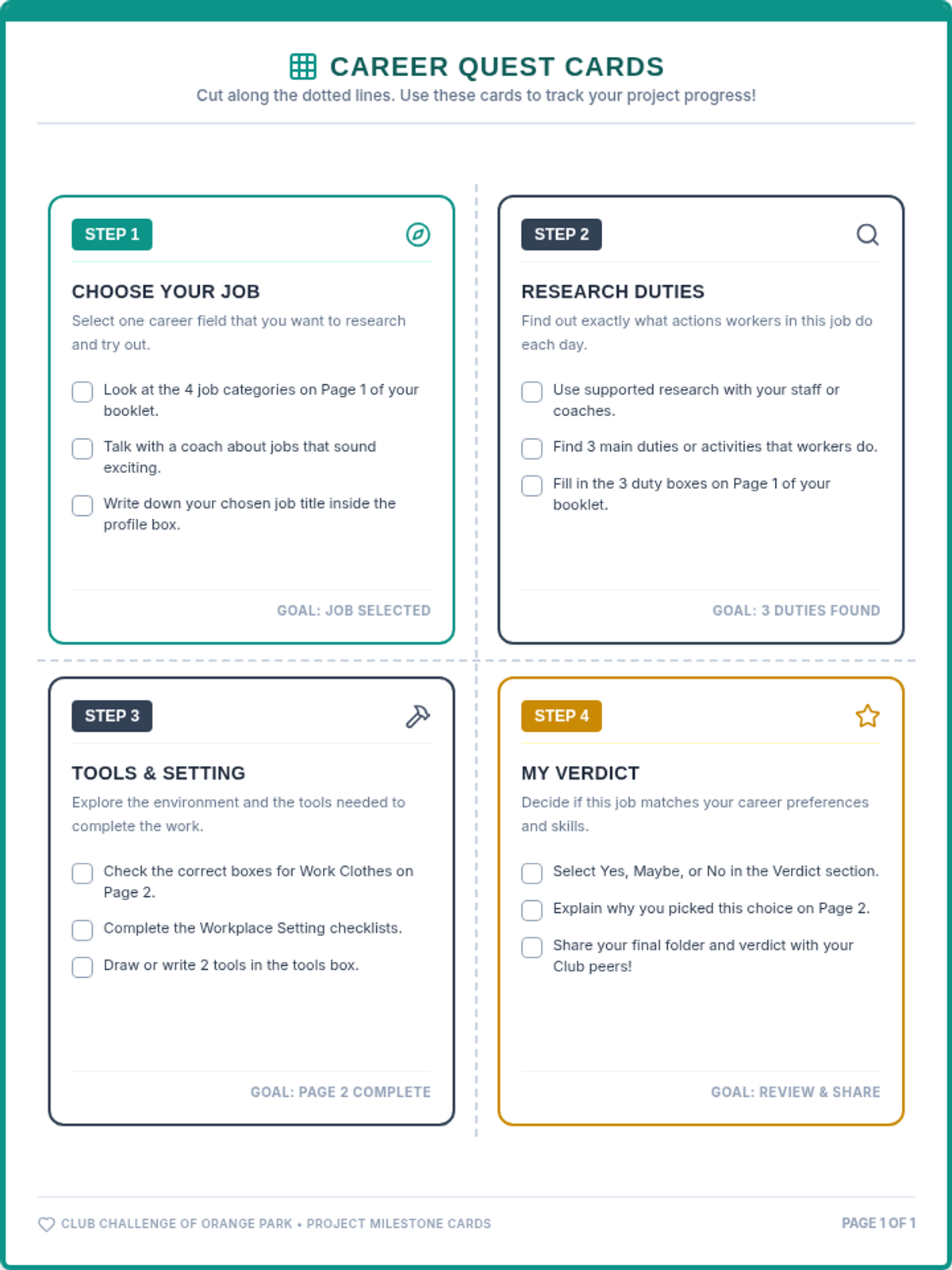
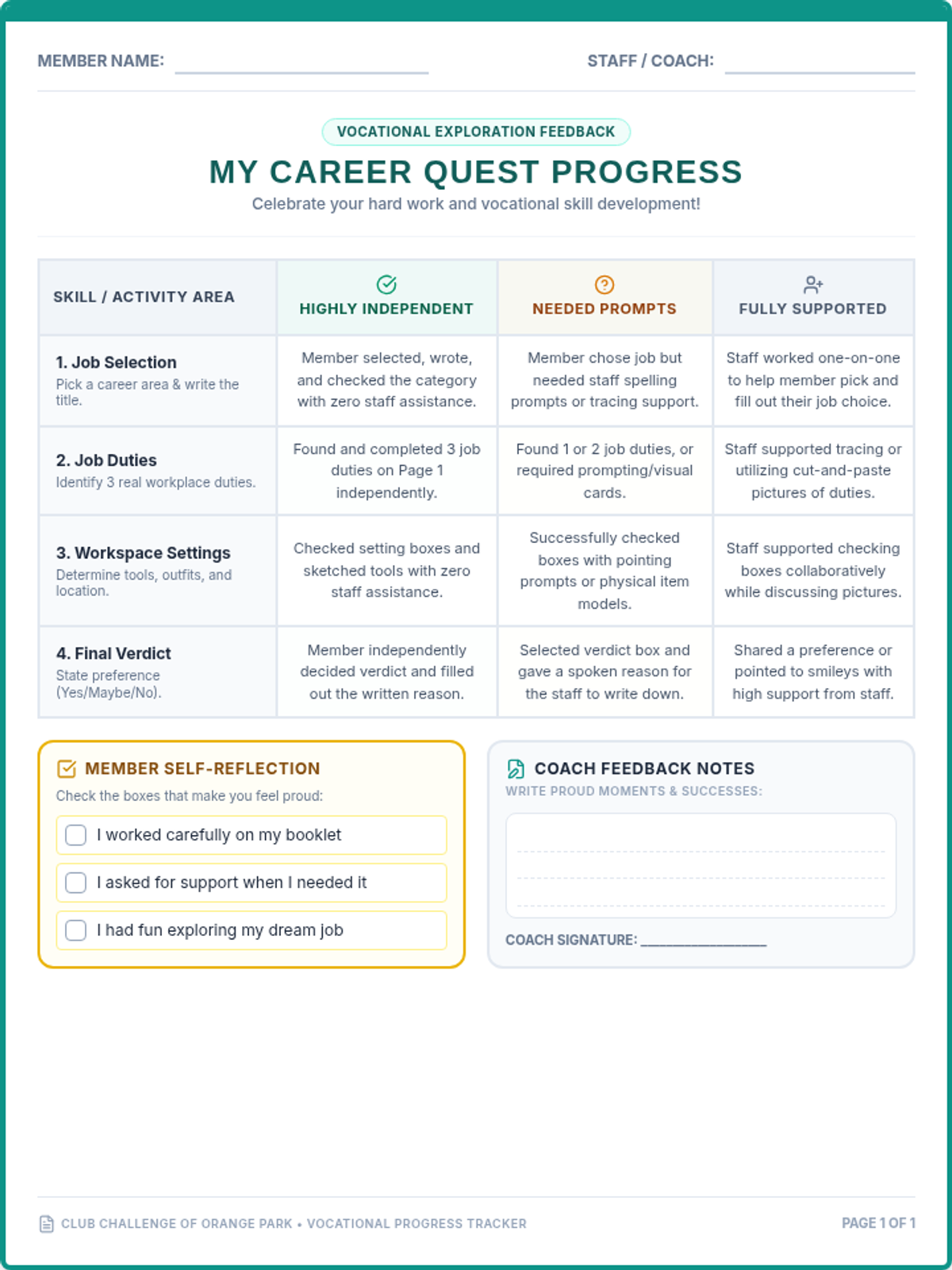
A highly structured, visual career exploration project bundle tailored for adults with intellectual and developmental disabilities (IDD) at Club Challenge of Orange Park. Includes a staff facilitation guide, visual member research organizers, step-by-step challenge cards, and a respectful skills achievement tracker.
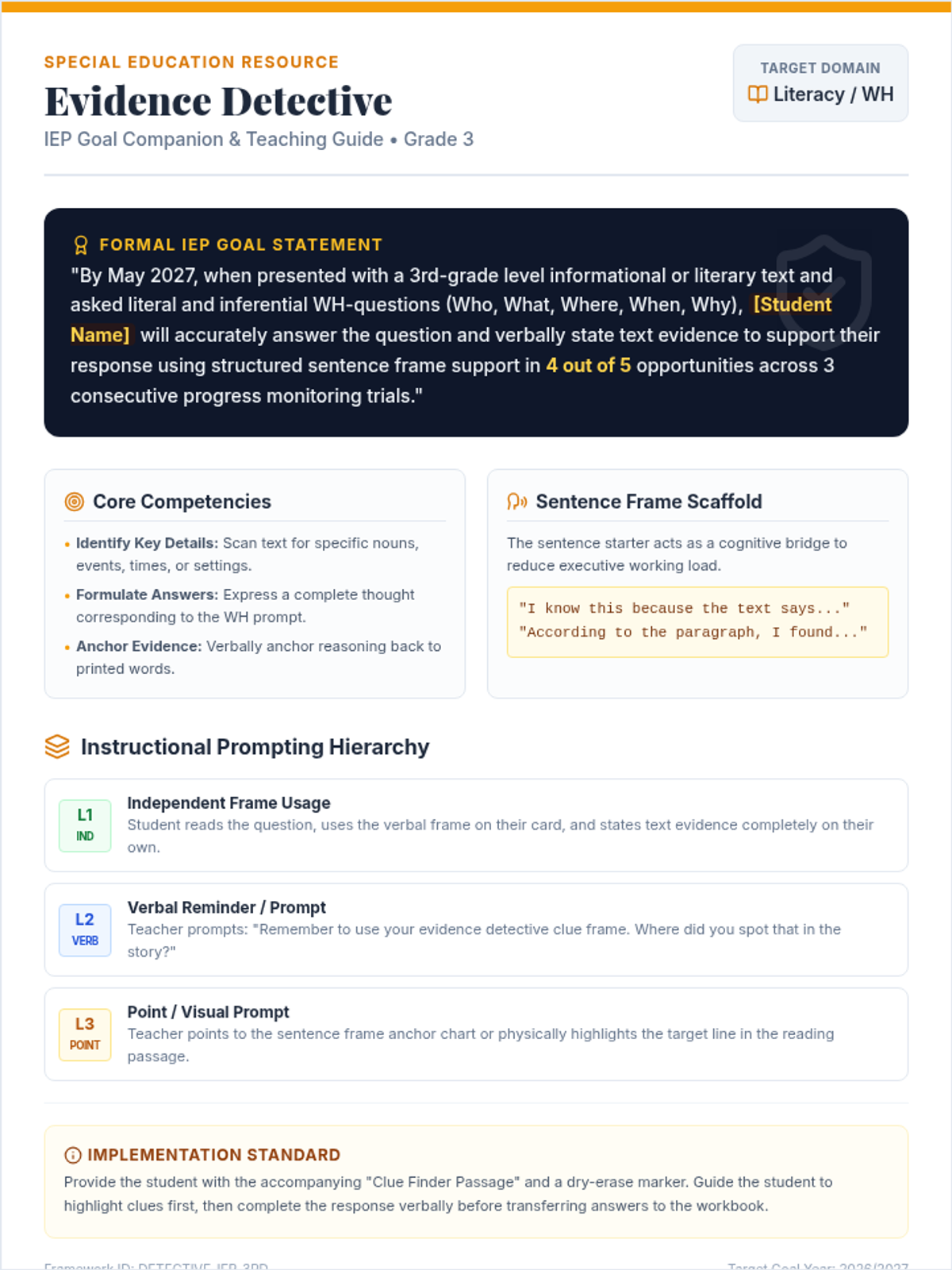
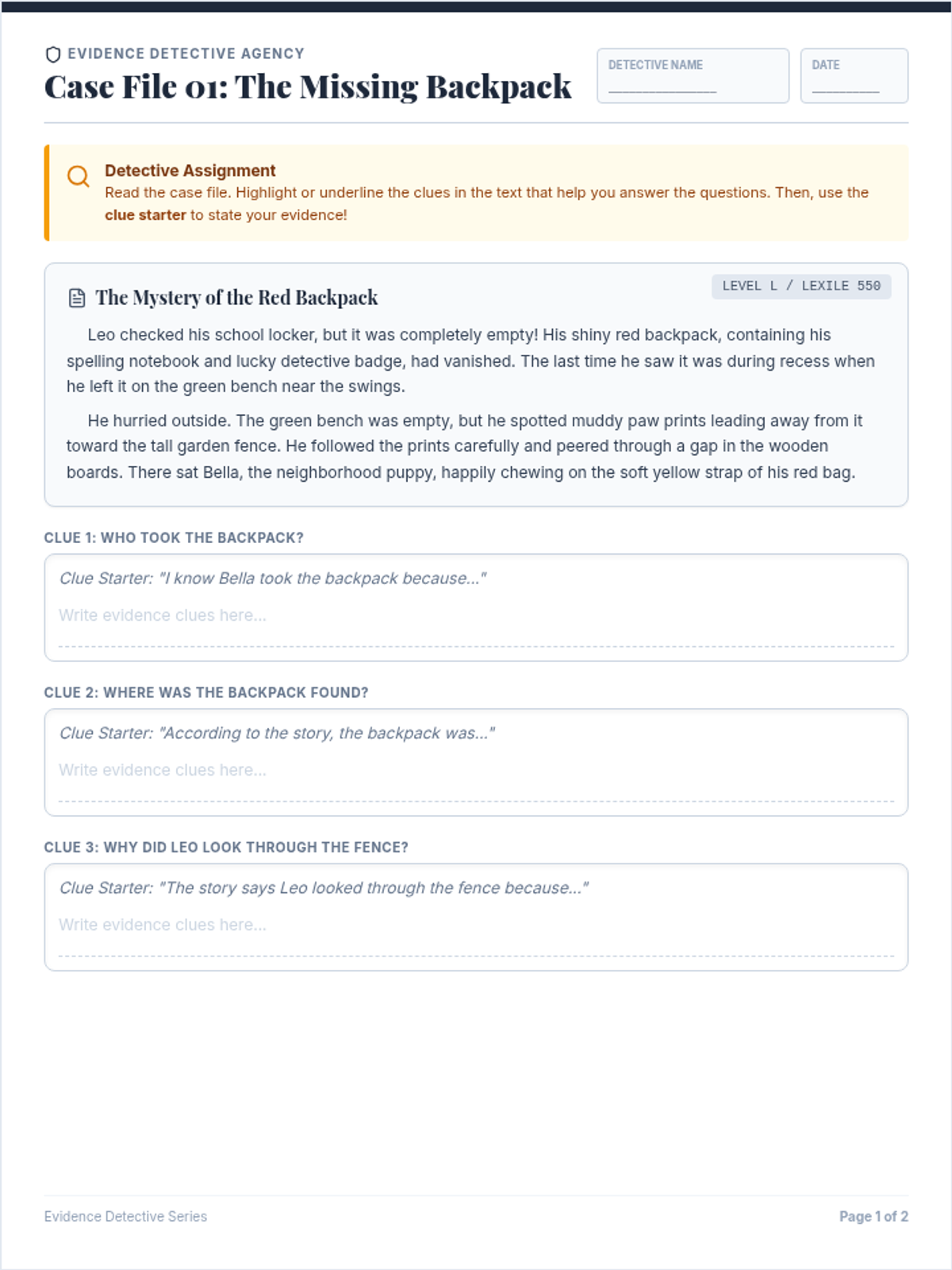
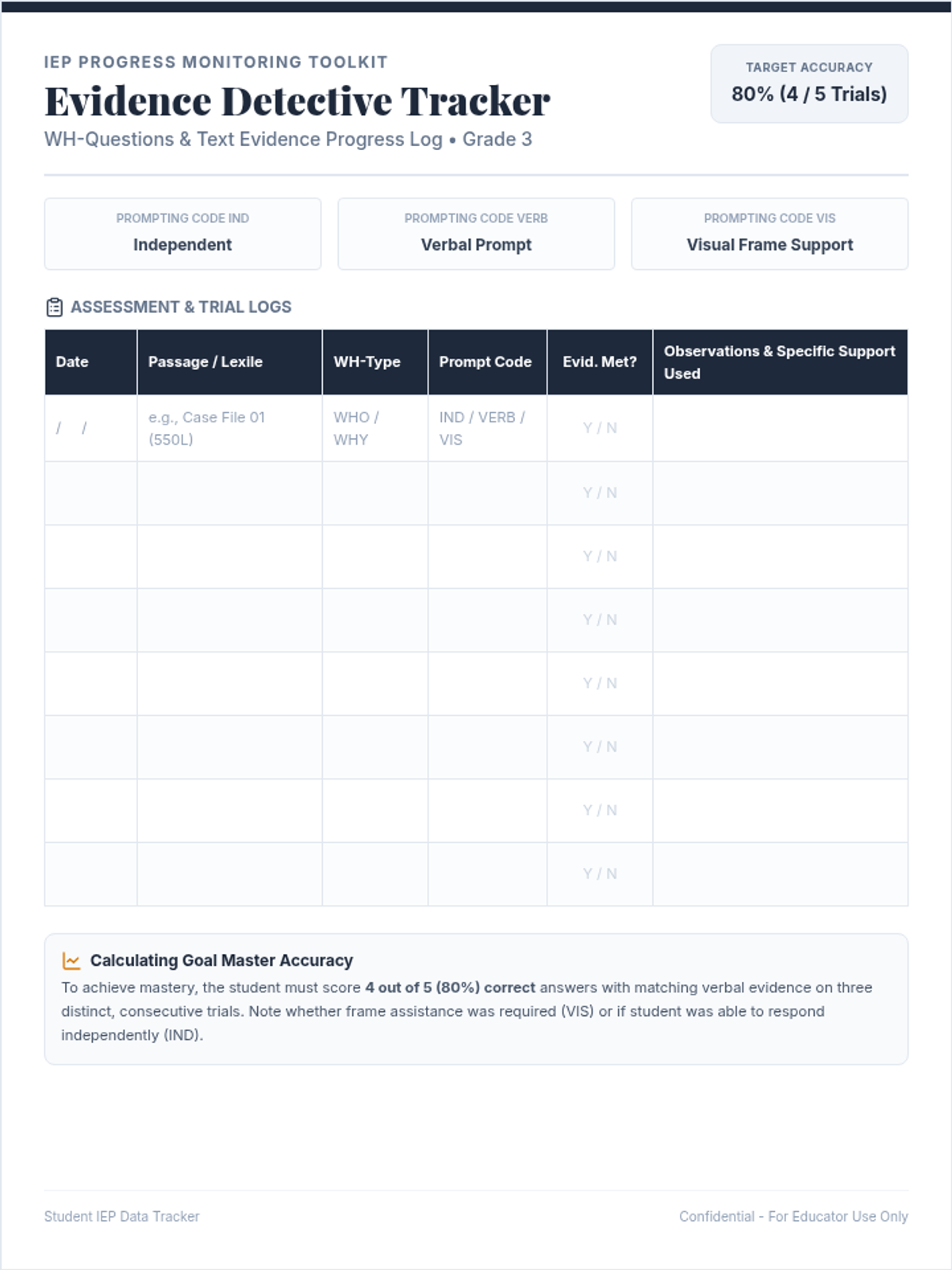
IEP goal framework, progress monitoring toolkit, and student-facing reading passages themed around being an Evidence Detective. This bundle provides 3rd-grade students with structured sentence frames to answer WH-questions and cite text evidence.
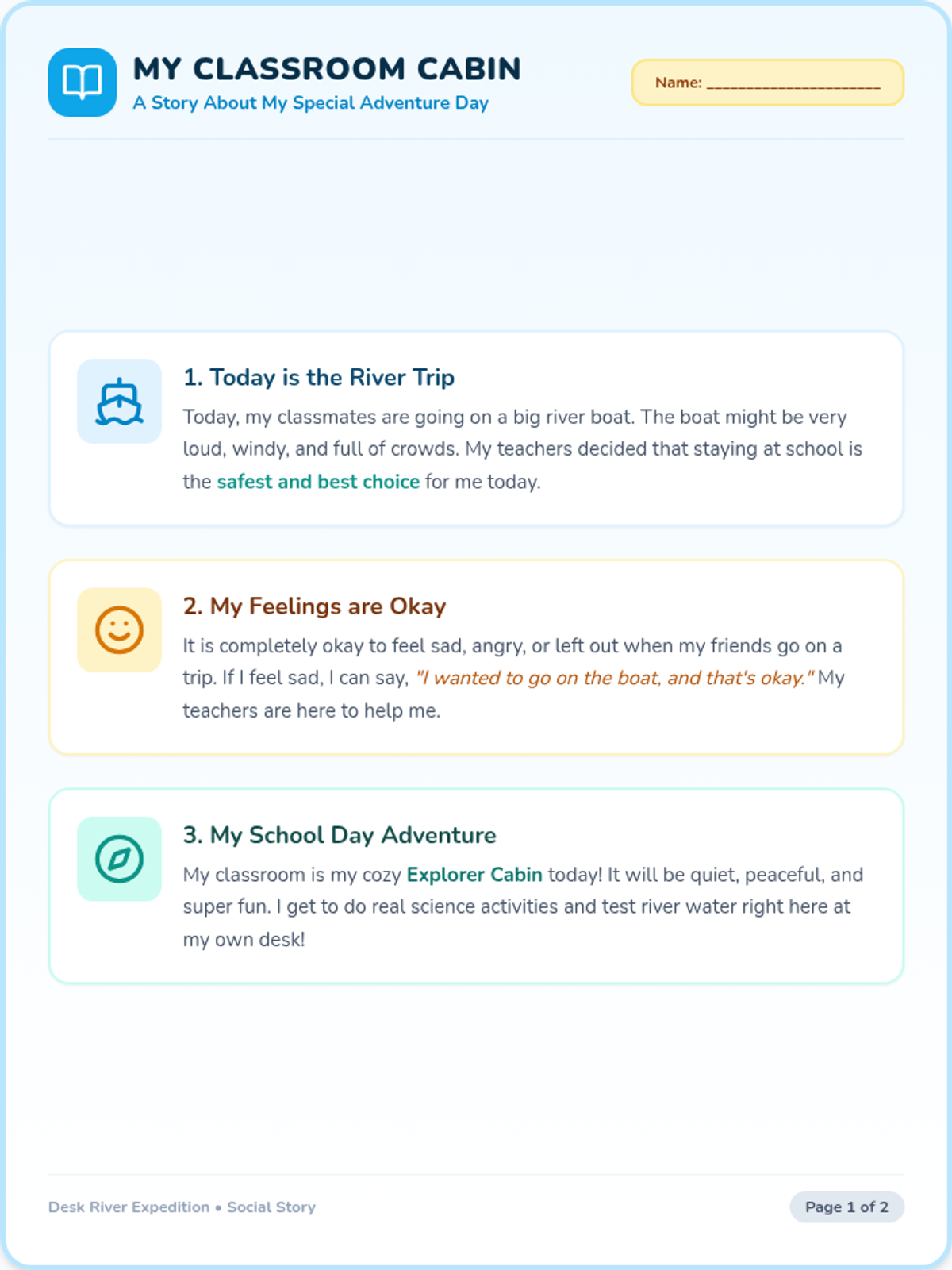
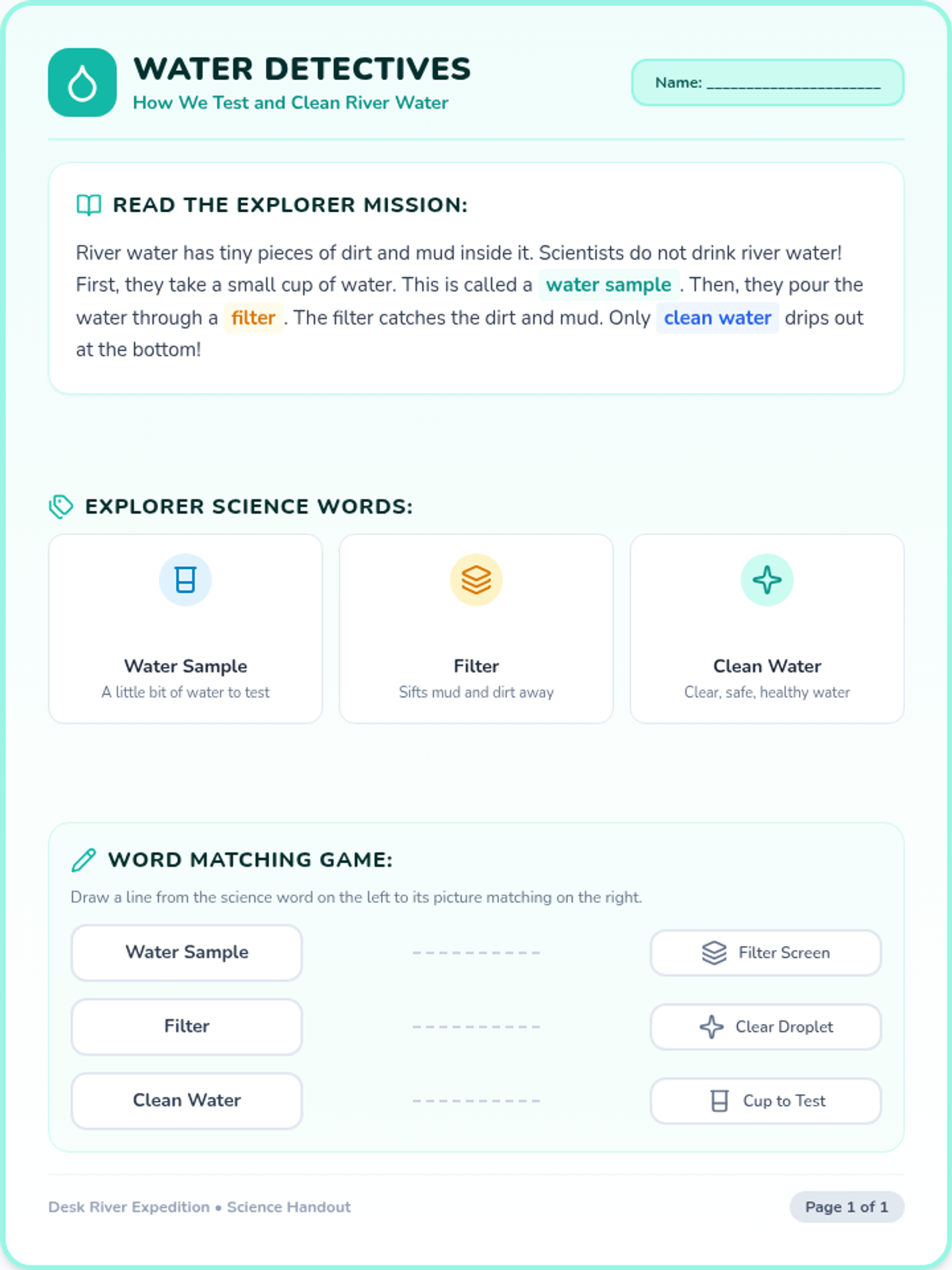
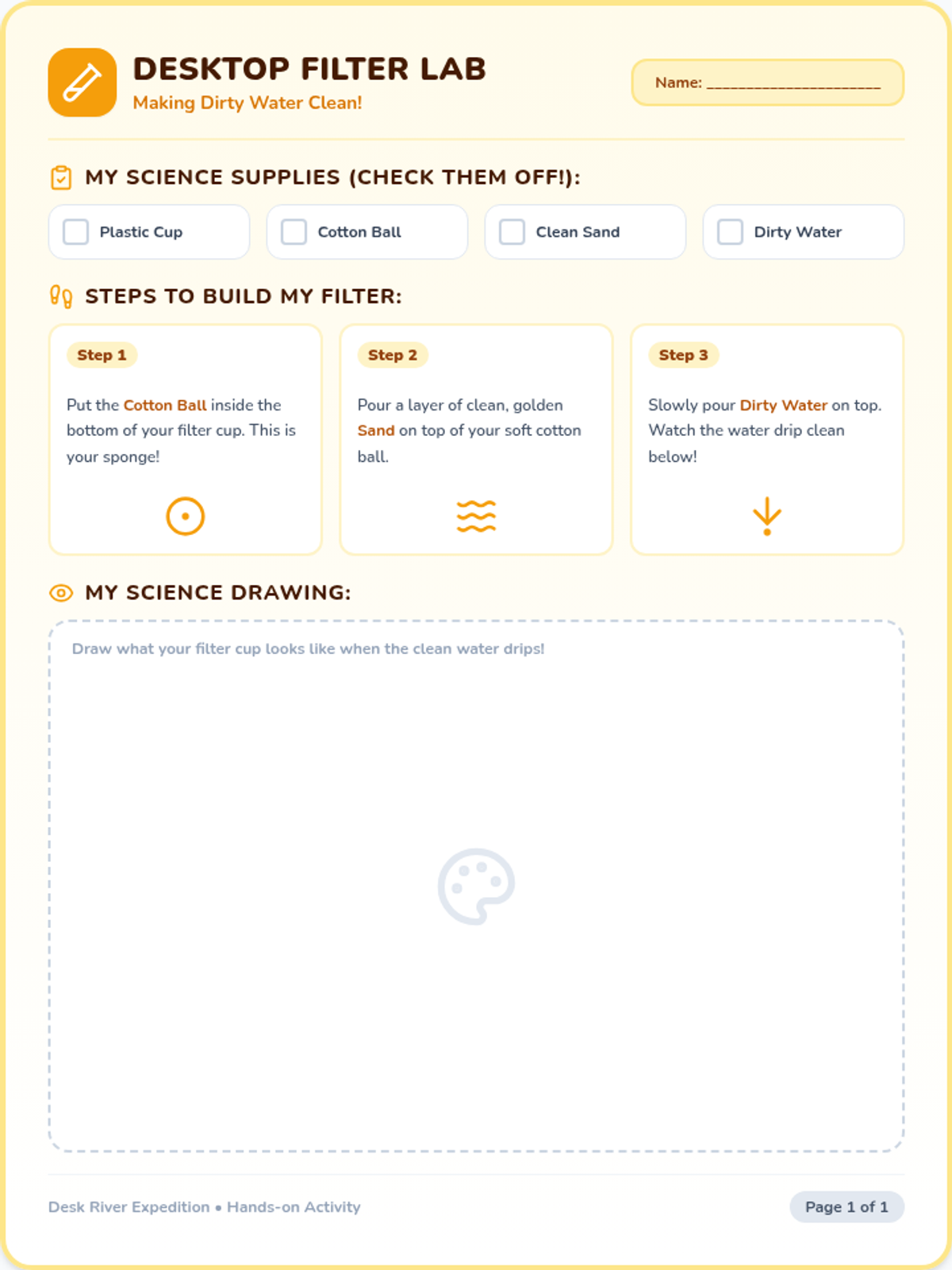
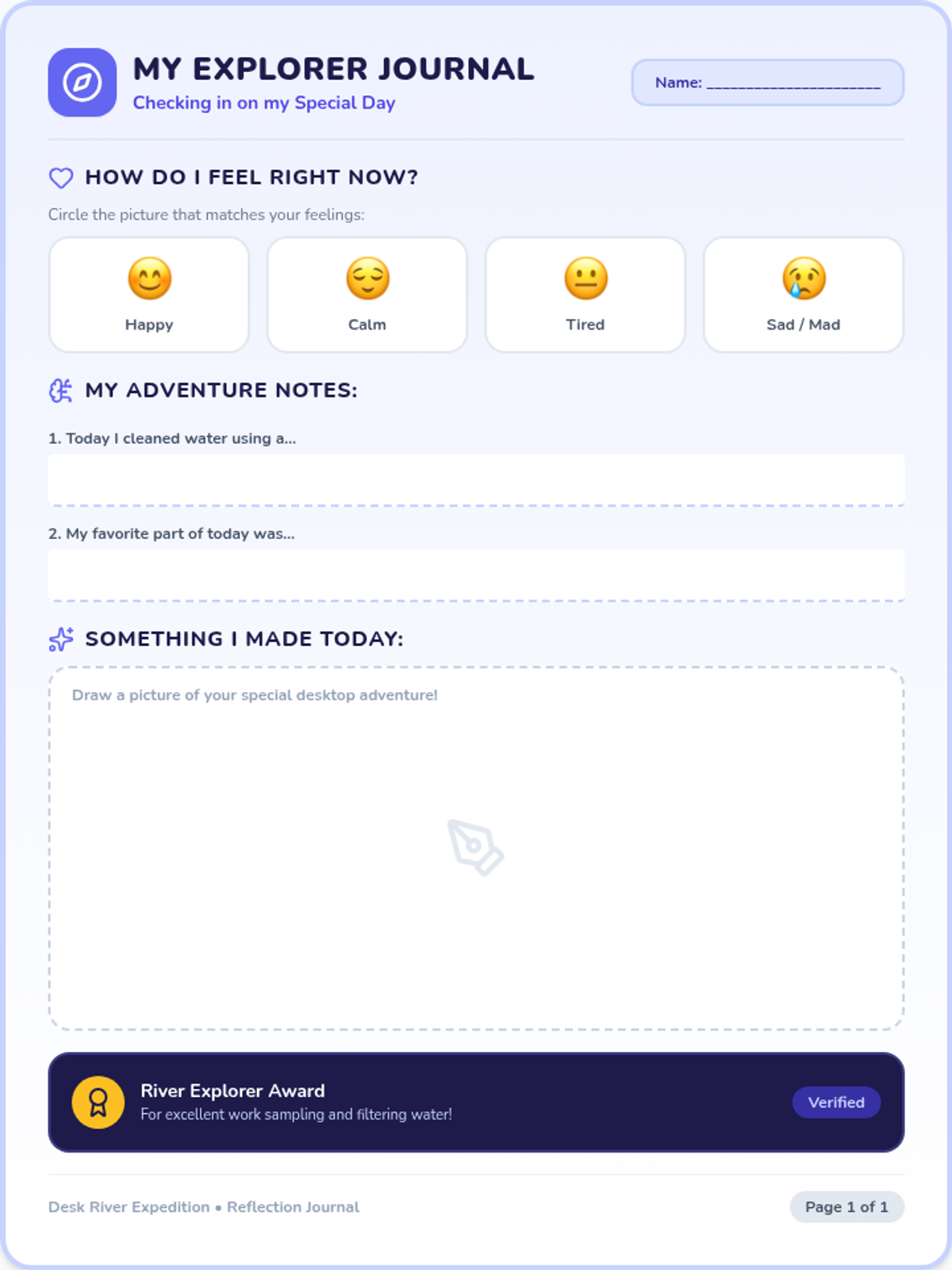
A tailored learning and coping bundle for a student staying behind from a 5th-grade river boat trip. It breaks down river water sampling and filtration into a highly visual, 2nd-grade level desk-based adventure, combined with emotional support and self-regulation.
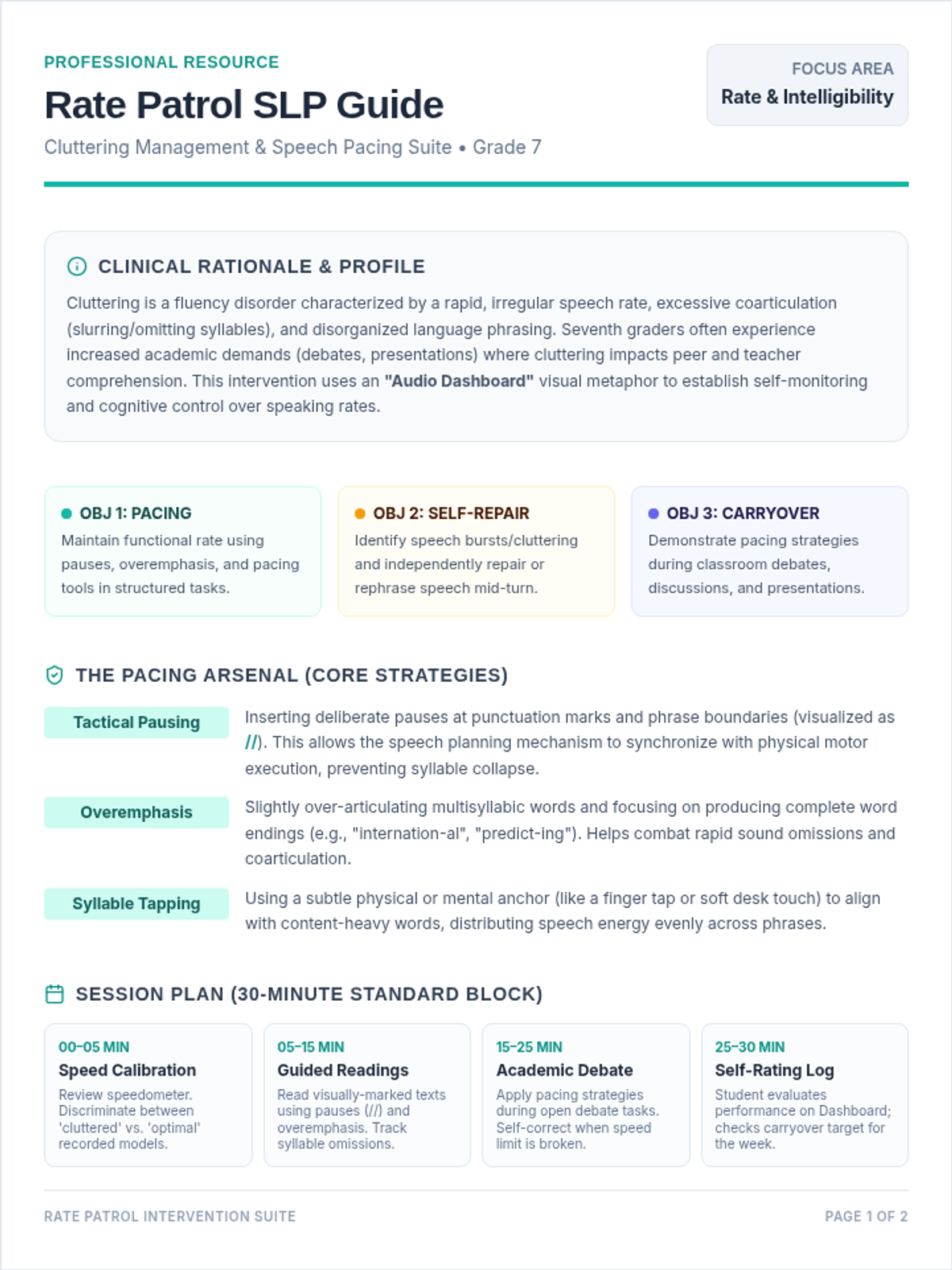
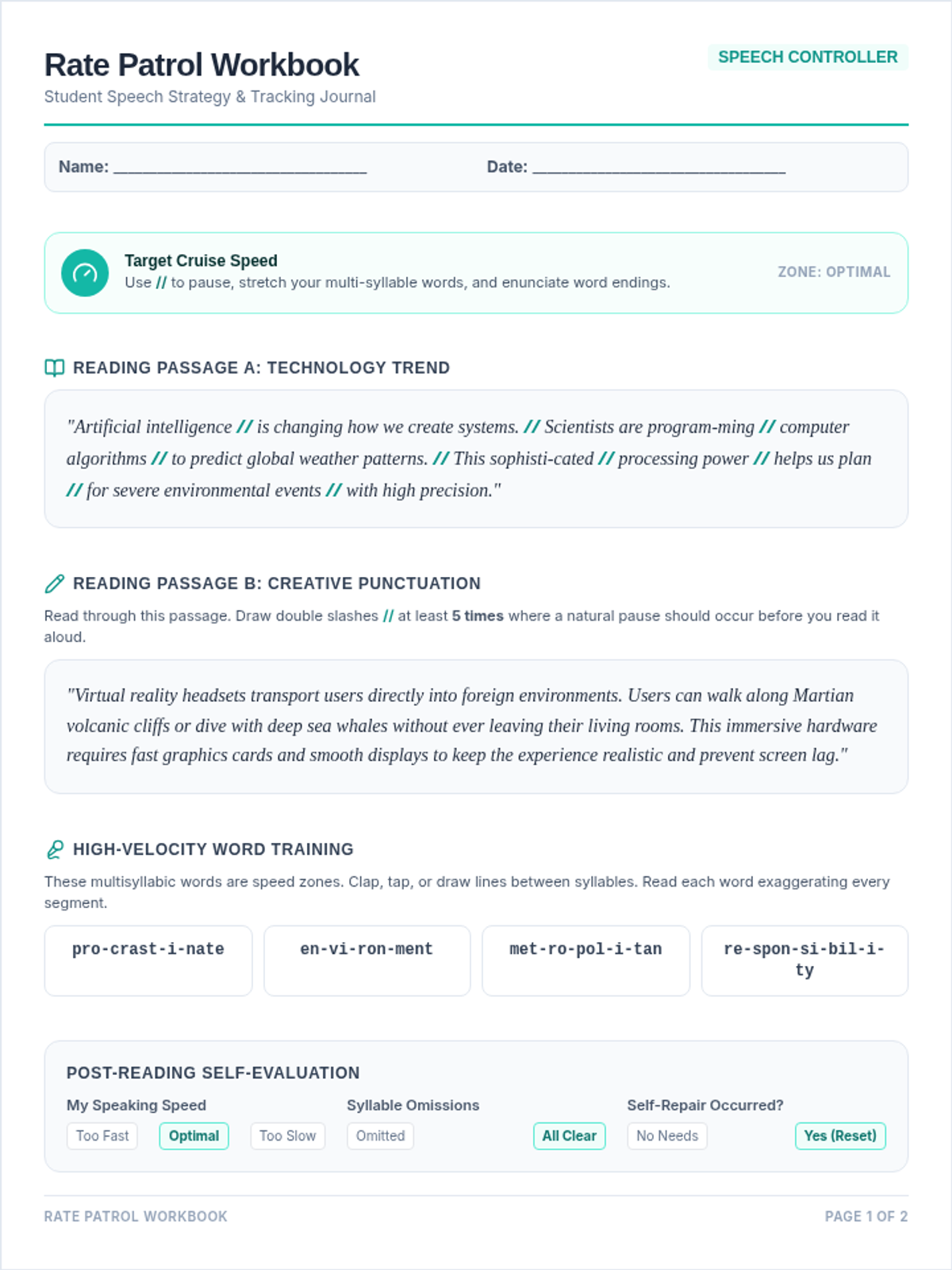
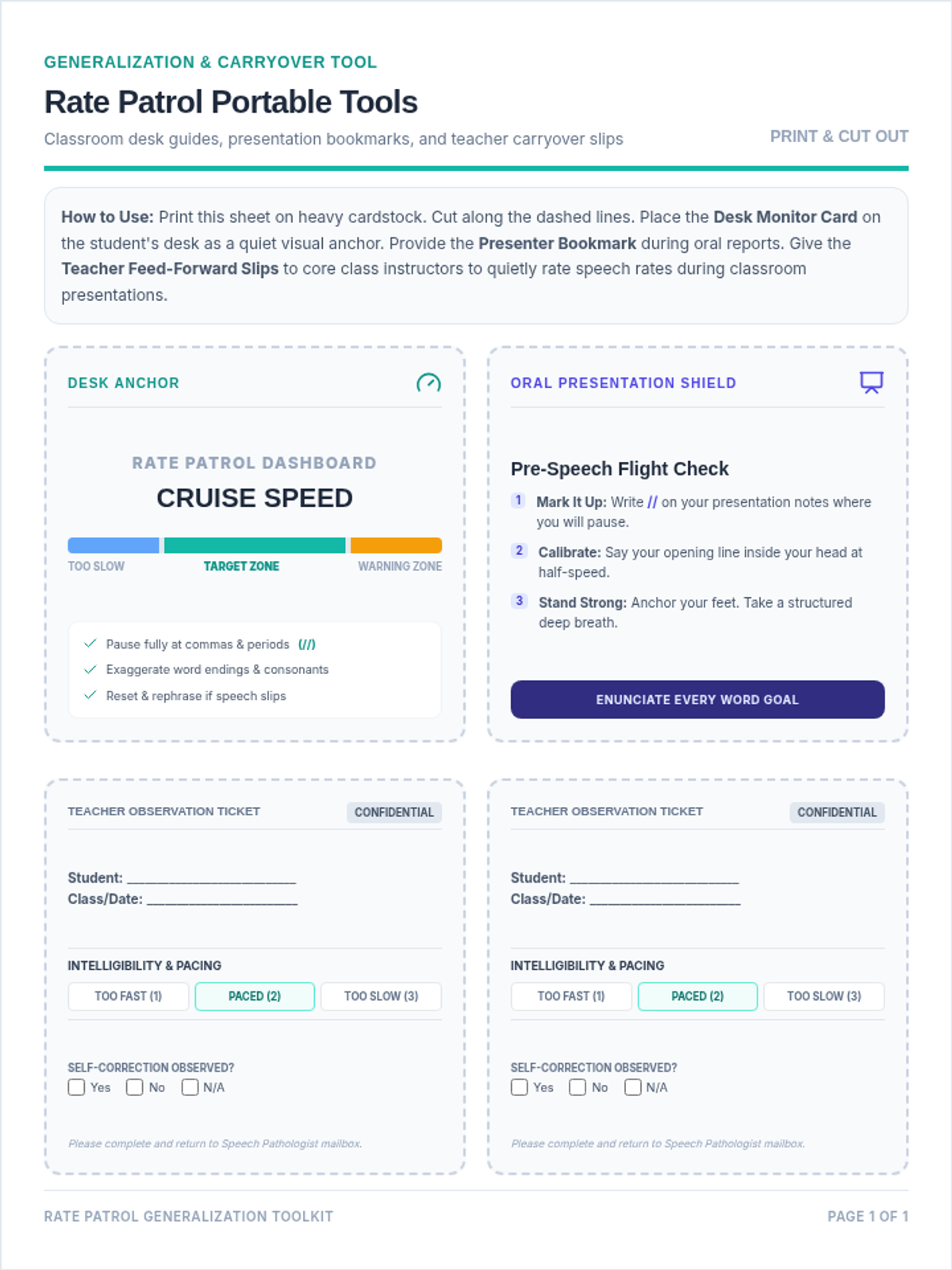
A comprehensive speech therapy bundle designed for a 7th-grade student with cluttering. This lesson focuses on speed control, self-monitoring, and classroom carryover using an interactive, dashboard-themed approach ('Rate Patrol') to master speech pacing, overemphasis, and intentional pausing.
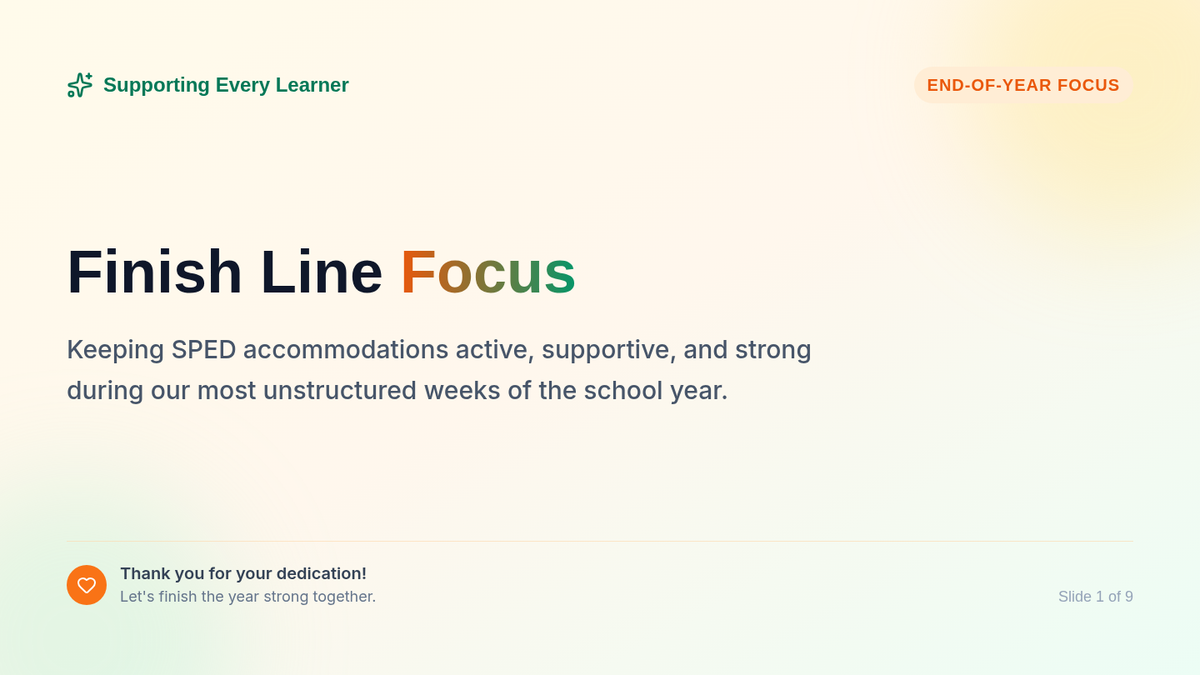
A supportive and professional development lesson designed for educators to reinforce SPED accommodations during the chaotic final weeks of the school year. Focuses on visual schedules, sensory breaks, and behavior support plans.
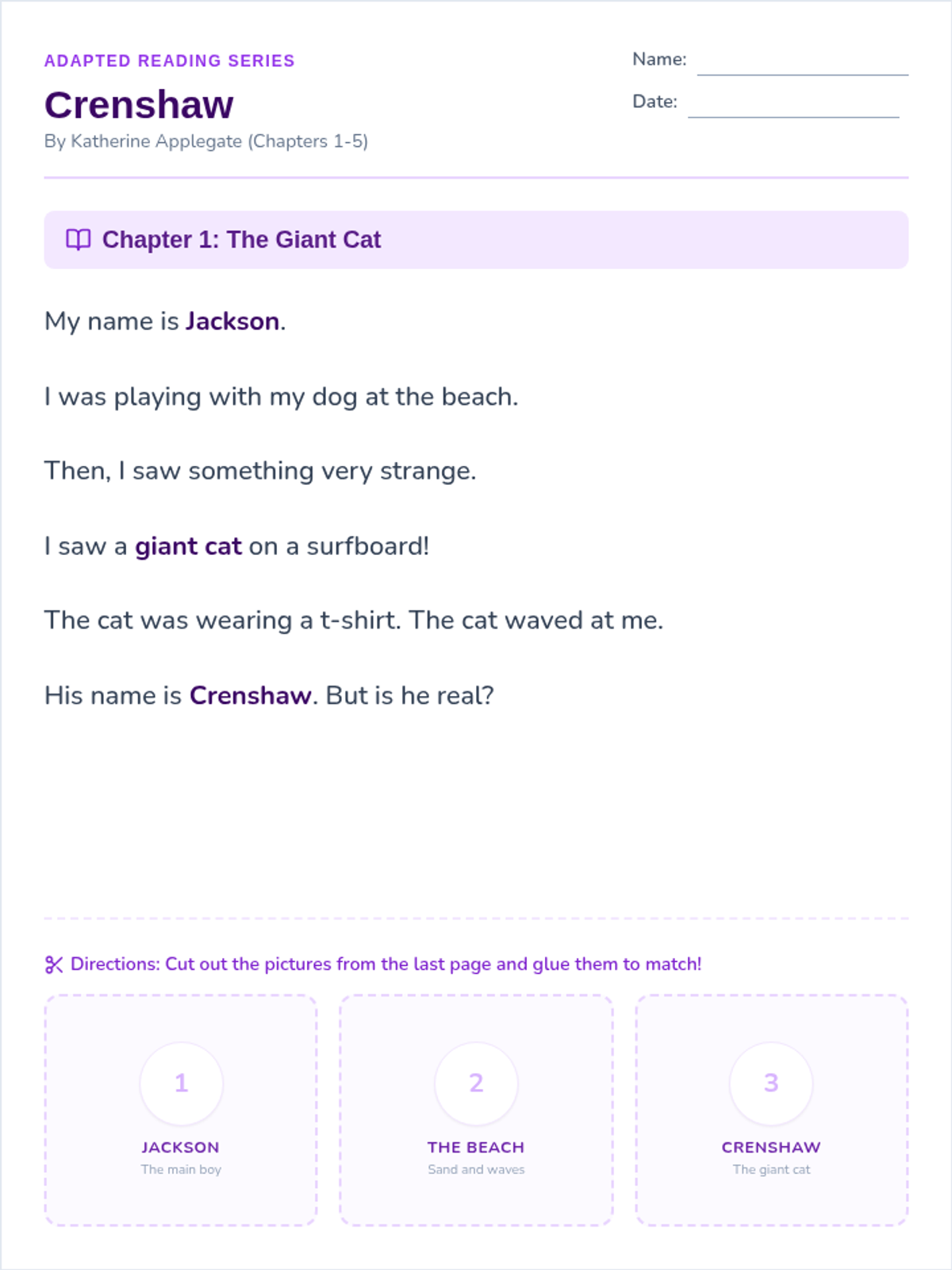
An adapted reading unit for Katherine Applegate's 'Crenshaw' tailored for first-grade readers, focusing on simplified text comprehension and interactive visual support icons.
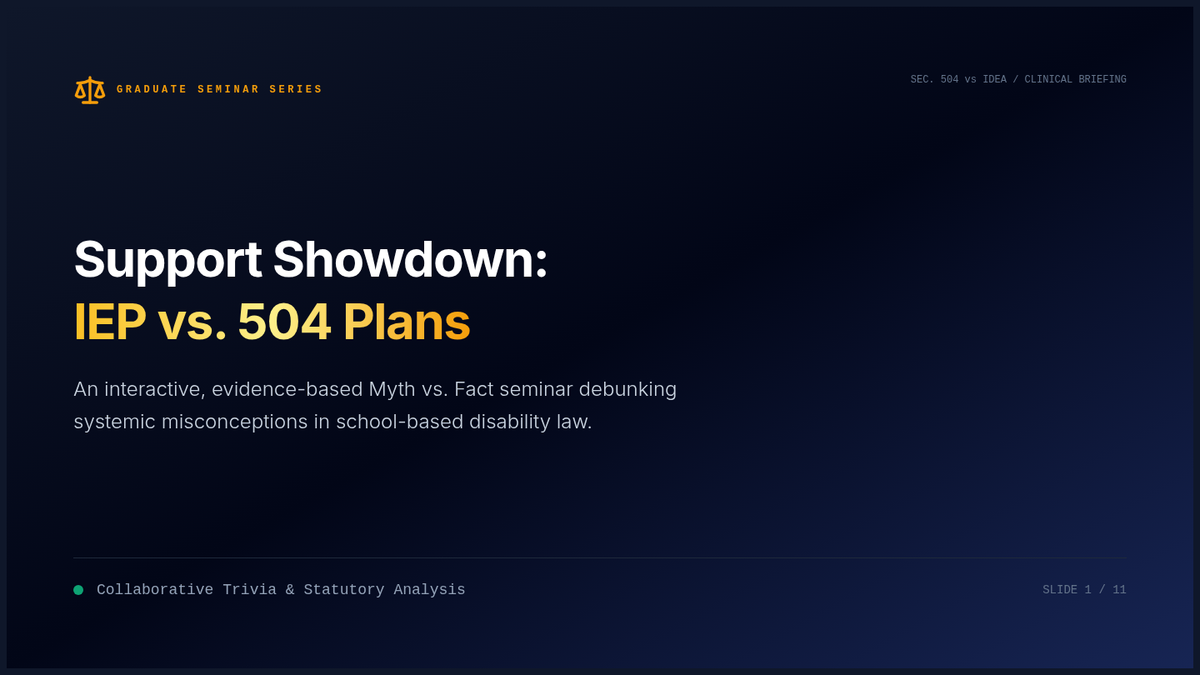
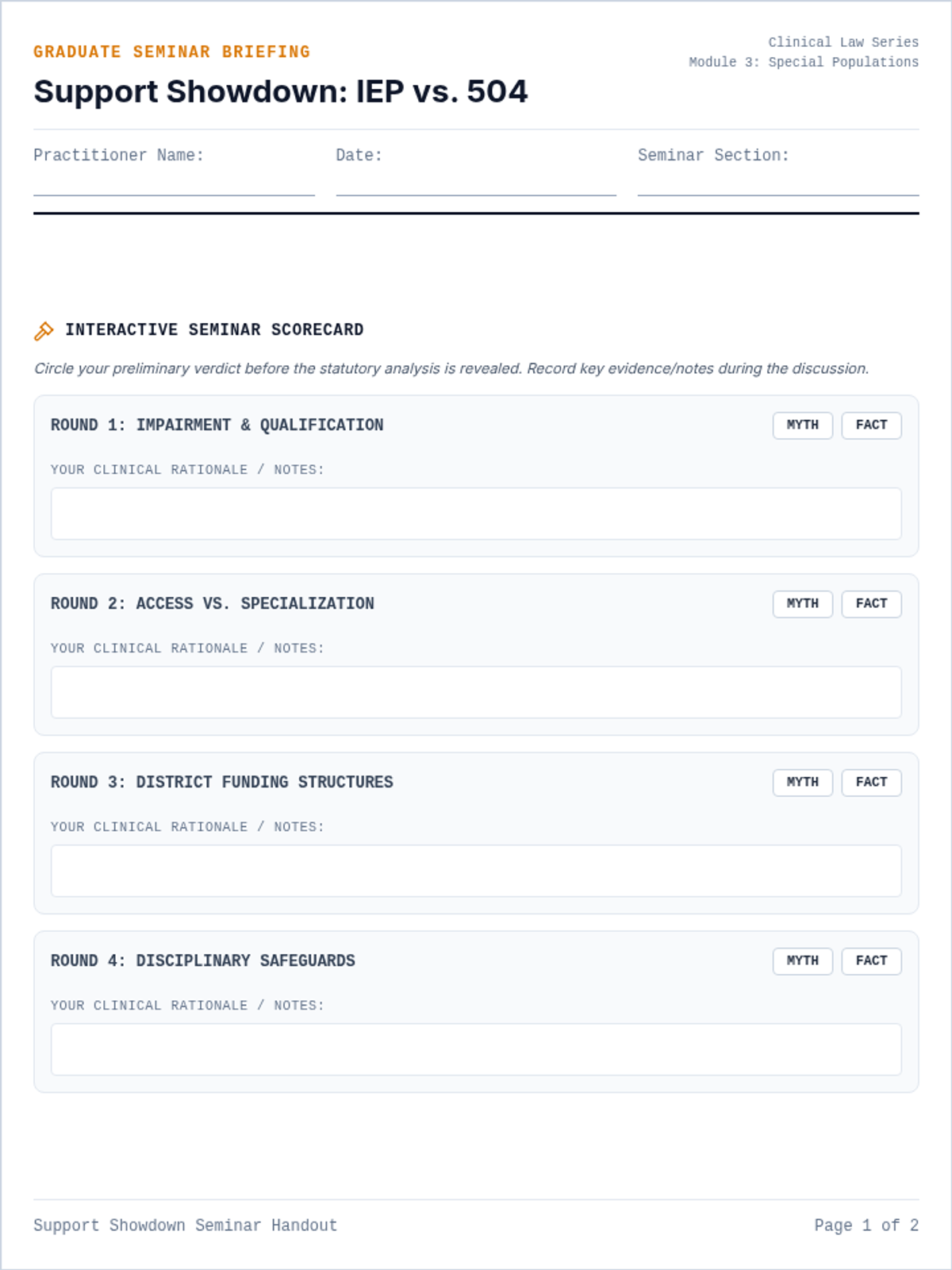
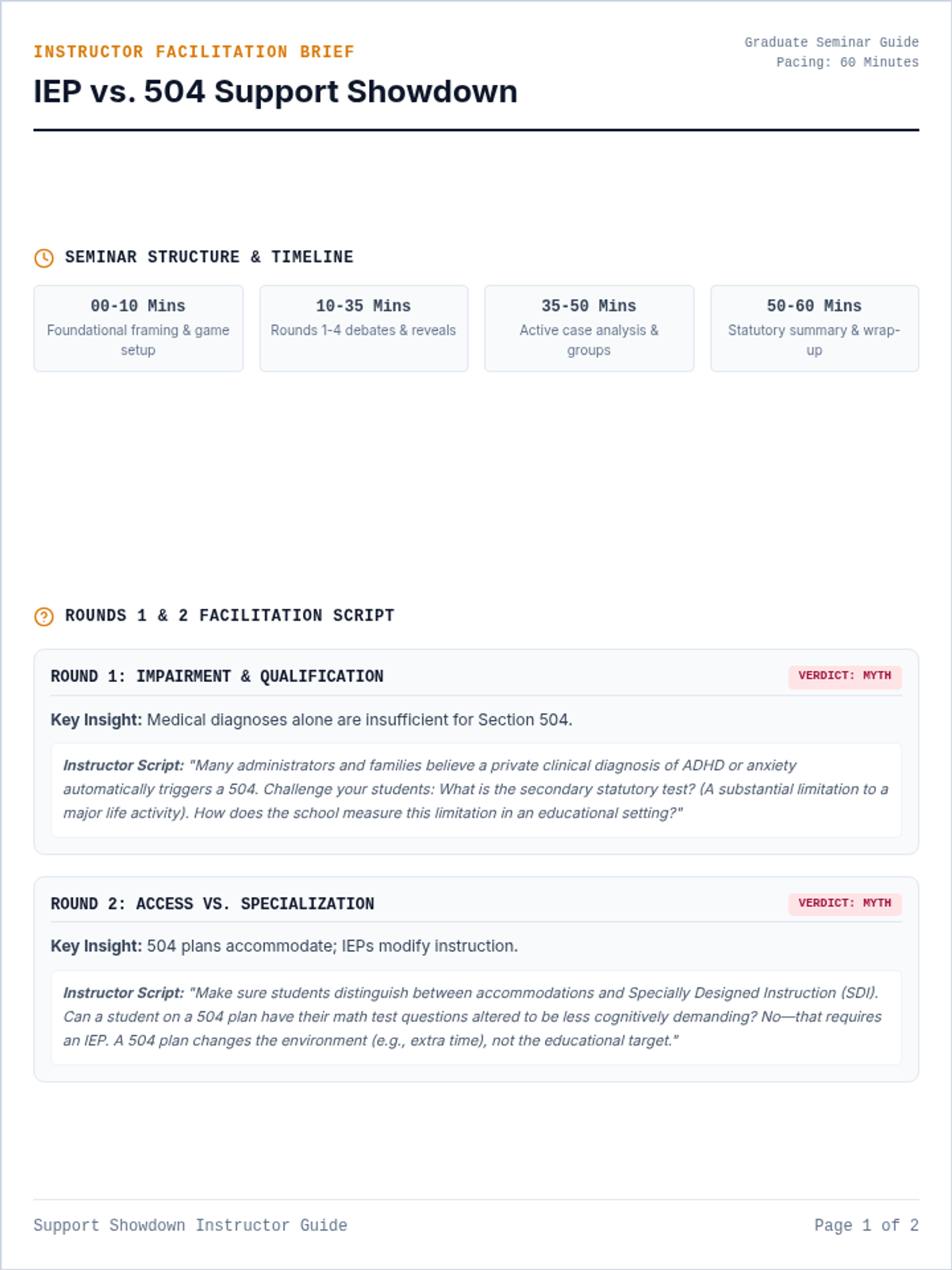
A graduate-level seminar lesson for future special education teachers comparing IEPs and 504 plans in PK-8 settings through an interactive Myth vs. Fact collaborative trivia game. The lesson includes a high-impact presentation, a professional comparison handout, and an instructor facilitation guide with statutory deep-dives.
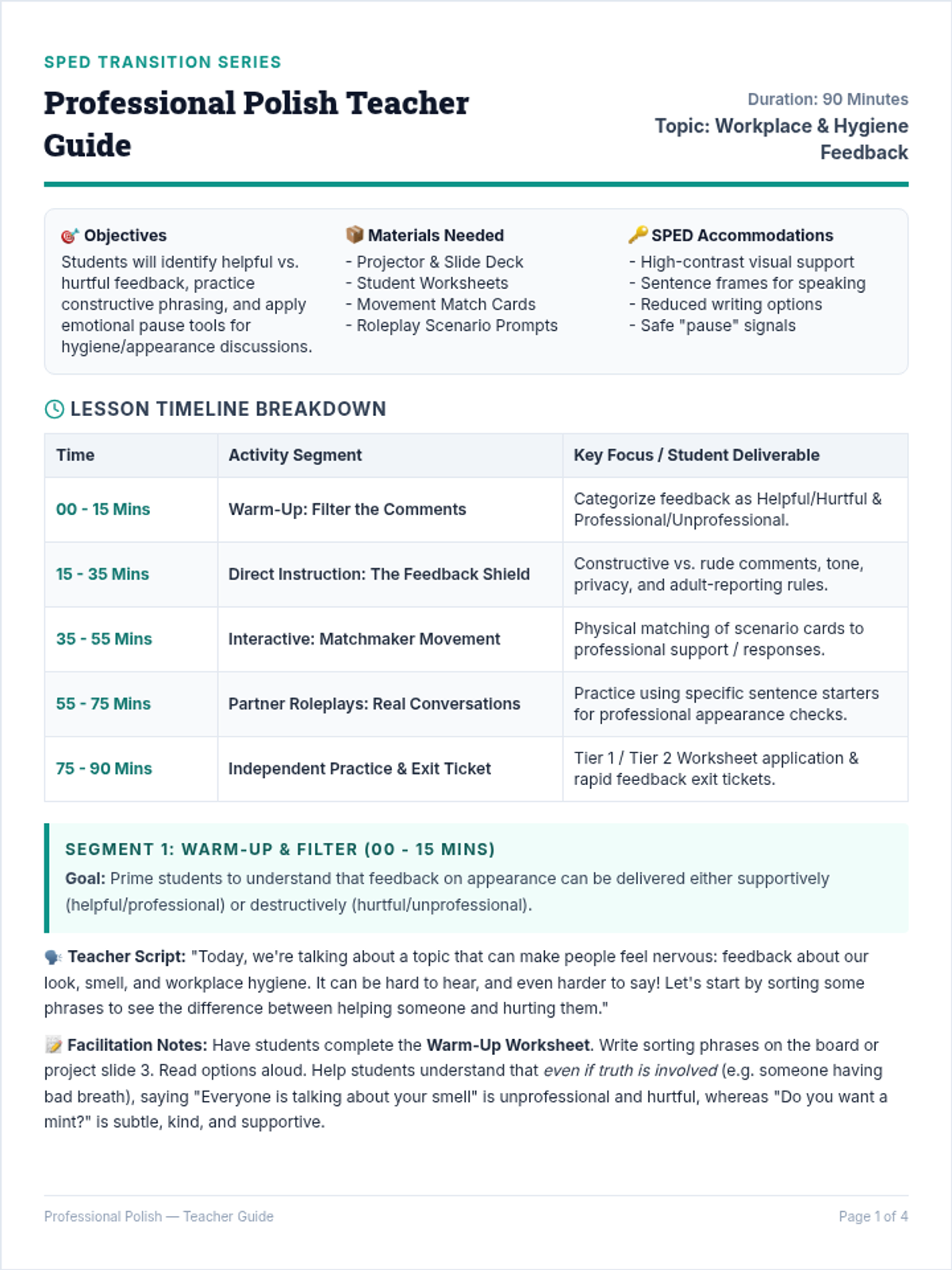
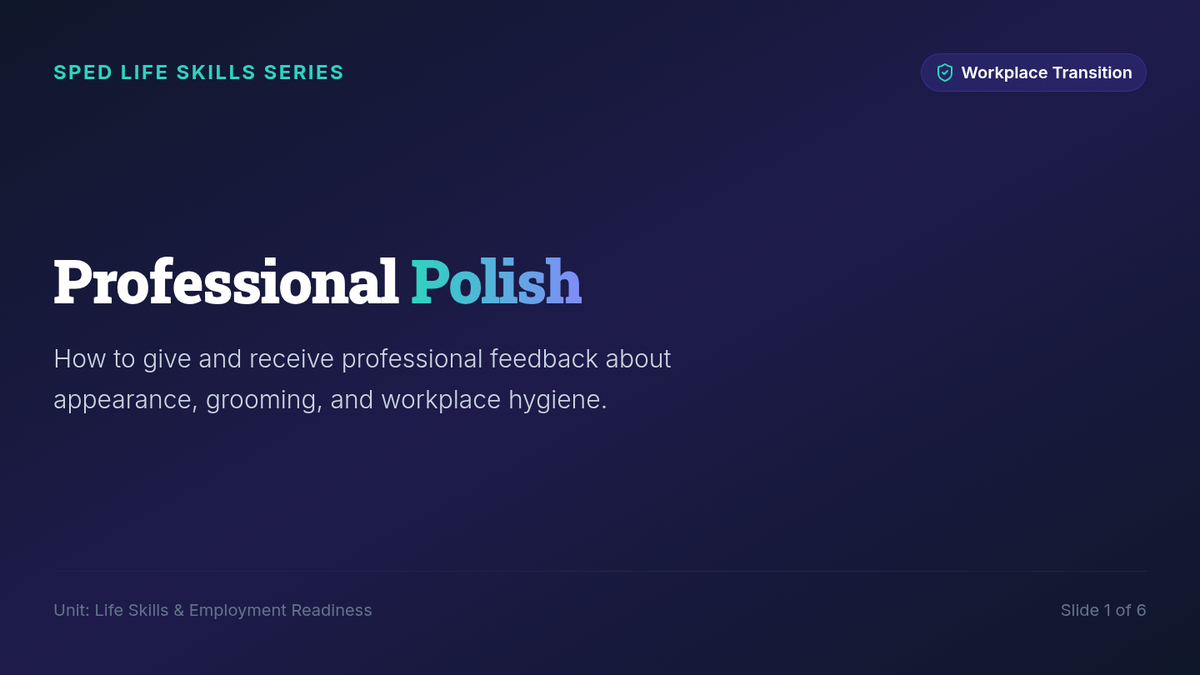
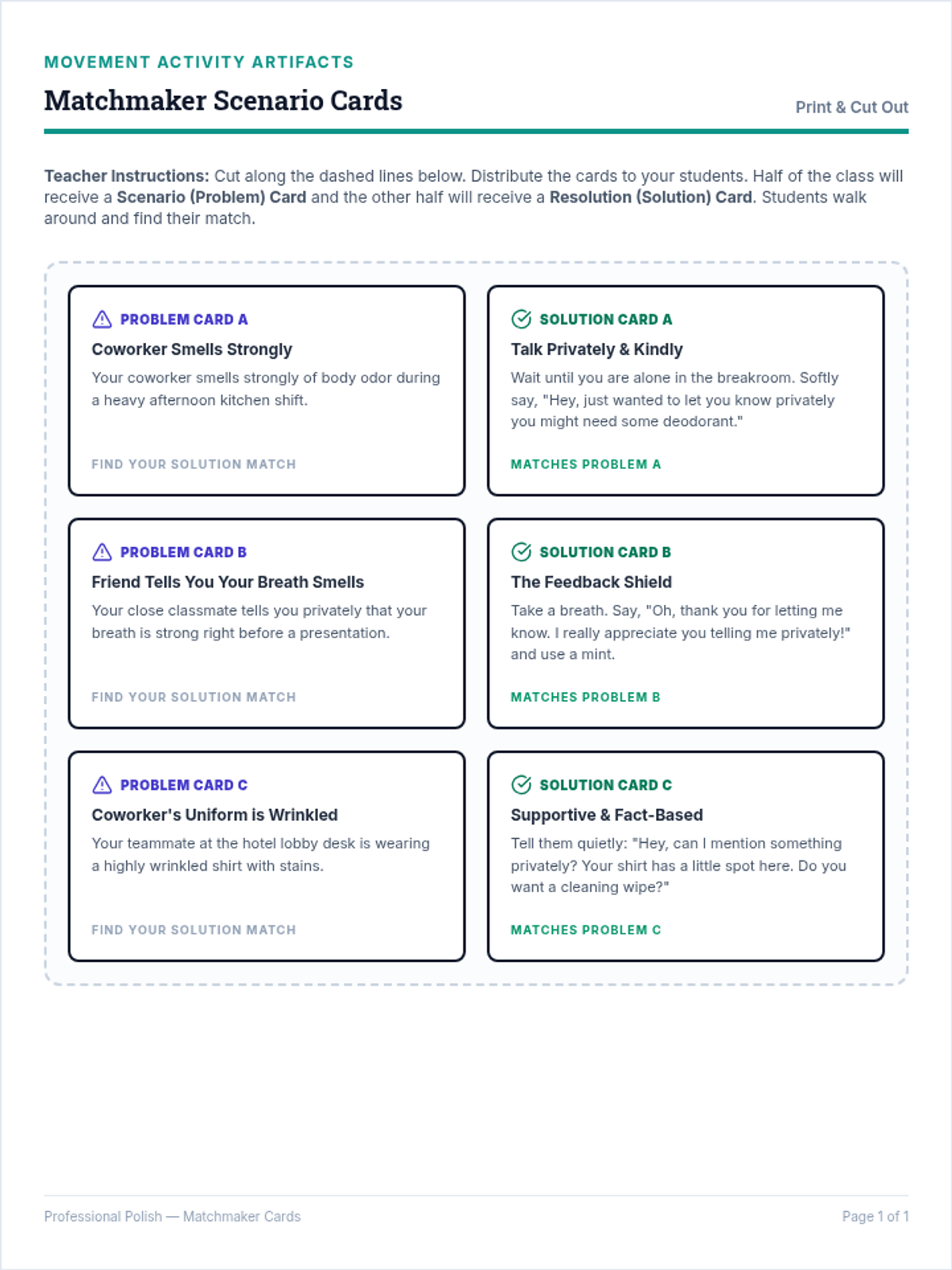
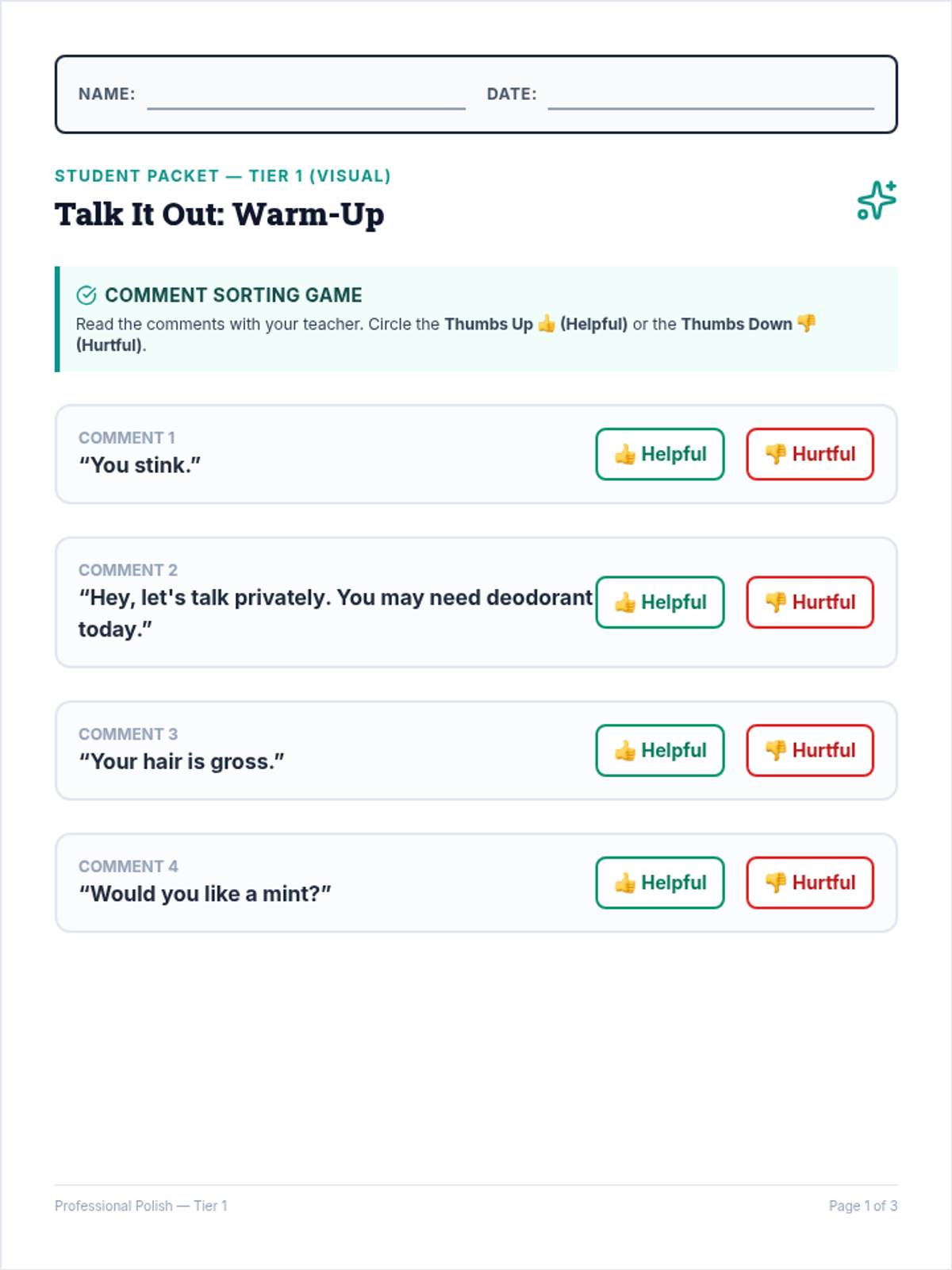
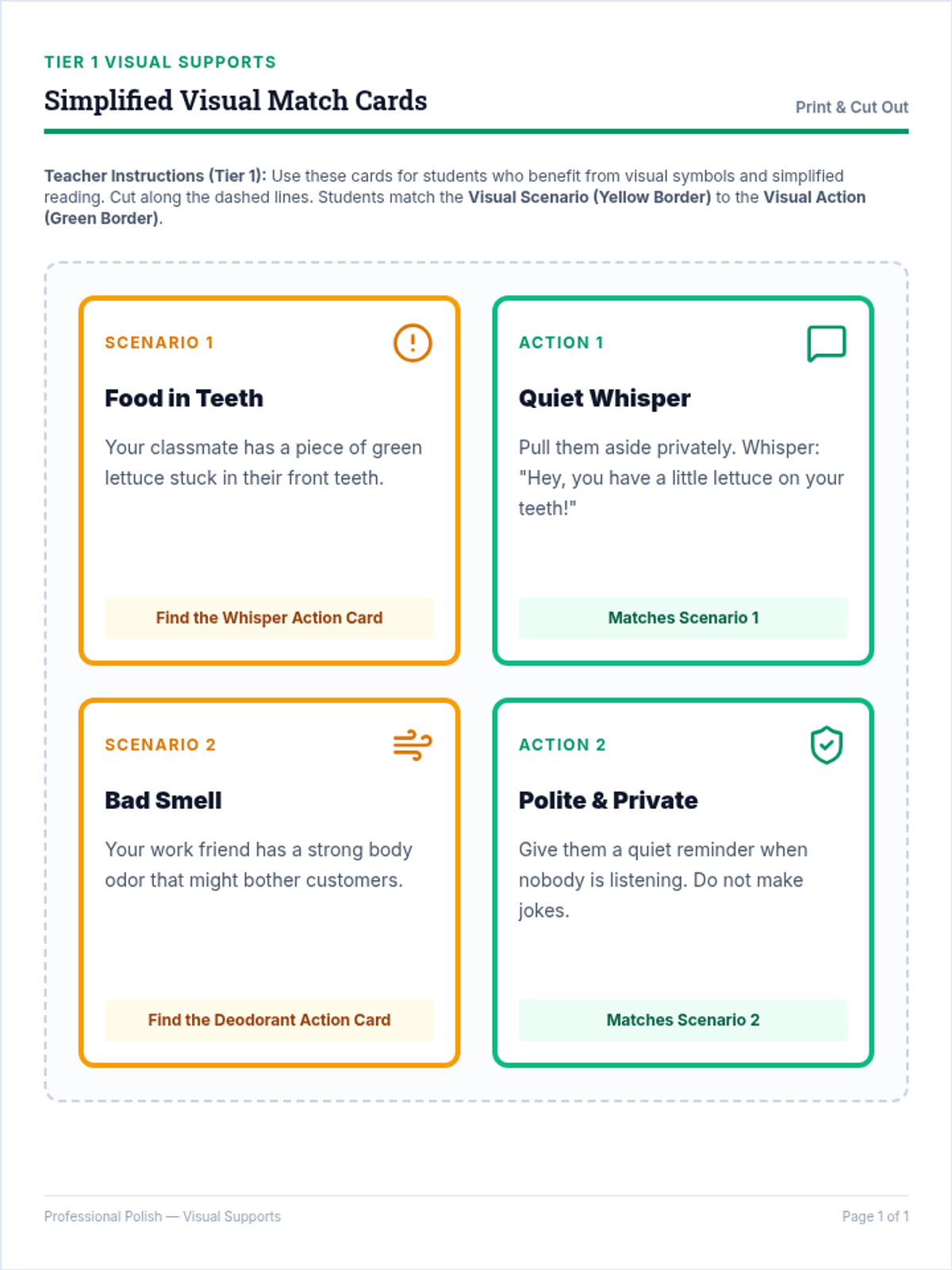
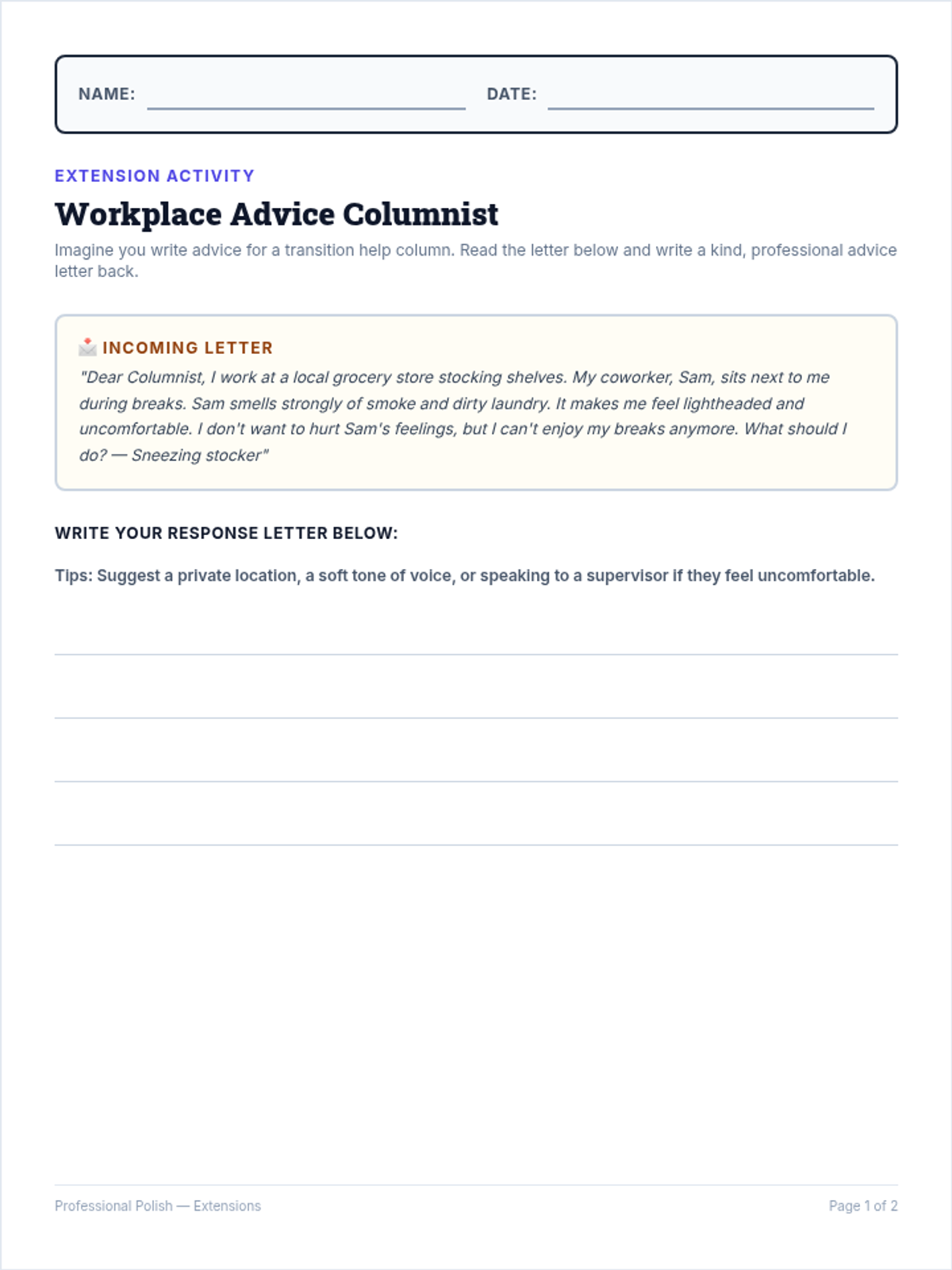
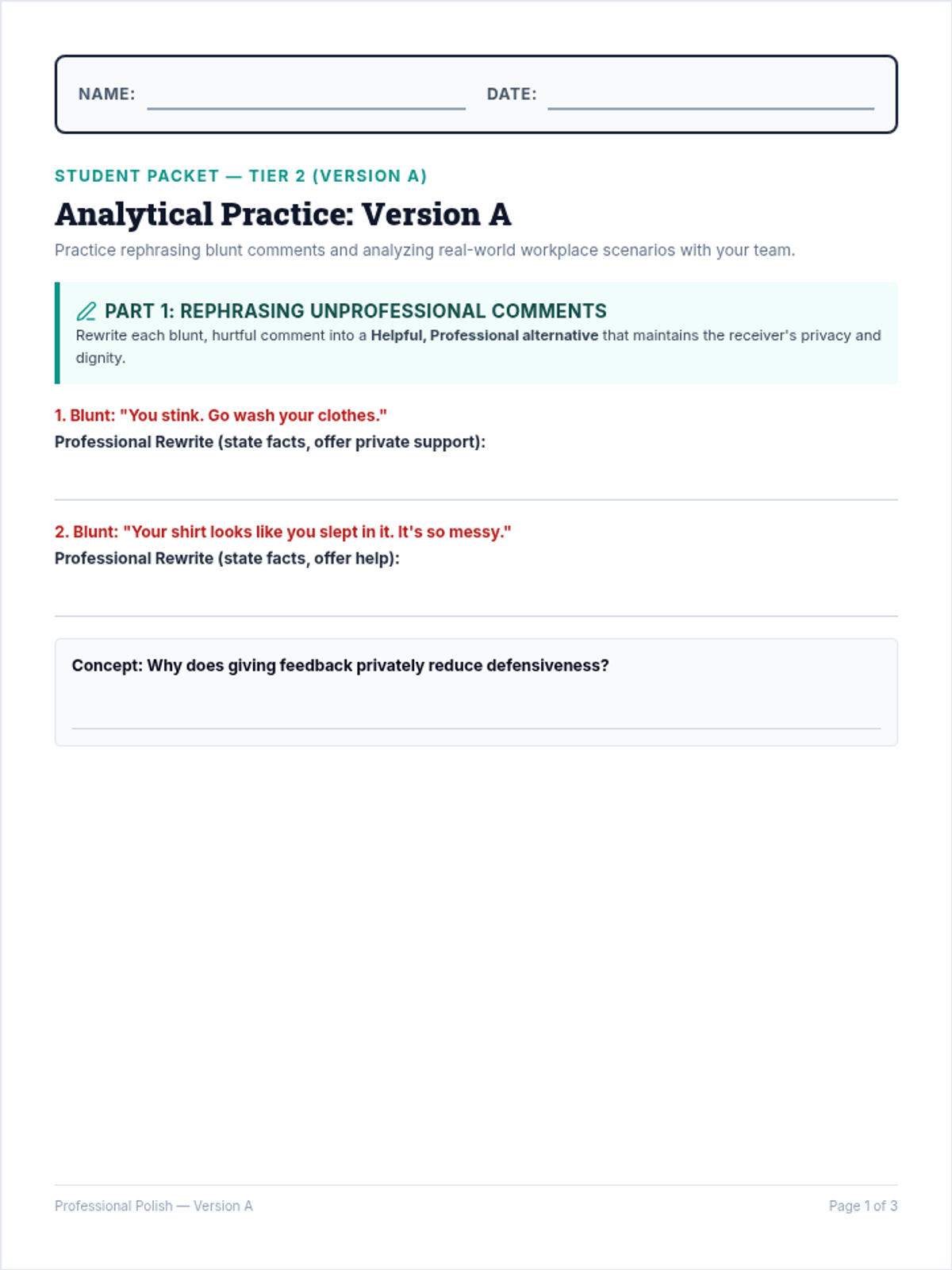
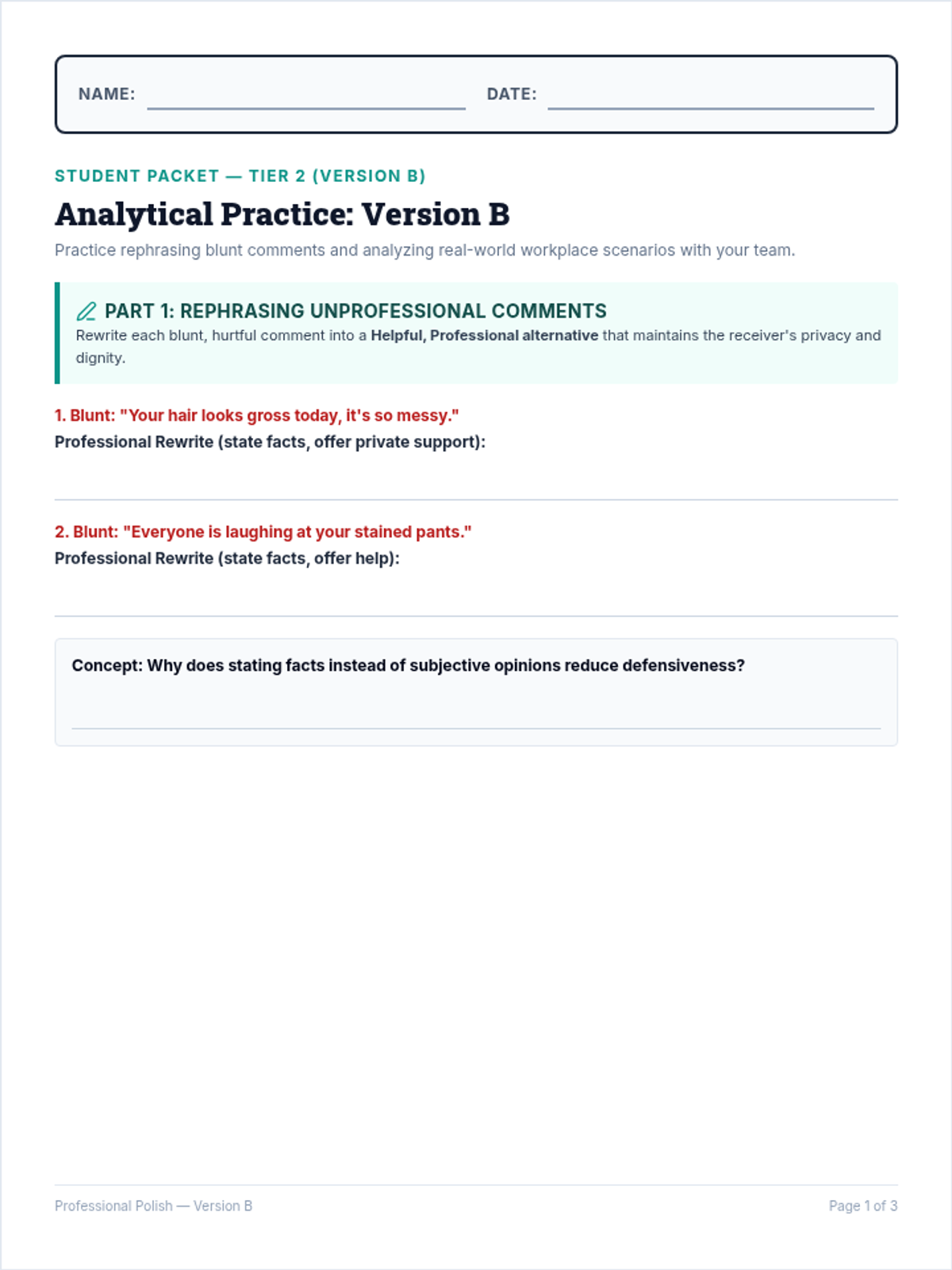
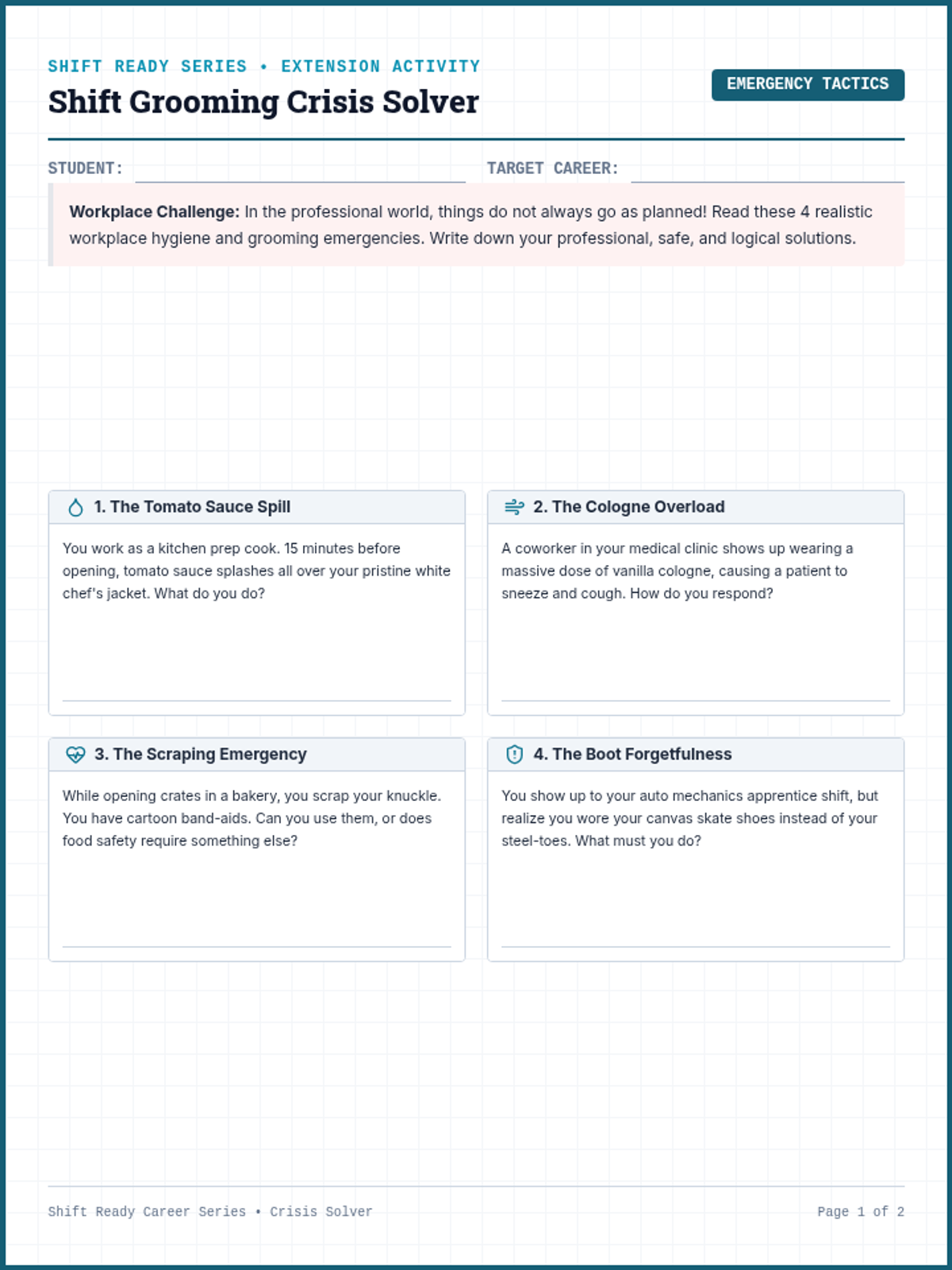
A comprehensive SPED-focused transition lesson about navigating sensitive feedback regarding personal hygiene, grooming, and appearance in workplace and social settings.
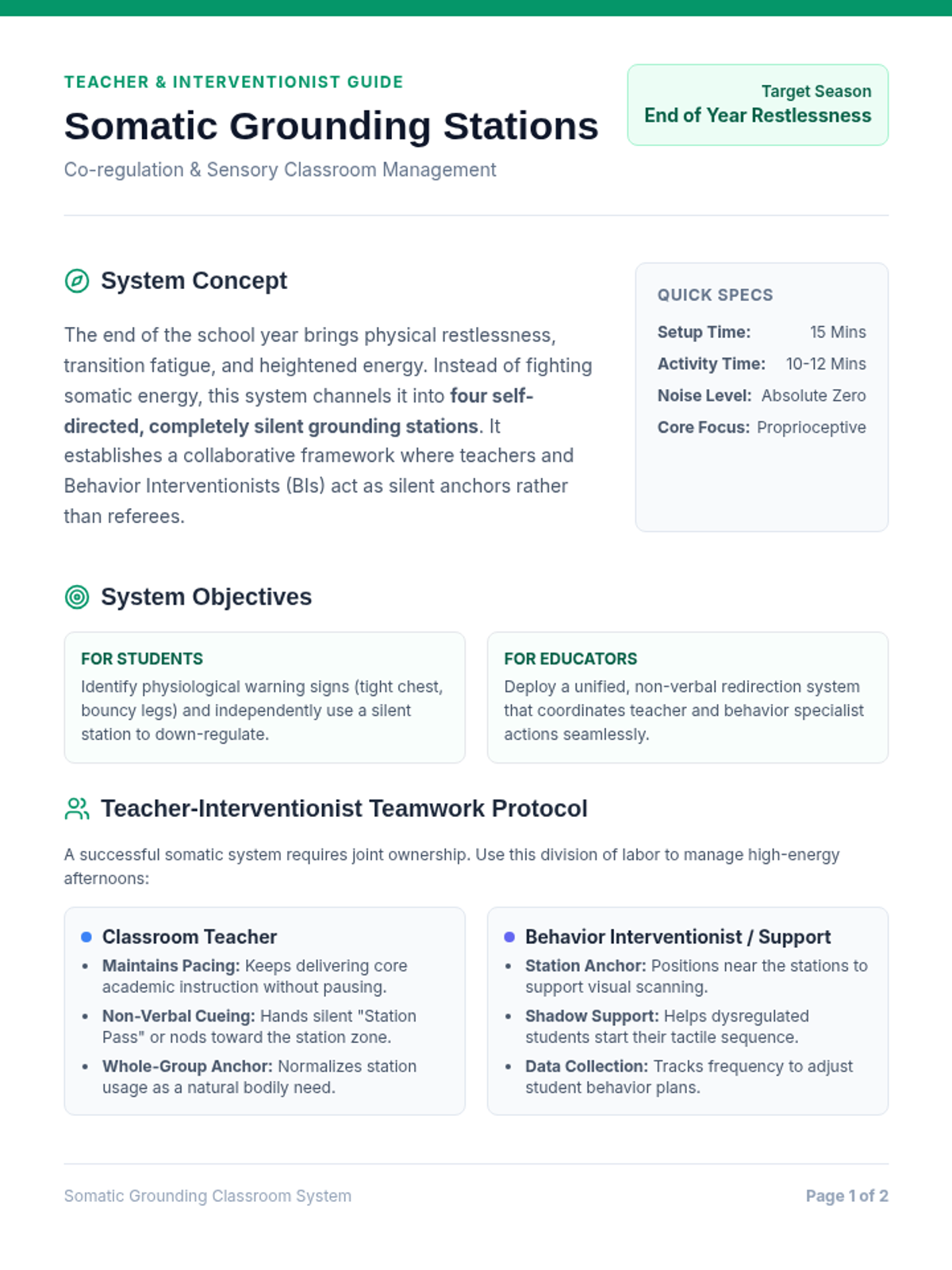
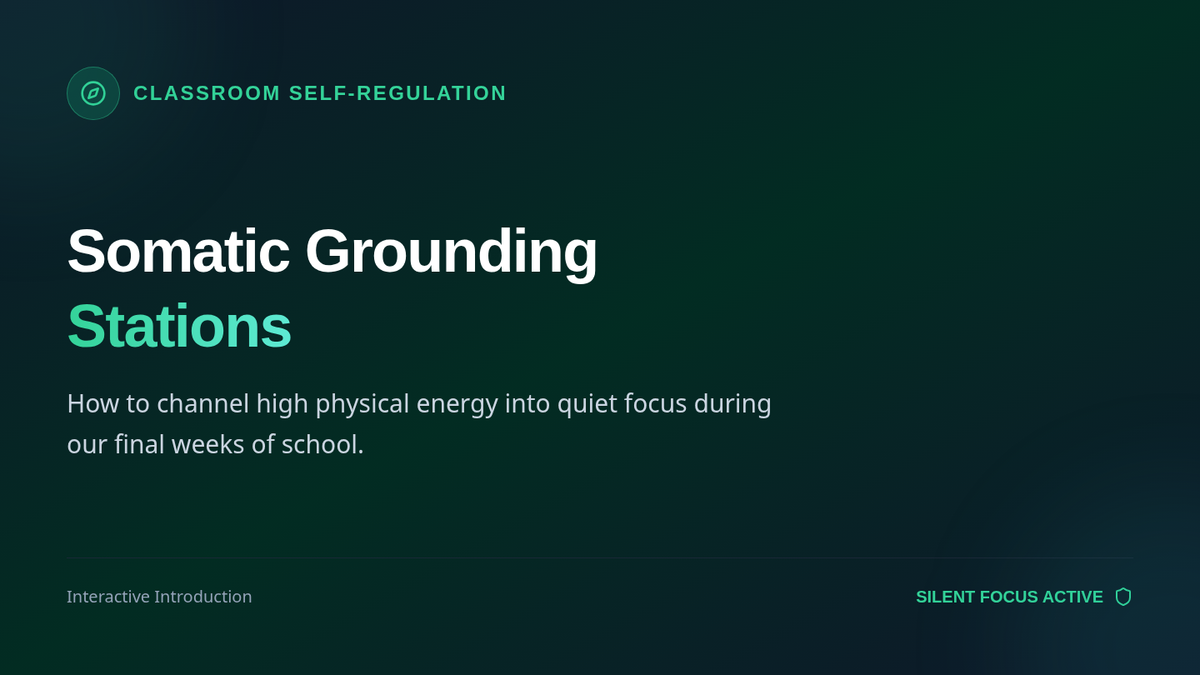
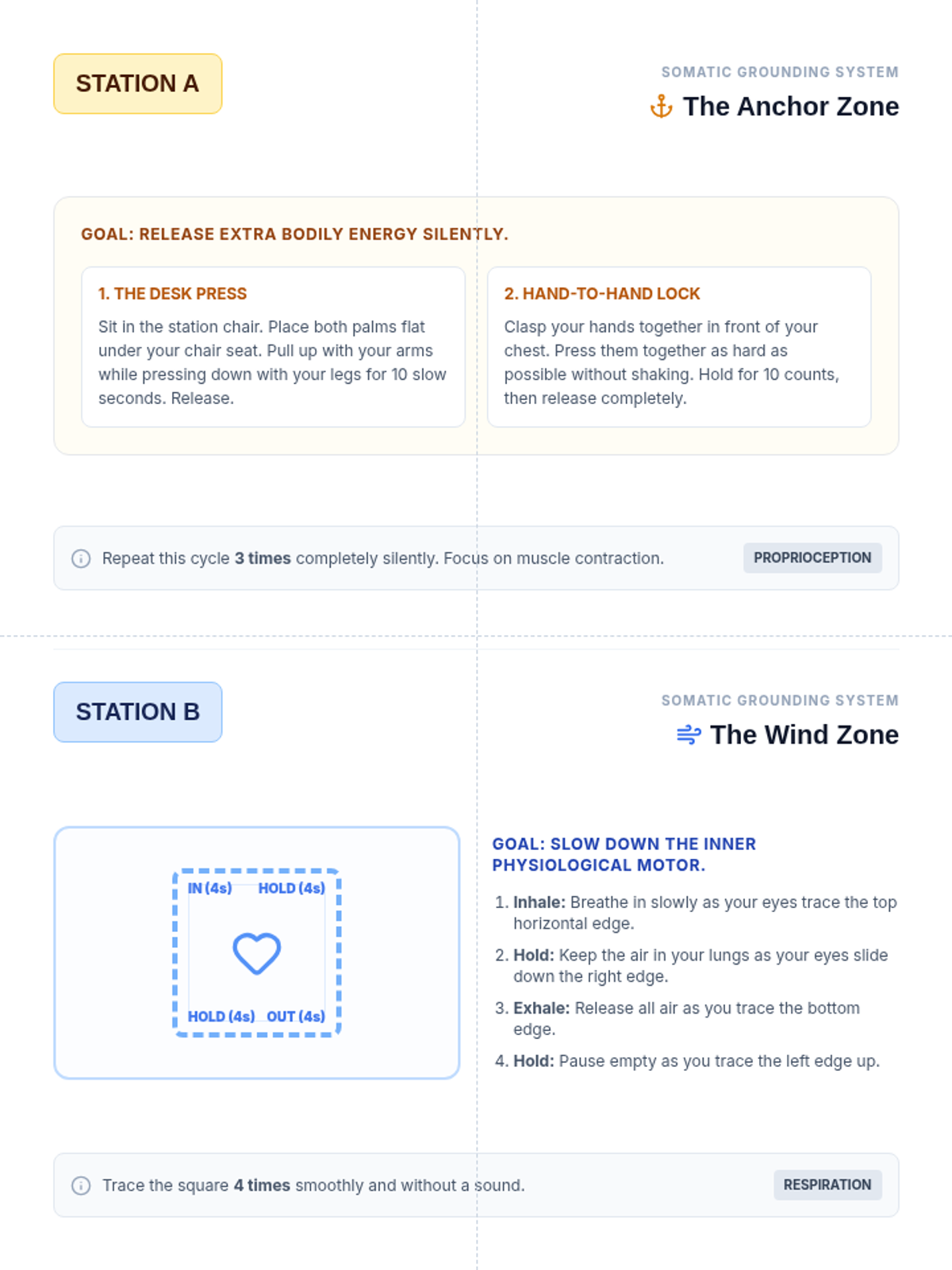
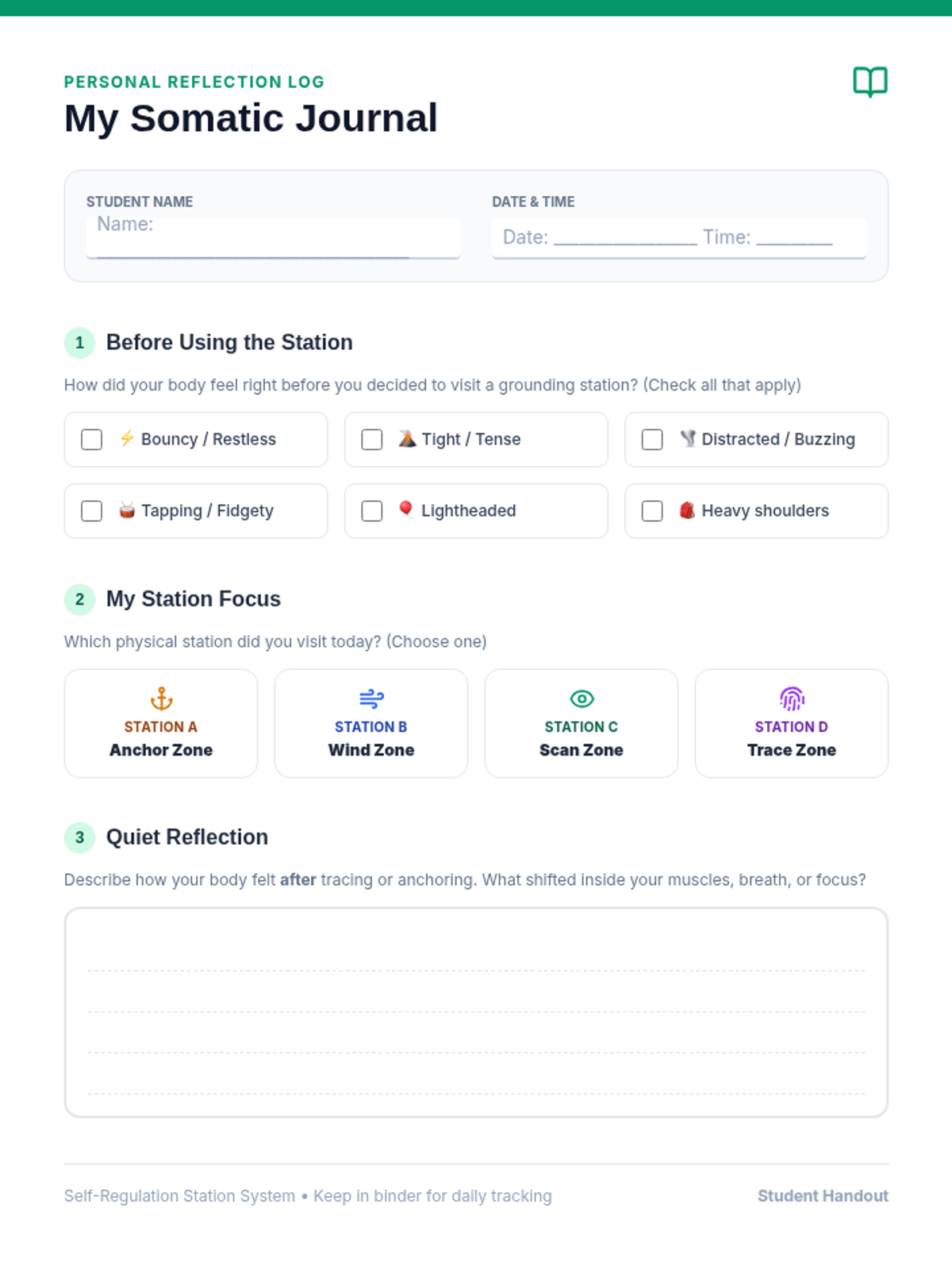
A sensory-based regulation system lesson designed to establish quick, silent coping zones in classrooms during high-energy periods, facilitating collaboration between teachers and behavior interventionists.
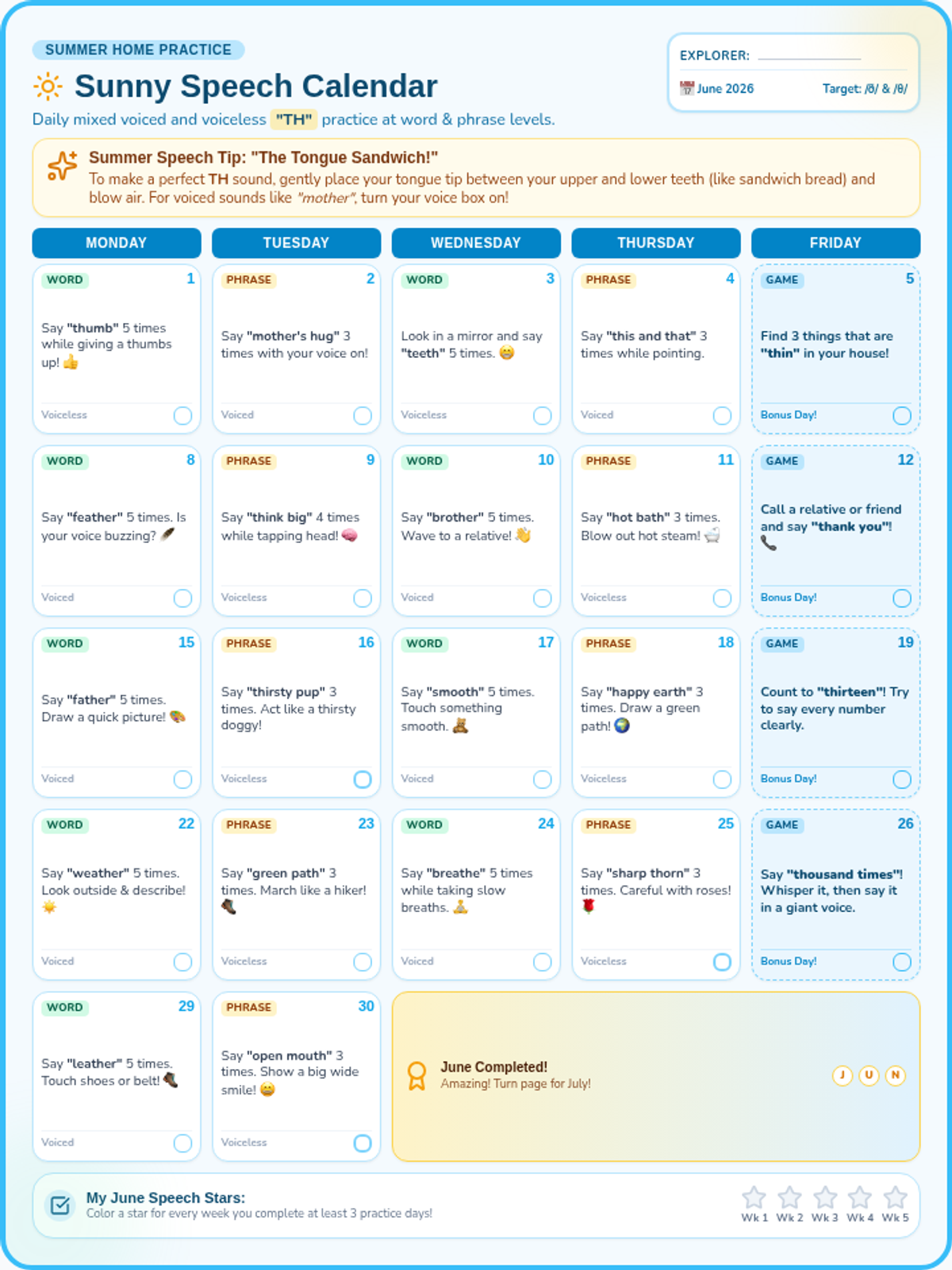
A 2-month summer speech calendar program for June and July 2026 designed to support students in practicing mixed voiced and voiceless TH sounds at the word and phrase levels through quick, engaging daily home activities.
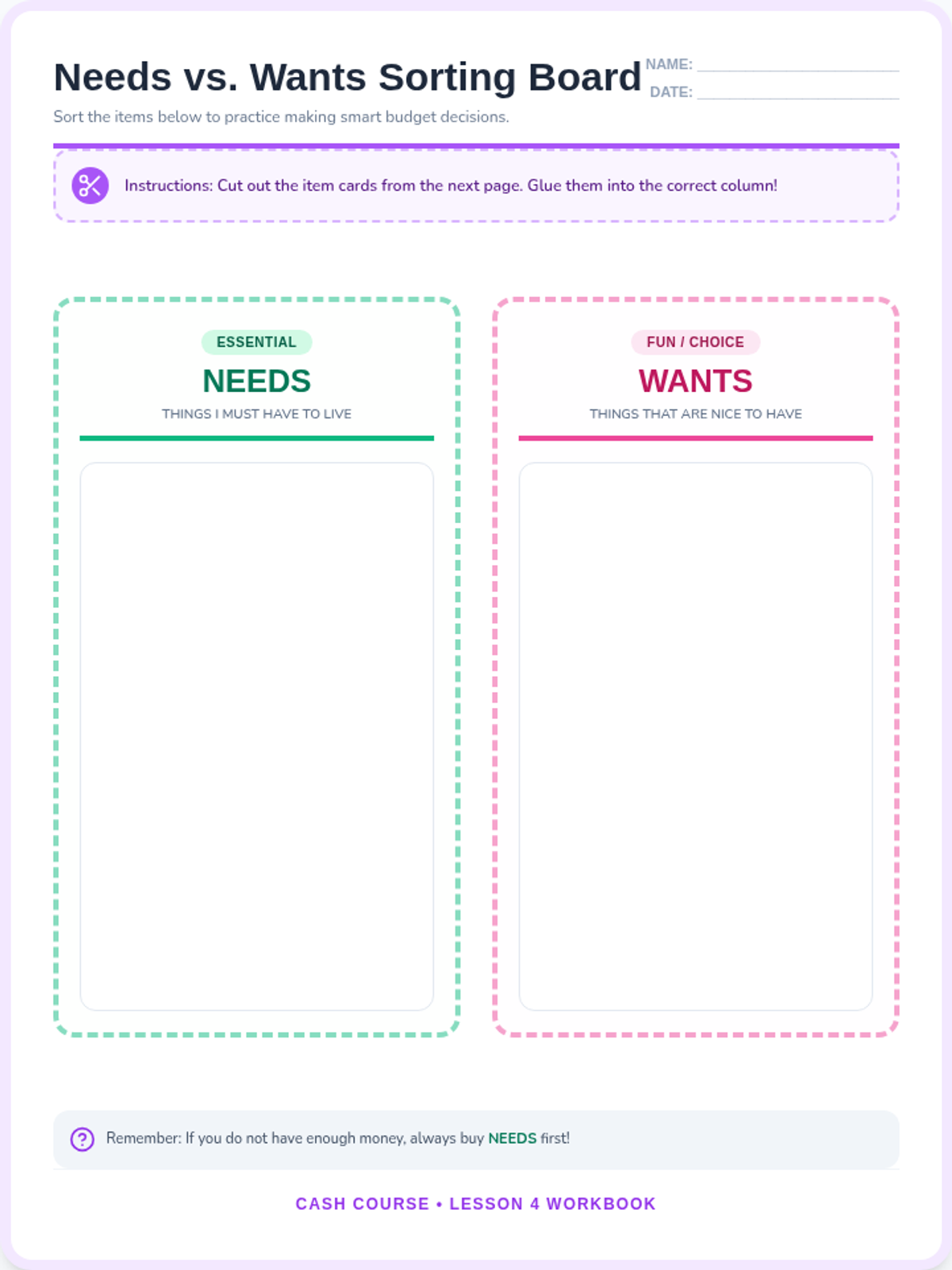
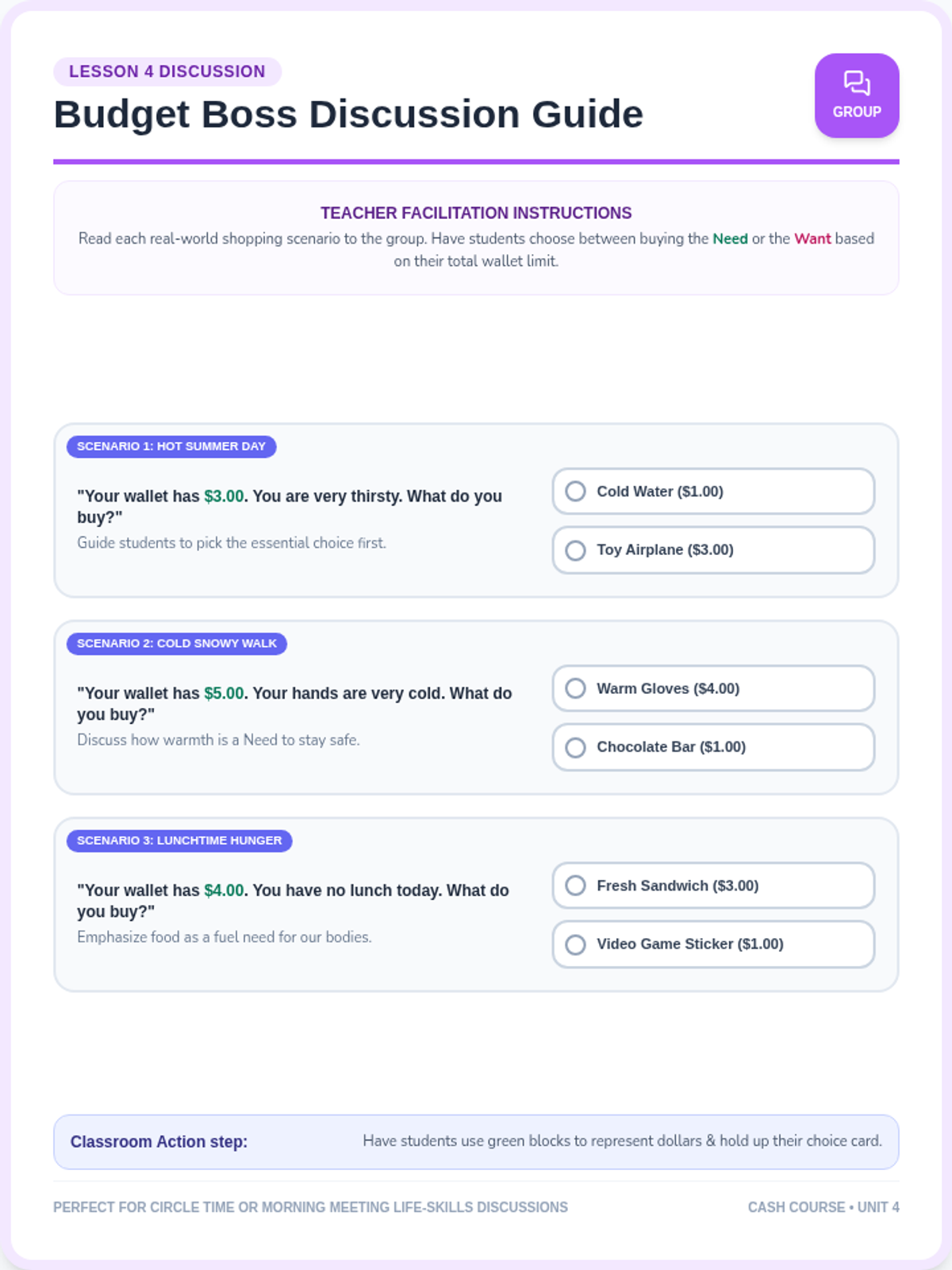
Teaches students to distinguish between essential items (needs) and non-essential items (wants), and guides them through making simple purchases within a fixed budget.
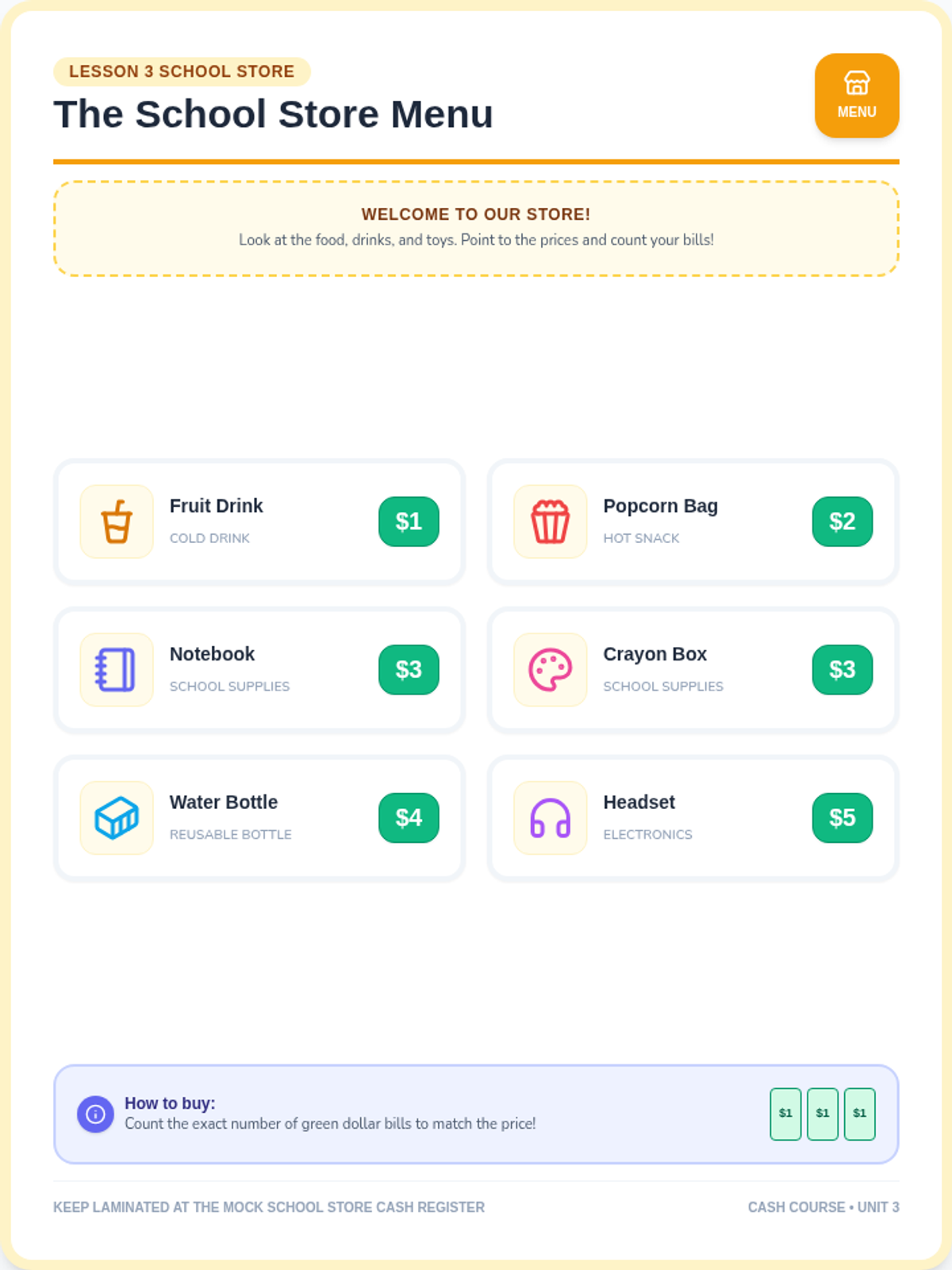
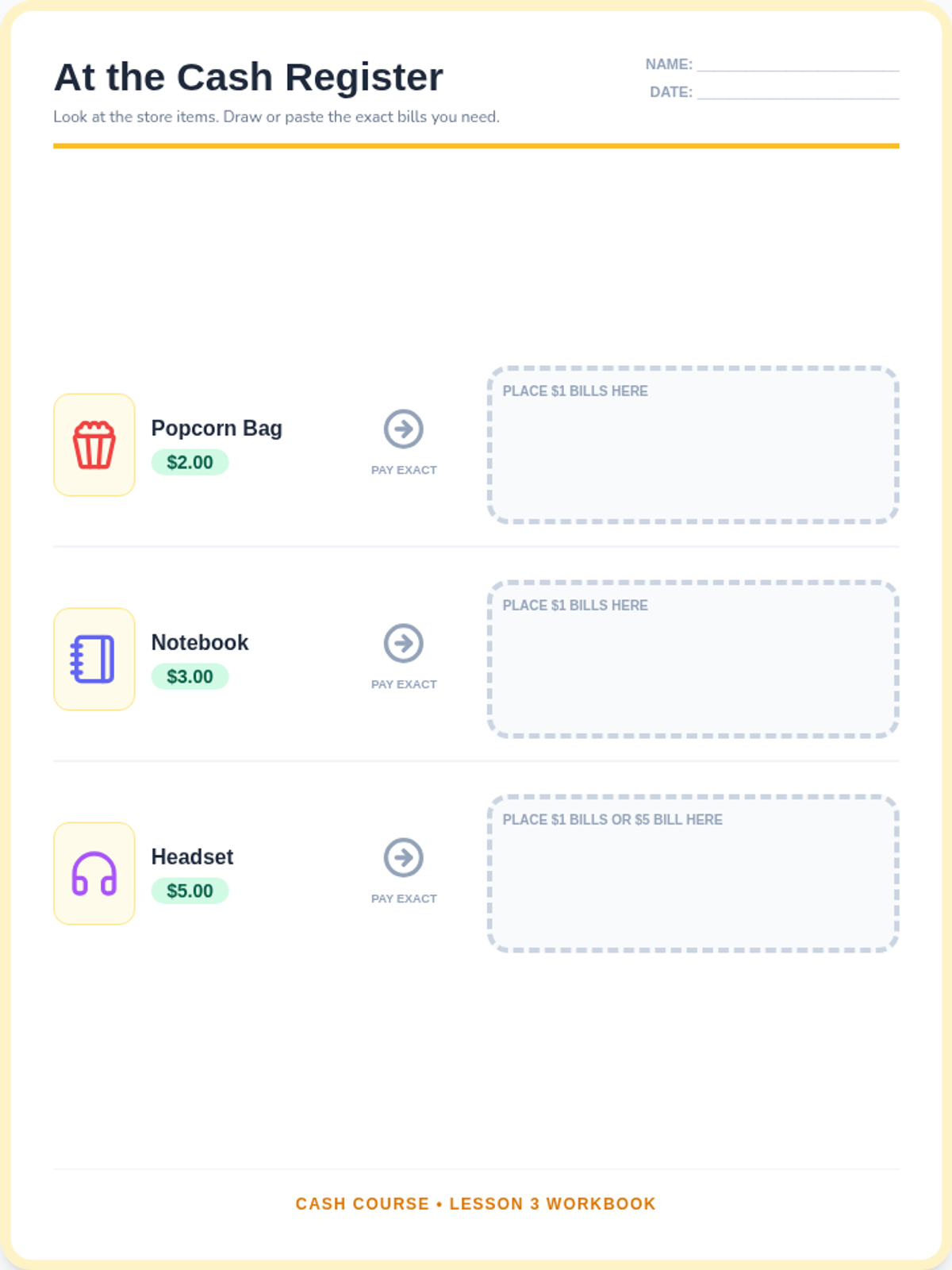
Students practice making simple exact transactions up to five dollars, simulating visual school store scenarios to build independent living skills.
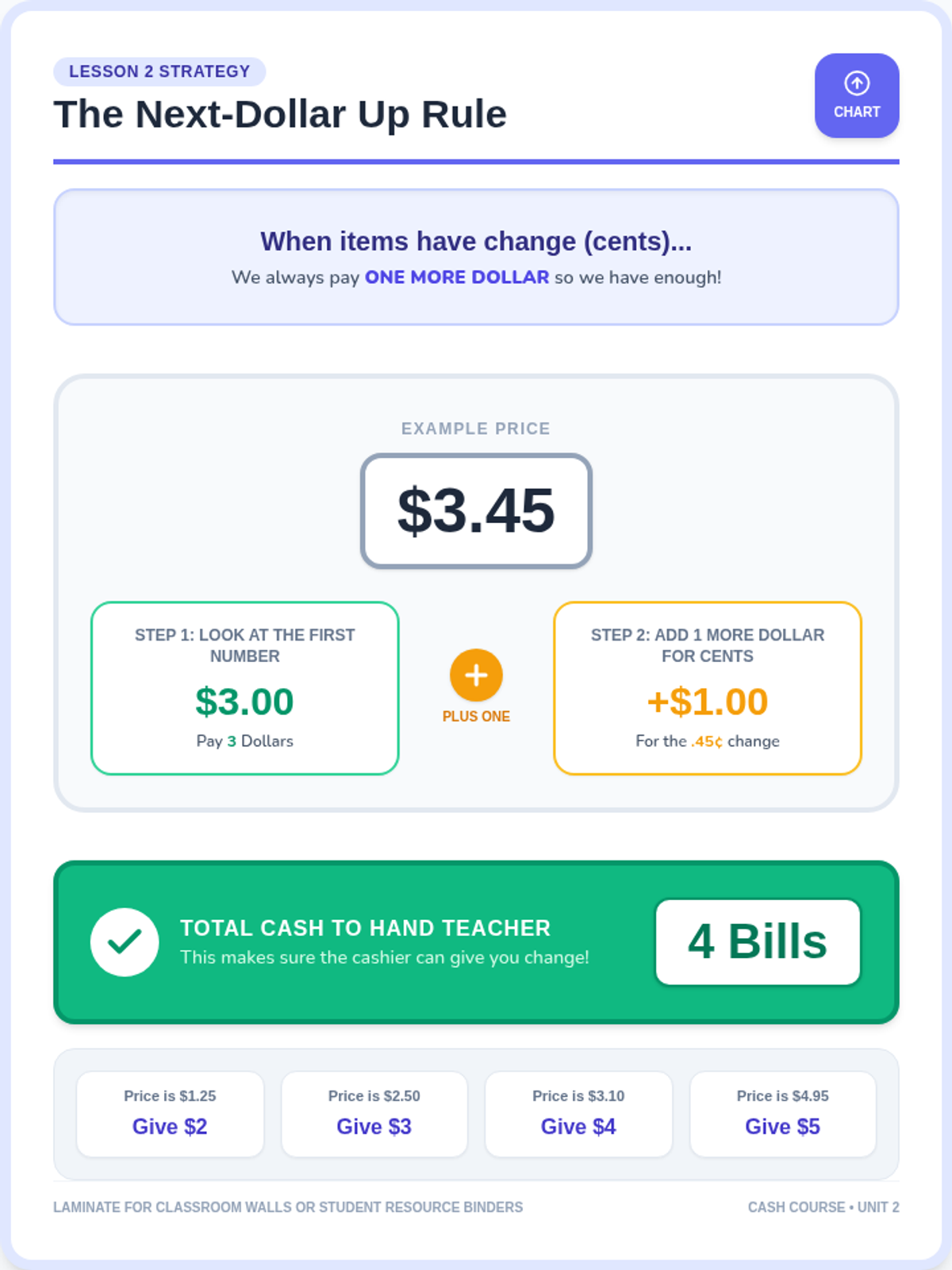
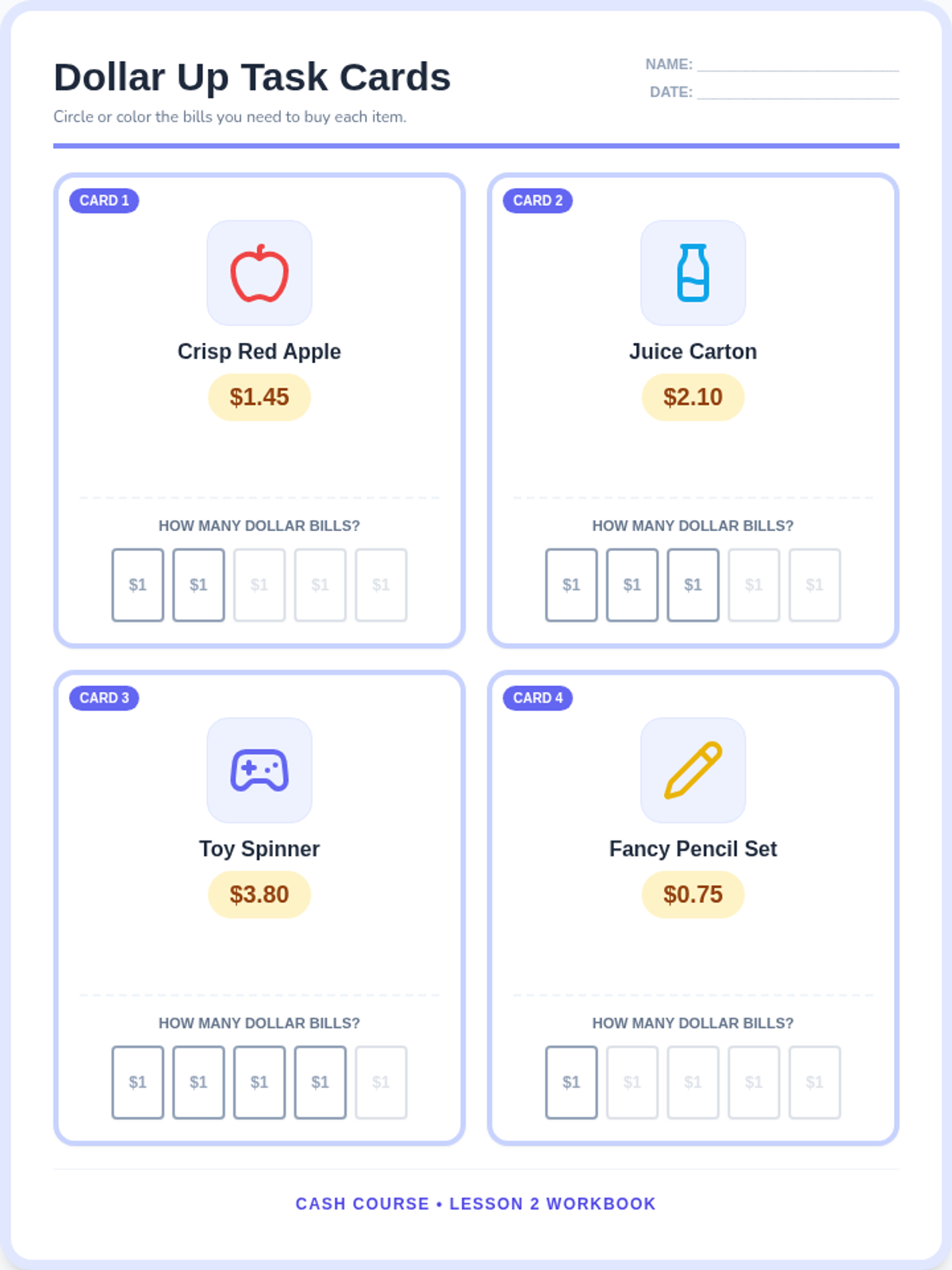
Introduces the Next-Dollar Up strategy, teaching students with cognitive and learning disabilities how to determine how many one-dollar bills to pay for items with decimal prices.
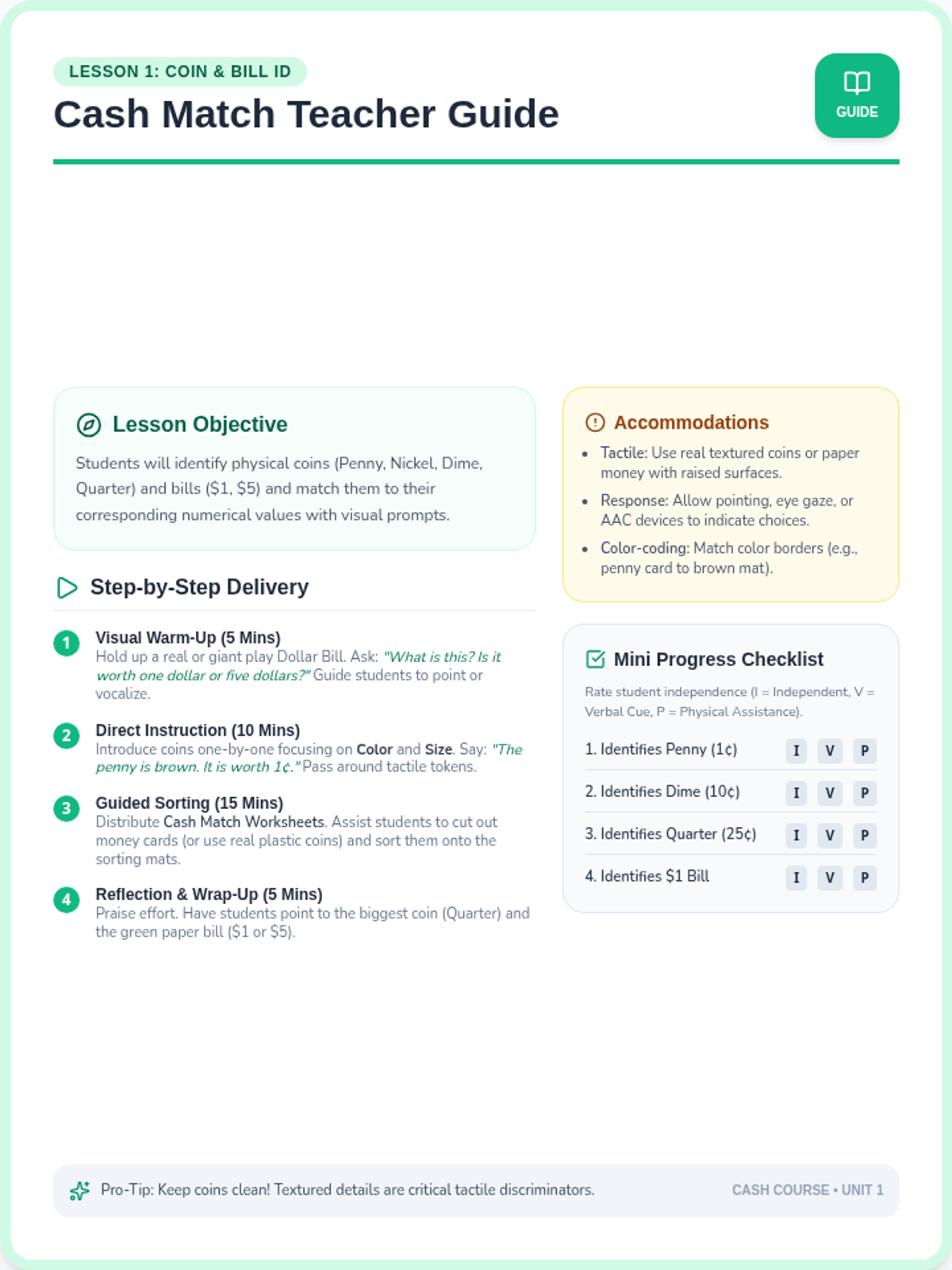
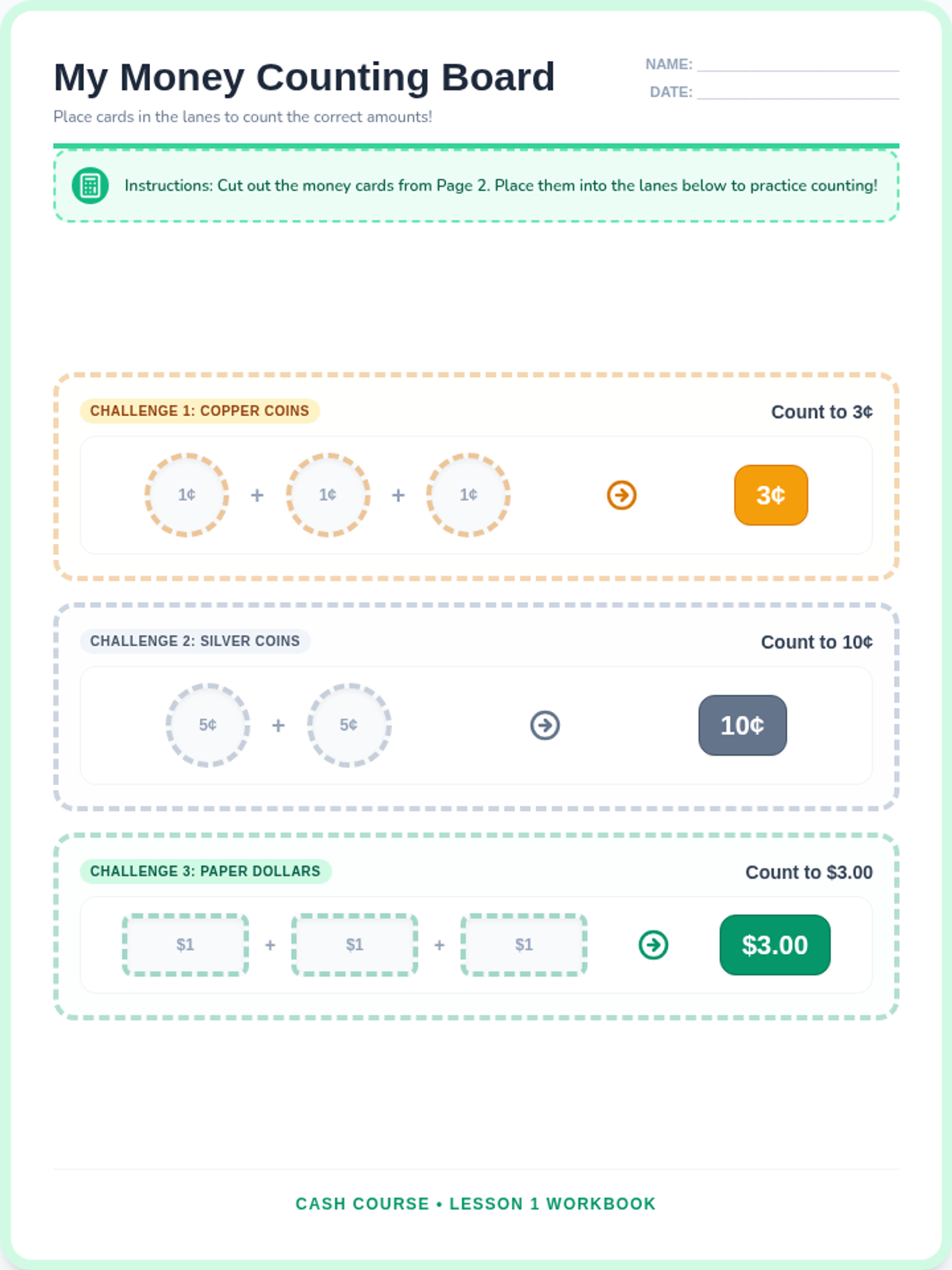
Focuses on recognizing physical coins and bills, matching them to their numeric values, and sorting money in physical or visual formats for students with significant cognitive disabilities.
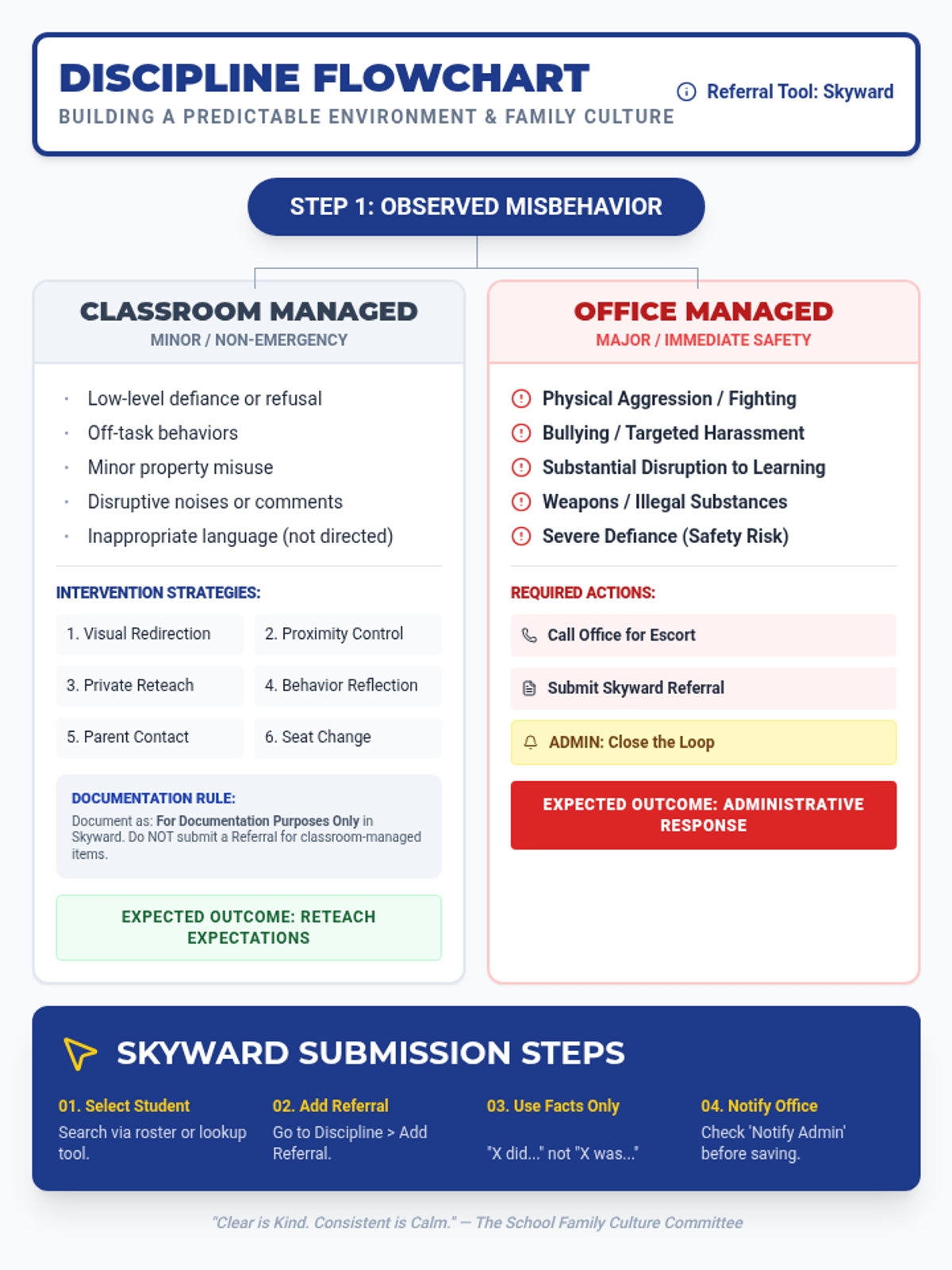
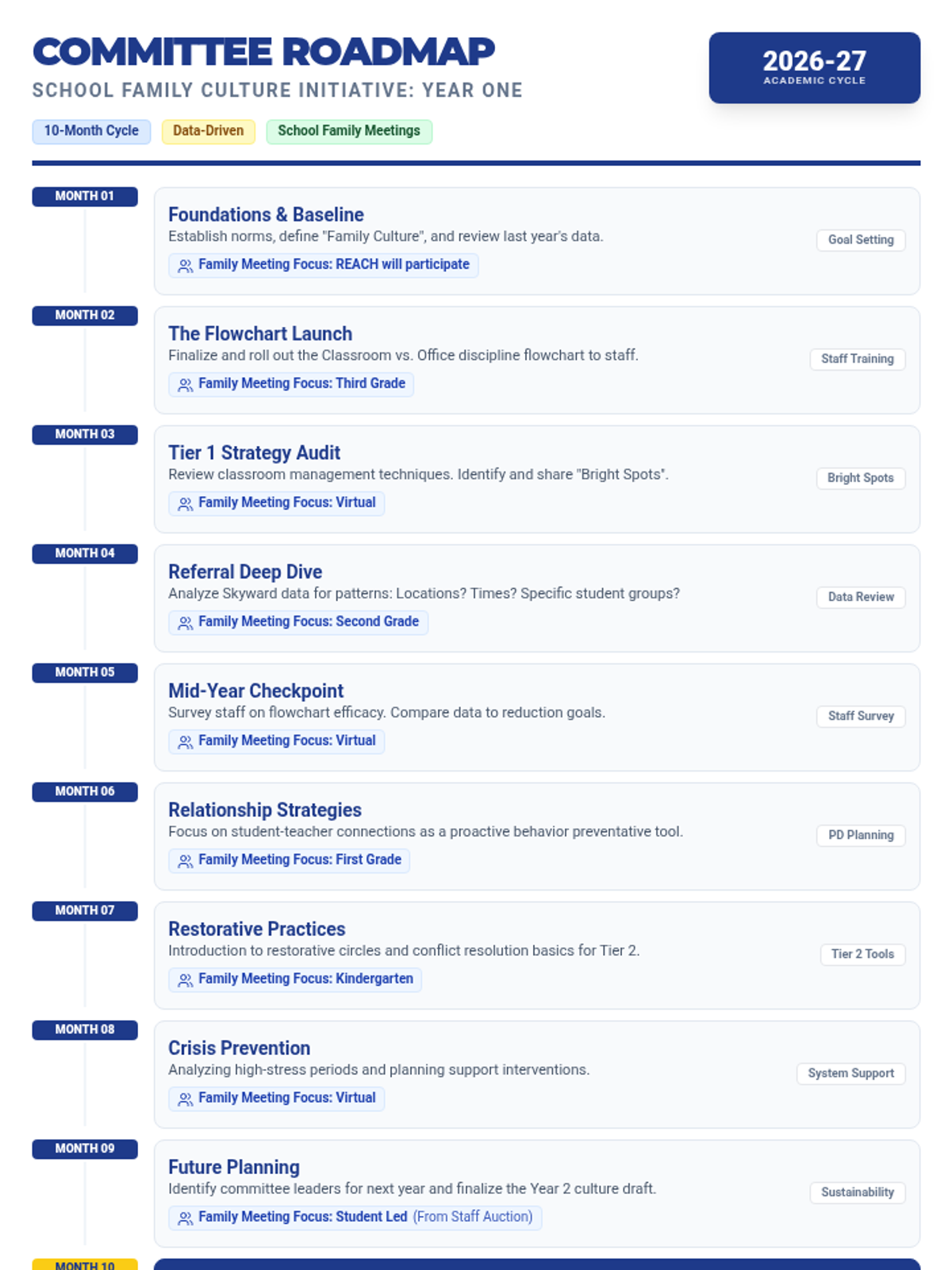
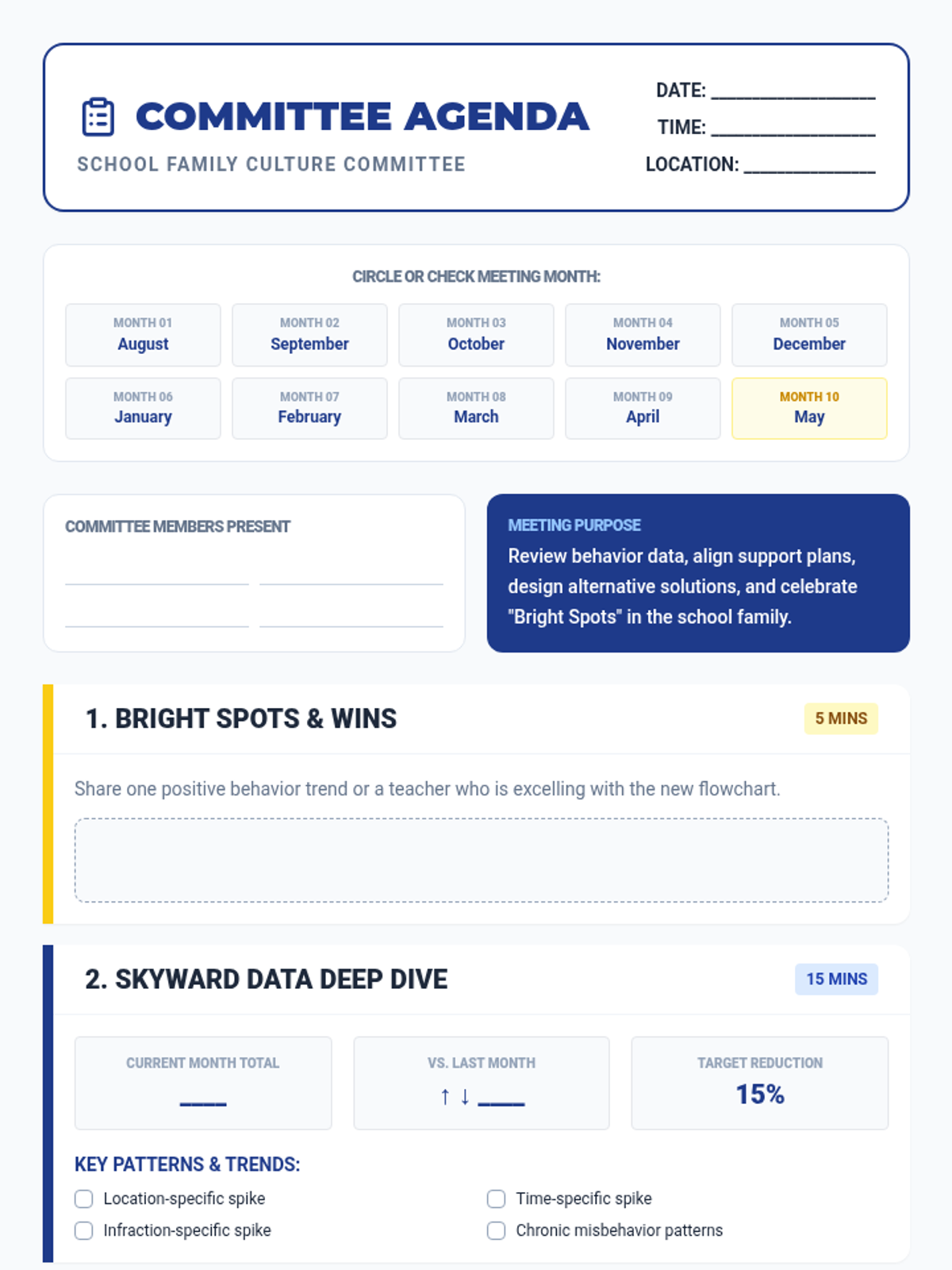
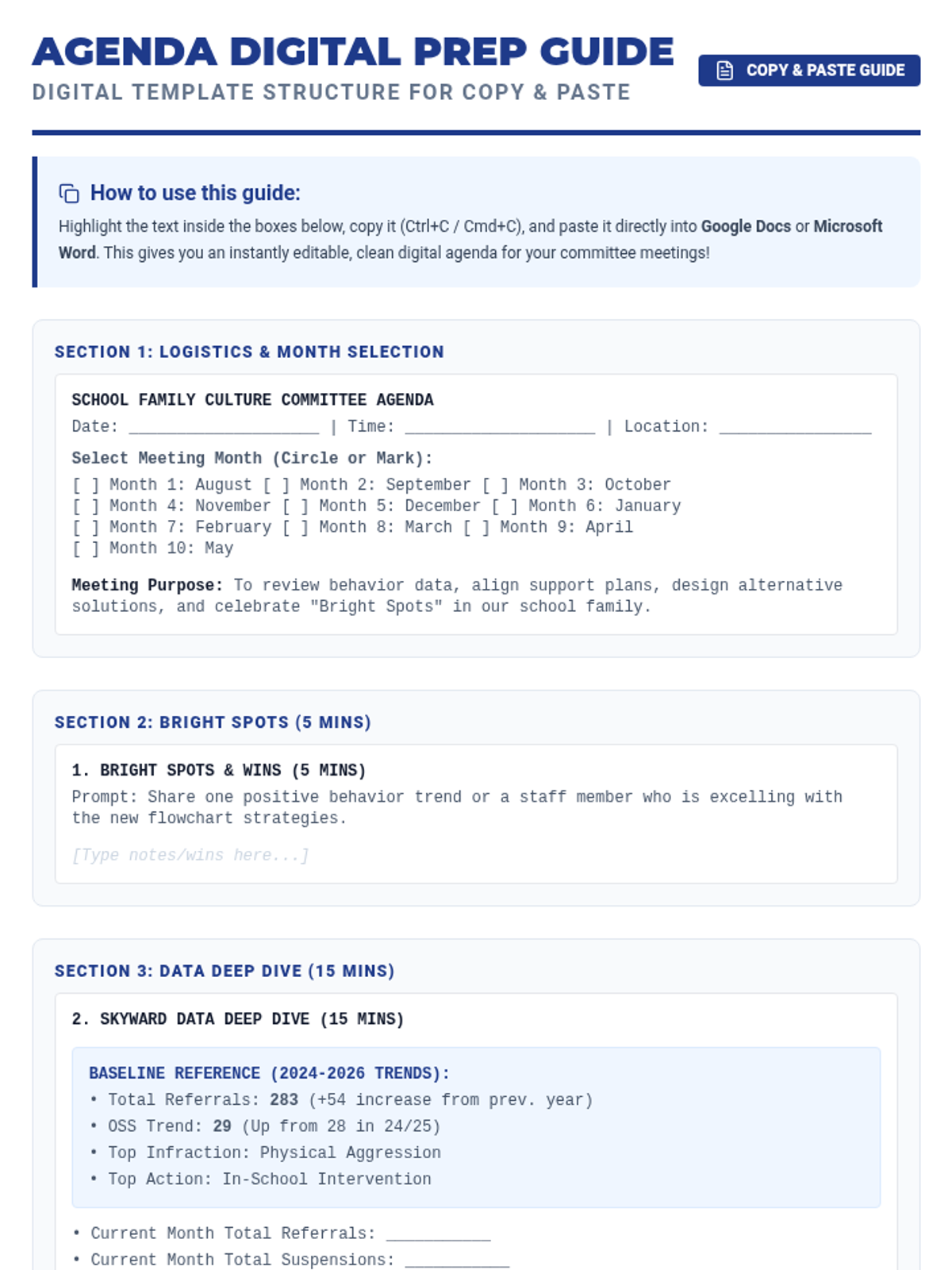
A comprehensive set of resources to launch and sustain a School Family Culture committee focused on improving discipline outcomes and school climate through clear expectations and data-driven decision making.
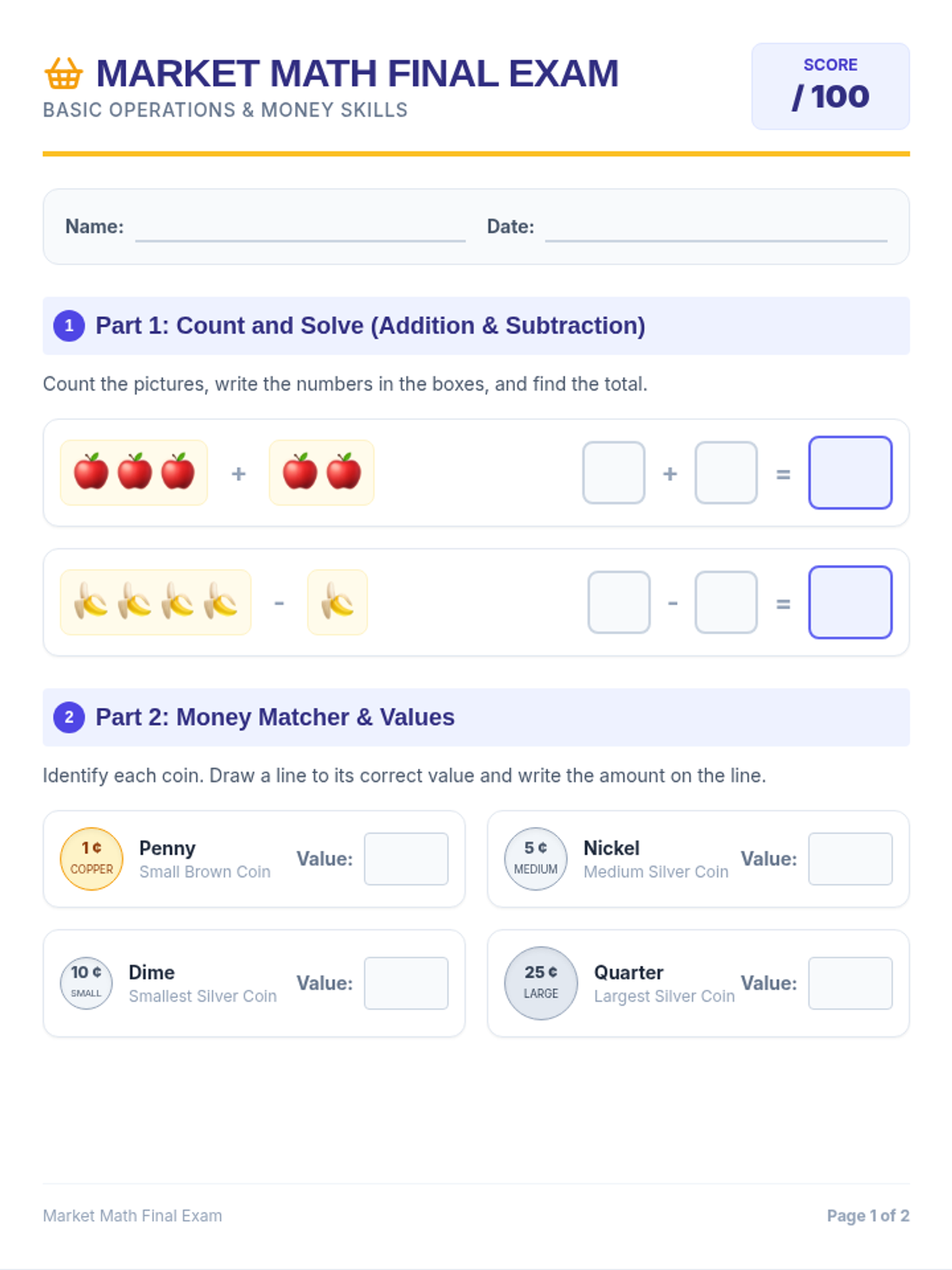
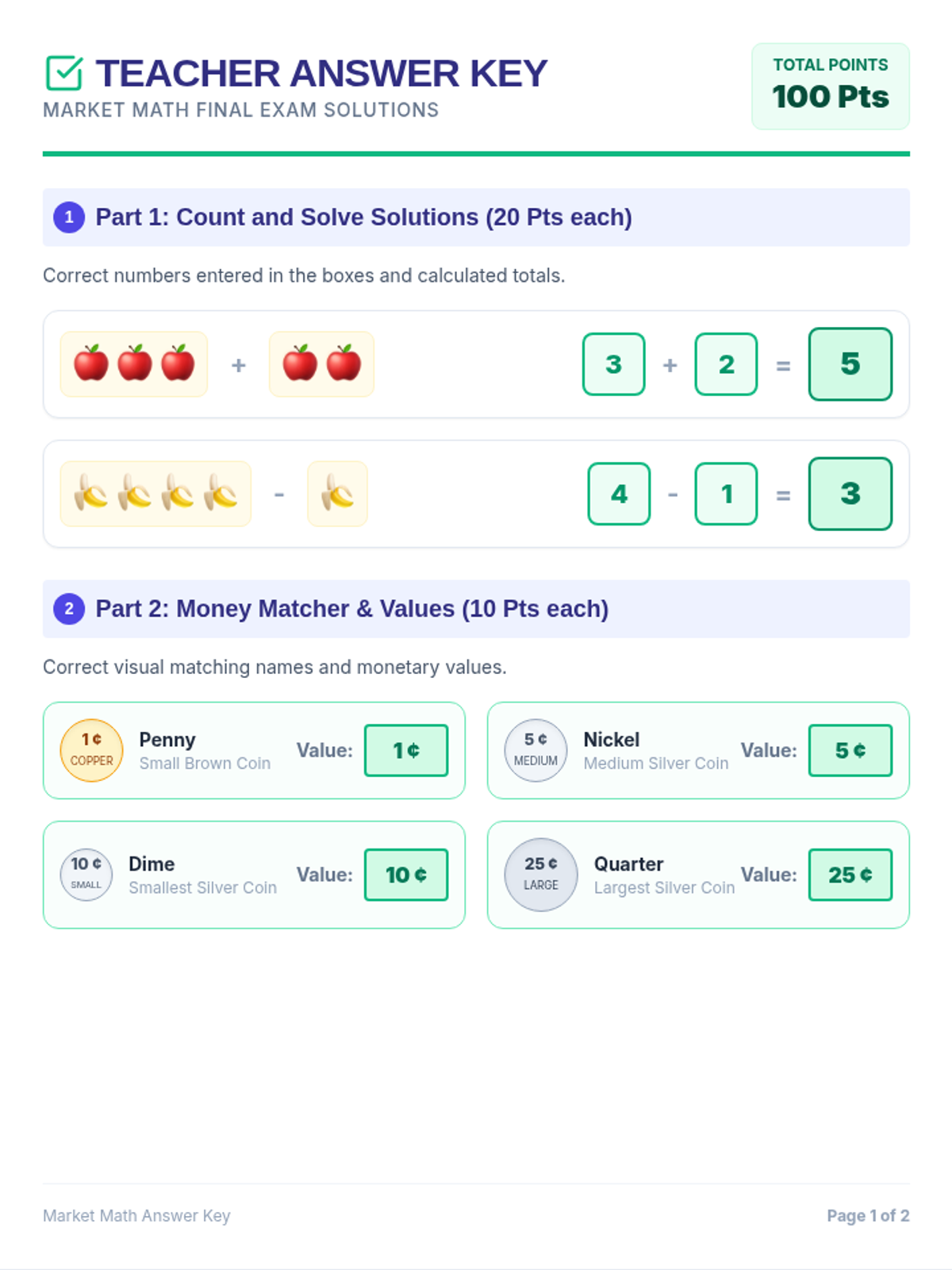
A comprehensive final exam lesson covering basic addition, subtraction, coin identification, and functional life skills grocery shopping math with visual support.
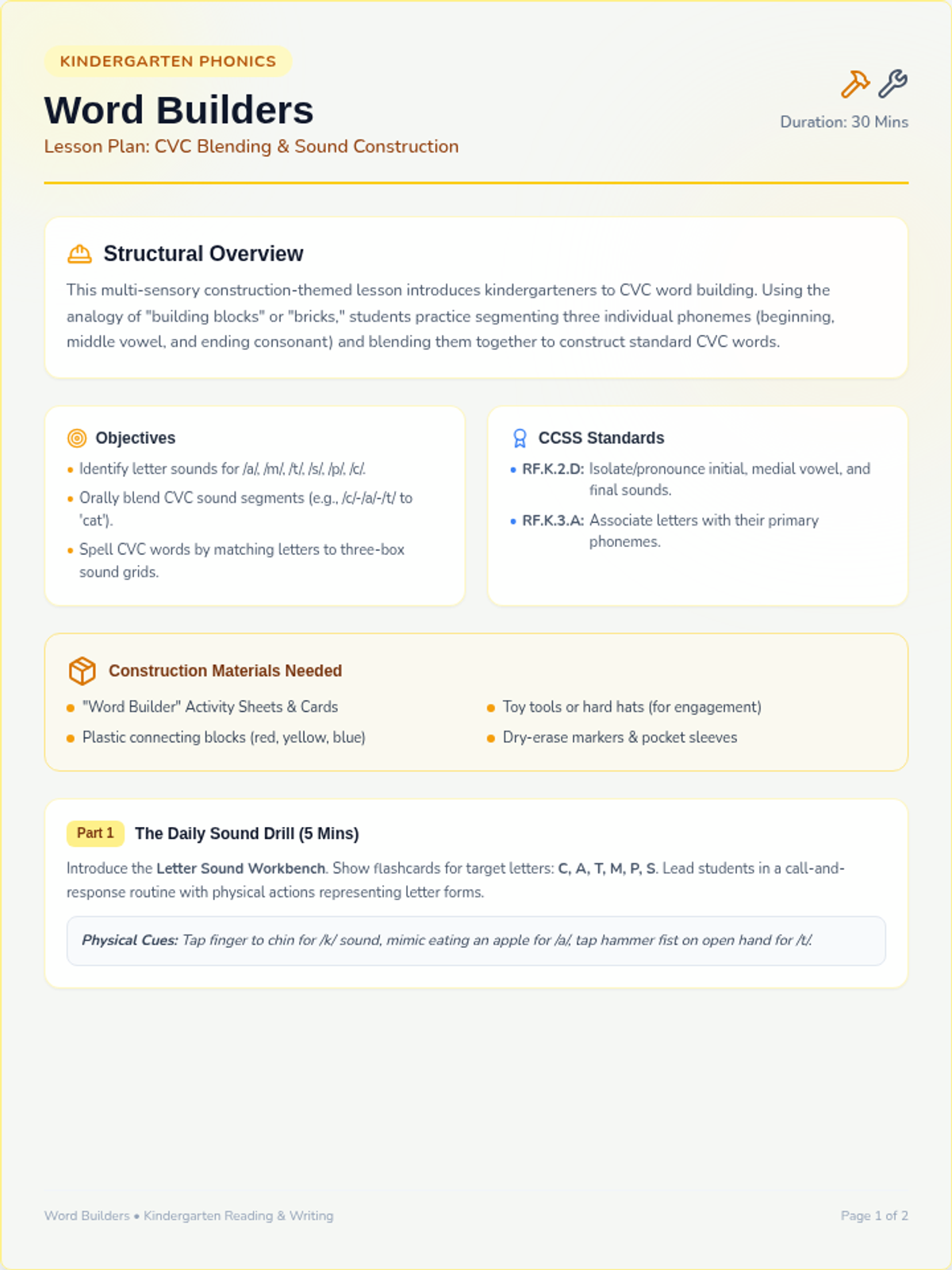
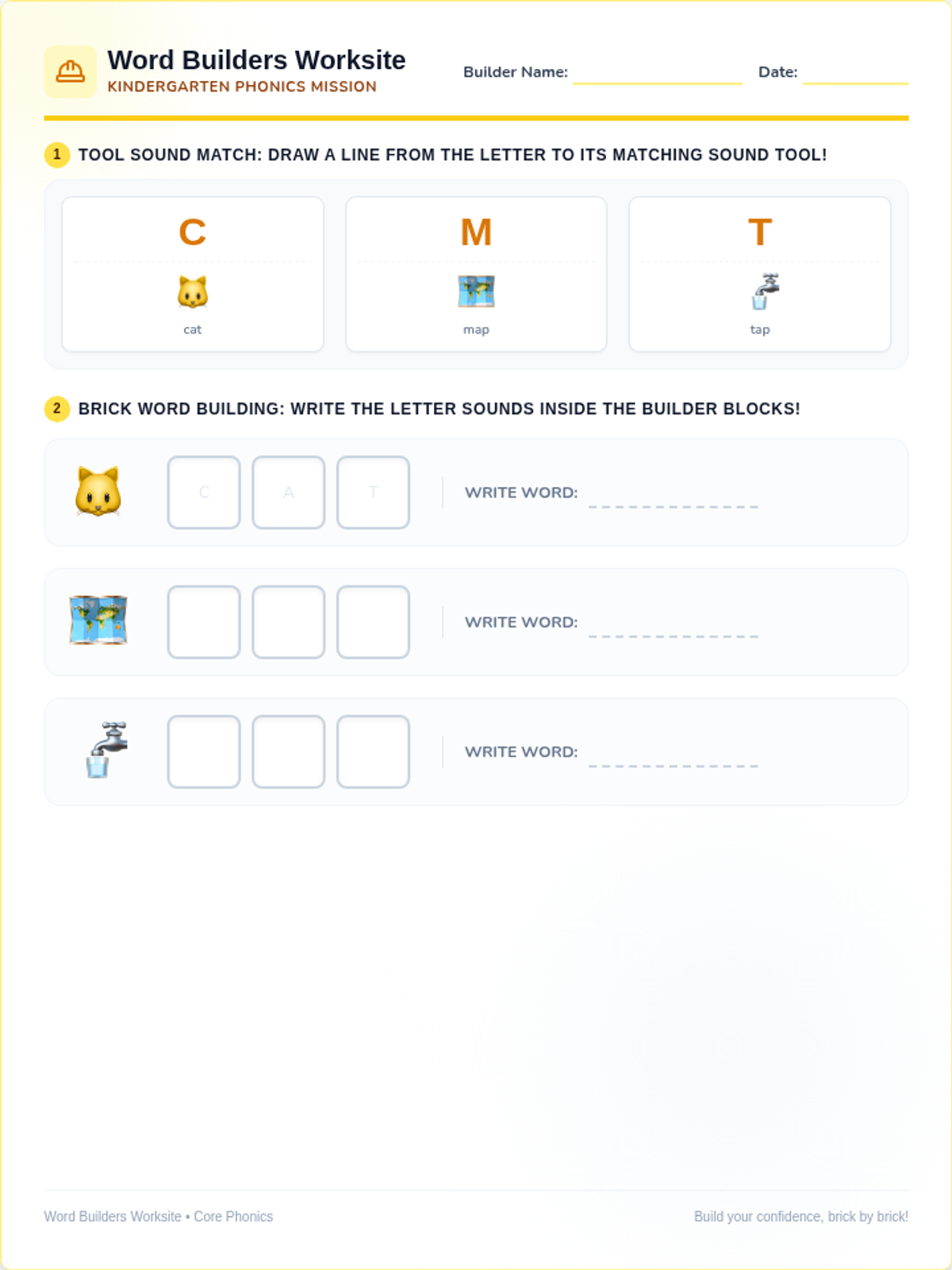
A foundational early literacy lesson helping kindergarteners identify letters, master letter sounds, and practice blending CVC and high-frequency words.
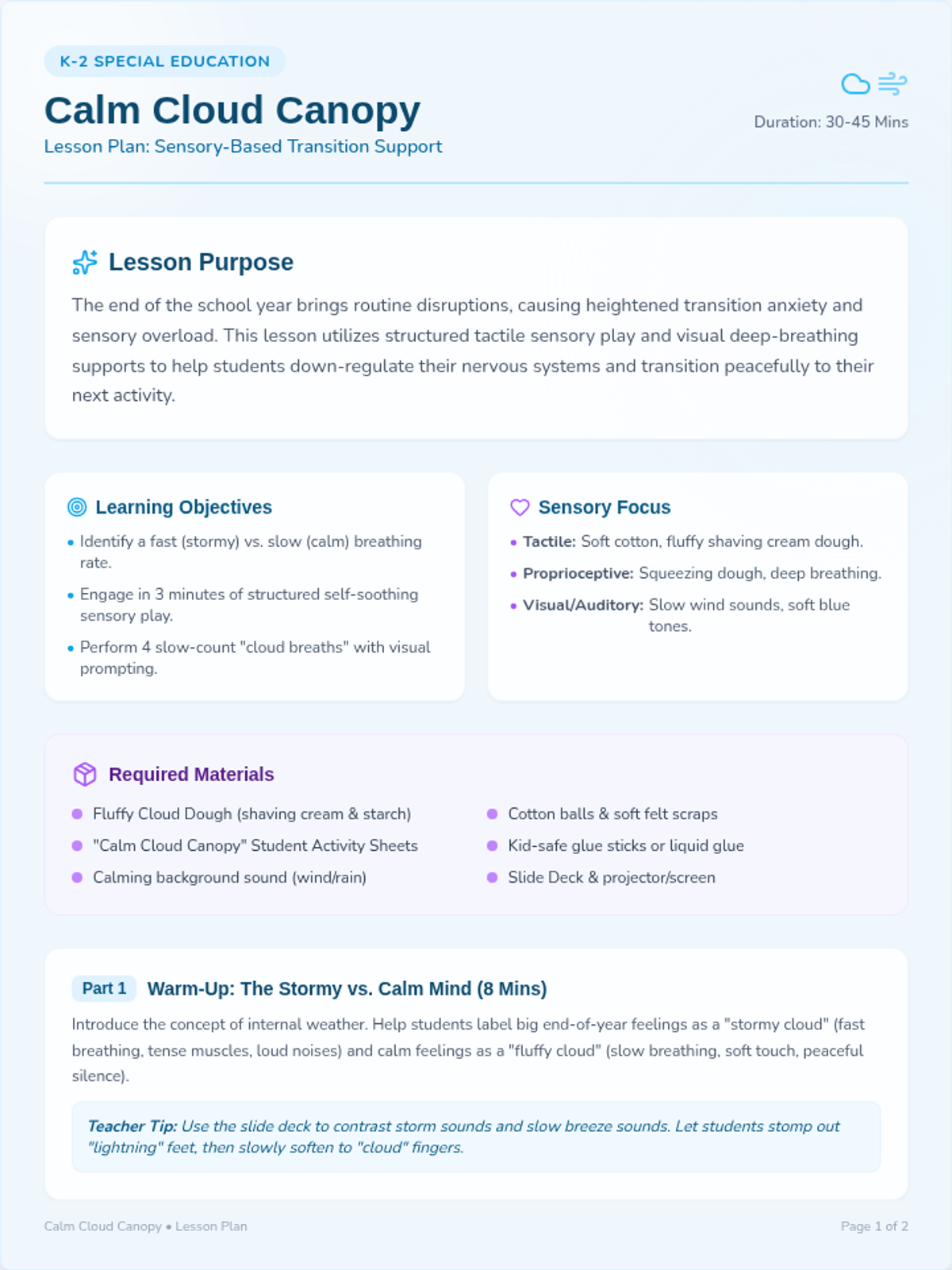
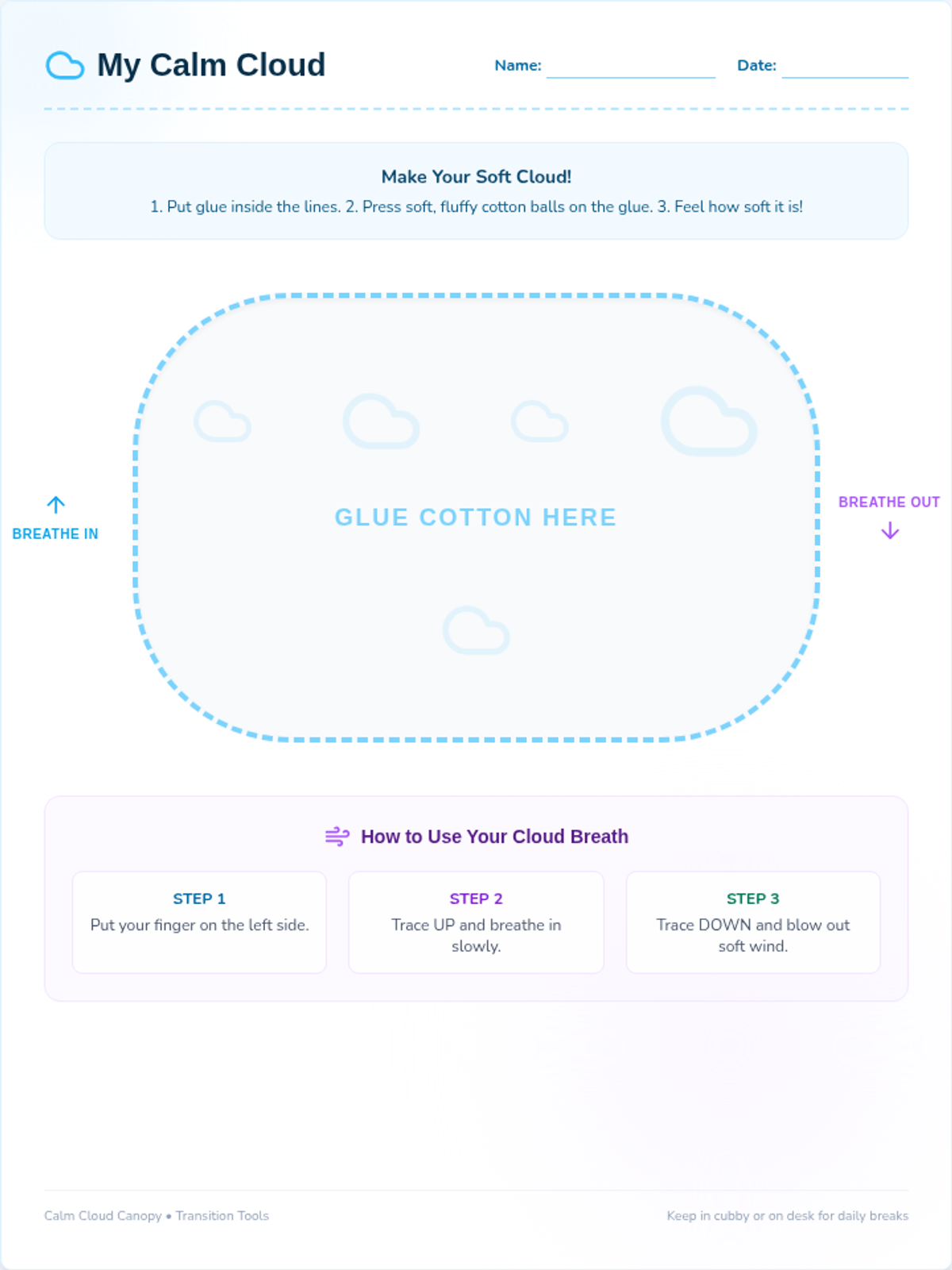
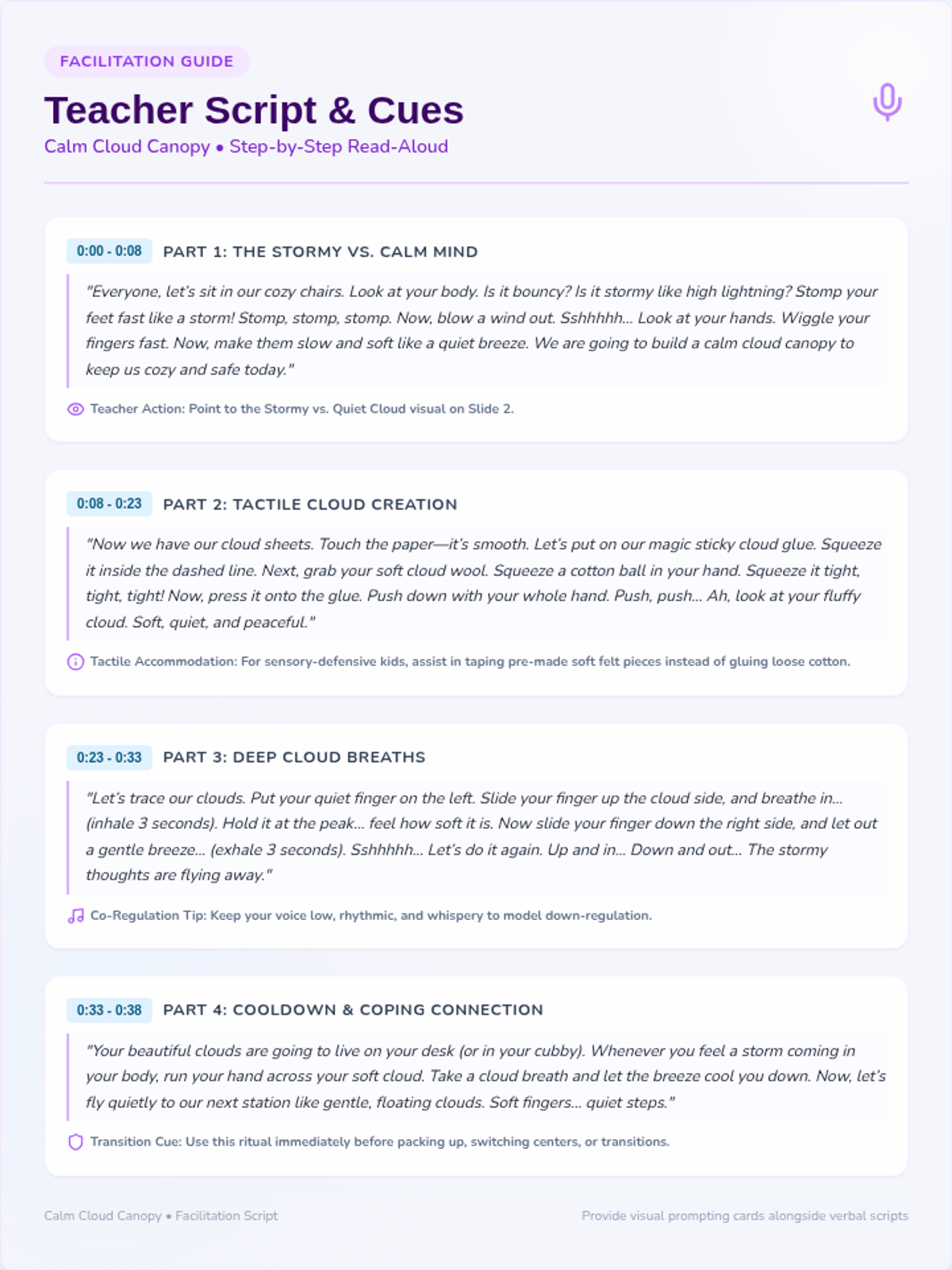
A sensory-focused lesson helping K-2 special education students manage transition anxiety and sensory overload through tactile cloud play and deep breathing simulation.
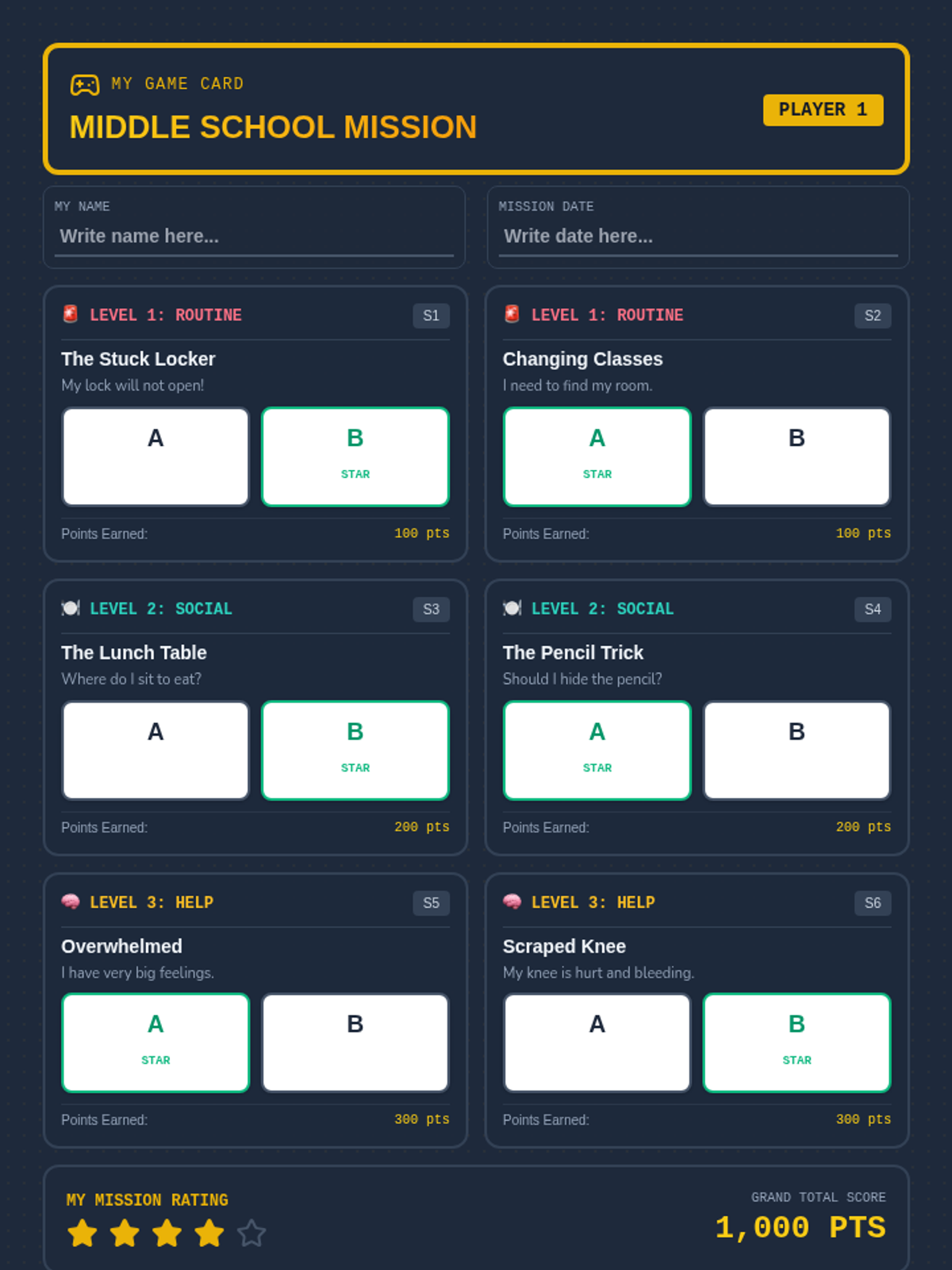
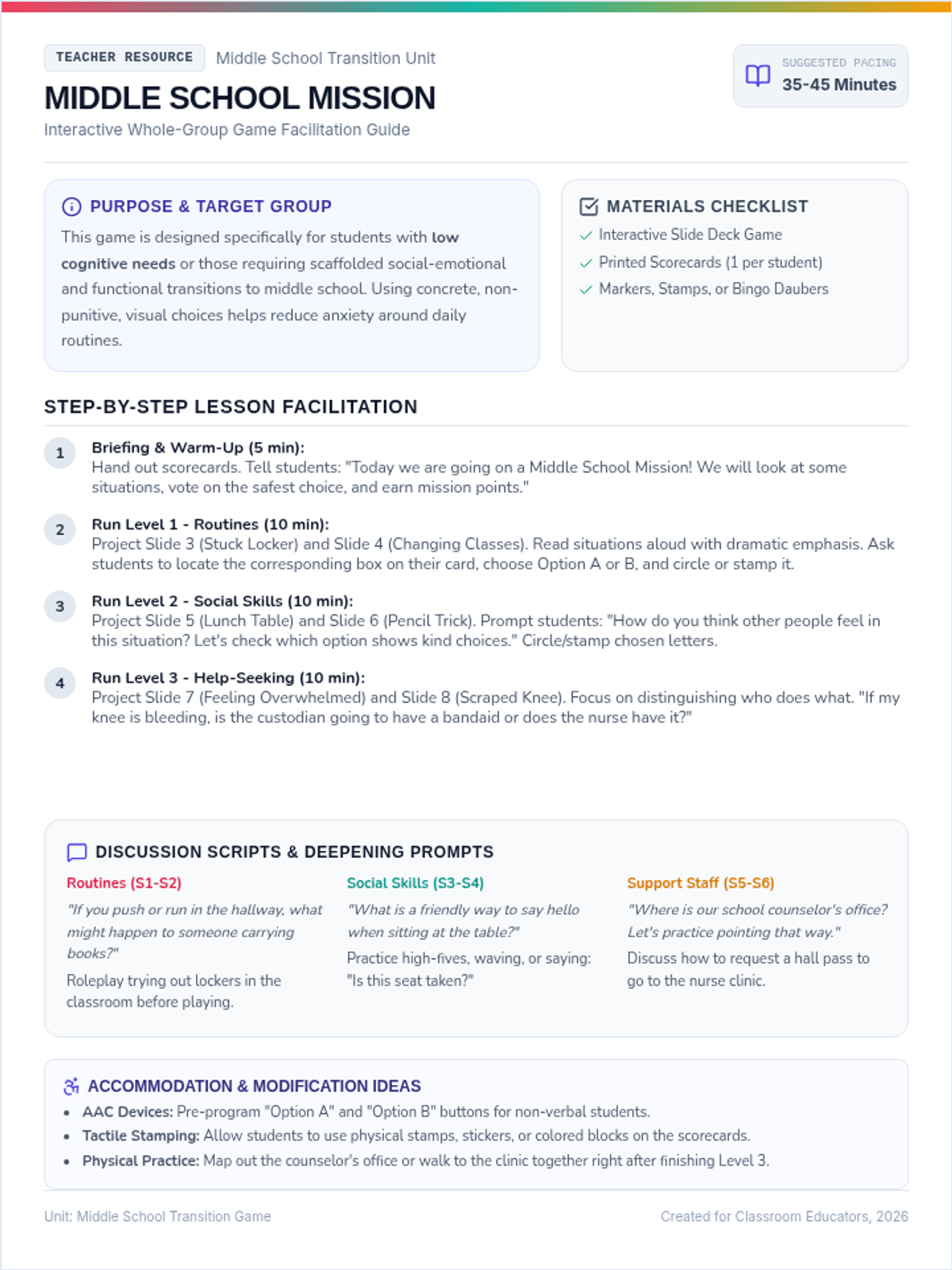
An interactive, game-based transition unit for middle school students with low cognitive needs. It teaches essential routines, social-emotional skills, and support systems through guided scenario-based choices.
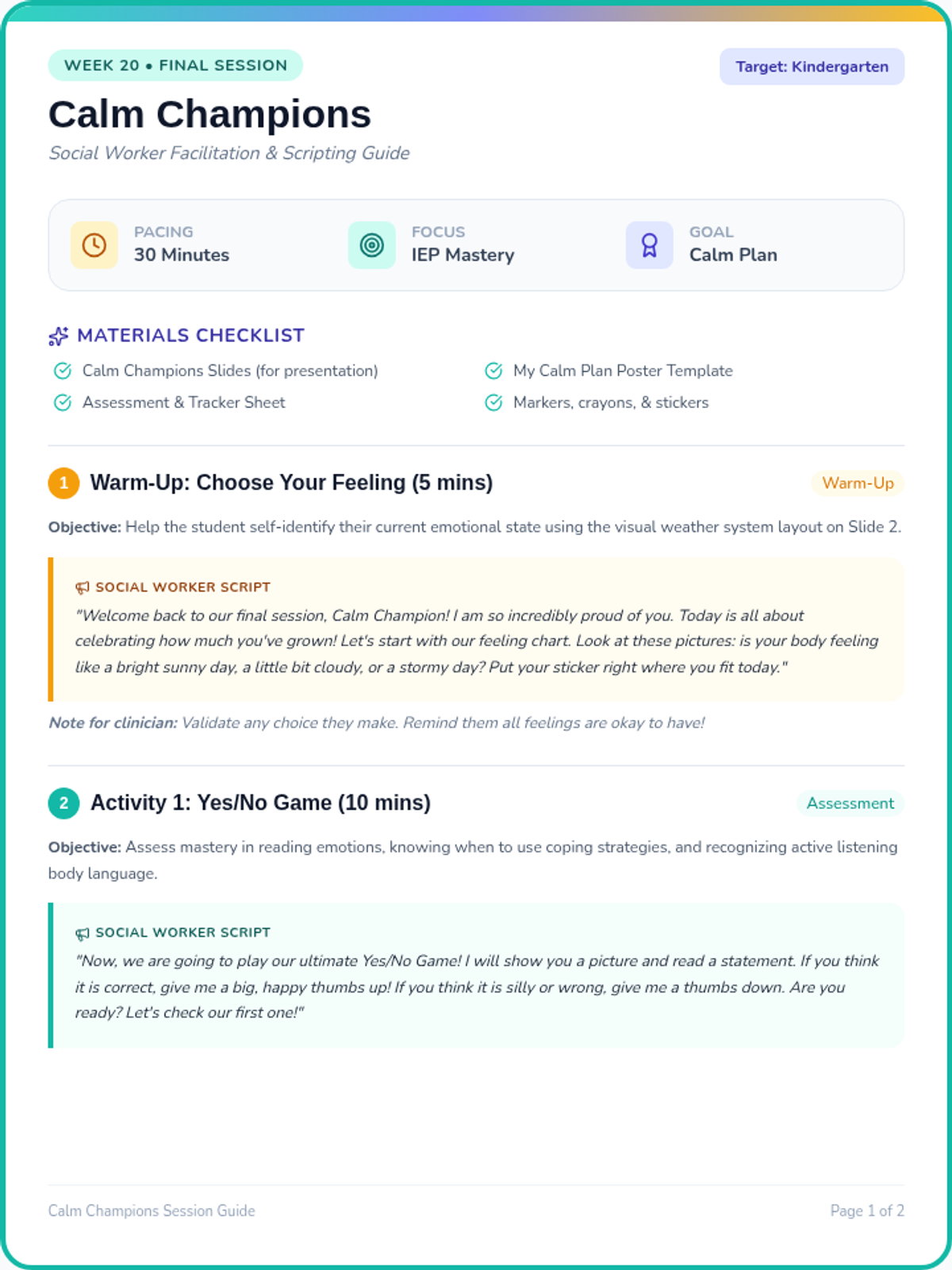
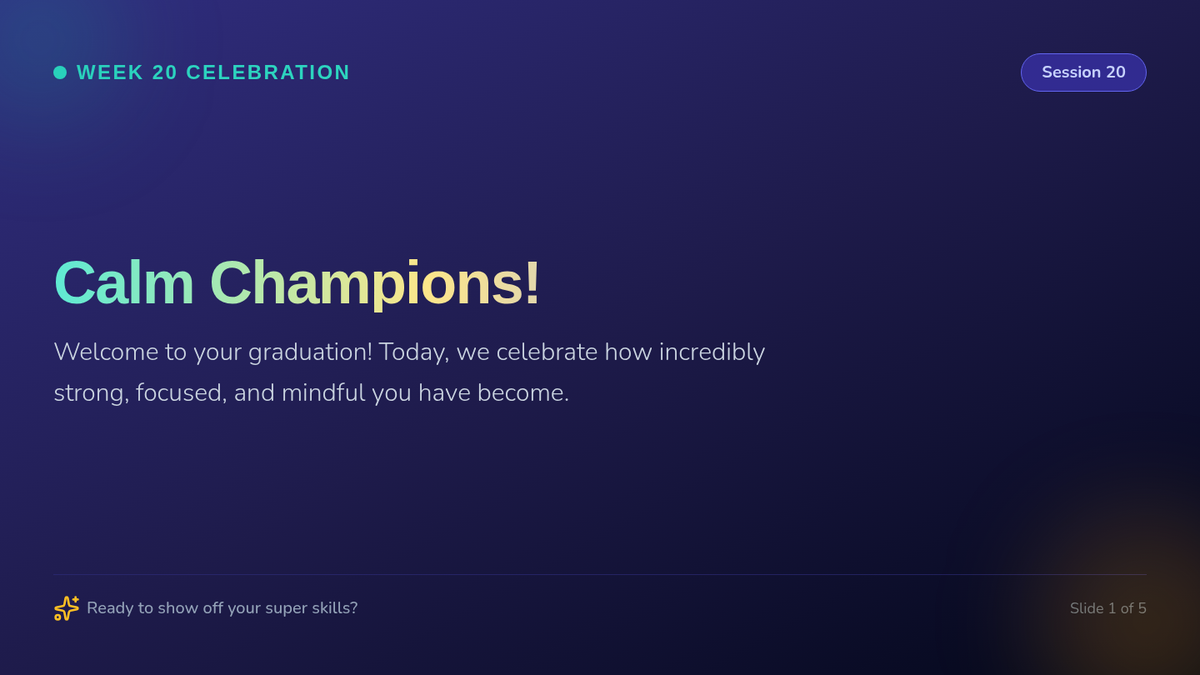
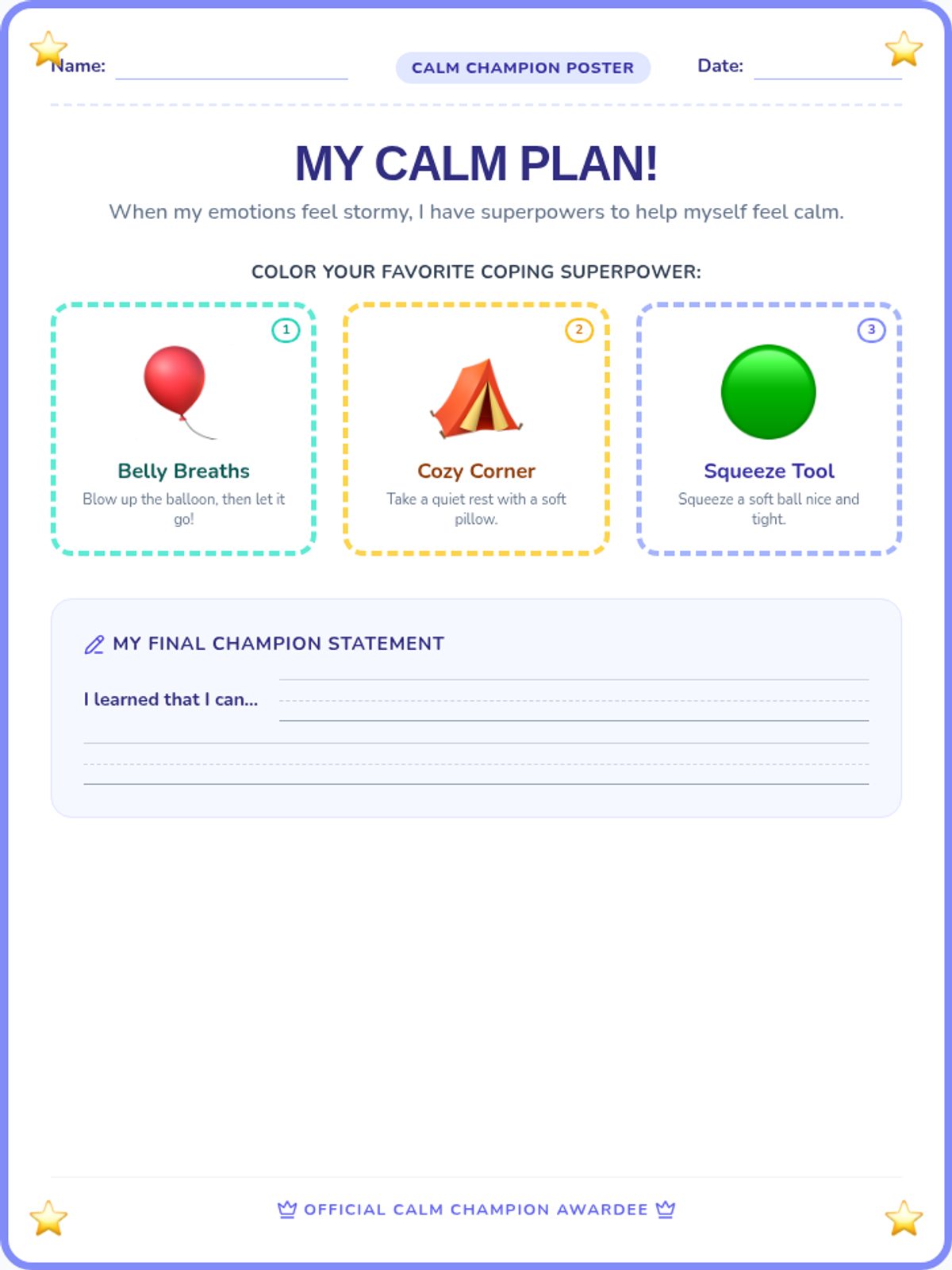
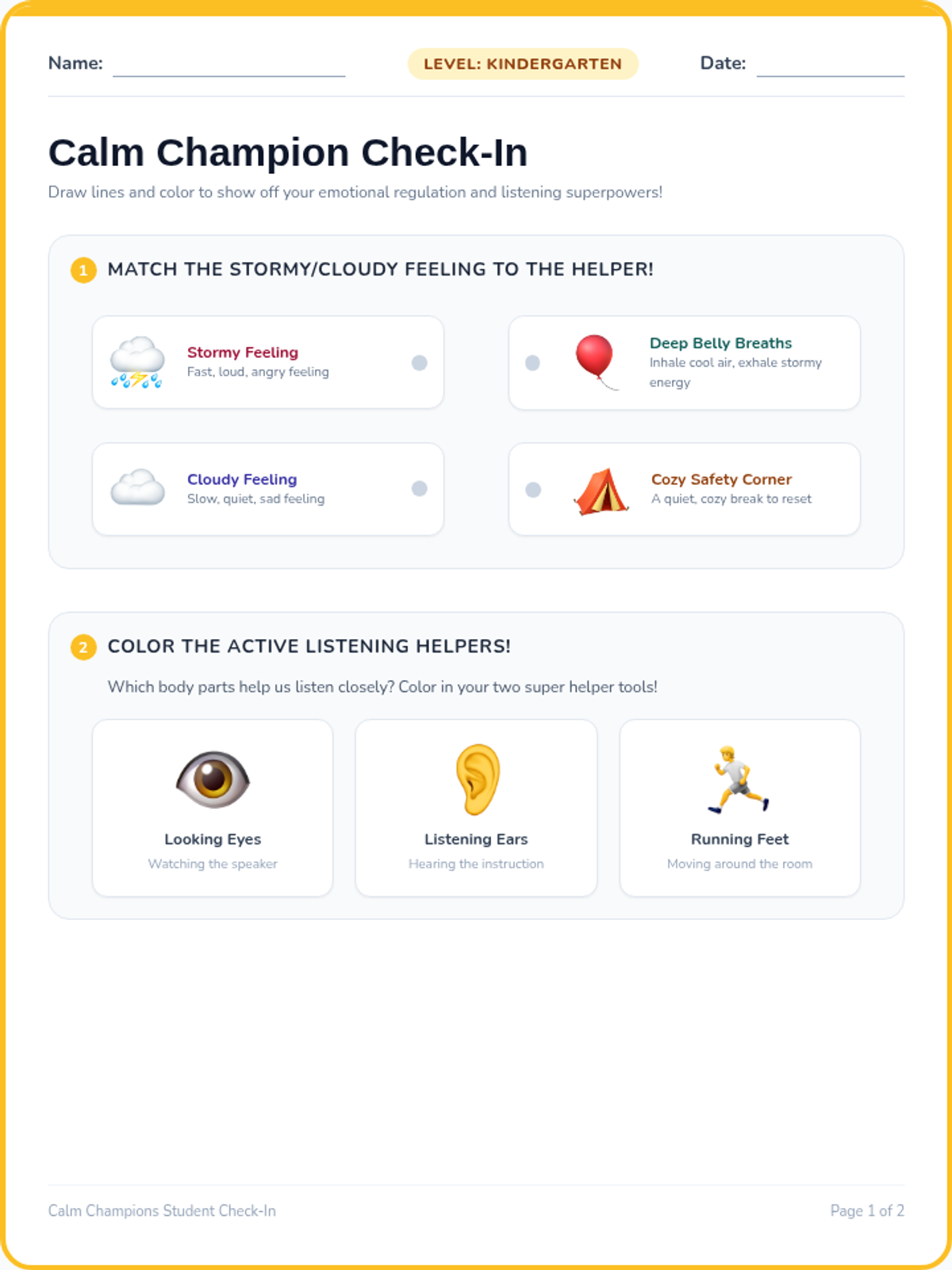
A celebration and final assessment session for Kindergarten students focusing on emotional regulation, coping strategies, and listening skills. Includes a slide presentation, visual assessment, calming plan, and data tracking tools.
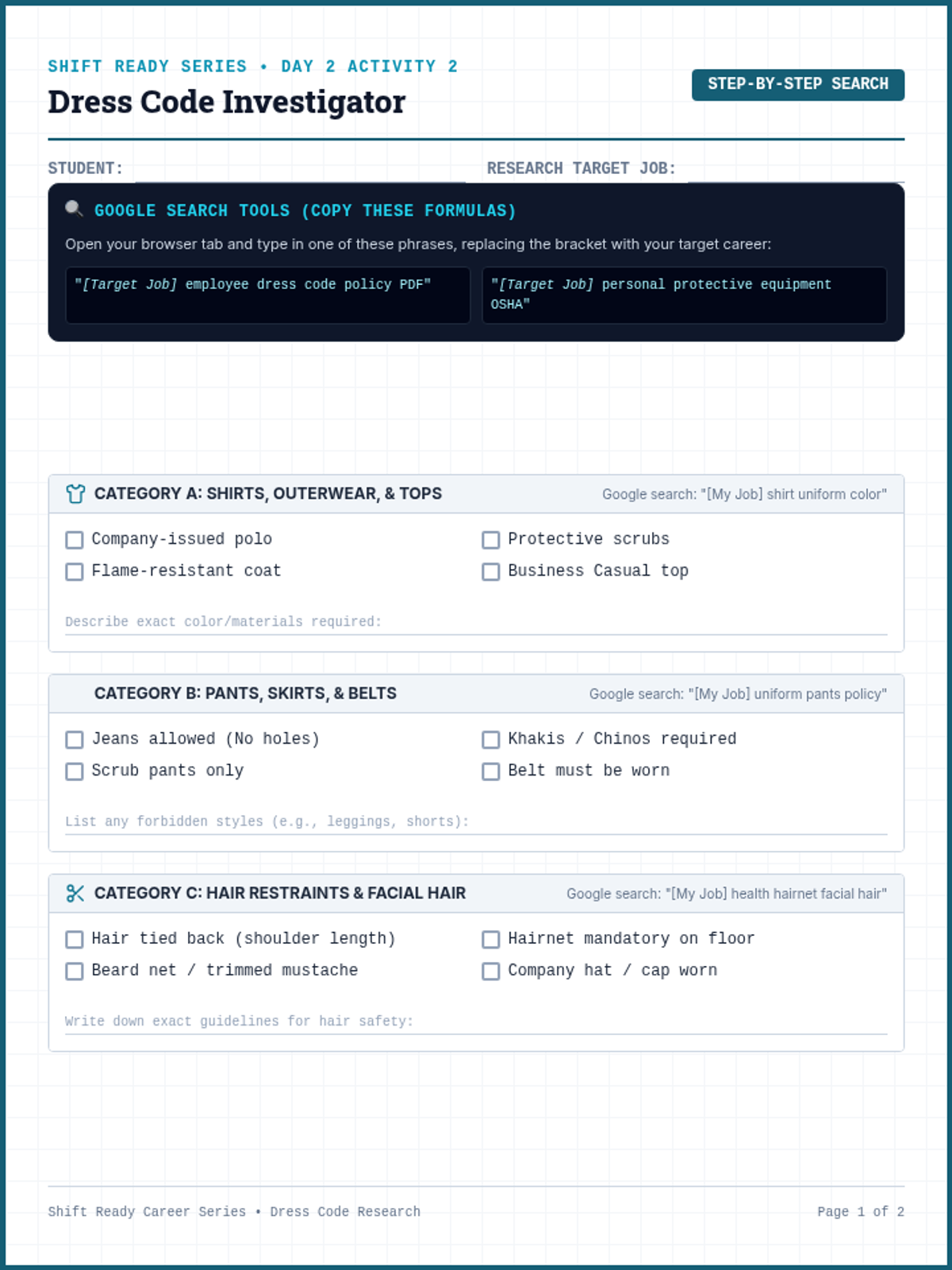
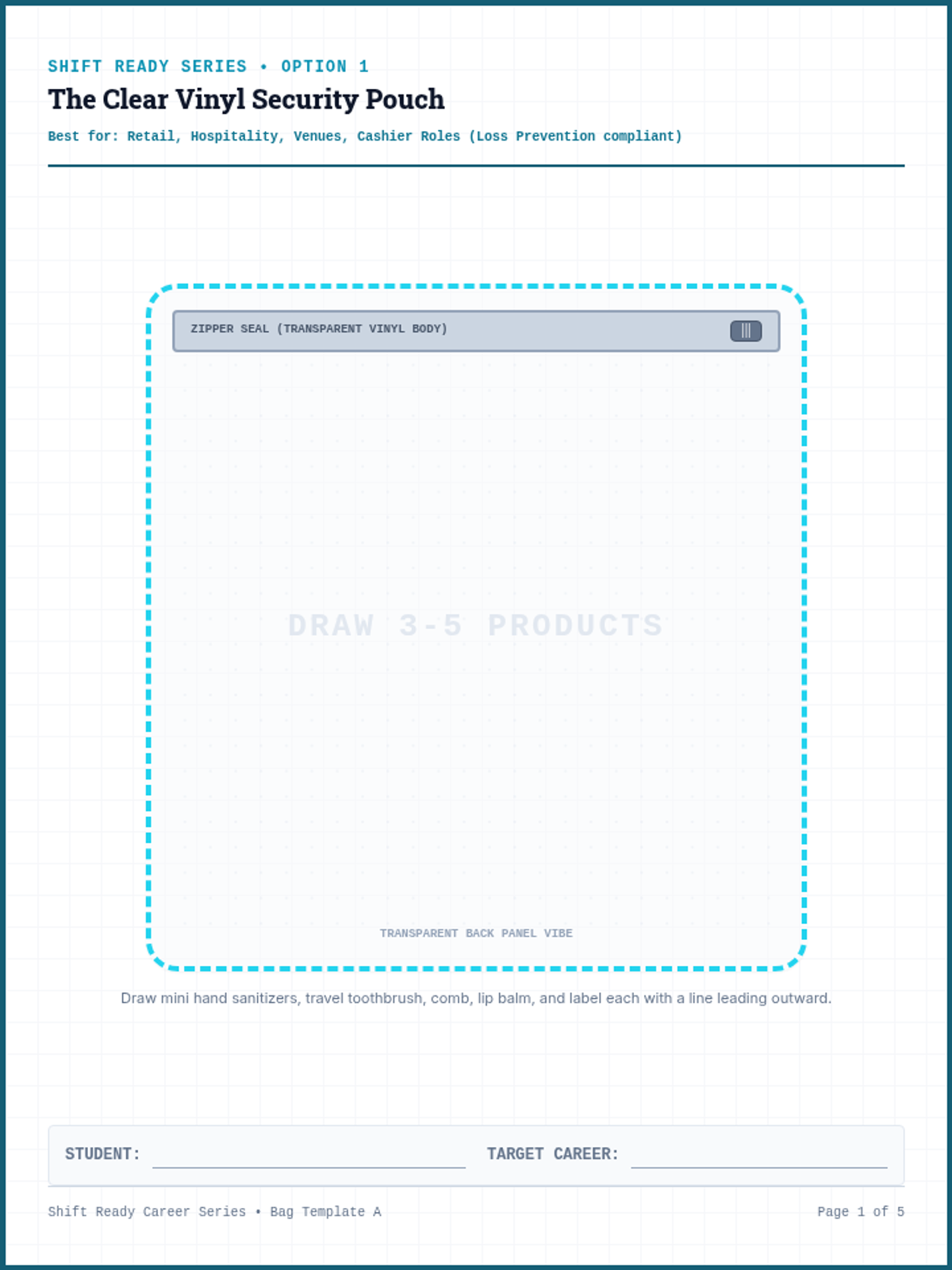
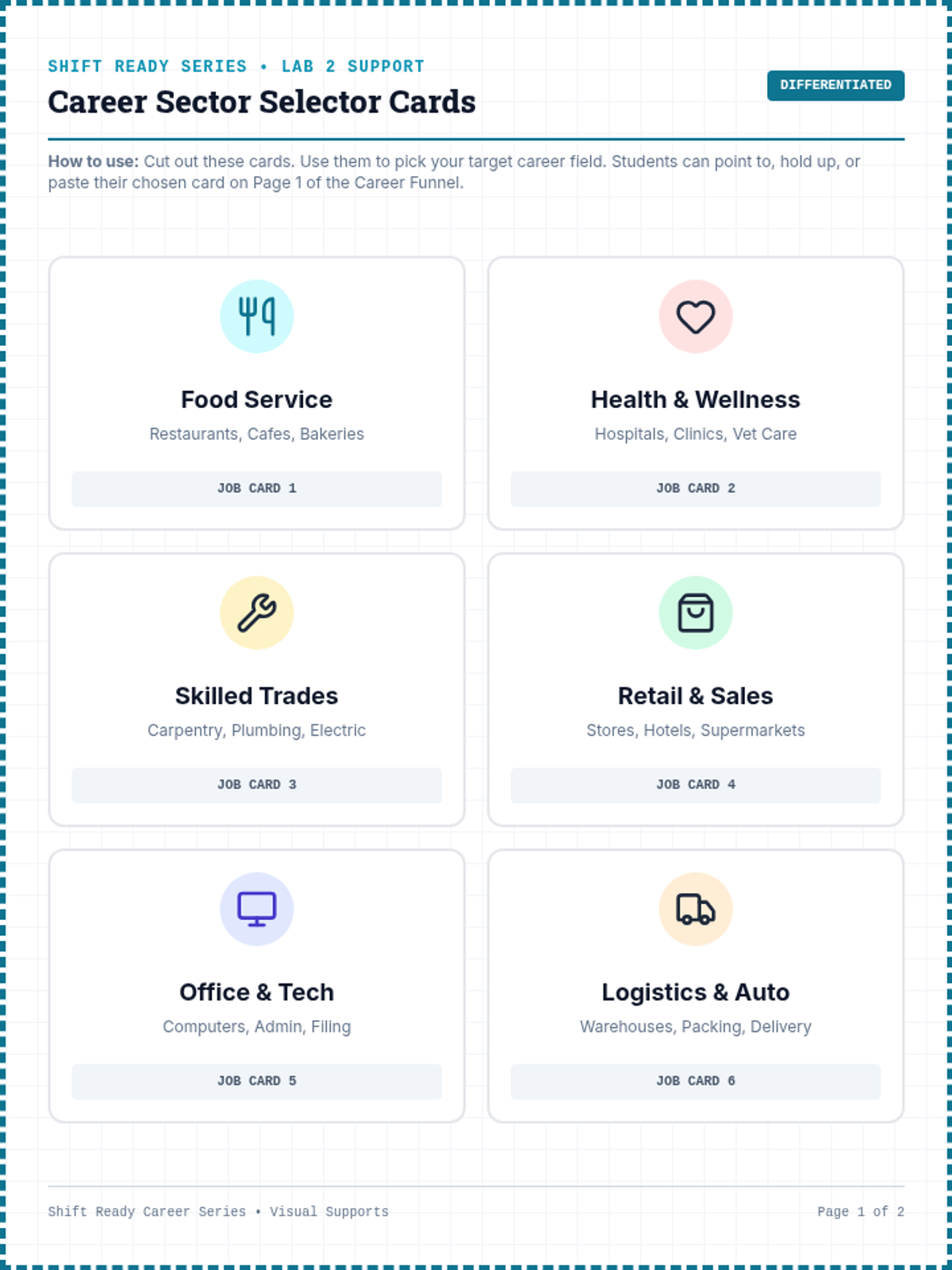
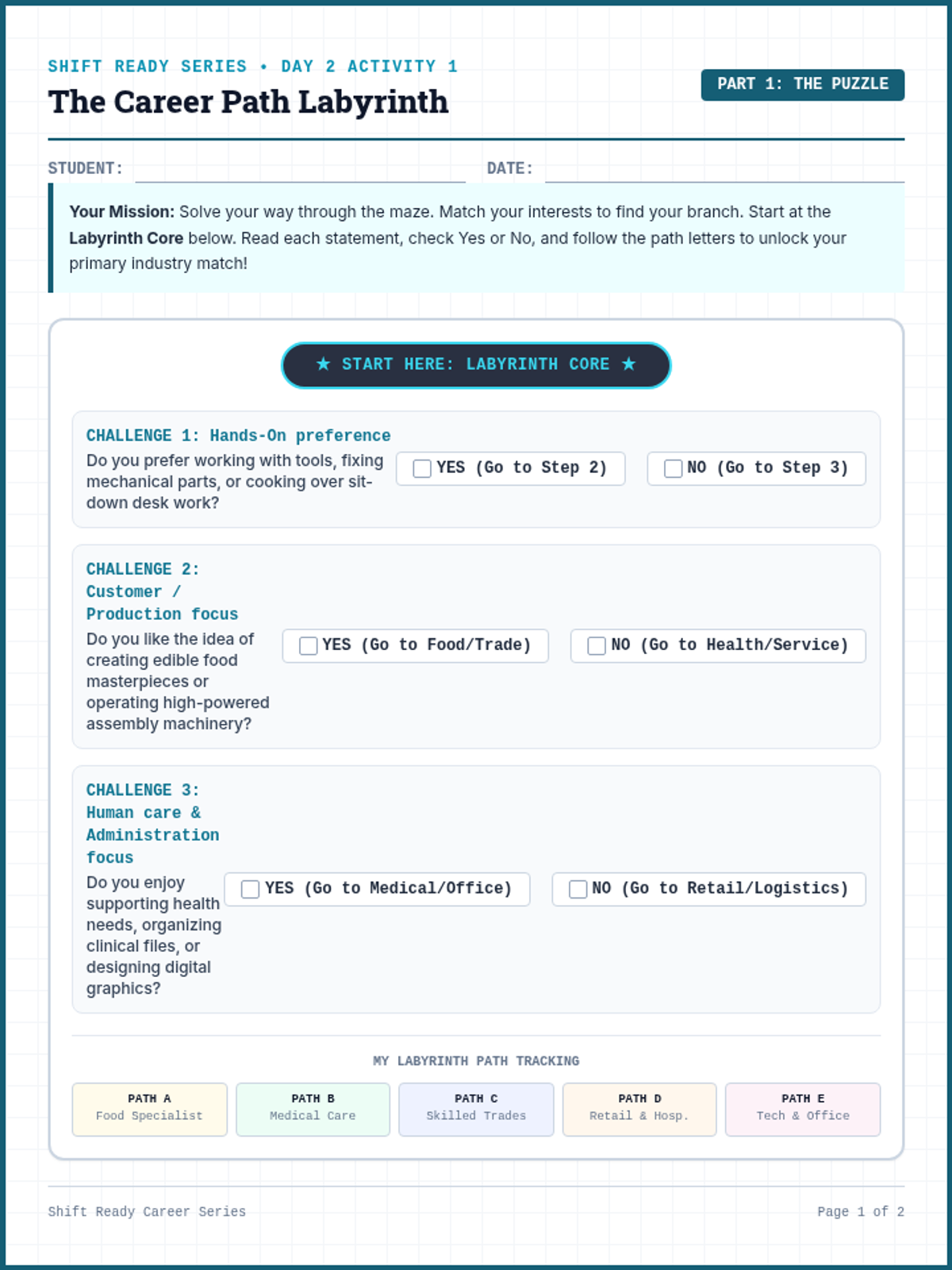
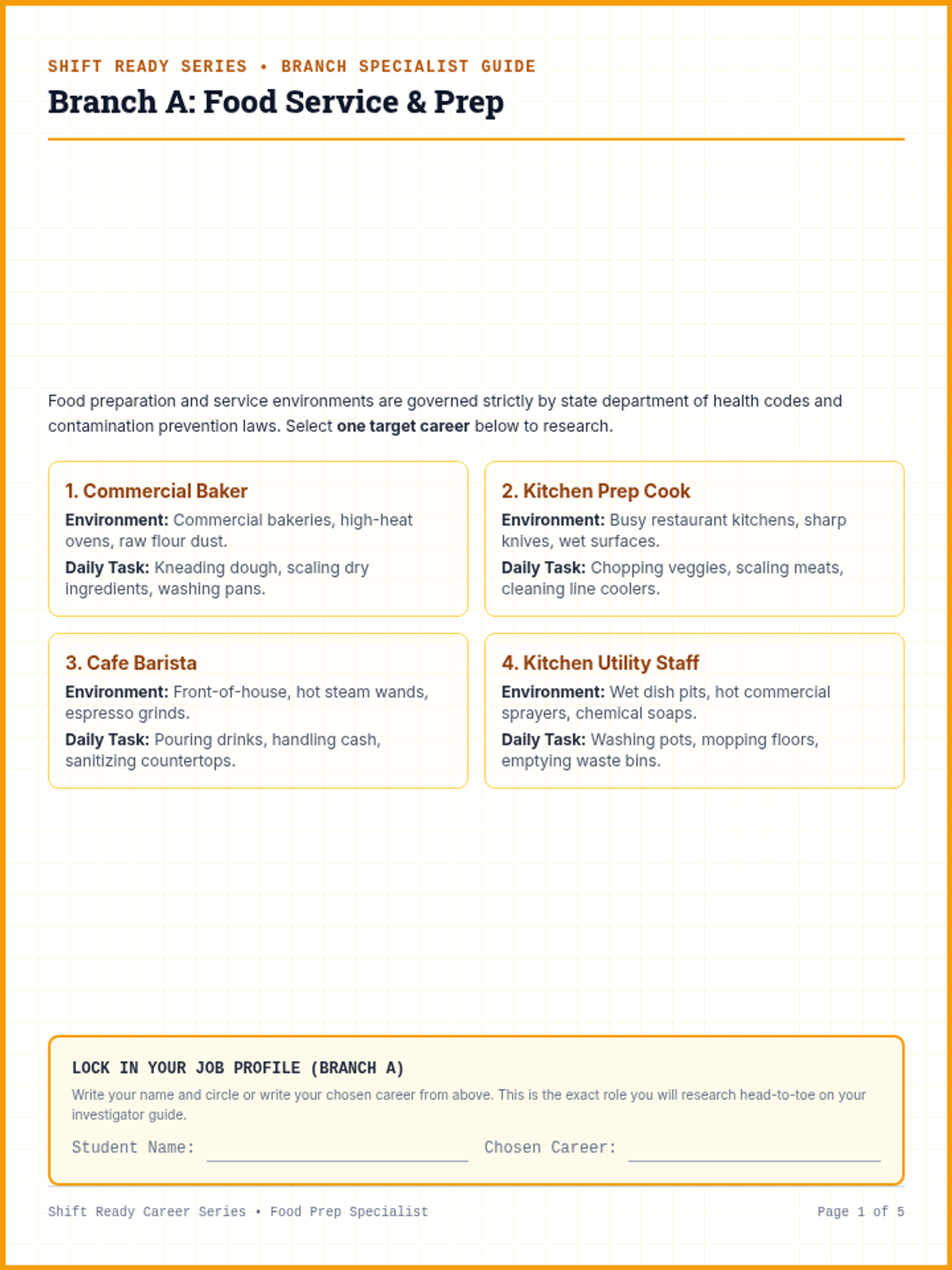
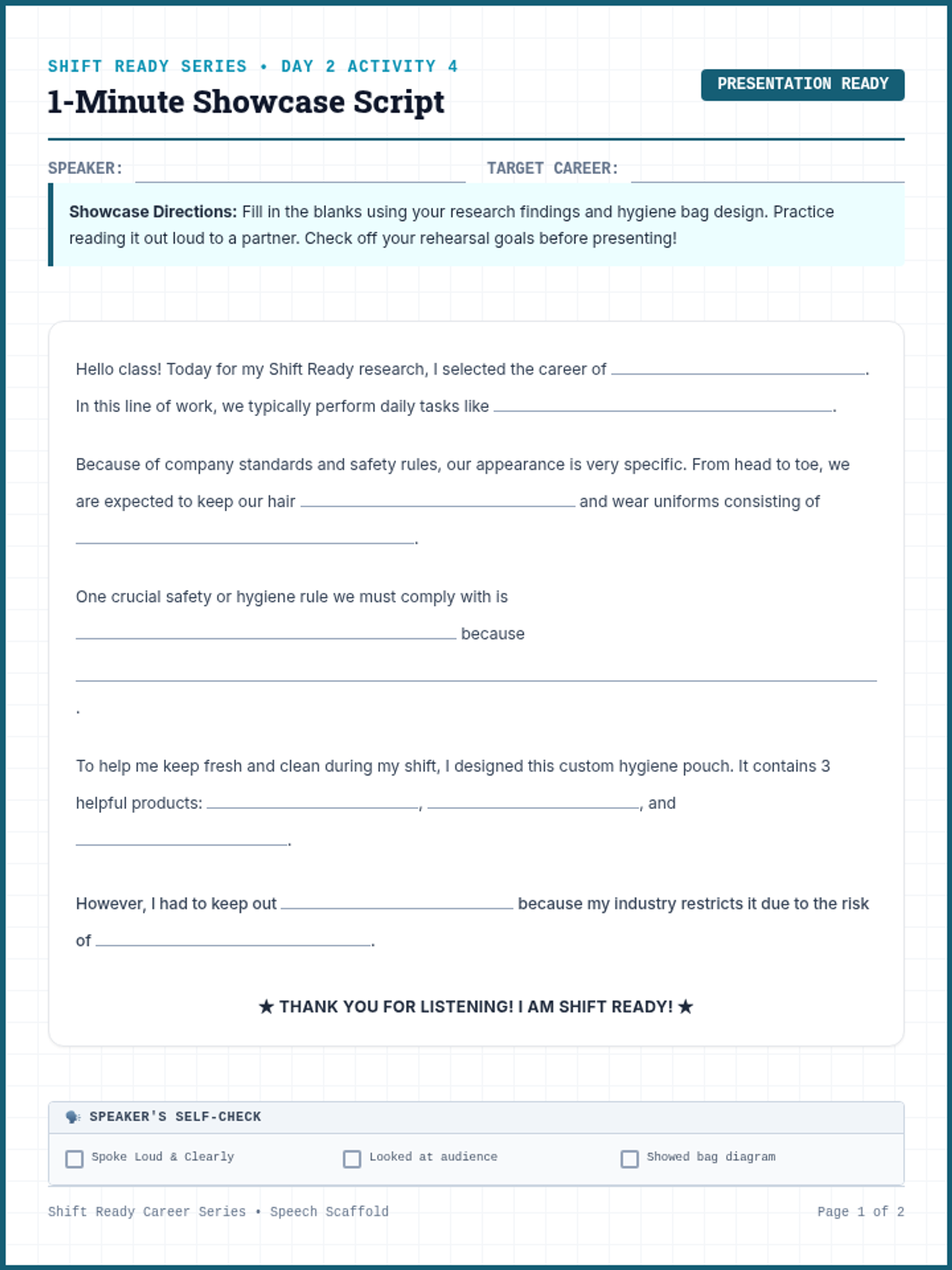
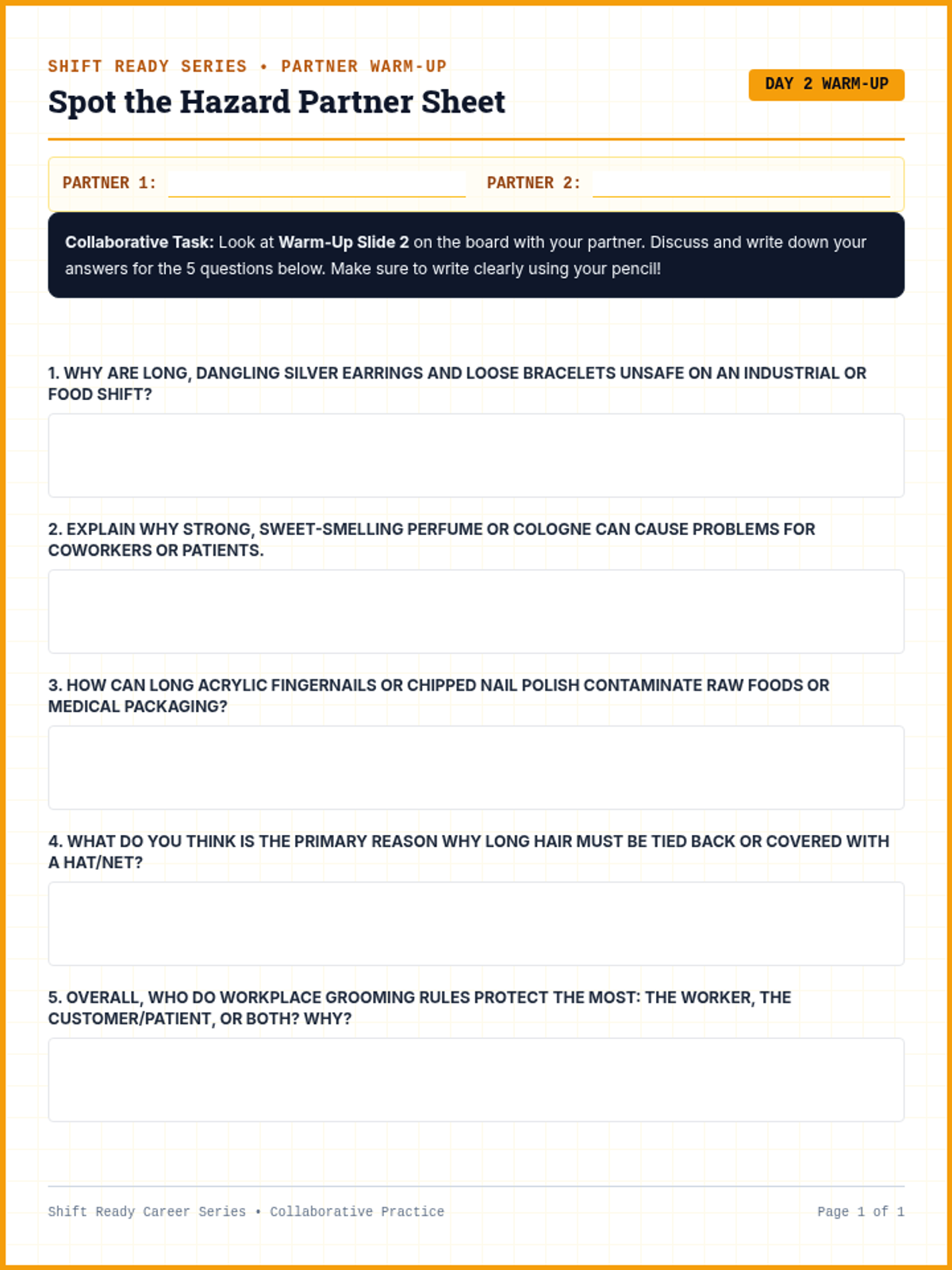
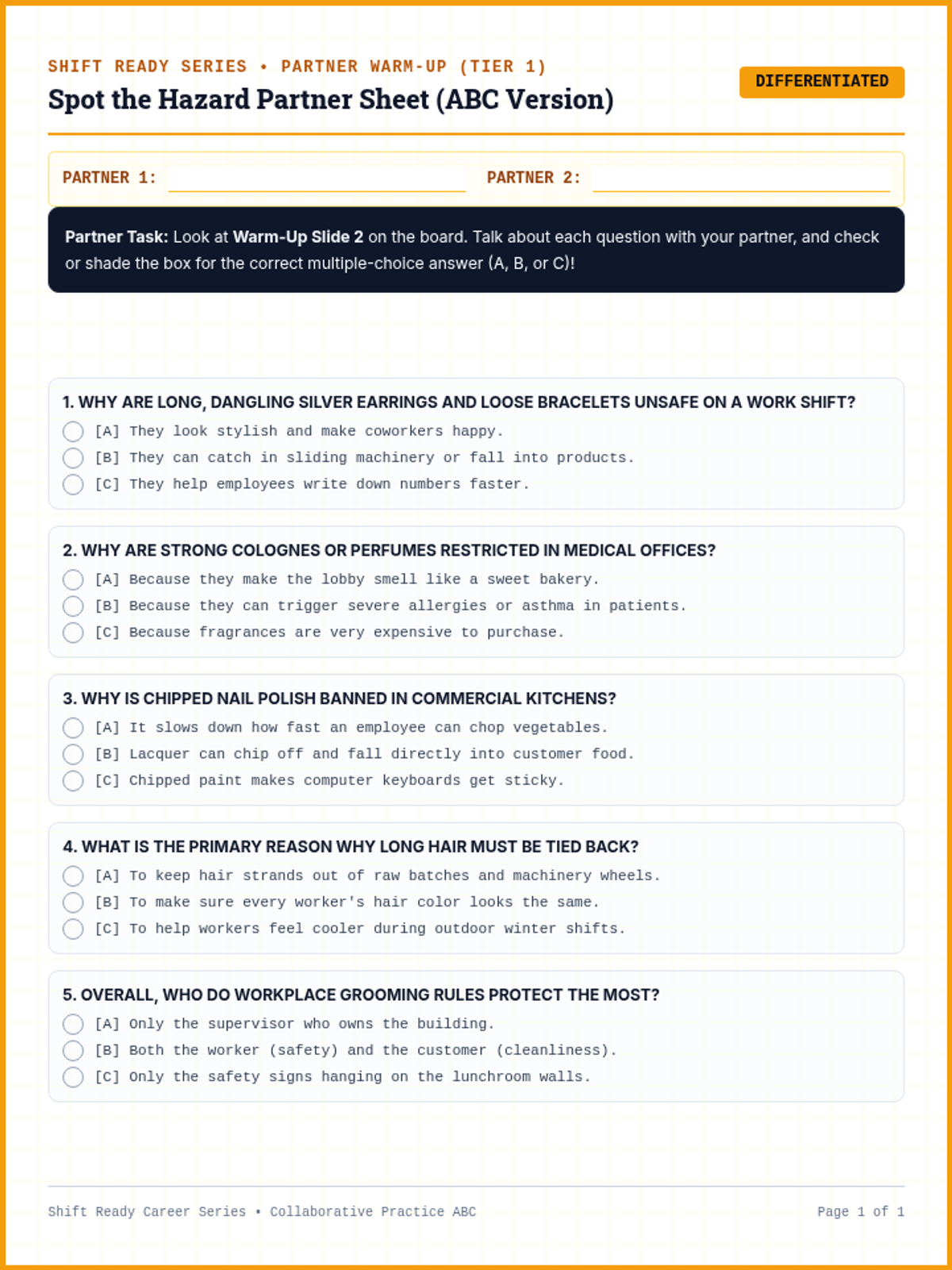
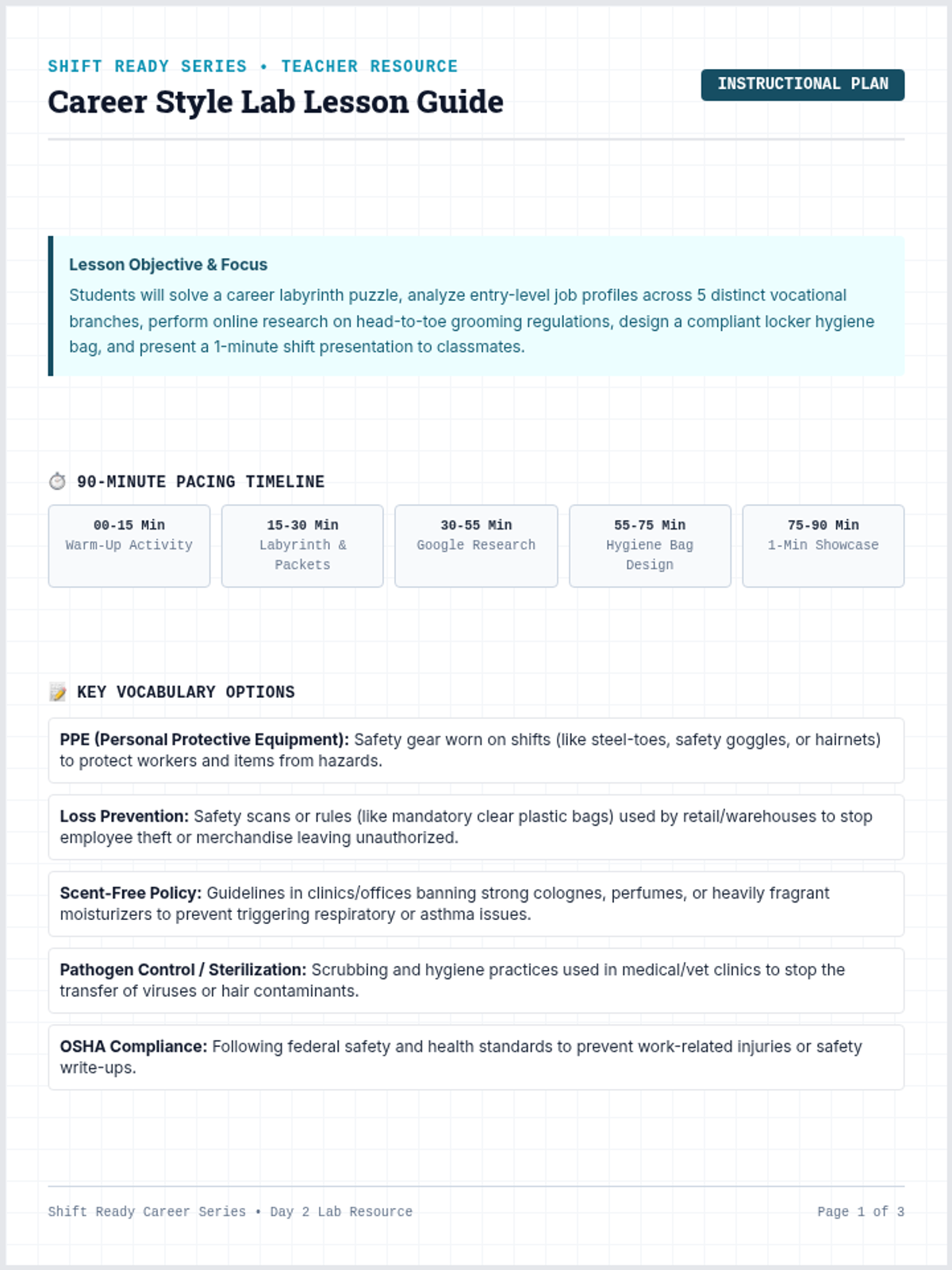
A guided research lesson for transition students to narrow down a career interest, research hygiene/apparel rules from head to toe, design a workplace-appropriate grooming bag, and present findings using a structured 1-minute presentation script.
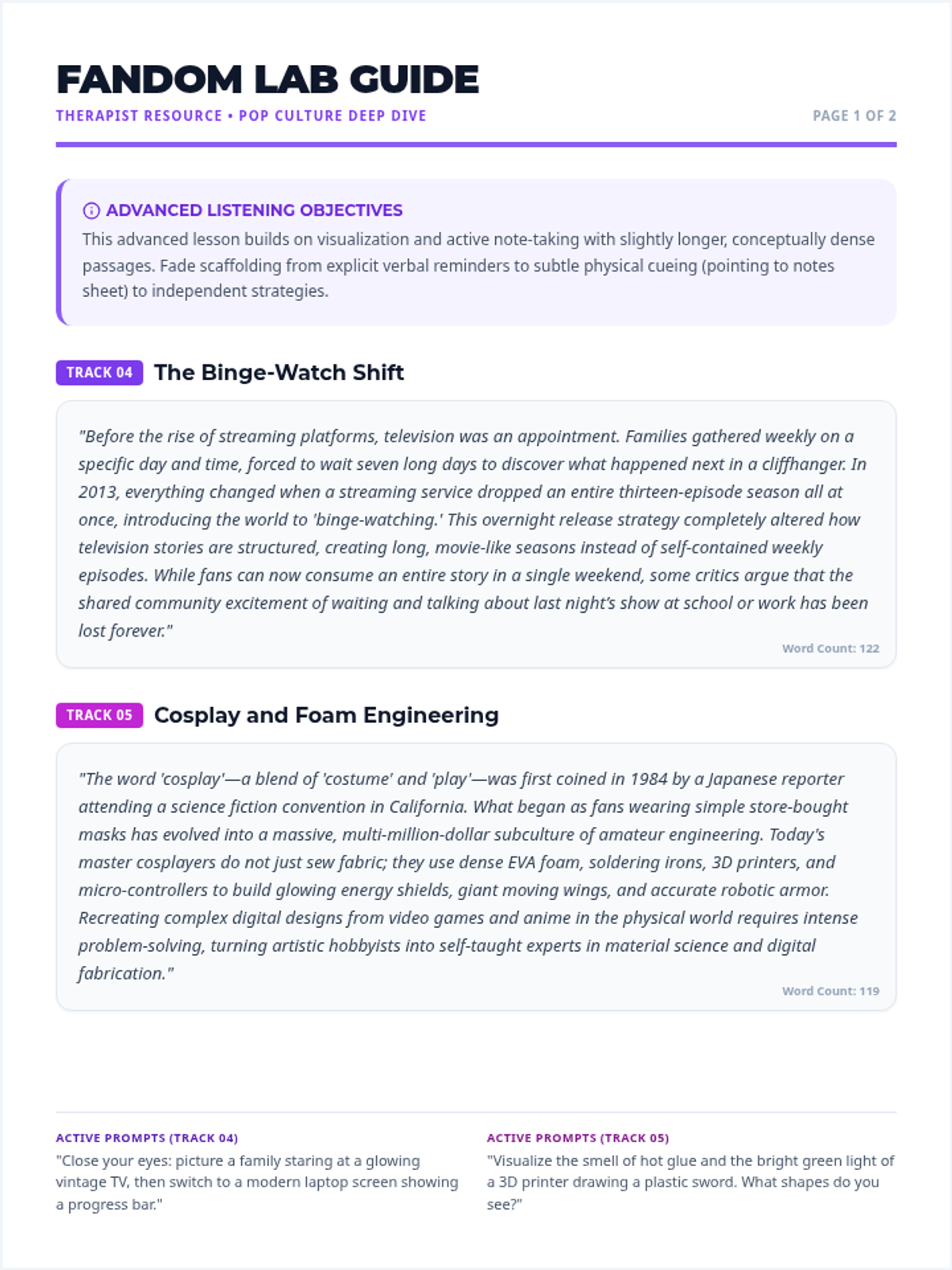
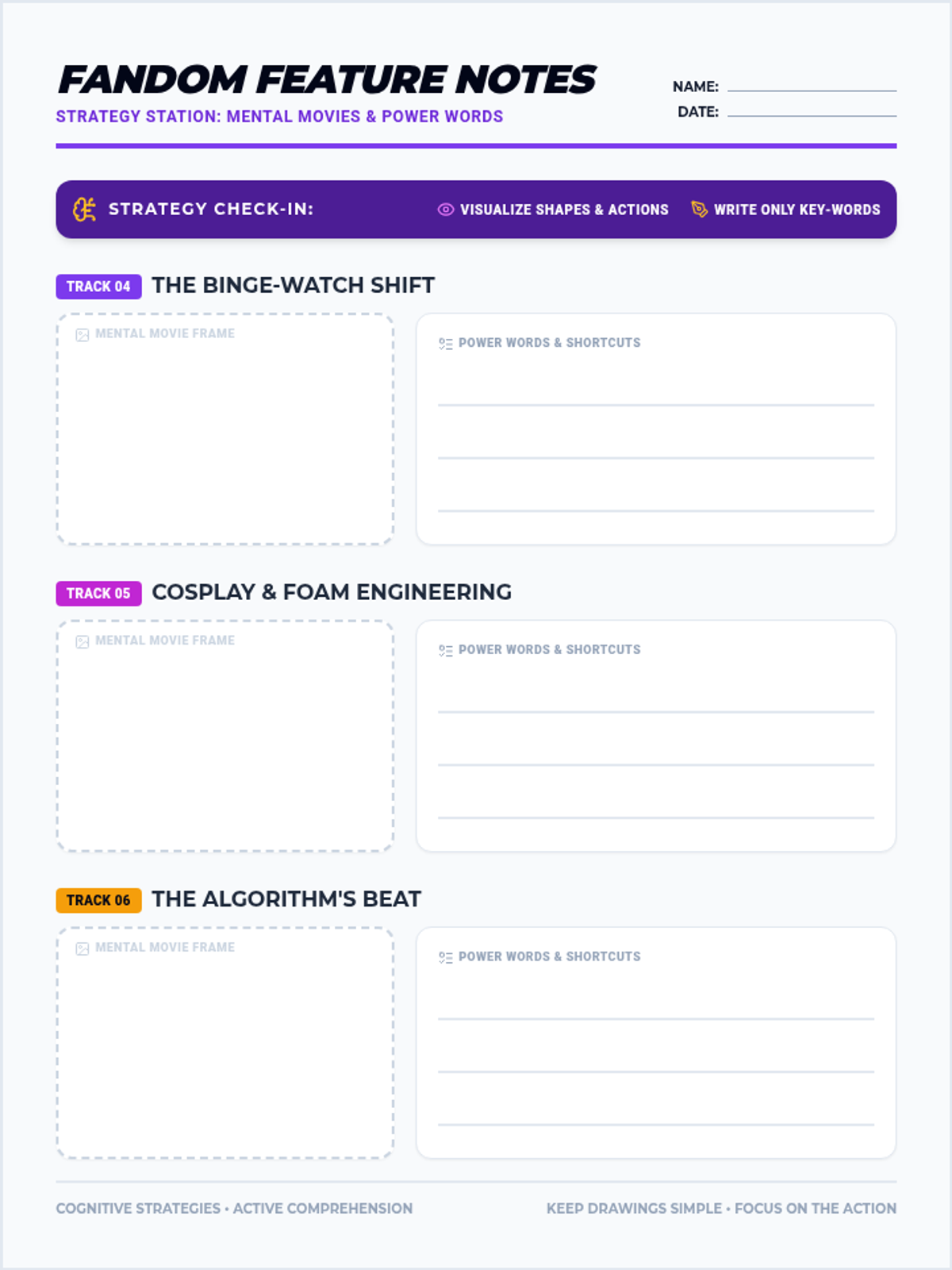
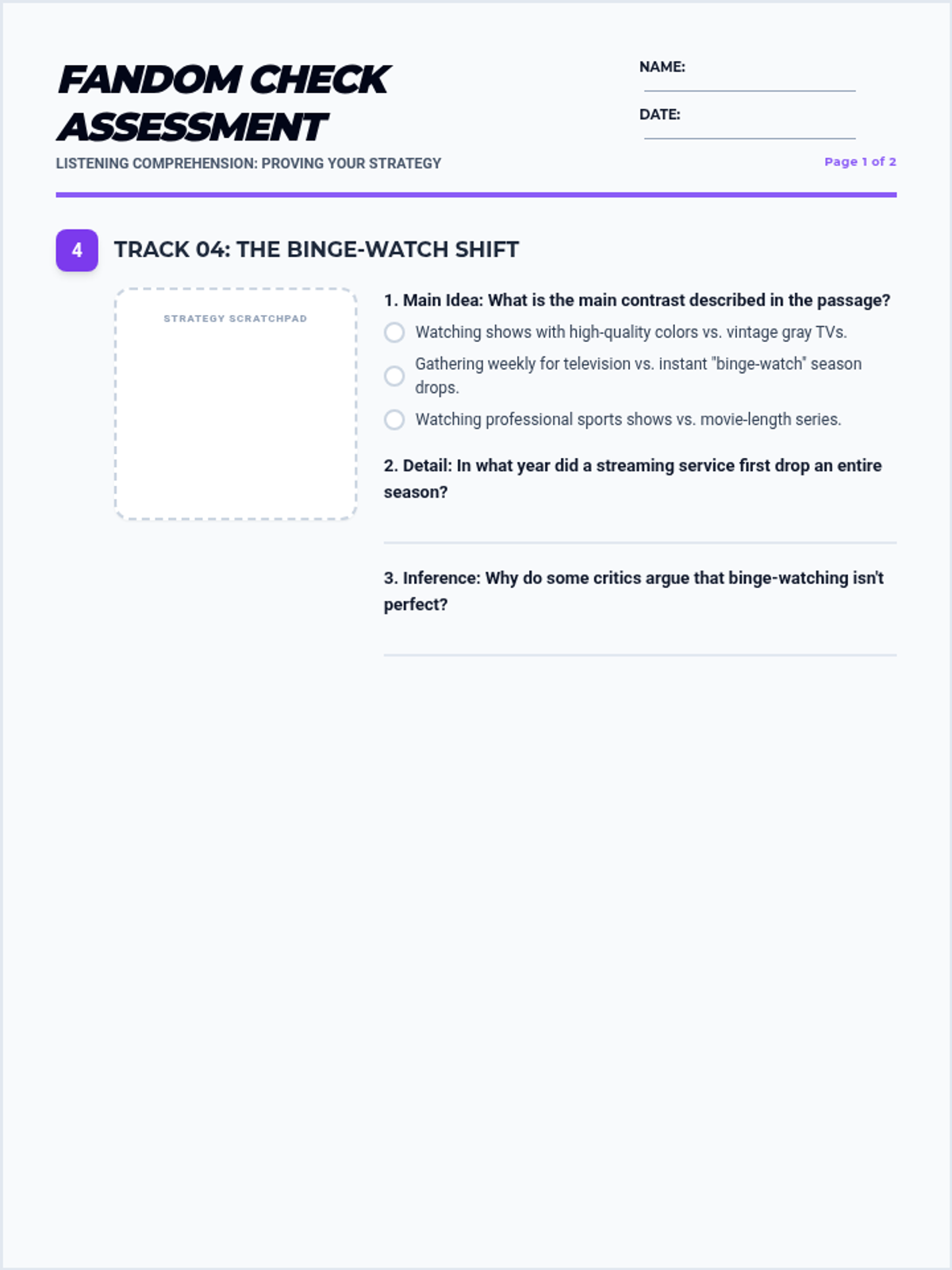
An advanced listening comprehension lesson building on visualization and active note-taking strategies with longer oral passages, denser pop culture topics, and an increased volume of targeted comprehension questions.
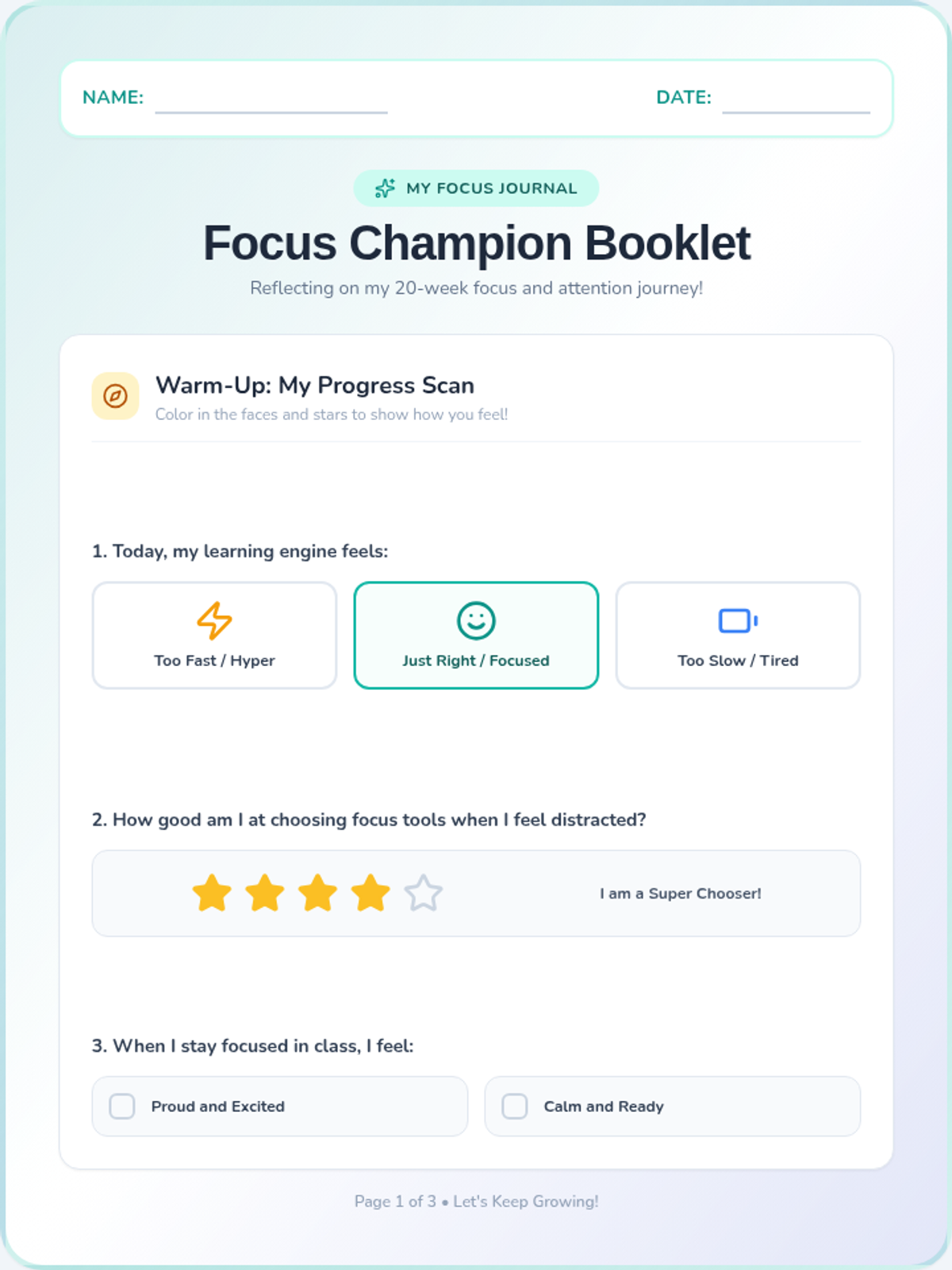
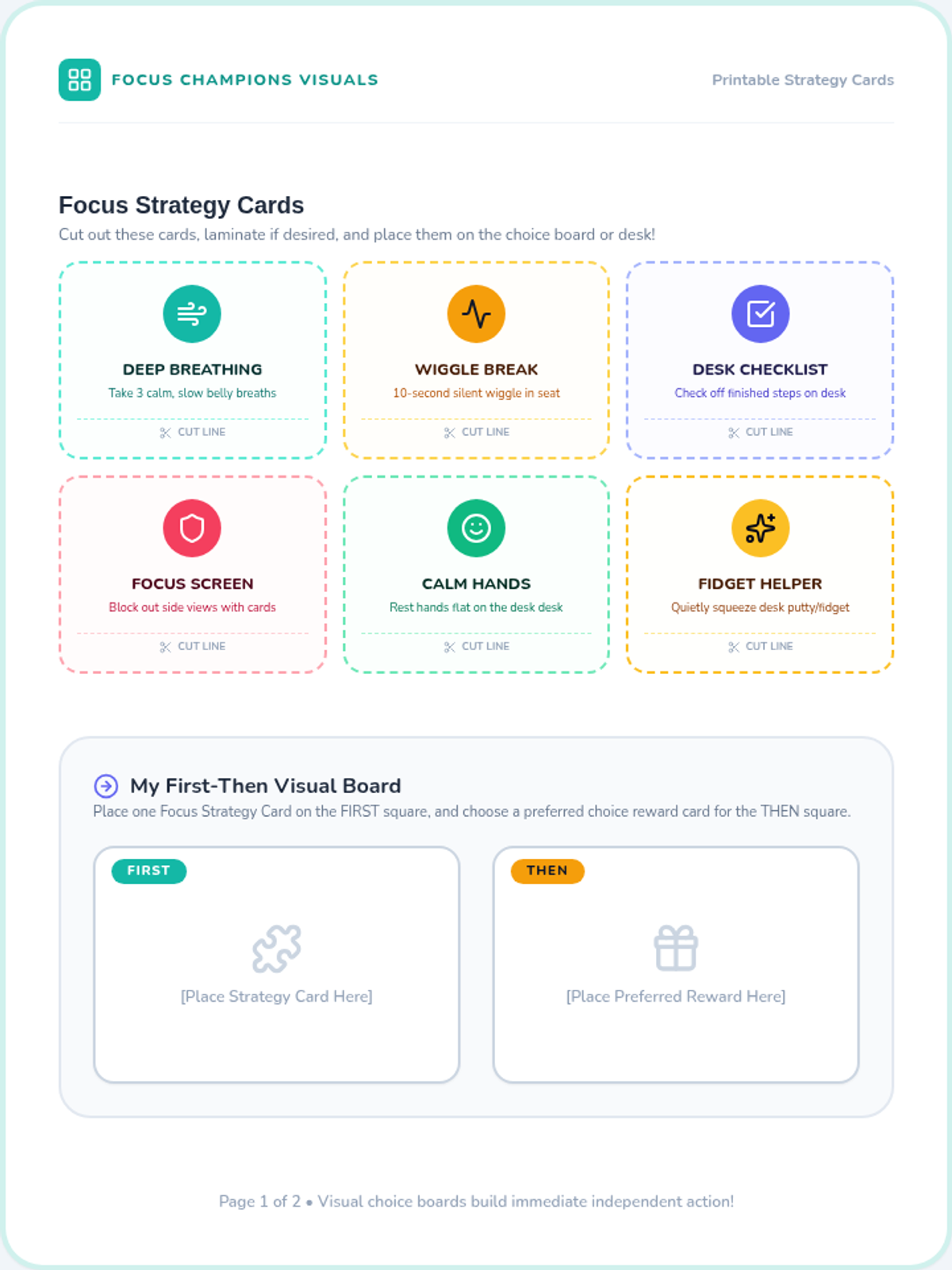
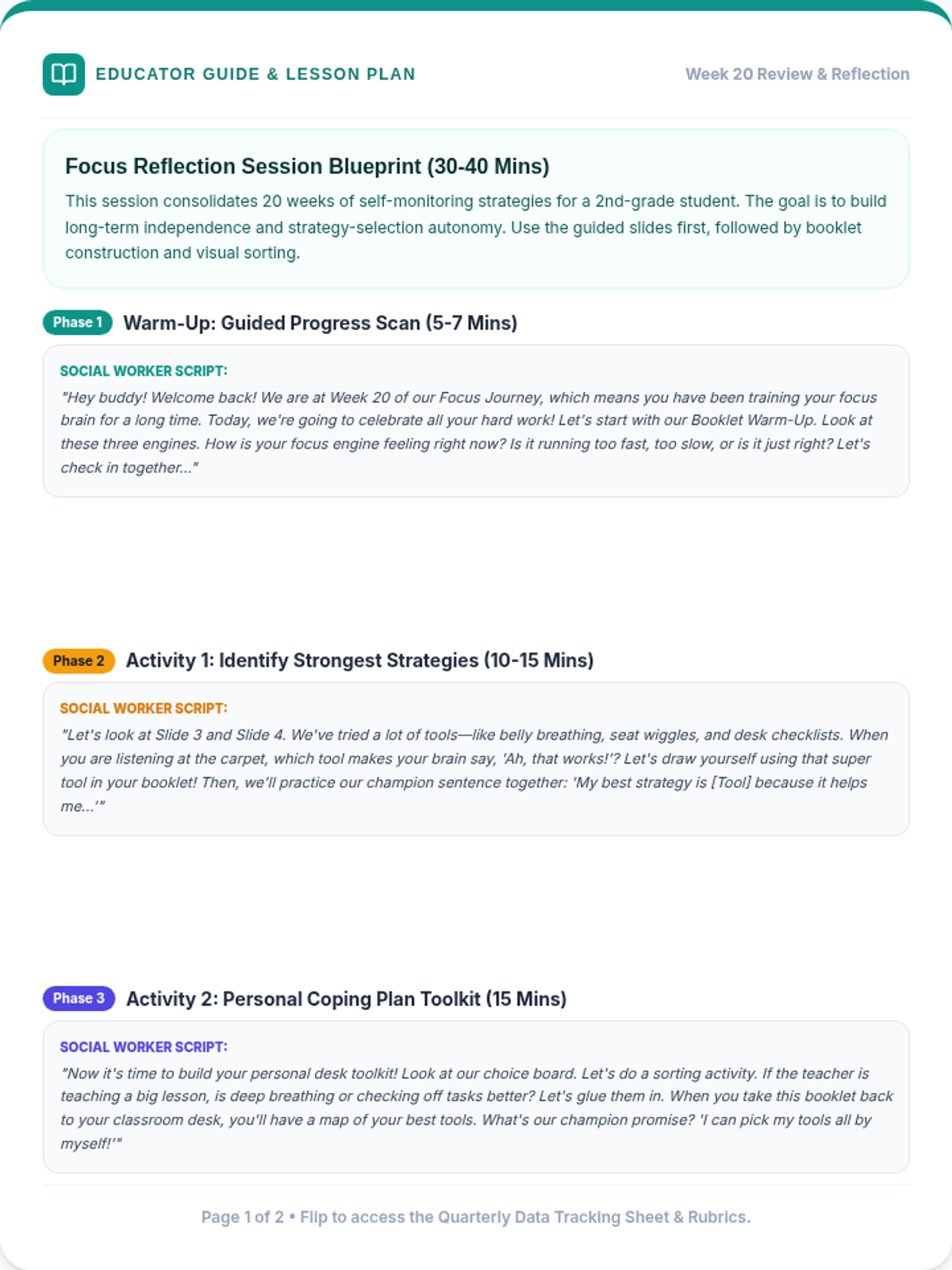
A self-reflection and coping strategy consolidation unit for a 2nd-grade student struggling with sustained attention. Includes a guided social story presentation, an interactive reflection booklet, visual strategy cards, and a comprehensive educator guide with an integrated data tracking system.
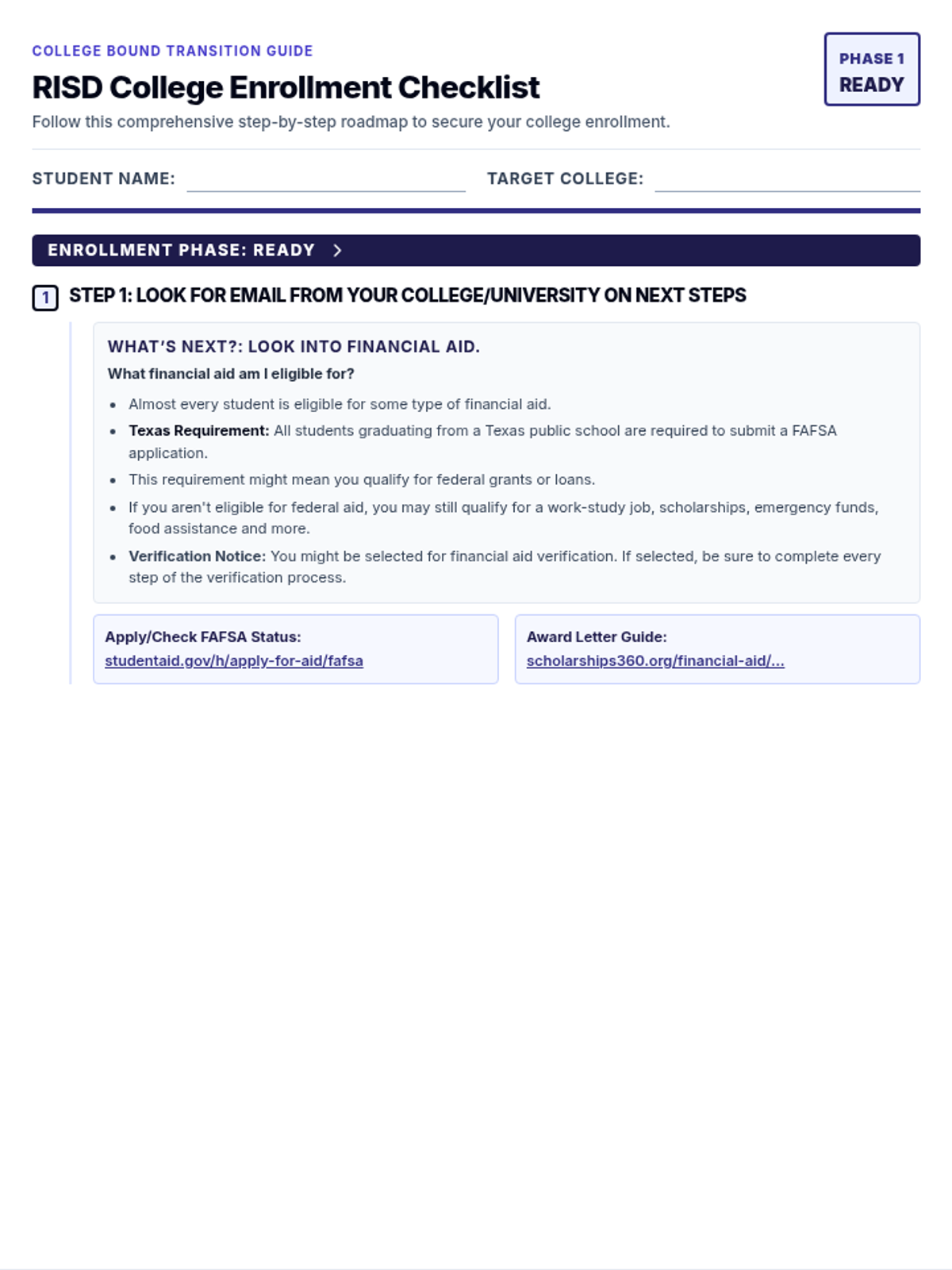
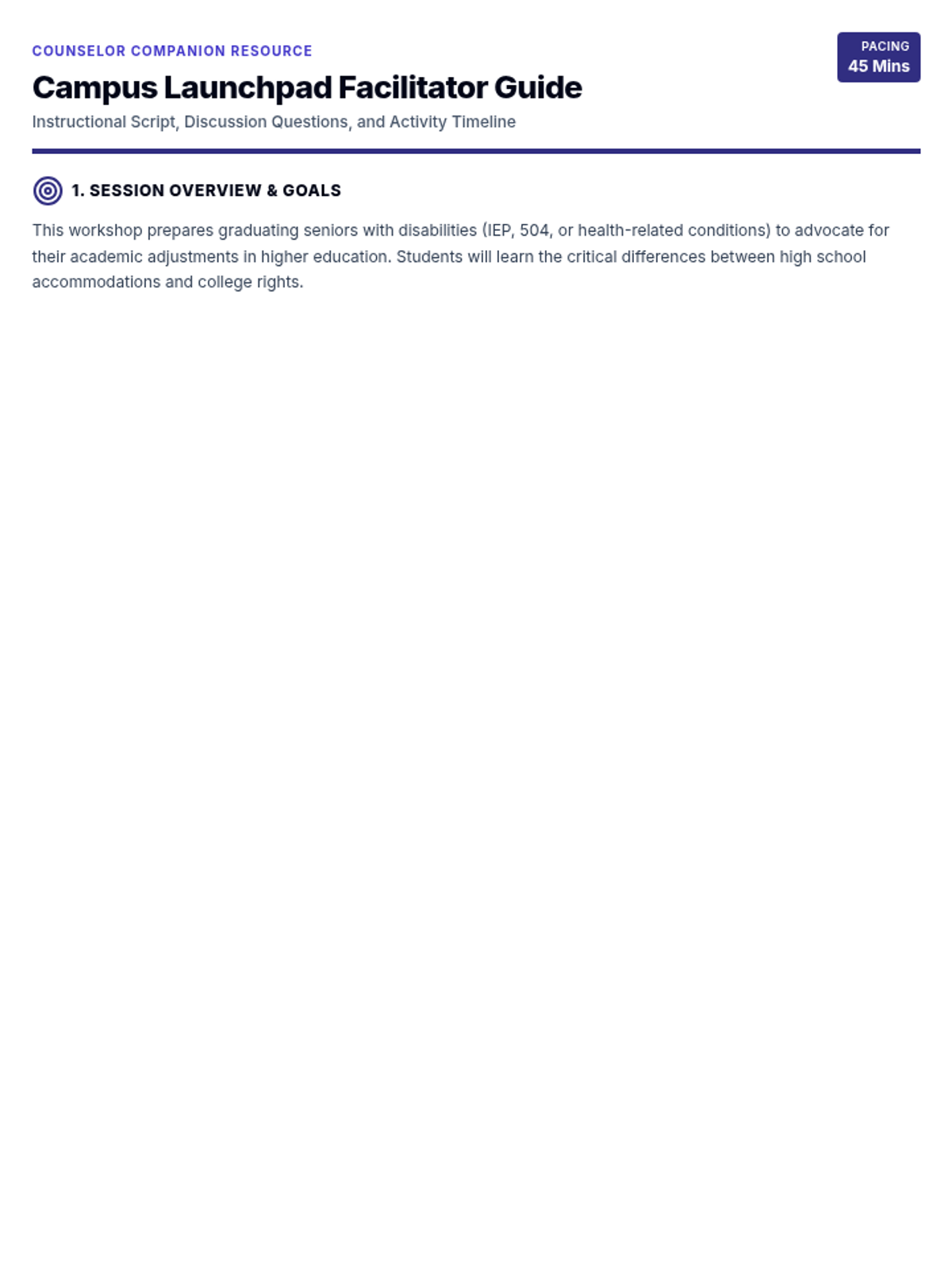
A transition lesson designed to help graduating high school seniors navigate college campus resources, master self-advocacy, and successfully secure academic adjustments.
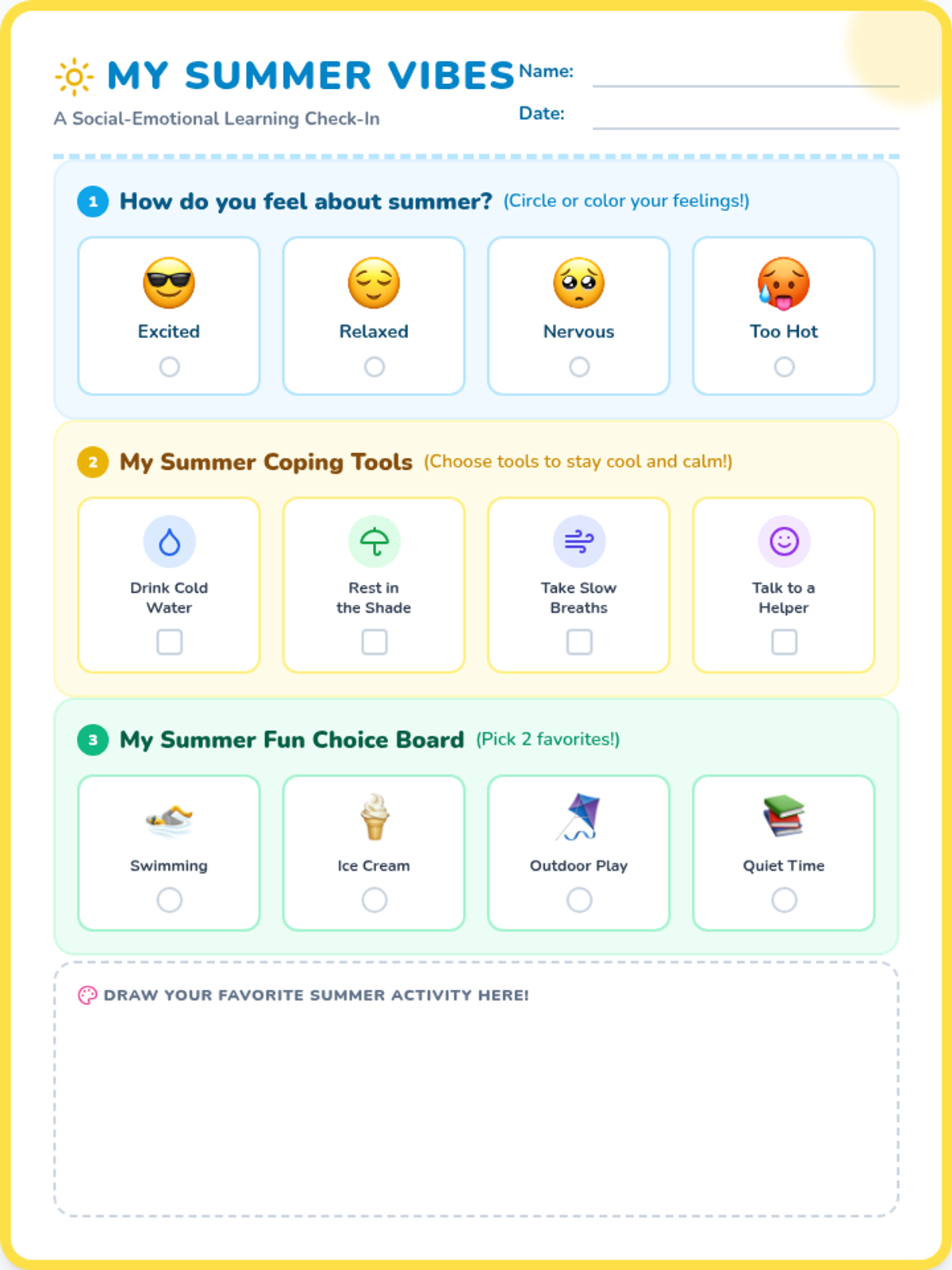
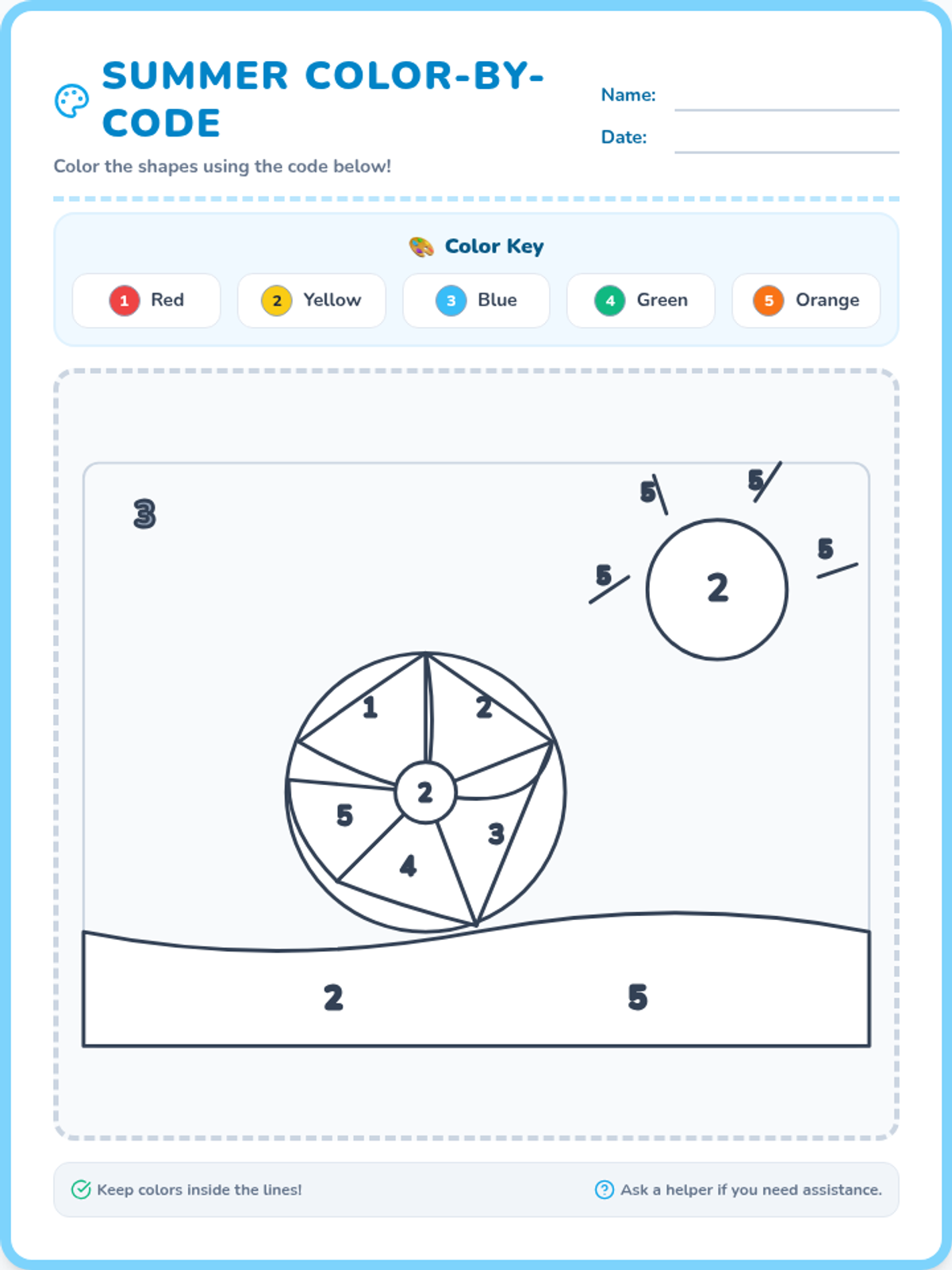
A specialized social-emotional lesson designed for special education students to explore summer-themed feelings, identify healthy coping skills, and practice visual discrimination through themed color-by-code sheets.
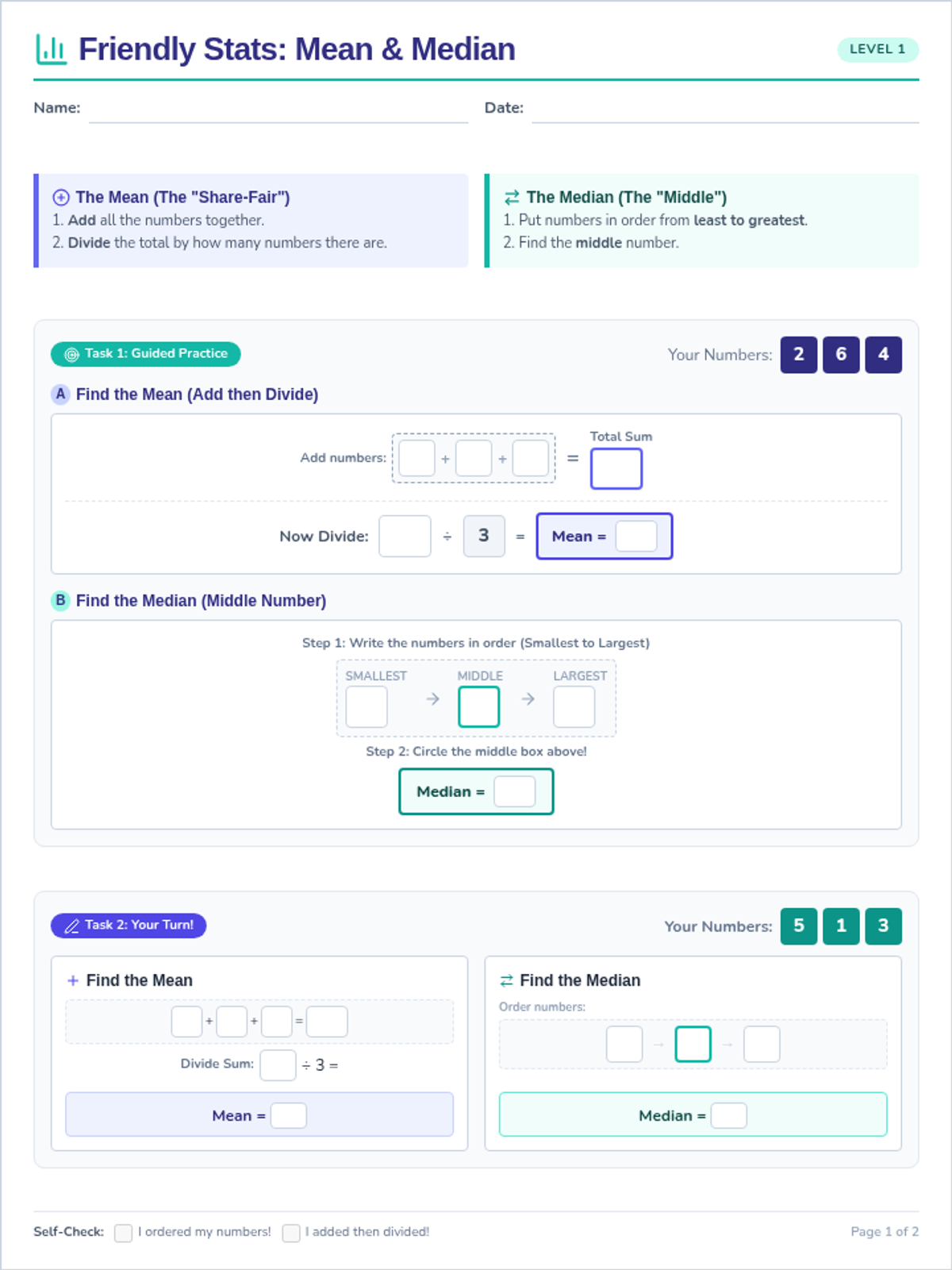
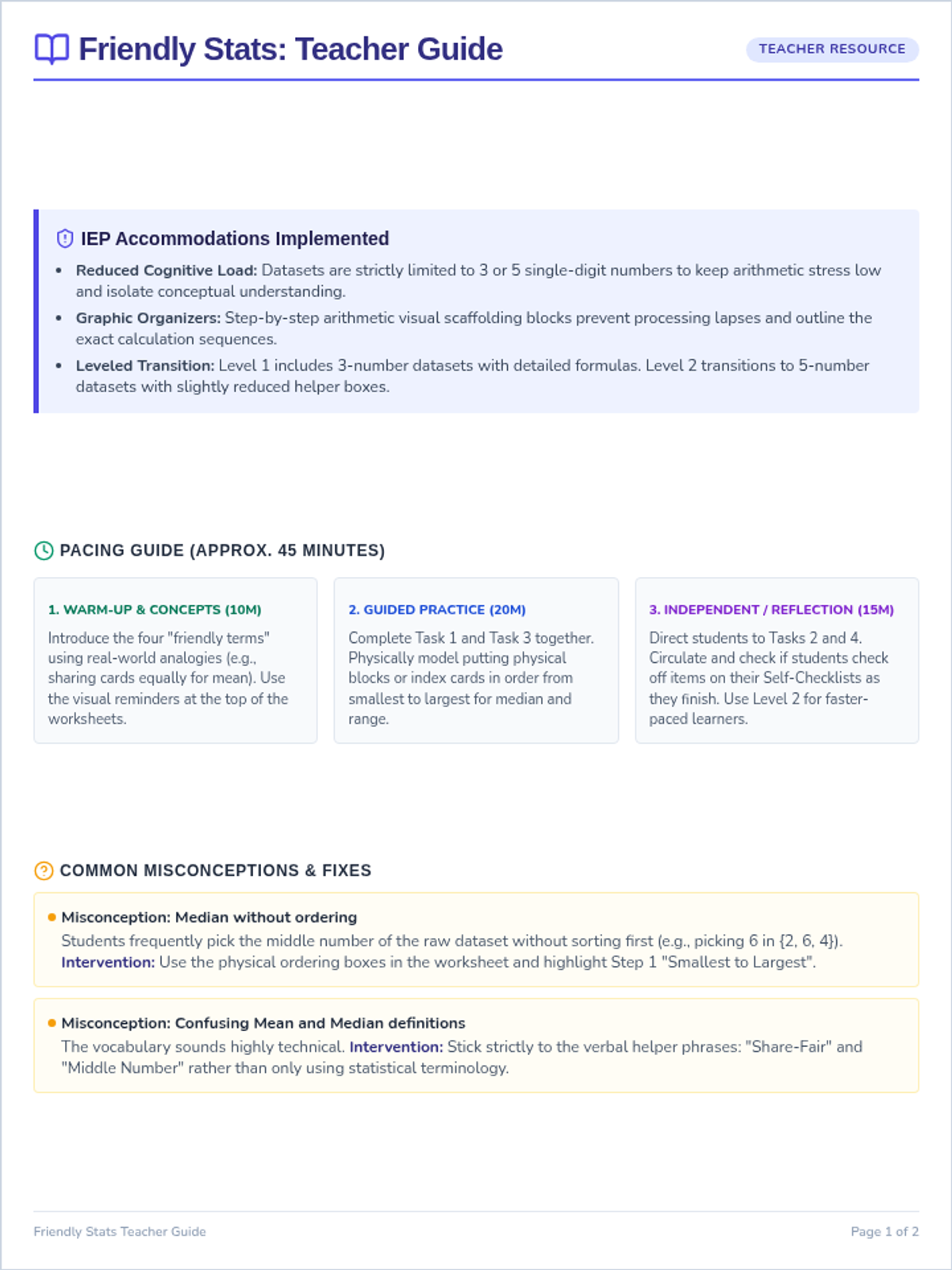
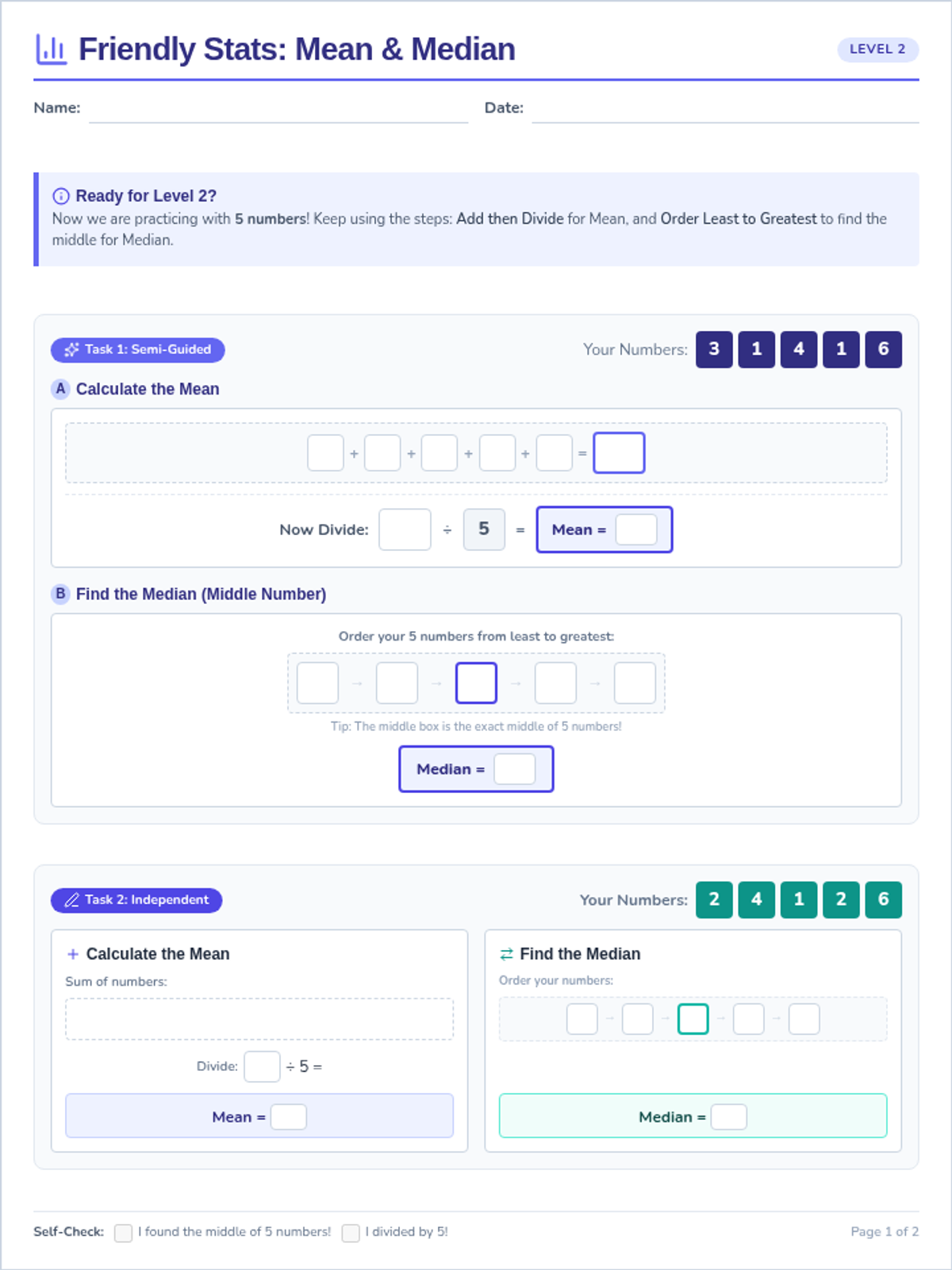
A highly scaffolded lesson on finding the mean, median, mode, and range using small, single-digit datasets (3-5 numbers) designed specifically for students with IEP accommodations.
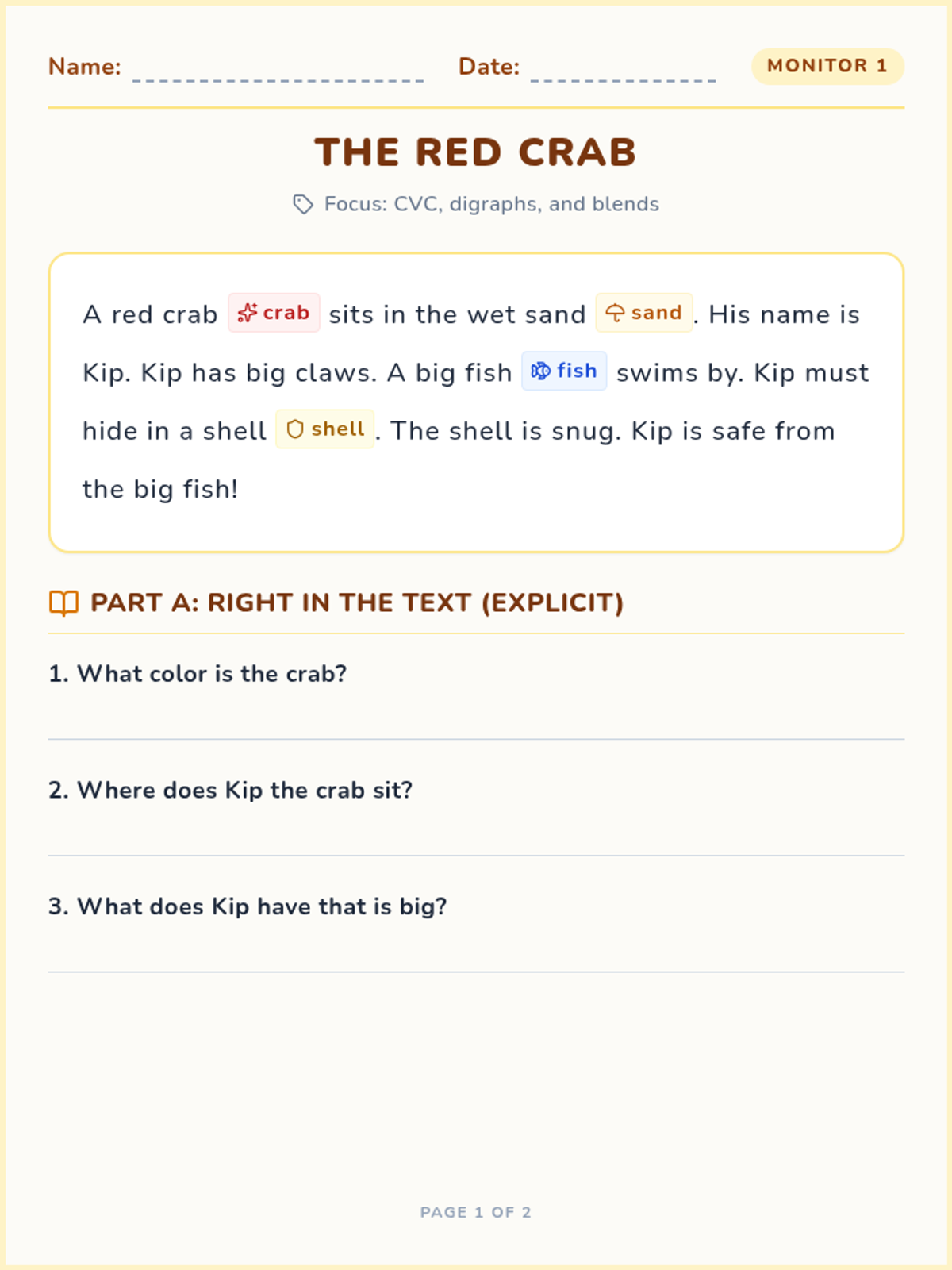
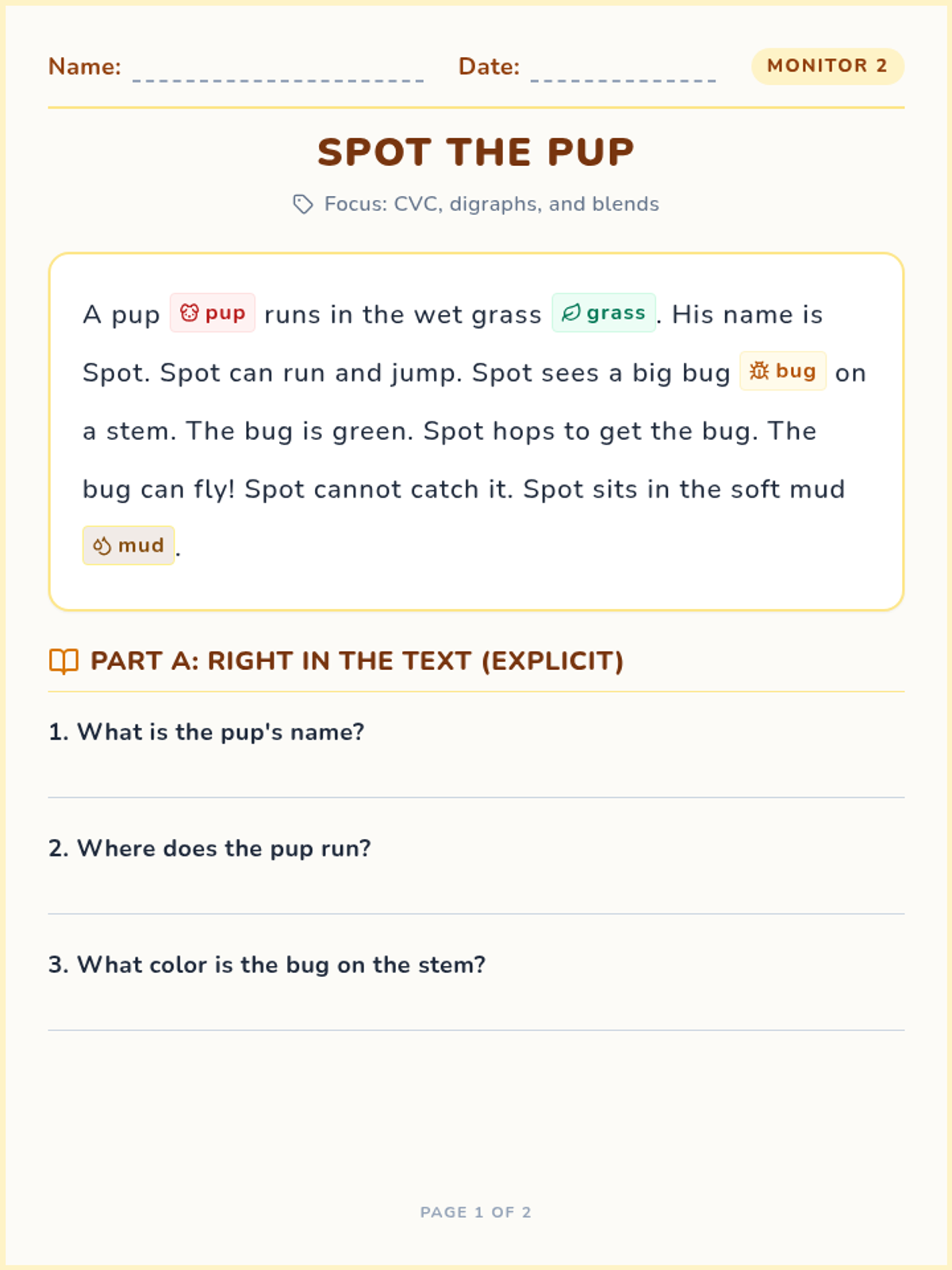
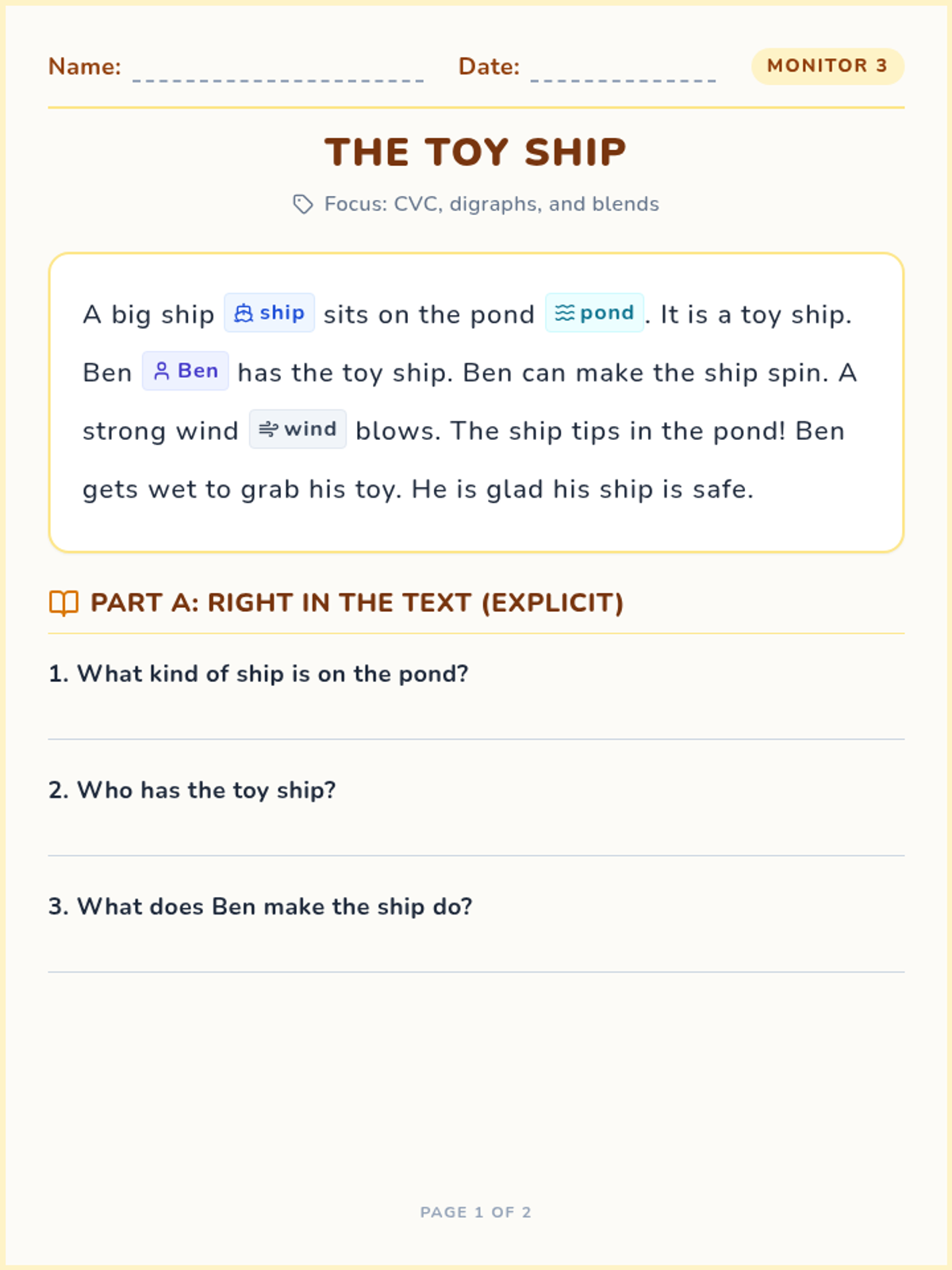
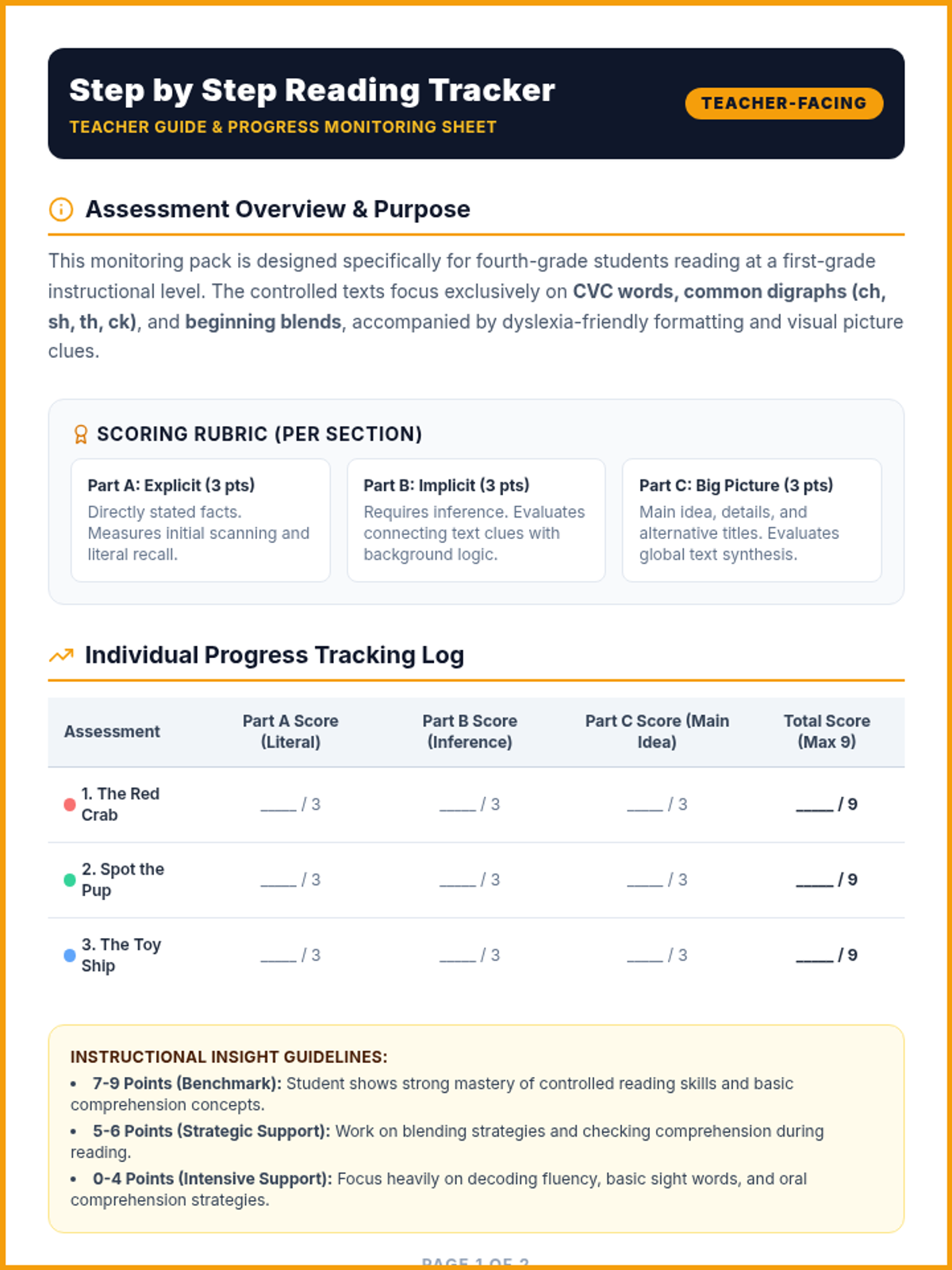
A progress monitoring pack with three phonics-controlled reading comprehension assessments and a comprehensive teacher scoring guide, customized with dyslexia-friendly visual supports for fourth-grade students reading at a first-grade level.
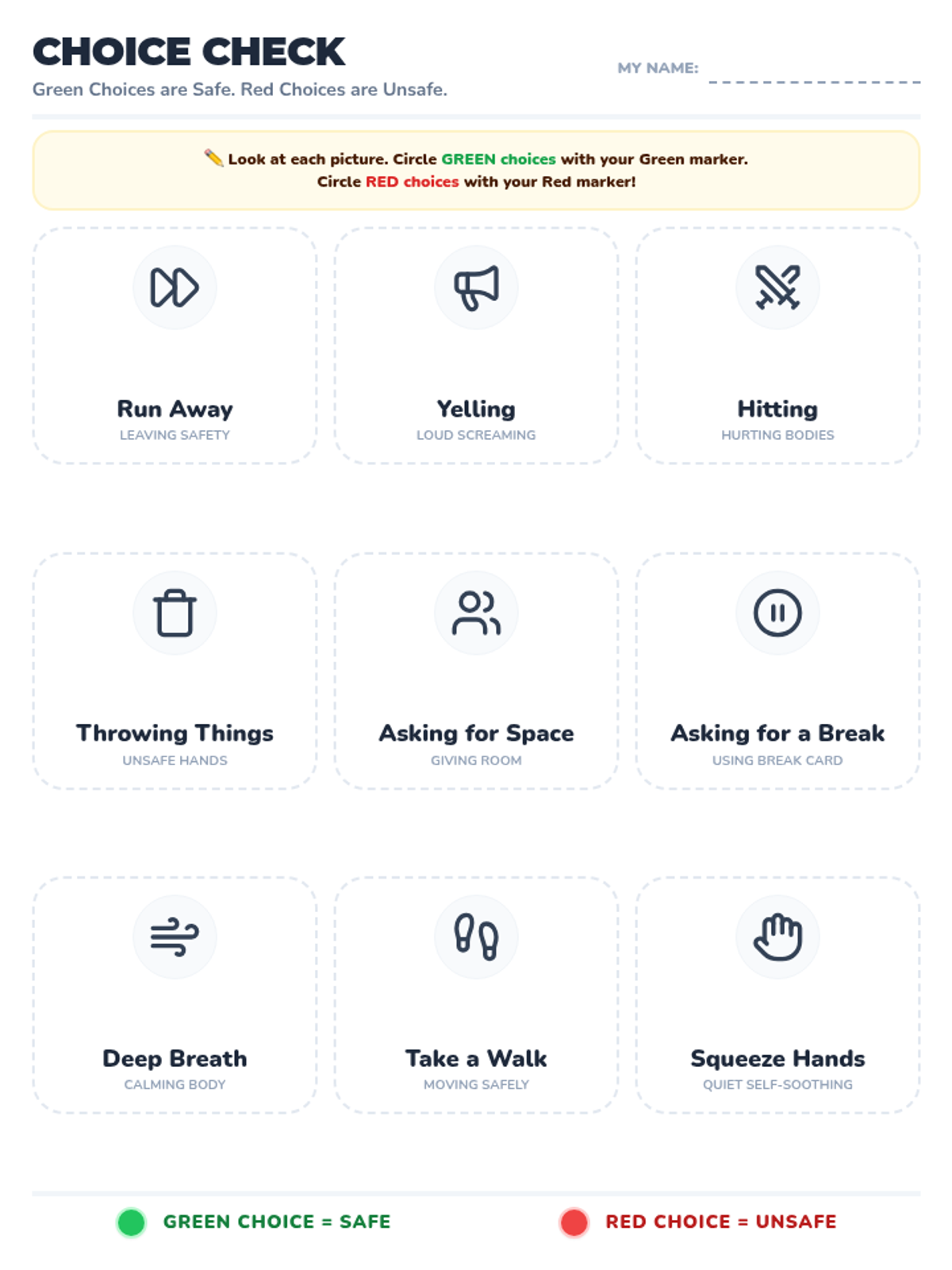
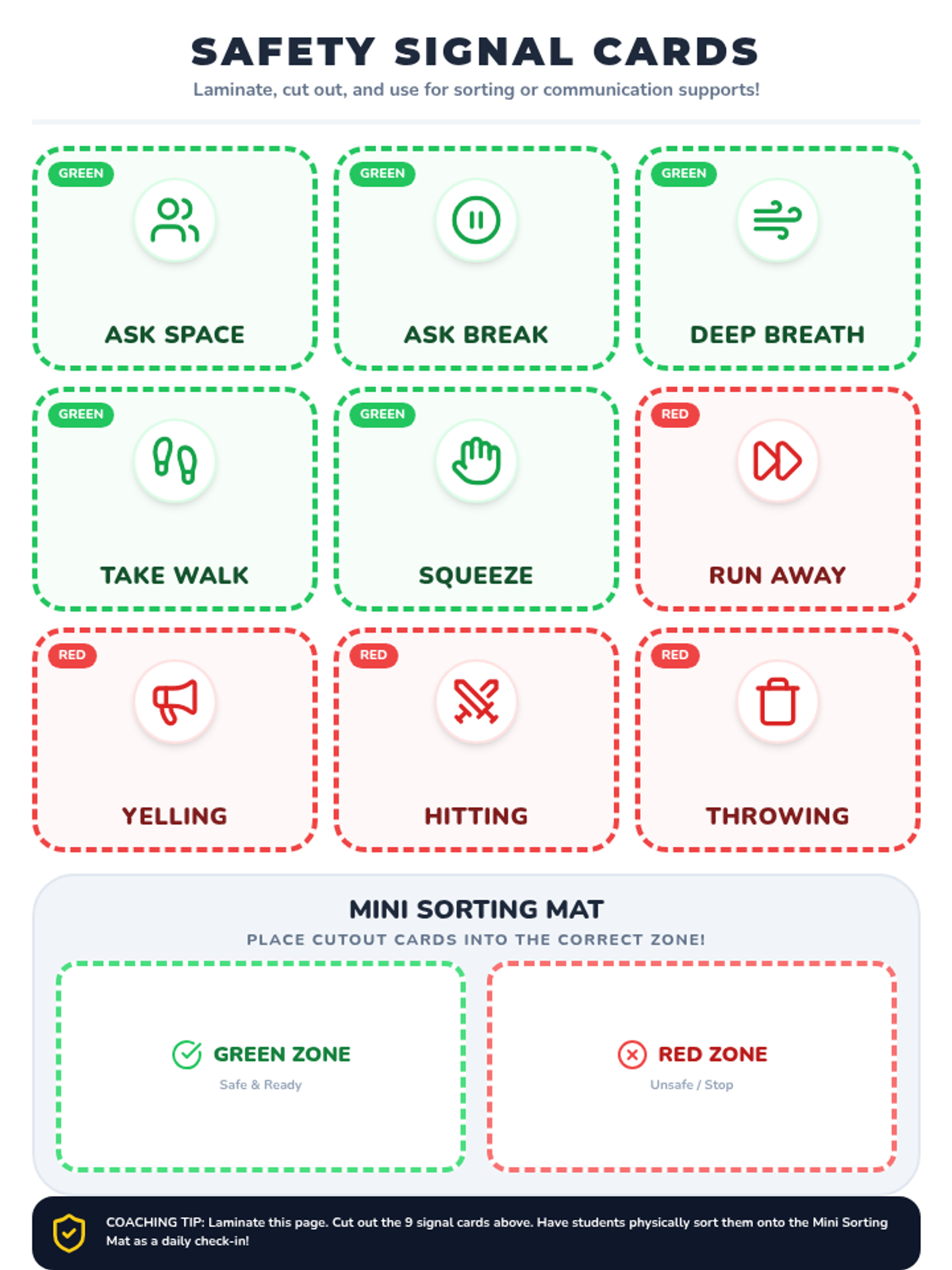
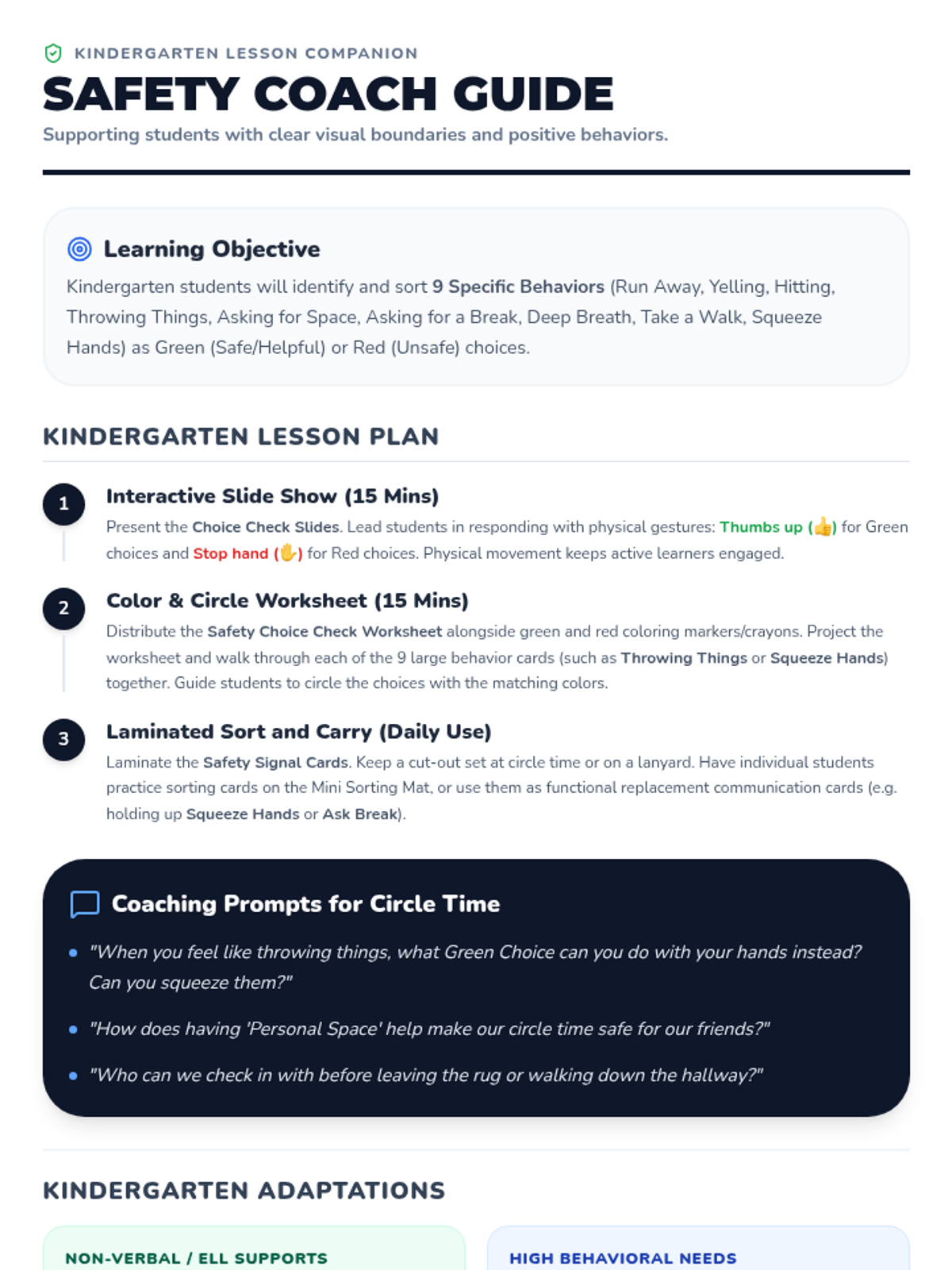
This lesson teaches students to distinguish between safe (Green) and unsafe (Red) behaviors through visual sorting and discussion. It focuses on functional communication and self-regulation skills like asking for breaks and maintaining personal space.