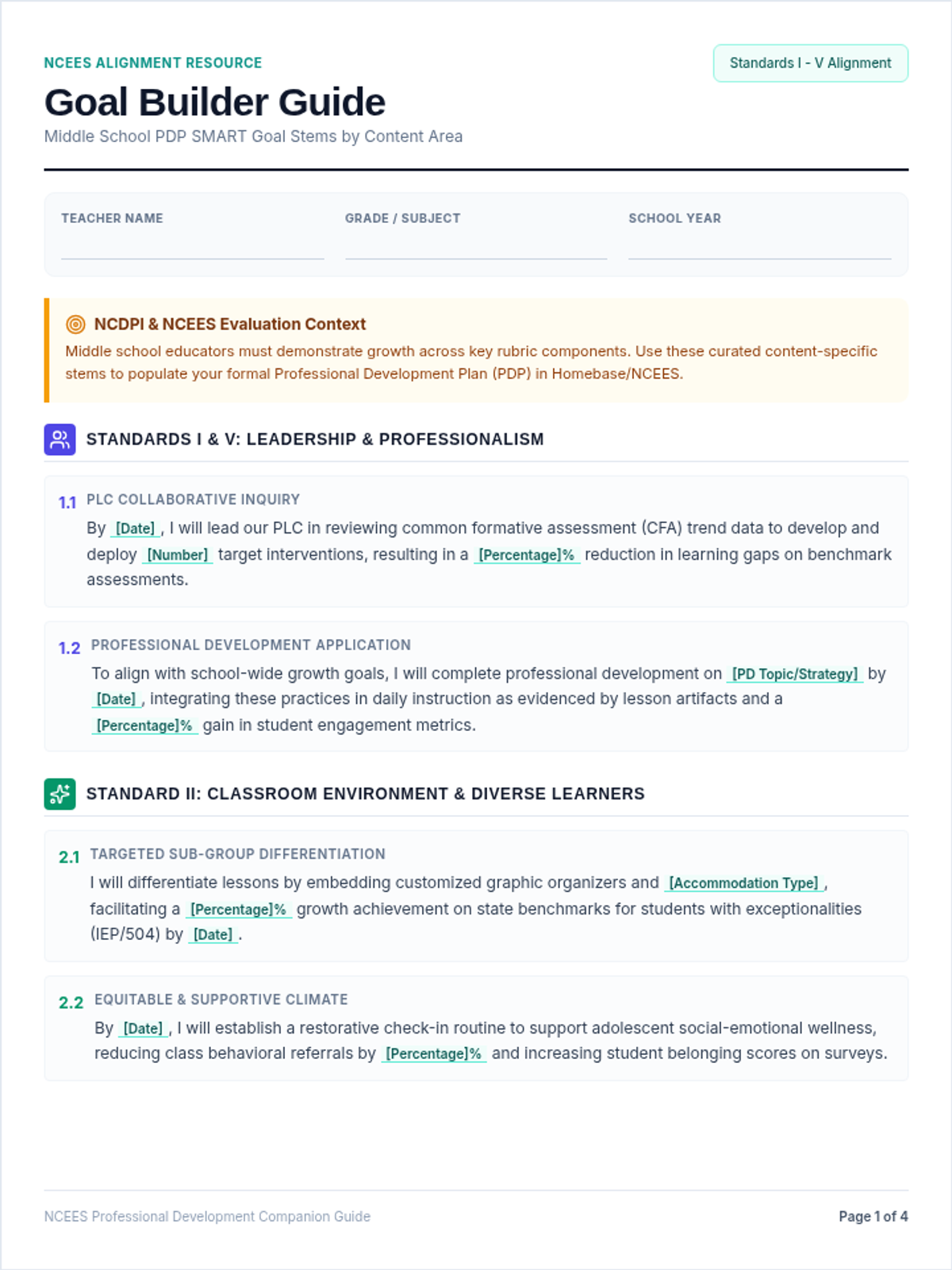
A collection of subject-specific SMART PDP (Professional Development Plan) goal-setting blueprints designed for middle school teachers across eight content areas, prioritizing data-driven instruction, student engagement, MTSS, and literacy.
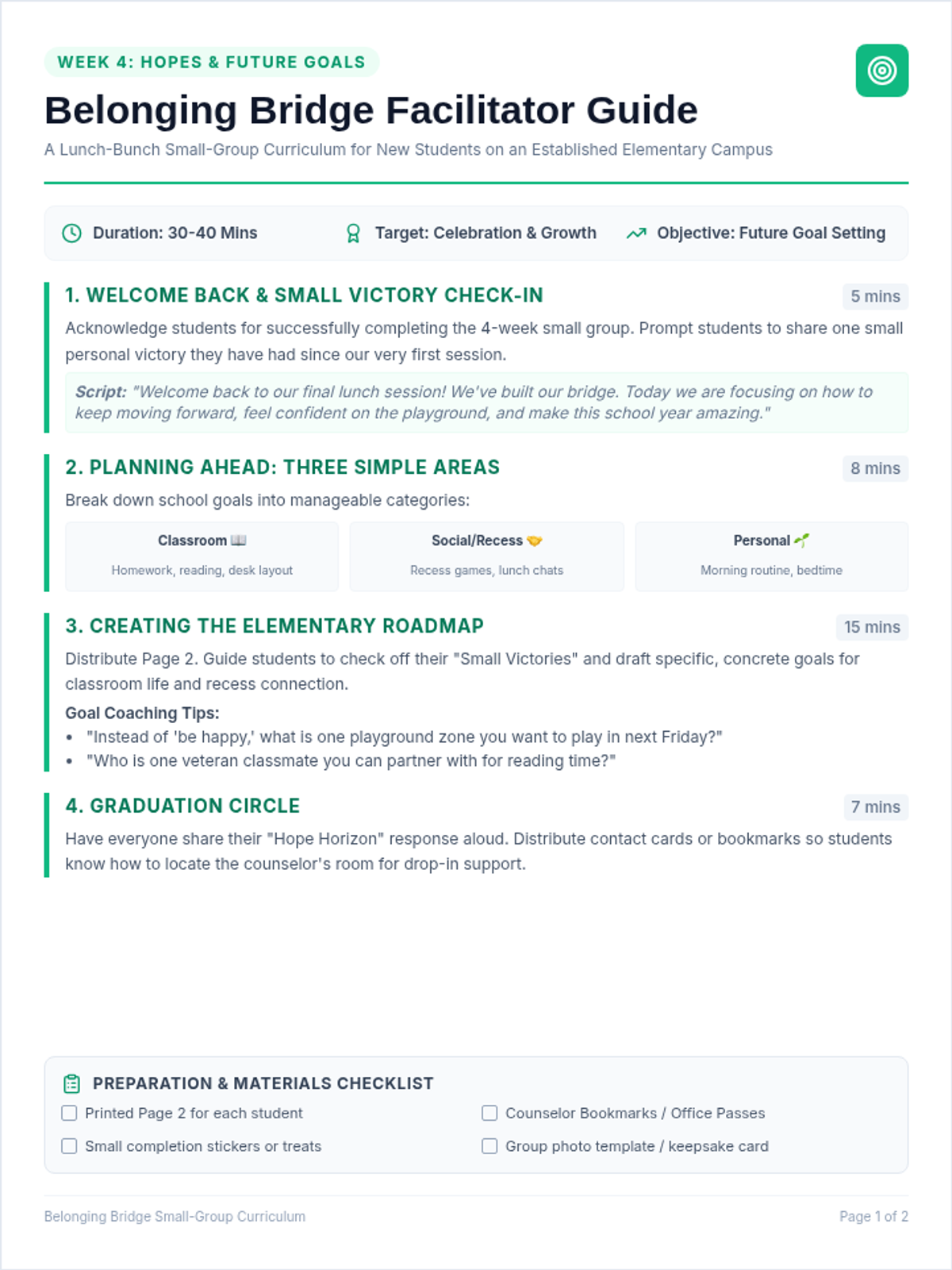
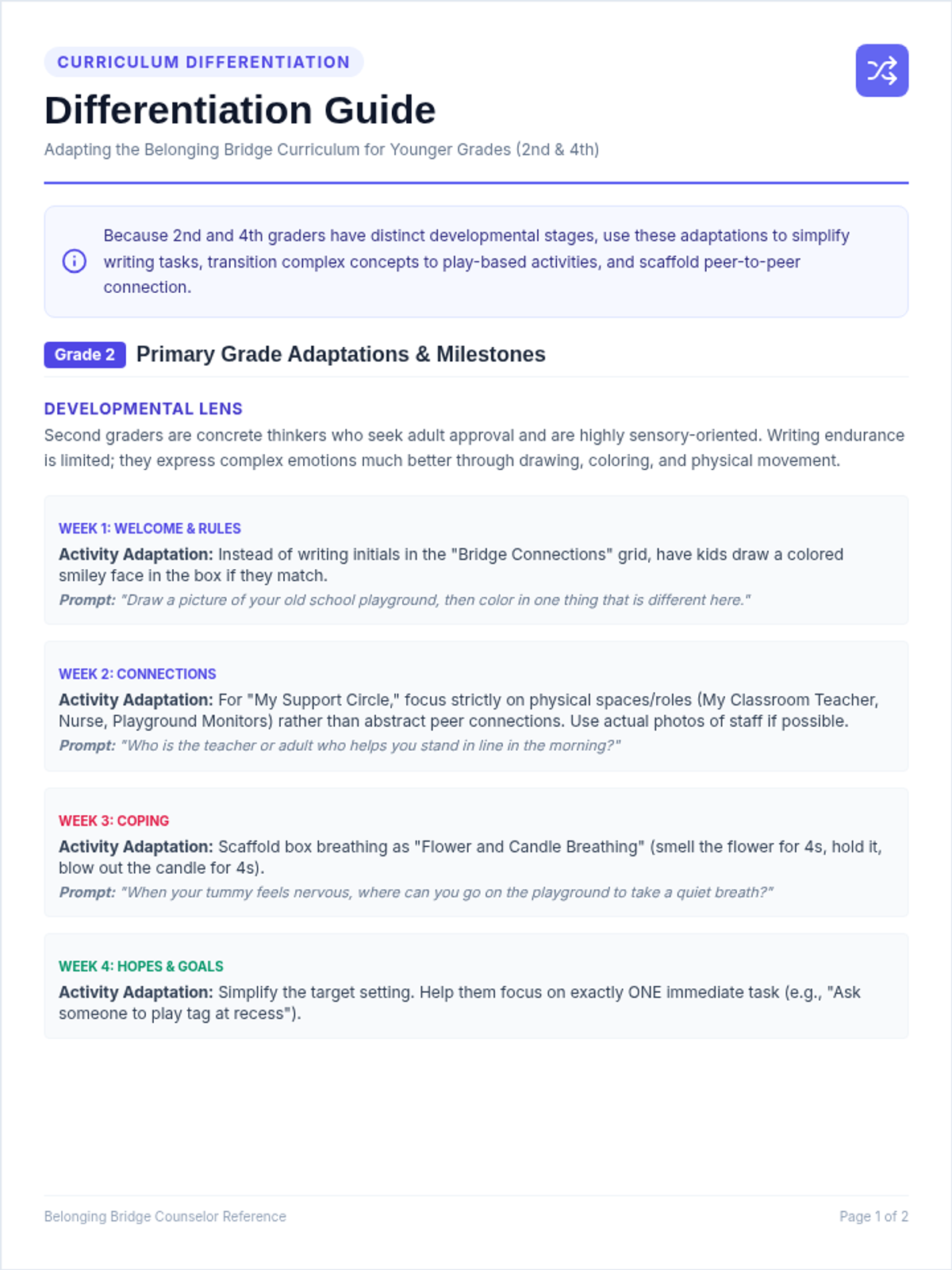
Week 4 of the Belonging Bridge curriculum, focusing on academic and social goals, celebrating small victories, and looking ahead with a sense of agency and belonging.
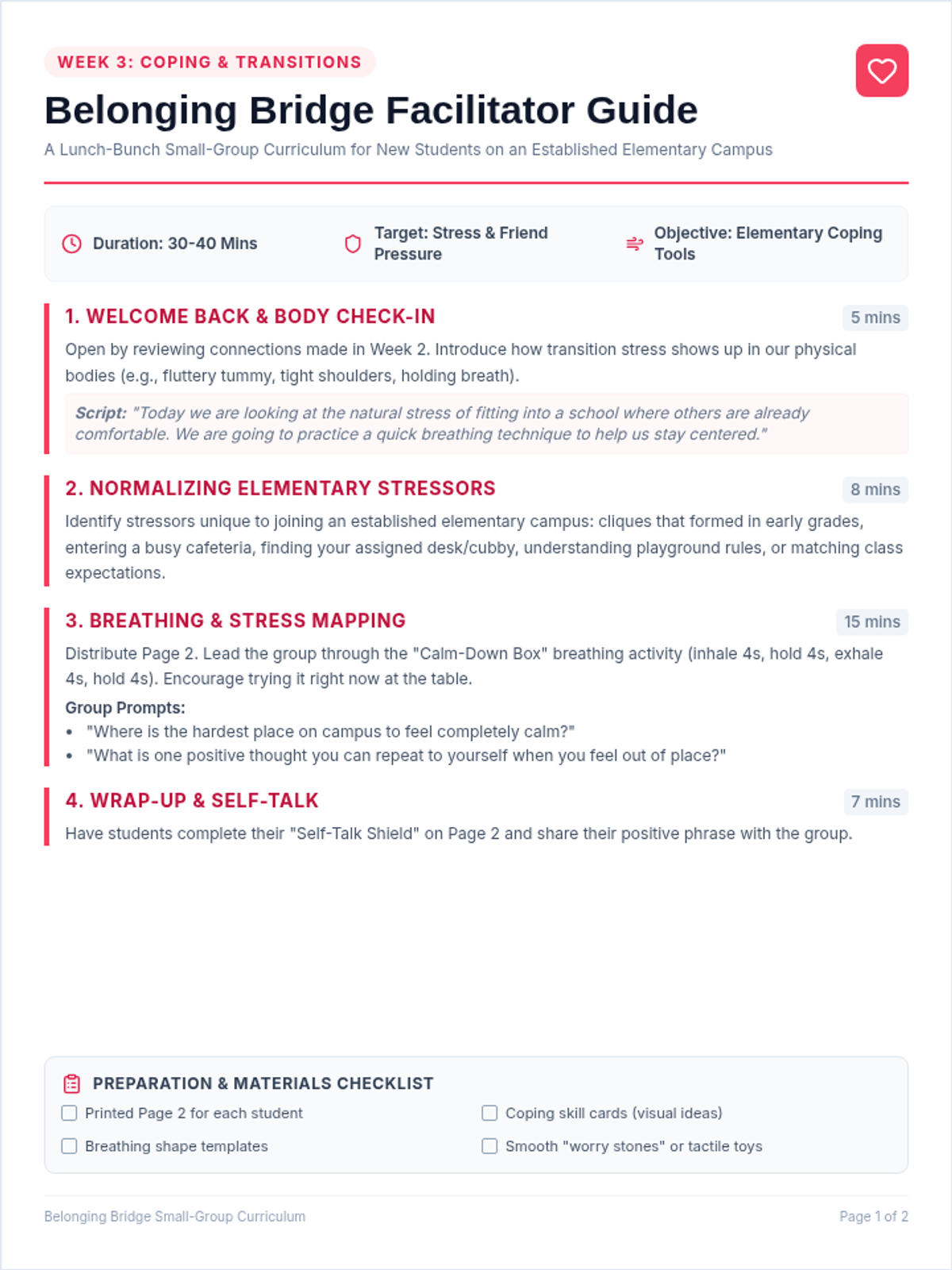
Week 3 of the Belonging Bridge curriculum, introducing coping skills for transition stress, identifying personal triggers, and creating a calming routine.
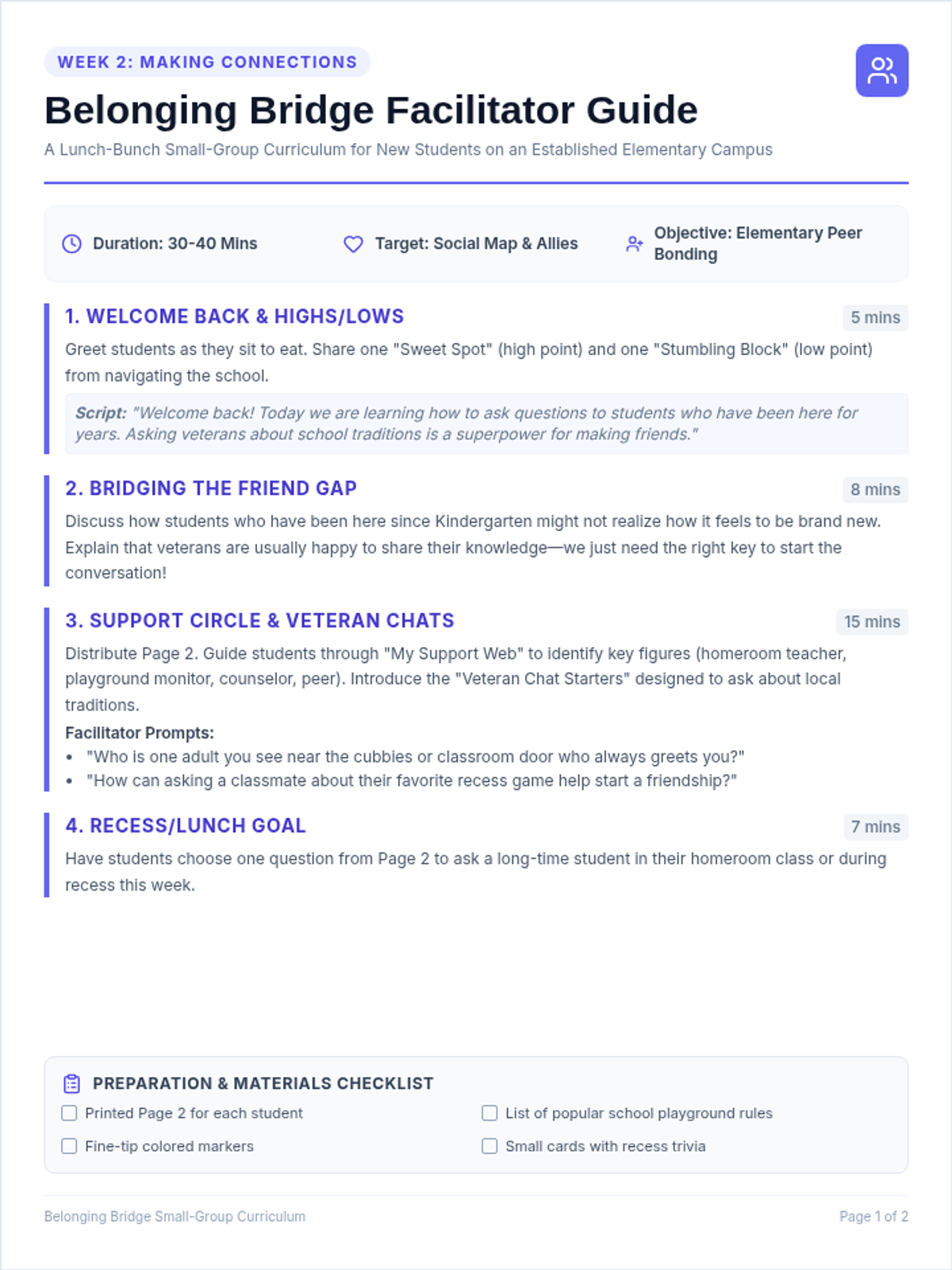
Week 2 of the Belonging Bridge curriculum, helping students map their support networks, learn strategies for making peer connections, and build group relationships.
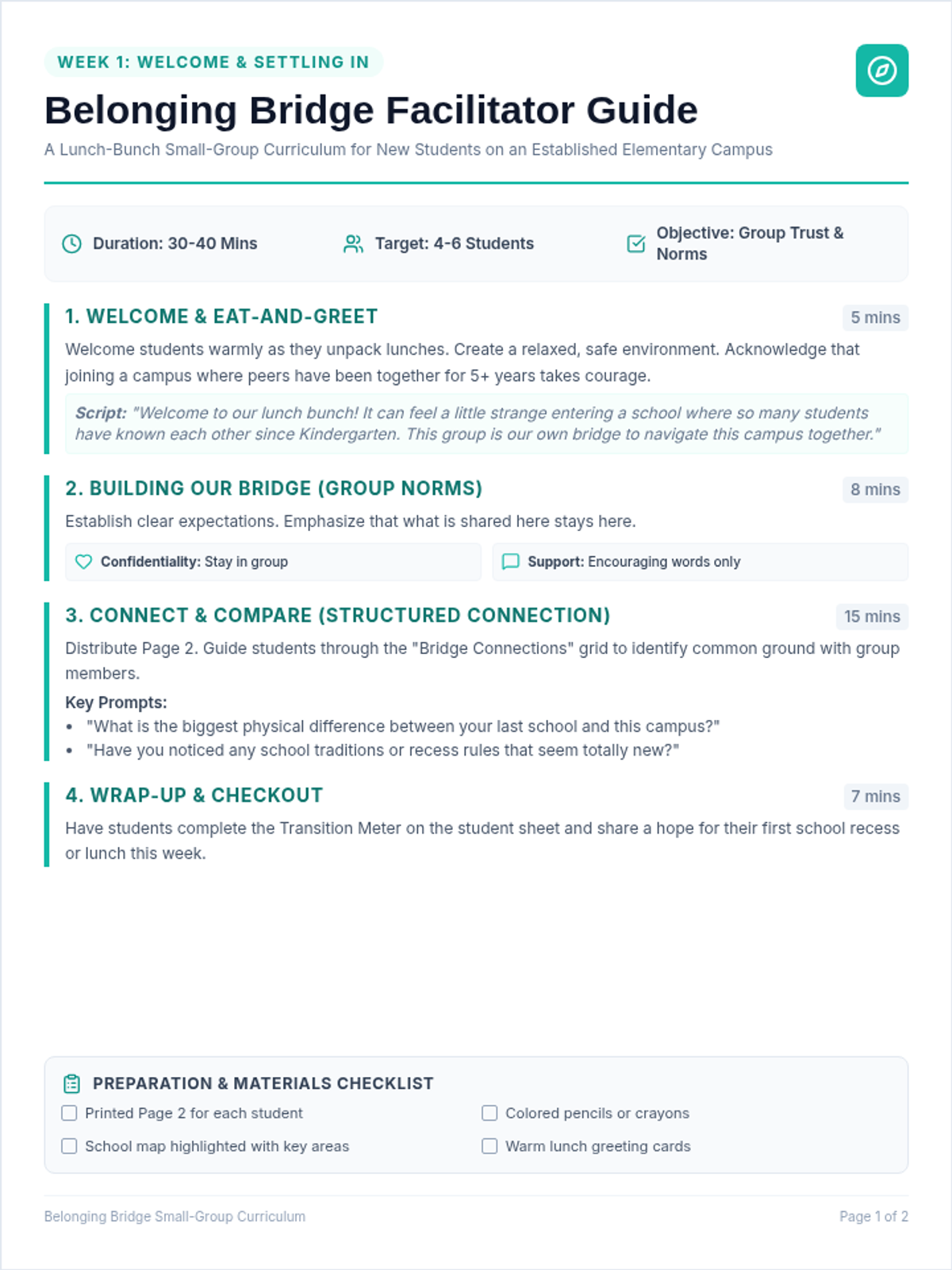
Week 1 of the Belonging Bridge curriculum, introducing group norms, breaking the ice, and providing an orientation to school spaces and people.
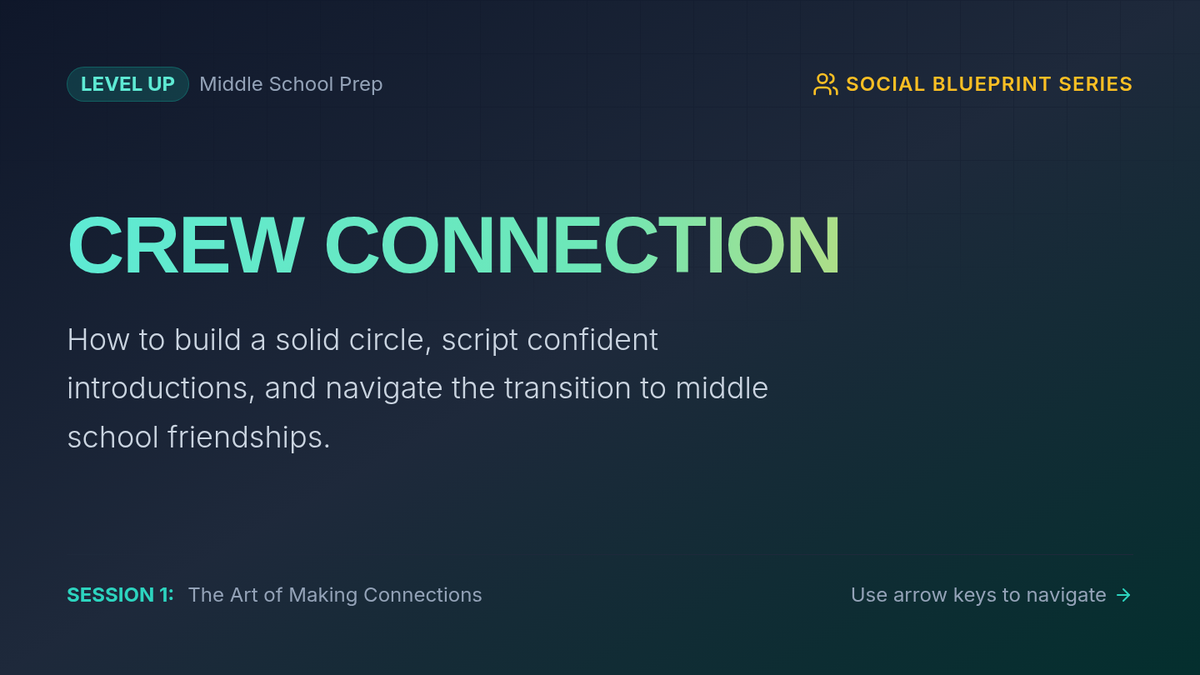
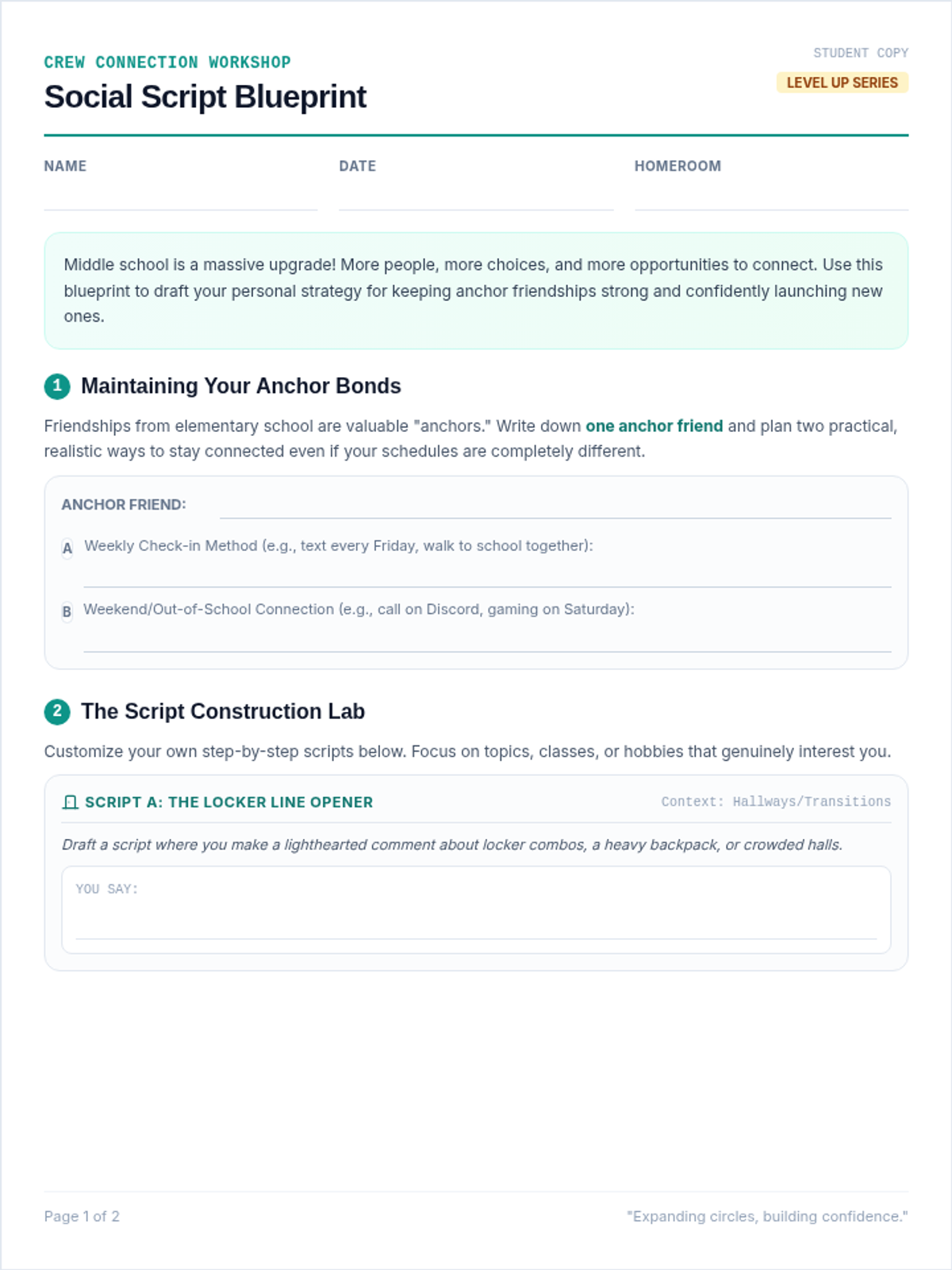
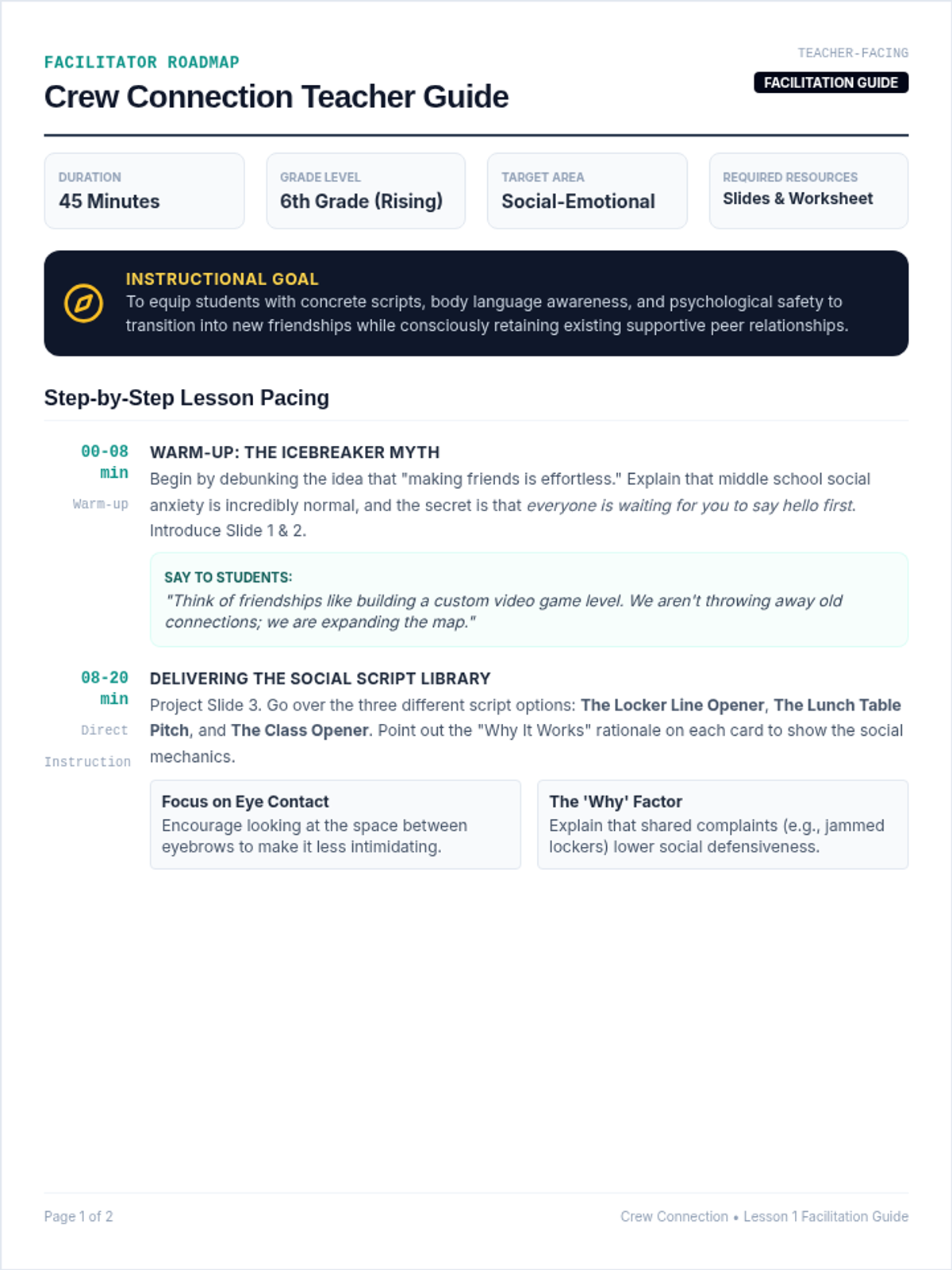
A transformative social-emotional lesson designed to help rising and new middle schoolers navigate friendship transitions. It provides actionable, step-by-step social scripts to confidently initiate new connections and strategies for maintaining existing bonds.
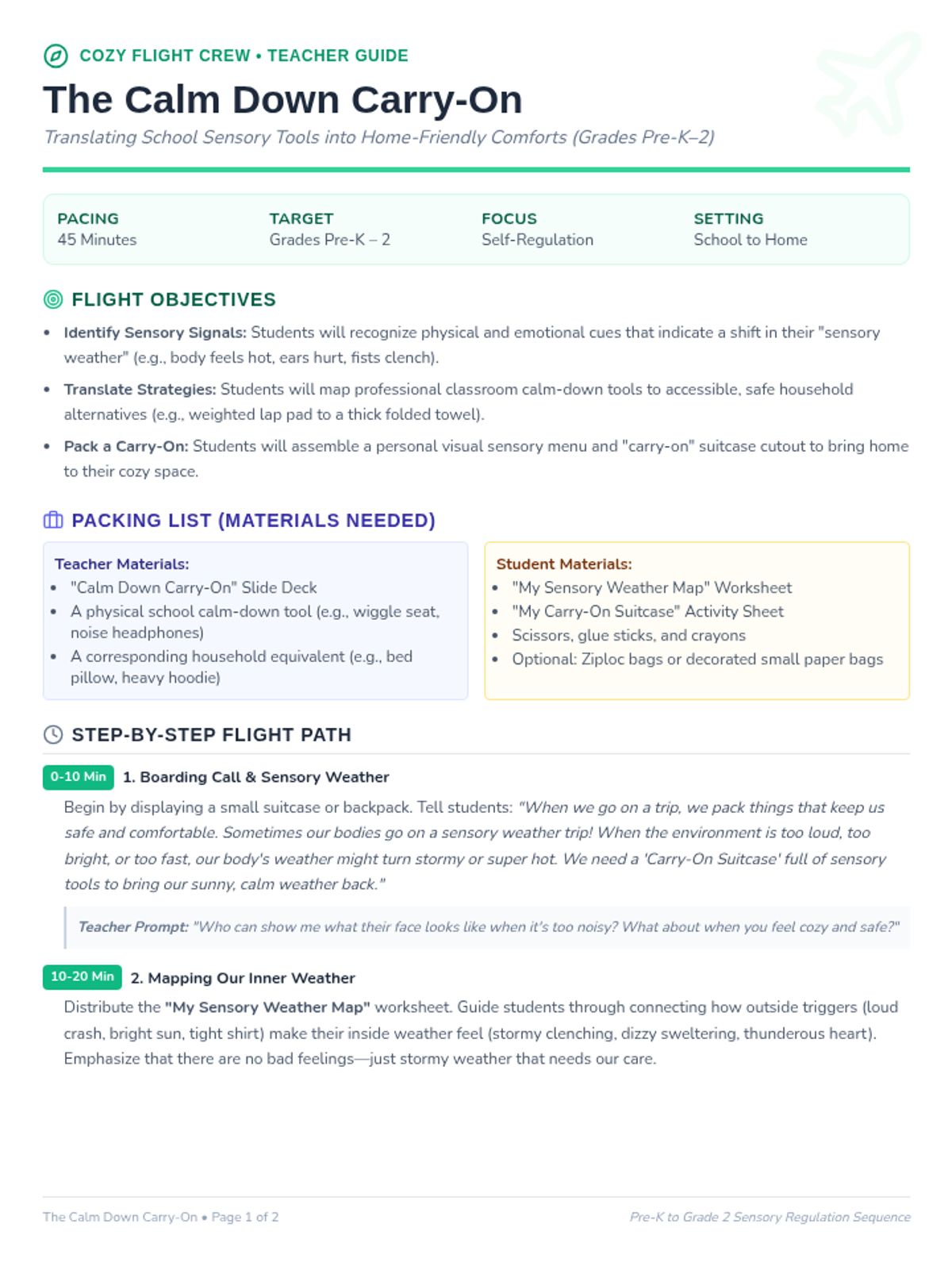
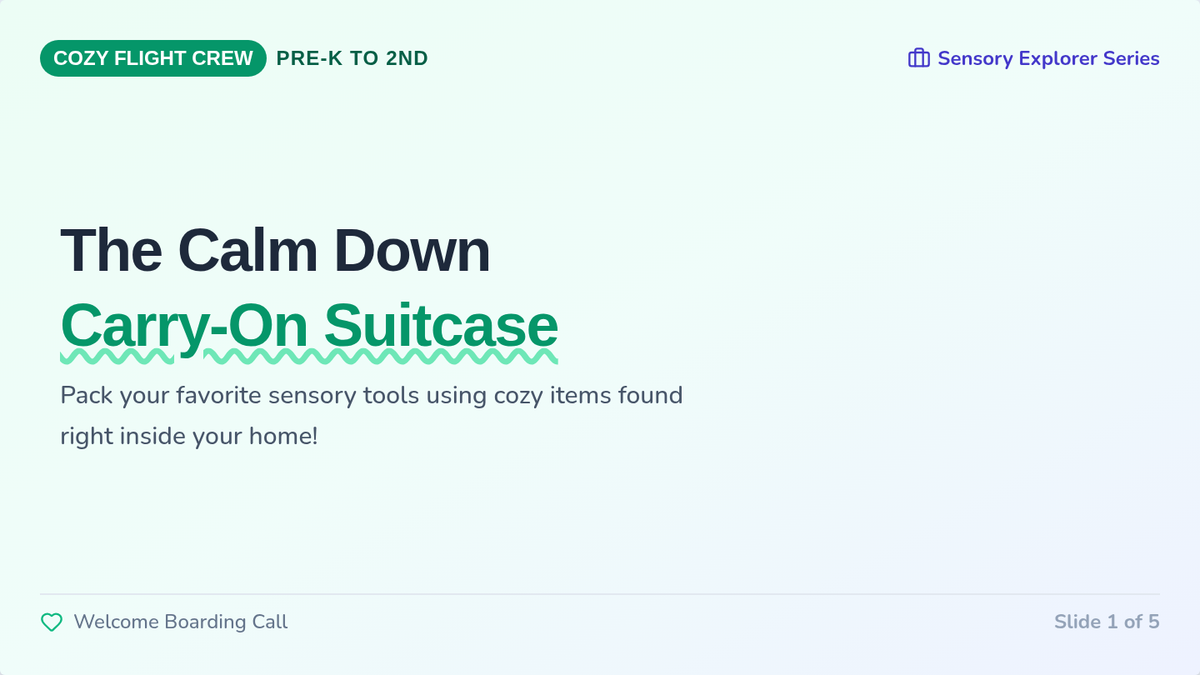
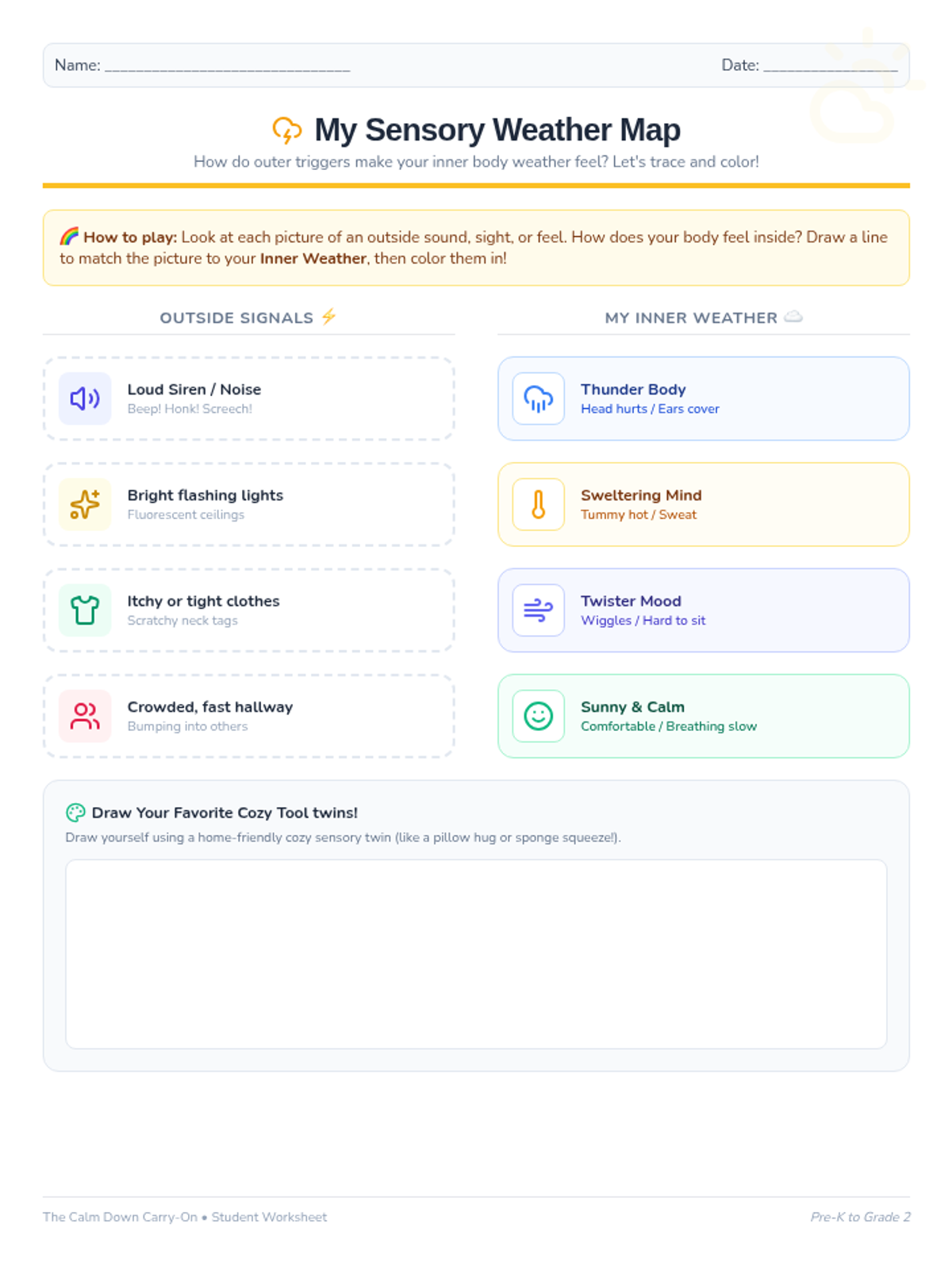
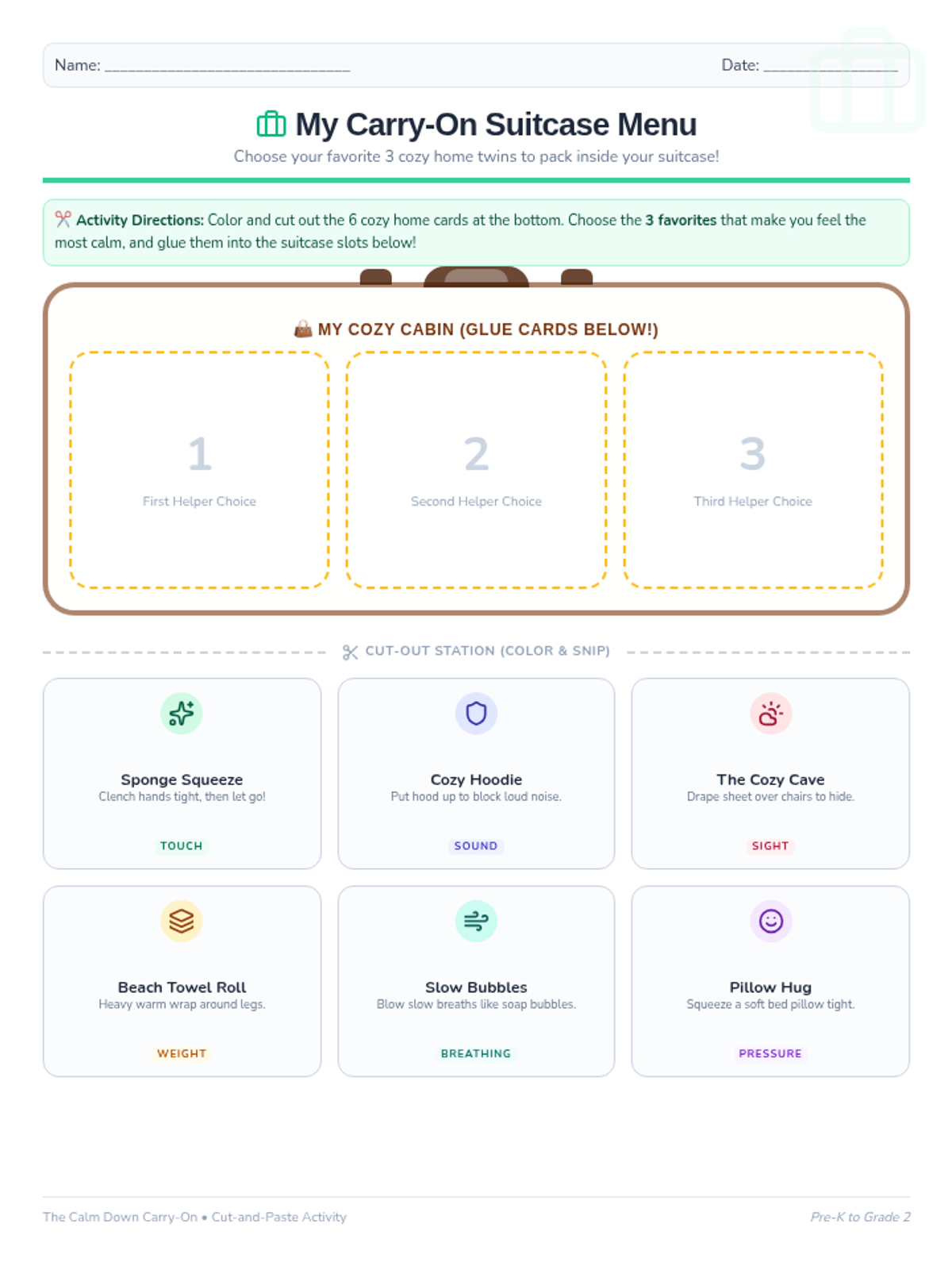
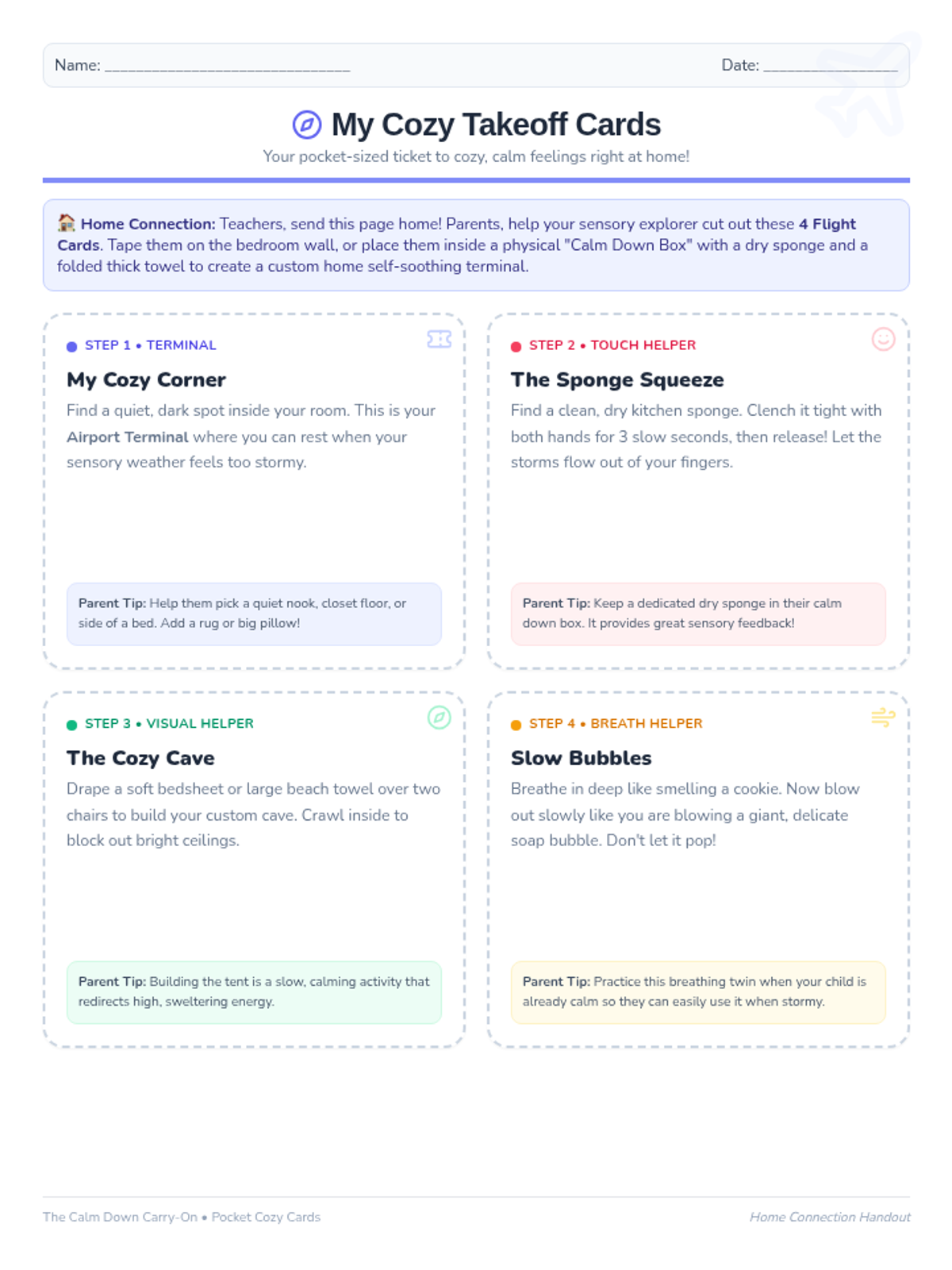
A sensory-focused lesson helping young learners (Pre-K to 2nd grade) translate school self-regulation tools into home-friendly coping strategies using everyday household items. Students identify triggers and design a custom "carry-on" menu and physical self-soothing kit.
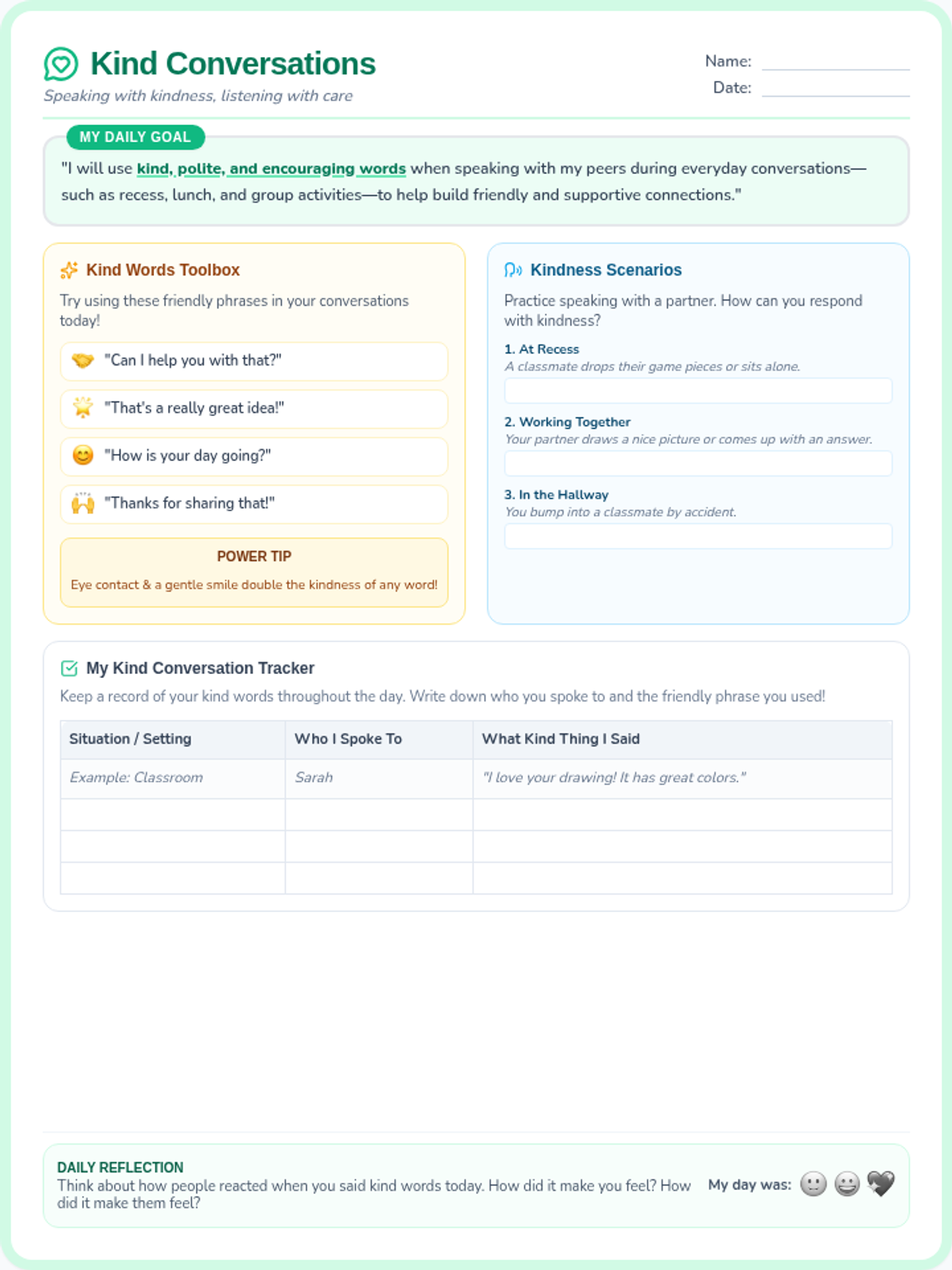
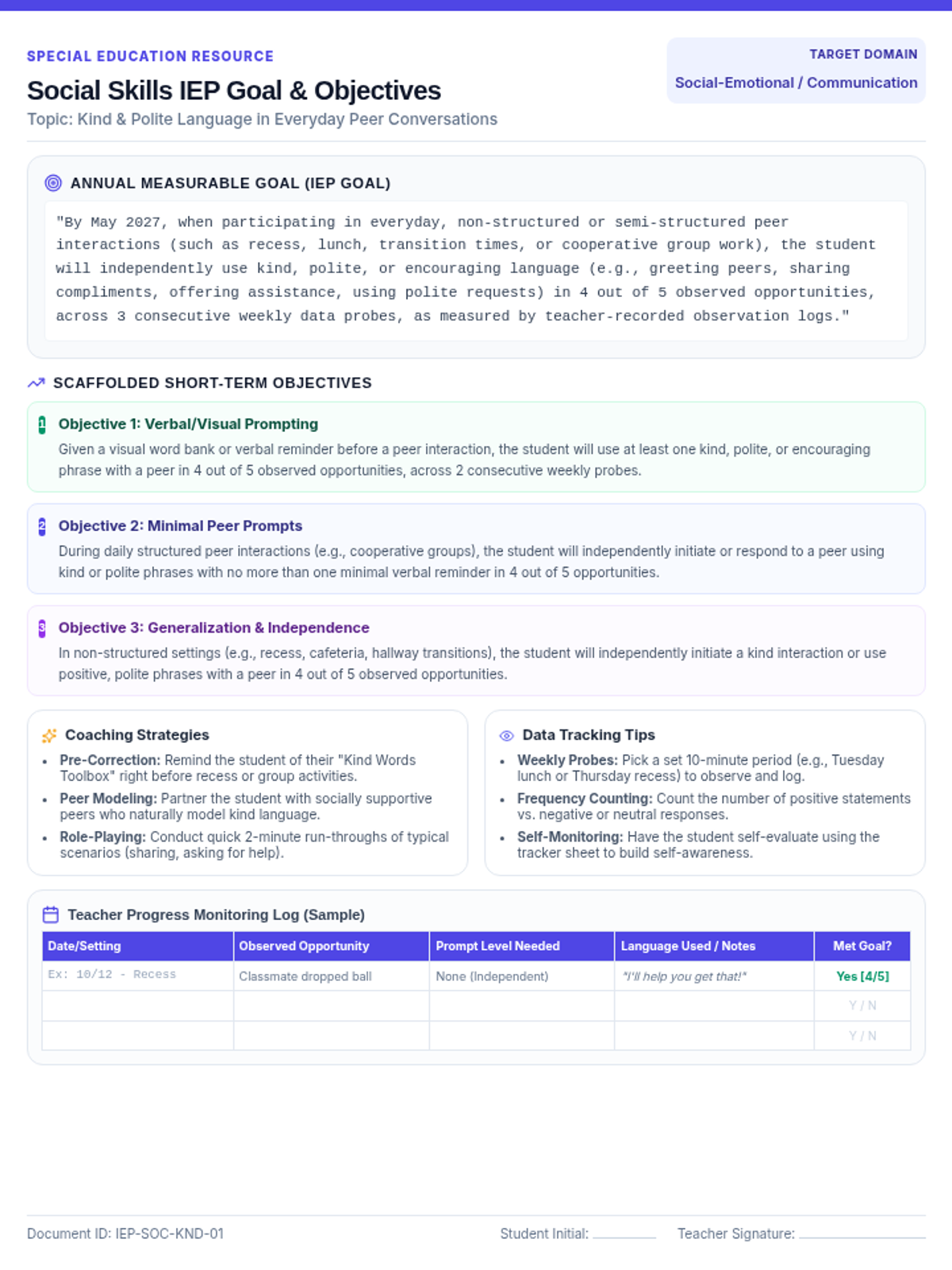
A social skills lesson designed to help students learn and apply kind, polite, and encouraging language during daily peer interactions. Includes clear visual objectives, structured discussion cards, and a reflection tracker.
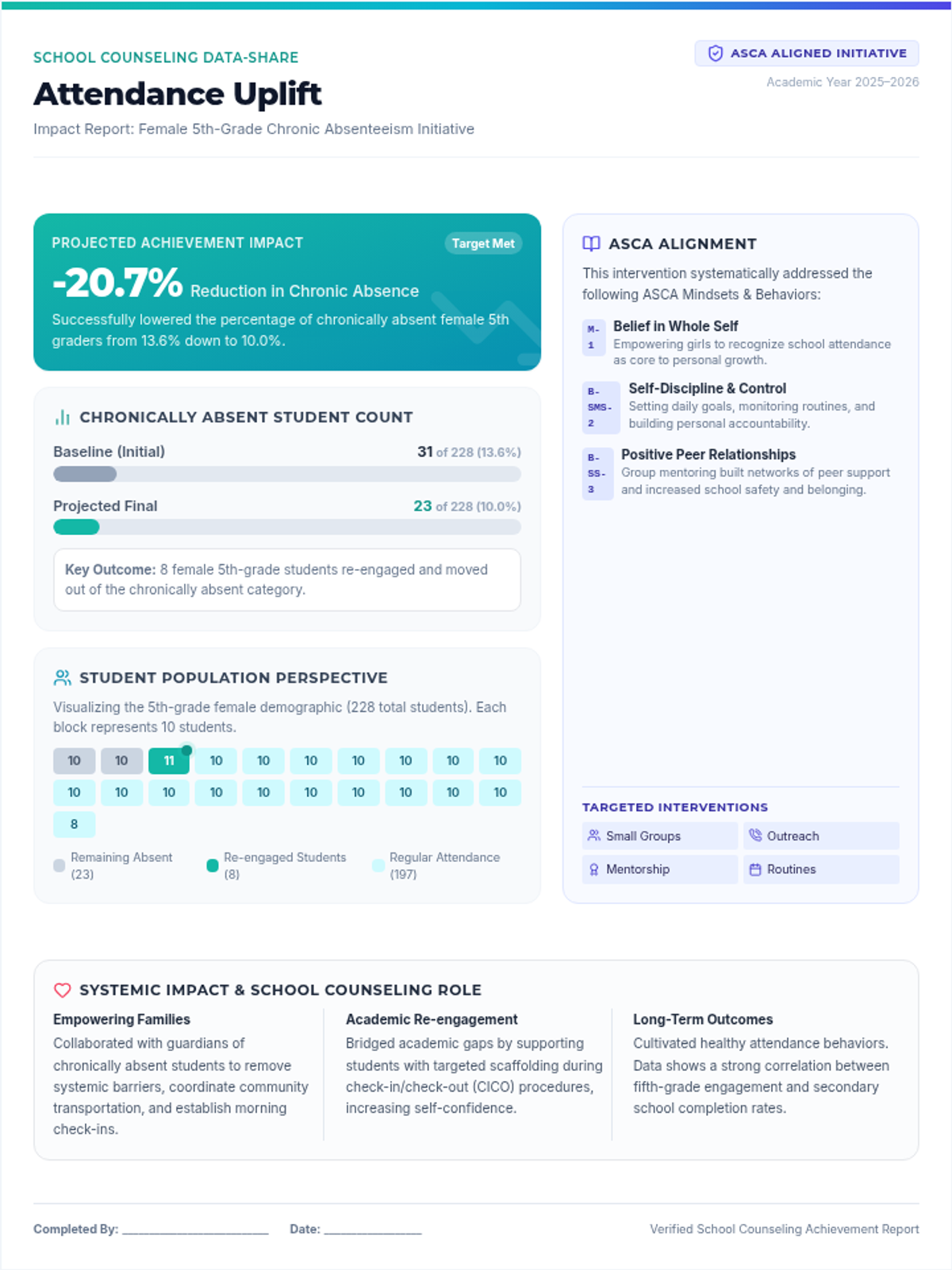
A data-driven school counseling report and infographic detailing the impact of interventions on female 5th-grade chronic absenteeism, aligned with ASCA professional standards.
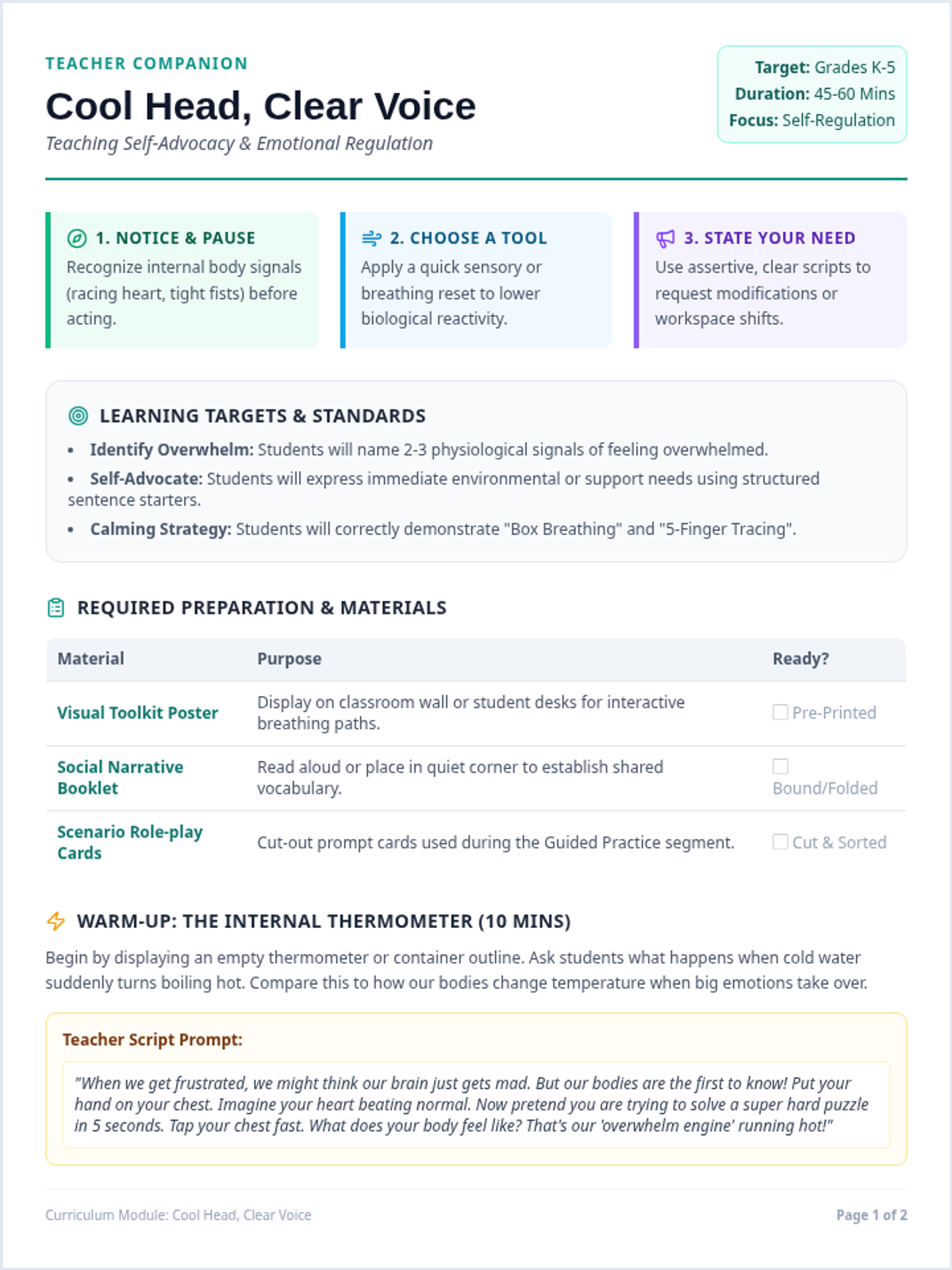
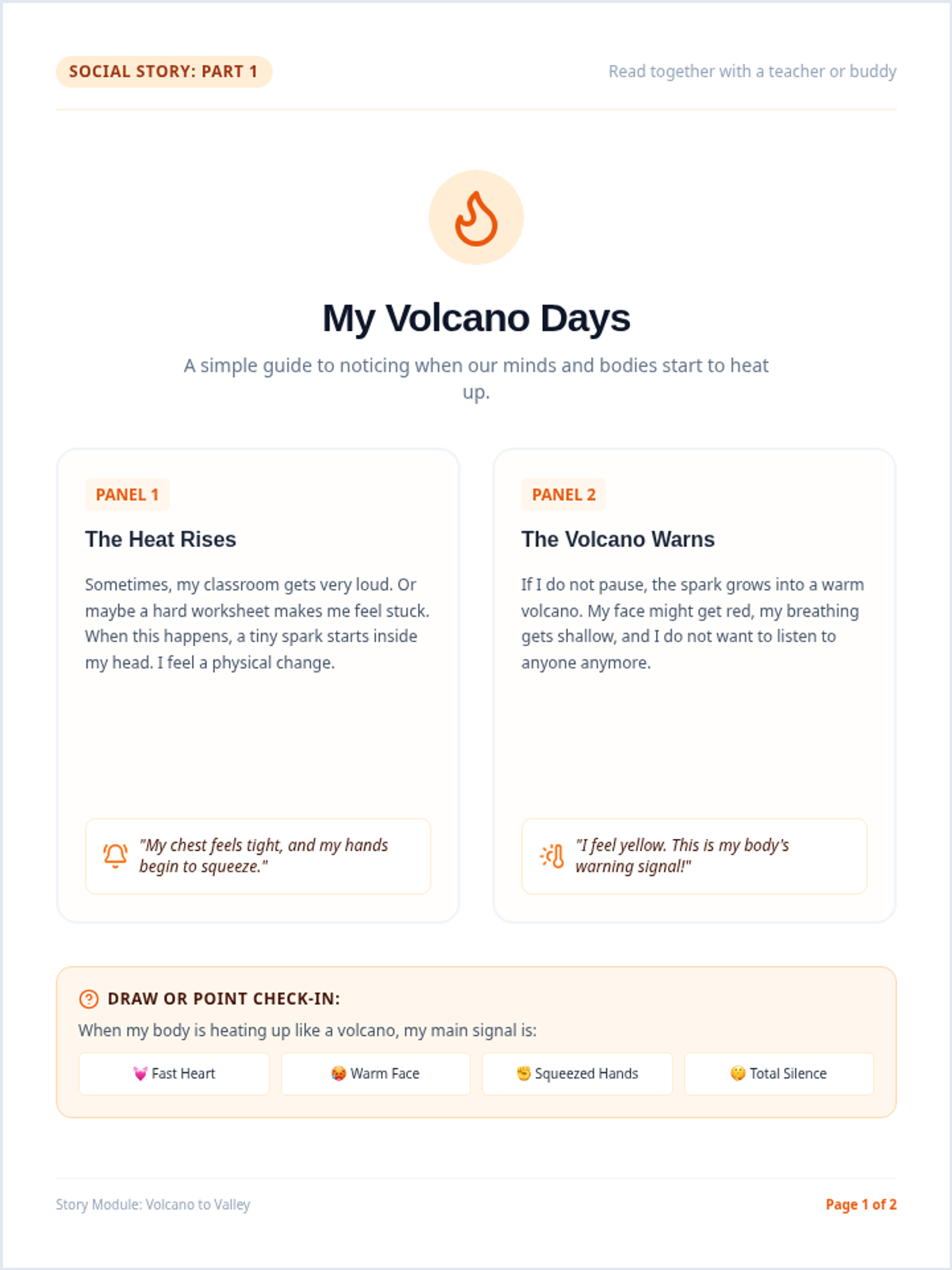
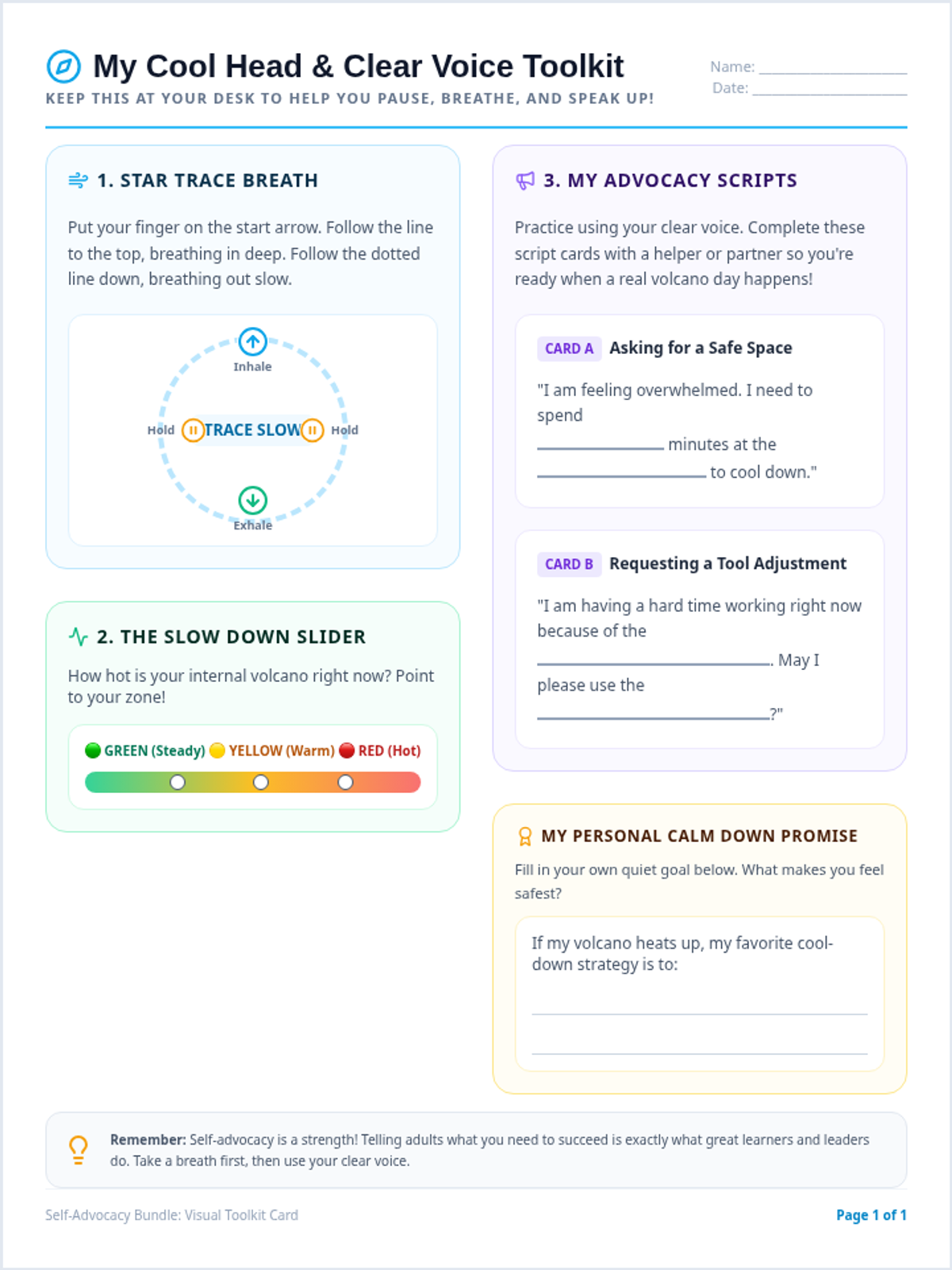
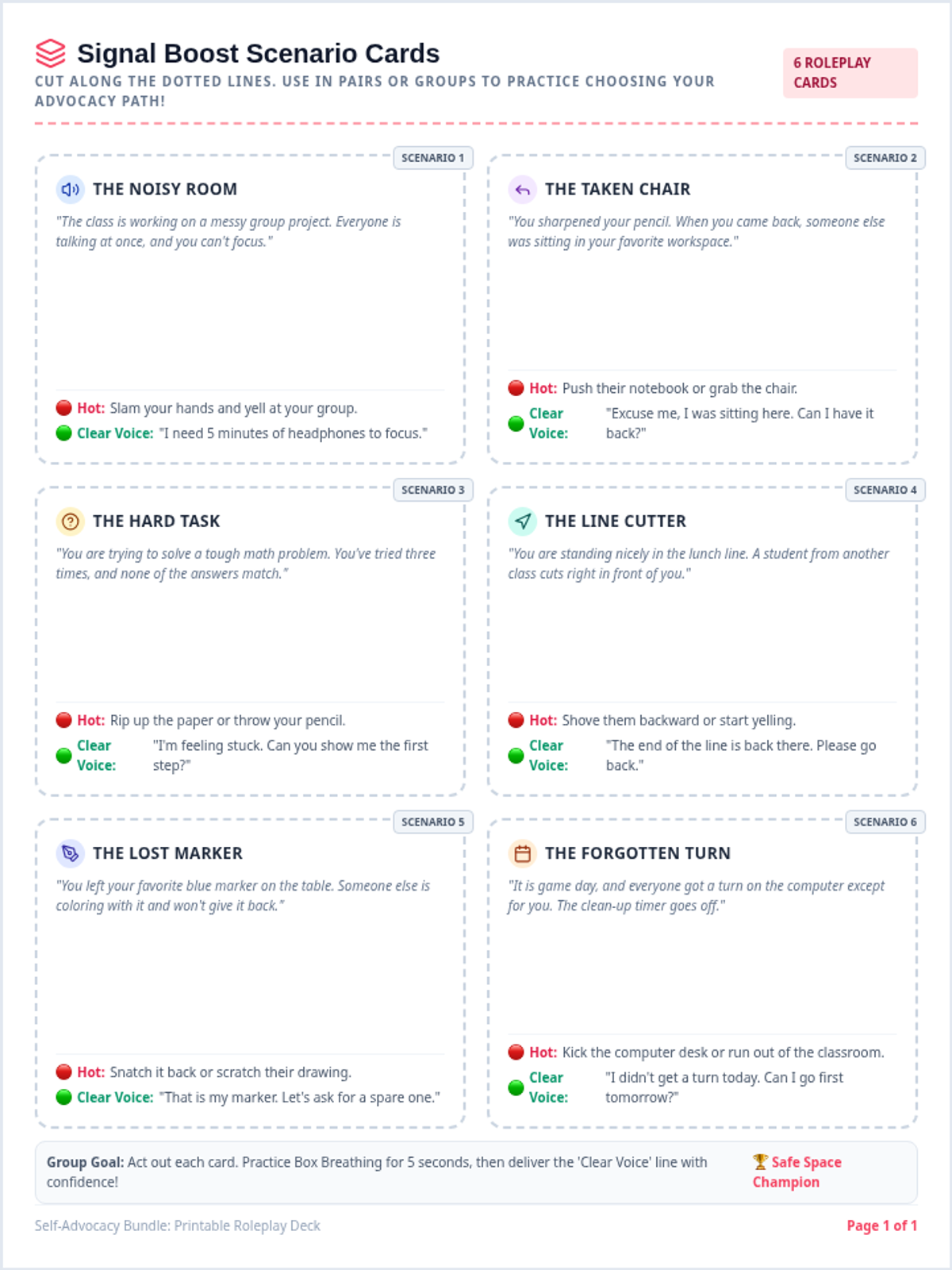
A complete lesson bundle on emotional regulation, self-advocacy, and calming strategies. Includes a comprehensive teacher's guide, a visual toolkit, a social narrative book, and interactive role-playing scenario cards.
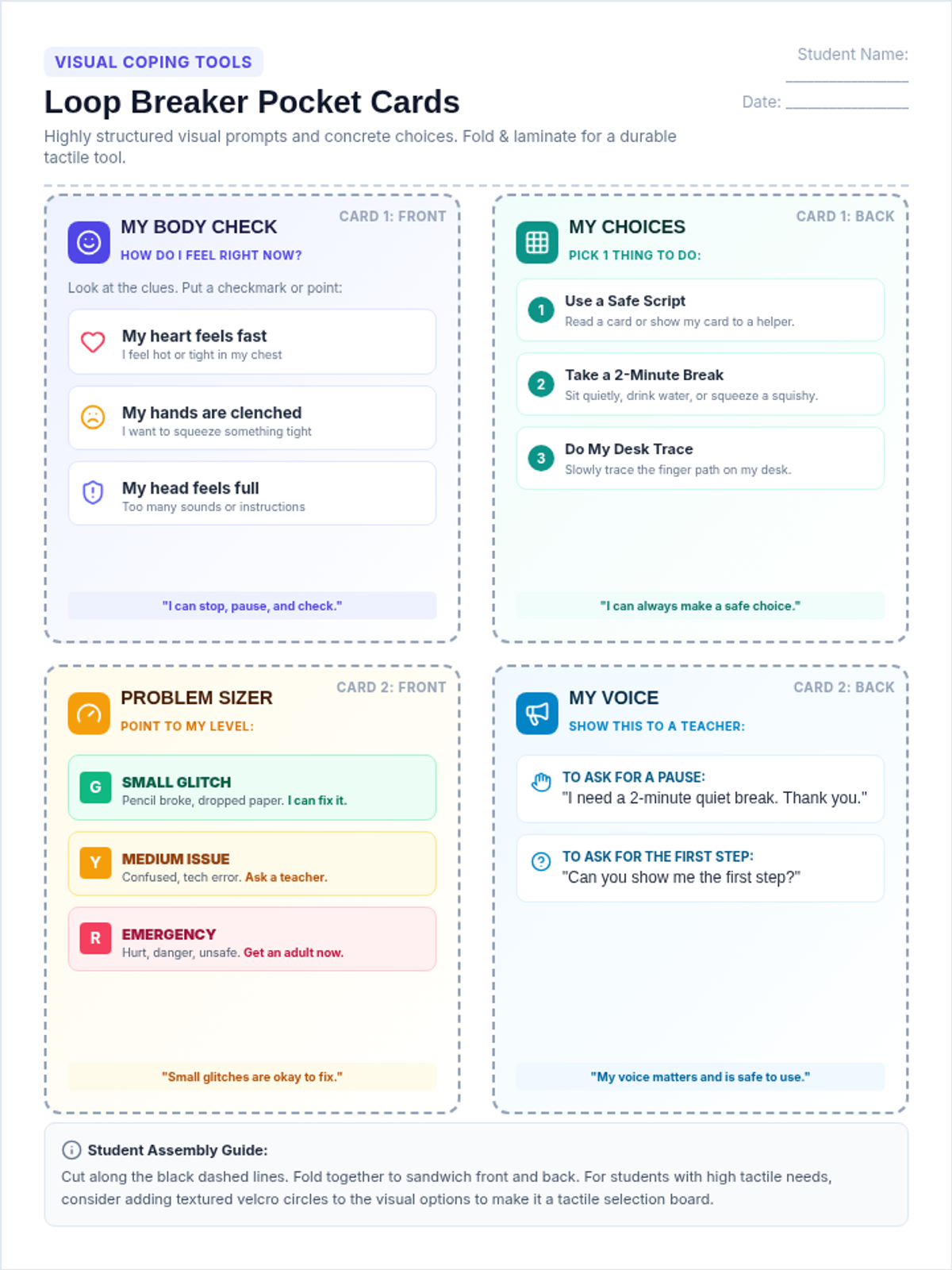
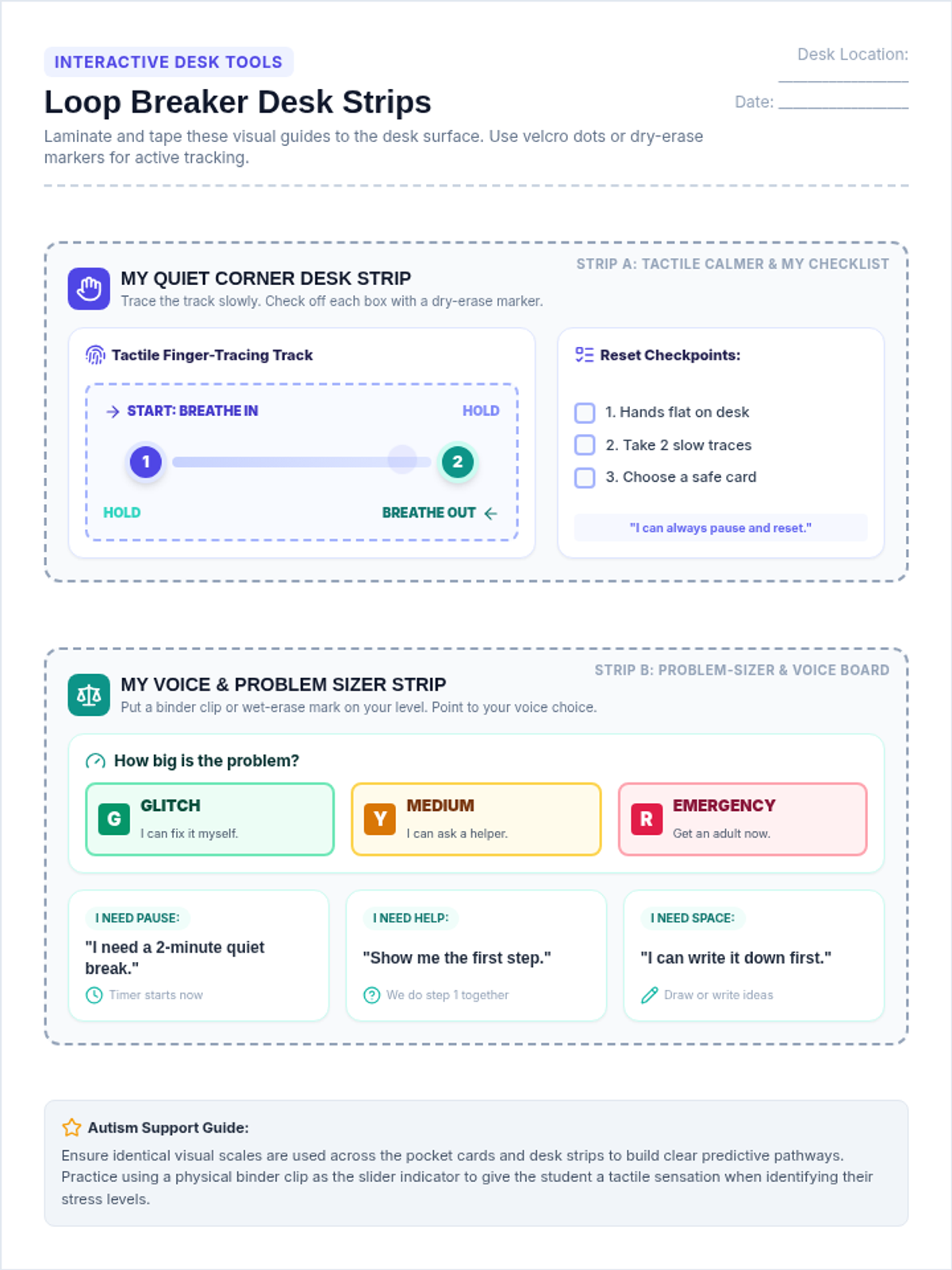
A set of portable, visual cognitive behavioral tools to help students disrupt automatic negative thoughts and set constructive boundaries when feeling overwhelmed by tasks.
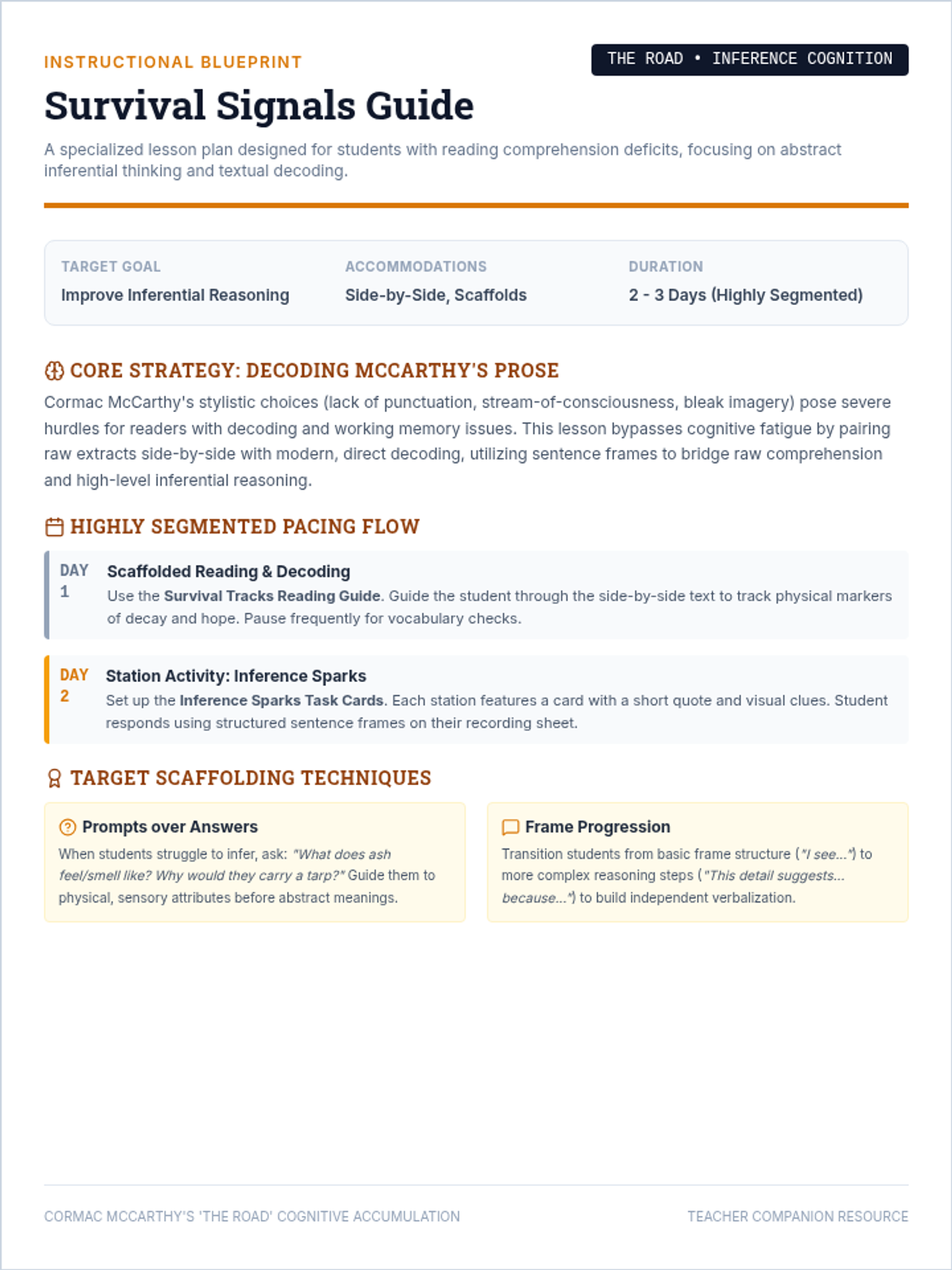
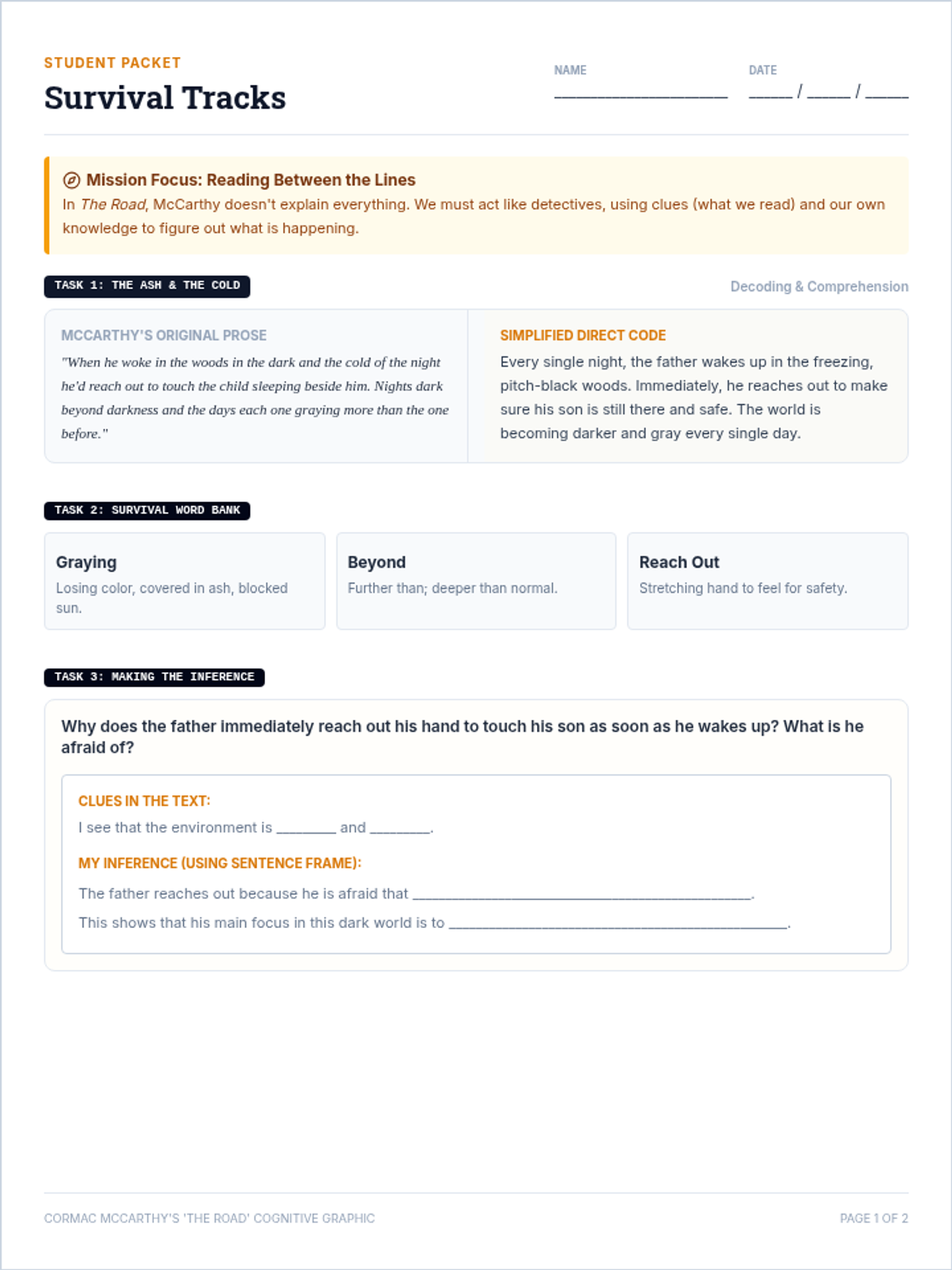
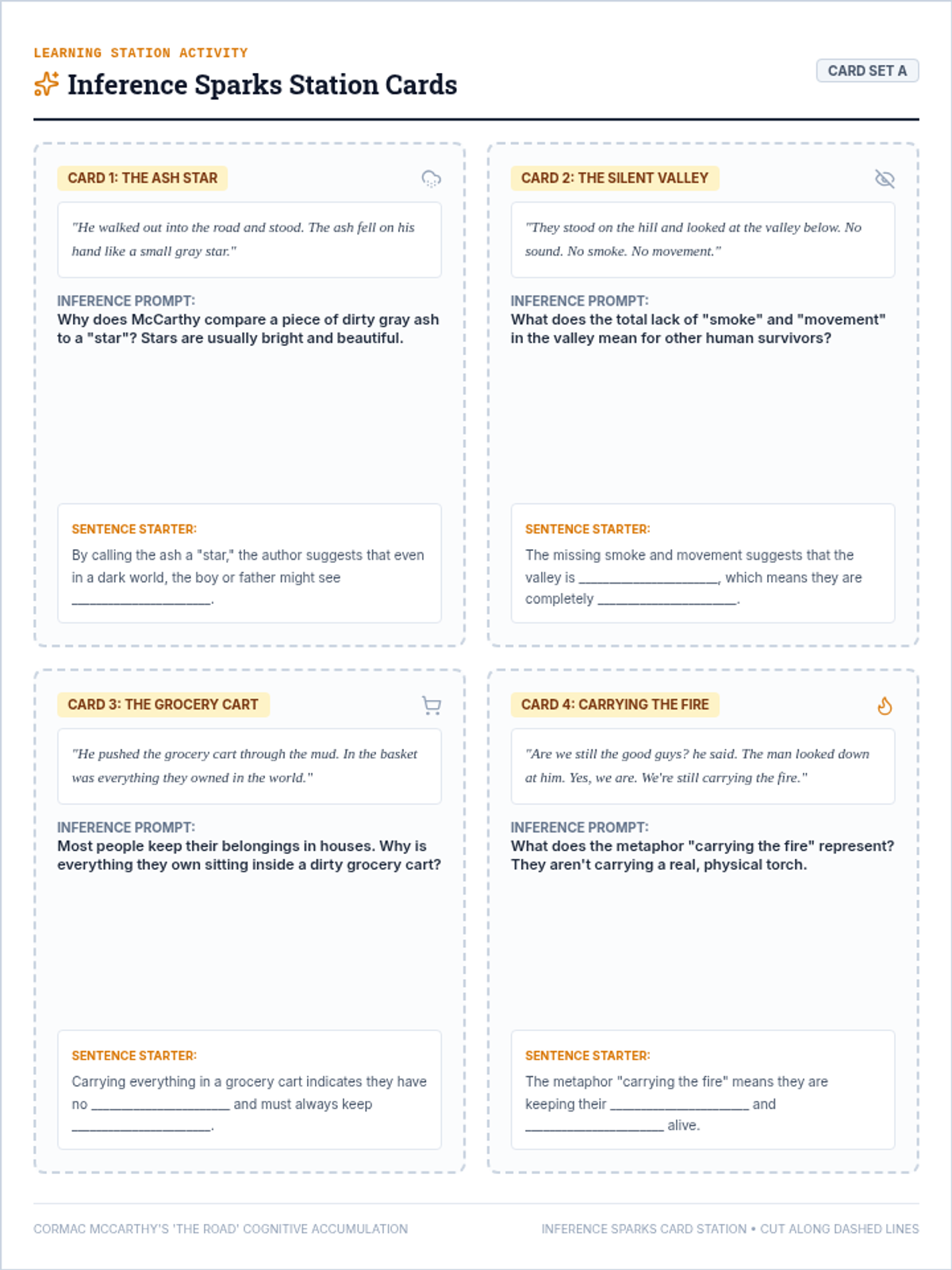
A targeted reading comprehension lesson designed for students with reading comprehension deficits, focusing on inferential thinking using Cormac McCarthy's 'The Road'. It includes a side-by-side text decoding guide, vocabulary scaffolding, highly segmented tasks, and a task card station activity with sentence starters.
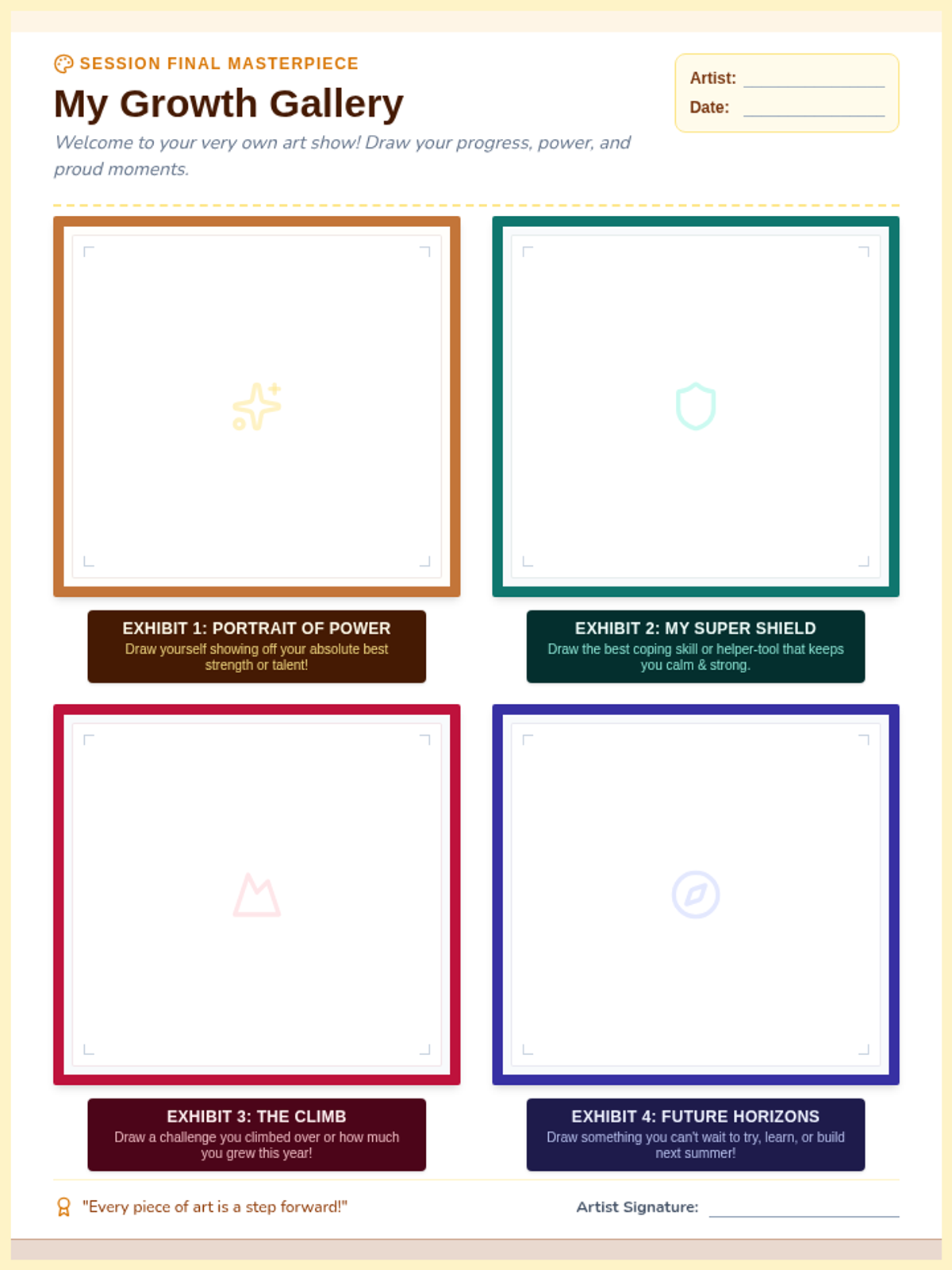
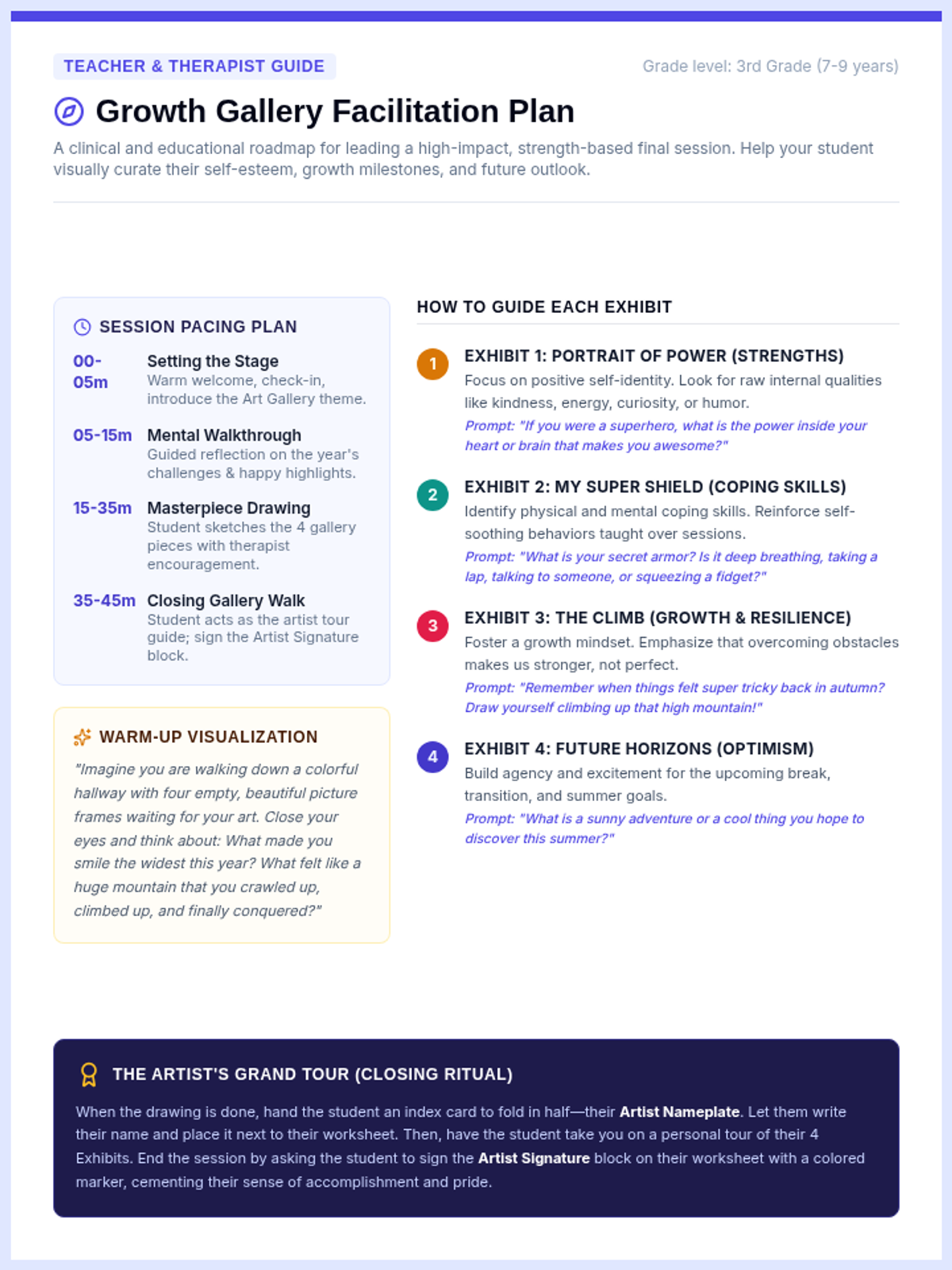
A celebratory final session lesson designed for a 3rd-grade student, focusing on personal growth, self-esteem, strengths, and coping skills through drawing and reflection.
A professional developmental guide containing a robust, fill-in-the-blank SMART PDP goal framework aligned specifically to NCEES standards for NC middle school educators.
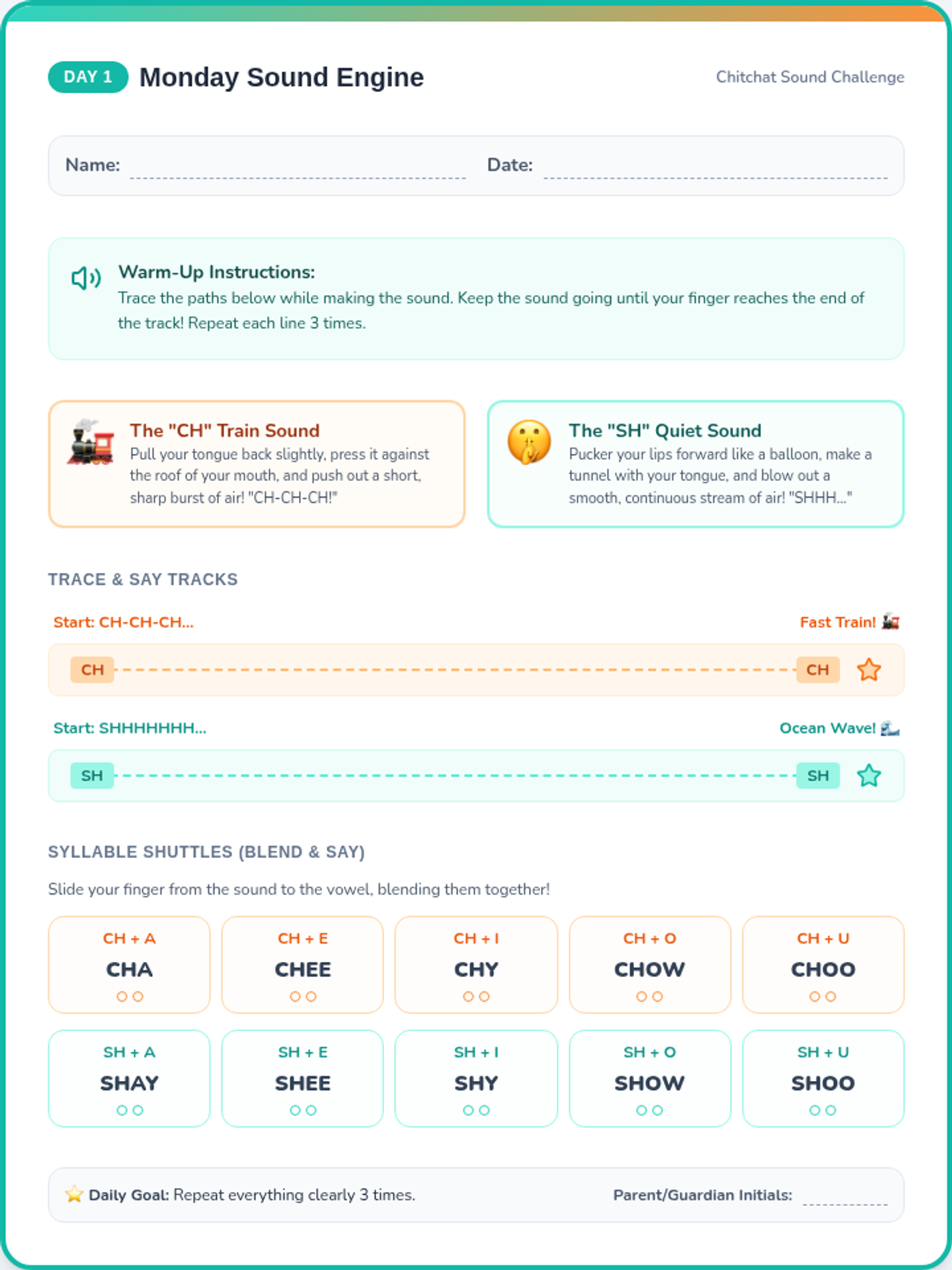
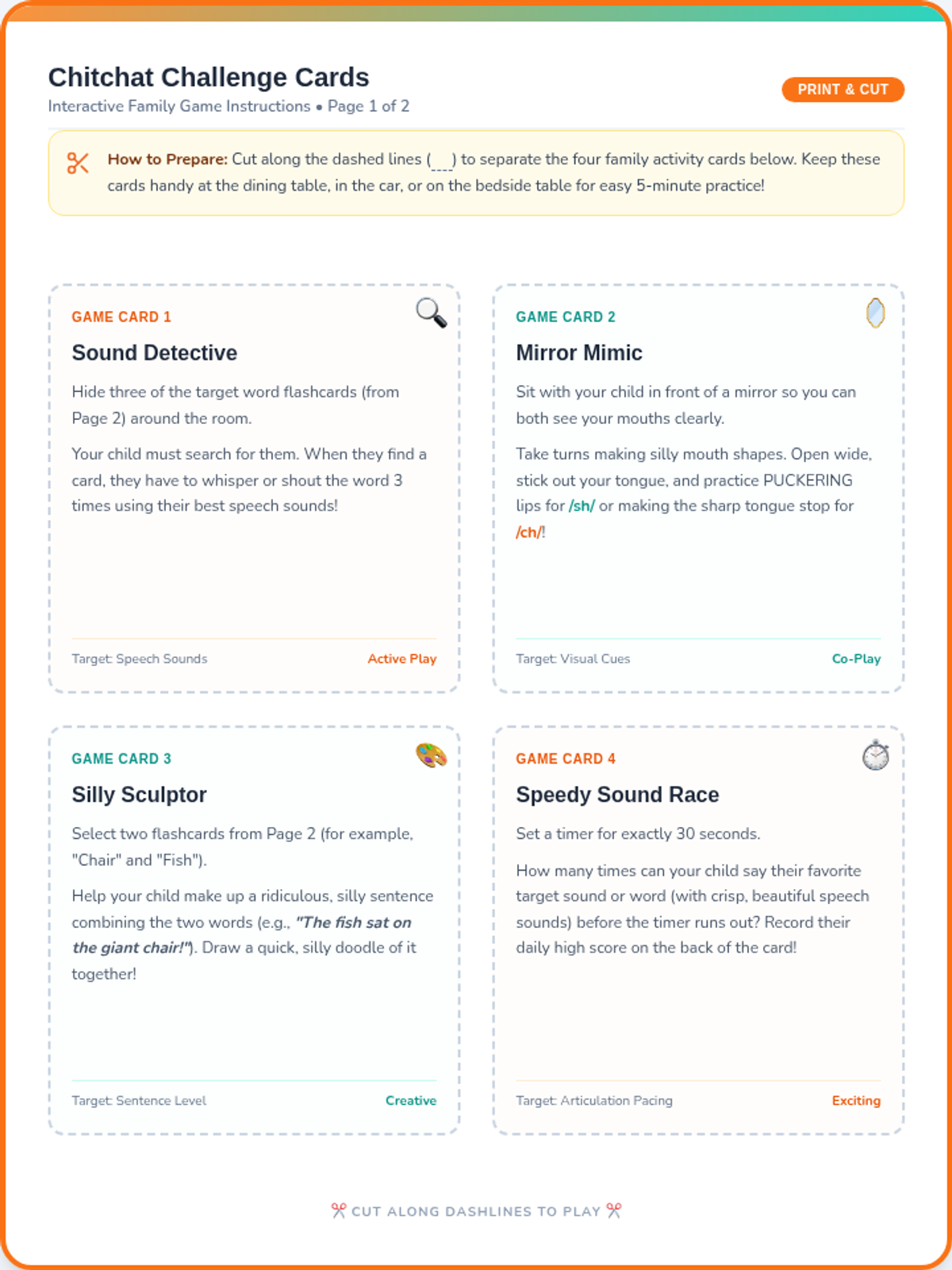
A home practice program designed to help children master the articulation of /ch/ and /sh/ sounds through engaging daily micro-activities and interactive family games.
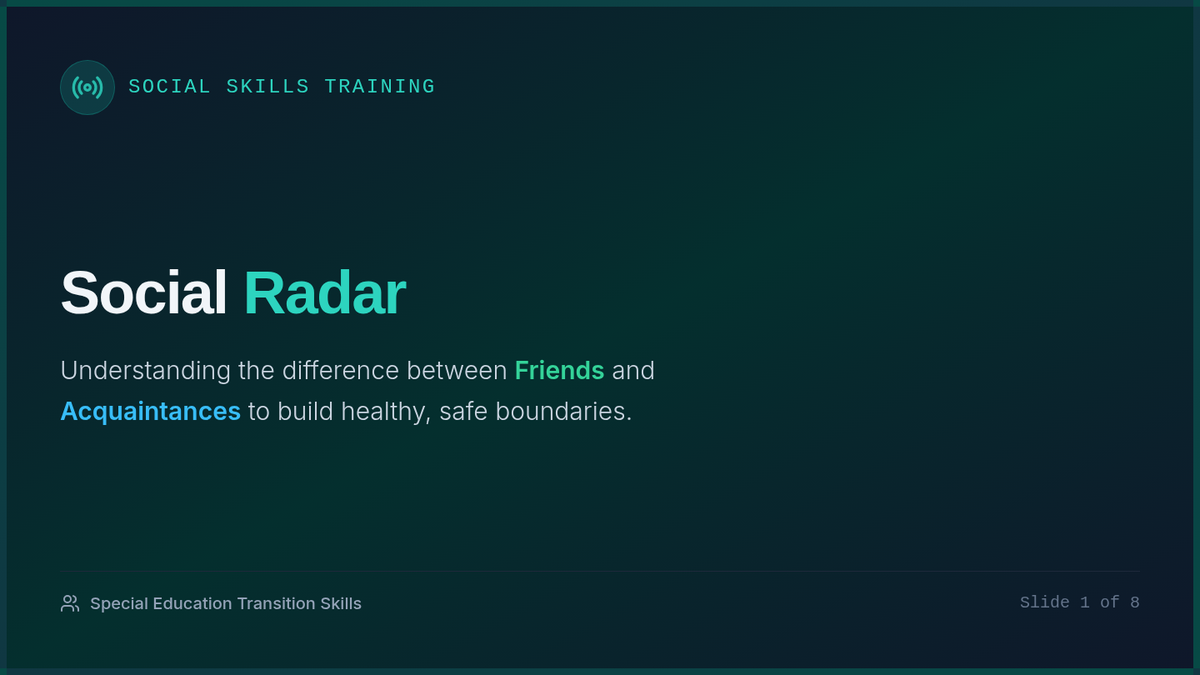
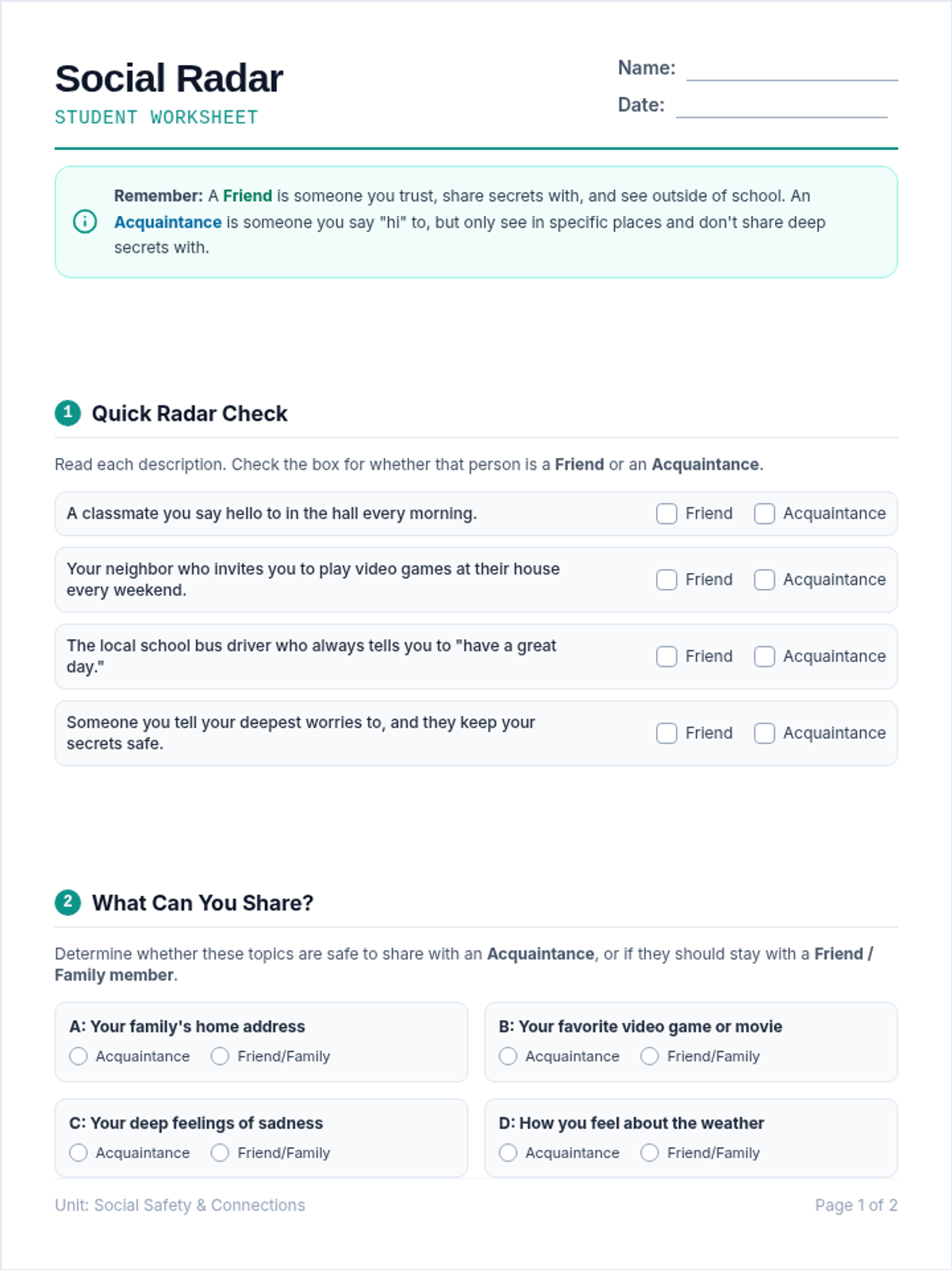
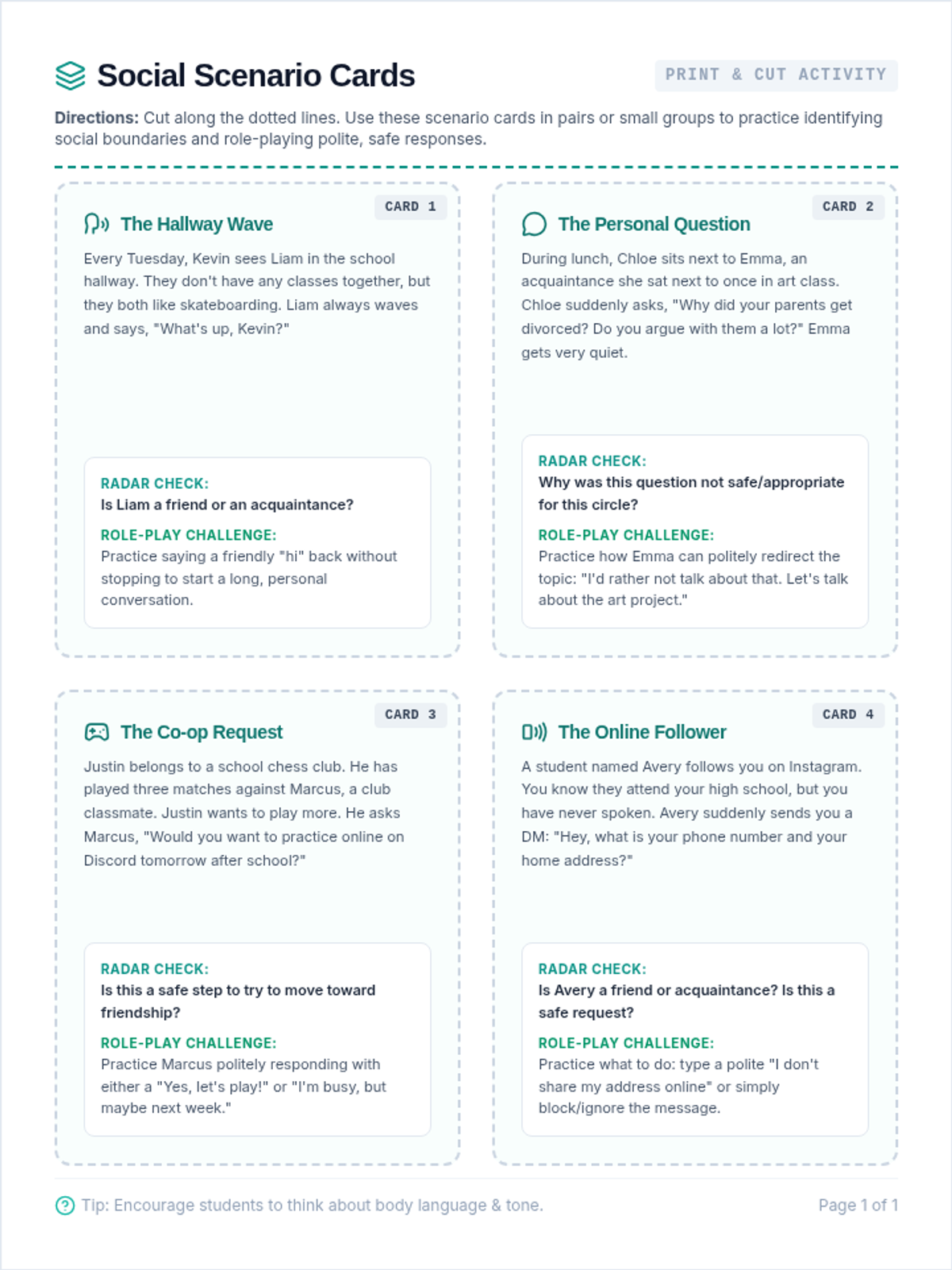
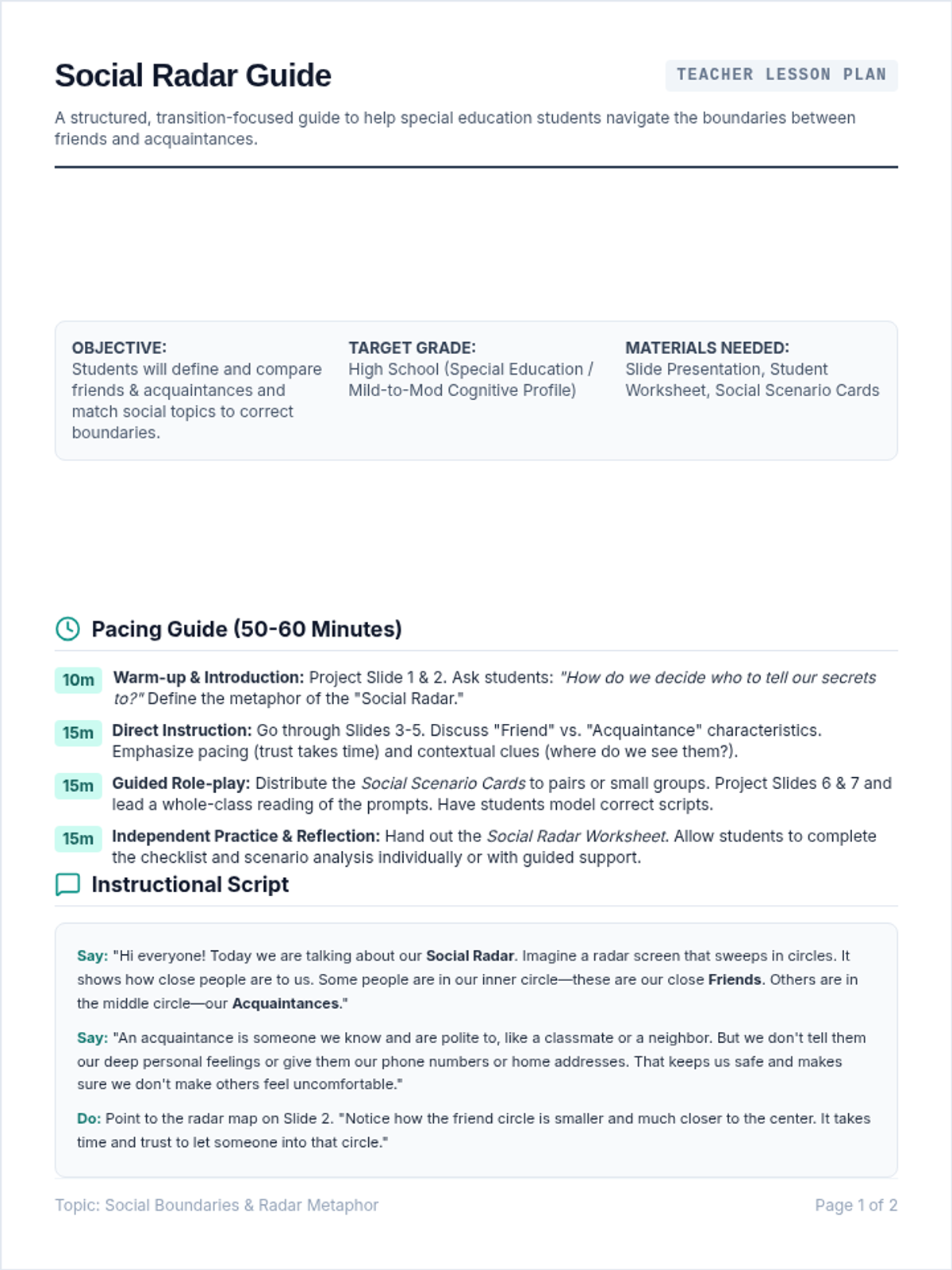
A comprehensive social skills lesson helping high school special education students distinguish between friends and acquaintances using a 'Social Radar' concentric circles metaphor. It features visual presentation slides, role-play scenario cards, and structured student worksheets.
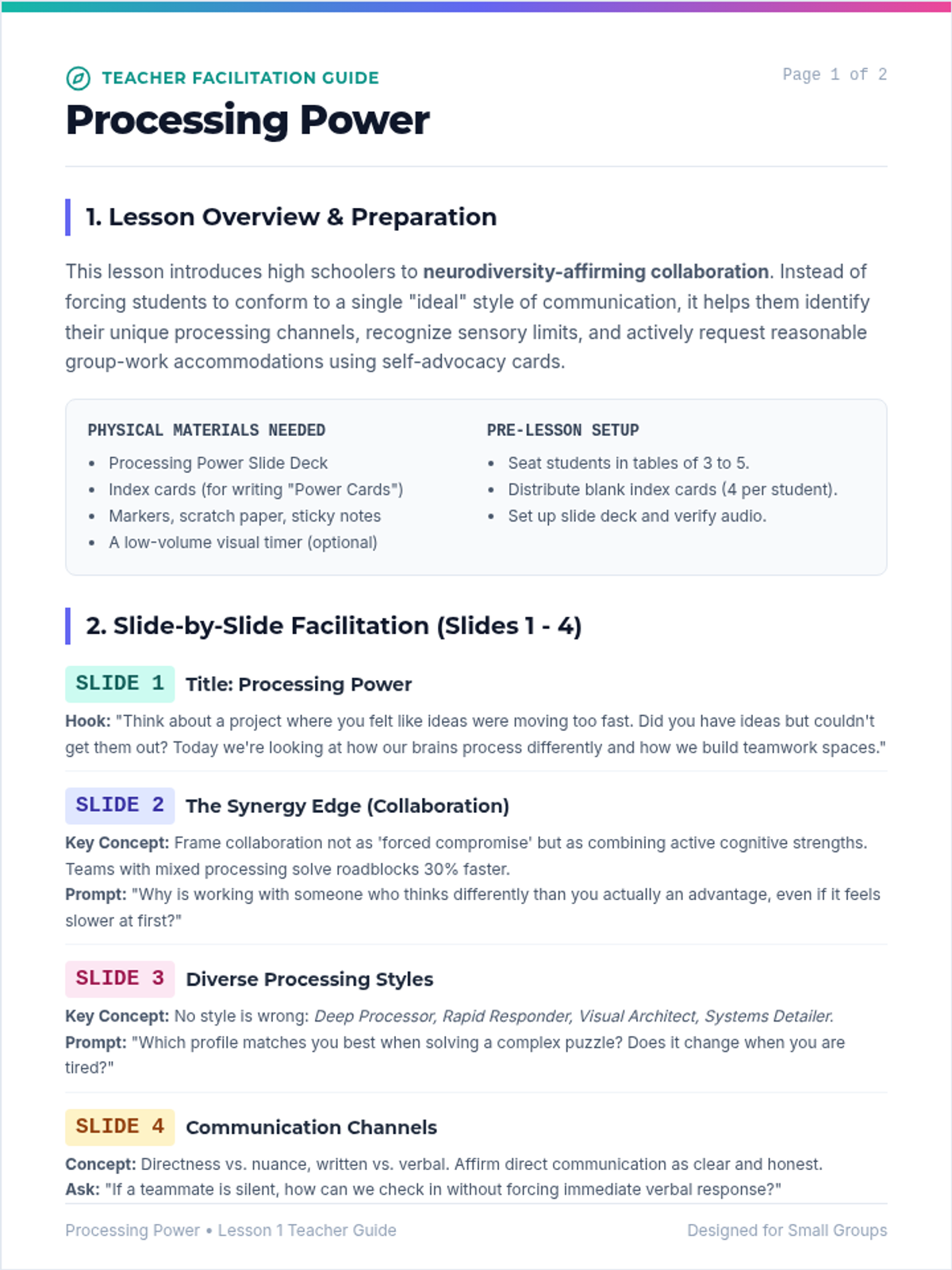
A presentation-based lesson designed for small groups of high school students to explore neurodiverse-affirming communication, understand diverse processing styles, and develop self-advocacy skills for teamwork.
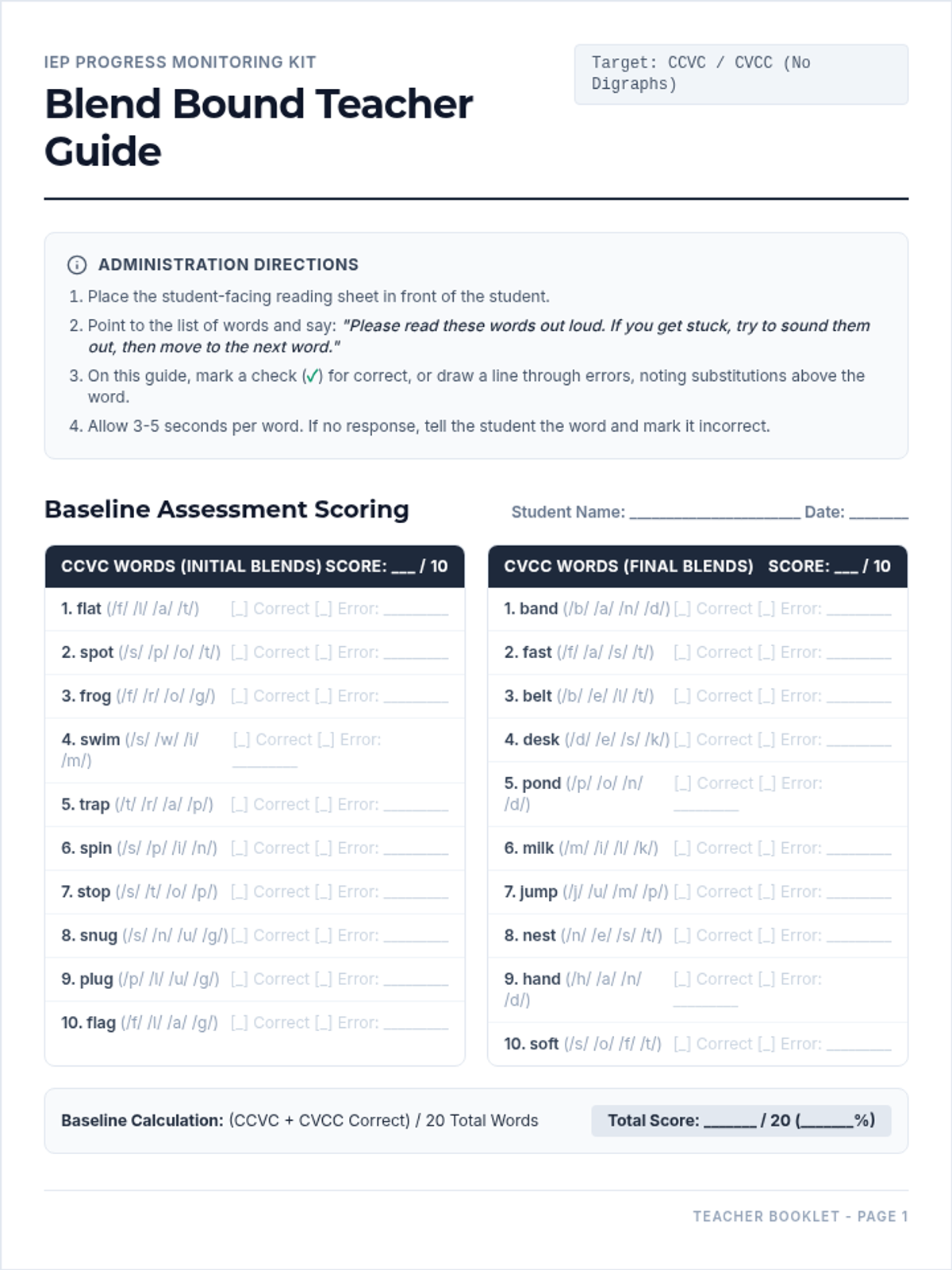
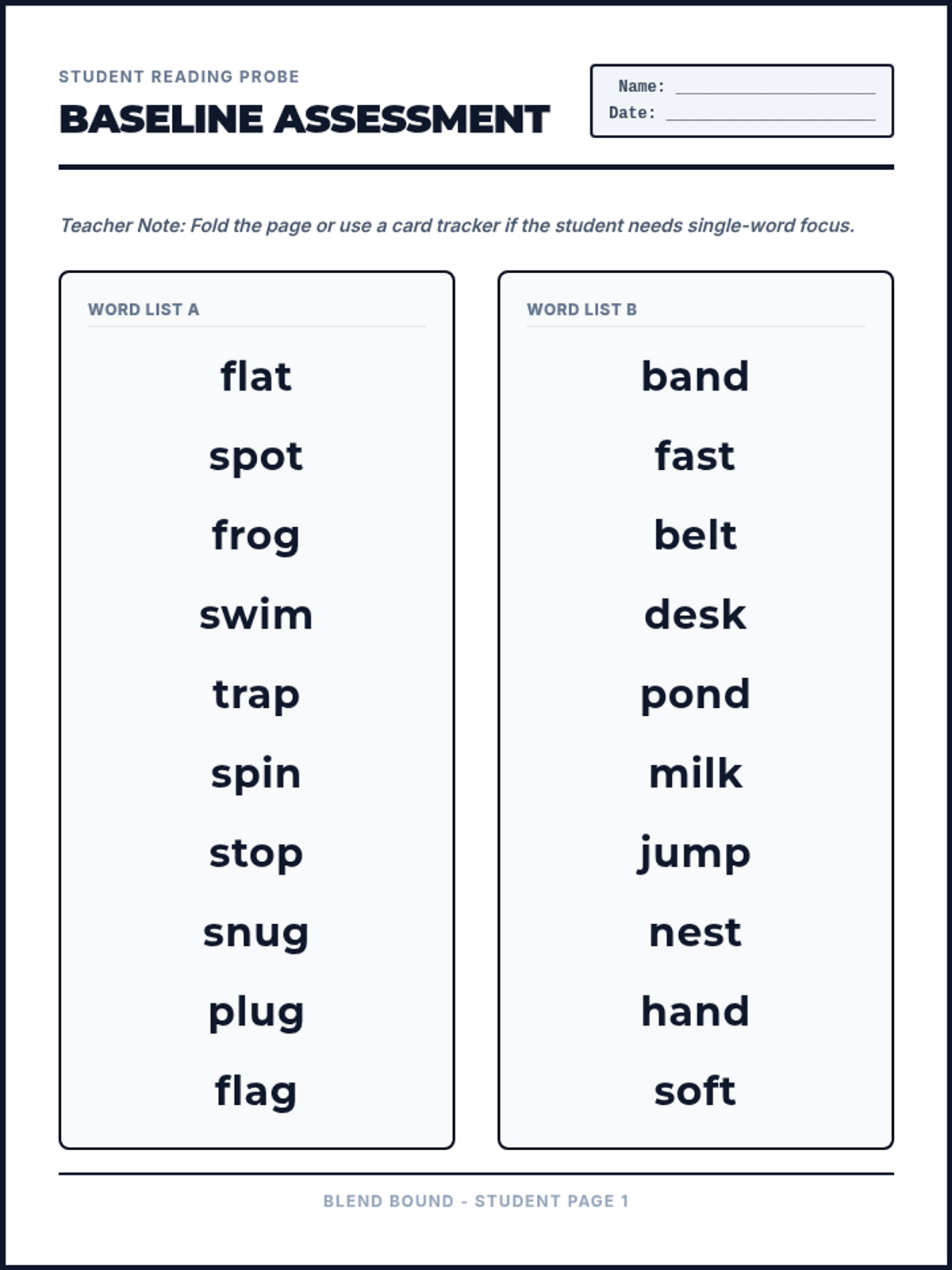
A comprehensive progress monitoring kit for tracking student mastery of CVCC and CCVC words (excluding digraphs). Includes a teacher recording and reporting guide alongside large-font, high-contrast student reading probes.
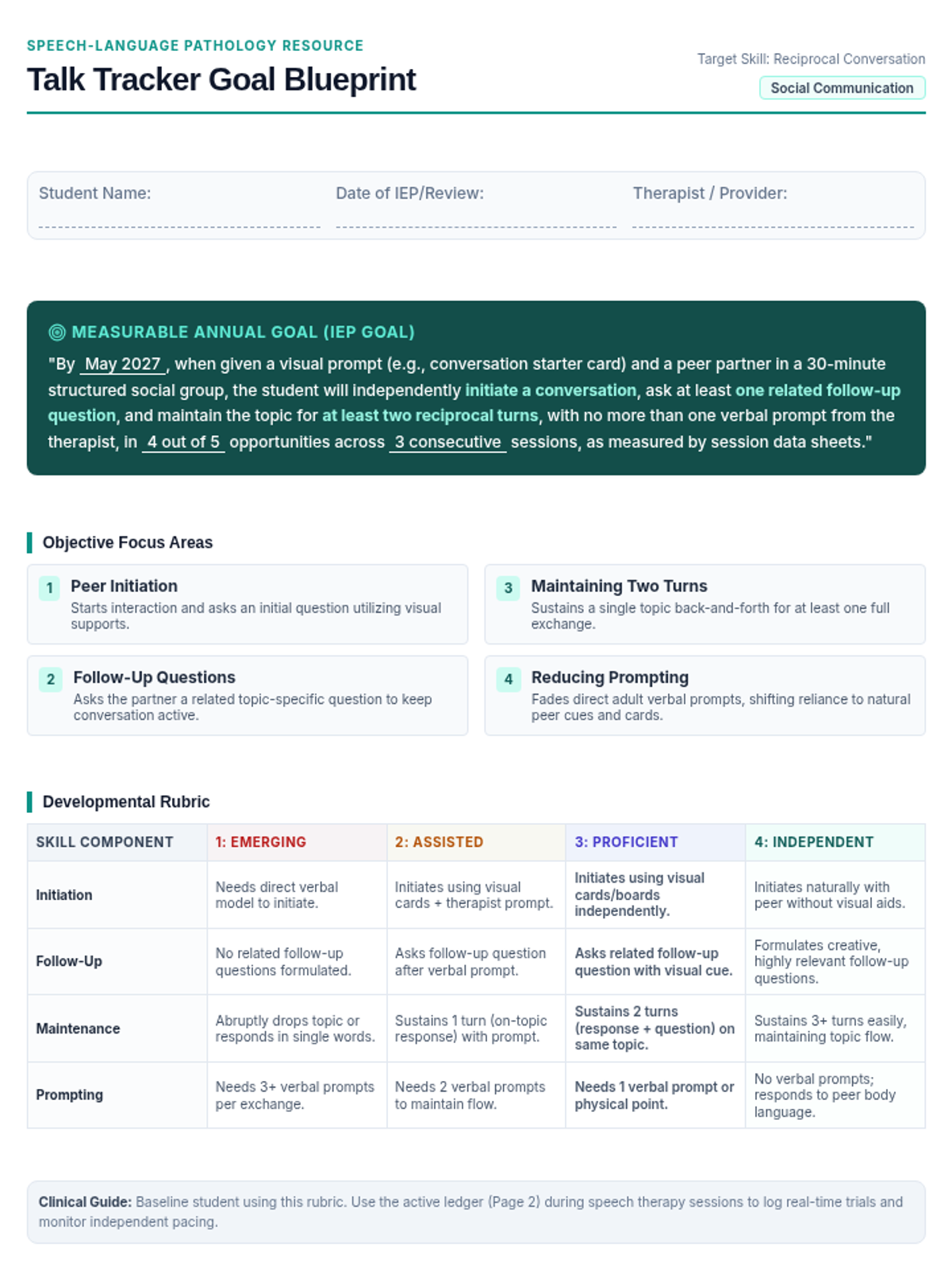
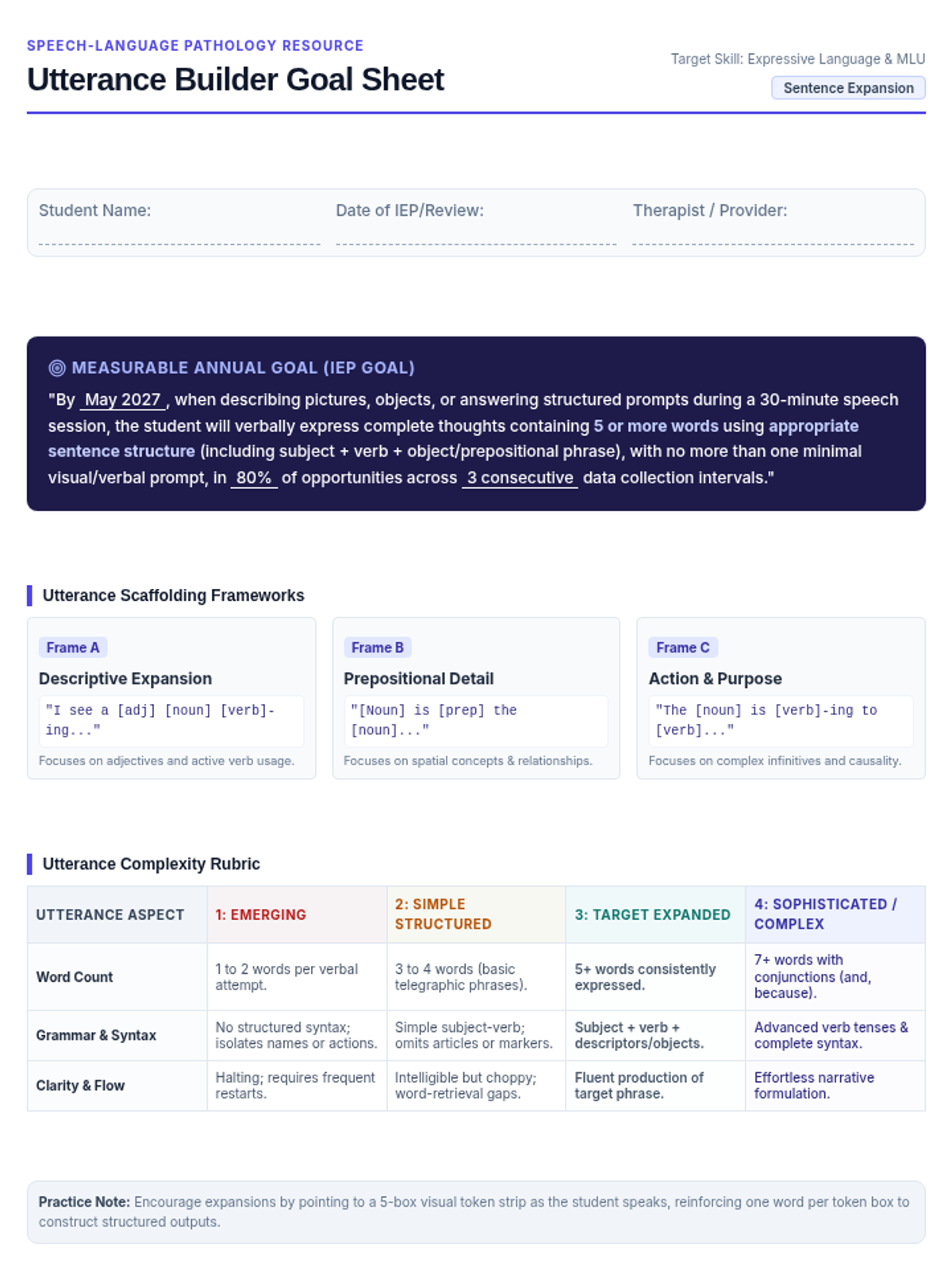
A lesson centered around tracking and achieving measurable progress in reciprocal conversation skills during speech therapy sessions, complete with formal IEP goals, a developmental rubric, and an actionable session data tracker.
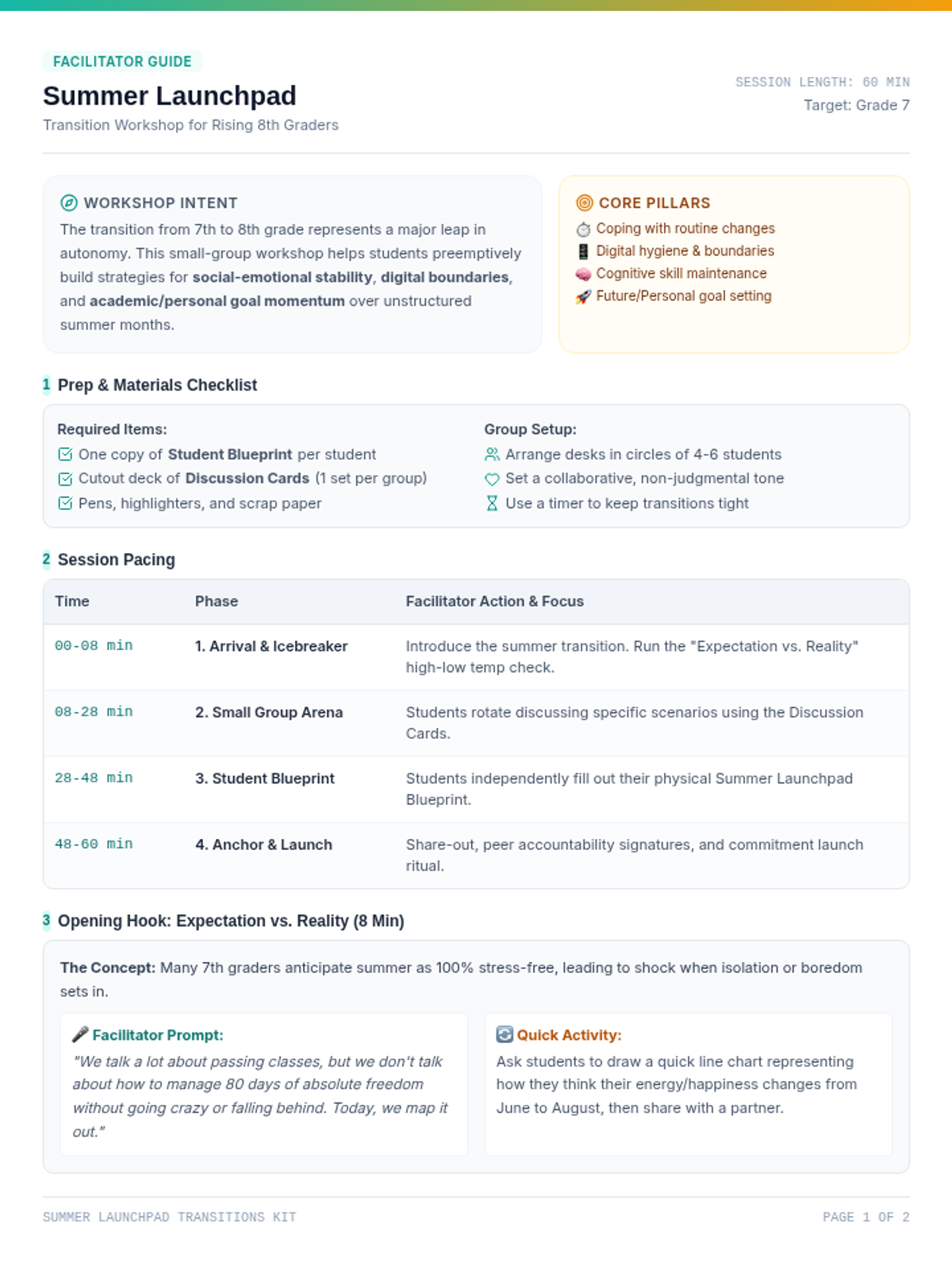
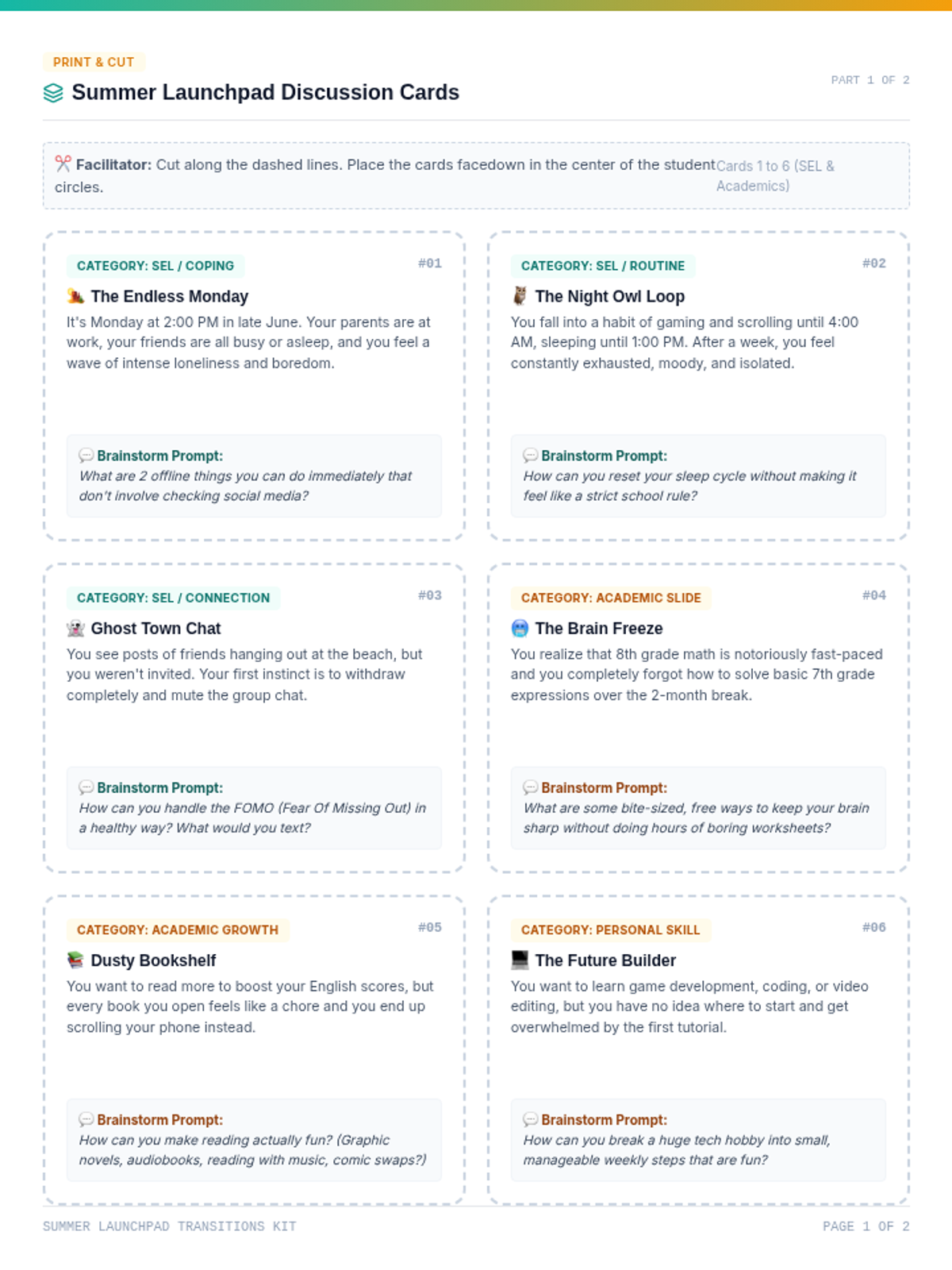
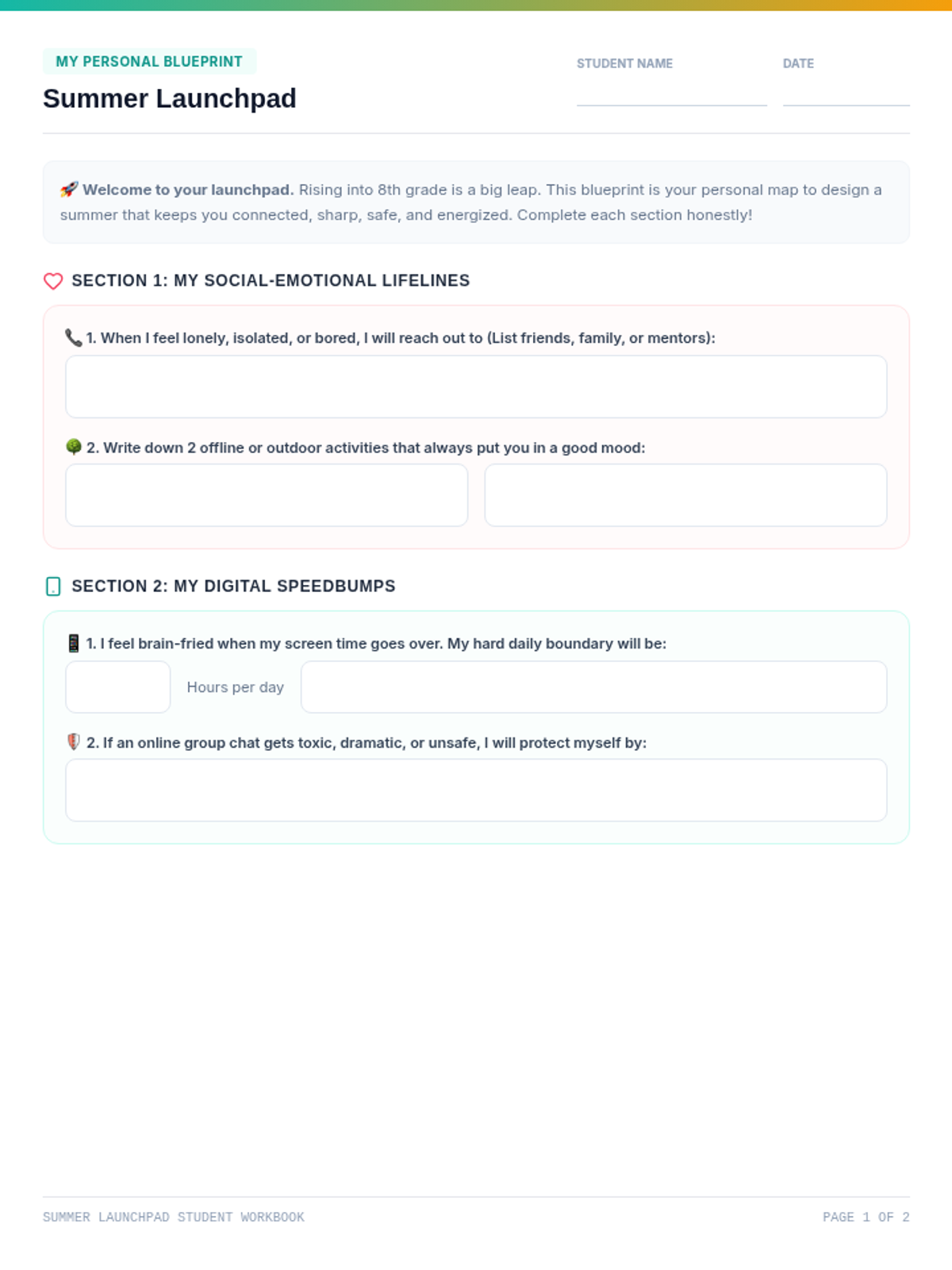
An interactive transitions lesson for rising 8th graders, focusing on social-emotional resilience, digital safety, and personal goal setting over the summer break.
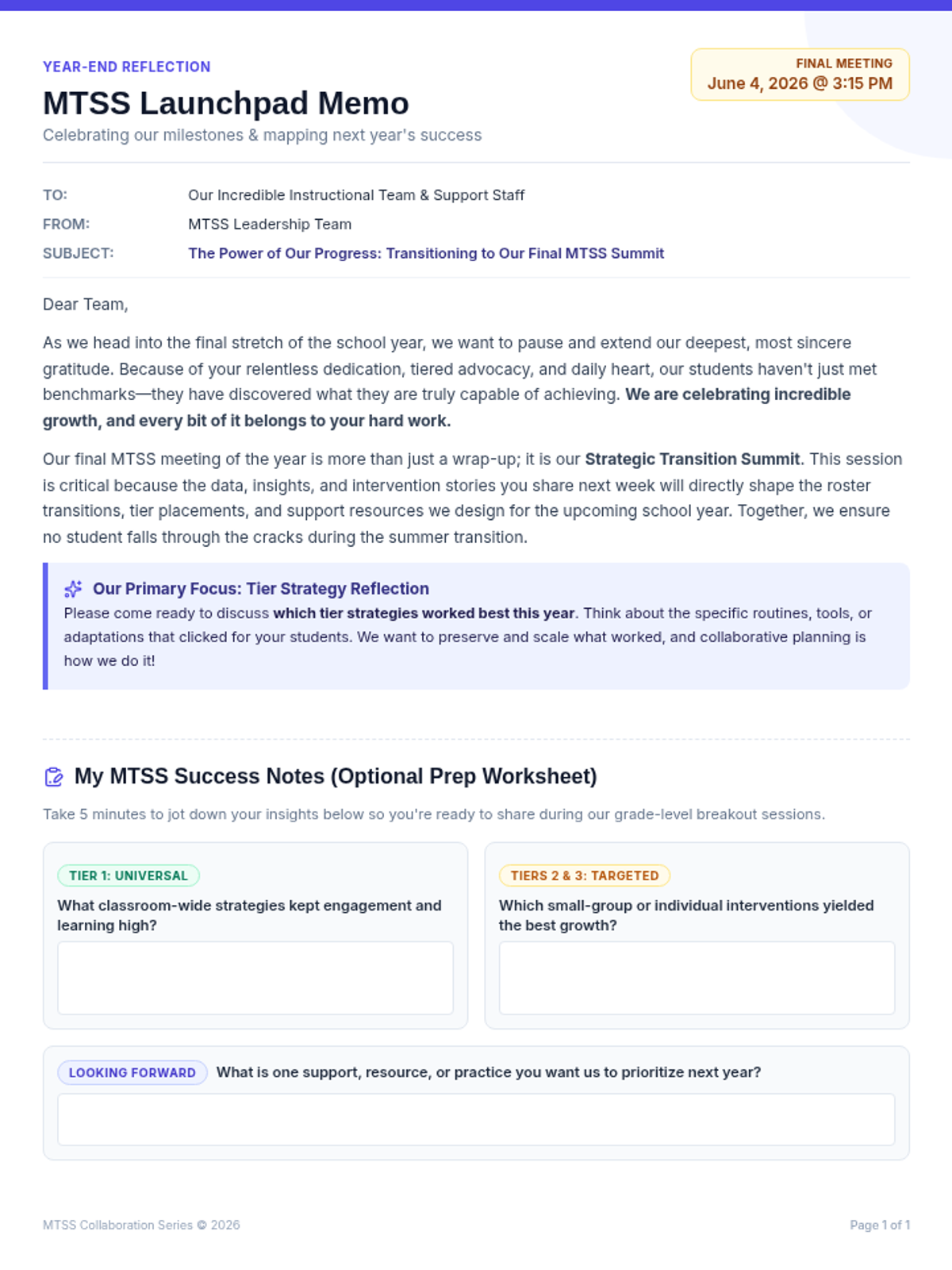
A lesson focused on wrapping up the Multi-Tiered System of Supports (MTSS) for the school year, celebrating progress, and preparing for future planning.
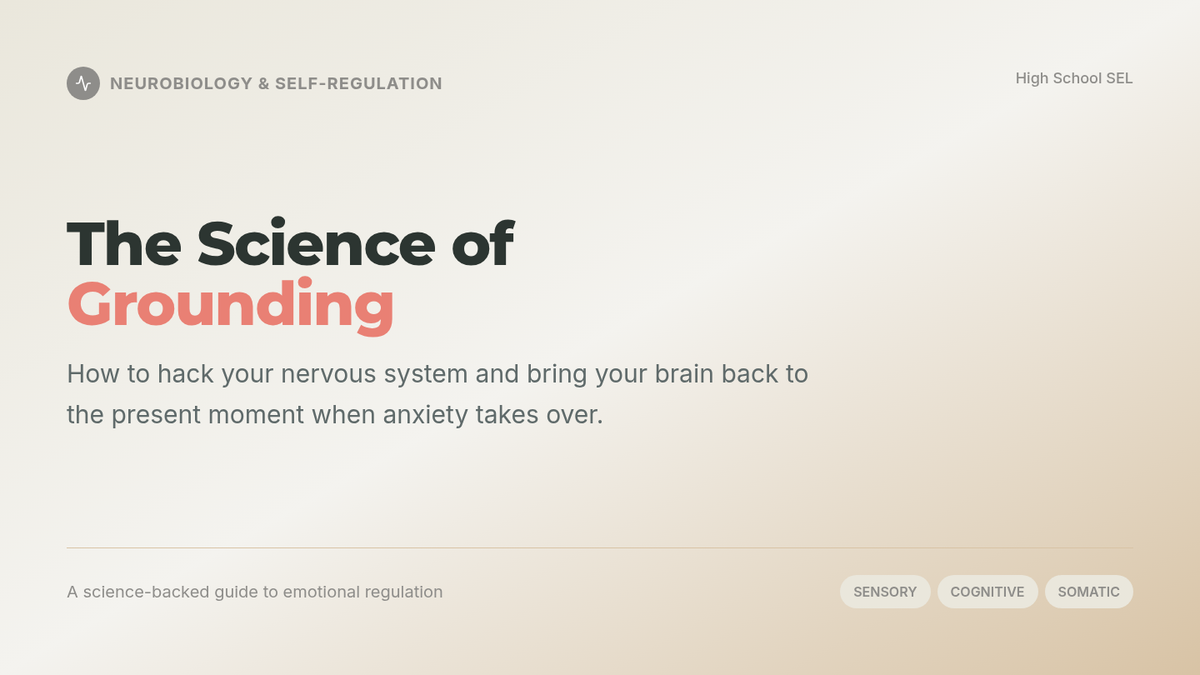
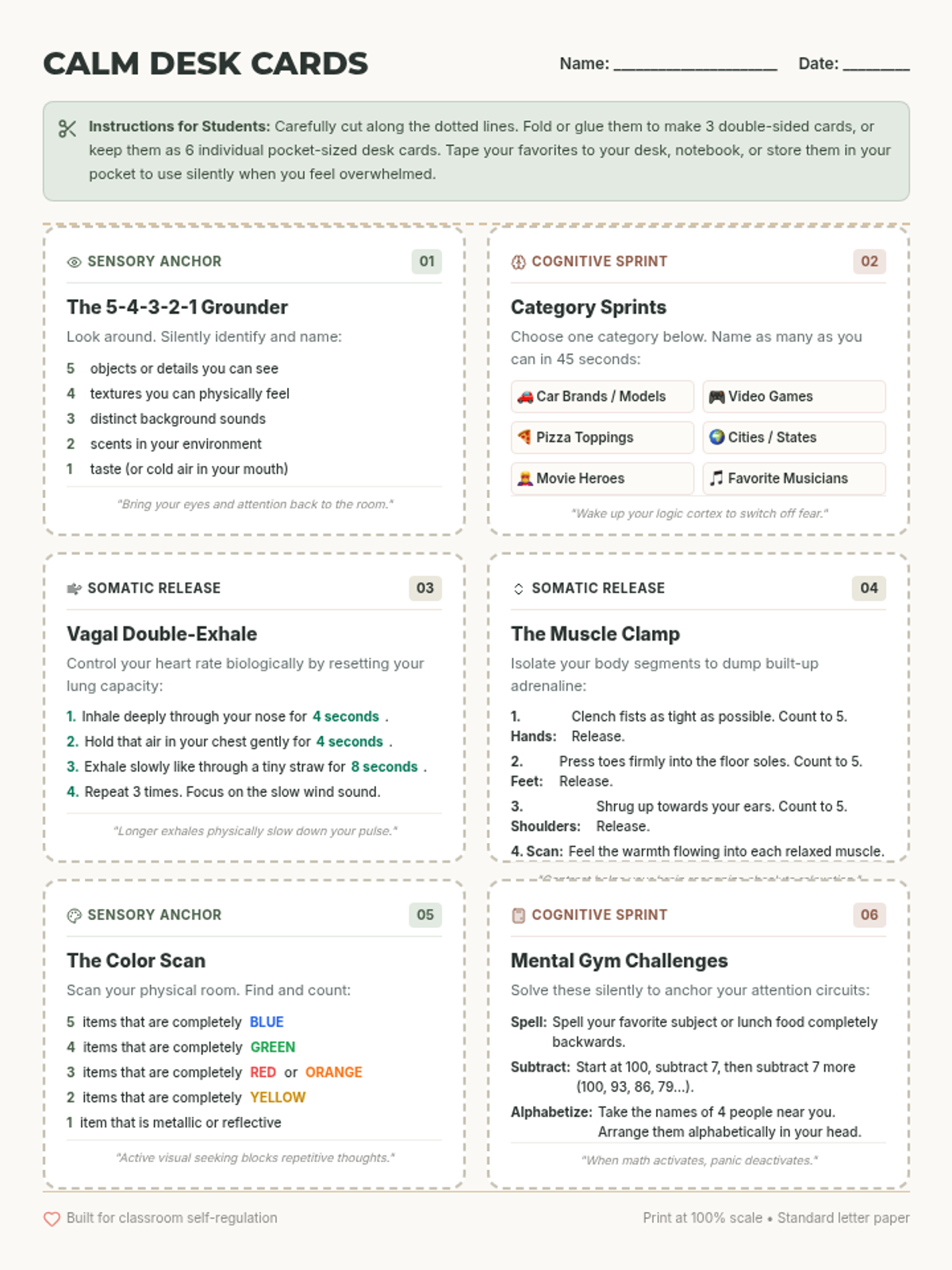
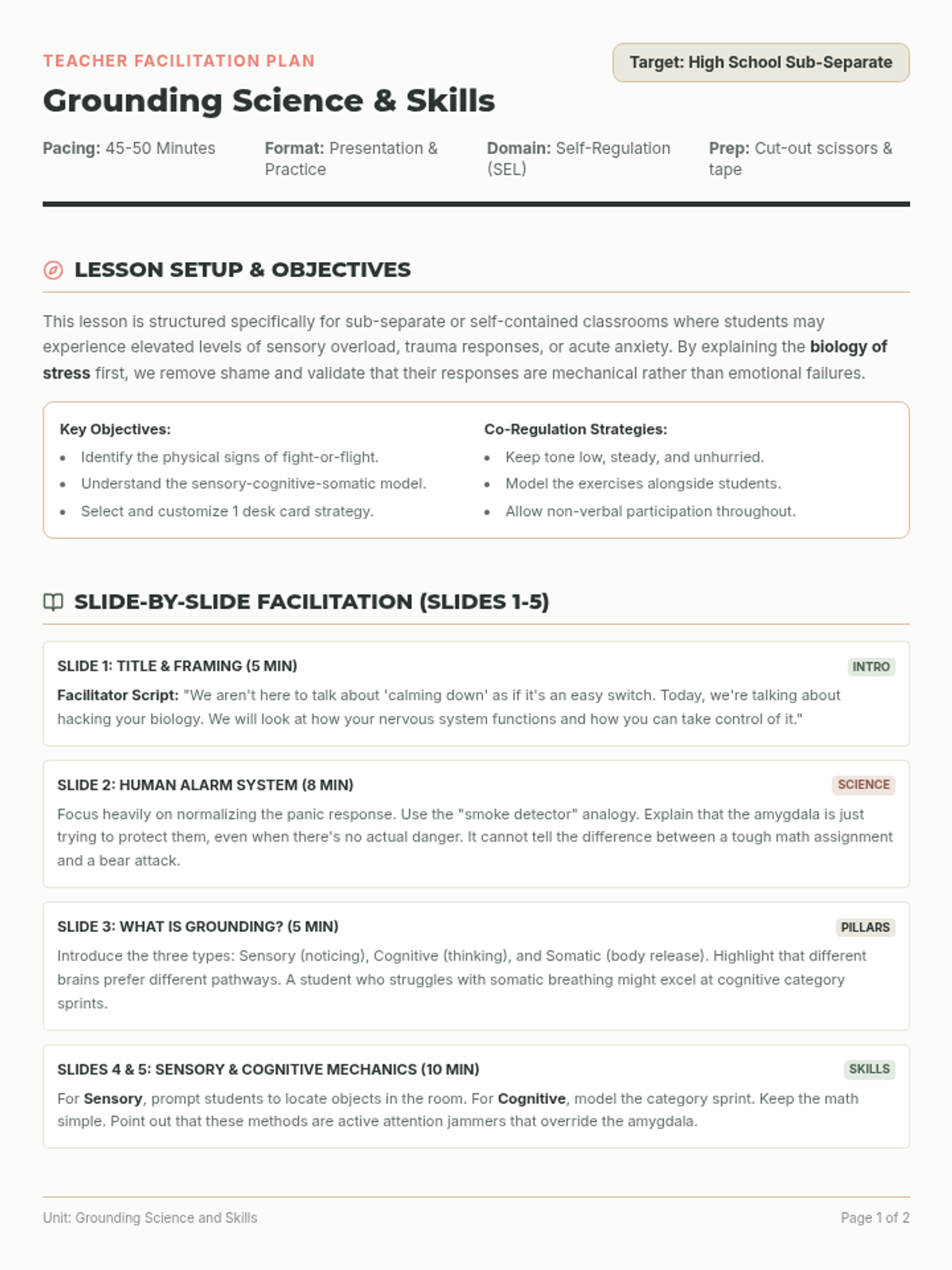
A lesson exploring the neurobiology of hyperarousal and the science-backed skills of grounding. Includes a slide presentation, pocket-sized desk cards for real-time practice, and a comprehensive teacher guide with facilitation scripts.
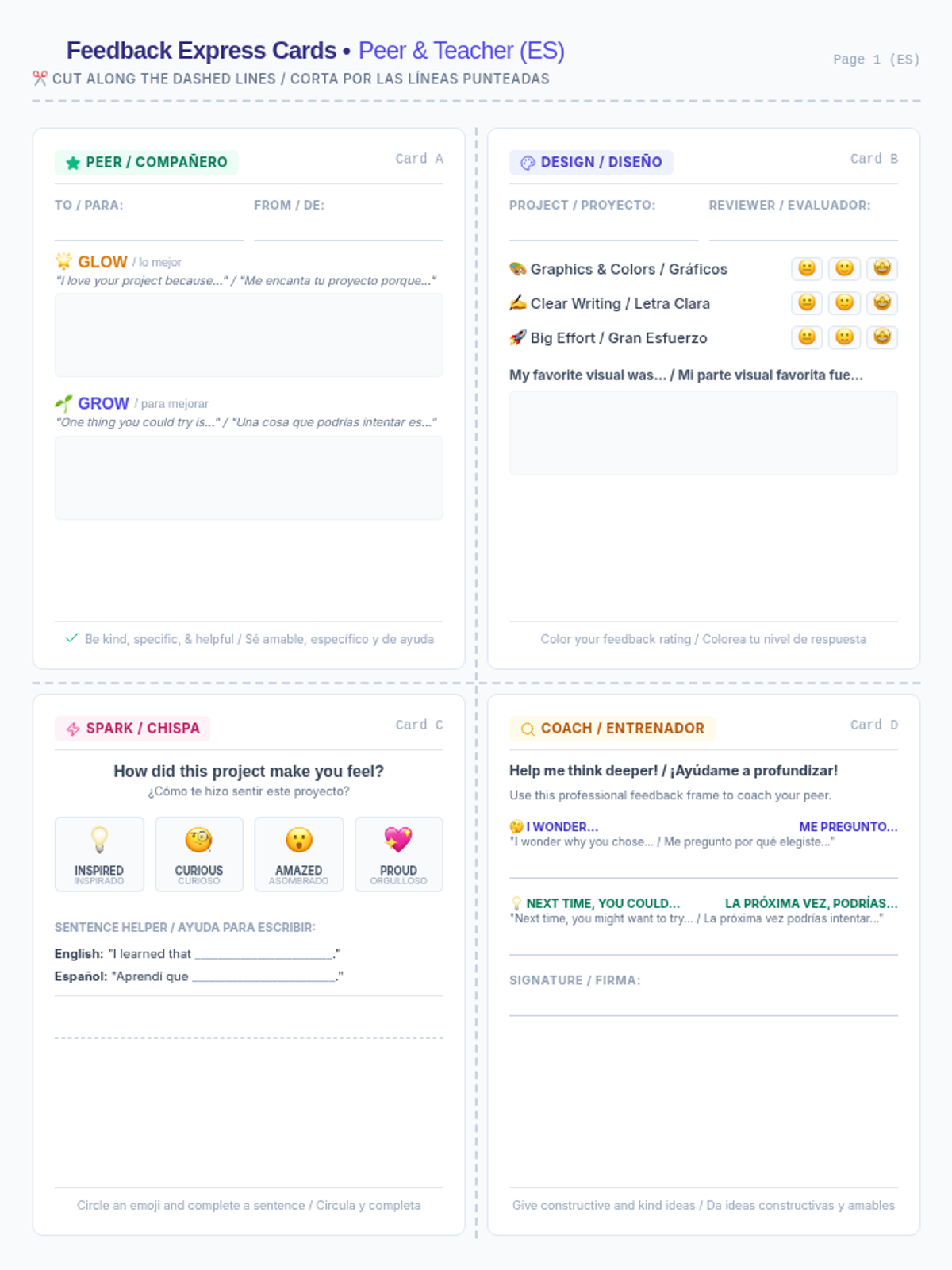
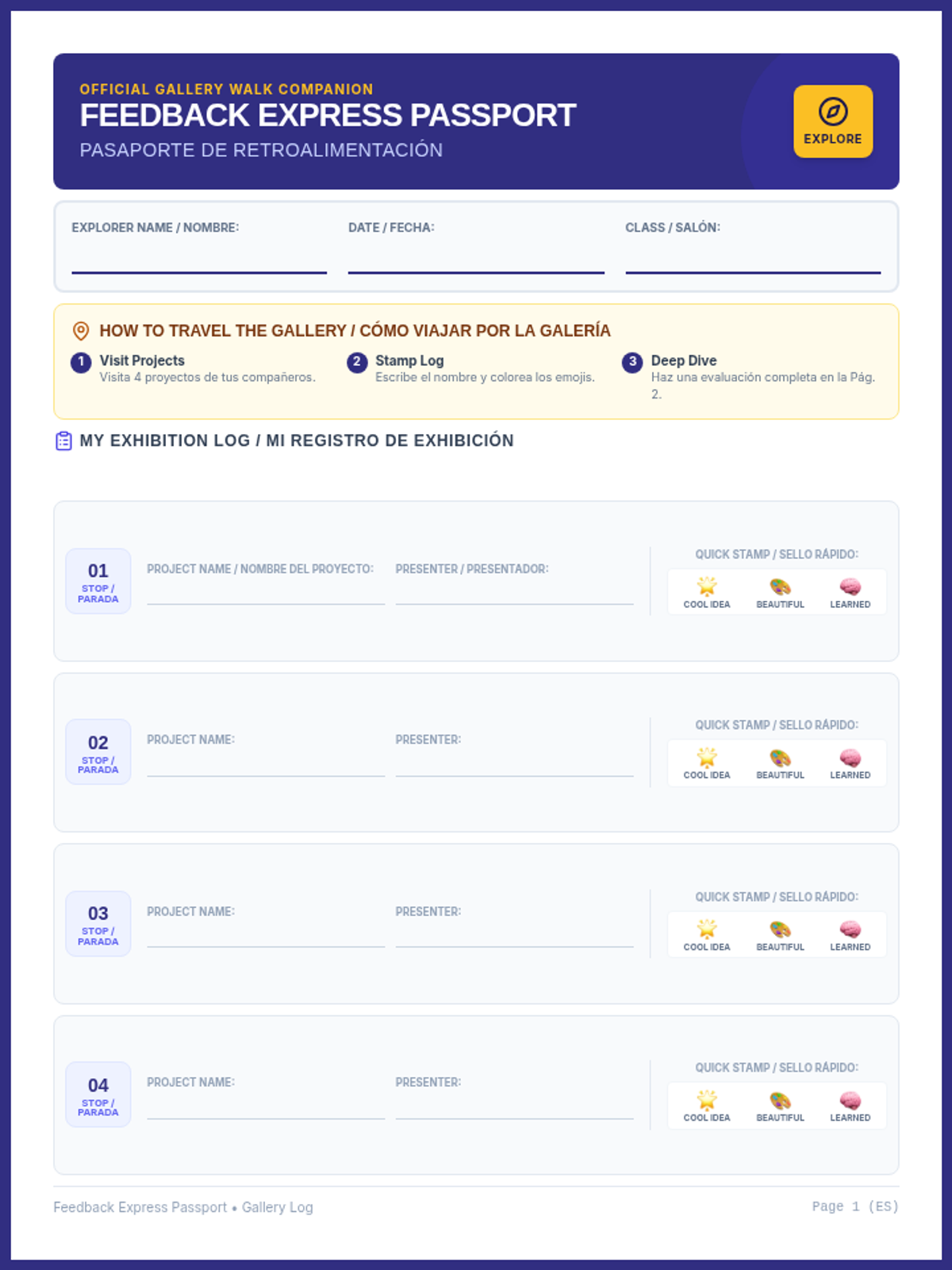
A visual feedback toolkit designed for elementary and middle school classrooms, families, and peers to provide meaningful project feedback. Includes emoji-rich rating systems, structured review guides, and sentence starter frames.
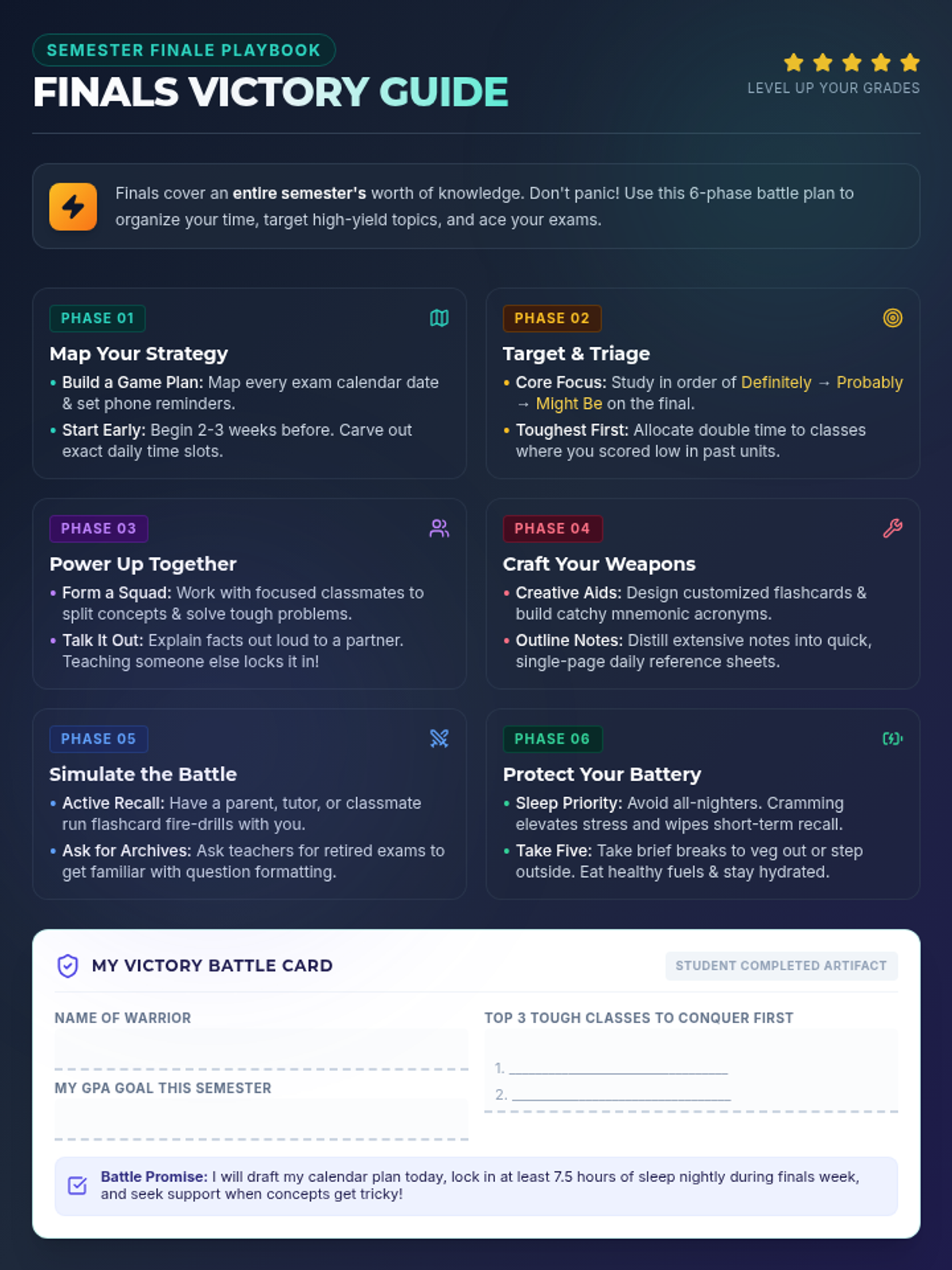
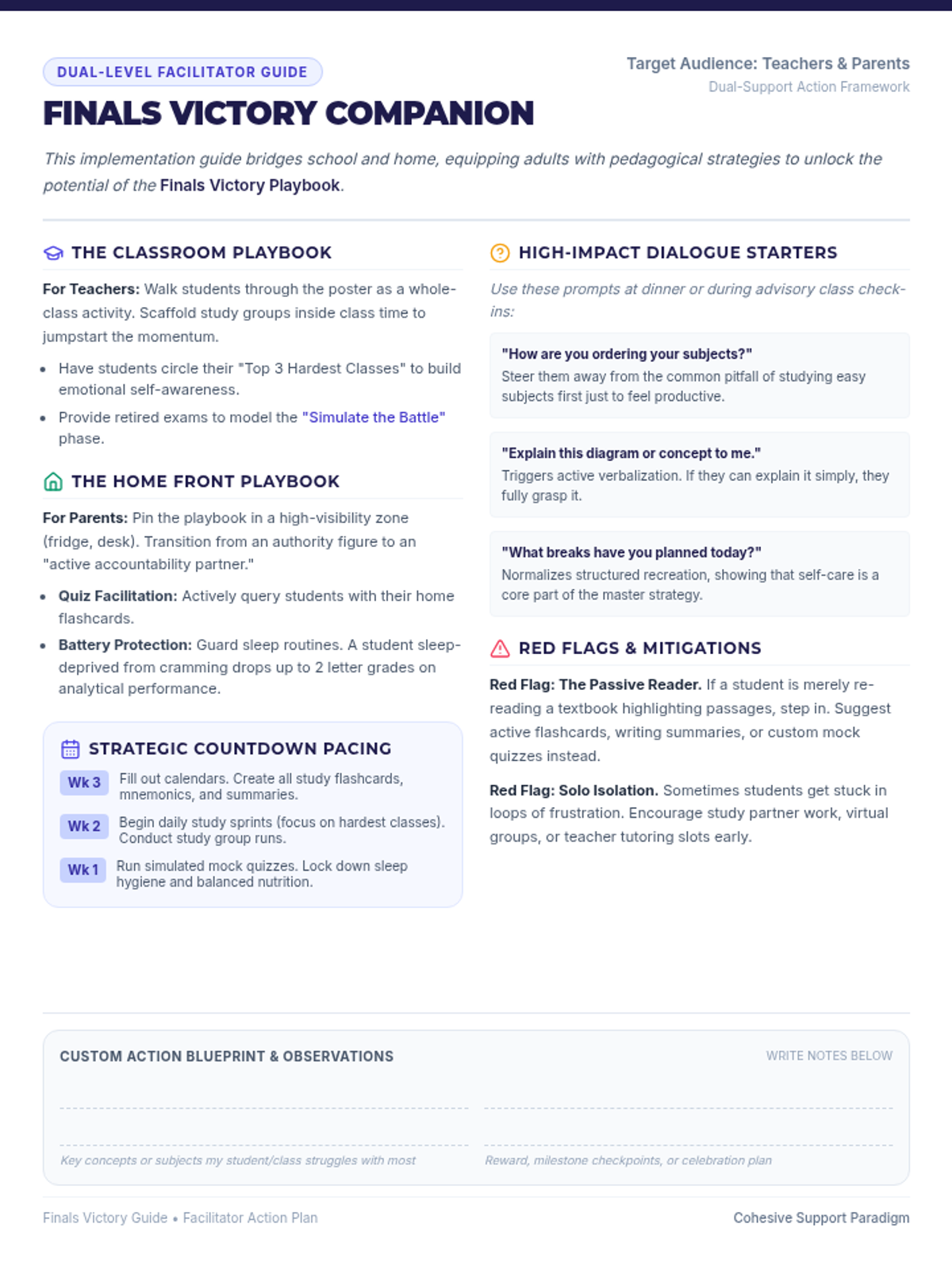
A lesson dedicated to preparing students for final exams using a highly visual study playbook and a dual-level facilitator guide for teachers and parents.
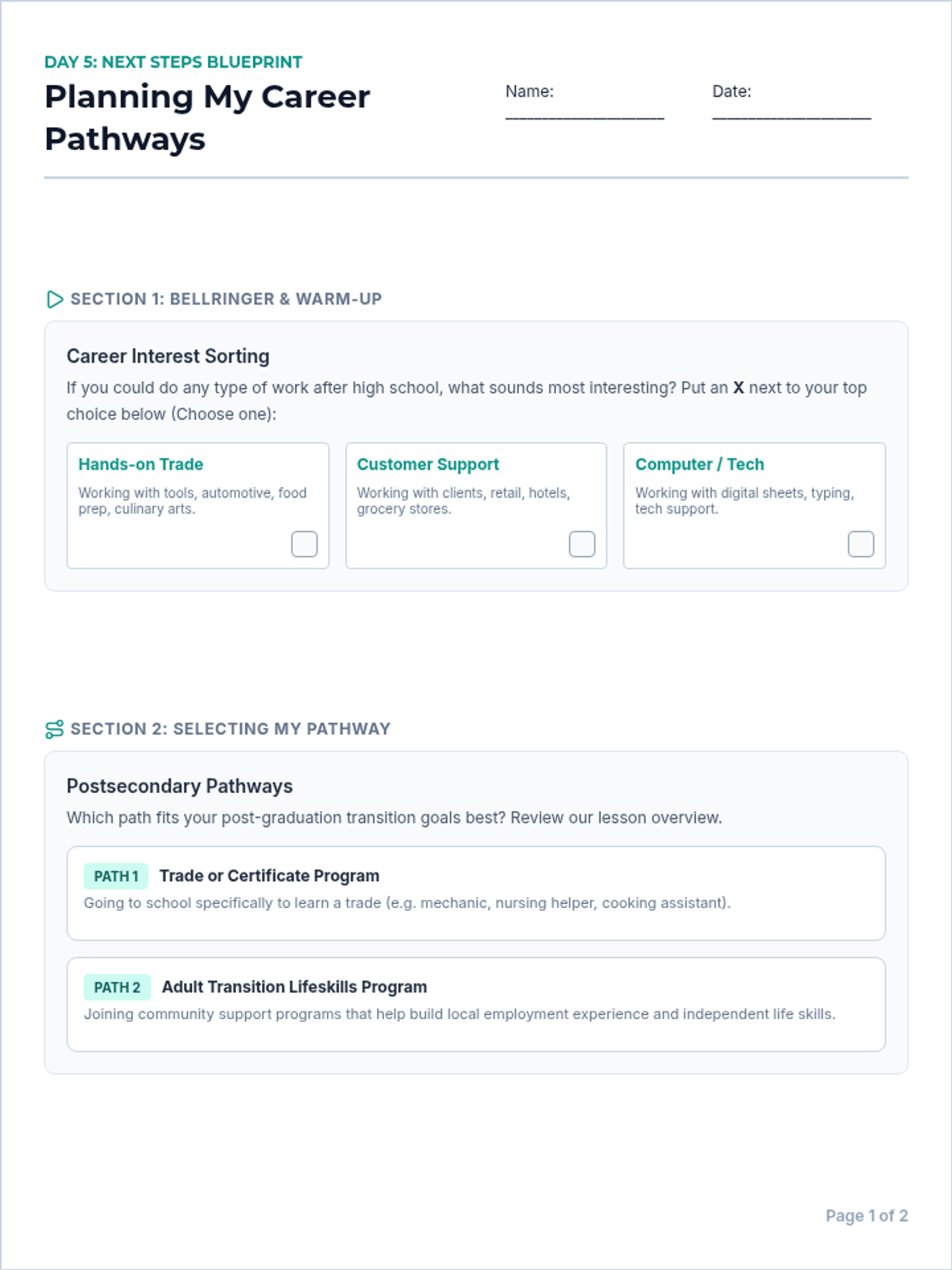
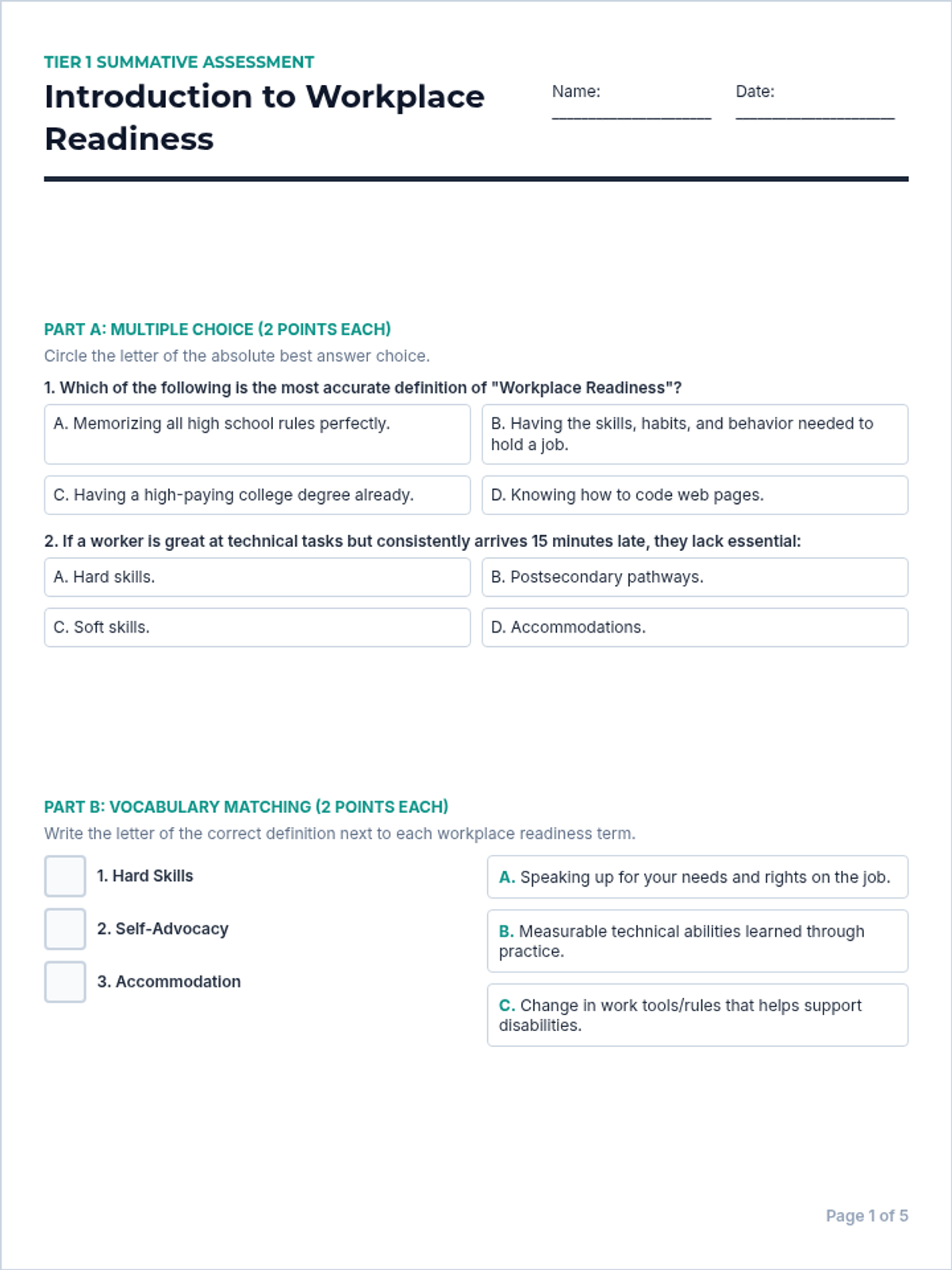
Day 5 explores postsecondary options and career pathways, conducts the final unit assessments, and establishes individual student next-steps action plans.
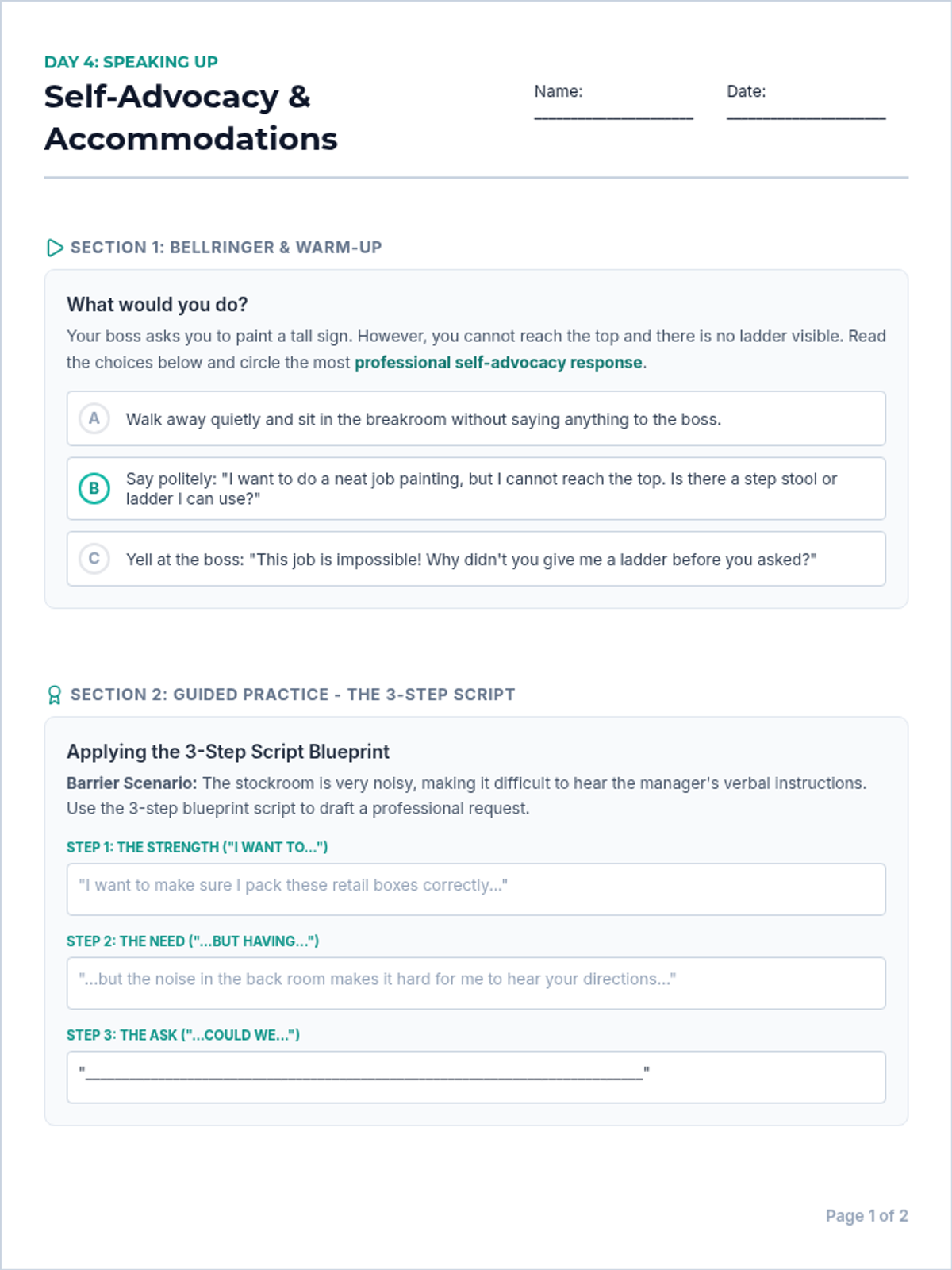
Day 4 targets self-advocacy and accommodation requesting, teaching students how to identify their needs, communicate them respectfully, and navigate the workplace independently.
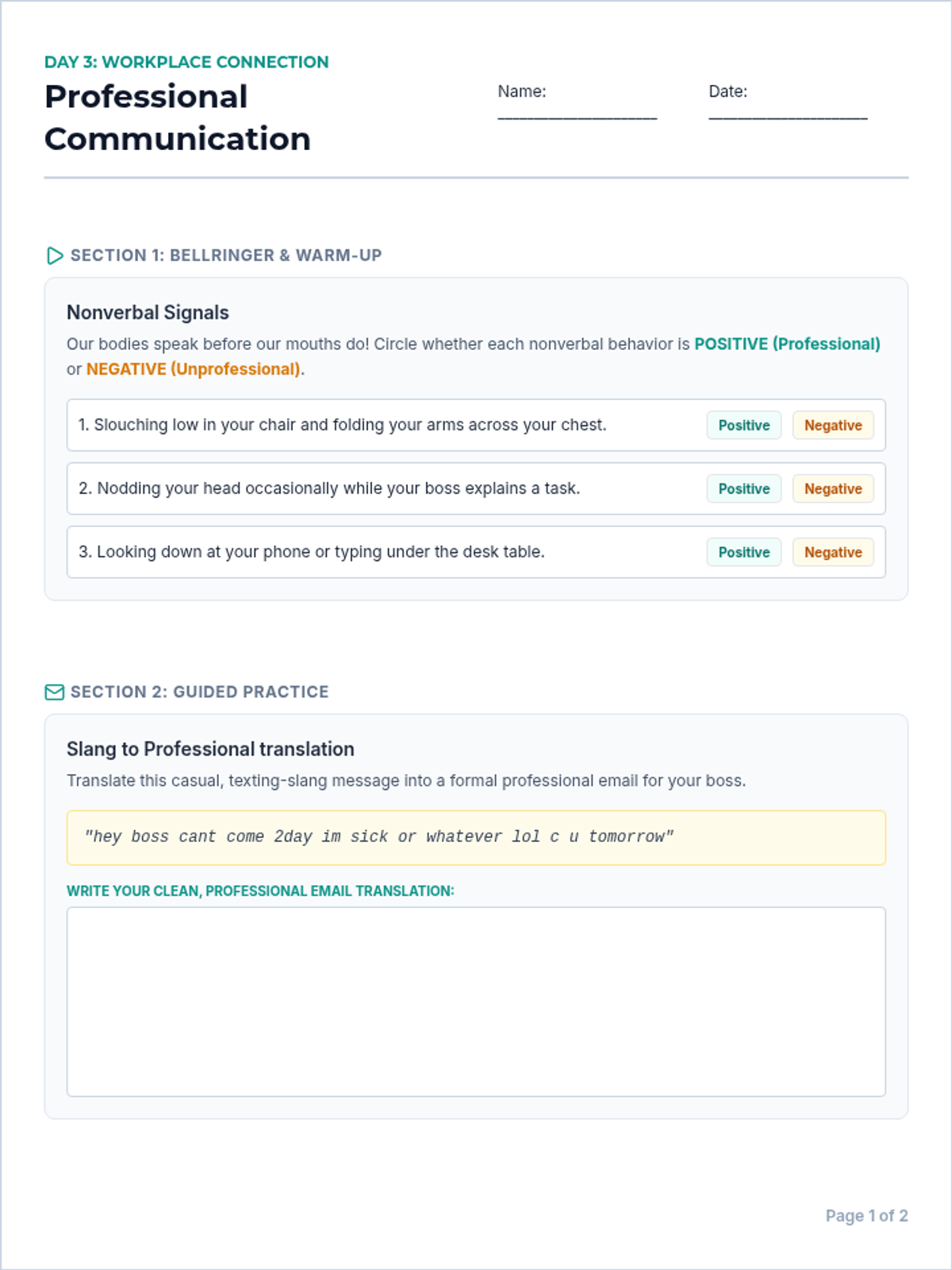
Day 3 focuses on professional verbal and non-verbal communication, email etiquette, and active teamwork within diverse workplace scenarios.
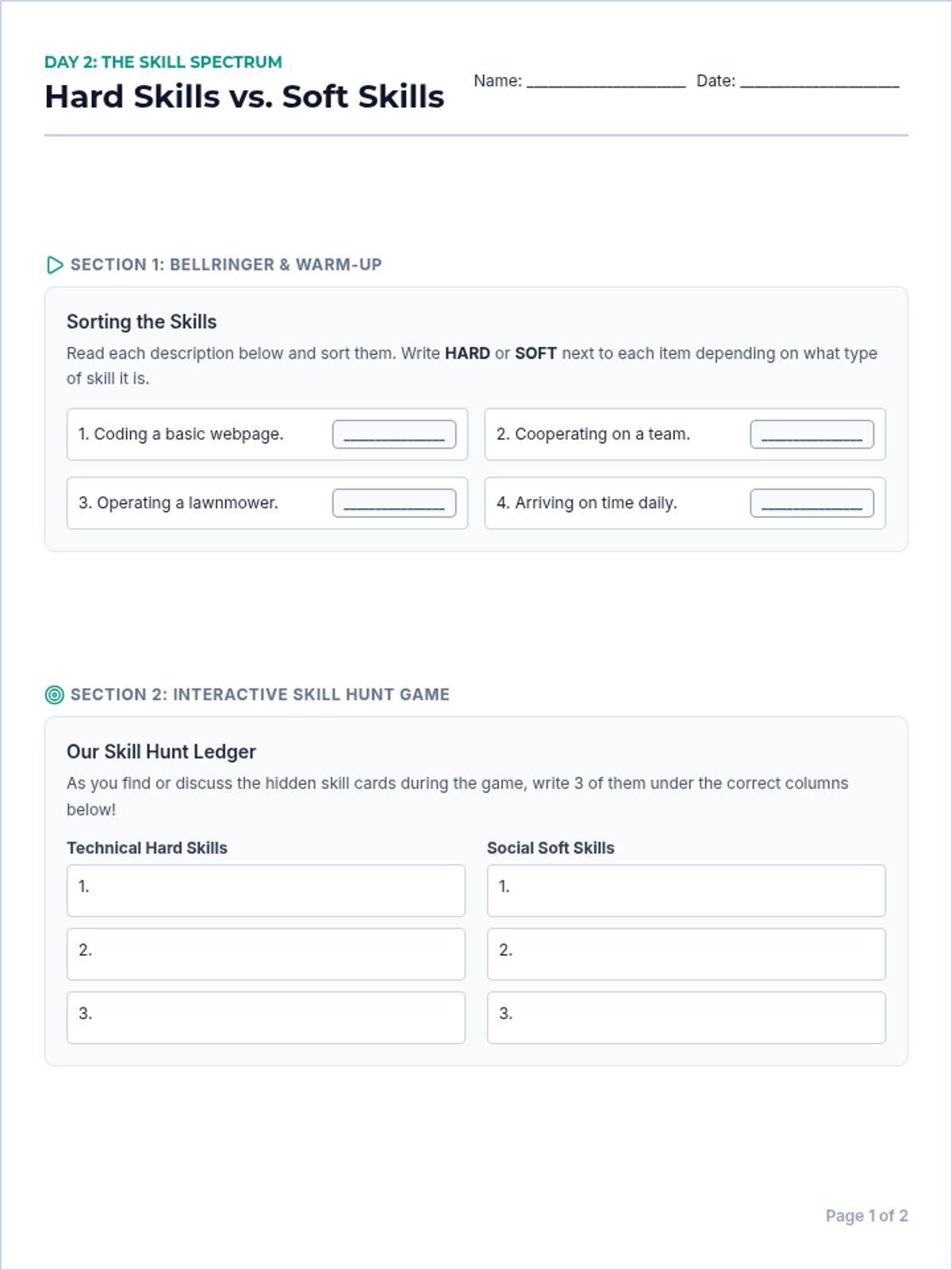
Day 2 dives into hard versus soft skills, exploring how technical abilities get you hired while interpersonal qualities keep you employed.
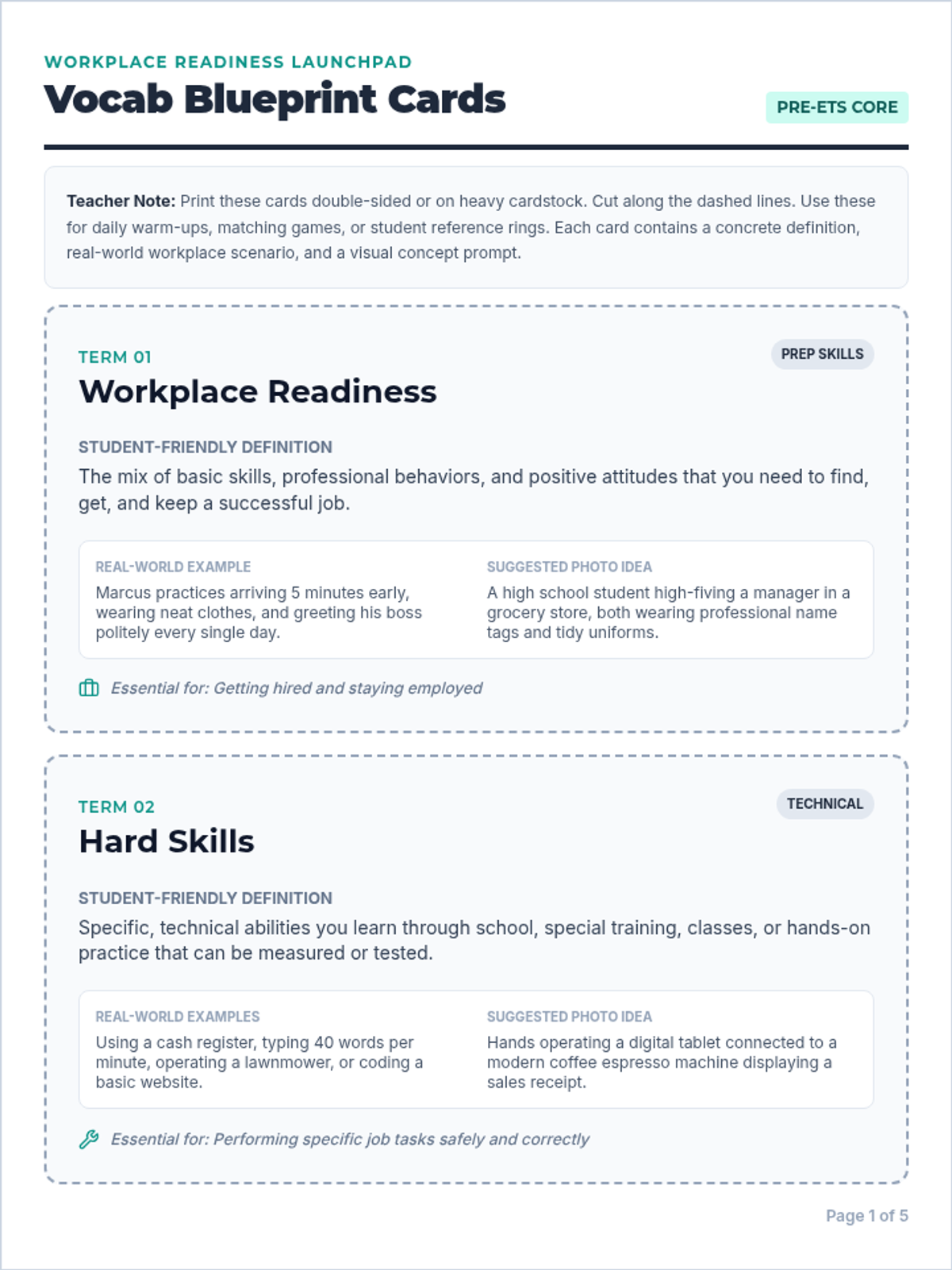
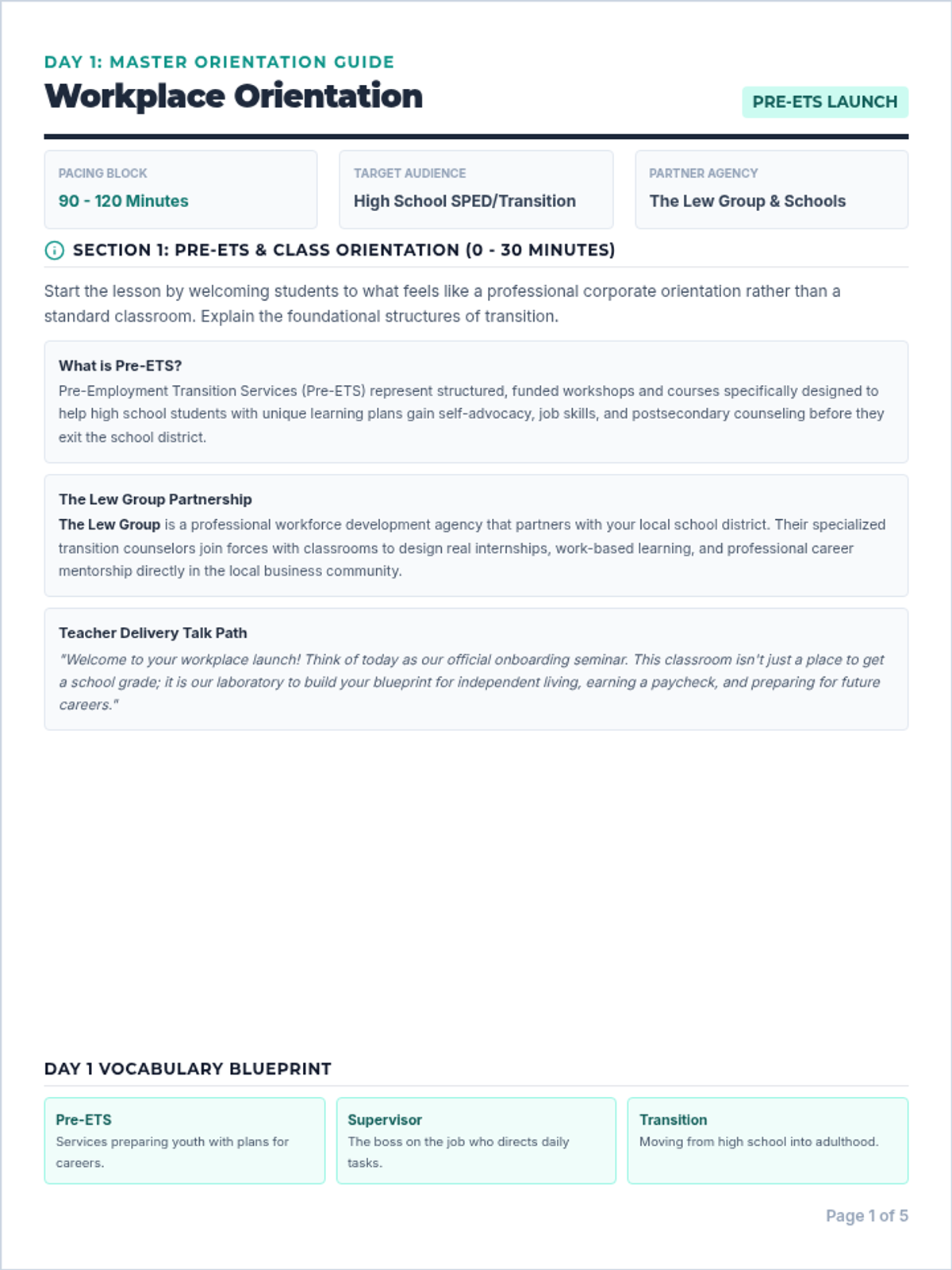
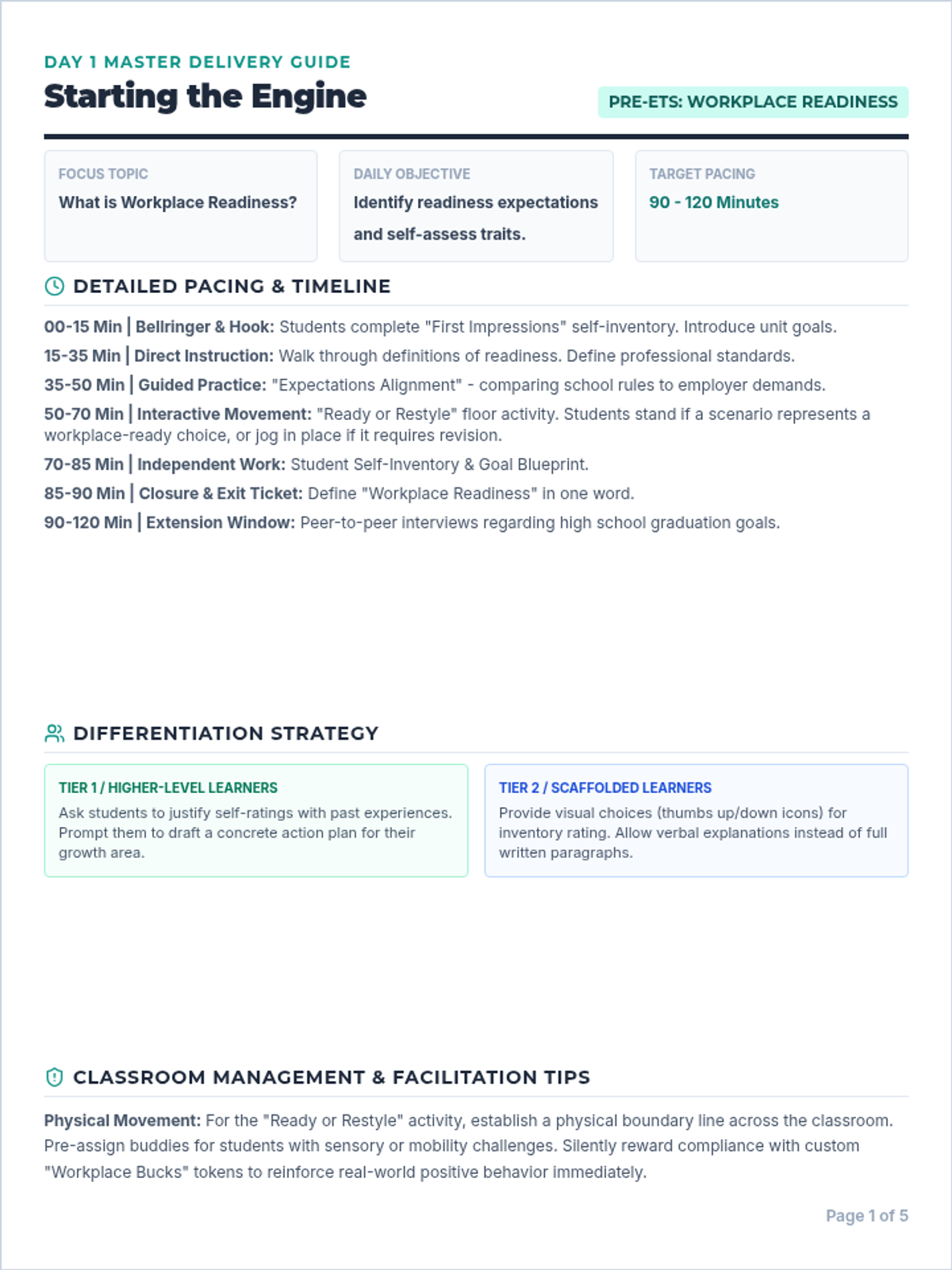
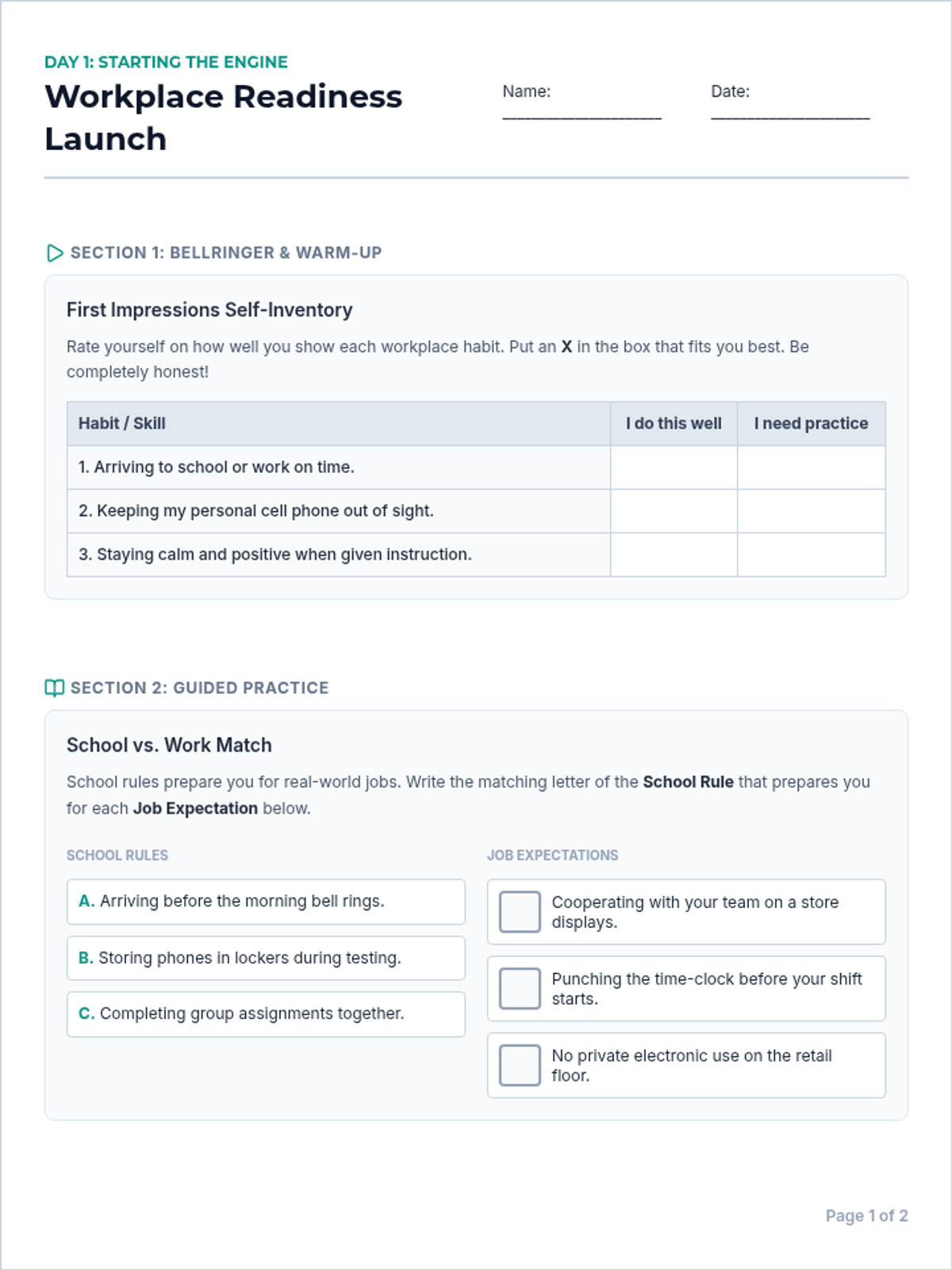
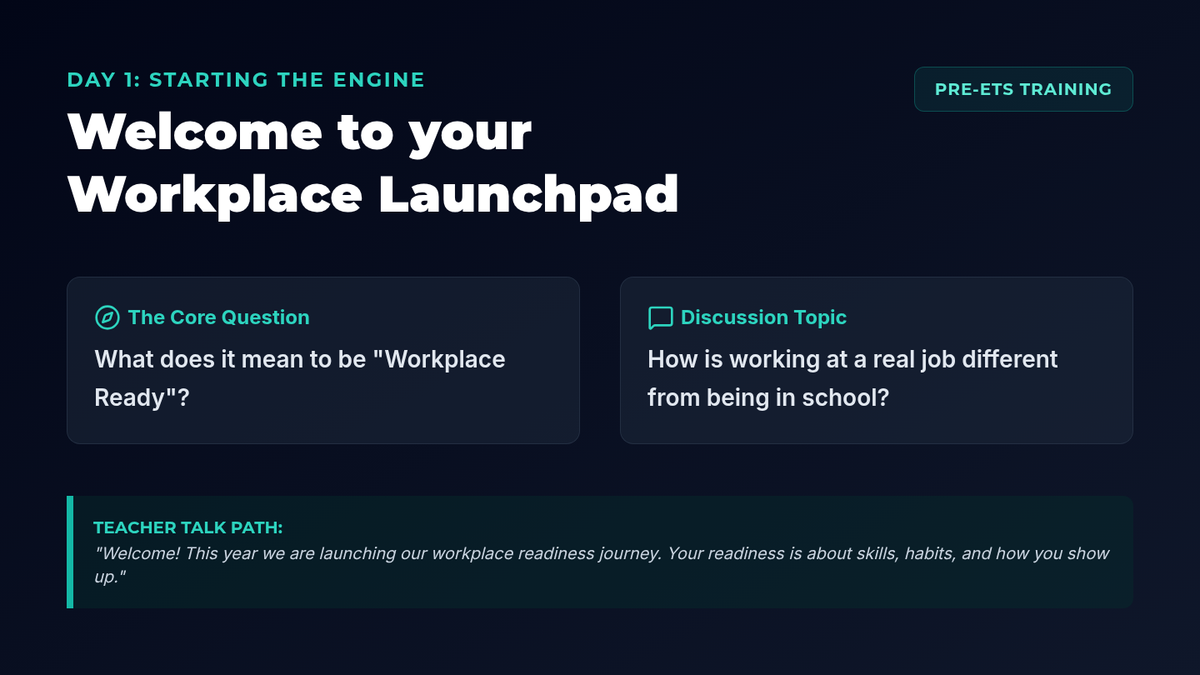
Day 1 introduces the concept of workplace readiness, high school transition expectations, and helps students assess their current baseline while establishing professional habits.
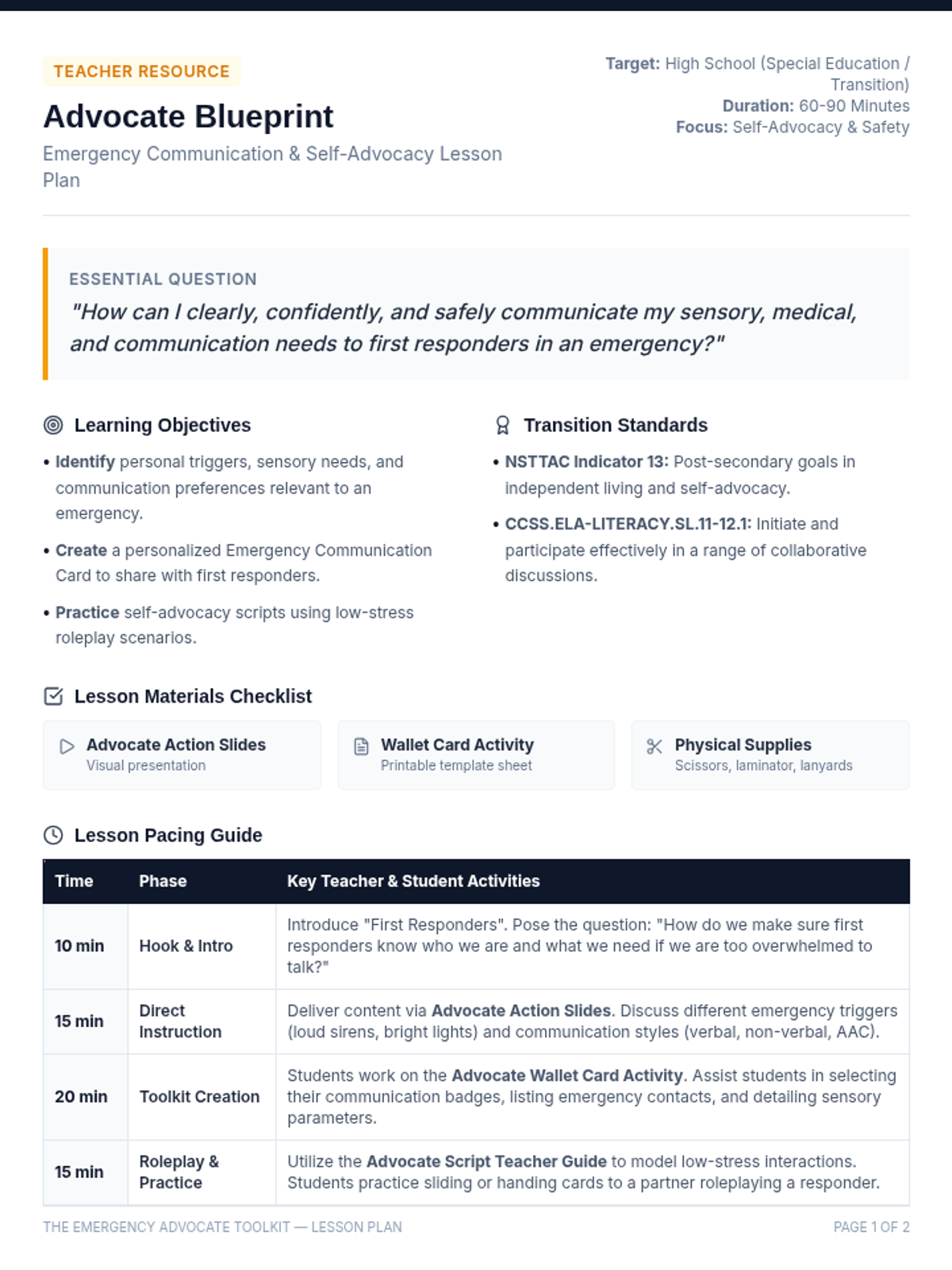
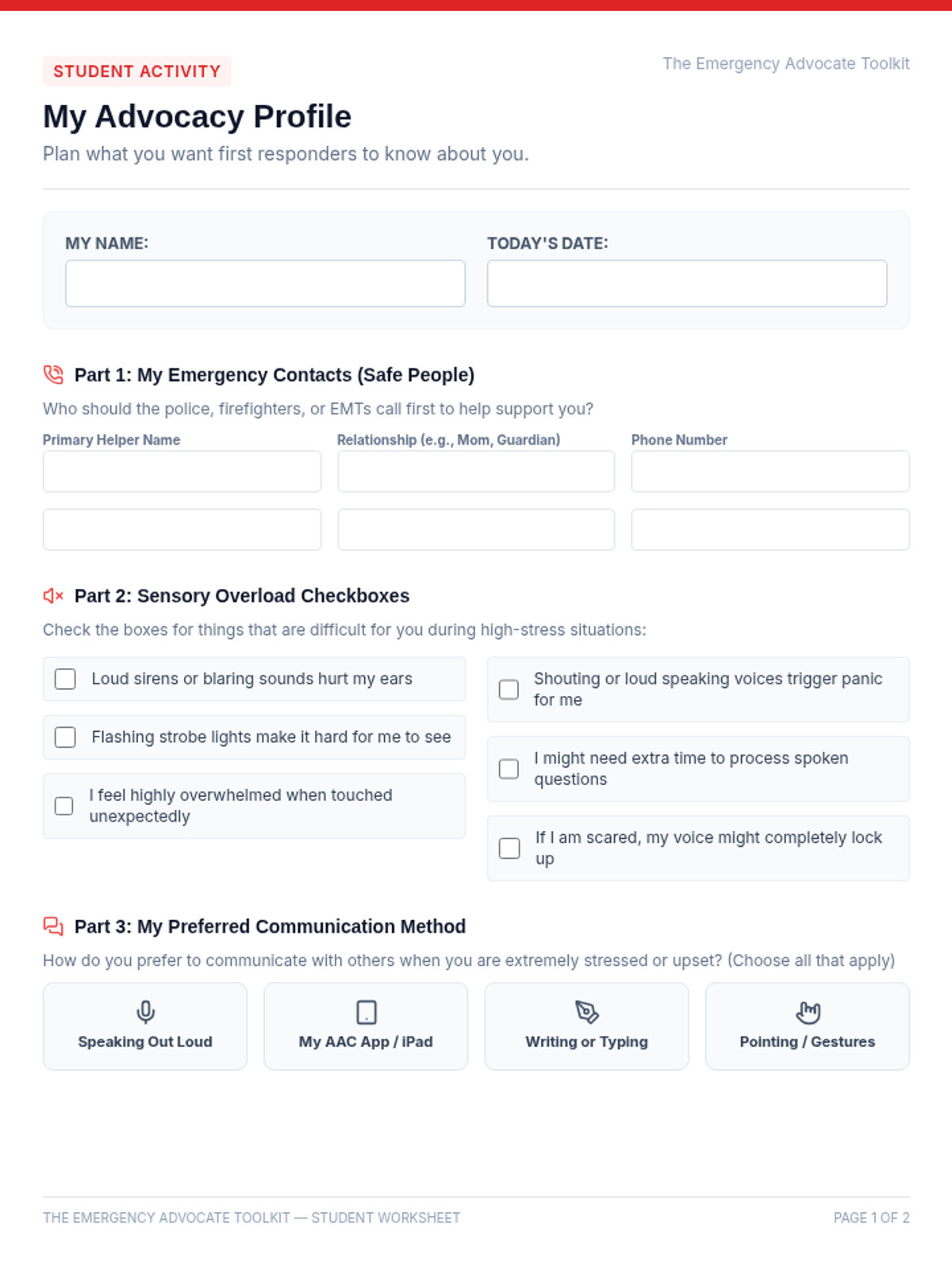
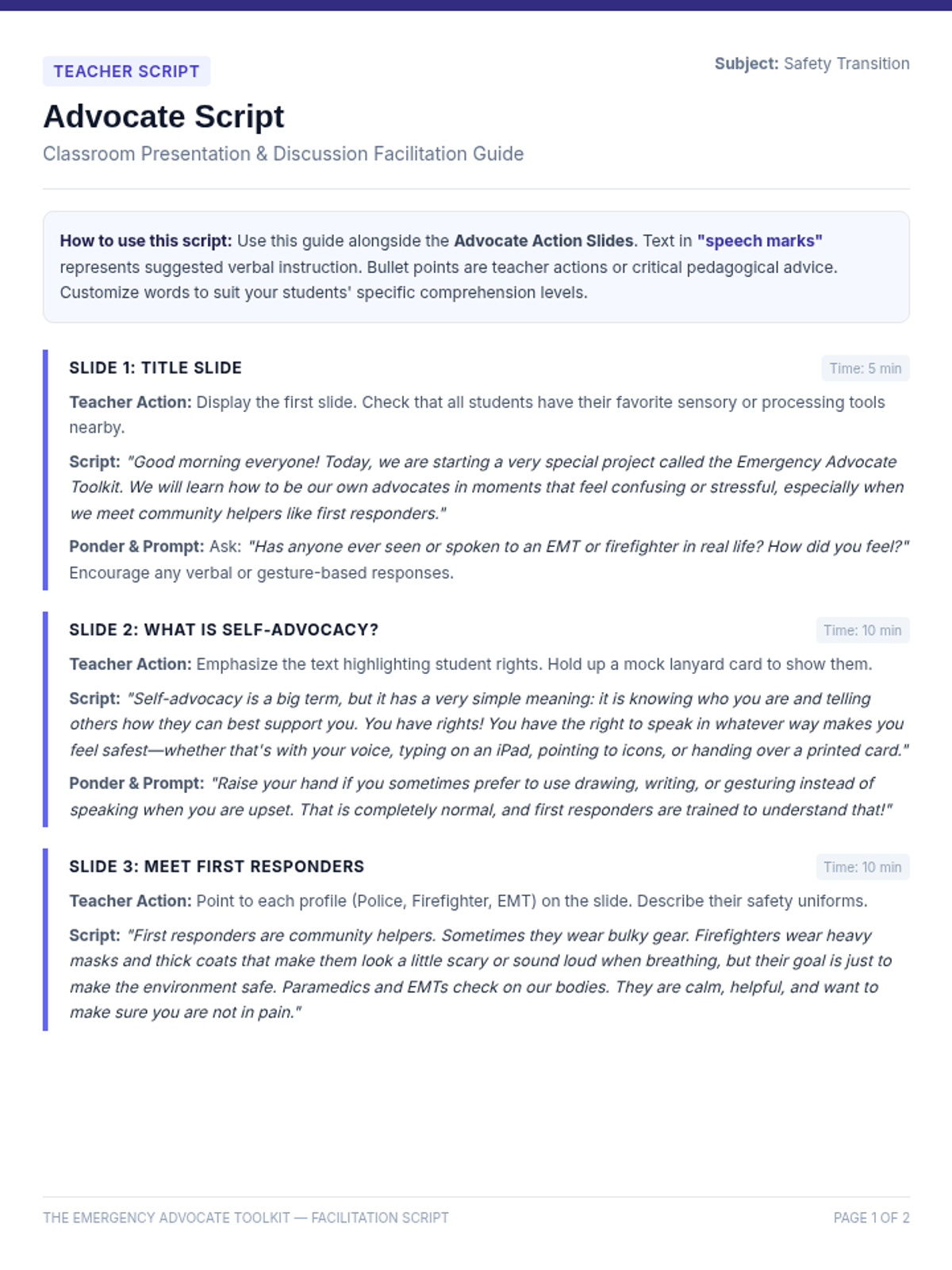
A comprehensive training package designed for high school students with exceptionalities to help them build self-advocacy skills, understand the role of first responders, and create a personalized emergency communication toolkit.
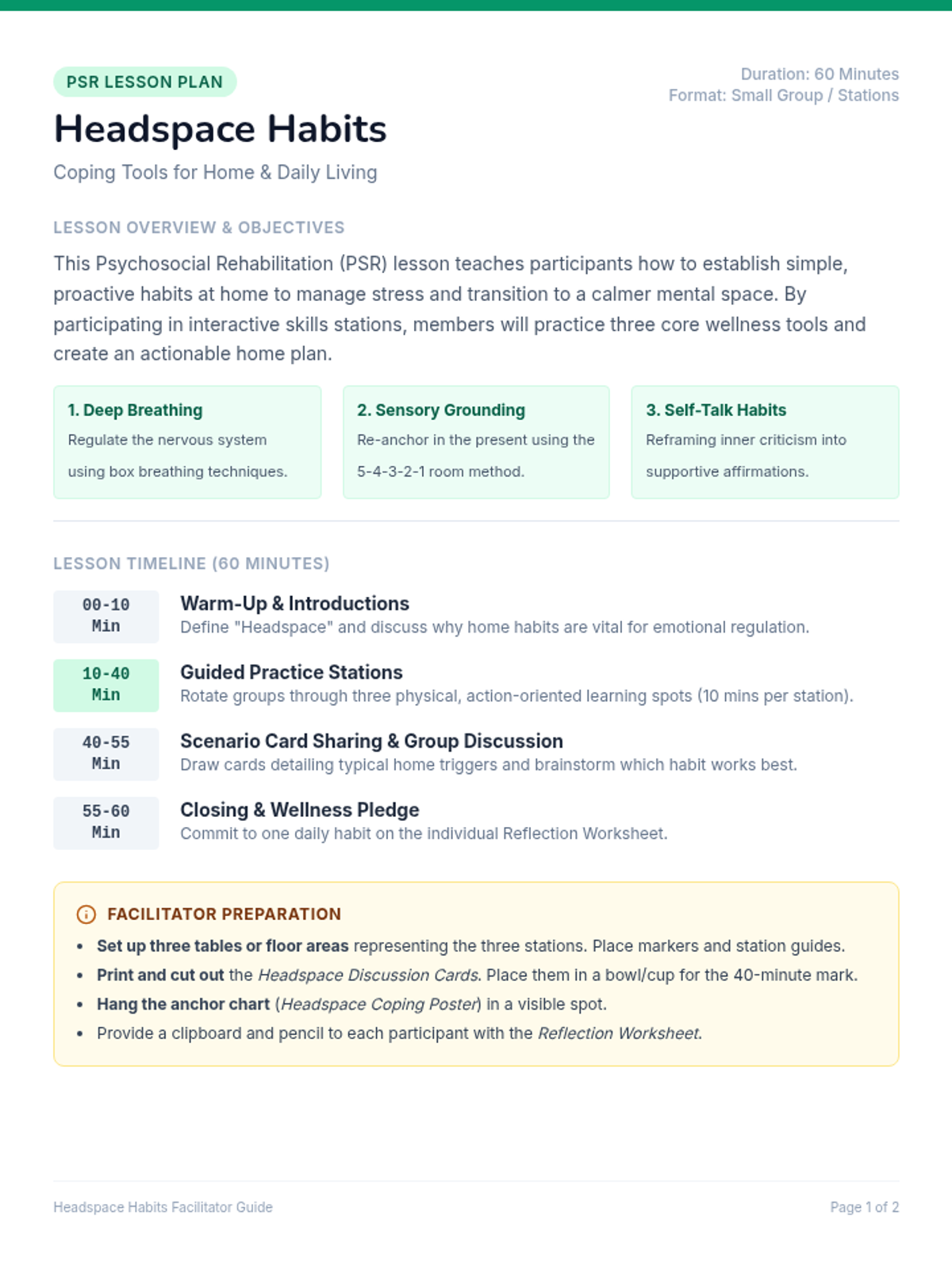
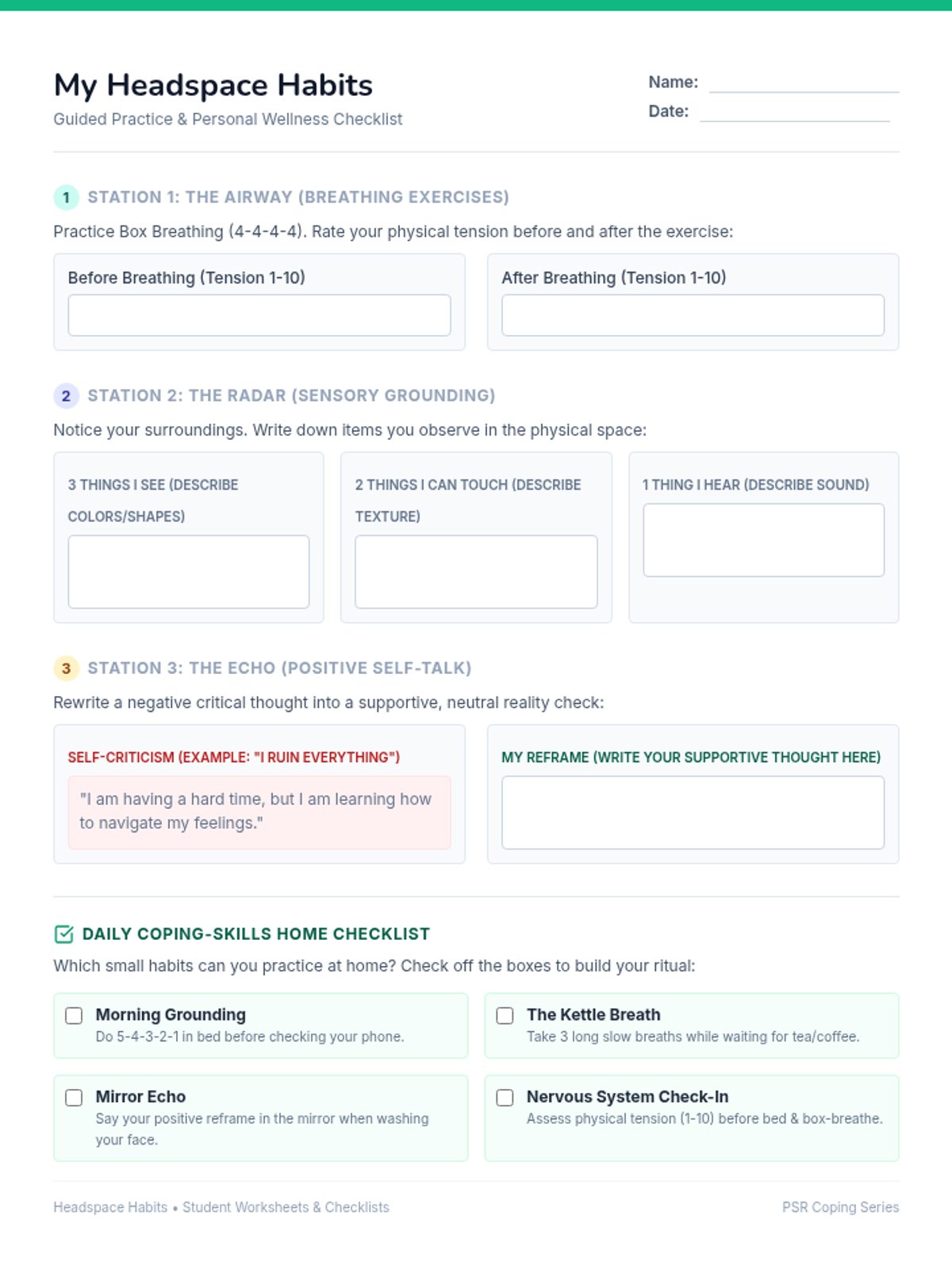
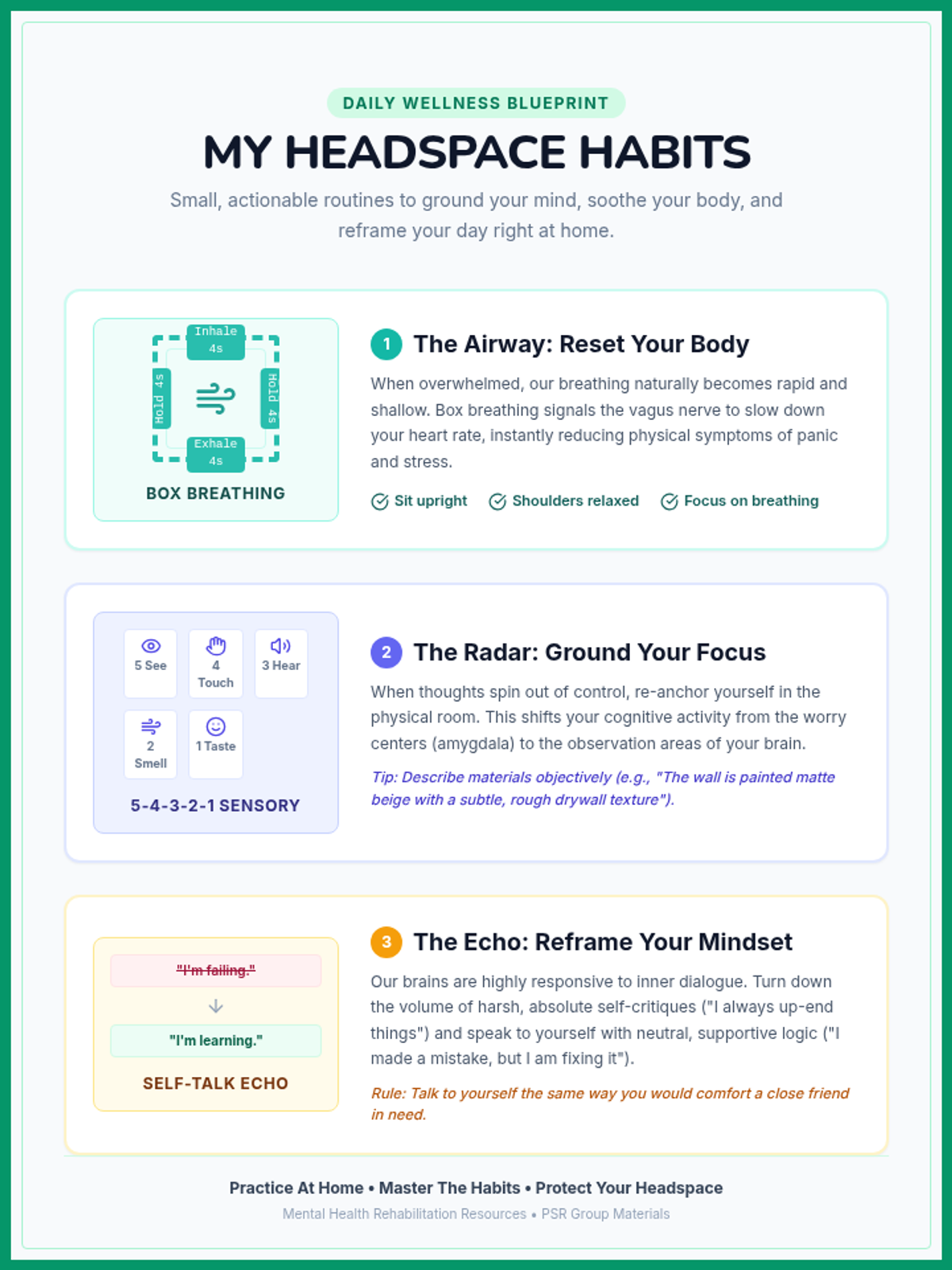
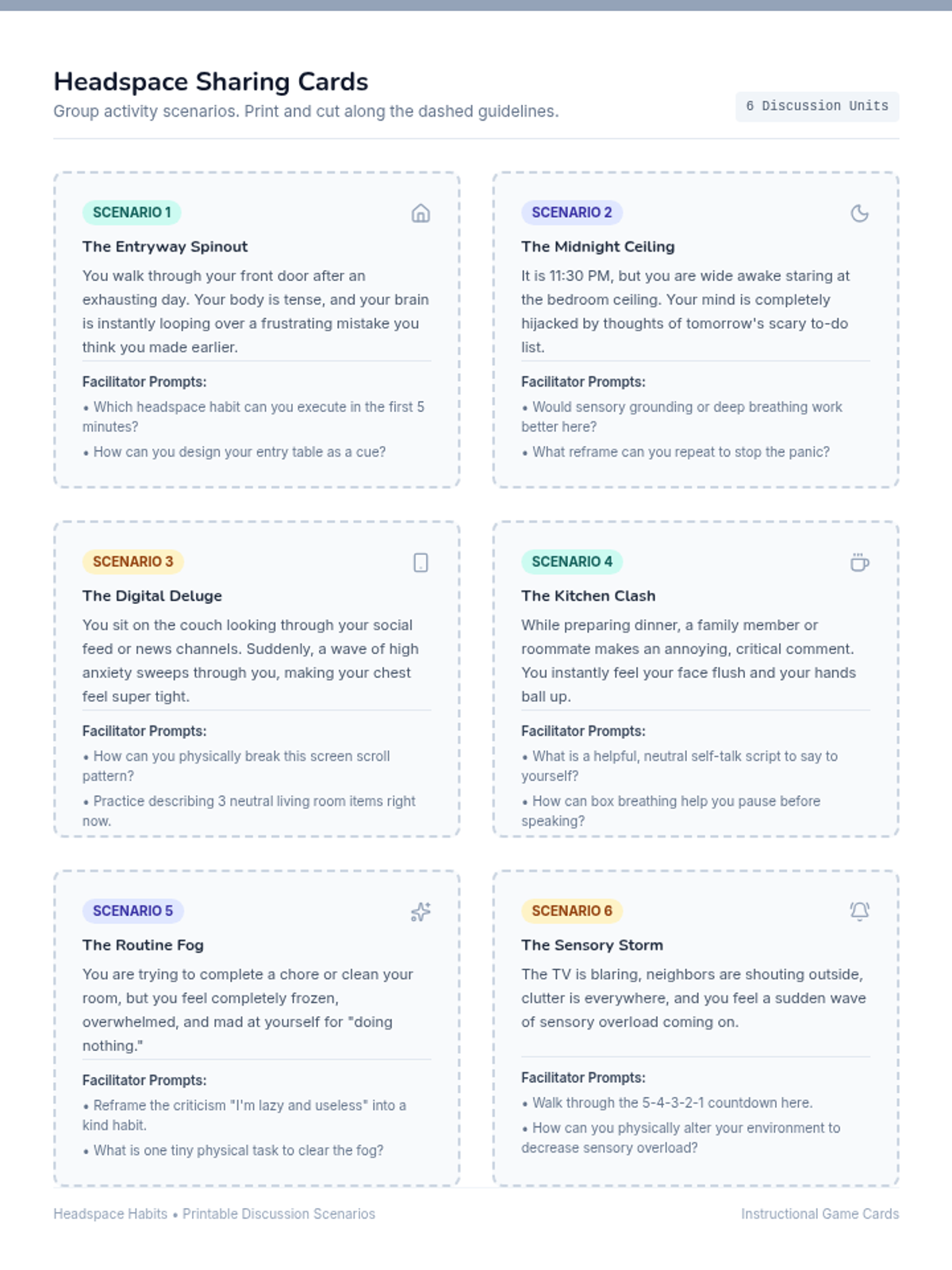
A comprehensive 1-hour PSR (Psychosocial Rehabilitation) lesson designed to teach practical, actionable coping habits—deep breathing, sensory grounding, and positive self-talk—to cultivate a healthier headspace at home. Includes a step-by-step facilitator guide, student reflection worksheets with a coping checklist, a printable anchor chart poster, and group discussion scenario cards.