An interactive transitions lesson for rising 8th graders, focusing on social-emotional resilience, digital safety, and personal goal setting over the summer break.
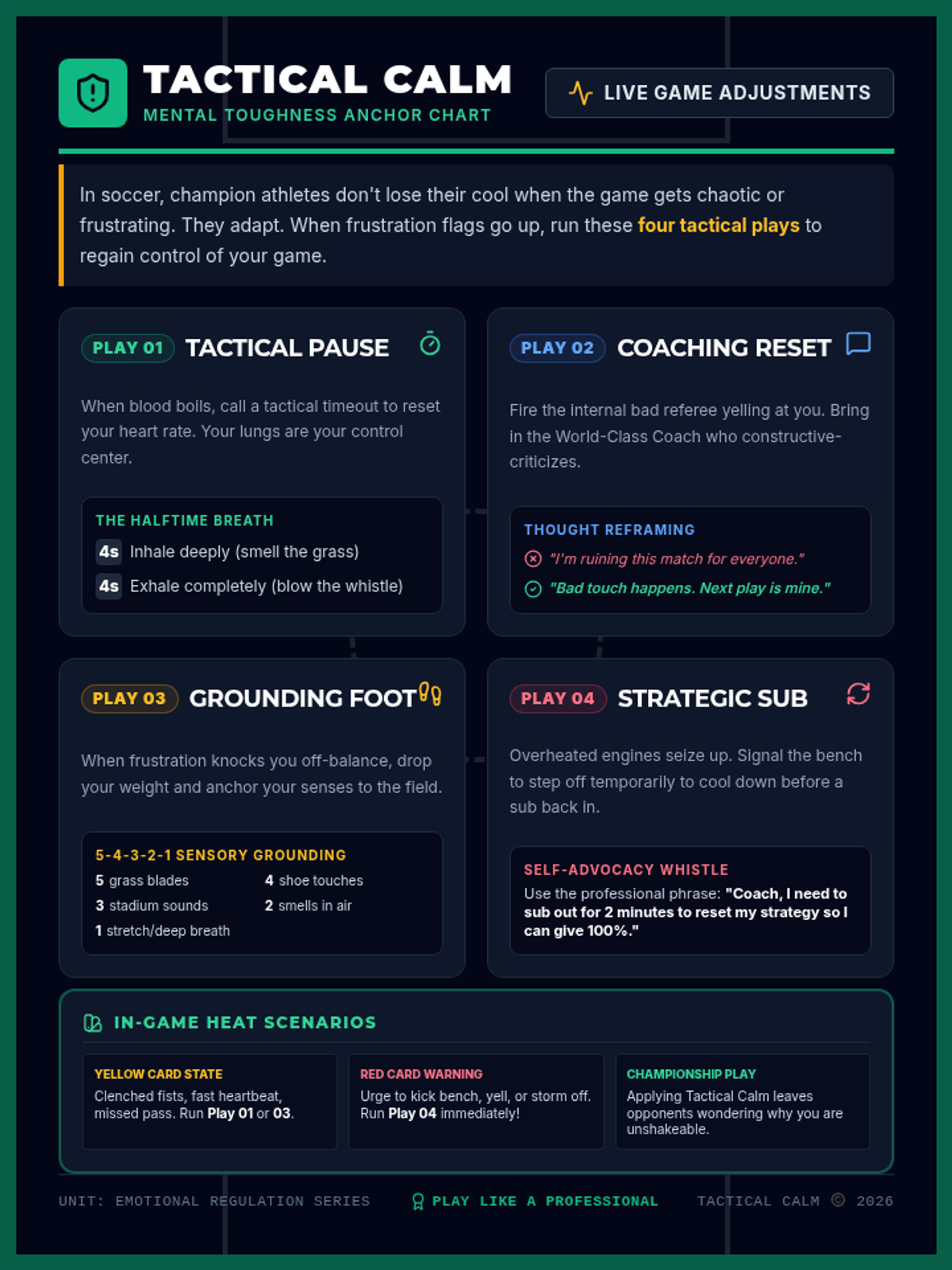
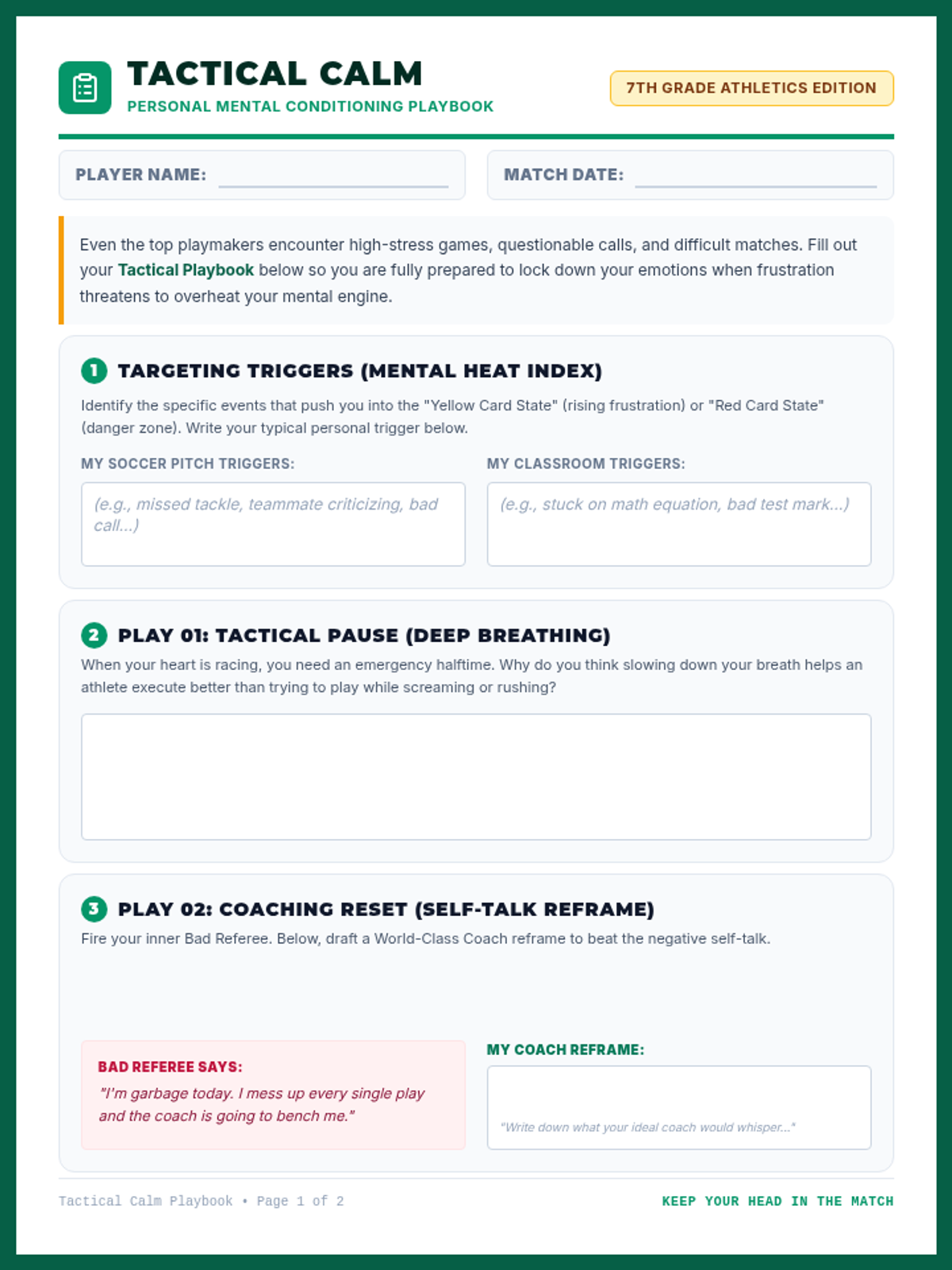
A soccer-themed coping strategies lesson designed for middle school students to manage frustration using athletic analogies like tactical pauses, positive self-talk coaching, somatic grounding, and strategic substitutions.
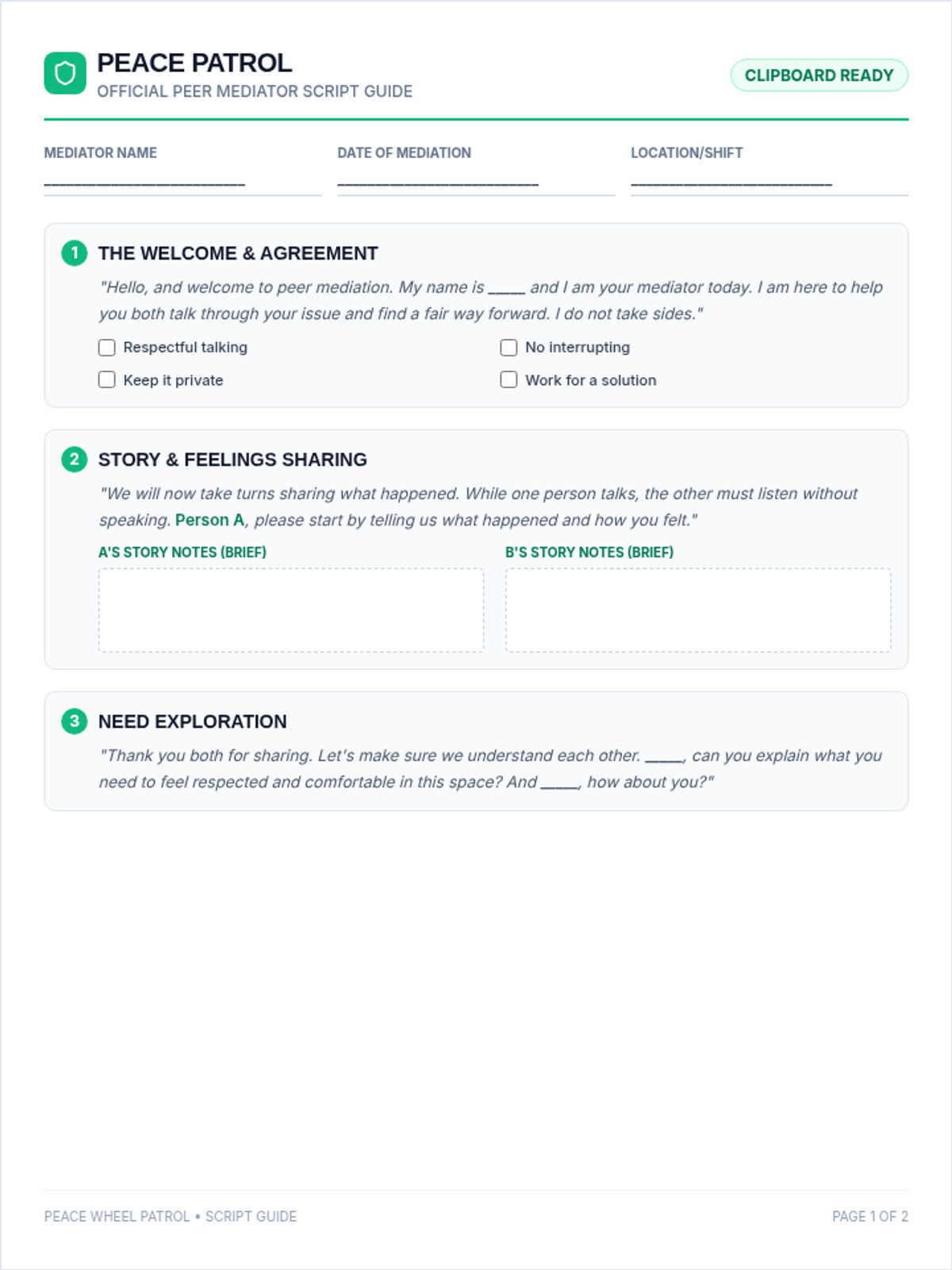
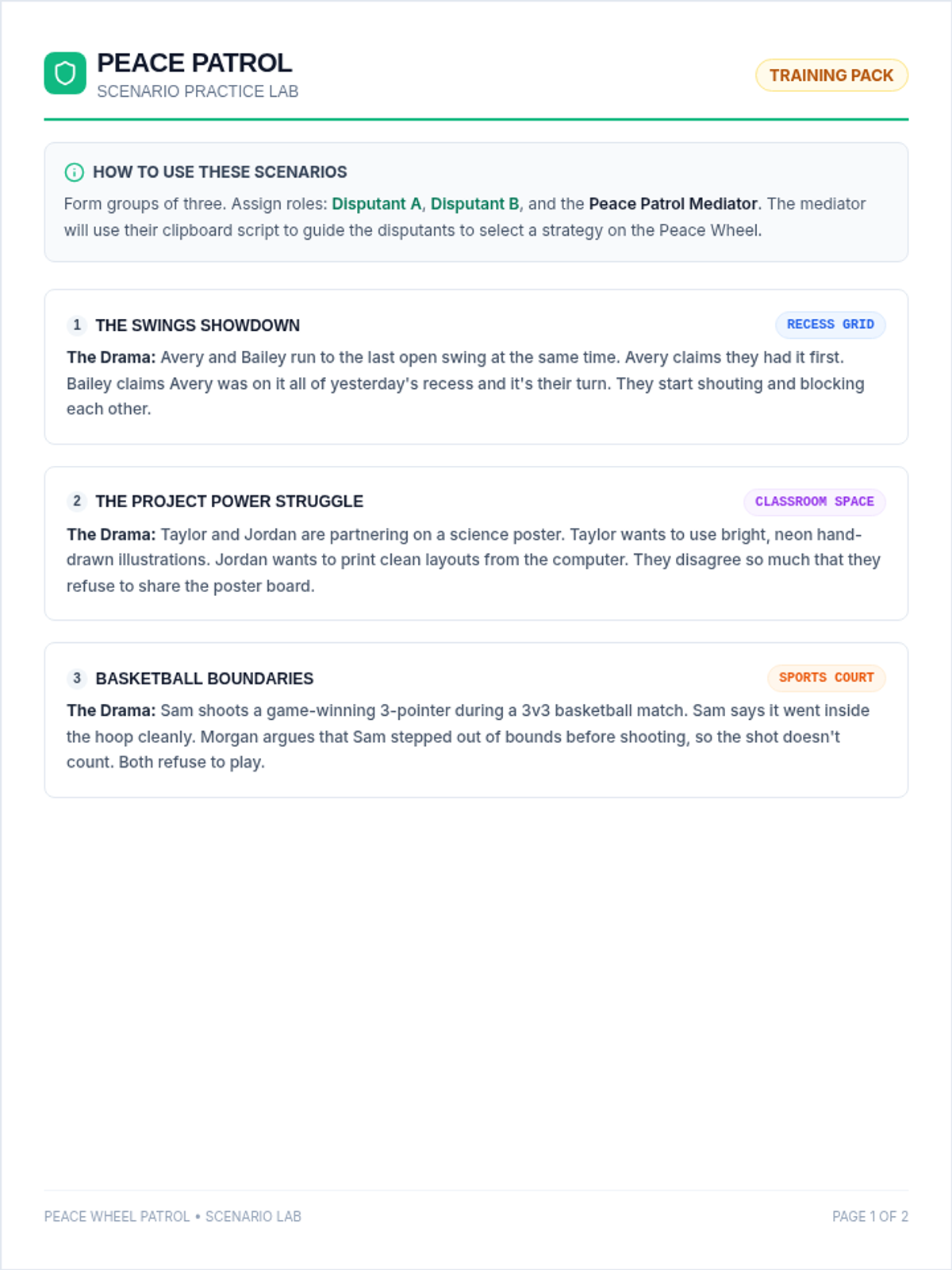
A comprehensive training lesson to equip student peer mediators with structured conflict resolution skills, centered around the interactive Peace Wheel framework. Includes guided training slides, a clipboard-ready script guide, and a role-play scenario pack.
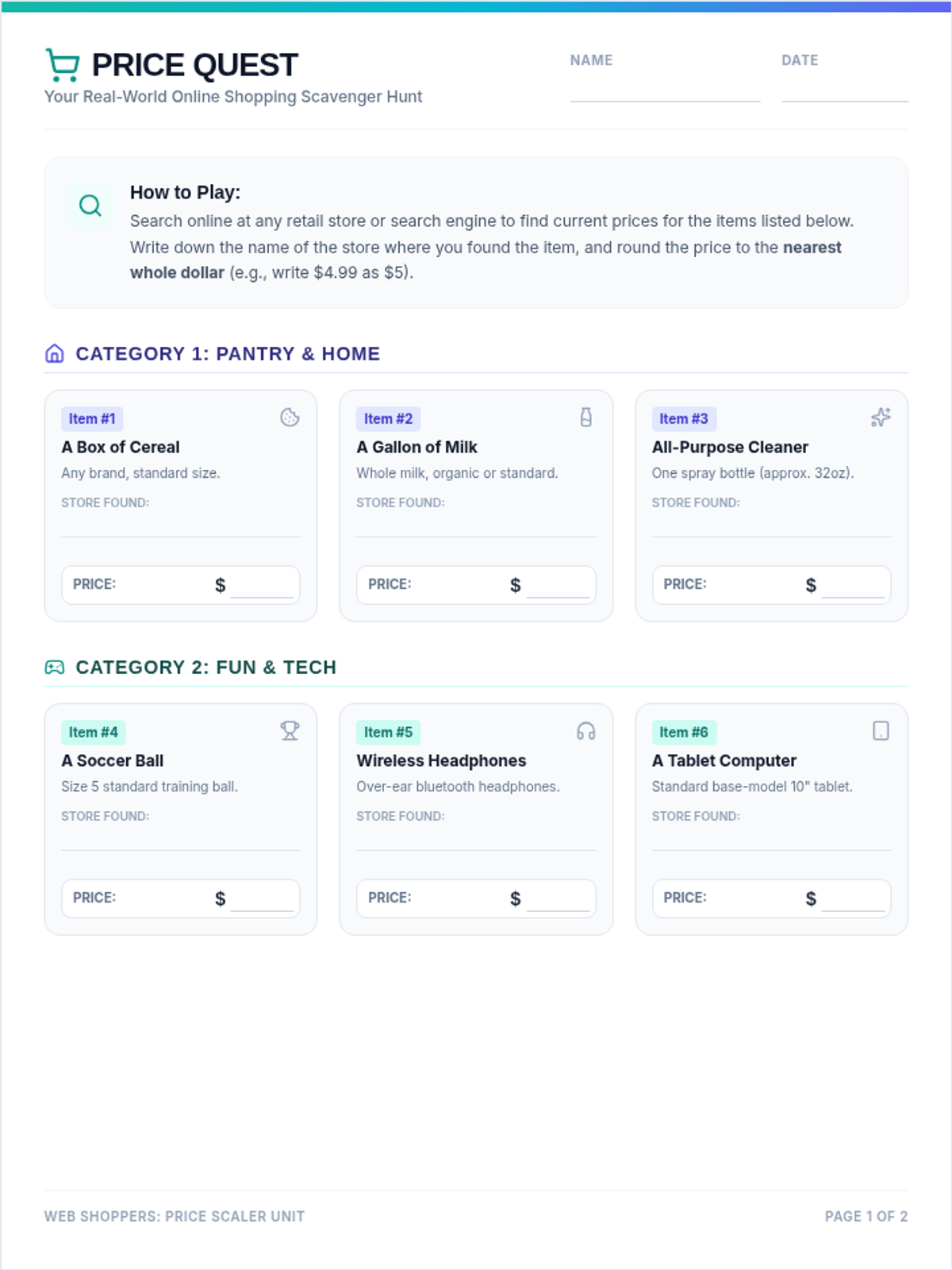
A lesson teaching students how to search for retail prices online, understand value, and perform basic budget additions using real-world items.
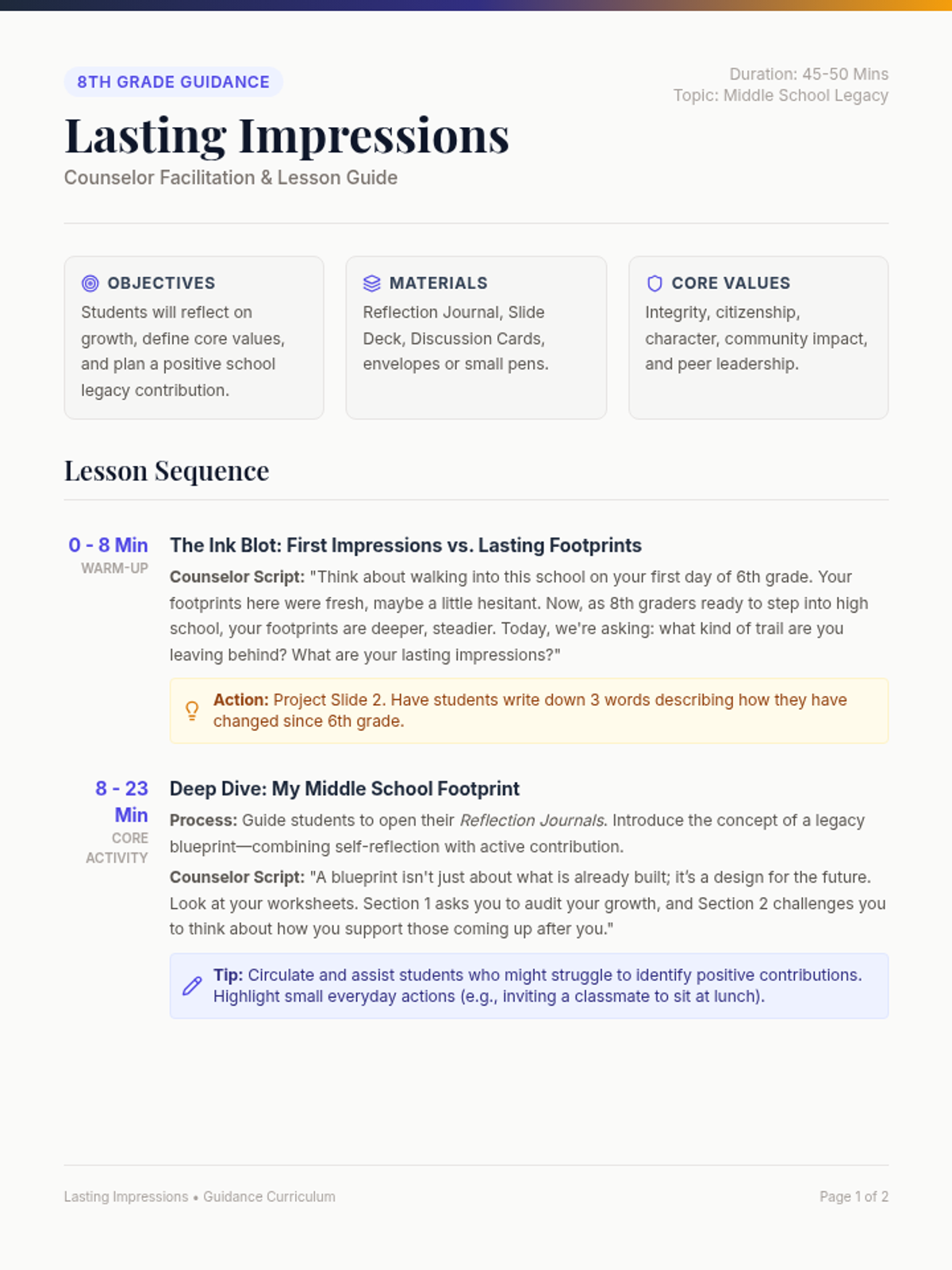
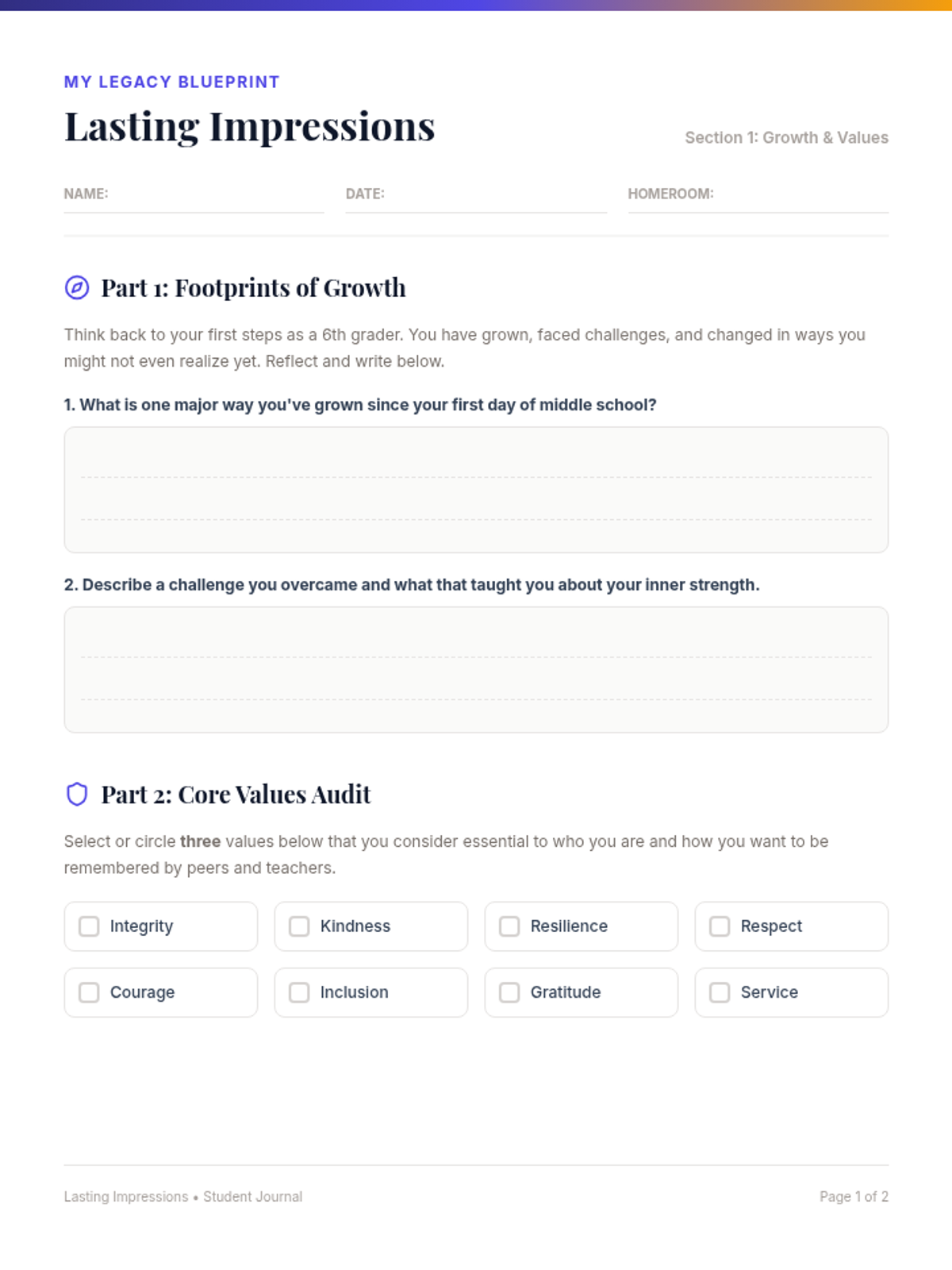
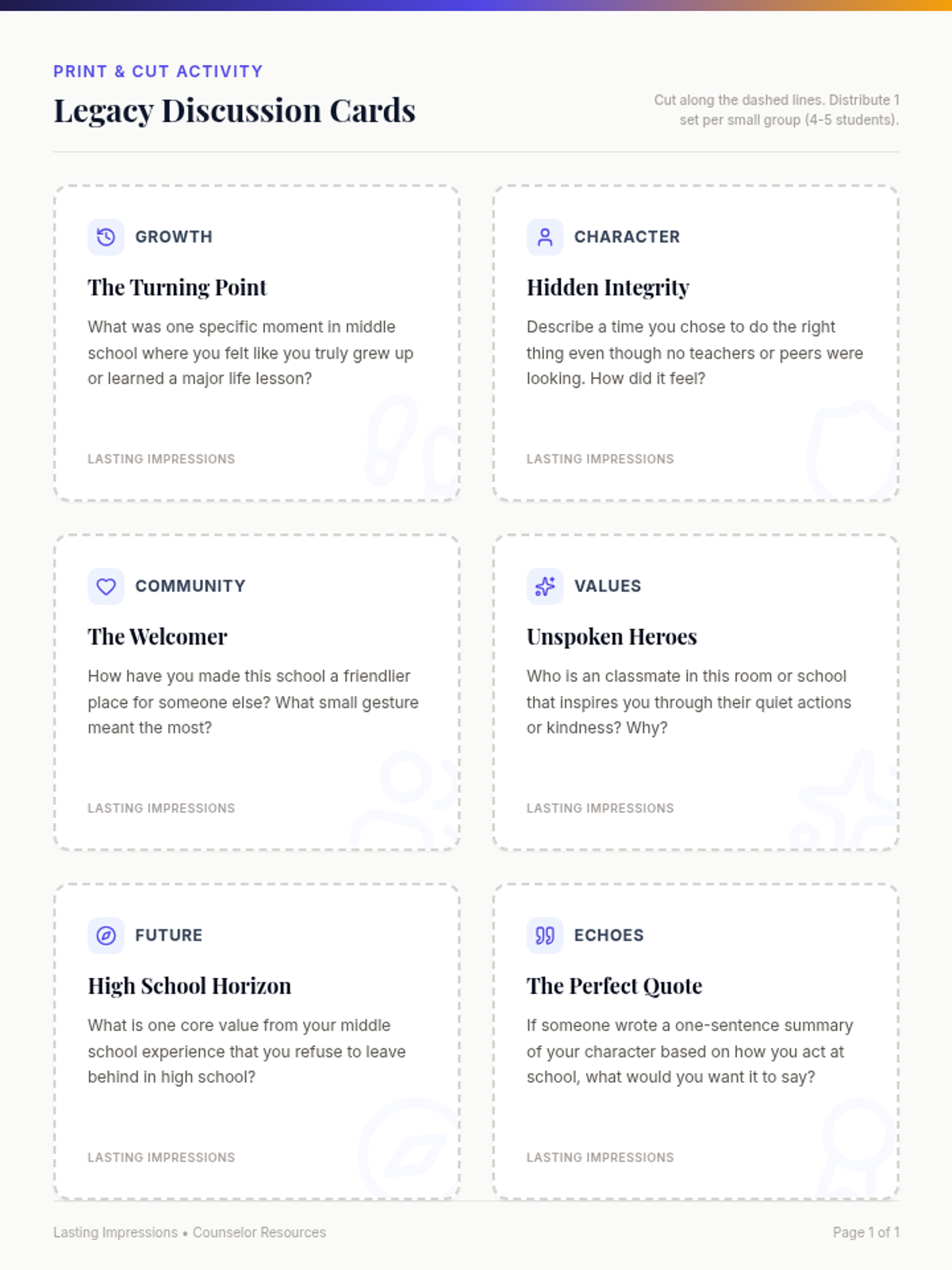
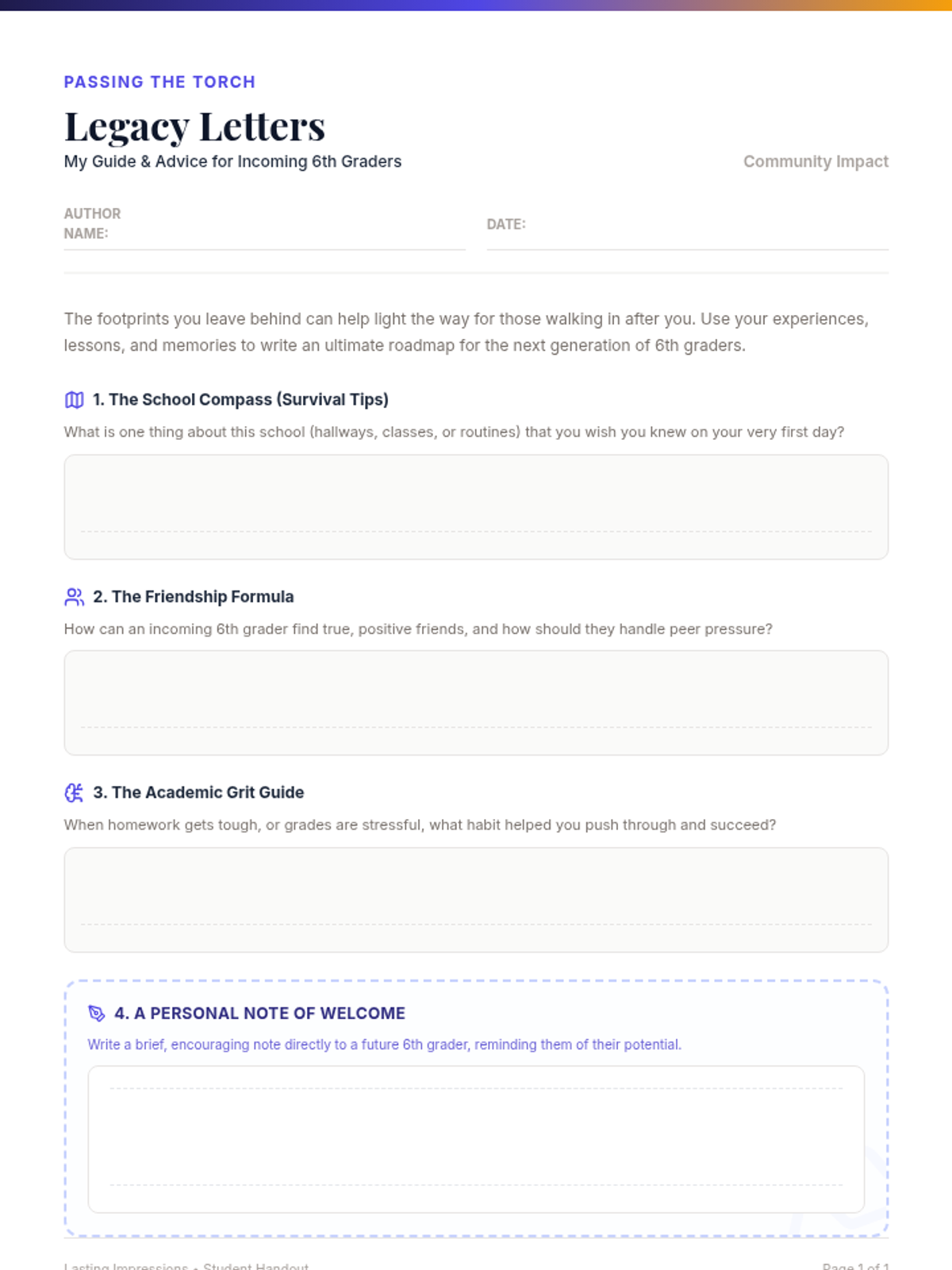
A reflective guidance lesson for 8th graders transitioning to high school, focusing on personal values, community impact, and the positive marks they leave behind. Includes a counselor lesson plan, student reflection worksheets, presentation slides, and printable discussion cards.
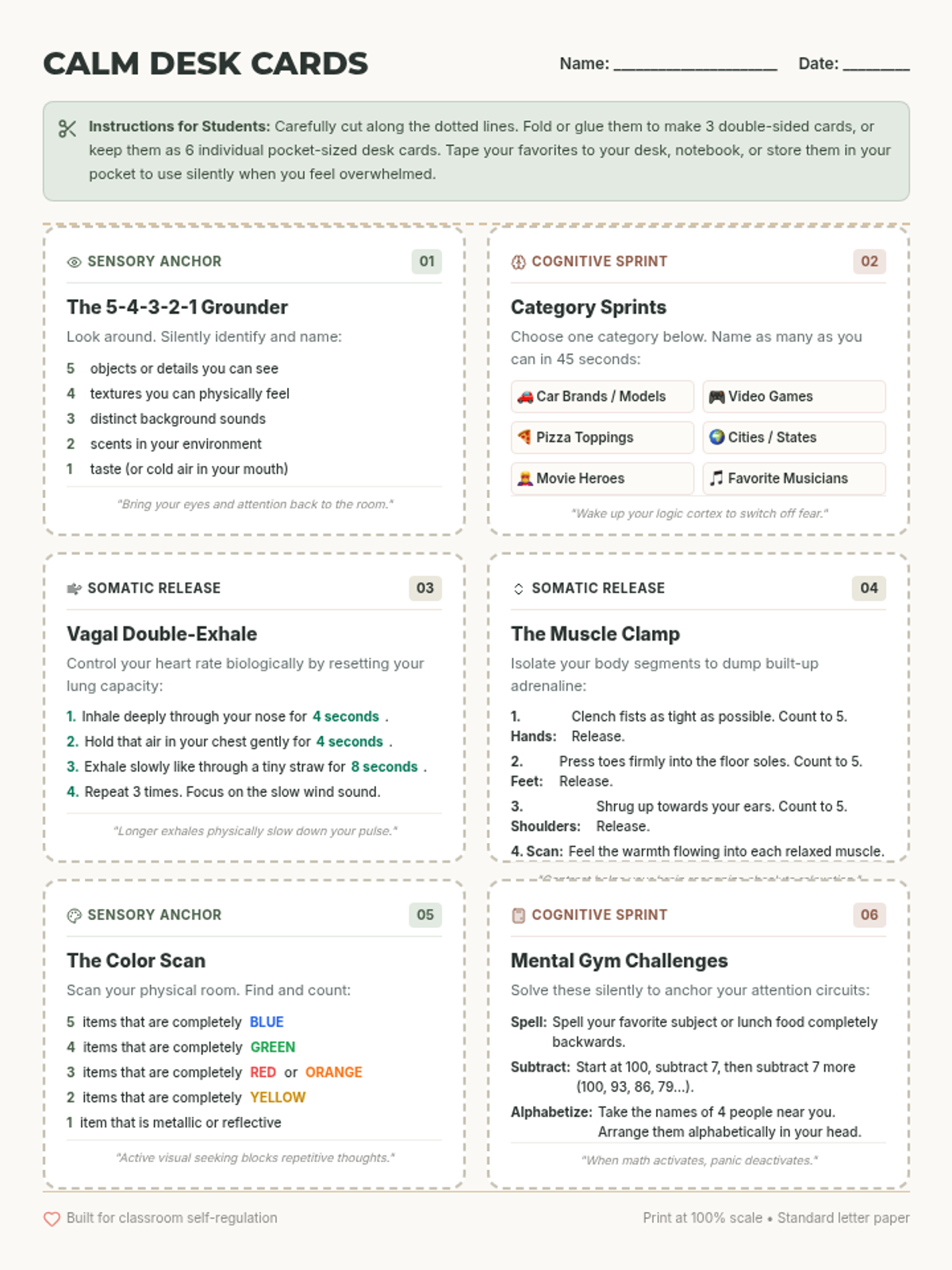
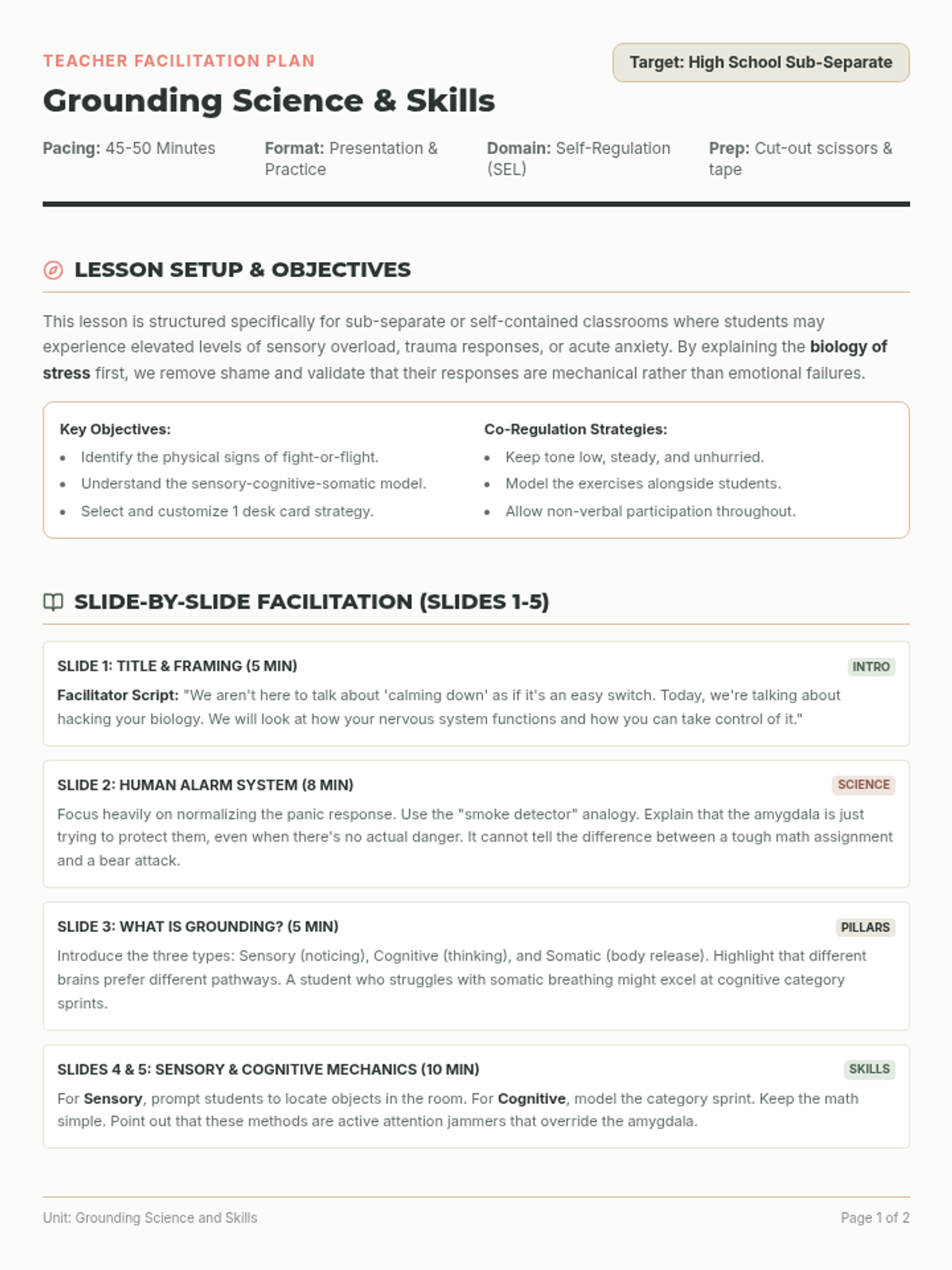
A lesson exploring the neurobiology of hyperarousal and the science-backed skills of grounding. Includes a slide presentation, pocket-sized desk cards for real-time practice, and a comprehensive teacher guide with facilitation scripts.
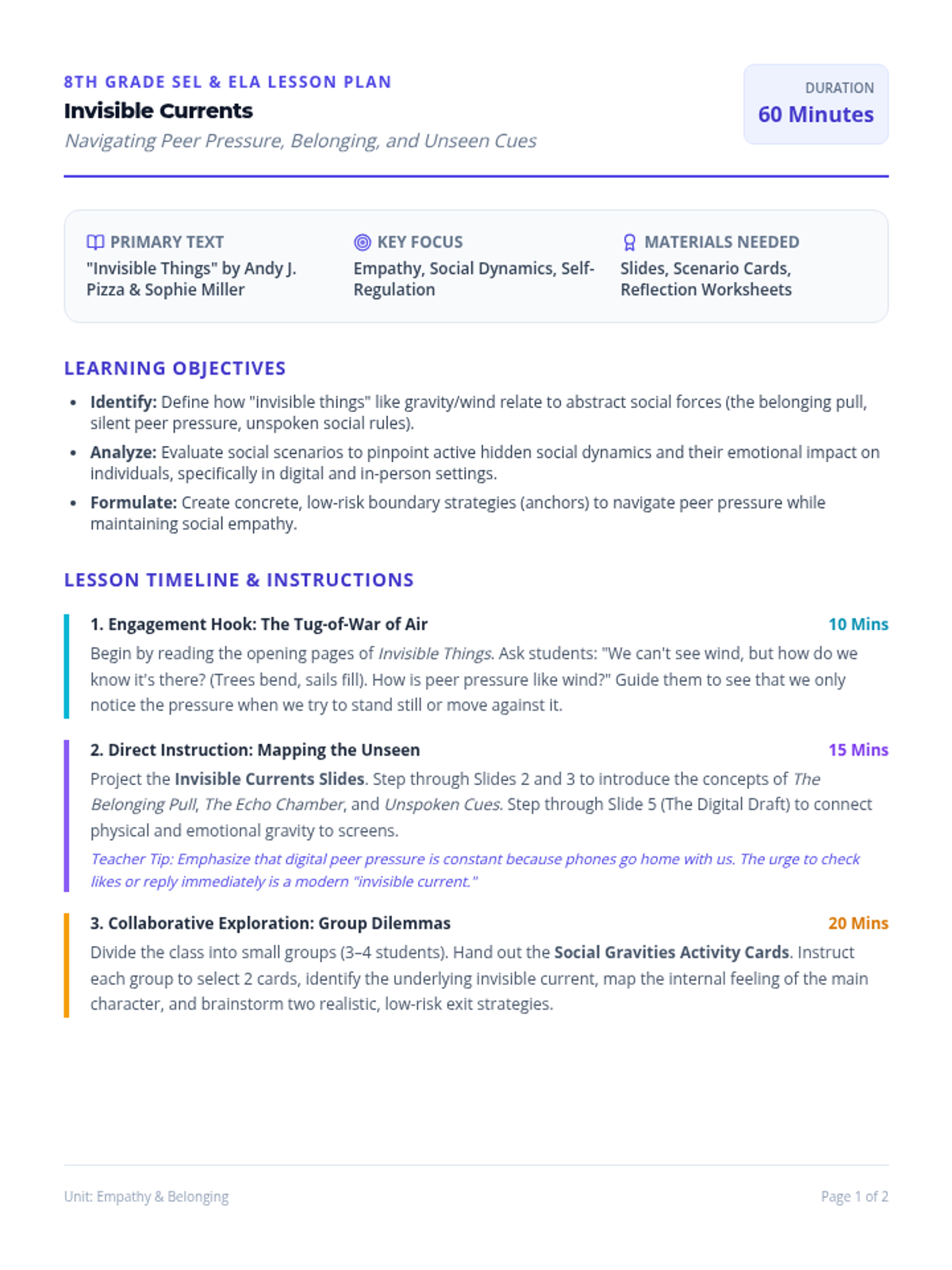
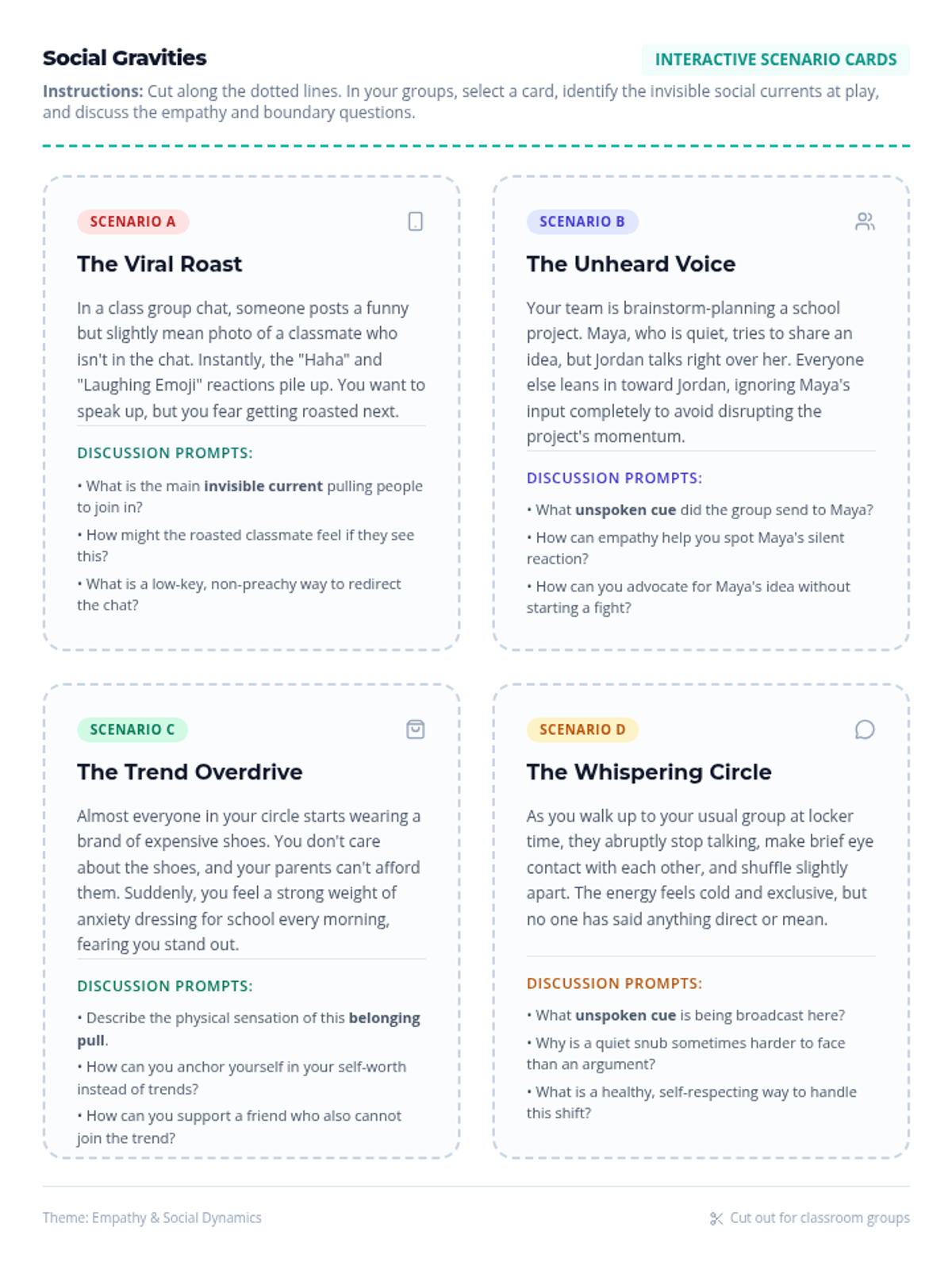
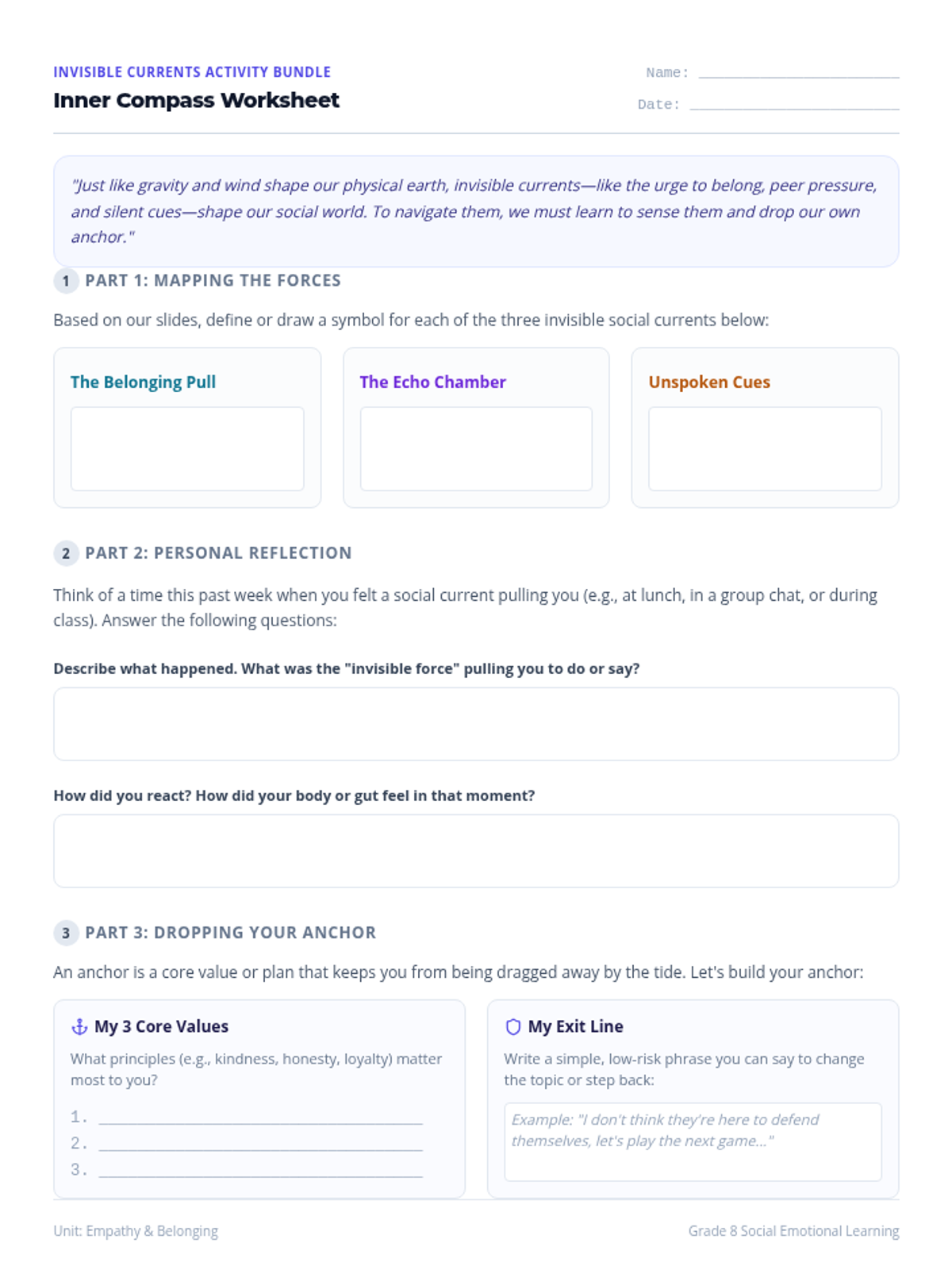
An 8th-grade ELA and SEL lesson exploring the book 'Invisible Things' by Andy J. Pizza and Sophie Miller. Students examine the 'invisible currents' of social dynamics—such as peer pressure, the need for belonging, and unseen social cues—and learn to navigate them with empathy and self-awareness.
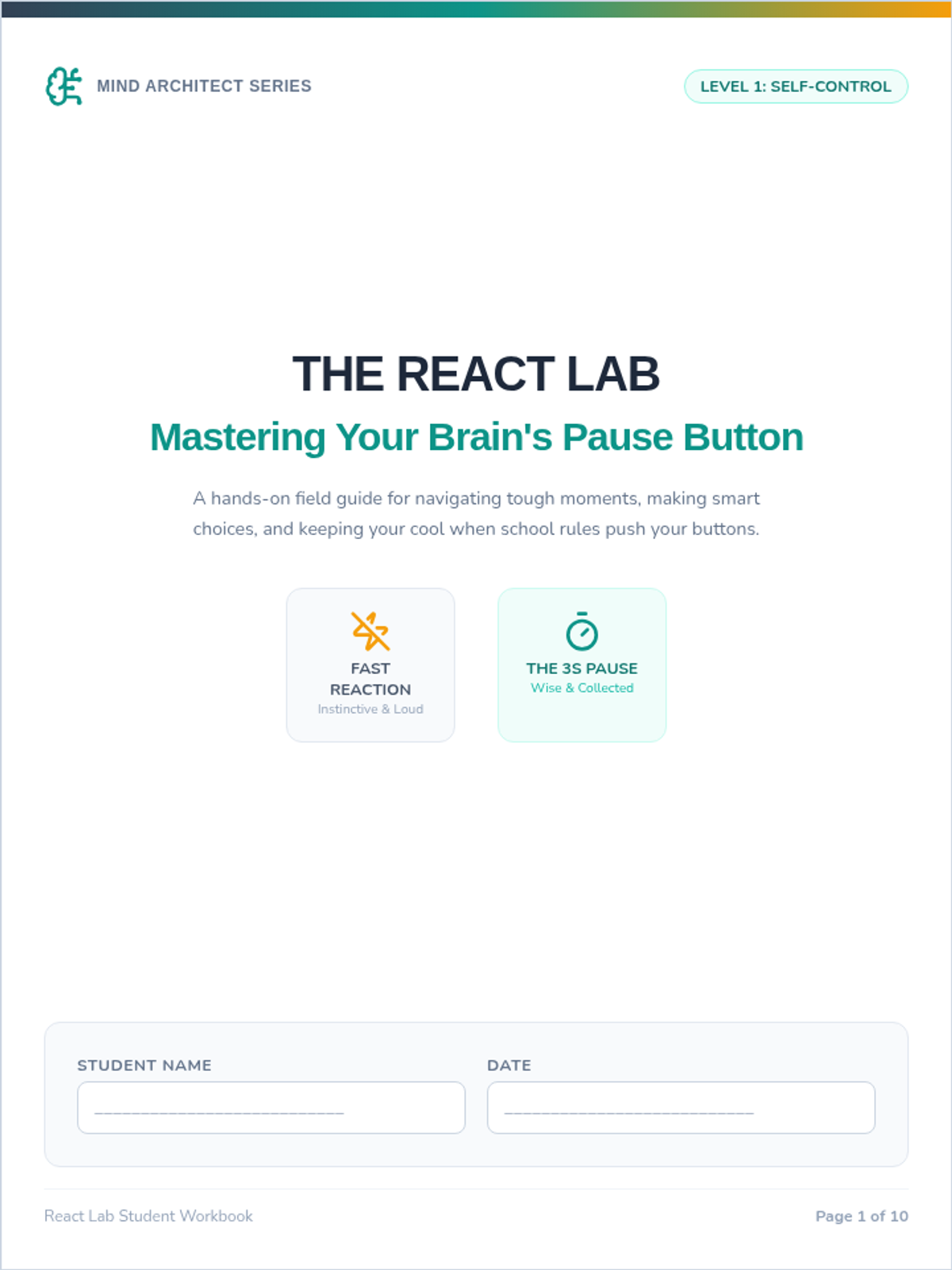
A comprehensive lesson designed to help middle-grade students master self-regulation, avoid back-talk, and respond thoughtfully in common school scenarios.
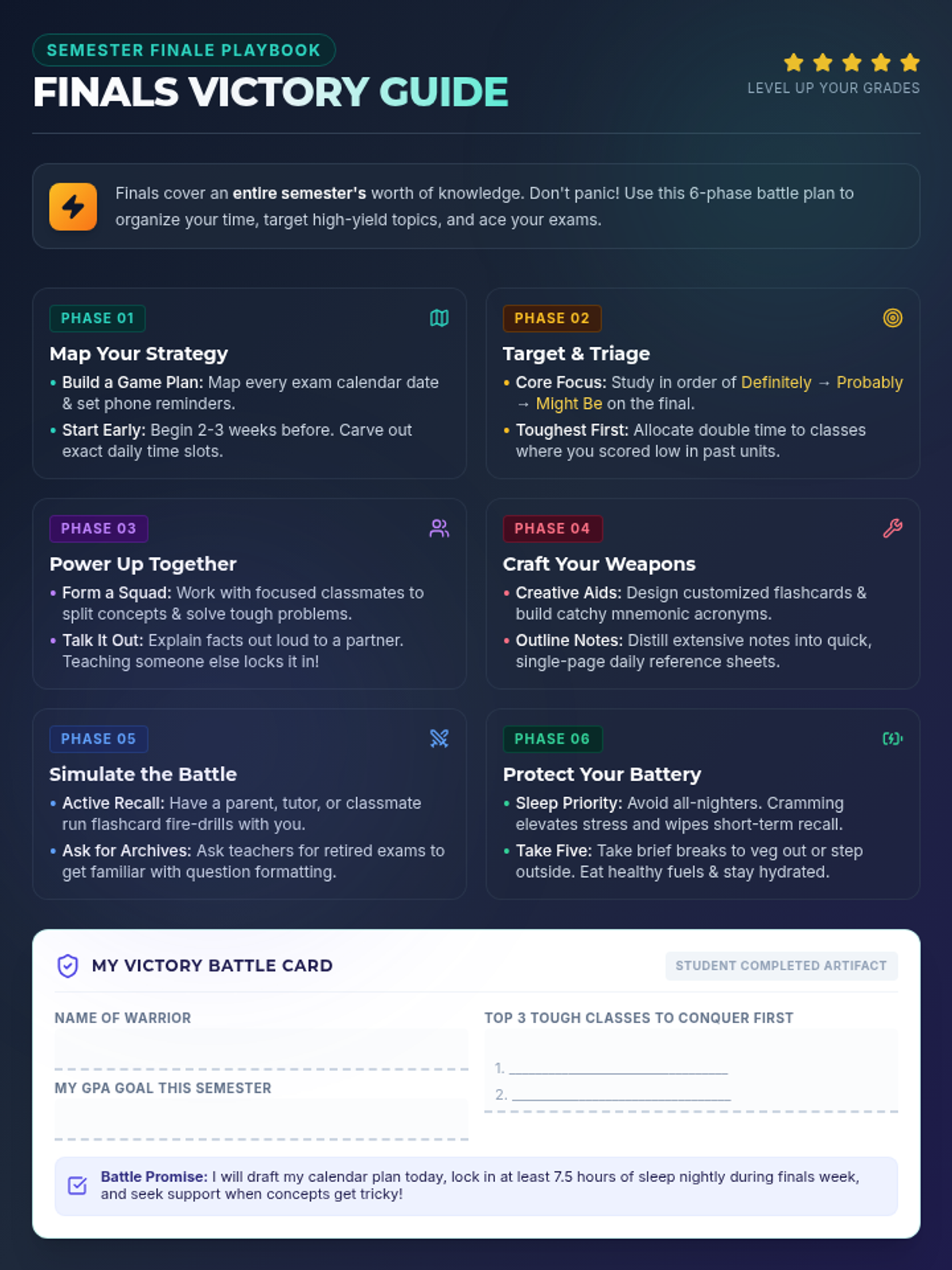
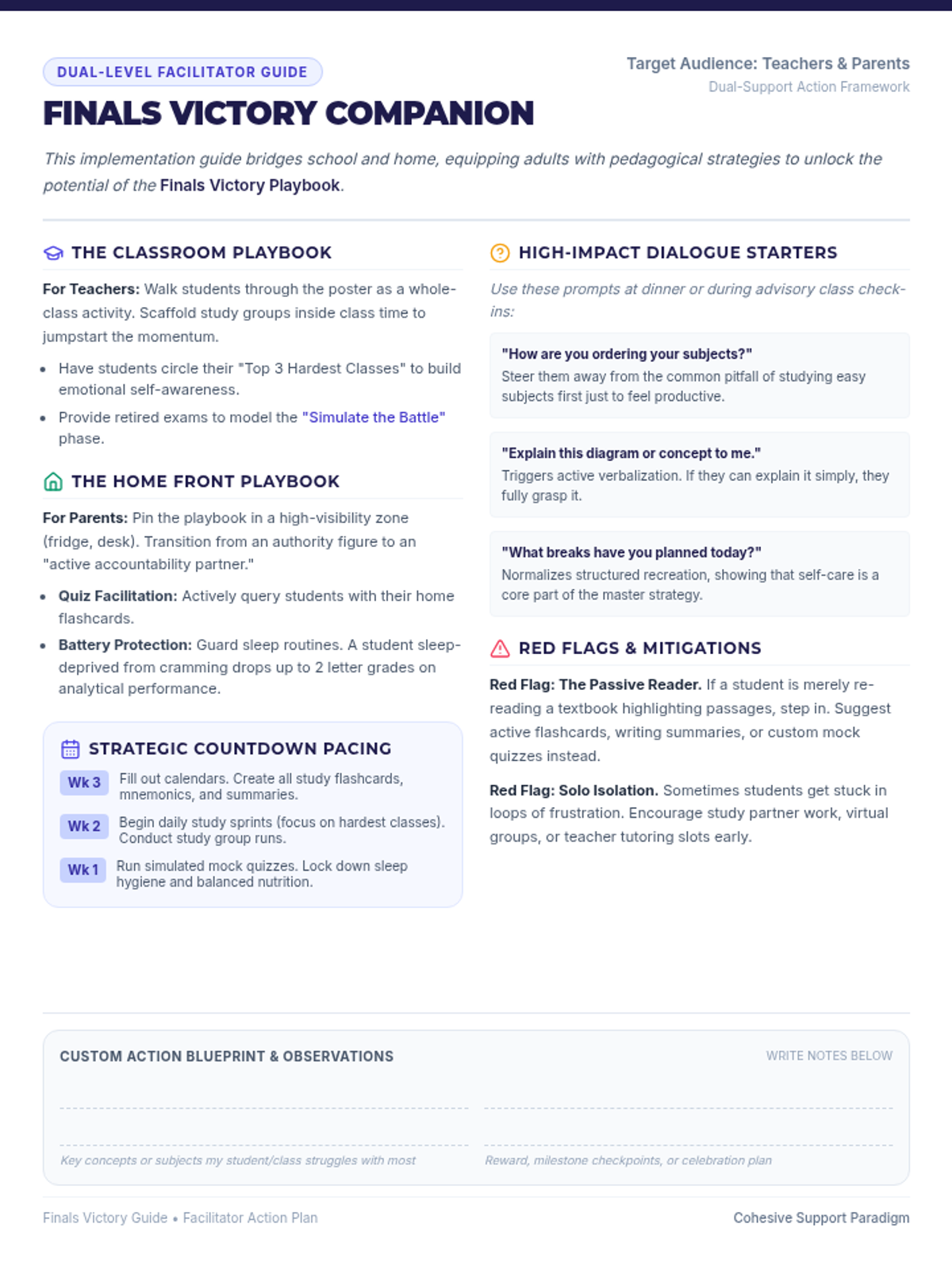
A lesson dedicated to preparing students for final exams using a highly visual study playbook and a dual-level facilitator guide for teachers and parents.
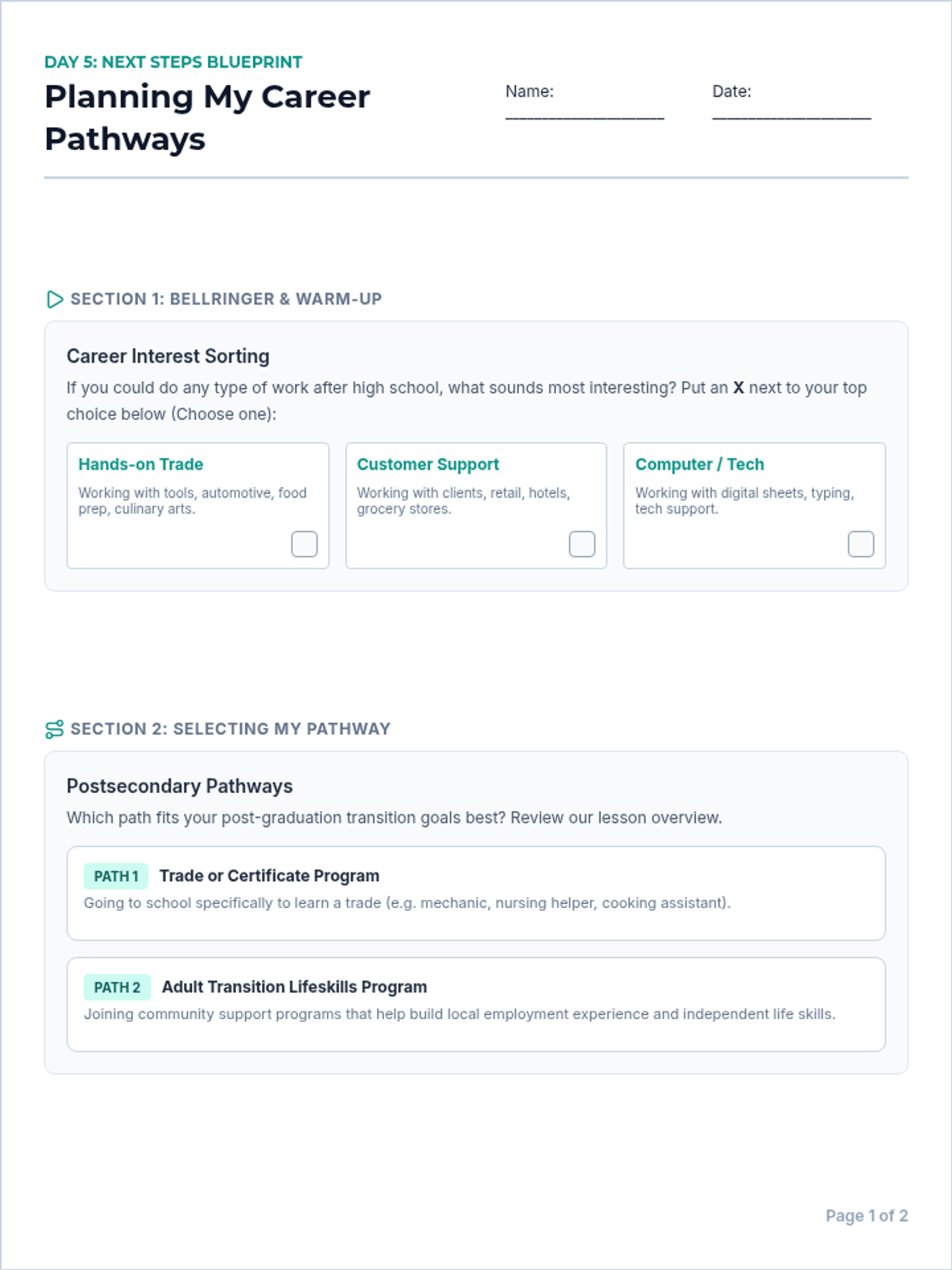
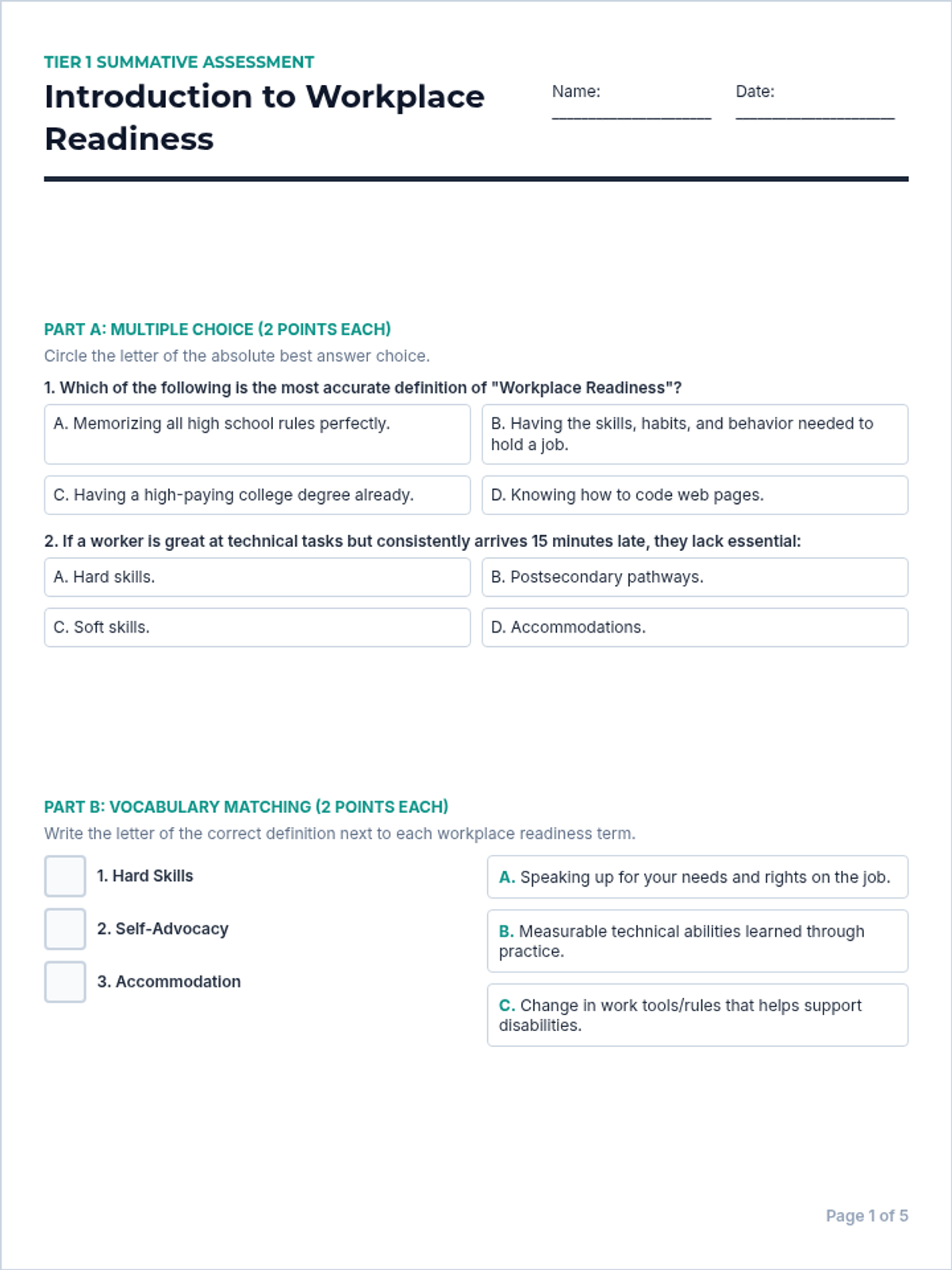
Day 5 explores postsecondary options and career pathways, conducts the final unit assessments, and establishes individual student next-steps action plans.
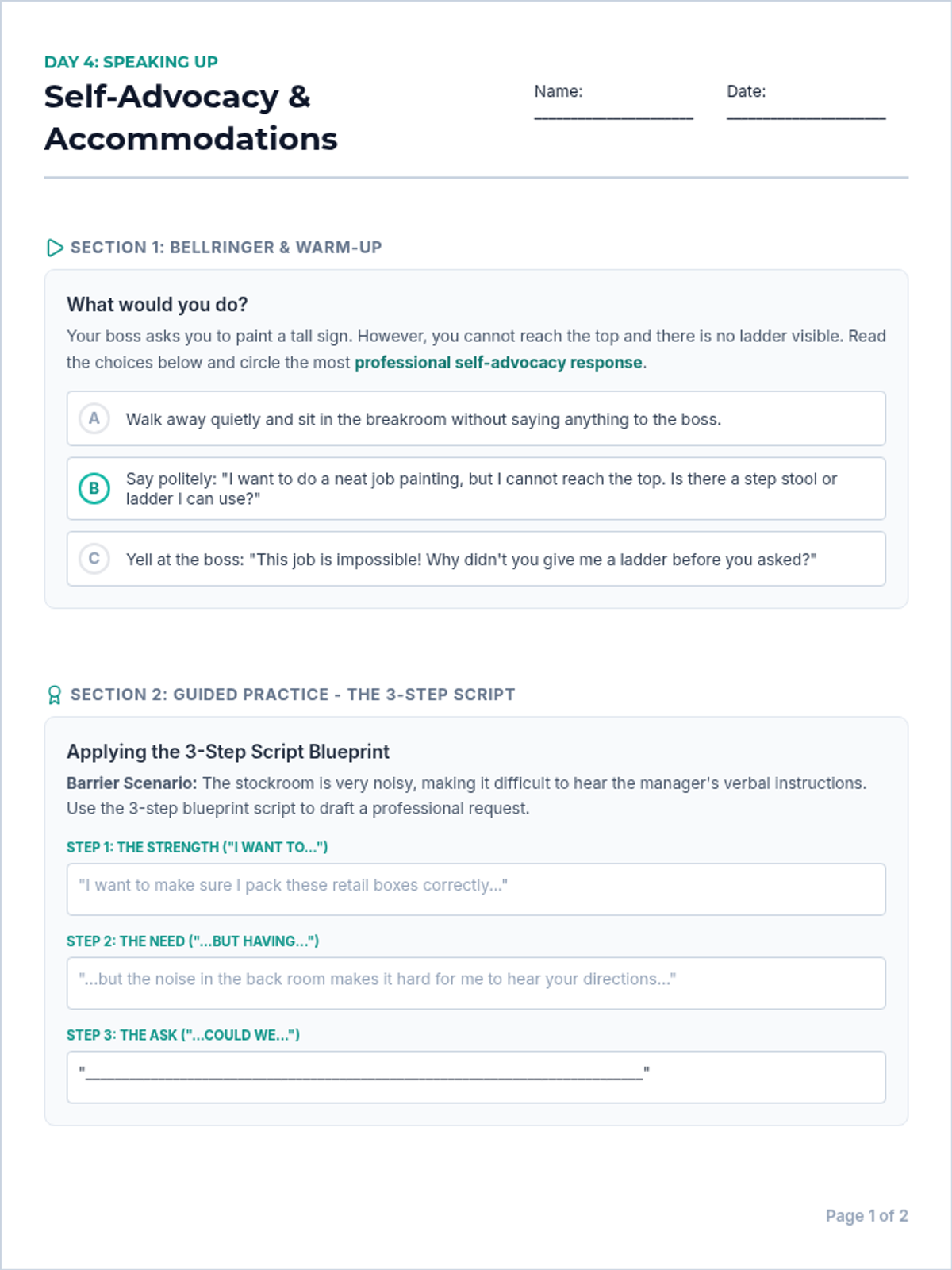
Day 4 targets self-advocacy and accommodation requesting, teaching students how to identify their needs, communicate them respectfully, and navigate the workplace independently.
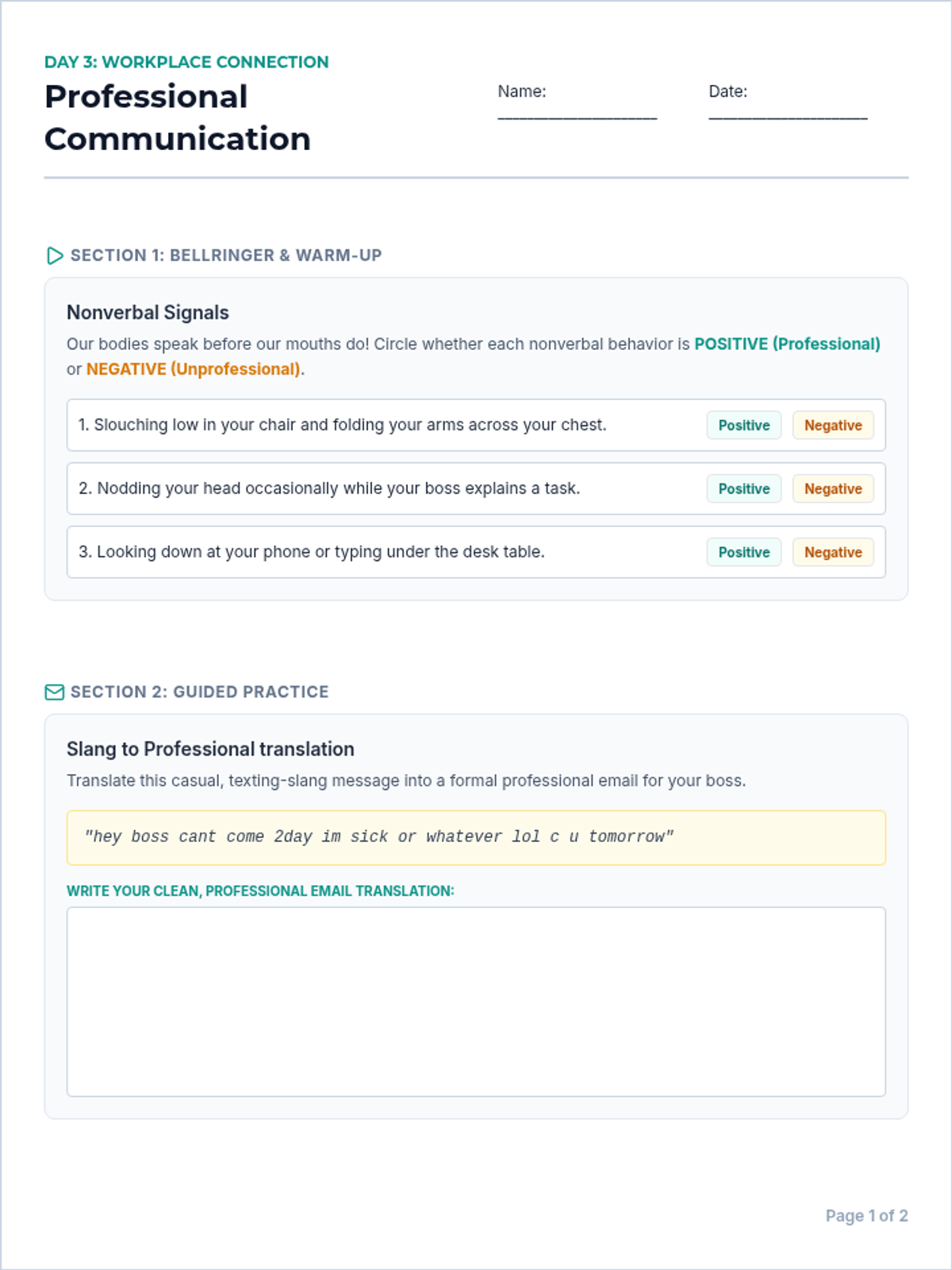
Day 3 focuses on professional verbal and non-verbal communication, email etiquette, and active teamwork within diverse workplace scenarios.
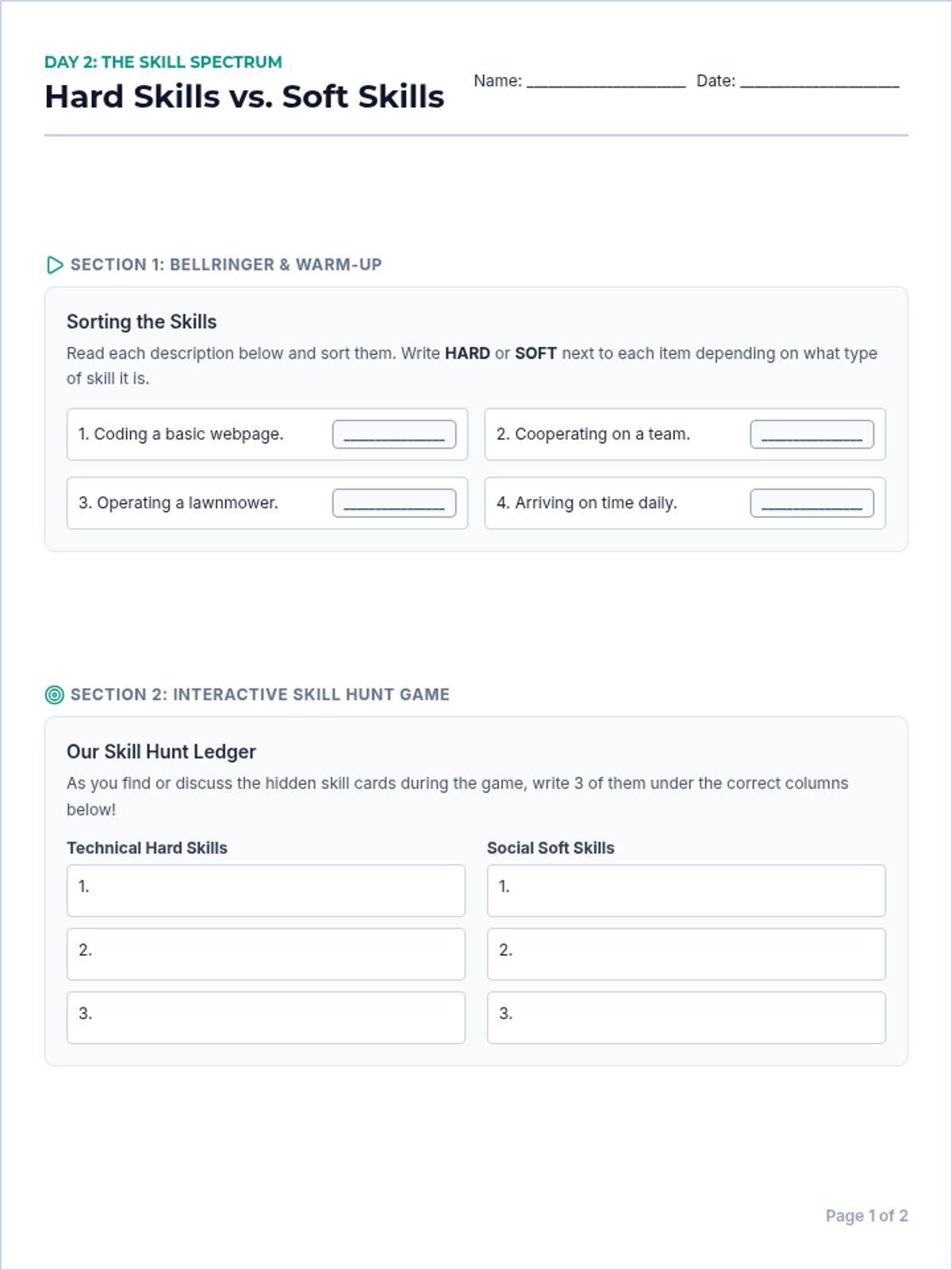
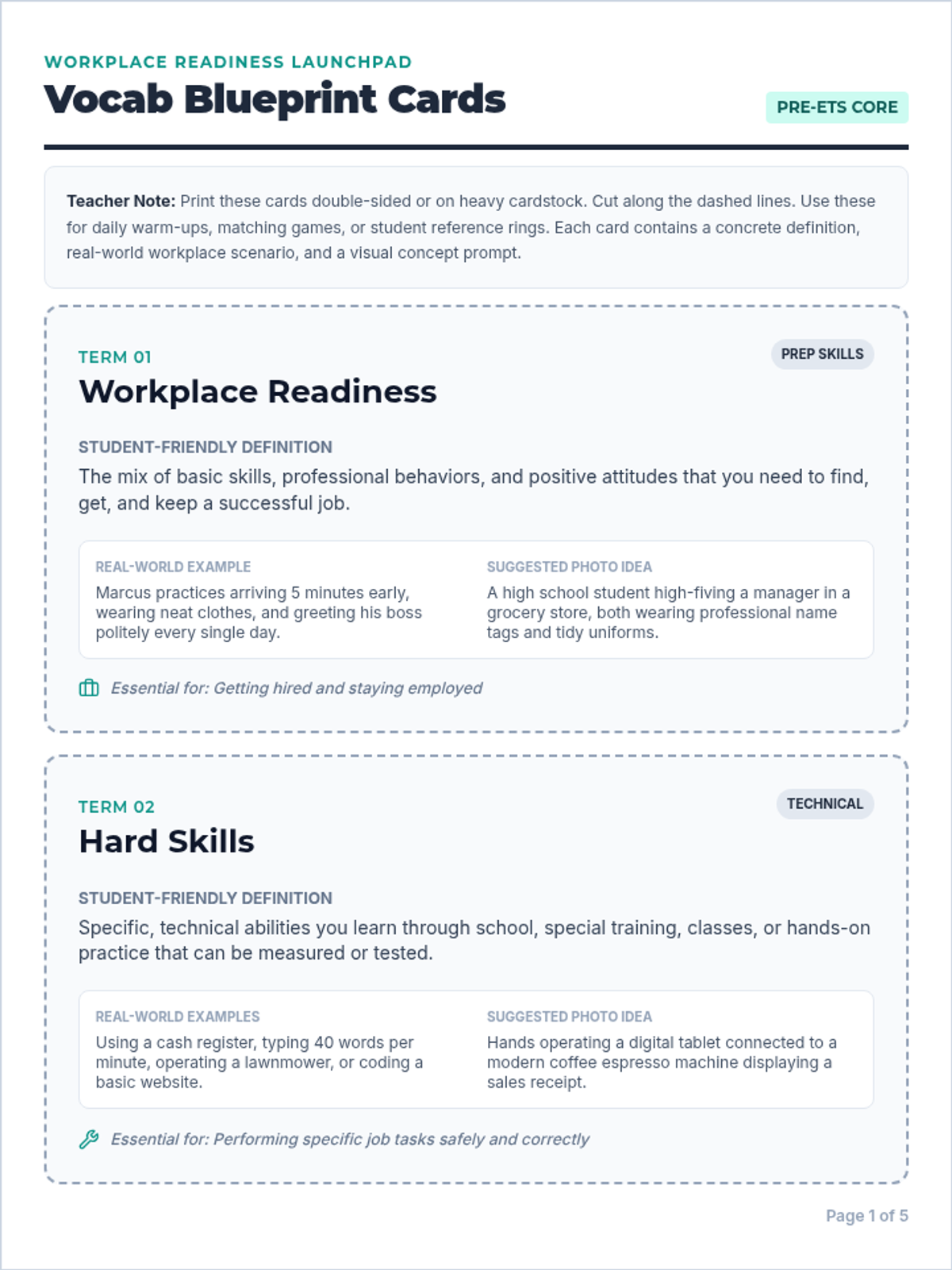
Day 2 dives into hard versus soft skills, exploring how technical abilities get you hired while interpersonal qualities keep you employed.
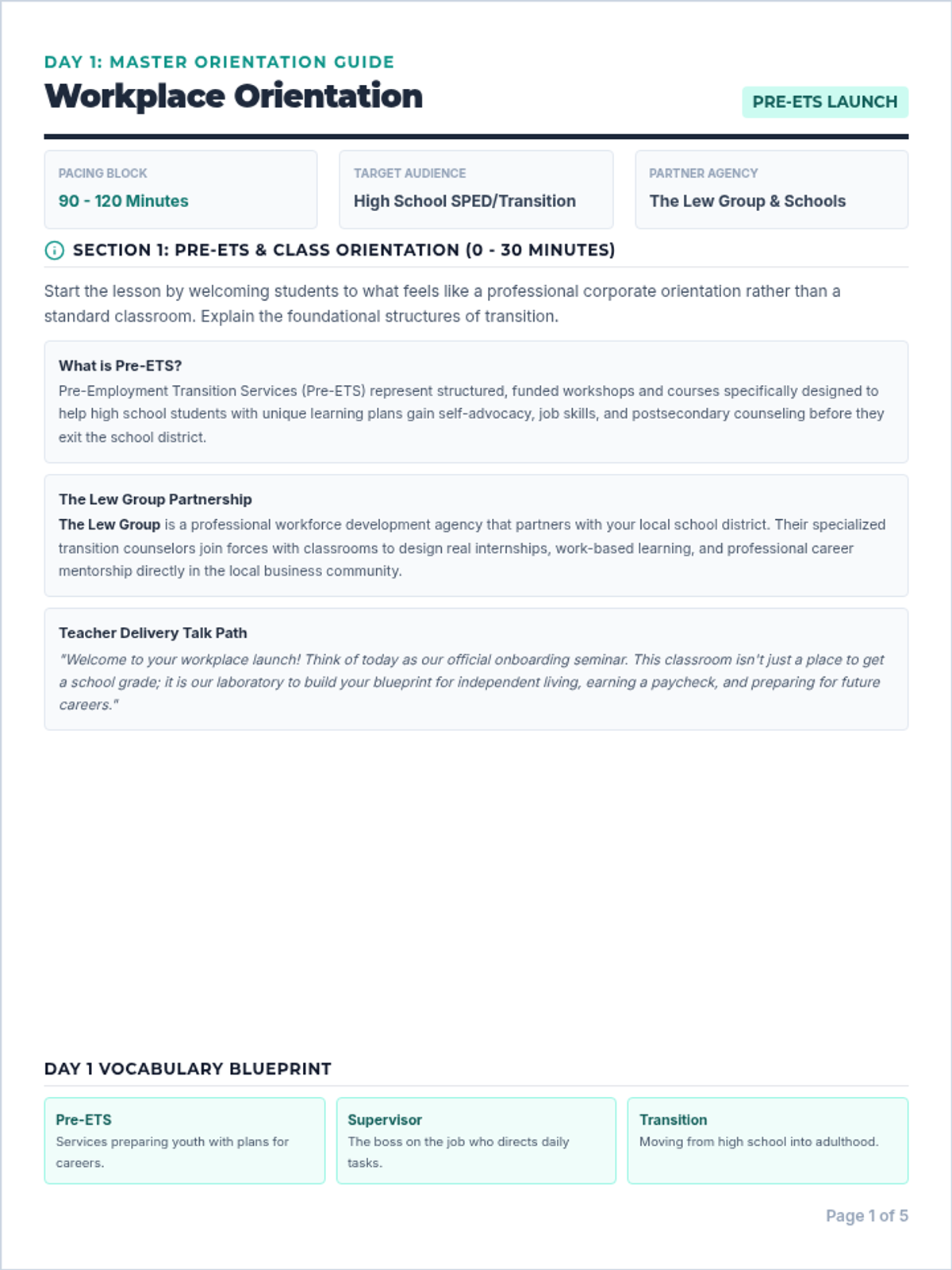
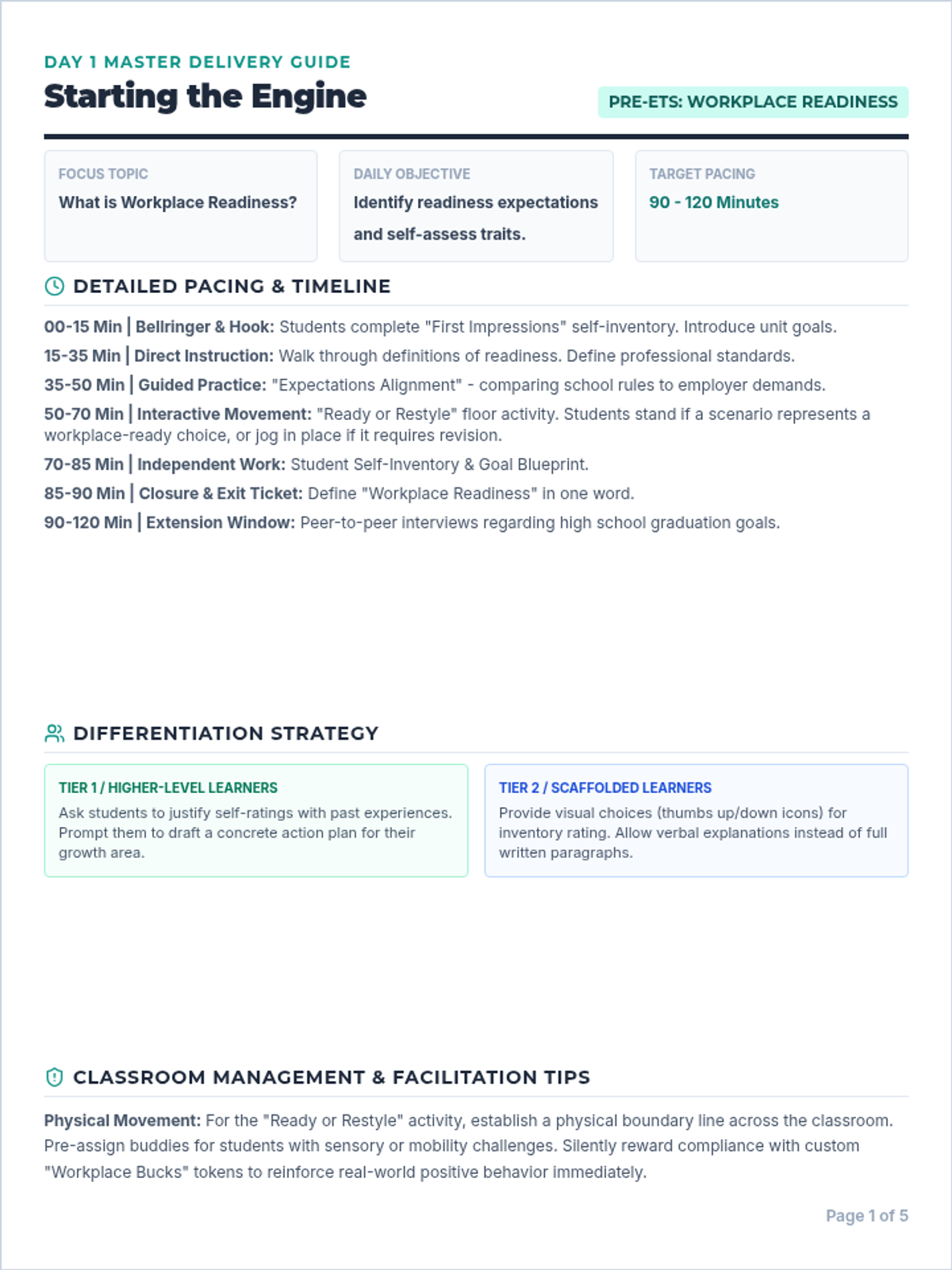
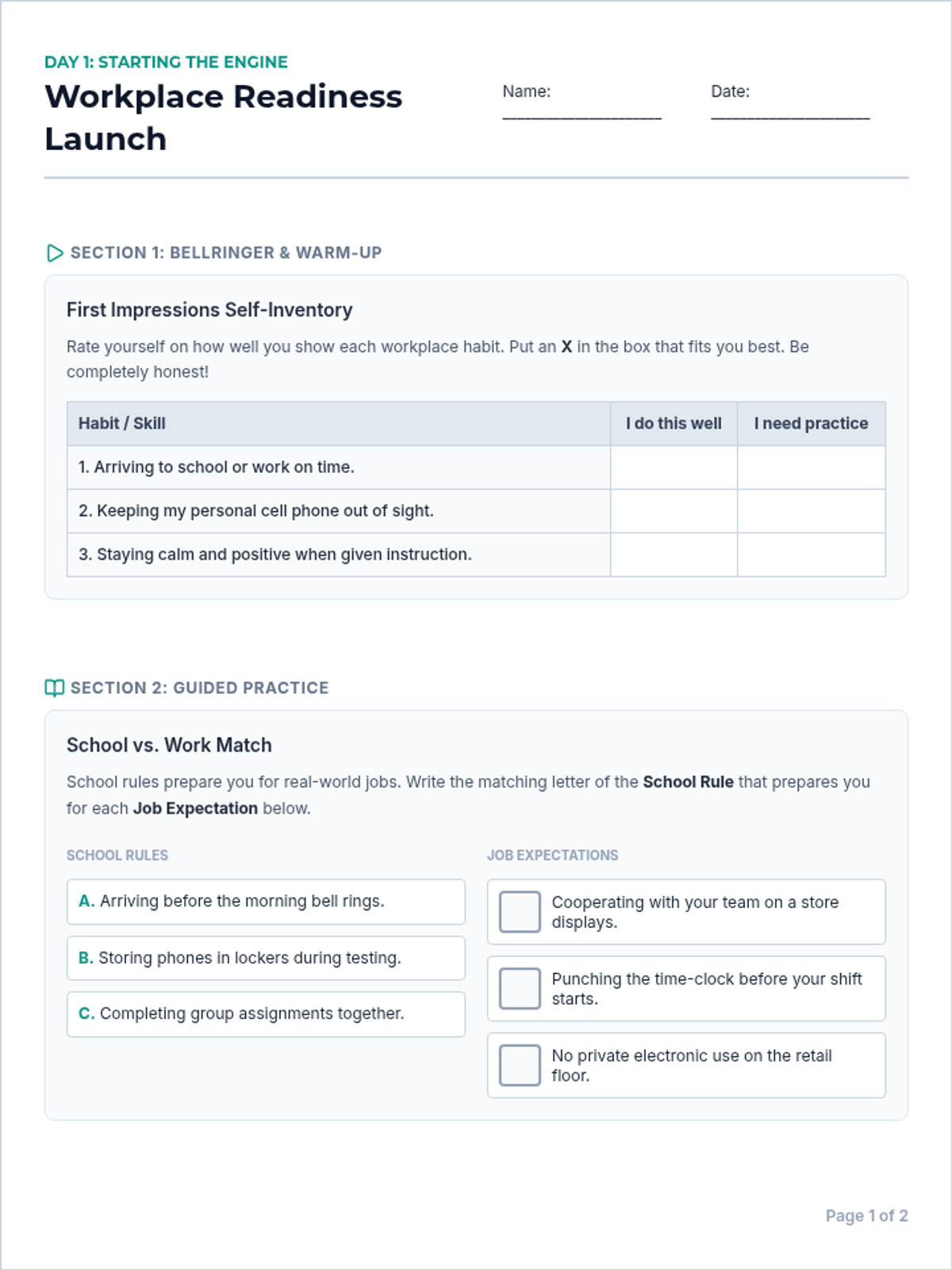
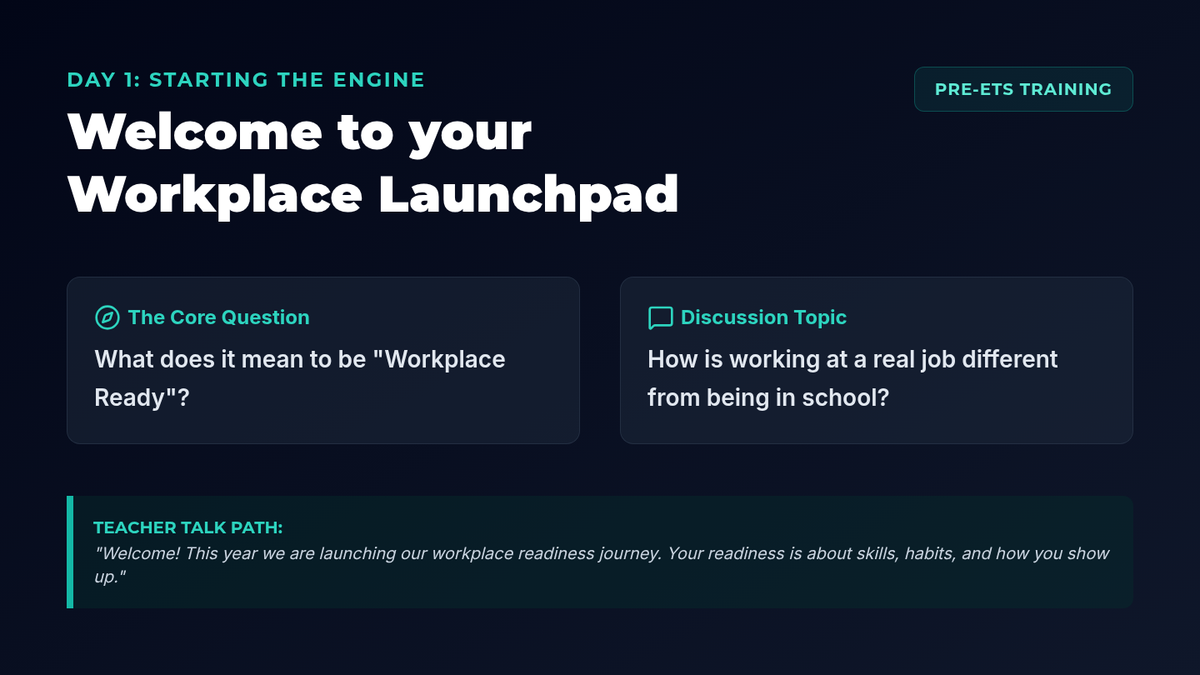
Day 1 introduces the concept of workplace readiness, high school transition expectations, and helps students assess their current baseline while establishing professional habits.