A 45-minute lesson for Grade 12 students exploring the connection between punctuality, professional reputation, and leadership qualities as they transition to the workforce.
A lesson focused on the mathematical mechanics of credit card interest, including APR calculations, compounding effects, and the financial impact of different interest rates.
A two-day lesson covering the professional art of writing thank-you and resignation letters, focusing on etiquette, structure, and professional tone.
A high-energy brainstorming session designed to empower peer helpers to design and implement initiatives for school inclusion and community spirit. Students will transition from abstract goals to concrete action plans using a 'Culture Architect' framework.
A foundational lesson on mindfulness techniques including breathing, sensory grounding, and reflective journaling to help students manage stress and improve focus.
A comprehensive lesson for 7th-12th grade special education students focused on identifying types of conflict and applying constructive communication strategies to reach mutually agreeable solutions.
A social-emotional learning lesson designed to help students identify intrinsic motivators and regain focus using the Circle of Control when they feel unmotivated.
A comprehensive lesson for middle and high schoolers to identify emotional triggers and build a personalized toolkit of self-regulation strategies including mindfulness, breathing, and sensory techniques.
A practical session where students explore various coping categories and practice applying them to real-world scenarios. Includes a lesson plan, a visual coping skills infographic, and discussion cards.
A workshop-style lesson focused on identifying personal strengths and reframing negative self-talk to build lasting self-worth. Includes a lesson plan and a creative identity shield activity.
An introductory session where students learn to identify physical and emotional stress signals and explore immediate techniques to regulate their response. Includes a lesson plan and a stress mapping worksheet.
A quick, 5-minute activity focused on building self-esteem through gratitude journaling and positive self-reflection.
A comprehensive support suite for parents and caregivers navigating conversations about grief and loss with children of various ages.
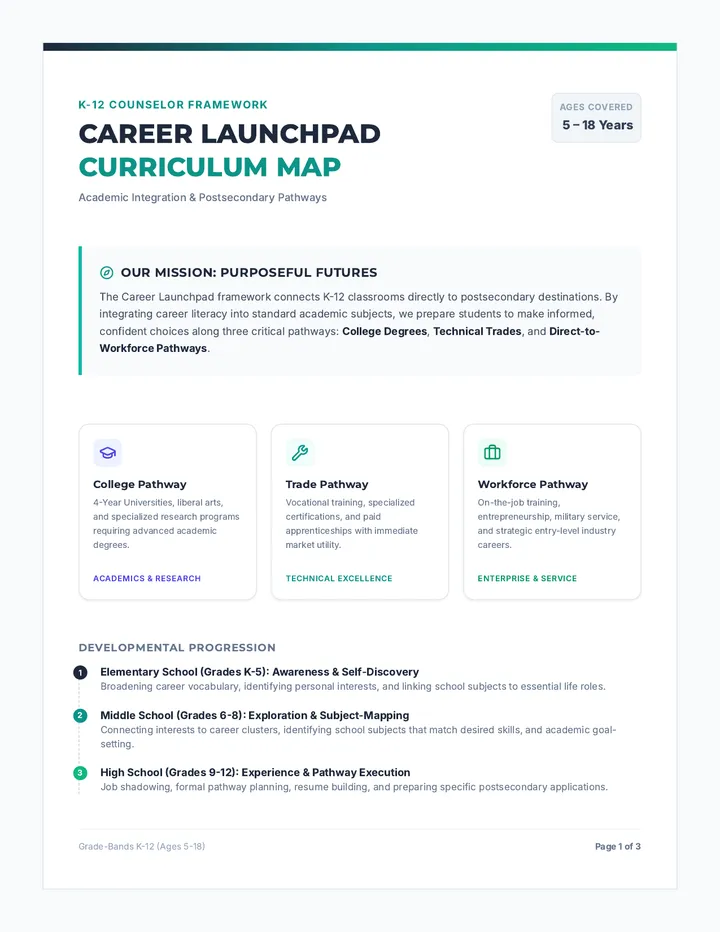
A comprehensive lesson designed to help students identify their interests and passions and map them to high-impact career fields in STEM, Arts, Business, and Social Justice. Students will explore career descriptions, reflect on their personal strengths, and visualize career clusters.
This lesson teaches students to identify negative self-talk patterns and reframe them into positive, growth-oriented thoughts after making mistakes. It includes a slide deck for instruction, a student worksheet for practice, and a detailed teacher guide.
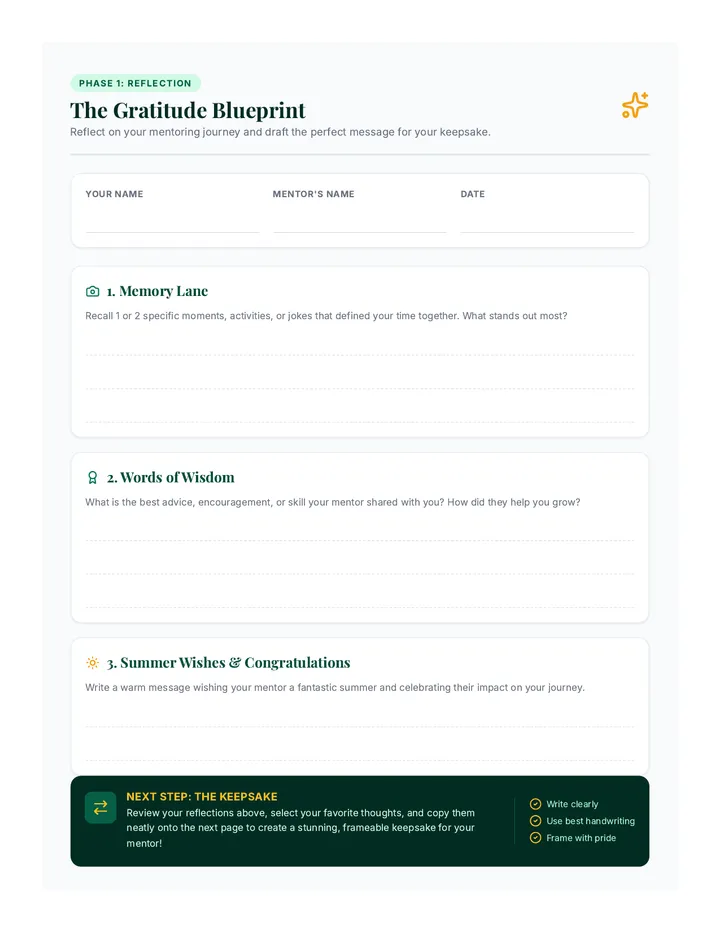
A lesson designed for teens to practice gratitude by identifying external support, personal strengths, and the impact of others.
This lesson equips high school students with essential financial literacy skills, focusing on budgeting, saving, and smart investing. Through real-world scenarios and hands-on practice, students learn to navigate debt and plan for a secure financial future.
A whole-class collaborative adventure where the entire group works as one giant team to solve challenges that emphasize inclusion and community building.
This lesson teaches high school students mindful communication techniques, focusing on active listening, 'I' statements, and non-verbal cues to foster healthier relationships and reduce conflict.
An introductory lesson on the importance of self-care, defining what it is and providing students with practical strategies to manage stress and improve their well-being.
A short, reflective activity designed to help students reconnect with their personal motivations for attending school and completing their work.
High school students analyze complex case studies to understand systemic inclusion and practice ethical decision-making in professional and community contexts.
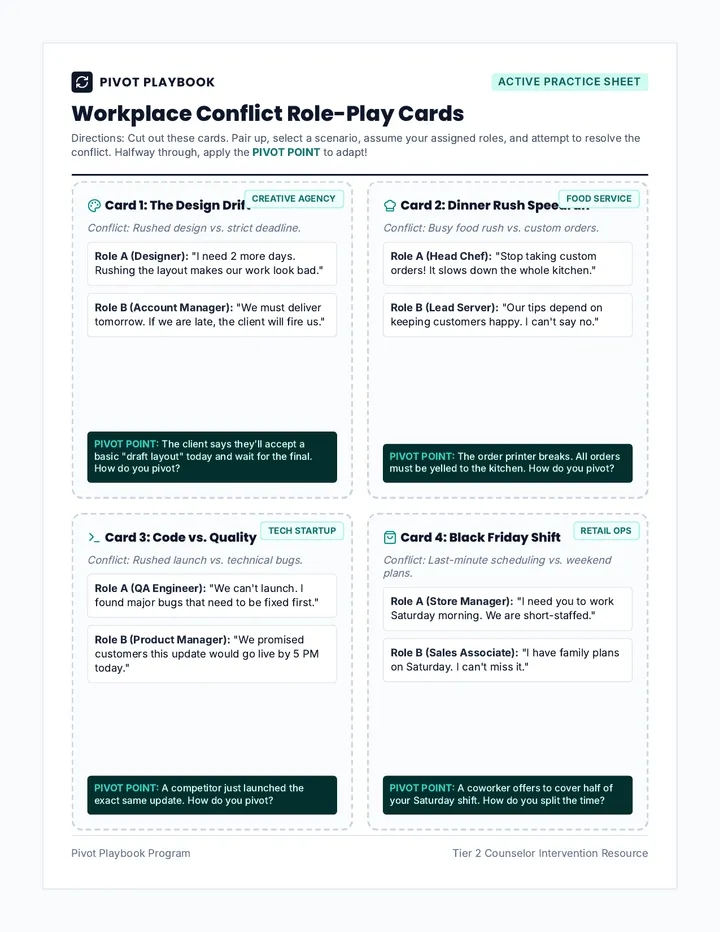
Middle schoolers use discussion and role-playing to build empathy and practice "upstander" behaviors in social situations.
Students engage in group activities that demonstrate how different perspectives and talents lead to better problem-solving and creative outcomes.
Young students explore the concept of diversity through a short story and self-reflection, learning that differences make our community more vibrant.
Students practice using precise, 'high-definition' words to describe complex feelings.
Students use a scale to measure how 'loud' an emotion feels and identify their personal tipping points.
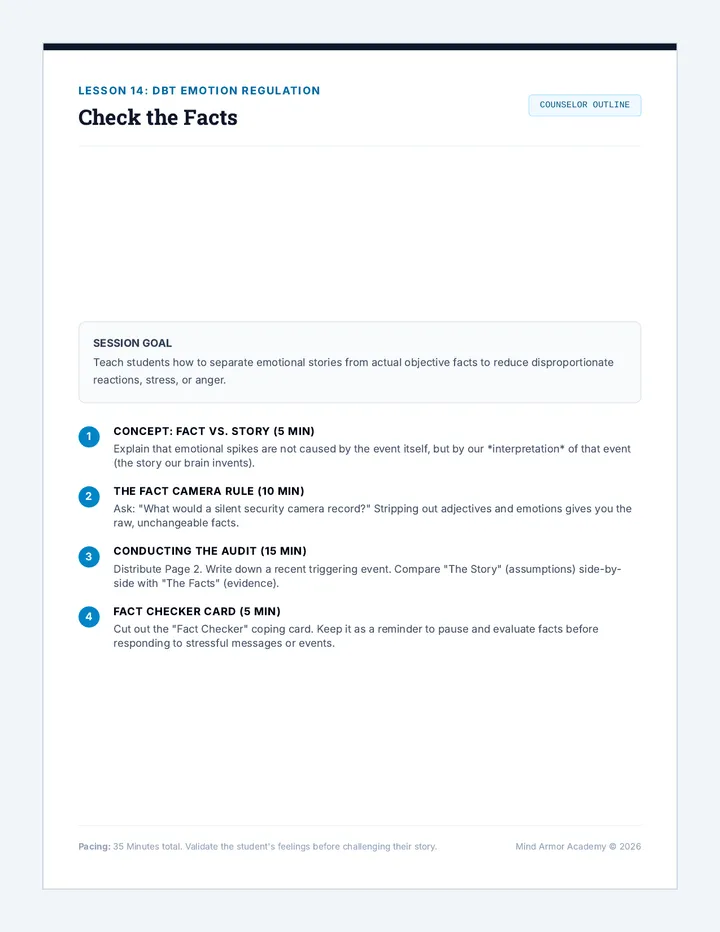
Students identify the specific events and thoughts that trigger different emotional responses.
Students learn to read the physical data points their body sends to signal a change in mood.