A highly visual, step-by-step training lesson for answering the phone and taking orders at Pizza Paradise, utilizing a desktop anchor chart and scenario-based task cards.
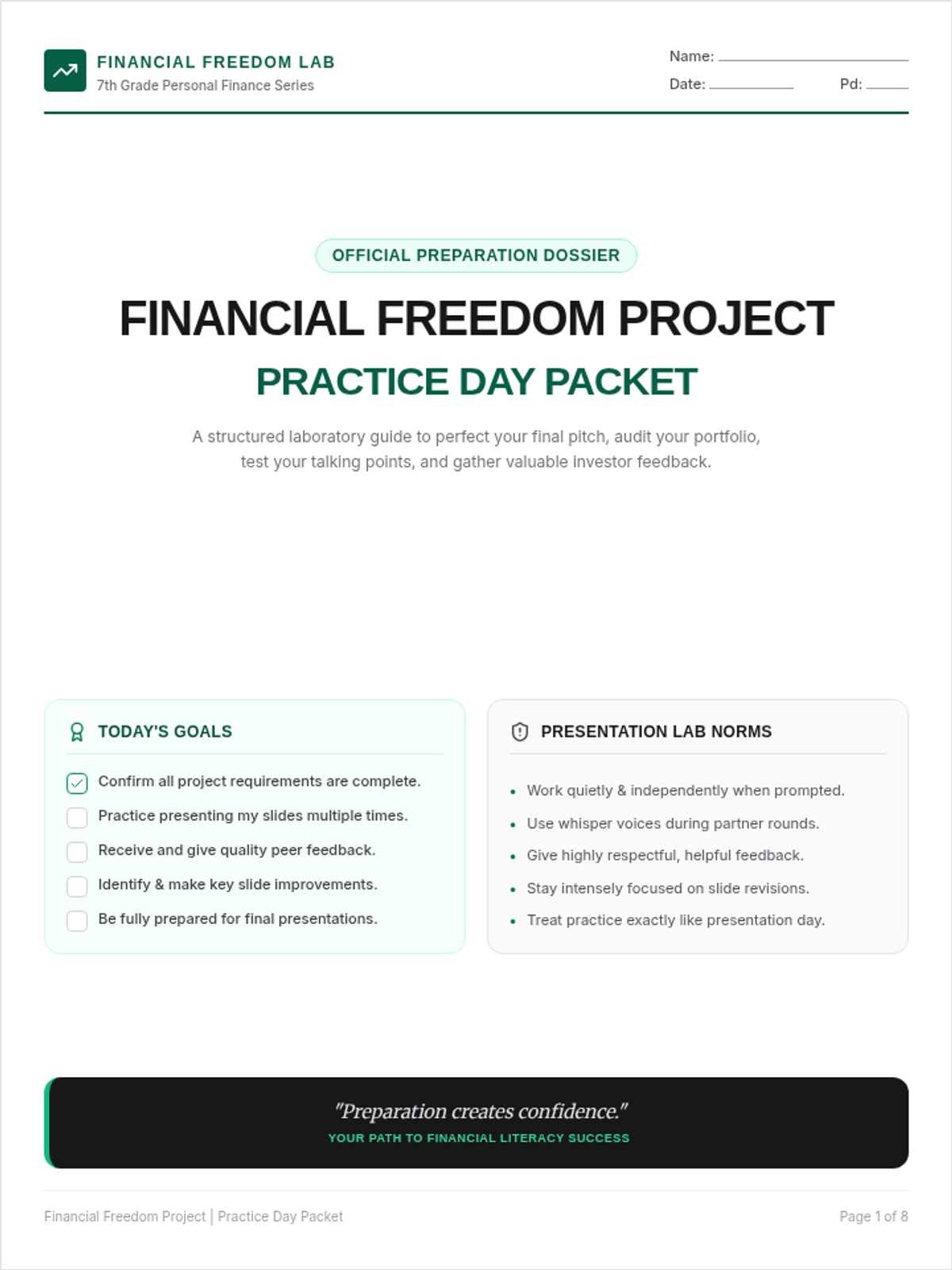
A dedicated presentation practice day lesson designed to help students audit their work, practice their speaking and transition skills, gather feedback, and finalize their Financial Freedom Projects.
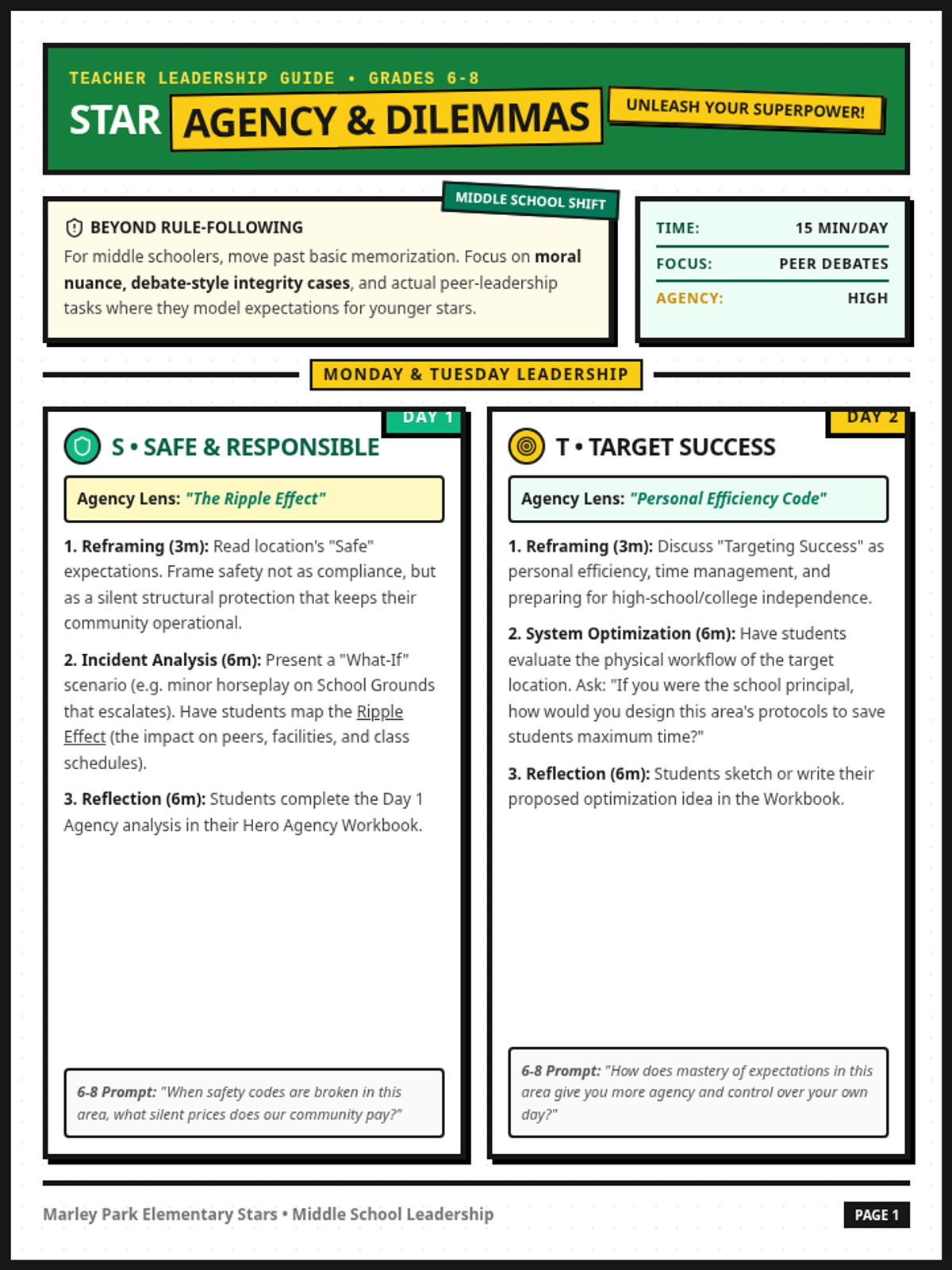
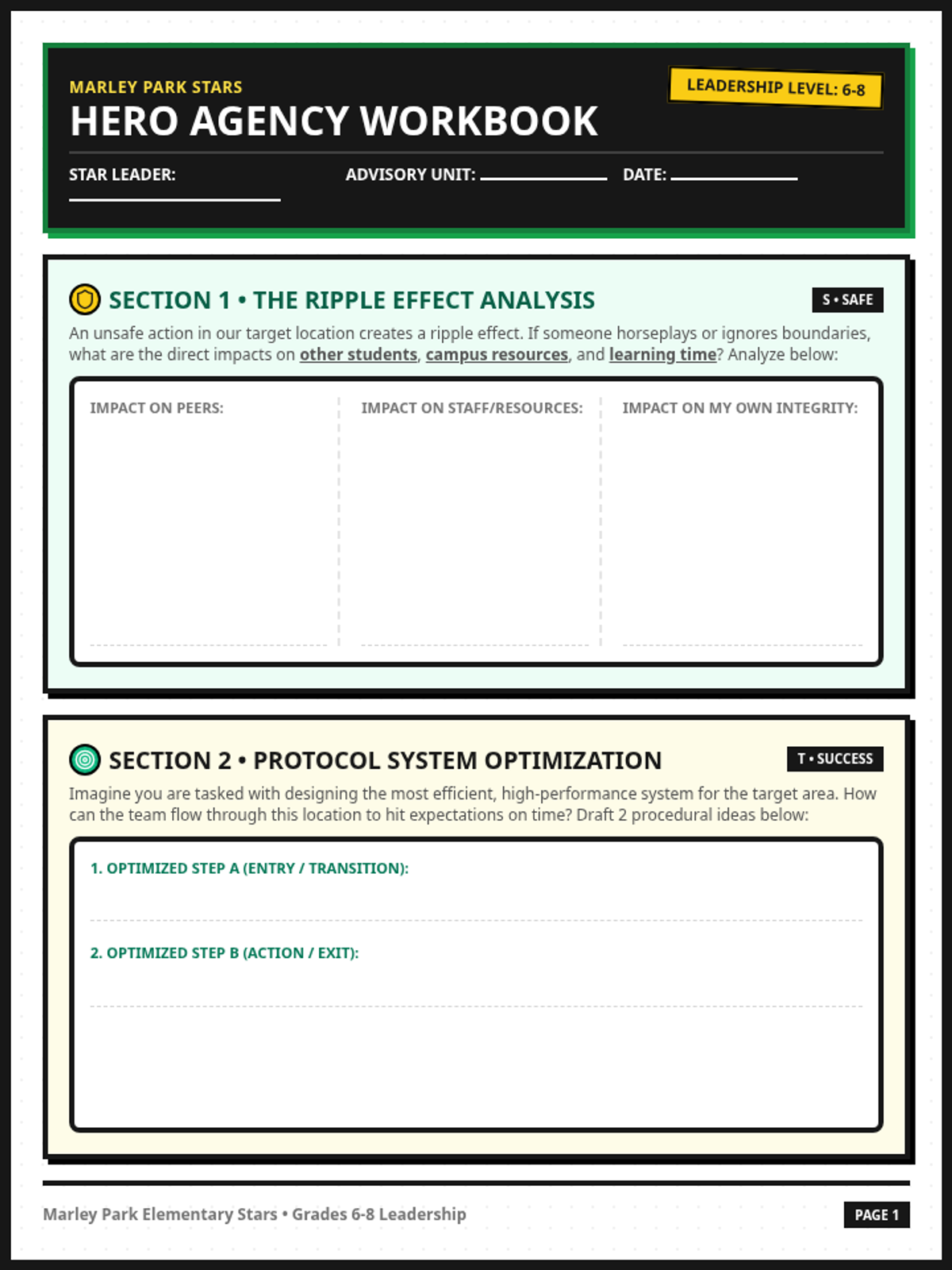
A universal 5-day lesson set for middle school (grades 6-8) that leverages peer leadership, debate-style moral dilemmas (exploring the nuance of integrity), and self-guided agency projects to cultivate respect and responsibility across campus.
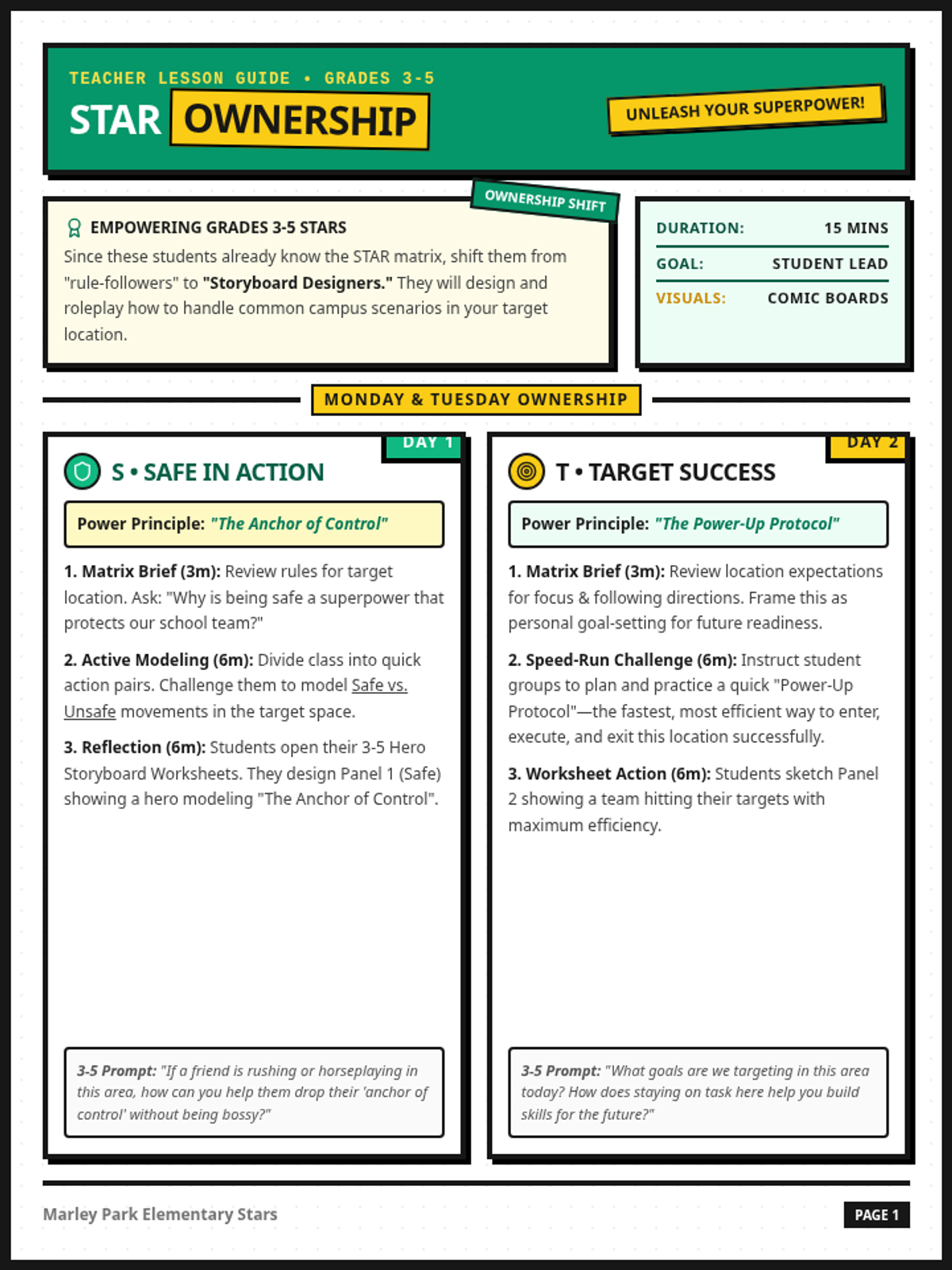
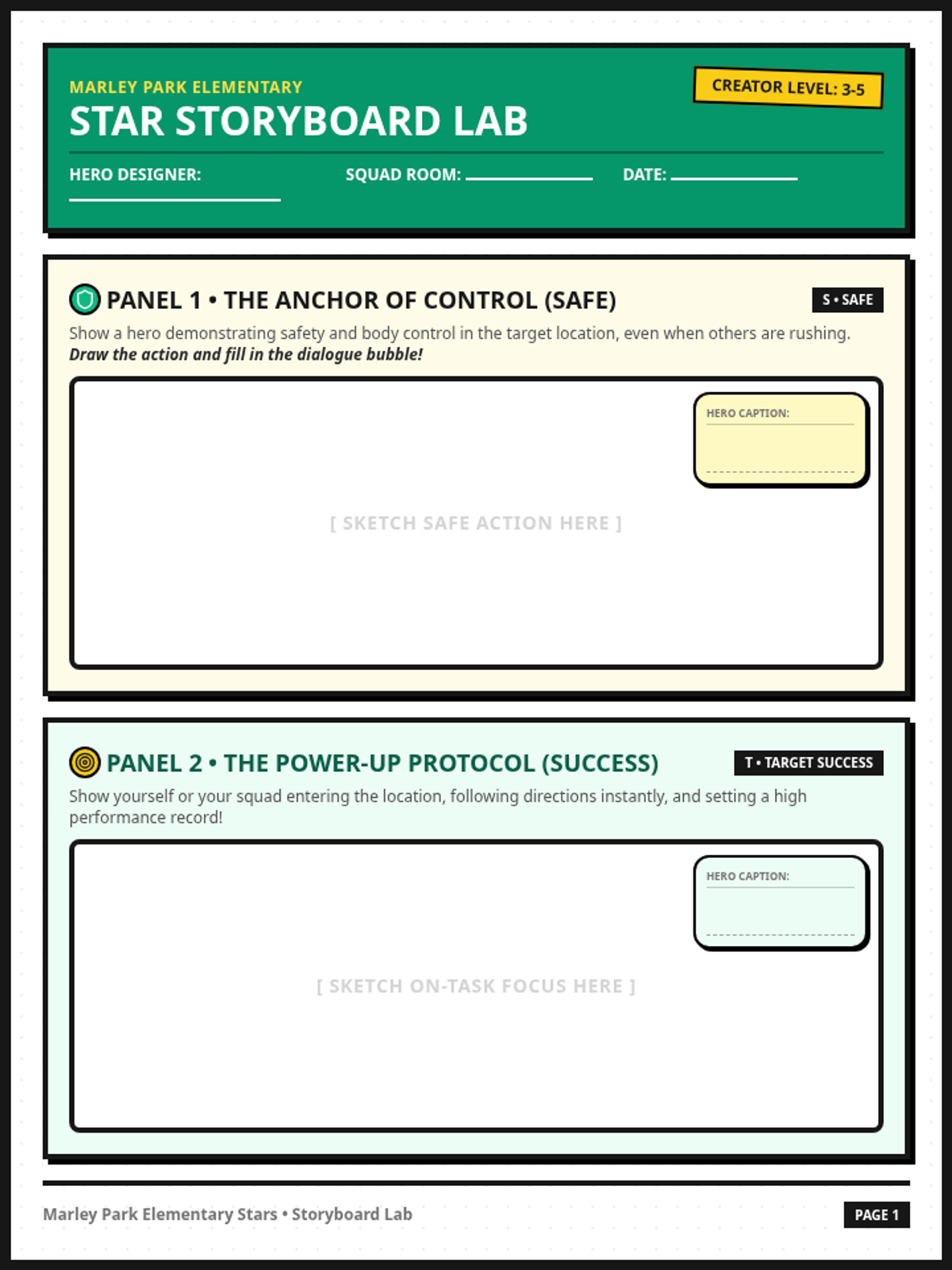
A universal 5-day lesson set for grades 3-5 that shifts focus toward student ownership, comic storyboard creation, and scenario-based problem solving to understand STAR expectations in any school setting.
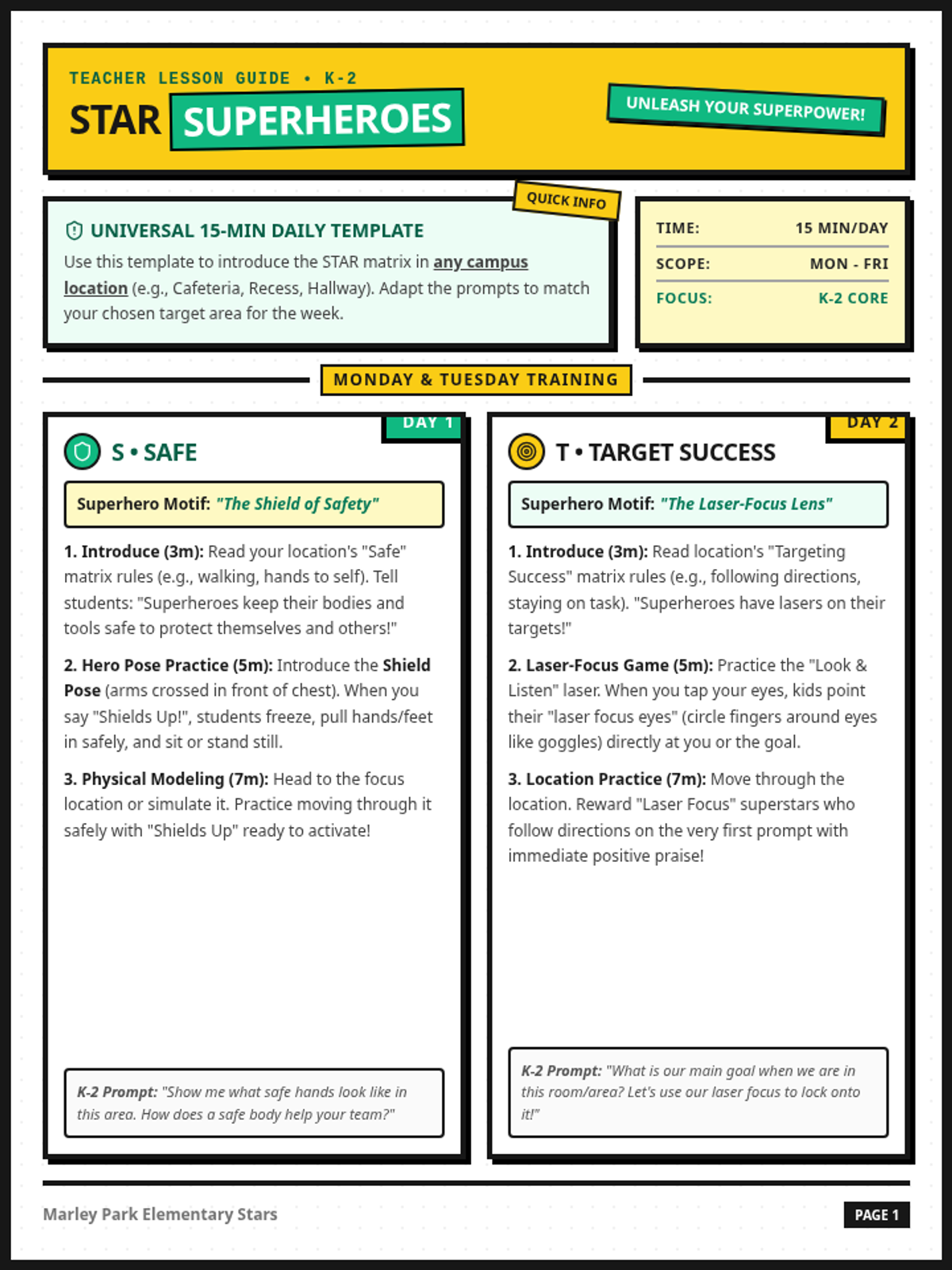
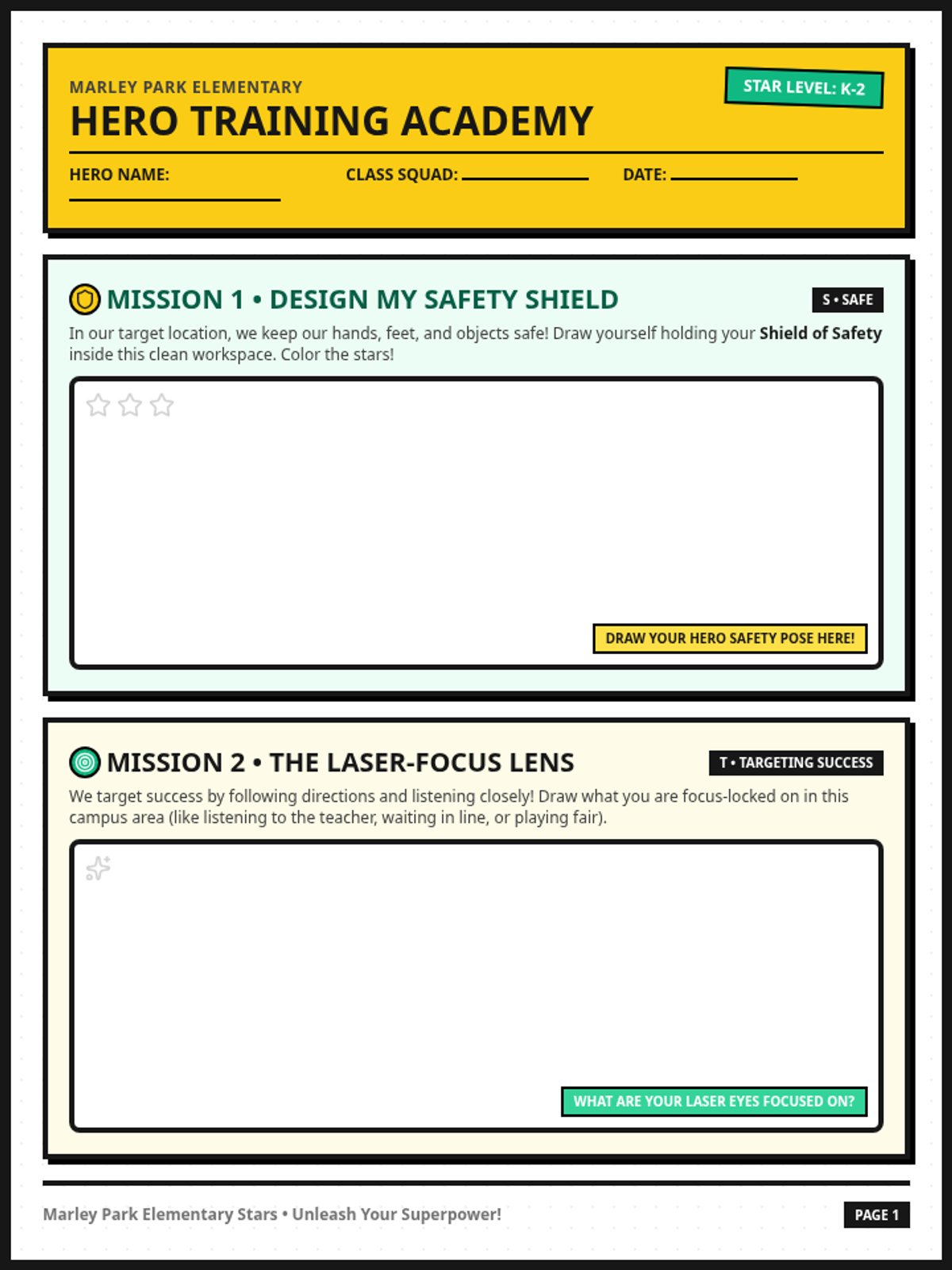
A universal 5-day lesson set for K-2 students focused on introducing STAR expectations (Safe, Targeting Success, Acting with Integrity, Respectful & Responsible) in any campus location through physical modeling, simple superhero analogies, and an interactive superhero-themed student activity guide.
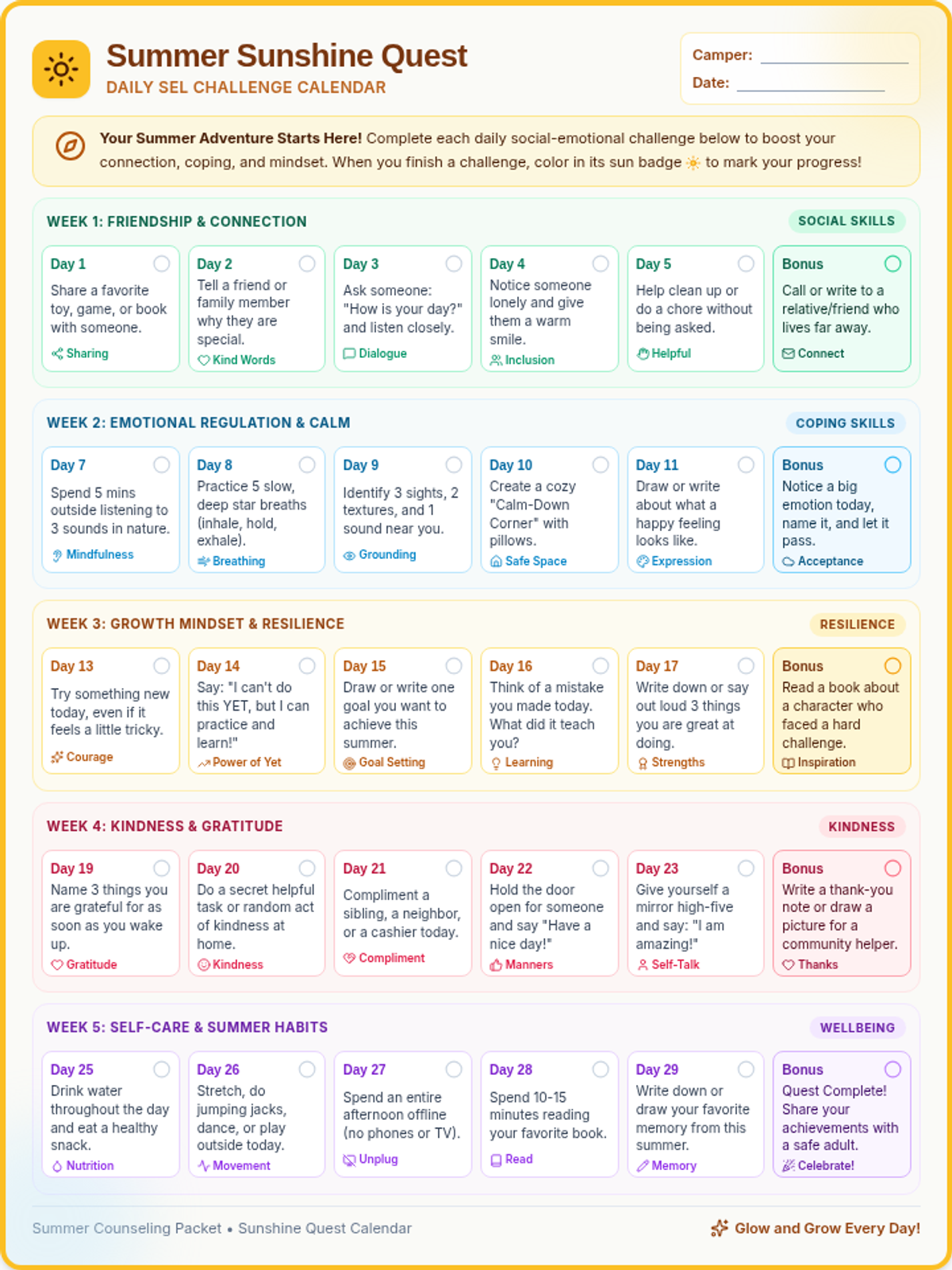
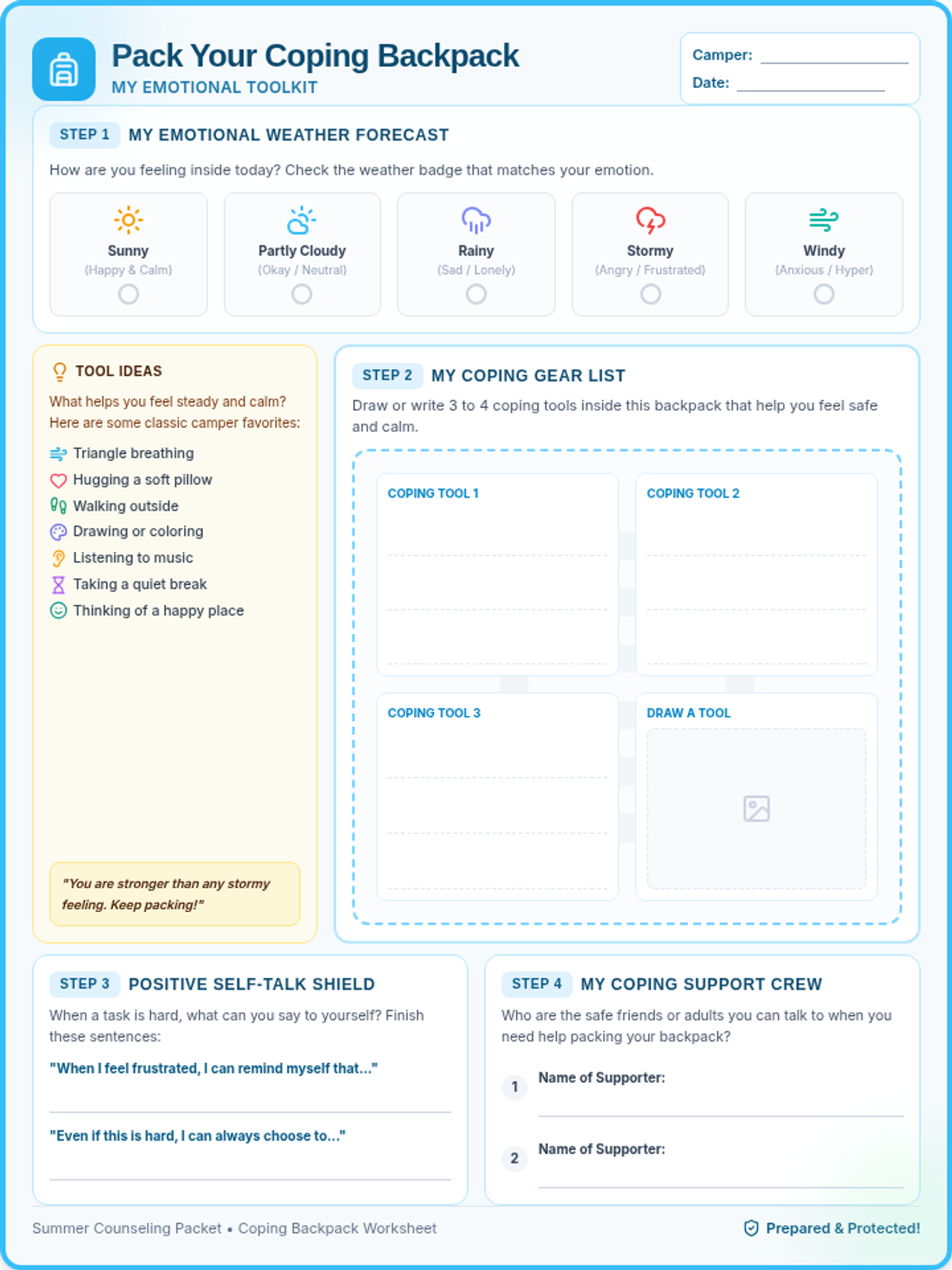
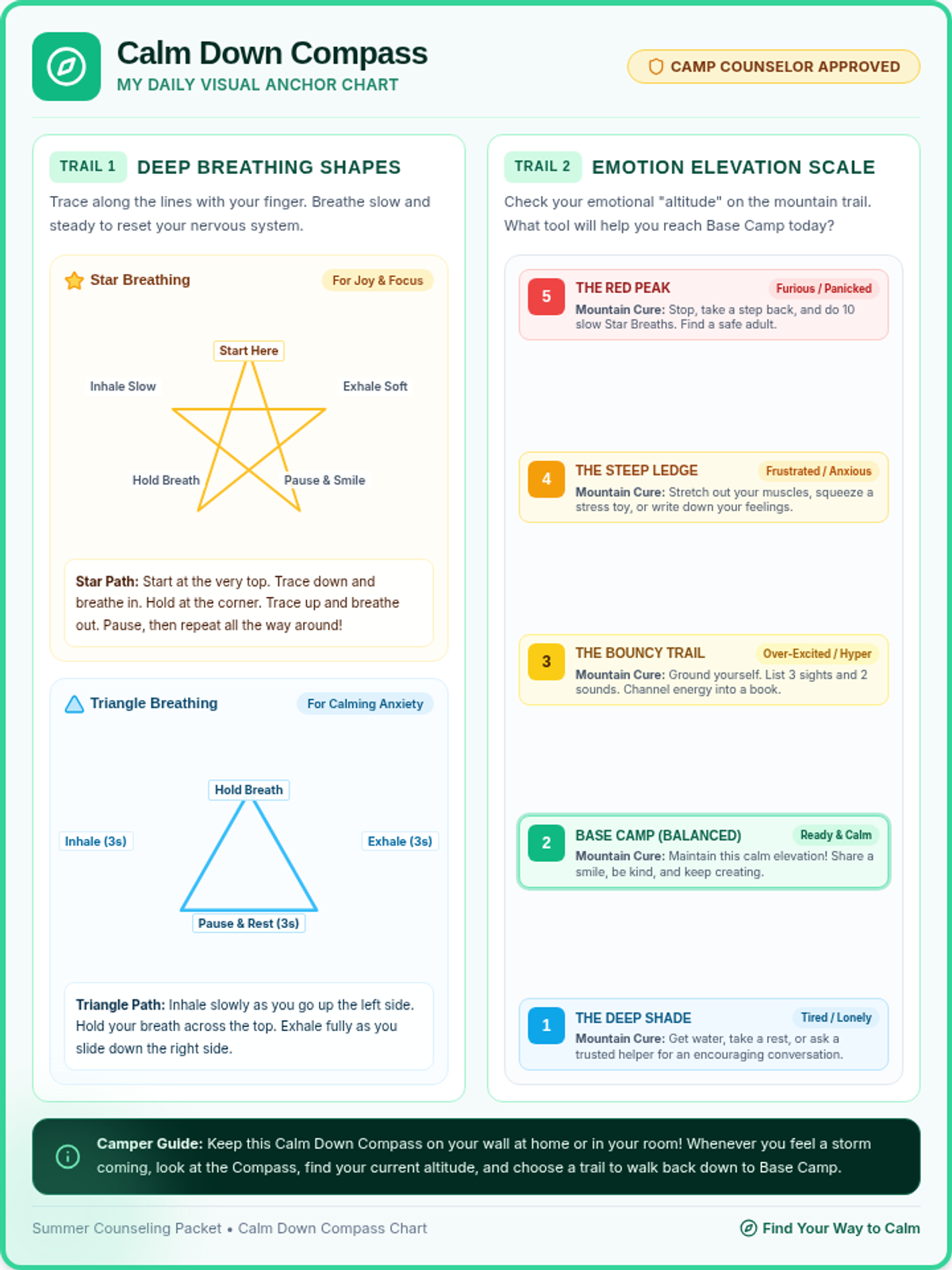
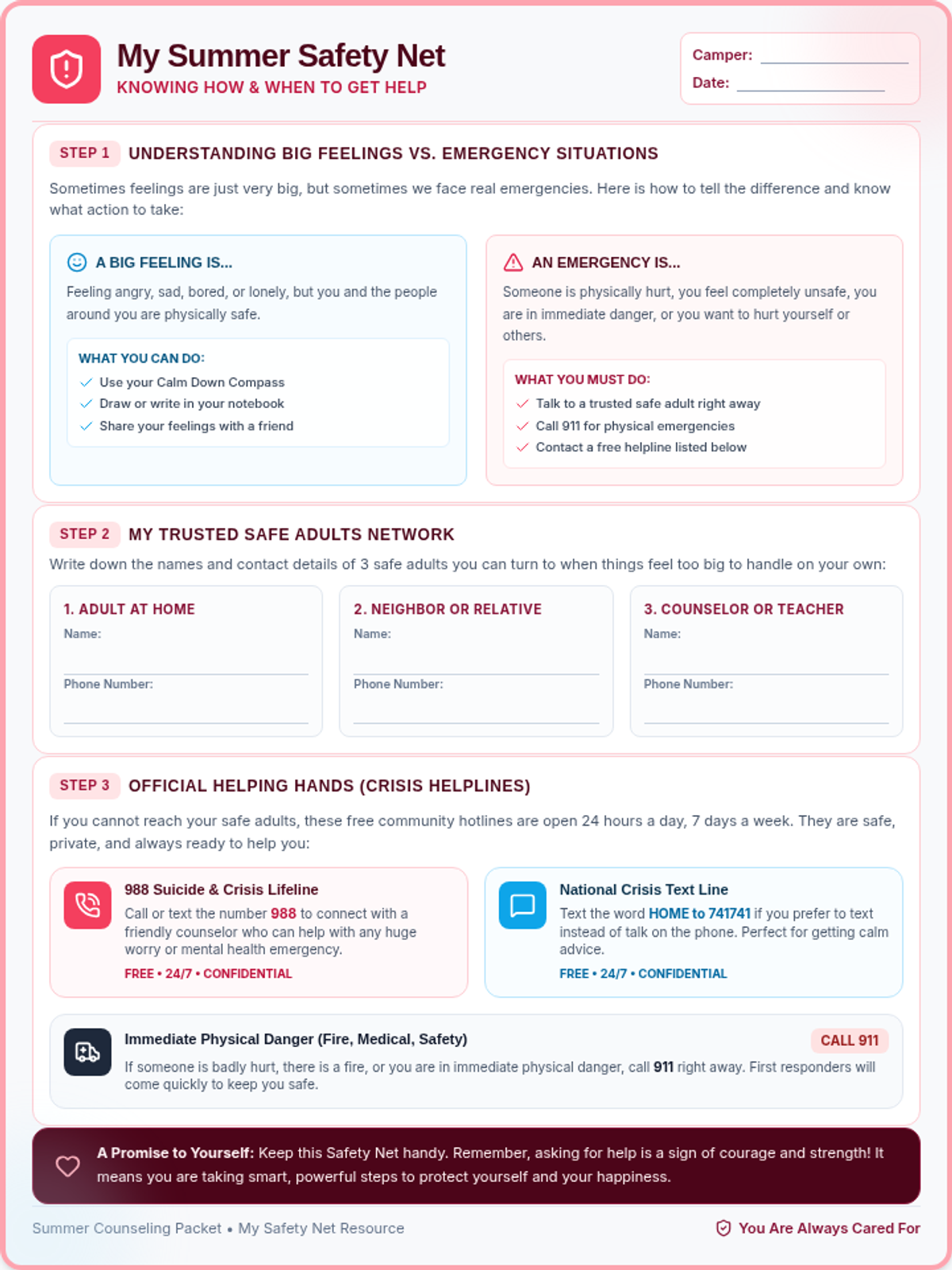
A comprehensive summer counseling packet containing daily SEL challenge calendars, coping skill worksheets, deep breathing visual anchor charts, and a safety net resource for getting help in emergencies.
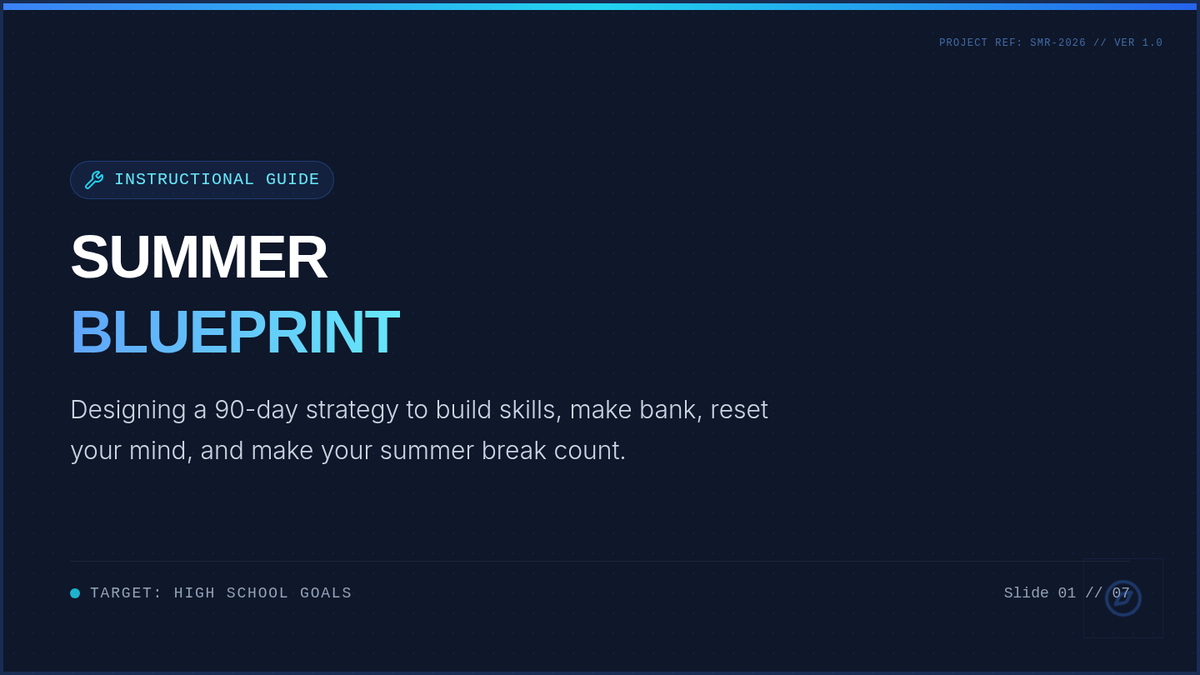
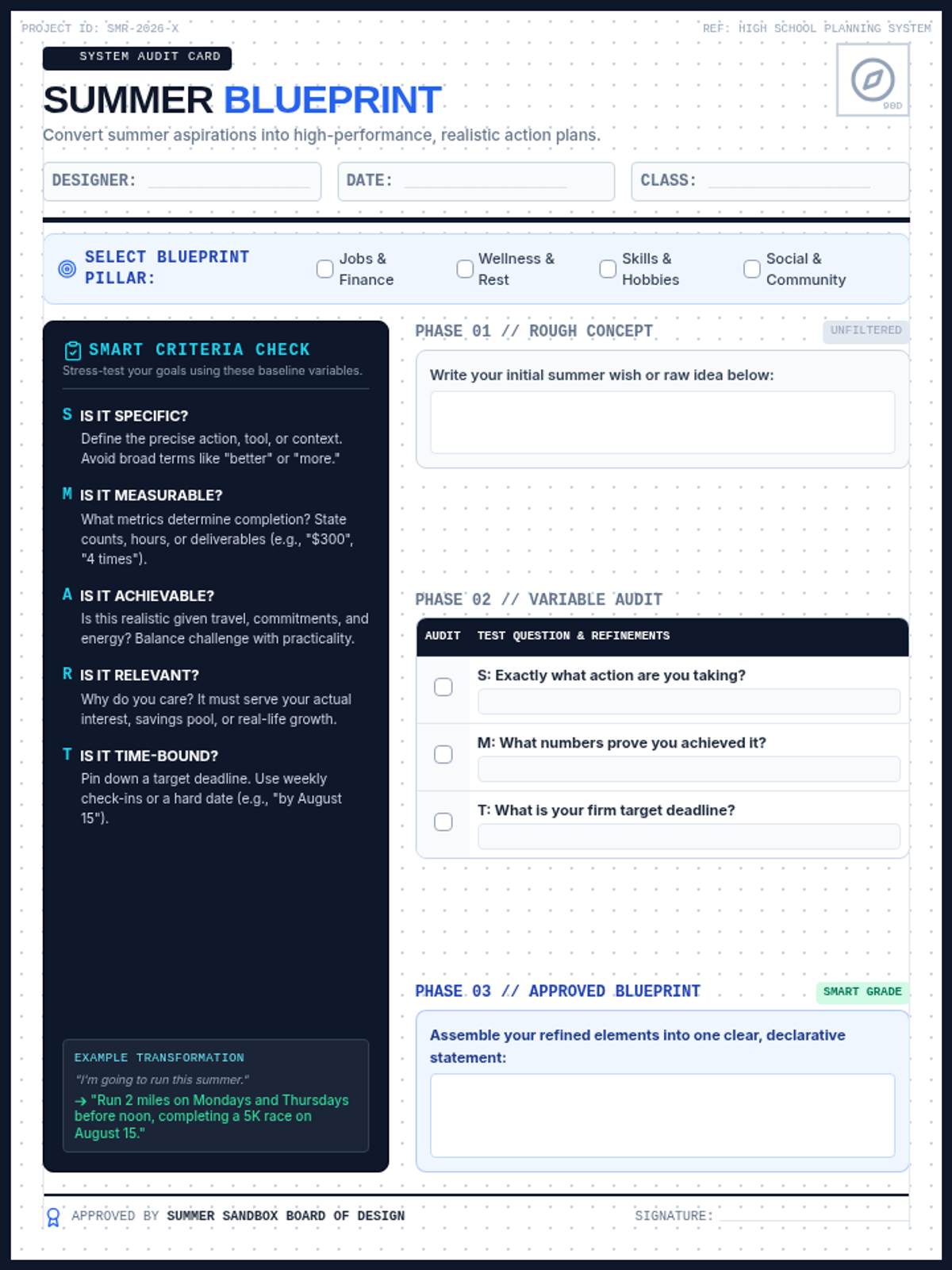
A highly engaging 15-minute lesson designed to help high school students set structured, actionable summer goals across four key areas: employment/finances, mental health, skill-building, and community connection. Students learn to use the SMART framework to turn vague summer aspirations into custom, realistic blueprints.
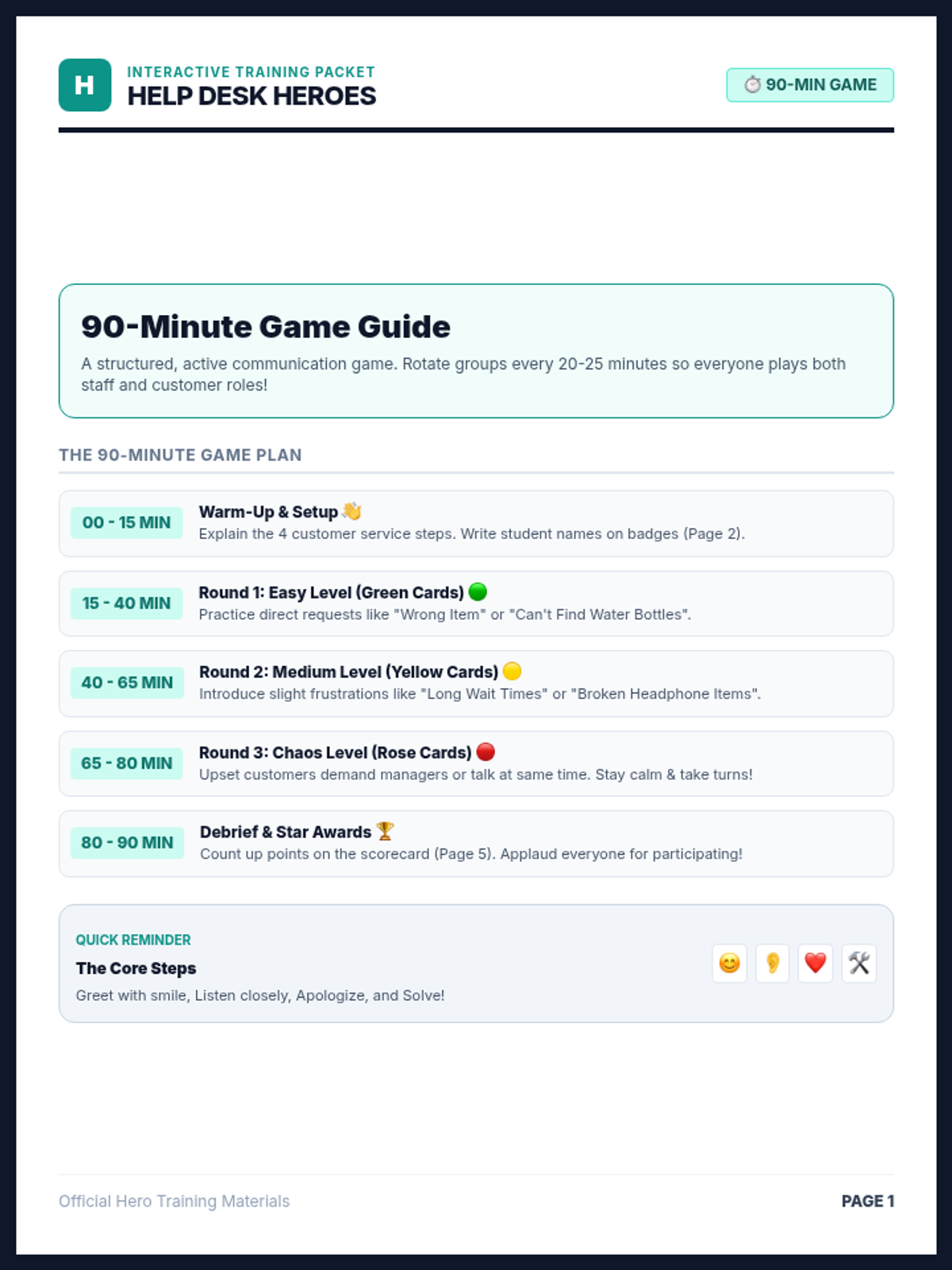
An active customer service roleplay game for adults with IDD. Students practice essential social, communication, and problem-solving skills through authentic workplace scenarios and interactive group rotations.
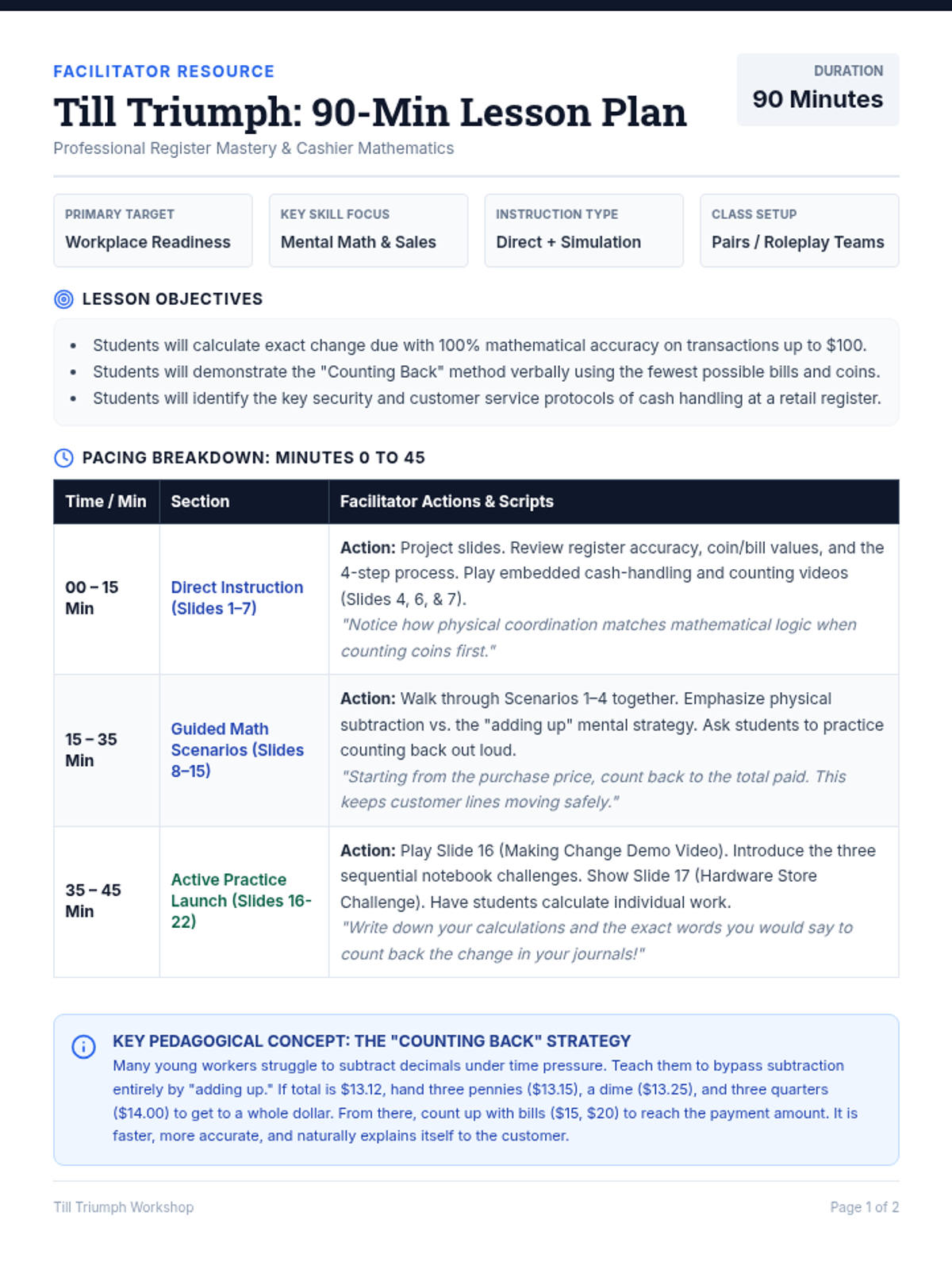
A comprehensive 90-minute workplace readiness lesson on physical money handling and exact change calculations. It features a detailed slide presentation, an interactive classroom register simulation, student calculation worksheets, and a step-by-step roleplay challenge.
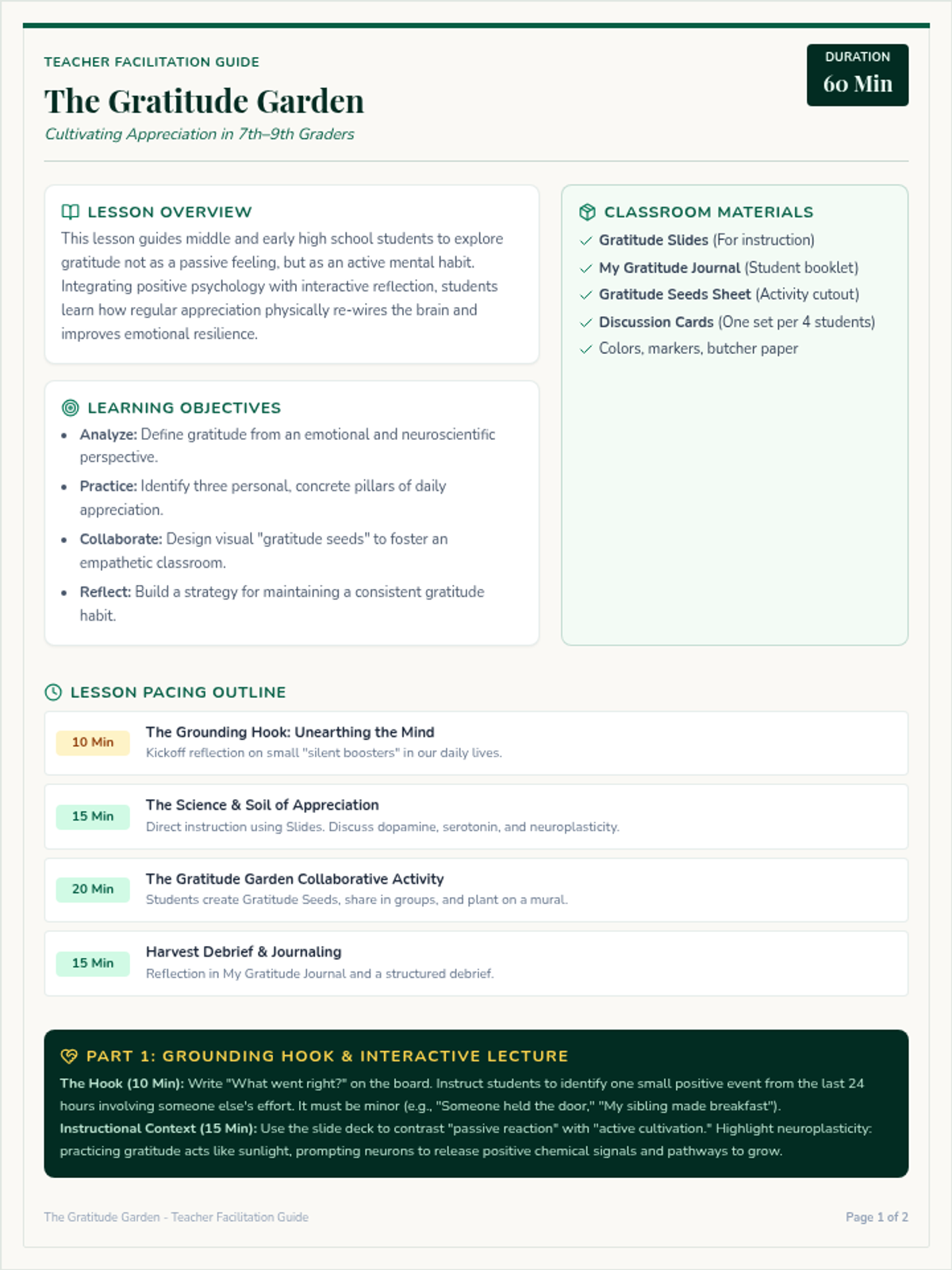
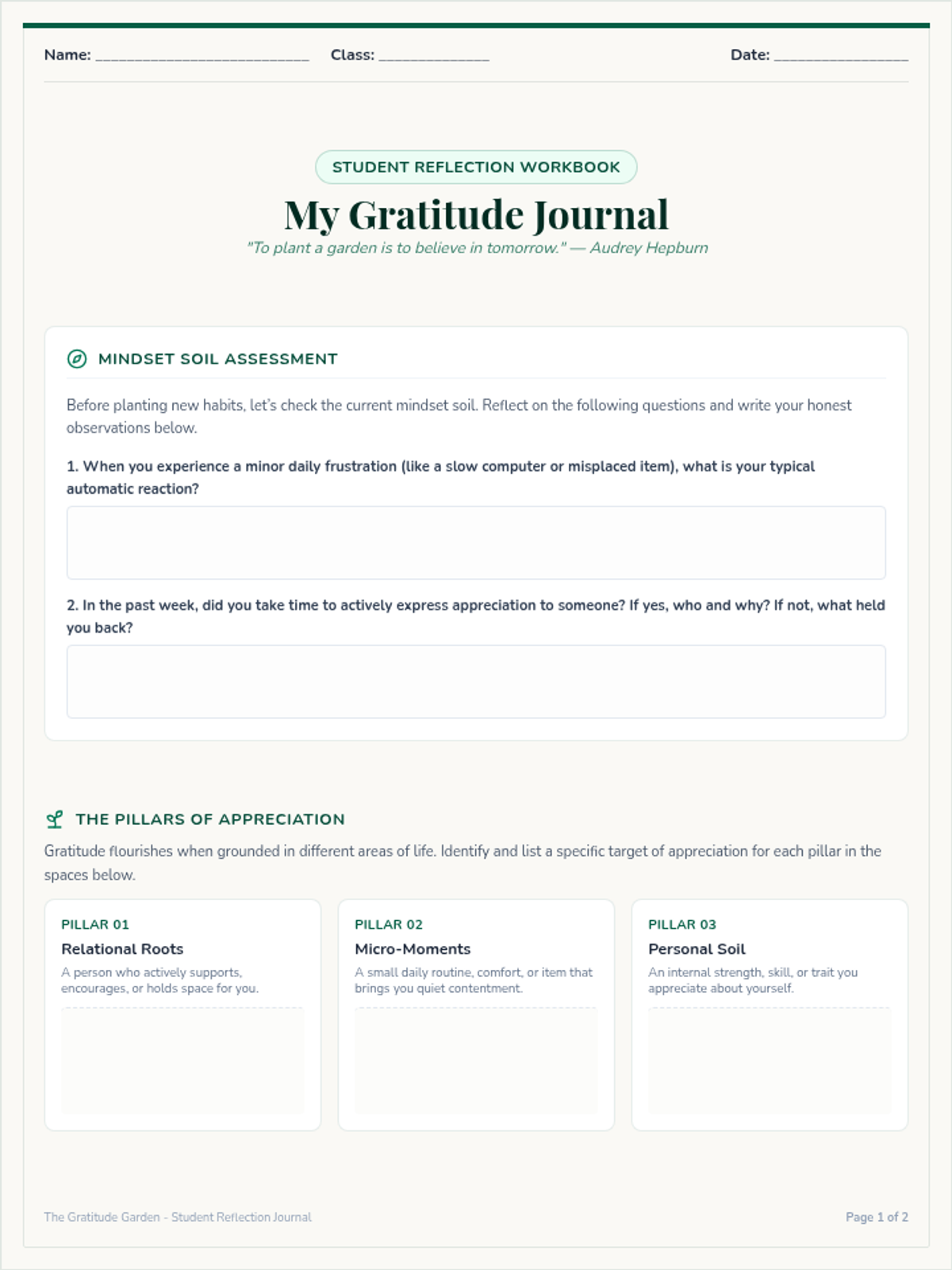
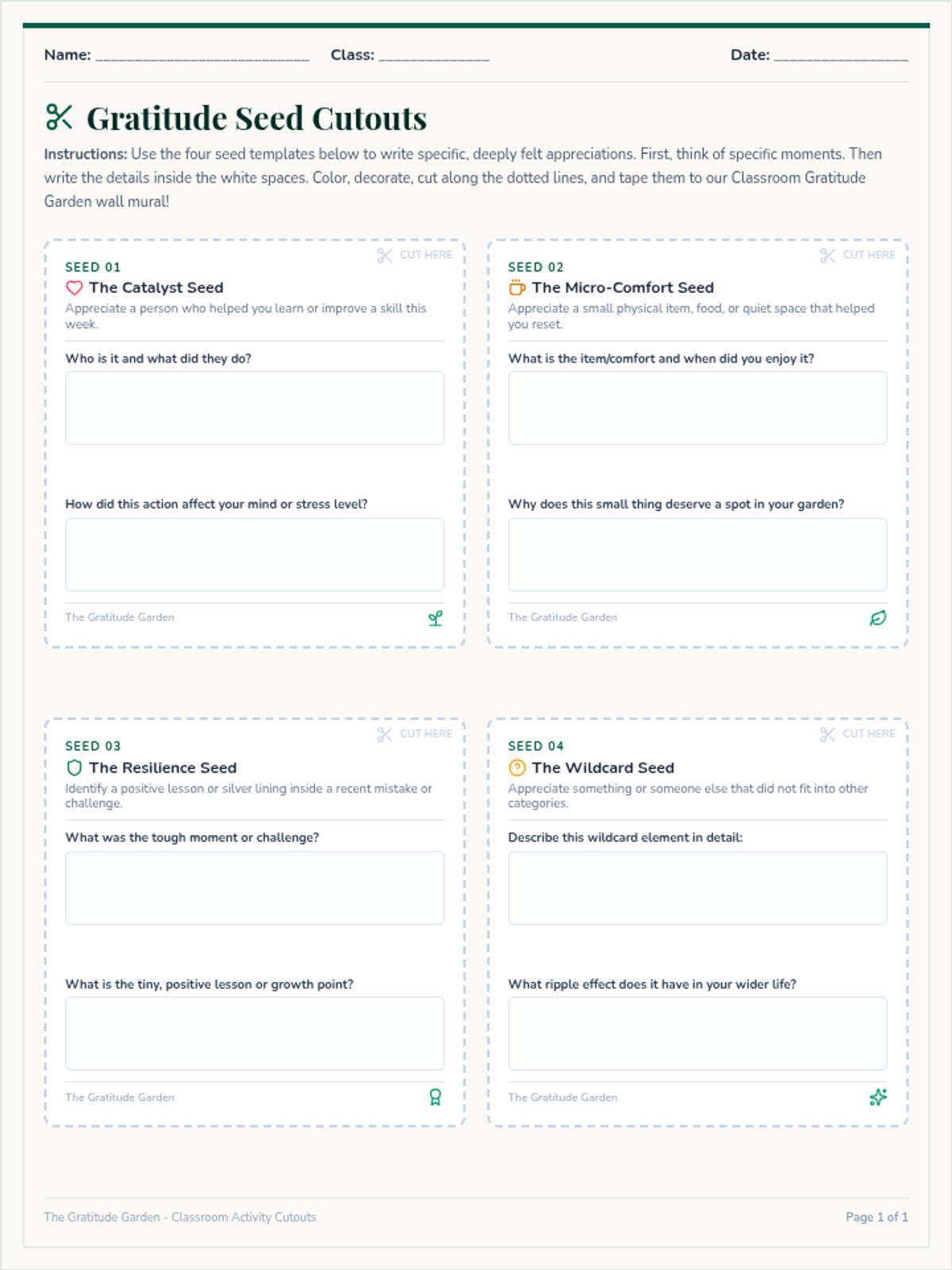
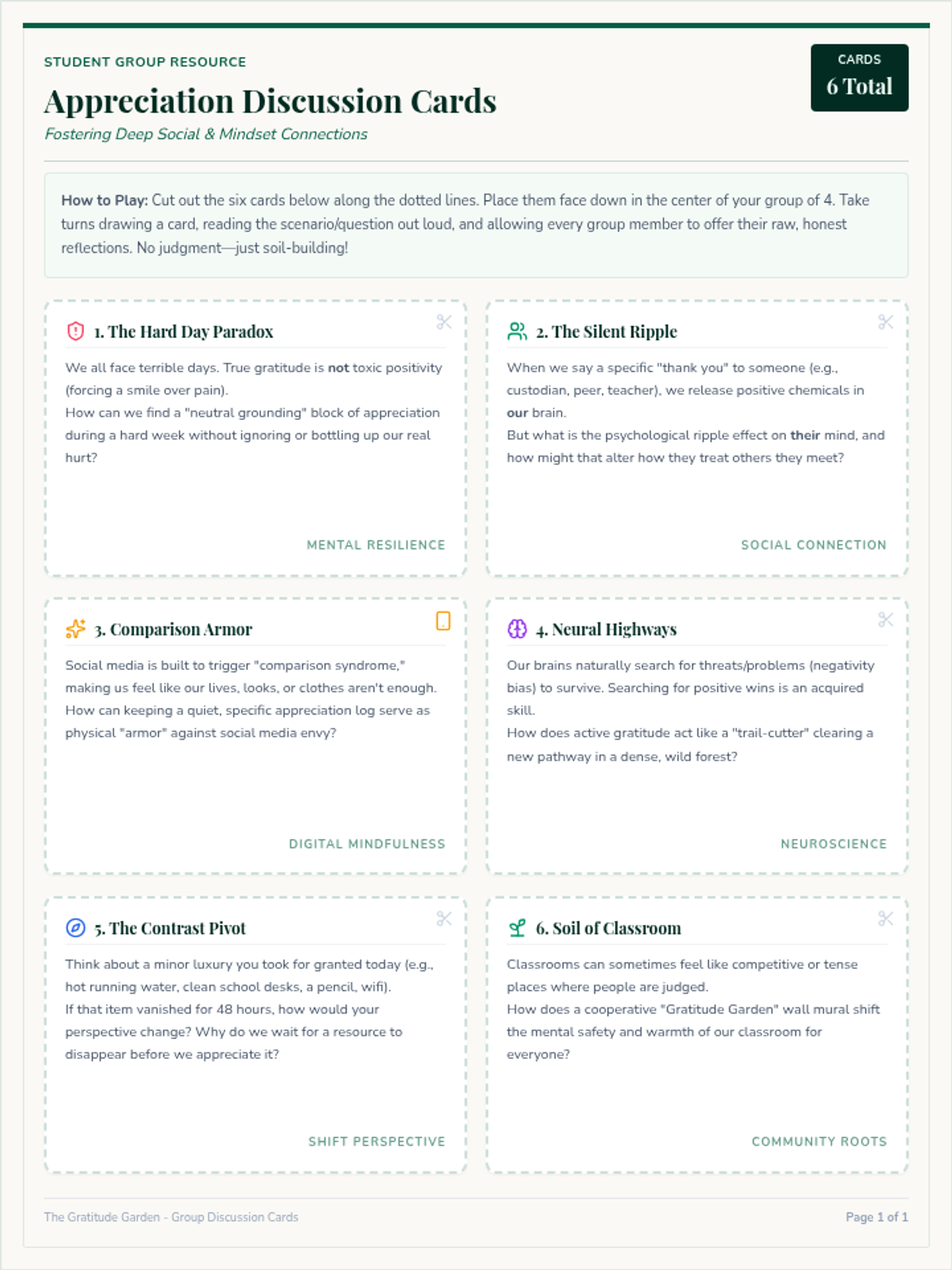
A reflective and collaborative lesson for 7th-9th graders exploring the science and practice of gratitude. Students will discover how cultivating appreciation improves emotional well-being and strengthens relationships through journaling and interactive activities.
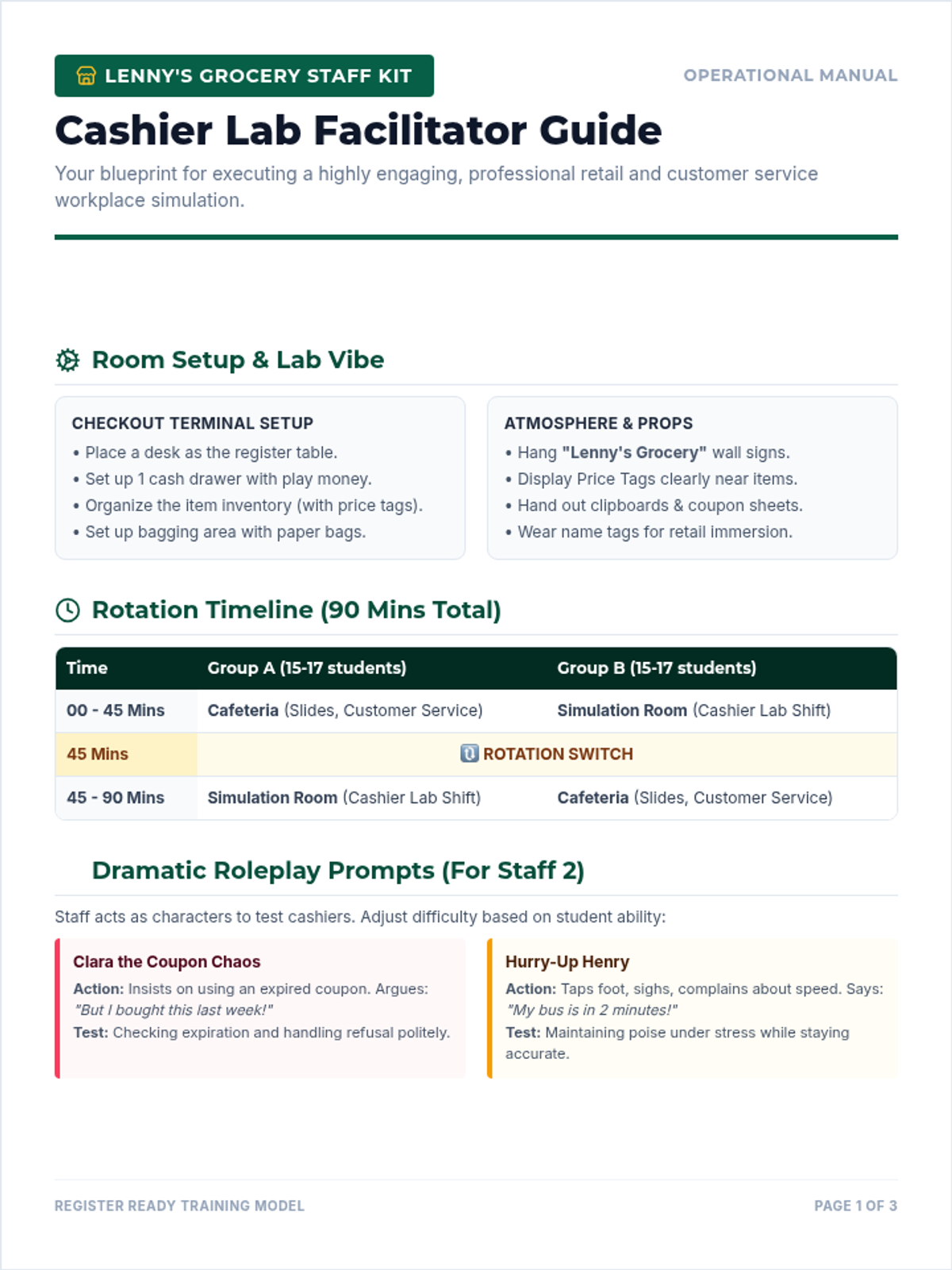
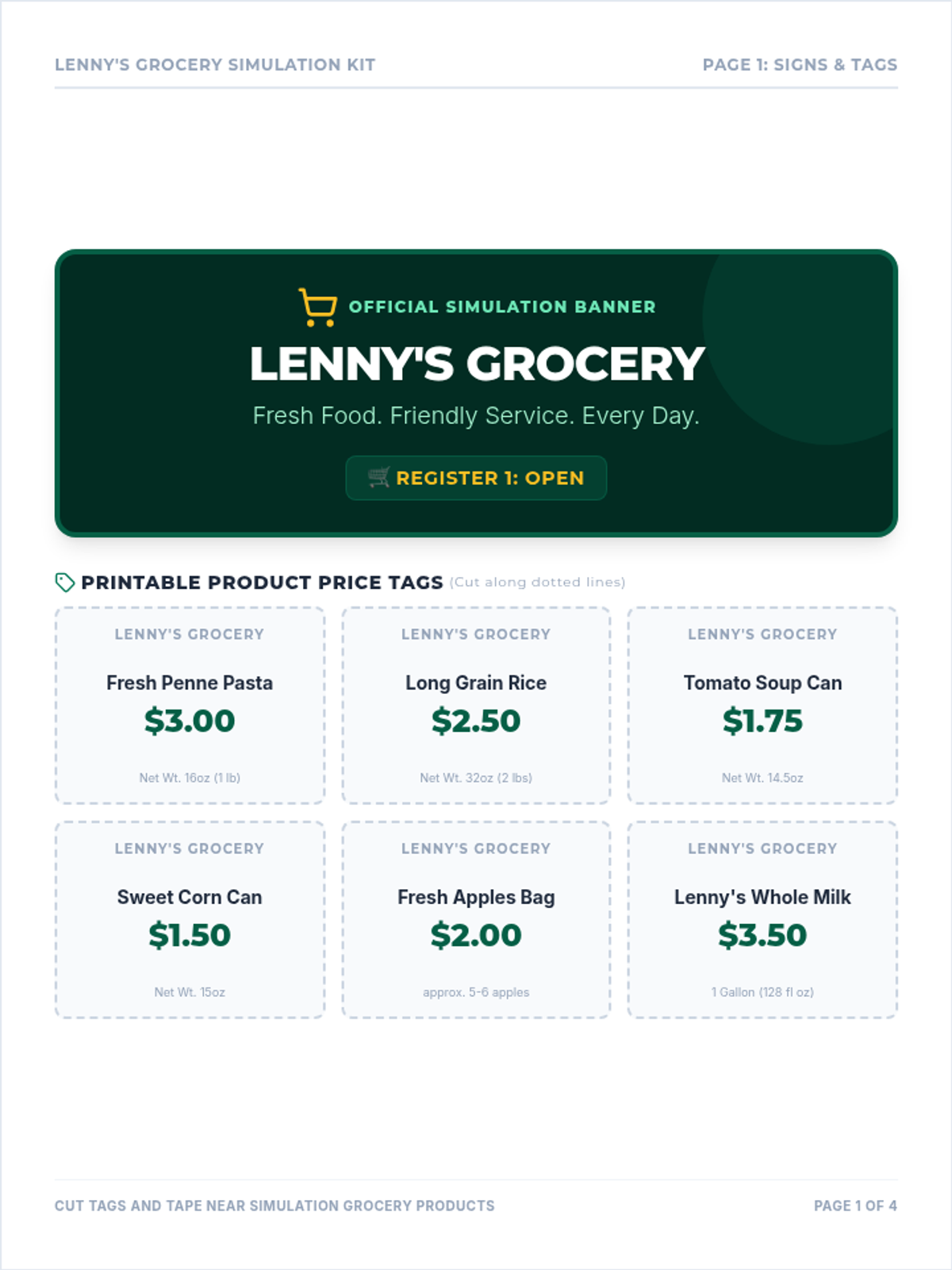
A dynamic rotation lesson where students split between a multimedia classroom training and a realistic, hands-on grocery checkout simulation.
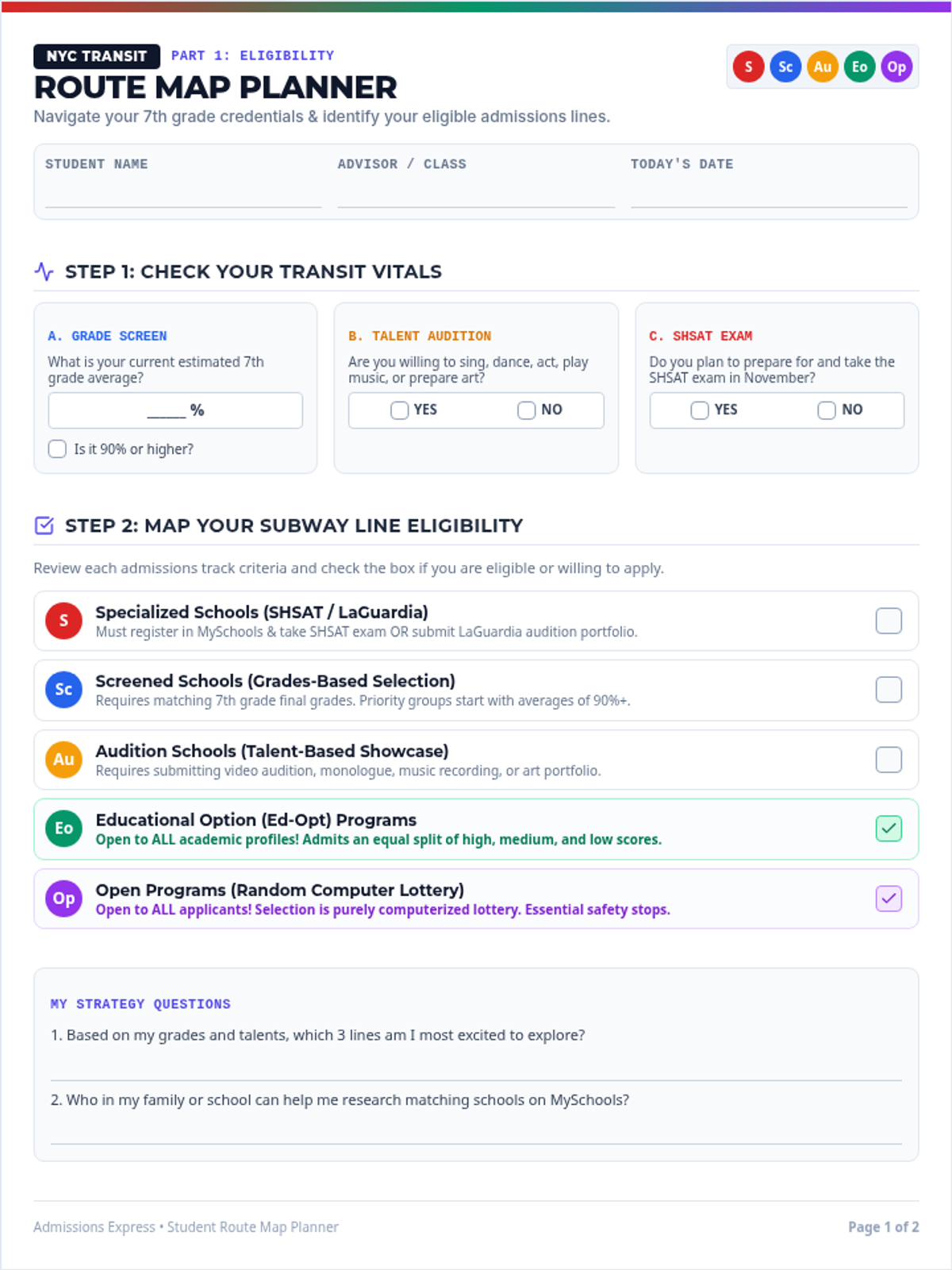
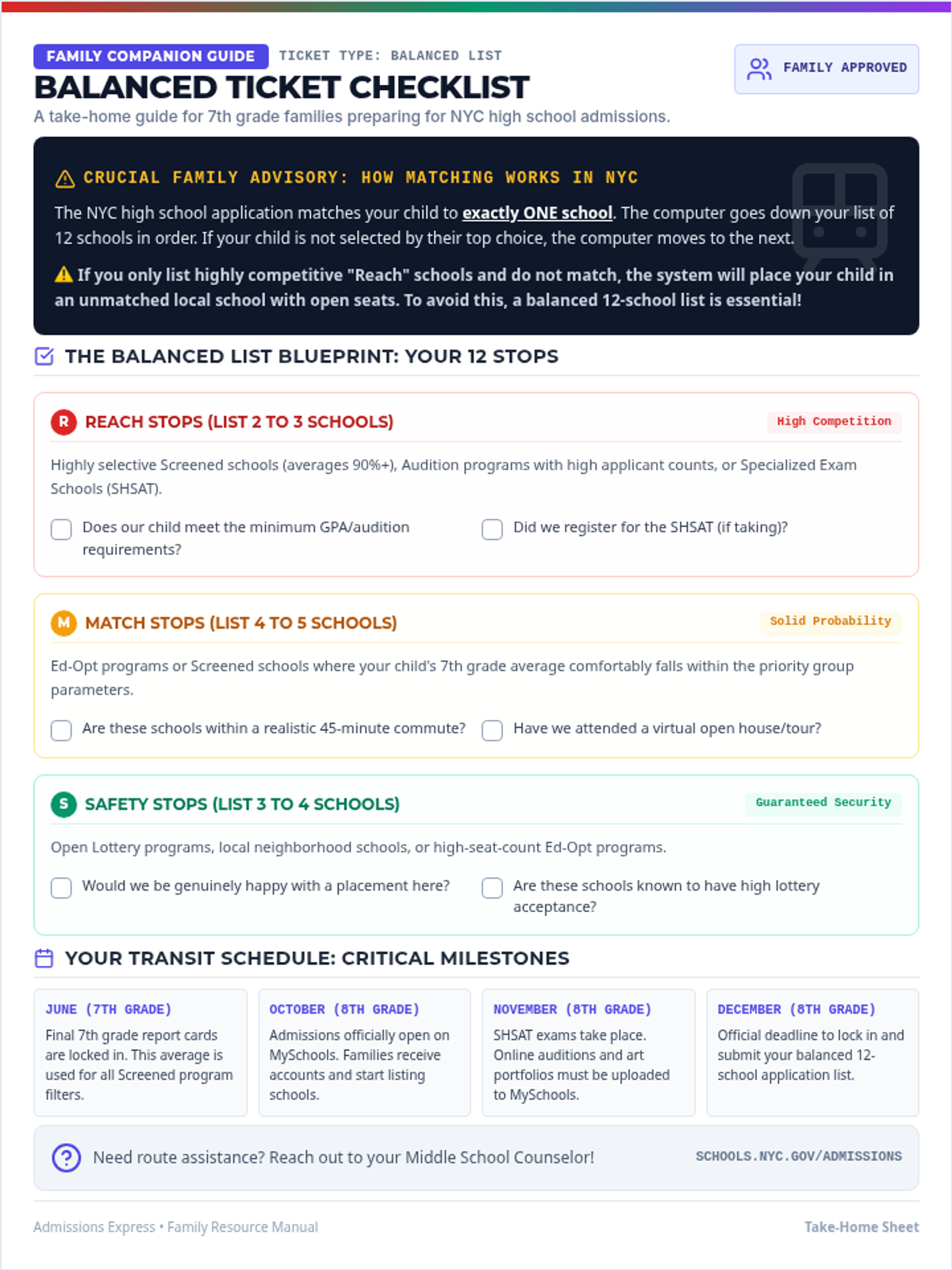
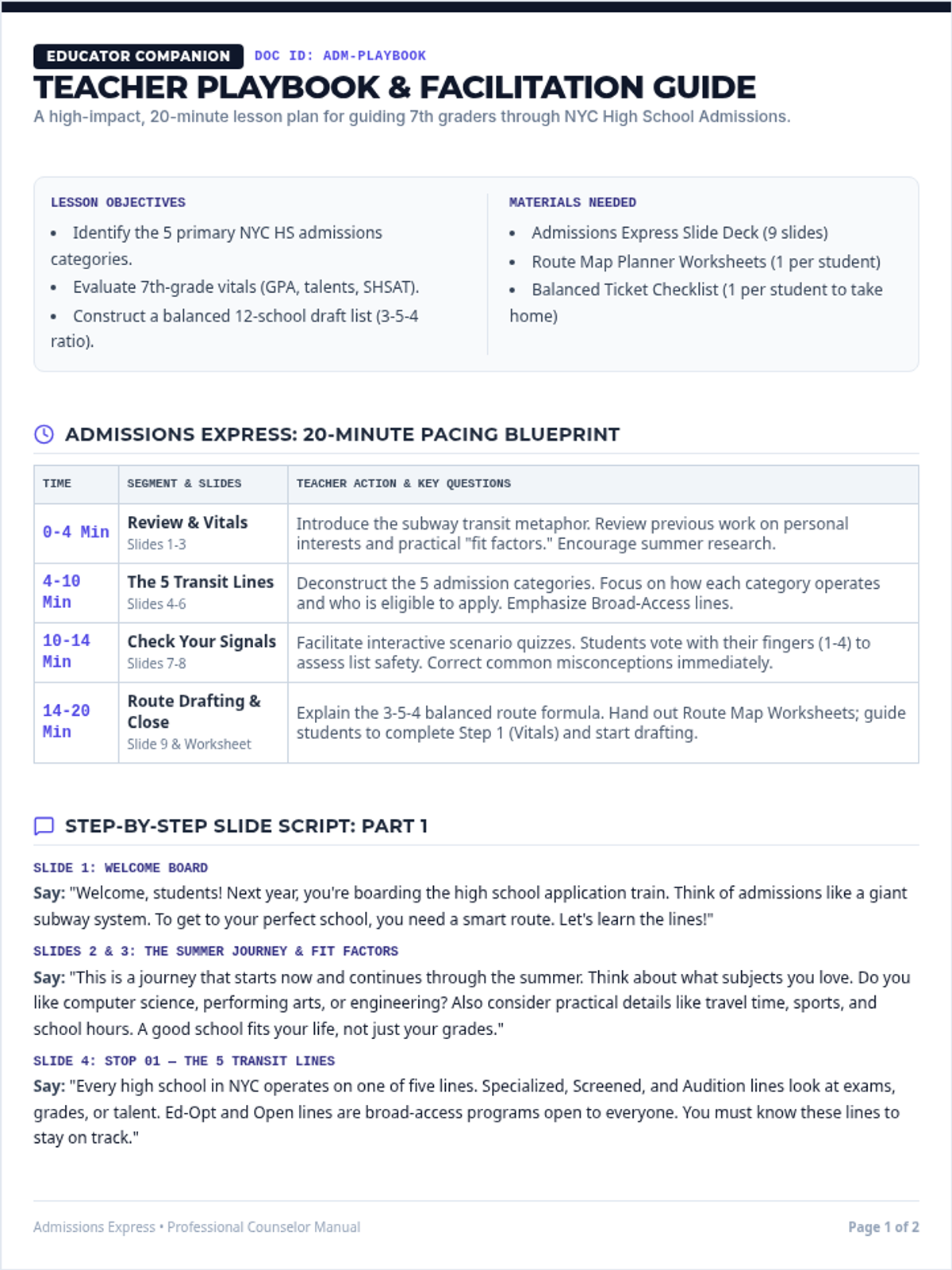
A high-impact, 20-minute lesson designed to guide 7th-grade students through the NYC high school admissions process. Students explore the five primary admission categories and learn how to construct a balanced list of schools using an interactive mountain-themed adventure planner.
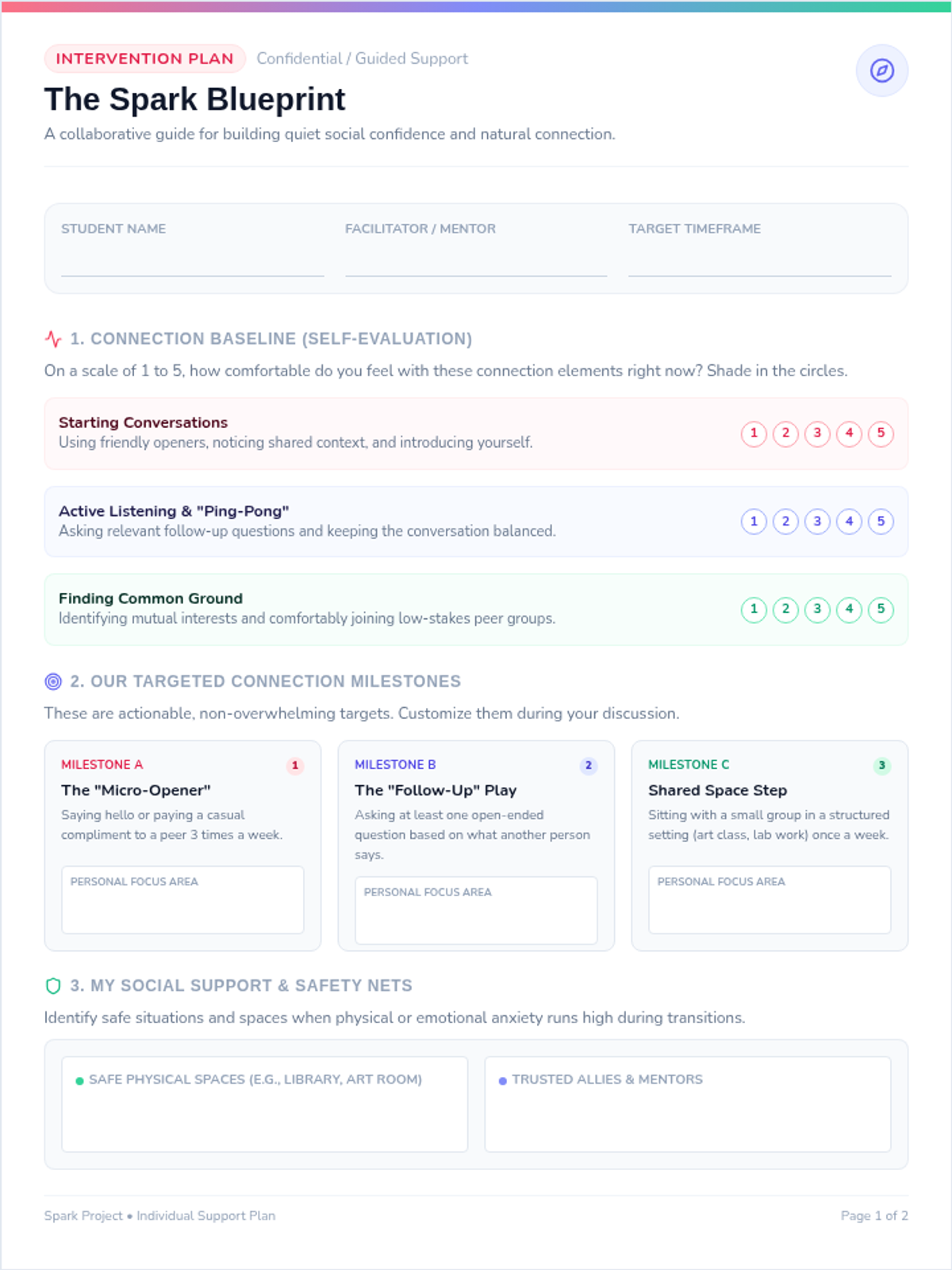
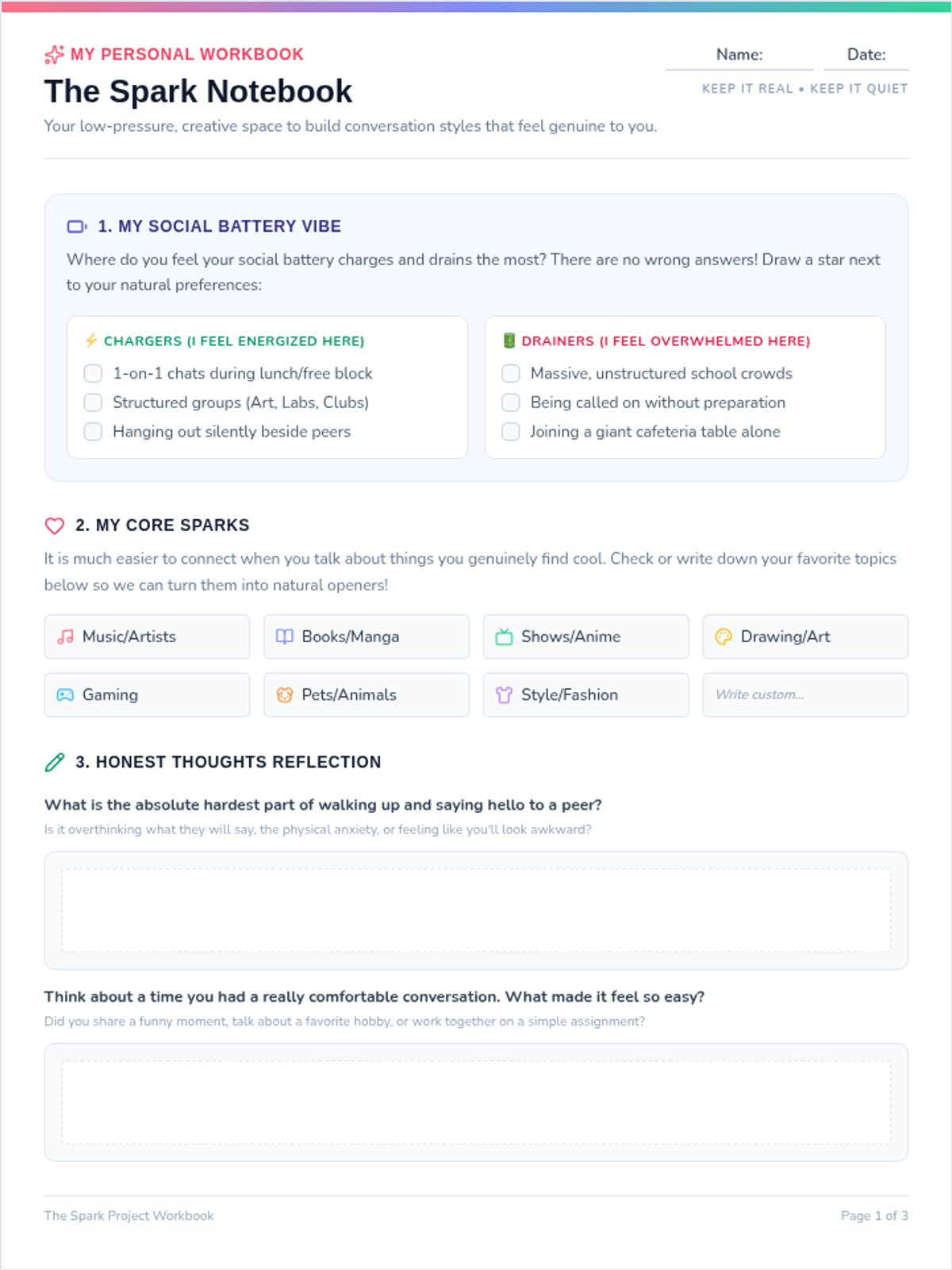
A targeted intervention and student workbook sequence focused on helping middle school students, particularly 8th-grade girls, master starting conversations, active listening, and building quiet social confidence through low-stakes challenges.
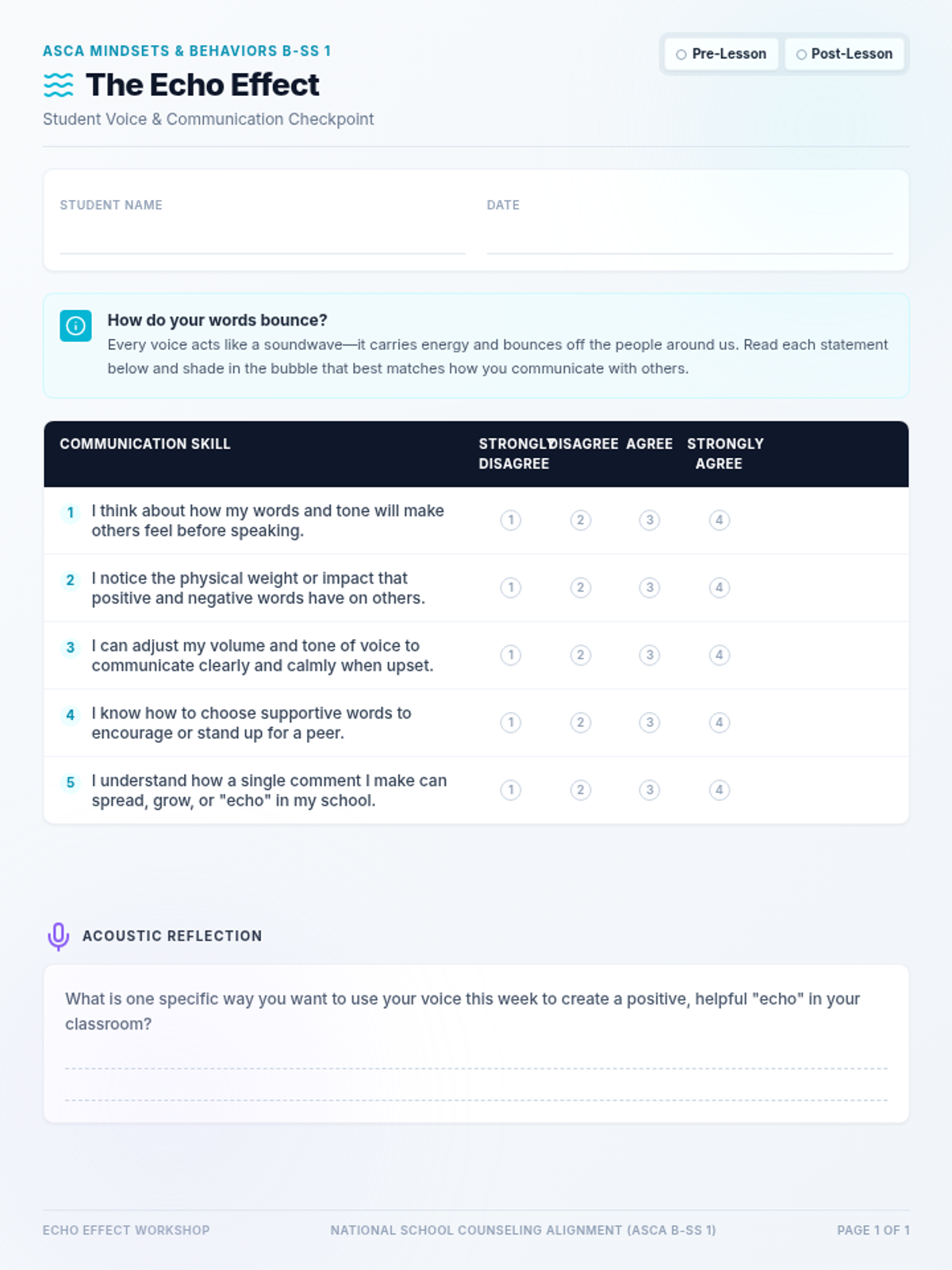
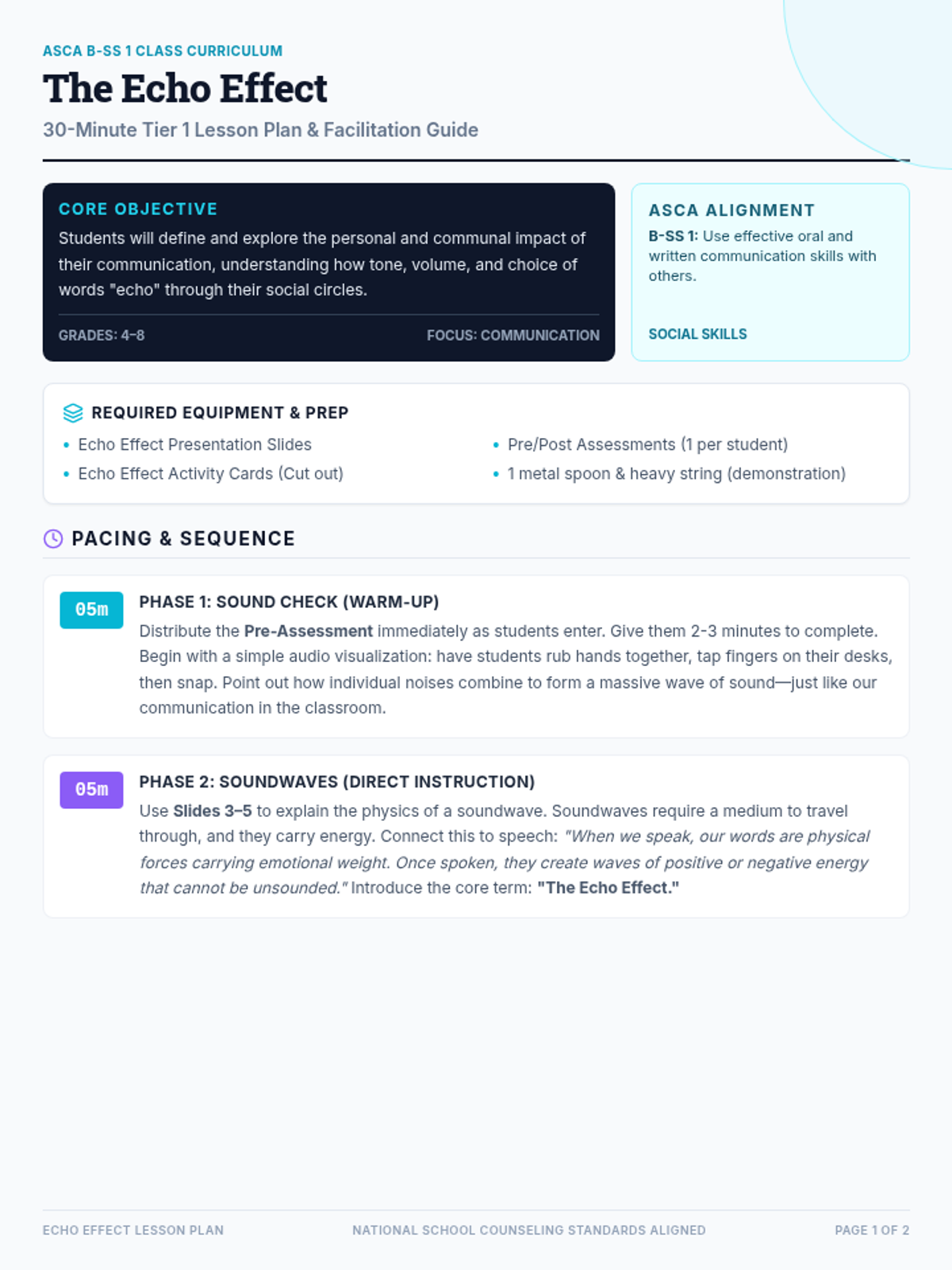
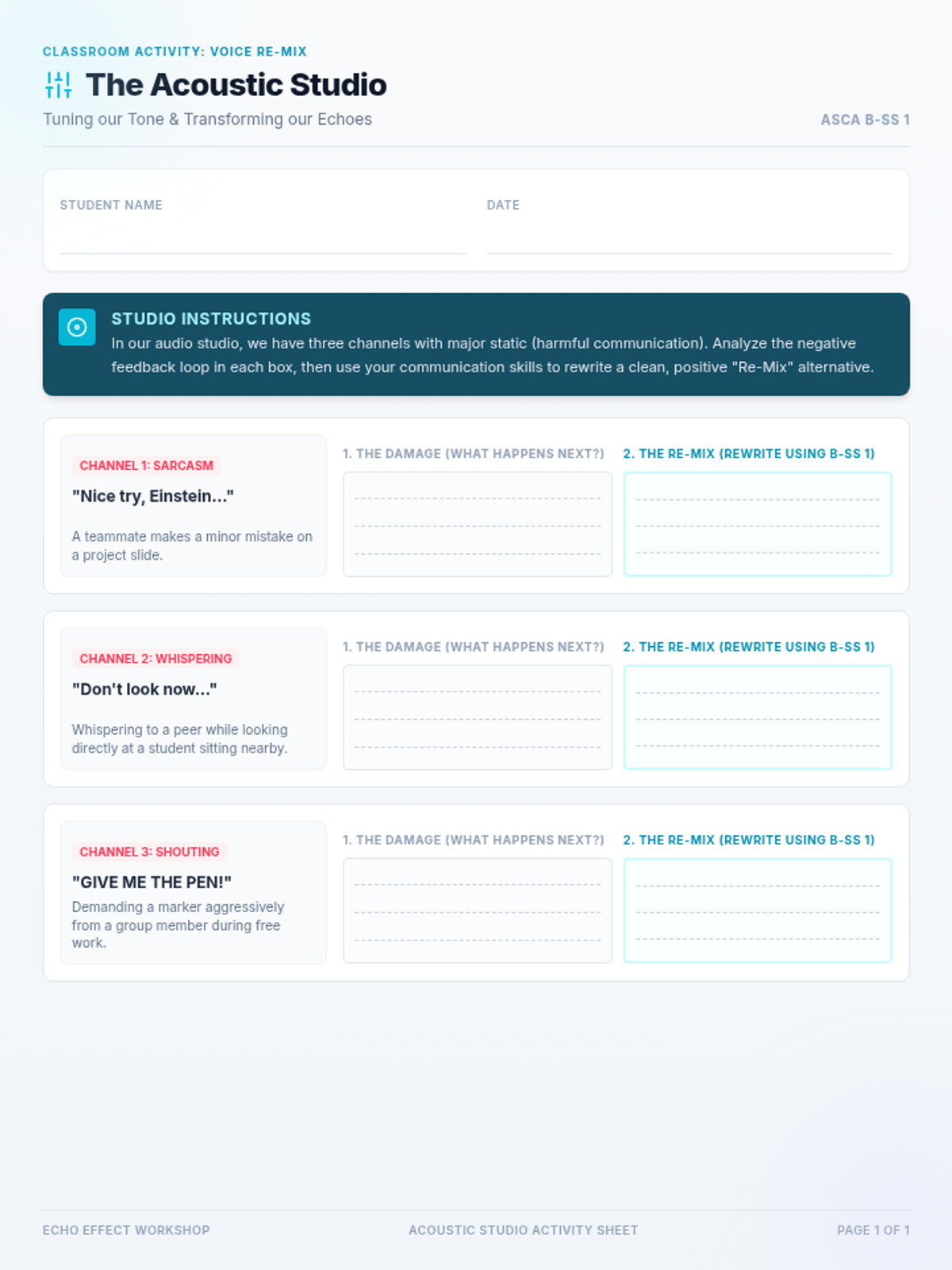
A Tier 1 classroom lesson designed to teach students how their words and voice carry weight, impact others, and echo through their social environments. Aligned with ASCA Mindsets & Behaviors B-SS 1 (effective oral and written communication).
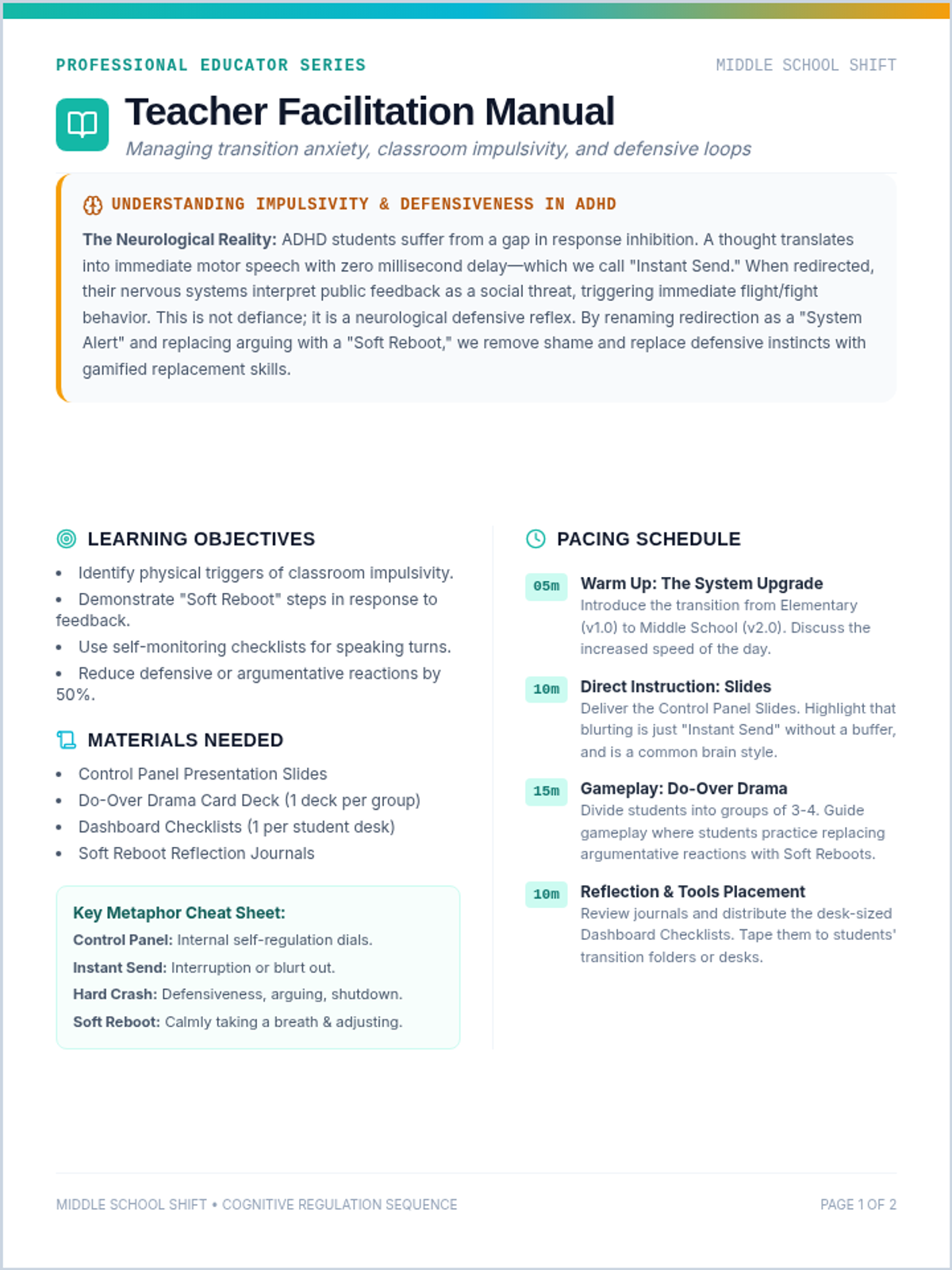
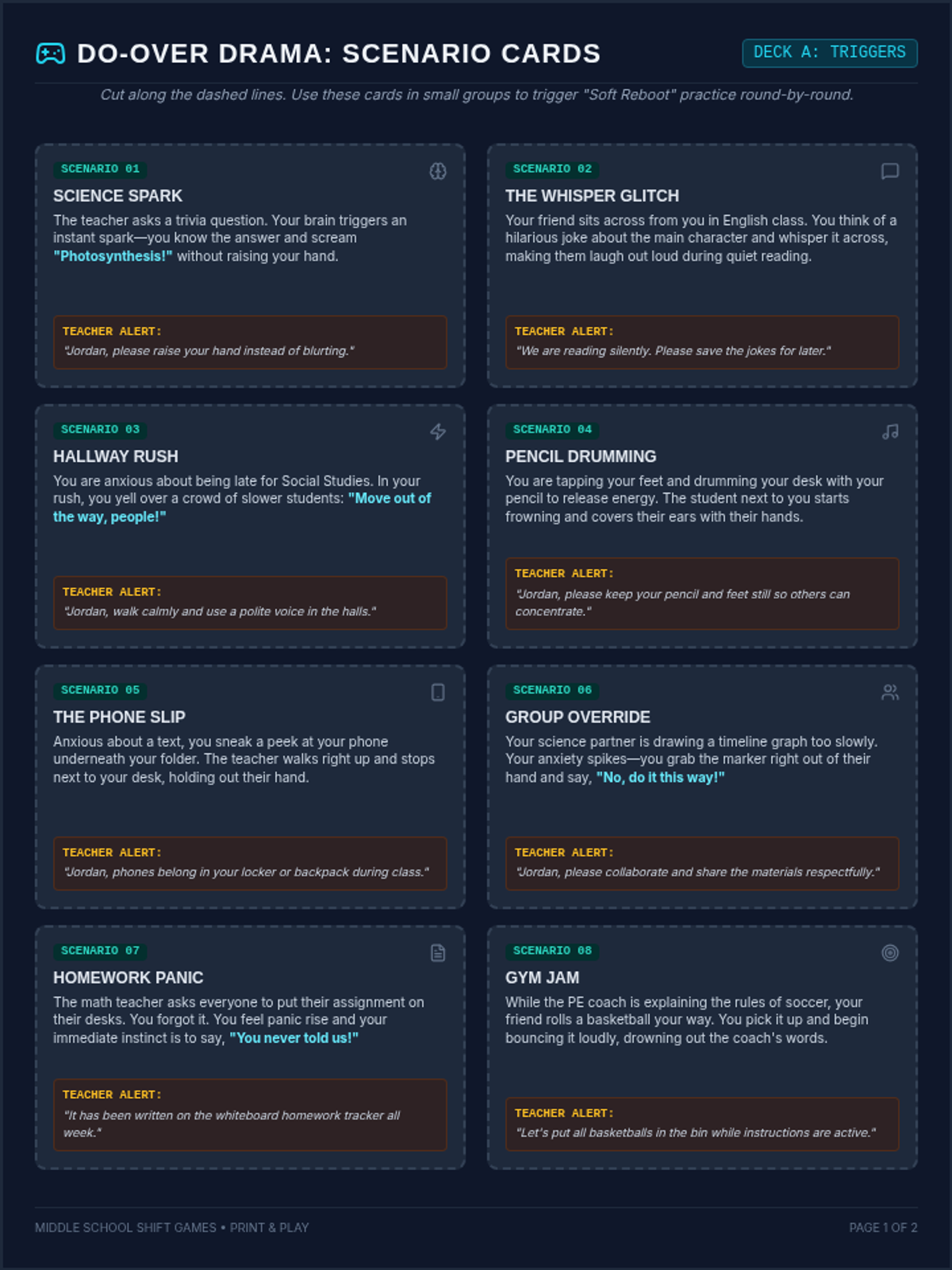
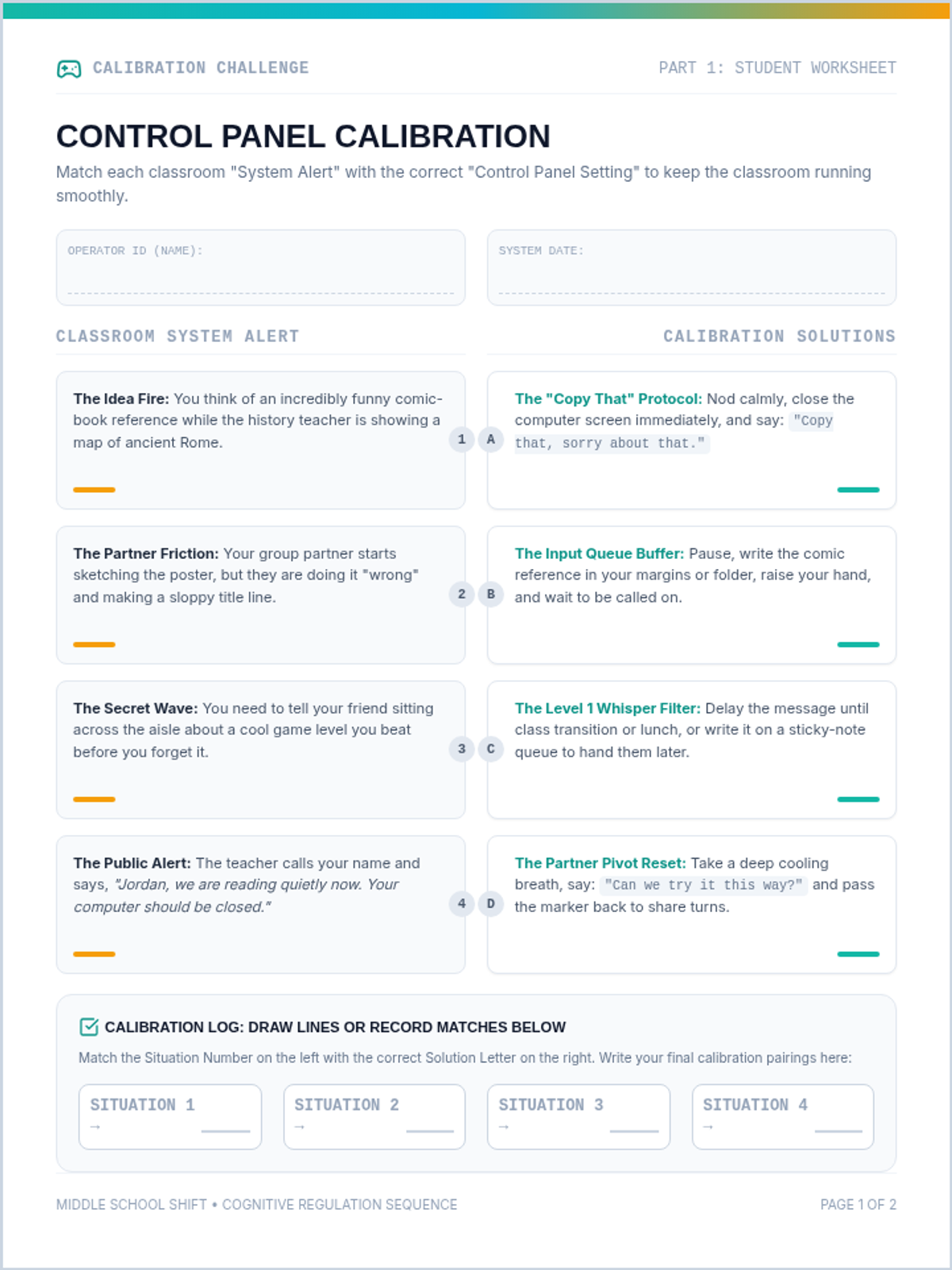
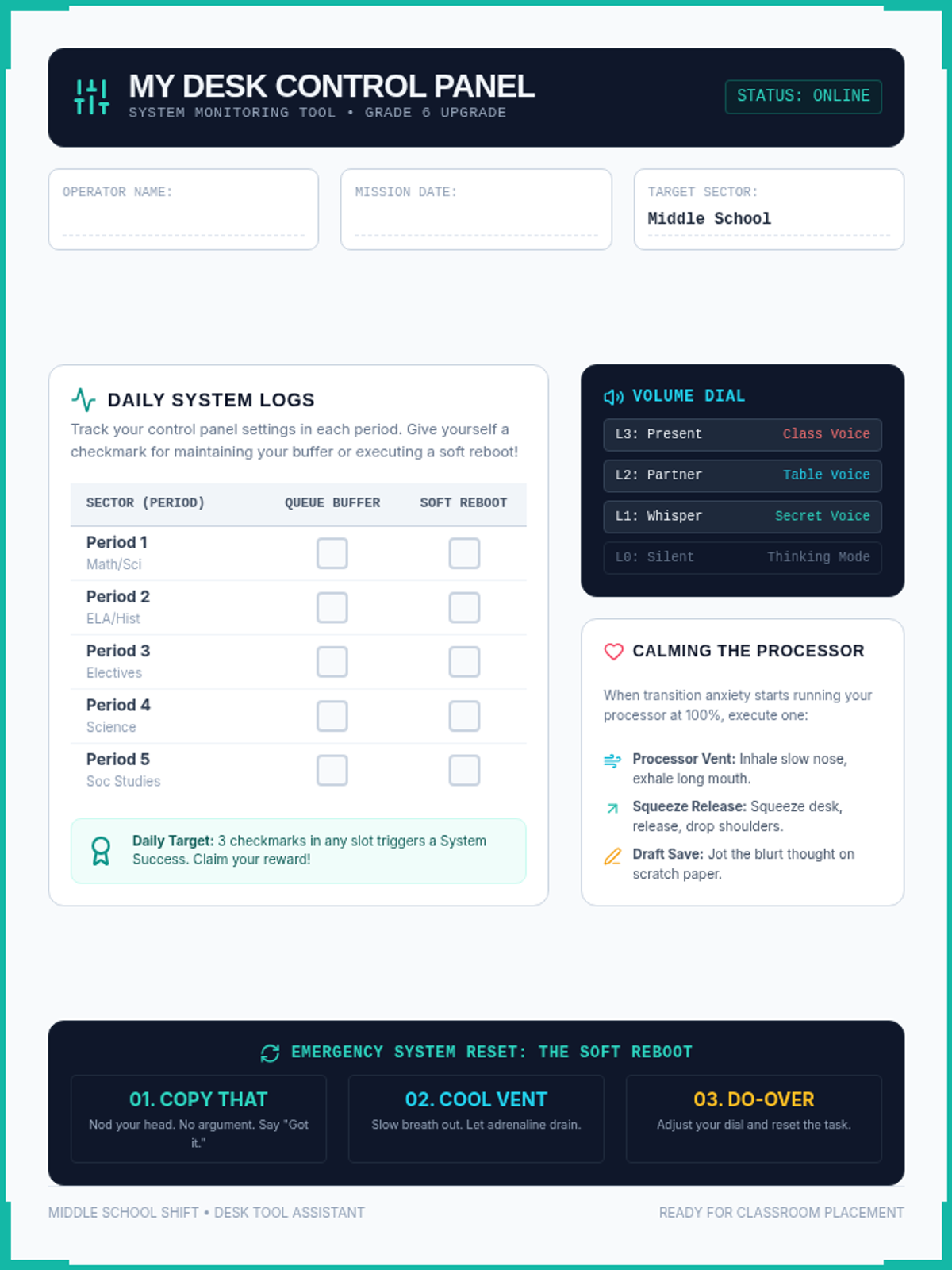
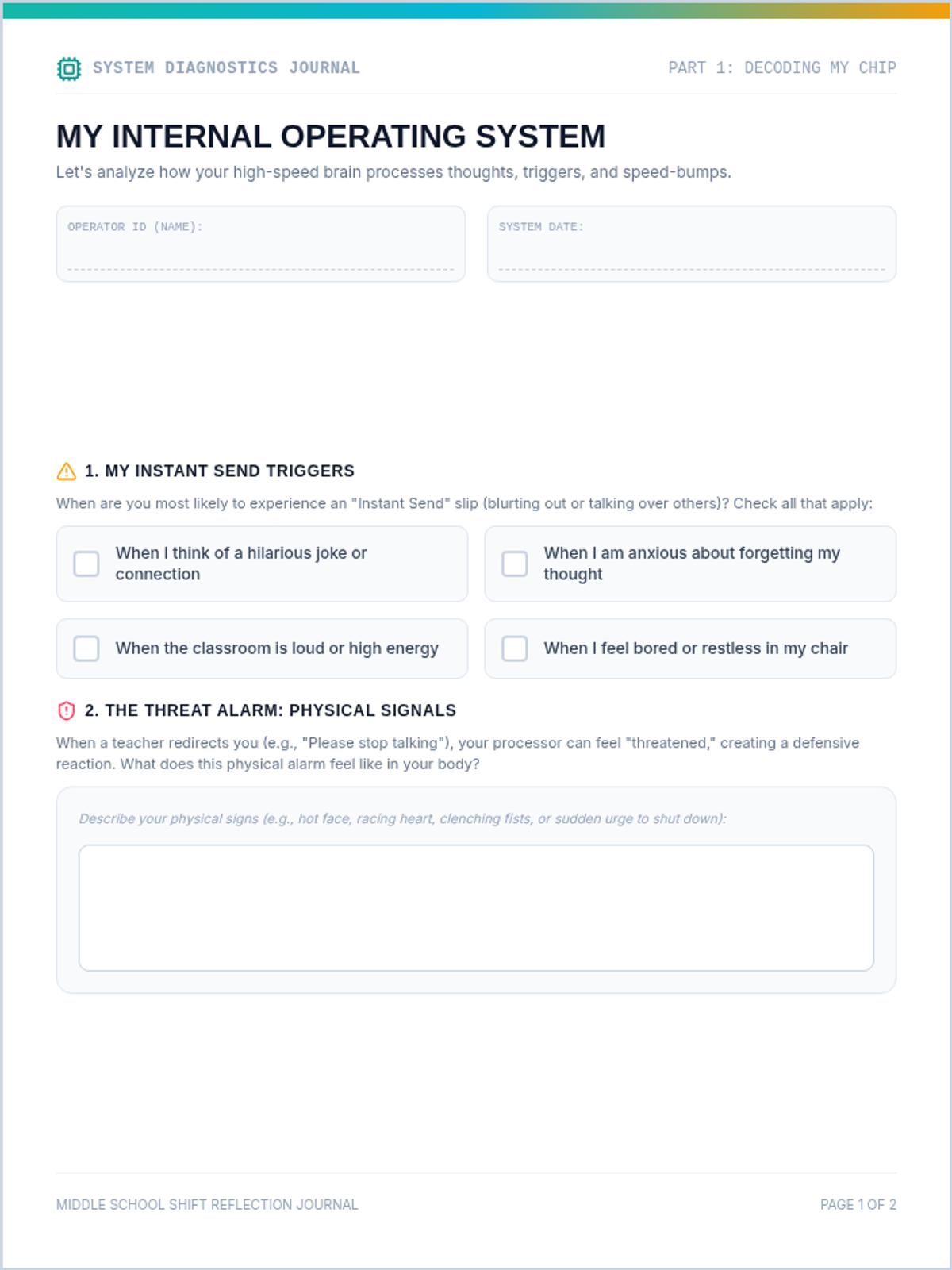
A high-impact social-emotional learning lesson designed for anxious and ADHD students transitioning to middle school. It introduces the 'Control Panel' metaphor to manage the impulse to blurt, talk over others, and react defensively, replacing shame with actionable self-regulation strategies, visual aids, and low-stakes role-play games.
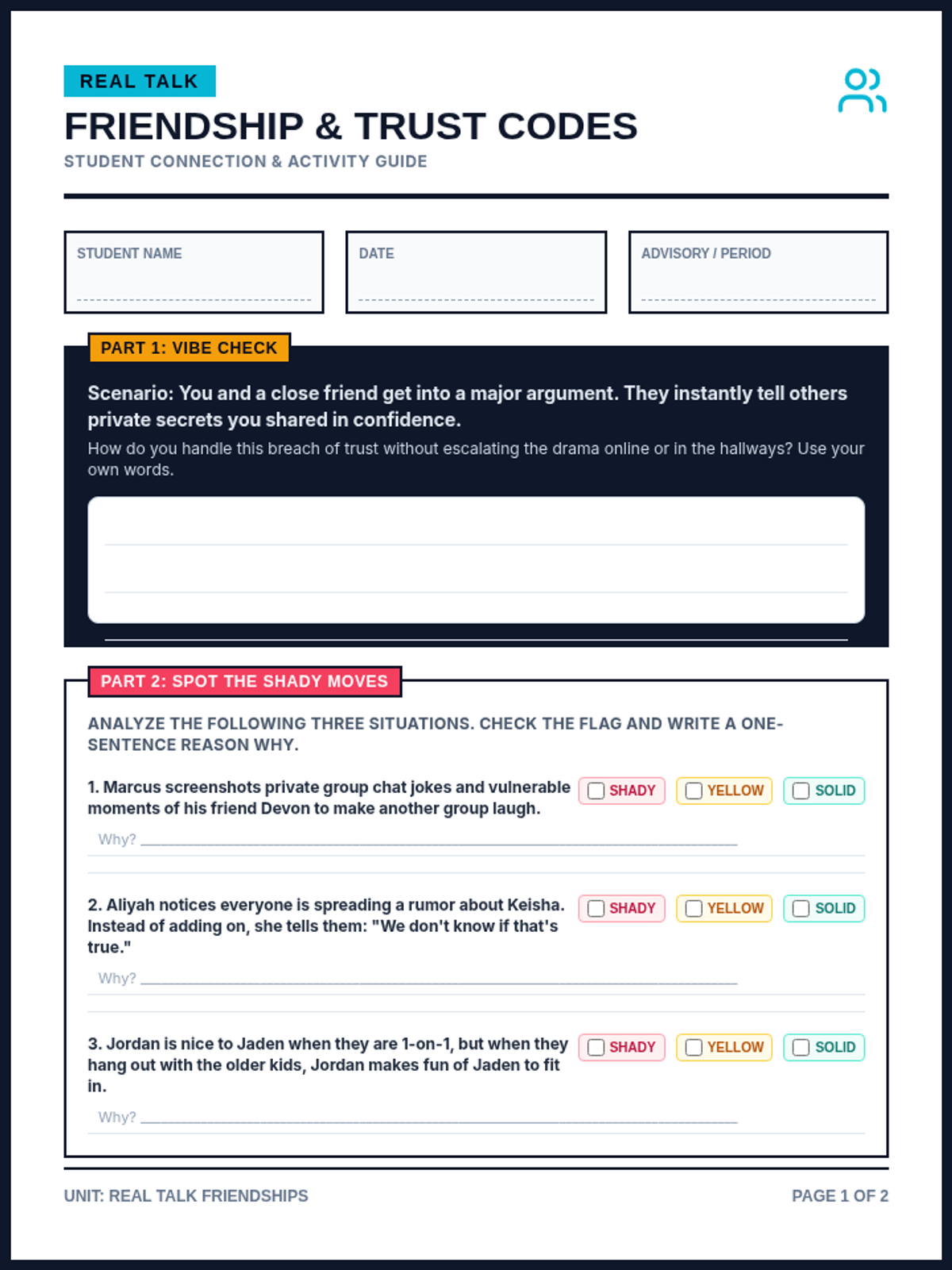
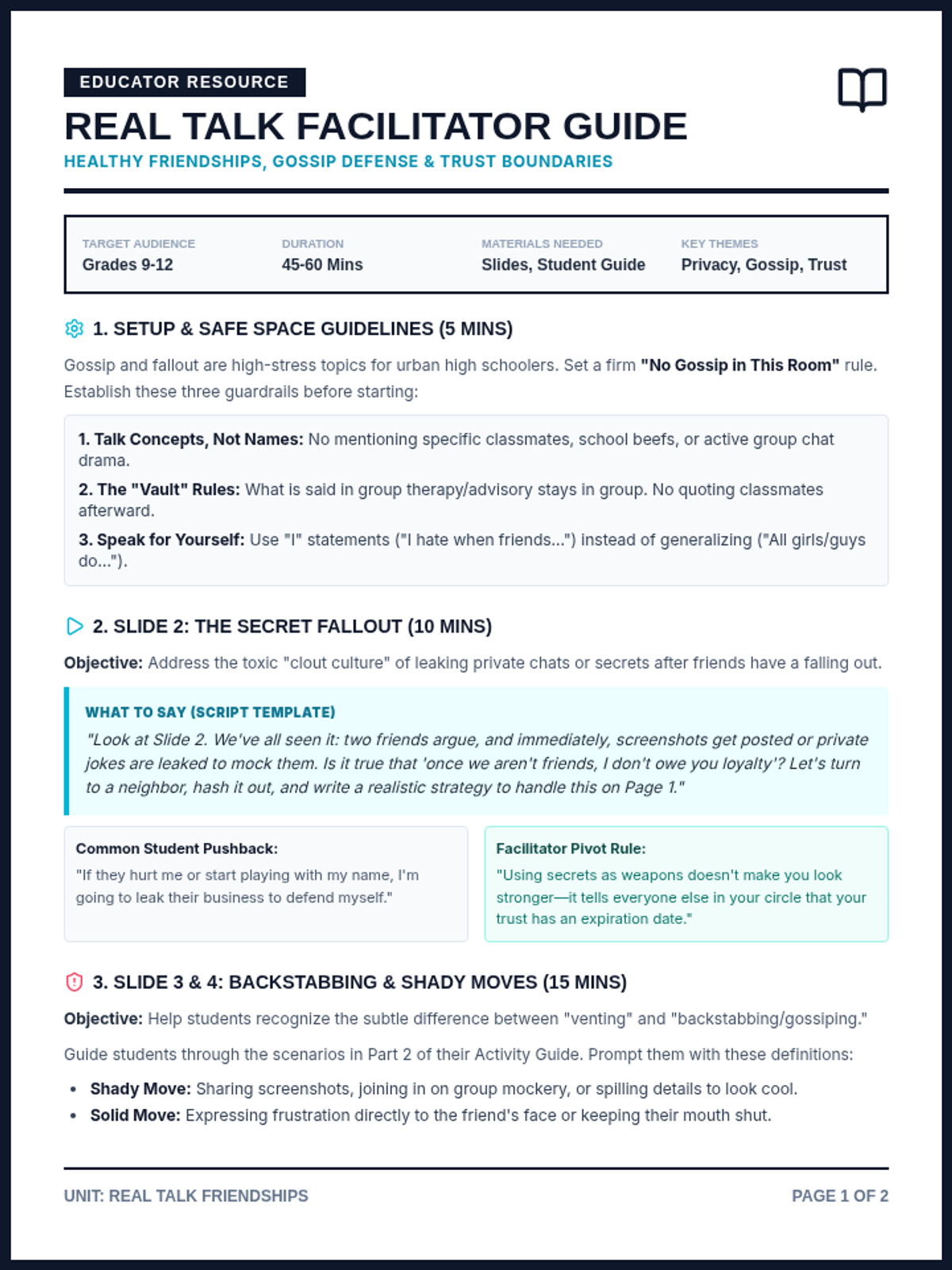
A high-impact, discussion-focused group session designed for urban high schoolers to build healthy friendships, establish trust boundaries, stop gossip, and navigate what is safe to share. This lesson package includes visual slide decks, student worksheets, and teacher facilitator guides.
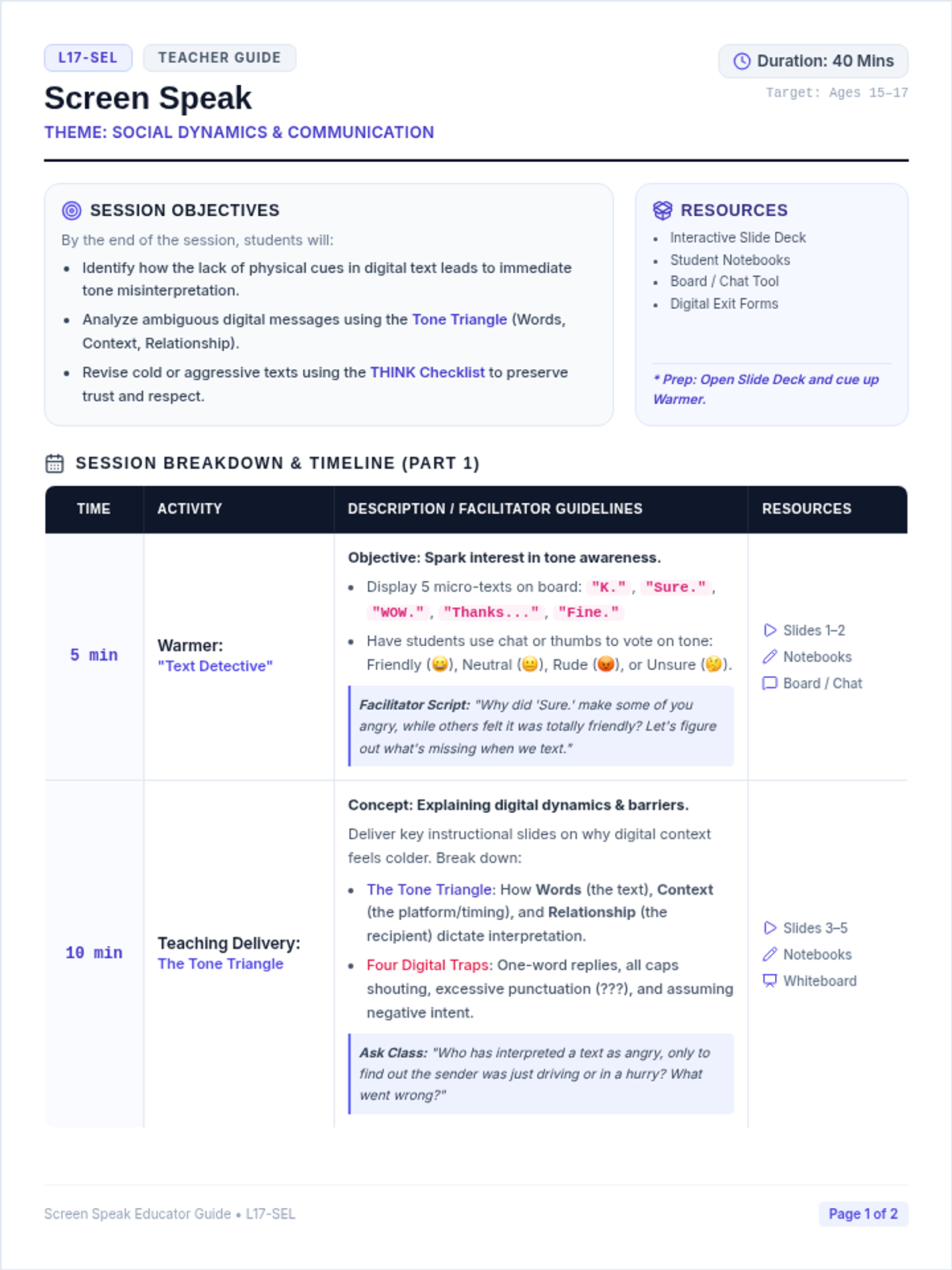
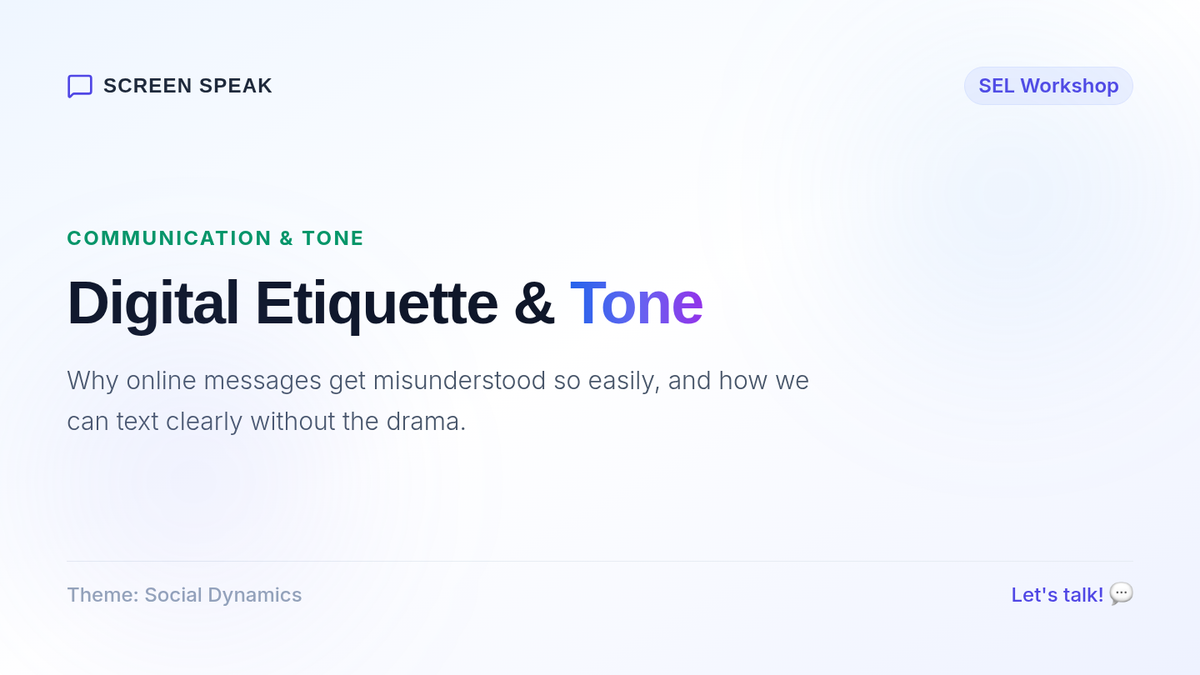
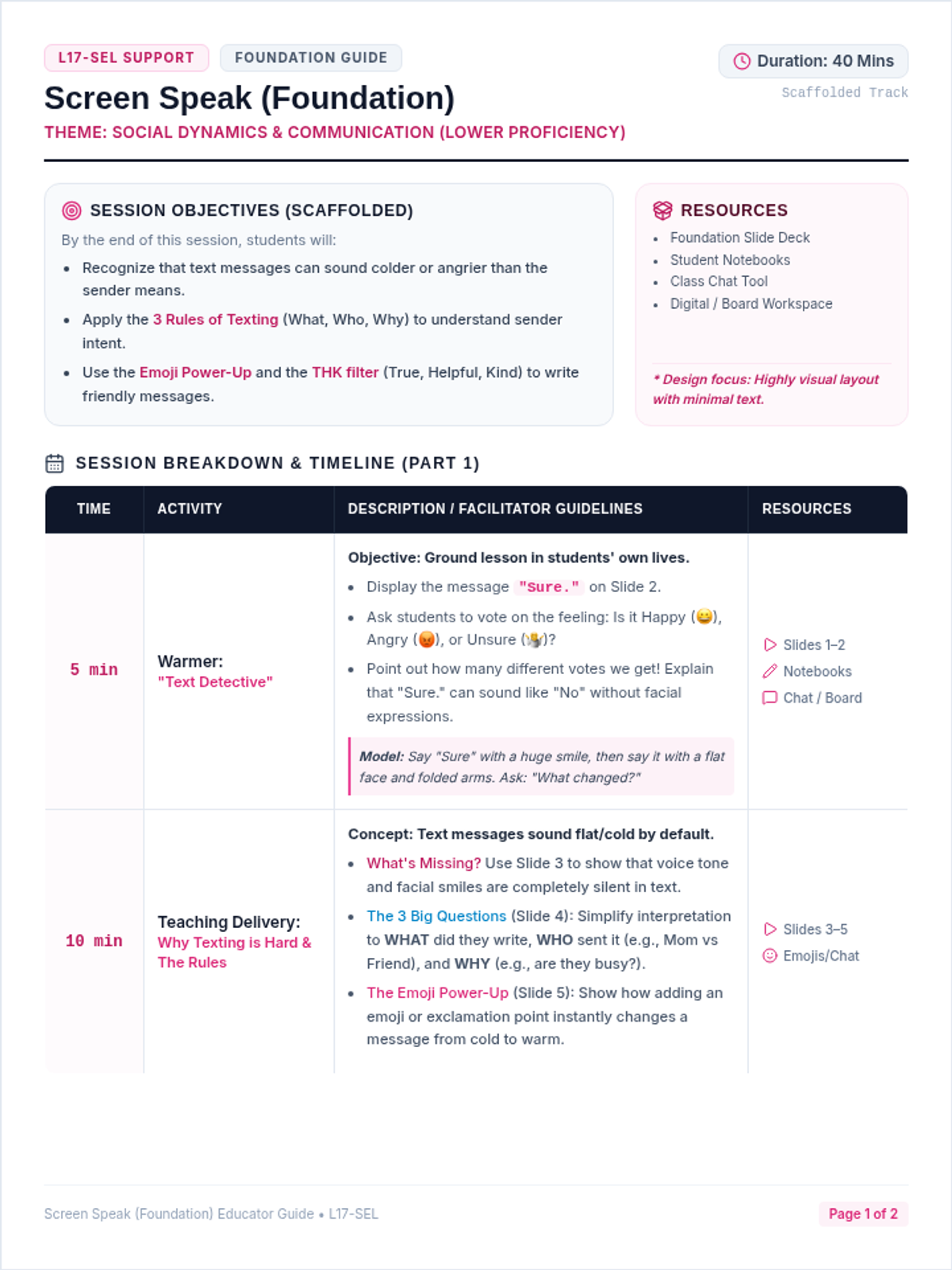
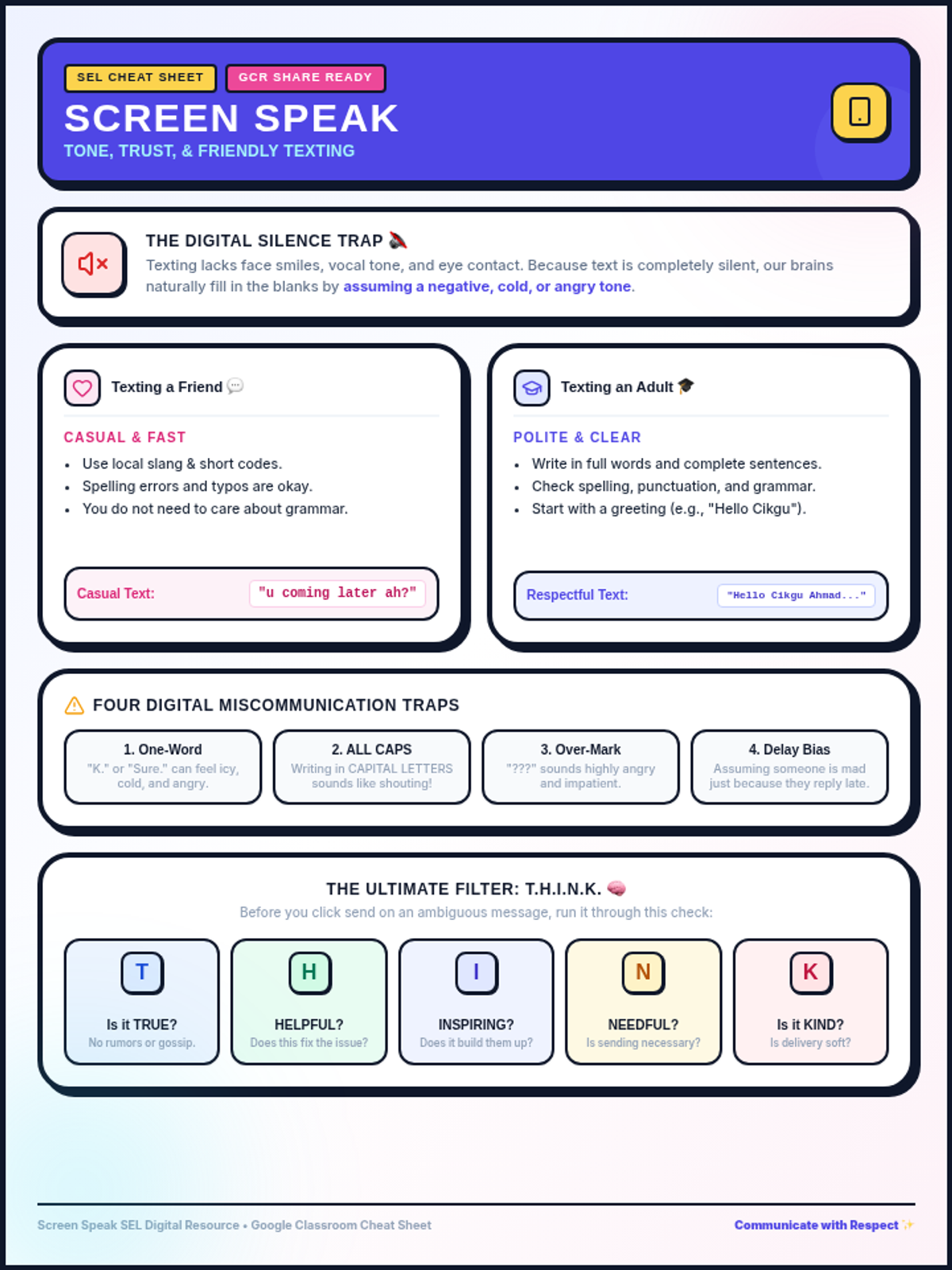
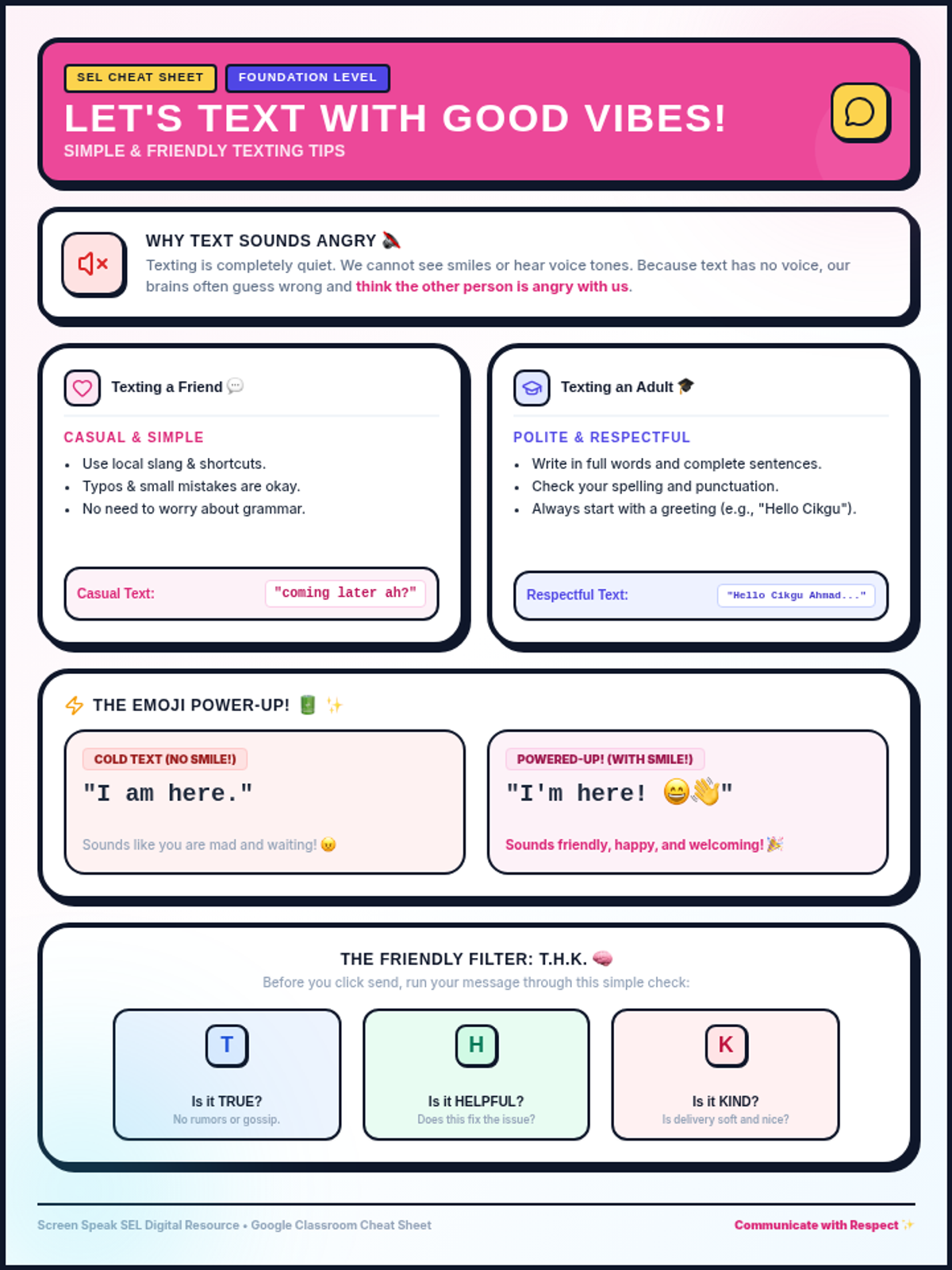
A comprehensive SEL lesson bundle on digital etiquette, tone misinterpretation, and respectful online communication for teens aged 13-17. Includes an interactive slide deck and an elegant table-formatted teacher facilitation guide.
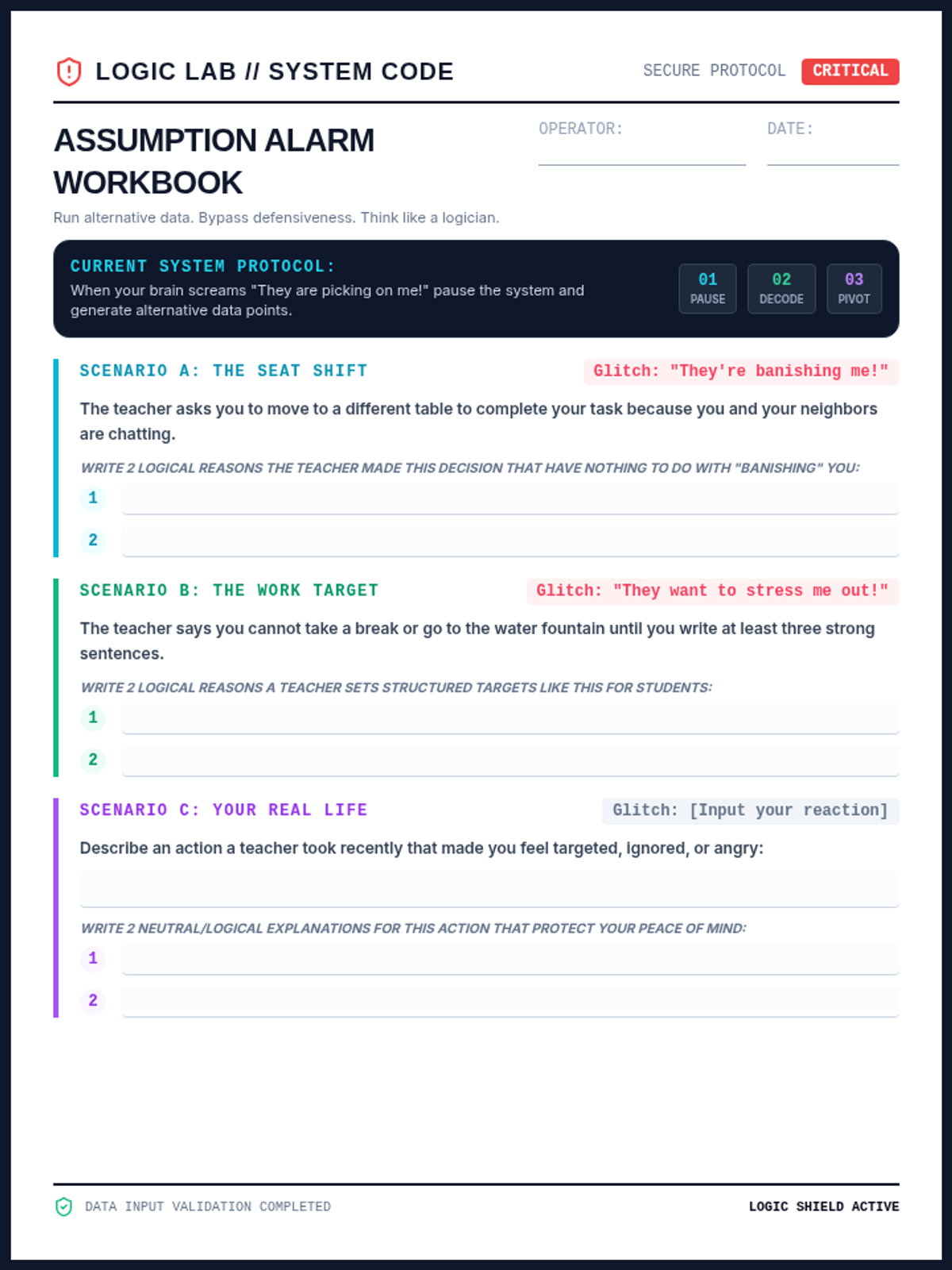
A sharp, logic-forward 1-to-1 session designed to help a student break down negative assumptions, understand the logical purpose of school rules, and develop alternative explanations for teacher actions.
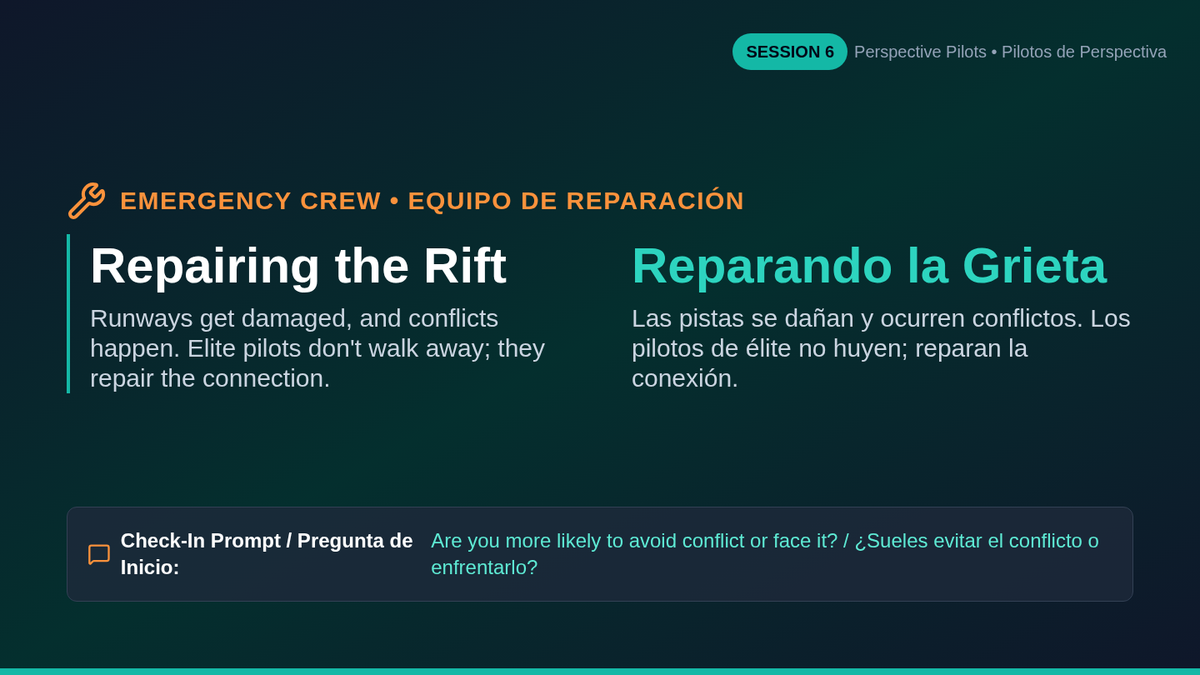
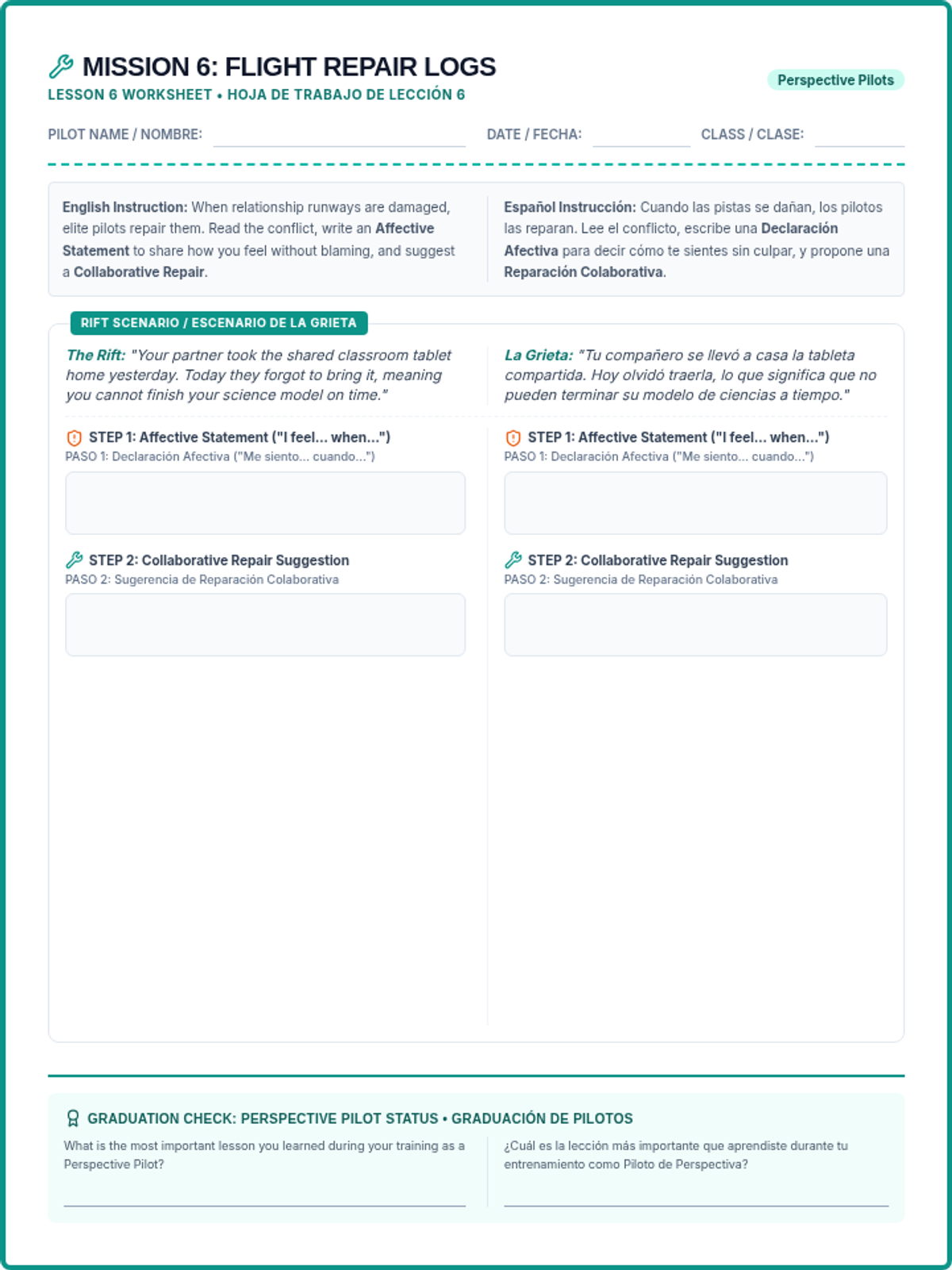
Introduces students to restorative conflict resolution, learning how to repair trust and rebuild connections using affective statements. Includes slides and an active workbook.
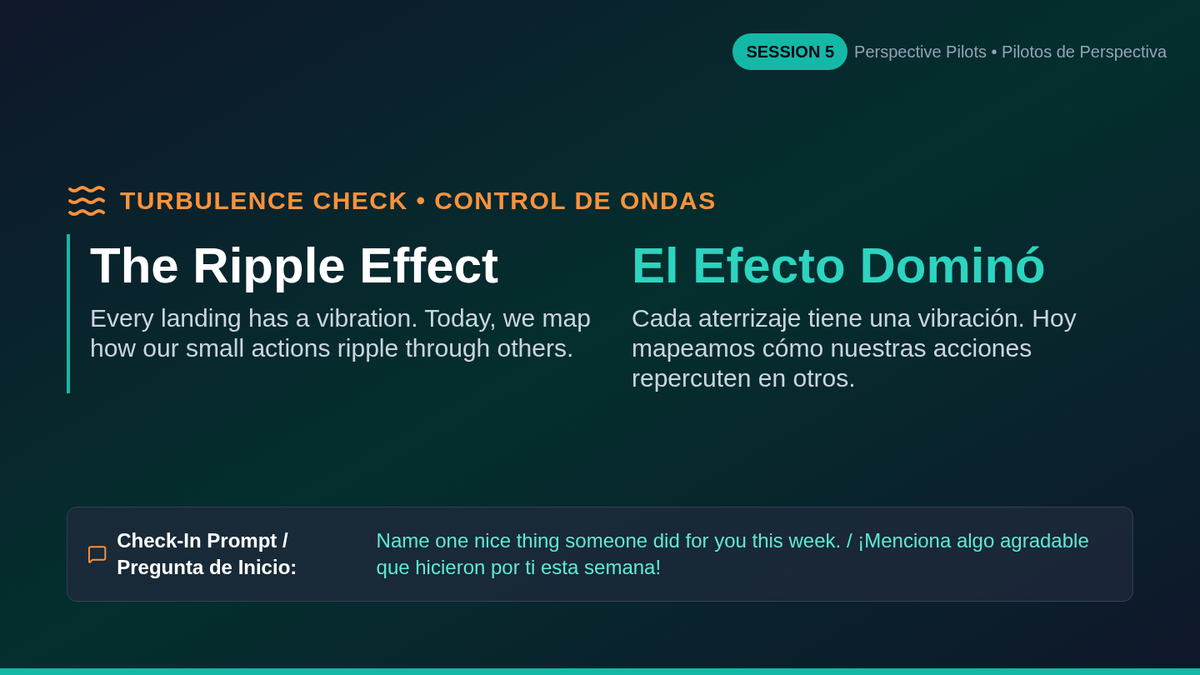
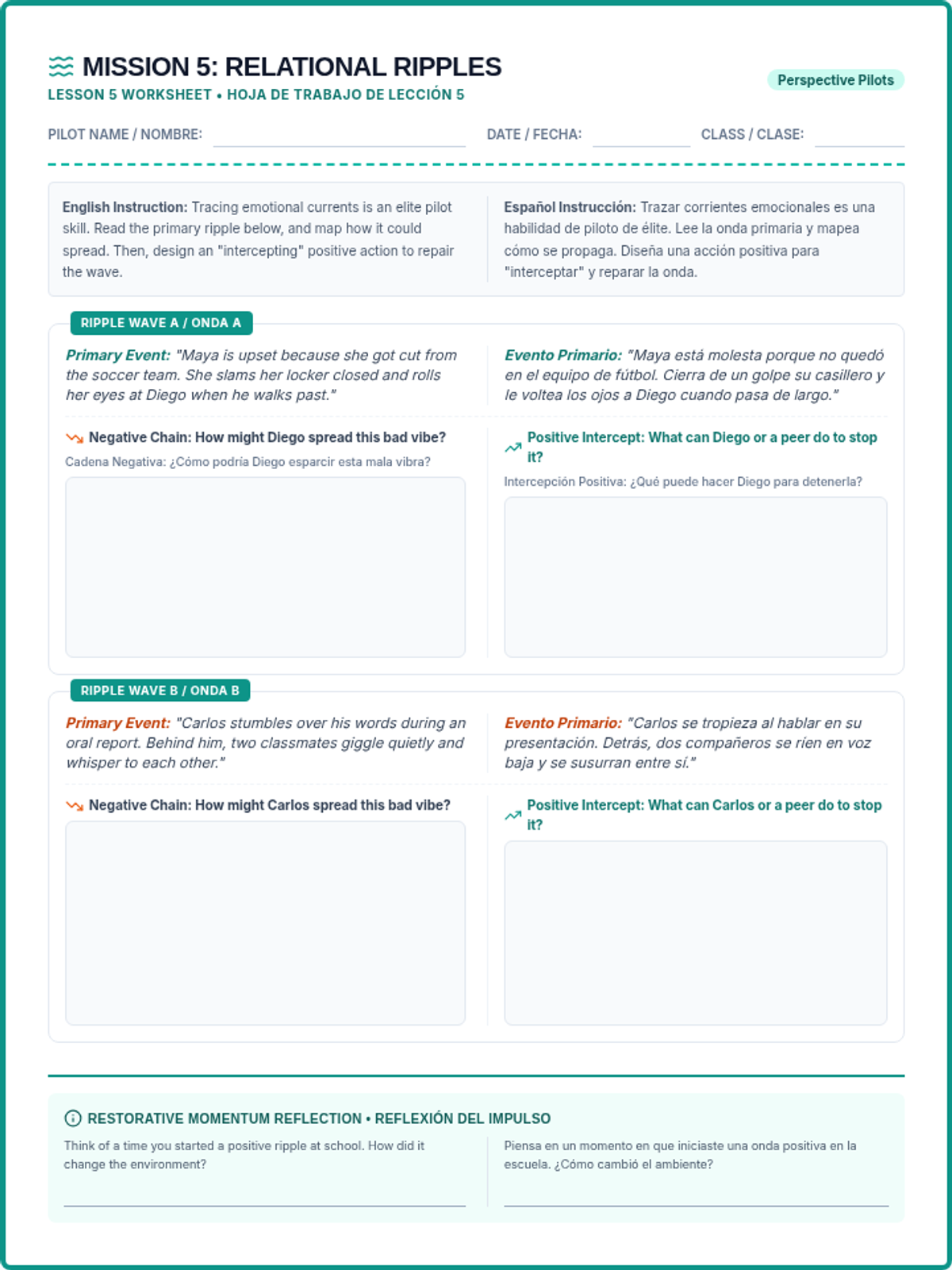
Explores how our actions and words create a ripple effect of emotions on peers. Features interactive presentation slides and a relational mapping worksheet.
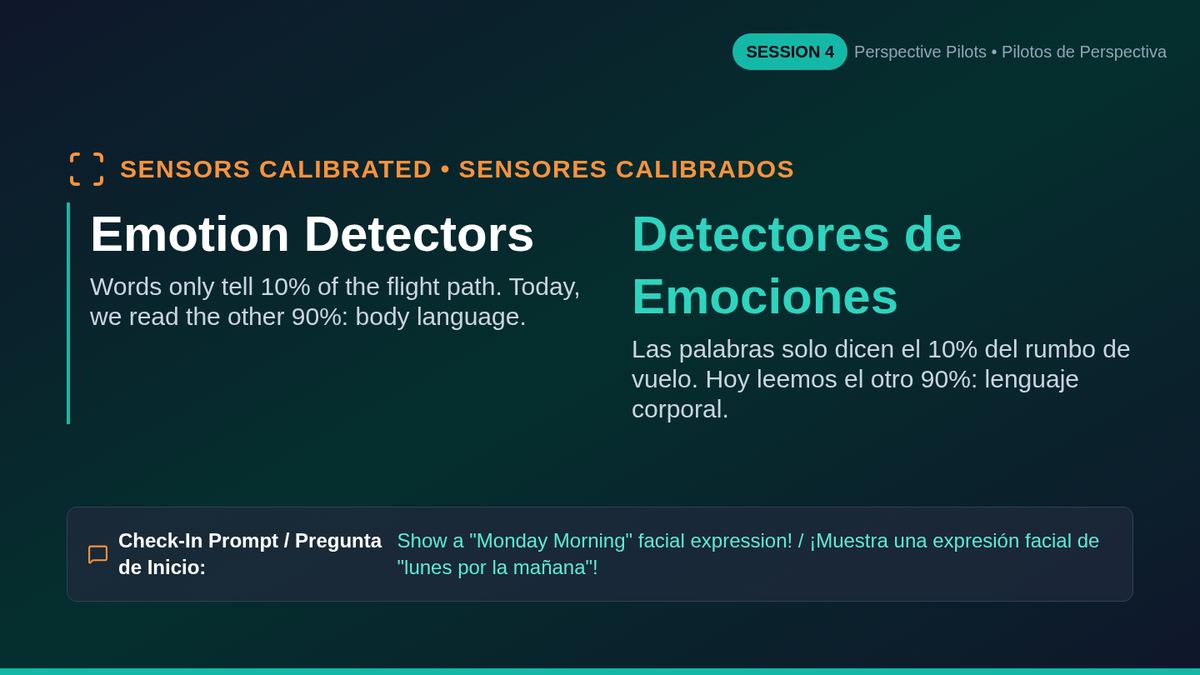
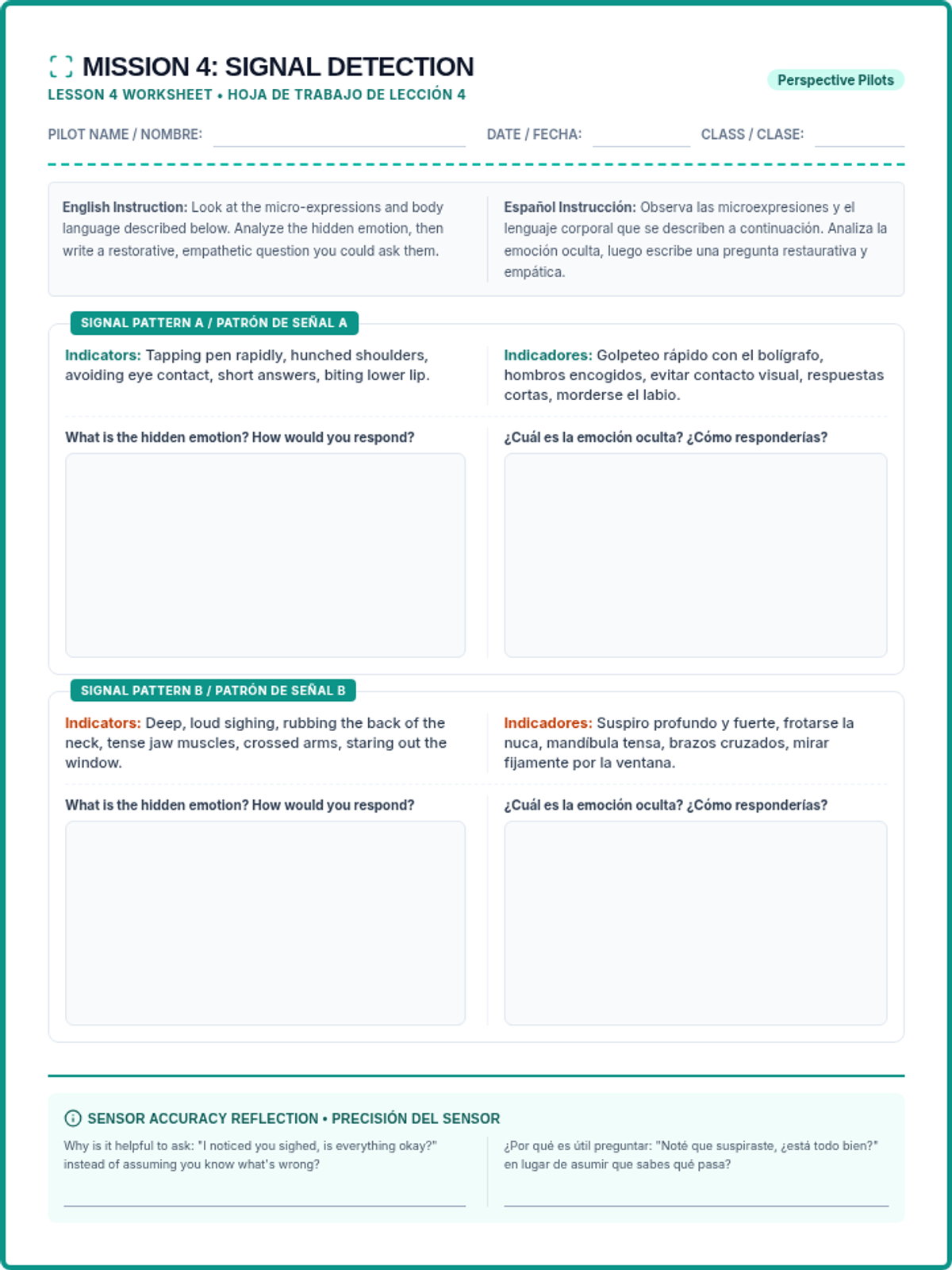
Focuses on social awareness by teaching students how to read micro-expressions and body language. Includes presentation slides and an observational worksheet.
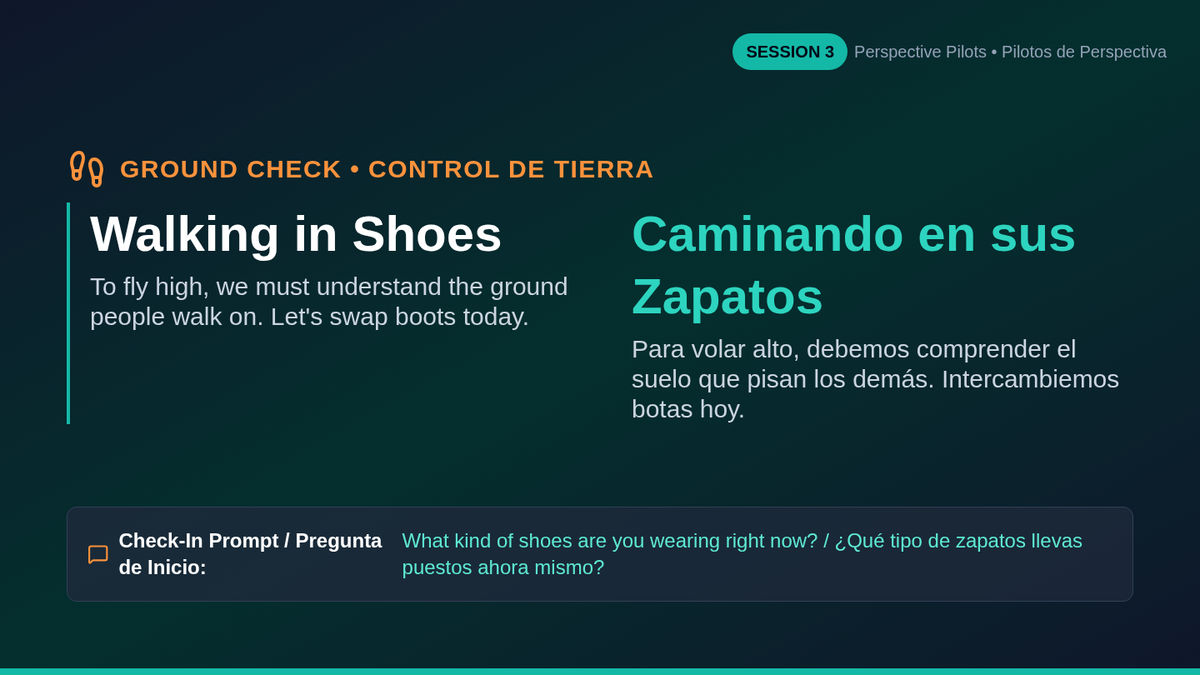
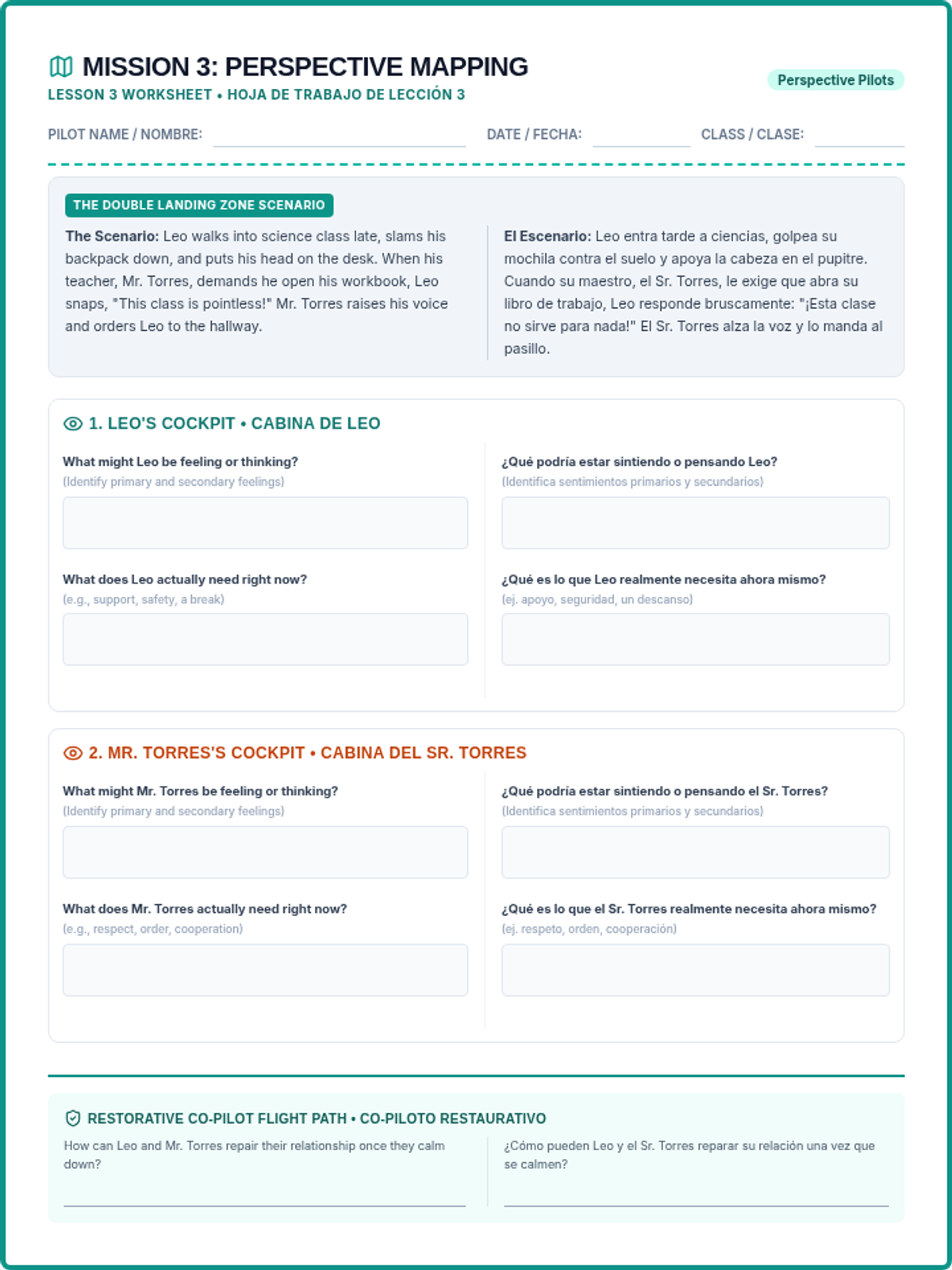
Teaches perspective-taking and social awareness through diverse real-world school scenarios. Includes interactive presentation slides and a perspective mapping worksheet.
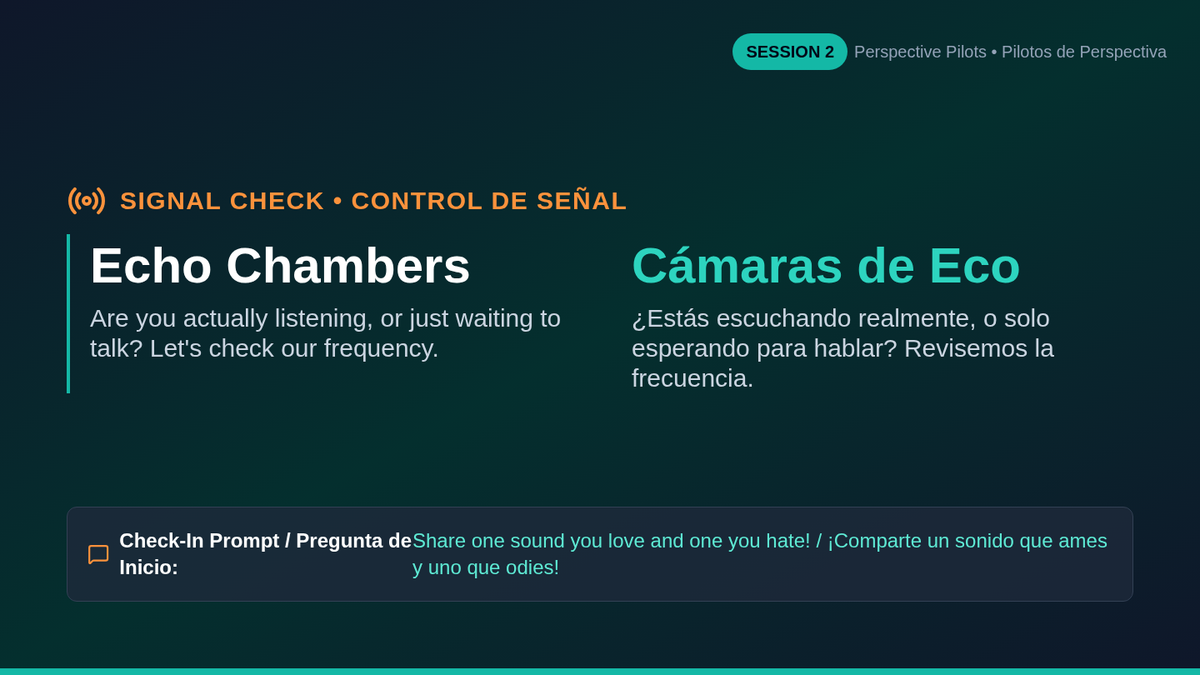
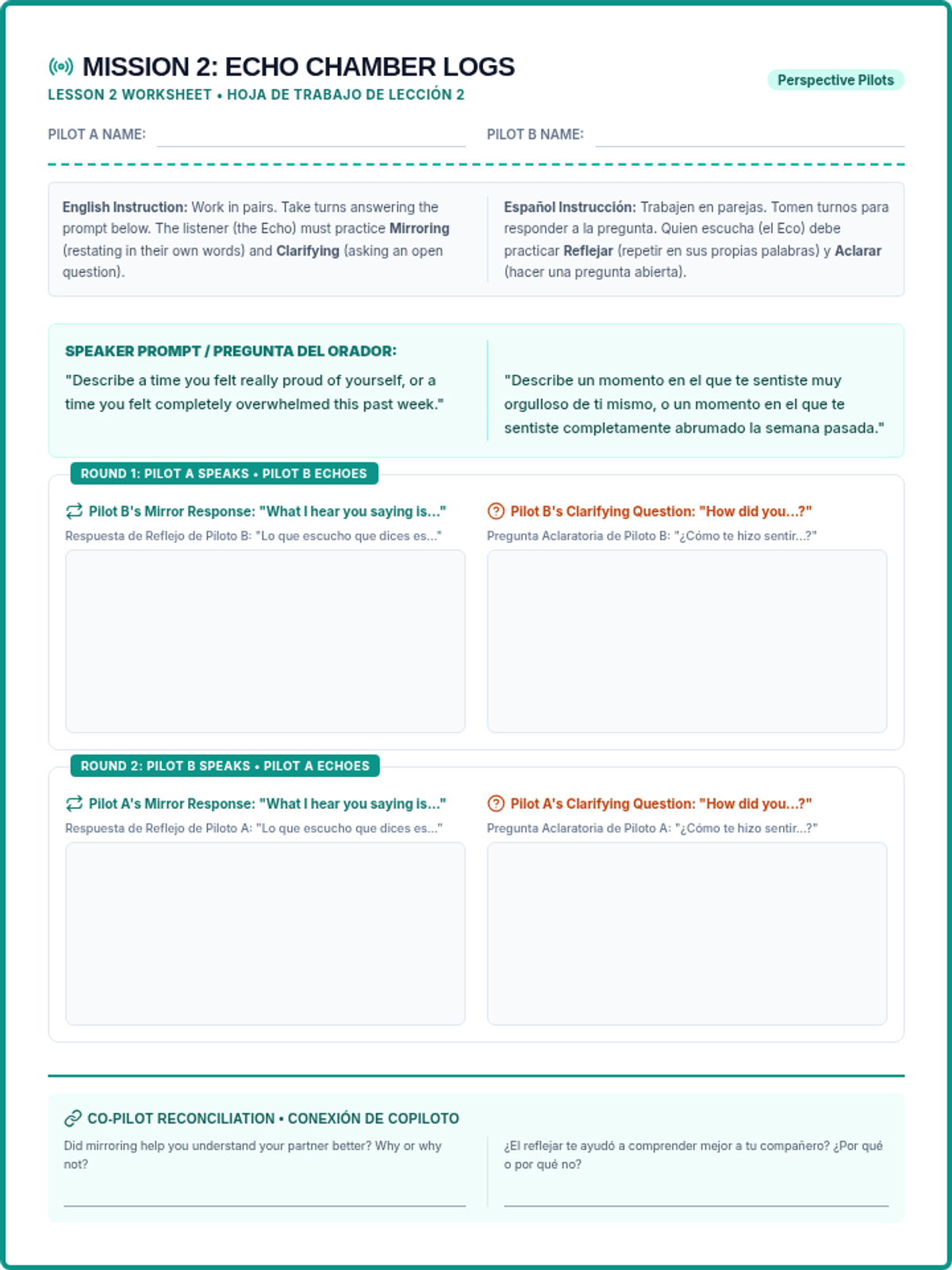
Teaches active listening and restorative communication, recognizing personal biases. Includes interactive presentation slides and a partner active listening worksheet.
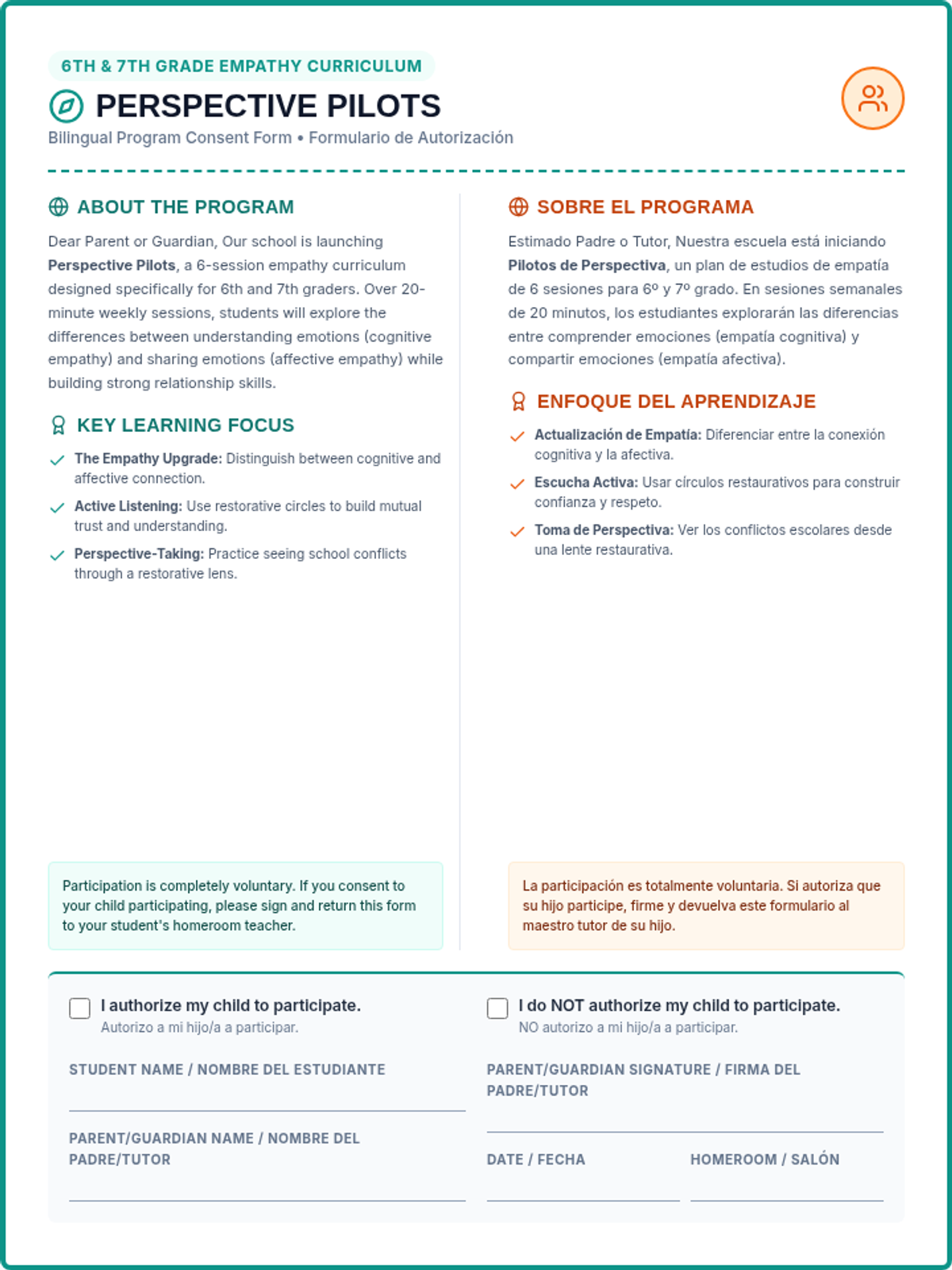
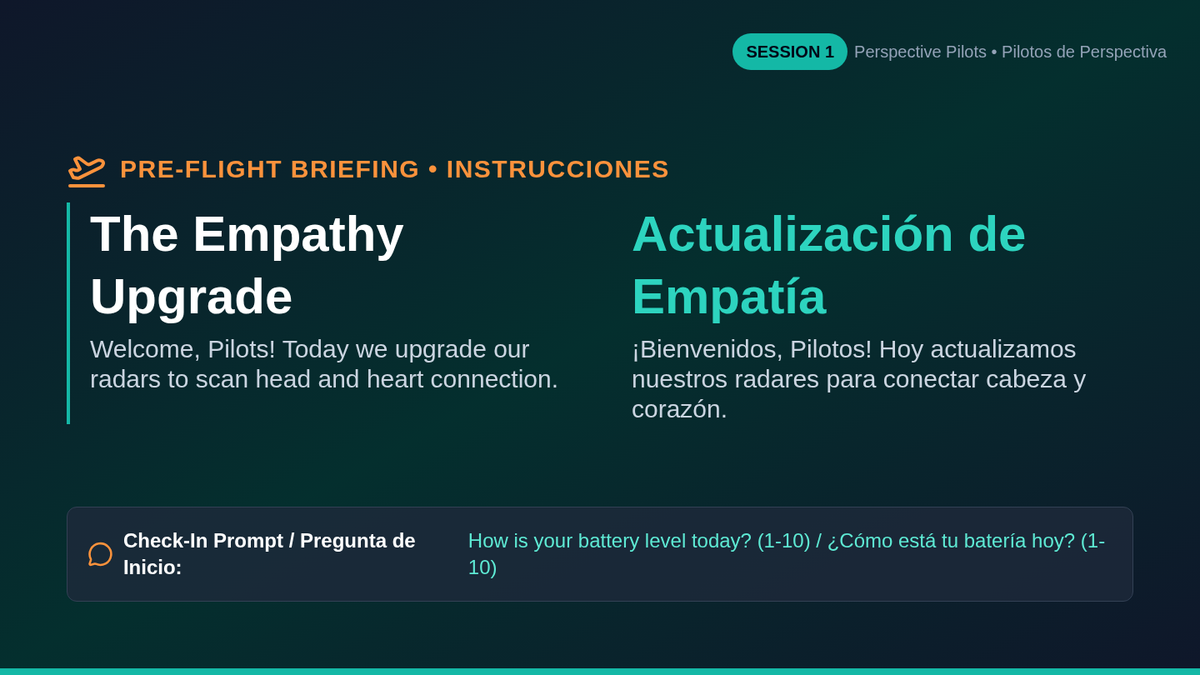
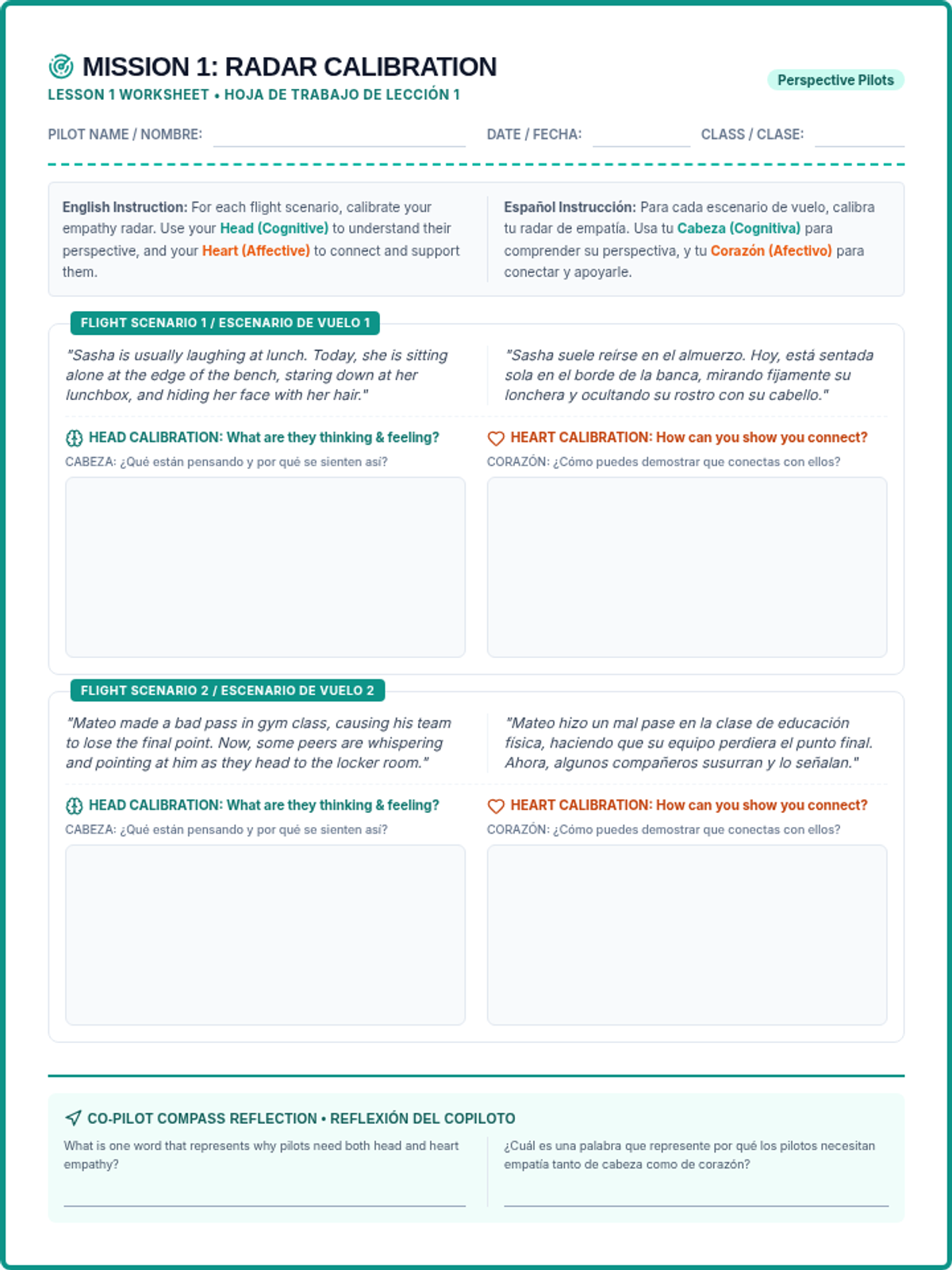
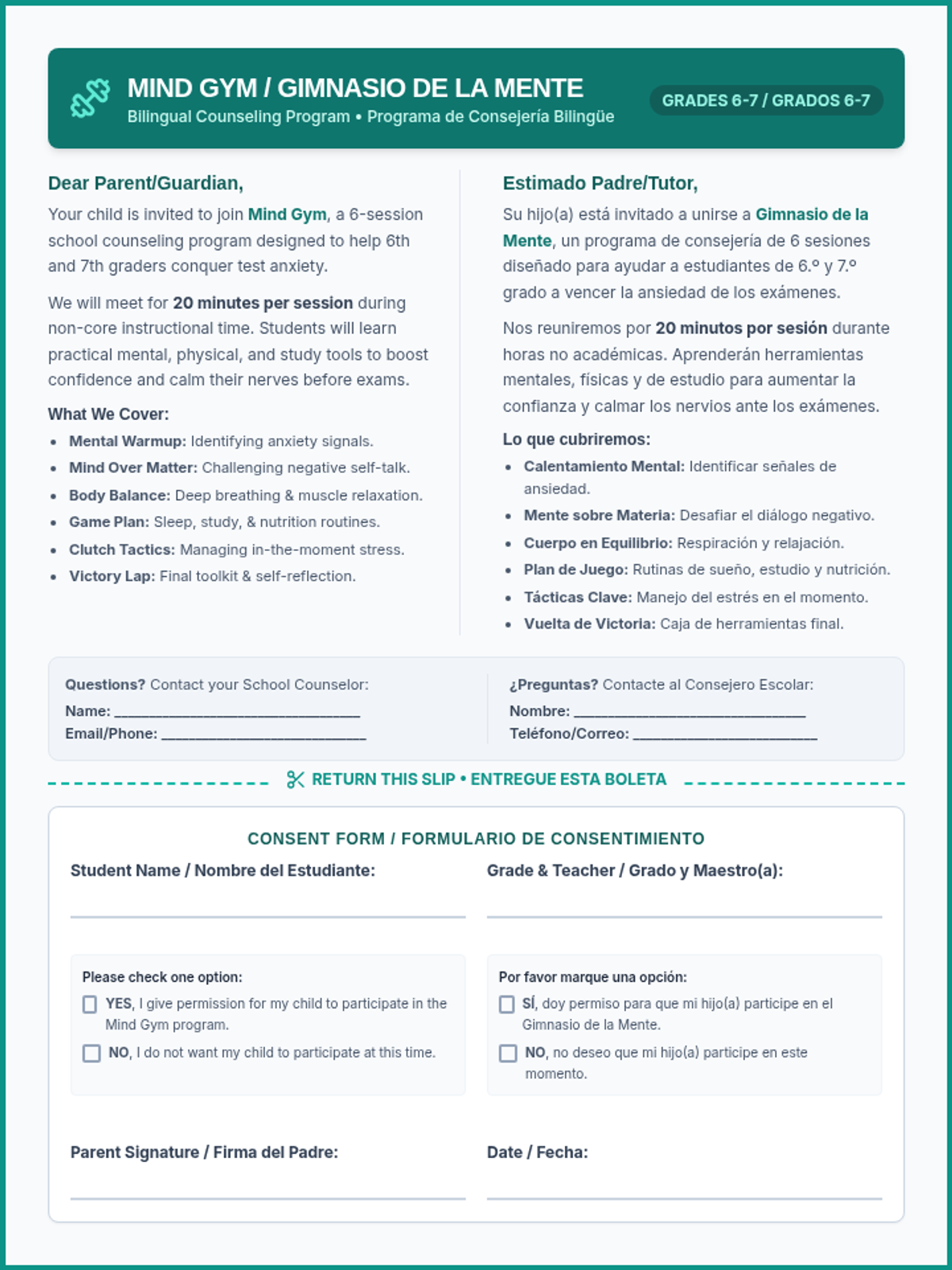
Introduces 6th and 7th graders to cognitive vs. affective empathy. Includes a bilingual parent permission slip, interactive presentation slides, and an active skill-building worksheet.
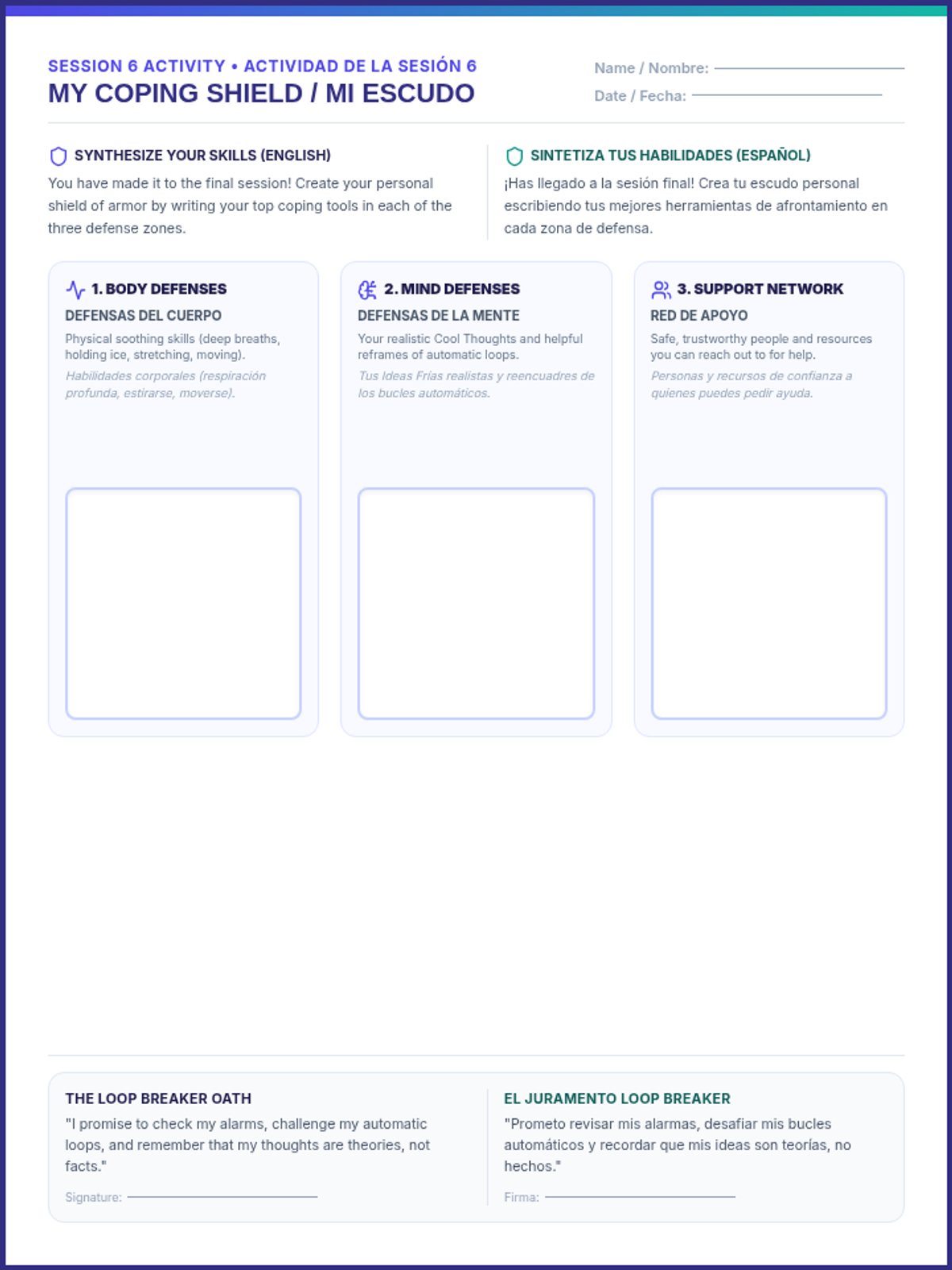
Students synthesize their learning into a personalized, visual coping plan that integrates cognitive reframing, physical soothing, and supportive resources.
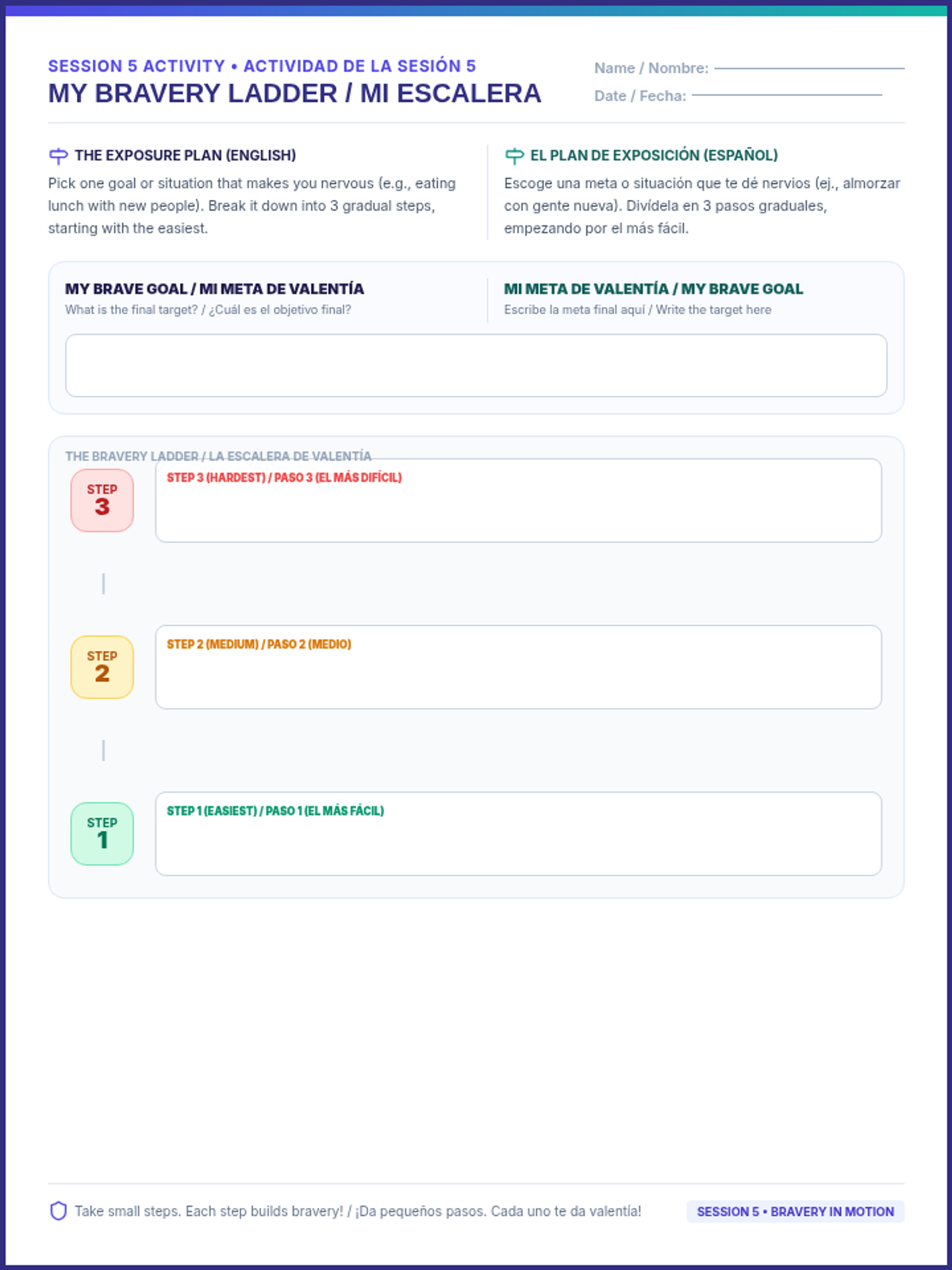
Students design a personalized 'bravery ladder' to face anxious situations gradually and build confidence through safe exposure.
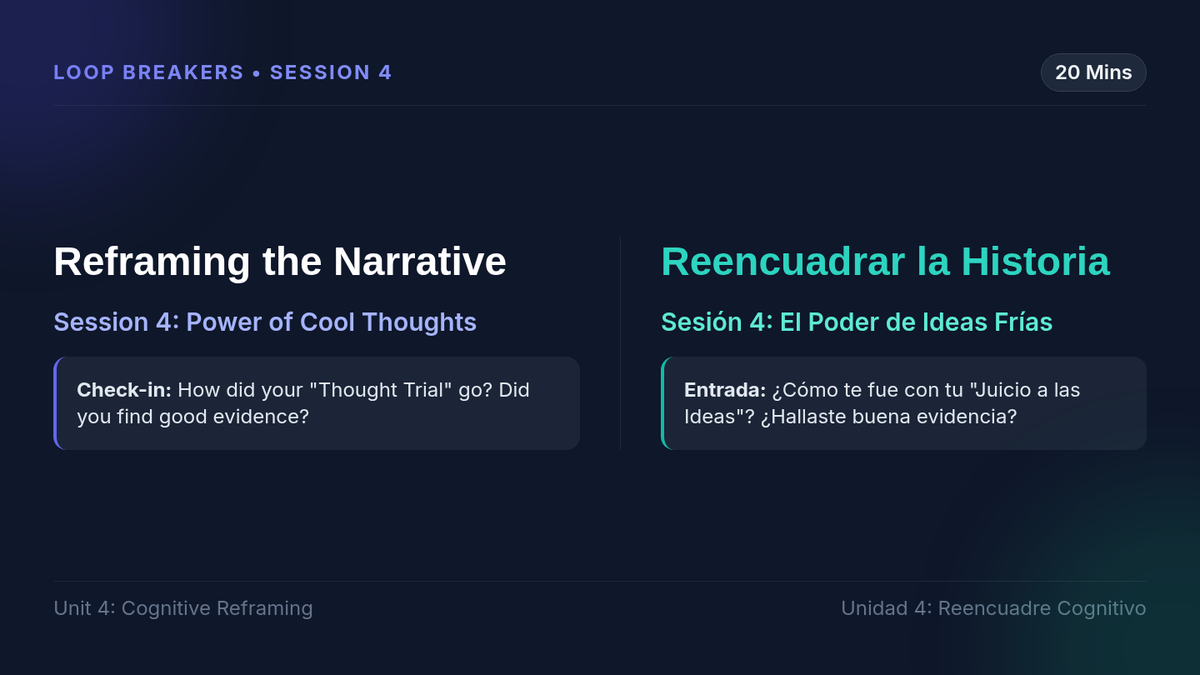
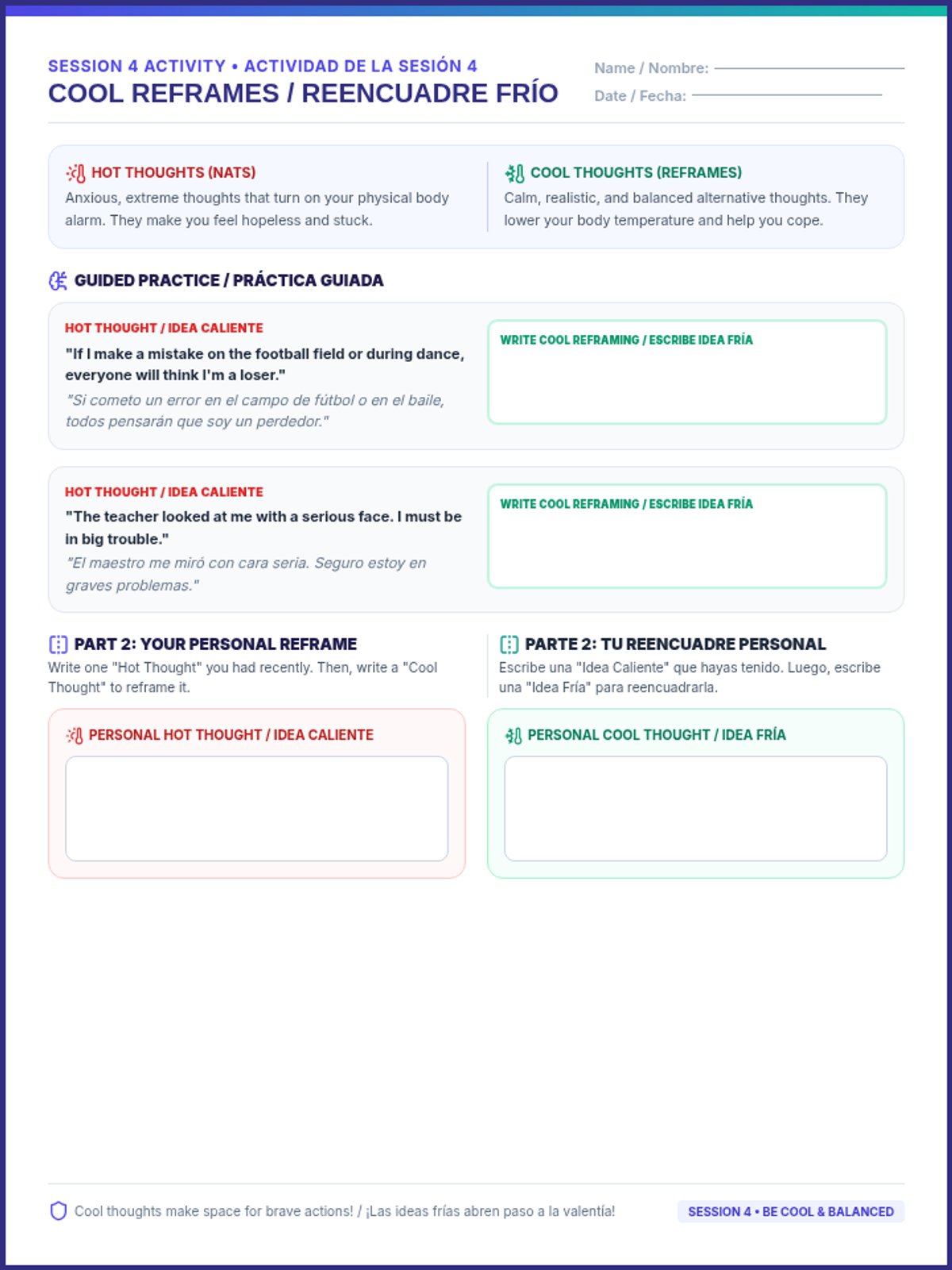
Students practice transforming automatic anxious thoughts into realistic, balanced, and constructive coping thoughts.
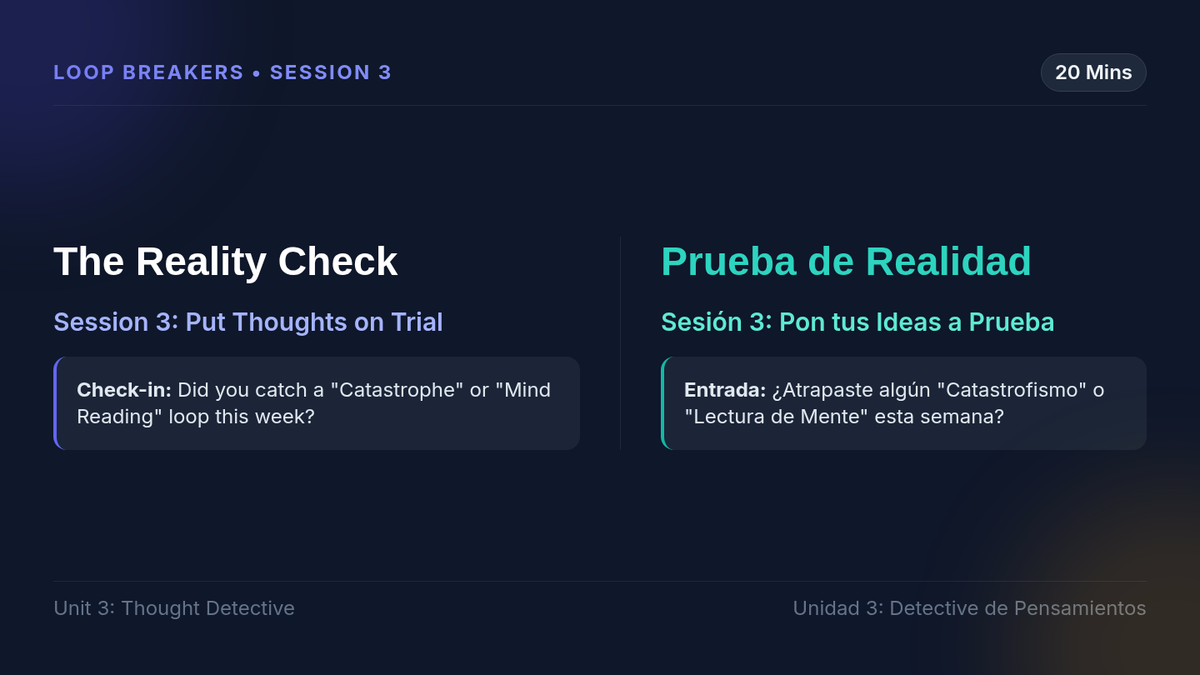
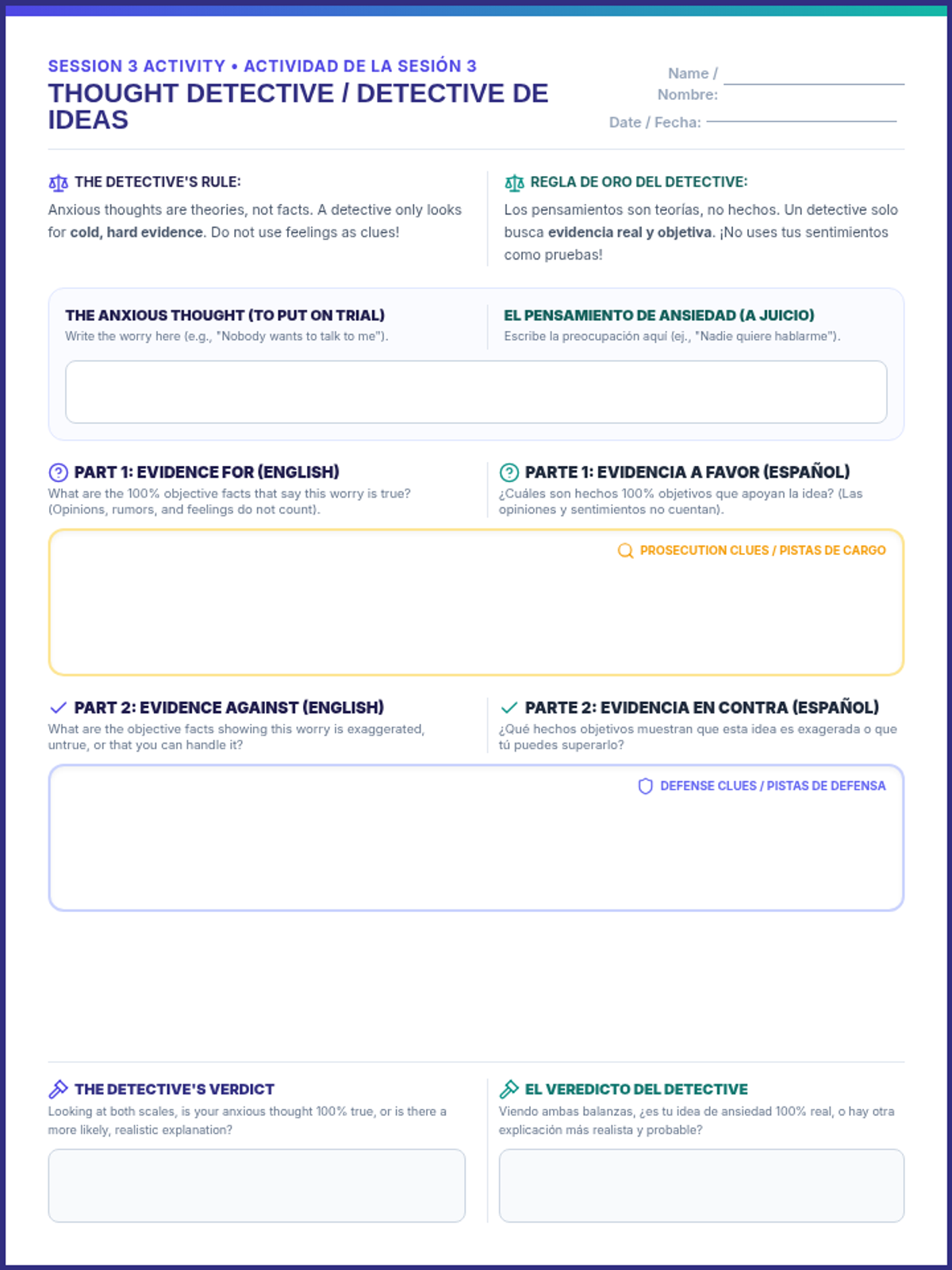
Students act as thought detectives, learning to examine objective evidence for and against their anxious thoughts instead of accepting them as facts.
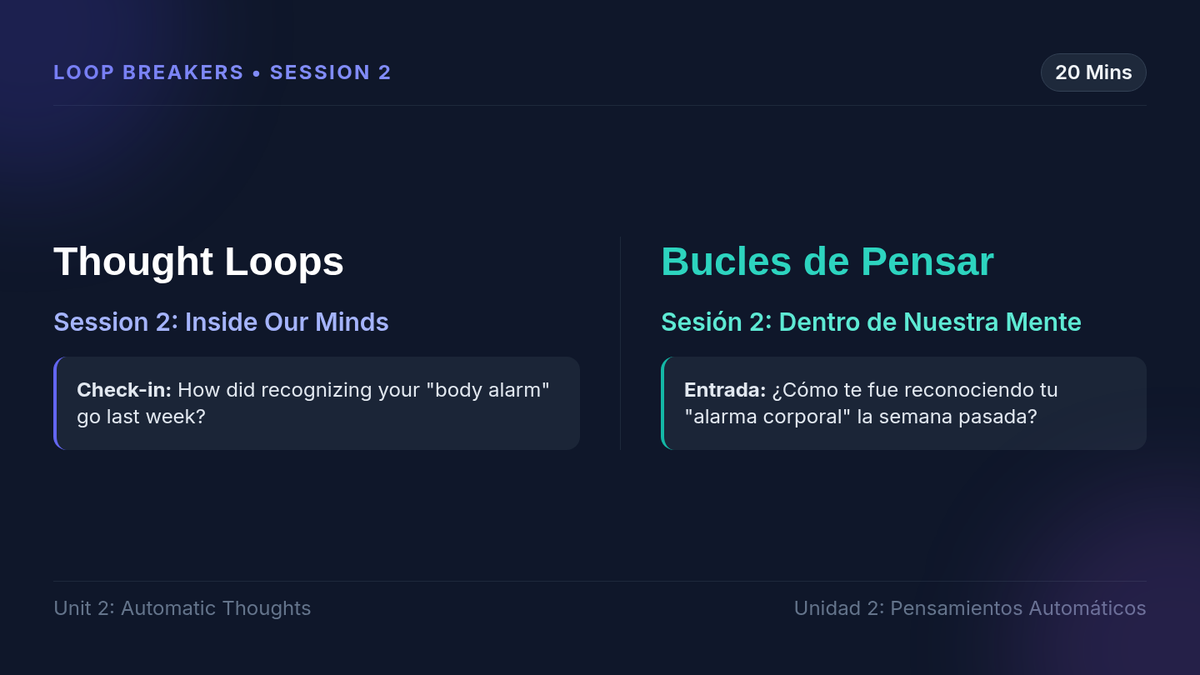
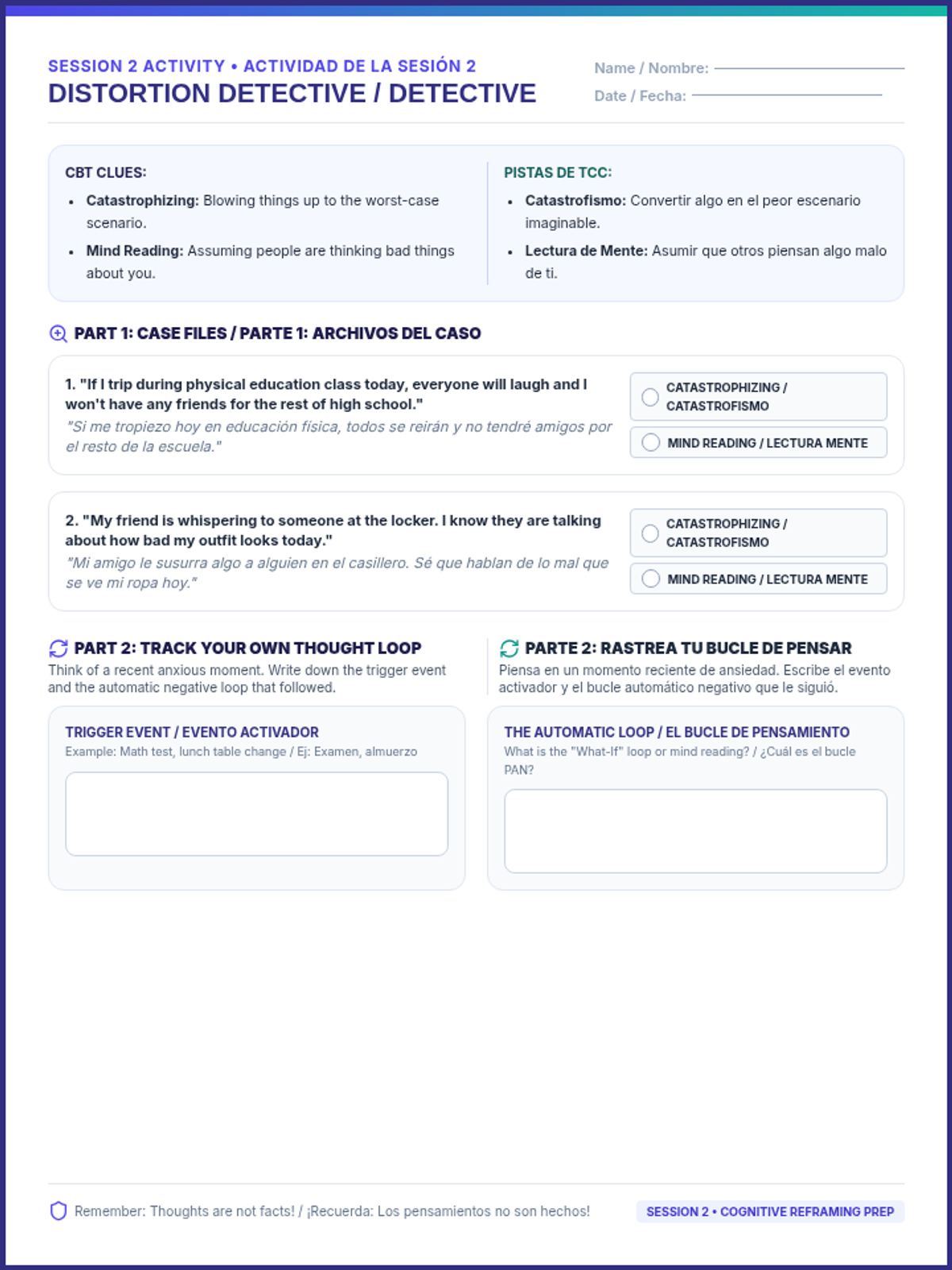
Students learn to identify negative automatic thoughts (NATs) and recognize common cognitive distortions like catastrophizing and mind reading.
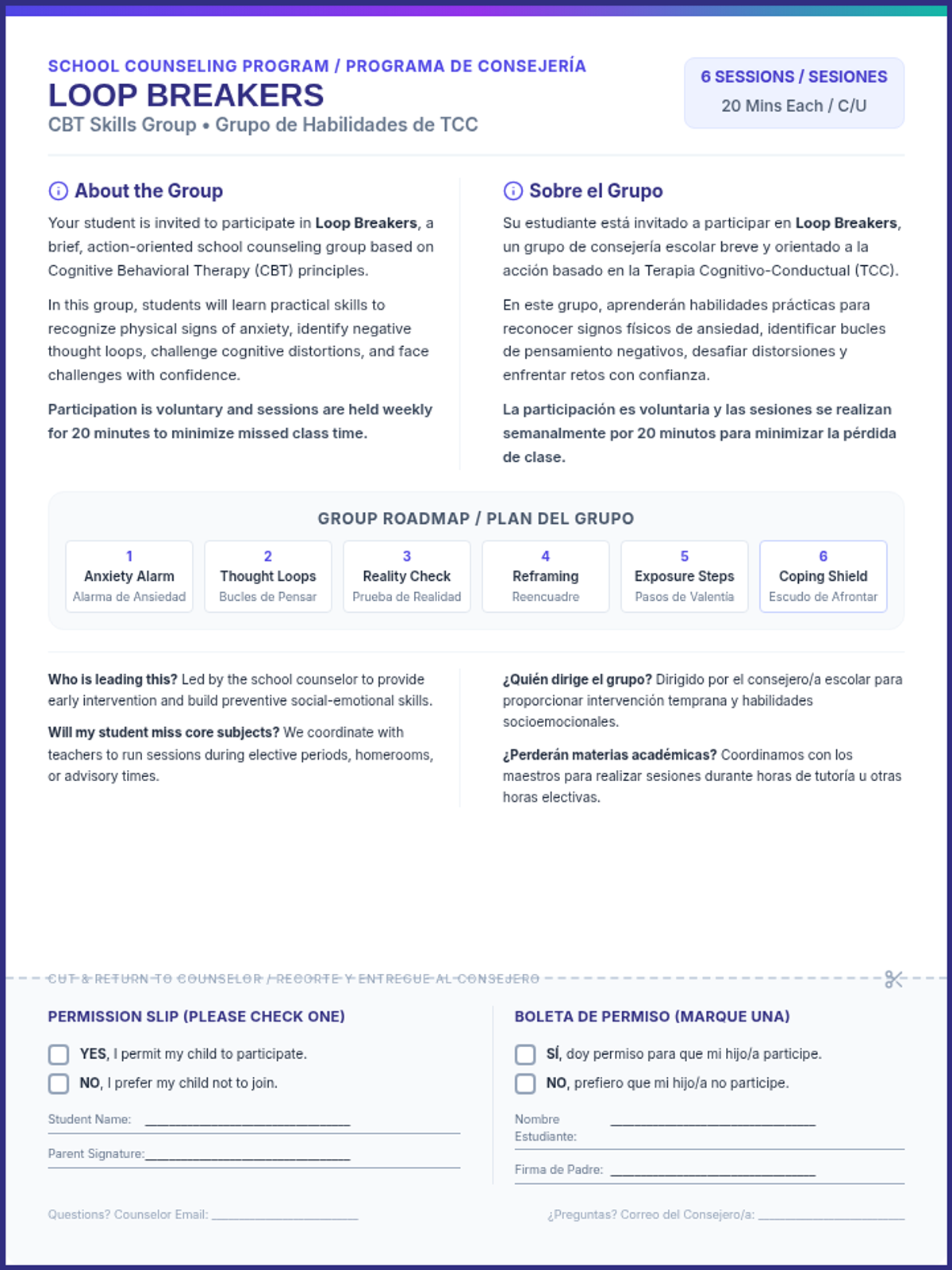
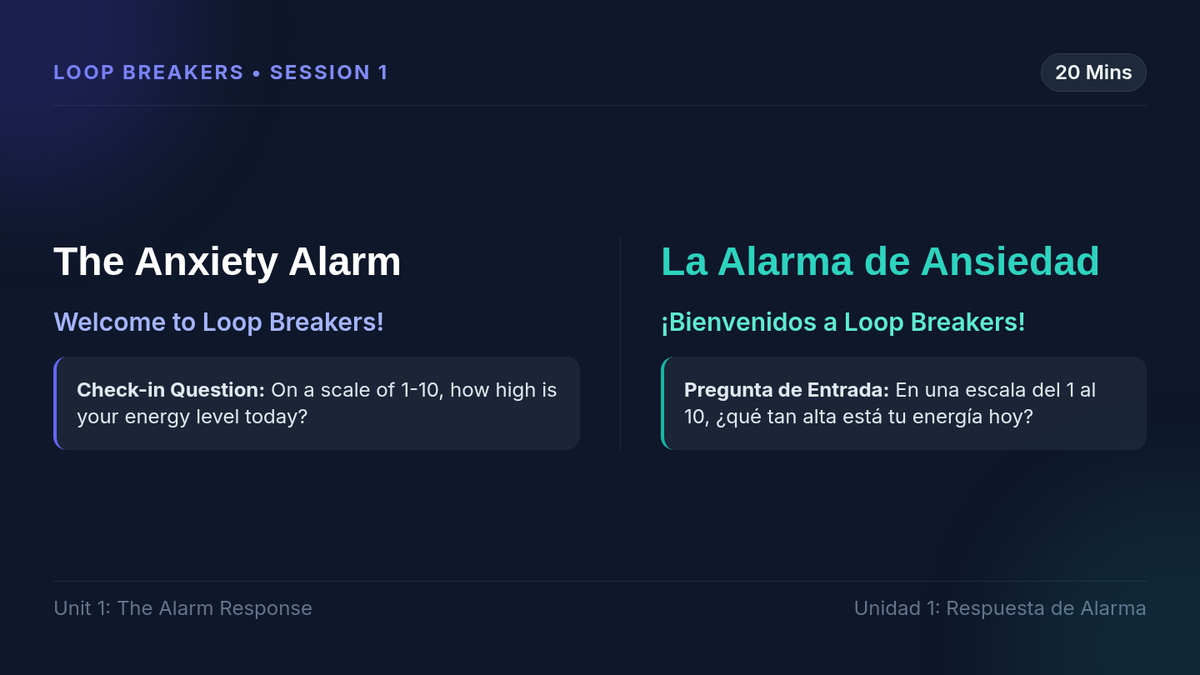
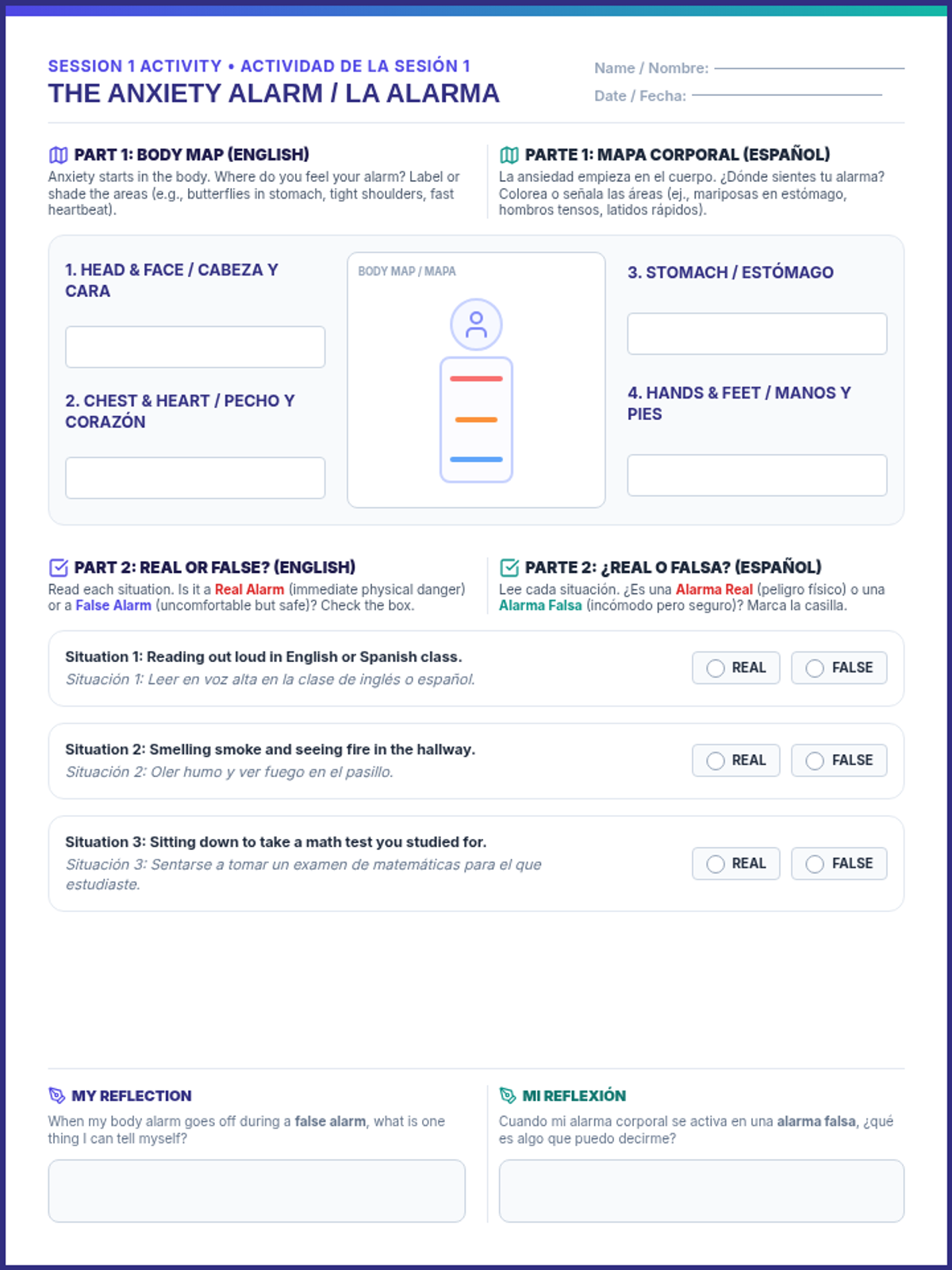
Students explore the evolutionary purpose of anxiety, identify their personal physical alarm signals, and distinguish between real and false alarms. Includes the bilingual parent permission slip.
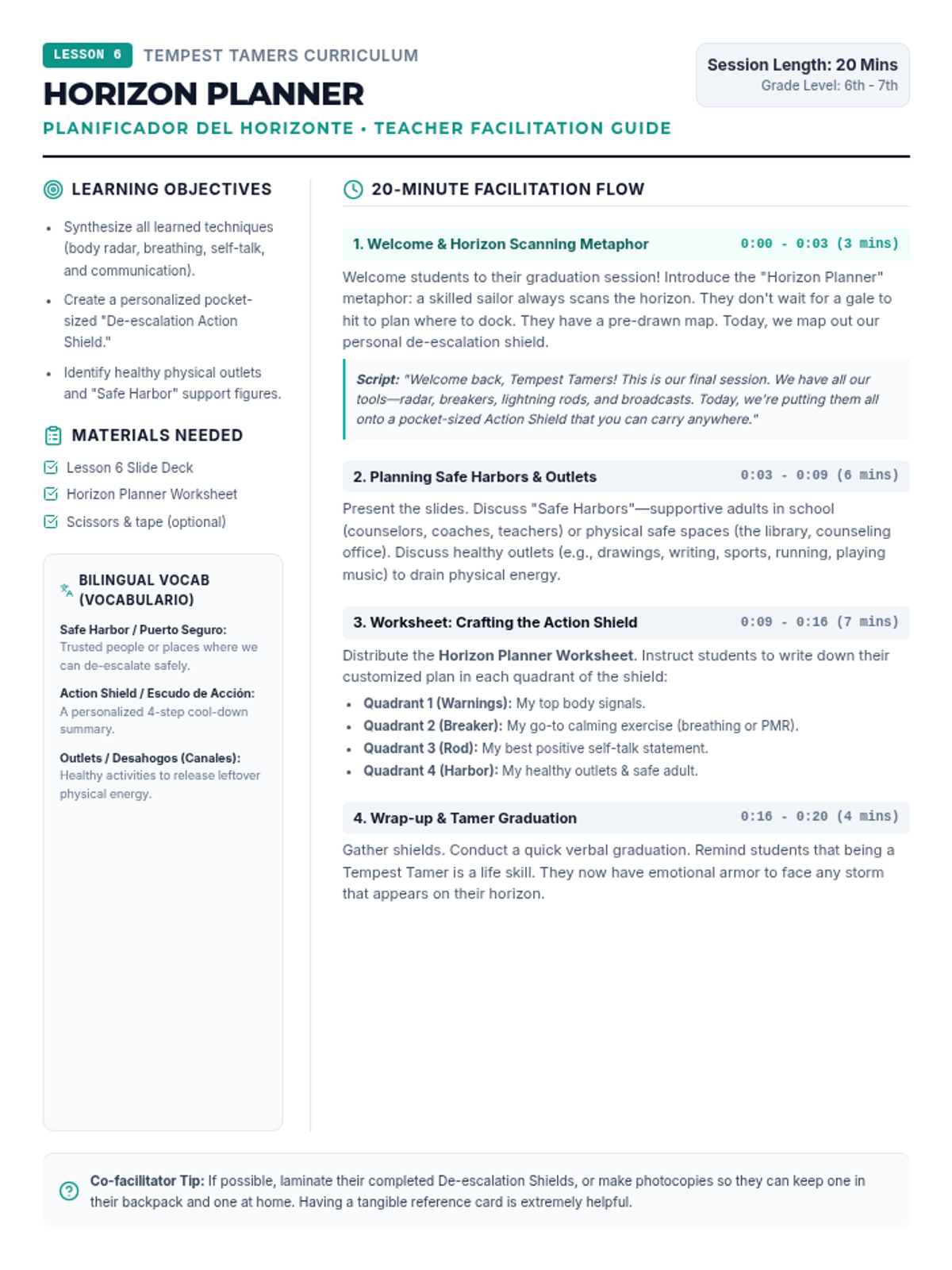
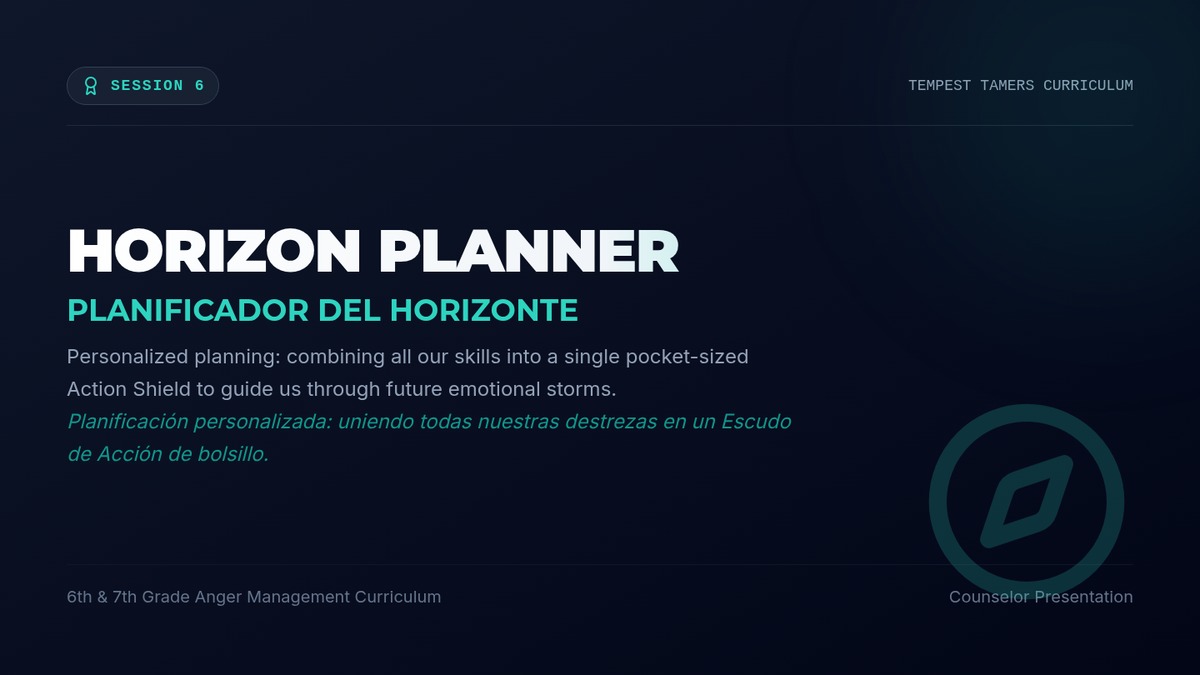
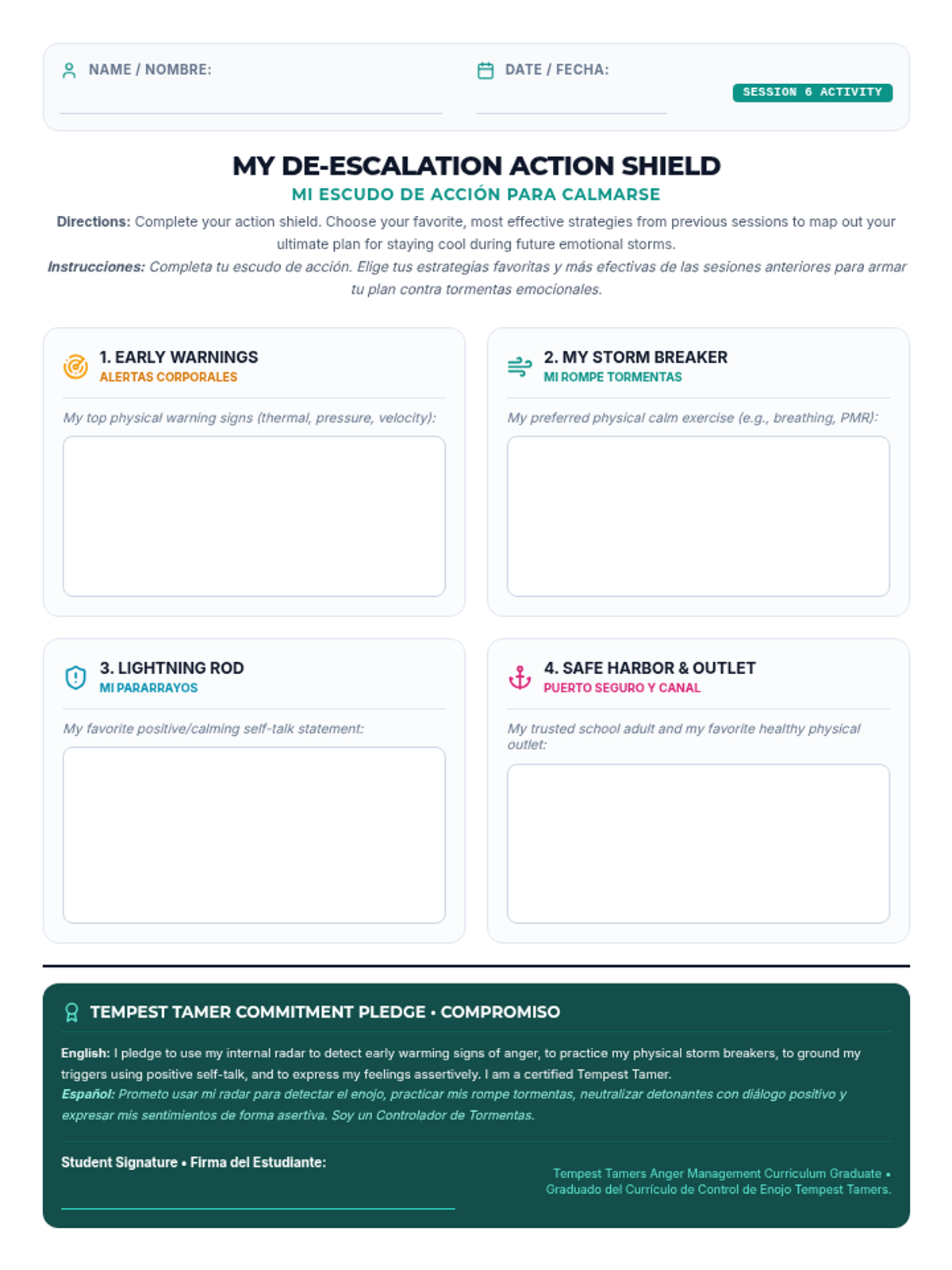
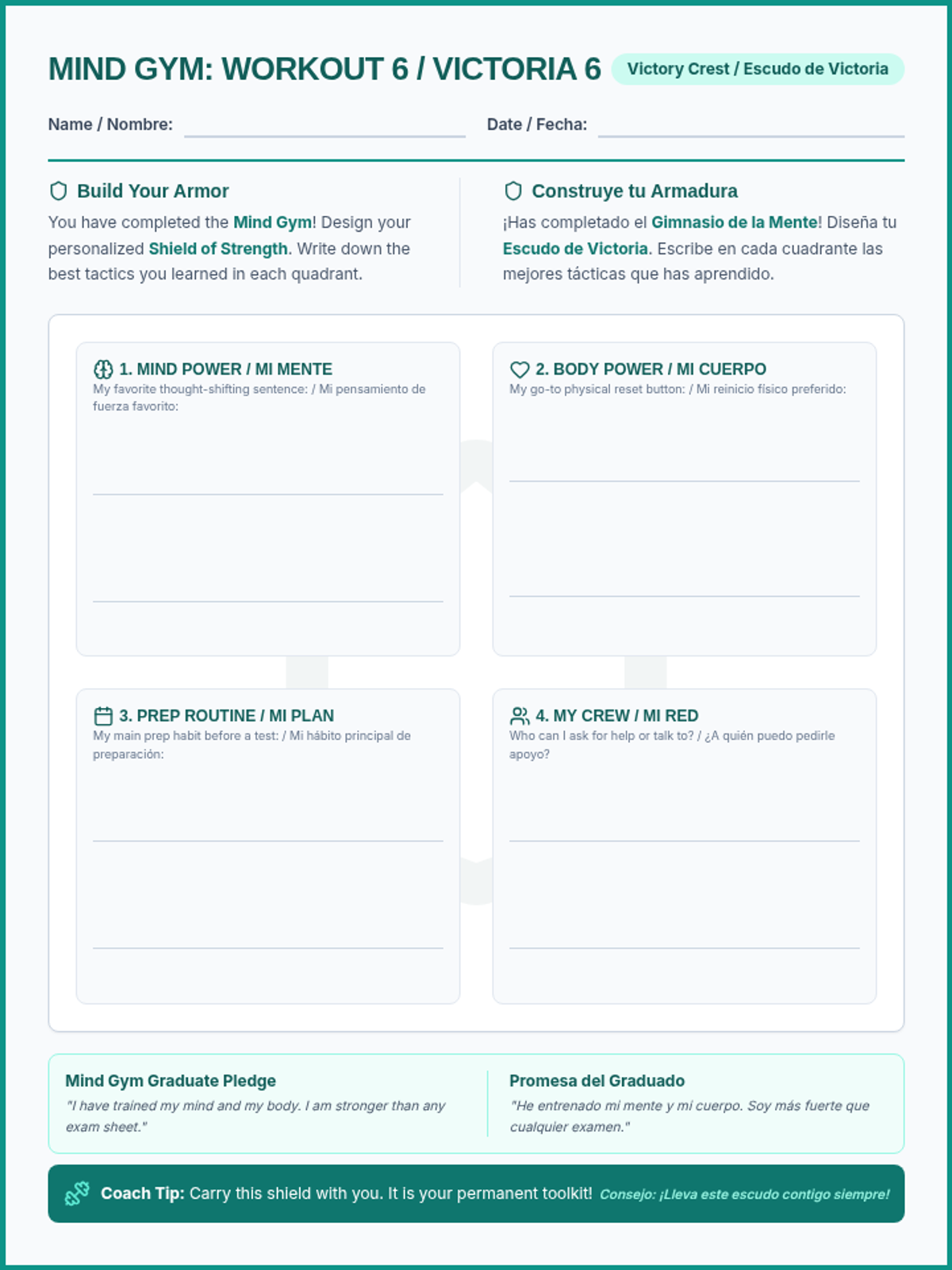
Focuses on personalized de-escalation planning. Students combine the strategies learned throughout the curriculum (body warnings, breathing, self-talk, and communication) into a concrete, pocket-sized 'De-escalation Action Shield' and identify healthy outlets.
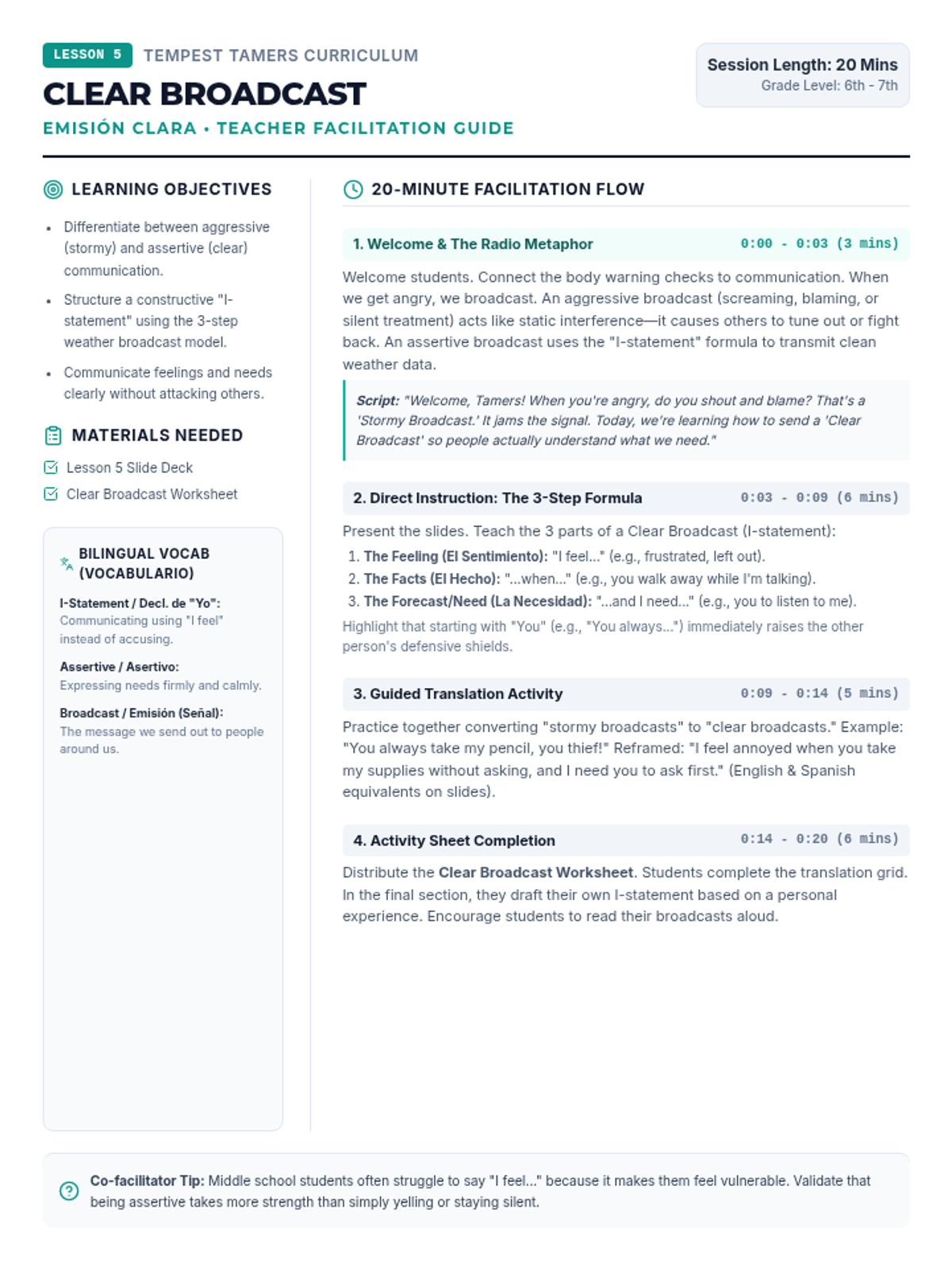
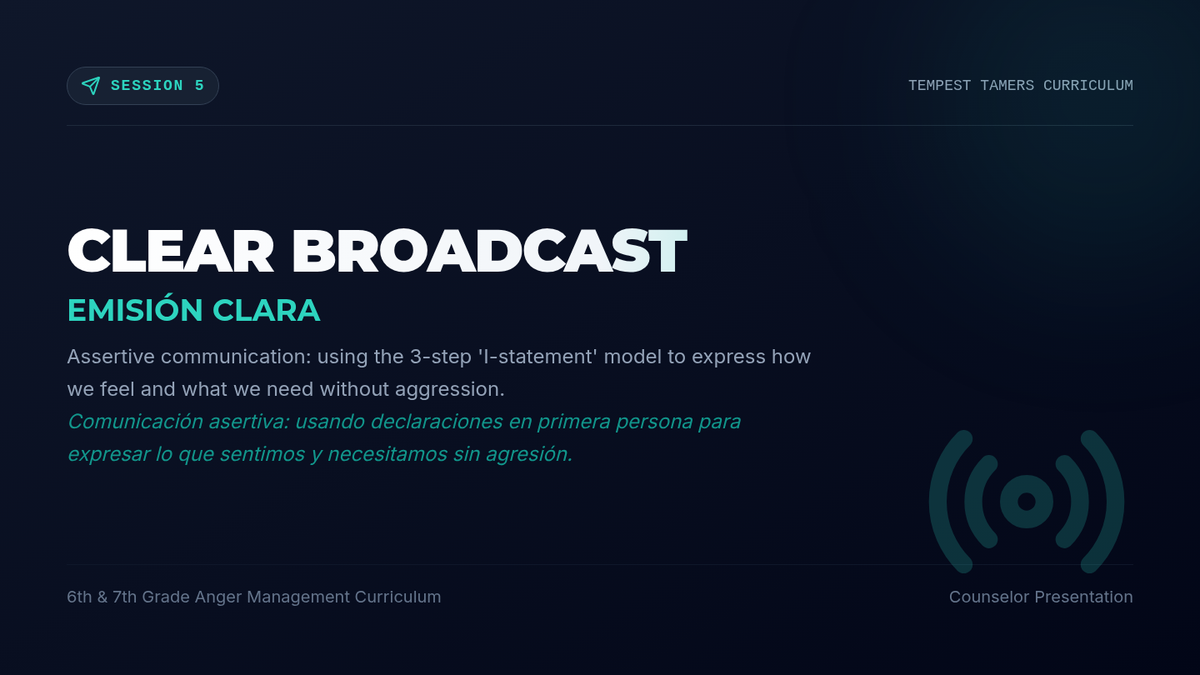
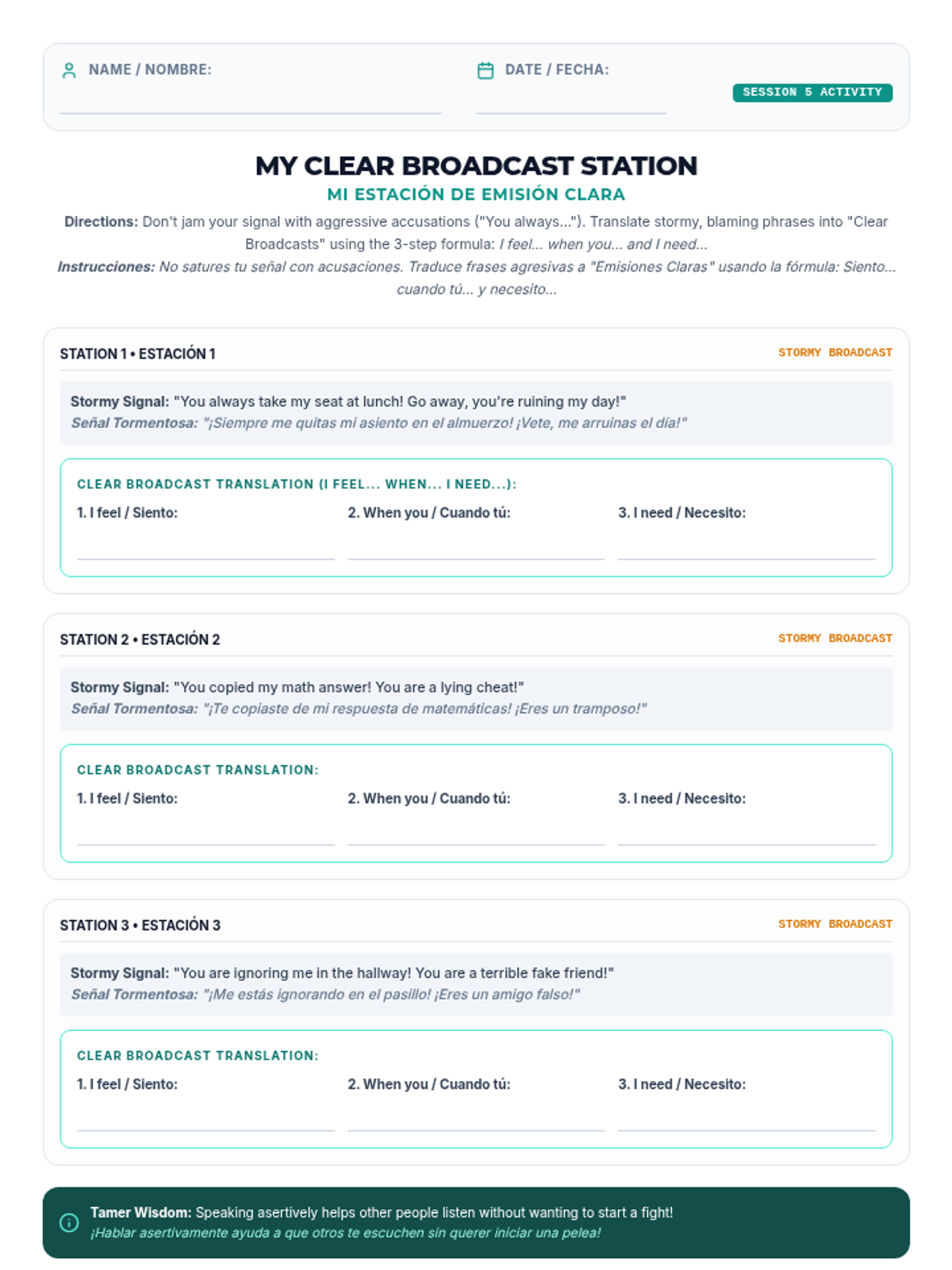
Focuses on assertive communication and 'I-statements'. Students learn how to express feelings constructively without aggression using a clear weather broadcast metaphor.
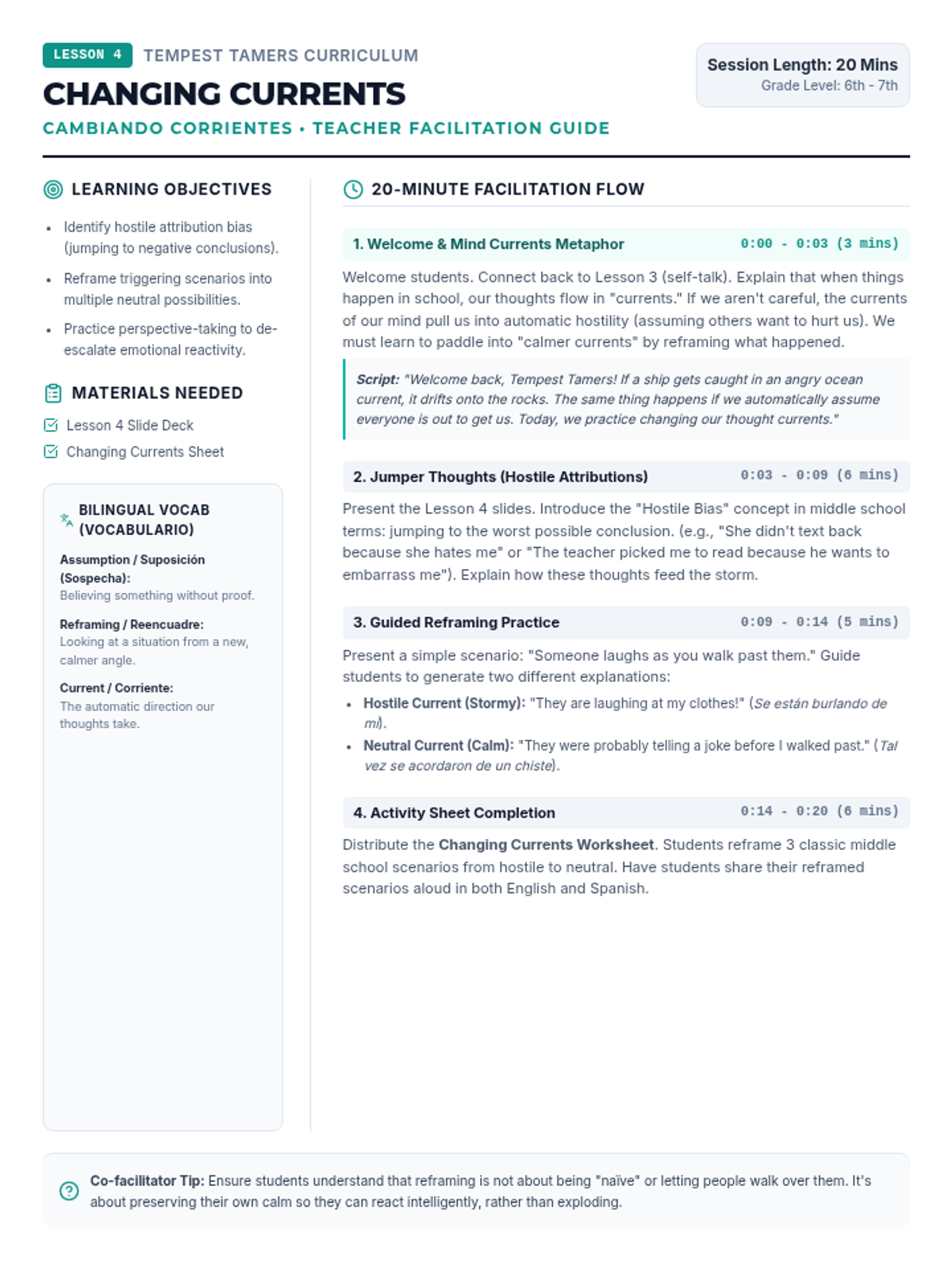
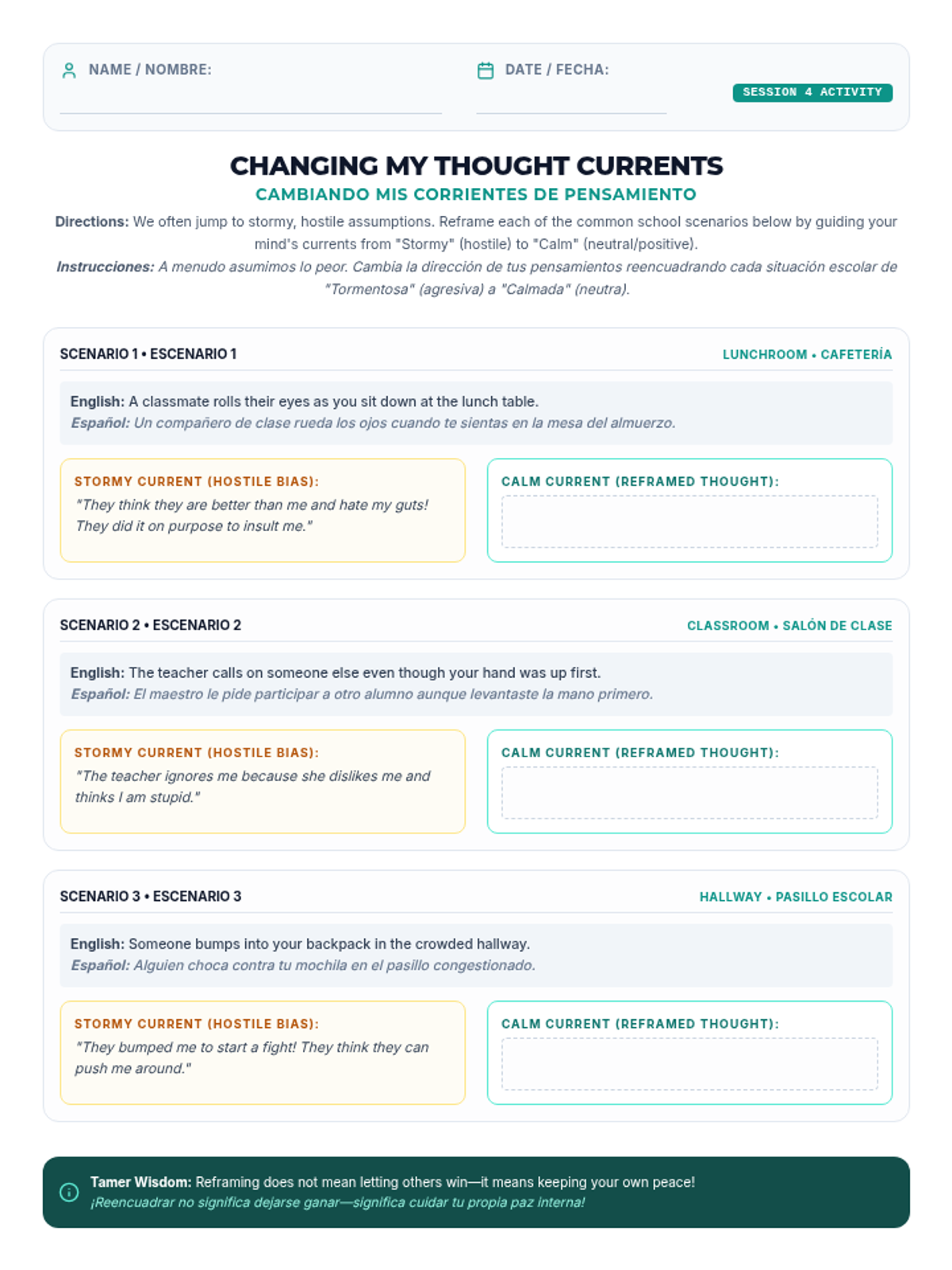
Focuses on cognitive reframing and perspective-taking. Students learn to examine alternative explanations for triggering situations, shifting from aggressive assumptions to calmer, neutral perspectives.
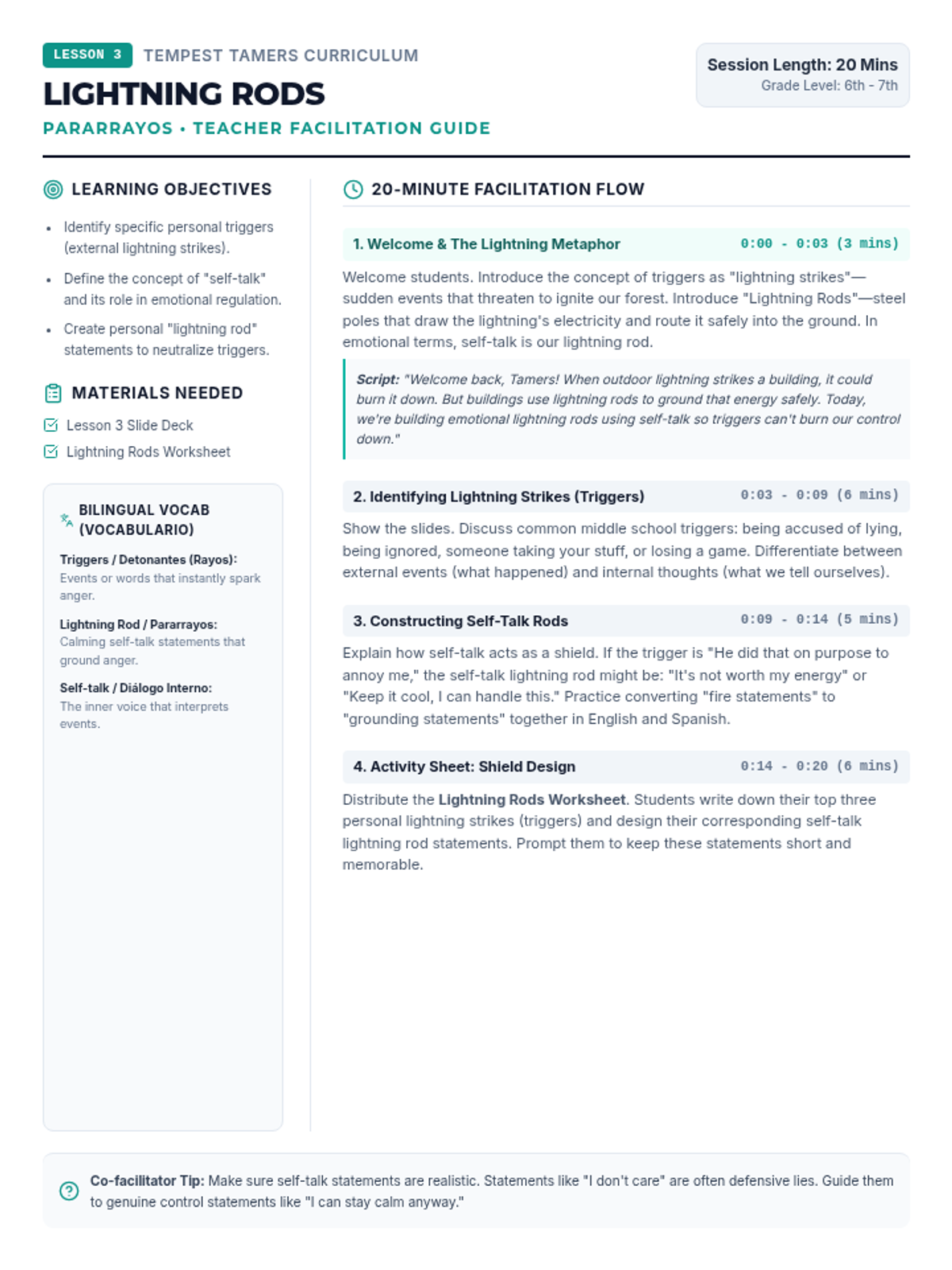
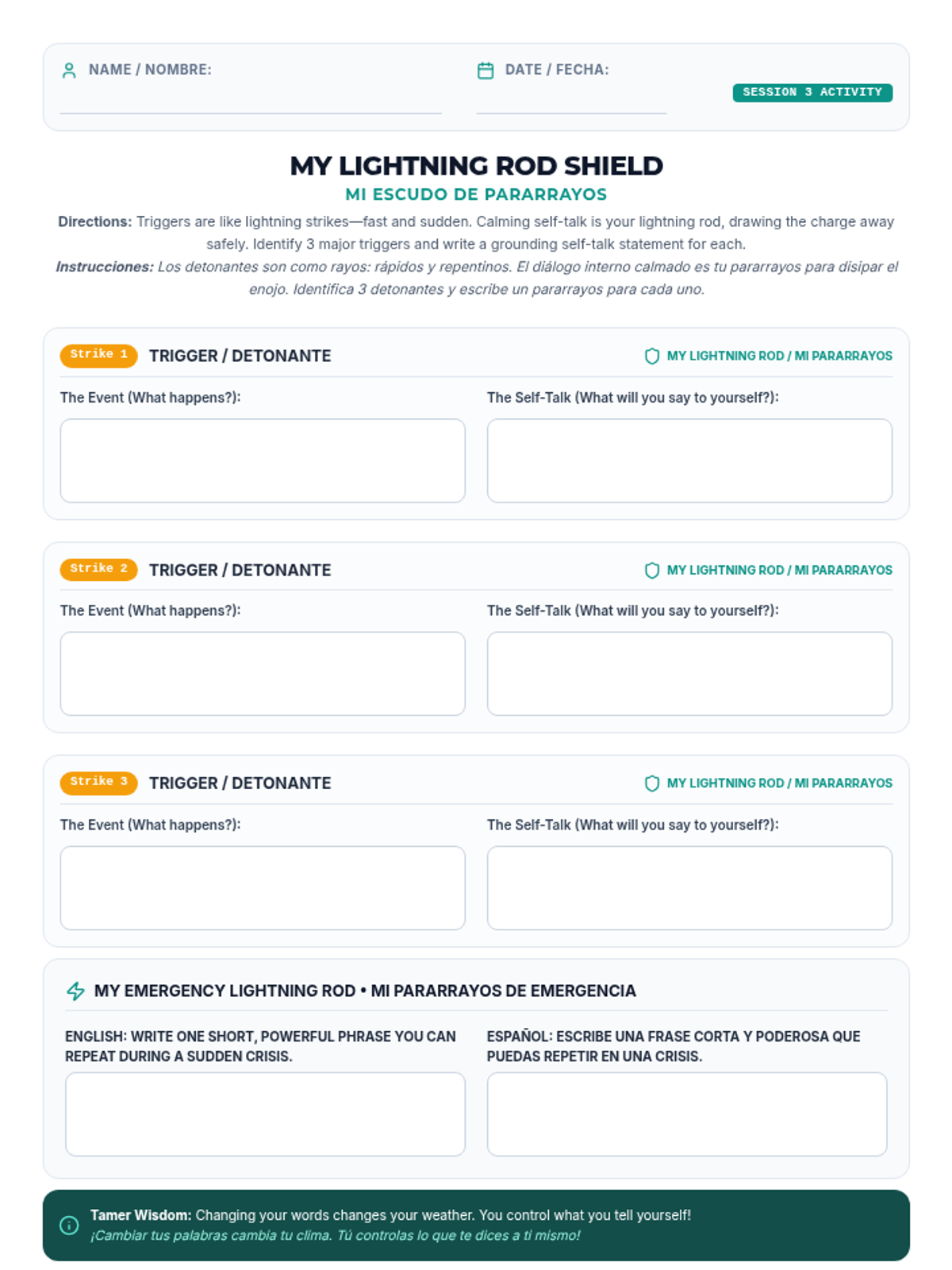
Focuses on identifying internal and external anger triggers (lightning strikes) and using self-talk adjustments (lightning rods) to channel emotional charge safely.
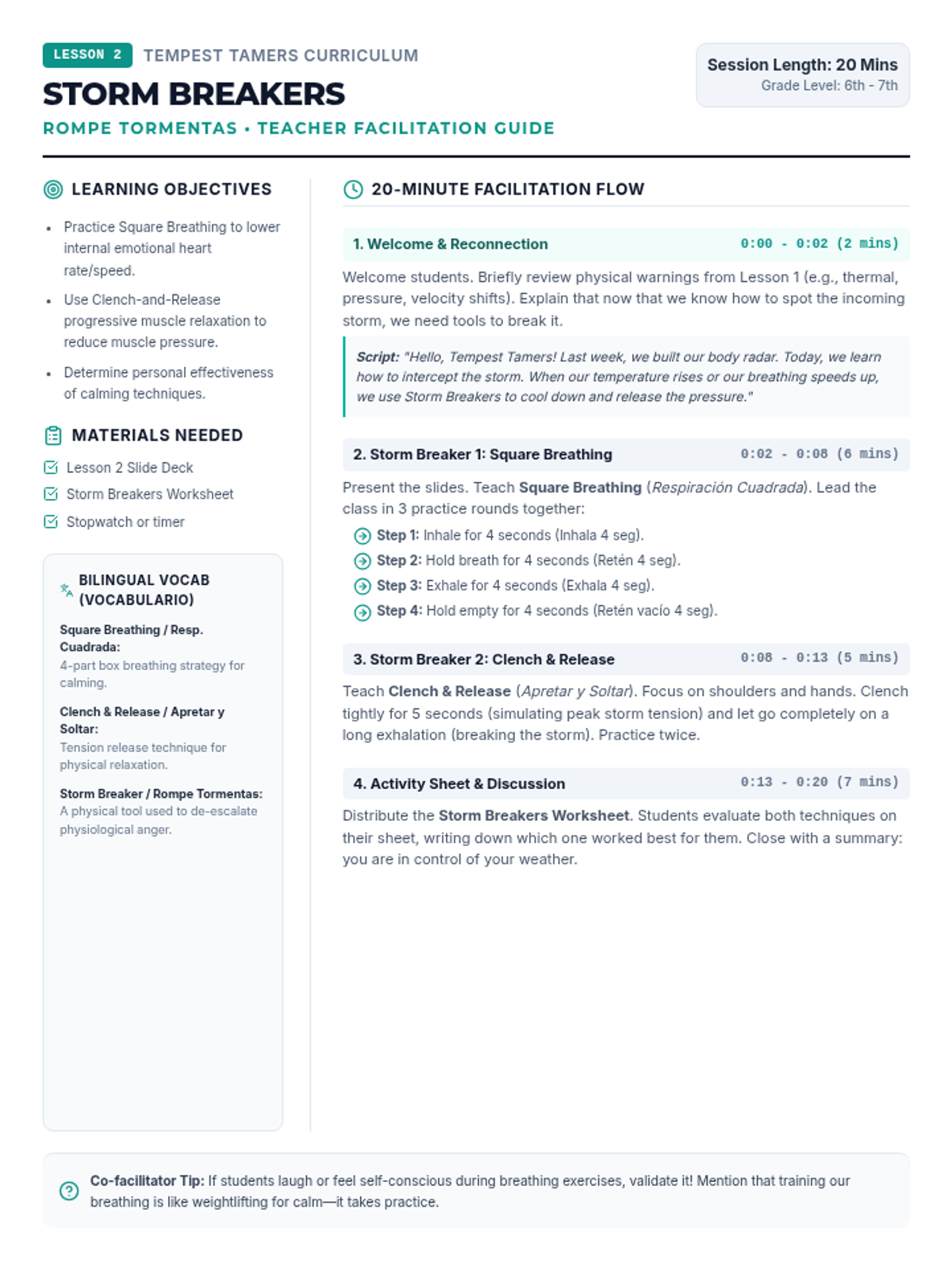
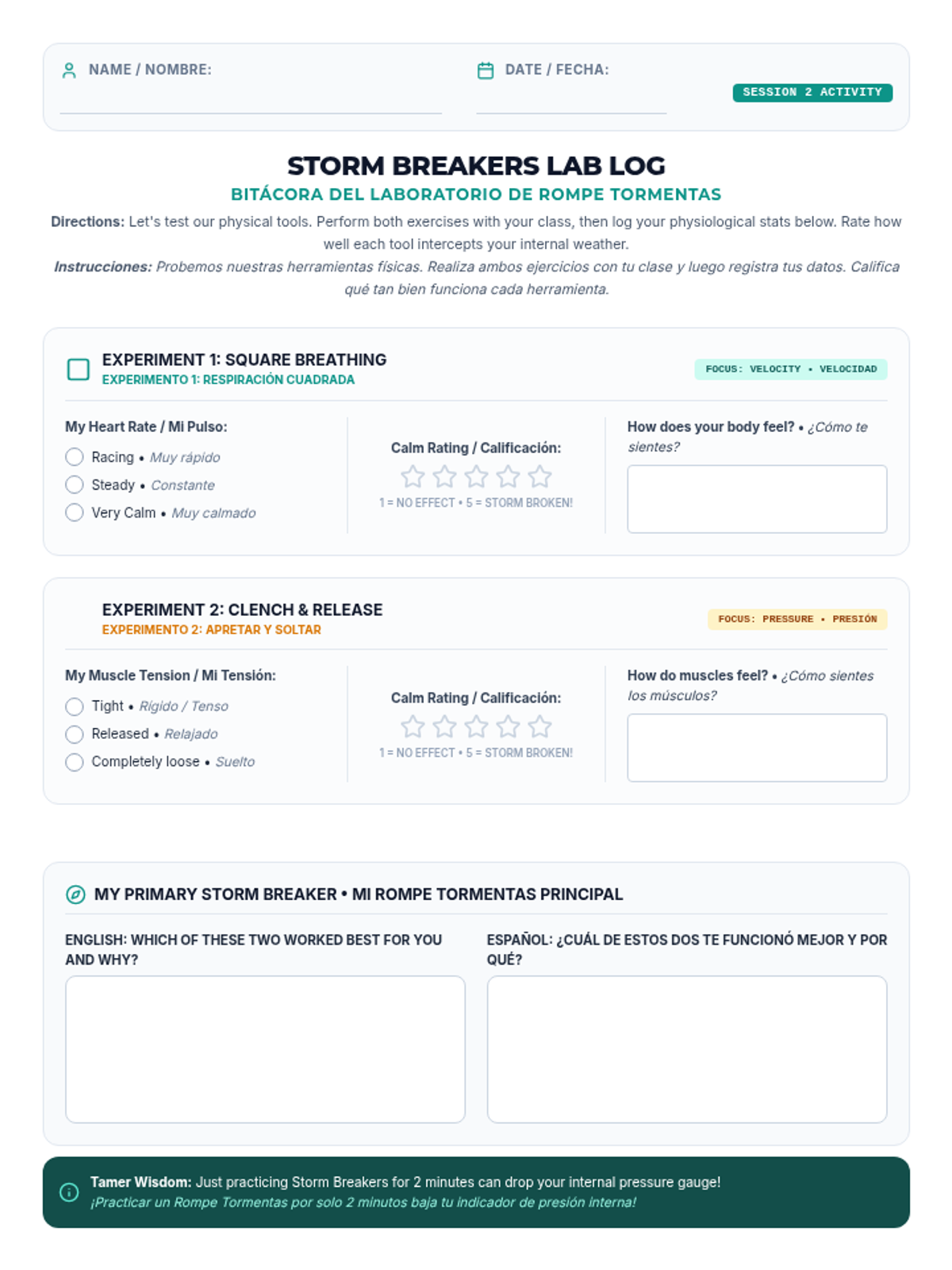
Focuses on physiological calming techniques, specifically deep breathing and progressive muscle relaxation. Students practice "square breathing" and "clench-and-release" to rapidly lower internal temperature and pressure when early warning signals are detected.
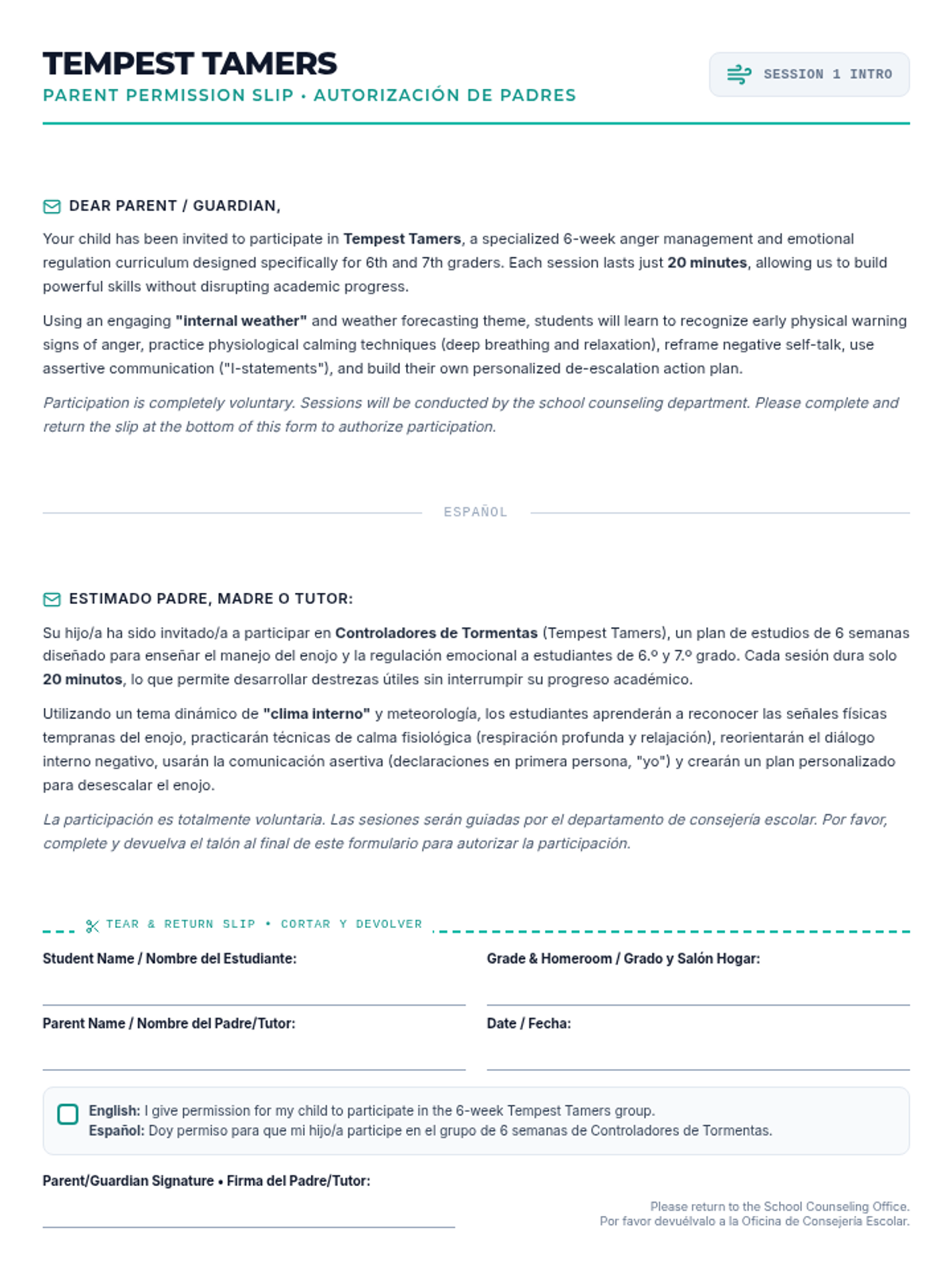
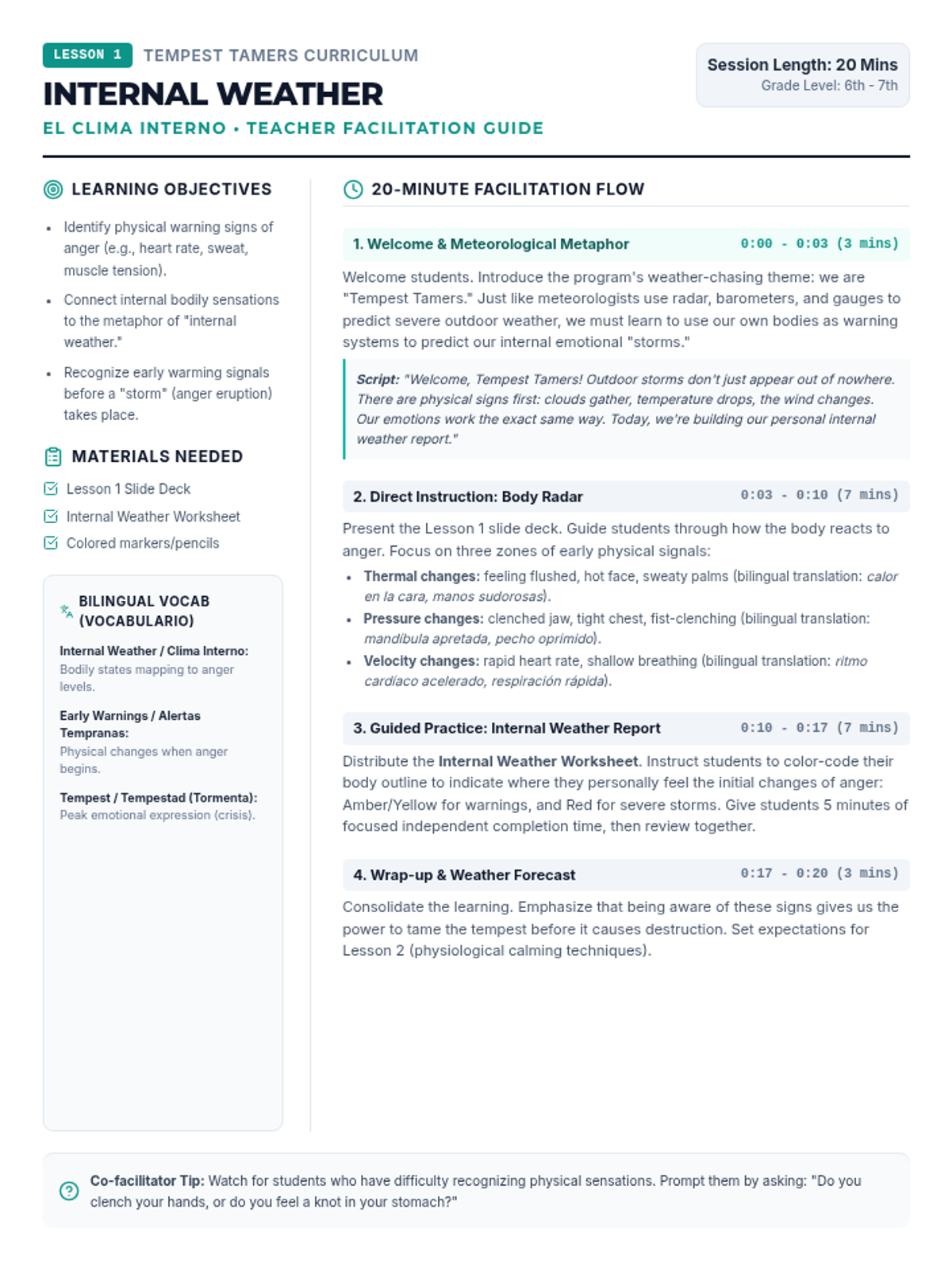
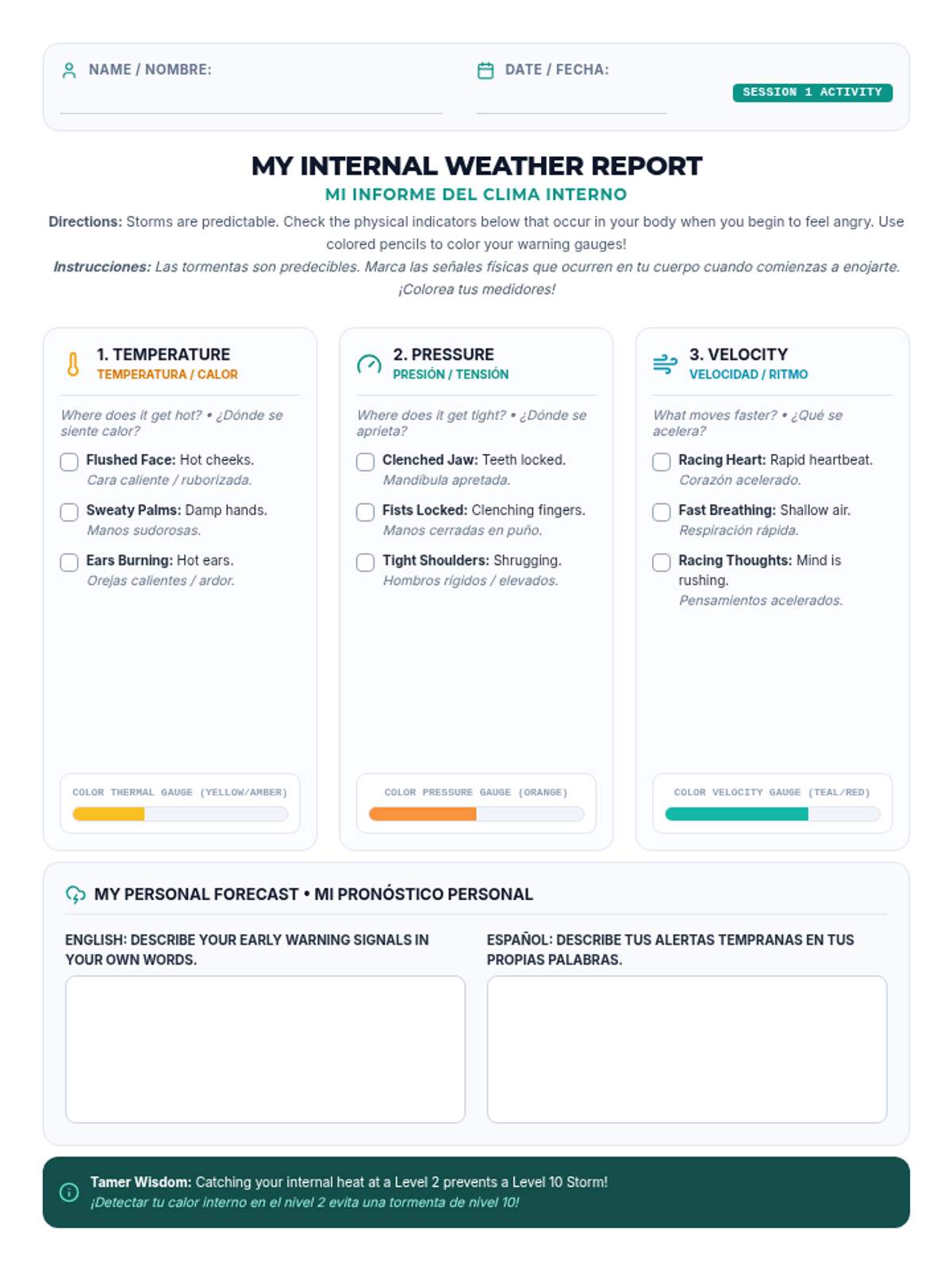
Focuses on physiological calming, specifically body awareness. Students learn to read their body's early warming signs of anger using an 'internal weather report' metaphor. Includes a bilingual parent permission slip.
Students review their progress, celebrate their growth, and consolidate their personalized Test Anxiety Toolkit. This lesson includes a final self-assessment and a celebratory reflection.
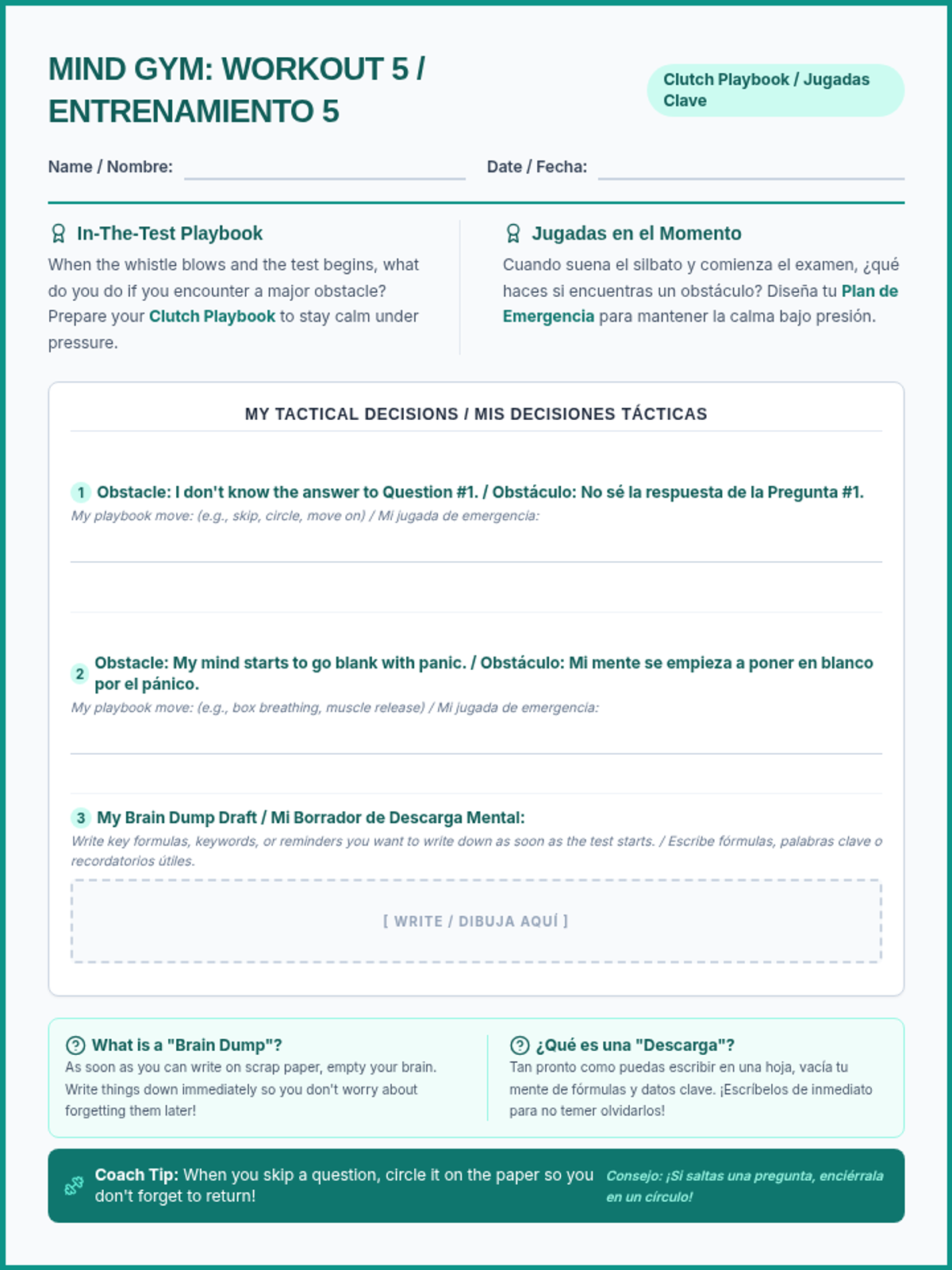
Covers real-time test-taking coping skills, such as how to handle encountering an incredibly difficult question, managing pacing, and utilizing a brief 'brain dump' sheet at the start of a test.
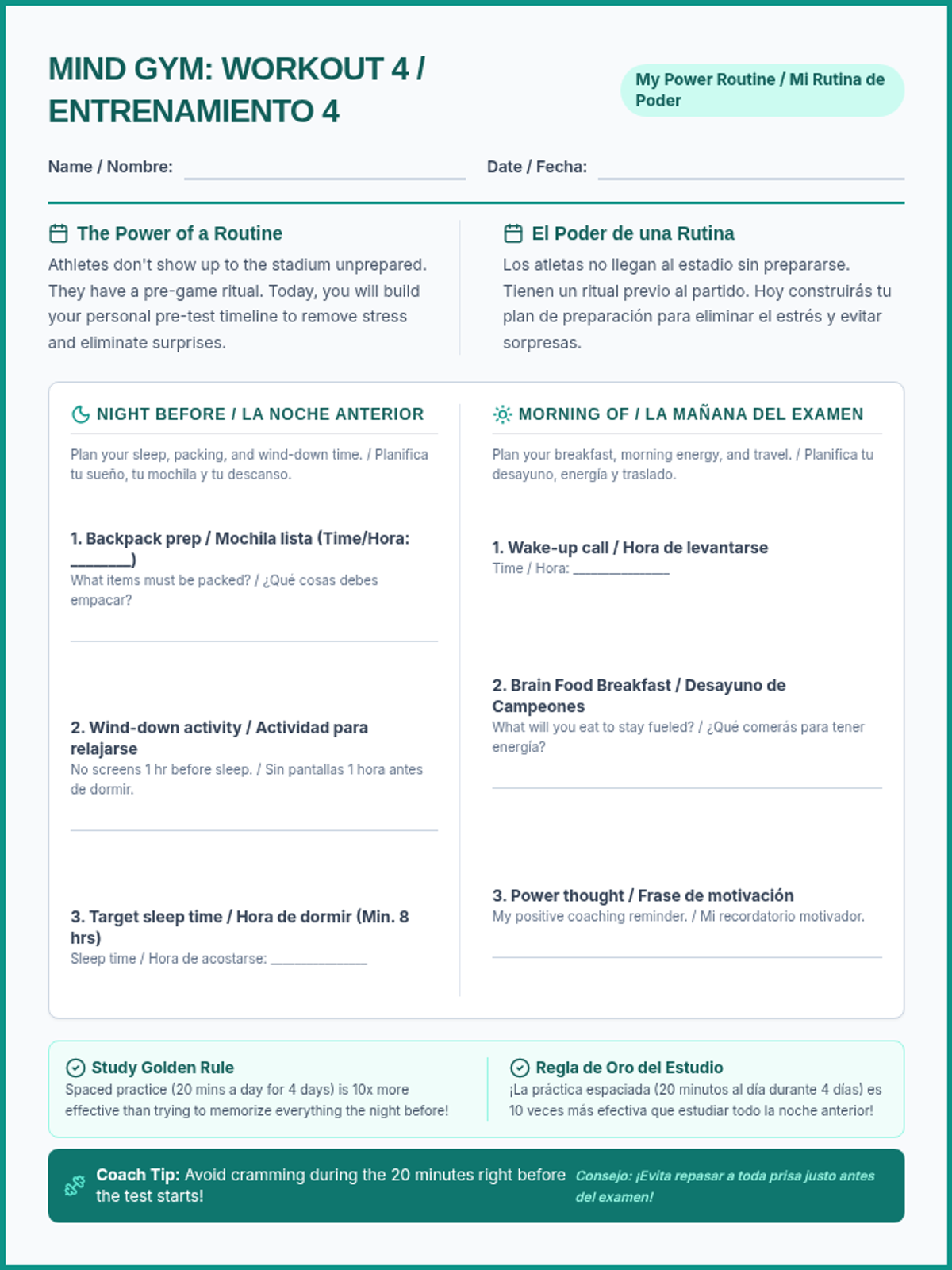
Equips students with practical preparation habits, including effective study routines, sleep hygiene, nutritional tips, and creating a personalized evening-before and morning-of timeline.
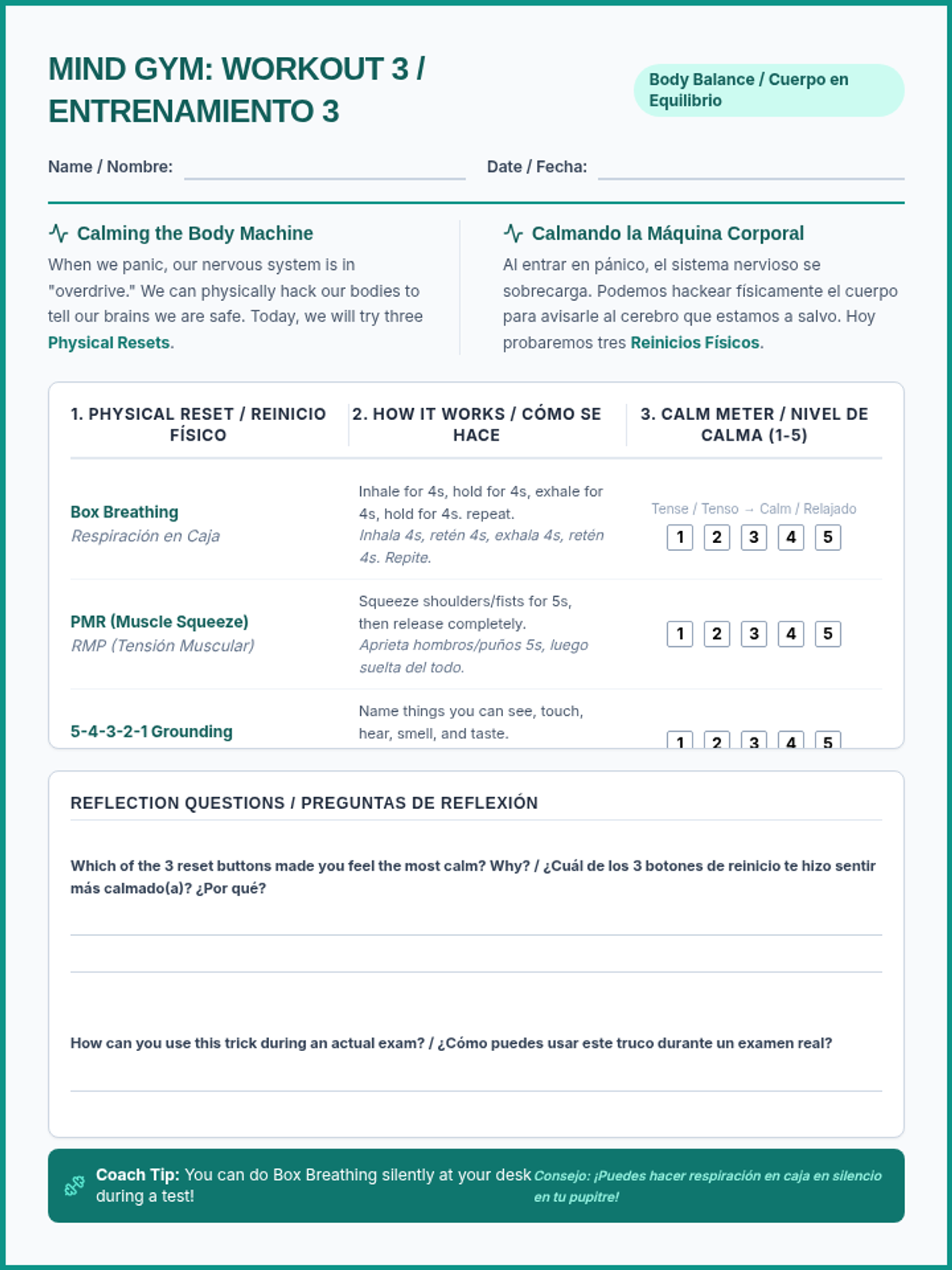
Teaches physical strategies to manage tension and calm the nervous system, including deep breathing exercises, progressive muscle relaxation, and rapid physical resets.
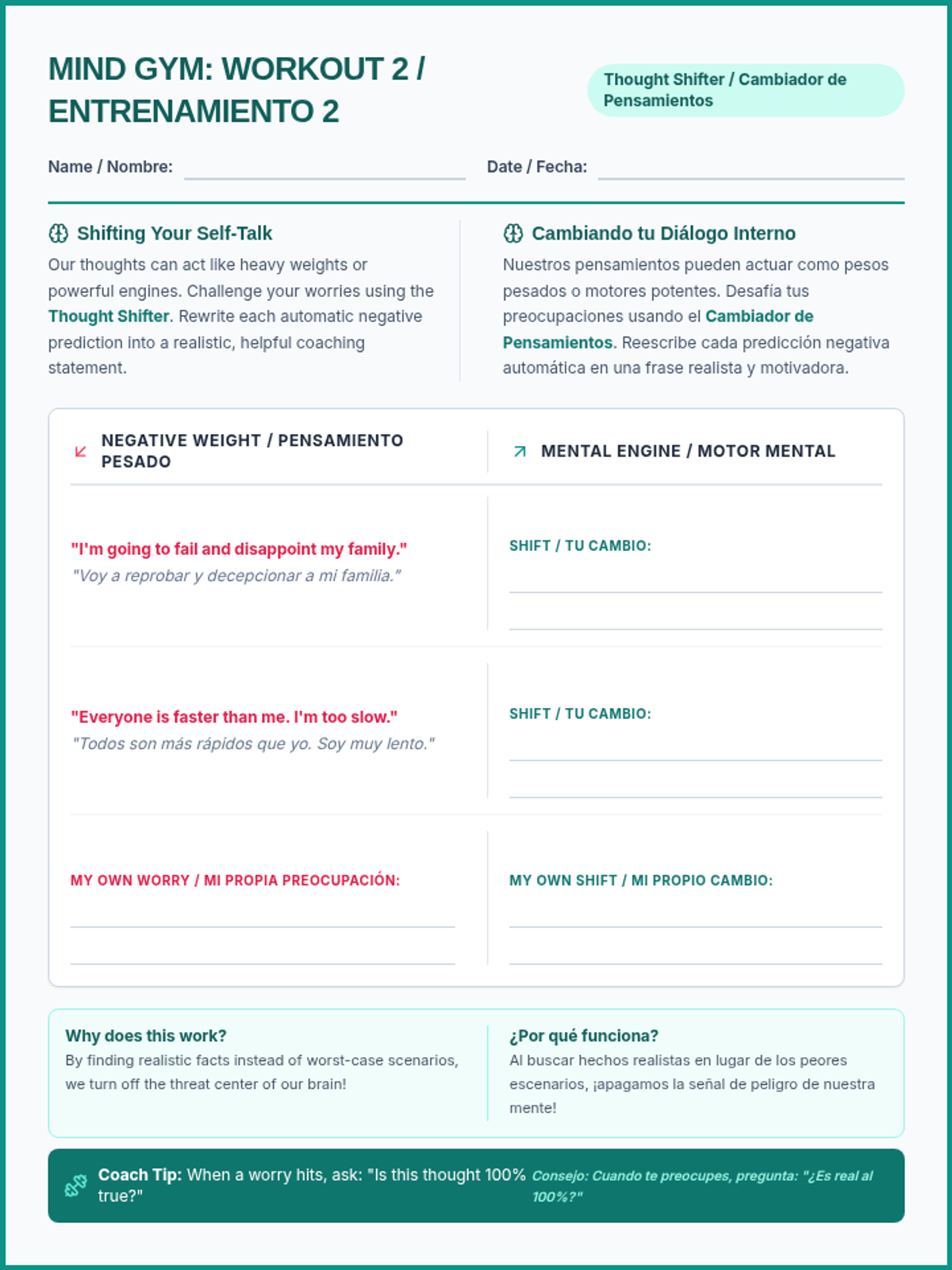
Focuses on cognitive strategies to identify and challenge negative self-talk, replacing it with a supportive inner dialogue. Students learn the 'thought shifting' technique to reframe negative predictions.
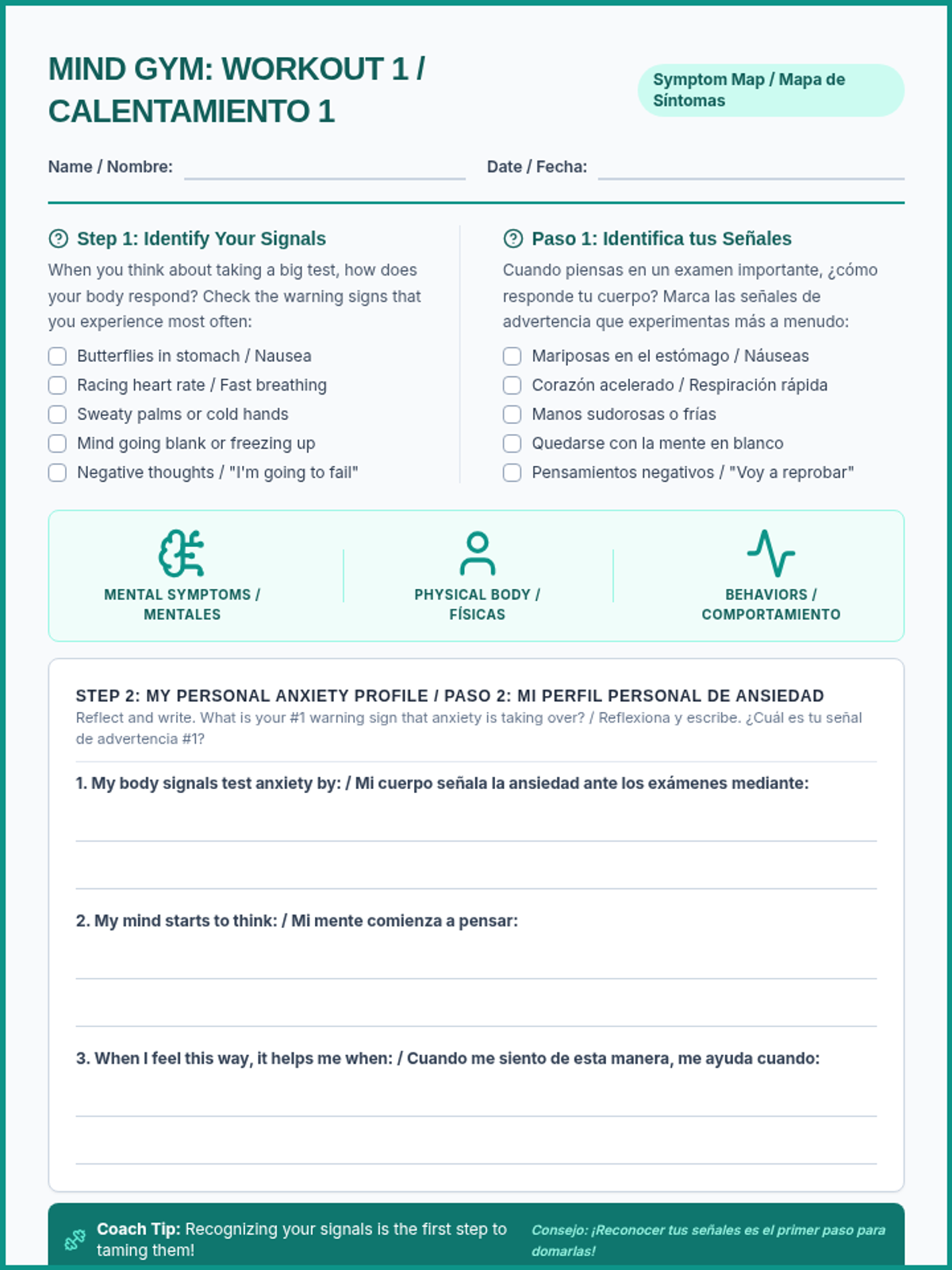
Students learn what test anxiety is, recognize its physical and emotional symptoms, and understand that their feelings are normal. They will receive their bilingually structured Permission Slip and the introductory session worksheet.
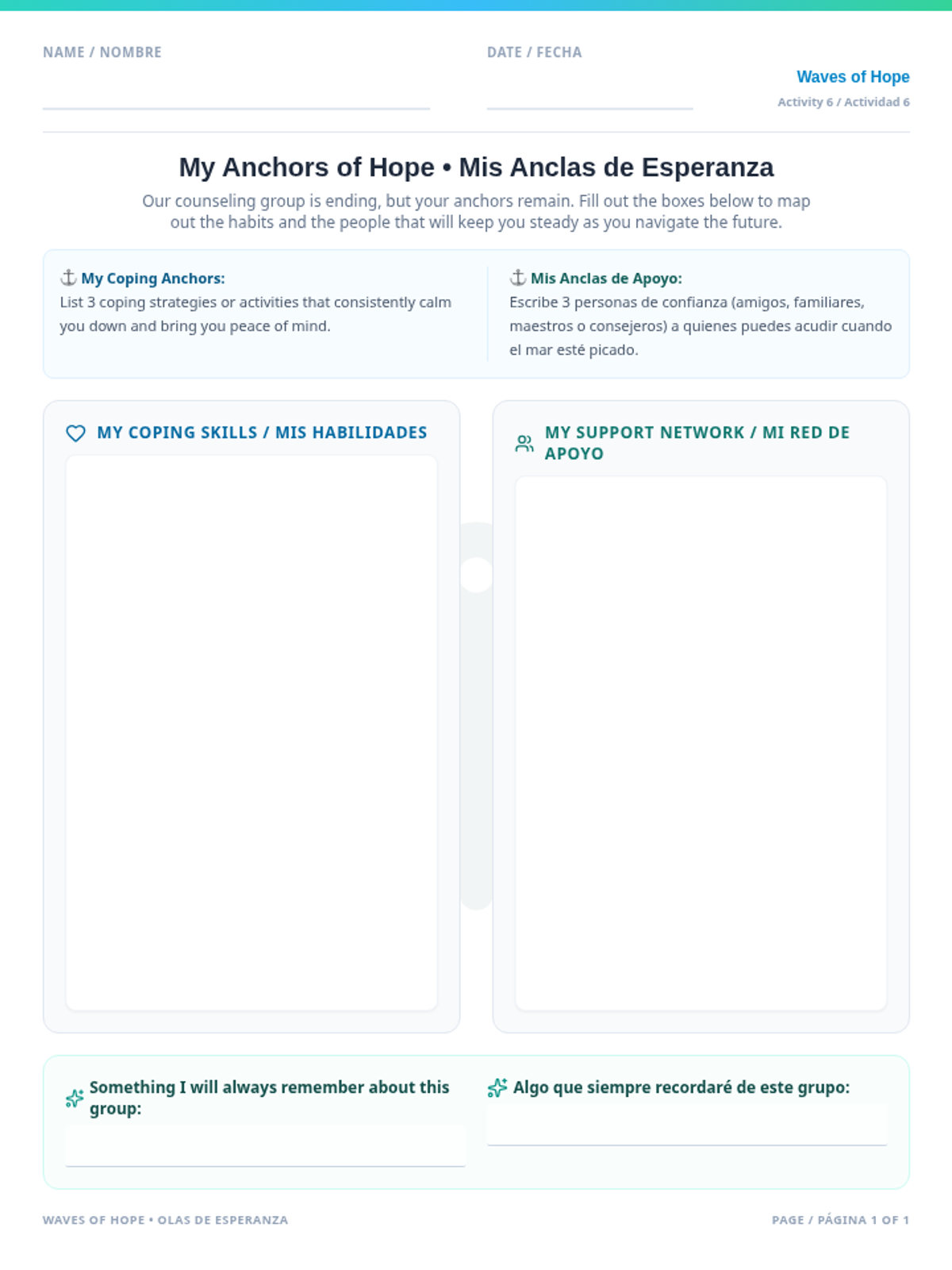
Session 6 targets Worden's Fourth Task of Mourning: finding an enduring connection with the deceased while embarking on a new life. Students engage in a closing ritual, evaluate their progress, and look forward.
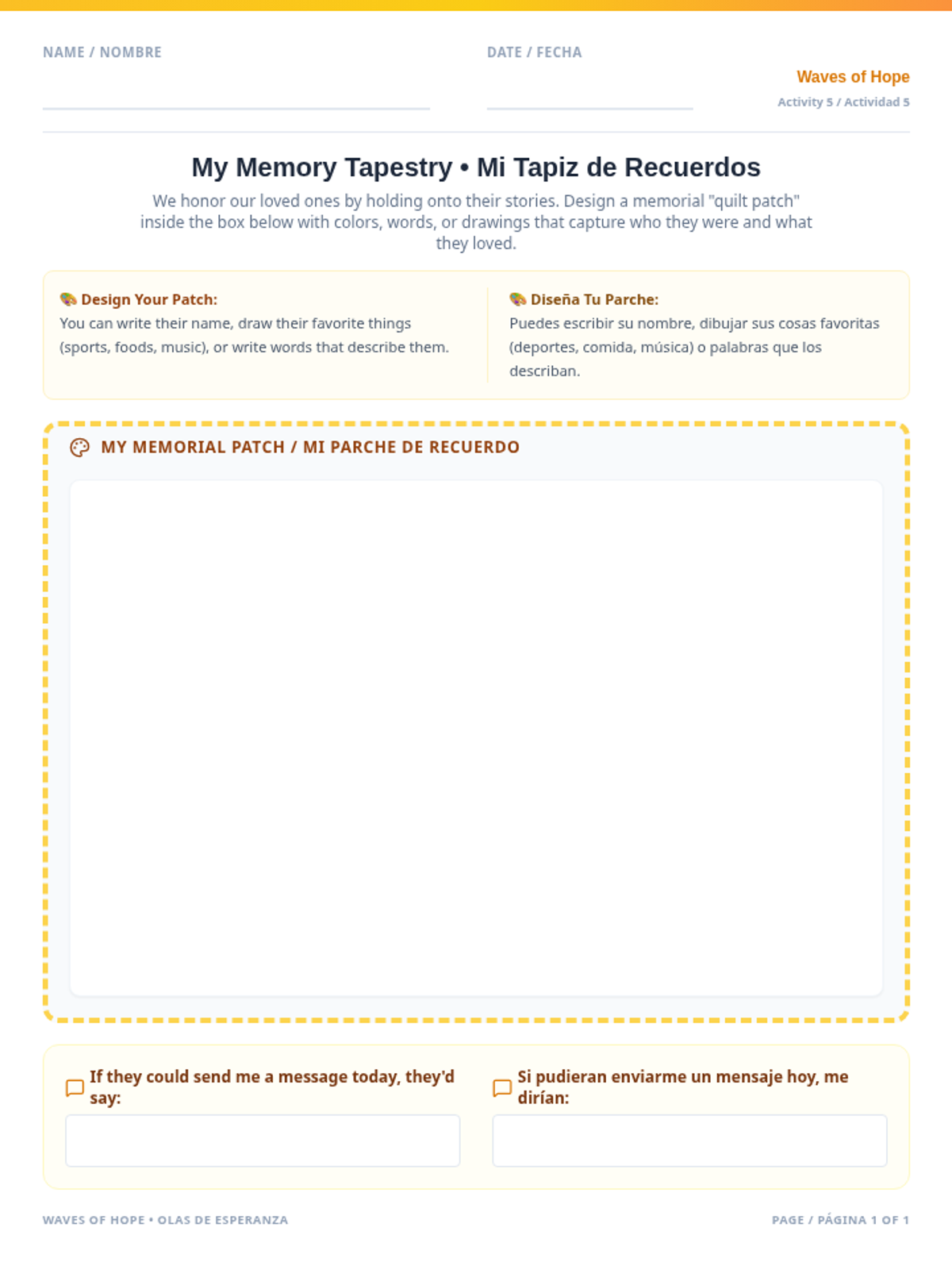
Session 5 employs Narrative Therapy and memories to celebrate and honor the life of the person who died. Students share stories, map memories, and create physical or written symbols of remembrance.
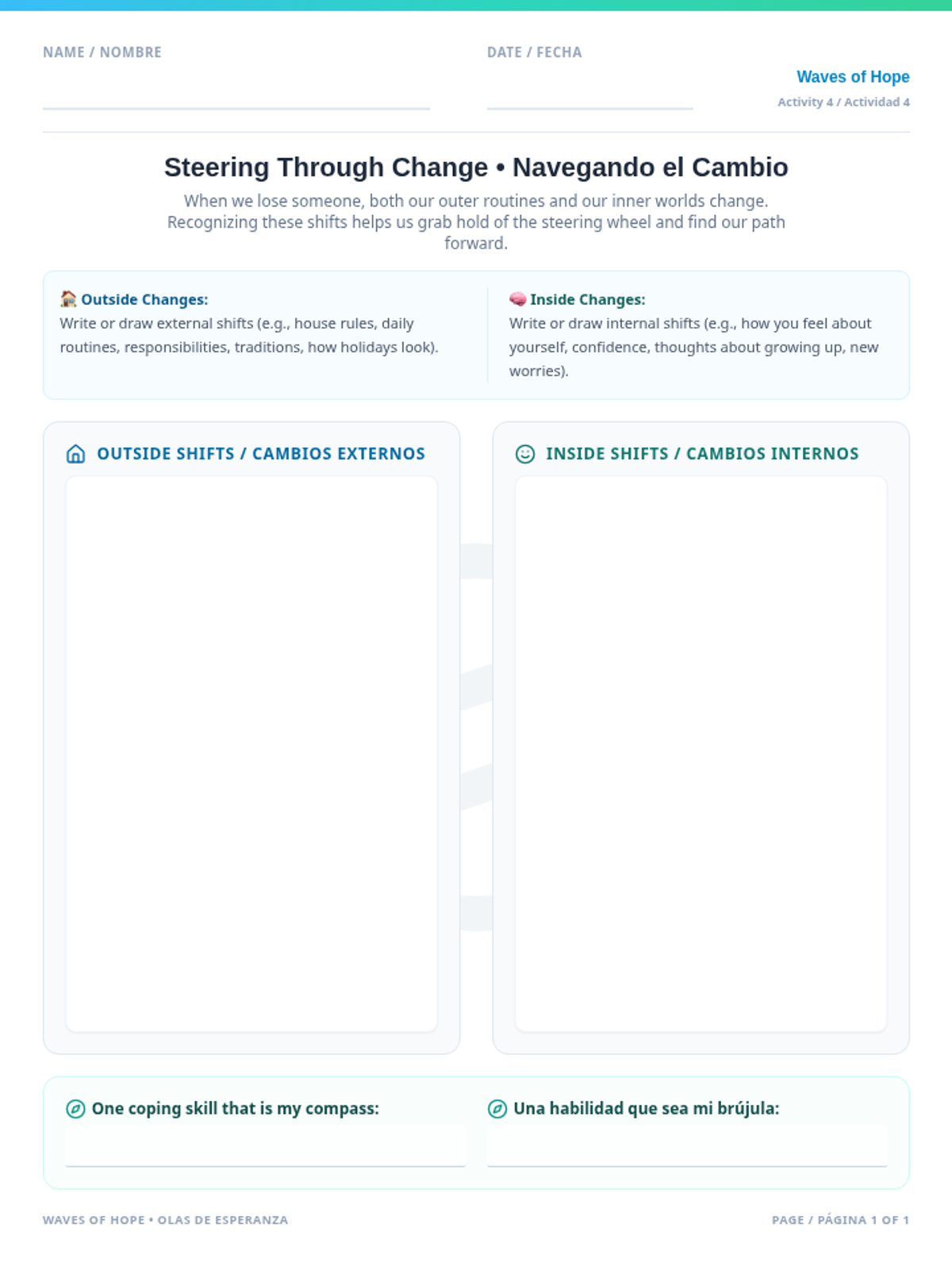
Session 4 focuses on Worden's Third Task of Mourning: adjusting to an environment in which the deceased is missing. Students identify new roles, external shifts, and internal shifts, and build coping strategies.
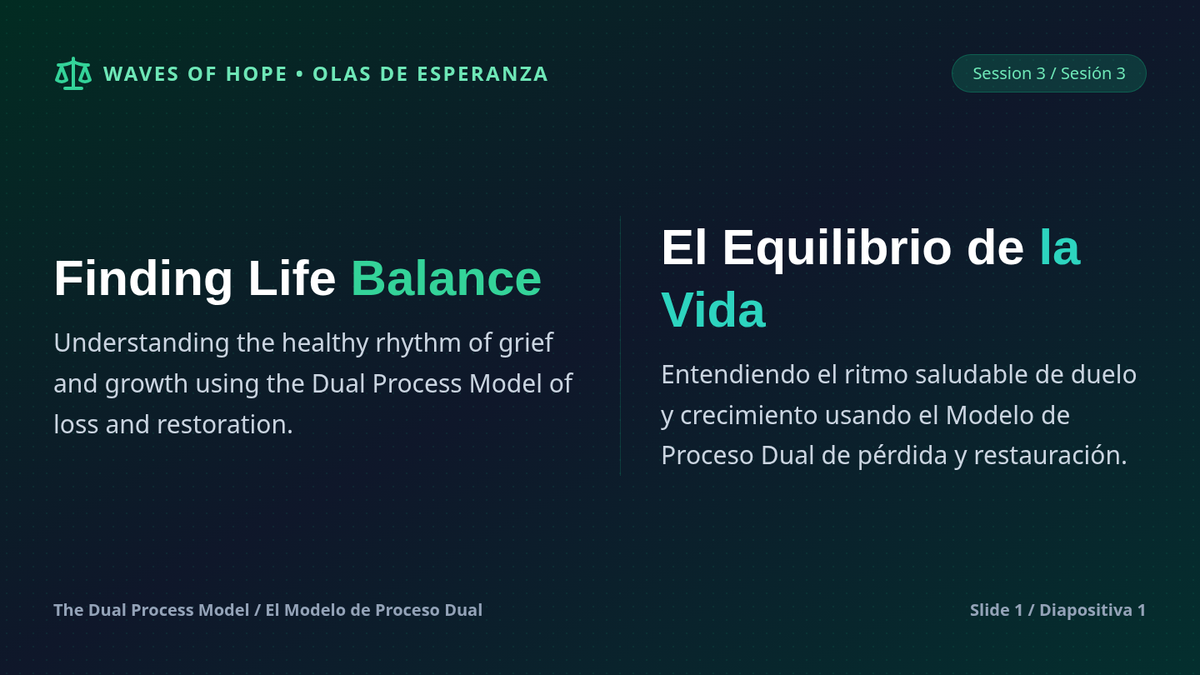
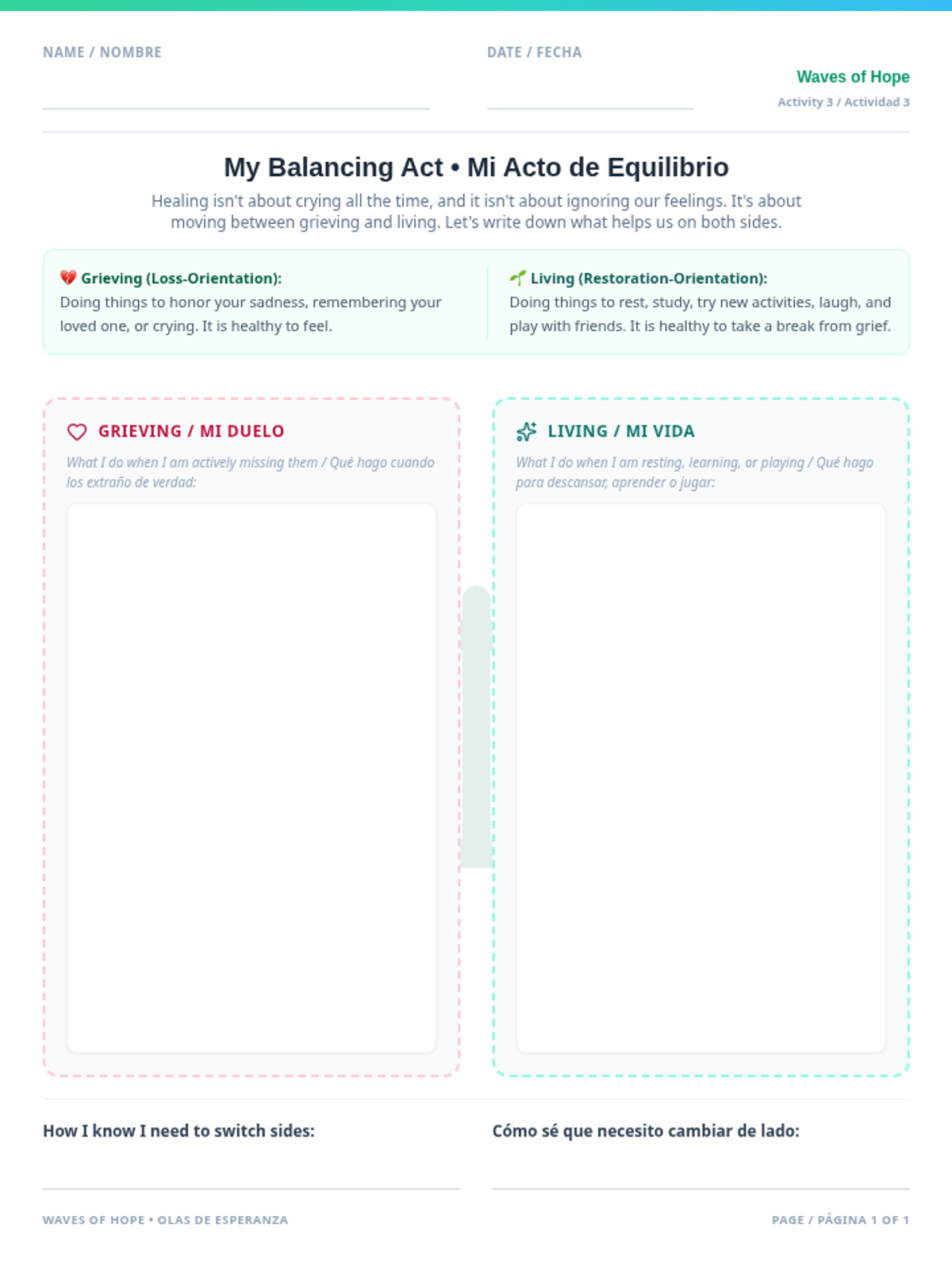
Session 3 introduces the Dual Process Model, helping students understand the healthy oscillation between processing grief (loss-orientation) and participating in regular life/restoration (restoration-orientation).