A comprehensive workshop for school leaders to design, implement, and evaluate effective professional learning pathways. This lesson covers needs assessment, diverse delivery models, and long-term sustainability.
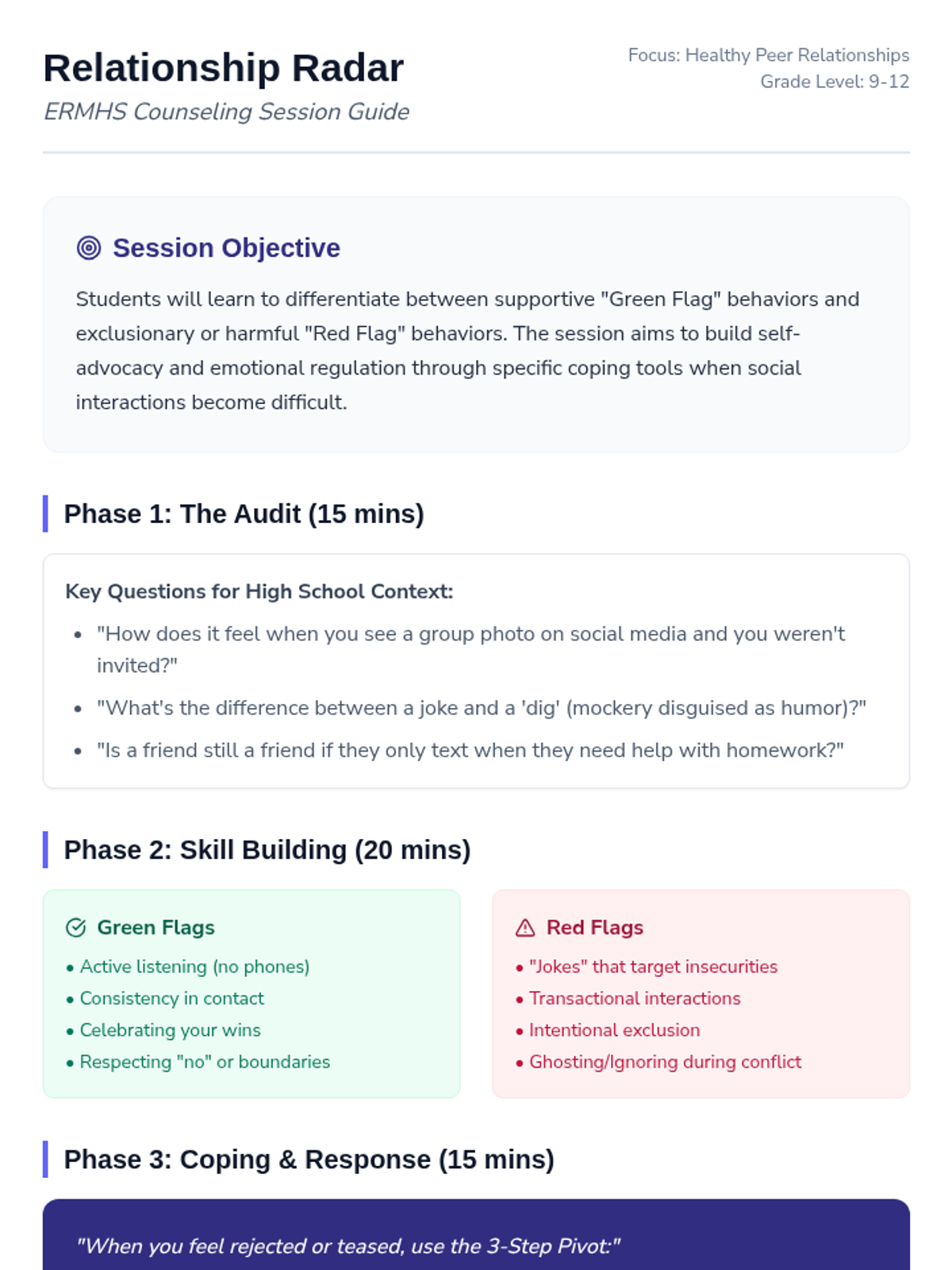
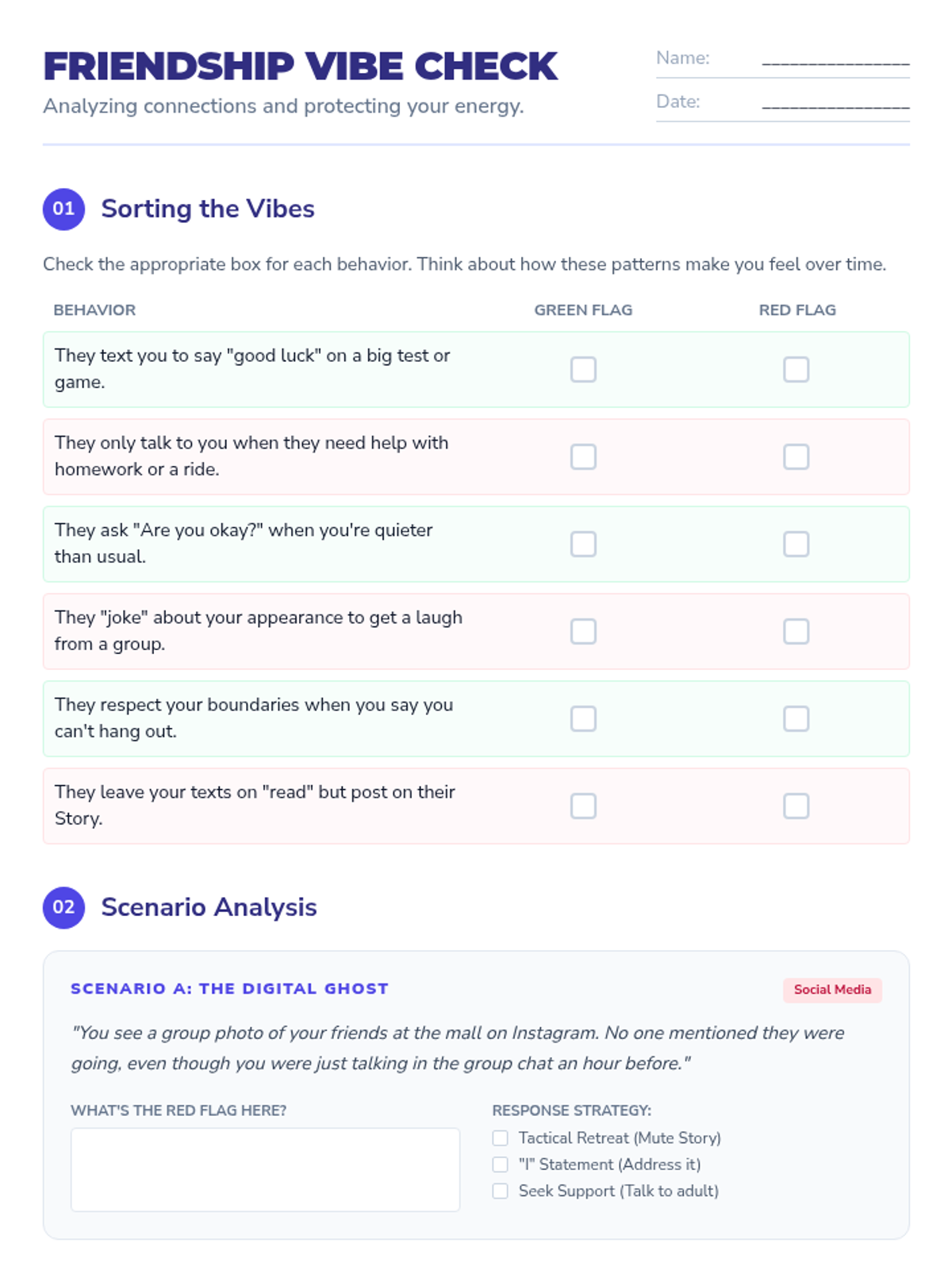
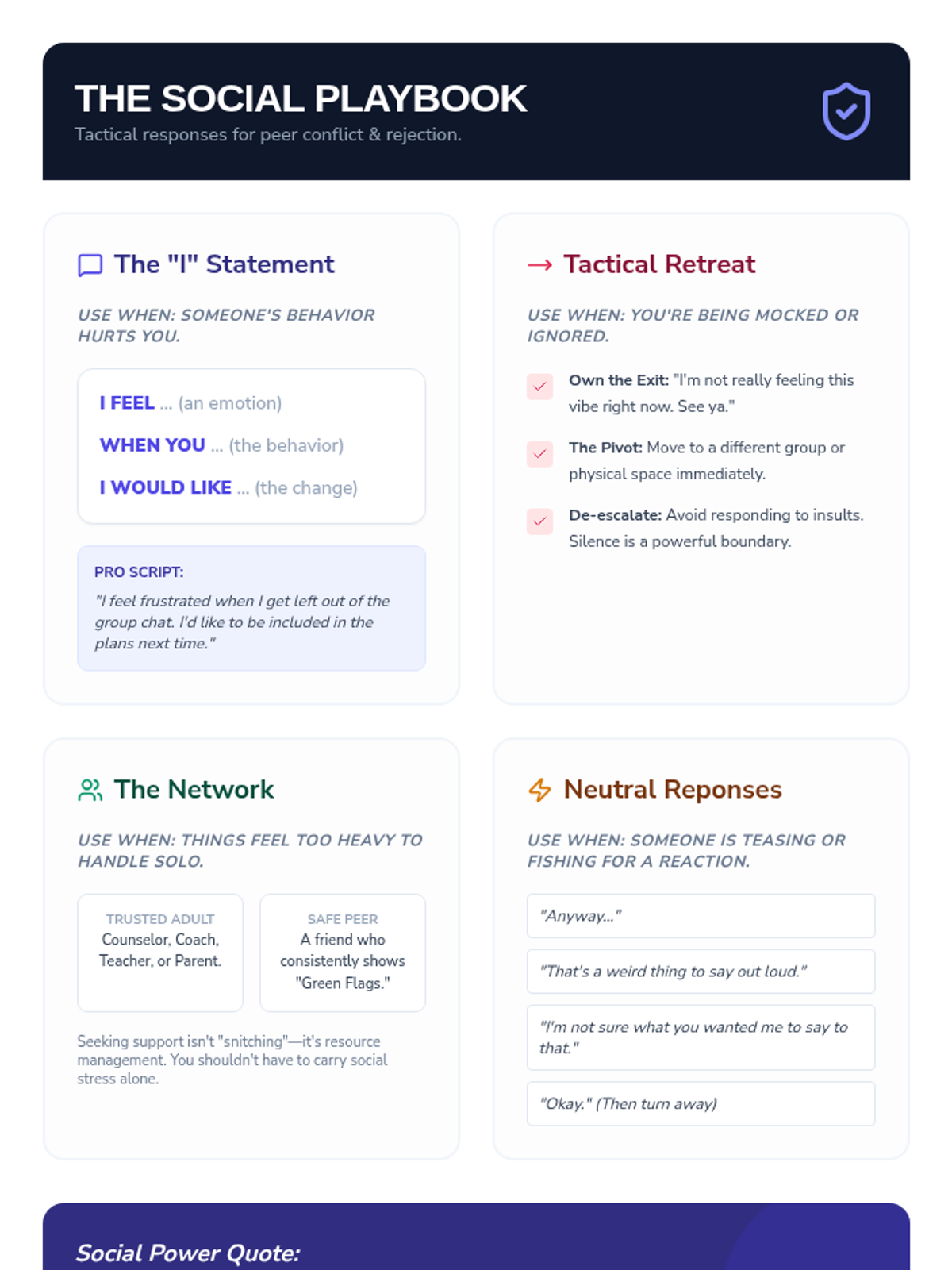
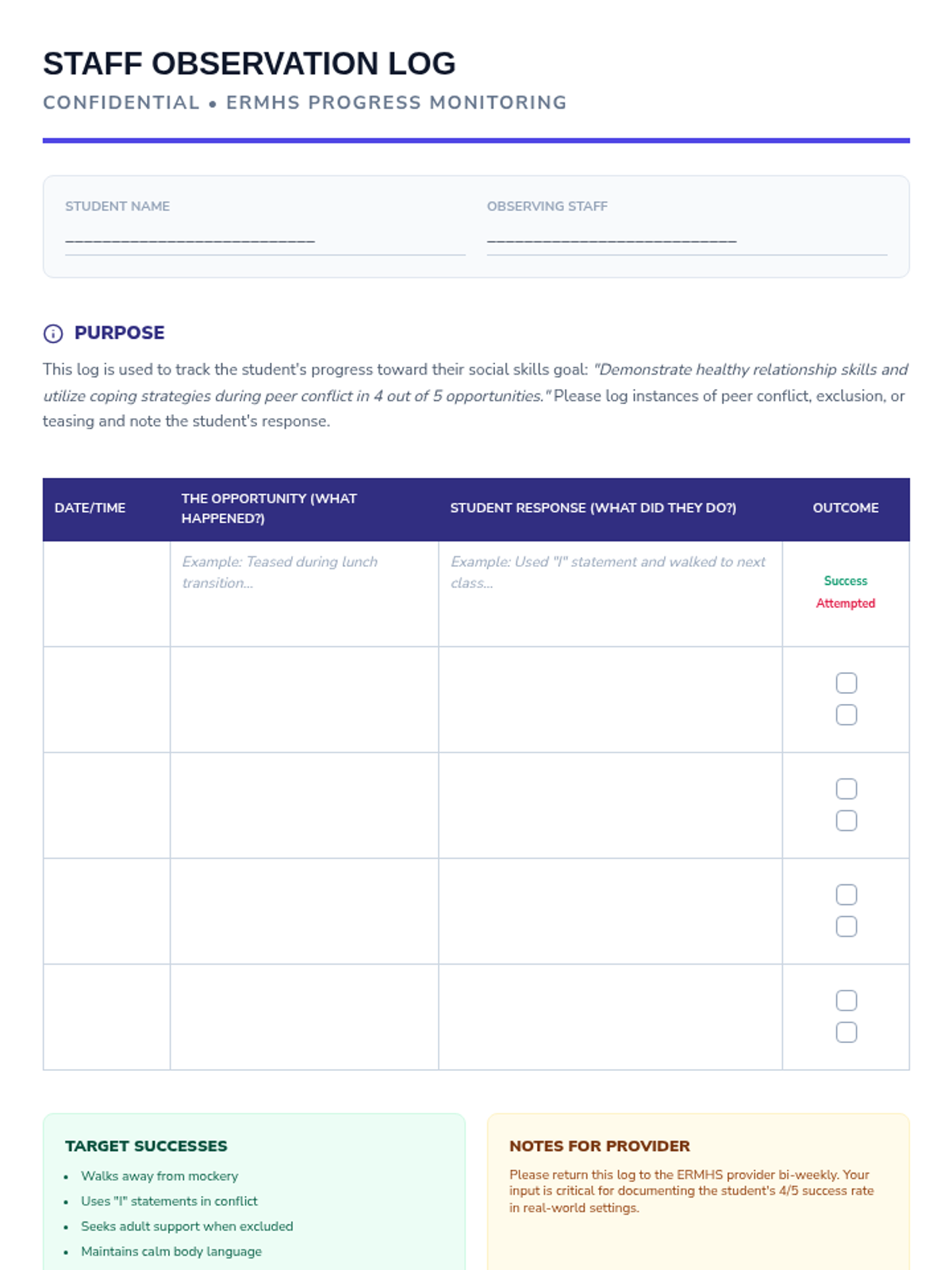
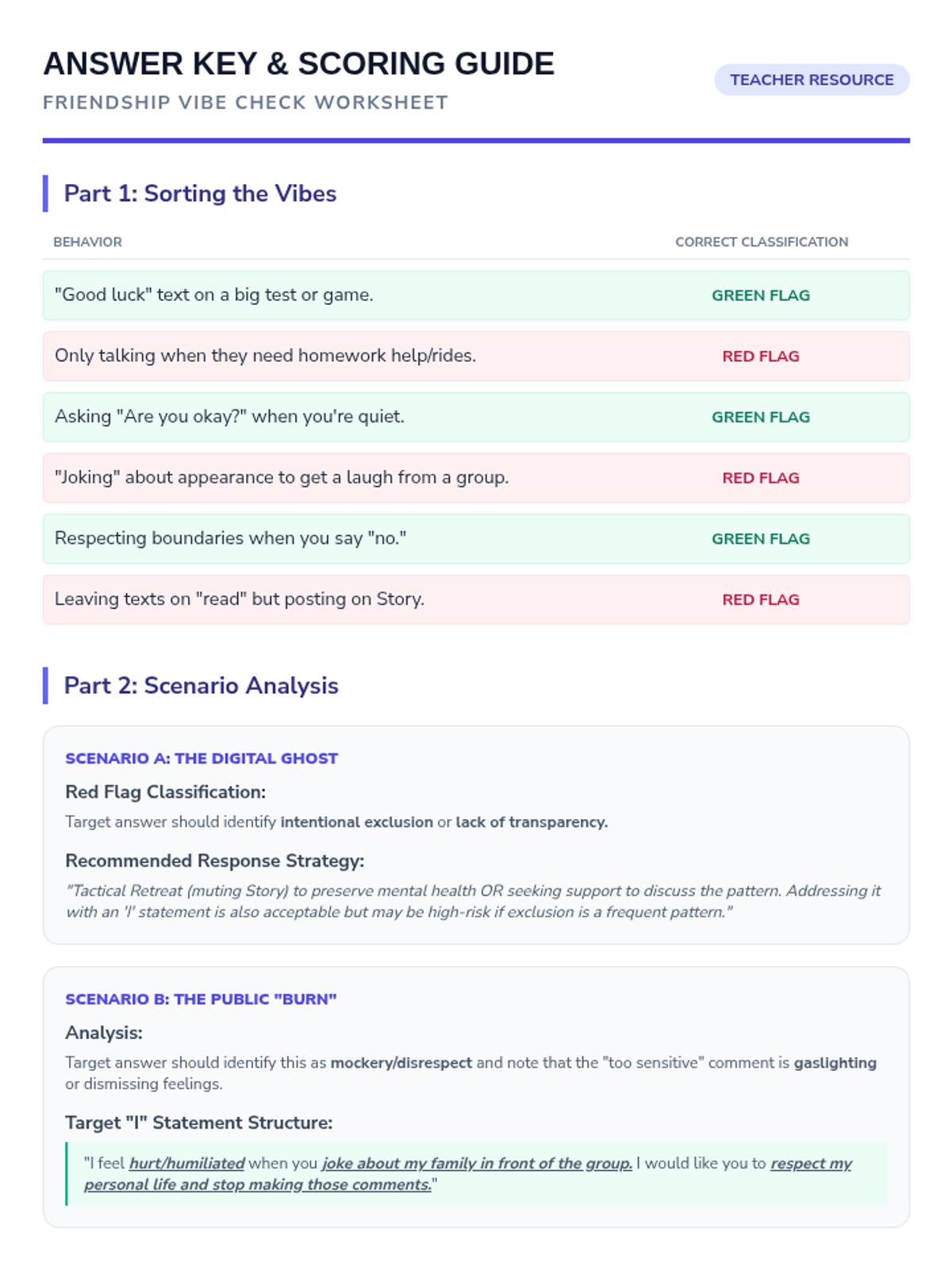
A counseling lesson focused on identifying healthy friendship 'green flags' and recognizing social 'red flags,' equipped with coping strategies for navigating peer rejection and conflict in a high school setting.
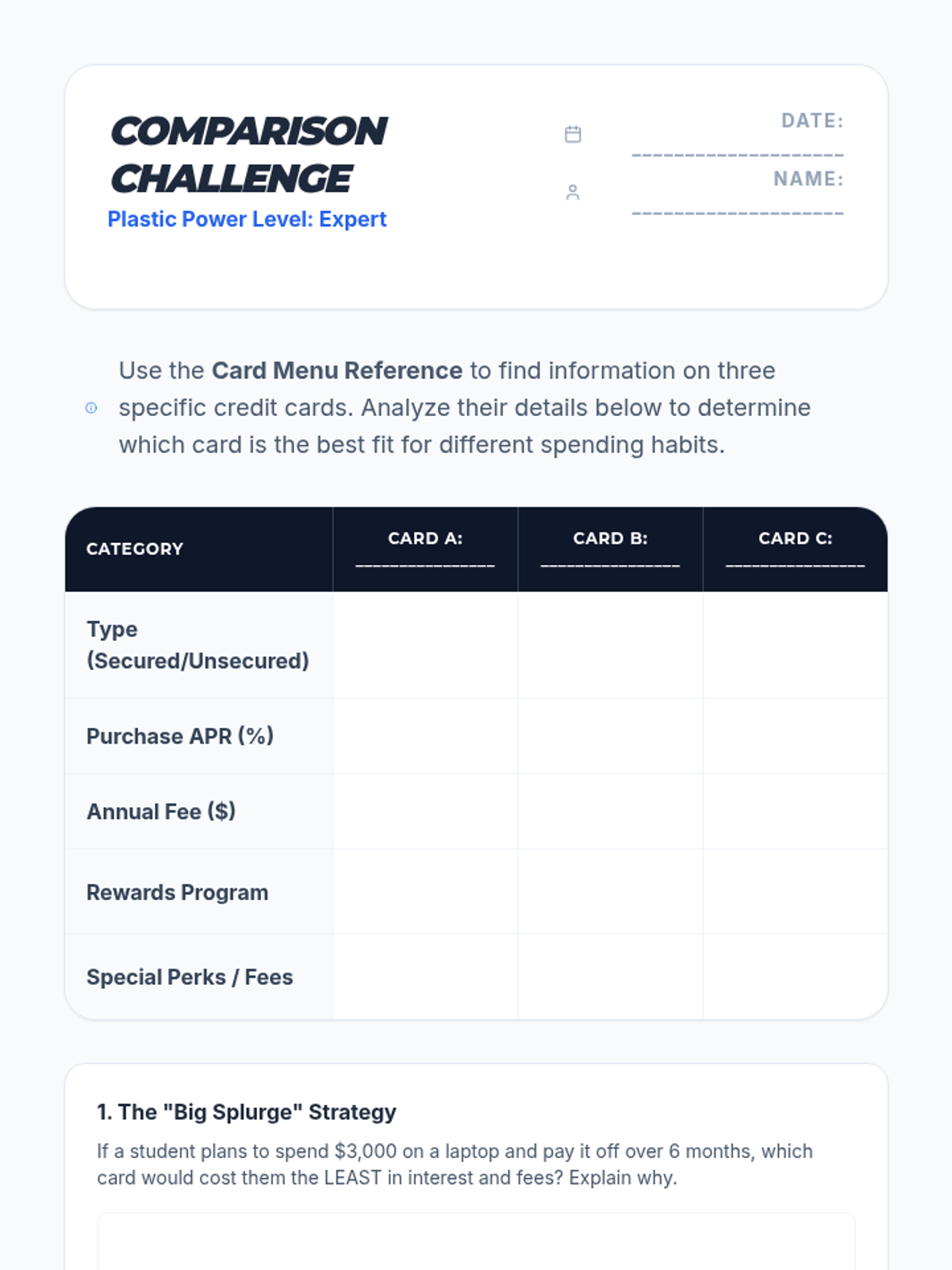
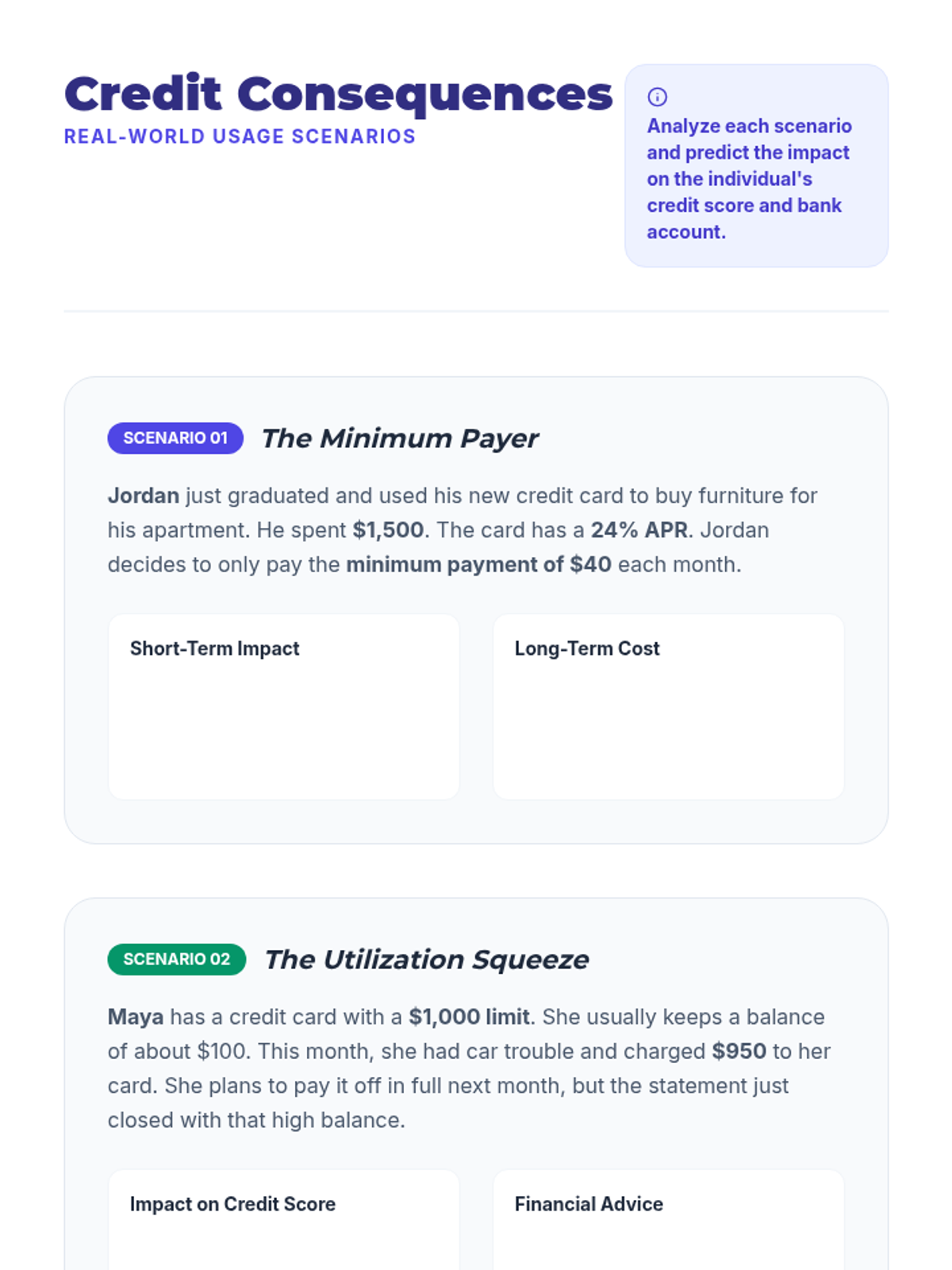
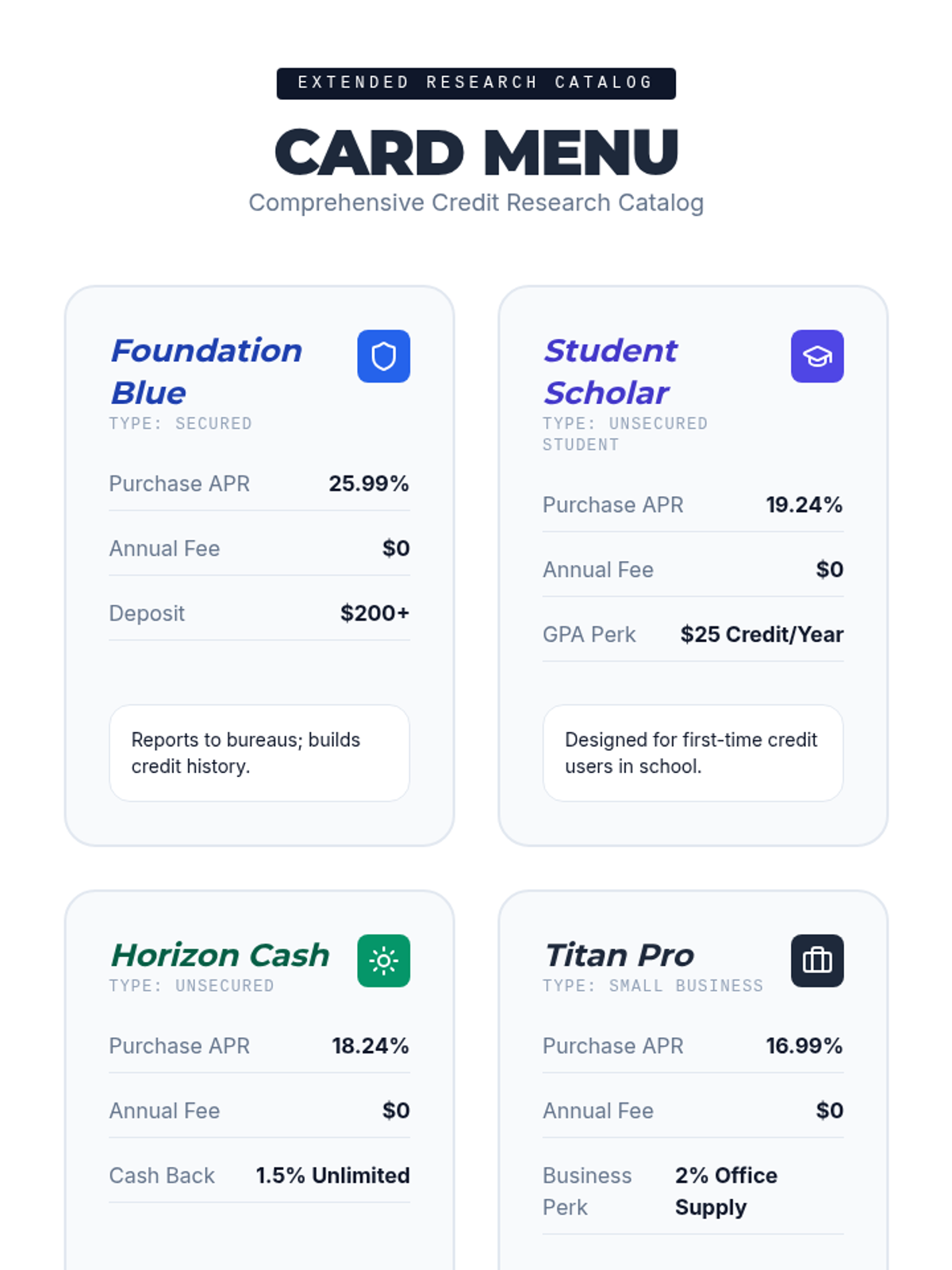
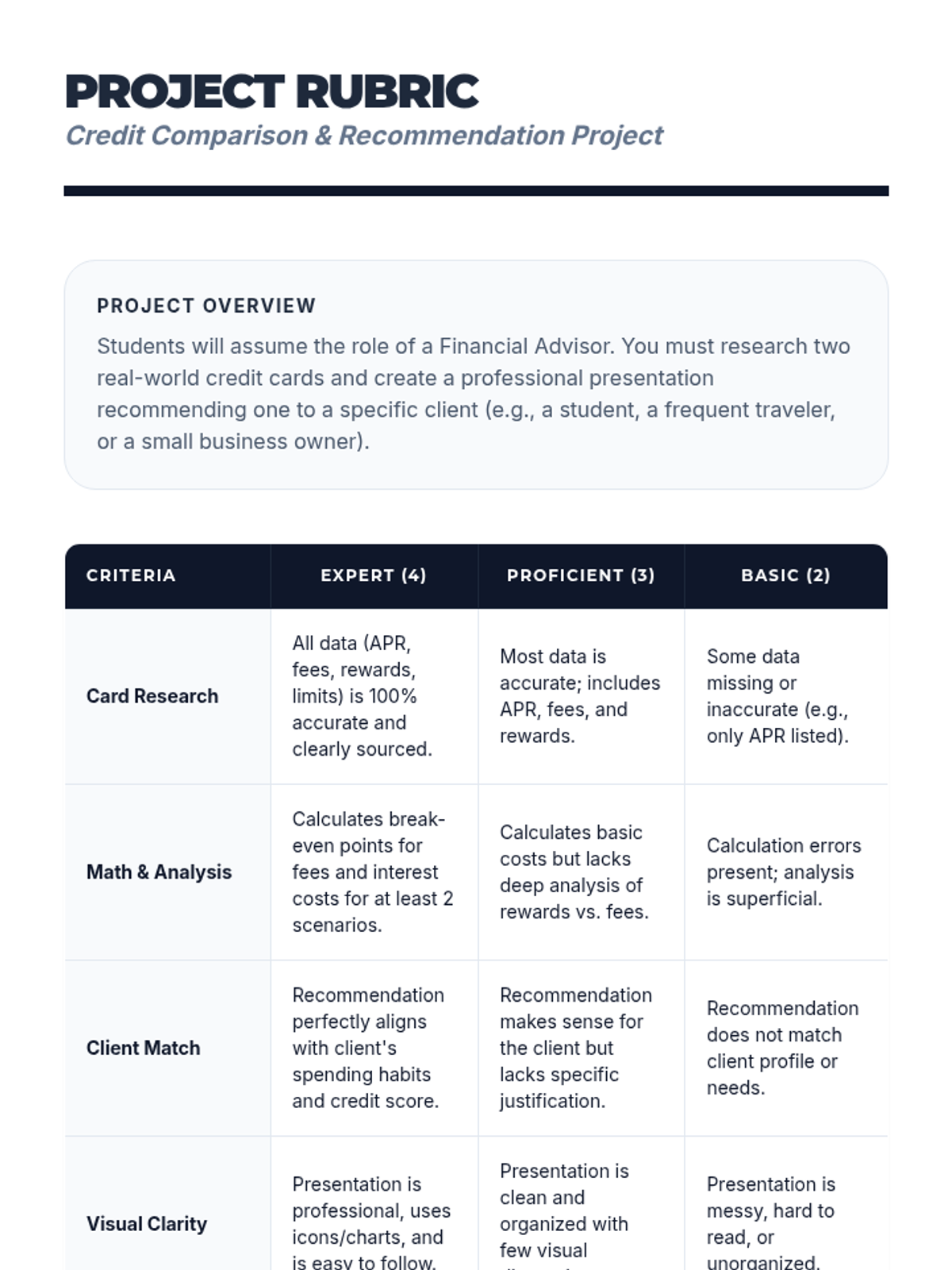
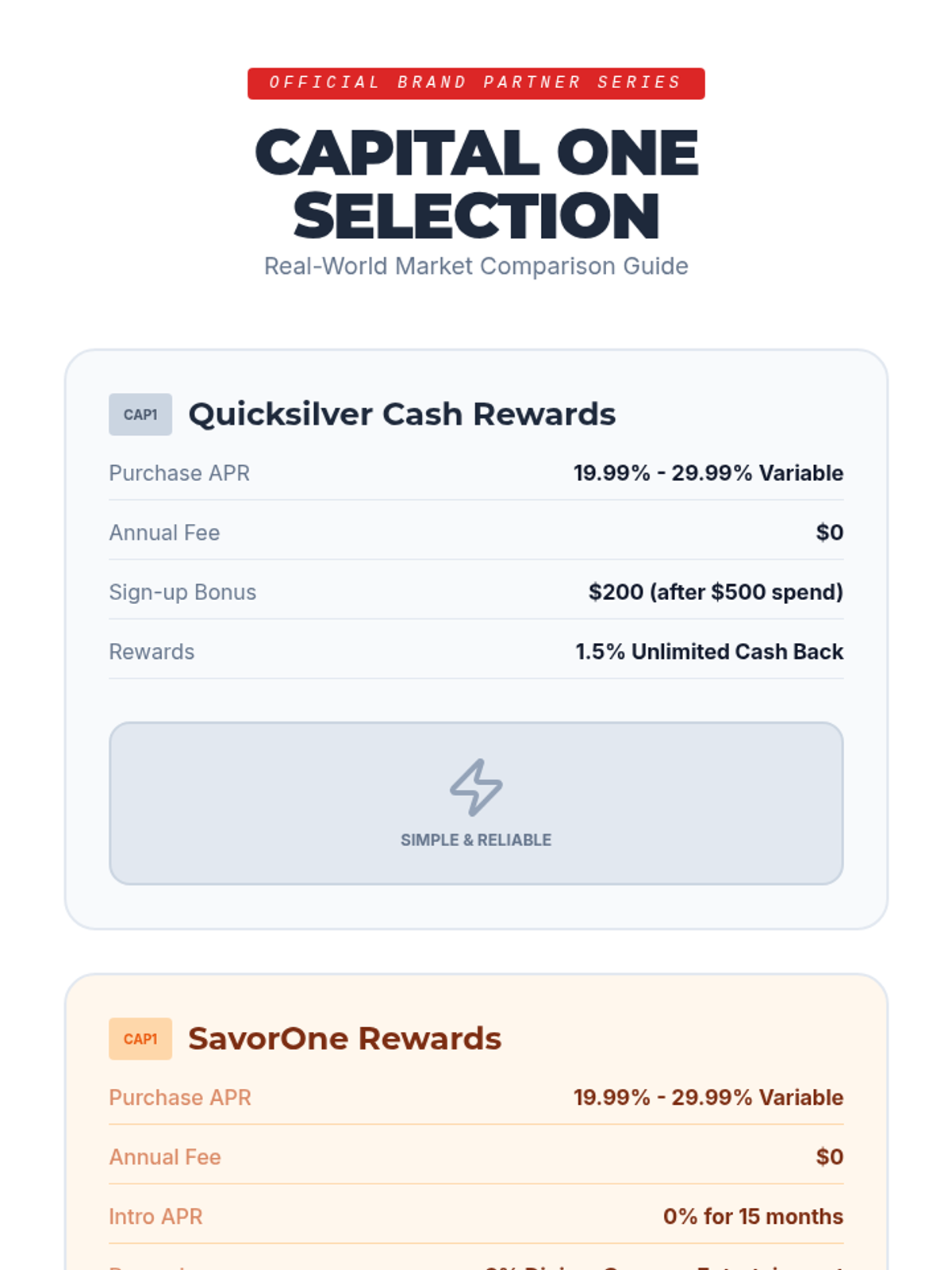
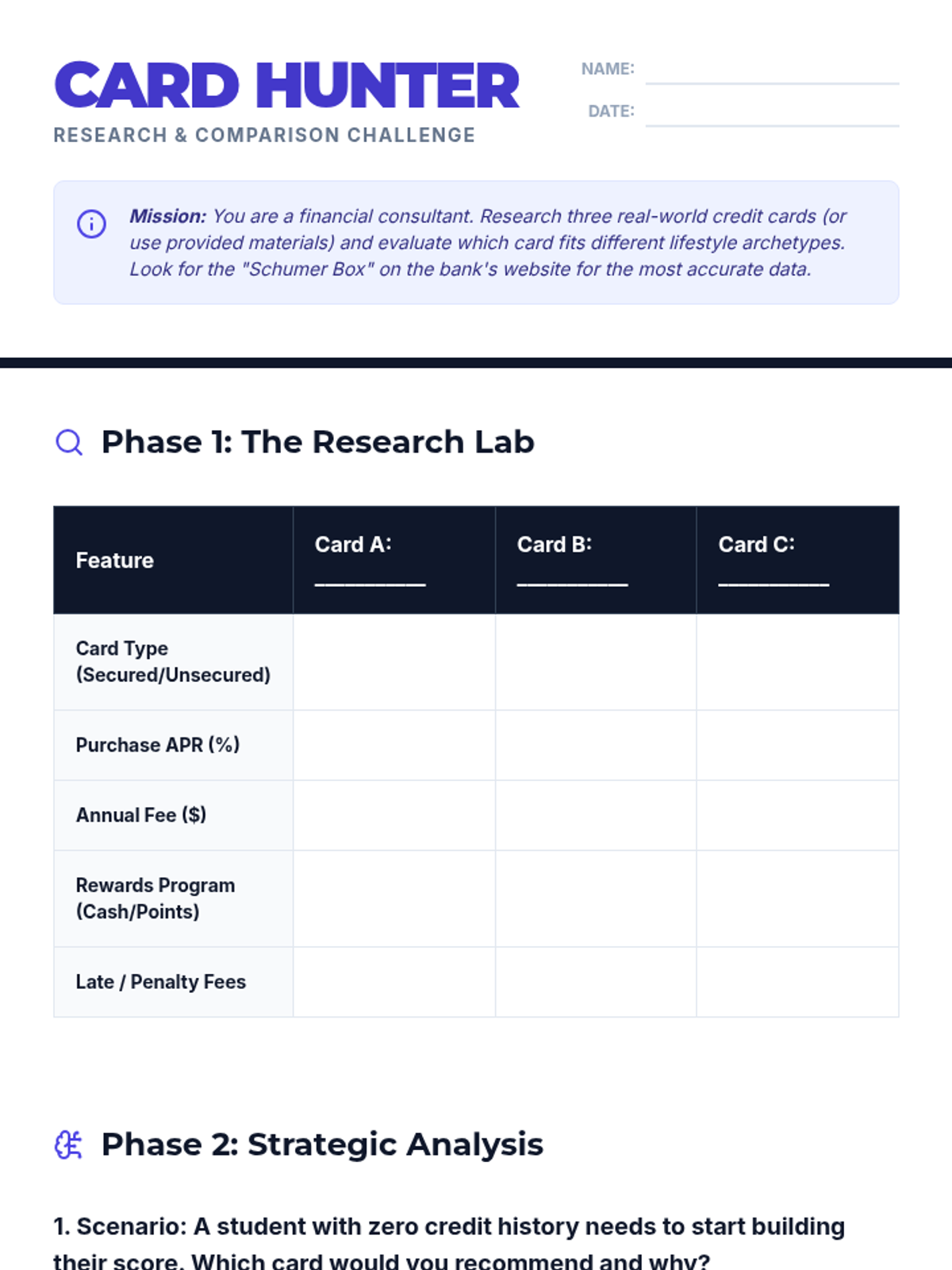
Students will learn to evaluate and compare different credit card options, understand the implications of card terms, and practice responsible credit management through scenarios and research.
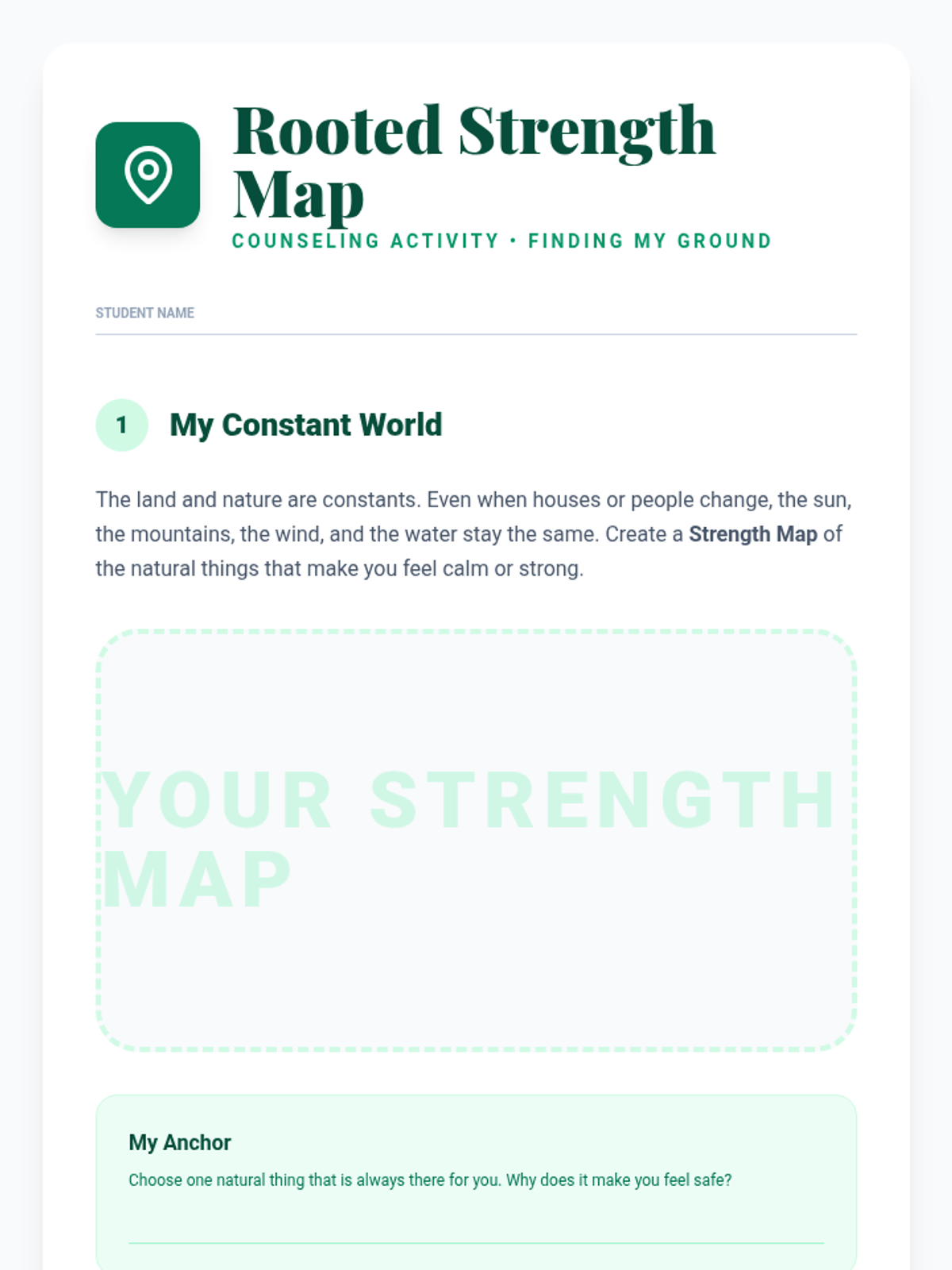
Examines the vital relationship between Native Alaskan peoples and their lands, focusing on stewardship, subsistence, and the history of land rights as a source of communal strength.
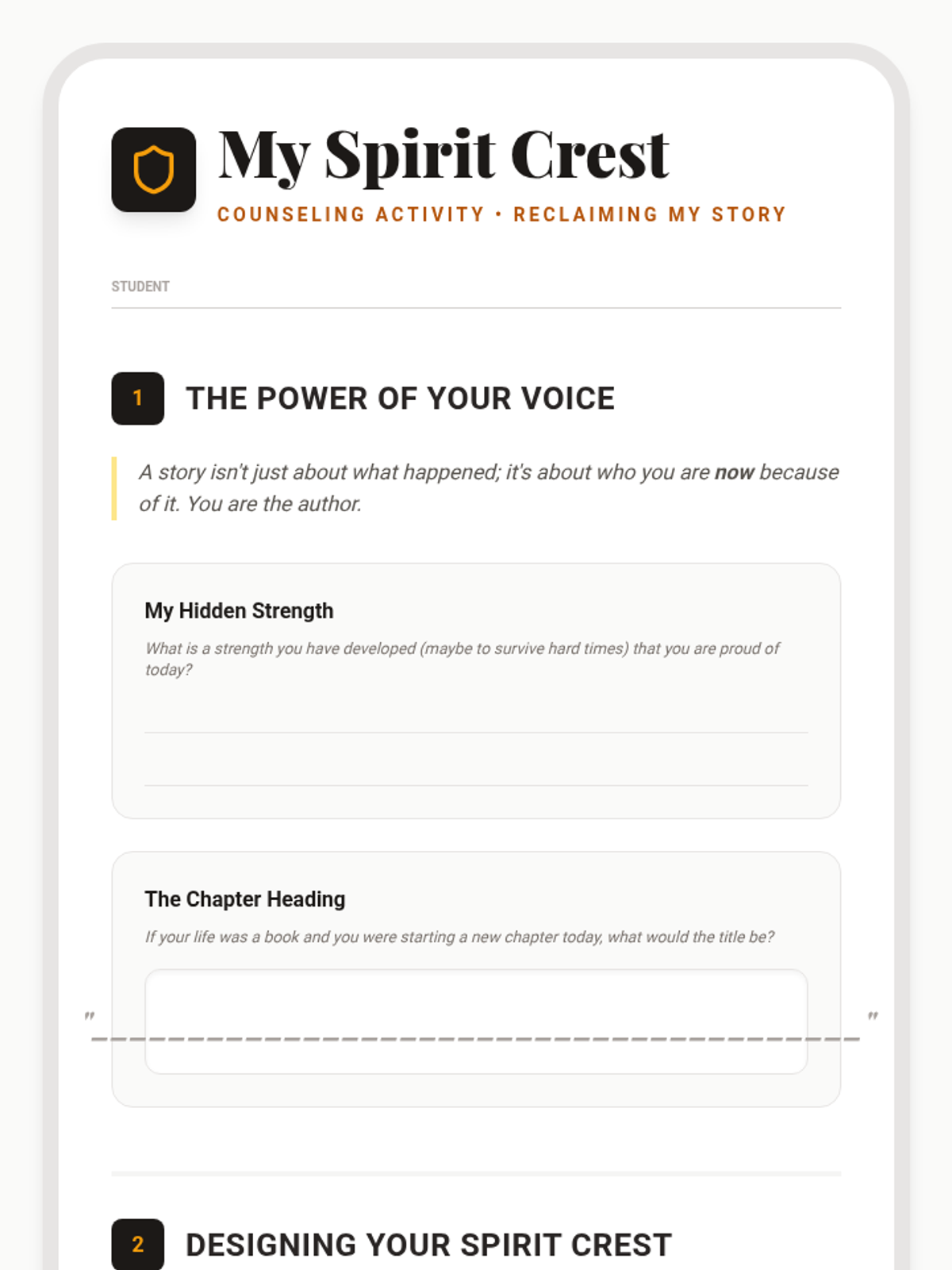
Explores the power of oral tradition and artistic expression as tools for preserving history and communal strength.
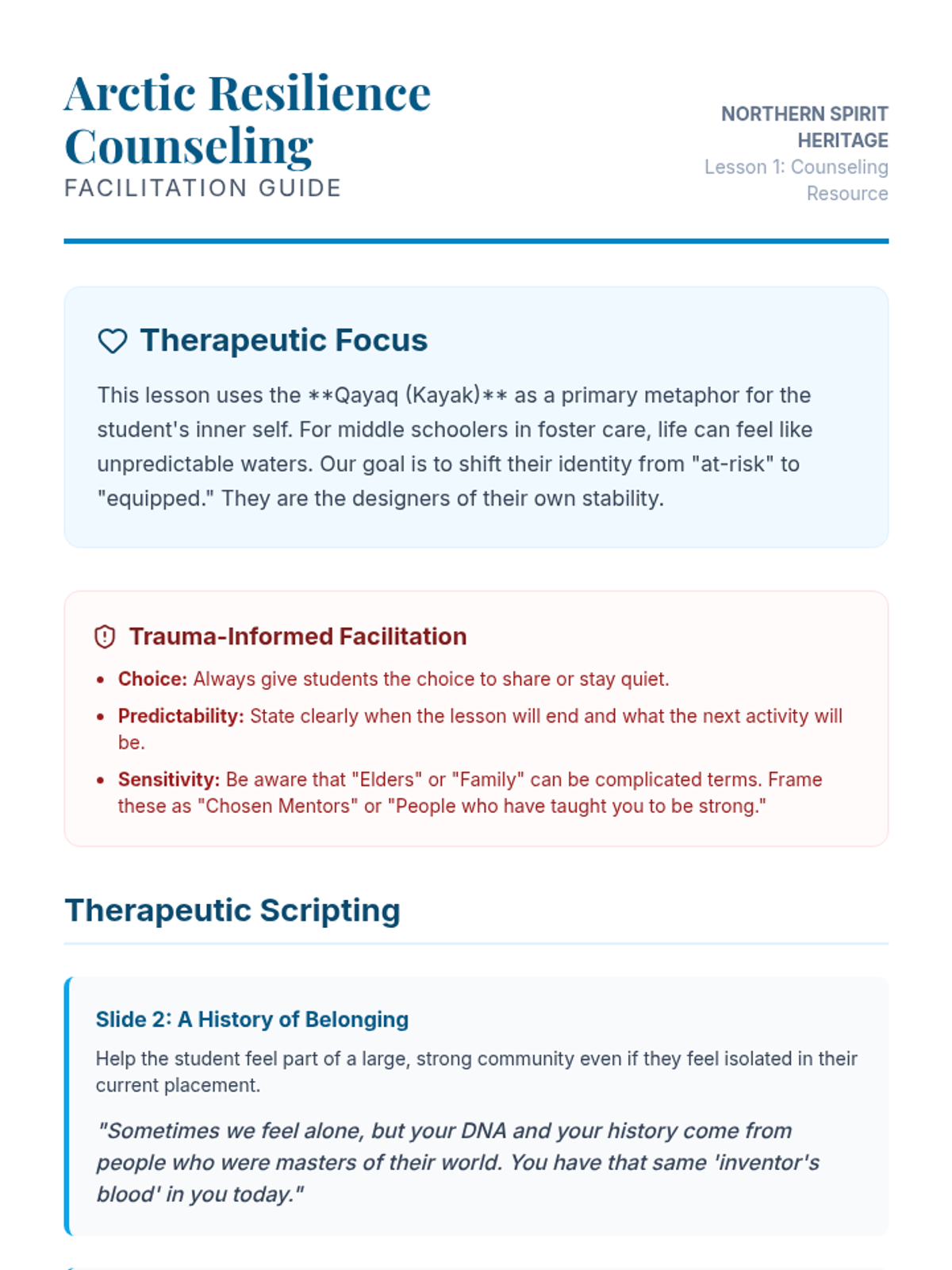
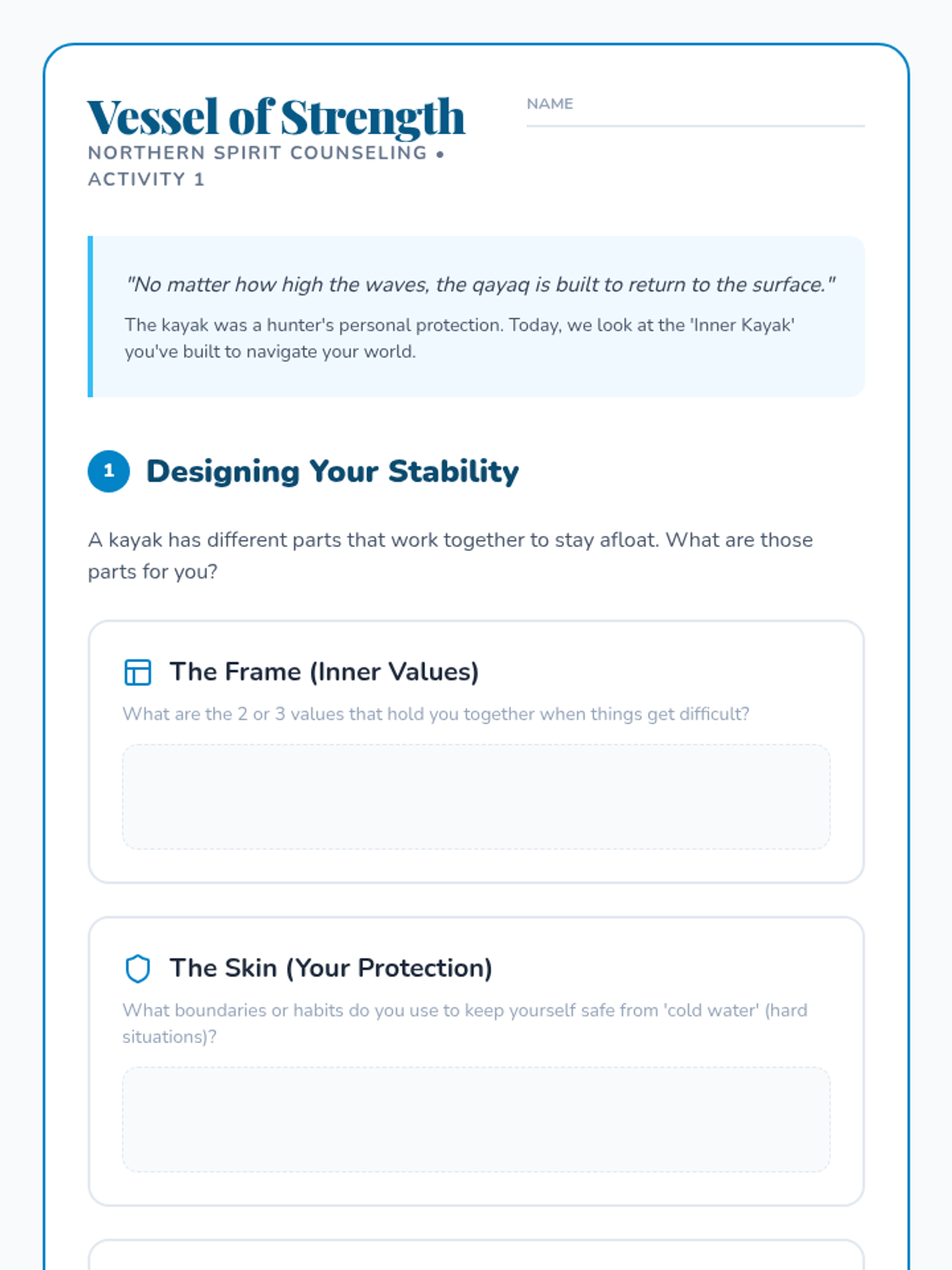
Explores the ingenuity of traditional tools like the qayaq (kayak) as a metaphor for personal stability and navigating life's transitions with resilience.
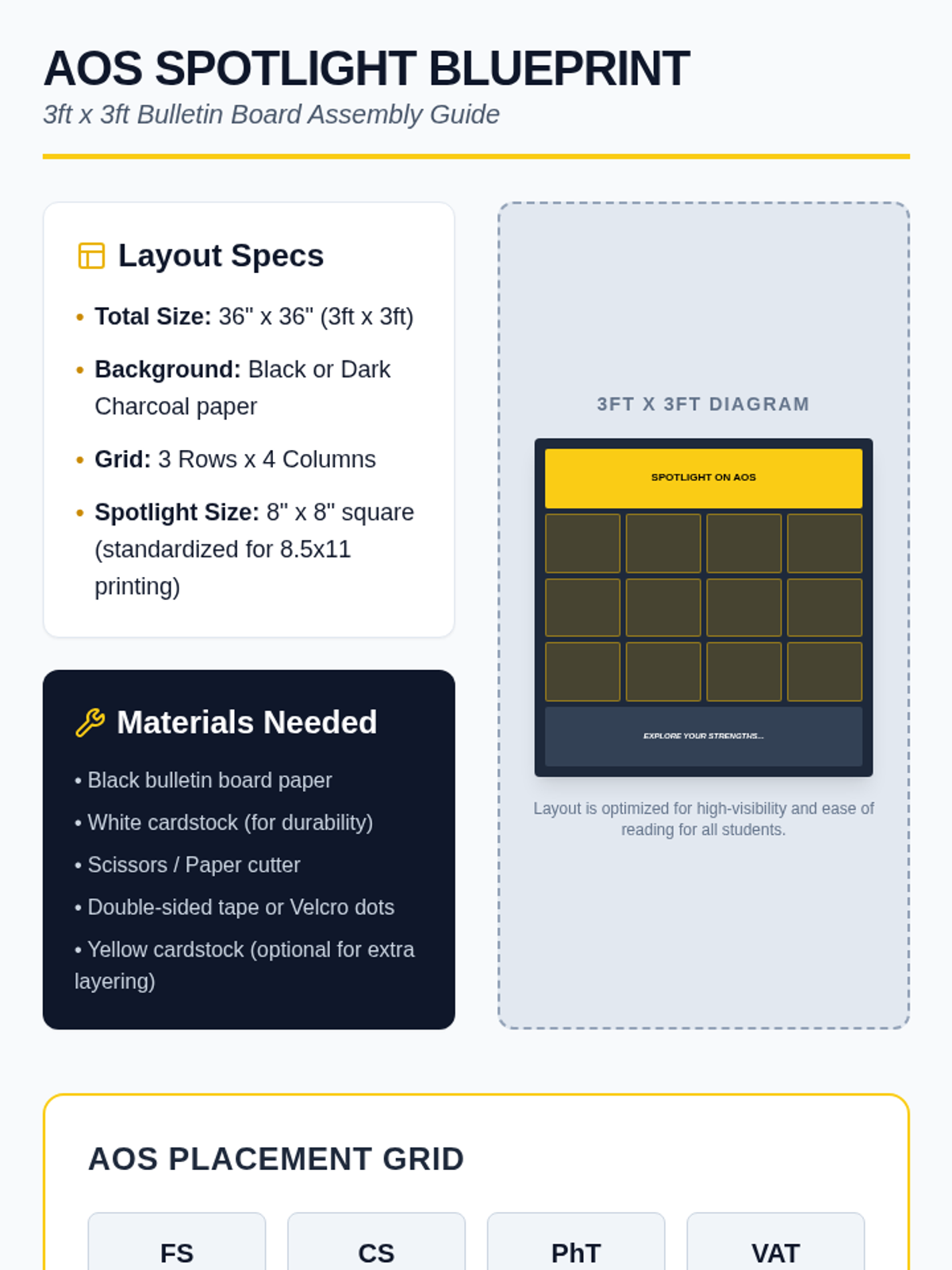
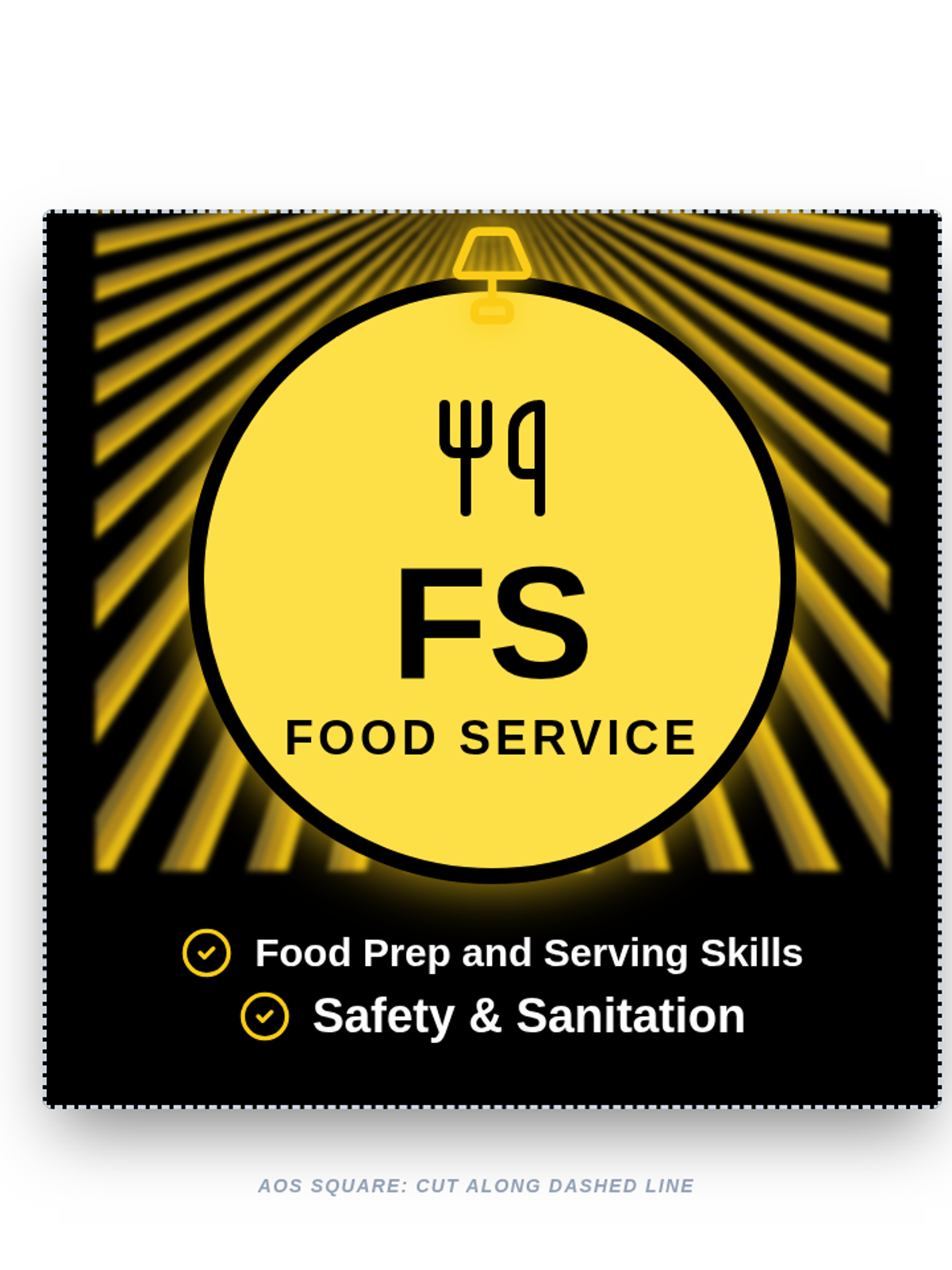
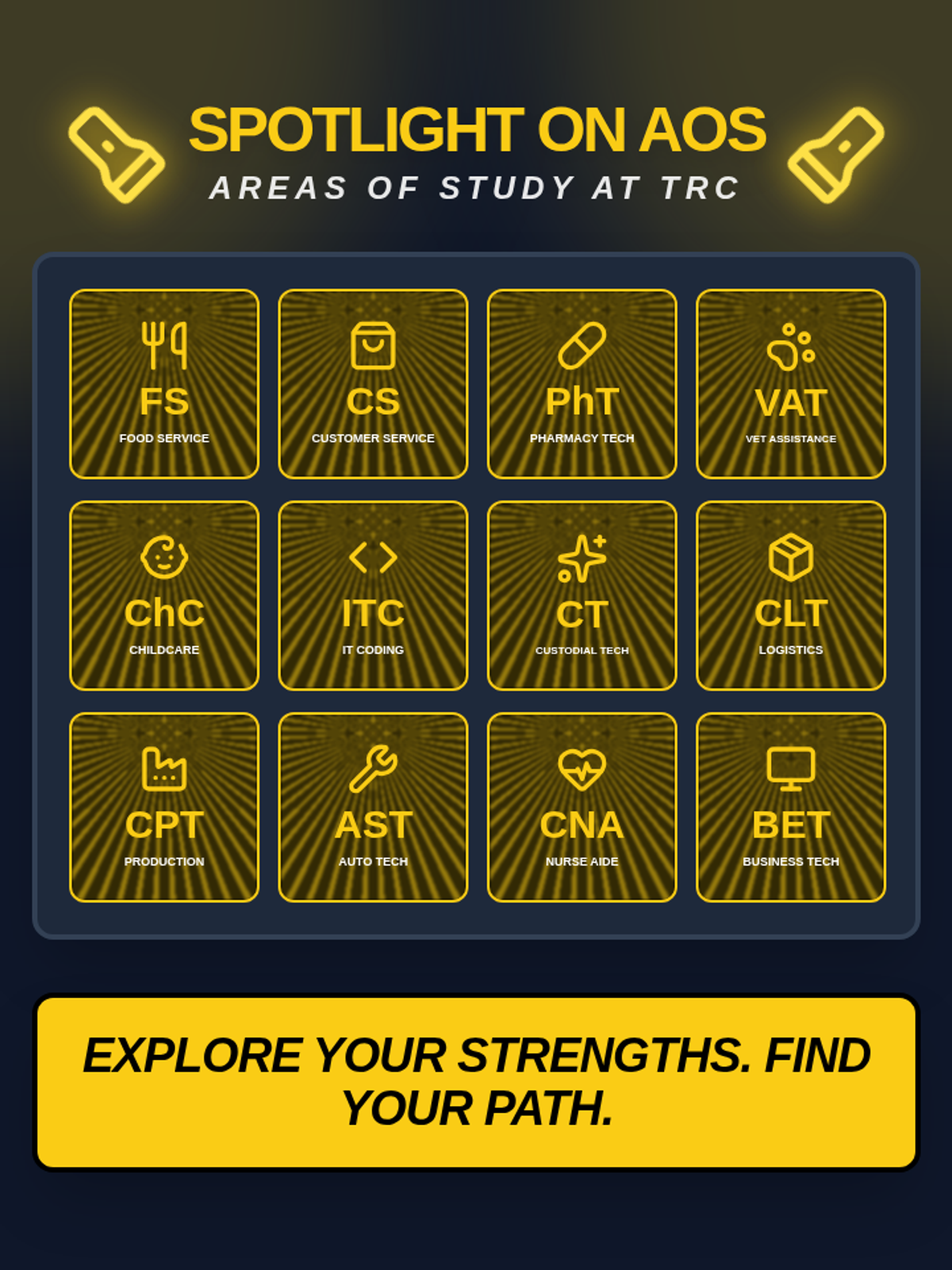
A comprehensive set of visual materials to create a high-contrast, student-friendly bulletin board showcasing twelve Areas of Study (AOS). Includes a layout blueprint, printable spotlight squares, and header/footer banners designed for maximum readability.
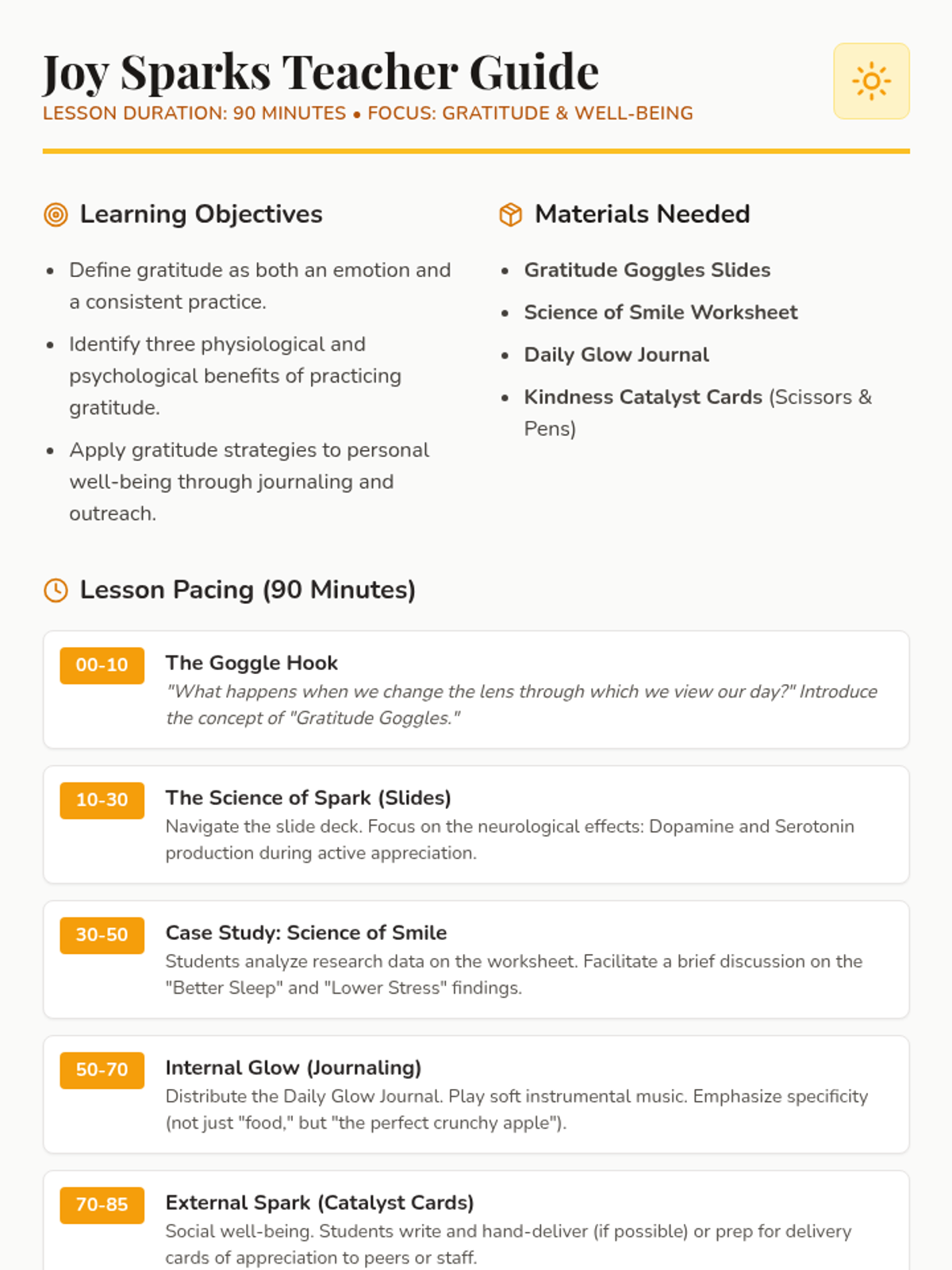
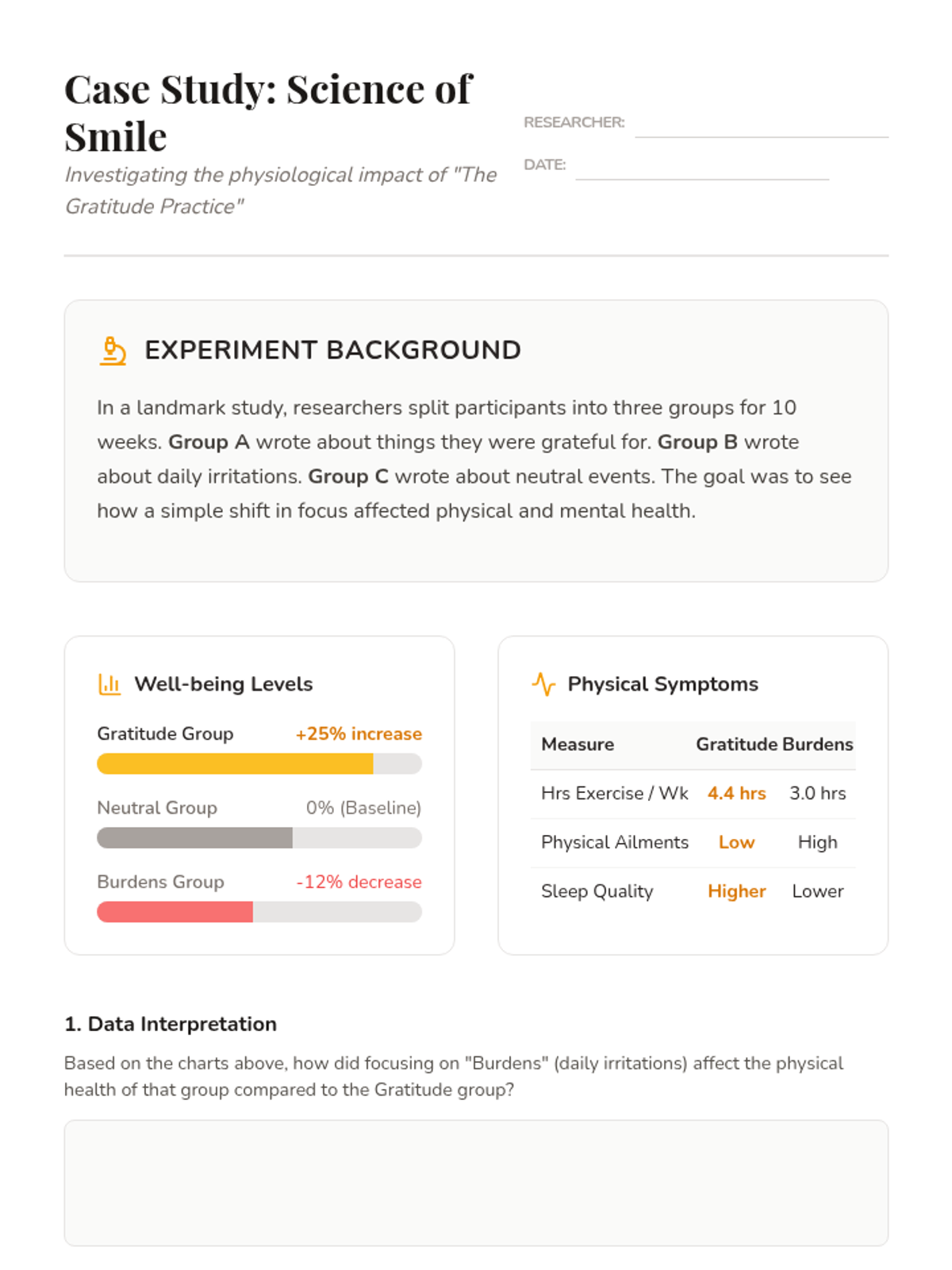
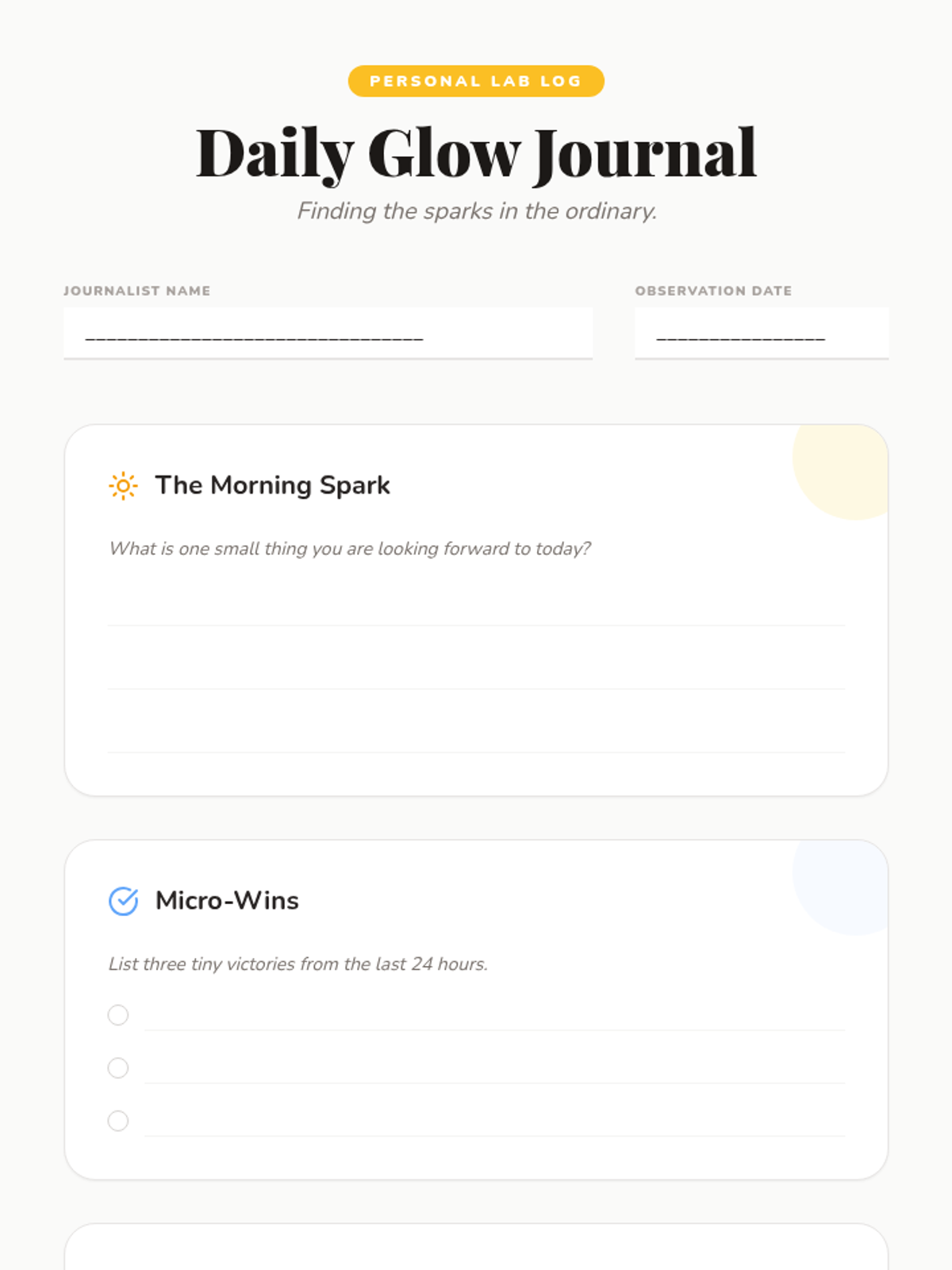
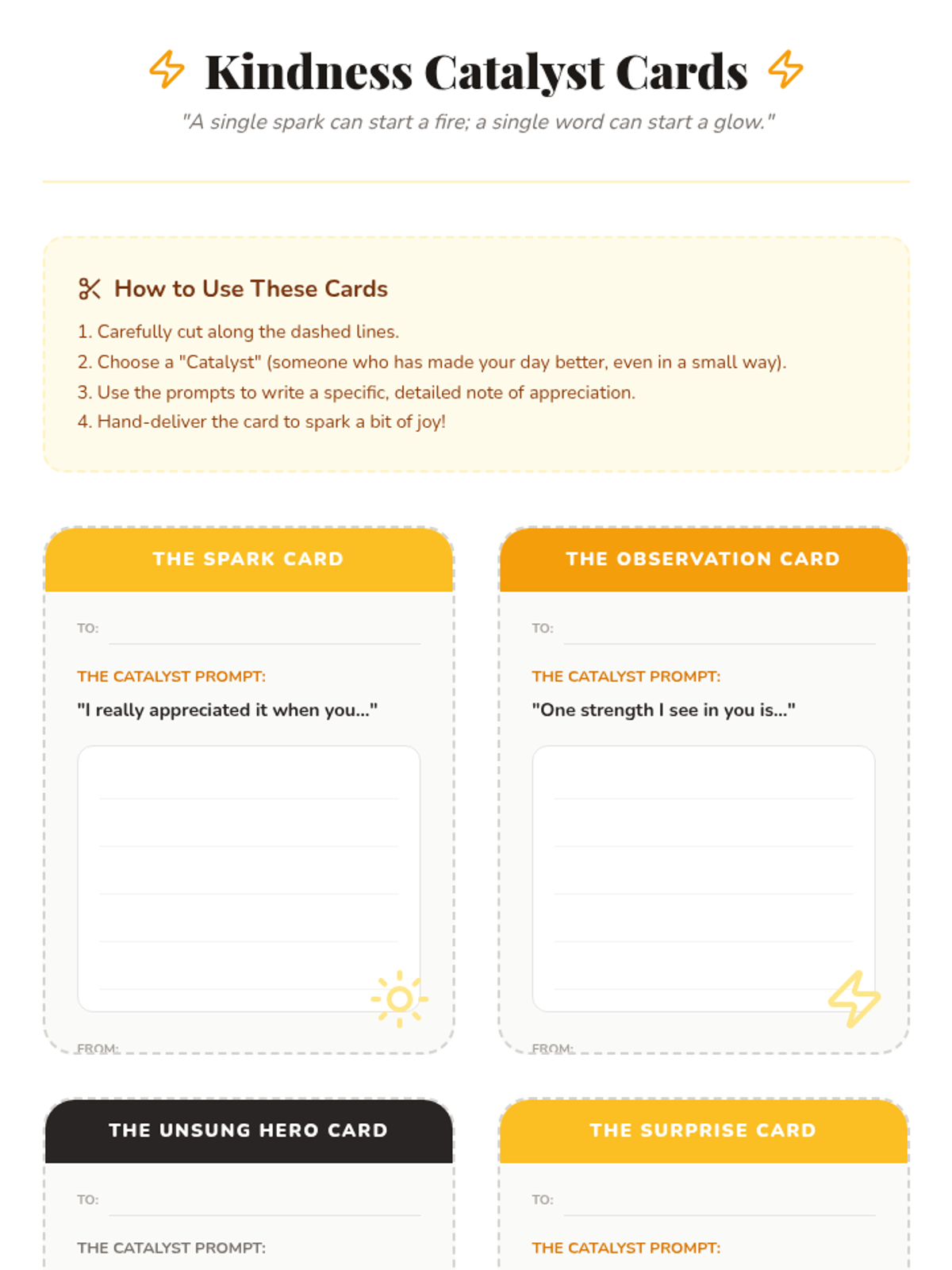
A 90-minute exploration into the science and practice of gratitude, focusing on how shifting perspective can tangibly improve mental and physical well-being.
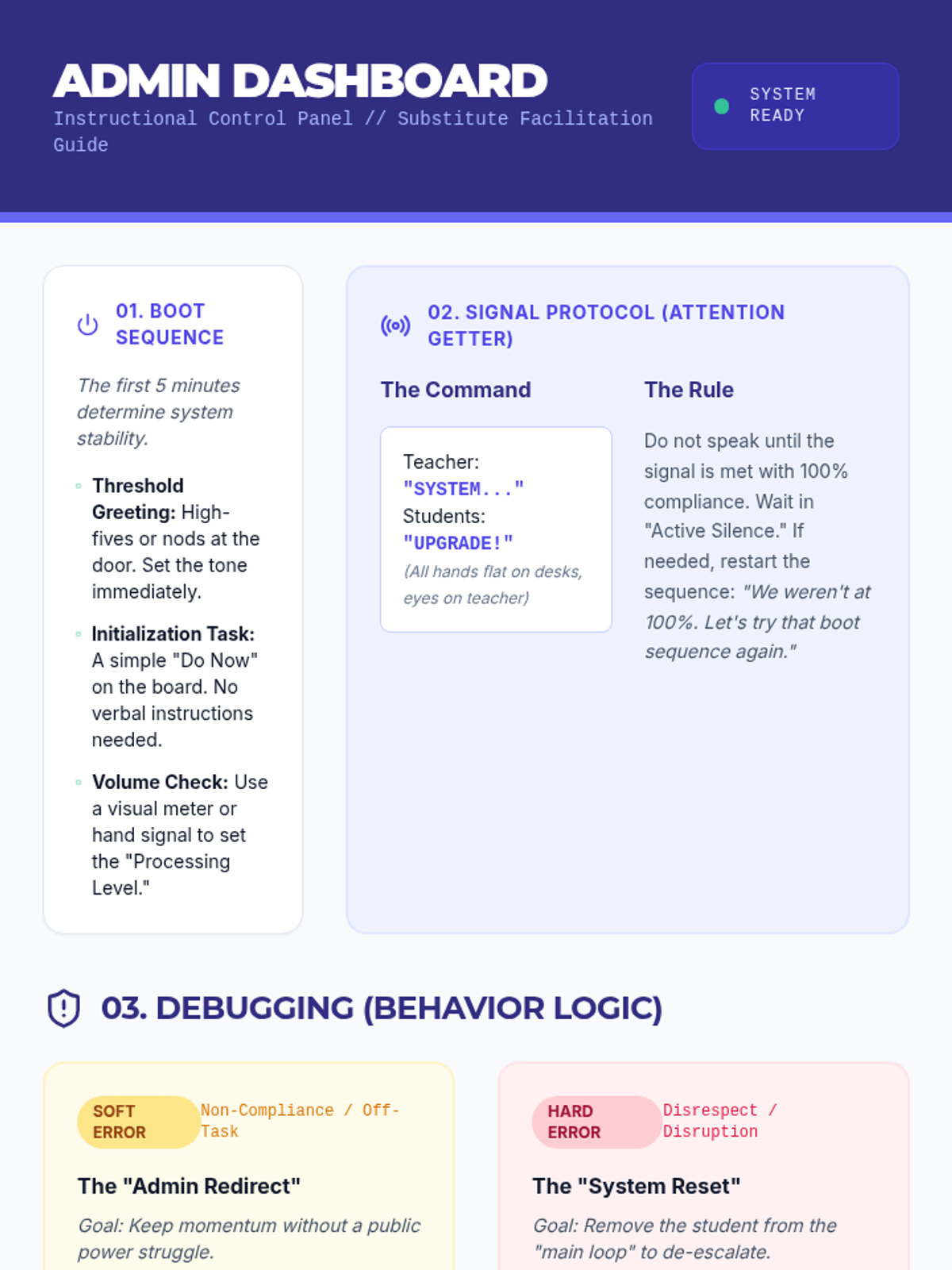
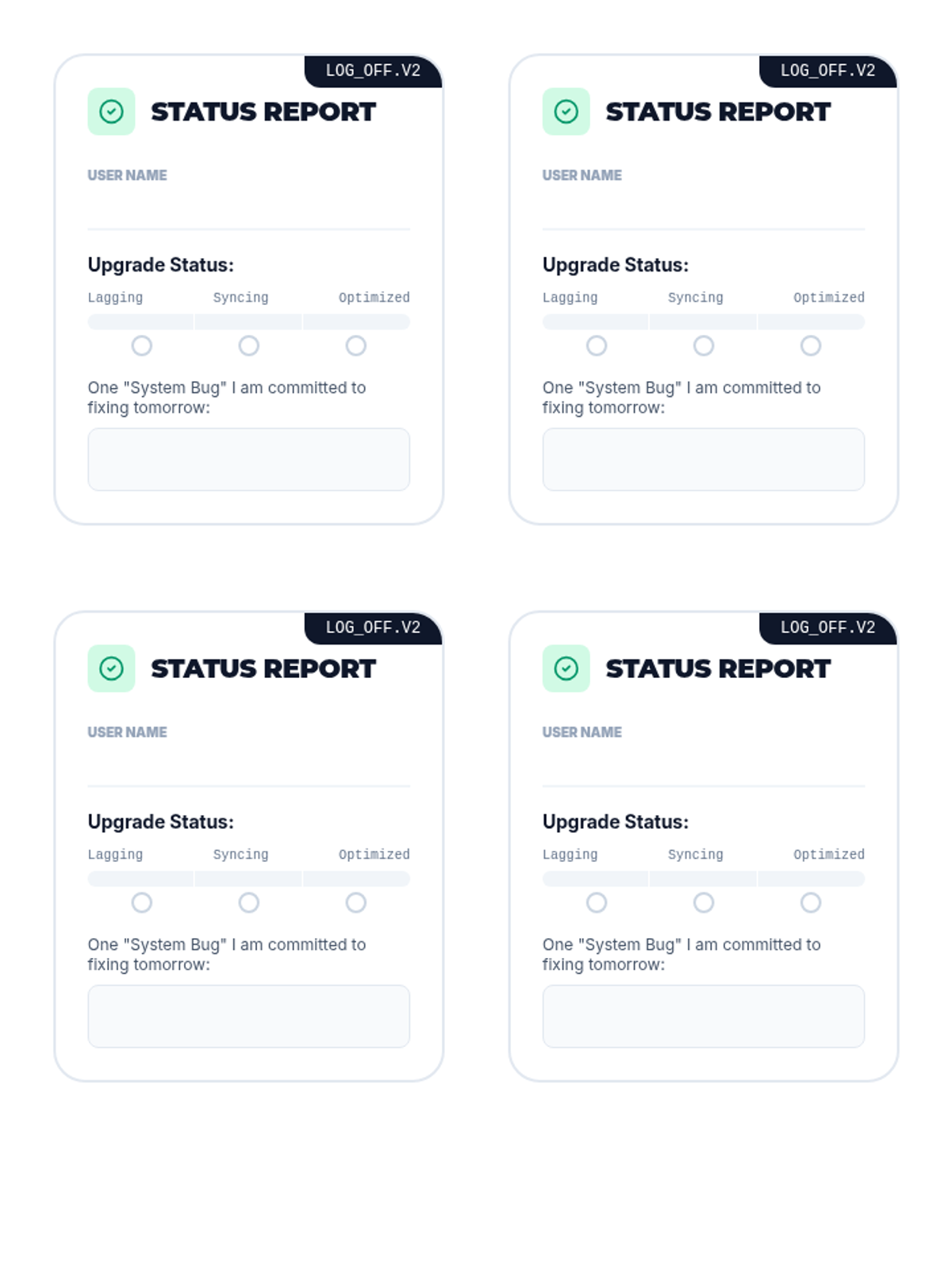
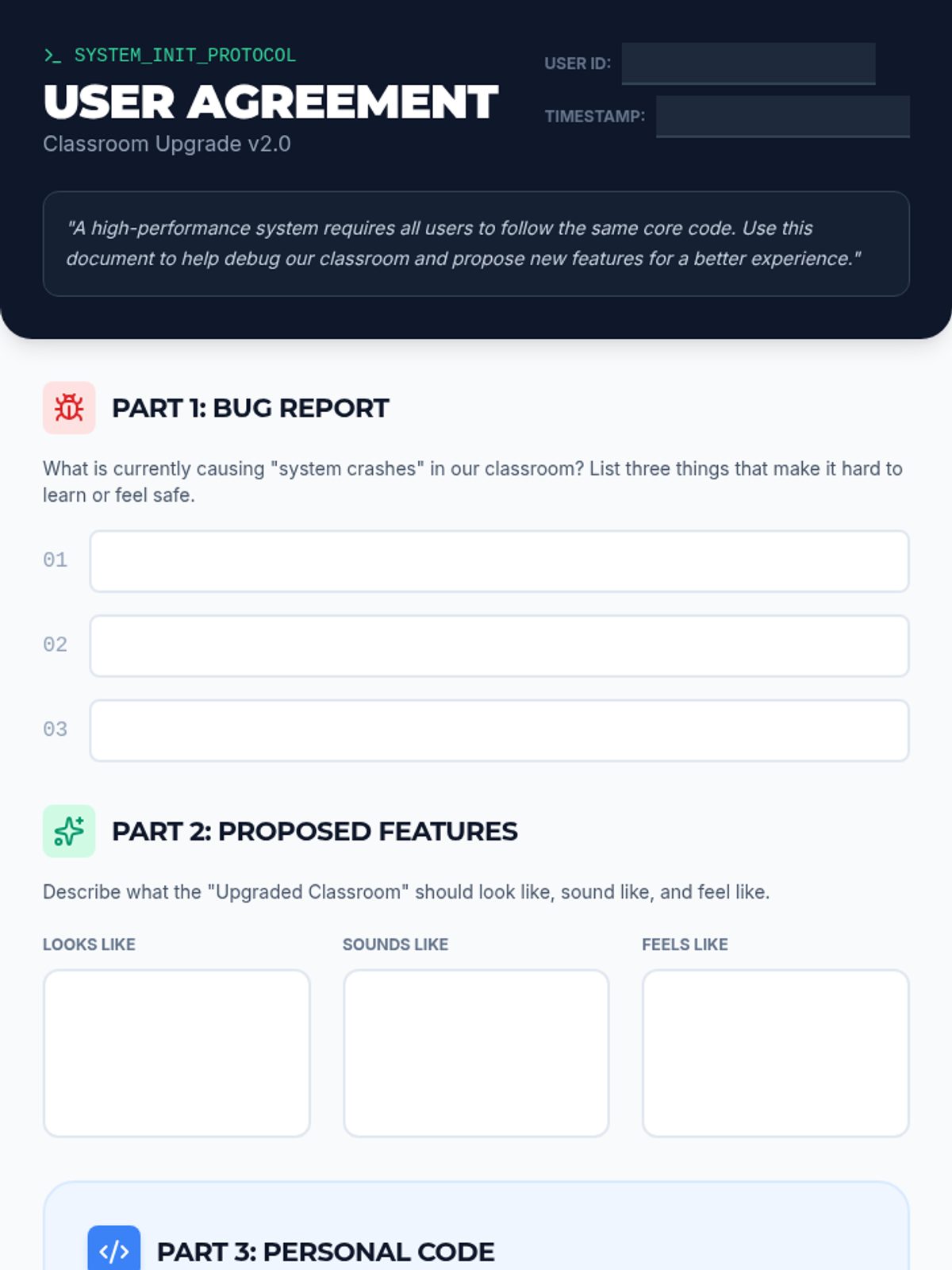
A comprehensive 'classroom reset' lesson designed to help a substitute and their students build a positive culture through the metaphor of a system upgrade. Students collaborate to define norms and understand their role in the classroom community.
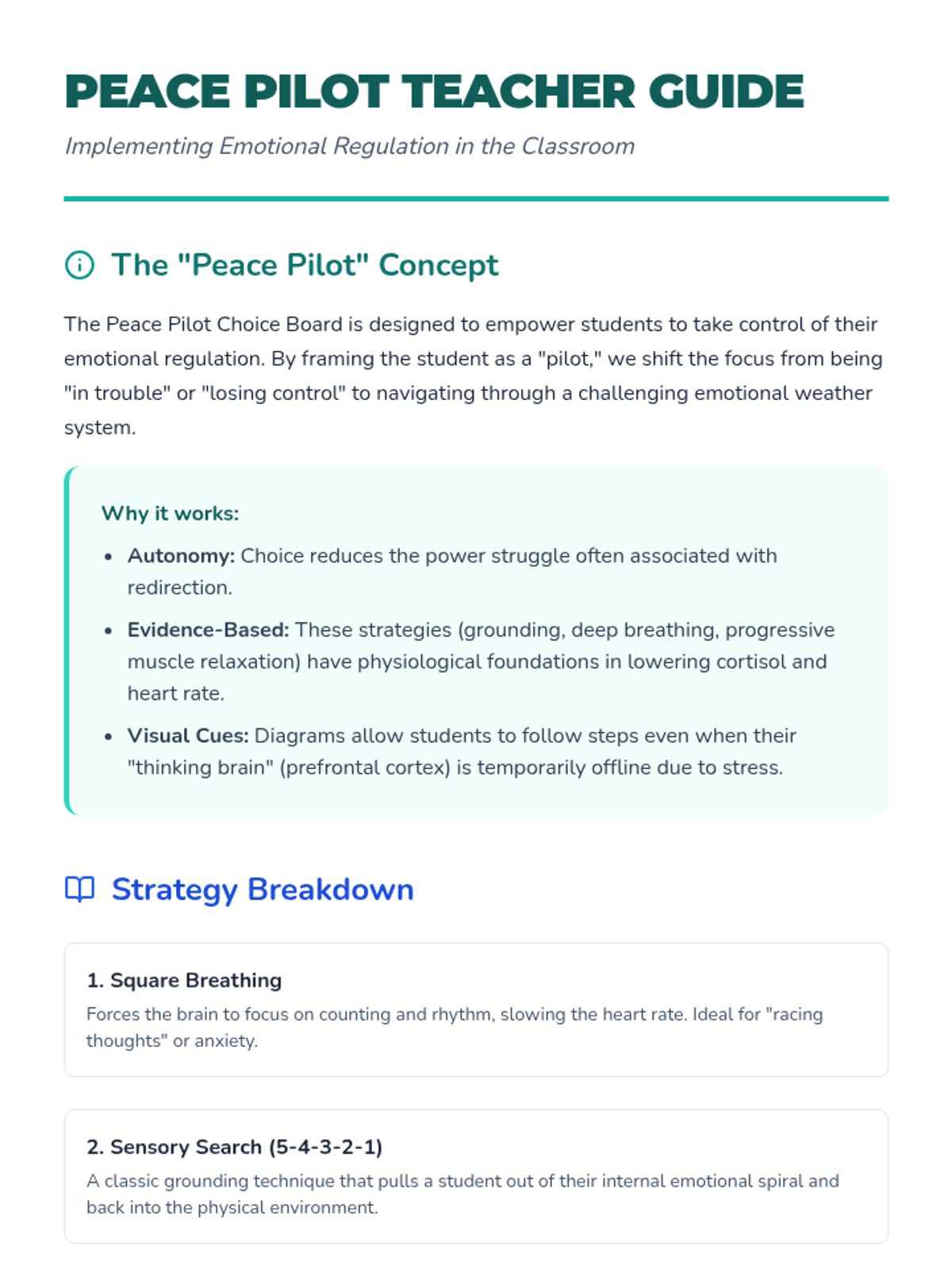
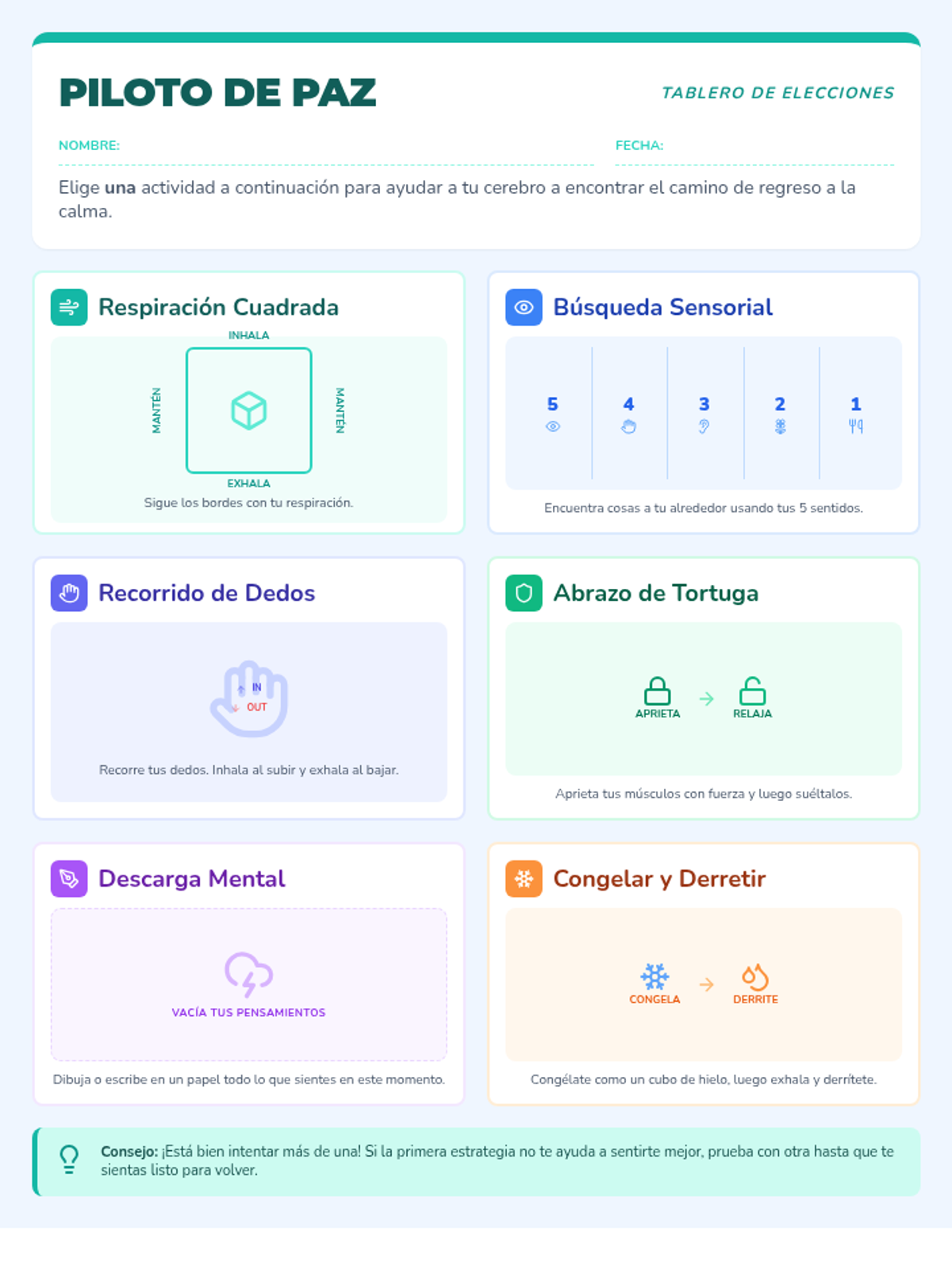
A collection of tools and strategies to help students regulate their emotions and find their center during moments of stress or frustration.
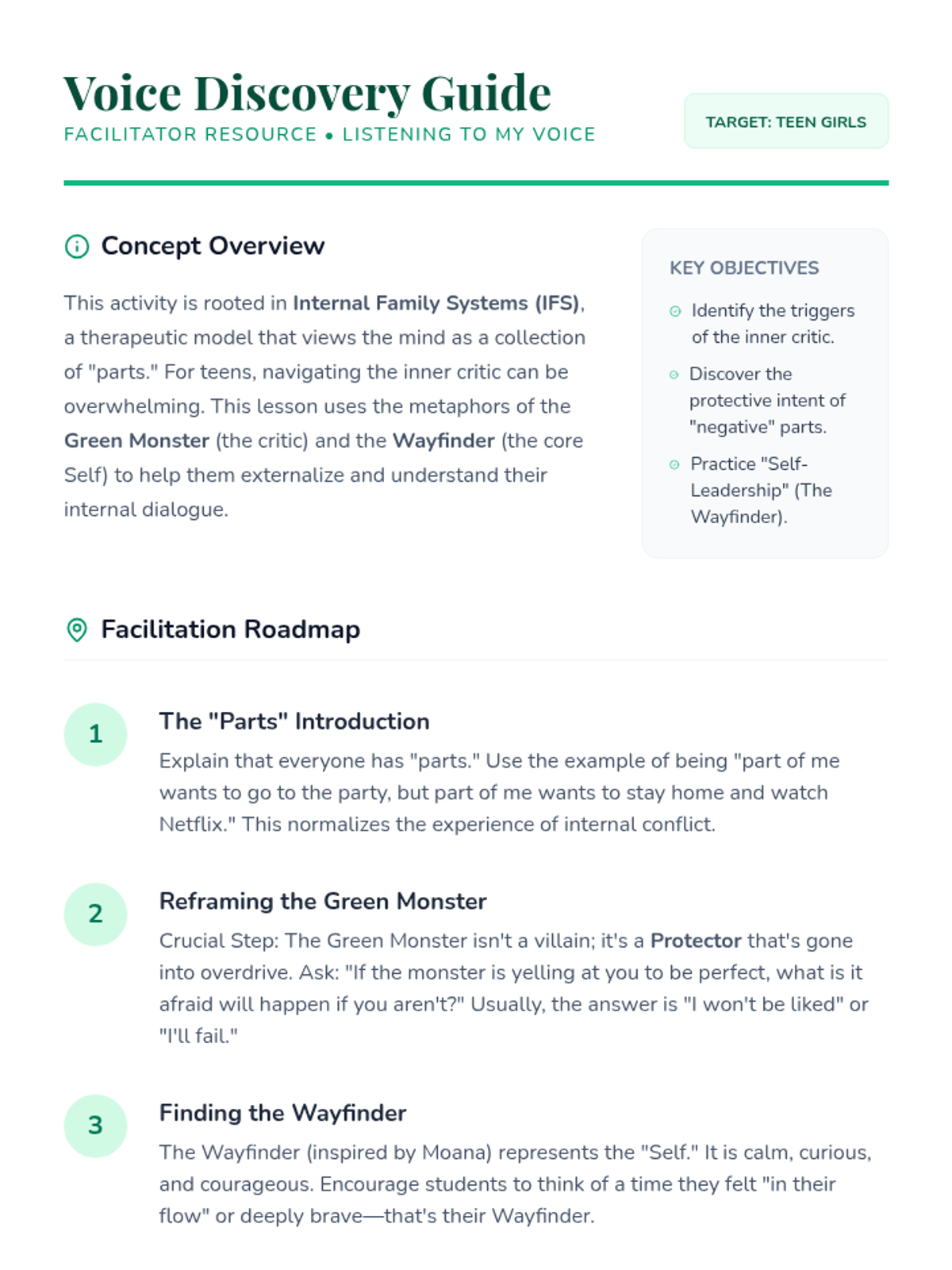
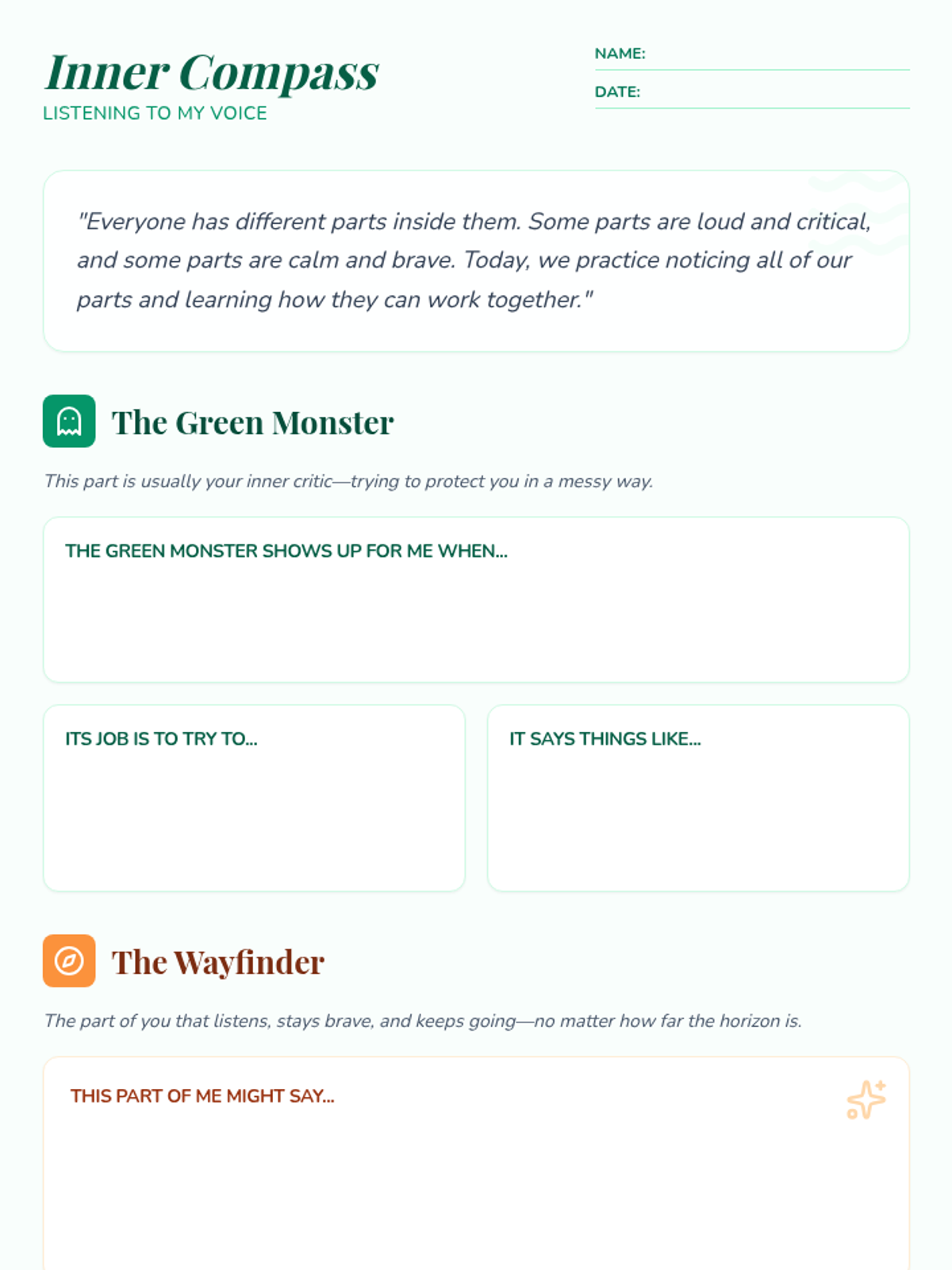
A lesson focused on Internal Family Systems (IFS) concepts for teens, helping them identify and integrate their inner critic and resilient parts with self-compassion.
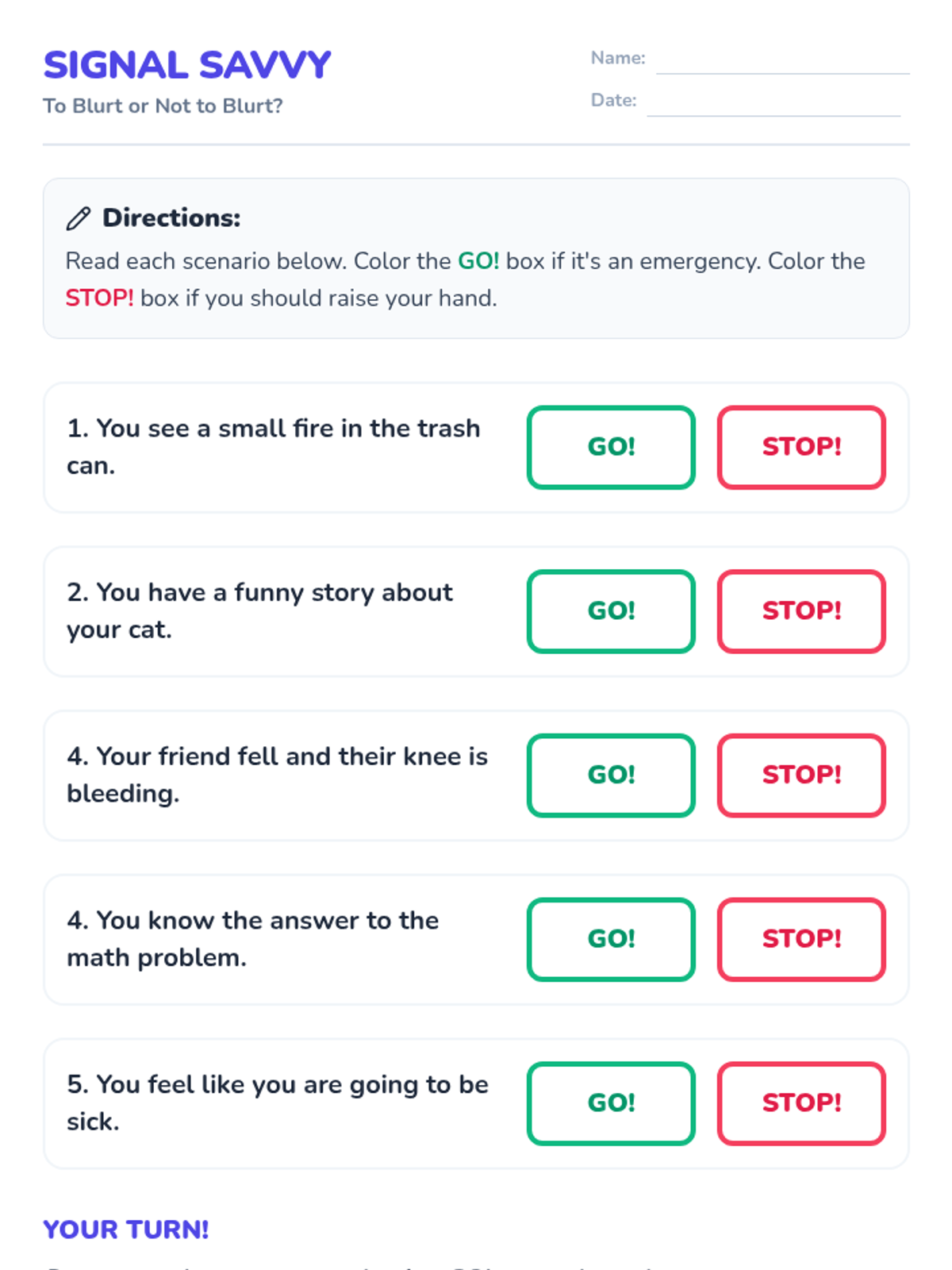
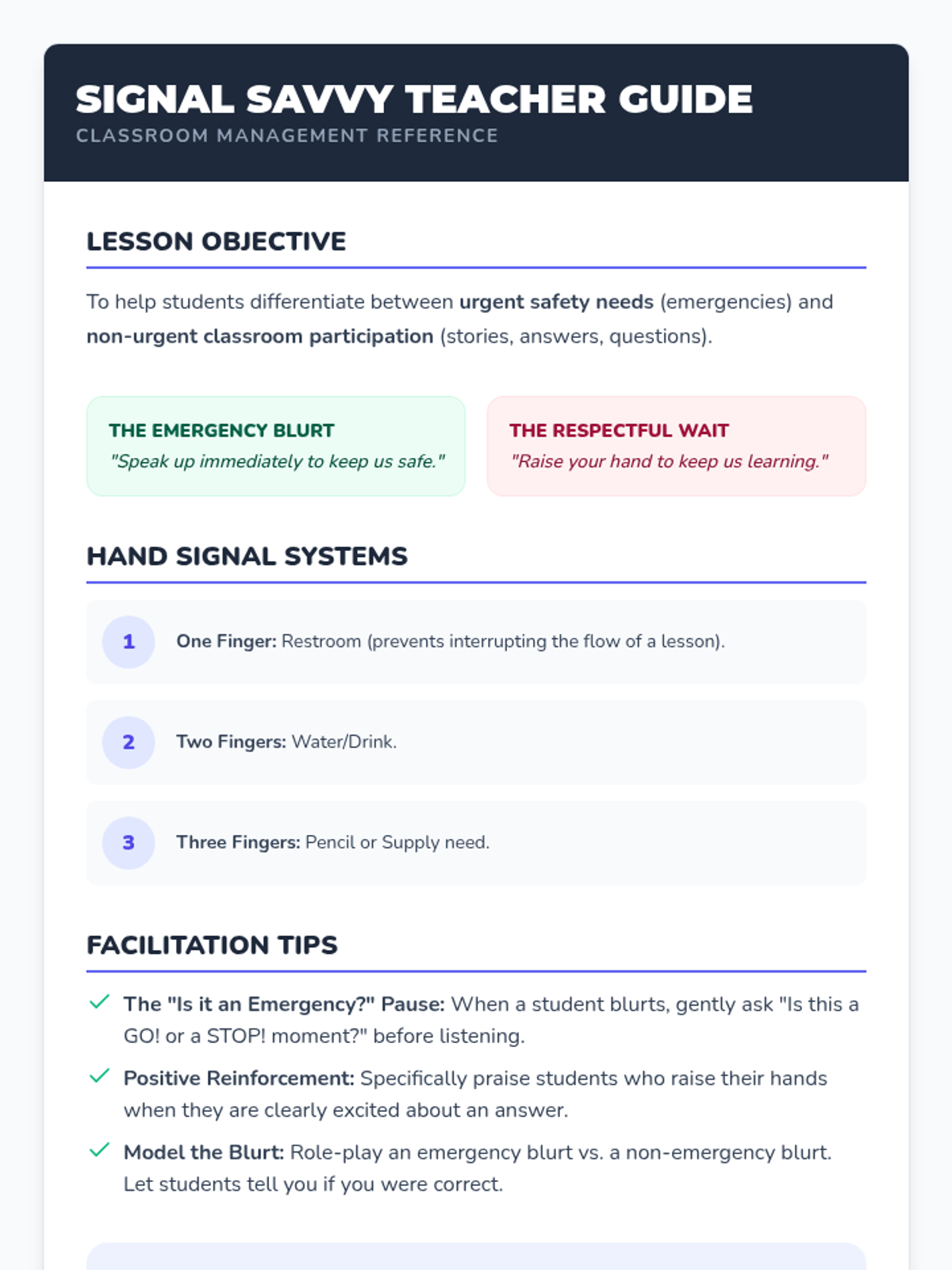
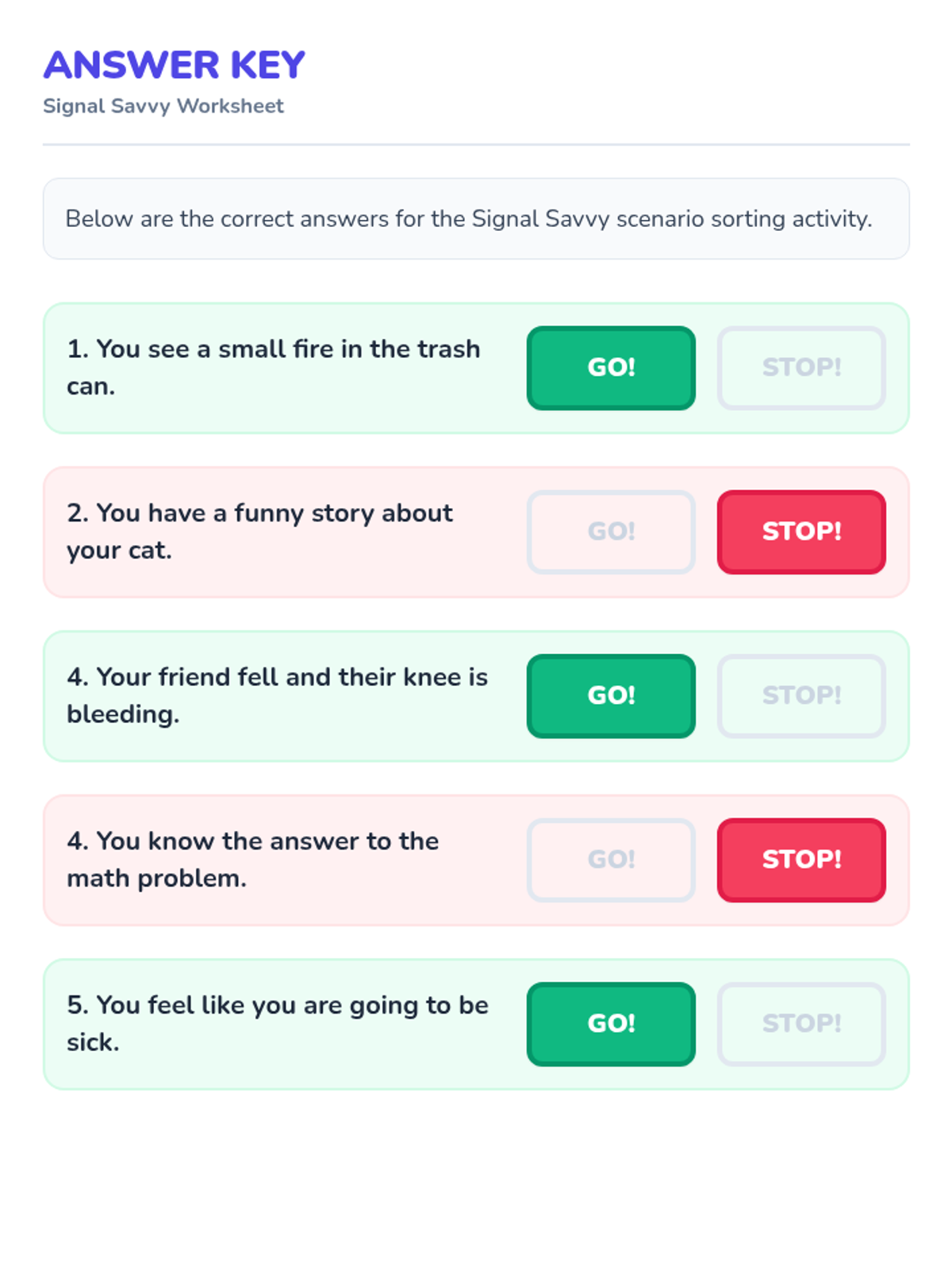
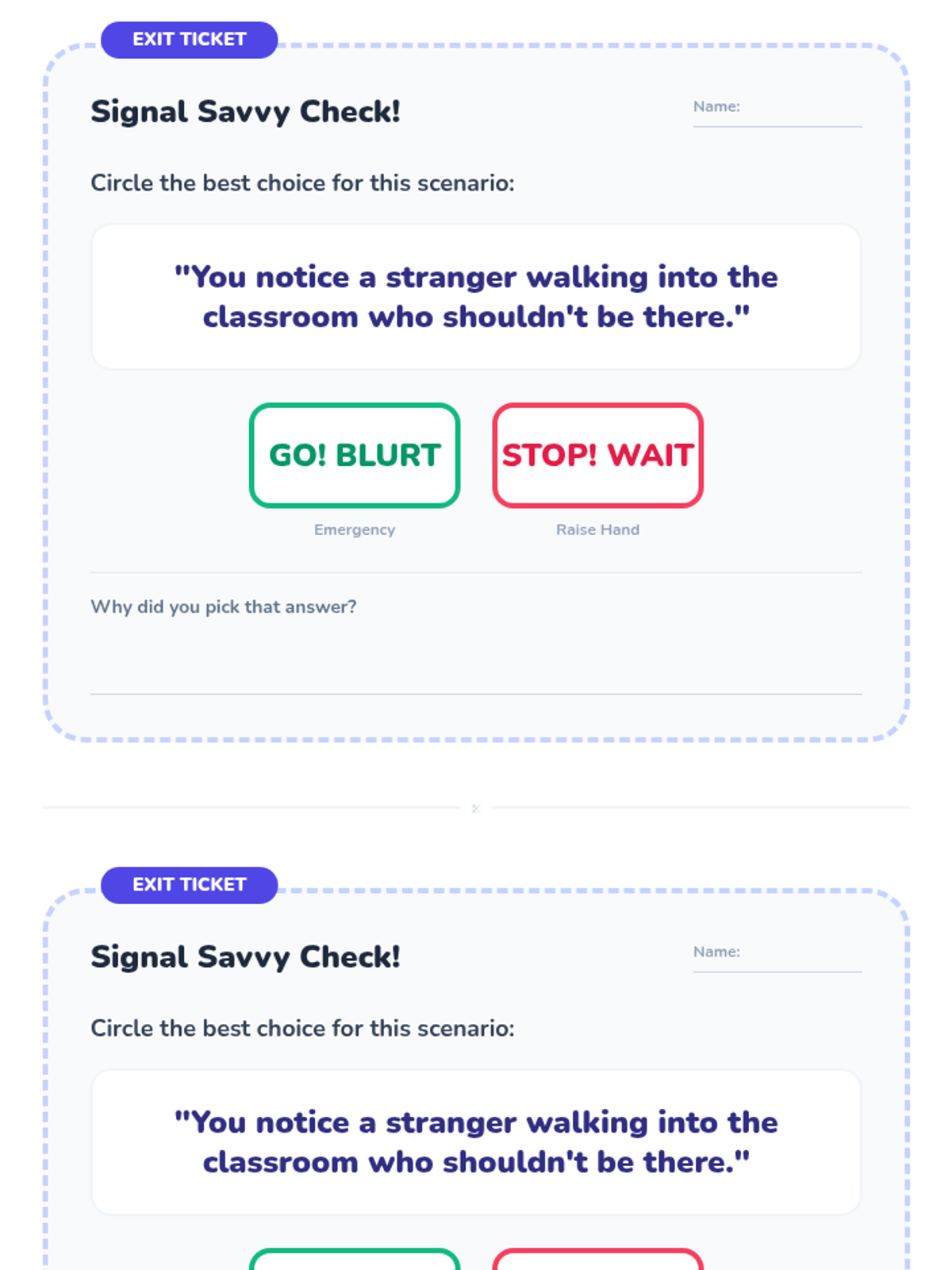
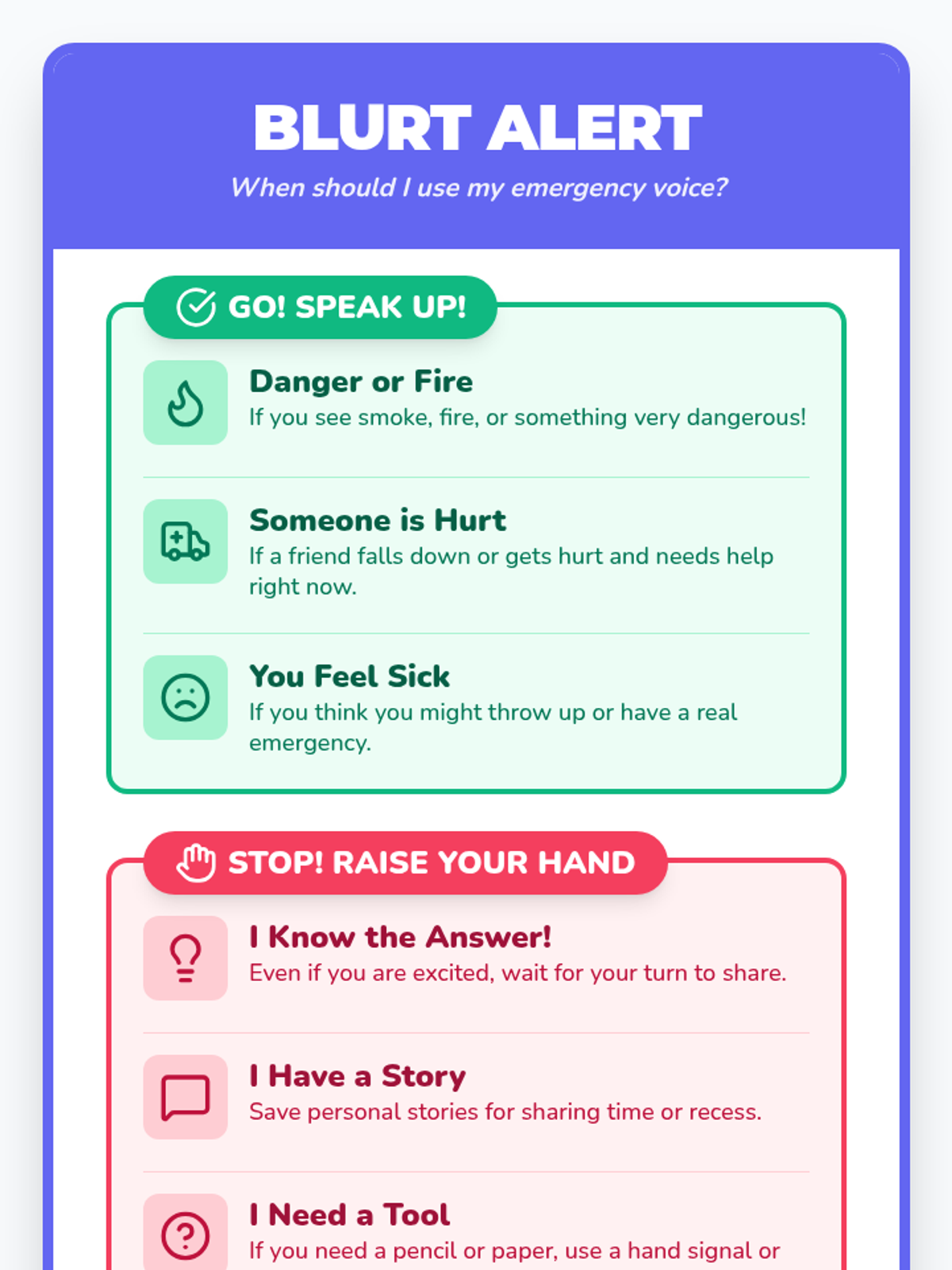
A lesson designed to help 2nd-grade students understand the difference between emergencies that require immediate speaking and classroom moments that require raising a hand.
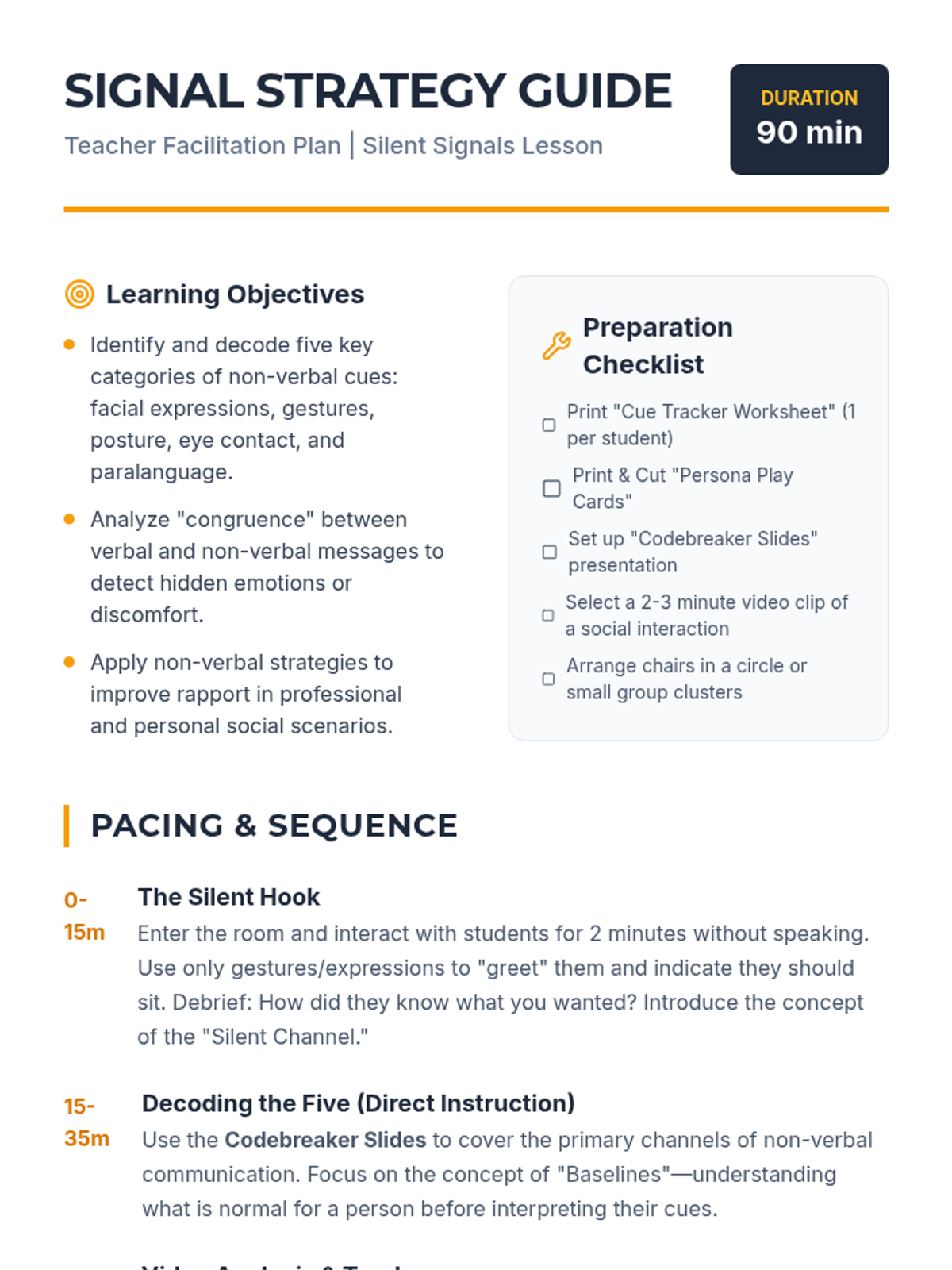
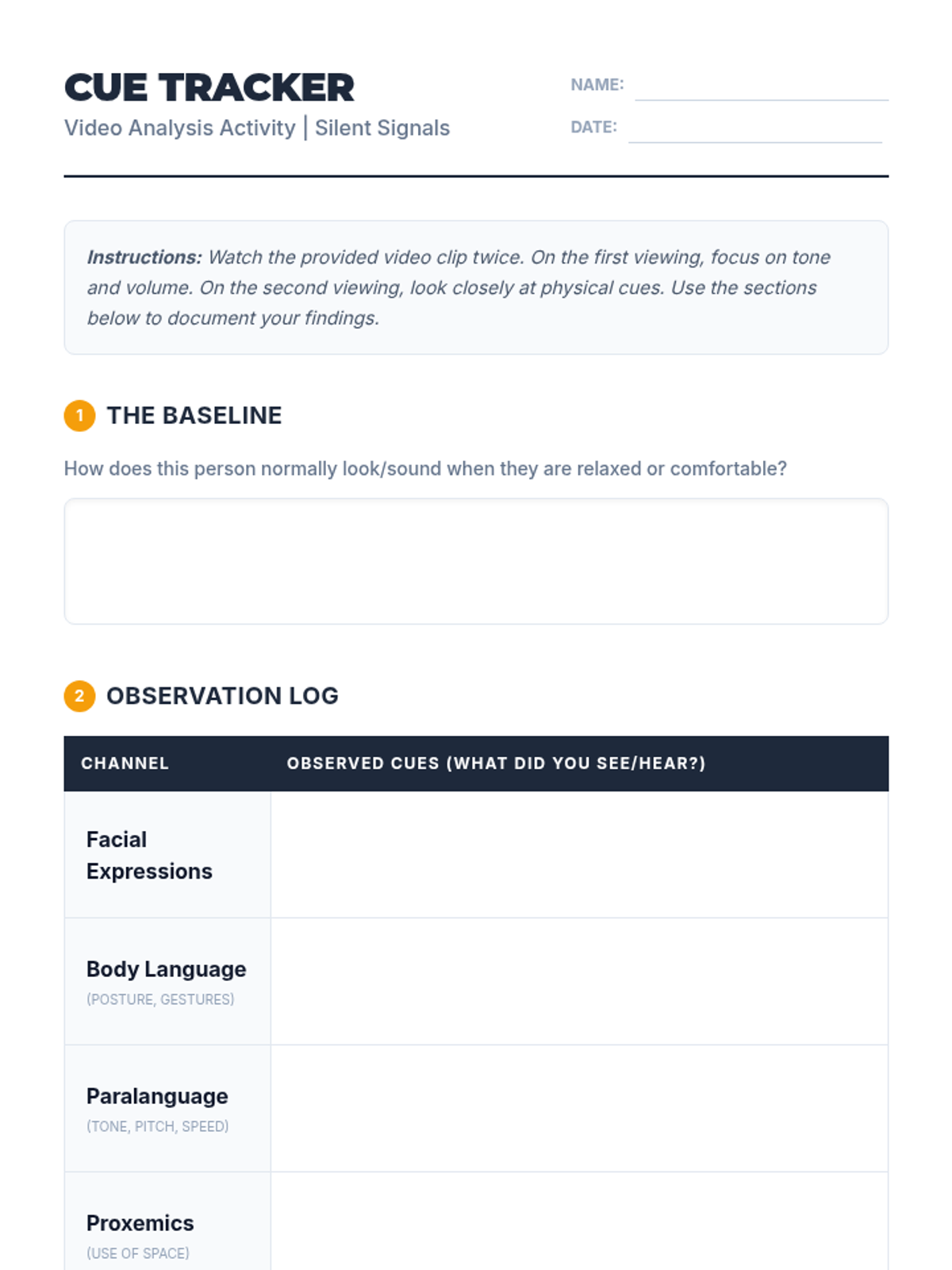
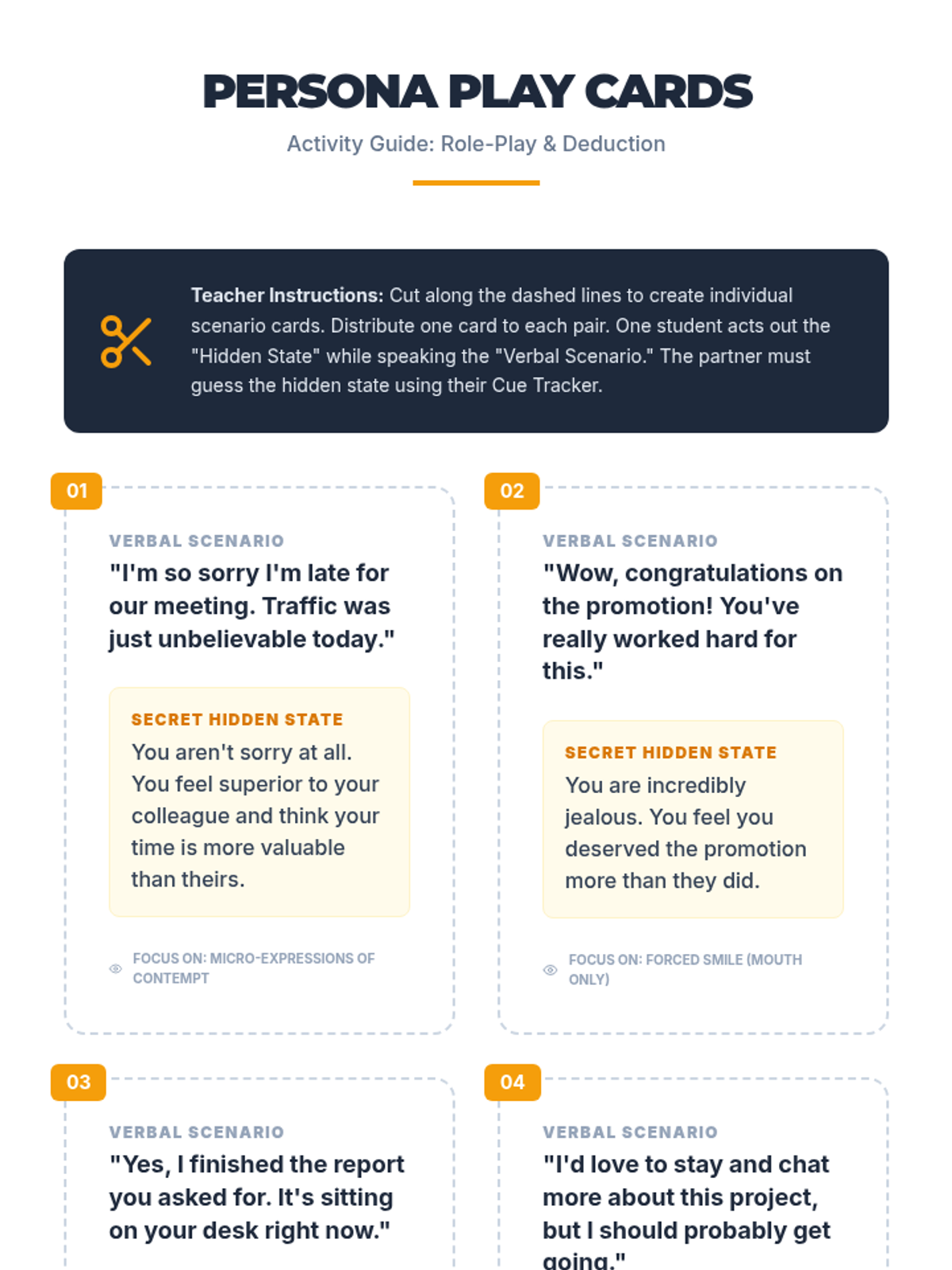
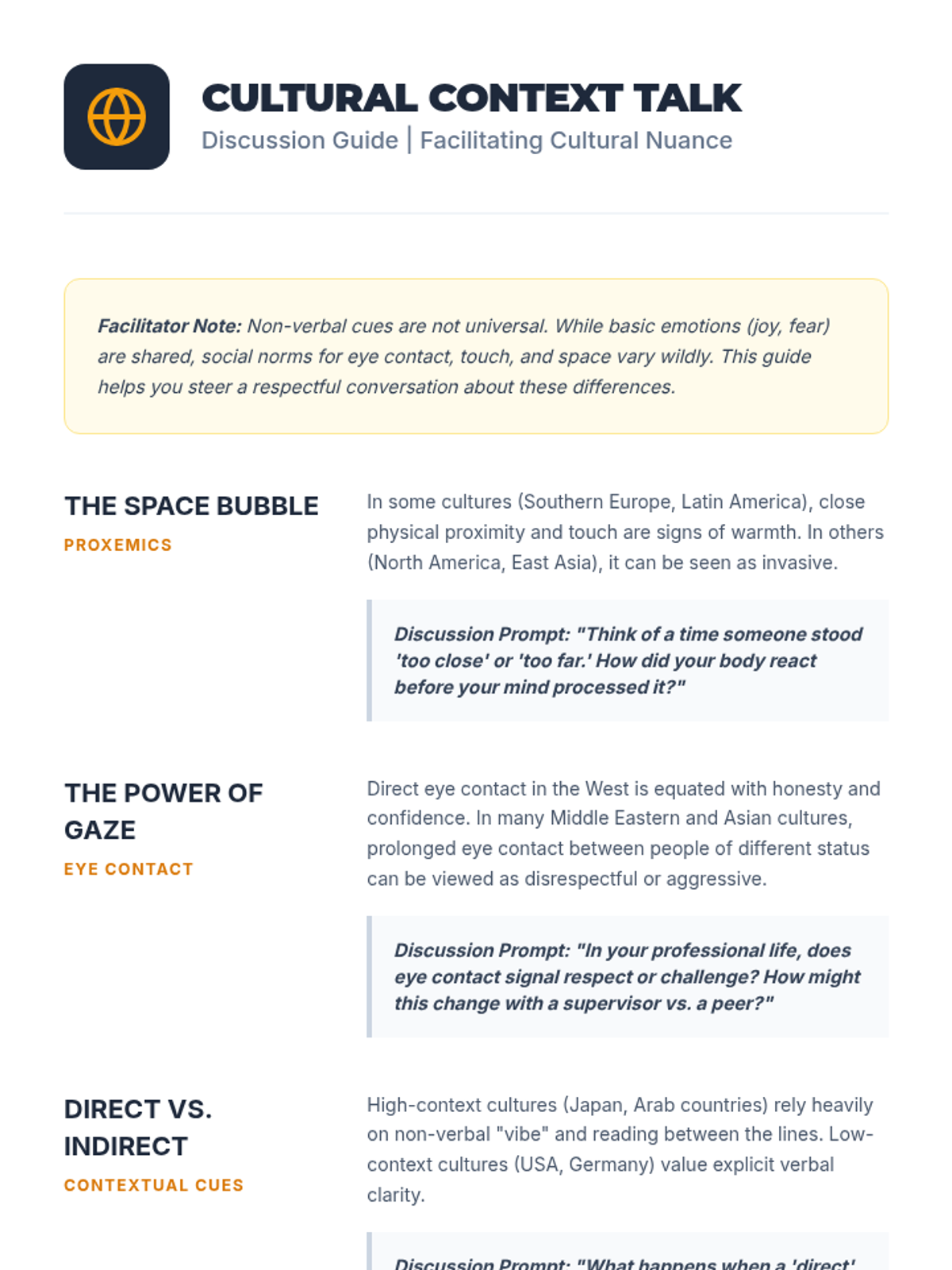
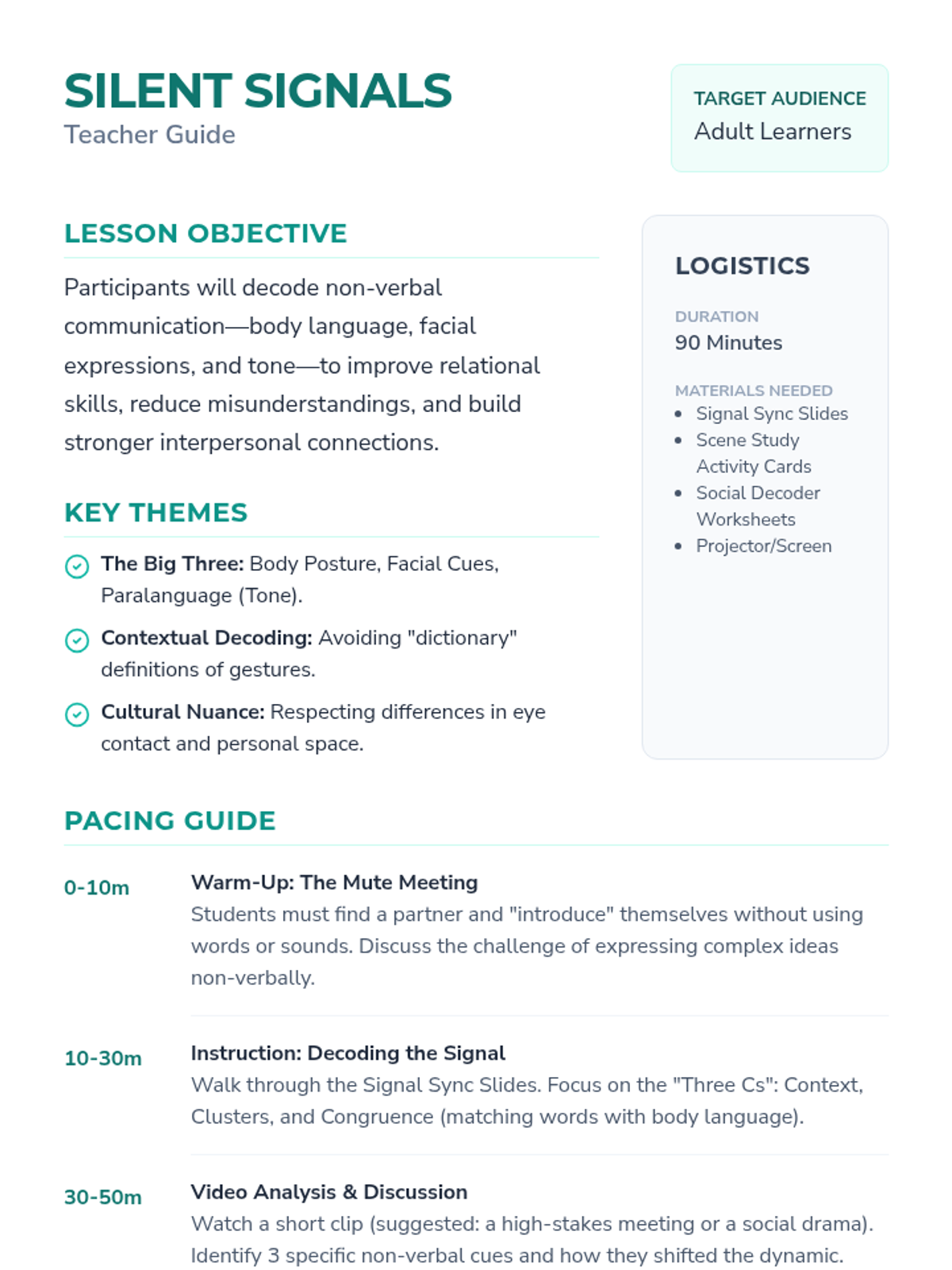
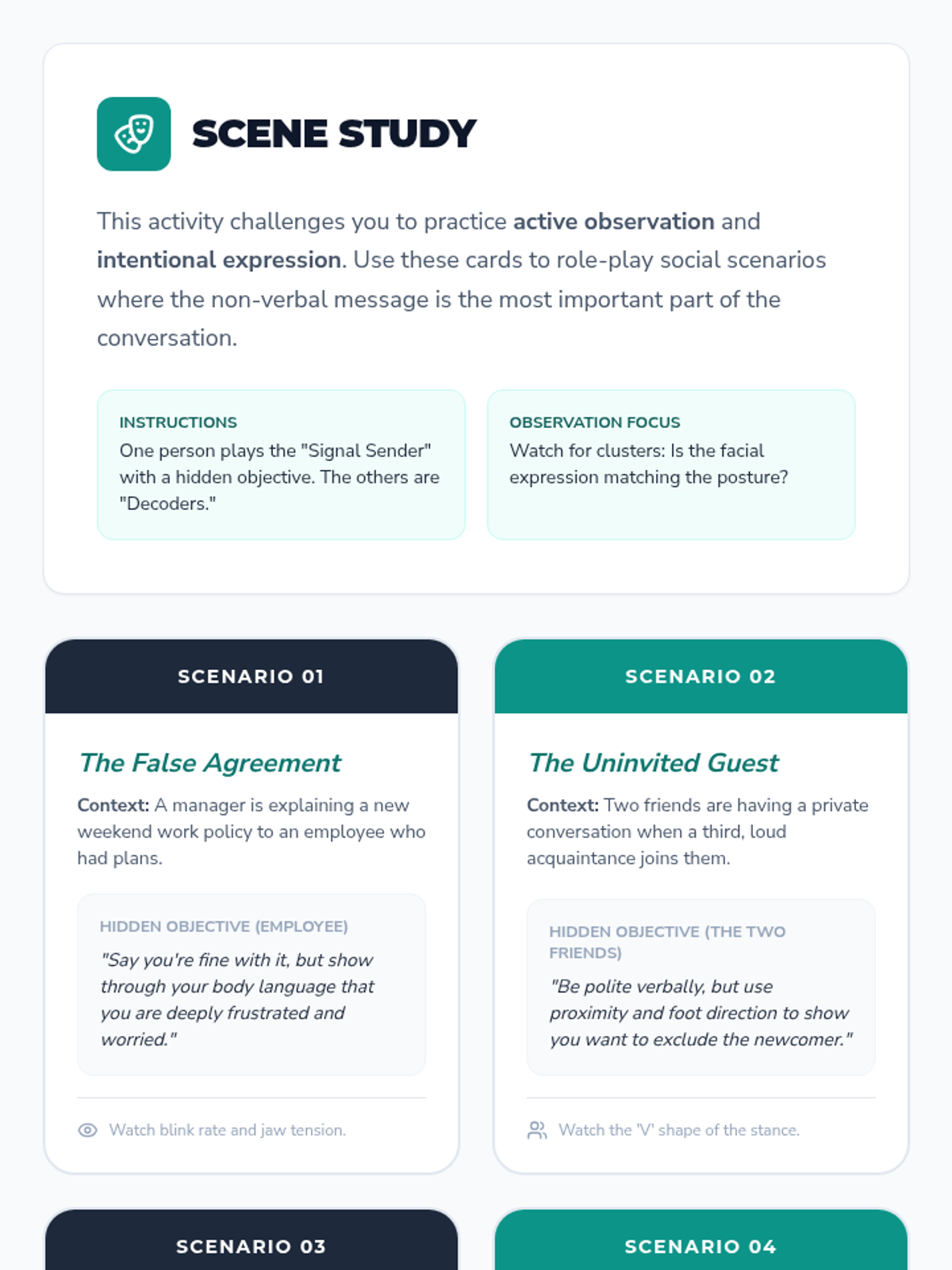
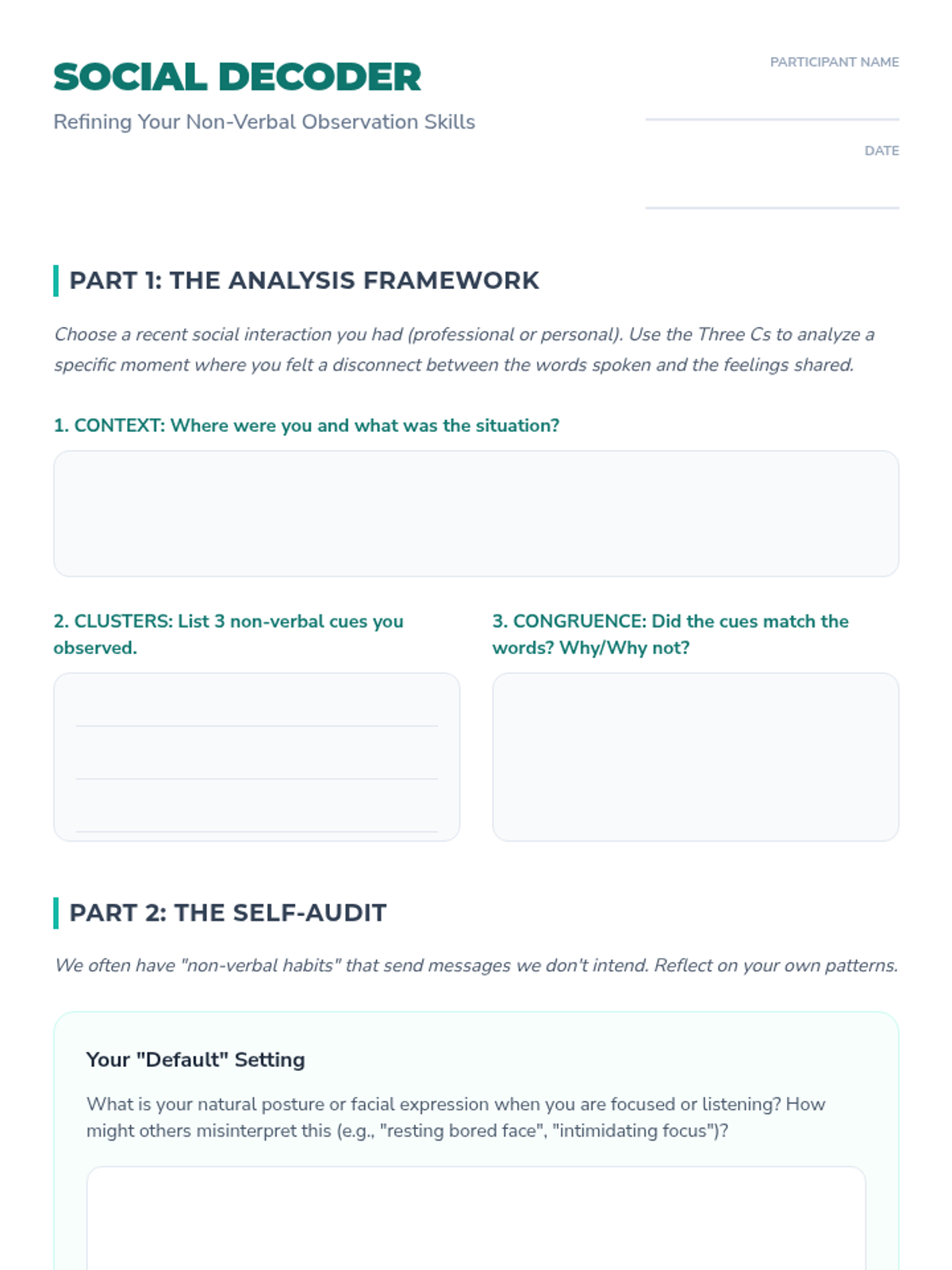
This lesson helps adult learners decode non-verbal communication, including body language, facial expressions, and tone of voice. Through video analysis and role-play, students will improve their interpersonal skills and social awareness in both professional and personal contexts.
A comprehensive lesson for adult learners focusing on decoding non-verbal communication, including body language, facial expressions, and tone, to enhance interpersonal effectiveness in both personal and professional contexts.
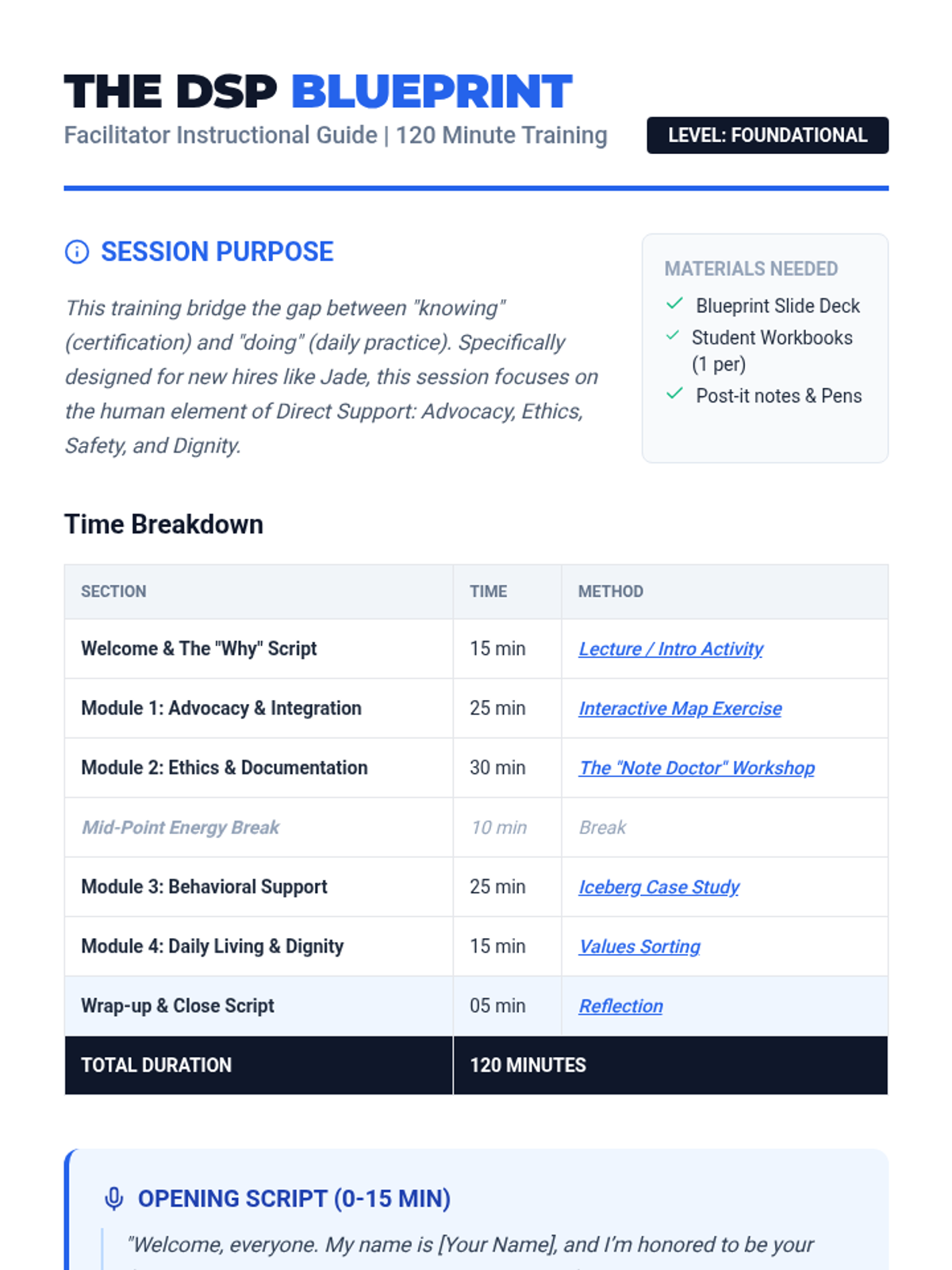
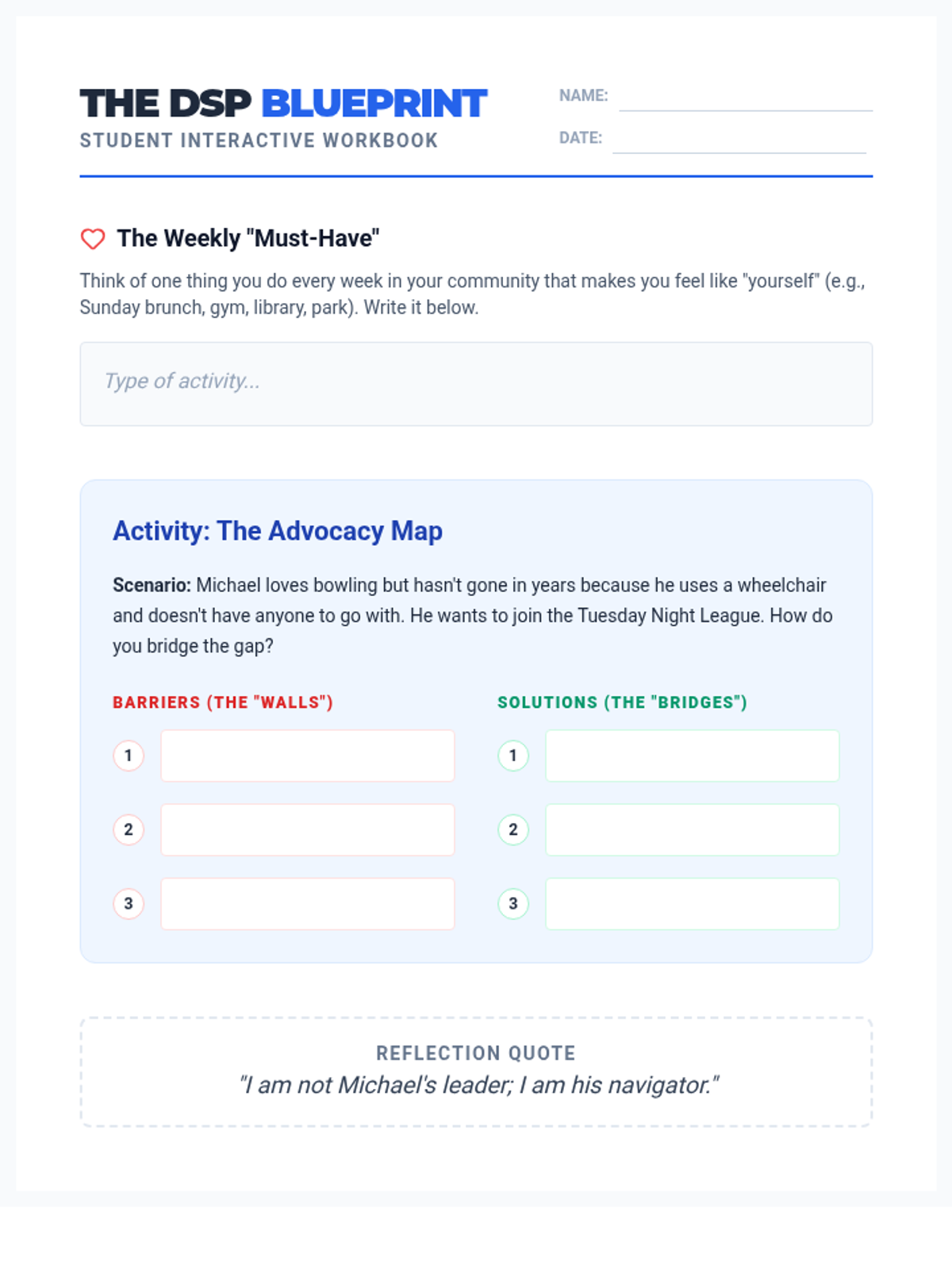
A 120-minute foundational training session that transforms certification knowledge into practical workplace skills. This lesson focuses on community integration, documentation, behavioral intervention, and person-centered personal care.
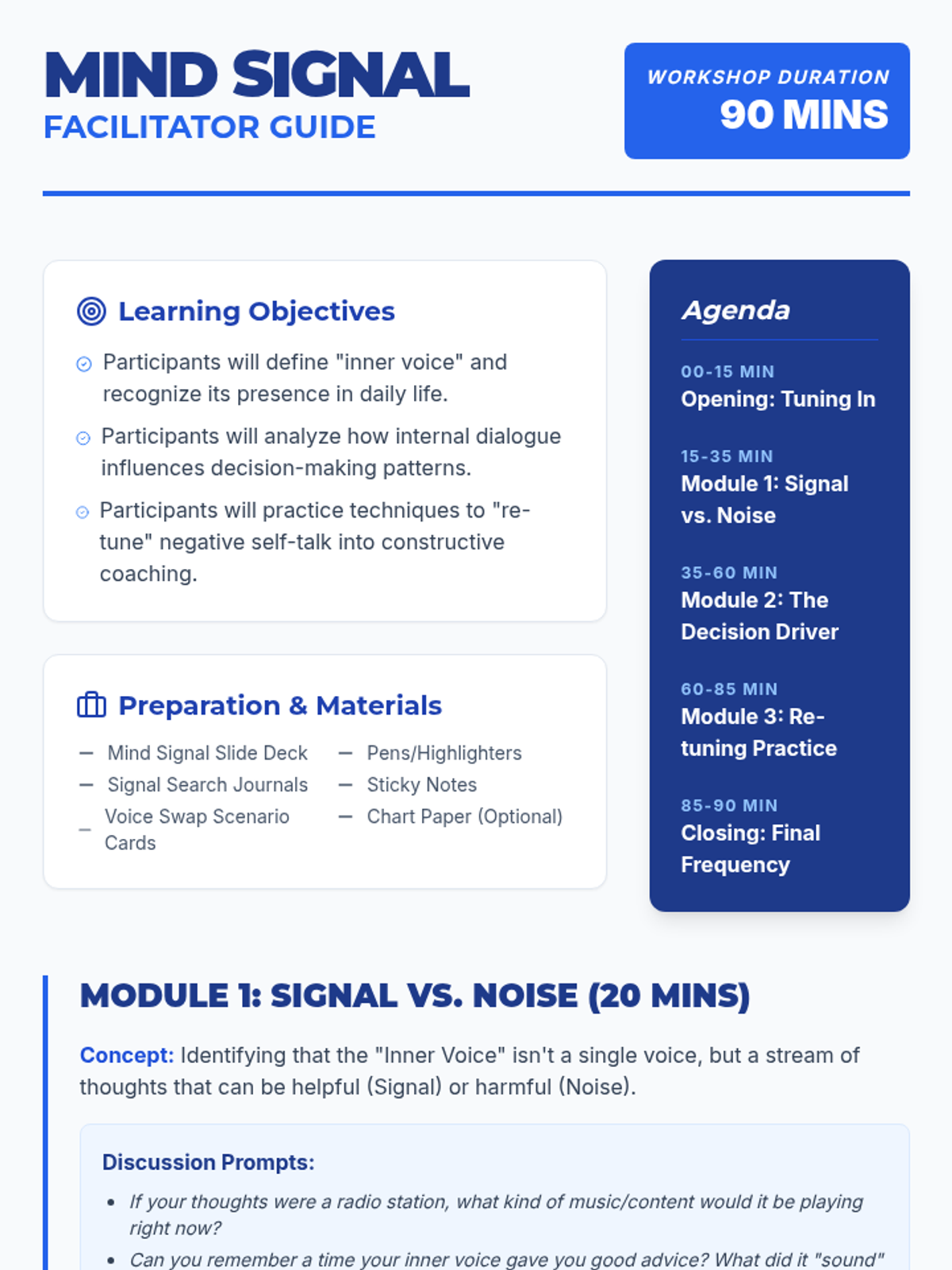
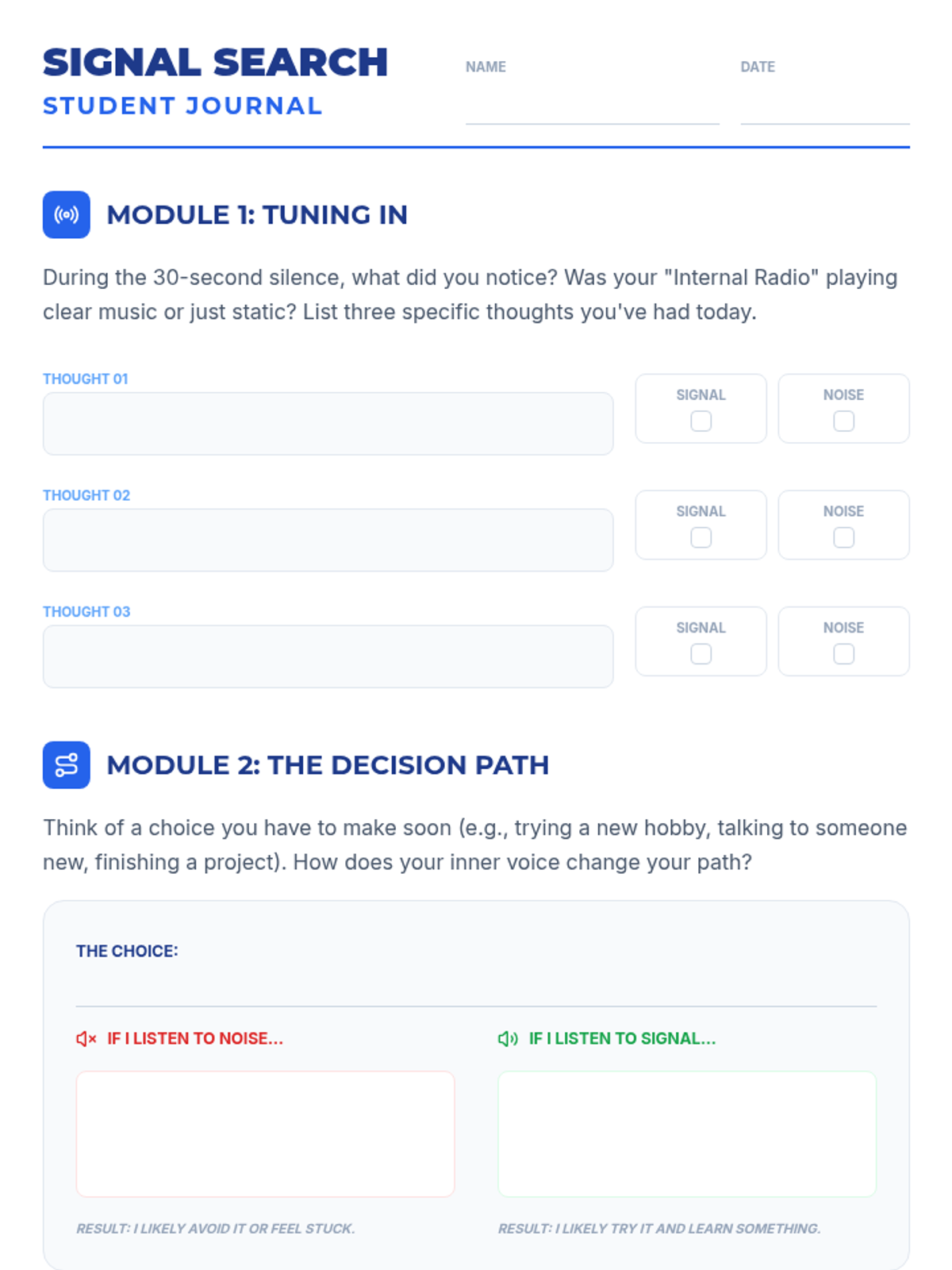
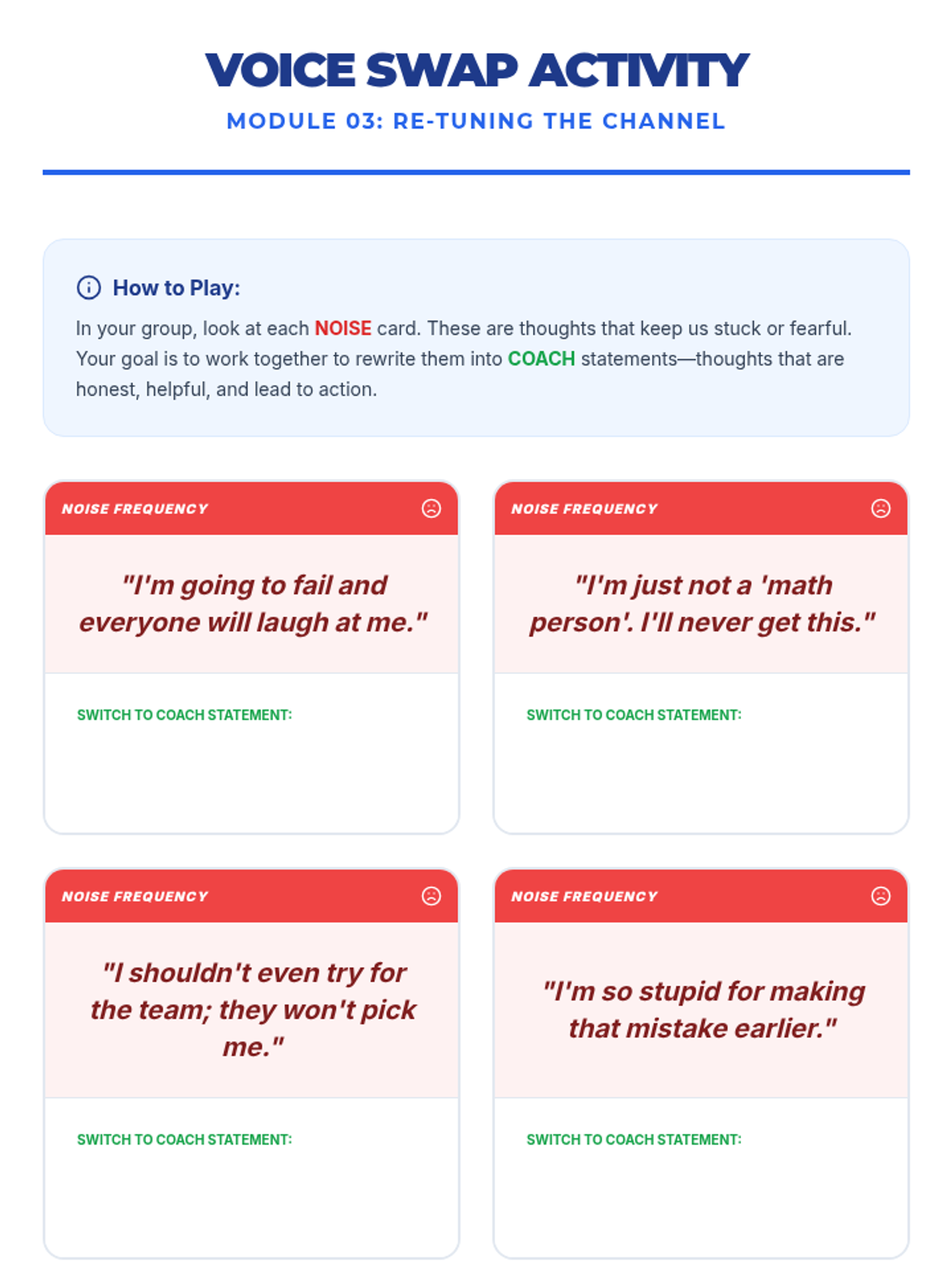
A comprehensive workshop lesson focused on identifying the inner voice, understanding its influence on decisions, and transforming negative self-talk into a supportive internal coach.
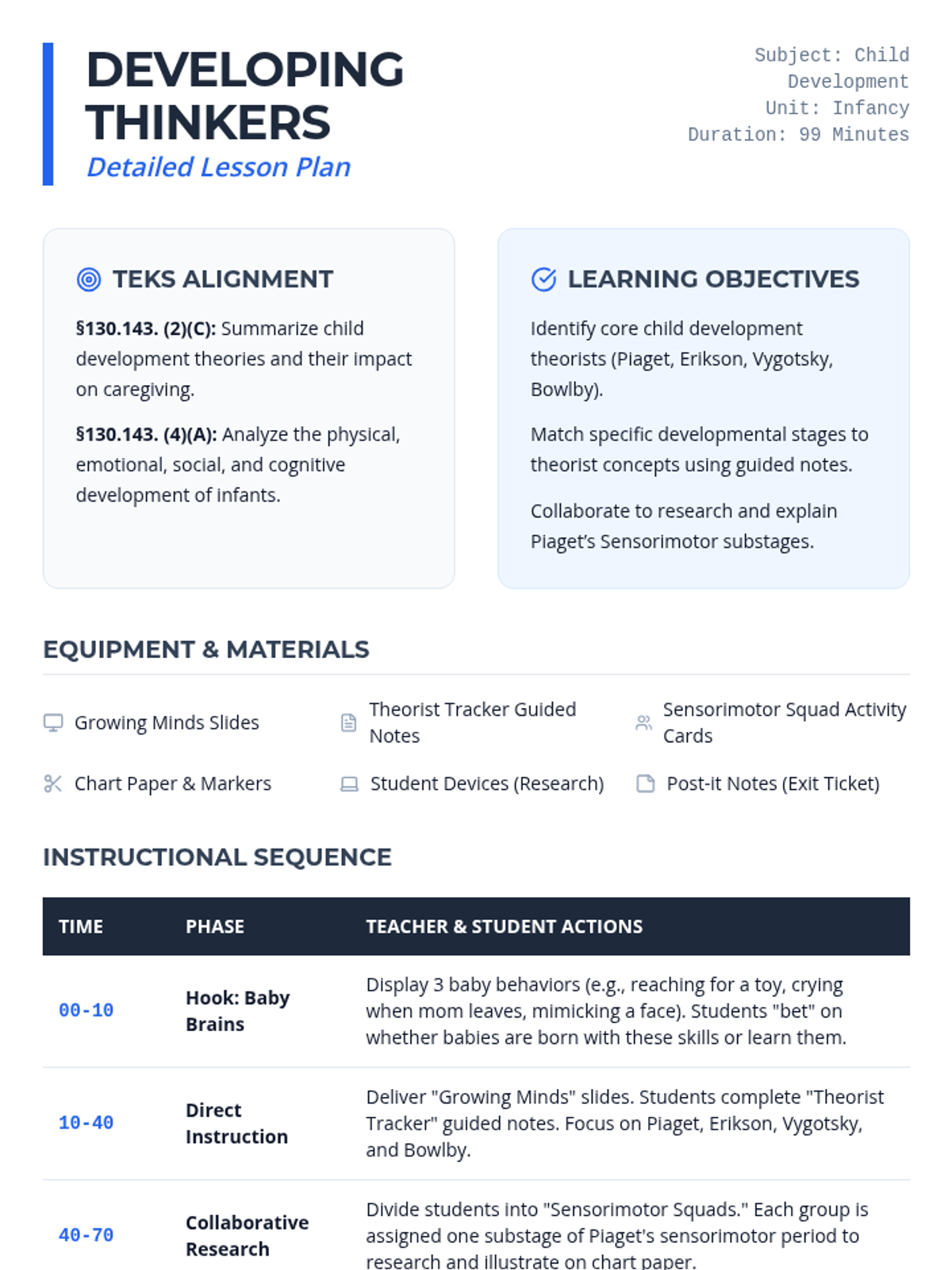
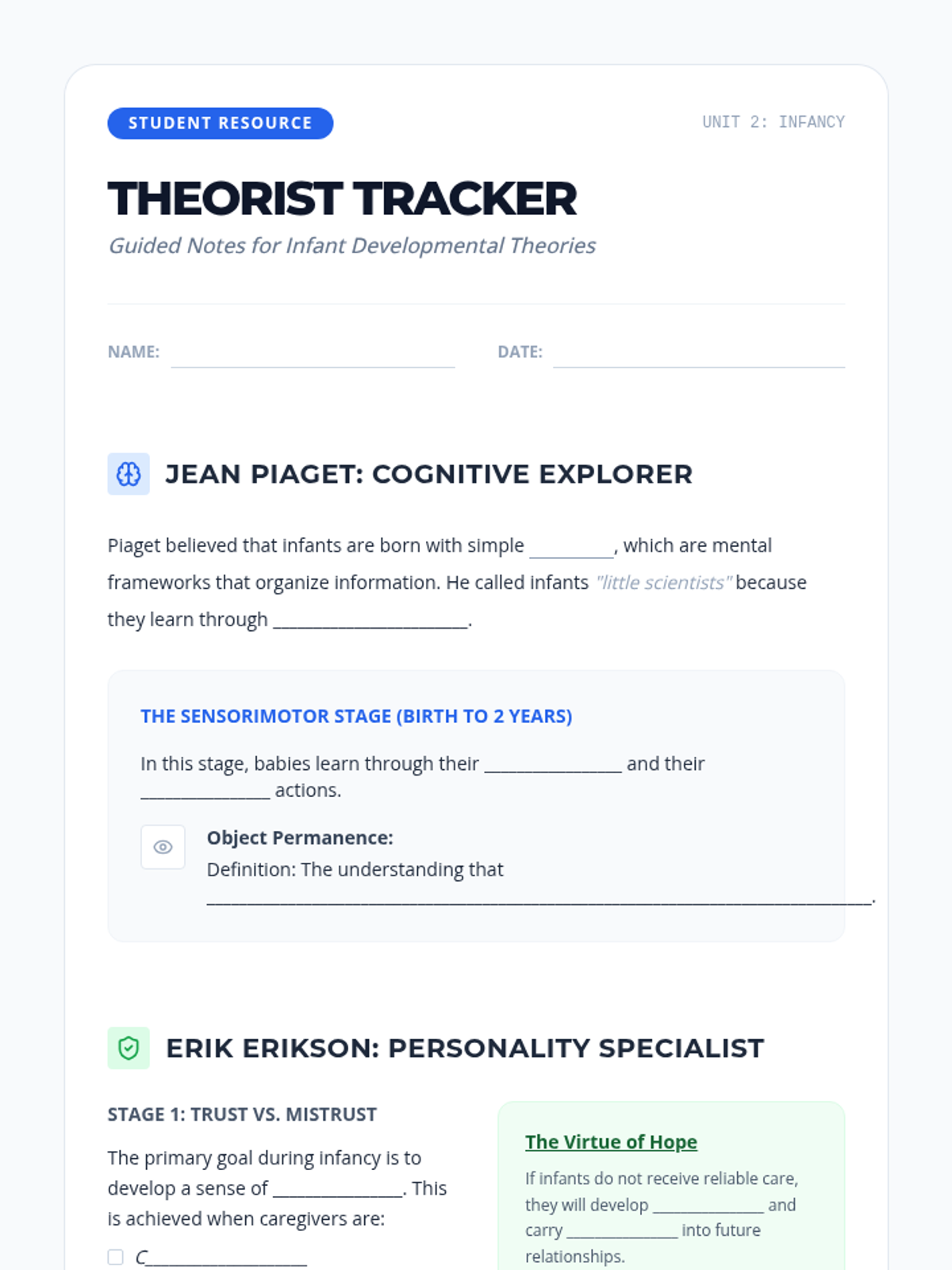
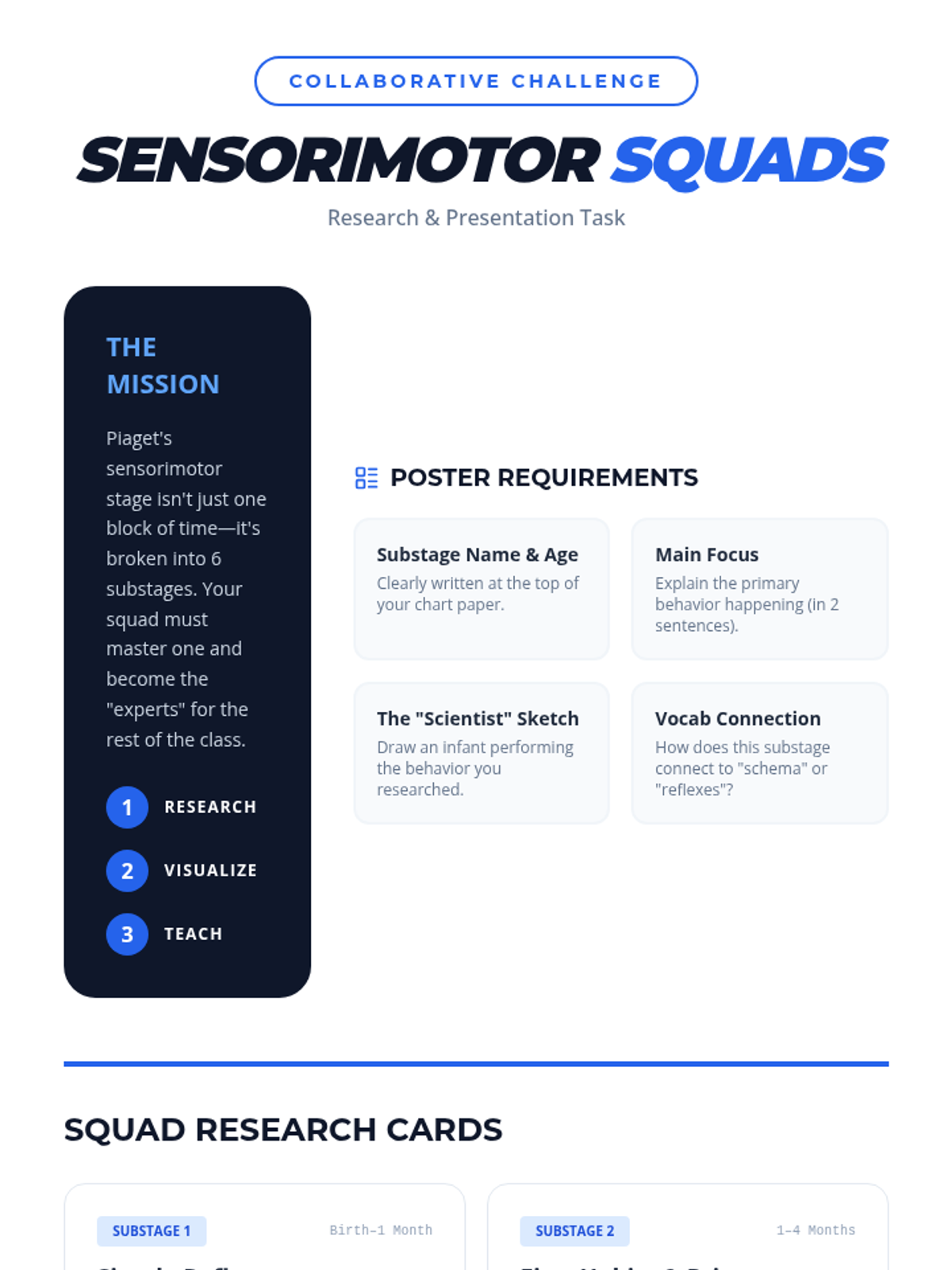
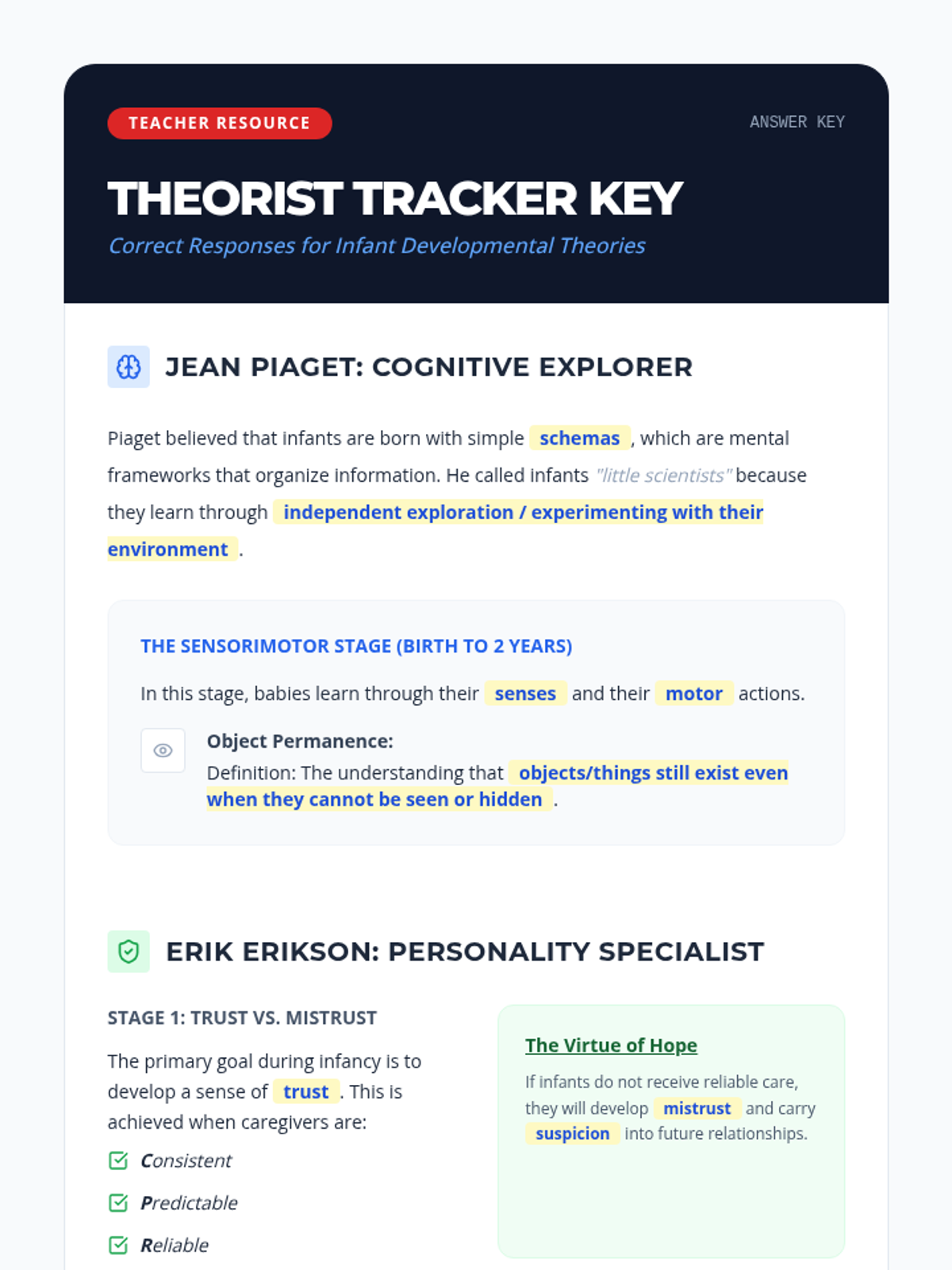
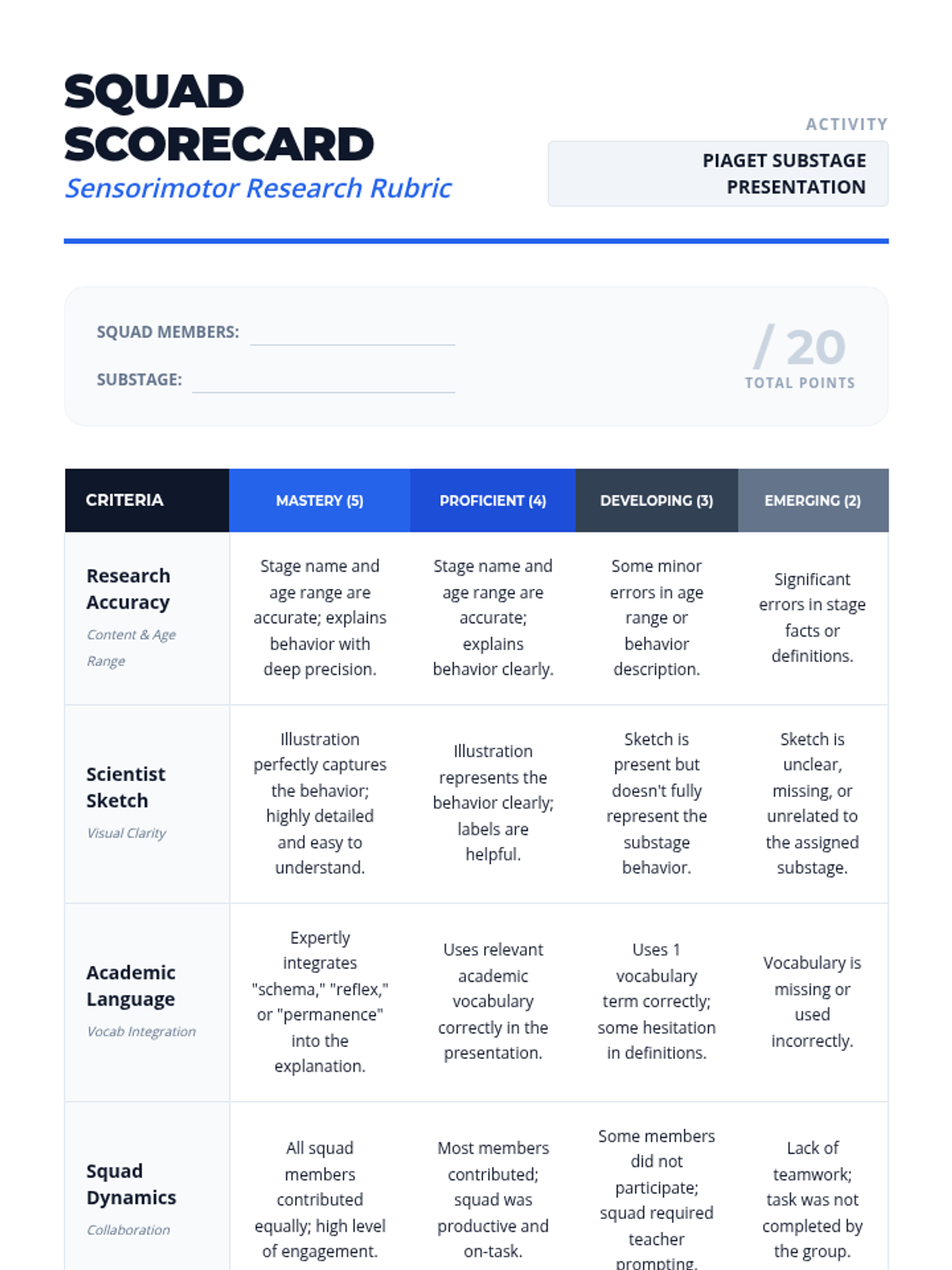
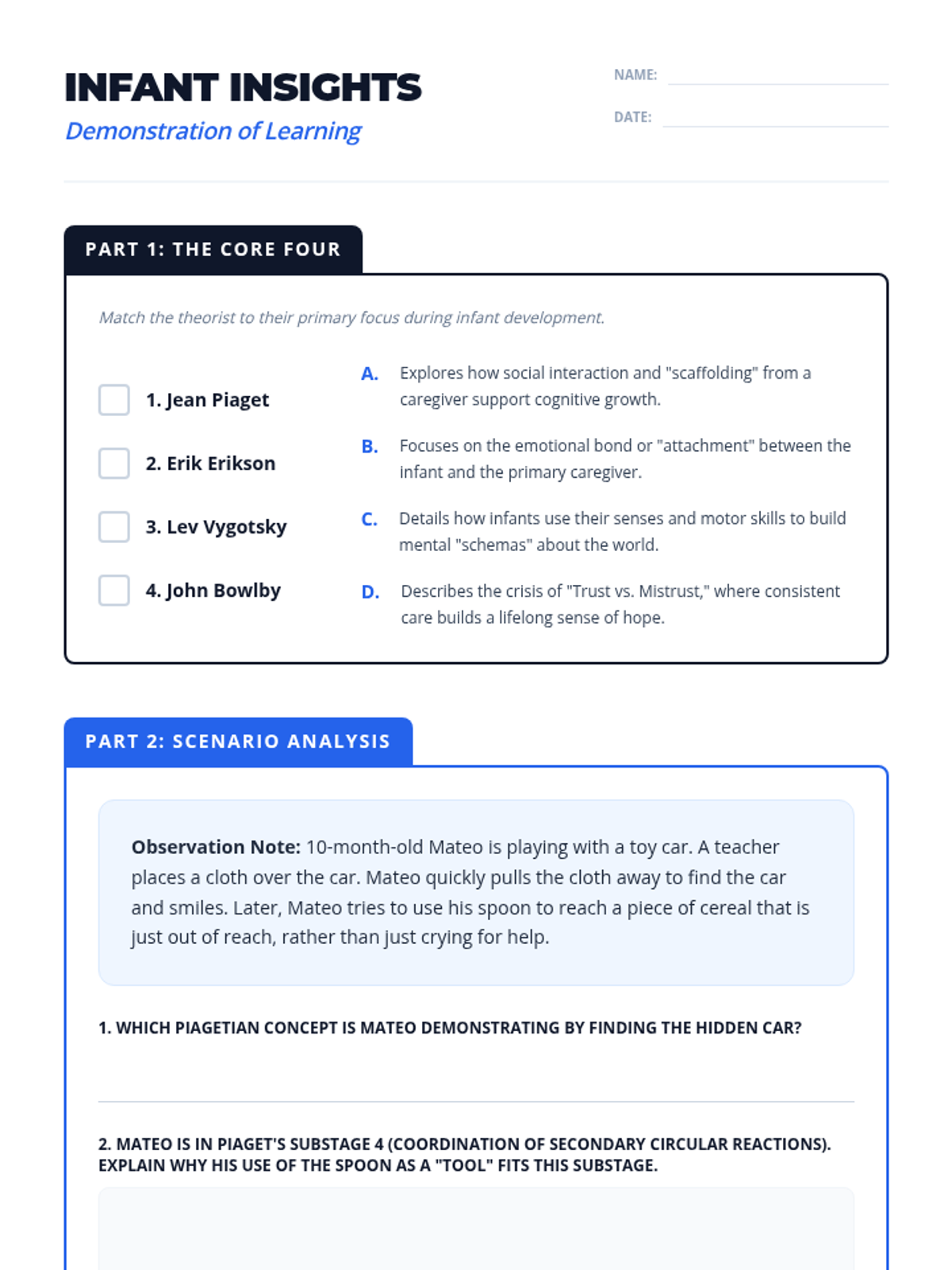
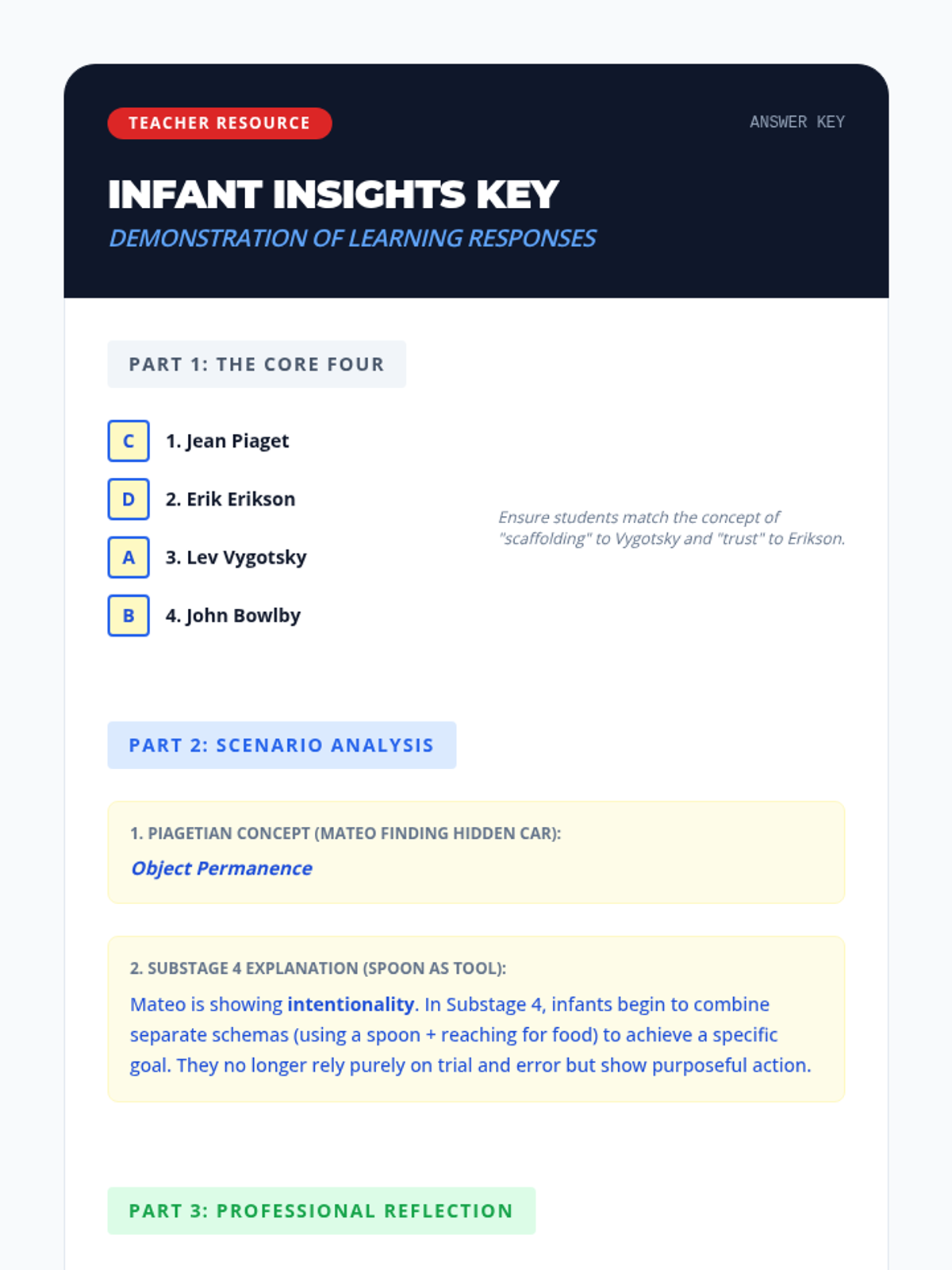
A comprehensive 99-minute lesson exploring child development theorists (Piaget, Erikson, Vygotsky, Bowlby) with a focus on infancy, featuring collaborative research and guided note-taking.
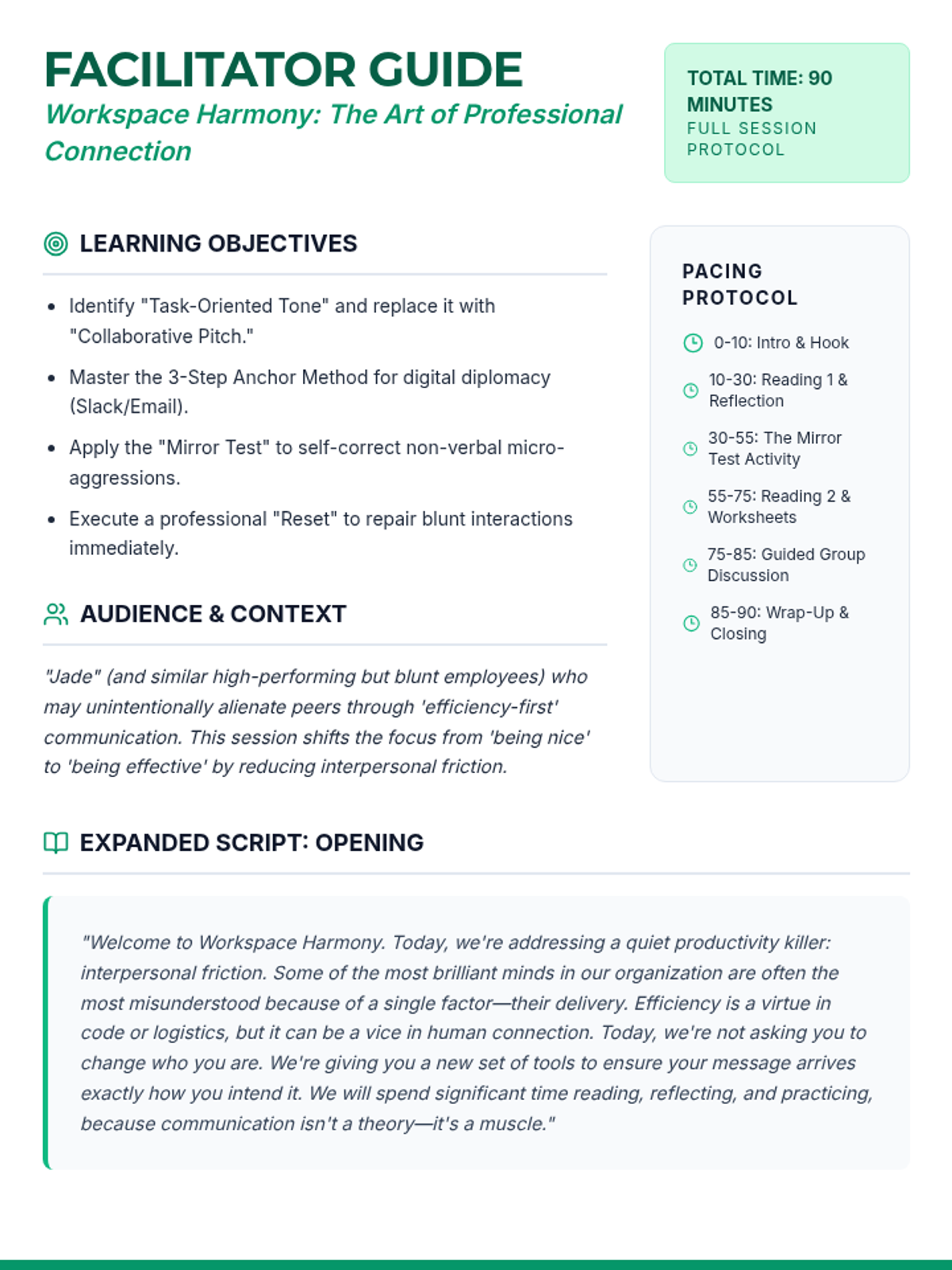
A comprehensive 90-minute training session designed to improve workplace communication, focusing on tone, non-verbal cues, digital etiquette, and conflict resolution. This lesson includes deep-dive readings and structured practice to help employees build professional awareness and rapport.
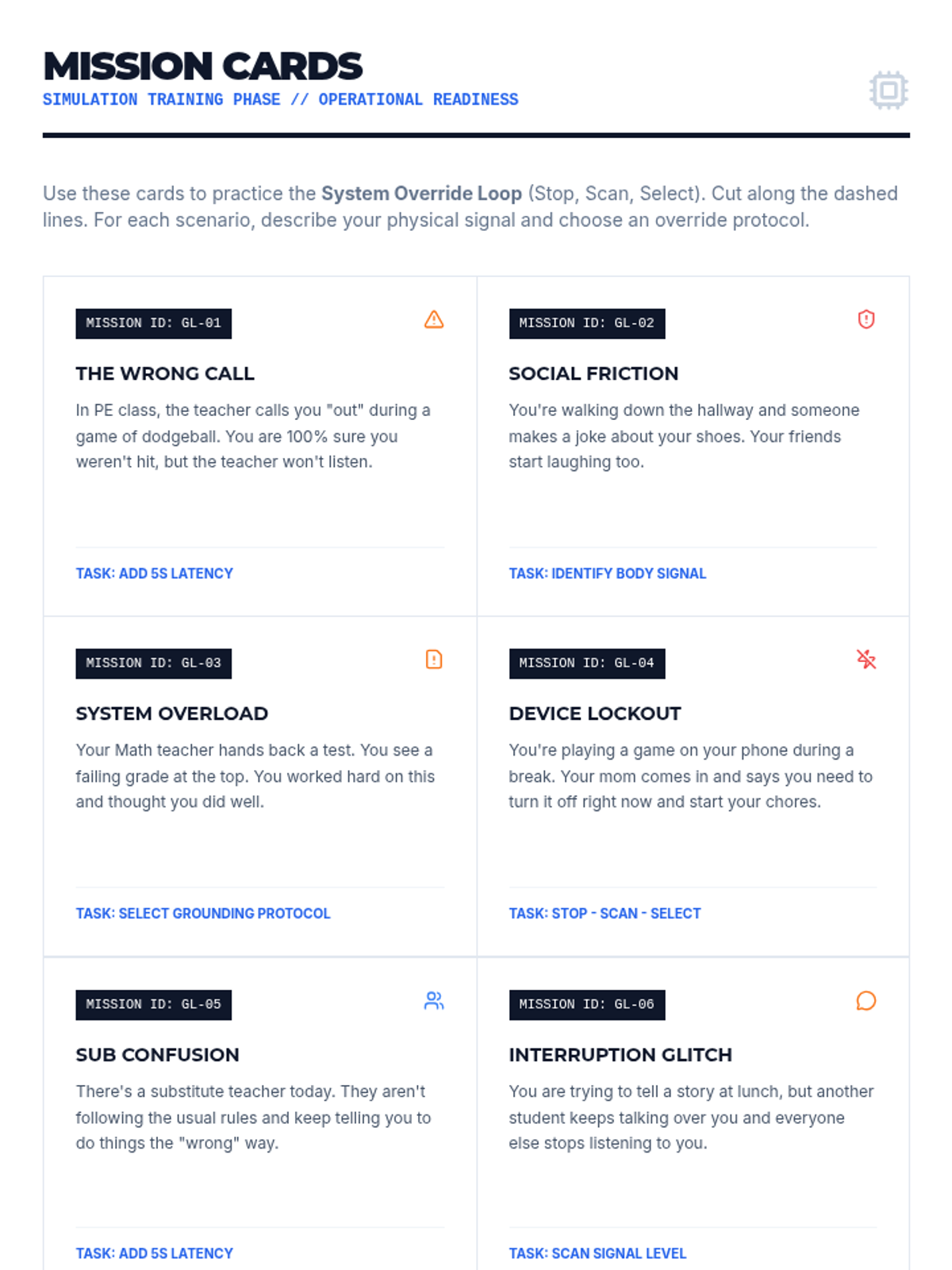
Provides structured role-playing scenarios and simulation activities to practice self-regulation and impulse control in real-world contexts.
Guides the student in building a personalized 'Regulation Menu' of strategies to use when emotional signals become too high-energy or overwhelming.
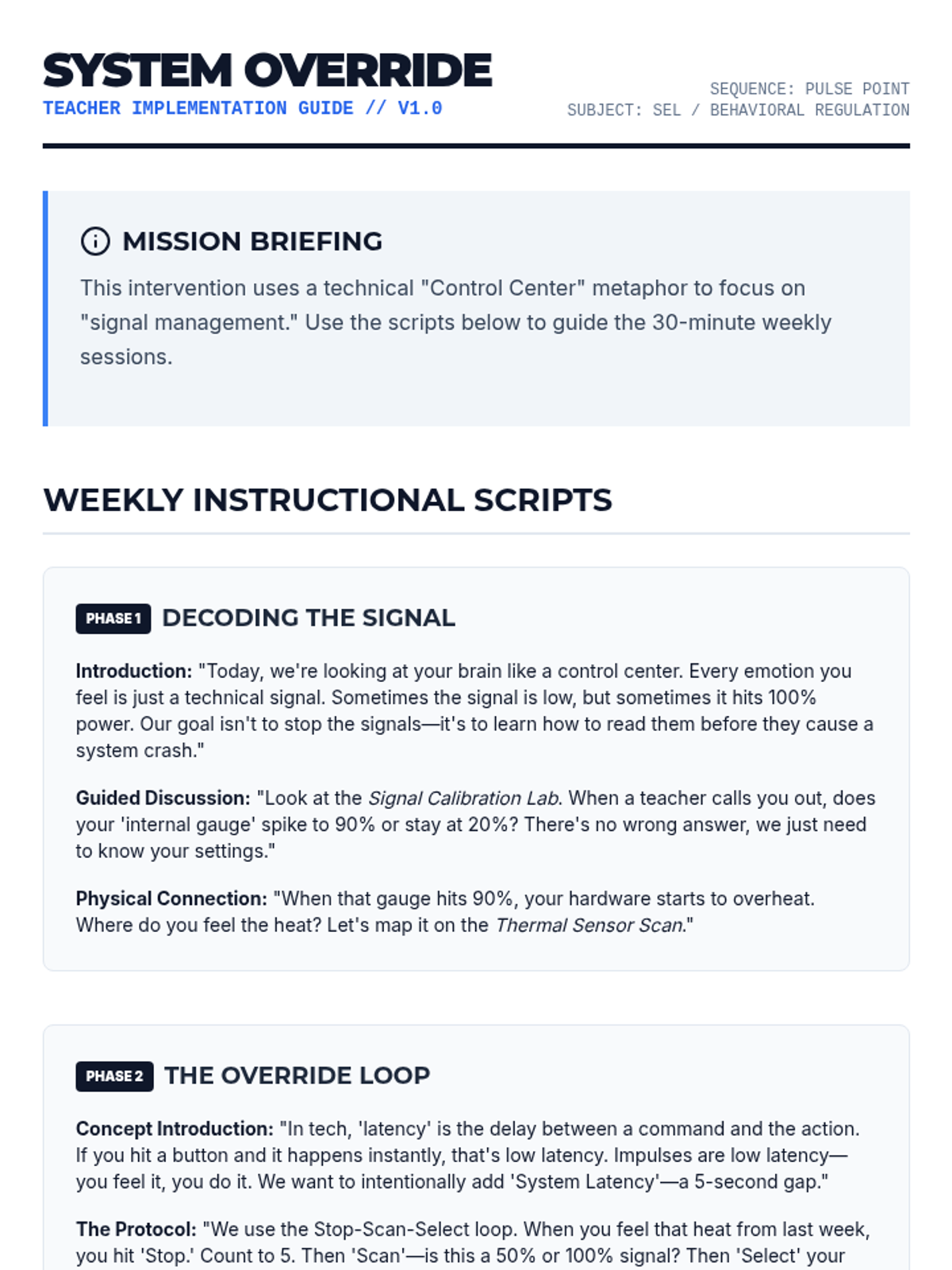
Introduces the concept of 'latency'—the gap between a stimulus and a response—and teaches the 'Stop, Scan, Select' protocol for impulse control.
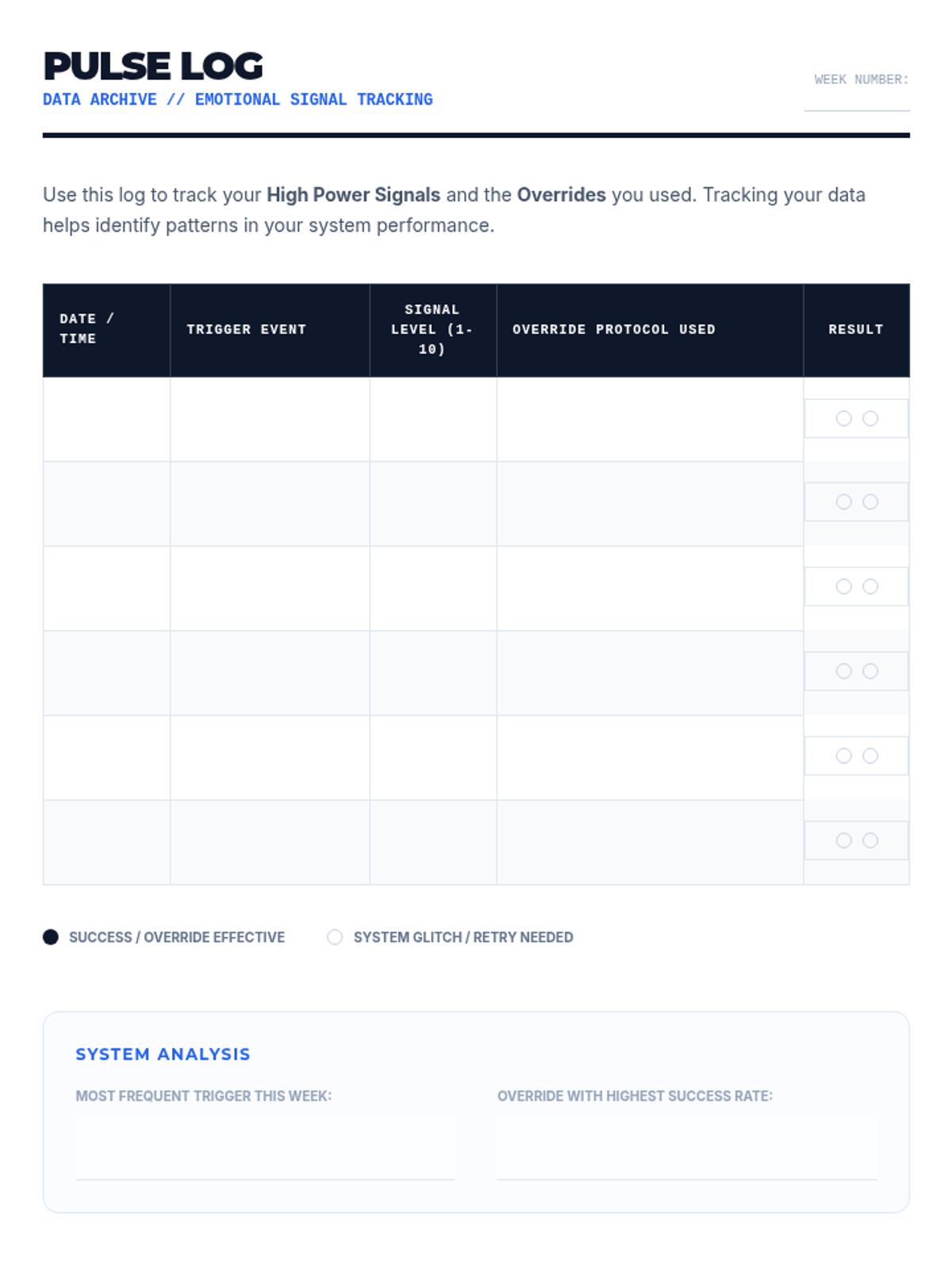
Focuses on identifying internal physical signals (emotions) and mapping how they feel in the body using a technical 'dashboard' metaphor.
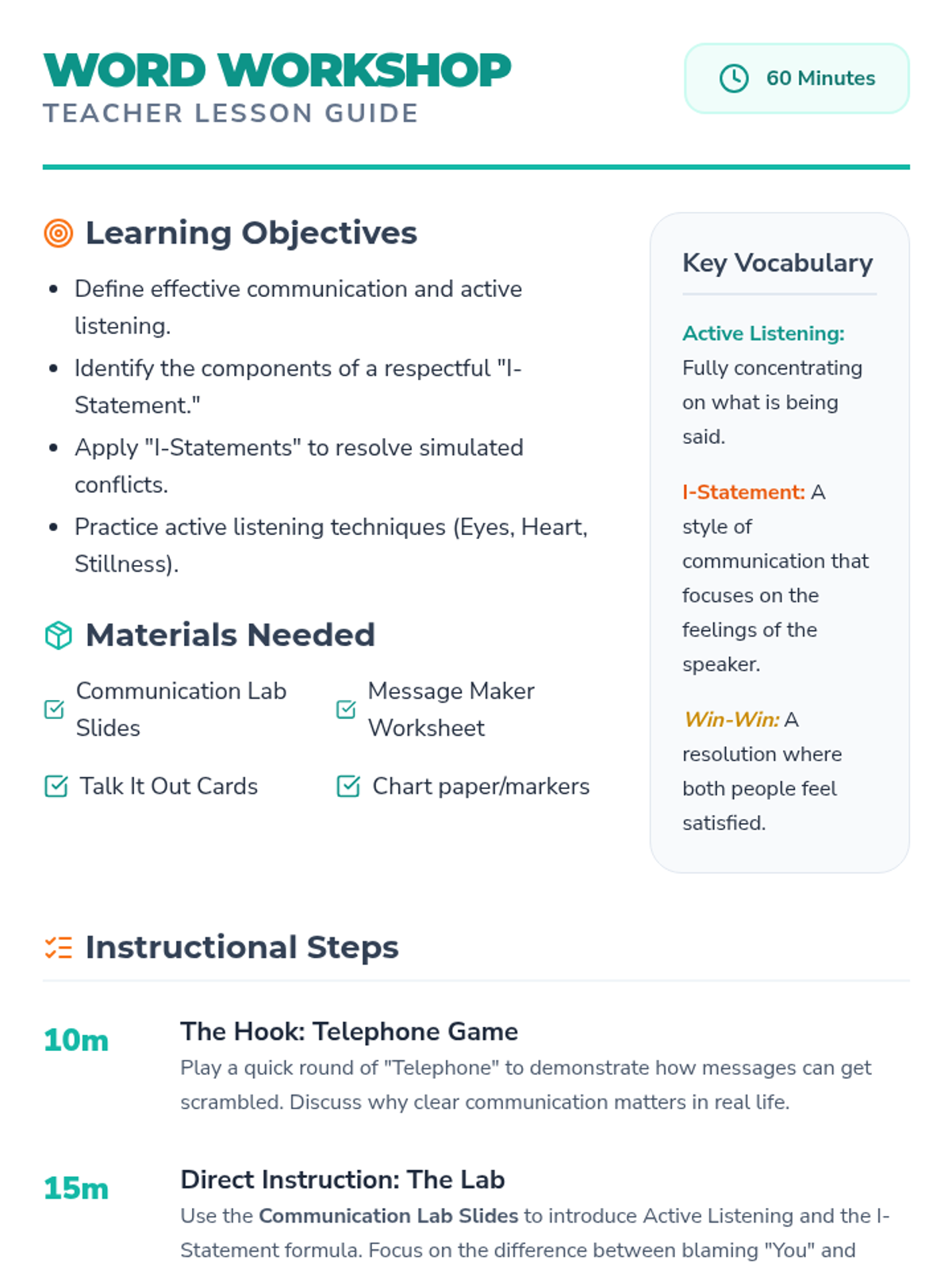
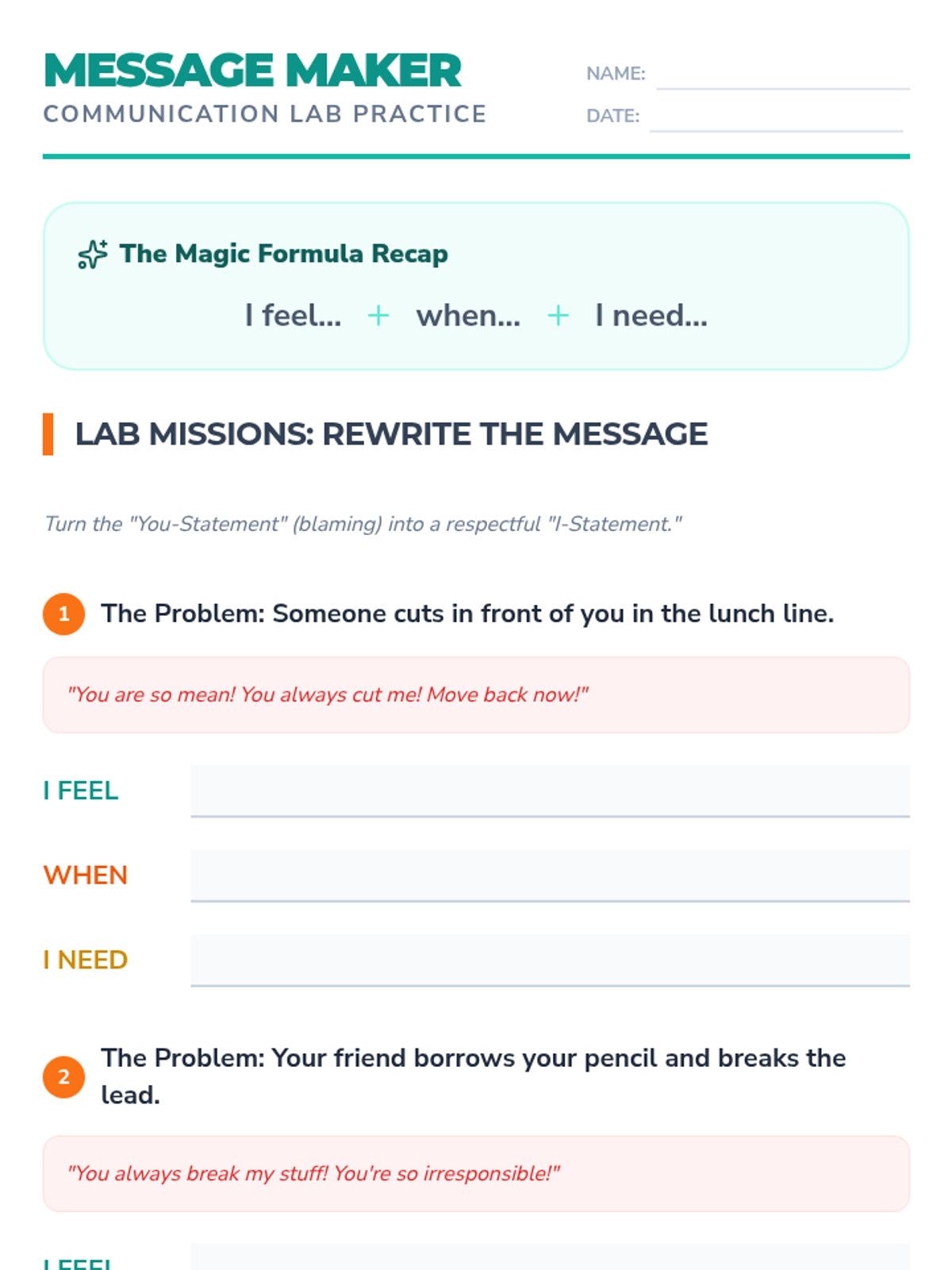
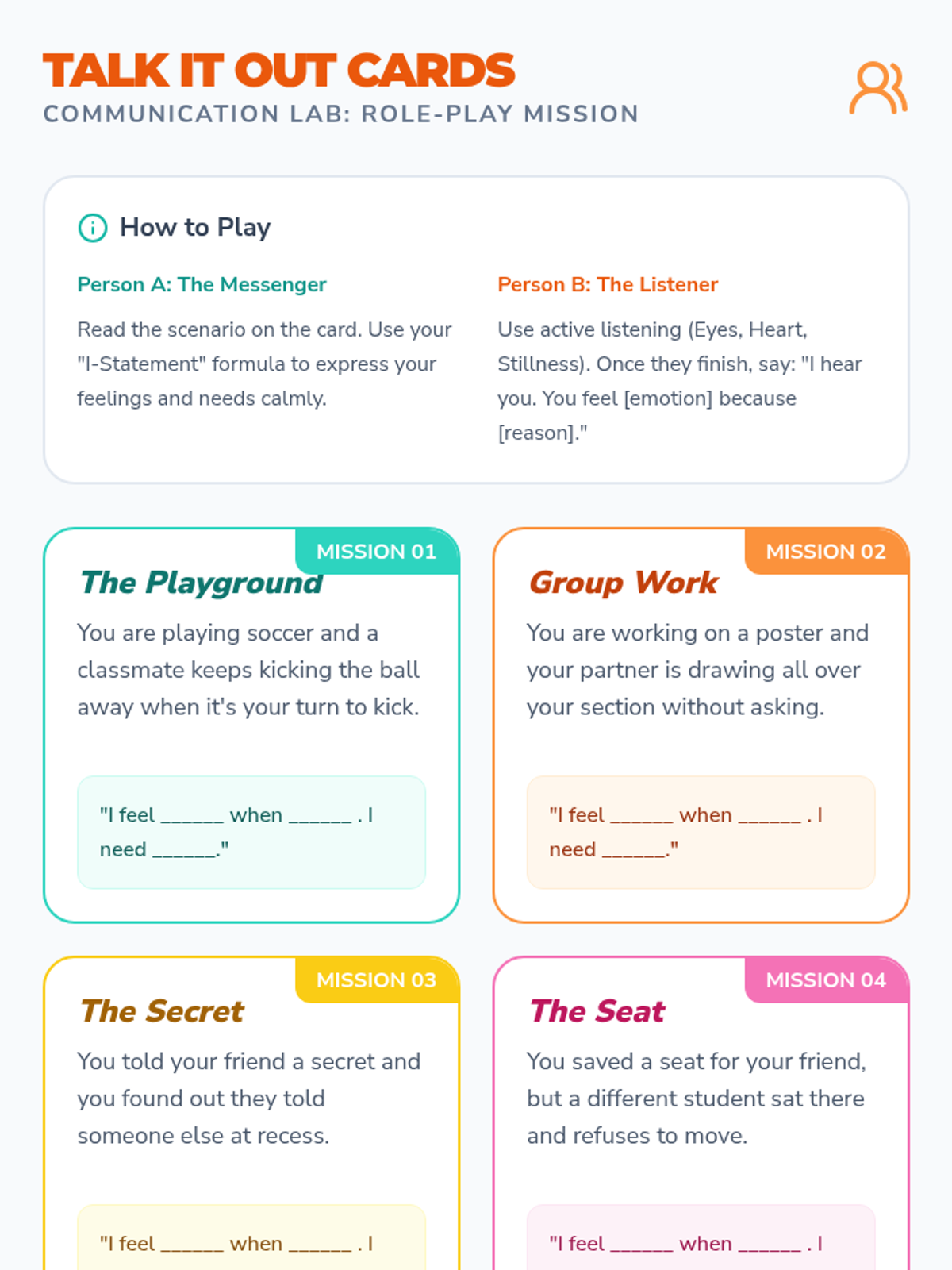
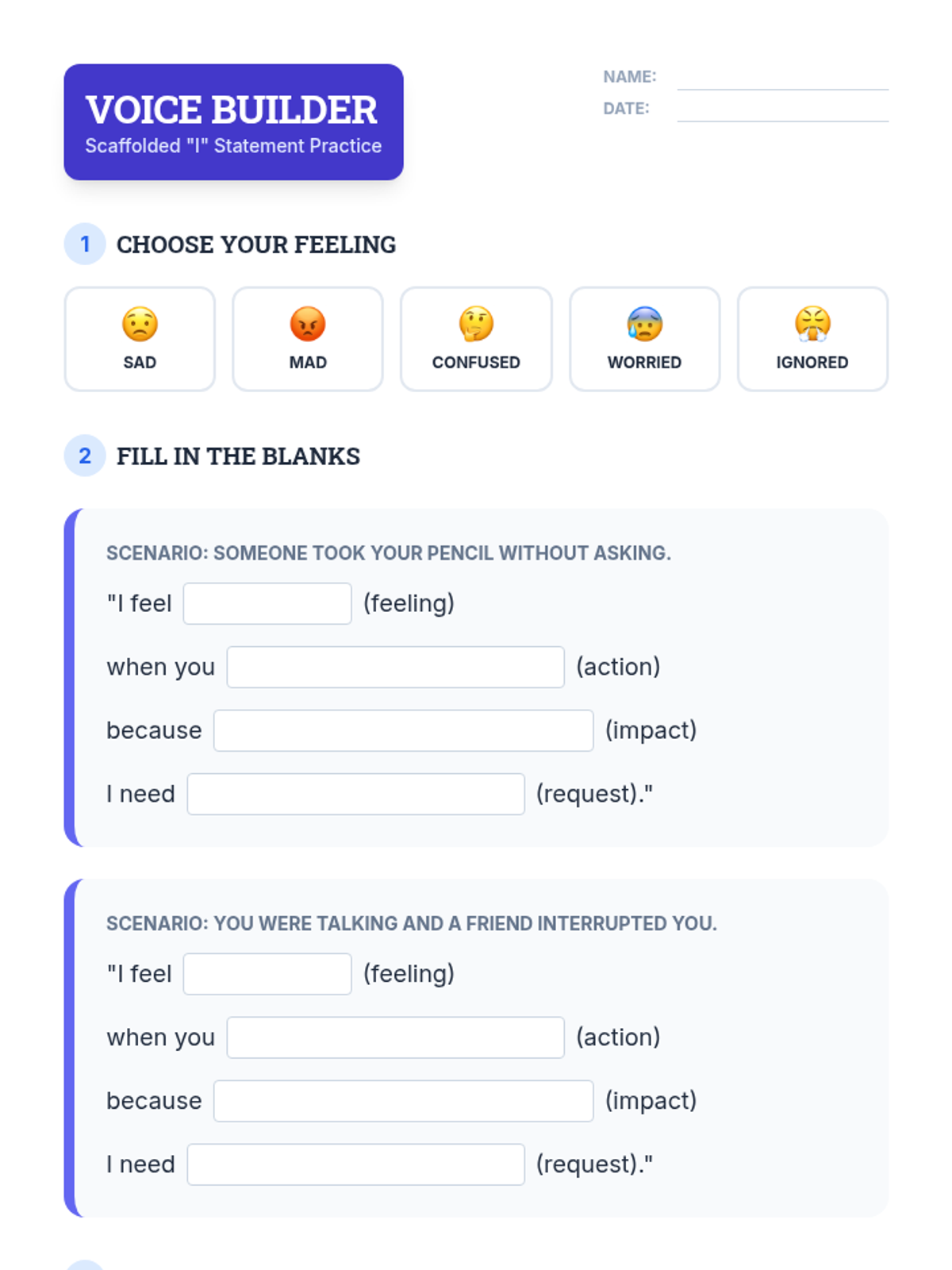
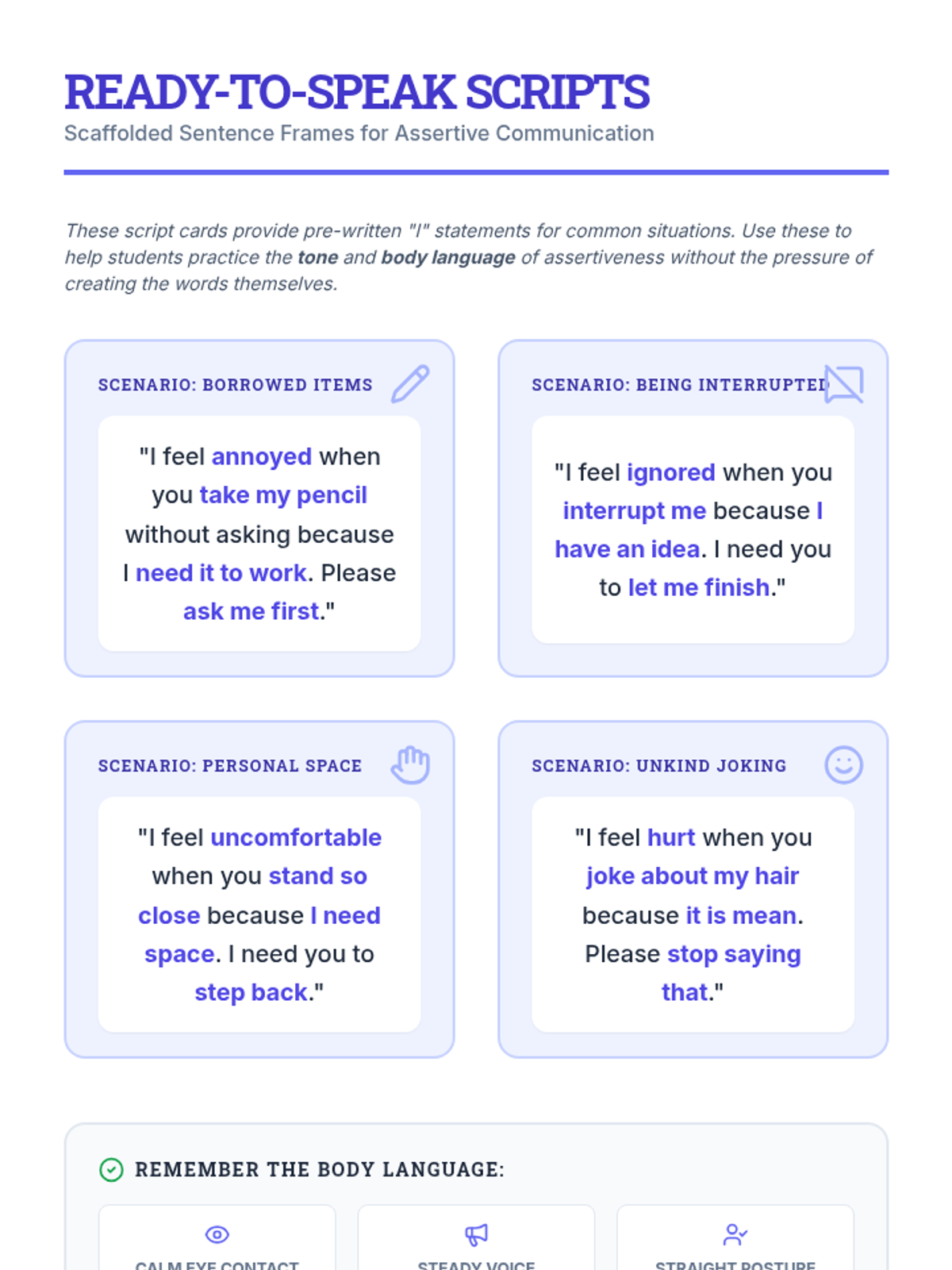
A comprehensive lesson on effective communication, teaching students to use 'I statements,' practice active listening, and resolve conflicts respectfully through hands-on practice and guided discussion.
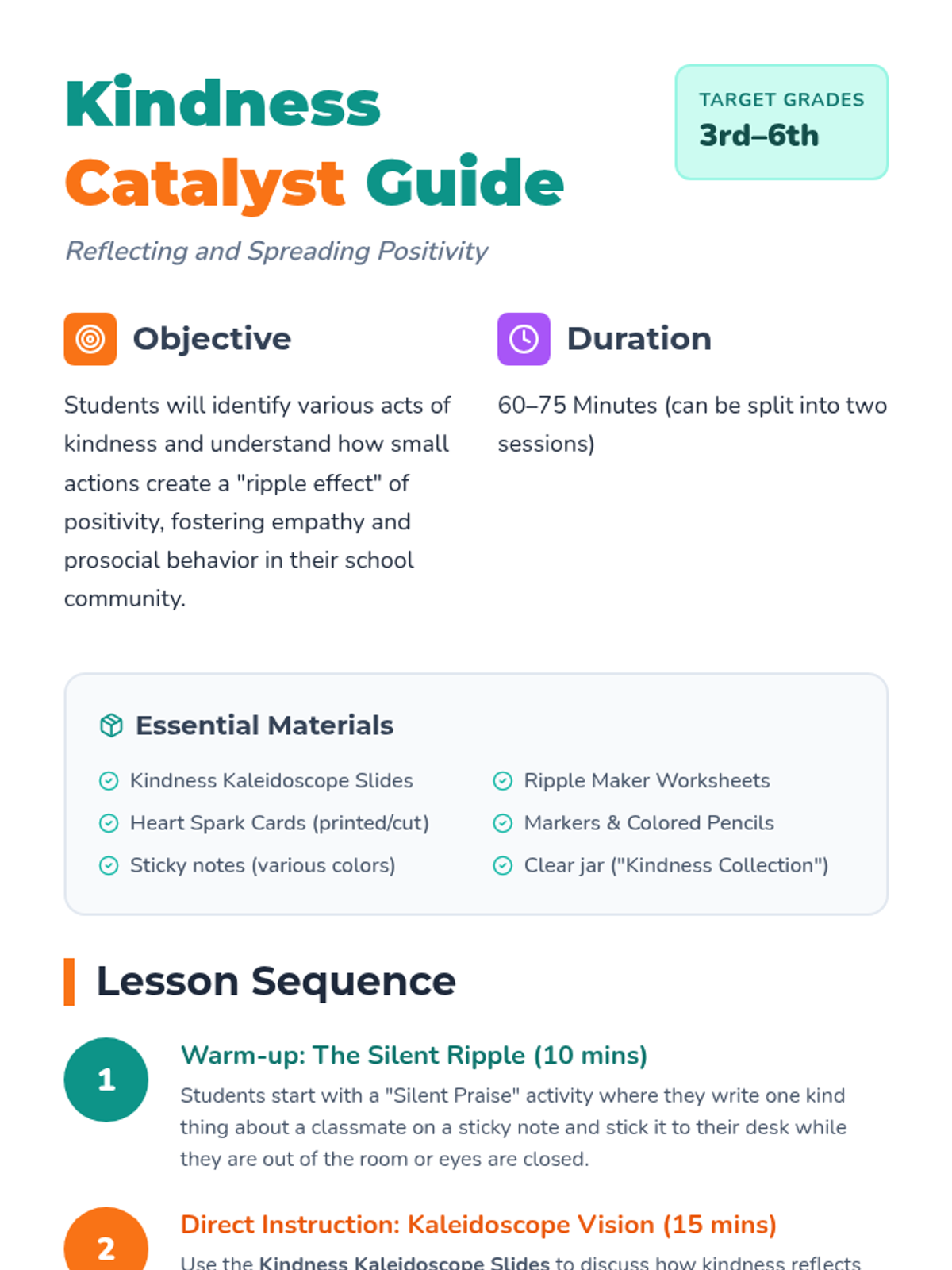
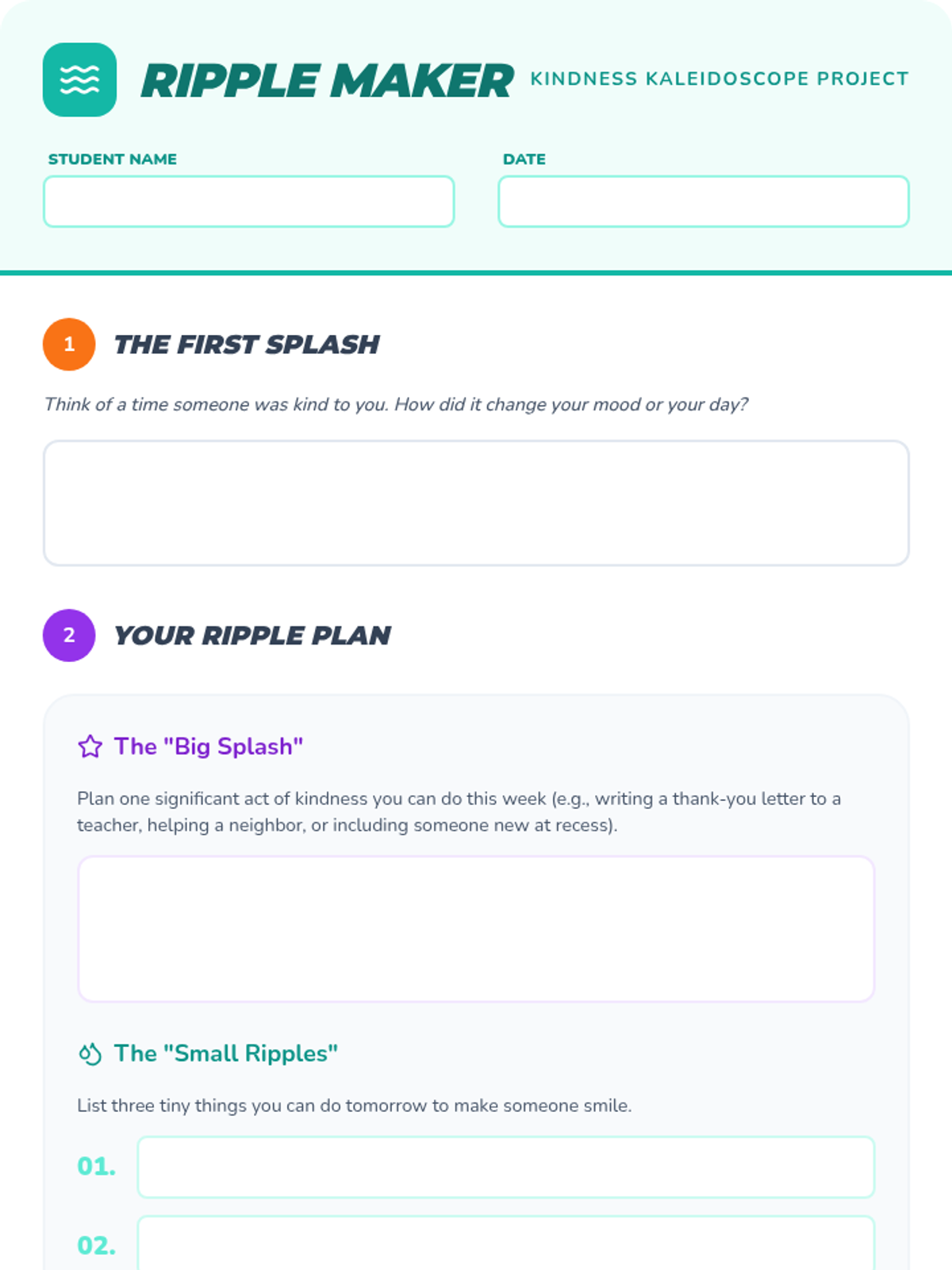
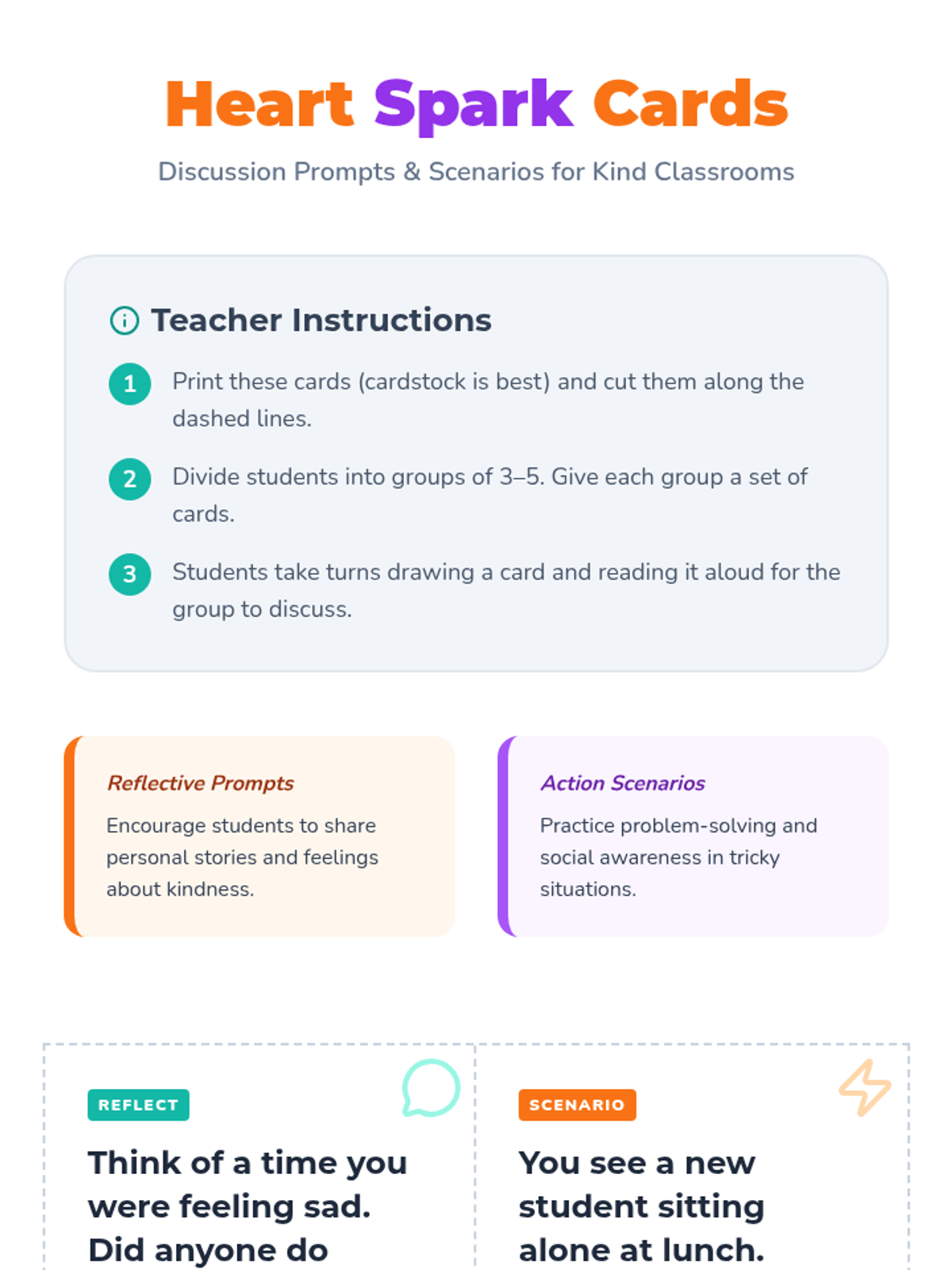
A comprehensive lesson for grades 3-6 exploring the ripple effect of kindness through reflection, storytelling, and collaborative action. Students will discover how small acts of positivity can transform their community like shifting patterns in a kaleidoscope.
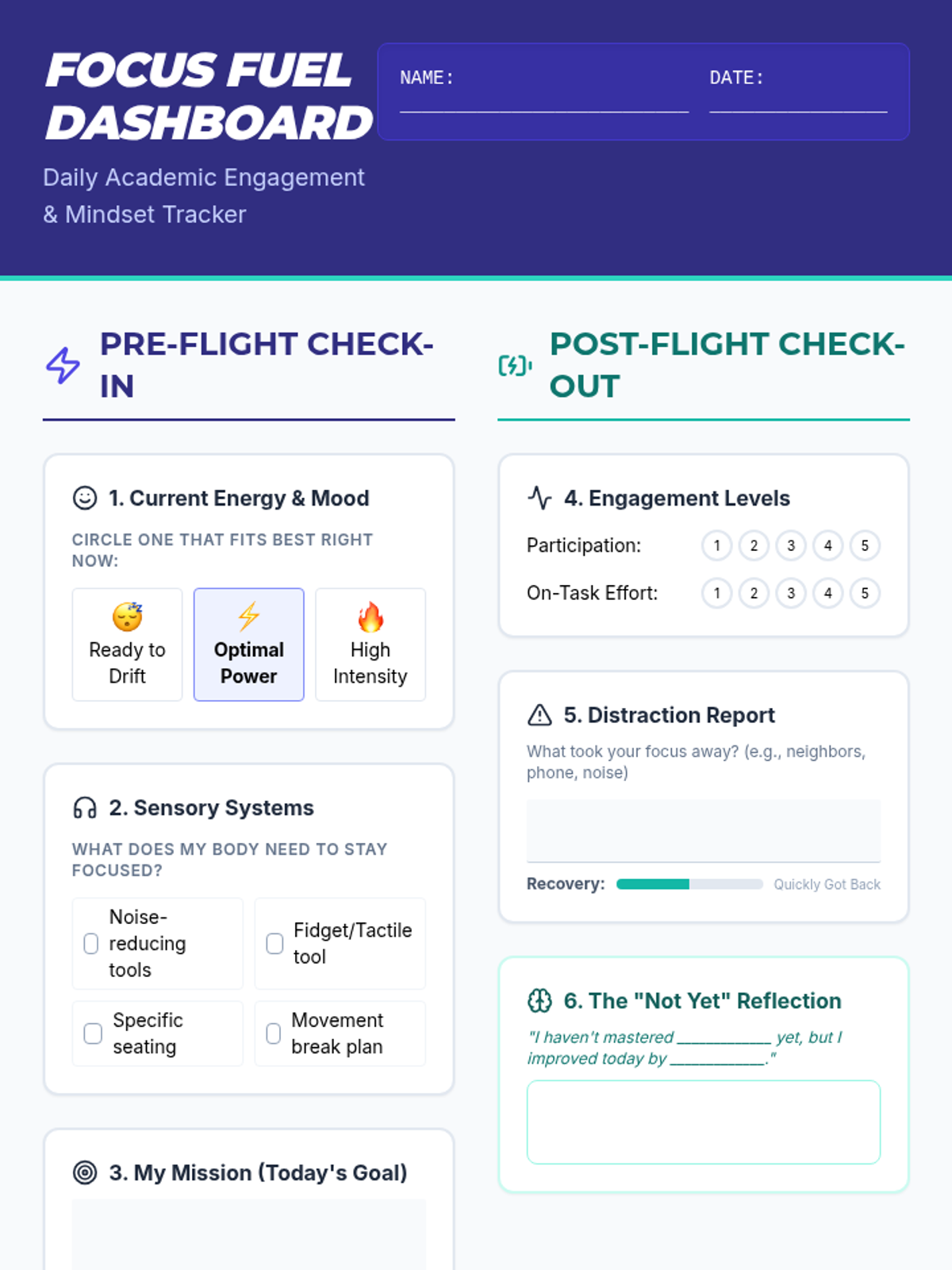
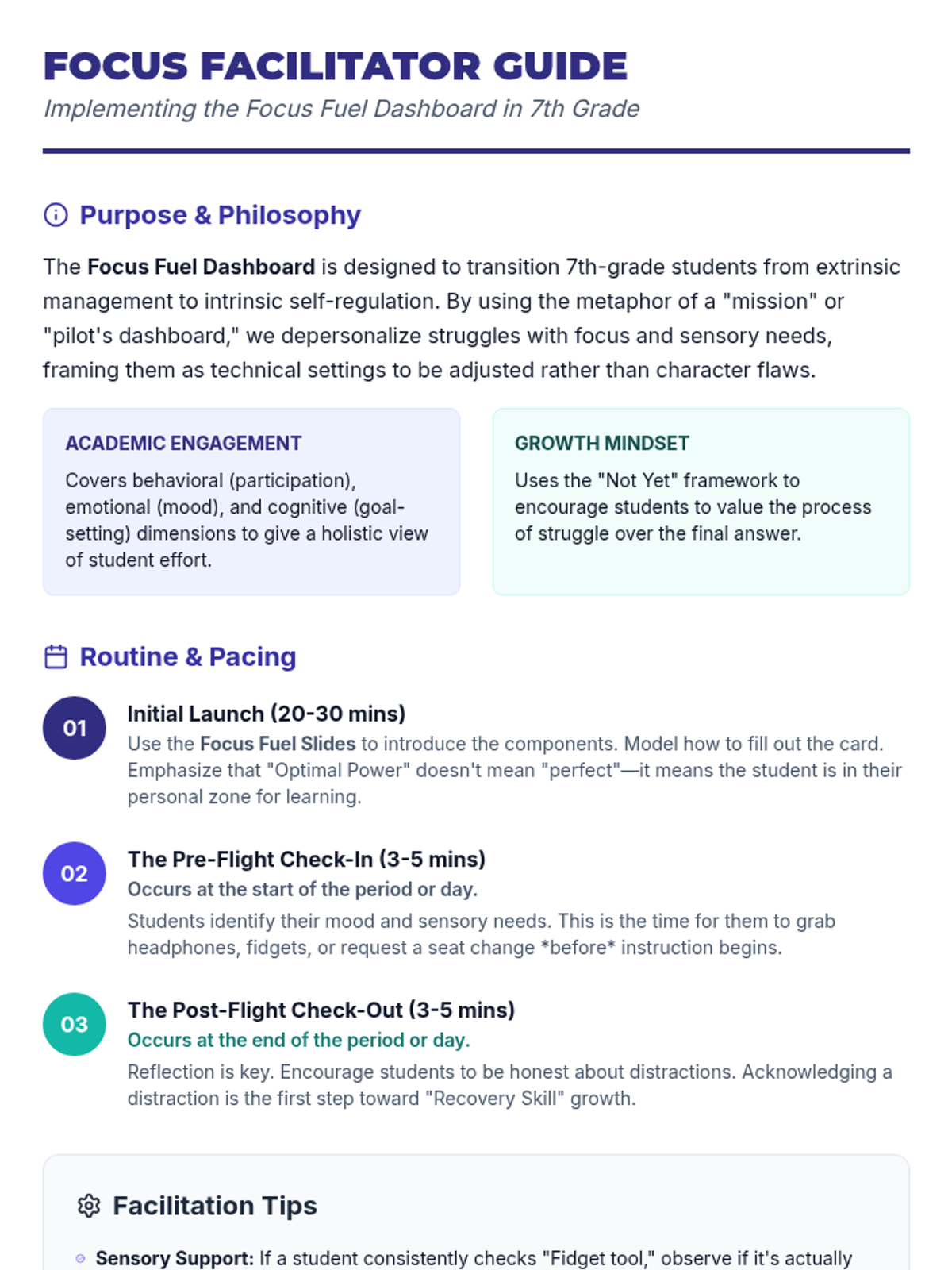
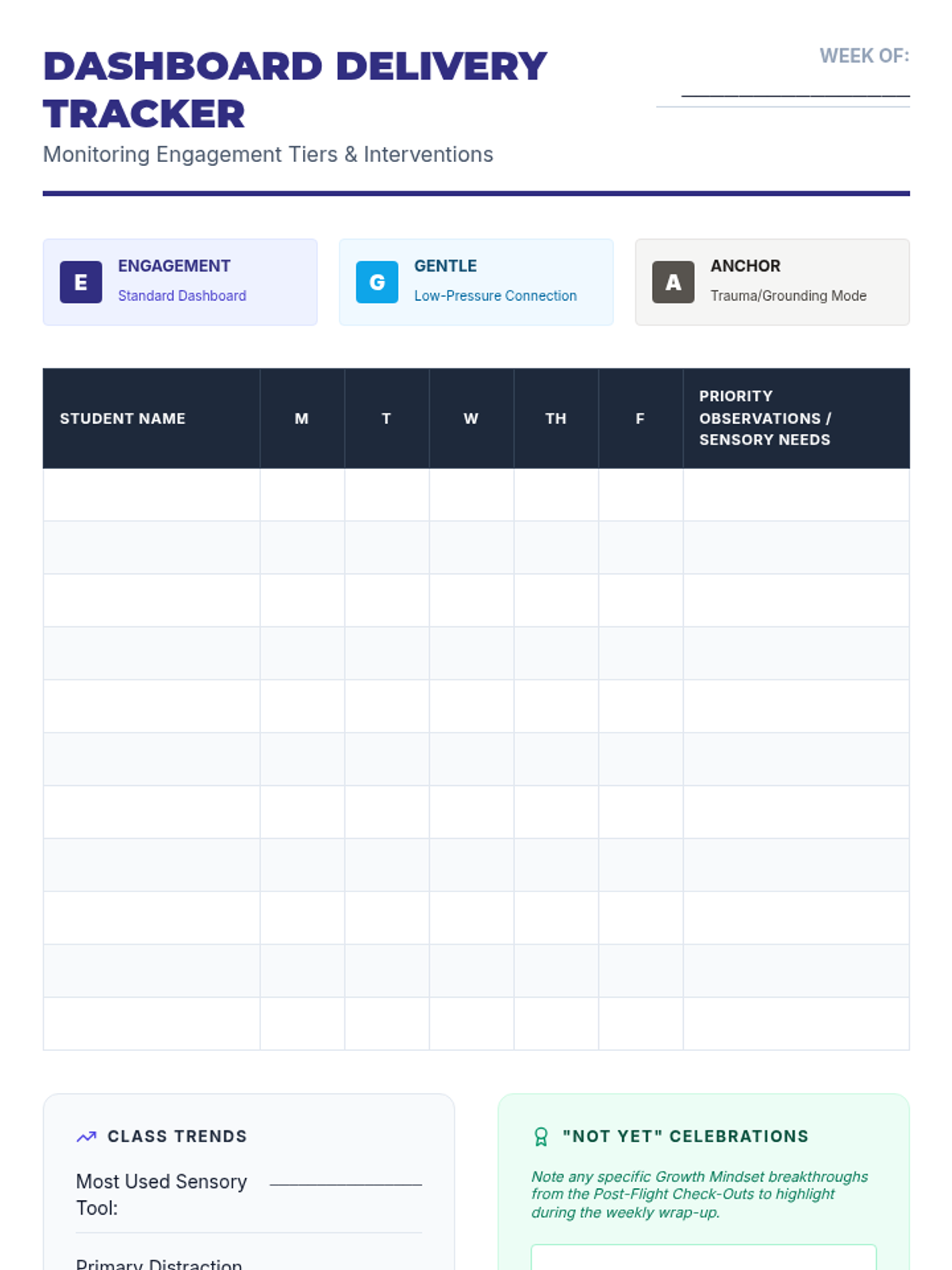
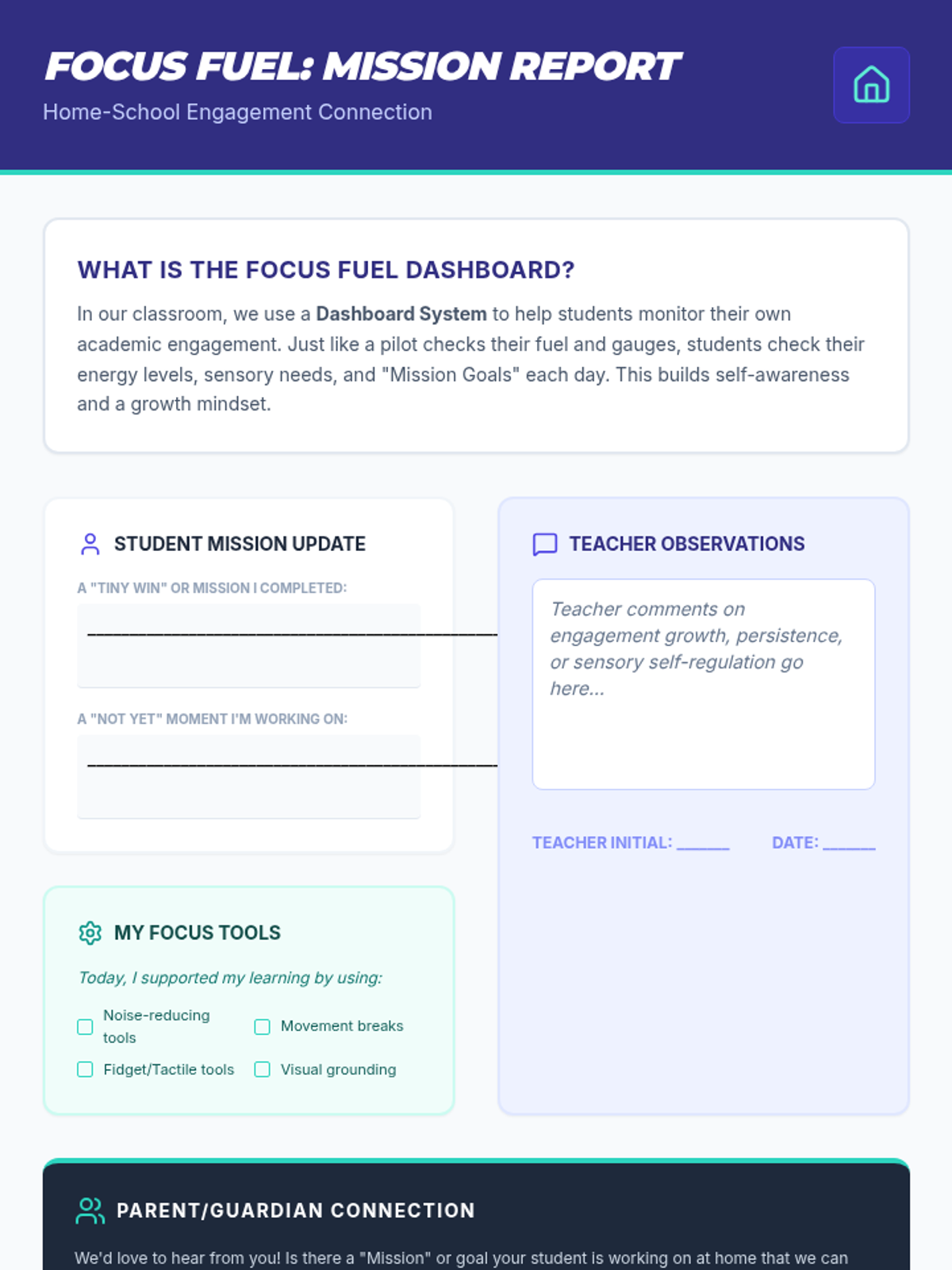
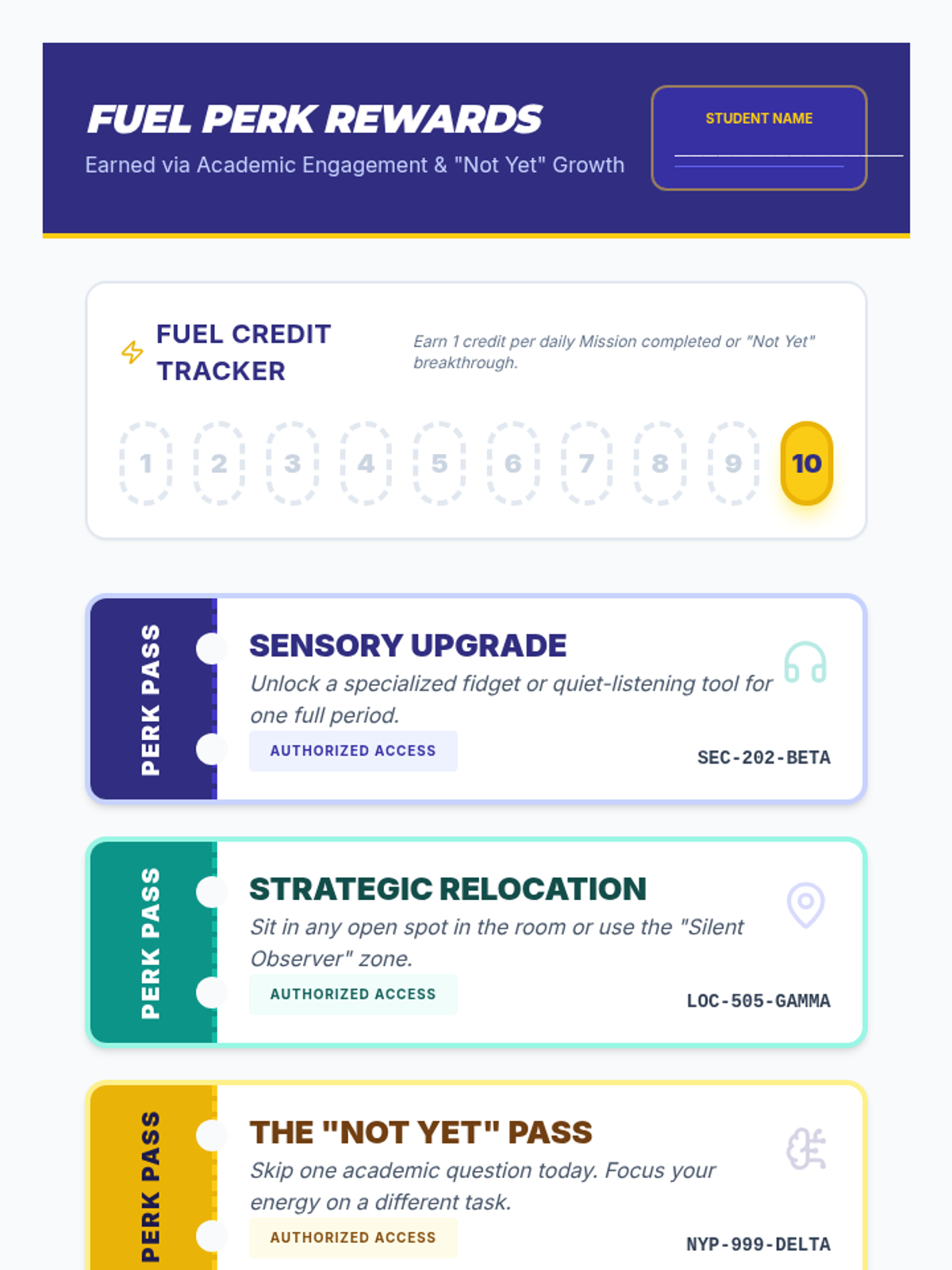
A comprehensive system for 7th-grade students to monitor and improve their academic engagement, sensory needs, and growth mindset using a personalized 'Dashboard' approach.
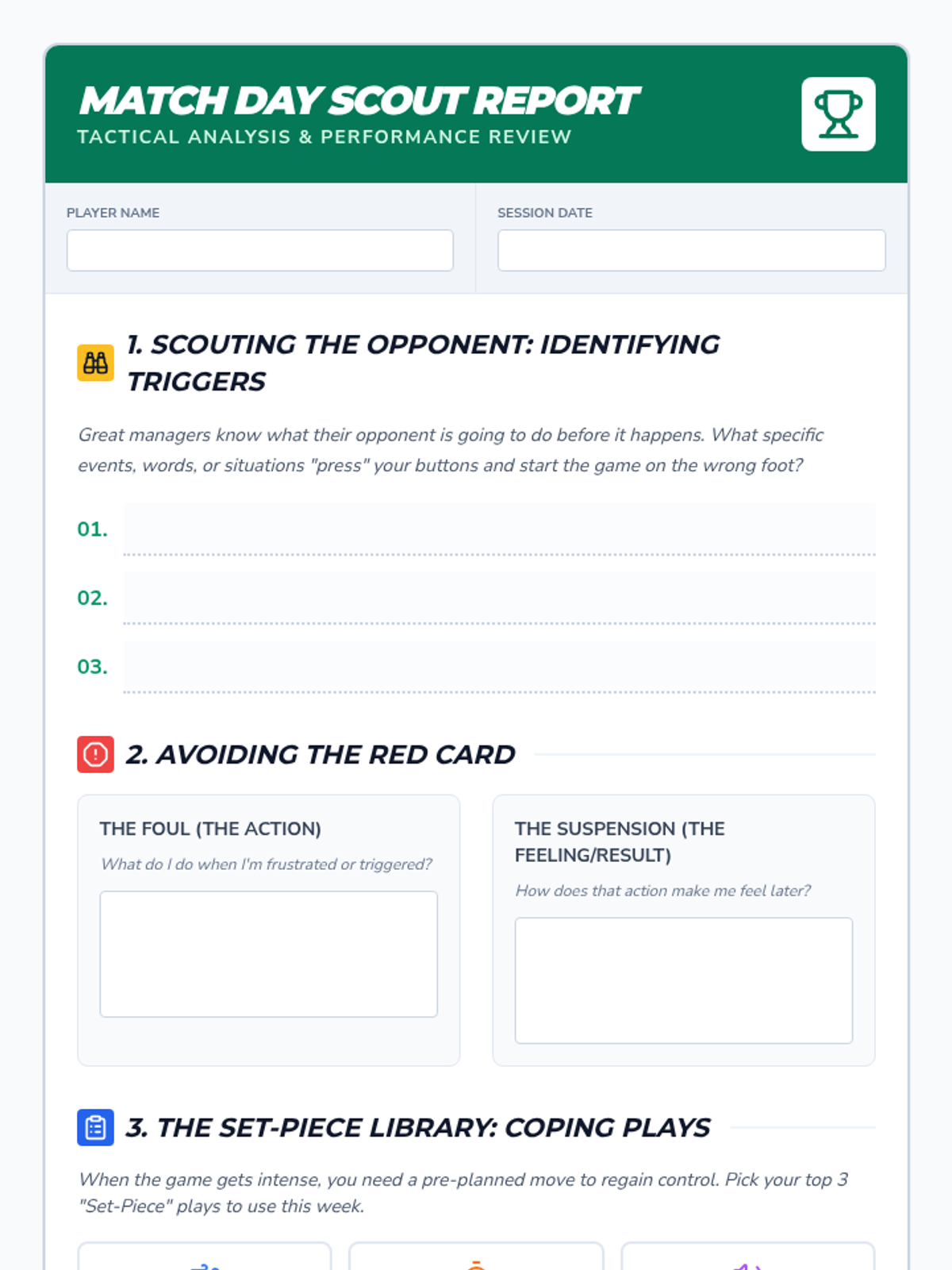
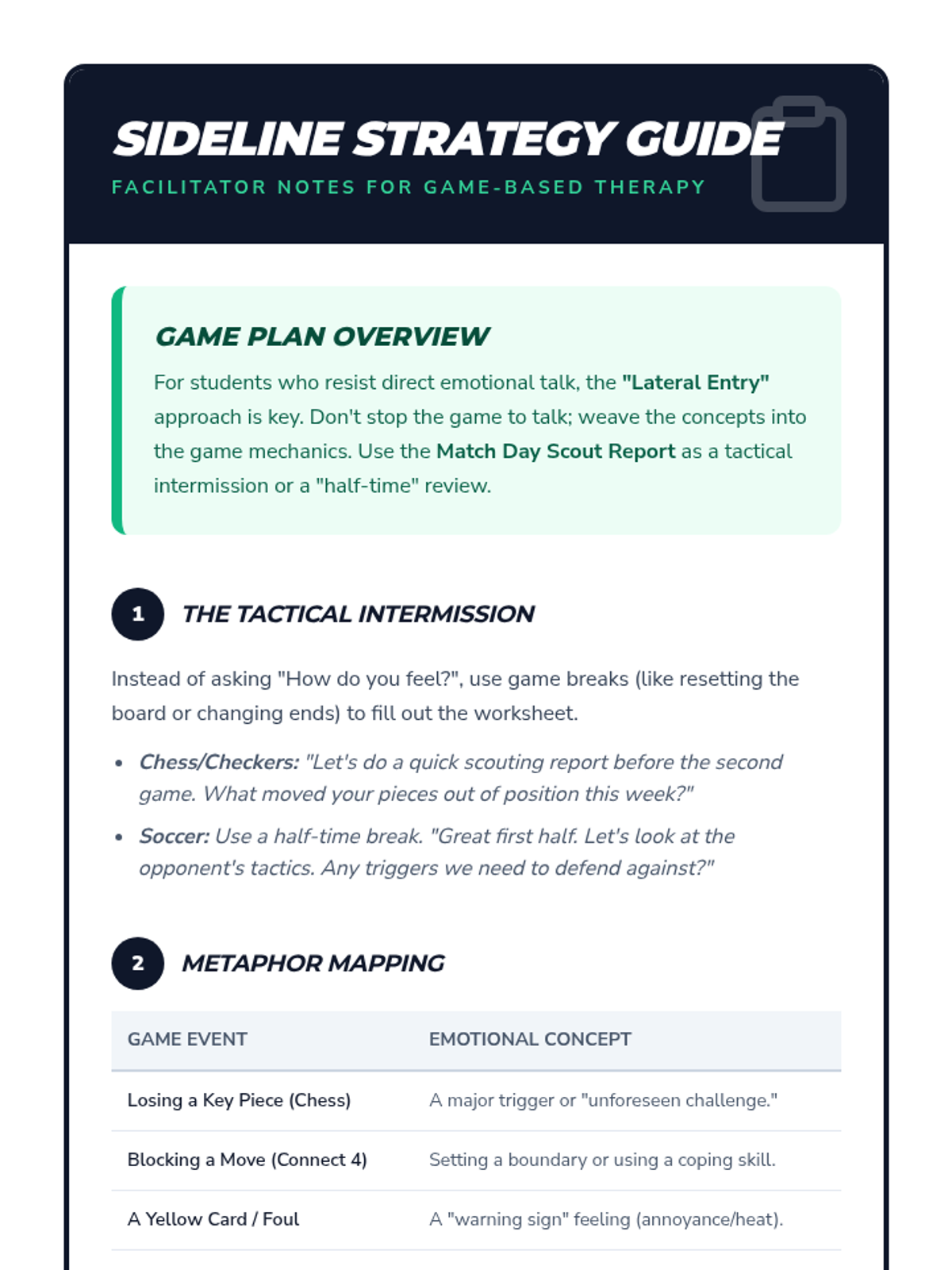
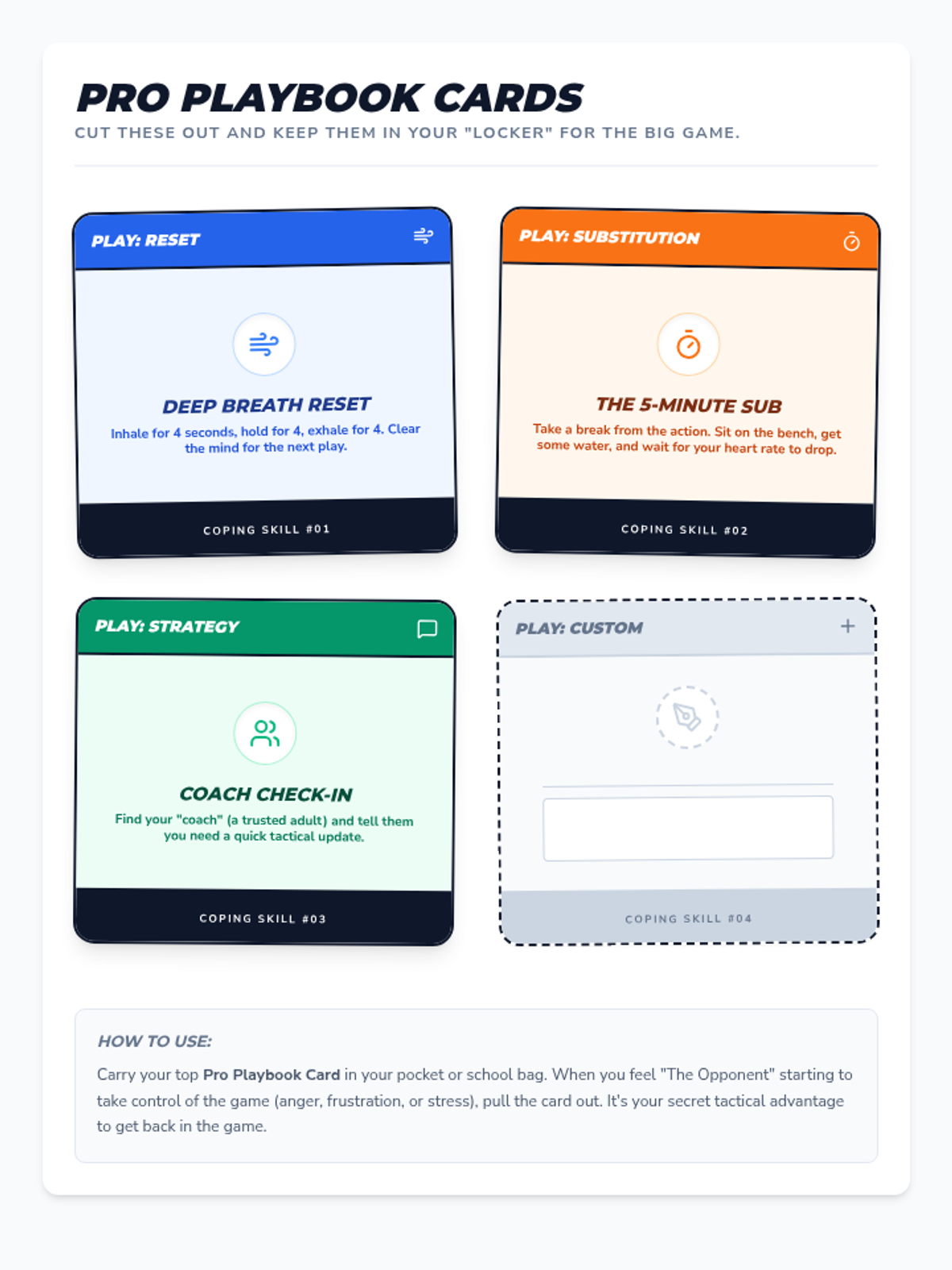
A sports-themed lesson designed for students who prefer games over direct emotional discussion. This lesson uses soccer and strategy game metaphors to explore emotional triggers, action-consequence links, and coping mechanisms.
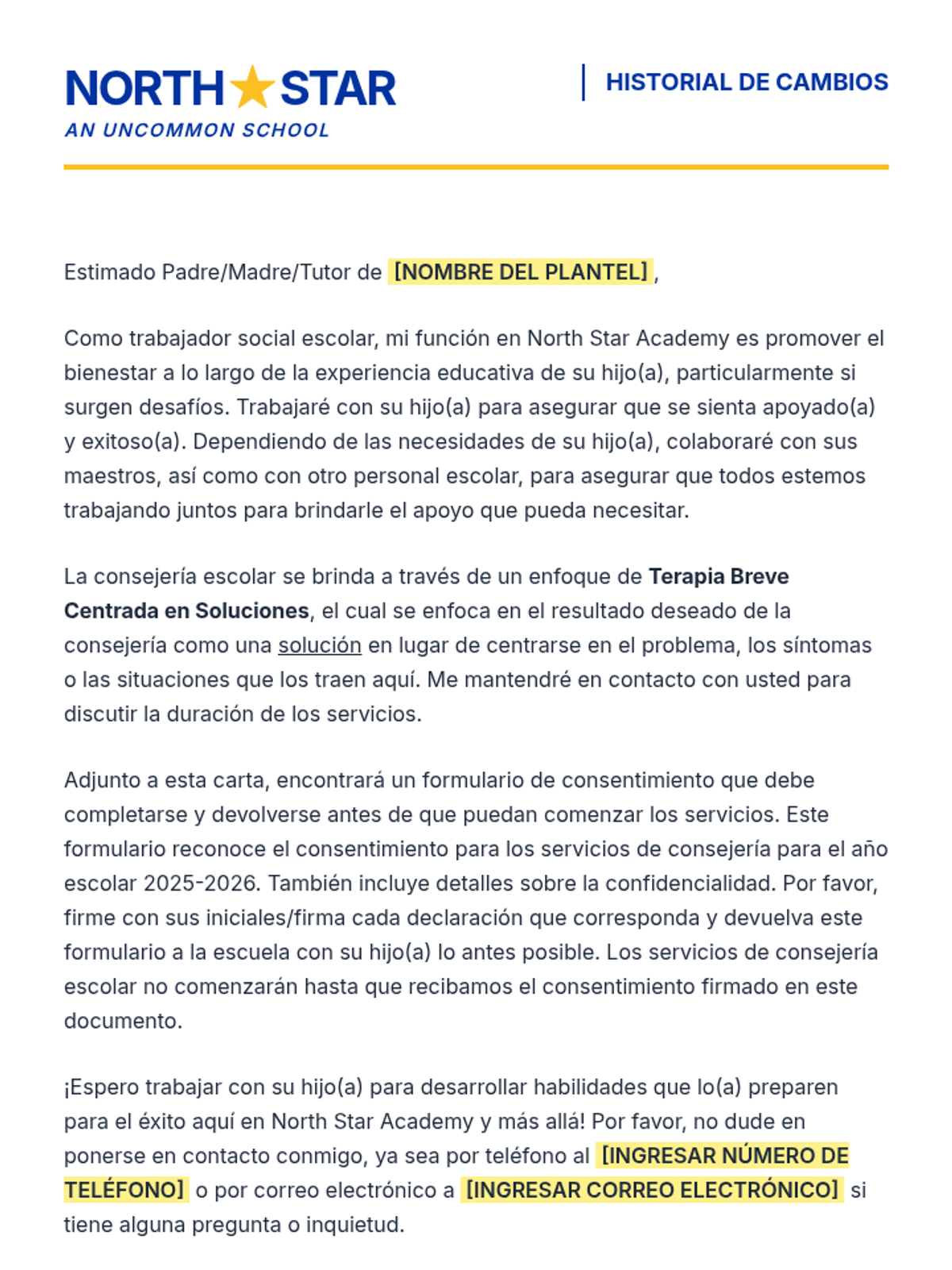
A set of translated resources for school social workers to obtain parental consent for school-based counseling services.
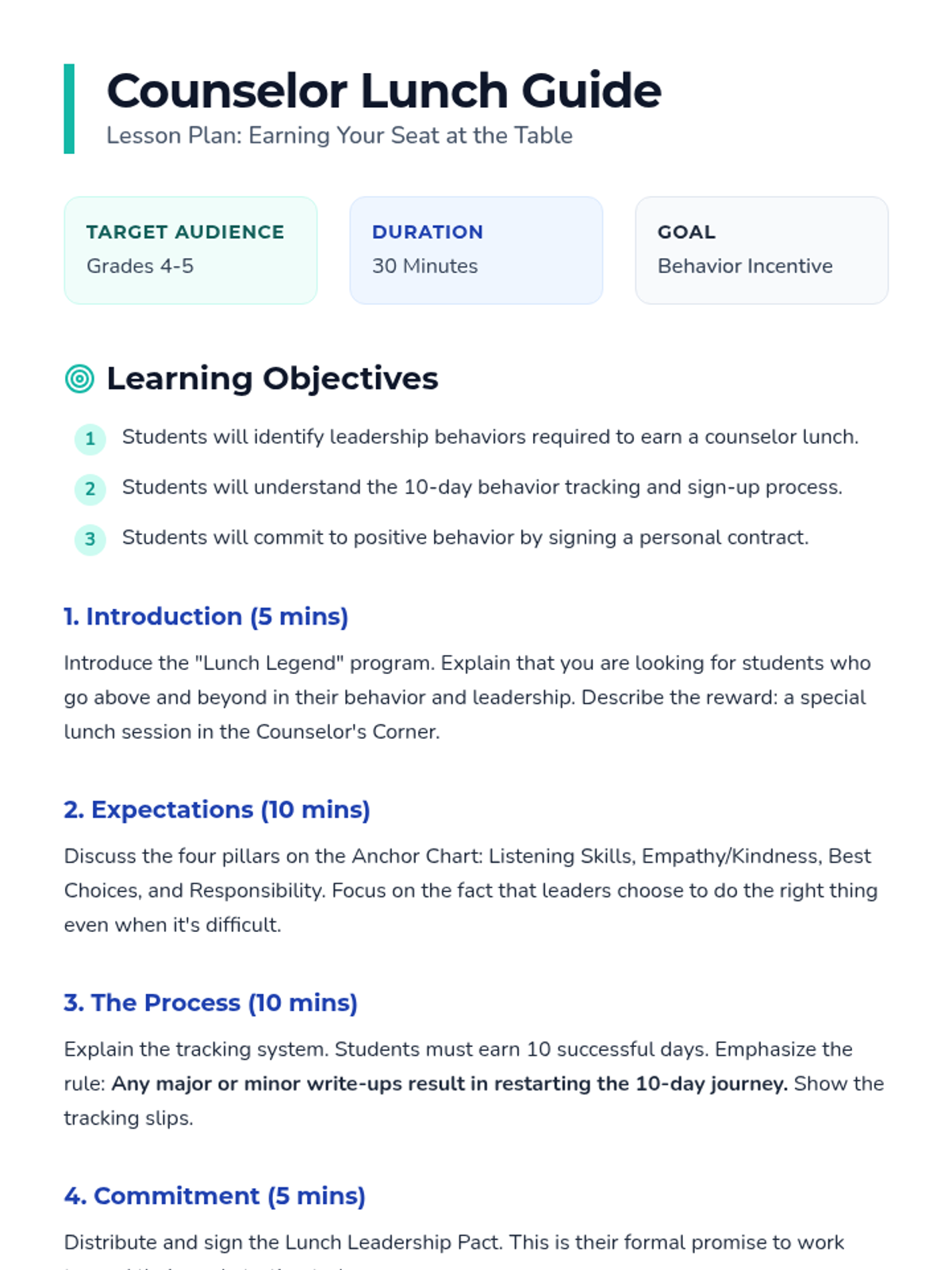
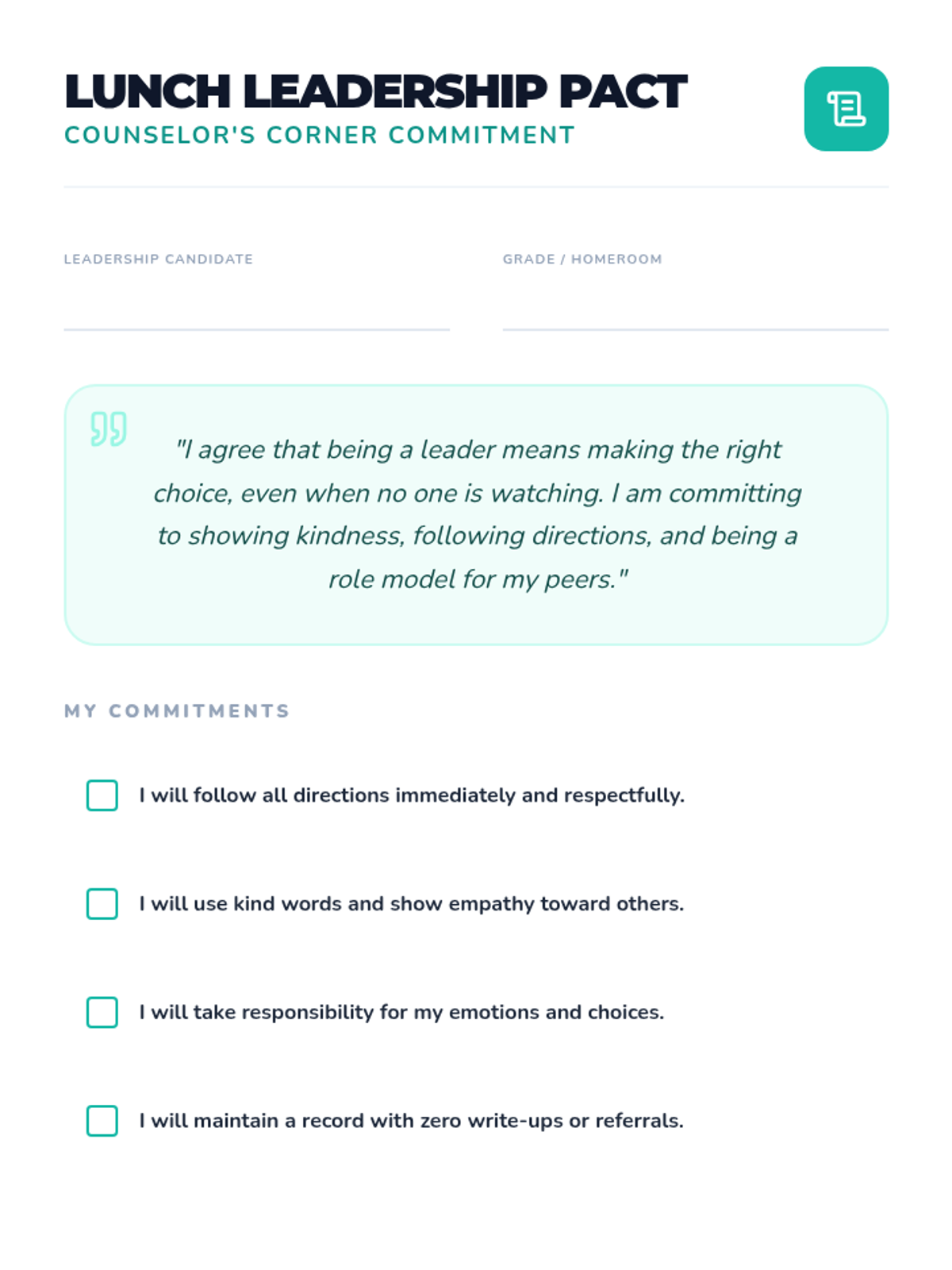
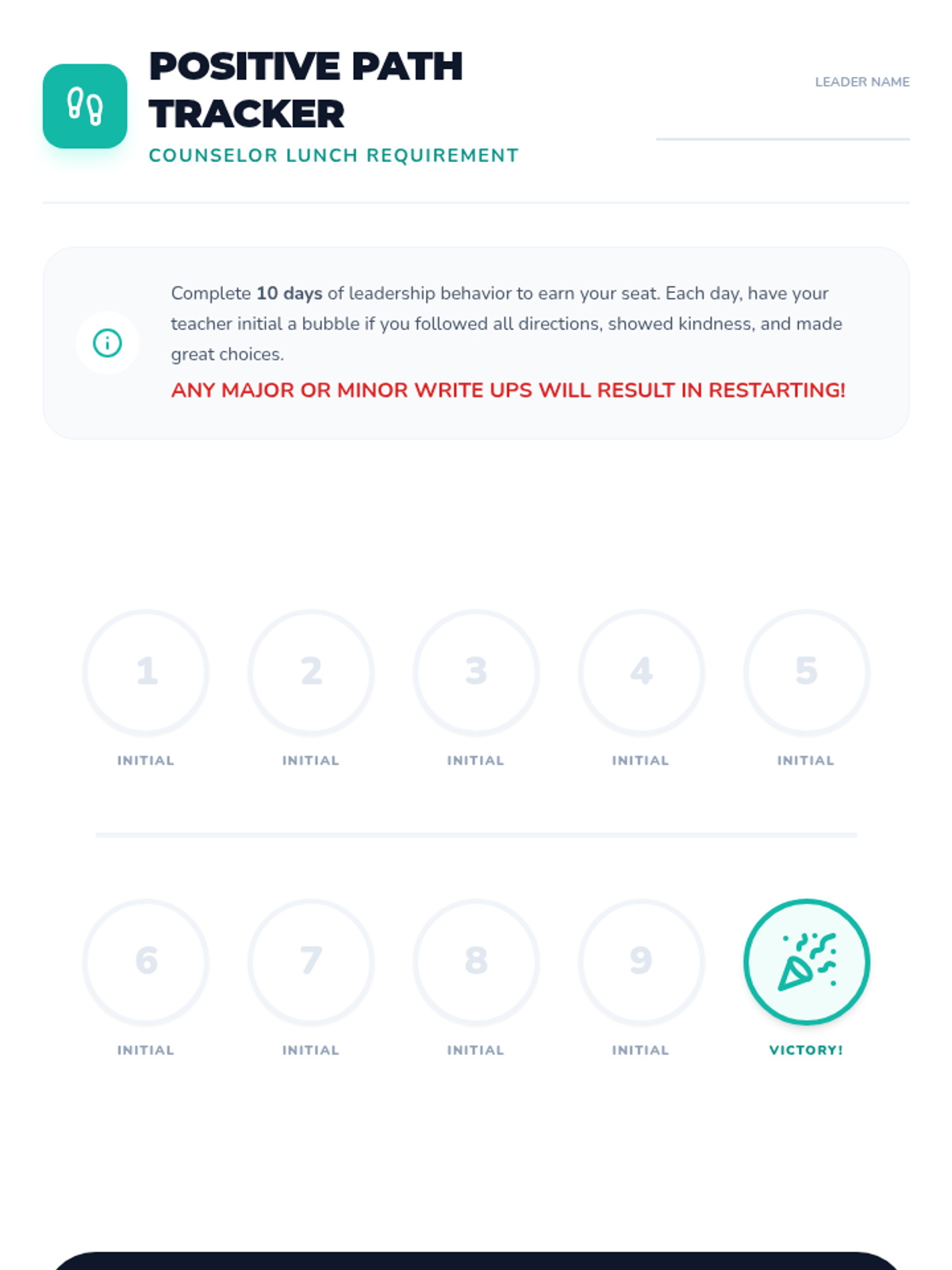
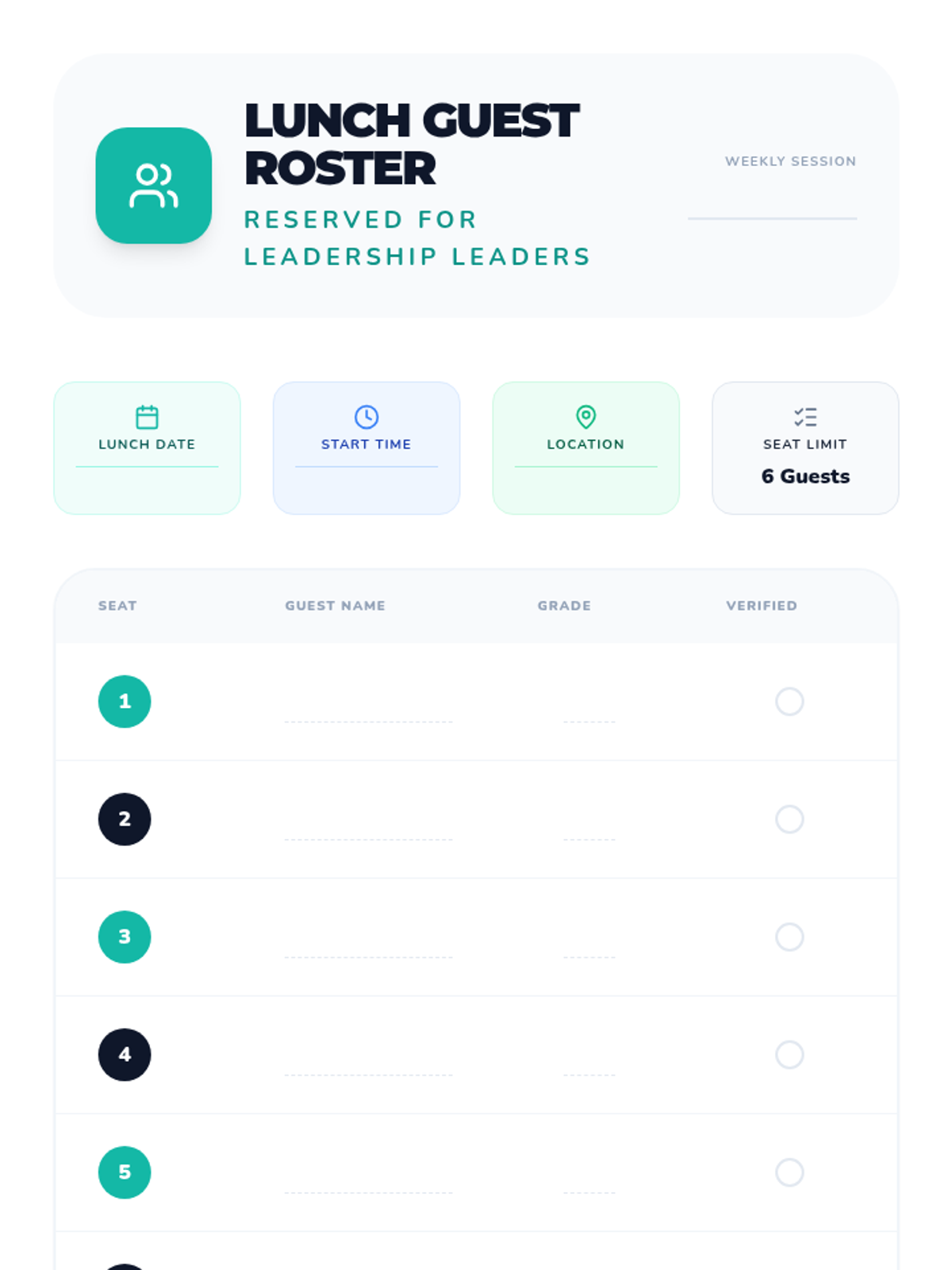
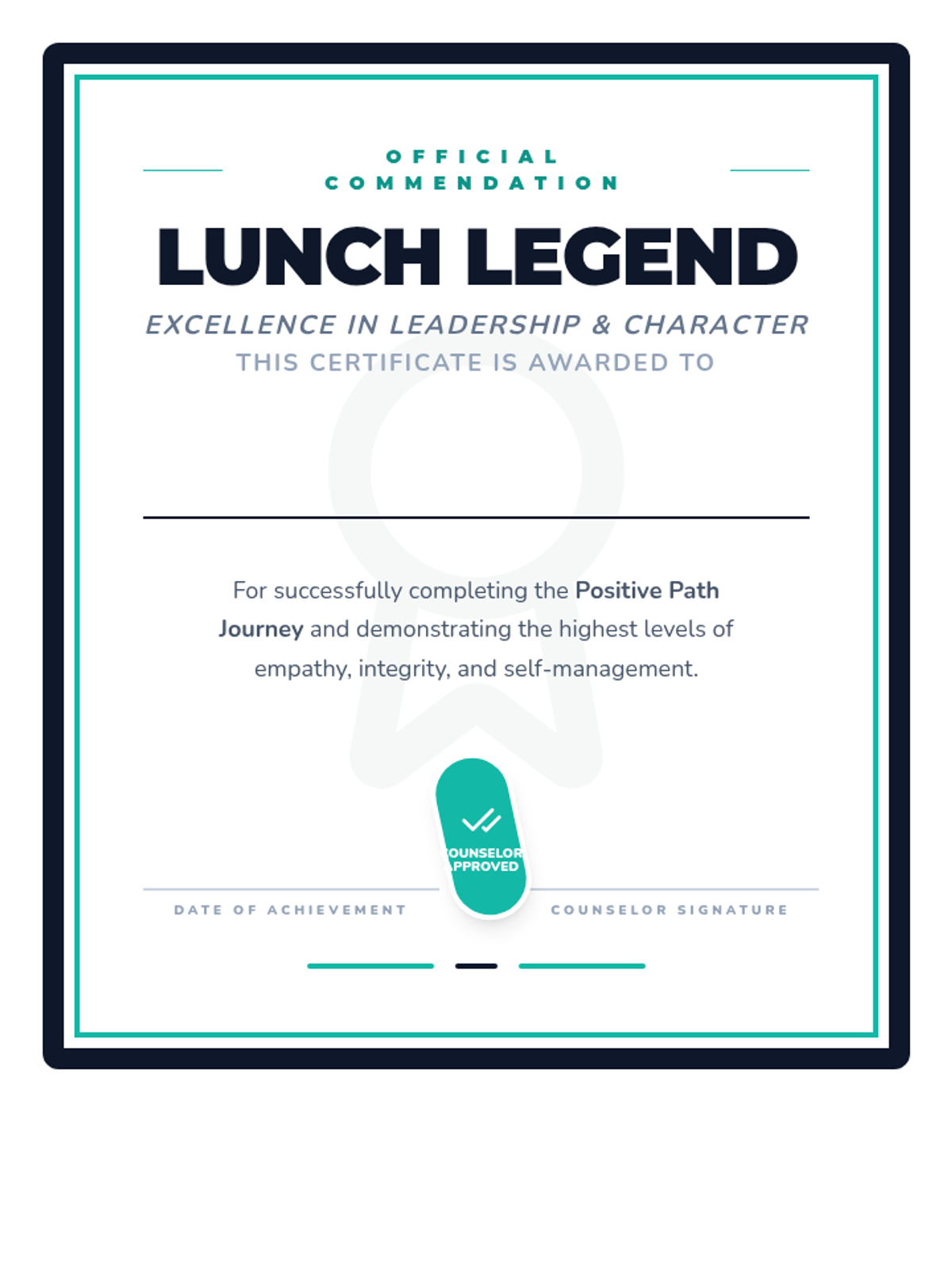
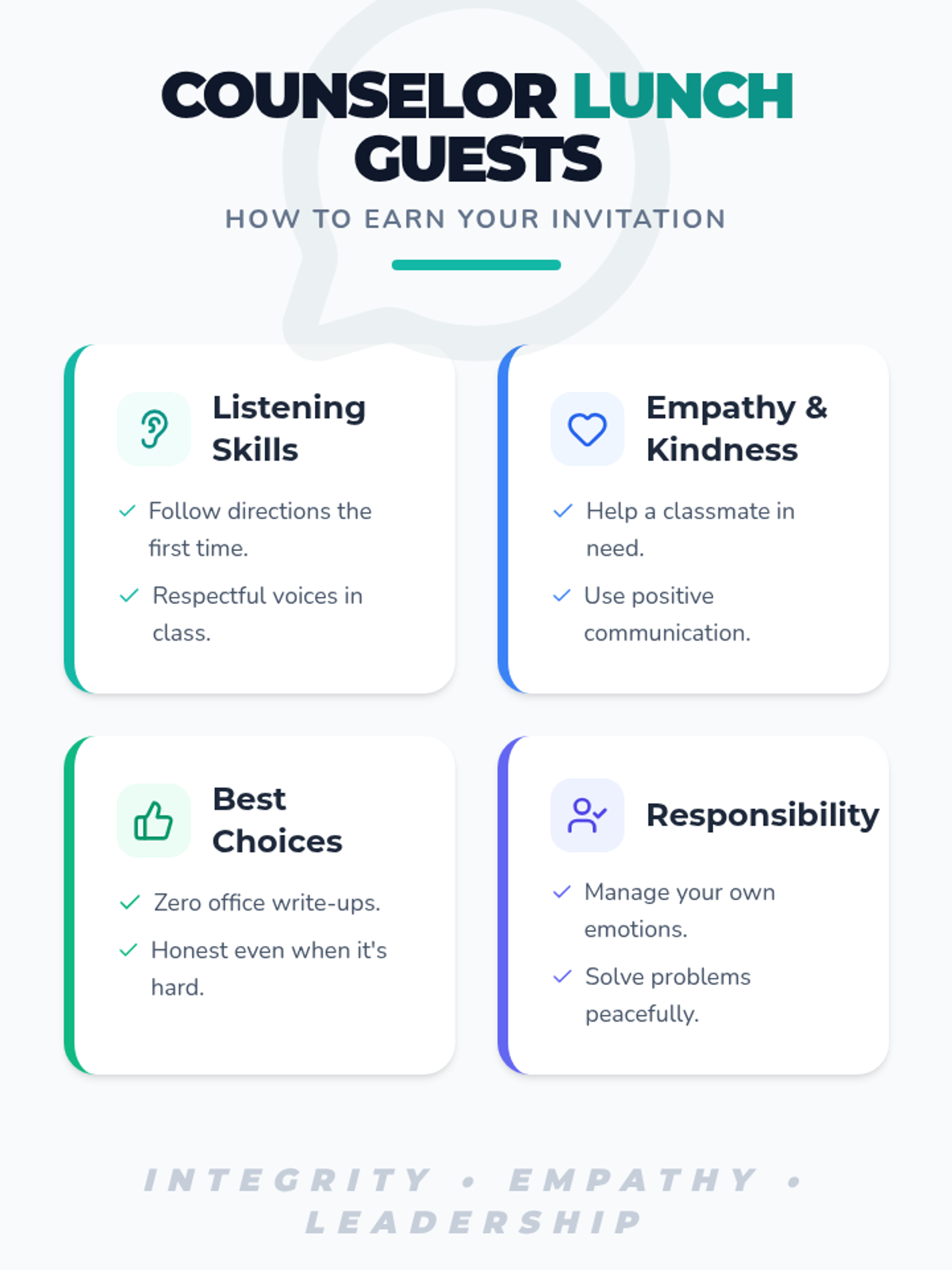
This lesson introduces the Counselor's Corner reward lunch, establishing the high expectations for behavior and the step-by-step process for students to earn their invitation.
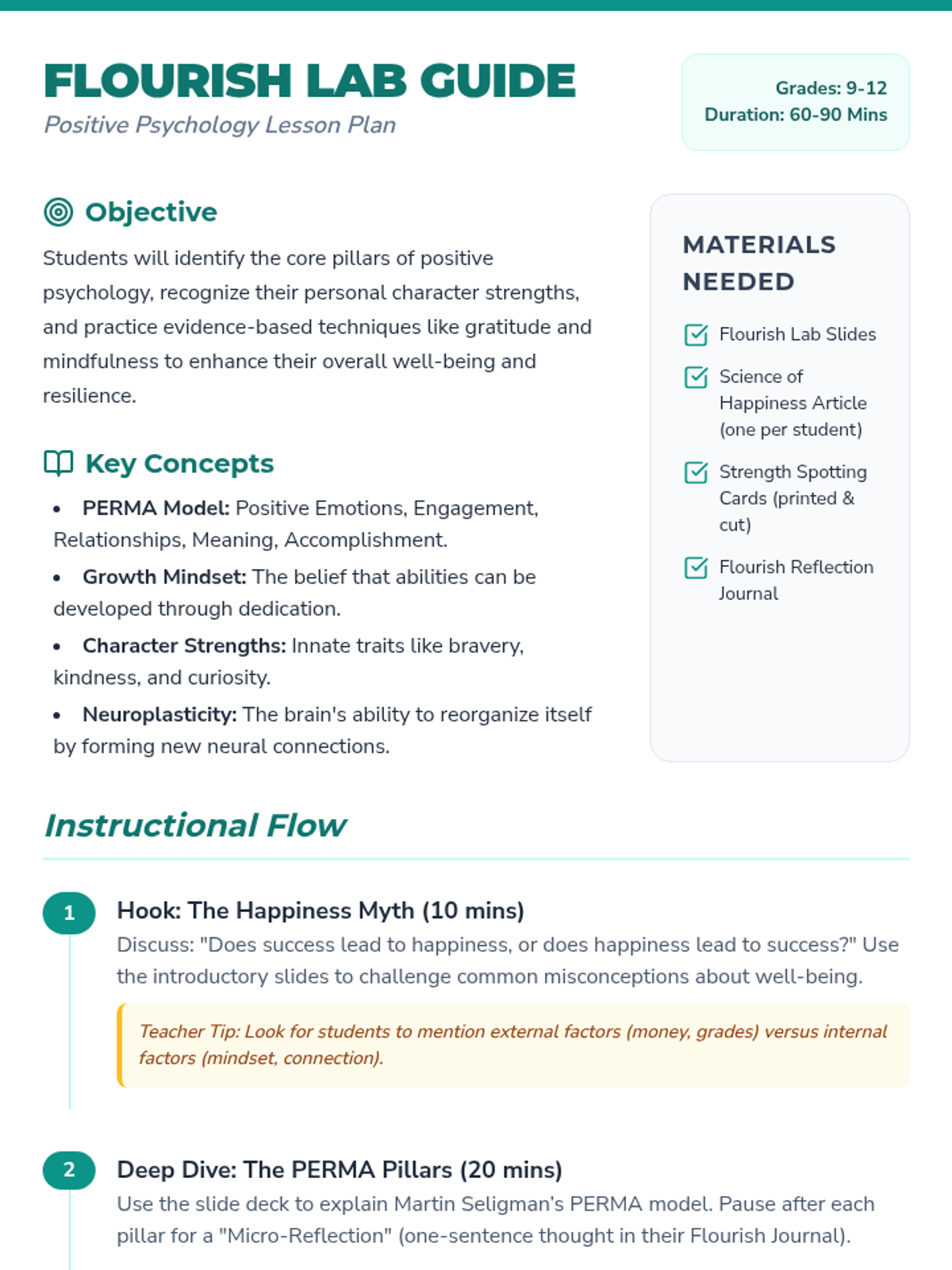
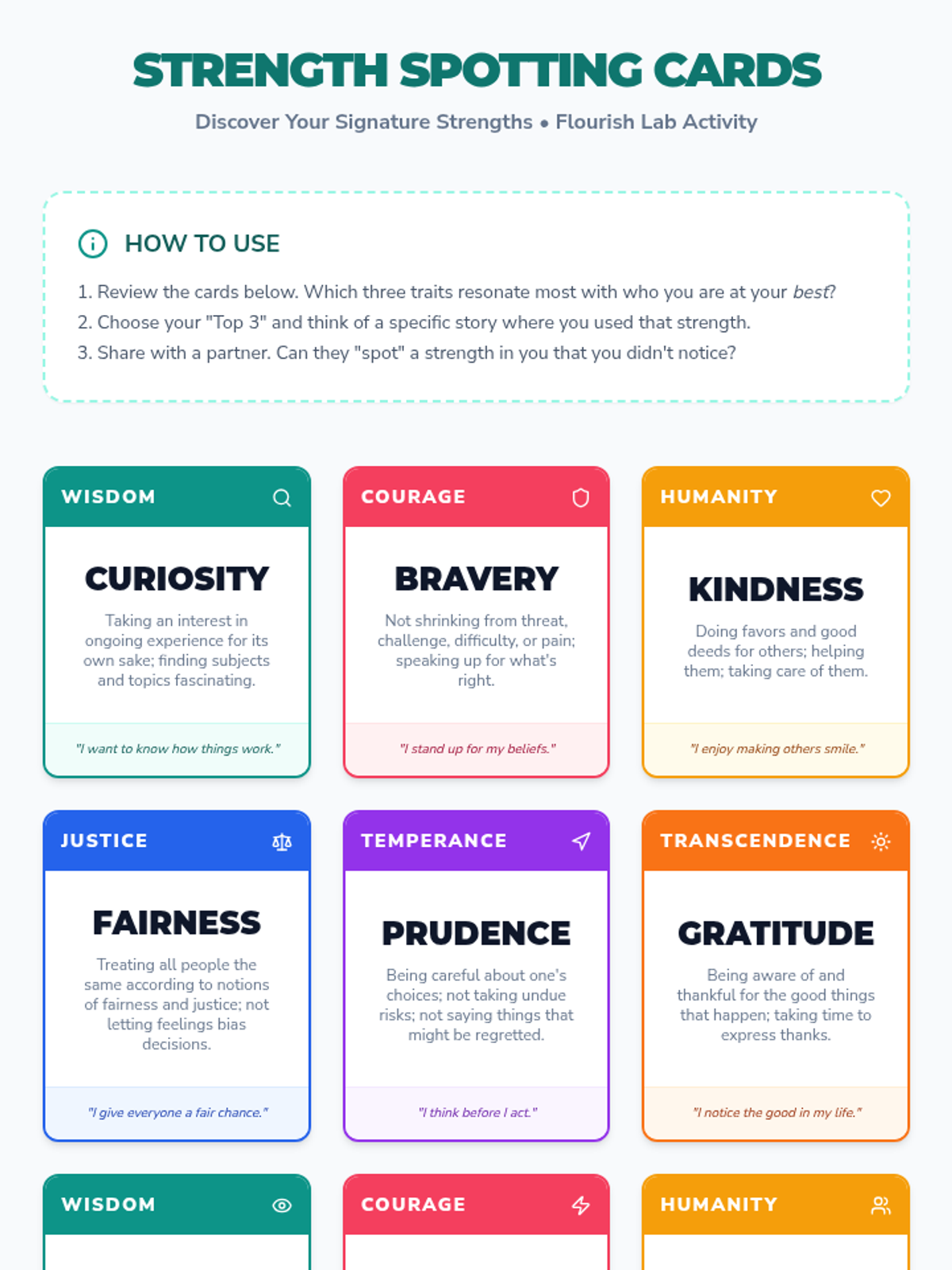
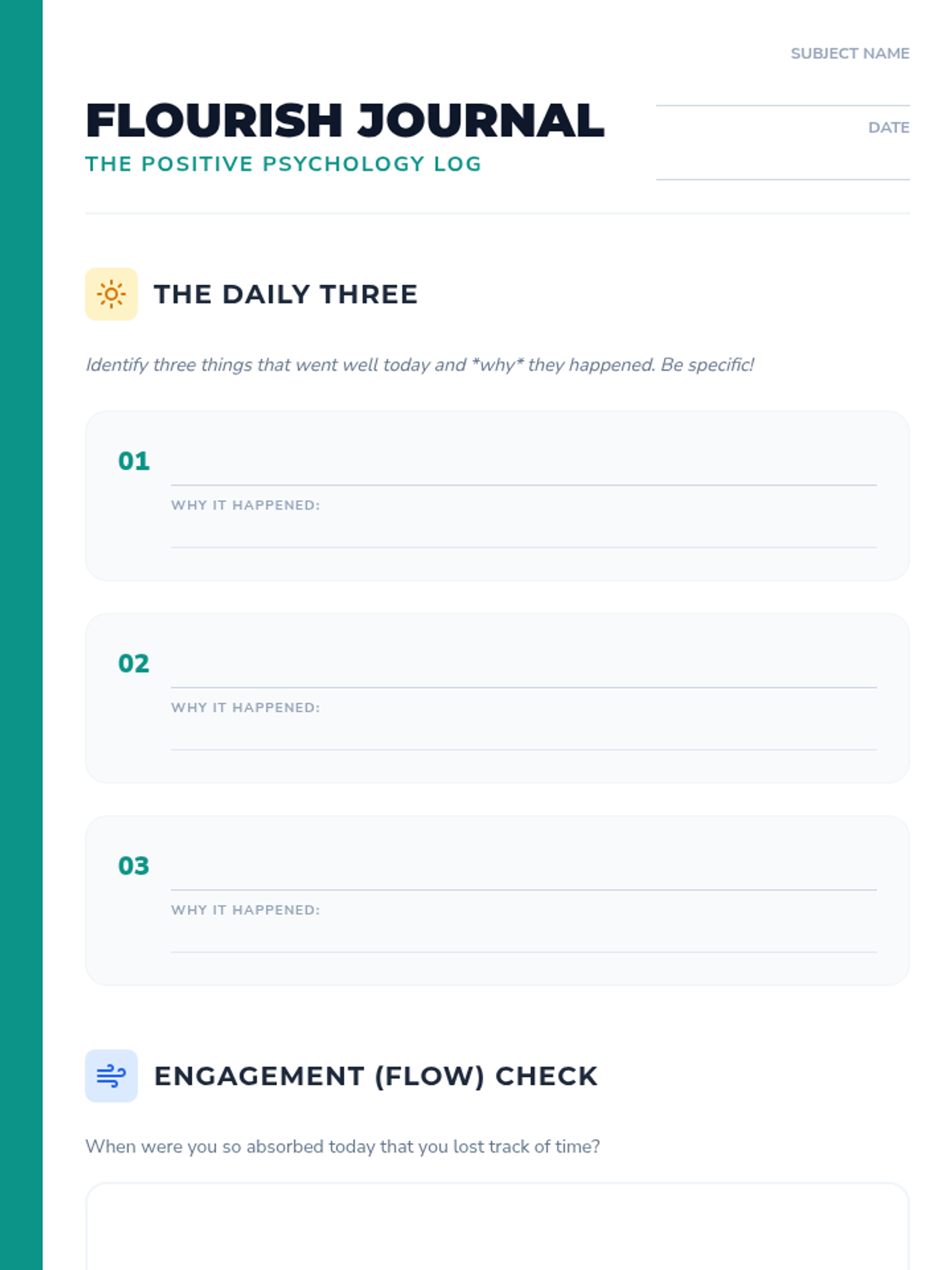
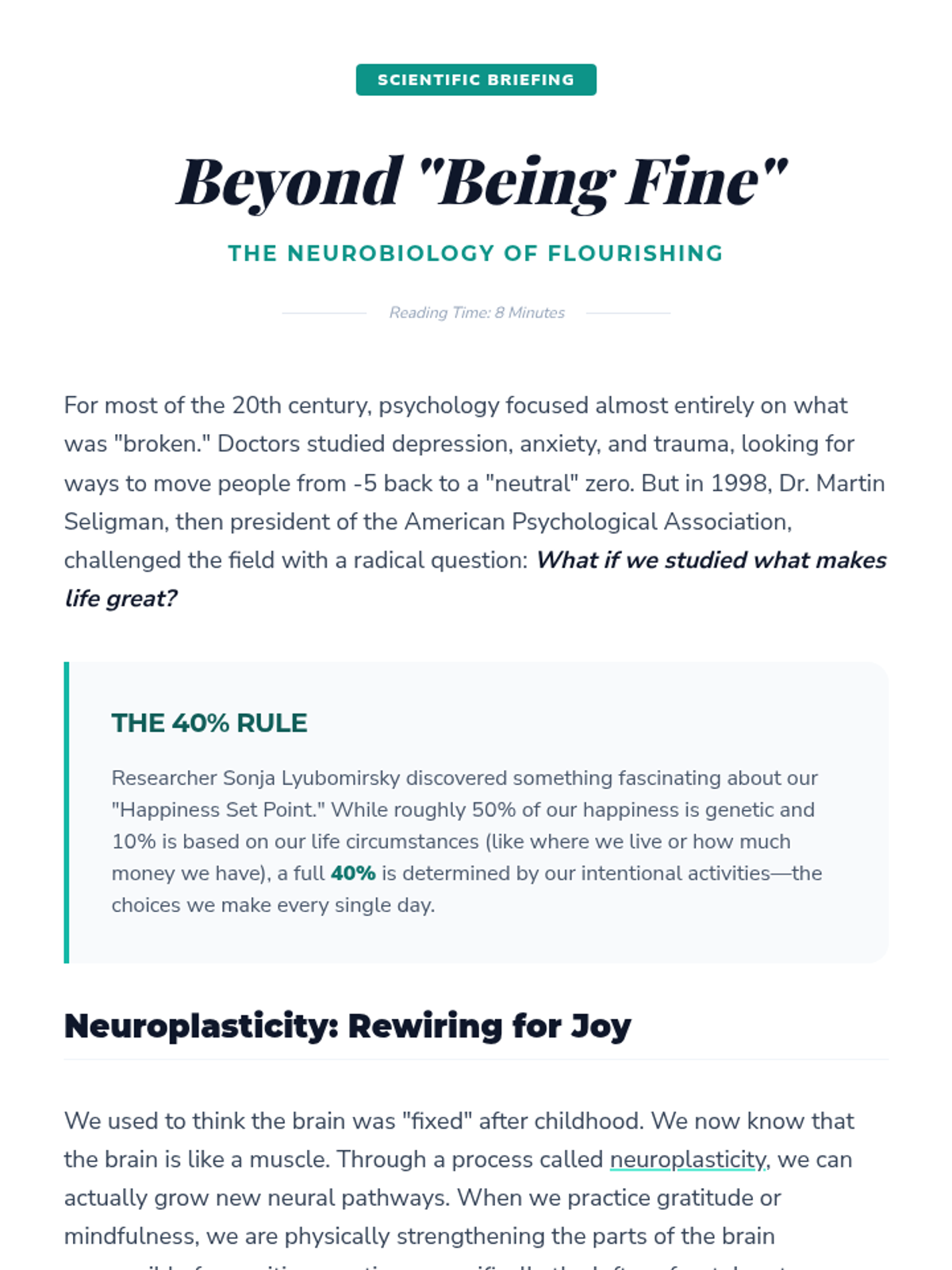
A comprehensive introduction to positive psychology for high school students, focusing on character strengths, gratitude, and evidence-based strategies for flourishing. Students will explore the PERMA model and engage in practical exercises to boost their personal well-being.
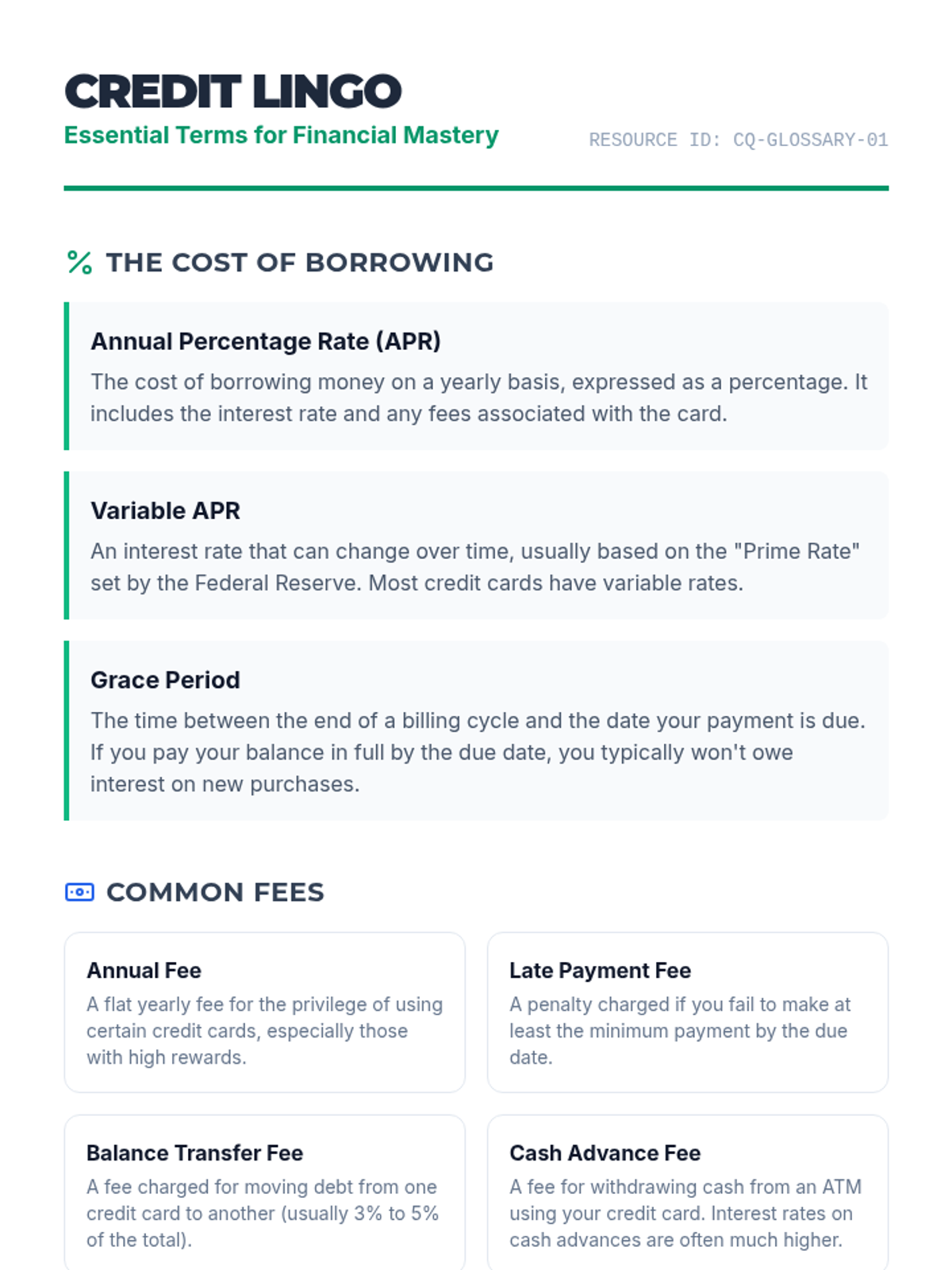
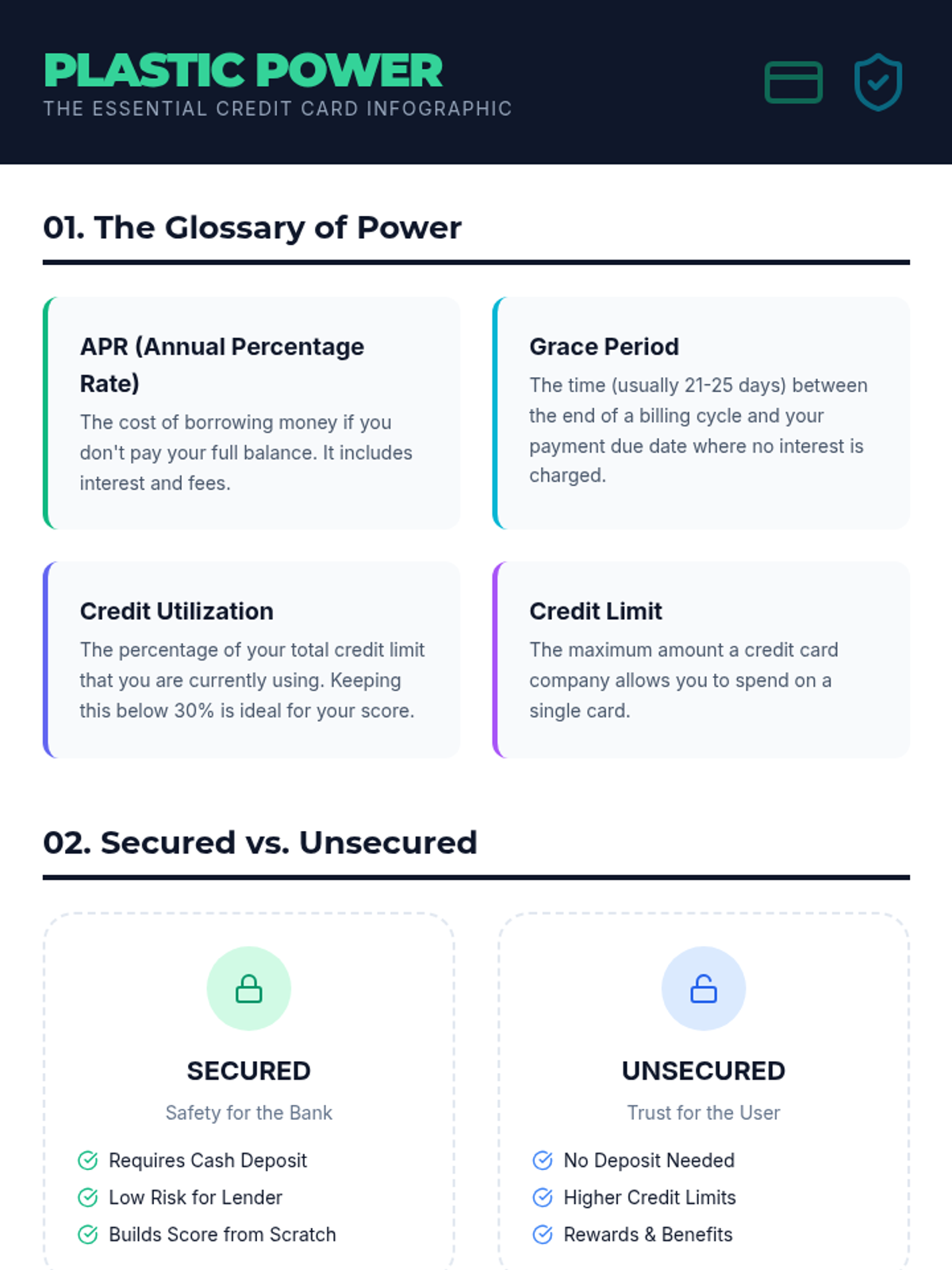
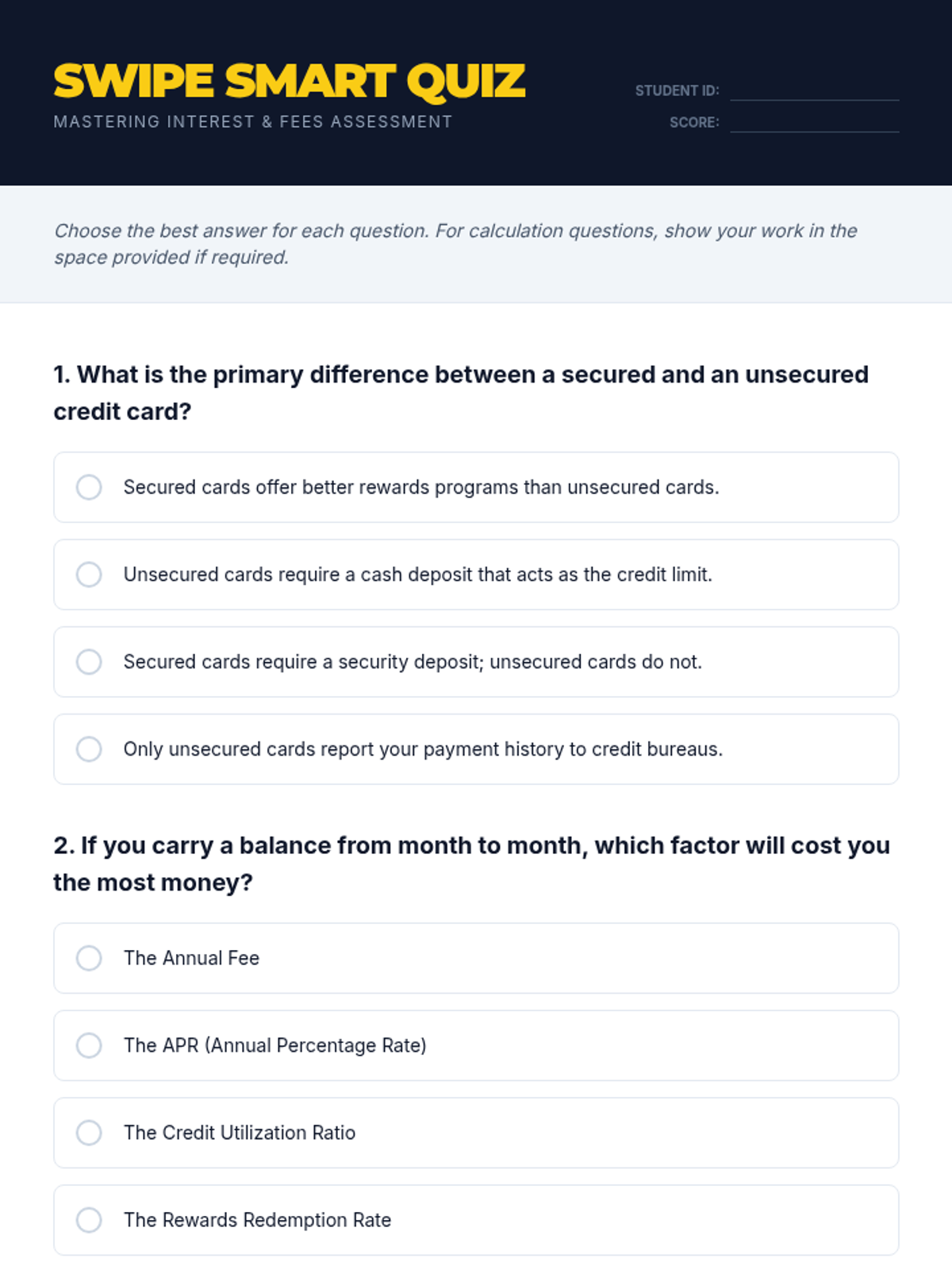
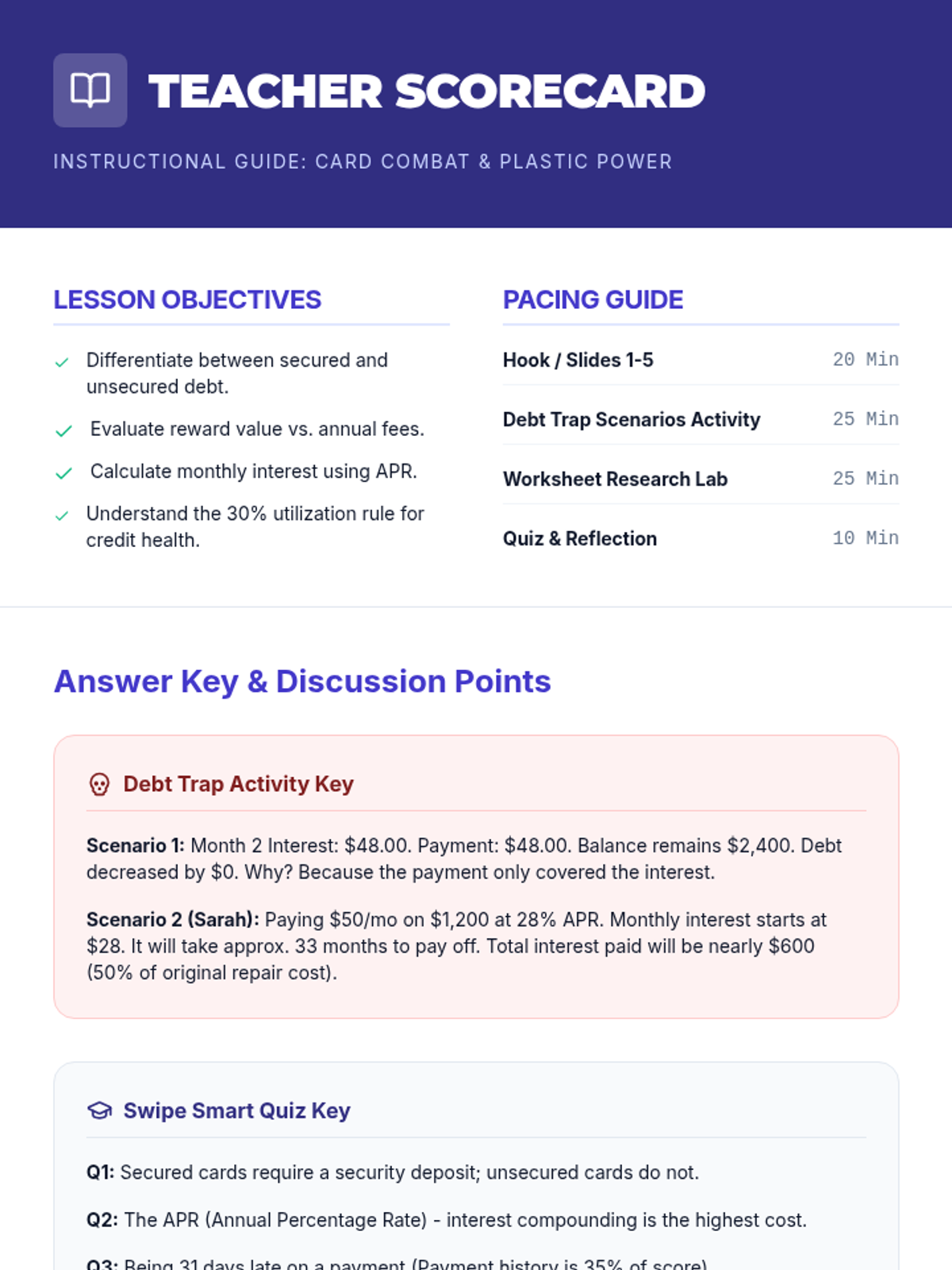
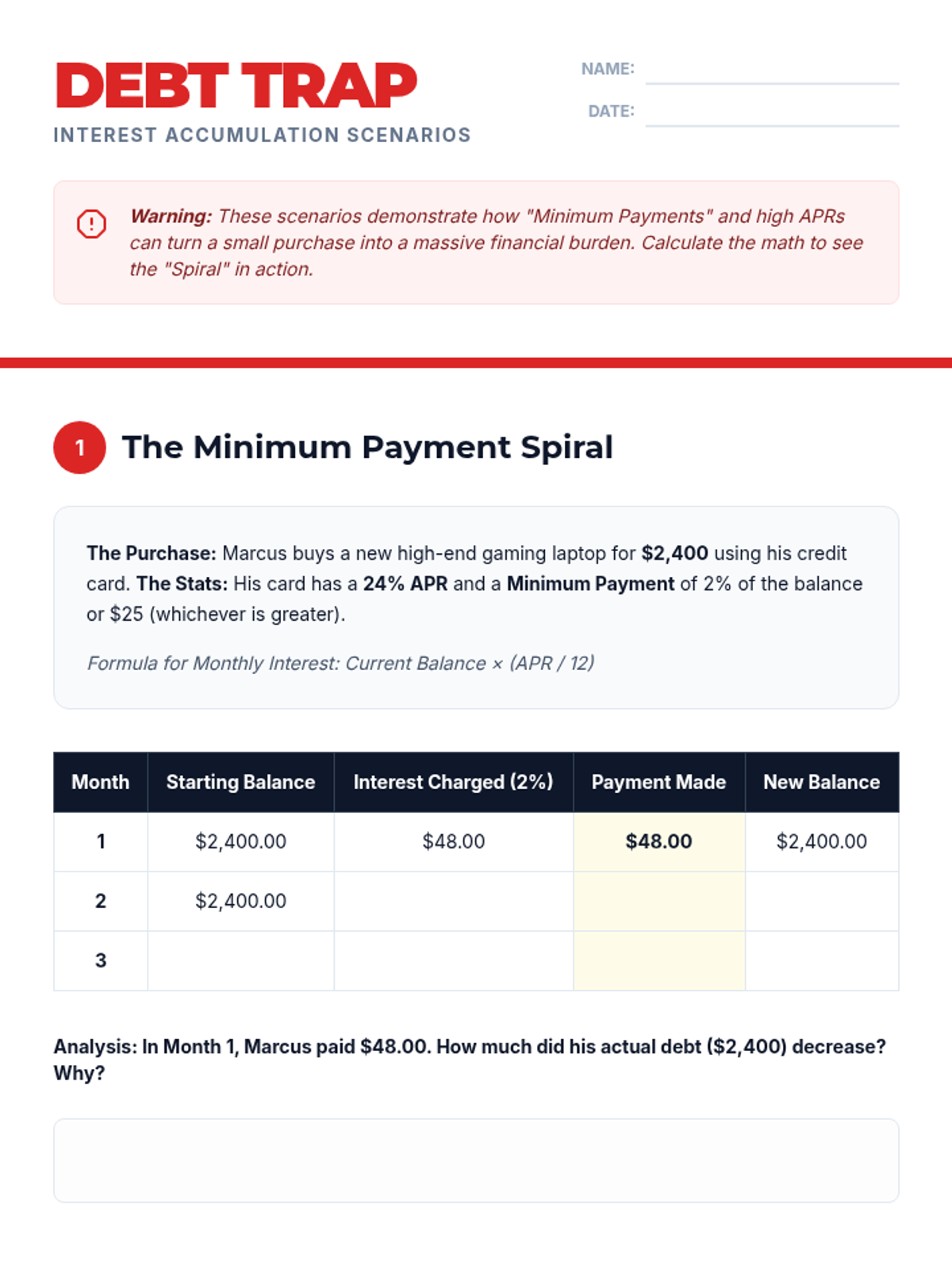
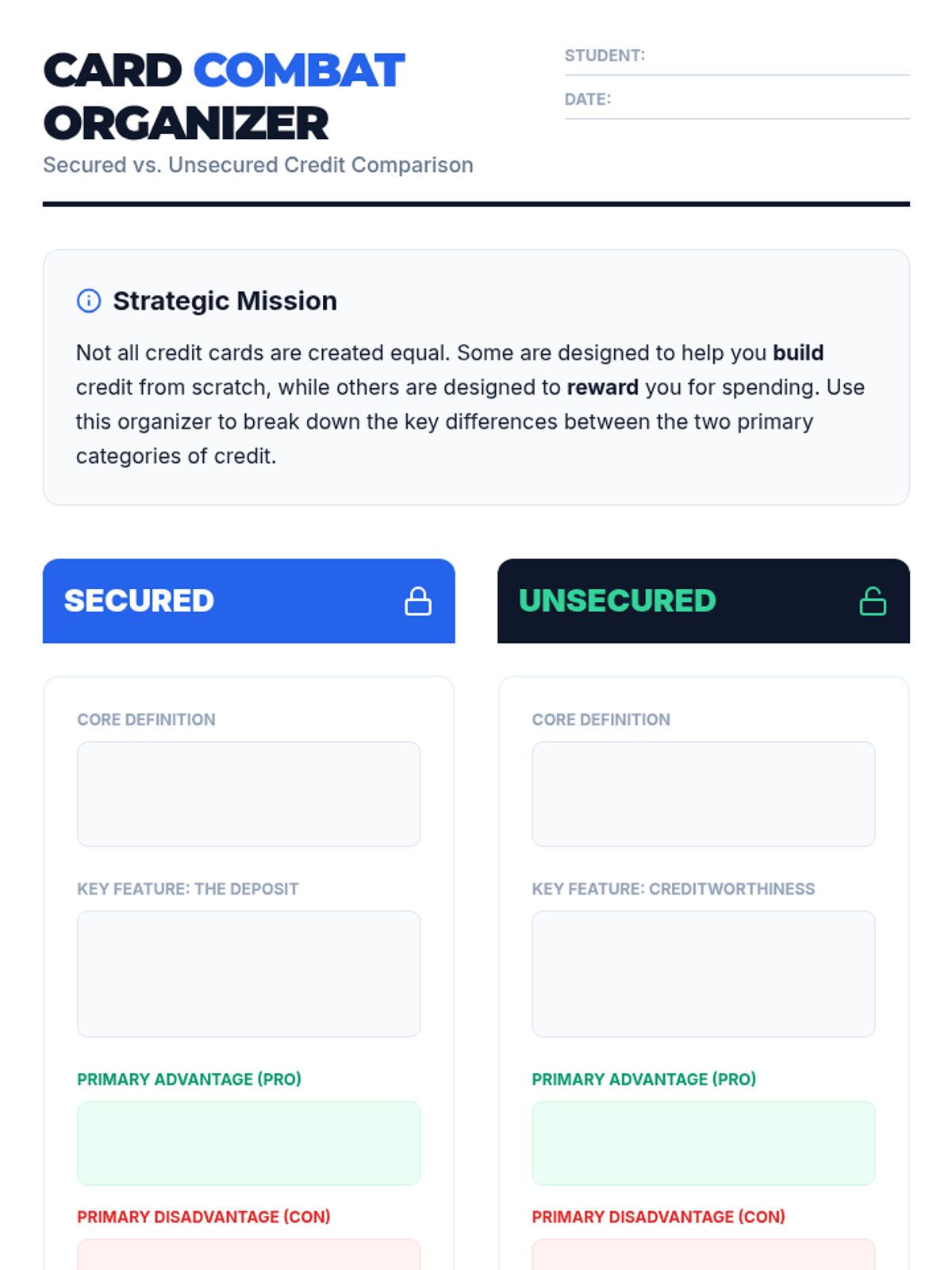
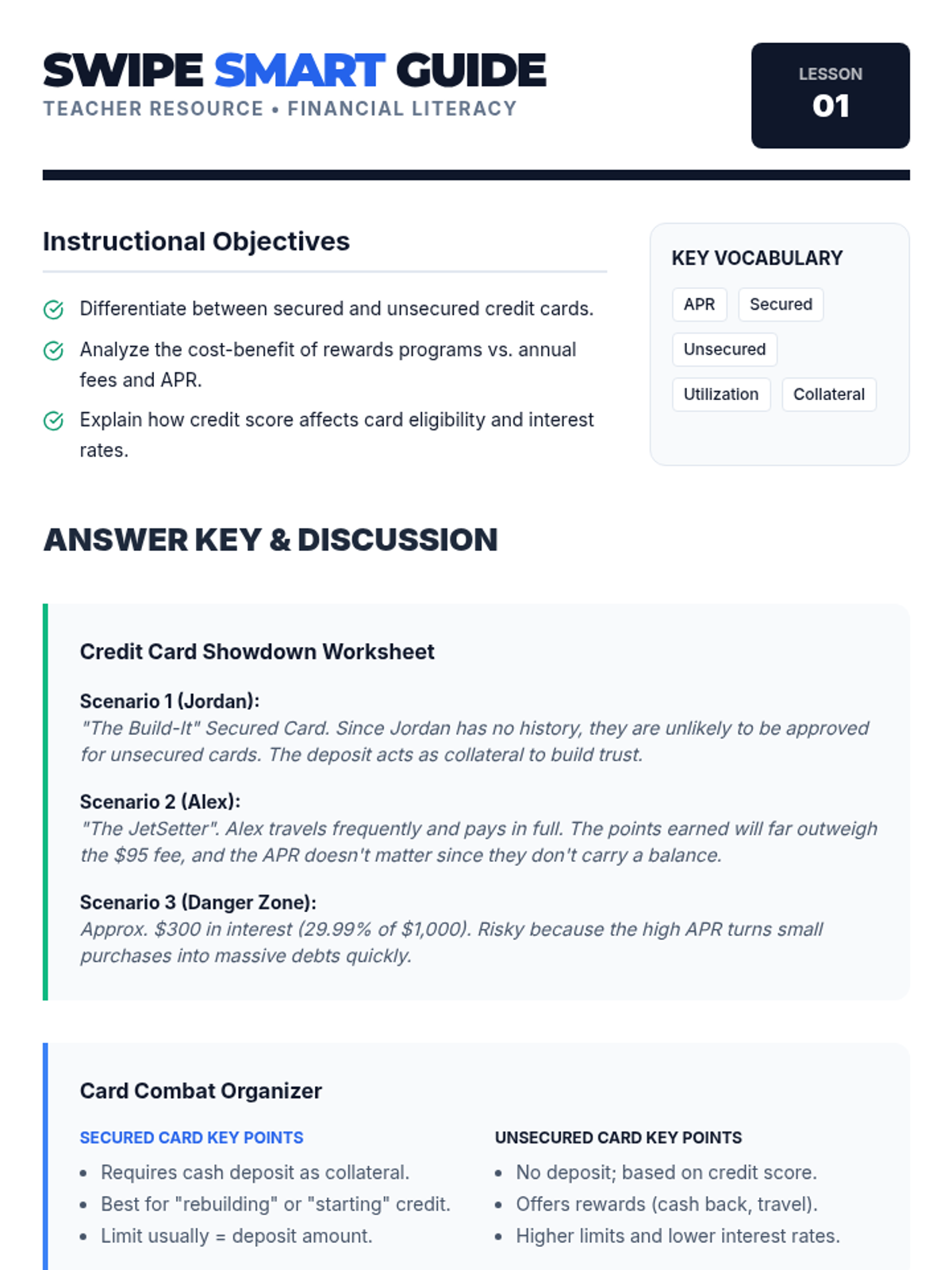
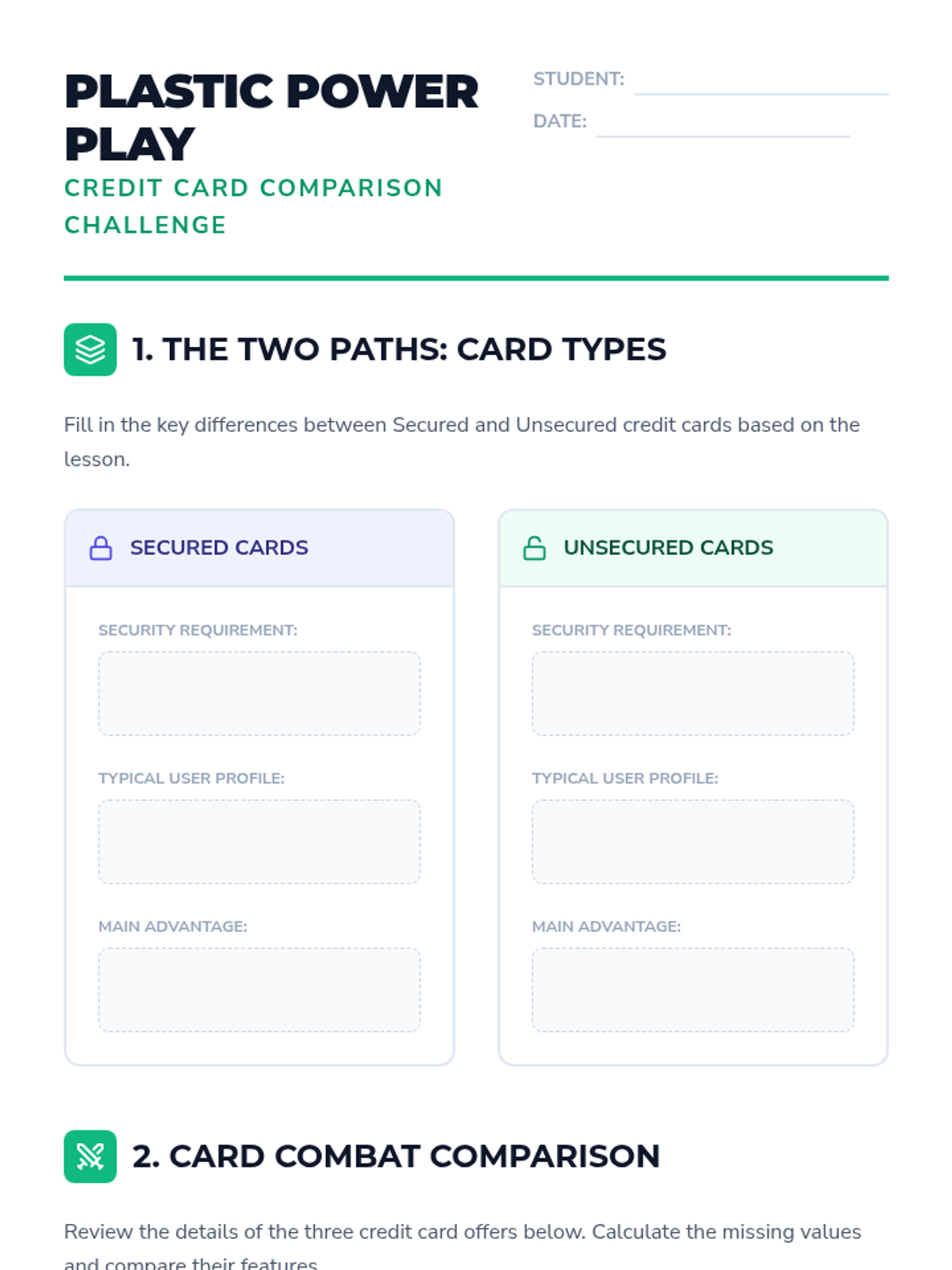
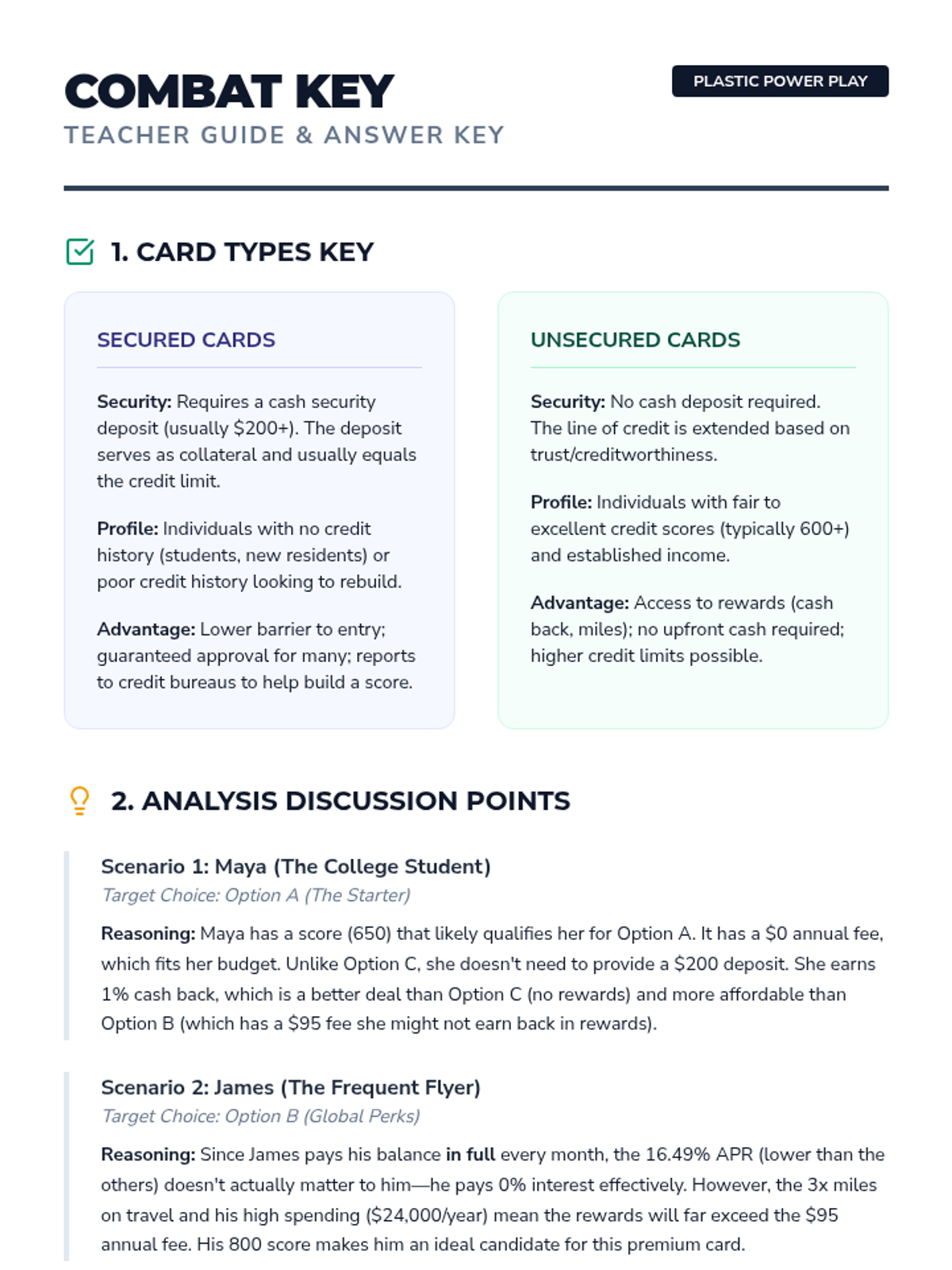
This lesson guides students through the mechanics of credit cards, from the fundamental differences between secured and unsecured cards to the strategic evaluation of rewards and fees.
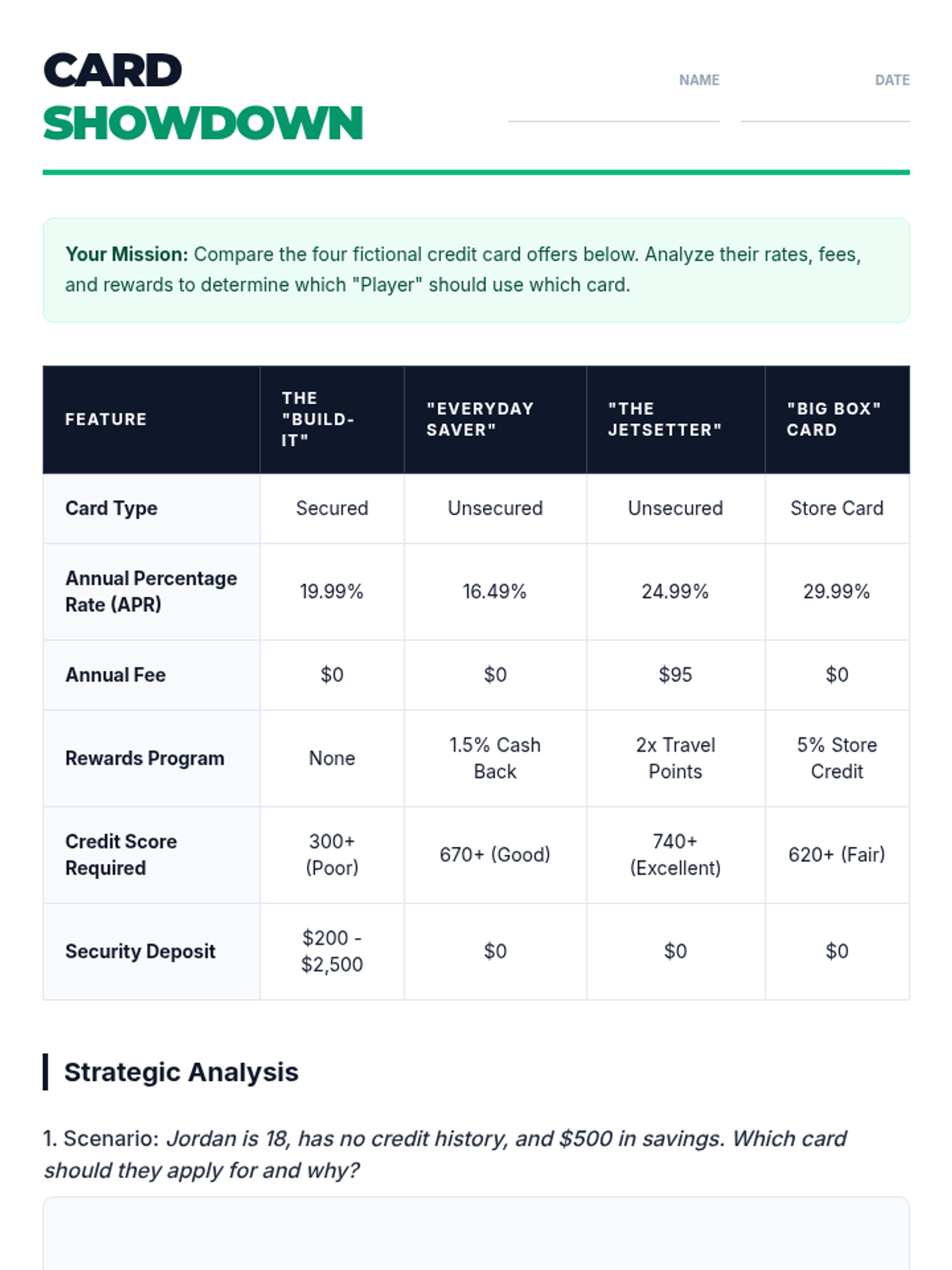
A comprehensive lesson exploring different types of credit cards, their rewards, and the long-term financial implications of credit use. Students will compare card types and analyze fictional offers to build financial literacy skills.
Students will learn to compare different types of credit cards, evaluating rewards, fees, interest rates, and approval requirements to make informed financial decisions.
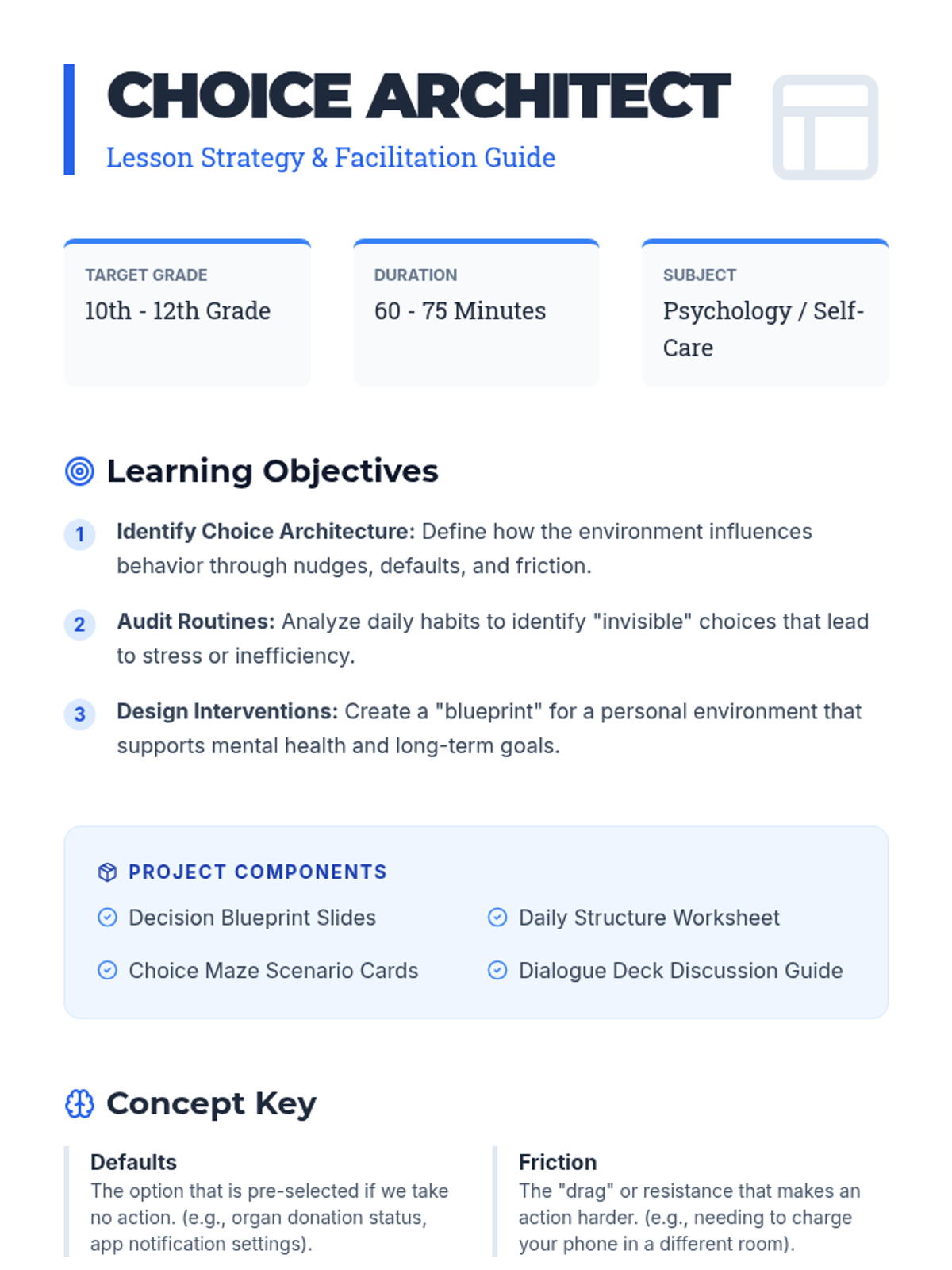
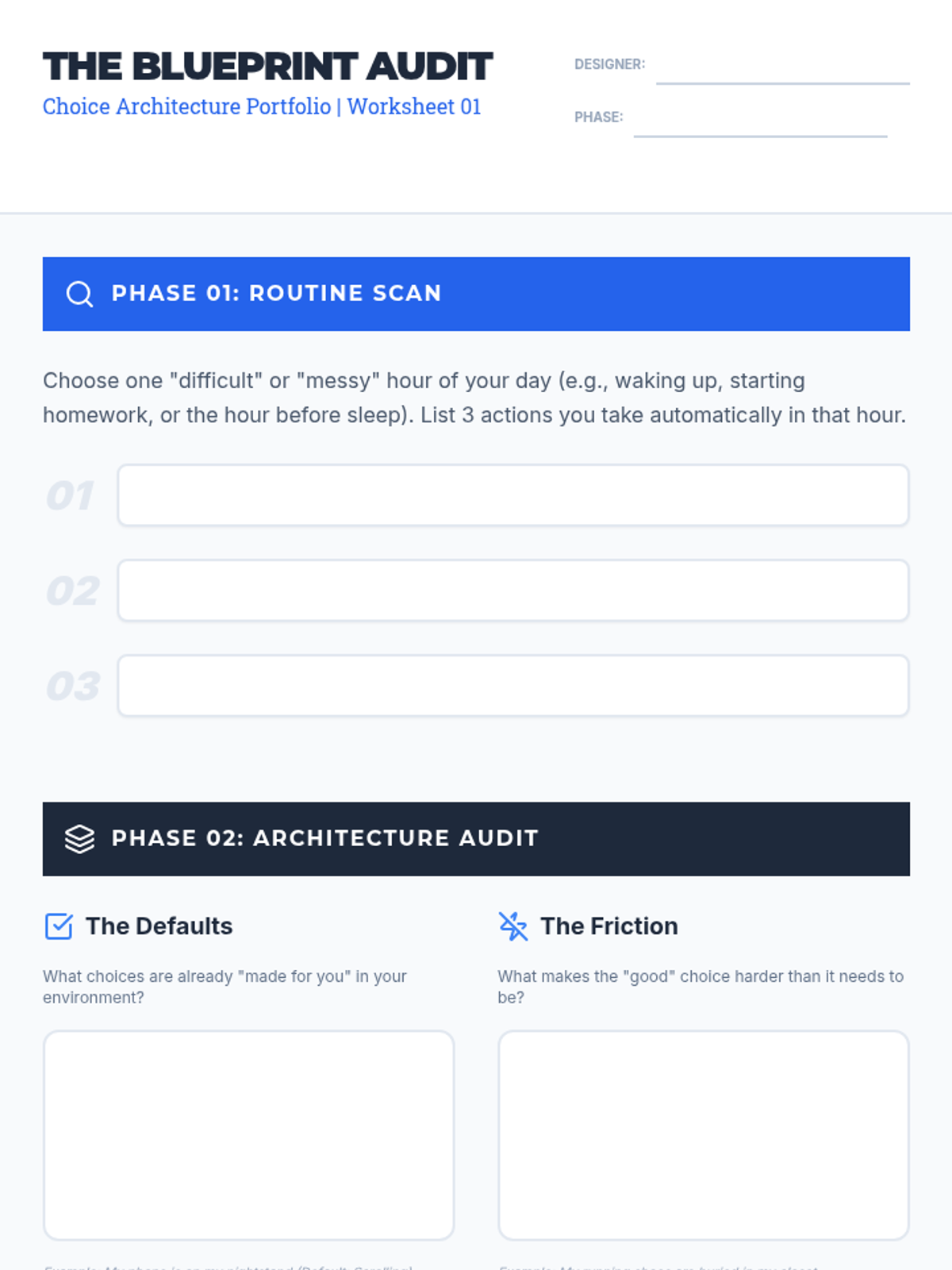
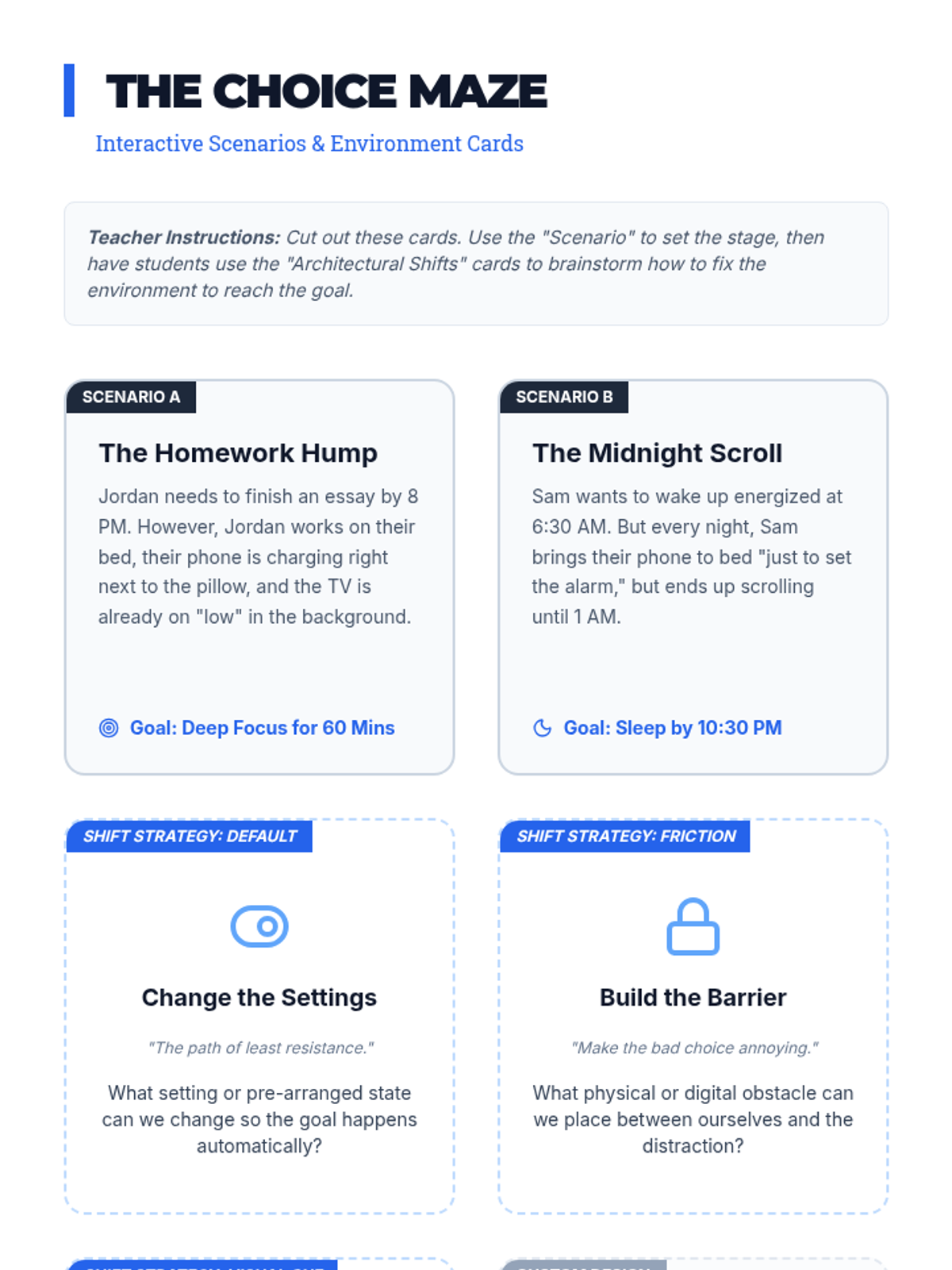
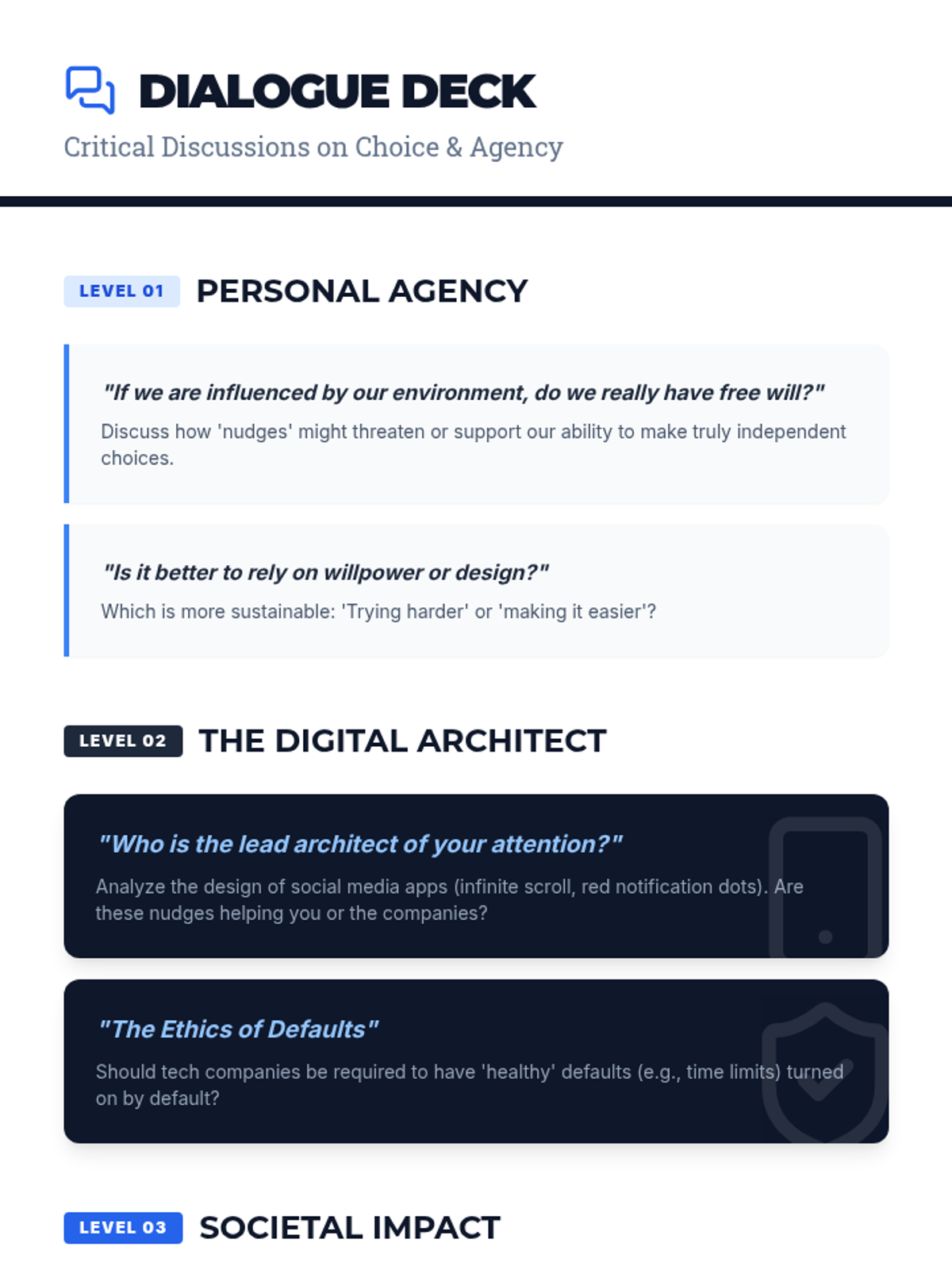
A comprehensive lesson exploring behavioral economics through personal choice architecture. Students learn to audit their daily environments and routines to 'nudge' themselves toward better well-being and productivity.
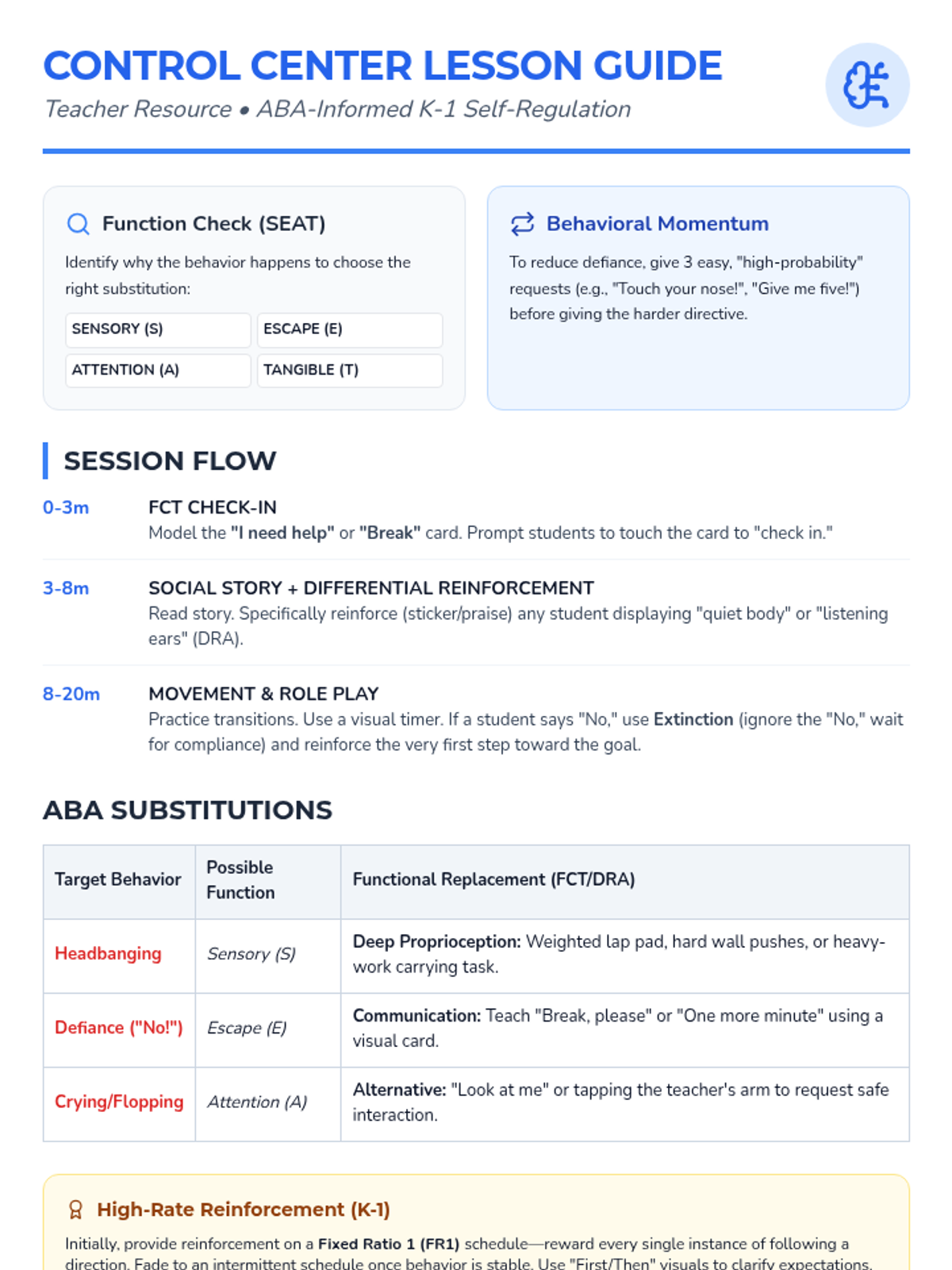
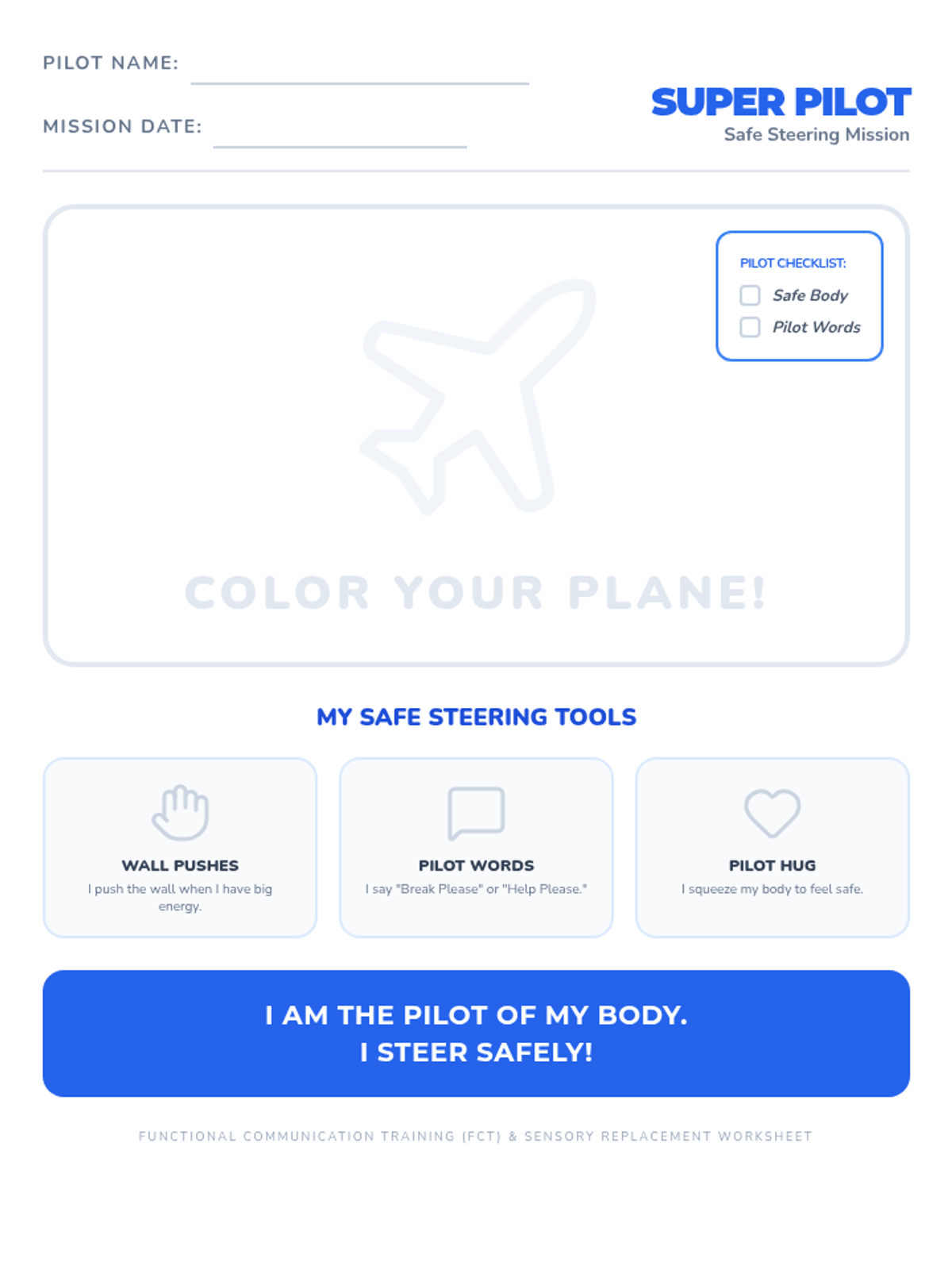
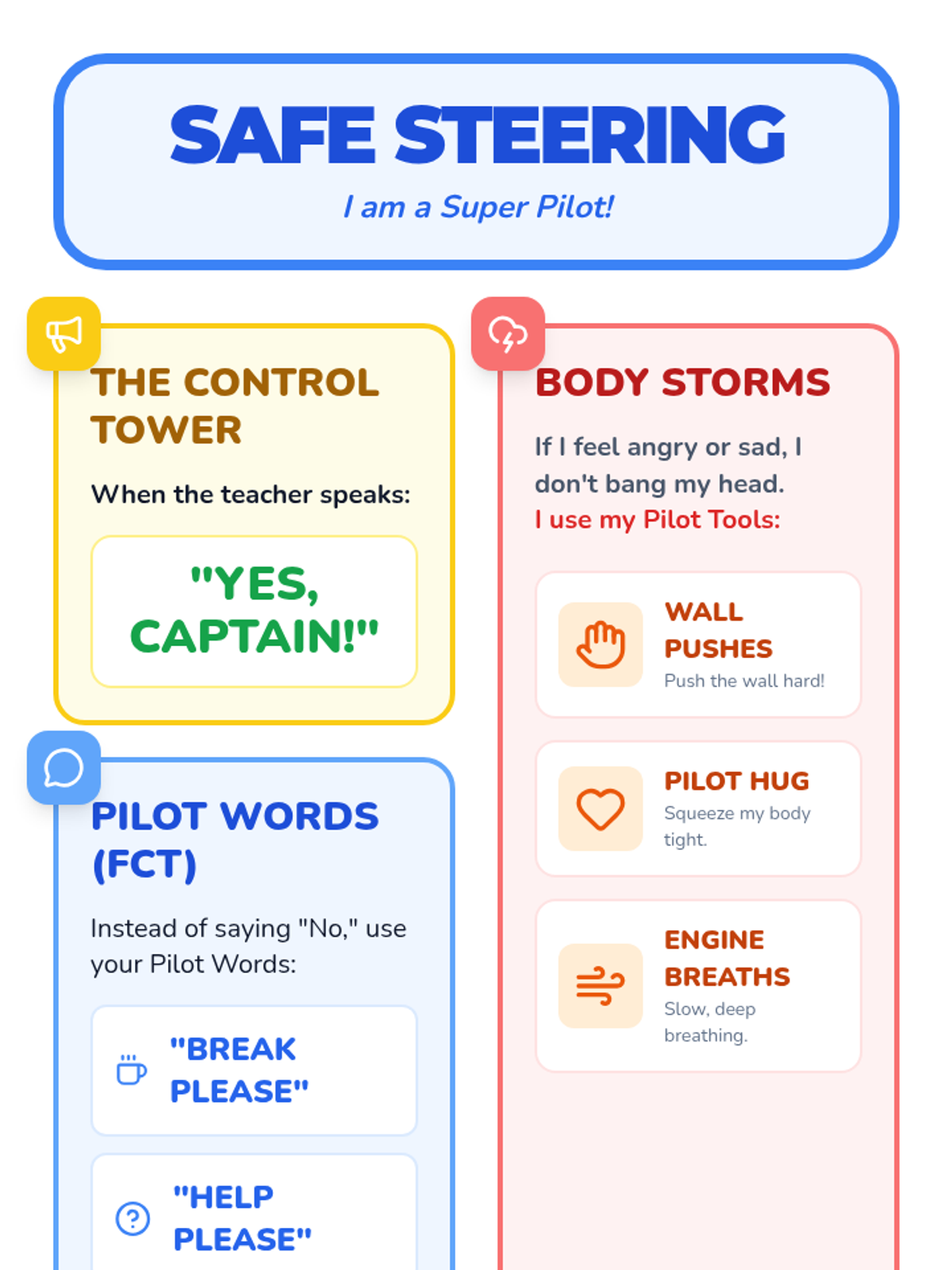
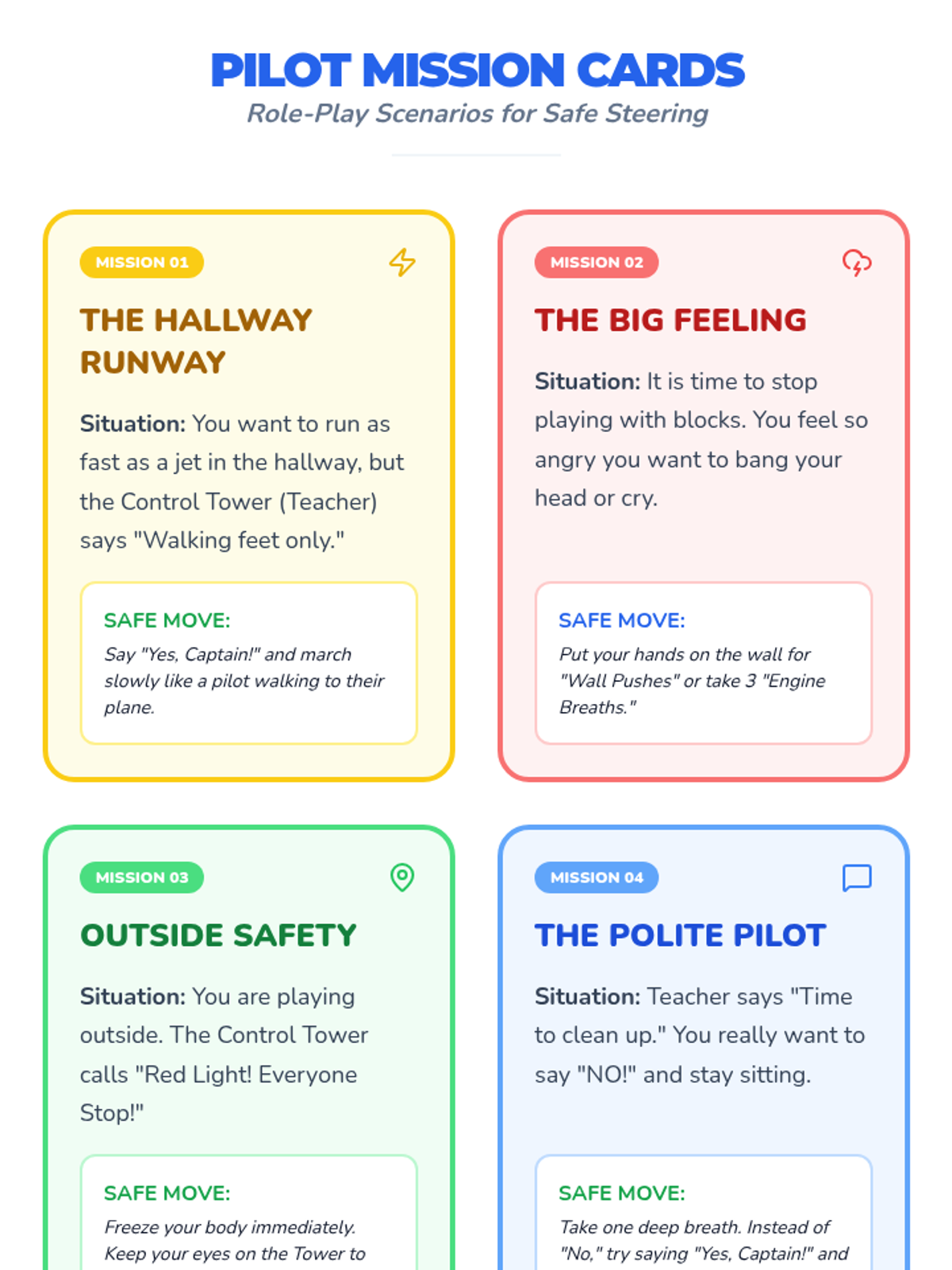
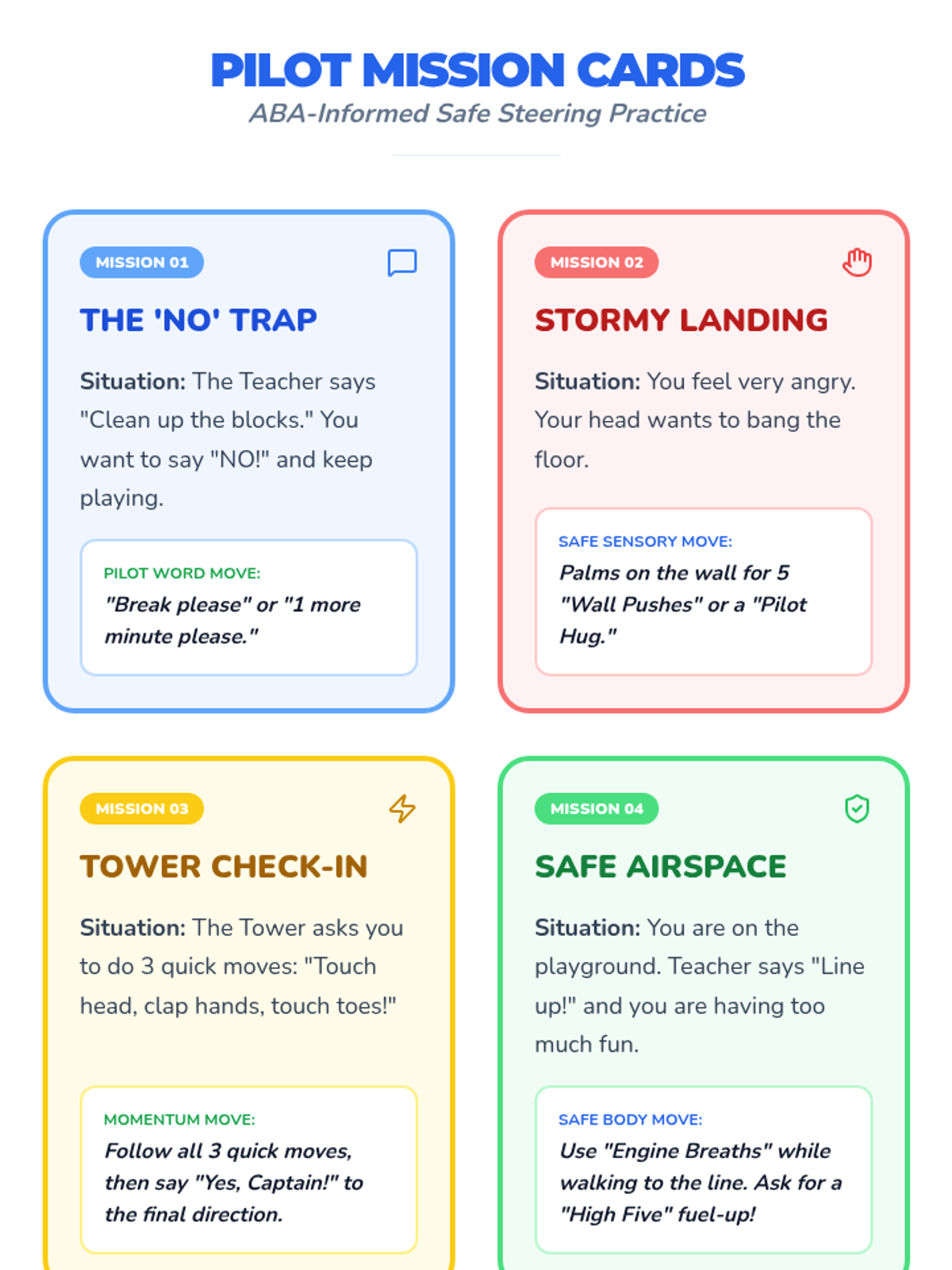
A comprehensive lesson designed for K-1 students to develop self-regulation and safety skills through a 'Super Pilot' theme. This lesson includes a social story, movement breaks, and positive reinforcement strategies to address hyperactivity and defiance.
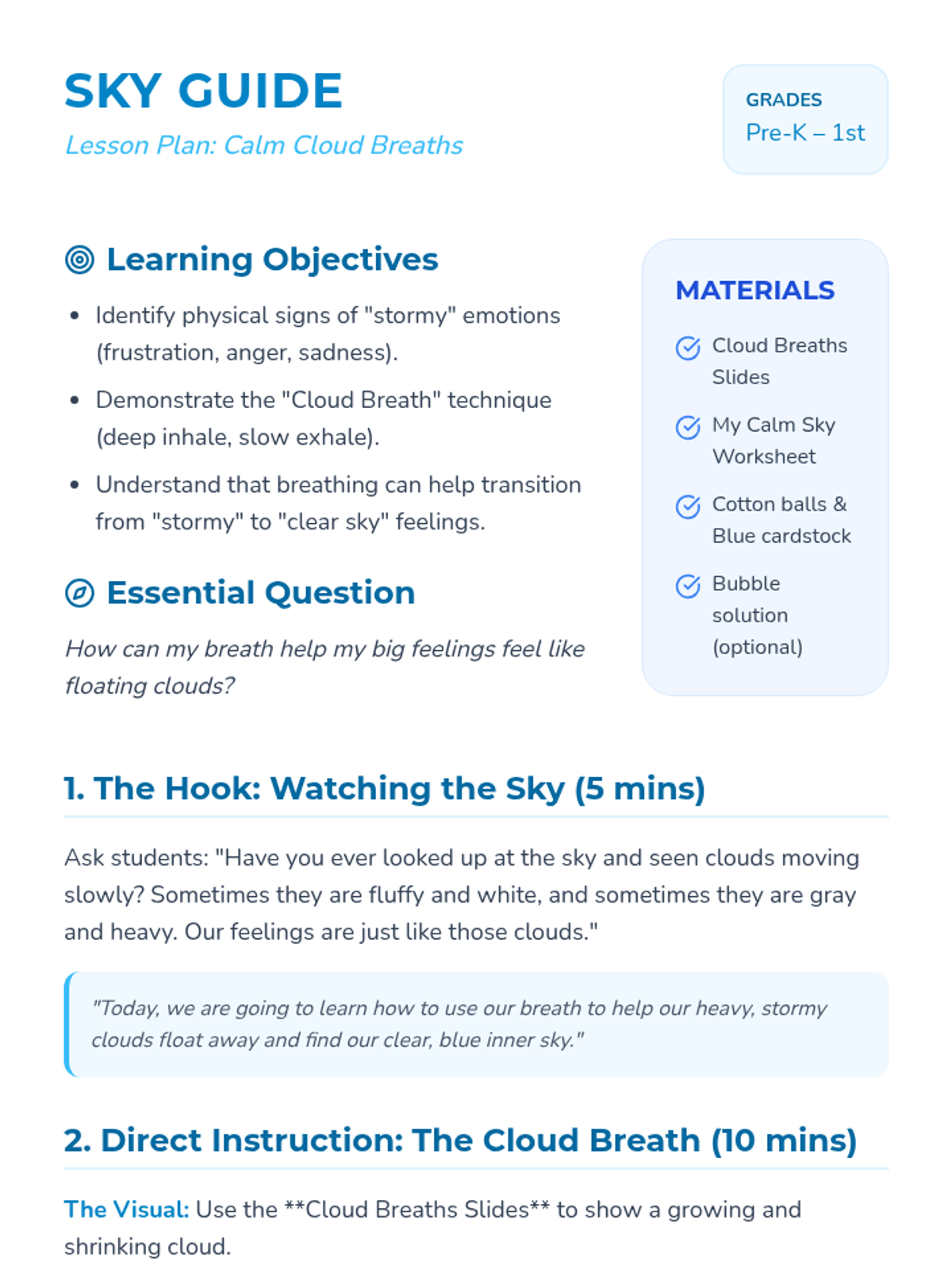
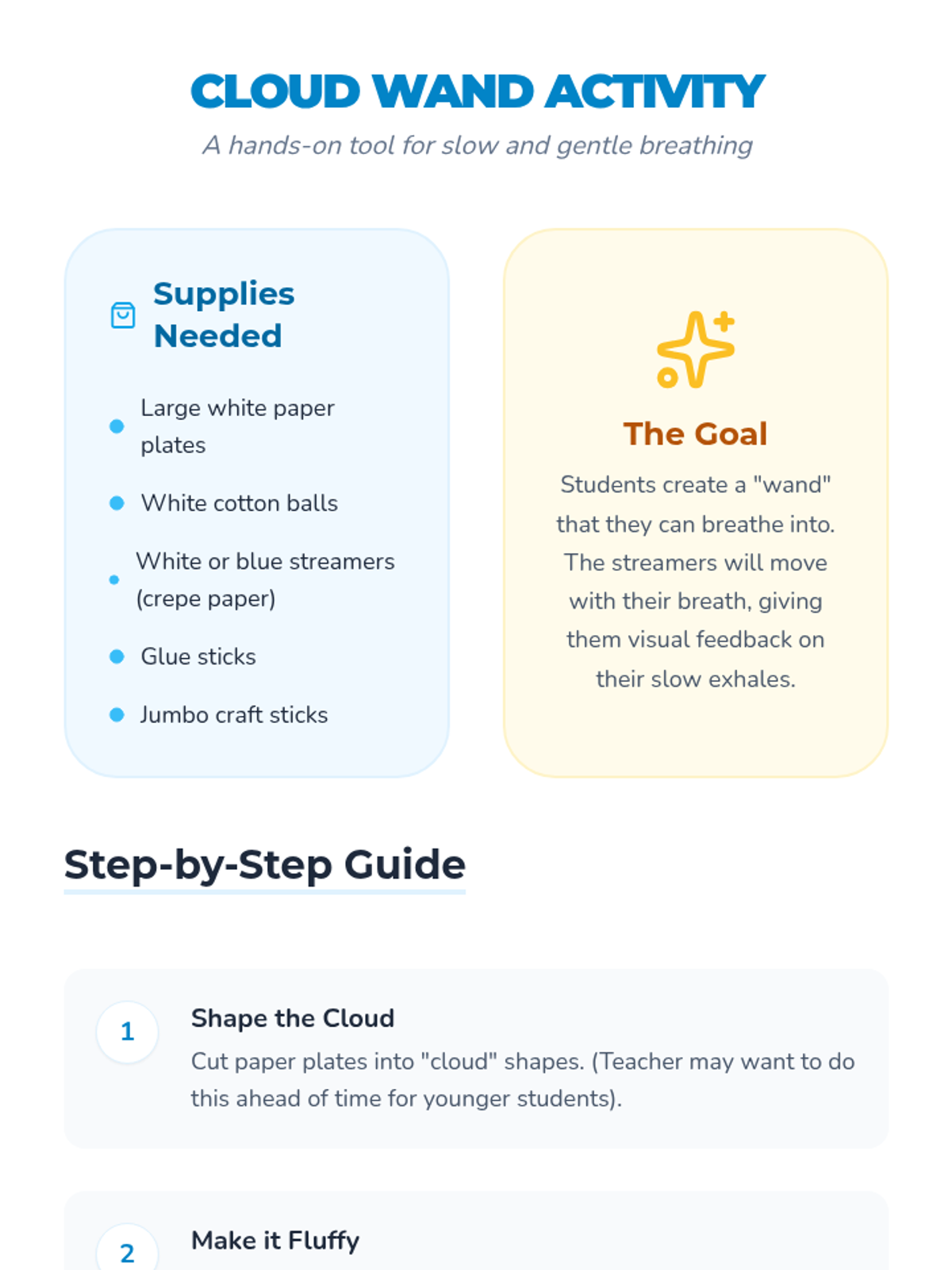
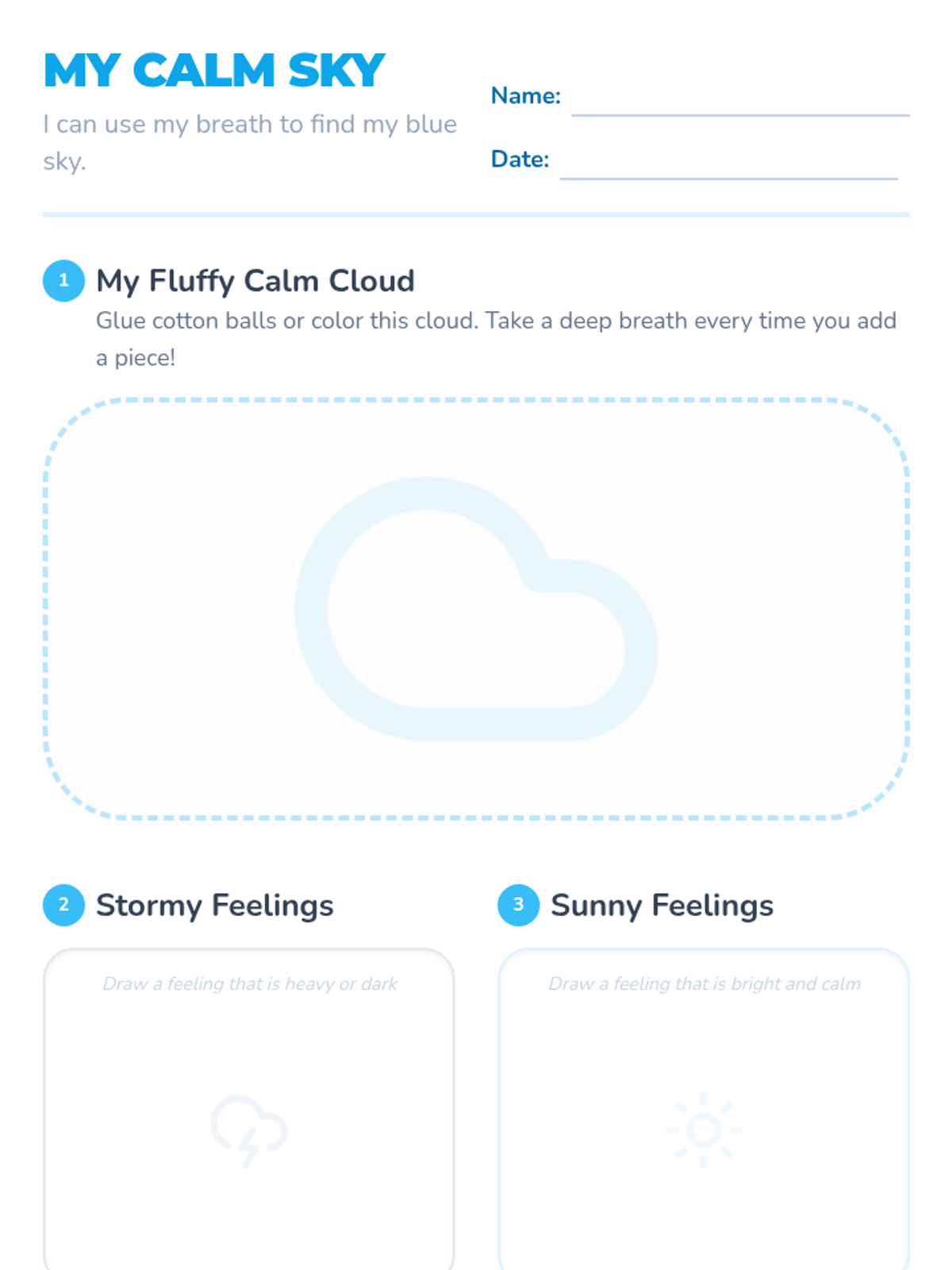
A soothing lesson for young learners (Pre-K to 1st Grade) that teaches simple breathing techniques and emotional self-regulation through cloud-themed visualization and gentle movement.
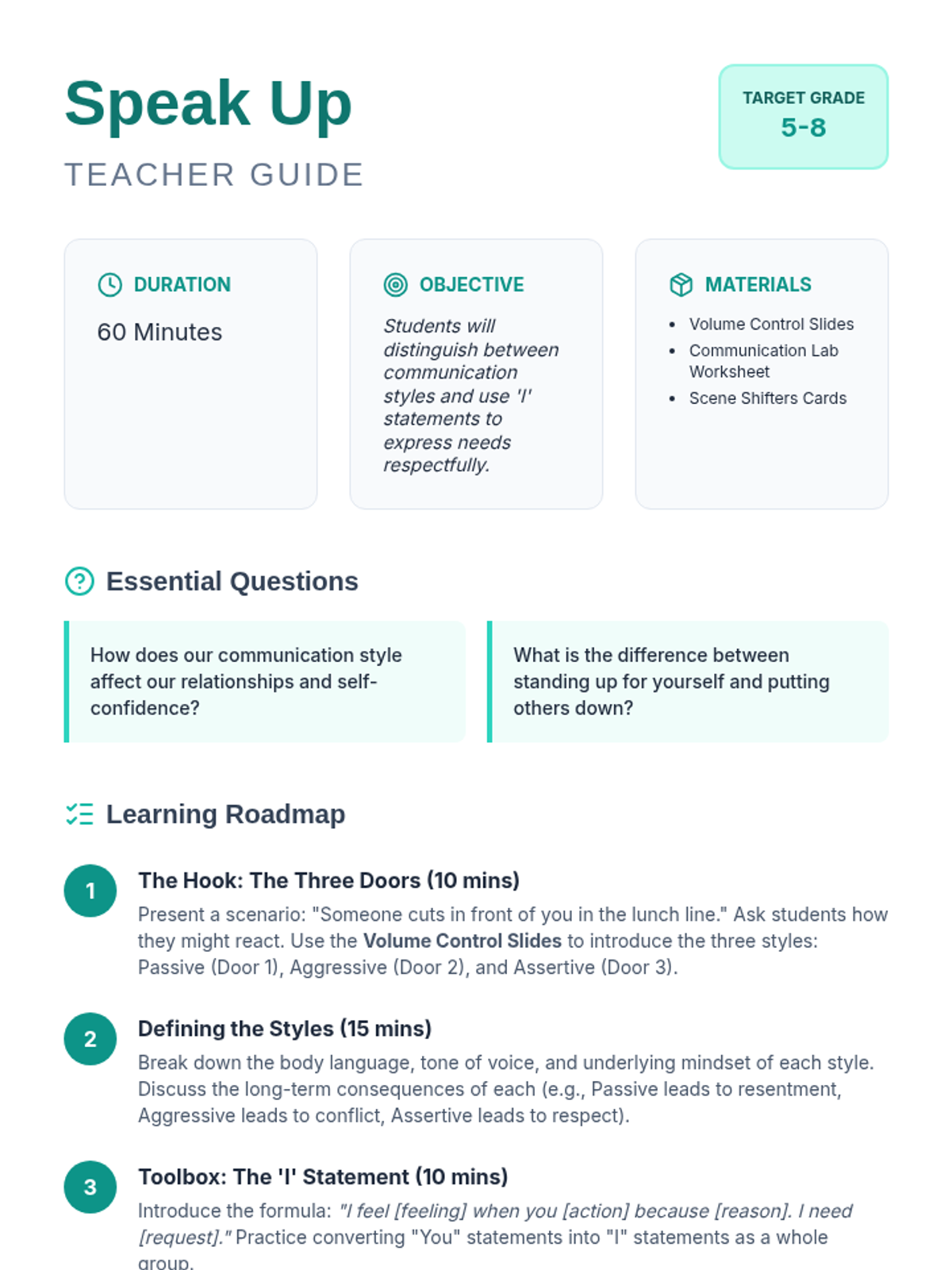
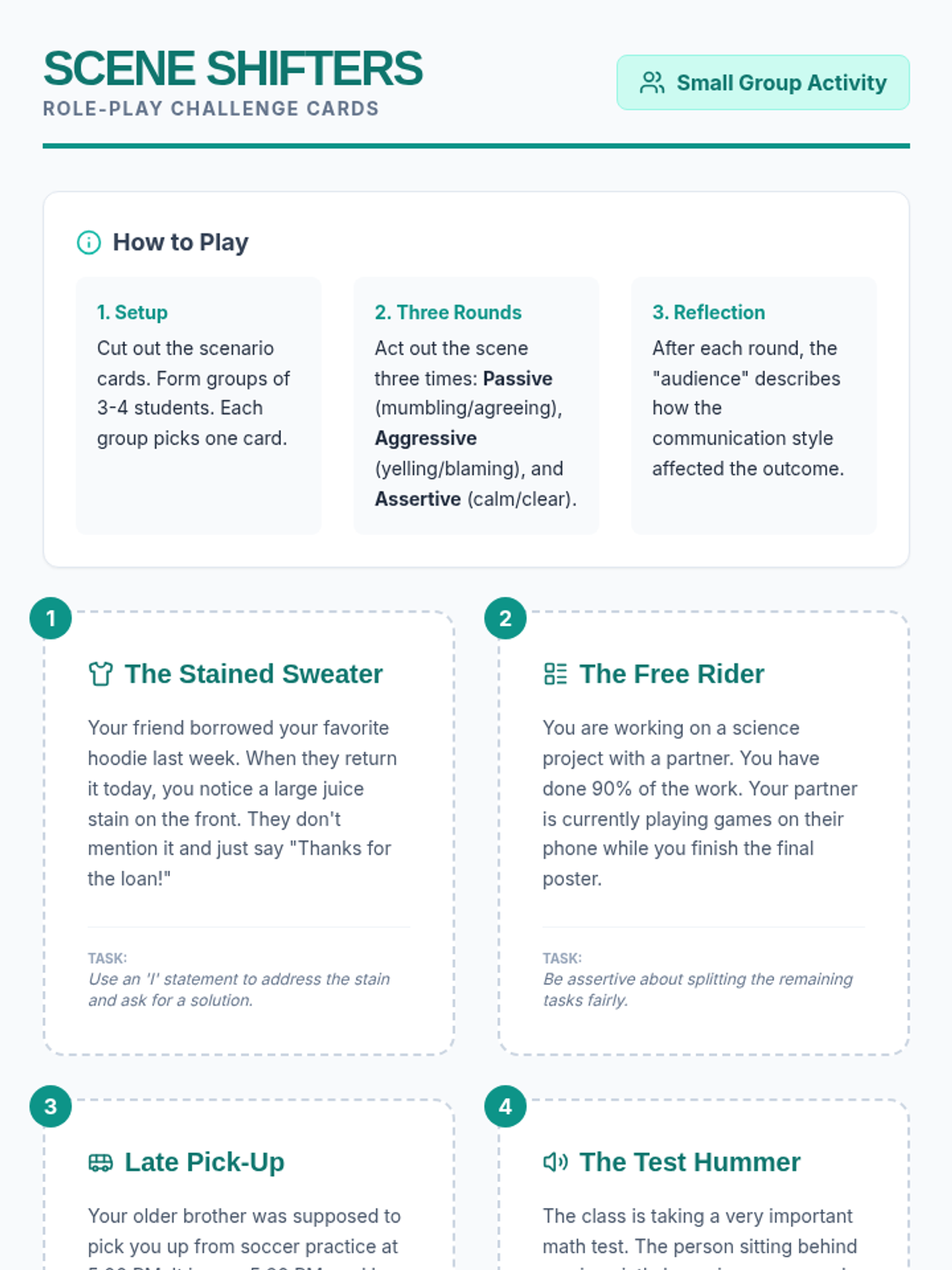
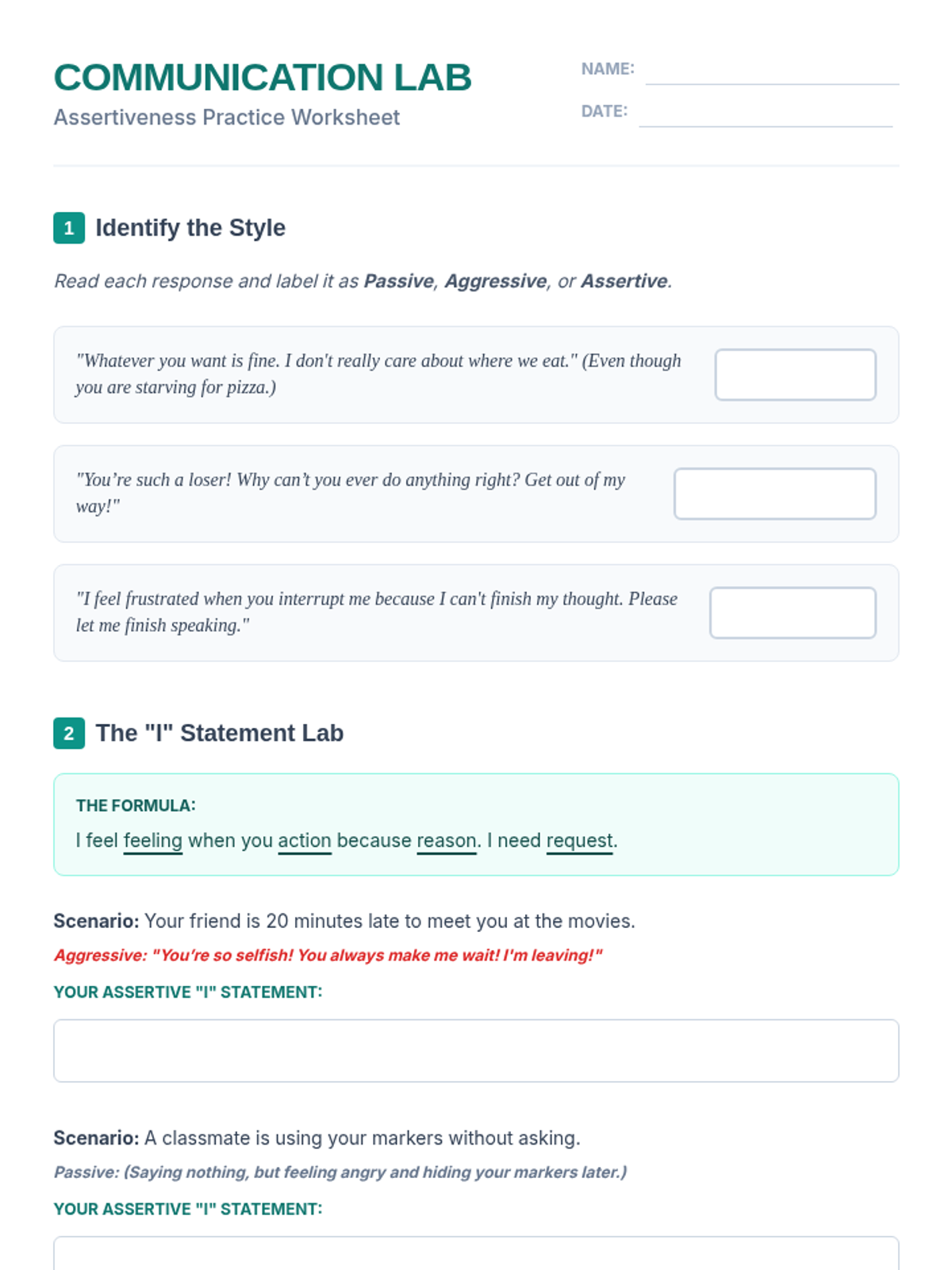
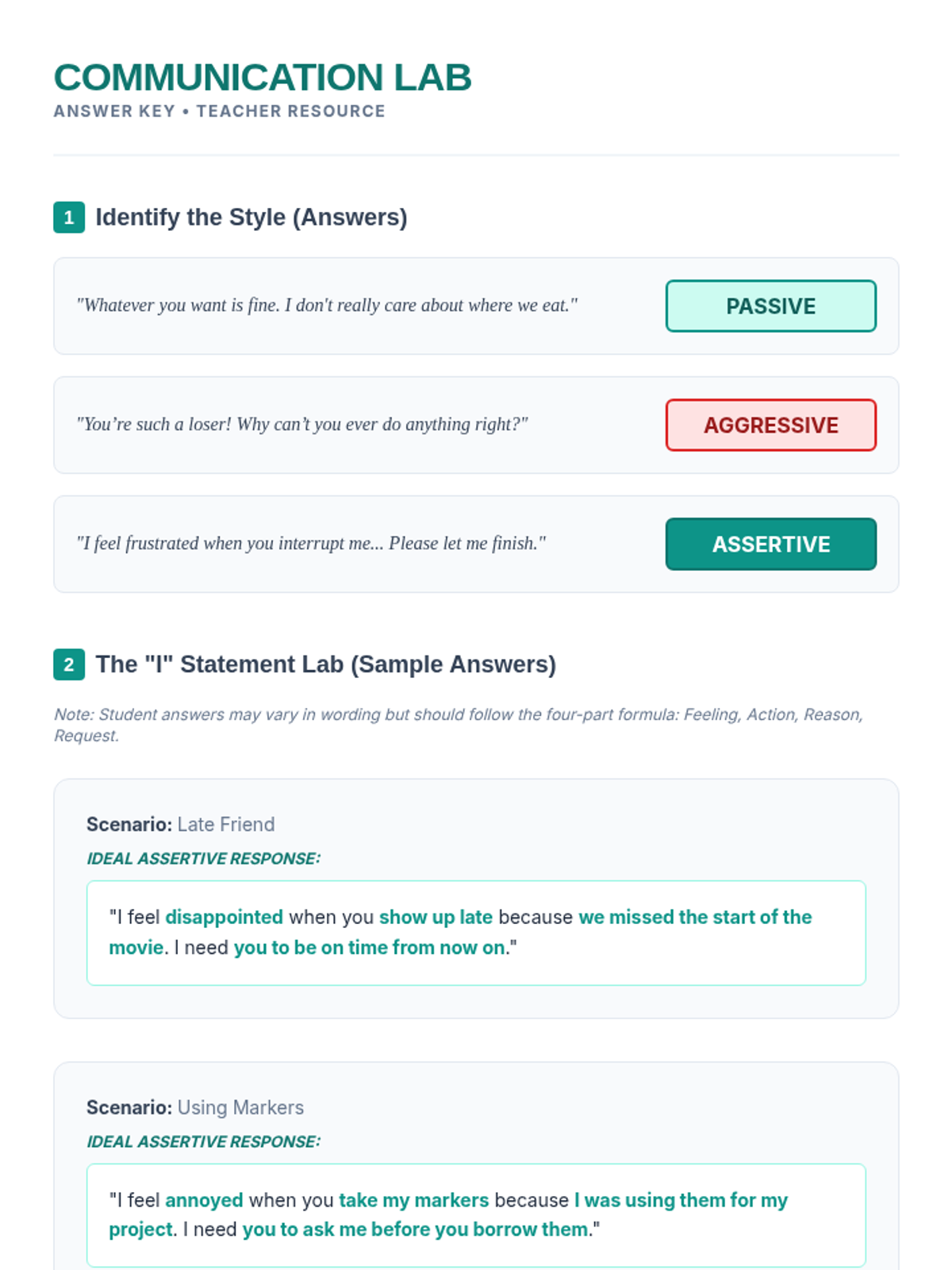
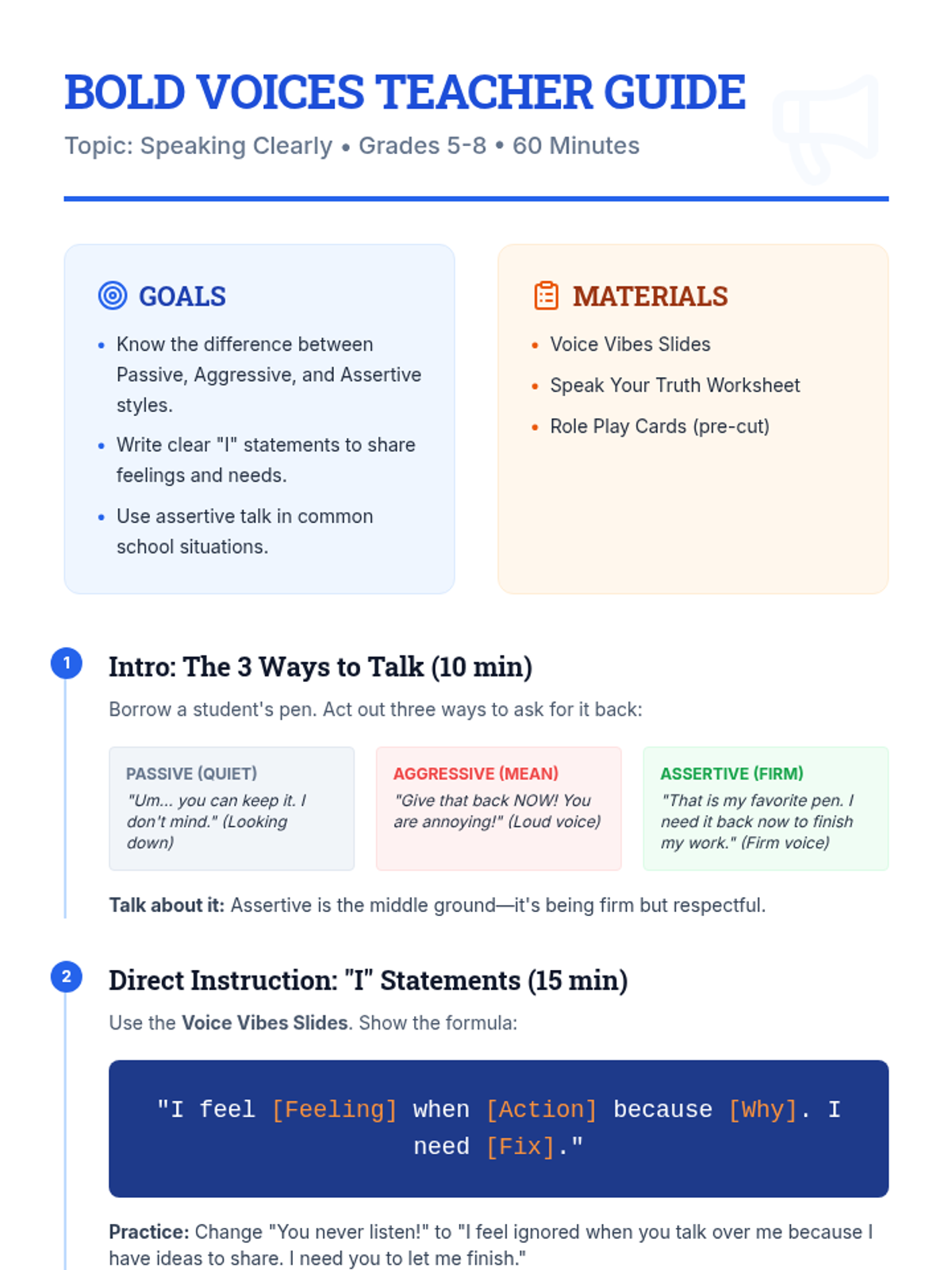
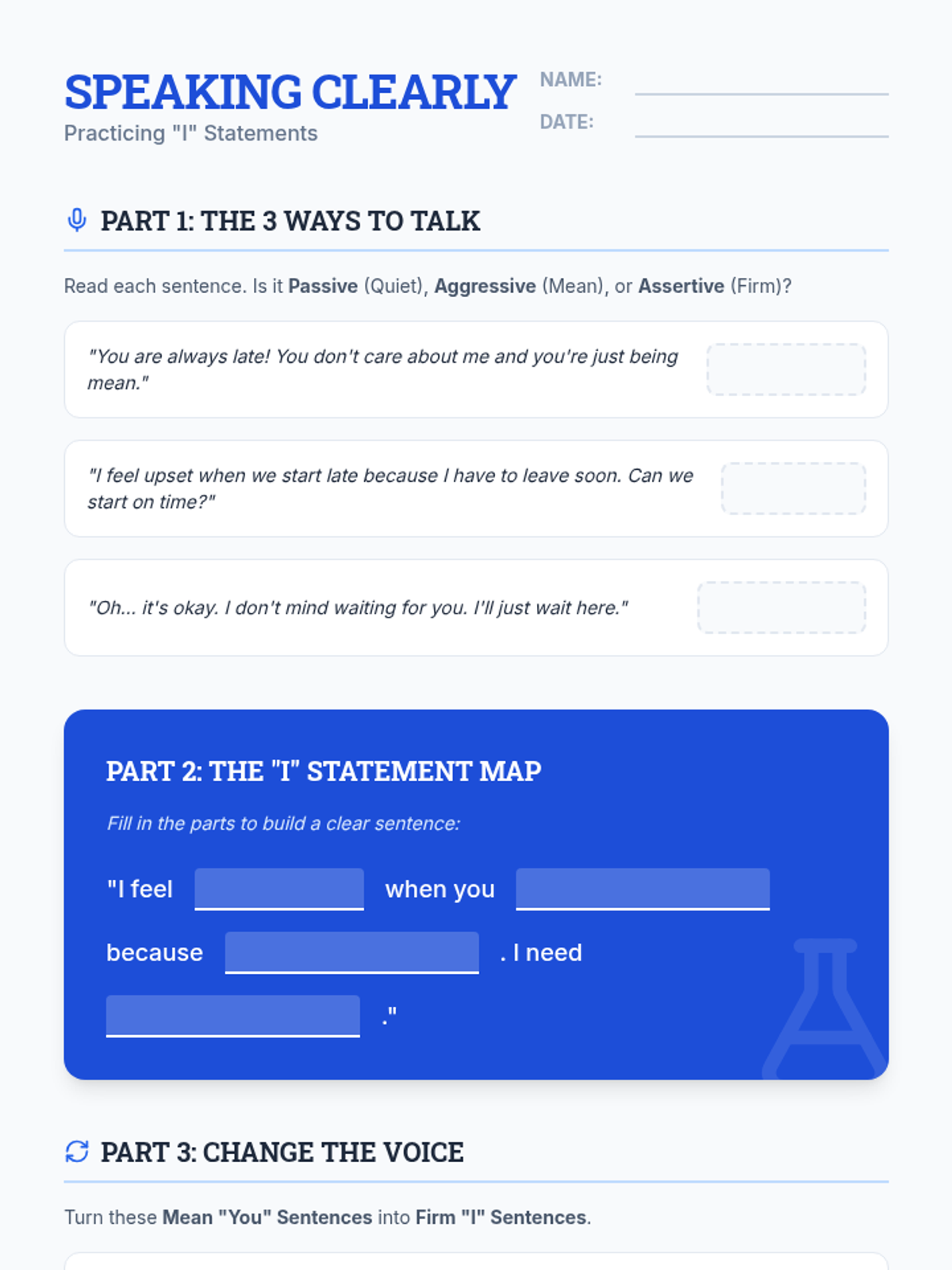
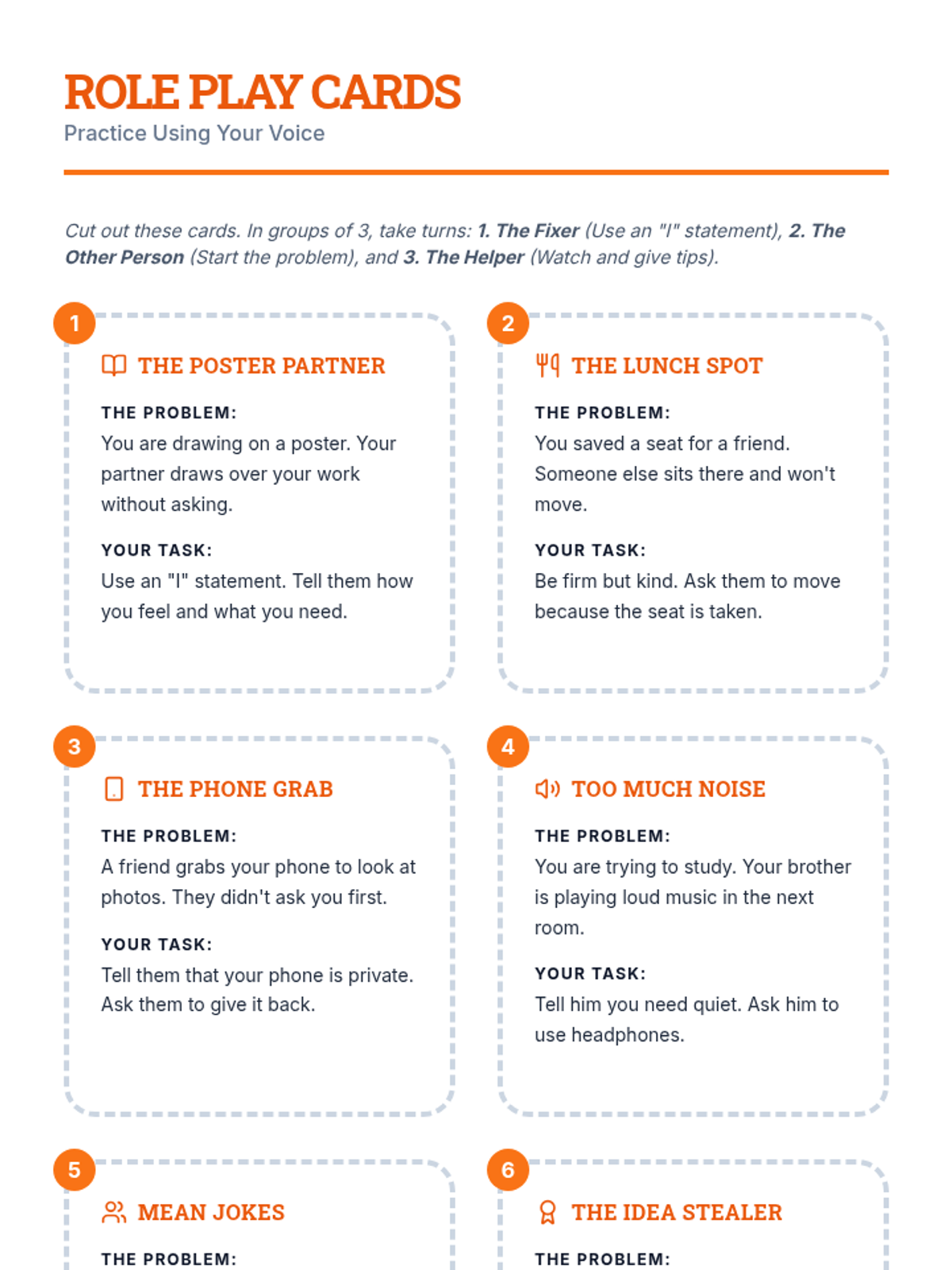
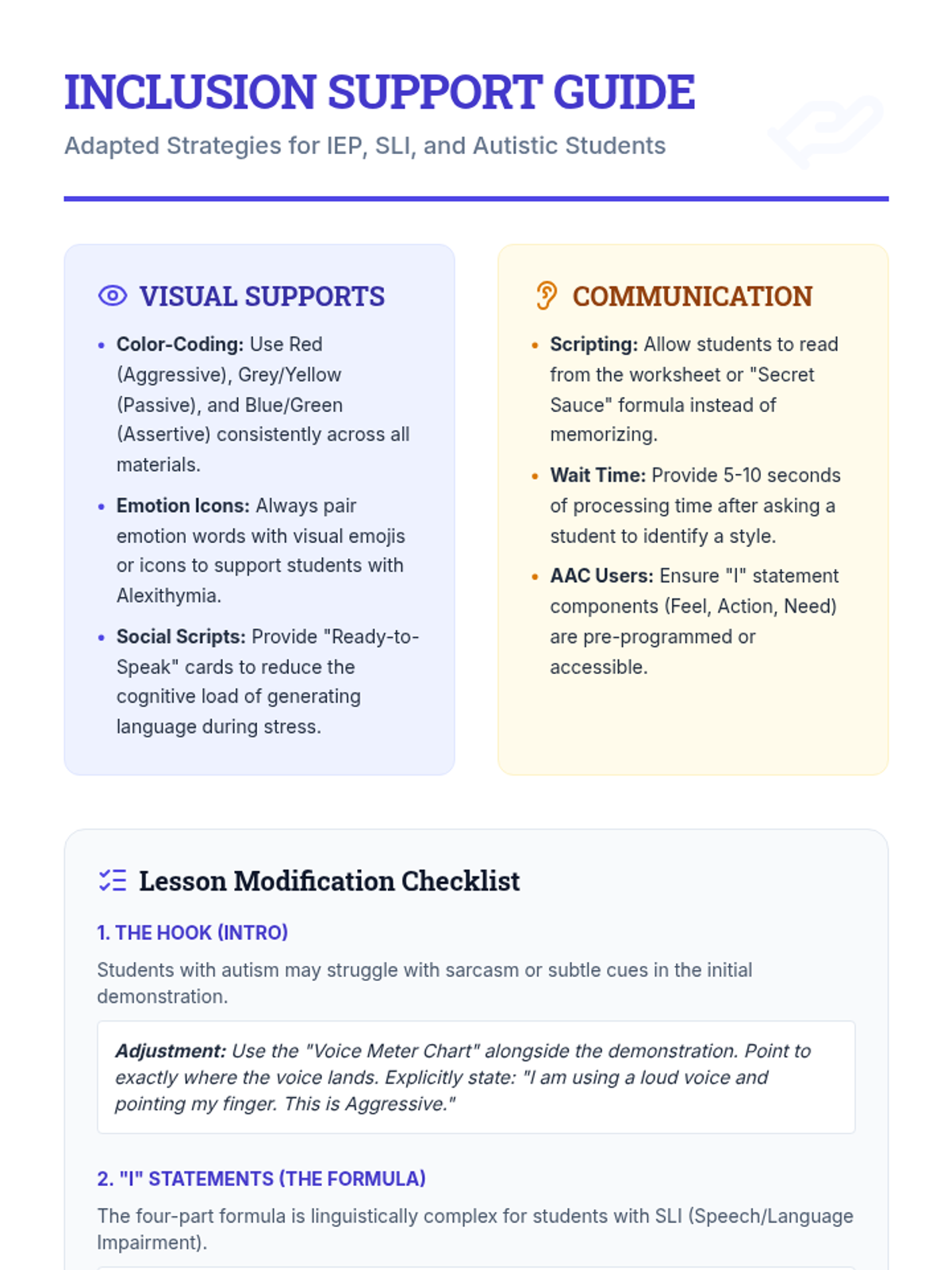
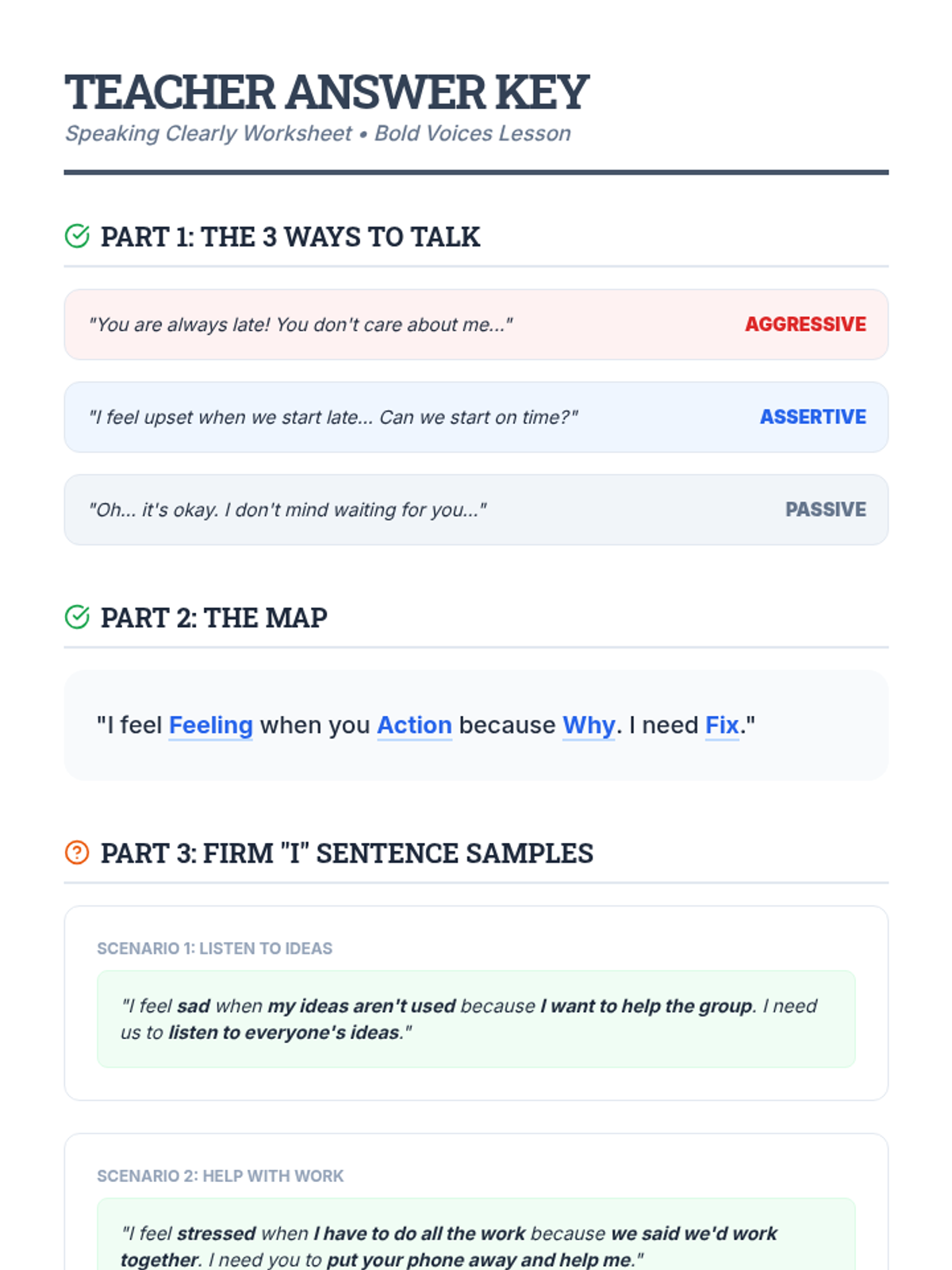
A comprehensive lesson for grades 5-8 focusing on the differences between passive, aggressive, and assertive communication. Students will learn and practice 'I' statements and constructive conflict resolution through role-playing and guided exercises.
This lesson empowers middle school students to communicate effectively by distinguishing between passive, aggressive, and assertive styles. Students learn to use 'I' statements and practice conflict resolution through interactive role-playing and guided reflection.
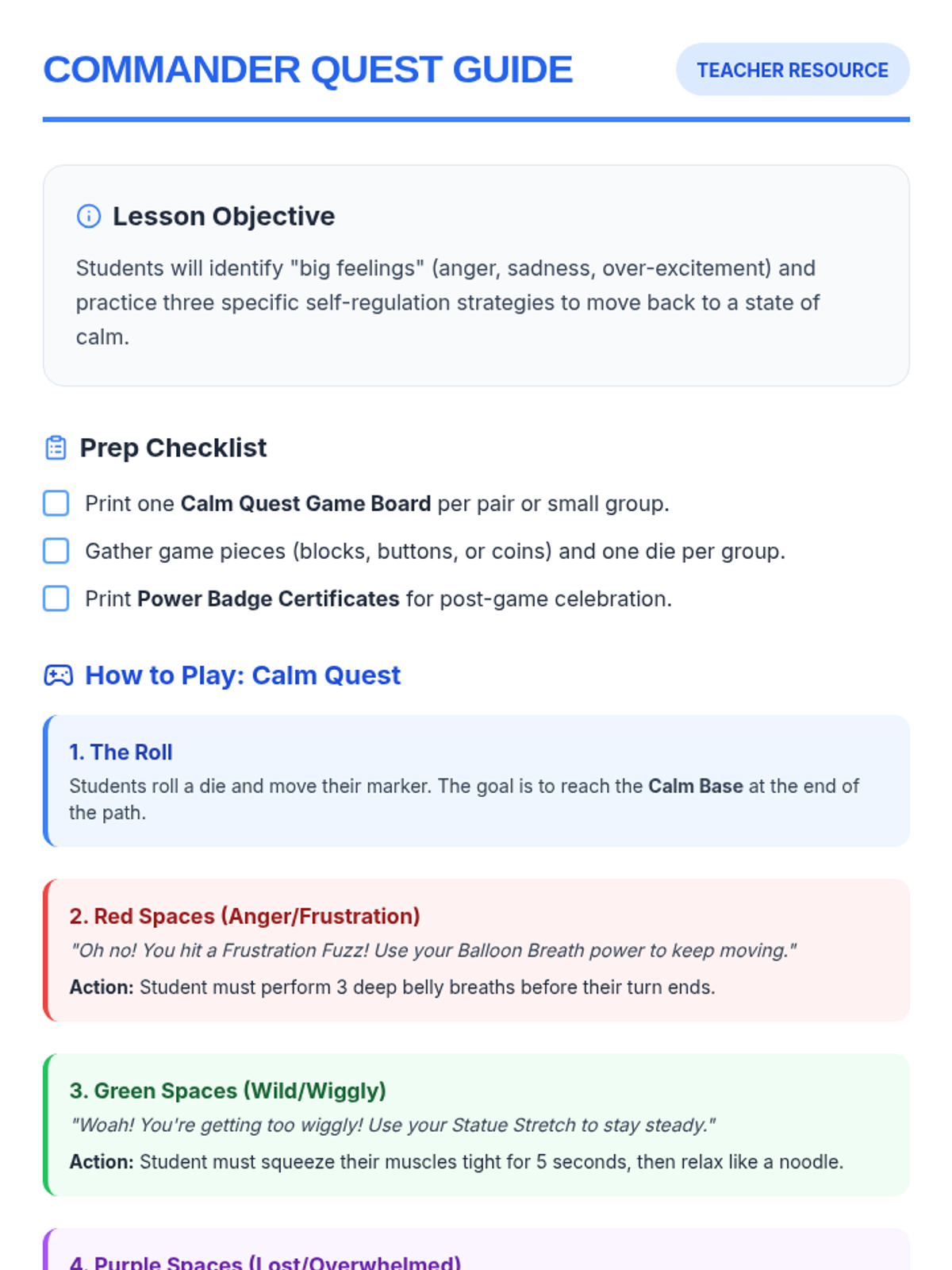
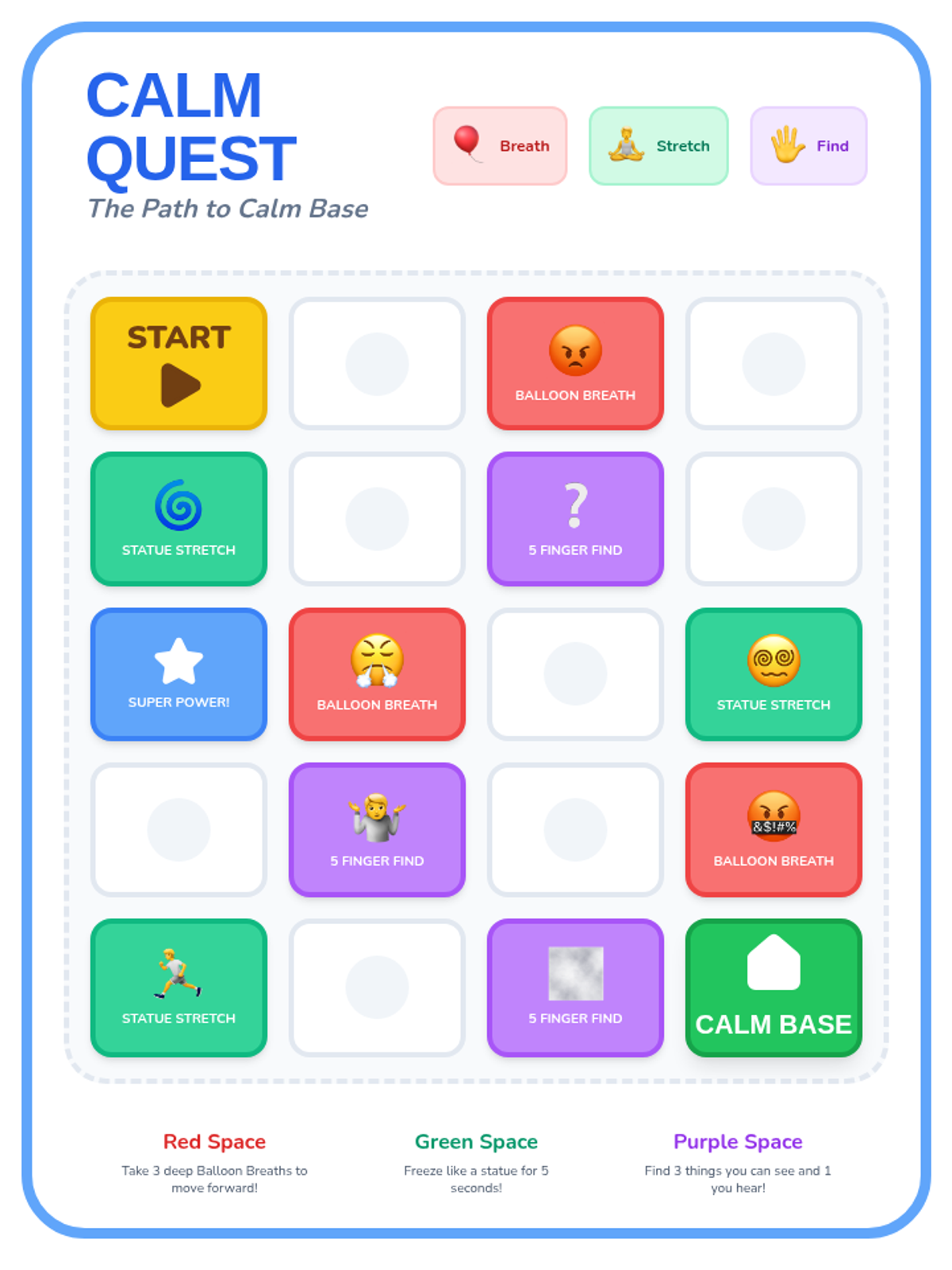
A comprehensive lesson for kindergarteners to learn and practice 'calming down' strategies through interactive play and visual aids. Students will learn to recognize 'big feelings' and use specific tools like belly breathing and grounding techniques.
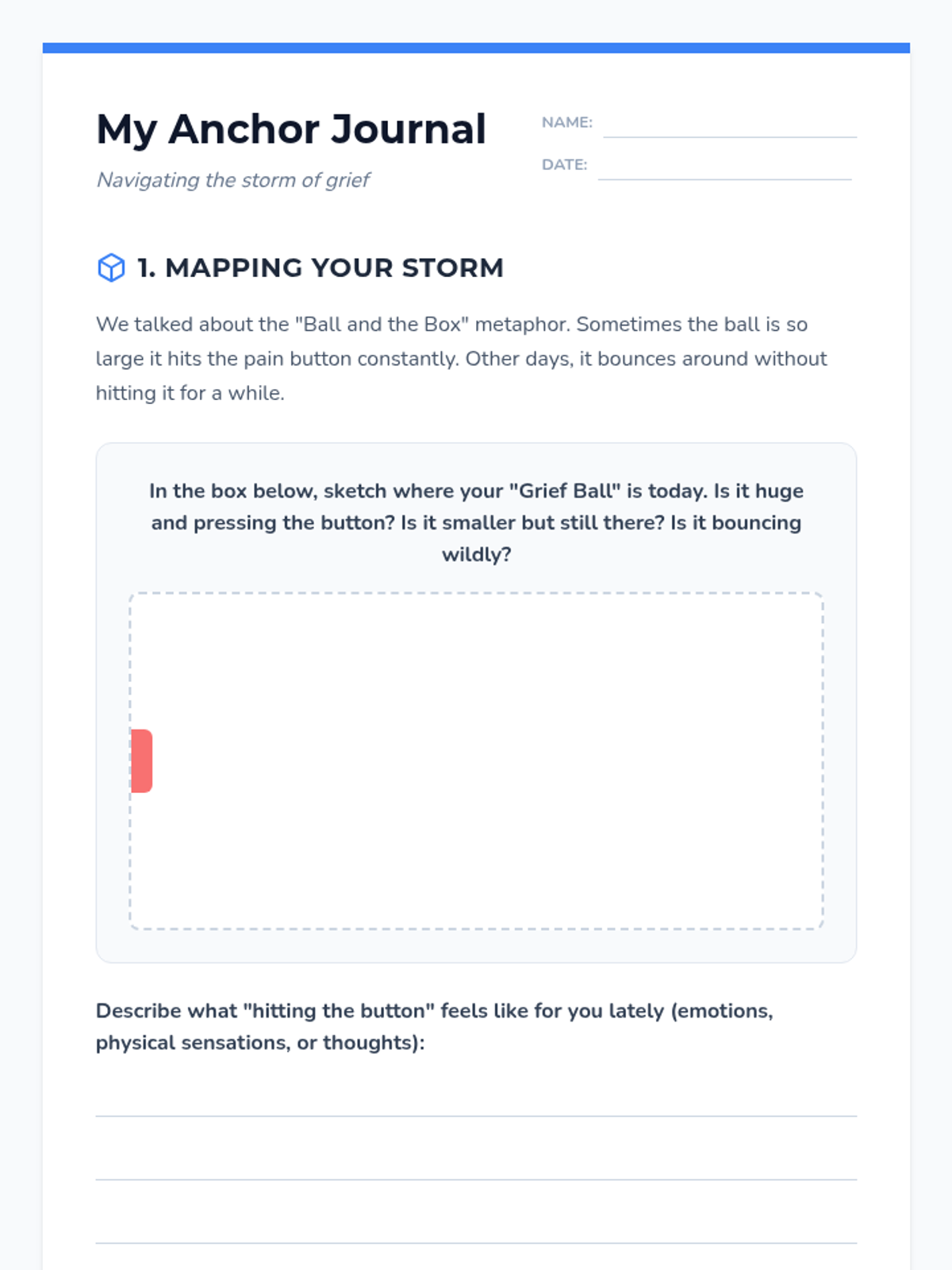
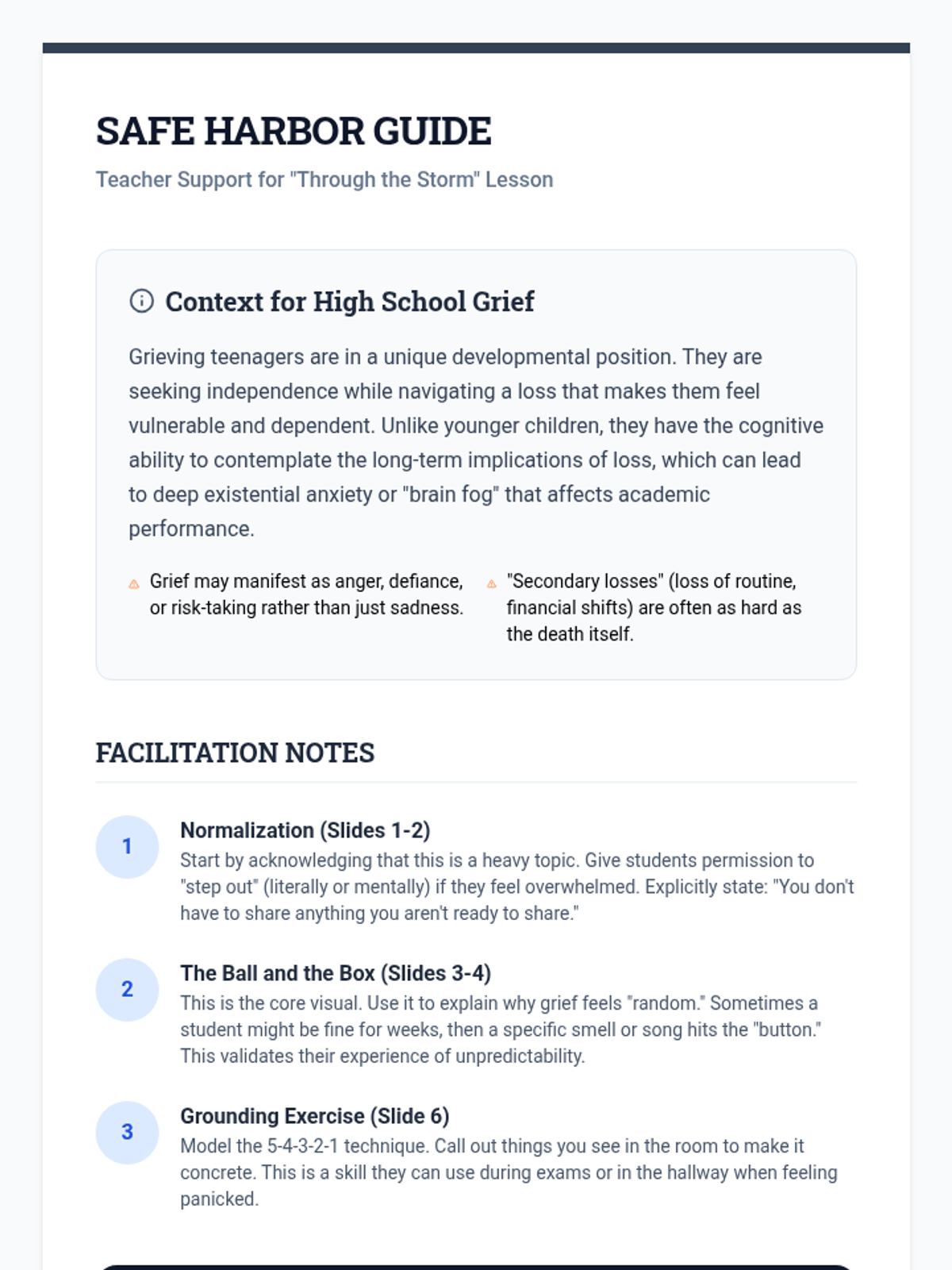
A comprehensive lesson designed for high schoolers to understand the grieving process after the loss of a family member, featuring the 'Ball in the Box' theory and practical coping strategies.
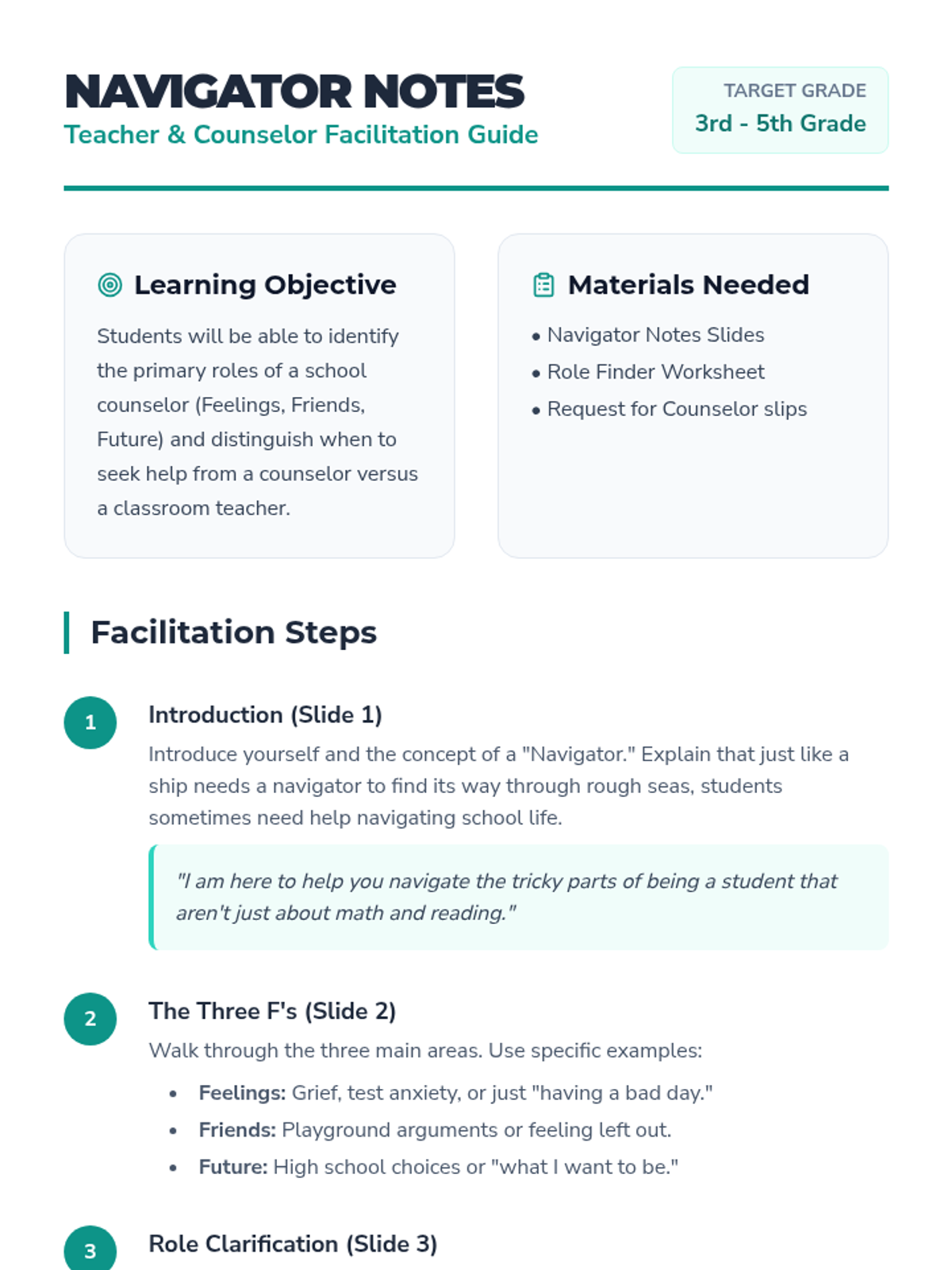
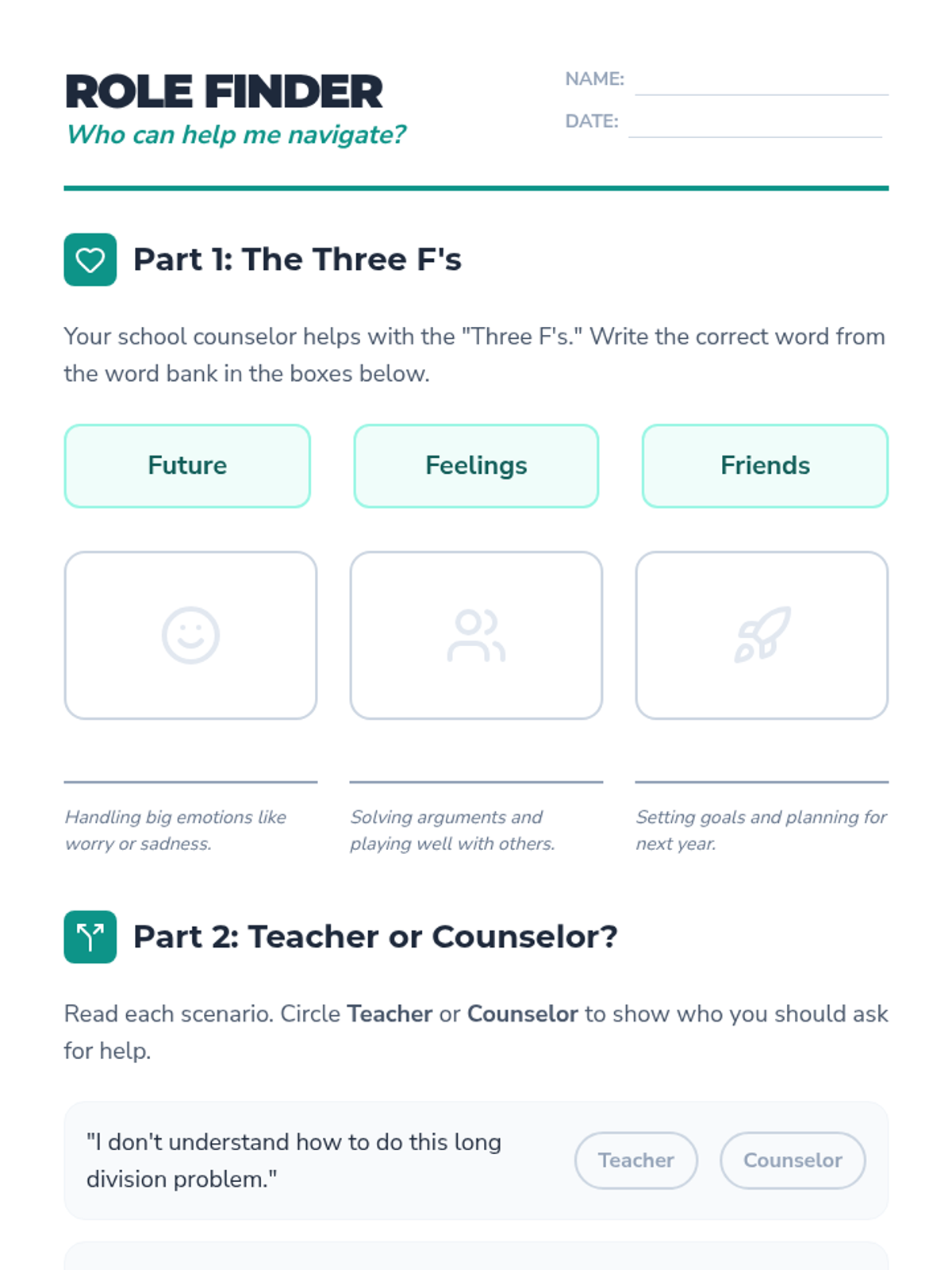
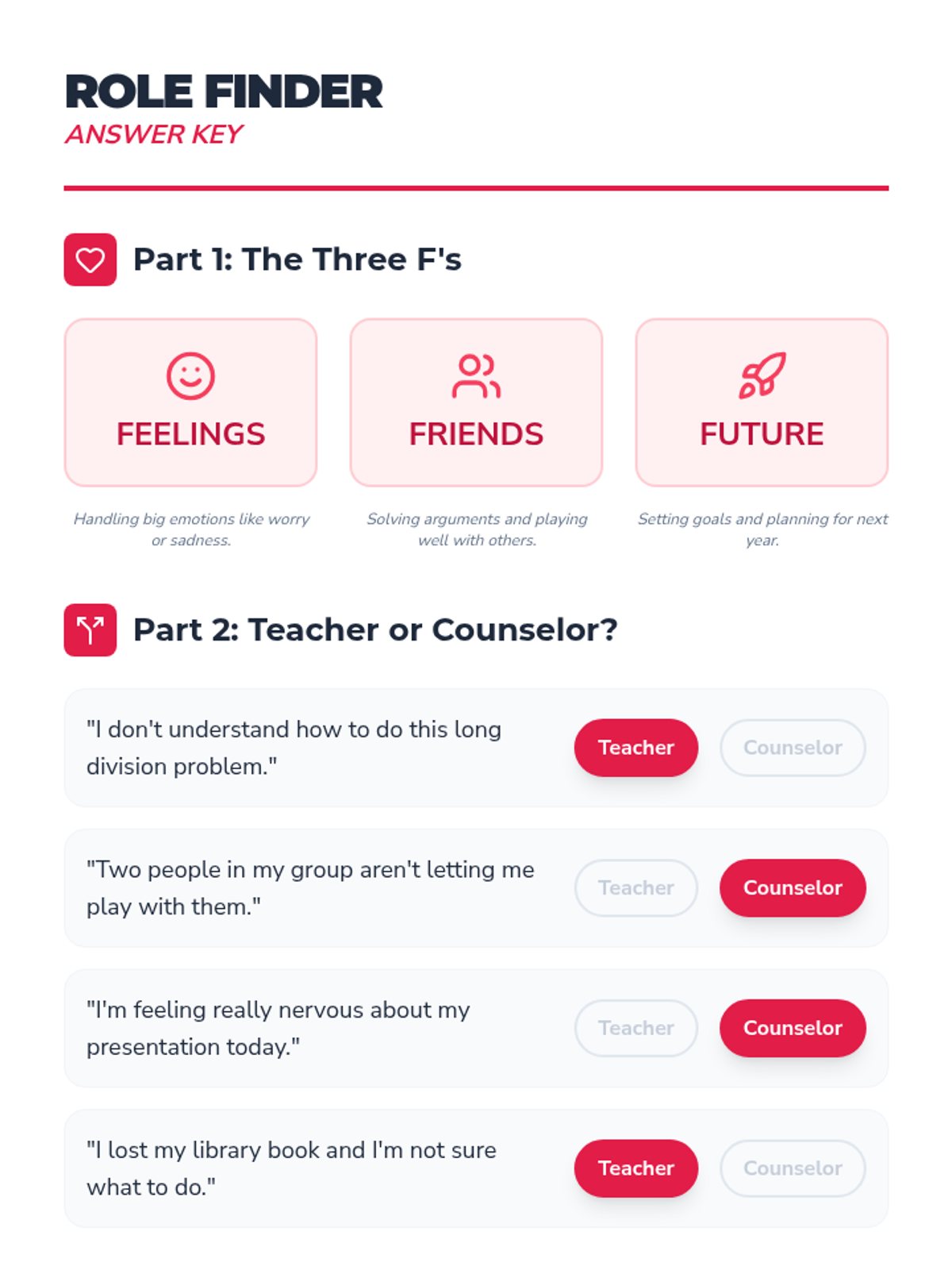
A lesson introducing students to the role of a school counselor, focusing on the 'Three Fs' (feelings, friends, and future plans) and distinguishing the counselor's role from the teacher's role.